Subscribe to the Bombay Chartered Accountant Journal Subscribe Now!

Learning Events At BCAS

1. BCAS Jointly with TAASI Presents: A 2-Day Knowledge Symposium & Summit held on Friday, 15th May 2026 to Saturday, 16th May 2026 @ Residency Towers, Avinashi Road, Coimbatore.

As part of its outreach initiative, the Bombay Chartered Accountants’ Society, in collaboration with The Auditors’ Association of Southern India (TAASI), organized a two-day conference in Coimbatore, attended by over 100 participants. The program was thoughtfully designed to meet the specific needs of industry professionals and practicing members in the region.

The conference opened with a welcome address by CA Zubin Billimoria and CA S. Venkatesh, Presidents of the two organisations, followed by a keynote address by CA G. Ramaswamy, former President of the Institute of Chartered Accountants of India. In his address, he underscored the importance of continuous professional learning, ethical governance, and financial discipline in today’s rapidly evolving business environment.

The first technical session, titled “Preparation for an IPO,” was delivered by Adv. Manan Lahoty along with Ms. Janhavi Manohar and covered the key preparatory steps involved in an IPO, including timelines, promoter identification, estate planning, corporate restructuring, board constitution, due diligence, and financial readiness. The session also explained the distinction between public and confidential filing frameworks and discussed how companies can assess and strengthen their IPO preparedness.

This was followed by a presentation by Mr. Jinesh Doshi on IPO valuation, viewed as a strategic exercise in sustainable wealth creation rather than a mere fundraising event. He highlighted the role of valuation, pricing discipline, governance quality, and investor confidence in ensuring long-term IPO success, while cautioning against aggressive pricing and weak post-listing performance.
The session on succession planning through private trusts was presented by CA Paresh P. Shah, who outlined the objectives, structures, and advantages of private family trusts as compared with wills, gifts, HUFs, and family arrangements. He also covered key legal and tax considerations under the Indian Trusts Act, the Income-tax Acts of 1961 and 2025, FEMA, and relevant international aspects, including the taxation of determinate and discretionary trusts, stamp duty, anti-avoidance rules, and an offshore trust case study.

On the second day, a Tax Summit was held, during which five speakers addressed the delegates on various topics relating to direct and indirect taxation. CA Raghavender Kuncharapu spoke on the practical issues surrounding e-way bills and the movement of goods under GST, including detention, interception, documentation checks, route and vehicle changes, and the response strategy under Sections 68, 129, and 130.

This was followed by Taxation Bytes, where CA Abhinav Venkatesh presented a detailed overview of the minimum alternate tax framework under the Income Tax Act, 2025, covering applicability, tax rates, book profit computation, MAT credit, filing requirements, and key amendments and judicial precedents. CA V. Venkatram then examined the GST treatment of OIDAR services, intermediary services, and electronic commerce, with emphasis on place of supply, time of supply, registration, recipient-side compliance, and the evolving jurisprudence in cross-border digital transactions.

The summit also featured a session on the tax and FEMA implications of cross-border remittances, presented by Dr. CA Mayur B. Nayak, who discussed TDS on payments to non-residents, Form 15CA/15CB and Form 145/146 compliance, LRS limits, overseas direct investment, and the treatment of foreign assets and business remittances under FEMA. The conference concluded with an interactive session by CA Sunil Gabhawalla on input tax credit under GST, including eligibility conditions, matching and reversal rules, blocked credits, fake invoicing concerns, ISD and cross-charge issues, and important judicial precedents.

2. Special Session for under privileged students by BCAS Foundation. 28th April 2026

BCAS Foundation has taken up a number of activities to contribute to the society in many different ways. One such activity was undertaken by the BCAS Foundation at the request of Rangoonwala Foundation (India) Trust, to empower youths in Mumbai’s slum areas. Rangoonwala Foundation (India) Trust is running a number of centres in different parts of Mumbai bastis to empower women, children and you ths belonging to the marginalised sections of the society through various activities. The sessions were held at the training centre of the Rangoonwala Foundation (India) Trust at Jogeshwari (East) on Tuesday, 28th April, 2026.

Dr CA Mayur Nayak, conducted a special session on “Goal Setting and Overcoming Failure“. He motivated youths to set goals in life, think big, be positive and develop a strong mindset to overcome failures and challenges of life. Youths were inspired and engaged actively through practical examples, motivational stories and attractive PowerPoint presentation.

The session on “Grooming & Personality Development” was conducted by CA Mihir Sheth. The idea was to give the students orientation on importance of grooming and how it can help them transform into a well- rounded personality to succeed in real world. The workshop was conducted with practical life examples which helped students to learn about grooming externally and internally too, through practical exercises, activities, videos to make them future ready. Topics covered were personal hygiene, dressing, communication skill, confidence building, time management, social etiquette, digital etiquette, goal setting etc.

Mr. Namit Vanmali, Key Person in the Leadership Role at the Rangoonwala Foundation (India) Trust facilitated the session.

35 students from 10th to 12th standards enthusiastically participated and interacted with the faculty in this Life Skill session which was a part of the 3 day Yuva Saarathi Workshop.

3. Webinar on IBC Amendment Act, 2026 and Corporate Laws Amendment Bill, 2026 – Key Changes and Practical Implications held on Tuesday, 28th April 2026 @ Virtual.

The Finance, Corporate and Allied Laws Committee of the Bombay Chartered Accountants’ Society organised a webinar on “IBC (Amendment) Act, 2026 and Corporate Laws (Amendment) Bill, 2026 – Key Changes and Practical Implications” in view of the notification of the Insolvency and Bankruptcy Code (Amendment) Act, 2026 on 6th April 2026 and the proposed Corporate Laws (Amendment) Bill, 2026, which are expected to significantly influence the regulatory and compliance landscape. The objective was to familiarise members with the legislative intent and the key practical implications for businesses and stakeholders.

The programme was conducted in two segments. CA Sunil Kumar Bansal discussed the key amendments under the IBC framework, covering critical changes and implications of the same. CS Amita Desai covered the proposed changes under the Corporate Laws (Amendment) Bill, 2026, highlighting emerging issues and implications for corporates and professionals.

The webinar received an encouraging response from members across practice and industry. 26 participants enrolled for this webinar from 13+ cities participated in the webinar. Participants appreciated the clarity of explanations and the practical insights shared by the speakers.

Scan to watch online at BCAS Academy

Webinar on IBC Amendment Act, 2026 and Corporate Laws Amendment Bill, 2026

4. BCAS Reading Forum | Inaugural Session held on 21st April 2026 @ BCAS – Hybrid.

BCAS inaugurated the ‘BCAS Reading Forum’ with an interactive session featuring Mr. Shantanu Naidu, author, entrepreneur and founder of ‘Bookies’. The Forum has been initiated with the objective of reviving the BCAS library and creating a community around the idea of reading through discussions, curated conversations and reading-led engagements, centered around the thought – “Read, Discuss, Reflect, Rise!”

The session focused on the role of reading in an increasingly fast-paced and AI-driven world. Shantanu shared his thoughts on how reading helps build empathy, attention, reflection and independent thinking, and why books continue to remain relevant even in an age dominated by digital content and short-form media.
A key takeaway from the discussion was his “50:50 theory”- if one carries a book, there is always a possibility of reading it, whereas not carrying one almost certainly results in replacing reading time with scrolling. He also spoke about the importance of nurturing hobbies, engaging in offline activities and consciously protecting one’s attention span.

Participants were introduced to the idea behind Bookies, a reading movement that encourages silent community reading and meaningful conversations around books. The session also explored how stories, biographies and narrative non-fiction can shape perspectives and influence personal and professional growth.

The launch of the BCAS Reading Forum also marks a renewed focus on the BCAS LIBRARY and its lending facilities. Members and student members are encouraged to explore the Society’s library collection, enroll for the lending facility, borrow books, and become part of a growing reading community at BCAS. In an age of constant scrolling and shrinking attention spans, the Forum seeks to create space for deeper reading, reflection and meaningful conversations.

The event concluded with an engaging interaction with participants, including a rapid-fire segment and audience questions. Several book recommendations were also shared during the session, including Tuesdays with Morrie, A Man Called Otto, The Book Thief, The Old Man and the Sea and A Gentleman in Moscow.

The inaugural session set the tone for the BCAS Reading Forum’s future initiatives aimed at building a sustained culture of reading, discussion and reflective learning within the BCAS community. Watch this space for more reading-led conversations and community engagements.

Scan to watch online at YouTube

BCAS Reading Forum

5. Webinar on New Income Tax Rules, 2026 – Decoding the New Tax Framework held on Monday, 6th April 2026 @ Virtual.

The Direct Tax committee of BCAS had organised a webinar on the new Income Tax Rules, 2026 in virtual mode to address the new Income Tax Rules 2026 and the allied new forms.

CA Ashok Mehta opened with a structured comparison of the TDS provisions under the Income Tax Act, 1961 vis-à-vis the new Income Tax Act, 2025, covering the revised threshold amounts and applicable rates of deduction. He then walked participants through the changes in applicable forms and due dates, with a focused discussion on the new Forms 145 and 146 governing foreign remittances and international tax provisions. Form 141 and the mandatory TIN requirement for foreign payments were explained in particular depth.

The changes in the salary perquisites valuation like the motor vehicle, education allowance, free meals, gift vouchers, amendments in house rent allowance were discussed as per the new tax provisions. Some practical aspects such as taxation of salary arrears, Form 130 (erstwhile Form 16), and transactions requiring mandatory PAN quoting were also covered.

Lastly, the session concluded with a detailed discussion on the revised Tax Audit form and key changes in the Transfer Pricing report, equipping participants with the clarity needed to maintain requisite records for audit purposes.

The webinar offered a comprehensive and practice-oriented walkthrough of the significant amendments brought in by the new Income Tax Rules, 2026

Scan to watch online at BCAS Academy

Webinar on New Income Tax Rules, 2026

II. BCAS IN NEWS & MEDIA

  •  BCAS has been featured in several news and media platforms, showing our active involvement, professional contributions, and commitment to the field. This reflects the growing recognition of BCAS in the public and professional space.

Link: https://bcasonline.org/bcas-in-news/

QR Code:

BCAS News and Media

SN Photos june 2026

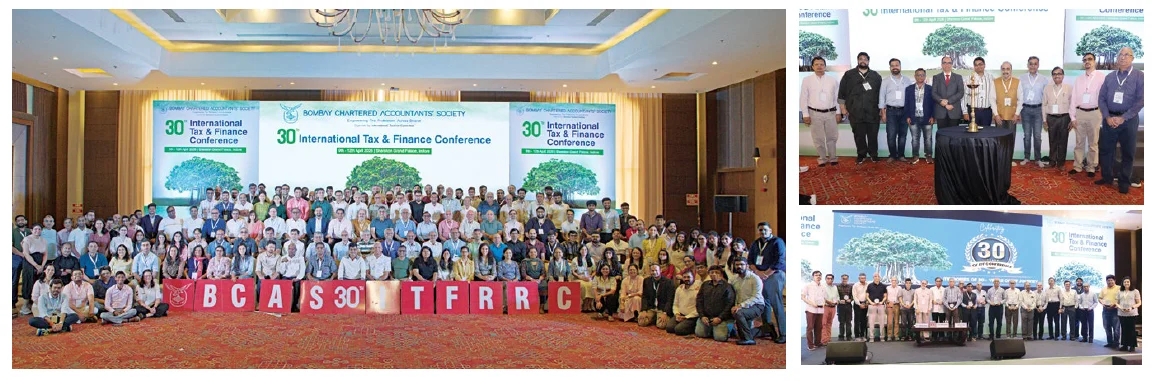
30th International Tax and Finance (ITF) Conference

The International Tax Committee of BCAS organized ITF which was attended by nearly 200 delegates, including senior professionals and experts from across the country.

The 4-day Conference commenced with intense group discussion on Paper I – ‘Global Mobility – 360° Perspective on Tax & Regulatory issues’ authored by CA Vishal Gada on Day 1. This was followed by an insightful address by CA Amish Thakkar on ‘AI in International Tax and Finance’ where practical AI tools prepared by him were demonstrated and their application in professional practice was explained. The tax tools were based on topics of the Conference and were shared by the speaker. The first paper writer, CA Vishal Gada, then presented on his paper considering the issues raised in the Group Discussion. The session dealt on several key issues surrounding global mobility with case studies designed to provoke thought and real-life application. Participants appreciated the gamut of issues covered by the faculty with aplomb.

The second day of the conference started with an involved discussion by the groups on Paper II – ‘Taxation of Intellectual Property Rights (incl. Software)’. Considering the milestone event of the 30th edition of this Conference a felicitation ceremony honouring past contributors to the International Tax Conference was held over the past 30 years with personal and video tributes from the pioneers of the ITF Group as well as past Presidents, Chairmen, Coordinators and Faculty. Post the Felicitation Ceremony, under the Chairmanship of Sr. Adv. V. Sridharan Sir, CA Ganesh Rajagopalan dealt with his presentation on the second Group Discussion Paper covering the nuanced issues in his case studies in detail. Blending legal depth with technical precision, the session unpacked the evolving landscape of IP taxation, addressing interpretational challenges. The Chairman provided his succinct comments bringing out the importance of the issues laid out by the Paper-writer. Participants acknowledged the fresh take and deep analysis of the topic which was understood to not have any major controversies now. Post lunch, most of the participants headed for Mahakaleshwar Jyotirlinga, Ujjain, and all the participants enjoyed the VIP Darshan and seamless arrangements made.

The third day of the conference opened with a highly engaging group discussion on Paper III – ‘Cross-Border Business Model Structuring (including PE issues)’. The discussion was followed by an excellent presentation on ‘Fiscally Transparent Entities’ where CA Geeta Jani. With exceptional clarity, the session demystified complex concepts around fiscally transparent entities, providing the participants with foundational understanding of the various issues surrounding such entities. Post her session, we had a presentation on ‘Transfer Pricing aspects on Intangibles’ by CA Akshay Kenkre. Drawing from his vast experience, he examined the complexities of intangible assets, their valuation, and their treatment under transfer pricing principles. The session, together with the detailed paper on the international tax principles on the same subject, offered the delegates a complete package as far as cross-border tax issues of Intangibles are concerned. The manner in which the presentation was handled made it a pleasure for the participants to glean the technical insights offered. Post lunch we had CA Rashmin Sanghvi, one of the pioneers of the ITF Group, who shared his vision and extensive study on the topic of ‘India @ 2047 : Geopolitics, Changing World Order and India’s place in a De-dollarised Globe.’ It enabled a thought-provoking discussion session that traced the evolution of global economic power structures, offering a compelling perspective on India’s emerging role and the US Dollar’s uncertain future as a global currency.

The concluding day of the conference featured a comprehensive panel discussion on “Cross-Border Business Model Structuring (including PE issues)”, after the Group Discussion held previous day. The session was ably moderated by CA Pranav Sayta with panellists CA Padamchand Khincha and Former CBDT Member Shri Akhilesh Ranjan providing their insights. The panel examined the issues thrown up from the case studies including the practical challenges and interpretational issues that arise in the application of treaty entitlement, the principal purpose test, and GAAR, drawing on judicial perspectives. The discussion brought out the complexities of balancing anti-avoidance principles with legitimate tax planning, while also offering practical insights for professionals advising in cross-border matters. The engaging exchange of views and depth of analysis provided a fitting conclusion to the conference, leaving participants with key takeaways for navigating an evolving international tax landscape.

Overall participants were pleased with the 4-day intellectual fest, in no small part due to the dedicated efforts of Conference Director CA Chintan Shah and Convenors CA Jagat Mehta, CA Mahesh Nayak, under the leadership of Chairman CA Chetan Shah and Co-Chairman CA Rutvik Sanghvi. Notably, this year saw nearly 50% participation from professionals outside Mumbai—an encouraging sign of growing national interest in the conference and its relevance across the country.

The smooth execution of the event was supported by —CA Rajesh Shah, CA Kartik Badiani, CA Mayur Nayak, CA Divya Jokhakar, CA Chaitanya Maheshwari among many other members and the BCAS Events and Admin Team—whose attention to detail and behind-the-scenes commitment ensured a seamless experience for all delegates.

30th ITF Conference

AQPAAS

Government announced a policy to promote Start Ups to encourage businesses based on innovative ideas. In response to this policy, a few intelligent individuals came together to do ‘something’ in the interest of common man.

They felt that there are no good educational institutions. Teaching quality is not up to the mark. There are no facilities for teachers and students. Parents have to bear the hefty fees of coaching classes and external tuitions. The overall performance of the students in various high level examinations is not satisfactory.

They thought of an innovative idea to solve this problem of national importance. They came out with a system called AQPAAS meaning Advance Question Papers And Answer Sheets.

They formed a public limited company with an intention to come out with an IPO as quickly as possible.

They created a network with centres in all taluka places. The procedure for students was simple. A student will have to register at least 4 months prior to any examination in the country. All KYC documents are taken and an absolute confidentiality is maintained. The entire fee is payable at the time of registration.

The promoter directors of the company contacted all Universities, Schools, Colleges, Autonomous bodies and other Institutions all over the country. The professors/teachers who are paper-setters and examiners can also register in confidence. For different levels of exams, different standards of compensation are fixed.

When any question paper for any exam is set, the paper-setter has to hand it over to the corporate
office of the company personally. 50% of his honorarium is paid up front. The balance is paid after the exam. Similarly, the model answer sheets are also created. Students have an option either to get only question papers or both – questions as well as answers. Fee structure differs accordingly.

There are also settings at the concerned printing presses. Police protection is also arranged. For various subjects, there are schemes of Combos packages.

There are a few advanced versions of the scheme. If a student registers his hand writing, then with the help of AI, the answer paper written in his handwriting also can be created in advance. A student has to simply attend at the examination hall and at appropriate time, can hand over the readymade answer sheets to the Supervisor.

There is a further version on which the company is working at present – that is, once you register with them, even your mark sheets and passing certificates also can be created right upto Ph.D.

Like a Tour and Travel Agent, the company arranges for all your admissions, registrations. Even your AI generated clone can attend the school/college or appear for the examinations

The company is in the process of expanding its activities in foreign countries as well.

No wonder that the IPO was oversubscribed 100 times!

Now, the competitors are entering this field. It has a huge potential of employment generation. Everybody is now happy!

However, now all corporates and other employers are evolving a separate and independent system of examination and assessment for the candidates who seek employment with them!

Mera Bharat Mahan!

Statistically Speaking

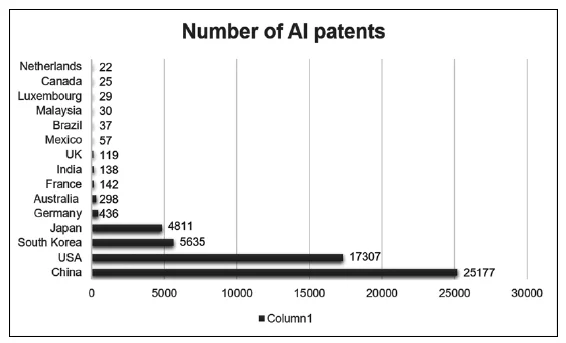
1. COUNTRIES WITH THE NUMBER OF AI PATENTS

Number of AI patents

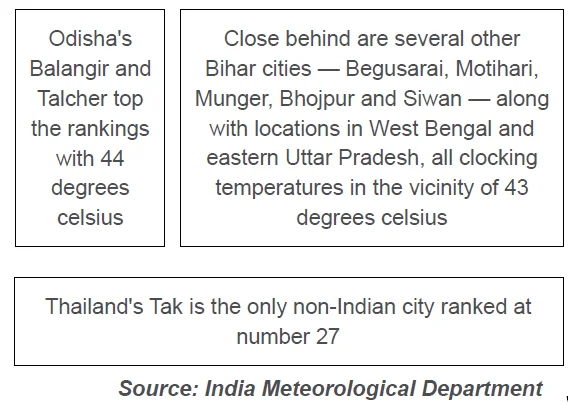
2. 49 OF THE WORLD’S 50 HOTTEST CITIES ARE IN INDIA

49 OF THE WORLD'S 50 HOTTEST CITIES ARE IN INDIA

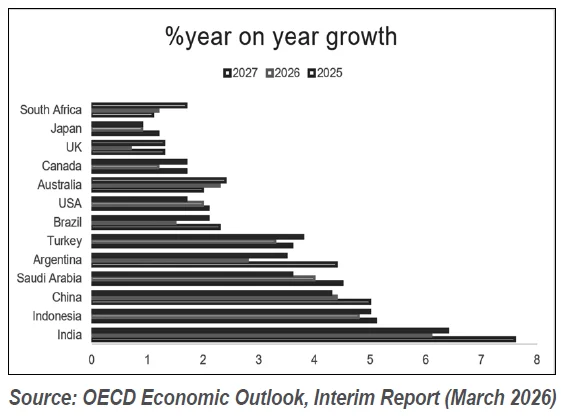
3. REAL GDP GROWTH PROJECTIONS

REAL GDP GROWTH PROJECTIONS

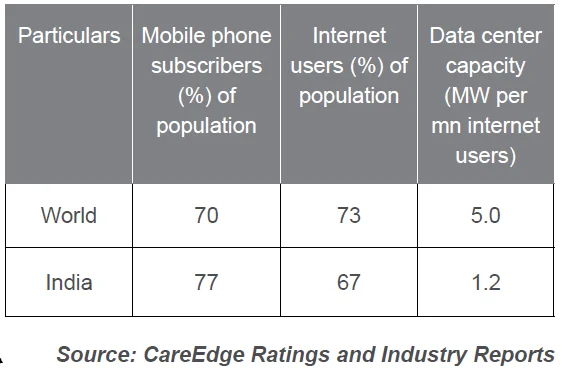
4. COMPARISON OF INDIA AND GLOBAL DIGITAL METRICS

COMPARISON OF INDIA AND GLOBAL DIGITAL METRICS

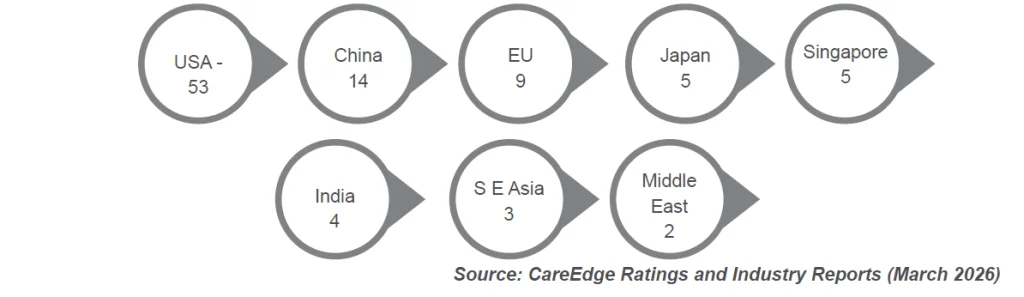
5. DATA CENTER CAPACITY DISTRIBUTION – % SHARE OF CAPACITY


DATA CENTER CAPACITY DISTRIBUTION - % SHARE OF CAPACITY

Regulatory Referencer

I. FEMA

1. RBI withdraws earlier relaxation and restricts ADs from undertaking INR Forex derivative contracts with related parties

RBI has withdrawn the relaxation provided on 1st April 2026 for authorised dealers regarding undertaking INR Forex derivative contracts with related parties. Now Authorised Dealers shall not undertake any foreign exchange derivative contract involving INR with their related parties except for the following:

i. cancellation and rollover of existing contracts; and

ii. transactions undertaken with non-related non-resident users on a back-to-back basis in terms of the Master Direction – Risk Management and Inter-Bank Dealings, dated July 05, 2016, as amended from time to time.

[A.P. (DIR Series ) Circular No. 7, dated 20th April 2026]

2. RBI issues final reporting directions for AD Category-I banks on forex derivatives involving INR by related parties

The Reserve Bank of India had issued the draft directions on ‘Reporting Instructions for Authorised Dealer Category-I Banks’ on February 16, 2026, seeking feedback from market participants, stakeholders and other interested parties. The feedback received has been examined and suitably incorporated in the final directions issued by RBI now. RBI has mandated the AD Category-I banks to report all INR-based Over-the-counter (OTC) derivative deals, including those done abroad by their group entities, to Clearing Corporation of India Limited (CCIL) to improve transparency. This includes both types of contracts (deliverable and non-deliverable), but transactions under USD 1 million and certain back-to-back hedging transactions are exempt. Banks must submit key details within 2 working days from the date of the transaction, and reporting must be completed in phases by 2028.

[Press Release dated 27th April 2026 2026-2027/152 and A.P. (DIR Series) Circular No. 08 dated 27th April 2026]

3. Govt. amends FEM (NDI) Rules, 2019; mandates prior govt. approval for change in beneficial ownership & prescribes reporting norms

Government had earlier amended the Press Note 2 of 2020 which laid down prior permission for FDI received from India’s land-bordering countries (LBCs). These amendments brought in vide Press Note 2 of 2026 and included a definition for ‘beneficial ownership’ as per that prescribed under the Prevention of Money-laundering Act, 2002 and the Prevention of Money-laundering (Maintenance of Records) Rules.

However, the amendment in the Foreign Exchange Management (Non-debt Instruments) Rules was awaited. The Government has now notified these amendment rules. The amendments are in line with Press Note 2 of 2026. Please refer to April 2026 issue of the BCAJ for coverage on the same.

[Notification No. S.O. 2174(E) (F. NO. 1/4/2026-EM) Dated 1st May 2026]

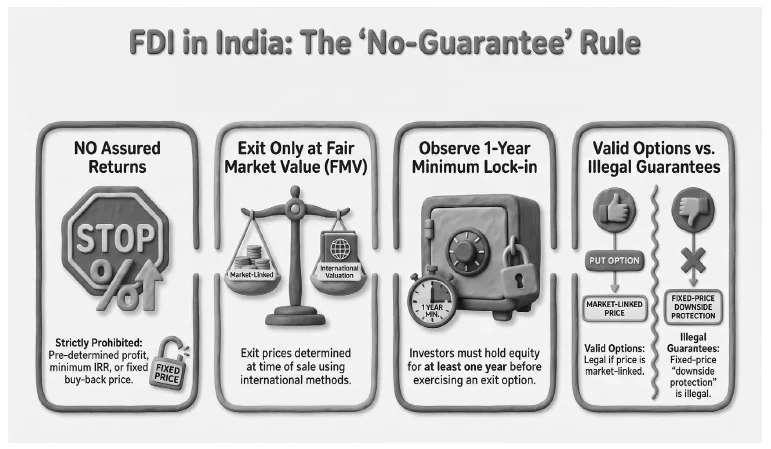
4. Govt. amends FEM (Non-debt Instruments) Rules; hikes FDI limit in insurance sector to 100% under automatic route

Government has amended the Foreign Exchange Management (Non-debt Instruments) Rules to allow 100% Foreign Direct Investment (FDI) in the insurance sector via the automatic route, replacing the previous 74% limit. While this facilitates full foreign ownership for insurers, brokers, and intermediaries, investment in the Life Insurance Corporation of India (LIC) remains subject to a 20% cap. Key safeguards require a majority of board directors and key management personnel to be resident Indian citizens. Certain conditions have also been made applicable to foreign investment in LIC.

[Notification No. S.O. 2186(E) (F. NO. 1/5/EM/2019) Dated 2nd May 2026]

5. RBI notifies FEMA (Authorised Persons) Regulations, 2026; discontinues fresh franchisee arrangements for FFMCs

The Reserve Bank of India has issued the Foreign Exchange Management (Authorised Persons) Regulations, 2026, introducing revised norms for entities dealing in foreign exchange and discontinuing fresh licences for Full-Fledged Money Changers (FFMCs). Under the new framework, authorised persons are prohibited from entering any fresh franchisee arrangements, and all existing franchisee arrangements are required to be phased out and discontinued within two years from May 06, 2026. Further, FFMCs/non-bank AD Category II entities are required to submit to the concerned Regional Office of the Reserve Bank a copy of the annual audited balance sheet along with a statutory auditor’s certificate confirming net worth by 31 October each year, and a separate statutory auditor’s certificate certifying annual forex turnover for the relevant financial year by 30 April each year.

[Circular No. A.P. (DIR Series) Circular No. 09 and Notification No. FEMA 401/2026-RB dated April 30, 2026]

II. IFSCA

1. IFSCA issues 2026 rules for IFSC-Listed Companies on process, disclosures & timelines of rights issue

The International Financial Services Centres Authority (IFSCA) has introduced a detailed framework for rights issues under its Listing Regulations, 2024 bringing much-needed clarity and structure to capital raising in IFSCs. The rules are applicable only to entities listed exclusively in IFSC. The circular provides for key aspects such as eligibility, disclosures, pricing, and timelines. Notably, it mandates dematerialized allotment, enables on-market and off-market renunciation of rights entitlements, and prescribes a minimum subscription period of 7 days. The framework also emphasizes governance requiring prior in-principle approval, detailed disclosures in the letter of offer, and strict post-issue timelines for allotment and refunds.

(Circular F. NO. IFSCA -PLNP/16/2024-Capital Markets dated 22nd April 2026)

2. IFSCA mandates appointment of CISOs, reporting of breach within 6 hour & 24×7 Security Operations w.e.f. 1st April 2026

IFSCA Issues Comprehensive Cybersecurity Guidelines for Market Infrastructure Institutions (MII) comprising Stock Exchanges, Clearing Corporations, Depository and the Bullion Exchange in GIFT IFSC. The key objective of these Guidelines is to establish a comprehensive cyber security and cyber resilience framework for the MIIs operating in IFSC. The Guidelines are structured around seven core cybersecurity functions that Govern, Identify, Protect, Detect, Respond, Recover, and Resilience, mirroring globally recognised frameworks while embedding the operational and jurisdictional realities of GIFT IFSC. The Guidelines have come into effect from 1st Apri 2026. The MIIs need to ensure that full compliance is achieved within the timelines specified in the respective provisions of these Guidelines.

(Circular No. IFSCA-CSD/MSC/2/2026 DCS, dated 20th April 2026)

3. IFSCA aligns ship leasing rules with 2025 regulations by dropping physical asset management clarification

The International Financial Services Centres Authority (IFSCA) has amended its 2022 Ship Leasing Framework to align with the IFSCA (TechFin and Ancillary Services) Regulations, 2025. The amendment removes the explanation under clause 3.D.(ii), consequent to the inclusion of “management of physical assets” in the Third Schedule under the IFSCA (TechFin and Ancillary Services) Regulations, 2025, which specifies the services not permitted to be provided by TechFin and Ancillary Service Providers.

(Circular F. No. IFSCA-FCR0SL/25/2025-Banking/2026-27/01, dated 22nd April 2026)

4. IFSCA issues 2026 framework for preferential issues & QIPs for listed IFSC entities

IFSCA, has introduced a comprehensive framework for preferential issues and Qualified Institutions Placement (“QIP”) under the IFSCA (Listing) Regulations, 2024, enabling listed entities in IFSCs to raise capital through these routes (“Framework”).

The Framework applies to listed entities whose specified securities are listed solely on recognised stock exchanges in the IFSC. It lays down the eligibility criteria and tenure of convertible securities apart from specific disclosure and lock-up conditions for Preferential Issues as well as requirements for QIP.

(Circular F. No. IFSCA-PLNP/16/2024-Capital Market, dated 22nd April 2026)

5. IFSCA approves rules for fund-raising for listed entities along with an SPV based leasing structure

IFSCA approved amendments to enable the creation of Special Purpose Vehicles (SPVs) within GIFT IFSC. The changes, spanning the IFSCA (TechFin and Ancillary Services) Regulations, 2025 and the IFSCA (Finance Company) Regulations, 2021, will allow end-to-end structuring of leasing transactions within India. The new framework facilitates the registration of Trust and Company Service Providers (TCSPs), which manage SPV structures widely used by global financiers for aircraft leasing.

The new framework is designed to attract global lenders, lessors, and investors while reducing reliance on offshore jurisdictions for aircraft financing. The revised regulations, shaped by stakeholder consultations, also incorporate strong governance standards, including AML/KYC compliance and alignment with global norms. International Financial Services Centres Authority (Finance Company) Regulations, 2021 have been amended to introduce new definitions for SPV and TCSP. The minimum owned fund, or paid-up share capital of the SPV undertaking leasing or financing activity, shall be equivalent to the amount prescribed under the Companies Act, 2013, or such other amount as may be specified by the Authority.

IFSCA has further notified IFSCA (TechFin and Ancillary Services) (Amendment) Regulations, 2026. A new chapter relating to ‘Trust and Company Services Provider’ has been inserted. The chapter covers norms relating to the obligation to seek registration, permissible services, governance and control, and appointment of principal officer & compliance officer. Further, a new schedule specifying the permissible services that a ‘Trust and Company Services Provider’ may undertake, has been inserted.

(Press release dated 24th April 2026 and Notifications No. F. NO. IFSCA/GN/2026/ 009 and No. F. NO. IFSCA/GN/2026/ 008 dated 5th May 2026)

6. IFSCA notifies draft IFSCA (Managing General Agents) Regulations, 2026 for IFSC insurance ecosystem growth

The IFSC Authority has notified the draft IFSCA (Managing General Agents) Regulations, 2026 to provide a comprehensive regulatory framework for registration, regulation and operations of Managing General Agents in IFSCs. The Regulations prescribe eligibility conditions, business scope, capital and net worth requirements, governance standards and operational safeguards to promote transparency, accountability and orderly growth of the insurance ecosystem in IFSCs. The notification will be released in due course.

(Press Release dated 12th May 2026)

Miscellanea

  •  ARTIFICIAL INTELLIGENCE

# Sony AI’s “Project Ace” Robot Defeats Elite Table Tennis Professionals in Landmark Real-World AI Breakthrough

In a milestone moment for artificial intelligence and robotics, Sony AI on 23rd April 2026 unveiled “Project Ace” — the first known autonomous robotic system capable of consistently outplaying elite and professional-level human table tennis players. The research, published as the cover story of the journal Nature under the title “Outplaying Elite Table Tennis Players with an Autonomous Robot”, describes a system that combines high-speed cameras, motion sensors and reinforcement-learning algorithms to perceive, plan and execute return shots in milliseconds. In a series of evaluation matches conducted between December 2025 and March 2026 against new professional players, Ace defeated each opponent at least once, exhibiting faster shot speeds, more aggressive ball placement near the table edge and a rapidly accelerating rally pace.

The implications of Ace’s victory extend far beyond the sport. While AI systems have long demonstrated “superhuman” performance in digital domains such as chess, Go and complex video games, applying such intelligence to the physical world — where perception, planning and motor control must unfold in milliseconds — has remained one of the field’s most stubborn challenges. According to Peter Stone, Chief Scientist at Sony AI, the breakthrough “represents a landmark moment in AI research, showing for the first time that an AI system can perceive, reason and act effectively in complex, rapidly changing real-world environments that demand precision and speed.” Researchers believe the underlying perception-and-control architecture lays the groundwork for robots that can safely operate in dynamic environments ranging from industrial automation and elder care to surgical assistance and disaster response.

(Source: ai.sony / Nature – dated 23rd April 2026)

# Anthropic Crosses USD 900 Billion Valuation as Q1 2026 Revenue Grows 80x Year-on-Year

In one of the most striking developments of the current artificial intelligence funding cycle, Anthropic — the maker of the Claude family of large language models — closed a fresh funding round in May 2026 at a valuation of approximately USD 900 billion, placing it among the most highly valued private companies in history. The fundraise coincided with the disclosure that Anthropic’s first-quarter 2026 revenue had grown roughly 80 times year-on-year, as enterprise demand for Claude-based agents in coding, financial analysis, legal review and compliance accelerated sharply through the early part of the year. The fresh capital is earmarked principally for compute infrastructure, including a multi-year strategic partnership with Elon Musk’s SpaceX that will give Anthropic access to an estimated 220,000 GPUs through SpaceX’s Colossus data-centre architecture, alongside continued scaling on Amazon Web Services and Google Cloud.

The pace and scale of the round throws into sharp relief the structural rewiring of the global AI industry: market leadership is now determined as much by access to compute and electrical power as by model intelligence itself. Combined 2026 AI capital expenditure by Alphabet, Amazon, Meta and Microsoft is projected to exceed

USD 700 billion, with Microsoft alone raising its 2026 guidance to USD 190 billion. For Indian professional-services firms, the takeaway is two-fold: first, frontier AI capability — already significantly cheaper than 2024 levels — will continue to compound in both capability and cost-efficiency through the second half of 2026; and second, the centre of gravity of the global technology economy is shifting decisively toward a small group of compute-and-capital concentrators, with material implications for cross-border tax structuring, royalty flows and transfer-pricing benchmarking of AI-enabled services.

(Source: bloomberg.com / AIToolsRecap – dated 9th–11th May 2026)

  •  WORLD NEWS

# IMF Warns of a “Global Economy in the Shadow of War” as Strait of Hormuz Disruption Sends Oil Prices Soaring

The International Monetary Fund’s April 2026 World Economic Outlook, sub-titled “Global Economy in the Shadow of War”, has lowered the global growth forecast to 3.1% for 2026 and 3.2% for 2027, citing the outbreak of conflict in the Middle East and the resulting disruption to global energy supplies as the dominant downside risk. The closure of the Strait of Hormuz — through which approximately 20 million barrels of oil per day, or nearly 27% of global maritime petroleum trade, transit — pushed Brent crude above USD 100 per barrel in March 2026 for the first time since August 2022. The IMF has cautioned that global headline inflation will rise modestly in 2026 before resuming its decline in 2027, with the slowdown and inflationary pressures particularly pronounced in emerging market and developing economies.

For India, the World Bank’s India Development Update released on 9th April 2026 projects growth moderating to 6.6% in FY27, with higher energy prices and supply-chain disruptions weighing on activity. Nevertheless, India remains among the fastest-growing major economies in the world, with the World Bank attributing resilience to substantial foreign reserves, moderating inflation, predominantly rupee-denominated public debt, a healthy financial sector and ongoing trade diversification. The IMF’s broader caution — that downside risks now dominate the outlook, including geopolitical fragmentation, a possible reassessment of expectations around AI-driven productivity and renewed trade tensions — underscores the urgent need for businesses to stress-test working capital, hedging policies and contingency plans.

(Source: imf.org / worldbank.org – April 2026)

  •  ENVIRONMENT

# “How the World Lost the Goal of 1.5°C”: New Report Declares the Paris Target Out of Reach as 2026 Tracks for Record Heat

In a sobering assessment released on 7th April 2026, the Washington-based think-tank Resources for the Future published its Global Energy Outlook 2026 under the stark sub-title “How the World Lost the Goal of 1.5°C”, concluding that the cornerstone target of the 2015 Paris Agreement — limiting global temperature rise to 1.5°C above pre-industrial levels — is no longer achievable on any plausible policy pathway. The findings coincide with World Weather Attribution scientists warning that 2026 is on track to become the second-warmest, if not the warmest, year on record, with sea surface temperatures approaching all-time highs and Arctic sea ice at its lowest level for the second consecutive year.

Amid the gloom, Ember’s Global Electricity Review released on 21st April 2026 offered one bright signal: in calendar 2025, clean-power growth finally exceeded the rise in overall global electricity demand, marking a small but meaningful inflection point. The combined message for policymakers and businesses is unambiguous — the climate-transition agenda is shifting from ambition to adaptation, with material implications for capital allocation, ESG disclosures and physical-risk management under frameworks such as SEBI’s Business Responsibility and Sustainability Reporting (BRSR) regime.

(Source: Resources for the Future & earth.org – dated 7th & 21st April 2026)

# WMO Warns of Imminent “Super El Niño” as Global Wildfires Burn a Record 150 Million Hectares in First Four Months of 2026

The World Meteorological Organisation, in a coordinated warning issued on 12th May 2026, alerted governments and businesses to the imminent onset of an unusually strong El Niño event in the tropical Pacific, with sea surface temperatures near all-time highs and Arctic sea ice at its lowest May reading for the second consecutive year. Scientists at the World Weather Attribution group reported on the same day that wildfires from January to April 2026 had already burned more than 150 million hectares globally — roughly 20% above the previous record for the same period and double the area burned in 2024. Africa accounted for the largest share at approximately 85 million hectares (23% above the previous high), while Asian countries including India, Myanmar, Thailand, Laos and China collectively recorded 44 million hectares burned, exceeding the previous 2014 record by approximately 40%.

The WMO has cautioned that the combination of a developing El Niño with already record-warm baseline conditions creates a “serious risk of unprecedented weather extremes” through the remainder of 2026 and into 2027, with heat, drought, flood and wildfire impacts likely to compound one another. Parts of northern India have already recorded daytime temperatures touching 46°C ahead of the southwest monsoon, and the Copernicus Climate Change Service has flagged May 2026 sea-surface temperatures as being among the highest on record. For Indian businesses, the warning has direct bearing on agricultural supply chains, monsoon-dependent working-capital cycles, insurance and reinsurance pricing, and the increasingly material physical-risk disclosures expected under SEBI’s BRSR framework and emerging climate-disclosure standards.

(Source: World Meteorological Organisation / Reuters / Euronews – dated 12th May 2026)

ICAI and Its Members

I. ICAI ANNOUNCEMENTS

ICAI INVITES APPLICATIONS FOR EIFR TECHNICAL REVIEWERS

The Institute of Chartered Accountants of India has invited applications for empanelment as Technical Reviewer (TR) and Head Technical Reviewer (HTR) for the ICAI Awards for Excellence in Financial Reporting (EIFR).

The role involves reviewing financial statements for compliance with accounting standards, statutory disclosure requirements, and auditors’ reporting obligations.

ELIGIBILITY

  • TRs: 4–5 years’ audit experience; HTRs: 5–8 years’ audit experience.
  • currently active in the practice of accounting and auditing or employed in the industry with comparable experience in financial reporting and auditing.
  • Experience in Ind AS financial statements is desirable
  • Exposure in the preparation, finalization, or audit of Ind AS- based financial statements

Empaneled members will receive honorarium and CPE hours.

LAST DATE

Applications can be submitted online up to 30 May 2026 (4:00 PM) through: https://forms.gle/LorzV58eCFVHmqdq9

Last date application

For more details visit: https://resource.cdn.icai.org/91948rc-aps4940-empanelment-tr-htr.pdf

resource icai

ICAI DOCTORAL SCHOLARSHIP SCHEME 2026

The Institute of Chartered Accountants of India has invited applications for the ICAI Doctoral Scholarship Scheme 2026 for members pursuing full-time Ph.D. in areas such as Auditing, Taxation, Commerce, Management, Accounting, and allied subjects.

KEY HIGHLIGHTS

  • Scholarship of ₹75,000 per month for up to 36 months
  • Yearly contingency grant up to ₹50,000.
  • Applicant should:

                      • Be an ICAI member,

                      • Be below 40 years of age,

                     • Have confirmed Ph.D. registration,

                    • Be a full-time Ph.D. scholar,

                   • Not be availing any other scholarship for the same research

SELECTION PROCESS

Applications will undergo preliminary scrutiny, followed by virtual presentation/interview for shortlisted candidates. Final approval will be by the Research Committee.

LAST DATE

  • 15 June 2026.

For more details visit: https://resource.cdn.icai.org/92083research-aps5015-flyer.pdf

Last date resource icai

II. ICAI GIST OF OPINION

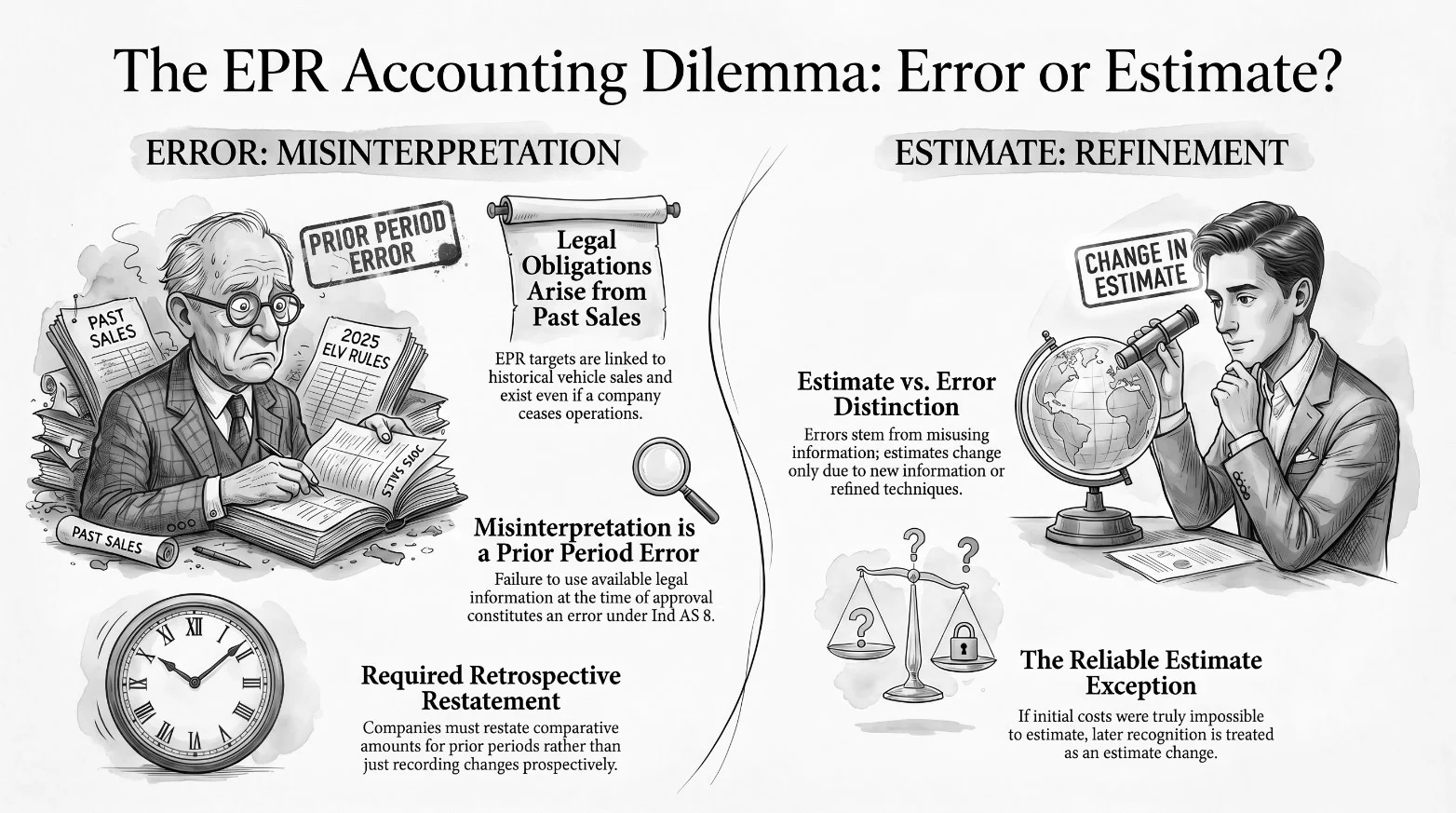
1. Accounting Treatment under Ind AS 37 for EPR Obligations under ELV Rules

A. Facts of the Case

  • The company is an automotive manufacturer preparing financial statements under Ind AS.
  • Under the Environment Protection (End-of-Life Vehicles) Rules, 2025, OEMs are required to fulfil Extended Producer Responsibility (EPR) obligations through purchase of EPR certificates.
  • The obligations relate to vehicles introduced in the market in earlier years and continue even if the producer ceases operations.
  • The querist stated that the Rules created a present legal obligation and sought guidance on provisioning under Ind AS 37.

B. Query

  • What is the obligating event under Ind AS 37 for ELV Rules?
  • Whether ELV Rules require provisioning for past vehicle sales.
  • Whether such provision should be recognised in profit and loss or adjusted against retained earnings.

C. Points considered by the Committee

  • The Committee noted that under Ind AS 37, recognition of a provision requires a present obligation arising from a past obligating event.
  • Mere enactment of law is not sufficient; the event to which the law applies must have occurred.
  • Introduction/sale of vehicles in earlier years constitutes the obligating event once ELV Rules became effective.
  • The obligation continues irrespective of future operations of the company.
  • Settlement of the obligation requires probable outflow of economic resources through purchase of EPR certificates/scrapping.
  • Although measurement uncertainty exists, Ind AS 37 requires recognition if a reliable estimate can be made, which generally can be determined using best estimates and probability-weighted outcomes.
  • The Committee noted that the provision arises when ELV Rules became effective in respect of already introduced vehicles.

D. Opinion

  • Introduction/sale of vehicles in earlier years is the obligating event once ELV Rules became effective.
  • The company should recognise a provision under Ind AS 37 for obligations relating to already introduced vehicles.
  • The provision should be recognised in the Statement of Profit and Loss.
  • Adjustment against retained earnings is not appropriate since it is neither a prior-period error nor a change in accounting policy.

2. Accounting for Change in Measurement Technique of ECL

A. Facts of the Case

  • The company was recognising Expected Credit Losses (ECL) on trade receivables using an internal grid matrix approach after transition to Ind AS.
  • The company proposed to adopt an actuarial valuation approach using probability-weighted techniques and statistical modelling.
  • The querist contended that the shift represented a change in accounting policy requiring retrospective application.

B. Query

  • Whether transition from internal grid matrix to actuarial valuation for ECL should be treated as a change in accounting policy with retrospective application.

C. Points considered by the Committee

  • The Committee examined the issue only from the perspective of change in ECL measurement technique.
  • Ind AS 8 distinguishes accounting policies from accounting estimates.
  • Accounting estimates are values derived using measurement techniques based on latest available reliable information.
  • Paragraph 32 of Ind AS 8 specifically identifies ECL allowance as an accounting estimate.
  • Paragraph 32A states that techniques used to measure ECL are estimation techniques forming part of measurement techniques.
  • Changes in measurement techniques are changes in accounting estimates unless arising from correction of prior-period errors.
  • If the earlier grid matrix approach was not compliant with Ind AS 109, the change would amount to correction of prior-period error.

D. Opinion

  • Change from internal grid matrix to actuarial valuation method for ECL is not a change in accounting policy.
  • It is a change in accounting estimate unless it represents correction of prior-period error.
  • Changes in estimates are accounted for prospectively.
  • If the earlier method was not compliant with Ind AS 109, correction should be made retrospectively as a prior-period error with appropriate disclosures.

3. Appropriateness of Considering EFBS under Ind AS 19

A. Facts of the Case

  • The company operates an Employees’ Family Benefit Scheme (EFBS) providing benefits in case of death in service or permanent total disability.
  • Benefits are payable upon deposit of employee’s provident fund and gratuity balances and are based on last drawn salary till notional superannuation.
  • Management contended that EFBS is not a defined benefit plan and resembles other long-term employee benefits.

B. Query

  • Whether EFBS is a defined benefit scheme or not.

C. Points considered by the Committee

  • The Committee noted that employee benefits under Ind AS 19 include benefits provided to employees’ family members.
  • The benefits under EFBS arise only on death or permanent disability while the employee is in service and are provided under a separate scheme.
  • Paragraph 5(c)(iii) and paragraph 153(c) of Ind AS 19 include long-term disability benefits within other long-term employee benefits.
  • BC253 of IAS 19 clarifies that death-in-service benefits under a separate scheme are treated as other long-term employee benefits.
  • The level of benefit does not depend on years of service and is based on last drawn salary.
  • Therefore, expected cost should be recognised when the event causing disability or death-in-service occurs.

D. Opinion

  • Benefits under EFBS are covered within employee benefits under Ind AS 19.
  • EFBS should be treated as “other long-term employee benefits”.
  • Since benefits do not depend on years of service, expected cost should be recognised when the event causing long-term disability or death-in-service occurs.

Visit to read in detail: https://resource.cdn.icai.org/92002cajournal-may2026-33.pdf

Opinion

III. ICAI Board of Discipline cases

1. Case: Ms. HKS, IRS vs. CA. SK

File No.: PR/G/45/2019/DD/272/2019/BOD/751/2024

Date of Order: 30.12.2025

Particulars                                                    Details

Complainant              Ms. HKS, IRS, Assistant Director of Income Tax (Investigation), Mohali

Nature of Case          Entering into business partnerships with non-CAs while holding COP

Background              The matter arose from investigation into the Punjab Sand Mining Auction Scam, where alleged benami entities were used for securing mining contracts. The Respondent, while holding a full-time Certificate of Practice, became partner in multiple firms formed for mining-related activities, namely M/s Rajbir Enterprises, M/s Rajbir Enterprises Mohali, and M/s New Rajbir Enterprises.

Key Allegations          – Entering into partnership with non-members.

                                      – Engaging in business other than profession while holding COP.

                                      – Alleged involvement in arrangements connected with mining business entities.

Respondent’s Defence  – Mining business never commenced;no bank accounts or licences obtained.

                                        – Intended to surrender COP only upon commencement of operations.

                                        – Partnership deeds alone do not amount to carrying on business.

                                       – Raised procedural objections regarding authorization of complaint.

Findings                         – Partnership deeds clearly showed objects relating to mining and related activities and Respondent held 3% profit share.

                                         – Respondent entered into partnerships while continuing professional practice and attestation work.

                                        – No prior permission obtained under Regulation 190A.

                                        – Board held that even if business had not commenced, joining business partnerships itself constituted misconduct.

                                       – Procedural objections rejected; complaint held duly authorized

Charges Established                                  Guilty under:

                                                • Item (4), Part I, First Schedule – partnership with non-members

                                               • Item (11), Part I, First Schedule – engaging in other business/occupation

Punishment                      Removal of name from Register of Members for 1 month

2. Case:                              Ms. PS vs. CA. NJK

File No.:                        PR/G/498/2022/DD/490/2022/BOD/752/2024

Date of Order:              30.12.2025

Particulars                      Details

Complainant            Ms. PS, Deputy Director of Income Tax (Investigation)

Nature of Case        Involvement in bogus political donation / tax evasion scheme.

Background            Income Tax Department conducted search and seizure operations on certain political parties and charitable institutions in Ahmedabad, including Kisan Party of India (KPI), Manvadhikar National Party (MNP), Kisan Adhikar Party (KAP), AISECT and Aadhar Foundation. It was alleged that the Respondent acted as a mediator in a bogus donation racket where clients routed donations to political parties and received equivalent cash back after deduction of commission,
thereby facilitating wrongful tax deductions.

Key Allegations     – Soliciting clients for bogus political donations.

                                – Facilitating tax evasion through accommodation donation entries.

                               – Earning commission for arranging donation-and-cash-back transactions.

Respondent’s Defence – Statement recorded by Income Tax authorities was incorrectly recorded and obtained through misrepresentation.

                                         – Retraction affidavit filed disputing alleged admission.

                                        – Relied upon WhatsApp chats had no evidentiary value.

                                       – No reassessment or tax action initiated against him by Income Tax Department.

Findings             – Respondent had expressly admitted involvement in bogus donation modus operandi in statement recorded u/s 131(1A)/132(4) of Income Tax Act (page 5).

                            – Retraction after nearly two years was held to be belated and lacking credibility

                            – Board held that admission on oath remained valid unless rebutted within reasonable time.

                            – Corroborative evidence from investigation supported allegations.

                             – Failure to produce cogent evidence in defence led Board to sustain charge.

Charges Established  – Guilty under Item (2), Part IV, First Schedule – Other Misconduct

Punishment                     Reprimand

3. Case: Mr. PM vs. CA. NKSP

File No.: PR/G/381/2019/DD/150/2021/BOD/804/2025

Date of Order: 30.12.2025

Particulars             Details

Complainant – Mr. PM, Deputy Commissioner of Police, Economic Offences Wing

Respondent         CA. NKSR

Nature of Case     Auditor independence breach and involvement in financial transactions linked to real estate fraud

Background            The matter arose from investigation into the “CANVAS” redevelopment project, where investors allegedly paid over ₹5 crore for flats sold by M/s J.V. Developers, despite the developer allegedly lacking authority to sell them. Investigation and forensic audit revealed diversion and routing of investor funds through Kamla Landmarc Group entities. Approximately ₹2.5 crore was traced to the Respondent’s personal account, and transactions involving flats purchased in the names of the Respondent’s wife and relatives were also identified.

Key Allegations    –  Facilitating financial transactions connected with alleged investor fraud.

                                – Receipt and routing of ₹2.5 crore linked to auditee/group entities

                                – Compromising auditor independence through personal financial dealings with clients.

                                – Use of relatives’ names in connected property transactions.

Respondent’s Defence – Denied involvement in J.V.

                                            Developers or the CANVAS project.

                                       – Claimed he ceased association with Kamla Group in 2013.

                                       – Asserted funds represented legitimate business loans/investments duly repaid.

                                      – Contended that property dealings of family members were genuine and unrelated to fraud allegations.

Findings                  – Respondent admitted receipt of funds from entities under his audit.

                                – Board held that personal financial transactions with auditee/group entities compromised independence and violated professional ethics

                                – Forensic audit indicated round-tripping transactions involving Respondent’s accounts.

                               – Explanation of “genuine investment/loan” was found unconvincing in view of financial trail and auditor relationship.

                              – Even though criminal conspiracy allegations were pending before court, Board independently examined ethical and professional misconduct aspects.

Charges Established          Guilty under Item (2), Part IV, First Schedule – Other Misconduct

Punishment                        Removal of name from Register of Members for 3 months

Recent Decisions in GST

HIGH COURT

21. (2026) 41 Centax 440 (Bom.)

Navin Vishwanathan vs. State of Maharashtra

dated 15.04.2026

GST dues of a deceased proprietor cannot be recovered from his son directly without examining the statutory provisions of legal representative liability.

FACTS

Petitioner was independently carrying on business as a sole proprietor under a separate GST registration. Petitioner’s deceased father was running another proprietorship concern under a similar trade name. Respondent confirmed GST demand against the deceased father’s proprietorship. Thereafter, respondent issued DRC-13 to the petitioner’s banker for recovery of such dues attaching the petitioner’s bank account without issuance of any prior SCN or grant of opportunity of hearing. Being aggrieved, the petitioner approached the Hon’ble High Court.

HELD

The Hon’ble High Court held that recovery presupposes an established liability against the specific person. Separate GSTINs and premises indicated that petitioner and his father were distinct taxable persons. It further observed that similar trade name alone could not prove business succession or continuation as section 93 of CGST Act, 2017 required prior determination through notice, material consideration, and hearing. In Radha Krishan Industries vs. State of Himachal Pradesh, 2021 (48) G.S.T.L. 113 (SC), the Hon’ble Supreme Court held that attachment requires tangible material and strict statutory compliance. Freezing the petitioner’s bank account without due process violated Article 300A Thus, DRC-13 Order attaching bank account was quashed.

22. (2026) 42 Centax 106 (Bom.)

Tata Sons Pvt. Ltd. vs. Union of India

dated 30.04.2026.

Compensation arising from international arbitral adjudication of contractual breach does not constitute consideration for supply under GST merely because enforcement proceedings are mutually settled.

FACTS

Petitioner entered into a shareholders’ agreement with a Japanese company investing in an Indian telecom venture. The agreement required the petitioner to secure a buyer upon failure to achieve certain agreed financial targets. After such failure, disputes arose regarding exit obligations and payment commitments. The disputes were referred to international arbitration, resulting in an award directing payment of damages, interest, and costs. Enforcement proceedings were thereafter initiated before foreign Courts and Indian Courts. The parties subsequently entered consent terms before the Hon’ble High Court for satisfaction of the arbitral award. Respondent later alleged that the settlement constituted taxable import of services under GST. Being aggrieved, the petitioner approached the Hon’ble High Court.

HELD

The Hon’ble High Court held that arbitral damages constitute compensation for contractual breach and not consideration for any supply. Liability arose only upon adjudication by the arbitral tribunal. Settlement of the arbitral award did not create any independent contractual obligation amounting to supply. Entry 5(e) of Schedule II required an independent agreement for tolerating an act against consideration. The Court further relied upon the decision of UOI vs. Raman Iron Foundry, (1974) 2 SCC 231, where the Hon’ble Supreme Court held that damages are not debt payable before adjudication. Accordingly, IGST liability was held unsustainable.

23. (2026) 42 Centax 170 (Bom.)

Gunjan Surgical and Scientific Co. vs. State of Maharashtra

dated 23.04.2026.

Transitional provisions under section 140 of CGST Act cannot be expanded to verifying eligibility of credit claimed under MVAT Laws and denial based on mismatch goes beyond the statutory scope.

FACTS

Petitioner claimed transitional ITC through TRAN-1 under the GST regime. Respondent examined the claim and considered the credit prima facie admissible. Subsequently, at the time of processing the claim, the respondent denied the claim to the extent of mismatch of J1/J2 (difference between purchase and sales under VAT Laws) under MVAT. Petitioner filed an appeal, where the appellate authority partly allowed the appeal and recomputed the liability based on mismatch of J1 and J2 determined earlier. Being aggrieved, the petitioner approached the Hon’ble High Court.

HELD

The Hon’ble High Court held that appellate authority could not import MVAT assessment issues into TRAN-1 adjudication. The Court further observed that demand based on J1/J2 mismatch was vague and lacked statutory clarity. Transitional credit determination required strict application of Section 140 parameters without assessing the validity of credit claimed in the erstwhile Law. Relying upon the judgement of Usha Martin Ltd. v. Additional Commissioner, CGST & C.Ex., 2023 (68) G.S.T.L. 338 (Jhar.), the Hon’ble High Court held that transitional credit proceedings must remain confined to statutory transitional provisions. Accordingly, the appellate order was quashed and proceedings were restored for fresh consideration.

24. 2026 (4) TMI 1571

Andhra Pradesh High Court Jwala Energy Resources Pvt. Ltd. vs. State of Andhra Pradesh

dated 08.04.2026.

Interest on refund arising from amount paid as tax earlier, which was subsequently declared as an unconstitutional levy, starts from payment date independent of statutory refund limitation provisions under GST law.

FACTS

Petitioner imported coal on CIF basis for operating its power generation unit. Respondent required payment of GST on ocean freight under reverse charge mechanism. Subsequently, the levy under Notification No. 10/2017 dated 28.06.2017 was declared unconstitutional by judicial pronouncements. Petitioner applied for refund of GST paid on ocean freight along with interest. The refund application was initially rejected on limitation grounds under section 54. Petitioner filed a writ petition challenging such rejection before the Hon’ble High Court. During the pendency of the said writ petition, the respondent sanctioned the refund of the tax amount, whereas the issue relating to interest remained pending consideration before the Hon’ble High Court.

HELD

The Hon’ble High Court held that refund arising from an unconstitutional levy is not governed by ordinary statutory refund limitations. Amount collected under an invalid levy constituted money wrongfully retained by the State as per Article 265 of Constitution of India. In Union of India vs. Mohit Minerals Pvt. Ltd., (2022) 10 SCC 700, the Hon’ble Supreme Court struck down levy of GST on ocean freight under reverse charge. Thus, Court held that interest being compensatory in nature for deprivation of use of money shall be computed from date of payment till grant of refund. Petitioner was therefore held entitled to interest at 6% per annum from deposit date till refund date.

25. 2026 (5) TMI 163 

Andhra Pradesh High Court Tata Power Renewable Energies Limited vs. Joint Commissioner & Ors

dated 29.04.2026.

Separate invoicing cannot override statutory deeming provisions prescribing composite valuation mechanisms under GST notifications for integrated solar power generating system supplies.

FACTS

Petitioner supplied solar power generating systems along with installation and commissioning services during 2020–2021. Petitioner paid GST using the statutory 70:30 valuation mechanism under relevant GST notifications. Respondent accepted the returns initially without objection. Subsequently, respondent issued a SCN under section 74 of the CGST Act alleging short payment of tax and proposed GST at 18% on the entire value of supply. Petitioner filed replies contending that the supplies constituted composite contracts covered under the notifications. Respondent rejected the objections and confirmed the demand along with interest, and penalty. Being aggrieved, the petitioner approached the Hon’ble High Court.

HELD

The Hon’ble High Court held that the statutory 70:30 valuation mechanism applies to solar power generating system supplies. The Court observed that the notifications created a legal fiction deeming goods value at 70% and the remaining 30% was deemed to represent taxable service value. The Court held that separate invoices could not defeat the statutory valuation mechanism. The Court further held that taxing the entire turnover at 18% lacked legal justification. Moreover, Hon’ble Court also relied on the decision of Sterling and Wilson Pvt. Ltd. vs. Joint Commissioner & Ors. W.P.No.20096 of 2020, where solar power contracts involving supply of goods as well as services were recognized as composite supplies. Consequently, the impugned assessment order was set aside to the extent of differential tax levy.

26. 2026 (5) TMI 500 

Bombay High Court DP Jain & Co Infrastructure Pvt. Ltd. vs. Union of India

dated 06.05.2026.

Corporate guarantees issued expressly without any consideration do not constitute taxable supply merely through valuation machinery prescribed in rules or circulars providing taxability prospectively.

FACTS

Petitioner executed corporate guarantees in favour of banks for loans sanctioned to its subsidiary companies. The guarantee deeds specifically recorded that no security, fee, commission, or consideration was received by the petitioner. Meanwhile, giving corporate guarantee was regarded as supply of service after introduction of Rule 28(2) and related circulars issued concerning valuation of corporate guarantees. Respondent firstly issued summons and later SCN proposing GST liability on the guarantees issued by the petitioner. Being aggrieved, the petitioner approached the Hon’ble High Court.

HELD

The Hon’ble High Court held that the foundational requirement for a taxable supply under GST is the existence of consideration. Corporate guarantees issued as in-house financial support to subsidiaries were not regular commercial guarantee services. The guarantee deeds expressly recorded absence of fee, commission or consideration. In Commissioner of CGST & Central Excise vs. Edelweiss Financial Services Ltd., 2023 (4) TMI 170 (SC), the Hon’ble Supreme Court recognized that absence of consideration negates taxability of service. Consequently, summons and SCN were quashed.

27. [2026] 186 taxmann.com 380 (Madras)

Transafe Services Ltd. vs. Superintendent of Central GST and Central Excise

dated 10.04.-2026.

Statutory GST dues pertaining to Pre-CIRP (Corporate Insolvency Resolution Process)are extinguished once the CIRP process is commenced and the resolution plan is approved with a moratorium period. However, the tax dues pertaining to the period after the initiation of the Corporate insolvency Resolution proceedings are payable.

FACTS

A CIRP had been initiated against the petitioner before the NCLT Kolkata, and a moratorium was in force from the date of such initiation, i.e. from 21.11.2019. Eventually, the resolution plan filed by the resolution applicant was sanctioned, and the petitioner company was taken over by the Management of the Resolution Applicant (M/S Om Logistics Ltd). However, the show cause notice and order-in-original were passed for the period April 2018 to March 2020 on 02.12.2022 and 26.12.2025, respectively.

HELD

The Hon’ble Court, relying upon the decision in the case of Committee of Creditors of Essar Steel India Ltd. vs. Satish Kumar Gupta [2019] 111 taxmann.com 234 (SC)/(2020) 8 SCC 531 and in view of the decision of Ghanashyam Mishra and Sons Private Limited v. Edelweiss Asset Reconstruction Company Limited and Others, held that the petitioner cannot be imposed with the tax liability for the period prior to initiation of CIRP before the NCLT i.e. prior to order of the NCLT dated 21.11.2019. The matter was thus remanded back to consider the impact of these decisions. However, the Hon’ble Court held that the petitioner company will be liable to pay tax dues pertaining to the period confirmed vide the impugned order for the period after the initiation of CIRP against the petitioner’s company under the provisions of Insolvency and Bankruptcy Code, 2016 within a period of 30 days from the date of receipt of a copy of this order.

28. [2026] 186 taxmann.com 558 (Chhattisgarh)

Vandana Global Ltd vs. Principal Commissioner Central GST Central Excise

dated 08.05.2026.

Interest on delayed payment of GST to be levied only on net tax liability paid through the Electronic Cash Ledger based on the retrospective amendment under Section 50(1). Any Interest amount on the gross liability is liable to be set aside.

FACTS

The petitioner challenged demand notices issued seeking interest on the delayed payment of GST calculated on the entire gross output tax liability without adjusting the available Input Tax Credit (ITC). The petitioner contended that pursuant to the retrospective amendment to the proviso to section 50(1) of the CGST Act, 2017, effective from 1st July 2017, interest could be levied only on the net cash liability, i.e. the portion of tax paid through the electronic cash ledger. The petitioner also sought directions for the reconfiguration of the GSTN portal and the re-computation of interest liability after considering admissible ITC.

HELD

The Hon’ble Court observed that by virtue of the amendment introduced through notification dated 1st June 2021, the proviso to section 50(1) was retrospectively substituted to clarify that interest on delayed filing of returns is payable only on the tax paid through the electronic cash ledger.

It held that since the retrospective proviso mandated the levy of interest only on net cash liability from 1st July 2017, interest was chargeable only on tax paid by debiting the electronic cash ledger. Interest demand thus held, requiring reconsideration on the said basis after granting the opportunity of hearing.

29. [2026] 186 taxmann.com 767 (TRIPURA)

Nikhil Debnath vs. Union of India

dated 06.05.2026

Mere presenting dispatch register showing dispatch by speed post is not sufficient, as the acknowledgement card with the signature of the petitioner thereon is a must for compliance with service requirements under section 169(1)(b) of the CGST Act.

FACTS AND HELD

The Hon’ble Court relying upon the decision in the case of Sharp Tanks and Structurals Pvt. Ltd. vs. Deputy Commissioner (GST) (Appeals), Tirunelveli [2025] 178 taxmann.com 519/102 GSTL 199 (Madras) held that mere uploading of the order in the GST Portal would not suffice. The department ought to choose other modes of service also, which would be a proper exercise of the power of the department when there are other choices also made available under section 169 of the Act. Further, it held that section 169(1)(b) of the Act requires that the order-in-original should be sent by Speed Post with “Acknowledgement due”. Hon’ble Court held that though the respondents have produced the dispatch register and a photocopy of the receipt issued by the Postal Department showing dispatch by Speed Post, they have not produced the ‘Acknowledgement’ card, which would have been returned to the respondent after the article sent by speed post is received by the petitioner with the signature of the petitioner’s representative. Therefore, prima facie it cannot be said that there is compliance of sub-clause (b) of sub-section (1) of section 169 of the CGST Act.

Recent Developments in GST

A. NOTIFICATIONS

i) Notification No.1/2026-Central Tax dated 21.4.2026

By above notification, the due date for furnishing the return in FORM GSTR-3B for the month of March, 2026 is extended to twenty-first day of April, 2026.

B. NOTIFICATION RELATING TO RATE OF TAX

i) Notification No.1/2026-Central Tax (Rate) dated 30.4.2026

The above notification seeks to amend Notification No 9/2025 – Central tax (Rate) to align it with changes made vide Finance Act, 2026 (as updated vide Corrigendum dated 06.05.2026).

C. ADVISORY

i) GSTN has issued Advisory dated 16.4.2026 in relation to Re-Computation of Interest under Table 5.1 of GSTR-3B.

ii) GSTN has issued Advisory dated 21.4.2026 regarding Introduction of IMS Offline Tool.

D. ADVANCE RULINGS

11. Cremeux Bakeries Pvt. Ltd. (AAR Order No. GOA/GAAR/02 of 2025-26/6810 dt.30.3.2026)(Goa)

Classification – Bakery Products

The Applicant is engaged in the business of manufacturing food products like cakes, pastries, sandwiches, savouries, biscuits and bread etc. The applicant sought clarifications on the following questions.

“1. Whether the sale of bakery products such as cakes, pastries, sandwiches, savouries, biscuits, slice cakes, bread, rusk and other ready-made items, which are fully manufactured at the Corlim factory and sold through bakery outlets without any cooking, preparation or processing, constitutes a supply of goods under GST?

2. Whether preparation and sale of semi-finished goods such as pizzas at the outlets, wherein pizza base and toppings are supplied from the factory and are blended/prepared at the outlet upon customer order, constitutes restaurant service?”

The ld. AAR observed about facts like, applicant has factory located at Corlim, Tiswadi, Goa where various bakery products are manufactured and are supplied as goods to its own outlets as well as other franchises outlets.

The ruling is sought in respect of supply to own outlets.

The further facts are that at bigger size outlets restaurant service is predominant and at other smaller sized outlets, there is no adequate place for seating and are pre-dominantly take away outlets.

At all outlets, the system/procedure is that upon entering the premises the customer looks at price list displayed on wall at the counter, place order and make a payment. Thereafter, if ordered food is pre-manufactured ready goods,

it is delivered immediately and it is for the customer who can either seat and eat or carry it home. There is no separate price for in-dine and takeaway but there is a single menu.

Taking clue from Circular No. 164/20/2021-GST dated 06/10/2021, in which clarification is given about ice cream parlour, the ld. AAR observed that all types of bakery products or for that matter any other goods which are pre-manufactured at some other premises, other than the restaurant premises, and are supplied without involving any service attached to it are to be treated as supply of goods and GST rate to apply as per the HSN classification of such goods.

The ld. AAR also observed that in respect of certain supplies like that of Pizza, pasta, salads, shakes, etc., which are cooked/prepared/made/blended at restaurant premises, same are to be treated as supply of ‘restaurant service’ irrespective of whether customer consumes them on restaurant premises or takes away.

The ld. AAR also clarified that there is no legal impediment under GST Law prohibiting from carrying on the business of restaurant service and supply of goods as a Trader from the same place of business and to apply separate rates as per nature of supply. Hence the taxpayer can adopt such differential systems but should maintain separate records for identification.

The ld. AAR disposed of application of AR holding the sale of pre-manufactured bakery products at outlets as supply of ‘goods’ and answered relevant questions accordingly.

12. Frutta Services Pvt. Ltd. (AAAR Order No.AAAR/06/202(AR) A. R. App. No. 02/2026 dt. 8.5.2026) (TN)

Classification – Supply of food on Contract basis

The Appellant has filed appeal against the Advance Ruling No.60/ARA/2025 dated 16.12.2025 – 2026-VIL-25-passed by AAR.

The case of appellant before the AAR was that they are engaged in supply of food and beverages to Corporates for distributing to staff; that the applicant neither manufactures nor prepares the food and beverages; that they have various kitchens and vendors registered with them from whom goods are picked either in individual packing or bulk packages and delivered to the corporate client’s location; that the serving of food in the staff canteen is managed by the client; that there is no element of manufacturing or preparing or processing of foods by the applicant and the whole transaction is like an aggregator. Based upon above facts the applicant had applied for Advance Ruling, seeking a ruling on whether the applicant can claim input tax credit (ITC) and charge the client according to the category of supply of goods.

The AAR vide above Ruling held that the appellant is required to pay tax on the composite supply of services involving supply of food, at the rate of 18% as per Sl. No. 7(vi) of the Notification No.11/2017-Central Tax (Rate) dated 28.06.2017, as amended and the appellant is eligible to ITC.

In appeal, the appellant reiterated its contentions about dominant intention which is supply of goods and not composite supply of services.

The appellant made a preposition to ld. AAAR that supply of food by the appellant is liable to GST @ 5% as restaurant/food service and further that logistics, delivery and facilitation services are taxable separately @ 18%. The prayer was that the impugned Advance Ruling to the extent it levies 18% GST on the entire transaction be set aside.

From the agreements entered by the appellant, both with the vendors and their clients, the ld. AAR observed that the applicant is not a mere aggregator of food but appellant has an extensive involvement in supplying the food to their clients, right from finalising the menu to ensuring the quality of the food, ensuring maintenance of hygiene at the kitchen up to ensuring that the food reaches the premises of the client in a time bound manner.

Looking to the nature of activity, the ld. AAAR held that the activity of appellant cannot fall in the category of Restaurant service.

The ld. AAAR observed that supply of food in any manner whatsoever shall be treated as a supply of service and the principal supply will be supply of food. The ld. AAAR observed that Supply of food based on a contractual arrangement with the customers at commercial or industrial locations specified by the customers on an ongoing basis is covered under other contract food service of the tariff heading 996337.

The ld. AAAR confirmed view of AAR that the activity of supply of food undertaken by the applicant under a contract falls under entry No.7(vii) of Notification no.11/2017, being the residual entry, thereby attracting GST at 18%.

13. KSB Limited (AAR Order No. GST-ARA-48/2021-22/B-627 dt.28.11.2025)(Mah)

Canteen – Extent Of Exemption As Perquisite

The Appellant is engaged in the business of manufacturing and selling of liquid handling pumps for various applications.

The Applicant provides canteen facility to its employees in terms of section 46 of Factories Act,1948. The applicant has appointed a canteen service provider referred to as ‘vendor’ for managing the canteen facility. Vendor is inter alia responsible for arranging and Providing services like breakfast, lunch, dinner etc.

For providing these catering and related services, vendor charges at fixed rate per meal per employee.

With the above background, the following questions were raised before AAR.

  1. “ Whether GST would be applicable on canteen facility provided by a KSB Limited to its employees using a third-party canteen services provider?
  2. In case GST is applicable on Canteen services provided by KSB to its employees, whether GST would be applicable if KSB Limited does not recover any amount from employee for providing canteen facility?
  3. In case GST is applicable on Canteen services provided by KSB to its employees, whether GST would be applicable if KSB Limited recovers from employee’s part or whole of the cost charged by the canteen service provider to KSB?

The applicant contended that the canteen facility is not in its course of business. Further that, since the Company recovers nominal or full amount from employees on account of canteen facility and pays the same to vendor after adding its contribution, GST should not be levied on the same.

Referring to provisions of Factories Act, the ld. AAR observed that the said Act do not mandate supply of free food by the factory to the employee, but the said law mandates provision of canteen facility and a restriction on the amount that can be recovered from the employees i.e. the food should be sold on non-profit basis.

Ld. AAR also observed that the said service is provided to applicant by the third-party service provider, the said service provider raise their invoices with applicable GST to the applicant and applicant prays the consideration to the said third-party service providers for the said canteen facilities.

The ld. AAR examined the argument of applicant that such activity is not in course of its ‘business’. After referring to relevant provisions and meaning of ‘incidental’, ld. AAR held that applicant is not carrying out supply of canteen services as his principal activity, but it is covered in any activity or transaction incidental or ancillary to principal activity and hence the activity is in course of ‘business’.

Regarding to ‘Supply’ the ld. AAR observed that there are two distinct and totally different transactions like,

i) Supply of canteen services by the canteen service provider to the Applicant and

ii) Supply of canteen services by the applicant to its employees.

The ld. AAR held that it is the applicant which is providing the canteen service to the employees.

The ld. AAR referred to circular no.172/04/2022-GST dt.6.7.2022 of CBIC.

The ld. AAR observed that as per Entry 1 of Schedule III “service by an employee to employer in the course of or in relation to his employment” is excluded from scope of GST, but not the service by employer to employee. The ld. AAR further observed that only as a corollary, the ‘services by the employer to the employee’, especially when provided in the form of perquisites, has been discussed in the CBIC Circular No. 172/04/2022 – GST dated 06.07.2022 and it could be inferred that perquisites in terms of a contractual agreement between the employer and employee are not to be subjected to GST.

In view of above, the ld. AAR held that the activity is in course of ‘business’ as well as taxable to the extent of money collected from employees.

The ld. AAR also held that if the applicant does not recover any amount from the employees, then, the entire value of the services for which no amount is charged is perquisite.

However, if the applicant recovers any amount from the employees, then the perquisite in this case is only to the extent of concession given to the employees and any amount recovered would be liable to GST.

The ld. AAR disposed of the AR application accordingly.

14. Link Up Textiles Pvt. Ltd. (AAAR Order No. AAAR/03/2026 (AR) A. R. App.No.09/2025 AAAR dt.9.3.2026)(TN)

Classification – Effect of packing

The appeal was filed against the order No.42/AAR/2025 dated 08.10.2025 – 2025-VIL-162-AAR passed by the Tamil Nadu AAR.

The AR was about rate on men’s Pyjama sets which are packed in 2 sets as per buyer’s instruction and such packed Pyjama sets cost more than Rs.1000”. The AAR ruled that GST rate of tax on above items will be 5% as per S.No.223 of Schedule I of Notification No.1/2017- Central Tax (Rate) dated 28.06.2017. The appeal was filed against the above decision.

The ld. AAAR noted that the appellant was seeking rate to be declared at 12% under Sr. no.170 of Schedule II to Notification no.1/2017-Central Tax (Rate) considering the sale value per set exceeding Rs.1,000/-.

After referring to factual and normal practice, the ld. AAAR observed that though some of the retailers in India sell both kurta & pyjama on a standalone basis at independent piece, the product supplied by the applicant is for export and consists of ‘kurta-pyjama’ as pyjama set and therefore, the combination of top and bottom or a ‘pyjama set’ shall be treated as a ‘piece’ and should be classified accordingly.

The ld. AAAR concluded its findings as under:

“7.7 We are of the view that One Pyjama Set consists of 1 Shirt (top) and 1 Pant (bottom) sold together. One pack consists of two sets of Pyjamas i.e. 2 pieces.

Hence, one pack consisting of two pyjama sets cannot be considered as one piece. The price of Rs.1,371/- shown in appellant’s pack is for two Pyjama sets/pieces. The Appellant’s claim that the effective rate per set value exceeds Rs.1,000/- is not correct. The Notification No.1/2017-Central Tax (Rate) dated 28.06.2017 prescribes the ‘Apparels with Sale Value not exceeding Rs.1,000/- per piece’.”

Accordingly, the ld. AAAR confirmed the AR and rejected the appeal.

15. Ramandeep Upkarsingh Bindra (Black Rock Crusher) (AAR Order No. GST-ARA-06/2020-21/B-626 dt.28.11.2025)(Mah)

Classification – Rate of tax on Mining Royalty

The facts are that the applicant is engaged in the business activity of mining and quarrying, like extracting minerals, crushing and then selling.

The applicant enters into lease transfer agreement for obtaining mining lease from the State Government for exploration of minerals like Black rock, stones and other minerals against consideration in the form of royalty/dead rent to the state government.

The mining lease is governed by Maharashtra Minor Mineral Extraction (Development and Regulation) Rules, 2013 and in accordance with rule 46 of above rules for the lease rights awarded to applicant, they are required to pay royalty or dead rent as specified therein.

The applicant has raised following issues in its advance ruling application:

“1. Whether the services of leasing of mines of which royalty is charged by government merits classification under the heading No. 9973 specifically under sub heading no 997337 (licensing services for the right to use minerals including its exploration and evaluation)?

2. Whether the said service can be classified under SL No. 17(iii) of notification no 11/2017 central tax (rate) dated 28/06/2017 attracting rate of 5 percent (same rate of central Tax as on supply of like goods involving transfer of title goods)?

It is clarified that the above supply comes under the purview of RCM mechanism vide Entry No. (5) of the Notification No 13/2017 – Central Tax (Rate) dated 28.06.2017 which states that the services supplied by the Central Government/ State Government to a business entity will come under RCM.

Reference is also made to Notification no.1/2017-CT (Rate) dt.28.6.2017 about rate of GST on stone boulders extracted by the applicant which is 5%, being covered at sr. no.124 of the notification no.11/2017-CT (R) dt.28.6.2017.

The applicant was contending that the RCM should be payable at 5% being covered at sr. no. (iii) of the entry no.17 of Notification no.11/2017-Central Tax (Rate) dated 28.6.2017.

The ld. AAR observed as under:

“5.8. The license to extract mineral ore and also the right to use such minerals extracted is a leasing or rental service and what is supplied by the Government is the right to extract and use mineral ores which is not covered by any specific sub-entries under the serial no. 17 of the Notification and hence falls under the residual entry 17(viii), as the entry 17 covers services with SAC 9973.”

The ld. AAR rejected the contention of attracting tax @ 5%.

Validity Of Composite SCN For Multiple Financial Years

GST litigation is currently divided over whether authorities can issue single, consolidated Show Cause Notices (SCNs) for multiple financial years. High Courts in Madras, Kerala, and Bombay have quashed such notices, arguing the CGST Act treats each financial year as a separate unit with independent limitation periods. Conversely, the Delhi and Allahabad High Courts permit “bunching,” interpreting the phrase “any period” in Sections 73 and 74 as allowing flexible, issue-based adjudication. Due to these conflicting rulings and practical portal challenges, the Bombay High Court has referred the dispute to a Larger Bench.

INTRODUCTION

The question of whether the revenue authorities can issue a single, consolidated Show Cause Notice (SCN) covering multiple financial years or tax periods has emerged as a significant point of contention in Goods and Services Tax (GST) litigation. This issue has created a sharp “difference of opinion” among various High Courts across India. Recently, the Bombay High Court, in the case of M/s. Rollmet LLP vs. The Union of India1, took note of these conflicting precedents—specifically the discrepancy between its own earlier decision in Milroc Good Earth Developers2 and the views of the Delhi and Allahabad High Courts3 in Mathur Polymers, Ambika Traders and SA Aromatics Pvt. Ltd’s case respectively — and referred the matter to a Larger Bench for authoritative determination. This article examines the dispute in detail.

At the heart of the dispute is whether the adjudication machinery provided under Sections 73 and 74 of the Central Goods and Services Tax (CGST) Act, 2017, is restricted by the concept of a “financial year” as a unit of assessment, or whether the phrase “any period” employed in the statute allows for the bunching of multiple years into a single proceeding.


1 [2026] 185 taxmann.com 599 (Bombay)

2 [2025] 179 taxmann.com 465 (Bombay)

3 [2025] 177 taxmann.com 860 (Delhi) ; [2025] 177 taxmann.com 134/101 GSTL 64 (Delhi) & [2026] 183 taxmann.com 437 (Allahabad)

HISTORICAL CONTEXT

To comprehend the depth of this conflict, one must recognize that the CGST Act is a legislative synthesis of two fundamentally distinct historical tax philosophies. Under the erstwhile Central Excise and Service Tax laws, adjudication was driven by an “issue-based” adjudication process (i.e. started with identified issues rather than tax periods). Multiple year tax demands were routinely clubbed into a single notice, and at the same time, it was not uncommon to have multiple show cause notices for the same period dealing with distinct issues. The law lacked a concept of a comprehensive annualised assessment of records.

Conversely, State Value Added Tax (VAT) and Sales Tax laws operated on a “period-based” cycle. Assessment was inextricably tied to a specific financial year, providing a terminal point for the Revenue’s power to assess the taxpayer’s liability. The assessment process started from year-wise self-assessed records and tax demands raised for each year separately. More importantly, all the issues for a particular period were comprehensively dealt with in a single order.

The CGST Act attempts to imbibe both “return-based compliance” mechanisms of VAT and the “issue-based adjudication machinery” of Excise. This structural duality is the root cause of the current interpretational friction. The dispute gets amplified on two counts: firstly, the divergent administrative practice in the State and Central tax GST formations while performing assessments/ adjudications and secondly, the portal architecture for uploading of notices and orders and tracking demands and payments.

STATUTORY FRAMEWORK

Sections 73 and 74 are placed in Chapter XV, captioned “Demands and Recovery.” The relevant provisions are reproduced below for ready reference:

Section 73(1): Where it appears to the proper officer that any tax has not been paid or short paid or erroneously refunded, or ITC has been wrongly availed or utilised ……,” he shall serve notice… requiring the person to show cause.

Section 73(3): “Where a notice has been issued for any period under sub-section (1), the proper officer may serve a statement… for such periods other than those covered under sub-section (1).”

Section 73(4): “The service of such statement shall be deemed to be service of notice… subject to the condition that the grounds relied upon for such tax periods other than those covered under sub-section (1) are the same as mentioned in the earlier notice.”

Section 73(10): “The proper officer shall issue the order under sub-section (9) within three years from the due date for furnishing of annual return for the financial year to which the tax not paid or short paid or input tax credit wrongly availed or utilised relates to…”

Section 74 mirrors this structure with a five-year limitation in fraud cases. Sub-section (4) of Section 74 additionally provides that a statement under Section 74(3) for periods other than those in the notice shall be deemed a notice under Section 73(1) — i.e., a non-fraud notice — unless the ground of fraud is separately established for those additional periods. The meaning attributable to the phrase “any period” and “such periods” in the above provisions is at the core of the dispute.

Interestingly, sub-section (12) was inserted in both the above referred sections to specify that the provisions shall be applicable for determination of tax pertaining to the period up to Financial Year 2023-24. Thereafter, a new consolidated Section 74A was introduced to deal with demands pertaining to Financial Year 2024-25 onwards.

The Great GST Bunching Battle

Judicial Interpretation requiring different SCNs for different financial years:

The Madras High Court in Titan Company Ltd. v. Joint Commissioner of GST & Central Excise4 examined the bunching of show cause notices for five assessment years from 2017-18 to 2021-22. The Court held that Section 73(10) of the Act specifically provides a time limit of three years from the due date for furnishing the annual return for the financial year to which the tax due relates. The limitation period is separately applicable for every assessment year, and it varies from one year to another. Relying on the Supreme Court’s decision in State of Jammu and Kashmir v. Caltex (India) Ltd5, the Court concluded that issuing bundled notices is an indirect attempt to circumvent the independent limitation periods, rendering the practice impermissible and liable to be quashed.

This reasoning was expanded by the Madras High Court in Ms RA And Co v. The Additional Commissioner of Central Taxes6. The Court undertook a conjoint reading of the definitions of “tax period” and “return”. It concluded that the GST Act treats each and every financial year as a separate unit. The Court held that “any period” in Section 73(3)/74(3) means a “tax period” (either monthly or yearly) and cannot extend beyond one financial year. The Court observed that bunching forces taxpayers into hardship, preventing them from availing amnesty schemes or compounding offenses for individual years without paying the aggregate demand for all years.

The Kerala High Court adopted a similar stance in M/s. Tharayil Medicals v. The Deputy Commissioner and Joint Commissioner v. M/s. Lakshmi Mobile Accessories7. The Division Bench in Tharayil Medicals emphasized that sub-sections (9) and (10) of Section 74 presuppose independent notices. The Court observed that an assessee is entitled to raise distinct and independent defences for different assessment years. Furthermore, the Court highlighted a critical prejudice: an assessing authority might club a period where the three-year limitation under Section 73 has expired into a consolidated notice under Section 74, bypassing mandatory limitations under the guise of a composite notice.

Following this trajectory, a Division Bench of the Bombay High Court in M/s. Milroc Good Earth Developers (supra) quashed consolidated show cause notices. The Court held that the GST scheme involves a definite tax period based on the filing of the return, and there is no scope for consolidating various financial years. This decision was subsequently applied by the Bombay High Court to quash several notices in cases like Rite Water Solutions and Bhawana Steel8. The Courts explicitly rejected the revenue’s defence that allegations of fraud permit consolidation, noting that fraud extends limitation to five years but does not authorize the clubbing of tax periods. The Andhra Pradesh High Court in S.J. Constructions9 concurred, holding that a single composite assessment order cannot be passed in relation to more than one financial year.


4. [2024] 159 taxmann.com 162 (Madras)

5 AIR 1966 SC 1350

6 [2025] 176 taxmann.com 731 (Madras)

7 [2025] 173 taxmann.com 867 (Kerala) & [2025] 170 taxmann.com 874/108 GST 762 respectively

8 [2026] 183 taxmann.com 627 (Bombay), [2026] 185 taxmann.com 22 (Bombay)

9 [2025] 178 taxmann.com 570 (AP)

CONFLICTING VIEWS PERMITTING CONSOLIDATED SCN FOR MULTIPLE YEARS

Conversely, an equally robust line of decisions has upheld the validity of consolidated notices, characterizing GST adjudication as a dispute-centric process rather than a periodic assessment.

The Delhi High Court addressed the issue in M/s. Mathur Polymers and Ambika Traders (supra). In Ambika Traders, dealing with an alleged fraudulent availment of Input Tax Credit (ITC) exceeding Rs. 83 crores between 2017 and 2021, the Court observed that the nature of ITC fraud requires analysing transactions spread across several years to establish the illegal modality. A solitary availment in one year may not establish the pattern. The Court focused on the legislative use of the phrases “for any period” and “for such periods” in Sections 73 and 74, distinguishing them from the term “financial year” used in the limitation clauses. It concluded that the statute does not prevent the issuance of a consolidated notice. Significantly, the Supreme Court dismissed the Special Leave Petition against the Mathur Polymers10 decision via a speaking order, observing that there was “no good ground and reason to interfere with the impugned judgment/order”.


10 [2026] 182 taxmann.com 215 (SC)

The Allahabad High Court provided a detailed analysis in M/s. S.A. Aromatics Pvt. Ltd’s case. The Court drew a sharp distinction between the return-based “assessment” procedures (found in Chapter XII) and the dispute-based “adjudication” procedures (found in Chapter XV). While assessments test the correctness of returns for a specific tax period, adjudication under Sections 73 and 74 focuses on specific disputes regarding tax short-paid or ITC wrongly availed. The Court noted that the legislature deliberately avoided conditioning Sections 73 and 74 within the limits of a “tax period”. Consequently, introducing the concept of a “unit of assessment” into adjudication proceedings would result in an artificial restriction not grounded in legislative language. The Court clarified that Section 73(10) and 74(10) refer only to time limitation; they do not govern the subject matter or scope of the notice itself.

The Karnataka High Court Division Bench in Chimney Hills Education Society11 recently overruled several Single Judge decisions of its own court that had previously prohibited consolidation. The Division Bench held that when the legislature consciously used the expression “any period” in Sections 73 and 74, it would be impermissible to read it restrictively as a single financial year. The Court addressed the argument regarding Form GST DRC-01, noting that while the form contains columns for “tax period”, the appended notes explicitly state that these columns are not mandatory, thereby negating the claim that the format confines the notice to a financial year.

Addressing the issue of prejudice and limitation, the Karnataka High Court ruled that a consolidated notice does not dilute the protection of limitation available under sub-section (10). Each financial year covered within the composite notice must independently satisfy the test of limitation. If the period for an earlier year is time-barred, that portion of the demand is liable to be dropped, but the consolidation itself does not enlarge the limitation or invalidate the entire notice. The High Court of Jammu & Kashmir in New Gee Enn & Sons12 also affirmed that bunching is permissible provided there is year-wise quantification, the allegations are not vague, and each period is within limitation.


11 2026 (5) TMI 125- KARNATAKA HIGH COURT

12 [2025] 181 taxmann.com 1

REFERENCE TO THE LARGER BENCH

Faced with these irreconcilable interpretations, the Division Bench of the Bombay High Court in M/s. Rollmet LLP’s case (supra) recognized the necessity of an authoritative resolution. While acknowledging that it would ordinarily be bound by the coordinate bench decision in Milroc Good Earth Developers, the Court expressed grave doubts regarding the legal correctness of that decision.

The Court in Rollmet LLP’s case observed that the legislative intent in providing sub-section (1) of Sections 73 and 74 was not to confine the proper officer’s authority to a single financial year. On a plain reading, sub-section (3) explicitly permits the issuance of a statement for a period other than the period covered under sub-section (1), indicating flexibility. The Court stated that interpreting sub-section (10)—which merely prescribes limitation for passing an order—as an embargo on the issuance of a consolidated show cause notice would amount to rewriting the provision. A limitation to pass an order is conceptually distinct from a limitation on the issuance of a notice.

Furthermore, the Court noted that the Central Board of Indirect Taxes and Customs (CBIC) issued a policy document on September 16, 2025, clarifying that the issuance of a consolidated notice is a procedural mechanism that does not extend the statutory timeline. Each year stands on its own footing for the purpose of calculating limitations. Recognizing the magnitude of the conflict, the Bombay High Court referred specific questions of law to a Larger Bench, including whether Section 73(10)/74(10) per se prohibits consolidation, and what legal position is brought about by the Supreme Court’s speaking order in Mathur Polymers.

ANALYSIS

“Tax Period” v/s “Any Period” – The first and primary concept which is undisputed is that the self-assessment scheme under the GST regime is for a “tax period”. Section 2(106) of the CGST Act defines “tax period” as “the period for which the return is required to be furnished.” Under Chapter IX, returns are furnished for each “calendar month” under Section 39(1), and for each financial year under Section 44 (Annual Return). Section 59 mandates self-assessment and return filing “for each tax period as specified under Section 39”. Limitation provisions in the assessment chapter — such as Section 62 for non-filers — are pegged to “the financial year to which the tax not paid relates.” Section 36 requires retention of books for 72 months from the due date of the annual return for that year. Section 16(4) also ties ITC entitlement to a specific financial year.

It is based on this concept the taxpayer argues that the provisions of S. 73/74 should be aligned with. Use of the phrase “any period” in the said section is statutorily tied to the monthly/ annual return which is self-assessed by the taxpayer. The scrutiny assessment and audit provisions which are a precursor to demand provisions are also performed on the tax period/ financial year wises basis.

In R A and Co’s case, Court viewed the return-based assessment scheme to be determinative of the demand provisions and held that show cause notice could be issued for “monthly” or “annual” return for the entire financial year or part thereof. If any return were to be filed for more than one financial year, then, based on the said returns, single show cause notice could be issued. However, under the GST Law, there is no requirement for filing any returns other than monthly and yearly returns. Hence, no show cause notice could be issued for more than one financial year. In addition, the phrase “such tax periods” mentioned in 73(4) would have an overbearing effect on the phrase “any periods” in the preceding provisions and hence to be interpreted as a financial year or part thereof. This view was also followed in Milroc’s case where court additionally noted that this synchronisation has been maintained during the insertion of S.74A which was applicable from financial year 2024-25 onwards rather than a specific date. Had the intention been otherwise, the provisions of section 74A would have been made effective for all show cause notices / orders passed after 01-11-2024 (being the effective date). This definitive action to demarcate operation of two demand provisions (73/74 v/s 74A) on a financial year basis establishes that the phrase “period” should be considered as a financial year or part thereof. In S J Constructions, taking cognizance of the dissenting opinion of Delhi Court (infra), the Court stated that any other view would adversely impact the right of the taxpayer to file appeals on a financial year basis or even claim amnesty u/s 128A for specific financial years.

The revenue countered this view and stated that the “period” referred in the said sections should be construed literally without additional words. The statute at multiple instances uses the phrase “tax periods” and “periods” distinctively. Where the intent of the law was to view the issue based on returns the phrase “tax period” has been used but where a general time frame was being fixed the phrase “period” has been used. Accordingly, “any period” under section 73/74 should not be narrowly understood to be limited to a financial year. Further, the said demand provisions bear their parentage from the central excise/ service tax law which spanned across financial years despite the returns being filed on a periodic basis. Assessment provisions which involve scrutiny of returns are to be viewed distinctly from adjudication provisions. Further, Audit provisions preceding adjudication provisions permit audit reports over multiple periods and hence corresponding demand notices should be aligned with such audit reports. In so far as the argument of separate provisions for amnesty are concerned, revenue argued that such schemes do not deter the taxpayer from claiming amnesty for the financial years covered under the scheme and hence their periodicity has no bearing in interpreting the adjudication provisions.

In S A Aromatics’s case, after taking into consideration all the earlier decisions, the Court affirmed revenue’s contention that the GST enactment is not direct extension of the assessment scheme envisaged under the Sales Tax era. While the self-assessment or re-assessment scheme may be assessment unit driven, adjudication provisions stand on different footing. Akin to the central excise system, sections 73 and 74 appear after Chapter XIII (pertaining to Audits) and Chapter XIV (pertaining to Inspection, Search, Seizure and Arrest). They are part of Chapter XV pertaining to Demand of Recovery. Yet, they deliberately do not begin with any word, phrase or sentence indicating that they are subject to assessment of tax liability for any specific tax period. The demand provisions refer to a dispute of a “specific tax amount” and NOT of a “specific tax period”. By very nature, the legislature has avoided conditioning adjudication proceedings within the limits of a ‘period’ or ‘tax period’ or to one Financial Year. Therefore, restricting the application to a singular financial based on annual return filing periods was unwarranted. It would be incorrect to apply assessment procedures and its concepts, to adjudication proceedings and distinction of issue-based procedures from return-based procedures permits the latter to span across financial years. Recently, the Karnataka High Court in Chimney Education society (supra) examined the entire audit/ special audit scheme which enabled multi-financial year frequency as a precursor to adjudication proceedings. The section 74A argument was negated by this Court that use of the financial year 2024-25 as a reference point does not change the statutory impact of section 74A(1) which continues to be issue-specific and also 74A(3) which is driven by the phrase “any period”.

TIME LIMITATION CONTROVERSY

Intricately tied to the controversy of clubbing of notices is the issue of determination of limitation period, since the said period is tied to a financial year. The time limitation to pass orders is the centre point for determination of issuance of a show cause notice. That being the case, the phrase “period” should be understood with reference to the limitation to pass orders for tax demands. This point was the primary reason for the Madras High Court in Titan Company to hold that bunching of show cause notices conflicted with the adjudication provisions. Reliance was placed on a Constitution Bench decision in Caltex (India) Ltd.’s case which held that sales tax being a transaction-based levy could be assessed even for a split period for which tax is leviable. Applying this principle the High Court stated that each and every assessment period would have a separate and independent period of limitation and could be split-up for assessment. Assuming a single limitation period for the entire block of 5 years would do injustice to the taxpayer. The taxpayer would be forced to be made answerable to an adjudication which would otherwise have independently been subjected to a longer time frame. For example, in view of an expiring time frame for 2017-18, a consolidated show cause notice would force the taxpayer to participate in an adjudication of 2021-22 which would otherwise expire much later. Thus, the taxpayer would be denied the opportunity to be adjudicated on year-by-year basis leading to compounded tax demands and pre-deposits (especially on recurring issues). Advancing this point further, in RA and Co case, the Court specifically noted section 128/ 138 provide for dispute resolution on a year-wise basis. Bunching show cause notice would prohibit a taxpayer to choose the years for dispute resolution and compel it to pay the taxes even for years where the demand is clearly unsustainable.

In Lakshmi Mobile Accessories, the Court claimed that consolidated show cause notices covering multiple financial/assessment years can be issued only in circumstances where the statutory provision provides for a “common period for initiation” and completion of the adjudication. Unlike the erstwhile Customs/Central Excise Act, the end termini for adjudication is pegged to annual return. The proximate expiry of the limitation period of one of the six financial/assessment years forces upon the taxpayer to argue all the financial years, and shortened time frame to adduce evidence. The statutory period available for an assessee to put forth its contentions against the show cause notice in an effective manner cannot be curtailed on premise of administrative efficiency.

The Kerala High Court in Tharayil Medicals’s case stated that in case of consolidated adjudication proceedings the taxpayer could be prejudiced w.r.t. application of provisions w.r.t fraud, suppression. The taxpayer may not be entitled to claim exclusion of those years/ issues were the elements of section 74 are admittedly absent. For example, suppression of sales turnover in Year-1 would be clubbed with simple GSTR-2A/3B difference in ITC in Year-1. Revenue would have the advantage of a larger time limitation u/s 74 for even the latter issue. Consequently, issuance of composite show cause notice covering multiple financial years making composite demand for multiple years without separate adjudication per year frustrate the limitation scheme

The revenue provided an equally emphatic counter to the above perspective. It was argued that consolidation of show cause notices does not amount to breaching the outer time limits under the said section. The earliest of the tax periods would be tested for determination of time limits. The protection available to taxpayers in terms of 75(2) r/w 73(10) would continue to be available for non-fraud cases even if the proceedings are initiated against it under section 74. Consolidation of financial years does not imply similar treatment to each financial year for assessment of fraud, etc. Though the limitation provisions are financial year driven, the notice issuing provisions are specifically delinked from the limits of a financial year. The Court in SA Aromatics’ case also examined taxpayer’s argument that if adjudication orders are guided by financial years, the notice provisions should necessarily be co-terminus or a smaller unit of assessment. Yet it affirmed revenue’s arguments and disregarded the strong argument that one show cause notice cannot result in two adjudication orders. With equally balanced substantive arguments, the machinery provision could provide some guidance in resolving such procedural controversy.

INTERPRETING “ANY PERIOD” THROUGH FORMS

Courts also had the occasion to examine the tax recovery forms (in DRC-01/03/07, etc) for understanding the scope of adjudication with reference to the “tax periods”. Proper officers record the tax period wise liability in DRC-01 and in DRC-07. These forms are designed to report the liability on a month-on-month which aggregate into a financial year total. Tax-payers are also reporting the tax payments in DRC-03 on a month-wise basis within a particular financial year. On linking Rule 142 with its parentage, it seems that the phrase “period” or “tax period” should be interpreted in a manner which aggregates into each financial year.

THE PORTAL DIMENSION: –

A dimension that the case law has not adequately engaged with — but which practitioners face daily — is the GST portal architecture and its treatment of demands, recoveries, and appeals. Form GST DRC-01 — the summary of show cause notice — contains a “Tax Period” field with a “From–To” date range alongside a “Financial Year” identifier, technically designed on a financial year basis. The portal uploads a DRC-01 for one financial year at a time, even where the underlying proceeding purports to cover multiple years. The DRC-03 framed under recovery provisions require tax period year-wise reporting which are aggregated to each financial year.

The Electronic Liability Register (in PMT) on the GST portal tracks demands period-wise, generating distinct annual return references, limitation markers, and demand tracking entries for each financial year. Taxpayers faced the challenge of filing separate appeals for even consolidated Order-in-Original. The administrative practice of a single OIO created the hurdle of uploading multiple DRC-07 for each financial year on the portal. The taxpayers were faced with a dilemma over whether a single appeal should be filed (basis the OIO) or separate appeals in APL-01 should be filed (basis year-wise DRC-07). Technical design prohibited the proper officer from issuing a consolidated DRC-07. This probably is indicative of the legal scheme of a financial year. It is only now that the GST portal has been redesigned permitting DRC-01/07 or APLs on a multi-year basis with year-wise breakup within each of the forms. The past proceedings continue to face the dichotomy of tax periods vis-à-vis any period controversy.

WAY FORWARD

The stake holders currently await the Larger Bench’s decision, which will likely serve as a springboard for definitive Supreme Court resolution. Even if the High Court rules against the consolidation of multiple financial years in single show cause notice, on a long-term basis, it may be difficult to prevent the revenue from pursuing a legitimate tax dispute and allow the taxpayer to sneak out through a technical argument. The GST council would certainly step in and regularise the earlier notices through a legislative amendment.

In the meantime, the GST council’s current position is that consolidated notices are legally permissible. Nevertheless, the genuine practical grievances raised by the tax-payers cannot be ignored. To harmonize administrative efficiency with natural justice, the executive must ensure that composite SCNs are meticulously bifurcated and quantify the demand on a strict “tax period basis”. The adjudicating authorities must rigorously sever time-barred components during the final hearing, and the GSTN portal’s architecture needs to be aligned for a year-wise severance of aggregated demands for the purposes of appeals and amnesties.

V Sundar v. Registrar of Companies: Striking off a company’s name for non-compliance is unjustifi ed if material evidence establishes its active operational status.

6. V Sundar vs. Registrar of Companies, Chennai

185 taxmann.com 222, NCLAT, Chennai

Where company’s name was struck off by Registrar of Companies (RoC) for non-compliance, but NCLT misinterpreted material on record regarding its operational status at the time of strike-off, such striking off could not be justified and matter was to be remitted for reconsideration of restoration application.

FACTS

  • The appellant, a shareholder of a Private Limited company, sought restoration of the company’s name under section 252 after it was struck off by RoC. It was stated that notice for strike-off was issued in 2011 and the company’s name was removed in 2012. The company had availed bank credit of about ₹45 lakhs against hypothecation. However, it later defaulted, and since it owned immovable assets; a settlement proposal was offered by the financial creditor to be met through sale of such assets. The appellant contended that restoration would enable discharge of liabilities in the interest of creditors and stakeholders.
  • The Registrar submitted that the company had failed to comply with statutory requirements under sections 159 and 220 of the Companies Act, 1956, that no statutory records were available on the MCA portal, and therefore it was presumed to be non-operational. Proceedings were initiated under section 560(1), notice under section 560(3) was issued in 2012, and the company’s name was struck off thereafter. It was also contended that material to establish continued operations was not properly substantiated.
  • The NCLT rejected the application under section 252(3), holding that the appellant failed to establish that the company was carrying on business or in operation at the time of strike-off and that restoration was justified; it also noted delay and lack of sufficient cause.

Observations and Reasoning by NCLAT

  • The appeal engages consideration of a very short question – the parameters which are required to be followed for the purposes of conducting the proceedings under Section 252 of the Companies Act, 2013 ( CA 2013) and the purposes of the modalities, which are required to be adopted for de-listing the company and its consequential restoration?
  • Another question which required consideration is the implications over the controversy in questions pertaining to Section 252(3) when the Appellate Tribunal exercises its powers under Section 252 of CA 2013. Particularly in the context of powers contained under Section 248 of CA2013, vested with RoC, to remove the name of the company from the Register of Companies.
  • Appellant contended that the company was facing an acute financial crunch due to the downward trend of the business and they did not have enough funds available to meet day-to-day expenses and business operation. The financial creditor offered a proposal for the purpose of the settlement of the dues qua the advance payments, which was offered to be made for by the sale of assets. The bank’s proposal for the settlement of the dues for full and final settlement was filed by the Appellant before NCLT. The contention was that in the event of the company getting restored in the records of the ROC, the company would be able to meet all its allied contractual obligations by entering into the sale of immovable assets, which would be in the interest of the creditors and the other stakeholders of the company. However, the Respondents initiated the proceedings under Section 560 of CA 1956, against which an objection was preferred on 10th January, 2023. The position was that as per the balance sheet of the Appellant for the financial year 2010-11 to 2019-20, the fact that the company was functional during the said period, was not brought on record, or proved otherwise.
  • While on the other hand, the Respondent was seeking the dismissal of the company’s petition praying for the revival of the company into ROC records. The same was not considered, and NCLT, while considering the implications contained under Section 252(3) of CA 2013, had proceeded to pass an order whereby the application for the revival / restoration of the company was rejected. The ground taken for the purposes of rejecting the application by NCLT was that the conditions given under Section 252(3) of CA 2013 were not satisfied. It was observed that the Appellant had not been able to satisfy the twin ingredients to be satisfied i.e. the company at the time of its name being struck off, was actually carrying on the business, and was in operation.
  • The NCLT took a view that since the Appellant has not been able to satisfy the conditions and coupled with the fact that the application was preferred with the delay and did not give any justifiable reason, the same was required to be rejected.
  • The RoC filed a response that the company failed to follow the statutory compliance of section 159 and section 220 of the Companies Act, 1956, and also that there were no statutory details pertaining to the subject company available on the MCA portal. Therefore, it was presumed that the appellant company was not carrying out the business operations. As per the directions issued by the Ministry vide its correspondence of 15th September, 2011 under Section 560 (1) of the Companies Act, 1956, the name was struck off of the company by the notice issued on 10th January 2012.
  • The key issue is whether restoration of the company’s name can be denied solely due to delay, especially when the Respondent’s objection was limited to alleging lack of proof of the company’s active status.
  • The Appellant argued that the balance sheets showed the company was operational and possessed assets at the time of strike-off, but the NCLT rejected these documents only because they were not certified by a Chartered Accountant.
  • The Tribunal observed that the NCLT misinterpreted the company’s operational status and gave vague, contradictory reasons for refusing restoration, despite the Respondent’s objections and the documents supporting the company’s active business operations.

HELD:

Thus, the striking of the company from the register maintained by RoC by its order cannot be aptly said to be justified, in view of a catena of judgments where it has been held that it should be the Hon’ble Court’s endeavour to support the revival of the Company rather than otherwise. Thus, the ‘Impugned Order’ would hereby stand ‘quashed’, and the matter is ‘remitted back’ to NCLT, to reconsider the application for restoring the company, the name of which was struck off from the register, and it would pass an appropriate order in accordance with law:

  • after considering the application for revival of its registration in Register of Companies

and

  • further considering the documents which have been placed on record, in support of its contention that the company was still in operation as on the date when the company was directed to be struck off from the register of the RoC.

Satinder Singh Bhasin v. Government of NCT of Delhi: Utilizing company funds for a director’s personal bail deposit violates Section 185, leading to forfeiture and bail cancellation

Satinder Singh Bhasin vs. Government of NCT of Delhi & Ors.

Before Supreme Court of India

Criminal Original Jurisdiction Writ Petition (Crl.) No. 242 Of 2019.

Date of Order: 2nd April,2026

The Utilization of Company Funds by a Director for personal purposes (deposit for bail) is in violation of Section 185 of the Companies Act, 2013.

FACTS

Insolvency proceedings were invoked against M/s BIIPL under the Insolvency and Bankruptcy Code, 2016 and Mr. MG was appointed as the IRP. Thereafter, the IRP contended that  Mr. SB, director of M/s BIIPL, acted in violation of the law as he had not handed over the affairs of M/s BIIPL. Further, Mr. SB had siphoned and mismanaged funds of the Company and for which FIRs were registered.

Thereafter, against the FIRs, Mr. SB had filed Writ Petition under Article 32 before Supreme Court, where the Court granted interim bail on the condition that he shall deposit Rs.50 crore before the Registry of the Court as a precondition for grant of bail. Mr. SB deposited Rs.50 crore. However, upon investigation, it was discovered that the source of funds was the funds of Private Limited Companies i.e. M/s BIIPL and other related corporate entities instead of his individual capacity.

Therefore, it was observed by Court that on plain reading of the Section 185(1) of the Companies Act, 2013, a company is prohibited from directly or indirectly advancing loans to its directors. While Section 185(2) permits such transactions subject to the passing of a special resolution and utilisation of funds for the company’s business purposes, no such resolution had been passed in the present case. Further, the funds were utilised for a purely personal purpose, namely, securing bail.

The Court noted that the petitioner had effectively utilised interest-free corporate funds for personal benefit without providing any security and in complete non-compliance with statutory requirements.

ORDER

The Court held that the conduct of Mr. SB was in direct contravention of Section 185 of the Companies Act, 2013, which expressly stipulates that a loan to a director of a company could be advanced only after approval by way of a Special Resolution.

It further described the unauthorized disbursal of funds as an “alarming aspect”.

Accordingly, the Court:

  • forfeited the entire deposit of ₹50 crore along with accrued interest; and
  • cancelled the interim bail granted to the director.

The judgment reiterates that directors cannot use company funds for personal liabilities or obligations, directly or indirectly, in contravention of Section 185 of the Companies Act, 2013.

Tax Relief On Income From Foreign Retirement Funds

INTRODUCTION

Many NRIs and non-residents returning to India maintain retirement savings in various retirement benefit accounts. A large number of such retirement accounts are tax deferred in nature i.e. tax becomes payable in the jurisdiction in which the account is maintained only upon withdrawal from the account.

Retirement benefit accounts in the United States of America (USA), such as Section 401(k) accounts and traditional Individual Retirement Accounts (IRAs) are common examples of tax-deferred retirement benefit accounts.

Similarly, Canada has the Registered Retirement Savings Plan (“RRSP”), which is a government-registered retirement savings arrangement, while the UK has the Self Invested Personal Pension (“SIP”).

This article focuses primarily on the most prevalent retirement benefit accounts relating to the USA.

Retirement Benefit Accounts should not be confused with the social security benefits. Social security in the USA is primarily governed by the Social Security Act, 1935 and administered through Social Security Administration, which provides federal old-age, survivors, and disability insurance, together with unemployment compensation benefits.

In the case of income received by a resident from a US social security account, Article 20(2) of the India-US DTAA provides that social security benefits paid by the USA to a resident of India or to a citizen of the USA shall be taxable only in the USA.

Taxability of the Retirement Benefit Accounts

There are two principal approaches to income taxation i.e. accrual and receipt basis. Under the accrual basis, income is taxed in the year in which it is earned, irrespective of when it is actually received. Under receipt basis of taxation, income is taxed in the year in which it is actually received.

In case of a Resident and Ordinarily resident (ROR), global income is taxable in India in respect of any previous year, including income which accrues or arises outside India during such year.

Accordingly, once a Non-resident returning to India becomes an ROR in India, his global income including income accruing by way of notional growth in the retirement benefit accounts, becomes taxable in India. However, the same income may also be taxed in the USA at the time of withdrawal, thereby resulting in economic double taxation.

Further, while the DTAA does not restrict either India or the United States from taxing such pension income, practical difficulties arise because:

  • tax may become payable in India prior to actual receipt of the income; and
  • foreign tax credit issues may arise since India taxes the income in an earlier year whereas tax in the United States becomes payable only in a subsequent year upon withdrawal.

Section 158 of the Income-tax Act, 2025 (ITA 2025) [Earlier Section 89A of the ITA]

To mitigate such double taxation and to provide tax relief for Indian residents in respect of income accruing in foreign retirement Accounts, section 89A of the Income-tax Act, 1961 (ITA) was inserted by the Finance Act, 2021 w.e.f. 1-4-2022. Correspondingly, Rule 21AAA was inserted by the IT (Sixth Amdt.) Rules, 2022 w.e.f. 4-4-2022.

Section 158 of the Income-tax Act, 2025 continues this framework and provides the benefit of tax deferral to a person who:

  • is resident in India;
  • had opened a specified account in a notified country while being a non-resident in India and resident in that foreign country; and
  • satisfies the prescribed conditions

NOTIFIED COUNTRIES

The Central Government vide Notification No. S.O. 1568(E) dated 4-4-2022 notified (a) Canada; (b) United Kingdom of Great Britain and Northern Ireland; and (c) United States of America, as the notified countries for the purposes of Section 89A of the ITA 1961.

The Income-tax Rules, 2026 and New prescribed Forms were notified on 20th March, 2026. The Income-tax Department, on its official website (incometaxindia.gov.in), has also published FAQs and Guidance Notes under Income-tax Rules, 2026. These materials are intended solely as educational resources to assist taxpayers in navigating the new Forms and do not constitute legal advice.

FAQ No. 1 relating to Form 40 states that

‘The countries notified for this purpose of this relief are USA, UK, Canada and Australia, at present.’

Similarly, the Guidance Note relating to Form 40, in the introductory paragraph under the heading ‘Purpose’ states that

“… income accrued in a foreign retirement account maintained in a notified country (e.g. USA, UK, Canada, Australia).”

However, it may be noted that, as of date no notification has been issued by the central government notifying ‘Australia’ for the purposes of Section 158/earlier Section 89A. Accordingly, the inclusion of Australia in the FAQs and the Guidance Note to Form 40 appears to be inadvertent or erroneous.

SPECIFIED ACCOUNTS – EXAMPLES USA: 

  • 401(k) Accounts: A 401(k) is an employer-sponsored retirement account in which: employee contribute a portion of their salary, generally on a pre-tax basis;
  • employers may provide matching contributions; and
  • the investments grow on a tax-deferred basis until withdrawal.

There are two principal categories of 401(k) accounts:

Traditional 401(k): Contributions are generally made on a pre-tax basis and the accumulated funds grow tax-deferred. Tax in the United States becomes payable upon withdrawal. Early withdrawals prior to the age of 59½ generally attract a 10% penalty in addition to applicable income-tax.

Roth 401(k): Contributions are made from post-tax income, and qualified withdrawals are tax-free in the United States. However, India may nevertheless seek to tax such withdrawals since Indian tax may never previously have been paid on the underlying income.

IRA (Individual Retirement Account): An Individual Retirement Account (“IRA”) is a personal retirement savings arrangement available in the USA.

It is important to note that Section 158 (earlier section 89A) does not apply to 529 Education Plans.

Rule 74 of the Income-tax Rules, 2026 and Form 40

Rule 74 of the IT Rules 2026 (corresponding to Rule 21AAA of the Income-tax Rules, 1962), contains the rules governing taxation of income from retirement benefit accounts maintained in a notified country.

Rule 21AAA(1) inserted from AY 2022-23, provided that income accrued in a specified account may, at the option of the specified person, exercised through the prescribed form earlierForm 10EE and now Form 40 under IT Rules, 2026 be included in the total income of the previous year relevant to the assessment year in which such income is taxed in the notified country upon withdrawal or redemption from the specified account.

In other words, the annual accumulation of income in the specified accounts may either:

  • be taxed in India every year on an accrual basis; or
  • at the option of the taxpayer, be taxed on a receipt basis at the time of withdrawal, subject to fulfilment of the prescribed conditions.

The option is required to be exercised by the specified person in respect of all specified accounts maintained by such person.

EXCLUSION FROM THE TAXABLE INCOME

The income to be taxed shall not include income which –

(a) has already been included in the total income in any of the earlier previous year during which such income accrued and tax thereon has been paid in accordance with the ITA; or

(b) was not taxable in India during the year of accrual because the taxpayer was either a non-resident or a resident but not ordinarily resident during that relevant previous year, or by virtue of the applicability of a DTAA, if any.

Where an income is not included in the total income of the specified person, the foreign tax paid on such income, shall be ignored for the purposes of computation of foreign tax credit under Rule 128 (corresponding to Rule 76 of the IT Rules, 2026).

SALIENT FEATURES OF OPTION U/S 158

a) The option is required to be exercised by the specified person in Form 40 under IT Rules, 2026 (earlier Form 10EE). The form must be furnished electronically on or before the due date prescribed for furnishing the return of income u/s 263(1)(c).

b) Once exercised, shall apply to all subsequent previous years and cannot thereafter be withdrawn.

In Jignesh Naresh Jariwala v. DDIT [2025] 178 taxmann.com 223 (Mumbai-Trib), the ITAT Mumbai held, while deciding in favour of the assessee, that once the option had been exercised in Form 10EE, it would continue to apply to all subsequent years. Consequently, it was not mandatory for assessee to file the form afresh every assessment year in order to claim relief under section 89A, held as follows:

“6. We have heard the rival submissions and perused the documents available on record. The assessee is a resident individual who filed his return of income for the impugned assessment year without furnishing Form No. 10EE. It is an admitted position that the said form had already been filed for A.Y. 2022-23. On a careful reading of Rule 21AAA, particularly sub-rules (1), (4) and (6), we find that once Form No. 10EE has been filed in respect of a previous year, the option exercised therein continues to apply to all subsequent previous years. Consequently, it is not mandatory for the assessee to file the form afresh for every assessment year. Where relief under section 89A of the Act has been granted on the basis of Form No. 10EE already furnished, the same relief cannot be denied merely for the reason that the form has not been filed again in subsequent years. The filing of Form No. 10EE is a procedural requirement and, by virtue of Rule 21AAA(6) of the Rules, once exercised in any previous year, it continues to hold good for all subsequent years. Therefore, the assessee is not obliged to furnish the form afresh every year, and denial of relief under section 89A of the Act on such procedural grounds is not sustainable in law. In our considered view, the finding of the Ld. CIT(A) is contrary to the clear mandate of Rule 21AAA of the Rules. Accordingly, we set aside the impugned appellate order and direct that the relief claimed under section 89A amounting to ₹4,34,661/- be allowed to the assessee.” (Emphasis Supplied)

c) If a specified person becomes a non-resident during any relevant previous year after exercising the option, then:

(i) the option shall be deemed never to have been exercised w.e.f. the relevant previous year; and

(ii) the income accrued in the specified account(s) shall become taxable beginning from the previous year in which option was first exercised and ending with previous year immediately preceding the relevant previous year in which the specified person becomes non-resident. The corresponding tax is required to be paid on or before the due date for furnishing the return of income for the relevant previous year.

d) Form 40

Form 40 is the prescribed form for exercise the option to claim tax relief under section 158 of the ITA 2025 by a person resident in India, in respect of income from a retirement benefit account, maintained in a notified country.

This Form is required to be filed in the first year in which the taxpayer becomes a ROR in India. Although the language of the section 158 and Rule 74 does not expressly provide so, one possible view is that failure to file Form 40 in the first year of becoming an ROR may result in permanent loss of the tax deferral benefit. However, this issue has not yet been judicially tested.

Upon exercise of the option, the Indian resident obtains relief from taxation in India on an accrual basis in respect of income from retirement benefit account, where such income is taxed in the notified country only at the time of withdrawal or redemption. In other words, filing Form 40 permits deferral of taxation in India until the income is withdrawn or redeemed in the foreign country.

e) Documents and details required for Form 40

Mandatory to be attached

Annexure A1- A copy of statement of the specified account having the details of account number, the notified country, and the account balance as on last date of the financial year prior to the tax year for which the option is exercised;

Annexure A2- Documentary evidence to show how the income from specified account has been taxed or is taxable in the notified country. Relevant statutory provision of the notified country or any other relevant document may be attached.

Annexure A3- The computation of income for all the tax years in which the income from specified account has already been included in the total income. The computation has to be reconciled with the return of income for the said tax years. A reconciliation statement of the computation of income, is to be attached.

f) Editing of Form 40: Once Form 40 is validly submitted, after self-declaration by the specified person, and an acknowledgment has been generated, it cannot be edited. It is therefore imperative to ensure that all the details and documents attached are correct before the same are finally submitted.

ITR FORMS AND REPORTING

The Income-tax Return Forms ITR-2, ITR-3 etc. applicable from AY 2022-23, contain updated disclosures in Schedule-S (Details of Income from Salaries), Schedule OS (Income from Other Sources) and the following row items have been added in both the schedules:

– Income from retirement benefit account maintained in a notified country u/s 89A (choose country from dropdown menu)

– Income from retirement benefit account maintained in a country “other than notified county u/s 89A”

– Income taxable during the previous year on which relief u/s 89A was claimed in any earlier previous year.

Less: Income claimed for relief from taxation u/s 89A

These disclosures taxpayers to claim relief u/s 89A in the prescribed manner. Accordingly, in all applicable cases, while filing ITR, one will need to report the gross accrued income in retirement benefit account(s) like Salary, capital gains, interest, dividend income and claim relief under section 158, to defer tax on the income until withdrawal of the same.

OTHER REPORTING IN THE ITR FORMS

Schedule FA: Where a person qualifies as a Resident and Ordinarily Resident (“ROR”) in India, disclosure of foreign assets and income from sources outside India is mandatory in Schedule FA, even where no withdrawal has been made from the retirement benefit account(s).

Disclosure in the relevant table(s) would generally include:

  • account details;
  • value of the account;
  • contributions;
  • earnings; and
  • other relevant particulars.

Failure to report, or incorrect reporting, may attract penalties of up to ₹10 lakh under Sections 42 and 43 of the Black Money (Undisclosed Foreign Income and Assets) and Imposition of Tax Act, 2015.

It is important to note that filing Form 40 (earlier Form 10-EE) merely defers taxation; it does not dispense with the obligation to disclose such assets in Schedule FA.

Schedule AL – Disclosure in Schedule AL (Assets and Liabilities at the end of the year) is required where the total income exceeds ₹1 crore.

Reporting in the year of withdrawals / tax payment outside India

In the year in which withdrawals are made from the retirement benefit account, or foreign tax becomes payable, additional reporting would be required in:

  • Schedule FSI – Details of Income from outside India; and
  • Schedule TR – Summary of tax relief claimed for taxes paid outside India

Further, in order to claim credit for taxes paid in the United States, the following forms may also be required to be filed, wherever applicable:

  • Form 44 (earlier Form 67 under the Act) – Statement of income from a country or specified territory outside India and claim of Foreign Tax Credit; and
  • Form 45 – Intimation of settlement of dispute regarding foreign tax for which credit has not been claimed.

CONCLUSION

Section 89A of the Income-tax Act, 1961 together with and Form 10EE of the Act (Section 158 and Form 40 under the ITA 2025) introduced by the Finance Act 2021 w.e.f. AY 22-23, have been a significant relief measure for NRIs returning from USA, Canada and UK.

These provisions permit deferral of Indian taxation until actual withdrawal from Retirement Benefit Accounts such as 401(k) accounts in USA thereby aligning Indian taxation more closely with the foreign tax treatment and facilitating smoother availability of foreign tax credit in respect of taxes paid abroad.

It appears that, owing to lack of awareness and limited dissemination, only 977 instances of Form 40 (earlier Form 10EE) have reportedly been filed during the past 5 years.

It is hoped that a larger number of eligible taxpayers will, going forward, be able to avail themselves of these beneficial provisions.

Corporate Governance: Overview and Challenges

Corporate governance in India has evolved from promoter-driven roots to a robust framework under the Companies Act 2013 and SEBI LODR 2015. This system mandates diverse board committees to oversee financial integrity and risks. However, a core challenge remains achieving “governance in substance” over mere procedural compliance. Boards currently grapple with information asymmetry, complex related party transactions, and emerging technological risks like AI. Ultimately, effective governance transcends checklists; it requires a culture of integrity, ethical accountability, and a reflective mindset to protect all stakeholders.

Introduction

Way back in the 17th century, with the emergence of joint-stock companies such as the Dutch East India Company, the foundations of modern corporate governance began to take shape. The concept of separating ownership from management introduced a need for accountability in business operations. Corporations grew in size and influence over the centuries, particularly after the industrial and economic expansion of the 20th century. This raised concerns regarding misuse of managerial powers, shareholder protection and ethical conduct, which led to the evolution of structured governance mechanisms across jurisdictions. Corporate scandals involving Enron, Lehman Brothers and Satyam Computer Services further highlighted the importance of strong governance practices and became major triggers for regulatory reforms.

The concept of corporate governance covers a set of rules, procedures and operational structures that guide the short-term and long-term action of companies. While safeguarding the interests of shareholders as well as all other stakeholders connected with the organization. Effective corporate governance not only strengthens investor confidence but also promotes sustainable growth and responsible corporate conduct.

This article gives an insight into various dynamics and challenges faced during the process of effective integration and implementation of corporate governance in an organization

The-Spirit-of-the-law

Evolution of Corporate Governance in India

The evolution of corporate governance in India has been shaped by economic reforms, regulatory developments and corporate frauds. Traditionally, Indian businesses were promoter-driven and family-controlled, except few large group’s others were not fully equipped to focus on minority shareholder protection, transparency and accountability. However, economic liberalization in 1991 and integration with global markets increased the need for stronger standards of governance.

Corporate governance reforms in India began with the introduction of the Desirable Code of Corporate Governance by the Confederation of Indian Industry (CII) in 1998. Thereafter, corporate scandals highlighted serious governance failures and led to major regulatory reforms. The Kumar Mangalam Birla Committee (1999), The Naresh Chandra Committee (2002) and Narayana Murthy Committee (2003) strengthened governance standards relating to auditor independence, financial disclosures, audit committees and shareholder rights.

A significant shift took place with the enactment of the Companies Act, 2013 coupled with changes in listing requirements. The introduction of the Securities and Exchange Board of India (Listing Obligations and Disclosure Requirements) Regulations, 2015 (“SEBI LODR Regulations”), further strengthened governance standards for listed entities.

Legal Framework of Corporate Governance in India

The SEBI (Listing Obligations and Disclosure Requirements) Regulations, 2015 prescribe corporate governance requirements for listed entities relating to shareholder rights, protection of minority shareholders, timely disclosures, dissemination of material information and grievance redressal mechanisms. The Regulations further prescribe requirements relating to board composition, including appointment of independent directors and woman directors, maximum limits on number of directorship’s, board meetings and performance evaluation of directors.

The Regulations also mandate constitution of various board committees and prescribe their functions and responsibilities. The Audit Committee is required to oversee financial statements, internal financial controls, statutory and internal audits, related party transactions, vigil mechanism and utilization of funds. The Nomination and Remuneration Committee is responsible for appointment and evaluation of directors and senior management, remuneration policy and board diversity. The Stakeholders Relationship Committee is responsible for resolution of shareholder and investor grievances. The Risk Management Committee is required to establish the risk management framework, identify, monitor and mitigate various risks including operational, financial, cybersecurity, business, regulatory, compliance etc. The role of risk management committee is becoming more onerous in today’s times where business environment is becoming more dynamic and getting complex.

The SEBI LODR Regulations further prescribe approval and disclosure requirements relating to related party transactions, oversight obligations relating to material subsidiaries and duties and obligations of independent directors, including separate meetings and familiarization programmes. Listed entities are also required to submit periodic corporate governance compliance reports to stock exchanges and make disclosures relating to Business Responsibility and Sustainability Reporting (BRSR), ESG risks and sustainability-related matters in annual reports.

Related party transactions remain as one of the most closely scrutinized areas under the corporate governance framework. This framework prescribes approval, disclosure and oversight requirements for related party transactions and has significantly expanded the scope of “related party” and “related party transaction” to include direct and indirect benefit arrangements involving listed entities and their subsidiaries. The framework also requires approval mechanisms through the Audit Committee and shareholders, enhanced disclosure obligations and monitoring of material related party transactions.

The regulatory framework further requires Audit Committees and Boards to monitor conflicts of interest, misuse of corporate assets and approval of related party transaction. However, practical challenges continue to arise in identifying beneficial interests, tracing indirect relationships and determining whether transactions are undertaken for the benefit of related parties through layered structures, subsidiaries or connected entities. Operational challenges also arise in determining arm’s length pricing, assessing ordinary course of business criteria, maintaining adequate documentation and ensuring timely disclosures across large corporate groups with complex structures and multiple subsidiaries. The committee members and the Board of Directors have to play a very critical role in identifying related parties, justification of transactions, deciding arm’s length pricing, approval and review process and relevant disclosures.

Corporate Governance – Not mere Compliances

“Governance is an act, which should be voluntary adopted, once codified takes the character of Compliances”

A) Governance beyond checklist-based approach

Corporate governance has gradually evolved beyond a disclosure and compliance-driven framework towards a broader system focused on accountability, ethical conduct and stakeholder protection. Merely constituting committees or complying with procedural requirements does not necessarily ensure effective governance. Recent governance discourse has increasingly distinguished between “compliance in form” and “governance in substance”, emphasizing that governance must operate in spirit and not merely through technical adherence to regulations. Governance must actually be done in addition to merely appearing to have been done. Concerns have also been raised that excessive procedural compliance may at times lead to a tick box approach rather than meaningful oversight and responsible decision-making. The purpose of these regulations gets defeated when rules are followed and principles are compromised.

B) Effectiveness and Oversight Challenges

Board effectiveness and quality of oversight have emerged as central governance concerns in recent years. Governance studies and boardroom discussions have highlighted issues such as passive boards, information asymmetry between management and directors and overdependence on promoter-driven decision-making. The role of the board is moving from the oversight function to the executory functions and line of demarcation is getting blurred. The increasing expansion of board responsibilities relating to ESG, cybersecurity, risk management, related party transactions and technology oversight has significantly increased governance and oversight expectations from directors.

C) Independent Directors and Board Challenges

Recent institutional governance surveys and boardroom discussions have reflected increasing challenges relating to the role of Directors in India. The “Survey on Corporate Governance – 6th Edition” (by excellence enablers) observed concerns relating to concentration of committee memberships, long tenures of directors and increasing governance responsibilities placed upon boards and audit committees. The Survey further noted that the average age of independent directors in India remained above 63 years during FY 2025, while boards are increasingly expected to oversee evolving areas such as artificial intelligence, cybersecurity, ESG, data governance and technology-driven risks. Recent reports have also indicated that resignations of independent directors from listed companies rose significantly during FY 2026, reflecting increasing governance pressures and board-level accountability concerns.

The effectiveness of independent directors is often impacted by limited access to complete information, insufficient time for detailed review of board agendas and increasing complexity of business operations. The key is whether the right question was being asked in the meeting, whether everyone participated in the discussion or not, whether accurate and complete data were available for taking decision and whether they were recorded properly.

Governance discussions have also highlighted concerns regarding concentration of board positions within limited professional and promoter networks and limited availability of directors possessing specialized expertise in areas such as finance, technology, law, sustainability and risk management. These challenges have increasingly raised concerns regarding board diversity, technological understanding and timely identification of governance red flags in complex and technology-driven corporate environments.

Emerging Governance Risks – Technology

Companies are increasingly dependent on technology-driven operations, data analytics and AI-based systems for business decisions, customer interaction, financial processes and compliance functions. Governance discussions have also highlighted concerns regarding inadequate board-level oversight of technology risks. In several instances globally, governance failures have arisen due to weak cybersecurity controls, inaccurate technology disclosures, overreliance on automated systems and lack of understanding of digital and AI-related risks at the board level. The increasing use of fintech platforms, digital payment systems, cross-border data transfers and third-party technology vendors has further expanded operational and regulatory risks for companies. These risks are further aggravated where members of the board lack adequate technological understanding and are unable to effectively keep pace with rapidly evolving digital and AI-driven business environments.

Conclusion

The true foundation of corporate governance lies in the integrity, ethical conduct and accountability on the part of management. Integrity, though a personal attribute, is a foremost quality that one has to possess, qualification, commitment, skill and capabilities come later. Honest disclosures, transparent decision-making, protection of shareholder interests and compliance with legal and regulatory obligations require a governance culture that operates not merely in form, but in spirit. Corporate governance also carries a broader responsibility towards investors, regulators, employees and society, as a whole, as companies operate not only for profitability but also as responsible contributors to economic growth and public trust. Corporate governance, therefore, cannot be measured merely through compliance frameworks and disclosures, but through the value systems and culture that drives each individual working for the organization. Good Governance comes from reflective mindset rather than reactive skill set.

Applicability Of Presumptive Taxation To Partners Of A Partnership Firm

Sections 44AD and 44ADA provide presumptive taxation of business or professional income. A Controversy exists as to whether partner remuneration and interest constitute “gross receipts” for the purpose of these schemes. The Madras and Bombay High Courts have held that these receipts are distributions of firm profits rather than independent turnover, thereby making partners ineligible. Conversely, the Delhi ITAT allowed a professional partner to avail the benefit of section 44ADA, holding that there is no legal requirement for independent activity. While the restrictive view currently carries judicial weight, the Supreme Court must ultimately resolve this conflict.

ISSUE FOR CONSIDERATION

Section 44AD and 44ADA deal with the presumptive scheme of taxation for computing the profits and gains from business or profession respectively, subject to fulfillment of the prescribed conditions. Quite often, the issue arises as to whether these provisions, dealing with computation of profits and gains on a presumptive basis, can be applied in respect of the interest and remuneration received by a partner from a partnership firm.

The Chennai bench of the tribunal had earlier taken a view that the provisions of section 44AD are not applicable for computing the income arising from remuneration received by the partner from a partnership firm. In contrast, the Delhi bench of the tribunal recently held that an individual assessee, who was a partner in a firm of chartered accountants, was entitled to compute his income arising from the remuneration received from the said firm on a presumptive basis under section 44ADA.

A. ANANDKUMAR’S CASE

The issue first came up for consideration before the Chennai bench of the tribunal in the case of A. Anandkumar v. ACIT (ITA No. 573/Chny/2018).

In this case, for assessment year 2012-13, the assessee, who was a partner in a few firms, had received remuneration and interest from partnership firms aggregating to Rs.58,53,000. The income of the firms were computed under the regular provisions of the Act without applying the presumptive taxation provisions. While filing return for the relevant assessment year, the assessee had applied the presumptive rate of 8% under section 44AD of the Act and returned Rs.4,68,240 as income from the such remuneration and interest. The Assessing Officer was of the opinion that section 44AD could be availed only by an eligible assessee engaged in an eligible business. According to him, the assessee was not carrying on any independent business but was merely a partner in the firms. Further, according to the Assessing Officer, the assessee had no turnover, and the receipts on account of remuneration and interest from the firms could not be construed as “gross receipts” mentioned under section 44AD of the Act. He, therefore, denied the benefit of section 44AD and brought to tax the entire amount of remuneration and interest received from the firms. The appeal filed by the assessee before the CIT (A) was also dismissed.

Before the tribunal, the assessee submitted that section 28(v) of the Act clearly specified that interest, salary, bonus, commission or remuneration received by, or due to, a partner of a firm from such firm had to be assessed under the head “Profits & gains of business or profession”. Section 44AD enabled an assessee having turnover or gross receipts from an eligible business to apply the presumptive rate of 8% in computing his income from business or profession. By virtue of the Explanation to Section 44AD, “eligible business” included any business other than the business of plying, hiring or leasing goods carriages referred to therein. The assessee contended that since remuneration and interest were considered as profits and gains of business or profession by virtue of section 28(v) of the Act, such receipts became receipts from an eligible business. Since the gross receipts of the assessee from interest and remuneration was below ₹1 crore for the relevant assessment year, the assessee argued that he was eligible to apply the presumptive rate of 8% on such receipts for estimating the income. The assessee placed reliance on the judgement of Hon’ble Apex Court in Munjal Sales Corporation v. CIT (289 ITR 298) (SC) and an order of Kolkata bench of the tribunal in Sagar Dutta v. DCIT in ITA No.692/Kol/2012 dated 03.05.2013.

The Partner Presumptive Tax Puzzle

After examining the scheme of taxation applicable to partnership firm and partners, the Tribunal held that if remuneration and interest paid to partners had not been charged in the accounts of the firm, the taxable profits of the firm would have been higher, resulting in a higher tax liability for the firm. The payments of interest and remuneration, therefore, had to be construed indirectly as a form of distribution of profits of a firm, on which the firm would otherwise have been taxed. Though the legislature, in its wisdom, chose to tax such remuneration and interest as profits and gains from business or profession in the hands of the partners, that by itself, would not convert such remuneration and interest into gross receipts or turnover arising from the business of being partners in firms. In other words, such receipts in the hands of a partner could not be construed as gross receipts or turnover of a business independently carried on by the partner.

By referring to the Explanatory Notes to the provisions of the Finance (No. 2) Act, 2009 vide Circular No. 5/2010 dated 3-6-2010, the Tribunal observed that the intention behind the provision was to help small businesses to comply with the taxation provisions, and it was never intended to treat a partner’s remuneration or interest as business turnover. The decisions relied upon by the assessee were held to be not applicable on the ground that they did not relate to the provisions of section 44AD. On this basis, the tribunal dismissed the appeal of the assessee and affirmed the view which was taken by the lower authorities.

RANU GUPTA’S CASE

The issue recently came up for consideration before the Delhi bench of the tribunal in Ranu Gupta v. ACIT (ITA No. 2224/Del/2025).

In this case, for the assessment year 2018-19, the assessee had received the remuneration of Rs.27,00,000 as a partner of a firm of Chartered Accountants. The assessee had offered 50% of the same as his income under the provisions of section 44ADA of the Act. Before the Assessing Officer, the assessee contended that he was eligible to compute the income under section 44ADA since he had fulfilled all the conditions provided prescribed therein. The remuneration was received by him in his capacity as a Chartered Accountant holding a certificate of practice issued by the Institute of Chartered Accountants of India. The assessee relied upon the decisions in Sagar Dutta (ITA No. 692/Kol/2012), the decision of the Hon’ble Supreme Court in Ramnik Lal Kothari (1969) 74 ITR 57 (SC,) and the decision of the Hon’ble ITAT Delhi in Aman Tandon (ITA No. 3469/Del/2015).

The Assessing Officer did not accept the claim of the assessee stating that the remuneration was received by him as a working partner of the firm and not as an individual independently carrying on the profession specified u/s. 44AA(1). The Assessing Officer also relied upon the Circular No. 3 of 2017 dated 20-10-2017, wherein it was stated that section 44ADA was introduced to reduce compliance burden of small taxpayers earning professional and to facilitate ease of doing business. The Assessing Officer further noted that the assessee himself had declared the entire remuneration received from the firm as business income in AY 2016-17 and 2017-18. Distinguishing the decisions relied upon by the assessee, the Assessing Officer placed reliance on the decision of the Chennai bench of the tribunal in A. Anandkumar (supra). Finally, the Assessing Officer held that a partner’s remuneration from the firm could not be treated as gross receipts for the purposes of section 44ADA in view of section 28(v) and 40(b) of the Act.

The CIT (A) concurred with the view of the Assessing Officer and held that the remuneration was not received for carrying on or practicing the profession, but was received in the capacity of a working partner of the firm. The remuneration received by the partner was distinct and separate from income from profession. The CIT (A) relied upon the decision in A. Anandkumar (supra), which had been affirmed by the Hon’ble Madras High Court. In so far as reliance was placed by the assessee on the decision in Ramnik Lal Kothari (1969) 74 ITR 57 (SC), the CIT (A) observed that the Assessing Officer had not allowed any expenditure against the remuneration, since no details were furnished by the assessee in spite of the specific show cause issued in that regard.

Before the tribunal, nobody appeared on behalf of the assessee. The revenue contended that the assessee had neither claimed any expenditure, as noted by the Assessing Officer during the assessment proceedings, nor was he entitled to claim benefit of the presumptive scheme under section 44ADA in respect of the remuneration received from the partnership firm.

The tribunal held that there was no merit in the revenue’s twin arguments, as there was no such pre-condition in section 44ADA either to claim the corresponding expenditure (in light of sub-section (2) thereto) nor was he supposed to carry out his independent professional activities otherwise than as a partner in any establishment. On this basis, the tribunal invoked rule of strict interpretation by relying upon the decision in the case of Commissioner of Income-tax v. Dilip Kumar (2018) 9 SSC 1 (SC) to reject the Revenue’s foregoing arguments and directed the Assessing Officer to assessee the income of the assessee under section 44ADA of the Act.

OBSERVATIONS

Section 44AD and 44ADA provide for determination of profits and gains arising from the business or profession carried on by the assessee on presumptive basis, subject to fulfillment of certain conditions. Under these provisions, the income of an eligible assessee is computed on a presumptive basis, and a specified percentage of the turnover or the gross receipts is deemed to be the profits and gains of the business or profession carried on by the assessee.

Primarily, two conditions are required to be satisfied for the application sections 44AD or 44ADA. First, the assessee should be engaged in business or profession i.e. the business or profession in respect of which the income is sought to be computed on a presumptive basis should belong to the assessee. Secondly, there must be the turnover or gross receipts from such business or profession on basis of which the income can be computed at the prescribed percentage.

In so far as the first condition is concerned, it is the partnership firm that carries on the business or profession, albeit through its partners. It is true that the business carried on by the partnership firm has been regarded as nothing but the business carried on by the partners collectively. In this regard, the reference can be made to the decision of Gujarat High Court in the case of CIT v. Rasiklal Balabhai (1979) 119 ITR 303, wherein it was held that the assessee must be considered to be carrying on business when such business is that of a partnership firm since a partnership firm has no legal entity and is merely a compendious expression for all the partners.

In the context of section 44AD or 44ADA, the requirement is to compute the income on a presumptive basis at the specified percentage of the turnover or gross receipts of the concerned business or profession. A difficulty may arise, in the context of the Income Tax Act and particularly under the presumptive taxation, in contending that the firm and the partner are carrying on the same business and that the turnover of the business or profession is the same for both assessees, it may then become difficult to contend that the same business has resulted in different amount of turnover or gross receipts in the hands of the partnership firm and in the hands of the partners.

The view taken by the Chennai bench of the tribunal in the case of A. Anandkumar (supra) has been affirmed by the Madras High Court [Anandkumar vs. Assistant Commissioner of Income Tax, Circle-2, Salem [2020] 122 taxmann.com 252 (Madras)]. The Madras High Court held that, in order to avail the benefits of section 44AD, the assessee must establish that he is an eligible assessee engaged in an eligible business and that such business has total turnover or a gross receipt. Admittedly, the assessee, being a partner was not carrying on any business resulting in such turnover. Therefore, the remuneration and interest received by the assessee from the partnership firm could not be termed as the turnover of the assessee, who was merely a partner in the firm. Similarly, a partner could not contend that such receipts constituted his gross receipts. The High Court referred to the definition of the term ‘turnover’ as provided in the statement issued by the ICAI on the Companies (Auditors report) Order 2003, wherein it was defined to mean the aggregate amount for which sales are effected or services rendered by an enterprise. Admittedly, the assessee, being a partner in the firm, had neither effected any sales nor rendered any services independently, but had merely received remuneration and interest from the partnership firms, which amounts had already been debited in the profit and loss account of the firms. Therefore, the High Court agreed with the revenue’s contention that remuneration and interest could not be treated as turnover or gross receipts.

Further, the High Court observed that the payment of interest and remuneration had to be construed indirectly as a type of distribution of profits of a firm, on which the firm would otherwise have been taxed. Therefore, though the legislature, in its wisdom, chose to treat such remuneration and interest as part of profits and gains from business or profession, that could never translate into gross receipts or turnover arising from the business of being partner in a firm.

The Delhi bench of the tribunal, however, did not follow the decision of the Madras High Court in the case of A. Anandkumar (supra) although the same had been relied upon by the CIT (A).

In Perizad Zorabian Irani vs. Principal Commissioner of Income-tax [2022] 139 taxmann.com 164 (Bombay), the Bombay High Court also agreed with the view expressed by the Hon’ble Madras High Court in the case of A. Anandkumar v. Asstt. CIT (supra) and held that a partner’s remuneration cannot be treated as gross receipts from profession.

There is one more aspect which is equally important for deciding the issue under consideration. The amount treated as deemed profits under section 44AD or 44ADA is either the sum computed in the manner prescribed therein or a higher sum claimed to have been earned by the assessee. Indirectly, this implies that, for the purpose of explaining investments in assets, or otherwise, the assessee may not be able to claim that he had earned the income higher than the amount of profits computed on a deemed basis under section 44AD or 44ADA, if he opts for these provisions. In other words, for purpose such as explaining the source of investment made out of the income etc., the assessee may not be able to contend that the actual income from business or profession was higher than the deemed profits offered to tax on a presumptive basis. Therefore, one should be cautious of this limitation while taking a view that income in respect of interest or remuneration received from a partnership firm can be computed on a presumptive basis.

In our respectful submission, the view taken by the Chennai bench of the tribunal appears to be the correct view, particularly since the same has also been upheld by the High Courts of Madras and Bombay. However, the contrary view is also possible, and therefore one will ultimately have to await the decision of the Supreme Court on the issue.

Glimpses Of Supreme Court Rulings

4. Aspinwall and Co. Ltd. Vs. Inspecting Assistant Commissioner

Civil Appeal No. 7796 of 2012 and Ors. decided on 13.04.2026

Kerala Agricultural Income Tax Act, 1991 – Accumulated losses – Set off in hands of amalgamated company – The accumulated losses in the balance sheet of amalgamating company could not be set-off against the income of the amalgamated company – Even otherwise the losses pertained to a period beyond 8 years the same could not be set off

A company named “Pullangode Rubber & Produce Co. Ltd.” was amalgamated with the Appellant company. The scheme of amalgamation was sanctioned in November 2006. The appointed date was fixed as 01.01.2006. As there were accumulated losses in the balance sheet of amalgamating company, the issue is, as to whether the same could be claimed as a set-off against the income of the amalgamated company.

According to the Appellant, in terms of the provisions of Section 54 of the Kerala Agricultural Income Tax Act, 1991, the amalgamated company as successor of the amalgamating company shall be entitled to set-off of the losses suffered. In terms of Section 12 of the Kerala Act, the losses suffered by an Assessee can be carried forward for a period of 8 years for set-off against the income of subsequent years. Relying upon the judgment of the Supreme Court in Dalmia Power Ltd. and Anr. v. Assistant Commissioner of Income-Tax (2020) 420 ITR 339, it was submitted that once the scheme of amalgamation is approved, all the clauses contained therein stand approved. The rights of the parties flow therefrom. In the aforesaid judgment, no objection was raised by the Income Tax Department to various clauses of the scheme. Hence, the same were held to be binding. In the case in hand as well, no objection was raised to the scheme of amalgamation. Clause 14(2) thereof clearly provides for set-off of losses incurred by amalgamating company against the profits of the amalgamated company. The findings recorded by the High Court in the impugned order were erroneous and are totally contrary to the law laid down in Dalmia Power Ltd.’s case (supra). In fact, the judgment of the High Court was delivered prior to the judgment of the Supreme Court in the aforesaid case. The Appellant prayed for setting aside the judgment of the High Court and allowing the Appellant’s claim for setting off accumulated losses of the amalgamating company with the profits of the amalgamated company.

In response, the Respondent submitted that reliance on the judgment of this Court in Dalmia Power Ltd.’s case (supra) was totally misplaced. The core argument raised by the Appellant, is that once the scheme of amalgamation has been approved with no objection raised by the Respondents therein, the terms and conditions contained therein have to be given full effect thereto. It was submitted that in the aforesaid case, the Supreme Court has specifically noticed that despite notice, the Income Tax Department had not raised any objection to any of the terms contained in the scheme of amalgamation whereas in the case in hand, State of Kerala was never issued noticed during the process of amalgamation.

It was further submitted that in terms of provisions of the Section 12 of Kerala Act, set-off of accumulated losses can be claimed only by the Assessee who suffered the losses. As the Appellant/amalgamated company had not suffered those losses, no set-off can be claimed. In any case, in Dalmia Power Ltd.’s case (supra), the only issue was regarding filing of returns which was allowed. The issue on merit regarding entitlement of the relief was not gone into. Even as per the conditions laid down in the scheme of amalgamation, especially Clause 17.1, the amalgamating company stands dissolved without winding up. Meaning thereby, the Assessee under the Kerala Act, who had suffered the losses, is no longer in existence to claim any set-off.

The Respondent further submitted that the language of Section 72A of the Income Tax Act, 1961 was altogether different when compared with the provisions of the Kerala Act. Section 2(7) of the Kerala Act defines an Assessee. Section 2(20) defines a person whereas Section 3 thereof is the charging section. Section 12 thereof deals with carry forward of losses, whereas Section 48 deals with legal representatives of a person who dies. Section 54, which talks about succession of a business, also does not come to the rescue of the Appellant as nothing contained therein provides that amalgamated company/Appellant can claim set-off of the losses suffered by amalgamating company. Proviso to the aforesaid section provides that if there is any existing tax demand against the amalgamating company, the same can always be recovered from successor, namely, the amalgamated company, but no other benefit accrues. Sections 57 to 59 of the Kerala Act deal with the assessment of a person transferring property, assessment in case of discontinued business of a company, firm or association and assessment of the firm/association which has been dissolved or has discontinued its business. Section 60 of the Kerala Act deals with a case where a company is in liquidation.

As the amalgamating company has ceased to exist, the Appellant cannot claim any set-off of the losses suffered by it. In support of the arguments, reliance was placed upon the judgment of the Supreme Court in General Radio & Appliances Co. Ltd. v. M.A. Khader (1986) 2 SCC 656, Saraswati Industrial Syndicate Ltd. v. CIT 1990 Supp SCC 675, Singer India Limited v. Chander Mohan Chadha and Ors. (2004) 7 SCC 1, CIT v. Maruti Suzuki (India) Ltd. (2020) 18 SCC 331 and Religare Finvest Ltd. v. State (NCT of Delhi) (2024) 1 SCC 797.

He further referred to the impugned order dated 23.09.2011 passed by the High Court where a specific finding has been recorded that the losses for which the set-off is sought to be claimed by the Appellant/amalgamated company pertains to a period beyond 8 years, which otherwise also is not permissible in terms of Section 12 of the Kerala Act.

The Supreme Court considered the provisions of the Kerala Act which were relevant for consideration of the arguments raised by the parties.

According to the Supreme Court, from a perusal of the relevant provisions it was evident that Section 2(7) defines an Assessee to mean a person liable to pay tax under the Kerala Act. Section 2(20) defines a person to mean an individual etc. owning, possessing or holding property which includes a corporate as well. Section 3 of the Kerala Act, which is the charging section, provides for charging of tax as per the rates prescribed in the aforesaid Act on the agricultural income. Section 12 of the Kerala Act enables any person to carry forward any loss sustained in any year for set-off against the income of subsequent years. Such loss can be carried forward for a maximum period of 8 years. Section 48 of the Kerala Act provides that in case, a person dies, his legal representatives shall be liable to pay tax, which the deceased would have been liable to pay under the aforesaid Act, if he had not died. Any proceedings for the purpose can be against the legal heirs of such deceased person, who shall be deemed to be an Assessee under the aforesaid Act.

Further, Section 54 of the Kerala Act deals with succession to business. It provides that where a person carrying on any business has been succeeded in such capacity by another person, such person and such other person shall each be assessed in respect of their actual share of agricultural income in the previous year. Proviso to the aforesaid section provides that in case a person who succeeded cannot be found, action can be taken against a person who is succeeding such person. The succeeding person is liable to pay tax, if any, due from the succeeded person.

Section 60 of the Kerala Act deals with the status of a company in liquidation. In terms thereof, a liquidator of a company, being wound up under Order of the court or otherwise, has to issue notice to the Agricultural Income Tax Officer, who in turn has to specify to him, the amount of tax due under the aforesaid Act.

Section 72A of the 1961 Act deals with carry forward and set off of accumulated losses and unabsorbed depreciation allowance in the cases of amalgamation or demerger. The provision, starting with a non-obstante clause, clearly provides that accumulated losses and unabsorbed depreciation of the amalgamating company shall be deemed to be loss or as the case may be, allowance for unabsorbed depreciation of the amalgamated company for the previous year in which amalgamation was effected.

The Supreme Court noted following Clause 14.2 of the scheme of amalgamation, which was relied upon by the Appellant.
“Clause 14.2. With effect from the Appointed Date, all the profits or Income accruing or arising to PRPL or expenditure or losses arising or incurred by PRPL shall, for all purposes, be treated as and shall deemed to accrue as the profits or income or expenditure or losses, as the case may be, of Aspinwall & Co.”

The Supreme Court also noted that the Appellant had not disputed that no notice of amalgamation proceedings was issued to the State of Kerala to raise objection with reference to any terms referred to with the amalgamation scheme.

According to the Supreme Court, Section 394-A of the Companies Act, 1956 makes it mandatory on the Tribunal to issue notice in every application filed under Sections 391 or 394 to the Central Government and any objections raised are to be considered. Section 394 of the aforesaid Act talks about amalgamation of the companies. The Ministry of Corporate Affairs, Government of India, had issued a Circular dated 15.01.2014 bearing F. No. 2/1/2014 providing that while responding to the notices issued to the Government Under Section 394-A, the Regional Director shall invite specific comments from the Income Tax Department within 15 days. If no response is received from the Income Tax Department during the aforesaid period, it may be presumed that the Income Tax Department has no objection to the action proposed under Section 391 or 394, as the case may be. It is in the light of the aforesaid provision and the circular that the comments of the Income Tax Department are mandatory.

The Supreme Court observed that in Dalmia Power Ltd.’s case (supra) the Court was dealing with a case under the Companies Act, 2013 where similar provision is contained in Section 230(5) specifically and in Rule 8(3) of the Companies (Compromises, Arrangements and Amalgamations) Rules, 2016. There is a specific finding recorded in the aforesaid judgment that despite notice, Income Tax Department did not raise any objection, within the stipulated time, to the scheme, as proposed. The same was approved. As the scheme was approved, all terms and conditions contained therein stood approved and could be acted upon.

According to the Supreme Court, the facts in the present case were distinguishable. Neither there was any statutory requirement for issuing notice to the State Government before any scheme of amalgamation is approved by the Court under the 1956 Act nor such notice was issued. Hence, to state that the judgment in Dalmia Power Ltd.’s case (supra) covers the case of the Appellant, was misconceived and deserves to be rejected.

According to the Supreme Court, the Appellant had not been able to refer to any provision under the Kerala Act in terms of which the losses suffered by amalgamating company could be set-off against the income of the amalgamated company. Its main reliance was only on the Clause 14.2 in the scheme of amalgamation. In view of what has been stated hereinbefore, the argument addressed with reference thereto stands rejected.

According to the Supreme Court, there was another finding on facts recorded by the High Court in the impugned order dated 23.09.2011 dealing with the Assessment Year 2006-07, i.e. that the loss of the amalgamating company / Pullangode Rubber & Produce Co. Ltd. pertained to a period beyond 8 years. Assessment years in all other appeals are subsequent to that. Hence, in terms of Section 12 of the Kerala Act the Appellant/Aspinwall and Co. Ltd. would not be entitled to any set-off. It was a case wherein the Appellant had lost in all fora. To challenge the aforesaid findings of fact recorded by the High Court in the impugned order, no specific ground had been raised in the petitions filed before the Court.

For the reasons mentioned above, the Supreme Court did not find any merit in the present appeals. The same were accordingly dismissed.

Section 170A- modified return of income- Assessment – Limitation – restricted to the modified return of income or to give effect to the Order of amalgamation and not seek to re-open the entire assessment:

6. Technoforce Solutions (I) Pvt. Ltd vs. Deputy Commissioner of Income Tax, Circle-1 Nashik & Ors,

[Writ Petition no. 2041 of 2026, dated 1st April 2026 (Bombay HC)] Assessment Year : 2023-24.

Section 170A- modified return of income- Assessment – Limitation – restricted to the modified return of income or to give effect to the Order of amalgamation and not seek to re-open the entire assessment:

The Petitioner filed its return of income for A.Y. 2023-24 on 27.11.2023 declaring a total income of Rs.5,32,85,870/-. An intimation under Section 143(1) was issued on 05.12.2023 without making any adjustment to the income declared. The Petitioner had filed an application before the NCLT on 28.12.2021 for amalgamating its wholly owned subsidiary company, M/s. Promatics Solutions (I) Pvt. Ltd., for which the Appointed Date was fixed as 01.04.2021. The NCLT, by order dated 05.07.2024, approved the amalgamation of M/s. Promatics Solutions (I) Pvt. Ltd. with the Petitioner w.e.f. 01.04.2021.Thereafter, the Petitioner filed a modified return of income under Section 170A of the Act for A.Y. 2023-24, on 23.01.2025 on the Income-tax Portal, declaring total income of Rs.5,26,82,860/. The assessment for A.Y. 2023-24 became time barred on 31.03.2025 in terms of the fourth proviso to Section 153(1) of the Act. Subsequently, in response to the modified return Respondent No.3 issued a Notice under Section 143(2) for A.Y. 2023-24 on 23.06.2025. The Petitioner filed a reply to the aforesaid Notice on 07.07.2025 and stated that the reply was without prejudice to the contention that the Notice was barred by limitation. In this reply it was explained that the effect of Amalgamation is reduction of income of the Petitioner by a sum of Rs. 6,01,077/-, being the interest charged by the Petitioner to M/s. Promatics Solutions (I) Pvt. Ltd. on its loan amount. The Petitioner received a Notice u/s. 142(1) on 21.01.2026 for A.Y. 2023-24.

The Petitioner filed the present Petition seeking quashing of the Notice under Section 143(2) dated 23.06.2025 and Notice under Section 142(1) dated 21.01.2026 on the ground that both the Notices are issued after the assessment of the Petitioner’s income for A.Y. 2023-24 has become time barred on 31.03.2025 and therefore, both Notices are bad in law and without jurisdiction. Secondly, the notice under Section 143(2) of the Act cannot be issued after a period of three months from the end of the assessment year, , after 30.06.2024.

According to the Petitioner, with effect from 01.04.2022, Section 170A has been introduced in the Act by the Finance Act 2022. The said Section, as amended by the Finance Act 2023 with effect from 01.04. 2023, deals with the effect of business reorganisation. Sub-Section (1) of Section 170A of the Act mandates that where prior to the date of the order in respect of business reorganisation, if an assessee has furnished its return of income for any assessment year relevant to the previous year to which such order applies, the successor shall furnish within a period of six months from the end of the month in which the order was issued, a modified return in such form and manner as may be prescribed. As per sub-Section (2) of Section 170A of the Act, in so far as it is relevant for the present purpose, where the assessment proceedings for an assessment year, relevant to a previous year to which the order in respect of reorganisation applies, are completed on the date of furnishing of the modified return, the assessing officer is required to pass an order modifying the total income of the relevant assessment year in accordance with the order of the business reorganisation, and taking into account the modified return so furnished.

The Hon’ble Court observed that, in the present case, the original return of income filed under Section 139(1) on 27.11.2023 for A.Y. 2023-24, had been accepted under Section 143(1) of the Act by issuance of the intimation dated 05.12.2023. Thereafter, no notice under Section 143(2) of the Act had been issued on or before 30.06.2024, as prescribed under the proviso to Section 143(2) of the Act. Therefore, the assessment proceedings stood completed and were not pending at the time of filing of the modified return of income on 23.01.2025. Accordingly, as per Section 170A(2)(a) of the Act, Respondent No.3 was under an obligation to pass an order modifying the total income of A.Y. 2023-24, as determined under the intimation issued under Section 143(1), in accordance with the order of amalgamation passed by the NCLT on 05.07.2024 and after taking into account the modified return furnished by the petitioner.

The Petitioner contended that the impugned notice dated 23.06.2025 issued under Section 143(2) of the Act and thereafter the notice dated 21.01.2026 issued under Section 142(1), called for accounts, documents, and information unrelated to the order of reorganization. According to the petitioner, no inquiry was being conducted regarding giving effect to the amalgamation order of the NCLT, which was the sole reason for filing the modified return of income under Section 170A(1) of the Act. It was further contended that, since the assessment for the assessment for A.Y. 2023-24 stood completed on the date of filing the modified return, clause (a) of sub-Section (2) of Section 170A specifically required the Assessing Officer to pass an order modifying the total income determined under Section 143(1) in accordance with the amalgamation order dated 05.07.2024 and after taking into account the modified return of income furnished on 23.01.2025. The petitioner further submitted that both the aforesaid notices lacked jurisdiction. The notice under Section 143(2) could not have been issued after 30.06.2024 in view of the proviso to Section 143(2), and since the assessment for A.Y. 2023-24 could not be completed after 31.03.2025 in terms of the fourth proviso to Section 153(1) of the Act, there was no pending assessment proceeding in relation to which any inquiry could be conducted. Consequently, the notice issued under section 142(1) of the Act also could not survive.

The Respondents contended that the present writ petition was liable to be dismissed since it challenged notices issued for completing the assessment in respect of the modified return of income filed by the Petitioner on 23.01.2025 and, therefore, the challenge was premature. It was submitted that the Petitioner had proceeded on an erroneous assumption that filing of a modified return under Section 170A of the Act does not permit fresh assessment proceedings. According to the respondents, section 170A had been introduced to enable the Assessing Officer to correctly assess the total income in cases of business reorganisation approved by a Court or Tribunal after the return of income for the relevant assessment year had already been filed. The learned Counsel for the Respondents further submitted that a return of income filed under Section 170A was also required to be verified by using the machinery provisions under the Act, and therefore, the interpretation suggested by the Petitioner would render Section 170A unworkable. It was further contended that the notice under Section 142(1) of the Act could not be faulted merely because it sought information beyond the amalgamation order passed by the NCLT. The respondents also submitted that issuance of notices under Sections 143(2) and 142(1) did not amount to a “back door reassessment”. According to them, the respondents had acted strictly within the framework of the Act and had not exceeded their jurisdiction.

In rejoinder, the learned Counsel appearing for the Petitioner submitted that the modified return of income filed under Section 170A was required to be dealt with strictly in accordance with sub-section (2) thereof.. It was further submitted that the notices had been challenged on the ground of limitation and lack of jurisdiction According to the petitioner, the notice under Section 143(2) for A.Y. 2023-24 could not have been issued after 30th June 2024 in view of the proviso to Section 143(2) of the Act. Further, since the assessment for A.Y. 2023-24 was required to be completed on or before 31.03.2025, no notice under Section 142(1) could thereafter be issued to scrutinise the modified return filed under Section 170A. Consequently, both notices are without jurisdiction and liable to be quashed. The petitioner further submitted that clause (a) of sub-Section (2) of Section 170A specifically provides that where the assessment stands completed on the date of filing the modified return, the Assessing Officer is only required to pass an order modifying the total income already determined so as to give effect to the order of business reorganisation passed by the Tribunal or the Court. On the other hand, where the assessment is pending on the date of filing the modified return, in such circumstances the Assessing Officer shall pass an order assessing the total income of the relevant assessment year in accordance with the order of the business reorganisation and taking into account the modified return so furnished. Accordingly, it was argued that section 170A constitutes a complete code in itself. In the present case, since the assessment stood completed on the date of filing of the modified return, the Assessing Officer could not seek information beyond the scope of the amalgamation order as contemplated under clause (a) of sub-Section (2) of Section 170A. In support of the aforesaid submissions, reliance was placed upon the decision of this Court in the case of Bajaj Electricals Limited v. Assistant Commissioner of Income-tax, Circle-2(1)(1), Mumbai [Writ Petition (L) No. 40696 of 2025 decided on 9th February 2026]. It was further submitted that the Assessing Officer were permitted to scrutinise the modified return in the same manner as an original assessment, even in cases where the assessment had already stood completed on the date of filing the modified return, then no distinction would survive between cases falling under clause (a) and those covered under clause (b) of sub-Section (2) of Section 170A of the Act.

Section 170A comes into operation, where, prior to the date of the order in respect of business reorganisation, the assessee has furnished a return of income for any assessment year relevant to the previous year to which such order applies. The consequence of the application of Section 170A is that, under sub-Section (1) thereof, the successor is obligated to furnish a modified return of income, in the prescribed manner and limited to the order of business reorganisation, within six months from the end of the month in which such order was passed.

In the present case, the Petitioner had filed its original return of income for the A.Y.2023-24 on 23.11.2023. The scheme of amalgamation of M/s. Promatics Solutions (I) Private Limited with the Petitioner was approved by the NCLT on 05.07.2024.. Therefore, the Section 170A(1) of the Act squarely applied to the petitioner’s case, pursuant to which the Petitioner filed the modified return of income on 23.01.2025.

Section 170A(2) of the Act makes a clear distinction between two scenarios, clause (a) applies where the assessment stood completed on the date of furnishing of the modified return of income, whereas clause (b) applies where the assessment was pending on the date of furnishing of the modified return of income. In cases falling under clause (a), the assessing officer is required to pass an order modifying the total income already determined in the completed assessment, in accordance with the order of reorganization and considering the modified return. In contrast, clause (b), which deals with pending assessment, contemplates passing of an order assessing or reassessing the total income in accordance with the order of reorganization and after taking into account the modified return. According to the Hon’ble Court, the distinction between clauses (a) and (b) of sub-Section (2) of Section 170A of the Act is clear and deliberate. Clause (a) only provides for modification of the assessed income to give effect to the order of reorganisation while considering the modified return of income. There is no scope under clause(a) for issuance of notices under Sections 143(2) and 142(1) for making a de novo assessment.

An assessment which is already stands completed can only be modified under Section 170A(2)(a) by taking into consideration the modified return and giving effect to the order of amalgamation. For this limited purpose, information can be called for by the Assessing Officer by invoking the relevant provisions of the Act.

On the other hand, Section 170A(2)(b) contemplates passing of an Order of assessment or re-assessment, which necessarily requires issuance of notices under the Act for determination of the total income of the assessee.

In the present case, since the Petitioner’s fell under Clause (a) of sub-Section (2) of Section 170A, the impugned notice dated 23rd June, 2025 and 21st January, 2026 issued under Sections 143(2) and 142(1) were held to be unsustainable. The Court observed that the notices were not confined to the modified return of income or to giving effect to the amalgamation order, but instead sought to re-open the entire assessment of the Petitioner for Assessment Year 2023-2024. In these circumstances, the impugned notices, as well as the consequential assessment order passed under Section 143(3), read with Section 144B, were held to be unsustainable and were accordingly quashed and set aside.

Respondent No.3 was directed to pass a fresh order modifying the total income determined pursuant to the intimation issued under Section 143(1) dated 5th December, 2023 and to give effect to the modified return filed on 23rd January, 2025.

Transmission of Flats: Post-Probate Scenario

The Repealing and Amending Act, 2025, removed mandatory probate requirements for property transmission in Mumbai with effect from January 2026. In the case of Co-operative Housing Societies, the Maharashtra Co-operative Societies Act, 1960 (“MCS Act”) mandates the immediate admission of nominees as provisional members until legal heirs are identified through a Will, succession certificates, or other appropriate legal process Conversely, condominiums governed by the Maharashtra Apartment Ownership Act, 1970 (“MAOA”) treat apartments as heritable immovable property and do not provide for a comparable statutory nomination mechanism. While probate is no longer legally compulsory for most communities, it nevertheless continues to remain a valuable mechanism for authenticating Wills and resolving disputes during the transmission process.

INTRODUCTION

The Repealing and Amending Act, 2025 effected a significant modification to the framework of testamentary succession in India. By omitting Section 213 of the Indian Succession Act, 1925, Parliament dismantled a colonial-era procedural requirement which, for nearly a century, had distinguished testamentary succession in the three erstwhile Presidency Towns of Bombay, Calcutta and Madras (now Mumbai, Kolkata and Chennai) from the rest of the country. This Feature in the February 2026 issue of the BCAJ examined this amendment.

Probate is now no longer mandatory even for Hindus and Parsis residing in Mumbai, Chennai, or Kolkata, or for persons holding immovable properties in these locations. The amendment seeks to bring about uniformity in the provisions of the Act for across communities. However, the amendment does not alter the position in respect of Wills for which probate petitions are pending before any Court. The repeal does not affect existing rights, acts, obligations, liabilities or pending proceedings. According, the amendment operates prospectively from 1st January 2026 and not retrospectively. Existing probates remain valid, and pending probate proceedings do not automatically abate or terminate.

It is in this altered legal landscape that the questions forming the subject matter of this article assume significance: how should a co-operative housing society in Mumbai deal with the demise of a member, both where a valid nomination exists and where no nomination has been made? Further, how should a condominium formed under the Maharashtra Apartment Ownership Act, 1970, deal with an analogous situation?

TRANSMISSION IN A CO-OPERATIVE HOUSING SOCIETY

In the State of Maharashtra, the transmission of the share, right, title and interest of a deceased member of a co-operative housing society is governed primarily by the Maharashtra Co-operative Societies Act, 1960 (the “MCS Act”), the Maharashtra Co-operative Societies Rules, 1961 (the “MCS Rules”), and the bye-laws of the concerned society. The MCS Act specifically contains Section 154B-13, which deals with the transfer of interest upon the death of a member.

In addition, Section 30 of the MCS Act, which generally governs the transfer of interest upon the death of a member in co-operative societies, Sections 22 to 25A relating to membership, eligibility and disqualification, and Section 154B-9 concerning removal of a member by the Registrar in cases of admission contrary to the Act, the Rules, or the bye-laws, continue to apply except to the extent modified by Chapter XIII-B in respect of co-operative housing societies.

Section 154B-13 of the MCS Act provides for the transfer of interest upon the death of a Member. Upon the death of a Member of a society, the society is required to transfer the share, right, title and interest in the property of the deceased member to a person or persons on the basis of testamentary documents, a succession certificate, a legal heirship certificate, or a family arrangement executed by the persons entitled to inherit the property of the deceased member, or to a person duly nominated in accordance with the Rules.

The provision further stipulates  that the society shall admit the nominee as a provisional Member upon the death of the Member until the legal heir or heirs, or the person  entitled to the flat and shares in accordance with the applicable law of succession or under a Will or other testamentary document, is admitted as a Member in place of the deceased Member.

Lastly, the provision states that where no nomination has been made, the society shall admit as a provisional Member such member as may appear to the Committee to be the heir or legal representative of the deceased Member in the prescribed manner.

WHERE THE DECEASED MEMBER HAS MADE A VALID NOMINATION

The MCS Act permits a member of a co-operative society to nominate, in writing, any person to whom his share or interest in the society shall be transferred upon his death.  A nomination is not a mode of testamentary disposition. It does not confer beneficial ownership upon the nominee. Upon the death of the member, the nominee is merely a person designated to receive the share or interest of the deceased member from the society and holds the same in trust until the legal heirs or legatees, as the case may be, are ascertained.

This proposition has been repeatedly affirmed by the Hon’ble Supreme Court of India over several decades, most recently and emphatically in Shakti Yezdani v. Jayanand Jayant Salgaonkar, (2024) 1 SCC 706. In that case, the Supreme Court, while considering nominations under the Companies Act, 1956, held that the legislative object of nomination is not to provide a third mode of succession, but merely to provide a discharge mechanism for the company in respect of the shares held by the deceased shareholder. The Court further held that a nominee does not acquire absolute beneficial ownership in derogation of the rights of the legal heirs or legatees of the deceased.

The same principle had earlier been expounded by the Supreme Court in Smt. Sarbati Devi v. Smt. Usha Devi, (1984) 1 SCC 424, in the context of nominations under Section 39 of the Insurance Act, 1938. Both these decisions constitute important pillars of the law of relating to nomination in India and form the necessary backdrop against which the decision of the Supreme Court in Indrani Wahi v. Registrar of Co-operative Societies & Ors., (2016) 6 SCC 440, must be understood.

THE DECISION OF THE SUPREME COURT IN INDRANI WAHI

The decision in Indrani Wahi was rendered by a Division Bench of the Supreme Court in a case arising under the West Bengal Co-operative Societies Act, 1983, and the West Bengal Co-operative Societies Rules, 1987. However, the principles laid down therein have pan-Indian relevance to nominations under co-operative societies legislation.

The principal issue before the Supreme Court was whether, upon the death of a member of a co-operative society who had made a valid nomination, the society was bound to transfer the share or interest of the deceased member in favour of the nominee — and, conversely, whether such transfer determined the question of title as between the nominee and the other heirs of the deceased member.

The Court held that the transfer of shares or interest in favour of the nominee is binding upon the concerned Cooperative Society. The Cooperative Society has no option whatsoever except to transfer the membership in the name of the nominee. However, such transfer has no bearing upon the issue of title between the heirs, inheritors or successors to the deceased member. Accordingly, where a deceased member who has made a valid nomination, the co-operative society has “no option whatsoever” but to transfer the share and interest of the deceased member in favour of the nominee. The society neither adjudicates competing claims of succession, nor is it entitled to delay or refuse such transfer on the ground that another heir may possess a superior claim under the applicable law of  succession.

The transfer of shares and interest in favour of the nominee, insofar as the society is concerned, does not amount to an adjudication of title. The legal heirs and representatives of the deceased member continue to retain the right to pursue their claims  of succession or inheritance before a competent civil forum in accordance with the applicable personal law. The nominee, qua the property held in the society, occupies the position of a trustee for the true owners as may ultimately be determined inter se among the heirs.

The principles laid down in Indrani Wahi apply with equal force to a co-operative housing societies in Maharashtra. This position has been authoritatively reinforced and amplified by the Hon’ble Bombay High Court in Foreshore Co-operative Housing Society Limited  v. Divisional Joint Registrar of Co-operative Societies & Ors., WP No. 7834 of 2025, decided on 9 December 2025 (“the Foreshore decision”), which presently constitutes the most recent judicial pronouncement on the interpretation and operation of Section 154B-13 of the MCS Act.

In the  Foreshore decision, after undertaking a careful textual analysis of Section 154B-12 and Section 154B-13 of the MCS Act, the Bombay High Court laid down certain principles  of general application to all co-operative housing societies in Maharashtra.

The Court emphasised that a clear distinction must be drawn between a transfer of interest by a living member under Section 154B-12  and a transfer upon the death of a member under Section 154B-13. Section 154B-12 employs the expression “may transfer” and preserves the discretion of the society to scrutinise the eligibility of the proposed transferee. In contrast, under Section 154B-13, the role of the society is confined to giving effect to the statutory scheme of succession.

Upon the death of a member, “the society’s discretion is significantly reduced. The society cannot choose among claimants or impose additional eligibility norms not found in the statute.” The role of the society is limited to verifying the legal status of the nominee or heir.

The Court further observed that Section 154B-13 operates with reference to two distinct sources of entitlement, namely:

  • testamentary or succession-based documents, such as a Will, succession certificate, legal heirship certificate, or family arrangement executed by or in favour of the persons entitled to inherit the property of the deceased member; and
  • a nomination duly made in accordance with the Rules.

The provisos to Section 154B-13 contemplate the admission of:

  • the nominee; or
  • in the absence of a nomination, the apparent heir or legal representative,

as a provisional member pending ascertainment of the legal heir or legatee in accordance with succession law or under a Will. The proviso to Section 154B-13 introduces, in the context of housing societies, a relatively novel concept which merits careful attention. Upon the death of a member who has made a valid nomination, the nominee is to be admitted as a provisional member — and not as a regular member — “till legal heir or heirs or a person who is entitled to the flat and shares in accordance with succession law or under Will or testamentary document are admitted as Member in place of such deceased Member”.

Thus, immediately upon the death of the member, the nominee is admitted as a provisional member. Such provisional membership continues until the heirs or legatees, as the case may be, are identified and admitted in accordance with the applicable testamentary document, succession certificate, legal heirship certificate, or family arrangement. Upon such admission, the provisional membership comes to an end and is replaced by regular membership in favour of the rightful heir or legatee. The Bombay High Court in Pravinkumar Jethalal Dave, vs The State of Maharashtra, WP No. 2317/2011 Order Dated 9th February 2026, adopted a similar approach. The Court held that nomination merely enables the Society to deal with an identified person after the death of a member.

WHERE THE DECEASED MEMBER HAS MADE NO NOMINATION

Where the deceased member has not made any nomination, where the nominee has predeceased the member, or where the existence or address of the nominee cannot be ascertained, recourse must be had to the second proviso to Section 154B-13, which reads:

“Provided further that, if no person has been so nominated, society shall admit such person as provisional Member as may appear to the Committee to be the heir or legal representative of the deceased Member in the manner as may be prescribed.”

The principal provision of Section 154B-13 itself contemplates transmission to a person entitled on the basis of “testamentary documents or succession certificate or legal heirship certificate or document of family arrangement executed by the persons, who are entitled to inherit the property of the deceased Member”.

THE EFFECT OF THE 2025 AMENDMENT ON THIS PROCEDURE

The 2025 Amendment has a direct and significant impact upon the foregoing procedure. Following the omission of Section 213 of the Indian Succession Act, 1925, a society in Mumbai is no longer entitled, as a matter of law, to insist upon the production of probate or letters of administration as a precondition to admitting a legatee under a Hindu, Buddhist, Sikh, Jain or Parsi Will as a regular member.

That said, the change introduced by the 2025 Amendment requires careful navigation in practice. It remains open to a society — through its bye-laws or by resolution — to require appropriate authentication of the Will, including:

  • an affidavit of execution from one or more of the attesting witnesses;
  • an affidavit-cum-indemnity bond from the legatee;
  • and a No-Objection Certificate from the heirs who would have inherited in the absence of a Will.

Certain societies may even continue to insist upon a probated Will.

While the Repealing and Amending Act 2025, removes the mandatory requirement of probate, probate may nevertheless continue to assume practical significance in many situations. In the absence of probate, the executor may proceed to distribute the estate immediately amongst the beneficiaries under the Will. However, questions may subsequently arise if the Will is challenged at a later stage, including after several years.  Further, in cases involving disputes among family members, probate may still be insisted upon by the sub-registrar / company. As noted earlier, even in jurisdictions where probate has historically  not been mandatory under the Indian Succession Act, many institutions have continued, in practice, to insist upon probate as a matter of procedural certainty and risk mitigation.

TRANSMISSION IN A CONDOMINIUM

A condominium formed under the Maharashtra Apartment Ownership Act, 1970 (the “MAOA”) does not fall within the regulatory framework of the Maharashtra Co-operative Societies Act, 1960. Consequently, the provisions of the MCS Act, including Chapter XIII-B and Section 154B-13 thereof, have no application to a condominium.

The decisions in Indrani Wahi and Foreshore — both rendered  in the context of co-operative societies legislation — are therefore not directly applicable to condominiums. Nevertheless, they continue to possess persuasive value, particularly in relation to the broader principles governing nomination.

The principal provision governing transmission under the MAOA is Section 4. The provision states that every apartment, together with the percentage of undivided interest in the common areas and facilities appurtenant thereto, shall constitute a heritable and transferable immovable property for all purposes under the law for the time being in force.

Accordingly, the owner of an apartment is entitled to transfer the apartment, together with the corresponding undivided interest in the common areas and facilities, by way of sale, mortgage, lease, gift, exchange or in any other manner whatsoever, including by bequest.

The statutory architecture of the MAOA is therefore fundamentally different from that of the MCS Act:

  • Whereas, in a co-operative housing society, the immediate subject-matter of transfer is the share of the member in the society with the right to occupy the flat being merely incidental to membership, in a condominium, the immediate subject-matter of transfer is the apartment itself as heritable and transferable immovable property.
  • Consequently, the elaborate statutory concept of nomination contained in Section 30 and Section 154B-13 of the MCS Act has no counterpart under the MAOA. The MAOA contains no provision permitting nomination in respect of an apartment in a condominium.
  • Accordingly, upon the death of an apartment owner, the apartment devolves in accordance with the ordinary law of testamentary or intestate succession applicable to the deceased owner.

The Maharashtra Apartment Ownership Rules, 1972, framed under the MAOA, prescribe Model Bye-Laws in Exhibit B, which are commonly adopted by condominiums in Maharashtra, subject to such modifications as the apartment owners may approve.

Clause 3 of Model Bye-Law 5 specifically addresses the situation arising upon the death of an apartment owner. The clause recognises only two modes of devolution:

  • devolution by testamentary succession under a Will; and
  • devolution upon the legal representatives of the deceased owner in cases of intestate succession.

There is no concept of nomination under the MAOA, and an apartment in a condominium cannot be “nominated” in favour of any person in a manner analogous to the position prevailing under co-operative housing society legislation.

The legislative scheme of the MAOA, read together with Model Bye-Law 5, may therefore be summarised in the following propositions:

i) an apartment constitutes heritable and transferable property in the same manner as any other immovable property;

ii) the apartment owner may dispose of the apartment by way of a Will, or the apartment may devolve through intestate succession;

iii) the role of the Association of Apartment Owners upon the death of an apartment owner is essentially administrative — namely, to give effect to the testamentary or successional documents and to update the register of apartment owners — and is not adjudicatory; and

iv) the Association does not derive, from the MAOA, any independent power to admit or refuse “membership” analogous to the powers exercised by a co-operative housing society.

However, the Association may, where it considers it appropriate, require the legatee to obtain probate of the Will on a voluntary basis. Probate, where granted, continues under Section 273 of the Indian Succession Act, 1925, to constitute conclusive proof of the representative title of the executor, and obviates many of the practical concerns associated with an unprobated Will.

CONCLUSION

The legal framework governing the transmission of flats upon the demise of a member or apartment owner in Mumbai presently stands at a moment of significant change. The Repealing and Amending Act, 2025, by removing the requirement of mandatory probate, has eliminated one of the most enduring procedural distinctions between Mumbai, Kolkata and Chennai on the one hand and the rest of the country on the other.

The omission of Section 213 of the Indian Succession Act, 1925 means that probate is no longer a mandatory precondition for transmission in respect of Wills executed by Hindus, Buddhists, Sikhs, Jains and Parsis with a Mumbai nexus.

Probate nevertheless continues to remain a valuable and significant legal instrument, particularly in cases involving high value estates, contested family situations, complex testamentary arrangements, or anticipated future dealings with the apartment.

The institutional response of co-operative housing societies and condominiums in Mumbai must therefore, in the post-2025 legal landscape, strike a careful balance between:

  • the legal imperative of giving expeditious effect to transmission; and
  • the prudential necessity of satisfying themselves regarding the genuineness of the Will and the entitlement of the legatee.

Sec 148 – Reassessment – beyond a period of three years – Approval – the specified authority was the authority contemplated by Section 151(ii), and not in Section 151(i) – Defect not a mere procedural irregularity – Approval by a wrong authority – Proviso to Section 151 cannot be read retrospectively

5. Skypak Travels Private Limited vs. Income-Tax Officer Ward- 2(3)(1) and Ors.

[Writ Petition no. 5456 of 2024, Order dated 24th April 2026 (Bombay HC)] Assessment Year 2018-19.

Sec 148 – Reassessment – beyond a period of three years – Approval – the specified authority was the authority contemplated by Section 151(ii), and not in Section 151(i) – Defect not a mere procedural irregularity – Approval by a wrong authority – Proviso to Section 151 cannot be read retrospectively

The Petitioner is a company incorporated in India. The Petitioner had not been engaged in any active business for several years and had not filed its Return of Income for the relevant period. It was the specifically contended by the Petitioner that, at the relevant time, it did not even have an account on the income-tax e-filing portal, and such account came to be opened only on 16 October, 2024 after the Petitioner became aware of the reassessment and penalty proceedings.

For Assessment Year 2018-19, a notice dated 23 March 2022 was issued under Section 148A(b) of the Act alleging that information had been flagged on the portal in accordance with the risk management strategy and that the Petitioner had sold immovable property valued at Rs.2,29,23,500/- without filing any return of income. The Petitioner contended that the said notice was never served either physically or electronically. Thereafter, an order dated 06 April 2022 was passed under Section 148A(d) of the Act, followed by issuance of notice dated 07 April 2022 under Section 148 of the Act. According to the petitioner, these were also never served. The Petitioner further contended that both the said notice and the order themselves recorded that approval had been obtained from the Principal Commissioner of Income Tax. Subsequently, the reassessment proceedings were carried forward by issuance of notices under Section 142(1) and Show cause notices alleging that the Petitioner had sold immovable property and proposing to add Rs.2,29,23,500/- under Section 50C of the Act.

The Petitioner contended that none of the aforesaid notices had ever been served upon it. In fact, the reassessment order itself records that the notice sent by speed post had been returned with the remark “Left”, and that the Inspector deputed for service had reported that the address of the Assessee was inaccurate and that no company in the name of the Petitioner existed at the stated address in Raja Bahadur Compound. The Petitioner contended that, despite this, the Department continued to proceed on the basis of incorrect address. On 26 March 2024, Respondent No.1 passed an order under section 147 read with Section 144 of the Act, treating Rs.2,29,23,500/- as short-term capital gains under Section 50C and raising a tax demand of Rs.1,79,72,560/-. Thereafter, by orders dated 23 September 2024, penalty under Section 270A amounting of Rs.1,51,58,394/- and penalty under Section 272A(1)(d) amounting of Rs.50,000/- were levied.

According to the Petitioner, it became aware of these proceedings only when the assessment order and penalty orders were received by its director on 10 October 2024. Thereafter, an e-filing account was created on 16 October 2024, upon which the Petitioner downloaded various notices and orders.

The Petitioner submitted that the impugned notice under Section 148 and the order under Section 148A(d) are wholly without jurisdiction since they had been issued after expiry of three years from the end of Assessment Year 2018-19, whereas the approval admittedly been granted by the Principal Commissioner of Income Tax. According to the petitioner, in such a case, the competent specified authority under Section 151(ii), as it then stood, ought to have been the Principal Chief Commissioner / Principal Director General or, in their absence, the Chief Commissioner / Director General, and not the Principal Commissioner. Reliance was placed upon the decision in Vodafone Idea Limited vs. Deputy Commissioner of Income Tax in Writ Petition No. 2768 of 2022 decided on 06 February 2024, wherein the Court, in an identical case, held that where the notice under Section 148 and order under Section 148A(d) had been issued beyond three years from the end of the relevant assessment year, sanction granted by the Principal Commissioner was invalid and the sanctioning authority ought to have been the authority specified under Section 151(ii). The petitioner also relied upon Kpmg Llp vs. Assistant Commissioner of Income Tax, International Tax Circle 2(1)(2), Delhi & Ors., Writ Petition (ST) No. 5390 of 2024 decided on 21 February 2024, wherein, following Vodafone Idea Limited (supra), the Court quashed the order under Section 148A(d) and notice under Section 148 on the ground that the sanction was accorded by the Principal Commissioner even though the matter pertained to Assessment Year 2018-19 and the impugned action had been taken beyond three years. It was further pointed out that the Special Leave Petition preferred against the said decision in KPMG (supra) had also been dismissed by the Hon’ble Supreme Court.

The importance of prior approval under Section 151 was emphasized by the Supreme Court in Union of India & Ors. vs. Rajeev Bansal [(2024) 469 ITR 46 (SC)], wherein it was held that Section 151 imposes an important check on the power of the Revenue to reopen assessments and that grant of sanction by the appropriate authority is a pre-condition for assumption of jurisdiction under Section 148. Non-compliance with the statutory requirement as to sanction goes to the root of the matter and renders the entire proceedings void.

The Hon’ble Court observed that, as Section 151 stood at the relevant point of time, where more than three years had elapsed from the end of the relevant assessment year, the specified authority was the authority contemplated under Section 151(ii), and not the authority mentioned in Section 151(i). The period of three years was required to be computed from the end of the relevant assessment year. In the present case, the impugned order and notice themselves indicated that approval had been granted by the Principal Commissioner of Income Tax. This fact was also admitted in the Reply Affidavit. He was not the competent authority in law for a case falling beyond the three-year period from the end of the relevant assessment year.

The Hon’ble Court observed that the issue was squarely covered by the decision of this Court in Vodafone Idea Limited vs. Deputy Commissioner of Income Tax decided on 06 February 2024. In that case also, for Assessment Year 2018-19, the notice under Section 148 and the order under Section 148A(d) had been issued beyond three years, and sanction had been accorded by the Principal Commissioner. Incidentally, the notice in the said case was also dated 07 April 2022. The Court held that the sanctioning authority ought to have been the Principal Chief Commissioner as contemplated under Section 151(ii) and that the proviso to Section 151, inserted only with effect from 01 April 2023, would not apply.

The same view was reiterated by the High Court in Kpmg Llp vs. Assistant Commissioner of Income Tax, International Tax Circle 2(1)(2), Delhi & Ors. decided on 21 February 2024. In that case as well,, the Court held that since the impugned notice and order for Assessment Year 2018-19 were issued beyond three years, sanction granted by the Principal Commissioner was invalid and the matter was governed by Section 151(ii). The Court specifically observed that the proviso to Section 151 had been inserted only with effect from 01 April 2023 and, therefore, had no application to the facts of that case. The Special Leave Petition against the said decision was also dismissed in SLP(C) Diary No. 23377/2025.

The Hon’ble Court further noted that Hon’ble Supreme Court in case of Rajeev Bansal had clearly explained the importance of sanction under Section 151 and held that grant of sanction by the appropriate authority is a pre-condition for the Assessing Officer to assume jurisdiction under Section 148. Section 151 is not an empty formality; rather it is statutory safeguard and check against arbitrary reopening. Non-compliance with the said requirement goes to the root of jurisdiction itself.

According to the Hon’ble Court, the defect in the present case was not a mere procedural irregularity. It was a case where approval had been granted by an incompetent authority. Consequently, the assumption of jurisdiction itself was invalid.

The Hon’ble Court further observed that the fifth and sixth proviso (erstwhile third and fourth provisos) to Section 149(1) were not applicable for the purposes of Section 151 of the Act. The provisos themselves make it clear that they are only for the purposes of computation of period of limitation under Section 149 of the Act. It was this reason that a special proviso had subsequently been inserted in Section 151 of the Act.

Further, the proviso inserted to Section 151 cannot be treated as retrospective. The Legislature had specifically inserted the proviso with effect from 01 April 2023. Had the Legislature intended
retrospective operation, it could have said so expressly. In the absence of such indication, and particularly since the provision relates to jurisdiction, it cannot be construed so as to retrospectively validate an action which was without jurisdiction when originally taken.

The Court also noted that the proviso to Section 151 refers to four provisos to Section 149(1). Two of those provisos i.e., third and fourth proviso to Section 149(1) were inserted with effect from 01 April 2023. The original third and fourth provisos were made fifth and sixth provisos. There is no case made out or even argued that even third and fourth proviso to Section 149(1) are retrospective in nature. Once, the third and fourth proviso to Section 149(1) are undisputedly prospective and effective from 01.04.2023, then the proviso to Section 151 which was inserted at the same time, and which makes a reference to such provisos cannot be held to be retrospective. Thus, it was observed that the proviso to Section 151 cannot be read retrospectively so as to govern notices and orders issued in April 2022.

The objection raised by the Revenue regarding availability of an alternate remedy was rejected. Consequently, the impugned order passed under Section 148A(d) dated 06 April 2022, the impugned notice issued under Section 148 dated 07 April 2022, the assessment order dated 26 March 2024 passed under section 147 read with Section 144, the notice of demand issued pursuant thereto, and the penalty orders dated 23 September 2024 under Sections 270A and 272A(1)(d), being consequential to proceedings initiated without jurisdiction, were quashed and set aside.

Section 143(3), rws 144B – Faceless Assessment – Show Cause notice not granting sufficient time to reply – Violation of principles of natural justice – Standard Operating Procedure dated 03.08.2022 :

4. Wrode and Wire Pvt Ltd vs. National Faceless Assessment Centre (formerly known as National E-Assessment Centre) & Ors

[Writ petition no. 3533 of 2022, dated April 24, 2026 (Bombay HC)] Assessment Year 2018-19

Section 143(3), rws 144B – Faceless Assessment – Show Cause notice not granting sufficient time to reply – Violation of principles of natural justice – Standard Operating Procedure dated 03.08.2022 :

The Petitioner had filed its return of income declaring a total income of Rs.6,19,860/- for the relevant Assessment Year 2018-19. The case of the Petitioner was selected for scrutiny through issuance of notice under Section 143(2) of the Act. The Respondents issued several notices, and the Petitioner duly filed various submissions/explanations along with the relevant documentary evidence. A direction was also issued for conducting special audit under Section 142(2A) of the Act, and the special audit report was submitted to Respondent No. 1.

Thereafter, the Petitioner received a Show Cause Notice cum Draft Assessment Order dated 06.01.2022 (Thursday), calling upon the Petitioner to show cause as to why the assessment should not be completed in terms of the Draft Assessment Order, where the Assessing Officer proposed an addition of Rs. 116,38,23,790/. The said notice was digitally issued and signed at around 07:06 p.m., and the Petitioner was required to comply with the same by 23:59 hours of 09.01.2022 (which was a Sunday). On 08.01.2022, the Petitioner sought an adjournment and requested extension of time upto 23.01.2022. However, Respondent No.1 directly passed the impugned assessment order under Section 143(3), read with Section 144B, on 12.01.2022, whereby an addition of Rs. 65,68,23,520/- was made and a Demand of Rs. 70,85,60,500/- was raised.

The Petitioner, challenged the said Assessment Order by the way of the Writ Petition and contended that, under the Show Cause Notice dated 06.01.2022, proposing an addition of Rs. 116,38,23,790/-, the time granted to the Petitioner was merely 2.5 days, which included Saturday and Sunday. It was submitted that the Assessment proceedings were conducted in a high pitched and hurried manner. According to the petitioner, the period of merely 2.5 days was wholly insufficient and resulted in violation of the principles of natural justice, which require sufficient, adequate, and reasonable opportunity of being heard to the assessee. The petitioner further contended that paragraph 1.3 of the Standard Operating Procedure dated 03.08.2022 issued by the National Faceless Assessment Centre itself directed the assessment units to grant at least seven days’ time to assessees for responding to show-cause notices.

It was also contended that, despite the Petitioner having filed an adjournment request on 08.01.2022, no communication regarding acceptance or rejection of such request was ever made to the Petitioner, and the impugned assessment order was directly passed on 12.01.2022. Further, no opportunity for personal hearing was granted to the petitioner. It was submitted that the draft Assessment Order violated the provisions of Section 144B(7)(vii), as they stood at that relevant point of time.

The petitioner additionally contended that, in the final Assessment Order dated 12.01.2022, a separate disallowance of Rs. 7,46,488/- in respect of travelling expenses had been made; although no such disallowance had ever been proposed in the Draft Assessment Order. Thus, an addition had been made directly in the final Assessment Order without issuance of any Show Cause Notice in respect thereof. According to the petitioner, the assessment proceedings had been completed in a high-pitched manner and in undue haste.

The learned counsel appearing on behalf of the Respondents supported the contentions of Respondent No.1 as set out in the impugned Final Assessment Order and relied upon the Affidavit in Reply dated 04.05.2022 as well as an Additional Affidavit in Reply dated July, 2022. It was also contended that the Petitioner ought to be directed to avail the alternate remedy available under the statute.

The Hon’ble Court held that it would not be appropriate to relegate the Petitioner to avail to the alternate remedy of appeal under the statute when there had been a breach of the principles of natural justice on the part of Respondent No.1. According to the Hon’ble Court, the matter was a fit case to interfere in exercise of its extraordinary jurisdiction under Article 226 of the Constitution of India.

Accordingly, the Hon’ble Court held quashed and set aside the final Assessment Order dated 12.01.2022 passed under Section 143(3), read with Section 144B of the Act, along with all consequential notices. The matter was remanded to the Jurisdictional Assessing Officer for fresh consideration from the stage of issuance of the Draft Assessment Order dated 06.01.2022 and for passing such order as may deemed fit in accordance with law, after affording the Petitioner an opportunity to respond to the Draft Assessment Order and also granting a personal hearing.

Mediclaim reimbursements are independent contractual entitlements and cannot be deducted from compensation awarded under the Motor Vehicles Act.

14. New India Assurance Company Ltd. v. Dolly Satish Gandhi & Anr.

2026 INSC 498

Mediclaim reimbursements are independent contractual entitlements and cannot be deducted from compensation awarded under the Motor Vehicles Act.

FACTS

Conflicting views existed amongst various High Courts regarding whether amounts received by a claimant under a Mediclaim insurance policy were liable to be deducted while computing compensation payable under the Motor Vehicles  Act.

One line of decisions held that Mediclaim reimbursement is independent of compensation under the Motor Vehicles Act and therefore not deductible. Another line of authorities held that permitting both would amount to double recovery and that Mediclaim amounts ought to be deducted.

A Full Bench of the Bombay High Court resolved the conflict by holding that Mediclaim reimbursement is not deductible from compensation awarded by the Motor Accidents Claims Tribunal.

The correctness of the Full Bench decision was challenged before the Supreme Court.

HELD

The Supreme Court held that compensation under the Motor Vehicles Act and reimbursement under a Mediclaim policy operate in distinct fields. A Mediclaim policy is founded on a contractual relationship supported by payment of premiums by the insured, whereas compensation under the Motor Vehicles  Act arises from statutory liability flowing from a wrongful act.

Amounts received under Mediclaim policies cannot, therefore, be deducted from compensation payable by the tortfeasor or insurer under the Motor Vehicles Act. Deduction of such amounts would unjustly benefit the wrongdoer and defeat the beneficial object of the legislation. The Court approved the view that Mediclaim reimbursement  is not liable to deduction from motor accident compensation.

The Court noted that certain High Courts had treated Mediclaim benefits as independent contractual entitlements not liable for deduction, whereas other courts had viewed such reimbursement as overlapping compensation leading to duplication of benefits. The Court pointed  out that it is the duty of the lawyers to point out conflicting decisions to the Court. The Court analysed the conflicting authorities and  proceeded to settle the legal position governing the issue.

The Appeal was dismissed.

TDS — Credit for tax deducted — S. 199 — Assessee bank received sale proceeds from auction of borrower’s property under SARFAESI Act — Tax was deducted at source u/s. 194-IA — Property ownership remained with borrower — Sale consideration was not bank’s income — Assessee bank was entitled to credit/refund of TDS from sale proceeds.

16. Pr.CIT v. Punjab National Bank:

(2026) 185 taxmann.com 1003 (Del.)

A. Y. 2020-21: Date of order 21/04/2026

S. 199 of ITA 1961/S. 390 of ITA 2025

TDS — Credit for tax deducted — S. 199 — Assessee bank received sale proceeds from auction of borrower’s property under SARFAESI Act — Tax was deducted at source u/s. 194-IA — Property ownership remained with borrower — Sale consideration was not bank’s income — Assessee bank was entitled to credit/refund of TDS from sale proceeds.

The Assessee is a Bank. The Assessee sold an immovable property by way of an auction under the SARFAESI Act on account of default by the borrower. The sale proceeds were credited to the Assessee after deduction of tax at source u/s. 194-IA of the Income-tax Act, 1961.

In the assessment proceedings, it was the contention of the Assessee that the Assessee was entitled to refund of the amount deducted from the sale proceeds. It was submitted that the Assessee was merely a custodian of the sale proceeds and did not receive the same in the capacity of the owner and that the Assessee was liable to return the excess consideration over the liability to the borrower. However, the Department contended that the Assessee can neither claim credit of TDS nor claim refund unless the Assessee Bank offered the corresponding income in respect of the sale of immovable property.

The CIT(A) decided the appeal in favour of the Assessee and the Tribunal affirmed the decision of the CIT(A).

The Delhi High Court dismissed the appeal filed by the Department and held as follows:

“i) When the tax is deducted in relation to the amount paid/received qua purchase/sale of the property, then one has to bear in mind the nature of transaction.

ii) In case of auction/sale of a property under the provisions of the SARFAESI Act, the Bank cannot be treated to be the owner, as it only has possession of the property for having security interest in the property and corresponding rights to sell the same for recovery of its dues. The property neither factually nor by any legal fiction  belongs to the Bank. It is actually the borrower who is the owner of the property having created a security interest in relation to the property in favour of the Bank or secured creditor.

iii) The Bank during the course of assessment proceedings, had clearly explained before the Assessing Officer that it had charged interest on the loan amount and has adjusted all expenses from the sale proceeds it received consequent to the auction. When the secured assets are sold by the Bank, it is only a trustee or custodian of the sale proceeds and any excess amount received in relation to the property over and above its outstanding dues and expenses incidental to the auction, has to be returned to the borrower. Similarly, in case there is any deficit, the Bank can recover the same from the borrower in accordance with law.

iv) The property does not belong to the Bank and therefore, irrespective of  the fact that the amount has been deducted u/s. 194IA of the Act, from the sale proceeds, the Bank is entitled to get refund of that amount because, Bank’s asset was not sold by the Bank. The respondent Bank is entitled to get refund of the amount deducted from the sale proceeds, as has been rightly held by the CIT(A). We therefore, do not find any error in the orders of the CIT(A) so also of the Tribunal. They are hereby affirmed.”

Insolvency – Real estate projects – Project-wise resolution – Homebuyers’ interests – CIRP can proceed project-wise. [Insolvency and Bankruptcy Code, 2016]

13. Alpha Corp Development Pvt. Ltd. v. Greater Noida Industrial Development Authority & Ors.

2026 INSC 449

Insolvency – Real estate projects – Project-wise resolution – Homebuyers’ interests – CIRP can proceed project-wise. [Insolvency and Bankruptcy Code, 2016] 

FACTS

Corporate insolvency resolution proceedings were initiated against a real estate developer engaged in the development of multiple housing and commercial projects. Certain projects were developed on lands leased from the Greater Noida Industrial Development Authority (GNIDA), while one project was situated on freehold land unconnected with GNIDA.

Separate resolution plans were approved by the NCLT in respect of different projects. GNIDA challenged the approvals before the NCLAT which set aside the orders passed by the NCLT.

Various stakeholders, including developers, homebuyers’ associations and project entities, approached the Supreme Court.

HELD

The Supreme Court recognised the principle that insolvency resolution in real estate matters may proceed on a project-wise basis rather than necessarily against the corporate debtor as a whole.

The Court observed that project-specific resolution protects viable projects and safeguards the interests of homebuyers in projects unaffected by default.

Reference was made to earlier decisions affirming that project-wise CIRP is permissible in appropriate cases.

The Court also observed that projects unconnected with GNIDA could not be subjected to objections raised by GNIDA in relation to separate properties.

The impugned judgment of the NCLAT was interfered with to the extent warranted in law.

The Appeals were partly allowed.

Revision — S. 263 — Lack of enquiry and inadequate enquiry — Explanation 2 to section 263 of the Act invoked for verification of documentary evidence regarding the claim of utilization out of accumulations made u/s. 11(2) of the Act — No prior show cause notice issued for invocation of Explanation to section 263 —Assessee furnished details during the assessment proceedings — Enquiry was made and possible view taken — Commissioner cannot re-open the matter u/s. 263 because there was another view or because the Commissioner desires further enquiry.

15. CIT(E) v. Impact Foundation (India)

2026 (5) TMI 331 (Bom.)

A. Y. 2016-17: Date of order 04/05/2026

S. 263 of ITA 1961

Revision — S. 263 — Lack of enquiry and inadequate enquiry — Explanation 2 to section 263 of the Act invoked for verification of documentary evidence regarding the claim of utilization out of accumulations made u/s. 11(2) of the Act — No prior show cause notice issued for invocation of Explanation to section 263 —Assessee furnished details during the assessment proceedings — Enquiry was made and possible view taken — Commissioner cannot re-open the matter u/s. 263 because there was another view or because the Commissioner desires further enquiry.

The Assessee is a non-profit company registered u/s. 25 of the Companies Act, 1956 and registered u/s. 12AA of the Income-tax Act, 1961 and is formed for helping organisations to improve implementation of programs which help women and children in education, health and livelihoods. The Assessee filed its return of income declaring total income at Rs. NIL. The Assessee, being registered u/s. 12AA, also claimed benefit u/s. 80G and claimed exemption u/s. 11 of the Act. The Assessee’s case was selected for scrutiny assessment and the income returned by the Assessee was accepted without any additions.

Thereafter, a notice u/s. 263 of the Act was issued for revision of assessment on the ground that as per the schedule of return of income, the Assessee claimed that it had utilised `6 crores from accumulations u/s. 11(2) and since the Assessee had not furnished any documentary evidence for the utilisation of Rs.6 crores and the Assessing Officer had not verified the issue and therefore, the assessment order was erroneous and prejudicial to the interest of the revenue. The CIT(E) without considering the contentions of the Assessee invoked the Explanation 2 to section 263 of the Act and held that the Assessing Officer had not verified the documentary evidences, he had also not verified whether the utilisation was as per the Memorandum of Association, third party verifications and therefore the order was erroneous and prejudicial to the interests of the revenue.

The Tribunal allowed the appeal filed by the assessee and held that the CIT(E) could not invoke his power of revision u/s. 263 where the Assessing Officer had conducted enquiries and applied his mind. The Tribunal observed that prior to the passing of assessment order, the Assessing Officer had, after making enquiry, taken the view that the utilisation of funds done by the Assessee was appropriate and completed the assessment without making any addition. Therefore, the assessment was not erroneous and prejudicial to the interest of revenue and the invocation of section 263 was bad in law.

The Bombay High Court dismissed the appeal filed by the Department and held as under:

“i) We are of the view that the ITAT has correctly reached the conclusion that the order passed by the Assessing Officer dated 12th December 2019 was not erroneous and prejudicial to the interest of the Revenue, inasmuch as, the said order was passed on a verification of all the materials submitted by the Assessee before the Assessing Officer. We are also of the view that the Assessee, as recorded in the order of the ITAT, had submitted before the Assessing Officer all the details as called for, in respect of the accumulation of funds in the earlier years, and also submitted details of the amounts utilized out of those funds. The Respondent-Assessee had furnished all the relevant details of Rs. 6 crores spent by it during the year under consideration, out of the amounts accumulated in the preceding year, and therefore the CIT (Exemption), erroneously held that the Respondent-Assessee had furnished utilization of accumulated amounts under broad heads. The CIT (Exemptions), was therefore of the view that the Assessing Officer could have asked for breakup details, and examined with supporting evidences that the said utilization is as per the objects of the Respondent-Assessee.

ii) Such view and approach to our mind, did not warrant invoking the provisions of Section 263 of the Act, inasmuch as it is not the case that the Assessing Officer had not verified any details. In fact, it is very clear that the Respondent-Assessee had, by letters dated 30th January 2019 and 3rd December 2019, along with the required board resolutions, Form No. 10, and details of utilization of funds, along with details of the accumulation of funds made u/s. 11(2) of the Act, given complete details to the Assessing Officer, and on the basis of the verification thereof, the Assessing Officer had passed the assessment order dated 12th December 2019. Thus, the order of the Assessing Officer could not be revised by the CIT (Exemptions), merely on the ground that further details were required to be called for.

ii) It is settled law that the consideration of the Commissioner as to whether an order is erroneous in so far as it is prejudicial to the interests of the Revenue must be based on materials on record of the proceedings called for by him, and if there are no materials on record on the basis of which it can be said that the Commissioner acting in a reasonable manner could have come to such conclusion, the very initiation of proceedings by him would be illegal and without jurisdiction. The ITAT has therefore rightly come to the conclusion that the CIT (Exemptions), could not have initiated proceedings with a view to start de novo or a fishing inquiry in matters or orders which are already concluded, unless he was able to hold that the Assessing Officer’s view on the issue was unsustainable in law.

iii) The ITAT has rightly considered the provisions of section 11(2) and (3) of the Act so as to reach to a conclusion that the Respondent-Assessee had shown that the accumulation and utilization of funds has been rightly made, and therefore, if at all, the taxability of the same was to be decided, then it had to be decided in the year in which the expiry of the accumulated amount takes place, i.e., AY 2022-2023, inasmuch as the funds were accumulated in AY 2016-2017. The ITAT has rightly come to the conclusion that as far as the relevant facts of the present case are concerned, a perusal of Form-10 revealed that the accumulated amount in AY 2016-17 was to the tune of `14.51 crores up to 31st March 2021, i.e. AY 2021-22, and therefore the non-utilization of the accumulated amount as per Section 11(3) (c) would attract taxation in the previous year immediately following the expiry of the period, i.e. AY 2022-23.

iv) It is also not the case that the CIT (Exemptions) had come to the conclusion that there had been non-utilization of the amount accumulated in AY 2016-17. The only issue which the CIT (Exemptions), had flagged was regarding the non-examination by the Assessing Officer of Rs.6 crores expended by the Respondent-Assessee in the relevant AY out of the accumulated amount of Rs.14.51 crores, which is a situation which attracted clause (a) or clause (d) of Section 11(3) of the Act. As rightly held by the ITAT, such situation of invoking the provisions of clause (a) or (d) would only arise in the year after the expiry of the accumulated period, that is AY 2022-23, and not in the relevant AY.’

v) Prior to the invocation of the provisions of Explanation 2 to Section 263 of the Act, the show-cause notice was required to specify that the aforesaid Explanation is to be invoked against the Assessee, and if the show-cause notice does not mention that the Explanation is to be invoked, then the provisions of Section 263 of the Act cannot apply. As the Respondent-Assessee was not confronted with the aforesaid Explanation, hence, such an order, without confronting the Respondent-Assessee with the invocation of Explanation 2 to Section 263 was not appropriate and sustainable in law. We are therefore in agreement with learned Counsel on behalf of the Respondent-Assessee on this issue.

vi) The reliance placed by the learned Counsel for the Appellant-Revenue on the decision of the Sesa Starlite Ltd (supra) is not well founded in to the facts of the present case, as in such case, this Court upheld the proceedings u/s. 263 of the Act on the ground that on the issue of deduction u/s. 10B claimed by the Assessee, there was absolutely no consideration by the Assessing Officer, and hence the assessment order was passed on a non-application of mind to the material on record, it was hence held that, revisionary powers exercised by the Commissioner of Income-Tax u/s. 263 of the Act were correct and not bad in law. However in the facts of the present case, the decision of Sesa Starlight Ltd (supra) would not be applicable, as prior to the passing the assessment order dated 12th December 2019, the Assessing Officer had raised specific queries regarding the utilization of accumulated funds by the Respondent Assessee, and hence it was not a case of non-application of mind on the part of the Assessing Officer which warranted the CIT (Exemptions), Mumbai to exercise his powers u/s. 263 of the Act. The Respondent Assessee has demonstrated the utilisation of the accumulated funds u/s. 11(2) of the Act, and hence it is not a case of ‘no consideration’ by the Assessing Officer. The Respondent-Assessee has in fact by letters dated 30th January 2019 and 3rd December 2019 replied to all the queries as raised by the Assessing Officer prior to passing the assessment order dated 12th December 2019.

vii) The ITAT has rightly set aside the order of CIT (Exemptions), seeking to revise the assessment order by holding that the CIT (Exemptions) had erred in exercising the jurisdiction u/s. 263 of the Act, and to reach to a conclusion that the Assessing Officer had conducted necessary enquires regarding utilisation of the accumulated income of `6 Crores for the purpose for which it was accumulated, and had accepted the same as a possible view. Resultantly, the impugned order passed by the ITAT does not give rise to any substantial questions of law requiring interference or consideration in the present Appeal.”

Forgery of Will – Purchaser under registered sale deed – Absence of material showing conspiracy – Criminal proceedings quashed against bona fide purchaser. [Indian Penal Code, 1860, S.420, 467, 468, 471, 120B; Code of Criminal Procedure, 1973, S.482]

12. S. Anand v. State of Tamil Nadu & Anr.

2026 INSC 418

Forgery of Will – Purchaser under registered sale deed – Absence of material showing conspiracy – Criminal proceedings quashed against bona fide purchaser. [Indian Penal Code, 1860, S.420, 467, 468, 471, 120B; Code of Criminal Procedure, 1973, S.482] 

FACTS

The complainant alleged that a forged will had been fabricated by the accused persons after the death of his father and that properties were sold based on such forged document.

An FIR was registered for offences relating to forgery, cheating and conspiracy. The investigating agency filed a charge sheet alleging that several accused persons had conspired to fabricate the will and utilise the same for the execution of sale deeds.

The appellant was one of the purchasers under the sale deed. He contended that he was a bona fide purchaser for value, had no role in the alleged fabrication of the will and had merely purchased the property after verifying title and possession.

The High Court refused to quash the proceedings under section 482 Cr.P.C. The appellant approached the Supreme Court.

HELD

The Supreme Court held that criminal prosecution cannot be permitted to continue in the absence of specific material establishing participation in the alleged conspiracy.

The materials on record did not disclose any role played by the appellant in the fabrication of the disputed will or in the creation of forged documents.

The appellant was merely a purchaser under a registered sale deed, and there was no evidence to demonstrate knowledge of the alleged forgery. The Court observed that continuation of criminal proceedings against a bona fide purchaser in such circumstances would amount to abuse of the process of law.

The criminal proceedings against the appellant were quashed. The Appeal was allowed.

Financial establishments – Deposit – loan transaction – Applicability of MPID Act – Investment carrying assured return held to constitute “deposit”. [Maharashtra Protection of Interest of Depositors (in Financial Establishments) Act, 1999, S.2(c), 2(d), 3]

11. Alka Agrawal & Ors. v. State of Maharashtra & Ors.

2026 INSC 489

Financial establishments – Deposit – loan transaction – Applicability of MPID Act – Investment carrying assured return held to constitute “deposit”. [Maharashtra Protection of Interest of Depositors (in Financial Establishments) Act, 1999, S.2(c), 2(d), 3]

FACTS

The appellants invested an aggregate amount of Rs.2.51 crore with the respondents for the development of a resort project at Tadoba, Maharashtra. The respondents allegedly assured repayment with interest at the rate of 24% per annum, payable quarterly.

The amounts were paid through banking channels between 2016 and 2019. The respondents failed to repay either the principal amount or the assured returns.

The appellants initiated various civil and criminal proceedings, including summary suits, proceedings under section 138 of the Negotiable Instruments Act and applications under section 156(3) of the Cr.P.C. The High Court held that the transaction was merely a loan transaction of a civil nature.

Thereafter, proceedings were initiated under the Maharashtra Protection of Interest of Depositors Act, alleging fraudulent default by a financial establishment. The Sessions Court rejected the application seeking registration of FIR under the MPID Act. The High Court affirmed the order.

The appellants approached the Supreme Court.

HELD

The Supreme Court held that the definition of “deposit” under section 2(c) of the MPID Act is wide and comprehensive and includes amounts received pursuant to promises of financial returns.

Merely because the transaction carried a stipulation regarding payment of interest would not by itself exclude the transaction from the ambit of “deposit”.

The Court observed that the object of the MPID Act is to protect investors from fraudulent financial schemes and therefore the provisions require purposive interpretation.

The earlier proceedings under IPC and the finding that the dispute was civil in nature could not preclude examination of the applicability of the MPID Act. The impugned judgment of the High Court was set aside, and the matter was remanded for reconsideration in accordance with the law.

The Appeal was allowed.

Reassessment — New procedure — Time limit for issue of notice u/s. 148 — Exclusion of period for computation of period of limitation — Effect of decision of Supreme Court in case of Ashish Agarwal and Rajeev Bansal — “Surviving period” referred to by Court — Exclusion of time allowed to assessee to respond to initial notice — Held by High Court that Number of days remaining for passing order of issuance of notice would be two days — Period of two days expiring on 10/06/2022 or 27/06/2022 — Notice issued on 27/07/2022 issued much after surviving period — Notice barred by limitation.

14. Hitesh Ramniklal Shah v. ACIT: (2026) 486 ITR 281 (Bom): 2025 SCC OnLine Bom 5960

A. Y. 2014-15: Date of order 11/11/2025

Ss. 147, 148, 148A and 149 of ITA 1961

Reassessment — New procedure — Time limit for issue of notice u/s. 148 — Exclusion of period for computation of period of limitation — Effect of decision of Supreme Court in case of Ashish Agarwal and Rajeev Bansal — “Surviving period” referred to by Court — Exclusion of time allowed to assessee to respond to initial notice — Held by High Court that Number of days remaining for passing order of issuance of notice would be two days — Period of two days expiring on 10/06/2022 or 27/06/2022 — Notice issued on 27/07/2022 issued much after surviving period — Notice barred by limitation.

For the A. Y. 2014-15, the petitioner filed his return of income on September 29, 2014, declaring a total income of ₹64,86,660 in respect of which no scrutiny assessment was made. Respondent No. 1 issued a notice dated June 29, 2021 under the unamended provisions of section 148 of the Income-tax Act, 1961 after obtaining the approval of the Principal Commissioner of Income-tax, Mumbai-19. The petitioner filed his return of income on November 18, 2021 in response to the notice issued u/s. 148 of the Act declaring the same income that was declared in the original return of income.

After the judgment of the hon’ble Supreme Court in Union of India v. Ashish Agarwal [(2022) 444 ITR 1 (SC); (2023) 1 SCC 617; 2022 SCC OnLine SC 543.] delivered on May 4, 2022, respondent No. 1 issued a notice dated May 25, 2022 u/s. 148A(b) of the Act and called upon the petitioner to furnish his reply within two weeks to show cause as to why a notice u/s. 148 of the Act should not be issued to the petitioner. In reply thereto, the petitioner filed a letter dated June 3, 2022 requesting respondent No. 1 to drop the reopening proceedings. A further reply was filed on June 17, 2022, inter alia, pointing out that the notice is time barred as per section 149 of the Act; that there was no information with respondent No. 1 which suggested that income chargeable to tax has escaped assessment; and submissions were made on the merits to demonstrate that no income has escaped assessment. The petitioner filed another reply on June 25, 2022 pointing out that the same information was already considered while seeking to reassess the income for the A. Y. 2015-16 and, hence, the reopening for the A. Y. 2014-15 should be dropped. However, respondent No. 1 passed an order u/s. 148A(d) dated July 26, 2022 rejecting the submissions of the petitioner and issued a notice dated July 27, 2022 u/s. 148 of the Act.

The assessee filed a writ petition challenging the order and the notice on the ground of limitation. The Bombay High Court allowed the petition and held as under:

“i) After considering the above exclusion period, we observe that the remaining days for conclusion of the procedure for passing of an order in terms of section 148A(d) and issuance of the notice u/s. 148 of the Act would be two days. In the present case, whichever way we see it, the period of two days would expire on June 10, 2022 or June 27, 2022 respectively and, therefore, the notice u/s. 148 of the Act issued on July 27, 2022 is time barred, inasmuch as it is issued much after the surviving period.

ii) We concur with the judgments of the co-ordinate Bench in Dhanraj Govindram Kella v. ITO [(2025) 480 ITR 612 (Guj); 2025 SCC OnLine Guj 4831.] and of the Delhi High Court in Ram Balram Buildhome Pvt. Ltd. v. ITO [(2025) 477 ITR 133 (Delhi); 2025 SCC OnLine Del 481.] which have dealt with the surviving period and quashed the notices issued u/s. 148 of the Act passed beyond the surviving period.

iii) In view of the above, it is apparent that respondent No. 1 has acted beyond jurisdiction and we accordingly set aside the impugned notice issued u/s. 148 of the Act as well as all the subsequent notices issued u/s. 142(1) and the show-cause notice on the above ground.”

Penalty — Limitation u/s. 275(1)(c) — Penalty u/s. 271E — Acceptance and repayment of deposits in cash in excess of prescribed limit — Assessment order passed on 31/12/2010 with initiation of penalty proceedings — Reference to Additional Commissioner made on 07/06/2011 and penalty order passed on 30/12/2011 — Held by High Court that penalty order barred by limitation — Six months’ limitation period u/s. 275(1)(c) has to be reckoned from date of initiation of penalty proceedings.

13. Principal CIT v. Thapar Homes (P) Ltd.: (2026) 486 ITR 149 (Del): 2025 SCC OnLine Del 11073 (2025) 347 CTR 184 (Del)

A. Y. 2009-10: Date of order 01/08/2025

Ss. 269T, 271E and 275(1)(c) of ITA 1961

Penalty — Limitation u/s. 275(1)(c) — Penalty u/s. 271E — Acceptance and repayment of deposits in cash in excess of prescribed limit — Assessment order passed on 31/12/2010 with initiation of penalty proceedings — Reference to Additional Commissioner made on 07/06/2011 and penalty order passed on 30/12/2011 — Held by High Court that penalty order barred by limitation — Six months’ limitation period u/s. 275(1)(c) has to be reckoned from date of initiation of penalty proceedings.

For the A. Y. 2009-10, the Assessing Officer passed the assessment order on 31/12/2010 u/s. 143(3) of the Income-tax Act, 1961, with initiation of penalty proceedings u/s. 271E for contravention of section 269T. The reference was made by the Assessing Officer to the concerned Additional Commissioner of Income-tax (ACIT) on 07/06/2011 and pursuant to the notice issued by the Additional Commissioner of Income-tax, the penalty order dated 30/12/2011 u/s. 271E of the Act was passed. The penalty imposed was for ₹3,44,15,000, which is equivalent to the amount paid contrary to section 269T of the Act.

The CIT(A) set aside the penalty order holding that the order was passed beyond the period of limitation u/s. 275(1)(c). The Tribunal affirmed the order and held that the imposition of the penalty u/s. 271E was to have been made before 30/06/2011 and not 31/12/2011.

The Delhi High Court dismissed the appeal filed by the Department and held as under:

“i) The facts in the Pr. CIT v. Thapar Homes Ltd. [(2025) 483 ITR 248 (Delhi); 2023 SCC OnLine Del 7020; 2023 : DHC : 7808-DB.] are identical to the case in hand. The conclusion drawn by this court is that the limitation u/s. 275(1)(c) of the Act had expired on June 30, 2011. The observation of this court that the appellant-Revenue cannot extend the period of limitation by deciding at his whims and fancies when the notice has to be issued. In the case at hand, the reference having been only on June 7, 2011, surely a notice pursuant to the said reference would have been issued after June 7, 2011, which resulted in the penalty order dated December 30, 2011, hence in that regard, the issue is covered by the decision as referred to by Mr. Bhatia, fairly which is, in favour of the respondent-assessee and against the Revenue.

ii) We are of the view as the issue in hand is covered by the judgment in the case of Pr. CIT v. Thapar Homes Ltd. [(2025) 483 ITR 248 (Delhi); 2023 SCC OnLine Del 7020; 2023 : DHC : 7808-DB.], no substantial question of law arises to be decided in the present appeal. The appeal is dismissed against the Revenue and in favour of the assessee.”

Income from Other Sources — S. 56 — Buy-back of shares at a price lower than the fair market value — Buy-back of shares as per section 68 of the Companies Act, 1956 — Extinguishment of shares — Cannot be held as purchase of property or acquisition of capital asset — S. 56 (2) (x) not applicable.

12. Pr.CIT v. Globe Capital Market Ltd.

(2026) 185 taxmann.com 513 (Del.)

A.Y. 2018-19: Date of order 07/04/2026

S. 56 of ITA 1961 and Rule 11UA of the ITR 1962

Income from Other Sources — S. 56 — Buy-back of shares at a price lower than the fair market value — Buy-back of shares as per section 68 of the Companies Act, 1956 — Extinguishment of shares — Cannot be held as purchase of property or acquisition of capital asset — S. 56 (2) (x) not applicable.

The Assessee was engaged in the business of share broking and clearing of trades. In the course of assessment proceedings being conducted u/s. 153A of the Act, the Assessing Officer made an addition of Rs.16.33 crores on account of buy back of shares u/s. 56(2)(x) of the Act. The Assessing Officer held that the Assessee had bought back the shares at the rate of Rs.313.40 per share whereas the fair market value of each shares as per Rule 11UA was Rs.370.46 per share, therefore the difference was taxable u/s. 56(2)(x) of the Act. It was held that though the shares purchased by the Assessee were its own shares, however, shares constitute capital asset and since the shares were purchased by the Assessee at a lower rate than the fair market value, the difference was liable to be taxed as Assessee’s income.

The CIT(A) allowed the appeal and held that the nature of transaction was not that of a mere purchase of shares but was a purchase of own shares under buy-back which resulted in reduction of share capital. The Tribunal also decided the issue in favour of the Assessee and the appeal filed by the Department was dismissed.

The Delhi High Court dismissed the appeal filed by the Department and held as follows:

“i) But for Section 68 of Companies Act and the procedure provided thereunder, there is no way can a company buy its own shares. Because buying of own shares is otherwise alien to concept of corporate entity and the provisions of the Companies Act. Securities or shares of a Company can, in a given case be a property in the hands of a Corporate entity but for the issuing company, it is a certificate issued to its members in lieu of the contribution they have made towards the capital or for subscribing to the shares. Buy-back of shares essentially means reduction of capital of the company, which otherwise is impermissible, if recourse to Section 68 of the Companies Act is not taken.

ii) One has to bear in mind that sub-section (vii) of section 68 of the Companies Act mandates that after the completion of the buy-back under this Section, the company shall extinguish and physically destroy the shares or security so bought back.

iii) Section 68 of the Companies Act in so many words expresses that the buy-back of share is reduction of the share capital. There can be no doubt that as per sub-section (vii), the respondent-company must have mutilated or destroyed the shares or so-called property which the Assessing Officer has sought to tax.

iv) A person cannot be taxed for so-called deemed profit from the property (shares) which accrues to it consequent to destruction of the very same property. Because, once the shares are bought back, the purported property extinguishes or vanishes. Hence, the very hypothesis that the respondent company had acquired an asset at lesser rate than the fair market value has no legs to stand on. Buy back of its own shares is antitheses to buying an asset.

v) We are of the considered opinion that the CIT(A) was perfectly justified in allowing the appeal. The view which the Assessing Officer had taken in treating the buyback of shares of the company to be a transaction leading to generation of profit/deemed profit is clearly flawed and untenable in the eye of law. The appeal therefore, fails.”

Exemption u/s. 11 — Educational trust — Denial of exemption — Form 10B filed manually within prescribed period — Electronic filing made after delay of 2,732 days — Application for condonation of delay rejected — Held by High Court that assessee’s conduct neither informed with lethargy nor indolence — Rejection of application for condonation of delay in electronically filing unsustainable and orders set aside.

11. The Borivli Education Society v. CIT: (2026) 486 ITR 652 (Bom): 2025 SCC OnLine Bom 1871

A. Y. 2014-15: Date of order 17/02/2025

S. 11 of ITA 1961

Exemption u/s. 11 — Educational trust — Denial of exemption — Form 10B filed manually within prescribed period — Electronic filing made after delay of 2,732 days — Application for condonation of delay rejected — Held by High Court that assessee’s conduct neither informed with lethargy nor indolence — Rejection of application for condonation of delay in electronically filing unsustainable and orders set aside.

The assessee is an educational trust. For the A. Y. 2014-15 the assessee filed the audit report in Form 10B manually within the prescribed period. But failed to upload it electronically due to the belief of its Chartered Accountant that electronic filing was not mandatory. The Assessing Officer denied the exemption u/s. 11 of the Income-tax Act, 1961 without assigning reasons and without issuing the mandatorily required show-cause notice. Subsequent applications for rectification and for condonation of delay were rejected without affording any opportunity of hearing to the assessee.

The assessee filed writ petition challenging the orders. The Bombay High Court allowed the writ petition and held as under:

“i) Based on the aforesaid facts and circumstances, we are satisfied that the petitioner filed form 10B manually or physically within the prescribed period. True, form 10B was not uploaded electronically. At the same time, the petitioner was not intimated for a long time that this was the requirement for which the exemption was being denied. Belatedly, the petitioner was informed that this was one of the reasons. Therefore, the petitioner took expedient steps.

ii) The petitioner also explained that she had nothing to gain from non-compliance. The non-compliance, if any, was due to the advice of a professional chartered accountant. Even the chartered accountant filed an affidavit explaining her bona fides and the factum of the advice. After the petitioner became aware of the reasons, she took several steps and ultimately uploaded form 10B electronically. Still, the application for condonation of delay has been rejected without adequate compliance with the principles of natural justice and fair play.

iii) In all such matters, there is bound to be some lapse on the part of the assessee seeking condonation. However, the delay should be condoned as long as such lapse is not mala fide and the assessee has not derived any undue advantage out of his own lapse. Besides, in such matters, though the length of the delay is one of the considerations, it is not sole consideration. The quality of the explanation offered is crucial, and the focus must be the quality of the cause shown in the explanation.

iv) Besides, in this case, though the delay appears considerable, there is some merit in Dr. Shivaram’s contentions that the delay should be construed from the day the petitioner was informed of the real reason for the denial of exemption. After it was informed of the real reason, the petitioner’s conduct cannot be said to be either informed with lethargy or indolence. The petitioner took several steps and time and again pointed out that form 10B was already filed manually within the prescribed time.

v) For all the above reasons and upon cumulative consideration of the facts and circumstances about which there was no serious dispute, we are satisfied that discretion should have been exercised, and the delay should be condoned.

vi) Accordingly, we set aside the impugned orders dated October 10, 2024 and November 13, 2024 and condone the delay in electronically uploading form 10B.”

Section 5(2)(a) of the Act – Receipt of salary by a non-resident in an Indian NRE Account for services rendered outside India cannot be taxed on a receipt basis

6. [2026] 183 taxmann.com 532 (Ahmedabad – Trib.)

Kaushal Ganpatbhai Patel vs. ITO (International Taxation)

IT APPEAL NO. 434 (AHD) OF 2025

A.Y.: 2019-20 Dated: 09 February 2026

Section 5(2)(a) of the Act – Receipt of salary by a non-resident in an Indian NRE Account for services rendered outside India cannot be taxed on a receipt basis

FACTS

The Assessee, a non-resident, was employed with a company in Seychelles. The salary for the services rendered was credited to his NRE account in India. Since the salary was credited to the NRE account in India, the AO was of the view that the salary was taxable on receipt basis under Section 5(2)(a) of the Act.

The DRP upheld order of the AO.

Aggrieved with the final order, the Assessee appealed to ITAT.

HELD

The Agra ITAT in Arvind Singh Chauhan [2014] 42 taxmann.com 285 (Agra – Trib.) observed that “income received in India” connotes first receipt of income, i.e. when the assessee obtains the money in his own control. Such receipt may be real or constructive. An employee would have right to receive his salary only at the place of his employment. The constructive receipt was consummated at the place of rendering employment, and receipt of salary in an NRE account can only be regarded as an application of salary.

In Arvind Singh Chauhan’s case the taxpayer was a seafarer. Vide Circular No. 13/2017, CBDT has clarified that salary received by a seafarer in an Indian bank in respect of service rendered outside India was not taxable under section 5(2)(a) of the Act. The ITAT noted that the conclusion arrived at by the Agra ITAT was based on an interpretation of provisions of law without relying on the said circular. Since the tax authority did not cite any decision of a higher judicial authority, the ITAT held that salary received by the employer for exercising employment outside India could not be taxed on receipt basis under Section 5(2)(a) of the Act.

Article 24 of India-Denmark DTAA – Limitation of deduction under Section 94B of Income-tax Act, 1961, in respect of interest paid to non-resident AEs is discriminatory in terms of Article 24 of India-Denmark DTAA

5. [2026] 184 taxmann.com 579 (Chennai – Trib.)

Vestas Wind Technology India (P.) Ltd vs. ITO (Corporate Circle)

IT APPEAL NO. 320 (CHNY) OF 2025

A.Y.: 2018-19 Dated: 09 March 2026

Article 24 of India-Denmark DTAA – Limitation of deduction under Section 94B of Income-tax Act, 1961, in respect of interest paid to non-resident AEs is discriminatory in terms of Article 24 of India-Denmark DTAA

FACTS

The Assessee, an Indian company, was engaged in the business of manufacturing wind turbine generators. The Assessee was ultimate subsidiary of Vestas Wind Systems A/s (“Vestas Denmark”). The Assessee had obtained external commercial borrowings (“ECB”) from Vestas Denmark. The rate of interest on ECB was at arm’s length and in accordance with the bilateral advance pricing arrangement (“BAPA”). In return of its income, the assessee suo moto disallowed interest of INR 9.34 Crores under Section 94B of Act. The TPO recomputed disallowance under Section 94B of the Act as INR 18.47 Crores. The CIT(A) upheld the assessment order.

Aggrieved with the final order, the department preferred appeal before ITAT.

The Assessee further raised an additional ground that disallowance under Section 94B of the Act is discriminatory under Article 24(4) of India-Denmark DTAA and requested deletion of the entire amount of INR 18.47 Crores.

HELD

Article 24(4) of India-Denmark provides that payments made to residents of Denmark will be deductible, subject to the same conditions that are applicable if such payments were made to residents of India. Further, Article 24(4) is subject to any restrictions imposed on arm’s length conditions prescribed under Article 12(7) of India-Denmark DTAA.

Section 94B of the Act imposes restrictions on deductibility of interest paid to non-resident associated enterprises (“AE”) as compared to resident AEs. Therefore, restriction based on residential status falls under the ambit of discrimination envisaged under Article 24(4) of India-Denmark DTAA.

Article 12(7) of India-Denmark DTAA was not applicable, as the interest paid was at arm’s length, and in accordance with the BAPA entered into by the assessee.

Unlike India-Australia DTAA, India-Denmark DTAA does not contain any explicit restriction on application of non-discrimination Article against thin capitalisation rules.

Accordingly, ITAT held that the limitation on deduction of interest under section 94B of the Act was discriminatory in terms of Article 24(4) of India-Denmark DTAA and allowed deduction of interest paid to non-resident AEs.

Article 12 of India-UK DTAA – Amended definition of royalties in Explanation 6 to section 9(1)(vi) of the Act could not be read into India-UK DTAA unless DTAA language was amended, and hence, service fee paid for uplinking and downloading satellite signals for television broadcasting was not in nature of royalties under India-UK DTAA.

4. [2026] 182 taxmann.com 365 (Mumbai – Trib.)

ITO (International Taxation) vs. Bennett Coleman & Co. Ltd.

IT APPEAL NOS. 5246 & 5257 (MUM) OF 2025 AND OTHERS

A.Y.: 2018-19 & 2019-20 Dated: 14 January 2026

Article 12 of India-UK DTAA – Amended definition of royalties in Explanation 6 to section 9(1)(vi) of the Act could not be read into India-UK DTAA unless DTAA language was amended, and hence, service fee paid for uplinking and downloading satellite signals for television broadcasting was not in nature of royalties under India-UK DTAA.

FACTS

The Assessee, an Indian Company, had been engaged in the business of media publishing services and also operated media channels. To broadcast television channels in India, Assessee entered into an agreement with Intelsat Global Sales and Marketing Limited (“Intelsat UK”) for uplinking and downlinking of signals. The Assessee paid service fee to Intelsat UK for use of transponder. Out of abundant caution, the Assessee grossed up tax on service fee and withheld it. The AO held that transponder charges were chargeable to tax in India as royalty for ‘use of’ or ‘right to use of process’ as per Explanation 6 to section 9 (1)(vi). Therefore, the Assessee preferred appeal before CIT(A).

Following the decisions of the Bombay High Court in Pr. CIT v. NEO Sports Broadcast (P.) Ltd. [2019] 264 Taxman 323 (Bombay) and Delhi High Court in DIT v. New Skies Satellite BV [2016] 382 ITR 114 (Delhi), the CIT(A) held that payment towards the use of transponder could not be regarded as royalty under Article 12 of India-UK DTAA. The CIT(A) held that transmission services were in the nature of standard services and, hence, could not be regarded as fees for technical services.

Aggrieved by order of CIT(A), the tax authority preferred appeal before ITAT.

HELD

As per the terms of the agreement between the Assessee and Intelsat UK, the latter transmitted signals of service recipients using its own satellite or that of third parties. The provision of service did not create any interest in assets in favour of service recipients.

The Assessee was responsible for obtaining the required licenses/authorisations for all earth station facilities used to transmit signals. The Assessee did not have any access/rights/control over the satellites owned by Intelsat UK.

The Finance Act 2012 amended Section (9)(1(vi) of the Act by inserting explanation 6 to define the term ‘process’. In New Skies Satellite BV (supra), Delhi High Court, in the context of India-Netherlands DTAA, held that unless both parties had bilaterally amended the DTAA, the definition in Section 9(1)(vi) of the Act r.w. explanation could not be read automatically into DTAA. The definition of Royalty in India-Netherlands DTAA was pari materia with India-UK DTAA.

The Chennai ITAT in the case of Intelsat UK [IT(TP)A No.49/Chny/2018 dated 16.10.2023] held that consideration received by Intelsat UK for providing transponder services cannot be regarded as process royalty.

Following the jurisprudence, the ITAT held that payments made for transmission of signals cannot constitute royalty under India-UK DTAA and hence, they were not subject to tax withholding under Section 195 of the Act.

Sec. 145 – Method of accounting – Builder and developer consistently following project completion method – AS-7 applicable only to construction contractors – Revenue recognition under AS-9 dependent upon transfer of risks and rewards – Revenue having accepted method in earlier years – Addition by applying percentage completion method resulting in double taxation deleted Sec. 69A r.w.s. 144 – Loose diary seized during search containing receipt entries – Surrender made by director representing gross receipts – No corroborative evidence regarding actual undisclosed income or expenditure – Entire amount could not be taxed – Addition restricted on estimated basis.

26. [2025] 128 ITR(T) 270 (Jaipur – Trib.)

Kaizen Enterprises (P.) Ltd. v. ACIT

ITA NO.: 156 & 390 (JPR) OF 2024

A.Y.: 2013-14 AND 2017-18 DATE: 18.02.2025

Sec. 145 – Method of accounting – Builder and developer consistently following project completion method – AS-7 applicable only to construction contractors – Revenue recognition under AS-9 dependent upon transfer of risks and rewards – Revenue having accepted method in earlier years – Addition by applying percentage completion method resulting in double taxation deleted

Sec. 69A r.w.s. 144 – Loose diary seized during search containing receipt entries – Surrender made by director representing gross receipts – No corroborative evidence regarding actual undisclosed income or expenditure – Entire amount could not be taxed – Addition restricted on estimated basis.

FACTS

The assessee-company was engaged in the business of real estate development and was consistently following the project completion method for recognition of revenue. During scrutiny assessment for A.Y. 2017-18, the Assessing Officer held that the assessee ought to have followed percentage completion method and accordingly taxed advances received from customers amounting to Rs.3.71 crores as business income.

The Assessing Officer observed that substantial construction work had been completed and significant consideration had already been received from customers. Accordingly, relying upon percentage completion method, addition was made to the income of the assessee.

On appeal, the Commissioner (Appeals) deleted the addition holding that the assessee had consistently followed project completion method which had been accepted by the department in earlier years.

In separate proceedings relating to A.Y. 2013-14 arising out of search action, a diary containing certain monetary notings was seized from the premises of the assessee group and the director of the assessee made a statement surrendering an amount of Rs.1.35 crores. The Assessing Officer treated the entire amount as undisclosed income and made addition accordingly.

The Commissioner (Appeals) partly sustained the addition. Aggrieved, both the assessee and the revenue preferred appeals before the Tribunal.

HELD

The Tribunal observed that the assessee was a builder and developer and not a construction contractor and therefore Accounting Standard-7 relating to construction contracts was not applicable. It was held that the case of the assessee was governed by Accounting Standard-9 relating to revenue recognition.

The Tribunal noted that under the terms of agreements executed with buyers, transfer of ownership and possession was contingent upon receipt of full consideration and execution of conveyance documents. It was further observed that buyers had the right to cancel bookings and seek refund of amounts paid and therefore risks and rewards of ownership had not been fully transferred.

The Tribunal further observed that the assessee had consistently followed project completion method over the years and the same had been accepted by the department in preceding assessment years. No justifiable reason had been brought on record by the Assessing Officer for deviating from the settled method of accounting regularly followed by the assessee.

It was also noted that income from the project had already been offered to tax by the assessee in subsequent assessment years following project completion method and the same had been accepted by the revenue. Therefore, taxing the same advances again during the year under consideration would result in impermissible double taxation.

Relying upon the decision of the Supreme Court in CIT v. Excel Industries Ltd., the Tribunal upheld the order of the Commissioner (Appeals) deleting the addition made by applying percentage completion method.

With regard to the addition based on diary notings, the Tribunal observed that though the assessee had surrendered Rs.1.35 crores during search proceedings, neither the revenue had substantiated that the entire amount represented net undisclosed income nor had the assessee produced evidence regarding expenditure incurred for earning such receipts.

The Tribunal held that the surrender represented gross receipts and therefore the entire amount could not be assessed as income. Applying principles governing best judgment assessment under section 144 and relying upon the decision of the Supreme Court in Brij Bhushan Lal Parduman Kumar v. CIT, the Tribunal held that only reasonable profit element could be brought to tax.

Accordingly, the Tribunal restricted the addition to Rs.10 lakhs and granted substantial relief to the assessee.

Sec. 68 – Share capital and share premium – Preferential shares issued to holding company – Identity, genuineness and creditworthiness established through ROC records, financial statements and banking trail – Investment reflected in books of investor and compliant with FEMA/RBI regulations – Addition deleted Sec. 14A r.w. Rule 8D – Interest disallowance – Own funds substantially exceeding investments yielding exempt income – Presumption that investments made out of interest-free funds – Disallowance deleted.

25. [2025] 128 ITR(T) 128 (Mumbai – Trib.)

ACIT vs. Doshion Veolia Water Solution (P.) Ltd

A.Y.: 2009-10 AND 2012-13 DATE: 18.07.2024

Sec. 68 – Share capital and share premium – Preferential shares issued to holding company – Identity, genuineness and creditworthiness established through ROC records, financial statements and banking trail – Investment reflected in books of investor and compliant with FEMA/RBI regulations – Addition deleted

Sec. 14A r.w. Rule 8D – Interest disallowance – Own funds substantially exceeding investments yielding exempt income – Presumption that investments made out of interest-free funds – Disallowance deleted.

FACTS

During A.Y. 2012-13, the assessee-company had raised share capital and share premium aggregating to Rs.47.44 crores through issue of preferential shares to its holding company. The Assessing Officer treated the said amount as unexplained cash credit under section 68 on the ground that the assessee failed to satisfactorily establish the identity, genuineness and creditworthiness of the investor. The Assessing Officer further made disallowance under section 14A read with Rule 8D(2)(ii) in respect of interest expenditure attributable to exempt dividend income.

On appeal, the Commissioner (Appeals) deleted both additions after examining additional evidences, remand reports and financial records.

Similarly, for A.Y. 2009-10, additions made under section 68 in respect of share capital/share premium received from foreign investor and disallowance under section 14A were also deleted by the Commissioner (Appeals).

Aggrieved by the relief granted by the Commissioner (Appeals), the revenue preferred appeals before the Tribunal.

HELD

The Tribunal observed that detailed evidences including ROC records, share registers, bank statements, financial statements of the holding company and remand reports clearly established the identity and creditworthiness of the investor as well as genuineness of the transactions relating to issue of preferential shares.

It was noted that the holding company had duly reflected the investments in its financial statements and that the source of investment was also explained through secured borrowings obtained from NBFCs. The Tribunal further observed that payments were routed through proper banking channels and corresponding investments were reflected in the books of both entities.

The Tribunal held that the Commissioner (Appeals), after detailed examination of evidences and remand proceedings, had rightly concluded that the requirements of section 68 stood fully satisfied. Accordingly, deletion of addition relating to share capital and share premium was upheld.’

With regard to disallowance under section 14A, the Tribunal observed that the assessee’s own funds comprising share capital and reserves were substantially higher than the investments yielding exempt income.

Relying upon the decision of the Bombay High Court in CIT v. HDFC Bank Ltd., the Tribunal held that where sufficient interest-free funds are available, a presumption arises that investments are made from such funds and therefore no disallowance of interest expenditure under Rule 8D(2)(ii) is warranted.

Accordingly, deletion of disallowance under section 14A was also upheld and both appeals of the revenue were dismissed.

From Published Accounts

COMPILER’S NOTE:

Effective 1st April 2025, amendments are notified to Ind AS 107 “Financial Instruments Disclosures” and Ind AS 7 “Statement of Cash Flows –  Supplier Finance Arrangements (SFA)/ Supply Chain Finance (SCF)”. The above changes have resulted in additional disclosures for the financing arrangements which many large company make with their vendors / suppliers. Given below are few instances of such disclosures in the financial statements for the year ended 31st March 2026.

JINDAL SAW LIMITED STANDALONE FINANCIAL STATEMENTS

Notes to Financial Statements

Extract of Note 28: Trade Payables

Particulars As at March 31, 2026 As at March 31, 2025
Dues of micro and small enterprises (‘MSME’) 5,557.94 5,273.72
Dues of creditors other than micro and small enterprises
– Acceptances 1,39,772.72 37,857.89
– Others 94,565.74 1,89,208.85
Total Trade payables
Classification of Trade payables into related parties and others
– Related parties 1,69,703.46 67,695.05
– Others 70,192.94 1,64,645.41
Total Trade payables 2,39,896.40 2,32,340.46

Note: Trade payables for acceptances represents the extended interest-bearing credit offered by the supplier which is secured against Usance Letter of Credit (LC). The interest for the extended credit period payable to the supplier on maturity of the LC has been presented under finance costs.

The Company has trade payables balance, which are part of supplier finance arrangements, of Rs. Nil (March 31, 2025 Rs. 1,149.64 lakhs). The key terms and conditions of the arrangement are:

a. The Company decides which invoices will be financed
b. The financier pays the supplier before the due date of the invoice
c. The Company pays the financier on the due date of the invoice
d. The financing terms are negotiated by the Company, and it bears interest in the range of 9–12% on the credit availed beyond the due date

Further, the Company has not provided comparative information in respect of the amendments to Ind AS 7 and Ind AS 107 relating to supplier finance arrangements, as it has applied the transitional relief available on initial adoption of these amendments, which allows entities not to present comparative disclosures for prior periods.

LARSEN & TOUBRO LIMITED STANDALONE FINANCIAL STATEMENTS

Notes to Financial Statements

Extract of Note 25: Current liabilities

Financial liabilities – Other trade payables

(Rs. in crore)

Particulars As at 31-3-2026 As at 31-3-2025
Due to related parties:
– Subsidiary companies 1,909.33 1,616.19
– Associate companies 11.72 13.97
-Joint venture companies 1,657.50 740.16
3,578.55 2,370.32
Due to others including Supplier Finance Arrangement [Note 43(d)] 44,037.21 35,255.51
47,615.76 37,625.83

Note 43(d):

The Company has entered into certain Supplier Finance Arrangements (SFA) with finance providers during the year. The primary objective of these arrangements is to benefit the suppliers with early payments. The Company doesn’t provide any collateral or guarantees to the finance provider.

Carrying Amount of Financial Liabilities:

(Rs. in crore)

Particulars 31-3-2026 1-4-2025
(i) Financial liabilities classified under ‘Trade Payables’ 3,251.67 4,788.87
(ii) Out of (i), amount received by suppliers from finance providers 3,248.66 NA

Payment Terms:

(Rs. in crore)

Particulars 31-3-2026
(i) The Financial liabilities that are part of the arrangement 30-180 days
(ii) Comparable trade payable that are not part of the arrangement 30-180 days

The Company has applied transitional relief and accordingly comparative information, wherever applicable, for the above disclosures is not presented in the first year of adoption of the amendment.

POLYCAB INDIA LIMITED STANDALONE FINANCIAL STATEMENTS

Extract of Note 19: Acceptances

Note (b) Supplier Finance Arrangements

The Company participates in supplier finance arrangements whereby certain suppliers may opt to receive early payment of their invoices from a bank or a financier. Under the arrangement, the bank or a financier settles the amounts payable to participating suppliers in respect of invoices owed by the Company and the Company subsequently repays the bank or financier in accordance with the agreed terms. The primary objective of this arrangement is to facilitate efficient payment processing and provide the willing suppliers early payment terms, related to the original invoice due date.

The Company has derecognised the original trade payables relating to these arrangements and presented the corresponding obligation under acceptances notwithstanding the original liability was not substantially modified upon entering into the arrangement.

From the Company’s perspective, the arrangement does not significantly extend the payment terms beyond the normal terms agreed with other suppliers that are not participating; however, the arrangement does provide willing suppliers with the benefit of early payment.

All payables under the arrangement are classified as current as on 31 March 2026.

Additional information is provided in the below table:

(Rs. in million)

Particulars 31 Mar 26
Carrying amount of financial liabilities part of supplier finance arrangements 42,656.19
Presented within Acceptances
Of which suppliers have received payment from the bank or financiers 37,236.77
Range of payment due dates
Of the balances disclosed above (after invoice date) 60-120 days
Of the other trade payable balances which are not part of supplier finance arrangements (after invoice date) 30-90 days

The Company has applied transitional relief available under Supplier Finance Arrangements – Amendments to Ind AS 7 and Ind AS 107 and has not provided comparative information in the first year of adoption.

The payments to the bank are included within operating cash flows because they continue to be part of normal operating cycle of the Company and their principal nature remains operating – i.e., payments for the purchase of goods and services.

For additional information about how these arrangements affect the Company’s exposure to liquidity risk, please refer note 40 (C).

Note 40(c): Financial Risk Management Objectives and Policies

Liquidity risk

The Company’s principle sources of liquidity are cash and cash equivalents and the cash flow that is generated from operations. The Company believes that the working capital is sufficient to meet its current requirements.

Further, the Company manages its liquidity risk in a manner so as to meet its normal financial obligations without any significant delay or stress. Such risk is managed through ensuring operational cash flow while at the same time maintaining adequate cash and cash equivalents position. The management has arranged for diversified funding sources and adopted a policy of managing assets with liquidity in mind and monitoring future cash flows and liquidity on a regular basis. Surplus funds not immediately required are invested in certain financial assets (including mutual funds) which provide flexibility to liquidate at short notice and are included in current investments and cash equivalents. Besides, it generally has certain undrawn credit facilities which can be accessed as and when required, which are reviewed periodically.

The Company’s channel financing program ensures timely availability of finance for channel partners with extended and convenient re-payment terms, thereby freeing up cash flow for business growth while strengthening company’s distribution network. Further, invoice discounting get early payments against outstanding invoices. Sales Invoice discounting is intended to save the Company’s business from the cash flow pressure.

The Company has developed appropriate internal control systems and contingency plans for  managing liquidity risk. This incorporates an assessment of expected cash flows and  availability of alternative sources for additional funding, if required.

Corporate guarantees given on behalf of group companies might affect the liquidity of the Company if they are payable. However, the Company has adequate liquidity to cover the risk.

In the absence of any adverse finding regarding charitable nature of objects or genuineness of activities, CIT(E) cannot reject registration under section 12AB / 80G on the ground that the charity granted scholarship to Indian students for education abroad which amounted to application of income outside India in violation of section 11(1)(c).

24. (2026) 185 taxmann.com 747 (Mum Trib)

Yogayatan Jankalyan Trust v. CIT(E)

A.Y.: N.A. Date of Order: 20.04.2026

Section : 12AB

In the absence of any adverse finding regarding charitable nature of objects or genuineness of activities, CIT(E) cannot reject registration under section 12AB / 80G on the ground that the charity granted scholarship to Indian students for education abroad which amounted to application of income outside India in violation of section 11(1)(c).

FACTS

The assessee was a trust engaged in charitable activities and filed applications in Form No. 10AB on 29.05.2025 seeking registration under section 12AB as well as approval under section 80G. CIT(E) rejected the application for registration under section 12AB primarily on the ground that the assessee granted scholarship to an Indian student pursuing education abroad, which was hit by section 11(1)(c). It was further observed that the object clause permitted application of funds outside India. Consequently, in the absence of registration under section 12AB, the application for approval under section 80G was also rejected.

Aggrieved by the orders, assessee preferred appeals before Tribunal against such rejection of registration under section 12A and section 80G.

HELD

Noting the decision of the Tribunal in ITO (E) v. J N Tata Endowment for Higher Education of Indians [2024] 166 taxmann.com 126 (Mum-Trib) wherein it has been held that disbursal of loan scholarships to Indian students for pursuing higher education abroad constitutes application of income for charitable purposes in India and observing that there was adverse finding regarding the charitable nature of objects and genuineness of activities of the assessee, the Tribunal held that the reasoning of CIT(E) was not sustainable and accordingly, directed the CIT(E) to grant registration under section 12AB and approval under section 80G to the assessee.

In the result, both appeals of the assessee were allowed.

Where the assessee earned long-term capital gains from the sale of certain shares and claimed exemption under section 54F, while also incurring long-term capital loss on the sale of other shares and carried forward such loss, such carry forward was allowable since section 54F overrides section 70(3) for the purpose of computation.

23. (2026) 185 taxmann.com 711 (Mum Trib)

Nikesh Bhagwandas Mehta v. ITO

A.Y.: 2022-23 Date of Order: 15.04.2026

Sections: 45, 54F, 70

Where the assessee earned long-term capital gains from the sale of certain shares and claimed exemption under section 54F, while also incurring long-term capital loss on the sale of other shares and carried forward such loss, such carry forward was allowable since section 54F overrides section 70(3) for the purpose of computation.

FACTS

The assessee filed his return of income for AY 2022-23 on 29.8.2022 reporting total income of Rs.49,53,740. During the year, the assessee had earned long term capital gain on sale of shares of Rs.69,84,283 which was claimed as exempt under section 54F. He had also carried forward long term capital loss of Rs.37,72,601 on sale of certain other shares incurred during the year. Return was processed by CPC under section 143(1) wherein the carry forward of said long term capital loss was disallowed.

Aggrieved, the assessee filed an appeal before CIT(A) who upheld the disallowance by holding that first inter head loss is to be adjusted and then only, exemption under section 54F can be claimed on the amount of net capital gain.

Aggrieved, the assessee filed appeal before ITAT.

HELD

The Tribunal observed as follows:

(a) From section 45(1), it is noted that the chargeability of profit or gain arising from the transfer of capital asset is subject to what is provided in section 54 to 54H, which includes section 54F. Thus, the chargeability itself factors in the benefit available to the assessee under section 54F. Heading of the section 54F mentions that capital gain on transfer of certain capital assets is not to be charged in case of investment in residential house. Thus, when the conditions as prescribed under section 54F are complied with by the assessee, the capital gain arising out of the transfer of certain capital assets gets an exit from the charging section 45. Clause (a) of section 54F(1) prescribes that the whole of capital gain shall not be charged under section 45, when the cost of new asset is more than the net consideration in respect of the original asset which was transferred and gave rise to capital gain. Thus, the scheme of section 45 to 55A provide for computation of capital gains and the effect has to be given first as per series of exemption section of 54.

(b) Section 70(3) mentions that where there is a loss because of computation made under section 48 to 55, assessee is entitled to set off such a loss against income, if any, arrived at under similar computation for any other capital asset not being short term capital asset. Thus, section 70(3) will apply once capital gain has been computed as per the provisions of section 48 to 55 wherein exemption available under section 54F is subsumed for the purpose of computation. Accordingly, provisions of section 54F will prevail over the provisions of section 70(3).

(c) It is not necessary that one should first apply section 70(3) and thereafter only the assessee could invest the capital gain/net consideration arising from the transaction of long term capital asset as required under section 54F. Scheme of section 45 to 55A provides for computation of capital gains and the effect has to be given first to the provision of capital gains as provided under the said sections and then apply the provisions of section 70. To put it in other words, section 70 would come into the computation Aqof total income only when the capital gains has been computed in accordance with the provisions of section 45 to 55A.

Relying on CIT v. Vijay M. Mahtaney (2013) 35 taxmann.com 228 (Madras) and Naresh Jain v. Asstt. CIT [2020] 118 taxmann.com 519 (Jaipur – Trib), the Tribunal held that the assessee was eligible for exemption under section 54F towards long term capital gain of Rs. 69,84,283 earned on sale of certain long term equity shares. At the same time, assessee was also eligible to carry forward long term capital loss of Rs.37,72,601 incurred by him on sale of another set of long term equity shares, and directed that carry forward of long term capital loss claimed by the assessee in his return is to be allowed.

In the result, the appeal of the assessee was allowed.

Where the cancellation proceedings under section 12AB were initiated by CIT(E) on the basis of reference made by the Assessing Officer under second proviso to section 143(3), CIT(E) was required to provide a copy of such reference to the assessee. In order to cancel registration under Section 12AB, CIT(E) must clearly specify the relevant category of “specified violation” under the Explanation to Section 12AB(4) applicable to the assessee.

22. (2026) 185 taxmann.com 275 (Mum Trib)

National Payments Corporation of India v. CIT

A.Y.: 2022-23 Date of Order: 25.03.2026

Sections: 12AB, 143(3)

Where the cancellation proceedings under section 12AB were initiated by CIT(E) on the basis of reference made by the Assessing Officer under second proviso to section 143(3), CIT(E) was required to provide a copy of such reference to the assessee.

In order to cancel registration under Section 12AB, CIT(E) must clearly specify the relevant category of “specified violation” under the Explanation to Section 12AB(4) applicable to the assessee.

FACTS

The assessee was incorporated as a non-profit company under section 25 of the Companies Act, 1956 in 2008. The company’s shares were majorly held by several large banks. It was granted regular registration under section 12A(1)(ac)(i) dated 23.09.2021 for 5 years from A.Y. 2022-23 to 2026-27. It filed its return of income for AY 2022-23 declaring nil income after claiming exemption under section 11. The assessee’s case was then selected for complete scrutiny during which the AO had made a reference for cancellation of registration to CIT(E) on the ground that the assessee had committed “specified violations” as per Explanation to section 12AB(4). However, copy of such reference was not made available to the assessee.

During cancellation proceedings, CIT(E) observed that the assessee was deriving income from activities of providing payment gateway services in relation to the business of its member banks and their customers charging fee which were not of charitable purpose as per section 2(15). Further, it was contended that the assessee had provided service of National Financial Switch which connects ATMs of different banks into one shared network, which enables cash withdrawal, balance enquiry, mini statement etc. i.e. giving seamless access to ATMs across India to various major banks for the banking business, including its 10 promoter banks. Resultantly, the assessee was said to have applied its income for benefit of a “specified person” in violation of the provisions of section 13(1)(c) read with section 13(3). Accordingly, CIT(E) held that there was no charitable activity in providing such gateway platform for ATMs, IMPS, CTS, RuPay, NACH and AEPS transactions, which were carried on for member banks who in-turn provided such services to their customers which were chargeable and not free of service. Therefore, as the assessee trust solely was engaged in activities which were profitable in nature, not benefiting public at large, CIT(E) held the activities of the assessee were in violation of the provisions of section 12A and 12AB especially committing “specified violation” as per section 12AB(4). Accordingly, registration was cancelled, denying benefit of exemption under section 11 and 12 with effect from 23.09.2021.

Aggrieved, the assessee filed appeal before the Tribunal.

HELD

The Tribunal observed as follows:

(a) Though second proviso to section 143(3) does not expressly mention about supplying the reference for cancellation to the assessee, it is a settled principle of law where courts have consistently held that any adverse material relied upon by the Department should be disclosed to the assessee which form the basis of action, and failure to comply with this would violate audi alteram partem, that is, the right to be heard. If it is purely an internal administrative communication which is not relied upon for decision making, then the authorities may resist such disclosure but not the reference for initiating cancellation proceeding.

b) It was evident that in order to cancel a registration of the trust, CIT(E) will have to specify which category of the “specified violation” under Explanation to section 12AB(4), the assessee would fall under. Where there are multiple reasons amounting to violation, neither the show cause notice nor the order for cancellation should suffer from vagueness. In the absence of clear particulars of the alleged violation along with facts and materials proposed to be relied upon, the assessee would be deprived of a meaningful opportunity to respond.

Accordingly, without expressing any opinion on the merits, the Tribunal directed CIT(E) to provide to the assessee copy of the reference relied upon by him. The Tribunal also remanded the issue back to the file of CIT(E) for denovo adjudication and to give sufficient opportunity of hearing to the assessee, by setting out the exact charge / specified violation for the proposed cancellation of registration. Thereafter, the CIT(E) can decide the issue on the merits as well in accordance with law by a speaking order.

Whether A Change In The Interpretation Of An Accounting Standard Constitutes A Change In Accounting Policy/Estimate Or A Prior Period Error?

Under the Environment Protection (End-of-Life Vehicles) Rules, 2025, companies are required to recognise provisions for Extended Producer Responsibility (EPR) obligations arising from historical vehicle sales. Since these obligations exist independently of future operations, they satisfy the criteria for present obligations under Ind AS 37. The authorities discussed below clarify that failure to recognise this cumulative provision when the rules became effective constitutes a prior period error under Ind AS 8, and not a change in accounting policy or accounting estimate. Consequently, entities are required to correct such omission through retrospective restatement, unless a reliable estimate could not initially be made due to the absence of available pricing mechanisms.

INTRODUCTION

Ind AS 8, Accounting Policies, Changes in Accounting Estimates and Errors, prescribes the accounting treatment and disclosure requirements relating to changes in accounting policies, changes in accounting estimates and the correction of prior period errors. While these concepts are often interlinked in practice, the accounting consequences arising from each are significantly different.

A change in accounting estimate is recognised prospectively, whereas a prior period error requires retrospective restatement. Accordingly, determining the correct characterisation of an accounting adjustment assumes considerable importance.

This issue becomes particularly relevant in the context of statutory obligations, where management may initially conclude that no present obligation exists and subsequently revisit such conclusion after a more detailed technical evaluation of the applicable legal and accounting framework.

This article examines the distinction between a change in accounting policy, a change in accounting estimate and a prior period error in the context of accounting for Extended Producer Responsibility (“EPR”) obligations arising under the Environment Protection (End-of-Life Vehicles) Rules, 2025 (“ELV Rules”).

This article proceeds on the assumption that management was able to estimate the required provision when the ELV Rules became effective. However, many companies have taken the position that the provision was not capable of reliable estimation at that stage. In such cases, the conclusions may differ, and that aspect has been addressed in the concluding paragraph.

QUERY

ABC Limited is engaged in the manufacture and sale of automotive vehicles and prepares its financial statements in accordance with Indian Accounting Standards (“Ind AS”).

The Environment Protection (End-of-Life Vehicles) Rules, 2025 (“ELV Rules”) became effective from April 1, 2025. The Rules require automobile manufacturers to fulfil Extended Producer Responsibility (“EPR”) obligations in respect of vehicles introduced into the market. The annual EPR targets are linked to vehicles sold during the preceding 15 years in the case of transport vehicles and the preceding 20 years in the case of non-transport vehicles.
Further, the ELV Rules specifically provide that the obligation to fulfil EPR requirements continues in respect of vehicles already introduced into the market even if the producer ceases operations.

During the financial year 2025–26, the Company did not recognise any provision in respect of the cumulative EPR obligation relating to vehicles introduced into the market during the preceding 15 years in the case of transport vehicles, and the preceding 20 years, in the case of non-transport vehicles. Management concluded that no present obligation existed as at the reporting date in respect of such past vehicle sales, on the basis that the obligation was dependent upon future operations and future compliance activities. Accordingly, the Company recognised a provision only in respect of vehicles completing the 15th year or the 20th year, as the case may be, during financial year 2025–26, instead of recognising a provision for the entire cumulative obligation arising from vehicles introduced into the market during the preceding 15 or 20 years, as applicable.

ERP-Accounting-Dilemma

Subsequently, during the financial year 2026–27, management reassessing the accounting position, sought an opinion on the following issues:

  1. What is the correct accounting treatment for EPR obligations under Ind AS 37 in the aforesaid fact pattern; and
  2. If the accounting treatment adopted in financial year 2025–26 is to be changed, whether recognition of the cumulative provision in the financial year 2026–27 should be treated as:
  • a change in accounting estimate; or
  • correction of a prior period error under Ind AS 8.

RELEVANT ACCOUNTING STANDARD REFERENCES

Ind AS 37 – Recognition of Provision

Paragraph 14 of Ind AS 37 states:

“A provision shall be recognised when:

a) an entity has a present obligation (legal or constructive) as a result of a past event;

b) it is probable that an outflow of resources embodying economic benefits will be required to settle the obligation; and

c) a reliable estimate can be made of the amount of the obligation.”

Paragraph 17 of Ind AS 37 states:

“A past event that leads to a present obligation is called an obligating event.”

Paragraph 18 further provides:

“Financial statements deal with the financial position of an entity at the end of its reporting period and not its possible position in the future. Therefore, no provision is recognised for costs that need to be incurred to operate in the future.”

Paragraph 19 states:

“It is only those obligations arising from past events existing independently of an entity’s future actions (i.e. the future conduct of its business) that are recognised as provisions.”

Ind AS 8 – Prior Period Errors

Paragraph 5 of Ind AS 8 defines prior period errors as follows:

“Prior period errors are omissions from, and misstatements in, the entity’s financial statements for one or more prior periods arising from a failure to use, or misuse of, reliable information that:

a) was available when financial statements for those periods were approved for issue; and

b) could reasonably be expected to have been obtained and taken into account in the preparation and presentation of those financial statements.”

Paragraph 41 states:

“Errors can arise in respect of the recognition, measurement, presentation or disclosure of elements of financial statements.”

Paragraph 42 states:

“Subject to paragraph 43, an entity shall correct material prior period errors retrospectively in the first set of financial statements authorised for issue after their discovery by:

a) restating the comparative amounts for the prior period(s) presented in which the error occurred; or

b) if the error occurred before the earliest prior period presented, restating the opening balances of assets, liabilities and equity for the earliest prior period presented.”

Ind AS 8 – Change in Accounting Estimate

Paragraph 32 of Ind AS 8 states:

“As a result of the uncertainties inherent in business activities, many items in financial statements cannot be measured with precision but can only be estimated.”

Paragraph 34 states:

“An estimate may need revision if changes occur in the circumstances on which the estimate was based or as a result of new information or more experience.”

Paragraph 36 states:

“The effect of a change in an accounting estimate… shall be recognised prospectively…”

Ind AS 8 – Accounting Policies

Paragraph 5 states:

Accounting policies are the specific principles, bases, conventions, rules and practices applied by an entity in preparing and presenting financial statements.

Paragraph 7 states:

When an Ind AS specifically applies to a transaction, other event or condition, the accounting policy or policies applied to that item shall be determined by applying the Ind AS.

DISCUSSION

Under the ELV Rules, effective from April 1, 2025, the obligation to fulfil EPR requirements exists in respect of vehicles already introduced into the market and continues even if the producer ceases operations. Therefore, the obligation is not contingent upon future production, future sales or continuation of business operations, as contemplated in paragraphs 18 and 19 of Ind AS 37.

The obligating event in the present case is the historical introduction/sale of vehicles in the market during the preceding 15 years, in the case of transport vehicles, and the preceding 20 years, in the case of non-transport vehicles. Accordingly, the past event contemplated under paragraph 17 of Ind AS 37 has already occurred.

The obligation exists independent of the entity’s future conduct of business, including in circumstances where the company may cease operations or be wound up. This aspect assumes significance in light of paragraph 19 of Ind AS 37, which specifically states that provisions are recognised only for obligations “existing independently of an entity’s future actions”.

Accordingly, the conditions prescribed under paragraph 14 of Ind AS 37 appear to be satisfied:

  • a present legal obligation exists pursuant to the ELV Rules as a result of past event;
  • settlement of the obligation can be enforced by law and there is no realistic alternative but to comply;
  • an outflow of economic resources would be required for purchase of EPR certificates or equivalent compliance mechanisms; and
  • the obligation is capable of reliable estimation.

In financial year 2025–26, management concluded that no present obligation existed because it viewed the obligation as dependent upon future operations. However, this conclusion arose from an incorrect interpretation of the legal and accounting framework rather than from absence of information or estimation uncertainty.

The ELV Rules and the relevant facts were already available when the financial statements for financial year 2025–26 were approved. Therefore, the matter does not involve the emergence of new information in financial year 2026–27.

Similarly, the issue does not involve refinement of estimation techniques, reassessment of assumptions, or revision of measurement inputs. Accordingly, the matter cannot be characterised as a change in accounting estimate within the meaning of paragraphs 32–36 of Ind AS 8.

Further, there is no change in accounting policy. Paragraph 5 clearly describes what constitutes an accounting policy, and paragraph 7 requires the selection of accounting policy in compliance with the relevant Ind AS. The accounting framework under Ind AS 37 requiring recognition of provision for present obligations remained unchanged. The error lies in the incorrect application of that framework to the facts existing in financial year 2025–26.

Paragraph 5 of Ind AS 8 specifically states that prior period errors arise from the failure to use, or misuse of, reliable information available when the financial statements were approved. Further, paragraph 41 clarifies that errors may arise in respect of the recognition and measurement of various items in the financial statements.

Accordingly, where management incorrectly concluded that no present obligation existed despite the legal obligation arising from past events and existing independently of future operations, the non-recognition of the provision constitutes a prior period error.

Therefore, recognition of the EPR provision in the financial year 2026–27 would represent correction of a prior period error and not a change in accounting estimate.

CONCLUSION

In the aforesaid fact pattern, the ELV Rules effective from April 1, 2025 create a present legal obligation in respect of vehicles introduced into the market in earlier years. Since the obligation survives even cessation of operations, the liability exists independently of the Company’s future conduct of business.

Accordingly, the recognition criteria prescribed under paragraph 14 of Ind AS 37 stands satisfied, and a provision ought to have been recognised in the financial year 2025–26 itself.

The subsequent recognition of such provision in the financial year 2026–27 does not constitute:

  • a change in accounting estimate, since there is no revision arising from new information, updated assumptions, or improved estimation techniques; nor
  • a change in accounting policy, since there is no alteration in accounting principles or recognition basis.

Rather, the matter constitutes correction of a prior period error under Ind AS 8 because the earlier non-recognition resulted from the incorrect application of the existing accounting and legal framework despite all relevant information being available at the time of approval of the financial statements for financial year 2025–26.

Accordingly, the correction in the financial year 2026-27 should be carried out retrospectively in accordance with paragraphs 42 of Ind AS 8, including restatement of comparative information and appropriate disclosures, wherever material.

Several companies have claimed in the financial year 2025-26 results that obligations required to be settled by obtaining EPR certificates could not be provided for because the pricing mechanism had not yet been notified and, consequently, a reliable estimate could not be made. This aspect would require careful evaluation by the statutory auditors of the company in determining the appropriate audit response.

If the above assertion by management is considered reasonable, some auditors though not required to do so, may prefer to draw attention to the matter and provide a matter of emphasis in addition to disclosure under key audit matters. However, if such assertion is found to be incorrect, an audit qualification may become necessary.

If, in subsequent years, the pricing mechanism for EPR certificates is notified and the necessary systems and processes are established for the EPR market to become operational, the provision should then be recognised. In such circumstances, the recognition of the provision would not constitute a prior period error but rather a revision of an accounting estimate.

Where AO fails to record satisfaction in the assessment order that the assessee has under-reported his income and/or fails to direct initiation of penalty proceedings, the initiation of penalty under section 270A is bad in law and the proceedings need to be quashed.

21. TS-656-ITAT-2026 (Chennai)

Shariq Javed L/R of Late Jawad Alam v. ITO

A.Y.: 2017-18 Date of Order: 29.4.2026

Section: 270A

Where AO fails to record satisfaction in the assessment order that the assessee has under-reported his income and/or fails to direct initiation of penalty proceedings, the initiation of penalty under section 270A is bad in law and the proceedings need to be quashed.

FACTS

The assessee, for AY 2017-18, filed return of income declaring total income of Rs.2,13,23,700 which included long term capital gain (LTCG) of Rs.1,99,10,377. The Assessing Officer (AO) while assessing the total income vide order dated 16.12.2019, passed under section 143(3) of the Act, disallowed indexed cost of improvement and assessed the LTCG to be Rs.3,92,77,906. Aggrieved, the assessee preferred an appeal to the CIT(A) who held the LTCG to be Rs 3,01,41,697. The assessee did not prefer any appeal against the order of CIT(A).

The Assessing Officer (AO) vide notice issued on 30.12.2019 initiated penalty proceedings. The penalty notice was neither signed manually / digitally and was issued only on 30.12.2019 whereas the assessment order was passed on 16.12.2019. During the course of penalty proceedings, the assessee passed away and the AO passed an order in the name of legal heir levying a penalty of Rs.12,20,784 being 50% of tax allegedly sought to be evaded for under-reporting of income.

Aggrieved by the order of AO levying penalty, the legal heir preferred an appeal to CIT(A) who confirmed the action of the AO.

Aggrieved, an appeal was preferred to the Tribunal where the assessee challenged the jurisdiction of the AO to have imposed penalty under section 270A on the ground that the AO during the assessment proceedings neither directed nor recorded satisfaction that the assessee has under-reported its income and shall be liable to pay penalty on it. It was contended that in the absence of such an endorsement, the impugned penalty is bad in law.

HELD

The Tribunal, at the outset, took note of the provisions of section 270A(1) of the Act and held that the AO has not recorded his `satisfaction / direction’ that the assessee has under-reported his income and shall be liable to pay penalty on under-reported income. Omission to record satisfaction and direct penalty under section 270A in the course of assessment proceedings vitiates the initiation of proceedings for levy of penalty under section 270A of the Act.

The Tribunal also observed that it is a fact evidenced by e-filing portal website that while the notice initiating penalty is dated 16.12.2019 it was issued on 30.12.2019. Therefore, it is clear that the penalty was not initiated in the course of assessment proceedings but 14 days from the date of framing the assessment order which does not satisfy the requirement of section 270A(1) of the Act.

The Tribunal held that in the absence of AO recording his satisfaction in the assessment order that the assessee has under-reported his income and failure to direct that proceedings for levy of penalty under section 270A be initiated vitiate the initiation of penalty under section 270A against the assessee and therefore the levy of penalty is bad in law. The Tribunal quashed the order of penalty under section 270A.

Proviso to section 68 mandates establishing source of source.

20. TS-566-ITAT-2026 (Mumbai)

DCIT v. Jumbo Electronics Corporation Pvt. Ltd.

A.Y.: 2018-19 Date of Order : 7.4.2026

Section: 68

Proviso to section 68 mandates establishing source of source.

FACTS

The assessee engaged in business of retailing in consumer electronics, IT equipment, mobiles, personal electronic items and allied accessories e-filed the return of income for AY 2018-19 declaring therein a loss of 54,15,955. During scrutiny assessment proceedings, the Assessing Officer (AO) noticed that the assessee company had taken a loan of Rs 11,00,16,395 from Aasman Management Services Private Limited (AMSPL).

The AO observed that the net worth of AMSPL was not sound enough to advance the loan of the magnitude which it had, further AMSPL had filed a return of income declaring total income of Rs 8,050; had not shown the loan advanced to the assessee in its ITR and a perusal of bank statement of AMSPL revealed that it had identical amounts in its bank account immediately before it advanced funds to the assessee company. Therefore, he concluded that the assessee company had failed to establish creditworthiness of AMSPL and made an addition of Rs. 11,00,16,395 to the total income of the assessee company.

Aggrieved, the assessee preferred an appeal to CIT(A) who allowed this ground of appeal holding that the assessee has discharged the primary burden cast on it; the AO has not made further enquiries; he has not established that it was the assessee’s own money which came back; law does not prohibit a person from lending out of borrowing, etc.

Aggrieved, the revenue preferred an appeal to the Tribunal where it was submitted that the assessee is a wholly owned subsidiary of AMSPL and that the loan was taken from holding company to repay the outstanding balance of cash credit and to pay off trade creditors. Also, from the balance sheet of AMSPL it was shown that AMSPL has written off the amount advanced to the assessee company.

HELD

At the outset, the Tribunal noticed that the CIT(A) had allowed the appeal mainly by observing the conduct of the AO and by holding that the AO has not made any independent enquiries. He has not found out the person from whom AMSPL received the money advanced to the assessee.

The Tribunal held that it was unable to subscribe and persuade itself to concur with the view of CIT(A) which was totally based on failure on the part of AO to make enquiries or not give attention to the transaction. The Tribunal remarked that the powers of the CIT(A) are co-terminus with those of the AO and the CIT(A) having observed that the AO has failed to conduct enquiries or take actions which are necessary, it was the duty of the CIT(A) to decide the issue by making enquiries himself or through the AO in case further enquiries are necessary to arrive at a logical conclusion.

The Tribunal held that certain information like source of funds advanced by AMSPL was not there before the AO. The Tribunal observed that the first proviso is applicable w.e.f. 1.4.2013 and the assessee has not furnished details of credit entries in the bank statement of AMSPL qua their nature and source which though were pointed out by CIT(A) but were not even sought during the proceedings before him so as to reach a justifiable reasoning after satisfying the mandate of law before directing to delete the addition.

The Tribunal set aside the order of CIT(A) with a direction to revisit the issue by making or getting done the necessary enquiries which he noted were required to be done and decide the issue afresh as per provisions of section 68.

The Tribunal further held that in the absence of mandatory information about source of source which is requisite in present case as per first proviso to section 68 of the Act which was not fulfilled, the case laws relied upon by the assessee regarding discharge of primary onus, addition merely on the basis of conjectures and surmises cannot help in the present case. It observed that the argument of accounting treatment in the books of the lender does not determine the genuineness of the loan may have some substance but first the mandatory conditions of section 68 must be satisfied. This contention remains consequential in nature.

Claim for deduction under section 54 made for the first time in return of income filed in response to reassessment notice cannot be denied merely on the ground that such a claim was not made in the original return of income

19. ITA No. 7998/Mum. /2025

Mohd. Azam Hasan Sheikh v. ITO

A.Y.: 2017-18 Date of Order: 09.4.2026

Section: 10(10AA)

Claim for deduction under section 54 made for the first time in return of income filed in response to reassessment notice cannot be denied merely on the ground that such a claim was not made in the original return of income

FACTS

The assessee had not filed return of income under section 139 of the Act. The Department, based on the information that during the year under consideration the assessee has purchased an immovable property showing a value of Rs. 45,00,000 issued a notice under section 148 of the Act. The assessee filed a return of income in response to notice issued under section 148 in which he claimed exemption under section 54 of the Act to the tune of Rs.49,00,000 (sic Rs 45,00,000) against capital gains arising on sale of a residential property owned by the assessee jointly with Ms. Binu Azmi on the ground that the entire sale consideration has been invested in acquisition of a new residential property jointly purchased with Ms. Binu Azmi at Thakur Residency, Ulwe, Navi Mumbai for a total consideration of Rs. 45,00,000.

In the course of assessment proceedings u/s 147 of the Act, the AO considered the claim of the Assessee, however, by observing “that the Assessee has not filed original return of income and therefore, the exemption under section 54 is not allowable”, eventually made the addition of Rs. 31,38,256/- by disallowing the amount claimed by the Assessee under section 54 of the Act.

Aggrieved, the assessee preferred an appeal to the CIT(A) who affirmed the aforesaid addition more or less on the same reason as of the AO.

Aggrieved, the assessee preferred an appeal to the Tribunal.

HELD

The Tribunal observed that the only controversy involved in the instant case relates to the consideration of exemption claimed under section 54 of the Act, which has been declined to be entertained by the authorities below mainly on the reason that the Assessee failed to file original return of income and/or without filing original return of income, the claim under section 54 of the Act is not sustainable and/or the long term capital gain disclosed/claimed by way of return filed in response to the notice under section 148 of the Act is not entertainable/allowable.

The Tribunal observed that the Commissioner while affirming the aforesaid addition and/or the decision of the AO for not allowing the deduction claimed under section 54 of the Act, has interalia relied on judgment passed by the Hon’ble Apex Court in the case of CIT v. Sun Engineering Works (P.) Ltd. [198 ITR 297 (SC)] whereas the co-ordinate Bench of the Tribunal in the case of Sanjay Gopaldas Bajaj v. ITO [ITA No. 5944/M/2025 decided on 20.01.2026] has dealt with identical issue and also considered the judgment in the case of Sun Engineering Works (P.) Ltd. (supra) and ultimately restored back the matter to the file of the AO to consider the case of the Assessee, within the parameters stipulated under section 54 of the Act.

In the above judgment, reliance was also placed on the judgment of the decision of co-ordinate Bench of the Tribunal in the case of Smt. Amina Ismail Rangari v. ITO [(2017) 86 taxmann.com 160 (Mumbai-Trib.)], wherein it has been held that the provision of section 54F do not prescribe filing of return within the time stipulated under section 139, as a condition precedent for claiming the deduction and that claim raised in the return in response to notice under section 148 of the Act cannot be rejected merely on the ground of delay in filing the return.

The Tribunal relying on the above judgments allowed the appeal of the Assessee, and remanded the case to the file of the AO for decision afresh on the claim of the Assessee under section 54 of the Act within the parameters and/or conditions set out in section 54 of the Act but not otherwise.

Compensation received from RERA is taxable as Capital Gains and not Income from Other Sources.

18. TS-572-ITAT-2026(Delhi)

Prem Narayan Chourasia v. ACIT

A.Y.: 2020-21 Date of Order: 6.4.2026

Sections: 45, 56

Compensation received from RERA is taxable as Capital Gains and not Income from Other Sources.

FACTS:

The assessee in financial year 2005-06 booked a plot being Plot No 412, Sector -15, Sunnywood Enclave Wave City, Ghaziabad and up to FY 2015-16 paid amounts aggregating to Rs.13,13,318. During the year under consideration he received from the builder a sum of Rs 32,47,185 which included compensation of Rs 19,33,867 received under provisions of RERA. The amount received was offered for taxation under the head capital gains.

The Assessing Officer (AO) while assessing the total income under section 147 of the Act charged the amount of compensation to tax as Income from Other Sources.

Aggrieved, assessee preferred an appeal to CIT(A) who confirmed the action of the AO.

Aggrieved, the assessee preferred an appeal to the Tribunal.

HELD

The Tribunal observed that it found no merit in the Revenue’s vehement contentions supporting the impugned addition on the ground that compensation is nothing but interest in common parlance liable to be assessed u/s 56 of the Act.

The Tribunal took note of section 18(1) of the Real Estate (Regulations and Development) Act, 2016 stipulating “compensation” to be computed as per the prescribed interest rate than interest (inclusive of the payments already made) and also of section 2(47)(ii) whereby “extinguishment of any rights” in relation to a capital asset constitutes “transfer” thereof and concluded that such a compensation could not be assessed under section 56 of the Act as “income from other sources”. The Tribunal held that the assessee had rightly declared the amount of compensation as representing his long term capital gains.

TDS credit deducted during the current year is allowable despite the fact that revenue has been offered for taxation in an earlier year i.e. TDS credit is allowable despite the timing mismatch between the year of recognition of income and year of deduction of tax.

17. TS-505-ITAT-2026 (Delhi)

BPTP Ltd. v. DDIT

A.Y.: 2020-21 Date of Order: 01.4.2026

Section: 143(1), 190

TDS credit deducted during the current year is allowable despite the fact that revenue has been offered for taxation in an earlier year i.e. TDS credit is allowable despite the timing mismatch between the year of recognition of income and year of deduction of tax.

FACTS

The assessee, engaged in the business of real estate filed its return for the relevant assessment year 2022-23 under Section 139(1) of the Act claiming TDS credit of Rs.19,93,700 as appearing in Form 26AS. However, while processing the return of income, CPC allowed credit of only Rs.18,14,094.

The assessee moved rectification application under Section 154 of the Act before the CPC, Bangalore. In an order passed under section 154 of the Act, CPC did not grant any further credit as was claimed but also reduced the amount of interest allowed under Section 244A of the Act in intimation under Section 143(1) of the Act from Rs. 1,08,840 to Rs. 27,211.

The assessee filed another rectification application and an order under section 154 of the Act was passed increasing demand to Rs. 99,770 as against earlier demand of Rs. 81,620.

Aggrieved, the assessee preferred an appeal before the CIT(A) who remitted the issue to the file of the Assessing Officer (AO) to verify the facts and rectify intimation and recalculate the interest payable to the assessee.

Aggrieved, the assessee preferred an appeal to the Tribunal.

HELD

The Tribunal observed that the short point for adjudication before it is allowance of TDS credit of Rs. 1,79,606, which was short allowed by the AO while processing return under Section 143(1) of the Act.

The Tribunal noted that the assessee is engaged in real estate business and follows percentage of completion method for recognition of Revenue.

On behalf of the assessee it was submitted that due to introduction of IND-AS 115 with effect from 1st April, 2018 relevant to assessment year 2019-20, revenue was recognized on offer of possession to customers. Due to specific nature of business and timing difference in revenue recognition in books and receipt of amount from customers in different periods, TDS is deducted by the customers at the time of making payment to the assessee irrespective of the fact when the invoice was raised by the assessee or when the revenue is recognized by the assessee. It was further submitted that the revenue is recognized in different periods and amounts are paid and TDS deducted in different periods by customers and therefore, there is bound to be difference in the receipts as per profit & loss account and return of income and as per Form 26AS.

The Tribunal observed that there is no dispute about TDS deducted of Rs 19,93,696 but TDS credit was allowed only to the extent of Rs. 18,14,094. The assessee company explained that it booked revenue in earlier years on the basis of offer of possession given to customers and customers deducted and deposited TDS during assessment year 2022-23. As the assessee cannot claim TDS in respect of revenue booked in earlier assessment years as time to file revised return is over, hence, TDS was claimed as and when TDS was deducted and deposited, that is the case in assessment year 2022-23. Assessee’s claim was that it offered higher income in earlier years and claimed credit for TDS as and when customers deducted TDS and deposited TDS.

The Tribunal found the assessee’s plea to be quite reasonable and as per law. But, since the facts need to be verified whether any TDS deducted by these parties on whose account the assessee company booked revenue in the earlier years on the basis of offer of possession to the customers.

The Tribunal remitted this issue to the file of the AO just for the purpose of verification whether the assessee has offered revenue in the earlier years on the basis of offer of possession. It directed the AO to allow credit for TDS deducted in the current year in case revenue is booked in the earlier year.

TDS credit cannot be denied merely because corresponding income is not taxable in the hands of the assessee. Rule 37BA which stipulates grant of TDS credit does not mandate corresponding income being offered for tax.

16. TS-570-ITAT-2026 (Hyderabad)

Transmission Corporation of Telangana v. DCIT

A.Y.: 2018-19

Date of Order: 30.3.2026

Section: 199, Rule 37BA

TDS credit cannot be denied merely because corresponding income is not taxable in the hands of the assessee. Rule 37BA which stipulates grant of TDS credit does not mandate corresponding income being offered for tax.

FACTS

The assessee company engaged in business of transmission of electrical energy in state of Telangana filed its return of income declaring a loss of Rs.119.05 crore. Subsequently, a revised return of income was filed declaring a loss of Rs.227.33 crore and a profit of Rs.102.46 crore under MAT provisions. The Assessing Officer (AO) while assessing the total income of the assessee interalia made an addition of Rs.121.92 crore on account of interest from deposits of unutilised Lift Irrigation Scheme (LIS) Fund. The assessee had not offered this income for taxation but the credit for TDS on this interest income was claimed. The AO also rejected the claim of TDS on interest receipt.

Aggrieved, the assessee preferred an appeal to the CIT(A) who, following the order of the Tribunal in the assessee’s own case in earlier year, held that interest income was not chargeable to tax. However, he also held that the assessee is not entitled to claim TDS credit in respect of such income which has been claimed to be not taxable which claim was upheld by him.

Aggrieved, the assessee preferred an appeal to the Tribunal.

HELD

The Tribunal observed that there is no dispute that the interest income on which tax has been deducted at source has been accounted in the books of the assessee. The deposit claimed to have been made with the deductor has in fact been made and that the deductor has furnished details of deduction of TDS in TDS return reflecting assessee as a deductee and consequently the amount is reflected in Form 26AS of the assessee. The Tribunal held that in this factual background it found merit in the contention of the assessee that merely because the corresponding income is not taxable in the hands of the assessee, TDS credit cannot be denied.

The Tribunal having gone through the provisions of Rule 37BA held that the said Rule provides that credit for tax deducted at source shall be given to the person to whom payment has been made or credit has been given, on the basis of information relating to deduction of tax furnished by the deductor to the income-tax authority. It observed that in the instant case, the deductor has furnished the information to the income-tax authority specifying assessee as the deductee. Therefore, primary requirement of Rule 37BA stood satisfied. It further observed that Rule 37BA also contemplates a situation where the deductee furnishes a declaration to the deductor that credit of TDS is to be given to another person. However, in the present case no such declaration having been furnished, the said provision is not applicable to the facts of the present case.

The Tribunal held that the contention of the DR that TDS credit can be allowed only if corresponding income is offered to tax is not borne out from the plain reading of Rule 37BA. The Tribunal held that it does not find any such pre-condition in the said Rule. It further held that the scheme of TDS credit is based on the principle that once tax has been deducted and paid to the Central Government and the same is reflected in the account of the deductee, the credit thereof should ordinarily be granted to such deductee.

The Tribunal, with a view to avoid possibility of double credit of TDS set aside the matter to the AO for limited verification whether TDS credit has been claimed elsewhere or whether there is any possibility of double credit. The AO was directed to allow TDS credit if it is found that there is no double claim of TDS.

Assured Returns under FEMA

Under India’s FEMA and NDI Rules 2019, foreign direct investment (FDI) strictly prohibits “assured returns,” such as pre-determined internal rates of return or guaranteed exit prices. While investors can utilize optionality clauses like put options, these require a minimum one-year lock-in and must base the exit price on fair market value determined at the time of exit. Common compliance pitfalls include embedding minimum floor prices or using downstream entities to bypass these rules. Although Indian courts may enforce arbitral damages for a promoter’s breach of exit obligations, the actual cross-border remittance of those damages remains subject to strict RBI banking scrutiny.

INTRODUCTION

This article provides a detailed, legally grounded examination of the prohibition on assured returns in foreign direct investment (FDI) under India’s Foreign Exchange Management Act, 1999 (FEMA) framework. It draws attention to the Foreign Exchange Management (Non-Debt Instruments) Rules, 2019, applicable Reserve Bank of India (RBI) Master Directions and circulars, and leading judicial decisions.

1. UNDERSTANDING THE CONCEPT OF “ASSURED RETURNS” & “OPTIONALITY CLAUSE” IN FOREIGN DIRECT INVESTMENT

Assured Return

In the context of foreign direct investment into India, the term “assured return” refers to any arrangement under which a foreign investor is contractually guaranteed a pre-determined profit, a minimum internal rate of return (IRR), or a pre-agreed exit price or buy-back price at the time of making an equity investment – irrespective of the actual commercial performance of the investee company.

Optionality Without Assurance

A foreign investor may validly be granted an optionality clause, most commonly in the form of a put option, which gives the investor the contractual right to sell its equity shares or compulsorily convertible instruments back to the promoter or to a third party at a future date. However, even optionality is not allowed with the pre-agreed return at the exit.

Examples of Assured Return and Optionality Clause

Example 1 – IRR-Based Exit (Prohibited)

Investor shall be entitled to exit at a price that gives them 18% IRR.

Example 2 – Guaranteed Minimum Exit Value (Prohibited)

Investor will be bought out at not less than the original investment amount plus 12% per annum.

Example 3 – Put Option with Pre-Agreed Price (Prohibited)

Investor may sell its shares to the Promoters at ₹500 per share after 3 years.

Example 4 – Call Option at FMV (Allowed)

The Company may repurchase the Investor’s CCDs at FMV on the date of exercise, following the FEMA pricing guidelines.

Example 5 – Put Option at Fair Value (Allowed)

After the 1-year minimum lock-in, the Investor may require the Promoters to purchase the shares at fair market value determined at the time of exit.

2. THE REGULATORY FRAMEWORK: STATUTORY AND REGULATORY BASIS

2.1 The Foreign Exchange Management (Non-Debt Instruments) Rules, 2019

The Foreign Exchange Management (Non-Debt Instruments) Rules, 2019 (NDI Rules), notified by the Central Government in exercise of powers under Section 47 of FEMA, 1999, constitute the primary subordinate legislation governing foreign investment in equity and equity-linked instruments of Indian companies. The NDI Rules define the scope of “equity instruments” eligible for FDI, which include equity shares, fully and compulsorily convertible preference shares (FCPS), and fully and compulsorily convertible debentures (FCDs).

FDI in INDIA The No Guarantee Rule

Rule 21(2)(c)(iii) Explanation: The guiding principle shall be that the person resident outside India is not guaranteed any assured exit price at the time of making such investment or agreement and shall exit at the price prevailing at the time of exit.

Explanation: The guiding principle shall be that the person resident outside India is not guaranteed any assured exit price at the time of making such investment or agreement and shall exit at the price prevailing at the time of exit.

Rule(9)(5) A person resident outside India holding equity instruments of an Indian company containing an optionality clause in accordance with these rules and exercising the option or right, may exit without any assured return, subject to the pricing guidelines prescribed in these rules and a minimum lock-in period of one year or a minimum lock-in period as prescribed in these rules, whichever is higher.

Rule(2)(k)(i) Equity instruments can contain an optionality clause subject to a minimum lock-in period of one year or as prescribed for the specific sector, whichever is higher, but without any option or right to exit at an assured price.

2.2 RBI Circulars on Optionality and Pricing

In addition to the NDI Rules, the RBI has issued two foundational circulars that operationalise the concept of permissible optionality for FDI investors:

A.P. (DIR Series) Circular No. 86 dated January 9, 2014

RBI Circular No. 86 (RBI/2013-14/436) was the first circular to explicitly permit optionality clauses in equity shares, compulsorily convertible preference shares, and compulsorily convertible debentures held by FDI investors. The circular simultaneously imposed three firm conditions that remain operative to this day:

  • Minimum lock-in period: The option may not be exercised until the expiry of a minimum lock-in period of one year from the date of allotment of the instruments.
  • No assured return: The exit must be made without any assured return. No minimum IRR, floor price, or guaranteed buy-back price may be stipulated.
  • Pricing compliance: The exit price must conform to the applicable pricing guidelines, market price for listed securities and fair market value for unlisted securities.

A.P. (DIR Series) Circular No. 4 dated July 15, 2014

This circular (RBI/2014-15/129) revised the pricing guidelines for FDI transactions more broadly, and specifically reiterated the conditions applicable to optionality exits. It confirmed that for unlisted securities, the exit price under an optionality clause must be determined using an internationally accepted pricing methodology – typically a discounted cash flow or comparable company analysis or any another method of valuation certified by a SEBI-registered merchant banker, a Chartered Accountant, or a Cost Accountant and must not be pre-fixed at the time of the original investment. For listed securities, the exit price must be the prevailing market price on a recognised stock exchange. (The above-mentioned circulars have been discontinued, and the relevant provisions are now incorporated under the NDI Rules, 2019)

3. COMMON MARKET MISCONCEPTIONS AND COMPLIANCE PITFALLS

Notwithstanding the clarity of the regulatory framework, a range of misconceptions and structuring errors continue to arise in practice. The following are the most frequently encountered pitfalls, drawn from disputes, enforcement actions, and professional practice.

Pitfall 1: Including Guaranteed Minimum Returns or Set Buy-Back Prices in Contracts

One of the most common violations occurs when transaction documents, whether a shareholders’ agreement (SHA), share subscription agreement (SSA), or a side letter, contain a clause that ensures the foreign investor a minimum exit value, whether expressed as a fixed buy-back price, a minimum IRR, or a floor on the value of the investor’s shareholding. Such clauses, regardless of how they are labelled (for example, as “downside protection,” “capital preservation,” or “guaranteed returns”), constitute an assured return and are squarely prohibited by the NDI Rules, 2019 and the applicable RBI circulars.

Pitfall 2: Treating Legal Compensation for Losses the Same as Agreed-Upon Sale Prices

A nuanced but important misconception arises from the assumption that because Indian courts have enforced foreign arbitral awards granting damages arising out of a failed put option or exit obligation, the underlying assured-return structure itself has been validated. This is legally incorrect.

When a court enforces damages awarded by an arbitral tribunal for breach of a contractual obligation (for example, the promoter’s failure to honour a put option), it is enforcing a remedy for breach of contract, not endorsing or validating a pre-agreed assured exit price. The legal character of the payment – damages for breach, as opposed to the consideration for a share transfer, is what may take it outside the direct operation of the pricing guidelines under FEMA.

Critically, however, even where a court upholds such a damages award, the actual remittance of funds to the foreign investor (i.e., the cross-border transfer) remains subject to FEMA and must pass through the banking system with appropriate FEMA-compliant documentation. AD banks will scrutinise the transaction, and in certain cases, RBI consultation may be required.

Pitfall 3: Failure to Maintain Valuation and Reporting Discipline

Beyond the substantive prohibition on assured returns, compliance failures frequently arise in the procedural and reporting dimensions of FDI transactions. The key reporting obligations and timelines are:

  • FC-GPR (Form Foreign Currency – Gross Provisional Return): Must be filed with the RBI through the AD Category-I bank within 30 days of allotment of FDI instruments to the foreign investor.
  • FC-TRS (Form Foreign Currency – Transfer of Shares): Must be filed within 60 days of the date of receipt of consideration or the date of transfer, whichever is earlier, in respect of any transfer of FDI instruments between a resident and a non-resident.
  • Form DI (Downstream Investment): Must be filed within 30 days of the downstream investment being made by an Indian entity that has received foreign investment (including a Foreign-Owned and Controlled Company or FOCC).

On the valuation side, parties must ensure that unlisted exit transactions are supported by an FMV certificate prepared using an internationally accepted valuation methodology by a SEBI-registered merchant banker or Chartered Accountant or a Cost Accountant. For listed transactions, the recognised stock exchange price applies. Valuation working papers should be retained and made available for AD bank review.

Pitfall 4: Attempting to Circumvent Restrictions Through Downstream or FOCC Layers

A significant structuring risk arises when parties attempt to achieve through indirect means what they cannot achieve directly. For example, an FOCC (a company incorporated in India but owned and controlled by foreign investors) might attempt to make a downstream investment into another Indian company on terms that include an assured return element on the implicit assumption that FEMA’s constraints apply only to direct FDI flows.

The RBI’s 2025 clarifications in the Master Direction on Foreign Investment have made clear that downstream investments by FOCCs are to be treated at par with direct FDI in all material respects, including pricing conditions, entry route requirements, sectoral caps, conditionalities, and reporting obligations. Accordingly, any assured-return structure that would be impermissible in a direct FDI context is equally impermissible when attempted through a downstream investment by an FOCC.

4. KEY JUDICIAL DECISIONS: ANALYSIS OF LEADING CASES

Indian courts and the Supreme Court have had occasion to examine the intersection of contractual exit rights, FEMA compliance, and arbitral award enforcement in several significant decisions. The following cases are the most frequently cited and analytically relevant.

4.1 NTT Docomo Inc. v. Tata Sons Ltd. Delhi High Court | April 28, 2017

“The sum of US$1.17 billion was granted as damages and not purchase consideration for Docomo’s Sale Shares; hence, pricing guidelines under FEMA for transfer of shares would not apply.”

Significance: This decision is the most important judicial authority on the distinction between damages for breach and purchase consideration. The Court upheld an ICC arbitral award in favour of NTT Docomo, holding that the payment constituted compensation for the promoter’s failure to honour the exit mechanism agreed in the shareholders’ agreement and not a transfer of shares at a pre-agreed price. As a result, the Court held that FEMA’s pricing guidelines for share transfers were not directly triggered. RBI’s objections to enforcement were dismissed. However, the decision does not validate assured-return structures per se; it underscores that where a foreign investor has been denied an exit and pursues damages before an arbitral tribunal, the remedy for breach may be enforced by courts, but actual cross-border remittance remains subject to FEMA banking norms.

4.2 IDBI Trusteeship Services Ltd. v. Hubtown Ltd. Supreme Court of India | November 15, 2016

Significance: This Supreme Court decision arose in the context of a summary suit involving a structured investment arrangement that was alleged to provide fixed returns through an optionally convertible debenture structure, which the defendant argued was prohibited under FEMA as it constituted ECB rather than FDI. The Court granted unconditional leave to defend, recognising that the FEMA characterisation of the transaction raised triable issues. While the decision does not decide the FEMA compliance question on the merits, it is frequently cited for two propositions: first, that courts will not summarily decide complex FEMA compliance questions in enforcement proceedings; and second, that structured investment arrangements that allegedly deliver assured returns through non-equity instruments will be subject to close judicial scrutiny.

4.3 GPE (India) Ltd. & Ors v. Twarit Consultancy Services Pvt. Ltd. Supreme Court of India (arising from Madras High Court enforcement) | SC Order: April 17, 2023 | Madras HC Judgment: January 5, 2023

“Notice will also be issued to the Reserve Bank of India to ascertain, if at all any approval or permission from them is required, and if yes, at what stage will it be required.”

Significance: This case illustrates an increasingly important dimension of post-award FEMA compliance. Even after a foreign arbitral award relating to a put option or exit mechanism has been upheld at the enforcement stage by the High Court, the Supreme Court directed that notice be issued to the RBI to ascertain whether any regulatory approval or permission was required and at what stage for the actual cross-border remittance of the award amount. This decision underscores that judicial enforcement of an arbitral award does not automatically complete the FEMA compliance cycle. The regulatory overlay persists at the remittance stage, and parties must plan for AD bank scrutiny and, where necessary, engagement with the RBI before funds can be transferred outside India.

5. PRACTICAL GUIDANCE: STRUCTURING, DOCUMENTATION, AND COMPLIANCE

The regulatory framework described above, read in conjunction with the judicial decisions analysed in the preceding section, yields a set of clear, actionable guidance points for legal practitioners, company secretaries, investment bankers, CFOs, and compliance professionals engaged in FDI transactions.

A. Structuring Principle: Preserve the Option, Remove the Guarantee

The foundational structuring principle is straightforward: an FDI investor may hold a valid exit right or put option, but the exit price must not be pre-determined at the time of investment. Agreements should be drafted to provide the investor with the contractual right to exit after the lock-in period, with the exit price to be determined at the time of exercise of the option in accordance with applicable pricing guidelines.

Documents should clearly and expressly state that no assured return is being provided and that the exit price will be determined at the time of exit. Boilerplate clauses copied from non-Indian investment agreements (particularly those from jurisdictions without similar exchange-control restrictions) are a significant source of non-compliance and should be carefully reviewed.

Compliant vs. Non-Compliant Language

Compliant: “The Investor shall have the right, exercisable after the Lock-in Period, to require the Promoter to purchase the Investor’s Shares at a price determined in accordance with the pricing guidelines applicable under FEMA and the NDI Rules at the time of exercise of such right.”

Non-Compliant: “The Promoter shall repurchase the Investor’s Shares at a price equal to the original investment plus 15% per annum IRR.”

B. Valuation and Documentation Hygiene

Rigorous valuation and documentation practices are essential for FEMA compliance, particularly at the time of exit:

  • Unlisted Company Exits: Obtain a formal FMV certificate from a SEBI-registered merchant banker or chartered accountant using an internationally accepted valuation methodology (such as DCF, comparable company analysis, or net asset value). Retain the working papers, assumptions, and methodology documentation for AD bank review.
  • Listed Company Exits: The exit price must be the prevailing market price on a recognised stock exchange. Ensure documentary evidence of the exchange price on the date of transfer is retained.

C. Downstream and FOCC Compliance: Strict Parity with Direct FDI

As noted above, the RBI’s updated Master Direction (January 2025) has confirmed that downstream investments by FOCCs are subject to the same pricing conditions, entry route requirements, sectoral caps, conditionalities, and reporting obligations as direct FDI. Compliance teams should apply the same level of scrutiny to downstream transactions as they would to a primary FDI transaction. In particular, assured-return structures must not be introduced at the downstream level as a surrogate for what cannot be done at the primary level.

D. When a Put Option Fails: Arbitration and Post-Award Compliance

Where a put option or exit mechanism fails because the Indian promoter refuses to honour it, the foreign investor may pursue remedies through arbitration (whether domestic or international). As illustrated by the Docomo case, Indian courts have shown a willingness to enforce arbitral damages awards in such circumstances, characterising the payment as compensation for breach rather than as the enforcement of a pre-agreed exit price.

However, several practical steps must be planned for:

  • FEMA Compliance at Remittance: Even after a court order enforcing an arbitral award is obtained, the foreign investor’s legal counsel must work with the AD bank to structure the cross-border remittance in a FEMA-compliant manner. The AD bank will need to satisfy itself as to the nature and regulatory characterisation of the payment.
  • RBI Engagement: In complex cases (as illustrated by the GPE v. Twarit decision), it may be necessary to approach the RBI directly to seek guidance or a no-objection before remittance. Timelines for such engagement can be significant and should be factored into post-award planning.
  • Tax Treatment: The tax treatment of damages received by a foreign investor (whether as income, capital gains, or otherwise) requires separate analysis under the Income Tax Act, 2025 and applicable tax treaties, and should be addressed in parallel.

6. FREQUENTLY ASKED QUESTIONS (WITH PRACTICAL ANSWERS)

Q1: Can we give a foreign investor a put option with an IRR formula “subject to FEMA pricing at exit”?

A1: Avoid IRR language for equity; state that exit will be at fair value determined at the time of exercise, complying with pricing guidelines. You can reference optionality (per RBI 2014; SEBI 2013), but the payout cannot be assured/guaranteed up front.

Q2: Can we fix a minimum floor equal to the invested amount (a “capital protection” clause)?

A2: No, if your drafting guarantees a minimum return on equity instruments at exit, that’s effectively an assured return and non compliant. Price must be set at exit time fair value, not a pre agreed floor.

Q3: Are CCPS/CCDs safer than equity shares?

A3: CCPS/CCD are equity instruments under NDI. Optionality in exit is allowed without assured returns. Optionally convertible or redeemable variants (i.e., hybrids) are problematic for FDI equity. If your intent is fixed return, consider debt (ECB) instead.

Q4: What about “downside protection” clauses?

A4: You may craft damages remedies for breach (e.g., where promoters fail to undertake actions they are obligated to perform), but do not conflate them with assured equity exit prices. Even damages payable overseas will be subject to RBI permissions at remittance. Courts have enforced foreign awards in specific cases, but that is not blanket permission to sidestep FEMA.

Q5: In real estate, can a foreign investor get an assured rental yield?

A5: FDI in the real estate business is prohibited, while construction development is permitted with conditions. Regardless of sector, any equity exit assured return is barred; rent is an operating cash flow, not an exit price. Ensure the sectoral policy (DPIIT/Press Notes) and instrument level FEMA rules both align.

Q6: Does the dividend on CCPS / interest on CCD amounts to an assured return?

A6: No, dividends on CCPS and interest on CCDs are not treated as “assured returns” under FEMA.

What FEMA prohibits is pre agreed fixed exit pricing (IRR / assured minimum amount) on equity instruments, not normal commercial payouts like dividends or interest that arise from their contractual terms.

KEY PRINCIPLE

An FDI investor may hold a put option or an exit right. What is not permitted is a pre-agreed, fixed exit price or minimum IRR guarantee embedded at the time of investment. The price must be determined at the time of exit, post lock-in, in accordance with RBI pricing guidelines.

The investment instrument is formally structured as equity, which, by its nature, carries risk and participates in the company’s fortunes, and it cannot guarantee a return without exposure to business risk.

Role of Audit Committees And Challenges

Despite stringent regulations, severe corporate scandals—including SecureKloud, Karvy, and IL&FS—highlight the persistent failures of Independent Audit Committees. Recently, the 2026 SAT order upheld penalties against SecureKloud’s committee members for assisting management in financial manipulation rather than functioning as independent watchdogs. To prevent such failures, Audit Committees must overcome their over-reliance on management and assert absolute independence. Implementing strategic reforms like stricter financial qualifications, more frequent meetings, and direct auditor engagement is crucial. Ultimately, committees must evolve from passive compliance bodies into proactive guardians overseeing modern risks, including cybersecurity and data privacy.

INTRODUCTION

Despite stringent regulations like the Companies Act 2013 and SEBI LODR, India’s corporate landscape continues to be rocked by financial scandals—from IL&FS to Karvy. At the center of these failures lies a crucial question: Where was the Independent Audit Committee? As business dynamics shift into the digital and AI era, the Committee must evolve from a passive rubber-stamp into an aggressive, independent watchdog.

The provisions relating to Audit Committee have been specified under Section 177 of Companies Act, 2013 and under Rule 6-Companies (Meetings of Board & its Powers) Rules, 2014. Under SEBI (LODR) Regulation, 2015, the provisions of Committee are subject to Regulation 18 & Part C of Schedule II of SEBI (LODR) Regulation, 2015.

Recent regulatory orders highlight the consequences of failure of Audit Committee in reputed corporates.

From Rubber stamp to Independent watch dog

SEBI order on M/s Securekloud Technologies Ltd. for false financial statement1

Securities and Exchange Board of India (SEBI) vide Adjudication Order No. Order/VV/PSS/2022-23/22968-22973 dt 20 January 2023 has imposed a penalty of Rs.55 lakh on three directors and three executives of Securekloud Technologies Ltd (formerly 8K miles Softwares) for submitting false disclosures, making false representations and misrepresentation in financial statements. The SEBI order noted that Audit Committee members Punniamurthy and Singaram acted as agents of the company rather than independent overseers. By failing to conduct due diligence or exercise independent judgment, they directly violated regulatory norms.


1 Source: https://www.moneylife.in/article/sebi-imposes-rs55-lakh-fine-on-directors-executives-of-securekloud-technologies-for-false-financial-statement/69592.html

The SAT order (2026) unequivocally upheld the penalties against the Audit Committee members

On appeals filed by SecureKloud and its officials, the Securities Appellate Tribunal (SAT) pronounced its judgment on March 6, 2026.

While the Tribunal granted partial relief to the company by setting aside a specific direction to recover Rs. 3.83 crores from its promoter, Suresh Venkatachari, it categorically dismissed the appeals filed by the Audit Committee members, Dinesh Raja Punniamurthy (Chairperson) and Babita Singaram.

SAT explicitly confirmed the penalties levied against the Audit Committee members under the SEBI Act and LODR Regulations. The Tribunal critically observed that the officials chose to ignore express “red flags” raised by the company’s statutory auditors. Furthermore, SAT noted that instead of functioning as the “watchdog for investors,” the Audit Committee was involved in the manipulation and actively assisted the management in inflating the financials.

SEBI delivers final order in Karvy demat scam, cracks down on MD and directors2

Similarly, SEBI cracked down on the MD and independent directors of Karvy Stock Broking Limited (KSBL), marking an inflection point in the stock market scam that siphoned off crores in investor wealth and prompted deep and structural investor reforms. Independent directors of the company have also been penalised.

IL&FS Crisis3

The Serious Fraud Investigation Office (SFIO) has charged accounting companies along with some of its partners, as well as members of the Committee, for their failure in not disclosing true financials of IL&FS Financial Services (I-FIN) and allegedly conniving with the management to suppress information. The SFIO’s charge sheet also levelled multiple allegations against Committee members in chargesheet.

Even after enactment of stringent Regulation under the Companies Act, 2013, SEBI LODR and several Guidance Note prescribed by regulatory body, systemic corporate governance failures continue to surface, which is detrimental to the interest of the Indian Economy and Investor confidence in capital market. A question arises on the effectiveness of the Independent Audit Committee.

Provisions for Audit Committee (AC) under the Companies Act 2013 and SEBI (LODR) Regulations 2015 can be enumerated as below mentioned:

Details Under the Companies Act 2013 Under the SEBI (LODR) Regulations 2015
Constitution : AC must comprise of at least 3 directors, with independent directors forming majority.  Such members must be appointed for the audit committee under Companies Act who can read and understand financial statements.

This provisions is also applicable while appointing a chairperson.

AC must comprise of at least 3 directors as members. Further, two-thirds of the members of the audit committee should be independent directors. The chairperson of the audit committee must be an independent director.

All the audit committee members should be literate financially, and minimum one member should be expert in accounting or related financial management.

Meetings : The Companies Act 2013 doesn’t mandate for an audit committee meeting frequently. Nevertheless, Audit Committee should meet as often as required subject to requirement as may be prescribed under law. The SEBI (LODR) Regulations 2015 requires audit committee to meet minimum 4 times in a year, and more than 120 days should not have elapsed between two meetings. The quorum for such meeting shall be of 2 members or 1/3 of the members of the audit committee, whichever is greater, with a minimum of 2 independent directors.
Functions And Role : As per Section 177(4) of the Companies Act, every audit committee needs to adhere to the terms of reference mentioned in writing by the board which will include:

(i)The recommendation for appointment, remuneration & terms of appointment of the company’s auditors;

(ii)Review & monitor the independence & performance of auditor as well as the effectiveness of the audit process;

(iii) Examine the financial statement and the auditors’ report;

(iv)Approval or modification of company’s transactions with related parties.

(v)Scrutiny of inter-corporate loans and investments;

(vi)Valuation of undertaking or assets of the listed entity, where required;  evaluating internal financial controls and risk management systems;

(vii)evaluation of internal financial controls and risk management systems;

(viii)To review the end usage of  funds raised through public offers and related matters.


Part C Schedule II of SEBI (LODR) Regulations prescribes the role of Audit Committee. It includes the following:

(i) Oversight of the listed entity’s financial reporting process and the disclosure of its financial information to ensure its credibility;

(ii)Recommend appointment, remuneration and terms of appointment of listed entity’s  auditors;

(iii)Providing payment approval to statutory auditors for services rendered by the statutory auditors;

(iv)To review the annual financial statements and auditors’ report before it is submitted to the board for approval with a special reference to the following:

1.Matters to be included in the directors’ responsibility statement;

2. Changes in accounting policies & practices and reasons, if any;

3. Major accounting entries;

4. Core  adjustments made in the financial statement from audit findings;

5. Adherence to the listing and other legal requirements pertaining to financial statements;

6. Disclosure of Related Party Transactions (RPTs);

7. Modified opinion in the draft audit report.

Powers : To call for the comments of auditors regarding internal control systems, scope of audit and review financial statement before it is submitted tothe board and can also discuss any issues related with the internal as well as statutory auditors and the management of the company;

(i) To investigate into a matter relating to Company and the committee can obtain professional advice from external sources. The committee has the power to access information in the records of the company.

(i) To investigate an activity within its terms of reference;

(ii) To get information from any employee;

(iii) To get legal or other professional advice from outside;

(iv) To get attendance of outsiders having relevant expertise, if required.


2. Source:https://www.moneycontrol.com/news/business/markets/sebi-delivers-final-order-in-karvy-demat-scam-cracks-down-on-md-and-directors-10495611.html

3. Source:-   https://timesofindia.indiatimes.com/business/india-business/deloitte-kpmg-charged-with-helping-i-fin-cook-its-books/articleshow/69657703.cms

ROLES OF INDEPENDENT AUDIT COMMITTEE

There are several areas where the Independent Audit Committee plays an important role. Few important areas may be highlighted as below: –

A. Independence First

Independence of the Members on Audit Committee is first and foremost requirement for ensuring the effective functioning of the committee. The committee has to take an objective view of all matters under consideration. A member of the Committee who has close links with the promoters or the senior management may not, on all occasions, take such a view. Nonetheless, independent directors may not be less than Independent Auditors in my view.

A continuing loss of independence or conflict of interest may justify the director leaving the committee. A stark example of this occurred during the YES Bank crisis as below mentioned.

YES Bank crisis4

On 10th January 2020, Yes Bank’s audit committee chairman Uttam Prakash Agarwal resigned as independent director citing concerns regarding the deteriorating standard of Board oversight at the private lender. In a letter to the regulators, he said, “There are serious concerns as regards deteriorating standards of the corporate governance, failure of compliance, management practices and the manner in which the state of affairs of the company are being conducted.


4. https://www.livemint.com/industry/banking/yes-bank-s-audit-committee-chairman-resigns-citing-governance-concerns-11578648202811.html

B. The Audit Committee and Critical Audit Matters (CAMs)

While the independent auditor is solely responsible for writing and communicating CAMs, audit committees should engage in a substantive dialogue with the auditor regarding the audit and expected CAMs to understand the nature of each CAMs, the auditor’s basis for the determination of each CAM and how each CAMs is expected to be described in the auditor’s report. Further, these CAMs may provide a lead in future action and decision.

C. The Audit committee and internal control

The board is responsible for the total process of risk management, which includes ensuring that the system of internal control is adequate and effective. While the board holds ultimate responsibility for risk management, it delegates day-to-day oversight to the Audit Committee. Consequently, the Committee must actively monitor the adequacy of internal financial controls and ensure:

  • review compliance with regulations, legislation and ethical practices (such as environmental policies and codes of conduct), and ensure that systems are in place to support such compliant behaviour;
  • review the company’s fraud risk management policy, ensuring that awareness is promoted and reporting and investigation mechanisms exist;
  • give its approval to the statements in the annual report relating to internal control and risk management;
  • receive reports on the conclusions of any tests carried out on the controls by the internal or external auditors, and consider the recommendations that are made;’
  • monitor and assess the role and effectiveness of the internal audit function within the company’s overall risk management system;
  • check the efficiency of internal audit by quality of observations;
  • approve the appointment, or termination of appointment, of the head of internal audit;
  • ensure that the internal audit function has direct access to the board chairman and is accountable to the audit committee;
  • review and assess the annual internal audit work plan;
  • receive periodic reports about the work of the internal audit function;
  • review and monitor the response of management to internal audit findings;
  • ensure that recommendations made by internal audit are actioned;
  • help preserve the independence of the internal audit function from pressure or interference.

The committee should meet with internal auditors at least once a year, without management present, to discuss audit-related matters.

The Audit committee and internal control

D. THE AUDIT COMMITTEE AND EXTERNAL AUDITORS

Beyond internal metrics, the Committee must independently manage the relationship with external auditors. The audit committee should:

  • Regarding external auditors, the Committee serves as the primary gateway for appointments, remuneration, and oversight of the audit’s scope to the board on the appointment, re-appointment or removal of the external auditors;
  • oversee the selection process when new auditors are being considered;
  • approve the terms of engagement of the external auditors and the remuneration for their audit services;
  • ensure the independence and objectivity of the external auditors;
  • review the scope of the audit with the auditor, and satisfy itself that this is sufficient;
  • make sure that appropriate plans are in place for the audit at the start of each annual audit;
  • carry out a post-completion audit review.

E. The Audit committee and compliance

Ensuring strict compliance with external reporting regulations remains a cornerstone of the Committee’s mandate. The audit committee needs to satisfy itself that the financial statements prepared by management and approved by the auditors are acceptable. It should consider:

  • the material accounting policies that have been used, and whether these are appropriate;
  • any critical estimates or judgements that have been made, and whether these are reasonable;
  • the method used to account for any material or unusual transactions, where alternative accounting treatments are possible; and
  • the clarity and completeness of the disclosures in the financial statements.

The committee should listen to the views of the auditors on these matters. If it is not satisfied with any aspect of the proposed accounting integrity, it should inform the board.

The committee should also re-review the Business Review section and the corporate integrity statements relating to audit and risk management in the Annual Report.

Impediments to Audit Committee Effectiveness and Common Mistakes

The Board and Audit Committee members view the Committee only as a legal or regulatory requirement to be fulfilled. A few common mistakes or misconceptions are below mentioned:

  • Inadequate understanding of accounting, control, audit, reporting and complex business issues.
  • Over-reliance on the company’s management and lack of inquisitiveness and healthy scepticism.
  • Committee’s inability to assert itself in the face of dominant management.
  • Lack of effective leadership leading to consequent lack of coordination with auditors and management.
  • Ineffective meetings ridden with poor agenda planning and unfocussed discussions.

RECOMMENDATIONS FOR EFFECTIVE INDEPENDENT AUDIT COMMITTEE

Boards can implement the following strategic shifts to drastically improve Committee effectiveness:

  1. Minimum financial qualification and functional experience to be an audit committee member should be raised from just comprehensive knowledge of financial statements where only the Chairman is required to be an expert in the committee.
  2. There should be a minimum of six audit committee meetings in a year—two meetings devoted to evaluating the thorough control environment and risk management related matters comprehensively.
  3. There must be a check on the maximum number of audit committees a person can be a member.
  4. The audit committee meetings to be held at least a day before the board meeting, to allow for enough time to deliberate and discuss key issues.
  5. Appointment of the audit committee should be ensured through a well-defined selection procedure and should not be done by the chairman or board or promoters.
  6. The tenure of the audit committee membership should be well defined, and a transparent succession planning process must be there.
  7. Appointment of internal auditor and their reporting should be done by and to the audit committee.
  8. The Audit Committee reviews its charter at least once in a year and recommends any amendments to the Board.
  9. The Audit Committee engages with the auditors on a regular basis.
  10. The Committee reviews its own performance once in a year.
  11. The Committee reviews areas concerning management’s assumptions, material accounting treatments that have a material impact on the financial statements.
  12. The committee should follow guidance issued by ICAI in spirit on “Technical Guide on Functioning Audit Committee & Its Review Checklist”
  13. The members use various AccountingRatio tools to check the health of the Financial statements.

CONCLUSION

Ultimately, these structural recommendations point to a single truth: the Audit Committee must evolve from a passive compliance body into a proactive, independent watchdog.

The role of the Audit Committee is no longer confined to finalizing financial statements. In an era of digital transformation, their mandate has expanded to encompass cybersecurity, sustainability reporting, and data privacy under the DPDP Act. To truly protect stakeholders, Audit Committees must shed their reliance on management, assert their independence, and embrace their role as the ultimate guardians of corporate integrity.

Principles of Applying Ethics In Professional Judgement

The ICAI Code of Ethics mandates five fundamental principles for Chartered Accountants to ensure they consistently act in the public interest.

First, Integrity requires straightforwardness and honesty in all professional, business, and personal relationships. Second, Objectivity demands that professional judgment remains uncompromised by biases, conflicts of interest, or undue influence. Third, Professional Competence and Due Care entails maintaining up-to-date professional knowledge and acting diligently in accordance with technical standards. Fourth, Confidentiality obligates accountants to fiercely protect client information both during and after professional engagements. Finally, Professional Behaviour involves complying with laws and avoiding any conduct that might discredit the accounting profession.

OVERVIEW AND INTRODUCTION:

One of the hallmarks of the chartered accountancy profession is the underlying and tacit responsibility of acting in ‘public interest’. A chartered accountant plays various professional roles in society namely as an accountant, financial advisor, tax advisor, auditor and many more. The impact that each of these roles is able to create depends on the skills and values that accountants bring to the fore. More importantly, the agenda of public interest is served by adherence to ethical principles and professional standards, business knowledge, technical knowledge and lastly professional judgements.

While it is easy for us to sermonize that all accountants should act ethically, what does it mean in practice? Are there any fundamental principles on ethics that can guide the accountant’s behaviour? This article attempts to answer this question and provides an overview of the five fundamental principles of ethics for chartered accountants as enshrined in the Institute of Chartered Accountants of India (ICAI) Code of Ethics (CoE).

FIVE FUNDAMENTAL PRINCIPLES OF ETHICS

There are five fundamental principles of ethics for chartered accountants:

Integrity

Let’s explore each of these in more detail:

A] INTEGRITY

The CoE defines this as ‘to be straightforward and honest in all professional and business relationships’.

Integrity is also when there is congruence between one’s thoughts, speech and actions. Simply put it means that what one thinks should be aligned with what one says and that is how it should translate into action as well.

Personal versus professional lives: A Chartered Accountant is expected to be honest and upright as a citizen, and in all his personal affairs. The term ‘work life balance’ has become quite fashionable nowadays where professionals want to carve out their office and personal lives with a pursuit to avoid any infringement in boundaries set by each part of these lives. However, when it comes to matters of integrity, there are no boundaries between one’s professional behaviour versus how one behaves in personal life. Only if one displays integrity in personal life, will they be able to have integrity in professional life with the reverse also holding true.

One cannot take the plea that ‘I am obliged to have integrity only while fulfilling my duties as a professional’. Integrity goes to the root of one’s personality and is engrained in each thought, emotion and action. Unless all these components are aligned, the professional will always struggle.

Guts and gumption – Integrity also involves dealing fairly, truthfully, and acting appropriately. It also means that the professional should not let go of his values, even when facing pressure to do otherwise or when doing so might create potential adverse personal or organizational consequences. Various situations may arise which tests one’s mettle irrespective of whether one is a practicing accountant or one employed in industry. When one is confronted by difficult situations, one should stand one’s ground if one believes that he is on the right path. The professional should also challenge others as and when the circumstances require so, in a manner which is appropriate.

False or misleading statements – As a chartered accountant, the professional will be involved in various deliverables such as generating reports, tax returns, email communications, representations etc. Integrity should be upheld at all times in all such activities. He should not be knowingly associated with any such information where he has a reason to believe that it contains any false or misleading statement. He should also put his foot down in case of any statements or information are provided in grossly negligent manner. It is important that one does not hide information where the act of such omission itself would be misleading. The professional’s argument that he did not say anything false would not hold good if he was involved in omitting any important information with full knowledge and awareness that such omission would be misleading. Upon becoming aware, he should also take all necessary steps to disassociate himself from that information. This may also mean taking tough and difficult steps such as issuing any written clarifications to this effect to the recipients of the information or to any other stakeholders.

B] OBJECTIVITY

One of the meanings of ‘objectivity’ by the Merriam Webster dictionary is ‘freedom from bias’ or ‘lack of favoritism toward one side or another’. It means dealing with situations without being influenced by personal feelings, biases, or prejudices. Being objective means relying on facts and evidence rather than the outcome being influenced by personal opinions or emotions.

The CoE requires every chartered accountant to comply with the principle of objectivity, which requires an accountant to exercise professional or business judgment without being compromised by:

  • Bias;
  • Conflict of interest; or
  • Undue influence of, or undue reliance on, individuals, organizations, technology or other factors.

Biases – Bias can be defined as ‘a feeling of favour often not based on fair judgement or facts’. Unconscious or conscious biases may affect professional judgments of the chartered accountant.

Various types of Unconscious Biases


1 ISA220 (Revised) published by International Auditing and Assurance Standards Board

Examples of unconscious biases1 that may impede the exercise of reasonable professional judgments may include:

  • Confirmation Bias: The tendency to seek or focus on information that confirms preexisting beliefs or expectations, while ignoring evidence that contradicts them.
  • Overconfidence Bias: Overestimating one’s own abilities, knowledge, or judgment, which can lead to insufficient testing or overlooking risks.
  • Anchoring Bias: Relying too heavily on an initial piece of information (such as last year’s figures or management’s initial estimate) and not adjusting adequately when new, contradictory information arises.
  • Familiarity Bias: Placing undue trust or reliance on clients due to long-standing relationships, which may lead to a reluctance to challenge management.
  • Groupthink Bias: A phenomenon where team members agree with a consensus or senior member, suppressing dissent or alternative perspectives to avoid conflict.
  • Availability Bias: Giving undue weight to information that is readily available or recent, while ignoring less accessible but more relevant evidence

Getting rid of biases does not happen by wishful thinking! it is a result of conscious and deliberate efforts.

Conflicts of interest: A conflict of interest arises if a firm or any of its associated persons has a relationship with another person, entity, or service that may reasonably be thought to bear on the ability of the firm or the associated person to exercise objective and impartial judgment in connection with their responsibilities under applicable professional and legal requirements with respect to an engagement not involving such other person, entity, or service2.

A chartered accountant should not undertake a professional activity if a circumstance or relationship unduly influences the accountant’s professional judgment regarding that activity.

The below examples3 from some relevant overseas standards on this topic, may help clarify:

  • There is a lawsuit filed against an existing Client A of the chartered accountant/firm and he has also been approached by the opposite party to assist them on the lawsuit.
  • Providing tax and financial planning advice to a client and suggesting them to invest in a business in which he or she has a financial interest.
  • Providing services for several members of a family who may have opposing interests.
  • Having significant financial interest in a company that is a major competitor of a client for which the member performs consulting services.
  • Serving on a government panel/ committee which considers matters involving several of his tax clients.

2 PCAOB standards on Integrity and Objectivity

3 PCAOB standards on Integrity and Objectivity

C] PROFESSIONAL COMPETENCE AND DUE CARE

The CoE states that a chartered accountant shall comply with the principle of professional competence and due care, which requires an accountant to:

(a) Attain and maintain professional knowledge and skills at the level required to ensure that a client or employing organization receives competent professional service, based on current technical and professional standards and relevant legislation; and

(b) Act diligently and in accordance with applicable technical and professional standards.

Professional competence is the most important reason that clients approach chartered accountants. The chartered accountant is expected to be proficient in the areas that he practices in. One cannot make an excuse that there was no time to read up on a latest professional update if the client poses a query on the same. Similarly, for any organization employing chartered accountants, the very reason that he is employed is that the underlying assumption that a chartered accountant always endeavors to be at the peak of his game. Irrespective of whether the chartered accountant is a practitioner or in industry, it is expected that he should perform his work based on all applicable technical and professional standards. By no means, is a chartered accountant expected to be an ‘antaryaami’! (colloquial for the almighty omniscient) expected to have expert knowledge on everything under the sun. There are myriad of areas which chartered accountants gain exposure to, however there are a few which the chartered accountant chooses to profess and specialise in. These are the areas where professional competence and knowledge becomes non-negotiable.

Considering that the chartered accountant’s team would very often interact with the clients more than him, it is also in the chartered accountant’s own interest to ensure that the team working under him is also sufficiently trained and supervised.

D] CONFIDENTIALITY

Confidentiality is the bed rock of every professional engagement. More so for an engagement with a chartered accountant, the client exposes every little innards of his organisation and practices in order to ensure that he receives sound advice based on accurate and complete information. Having been privy to such information, a chartered accountant is under an obligation to ensure that the client’s interests are always protected. Maintaining confidentiality of information is one such basic expectation from a chartered accountant.

The CoE states that a chartered accountant shall comply with the principle of confidentiality, which requires an accountant to respect the confidentiality of information acquired in the course of professional and employment relationships. An accountant shall:

  •  Be alert to the possibility of inadvertent disclosure, including in a social environment, and particularly to a close business associate or an immediate or a close family member;
  • Maintain confidentiality of information within the firm or employing organization;
  • Maintain confidentiality of information disclosed by a prospective client or employing organization; and
  • Take reasonable steps to ensure that personnel under the accountant’s control, and individuals from whom advice and assistance are obtained, comply with the accountant’s duty of confidentiality.

While confidentiality is a basic expectation arising from the CoE requirements, the same can also be enforced contractually by the client. Some clients may also apply onerous obligations for reimbursement of damages caused due to breach of confidentiality. At times these may be various multiples of fees depending on how the same is negotiated. Also, given the recent developments in enhancements in personal data laws, this requirement is more critical than ever.

WHAT SHOULD HE NOT DO:

A CA shall not

All chartered accountants need to take appropriate safeguards to ensure that confidentiality is not breached. It is his responsibility to ensure that:

(a) No disclosure of confidential information acquired in the course of professional and business relationships;

(b) No using of confidential information acquired for any undue advantage;

(c) No use or disclosure of confidential information after that relationship has ended; and

(d) No use or disclosure of information even after the information has become publicly available, whether properly or improperly.

Exceptions when a chartered accountant may disclose or use confidential information:

A CA may disclose or use confidential

There are some exceptions that are permitted by the CoE when it comes to disclosure of confidential information. These exceptions are to be carefully considered and all possible safeguards should be applied that sufficient criteria are met for disclosure.

Situations where disclosure is required by law or regulations: For example, if there are any legal proceedings and the chartered accountant is required to provide certain documents/ evidence as mandated by the regulator. There are also certain situations where the CoE requires the professional to report to the appropriate public authorities of infringements of the law that have come to his information. There are separate sections of the CoE which deal with the professional’s reporting obligations in case certain situations of NOCLAR (Non Compliance with Laws and Regulations) are noted by him in the course of his professional duties.

Other situations based on client consent: The ICAI performs quality reviews of work performed by practicing chartered accountants whereby he may be required to disclose certain confidential information of the client forming part of his working papers in order to comply with the requirements of peer review or quality review or such other review by the Institute. There may be other such situations as well, however the consent of the client is required to be taken before any such disclosure is made. Client consent should be the obtained in writing and should specify the end purposes for which the confidential information is sought to be disclosed.

The obligation for confidentiality is not merely driven by the contractual term but survives the completion of the engagements and he shall continue to comply with the principle of confidentiality even after the end of the relationship between the accountant and a client or employing organization.

E] PROFESSIONAL BEHAVIOUR

As per the CoE, a chartered accountant shall comply with the principle of professional behaviour, which requires an accountant to:

  •  Comply with relevant laws and regulations;
  • Behave in a manner consistent with the professional’s responsibility to act in the public interest in all professional activities and business relationships; and
  • Avoid any conduct that the accountant knows or should know might discredit the profession.

If the action has the likelihood to adversely affect the good reputation of the profession, then it needs to be avoided. This again goes to the aspect that we talked about at the beginning of this article i.e. public interest.

Every chartered accountant is also bound by the Chartered Accountants Act (‘Act’) where the first and second schedule of the Act provides various aspects of behaviour which are considered as ‘professional misconduct’. The requirements of the CoE are harmonious with the requirements of the Act and therefore the chartered accountant needs to adhere to both the requirements.

To provide examples, some behaviours which are construed as professional misconduct are:

  • Entering into partnerships outside of permitted professionals
  • Sharing of fees with non-member
  • Accepting share of fees from non-member
  • Soliciting professional work in violation of permitted guidelines
  • Advertising in violation of permitted guidelines
  • Exaggerated claims for the services offered by, or the qualifications or experience of, the accountant;
  • Disparaging references or unsubstantiated comparisons to the work of others.
  • Engaging in non-permitted occupations
  • Breach of client confidentiality
  • Grossly negligent in performing duties
  • Providing false information etc.

F] PRACTICAL ILLUSTRATIONS IN PROFESSIONAL PRACTICE – ETHICAL DILEMMAS

Now that we have discussed the tenets of professional ethics, let us explore a few situations which may be faced in professional practice. Situations involving such ethical dilemma are difficult to navigate and there are shades of grey. Each step in such situations needs to be carefully considered and deliberated by the professional as quite often, there is no turning back! One wrong action has the potential to irrevocably tarnish the professional’s reputation.

This article will intentionally not endeavour to provide solutions to these situations as it involves professional judgement.

Example #1

Your brother in law has faced massive losses in his business recently. His house is mortgaged and he is unable to repay his home loan. The bank authorities are now about to seize possession of his house. You are working on a confidential engagement with a listed client and you have come to know of a huge contract won by the client which is likely going to triple the profitability of the client in the next year. Your brother in law was sitting in the same room where you were having the conference call with the client and
he has overheard some part of the conversation but not fully. He has asked you to share more information with him so that he can use this to trade in the securities and recoup part of his business losses. What will you do ?

Example #2

You have recently joined a new organisation. You had created certain business templates/documents using publicly available sources for work in your previous employment and for some reason they are available in your personal email address storage. Your new boss is facing an urgent requirement and he has asked you for help for responding to a client request immediately that evening. The templates available on your personal email address exactly match the client’s request. You are due for promotion next month and if you are not able to help your boss today, the chances of your promotion are bleak. What will you do?

The idea of the above examples is to make you aware of various scenarios that can arise, how complex can they be and force you to think and apply the basic principles that we have just explored above.

Finally, in case the chartered accountant is dealing with situations where complying with one fundamental principle conflicts with complying with one or more other fundamental principles, he should consider consulting within or external to the organisation.

Taxing Escrows and Earn-Outs In Share Purchase Agreement

In M&A transactions, buyers frequently deposit a portion of the sale consideration into escrow accounts to mitigate future risks or indemnify against potential liabilities. Because the seller lacks an unconditional right to these funds until specific conditions are met, the income does not legally “accrue” and is not taxable in the year of transfer. However, the Income-tax Act, 2025 contains a statutory lacuna: it lacks a specific deeming fiction to tax these escrow releases in the subsequent year they accrue. Strictly interpreted, subsequent escrow realisations constitute non-taxable capital receipts, although prevailing market practice pragmatically taxes them as capital gains in the year of release.

INTRODUCTION

It is increasingly common in contemporary acquisitions of shares or businesses for the consideration to include an element that is either deferred or contingent. Deferred consideration refers to consideration that is fixed as of the date of transfer but payable after a specified period. Contingent consideration, conversely, comprises additional consideration that becomes payable only upon the satisfaction of specified future conditions, such as the achievement of stipulated profit levels or EBITDA. Such arrangements are often structured as “earn-outs”, whereby the acquirer undertakes to transfer additional value to the seller upon the occurrence of agreed future events.

These mechanisms bridge valuation gaps and incentivize sellers to enhance operational performance post-transfer. However, while commercially effective, they create complex tax implications regarding the timing, characterisation, and computation of capital gains, particularly where additional consideration accrues or is received after the year of transfer.

The distinction between the two is critical. Deferred consideration involves an obligation that is fixed and unconditional, subject only to the passage of time. Contingent consideration, however, becomes due only upon the fulfilment of uncertain future events.1


1 Illustration of Deferred vs. Contingent Consideration: Deferred Consideration: An investor acquires shares of A Ltd. 
for INR 500,000. INR 200,000 is paid upfront, and INR 300,000 is payable after two years. 
The obligation to pay the balance is fixed and unconditional; hence, it is deferred consideration. 
Contingent Consideration: Shares are sold for a maximum of INR 1,000,000 (INR 400,000 upfront). 
The balance is payable only if EBITDA exceeds specific thresholds (e.g., INR 200,000 if EBITDA > INR 5 million; 
INR 600,000 if EBITDA > INR 9 million). This is contingent consideration as the debt arises only upon fulfilment of performance conditions.

In practice, one must also distinguish between two closely related but conceptually distinct situations. The first is where a portion of the agreed sale consideration is deposited into an escrow account and released only upon the satisfaction of specified covenants, indemnity conditions, or the non-occurrence of identified liabilities. The second is where the seller becomes entitled to additional consideration only upon the achievement of future performance metrics or other stipulated milestones. Though both involve delayed receipts and uncertainty at the time of transfer, the legal architecture of the seller’s entitlement is not identical in the two cases. That distinction may have a material bearing on the tax analysis.

This article is therefore being presented in two parts. The present part introduces the broader issue and focuses in detail on the taxation of consideration placed in escrow, including the question whether such amounts accrue to the seller at the time of transfer, whether their subsequent release gives rise to capital gains taxation, and whether forfeiture of escrowed amounts has any tax consequences. The second part will deal with contingent consideration more specifically, including the possible application of the principles in Marren v. Inglis2, the treatment of contingent rights under the Income-tax Act, 2025 (IT Act), valuation issues, characterization concerns where continued employment is involved, and related questions arising in the context of share purchase agreements.


2 (1980) 1 WLR 983 (HL), cited by HMRC in their capital gains manual,available at CG14950 
- https://www.gov.uk/hmrc-internal-manuals/capital-gains-manual/cg14950 (Last accessed 16 May 2026)

This distinction also assumes practical significance at the drafting stage. In a share purchase agreement, the precise manner in which the earn-out or escrow arrangement is documented may materially affect its eventual tax treatment. Language that clearly evidences that the amount forms part of the negotiated capital value for the shares—rather than compensation for future services—may support capital gains treatment. Likewise, the drafting of escrow release conditions, indemnity mechanics, and performance triggers may materially influence the timing and characterization analysis.

STATUTORY FRAMEWORK: THE CONCEPT OF ACCRUAL

Section 67(1) of the IT Act3 charges capital gains to tax in the year the transfer is effected4. While Section 67(1) creates the charge, the scope of total income is governed by Section 5 of the IT Act5, which includes income that is received, deemed to be received, or which accrues or arises or is deemed to accrue or arise to a person during the tax year.


3 Erstwhile Section 45(1) of the Income-tax Act, 1961 (Act)

4 The chargeability under this head is generally linked to the year of transfer, 
except in certain statutory exceptions, such as Section 67(6)[erstwhile Section 45(2)] 
(which deals with the conversion of a capital asset into stock-in-trade, 
where capital gains are taxable in the year in which such stock-in-trade is sold) 
and Section 67(12)[erstwhile Section 45(5)] (which governs the taxation of capital gains arising from compulsory acquisition,
 where initial compensation is taxable in the year of receipt or part thereof and any enhanced compensation is taxable in the year of receipt thereof).
5  Erstwhile Section 5 of the Act
The ESCROW tax gap when is sale price taxable

Since deferred or contingent consideration is not “received” in the year of transfer, it is sine qua non that the income must have “accrued” to the assessee to be taxable. The IT Act does not define accrual; thus, it must be determined on general legal principles. Accrual postulates the creation of a present enforceable right to receive income—debitum in praesenti, solvendum in futuro.

The locus classicus on this concept is the Supreme Court’s judgment in E.D. Sassoon & Co. Ltd, which established that income does not accrue unless a debt is created in favour of the assessee. The Court emphasized that unless a debt due by somebody is created in favour of the assessee, it cannot be said that they have acquired a right to receive the income.6

Furthermore, the charging and computation provisions of the IT Act constitute an integrated code. As held by the Supreme Court in B.C. Srinivasa Setty, if the computation provisions (Section 72 of the IT Act7) cannot be applied, the charge itself fails.8 Under Section 72, only consideration that is received or has accrued can be taken into account for the purposes of computation of capital gains.


6  E.D. Sassoon & Co. Ltd. v. CIT [1954] 26 ITR 27 (SC); 
see also CIT v. Walchand Industries Ltd. (2003) 262 ITR 212 (Bom), 
wherein it was held that an unenforceable claim to receive an undetermined 
or undefined sum does not give rise to accrual of income.

7  Erstwhile Section 48 of the Act
8  CIT v. B.C. Srinivasa Setty [1981] 128 ITR 294 (SC).

In the case of deferred consideration, it is settled that such consideration accrues on the date of transfer because the right to receive it is unconditional. However, where an amount is parked in escrow and released only upon the satisfaction of specified conditions, the question is materially different. The seller may have divested the underlying capital asset, but whether the escrowed amount forms part of the taxable consideration in the year of transfer depends upon whether the seller has, in law, acquired an enforceable right to receive it in that year.

In certain transactions, contingencies may arise regarding contingent liabilities becoming due and payable, or adjustments may be contemplated based on issues identified during the due diligence process. These issues often relate to the company’s financials (e.g., inconsistent application of accounting policies or discrepancies in revenue recognition) or specific tax positions that could result in a demand, thereby adversely impacting the company’s cash flows and reducing its valuation.

Instead of making a direct debt adjustment to the valuation — which forms the basis for determining the purchase price — the parties may commercially agree to deposit an amount corresponding to the disputed issues into a separate escrow account. These escrowed funds are subsequently released to the sellers only upon the satisfaction of specific conditions, such as the rectification of the identified issues, the closure of pending tax proceedings, or the non-emergence of liabilities during a specified period agreed between the parties. Similarly, amounts may be deposited in escrow to safeguard the buyer against indemnities provided by the seller in the relevant agreements.

Commercially, therefore, escrow is not a mere payment deferral mechanism. It is ordinarily a risk-allocation device. The amount is held back not because the liability to pay is merely postponed, but because the buyer’s obligation to permit release to the seller remains subject to the outcome of specified events. That distinction is important because the tax law does not generally concern itself with commercial labels; it asks whether the seller has a present right to receive the amount.

Consequently, the question arises as to whether the seller is liable to pay capital gains tax on the amounts deposited into the escrow account at the time of deposit.

AMOUNTS DEPOSITED INTO ESCROW BY THE BUYER: ACCRUAL TO THE SELLER?

As previously discussed, for any income to form part of the total income, it must satisfy the referability criteria under Section 5 of the IT Act; that is, the income must have either been received by or accrued to the assessee. The seller possesses no right to demand the release of the escrowed amounts until the covenants stipulated in the relevant agreement are fulfilled. The right to receive the income, or the crystallization of the debt, occurs exclusively upon the satisfaction of these conditions. Until such time, the amounts deposited in escrow do not accrue to the seller and, therefore, should not be offered to tax. In this regard, reliance may be placed on the judgment of the Bombay High Court in Dinesh Vazirani9 and the order of the Mumbai Bench of the Income-tax Appellate Tribunal (ITAT) in Universal Medicare.10


9  Dinesh Vazirani v. Principal Commissioner of Income-tax [2022] 445 ITR 110 (Bom).

10  Universal Medicare (P.) Ltd. v. DCIT [2020] 185 ITD 250 (Mum).

The rationale is straightforward. A sum lying in escrow is not, merely by reason of such deposit, placed at the unrestricted disposal of the seller. The seller cannot ordinarily call for release at will; nor can it be said that a debt is due in presenti. The escrow arrangement interposes a contractual barrier between the seller and the money. Until that barrier is crossed by fulfilment of the conditions, the seller’s interest remains inchoate. Taxing such amount in the year of transfer would therefore amount to taxing a hypothetical receipt.

This reasoning also accords with first principles. If the buyer has deposited the amount into escrow to secure itself against warranties, indemnities, tax exposures, or identified diligence issues, the buyer has not accepted an unconditional liability to pay that amount to the seller. At most, the arrangement contemplates that the seller may become entitled to the amount in whole or in part depending on how the identified risks unfold. Such a conditional and defeasible entitlement is fundamentally different from deferred consideration payable merely upon the lapse of time.

To conclude at this stage, amounts deposited in escrow do not accrue in the year of deposit and, therefore, should not be offered to tax at that juncture. The subsequent realization of these escrowed amounts does not arise from a distinct transfer of a capital asset in the ordinary sense. Whether and how such subsequent realization may nevertheless be taxed under the present statutory framework requires closer examination.

THE LACUNA: TAXATION UPON RELEASE OF ESCROW AMOUNTS

The current framework of Section 5, Section 67(1), and Section 72 does not specifically provide for the release of escrow amounts upon satisfaction of the specified conditions. While it is judicially settled that escrow amounts are not taxable in the year of transfer if the seller has no enforceable right to receive them, the statute does not expressly address in any conclusive manner the way in which such amounts are to be taxed in the year in which the escrow conditions are actually satisfied and the amount is released.

More specifically, should the release of escrow amounts be subjected to tax as capital gains arising from the transfer of the original capital asset in the year of realization? If so, would this approach conflict with Section 67(1), which mandates that capital gains be charged to tax in the year in which the transfer takes place? Alternatively, does the release of the escrow amount merely represent the receipt of a capital sum outside the charging architecture of Section 67(1), since there is no separate transfer of a capital asset upon release?

At this juncture, it is apposite to acknowledge the prevailing market practice: taxpayers generally offer release of escrow amounts to tax in the year of accrual, characterizing it as capital gains of the same nature as the original transfer11. If the original gains were long-term, the escrow release is also often treated as long-term capital gains, though not in the year of transfer, but in the year of accrual. While this may appear commercially logical and administratively convenient, its technical foundation under the IT Act is not free from doubt.

The issue, therefore, is not whether the market has adopted a pragmatic convention, but whether that convention is supported by the statute on a strict construction. In addressing this question, one may refer to Section 2(108) of the IT Act12, which defines “total income”13 to mean the total amount of income referred to in Section 5, computed in the manner laid down in the IT Act. Accordingly, it is not sufficient that the referability requirement under Section 5—whether by way of accrual or receipt—is satisfied. The computation of such income must also be possible in the manner contemplated by the IT Act.


11 One may refer to the factual matrix before the Mumbai ITAT in Universal Medicare (P.) Ltd. v. DCIT (supra) 
(see para 23.1 and para 35 of the order), albeit the issue directly under consideration in that case was 
the taxability of escrow amounts in the year of transfer. While such a view may appear commercially logical, 
it is not strictly aligned with the statutory mandate of Section 67(1) of the IT Act. As per Section 67(1), 
capital gains are chargeable only in the year of transfer. However, escrow consideration is not subjected to 
tax in that year due to its failure to fall within the scope of Section 5 and the combined operation of Section 67(1) with Section 72, 
which permits taxation only of consideration that has accrued or been received. This approach may be viewed as 
an indirect extension of the principle underlying Section 67(12) [erstwhile Section 45(5) of the Act], 
which deals with the receipt of additional compensation and treats such additional compensation as having the same character 
as the gains arising from the receipt of the initial compensation, which is chargeable to tax in the year in which 
such consideration is actually received. In most cases, by the time such escrow amount accrues to the assessee, 
the statutory timelines for filing the return of income or a revised return, as the case may be, would have elapsed.
 Even where receipt occurs within such timelines, offering contingent consideration to tax by revising the return 
for the year of transfer may not be feasible, as it would result in the levy of interest under Sections 424 and 425 
(erstwhile Sections 234B and Section 234C), notwithstanding the absence of any actual default on the part of the assessee. 
Filing an updated return may also not be an attractive option, given the requirement to pay interest under Sections 424 and 425,
 together with additional tax under Section 267 (erstwhile Section 140B), which could significantly increase the effective rate of
 tax on long-term capital gains beyond the statutory rate applicable to the escrow amounts received.

12 Erstwhile Section 2(45) of the Act
13 On which Section 4 of the IT Act creates the charge. Section 4(1) provides that where any Central
 Act enacts that income-tax shall be charged for any tax year at any rate or rates, 
income-tax for such tax year shall be charged at that rate or those rates in accordance 
with and subject to the provisions of the IT Act. Section 4(2) further provides that the charge
 of income-tax under sub-section (1)shall be on the total income of the tax year of 
every person as determined in accordance with the provisions of the IT Act.

AN ALTERNATIVE PERSPECTIVE: COULD REALISATIONS FROM ESCROW ACCOUNTS BE CAPITAL RECEIPTS NOT CHARGEABLE TO TAX?

There is a nuanced distinction between the tax treatment of escrow amounts and contingent consideration. For present purposes, the discussion is confined to escrow amounts. The technical sustainability of classifying escrow realisations as capital receipts not chargeable to tax is discussed below.

1. Capital Receipts vs. Income: The Principle of Strict Interpretation

At the outset, it is pertinent to understand that a “capital receipt” in common parlance does not constitute “income.” Capital receipts are taxed by exception and strictly through the usage of specific deeming fictions in the statute.

It is a settled principle of interpretation that charging provisions (and, more importantly, deeming fictions) must be strictly construed. There is no equity about a tax, and there can be no tax by intendment. Capital gains are specifically made taxable only by virtue of an extended meaning attributed to the term “income” under Section 2(49)(k)14 of the IT Act. Accordingly, the analysis that follows is based on a literal reading of the law, applying the principles of strict interpretation as famously propounded by Lord Cairns in Partington v. Attorney General15 and subsequently adopted by the Supreme Court of India in landmark decisions such as A.V. Fernandez v. State of Kerala16, CST v. Modi Sugar Mills Ltd17 and CIT v. Kasturi & Sons Ltd.18 Equally famous words to this effect are those of Justice Rowlatt in Cape Brandy Syndicate v. IRC19 “in a taxing statute one has to look merely at what is clearly said. There is no room for any intendment. There is no equity about a tax. There is no presumption as to a tax. Nothing is to be read in, nothing is to be implied. One can only look fairly at the language used.” These principles were recently reiterated by the Supreme Court in American Express20.


14 Erstwhile Section 2(24)(vi) of the Act

15 [1869] LR 4 HL 100, wherein Lord Cairns observed: 
“If the person sought to be taxed comes within the letter of the law he must be taxed, 
however great the hardship may appear to the judicial mind to be. On the other hand, 
if the Crown seeking to recover the tax, cannot bring the subject within the letter of the law, 
the subject is free, however apparently within the spirit of the law the case might otherwise appear to be. 
In other words, if there be admissible in any statute what is called an equitable construction, 
such a construction is not admissible in a taxing statute where you simply adhere to the words of the statute.”

16 AIR 1957 SC 657.

17 [1961] 12 STC 182 (SC).

18  [1999] 237 ITR 24 (SC).

19  [1921] 1 KB 64. Cited with approval, inter alia, in Ranbaxy Laboratories Ltd v UOI [2011] 10 SCC 292; CCE v Acer India Ltd. [2004] 8 SCC 173.

20 DIT (International Taxation) v American Express Bank Ltd. [2026] 484 ITR 137, see pp. 160-165

2. The Sine Qua Non of Section 67(1)

The sine qua non for the applicability of Section 67(1) of the IT Act is the “transfer of a capital asset” during the tax year. Consequently, two essential conditions must be satisfied concurrently to trigger capital gains tax:

(a) The existence of a capital asset; and
(b)The transfer of such capital asset during the relevant tax year.

In the case of an escrow release, the transfer of the shares or business has already taken place in an earlier year. In the year of release, no fresh transfer takes place. This creates the central difficulty in fitting the receipt within the language of Section 67(1).

3. Characterisation of Escrow Realisations

As discussed in preceding sections, amounts are typically deposited into an escrow account to protect the buyer against future, unforeseen liabilities or realisation of indemnity payout on breach of covenants provided by the seller. The release of these funds is generally not linked to any active performance conditions by the seller. Therefore, there should be little debate regarding the characterisation of escrow realisations: they are fundamentally capital receipts.

Such a realisation does not meet the traditional test of “income” as propounded by the Privy Council in CIT v. Shaw Wallace & Co.,21 where income was likened to a periodical monetary return coming in with some sort of regularity from a definite source. As a capital receipt, it can only be taxed if the specific statutory provisions governing the taxation of capital gains are entirely satisfied. Capital gain is an artificial income created by the relevant provisions of the IT Act. Therefore, these provisions should be strictly construed. In case of doubt, the assessee would be entitled to the benefit of doubt.22


21 AIR 1932 PC 138.

22 CIT v. Bhupender Singh Atwal [1983] 140 ITR 928 (Cal).

4. Absence of a Distinct Capital Asset

Crucially, the assessee does not acquire a distinct, independent capital asset in the form of a “right to receive escrow amounts.” Rather, the escrow mechanism is merely a contractual covenant designed to protect the buyer’s interests. One may refer to the below observation made in Decoding Section 523:


23 Decoding Section 5, pp. 151-152.

“In the course of negotiation, the seller may have held a bundle of promises and the consideration may have been fixed on the basis of the same. The bundle of promises may include a promise about the sustainability and profitability of the business being sold (either a slump sale or share transfer – where the promise would be for the business of the company). The buyer may decide to pay the first part of the consideration instantly and second part of the consideration only if the promise about the sustainability and profitability of the business is met. Second part of the consideration would thus be contingent upon the promise being fulfilled.”

Basically, the contractual covenants may be understood as mere promises under the contract rather than a distinct capital asset. Put differently, the contract may be seen as the legal source of reciprocal rights and obligations, but not every right that arises under it necessarily assumes the character of an independent capital asset. If one were to contend otherwise, the consequences would be far-reaching. For instance, in an ordinary contract for supply of goods, once the seller supplies the goods, a corresponding right arises to demand payment from the buyer. Yet, the subsequent realization of that amount is never understood as giving rise to capital gains on the transfer or extinguishment of a separate capital asset in the form of a contractual right. It is simply taxed under the ordinary head referable to the transaction — typically business income.

The same reasoning applies more generally across contractual arrangements. Rights to receive salary under an employment contract, fees under a services agreement, or sale proceeds under a trading contract are all rights traceable to contract. However, their realization is not, for that reason alone, treated as the transfer or satisfaction of a distinct capital asset attracting capital gains tax. If every enforceable contractual right were to be elevated into a separate capital asset, the consequence would be to distort the entire scheme of the IT Act, under which receipts are ordinarily taxed under specific heads such as Salaries or Profits and Gains of Business or Profession, depending on their true character. That would suggest that the mere existence of a contractual right cannot, without more, justify treating its realization as capital gains.

As established, these amounts do not accrue to the seller until the contingency associated with the escrow is resolved. The right to receive the funds — and the consequent accrual — only crystallizes in the year the covenant is satisfied.

5. Statutory Lacunae in the IT Act24


24 Various budget representations have consistently raised this issue. Illustratively, refer  
https://bombaychamber.com/wp-content/uploads/2026/01/Part-A-BCCI-Pre-Budget-Representations-Direct-Tax-2026-Legislative-issues.pdf 
(Last accessed on 15 May 2026).

The inability of the current statutory framework to tax such escrow realisations stems from a distinct legislative lacuna, which can be deconstructed as follows:

  • Mismatch of Timing under Section 67(1): Section 67(1) mandates that capital gains arising from the transfer of a capital asset shall be deemed to be the income of the tax year in which the transfer took place.
  • Interplay with Section 72: Reading Section 67(1) harmoniously with the computation mechanism in Section 72, the escrow amounts cannot be taxed in the year of the transfer because there is an absolute absence of accrual at that point in time.
  • Failure of the Referability Criteria (Section 5): Even when the escrow amounts finally accrue in a subsequent year, the referability criteria under Section 5 of the IT Act are not met in the year of transfer to enable the application of Section 45(1). While the “full value of consideration” for the purpose of Section 48 might theoretically include such escrow amounts upon realization, the charging section fails.
  • The “During Such Year” Requirement: Section 5 requires not just “accrual,” but specifically mandates that the income “accrues or arises or is deemed to accrue or arise to him in India during such year.” Because the accrual of the escrow amount does not occur in the year of transfer, the referability criteria fail. Consequently, the machinery to apply Section 67(1) and the computation provisions breaks down. One cannot tax the amount in the year of transfer (as it has not accrued – first limb of Section 2(108) fails), and one cannot tax it in the year of accrual (as there is no transfer in that year – second limb of Section 2(108) fails).

This, in substance, is the core lacuna. The charging event and the accrual event occur in different years, but the statute does not contain a specific fiction to bridge that mismatch in the case of escrow.

6. Legislative Intent and the Section 67(12)(b)25 Analogy

One may draw robust support for this interpretation by examining specific legislative fictions introduced elsewhere in the statute, such as Section 67(12)(b).

Historically, the revenue faced identical difficulties in taxing enhanced compensation received on compulsory acquisitions, precisely because the additional consideration did not accrue and was not received in the year of the original transfer. The accrual often happened years later upon the final resolution by a Court. To cure this, the legislature introduced a specific deeming fiction under erstwhile Section 45(5)(b) of the Act to tax the enhanced compensation in the year of receipt, which is carried on into Section 67(12) of the IT Act.

In this regard, reference is made to the observations in Chaturvedi & Pithisaria’s Income Tax Law26 concerning the introduction of erstwhile Section 45(5) of the Act, which are reproduced below:

“Since additional compensation under the 1894 Act was awarded in several stages, multiple rectification had to be made to the original assessment which caused great difficulty in carrying out the required rectification and in effecting the recovery of additional demand. Further, repeated rectifications of assessment on account of enhancement of compensation by the different Courts often resulted in mistakes in computation of tax. To obviate the contention that in the absence of any transfer of capital asset, the amount received in the subsequent years cannot be brought to tax, section 45(5) has been enacted. Similarly, the disputes as to year in which the additional amount should be brought to tax, and whether the year in which the transaction was originally taxed should be reopened, and whether limitation would apply for the purposes of reopening, etc., would all stand resolved by the operation of section 45(5)”

The absence of a similar deeming provision or legislative fiction to determine the year of taxability for delayed escrow realizations strongly implies a statutory lacuna. Applying the rule of strict interpretation, the revenue cannot stretch the existing provisions to cure this defect, rendering the receipt of such escrow amounts a capital receipt not chargeable to tax.


25 Erstwhile Section 45(5)(b)of the Act

26 Chaturvedi & Pithisaria's Income Tax Law, English Edition, Volume 5. p.8040

COULD THE REVENUE TAX THE RECEIPT UNDER SECTION 9227?

For the sake of completeness, if the release of escrowed amounts escapes the charge of capital gains tax for the reasons discussed above, the Revenue may attempt to tax such receipts under the residuary head, “Income from Other Sources”. This approach should not be tenable for the following reasons:

  • Relying on the landmark principle established by the Supreme Court in Nalinikant Ambalal Mody v. S.A.L. Narayan Row28, if a receipt is inherently referable to a specific head of income (such as Capital Gains) but falls outside its charging provisions—for instance, due to the failure of the computation mechanism—it cannot automatically be thrust into the residuary provisions of Section 92(1) of the IT Act29. The character of the receipt does not change merely because the computation machinery under the appropriate head fails.
  • Furthermore, the specific anti-abuse provisions of Section 92(2)(m)(i)30 of the IT Act, which seek to tax any sum of money received “without consideration”, should not apply to the release of escrow amounts. The realization of such amounts is by no means a gratuitous receipt; rather, it is backed by valid and binding commercial consideration. In the context of such transactions, the consideration for the subsequent receipt encompasses the seller’s contractual promises, covenants, indemnities, and commercial detriment suffered as part of the principal transfer arrangement.
  • All these factors squarely fall within the wide ambit of “consideration” as defined under Section 2(d) of the Indian Contract Act, 1872, which recognizes acts, abstinences, and mutual promises as valid consideration. Section 92(2)(m)(i) concerns itself exclusively with the absolute absence of consideration, and does not grant the Revenue the authority to question the adequacy of such consideration. As long as valid legal consideration exists, which, notably, need not be strictly monetary in nature, the rigours of Section 92(2)(m)(i) are not triggered.

27 Erstwhile Section 56 of the Act

28 [1966] 61 ITR 428 (SC)

29 Although this principle was articulated in the context of section 12 of the Indian Income-tax Act, 1922, 
it should apply with equal force to section 56(1) of the Act—as indeed it has—and to section 92(1) of the IT Act

30 Erstwhile Section 56(2)(x)(a) of the Act

FORFEITURE OF ESCROW AMOUNTS

If the escrowed amount, or a part thereof, is ultimately forfeited or appropriated towards indemnity or identified liabilities, no separate tax consequence should ordinarily arise for the seller in respect of the forfeited amount, because the corresponding income never accrued to the seller and was never brought to tax. Equally, for the buyer, such appropriation would ordinarily operate as an economic reduction of the purchase price or as satisfaction of a contractual protection built into the consideration mechanics.

This is another reason why treating the escrow deposit itself as accrued income in the year of transfer may produce distortion. If the entire amount were taxed upfront, but a portion was later never released, the statutory framework does not provide an elegant corrective mechanism in all cases. The structure of the law therefore reinforces the conclusion that escrowed amounts should not be treated as accrued merely because they have been parked in a designated account.

PRACTICAL COMPLICATION: CLAWBACKS AND PRICE ADJUSTMENTS

Practical complications may arise where an agreement contains clawback or price adjustment provisions, requiring the seller to return consideration if specified conditions are not met or if representations are later found to be inaccurate. If the agreement is drafted such that the clawback or price adjustment is linked to the purchase price itself rather than a separate indemnity payout, it could be argued that the seller might seek to rely on principles analogous to those applicable in escrow situations.

However, a key distinction remains. In typical clawback scenarios, the seller has already received consideration, whereas in escrow cases the relevant amount is held back and does not reach the seller unless the stipulated conditions are satisfied. This distinction provides a far stronger basis in escrow cases to contend that the amount was neither actually received nor had accrued to the seller. Receipt of consideration may also raise questions under Section 72 of the IT Act. One could, however, argue that Sections 5(1)(a) and 5(2)(a) should apply only to cases where certain sums are deemed to be income only upon receipt, such as advance salary or gifts.

Conceptually, clawback provisions are analogous to warranties in the sale of goods. Under such warranties, if goods fail to meet agreed standards, the seller may be obliged to replace them or provide a refund. Importantly, the accrual of income — i.e., the sale price—has occurred at the time of the transaction; the subsequent obligation to return consideration does not alter the fact of accrual. Similarly, under SPA clawback clauses, the legal right to receive consideration for the transfer of shares has already accrued to the seller. The contingency of returning a portion of the consideration, therefore, may not affect the recognition of income in the year of transfer, as the accrual is already a fait accompli.

From a business contract perspective, there is continuity in the source of income, and subsequent payments may rightly be treated as expenditures under Section 3431. Nevertheless, capital gains differ in nature: it is generally considered that subsequent events requiring the return of part of the sale consideration do not allow for a reduction in the full value of consideration originally accrued. In this context, the Madras High Court in Caborandum Universal Ltd. v. ACIT32 observed:


31  Erstwhile Section 37 of Act

32  [2021] 283 Taxman 312 (Mad)

“…Even going by the case as projected by the assessee, the amount of Rs.3.25 Crores is retained in an Escrow account and the right of the assessee has not been disputed and that amount was retained to cover four contingencies which are part of the indemnity clause and assuming certain payoffs were to be made from the retention money that will not in any manner alter the full and total consideration received by the assessee pursuant to the Business Sale Agreement and if such is the factual position, undoubtedly, the entire sale consideration had accrued in favour of the assessee during the assessment year under consideration. Even assuming that certain payments have been made from the amount retained in the Escrow account, it will not make or in any manner reduce the cost of acquisition [sic full value of consideration].”

While these observations were made in the context of escrow arrangements, it is respectfully submitted that amounts deposited in escrow cannot, in strict terms, be regarded as having been received or accrued to the assessee where the seller has no enforceable right to demand release pending fulfilment of conditions. That distinction merits careful reconsideration. Nevertheless, the judgment does illustrate the risk that courts may, in certain fact patterns, treat escrow retention as merely a mode of application of consideration rather than as a true suspension of accrual. Drafting, therefore, assumes considerable significance.

To minimize ambiguities, amounts genuinely subject to a potential claim or adjustment should ideally be deposited in escrow accounts with clear release conditions and clear restrictions on the seller’s rights pending satisfaction of those conditions. The agreement should also make it evident that the escrow arrangement is not merely a payment routing mechanism but a substantive contractual allocation of risk. The agreement should explicitly state that the escrow arrangement is made at the Purchaser’s request, as this could help distinguish the current situation from the facts in Caborandum Universal Ltd. (supra). In that case, the court held that amounts placed in escrow were considered to have accrued to the seller since the escrow arrangement was mutually agreed upon. The court viewed the escrow deposit as a subsequent event and did not alter the original agreement’s terms.

CONCLUSION

The taxation of escrow consideration reveals a structural tension between commercial reality and statutory design. On first principles, and supported by judicial authority, an amount placed in escrow subject to substantive release conditions should not be regarded as having accrued to the seller in the year of transfer, because no enforceable right to receive such amount exists at that stage.

The more difficult question arises later: when the escrow conditions are satisfied and the money is released, the IT Act does not contain a specific mechanism equivalent to Section 67(12) to bridge the mismatch between the year of transfer and the year of accrual. This gives rise to a serious argument that the receipt, being capital in nature, may fall outside the charge altogether unless and until Parliament enacts a specific deeming provision.

At the same time, market practice continues to favour taxation in the year of release as capital gains of the same character as the original transfer. That practice may be commercially sensible, but it sits on uncertain statutory footing. The issue therefore remains open to debate and is likely to continue to generate controversy until legislative clarity is introduced.

The second part will examine whether similar or different conclusions follow in the case of contingent consideration, where the seller’s entitlement is not to a retained portion of an agreed price, but to an additional amount that itself comes into existence only upon the happening of uncertain future events.

From The President

My Dear BCAS Family,

As I begin to pen my thoughts, Mumbai and many parts of the country are experiencing unusual heat, with temperatures frequently breaching normal ranges. Further, by the time the issue reaches you, the monsoon season will also be underway in many parts of India. Recent reports by the Indian Meteorological Department indicate that the El Niño effect will reduce monsoon winds in 2026, raising the possibility of a below-normal monsoon in several areas. All this is part of the broader global phenomenon of climate change, which manifests in several other forms, such as retreating glaciers, melting snow, and rising sea levels.

Accordingly, climate change is no longer an environmental concern to be debated in scientific journals and conferences, but a defining economic, social, and governance challenge. Its implications extend far beyond rising temperatures and extreme weather events; it is fundamentally reshaping the way businesses operate, governments regulate, and professionals deliver value.

This has made me reflect on the theme of climate change and its impact on professionals and institutions like ours.

IMPACT ON PROFESSIONALS

As CAs, our domain expertise has traditionally been in financial reporting, coupled with ethics and integrity. Climate change has expanded our roles from guardians of financial capital to guardians of natural capital, which encompasses environmental, social, and governance (ESG) dimensions. This has broadened our roles and responsibilities in several areas as follows:

The New Guardians Cas and the Climate Shift

NEW REPORTING FRAMEWORKS

Several specialised global reporting frameworks, commonly referred to as Carbon Accounting Frameworks, that help measure, report, and verify greenhouse gas emissions have recently emerged, each dealing with specific aspects. A few of the commonly used frameworks are as follows:

  • GHG Protocol, which deals with measuring and reporting of Scope 1, 2 and 3 emissions
  • Science-Based Targets Initiative (SBTi) helps in quantifying how much CO2 the world can continue to emit to limit the global temperature increase to within 1.5 degrees centigrade and scientifically lays specific sector and company-level targets with respect to this.
  • Task Force on Climate-Related Financial Disclosures (TCFD), which focuses on climate risk disclosures in the financial statements.

Closer home, SEBI’s BRSR framework also captures these and several other aspects. All this will require continuous upskilling and a deeper understanding of interdisciplinary domains such as environmental science, policy frameworks, and sustainability metrics, which would need disclosure and corresponding assurance from professionals.

Changing Risk Landscape and Consequential Reporting and Accounting Challenges

Climate change introduces a multi-dimensional risk framework that directly affects financial statements, assurance processes, and corporate disclosures. For professionals, the complexity lies not merely in identifying these risks but in translating them into measurable, reportable, and auditable financial impacts. The important risk categories and the consequential accounting and reporting challenges are briefly identified as follows:

Physical Risks:

These arise from acute and chronic climate events, such as extreme weather disrupting operations and supply chains, damage to property, plant, and equipment, and increased insurance costs. Consequently, these affect asset impairment, changes in the useful lives of fixed assets, increased provisions for restoration costs, and additional contingent liabilities.

Transition Risks:

These arise from a shift toward a low-carbon economy, with resultant regulatory changes such as carbon taxes and emission caps, technological obsolescence due to equipment changes to enable controlled emission generation, and market shifts in consumer preferences. These can result in accelerated depreciation, reassessment of investment viability and fair value adjustments.

Litigation Risks:

These arise from organisations facing increasing claims due to regulatory non-compliance with pollution and emissions norms, as well as claims related to environmental damage, resulting in higher provisioning, additional legal costs, and higher contingent liabilities.

IMPACT ON CORPORATE STRATEGY

Climate change has direct implications for professionals advising organisations on capital allocation decisions, as sustainability goals increasingly influence these. Also, the risk management framework must incorporate climate scenarios. Further, performance metrics are evolving to include non-financial indicators, and, finally, stakeholder expectations are shifting toward sustainable enterprises, as they perceive them as long-term value creators. As professionals, we will have to ensure that climate considerations are increasingly integrated into decision-making processes.

ETHICAL CONSIDERATIONS

Beyond technical competencies, climate change presents several ethical dimensions and challenges. As trusted advisors, we must uphold integrity in disclosures, objectivity in our assurance engagements, given the significant qualitative judgment involved, and a commitment to the public interest. Finally, we must guard against greenwashing claims.

BCAS’ ROLE

I see BCAS playing a pivotal role in the coming years to shape the profession’s response to climate change in several ways as follows:

  • Education and Capacity Building: We will strive to introduce structured learning programmes through the BCAS Academy platform. These will be useful for practitioners at every stage of their careers.
  • Technical Guidance: We will work towards developing appropriate publications to assist practitioners in navigating the complexities of BRSR assurance and related areas
  • Thought Leadership and Advocacy: BCAS will endeavour to contribute to national policy conversations around sustainable finance and accounting standards. Our voice must be heard in shaping frameworks that are practical, credible, and appropriate.
  • Green Operations: Being an ISO-compliant organisation, we will endeavour to examine our own organisational footprint in terms of energy usage, paper consumption, and travel, thereby setting an example in sustainable and responsible institutional behaviour.

TIME FOR ACTION OVER DEBATE

To conclude, I would like to refer to a quote by Sir Nicholas Stern in the magazine, The Stern Review on Economics of Climate Change, way back in 2006, which validates that climate change is no longer just an environmental issue but a defining economic and government challenge, which needs action rather than just debate.

“Climate change is the greatest market failure the world has ever seen”

A big thank you to one and all!

Warm Regards,

CA. Zubin F. Billimoria

President

Geography Is History – Regional to National to Global

For decades, the geography of a Chartered Accountant’s practice was the geography of his professional destiny. Metros like Mumbai, Delhi, and Bengaluru boasted of the best clients, the highest fee realisations, and the strongest talent, trapping practitioners in Tier 2 and Tier 3 cities in a constrained universe. This divide created a self-perpetuating cycle: small-city firms lacked the resources to pitch for large mandates, and the absence of such mandates prevented them from attracting top-tier talent. Today, however, that geographic monopoly is collapsing, reshaping the profession from the ground up.

The first disruption was statutory. The introduction of the GST Network, income tax portal and the MCA21 portal unified the national compliance architecture. Most compliance and filing obligations no longer require proximity to the jurisdictional government offices but are accessible through a single browser interface. A well-equipped firm in Nagpur can now manage multi-state compliance for a pan-India manufacturer just as effectively as a firm in Mumbai, quietly eroding the traditional ‘local CA advantage’. One nation, one tax inherently produced a level playing field for practitioners across the country.

The second equaliser is the advent of faceless adjudication. By shifting assessments to the National Faceless Assessment Centre, cases are no longer tied to geographical wards but are allocated randomly based on workload and expertise. Central GST hearings are also mandated to be virtual unless specifically requested. The quality of the written brief, structured argumentation, and legal precision often dictate success, rather than mere proximity to government offices.

Geography is History The Borderless CA

Layered over these regulatory shifts is the third and most potent equaliser: Artificial Intelligence. AI tools now act as a productivity leveller, permitting retail access to capabilities that were once the exclusive domain of well-resourced global firms. Technology allows mid-sized Indian firms to access resources and close workflows exponentially faster. Properly used, generative AI can empower a three-partner firm in Coimbatore to produce grounds of appeal that match the statutory construction and case law citation of top-tier metro practices with significant domain expertise. Recognising this paradigm shift, the ICAI has actively endorsed AI adoption, hosting tools on its portal and signalling that technological proficiency is now a baseline professional expectation rather than a mere competitive edge.

Yet, supply-side equalisation must confront a stubborn demand-side barrier: client perception. Historically, the Indian business owner’s trust in a CA was rooted in physical accessibility: the comfort of a neighbourhood advisor who shared community norms and could be called upon at any hour. However, this architecture is rapidly evolving. A generational transition is transferring business control to a digital-first cohort of leaders. For these incoming decision-makers, a practitioner’s digital presence, peer reputation, and technical expertise carry far more persuasive weight than a shared postal code.

If digital portals and AI have erased the borders between Coimbatore and Mumbai, they have equally erased the borders between Surat and Silicon Valley. Geography is history, and the infrastructure of a local meritocracy is the exact same infrastructure needed for global export. Yes, globalising beyond national borders brings in questions of multi-jurisdictional regulatory oversight. One may also need to develop a larger scepticism quotient to discern a hallucinated AI generated response in a domain which has been uncharted. Many more issues will arise, but the opportunity is real. We have already witnessed a few success stories of regional firms from smaller cities growing in scale and nurturing national aspirations. The time is ripe to further expand our horizons. The next edition of the BCAJ will explore the theme of ‘Globalisation of Indian CA Firms’ offering thought leadership on how practitioners can leverage this new borderless reality not just to scale nationally, but to claim their rightful place on the global stage.

Best Regards,

CA. Sunil Gabhawalla

Editor

Time – A Human Construct or Universal Truth

कालः पचति भूतानि, कालः संहरते प्रजाः ।

कालः सुप्तेषु जागर्ति, कालो हि दुरतिक्रमः ॥

Time “digests” (or processes) all that has come into being, and time “takes back” all that has been born. While everything else sleeps, time is awake, and time is truly impossible to overcome.

Time is the unseen thread that runs through all memories, sunrises, and heartbeats. We fear its unavoidable flow, evaluate our accomplishments in its passage, and awaken to its beat. Beneath its pervasiveness, however, is a dilemma that has troubled philosophers, poets, and scientists alike: is time only a product of our imagination, or is it a universal reality that exists outside from us?

The Paradox of Time Ruler Vs Horizon


From one perspective, time appears to have been created by us—a framework we constructed to give order to the chaos of life. Time zones, clocks, and calendars are unquestionably human inventions. The twelve-month year, the seven-day workweek, the concept of a “weekend” or a “deadline”—these are cultural conventions rather than natural rules. Calendars, year counting, and even the definition of hours have all been modified by civilizations. Time, as we experience it, is therefore less a universal fact and more a language of order, a means of coordinating the billions of lives that are moving in unison on this globe. Without it, society’s symphony could disintegrate into chaos.

Yet when we turn our gaze to the universe, time reveals itself as something far greater than human invention. Stars are born, burn, and die; planets orbit in predictable cycles; atoms decay with precise regularity. Einstein’s theory of relativity reminds us that time is not an illusion—it is a dimension of reality, as real as space itself. The fact that a clock ticks more slowly near a black hole than on Earth shows that time is not merely in our minds; it bends and shifts with the universe’s laws. Time, in this sense, is woven into the fabric of existence, indifferent to our attempts to measure it.

Time, in all its magnificence, is nevertheless profoundly individual. Rather than experiencing time in the way that science defines it, we live it. In times of happiness, time ebbs and flows like water; in times of pain, every second feels like an age. While summer seems to go on forever to a kid, an older person can’t help but wonder where the years went. Time appears to be both a constant and a reflection of our ownawareness, according to this property of its elasticity. What we often refer to as “time” may actuallybe a product of our own minds and hearts—a rhythm shaped by our memories, our perceptions, and our desires.

In the Bhagavad Gita, Lord Krishna explains the concept of time in the cosmic scale, with the dayand night of Lord Brahma, the creator deity in Hinduism, lasting for immense periods beyond human comprehension.

सहस्र-युग-पर्यन्तम् अहर् यद् ब्राह्मणो विदुः।
रात्रिं युग-सहस्रान्तां तेऽहो-रात्रि-विदो जनाः ॥

This verse in Sanskrit can be translated as:

“By human calculation, a thousand ages taken together form the duration of Brahma’s one day. And such also is the duration of his night.”

In Hindu cosmology, a “Yuga” is an age or epoch, and it represents a specific era or cycle of time in the grand cosmic order. The Yugas are often depicted as a cycle of four ages, and each Yuga is characterized by a unique set of attributes, moral qualities, and societal conditions. These four Yugas are: Satya Yuga, Treta Yuga, Dvapara Yuga & Kali Yuga. All the four Yugas constitute a ‘Maha Yuga’, lasting 4.32 million years.

The Kalpa: A Kalpa is a colossal unit of time and is considered as one day at Brahma Loka (Sathya Loka). Hence, Brahma’s one day lasts a 1000 Maha Yugas (4.32 billion years) and Brahma’s one night lasts another 4.32 billion years.

It is said that the lifespan of Brahma is a 100 years, with each year comprising of 360 days. In total, the lifespan comes to 72 million Maha Yugas or 311.04 trillion human years! Mind boggling indeed!!

After this immense period, a new Brahma is said to take over the creative duties, and the cycle continues. It’s important to note that these numbers are symbolic and meant to convey the vastness of time in Hindu cosmology rather than literal measurements.

In conclusion, the concept of time in Hinduism is multifaceted and profound. It is interwoven with the religion’s philosophy, spirituality, and cosmology, and it encourages individuals to focus on the present moment, fulfil their duties, and seek self-realization to transcend the limitations of time and the material world. Time is not just a linear progression but a cyclical and eternal process in the rich tapestry.

Time is both a fabrication and a truth, which is the contradiction. It is both the planets’ orbits and the wall clock. It is the unending quiet of the stars and the ticking second hand. It is the useful instrument we created to coexist and the everlasting current that transports us from conception to death, whether voluntarily or not.

Perhaps living rather than solving problems is what time is all about. If we simply refer to it as a construct, we are undermining the mystery of the universe; if we only refer to it as a universal truth, we are ignoring the profoundly human ways in which we experience and influence it. Time is both the horizon we can never reach and the ruler we hold in our hands. It is both our greatest gift and our greatest invention.

Article 8 of India-Mauritius DTAA – Shipping Company is not entitled to benefit under Article 8 if its place of effective management is located in a third country; on facts, booking agent did not constitute DAPE.

4. [2025] 172 taxmann.com 857 (Mumbai – Trib.)

DCIT (IT) vs. Bay Lines (Mauritius)

IT Appeal Nos. 4858 and 4859 (Mum.) of 2018

CO Nos. 185 and 186 (Mum.) OF 2019

A.Y.: 2013-14 & 2024-15 Dated: 28th March, 2025

Article 8 of India-Mauritius DTAA – Shipping Company is not entitled to benefit under Article 8 if its place of effective management is located in a third country; on facts, booking agent did not constitute DAPE.

FACTS

The Assessee was a shipping company incorporated in Mauritius. Mauritius Tax Authorities had issued a tax residency certificate to the Assessee. The Assessee contended that the freight income received by it was exempt from tax in India under Article 8 of India-Mauritius treaty. The AO observed that the Place of Effective Management (‘POEM’) of the Assessee was in UAE (i.e. neither in Mauritius nor in India). Hence, the Assessee did not qualify for benefit under Article 8. Accordingly, the AO held that such income would be subject to provisions of Article 7 of India-Mauritius DTAA. The AO further observed that the booking agent in India habitually concluded contracts on behalf of the Assessee. Hence, it constituted a dependent agent PE (“DAPE”) of the Assessee. Accordingly, the AO held that the shipping income was taxable in India in terms of Article 7 of India-Mauritius DTAA.
In appeal, while upholding the contention of the AO that the shipping income earned by the Assessee was not covered by Article 8 of India-Mauritius DTAA, the CIT(A) held that the booking agent in India was an independent agent and as it did not conclude contracts in India on behalf of the Assessee, nor did it maintain stock of goods in India on behalf of the Assessee. Accordingly, the agent did not constitute DAPE of the Assessee in India.

Aggrieved by the order of CIT(A), both the revenue and the Assessee preferred an appeal to the ITAT.

HELD

As per Article 8(1) of India-Mauritius DTAA, profits of a shipping company from the operation of ships in international traffic is taxable in the contracting state where the POEM of the company is situated.

Since the Assessee had not pressed the issue of location of POEM, on basis of the findings of the ITAT in the Assessee’s own case, it concluded that the POEM of the Assessee was in UAE. As the POEM of the Assessee was neither in Mauritius nor in India, the ITAT held that the Assessee did not qualify for benefit under Article 8(1) of India-Mauritius DTAA.

The ITAT further held that the booking agent did not constitute DAPE of the Assessee in India for the following reasons:

  •  The activities of the booking agent were limited to accepting bookings on behalf of the Assessee. The booking agent did not conclude contracts on behalf of the Assessee in India. The AO had not provided any evidence in support of the contention that the booking agent had concluded contracts in India on behalf of the Assessee.
  • The booking agent was an agent of independent status since the revenue derived from booking services for the Assessee constituted only 25% of its revenue from all operations.

Therefore, the ITAT held that in absence of a PE in India of the Assessee, its freight income was not taxable in India.

Note: It may be noted that despite concluding that the POEM of Mauritius company was in UAE, the ITAT did not clarify why it could be considered to be resident in Mauritius? The ITAT also did not clarify whether the Assessee could qualify for benefit, if any, under India-UAE DTAA.

Article 13 of India-Singapore DTAA – Short Term Capital Gains from transfer of mutual funds is taxable under Article 13(5) of DTAA, and taxing right vests only with State of Residence.

3. [2025] 173 taxmann.com 570 (Mumbai – Trib.)

Anushka Sanjay Shah vs. ITO (IT)

IT (IT) A NO.174 (MUM) OF 2025

A.Y.: 2022-23 Dated: 26th March, 2025

Article 13 of India-Singapore DTAA – Short Term Capital Gains from transfer of mutual funds is taxable under Article 13(5) of DTAA, and taxing right vests only with State of Residence.

FACTS

The Assessee is a non-resident Indian and a tax resident of Singapore. During the relevant AY, the Assessee had earned short-term capital gain from sale of debt-oriented and equity-oriented mutual funds, amounting to ₹0.89 Crores and 0.47 Crores, respectively. The Assessee had contended that she was a tax resident of Singapore. Hence, she qualified for benefits under Article 13(5) of India-Singapore DTAA and therefore, only Singapore had taxing rights on such gain.

The AO held that gains from transfer of mutual funds were taxable in India and denied benefit under Article 13(5) of DTAA. The DRP held that units of mutual funds derive substantial value from assets located in India, therefore, such gains are taxable in India.

Aggrieved by the final order, the Assessee appealed to ITAT.

HELD

The ITAT relied on the coordinate bench ruling in DCIT vs. K.E. Faizal [2019] 178 ITD 383 (Cochin – Trib.), wherein the ITAT dealt with the meaning of the term ‘shares’ in the context of India-UAE DTAA. Article 13(4) of UAE provides taxing rights to India in respect of gains from transfer of shares and in case of other property, the taxing rights vested with state of residence.

Further, the ITAT relied on the following aspects that were dealt with by the Coordinated bench:

  •  The ITAT applied Article 3(2) of DTAA, section 90(3) of the Act, and definition of ‘share’ as per Section 2(84) of Companies Act. It noted that shares mean a share in company’s capital and include stock.
  •  The term ‘company’ means a company incorporated under the Companies Act, 2013 or under previous law. As per SEBI Mutual Fund Regulations 1995, a mutual fund in India can be established only in the form of a trust and not as company. Hence, units of mutual funds cannot be regarded as shares.
  •  As per Securities Contract Regulation Act, 1956, the term ‘Securities’ includes shares, scrips, stocks….and unit or any other instrument issued to investors under any mutual fund scheme. The definition categorically provides that shares and units are two different classes of securities. Therefore, units of mutual funds cannot be regarded as shares.

Following the ratio of the decision of the coordinate bench, the ITAT held that under the residuary clause in Article 13(5) of India-Singapore DTAA, short-term capital gains on sale of mutual funds shall be taxable only in Singapore.

S. 271(1)(c) – Where the AO did not specify in the penalty notice the limb of section 271(1)(c) under which penalty had been initiated, such notice was ambiguous and void ab initio and all subsequent proceedings became nullity in the eyes of law.

19. (2025) 174 taxmann.com 59 (Raipur Trib)

Nilima Agrawal vs. ITO

ITA No.: 126 (Rpr) of 2025

A.Y.: 2015-16 Dated: 24 April 2025

S. 271(1)(c) – Where the AO did not specify in the penalty notice the limb of section 271(1)(c) under which penalty had been initiated, such notice was ambiguous and void ab initio and all subsequent proceedings became nullity in the eyes of law.

FACTS

The AO issued penalty notice under section 274 read with section 271(1)(c) where the notice referred to both the limbs under section 271(1)(c), that is, concealed the particulars of income and furnished inaccurate particulars of income. The AO had not struck off the inappropriate limb.

CIT(A) / NFAC upheld the penalty order.

Aggrieved, the assessee filed an appeal before ITAT.

HELD

The Tribunal observed that-

(a) The legal parameters that have been set forth by the judicial pronouncements is that through the penalty proceedings initiated against the assessee, he is put to pecuniary burden. Accordingly, it is essential from the aspect of natural justice that he should be made aware of the charges for which penalty is levied against him so that he can be ready with his defense.

(b) The bedrock of any judicial system is based on ultimate epitome of natural justice. This cannot be eroded by any process of law until and unless fraud is detected or malafide conduct is detected on the part of the assessee.

(c) In the present case, the ambiguity that was existing in the notice issued under section 274 read with section 271(1) (c) hampered the rights of the assessee from the perspective of natural justice. There was no evidence placed on record by the revenue to suggest any malafide conduct on the part of the assessee. Therefore, at the threshold, the parameters of the penalty notice had to be decided and as per the principles laid down by the Courts, before issuance of penalty notice, the A.O was required to apply his mind to the material on record and specify clearly to the assessee what is being put against him. In other words, which limb of Section 271(1)(c) was attracted in the given facts and circumstances of the case must be specified in the notice which is sent to the assessee.

The Tribunal held that since in the penalty notice was ambiguous where both the limbs were clubbed together, such notice itself was void ab initio, and therefore, all the subsequent proceedings became a nullity in the eyes of law. Thus, it held that the order of the CIT(Appeals)/NFAC itself became non-est.

Accordingly, the appeal of the assessee was allowed.

S. 12AB – Where objects of assessee-trust were for benefit of residents and members of a specific society and were not meant for public at large, assessee-trust was not entitled to registration under section 12AB.

18. (2025) 173 taxmann.com 744 (Ahd Trib)

Dwarika Greens Foundation vs. CIT(E)

ITA No.: 1812 (Ahd) of 2024

A.Y.: N.A. Dated: 17 April 2025

S. 12AB – Where objects of assessee-trust were for benefit of residents and members of a specific society and were not meant for public at large, assessee-trust was not entitled to registration under section 12AB.

FACTS

The assessee-trust was registered under the Bombay Public Trusts Act on 23.06.2020. It filed an application in Form 10AB for registration under section 12AB.

During the registration proceedings, CIT(E) observed that the objects of the Trust were for the benefit of the residents of the Dwarika Green Society and its members and are not for the benefit of the public at large and therefore, he denied registration under section 12AB to the assessee.

Aggrieved, the assessee filed an appeal before ITAT.

HELD

The Tribunal observed that-

(a) Perusal of clause (d) to Explanation of Section 12AB(4) clearly lays down that registration of the trust or institution established for charitable purpose created or established after the commencement of the Act, wherein the trust has applied any part of its income for the benefit of any particular religious community or caste can be cancelled. In this context perusal of the main objects of the assessee made it abundantly clear that all the objects enumerated therein were related to members of the Dwarika Green Society which was a specific violation under clauses (c) and (d) to Explanation to Section 12AB(4).

(b) CIT (E) had considered the provisions of section 13(1)(b), which was applicable only in a case of charitable trust or institution created or established after commencement of the Act and only for the benefit of the residents of the Dwarika Green Society and its members and thereby denied the registration, which was well within the provision of amended section 12AB.

Thus, the Tribunal held that since the objects of the assessee-trust which was meant only for the residents and members of the society and not for public at large, there was no infirmity in the order passed by CIT(E).

Accordingly, the appeal of the assessee was dismissed.

S. 194IA – Even though the transferee’s share in the sale transaction exceeded the threshold, where the amount paid to each seller / transferor was below ₹50,00,000, the assessee was not required to deduct tax under section 194IA.

17. (2025) 173 taxmann.com 772 (Ahd Trib)

Archanaben Rajendrasingh Deval vs. ITO

ITA No.: 1465 (Ahd) of 2024

A.Y.: 2015-16 Dated: 2 April 2025

S. 194IA – Even though the transferee’s share in the sale transaction exceeded the threshold, where the amount paid to each seller / transferor was below ₹50,00,000, the assessee was not required to deduct tax under section 194IA.

FACTS

The assessee, along with co-owner, purchased agricultural land for a total consideration of ₹1,23,67,360, and her share in the said transaction was ₹53,67,360, which was paid in two parts to two separate sellers – ₹21,83,680 and ₹31,83,680 respectively. She did not deduct TDS on the said payments contending that the payment to each seller was below ₹50,00,000.

The AO invoked the provisions of section 194IA and held the assessee to be an assessee-in-default under section 201(1) for non-deduction of TDS and levied consequential interest under section 201(1A).

CIT(A) affirmed the action of the AO.

Aggrieved, the assessee filed an appeal before ITAT.

HELD

The Tribunal found merit in the submission of the assessee that the amendment made by way of insertion of a proviso to section 194IA(2), by the Finance (No. 2) Act, 2024 with effect from 1.10.2024, was not applicable to the present year under appeal (AY 2015-16).

Following Bhikhabhai H. Patel vs. DCIT (ITA No. 1680/Ahd/2018, order dated 31.01.2020) and Vinod Soni vs. ITO (ITA No. 2736/Del/2015, order dated 10.12.2018), the Tribunal held that since the assessee had paid ₹21,83,680 to one seller and ₹31,83,680 to another seller, both of which were individually below ₹50,00,000, the provisions of section 194IA were not attracted and therefore, the assessee could not have been held to be an assessee-in-default under section 201(1).

Accordingly, the appeal of the assessee was allowed.

Payment of consideration, pursuant to an unregistered agreement, towards interior fit out costs claimed as cost of improvement, entered into prior to receiving possession of the property held to be allowable.

16. Shivani Bhasin Sachdeva vs. Assessment Unit

ITA No. 3218/Mum./2024

A.Y.: 2021-22 Date of Order: 21 January 2025

Section : 48

Payment of consideration, pursuant to an unregistered agreement, towards interior fit out costs claimed as cost of improvement, entered into prior to receiving possession of the property held to be allowable.

FACTS

The assessee, in the return of income filed, returned capital gains on sale of immovable property for a consideration of ₹15.21 crore and while computing capital gains arising from sale thereof had claimed deduction of cost of acquisition of ₹9.96 crore and ₹2.47 crore as cost of improvement. The assessee was asked to furnish details of cost of improvement claimed in respect of the property sold along with evidences.

From the response furnished by the assessee, the Assessing Officer (AO) noticed that assessee had purchased a flat on 27.12.2017 which was booked in October 2009. On 31.5.2010, the assessee had entered into an agreement with DLF Hotel and Apartment Pvt. Ltd. to carry out improvement. The AO was of the opinion that since the property was purchased on 27.12.2017 it was not possible to have made improvements without having owned the property. He also remarked that the agreement dated 31.5.2010 is an unregistered agreement. The AO, believing that improvement cannot happen before purchase disallowed the claim of ₹2.47 crore made by the assessee towards cost of improvement.

Aggrieved, assessee preferred an appeal to the CIT(A) who upheld the action of the AO.

Aggrieved, assessee preferred an appeal to the Tribunal where it was contended that the payments made pursuant to agreement dated 31.5.2010 was for civil and electrical work as the flat was purchased “khokha”. After receiving occupancy certificate, civil and electrical work was completed on 29.3.2014 and letter of possession was given on 31.3.2014. The assessee leased the flat w.e.f. 25.6.2014 and sold it vide agreement for sale of flat dated 4.11.2020. The assumption of the AO that assessee could not have spent cost of improvement before taking ownership of the flat is against the facts of the case.

HELD

The Tribunal noted that the entire quarrel revolves around the fact that the assessee had purchased the flat on 27.12.2017, therefore, the assessee could not have spent cost of improvement paid to DLF Hotels and Apartments Pvt. Ltd. as per agreement dated 31.5.2010. The Tribunal noted the relevant clauses of the said agreement dated 31.5.2010 which provided detailed particulars of the fit-out work to be carried out under the said Agreement. It was pursuant to the said Agreement that the payments were made by the assessee and the AO has not disputed them.

The Tribunal held that after completion of the fit-out work which is now integral part of the apartment, letter of possession was received on 31.3.2014. Immediately after having received possession, flat was leased. These demonstrative evidences, according to the Tribunal, demolish the view taken by the AO that the assessee could not have incurred cost of improvement prior to 27.12.2017.

The Tribunal set aside the findings of the CIT(A) and directed the AO to allow cost of improvement as claimed by the assessee.

Property received by assessee from his step-sister is not taxable under section 56(2)(vii). Receipt of property from step-sister qualifies as a receipt from a relative viz. sister.

15. Rabin Arup Mukerjea vs. ITO, International Tax

ITA No. 588/Mum./2024

A.Y.: 2016-17 Date of Order: 21 March 2025

Section : 56(2)(vii)

Property received by assessee from his step-sister is not taxable under section 56(2)(vii). Receipt of property from step-sister qualifies as a receipt from a relative viz. sister.

FACTS

The assessee, a non-resident individual, did not have any source of income in India and was therefore not filing return of income. In January 2021, he made an application under section 197 for grant of certificate authorising the payer to deduct tax on sale of his property at a lower rate. The property being sold by the assessee was received by him as a gift from Ms. Vidhie Mukerjea vide a Registered Deed of Gift dated 21.1.2016.

The Assessing Officer (AO) was of the view that the receipt of property was not from a relative and therefore should have been taxed under section 56(2)(vii) and therefore he recorded reasons and reopened the assessment for assessment year 2016-17.

The AO in his order disposing objections raised by the assessee to reopening the assessment rejected the contention of the assessee that the step-brother and step-sister are covered within the ambit of the definition of the expression “relative” provided in clause (e) of the Explanation to section 56(2)(vii) of the Act. He held that step-brother and step-sister cannot be treated as relatives. The AO drew a pictorial tree of the members in the family.

The AO holding that the receipt of property from step-sister does not qualify as a receipt from a relative, taxed ₹7,50,68,525 under section 56(2)(vii) of the Act.

Aggrieved, assessee preferred an appeal to CIT(A) who confirmed the action of the AO and held that the definition stated in section 56(2) is to be interpreted keeping the blood relationship, lineal ascendant and lineal descendant and hence no further meaning could be ascribed to this term.

Aggrieved, assessee preferred an appeal to the Tribunal where it cited various provisions of different Acts to canvass that `step’ child has been recognised in various Acts e.g. section 2(15B) of the Income-tax Act, 1961, section 45S of the Reserve Bank of India Act, 1934 and section 2(77) of the Companies Act, 2013.

HELD

The Tribunal noted that Ms. Vidhie is daughter of Ms. Indrani Mukerjea from her husband Mr. Sanjeev Khanna whereas Mr. Rabin Mukerjea is first son of Mr. Peter Mukerjea with his first wife Mrs. Shabnam Singh. After the marriage of Ms. Indrani Mukerjea with Mr. Peter Mukerjea, Ms. Vidhie Mukerjea and Mr. Rabin Mukerjea became step-sister and step-brother due to alliance of marriage between their respective parents.

The Tribunal having noted the definition of the expression “relative” in clause (e) to the Explanation to section 56(2)(vii), observed that ergo, the Act uses the word `brother and sister of an individual’, in common parlance, there are 5 kinds of brother and sister relations.

The Tribunal considered the meaning of the term “relative” as given in Black’s Law Dictionary and also the meaning of the term “affinity” as explained in various dictionaries.

It held that as per the Dictionary meaning of the term “relative”, it includes a person related by affinity, which means the connection existing in consequence of marriage between each of the married persons and the kindred of the other. If the aforesaid Dictionary meaning is to be referred and relied upon, then the term ‘relative’ would include step-brother and step-sister by affinity. If the term `brother and sister of the individual’ has not been defined under the Act, then the meaning defined in common law has to be adopted and in the absence of any other negative covenant under the Act, it held that brother and sister should also include step-brother and step-sister who by virtue of marriage of their parents have become brother and sister.

The Tribunal held that the property received by the assessee from his step-sister being received  from a relative is not taxable under section 56(2)(vii) of the Act.

Section 50 applies only if the asset qualifies for inclusion in block of assets and therefore for grant of depreciation. Accordingly, section 50 was held not to apply to gains on transfer of trademarks since they were acquired by the assessee before the amendment by Finance (No. 2) Act, 1998 providing for inclusion of intangible assets in block and grant of depreciation thereon.

14. TS – 131 – ITAT – 2025 (Mum.)

Johnson & Johnson Pvt. Ltd. vs. DCIT

A.Y.: 2011-12 Date of Order: 10 February 2025

Sections : 2(11), 32, 50

Section 50 applies only if the asset qualifies for inclusion in block of assets and therefore for grant of depreciation. Accordingly, section 50 was held not to apply to gains on transfer of trademarks since they were acquired by the assessee before the amendment by Finance (No. 2) Act, 1998 providing for inclusion of intangible assets in block and grant of depreciation thereon.

FACTS

During the previous year relevant to the assessment year under consideration, the assessee, engaged in the business of manufacturing and sale of pharmaceutical formulation, sold two trade marks “Coldarin” and “Raricap”. Gains arising on transfer of these trademarks were offered for taxation under the head “Capital gains” as long-term capital gains. The Assessing Officer (AO) issued show cause notice asking the assessee to explain why the gains were offered as “long-term” and not as “short-term”. In response, the assessee submitted that the trademark “Coldarin” was acquired on 16.3.1998 and the trademark “Raricap” was acquired on 29.7.1992. It was submitted that since both these trademarks were acquired before 1.4.1998, they did not qualify for depreciation under section 32(1)(ii) of the Act. Therefore, the provisions of section 50 did not apply and consequently the gains were offered for taxation as “long-term capital gains”.

The AO held that allowance granted to absorb such expenditure is depreciation and nothing else. Nomenclature used by the assessee does not change the character of the allowance. Accordingly, he held that capital gains accruing on transfer of both trademarks fell within ambit of section 50 of the Act as The assessee availed depreciation in respect of cost of acquisition of these trademarks.

Aggrieved, assessee preferred an appeal to the CIT(A) who dismissed the same.

Aggrieved, revenue preferred an appeal to the Tribunal.

HELD

The Tribunal noted that in line with the accounting policy followed by the assessee the cost of trademark was charged by the assessee to the profit & loss account for financial year 1992-93 and similar treatment was given in computation of total income for AY 1993-94 and entire cost of trademark “Raricap” was claimed as deduction. As regards cost of trademark “Coldarin”, the same was claimed in Profit & Loss Account over a period of seven years in equal instalments. However, for tax purposes the cost so charged to P & L Account was disallowed and added back to taxable income but deduction was claimed under section 35AB in 6 equal instalments from AY 1998-99 to AY 2003-04.

The revenue contended that since the cost of trademarks was amortised, the allowance granted to absorb such expenditure is depreciation and the nomenclature does not change the real character of the allowance. Therefore, the capital gains accruing to the assessee squarely fall within the ambit of section 50 of the Act. The assessee contended that it is only intangible assets acquired on or after 1.4.1998 which qualified for inclusion in block of assets and claim of depreciation. Since the two trademarks sold were acquired prior to 1.4.1998, the same did not form part of block of assets in respect of which depreciation has been allowed. Therefore, the provisions of section 50 do not have any application to the facts of the present case. Both the trademarks having been held for a period of more than 3 years before their transfer, gain arising on transfer thereof has rightly been offered for taxation as “long-term capital gain”.

The Tribunal noted that the intent of section 50 is clear from its heading as well viz. that it provides for procedure for computation of capital gains in case of transfer of capital assets which form part of the block of assets and in respect of which depreciation has been allowed under the Act.

The Tribunal having noted the provisions of sections 2(11), 32 and 50 and also the Explanatory Memorandum to Finance (No. 2) Bill, 1998 concluded that depreciation is granted on intangible assets acquired on or after 1.4.1998. The expression “block of assets” includes intangible assets within its ambit only w.e.f. 1.4.1999. Prior thereto there was no provision in the Act for inclusion of intangible assets into the block of assets. The Tribunal held that provisions of section 50 did not have applicability to the facts of the present case. It quashed the findings of the lower authorities and upheld the action of the assessee in treating the capital gains to be “long-term”.

Disallowance in respect of interest expenditure, attributable to interest free advances, under section 36(1)(iii), is unsustainable when commercial expediency in transaction is substantiated.

13. TS-53-ITAT-2025 (Mum.)

ACIT vs. T Bhimjiyani Realty Pvt. Ltd.

A.Y.: 2018-19 Date of Order: 25 January 2025

Section: 36(1)(iii)

Disallowance in respect of interest expenditure, attributable to interest free advances, under section 36(1)(iii), is unsustainable when commercial expediency in transaction is substantiated.

FACTS

The assessee company, engaged in real estate business was developing a residential project at Thane. During the course of assessment proceedings, the Assessing Officer (AO) noticed that assessee had borrowed funds and was paying interest on such borrowings. It had also given interest free advances to various persons. Accordingly, the AO disallowed ₹16.98 crore being interest expenditure attributable to interest free advances.

Aggrieved, assessee preferred an appeal to CIT(A) who allowed this ground of appeal.

Aggrieved, revenue preferred an appeal to the Tribunal where the assessee, apart from supporting the legal principles followed by CIT(A), relying on the ratio of the following decisions, also argued that the advances were made in earlier years and in those years the AO did not make a disallowance, therefore no disallowance is called for in the year under consideration.

i) ITO vs. Abhinand Investment Ltd. [ITA No. 982/Kol./2016; Order dated 7.2.2018];

ii) CIT vs. Sridev Enterprises [192 ITR 165 (Kar.)];

iii) Virendar R Gandhi vs. ACIT [Tax Appeal No. 20 of 2004 and 124 of 2005 dated 27.11.2014].

HELD

The Tribunal noticed that the AO took a view that the assessee should have charged interest on advances given by it. It also noted that CIT(A) has followed 2 legal principles – first being examination of existence of commercial expediency in the transaction. It noted that the ratio of the decision of the Supreme Court in S A Builders vs. CIT [288 ITR 1 (SC)] is to examine if there is “commercial expediency” in giving of an interest free advance. If there exists “commercial expediency” then the same cannot be considered as diversion of interest bearing funds, since the same is for the purpose of business and under section 36(1)(iii) interest on capital borrowed for the purposes of business is allowable as deduction. The second legal principle which was followed by CIT(A) was, the ratio of the decision of the Bombay High Court in Reliance Utilities and Power Ltd. [313 ITR 340 (Bom.)], that if an assessee has both interest bearing funds as also interest free funds then the presumption is that the investment has first been made out of interest free funds. In that case disallowance of interest under section 36(1)(iii) shall not arise.

The Tribunal noted that each of the interest free advances were given pursuant to MOUs which were entered into by the assessee company in the course of carrying on of its business and for the purpose of business. It observed that the advances have been made in connection with business ventures with expectation of profits from the deal that will be entered by the respective parties. Since advances were made in the course of business with an expectation to earn share of profits from the deal, the CIT(A) held that the advances were made out of commercial expediency. It also noted that the advances were given in earlier years and AO did not make any disallowance in those years.

The Tribunal held that THE CIT(A) was justified in deleting the disallowance made by AO.

Learning Events at BCAS

1. “Blood Donation & Platelet Donation Awareness Drive” on 16th May, 2025

On Friday, 16th May, 2025, the BCAS Foundation, jointly with the Seminar, Membership & Public Relations Committee of BCAS, held the annual “Blood Donation Drive”, enlisting the support of Tata Memorial Hospital (TMH).

Doctors and technicians from TMH screened 74 potential donors through the detailed questionnaire filled in by them. Contrary to popular belief, patients diagnosed with cholesterol, thyroid, blood pressure issues could also donate blood, provided they met certain criteria. 54 units of blood were collected from eligible donors, which included the President, Chairman of the SMPR committee, BCAS members and staff.

To create awareness and dispel the myths about platelet donation, a “Platelet Donation Awareness Drive” was also held with donors giving blood sample for the platelet donation eligibility check.

For their invaluable contribution, each blood donor was presented a “Life Saver” medal, the BCAS Calendar and a BCAS publication from the Book Mela which was held on the same day

2. International Economics Study Group – Operation Sindoor, Ceasefire or Surrender? What Comes After the Silence & Beyond the Battlefield: The Economic Repercussions of India’s Stand-off held on Monday, 12th May, 2025 @ Virtual

In the meeting, CA Harshad Shah and CA Vijay Maniar presented the following points. Operation Sindoor, named to honour women widowed in the Pahalgam terror attack, marked a paradigm shift in India’s military strategy by challenging Pakistan’s assumption that nuclear threats deter conventional responses. Its objectives included disrupting terrorist infrastructure, preventing future attacks, and establishing a deterrence doctrine equating terrorism with conventional aggression. In 88 hours, India neutralised 9 terror infrastructures and 11 Pakistani airbases with precision strikes using BrahMos, HAMMER, and SCALP missiles while dismantling Pakistan’s air defences. The Indian Integrated Defense System (S-400, Akash platforms, anti-aircraft guns, fighter jets and electronic warfare system) successfully intercepted missile and drone attacks, showcasing cutting-edge technology. Strikes on strategic sites like Kirana Hills and Nur Khan Airbase crippled Pakistan’s nuclear command centres. Operation Sindoor delivered a psychological and tactical blow, signalling zero tolerance for terrorism and elevating India’s defence capabilities. Pakistan’s halt to hostilities under U.S. pressure highlighted its vulnerability. Key outcomes included bolstering India’s resilience, leveraging non-kinetic tools like Indus Waters Treaty suspension, and redefining counter-terrorism norms globally.

3. Indirect Tax Laws Study Circle Meeting on “GST on Societies, Trusts, Charitable Institutions, etc.” held on Monday, 5th May, 2025 @ Virtual

Group leader, CA Mohit Gupta prepared and presented various case studies on GST on Societies, Trusts, Charitable Institutions, etc.

The presentation covered the following aspects for detailed discussion:

  1.  Concept of Clubs, Society, Members, Trust, etc.
  2.  Supplies by Resident Welfare Association (RWA), Different charges collected by RWA, Clubs.
  3.  Activities undertaken by Trusts, CSR Donation received by Trusts.
  4.  Taxability of different charges paid to RWA and Clubs.

Around 75 participants from all over India benefitted while taking an active part in the discussion. Participants appreciated the efforts of the group leader & group mentor.

4. Lecture Meeting on Fund Raising Opportunities through GIFT IFSC

Group leader CA. Nihar Dharod, prepared case studies covering various contentious issues around refunds under GST in consultation with Group Mentor Adv Keval Shah, Mumbai.

The Bombay Chartered Accountants’ Society (BCAS) hosted a lecture meeting detailing fundraising opportunities through GIFT IFSC (Gujarat International Finance Tec-City International Financial Services Centre) on 30th April, 2025. Speakers from the IFSCA, India International Exchange (India INX), and a legal firm discussed the regulatory framework, tax benefits, and strategic advantages for Indian and foreign companies seeking capital.

Arjun Prasad (GM, IFSCA) delivered a Keynote address and explained that the IFSCA acts as the unified regulator for GIFT City’s SEZ, streamlining regulations. He highlighted that GIFT City SEZ is treated as foreign jurisdiction under FEMA, enabling unrestricted capital flows and treating flows to domestic India as foreign investments. GIFT City has experienced substantial growth, with a significant increase in entities, banking assets, funds, and exchange turnover, aiming to compete with global financial hubs.

Riddhi Vora (Head of Listing, India INX) discussed India INX’s role as the first international exchange in GIFT IFSC, aiming to establish Gift City as a global price setter. Recent regulatory changes now permit direct equity listings for Indian companies on IFSC exchanges without mandatory prior domestic listing, facilitating capital raising from both resident and non-resident investors. IFSC listing regulations are designed to be less stringent than domestic ones, with lower minimum public shareholding requirements and flexible issue periods. India INX also promotes Green/ESG bond listings.

Ketki Gor Mehta shared that the IFSC within GIFT City’s SEZ functions as India’s offshore platform and transactions occur in freely convertible foreign currencies. While subject to Indian laws, IFSC entities enjoy specific tax exemptions and fiscal benefits. Beyond equity and debt, the IFSC supports ECBs and a growing fund management market, with advantages in specialized sectors like aircraft and ship leasing.

Vishal Yaduvanshi discussed recent regulatory changes that have created a robust framework for various entities to raise funds on IFSC exchanges through diverse instruments, including equity, debt, REITs, and InvITs. A key attraction is that FATF-compliant foreign companies can undertake fundraising without redomiciling to India. Generating liquidity is crucial for IFSC exchanges to attract more listings and investors.

Speakers responded satisfactorily to the queries raised by the participants. More than 200 participants attended the Lecture Meeting.

Youtube Link: https://www.youtube.com/watch?v=8yh3VNNfEvs

QR Code:

5. ITF Study Circle Meeting on “Provisions of the New Income Tax Bill 2025 related to International Tax – Part 1” held on Tuesday, 29th April, 2025 @Zoom

Group Leaders – CA Nemin Shah and CA Hansh Gangar

Decode the New Income Tax Bill, 2025 – International Tax Focus

Corresponding provisions of sections 6, 7 and 115A of the Income-tax Act, 1961 in the Income Tax Bill, 2025- Group Leader CA Nemin Shah

During the session, CA Nemin Shah started the discussion with general changes in the New Income Tax Bill, 2025 (ITB), such as changing the previous year and assessment year to tax year and replacement of provisos and explanations with sub-sections. The Group Leader discussed that broadly, except for the section numbering, there was no change in the language of the corresponding clauses to sections 6, 7 and 115A of the Income-tax Act, 1961(Act). The corresponding clauses in the ITB are sections 6, 7 and section 207. The Group Leader pointed out that in Explanation 1(a) of section 6 of the Act, the language ‘for the purpose of employment been changed to ‘for employment outside India ‘ in the corresponding clause in ITB clause 6(3)(b). The group discussed that this would result in a narrowing of the language. Another thought was whether it was just an attempt to simplify the language or something else. Further, the Group Leader went on to point out that the redundant sections in the Act were removed in the Bill.

Corresponding provisions of sections 9, 9A, 90 to 91of the Income-tax Act, 1961 in the Income Tax Bill, 2025 – Group Leader CA Hansh Gangar

CA Hansh Gangar started with the macro analysis of the changes in sections 9, 9A, 90 to 91. He pointed out that the provisions of business connection and Indirect Transfer were pushed behind in clause 9 of the ITB. Section 9A of the Act is now merged with clause 9 of ITB under clause 9(12). Further, eligibility conditions relating to business connections were listed in Schedule I. In the ITB, the term “for the purpose of” has been removed has been removed from many provisions. Further, provisions which are either redundant or have a sunset clause have also been removed. Provisions with single para with long explanations are now broken down into pointers. In the detailed comparative analysis, the Group Leader pointed out the changes in language, such as section 9(1)(ii) of the Act relating to Salaries has a language ‘…if it is earned in India’. This language has been removed from the ITB. He pointed out that in section 9(1)(vi)(b) of the Act relating to royalty, the restriction imposed by the term “any right, property or information used or services utilized” has been removed in the corresponding section 6(a)(ii) of ITB thereby widening the scope of royalty payments made for business outside India. The Group Leader also pointed out a typographical error in clause 6(a)(iii)(B) wherein the word ‘outside’ has been used. Further, in the definition of ‘royalty’ given in clause 6(b) of the ITB after the term ‘transfer’, the term ‘grant’ has also been inserted under ITB.

6. Direct Tax Laws Study Circle Meeting on Income-Tax Provision Applicable for FY 2025-26 held on Saturday, 26th April, 2025 @Zoom

CA Avinash Rawani discussed important provisions of the Income Tax Act applicable for FY 2025-26:

i. New Tax Regime (Section 115BAC): Tax slabs have been revised, and the standard deduction under this regime has been increased from ₹50,000 to ₹75,000, effective 01.04.2025.

ii. Capital Gains Tax: Short-term capital gains (STCG) under Section 111A will be taxed at 20% (earlier 15%), and long-term capital gains (LTCG) under Section 112A will be taxed at 12.5% (earlier 10%) with indexation benefits withdrawn for post-23.07.2024 transactions.

iii. Business Income (Section 28): Rental income from residential properties held as stock-in-trade will now be taxed under “Income from House Property,” even if let out as part of the business.

iv. Start-up Incentives (Section 80-IAC): The eligibility period for start-ups to claim a 100% deduction of profits for three consecutive years has been extended to those incorporated before 01.04.2030.

v. Presumptive Taxation (Section 44BBC): Introduced for non-resident cruise ship operators, taxing 20% of gross receipts from passenger carriage.

vi. TDS and TCS Amendments: Numerous threshold limits have been increased across sections like 194A (interest) and 194 (dividends); new sections such as 194T introduced TDS on payments to partners in firms/LLPs.
vii. Form 3CD Reporting: Updated with new clauses to include presumptive income reporting, expenditure related to legal contraventions, MSME dues, and buy-back of shares compliance.

viii. Updated Return Filing (Section 139(8A)): Time limits extended up to 48 months post-A.Y. end, with corresponding increases in additional tax liability.

ix. Charitable Trusts: Registration validity for small trusts (income ≤ ₹5 Cr) was extended from 5 to 10 years, and procedural amendments were made for mergers and application errors.

x. Miscellaneous: Sunset clauses for IFSC tax concessions were extended to 31.03.2030, and numerous procedural and compliance changes (e.g., in reassessment, penalty provisions) were introduced.

The presentation was well received and appreciated by the participants.

7. Finance, Corporate and Allied Laws Study Circle – Overview of recent regulatory changes in Company Law & SEBI Listing Regulations and certain important ROC Adjudication Orders held on Thursday, 24th April, 2025 @ Virtual

The Study Circle session on 24th April, 2025, led by CS Gaurav Pingle, focused on recent changes in Company Law and, SEBI LODR Regulations and ROC / RD adjudication orders.

Key highlights on Company Law updates covered MCA’s launch of the e-Adjudication platform and CPC, CPACE to also undertake LLP strike-off, and facilitating changes in mobile/email of a DIN holder through DIR-3 KYC, ease of merger of a foreign holding company with its Indian WOS, extension of timelines for compulsory demat, LEAP rules for facilitating listing in IFSC, etc.

SEBI updates inter alia covered rumour verification, new norms for the appointment of secretarial auditors (brought in line with those applicable to statutory auditors), RPT exemptions, and changes in the procedure of reclassification of promoters.

The learned speaker deliberated on some Important ROC/ RD adjudication orders (relevant from CA’s perspective) on CSR lapses, delays in the appointment of internal auditors, private placement, etc.

The session was quite informative, giving an overview of the practical implications of the reforms as well as responding to all the queries raised by the participants.

8. FEMA Study Circle Meeting “Decoding FEMA Draft Regulations and Directions on Foreign Trade” held on Tuesday, 22nd April, 2025 @Zoom.

Group Leader : CA Naziya Sayyed

  •  Overview of Draft Regulations under FEMA:

• Examination of the key objectives behind the draft regulations and directions issued by the Reserve Bank of India (RBI) under the Foreign Exchange Management Act, 1999, focusing on modernisation, simplification, and alignment with current global trade practices.

  •  Revised Framework for Import and Export Transactions:

• Discussion on the proposed changes in compliance procedures for cross-border trade, including timelines for realisation and repatriation of export proceeds and settlement of import payments.

  •  Liberalisation vs. Control Mechanisms:

• Analysis of how the draft balances ease of doing business with necessary foreign exchange controls to safeguard India’s external sector stability.

  •  Impact on Advance Payments and Deferred Payment Terms:

• Clarification of norms regarding advance remittances for imports and extended credit terms for exports, including risk mitigation measures suggested in the draft.

  •  Directions on Third-Party Payments in Trade:

• Interpretation of the provisions regulating third-party payments in export/import transactions and their alignment with global banking practices.

  •  Trade Credit Regulations:

• Review of updated norms for suppliers’ credit and buyers’ credit, including ceilings, maturity periods, and all-in-cost benchmarks.

  •  Treatment of Merchanting Trade Transactions (MTT):

• Discussion on streamlined procedures and compliance requirements for merchanting trade, ensuring transparency and monitoring of such transactions under FEMA.

  •  Penal Provisions and Non-Compliance Consequences:

• Overview of the enforcement mechanisms, penalties for contraventions, and the role of Authorized Dealers (AD Banks) in ensuring adherence to the directions.

  •  Alignment with WTO and International Trade Norms:

• Evaluation of how the draft regulations harmonise India’s foreign exchange laws with international trade agreements and obligations.

  •  Stakeholder Implications and Compliance Challenges:

• Identification of practical challenges for exporters, importers, banks, and consultants in adapting to the new regulatory environment and recommendations for ensuring a smooth transition once these drafts are finalised.

9. Full Day Seminar on “TDS and TCS Provisions – a 360° Perspective” held on Thursday, 17th April, 2025 @ IMC.

Taxation Committee of the Bombay Chartered Accountants’ Society, in collaboration with the Indian Merchant Chamber of Commerce and Industry and the Chamber of Tax Consultants, organised a full-day seminar on “TDS and TCS Provisions – a 360° Perspective”.

The seminar commenced with a welcome address by office bearers of the organising institutions, followed by a keynote address by Shri Raj Tandon, Principal Chief Commissioner of Income Tax (Mumbai), who emphasised the government’s evolving approach toward compliance and streamlining of tax deduction and collection mechanisms.

Session 1 delved into critical issues under domestic TDS and TCS provisions, particularly Sections 194R, 194Q, 194D, 194J, and TCS on goods. The discussion focused on interpretational ambiguities, industry challenges, and compliance strategies. The session was moderated by CA Vikas Aggarwal, with panel insights from Ms. Vidhi Killa and CA Bhaumik Goda.

Session 2 dealt with enforcement-related aspects such as penalties, prosecutions, and compounding procedures under the TDS/TCS regime. It was chaired by Shri G.M. Doss, CCIT (TDS), Mumbai, who also delivered a keynote on departmental expectations and recent trends. The session was moderated by CA Mahendra Sanghvi and featured expert inputs from CA Rahul Verma and CA Jagdish Punjabi.

Session 3 addressed issues under Section 195 – TDS on payments to non-residents, including complexities involving Significant Economic Presence (SEP) and the Multilateral Instrument (MLI). The session began with a keynote by Smt. Malathi Sridharan, Principal CCIT (International Taxation & Transfer Pricing), West Zone, and was moderated by CA Sushil Lakhani, with panel contributions from Mr Vinod Tanwani (Pr. CIT, Mumbai), CA Sunil Choudhary and CA Ganesh Rajgopalan.

Session 4 focused on procedural and system-level issues, including TDS return filing errors, refund mismatches, credit issues, and lower deduction certificates. The discussion was moderated by CA Ameet Patel and featured participation from senior tax officers, including Mr Mudit Nagpal (CIT-TDS, Mumbai), Mr Sanjeev Kashyap (CIT-TDS), a representative from DGIT (Systems)/CPC, and CA Prayag Kinariwala.

The seminar concluded with closing remarks by Mr. Rajan Vora, Chairman Direct Taxation Committee, IMC. The event was highly appreciated for its expert-led, solution-oriented discussions and its 360° coverage of TDS and TCS provisions, offering valuable insights for both corporates and tax professionals.

10. CAMBA 2025 held on 11th – 13th April, 2025 @ Atlas SkillTech University, Mumbai.

The Human Resource Development Committee of BCAS recently wrapped up an enriching and impactful event in collaboration with Atlas Skilltech University, Mumbai – CAMBA 2025. CAMBA 2025 was a 3-day course thoughtfully curated to cater to the evolving needs of Chartered Accountants across different stages of their careers.

This year, three specialised batches were conducted to maximize relevance and learning outcomes: below 35, below 35 (advanced) and above 35. Each batch featured content tailored to the specific professional journeys and aspirations of the participants, making CAMBA 2025 more focused and effective than ever before.

The program saw enthusiastic participation from 90+ Chartered Accountants representing almost 20 cities across India, bringing together a vibrant and diverse group of professionals.

A standout element of the course was the Speed Mentoring session, which allowed participants to engage directly with experienced leaders from the profession. This interactive session was particularly well-received and widely appreciated for its practical value and engaging format.

CAMBA 2025 was more than a course—it was a catalyst for transformation. The sessions inspired attendees to think strategically, act like leaders, and embrace the mindset of a visionary problem solver.

Programs like CAMBA continue to reflect the Society’s unwavering commitment to empowering its members with the tools, insights, and confidence they need to thrive in an ever-evolving professional landscape.

11. ESG Essentials seminar held on Friday 4th April, 2025 @ Hotel Ginger

  •  The seminar on ESG Essentials addressed the growing importance of Environmental, Social, and Governance (ESG) frameworks in shaping sustainable business practices and responsible corporate governance.
  •  The introductory session established the urgency of integrating sustainability into business, emphasising the need for present actions to preserve resources for future generations and highlighting the pivotal role of professionals, especially Chartered Accountants, in ESG reporting and assurance.
  •  The first technical session explained the ESG framework, recent global developments, and the significance of compliance, providing participants with practical insights on implementing ESG standards and building a sustainable foundation for organisations.
  •  The session on green financing explored how climate change is influencing investment strategies, the role of public and private funding in supporting green infrastructure, and the current gaps and opportunities in green finance for India’s transition to a green economy.
  •  Panel 1 provided an in-depth look at the SEBI-mandated BRSR (Business Responsibility and Sustainability Reporting) framework, discussing the nine guiding principles, the adoption of emerging technologies beyond AI and blockchain for ESG reporting, and the need for materiality and comparability in disclosures.
  •  The panel also discussed India’s standing in ESG relative to global benchmarks, the broadening of assurance providers for ESG reports, and strategies for capacity-building within the profession, including the potential for India-specific ESG standards.
  •  Panelists examined emissions management, especially the complexities of Scope 1, 2, and 3 emissions, and shared insights on how energy companies are transitioning from thermal to renewable energy, supported by innovative technologies and policy incentives.
  •  Panel 2 addressed governance and transparency challenges, including the integration of ESG at the board level, embedding ESG into budgeting and resource allocation, and the importance of stakeholder engagement to ensure meaningful and credible ESG reporting.
  •  The risks of greenwashing were discussed, with practical indicators for identifying superficial ESG claims and strategies for enhancing the reliability and value of ESG disclosures, including the proactive role of internal audit.
  •  The seminar concluded with a discussion on ESG leadership models, debating the merits of dedicated sustainability roles versus integrated responsibilities and highlighting the need for clear accountability, robust governance, and ongoing professional development to advance ESG maturity.

Speakers: Gandharv Tongia, Himanshu Kishnadwala, Om Prakash Chandak, Priti Savla, Prabhu Narayan Singh, Rakesh Agarwal, Sarita Bahl, Mitika Bajpai, Vijayalakshmi Suresh.

12. One Day Conference on “Practical Issues under FEMA” jointly with CTC held on Saturday, 22nd February, 2025 @IMC.

The International Taxation Committee of the Bombay Chartered Accountants’ Society, in collaboration with the Chamber of Tax Consultants, organised a full-day Conference on Practical issues under FEMA.

The seminar commenced with a welcome address by office bearers of the organising institutions, followed by a keynote address by Shri Prashant Kumar Dayal, General Manager, RBI. The keynote address was followed by a panel discussion session where General Managers and Deputy General Managers from RBI provided their detailed replies to various queries which were circulated to them and the participants before the conference. The responses of RBI managers, the depth and explanation of the answers and the forthcoming nature of the RBI managers to discuss the practical issues faced by the Professionals and AD banks were well appreciated by the participants.

The post-lunch session was taken up with CA Rutvik Sanghvi delved into certain very important recent developments on capital and current account transactions in FEMA. Dr. CA Mayur Nayak ably chaired the session.

The last session of the day was a Panel Discussion, which featured Shri. Himanshu Mohanty (Ex-General Manager, RBI), Mr Suhas Bendre – ex-AD Banker and CA Shabbir Motorwala as panellists and the discussion was ably chaired and moderated by CA Paresh P. Shah. The panel discussion involved discussion on case studies on practical issues such as cross-border share swap transactions, cross-border mergers, recent foreign investment clarifications and issues on certain specific transactions from an AD banker’s perspective.

The seminar concluded with closing remarks by office bearers of BCAS and CTC. The event was highly appreciated for its expert-led, solution-oriented discussions and practical insights due to the presence of the RBI managers.

II. BCAS QUOTED IN NEWS & MEDIA

BCAS was quoted in 6 news and media platforms during April 2025 and May 2025. These coverage reflect our thought leadership and commitment to the profession. For details

Youtube Link: https://bcasonline.org/bcas-in-news/

QR Code:

Shift In US Trade Policy on Tariffs – Impact on the Indian Economy and the World

The Trump Administration 2.0 began with an ‘America First Trade Policy’. Mr. Trump has issued several Executive Orders and Proclamations since assuming his office on January 20, 2025. The significant among them is an increase in tariffs across the board by 10 per cent which is slated to increase to higher tariffs on some select 57 countries with which the US has major trade deficit in goods. Although the latter hike in tariffs is put on hold till July 8 2025, the actions by the US have created enough turmoil in international trade, with some countries imposing retaliatory tariffs, while other countries, including India, having chosen to negotiate a trade deal with the US. This article covers various aspects of tariffs by the US, the background and the impact of these measures on the Indian economy and the World.

INTRODUCTION

The recent tariff measures by the United States of America (“US”) have thrown much of the global trade in goods into disarray. The frequent changes to the policy, particularly the ‘tariff-on’ and ‘tariff-off’ policy, have made business planning difficult for companies, particularly those having exposure to the US. The threat of tariffs has made many countries rush to the US to secure trade deals to avoid punitive tariffs for their export goods. Businesses thrive when there is certainty in policy measures, but in the face of these frequent threats and policy changes, is it possible for a country or business to avoid the US market? The answer lies in some numbers. The US is the largest economy in the World, with a GDP of $29.18 trillion, i.e. about 26% of the World’s GDP.1 According to the World Bank, the US is the largest consumer in the World with an annual consumption expenditure of $22.54 trillion, which represents about 30% of the World’s annual consumption expenditure2 despite having only 4.22% of the World’s population3, giving it a high annual GDP per capita of $85,810. The American consumers spent about $6.1 trillion on goods alone in 2024.4 Hence, in today’s globalised economy, it may not be possible for a business to simply ignore the US consumer. This brings us to the issues which this Article wishes to address, namely, to understand the recent measures by the US and their rationale, their basis in law – both the local US law and the World Trade Organization (“WTO”) law and analyzing its impact on the economy and business.


1 GDP of 2024 at current prices as per International Monetary Fund (IMF)
https://www.imf.org/external/datamapper/profile/USA
2 Source: World Bank, 2023 estimates, https://data.worldbank.org/ [both goods and services, household final consumption expenditure (private consumption) and general government final consumption expenditure]
3 https://www.worldometers.info/world-population/us-population/
4 https://www.visualcapitalist.com/americas-19-trillion-consumer-economy-in-one-chart/#:~:text=Where%20Americans%20Spend%20Their%20Money,as%20well%20(%2417.8T).

Section I of the Article provides the foundational basis for the current US policy, particularly the shift in policy to tariffs. Section II gives a brief of the US legislation and the actions taken by the US President till date with insights on ongoing litigation in the US courts. Section III discusses the legality of US actions under the GATT/WTO. Section IV discusses the impact of the US tariffs on the global economy with changing supply chain dynamics as well as opportunities and threats for Indian businesses. The Article closes with the concluding remarks on US tariffs and their impact.

I. SHIFT IN US TRADE POLICY TO TARIFFS

On 20th January, 2025, the first day of taking charge as the US President, Mr. Donald J. Trump (“Trump”) issued a series of Executive Orders (“EO”) and proclamations. Among them was the EO titled ‘America First Trade Policy’ (“AFTP EO”) which gave insights into the policy which the President would be following in days to come. The AFTP EO stated that the American economy, the American worker, and the National security of America will be at the forefront of US policy decisions. It also stated that the aim of the new US administration is to promote investment and manufacturing in the US. One of the ‘National Security’ risks highlighted in the AFTP EO was the ‘unfair and unbalanced trade’ with its major trading partners. To put a perspective, the table below provides the trade balance of the US with its major trading partners.

The table shows that in 2024, the US had an overall trade deficit in goods of $1.29 trillion, which means that the US imported more goods than it exported to other nations. The highest trade deficit was with China, at $319 billion, followed by the EU at $203.5 billion, Mexico at $176 billion and Vietnam at $129.37. There was a trade deficit even with Canada, India and other nations. On the services front, in 2024, the US’s exports were $1107.8 billion, and imports were $814.4 billion, giving a surplus of ~ $293.4 billion.5 Even if one offsets this surplus, the overall trade deficit in goods and services for the US in 2024 was close to $1 trillion.


5 https://www.bea.gov/news/2025/us-international-trade-goods-and-services-december-and-annual-2024

The ever-increasing trade deficit in goods has been a subject matter of debate between economists in the US for several decades. The trade deficit in goods has continuously increased from $690.16 billion in 2010 to $1.29 trillion in 2024, as shown in the graph below.

The burgeoning US trade deficit can be explained with the textbook theory of macro-economic factors of disbalance between savings and investment rates. In simple terms, this implies that Americans have been spending more money on consumption expenditure (i.e., buying more goods than they produce) with low savings and investment spending rates. This additional spending goes to foreign goods, which is then financed through borrowing from foreign lenders (US treasury bonds) or foreigners purchasing US assets.

Some policymakers argue that macro factors of the stronger dollar (which encourages imports and discourages exports), more buying power of consumers in the US, and manufacturing shift to lower labour cost jurisdictions would naturally lead to higher trade deficits. While others argue that shifting manufacturing to low-cost jurisdictions like the ASEAN (Thailand, Vietnam, Malaysia, Indonesia, etc.) and other parts of the World like China has been a result of unfair foreign government policies and incentivisation. It is argued that the rise of China during the last three decades as a World’s powerhouse of manufacturing, resulting from unfair trade practices of the Communist regime in Beijing, is a major cause of the situation. In particular, it is argued that Beijing’s State control and subsidisation of manufacturing led to the establishment of huge capacities in China far exceeding the domestic demand, boosting of exports through unfair incentives, tax enforcement of the IPR regime, manipulation of currency through devaluation to boost exports, unfair labour and environmental practices of China has led to the situation.

One set of policymakers focused their efforts on tackling this situation by addressing the inherent deficiencies like boosting investments in infrastructure and targeted incentives to increase the domestic manufacturing base. The previous US President Biden’s policy initiatives were efforts in that direction, such as the Bipartisan Infrastructure Law (BIL), formally known as the Infrastructure Investment and Jobs Act (IIJA) which focused on funding a wide range of infrastructure projects, the Build America, Buy America Act (BABA) which mandated that iron, steel, manufactured goods, and construction materials used in US federal funded infrastructure projects must be produced in the US, the CHIPS and Science Act which focused on boosting US semiconductor manufacturing. A similar set of policy initiatives may also be seen in the Indian context, like the ‘Make in India’ policy and infrastructure parks (Electronics Parks, Plastic Parks, PM MITRA Textile Parks, Mega Food Parks, etc.).

The other set of policymakers believe that directly disincentivizing or curtailing imports, inter alia through Tariff measures, is an immediate solution to the situation. The current US President Trump’s policy measures by imposing punitive import tariffs are efforts in that direction, even if it involves disrupting the rule based international trade and the principles established by the WTO.

Hence, there is a clear shift in the US policy under the new administration with tariffs as one of the main policy instruments. Tariffs have also been used by the US as a threat to negotiate better trade deals with its trading partners. With this background in mind, the next section looks at the relevant legislation used by the US in its renewed policy.

II. LEGISLATION USED BY THE US FOR IMPOSING TARIFFS AND ACTIONS TAKEN THEREUNDER

In his first term (2017-2021), Trump had used Section 232 of the Trade Expansion Act, 1962 (“TEA”) in 2018 to impose import tariffs of 25% and 10% on Steel and Aluminium, respectively, subject to some product / country-specific exemptions. These tariffs were expanded to include specified derivatives of Steel and Aluminium in 2020. In 2018, Trump also used Section 301 of the Trade Act, 1974 (“TA”) to impose tariffs ranging from 7.5% to 25% on several goods of China (covered in four lists ranging from $34 billion in list 1 to $300 billion in list 4). These tariffs continue to exist today and have been further expanded in Trump’s second term.

In his second term (2025-), effective March 12, 2025, Trump used Section 232 of the TEA to expand the scope of import tariffs on Steel and Aluminium by bringing both on par at 25% each, withdrawing all previous exemptions, and significantly increasing the scope of coverage of derivatives products. The President has also used the same section to impose tariffs of 25% on specified Automobiles (“Auto”) and Auto parts from all countries, subject to quota-based exemptions.6 Due to the close integration of Auto supply chains between the US, Canada and Mexico, the Tariffs on Autos, which qualify the USMCA rules of origin,7 have been exempted to the extent of US content of such vehicles. Further, the USMCA qualified Auto parts imported into the US from Canada and Mexico have also been exempted.


6 Auto Tariffs apply only to passenger vehicles (sedans, sport utility vehicles, 
crossover utility vehicles, minivans, and cargo vans) and light trucks. 
Auto parts cover Engines and engine parts, Transmissions and powertrain parts, 
and Electrical components of passenger vehicles and light trucks. 
Auto tariffs were effective April 3, 2025, and Auto parts Tariffs were effective May 3, 2025.

7 USMCA is the United States-Mexico-Canada Free Trade Agreement which 
replaced the North American Free Trade Agreement (NAFTA) and become 
effective July 1, 2020, in Trump’s first term.

In addition, Trump has extensively used another US Act, called as International Emergency Economic Powers Act, 1977 (“IEEPA”), to impose import tariffs on Canada, Mexico and China (including Hong Kong) by taking the cue of fentanyl trade8, which has claimed to cause a situation of ‘National Emergency’ and public health crisis in the US. A tariff of 10% was imposed on goods from China and Hong Kong with effect from 4th February, 2025, which was increased to 20% effective 12th March, 2025. Similarly, effective 4th March, 2025, the goods from Mexico and Canada have imposed a tariff of 25% (except potash/specified energy products having a tariff rate of 10%). This tariff measure was later amended to exempt USMCA-qualified goods.

The US President has also used IEEPA to impose a baseline tariff of 10% with effect from April 5, 2025, on all countries (including India)and a higher-country specific reciprocal tariff on 57 listed countries varying from 11% to 50%9 with effect from April 9, 2025 (currently on pause for 90 days, till 8th July, 2025). For China10, the reciprocal tariffs were increased to 125% from April 10, 2025, due to retaliation by China with similar tariffs on US goods (the 125% tariff has been suspended for 90 days and rolled back to 10% with effect from 14th May, 2025, pending negotiations between US and China).


8 Fentanyl is a synthetic opioid drug used for pain relief and anesthetic. 

The US has argued that Canada and Mexico have permitted the Fentanyl 

drug to flow into the US through its porous borders creating a 

situation of National Emergency and public health crisis in the US.

9 India is amongst the 57 countries and India’s tariff rate is specified to be 26%.

10 Includes Hong Kong and Macau

Further, under the IEEPA, the US has withdrawn the de-minimis exemption11 for goods, including international parcels from China and Hong Kong (effective 2nd May, 2025).


11 A de-minimis exemption is exemption given under US law to goods of value less 
than $800 from duties and certain procedural requirements at the time of imports into the US.

The above tariffs imposed by the US are in addition to normal customs duties (called MFN rates), fees, taxes, exactions, or charges applicable to imported articles. Further, the above tariffs stack on each other, i.e., becomes cumulative unless otherwise specified.12

Legislations Conditions and Actions Previous illustrative uses and the current usage
Sec 232 of TEA » If certain imports threaten the ‘National Security’ of the US.

» Authorises the President to bypass Congress and modify /adjust the imports by tariffs/quotas.

» Investigation by the Department of Commerce (“DOC”) and a report by the Secretary of Commerce to the President is a pre-condition to take action.

» Last imposed tariffs or other trade restrictions three decades before in 1986.

Shift in policy under Trump’s first term.

» The President opened 8 investigations, and Tariffs were imposed under 2 such cases on Steel and Aluminium.

» Other investigations were on Auto and Auto parts, etc. but no actions were taken, or agreements were reached with countries.

Continued actions under Trump’s second term

»  Expanded the tariffs on Aluminium and Aluminium derivatives to 25%.

» Expanded the coverage of derivatives of Steel and Aluminium.

» Imposed Auto and Auto parts tariffs of 25% from all countries, subject to some quota-based exemptions for Auto parts (acting on the 2019 report of the Secretary of Commerce).

Sec 301 of TA » United States Trade Representative (“USTR”) does an investigation and recommends action to enforce US rights under a trade agreement or to respond to certain foreign unfair trade practices.

» Consultations by USTR with targeted Government.

» If the determination is affirmative, it decides actions to be taken.

» Authorises the President to impose duties or other import restrictions and actions.


» Since the formation of WTO in 1995, the US used this measure to build cases and pursue dispute settlement at the WTO.

Shift in policy under Trump’s first term.

» 2018 – China was acted against due to its IPR violations.

» 2019 – The EU (including the UK) were acted against due to their subsidies on large civil aircraft (Tariffs later suspended in July 2021)

» 2019 – Investigation on France against its ‘discriminatory’ Digital Services Taxes (DST) (Tariffs later suspended due to larger investigation on countries adopting similar taxes).

» 2020 – Several countries, including India, were investigated for their ‘discriminatory’ foreign DST laws (No tariffs currently, pending negotiations).

» 2020 – Vietnam was investigated for their ‘unfair currency valuation’ and use of ‘illegally harvested timber’ (Tariffs not imposed based on an agreement with Vietnam to improve its currency valuation and timber trade practices)

IEEPA » Unusual and extraordinary threat, which has its source in substantial part outside the US, to the National Security, foreign policy, and economy of the US.

» Power given to the President with some exceptions and checks

»Report to be submitted later to Congress on actions taken.

»Trump, in his second term, has used this legislation extensively to impose tariffs on China / Mexico /Canada for failure to check the Fentanyl trade.

» Imposed baseline tariff of 10% on all countries due to ‘unfair and unbalanced trade” position with trading partners.

» Higher country specific reciprocal tariff on 57 countries (currently on pause for 90 days, till 8th July, 2025).

»Tariffs on de-minimis shipments from China and Hong Kong.


12 As per another executive order issued on April 29, 2025, 
the goods which are subject to Auto/Auto parts tariffs under
 Sec 232 of TEA will not be subject to Tariffs imposed on Canada/Mexico
 under IEEPA or Tariffs on Steel/Aluminium under Sec 232 of TEA. Further, 
the goods which are subject to IEEPA tariffs on Canada/Mexico will not be 
subject to Tariffs on Steel / Aluminium under Sec 232 of TEA.

The tariffs imposed by the US have been challenged in several lawsuits filed across the US, particularly by the Democratic States, including the States of Arizona, Colorado, Connecticut, Delaware, Illinois, New York and Oregon. In particular, the reciprocal tariffs have been challenged in the US courts on the grounds that the IEEPA does not specifically authorise the President to impose tariffs and that the US trade deficit cannot be equated to a “National Emergency” as contemplated under the IEEPA. In addition, the State of California has also filed a lawsuit to halt the tariffs imposed by the Trump administration, which the State believes was not taken with Congressional approval and will negatively impact its economy. In a recent decision of the Court of International Trade (CIT) in V.O.S. Vs. The USA, the CIT at Manhattan, New York has set aside all Trump’s actions under IEEPA and accordingly invalidated the reciprocal tariffs (10% baseline and higher country specific tariffs) and tariffs imposed on China/Canada/Mexico for failure to curb the fentanyl trade. The CIT held that Trump exceeded his authority granted by the Congress under the IEEPA to impose tariffs. The US government has appealed this decision before the Court of Appeals for Federal Circuit which has temporarily granted a stay on the CIT’s decision until the court hears both parties.

III. WTO/ GATT PERSPECTIVE OF US TARIFFS

“In the pre-World War II era, the market access for trade in goods was based on trading partners’ economic or political clout. With uncertainty and protectionist measures by different countries to further their economic objectives, several countries got together and entered into an agreement called the General Agreement on Tariffs and Trade (GATT, 1947), which formed the basis for rule-based international trade. This agreement was signed in Geneva in 1947 by 23 countries. Both India and the US were parties to the GATT. The GATT was a crucial step towards rebuilding the global economy after World War II with an aim to reduce trade barriers and promote free and fair trade among partner nations. The GATT aimed to reduce tariffs and eliminate other trade barriers to promote free trade. Importantly, it was the US which played a leading role in the creation of GATT because it wanted liberalisation of protectionist policies to help the US export more goods to other countries. It was the GATT, 1947, which, after several rounds of multilateral negotiations, led to the formation of WTO in 1995 by the Marrakesh Agreement, signed in Marrakesh, Morocco. While the WTO replaced GATT, the principles of GATT are still incorporated into the WTO agreement.

One of the basic principles enshrined in GATT/WTO is the Most Favored Nation (MFN) principle under Article I. The MFN principle essentially states that if a country grants a trade advantage (like lower tariffs) to one trading partner, it must unconditionally and immediately extend the same advantage to all other WTO members. Another important Article II of GATT is the schedule of concessions of each member nation, which binds the member not to increase the customs duty rates beyond the bound rate given in its schedule.

Article XXI(b)(iii) of GATT covers the national security exception, which allows the members to violate the GATT principles if such actions are “taken in time of war or other emergency in international relations”. The US has lost several cases at the WTO wherein it violated the GATT principles by invoking the national security exception under Article XXI(b)(iii). The argument of the US before the WTO’s judicial Panels, that this exception is ‘self-judging’ and cannot be subject matter of judicial review, has been rejected by the WTO panels. In the US-Origin Marking (Hong Kong, China) case,13 the argument raised by the US that human rights violations in Hong Kong can be used as a basis to violate the GATT disciplines was rejected by the WTO panel. It was held that such human rights violations in HK, even if evidenced, cannot be escalated to the threshold of requisite gravity to constitute an “emergency in international relations”. This phrase was held to refer to a state of affairs of the utmost gravity – a breakdown or near-breakdown in the relations between states.


13 WT/DS597/R (WTO Panel Report dated 21 December 2022)

More importantly, the US also lost WTO cases relating to the imposition of tariffs under Sec 301 of the TA against China14 and under Sec 232 of the TEA on Steel and Aluminium.15


14 The US defense built under Article XX(a) which deals with general exception of 
“necessary to protect public morals” was rejected on the ground that there was 
no genuine relationship of “ends and means” and hence it was held that the US had 
violated GATT disciplines relating to MFN and bound rates (WT/DS543/R WTO Panel 
Report dated 15 Sep 2020)
15 US’s defense under Article XXI(b)(iii) was rejected – measures not 
“taken in time of war or other emergency in international relations” and hence it
 was held that the US had violated MFN, bound rates and Quantitative Restrictions 
under GATT (WT/DS544/R WTO Panel Report dated 9 Dec 2022)

It may be worthwhile to note that since 2017 the US has blocked the appointment of new judges to the WTO’s Appellate Body (AB) due to complaints over judicial activism at the WTO and concerns over US sovereignty.16 This has brought the WTO’s dispute settlement system to a standstill making it effectively non-functional. There are currently no members in the seven member AB with the term of the last sitting member expired on 30th November, 2020.17 Hence, today, all appeals filed by the WTO members including the US against the Panel rulings are pending adjudication at WTO’s AB with no judges in place. It would not be out of place to say that the country which argued for liberalisation leading to the creation of GATT / WTO has itself turned back full circle to bring in an era of protectionism in trade.


16 The World Trade Organization: The Appellate Body Crisis | Economics Program and Scholl Chair in International Business | CSIS
17 https://www.wto.org/english/tratop_e/dispu_e/ab_members_descrp_e.htm

IV. IMPACT OF THE US TARIFFS ON THE INDIAN ECONOMY AND THE WORLD

In today’s globalised World, supply chains are integrated across nations, and most products pass through manufacturing stages in several countries before landing in the hands of the consumer in the country of consumption. If the country of consumption is the US, the moot question which arises is what will be the tariff rate applicable to such product at the time of import into the US? Whether it is the country where the principal raw material was manufactured (say, China) or where further processing on it was undertaken (say, India). This question assumes importance because US tariffs are now based on the country to which the product belongs. Complicating the situation is the test of the last ‘substantial transformation’ applied by the US in judging this criterion with a plethora of complex judicial rulings in the US courts. This has led to several supply chain shifts by companies away from China to avoid punitive US Tariffs.

In addition, reciprocal tariffs under IEEPA provide an exemption to the US content of the product if such US content is at least 20% of the total value of the product. Further, tariffs under Sec 232 on Steel and Aluminium derivatives are exempt if the Aluminum is smelted and cast in the US or Steel is melted and poured in the US. These issues are leading the companies to rethink their supply chain modelling to reduce the impact of US tariffs and stay export competitive.

While the threat of US tariffs remains, there are certain opportunities for Indian businesses looking to export more to the US. A look at the table below shows that India is exporting products to the US under Chapters overlapping with China, which gives an opportunity to the Indian business to increase their exports on account of the present 30% tariffs on China vs. 10% tariffs on Indian goods under the IEEPA.

With the India-US currently engaged in intense negotiations for the Bilateral Trade Agreement (BTA), it still needs to be seen whether the Indian Government can negotiate a deal with the US which can lead to enhanced export competitiveness of Indian goods to the US, particularly in labour-intensive sectors like plastics, textiles, gems and jewellery, electronics, pharma and chemicals.

V. CONCLUSION

The US concern stems from an ever-increasing trade deficit in goods with most of its major trading partners. This has led to a discernible shift in the US trade policy to tariff measures. With the WTO in a state of limbo particularly due to the non-functional Appellate Body (AB) mechanism, the US seems to be not concerned with the legality of its measures with the GATT / WTO disciplines. As a result of US tariffs, the businesses World over, including in India, are forced to rethink the supply chains of their goods. The present situation is both a threat and an opportunity for Indian businesses and the success will depend upon how the businesses can rekindle their decision-making and whether the Indian government is able to negotiate a good deal with the US helping the Indian exporter community.

Specialised Investment Funds (SIFs) – Way To New Investment Opportunities

1 . THE EVOLVING INVESTMENT LANDSCAPE

India’s capital markets have long been characterized by a dichotomy in investor behaviour: retail investors gravitate towards mutual funds for their risk-diversified portfolios and ease of access, while High Net-Worth Individuals (HNIs) and institutional investors often prefer PMS for its personalized portfolio construction and active management. However, the absence of an intermediary vehicle that caters to investors seeking more flexibility than mutual funds, but without the significant capital commitment demanded by PMS, has left a regulatory void. This gap had led to the emergence of unregulated schemes that, while attractive to investors, carry substantial operational and financial risks due to their lack of oversight.

The introduction of Specialized Investment Funds (SIFs) under the SEBI (Mutual Funds) Regulations, 1996 vide circular dated 16th December, 2024, directly addresses this regulatory vacuum. This initiative also reinforces the stability of the broader asset management ecosystem by channelling investor interest into a regulated space, thereby reducing systemic risk.

2. RATIONALE BEHIND THE INTRODUCTION OF SIFs

The decision to introduce SIFs is driven by several strategic considerations that reflect both current market needs and long-term objectives for the development of India’s capital markets.

  •  Bridging the Investment Gap: SIFs are designed for investors who require a degree of customization beyond what traditional mutual funds provide but do not wish to engage in the bespoke, high-commitment strategies associated with PMS. By incorporating elements of both approaches, SIFs provide a unique solution that blends the accessibility and diversification of mutual funds with a level of portfolio flexibility and customisation that traditionally resided within the realm of PMS.
  •  Mitigating Regulatory Arbitrage: Historically, the lack of a formal product designed for these sophisticated investors led to regulatory arbitrage, where investors sought alternative, often unregulated, investment avenues. By establishing SIFs within the existing mutual fund regulatory framework, SEBI curtails the proliferation of such unregulated schemes and ensures that the capital raised through SIFs is subject to the same transparency, governance, and oversight as traditional mutual funds.
  •  Enhancing Investor Protection: The regulatory framework governing SIFs includes stringent disclosure requirements and risk management protocols, which help safeguard investor interests. These regulations reduce the risk of operational and counterparty risks, ensuring that investors are more likely to receive fair treatment and that their investments are protected by the same regulatory safeguards afforded to other mutual fund products.
  •  Market Deepening and Liquidity Enhancement: By introducing a new investment product category, SEBI aims to deepen India’s capital markets, fostering greater liquidity. With a larger, more diverse range of investment products, the Indian market is better positioned to attract both domestic and foreign capital, thus improving overall market efficiency.
  •  Global Alignment: SEBI’s introduction of SIFs also aligns with international best practices. Similar structures, such as the European Union’s Alternative Investment Fund Managers Directive (AIFMD), have successfully implemented regulatory frameworks for specialized investment vehicles. The adoption of a similar model in India enhances its attractiveness as a destination for foreign investors, while also ensuring that the domestic products are consistent with global standards.

3. KEY FEATURES OF SIFs

The introduction of SIFs is characterised by several distinct features designed to cater to sophisticated investors, while maintaining robust regulatory oversight.

  •  Sound Track Record, Registration and Approval Process: SEBI has allowed existing mutual funds to launch SIFs with prior approval from SEBI under their current trust structures without the need for creating a new trust, provided they comply with no disciplinary action criteria along with sound track record under Route 1 and in case of MF registered under alternate route, appointment of separate CIO and Fund Manager of SIF with defined experience requirement.

This streamlined process enhances operational continuity and minimises regulatory overhead for fund houses, thus simplifying market entry for investors.

  •  Minimum Investment Threshold: To ensure that SIFs are accessible only to qualified investors, SEBI mandates a minimum investment of ₹10 lakh at the PAN level for all investors exclusively for participating in SIFs. This threshold acts as a filter to ensure that only those with sufficient financial capacity and risk tolerance are eligible to invest. However, accredited investors, as defined by SEBI’s criteria, are exempt from this threshold, which ensures that high-net-worth individuals and institutional investors can access these products without being constrained by the minimum investment requirement. The AMCs shall be required to monitor Investment threshold and ensure that there are no active breaches.
  •  Investment Strategy and Launch Framework: The framework for launching SIF strategies follows the established process for mutual fund schemes. AMCs must submit an offer document to SEBI, along with the requisite fees and approvals from their trustees. A standardized application format ensures consistency across SIF strategies, contributing to operational transparency and efficiency. Additionally, AMCs are required to submit an Investment Strategy Information Document (ISID) that outlines the fund’s specific investment objectives, strategy, and risk management practices, rationale for compliance ensuring that investors are well-informed before making their investment decisions.
  •  Investment Permissibility and Restrictions: SIFs are permitted to invest across a wide array of asset classes authorised under the Mutual Fund Regulations, with specific investment caps and restrictions designed to manage risk effectively. For instance, exposure to debt instruments from a single issuer is limited to 20% of the fund’s NAV, SIFs can also invest in derivatives, with a cap of 25% of the fund’s NAV, thus offering enhanced flexibility in terms of market positioning. These caps reflect SEBI’s balanced approach to enabling flexibility while safeguarding against undue concentration risk.
  •  Expense Ratio and Fee Structure: The expense ratios for SIFs are governed by the same regulations as other mutual fund schemes, ensuring uniformity in cost structures across the industry.
  •  Distribution of SIF
    Distribution of SIF products shall be subject to such entity having passed National Institute of Securities Markets (‘NISM’) Series-XIII: Common Derivatives Certification Examination
  •  Branding
    To maintain clear differentiation between SIFs and traditional mutual funds, SEBI mandates that AMCs employ distinct branding and marketing strategies for their SIF products as per SEBI guidelines, including separate branding, advertising, standard disclaimers, guidelines on usage of sponsor or asset management company or mutual fund’s brand name, and maintenance of a separate website/webpage to differentiate SIF offerings, etc.

This ensures that investors are aware of the differences in risk profile, investment strategy, and expected returns between SIFs and conventional mutual funds.

  •  Benchmarking
    Investment Strategies of SIF shall follow a single-tier benchmark structure. The AMC at its discretion may also provide second tier benchmark for investment strategies as applicable for specific schemes. The AMC shall appropriately select any broad market indices available, as a benchmark index depending on the investment objective and portfolio of investment strategy.
  •  Governance, and Risk Management
    In terms of governance, AMCs and trustees must ensure robust risk management frameworks, including comprehensive stress-testing and scenario analysis, to ensure the protection of investor interests. These governance measures are designed to prevent any reputational risk spillover from the SIF to the broader mutual fund industry, preserving the integrity and trust of the Indian asset management ecosystem.

4. RECENT CLARIFICATIONS AND DEVELOPMENTS

In line with SEBI’s commitment to refining its regulatory framework, recent clarifications have been issued to further streamline the operation of SIFs:

  •  Clarification on Investment Threshold: SEBI clarified that the ₹10 lakh minimum investment requirement applies at the PAN level, covering all SIF strategies under a single AMC. This removes potential confusion for investors allocating capital across multiple SIF offerings from the same fund house.
  • Flexibility for Interval Strategies: SIFs adopting interval strategies have been granted greater flexibility in the selection of instruments with longer tenures or lower liquidity, providing fund managers with more freedom to optimise returns over extended periods.
  •  Standardised Application Format: SEBI introduced a standardised format for mutual funds intending to establish SIFs, ensuring greater operational efficiency and consistency in the application process.

FUTURE OUTLOOK FOR SIF

SIFs thus represent more than just a new category of investment vehicles—they signal SEBI’s commitment to fostering a robust, transparent, and inclusive asset management ecosystem. As these funds mature, they are poised to attract capital from domestic and global investors alike, serving as a critical bridge to deeper market penetration and sophistication.

With their introduction, the focus shifts to the meticulous crafting of asset allocation strategies, portfolio innovation, and investor engagement, all under the vigilant oversight of SEBI’s regulatory framework. The long-term trajectory of SIFs will ultimately depend on how well they balance these dual imperatives—flexibility and control—ensuring that the evolution of India’s capital markets is both dynamic and resilient.

The strategic deployment of SIFs will invariably drive market efficiency and liquidity, supporting India’s ambition to become a competitive global investment hub.

Section 43B(H) Of The Income Tax Act And MSME Payments: Interpreting The Fine Print

The Finance Act 2023 introduced clause (h) in section 43B of the Income-tax Act, 1961, with a laudable objective of helping micro and small business enterprises recover their dues faster and improve their cash flows. The provision is made for allowance of expenses that are paid beyond the prescribed time limit only upon actual payment. However, this provision has resulted in a number of issues, as the allowance of expenses under the Income-tax Act is subject to provisions of the other Act, namely, Micro, Small and Medium Enterprises Development Act, 2006 (MSMED Act). Recently, in March 2025, the criteria for the classification of Micro, Small, and Medium Enterprises have been revised, widening its coverage. This article deals with various interesting aspects of section 43B(h) as well as the relevant provisions of the MSMED Act.

INTRODUCTION

Recent Notification No. S.O. 1364(E) dated 21st March, 2025, issued by the Ministry of Micro, Small and Medium Enterprises (MSMEs) in line with various other initiatives for the MSME industry declared by the government in Budget 2025, brought about a significant revision in the criteria for the classification of Micro, Small, and Medium Enterprises, altering the thresholds for investment and turnover that determine MSME status. These changes have expanded the coverage of enterprises falling within the MSME definition, thereby bringing a larger set of business relationships under the purview of various regulatory and tax provisions designed to safeguard the interests of such entities.

The revised recognition criteria as per this Notification are as under:

Against this backdrop, section 43B(h) of the Income-tax Act, 1961 (the Act) — introduced by the Finance Act, 2023 — has gained renewed attention.

The introduction of clause (h) to section 43B of the Act marked a significant legislative intervention designed to enhance the financial discipline in commercial dealings with Micro and Small Enterprises (MSEs). Applicable from the Assessment Year 2024–25 onwards, this provision introduces a conditional disallowance of expenditure under the Income Tax Act, 1961, in cases where payments to MSEs are not made within the timelines prescribed under the Micro, Small and Medium Enterprises Development Act, 2006 (MSMED Act). Therefore, tax-deductibility of an otherwise legitimate business expenditure has been tethered directly to compliance with another legislation — the MSMED Act.

Section 43B of the Act, since its inception, has functioned as an anti-avoidance provision, disallowing certain statutory and contractual liabilities unless they are actually paid. Traditionally, these have included items such as taxes, contributions to employee welfare funds, and interest on loans from public financial institutions. Clause (h) extends this principle to amounts payable to micro and small enterprises beyond the timelines prescribed under the MSMED Act.

However, a key distinction between clause (h) of section 43B of the Act and the other clauses of the said section must be noted. While the other clauses allow the deduction of specified categories of expenditure only upon actual payment, clause (h) restricts deduction only in respect of payments to micro and small enterprises that are made beyond the timelines prescribed under the MSMED Act. In other words, clause (h) does not provide that all amounts payable to MSEs shall be allowed only on a payment basis; rather, it disallows only those payments that are not made within the prescribed time limit under the MSMED Act. The practical implications of this distinction are discussed in the forthcoming paragraphs.

While the language of this clause is straightforward in its drafting, its interplay with the relevant provisions of the MSMED Act gives rise to several practical implications.

For the sake of convenience, the relevant extracts of section 43B(h) of the Act are reproduced here as under:

43B. Notwithstanding anything contained in any other provision of this Act, a deduction otherwise allowable under this Act in respect of-

…..

(h) any sum payable by the assessee to a micro or small enterprise beyond the time limit specified in section 15 of the Micro, Small and Medium Enterprises Development Act, 2006 (27 of 2006),

shall be allowed irrespective of the previous year in which the liability to pay such sum was incurred by the assessee according to the method of accounting regularly employed by him only in computing the income referred to in section 28 of that previous year in which such sum is actually paid by him

…..

Explanation 4. -For the purposes of this section,-

…..

(e) “micro enterprise” shall have the meaning assigned to it in clause (h) of section 2 of the Micro, Small and Medium Enterprises Development Act, 2006 (27 of 2006);
…..

(g) “small enterprise” shall have the meaning assigned to it in clause (m) of section 2 of the Micro, Small and Medium Enterprises Development Act, 2006 (27 of 2006).”

Therefore, the provision mandates that any sum payable to a micro or small enterprise — as defined under the MSMED Act —beyond the time limits prescribed thereunder shall be allowed as a deduction under the head ‘Profits and Gains of Business or Profession’ only in the year in which it is actually paid.

Section 15 of the MSMED Act, in turn, stipulates that payments to suppliers for goods or services must be made either within fifteen days of the day of acceptance (or deemed acceptance) of the goods or services or within the period agreed upon in writing between the buyer and the supplier — provided that such period does not exceed forty-five days.

In this context, the day of acceptance means the day of actual delivery of goods or rendering of services; or where any objection is made in writing by the buyer regarding acceptance of goods or services within a period of fifteen days of delivery of goods or rendering of services as the case may be, the day of acceptance would mean the day on which such objection is removed by the supplier. The day of deemed acceptance means where no objection is made as above within fifteen days, the day of actual delivery of goods or rendering of services.

Further, as per section 2(n) of the MSMED Act, supplier is defined to mean a micro or small enterprise, which has filed a memorandum with the prescribed authority and includes certain specified entities.

From the reading of section 43B(h) of the Act r.w.s. 15 & section 2(n) of the MSMED Act, it is clear that the provisions of section 43B(h) are applicable only in case of payments to micro and small enterprises and not in case of medium enterprises.

Let us see some of the practical implications arising from the provision:

(A) IDENTIFICATION OF QUALIFYING ENTERPRISES FOR THE PURPOSE OF SECTION 43B(H)

One of the pressing challenges posed by section 43B(h) is the burden of identification. It is incumbent upon the assessee to identify which of its suppliers qualify as micro or small enterprises under the MSMED Act.

Medium enterprises eligible for benefits available to small or micro enterprises:

In this context, it is important to take note of the Notification No. S.O. 2119(E) dated 26th June, 2020, issued by the Ministry of Micro, Small and Medium Enterprises, which lays down the criteria for the classification of micro, small and medium enterprises based on investment, turnover, etc., as subsequently amended by Notification No. S.O. 4926(E) dated 18th October, 2022. It states that in case of an upward change in terms of investment in plant and machinery or equipment or turnover or both, and consequent re-classification, an enterprise shall continue to avail of all non-tax benefits of the category (micro or small or medium), as it was in before the re-classification, for a period of three years from the date of such upward change.

To illustrate – From 1st April, 2024, a supplier is classified as a medium enterprise on account of it exceeding the investment/turnover criteria specified for small enterprises. However, up to 31st March, 2024, the supplier was classified as a small enterprise. During FY 2024-25, the said supplier provides services to the assessee. In this case, even though as on the date of providing services to the assessee, the supplier was classified as a medium enterprise, said supplier is still entitled for three more years to all the non-tax benefits available to a small enterprise under the MSMED Act. The benefits under section 15 and section 16 of the MEMED Act (i.e. prescribed time limits for payments to MSEs and interest payable on delayed payments) are clearly in the nature of non-tax benefits. Consequently, even though the supplier holds the Udyam certificate as a medium enterprise as on the date of providing services, the assessee is still required to make payment within the timelines specified under section 15 of the MSMED Act, and non-compliance with these timelines may lead to consequential disallowance under section 43B(h) of the Act if payment is not made within the same financial year.

Therefore, in the case of medium enterprises, it may not be sufficient to rely on the status of the supplier mentioned on the Udyam Registration, and the assessee shall have to maintain a register of suppliers with their status for three previous years as well to avoid the risk of misstatements in tax computations. It is also unclear whether obtaining such status confirmation annually would suffice or whether it needs to be maintained on a transaction-by-transaction basis.

On the other hand, one may argue that the words micro or small enterprise appearing in clause (h) of section 43B restrict the scope of applicability of this section only to micro and small enterprises as defined in clause (h) and clause (m) of section 2 of the MSMED Act r.w. section 7(1) thereof, and that the Notifications mentioned above would not extend the scope of applicability of section 43(B) to medium enterprises even if those are entitled to the benefits of section 15 of the MSMED Act for three years after upward re-classification of status as per the said Notifications. However, this proposition would require further in-depth analysis, and as of now, there is no clarity available on the issue.

Exclusion of Traders:

Retail and wholesale traders are allowed to be registered as MSMEs on the Udyam Registration Portal. However, benefits to Retail and Wholesale trade MSMEs are restricted to Priority Sector Lending only, and they are not entitled to any other benefits under the MSMED Act, including the time limits for payment prescribed under section 15 and applicability of interest on delayed payments under section 16 of the MSMED Act. This has been clarified vide Central Government’s office memorandum 1/4(1)/2021- P&G Policy, dated 1st September, 2021.

Though there is no express provision in the MSMED Act which may indicate that the trader MSEs are not covered within the definition of MSMEs, relying on the said Office Memorandum, buyers are taking a view that in the case of trader MSEs, section 15 and section 16 of MSMED will not apply and consequently, provisions of section 43B of the Act will also not be attracted.

Till the time the said Office Memorandum remains effective, it would appear to be a reasonable view to take for the assessees.

(B) DATE OF ACCEPTANCE IN THE PRACTICAL SCENARIO

The date of delivery of goods/rendering of services and the date of acceptance — both critical to computing the due date under section 15 of the MSMED Act — are often subject to practical disputes or internal accounting ambiguities, especially in industries with staggered delivery schedules. For instance, in industries like construction or manufacturing, deliveries are often made in parts or batches, whereas the buyer may inspect and approve the goods after complete delivery. In such cases, the question of whether the period of 15 days available for raising an objection should be counted from the date of partial delivery or from the date of complete delivery can be a contentious one.

Let us consider another case where services are rendered by the supplier, and an invoice is raised after the expiry of 15 days from the date of rendering of services, within which period the buyer is required to raise objections, if any. If there is an objection with respect to the invoice raised vis a vis the services rendered, such objection can be raised by the buyer only after receiving the invoice. In such cases, can the date of rendering services be said to be the date of deemed acceptance?

Similarly, under EPC contracts, typically, there is a retention clause which is intended to serve as a performance guarantee. The retention amount, often calculated at a certain percentage of the total invoice amount, is held back for an agreed defect liability period. Since the MSMED Act does not exempt the retention amounts and therefore payment beyond the due date specified under section 15 may attract disallowance even when no interest is demanded by the supplier in accordance with the agreed commercial terms. Whether it is possible to contend that in respect of the retention money, the date of delivery/rendering of services should be construed as the date on which the defect liability period ends, is another debatable issue.

(C) YEAR-END PROVISIONS

In respect of the year-end provisions made by following the accrual and matching concept, the actual liability to pay may arise in the subsequent year. To give an example, the provision for tax audit fees made in the books as on 31st March, 2024 would become actually payable in FY 2024-25 after the services are rendered. As on the date of issuing the tax audit report, it would not be known whether the payment will be made by the assessee to the tax auditor (assuming it to be an SME) within the stipulated time after raising the invoice. Therefore, as on the date of issuing the tax audit report, it would be impossible to determine as to whether the provision qualifies as ‘sum payable by the assessee beyond the time limit specified in section 15 of MSMED Act’.

As pointed out in the opening paragraphs, it is important to note that, unlike other clauses of section 43B, clause (h) gets attracted only when there is a delay in payment to MSEs, and the provision does not stipulate that all amounts payable to MSEs are allowable on payment basis.

Therefore, in the case of year-end provisions which are not due for payment before the date of making computation of income, whether such provisions would fall within the ambit of section 43B of the Act is uncertain as on the date of making such computation of income.

Strictly interpreting the provision, one may take a view that where an expense is otherwise allowable, the disallowance under section 43B(h) would be triggered only if it is established that payment was made beyond the time limit prescribed under the MSMED Act. In the absence of such a finding at the time of making the computation of income, the expense ought to be allowed. However, when viewed in light of the legislative intent behind the provision, the position is not entirely free from doubt.

CONCLUSION

In summation, while the intent behind section 43B(h) is laudable — to empower MSEs by improving their cash flow discipline — its implementation has ushered in a new layer of tax risk and documentation burden for larger businesses. As with many well-intentioned provisions, the practicalities of execution could result in unintended hardship. It is commonly observed that larger businesses may not yet be equipped with systems to capture all the details required for ensuring compliance with section 15 of the MSMED Act. This may lead to a scenario where, rather than promoting the MSME sector, the additional compliance burden and tax risks dissuade larger enterprises from engaging with small suppliers, thereby proving counterproductive to the government’s objective of supporting and integrating MSMEs into mainstream supply chains. Tax practitioners will thus play a critical role in sensitising clients, setting up supplier verification systems, and aligning accounts payable processes to ensure proper compliance with the provisions and consequent reporting in the tax audit report.

Regulatory Referencer

DIRECT TAX : SPOTLIGHT

1. Amendment in Form No. 27EQ to report collection of tax at source on sale of notified luxury items- Income-tax (Eleventh Amendment) Rules, 2025 – Notification No. 35/2025 dated 22nd April, 2025

2. CBDT notified ten goods for collection of tax at source, when the sale value exceeds ten lakh rupees – Notification No. 36/2025 dated 22nd April, 2025

3. Any expenditure incurred to settle proceedings initiated in relation to contravention or defaults under the following laws shall not be deemed to have been incurred for the purpose of business or profession and no deduction or allowance shall be made in respect of such expenditure – Notification No. 38/2025 dated 23rd April, 2025

(a) the Securities and Exchange Board of India Act, 1992 (15 of 1992); (b) the Securities Contracts (Regulation) Act, 1956 (42 of 1956);

(c) the Depositories Act, 1996 (22 of 1996);

(d) the Competition Act, 2002 (12 of 2003)

4. CBDT notifies ITR-1 (Sahaj) & ITR-4 (Sugam) for AY 2025-26 – Income-tax (twelfth Amendment) Rules, 2025 – Notification No. 40/2025 dated 29th April, 2025.

  •  ITR-1 or ITR-4 can be filed with Long term capital gains taxable under section 112A (up to ₹1.25 lakh with no brought forward/ carry forward loss)
  •  Changes made to capture details of deductions claimed under various sections.
  •  Section under which TDS is deducted will be captured in Schedule-TDS.

5. Form ITR-3 amended- Income-tax (Thirteenth Amendment) Rules, 2025 – Notification No. 41/2025 dated 30th April, 2025

6. Form ITR-5 amended – Income-tax (Thirteenth Amendment) Rules, 2025 – Notification No. 42/2025 dated 1st May, 2025

7. Form ITR-2 amended – Income-tax (Fifteenth Amendment) Rules, 2025 – Notification No. 43/2025 dated 3rd May, 2025

8. Form ITR-6 amended – Income-tax (Sixteenth Amendment) Rules, 2025 – Notification No. 44/2025 dated 6th May, 2025

9. Form ITR-V amended – Income-tax (Seventeenth Amendment) Rules, 2025 – Notification No. 45/2025 dated 7th May, 2025

10. Form ITR-7 amended – Income-tax (Eighteenth Amendment) Rules, 2025 – Notification No. 46/2025 dated 9th May, 2025

11. In view of the extensive changes introduced in the notified ITR forms and considering the time required for system readiness and rollout of ITR utilities, CBDT has extended the due date for filing of ITRs for A.Y. 2025-26 which were due for filing on 31st July, 2025, to 15th September, 2025 – Press release dated 27th May, 2025

II. FEMA

1. RBI released draft import-export regulations and directions on 4th April, 2025

RBI had issued draft Regulations and draft Directions to the Authorised Dealers on Export and Import of Goods and Services, vide Press Release dated July 02, 2024 and kept it open for public feedback. Based on the feedback received and after consultations with various stakeholders, the draft Regulations and Directions have been further revised. RBI has now released these revised draft Regulations and Directions under FEMA. Comments and feedback were invited till 30th April 2025. BCAS has submitted its representation on the draft regulations which is available on the BCAS website. Presently no timeline has been provided by when RBI will issue final import-export regulations and directions.

[Press Release no. 2025-26/41, dated 4th April 2025]

2. RBI allows repatriation of full export value from ‘Bharat Mart’ UAE within 9 months of sale from warehouse

‘Bharat Mart’, is a multi-modal logistics network-based marketplace in United Arab Emirates (UAE). It provides Indian traders, exporters and manufacturers access to markets in UAE and worldwide. The following relaxations have been provided:

i) Exporters to realise and repatriate full export value within nine months from date of sale of goods from the warehouse.

ii) AD banks, after verifying the reasonableness, may allow the following without any pre-conditions:

a. Opening / hiring warehouse in ‘Bharat Mart’ by Indian exporter with valid Importer Exporter Code (IEC)

b. Remittances by Indian exporter for initial as well as recurring expenses for setup and continuing business operations of its offices.

[A.P. (DIR Series 2025-26) Circular No. 3, dated 23rd April 2025]

3. FPIs now permitted to invest in corporate debt securities via general route without short-term investment and concentration limits: RBI.

The RBI has amended Master Directions on ‘Non-Resident Investment in Debt Instruments, 2025’ dated 7th January, 2025. Till now investment by FPIs in corporate debt securities through the general route were subject to the short-term investment limit and concentration limits. To provide greater ease of investment to FPIs, the RBI has decided to withdraw the requirement for compliance with these limits. The Master Directions have also been suitably modified.

[Circular FMRD.FMD.No.01/14.01.006/2025-26 dated 8th May 2025]

4. IFSCA removes net worth requirement for all ‘Customers’ on ‘India International Bullion Exchange’

The net worth requirement for all class of customers participating in the bullion market is dispensed with. This comes in order to broaden participation and on receiving representation from India International Bullion Exchange (IFSC) Ltd. However, net worth requirement under IFSCA for Qualified Suppliers and Qualified jewellers continue to apply.

[Circular No. IFSCA-DMC/3/2023-Dept. of Metals and Commodities,dated 29th April 2025]

Recent Developments in GST

A. NOTIFICATION

Vide Notification No. G.S.R. 256(E) dated 24.4.2025, the Goods and Services Tax Appellate Tribunal (Procedure) Rules, 2025 are notified.

B. ADVISORY

i) Vide GSTN dated 11.4.2025, the information relating to Reporting Values in Table 3.2 of GSTR-3B is provided.

ii) Vide one more GSTN dated 11.4.2025, the information relating to changes in Table-12 in HSN Code in GSTR-1 or GSTR-1A is provided.

iii) Vide GSTN dated 1.5.2025, the information about Biometric based Aadhaar Authentication and Document Verification for GST Registration Applicants of Sikkim is provided.

iv) Vide GSTN dated 1.5.2025, the information relating to changes in Table-12 and list of documents in table 13 of GSTR-1 or GSTR-1A is provided.

v) Vide GSTN dated 6.5.2025, the information about Invoice-wise Reporting Functionality in Form GSTR-7 on portal is provided.

vi) Vide GSTN dated 8.5.2025, the information about updates in Refund Filing process for various refund categories is provided.

vii) Vide GSTN dated 8.5.2025, the information about updates in Refund Filing process for Recipients of Deemed Export is provided.

C. INSTRUCTIONS

(i) The CBIC has issued instruction No.3/2025-GST dated 17.4.2025 by which instructions for processing of applications for GST registration are provided which are further revised vide instruction dated 18.4.2025.

(ii) The CBIC has issued instruction No.4/2025-GST dated 2.5.2025 by which Grievance Redressal Mechanism for processing of application for GST registration is provided.

(iii) The CBIC has issued instruction No.5/2025-GST dated 2.5.2025 by which instruction about timely production of records/information for audit is provided.

D. ADVANCE RULINGS

Classification – PVC Floor Mats

Manishaben Vipulbhai Sorathiya (Trade Name: Autotech)

(AAAR Order No. GUJ/GAAR/APPEAL/2025/10 (In Application No. Advance Ruling/SGST&CGST/2023/AR/06) Dated: 28.2.2025) (Guj)

The present appeal was filed by M/s. Manishaben Vipulbhai Sorathiya (for short – ‘Appellant’) against the Advance Ruling No. GUJ/GAAR/R/2023/10 dated 9.3.2023 – 2023-VIL-46-AAR in which the AAR, determined classification of above product under CTH 8708, liable to tax @ 28%. In appeal, ld. AAAR noted the facts as under:

The PVC floor mat is made of the following four raw materials.

“[i] PVC leather commonly known as artificial leather

  •  It gives the impression of leather;
  •  It is derived by laminating PVC and fabric;
  • It is cheaper than leather;
  • It is classified under HSN 59031090 and leviable to GST @ 12%.

[ii] PU Foam also known as polyurethane foam

  •  It is classified under HSN 39211390 and leviable to GST @ 18%.

[iii] XLPE foam known as cross linked polyethylene foam

  •  It’s a cross linked closed cell foam with compact feel;
  •  Its resistant to water;
  •  It is classified under HSN 39211390 and leviable to GST @ 18%.

[iv] PVC mat, commercially known as Heel pad

  •  The heel pad is nothing but additional foot support for the driver of the vehicle;
  •  It is classified under HSN 39211390 and leviable to GST @ 18%.”

The manufacturing process of the said floor mat was also elaborated.

The ld. AAR held that PVC floor mats will not fall under 3918 but under 8708 because:

  • the HSN note 8708 covers parts and accessories of the motor vehicles falling under 8701 to 8705 subject to two conditions first being that the goods in question must be identifiable as being suitable for use solely or

         principally with the vehicles mentioned from 87.01 to 87.05 which stands satisfied as the floor mats made of PVC, is suitable for use principally with the motor vehicles for which it is being manufactured, it being a tailor made product;

  •  The second condition is that these goods must not be excluded by the provisions of the note 2 of Section XVII; that PVC floor mats for four wheel motor vehicles docs not fall in the exclusion;”

Appellant reiterated its facts and submissions in appeal. Appellant raised new ground for classification under CTH 5705.

The ld. AAAR observed that this plea of classifying the product under HSN 5705 is made for the first time before it and hence it cannot be entertained. For this purpose, Ld. AAAR relied upon judgment of the Hon. Supreme Court in the case of M/s. I.T.C. Ltd. [2004 (171) EL 433 SC – 2004-VIL-13-SC-CE].

Thus, ld. AAAR rejected to entertain the ground of classifying product under HSN 5705.

In respect of existing decision of AAR, which is in appeal, the appellant sought to argue that floor mats in question have been excluded from HSN 8708 by explanatory notes. However, ld. AAAR noted  that the said issue is already dealt with by AAR  and considering overall position, Ld. AAAR confirmed AR passed by AAR and dismissed the appeal.

Classification of service – Restaurant vis-à-vis Composite Supply

Pioneer Bakers 

(AAAR Order No. 02/ODISHA-AAAR/APPEAL/2024-25 Dated: 18.12.2024) (Odisha)

The facts are that the Petitioner (appellant) M/s Pioneer Bakers is a partnership firm and had filed an application for Advance Ruling on 04.05.2020. Their principal business is producing and selling of bakery products viz cakes, artisan cakes, pastries, pizza, patties, sandwich, self- manufactured ice-creams, handmade chocolates, cookies, beverages etc. They also offer a number of customisation options to customers with respect to the above-mentioned products.

The appellant put various questions for ruling before the ld. AAR and the AR was passed bearing no. 06/ODISHA-AAR/2020-21 dated 09.03.2021 – 2021-VIL-196.

Broadly the ld. AAR held that items prepared at premises of appellant and supplied to customer
from counter are falling in restaurant service, whereas dealing in bought out items is not restaurant service.

Aggrieved by the AR passed by the AAR, the Jurisdictional Officer i.e. Asst. Commissioner, filed an appeal on 28.04.2021 before the AAAR on allegation that the order is obtained by way of colouring the facts and pleaded that the said ruling is liable to be struck down.

The AAAR, concurring with the Department, reversed the AR vide its order No. 02/Odisha- AAAR/Appeal/2021-22 dated 27.07.2021 – 2021-VIL-36-AAAR.

The appellant then approached Orissa High Court by way of writ petition. High Court remanded matter back to AAAR for taking fresh decision after due compliance of the principles of natural justice.

Therefore, these fresh appeal proceedings.

The appellant reiterated the submissions made vide letter dated 28.08.2024 and relied upon the CBIC Circular No. 164/20/2021-GST dated 06.10.2021. Various precedents were cited.

The appellant submitted that it is providing all the services and facilities as in any other restaurant and as such cannot be given a discriminatory treatment and submitted that it charges consideration for various services described by it.

The ld. AAAR summarized facts of the appellant as under:

“5.1. We are given to understand that the Petitioner has established itself as a band in the field of bakery items and especially in cakes. The business of the Petitioner is producing and selling of bakery products viz cakes, artisan cakes, pastries, pizza, patties, sandwich, self-manufactured ice-creams, handmade chocolates, cookies, beverages etc in its various outlets operating in the state of Odisha. It was submitted that the raw materials are manufactured in the nearby workshops which are brought to the outlets for further processing. Nothing is sold directly from the workshop and each and every item is brought to the outlets for sale. Further, it has been submitted that outlets of the Petitioner are equipped with all the facilities to dine such as table and chairs, air conditioner, drinking water, stylish lights for providing nice ambience which provide an overall good experience to the customers. The customers are provided with the option of either enjoying their food in the outlets itself by utilizing the facilities present in the outlets or they are at the liberty to take away their food. At the time of personal hearing, Mr Suresh Tibrewal, Advocate stated that the outlets after a whole lot of customization options and the majority of the goods sold are processed or go through any kind of service such as special packaging, decoration, customization before reaching the customers. He has also stated that the nature of business in the present case is not merely selling of goods but is a combination of goods and services in which the customer avails the services/facilities along with the goods in the outlets of the Petitioner.”

Referring to definition of ‘composite supply’ in Section 2(30) and clause (b) of para 6 of Schedule-II, the activity was held as ‘service’.

The ld. AAAR also referred to Notification No 11/2017-Central Tax (Rate) dated 28-06-2017, as amended by notification No. 46/2017-Central Tax (Rate) dated 14-11-2017, determined the rate to be @ 5% provided no ITC is taken on goods and services used in supplying the service.

However, in respect of supply of items such as birthday stickers, candles, birthday caps, Balloon, Carry Bags, snow sprays etc., the ld. AAAR observed that the said items are being purchased and sold as such without any further processing in the restaurant. The ld. AAAR held that sale of such bought out goods as such, is not a service but sale of goods and not covered by Notification No. 11/2017-Central Tax (Rate), dated 28-6-2017 but by Notification No. 1/2017-Central Tax (Rate) as amended from time to time.

Finally, the ld. AAAR passed an issue-wise ruling which is on the same lines as in the original AR, wherein the benefit of 5% was given to restaurant service but not given to brought out items sold without any process.

Classification of service – leasing of electric vehicles, transfer of right to use goods.

True Solar Private Limited.

(AAAR Order No. 03/ODISHA-AAAR/APPEAL/2024-25 Dated: 18.12.2024) (Odisha)

Applicant M/s. True Solar Private Limited is engaged in supply of goods and Services. The applicant has executed a vehicle lease agreement with Lessee named M/s. Techsofin Private Limited of Bhubaneswar, Odisha for supply of electric vehicles (E-Bikes) without operator on lease basis.

The applicant has sought ruling in respect of following questions:

“whether leasing of electric vehicles (E-Bikes/ EVs) without operator can be classified under the heading 9973 – “Leasing or rental services without operator vide Sl. No. 17(viia) or (iii) of the Notification No. 11/2017 – CT(R) dated, 28th June, 2017 as amended vide Notification No. 20/2019 – CT(R) dated, 30th September, 2019”.

The contention of applicant was that it fulfils criteria laid down by Supreme Court in BSNL and the transaction is for transfer of the right to use the goods and hence transaction is specifically covered under Sl.No.17(iii) of rate notification no. 11/2017 – Central Tax (Rate) dated 28th June 2017 as amended. It was also submitted that even if entry Sl. No.17(iii) is not applicable, entry No.17(viia) will apply where the applicant will be liable to pay tax at the rate of tax applicable to the supply of like goods.

However, in AR proceedings, both the members of AAR took different opinions/views which is summarised below:

Opinion/ View of AAR SGST Member: – Leasing of electric vehicles (E-Bikes) without operator is classifiable under the heading 9971 i.e. Financial and related services under entry Sl. No. 15 (ii) of Notification No. 11/2017 – CT(R) dated, 28th June, 2017 as amended vide Notification No. 20/2019 – CT(R) dated, 30th September, 2019” and the rate of tax will be the same rate as applicable on supply of like goods involving transfer of title in goods.

Opinion/ View of AAR CGST Member – “Leasing of electric vehicles (E-Bikes/ EVs) is classifiable under the heading 9971 under entry Sl. No. 15 (vii) of Notification No. 11/2017 – CT(R) dated, 28th June, 2017 as amended and the rate of tax as applicable is 18% (CGST-9% + SGST-9%).”

Hence the matter was transmitted to Appellate Authority of Advance Ruling (AAAR), Odisha in view of the Section 98(5) of the CGST Act, 2017.

The ld. AAAR observed that lease agreement is executed between the Applicant and its lessee. Ld. AAAR observed that leasing can be of two types – financial lease and operating lease. A financial lease is a lease where the risks and the returns get transferred to the lessee as they decide to lease assets for their businesses. An operating lease, on the other hand, is a lease where the risk and the return stay with the lessor. The AAAR also referred to various differences between a financial lease and operating lease.

Based on above basic position, in respect of Lease Agreement of applicant, the ld. AAAR observed that the applicant has agreed to give and deliver EVs to lessee on lease for forty-eight months, unless termination of the contract/agreement. It also observed that the leasing period of the EVs seems to cover a major part of its economic life of EV and it is contract for the long term.

The ld. AAAR also noted other conditions like maintenance, permits etc. Option was provided to lessee to purchase the asset after expiration of
lease. Therefore, the ld. AAAR observed that the applicant has entered into a financial lease agreement with the lessee and applicant is engaged in supply of financial leasing services/financial and related services. The ld. AAR held that the appropriate heading for the said service would be 9971, entry at Sl. No. 15 of Notification No. 11/2017-C.T. (R), dated 28-6-2017 as amended from time to time and the rate of tax will be the same rate as applicable on supply of like goods involving transfer of title in goods.

ITC vis-à-vis Transportation facility

Kirby Building Systems & Structures India Pvt. Ltd. (AAAR Order No. AAAR.COM/01/2024 dt. 20.2.2025 (in Order in Appeal No. AAAR/07/2025 (Telangana)

The appellant, M/s. Kirby Building Systems & Structures India Private Limited are engaged in manufacture and supply of pre-engineered
buildings and storage racking systems. They provide canteen and transportation facilities to its employees at subsidised rates as per the terms of the employment agreement entered into between the appellant and the employee. The appellant has framed four questions for advance ruling.

Amongst others, vide the impugned order no. 22/2023 dated 15.11.2023 – 2023-VIL 198-AAR, the AAR gave advance ruling on the question raised by the appellant on issue (4) as under:

The appellant filed appeal in respect of above point no. (4).

Appellant submitted that it is arranging for transportation facility at subsidised rate as per the employment agreement by hiring non-air-conditioned buses from third party vendors and discharging applicable GST under Reverse Charge Mechanism (RCM).

The appellant submitted that ITC cannot be restricted merely because there is no statutory obligation for providing transportation facilities.

The ld. AAAR referred to provision of section 16(1) which authorised eligibility to ITC.

The ld. AAAR also referred to provision of Section 17(5) of the Act which blocks ITC in certain cases.

Proviso to Section 17(5) provides as under:

“Provided that the input tax credit in respect of such goods or services or both shall be available, where it is obligatory for an employer to provide the same to its employees under any law for the time being in force.”

The ld. AAAR observed that Section 17(5) clearly stipulates that input tax credit shall be available only if it is obligatory on the part of the employer to provide the impugned services to its employees under any law. In case of appellant, the facility is for personal convenience. The ld. AAAR observed that since the appellant is not under statutory obligation to provide transportation facility to their employees, in terms of Section 17(5)(g) of CGST Act, 2017 read with above proviso, input tax credit is not available to appellant.

The appellant’s contention that they are providing transport services under contractual agreement and ITC cannot be restricted merely because there is no statutory obligation for providing transportation facilities was rejected by the ld. AAAR by observing that a “contractual obligation” cannot be equated with “statutory obligation”. It is also observed in AR that outward transportation activity is held not liable to tax, being covered by Circular no.172/04/2022-GST dt. 6.7.2022 and therefore also ITC is not eligible.

Accordingly, the AR is confirmed by dismissing the appeal.

Classification – HDPE Woven Fabrics, Geo-membrane technical textile

Lamifabs & Papers Pvt. Ltd.

[AAAR Order No.GST-ARA-32/2024-25/B-154 Dated: 26.03.2025 (Mah)]

The applicant, engaged in manufacture/supply of HDPE Woven Fabrics, sought advance ruling in respect of the following questions.

“Q.1 What is the HSN code for GEO MEMBRANCE laminated HDPE woven polymer lining?

Q.2 What is the GST Rate on GEO MEMBRANCE laminated HDPE woven polymer lining?”

Applicant provided relevant information including for raw material, manufacturing process and technical details.

It was submitted the that “other plates, sheets, film, foil and strip, of plastics, non-cellular and not reinforced, laminated, supported or similarly combined with other materials” are covered by HSN 3920 and liable to GST @ 18%.

However, Textile products and articles, for technical uses, specified in Note 7 to this Chapter; such as Textile fabrics, felt and felt-lined woven fabrics, coated etc. are covered by HSN 5911 and liable to tax @ 12%.

The ld. AAR observed that “the first stage of manufacturing is the ‘Tape Extrusion Process’ wherein HDPE Granules with UV Stabilized property, with appropriate carbon black admixture are extruded through sheet die to produce solid sheet which is further uniformly slit into number of tapes, which are then passed through hot air oven for twist stretching with proper orientation to the tapes to achieve the required tape width and desired strength. The width of the tape is between 2.1mm to 3.7mm. HDPE Tapes / Strips are then wound on bobbins for further processing. The Second stage of the manufacturing process is the ‘Fabric Weaving Stage’ where the said HDPE Tapes/ Strips of width less than 5mm are taken to circular looms and are woven into HDPE Woven Fabrics. The said High Density UV Stabilized Woven Fabrics are manufactured with specific weaving pattern through circular ring on horizontal and vertical direction to impact the essential property of Geomembrane fabrics i.e. impermeable to water for the specific end use of water retention. The third stage of the manufacturing process is ‘the Lamination Coating’ where the HDPE Woven Fabrics are laminated on both sides, along with sandwich lamination, wherever required, with the suitable combination of specific thickness LDPE Film, LLDP Bonding, UV Stabilizer, some other additives and black masterbatch for carbon content. The fourth stage of the manufacturing process is ‘Cutting and Sealing’ of Geomembrane Fabrics wherein two or more pieces of Geomembrane fabrics are cut to size or length and thereafter used to make the Geomembrane for pond liner by carrying out the process of sealing /joining them together by a suitable heat air blower sealing process keeping an overlap as per standard sealing process.”

The ld. AAR made reference to chapter 5911 which covers Textile products and articles, for technical uses, specified in Note 7 to this Chapter.

The ld. AAR made reference to judgment in case of Porritts and Spencer (Asia) Limited, reported in 1983 (13) ELT 1607 (SC) = 2002-TIOL-2707-SC-CT -1978-VIL-03-SC wherein it is held that when yarn, whether cotton, silk, woollen, rayon, nylon or of any other description or made out of any other material, is woven into fabrics, what comes out is a textile.

The ld. AAR observed that the fabrics woven out of the HDPE tapes are laminated on both sides, along with sandwich lamination, wherever required, with the suitable combination of specific thickness LDPE Film, LLDP Bonding, UV Stabilizer, some other additives and black masterbatch for carbon content.

Referring to General Rules of Interpretation of the Tariff, the ld. AAR observed that in the instant case. Chapter Heading 5911 clearly envisages the use/functionality test for determination of classification of products under this heading in as much as the tariff heading itself mentions that textile products and articles, for technical uses, will be classified under the said heading.

The ld. AAR also made reference to certain decided cases related to same product given by High Court and different AAR.

In view of above, the ld. AAR passed following ruling:

“Question 1: What is the HSN code for GEO MEMBRANCE laminated HDPE woven polymer lining?

Answer: – Geo Membrane for Water Proof Lining is classifiable under Tariff item 59111000.

Question 2: What is the GST Rate on GEO MEMBRANCE laminated HDPE woven polymer lining?

Answer: – GEO MEMBRANCE laminated HDPE woven polymer lining attract @ 12% GST.

Goods And Services Tax

HIGH COURT

16. (2025) 27 Centex 331 (Gau.) DNA Aggrotech Pvt. Ltd. Vs. State Of Assam

Dated 21st March, 2025

Mere issuance of attachment regarding determination of tax, along with the summary of SCN in DRC-01, cannot be a substitute for issuance of SCN.

FACTS

Petitioner was served with only a summary of the SCN in Form GST DRC-01, along with a statement of tax determination without issuing a proper SCN providing any basis or reasoning for issuance of such SCN. Due to the absence of a detailed SCN, the petitioner was unable to effectively respond. Thereafter, Respondent proceeded to pass the order confirming the demand solely based on summary of SCN in DRC-01. Hence petitioner filed this Writ.

HELD

The Hon’ble High Court observed that a “Statement of SCN” issued in Form DRC-02 as well as Summary of SCN in Form DRC-01 cannot substitute the requirement of issuance of SCN. It is the legal requirement as per section 73 of CGST Act read with Rule 142 of CGST Rules, 2017 and precedent condition prior to passing any order. Accordingly, Impugned Order was not sustainable in the eyes and was set aside.

17. (2025) 26 Centax 241 (Guj.) Infodesk India Pvt. Ltd. vs. Union of India

Dated: 2nd January, 2025

Refund of unutilised ITC cannot be denied as software consultancy services supplied by wholly owned subsidiary to its foreign holding company qualify as “export of services”.

FACTS

Petitioner was engaged in providing software consultancy services exclusively to its foreign holding company. Petitioner filed a refund application of unutilised ITC treating it as “export of services”. Respondent rejected the claim of petitioner stating that such services are classified as “intermediary services” and consequently refused to sanction refund. Being aggrieved by such rejection, the petitioner filed this Writ Petition before the Hon’ble High Court.

HELD

The Hon’ble High Court observed that the petitioner had rendered services to its foreign holding company in an independent capacity and on a principal-to-principal basis. Accordingly, the Court held that such services qualified as “export of services” and did not fall within the scope of “intermediary services.” Therefore, the rejection of the refund claim was not sustainable, and petition was disposed-off in favour of petitioner.

18. (2025) 27 Centax 292 (Del.) Nand Kishore Gupta vs. Additional Director General, Directorate General of GST Intelligence

Dated 17th December, 2024.

Proper officer is legally not empowered to seize currency or valuable assets merely on the ground that they constitute unaccounted wealth since they are not relied under any proceedings under GST Law.

FACTS

Respondent carried out a search and seizure operation at the petitioner’s premises. This was done as part of an investigation into alleged fake ITC claims by a third-party entity. During the search, cash amounting to ₹23,50,000/- and silver bars were seized on the grounds of being unaccounted assets. Aggrieved by such seizure, the petitioner approached the Hon’ble High Court, challenging the legality of the action by way of a writ petition.

HELD

The Hon’ble High Court held that the seizure of cash and silver bars was beyond the scope of powers under section 67 of the CGST Act, 2017 by considering the legislative intent of being relevant to any proceedings. It further observed that the power of seizure under this provision is confined to documents, books, or other devices where such information or records is stored and relevant to the investigation of tax evasion, and the meaning of “things” does not extend to currency or valuable assets by applying purposive interpretation. Consequently, the Court directed the respondent to release the seized cash and silver bars along with applicable interest.

19. (2025) 27 Centax 81 (Jhar.) BLA Infrastructure Pvt. Ltd. vs. State of Jharkhand

Dated 30th January, 2025.

Refund claim of statutory pre-deposit filed after two years of appeal decided favourably cannot be rejected as time limit stated under section 54 of CGST Act is discretionary. Government does not have right to retain the same as per Article 265 of the Constitution of India.

FACTS

An order confirming GST demand for mismatch between GSTR 1 and GSTR 3B was passed in September 2019 under section 74 of CGST Act, 2017. Against this order, petitioner filed an appeal and deposited 10% of the disputed tax as a statutory pre-deposit. The appeal was allowed in petitioner’s favour, and Order-In-Appeal in Form APL-04 was issued on 10th February, 2022. Subsequently, on 11th September, 2024, petitioner filed a refund application for the pre-deposit made at the time of filing the appeal. However, Respondent rejected the application on the ground that it was filed beyond the two-year period prescribed under section 54(1) of the CGST Act, 2017. Hence challenging the rejection, the present petition is made.

HELD

The Hon’ble High Court held that refund of the statutory pre-deposit is a vested right of the assessee, once the appeal is decided in its favour. Further, application for refund of pre-deposit made beyond the period i.e. 2 years from the date of communication of appellate order cannot be rejected on the basis of time bar as per section 54(1) of the CGST Act, 2017 by reading ‘may’ as ‘shall’ looking into the intent of legislature by relying Rakesh Ranjan Shrivastava vs. State of Jharkhand [2024] 4 SCC 419 and Lenovo (India) (P.) Ltd. vs. Jt. Commissioner — 2023 (79) G.S.T.L. 299 (Mad.). The Court in its analysis stated that such rejection of refund and retention of money would defeat the purpose of Article 265 of the Constitution of India which restricts Government to levy and collect tax without authority of law and resulting in conflict with the Limitation Act. Accordingly, the High Court allowed the petition and instructed the Respondent to process the refund application. .

20. [2025] 174 taxmann.com 475 (Jharkhand) Sri Ram Stone Works vs. State of Jharkhand

Dated 9th May, 2025

Notices issued under section 61 of the JGST Act, 2017, comparing the petitioners’ declared sale prices with prevalent market rates were held to be beyond jurisdiction, as section 61 is limited to identifying discrepancies within filed returns. The Court further held that unless transactions of sale are shown to be sham transactions, the mere fact that the goods were sold at a concessional rate / rate less than the market price would not entitle the Revenue to assess the difference between the market price and the price paid by the purchaser as transaction value.

FACTS

Petitioners are engaged in the business of selling stone boulders, stone chips, etc. to various customers. In exercise of powers under section 61 of JGST Act, 2017, notices were issued to petitioners stating, in substance, inter alia, that petitioners have sold stone-boulders/stone chips at a price less than the prevalent market price and, accordingly, petitioners were directed to show cause as to why proceeding under section 73/74 be not initiated against them.

The petitioners challenged the validity of the notices, arguing that the issuance of GST-ASMT-10 notices under section 61, in conjunction with Rule 99 of the JGST Rules, was beyond the jurisdiction of the authorities. They contended that the notices did not highlight any discrepancies within their filed returns but rather relied on their own disclosed figures. The notices then sought to compare these declared prices with market rates, which the petitioners argued were outside the scope of Section 61.

HELD

The Hon’ble Court held that the objective of section 61 is to enable an Assessing Officer to point out discrepancies and errors occurring in the return filed by a registered person with the related particulars. In the present case, instead of pointing out discrepancies in the returns filed by writ petitioners, the competent officer has embarked upon an exercise of comparing the price at which petitioners have sold their stone-boulders/stone-chips with that of prevalent market price and, thereafter, accordingly, issued notices to writ petitioners asking them to show cause as to why appropriate proceedings for recovery of tax and dues be not initiated against them. The Court therefore held that notices issued comparing the particulars at which petitioners have sold their goods with that of the prevalent market price are wholly without jurisdiction and beyond the scope of section 61 of the Act. It is settled law that unless transactions of sale are shown to be sham transactions, the mere fact that the goods were sold at a concessional rate/rate less than the market price, would not entitle the Revenue to assess the difference between the market price and the price paid by the purchaser as transaction value.

21. [2025] 174 taxmann.com 474 (Andhra Pradesh) Kishor Kumar Reddy vs. Deputy Assistant Commissioner of State Tax

Dated 30th April, 2025

In absence of a signature and DIN number on the assessment order, the Court set aside the order and attachments and directed the State Tax Officer to proceed afresh after giving notice and by assigning a DIN number.

FACTS

The petitioner was issued an assessment order by the Deputy Assistant Commissioner of State Tax, followed by notice in Form GST DRC-16 directing the attachment of the petitioner’s immovable property. The properties of the petitioner were attached. These orders were challenged by the petitioner. The assessment order, in Form GST DRC-07, was challenged by the petitioner on various grounds, including the ground that the said proceeding does not contain the signature of the assessing officer and also DIN number, on the impugned assessment order.

HELD

Relying upon various judgments, the Hon’ble Court held that the absence of the signature of the assessing officer on the assessment order would render the assessment order invalid. As regards the issue of non-mentioning of the DIN on the assessment order, the Hon’ble Court referred to CBIC circular No.128/47/2019-GST dated 23rd December, 2019 and the order of Hon’ble Supreme Court in the case of Pradeep Goyal vs. Union of India & Ors 2022 (63) G.S.T.L. 286 (SC) to hold that due to non-mentioning of DIN number and absence of the signature of the assessing officer, the impugned assessment order and consequent attachment would have to be set aside. The Court directed the State Officer to conduct a fresh assessment, after giving notice and by assigning a DIN number and signature to the said order.

22. [2025] 174 taxmann.com 114 (Allahabad) Arena Superstructures (P.) Ltd. vs. UOI

Dated 22nd April, 2025

The assessment orders and demand issued to the assessee after the approval of the Resolution Plan by the NCLT are liable to be quashed.

FACTS

The petitioner went into a Corporate Insolvency Resolution Process. As per the procedure, the creditors were asked to submit their claims before the Resolution Professional. The specific notice was also sent to the G.S.T. department by the Resolution Professional to the petitioner. On 19th July, 2022, the Resolution Plan was approved by the NCLT. The impugned order for the Assessment Year 2017-18 was passed on 4th February, 2025, i.e. after the Resolution Plan was approved by NCLT.

HELD

Relying inter alia upon the decisions in the cases of (i) N.S. Papers Ltd. vs. Union of India [Writ Tax No. 408 of 2021 dated 11-12-2024] and (ii) Vaibhav Goyal vs. Deputy Commissioner of Income Tax [Civil Appeal No. 49 of 2022, dated 20-3-2025] [2025 172 taxman.com 601 (SC], Hon. High Court held that as per the law laid down by Hon’ble Supreme Court, the principle is crystal clear that once the Resolution Plan has been approved by the NCLT, all other creditors are barred from raising their claims subsequently, as the same would disrupt the entire resolution process. The Court therefore quashed the assessment orders and demand notices passed under section 74 of the CGST/UPGST Act, 2017.

23. [2025] 174 taxmann.com 629 (Calcutta) Kuddus Ali vs. Assistant Commissioner of Central Tax

Dated 28th April, 2025

When self-assessed tax declared in the statement of outward supplies furnished under section 37 is included for payment in returns filed under section 39 of the CGST Act, there cannot be the direct recovery of the disputed demand by resorting to section 75(12) of the CGST Act.

FACTS

A notice in Form ASMT 10 dated 20th September, 2024 was issued, identifying certain discrepancies in the returns filed by the pointing out short payment of duty arising out of a difference between tax payable as per declarations in GSTR-9. The petitioner responded, explaining that it had mistakenly disclosed a higher liability of IGST in GSTR-9 and the correct liability is disclosed in GSTR-9C. The petitioner admitted delay in filing of GSTR-3B returns and sought payment of interest in instalments. The orders were passed and the GST authorities proceeded to recover the aforesaid amount by invoking the provisions of section 75(12) of the said Act.

HELD

The Hon’ble Court clarified that “self-assessed tax” under section 75(12) of the CGST Act includes tax payable on outward supplies furnished under section 37 but not included in the return under section 39. In this case, the petitioner’s self-assessed tax under section 37 was duly included in the returns filed under section 39, and the respondents did not dispute this. Consequently, the Court held that section 75(12) could not be invoked once the self-assessed tax under section 37 is incorporated in the returns under section 39, as per the explanation to the provision. Furthermore, since the proceedings were initiated under section 61 and the petitioner’s explanation was not accepted by the department, the Court ruled that the appropriate course of action must be under sections 65, 66, 67, 73 or 74, rather than section 75(12) of the CGST Act.

The Court therefore set aside the recovery proceedings and directed the petitioner to treat the recovery orders as show cause notices and respond thereto.

शीलं परं भूषणम् (नीति शतक ८०)

Character is ultimate ornament

This is a wonderful verse from Neetishatak. The great Sanskrit poet Bhartruhari wrote 3 ‘shataks’, i.e. 100 verses each on 3 subjects.

Neeti         (नीति)  Ethics

Shrungar  (शृंगार)  Romance

Vairagya  (वैराग्य )  Renunciation or detachment.

The text of the captioned verse is as follows: –

ऐश्वर्यस्य विभूषणं सुजनता शौर्यस्य वाक्संयमो

ज्ञानस्योपशमः श्रुतस्य विनयो वित्तस्य पात्रे व्ययः ।

अक्रोधस्तपसः क्षमा प्रभवितुर्धमस्य निर्व्याजता

सर्वेषामपि सर्वकारणमिदं ,शीलं परं भूषणम् ।।

Bhartruhari describes what are the things that glorify or adorn certain virtues or qualities.

ऐश्वर्यस्य विभूषणं सुजनता Courteous and dignified behaviour glorifies one’s wealth or richness. We use the word Aishwarya to denote wealth. However, Aishwarya really means ‘power’.

शौर्यस्य वाक्संयमो Restraint on your ‘tongue’ glorifies the valour. If one is brave, one should not be boasting but remain quiet.

ज्ञानस्योपशमः Your rich or deep knowledge is glorified by your quietness or gentleness. As we say, ‘shallow water makes much noise’. Conversely, deep water does not make noise!

श्रुतस्य विनयो श्रुत means Vidya. Your talent, knowledge, skills. That becomes impressive if you are polite, unassuming. All of us know विद्या विनयेन शोभते!

वित्तस्य पात्रे व्ययः Wise and proper spending dignifies your money. One should not be extravagant, and showing off wealth-wise spending also includes help to a deserving person or cause.

अक्रोधस्तपसः Your penance (तप) is glorified by your restraint on anger. The sages conquered or managed their anger and avoided cursing others now and then.

Durvasa was known to be a short-tempered sage who kept cursing others even for small faults. But this is an exception.

क्षमा प्रभवितु: Forgiveness glorifies the person in power or authority.

धर्मस्य निर्व्याजता One’s s traightforward and innocent behaviour is the real indicator of one’s religiousness. A truly religious person cannot be fanatic or crooked.

सर्वेषामपि सर्वकारणमिदं Above all these virtues and qualities, the supreme is ‘character’.

शीलं परं भूषणम् Character glorifies everything!

भूषण (Bhushan) means ornaments; something that lends grace, beauty or fes tivity; a manner or quality that adorns. The word ‘character’ denotes purity, honesty, and integrity in every respect. It is moral excellence and firmness.

Even for a professional like us, knowledge, skills, talents, and wealth may be impressive; but nothing can be as graceful as character or ethics.

There is another verse with a parallel meaning.

हस्तस्य भूषणं दानम् Helping or doing charity is the ornament of your hand.

सत्यम् कण्ठस्य भूषणम् ! The real ornament of your neck (throat) is ‘truth’.

श्रोत्रस्य भूषणम् शास्त्रम् The ornament of your ears is listening to shastras (gaining knowledge).

भूषणै: किं प्रयोजनम् !! Then why are golden ornaments or diamonds required at all?

Another version of the last line is: –

शीलं सर्वस्य भूषणम् Character is the real ornament of your entire personality.

Today, in industry, we find that certain groups may be compromising on ethics and showing off their prosperity. As against this, certain groups command respect and reputation for their ethical behaviour or dealings, i.e. their character. The same is the case with professionals like CAs, lawyers, doctors and so on. Scientists and highly placed persons like Dr. Abdul Kalam were known for their simplicity and character. Our saints like Dnyaneshwar, Tukaram, Kabirji, and Mirabai are still remembered because of their character. Readers can observe this principle in all walks of life!

So, friends, let us be ethical – both internally and externally.

Miscellanea

1. TECHNOLOGY AND AI

#Chatbots Having Minimal Impact on Search Engine Traffic: Study

AI chatbots have barely made a dent in traffic to popular search engine sites over the past two years, according to a study by SEO and backlink services firm.

The study analysed global web traffic from April 2023 to March 2025. In the most recent year, chatbot sites accounted for just 2.96% of the visits received by search engines. Between April 2024 and March 2025, search engine traffic declined only slightly — down 0.51% to 1.86 trillion visits — while chatbots saw an 80.92% year-over-year spike in traffic.

The modest drop in search traffic suggests that, despite explosive growth, AI chatbots are not yet displacing traditional search behavior in any meaningful way.

“Even with ChatGPT’s massive growth, it still sees approximately 26 times fewer daily visits than Google,” wrote the author of the study, Sujan Sarkar, founder of OneLittleWeb.

The study also maintained that search engines are evolving rather than fading, integrating AI tools to offer a richer, more personalized user experience. At the same time, chatbots are carving out their niche in tasks requiring direct, customised responses.

The study also ranked chatbots by visits. ChatGPT was at the top of the list, followed by DeepSeek, Gemini, Perplexity, Claude, Microsoft Copilot, Blackbox AI, Grok, Monica, and Meta AI.

It noted the fastest-growing chatbots were DeepSeek and Grok. DeepSeek experienced a staggering surge in traffic, with total visits jumping from 1.5 million to 1.7 billion during the two-year study period, an increase of 113,007%. Grok’s growth was 353,787%, increasing from 61,200 visits to 216.5 million.

Vena contended that the real contest isn’t just about traffic. “It’s about controlling the user’s starting point when they have a question or goal,” he said. “Chatbots may win in productivity or assistance, while search engines still dominate for broad exploration and commerce. Integration and default positioning will shape the future more than features alone. The next wave may involve blended experiences that merge the strengths of both.”

Sterling agreed that the simple traffic analysis approach doesn’t tell the whole story about how usage is changing. “As people become more sophisticated about AI, they’re being more discriminating about how to use it versus search,” he noted. “The idea that people either use AI or search is false. Both are being used, but the ways that AI and search are used are evolving.”

Enderle pointed out that the market is at the very beginning of this trend. “I expect by 2030 kids will look back at non-AI search engines like they now look back at dial phones, asking, how anyone lived in these dark times,” he predicted.

(Source: www.techworld.com dated 6th May, 2025)

2. WORLD NEWS

#US loses last perfect credit rating amid rising debt

The US has lost its last perfect credit rating, as influential ratings firm Moody’s expressed concern over the government’s ability to pay back its debt. In lowering the US rating from ‘AAA’ to ‘Aa1’, Moody’s noted that successive US administrations had failed to reverse ballooning deficits and interest costs.

A triple-A rating signifies a country’s highest possible credit reliability, and indicates it is considered to be in very good financial health with a strong capacity to repay its debts. Moody’s warned in 2023 that the US triple-A rating was at risk. Fitch Ratings downgraded the US in 2023 and S&P Global Ratings did so in 2011. Moody’s held a perfect credit rating for the US since 1917.

The downgrade “reflects the increase over more than a decade in government debt and interest payment ratios to levels that are significantly higher than similarly rated sovereigns,” Moody’s said in the statement. In a statement, the White House said it was “focused on fixing Biden’s mess”, while taking a swipe at Moody’s.

“If Moody’s had any credibility,” White House spokesman Kush Desai said, “they would not have stayed silent as the fiscal disaster of the past four years unfolded.” A lower credit rating means countries are more likely to default on their sovereign debt, and generally face higher borrowing costs.

Moody’s maintained that the US “retains exceptional credit strengths such as size, resilience and dynamism and the continued role of the US dollar as the global reserve currency”. The firm said it expects federal debt to increase to around 134% of gross domestic product (GDP) by 2035, up from 98% last year.

GDP is a measure of all the economic activity of companies, governments, and people in a country. The BBC has reached out to the US Department of Treasury for comment. The downgrade came on the same day as Trump’s landmark spending bill suffered a setback in Congress. Trump’s so-called “big, beautiful bill” failed to pass the House Budget Committee, with some Republicans voting against it.

Figures showed the US economy shrank in the first three months of the year as government spending fell and imports surged due to firms racing to get goods into the country ahead of tariffs. The economy contracted at an annual rate of 0.3%, a sharp downturn after growth of 2.4% in the previous quarter, the Commerce Department said.

(Source: www.bbc.com dated 17th May, 2025)

3. ENVIRONMENT

# ‘Why the mighty Himalayas are getting harder and harder to see

I grew up in Nepal’s capital watching the Himalayas. Ever since I left, I’ve missed sweeping, panoramic views of some of the highest mountain peaks on Earth. Each time I visit Kathmandu, I hope to catch a glimpse of the dramatic mountain range. But these days, there’s usually no luck.

The main culprit is severe air pollution that hangs as haze above the region. And it’s happening even during the spring and autumn months, which once offered clear skies. Just last April, the international flight I was in had to circle in the sky nearly 20 times before landing in Kathmandu, because of the hazy weather impacting visibility at the airport.

Even from the major vantage point of Nagarkot, just outside Kathmandu, all that could be seen was haze, as if the mountains did not exist.

“I no longer brand the place for views of ‘sunrise, sunset and Himalayas’ as I did in the past,” said Yogendra Shakya, who has been operating a hotel at Nagarkot since 1996.

“Since you can’t have those things mostly now because of the haze, I have rebranded it with history and culture as there are those tourism products as well here.”

Scientists say hazy conditions in the region are becoming increasingly intense and lasting longer, reducing visibility significantly.

Haze is formed by a combination of pollutants like dust and smoke particles from fires, reducing visibility to less than 5,000m (16,400 ft). It remains stagnant in the sky during the dry season – which now lasts longer due to climate change. June to September is the region’s rainy season, when Monsoon clouds rather than haze keep the mountains covered and visibility low.

Lucky Chhetri, a pioneering female trekking guide in Nepal, said hazy conditions had led to a 40% decrease in business. “In one case last year, we had to compensate a group of trekkers as our guides could not show them the Himalayas due to the hazy conditions,” she added

On the Indian side, near the central Himalayas, hoteliers and tour operators say haze is now denser and returns quicker than before. “We have long dry spells and then a heavy downpour, unlike in the past. So with infrequent rain the haze persists for much longer,” said Malika Virdi, who heads a community-run tourism business in the state of Uttarakhand.

South Asian cities regularly top lists of places with highest levels of air pollution in the world. Public health across the region has been badly impacted by the toxic air, which frequently causes travel disruption and school closures. Experts believe the Himalayas are probably the worst affected mountain range in the world given their location in a populous and polluted region. This could mean the scintillating view of the Himalayas could now largely be limited to photographs, paintings and postcards.

“We are left to do business with guilt when we are unable to show our clients the mountains that they pay us for,” said trekking leader Ms Chhetri. “And there is nothing we can do about the haze.”

(Source: www.BBC.com Author Navin Singh Khadka dated 13th May, 2025)

Trust Under A Will

INTRODUCTION

Several readers would be aware of the concept of a Will. It is the last wish / desire of a person and takes effect once the person making the Will dies. Many readers would also be familiar with the concept of a Trust.

A trust is defined under the Indian Trusts Act, 1882 as an obligation annexed to the ownership of property and arising out of a confidence reposed in and accepted by the owner, or declared and accepted by him, for the benefit of another, or of another and the owner. A Trust Deed is the deed executed between the settlor and the trustees which lays down the constitution of the trust. It is the charter of incorporation of the trust which defines the beneficiaries and the settlor. It also lays down the rights and duties of the trustees in relation to the beneficiaries. In Superintendent of Stamps and Chief Controlling Revenue Authority vs. Govind Farmeshwar Nair, AIR 1967 Bom 369, a Full Bench of the Bombay High Court ruled:

“When a man creates a trust and constitutes himself a trustee,

he undoubtedly disposes of his property though he is not transferring it.”

However, what if the Trust is a Trust under a Will? This combines the salient features of both a Will and a Trust. The Trust is created by virtue of a Will and hence, is called a Trust under a Will.

Let us examine the important facets of this document.

KEY CONCEPTS

A Trust has 3 parties – a Settlor, Trustees and one or more Beneficiaries.

(a) Settlor: He is the person who settles the trust or forms the trust by appointing the trustees. His role is only limited to forming the trust. Once the trust deed is executed and the trust is set- up he is no longer associated with the trust in any manner whatsoever. However, if the settlor, under the trust deed, retains any powers to enjoy the property settled in the trust, then it would become a revocable trust. The settlor can be any person, individual, company, etc.

(b) Trustee: Just as Directors are the organs by which a company functions, trustees are the organs by which a trust functions. In fact, the relation between the trustees and the trust is stronger than that between directors and the company. In several instances, the trust entity is not recognised but only the trustees are recognised. The trustees could be individuals or even a company. For instance, in most mutual funds, the trustee is a Trustee Company. In case of a trustee company, the board of directors of the trustee company would administer the trust. The number of trustees could be 1, 2, 3, etc. The initial trustees are appointed in the Deed by the Settlor. A person appointed as a trustee is not bound to accept the trusteeship and he may refuse the obligation. A settlor may also become a trustee. The trustees are subjected to several obligations and duties under the Act and also have several rights and powers. In addition, they also derive their powers under the Deed.

(c) Beneficiaries: The beneficiary is the person for whose benefit the trust was created in the first place. He is the raison-d’etre behind a trust. If it were not for the beneficiaries, there would be no trustees and there would be no trust. The beneficiaries could be individuals, companies, etc. The settlor / trustee can also be a beneficiary. However, certain precautions should be taken depending upon the facts of the case. Any person capable of holding property may be a beneficiary. Even a minor or a lunatic or an insane person may be a beneficiary.

A Trust under a Will also has the same 3 parties but the Settlor in this case is the testator, i.e., the person drafting the Will. Hence, such a Trust is not a transfer inter vivos (transfer between living persons) but it is a testamentary document. A trust created in the lifetime of the settlor is a living trust while a trust under a Will is created only once the settlor dies.

The trust may be created for any lawful purpose. Thus, in case the purpose of the trust is forbidden by law, or it defeats the provisions of the law or it is fraudulent or it involves injury to the person or property of another or it is such that the Court regards as immoral or opposed to public policy, then it would be treated as if it is not for a lawful purpose. In case the purpose is unlawful then the trust is void ab intio. For instance, if a trust under a Will is set up to facilitate illegal gambling business in India, the object of the trust being unlawful, it is void ab initio.

Just like all Wills, this Will too needs to comply with the requirements of being a valid Will. If the Will is held to be invalid or forged or obtained by fraud, then both the Trust and the Will will fail. The Will needs to be dated, attested by two witnesses and the testamentary capacity of the testator must be sound. Elsewhere in this publication, these concepts are examined in greater detail. Those principles would equally apply to such a Will that also creates a Trust.

Thus, this document would be jointly governed by the provisions of the Indian Succession Act, 1925 (in as much as they pertain to Wills) and the Indian Trusts Act, 1882 (in respect of the trust portion).

The Madras High Court in Athmaram Rao vs. Shanthan Phawar, A.S.(MD) No.111 of 2015, Order dated 28.03.2018, has held that a trust is called a Private Trust when it is constituted for the benefit of one or more individuals who are, or within a given time may be, definitely ascertained. Private Trusts are governed by the Indian Trusts Act, 1882. A Private Trust may be created inter vivos or by Will. If a trust is created by Will, it shall be subject to the provisions of Indian Succession Act, 1925.

MODE OF INCORPORATION

The first step towards the formation of such a trust is the execution of a Will by the testator. The draft Trust Deed would be annexed to the Will and would come into effect once the Will is executed. Alternatively, instructions could be given to the Executors for setting up a Trust and laying down key features of the Trust.

The Will would specify the Trustees of this Trust. It is essential that at the time when the Will is executed, the Trustees named under the Will should be capable of and willing to act as Trustees of this Trust.

A Trust under a Will does not need registration with the Sub-registrar of Assurances even if it is in relation to an immovable property. This is because the document creating the Trust is a testamentary instrument.

BENEFITS

There is no income-tax incidence on the testator / his estate in case of a trust created under a Will. India does not levy estate duty / inheritance tax and hence, this too would not be an issue. The Trust created under the Will is akin to a legatee / beneficiary of the Will.

The receipt of any assets by the trust would be under the Will and hence, there would not be any incidence of income-tax under s.56(2)(x) of the Income-tax Act, 1961. It may be noted that this not a transfer by a settlor to a trust but one of a testator to a trust and hence, the condition of all beneficiaries being the relative of the settlor would not be applicable for the trust to claim a tax exemption. This is a big advantage that a trust under a Will enjoys compared to a living trust.

The Income-tax Act, 1961 has beneficial tax provisions for trust created under a Will:

(a) Business income received by a trust is taxable at the maximum marginal rate. However, business income received by a trust, created under the Will of a person that is created exclusively for the benefit of any relative dependent upon the testator for support and maintenance, is taxable on a slab rate basis. The condition is that such a trust must be the only one so created by the testator.

(b) The income of a discretionary trust is generally taxable at the maximum marginal rate. However, the income of a trust under a Will is not taxable at the maximum marginal rate. The condition is that such a trust must be the only one so created by the testator. Here there is no condition that the beneficiary must be a relative dependent upon the testator for support and maintenance. Thus, a trust under a Will created for any beneficiary would enjoy this tax treatment.

The Ahmedabad ITAT in Nathiben Kalidas Patel Family Trust vs. ITO, [2025] 173 taxmann.com 992 (Ahmd. ITAT) has held that a trust created by a Will are not be subjected to be taxed at maximum marginal rate (MMR), but are to be taxed at rates applicable to AOPs and they are not to be taxed at MMR as specified in Section 167B of the Income-tax Act 1961, since the applicability of MMR has been specifically excluded by Section 164(1) First Proviso itself. This specific exclusion would override the general provision of Section 167B of the Act. Again, the Ahmedabad ITAT in the case of ITO vs. Rajnikant Gulabdas Sheth Family Trust [1987] 20 ITD 668 (Ahmd. ITAT) held that a discretionary trust created under a Will was to be taxed at normal rate and not at MMR.

The CBDT also vide its Circular has discussed the question of whether the provisions of section 167B, which generally provide for charging of tax at MMR on the total income of an AOP where the individual shares of members are unknown, would also apply to income under a trust declared by any person by Will where such trust is the only trust declared by him. It has held that there was never an intention to subject the income of such trusts to tax at MMR. Where a specific provision had been made in the law in relation to any matter and where that provision was beneficial to the taxpayer, that matter was to be governed by that special provision and not by any other general provision. Accordingly, tax will be payable in such cases at the rate ordinarily applicable to the total income of an AOP and not at MMR.

STAMP DUTY

The Maharashtra Stamp Act, 1958 does not define an instrument of trust. Art. 61 of Schedule I to the Maharashtra Stamp Act lays down the duty applicable on a Trust Deed executed in the State of Maharashtra. This Act levies duty on a trust that is not created under a Will. Thus, a trust under a Will does not attract any stamp duty. Similarly, Art. 64 of Schedule I to the Indian Stamp Act, 1899, that levies duty on a trust does not apply to a trust created under a Will. Hence, even if immovable property is bequeathed under a Will to a trust or bequeathed to a trust that is created under a Will, there would not be any stamp duty. This is one of the biggest advantages of a trust under a Will.

Similarly, registration is not needed for a trust under a Will that includes immovable property. This is because the Registration Act, 1908 expressly exempts any testamentary instrument.

PRECAUTIONS

While a trust under a Will enjoys marked tax benefits compared to a living trust, it also comes with its shares of concerns.

If the Will is held to be invalid, improperly attested, lacking in testamentary capacity, one obtained by fraud / forgery, etc., then the trust also fails. If the Will requires a probate, then the trust cannot be functional until the Will is probated. Thus, the trust is intricately linked with the Will and failure of the Will leads to a failure of the trust. However, the converse may not always be true. If the trust fails owing to some reasons, the Will need not necessarily fail. In such a case, the bequest to the trust would fail and the assets would then be bequeathed to the alternative beneficiary/universal beneficiary, if any, named under the Will.

CONCLUSION

A trust created by a Will is an interesting document and one that needs to be carefully considered before using. It is very useful when a person wants to place assets in trust for the benefit of his relatives but he does not want to cede control over those assets during his lifetime.

Own Use Exception

Ind AS 109 is applicable to commodity contracts / contracts to buy or sell non-financial items that may be settled net. What is the meaning of “net settlement”? In accordance with Ind AS 109, there are various ways in which an entity may be able to net settle a contract to buy or sell a non-financial item. These include:

a) The terms of contract permit either party to settle it net.

b) The contract does not contain any specific terms permitting parties to settle it net. However, the entity has a past practice of settling similar contracts net. For example, net settlement may occur either with the counterparty, or by entering into an offsetting contract or by selling the contract before it is exercised or lapses. Infrequent historical incidences of net settlement in response to events that could not have been foreseen at inception of a contract would not taint an entity’s ability to apply the own-use exception to other contracts; for example, an unplanned break-down in a power plant. However, any regular or foreseeable events leading to net settlements would taint the entity’s ability to apply the own-use exception to other contracts.

c) For similar contracts, the entity has a practice of taking delivery of the underlying and selling it within a short period after delivery to generate a profit from short-term fluctuations in price or dealer’s margin.

d) Non-financial item covered in the contract is readily convertible to cash.

However, it is noted that Ind AS 109 will not apply to all contracts that may be settled net in cash. A contract for purchase or sale of non-financial items will still be scoped out from Ind AS 109, if the entity can demonstrate that the contract was entered into and continue to be held for the receipt / delivery of a non-financial item in accordance with its expected purchase, sale or usage requirements. This is commonly referred to as ‘own use exception’ or ‘normal purchase or sale exception (NPSE)’.
There was always a question around how to apply the own-use exception to renewable energy contracts for which the source for production of the renewable electricity is nature-dependent so that supply cannot be guaranteed at particular times or in particular volumes. Examples of sources include wind-, solar- and hydroelectricity.

Consider the example below.

EXAMPLE

Kleen Co. enters into a power purchase agreement (PPA) with a windmill operator to purchase electricity. Both Kleen and the operator are connected through a common national grid. The PPA obliges Kleen to acquire a 45% fixed share of the wind energy produced by the operator. The price per unit for the energy is fixed in advance and remains stable throughout the contract duration of 25 years. The operator does not guarantee a specific amount of output (energy) but estimates with 80% probability an expected amount. The energy produced is transferred to Kleen through the national grid.

The total energy demand of Kleen by far exceeds both the contracted share of the estimated output and the contracted share of the peak output of the wind park. However, Kleen does not operate its production facilities 24/7 but pauses production during the night times, on weekends and holiday season. There is thus a mismatch between the demand profile of Kleen and the supply profile of the wind park.

Kleen is obliged to acquire the energy of the wind park in the amount (45% of the current production volume) and at the time it is produced. Since Kleen has no feasible option to store the energy, it sells energy that cannot be consumed immediately (e.g., on weekends or overnight) to the spot market and repurchases (at least) the same amount from that market at times when the production facilities are operated. The windmill operator continues to transfer the amounts of energy fed into the grid to the account of Kleen and Kleen has to sell unused amounts from its account to third parties. The process of selling and repurchasing is designed to be an autopilot that acts without the intention of trading to realise profits and has the sole intention to enable the Kleen’s operations. The process of selling and repurchasing is delegated to a service provider.

For the purpose of this discussion, it is assumed that the conditions do not change throughout subsequent periods and that some market transactions become necessary for unused amounts of energy.

Will own-use exception apply in this case, and consequently whether the above PPA is to be treated as a derivative or not?

Kleen has considered aspects relating to whether the PPA is accounted for applying another Ind AS Accounting Standard, for example Ind AS 110 Consolidated Financial Statements, Ind AS 111 Joint Arrangements and / or Ind AS 116 Leases, and believe those do not apply in the extant fact pattern.

RELEVANT REQUIREMENTS OF IND AS 109 FINANCIAL INSTRUMENTS

Paragraph 2.4 of Ind AS 109 states:

This Standard shall be applied to those contracts to buy or sell a non financial item that can be settled net in cash or another financial instrument, or by exchanging financial instruments, as if the contracts were financial instruments, with the exception of contracts that were entered into and continue to be held for the purpose of the receipt or delivery of a non financial item in accordance with the entity’s expected purchase, sale or usage requirements. However, this Standard shall be applied to those contracts that an entity designates as measured at fair value through profit or loss in accordance with paragraph 2.5.

Paragraph 2.6 of Ind AS 109 states:

There are various ways in which a contract to buy or sell a non- financial item can be settled net in cash or another financial instrument or by exchanging financial instruments. These include:

(a) when the terms of the contract permit either party to settle it net in cash or another financial instrument or by exchanging financial instruments;

(b) when the ability to settle net in cash or another financial instrument, or by exchanging financial instruments, is not explicit in the terms of the contract, but the entity has a practice of settling similar contracts net in cash or another financial instrument or by exchanging financial instruments (whether with the counterparty, by entering into offsetting contracts or by selling the contract before its exercise or lapse);

(c) when, for similar contracts, the entity has a practice of taking delivery of the underlying and selling it within a short period after delivery for the purpose of generating a profit from short-term fluctuations in price or dealer’s margin; and

(d) when the non-financial item that is the subject of the contract is readily convertible to cash.

A contract to which (b) or (c) applies is not entered into for the purpose of the receipt or delivery of the non financial item in accordance with the entity’s expected purchase, sale or usage requirements and, accordingly, is within the scope of this Standard. Other contracts to which paragraph 2.4 applies are evaluated to determine whether they were entered into and continue to be held for the purpose of the receipt or delivery of the non financial item in accordance with the entity’s expected purchase, sale or usage requirements and, accordingly, whether they are within the scope of this Standard.

ACCOUNTING FOR THE PPA

On the date of inception of the contract, Kleen regards the sole purpose of the PPA as a contract to buy a non-financial item as it is entered for the purpose of the receipt of energy in accordance with the it’s expected usage requirements as laid out in Ind AS 109.2.4. Kleen does not designate the contract as measured at fair value through profit or loss in accordance with Ind AS 109.2.5. Kleen views the difference in prices (lower prices during night times, on weekends and during holiday season when production is paused vs. higher prices when repurchased on spot markets during peak times) as costs of storage, i.e., it uses the energy spot market as a storage facility. Kleen does not operate as a trading party in the market, the production schedule and the consumption profile dictate spot price transactions.

Kleen further analyses whether the contract can be settled net in cash in accordance with Ind AS 109.2.6.

Kleen is always in a net purchaser position, i.e., it buys more energy from the spot market than it has sold to it based on a monthly view (meaning that for every calendar month, the Kleen has purchased more energy on spot markets than it has sold). The average purchase price exceeds the average sale’s price, so that Kleen incurs expenses for “storing” the energy on sport markets which is part of the fee paid to a service provider involved to sell unused amounts of energy to and repurchase additional demands from the grid/spot markets.

The various views are presented below.

VIEW A

Kleen assesses at the inception of the contract that:

(a) the terms of the contract do not provide for an option to settle net in cash or by exchanging financial instruments.

(b) Kleen has no practice of settling similar contracts net in cash or another financial instrument or by exchanging financial instruments.

(c) Kleen intends to sell unwanted energy out of the contract to the spot market and also intends to purchase at least the same amount of energy at times when it is needed. Kleen uses the spot market as a storage mechanism and does not intend to generate profits from those transactions although it cannot rule out that some transactions will lead to profits or losses. Transactions on the spot market are solely used to store the energy.

(d) Kleen assesses the non-financial item to be readily convertible to cash as there is an active market where unused energy can be sold and purchased at any time.

Kleen concludes that the own-use-exception applies to its contract because it is entered into and continues to be held for the purpose of taking delivery of the non-financial asset (energy) in accordance with the entity’s expected (energy) consumption.

VIEW B

Kleen expects transactions on the spot market already at inception of the contract for the amount of energy it cannot use when it is produced. Under View B this would disqualify the contract from the application of the own-use-exception because the contract was not – in its entirety – being held to the purpose of the receipt of the energy at the specific time of production (Ind AS 109.2.4) but with some anticipated sales transactions.

VIEW C

As Kleen intends to sell unused energy to the spot market, it creates a practice of settling similar contracts on the spot market and therefore the contract is not entered into for the purpose of the receipt of the energy (Ind AS 109.2.6(b)).

VIEW D

Under this View D, the transactions on the spot market may lead to a breach of the requirement set out in Ind AS 109.2.6(c) (generating profit from short term fluctuations in price or dealer’s margin) because Kleen cannot rule out that profit arises from some sales transactions, even though this is not intended.

AMENDMENTS TO IND AS 109

As can be seen above, multiple views were possible. However, Ind AS 109 is now proposed to be amended with respect to contracts referencing nature-dependent electricity that requires an entity to buy and take delivery of the electricity when it is generated. These contractual features expose the entity to the risk that it would be required to buy electricity during a delivery interval in which the entity cannot use the electricity. The entity might also have no practical ability to avoid making sales of unused electricity because the design and operation of the electricity market in which the electricity is transacted under the contract require any amounts of unused electricity to be sold within a specified time. Such sales are not necessarily inconsistent with the contract being held in accordance with the entity’s expected usage requirements. An entity entered into and continues to hold such a contract in accordance with its expected electricity usage requirements if the entity has been, and expects to be, a net purchaser of electricity for the contract period. An entity is a net purchaser of electricity if it buys sufficient electricity to offset the sales of any unused electricity in the same market in which it sold the electricity.

In determining whether an entity is a net purchaser of electricity, the entity shall consider reasonable and supportable information (that is available without undue cost or effort) about its past, current and expected future electricity transactions over a reasonable amount of time. The entity identifies ‘a reasonable amount of time’ by considering the variability in the amount of electricity expected to be generated due to the seasonal cycle of the natural conditions and the variability in the entity’s demand for electricity due to its operating cycle. In determining whether the entity has been a net purchaser, ‘a reasonable amount of time’ shall not exceed 12 months.

An entity shall apply these amendments for annual reporting periods beginning on or after 1st April, 2026. Earlier application is not permitted. Some of the amendments are subject to prospective application and others subject to retrospective application.

Section 271(1)(c) : Penalty – Notice must be precise and there should be no room for ambiguity – Veena Estate (P.) Ltd. (Bom) distinguished.

6. Pr. Commissioner of Income Tax- 2, Thane vs. Pacific Organics Pvt. Ltd., [ITXA No. 58 OF 2020, Dated: 29/04/2025 (Bom) (HC)]

Section 271(1)(c) : Penalty – Notice must be precise and there should be no room for ambiguity – Veena Estate (P.) Ltd. (Bom) distinguished.

The ITAT held that the penalty show cause notice was ambiguous, as the relevant portions were not ticked, or the irrelevant portions were not struck off.

The Hon. Court referred to the Full Bench decision, in the case of Mohd. Farhan A. Shaikh vs. Deputy Commissioner of Income Tax, Central Circle 1, Belgaum [2021] 125 taxmann.com 253 (Bombay), wherein it was held that if the notice contains no caveat that the inapplicable portion was to be deleted, any action based on such notice would be inferred. The Full Bench held that the notice must be precise and there should be no room for ambiguity.

The tax department relied upon Veena Estate (P.) Ltd. vs. Commissioner of Income-tax [2024] 158 taxmann.com 341 (Bombay) wherein, the Appellant-Assessee, who had never raised any ground about the ambiguity of the notice before the Assessing Officer, Appellate Authority and ITAT, attempted to raise such a ground for the first time in an Appeal under Section 260-A of the Income Tax Act, 1961. This was not allowed by the coordinate bench.

The Hon. Court observed that such facts do not exists in the present Appeal, and therefore, the decision in Veena Estate (P.) Ltd. (Supra) was distinguishable. The ITAT had rightly followed the Full Bench in the case of Mohd. Farhan A. Shaikh (supra).

The Appeal was accordingly dismissed.

Section 37 : Disallowing write-off of the deposits and interest – the business loss incurred by the appellant company u/s 28 of the Act in the course of its business – commercial expediency: Section 115J : The provision does not contain any reference to concept of ‘above the line’ or ‘below the line’:

5. M/s. Mahindra & Mahindra Ltd. vs. CIT

City – II, Mumbai

[ITXA No. 416 OF 2003, Dated: 2nd May, 2025 (Bom)(HC)][AY 1990-91]

Section 37 : Disallowing write-off of the deposits and interest – the business loss incurred by the appellant company u/s 28 of the Act in the course of its business – commercial expediency:

Section 115J : The provision does not contain any reference to concept of ‘above the line’ or ‘below the line’:

The appeal pertains to Assessment Year 1990-91. Facts are that the assessee is a public limited company and is engaged in the manufacture of Jeeps, Tractors, Implements and other products. The assessee filed the return of income for the period from 1st April, 1989 to 31st March, 1990 (Assessment Year 1990-91). The Assessing Officer, by an order of assessment dated 26th March, 1993, inter alia; held that the assessee had placed deposits with certain concerns, who have declined to pay the deposits and interest on the ground that the deposits are linked to the amounts provided to M/s. Machinery Manufacturers Corporation Ltd. (MMC) by them, which have now become irrecoverable as MMC was directed to be wound-up by the Bombay High Court by an order passed on 16th April, 1989. It was further held that amount of deposit and interest due to the assessee has been adjusted by various concerns against loan given by them to MMC. Therefore, the assessee cannot claim to have not recovered its dues. It was also held that the assessee had liquidated the liability of MMC which act is for consideration other than business. The Assessing Officer, therefore, disallowed a sum of ₹49,18,786/- claimed under the head miscellaneous expenses as well as a sum of ₹200.47 lac claimed by the assessee on account of deduction of write-off of deposits and interest.

On appeal, the CIT(Appeals) held that the assessee did not incur the expenditure to carry on the business and the business of the MMC was not the business carried out by the assessee. Therefore, the expenses incurred by the assessee are not admissible under Section 37(1) of the 1961 Act. The CIT (Appeals), while computing the book profit under Section 115J of the 1961 Act, held that the provision for warranties made by the assessee cannot be allowed.

The Tribunal, by an order dated 25th February, 2003 confirmed the disallowance in view of the order passed by the Tribunal in assessee’s own case being ITA No.6886/Bom/92 for the Assessment year 1989-90. The Tribunal further held that the provision for warranties made by the assessee on the estimated basis in view of the past experience cannot be termed as an ascertained liability. It was also held that a provision for past services liability in respect of retirement gratuity has to be added back. It was also held that the amount was debited in the profit and loss account below the line and hence, it cannot be said that the profit and loss account was prepared as per Part II and III of Schedule VI to the Companies Act and cannot be disturbed.

The Hon. High Court referred to the decision of Hon. Supreme Court, in CIT vs. Delhi Safe Deposit Co. Ltd. [1982] 133 ITR 756 (SC) wherein the court examined the question, whether an expenditure incurred on account of commercial expediency is admissible as deduction under Section 37 of the 1961 Act. The Supreme Court held that the expenditure incurred was a deductible expenditure.

The Court observed that the claim of the assessee for the expenditure of 42.89 lac and the deduction of write-off ₹622.01 lac being the amount lent to MMC including interest due and advances for purchase of machinery given in the course of dealing with MMC was disallowed by the authorities under the Act for the preceding year i.e. the year 1989-90. The assessee filed an appeal viz. ITXA No.626 of 2002 which was decided by a Division Bench of Bombay High Court vide order dated 9th June, 2023 in Mahindra & Mahindra Ltd. vs. Commissioner of Income Tax.

It was observed that the revenue, while negating the claim of the assessee for allowing the expenses, has relied upon the order passed by it in ITA No.6886/Bom/92 for the Assessment Year 1989-90. The aforesaid order passed by the Tribunal was set aside by a Division Bench of Bombay High Court in Mahindra & Mahindra Ltd. vs. Commissioner of Income Tax (order dated 9th June, 2023). The order passed by the Division Bench of the Bombay High Court has been accepted by the revenue and it has not filed any SLP against the judgment of the Division Bench.

The Hon. Court agreed with the view taken by Division Bench of this Court in assessee’s own case in Mahindra & Mahindra Ltd. vs. Commissioner of Income Tax (order dated 9th June, 2023) for the following reasons. Admittedly, MMC is a subsidiary of the assessee and assessee held 27% equity capital of MMC since its incorporation. The assessee promoted MMC on 15th May, 1946. From the date of incorporation of the assessee, it was the managing agent of MMC and the assessee has acted as a managing agent till 1974 when the Companies Act, 1974 abolished the Managing Agency System. However, due to severe recession in the textile industry, MMC started making losses. Thereupon, the MMC was wound-up. The assessee, in its board meeting held on 27th March, 1989 agreed to incur expenditure for maintenance of MMC. Thereafter, on 10th July, 1990, the Board of Directors of the assessee agreed to resolve the dispute to meet the expenditure till the affairs of MMC were wound-up. The Board of Directors approved the expenditure of ₹49,19,000/- (Rupees Forty-nine lac nineteen thousand only) made by the assessee in the previous year relevant to Assessment Year 1990-91. The assessee held substantial portion of equity capital of MMC and MMC was regarded in public and official circles as a Mahindra Company. The assessee, in order to protect and preserve the assets and to protect the value of goodwill attached to the assessee by various sections of the society and on the ground of commercial expediency, incurred expenditure, which is permissible as deduction.

The contention urged on behalf of the revenue in opposition to the aforesaid claim had already been dealt with by a Division Bench of the Bombay High Court. Therefore, even otherwise, the assessee is entitled to deduction of the sum of ₹49,18,786/- as well as a sum of ₹200.47 lac.

As far as the second substantial question of law on Section 115J of the Act, the same mandates that in case of a company whose total income as computed under the provisions of the Act is less than 30% of the book profit as shown in the profit and loss account prepared in accordance with the provisions of Part II and III of Schedule VI of the Companies Act 1956, after certain adjustments, the total income chargeable to tax will be 30% of the said book profit. Explanation to Section 115J (1A) provides that the net profit so computed is to be increased by certain amounts and it is to be reduced by certain amounts which are mentioned therein. The provision does not contain any reference to concept of ‘above the line’ or ‘below the line’.

The Hon. Court referred to decision of the Hon.Supreme Court, in Apollo Tyres Ltd. vs. Commissioner of income tax [2002] 255 ITR 273 (SC) wherein it dealt with the issue whether the Assessing Officer can question the correctness of the profit and loss account prepared by the assessee and certified by the statutory auditors of the Company as having been prepared in accordance with the requirements of part II and III of Schedule VI to the Companies Act. It was held that sub section (1A) of Section 115J mandates the company to maintain its accounts in accordance with the requirements of Companies Act and is bodily lifted from the Companies Act into the Act of 1961 for the limited purpose of making the said account so maintained as a basis for computing the company’s income for levy of income-tax. It was also held that the provision does not empower the authority under the Act to probe into the account accepted by the authorities under the Companies Act. It was also held that if the legislature intended the Assessing Officer to reassess the company’s income, then it would have stated in Section 115-J that “income of the company is accepted by the Assessing Officer”.

The aforesaid principle was reiterated by the Supreme Court in Malayala Manorama Company Limited vs. Commissioner of Income Tax, Trivandrum [2008] 300 ITR 251. Thus, from the aforesaid enunciation of law by the Supreme Court, it is evident that the Assessing Officer does not have jurisdiction to go behind the net profit shown in profit and loss account except to the extent provided in Explanation to Section 115J. For the aforementioned reasons the second substantial question of law was answered in favour of the assessee.

In the result, the appeal of the assessee was allowed.

Settlement Commission — Settlement of case — Power of Settlement Commission — Immunity from penalty and prosecution — Factors to be considered — Assessee co-operated in process of settlement and made full and true disclosure — Settlement Commission exercising discretion to proceed with application and granting immunity from penalty and prosecution considering Bonafide conduct of assessee — Order of Settlement commission need not be interfered with in writ jurisdiction:

17 . Dy. CIT vs. ASM Traxim Pvt. Ltd.:

[2025] 474 ITR 25 (Del):

A.Ys. 2004-05 to 2011-12:

Date of order 28th October, 2024:

Ss. 245C, 245D(4) and 245H of ITA 1961:

Settlement Commission — Settlement of case — Power of Settlement Commission — Immunity from penalty and prosecution — Factors to be considered — Assessee co-operated in process of settlement and made full and true disclosure — Settlement Commission exercising discretion to proceed with application and granting immunity from penalty and prosecution considering Bonafide conduct of assessee — Order of Settlement commission need not be interfered with in writ jurisdiction:

During the search u/s. 132 and survey u/s. 133A of the Income-tax Act, 1961, the Department seized documents and material and also recorded the statements of various individuals of the assessee-company which belonged to the same group. During the pendency of assessment proceedings u/s. 153A and 153C Settlement applications were filed based on a combined or consolidated account which was prepared by chartered accountants. The Settlement Commission held such accounts to be unreliable on grounds of discrepancies found and the auditors themselves having expressed reservations with respect to the finding in their report and which was also qualified by various disclaimers. The Settlement Commission thereafter, directed a joint verification of all available primary records. Pursuant to the joint verification the Settlement Commission rejected the audited book results and based upon the joint verification determined the income for the purpose of disposal of the settlement applications.

On a writ petition filed by the Revenue challenging the order of the Settlement Commission u/s. 245D(4) in so far as it granted immunity to the assessee from prosecution and penalty proceedings the Delhi High Court held as under:

“i) Once the conditions of full and true disclosure is held to be satisfied, the same would not partake of a separate or different hue for the purpose of section 245H of the Income-tax Act, 1961. Any view to the contrary if taken, would result in an incongruous situation arising since it would constrain the court to hold that the test of full and true disclosure applies differently for the purpose of computation and grant of immunity from prosecution and penalty proceedings. While the power to grant immunity stands enshrined in a separate provision in Chapter XIX-A, such power is exercised Contemporaneously by the Settlement Commission while disposing of an application u/s. 245D for settlement . The Statute does not prescribe the power of computation and grant of immunity being exercised on the basis of tests and precepts which could be said to be separate or distinguishable. Section 245H postulates the power of immunity being liable to be invoked identically on a full and true disclosure of income and co-operation rendered before the Settlement Commission. The Act confers a finality and conclusiveness upon orders made by the Settlement Commission. This becomes evident from the reading of section 245-I which proscribes any matter or issue which stands concluded by an order of the Settlement Commission being reopened in any proceedings under the Act. The Legislature intended to imbue finality upon an order of the Settlement Commission is further underscored by section 245-I using the expression “save as otherwise provided ….”. Thus, an order under Chapter XIX-A could be reviewed or reopened only on grounds set out therein and no other.

ii) The Settlement of the case was primordially based on the applicant making a full and true disclosure before the Settlement Commission which was enjoined thereafter to conduct proceeding in terms of the provisions contained in Chapter XIX-A. It was such disclosure which was thereafter tested and evaluated by the Settlement Commission in terms as contemplated under subsection (2) and (2C) of section 245D. The applications as made by the assessee had crossed that threshold. The Computation of income itself was concluded by the Settlement Commission based upon a joint verification that was undertaken. The assesses themselves had taken a stand that their audited accounts were not liable to be taken in to consideration and that they could not form the basis for the proceedings as were laid before the Settlement Commission and had admitted that those accounts were unreliable. It was in such backdrop they had participated in the proceedings before the Settlement Commission and had agreed to collaborate in the ascertainment of a true and correct computation of income for the A. Ys. 2004-05 to 2011-12 being undertaken. It was this position as struck by parties which appear to have informed the decision of the Settlement Commission to order a joint verification.

iii) The Settlement Commission had at no stage concluded that the application as made were liable to be rejected either on the ground that the assessee had failed to make a full and true disclosure or that they had failed to co-operate in the proceedings. If these twin conditions were found to be satisfied for the purpose of section 245D(4), such issue could not be questioned or reagitated while examining the validity of the discretionary power exercised by the Settlement Commission u/s. 245H. Both section 245D(4) and section 245H are premised on identical considerations. It would be incorrect to uphold the contention of a perceived dichotomy between the opinion with respect to full and true disclosure u/s.245D and that which would guide section 245H.

iv) The essential ingredients liable to be borne in consideration by the Settlement Commission for the purpose of grant of immunity are co-operation by the applicant in the computation of total income in the settlement proceedings and a full and true disclosure of income being made. The joint survey which was undertaken was itself based on all original documents and material having been duly placed by the assessee. It was therefore, not alleged that the assessee either failed to co-operate in those proceedings or withheld information. Chapter XIX-A also does not envisage the Settlement Commission to be bound by the voluntary disclosure that an applicant may choose to make. It is empowered to enquire and investigate as well as call for report and material before completing the computation of income. The order of the Settlement Commission u/s. 245D(4) did not warrant interference under article 226 of the Constitution of India.

v) The power to sever and disgorge a part which is offending and unsustainable could be wielded, provided it does not impact the very foundation of an order. The consideration for the framing of an order u/s. 245D(4) and 245H did not proceed on a consideration of factors which could be said to be distinct or independent. Both were informed by and founded upon co-operation and full and true disclosure and which were the essential prerequisites for computation of the settlement amount as well as consideration of grant of immunity. These two factors thus constituted the very substratum of an application for settlement. Interfering with the grant of immunity on grounds as suggested by the Department would essentially amount to the court questioning the validity of the acceptance of the application itself by the Settlement Commission and that was not even their suggestion in these proceedings. If the twin statutory conditions are found to be satisfied and thus meriting an order of settlement u/s. 245D(4) being rendered, the position would not very or undergo a change when it came to the question of grant of immunity.”

Salary — Perquisites :— 1) Meaning of perquisite — Condition precedent for considering payment as perquisite — Amount must have been paid to the Assessee as employee — Stock options provided to ex-employees — Stock option was not perquisite — No exercise of stock option — No income chargeable to tax; 2) Assessability — Stock options given to ex-employee — No exercise of stock option — No income chargeable to tax:

16. Sanjay Baweja vs. DCIT(TDS):

[2025] 474 ITR 376 (Del.):

Date of order 30th May, 2024:

Ss. 5 and 17(2) of ITA 1961

Salary — Perquisites :— 1) Meaning of perquisite — Condition precedent for considering payment as perquisite — Amount must have been paid to the Assessee as employee — Stock options provided to ex-employees — Stock option was not perquisite — No exercise of stock option — No income chargeable to tax; 2) Assessability — Stock options given to ex-employee — No exercise of stock option — No income chargeable to tax:

The Assessee is an ex-employee of a company FIPL, which is a wholly owned subsidiary of FMPL, and FMPL in turn is a wholly owned subsidiary of FPL, Singapore. In 2012, FPL introduced an Employee Stock Option Plan (ESOP) wherein FPL granted certain stock options to eligible persons, including employees of its subsidiaries. As per the plan, the Assessee was granted 1,27,552 stock options on and from 01-11-2014 to 31-11-2016 with a vesting schedule of four years. Due to the restructuring at FPL, the Assessee received a communication in April 2023 from FPL that based on the number of options held by the Assessee as on 23-12-2022, FPL had, as a one-time measure, decided to grant compensation of USD 43.67 per option towards loss in the value of options. Further, it was also stated that FPL would be withholding tax on the said compensation.

Thereafter, the Assessee filed an application u/s. 197 for no deduction of tax by FPL. However, the application was rejected on the ground that the amount received would be in the nature of perquisite u/s. 17(2)(vi) of the Act. Against the said rejection, the Assessee filed a writ petition before the High Court. The Delhi High Court allowed the petition of the Assessee and held as follows:

“i) An amount received by an employee as a perquisite would be taxable. Perquisites, as defined in section 17(2) of the Act, constitute a list of benefits or advantages, which are made taxable and are incidental to employment and received in excess of salary. As per section 17(2)(vi) of the Act, perquisites include the value of any specified security allotted or transferred, directly or indirectly, by the employer, or former employer, free of cost or at a concessional rate to the employee-assessee. The most crucial ingredient of this inclusive definition is “determinable value of any specified security received by the employee by way of transfer or allotment, directly or indirectly, by the employer”. As per Explanation (c) to section 17(2)(vi) of the Act, the value of specified security could only be calculated once the option is exercised. A literal understanding of the provision would provide that the value of specified securities or sweat equity shares is dependent upon the exercise of option by the assessee. Therefore, for an income to be included in the inclusive definition of “perquisite”, it is essential that it is generated from the exercise of options, by the employee. Hence the condition precedent for considering a payment as a perquisite, is that the payment must be made by an employer to his employee.

ii) The manner or nature of payment, as comprehensible by the deductor, would not determine the taxability of such transaction. It is the quality of payment that determines its character and not the mode of payment. Unless the charging section of the Income-tax Act, 1961 elucidates any monetary receipt as chargeable to tax, the Department cannot proceed to charge such receipt as a revenue receipt and that too on the basis of the manner or nature of payment, as comprehensible by the deductor of tax at source.

iii) The stock options were merely held by the assessee and had not been exercised till date and thus, they did not constitute income chargeable to tax in the hands of the assessee as none of the contingencies specified in section 17(2)(vi) of the Act had occurred. Moreover, the compensation was a voluntary payment and not transfer by way of any obligation. The present was not a case where the option holder had exercised his right. Rather, the facts suggested that the assessee had not exercised his options under the plan till date. Due to the disinvestment of the business from the Singapore company, the board of directors of that company had decided to provide a one-time voluntary payment to all the option holders pursuant to employees stock option plan. The management proceeded by noting that there was no legal or contractual right under the plan to provide compensation for loss in current value or any potential losses on account of future accretion to the stock option holders. The payment in question was not linked to the employment or business of the assessee, rather it was a one-time voluntary payment to all the option holders of stock options, pursuant to the disinvestment of the business from the Singapore company. Even though the right to exercise an option was available to the assessee, the amount received by him did not arise out of any transfer of stock options by the employer. Rather, it was a one-time voluntary payment not arising out of any statutory or contractual obligation. The rejection of application was not valid. [Since the transaction already took place on July 31, 2023, liberty was accorded to the assessee to file an application for refund of the tax deducted at source before the Department. The Department was further directed to consider the application of the assessee.]”

Offences and prosecution — Deduction of tax at source — Delay in payment of tax deducted at source — Delayed payment of tax deducted at source to Department with interest without objection by Department — Delay explained by assessee as due to crisis in company — No malafide intention of evasion on part of assessee — Prosecution after a lapse of more than three years quashed:

15. SVSVS Projects Pvt. Ltd. vs. State of Telangana:

[2025] 474 ITR 306 (Telangana):

A.Ys. 2011-12: Date of order 30th January, 2024:

S. 276B of ITA 1961:

Offences and prosecution — Deduction of tax at source — Delay in payment of tax deducted at source — Delayed payment of tax deducted at source to Department with interest without objection by Department — Delay explained by assessee as due to crisis in company — No malafide intention of evasion on part of assessee — Prosecution after a lapse of more than three years quashed:

There was an allegation against the Assessee that for the AY 2011-12, TDS was deducted by the Assessee but not deposited with the Central Government in time. As per the data available online, there was a delay on 39 occasions and on the basis of several such delays, it was alleged that the Assessee deliberately did not deposit tax to the credit of Central Government which was a punishable offence u/s. 276B. The Assessing Officer issued a letter dated 16/01/2013 stating that the tax deducted at source payable was ₹77,37,097 which was delayed and the interest for such delay was ₹13,36,278. However, the Assessee had paid interest of ₹12,37,164 and therefore balance interest of ₹99,114 was payable u/s. 201(1A) of the Act. The said balance interest was paid on 19th March, 2013.

Subsequently, on 14th March, 2014, a letter was issued by the Commissioner proposing to launch prosecution for not depositing the TDS with the Central Government within the stipulated time and an opportunity of hearing was given to the Assessee on 7th April, 2014. On 25/07/2014, the Assessee responded by stating that the entire amount of TDS along with interest was paid and that the delay was not wilful or negligent but due to financial crisis in the company. On 2nd December, 2016, the Commissioner granted sanction for prosecution and complaint was filed by the Assessing Officer on 3rd February, 2017.

The Telangana High Court allowed the writ petition filed by the Assessee and held as follows:

“i) The payment of the entire tax deducted at source for the A. Y. 2011-12 with interest was paid by the assessee even prior to the letter addressed by the Income-tax Officer. Having received the notice, the balance of tax deducted at source interest was also paid. The Department had accepted both the tax deducted at source amounts and the interest component without any objection. Having accepted the entire amount nearly one year thereafter, the proposal for launching prosecution was made and two years and nine months thereafter sanction was accorded by the Commissioner for prosecution. No doubt, the tax deducted at source was credited to the Central Government account, though with a delay. However, the penal interest that was attracted was totally paid without raising any objection. The delay had occurred on 39 occasions and since the payments were delayed, the interest component was collected.

ii) The assessee had clarified that the delay in crediting the tax deducted at source to the Central Government account was on account of crisis in the company. In such circumstances, it could not be said that the company entertained any fraudulent intention to avoid payment of the tax deducted at source. No useful purpose would be served at this length of time by prosecuting the assessee. When the entire amount of tax deducted at source with interest had been paid even prior to the first communication from the Department and the balance interest amount had been paid after notice, it would be appropriate to quash the proceedings against the assessee. Accordingly, the criminal proceedings against the assessee before the Special Judge for Economic Offences were quashed.”

A. Offences and Prosecution — Sanction for prosecution — Deduction of tax at source — Delay in depositing with revenue — Assessee depositing tax deducted with Revenue for A.Ys. 2012-13 to 2018-19 with interest though belatedly — Effect of circulars issued by CBDT — Interpretation of provisions of s. 276B to include delay in deposit of tax deducted at source manifestly arbitrary — Prosecution quashed: B. Offences and prosecution — Sanction for prosecution — Principal Officer — Directors of Assessee company prosecuted for delay in payment of tax deducted at source with Revenue — Non-issue of notice and order to treat any of them as principal officer of the assessee — No order imposing penalty as “deemed to be an assessee in default” on assessee or its directors — Criminal complaints against directors of assessee not stating consent, connivance or negligence on their part as required u/s. 278B(2) — Directors of assessee cannot be prosecuted: C. Offences and prosecution — Deduction of tax at source — Scope of s. 278B(2) — Conduct of business of company must have nexus with the offence committed — Amendment in law from year 1997 — Use of the phrase “as required by or under the provisions of Chapter VII-B” — Linked only with and explains manner of deduction of tax and payment thereof — Assessee deposited entire tax deducted at source with Revenue for A.Ys. 2012-13 to 2018-19 with interest belatedly — Prosecution quashed:

14. Hemant Mahipatray Shah vs. Anand Upadhyay:

[2025] 482 ITR 1 (Bom.):

A.Ys. 2012-13 to 2018-19: Date of order 12th August, 2024:

Ss. 2(35)(b), 201, 221, 276B, 278B and 279(1) of ITA 1961

A. Offences and Prosecution — Sanction for prosecution — Deduction of tax at source — Delay in depositing with revenue — Assessee depositing tax deducted with Revenue for A.Ys. 2012-13 to 2018-19 with interest though belatedly — Effect of circulars issued by CBDT — Interpretation of provisions of s. 276B to include delay in deposit of tax deducted at source manifestly arbitrary — Prosecution quashed:

B. Offences and prosecution — Sanction for prosecution — Principal Officer — Directors of Assessee company prosecuted for delay in payment of tax deducted at source with Revenue — Non-issue of notice and order to treat any of them as principal officer of the assessee — No order imposing penalty as “deemed to be an assessee in default” on assessee or its directors — Criminal complaints against directors of assessee not stating consent, connivance or negligence on their part as required u/s. 278B(2) — Directors of assessee cannot be prosecuted:

C. Offences and prosecution — Deduction of tax at source — Scope of s. 278B(2) — Conduct of business of company must have nexus with the offence committed — Amendment in law from year 1997 — Use of the phrase “as required by or under the provisions of Chapter VII-B” — Linked only with and explains manner of deduction of tax and payment thereof — Assessee deposited entire tax deducted at source with Revenue for A.Ys. 2012-13 to 2018-19 with interest belatedly — Prosecution quashed:

The petitioner is a Director of a company M/s. Hubtown Ltd (‘the Assessee Company’). During the previous years relevant to A.Ys. 2012-13 to 2018-19. The Assessee Company deducted tax at source but delayed paying the same to the Government.

Show cause notices were issued to the Assessee Company and its Directors which were replied and the explanations provided. However, the Assessing Officer arrived at a conclusion that the Assessee and its Directors were responsible for paying tax as per section 204 and had, therefore, committed default u/s. 200 read with rule 30 of the Income-tax Rules without reasonable cause to pay the tax so deducted under the various sections of the Act from payments made to various parties, which amounted to an offence punishable u/s. 276B read with section 278B.

The Commissioner of Income-tax (TDS) gave sanction u/s. 279(1) to prosecute the Assessee Company and its Directors u/s. 276B r.w.s. 278B as prima facie they were liable to be prosecuted under these sections. Accordingly, complaints were filed before the Magistrate Court. The Magistrate arrived at a conclusion and issued process against the Assessee Company and the Petitioner.

The order of the Magistrate was challenged before the Sessions Court by filing criminal revision application. However, the Sessions Court also rejected the revision application and confirmed the issuance of process directed by the Magistrate.

The Petitioner Director filed writ petition against the said order of the Sessions Court. The Bombay High Court allowed the petition and held as follows:

“i) The scope of section 276B of the Income-tax Act, 1961, as amended by the Finance Act, 1997 ([1997] 225 ITR (St.) 113), will have to be understood in its correct perspective. It covers cases of failure to pay and not mere delay in deposit of tax deducted at source. In the unamended provisions prior to the year 1997, the words “as required by or under the provisions of Chapter XVII-B” could be read along with the words “both”. Under the amended provisions from the year 1997, the criminal liability is attracted on failure to pay. The phrase “as required by or under the provisions of Chapter XVII-B” is separately mentioned in clause (a) of section 276B and hence, is linked only with and explains the manner in which tax is required to be deducted and not the manner of payment thereof. Therefore, under the amended provisions, if the tax deducted at source has been paid in full, even with some delay, section 276B would not be attracted.

ii) Prosecution u/s. 276B should not normally be proposed when the amount involved and/or the period of default is not substantial and the amount in default has also been deposited in the meantime to the credit of the Government. No such situation will apply to levy of interest u/s. 201(1A). In this context CBDT bearing F. No. 255/339/79-IT(Inv.), dated May 28, 1980 may be referred to.

iii) The provisions of 278B(1) is for prosecuting an offender, the term “conduct of business of the company” must have a nexus with “the offence committed” and hence, in the context of such offence u/s. 276B ought to be interpreted (which is in relation to “failure to pay” the tax deducted at source) to be the “principal officer” who has been made responsible, u/s. 204(iii) , for paying the tax deducted at source to the Government. The proviso to section 278B(1) prescribes “absence of knowledge” as a valid defence for invoking the section. Where a person is declared a “principal officer” of a company by an “order” under section 201(1), it would, prima facie, fulfil the requirement of presumption of knowledge. The term “director” which has been separately defined u/s. 2(20) has not been used in section 278B(1). As such director is not covered thereunder. Sub-section (2) of section 278B which commences with a non obstante clause provides an action to prosecute a person which expressly applies to a director. Emphasis is on the words “with the consent”, “connivance” or “attributable to the neglect” of such director, manager, secretary or other officer of the company.

iv) Admittedly, tax deducted at source by the assessee had already been deposited with interest as provided u/s. 201(1A). No notice had been issued by the Assessing Officer to any of the petitioners u/s. 2(35)(b) to treat any of them as principal officer of the assessee. The complaints had been filed against the assessee and the petitioners who were its directors, for delay in depositing the tax deducted at source. The taxes deducted at source by the assessee had already been deposited with interest as provided for u/s. 201(1A). No order as contemplated u/s. 201(1) read with section 201(3) had been passed treating any of the petitioners as principal officer of the assessee and by which such principal officer was “deemed to be assessee-in-default”. No order imposing penalty, either initially or further penalty, as “deemed to be an assessee-in-default” u/s. 221 has been passed against the assessee or any of the petitioners for the A. Y. 2017-18. Though the petitioners were “directors” of the assessee, no contention had been made in the complaints regarding “consent”, “connivance” or “negligence” as required u/s. 278B(2)

v) A combined reading of circulars dated May 28, 1980 and April 24, 2008 contemplate that prosecution ought not to be launched where the tax has been deposited. The words “where the amount of default has been deposited in the meantime” in the circular dated May 28, 1980 signify such intent and the words “in addition to the recovery steps as may be necessary in such cases” in circular dated April 24, 2008 also signifies that there are pending arrears which need to be recovered. The ratio laid down in Madhumilan Syntex Ltd. vs. Union of India [2007] 290 ITR 199 (SC), would not be applicable in view of the circular dated April 24, 2008 and, therefore, it cannot be treated as a precedent for the period after April 24, 2008. The circular dated April 24, 2008 prescribes that the prosecution is to be launched within sixty days of detection of the default. Though the circular also prefixes the requirement with the words “preferably”, it also signifies that if not in sixty days the period cannot extend indefinitely for an unreasonable period. If section 276B is interpreted to include the delay in deposit of tax deducted at source it would make the provision manifestly arbitrary.

vi) The definition of “principal officer” as contemplated in section 2(35) , required the Assessing Officer to issue notice to any person connected with the management or administration of the assessee for his intention of treating him as the ”principal officer” thereof. The obligation did not end with mere issue of a notice. Section 201(1) , proviso to section 201(1) and 201(3) made it mandatory for the Assessing Officer to pass an order. The order was also appealable under section 246(1)(i). The order would determine which officer of the assessee was proposed to be dealt as “principal officer” and in view of the exclusion under the proviso to section 201(1), whether the assessee and its principal officer should be “deemed to be assessee-in-default”.

vii) Section 2(35)(b) postulates the Assessing Officer to issue notice of his “intention to treat” a person connected with the management and administration of an assessee as its “principal officer” that mere issuance of notice would not ipso facto become a final “determination” of classification and identification of a person as “principal officer”. Since treating a person as such would not only have civil but also penal consequences. As such, an order making such determination was necessary. Such “adjudication” was contemplated u/s. 201 when such person other than the assessee was held to be a principal officer and was also thereafter deemed to be an assessee-in-default. Any person aggrieved by such order would have remedies available under section 246(1)(i). The term “principal officer” has been used singular and not in plural and the word “officer” is further premised by the word “principal” which signifies “main” officer and not all the officers who may in some way be connected with the management or administration of the company.“Determination” could therefore, be done only while passing an order u/s. 201(1). Section 204(iii) also defines and fixes the responsibility for paying the tax deducted at source in relation to the company on its “principal officer”.

viii) The offences being offences u/s. 276B would imply that the failure to pay the tax deducted at source must have direct relation, namely, consent, connivance or neglect of such person.

ix) The Revenue had not invoked the provisions of section 221 read with section 201(1) to impose penalty against the assessee or the principal officer of the assessee for “failure to pay the whole or any part of tax, as required by or under this Act” and hence could not be permitted to prosecute the petitioners for the same substantive act which was also categorized as an “offence” u/s. 276B . As such, further trial of the petitioners by the criminal court was not permissible which would tantamount to abuse of process of the court. The orders of issuance of process by the Additional Chief Metropolitan Magistrates and the orders rejecting the criminal revision applications by the Additional Sessions Court were quashed and set aside.”

Glimpses of Supreme Court Rulings

3. Vaibhav Goel and Ors. vs. Deputy Commissioner of Income Tax and Ors.

Civil Appeal No. 49 of 2022 Decided on: 20.03.2025

Insolvency and Bankruptcy Code – After the approval of the Resolution Plan on 21st May 2019, the Income Tax Department issued demand notices dated 26th December 2019 and 28th December 2019 under the IT Act concerning assessment years 2012-13 and 2013-14, respectively to the Corporate Debtor undergoing Corporate Insolvency Resolution Process – Held – All the dues including the statutory dues owed to the Central Government, if not a part of the Resolution Plan, shall stand extinguished and no proceedings could be continued in respect of such dues for the period prior to the date on which the adjudicating authority grants its approval under Section 31 of the Insolvency and Bankruptcy Code, 2016.

The Corporate Insolvency Resolution Process (CIRP) was initiated concerning the corporate debtor M/s. Tehri Iron and Steel Casting Ltd. (‘the CD’). The Joint Resolution Applicants submitted a Resolution Plan dated 21st January 2019. The National Company Law Tribunal (‘the NCLT’), vide its order dated 21st May 2019, approved the Resolution Plan submitted by the Appellants.

The Resolution Plan had referred to the liability of ₹16,85,79,469/- (Rupees Sixteen-crores, eighty-five lakhs, seventy-nine thousand, four-hundred and sixty- nine only) of the Income Tax Department for the assessment year 2014-15 based on the demand dated 18th December 2017 which was rectified under Section 154 of the Income Tax Act, 1961 (for short, ‘the IT Act’). The liability was shown in the Resolution Plan under the heading “Contingent liabilities”.

After the approval of the Resolution Plan, the Income Tax Department issued demand notices dated 26th December 2019 and 28th December 2019 under the IT Act concerning assessment years 2012-13 and 2013-14, respectively, in respect of the CD. However, admittedly, no claim about the demands for the two assessment years was submitted before the Resolution Professional. The Monitoring Professional, addressed a letter to the Income Tax Department, contending that the demands for the two aforesaid assessment years were unsustainable in law.

As the Income Tax Department issued a letter dated 2nd June 2020 asserting the said demands, the Monitoring Professional applied to the NCLT for declaring that the demands made by the Income Tax Department pertaining to assessment years 2012-13 and 2013-14 were invalid. It was urged that the said demands were invalid as no claim in respect thereof was made before the Resolution Professional until the Resolution Plan was approved by the order dated 21st May 2019. By the order dated 17th September 2020, the NCLT dismissed the application, holding it to be frivolous. The costs of ₹1 lakh were made payable by the Joint Resolution Applicants and the Monitoring Professional.

Being aggrieved by the said order, an appeal under Section 61 of the Insolvency and Bankruptcy Code, 2016 (for short, ‘the IB Code’) was preferred before the National Company Law Appellate Tribunal (‘the NCLAT’). By the impugned judgment and order dated 25th November, 2021, the NCLAT dismissed the said appeal.

An appeal under Section 62 of ‘the IB Code’ against the judgment and order dated 25th November 2021 passed by the NCLAT was filed before the Supreme Court.

The Supreme Court held that in view of its decision in Ghanashyam Mishra and Sons Pvt. Ltd. 2021:INSC:250 : (2021) 9 SCC 657, all the dues including the statutory dues owed to the Central Government, if not a part of the Resolution Plan, shall stand extinguished and no proceedings could be continued in respect of such dues for the period prior to the date on which the adjudicating authority grants its approval under Section 31 of the IB Code. In this case, the income tax dues of the CD for the assessment years 2012-13 and 2013-14 were not part of the approved Resolution Plan. Therefore, in view of Sub-section (1) of Section 31, as interpreted by the Supreme Court in the above decision, the dues of the Income Tax Department owed by the CD for the assessment years 2012-13 and 2013-14 stood extinguished.

The Supreme Court noted that its decision in the case of Ghanashyam Mishra and Sons Pvt. Ltd. 2021:INSC:250 : (2021) 9 SCC 657 was specifically relied upon before the NCLAT. This decision was brushed aside by the NCLAT, firstly on the ground that the said decision was not relied upon before NCLT and, secondly, on the ground that the Appellants had not challenged the Resolution Plan. According to the Supreme Court, the NCLAT unfortunately had ignored the binding precedent and the legal effect of the approval of the Resolution Plan as laid down in paragraphs 102.1 to 102.3 of the aforementioned decision. The reason given by NCLAT that the decision of this Court could not be considered as it was not cited before the NCLT was perverse.

The Supreme Court further noted that on the application made by the Monitoring Professional, the NCLT issued notice to the Income Tax Department by order dated 27th August 2020. However, by the order dated 17th September 2020, which was impugned before the NCLAT, without considering the merits and without recording reasons, the NCLT held that the application was frivolous as the Monitoring Professional was seeking relief, which the Bench did not consider at the time of the approval of the Resolution Plan. The NCLT also imposed costs of ₹1 lakh on the Joint Resolution Applicants and the Monitoring Professional. The Supreme Court did not approve NCLT’s approach of not considering the application on merits and dismissing the same without recording any reasons and also by imposing costs. According to the Supreme Court, the order of payment of costs was unwarranted.

In view of the above discussion, the Supreme Court held that the Resolution Plan approved on 21st May 2019 was binding on the Income Tax Department. Therefore, the subsequent demand raised by the Income Tax Department for the assessment years 2012-13 and 2013-14 was invalid.

According to the Supreme Court, once the Resolution Plan is approved by the NCLT, no belated claim can be included therein that was not made earlier. If such demands are taken into consideration, the Joint Resolution Applicants will not be in a position to recommence the business of the CD on a clean slate. On this aspect, the Supreme Court noted that in paragraph 107 of its decision in the case of Committee of Creditors of Essar Steel India Ltd. 2019:INSC:1256 : (2020) 8 SCC 531 it was held as under:

“107. For the same reason, the impugned NCLAT judgment [Standard Chartered Bank v. Satish Kumar Gupta,] in holding that claims that may exist apart from those decided on merits by the resolution professional and by the Adjudicating Authority/Appellate Tribunal can now be decided by an appropriate forum in terms of Section 60(6) of the Code, also militates against the rationale of Section 31 of the Code. A successful resolution applicant cannot suddenly be faced with “undecided” claims after the resolution plan submitted by him has been accepted as this would amount to a hydra head popping up which would throw into uncertainty amounts payable by a prospective resolution applicant who would successfully take over the business of the corporate debtor. All claims must be submitted to and decided by the resolution professional so that a prospective resolution applicant knows exactly what has to be paid in order that it may then take overand run the business of the corporate debtor. This, the successful resolution applicant does on a fresh slate, as has been pointed out by us hereinabove. Forthese reasons, NCLAT judgment must also be set aside on this count.”

According to the Supreme Court, the additional demands made by the Income Tax Department in respect of the assessment years 2012-13 and 2013-14 would operate as roadblocks in implementing the approved Resolution Plan, and Joint Resolution Applicants would not be able to restart the operations of the CD on a clean slate.

The Supreme Court, therefore, held that the demands raised by the Income Tax Department against the CD in respect of assessment years 2012-13 and 2013-14 were invalid and could not be enforced. The Supreme Court set aside the impugned orders of NCLT and NCLAT and allowed the appeal accordingly.

From The President

Sayonara Tokyo; Berlin in 1000 days!

Amongst an otherwise noisy geopolitical backdrop, according to NITI Aayog CEO B.V.R. Subrahmanyam, this month, the Indian economy tip-toed itself to the 4th spot in the leaderboard of world’s largest economies in terms of GDP: Gross Domestic Product is calculated at market terms, surpassing that of Japan and close on the heels of Germany positioned at the 3rd spot in these rankings.

Coincidentally, India has reclaimed the 4th rank exactly 100 years after losing it to Germany in 1925. Further falling to the 6th rank at the time of Independence in 1947 to reaching a low-point of 17th rank in 1991, the Indian economy has since grown at an average rate of 6.5% per annum from 1991 to the present, progressively advancing and moving up the ranks on the global leaderboard.

Systemic intercession during the 1991 liberalisation, coupled with consistent growth-oriented policies by successive governments, a robust entrepreneurial spirit, and a largely cohesive national demeanour, has enabled India to leverage its population advantage to significantly improve its ranking among global economies.

As we commemorate and build on our overall size, our performance on Per Capita GDP remains a dismal laggard. Only a consistent performance in growth of 7.3% per annum for the next 25 years can help us reach a reasonable per capita GDP of ~$ 13,000. Such consistency of high growth will demand significant continuous interventions to enable growth as well as strategic restraints to side-step blunders over a fairly long period of time. The annals of history have yet to witness a transformation of this magnitude, and we are on the brink of a quarter-century that could redefine the future of the largest country on Earth.

As intellectuals, while we can readily enumerate numerous initiatives to achieve our full potential, a common element in all such lists would be the empowerment of our people through Education. It is only when equipped with the power of education that our workforce can advance effectively toward the dream of a developed nation. History demonstrates that civilisations prosper when they embrace inquiry, learning, and its application, the Industrial Revolution of the 1800s being the classic illustration.

As chartered accountants, we are privileged recipients of this gift of education, and we are observant witnesses to the social mobility that this course has provided to millions of us. At BCAS, the core purpose of the organisation is to facilitate the furtherance of education through various initiatives. It is at this opportune moment that with support from the family and well-wishers of our past president, Late Shri Pradyumna N. Shah, within BCAS Foundation, a new fund has been established as ‘Shri P. N. Shah CA Students’ Endowment Fund’. This fund has been established with a specific objective to provide continuous grants to deserving students pursuing the Chartered Accountancy course. We remain confident that this long-term fund with significant corpus will make a positive impact to the lives of hundreds of chartered accountancy students.

Whilst the Per Capita GDP ratio remains an absolute and real measure of our success, the route to enhanced per capita GDP travels through the GERD: Gross Expenditure on Research & Development ratio. GERD is expressed as a percentage of GDP, indicating a country’s investment in R&D relative to its overall economic output. It’s a key indicator of a country’s commitment to innovation and technological advancement, and the GERD ratio consistently precedes a higher Per Capita GDP ratio.

On a global basis over the last few decades, investment in R&D has grown sharply worldwide. Global R&D outlays nearly tripled in real terms from about $1 trillion in 2000 to $2.75 trillion by 2023. As economies have expanded, the share of R&D in world GDP has also risen from roughly 1.49% in 2000 to nearly 2.68% by 2023. This reflects a shift toward innovation-driven growth: major economies have kept or increased their R&D intensity in recent years. For example, the OECD area’s R&D intensity has held steady at about 2.7% of GDP since 2020, whereas the high R&D spenders like Israel, Korea and the US lead in both per-capita R&D and R&D/GDP by almost 2 to 3 times.

India’s R&D intensity remains among the lowest of the world’s large economies. Official data indicate that India’s gross R&D spending was 0.64% in 2020–21. In comparison, China and the European Union spend approximately 2–3%, the United States and Japan allocate around 3–4%, and Korea and Israel invest between 5–6%. Despite robust gross GDP growth, India’s low R&D investment limits its ability to reap the benefits of global innovation trends.

The lack of genuine, rigorous, evidence-supported deep research, with appropriate investments of time, effort, and funds into such projects, is a noticeable trend across various sectors in India, including areas impacting our profession. As our economy progresses and competes with strong global alternatives, it will be crucial to enhance our R&D initiatives, as “what brought us here will not take us there.”

At BCAS earlier this year, we embarked on our small journey of research-based thought leadership by collaborating with IIM-Mumbai on a multi-year research effort. Through this collaboration, this month, we are happy to announce the launch of the first Research Paper on Group Taxation: a strategic reform for simplified compliance, enhanced competitiveness, and economic growth. Through this Research Paper, BCAS aims to advocate a novel approach to the Indian Income Tax framework built on the promise of enhancing the competitiveness of Indian businesses. With the successful completion of the first research project, the IIM-Mumbai and BCAS teams have now green-flagged a second research project on ‘carry-back of tax losses – in light of the Indian context’.

Continuing the thrust on research, your Society has embarked on another Research track with NITI Aayog – India’s premier think-tank on policy and planning initiatives. The Consultative Group on Tax Policy of NITI Aayog, a specialised cohort dedicated to analysing and recommending reforms in tax policies and BCAS, have embarked on this journey to leverage the extensive technical expertise within BCAS to propose blue-sky enhancements to simplify India’s current tax and fiscal policies.

On a related note, your Society had an occasion to discuss its suggestions on the Income Tax Bill, 2025 with the Parliamentary Select Committee on Income Tax Bill, 2025. A detailed memorandum listing the suggestions on various facets of the Income Tax Bill, 2025 has been submitted to the Select Committee. We remain committed to continuing our thought-leadership initiatives around the important Income Tax Bill, 2025.

CA Anand Bathiya

President

From Published Accounts

COMPILER’S NOTE

On first time adoption of Ind AS, for accounting for investment in subsidiaries and associates, Ind AS 27 gives an option to record the same at Cost (less impairment, if any). Most companies in India adopted this option when they adopted Ind AS. The normal accounting for the same as per Ind AS 109 is ‘Fair value through Other Comprehensive Income’.

Given below is a case where the company had though earlier adopted the option given under Ind AS 27 to account for its investments in subsidiaries at cost, has now, with retrospective effect, changed the same to ‘Fair value through Other Comprehensive Income’. Ind AS 108 permits such change Such change in policy can be done only in cases where the same can provide more reliable and relevant information about the effects of transactions, other events or conditions on the entity’s financial position and financial performance to the users of financial results/statements.

Tata Steel Ltd. (financial results for the quarter and year ended 31st March, 2025)

Extract from the communication by the company addressed to the Stock Exchanges

Change of Accounting Policy

During the quarter ended 31st March, 2025, the Company has voluntarily changed its accounting policy in keeping with the provisions of Ind AS 8 on “Accounting Policies, Changes in Accounting Estimates and Errors” to measure its equity investments in subsidiaries in the standalone financial results/statements from cost less impairment as per Ind AS 27 on “Separate Financial Statements” to fair value through other comprehensive income as per Ind AS 109 on “Financial instruments” with retrospective effect.

In the standalone financial results / statements, investments in subsidiaries are now classified as “Fair Value through Other Comprehensive Income (FVTOCI)” with changes in fair value of such investments being recognised through “Other Comprehensive Income (OCI)” as on each reporting date.

The Company’s Management believes that this change in accounting policy provides reliable and more relevant information about the effects of transactions, other events or conditions on the entity’s financial position and financial performance to the users of financial results / statements.

Further details on the rationale and impact of change in accounting policy on the financial statements / results of the Company for quarter and year ended 31st March, 2025 are provided in notes 6 and 7 forming part of the Financial Results for the quarter and year ended 31st March, 2025 enclosed as Annexure 1.

From Notes to Published financial results for the quarter and year ended 31st March, 2025

Note 6

Tata Steel Europe Limited (‘TSE”), a wholly owned step-down subsidiary of the Company, is undertaking a transition towards de-carbonised operations and away from the current blast furnace-based production processes across both the UK and Netherlands businesses which would affect the estimates of its future cash flow projections. The technology transition and investments are dependent on financial and policy support of the local governments in the country of operation (refer Note 6c), as well as an overall regulatory regime which incentivises reduction of CO2 emissions in Europe. Management’s assessment is that generally, these potential carbon reduction-related costs would be compensated by a combination of higher steel prices or through public spending or subsidies.

a) On 15th September, 2023, Tata Steel UK Limited (“TSUK”) which forms the main part of the UK business, announced a joint agreement with the UK Government on a proposal to invest in state-of-the-art electric arc furnace (‘EAF’) steelmaking at the Port Talbot site with a capital cost of £1.25 billion inclusive of a grant from the UK Government of up to £500 million. Consequent to the announcement, TSUK during FY24 had assessed and concluded that it had created a valid expectation among those affected and had accordingly recognised a provision of ₹2,492 crore towards restructuring and closure costs including redundancy and employee termination costs. TSUK had also recognised ₹2,601 crore towards impairment of heavy end assets which are not expected to be used for any significant period beyond 31st March, 2024. These provisions were also accordingly recognised in the consolidated statement of profit and loss for the Group. During the quarter ended 31st March, 2025, TSUK has re-assessed the estimate of restructuring provisions in connection with the closure of the heavy end assets, including termination and re-negotiation of certain contracts, and associated transformation activities and has reversed certain provisions not required of ₹260.14 crore (quarter ended 31st December, 2024: Nil; quarter ended 31st March, 2024: charge of ₹67.42 crore; twelve months ended 31st March, 2025: reversal of ₹48.68 crore) which is included within Exceptional item 8(f) in the consolidated financial results. The Grant Funding Agreement (GFA) for the decarbonisation proposal was signed with the UK Government on September 11, 2024. With the UK Government funding available under the GFA and a commitment to infuse equity into TSUK through T Steel Global Holdings Pte. Ltd. (‘TSGH”), a wholly owned subsidiary of the Company, TSUK now has the certainty that funding is available for its decarbonisation proposal from both the UK Government and the Company, in addition to its own cash generation. Accordingly, during the quarter ended 30th September, 2024 it was concluded that there does not exist any material uncertainty relating to going concern assessment of TSUK and that TSUK has access to adequate liquidity to fund its operations, that continues to hold good as on March 31, 2025.

b) With respect to Tata Steel Netherland (“TSN”) operations, intense discussions between the management and the Netherlands government are ongoing with relation to a “tailor-made approach” for support to address the reduction of carbon emissions and environmental concerns of the local community and authorities. The team from the Ministry of Climate and Green Growth has carried out a detailed diligence of TS N’s integrated plan for decarbonisation and environmental measures. On 20th February, 2025, the Ministry of Climate and Green Growth submitted a letter to the Dutch parliament on the progress of negotiations including next steps towards a Joint Letter of Intent to be filed before the parliament and the submission of the proposed project to the European Commission. The Company expects to formalise an agreement with the Netherlands Government in the near term. TSN’s transition plan considers that the policy environment in the Netherlands and EU is supportive to the European steel industry including Dutch Policy developments towards energy costs, an effective European Carbon Border Adjustment mechanism, and convergence with other EU countries on climate costs besides the tailor-made support mechanism. In relation to the likely investments required for the decarbonisation, the scenarios consider that the Dutch Government will provide a certain level of financial support, which is the subject of discussions between the Company, TSN and the Dutch government. On 19th December, 2024, the Environment Agency (EA) of the Netherlands imposed two orders under penalty (“Orders”) on Tata Steel ljmuiden (TSIJ), a wholly owned subsidiary of TSN, for a maximum amount of 239 crore stating alleged non-compliance of emission thresholds for operations of its Coke and Gas Plants (CGP 1 and CGP 2) with a period of 8 weeks for TSIJ to reduce the emissions to a level within the threshold limits. In addition, the EA had also sent a notice on alleged non-compliances regarding certain state of maintenance of its CGP2 plant for which the EA has given TSIJ a period of 12 months to remedy the alleged non- compliances, failing which, the permit for operating CGP 2 can get revoked. With relation to some of the immediate actions, TSIJ has sought and obtained injunctive relief from the court on the notice. At the same time, in constructive discussions with the local provincial authorities, TSN is preparing a future oriented plan including all improvements of the coke and gas plants’ environmental performance, and has also intensified discussions with the EA. The plan includes measures which are part of the discussions with the Netherlands government and will include solutions for outstanding orders or notices. It is also discussing appropriate measurement protocols for the future with the EA. Given the positive and solution-oriented approach being taken, the Company sees no material risk of premature license/permit revocation or possibility of suspension or closure of the coke and gas plants. Furthermore, based on the latest available cash flow and liquidity forecasts and other available measures, TSN is expected to have adequate liquidity to meet its future business requirements. On such basis, the financial statements of TSE have accordingly been prepared on a going concern basis. The Group has assessed its ability to meet any liquidity requirements at TSE, if required, and concluded that its cashflow and liquidity position remains adequate.

c) The fair value of investments held by the Company in T Steel Holdings Pte. Ltd. (‘TSH”), a wholly owned subsidiary of the Company is largely dependent on the operational and financial performance of TSE. This fair value has been primarily assessed based on fair value models for the TSUK and TSN businesses. The fair value computation uses cash flow forecasts based not only on the most recent financial budgets, but more importantly strategic forecasts and future projections taking the analysis on sustainable cash flow reflecting average steel industry conditions (between cyclical peaks and troughs of profitability) out into perpetuity based on a steady state. If any of the key assumptions change, the fair value of the relevant business would increase/decrease and that could lead to change in the carrying amount of investments in TSH.

Both TSUK and TSN are undertaking a broader strategic transformation, triggered by regulatory changes which are driving decarbonisation in Europe. This will necessarily involve gradual closure of legacy assets and replacement by a new production route centred around electric arc furnaces. Future cashflows will be heavily dependent on the impact of evolving regulations on Carbon Border Adjustment, availability/pricing of clean raw materials, energy and associated infrastructure, and assumptions around costs of and market premium for green steel. The Carbon Border Adjustment Mechanism is the European Union and UK’s tool to put a fair price on the carbon emitted during the production of carbon intensive goods and charge this fair price at the point of entry of such goods imported into the territory, so as to provide a level playing field to local producers of such goods who are also incurring equivalent carbon costs. This mechanism would also ordinarily imply an increase in prices of the finished steel relative to other geographies which have not adopted/ have lower CO2 pricing. In addition, there are market expectations of customers being willing to pay additional green steel premia for steel with lower embedded CO2. While both these factors will have significant impact on the future cashflows, the estimates of the extent of this impact are currently uncertain. Further, the businesses are also facing potential lasting changes in the market as a result of tariff and non-tariff barriers to trade, policy responses in Europe (including the EU Steel and Metals Action Plan) and the UK, and supply side changes from other geographies.

The long-term financial forecasts and valuation in both TSUK and TSN are therefore seeing fundamental underlying changes in terms of key business assumptions, significant changes in production methods and assets, raw material and production costs, regulatory impacts, critical policy enablers and future focus market sectors. These changes will play out over the following several years. Implicit in these changes are risks and opportunities facing both businesses which include potential upsides in profitability and value.

However, given these fundamental changes and fast evolving business landscape, and to provide more timely visibility into the performance of invested capital and reflect the true value of its subsidiaries, during the quarter and year ended 31st March, 2025, the Company has voluntarily changed its accounting policy in keeping with the provisions of Ind AS 8 “Accounting Policies, Changes in Accounting Estimates and Errors” to measure its equity investments in subsidiaries in the standalone financial results/statements from cost less impairment as per Ind AS 27 “Separate Financial Statements” to fair value through other comprehensive income as per Ind AS 109 “Financial instruments” with retrospective effect (refer Note 7 below).

As the investments in the European business are long-term in nature and strategic for the Company, therefore, the Company has opted under Ind AS 109, to reflect the changes in fair value through Other Comprehensive Income. This allows the Company to keep the changes in fair value of investments in these long-term strategic assets distinct from the underlying financial performance of the Company’s regular business activities in the relevant period.

The Company carried out a fair value assessment of its investments held in TSH, which in turn holds investments in TSE through a step-down subsidiary and recognised a fair value loss through Other Comprehensive Income of ₹25,626 crore and ₹24,870 crore during the quarter and year ended 31st March, 2025 in the standalone financial results / statements.

The Company believes that key assumptions which have been used to undertake the valuation in its balance sheet as of 31st March, 2025, represent the best view of the future economic landscape and operating model at this time. Going forward, the key assumptions would be kept under review and relevant changes, if any, will be reflected in the financial results/statements from time to time.

Note 7

The majority of investments in the Company’s balance sheet are comprised of investments made in Tata Steel Holdings (reflecting the overseas businesses, mainly in Europe). The Company had so far maintained an accounting policy of carrying investments in subsidiaries at cost less accumulated impairment losses. This has been suitable historically because of a stable landscape in terms of continuing legacy assets, end markets and regulatory framework.

As explained in Note 6 above, during the quarter and year ended 31st March, 2025, the Company has voluntarily changed its accounting policy in keeping with the provisions of Ind AS 8 “Accounting Policies, Changes in Accounting Estimates and Errors” to measure its equity investments in subsidiaries in the standalone financial results/statements from cost less impairment as per Ind AS 27 “Separate Financial Statements” to fair value through other comprehensive income as per Ind AS 109 “Financial instruments” with retrospective effect.

The Company’s management believes that this change in accounting policy provides reliable and more relevant information about the effects of transactions, other events or conditions on the entity’s financial position and financial performance to the users of financial results/statements. In the standalone financial results/statements, investments in subsidiaries are now classified as “Fair Value through Other Comprehensive Income (FVTOCI)” with changes in fair value of such investments being recognized through “Other Comprehensive Income (OCI)” as on each reporting date.

The impact of change in accounting policy is presented below:

(Notes 2, 3 and 4 not reproduced)

The impact of change in accounting policy is presented below (₹ crore):


Standalone Balance Sheet March 31, 2024 April 1, 2023
After considering impact of mergers during FY 2024-25

Note (2,3 & 4)

Adjustment Restated After considering impact of mergers during FY 2024-25

Note (2,3 & 4)

Adjustment Restated
Non – current Investment 64,639.30 1,600.70 66,240.00 39,117.49 1,170.95 40,288.44
Total assets 2,46,325.65 1,600.70 2,47,926.35 2,43,248.76 1,170.95 2,44,419.71
Other Equity 1,38,380.17 1,600.70 1,39,980.87 1,36,616.60 1,170.95 1,37,787.55
Total Equity 1,39.628.77 1,600.70 1,41,229.47 1,37,839.00 1,170.95 1,39,009.95
Total Equity and liabilities 2,46,325.65 1,600.70 2,47,926.35 2,43,248.76 1,170.95 2,44,419.71


Standalone Statement of Profit and Loss for the quarter/twelve months (₹ crore):


Quarter ended on 31.12.2024 Quarter ended on 31.03.2024 Financial year ended on 31.03.2024
After considering impact of mergers during

FY 2024-25 (Note 2,3 & 4)

Adjustment* Restated After considering impact of mergers during

FY 2024-25 (Note 2,3 & 4)

Adjustment* Restated After considering impact of mergers during

FY 2024-25

(Note 2,3 & 4)

Adjustment* Restated
Exceptional items – Provision for impairment of investments/doubtful loans and advances/ other financial assets (net) (1.96) (1.96) (10.40) (10.40) (12,971.36) 10,147.66 (2,823.70)
Profit/(Loss) before tax 5,174.54 5,174.54 5,471.29 5,471.29 9,357.05 10,147.66 19,504.71
Net Profit/(Loss) for the period 3,878.57 3,878.57 4,091.23 4,091.23 5,514.19 10,147.66 15,661.85
Other comprehensive income – items that will not be reclassified to profit and loss (481.13) (2,376.41) (2.857.54) 188.07 (347.24) (159.17) 792.65 (9,717.91) (8,925.26)
Total comprehensive income for the period 3,503.20 (2,376.41) 1,126.79 4,265.20 (347.24) 3,917.96 6,203.73 429.75 6,633.48
Earnings per equity share – Basic earnings per share (not annualised) in Rupees after exceptional items 3.11 3.11 3.28 3.28 4.42 8.13 12.55
Earnings per equity share – Diluted earnings per share (not annualised) in Rupees after exceptional items 3.11 3.11 3.28 3.28 4.42 8.12 12.54

Financial Reporting Dossier

A. KEY GLOBAL UPDATES

1. IASB: UPDATE TO GOING CONCERN EDUCATIONAL MATERIAL

On 13th May 2025, IFRS Foundation published an updated version of its educational material to support the consistent application of IFRS Accounting Standards related to going concern assessments. This educational material was first published in January 2021 to respond to questions raised by stakeholders during the covid-19 pandemic.

The revision is mainly related to following:

(1) include updated references to the going concern requirements in IFRS Accounting Standards. When the IASB issued IFRS 18 Presentation and Disclosure in Financial Statements, the requirements about an entity’s assessment of its ability to continue as a going concern were moved unchanged from IAS 1 Presentation of Financial Statements to IAS 8 (which was retitled as Basis of Preparation of Financial Statements after the issuance of IFRS 18). IFRS 18 is effective for annual reporting periods beginning on or after 1 January 2027.

(2) to remove outdated references to the International Auditing and Assurance Standards Board (IAASB) and its project on Going Concern. In December 2024, the IAASB approved International Standard on Auditing (ISA) 570 (Revised 2024), Going Concern. The ISA is effective for audits of financial statements for periods beginning on or after 15 December 2026.

(3) to remove references to the covid-19 pandemic and the stressed economic environment associated with it.

The companies preparing financial statements using IFRS Accounting Standards are required to assess their ability to continue as a going concern. This educational material brings together the relevant requirements and explains how they might apply to a range of company situations. It is designed to support understanding and consistent application of the Standards but does not change or add to existing requirements.

2. IASB: UPDATE TO THE IFRS FOR SMES ACCOUNTING STANDARD

On 27th February 2025, the International Accounting Standards Board (IASB) issued a major update to the IFRS for SMEs Accounting Standard, which is currently required or permitted in 85 jurisdictions.

The IFRS for SMEs Accounting Standard was issued in 2009 to address the global demand for a simplified Accounting Standard for SMEs.

This Standard aims to balance the information needs of lenders and other users of SMEs’ financial statements with the resources available to SMEs. The Standard defines SMEs as entities without public accountability that prepare general purpose financial statements.

The update of this Standard is the outcome of a periodic comprehensive review of the Standard. Highlights include:

a) a revised model for revenue recognition.

b) bringing together the requirements for fair value measurement in a single location; and

c) updating the requirements for business combinations, consolidations and financial instruments.

This update is effective for annual periods beginning on or after 1 January 2027, with early application permitted.

3. FASB: PROPOSAL TO IMPROVE ACCOUNTING FOR DEBT EXCHANGES

On 30th April 2025, the Financial Accounting Standards Board (FASB) a proposed Accounting Standards Update (ASU) that would provide accounting guidance for debt exchange transactions involving multiple creditors.

Under current generally accepted accounting principles (GAAP), when an entity modifies an existing debt instrument or exchanges debt instruments, it is required to determine whether the transaction should be accounted for as:

(1) a modification of the existing debt obligation or

(2) the issuance of a new debt obligation and an extinguishment of the existing debt obligation (with certain exceptions).

The proposed ASU would specify that an exchange of debt instruments that meets certain requirements should be accounted for by the debtor as the issuance of a new debt obligation and an extinguishment of the existing debt obligation. The Board expects this would improve the decision usefulness of financial reporting information provided to investors by requiring that economically similar exchanges of debt instruments be accounted for similarly. It also would reduce diversity in practice in accounting for such debt instrument exchanges.

4. FASB: CLARIFICATION ON GUIDANCE ON THE PRESENTATION AND DISCLOSURE OF RETAINAGE FOR CONSTRUCTION CONTRACTORS

On 01st April 2025, The Financial Accounting Standards Board (FASB) released an FASB Staff Educational Paper that addresses questions about how to apply revenue recognition guidance about presentation and disclosures to construction contracts that contain retainage (or retention) provisions.

The companies that operate in the construction industry often are subject to contracts that contain retainage provisions. Those provisions generally provide a form of security to the customer by allowing the customer to withhold a portion of the consideration billed by the company until certain project milestones are met or the project is completed.

The educational paper (a) explains the presentation and disclosure requirements in GAAP about retainage for construction contractors and (b) provides example voluntary disclosures of retainage that would provide more detailed information about contract asset and contract liability balances.

5. FASB: PROPOSAL TO IMPROVE FINANCIAL ACCOUNTING FOR AND DISCLOSURE OF ENVIRONMENTAL CREDITS AND ENVIRONMENTAL CREDIT OBLIGATIONS.

On 17th December 2024, The Financial Accounting Standards Board (FASB) published a proposed Accounting Standards Update (ASU) intended to improve the financial accounting for and disclosure of financial activities related to environmental credits and environmental credit obligations.

The changes are expected to provide investors with additional decision-useful information by improving the:

a) understandability of financial accounting and reporting information about environmental credits and environmental credit obligations and

b) comparability of that information by reducing diversity in practice.

During the FASB’s 2021 agenda consultation project and other outreach, stakeholders noted that entities are increasingly subject to additional government mandates and regulatory compliance programs related to emissions, which often result in obligations that are settled with environmental credits. Additionally, some entities voluntarily purchase environmental credits from third parties. Stakeholders also emphasised that generally accepted accounting principles (GAAP) does not provide specific authoritative guidance on how to recognise and measure this financial activity, resulting in diversity in practice.

The proposed ASU provides recognition, measurement, presentation, and disclosure requirements for all entities that purchase or hold environmental credits or have a regulatory compliance obligation that may be settled with environmental credits.

6. IAASB: STRENGTHENING OF AUDITOR RESPONSIBILITIES FOR GOING CONCERN THROUGH REVISED STANDARD

On 9th April, 2025, The International Auditing and Assurance Standards Board (IAASB) released its revised International Standard on Auditing 570 (Revised 2024) – Going Concern.

The revised standard responds to corporate failures that raised questions regarding auditors’ responsibilities by significantly enhancing the auditor’s work in evaluating management’s assessment of an entity’s ability to continue as a going concern.

The standard will also increase consistency in auditing practices and strengthen transparency through communications and auditor reporting on matters related to going concern in a consistent manner.

The key changes in ISA 570 (Revised 2024) are as follows:

⇒Robust risk assessment- Auditors must conduct, in a more timely manner, thorough risk assessments to determine whether events or conditions are identified that may cast significant doubt on the entity’s ability to continue as a going concern.

⇒Evaluating Management’s Assessment- Auditors must evaluate management’s assessment of going concern irrespective of whether events or conditions are identified. In doing so, auditors must consider the potential for management bias and evaluate the underlying method, significant assumptions, and data used when management formed its assessment. Additionally, auditors must evaluate whether management’s judgements and decisions indicate potential bias.

⇒Extended date of evaluation period- The auditor’s evaluation period for going concern now extends at least twelve months from the date of approval of the financial statements, contributing to an assessment of more relevant, decision-useful information.

⇒Enhanced transparency- The standard requires clearer communication in the auditor’s report about the auditor’s responsibilities and work related to going concern and strengthened communications with those charged with governance and external parties.

The revised standard is effective for audits of financial statements for periods beginning on or after 15th December, 2026.

7. FRC: INSPECTION FINDINGS FOR THE TIER 2 AND 3 AUDIT FIRMS

On 16th December, 2024, the Financial Reporting Council (FRC) has today published its annual inspection findings for Tier 2 and Tier 3 audit firms, which emphasises the importance of delivering consistent levels of audit quality.

The report highlights areas where firms have made progress but also identifies challenges that exist across this part of the market in achieving consistent audit quality, particularly in the Public Interest Entity (PIE) sector.

As noted in the report, while some inspection results demonstrated audits assessed as good or limited improvements required, there remains a disparity across some of the firms. This reflects the ongoing need for firms to embed effective systems of quality management and strengthen their commitment to continuous audit quality improvement.

Summary of findings are as follows:

Sr.No. Audit Area Examples of key findings
1. ECL provisions Weaknesses in the audit procedures performed to test the methodology, assumptions and data inputs used in ECL calculations, including procedures over significant increases in credit risk criteria, macro-economic scenarios and post model adjustments.

In several cases, findings were compounded by shortcomings in audit teams’ oversight of the work of third-party specialists / experts.

2. Impairment Weaknesses in the audit procedures performed to

corroborate and challenge cash flow forecasts used in management’s impairment assessments of property, plant and equipment, goodwill and other intangible assets.

3. Journal entry testing No testing performed over journal entries or any evidence of the audit team’s response to the risk of management override of controls.

Inadequate or no corroboration performed to substantiate journals identified as meeting fraud risk criteria.

4. Revenue Insufficient procedures to test the effective interest rate calculations on banking audits, including assessment of management’s accounting policy and key inputs and assumptions.

For a revenue stream relating to activity performed jointly with third parties, insufficient evidence of the audit team’s understanding of contractual arrangements and the completeness and accuracy of revenue allocations.

Weaknesses in the testing of revenue completeness and cut-off, where these areas had been identified as significant risks by audit teams.

5. Going concern The audit teams had not sufficiently corroborated and

challenged the cash flow forecasts used in management’s forecast assumptions or adequately assessed the impact of related sensitivities on the going concern model.

6. Partner and staff appraisals A lack of a clear linkage between audit quality and reward for partners and / or staff, and weaknesses in the consideration of audit quality in individual appraisals.
7. Partner portfolio management: Insufficient monitoring of partner and / or staff portfolios to ensure that partners have manageable workloads, engagements are appropriately resourced and that portfolios are aligned to skills and experience and contain an appropriate balance of risk.

B. GLOBAL REGULATORS- ENFORCEMENT ACTIONS AND INSPECTION REPORTS

I. THE FINANCIAL REPORTING COUNCIL, UK

a) Sanctions against Ernst & Young LLP and Richard Wilson (10th April, 2025)

The Executive Counsel of the Financial Reporting Council (FRC) has issued a Final Settlement Decision Notice under the Audit Enforcement Procedure and imposed sanctions on Ernst & Young LLP (EY) and Richard Wilson (Mr Wilson), audit engagement partner, in relation to the audits of Thomas Cook Group plc (the Company/Thomas Cook) for the financial years ended 30 September 2017 and 30 September 2018.

The sanctions imposed take account of a number of factors, including the seriousness of the breaches and the financial strength of the auditor, as indicated by the turnover of the firm. It is not suggested that the breaches were intentional, dishonest, deliberate or reckless. Further, both EY and Mr Wilson cooperated with Executive Counsel’s investigation.

Thomas Cook’s Goodwill balance was significant as it comprised £2.6 billion across the whole group (approximately 40% of total assets). In both audit years, EY and Mr Wilson failed to approach this audit area with sufficient professional scepticism in order to properly corroborate management’s assumptions and estimates supporting the Goodwill impairment model. The failings for the audit of Goodwill in 2018 were particularly serious given Thomas Cook’s deteriorating trading performance, which heightened the risk that the Goodwill balance could be impaired.

In relation to Going Concern, where there are breaches in the 2018 audit only, EY and Mr Wilson failed to adequately challenge management with regards to sensitivity testing, liquidity and financial covenant headroom, and as such were not in a position to properly conclude on whether a material uncertainty existed that might cast significant doubt upon Thomas Cook’s ability to continue as a Going Concern. This was a key responsibility that EY and Mr Wilson did not fulfil adequately under the relevant auditing standards and was an important matter to users of the financial statements.

The breaches of auditing standards accepted by EY and Mr Wilson relating to the Goodwill impairment and Going Concern work included areas such as risk assessment, the performance of procedures to obtain and evaluate audit evidence, communication with those charged with governance as well as disclosures in the accounts. The breaches include auditing standards dealing with the exercise of professional scepticism, partner supervision and audit documentation which are central to the performance of an audit.

b) Sanctions against Price Waterhouse Coopers LLP and Jonathan Hinchliffe (25th March, 2025)

The Executive Counsel of the Financial Reporting Council (“FRC”) has issued a Final Settlement Decision Notice under the Audit Enforcement Procedure and imposed sanctions against Price water house Coopers (“PwC”) and Jonathan Hinchliffe (“Mr Hinchliffe”) in relation to the statutory audit of the financial statements of Wyelands Bank plc (“the Bank”) for the financial year ended 30 April 2019 (“the FY2019 Audit”).

PwC and Mr Hinchliffe admitted breaches of Relevant Requirements in relation to six areas of the FY2019 Audit: risk assessment, auditing of the Bank’s compliance with laws and regulations, auditing of the Bank’s related party transactions, auditing of the Bank’s assessment of going concern, auditing of the Bank’s loans and advances, and auditing of the bank’s provision for expected credit loss.

The breaches primarily stemmed from a single common cause: the failure of the audit team to properly understand the Bank’s lending and adequately consider the risks posed by its actual and potential exposure to related parties in the GFG Alliance. The audit team also failed to properly examine concerns raised by the Bank’s regulator, the Prudential Regulation Authority (“PRA”) in that regard. In addition, they failed to exercise appropriate professional scepticism in relation to a number of aspects of the audit.

The FY19 audit opinion was signed in July 2019. Subsequent to the Audit, in September 2019 the PRA required the Bank to limit its exposures to related parties due to concerns that the Bank had an unacceptable concentration of risk. By March 2020 the Bank had stopped entering into new credit transactions and commenced a wind down of its business. In March 2021 the PRA required the Bank to repay its depositors, which it has done.

II. THE PUBLIC COMPANY ACCOUNTING OVERSIGHT BOARD (PCAOB)

a) PCAOB Sanctions Former Deloitte Colombia Partner for Issuing Audit Report Before Completing All Necessary Audit Procedures

On 12th February, 2025, the Public Company Accounting Oversight Board (PCAOB) announced a settled disciplinary order sanctioning Gabriel Jaime López Díez (“López”), a former partner of Colombia-based Deloitte & Touche S.A.S. (the “Firm”), for violations of PCAOB rules and auditing standards in connection with the Firm’s 2016 integrated audit of Bancolombia S.A. (“Bancolombia”). The PCAOB found that López failed to perform necessary audit procedures and failed to obtain sufficient appropriate audit evidence before authorising the issuance of the Firm’s unqualified audit opinions on Bancolombia’s financial statements and internal control over financial reporting.

As described in the order, López and the engagement team improperly altered audit documentation, and, in several instances, obtained supporting audit evidence and performed audit procedures after issuance of the audit opinions, in violation of PCAOB standards. These procedures related to revenue, interest expenses, internal controls, and the fair value of Bancolombia’s loan portfolio and its derivatives.

López also violated PCAOB standards by failing to include in the audit documentation or causing the engagement team not to include information sufficient to comply with audit documentation standards.

Without admitting or denying the Board’s findings, López consented to the PCAOB’s order, which censured him and imposed a $75,000 civil money penalty.

b) PCAOB Sanctions James Pai CPA PLLC and Partner for Audit Failures

On 25th March, 2025, the Public Company Accounting Oversight Board (PCAOB) announced a settled disciplinary order sanctioning:

  •  James Pai CPA PLLC (the “Firm”) and Yu-Ching James Pai, CPA (“Pai”), the sole owner and partner of the Firm, for violations of multiple PCAOB rules and standards in connection with two audits of one issuer client.
  •  the Firm for violations of PCAOB quality control standards, and
  •  Pai for directly and substantially contributing to the Firm’s violations.

The PCAOB found that, in the audits, the Firm and Pai failed to perform appropriate risk assessments and obtain sufficient appropriate audit evidence in multiple areas, including revenue and related party transactions.

The PCAOB also found that, in the audits, the Firm failed to:

  1.  Have engagement quality reviews performed;
  2.  Obtain written representations from management;
  3.  Comply with requirements concerning critical audit matters, audit committee communications, and audit documentation; and
  4.  Establish and implement a system of quality control to provide it with reasonable assurance that the work performed by engagement personnel met applicable professional standards and regulatory requirements.

In settlement with PCAOB, the Firm and partner commit to $40,000 fine, revocation of the Firm’s registration, and partner bar following failure to perform appropriate risk assessments and obtain sufficient appropriate audit evidence in multiple areas.

a) Deficiencies in Firm Inspection Reports:

  •  Bansal & Co LLP. (27th February, 2025)

Deficiency: In an inspection conducted by PCAOB it has identified deficiencies in the financial statement audit related to Revenue, Goodwill and Intangible Assets, Journal Entries and Equity-Related Transactions.

The firm’s internal inspection program had inspected this audit and reviewed these areas but did not identify the deficiencies below:

» With respect to Revenue for which the firm identified a fraud risk: The firm did not perform any substantive procedures to evaluate whether the issuer met the revenue recognition criteria prior to recognising revenue.

» With respect to Goodwill and Intangible Assets: The firm did not evaluate whether the issuer’s accounting for and disclosures related to goodwill and certain intangible assets were in conformity with GAAP.

» With respect to Journal Entries, for which the firm identified a fraud risk: The firm did not perform any procedures to identify and select journal entries and other adjustments for testing to address the potential for material misstatement due to fraud.

» With respect to Equity-Related Transactions: The firm did not perform procedures to evaluate whether the issuer had a reasonable basis for the significant assumptions used to estimate the fair value of the issuer’s common stock issued in various share-based transactions, beyond obtaining and reading certain issuer-prepared documents

  •  Brown Armstrong Accountancy Corporation. (27th February, 2025)

Deficiency: In our review, we identified deficiencies in the financial statement audit related to Revenue and Related Accounts, Income Taxes, and Journal Entries.

» With respect to Revenue and Related Accounts, for which the firm identified a significant risk: The firm designed a substantive procedure for testing four types of revenue as a dual-purpose test. The firm performed its substantive procedure using the sample size it determined for its control testing. This sample size was too small to provide sufficient appropriate audit evidence for the substantive procedure because the firm did not use the larger of the sample sizes that would otherwise have been designed for the two separate purposes. In addition, for the selected revenue transactions, the firm did not perform procedures to test whether the issuer satisfied its performance obligations prior to the recognition of revenue, beyond obtaining certain issuer-produced reports and testing the timing of cash receipts. The firm did not perform substantive procedures to test the deferred revenue at year end.

» With respect to Income Taxes, for which the firm identified a significant risk: The firm did not perform procedures to test certain permanent and temporary differences used in calculating the income tax provision, beyond vouching these amounts to issuer-prepared schedules.

» With respect to Journal Entries, for which the firm identified a fraud risk: The firm identified fraud criteria for purposes of identifying and selecting journal entries for testing. The firm did not perform procedures to determine whether any journal entries met one of its fraud criteria. In addition, the firm obtained a listing of journal entries that met certain of the criteria. The firm did not perform sufficient procedures to test the journal entries in this listing, because it limited its procedures to certain entries, without having an appropriate rationale for limiting its testing to those journal entries.

III. THE SECURITIES EXCHANGE COMMISSION (SEC)

a) Charges Three Texans with Defrauding Investors in $91 Million Ponzi Scheme (29th April 2025)

The Securities and Exchange Commission announced charges against Dallas-Fort Worth residents Kenneth W. Alexander II, Robert D. Welsh, and Caedrynn E. Conner for operating a Ponzi scheme that raised at least $91 million from more than 200 investors.

According to the SEC’s complaint, between approximately May 2021 and February 2024, Alexander and Welsh operated the scheme through a trust controlled by Alexander called Vanguard Holdings Group Irrevocable Trust (VHG). They falsely represented that investors would receive 12 guaranteed monthly payments of between 3% and 6% per month, with the principal investment to be returned after 14 months. The SEC alleges that Alexander and Welsh held VHG out as a highly profitable international bond trading business with billions in assets, and told investors that the monthly returns were generated from international bond trading and related activities.

As alleged, Conner funnelled more than $46 million in investor money to VHG through a related investment program that he operated using Benchmark Capital Holdings Irrevocable Trust (Benchmark), which he controlled. According to the complaint, Alexander, Welsh, and Conner also offered investors the option to protect their investments from risk of loss through the purchase of a purported financial instrument they called a “pay order.”

In reality, VHG had no material source of revenue, the purported monthly returns were actually Ponzi payments, and the protection offered by the “pay orders” was illusory. Alexander and Conner misappropriated millions in investor funds for personal use, such as Conner’s purchase of a $5 million home, according to the complaint.

b) Charges Investment Adviser and Two Officers for Misuse of Fund and Portfolio Company Assets (7th March, 2025)

The Securities and Exchange Commission filed settled charges against registered investment adviser Momentum Advisors LLC, its former managing partner Allan J. Boomer, and its former chief operating officer and partner Tiffany L. Hawkins, for breaches by Boomer and Hawkins of their fiduciary duties when they misused fund and portfolio company assets.

According to the SEC’s orders, from at least August 2021 through February 2024, Hawkins misappropriated approximately $223,000 from portfolio companies of a private fund she managed with Boomer and that was advised by Momentum Advisors. Specifically, Hawkins misused portfolio company debit cards in more than 100 transactions to pay for vacations, clothing, and other personal expenses, and caused herself to be paid compensation in excess of her authorized salary.

As set forth in the orders, Hawkins concealed her misconduct from Momentum Advisors, from the portfolio companies’ bookkeeper, and from SEC staff, and Boomer failed to reasonably supervise Hawkins despite red flags of her misappropriation. The order against Boomer also finds that he caused the fund to pay a business debt that should have been paid by an entity he and Hawkins controlled, resulting in an unearned benefit to the entity of $346,904, and that Momentum Advisors failed to adopt and implement adequate policies and procedures and to have the fund audited as required.

The orders find that Hawkins and Boomer violated the antifraud provisions of the Investment Advisers Act of 1940, and that Momentum Advisors violated the compliance and custody rule provisions of the Advisers Act. Without admitting or denying the SEC’s findings, Hawkins, Boomer, and Momentum Advisors consented to the entry of cease-and-desist orders. Additionally, Hawkins agreed to pay a $200,000 civil penalty and to be subject to an associational bar; Boomer agreed to pay an $80,000 civil penalty and to be subject to a 12-month supervisory suspension; and Momentum Advisors agreed to a censure and to pay a $235,000 civil penalty.

Associate? Beware!

Arjun : (Chanting)

Hare Krishna, Hari Krishna, Krishna Krishna Hare Hare!

Shrikrishna : (after listening to the chanting)

O, Parth! Cool down. People remember me only when in difficulty.

When they are happy, they never think of me!

Arjun :  Bhagwan, that may be true for other people. But I am your most loyal Bhakta’. I remember you constantly in my every breath!

Shrikrishna :  Yes, dear! I know that. That is why I also keep you in my heart as my  most favourite Bhakta and friend! Your innocence is enchanting!

Arjun : My friend is in deep trouble.

Shrikrishna : What happened?

Arjun :  His senior was doing an audit of a company for many years. Now, because of rotation, the senior had to discontinue.

Shrikrishna : Ok. Then?

Arjun : The Senior was possessive about the assignment. So, he offered to my friend the audit, just for name’s sake.

Shrikrishna : Meaning?

Arjun : Meaning, the senior’s firm only will continue to do the entire audit. He said they have been very familiar with it for many years.

Shrikrishna : And your friend will sign it blindly for a small portion of the fees. Right?

Arjun : Yes, Bhagwan. But unfortunately, the fraud being committed by the CEO of the company over the past few years was exposed only this year!

Shrikrishna : This is very common, Arjun. But these things are continuously going on for years!

Arjun : Yes. The human nature is like that. You don’t want to give up an assignment. You want to ensure that it should remain with you for ever!

Shrikrishna : And the junior (your friend) has blind faith in the senior’s ability! He may sign even without visiting the client’s place even once!

Arjun : And also without even seeing the contents of what he is signing!

Shrikrishna : Ha! Ha!! Ha!!!

Arjun : Sometimes, CAs are helpless.

Shrikrishna : Why?

Arjun : They cannot displease the senior, especially where they have undergone articleship training. They cannot show distrust in the senior firm.

Shrikrishna : But Arjun, the clause of Part II of the Second Schedule clearly says that if a CA signs any document which is not verified by him or his employee or his partner, it is a misconduct. Here, you have not verified anything.

Arjun : And when there was an investigation, the senior only had to attend the interrogation! Apart from this, when we cannot cope with some work, we often engage an outsider – some friend or associate or ex-article or ex-employee! We don’t have time to supervise their work.

Shrikrishna : This is problematic. That person is not your employee or partner. He is a stranger. Then, it amounts to disclosing of the information of the client to an outsider without the consent of a client!

Arjun : OMG!! So that’s a separate misconduct!

Shrikrishna : Yes, see clause (1) of Part I of the Second Schedule.

Arjun : Then how to tackle this problem?

Shrikrishna : Simple! Don’t accept the work which you cannot execute with your own staff!

Arjun : Lord, saying this is very simple. But in practice………

Shrikrishna : Then be ready to face the consequences! You cannot eat the cake and have it at the same time.

Arjun : And we cannot call anybody as our employee unless we have corroborative evidence in terms of documents! But Bhagwan, clause (2) permits us to rely upon the examination done by another Chartered Accountant.

Shrikrishna : I agree. But in the case you narrated, the other CA was not officially in the picture. He was never appointed by the client nor by your friend! He did not carry out the examination independently, but he acted on Your behalf without any locus standi!

Arjun : That’s a point. You mean, if he had independently examined some part and certified it in some other context, then we could rely on the work done by him?

Shrikrishna : That’s right. For example, if another CA verifies sales or stocks who has certified them to be correct, then you may rely on his work.

Arjun : Understood. So, no Associate business! Remain within your capacity and within your means! Don’t be possessive. Don’t invite big risk for a small portion of fees! Do justice to your responsibility.

Shrikrishna : You said it!

Arjun : Thank you, Bhagwan.

(This dialogue is based on the common practice of engaging a stranger under the guise of ‘associate’ and signing the audit based on his work). Clause (1) and (2) of Part I of the Second Schedule.

Prowess of the Indian Army, Indian Economy and CAs

Last Editorial, I wrote with tears in my eyes due to the brutal terrorist attack on tourists at Pahalgam. This Editorial, I am writing with praise in my heart and a smile on my face. Praise for the Indian Army for its prowess and smile on my face for the prowess of the Indian Economy.

On the night of 6th and 7th May 2025, India launched “Operation Sindoor” to punish perpetrators and planners of terror and aimed to destroy terror infrastructure across the border. Under this Operation, India launched well-planned, precise and skillfully executed missile attacks and destroyed nine major terror launchpads in Pakistan, and Pakistan occupied Jammu and Kashmir (PoJK) in just 25 minutes. India redefined the rules of engagement by striking deep into Pakistan’s heartland, including Punjab province and Bahawalpur. India made it clear that the attacks were only to neutralise terrorists and their bases and did not want to escalate the matter. However, Pakistan retaliated with drone and missile attacks on India and in response, India made precision attacks on the 11 military installations (airbases) of Pakistan in a matter of just three hours, inflicting colossal damage. Almost 20% of Pakistan’s air force assets, including many fighter jets, were destroyed on the night of 9th and 10th. Acceding to Pakistan’s request, India agreed to pause Operation Sindoor for the time being. India created history by becoming the first country to strike a nuclear-armed nation. All three arms of the Indian Military, namely, the Army, Navy and Air Force, worked in full coordination, demonstrating India’s growing joint military prowess.

Truly, “Operation SINDOOR has reshaped both the geopolitical and strategic landscape of South Asia. It was not merely a military campaign, but a multidimensional assertion of India’s sovereignty, resolve, and global standing.”1


1 https://www.pib.gov.in/PressReleasePage.aspx?PRID=2128748

India has sent all-party delegations to various countries to inform the world about Operation Sindoor and to expose fake narratives by our hostile neighbour. It is heartening to see leaders from the opposition parties forcefully putting across India’s stand in one voice.

PROWESS OF THE INDIAN ECONOMY

The onset of early monsoon pan India may be good news for the Indian economy, but irritant weather conditions have once again raised questions about Climate change. We are witnessing untimely incessant rains, hailstorms, lightning/thunder and cyclones. This has put Indian skies in permanent turbulent mode.

The silver lining amidst the turbulent weather depression is the shining Indian Economy. India is close to becoming the 4th largest economy, ahead of Japan, by the end of 2025. The International Monetary Fund (IMF) has projected India’s GDP for 2025 at $4.19 trillion, slightly surpassing Japan’s estimated $4.186 trillion.2 Indeed, the Indian economy is one of the fastest growing economies in the world, with a projected growth of 6.2 per cent for 20253 and 6.3 per cent above from 2026 to 2030. This was, perhaps, the prominent reason why India chose to exercise restraint and not to indulge in a full-fledged war with Pakistan.


2 https://economictimes.indiatimes.com/ 
3 https://www.imf.org/external/datamapper/NGDP_RPCH@WEO/OEMDC/ADVEC/WEOWORLD/IND

Let us look at some other interesting figures depicting the prowess of the Indian Economy:

  •  The Reserve Bank of India announced record dividends of ₹2.69 lakh crore for the FY 2024- 2025, marking a 27.4% increase from the ₹2.11 lakh crore transferred in FY 2023-2024.4 According to the SBI report, as quoted by PTI, the bumper payout was fuelled by “robust gross Dollar sales, higher foreign exchange gains, and steady increase in interest income.”
  •  India recorded an all-time high of foreign exchange reserves at USD 704.89 billion in September 2024. RBI actively intervenes in the currency market to stabilise the rupee. However, despite RBI interventions, the Forex reserves of India has remained robust at USD 692.72 billion as of 23rd May, 2025.
  •  India is the world’s fourth-largest economy by nominal GDP and the third-largest by purchasing power parity (PPP) .5
  •  From 2000 to today, in real terms, the economy has grown nearly four-fold, and GDP per capita has almost tripled. Because India grew faster than the rest of the world, its share in the global economy has doubled from 1.6 per cent in 2000 to 3.4 per cent in 2023, and India has become the world’s fifth-largest economy. The World Bank reported these important facts in the India–Country Economic Memorandum published in May 2025.6
  •  GST collections surged by 12.6 per cent, an all-time high of ₹2.37 lakh crore during April 2025, as reported by the ET on 1st May 2025.7
  •  FDI in India in FY 2024-25 has risen by 14 per cent to $ 81.04 billion (provisional) from $71.28 billion in FY 2023-2024.8

4 https://timesofindia.indiatimes.com/business/india-business/rbis -rs-2-7-lakh-crore-bumper-dividend
5 https://en.wikipedia.org/wiki/Economy_of_India
6 http://documents.worldbank.org/curated/en/099022725232041885
7  https://economictimes
https://www.pib.gov.in/PressReleasePage.aspx?PRID=2131716

It is heartening to note that the Indian economy is progressing as never before, as it has resulted in a steep decline in extreme poverty and massive expansion of essential infrastructure and service delivery. Towards India’s goal of Viksit Bharat by 2047, the World Bank report quotes that “however, for India to become a high-income economy by 2047, its GNI per capita will have to increase by nearly 8 times over the current levels; growth would have to accelerate further and remain high over the next two decades, a feat that few countries have achieved. Given the less conducive external environment, India would need to maintain ongoing initiatives and expand and intensify reforms to meet this target.” The report further outlines what it would take to realise the vision of High-Income India.

PROWESS OF CA PROFESSION IN CERTIFICATION OF FDI/ODI TRANSACTIONS

Total FDI in India rose to $81.04 billion in FY 2024-2025, whereas repatriation/disinvestment by those who made direct investments in India increased to $51.5 billion in FY 2024-25. Overseas investments made by Indian companies (outward FDI) increased to $ 29.2 billion in FY 2024-2025.

Chartered Accountant’s certification is required for outward remittances on account of ODI and Repatriation or Divestment of FDI, besides various types of payments on the current account. The above figures of capital repatriations show that CAs would have certified billions of dollars of outward remittances and valuations in the case of FDI in India. Besides, these various remittances abroad on the current account, such as fees for technical services, royalties, interest, dividends, etc., require a CA certificate in form 15CB. Thus, the CA profession is actively assisting the government in collecting taxes and contributing to the growth of the Indian economy. In a way, CAs’ role is very crucial as CAs guard the financial borders/interests of India. Thus, our professions shoulder huge responsibility and duty towards our Nation.

OPERATION SINDOOR CONTINUES….

Well, Operation Sindoor started with Sainya Bal, par abhi Jan Bal se aage badhega. Every Indian has to come forward and contribute his might to make India a Viksit Bharat by 2047.

Some of the important lessons to be learnt from the Operation Sindoor are as follows:

Think through and prepare well before any action. Strike exactly where necessary. Understand consequences and be prepared for future actions/retaliations. Communicate to the adversary. Be clear about who is the adversary, not people but elements of people/state. Know your strength and capitalise on it. Take advantage of the weaknesses of the adversary. Act responsibly, measured, and precisely. Do not exaggerate matters, and do not escalate beyond what is necessary.

The above lessons can be practised by every individual in their professional as well as personal life.

Let’s salute the Indian Army, Indian Leadership, RBI and other Ministries and Institutions contributing to India’s economic progress, the CA fraternity and the entire population of India for showing their prowess in discharging their duties.

Wish you all happy and healthy times ahead,

Best Regards,

Dr CA Mayur Nayak,

Editor

Doctrine of Mutuality under GST

Doctrine of Mutuality – Young Men’s Case & Constitutional Amendment

Indirect taxes, in general, are transactional taxes. This necessarily means that a tax can be levied only when two people exist in a transaction, since a person cannot transact with himself. The Constitution Bench upheld this legal position in the case of Jt. Commercial Tax Officer vs. Young Men’s Indian Association [(1970) 1 SCC 462]. The issue before the Court was the applicability of sales tax on supplies made to member clubs. In this case, the Court concluded that:

  •  In the case of member clubs, the members are the joint owners. The agency theory would apply in such cases, and the club shall be treated as acting as an agent. It cannot be said that a transfer of property in goods takes place from the club to the members and hence, no sales tax can be levied on the recoveries made by the club from its’ members.
  •  This principle will not apply in the case of proprietary clubs, where not all the members are the shareholders, and vice versa, all the shareholders are not members. In such cases, the members are not the owners or interested in the club’s property.

Subsequently, Article 366 (29A) was inserted to the Constitution in 1983 (46th Constitutional Amendment) to provide that the tax on the sale or purchase of goods shall include a tax on the supply of goods by any unincorporated association or body of persons to a member thereof for cash, deferred payment or other valuable consideration deeming such supply to be a sale of goods.

CALCUTTA CLUB’S CASE

Even after the 46th Constitutional amendment, whether the doctrine of mutuality would apply to sales tax was not settled and the matter was again litigated in the context of both, sales tax & service tax and ultimately, settled by the Hon’ble Supreme Court in State of West Bengal vs. Calcutta Club Ltd. [2019 (29) G.S.T.L. 545 (S.C.)]. It was the Revenue’s argument that the 46th Constitutional Amendment permitted the States to levy sales tax on supplies made by an unincorporated association or body of persons to their members. It was also argued that incorporated members’ clubs were always liable to sales tax and were not covered by the decision in Young Men’s.

The Supreme Court, rejecting the above arguments, held that:

a) The principle of mutuality continued to apply  even after the 46th Constitutional Amendment. A transaction which is not covered by Article 366  (29A) would have to qualify as sales within the meaning of the Sale of Goods Act, 1930 for the levy of sales tax.

b) The decision in Young Men’s applied to unincorporated members’ clubs as well as incorporated members’ clubs.

c) In the context of incorporated members’ club, the court held that mutuality would continue to apply when the incorporated bodies do not have shareholders, do not declare dividends, or distribute profits, and such clubs cannot be treated as separate in law from their members.

d) The court further held that clause 29A would not apply to incorporated bodies. The court also rejected the argument that incorporated clubs would be classifiable as a “body of persons”. It held that the term “person” as defined under the General Clauses Act, 1857, specifically included within its scope, a company, or an association, or a body of individuals. If clause 29A was intended to be applied to incorporated bodies, the amendment would have referred to “person” and not “body of persons”.

e) The Court further held that clause 29A would not apply even to unincorporated clubs since no consideration was involved. It was held that the term “consideration” requires money changing hands from one person to another. Since two people are not involved, there is no consideration. The Court also relied on the decisions rendered in the context of Income Tax to support its conclusion (ITO vs. Venkatesh Premises Co-op. Society Limited [(2018) 15 SCC 37].

The Court also dealt with the levy of service tax on incorporated members’ clubs, either incorporated u/s 25 of the Companies Act, 1956, or registered co-operative societies under various State Acts. The Court held that during the period up to 30.06.2012, no service tax was leviable on the incorporated member’s club since the definition of “club or association” u/s 65 (25a) specifically excluded anybody established or constituted by or under any law for the time being in force. The Court also held that the doctrine of mutuality shall apply to service tax. Hence, explanation 3 to the definition of persons deeming an unincorporated association or body of persons and their members as distinct persons would not apply to incorporated member clubs.

GST SCENARIO

The 101st Constitutional Amendment overhauled the Indian indirect tax landscape in 2017. This amendment provided special provisions for the levy of Goods & Service Tax. The term ‘goods and service tax was defined as any tax on the supply of goods, services, or both, except taxes on the supply of alcoholic liquor for human consumption. The term “services” was defined to mean anything other than goods. It must be noted that the Constitutional framework, post insertion of article 246A, did not, in any way, deal with the applicability or otherwise of the doctrine of mutuality. Hence, even after the introduction of GST, the specific challenges to the levy, as applicable under the sales tax/ service tax regime on the grounds of the doctrine of mutuality, continued to exist.

The legislation enacted for the levy & collection of GST (i.e., CGST Act, 2017, SGST Act, 2017, and IGST Act, 2017) provided for the levy of GST on the supply of goods or services or both for consideration in the course or furtherance of business. The term “person” was defined similarly to the definitions under service tax / sales tax. In other words, there was no special provision for the levy of GST on members’ clubs under GST. Therefore, to overcome the Calcutta Club decision, section 7(1) of the CGST Act, 2017 was retrospectively amended & clause (aa) was inserted to include the activities or transactions, by a person, other than an individual, to its members or constituents or vice-versa, for cash, deferred payment or other valuable consideration within the scope of supply.

CHALLENGE TO THE RETROSPECTIVE AMENDMENT

It was felt that the amendment was not sufficient to overcome the Constitutional impediment on taxing such transactions for the following reasons:

a) Young Men’s case held that the Constitution did not contain powers for the levy of sales tax on a transaction between a members’ club and its members.

b) Calcutta Club held that the doctrine of mutuality shall apply even after the 46th amendment and no sales tax/ service tax could be levied on members’ clubs. The Court further held that there was no consideration involved in the transaction between a members’ club and its members and therefore, even the 46th amendment would not apply.

c) A mere amendment to the Act was not sufficient to overcome the decision in the case of Young Men and Calcutta Club. The amendment did not deem a member’s club and its members to be distinct. It merely deemed activities or transactions, by a person, other than an individual, to its members or constituents or vice-versa, as a supply. A mere amendment to section 7 is not sufficient for the levy provision to trigger. In other words, unless the definition of service is amended to do away with the requirement for duality of person in a service and the Constitution is correspondingly amended, the activities carried out by the members’ clubs cannot be construed as “supply”.

INDIAN MEDICAL ASSOCIATION’S CASE (IMA CASE)

Given the above, the retrospective amendment to section 7 inserting the deeming fiction (clause aa) was challenged before the Kerala High Court. The Single Member Bench of the High Court, in Indian Medical Association vs. Union of India [(2024) 20 Centax 525 (Ker.)], dismissed the writ petition and held that the amendment was neither beyond legislative competence nor offended any fundamental rights guaranteed under Part III of the Constitution.
An intra-court appeal was filed against this decision. The Division Bench in [(2025) 29 Centax 232 (Ker.)] held that when the Constitution has understood a taxable transaction as necessarily involving two persons, the legislature cannot deem a transaction that does not involve two persons as a taxable transaction and to this extent, disagreed with the views of the learned Single Judge who rejected the argument that the amendments had to be invalidated for the reason that it was ultra vires the Constitutional provisions. The Court also drew analogy from the 46th Constitutional amendment to levy tax on deemed sales and concluded that to levy tax on the activities of a members’ club, the constitutional amendment was necessary, and mere amendment to section 7 was not sufficient.

THE WAY FORWARD – LEGISLATIVE PERSPECTIVE

It may be noted that in State of Madras vs. Gannon Dunkerley [2015 (330) E.L.T. 11 (S.C.)], the Supreme Court held that prior to the 46th amendment, the State Governments lacked competency to levy sales tax on works contract since the transactions were not regular sales. This necessitated the parliament to amend the Constitution and insert article 366(29A) to introduce the concept of deemed sales for such transactions, and similar other transactions wherein it was held that the State Legislature lacked constitutional powers to levy sales tax.

Once again, the taxpayers find themselves at the same crossroads. The Supreme Court, in a series of decisions, has held that the doctrine of mutuality shall apply to service tax and sales tax matters. The Kerala High Court, in the IMA case, further extended it to GST. It also struck down the retrospective amendment to be unconstitutional. While it is likely that the Government may file an appeal before the Hon’ble Supreme Court, the other option available to the Government is an amendment. However, unlike the recent attempt of legislative override through a retrospective amendment to Section 17(5) to overcome the Supreme Court decision in the case of Safari Retreats, it may be important to note that in the current case, a mere retrospective amendment to the Act will not remedy the defect. The Government will have to move an amendment to the Constitution.

It may not be out of place to refer to the observations in Calcutta Club wherein the Court made the following observations relating to the 61st Law Commission preceding the 46th amendment:

10. It will be seen from the above that the Law Commission was of the view that the Constitution ought not to be amended so as to bring within the tax net members’ clubs. It gave three reasons for so doing. First, it stated that the number of such clubs and associations would not be very large; second, taxation of such transactions might discourage the cooperative movement; and third, no serious question of evasion of tax arises as a member of such clubs really takes his own goods.

Even if a constitutional amendment takes place, the next question that needs consideration is whether such an amendment would be prospective or retrospective? The GST law, since its introduction, has seen a barrage of retrospective amendments. The Division Bench of the Supreme Court in NHPC Ltd. vs. State of Himachal Pradesh [2023 SCC Online SC 1137] dealt with the law around the adoption of the legislative device of abrogation to remove the basis of a judgement of a court. The Court referred to Tirath Ram Rajendra Nath vs. State of U.P., [(1973) 3 SCC 585], wherein it was held that there is a distinction between encroachment on the judicial power and nullification of the effect of a judicial decision by changing the law retrospectively. While the former is outside the competence of the legislature, the latter is within its permissible limits. The Court also cited Indian Aluminium Co. vs. State of Kerala [(1996) 7 SCC 637] and other catena of judgments wherein the principles regarding the abrogation of a judgment of a Court of law by a subsequent legislation were culled out. In Cheviti Venkanna Yadav vs. State of Telangana [(2017) 1 SCC 283], it was held that the legislature has the power to legislate, including the power to retrospectively amend laws, thereby removing causes of ineffectiveness or invalidity of laws. Further, when such correction is made, the purpose behind the same is not to overrule the decision of the court or encroach upon the judicial turf, but simply enact a fresh law with retrospective effect to alter the foundation and meaning of the legislation and to remove the base on which the judgement is founded….

The Court further held that it cannot interfere with the power to legislate prospectively or retrospectively, provided it is as per the Constitution. Similarly, the legislature can remove the defects pointed out by the Courts, either retrospectively or prospectively. However, if the legislature merely seeks to validate the acts that are struck down or rendered inoperative by a Court by a subsequent legislation without curing the defects in such legislation, the subsequent litigation would be ultra vires. Therefore, it is clear that any retrospective amendment to the legislature to overcome a decision is within the competence of the Government.

The question that needs analysis is whether the constitution can be amended retrospectively. Article 368 deals with the provisions relating to the amendment of the Constitution. Clause (5) thereof provides that there shall be no limitation whatever on the constituent power of Parliament to amend by way of addition, variation, or repeal the provisions of this Constitution under this article. Further, clause (4) provides that a constitutional amendment cannot be questioned in any Court on any ground. It therefore appears that the Parliament has unfettered powers to amend the Constitution, which includes the power to retrospectively amend the Constitution. In fact, there are instances of retrospective amendment of the Constitution, for example, the parts of 1st & 15th amendments & 85th amendment (in toto) were given a retrospective effect. Therefore, a retrospective constitutional amendment cannot be ruled out.

Whether such retrospective Constitutional Amendment can retrospectively validate an amendment to the legislature invalidated by a Court decision? One may refer to the decision in the case of Jayam & Co vs. Asst. Commissioner [(2016) 15SCC 125] wherein it was held that legislatures have the power to pass retrospective laws, but the same cannot be unreasonable or arbitrary. More importantly, if such retrospective amendment has the effect of imposition of a levy, the same is generally frowned upon by the judiciary.

THE WAY FORWARD – TAXPAYER PERSPECTIVE

The doctrine of mutuality is an underlying doctrine applicable to a wide spectrum of associations. Being an indirect tax, any interpretation of non-applicability of GST presents two significant challenges. The first challenge is the loss of input tax credit (both at the association level as well as at the member level). Many business or professional associations procure inputs and input services from third parties, which bear GST. Similarly, members of such business or professional bodies are duly registered and charge GST on the supplies made by them to their clients or customers. Clearly, if such business or professional association wishes to take a position of non-applicability of GST, the input tax credit chain breaks resulting in cascading of taxes.

The second challenge emanates out of the uncertainty and time frame for the resolution of this uncertainty. The Calcutta Club decision took more than two decades to resolve conclusively. In the meantime, an association which takes the position of non-applicability has to bear in mind that it can no longer collect the tax from the member and litigate. As such, the association ends up bearing a risk, the benefit of which risk is derived by the members, rather than the association itself.

However, associations having members who are not covered under the GST law may not see the first challenge and may want to examine the implications of the Kerala High Court decision more closely. For example, the IMA, the litigant in the case of Kerala High Court decision is an association of healthcare professionals who are exempted from payment of GST.

Similarly, take the case of co-operative housing societies. Such societies may wish to examine the grounds of mutuality in addition to the benevolent exemption notification granting a threshold of ₹7,500/- per member per month and may wish to wriggle out of the maze of day-to-day compliances under the GST Law. In fact, in addition to the principle of mutuality, a housing society has a strong case to argue that its activities are not covered within the scope of business. Let us first understand the concept of how a co-operative housing society model functions. A builder develops land by constructing the building and other amenities, sells it to potential buyers who, after the completion of construction and handover of possession, form a society to manage, maintain, and administer the property. The society incurs expenses of two kinds, one being directly incurred for the member (such as property tax, water bill, etc.) and, second being common expenses for all the members (such as lighting of common area, lift operation and maintenance, security, etc.) which are recovered from the members. However, what is of utmost importance is that, unlike an association, a member does not come to society to enjoy the said facilities, but to stay there, which continues to be his right by way of ownership. The same cannot be denied to him. Even if there is a case where a member stops contributing to the expenses, other members of the society cannot deny access to the member to his unit, though the facilities extended may be discontinued.

The term “business” is defined u/s 2 (17) as follows:

(17) “business” includes—

(a) any trade, commerce, manufacture, profession, vocation, adventure, wager or any other similar activity, whether or not it is for a pecuniary benefit;

(b) any activity or transaction in connection with or incidental or ancillary to sub-clause (a);

(c) any activity or transaction in the nature of sub-clause (a), whether or not there is volume, frequency, continuity or regularity of such transaction;

(d) supply or acquisition of goods including capital goods and services in connection with commencement or closure of business;

(e) provision by a club, association, society, or any such body (for a subscription or any other consideration) of the facilities or benefits to its members;

(f) admission, for a consideration, of persons to any premises;

(g) services supplied by a person as the holder of an office which has been accepted by him in the course or furtherance of his trade, profession or vocation;

[(h) activities of a race club including by way of totalisator or a license to book maker or activities of a licensed book maker in such club; and]

(i) any activity or transaction undertaken by the Central Government, a State Government or any local authority in which they are engaged as public authorities;

So far as the applicability of clauses (a) to (c) to an association/society is concerned, the issue was examined recently in the case of Goa University vs. Jt. Commissioner [(2025) 29 Centax 281 (Bom.)] wherein the Court referred to the decision in the case of Laxmi Engg. Works vs. P.S.G. Industrial Institute [(1995) 3 SCC 583] wherein it is held that the term “commercial activity” means something about commerce or connected with or engaged in commerce; mercantile; having profit as the main aim.

Therefore, the ratio laid down in Laxmi Engg Works and followed in Goa University could apply to such societies, over and above the argument of mutuality and they may continue to be outside the purview of GST since their activities are not in the course or furtherance of business.

CONCLUSION

The doctrine of mutuality lays down an important principle, i.e., a person cannot transact with himself, and the Courts have repeatedly upheld it. However, it appears to be the clear intention of the legislature to bring such transactions within the tax net. It therefore becomes necessary for such clubs/associations/society to take a conscious call on the applicability of GST on their transactions.

Part A | Company Law

6. M/s Hankook Latex Private Limited

Registrar of Companies, Kerala & Lakshadweep

Adjudication Order: ROCK/Adj/S.90/Hankook Latex/ 752/2025

Date of Order: 21st April, 2025

Adjudication order for violation of section 90 of the Companies Act 2013 (CA 2013):

FACTS

  •  Notices were issued to the company seeking details of action taken by the company to identify significant beneficial owner in terms of Section 90 of CA 2013. The company in response, admitted to the default.
  •  Subsequently, company filed Form BEN 2 on 14th March, 2024 enclosing BEN 1 dated 8th March, 2024.
  •  It was observed that Mr. K and Mr. D were holding Significant Beneficial Ownership w.e.f. 10th June, 1997.
  •  Thus, ROC noticed delays in submission of BEN 1 as tabulated below:

Note: As per Rule 3 of the Companies (Significant Beneficial Owners) Rules, 2018, every individual who is a significant owner in a reporting company, was required to file a declaration within 90 days from the commencement of Companies (Significant Beneficial Owners) Amendment Rules, 2019. As the date of commencement of the said rules was 8th February, 2019, the declaration should have been filed on or before 8th May, 2019.

  •  An Adjudication Notice was issued to the company and in response company admitted the delay in filing BEN-1 by SBOs.
  •  Notice of hearing was issued and the adjudicating officer informed that the penalty will be imposed as per the relevant provisions of CA 2013.

FINDINGS AND ORDER:

  •  The company has not filed GNL-3 designating an officer for compliance of the provisions of CA 2013 and as such all the directors of the company during the period of default were considered as “officers in default”.
  •  Having considered the facts, the penalty was imposed as detailed below u/s 90(1) read with Section 90(10) of CA 2013:

7. M/s BE BOLD & CONFIDENT CAREERS PRIVATE LIMITED

Registrar of Companies, Punjab and Chandigarh

Adjudication Order No –ROC CHD/Adj/1019 to 1023 Date of Order – 13th January, 2025

Adjudication order issued against the Company and its Director for contravention of provisions of Section 134 of the Companies Act, 2013 with respect to not mentioning the correct number of Board Meetings of Board of Directors held in a Financial Year.

FACTS

An Inquiry order was issued by the Ministry of Corporate Affairs (MCA) vide letter no. CL-II-07/442/2021-O/o DGCoA-MCA dated 5th April, 2022 to conduct an inquiry under Section 206(4) of the Companies Act, 2013 based on complaint of Mr. AA. Mr. AA in his complaint dated 9th October, 2022 alleged that the company M/s BBCCPL and its directors indulged in financial malpractices.

As per the MGT-7A filed in MCA for FY 2021-22, there were six Board Meetings of the board of directors, however, in the board report only five Board Meetings were mentioned for the FY 2021-22. This is a violation of section 134 of The Companies Act, 2013 as wrong information was furnished in the Board Report.

MCA issued a Show Cause Notice (SCN) dated 30th October, 2024 to M/s BBCCPL and its officers in default for the violation of section 134 of The Companies Act, 2013. M/s BBCCPL replied on 5th December, 2024 that there was an unintentional oversight in filing the Board Report. MCA found this reply unsatisfactory as M/s BBCCPL had violated the provisions of Section 134 of the Companies Act, 2013 that cannot be disregarded and that the reply was not acceptable.

PROVISION: –

Section 134 (Financial Statement, Board’s Report, etc)

“(1) The financial statement, including consolidated financial statement, if any, shall be approved by the Board of Directors before they are signed on behalf of the Board by the chairperson of the company where he is authorised by the Board or by two Directors out of which one shall be managing director, if any, and the Chief Executive Officer, the Chief Financial Officer and the company secretary of the company, wherever they are appointed, or in the case of One Person Company, only by one director, for submission to the auditor for his report thereon.

(2) The auditors’ report shall be attached to every financial statement.

(3) There shall be attached to statements laid before a company in general meeting, a report by its Board of Directors, which shall include—

(a) the web address, if any, where annual return referred to in sub-section (3) of section 92 has been placed

(b) number of meetings of the Board;

(c) Directors’ Responsibility Statement;

(ca) details in respect of frauds reported by auditors under sub-section (12) of section 143 other than those which are reportable to the Central Government;

(d) a statement on declaration given by independent Directors under sub-section (6) of section 149;

(e) in case of a company covered under sub-section (1) of section 178, company’s policy on Directors’ appointment and remuneration including criteria for determining qualifications, positive attributes, independence of a Director and other matters provided under sub-section (3) of section 178];

(f) explanations or comments by the Board on every qualification, reservation or adverse remark or disclaimer made—

(i) by the auditor in his report; and

(ii) by the company secretary in practice in his secretarial audit report;

(g) particulars of loans, guarantees or investments under section 186;

(h) particulars of contracts or arrangements with related parties referred to in sub-section (1) of section 188 in the prescribed form;

(i) the state of the company’s affairs;

(j) the amounts, if any, which it proposes to carry to any reserves;

(k) the amount, if any, which it recommends should be paid by way of dividend;

(l) material changes and commitments, if any, affecting the financial position of the company which have occurred between the end of the financial year of the company to which the financial statements relate and the date of the report;

(m) the conservation of energy, technology absorption, foreign exchange earnings and outgo, in such manner as may be prescribed;

(n) a statement indicating development and implementation of a risk management policy for the company including identification therein of elements of risk, if any, which in the opinion of the Board may threaten the existence of the company;

(o) the details about the policy developed and implemented by the company on corporate social responsibility initiatives taken during the year;

(p) in case of a listed company and every other public company having such paid-up share capital as may be prescribed, a statement indicating the manner in which form 8 [annual evaluation of the performance of the Board, its Committees and of individual Directors has been made;

(q) such other matters as may be prescribed.

Provided that where disclosures referred to in this sub-section have been included in the financial statements, such disclosures shall be referred to instead of being repeated in the Board’s report.

Provided further that where the policy referred to in clause (e) or clause (o) is made available on company’s website, if any, it shall be sufficient compliance of the requirements under such clauses if the salient features of the policy and any change therein are specified in brief in the Board’s report and the web-address is indicated therein at which the complete policy is available]

(3A) The Central Government may prescribe an abridged Board’s report, for the purpose of compliance with this section by One Person Company or Small Company

(4) The report of the Board of Directors to be attached to the financial statement under this section shall, in case of a One Person Company, mean a report containing explanations or comments by the Board on every qualification, reservation or adverse remark or disclaimer made by the auditor in his report.

(5) The Directors’ Responsibility Statement referred to in clause (c) of sub-section (3) shall state that—
(a) in the preparation of the annual accounts, the applicable accounting standards had been followed along with proper explanation relating to material departures;

(b) the Directors had selected such accounting policies and applied them consistently and made judgments and estimates that are reasonable and prudent so as to give a true and fair view of the state of affairs of the company at the end of the financial year and of the profit and loss of the company for that period;

(c) the Directors had taken proper and sufficient care for the maintenance of adequate accounting records in accordance with the provisions of this Act for safeguarding the assets of the company and for preventing and detecting fraud and other irregularities;

(d) the Directors had prepared the annual accounts on a going concern basis; and

(e) the Directors, in the case of a listed company, had laid down internal financial controls to be followed by the company and that such internal financial controls are adequate and were operating effectively.

Explanation. —For the purposes of this clause, the term “internal financial controls” means the policies and procedures adopted by the company for ensuring the orderly and efficient conduct of its business, including adherence to company’s policies, the safeguarding of its assets, the prevention and detection of frauds and errors, the accuracy and completeness of the accounting records, and the timely preparation of reliable financial information;

(f) the Directors had devised proper systems to ensure compliance with the provisions of all applicable laws and that such systems were adequate and operating effectively.

(6) The Board’s report and any annexures thereto under sub-section (3) shall be signed by its chairperson of the company if he is authorised by the Board and where he is not so authorised, shall be signed by at least two Directors, one of whom shall be a managing director, or by the director where there is one director.

(7) A signed copy of every financial statement, including consolidated financial statement, if any, shall be issued, circulated or published along with a copy each of —

(a) any notes annexed to or forming part of such financial statement;

(b) the auditor’s report; and

(c) the Board’s report referred to in sub-section (3).

(8) If a company is in default in complying with the provisions of this section, the company shall be liable to a penalty of three lakh rupees and every officer of the company who is in default shall be liable to a penalty of fifty thousand rupees.”

SECTION 446B.

“Notwithstanding anything contained in this Act, if penalty is payable for non-compliance of any of the provisions of this Act by a One Person Company, small company, start-up company or Producer Company, or by any of its officer in default, or any other person in respect of such company, then such company, its officer in default or any other person, as the case may be, shall be liable to a penalty which shall not be more than one-half of the penalty specified in such provisions subject to a maximum of two lakh rupees in case of a company and one lakh rupees in case of an officer who is in default or any other person, as the case may be.
Explanation.—For the purposes of this section-

(a) “Producer Company” means a company as defined in clause (l) of section 378A;

(b) “start-up company” means a private company incorporated under this Act or under the Companies Act, 1956 and recognised as start-up in accordance with the notification issued by the Central Government in the Department for Promotion of Industry and Internal Trade.”

ORDER:

Adjudicating Officer (AO), after considering the facts and circumstances of the case, concluded that M/s BBCCPL and its directors had failed to comply with the provisions of Section 134 of the Companies Act, 2013, thereby attracting the penal provisions mentioned under Section 134(8) of the Act.

AO therefore imposed a penalty of ₹1,50,000/- on M/s BBCCPL and ₹25,000/- on each of its officers in default.

Thus, a total penalty of ₹2,25,000/- was imposed on M/s BBCCPL and its Directors in default

Consideration for Issue of Shares by a Company

ISSUE FOR CONSIDERATION

Receipt of consideration for issue of shares by a company, not being a company in which the public are substantially interested, in excess of the face value of such shares, is taxable in the year of receipt, to the extent of the amount that exceeds the fair market value of the shares, as per the provisions of clause (viib) of sub-section (2) of s.56 of the Income-tax Act, 1961.

This provision does not apply to the receipts by a venture capital undertaking from a venture capital company or a fund or a specified firm besides the receipts by a company from a class of notified persons, for example a start-up company.

Rules 11U and 11UA provide for the method of determining the fair market value of the shares by following the Net Asset Value method or the Discounted Cash Flow method. In the alternative, the fair market value shall be such value as is substantiated by the company to the satisfaction of the AO based on the value of its assets.

An interesting issue has arisen in respect of applicability of S.56(2)(viib) of the Act, where shares are issued by a closely held company at a premium on conversion of loans into share capital.

The Chandigarh Bench of the Income Tax Appellate Tribunal held that such a conversion of a loan into share capital does not attract the provisions of S.56(2)(viib). In contrast, the Ahmedabad Bench of the Tribunal recently held that the provisions do apply following the decisions of the Kolkata and Mumbai Benches of the Tribunal.

I. A. HYDRO ENERGY’S CASE

The issue arose in the case of CIT vs. I.A Hydro Energy (T) Ltd., before the Chandigarh Bench of the Tribunal in ITA No. 548/CHD/2022 dt. 11.10.2023 for assessment year 2018-19. In that case, the assessee, an Indian company, engaged in the business of generation and distribution of electricity, owned a Hydro Electric Project in Chanju, Himachal Pradesh. For the relevant year, the assessee filed the return of income on 18.10.2018 under section 139(1) of the Act declaring a loss of ₹67,15,30,280. The assessment in the case of the assessee was completed vide order dated 12.04.2021 passed under section 143(3) read with sections 143(3A) & 143(3B) assessing the total income of the assessee at ₹135,36,85,457/- after making addition of ₹202,50,00,000/- u/s 56(2)(viib) of the Act. The AO noted that the assessee company had issued equity shares at a premium, which was in excess of the fair market value of the shares issued. On appeal, the CIT(A) deleted the addition made by the assessing officer. Aggrieved, the Income-tax Department filed an appeal before the Tribunal.

In appeal, it was pointed out by the Revenue that the assessee company was incorporated on 23.03.2017 and prior to that, business was carried out in the status of a partnership firm, namely M/s. I A Energy, which was constituted on 18.06.2010. On conversion of the partnership firm into a company, all the partners of the firm became shareholders. Later on, unsecured loans given by the erstwhile partners were converted into equity shares, which were issued at a premium. The assessee had, during the year, allotted 2,25,00,000 shares of face value ₹10 each at a premium of ₹90 each while the market value of the shares as per the Net Asset Value (NAV) method and Rule 11UA of the Income Tax Rules was far less than the value at which the shares had been allotted. The assessee had submitted that the value of the shares had been determined at ₹106 per share by the Discounted Cash Flow (DCF) method and had submitted the CA certificate in support of the same. The CA certificate mentioned that all the values of variables in the DCF method had been taken as per figures provided by the management of assessee company. The assessee failed to produce any valid justification in respect of projection of financial statements, which were baseless, unsubstantiated and far removed from the actual business and financial realities of the assessee company.

The Revenue, on the above facts, requested the Tribunal to consider the following grounds :

1. The Ld CIT (A) erred in deleting the addition of ₹202.50 Crores under the Head “Income from Other Sources” u/s 56(2)(viib) of the Act on account of excess amount per share paid as premium.

2. The Ld CIT (A) erred in holding that there is no case of application of Section 56(2)(viib) to the facts of appellant’s case where pre-existing unsecured loans of partners / shareholders were converted into equity shares at premium and the facts of the assessment order do not indicate any case of tax abuse involved in such share conversion.

3. The Ld CIT (A) erred in deleting the addition as the DCF (Discounted Cash Flow) valuation used by the assessee was done with fictitious figures having no correlation with actual affairs of the assessee company.

The Revenue challenging the impugned order, contended that the CIT (A) erred in deleting the addition of ₹202.50 Crores made by the AO u/s 56(2)(viib) of the Act under the head “Income from Other Sources” on account of excess of fair market value per share paid as premium; that the CIT (A) erred in holding that there was no case for application of Section 56(2)( viib) to the facts of appellant’s case, where pre-existing unsecured loans of partners / shareholders were converted into equity shares at a premium and the facts of the assessment order did not indicate any case of tax abuse involved in such share conversion; that the CIT (A) erred in deleting the addition based on DCF (Discounted Cash Flow) valuation used by the assessee which was done with fictitious figures having no correlation with actual affairs of the assessee company;

In response, on behalf of the assessee company, it was contended that no money/consideration was actually received by the assessee on conversion of loans to shares, after a conversion of the partnership firm to the assessee company, and that thereby, the provisions of Section 56(2)(viib) of the Act were not applicable. It was further submitted that Section 56(2)(viib) of the Act provided for taxation, where the company received any consideration in excess of fair market value of shares; that the assessee had not received any money/ consideration on issuance of shares; the shares had been issued in lieu of already outstanding loans received from existing shareholders itself.

It was reiterated that the assessee company came into existence on 23.03.2017 by conversion of the Firm. All the partners of the Firm became shareholders of the company. The Firm was also enjoying substantial amount of loan facility from its partners, who granted loans from time to time vide loan agreement(s) of 2010. It was upon conversion of the firm to a Company that the existing loans were converted into equity shares, and thereby the assessee issued 2,25,00,000 equity shares of ₹10 each at a premium of ₹90 in lieu of outstanding loans. It was submitted that the aforesaid unsecured loans received from the partners, starting from the year 2010, had always been accepted as genuine in the hands of the Firm in as much as no doubt/addition/ disallowance in respect of such loans had been made in completed scrutiny assessment(s) for AYs 2013-14, 2014-15, 2016-17 and 2017-18.

It was submitted that it was apparently clear that no fresh consideration/ money had flown to the assessee company on issue of shares during the relevant year. In effect, the loans were received in preceding years and were outstanding and had merely changed form during the relevant year, i.e., from ‘loan’ to ‘equity share capital’; there was no consideration received by the assessee company during the year in lieu of shares allotted, warranting application of section 56(2)(viib) of the Act.

It was mentioned that clause (viib) of sub section (2) of section 56 was inserted vide Finance Act, 2012 with a view to curb the practice of closely held companies introducing undisclosed money of promoters / directors by issuing shares at high premium, over and above the book value of shares of the company, to escape the rigours of section 68 of the Act.

Attention had been drawn to the Budget Speech, 2012 wherein the object behind the introduction of Section 56(2)(viib) in the Act besides the Circular No. 1 /2011 dated 6th April, 2011 issued by the Board.

The decision of the CIT(A) was reproduced in para 12 of its order by the Chandigarh bench to support the case for no addition. The relevant parts of the said decision were:

In view of the aforesaid, considering that section 56(2)(viib) of the Act is aimed at curbing practice of routing unaccounted/ black money, the said provisions would not, in our respectful submission, apply in case of bona-fide transaction of conversion of existing loans, accepted as genuine in the year of receipt, to share capital, that, too, related to existing shareholders refer PCIT vs. Cinestaan Entertainment Pvt Ltd. : ITA No. 1007/2019 (Del HQ; C/earview Healthcare (P.) Ltd. vs. ITO: 181 ITD 141 (Del Trib.); Vaani Estates (P.) Ltd. vs. ITO: 172 ITD 629 (Chennai Trib.).

28. Further, Circular No.1/201I dated 6 April, 2011 issued by the CBDT explaining the provision of section 56(2)(vii) of the Act specifically states that the section was inserted as a counter evasion mechanism to prevent money laundering of unaccounted income. In paragraph 13.4 thereof, it is stated that “the intention was not to tax transactions carried out in the normal course of business or trade, the profit of which are taxable under the specific head of income”. The said circular, it is respectfully submitted, further fortifies the contention of the assessee that the provision of section 56(2)(viib) of the Act are not applicable to genuine business transaction without there being any evidence stating otherwise.

29. In view of the aforesaid, in absence of any money/ consideration flowing to the assessee company on issue of shares and keeping in mind the avowed objective behind introduction of section 56(2)(viib) of the Act, the said section has no application. In that view of the matter, addition made by the assessing officer under section 56(2)(viib) of the Act is liable to be deleted at the threshold, on the said ground itself.

30. It is further submitted that once the transaction is tested by the tax department and the assessing officer is satisfied that the transaction is a genuine business transaction, i.e., without any element of tax avoidance, then, there is no requirement to further test FMV of issue of shares at premium, applying provisions of section 56(2)(viib) of the Act.

The Tribunal reiterated that in pursuance of the aforesaid loan agreement(s), the pre-incorporation loan given by the erstwhile partners (now shareholders) were converted into shares of the assessee company, by issue of fresh equity shares of ₹10 each at premium of ₹90 per share (total ₹100 per shares) during the relevant year. A copy of the Valuation Report obtained by the assessee from its Chartered Accountant has been filed.

The Tribunal noted that the CIT(A), while deleting the addition made by the AO, had observed as follows :

(ii) The appellant has referred to the objective behind provision of Section 56(2)(viib) introduced by Finance Act, 2012 by relying on the Budget Speech 2012 and contended that section was introduced as an anti-abuse provision to arrest circulation of unaccounted y in the economy. Reference to Hon’ble Supreme Court decision in the case of K.P. Verghese Vs. lTO, 131 ITR 597 was also made wherein the Hon’ble Apex Court held that the h of Finance Minister while Introducing Finance Bill, carries considerable weightage to determine the intent behind the provisions inserted/amended. It was thus, contended that bonafide transaction of conversion of existing loans accepted as genuine in the year of receipt to share capital and that too for existing shareholders will not fall under the purview of Section 56(2)(viib) of the Act.

(iii) It was also contended that once the transaction is tested by the tax department and found genuine without any element of tax avoidance, there cannot be any requirement to test FMV of issue of shares at premium applying the provision of Section 56(2)(viib) of the Act. The appellant has relied on the decision in Clearview Healthcare Pvt. Ltd. Vs. ITQ 181 ITD 141 (Delhi bench). Cinestaan Entertainment Pvt. Ltd., 170 ITD 809 (Delhi bench) and similar other decisions to support this contention.

(iv) As regards the rejection of appellant’s valuation of DCF method, it is contended that the choice of valuation method is available to the assessee (NAV or DCF) as per provision of Rule 11UA of IT. Rules and the AO substituting the method of valuation by NAV is completely beyond jurisdiction and invalid. The appellant relied on the decision of Bombay High Court in the case of Vodafone M-Pera Ltd. Vs. DCIT, 164 ITR 257, wherein the Hon’ble Court held that the AO cannot change the method adopted by the assessee for share valuation by DFC method which was violation of Rule 11UA. The appellant has referred to similar decision of Mumbai ITAT, Bangalore, ITAT Delhi ITAT to emphasize that the AO could not have substituted the- assessee’s choice of method of valuation as mandated by Rule 11UA of IT. Rules.

v) The appellant has referred to the decision of CIT Vs. WA Hotels Pvt. Ltd., 276 Taxmann 330 (MAD) to support its contention that variation between projection and actual results cannot be the ground for rejection of DCF method to value shares. In the case of VVA Hotels, Hon’ble Madras High Court held that unless the AO is able to bring out any evidence of abuse of benevolent provision with an intention to defraud the revenue, the option given to the assessee shall be held to be absolute as regards DCF method of share valuation. The appellant also referred to similar other decisions to support this view point. In the case of Creditapha Alternative Investment Advisors Pvt. Ltd., 134 Taxmann.com 223, Hon’ble Mumbai ITAT held that the Assessing Officer has no authority to pick and choose the valuation method and make addition as it was the assessee who has option to choose the method of valuation.

vi) Appellant contended that the AO cannot on his “ipse dixit” reject the valuation report of an expert and supported this contention by referring to relevant decisions of various Courts / tribunals . The appellant relied on the decision in the case of Urmin marketing Pvt ltd 122 Taxmann.cm.40 (Aha; wherein it was held that the valuation report prepared by technical expert cannot be disturbed by the AO without taking opinion of the technical person. vii) The appellant contended that even the observations of the AO as regards variation in projected figures and actual figures were duly explained through detailed charts and reasonable assumptions made.

After considering the AO’s findings in the assessment order and appellant’ submission, following facts emerge

i) It is undisputed fact that the appellant did not receive any consideration for allotment of shares in the previous year relevant to current assessment year. The AO has not discussed this fact neither countered this contention of the appellant. It is a clear fact that the erstwhile partners of the erstwhile Firm (converted into appellant company) had given loans to the said firm which was converted into share capital of those partners becoming the shareholders. The AO has mentioned in the assessment order that the loans outstanding as on 01.04.2017 were converted into share capital. The shares were issued at Rs.10 per share face value and premium of Rs.90 per share. After plain reading of S.56(2)(viib), there is no doubt that this provisions is applicable to the considerations received in the previous year under consideration for taxing the excess premium charged over and above fair market value of shares determined as per prescribed method under Rule 11UA. In the current facts of the case, the appellant did not receive any consideration in the current assessment year and the outstanding loans of existing partners of erstwhile firm was converted into the shares of the appellant company. Thus, prima facie, there is no justification for the AO to apply Section 56(2)(viib) of the Act in the appellant’s case. The said consideration in the form of unsecured loans were received from the partner of the erstwhile firm in the year 2010 (as evidenced from loan agreement) and the AO could not bring out any material facts to show that such conversion of loans to equity shares was a ploy to defraud revenue of the tax on such transaction. In fact, the loans received in earlier years also got tested through scrutiny assessments completed for assessment year 2013-14, 2014-15, 2016-17 and 2017-18 in the case of the erstwhile firm. Thus, it can be concluded that the AO has not made out any case that the share conversion by the appellant led to defrauding revenue of its due taxes. Thus, firstly ,the amount is not received in the relevant previous year makes the applicability of S.56(2)(viib) invalid in the case of the appellant and secondly, the legislative intent to arrest abuse of tax laws to defraud revenue is also not available in the current facts of the case as the receipt of loans in the earlier years were from the existing partners of the erstwhile firm which got duly verified in the scrutiny of various assessment years after loans receipt”.

The Tribunal noted that the ld. CIT(A) had observed that it was an undisputed fact that the appellant did not receive any consideration for allotment of shares in the previous year relevant to the current assessment year; that the AO had not discussed that fact nor countered that contention of the appellant; it was a clear fact that the erstwhile partners of the erstwhile Firm (converted into appellant company) had given loans to the said firm, which were converted into share capital of those partners, who became the shareholders; the AO had mentioned in the assessment order that the loans outstanding as on 01.04.2017 were converted into share capital; the shares were issued at ₹10 per share face value and premium of ₹90 per share.

The Tribunal observed that on a plain reading of S.56(2)(viib), there was no doubt that the provision was applicable to the consideration received in the previous year under consideration for taxing the excess premium charged over and above fair market value of shares determined as per prescribed method under Rule 11UA. In the current facts of the case, the appellant did not receive any consideration in the current assessment year, and only the outstanding loans of existing partners of erstwhile firm was converted into the shares of the appellant company. Thus, prima facie, there was no justification for the AO to apply Section 56(2)(viib) of the Act in the appellant’s case. The said consideration in the form of unsecured loans was received from the partners of the erstwhile firm in the year 2010, as evidenced from loan agreements, and the AO could not bring out any material facts to show that such conversion of loans into equity shares was a ploy to defraud revenue of the tax on such transaction.

In fact, the loans received in earlier years also got tested through scrutiny assessments completed for assessment year 2013-14, 2014-15, 2016-17 and 2017-18 in the case of the erstwhile firm. Thus, it could be concluded that the AO had not made out any case that the share conversion by the appellant led to defrauding revenue of its due taxes. Thus, firstly, the fact that the amount is not received in the relevant previous year made the applicability of S.56(2)(viib) invalid in the case of the appellant and secondly, the legislative intent to arrest abuse of tax laws to defraud revenue was also not available in the current facts of the case, as the receipt of loans in the earlier years were from the existing partners of the erstwhile firm, which got duly verified in the scrutiny of various assessment years after receipt of the loans.

In PCIT vs. Cinestaan Entertainment Pvt. Ltd., 433 ITR 82 ( Del), it was contended on behalf of the Assessee-Respondent before the High Court, inter alia, that section 56(2)(viib) of the Act was not applicable to genuine business transactions; that the genuineness and creditworthiness of the strategic investors was not doubted by either the AO, or the CIT(A); that sub-clause (ii) of clause (a) of the Explanation to section 56(2)(viib) was not applicable to the case of the Respondent-Assessee and the Assessee was not required to satisfy the Assessing Officer about the valuation done; and that in accordance with sub-clause (i) of clause (a) of the Explanation to section 56(2)(viib). the Respondent-Assessee had an option to carry out a valuation and determine the fair market value of the shares only on the Discounted Cash Flow Method (the DCF Method), which was appropriately followed by the Respondent-Assessee.

In view of the above facts and discussion, it was apparent to the Chandigarh bench that there was no case of application of Section 56(2)(viib) to the facts of the appellant’s case where pre-existing unsecured loans of partners/shareholders were converted into equity shares at a premium, and the facts of the assessment order did not indicate any case of tax abuse involved in such share conversion. Even the AO’s decision to substitute DCF method of share valuation by NAV method was not in accordance with Rule 11UA of the IT Rules. Accordingly, the addition of ₹202,50,00,000 u/s. 56(2)(viib) of the Act was deleted.

PARASMANI GEMS’S CASE

The issue was again recently examined by the Ahmedabad Bench of the Tribunal in the case of Parasmani Gems (P) Ltd., vs. DCIT, 210 ITD 215, for assessment year 2013-14. In that case, the assessee company was engaged in the business of manufacturing and trading of gold and diamond jewellery. In assessing the total income for A.Y. 2013-14, the AO found that the assessee had issued shares of face value of ₹10 with a premium on two occasions during the financial year under consideration, first on 03.11.2012 at a premium of ₹90 per share, and again on 26.03.2013 at a premium of ₹31.67 per share only to three persons namely, Daxesh Manharlal Soni, Kunal Manharlal Soni & Nirav Manharlal Soni, against the loans received from such persons in the past.

It was explained to the AO that the shares allotted on 03.11.2012 were on the basis of fair market value of the shares as determined under Discounted Cash Flow method, supported by a report of the Accountant that was filed. The AO was not satisfied with the working of the FMV of the shares as per the DCF method of valuation adopted by the assessee and instead, he worked out the value of the shares as per Net Asset Value method, which worked out to ₹34.55 share only. Accordingly, the AO held that the premium charged to the extent of ₹55.45 (90-34.55) per share was excessive and accordingly a part of the share premium of ₹94,26,500 was added u/s.56(2)(viib) of the Act, which was, subsequently on rectification, reduced to ₹27,72,500 only.

Aggrieved with the order of the AO, the assessee had filed an appeal before the First Appellate Authority, which had been dismissed by the FAA. The assessee in the second appeal, before the Tribunal, raised the following relevant grounds of appeal, besides a few others:

(1) That on facts and in law, the learned CIT(A) has grievously erred in confirming the addition of ₹27,72,500/- made u/s 56(2)(viib) of the Act.

(2) That on facts, evidence on record, and in law, the learned CIT (A) ought to have accepted the valuation done by appellant’s C.A. and ought to have held that the provisions of section 56(2)(viib) of the Act are not applicable and the entire addition ought to have been deleted, as prayed for.”

For the assessee, besides a few other contentions not considered here for the sake of brevity, it was submitted on the issue under consideration herein that there was no fresh introduction of capital during the year; that the assessee had taken loans from the three shareholders, which were converted into share capital during the year and thus, no fresh consideration towards issue of shares was received during the year. The assessee relied upon the decision of the Chandigarh bench of the Tribunal in the case of ACIT vs. I.A. Hydro Energy Pvt. Ltd. [IT Appeal No. 548 (Chd.) of 2022, dated 11-10-2023, and submitted that when no amount was received during the year towards share capital, the applicability of Section 56(2)(viib) of the Act was invalid. The Tribunal was further informed that the decision of the Chandigarh bench was confirmed by the High Court of Himachal Pradesh in ITA No.4 of 2024 dated 31.05.2024/Principal Commissioner of Income-tax vs. I.A. Hydro Energy (P.) Ltd., 299 Taxman 304 (HP).

On behalf of the Revenue, on the issue under consideration herein, besides a few other submissions not considered here, it was submitted that Section 56(2)(viib) of the Act prescribed “any consideration for issue of shares” and that the word “consideration” had a much wider implication. In this regard, reliance was placed on the decision of ITAT Mumbai in the case of Keep Learning Resources Pvt. Ltd. vs. ITO [IT Appeal No. 1692 (Mum.) of 2023, dated 31-8-2023, wherein an identical issue of conversion of loan advanced in the past into equity shares with share premium was involved, and the Mumbai bench had held that the transaction was covered by the provisions of Section 56(2)(viib) of the Act. Reliance was placed also upon the decision of the Kolkata bench of the Tribunal in the case of Milk Mantra Dairy (P.) Ltd. vs. Deputy Commissioner of Income-tax 196 ITD 333 (Kol.). It was also submitted that the assessee had issued shares on two occasions i.e. on 03.11.2012 and again on 26.03.2013, both during the same financial year. While shares on 03.11.2012 were issued at a premium of ₹90/- per share, the shares allotted next on 26.03.2013 were issued at a premium of ₹31.67 per share only. The assessee had not explained the huge difference in the fair market value of the shares in the two allotments made during the same financial year; the premium of ₹31.67 charged by the assessee in the second allotment on 26.03.2013 itself proved that the premium of ₹90 charged earlier in the first allotment was not as per the correct FMV.

The Tribunal examined the facts and the ratio of the decision of coordinate bench of ITAT, Chandigarh, in the case of I.A. Hydro Energy Pvt. Ltd. (supra) on the contention of the assessee that that there was no  fresh inflow of funds in respect of allotment of shares, and that it was only an accounting entry for conversion of loans into share capital and therefore, the provisions of Section 56(2)(viib) of the Act were not at all attracted.

The Ahmedabad bench of the Tribunal noted that the coordinate bench of Chandigarh Tribunal, in that case, did hold that in the case of conversion of loan into share capital, no consideration was received; that such conversion of loan into share capital did not lead to defrauding the Revenue of its due taxes; that the said decision of Chandigarh Bench of Tribunal was upheld by the Himachal Pradesh High Court; that the Hon’ble High Court, on the basis of the finding recorded by the Tribunal held that no substantial question of law was involved in the appeal before the court, and that the issue of whether provision of section 56(2)(viib) of the Act was applicable in the case of conversion of loan into share capital, was not independently examined by the Court. The relevant part of the order of the High Court was reproduced by the Tribunal:

“18. We are of the opinion that the orders passed by the Income Tax Appellate Tribunal as well as the CIT(Appeals), are fairly comprehensive. Both of them have concurrently found that no consideration was received by the assessee-firm for allotment of the shares, therefore Section 56(2)(viib) of the Act would not apply, and that it would have applied only if consideration was received for such a transaction.

19. Also, both the Tribunal and the CIT(Appeals) have held that the Assessing Officer had no jurisdiction to substitute the NAV method of assessing the valuation of shares, once the assessee had exercised option of a DCF valuation method as per Rule 11UA(2) of the Income Tax Rules.

20. We agree with the reasoning adopted by the CIT(Appeals) confirmed by the ITAT on all aspects and find that no substantial questions of law arise in this appeal for consideration by this Court.

21. Accordingly, the appeal fails and is dismissed.”

The Tribunal disagreed with the contention of the assessee that the decision of the Himachal Pradesh High Court in the case of I.A. Hydro Energy Pvt. Ltd. (supra) should be followed to maintain the judicial discipline and that the views expressed by even a non-jurisdictional High Court deserved utmost respect and reverence, that had the unquestionable binding force of law. The Tribunal instead held that a mere declaration by the court that no substantial question of law was involved, on the basis of findings of the lower authorities, could not be considered as a binding precedent. The Tribunal incidentally observed that in the case before the Himachal Pradesh High Court, the AO had no jurisdiction to substitute NAV method of valuation of shares when the assessee had opted DCF method of valuation. In contrast, noted the Tribunal, in the case before them, the assessee had not explained as to why the first allotment of shares was at a premium of ₹90 per share, whereas the second subsequent allotment, after a gap of 5 months, was made at a premium of ₹31.80 per share only. Thus, the facts of the case were found to be totally different and, therefore, the ratio of the decision of Himachal Pradesh High Court was not followed in view of the peculiar facts of the case before them. Further, the Tribunal observed that the judgement of the non-jurisdictional High Court, in any event, did not constitute unquestionably binding judicial precedent.

The provision of the Act as well as the Memorandum for introduction of this provision, the Tribunal noted, made it explicit that if the consideration was received for issue of shares that exceeded the fair value of such shares, then the consideration received for such shares, as exceeding the fair market value of the shares, shall be chargeable to tax under the head income from other sources. It noted that there was no stipulation in section 56(2)(viib) that it would be applicable only in the case of receipt of any ‘amount’ or ‘money’ on account of share application money. Rather the words used in the section were ‘any consideration for issue of shares’ which had a very wide implication. The Ahmedabad bench noted with approval the decision of the co-ordinate bench of Kolkata in the case of Milk Mantra Dairy (P.) Ltd. (supra).

The Ahmedabad bench again noted that the co-ordinate bench of Mumbai in the case of Keep Learning Resources Pvt. Ltd. (supra) had categorically held that the conversion of loan amount into equity shares would not exonerate the assessee from application of provisions of section 56(2)(viib) of the Act.

Keeping in view the language of the section, which used the term ‘consideration’, which was of wider import when compared with the word ‘amounts’, the Tribunal was inclined to agree with the decisions of Mumbai and Kolkata benches on the issue. As a result, the contention of the assessee that provisions of section 56(2)(viib) of the Act were not attracted in the case of conversion of loan amount into share capital was rejected. In the considered opinion of the Ahmedabad bench, the provisions of Section 56(2)(viib) of the Act did apply in the case of conversion of loan into share capital. It observed that the view adopted by the Chandigarh Bench would make the provisions of section 56(2)(viib) otiose for all such transactions of conversion of securities, which was not desirable. It therefore, upheld the order passed by the CIT(A), and the appeal filed by the assessee was dismissed.

OBSERVATIONS

The relevant part of s.56(2)(viib),introduced by Finance Act, 2012 reads as under;

where a company, not being a company in which the public are substantially interested, receives, in any previous year, from any person, any consideration for issue of shares that exceeds the Face value of such shares, the aggregate consideration received for such shares as exceeds the fair market value of the shares:

Provided that this clause shall not apply where the consideration for

issue of shares is received—

(i) by a venture capital undertaking from a venture capital company or a venture capital fund [or a specified fund]; or

(ii) by a company from a class or classes of persons as may be notified by the Central Government in this behalf:

The legislative intent behind the introduction of the deeming fiction was explained by the Finance Minister in the Budget Speech and in the Explanatory Memorandum.

On a composite reading of the provision and the background documents the following emerge;

  •  The provision represents a deeming fiction,
  •  It seeks to tax a receipt of consideration on issue of shares in given circumstances,
  •  The charge of the tax is in the year of receipt of consideration,
  •  The provision is an anti-avoidance measure that seeks to bring to book such cases which are intended to avoid tax by adopting such measures that are undesirable.

It is said that bad facts make for bad law, and the decision of the Ahmedabad bench, with respect, is a case that goes on to prove the same. In that case, the company, during the same year, had issued shares on two occasions, first at a premium of ₹90 per share and then later on at a paltry value of premium of ₹31.57 per share, providing a serious suspicion about the intentions of the company, more so when no material change had happened in the financials of the company between the two issues. This fact itself perhaps led the bench to overlook or keep aside the other relevant consideration of the need for actual receipt during the year and the motive behind the transaction, and also the fact that the valuation based on DCF supported the valuation.

The overwhelming urge to bring to book an errant company might have led the bench to disregard the fact that there was no apparent intention to avoid taxes and further led the bench to disregard the ratio of the decision of the High Court, which had, in clear terms with specific findings, approved the decisions of the CIT(A) and the Tribunal. To hold that the said decision of the High Court was delivered only on the lack of substantial question of law with respect to the case was not correct. Also, not correct was to hold that the decision of non-jurisdictional High Court was not binding on the bench more, so where there was no contrary decision of the Court on the subject nor was any such decision cited by the bench. The Himachal Pradesh High Court, in the decision, had considered the important facts, and on due consideration, had held that the appeal of the Revenue did not involve the substantial question of law. The decision of the Court therefore was delivered on the due consideration of the facts and the law, as was clear from the relevant part of the order reproduced by the bench itself in the body of the order.

The CIT(A) and the Tribunal, in the case of I.A. Hydro Energy Ltd., gave due consideration and the weightage demanded of the case before them to the Budget speech and the Explanatory Memorandum and a few other decisions of the Delhi High court, to hold that the deeming fiction of s.56(2)(viib) had no application in cases where there was no intention to avoid tax and that there was no proof of such intention.

The decision of the Chandigarh Bench in I.A.Hydro Energy’s case has been recently confirmed on the ground that no substantial question of law arose out of the decision of the Tribunal. This decision of the Court is reported in 339 CTR (HP) at page 375. This decision of the Court was cited before the Ahmedabad Bench but was not followed by the Bench in as much as the Bench found the case to be distinguishable on the reasonings discussed above.

The provision was first introduced by the Finance Act, 2012 w.e.f. 01.04.2013 and was originally restricted in its scope to receipts by a company from a resident. The scope, however, was enlarged by the Finance Act, 2023 to encompass receipts from any person, resident or non-resident, w.e.f 01.04.2024. At the time of introduction, specific methodology was not provided for computation of the fair market value but later on, rules were prescribed for valuation. The rules for valuation have been notified w.e.f 29.11.2012. This provision has ceased to apply w.e.f. 01.04.2025 as per the amendment by the Finance (No.2) Act, 2024.

The important issue that remains to be examined is whether a conversion of a loan into share capital could be considered as a “receipt” for attracting the provision. Alternatively, can a receipt of an amount classified as a loan in a different year be construed as a “receipt” on passing of an accounting entry, in a subsequent year for recording the conversion or treatment of a loan into a share capital. Can it be contended that there was no receipt of any amount in the year of issue of share capital?

For attracting a charge of taxation under the relevant provision, twin conditions, besides a few more conditions, are required to be satisfied; one such condition is a receipt in a previous year, and the other condition is that the receipt must represent a consideration for issue of shares. Apparently, the year of receipt of the amount is different than the year of issue of shares and, in any case, these two events are different, even if they fall in the same year, unless the receipt in the first place itself was for issue of shares. In the circumstances, unless the act of passing an accounting entry is considered or classified as an act of receipt representing the consideration for issue of shares, the charge of tax in the year of conversion may fail, as no express provision to that effect is ingrained in the law. Even on the count that the provision in question is a deeming provision and seeks to bring to tax an ordinary transaction of the issue of share capital, which is otherwise on capital account, as an income, it therefore requires a strict interpretation.

Obviously, the loan, when received was refundable, and such a receipt cannot be classified as a receipt of consideration for issue of shares and surely not a receipt that could be taxed in the absence of the applicability of provisions of s. 68 of the Act. This section too would seek to tax the receipt in the year of actual receipt of loan, and not in the year of passing the accounting entry. A small, related issue, not inconsequential, could also be about the year of determination of the fair market value of the shares; should the valuation be in the year of receipt of loan or the year of passing an accounting entry.

The relevant part of the order of the CIT(A), passed in the appeal by I.A.Hydro Energy Ltd. and confirmed by the Chandigarh bench succinctly explains the reason behind not attracting the deeming fiction;

“It is undisputed fact that the appellant did not receive any consideration for allotment of shares in the previous year relevant to current assessment year. The AO has not discussed this fact neither countered this contention of the appellant. It is a clear fact that the erstwhile partners of the erstwhile Firm (converted into appellant company) had given loans to the said firm which was converted into share capital of those partners becoming the shareholders. The AO has mentioned in the assessment order that the loans outstanding as on 01.04.2017 were converted into share capital. The shares were issued at ₹10 per share face value and premium of ₹90 per share. After plain reading of S.56(2)(viib), there is no doubt that this provisions is applicable to the considerations received in the previous year under consideration for taxing the excess premium charged over and above fair market value of shares determined as per prescribed method under Rule 11UA. In the current facts of the case, the appellant did not receive any consideration in the current assessment year and the outstanding loans of existing partners of erstwhile firm was converted into the shares of the appellant company. Thus, prima facie, there is no justification for the AO to apply Section 56(2)(viib) of the Act in the appellant’s case. The said consideration in the form of unsecured loans were received from the partner of the erstwhile firm in the year 2010 (as evidenced from loan agreement) and the AO could not bring out any material facts to show that such conversion of loans to equity shares was a ploy to defraud revenue of the tax on such transaction. In fact, the loans received in earlier years also got tested through scrutiny assessments completed for assessment year 2013-14 2014-15, 2016-17 and 2017-18 in the case of the erstwhile firm. Thus, it can be concluded that the AO has not made out any case that the share conversion by the appellant led to defrauding revenue of its due taxes. Thus, firstly, the amount is not received in the relevant previous year makes the applicability of S.56(2)(viib) invalid in the case of the appellant and secondly, the legislative intent to arrest abuse of tax laws to defraud revenue is also not available in the current facts of the case as the receipt of loans in the earlier years were from the existing partners of the erstwhile firm which got duly verified in the scrutiny of various assessment years after loans receipt”.

Circular No.1/2011 dated 6th April, 2011 issued by the CBDT explaining the provisions of section 56(2)(vii) of the Act specifically states that the section was inserted as a counter evasion mechanism to prevent money laundering of unaccounted income. In paragraph 13.4 thereof, it is stated that “the intention was not to tax transactions carried out in the normal course of business or trade, the profits of which are taxable under the specific head of income”. The said circular, it is respectfully submitted, further fortifies the contention of the assessee that the provisions of section 56(2)(viib) of the Act are not applicable to genuine business transactions without there being any evidence to the contrary.

The better view, supported by the decisions of the High Courts, is that unless a case is made out for tax evasion, the deeming fiction should not be activated.

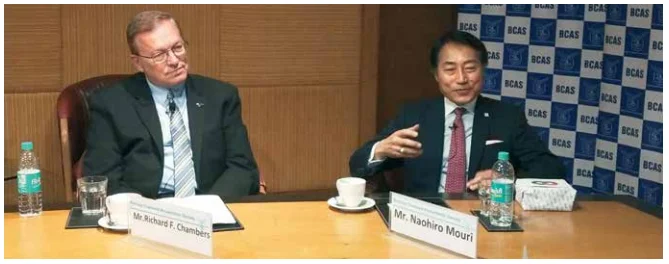
Book Review

(LEARNINGS FOR NGOs/NPOs INCLUDING BCAS)

Name of the Book: THE MAVERICK EFFECT BY HARISH MEHTA

Author: MR HARISH MEHTA

On 8th February, 2025, I attended the Managing Committee meeting of BCAS as there was an interesting item on the agenda. That was to hear from two people about how “not for profit” organisations can be run and, what are the challenges in doing so and how the same can be overcome.

The two guest speakers who were invited to speak on this topic were Mr. Harish Mehta and Mr. Rajiv Vaishnav.

At the end of the meeting, all those present were handed over a copy of the book “The Maverick Effect” authored by Mr. Harish Mehta. This is an “Inside Story of India’s IT Revolution”. The name of the book intrigued me, and for some reason that I still can’t figure out, I mentioned to Mr. Mehta there and then that I would read this book and then write a book review about it in the BCAJ and send him a copy of that edition of the BCAJ. He was glad to hear this. The editor of the BCAJ was also present at that time, and he agreed to publish the book review. However, it took me much longer to finish the book than I had anticipated. At one social event where I met Mr. Mehta sometime in April, 2025, I reminded him about our meeting at the BCAS managing committee, and he reminded me that he had not yet received the book review. That really prompted me to quickly finish reading the entire book and then start writing this piece.

This is not merely a “book review” but also a note to myself (as one of the active members of the BCAS) and to other leaders (past, present and future) of the BCAS on the lessons that one can learn from the life of Mr. Mehta and his various experiences that he has vividly narrated in the book. In this article, I have tried to highlight various important lessons of life as well as important ways in which nation-building needs to be kept uppermost in one’s mind and actions while creating an organisation like NASSCOM & BCAS.

To begin, let me talk about Mr. Mehta himself. He is one of the founders of NASSCOM. No Indian can afford not to know what NASSCOM is. This body has played a stellar role in creating and sustaining Brand India on the global stage in many ways. He moved from the USA to India at a young age despite having a cushy job there. He began a small business which has, today, grown into a large organisation which is also listed on the stock exchanges. And, of course, he helped build NASSCOM. In this book, he has shared various incidents that give an insight into India’s bureaucracy, politicians, businessmen and, more importantly, leaders who shape the fortunes of millions all over the world.

The first lesson that I learnt from this book is about the importance of collaboration amongst competitors. In the initial days of NASSCOM, there was a crying need for this amongst the software companies of the country. Had they not collaborated in those years, who knows whether NASSCOM would have ever survived and thrived. Here, I would like to quote from the book itself:

The comparison is drawn between the formation of the European Union and NASSCOM:

In both cases, going against their grain, competing entities collaborated for the greater good. NASSCOM’s member companies put India ahead of individual interests. And the people involved were passionate about the causes they stood for.

The next lesson that is very important for me in the context of BCAS is the relevance and importance of core organisational values. The BCAS has always stood out because of the selfless work done by the core group consisting of volunteers and for its values. Many of the volunteers have been associated with the BCAS for several decades. And they have worked for the good of the BCAS without any expectations. Mr. Mehta writes in this book as under:

While each value is important, for me, the three that stand out are: (a) have ‘no personal agenda’, (b) ‘collaborate and compete’, and (c) practice a ‘growth mindset’.

The last value mentioned by him – “practice a growth mindset”, is something that is extremely relevant today for all professionals. For far too long, we have remained docile and meek. For a vast majority of the CA fraternity, “growth” is not something that comes naturally in day-to-day practice. I could be wrong in this judgment. But it is my perception based on interaction with lots of small and midsized CA firms. Apart from the mindset of growth, in today’s times, there is also a crying need for CA firms to “collaborate and compete”. Unfortunately, for several decades, CA firms have only been competing with each other. The time to collaborate is NOW.

Another interesting and relevant aspect of this book is how Mr. Mehta has graciously acknowledged the efforts of various people who passionately contributed to the building of the NASSCOM brand. Mr. Rajiv Vaishnav and the late Mr. Dewang Mehta are two such persons to whom Mr. Mehta has referred to multiple times in the book for their contribution to NASSCOM. This reminds me of the famous words of the former US President Mr. Harry Truman:

It is amazing what you can accomplish if you do not care who gets the credit.

The next important lesson that I could draw from the book and which applies to BCAS with equal force is putting the organisation above the individual. Mr Mehta writes:

NASSCOM was built by a few entrepreneurs, who were driven by the needs of an industry in its infancy. Today, the institution is indeed bigger than any one person or organisation. When we started NASSCOM, we dreamt of making tenfold leaps. We imagined an impossible billion-dollar industry when we were at a mere $120 million. Even when we were at $5 billion, we imagined another unimaginable $50 billion in the next ten years. The actual achievement has far surpassed our wildest imagination.

Neither at BCAS nor at the ICAI level, we have set definite goals in terms of growth of the profession. Unlike the commercial world of software, in the case of the CA profession, no organisation at the national level has set any targets for the profession. Our leaders need to ponder about this. Is there a need to set such targets? Would such an action be in the larger interest of the nation as a whole? Just as the software industry has served multiple purposes for the country, can growth in terms of revenues for our profession as a whole achieve any such altruistic goals at a national level? Obviously, at a firm level, several firms would be setting revenue or profit targets. But at a larger level, there is certainly no such move. Maybe the current and future leaders of the BCAS or the ICAI can think along these lines.

Another very important parallel that I could draw between NASSCOM & BCAS is about the role of each of these wonderful organisations. In the words of Mr Mehta, the role of an organisation like NASSCOM is:

If I could pick one term to describe NASSCOM, I’d say we are trusted catalyst for the IT industry and other stakeholders. We are and will remain independent. We will ensure that there is no vested interest in any outcomes, except the growth of the industry. We thus constantly intervene on myriad issues – from policy to guidelines to skilling, and more. Yet, we stay at arm’s length when it comes to ownership and creating new institutions.

BCAS has always prided itself in being independent and in being a catalyst for the CA profession. It has to its credit several pathbreaking and innovative initiatives that have, later on, been replicated by several other organisations. We have also been at the forefront of advocacy and have been trying to make a difference in the quality of legislations for many decades. The quality of our events and publications has always been appreciated by our members. So, in this respect, we are very similar to NASSCOM. The major difference is that of scale. Maybe, it’s time now to scale up the BCAS and take it to the next level. I am hopeful that the new-age leaders of the BCAS will rise to the occasion.

The next important learning from the book is about dealing with failures. Mr. Mehta has made a very pertinent and moving observation about failure:

The world celebrates success with accolades and trophies, but failure often has no friends. We could change this by encouraging more conversations about how failure is a necessary ingredient for success.

The BCAS, every year, felicitates new entrants to the CA profession by inviting successful students. BCAS has also, in the past, invited those students who have not succeeded in the exams and guided them in how to deal with failure and how failure is part and parcel of life, and, maybe, as mentioned by Mr Mehta, even necessary for success.

The last important point that stood out for me in the book is about the importance of family and relationships. While discussing about whether he has been able to create a “big” company, Mr Mehta dwells on the importance of family and relationships and sums up beautifully by: Finally, to me, the larger metric of success is my family, and the relationships I have nurtured and developed over my life. And with those, I am probably the Biggest 1.

All in all, I found “The Maverick Effect” by Mr. Harish Mehta very interesting, inspiring and useful. I do hope many members of the BCAS – particularly the core group members – will also read this book as we have a lot to learn from NASSCOM and people like Mr. Mehta about how to run a not-for-profit organisation and ensure that the organisation not only thrives but also makes a massive difference for our country which itself is standing on the cusp of a glorious future as we move towards “Viksit Bharat”.

Allied Laws

11. The Correspondence, RBANMS Educational Institution vs. B. Gunashekar and Anr.

Special Leave Petition (Civil) No. 13679 of 2022 / 2025 INSC 490 16th April, 2025

Suit for Injunction – To restrain the owner from disposing of the property – Agreement to sell – Does not confer right, title, or interest in the property – Suit without cause of action – Suit dismissed.

Directions were also issued to registration authorities to report any cash transactions in the purchase of properties which was in upwards of ₹2,00,000/-. [Order VII, Rule 11(a) and (d), Code for Civil Procedure, 1908; S. 269ST, Income-tax Act, 1961].

FACTS

The Respondents (original Plaintiff) had filed a suit seeking a permanent injunction restraining the Appellant (Original Defendant) from creating any third-party interest over the suit property. The Appellant is an educational institution, established in 1873. Thereafter, in 1929, the Appellant purchased the suit property and has been in continuous possession since. The Respondents had alleged that they had entered into an agreement to sell with one third party (vendor) for the purchase of the suit property. Further, as per the agreement to sell, the Respondents had already paid ₹75,00,000/- to the vendor in cash. Therefore, the Appellant must refrain from manipulating the title deeds of the suit property and further restrained from disposing of the said suit property to any other person. The Appellant filed an application under Order VII, Rule 11(a) and (d) of the Code for Civil Procedure, 1908 (CPC) for seeking rejection of the suit filed by the Respondent on the ground that the Respondents are merely agreement holders and not the owners of the suit property and as such, an agreement to sell does not confer any right, title, interest on the prospective buyer. It was further contended by the Respondent that if the alleged agreement to sell exists, then the remedy would lie against the vendor with whom the agreement has been entered into. The Appellant also contended that the Respondent had a pattern of filing such suits in respect of valuable properties by producing alleged agreement to sell. The learned Trial Court, however, dismissed the application filed by the Appellant for dismissing the suit under Order VII, Rule 11(a) and (d) of the CPC. The learned Trial Court had opined that under Order VII, Rule 11(a) and (d) of the CPC, it must confine only to the averments made in the plaint without examining the defence of the Appellant. Further, the Respondent had cause of action against the Appellant. Aggrieved, a revision application was filed before the Hon’ble Karnataka High Court. The Hon’ble High Court concurred with the views of the learned Trial Court and rejected to dismiss the suit under Order VII of the CPC.

Aggrieved, a special leave petition was filed by the Appellant before the Hon’ble Supreme Court.

HELD

The Hon’ble Supreme Court, at the outset, observed the consistent pattern of filing suits by the Respondent in high-value properties. Further, it also noted that the vendors had not been made parties to the suit and the addresses were absent from the plaint. The Hon’ble Supreme Court held that as per section 54 of the Transfer of Property Act, 1882, an agreement to sell, cannot by itself create any right, title interest in the suit property. Thus, the Respondent did not have any cause of action against the Appellant. Therefore, the Hon’ble Court held that the suit ought to have been rejected for want of a cause of action.

Before parting, the Hon’ble Court raised doubts as to how the Respondent allegedly pay ₹75,00,000/- to the vendor in cash despite provisions of Section 269ST in the Income-tax Act, 1961 which debars any person from paying in cash above ₹2,00,000/-. Accordingly, the Hon’ble Court directed the Income-tax Department to take cognisance of the said matter. Further, directions were also issued to registration authorities to report any cash transactions in the purchase of properties which was in upwards of ₹2,00,000/-.

The appeal was accordingly allowed.

12. Angadi Chandranna vs. Shankar and Ors.

Civil Appeal No. 5401 of 2025 (SC) / 2025 INSC 532 22nd April, 2025

Joint Hindu Family – Suit Property – Self-acquired or Joint property – Partition of Joint Hindu Family – Partitioned suit property becomes the self-acquired property of that person. [S. 100, Code for Civil Procedure, 1908].

FACTS

A suit was instituted by Respondents No. 1 to 4 (Original Plaintiff/children of Defendant No. 2) for seeking partition and separate possession in the suit property. Briefly, Defendant No. 2 (along with his two brothers) had divided the joint family properties vide a registered partition deed after the death of their father. The suit property was partitioned in favour of one of the brothers. Thereafter, Defendant No. 2 acquired the said suit property (from his brother) via a purchase agreement deed and thereafter, sold it to one Angadi Chandrana (Defendant No. 1 / Appellant). It was contended by the Respondent No. 1 to 4 that the said suit property belonged to the Joint Hindu Family and was not an independent / self-acquired property of the Defendant No. 2. The learned Trial Court allowed the suit and held that the property was in fact belonging to the Joint Hindu Family and thus the property must be divided. An appeal was preferred by Defendant No. 1, wherein the first Appellate Authority allowed the appeal and reversed the finding of the learned Trial Court. Challenging the order, a second appeal was preferred by the Respondent No. 1 to 4 before the Hon’ble Karnataka High Court. The Hon’ble allowed the appeal and restored the order was of the learned Trial Court.

Aggrieved, an appeal was preferred before the Hon’ble Supreme Court.

HELD

The Hon’ble Supreme Court observed that all the properties of the Joint Hindu family were partitioned via a registered partition deed. Therefore, after partition, the properties which were so divided become the self-acquired property of that person. Further, the suit property was purchased by Defendant No. 2 (from his brother) by using his own funds and loans. The Hon’ble Court also noted that the mere existence of children in a Joint Hindu family cannot by itself make the father’s (Defendant No. 2) self-acquired property as joint property. The character of the property must be taken into consideration before determining the nature of the property. Thus, the appeal was allowed, and the original order of the learned Trial Court was set aside.

13. Logabai vs. Nil

AIR 2025 (NOC) 198 (MAD)

17th December, 2024

Guardian ship – Mentally retarded child – Father died in car accident – Mother also dead – Only Grandmother alive – Mentally fit to take care of the child – Grandmother appointed as the guardian and manager of the property. [A. 226, Constitution of India; S. 7, Guardian and Wards Act, 1890].

FACTS

A petition was filed for the appointment of the Petitioner as the legal guardian and manager of the properties of her granddaughter, Ms. Amudha Narmada. It was contended by the Petitioner that her granddaughter was a duly certified mentally retarded child by the Institute of Mental Health. As per the certificate, Ms. Amudha Narmada suffers from 70 per cent mental disability. It was the claim of the Petitioner that her granddaughter is under her care and custody. Further, the Petitioner is a 70-year-old woman who is unable to meet the expenses to maintain herself. Further, it was submitted that the father of the child had died in a car accident, and the learned Trial Court had allowed compensation to the child. However, the same cannot be withdrawn unless the court has appointed a legal guardian. It was further submitted that the mother of the child had also passed away and that there was no family member other than the Petitioner.

HELD

The Hon’ble Madras High Court, after going through all the claims, was satisfied that the child was indeed suffering from mental disability. Further, the child had no family member other than her grandmother (Petitioner), who is a mentally fit person to take care of the child. Therefore, the Hon’ble accepted the plea and appointed the Petitioner as the legal guardian and manager of the properties of the child.

The Petition was thus allowed.

14. Muhammed Kutty vs. Sub Registrar, Office of the Sub Registrar, Palakkad and Anr.

AIR 2025 Kerala 44 / W.P. (C) No. 35494 of 2024 27th November, 2024

Registration – Property – Settlement Deed – Registrar cannot make enquiry into the prior title deeds – Bound to register the deed [S. 34, 69(2), Registration Act, 1908; R. 67, Registration Rules (Kerala)].

FACTS

The Petitioner is one of the sons and legal heirs of one Mr. Abubacker Haji. After the death of the Petitioner’s father, the Petitioner and the remaining legal heirs decided to settle the property in favour of the wife of Mr. Haji (i.e. mother of the Petitioner). Accordingly, the legal heirs prepared a settlement deed and submitted the same for registration before the office of the registrar (Respondents). However, the Respondent refused to register the settlement deed and insisted that the Petitioner to provide a copy of the prior deed of the property i.e. to prove that the father of the Petitioner was in fact the owner of the property before he died.

Aggrieved, a petition was filed before the Hon’ble Kerala High Court (Ernakulam).

HELD

The Hon’ble Kerala High Court observed that as per S. 34 of the Registration Act, 1908 (Act), the powers of the Respondent are limited only to make an enquiry as to whether the document was in fact executed by the persons who purport to have executed the document. Further, the Hon’ble Court observed that as per Rule 67 of the Registration Rules, Kerala, the Respondent have no right to enquire into the validity of a document or to question the right of executant to execute a document or insist on the production of title deeds or prior document of the property except in the case of marriage document. Thus, the Respondent was directed to register the settlement deed.

The petition was therefore allowed.

15. Muruganandam vs. Muniyandi (died) through legal heirs.

2025 Live Law (SC) 549 / Civil Appeal No. 6543 of 2025 8th May, 2025

Suit for specific Performance – Sale Deed – Unregistered and unstamped – Admission of the sale deed – An Unregistered document can be taken into evidence in cases of specific performance or any other collateral proceedings. [S. 17, 49, Registration Act, 1908; S. 35, Indian Stamps Act, 1989].

FACTS

The Appellant (Original Plaintiff/buyer) and the Respondent (Original Defendant/seller) had entered into a sale agreement. As per the sale deed, certain payments were made by the buyer and in exchange, the seller had put the buyer in possession of the property. Thereafter, the entire payment consideration was paid by the buyer. It was the contention of the Appellant (buyer) that the Respondent (seller) was not taking any steps for the execution of the sale deed despite multiple requests. Thus, a suit for specific performance was instituted by the Appellant (buyer) for the execution of the sale deed. During the pendency of the suit, an interim application was filed by the buyer for admission of the original copy of the agreement for sale. It was contended by the buyer that the photocopy of the document was already attached along with the plaint; however, for genuine reasons, the original copy remained to be submitted before the Court. The learned Trial Court, however, rejected the said application on the ground that the document was unregistered and unstamped, and therefore the admission of the same was barred by section 17 of the Registration Act, 1908 (Act) and section 35 of the Indian Stamps Act 1989. Thereafter, a revision petition was filed by the buyer (Original Plaintiff/buyer) before the Hon’ble Madras High Court. However, the Hon’ble High Court held that the decision of the learned Trial Court does not need any interference.

Aggrieved, an appeal was preferred before the Hon’ble Supreme Court.

HELD

The Hon’ble Supreme Court held that although an unregistered document cannot be taken into admission as evidence, the provision to section 49 of the Act specifically allows the Courts to take into account an unregistered document in a suit for specific performance or any other collateral proceedings. Therefore, the decision of the Hon’ble High Court was set aside, and the learned Trial Court was directed to admit the unregistered document into evidence in the suit for specific performance.

The appeal was therefore allowed.

Agricultural Income Revisited

Agricultural income has always been the subject matter of discussion among professionals. It has enjoyed an uninterrupted exemption for more than a century. The same is sought to be continued in the Income Tax Bill 2025. The bill makes some cosmetic changes in the concept of agricultural income as envisaged.

The objective of this article is to explore the idea of Agricultural Income and examine all the relevant provisions, key judgments, and Constitutional mandates. In the course of the article, the author has taken the liberty of sowing the seeds of his views.

CONSTITUTIONAL MANDATE AND DEFINITIONS

The story begins with Entry 82 of the Union List of the 7th Schedule of the Constitution of India, which empowers the Union to levy tax on Income other than Agricultural Income. Entry 46 of the State List makes tax on Agricultural income a State subject. In fact, many states (like Bihar, Odisha, Tamil Nadu, West Bengal, and Maharashtra) have passed legislation to this effect, making Agricultural Income taxable in those States, though the implementation or enforcement of those statutes could be a matter of debate.

Under Article 366(1) of the Constitution, Agricultural Income means “agricultural income as defined for the purpose of enactments relating to Indian Income Tax”. The Income Tax Act 1961 defines “Agricultural Income” but doesn’t define “Agriculture”. The meaning we ascribe to the term “Agricultural” is at the core of how we construe the expressions “agricultural purpose” or “agricultural income”.

Black’s Law Dictionary defines Agriculture as the art or science of cultivating the ground, including harvesting of crops, and in a broad sense, the science or art of production of plants and animals useful to man, including in a variable degree, the preparation of these products for man’s use. In the broad sense, it includes farming, horticulture, and forestry, together with such subjects as butter, cheese, making sugar, etc.

Merriam-Webster dictionary defines Agriculture as the science, art, or practice of cultivating the soil, producing crops, and raising livestock, and in varying degrees, the preparation and marketing of the resulting products.

If we go by the above definitions, a broader connotation emerges suggesting that it is not always necessary that some labour and effort are employed to plough the soil and sow the seeds for an activity to be called Agriculture. Even dairy farming or poultry farming can be considered as Agriculture within its expanded meaning.

If we further dig into the etymology of the word “Agriculture,” it is derived from the Latin word “agricultura”, which is a combination of the word “ager”, meaning “field”, and “cultura”, meaning “cultivation”. Therefore, the word “agriculture” literally means “cultivation in the field”. The word “cultivation” implies an active and intentional process of fostering growth and development. Land can be cultivated to foster any form of life, whether plants or animals. So, where there is an intentional plantation of a certain type of grass to feed the cattle and facilitate their healthy growth, it must fall within the literal meaning of the word “agriculture”.

AGRICULTURE UNDER EXISTING TAX LAW

However, such a wide interpretation of the term also gave rise to many disputes. One of them was with respect to scenarios where income was generated out of land without directly performing any labour or toil on the land, like ploughing, sowing, etc. For example, a question often arose whether the phenomenon of plants and fruits growing spontaneously and naturally in the forest, without the intervention of human agency, should be considered as Agriculture. This, in particular, and other disputes in general, were put to rest by the landmark judgment of the Supreme Court in the case of Benoy Kumar Sahas1. In the judgement penned by Bhagwati J, for the first time, a structure to interpret the term agriculture was laid down. In essence, the following principles emerged:

1. Basic Operations are Essential:

  •  Human Skill and Labour: Agriculture must involve basic operations on the land itself that utilise human skills and labour. This includes tilling, sowing, planting and similar efforts before germination.
  •  Not Just Subsequent Operations: Activities after germination, such as weeding, pruning, and harvesting, are not enough on their own to be considered agriculture. They must be carried out as an extension of the basic operation. It is only then that the whole of the integrated activity is considered as Agriculture.

2. Agriculture Includes all Kinds of Products Raised on Land:

  •  Regardless of the nature of the product – whether for humans or for the consumption of the beast.

3. Activities Must be Related to the Land

  •  Not Just Land-Related: The mere fact that an activity has some connection with or is in some way dependent on land is not sufficient to bring it within the scope of the term. For instance, breeding and rearing of livestock, dairy farming, butter and cheese making, and poultry farming would not by themselves be agricultural purposes2.

1  (Raja Benoy Kumar Sahas (1957) 32 ITR 466 (SC))
2  (The Law and Practice of Income Tax, by Arvind P Datar, Eleventh Edition, Vol -1, p. 85)

However, this must be understood holistically along with this disclaimer from the judgement- “The question still remains whether there is any warrant for the further extension of the term “agriculture” to all activities in relation to the land or having a connection with the land including breeding and rearing of livestock, dairy-farming, butter and cheese-making, poultry-farming, etc.”.

Dairy Farming

While the general principle as emerged in Benoy Kumar Sahas is that Dairy Farming may not be considered as Agriculture for want of a direct connection with the land, however, this idea needs to be analysed in the light of judgement by the Rangoon HC in case of Kokine Dairy3.

Roberts, C.J., who delivered the opinion of the Court, observed:

“Where cattle are wholly stall-fed and not pastured upon the land at all, doubtless it is a trade, and no agricultural operation is being carried on: where cattle are being exclusively or mainly pastured and are nonetheless fed with small amounts of oil-cake or the like, it may well be that the income derived from the sale of their milk is agricultural income.”

This, however, is not in consonance with the ruling of the Supreme Court in Benoy Kumar Sahas (supra), where it was held that dairy farming by itself would not constitute agriculture.


3 (Commissioner of Income-tax, Burma v. Kokine Dairy, 6 ITR 502, 509, 1938)

Poultry Farming

While the central issue before the High Court of Andhra Pradesh High Court in the case of Mulakaluru Co-operative Rural Bank4 was not the classification of Poultry Farming as Agriculture, it formed a key component of the ratio decidendi. This judgement underscores the varied and variegated interpretation of the term agriculture and illustrates a potential departure from the established framework in Benoy Kumar. The court held that “No doubt, poultry farming being an extended form of agriculture, certainly qualified eggs to be treated as ‘agricultural produce’ for the purpose of section 80P(2)(iii ).”


4 (CIT v Mulakaluru Cooperative Rural Bank Ltd 173 ITR 629, 1988)

Slaughter Tapping of Rubber

Kerala HC, in the case of KC Jacob,5 held that income generated by the owner from the slaughter tapping on rubber trees was an agricultural income:

“Here, the slaughter-tapping was by the owner himself. The rubber obtained by him, in whatever manner he tapped his trees, is his, and the receipts by him from the sale of rubber obtained by such tapping is “income derived from land which is used for agricultural purposes”, within the meaning of Section 2(a) of the Kerala Agricultural Income Tax Act 1950.”

This takes us to an important question, whether income derived passively from standing trees, like that of rubber, mango, coconut etc., after their initial planting can be regarded as agricultural income.

As established, supra in the case of KC Jacob, income derived by the owner from the slaughter-tapping of a “standing” rubber tree is agriculture income. Thus, there is no requirement to perform the basic operation of tilling, sowing, etc. on land every year. This inference can be extended to mango, coconut and other such standing trees as well. But what would be the scenario where the existing owner did not originally plant the trees? E.g., if a ready mango farm were purchased by the assessee –would the income arising out of the sale of mangoes every year still be regarded as agricultural income? While the answer can vary depending on the facts of the case, but in general, where the sine qua non of agricultural operation, i.e. tilling of the land, sowing of the seeds, planting, and similar operations on the land are missing, courts may be more inclined to deem the same as originating from a commercial activity rather than an agricultural pursuit and treat the income as non-agricultural income. Figuratively – the person reaping the fruits may not be the same as the person who sowed the seeds, but the world appreciates only when the person reaping the fruits had himself sown the seeds.


5 (K.C. Jacob vs Agricultural Income-Tax Officer. 110 ITR 402, 1977)

SECTION 2(1A) OF THE INCOME TAX ACT 1961

With the above background, let us dissect the clauses. Broadly, Section 2(1A) splits the agricultural income into two parts – 1. Depending on the Source, It would either be from Land or Building 2. Depending on the type of Operations- it could be out of agriculture or operations necessary to render the produce fit for market.

Clause 2(1A)(a): This clause focuses on Land being the source of income. It has three mutually inclusive requirements:

(i) Rent or Revenue Derived from Land: The word ‘rent’ means payment of money in cash or kind by any person to the owner in respect of a grant of right to use land. The expression ‘revenue’ is, however, used in the broad sense of return, yield or income and not in the sense of land revenue only6. The Apex court’s decision in the case of Bacha Guzdar established the principle that the expression “revenue derived from land” envisages a direct association with the land. Thus, it was held that “Dividend received from a company earning agricultural income is not agricultural income in the shareholder’s hands7. One should bear in mind that to bring a certain income within the ambit of this clause, it is not necessary that such income should arise by the performance of any agricultural activity – e.g. the compensation received from the government for the requisitioned agricultural land was deemed to possess the character of rent or revenue derived from agricultural land, thus qualifying as agricultural income exempt from tax.8


6 (Raza Buland Sugar Co. Ltd. v. CIT, 1980, 3 Taxman 266 (Allah. HC))
7 (Mrs. Bacha F. Guzdar v. CIT [1955] 27 ITR 1 (SC))
8 (Commissioner of Income Tax v. M/S. All India Tea And Trading Co. Ltd. (1996) 8 SCC 478)

Land Situated in India: Thus, any revenue or rent from agricultural land situated outside India will be out of the purview. The point to note here is that there is no distinction made between urban and rural land. Similarly, the classification of the land in Govt records is also immaterial. This essentially means, e.g., even if the land is classified as Non-Agricultural (NA) it still qualifies for the exemption so long as the third condition is also fulfilled. By virtue of these conditions, income from Fishing in natural waters should ideally be out of the scope of agricultural income.

(ii) Land Used for Agricultural Purposes: We have already explored in detail the scope of meaning of Agriculture. It is the use to which the land is put that is to be seen and not the nature of the land. Very often, we come across parcels of land on the outskirts of big cities that were lush green fields just a few years ago, but now, on those lands, commercial shops have come up, and the owners are earning rent out of it. Though the land may still be agricultural lands in the revenue records, they are no longer used for agricultural purposes. Such rents cannot be treated as agricultural income. Mushroom farming is typically done in a controlled environment and not directly on land. Instead, the soil is placed on racks vertically, and the mushroom is cultured. The question before the ITAT Hyderabad was whether it is an agricultural activity. The gist of the decision is that while soil is an integral component of land, and land itself is a part of the earth, the act of cultivating soil in trays while retaining its fundamental characteristic as ‘land’ does not diminish the agricultural nature of activities conducted upon it. The essence of agriculture remains, even when the soil is separated from its broader terrestrial context9.


9 (Dcit, Circle-2(1), Hyderabad vs Inventaa Chemicals Ltd., 2018)

Clause 2(1A)(b): This clause focuses on the performance of the actual activity of agriculture. Only such income that arises from activities mentioned in the clause will be considered as agricultural income. Further, such activities must be performed on the land as mentioned in clause (b). It provides for three categories of activities:

(i) Agriculture: It is important to note the wording of sub-clause (b)(i)- it says any income derived “by Agriculture” and not “by sale of Agricultural Produce”. It clarifies the intention of the legislature to include even “produce” held by a farmer for self-consumption or produce lying in stock to be considered as “agricultural income”. The Madras HC judgement in the case of Vaidyanatha Mudaliar reinforces this understanding. The judgement was with respect to the issue raised under the Madras Agricultural Income Tax Act, 1955.

(ii) Performance of any process to make the produce fit to be taken to the market: Like in sub-clause (b)(i) above, here too, “sale” of the produce is not required to bring it into the ambit of “agricultural income”. It is the enhancement in the value of the produce after performing the said process that is considered as agricultural income. The process should be one as is ordinarily performed by other cultivators in the locality. The expression “ordinarily performed” is contextual to the locality/region. So, where in the concerned region in the case of Brihan Maharashtra Sugar10, sugarcane was generally sold as such without subjecting it to the process of converting it into gur (jaggery) or sugar, the same when applied in the given case, the income arising from such process was held to be non-agricultural. It is the cultivator or the receiver of rent in kind who alone should have performed such process, e.g., if the standing crop of tobacco is purchased by a trader and he performs “curing” (a process which is ordinarily employed by a cultivator of tobacco to render it fit for sale in the market) on the tobacco after harvesting the income so derived by curing cannot be considered as agricultural income because a trader in this example is neither a “cultivator” nor an owner who is “receiver of rent in kind”.


10 (brihan maharashtra sugar syndicate ltd v CIT(1946) 14 ITR 611 (BOM))

(iii) Sale of Agricultural Produce: In Clause 2(1A)(b), this is the only sub-clause that envisages the “Sale” of Agricultural Produce. However, the stage at which the produce is sold is restricted to the stage the produce is at after applying the process applied to make it fit for the market. e.g., a farmer is involved in preparing and selling ready to cook chapatis in packages. He performs all the agricultural processes for wheat cultivation, from tilling to harvest to threshing, cleaning and packaging chapatis. The sub-clause covers the stage only till threshing and cleaning, as at this stage, the wheat is fit to be sold in the market.

After studying clause 2(1A)(b), an obvious question emerges. Why is there a need to provide for the treatment of income at different stages? The answer to this is that there can be more than one stakeholder in the entire journey of produce, from tilling to making it fit for market. And often, every stakeholder may add value to the value chain. However, the intention of the legislature appears to be to give exemption only to defined contributors till a defined stage.

Clause 2(1A)(c ): The source of income here is the annual value of the House Property. It should meet the four criteria to be considered as Agricultural Income:

i) Used As: dwelling house, or as a store-house, or other out-building.

ii) Occupied By: receiver of rent/revenue or cultivator.

iii) Reason for Occupation: connection of occupier with the land used for agricultural purposes.

iv) Situation of Building: Immediate vicinity of the said Land, and it’s not located within the area specified limits with specified population.

It should be noted here that many buildings in or within the specified limits of municipalities or cantonments will not get the benefit of clause(c ) even if the other criteria are met. The limits are provided in the proviso to clause (c ) of sec 2(1A). The intention of the legislature seems to include only such buildings that are located in rural areas. And the legislature is mindful of the fact that the influence of urbanisation on the use of land is not restricted to the political limits of municipalities or cantonments but is extended even beyond. So, in order to arrest tax evasion by disguising the use of buildings for given agricultural purposes, the law provided for an extended limit of the urban area.

Explanation 1 to Section – 2(1A): Section 2(14), excludes, in general, Agricultural Land from the definition of Capital Asset. Thus, there cannot be Capital Gains on the transfer of such agricultural land. However, it provides for certain exceptions that cover land situated within defined municipal and cantonment limits. Thus, gains on the transfer of such land will be taxed as Capital Gains. A situation might arise where a person describes/discloses such gains are “revenue derived from land” under clause (a) of S. 2(1A) and claims the exemption as agricultural income. To pre-empt such situations, Explanation 1 makes it abundantly clear that such income will not be considered as “income derived from land”.

But this leaves us with an interesting question- while there will not be any Capital gains from the transfer of agricultural land (section – 2(14)), what about the potential of taxing it as non-agricultural income? Some cogent arguments against it can be:

It is Agricultural Income and hence exempt: Explanation 1 to section 2(1A) binds only the exceptions mentioned under section 2(14)(iii); thus, where agricultural land other than that falling within the ambit of clauses (a) and (b) of section 2(14)(iii) (a) and (b) is transferred, the gains could be “revenue derived from the land” and hence is agricultural Income.

It is a Capital Receipt: As a general principle, a receipt that doesn’t partake in the nature of Income cannot be brought to tax under the Income Tax Act. The latter view seems to be the better view.

EXPANDING SCOPE OF AGRICULTURAL INCOME

Explanation 3 to Section – 2(1A): The explanation provides that any income derived from saplings or seedlings grown in a nursery shall be deemed to be agricultural income. However, a question arises whether income from the sale of flower bouquets by a person who owns and manages the nursery will also be agricultural income. The answer might depend on the extent and form of processing involved beyond the basic agricultural operations. So, where the bouquets are simple assemblages of flowers and foliage grown in the nursery, it could be argued that the income remains closely tied to agricultural activity. However, if the process involves significant value addition, such as elaborate flower arrangement, the value addition could be considered as non-agricultural in nature.

SEGREGATING AGRICULTURAL INCOME AND BUSINESS INCOME

How do we disintegrate a composite income which is partially agricultural and partially non-agricultural?

Under the authority of section 295, the Board may make rules for, inter alia, the manner in which and the procedure by which the income shall be arrived at in the case of income derived in part from agriculture and in part from business.

Rule 7 provides the portion that is taxable as business income is calculated by deducting the market value of the agricultural produce used as raw material in the business. No further deductions are allowed for expenses incurred by the assessee as a cultivator or receiver of rent-in-kind.

Market value is the average value at which the produce is sold in its raw form or after basic processing to make it marketable. And where the produce is not marketable, it will be a sum of,

i) Expenses incurred in cultivating the produce.
ii) Land revenue or rent paid.
iii) A reasonable profit as assessed by AO.

Rule 7 is a general rule that applies to all situations with composite income. However, there are specific rules with respect to certain businesses where, perhaps, determining the market value of the raw material is not feasible owing to some practical complications like heavy fluctuations in the rates, etc. Rules 7A, 7B and 8 provide for a fixed proportion of the total composite income to be considered as non-agricultural income and subjected to tax, removing any ambiguity.

Rule 7A- Income from Manufacture of Rubber

The rule outlines how to calculate income from selling certain rubber products (centrifuged latex, cenex, latex-based crepes, brown crepes, or technically specified block rubbers). If these products are made or processed from field latex or coagulum obtained from rubber plants grown by the seller in India, the income from their sale is treated as business income. Out of this business income, 35% is considered taxable.

Rule 7B- Income from Manufacture of Coffee

(1) If one grows and cures coffee in India and then sells it, the income from this sale is considered business income, and 25% of it will be taxed.

(1A) If one grows, cures, roasts, and grinds coffee in India and then sells it (even if one adds chicory or other flavourings), the income is also considered business income, but in this case, 40% of it will be taxed.

Rule 8- Income from Manufacture of Tea

If one grows and manufactures tea in India and then sells it, the income from this sale is considered business income, and 40% of it will be taxed.

EVIDENCES TO SUPPORT THE CLAIM OF AGRICULTURAL INCOME

Where agricultural Income is declared in the return of income, the assessee must maintain robust records to substantiate the claim if scrutiny arises. Ordinarily, these evidences includes,

  •  Proof of Ownership of Land
  • Proof of Cultivation Rights: These could be a Lease Agreement.
  • Proof of Actual Agricultural Operations: Bills of seeds and fertilisers,
  • Proof of Sale
  • Commission Agent’s Receipt etc.
  • Banks Statements

CONCLUSION

Though the concept of agricultural income was first introduced in the Indian Income Tax Act 1886 the same has evolved with time. And even today, determining its scope requires significant caution. While the interpretation is heavily influenced by the Benoy Kumar Sahas case, which insists on basic operations, in today’s fast-changing technological landscape, the very idea of “basic operations” can be challenged. For example, “Hydroponics” is the technique of growing plants using a water-based nutrient solution rather than soil11. It completely bypasses the need for tilling or sowing the land. Classifying the income generated through such a process would, perhaps, call for an amendment in the definition in the Act, which currently hinges on land.

Also, the assessee must be wary: merely deriving income from land or performing any process on land isn’t enough. Overlooking specific criteria for land use, building occupancy, or nature of processing can lead to reclassification of income and an unexpected tax burden.


11 (https://www.nal.usda.gov/farms-and-agricultural-production-systems/hydroponics, n.d.)

Rights of the Accused under PMLA for Obtaining Copies of the Records / Documents

This article deals with the Judgement of the Supreme Court in Sarla Gupta & Onr. vs. Directorate of Enforcement and the right of an accused to obtain copies of the Records / Documents collected by the Investigative Agencies under the PMLA.

INTRODUCTION

The saying that “Information is power” is age-old. Investigating agencies, while investigating a certain offence, tend to collect a large amount of data and information in the quest for justice. An investigation, as well as the resulting prosecution (if any), is supposed to be fair and unbiased. An officer administering certain provisions of an act also conducts inquiries from time to time. This also leads to the collection and compilation of a large amount of data. This data is relevant not only because it could be used to establish that a certain accused is involved in the offence of money laundering but also to give rise to reasonable doubt as to his complicity. The burden of proof to convict an accused in a criminal trial is “beyond reasonable doubt”. If the prosecution cannot prove its case beyond a reasonable doubt, the accused has to be acquitted. Just as the information conducted during an inquiry or an investigation forms the basis of the prosecution case, the same can also be pressed into service for defence. For a criminal trial to be fair to the accused, it is essential that the defence has access to all the material that is at the command of the prosecution. This is particularly relevant for the material that is relied on by the prosecution. The fundamental principle of criminal law is that an accused has the right to confront their accuser and also confront the evidence produced against them.

SECTION 207 & 208 OF CRPC AND PMLA PROCEEDINGS AND SUPPLY OF ‘RELIED UPON DOCUMENTS’

The three-Judge division bench judgement of the Supreme Court in Sarla Gupta & onr. vs. Directorate of Enforcement 2025 SCC OnLine SC 1063 strikes a win for fairness in prosecutions under the Prevention of Money Laundering Act, 2002 (better known as the PMLA).

In modern-day criminal law jurisprudence, due weightage needs to be given to fairness. After all, justice must not only be done but must also be seen to be done. Just like it would not be fair for a person to be made to participate in a fist-fight with one of his hands tied behind him, it would hardly be fair if an accused was not granted copies of the material relied on against him. There are two important provisions under the Code of Criminal Procedure (CrPC) which deal with the supply of documents – Sections 207 and 208. The corresponding Sections of the Bharatiya Nagrik Suraksha Sanhita (BNSS) are Sections 230 and 231 respectively. Section 207 of the CrPC applies when the proceedings have been instituted on a police report and are triable by the magistrate. Section 208 applies to a case that is instituted otherwise than on a police report, and the Magistrate is of the view that the case is exclusively triable by the Court of Session.

The complaint based on which the Special Court for the PMLA takes cognisance of an offence has documents annexed to it in order to support its contents. These are the documents ‘relied upon’ in this context to make its case. In Criminal Appeal No. 730 of 2024, which is a part of the common judgement reported in Sarla Gupta, the Supreme Court held that “Both Sections 207 and 208, on the face of it, do not specifically apply to a complaint under Section 44(1)(b) of the PMLA. But, there is no reason why the principles laid down under Sections 207 and 208 should not be applied to a complaint under Section 44(1)(b) of the PMLA”. Relying upon the concept of fair play and Article 21 of the Constitution of India, the Supreme Court made sections 207 & 208 of CrPC applicable to cases under the PMLA. The Court went on to read in the protections that are afforded by sections 207 & 208 of the CrPC into the PMLA in the form of these Directions:

“Therefore, once cognizance is taken on the basis of a complaint under Section 44(1)(b) of the PMLA, the learned Special Judge must direct that along with the process, a copy of the complaint and the following documents must be provided to the accused:

a. Statements recorded by the learned Special Judge of the complainant and the witnesses, if any, before taking cognizance;

b. The documents, including the copies of the Statements under Section 50 of the PMLA produced before the Special Court, along with the complaint, and the documents produced subsequently by the ED till the date of taking cognizance; and

c. Copies of the supplementary complaints and the documents, if any, produced with supplementary complaints.

After cognizance is taken on the basis of the complaint, the ED cannot be heard to say that a document has been produced with the complaint or in the proceedings of the complaint, but it is not a relied-upon document. The copies of documents must be supplied along with a copy of the complaint as required by subsection (3) of Section 204 of the CrPC (sub-section (3) of Section 227 of the BNSS).”

Thus, the directions of the Supreme Court to the Special Court for the trial of PMLA offences is quite clear – documents, as mentioned in the directions reproduced above, must be made available to the Accused once the Special Court take cognizance of an offence under the PMLA. This would equip the accused to take an informed decision on the defence that they wish to take up during trial. But this by itself is not enough. The Judgement of the Court also makes it mandatory that copies of the document produced with the complaint or the proceedings of the complaint must be supplied to the Accused and that the Directorate of Enforcement cannot refuse to furnish any such document by stating that it is not a ‘relied upon document’ in the complaint. This act of the Supreme Court in bringing in these safeguards based on sections 207 & 208 of CrPC is a significant development in PMLA jurisprudence.

SUPPLY OF DOCUMENTS IN THE POSSESSION OF THE DIRECTORATE, NOT RELIED UPON

The ED does not need to rely upon all the documents that it collects during its investigation. There is no obligation on the investigating agency to rely upon all the data that it so collects. However, some of this data could be beneficial to the Accused in preparing their defence. Just like statutes, the interpretation or inferences drawn from data can be different by a different set of eyes. Our system of law administration is fundamentally adversarial in nature unlike in some of the countries that follow ‘civil law’ or the ‘continental system of law’. This gives rise to the danger of the prosecution withholding exculpatory documents from the accused while only relying upon the incriminating documents. The danger of this situation actually arising cannot be ruled out, and the consequences can be severe.

In the year 2021, another three-judge Division bench of the Supreme Court in Criminal Trials Guidelines Regarding Inadequacies and Deficiencies, In re, (2021) 10 SCC 598 observed, “The Amici Curiae pointed out that at the commencement of trial, accused are only furnished with list of documents and statements which the prosecution relies on and are kept in the dark about other material, which the police or the prosecution may have in their possession, which may be exculpatory in nature, or absolve or help the accused. This Court is of the opinion that while furnishing the list of statements, documents and material objects under sections 207/208 CrPC, the Magistrate should also ensure that a list of other materials (such as statements or objects/documents seized, but not relied on) should be furnished to the accused. This is to ensure that in case the accused is of the view that such materials are necessary to be produced for a proper and just trial, she or he may seek appropriate orders under CrPC”. This right was also reiterated in the case of Manoj vs. State of M.P., (2023) 2 SCC 353 where the Supreme Court reiterated its stand that “this Court holds that the prosecution, in the interests of fairness, should as a matter of rule, in all criminal trials, comply with the above rule, and furnish the list of statements, documents, material objects and exhibits which are not relied upon by the investigating officer. The presiding officers of courts in criminal trials shall ensure compliance with such rules”.

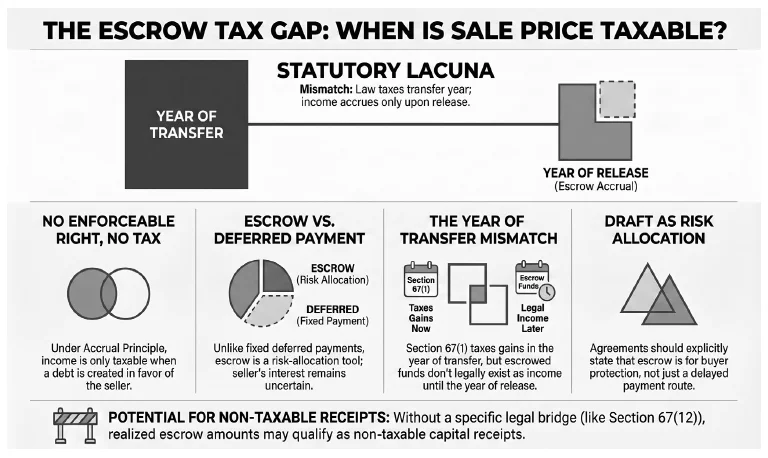
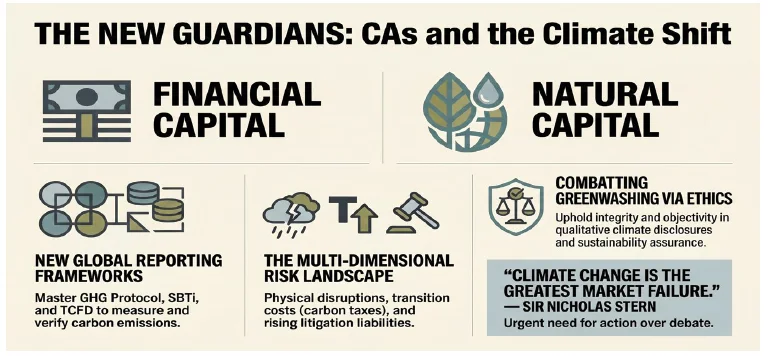
In Criminal Appeal No. 730 of 2024, which is a part of the common judgement reported in Sarla Gupta, the Supreme Court observed these prior Judgements and agreed that these documents had to be furnished to the Accused. However, the Court proceeded to analyse at what stage the Accused is entitled to seek copies of the Documents not relied on by the prosecution. The Supreme Court observed that “at the time of hearing for framing of charge, reliance can be placed only on the documents forming part of the charge sheet. In case of the PMLA, at the time of framing charge, reliance can be placed only on those documents which are produced along with the complaint or supplementary complaint. Though the accused will be entitled to the list of documents, objects, exhibits etc. that are not relied upon by the ED at the stage of framing of charge, in ordinary course, the accused is not entitled to seek copies of the said documents at the stage of framing of charge.”

It is, therefore, rare that copies of all the documents are given to the Accused before the framing of the charge. To give or not to give would still be the discretion of the court. However, after the charge is framed, under Section 233 of the CrPC (Section 256 of the BNSS), there is less latitude given to the Courts to refuse the production of documents.

In Criminal Appeal No. 730 of 2024, which is a part of the common judgement reported in Sarla Gupta, the Supreme Court observed, “On plain reading of sub-section (1) of Section 91, the power of the court is discretionary. The word ‘may’ appears in sub-section (1) of Section 91. However, if we peruse sub-section (3) of Section 233 and sub-section (2) of Section 243, the word ‘shall’ has been used. The reason is that these two provisions apply at the stage of the accused leading defence evidence. Therefore, it is provided that if the accused applies for the issue of any process for compelling the attendance of any witness or the production of any document or thing, the court must issue such process. The prayer for issue of such process cannot be denied unless the court, for reasons to be recorded, holds that the application is made for the purposes of vexation or delay or for defeating the ends of justice.”

The Court, therefore, went on to hold that “After carefully perusing the provisions of the PMLA, we did not find any provision of the PMLA which is inconsistent with Section 91 of the CrPC. The power under sub-section (1) of Section 91 can be exercised by a Court when the production of any document or any other thing is necessary or desirable for the purposes of any investigation, inquiry, trial or other proceedings under the CrPC. The consistent line of judgments of this Court hold that at the stage of framing of charge, the accused is ordinarily not entitled to apply under Section 91 of the CrPC for producing the documents which are not relied upon by the complainant. For the purposes of his defence, the accused has a right to seek production of a document or a thing at the stage of leading defence evidence as Section 233 of CrPC will apply to the trial of an offence under the PMLA, due to the fact that Chapter XVIII of the CrPC is made applicable to such trial in view of clause (d) of Section 44(1) of the PMLA.” It also observed that in the light of the negative burden of proof that is placed by Section 24 of the PMLA on the accused, Section 233(3) of the CrPC should be liberally construed in favour of the Accused. This is also because the constitutional validity of Section 24 of the PMLA has been upheld on the ground that the accused has full opportunity to show that he has not violated the provisions of the PMLA and rebut the presumption. If the Special Court refuses the prayer for documents u/s 233 of the CrPC, the accused will not be able to discharge the burden, and the Supreme Court, therefore, held that this right of the Accused must be protected.

CAN DOCUMENTS BE SOUGHT BY THE ACCUSED DURING BAIL PROCEEDINGS UNDER THE PMLA?

The primary reason why PMLA is so feared is the difficulty that an arrested accused faces in order to obtain bail. Getting bail under the PMLA is infamously difficult and is the primary reason that the PMLA is considered draconian. The offence of money laundering is non-bailable, i.e. bail cannot be obtained as a matter of right but is subject to judicial discretion. There are various factors that weigh in with a Court while deciding whether or not to release an accused on bail. The PMLA, through Section 45(1)(ii), adds the ‘twin conditions’ that must be fulfilled over and above this in order for the accused to secure bail. Therefore, if an accused makes an application for bail u/s 45 of the PMLA and the prosecutor opposes the grant of bail, the Court cannot grant bail to the Accused unless “the court is satisfied that there are reasonable grounds for believing that he is not guilty of such offence and that he is not likely to commit any offence while on bail”.

The first of the twin conditions requires that the accused demonstrate to the court that there are ‘reasonable grounds’ for believing that he is not guilty of such offence. This can be very difficult to do if the Accused does not have access to the documents and data that can help him discharge the burden. The Supreme Court in Criminal Appeal No. 730 of 2024, which is a part of the common judgement reported in Sarla Gupta, held that “If a narrow view is taken, by denying this opportunity to the accused, he will not be in a position to discharge the burden on him, and therefore, it will affect his right to liberty as he may be denied bail. This denial will amount to a violation of his rights guaranteed under Article 21. Therefore, at the stage of hearing of a bail application to which stringent provisions of Section 45(1)(ii) of the PMLA are applicable, the accused must be allowed to invoke the provision of Section 91 of the CrPC for seeking production of the documents not relied upon by the ED. But, when the investigation is pending while permitting the accused to seek production of documents that are not relied upon by invoking Section 91 of the CrPC, care has to be taken to ensure that the investigation is not prejudiced. Therefore, when such an application is made, the ED is entitled to resist the production of documents that are not relied upon on the ground that if the said documents are disclosed at that stage to the accused, it may prejudice the investigation. Though the ED is entitled to raise the said plea, it will have to show the documents to the Court. The Court can, for reasons recorded, deny production of documents only if it is satisfied that the disclosure of the documents may prejudice the ongoing investigation. Needless to add that the ED cannot raise such an objection after the investigation is complete.” It is important to note that the Court considered Article 21 of the Constitution of India as the fountain from which the right to receive the documents springs. This Judgement, therefore, is a big step in defending the fundamental rights that have been guaranteed under the Constitution of India. The Court specifically observed that “ When the Legislature has felt a need to bring out a legislation like the PMLA, it is the duty of the Court to interpret Article 21 in such a way that the right of a fair trial available to the accused is not affected. The object of the provisions of Section 24 or 45(1)(ii) is not to take away the fundamental right of fair trial conferred on the accused. These provisions are different in the sense that they put a burden on the accused. When such a burden is put on the accused, it is all the more necessary that the right of fair trial guaranteed under Article 21 to the accused is protected by permitting the accused to lead defence evidence by seeking the production of witnesses and documents not relied upon by the prosecution. Similarly, for discharging the burden under Section 45(1)(ii), the accused has the right to invoke Section 91 of CrPC (Section 94 of the BNSS) for seeking production of documents at the stage of hearing of bail application.”

THE RIGHTS OF THE ACCUSED TO GET COPIES OF RECORDS / DOCUMENTS SEIZED AS PER SECTION 17 & 18 OF THE PMLA

The Supreme Court in Sarla Gupta was also concerned with the rights of the Accused under the PMLA to get copies of Records and Documents that have been seized u/s 17 (Search & Seizure) or Section 18 (Search of Persons). Section 21(2) of the PMLA, that deals with the retention of records, specifically mentions that the person from whom the records are seized or frozen shall be entitled to obtain a copy of the records. Section 2(b) of the PMLA includes deeds and instruments evidencing title or interest in property or asset.

The Supreme Court held that the order of retention under section 20 of the PMLA does not refer to the forfeiture of the property and that the seized property does not vest with the ED. The Supreme Court went on to hold that “There is no prohibition on providing copies of the deeds or instruments evidencing title to the person from whom or from whose premises the deeds or instruments are seized. If the provision is interpreted to mean that the person from whom such deeds or instruments are seized is not entitled to receive even copies of the same, the provision will be rendered arbitrary and violative of Article 14 of the Constitution. Therefore, as far as the seized documents and records are concerned, the person from whom or from whose premises the seizure has been made is entitled to get the true copies thereof. As far as the other property seized is concerned, the person from whom the property is seized is entitled to a copy of the seizure memo and the list of the properties seized.” It held that if the documents are bulky, then soft copies can be furnished and that even if seized records or documents are not relied upon in the Complaint, copies must be supplied, though the accused will not be entitled to rely upon them at the time of framing of charge.

CONCLUSION

In an adversarial system like ours, the ED has often resisted the furnishing of certain documents to the Accused, an example being the non-furnishing of grounds of arrest to the accused in writing, as remedied by the Supreme Court in the case of Pankaj Bansal vs Union of India, (2024) 7 SCC 576 where the Court held that There is no valid reason as to why a copy of such written grounds of arrest should not be furnished to the arrested person as a matter of course and without exception. There are two primary reasons as to why this would be the advisable course of action to be followed as a matter of principle. Firstly, in the event such grounds of arrest are orally read out to the arrested person or read by such person with nothing further and this fact is disputed in a given case, it may boil down to the word of the arrested person against the word of the authorised officer as to whether or not there is due and proper compliance in this regard. In the case on hand, that is the situation in so far as Basant Bansal is concerned. Though ED claims that witnesses were present and certified that the grounds of arrest were read out and explained to him in Hindi, that is neither here nor there as he did not sign the document. Non-compliance in this regard would entail the release of the arrested person straightaway, as held in V. Senthil Balaji vs. State, (2024) 3 SCC 51. Such a precarious situation is easily avoided, and the consequence thereof can be obviated very simply by furnishing the written grounds of arrest, as recorded by the authorised officer in terms of Section 19(1) PMLA, to the arrested person under due acknowledgement, instead of leaving it to the debatable ipse dixit of the authorised officer.”

In fact, in the case of Arvind Kejriwal vs. Enforcement Directorate, (2025) 2 SCC 248, the Supreme Court specifically held that it is not only the grounds of arrest that need to be given to the Accused but also the ‘reasons to believe’ that have been recorded. The Court held that this is because “it would be incongruous, if not wrong, to hold that the accused can be denied and not furnished a copy of the reasons to believe. In reality, this would effectively prevent the accused from challenging their arrest, questioning the “reasons to believe”.. .. “It follows that the “reasons to believe” should be furnished to the arrestee to enable him to exercise his right to challenge the validity of arrest.”

The phrase ‘Information is power’ is especially relevant in the realm of criminal defence law in general and in special laws like the PMLA in particular. While economic offences are to be considered a class apart, it cannot be denied that the process of prosecution of one accused of a crime must be fair. Jurisprudence with regard to the PMLA has grown by leaps and bounds over the last few years. The Supreme Court has, from time to time, sought to balance the fairness of proceedings under the PMLA, which otherwise can be considered quite draconian. The Judgement in the case of Sarla Gupta shall undoubtedly be useful for those caught in the clutches of this law to get a fair trial.

GST Implications on Educational Institutions

INTRODUCTION

Education has long been hailed as the great equaliser—the ladder that lets ambitious minds climb to success. But in India, that ladder is getting steeper and pricier. With education costs skyrocketing, quality education has become less accessible for many. Recently, the CEO of a large asset management company shared that the academic expenditure of one child could amount to ₹10 crores in 16 years from now.

Does Goods and Services Tax (GST) on educational services add fuel to the fire? In this article, we break down the impact of GST on educational services, explore its implications for students and institutions alike, and ask the burning question: Should education really be taxed?

Educational activities by schools or colleges have been generally exempted from indirect tax. The term “education” is not defined under the CGST Act 2017 or even under the Constitution of India. But the flyer by the GST Council also refers to the Apex Court decision in Loka Shikshana Trust vs. CIT,1 wherein it was noted that education is a process of training and developing knowledge, skills and character of students by normal schooling.


1 CIT [1976] 1 SCC 25

But before delving into the interpretation nuances of the exemption, it is imperative to understand whether educational activity can be termed as “supply” per se. It is a settled principle that if an activity is outside the scope of the levy, then the discussion on “exemption” is of no relevance.

Whether the education service is covered under the scope of supply for GST purposes?

The GST levy is governed by Section 9 of the CGST Act 2017 and is a tax on the “supply” of goods or services. The definition of “supply” is given under Section 7 of the CGST Act 2017 and has the following attributes:

a. There should be a supply of goods or services.

b. There should be a consideration.

c. The supply is made by a person.

d. The activity should be in the course or furtherance of business.

While all other attributes may be satisfied, the phrase “in the course or furtherance of business” needs some discussion in the context of educational institutions [EI]. If the activity is not in the course or furtherance of business, then it would be outside the scope of “supply”.

In India, EIs generally operate in a “Trust/ Society” model. The objective of setting up such trusts/ societies is to render charitable activities by imparting education. For centuries, learning has been considered a charitable act, a noble pursuit meant to uplift society rather than generate profit. Gurukuls, temples, and community-run schools thrived on donations and goodwill, fostering an ethos that knowledge should be shared, not sold. Providing education from ages six to fourteen was made a Fundamental Right by the insertion of Article 21A in the Constitution of India by the 86th Constitutional Amendment Act, 2002. The National Policy for Education, 1986 and Programme of Action, 1992, envisaged free and compulsory education for all children up to the age of fourteen years.

Keeping aside the civil argument of modern-day EIs being overly commercialised, we should place emphasis on the letter and spirit of the law. The term business is defined under Section 2(17) of the CGST Act 2017 as under (relevant extract):

businessincludes––
(a) any trade, commerce, manufacture, profession, vocation, adventure, wager or any other similar activity, whether or not it is for a pecuniary benefit;

(b) any activity or transaction in connection with or incidental or ancillary to sub-clause (a);

(c) any activity or transaction in the nature of sub-clause (a), whether or not there is volume, frequency, continuity or regularity of such transaction;
………
(i) any activity or transaction undertaken by the Central Government, a State Government or any local authority in which they are engaged as public authorities;

The term business is defined in an inclusive manner. Sub-clauses (b) and (c) are interdependent on sub-clause (a). Hence, it is important to analyse sub-clause (a), which states that business includes any trade, commerce, manufacture, profession, vocation, adventure or wager. Except for the term “manufacture”, none of the other terms are defined under the CGST Act 2017. To understand the meaning of these terms, reference is made to definitions from Black’s Law Dictionary as under:

Term Meaning Applicability for EI
Trade The act or the business of buying and selling for money. In general parlance, the activity of buying and selling is undertaken with the intention to earn markup or profit from the activity. EI is not primarily engaged in buying and selling.
Commerce The exchange of goods, productions, or property of any kind; the buying, selling, and exchanging of articles. The definition of this term means that the activity should be of buying and selling of things, i.e. goods. EI do not principally deal in the buying and selling of goods.
Profession


A vocation or occupation requiring special, usually advanced, education, knowledge, and skill; e.g. law or medical professions. Both these terms relate to activity done by an individual or group of individuals. These terms do not relate to an organisation. The profession and vocation of a person depend upon the educational background, attributes and skill of the person, which cannot be equated with the activities of an organisation. EI is not engaged in any profession and vocation but in fact, imparts education to students who can choose a profession or a vocation based on their own individual calling, attributes and skill.
Vocation A person’s regular calling or business; one’s occupation or profession.
Adventure A commercial undertaking that has an element of risk These two terms mean a chance-based transaction for a reward. It is not at all related to the activities of EI.
Wager Money or other consideration is risked on an uncertain event; a bet, or a gamble.

Thus, it can be argued that educational activity does not fit under the term “business”. In the case of the State of Tamil Nadu and another vs. Board of Trustee of the Port of Madras [1999-VIL-27-SC], it was observed that “The word ‘business’ is wider than the words ‘trade, commerce or manufacture, etc’. The word ‘business’ though extensively used is a word of indefinite import, in taxing statutes, it is normally used in the sense of an occupation, a profession–which occupies time, attention and labour of a person, normally with a profit-motive and there must be a course of dealings, either actually continued or contemplated to be continued with a profit-motive and not for sport or pleasure.”

The Hon’ble Bombay High Court, recently, in the case of Goa University,2 had the opportunity to refer to a catena of decisions explaining that education is fundamental to human existence. We refer to some of those decisions herein. In the Indian Medical Association vs. Union of India3, it was observed that education is one of the principal human activities to establish a humanised order in our country. In the T.M.A. Pai Foundation’s case4, the Hon’ble Court noted that it is the duty of the State to do all it can to educate every section of citizens who need a helping hand in marching ahead along with others.


2 2025 (29) Centax 281 (Bom.)
3  2011 (7) SCC 179
4 2002 (8) SCC 481

The Hon’ble High Court of Rajasthan, in the case of Banasthali Vidyapith,5 highlighted that education is essential for intellectual growth, progressive thinking, and personal development. Furthermore, the Court recognised education as a societal responsibility, crucial for developing mental capacity and fostering humanity. The High Court was deciding on the issue of whether EIs are “dealers” under the erstwhile Rajasthan Value Added Tax Act, 2003 and the definition of “business” thereto included “whether or not such trade, commerce, manufacture, adventure or concern is carried on with a motive to make gain or profit”. Considering this aspect, the Hon’ble High Court of Rajasthan held that “imparting education” cannot be considered as a business.


5  2015 (55) taxmann.com 462 (Rajasthan)

Similarly, in some other cases, it has been held that education cannot be treated as a commercial activity:

a. Education is, per se, an activity that is charitable in nature6.

b. Imparting education cannot be allowed to become commerce. Making it one is opposed to the ethos, tradition and sensibilities of this nation. Imparting of education has never been treated as a trade or business in this country since time immemorial. It has been treated as a religious duty.7

c. Though the fees can be fixed by the educational institutions, and it may vary from institution to institution depending upon the quality of education provided by each of such institutions, commercialisation is not permissible.8


6  State of Bombay v. R.M.D. Chamar Baghwala (AIR 1957 SC 699)
7  Unni Krishnan v. State of Andhra Pradesh (AIR 1993 SC 2178)
8  Modern Dental College and Research Centre and Others [Civil 
Appeals No. 4060 of 2009 before Supreme Court of India]

Although the definition of the term “business” states that activities, “whether or not it is for a pecuniary benefit”, are included, fundamentally, it can be argued that profit-motive is very integral to “business”. The observations from the above judgments lead to a view that education is considered sacred in India. Education is regarded as a necessity for human existence. The very thought of
commercialising education appears to be against the spirit of the nation.

Hence, there is a case to argue that educational activity is outside the scope of “supply” as not being in the course or furtherance of business, and therefore, no GST is payable. It may however, be noted that the said line of argument may not be available in case of entities which are ‘for profit’ (for example, private limited company, LLP or partnership firm).

WHETHER THE EDUCATIONAL SERVICES ARE EXEMPT?

For the sake of further discussion, let us proceed with the notion that educational activity is a supply under GST. In this context, we can jump to Entry No. 66 of Notification No. 12/2017-Central Tax (Rate) dated 28.06.2017, which exempts educational services. While the entry per se provides for a “person” oriented exemption, the nature of “educational services” is embedded in the definition of “educational institution” given in the exemption notification itself.

Entry 66: Services provided –

(a) by an educational institution to its students, faculty and staff;


(aa) by an educational institution by way of conduct of entrance examination against consideration in the form of entrance fee;


(b) to an educational institution, by way of,


(i) transportation of students, faculty and staff;


(ii) catering, including any mid-day meals schemes sponsored by the Central Government, State Government or Union territory;


(iii) security or cleaning or house-keeping services performed in such educational institution;


(iv) services relating to admission to, or conduct of examination by, such institution;


[The above exemption is available for pre-school education and up to HSC or equivalent]


(v) supply of online educational journals or periodicals:


[The above exemption is not for pre-school education and up to HSC or approved vocational course]

“educational institution” means an institution providing services by way of, –

(i) pre-school education and education up to higher secondary school or equivalent;

(ii) education as a part of a curriculum for obtaining a qualification recognised by any law for the time being in force;

(iii) education as a part of an approved vocational education course;

Further, “approved vocational education course” is also defined in the same notification as under:

(i) a course run by an industrial training institute, or an industrial training centre affiliated to the National Council for Vocational Education and Training or State Council for Vocational Training offering courses in designated trades notified under the Apprentices Act, 1961 (52 of 1961); or

(ii) a Modular Employable Skill Course, approved by the National Council of Vocational Education and Training, run by a person registered with the Directorate General of Training, Ministry of Skill Development and Entrepreneurship;

On a plain reading of the definition, it is understandable that the scope of “educational institution” is based on the curriculum and courses offered. The opening line contains the phrase “by way of” which restricts the scope to institutions that impart education. The institutions that give training to students for getting the education from schools/colleges will not get covered. In other words, while education imparted by schools and colleges themselves is covered, education by private coaching classes, tuitions, etc., is not covered.

The exemption is given to:

  •  Educational services for pre-school and up to higher secondary. This means that schools and colleges up to higher secondary are exempt under this limb.
  •  Educational services for obtaining a qualification only if the said qualification is recognised by any law in force. This means that only recognised courses are exempt. Most of the universities are created under a Central Act or a State Act. The courses offered by such Universities would get an exemption. It should be noted that section 22(1) of the University Grants Commission Act, 1956, provides for the right of conferring or granting degrees only by a ‘university’ or a ‘deemed university’.
  •  Educational services as a part of an approved vocational education course. The scope of the exemption is restricted to vocational courses that are specifically affiliated or notified.

The services provided by EI to students/ faculty/ staff are exempt. By the very fact that the exemption is given not only for services provided to students, but also to faculty/ staff, it is evident that the scope of this exemption is intended to be wider. Further, as explained earlier, the exemption is “person-driven”, and therefore, all services provided by EI should be exempt, even if some of the services are not direct in the nature of imparting education. Some of the clarifications issued by the Govt. place emphasis on this aspect:

Circular No. The crux of the clarification
85/04/2019-GST
dated 01.01.2019
Supply of food and beverages by an educational institution to its students, faculty and staff is exempt.
177/09/2022-TRU

dated 03.08.2022

The amount or fee charged from prospective students for entrance or admission, or for issuance of eligibility certificate to them in the process of their entrance/admission, as well as the fee charged for issuance of migration certificates by educational institutions to the leaving or ex-students, is covered by the exemption.

The above Circulars make it clear that the ambit of exemption should be construed having regard to the purpose and object it seeks to achieve. The Circular dated 03.08.2022 even extends the exemption to ex-students or prospective students. The schools or colleges generally have a variety of different charge heads for fee recovery. The scope of exemption would not only include admission / tuition fees but also charges like computer fees, extra-curricular fees, duplicate identity card fees, hostel fees, bus fees, library fees, workshop/ conference fees, etc. The purpose is to give GST exemption for the entire gamut of educational services.

WHETHER THE AFFILIATION SERVICES ARE COVERED?

The question arises whether the exemption is available only to “schools and colleges” or whether it can be extended to “Govt. Education Boards” and “Universities”. This doubt arises because the act of imparting education and training is undertaken by “schools and colleges”. The “Govt. Education Boards / Universities” give recognition to the curriculum/ course / institution, and then recover affiliation fees from the “schools and colleges”. It is also important to note that the purpose of providing affiliation by “Govt. Education Boards/Universities” is to monitor and ensure whether the institution possesses the required infrastructure in terms of space, technical prowess, financial liquidity, faculty strength, etc.

The Govt. issued a clarification vide Circular No. 151/07/2021-GST dated 17.06.2021 and stated that GST at 18% is payable for accreditation services provided by Education Boards. However, the GST Council exempted affiliation services provided by a Central or State Educational Board to “Government schools” and w.e.f. 10.10.2024 Entry No. 66A was introduced in the exemption Notification no. 12/2017. However, the exemption was very restrictive and only applicable for affiliation services to Government schools. The Govt. clarified vide Circular No. 234/28/2024-GST dated 11.10.2024 that affiliation services (other than to Govt. schools) provided by universities and educational boards to their constituent schools/ colleges are not covered within the ambit of exemptions because affiliation services are not related to the admission of students to such schools or the conduct of examinations by such schools.

The Hon’ble Karnataka High Court gave a decision on this subject under the service tax regime, in the case of Rajiv Gandhi University of Health Sciences9. It was held that Universities are established by the State for furthering the advancement of learning and pursuing higher education and research. The High Court noted that Universities regulate the manner in which education is imparted in the Colleges and also conduct examinations. Thus, it was concluded that services provided by the University by collecting affiliation fees should be considered as services by way of education as a part of a curriculum for obtaining a qualification recognised by any law.

However, the Hon’ble Telangana High Court, in the case of Care College of Nursing vs Kaloji Narayana Rao University of Health Sciences,10 stated that the exemption is not available to the Universities because the inspection of an institution is conducted and the affiliation is thereafter granted. The High Court held that the admission and the services rendered by the EIs to the students, the faculty and the staff are all services rendered subsequent to the affiliation. The Hon’ble High Court, in its determination, placed reliance on Circular No. 151/07/2021-GST dated 17.06.2021. However, the Court did not undertake an analysis regarding the status of Education Boards/Universities as statutory bodies, nor did it examine whether such entities are engaged in any business activities in the strict sense of the term. It should also be noted that this case was between the college and the university. The tax department was not a part of this case, and the Hon’ble Court also relied on the fact that the University did not object to the payment of tax.


9 2022 (64) G.S.T.L. 465 (Kar.)
10  2023 (12) Centax 216 (Telangana)

This judicial tug-of-war sent mixed signals, leaving everyone scratching their heads. This issue recently came before the Hon’ble Bombay High Court in the case of Goa University11. The Hon’ble High Court observed:

  •  The fees collected by the University are not a consideration as contemplated in section 7 of the CGST Act 2017. The fees are collected in the nature of statutory fees or regulatory fees in terms of the statutory provisions and are not contractual in nature. The same cannot be given a colour of commercial receipts, as there is no element of commercial activity involved in the subject transaction.
  •  The University is actively involved in imparting education to students, and it acts as a regulator of education. The Circular dated 11.10.2024 is erroneous. Affiliation is essentially an activity relating to the admission and examination of students.
  •  The university is also an educational institution and students of the university include students studying through affiliated colleges. Affiliation services by universities are exempt under clause (a) of entry no. 66.

Interestingly, the Hon’ble Court held that the university and colleges, both provide educational services to the same student. The Court also emphasised that affiliation enables the institution to secure qualifications. Moreover, it was also held that the affiliation fee is a statutory levy and, therefore, not a consideration.

The decision of the Hon’ble Bombay High Court appears to be a better proposition and more aligned with the overall object of exempting educational services.


11 2025 (29) Centax 281 (Bom.)

WHAT IS THE TAXABILITY ON FEES PAID FOR ENTRANCE EXAMINATIONS?

The second limb of the exemption is specifically applicable to the entrance examination. Some institutions only conduct examinations and do not impart education per se. Under the service tax regime, an exemption similar to clause (aa) did not exist, and there was a view that the entrance examination services would fall under clause (a) itself. Arguably, examination is integral to education as it is one of the major means to assess and evaluate the skills and knowledge of a candidate. However, it appears that the government intended to avoid such interpretational issues, and a specific exemption is given under the GST regime.

The Government also sets up certain boards or authorities (like the National Board of Examination or National Testing Agency) for the conduct of examinations. There were doubts about the applicability of GST for the fees collected by such boards/ agencies. In fact, the National Board of Examination even collected GST from the students. The Govt. then issued a clarification vide Circular No. 151/07/2021-GST dated 17.06.2021 that the National Board of Examination is a central educational board, and thereafter, an Explanation (iva) was introduced in the Exemption Notification on 28.02.2023 to clarify that any authority, board or body set up by the Central Government or State Government for conduct of entrance examination shall be treated as EI. In the case of the National Board of Examination, the Hon’ble Delhi High Court12 instructed to refund GST to all the students.


12 2024 (14) Centax 201 (Del.)

WHETHER THE EXEMPTION IS PERSON-DRIVEN OR ACTIVITY-DRIVEN?

It is apparent from entry no. 66 that GST exemption is available to the “institution” for services to students, faculty and staff. The exemption entry is not based on the nature of services. The nature of “educational services” is implanted in the definition of “educational institution”. This could mean that if an institution primarily satisfies the definition of “educational institution”, then all its activities are exempt. This interpretation was taken by the Hon’ble High Court in the case of Madurai Kamaraj University,13 wherein it was held that allied services like renting of immovable property for purposes of bank, post office, canteen, etc., are included in the purview of educational services. Though the said decision was under the service tax regime but, the exemption entry under the GST regime is similarly worded. It should also be noted that the Hon’ble Court placed more emphasis on the “educational institution” instead of the “service recipient”. The first part of the exemption says that services provided to “students, faculty or staff”. In renting of immovable property for purposes of bank, post office, canteen, etc., the service recipient is not a student/ faculty/ staff. However, a purposive interpretation was made by the Court, and the argument of the petitioner was accepted that within the campus of the university, there are a number of students, teaching and non-teaching faculties and in order to provide the basic services, the bank, post office and canteen and those services in view of the expanded meaning provided under exemption notification.

However, in the context of income tax, the Hon’ble Apex Court has observed in the case of New Noble Education Society14 that where institutions provide their premises or infrastructure to other entities for conducting workshops, seminars or even educational courses (which the institution concerned is not actually imparting) and outsiders are permitted to enrol, then the income derived from such activity cannot be characterised as part of education or incidental to imparting education.

Based on the above decision (though in a different context), it appears that the allied or incidental activity should have a nexus with the educational activity of the concerned institution.


13 2021 (54) G.S.T.L. 385 (Mad.)
14 2023 (6) SCC 649

WHAT IS THE SCOPE OF EXEMPTION FOR SERVICES RECEIVED BY THE EDUCATIONAL INSTITUTION?

We now proceed to discuss the second basket of exemption which is from the perspective of inward supplies of EI. The purpose is to ensure that EI is not burdened with ineligible input tax credits on account of outward supplies being exempt.

This exemption is again bifurcated into two categories: a) services procured for pre-school education and up to HSC or equivalent, b) services procured for education for obtaining a qualification [not for pre-school education/ up to HSC/ approved vocational course].

The first category exemption is for the following services provided to EI:

  •  transportation of students, faculty and staff;
  •  catering, including any mid-day meals schemes sponsored by the Government;
  •  security or cleaning or house-keeping services;
  •  services relating to admission to or conduct of examination

The above exemptions are specific and only available when such services are provided to EI for pre-school education and up to HSC or equivalent. The exemption is not available if the service providers directly provide services to students, faculty or staff. In the case of Batcha Noorjahan15, the Advance Ruling Authority [AAR] categorically highlighted that exemption would not be available when consideration towards transportation activity was received by the applicant from students, and no consideration was received from school administration (even though the lease agreement was entered with school administration).


15 2025 (174) taxmann.com 130 (AAR – Tamil Nadu)

The services of catering, security, cleaning and house-keeping are apparently exempt. With respect to catering and mid-day meal scheme, the Govt. has clarified vide Circular No. 149/05/2021-GST dated 17th June, 2021 that “Anganwadi” provide pre-school non-formal education and serving of food to “Anganwadi” shall also be covered by above exemption, whether sponsored by the Government or through donation from corporates.

For “admission to or conduct of examination”, the phrase “in relation to” has been used, thereby expanding the scope of exemption entry. This means that in addition to admission / examination services, the exemption is available for services that are “connected” with admission/ examination services. This would include (i) pre-examination items such as printing of registration certificates, examination enrolment forms, and admit cards, ii) printing of exam papers, answer booklets, developing/ managing web applications for conduct of online examinations, iii) post-examination services of processing of examination results, generation and printing of mark sheets/ pass certificates. This position is also clarified vide Circular No. 151/07/2021-GST dated 17.06.2021.

The last limb of exemption for the supply of online educational journals/periodicals to EIs who provide recognised degree courses. The said exemption is not for services procured by pre-school education/ up to HSC/ approved vocational course.

It should be noted that online journals/ periodicals are generally accessed from websites / web-based applications by paying a subscription fee. An annual subscription fee is paid for access to the entire online database of journals/ periodicals. The CBIC press release dated 18.01.2018 also stated that the intention is to exempt the subscription of online educational journals/periodicals. Despite such clarity, the AARs have given contrasting rulings on this subject. In Manupatra Information Solutions Pvt. Ltd.16, AAR has held that exemption is not available for the subscription fee charged from EI to gain access to data available in the database and to download articles or information. In Informatics Publishing Ltd.17, Appellate AAR has held that a subscription by EI for access to a website providing access to millions of journals published across the world on various areas of study is exempt.


16 2023 (3) Centax 244 (A.A.R. - GST - U.P.)
17 2020 (40) G.S.T.L. 281 (App. A.A.R. - GST - Kar.)

CONCLUSION

Education in India has always been more than just a service — it’s a revered institution, a sacred tradition deeply woven into the country’s cultural and philosophical fabric. It is necessary that suitable clarifications are issued to avoid unwarranted toll on the pursuit of knowledge.

Society News

LEARNING EVENTS AT BCAS

1. FEMA Study Circle meeting – “Compounding under FEMA and Practical aspects” by CA Hardik Mehta was held on 16th May, 2024 @Zoom which was attended by approximately 118 participants, wherein the following was covered:

(i) Overview of FEMA Compounding Provisions:

  •  Explanation of the Foreign Exchange Management Act (FEMA) and its objectives.
  •  Understanding the concept of compounding as an alternative to litigation for resolving contraventions under FEMA.

(ii) Eligibility for Compounding:

  •  Criteria for entities and individuals eligible to apply for compounding.
  •  Types of contraventions that can be compounded under FEMA.

(iii) Application Process:

  •  Step-by-step process for filing a compounding application with the Reserve Bank of India (RBI).
  •  Key documents and information required for the application.

(iv) Authorities Involved:

  •  Role of the Reserve Bank of India (RBI) and the Enforcement Directorate (ED) in the compounding process.
  •  Jurisdiction and powers of the compounding authorities.

(v) Calculation of Penalties:

  •  Methods and principles used by the RBI to calculate the penalties for various contraventions.
  •  Factors considered in determining the quantum of the penalty.

(vi) Timeline and Procedure:

  •  Expected timelines for the processing of compounding applications.
  •  Detailed procedure followed by the RBI fromreceipt of application to the issuance of compounding orders.

(vii) Common Contraventions and Case Studies:

  •  Discussion of frequently observed contraventions under FEMA, such as delayed reporting of foreign investments and non-compliance with ECB guidelines.
  •  Analysis of recent case studies and RBI orders to understand the practical application of compounding provisions.

(viii) Benefits of Compounding:

  •  Advantages of opting for compounding over litigation, including faster resolution and avoidance of prolonged legal battles.
  •  Impact on the company’s or individual’s compliance record.

(ix) Post-Compounding Compliance:

  •  Obligations and steps to be followed by the applicant post-compounding to ensure full compliance.
  •  Monitoring and reporting requirements after the compounding order is passed.

(x) Practical Challenges and Solutions:

  •  Discussion of practical challenges faced by entities in the compounding process

2. Direct Tax Laws Study Circle meeting on Taxation of LLPs by CA Chirag Wadhwa was held on Tuesday, 30th April, 2024 @Zoom, which was attended by approximately 77 participants, wherein the following was discussed:

1. Concepts of Limited Liability Partnerships

2. Detailed comparison of Company vs. LLP with respect to:

i. Compliance Procedures

ii. Regulatory Requirements

3. Comparison between Firms and LLP’s and FAQ’s relating to the same.

4. Income-tax implications in case of LLPs in respect of:

i. Deduction w.r.t Partner’s remuneration

ii. Carry forward of losses

iii. Assessment of LLPs

iv. Applicability of Alternate Minimum Tax to LLPs

5. Detailed explanation relating to conversion of Partnership Firm to an LLP and conversion of Company along with explanation relating to definition of “Transfer” as per Section 2(47) of the Income-tax Act, 1961, w.r.t conversion of a Company to an LLP.

The speaker concluded the session by sharingpractical experiences and challenges faced on conversion to LLP and transfer to LLP. The session wasinteractive and gave comprehensive understanding of the topic.

3. “Blood Donation & Organ Donation Awareness Drive” on 25th April, 2024

On Thursday, 25th April, 2024, the BCAS Foundation, jointly with the Seminar, Public Relations & Membership Development Committee of BCAS, held the annual “Blood Donation Drive”, enlisting the support of Tata Memorial Hospital (TMH) together with a campaign on awareness for organ and skin donation.

National Service Scheme (NSS) students (from Vidyalankar School of Information Technology) were deputed around the vicinity (including Churchgate Station), with placards to create awareness amongst the general public and commuters. Interested would-be donors were escorted to BCAS by the students.

Doctors and technicians from TMH screened 63 potential donors (including 31 brought in by the NSS students) through the detailed questionnaire filled in by them. Contrary to popular belief, patients diagnosed with cholesterol, thyroid, blood pressure issues could also donate blood, provided they met certain criteria. 43 units of blood were collected from eligible donors, which also included the President, Trustee of BCAS Foundation and few Past Presidents, BCAS members and staff.

To create awareness and dispel the myths about organ donation, an “Organ Donation Awareness Drive”, supported by Project Mumbai’s ‘Har Ghar Hai Donor’ initiative was also held. A separate desk was also provided to the Rotaract Club of Bombay North (RCBN) Skin Bank to advocate the noble act of donating skin. RCBN Skin Bank caters to the needs of the National Burns Centre (NBC), amongst others.

Through their noble act, each of the donors BeCame an Asli Superhero!

4. International Economics Study Group — “Analysing current Geopolitical & economic challenges” by CA Harshad Shah held on Monday, 22nd April, 2024 @Zoom which was attended by approximately 24 persons

In a world already embroiled in conflicts, from the volatile landscapes of Ukraine and Gaza to the tense standoff between Iran & Israel, the looming specter of confrontation casts a dark shadow over global stability. As geopolitical tensions escalate, their reverberations echo through international markets. The resulting volatility poses a significant risk, potentially triggering widespread repercussions that could have a ripple effect across economies worldwide. Adding to these geopolitical anxieties are the formidable economic challenges (stubborn inflation & unsustainable debt) confronting the world’s two largest economies, USA and China. Despite these daunting hurdles, financial markets in key regions such as the USA, Europe, Japan & India continue their upward trajectory,scaling unprecedented heights. Meanwhile, India finds itself at a crucial juncture as it navigates through a General Election. With political temperatures soaring, the spotlight is on the election manifestos of major political parties and their potential impacts on the Indian economy.

5. FEMA Study Circle meeting — “Recent updates in FEMA; Case studies in Overseas Investment — Part 1 & 2” by Naisar Shah and moderated by Harshal Bhuta was held on 16th& 22nd April, 2024 @Zoom, which was attended by approximately 111 participants, wherein the following was discussed:

The session was bifurcated into two events on two different dates

– Manner of Receipts and Payments under FEMA

– Direct Listing of Shares in Overseas Markets

– Listing on equity shares in permissible jurisdiction

– FAQs issued by Government

– Direct listing v/s depository receipts?

– Status of an unlisted public company will change upon direct listing

– Minimum public shareholding requirement?

– Resident HNIs investing indirectly?

– NRIs investing through FPI v/s. NRI investing directly

– Investment by Foreign Citizens

– CA valuation permitted even in cases where the book-building process would be done by a merchant banker

– FPI v/s. direct listing

6. Indirect Tax Laws Study Circle Meeting on Issues in Real Estate Sector by Group Leader CA Raghavender Kuncharapu and CA Sanket Shah was held on Monday, 22nd April, 2024 @Zoom which was attended by approximately 95 participants

Group leaders had prepared case studies and presentation covering various issues & challenges faced by taxpayers in Real Estate Sector under the GST law. The case studies covered the following aspects for detailed discussion on the following:

  1.  GST Registration
  2. Reversal of Input Tax Credit under Rule 42 in regard to commercial-cum-residential projects
  3.  Reverse Charge Mechanism (80:20 Rule)
  4.  Valuation, Time of Supply and GST Rate in case of RCM on following transaction:

– Transfer of Development Rights under residential redevelopment project

– Transfer of Development Rights by agriculturist

– Development agreement for shopping mall

– Additional FSI / TDR Purchase

– Buy TDS Scrip / Certificate

Participants appreciated the efforts of group leader.

7. Direct Tax Laws Study Circle meeting on Section 9B & Section 45(4) of the Income-tax Act, 1961 by Adv. Shashi Bekal was held on Friday, 12th April 2024 @Zoom, which was attended by approximately 90 participants, wherein the following points were discussed:

  1.  Difference between Partnership Firms and Limited Liability Partnerships.
  2.  Detailed analysis of section 9B of the Act, reason for its introduction, along with various frequently asked questions and his views thereon.
  3.  Detailed analysis and understanding of Section 45(4) of the Act and comparison of the same with the old provision.
  4.  FAQ’s on section 45(4) of the Act, 1961 along with methodology of computing gains as per the said section.
  5.  Interplay between section 9B and Section 45(4) ofthe Act.

The speaker’s thorough analysis of Sections 9B and 45(4) of the Act shed light on various critical aspects, offering valuable insights into their implications. The session provided clarity on the technical intricacies of these provisions and highlights their significance in taxation.

8. RRR – Read, Remember, Renew Yourself held on Saturday, 6th April, 2024 @BCAS

The Human Resources Development Committee organised a Workshop on the topic “RRR – Read Remember Renew Yourself” on 6th April, 2024, which was attended by 36 participants.

Faculty Mr. Pavan Bhattad, taught the techniques of reading and remembering.

The key takeaways from the workshop are given below:

  1.  Hardly one percent people read. If you are in those 1 per cent, it is a great thing.
  2.  Taking a book and going through it is not reading. You should be able to filter what is useful and implement the knowledge you get from the book.
  3.  Through reading we get ready knowledge gained by writers who write in various publications based on their reading, experience, research, experiments, etc. Reading gives you opportunity to grow beyond these writers. For every challenge, aspiration, goal in life there is a book for it.
  4.  Reading purposefully helps us to renew ourselves through implementing the learning from reading.
  5.  Techniques to remember what we read.
  6.  Faster we read the better we understand, still sometimes we are told to read slowly and carefully because it is important. This makes us infer that we have to read slowly, else we will not understand. Faster we read we get the gist.

9. Suburban Study Circle Meeting on “Case Studies – Interplay Between Income Tax and GST” by CA Gaurav Save and CA Kinjal Bhuta as Group Leaders in two sessions was held on 31st January and 19th March, 2024 at c/o Bathiya & Associates LLP, Andheri (E), which was attended by 10 participants.

The Group Leaders prepared very interesting case-studies through which group had very insightful discussions. They shared their views on the following:

  •  Justification of addition under section 69A.
  •  GST liability on transfer of tenancy right.
  •  Defense strategies for reassessment cases.
  •  Defense against GST mismatch notices, especially regarding NGTP credits.
  •  Inclusion of GST turnover in gross receipts calculation.
  • Applicability of sections 44AD or 44ADA for taxation.
  •  Audit requirement under section 44AB considering practice income and F&O losses.
  •  Availability of GST records to income tax authorities and AO’s access during assessments, etc.

The session was thought-provoking, grounded in real-world application, and comprehensively addressed various perspectives, with plentiful examples drawn from both practical experience and logical reasoning. This approach greatly enhanced the group’s comprehension and engagement with the subject matter.

The session saw lively engagement from the participants, with numerous questions raised and effectively addressed by the group leaders. The interactive nature of the discussion enriched the experience for everyone involved.

10. Half day Seminar on Restructuring of Family Owned Businesses (BCAS jointly with IMC & CTC) held on Friday, 15th March, 2024 @IMC.

First Session: Family-owned Business –Succession / Estate planning (Live case studies) – Including to cover conversion from firm / LLP / Companies – Private Trust etc.

Taxation Committee organised a Half Day Seminar on Restructuring of Family owned businesses at Walchand Hirachand Hall in a hybrid mode.

There was an introduction given by the representatives from all the three organisations.

Moderator CA Anil Sathe started the proceedings after the brief introduction of the panelists. All the three panelists touched upon the brief aspects of the need for restructuring in the family-owned businesses.

CA Sweta Shah explained the various scenarios which the family-owned business groups faces while restructuring for different reasons. She highlighted the reasons beyond tax for such restructurings involving Estate and Succession Planning.

CA Amrish Shah touched upon tax nuances and also the popular structures most organisations adopt in Estate and Succession Planning. Trust as a vehicle was also discussed in detail.

CA Anup Shah explained some of the finer aspects involving corporate and other allied laws. He also explained the situations in case of foreign assets and cross-border issues under FEMA and tax. He also answered queries on HUF and its partition.

Second Session: Restructuring of Businesses – including getting ready for IPO and fund-raising and for that purpose undertaking Merger / Demerger, Slump Sale to carve out core business vs Investments vs separating Brands / Patents, etc. (live Case Studies) In the second session, there were six different case studies which were discussed by the eminent panelists.

All three panelists CA Ketan Dalal, CA Pranav Sayta, and CA Girish Vanvari were very candid in their views on the case studies which involved some real life cases.

They also explained the issues which one can face in case of mergers and demergers without any substantial reason except tax benefit. GAAR and its implications were discussed in detail.

They also emphasised the need for simple structures and avoid complex ones as they can be litigation prone. There
was also a couple of case studies which dealt with cross border mergers and demergers. They explained the implications of reverse mergers and issues arising from them.

Last Session: Family Governance and need for family constitution- Impact on private vs public companies – Binding nature – can it over-ride AOA etc.

Last session was by CA Dinesh Kanabar on the various aspects of Governance of family owned businesses. His presentation was very lucid and covered most of the aspects regarding governance of family owned businesses.

He explained through various examples of both private and public companies the importance of the family constitution and the group abiding by the same.

The entire half-day seminar was well received by both physical and virtual participants. There was an overwhelming response of 200-plus registrations for the same.

This session was chaired by CA Rajan Vora.

11. Full Day Workshop on Bank Audit held on Friday, 15th March, 2024 @BCAS, attended by 52 participants.

(Jointly organised by the Accounting & Auditing & Seminar Committee)

  •  A full-day workshop was conducted to appreciate the intricacies of Central Statutory Audit and how one should approach the same.
  •  There were five sessions concluding with a Panel Discussion.
  •  The first session topic was How to Prepare for a Bank Audit which highlighted key points in audit planning, do’s & don’ts and important reference material.
  •  The second session was on Embracing Digital Transformation in Bank Audits” which highlighted the journey of auditing in digitalised environment.
  •  The third session was on “Verification of Advances” in which critical aspects such as IRAC norms were discussed while auditing bank’s advances.
  •  The fourth session was on “Finalization, Reporting and Practical Challenges for audit for FY 2023-2024“ wherein all critical points and practical challengesfaced by auditors while closing FY24 audits were discussed.
  •  The last session was on “Frauds reporting including NFRA responsibilities” wherein various reporting responsibilities were discussed.
  •  The panel discussion was conducted around changing role of bank audit and expectations from auditors.

Speakers: CA Sandeep Welling, CA Ashutosh Pednekar, CA Vipul Choksi, CA Manish Sampat, CA Priyanka Palav, CA Sushrut Chitale, CA Mukund Chitale, CA Jayant Gokhale, CA Ketan Vikamsey.

Light Elements

In the course of my travel for work, I was once required to stay in a small town in interiors of Maharashtra. I was staying for a couple of days and my schedule as usual was jam packed. Too many things to be completed by meeting various people who were least serious about time! For professionals from Mumbai, this is rather difficult to tolerate but one has to live with it.

I started from my hotel room in the morning and as the monsoons were about to start, it was unbearably humid. Suddenly, there was a brief shower but enough to fill the potholes with water. The road was very narrow and the traffic of rickshaws, scooters and tangas was affected. I stopped to shelter at a roadside shop. I had carried limited clothes and did not want to get wet in the drizzle. I was observing and enjoying peoples’ reactions and overall life of the local people. All of a sudden, I heard the sound of ‘zaanj’ (a traditional musical instrument used for side rhythm). Gradually, I could hear people singing bhajans of ‘Shree Ram Jay Ram, Jay Jay Ram’. I could make out that it was a funeral. Slowly it passed by the road where I was stranded in the rains.

There were quite a few people in the funeral. Around me, people were trying to guess who had died. Somebody said the person who died was not a resident of that village. He was a guest from a distant city. Another said he was the Patil (village mukhiya). Gossip was on though no one had identified as to who was the deceased person. The road was blocked. People in a hurry started cursing him – ‘Arey yaar, is ko abhi hi marna tha! All work is suffering.

Some people were offering namaskaar (homage) to the deceased person and enquiring with each other as to who he was. There was no conclusion reached since that person was perhaps a stranger in that village.

Many people were standing in the shelter of various shops. The procession was quite long. Perhaps, the person had some political connections.

A small schoolboy of six or seven was silently standing beside me and keenly observing the scene. He was perhaps on his way to school. Since there was a crowd around, I was also curious to know who had died. I asked that innocent boy, “Who died?”

The boy gave a very amusing though correct answer.

“The one whom they are carrying on their shoulders has died!”

Statistically Speaking

Regulatory Referencer

I. DIRECT TAX: SPOTLIGHT

1. Extension of due date for filing of Form No. 10A/I0AB under the Income-tax Act — Circular No. 7/2024 dated
25th April, 2024

The due date for filing Form 10 and 10AB was extended in terms of circulars issued from time to time. The date is now further extended up to 30th June 2024 in cases listed in the circular.

2. CBDT vide Notification No. S.O. 2103(E) dated 24th May, 2024 declared the Cost Inflation Index of the Financial Year 2024–2025 as “363”.

II. SEBI

1. SEBI launches ‘SCORES 2.0’, a new version of the SEBI Complaint Redressal System: SEBI with an objective to make the redressal process more efficient, has introduced SCORES 2.0, a new version of SEBI Complaint Redress System. It is expected that this measure would lead to auto-routing and auto-escalation, monitoring by ‘Designated Bodies’ and reduction of timelines. Investors can lodge complaints only through the new version from 1st April, 2024. In the old SCORES, investors would not be able to lodge new complaints. However, they can check the status of their complaints already lodged and pending in old SCORES. [Press release No. 06/2024, dated 1st April, 2024]

2. SEBI allows reporting entities to use e-KYC Aadhaar Authentication services of UIDAI in the Securities Market as ‘sub-KUA’: Earlier, MoF vide notification dated 20th February, 2024 allowed 24 reporting entities to perform Aadhaar authentication services under the Aadhaar Act, 2016. These entities are now allowed to perform authentication services of UIDAI in the securities market as sub-KUA. The KUAs shall facilitate the onboarding of these entities as sub-KUAs to provide the services of Aadhaar authentication with respect to KYC. [Circular No. SEBI/HO/MIRSD/SECFATF/P/CIR/2024/21, dated 5th April, 2024]

3. SEBI introduces a standard reporting format of ‘Private Placement Memorandum audit report’ for AIFs: SEBI has introduced a standard reporting format for Alternative Investment Funds (AIF) in the Private Placement Memorandum (PPM) audit report. This is to ensure uniform compliance standards and facilitate ease of compliance. The reporting format has been prepared in consultation with the pilot Standard Setting Forum for AIFs (SFA). It shall be hosted on the websites of the AIF Associations. [Circular No. SEBI/HO/AFD/SEC-1/P/CIR/2024/22, dated 18th April, 2024]

SEBI relaxes the requirement of publishing ‘fit and proper’ text on contract notes to enhance ease of doing business: SEBI received representations from market participants via the Industry Standards Forum (ISF) to relax the requirement under the Master Circular dated 16th October 2023, of publishing text related to ‘fit and proper’ on contract notes. SEBI has now waived the requirement of publishing ‘fit and proper’ text on contract notes as a step to enhance the ease of doing business. Only a reference to applicable regulations about ‘fit and proper’ must be made part of the contract note. [Circular No. SEBI/HO/MRD/MRD-POD-2/P/CIR/2024/25, dated 24th April, 2024].

4. SEBI amends Alternative Investment Funds Regulations, 2012; introduces a new regulation for ‘dissolution period’: SEBI has notified the SEBI (Alternative Investment Funds) (Second Amendment) Regulations, 2024. As per the amended norms, a new regulation 29B relating to the dissolution period has been inserted. It states that a scheme of an Alternative Investment Fund may enter into a dissolution period in the manner and subject to the conditions specified by the Board. Further, SEBI has introduced definitions of ‘dissolution period’ and ‘encumbrance’ under Regulation 2 of existing regulations. [Notification No. SEBI/LAD-NRO/GN/2024/168, dated 25th April, 2024]

5. SEBI allows AIFs to create encumbrances on their equity holdings in investee companies engaged in the infrastructure sector: SEBI has allowed Category I and Category II AIFs to create encumbrances on their holdings of equity in investee companies, engaged in the business of development, operation or management of projects in any of the infrastructure sub-sectors listed in the harmonised Master List of Infrastructure issued by the Central Government. This move aims to provide ease of doing business and flexibility to Category I and II AIFs to create encumbrances to facilitate debt raising by such investee companies. [Circular No. SEBI/HO/AFD/POD1/CIR/2024/027, dated 26th April, 2024].

6. SEBI allows recognised stock exchanges to carry out administration and supervision over specified intermediaries: SEBI has notified the Securities Contracts (Regulation) (Stock Exchanges and Clearing Corporations) (Amendment) Regulations, 2024. A new regulation 38A has been inserted into the existing regulations. This regulation states that the activities of administration and supervision over specified intermediaries may be carried out by a recognised stock exchange with the approval of the Board on such terms and conditions as may be specified. [Notification No. SEBI/LAD-NRO/GN/2024/171, dated 26th April, 2024]

7. Investment Advisers/Research Analysts applying for registration shall be listed with a recognised body corporate: SEBI has amended the Research Analysts and Investment Advisers Regulations. As per the amended norms, SEBI may recognize a body or body corporate for administration and supervision of research analysts and investment advisers on such terms and conditions as may be specified by SEBI. Further, registration with this body corporate will be required as one of the qualifications for obtaining a registration certificate for Investment Advisers and Research Analysts. [Notification No. SEBI/LAD-NRO/GN/2024/169 & 170, dated 26th April, 2024]

8. SEBI allows one-time flexibility to AIF schemes whose liquidation period expired to deal with unliquidated investments: Earlier, SEBI notified SEBI (Alternative Investment Funds) (Second Amendment) Regulations, 2024, to provide flexibility to AIFs and investors to deal with unliquidated investments of their schemes. SEBI has now allowed one-time flexibility to AIF schemes whose liquidation period has expired to deal with unliquidated investments. Thus, AIF schemes, whose liquidation period has expired or shall expire on or before 24th July, 2024 shall be granted a fresh liquidation period till 24th April, 2025. [Circular No. SEBI/HO/AFD/POD-I/P/CIR/2024/026, dated 26th April, 2024]

III. FEMA

1. Corresponding FEMA amendment on liberalisation of FDI in Space sector:

In March 2024, the FDI policy on the Space sector was eased by bringing specified sub-sectors under the Automatic Route, which was earlier under the Government approval route only. The corresponding amendment under FEMA has now been made in Schedule I of the Foreign Exchange Management (Non-debt Instruments) Rules, 2019 by prescribing liberalized thresholds in specified sub-sectors or activities. The investee entity shall be subject to sectoral guidelines as issued by the Department of Space from time to time. Specific sectoral categorizations and definitions are provided in the notification.

[FEM (Non-Debt Instruments) (Third Amendment) Rules, 2024.

Notification S.O. 1722(E) [F. NO. 1/5/EM/2019], dated 16th April, 2024]

2. Funds raised on overseas listing by Indian companies permitted to be held abroad in foreign currency:

Recently, Indian companies have been permitted to list their equity shares on International Exchanges. FEMA Notification 10(R) – FEM (Foreign Currency Accounts By A Person Resident In India) Regulations, 2015, has been amended to permit Indian companies to hold funds raised through direct listing of equity shares on International Exchanges in foreign currency accounts with a bank outside India.

[FEM (Foreign Currency Accounts by a Person Resident In India) (Amendment) Regulations, 2024. Notification No. FEMA. 10R(3)/2024-RB, dated 19th April, 2024]

3. RBI raises caution against unauthorised entities providing forex facilities to residents:

RBI has raised caution against unauthorised entities offering foreign exchange (forex) trading facilities to Indian residents with promises of disproportionate/exorbitant returns. Such entities take recourse to engaging local agents who open accounts at different bank branches for collecting money towards margins, investment, charges, etc. These accounts are opened in the name of individuals, proprietary concerns, trading firms, etc., and the transactions in such accounts are not found to be commensurate with the stated purpose for opening the account in several cases. RBI has also observed that these entities are providing options to residents to remit/deposit funds in Rupees for undertaking unauthorised forex transactions using domestic payment systems like online transfers, payment gateways, etc. RBI has brought FEMA provisions and other directions issued by them to the attention of the Authorised Dealer Banks and advised them to be more vigilant and exercise greater caution in this regard. Further, RBI has mandated such AD Cat-I banks to report an account being used to facilitate unauthorised forex trading to the Directorate of Enforcement, Government of India.

[A.P. (DIR Series 2024-25) Circular No. 2, dated 24th April, 2024]

4. Specified non-bank entities permitted by IFSCA to issue derivative instruments in GIFT-IFSC with Indian securities as underlying:

Presently, the Authority permitted IFSC Banking Units, registered with SEBI as FPIs to issue Derivative Instruments. IFSCA has now allowed IFSCA-registered non-bank entities, registered with SEBI as Foreign Portfolio Investors (FPIs), to issue Derivative Instruments with Indian securities as underlying, in GIFT-IFSC.

[Circular: IFSCA/CMD-DMIIT/NBE-DI/2024-25/001 dated 2nd May, 2024]

5. Non-residents are permitted to open interest-bearing accounts for posting and collecting margins in India for permitted derivative contracts:

RBI has notified the FEM (Deposit) (Fourth Amendment) Regulations, 2024. Sub-regulation (6) has been inserted into Regulation 7. As per the amended norms, an authorised dealer in India may allow a person resident outside India to open, hold and maintain an interest-bearing account in Indian Rupees and/or foreign currency for posting and collecting margins in India for permitted derivative contracts entered into by such person as
per FEM (Margin for Derivative Contracts) Regulations, 2020.

[Foreign Exchange Management (Deposit) (Fourth Amendment) Regulations, 2024, Notification No. F. No. FEMA 5(R)/(4)/2024-RB dated 6th May, 2024]

6. NRIs and OCIs permitted to invest in India through IFSC-based FPIs:

At present, Regulation 4(b) of SEBI’s FPI Regulations states that the FPI applicant cannot be a Non-resident Indian (NRI) or Overseas Citizen of India (OCI). Further, Regulation 4(c) restricts investment by NRIs and OCIs in an FPI to a maximum of 50 per cent of the total contribution in the corpus of the applicant along with other applicable conditions. SEBI had issued a Consultation Paper on permitting increased participation of NRIs and OCIs into SEBI-registered FPIs based out of IFSCs in India and regulated by the IFSCA.

Following these discussions, the SEBI Board, in its meeting held on April 30, 2024, has now permitted increased participation by NRIs and OCIs in Indian securities through FPIs based in IFSC under two alternative routes:

a. Under Route 1, NRI/OCI/Resident Individual (RI) investors may contribute up to 100% in the corpus of IFSC-based FPIs where such FPIs will be, inter alia, required to submit copies of PAN (or other suitable documents in the absence of the same), of all their NRI/OCI/RI individual constituents, along with their economic interests in the FPI, to the DDP. The modalities for this alternative shall be specified by SEBI.

b. Under Route 2, NRI/OCI/RI investors may contribute up to 100% in the corpus of IFSC-based FPIs, but without the FPI required to submit the documents mentioned in Route 1. However, there is a list of several conditions to be met in this route pertaining to the independence of the entity taking investment decisions, non-permissibility of segregated portfolios, the minimum number of investors prescribed, the maximum share of the corpus prescribed, etc.

[SEBI Press Release No. 08/2024 dated 30th April 2024; & IFSCA Circular F. No. IFSCA-IF-10PR/2/2024-Capital Markets dated 2nd May, 2024]

7. RBI issues Master Direction on ‘Margining for Non-Centrally Cleared OTC Derivatives’:

The draft Directions prescribing guidelines for the exchange of initial margin for Non-Centrally Cleared OTC Derivatives were issued on June 16, 2022. Based on the feedback received from the market participants, RBI has now issued the Master Direction on ‘Margining for Non-Centrally Cleared OTC Derivatives’. Non-centrally cleared derivatives (NCCDs) mean derivative contracts whose settlement is not guaranteed by a central counterparty. A Central counterparty is an entity that interposes itself between counterparties to contracts traded in one or more financial markets, becoming the buyer to every seller and the seller to every buyer and thereby ensuring the performance of open contracts.

[RBI/FMRD/2024-25/117.

FMRD.DIRD.01/14.01.023/2024-25

dated 8th May, 2024]

Goods And Services Tax

HIGH COURT

17 AnishiaChandrakanth vs. Superintendent,

Central Tax and Central Excise [2024] 162

taxmann.com 115 (Kerala)

dated 09th April, 2024.

Late Fees under section 47(2) are applicable only for a delay in filing of GSTR-9 and not GSTR-9C. Annual return GSTR-9 filed without 9C may be deficient attracting a general penalty. Demanding late fees exceeding ₹10,000 for annual returns covered under the Amnesty scheme declared notification No.7/2023-Central Tax is unjust and unsustainable, even if the returns are filed before the introduction of the said Amnesty scheme.

FACTS

The petitioner filed the annual return in FORM GSTR-9 and GSTR-9C for F.Ys. 2017–18, 2018–19 and 2019–20 belatedly as under.

A show cause notice was issued to the petitioner for the levy of a late fee under section 47(2) of the CGST / SGST Act by calculating the number of days of delay in filing annual returns from the due date of filing of GSTR-9 till the date of filing of GSTR-9C. The petitioner submitted that the late fee is leviable up to the late filing of the GSTR 9 return and not the GSTR-9C reconciliation statement. He further argued that by Notification No.7/2023-CT dated 31st March, 2023, the Amnesty Scheme was introduced with respect to the non-filers of GSTR-9 returns for non-filers of the returns for the financial years 2017–2018 to 2021–2022, by waiver of late fee in excess of ₹10,000 to be paid under section 47 of CGST / SGST Act if the returns are filed up to 31st August, 2023. Since the petitioner paid GSTR-9 on or before the commencement of the Amnesty Scheme the petitioner should also be extended the benefit of the said notification. The department contended that the date of filing of the GSTR-9C would be the relevant date for calculating the late fee if the same is not filed along with the GSTR-9 and that the Amnesty Schemeis applicable only for the returns filed during the period 01st April, 2023 up to 31st August, 2023 and not if the returns are filed outside the said period.

HELD

The Hon’ble Court observed that the GST portal does not support payment of late fees for late filing GSTR-9C. Annual return GSTR-9 filed without 9C may be deficient attracting a general penalty. However, a late fee cannot be made applicable for regularising the GSTR-9 by filing GSTR-9C. Hon’ble Court further observed that when the Government itself has waived the late fee under the aforesaid two notifications Nos.7/2023 dated 31st March, 2023 and 25/2023 dated 17th July, 2023 in excess of ₹10,000, in case of non-filers there appears to be no justification in continuing with the notices for non-payment of late fee for belated GSTR 9C, that too filed by the taxpayers before 01st April, 2023, the date on which one-time amnesty commences. The Hon’ble Court therefore declared the notice demanding a late fee in excess of ₹10,000 as unjust and unsustainable with a caveat that the petitioner shall not be entitled to refund of late fee already paid in excess of ₹10,000.

18 Tvl. Cargotec India (P.) Ltd. vs. Assistant Commissioner (ST) [2024] 162 

taxmann.com 83 (Madras)

dated 23rd April, 2024.

The Hon’ble Court directed a refund of tax recovered by debiting the electronic ledger of the assessee before the expiry of three months i.e., statutory period for filing an appeal, after observing that the authority had failed to explain the reasons for taking recourse under proviso to section 78.

FACTS

The assessment orders for three years were issued on 28th December, 2022 and appeals were filed on 06th April, 2023. However, the recovery proceedings were initiated even prior to the expiry of the three-month period and the amounts were debited from the petitioner’s Electronic Cash and Credit Ledgers in February 2023. Aggrieved by the same, the petitioner sought a direction for re-credit or refund of the amounts recovered under the said assessment orders.

HELD

The Hon’ble Court observed that although the proviso to section 78 permits the recovery of assessed dues prior to the expiry of a period of three months, the said proviso could be invoked only if the proper officer has recorded in writing the reason as to why he considers it expedient in the interest of revenue to require a taxable person to make payment even before the expiry of prescribed three month period. The Hon’ble Court noted that in the instant case, the respondents failed to satisfactorily explain the recourse to the proviso to section 78 and hence directed the respondent authority to either refund the recovered amount or re-credit the same to the petitioner’s Electronic Cash or Credit Ledgers.

19 Maple Luxury Homes vs. State of Rajasthan

[2024] 162 taxmann.com 34 (Rajasthan)

dated 18th April, 2024.

Where the Notice in RFD-08 proposing rejection of refund does not contain the reasons for rejection of refund, the Hon’ble Court sets aside the order holding that provisions contained in Rule 92(3) of CGST Rules 2017 incorporate the principles of natural justice as it mandates and obligates the proper officer to disclose to the applicant the reason for his tentative decision to reject refund application with an object to invite response, consider the same and pass the order.

FACTS

Petitioner-assessee engaged in construction and development business received advance consideration on account of the agreed supply of a flat from a buyer and it discharged its GST liability in GSTR-3B. However, before the completion of construction, the booking of flats was cancelled due to casualty. Petitioner filed an application for refund of GST paid by it on account of supply having not been completed due to cancellation of the agreement. Authority issued a notice in GST-RFD-08 and thereafter the impugned order was passed rejecting the refund claim of the assessee.

The petitioner contended that Rule 92 of the Central Goods and Services Tax Rules, 2017, mandatorily requires the competent authority to issue a notice stating the reasons for the proposed rejection of a claim. However, in the present case, the show cause notice issued in FORM GST-RFD-08 was completely non-speaking and did not incorporate any reason whatsoever. The petitioner submitted a reply on a speculative basis. It was only when the final order was passed that the Petitioner became aware of the reasons for not accepting the claim for a refund. The Petitioner therefore contended that the order passed by the authority is in apparent violation of principles of natural justice incorporated under the statutory scheme of Rule 92(3) of the Rules, 2017. The department contended that the petitioner is raising only technical grounds and that it is not a case where no opportunity for a hearing was afforded.

HELD

The Hon’ble Court held that provisions were included in the CGST Rules 2017 to ensure that before rejection of the claim, the applicant comes to know why his application is being rejected so that he could get an opportunity to satisfy the authority that the tentative reason/satisfaction is not correct. The object and purpose seem to minimise the error in the decision-making process. It is for this reason that the principles of natural justice have been incorporated in the aforesaid provision mandatorily requiring the proper officer to communicate the reasons for such satisfaction, obtain a reply from the concerned applicant and then pass an order.

The Hon’ble Court observed that if what has been stated in the GST-RFD-08 notice with regard to reasons is juxtaposed with the reasons that have been assigned in the impugned order to reject the claim of refund, it would be clear that what was stated in the impugned order to reject a claim for refund was not at all stated, even briefly, in the said show cause notice. Hence it was held that the issuance of a show cause notice was only an empty formality rather than making it meaningful requiring the assessee to offer its reply to the reasons for the proposed rejection of the application for a claim of refund. Hence the order was set aside and remitted the matter to the proper officer for issuance of proper notice in FORM GST-RFD-08 and proceed accordingly.

20 (2024) 18 Centax 259 (A.P.) SRS Traders vs. Assistant Commissioner (ST)
dated 19th March, 2024.

The defect of unsigned order uploaded by the adjudicating authority is invalid in the eyes of the law and cannot be cured by taking shelter of provision of rectification of mistake apparent from the record or mode of communication of order.

FACTS

Respondent passed an order and electronically uploaded it without any signature under section 74 of CGST ACT 2017. The said order was issued in non-consideration of objections as well as in the absence of a signature by the valid officer on the order. Being aggrieved by such an order, the petitioner filed a writ petition before Hon’ble High Court.

HELD

Hon’ble High Court relied upon the conclusion arrived in the case of A. V. Bhanoji Row vs. Assistant Commissioner (ST) in W.P.No. 2830 of 2023 wherein it was held that sections 160 and 169 of CGST Act, 2017 cannot safeguard and justify unsigned orders in any manner. In view of the aforementioned, the Hon’ble High Court allowed this petition and thereby directed to set aside the unsigned order and issue fresh orders expeditiously in consonance with the law.

21 (2024) 14 Centax 295 (Cal.) Arvind Gupta versus Assistant Commissioner of Revenue State Taxes

dated 04th January, 2024.

Appellate Authority should consider the appeal beyond the statutory limit of 4 months on merits where the justifiable reason for the delay in filing the appeal was provided.

FACTS

The petitioner was suffering from carcinoma maxilla and was regularly visiting hospital for the treatment during July 2023. Petitioner had filed an appeal beyond the statutory limit of 4 months and stated the above medical reasons in Annexure to GST APL – 01 along with sufficient evidence for the delay. Appellate Authority without taking the reasons for delay into consideration rejected the appeal on the ground of delay in filing the appeal beyond the statutory time limit of 4 months (i.e. 3 months + 1 month). Being aggrieved by the Order of Appellate Authority, the petitioner filed a writ petition before the Hon’ble High Court.

HELD

Hon’ble High Court followed the conclusion arrived in the judgment of S.K. Chakraborty & Sons versus Union of India & Others (MAT 82 of 2022 dated 01st December, 2023) and held that Appellate Authority has the power to condone the delay in filing of the appeal if sufficient reasons for condonation of delay are provided by the Appellant. This is so because in the case of S. K. Chakraborty’s decision (supra), it was inter alia held, “The co-ordinate Bench in Kajal Dutta (supra) has construed the provisions of section 107(1) and (4) of the Act of 2017 and held that the statute does not state that beyond the prescribed period of limitation, the appellate authority cannot exercise jurisdiction”. “Prescription of a period of limitation by a special statute may or may not exclude the applicability of the Act of 1963 (The Limitation Act), particularly section 29(2) thereof should be considered.” Also, “section 107 of the Act does not excludethe applicability of the Act of 1963 expressly.” Therefore, High Court ordered Appellate Authority to considerthe appeal on merits and decide the same inaccordance with law. Accordingly, the writ petition was allowed.

22 (2024) 18 Centax 48 (Jhar.) East India Udyog Ltd. vs. State of Jharkhand
dated 13th April, 2024.

Interest on delayed filing of returns cannot be demanded without any adjudication proceedings.

FACTS

Petitioner was engaged in the business of manufacturing various types of power distribution transformers, conductors and cables. There was a delay in filing the return for the period from June 2018 to March 2019. Petitioner received a notice for non-payment of interest amounting to ₹92,96,0423 due to a delay in filing the return. Thereafter, a show cause notice was issued, and the order was passed without any opportunity for hearing or adjudication. The petitioner preferred an appeal to contest the order but was dismissed without any remedy. Being aggrieved by the appellate order, the petitioner filed a writ petition before the Hon’ble High Court.

HELD

Hon’ble High Court relied upon the conclusion arrived in the judgment of R.K. Transport Private Limited, Phusro, Bokaro vs. Union of India [W.P. (T) No. 1404 of 2020 dated 16th February, 2022] andMahadeo Construction Co. vs. Union of India [2020(36) G.S.T.L 343 (Jhar.)], wherein it was held that without initiating adjudication proceedings under section 73 or 74 of CGST Act 2017, demand for payment of interest cannot be raised due to delayed filing of return. The Hon. Court inter alia observed as follows:

“32. Therefore, it is evident that the dispute between the parties to the litigation is not with regard to the very liability to pay interest itself but only on the quantum of such liability. In order to decide and determine such quantum, the objections raised by each petitioner shall have to be, certainly, considered. Undoubtedly unilateral quantification of interest liability cannot be justified especially when the assessee has something to say on such quantum.”

Further Hon’ble High Court stated that a bench of co-equal strength must follow the decision of another bench of co-equal strength. Accordingly, a petition was disposed of, with liberty to the department to initiate the adjudication proceeding.

23 (2024) 15 Centax 444 (Bom.) NRB Bearings Ltd. vs. Commissioner of State Tax

dated 14th February, 2024.

Rectification of bonafide errors in GSTR-1 should be allowed and recipients should not suffer denial of ITC where tax has been paid to the Government.

FACTS

Petitioner made a clerical error while reporting invoice details in GSTR-1 pertaining to F.Y. 2017–18. This error resulted in a mismatch between GSTR-3B and GSTR-2A and denial of ITC in the hands of the recipient viz. Bajaj Auto Ltd. Thereafter, the petitioner approached the jurisdictional officer for rectification of invoice details in GSTR-1 of December 2019. Also, the petitioner referred to Circular 2A of 2022 and submitted a CA Certificate stating that GST liability was duly discharged on the said transaction. In respect the submissions, no response was received regarding the rectification of GSTR-1. Under such circumstances, the petitioner filed a writ petition before the Hon’ble High Court of Bombay.

HELD

Hon’ble High Court relied upon the decision in the case of M/s. Star Engineers (I) Pvt. Ltd. vs. Union of India &Ors. dated 14th December 2023, wherein it was held that in case of a bonafide error where no loss is caused to the exchequer, technicalities must not restrict legitimate rectifications. Accordingly, a writ petition was allowed by permitting the petitioner to rectify GSTR-1 for the period 2017–18. However, the eligibility of ITC in the hands of Bajaj Auto Ltd. was kept open.

Recent Developments in GST

A. NOTIFICATIONS

1. Notification No. 09/2024-Central Tax dated 12th April, 2024

The above notification seeks to extend the due date for filing FORM GSTR-1, for the month of March 2024 till 12th April, 2024. (One-day relief due to technical glitches).

B. ADVANCE RULINGS

10 Job Work vis-à-vis Composite Supply
M/s. Zuha Leather Pvt. Ltd. (AR Order No. 36/AAR/2022 dated 30th November, 2022 (TN)

The applicant has filed an application for Advance Ruling, raising the following question:

“Whether the activity of tanning, with chemical consumption, carried out by the applicant is coming within the purview of job work chargeable to tax under item i(e) of the Heading 9988 i.e., Manufacturing Services on Physical Inputs (Goods) owned by Others, and, if not what would be the applicable tax rate?”

The applicant submitted that he is basically a tanner carrying out the activity of tanning process on hides and skins (Chapter 41) and selling the finished product viz., finished leather. It was further submitted that apart from its own manufacturing activity, he is carrying out job tanning (work) i.e., carrying out the activity of tanning process on the hides and skins owned by others. In such process of tanning, the applicant procures and transfers tanning chemicals which are chargeable to tax @ 18 per cent. The applicant was apprehensive that if the transaction is composite supply, the rate will be different and if considered as job work supply the rate will be different. Therefore, this AR was filed. In the course of AR proceedings, the applicant explained the nature of the activity. It was explained that the contract of tanning, essentially involves either —

a. Conversion of raw hides and skins (Chapter 41) into finished leather (Chapter 41) or

b. Conversion of raw hides and skins into wet blue or crust leather or

c. Conversion of wet blue or crust leather to finished leather or

d. Any other intermediary process/es.

It was explained that the intent of the contract is to process or tan the required type of finish on the input leather supplied by the principal and the price for such work (i.e., job tanning charges) has been agreed mutually by the Principal and the Job worker.

Citing the definition of ‘job work’ in section 2(68), the applicant submitted that the activity is a job work activity. Supporting precedents cited. The whole process of job work is explained with a flow chart.

The ld. AAR made reference to Section 2(68) of the GST Act according to which the term ‘job work’ means any treatment or process undertaken by a person on goods belonging to another registered person.

The ld. AAR also referred to the definition of ‘Composite Supply’ defined in section 2(30) and reproduced the same as under:

“Composite Supply” means a supply made by a taxable person to a recipient consisting of two or more taxable supplies of goods or services or both, or any combination thereof which are naturally bundled and supplied in conjunction with each other in the ordinary course of business, one of which is a principal supply.

Illustration: Where goods are packed and transported with insurance, the supply of goods, packing materials, transport and insurance is a composite supply and the supply of goods is a principal supply;”

The ld. AAR analyzed facts as under:

“In the instant case, on perusal of the invoices of job work and flowchart of the process submitted by the Applicant, it is clear that hides and skins (Chapter 41) are received from Applicant’s customer for the job work of tanning and that certain tanning chemicals are added to assist the tanning process. After various processes, the raw hides and skins (Chapter 41) are converted into finished leather (Chapter 41) and returned back to the Applicant’s customer. The Customer (M/s Century Overseas -who is a registered person-Principal) while transporting the raw hides and skins and receiving the finished product, does not transfer the ownership to the Applicant. This is apparent in the Job Tanning order given by the customer (M/s Century Overseas). The terms and conditions stipulate that the Applicant (M/s Zuha Leathers) should return the goods without any damage. Hence, it is clear that the Applicant in the instant case is the job worker, who has to process the rawhide supplied by the Principal and after the tanning process (job work) return the same to the Principal. In the course of the tanning process, Applicant is using some tanning chemicals which are consumed in the process. It is not unusual for a job worker to add some inputs to aid his job work process. But, it remains a job working process and it is pertinent to note in the instant case that both the raw material (hides & skins) and finished product (finished leather) fall in Chapter 41. Also, it cannot be treated as a composite supply, if we analyze the illustration given in the definition of Composite Supply cited supra. Therefore, the activity of the Applicant in processing (tanning), the rawhide owned by the Principal into finished leather falls within the purview of job work.”

Accordingly, the ld. AAR clarified activity as ‘job work’.

Referring to entry 3 in Schedule II, the ld. AAR held that it is the supply of service. Regarding the rate of tax, the ld. AAR referred to Notification no.11/2017-Central Tax (Rate) dated 28th June, 2017 as amended by Notification No.20/2017 prescribing the rates of tax for manufacturing services on physical inputs (goods) owned by others.

The ld. AAR also made reference to CBIC Circular No. 126/45/2019-GST [F. NO. 354/150/2019- TRU], dated 22nd November, 2019 in which clarifications are given about above notification.

Based on the above background, the ld. AAR held that the rate wouldwould be 5 per ce if the activity is for registered persons. The ld. AAR held that if the activity of the applicant is undertaken on goods which are owned by persons other than those registered under the CGST Act, then the applicable rate will be 18 per cent.

11 Supply of goods vis-à-vis Services
M/s. Precision Camshafts Ltd.
(AR Order No. MAH/AAAR/DS-RM/16/2022-23 dated 20th January, 2023 (MAH)

This appeal arose out of AR order No.GST-AAR-22/2020-21/B-36 dated 29th March, 2022. The appellant had put up the following question for advance ruling:

“Whether the supply of “assistance in design and development of patterns used for manufacture or camshaft” to a customer is a composite supply of services, the principal supply being supply of services?”

The ld. AAR has given the ruling as under:

“The activity of design and development of patterns used for manufacturing of camshaft for a customer is a supply of service in the form of intermediary service.”

In appeal, the appellant once again explained the whole activity. The appellant receives two separate orders from Original Equipment Manufacturers (OEM), one for assistance in the design and development of patterns used for manufacturing camshafts and the other for supply of camshafts.

The appellant was submitting that the first transaction of assistance in the design and development of patterns is the activity of service by submitting that the overseas OEM engages the appellant and assigns it the responsibility to (i) assist in manufacturing process planning (ii) designing and developing the tool (iii) identify the third party manufacturers who can manufacture tools based on the drawings/designs/patterns for the manufacture of camshafts (iv) engage the third party vendors to manufacture the tools (v) use such tools for the manufacture of camshafts. It was submitted that though the pattern is in physical form, it is a composite supply where service is the principal supply.

The ld. AAR accepted the contention of the appellant that the transaction is the supply of service but held that it is an intermediary service. In this respect, in appeal, abundant material in the form of submissions is provided with the meaning of composite supply and others. The appellant explained the concept of supply of service.

Elaborate submissions were made before the ld. AAAR about the nature of the transaction.

The ld. AAAR summarized the position as under:

“11. As per the submission made by the appellant, it is the appellant who prepares the drawing and designs of tool / pattern and also check feasibility of its manufacturing. The techno-commercial offer is being made by the appellant to overseas OEM / Machinist. Overseas OEM / Machinist releases the purchase order, for a specific number of units of tools, after approval of techno-commercial offer. The appellant undertakes in-house drawing, design, modelling, simulation and documentation for the manufacture of the tools. Whereas, it hires third-party vendor for machining (manufacturing) the tool as per the specification provided by the appellant. The third-party vendors charge for the manufacture of tools, which is paid by the appellant. The third-party vendor delivers the tool to the appellant, of which the appellant further raises the supply invoice to overseas OEMs / Machinist specifying therein the description of goods (tools), quantity, rate per unit, etc. However, as industry practice in this sector, the appellant keeps such tools with it for further use in the manufacture of camshafts.

12. The invoice raised by the appellant also exhibits that the tools of specific designs as per the specifications of overseas customers are supplied to them. Thus, from a perusal of the purchase order placed by the overseas customers and supply invoice raised by the appellant, it is clear that the dominant intention of overseas customers is to get the supply of manufactured patterns / tools from the appellant as per the specification provided by them.”

The ld. AAAR further found that the appellant is making such a supply of tools on his own against consideration which is the price for tools, hence, there is no issue of receiving commission from overseas customers. The ld. AAAR also observed that the appellant is not facilitating any supply between the overseas entity and a third-party vendor. The impugned transaction is a supply of goods i.e., tools from appellant to customer on a principal-to-principal basis, observed the ld. AAAR. Accordingly, the ld. AAAR held that order of ld. AAR holding the above activity as an intermediary service is erroneous and cannot be accepted.

The ld. AAAR further observed that the appellant first manufactures the tools as per the requirements and specifications given by the customer and it retains them for use in the manufacture and supply of camshafts to said customer. The ld. AAAR observed that the appellant raised the tax invoice for these tools in the name of an overseas customer in convertible foreign exchange, though the tools are not physically exported to the customer and the ownership of the tools remains with the overseas customer. Therefore, the ld. AAAR held that the impugned transaction between the appellant and overseas customer is of supply of goods i.e., supply of pattern / tool of specified specifications.

The ld. AAAR modified AR accordingly, holding the transaction as a supply of goods.

12 Exemption — liability to RCM
M/s. Portescap India Pvt. Ltd.
(AR Order No. MAH/AAAR/DS-RM/15/2022-23
dated 13th January, 2023 (MAH)

The appellant is engaged in the manufacturing of customized motors in India and it is a SEZ Unit.

The appellant procures Rental Services from “Santacruz Electronics Export Processing Zone” (hereinafter referred to as “SEEPZ”) SEZ Authority, situated at SEEPZ service centre building, Andheri East, Mumbai-400096. Additionally, other services like Advocate Services and Gate Pass Services from SEEPZ are being procured wherein GST is presently being discharged by the appellant under the Reverse Charge Mechanism.

As per the Notification No. 18/2017 – Integrated Tax (Rate) dated 05th July, 2017, the Central Government exempts services imported by a unit or a developer in the Special Economic Zone for authorized operations, from the whole of the integrated tax leviable thereon under section 5 of the IGST Act.

The appellant understood that the exemption to allow tax-free procurement of goods and services for authorized operations.

The appellant filed an application for AR before ld. AAR is raising the following questions:

“(i) Whether an SEZ unit is required to comply with the reverse charge mechanism as a service recipient for local/domestic renting of immovable property services procured by the unit from SEEPZ Special Economic Zone Authority (Local Authority) in accordance with Notification No. 13/2017 – Central Tax (Rate) dated 28th June, 2017 read with Notification No. 03/2018 — Central Tax (Rate) dated 25th January, 2018?

(ii) Whether an SEZ unit is required to pay tax under the reverse charge mechanism on any other services in accordance with Notification No. 13/2017 — Central Tax (Rate) dated 28th June, 2017 read with Notification No. 03/2018 – Central Tax (Rate) dated 25th January, 2018.”

Vide order in GST-ARA-93/2019-20/B-110 dated 10th December, 2021. The ruling was given as under:

This appeal is against the above advanced ruling.

In appeal, the appellant mainly raised ground that Reverse charge in terms of Notification No. 13/2017 — Central Tax (Rate) dated 28.06.2017 read with Notification No. 03/2018 — Central Tax (Rate) dated 25.01.2018 and Notification No 10/2017 — Integrated Tax (Rate) dated 28th June, 2017 (hereinafter referred to as “reverse charge notification”) is not applicable in the case of a SEZ Unit and there ought to be a harmonized reading of the aforesaid reverse charge notifications issued under Section 9(3) of the CGST Act 2017, or Section 5(3) of the IGST Act 2017 with the provisions of Section 16(3) of the IGST Act 2017.

The appellant further submitted that a supply to SEZ will be considered as an inter-state supply and as long as the same supply is used for authorized operations of the SEZ, the same will be zero-rated. Further, it was submitted that as a recipient of supplies made by DTA to SEZ, the appellant is entitled to the option available under Section 16 of IGST Act 2017, for zero-rated supplies, to provide a LUT for the supplies received from the SEEPZ SEZ and used for the authorized activities of the SEZ. Therefore, it was contended that, the appellant is not required to make cash payment under reverse charge but receive supplies on the basis of an LUT at its option.

The appellant relied upon on the judgment in GMR Aerospace Engineering Limited and another versus Union of India and others (2019 (8) TMI 748 — 2019-VIL-489-TEL-ST) in support of the contention that the SEZ Act — Section 51 has an overriding effect.

The appellant, alternatively submitted that, even if it is assumed that “reverse charge” notifications asaforesaid are applicable, even then the SEZ unit in terms of Section 16 of the IGST 2017 could exercise the option to provide LUT as provided in respect of supplies made from DTA to an SEZ unit specified under Section 16(3) of the IGST Act 2017 and therefore, no liability to deposit RCM in cash.

The ld. AAAR made reference to relevant provisions including in section 16(1) of the IGST Act and reproduced the said section as under:

“16. (1) “zero rated supply” means any of the following supplies of goods or services or both, namely:

(a) export of goods or services or both; or

(b) supply of goods or services or both to a Special Economic Zone developer or a Special Economic Zone unit.”

The ld. AAAR on perusal of the aforesaid provisions of the zero-rated supply, observed that any supply of goods or services or both made to a SEZ developer or SEZ unit for carrying out authorised operation in SEZ will be considered as zero-rated supply and the said supply will not attract any GST whatsoever. The ld. AAAR observed that this provision of zero-rated supply will cover even the supply of services which are specified under the reverse charge Notification 10/2017-I.T. (Rate) dated 28th June, 2017 as amended by Notification No. 03/2018-I.T. (Rate) dated 25th January, 2018. The ld. AAAR, in this respect, referred to the principle of law that the specific provision made in the Act will have greater legal force than that of a notification issued under the same or any other provisions of the same Act. Accordingly, the ld. AAAR held that the provisions laid down under section 16(1) of the IGST Act, 2017 will supersede the notification issued under section 5(3) of the IGST Act, 2017, which enumerates the services which attract GST under a reverse charge basis. The ld. AAAR also observed that the said provision of section 16(1), merely mentions the supply of goods or services or both to the SEZ developer or SEZ unit and it does not mention anything about the type of the supplier. Therefore, irrespective of fact whether the supplier supplying the services is located in DTA or in SEZ area, as long as the supply is being made to SEZ developer or SEZ unit for carrying out authorized operations in SEZ, the same will be treated as zero-rated supply, and will not be subject to GST. Therefore, the ld. AAAR held that in the present case, the impugned services of renting immovable property being provided by the SEZ developer, i.e., SEEPZ SEZ to the appellant and not by a supplier located in DTA does not make any difference.

Referring to provisions of section 16 (1) and Section 5 (3) of the IGST Act, the ld. AAAR held that the intention of the legislature is not to tax the supplies made to a unit in SEZ or an SEZ developer, which has been made zero-rated under clause (b) of section 16 (1) of the IGST Act, 2017. It is further observed that by virtue of deeming provision under section 5 (3) of the IGST Act, 2017, the levy on procurement of services specified in Notification 13/2017 CT (Rate) falls upon the unit in SEZ or SEZ developer and therefore, a unit in SEZ or SEZ developer can procure such services for use in authorized operation without payment of integrated tax provided the actual recipient i.e., SEZ unit or SEZ developer, furnishes a LUT or bond as specified in condition (i) of para 1 of notification No. 37/2017-CT. The ld. AAAR opined that the actual recipient here for the subject supplies is a deemed supplier for the purpose of the aforesaid condition and the appellant will not be required to pay any GST under RCM on the impugned supply of renting of immovable property services received from SEEPZ SEZ, if appellant furnishes LUT.

The ld. AAAR further extended above principle in relation to service obtained by SEZ unit from DTA unit and held that the supply of services procured by SEZ unit from the suppliers located in DTA for carrying out the authorized operation in SEZ will not attract any GST in accordance with the provision of section 16(1) of the IGST Act, 2017, and the Appellant will not be required to pay any GST under RCM on the services received from DTA supplier for carrying out the authorized operation in SEZ, subject to LUT.

Accordingly, the ld. AAAR modified the AR as under:

“43. We, hereby, set aside the Advance Ruling No. GST-ARA-93/2019-20/B-110 dated 10th December, 2021– 2021-VIL-464-AAR, passed by the MAAR and held as under:

(i) that the Appellant is not required to pay GST under RCM on the impugned services of renting immovable property services received from SEEPZ SEZ for carrying out the authorized operation in SEZ subject to furnishing of LUT or bond as a deemed supplier of such services;

(ii) that the Appellantis not required to pay GST under RCM on any other services received from the suppliers located in DTA for carrying out the authorized operation in SEZ subject to furnishing of LUT or bond as a deemed supplier of such services.”

13.ITC of payment of BCD, CVD and SAD
M/s. Vijay Flexi Packaging Industries (AR Order No. 106/AAR/2023 dated 5th September, 2023 (TN)

In the AR the applicant has stated that they are a partnership concern engaged in the manufacture of printed poly packing materials. During 2011 they imported certain machinery under the EPCG Scheme and availed concessional duty benefits under the EPCG Scheme for the import of capital goods under an Authorization letter issued by Asst. Director General of Foreign Trade, Madurai for a period of 8 years ending 2019. Due to unforeseen circumstances, they could not fulfil the export obligation under the EPCG scheme. Therefore, they have remitted the duty amount i.e., Basic Customs Duty (BCD), Countervailing Duty (CVD), and Special Additional Duty (SAD).

Based on the above, the issue raised before AR was about eligibility to ITC of payment made of BCD, CVD and SAD along with interest.

The ld. AAR referred to the definition of ‘input tax’ in section 2(62) of the CGST Act which reads as under:

“(62) “input tax” in relation to a registered person, means the central tax, State tax, integrated tax or Union territory tax charged on any supply of goods or services or both made to him and includes—

(a) the integrated goods and services tax charged on the import of goods;

(b) the tax payable under the provisions of sub-sections (3) and (4) of section 9;

(c) the tax payable under the provisions of sub-sections (3) and (4) of section 5 of the Integrated Goods and Services Tax Act;

(d) the tax payable under the provisions of sub-sections (3) and (4) of section 9 of the respective State Goods and Services Tax Act; or

(e) the tax payable under the provisions of sub-sections (3) and (4) of section 7 of the Union Territory Goods and Services Tax Act, but does not include the tax paid under the composition levy.”

The ld. AAR also observed that ‘input tax credit’ means the credit of input tax as defined in section 2(63) of the CGST Act as reproduced above. BCD, CVD and SAD are not covered by the above sections. The ld. AAR observed that the definition of Input tax and input tax credit as per Section 2 of the GST Act, 2017, includes only IGST charged on imports of goods and there is no provision under the GST Law for availing credit of BCD, CVD and SAD.

Accordingly, the ld. AAR passed a ruling that BCD, CVD and SAD are not eligible for ITC.

Article 13 of India-Denmark DTAA — Assessee, a Danish tax resident, had obtained software licenses from Microsoft for its group entities and received payments from its Indian AE SGIPL. Since software was used by Indian AE, and such use did not involve any transfer of copyright or other rights, as neither assessee nor SGIPL had right to sub-license or modify software, payment made by Indian AE to assessee could not be characterised as royalty.

6 [2024] 161 taxmann.com 590 (Delhi – Trib.)

Saxo Bank A/S.vs. ACIT

ITA No: 2010/Del/2023

A.Y.: 2020–21

Dated: 16th April, 2024

Article 13 of India-Denmark DTAA — Assessee, a Danish tax resident, had obtained software licenses from Microsoft for its group entities and received payments from its Indian AE SGIPL. Since software was used by Indian AE, and such use did not involve any transfer of copyright or other rights, as neither assessee nor SGIPL had right to sub-license or modify software, payment made by Indian AE to assessee could not be characterised as royalty.

FACTS

Assessee was a tax resident of Denmark. It entered into a global agreement with Microsoft for procuring various shrink-wrapped software licenses such as Microsoft Visual Studios, Dynamic 365, remote desktop, office 365, etc., for entities within the Saxo Group. The assessee received payments from its Indian Associated Enterprise (‘AE’) against the above licenses. Indian AE had withheld tax under section 195 of the Act. In its return of tax, assessee claimed refund of tax withheld by the Indian AE.

AO held that the assessee had received charges from Indian AE for allowing use of its IT infrastructure, which consisted of various third-party software, owned / leased / supported platforms, including hardware systems. Hence, the receipts were taxable as royalty. The DRP upheld order of the AO.

Being aggrieved, the assessee filed appeal to the ITAT.

HELD

  •  The software used by SGIPL and the amount cross-charged by the assessee did not pertain to use or right to use any copyright, as neither the assessee nor the Indian AE had any right to sub-license, transfer, reverse engineer, modify or reproduce the software or user license.
  •  The Indian AE had acknowledged that the Microsoft Software was granted to assessee by Microsoft Denmark ApS under an object code-only, non-exclusive, non-sublicensable, non-transferable, revocable license to access and use the object code version of the proprietary software, solely for internal business purposes of the assessee and its group / associate companies.
  •  The core of a transaction is to authorise the end-user to have access to and make use of the licensed software over which the licensee has no exclusive rights and no copyright is parted. Payment for the same cannot be characterised as royalty.