





Subscribe to the Bombay Chartered Accountant Journal Subscribe Now!

‘Deeming Fictions’ Under the Income Tax Law

Legal “deeming fictions” are assumptions treated as true by law, regardless of reality. Under the Income Tax Act, these provisions have evolved from narrow anti-abuse tools into central components governing residency, deemed dividends, and income characterization. For example, Section 50 deems gains on depreciable assets as short-term for computation purposes, though it does not alter the asset’s inherent nature. Significant contention surrounds Section 56(2)(x), which taxes property receipts for inadequate consideration, leading to debates over its application to bonus and rights issues. Furthermore, the Finance Act 2024 shifted buyback taxation from companies to shareholders, treating proceeds as deemed dividends. Complexities also arise when domestic fictions, such as indirect transfer rules, conflict with Double Taxation Avoidance Agreements (DTAAs), which generally prevail. While essential for plugging loopholes, the expansive use of these fictions increasingly triggers interpretational challenges and litigation.

INTRODUCTION

Fiction is something invented by the imagination, i.e., ‘make believe’. The term ‘legal fiction’ can in the simplest of forms be explained as an assumption believed to be true and present in the eyes of the law. Once a particular assumption by way of a legal fiction is made, it is irrelevant as to whether the same is line with the actual truth or not.1

A famous American author once remarked that “The difference between fiction and reality? Fiction has to make sense”. But do the deeming fictions under the Income Tax Act, 1961 (‘the Income Tax Act’) really make sense?

The immediate mention of the term “deeming fiction” springs to mind provisions such as section 56(2)(x), explanations 5 to 7 of Section 9(1)(i) [‘Indirect Transfer’], or the much-beleaguered section 56(2)(viib)2. Below are some examples such as residency, characterization of losses, timing of taxation, etc. illustrating the various types of deeming fictions embedded within the Income Tax Act:

  • Deemed Resident– Sub-section 1A of section 6 provides that an individual who is a citizen of India, has total income (other than income from foreign sources) exceeding INR fifteen lakh rupees during and is not liable to tax in any other country on account of certain connected factors shall be deemed to be resident in India.
  • Carry forward and set-off of losses and unabsorbed depreciation- Section 72A provides that upon satisfaction of certain conditions, in case of amalgamation3, the accumulated loss and the unabsorbed depreciation of the amalgamating company shall be deemed to be the loss and unabsorbed depreciation of the amalgamated company.4
  • Timing of taxation– Section 45(5A) of the Income Tax Act provides for determining the timing of taxation in case of a joint development agreement entered into by an individual/HUF (deemed to be taxable in the year in which the certificate of completion is issued).
  • Full value of consideration- Deeming fictions aimed at curbing tax avoidance and determining full value of consideration in case of certain transactions include section 50C (Transfer of land/building or both being capital asset), section 50CA (transfer of shares other than quoted share)
  • Deemed Dividend- Whereby the statute aims to expand the meaning of the word ‘dividend’ to curb mechanisms used by taxpayers to repatriate cash or assets to their shareholders such as by way of loans or advances (applicable for closely held companies), capital reduction or distribution of assets pursuant to liquidation.
  • Scope of total income- Clubbing provisions under section 64 of the Income Tax Act seek to expand the scope of total income of an individual to tax income arising to another individual (such as a minor child) in the hands of that particular individual.
  • Computation of tax in case of specific transactions/ instruments- Sections such as section 50 (computation of capital gains in case of sale of a depreciable asset), section 50B (computation of capital gains in case of slump sale), section 50AA (computation of capital gains in case of Market Linked Debenture) are just some examples.

1 CIT vs. Swaroop Krishan [1985] 21 Taxman 404/153 ITR 1 (Pun & Har HC)

2 Section 56(2)(viib) was introduced by the Finance Act, 2012, to tax the share premium received by closely held 
companies when issued above fair market value. It was sunset by the Finance Act, 2024, 
and has been rendered inapplicable from 1 April 2025 (Assessment Year 2025–26 onward)

3 This section is also applicable on demerger and provides that in case of demerger, 
where the loss or unabsorbed depreciation is directly relatable to the undertakings transferred same shall 
be allowed to be carried forward and set off in the hands of the resulting company. 
In case of loss and UAD not directly relatable, same is apportioned between the demerged company and 
the resulting in the ratio of assets being transferred as part of the demerger

4 Finance Act 2025 had introduced an amendment seeking to confine the carry forward of losses to a total 
of eight years from the year in which such losses arose, rather than eight years from the previous year when such merger was undertaken

The above examples illustrate how the role of deeming fictions has evolved and now serves distinct purposes under the Income Tax Act which may range from taxing a particular instrument, item or transaction, prescribe methods of computation, or restrict/ allow carry-forward of losses. Let us examine how courts have interpreted some specific deeming fictions over time and some of the challenges posed in interpreting the same.

FROM FICTION TO FUNCTION: THE EVOLVING ROLE OF DEEMING PROVISIONS IN TAX LAW

  • Decoding the section 50 conundrum:

Section 50 of the Act creates a deeming fiction that capital asset on which depreciation is allowed and it forms part of block of asset, then irrespective of definition in section 2(42A), gain from such asset would be deemed as gain from transfer of short term capital asset.

Further, section 50 prescribes a method of computation adjusting provisions of section 48 and 49. However, the provisions of section 50 do not expressly ascribe a rate of tax to the gains computed and also do not restrict the exercise of section 112.

The provisions of section 50 are relevant to be analyzed in case of itemized sale of assets on which depreciation has been allowed under the Income Tax Act. The operation of the provisions of section 50 of the Income Tax Act had rendered share sale or slump sales more attractive for tax efficiency considering possible elevated tax exposure (since section 50 would deem any gain on transfer of depreciable asset as gain from transfer of short term capital asset)

The above problem came up for consideration most recently before the special bench of the Mumbai Tribunal5 wherein the crux of the question revolved around rate of tax to be ascribed to sale of a capital asset of the nature referred to in section 50.

The Tribunal while adjudicating the matter in favour of the assessee relied on the decision of Ace Builders6 where the scope of the deeming fiction under section was interpreted by the Hon’ble Court in context of availability of benefit under section 54E of the Income Tax Act and it was observed that the deemed fiction created in sub-section (1) & (2) of section 50 is restricted only to the mode of computation of capital gains contained in Section 48 and 49 of the Income Tax Act. The judgement of the Tribunal was a majority decision and the Hon’ble Accounting Member had rendered a dissenting view holding that concessional rate under section 112 of the Income Tax Act shall not be available to the assessee inter alia for the reason that the above view would render provisions of section 50 redundant.

Conclusion:

The intent of section 50 of the Income Tax Act is to compute the capital gains in case of a depreciable asset by way of a deeming fiction overriding the provisions of section 48 and section 49. However, this insertion in section 50 does not alter the inherent nature of an asset.

The period of holding determines the inherent nature of a capital asset, i.e., whether long-term or short-term, which consequentially determines the applicable rate of tax. In my view, the above decision is correct in law and cements the settled principle that deeming fictions may be restricted to the section(s) for which they were originally intended for7.


5 SKF India Limited vs. Dy. Commissioner of Income Tax: [2025] 121 ITR(T) 307 (Mumbai - Trib.) (SB)

6 CIT vs. Ace Builders (P.) Ltd: [2006] 281 ITR 210 (Bom.)

7 CIT vs. Mother India Refrigeration Industries (P.) Ltd: [1985] 155 ITR 711 (SC); Imagic Creative Pvt. Ltd. vs. Commissioner of Commercial Taxes: Appeal (Civil) 252 of 2008 (SC)
  •  The Gift That Isn’t- Understanding section 56(2)(x) on issue of shares:

Section 56(2)(x) was introduced vide Finance Act, 2017 expanding the scope of the erstwhile anti-abuse provisions. In simple terms, section 56(2)(x) seeks to tax receipt of property (including shares) for nil or inadequate consideration.

The language of the section begins with “where any person receives” and thereafter bifurcates into specific cases of receipt of sum of money/immoveable property and any other property (including shares and securities). Thus, from a bare reading of the provisions, for a transaction to fall within ambit of section 56(2)(x) of the Income Tax Act, it should constitute a ‘receipt’.

Thus, whether fresh issue of shares constitute a ‘receipt’ and accordingly can be said to be within ambit of section 56(2)(x) of the Income Tax Act. In case of fresh issue of shares, there cannot be any ‘receipt’ since the property in question being shares are brought into existence for the first time on issue. Support for the above can be firstly drawn from the explanatory notes to finance bill at the time of including transactions involving shares within ambit of section 56(2)(viic), which sought to curb “the practice of transferring unlisted shares at prices much below their fair market value”.

Thus, it can be said that there is a difference between issue of a share to a subscriber and the purchase of a share from an existing shareholder. The first case is that of creation whereas the second case is that of transfer.8

On the contrary, it has also been argued that the exact term used in section 56(2)(vii)(c) is ‘receive’ which cannot be restricted to ‘transfer’ or ‘receipt by way of transfer’ alone.9 Accordingly, limiting the scope of ‘receipt’ to transfer would tantamount to reading down the provision.10


8 Khoday Distilleries Ltd vs. CIT: [2008] 307 ITR 312 (SC)
9 Jigar Jashwantlal Shah vs. ACIT: [2022] 226 TTJ 161 (Ahd Trib) 
(Confirmed in PCIT vs. Jigar Jaswantlal Shah: [2024] 460 ITR 628)
10 Sudhir Menon HUF vs. ACIT: [2014] 148 ITD 260 (Mum Trib)

Given that fresh issue can be undertaken by many modes, i.e., rights issue or bonus issue or preferential issue, thus, it is at this stage critical to diverge and analyze applicability of section 56(2)(x) on some of the different modes of issue of shares, viz, rights issue and bonus issue. The same has been analyzed under:

S.No Particulars Remarks
1 Applicability on section 56(2)(x) on bonus issue

A strict interpretation of law may give the impression that section 56(2)(x) is attracted in case of bonus issue considering no consideration is paid for receipt of shares.

In my opinion, the above view is incorrect and would lead to absurd consequences as bonus issue does not lead to any accretion of property held by the shareholder. In substance, when a shareholder gets a bonus shares, the value of the original share held by him goes down and the market value as well as intrinsic value of two (original and bonus) shares put together will be the same. Thus, any profit derived by the assessee on account of receipt of bonus shares is adjusted by depreciation in the value of equity shares held by him.11

Recently however, the Hon’ble Apex Court12 had admitted a SLP against the decision of the Hon’ble Madras HC on the above issue where it was held that section 56(2)(x) of the Income Tax Act would not apply in case of bonus issue.

2 Section 56(2)(x) of the Income Tax Act in case of Rights Issue

Where there is a proportionate allotment to existing shareholders, there is only apportionment of existing value of the company over larger number of shares and consequently there is no scope for any property being received by the shareholder.

However, the above view was distinguished by adoption of a stricter interpretation that rights issues are nowhere excluded from the express provisions of section 56(2)(vii)(c). The CBDT has also supported applicability of section 56(2)(vii)(c) on fresh issue of shares [Refer to Circular No. 3/2019 by withdrawing its earlier Circular 10/2018]


11 PCIT vs. Dr Ranjan Pai : 431 ITR 250 (Ktk High Court)
12 SLP admitted in CIT vs. M/s Tangi Facility Pvt Ltd: SLP (C) Diary No. 57035/2025 
against Madras HC order in the case of CIT vs. M/s Tangi Facility Pvt Ltd: ITA No. 259/2024

THE CASE OF SUDHIR MENON- A DISPROPORTIONATE TAX?

As can be seen above, in case of rights issue of shares leading to a proportionate shareholding, it can be argued that provisions of section 56(2)(x) of the Income Tax Act may not be attracted. But what happens in case of fresh issue of shares leading to a lopsided shareholding, i.e., the proportionate ownership among shareholders becomes uneven after the rights issue. This scenario can be better explained with the help of the below scenario of Co A which is proposing to undertake a rights issue:

S. No Name of shareholder Existing shares held Existing shares held (%) Fresh rights allotment Whether subscribed or not Shares held post rights issue Fresh shares held (%)
1 Mr. AA 1,000 25% 1,000 No- renounced in favor of Mr.AD 1,000 12.50%
2 Mr. AB 1,000 25% 1,000 1,000 12.50%
3 Mr. AC 1,000 25% 1,000 1,000 12.50%
4 Mr. AD 1,000 25% 1,000 Yes 5,000 62.50%
Total 4,000 100% 100% 8,000 100%


As seen above, Mr. AA, AB,AC and AD are four shareholders of Co A each holding 25% each. Co A decides to undertake a rights issue, and each shareholder is offered shares commensurate to its shareholding.

However, Mr. AA, AB and AC decide to renounce the right to subscribe to shares in favour of Mr.AD and accordingly Mr.AD subscribes to his rights shares as well as to the shares pursuant to renouncement of rights by all the other shareholders. As a result, the shareholding pre and post rights issue becomes skewed, i.e., Mr. AD’s shareholding increases from 25% to 62.50% granting him control of Co A pursuant to such allotment.

Considering that there is a shift in value in the hands of the shareholders because of the above issue, it can be said that as a result of the above allotment of shares, there is a disproportionate value shift in the hands of Mr. AD.

Thus, it can be said that if there is no disproportionate allotment, i.e., shares are allotted pro rata to the shareholders, based on their existing holdings, there is no scope for any property being received by them on the said allotment of shares.13


13 Sudhir Menon HUF vs. ACIT: [2014] 148 ITD 260 (Mum Trib)

Further, in an alternative scenario, where shares of Co A are not subscribed by Mr.AA, AB and AC but are also not renounced in favor of Mr.AD, which would still lead to increase in shareholding of Mr.AD from 25% to 40%, it maybe argued that due to non-renunciation of the rights to subscribe in favor of Mr.AD, section 56(2)(x) may not be applicable in the present case.

Conclusion:

While it may be a fresh issue of shares, the controversy around applicability of section 56(2)(x) remains age old. It can be safely said that even fresh issue is not truly out of the ambit of section 56(2)(x) of the Income Tax Act. In my view, the principle of taxing a value shift or a disproportionate allotment is not something in line with the original intent of the provisions of section 56(2)(x) of the Income Tax Act and is advocating of a ‘see-through’ approach.

While the Tribunal in the judgement of Sudhir Menon (above) has made findings to the contrary, in my view, the principles given in the above decision have lent a more investigative lens at of looking at transactions outreaching the existing provisions which brings into question even bona-fide transactions under the lens of the tax authorities.

INTERPLAY OF DEEMING FICTIONS WITH DOUBLE TAXATION AVOIDANCE AGREEMENTS (‘DTAA’):

In the foregoing sections, we had an overview of how the deeming fiction operates under the domestic Income Tax Act. But what happens in case of a transaction involving a non-resident?

THE CRUX OF THE QUESTION IS WHETHER A DEEMING FICTION UNDER THE INCOME TAX ACT CAN BE EXTENDED TO DTAA?

To answer this question, it is first important to understand the role of a DTAA. In layman’s terms, DTAA is an agreement for assigning taxing rights between two countries, while the domestic tax act (in this case the Income Tax Act) provides the rule of taxation within the jurisdiction of a nation.

In the Income Tax Act, section 90/90A provides the power to the Central Government to enter into agreements with other nations inter alia for: (i) Providing relief from the income charged in both the countries; (ii) Eliminate the double taxation in respect of income; (iii) Exchange of information for the prevention of evasion or avoidance of income tax; and (iv) For recovery of income under the ITA and corresponding law in other country.

In an ideal world, a domestic tax act and a DTAA would co-exist with the utmost harmony and there would be no contradictory provisions or need for intervention to interpret the said agreements.

Since this utopian assumption does not hold true, it becomes essential to understand that the purpose of DTAA and the Income Tax Act are overlapping and can be sometimes contradictory to each other. The Income Tax Act being an act of Parliament, while the DTAA being an agreement negotiated between two countries is not expected to be fully in harmony with each other.

Thus, what happens in case the provisions of the DTAA and the Income Tax Act are not complimentary to each other- CBDT had shed some light on the above issue in the past and stated that where a specific provision is made in the double taxation avoidance agreement, that provisions will prevail over the general provisions contained in the Income-tax Act.14


14 Circular No. 333 of 1982 dt 02.04.1982

The above issue also came up for consideration before the Hon’ble SC from time to time and it has been observed that the terms of the DTAs would override the provisions of the Income-tax Act in the matter of ascertainment of chargeability to income tax and ascertainment of total income, to the extent of inconsistent with the terms of the domestic tax act.15 Let us look at the below practical examples to understand the interplay between the Income Tax Act and DTAAs better.


15 [2003] UOI vs. Azadi Bachao Andolan: 263 ITR 706 (SC)
  •  Indirect transfer of shares:

Background

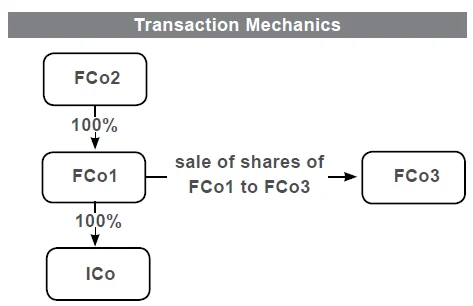
Perhaps the most disputed use of the deeming fiction was exercised by the legislature in 2012 by way of taxation of indirect transfers. Essentially, the Indian legislature sought to tax sale of shares between two non-residents which involved value shifting of an Indian company. The above can be better understood with the following example:
Transaction Mechanics

FCo1, FCo2 and FCo3 are foreign companies. FCo1 has only one asset which is the shares held in the Indian company, viz, ICo. Similarly, FCo2 in-turn has only one asset, viz, shares held in FCo1. FCo3, another foreign company is keen to buy out the interest of FCo2 in ICo. Therefore, it is decided to sell the shares of FCo1 to FCo3 by FCo2 as against selling shares of ICo directly.

The Revenue, in the said case advocated the application of a ‘look through’ approach and contended that if there is a transfer of a capital asset situated in India ‘in consequence of’ an action taken overseas, then all income derived from such transfer should be taxable in India. The Hon’ble Apex Court, however, held that the transfer of shares of a foreign company which had an Indian Company as its subsidiary does not amount to transfer of any capital asset situated in India.

Thus, prior to 2012, the above transaction would not lead to any adverse tax implications in India as it is essentially sale of foreign company shares from non-resident to another non-resident. To bring such apparent value shift transactions within the tax net of India, the erstwhile government moved a retrospective amendment deeming that shares of a foreign company that derive their value substantially from Indian assets (in this case FCo1) shall be deemed to have their situs in India and overruling prevailing decisions in the favor of the taxpayer16


16 Vodafone International Holdings B.V. vs. UOI: [2012] 204 Taxman 408 (SC)

TAXATION OF INDIRECT TRANSFER UNDER THE INCOME TAX ACT

For a non-resident to be taxed in India, section 5 of the Income Tax Act provides that income which accrues/arises or received or is deemed to accrue/arise or received in India shall form part of total income taxable in India.

Explanation 5 to section 9 (1)(i) of the Income Tax Act, provides for levy of tax in India on gains arising on transfer of shares of a foreign company if shares of such foreign company derive substantial value from assets located in India. Given the threshold provided under explanation 6 to section 9(1)(i) of the Income Tax Act are satisfied, the sale of the shares of FCo1 would be taxable in India as the same would be deemed to have their situs in India.

INTERPLAY WITH DTAAs

The interplay of indirect transfer provisions with the provisions of DTAA has been an intensely debated one. This question came up for consideration before the Andhra Pradesh High Court17: whether sale of shares of a French company (which derived value substantially from shares of an Indian company) to another French company would be brought to tax as per the provisions of section 9(1)(i) of the Income Tax Act read with the provisions of the India-France DTAA.


17 Sanofi Pasteur Holding SA vs. Department of Revenue: [2013] 354 ITR 316 (AP)

The Revenue had put forth an argument that the provisions of article 14(5) of the India-France DTAA be interpreted to adopt a more see through approach, however, that was swiftly rejected by the Hon’ble Court on the ground that Article 14(5) does not provide for an enabling language to effect a see through and bring the tax of the same into India.

On the contrary, such indirect transfer maybe brought to tax had the criteria laid out in article 14(4) of the India-France DTAA be fulfilled. Article 14(4) of the India-France DTAA provides for taxing the gains arising out of sale of capital stock of a company the property of which consists directly or indirectly principally of immovable property situated in India. Similar enabling provisions are also captured in the India-UAE DTAA [Article 13(3)].

In the absence of fulfilling the above criteria, the provisions of indirect transfer would not be applicable on a foreign company. The tax authorities have also litigated the aspect of residency (which would directly impact the availability of DTAA benefit) and have urged the Courts to lift the corporate veil and differentiate between via the ‘head and brain test’. This issue has been recently adjudicated by the Apex Court18 in favour of the Revenue. The present article does not take into account the change brought in by such ruling.


18 The Authority for Advance Rulings vs. Tiger Global Internal II Holdings (Civil Appeal No. 262 of 2026)
The Authority for Advance Rulings vs. Tiger Global Internal IV Holdings (Civil Appeal No. 263 of 2026)
The Authority for Advance Rulings vs. Tiger Global Internal III Holdings (Civil Appeal No. 264 of 2026)
  •  Period of holding and grandfathering benefit:

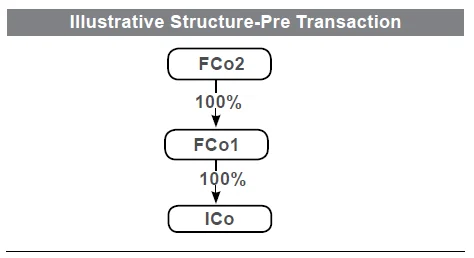
The above issue can be better understood with the help of an example. ICo is an Indian company and the entire share capital of ICo is held by FCo1, and in turn the entire share capital of FCo1 is held by FCo2.

FCo1 and FCo2 are residents of Mauritius. The shares of ICo were acquired by FCo1 on 01.04.2015 and thus are eligible for grandfathering benefit under the India-Mauritius DTAA. The transaction structure, transaction mechanics and resulting structure are as under:
Illustrative Structure - Pre Transaction

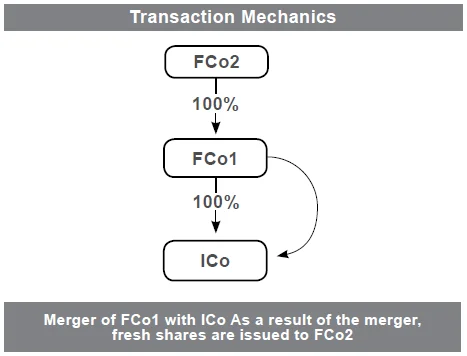
As part of an internal group restructuring exercise undertaken on 01.04.2025, FCo1 is proposed to be amalgamated with ICo and accordingly, ICo would issue fresh shares to FCo2. The proposed transaction mechanics and resulting structure are as under:
Transaction Mechanics1


Let us first examine the implications under the Income Tax Act on the above transaction- In the above amalgamation, there would be no tax in the hands of FCo2, i.e., the shareholder of the Amalgamation Company, the Income Tax Act provides specific exemption under section 47(vii).

At the time of sale of shares of ICo, FCo2 would be granted the period of holding of FCo1 as well, i.e., period of holding of the previous owner by virtue of section 2(42A) r.w. section 49(1) of the Income Tax Act. Thus, considering the above, the question arises whether the period of holding in the hands of FCo2 of shares of ICo for the purposes of the India-Mauritius DTAA would be considered from 01.04.2016 or 01.04.2025.

The Indian Income Tax Act provides the continuity of period of holding in case of transfer by way of amalgamation. Thus, for the purposes of the Income Tax Act, the period of holding shall be taken from 01.04.2016, i.e., date of original acquisition by FCo1. Thus, the taxpayer can contend on these lines to argue availability of grandfathering benefit on the above shares.

While on the other hand, the tax authorities can place reliance on the provisions of article 13(3A) of the India-Mauritius DTAA, which are operative on the shares acquired on or before 01.04.2017. The tax authorities may further contend that ‘to acquire’ would mean to simply ‘be in control or possession’. In the present case, while the original shares were acquired by FCo1 prior to 01.04.2017, there being a fresh issue pursuant to the merger may result in diluting the position of the taxpayer in claiming the benefit of grandfathering.

Conclusion

Given the language used in the DTAA, the above view to avail grandfathering would in my opinion be extremely litigative considering that there is no enabling provisions replicating the benefit of period of holding granted under the Income Tax Act in the DTAAs.

  •  Section 2(22)(f)- The Buyback Maze:

Most recently, Infosys, announced a plan to buyback approx. 2.41% of its total share capital for a total consideration of ₹1,800 crores with an aim to boost EPS and market value. Let us look at the implications in the hands of the shareholder(s)/ in the hands of the company in case of a buyback from a tax point of view.

As per the Income Tax Act, buy-back means purchase by a company of its own shares. Prior to Finance Act, 2024, buyback was taxed in the hands of the company under section 115QA of the Income Tax Act. Tax was levied at 20% (plus 12% surcharge and cess) and the buyback would be exempt in the hands of the shareholder.

FINANCE ACT, 2024- POLICY SHIFT:

Finance Act, 2024 introduced a paradigm shift in buyback taxation. By way of Finance Act 2024, the government announced that buyback done post October 1, 2024 would be exempt in the hands of the company undertaking the buyback and would be taxed in the hands of the shareholder as dividend under section 2(22)(f) per their applicable slab rates.

Further, cost of acquisition of the shares would be allowed as capital loss in the hands of the shareholder. This policy shift has brought buyback on par with dividend but has taken away the sheen of buyback being a lucrative choice of cash repatriation. In many DTAAs such as the India-Netherlands DTAA, it can be argued that given the meaning ascribed to dividend, the proceeds from buyback shall fall within the ambit of the same.

CAN ANTI-ABUSE PROVISIONS SUCH AS SECTION 56(2)(x) OR SECTION 50CA BE APPLIED ON BUYBACK POST FINANCE 2024?

Section 50CA of the Income Tax Act is applicable in case of transfer of unquoted shares at a value less than the fair market value of such shares determined in accordance with the provisions of Rule 11UAA of the Income Tax Rules, 1962 (‘the Income Tax Rules’). Therefore, section 50CA provides for substituting the consideration with the fair market value (determined as per Rule 11UAA of the Income Tax Rules) for the purposes of section 48 and is applicable in the hands of the Seller.

While as discussed above, section 56(2)(x) of the Income Tax Act seeks to tax receipt of property (including shares) for nil or inadequate consideration. Therefore, a key differentiating factor is that section 56(2)(x) is applicable in the hands of the ‘recipient’ of shares (i.e., buyer in case of a transaction of sale/purchase of shares) and section 50CA of the Income Tax Act is applicable in the hands of the seller of shares (in case of a transaction of sale/purchase of shares).

In the present case, the risk of buyback being engulfed under the ambit of section 56(2)(x)/section 50CA of the Income Tax Act is enumerating from the plain reading of provisions of the said sections. The crux of the problem- can two deeming fictions be read on a conjoint basis? Or can a deeming fiction be read into another deeming fiction?

SECTION 50CA AND BUYBACK:

In case of section 50CA of the Income Tax Act, as discussed above, it is applicable in case of ‘transfer’ of unquoted shares. The term ‘transfer’ has been
defined under section 2(47) of the Income Tax Act and includes the relinquishment of any asset or extinguishment of any rights therein. In case where a company buys back its own shares for the
purpose of cancellation/extinguishment, the same can be said to fall within section 2(47) of the Income Tax Act and thus within ambit of section 50CA of the Income Tax Act.

However, since payment made a company on buyback of its own shares from a shareholder in accordance with the provisions of section 68 of the Companies Act, 2013 is covered within section 2(22)(f) of the Income Tax Act, the same may not be taxed again under the head capital gains in line with the provisions of section 46A of the Income Tax Act. Thus, where section 50CA is sought to be invoked by the tax authorities, the same may leave the provisions of section 46A (supra) otiose.

SECTION 56(2)(x) AND BUYBACK:

In case of section 56(2)(x) of the Income Tax Act, the company receives its shares from the shareholder for the purpose of cancellation of the same. At the outset, arguments can be made that receipt of shares for the purposes of cancellation may not fall within purview of section 56(2)(x) of the Income Tax Act keeping in mind the intent for which the provisions of section 56(2)(x) were introduced.

Further arguments can also be made that in case of buyback, the shares are being tendered which would constitute consideration. The action of a deeming fiction is to be restricted to the section(s) for which they were originally intended for and the extension of the said scope under the Act is not permissible.

However, alternative arguments may be advanced by the departments that on a bare reading of section 56(2)(x) of the Income Tax Act, only trigger(s) required are receipt of property (including shares) for inadequate consideration. The intent of receipt (in the present case for cancellation) may not be principally examined for application of section 56(2)(x) of the Income Tax Act.

In my view, the above anti-abuse provisions also no longer find any application in case of a buyback for the plain reason that post Finance Act, 2024, the companies undertaking a buyback would need to incentivize the shareholders to tender their shares by way of a premium on prices (as seen in the case of Infosys). Thus, there would not be any practical applicability of the above anti-abuse provisions.

CONCLUDING REMARKS

Deeming fictions under the Income Tax Act have transitioned from being narrow anti-abuse tools to becoming a cornerstone of tax legislation, influencing computation, timing, and characterisation of income.

While they serve the purpose of plugging loopholes and ensuring uniformity, their expansive use has also introduced interpretational challenges and litigation risks. Like in mathematics, in a world full of variables it is essential to introduce and keep constants as a balancing factor, likewise in law interpretation to keep up with our dynamic world, it is important to keep some constant premise for a meaningful and desired interpretation.

Statistically Speaking

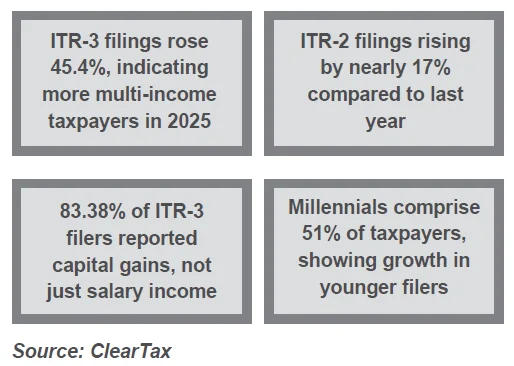
TAX TRENDS IN 2025

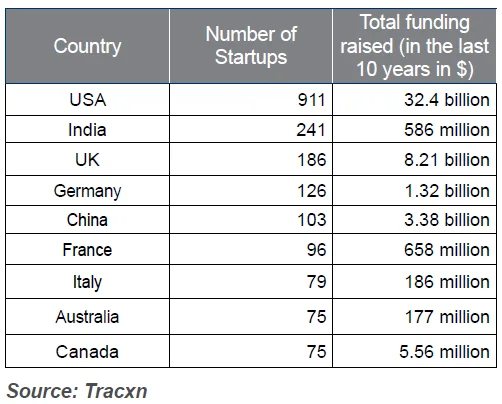
TOP COUNTRIES WITH SPACE TECH STARTUPS

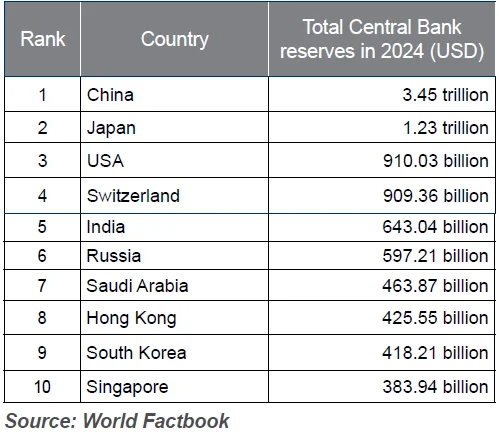
COUNTRIES WITH THE LARGEST FOREIGN EXCHANGE RESERVES

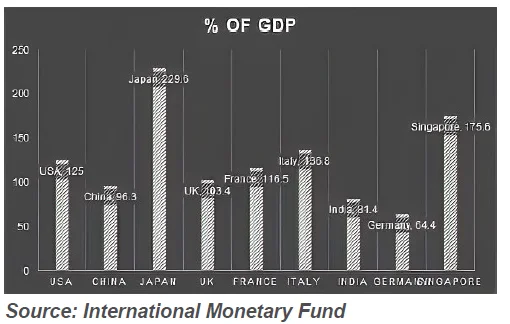
HIGHEST NATIONAL DEBT 2025 AS A PERCENTAGE OF GDP

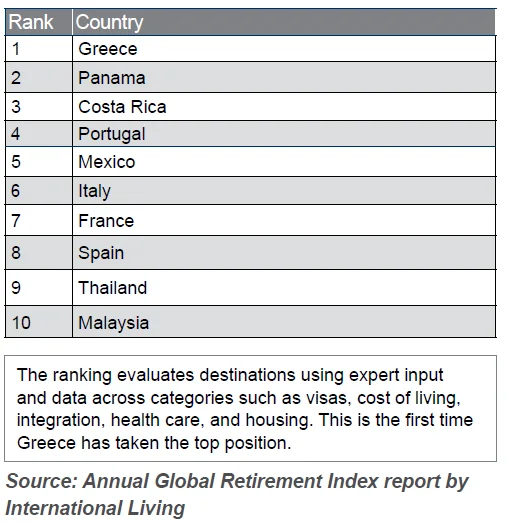
BEST PLACES TO RETIRE IN 2026

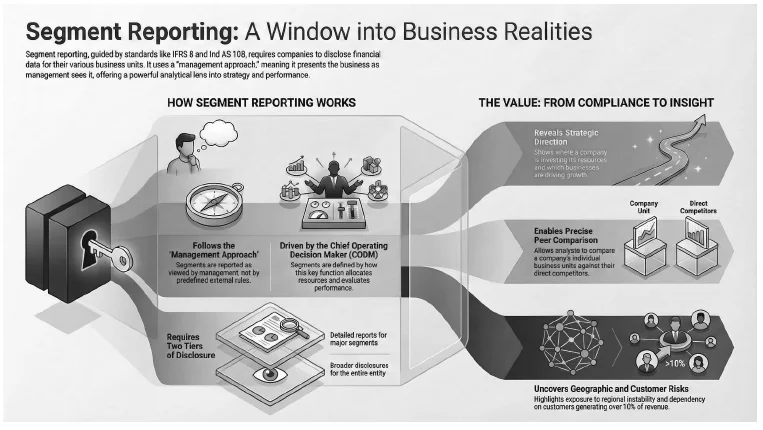
Segment Reporting: A Window Into Business Realities

Segment reporting under IFRS 8 and Ind AS 108 adopts a “management approach,” allowing investors to view a business through the lens of its Chief Operating Decision Maker (CODM). This framework reveals how management allocates resources and assesses performance across various operating components, rather than just legal structures. Key requirements include segment-specific disclosures and entity-wide data regarding products, geography, and major customers contributing over 10% of revenue. Such insights help stakeholders map performance against peers, understand strategic direction, and evaluate exposure to geographical risks. High-quality reporting reduces information asymmetry and enhances transparency. However, common oversights include omitting major customer details or failing to provide entity-wide disclosures for single-segment entities. Ultimately, these disclosures provide a vital analytical tool for assessing enterprise resilience and long-term value creation.

INTRODUCTION: BEYOND MERE DISCLOSURE

Consolidated financial statements show the big picture. But investors want more. Earnings calls prove this every quarter. Analysts routinely break down results by business segment and evaluate key performance indicators such as segment revenues, margins, capital employed and capital expenditure—information that is primarily drawn from segment disclosures and complemented by other parts of the financial statements. Management works the same way. Key decisions on funding, marketing and cost control happen at the segment level. Investors follow product trends, geographic shifts and new business wins for this reason. These patterns point to one conclusion: segment information is not just disclosure. It reveals how the business runs and how management thinks.

USE OF ‘MANAGEMENT APPROACH’ FOR SEGMENT REPORTING:

Segment reporting under IFRS 8 and Ind AS 108 follows the ‘management approach’, introduced when IFRS 8 replaced IAS 14 and aligned with US GAAP’s SFAS 131. The management approach presents segments as management sees them, giving investors insight into how decisions are made and resources are allocated. This shift moved reporting away from predefined categories and required disclosures that reflect how management itself views and manages the business. As a result, segment information goes beyond simple product or geographic splits and provides insight into real decision-making structures. The management approach drives both segment identification and measurement, ensuring external reporting is consistent with internal performance reviews and the MD&A. Because segment results must reconcile to consolidated figures, it effectively links internal management reporting with external financial statements. This enables investors to see the business through management’s lens and assess prospects based on the performance of its key operating components. These also enable users to derive relevant segment-level ratios and performance indicators from the disclosed information, without the standard prescribing uniform ratios that may not reflect management’s internal decision-making framework.

Segment Reporting

KEY DISCLOSURE COMPONENTS UNDER IND AS 108/IFRS 8:

Broadly, the standard requires the following disclosures:

1) Segment wise disclosure

Segment reporting is fundamentally built on identifying operating segments—the level within the entity where management allocates resources and evaluates performance through the Chief Operating Decision Maker (CODM). The CODM represents a decision-making function rather than a specific designation. Identifying the CODM determines the operating segments, which in turn leads to the determination of reportable segments and the related reportable amounts and reconciliations. Each reportable segment requires disclosures such as segment revenue, results, assets, liabilities and other material items, including significant non-cash expenditures. These disclosures reflect the information provided to the CODM and are reconciled to the corresponding figures in the financial statements, thereby linking internal reporting with external reporting.

2) Entity-wide Disclosures

Even single-segment companies must provide entity-wide disclosures, which are often overlooked. Unlike reportable segments, these are simple disaggregations of financial statement amounts rather than based on the management approach. Disclosures are required for:

Products/Services External revenues disclosed by product or service (or groups of similar products/services).
Geography External revenues and non-current assets disclosed separately for the country of domicile and foreign locations (with material countries shown individually).
Major Customers Disclose revenues from customers contributing ≥10% of total revenue and the related segment(s); related customers from the same group are treated as one for the threshold.

FROM COMPLIANCE TO INSIGHT: UNLOCKING THE VALUE OF SEGMENT REPORTING

1) Mapping and Peer Comparison

Segment reporting enables stakeholders to map a company’s performance at the business level, offering a clearer view of how individual segments contribute to overall results. This enhances
transparency and supports a more informed assessment of competitive strengths and weaknesses. For investors analysing a diversified company, such information is indispensable, as each segment may have a different set of peers and competitors.

2) Understanding Strategic Direction

Disaggregated segment information also offers valuable insight into the company’s strategic direction. For diversified entities, such disclosures reveal the relative growth drivers across businesses and the areas where management is focusing its resources. Investors can thus assess whether the company’s strategy aligns with evolving market opportunities and risk exposures, rather than relying solely on consolidated results that may obscure segment-specific trends.

3) Geographical Insights and Risk Assessment

In today’s volatile geopolitical and economic environment, segment information by geography provides critical visibility into an entity’s revenue and resource dependencies. Understanding the geographic composition of revenues and assets helps stakeholders gauge exposure to regional risks — for instance, how trade policies such as U.S. tariffs on Indian pharmaceutical exports or operational dependencies in ports like Adani Ports’ overseas ventures might influence performance. These may also become a relevant consideration for policymakers while framing India’s international trade and diplomatic strategy. Such insights are not merely analytical; they can be pivotal in assessing key accounting judgments, including going concern, impairment testing, and valuation.

Together, these dimensions demonstrate that segment reporting extends well beyond compliance and serves as a practical analytical lens into how management evaluates strategy, risk and performance sustainability. For example, where an entity operates both a core manufacturing activity and a related financing operation, segment reporting reflects whether these activities are monitored together or separately for decision-making purposes. Importantly, segments are not defined by legal structure or subsidiary boundaries, but by the internal management view. Legally separate entities may form part of a single segment if managed on an integrated basis, while closely linked activities may be reported separately if performance and risks are assessed independently. Segment information should therefore be read as a reflection of how the business is actually run, rather than as a mirror of the group’s legal organisation.

LESSONS FROM PRACTICE: MISSED DISCLOSURES

Companies sometimes omit important details when complying with Ind AS 108; a few common oversights, as observed by the Financial Reporting Review Board of ICAI, are listed below:

  •  Some entities incorrectly claimed that Ind AS 108 was not applicable in cases of a single reportable segment, overlooking the requirement to provide entity-wide disclosures
  •  In several cases, segment reportingdisclosures were inappropriately included under “Significant Accounting Policies” instead of being presented separately in the Notes to Accounts.
  •  General disclosures were either missing or inappropriate, including relating to:
  1. Identification of the CODM, and
  2. Criteria and judgements applied in segment identification and aggregation
  • Information about major customers contributing 10% or more of revenue was not disclosed. For instance, media reports on an MCA probe indicated that Everfin Financial Services Private Limited did not separately disclose revenue of ₹134 crore from a single customer, BluSmart, as a major customer exposure under Ind AS 108.

CONCLUDING THOUGHTS:

Segment reporting is far more than a compliance exercise; it is a powerful tool for enhancing transparency and reducing information asymmetry. By reflecting how management views performance and allocates resources, it gives users a clear picture of risks, opportunities and strategic direction. These insights help assess the sustainability of business strategies across varied operating environments. In a period shaped by rapid technological change, geopolitical tension and shifting economic conditions, high-quality segment disclosures enable investors and policymakers to judge enterprise resilience, value creation and future performance with far greater clarity.

Beyond compliance lies clarity. Segment reporting reveals the signals that shape strategy, risk and performance.

ICAI and Its Members

I. EXPOSURE DRAFT

1. RISK MITIGATION ACCOUNTING-PROPOSED AMENDMENTS TO IFRS 9 AND IFRS 7

The Exposure Draft sets out the proposed amendments to IFRS 9 Financial Instruments and IFRS 7 Financial Instruments: Disclosures. The IASB is proposing:

  • to add a risk mitigation accounting model for companies managing repricing risk on a net basis; and
  • to require a company to disclose its strategy for managing repricing risk and the effects of its risk management activities.

The IASB is also seeking feedback on the proposed withdrawal of IAS 39 Financial Instruments: Recognition and Measurement.

Public comments submission last date: May 22, 2026.

Download the Exposure Draft: https://resource.cdn.icai.org/90018asb-aps3657-1.pdf

Submit Comments:

II. ICAI ANNOUNCEMENTS

1. PEER REVIEW PHASE IV EXTENSION

The Peer Review Board of the Institute of Chartered Accountants of India has announced a deferment of Phase IV of the Peer Review mandate, originally effective from 1 January 2026, to now be applicable from 31 December 2026. This extension applies to practice units (firms) that propose to undertake audits of branches of public sector banks and to those rendering attestation services with three or more partners, for whom obtaining a valid Peer Review Certificate will continue to be a pre-requisite before accepting statutory audits under the Phase IV coverage criteria.

Read Circular at: https://resource.cdn.icai.org/90105prb-aps3736.pdf

2. CLARIFICATIONS/FAQS ON THE ISSUES ARISING OUT OF THE PEER REVIEW MANDATE

The Peer Review Board of the ICAI has issued comprehensive clarifications and FAQs addressing key aspects of the Peer Review Mandate, including its phased applicability to practice units based on audit scope and firm size, such as statutory audits of listed entities or large unlisted public companies and assurance service thresholds under different phases. The guidance clarifies timing for obtaining a valid Peer Review Certificate before acceptance and signing of statutory audits, definitions of “raised funds” for applicability, and delineation of Public Interest Entities under the mandate. It also specifies the coverage of audits under Phase IV for branches of public sector banks, the requirement (or non-requirement) of peer review for non-attestation practices, and the scope of “assurance engagements” under applicable standards, along with practical points such as partner count reckoning and conditions for new units seeking peer review.

Read FAQ at: https://resource.cdn.icai.org/83571prb67450.pdf

III. ICAI PUBLICATION

1. FAQ ON THE NEW LABOUR CODE

The Accounting Standards Board has issued FAQs on key accounting implications arising from the New Labour Code to clarify key accounting questions arising from the application of the New Labour Codes.

Link to download the same is: https://resource.cdn.icai.org/90049asb-faq-nlc.pdf

2. TECHNICAL GUIDE ON EXPATRIATES TAXATION

The revised sixth edition of the Guide provides a comprehensive and updated analysis of the taxation and regulatory framework applicable to expatriates, covering determination of residential status under the Income-tax Act, 1961 (including deemed residency and expanded stay thresholds), implications for global income taxation, and practical aspects of the default tax regime under section 115BAC on expatriate salary structures. It offers detailed guidance on withholding obligations under section 195, taxability of salaries paid abroad for services rendered in India, and social security compliance under Indian law and bilateral Social Security Agreements, including coverage, contributions, and withdrawal rules. The publication also examines FEMA exchange control provisions, recent procedural changes such as electronic filing of Form 10F for DTAA claims, and compliance under the Black Money Act, 2015, making it a holistic reference for structuring and managing compliant expatriate assignments.

The technical guide is available at https://resource.cdn.icai.org/90288cit-aps3869.pdf

IV. OPINION

Accounting treatment of interest cost and interest income relating to interest-free subordinate debt

A. FACTS OF THE CASE

The Company is a joint venture between the Government of India (GoI) and the Government of NCT of Delhi (GNCTD) and is responsible for the construction and operation of the Delhi/NCR Metro Rail project. The project is financed through equity, grants, JICA loans routed through GoI, and interest-free subordinate debt provided by GoI, GNCTD and other government agencies.

The subordinate debt is meant specifically to finance land acquisition, rehabilitation and resettlement, and payment of central and state taxes. Repayment is scheduled in five equal instalments after completion of the JICA loan repayment, i.e., after 30 years.

Earlier, the Expert Advisory Committee (EAC) had advised the Company to fair value the interest-free subordinate debt as per Ind AS 113. Accordingly, during FY 2023-24, the Company measured such debt at fair value using G-sec rates and treated the difference between carrying value and fair value as a government grant, to be amortised over project life.

The Company accounted for interest using the effective interest method under Ind AS 109 as follows:

  • For completed phases (I–III): interest charged to P&L
  • For Phase IV (under construction): interest capitalised under CWIP
  • Interest earned on temporary investment of funds in flexi deposits was recognised as income in P&L, based on earlier EAC opinion (Query 44, Vol. XXXIV)

During the supplementary audit, C&AG objected that:

  • Interest is notional and should not be capitalised
  • Interest income should be netted off against borrowing cost
  • CWIP and equity were overstated by ₹1,621.49 lakh

Management disagreed and relied on Ind AS 23 and ICAI Educational Material to justify capitalisation and separate recognition of interest income.

B. QUERY

The Company sought EAC’s opinion on:

(i) Whether the accounting treatment of interest cost arising due to fair valuation of subordinate debt is correct.

(ii) Whether the accounting treatment of interest income earned on temporary investment of subordinate debt funds is correct.

C. POINTS CONSIDERED BY THE COMMITTEE

The Committee examined only the accounting issues relating to:

  • Interest arising on fair valuation of subordinate debt
  • Interest income on temporary investment of such funds

It relied on:

IND AS 109

  • Financial liabilities to be measured at amortised cost
  • Interest to be computed using the effective interest method
  • Interest so recognised is not notional, but accounting interest

IND AS 23 – BORROWING COSTS

  • Borrowing costs include interest computed using the effective interest method
  • Costs directly attributable to a qualifying asset must be capitalised
  • Metro project qualifies as a qualifying asset
  • Investment income earned during construction must be adjusted against borrowing cost

The Committee noted that the earlier EAC opinion cited by the Company was under the old AS framework, whereas the present case is under Ind AS, and therefore required independent evaluation.

It concluded that:

  • Interest arising due to fair valuation is the actual borrowing cost under Ind AS
  • Interest earned during construction must be set-off against borrowing cost and not credited to P&L.

D. Opinion

The Committee opined:

(i) Accounting treatment followed by the Company in respect of interest cost, viz., capitalising the same as capital work-in progress, is appropriate.

(ii) Accounting treatment followed by the Company in respect of interest income earned on temporary investment of subordinate debt funds in the statement of profit and loss is not appropriate; the same is to be set-off against the borrowing costs to be capitalised as per the principles of Ind AS 23.

Read Opinion https://resource.cdn.icai.org/90204cajournal-jan2026-30.pdf

ICAI Journal January 2026 Pages 113-119

V. DISCIPLINARY COMMITTEE CASES

1. Case: ROC, Kanpur vs. CA. G.G.W.

File No.: PR/G/295/2023/DD/437/2023/DC/2059/2025

Date of Order: 15.12.2025

Particulars Details
Complainant Registrar of Companies
Nature of Case Certification of e-Form AOC-4 without due diligence – unsigned financial statements
Background MCA conducted an inspection u/s 206(5) of the Companies Act, 2013, into several Producer Companies incorporated in Uttar Pradesh. It was found that 14 Producer Companies had filed e-Form AOC-4 for FY 2021–22, where the financial statements and directors’ reports were not signed by directors. Despite this, the Respondent, who was both a statutory auditor and certifying professional, certified these forms.
Key Allegations – Certified AOC-4 forms, knowing that financial statements were unsigned by directors.

– Uploaded unauthenticated financial statements without a mandatory UDIN.

– Failed to comply with Section 134 of the Companies Act, 2013 and Rule 8 of Companies (Registration Offices & Fees) Rules, 2014.

Respondent’s Defence – Admitted that unsigned financial statements were uploaded due to staff oversight.

– Filed affidavits of directors and staff confirming inadvertent error.

– Argued it was an unintentional mistake in the early stage of his career.

– Claimed no fraud or misleading audit report was involved and sought leniency.

Findings – Respondent pleaded guilty during the hearing on 19.09.2025.

– Being a statutory auditor and certifying professional, responsibility rested solely on him.

– Uploading unsigned financials and certifying AOC-4 without verification amounts to professional negligence.

– Non-mention of UDIN further aggravated the lapse.

Charges Established Guilty under Item (7), Part I, Second Schedule – failure to exercise due diligence / gross negligence.
Punishment Reprimand under Section 21B(3)(a) of the CA Act, 1949.

2. CASE: REGIONAL DIRECTOR (ER), MCA, KOLKATA VS. CA. K.B.

File No.: PR/G/319/2020/DD/329/2020/DC/1856/2024

Date of Order: 22.12.2025

Particulars Details
Complainant Regional Director (Eastern Region), Ministry of Corporate Affairs, Kolkata
Nature of Case Statutory auditor rendering prohibited non-audit services.
Background The Respondent was a statutory auditor of Swapnabhumi Realtors Ltd. for FY 2017–18. During audit tenure, he also accepted a separate assignment for budget
preparation and variance analysis of indirect expenses, for which separate fees were charged. The MCA alleged this amounted to an internal audit/management service, prohibited under Section 144 of the Companies Act, 2013.
Key Allegations – Undertook variance analysis while continuing as a statutory auditor.

– Charged separate professional fees (₹25,000).

– Issued report containing recommendations on expense controls, amounting to an internal audit.

Respondent’s Defence – Section 144 does not define “management services.”

– Claimed analysis was done only to detect fraud and improve audit quality.

– Argued independence was maintained as the audit report was qualified.

– The stated internal auditor was already appointed, and he only used their work.

Findings – Variance analysis report contained control recommendations, clearly falling within the scope of internal audit (refer to SA-610).

– The assignment was independent of the statutory audit and carried out for separate consideration.

– Respondent failed to resign despite accepting a prohibited assignment, violating independence norms.

Charges Established Guilty under:

  • Item (7), Part I, Second Schedule – lack of due diligence
  • Item (1), Part II, Second Schedule – contravention of law/guidelines
Punishment Fine of ₹10,000 payable within 60 days

3. Case: ROC, West Bengal vs. CA. RKT

File No.: PR/G/736/2022/DD/515/2023/DC/1897/2024

Date of Order: 22.12.2025

Particulars Details
Complainant Deputy Registrar of Companies, West Bengal
Nature of Case Certification of false Form 10 – registration of charge for debentures
Background During MCA inspection of M/s SAPL., it was found that the Respondent had certified Form 10 on 26.05.2010 for creation of charge to secure ₹1 crore debentures. However, the company’s audited balance sheet as on 31.03.2010 showed no fixed assets and current assets of only ₹4.01 lakh, creating a shortfall of over ₹95 lakh in security coverage. No mortgage deed was attached to the form.
Key Allegations – Certified Form 10 without verifying ownership and adequacy of security.

– Allowed registration of a charge despite the company having no assets.

– Failed to ensure attachment of the mortgage deed.

Respondent’s Defence Claimed his digital signature was misused and he was never engaged by the company; he relied on an FIR dated 28.04.2013 filed in another matter.
Findings – FIR relied upon related to another company, and was filed 3 years after the impugned Form 10.

– Respondent filed a fresh complaint for this case only in Nov 2024, almost one year after receiving notice from ICAI – treated as an afterthought (timeline table – page 5).

– No effort was made by the Respondent to approach the company despite the alleged misuse.

– Held responsible for the safe custody of his Digital Signature.

– The committee concluded it was a clear case of negligence in certifying a false Form 10.

Charges Established Guilty under Item (7), Part I, Second Schedule – failure to exercise due diligence / gross negligence.
Punishment Reprimand and fine of ₹2,00,000 payable within 60 days.


Depreciation Policy Changes By Large Technology Companies: Analysis under Indian Accounting Standards

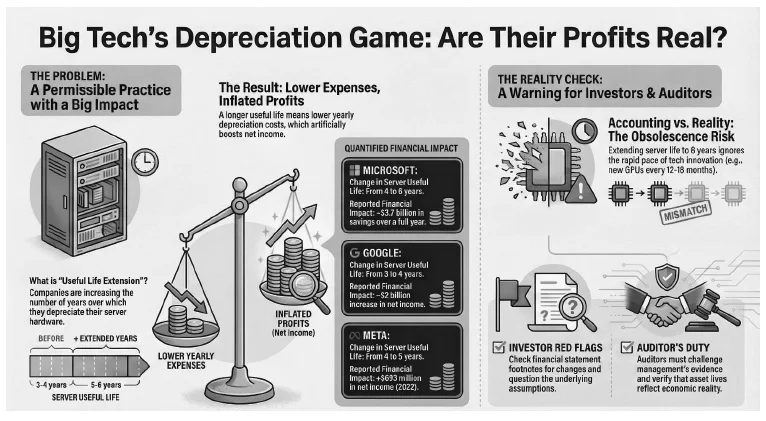
In recent years, a number of large technology firms (for example Meta Platforms, Inc., Microsoft Corporation, Alphabet Inc. (Google) and others) have announced extensions in the useful lives applied to their server and network infrastructure (data-centre hardware) for depreciation purposes. On the face of it, the accounting manoeuvre has the effect of lowering annual depreciation expense, thereby increasing recognised profit, earnings per share (EPS) and various ratios (return on assets, etc.). The key question is: does this practice align with sound accounting principles, especially when economic life (or technological obsolescence) may be much shorter than the extended depreciation period? And if not, what do the applicable Indian standards (Ind AS) say and what risks arise for investors and auditors?

This paper discusses the accounting framework under Indian GAAP / Ind AS for depreciation and useful life, elaborates the concept of “useful life” (economic life) and obsolescence, explains the practice of life-extension for server assets by large tech companies and provides a critical assessment: risks, accounting concerns and whether the practice is consistent with standards. Finally, it examines the implications for Indian-context companies, auditors, and investors.

INTRODUCTION

1. Accounting Framework under Indian GAAP / Ind AS for Depreciation

1.1 Ind AS 16 (and Companies Act Schedule II)

Under Indian accounting standards, the treatment of property, plant and equipment (PPE) is governed by Ind AS 16 “Property, Plant and Equipment”. The standard outlines recognition, measurement, depreciation, componentisation, and review of useful lives.

Key extracts:

  •  Paragraph 50 of Ind AS 16 states: “The depreciable amount of an asset shall be allocated on a systematic basis over its useful life.”
  •  Paragraph 56 of Ind AS 16 lists the factors to be considered in determining useful life: (a) expected usage of the asset; (b) expected physical wear and tear; (c) technical or commercial obsolescence arising from changes or improvements in production or from a change in market demand; (d) legal or similar limits on the use of the asset.
  • Paragraph 51 of Ind AS 16 requires that the residual value and useful life of an asset shall be reviewed at least at each financial year-end, and if expectations differ from previous estimates, the change shall be accounted for as a change in accounting estimate in accordance with Ind AS 8.
  • Disclosure requirements: Ind AS 16 requires disclosure for each class of PPE of the depreciation method, useful lives or depreciation rates, gross carrying amount, accumulated depreciation/impairment, reconciliation of changes, etc.

Additionally, under Indian law, the Companies Act, 2013 Schedule II (Part A) states that “Depreciation is the systematic allocation of the depreciable amount of an asset over its useful life” and that the useful life of an asset is the period over which the asset is expected to be available for use by the entity or the number of production or similar units expected to be obtained from the asset.

1.2 What constitutes a change in useful life / accounting estimate

When an entity changes its estimate of the useful life of an asset (for example, extends the life from 4 years to 6 years), this is a change in accounting estimate under Ind AS 8 — accounted for prospectively (i.e., the carrying amount of the asset is depreciated over the revised remaining useful life). Ind AS 16 para 61-62 (and Ind AS 8) require such changes to be disclosed.

1.3 Comparison to IFRS / other jurisdictions

Globally, under IAS 16 (the IFRS equivalent) similar concepts apply: useful life must reflect expected consumption of future economic benefits. For example, IAS 16 paragraph 56 outlines that “The useful life of an asset is the period over which an asset is expected to be available for use by an entity.” Moreover, many technical publications note that although US GAAP (ASC 360-10) requires depreciation over useful life, it does not specify how useful life should be determined — hence judgment is required.

In short: Indian (and IFRS) standards require that useful life be determined on the basis of expected economic benefits, usage, obsolescence etc., not simply management convenience.

Big Techs Depreciation Game

2. Useful Life, Economic Life and Obsolescence

2.1 Useful life vs physical (economic) life

A frequent misconception is to equate “useful life” with the maximum physical life of an asset. The standards clarify that the useful life is the period over which the asset is expected to be available for use by the entity, not necessarily the total physical life of the asset. Ind AS 16 para 57 states: “The useful life of an asset is defined in terms of the asset’s expected utility to the entity. … Therefore, the useful life of an asset may be shorter than its economic life.”

Hence, while a server rack might physically function for 10 years, its useful economic life (the period over which it yields future economic benefits to the entity) might be much shorter — especially in technology contexts of rapid refresh or obsolescence.

2.2 Technological and commercial obsolescence

Both Ind AS 16 and IAS 16 explicitly require entities to consider technical or commercial obsolescence when estimating useful life. For example, Ind AS 16 para 56(c) refers to “technical or commercial obsolescence arising from changes or improvements in production, or from a change in the market demand for the output of the asset.”

Technical obsolescence is especially relevant for server and networking equipment: newer generations of GPUs, faster processors, more efficient architectures mean that older hardware becomes economically unattractive even if physically operational. If a server continues to operate but its capacity, energy consumption, or performance is no longer competitive, the future economic benefits may fall significantly below initial expectations.

2.3 Review of useful life and residual value

Ind AS 16 para 51 mandates review of useful life and residual value at each reporting date (or earlier if there are indications) and adjust prospectively. Failure to do so may mean carrying amounts and depreciation charges are not updated to reflect reality.

Indeed in practice many companies manage asset refresh cycles and update useful life accordingly. For example, technical guidance notes cite as a common error: “Failing to update assessment of useful lives (depreciation rates) and residual values.”

2.4 Componentisation

Ind AS 16 para 43/46 states that if an asset has parts (components) with different useful lives, each significant part should be depreciated separately. For example, a server chassis may have a cooling unit, a storage array, a GPU blade each with different life cycles.

2.5 Impairment vs depreciation

If indicators of impairment exist (e.g., hardware assets no longer yield the expected benefits, or accelerated obsolescence), then the entity must apply Ind AS 36 (“Impairment of Assets”) and possibly write down the carrying amount. The depreciation process does not replace the requirement to test for recoverability if needed.

3. Practice of Useful Life Extension by Large Tech Companies

The occurrence of major tech companies extending the useful life of servers and network equipment — is documented publicly. I would like give below few examples.

3.1 Example: Meta Platforms, Inc.

In the 2022 annual report (Form 10-K) of Meta, the company states:

“In connection with our periodic reviews of the estimated useful lives of property and equipment, we extended the estimated average useful lives of a majority of the servers and network assets from four
years to 4.5 years, effective the second quarter of 2022, and further extended the useful lives to five years effective the fourth quarter of 2022… The financial impact of the changes in estimates was a reduction in depreciation expense of US$860 million and an increase in net income of US$693 million, or US$0.26 per diluted share for the year ended December 31, 2022.”

That disclosure appears in Note 1 (Summary of Significant Accounting Policies) in Part II, Item 8 of the 10-K (page ~67) of Meta’s 2022 report.

In the half-year (30 June 2022) Meta also reported that the change in estimate reduced depreciation expense by US$252 million and increased net income by US$206 million for that quarter.

In more recent disclosures (2023 10-K) Meta again notes the same useful life policy and that depreciation expense was US$8.50 billion in 2022 (servers and network assets ~US$5.29 billion) and details of the revisions.

3.2 Example: Microsoft Corporation

Public commentary (e.g., on the data centre industry) reports that Microsoft extended the life span of its server and network equipment from four to six years.

It is indicated that Microsoft estimated savings of ~$1.1 billion in Q1 2023 and ~$3.7 billion over full year due to the life extension.

3.3 Example: Alphabet / Google

Google (Alphabet) in 2021 adjusted the useful life of servers from 3 to 4 years and networking equipment from 3 to 5 years, which reportedly led to ~US$2 billion increase in netincome and ~US$2.6 billion reduction in depreciation expense.

3.4 Summary of impact

From the above:

  •  The companies have publicly disclosed that they have changed the estimated useful lives of their infrastructure assets (servers, network) — and have quantified the impact of those changes on depreciation and profits.
  •  The change is accounted for prospectively (i.e., future depreciation is charged over the revised remaining life).
  •  The effect is to reduce annual depreciation charges, thereby increasing reported profits, EPS, and (other things equal) ROA, asset-turnover metrics etc.

4. Critical Assessment: Are These Extensions Consistent with Sound Accounting?

4.1 Is it permitted to change useful life?

Yes — as explained above, standards permit entities to change an estimate of useful life. That by itself is not improper. Ind AS 16/IAS 16 require that the revised estimate be based on current facts and be reviewed at each year end. A change in estimate is accounted for prospectively. So if a company genuinely has evidence that its servers will deliver useful economic benefits for a longer period (e.g., due to improved cooling, better utilisation, more efficient architecture), then extending the useful life is within the accounting framework.

4.2 But the extension must reflect consumption of future economic benefits

The key question is the reasonableness of the estimate. Standards emphasise that the useful life should reflect the pattern in which the asset’s future economic benefits are expected to be consumed by the entity. Ind AS 16 para 60 and IAS 16 para 60 require that the depreciation method (and implicitly life) reflect that pattern.

Hence, if the asset will become technologically obsolete rapidly (e.g., GPU refresh every 12-18 months, or workloads needing new hardware), then extending a depreciation life from 3 to 6 years may not reflect realistic consumption of benefits. In that sense the extension may be inconsistent with the standard. Indeed a technical article points out as a common error: “Assuming useful life is the total economic life (potential life) of the asset” rather than the period the asset will actually yield economic benefits.

4.3 Specific concerns in server / data-centre context

Above concern is especially valid for server and networking infrastructure because:

  •  The pace of hardware innovation (GPUs, accelerators, AI training hardware) is extremely rapid — product cycles may be 12-18 months.
  • Energy efficiency, performance per watt, cooling advances, and usage patterns may mean older servers provide less value (or become less competitive).
  •  Even if physically usable, the economic life (the period over which they generate net economic benefits) could be significantly shorter than physical life.
  •  If management extends useful lives but does not reflect obsolescence or reduced output potential, then depreciation expense may be understated and profits overstated.

4.4 Disclosure and transparency issues

From a governance and investor-protection angle, the extension is problematic if it is not supported by realistic assumptions or clear disclosures of key judgments. While companies like Meta have disclosed the change and the quantitative impact (which is good governance), investor vigilance is required: the note might still not show the underlying assumptions (e.g., what refresh cycle, expected capacity utilisation, residual value), and the rationale may be management¬-biased.

4.5 In India / Ind AS context — special considerations

In the Indian context:

  •  Under Schedule II to the Companies Act, if a company uses a useful life different from that prescribed, it must disclose the difference and justification (including technical advice).
  •  Ind AS entities must review useful life and residual value each year, and change must be treated as an estimate change — not a change in policy.
  •  Auditors and regulators (for Indian entities) must ensure that asset lives reflect actual usage, obsolescence and consumption of benefits, especially for high-tech assets where obsolescence is rapid.

4.6 Legal / regulatory pronouncements

From IFRS/UK/Australia commentary: for example, a BDO (Australia) article on “More common errors when accounting for property, plant and equipment” warns that failing to review useful life and residual values each year is a common error and may lead to over- or under-stated depreciation.

Therefore, while not a “legal ruling”, there is strong regulatory/standards-based expectation that life estimates reflect realistic economic lives.

4.7 Summary of whether the practices highlighted above are permissible

In summary:

  •  It is permissible for a company to extend the useful life of an asset (provided it is an estimate change, prospectively applied, and disclosures made).
  •  It is not permissible (or would be inconsistent with standards) if the extension is arbitrary, ignores the reality of obsolescence, or fails to reflect that the asset’s economic benefits will be consumed sooner than the extended life.
  •  In a rapidly evolving technology environment (servers, AI infrastructure), extending from 3 years to 6 years raises red flags: are the underlying facts (refresh cycle, performance degradation, capacity utilisation) being properly considered? If not, profits may be inflated, and depreciation understated, thereby misleading investors.
  •  From an Indian standpoint, companies using a non-prescribed life must disclose the difference and provide justification supported by technical advice. Ind AS also requires annual review of assumptions.

Hence the above concern—that companies may extend depreciation windows, thereby reducing expenses, boosting profitability and EPS, while the actual economic life may be much shorter—is a legitimate one for investors, auditors and regulators.

5. Implications for Indian Companies, Auditors and Investors

5.1 What Indian companies should do

For Indian entities investing in server/data-centre infrastructure (or any rapidly changing technology assets):

 They must assess useful life realistically, considering physical usage, technological change, output capacity, and replacement cycles.

  •  They should document the basis for useful life assumptions (e.g., refresh policy, utilisation, benchmarking).
  •  They should review the assumptions each year, and where the estimate is changed, provide adequate disclosure as required under Ind AS 8.
  • If a departure from the useful lives specified in Schedule II of the Companies Act is made, they must justify the difference and disclose it.
  •  They should ensure componentisation where relevant (e.g., major hardware components, cooling systems, GPUs) and depreciate accordingly.
  •  Auditors must challenge management assumptions especially in asset-intensive, high-technology investments, and verify whether obsolescence (technical or commercial) has been appropriately factored.

5.2 What investors should watch for

  •  Note disclosures in the “Significant Accounting Policies” or in the PPE notes: what useful lives have been assumed? Have they changed recently? If yes, what is the quantitative impact?
  •  Review the company’s hardware refresh policy, data-centre strategy, server-upgrade cycle. If management is extending lives while the industry refresh cycle is short (12–18 months), that’s a potential red flag.
  •  Check whether the residual value assumptions are realistic; whether impairment indicators exist (e.g., asset under-utilisation, new generation hardware replacing older).
  •  Compare depreciation expense / gross PPE balance / age of assets over time (e.g., is the average age of servers increasing but utilisation/capacity growth flattening?)
  •  Be alert that an extended useful life means lower annual depreciation, hence higher current profit, but it may also mean lower future capital expenditure — or an eventual impairment risk.
  •  Read the footnotes: e.g., Meta’s disclosure that changing the useful life reduced depreciation expense by US$860 million and increased net income by US$693 million in 2022.

5.3 For auditors / regulators

  •  Challenge whether management has credible evidence to support longer useful lives (e.g., improved cooling, higher workload, extension of refresh cycles).
  •  Verify that review of useful lives and residual values has been carried out at each year end.
  •  Check for indicators of impairment (older servers with significantly lower performance, being superseded by new hardware) and ensure that any impairment losses have been recognised.
  •  Confirm disclosures are adequate as per Ind AS 16 and Ind AS 8 (i.e., nature and effect of change in estimate, justification for life extension if deviation from Schedule II).
  •  Assess whether componentisation is appropriate (e.g., the server hardware may have components with different lives) and whether depreciation reflects the consumption of economic benefits.
  •  Monitor whether the company’s refresh cycle or technology lifecycle has shortened (e.g., new GPUs every 18 months) and whether the useful life assumed reflects that shortening.

CONCLUSION

In conclusion, extending depreciation lives for server and data-centre infrastructure in a rapidly evolving technology environment can materially affect profits, EPS, ratios, and investor perceptions. While the accounting standards allow for changes in useful life, the key requirement is that such estimates must be based on realistic assessment of future economic benefits, consumption patterns, technological obsolescence and usage, and be reviewed annually.

In the Indian context, under Ind AS 16 and Schedule II, these requirements are explicit (useful life must reflect consumption, changes must be accounted as estimates, disclosures must be made). If a company, for example, extends the useful life of server infrastructure from 3 years to 6 years without adequate justification in the face of rapidly renewing technology, then the depreciation expense may be understated, and profit and EPS may appear stronger than the underlying economics justify. From an investor’s point of view, that creates a risk of “earnings inflation”.

Auditors, regulators and investors must thus pay careful attention to the assumptions underlying useful lives and refresh cycles, to ensure that asset carrying amounts and depreciation charges reflect economic reality

Tax Implications U/S 56(2)(X) On Capital Asset Contributions To Partnership Firms And LLPS

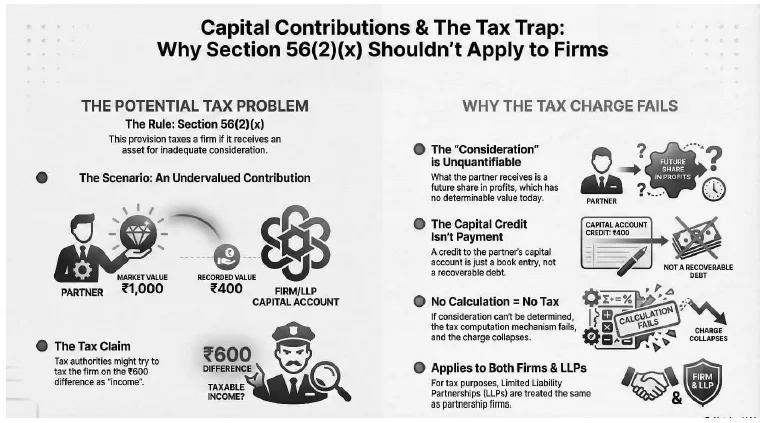
This article analyses the tax implications of Section 56(2)(x) of the Income-tax Act when a partner contributes capital assets to a partnership firm or LLP. The author argues that this “gift-tax” provision, originally designed to prevent money laundering, is being incorrectly applied to bona fide business transfers where the recorded book value is less than the fair market value. Drawing on various Supreme Court precedents, the article explains that such transactions should not be taxed because the actual consideration received by a partner is legally indeterminate and only matures upon retirement or dissolution. Since the firm and its partners share a joint interest in the property, the firm cannot be viewed as a distinct recipient of a gift. Ultimately, the article concludes that without a specific legislative fiction to value these contributions, the tax charge fails due to an impossible computation mechanism. This reasoning applies equally to Limited Liability Partnerships, which are treated as traditional firms for tax purposes.

BACKGROUND

Section 56(2)(x) of the Income-tax Act, 1961 (“the Act”) — often referred to as the gift-tax provision — seeks to bring to tax, under the head Income from Other Sources, any sum or specified property received without consideration or for inadequate consideration. Section 56(2)(x)(c) provides that where any person receives any specified property (other than immovable property) for a consideration less than its fair market value (“FMV”) determined under Rule 11UA, the difference between the FMV and the consideration actually paid, if any, shall be deemed to be the income of the recipient.

Section 56(2)(x) is a successor to sections 56(2)(vii) and 56(2)(viia) of the Act. A review of the legislative history and the Explanatory Memorandum to the Finance Bill, 2010, and subsequent CBDT Circulars1 — makes it abundantly clear that these provisions were introduced as anti-abuse measures, intended to curb the laundering and circulation of unaccounted money through the guise of gifts or under-valued transfers. This legislative intent has also found judicial affirmation in several precedents2.


1 Circular No. 5 of 2005 dated 15 July 2005, Circular No. 5 of 2010 dated 3 June 2010, Circular No. 1 of 2011 dated 6 April 2011
2 Sudhir Menon HUF vs. ACIT [2014] 148 ITD 260 (Mumbai Trib.), 

Vora Financial Services (P) Ltd vs. ACIT [2018] 171 ITD 646 (Mumbai Trib.), 

ACIT vs. Subodh Menon [TS-718-ITAT-2018] (Mumbai Trib.), 

Kumar Pappu Singh vs. DCIT [TS-722-ITAT-2018] (Viz Trib.), 

Vaani Estate (P) Ltd vs. ITO [2018] 172 ITD 629 (Chennai Trib.), 

ACIT vs. Subodh Menon [2019] 175 ITD 449 (Mumbai Trib.), 

ITO vs. Rajeev Ratan Tushyan [2022] 193 ITD 860 (Mumbai Trib.)

However, in practical administration, the operation of section 56(2)(x) has often been extended beyond its intended anti-abuse scope. Rather than being confined to cases of tax evasion or money
laundering, it has increasingly been invoked as a revenue-generating provision, resulting in unintended taxation of bona fide commercial and capital transactions.

TRANSACTION UNDER EVALUATION

Consider a situation where a partner contributes a capital asset to a partnership firm as his capital contribution. In recognition of such contribution, a corresponding credit is recorded
in the partner’s capital account in the books of the firm.

For instance, assume that a partner contributes listed equity shares to the firm, the fair market value (“FMV”) of which, determined in accordance with Rule 11UA, is ₹1,000. The firm, however, records the contribution at ₹ 400 in its books of account. In such a case, the partner would be liable to capital gains tax on ₹400, being the value recorded in the firm’s books, as per section 45(3) of ITA.

While the capital gains implications in the hands of the partner are not the subject of this discussion, the issue under consideration is whether, in the hands of the firm, the provisions of section 56(2)(x) of ITA could be invoked on the premise that the consideration “discharged” by the firm, namely, the credit to the partner’s capital account, is lower than the FMV determined under Rule 11UA

Capital Contributions and The tax trap Why section 56

  • PROVISIONS OF SECTION 56(2)(X) APPLY ONLY IF THE FIRM RECEIVES THE SPECIFIED PROPERTYSection 56(2)(x) of ITA contemplates a receipt-based charge. The provision is attracted only where a person receives a specified property, either without consideration or for inadequate consideration. Accordingly, in the context of a partnership firm, it becomes crucial to examine who, in law, can be regarded as the recipient of the specified property contributed by a partner.
  • In this regard, reference may be made to the ruling of the Gujarat High Court in CIT vs. Mohanbhai Pamabhai [1973] 91 ITR 393, as affirmed by the Supreme Court in Addl. CIT vs. Mohanbhai Pamabhai [1987] 165 ITR 166 (SC). The Court held that when a partner contributes a personal asset to the partnership as capital, the partner’s exclusive ownership in that asset is converted into a shared ownership interest held jointly by all partners of the firm. Supreme Court reiterated this principle in Sunil Siddharthbhai vs. CIT [1985] 156 ITR 509 (SC), observing that when a partner introduces a personal capital asset into the firm, his individual right in the asset is substituted by a collective interest in the partnership property — an interest that extends to all partners jointly.
  • Reliance can also be placed on SC ruling in case of Addanki Narayanappa vs. Bhaskara Krishnappa [1966] 3 SCR 400, wherein SC made following observations:

“From a perusal of these provisions it would be abundantly clear that whatever may be the character of the property which is brought in by the partners when the partnership is formed or which may be acquired in the course of the business of the partnership it becomes the property of the firm and what a partner is entitled to is his share of profits, if any, accruing to the partnership from the realization of this property, and upon dissolution of the partnership to a share in the money representing the value of the property. No doubt, since a firm has no legal existence, the partnership property will vest in all the partners and in that sense every partner has an interest in the property of the partnership. During the subsistence of the partnership, however, no partner can deal with any portion of the property as his own. Nor can he assign his interest in a specific item of the partnership property to anyone. His right is to obtain such profits, if any, as fall to his share from time to time and upon the dissolution of the firm to a share in the assets of the firm which remain after satisfying the liabilities set out in clause (a) and sub-clauses (i), (ii), and (iii) of clause (b) of section 48.”

  •  Thus, the contribution of an asset by a partner results in the transformation of ownership from an exclusive individual interest to a joint partnership interest. The firm, being merely a compendious name for all partners together, cannot be regarded as a distinct recipient of such property for the purposes of section 56(2)(x) of ITA.

IN CASE CAPITAL CONTRIBUTION BY PARTNER, CONSIDERATION DISCHARGED BY FIRM IS NOT DETERMINABLE

  •  The issue concerning the transfer of a capital asset by way of capital contribution to a partnership firm, and the consequent chargeability of capital gains, has long been a matter of significant judicial deliberation. The controversy was conclusively addressed by the Supreme Court in Sunil Siddharthbhai vs. CIT [1985] 156 ITR 509 (SC). In that case, the Court held that when a partner contributes a personal asset to the partnership as capital, such contribution constitutes a transfer within the meaning of section 2(47) of ITA, since the partner’s exclusive ownership in the asset is replaced by a shared interest held jointly by all partners. However, the Supreme Court held that the consideration received by the partner (transferor) in such a transaction is not capable of determination. The credit to the partner’s capital account is merely a notional entry, recorded for the purpose of adjusting partners’ mutual rights, and cannot be regarded as the full value of consideration for the transfer. Relevant observations from SC ruling are as under:

“It is apparent, therefore, that when a partner brings in his personal asset into a partnership firm as his contribution to its capital, an asset which originally was subject to the entire ownership of the partner becomes now subject to the rights of other partners in it. It is not an interest which can be evaluated immediately, it is an interest which is subject to the operation of future transactions of the partnership, and it may diminish in value depending on accumulating liabilities and losses with a fall in the prosperity of the partnership firm. The evaluation of a partner’s interest takes place only when there is a dissolution of the firm or upon his retirement from it.”

“The consideration, as we have observed, is the right of a partner during the subsistence of the partnership to get his share of profits from time to time and after the dissolution of the partnership or with his retirement from the partnership, to receive the value of the share in the net partnership assets as on the date of dissolution or retirement after deduction of liabilities and prior charges. When his personal asset merges into the capital of the partnership firm, a corresponding credit entry is made in the partner’s capital account in the books of the partnership firm, but that entry is made merely for the purpose of adjusting the rights of the partners inter se when the partnership is dissolved or the partner retires. It evidences no debt due by the firm to the partner. Indeed, the capital represented by the notional entry to the credit of the partner’s account may be completely wiped out by losses which may be subsequently incurred by the firm, even in the very accounting year in which the capital account is credited.”

It is evident from the above judicial extracts that the measure of consideration flowing from the firm to the partner, upon contribution of a capital asset, is inherently indeterminate and incapable of valuation. The amount credited to the partner’s capital account does not represent an enforceable debt due from the firm to the partner; it is merely a notional adjustment reflecting the partner’s participation in the firm. Consequently, where the consideration is not capable of being quantified, the computation mechanism prescribed under section 48 of ITA fails. As laid down by the Supreme Court in CIT vs. B.C. Srinivasa Setty [1981] 128 ITR 294 (SC), when the computation provision cannot be applied, the charging provision itself collapses. This principle applies with equal force in the context of section 56(2)(x)(b) / (c) of ITA. In the absence of a determinable measure of consideration discharged by the firm, the comparison between such consideration and the fair market value under Rule 11UA becomes impossible. Accordingly, just as the capital gains charge failed prior to the introduction of section 45(3), the charge under section 56(2)(x) too must fail for want of a workable computation mechanism

  • When an asset is contributed to a partnership firm, the actual consideration paid by the firm to the partner—whether in money or money’s worth—is fundamentally different from a mere notional credit entry made to the partner’s capital account. For the purposes of section 56(2)(x) of ITA, consideration which is discharged by the firm ought to be determined having regard to the obligation that the firm has to hand over share of profit from time to time over the life of the firm and to pay the value on retirement or dissolution. The money value of such obligation will equate the present fair value of the property. Refer, in this behalf extracts from Gujarat HC ruling in case of Mohanbhai Pamabhai [1973] 91 ITR 393 as approved in SC ruling in case of CIT vs. Mohanbhai Pamabhai [1987] 165 ITR 166

“…..interest of a partner in the partnership is not interest in any specific item of the partnership property, but as pointed out by the Supreme Court and the Full Bench of this court, it is a right to obtain his share of profits from time to time during the subsistence of the partnership and on dissolution of the partnership or his retirement from the partnership, to get the value of his share in the net partnership assets which remain after satisfying the debts and liabilities of the partnership. When, therefore, a partner retires from a partnership and the amount of his share in the net partnership assets after deduction of liabilities and prior charges is determined on taking accounts on the footing of notional sale of the partnership assets and given to him, what he receives is his share in the partnership and not any consideration for transfer of his interest in the partnership to the continuing partners…..It is impossible to contend, in view of this decision of the Supreme Court, that when a partner retires from the partnership, there is relinquishment or extinguishment of his interest in the partnership assets. We must, therefore, hold it to be clear beyond doubt that, even if goodwill be assumed to be capital asset within the charging provision enacted in section 45, there was, in the present case, no transfer of interest of any assessee in the goodwill within the meaning of section 2(47) when the assessee retired from the firm. Each assessee, undoubtedly, received certain amount on retirement, but this amount represented his share in the net partnership assets after deduction of liabilities and prior charges and it was received in satisfaction of his share in the partnership”

Considering the above, even in case where the consideration discharged by the firm is determinable on contribution of asset by partner, such consideration cannot be equated with the credit entry passed in the books of firm but it shall be equal to right of a partner to obtain his share of profit from time to time and to get value of his interest at the time of retirement or dissolution. Accordingly, the acquisition of asset / receipt of asset is for adequate consideration.

Under erstwhile Gift Tax Act, 1957 also, it has been held that on contribution of asset by partner to firm, consideration payable by partner cannot be determined and hence there cannot be any Gift tax liability.

  • Section 4(1)(a) of the Gift-tax Act reads as under:

“For the purposes of this Act, where the property is transferred otherwise than for adequate consideration, the amount by which the market value of the property at the date of transfer exceeds the value of the consideration shall be deemed to be a gift made by the transferor to the transferee.

In order to trigger provisions of Gift-tax Act, the property was to be transferred otherwise than by adequate consideration.

  • The erstwhile provisions of the Gift Tax Act do also bear out (a) that conversion of personal asset into asset of the firm can involve a transfer only to the extent of diminution of exclusive interest into a shared interest without consideration; (b) that, the value of inadequacy, if any, of such transfer is incapable of determination. The issue under consideration i.e. when the asset is contributed by the partner to firm whether such transaction involves adequacy of consideration has been examined by the Court. Reference may be made to CIT vs. Marudhar Hotel (P) Ltd. [2004] 269 ITR 310. This judgement is directly an authority on the proposition that for Gift Tax Act also consideration accruing from firm to partner on contribution of asset was held to be not determinable (refer following extracts from the said judgement). Similar conclusion shall apply with equal force in the context of section 56(2)(x)(b) / (c) of ITA.

“It is only where a transfer of property is for ‘inadequate consideration’, than only the question of finding market price can arise. As noticed above when an asset is brought in partnership the contributor partner acquires in consideration right to obtain his share in profits from time to time and also right to share in the net assets of the firm on its dissolution or on his retirement in accordance with the provisions of Partnership Act and terms of partnership agreement. All these rights fructify in future. The credit to his capital account is only notional value and not the value of consideration as the same is incapable of determination.”
……………………………

The Court clarified that the notional amount credited to the account of capital of the firm as contribution by partner as a value of asset brought into the firm account does not represent the correct and true value of consideration because on that date, it is impossible to determine the value of consideration, which lies in the womb of future. This value can only be computed in future when the partnership is dissolved or the partner retires and the asset of the firm are distributed to the partners on a future date.”

  • This decision of the Rajasthan HC was also followed by the Karnataka HC in the case of CIT and Anr. vs. Jayalakshmamma, N. Dayanand Reddy and N. Shamalamma [2011] 339 ITR 546. In this case, assessee entered into a partnership with nine other partners. Partnership was constituted on 1-4-1993. Each of the assessee contributed the land owned by him/her into the partnership firm as his/her contribution. After five months, i.e., on 31-8-1993 three assessee partners retired from the firm receiving certain amounts as their share in the interest of the firm. The amount standing in the capital account of each of the partner was much lower than amount received on retirement. In other words, the retiring partner received excess amount as compared to book value. The Assessing Officer proceeded to hold that the assessee had adopted a device in order to avoid tax. Assessing officer held since the contribution value was less than the amount at which partners retired from firm, the difference in the aforesaid amount was held to be a deemed gift under section 4(1). Karnataka HC held that at time of transfer of property by assessees into partnership firm, there was no consideration and book value mentioned was a notional value, in such circumstances, in absence of any monetary consideration, question of deemed gift under section 4(1)(a) did not arise. Relevant observations from HC ruling are as under:

“When a partner brings in his asset into a partnership firm by way of contribution it amounts to transfer of property as defined under the Act. Though it amounts to transfer of property, yet as a consideration for that transfer, he becomes entitled to the profits in the partnership firm. It is not a case of complete divesting of his interest in the property brought in as capital asset. Partially, the property is transferred and as a partner he continues to have interest in the said partnership asset. Not only he continues to have interest in the property brought by him to the partnership firm as a partner but if there are other partners who have brought in similar properties into the firm by way of assets, he will also have an interest in those properties. If at the time of constitution of partnership or at the time of his entry into the partnership, if a value is mentioned in the books of the partnership firm representing the interest he has brought into the partnership, it does not truly reflect the market value of the property which he has brought into the partnership firm. It is purely a notional value. The said notional value is only for the purpose of distributing the profits of the said partnership firm, either at the time of dissolution or at the time of retirement. When a partner brings his property into the partnership firm, though the consideration is that he will acquire the status of a partner and he continues to have interest in the partnership assets, yet there is no monetary consideration for such a transfer of the property and the book value mentioned is not the consideration for such a transfer. Section 4(1)(a) is attracted only in a case where there is a monetary consideration for transfer and that consideration is less than the market value of the property. In such a case, difference in the amount is treated as a deemed gift under section 4(1)(a). The share to which a partner is entitled to at the time of dissolution or retirement has no bearing on the question regarding the value of the property which he would have brought into the partnership at its inception. In that view of the matter, when there is transfer of property into a firm there is no consideration and the book value mentioned is a notional value. The share to which a partner is entitled to at the time of retirement or a dissolution of a partnership firm depends upon various other factors. The quantification of a partner’s share cannot by any stretch of imagination be taken into consideration to hold that there is inadequacy of consideration at the time of the partner bringing in the property into the partnership firm. On that basis, it cannot be held that the difference in the consideration constitutes a consideration for the deemed gift.”

  • The Kerala HC in the case of CGT vs. A.C. Raghava Menon [2000] 243 ITR 167, in the context of Gift-tax Act also held that the credit entry in the capital account does not represent the true value of the consideration and that such entry simply represents the notional value of the asset. Inadequacy of consideration cannot be judged vis-a-vis a credit entry made in the capital account of the books of the firm. Except the credit entry made in the capital account, there was nothing also on record to conclude that the assessee had transferred the asset to the firm for inadequate consideration. This judgment also supports that unless a fiction similar to section 45(3) of ITA is brought into section 56(2)(x) of ITA, the consideration discharged by firm to partner cannot be determined and hence the charge cannot survive. Relevant observations from HC ruling are as under:

“The credit entry in the capital account does not represent the true value of the consideration and that such entry simply represents the notional value of the asset. Inadequacy of consideration cannot be judged vis-a-vis a credit entry made in the capital account of the books of the firm.

Except the credit entry made in the capital account, there was nothing else on record to conclude that the assessee had transferred the asset to the firm for inadequate consideration. In order to attract the provisions of section 4(1) (a) several conditions have to be fulfilled, i.e., (a) there must be a transfer of property; (b) consideration for the transfer must be inadequate; and (c) the market value of the property should be more than the consideration for which the transfer was effected. Only one factor seemed to have been stressed upon by the revenue, i.e., that there had been a transfer, but the remaining ingredients had not been established. That being the position, section 4(1) (a) could not be applied and no inference of deemed gift could be drawn.

Consideration for a transfer is unascertainable until dissolution of the partnership.”

In the context of section 56(2)(viia) (predecessor of section 56(2)(x)), it has been held that the in respect of asset contributed by partner to firm, no consideration can be determined and hence the charge fails

  • Hyderabad Tribunal in the case of ITO vs. Shrilekha Business Consultancy (P.) Ltd [2020] 121 taxmann.com 150, section 56(2)(x) held that provisions of section 56(2)(viia) can apply only in a case where a transaction envisages payment of consideration as part of a contract. The amount can constitute consideration if it is payable as a debt due to the transferor and there is enforceable right with transferor to recover enforceable debt from the transferee. Unlike that, as held by Supreme Court in Sunil Siddharthbhai (supra), credit to account of a partner evidences no debt due by the firm to the partner. The amount credited to capital account is not recoverable as an enforceable debt by a partner. According to the Tribunal, such a notional credit would not at all answer to the description of consideration in the nature of a debt due to the transferor.
  • Tribunal also held that, at the stage of formation of the partnership, the firm is not yet in existence. There can be no transaction which a firm can have with a prospective partner. Absent the possibility of a contract, the notion of consideration cannot exist inasmuch as that the element of consideration is connected with contractual relationship of whose consideration is a requisite element

The measure of consideration on contribution of capital asset by partner to firm is restricted to section 45(3) of ITA only. Measure of consideration by way of book entry provided in section 45(3) of ITA cannot be extended to section 56(2)(x) of ITA.

  • Despite being aware that the value of consideration received by a partner in lieu of contribution of his asset is not measurable, the Legislature has, unlike in case of section 45(3) of ITA made no fiction with regard to yardstick of measurement applicable to section 56(2)(x) of ITA. In this regard, it is important to understand the intention behind introduction of the section 45(3) which is explained in Circular No. 495 dated 22 September 1987.

Capital gains on transfer of firms’ assets to partners and vice versa and by way of compulsory acquisition:

One of the devices used by assessees to evade tax on capital gains is to convert an asset held individually into an asset of the firm in which the individual is a partner. The decision of the Supreme Court in Kartikeya V. Sarabhai vs. CIT [1985] 156 ITR 509 has set at rest the controversy as to whether such a conversion amounts to transfer. The court held that such conversion fell outside the scope of capital gain taxation. The rationale advanced by the court is, that the consideration for the transfer of the personal asset is indeterminate, being the right which arises or accrues to the partner during the subsistence of the partnership to get his share of the profits from time to time and on dissolution of the partnership to get his share of the profits from time to time and on dissolution of the partnership to get the value of his share from the net partnership assets.

With a view to blocking this escape route for avoiding capital gains tax, the Finance Act, 1987, has inserted new sub-section (3) in section 45. The effect of this amendment is that profits and gains arising from the transfer of a capital asset by a partner to a firm shall be chargeable as the partner’s income of the previous year in which the transfer took place. For purposes of computing the capital gains, the value of the asset recorded in the books of the firm on the date of the transfer shall be deemed to be the full value of the consideration received or accrued as a result of the transfer of the capital asset.”

The Circular does also acknowledge that no debt becomes due from a firm to a partner in lieu of contribution of asset by a partner by way of capital and that the consideration payable is indeterminate. Indeed, there is no back up provision forming part of section 56(2)(x) of ITA which bridges the gap of indeterminate consideration.

  • The provisions of section 45(3) of ITA are restricted in its application to determination of capital gains tax liability of a partner contributing asset to the firm; the fiction is limited in its application to the purpose of determining consideration received by a contributing partner for the purposes of section 48 of ITA and can have no influence whatever on text or interpretation of section 56(2)(x) of ITA
  • It is a trite law that a deeming fiction cannot be extended beyond its legitimate field. It can merely be applied in determination of capital gains income in the hands of partner. But, in our view, it would be incorrect to apply the fiction for any other purpose3.

3 Reference may be made to SC ruling in case of CIT vs. V S Dempo Company Ltd [2016] [2016] 387 ITR 354 (SC) 
wherein SC held that the fiction created for the purpose of section 50 of ITA 
cannot be extended to any other provisions of capital gains chapter also.

SUMMATION OF THE CONTENTIONS:

  • In order to create an effective charge under section 56(2)(x) of ITA, (a) there should be receipt of asset, (b) the receipt of asset should be without consideration or inadequate consideration. In section 56(2)(x) of ITA, the determination of consideration is necessary as same is required to be compared with Rule 11UA value. Only when the consideration can be effectively determined, it can be compared with Rule 11UA value. In the context of capital gains, Gift-Tax Act and section 56(2)(viia) of ITA, which have consistently held that when the partner contributes an asset to firm, consideration cannot be determined. Once an element of charging provision is absent (consideration in present case), the charge fails.
  • Reference may also be made to SC ruling in case of Govind Saran Ganga Saran vs. CST [1985] 155 ITR 1444 rendered under Bengal Finance (Sales Tax) Act, 1941 (‘Sales Tax Act’) as applied to the Union Territory of Delhi. The case revolved around the interpretation of sections 14 and 15 of the Sales Tax Act. Cotton yarn was classified as one of the goods of special importance in inter-state trade or commerce as envisaged by section 14 of the Sales Tax Act. Section 15 of the Sales Tax Act provided that sales tax on goods of special importance should not exceed a specified rate and further that they should not be taxed at more than one stage. The issue arose because the stage itself had not been clearly specified, and accordingly, it was not clear at what stage the sales tax shall be levied. The Financial Commissioner held that in the absence of any stage, there was a lacuna in the law and consequently, cotton yarn could not be taxed under the sales tax regime. The Delhi High Court reversed the decision of the Financial Commissioner. However, SC held that the single point at which the tax may be imposed must be a definite ascertainable point, and in the absence of the same, tax shall not be levied. SC ruling in the case of Govind Saran Ganga Saran (supra) has been quoted with approval by the Constitution Bench of SC in case of CIT vs. Vatika Township (P.) Ltd. [2014] 367 ITR 466.
  • In view of the above discussion, in absence of determination of consideration payable by firm where partner contributes an asset to firm, there cannot be comparison between consideration discharged and Rule 11UA value. In absence thereof, there is no effective charge and accordingly, firm cannot be liable / subjected to tax under section 56(2)(x)(c) of ITA.

4 Approved by the Constitution Bench of SC in case of CIT vs. Vatika Township (P.) Ltd. [2014] 367 ITR 466

In view of the above discussion, in absence of determination of consideration payable by firm where partner contributes an asset to firm, there cannot be comparison between consideration discharged and Rule 11UA value. In absence thereof, there is no effective charge and accordingly, firm cannot be liable / subjected to tax under section 56(2)(x)(c) of ITA. Additional issue which requires examination is whether conclusion drawn in the context of firm can equally apply for LLP.

On a holistic reading of the LLP Act, 2008 and ITA, an LLP is intended to be treated as substantially equivalent to a partnership firm for tax purposes, notwithstanding its separate legal personality under general law. The legislative intent behind introducing the LLP structure was not to alter the scheme of taxation applicable to partnerships, but merely to provide a business form with limited liability while retaining partnership-style mutual rights and obligations. This is evident from the core features of an LLP: it is constituted by partners associating with a common profit motive; partners enjoy management rights and stand in an agency relationship vis-à-vis the LLP; their mutual rights and duties are governed by a partnership agreement that is statutorily recognised and enforceable; and, upon cessation, a partner is entitled as of right to capital and his right to share in accumulated profits and surplus. Crucially, section 2(23) of the ITA expressly equates an LLP with a “firm” and an LLP partner with a “partner” for all purposes of the Act, a position reinforced by CBDT Circular No. 5 of 2010 and the Explanatory Memorandum, which clarify that LLPs and general partnerships are to be accorded the same tax treatment, except for recovery provisions. The Circular further confirms that even conversion of a firm into an LLP carries no tax consequences, underscoring that the separate legal entity character of an LLP is not determinative for income-tax purposes. Therefore, for purposes of interpreting charging, computation, and incidence provisions under the ITA, including those relating to partners’ rights and firm-level taxation, an LLP must be read harmoniously and fictionally as a partnership firm.

From Published Accounts

COMPILER’S NOTE

In the last few months, a large bank in the private sector has been in the news for alleged management-driven ‘improper’ entries passed in the books to overstate incomes and understate liabilities. Several internal reviews were carried out, and external agencies were appointed to investigate these allegations. The new management also gave impact on these ‘improper’ entries in the financial statements, which were then adopted by the Board of Directors.

Given below are disclosures in the financial statements and the report of the joint auditors for the same.

INDUSIND BANK LIMITED (YEAR ENDED 31ST MARCH 2025)

From Notes forming part of the Standalone Financial Statements

Note 17: Significant Matters and its impact

1. On March 10, 2025, the Bank filed a disclosure under Regulation 30 of SEBI (Listing Obligations and Disclosure Requirements) Regulations, 2015 stating that it had, during an internal review of process relating to other assets and other liabilities of derivative portfolio, noted discrepancies in these account balances, consequent to which an external firm appointed by the management had carried out an independent review to validate its internal findings. On March 20, 2025, the Board decided to appoint another independent professional firm to conduct a comprehensive investigation, amongst others, to identify the root causes of discrepancies, assess the correctness of accounting treatment and its impact on the financial statements, identify any lapses therein and establish accountability of persons involved. The Bank has since received reports from both the firms. The investigation indicated that from FY 2016 to FY 2024, the Bank entered into several derivative transactions referred to as internal trades, wherein the accounting followed was improper and not in consonance with the accounting guidelines. This incorrect accounting resulted in recognition of notional income in the Profit and Loss Account with a corresponding balance in the other assets account over the years till FY 2023-2024. Based on quantification of accounting discrepancies that were identified and confirmed in the investigation report, other assets amounting to ₹1,959.98 crores, being accumulated notional profits since FY2016, have been written off/ derecognised by way of reduction from other income under Schedule 14 (V) as a prior period item in the current financial year.

2. During the review of other assets and other liabilities by the Internal Audit Department (IAD) of the bank, it was noted that certain incorrect manual entries resulted in an unsubstantiated increase in other assets and other liabilities amounting to ₹595.00 crores. The Bank has determined that these assets need to be set off against corresponding other liabilities. The rectification of these has been carried out. This has no impact on the profit of the Bank for the year ended March 31, 2025.

3. In conducting a review of the Bank’s microfinance portfolio for the nine-month period ended December 31, 2024, the IAD of the Bank noted incorrect recording of cumulative interest income of ₹673.82 crores and fee income of ₹172.58 crores for the said period. This incorrect interest and fee income (net of an interim provision of ₹322.43 crores and actual interest income for this period of ₹101.41 crores) aggregating to ₹422.56 crores has been reversed during the fourth quarter of the current year. This has, however, no impact on the profit of the Bank for the year ended March 31, 2025.

4. In respect of the above matters mentioned in note 17.1, 17.2 and 17.3, the auditors have filed letters u/s 143(12) of the Companies Act, 2013 read with Rule 13(1) to (4) of the Companies (Audit and Auditors) Rules, 2014 with the Bank, followed by Form ADT-4 along with the Bank’s reply to the Central Government, for suspected offence involving fraud. Further, with respect to these matters, the Board of Directors of the Bank suspects the occurrence of fraud against the Bank and the involvement therein of certain employees having a significant role in the accounting and financial reporting of the Bank. Accordingly, the Bank has made a filing to this effect with the stock exchanges on May 21, 2025.

5. The Bank, during its internal review, noted misclassification of certain microfinance loans as ‘standard assets’ along with accrual of interest income based on auditors’ observations. The Bank corrected this classification, resulting in an additional recognition of Non-Performing Advances aggregating to ₹1,885.19 crores. The Bank provided for these at a rate of 95% aggregating to ₹1,791.08 crores. This provision, together with a reversal of interest income of ₹178.12 crores, resulted in an adverse impact of ₹1,969.20 crores on the Profit & Loss Account of the Bank for the fourth quarter of the year ended March 31, 2025.

6. Through its internal financial review, the Bank also identified other instances of incorrect accounting that required rectification and have been rectified during the fourth quarter of the year ended March 31, 2025. These include the following:

  • Interest payment of ₹99.97 crores on certain borrowing instruments was not recognised in the Profit & Loss Account in earlier years.
  • A provision of ₹133.25 crores in respect of balances in Other Assets that are not expected to be realised.
  • Prior period operating expenses of ₹206.00 crores and income of ₹126.75 crores.
  • The Bank reviewed groupings and classification of the Profit & Loss items to assess compliance with prevailing guidelines. Based on the review, the Bank reclassified the following for the financial year ended March 31, 2025.
  • ₹760.82 crores from interest income to other income.
  • ₹157.90 crores from Provision (other than tax) & Contingencies to Other Operating Expense.

7. As a result of the above matters mentioned in note 17.1 to 17.6, any financial implications arising from past inaccurate regulatory submissions, including those to SEBI, Income Tax authorities, and the RBI, are currently unascertainable.

8. The Whole Time Director & Deputy CEO and Managing Director & CEO of the Bank resigned with effect from close of business hours on April 28, 2025 and April 29, 2025, respectively. The RBI vide its letter dated April 29, 2025, has approved the constitution of a “Committee of Executives” comprising of the Head – Consumer Banking and Chief Administrative Officer as members of the said Committee, to oversee the operations of the Bank under the oversight and guidance of an oversight committee of the Board. Accordingly, the Board appointed the said Committee on April 30, 2025. The Bank has made necessary filings with the stock exchanges in respect of the aforesaid matters.

9. The Board of Directors has taken necessary steps in addressing all the areas of concern and disclosing transparently at the appropriate stage. The Board of Directors initiated a comprehensive internal financial review of all the material financial statement balances. The Bank has given necessary accounting effects for all the identified discrepancies in the accounts and ensured that the financial statements for the current year give a true and fair view and are free from material misstatements, whether due to fraud or error. In this regard, the Bank has received recommendations from various internal and external agencies involved. These recommendations include strengthening policy and procedures, preparation and approval of accounting analysis, control and discipline over reconciliations, minimising manual accounting entries, automating processes, addressing manual overrides of control, etc. These shall be reviewed and implemented under the oversight of the Board.

Also, the Bank is in the process of taking necessary steps to assess roles and responsibilities and fix accountability for persons involved in any of these lapses. The Bank is fully committed towards taking these matters to their conclusion under applicable laws.

EXTRACTS FROM INDEPENDENT AUDITORS’ REPORT

Emphasis of Matters:

We draw attention to schedule 18(17.1) to 18(17.6) to the standalone financial statements, which explain that the Board commissioned an investigation/ review into the alleged discrepancies, covering the following significant matters:

a. Internal Trades Derivative Accounting under the head ‘Other Assets’ amounting to ₹1,959.98 crores, being accumulated notional profits since FY 2015-16, have been written off as a prior period item in the current financial year;

b. Incorrect accounting and subsequent reversal of cumulative interest income of ₹673.82 crore and Fee Income of ₹172.58 crores within the current financial year;

c. Certain incorrect Manual Entries posted in the ‘Other Assets’ and ‘Other Liabilities’ pertaining to prior years amounting to ₹595 crores have been set off during the current financial year.

The resultant findings from the investigation / review reports, in summary, revealed an involvement of senior Bank officials, including former Key Management Personnel (KMP), in overriding key internal controls across the aforesaid functions/ areas, and a concealment from the Board and the statutory auditors of the wrongful accounting practices adopted, over such period of time, as indicated in the respective investigation/ review reports.

Basis our evaluation of the findings in the above mentioned reports, in particular the likely involvement of senior management in the above matters, we have reasons to believe that suspected offences involving fraud may have been committed and thereby we have reported these matters to the Central Government under Section 143(12) of the Companies Act, 2013 read with Rule 13(1) to (4) of the Companies (Audit and Auditors Rules), 2014.

We draw attention to schedule 18(17.9) to the standalone financial statements, which explains that in light of the findings and adjustments noted above, in particular the override of management controls by KMPs, the Board of Directors initiated an internal review of material financial statement account captions and directed the Management and the Internal Audit Department to perform additional procedures such as reconciliations of system reports and listings with balances reflected in general ledger, test checks over such items in the listing and certain digital procedures over and above. Based on the above review, rectifications/ reclassifications, including those relating to prior-period items, were made to the accompanying standalone financial statements.

We draw attention to schedule 18(17.7) and 18(17.9) to the standalone financial statements, which state that the Bank is currently in the process of determining the accountability of the persons involved in the discrepancies and irregularities mentioned in the Emphasis of Matter paragraphs with reference to schedule 18(17.1) to 18(17.6) above and assessing the resultant legal or penal implications, if any, that may arise thereon.

Our opinion on the standalone financial statements is not modified with respect to these matters.

KEY AUDIT MATTERS

Key audit matters are those matters that, in our professional judgment, were of most significance in our audit of the standalone financial statements for the year ended March 31, 2025. These matters were addressed in the context of our audit of the standalone financial statements as a whole, and in forming our opinion thereon, and we do not provide a separate opinion on these matters.

We have determined the matters described below to be the key audit matters to be communicated in our report. (extracts)

Key Audit Matters How Was the Key Audit Matter Addressed in our Audit
Detection of Management Override of Controls identified in the investigation/ reviews carried out based on the decision by the Bank
The investigations/ reviews initiated by the Bank during the year identified override of key internal controls by senior management, including Key management personnel, and other material prior period errors. These events raised significant concerns regarding the financial reporting and governance of the Bank. Although the Bank has initiated corrective actions for the identified discrepancies, there remains a risk of unidentified matters due to potential management override of controls. Our audit procedures included, but were not limited to, the following:

  • Reviewed Board and Audit Committee minutes to understand management and governance responses to identified control breaches.
  • Assessed the appropriateness of the scope and coverage of the investigations/ reviews initiated by the Bank in derivative transactions, micro finance loans and related accounts and Other Assets and Other Liabilities.
  • Evaluated the scope of audit, independence, and competence of the external forensic experts engaged by the management to perform select procedures.
In view of the above, we considered the risk that the management may override system-based/ manual internal controls/ procedures as a Key Audit Matter for the financial year 2024-25.
  • Obtained a copy of the investigation/ review reports and verified whether the discrepancies noted therein have been rectified in the standalone financial statements as per the applicable Accounting Standards.
  • Basis perusal of the aforesaid reports, we had a discussion with the external forensic expert and the Bank’s Head – Internal Audit for matters requiring clarification in the investigation report and internal review reports respectively.
  • Reassessed audit risks on account of the findings in the external forensic investigation report and internal review reports.
  • Performed enhanced / additional audit procedures, including sending out incremental balance confirmations, performing additional tests of details in response to the reassessed risks.
  • Performed journal entry testing using specific risk-based criteria, with a specific focus on manual entries or involving high-risk accounts to identify material misstatements.
  • Performed an independent reassessment of the valuation of derivatives in respect of additional samples to ensure compliance with the relevant RBI regulations.
  • Perused the confirmations obtained by the Bank from the heads of the various functions/areas within the Bank on verification of certain aspects with respect to the financial reporting to mitigate the risk arising from potential management override of controls.
  • Evaluated the adequacy of disclosures made in the standalone financial statements.
  • The aforesaid audit procedures were inter alia explained as part of our presentation to those charged with the governance.

ANNEXURE A TO THE INDEPENDENT AUDITORS’ REPORT

Report on the Internal Financial Controls with reference to Standalone Financial Statements under Clause (i) of Sub-section 3 of Section 143 of the Companies Act, 2013 (‘the Act’)

Adverse Opinion

In our opinion, because of the possible effects of the material weaknesses described below on the achievement of the objectives of the control criteria, the Bank has not maintained adequate and effective internal financial controls with reference to the standalone financial statements as at March 31, 2025, based on the internal control with reference to financial statements criteria established by the Bank considering the essential components of internal control stated in the Guidance Note on Audit of Internal Financial Controls over Financial Reporting (‘Guidance Note’)
issued by the Institute of Chartered Accountants of India (‘ICAI’).

We have considered the material weaknesses identified and reported below in determining the nature, timing, and extent of audit tests applied in our audit of the standalone financial statements of the Bank for the year ended March 31, 2025, and these material weaknesses do not affect our opinion on the standalone financial statements of the Bank.

Basis for Adverse Opinion:

As explained in schedule 18(17) on the standalone financial statements for the year ended March 31, 2025, particularly override of controls by erstwhile Key Managerial Personnel and senior bank personnel, the Bank had initiated investigations/ reviews, which led to identification of several deficiencies in the internal controls with reference to maintenance of books of account and preparation of standalone financial statements. These indicate that the control environment was ineffective as of March 31, 2025.

A ‘material weakness’ is a deficiency, or a combination of deficiencies, in internal financial control with reference to standalone financial statements, such that there is a reasonable possibility that a material misstatement of the Bank’s annual or interim standalone financial statements will not be prevented or detected on a timely basis.

EXTRACTS FROM DIRECTOR’S REPORT:

Financial performance and state of affairs of the Bank:

The Board and the Management set forth their desire of maintaining trust in the institution by aspiring for and implementing higher standards of transparency and compliance. In particular, the Bank has taken several measures to understand the root cause of the identified irregularities, ascertain the financial impact and take corrective actions, as well as fix accountability, etc.

Some of the significant matters during the year are listed below:

  • Internal Trades Derivative Accounting under the head ‘Other Assets’ amounting to ₹1,959.98 crores, being accumulated notional profits since FY 2015-16, have been written off as a prior period item in the current financial year.
  • In conducting a review of the Bank’s microfinance portfolio for the period ended December 31, 2024, the Internal Audit Department (‘IAD’) of the Bank noted incorrect accounting and subsequent reversal of cumulative interest income of ₹673.82 crore and Fee Income of ₹172.58 crores within the current financial year.
  • Certain incorrect Manual Entries posted in the ‘Other Assets’ and ‘Other Liabilities’ pertaining to prior years amounting to ₹595 crores have been set off during the current financial year. This has no impact on the financial results of the Bank for the year ended March 31, 2025.
  • During the internal review, it was noted that misclassification of certain microfinance loans as crop loans has resulted in incorrect classification of such loans as ‘standard assets’ along with accrual of interest income. The Bank has corrected this classification, resulting in an additional recognition of Non-Performing Advances aggregating to ₹ 1,885.19 crores. The Bank made a provision for these at a rate of 95% aggregating to ₹1,791.08 crores and reversed interest of ₹178.12 crores.

System for Internal Financial Controls and its Adequacy:

The Bank operates in a computerised environment with a Core Banking Solution system, supported by diverse application platforms for handling specific business areas such as Treasury, Trade Finance, Credit Cards, Retail Loans, etc.

The process of recording transactions in each of the application platforms is subject to various forms of controls, such as in-built system checks, maker–checker authorisations, independent post-transaction reviews, etc.

Financial statements are prepared based on computer system outputs. The responsibility of preparation of Financial Statements is entrusted to a dedicated unit that is completely independent. This unit does not originate accounting entries except for limited matters such as share capital, taxes, transfers to reserves and period-end closing entries.

Based on the investigation carried out by internal/external agencies of significant matters stated in note 18.17 of the standalone financial statements, override of controls by erstwhile Key Managerial Personnel and senior bank personnel was observed, which led to the identification of several deficiencies in the internal controls with reference to the maintenance of books of account and the preparation of the financial statements. Basis above, the joint statutory auditors have given an adverse opinion on the internal financial controls with respect to the financial statements. The joint statutory auditors have performed audit tests considering the reported weaknesses and basis the tests performed, have opined in their audit report that this has no impact on the true and fair view of the Standalone Financial Statement for the year ended March 31, 2025.

The Board of Directors has taken necessary steps in addressing the areas of concern raised in the various external/internal reports. To further strengthen the internal control environment, the Board of Directors of the Bank has set up a project management office to ensure that necessary steps including strengthening of policy and procedures, preparation and approval of accounting entries & analysis, control and discipline over reconciliation, minimising manual accounting entries, automated process to enhance the design and operating effectiveness controls and report to the Board on an ongoing basis. The Board of Directors has also taken steps to fix the staff accountability

Article 12 of India-Canada DTAA – Provision of repairs and maintenance services for aircraft engines to Indian customers did not constitute ‘making available’ technical knowledge which enabled customer to undertake such services in future on its own; hence the payments received were not taxable in India

18. [2025] 179 taxmann.com 278 (Delhi – Trib.)

Pratt & Whitney Canada Corp. vs. DCIT (IT)

IT APPEAL NOS. 620, 626, 665 & 666 (DELHI) OF 2025

A.Y.: 2018-19 & 2022-23

Dated: 06 October 2025

Article 12 of India-Canada DTAA – Provision of repairs and maintenance services for aircraft engines to Indian customers did not constitute ‘making available’ technical knowledge which enabled customer to undertake such services in future on its own; hence the payments received were not taxable in India

FACTS

The Assessee was a tax resident of Canada and was engaged in business of manufacturing and servicing of aircraft gas turbine engines and auxiliary power units. During the relevant year, it provided repair and maintenance of aircraft services to Indian customers under (i) a pay-per-hour maintenance programme, or (ii) repairs on a need basis. The Assessee received consideration amounting to ₹242.65 crores towards such services. It did not file a return of income (“ROI”) in India for the relevant year.

Based on the information available, the AO issued notice under section 148A(b) of the Act. In response, the Assessee filed its ROI declaring ‘nil’ income, contending that the services provided did not constitute making available technical knowledge within the meaning of Article 12 of India-Canada DTAA.

The AO held that the consideration received for such services constituted fees for technical services (“FTS”) under the Act as well as the DTAA and accordingly brought the receipts to tax. The DRP upheld the action of the AO.

Aggrieved by the final order, the Assessee appealed before the ITAT.

HELD

In Goodrich Corporation [2025] 175 taxmann.com 177/305 Taxman 518 (Delhi), relying on the decision in De Beers India (2012) 346 ITR 467, the Delhi High Court had explained the meaning of the term ‘make available’ , holding that it requires transmission of technical knowledge enabling the recipient to use such know-how independently in future without assistance from the service provider.

The Coordinate Bench in Goodrich Corporation [ITA no 988/Del/2024] held that repairs and maintenance of aircraft equipment did not make technical knowledge available, as it did not enable customers to undertake such repairs independently in future.

In Global Vectra Helicorp Ltd vs. Dy. CIT [2024] 159 taxmann.com 282 (Delhi – Trib.), the Coordinate Bench of the Tribunal held thatin the absence of satisfaction of the ‘make available’ condition under the DTAA, payments towards repair services could not be characterised as FTS Global Vectra Helicorp Ltd was one of the customers of the Assessee.

The AO had not established that the Assessee ‘made available’ technical knowledge to its customers while rendering the services.

Accordingly, the ITAT held that the payments received by the Assessee did not constitute FTS under Article 12 of the India-Canada DTAA and were taxable only in Canada.

Article 13 of India-Singapore DTAA – In absence of indirect transfer provisions in India-Singapore DTAA, gains from alienation of shares of a Singapore Company were taxable only in the state of Residence under Article 13(5)

17. [2025] 179 taxmann.com 346 (Mumbai – Trib.)

eBay Singapore Services (P.) Ltd. vs. DCIT

ITA No: 2378 (Mum.) of 2022

A.Y.: 2019-20 Dated: 30 September 2025

Article 13 of India-Singapore DTAA – In absence of indirect transfer provisions in India-Singapore DTAA, gains from alienation of shares of a Singapore Company were taxable only in the state of Residence under Article 13(5)

FACTS

The Assessee, a tax resident of Singapore, was incorporated in 2003 and was engaged in e-commerce activities. The Singapore tax authorities had granted a Tax residency certificate (“TRC”) to the Assessee. The Assessee also acted as an investment vehicle for the eBay Group and held several investments in India, including in eBay India. In April 2017, the Assessee sold its entire shareholding in eBay India to Flipkart Singapore, in consideration of shares of Flipkart Singapore were issued to it. July 2017, the Assessee subscribed to the additional capital of Flipkart Singapore. The majority shares of Flipkart Singapore were held by Walmart Singapore.

In 2019, the Assessee sold its stake in Flipkart Singapore to Walmart Singapore and claimed that the gains arising from the sale of shares were taxable only in Singapore under Article 13(5) of India-Singapore DTAA.

Acccording to the AO, the control and management of the Assessee were vested in eBay Inc., USA, and therefore treaty benefits under the India-Singapore DTAA were denied. Accordingly, the AO computed short-term capital gains of ₹2,257.91 Crores from the sale of shares and charged them to tax. The DRP upheld the order of the AO.

Aggrieved by the final order, the Assessee appealed before the ITAT.

Before ITAT, it was argued that under the DTAA, India had right to tax income from transfer of shares of an Indian company and the transfer under reference was not covered. Even under Article 13(4B), the taxation rights shared with India were limited to the transfer of shares of an Indian Company acquired on or after 01 April 2017.

HELD

All the directors of the Assessee were residents of Singapore and Hong Kong. None of the directors held any postion in eBay Inc., USA, nor, were any directors appointed to the Board of Singapore as a representative of eBay Inc., USA.

The Board resolutions of the Assessee supported the fact that decisions relating to the Assessee were taken by the Board of Directors in Singapore. The DRP or AO neither countered these facts nor placed any concrete evidence to the contrary. Accordingly, the benefit of the DTAA could not be denied to the Assessee..

Article 13(4B) applies only in cases of alienation of shares wherethe company whose shares are alienated is a resident of otherr contracting state and not the same state as transferor. Since the shares alienated were of Flipkart Singapore, Article 13(4B) did not apply.

The Article in the India-Singapore DTAA dealing with Capital Gains does not contain any look-through provision, unlike certain other DTAAs. Having regard to Section 90(2) of the Act, the provisions of the DTAA prevail over domestic law.

Based on the above, the ITAT held that the alienation of shares of a Singapore Company was covered underthe residuary clause of Article 13. Accordingly, the right to tax gains from alienation vested only with Singapore.

Sec. 69A – Unexplained money – Cash deposits in bank account standing in assessee’s trade name but operated by third parties – Protective addition made though substantive additions already made in hands of actual beneficiaries – Addition held not legally justified and deleted

84. [2025] 126ITR(T) 240 (Amritsar- Trib.)

Mandeep Singh vs. ITO

ITA NO.:645 (ASR.) OF 2024

A.Y.: 2012-13 DATE: 30.06.2025

Sec. 69A – Unexplained money – Cash deposits in bank account standing in assessee’s trade name but operated by third parties – Protective addition made though substantive additions already made in hands of actual beneficiaries – Addition held not legally justified and deleted.

FACTS

The assessee was a retailer of alcoholic liquor and on the basis of departmental information, it was noticed that cash deposits aggregating to about ₹15 crores had been made during a short period in March 2012 in a current account maintained with Oriental Bank of Commerce in the trade name of assessee. In the absence of any regular return on record and due to non-compliance with notices issued under section 133(6) of the Income-tax Act, 1961, proceedings under section 147 were initiated. Pursuant thereto, the assessee filed a return of income declaring total income of about ₹1.66 lakhs on a disclosed turnover of about ₹83.36 lakhs.

The bank statement revealed that the entire cash deposited in the said bank account during the short period was immediately transferred by cheques to two concerns. During the course of investigation, the statement of the assessee was recorded under section 131 of the Act, wherein the assessee categorically denied having opened or operated the bank account with Oriental Bank of Commerce.

The material on record showed that the bank account was operated by the said concerns through the authorised signatory, that the assessee neither made any deposits nor withdrawals from the account and had no control over its operation. It was further noted that the assessee had not claimed any credit of tax collected at source under section 206C in respect of purchases reflected in Form 26AS which were linked to transactions routed through the disputed bank account.

The Assessing Officer treated the cash deposits of ₹15 crores as unexplained money under section 69A of the Act on a protective basis in the hands of the assessee, while accepting the returned income as such. It was also noted that the Assessing Officer had already made substantive additions of ₹15 crores under section 69A in the hands of beneficiaries, treating them as the actual beneficiaries of the transactions.

On appeal, the Commissioner (Appeals) rejected the submissions of the assessee and upheld the assessment by sustaining the protective addition made under section 69A. Aggrieved, the assessee carried the matter in appeal before the Tribunal.

HELD

The Tribunal observed that the assessee was a licensed retail trader of alcoholic liquor and that the gross turnover of ₹83.36 lakhs declared by the assessee in the return of income duly matched with the purchases reflected in Form 26AS. It was also noted that the assessee had restricted his claim of tax collected at source under section 206C only to the extent of actual purchases made by him from authorized distributors of alcoholic liquor.

The Tribunal found merit in the assessee’s contention that it would not have been humanly possible for a retail trader, operating under a licence permitting sale only to actual consumers over the counter, to execute a turnover of ₹15 crores within a short span of fourteen days. The Tribunal further noted that upon coming to know of the fraudulent activities carried out in his name, the assessee had lodged an FIR and appropriate legal proceedings were already underway.

The Tribunal further observed that the Assessing Officer had conducted proper enquiries and had reached a logical conclusion that the transactions in question were carried out by beneficiaries, against whom substantive additions under section 69A had already been made.

Considering the totality of facts and circumstances, the Tribunal held that the protective addition of ₹15 crores made under section 69A in the hands of the assessee was not legally justified. Accordingly, the Tribunal directed deletion of the protective addition and allowed the appeal of the assessee.

Sec. 153D r.w.s. 153A – Search assessment – Prior approval of Additional Commissioner – Single common approval for multiple assessment years and without examination of assessment records or seized material – Approval held to be mechanical and without application of mind – Assessments framed under section 153A r.w.s. 143(3) quashed

83. [2025] 127ITR(T) 482 (Delhi – Trib.)

Dheeraj Chaudhary vs. ACIT

ITA NO.: 6158 (DEL) OF 2018

A.Y.: 2009-10 DATE: 10.09.2025

Sec. 153D r.w.s. 153A – Search assessment – Prior approval of Additional Commissioner – Single common approval for multiple assessment years and without examination of assessment records or seized material – Approval held to be mechanical and without application of mind – Assessments framed under section 153A r.w.s. 143(3) quashed.

FACTS

A search and seizure operation under section 132 of the Income-tax Act, 1961 was conducted in the case of the K Group, during the course of which certain incriminating documents and information relating to the assessee were claimed to have been found and seized.

Subsequently, a notice under section 153A of the Act was issued to the assessee. During the course of assessment proceedings, the Assessing Officer prepared draft assessment orders and sought prior approval under section 153D of the Act from the Additional Commissioner of Income Tax. After obtaining such approval, the Assessing Officer completed the assessments under section 153A read with section 143(3) and made additions for the respective assessment years.

On appeal, the Commissioner (Appeals) upheld the assessment orders. When the matter came up before the Tribunal, the assessee raised an additional legal ground challenging the validity of the approval granted under section 153D on the ground that the same was mechanical and without application of mind.

The Judicial Member held that the approval granted by the Additional Commissioner was invalid, as it neither reflected movement of any assessment records nor granted separate approval for each assessment year. It was held that the approval was a result of total non-application of mind and, therefore, being mechanical in nature, was invalid, rendering the assessments liable to be quashed. However, the Accountant Member held that while granting approval under section 153D, the Additional Commissioner does not enter into the realm of adjudicating the legal sustainability of the additions proposed by the Assessing Officer. It was further held that supervision over search assessments is a continuous process involving internal correspondence, order-sheet noting, meetings and discussions and, therefore, the approval granted could not be regarded as invalid. Owing to this difference of opinion, the matter was referred to a Third Member.

HELD

The Third Member noted that it was an admitted position on record that for all the relevant assessment years, only a single approval had been granted by the Additional Commissioner. A careful reading of section 153D, in the context of the scheme of assessments under section 153A, shows that the provision specifically employs the expression “each assessment year”, which clearly mandates that separate approval of the draft assessment order is required for each assessment year.

The Third Member observed that the approval granted by the Additional Commissioner covered all six assessment years through a single approval and, therefore, even on this count alone, the approval was bad in law, rendering the consequential assessment orders for all the six assessment years invalid.

It was further observed that while seeking approval under section 153D, the Assessing Officer had not forwarded the assessment folders, seized material, or other relevant records, including replies filed by the assessee, to the approving authority. The Third Member emphasized that assessment proceedings under the Act are quasi-judicial in nature and that once a draft assessment order is prepared, the process of approval under section 153D commences, wherein the approving authority is required to apply its independent mind after examining the assessment records, seized material and other relevant documents.

Relying upon the decisions of the Orissa High Court in ACIT vs. Serajuddin& Co., the Delhi High Court in Pr. CIT (Central) vs. Anuj Bansal and the Allahabad High Court in Pr. CIT vs. Sapna Gupta, the Third Member observed that the requirement of prior approval under section 153D is an in-built statutory protection against arbitrary exercise of power and cannot be reduced to an empty formality. The approval must reflect due application of mind and must be granted after examining the relevant material.

In view of the above, the Third Member held that the approval granted under section 153D in the present case was mechanical and without application of mind. Concurring with the view of the Judicial Member, it was held that the assessments framed under section 153A read with section 143(3) were invalid in law and liable to be quashed.

Once the assessee had invested the entire capital gain in a new residential house within the period stipulated under section 54(1), the benefit of deduction cannot be denied merely for non-compliance with the requirement of depositing unutilised amount in Capital Gain Account Scheme (CGAS) before the due date of filing of return of income under section 54(2).

82. (2025) 181 taxmann.com 971 (Hyd Trib)

Nitin Bhatia vs. ITO

A.Y.: 2018-19 Date of Order: 24.12.2025

Section : 54

Once the assessee had invested the entire capital gain in a new residential house within the period stipulated under section 54(1), the benefit of deduction cannot be denied merely for non-compliance with the requirement of depositing unutilised amount in Capital Gain Account Scheme (CGAS) before the due date of filing of return of income under section 54(2).

FACTS

The assessee was an individual. During the relevant previous year, the assessee along with his spouse sold a jointly owned residential house property. The long-term capital gain (assessee’s share) on the said transfer was computed to ₹66,91,617. Thereafter, he purchased a new residential house for a total consideration of ₹4,44,00,000 by a registered sale deed dated 24.10.2019, which was within two years from the date of transfer of the original residential house. Out of the total consideration of ₹4,44,00,000, the assessee had made payments aggregating to ₹44,40,000 up to the due date of filing of the return of income under section 139(1). The balance amount was not deposited in Capital Gain Account Scheme (CGAS) before the due date of filing of return of income as required under section 54(2). The assessee claimed deduction under section 54 on the entire long term capital gain in his return of income filed on 20.9.2018.

During scrutiny proceedings, the AO allowed the deduction under section 54 for the amount which was actually paid by the assessee till the due date of filing the return under section 139, i.e.,, ₹44,40,000. However, he disallowed the balance amount of deduction under Section 54 of ₹22,51,617 contending that the assessee had not deposited the said amount in Capital Gain Account Scheme (“CGAS”) in accordance with section 54(2).

Aggrieved, the assessee went in appeal before CIT(A) who upheld the addition made by the AO.

Aggrieved, the assessee filed an appeal before ITAT.

HELD

Following the decision of Madras High Court in Venkata Dilip Kumar vs. CIT, (2019) 419 ITR 298 (Madras) which elaborately examined the interplay between section 54(1) and section 54(2), the Tribunal observed that once the assessee had invested the capital gain in a new residential house within the period stipulated under section 54(1), the benefit of deduction cannot be denied merely for non-compliance with section 54(2). Accordingly, the Tribunal held that the assessee was entitled to deduction under section 54 for the entire capital gain of ₹66,91,617.

In the result, the appeal of the assessee was allowed.

Where the object of the not-for-profit company was to build an overall environment securing the interests and wellbeing for/of European Union business community so that they have ease of doing business in India, its activities could be regarded as promoting an object of general public utility under section 2(15), and therefore, such company was eligible for registration under section 12A.

81. (2025) 181 taxmann.com 303 (Del Trib)

Federation of European Business in India vs. CIT

A.Y.: N.A. Date of Order: 03.12.2025

Section: 2(15), 12A

Where the object of the not-for-profit company was to build an overall environment securing the interests and wellbeing for/of European Union business community so that they have ease of doing business in India, its activities could be regarded as promoting an object of general public utility under section 2(15), and therefore, such company was eligible for registration under section 12A.

FACTS

The assessee was a non-profit company registered under section 8 of the Companies Act, 2013, formed with the objects of promoting commerce in India with the European Union business community and to protect and facilitate the interest of European Union business community in India by advocacy of policy between the European Union business community and the Indian public authorities regarding trade policy, ease of doing business, intellectual property right protection and European union investment protection in India. After obtaining provisional registration under section 12A for AYs 2024-25 to 2026-27, it filed Form No. 10AB for regular registration under section 12A(1)(ac).

The CIT(E) rejected the application for regular registration (and also cancelled the provisional registration) on the ground that the applicant was incorporated for policy advocacy to promote, protect and facilitate the interests of its members in India and working for the benefit of its members could not be regarded as a “charitable purpose” under section 2(15).

Aggrieved, the assessee filed an appeal before ITAT.

HELD

Considering the fact that object of the applicant-assessee was to build an overall environment securing the interests and wellbeing for/of European Union business community so that they have ease of doing business in India, the Tribunal held that such activities qualify as objects of general public utility under section 2(15) and therefore, the CIT(E) was not justified in rejecting the registration application under section 12A.

In the result, the Tribunal allowed the appeal of the assessee and directed the CIT(E) to grant registration to the assessee under section 12A forthwith.

Activity of nurturing entrepreneurship through educational, networking and mentoring assistance / events cannot be regarded as “education” but falls within the limb of “advancement of object of general public utility” under section 2(15). Fees from events organised for entrepreneurs could be regarded as business receipt which was subject to the threshold of 20% under proviso to section 2(15); however, membership fees received from members could not be regarded as business receipt.

80. (2025) 181 taxmann.com 318 (Hyd Trib)

Indus Entrepreneurs vs. DCIT

A.Y.: 2018-19 Date of Order : 02.12.2025

Section: 2(15)

Activity of nurturing entrepreneurship through educational, networking and mentoring assistance / events cannot be regarded as “education” but falls within the limb of “advancement of object of general public utility” under section 2(15).

Fees from events organised for entrepreneurs could be regarded as business receipt which was subject to the threshold of 20% under proviso to section 2(15); however, membership fees received from members could not be regarded as business receipt.

FACTS

The assessee was a registered society under the A.P. Societies Registration Act, 2001 with the main objects of encouraging entrepreneurship by providing educational, networking and mentoring assistance to existing and potential entrepreneurs and professionals in all areas, supporting entrepreneurs for exploring new areas of business, building network bridges between enterprises and individuals, corporate and other entities in India and abroad, and organising events and informal mentoring activities constantly for exploring professional ideas and achieving higher business goals etc. It was one of the chapters of TIE Global, a global non-profit organisation devoted to the entrepreneurs in all industries, at all stages, from incubation, throughout the entrepreneurial life cycle. It was registered under section 12A of the IT Act. It filed its return of income admitting total income of ₹Nil after claiming exemption under section 11.

The case was selected for scrutiny under CASS. The AO contended that the assessee-society was not a charitable organisation going by its aims and objects, but, was a commercial entity engaged in business, trade, etc. He also noted that the assessee received 48% of its total income from the business activities; further, it derived around 22% of the profit from its activities and, therefore, he denied exemption under section 11 and assessed the excess of income over expenditure of ₹33,80,537 as ‘Income from Business and Profession’.

Aggrieved, the assessee filed an appeal before CIT(A) who concurred with the AO on different grounds, namely, non-filing of Form 10 as required under Rule 17 of I.T. Rules, 1962.

Aggrieved, the assessee filed an appeal before ITAT.

HELD

The Tribunal observed as follows:

(a) Considering the main aims and objects of the society and its activities, the objects / activities do not fall within the definition of “education” in light of the decision of Supreme Court in ACIT vs. Ahmedabad Urban Development Authority, (2022) 449 ITR 389 (SC) but fall under the last limb of “charitable purpose”, i.e., “advancement of any other objects of general public utility” and, therefore, claim of exemption under section 11 should be examined in light of definition of “charitable purpose” under section 2(15) and proviso provided therein.

(b) The assessee reported gross income of ₹1,53,69,214 which included fees from associated members / student members / short term members and event fees. So far as the event fees of ₹20,60,655 were concerned, they were in the nature of rendering services to trade, commerce or business. However, since such receipts were within the prescribed limit of 20% of gross receipts under proviso to section 2(15), the assessee was entitled to exemption under section 11.

(c) The AO had wrongly considered membership fees received from members, student members and charter members as business receipts since such receipts were not in relation to carrying out trade, commerce or business.

(d) On the AO’s finding that the assessee had earned 22% profit from its gross receipts, the Tribunal observed that if a trust earned profit in the course of carrying out general public utility, the same cannot be a ground for rejecting exemption under section 11 as held by the Supreme Court in New Noble Educational Society vs. CCIT, (2022) 448 ITR 594 (SC).

(e) On the issue of CIT(A) denying exemption on the ground of non-filing of Form 10, the Tribunal observed that the society had filed relevant Form 10 along with the return of income on 05.10.2018 on or before the due date provided under section 139 and therefore, on this ground also, denying the exemption by CIT(A) cannot be upheld.

Accordingly, the Tribunal allowed the appeal of the assessee, set aside the order of CIT(A) and directed the AO to allow exemption under section 11.

If proceedings were initiated invoking S. 270A(8), which is an aggravated form of fiscal violation, and the notice is for a lighter form, then penalty could not have been levied for the aggravated violation. CIT(A) cannot substitute the charge and modify the penalty order.

79. TS-1728-ITAT-2025 (Delhi)

Umri Pooph Pratappur Tollway Pvt. Ltd. vs. ACIT

A.Y.: 2018-19 Date of Order : 31.12.2025

Section: 270A

If proceedings were initiated invoking S. 270A(8), which is an aggravated form of fiscal violation, and the notice is for a lighter form, then penalty could not have been levied for the aggravated violation. CIT(A) cannot substitute the charge and modify the penalty order.

FACTS

The assessee, engaged in development of roads, on build-operate-and transfer basis in Madhya Pradesh, claimed depreciation @ 25% on `Right under service agreement’ as an intangible asset. However, AO considered it not to be an asset and allowed the project to be amortised. In Para 2 of the assessment order, the AO mentioned that since the assessee `under-reported’ his income in consequence of misreporting within the meaning of section 270A of the Act, penalty proceedings u/s 270A of the Act were initiated for under-reporting of income in consequence of misreporting.

The notice of penalty issued under section 274 r.w.s. 270A alleged that the assessee `under-reported’ the income.

The Order levying penalty was passed by invoking section 270A(8) and penalty was imposed for `under reporting income in consequence of misreporting thereof’ and penalty equal to 200% of the amount of tax payable on under-reporting income was imposed.

Aggrieved, the assessee preferred an appeal to CIT(A) who sustained the penalty but directed the AO to impose penalty equal to 50% of the amount of tax payable on under rejected income and rejected the contention regardinginconsistency in the notice and the order.

Aggrieved, the assessee preferred an appeal before the Tribunal, where the primary contention was that there is a grave variance in the reason for initiating the penalty as mentioned in assessment order, show cause notice for levy of penalty and the impugned penalty order.

HELD

The Tribunal held that if proceedings were initiated invoking sub-section (8) of section 270A of the Act, which is an aggravated form of fiscal violation, and notice is for lighter form, then the penalty could not have been levied for aggravated violation. It further observed that “though vice versa may be legal”. It further held that the first appellate authority, CIT(A), while dealing with the allegation and ground of challenge of levy of penalty under wrong charge, cannot substitute the charge and modify the penalty order as has been done in the present case.

Interest component of payment made under One Time Settlement Scheme with a bank is allowable under section 43B.

78. TS-1658-ITAT-2025 (Delhi)

Bharatiya Samruddhi Finance Ltd. vs. DCIT

A.Y.: 2017-18 Date of Order : 10.12.2025

Section: 43B

Interest component of payment made under One Time Settlement Scheme with a bank is allowable under section 43B.

FACTS

The assessee, a non-banking financial Company duly registered with the RBI, and categorized as a micro finance institution, was engaged in the business of borrowing loans from banks and financial institutions and advancing the same to microfinance customers. The assessee had availed term loans from banks, and interest on such term loans, which was not paid actually by the assessee, was voluntarily disallowed by the assesseein the return of income in earlier years. The amount of disallowances made in earlier years was ₹25,49,22,936/-.

During the year under consideration, the assessee entered into One Time Settlement (OTS) with banks and financial institutions and obtained a waiver of substantial sums.. The assessee had 17 lenders consisting of one financial institution (SIDBI) and 16 banks. Since, the assessee company became a sick company and its net worth eroded, the financial institution and 14 banks formed a consortium and entered into a Corporate Debt Restructuring (CDR) arrangement with the assessee, followed by OTS.

The total dues to the bank at that point of time was ₹2,14,52,26,858/-. Four banks did not join the consortium and entered into OTS arrangement with the assessee separately. Out of the total amount settled under OTS of ₹67,05,45,091/-, a sum of ₹23,75,55,144/- was apportioned towards interest outstanding and the remaining sum of ₹43,29,89,947/- was apportioned towards prinicpal outstanding. The assessee submitted that the differential sums between the loan outstanding as per books and the amount settled under OTS were credited to the profit and loss account by the assessee in the sum of ₹147,46,81,767.

The issue, in assessee’s appeal before the Tribunal was allowability under section 43B, of the Act of the interest component contained in the payment made pursuant to OTS.

The contention of the assessee was that, as and when the assessee made provision for interest payable to banks and financial institutions it had duly disallowed the provision under section 43B of the Act in earlier years. Pursuant to the OTS and waiver obtained thereunder, the waiver amounts were written back and credited to profit and loss account, comprising of both principal and interest portion. The interest portion was not liable to be taxed again as it had already been disallowed in the year in which provisions were made by the assessee. Accordingly, , the assessee claimed deduction under section 43B of the Act, on a payment basis, to the extent of the interest component of ₹23,75,55,144 during the year under consideration.This fact was disclosed in tax audit report vide reply to clause 26(i)(A)(a) & (b) of from 3CD.

HELD

The Tribunal found that assessee in the earlier years had voluntarily disallowed the unpaid interest on term loans payable to banks and financial institutions under section 43B of the Act in the return of income. During the year under consideration, it reached a OTS with Bank and financial institutions to the tune of ₹67,05,45,091/- out of this, a sum of ₹23,75,55,144/- was apportioned towards the interest component. Since this interest component has been duly paid by the assessee during the year under consideration, the assessee had merely claimed the sum as deduction on payment basis.

The Tribunal held that the assessee is entitled for deduction of the same u/s 43B of the Act. It observed that denial of such deduction would result in double taxation, as the interest had already been disallowed in earlier years and was being subject to tax on payment under OTS. Accordingly, to avoid such double addition, the assessee was entitled to deduction u/s 43B of the Act for ₹23,75,55,144/-.

Accordingly, the ground raised by the assessee was allowed.

Order giving effect is nothing but finalisation of assessment proceedings. Claim for TDS credit, on the basis of Form 26AS, in proceedings to give effect to an appellate order is a claim made during the assessment proceedings which the AO is duty bound to consider and allow the credit for TDS claimed.

77. TS-1657-ITAT-2025(Mum.)

Daiwa Capital Markets India Pvt. Ltd. vs. ACIT

A.Y.: 2013-14 Date of Order : 20.11.2025

Section: 199, Rule 37BA

Order giving effect is nothing but finalisation of assessment proceedings. Claim for TDS credit, on the basis of Form 26AS, in proceedings to give effect to an appellate order is a claim made during the assessment proceedings which the AO is duty bound to consider and allow the credit for TDS claimed.

FACTS

The assessee, in the original return of income filed by it on 22.11.2013, claimed TDS credit of ₹1,78,80,099 being the amount reflected in its Form No. 26AS at that point of time. Subsequently, assessee filed a revised return of income on 2.3.2015. In the interim period between the date of filing of original return of income and the revised return of income, a party M/s Prime Focus Ltd. deducted and deposited with the Government a sum of ₹73,24,074, being the amount of TDS. However, it did not inform the assessee about the same.

Thus, in the revised return of income the assessee missed claiming credit for TDS of ₹73,24,074, though the corresponding income was offered for tax in the original return of income itself. During the course of assessment proceedings as well, the assessee did not claim the credit for TDS of ₹73,24,074 since it was not aware of the same. However, while making an application to the Assessing Officer (AO) to pass an order giving effect to the order of CIT(A), the assessee requested the AO to grant further credit of ₹73,24,074 on the ground that the same was not claimed in the return of income. The AO did not grant credit for this sum of ₹73,24,074 while passing the order to give effect to the order of CIT(A).

Aggrieved, the assessee preferred an appeal to CIT(A) who rejected the plea of the assessee and upheld the order of the AO.

Aggrieved, the assessee preferred an appeal to the Tribunal.

HELD

The Tribunal observed that, based on the observations of the AO and CIT(A), it is evident that the claim of TDS credit was denied primarily because the procedure prescribed by Rule 37BA of the Income-tax Rules, 1962 (“Rules”) was not followed by the assessee and further that the claim has not been made within a period of five years pursuant to Circular No. 11/2024 dated 1.4.2024 and no steps have been taken by the assessee to seek condonation for the delay.

The Tribunal further observed that the question which arose before it were (i) whether there was any dispute with regard to the TDS claim of ₹73,24,074, if the same was duly deposited or not; and (ii) whether an admitted claim of deposit of TDS on behalf of the assessee and corresponding income having been offered in the same assessment year, could be denied due to procedural lapse, as credit for TDS had not been claimed in the ITR.

The Tribunal noticed that both the lower authorities had proceeded on the premise that the procedural requirement under Rule 37BA of the Rules for claiming TDS credit had not been followed, that the claim was not made in the ITR, and also not within a reasonable period, as the same has been made after a period of nine years and therefore, as per settled legal precedents the claim of the assessee was required to be denied. It held that it is a settled law that rules and procedures are handmaids of justice. When substantial justice is required to be done,rules and procedures should not come in the way of upholding the principle of natural justice for imparting substantial justice.

It further held that deduction and deposit of TDS is a form of deposit of advance tax for which the assessee is lawfully entitled to credit, failing which retention of such amount would amount to unjust enrichment and would be in violation of Article 265 of the Constitution of India, which mandates that no tax shall be levied or collected except by authority of law. If tax has been paid in excess of tax specified, the same has to be refunded. It was held that it is a statutory and constitutional obligation of the revenue to grant TDS credit duly reflected in Form 26AS, and the claim of the assessee cannot be denied merely due to a procedural lapse. The Assessee is entitled to be granted credit for TDS deducted and deposited before finalisation of the assessment. Passing of an order giving effect to an appellate order is nothing but the finalisation of original assessment proceedings.

The Tribunal held that the assessee had made the claim during the assessment proceedings, which the AO was duty bound to consider and allow the credit therefor.

Accordingly, this ground of appeal of the assessee was allowed.

Learning Events at BCAS

1. Suburban Study Circle Meeting on Application of Excel in Professional Practice held on Friday, 16th January 2026 @ SHBA & Co LLP.

  •  Suburban Study Circle organised a hands-on technical session on “Application of Excel in Professional Practice” on Friday, 16th January 2026 and lead by CA Yashesh Jakhelia & CA Vivek Gupta.
  •  The session focused on Excel 365 dynamic array functionalities with specific applications in GST reconciliation and data analysis.
  •  Key Excel functions such as XLOOKUP, FILTER, UNIQUE, SORT and GROUPBY were demonstrated through live, practice-oriented illustrations.
  •  Participants were guided on practical structuring of data for reconciliation, validation and reporting requirements.
  •  The session emphasised improving efficiency, accuracy and turnaround time in professional assignments using Excel tools.
  •  The program was conducted as an interactive, laptop-based workshop enabling participants to practice alongside demonstrations.
  • Members actively participated and appreciated the practical relevance of the session for day-to-day professional work.
  •  The session witnessed participation from members as well as a few CA trainees, who benefited from the practical orientation of the program.

2. BCAS Cricket Tournament 2026 (2nd Edition) held on Sunday, 11th January 2026 @ Gallant Sports Club (TurfStation – Juhu).

BCAS Cricket Tournament 2026

  •  The Second Edition of the BCAS Turf Cricket Tournament was successfully conducted on 11th January 2026 at TurfStation, JVPD, Andheri (West), featuring 12 Men’s Teams and 2 Women’s Teams. The event showcased competitive cricket in a vibrant atmosphere of sportsmanship and camaraderie, with the participation of 140 players.
  •  The tournament was exclusively open to Chartered Accountants and witnessed an enthusiastic response with overwhelming registrations.
  •  In the Men’s category, the tournament followed a four-group league format (three teams per group), culminating in Quarterfinals (8 teams), Semi-Finals (4 teams), and the Final, ensuring a structured and competitive progression.
  •  The event witnessed participation from both returning firms from the previous edition and first-time participating firms, reflecting the growing acceptance of the tournament as a platform for professional engagement and networking.
  •  The matches were marked by notable individual performances, engaging live commentary, and enthusiastic spectator support, contributing to an energetic and engaging sporting environment.
  •  After a series of closely contested matches, Fiscal Fireballs emerged as the Men’s Champions, while NPV Chak De Girls secured the Women’s Title, following several thrilling encounters throughout the day.
  •  The tournament successfully reinforced its objective of informal networking and community engagement among CA firms, and left a strong impression on participants, setting a solid foundation for future editions of the event.3. Women’s Study Circle meeting – SAKHI CIRCLE! held on Friday, 9th January 2026 @ Virtual.

The Women’s Study Circle organised a session on “The Power of First & Lasting Impressions – Your Soft Skills Advantage,” focusing on the role of communication and presence in professional interactions. In this session, CA Renu Shah, highlighted how first impressions influence engagement, credibility, and long-term perception. It was explained that impressions are often formed through subtle behavioural cues such as posture, tone, pace of speaking, and clarity of thought, rather than credentials alone.

Common communication behaviours that can dilute impact—such as over-explaining, excessive fillers, lack of eye contact, and digital distractions—were discussed through practical examples. The session introduced structured communication frameworks, including WHY–WHAT–HOW and Present–Past–Future, to help professionals articulate their thoughts with clarity and confidence.

Participants were also introduced to the “Remember Me” formula, emphasising posture, structured thinking, power words, and the effective use of pauses. Practical power phrases for professionals were shared to enhance clarity and impact in everyday interactions. The session reinforced that conscious communication and small behavioural shifts can significantly strengthen professional presence and leave lasting impressions.

4. AI and Technology ki Pathshala: A Technology Orientation Program for CA Students” held on Saturday, 20th December 2025 and Sunday, 21st December 2025@ Virtual.

The Human Resource Development Committee of BCAS organised a two-day technology orientation program titled “AI and Technology Ki Pathshala” for CA students.

Day 1 commenced with an inspiring keynote address by CA Rahul Bajaj on understanding technology and its impact on the CA profession. This was followed by an insightful session by CA Rahul Dharne, who demonstrated the practical use of AI tools such as GPTs and automation to simplify work and draft professional reports more efficiently, and also shared AI techniques for exam preparation.

The Day 1 program concluded with a session by CA Shyam Agrawal, who demonstrated tools for enhancing productivity using MS Office 365, Zoho, and Google applications.

Day 2 began with a session by CA Rahul Gabhawala, who explained how advanced Excel formulas and macros can automate tax reconciliations and improve accuracy in professional work. This was followed by a session by CA Chinmay Pathak, who introduced participants to the basics of vibe coding, website development, tools for sending multiple emails to clients, and techniques for identifying plagiarism.

Overall, the students gained a practical understanding of how technology can be effectively used in both professional and academic work. More than 100 students from across India benefited from this two-day technology orientation program.

Scan to watch online at BCAS Academy

5. DIRECT TAX RETREAT 1.0 held on Thursday 18th December 2025 to Sunday 21st December 2025 @ Taj Vivanta, Dwarka, New Delhi

The Direct Tax Committee of BCAS successfully organised Direct Tax Retreat 1.0 from 18th to 21st December 2025 at Taj Vivanta, Dwarka, New Delhi. Envisioned as a residential retreat rather than a routine conference, the program was designed to create a space where learning could happen through discussion, debate, reflection and shared experience. Over four days, tax professionals from across the country came together for meaningful engagement on contemporary direct tax issues in an environment that encouraged participation and open dialogue.

The Retreat began with an inspiring Inaugural Session by Mr Raman Chopra, Former Joint Secretary (Tax Policy), who addressed the gathering on “Where Policy Meets Practice: Creating an Efficient Tax Eco-System for the Next Decade.” Drawing from his extensive experience in policy-making, he shared valuable insights into how tax laws are conceptualised, the intent behind legislative changes, and the practical challenges faced during implementation. His address helped participants better understand the broader policy framework within which tax professionals operate and set a thoughtful tone for the technical discussions that followed.

Direct Tax 1

The first technical session on Day 1 featured a Panel Discussion on “Reconstitution of Firms – Sections 45(4) and 9B: Contrasting Perspectives.” CA Bhadresh Doshi and Adv. Dharan Gandhi presented differing viewpoints on interpretation, recent judicial developments and practical structuring concerns, while CA Pinakin Desai ably chaired the session. The discussion was intense, lively and informative, offering practical takeaways for professionals dealing with partnership restructurings and related tax implications.

Day 2 commenced with Group Discussions on Assorted Case Studies, a format that encouraged delegates to actively engage with complex factual situations and share their practical experiences. The group discussion model allowed participants to appreciate multiple viewpoints and sharpen their analytical approach through peer learning.

A standout feature of Direct Tax Retreat 1.0 was the guided visit to the New Parliament of India. For many delegates, this was a deeply enriching and memorable experience. Walking through the corridors of the institution where tax laws are debated and enacted offered a unique perspective on the legislative process. The visit helped connect the technical discussions in the conference hall with the constitutional and institutional framework of taxation, reminding participants of the larger system within which tax laws evolve.

The day concluded with Replies by the Paper Writer, CA Yogesh Thar, who addressed the key issues raised during the group discussions. His responses provided clarity on practical concerns and helped participants consolidate their learning from the day.

On Day 3, the Retreat continued with Group Discussions on Deeming Fictions and Valuation Changes, topics that often present significant challenges in practice. This was followed by a presentation by CA Rahul Bajaj on “Tax & Tech – The New Frontier,” which highlighted the increasing role of technology in tax administration, compliance, and advisory work. The session offered valuable insights into how professionals must adapt to a rapidly changing digital environment.

The afternoon featured concise and focused Tax Capsules, covering Tax Insurance by CA Upamanyu Manjrekar and Rewarding Employees Local & Global by CA Mahesh Nayak. These short sessions delivered high-impact learning and were well appreciated for their practical relevance. The day’s technical sessions concluded with Replies by the Paper Writer, CA Pradip Kapasi, on “Navigating Deeming Fictions & Vexatious Valuations,” where he addressed key interpretational and litigation-related concerns.

Adding a refreshing balance to the intensive technical sessions, the Saturday evening Bingo game provided delegates an opportunity to unwind and interact informally. The specially curated game created an atmosphere of camaraderie and laughter, strengthening connections among participants and reinforcing the idea that learning is most effective when combined with meaningful human interaction.

The final day of the Retreat featured a much-anticipated Brain Trust Session and Open Mic, with Senior Advocate Shri S. Ganesh and Shri G. S. Pannu, Former President of the ITAT. The session allowed delegates to ask questions, benefiting from insights drawn from decades of experience at both the Bar and the Bench. The candid and practical nature of the discussion made this session particularly engaging and valuable.

The Retreat concluded with a Valedictory Session, during which appreciation was expressed to all those who contributed to the success of the program, including the speakers, paper writers, group leaders, mentors, organisers, hospitality team and the BCAS team whose collective efforts ensured a seamless and enriching experience for all participants.

Overall, Direct Tax Retreat 1.0 was widely appreciated for its depth of content, interactive formats and emphasis on participative learning. By successfully combining rigorous technical discussions with institutional exposure, informal interaction, and community building, the Retreat set a new benchmark in professional tax education and laid a strong foundation for future editions.

Direct Tax 2Direct Tax 3

6. Webinar on Mastering Compliance with India’s DPDP Act, 2023 held on Monday, 15th December 2025 @ Virtual.

In this session, Mr Shrikrishna Dikshit provided a practical overview of the Digital Personal Data Protection (DPDP) Act, 2023 and the intent behind its key provisions. It covered the implications of the draft rules and how organisations should interpret them for operational compliance. The roles and responsibilities of Data Fiduciaries and Data Processors were explained with emphasis on accountability and governance. Key aspects such as consent management, cross-border data transfers, and grievance redressal mechanisms were discussed.

The session also highlighted risks arising from third-party vendors and the importance of managing vendor ecosystems effectively. Sector-specific insights were shared for BFSI, healthcare, e-commerce, and manufacturing sectors. Overall, the session enabled participants to understand compliance expectations and practical steps for strengthening data protection frameworks under the DPDP Act.

Scan to watch online at BCAS Academy

Webinar on Mastering Compliance with India’s DPDP Act

7. Webinar on BHARAT CONNECT FOR BUSINESS (BCB) held on Saturday, 13th December 2025 @ Virtual

The Technology Initiatives Committee of the Bombay Chartered Accountants’ Society successfully hosted a webinar on “Bharat Connect for Business (BCB)” on 13 December 2025, which witnessed enthusiastic participation from members across age groups and practice profiles.

The webinar focused on the evolving landscape of connected accounting for MSMEs, highlighting how Bharat Connect for Business aims to seamlessly integrate invoices, payments, and reconciliations across accounting platforms. The session provided valuable insights into how automation and interoperability between systems can significantly enhance efficiency, accuracy, and turnaround time for businesses and their advisors.

Eminent speakers Mr Rupesh Thakkar (Tally Solutions), Mr Vignesh RV (Zoho), and Mr Vipul Arun (NPCI Bharat BillPay Limited) shared practical perspectives on the concept, functionalities, and real-world impact of BCB. A key highlight of the webinar was a live demonstration of transaction flow between Zoho and Tally, which was particularly well appreciated by the participants for its practical relevance.

The session concluded with an engaging Q&A, reflecting keen interest among members in adopting connected and automated solutions in their professional practice. Overall, the webinar was well-received and reinforced BCAS’s continued commitment to keeping its members abreast of emerging technological developments impacting the profession.

Scan to watch online at BCAS Academy

Webinar on BHARAT CONNECT FOR BUSINESS (BCB)

II. REPRESENTATIONS

1. Representation on Section 12A Registration Renewal Requirements

BCAS submitted a representation on January 7, 2026, to the Revenue Secretary, Chairman of CBDT, and the Principal Chief Commissioner of Income Tax (Exemptions), highlighting issues faced by public charitable trusts in the renewal of registration under Section 12A. The Society opposed the insistence on an express irrevocable clause in trust deeds for Form 10AB, citing judicial precedents and state trust laws which establish irrevocability in law even without such clauses. BCAS requested the issuance of suitable clarifications to avoid unnecessary amendments to trust deeds.

QR Code:

Representation on Section 12A Registration Renewal Requirements

2. Representation on GSTR-9 and GSTR-9C Filing Challenges

BCAS submitted a representation on December 29, 2025, to the Hon’ble Finance Minister, CBIC Chairperson, and GST Council Secretariat seeking extension of the due date for filing Forms GSTR-9 and GSTR-9C for FY 2024-25. The Society highlighted difficulties arising from enhanced ITC reporting requirements, revised GSTR-9 auto-population, delayed availability of audited financials due to extended tax audit timelines, and overlap with adjudication deadlines under the CGST Act. BCAS requested suitable relaxation to enable accurate compliance.

QR Code:

Representation on GSTR-9 and GSTR-9C Filing Challenges

Readers can read the full representation by scanning the QR code or visiting our website www.bcasonline.org

III. BCAS IN NEWS & MEDIA

  •  BCAS has been featured in several news and media platforms, showing our active involvement, professional contributions, and commitment to the field. This reflects the growing recognition of BCAS in the public and professional space.

Link: https://bcasonline.org/bcas-in-news/

QR Code:

BCAS IN NEWS & MEDIA

Intent vs. Action – When Does Investment Education End and Investment Advice Begin?

The distinction between Investment Education and regulated Investment Advice lies in the activity’s impact rather than its label: education imparts conceptual understanding, while advice influences specific execution. SEBI regulations mandate registration for anyone providing advice or research for consideration, whereas “pure education” must exclude specific recommendations, performance claims, and the use of live market data to predict prices. To remain compliant, educators generally must utilize data with a three-month lag, ensuring they do not analyze current market trends to prompt trades. Recent SEBI orders against entities like Avadhut Sathe Trading Academy highlight that substance prevails over form; using “educational purpose” disclaimers offers no protection if the content involves live chart analysis, specific stock discussions, or misleading profit testimonials. Ultimately, if communication uses live data to direct investment decisions on identifiable securities, it crosses into regulated territory.

INTRODUCTION

The Indian securities market has witnessed a rapid expansion of stock market educators, trading academies and financial influencers offering structured learning programmes to retail participants. With increased access to technology, live trading platforms and social media reach, market education has transformed into a full fledged commercial ecosystem. While such initiatives contribute positively to financial literacy, they also raise significant regulatory concerns when educational content begins influencing real time investment decisions.

Advisory begins when education is applied to identifiable securities in a manner capable of influencing investment behaviour. Explaining that a particular stock is showing “bullish technical indicators” or that a “breakout appears” moves beyond the educational intent. Even without the usage of explicit words such as “buy” or “sell”, such communication starts influencing investor decision making.

Education intends to disseminate conceptual knowledge, and investment advice cannot come under the garb of educational activities.

RELEVANT REGULATORY FRAMEWORK

The SEBI (Investment Advisers) Regulations, 2013 defines “Investment Advice” as an advice relating to investing in, purchasing, selling or otherwise dealing in securities and advice on investment portfolio containing securities whether written, oral or through any other means of communication for the benefit of the client and shall include financial planning however, investment advice given through newspaper, magazines, any electronic or broadcasting or telecommunications medium, which is widely available to the public shall not be considered as investment advice for the purpose of these regulations.

The regulation further defines “Investment Adviser” as any person who, for consideration, is engaged in the business of providing investment advice to clients or other persons or group of persons and includes a part-time investment adviser or any person who holds out himself as an investment adviser, by whatever name called;

Any person acting as an investment adviser or holding itself out as an investment adviser shall obtain a certificate of registration from the Board (SEBI) under these regulations.

Further, Regulation 2(1)(q) of SEBI (Research Analyst) Regulations, 2014 defines “Research Analyst” as a person who, for consideration, is engaged in the business of providing research services and includes a part-time research analyst.

Services such as preparation or publication of the research report or content of the research report, providing or issuing research report or research analysis, making ‘buy/sell/hold’ recommendation, giving price target or stop loss target; offering an opinion concerning public offer, recommending model portfolio; or providing trading calls; or any other service of similar nature or character are defined as research service in the regulations.

“No person shall act as a research analyst or research entity or hold itself out as a research analyst unless he has obtained a certificate of registration from the Board (SEBI) under these regulations.”


The Thin line Investment Education vs Investment Advice

A person engaged solely in education shall mean that such person is not engaged in any of the two prohibited activities, i.e.

(i) providing advice or any recommendation, directly or indirectly, in respect of or related to a security or securities, without being registered with or otherwise permitted by the Board to provide such advice or recommendation; and

(ii) making any claim, of returns or performance, expressly or impliedly, in respect of or related to a security or securities, without being permitted by the Board to make such a claim.

One of the essential elements distinguishing investor education from advice/recommendation is the market data based on which educational contents are being developed. Using live data for educational purposes is clearly outside the scope of pure educational activity as it involves analysing current data to predict future prices, which falls under the definition of Investment Advisory (IA)/ Research Analyst (RA) activity. Such a person should not be using the market price data of the preceding three months to speak/talk/display the name of any security, including using any code name of the security, in his/her talk/speech, video, ticker, screen share, etc., indicating the future price, advice or recommendation related to security or securities.

Under the extant regulatory framework, a pure educational institute can have data with a one-day lag so that it can use this for preparing educational content. However, it can only use three-month-old data for educational purposes in the class or through any media, without falling within the scope of IA/RA activities.

The one-day lag for providing price data for educational purposes is the minimum technical delay to be adhered to by MIIs and market intermediaries, while the three-month lag criteria is a content-based condition to be adhered to by educators for their content to be regarded as purely educational.

Further, it is proposed vide SEBI Consultation Paper dated 06th Jan 2026, that a uniform lag of 30 days for both sharing and usage of price data may be made applicable for educational and awareness activities.

UNDERSTANDING FROM THE REGULATOR’S LENS

Recently, the Securities and Exchange Board of India (SEBI), through its interim ex parte order issued in December 2025 in the matter of Avadhut Sathe Trading Academy Private Limited*, has delivered one of the most detailed regulatory examinations distinguishing Securities Market Education & Investment Advice. The order does not merely penalise a single entity; it clarifies fundamental principles governing the boundary between market education and regulated investment advisory and research activity.

SEBI initiated an examination into the activities of Avadhut Sathe Trading Academy Private Limited and its promoters following multiple complaints received from course participants and also on account of any serious action taken by the company based on the administrative warning given by SEBI in the Financial Year 2023-24. The academy offered various stock market training programmes, ranging from introductory webinars to advanced mentorship courses, for which substantial fees were charged. These programmes were marketed as educational in nature and were promoted across digital platforms.

At the outset, it was observed that neither the academy nor its promoters were registered with SEBI as investment advisers or research analysts. Despite operating within the securities market ecosystem and charging consideration for market related instruction, no regulatory registration had been obtained.

*Source: SEBI Interim Order cum Show Cause Notice in the matter of Avadhut Sathe Trading Academy Private Limited, Order No. QJA/KV/MIRSD/MIRSD-SEC-1/31823/2025–26

Key Findings of SEBI
Upon examination of the session recordings, SEBI noted repeated instances where identifiable securities were discussed using live market data. Trainers were found predicting future price movements, suggesting directional bias and explaining trading setups with precise stop loss and target levels.

In several sessions, participants confirmed during live interaction that trades were executed based on the guidance provided. These statements were treated as corroborative evidence of inducement for carrying out trading activities. The complaints indicated that live market sessions were conducted during paid courses, wherein specific stocks and derivative instruments were discussed. Participants alleged that trainers frequently referred to entry prices, target levels, and stop loss points while analysing live price charts. In several instances, the trainers displayed their own trading terminals, open positions and mark to market profits during sessions.

It was further alleged that trade related discussions were continued through closed WhatsApp groups accessible only to paid participants. Promotional videos and testimonials selectively showcased profitable trades, creating an impression of assured or consistent returns.

In view of the above, SEBI concluded on a prima facie basis that the activities went beyond academic insights and amounted to investment advisory services under the Investment Adviser Regulations, 2013. The regulator observed that disclaimers stating the sessions were “only for educational purposes” could not negate the actual substance of the conduct.

Accordingly, SEBI issued an interim ex parte order restraining the entities from providing investment advice, restricting access to the securities market and directing cessation of unregistered advisory activities pending final adjudication.

The interim order also invokes the SEBI (Prohibition of Fraudulent and Unfair Trade Practices) Regulations, 2003 (PFUTP Regulations), which apply to all persons influencing the securities market.

Apart from carrying out unregistered Investment Advisory/Research Analyst activities, the entities have also disseminated false and misleading information through social media in a reckless or careless manner to influence the decision of investors dealing in securities. The entity circulated testimonials of participants through its social media channels; it falsely advertised that participants were able to generate supernormal profits. SEBI investigation found that the participants had actually suffered net losses and such testimonial videos have been recklessly circulated on social media to induce unsuspecting and gullible investors to enroll for the entity’s programs/advisory/analyst services, thus SEBI found such acts to be, prima facie, in violation of Regulation 4(2)(k) of the PFUTP Regulations.

Similar orders have also been passed by SEBI in December 2024 in the matter of “Baap of charts” for selling educational courses where direct buy/sell recommendation were provided in the disguise of investment advisory activities and in the matter of Asmita Patel Global School of Trading (APGSOT) in February 2025 wherein they offered unauthorised, high-fee investment advice disguised as education, leading to significant financial penalties and market restrictions.

THE THIN LINE BETWEEN INVESTMENT EDUCATION AND INVESTMENT ADVICE

The distinction between them is not based on terminology but on impact. Education imparts understanding, and investment advisory influences thinking that directs execution. The regulatory framework is not decided by the tools used—charts, indicators or data—but by the manner in which they are applied. Use of live market data, identifiable securities, predictive commentary, specific price levels, collective language and real-time demonstrations progressively converts education ultimately into investment advice.

Disclaimers cannot neutralise this transformation. As consistently observed by SEBI, substance prevails over caption, and labelling content as “educational” cannot override conduct that effectively instructs investors on what trades to execute. Live market sessions further intensify this risk due to immediacy and replicability, particularly when combined with paid mentorship or performance-oriented models, where investor expectation naturally shifts from learning outcomes to trading results.

This requires revisiting the role of many people involved in this ecosystem, one of them being professionals who have an edge over others in understanding the implications of the regulatory framework governing financial market activities.

ROLES OF PROFESSIONALS

The role of professionals guiding, advising and auditing the companies should act as the first line of proactive compliance for individuals/companies engaged in securities market education and digital content creation.

In advising such clients, the evaluation must focus on substance rather than labels and examine whether identifiable securities are discussed, consideration in any form is received, future price movement is predicted, live market data other than what is allowed is used, or promotional content creates inducement through selective profitability or testimonials.

Where these elements exist cumulatively, the activity may cross the fine line of difference from education into regulated advisory requiring registration under SEBI regulations, while misleading representations may independently attract scrutiny under the PFUTP framework.

By identifying these trigger points at an early stage, professionals can help prevent inadvertent regulatory violations that commonly arise from misunderstanding the narrow boundary between permissible education and the regulated advisory framework on the securities market.

In case of a professional, say a Chartered Accountant (CA) provides advice/recommendation on securities as an asset class for the purpose of tax planning/tax filing, he is not required to get registered as a part-time IA/RA. However, if a CA is providing security-specific advice/recommendation to its client, even though as part of tax planning/tax filing, he is required to seek registration as part-time IA/RA.

If a person is engaged in, an educational activity or is employed as a professor and as part of employment/business, is providing security-specific information/recommendation, he is required to seek registration as IA/RA.

CONCLUDING REMARKS

As market innovation continues to reshape how knowledge is delivered, regulatory interpretation cannot be misconstrued to operate in an unregulated manner. The challenge lies not in restricting educational activities, but in ensuring it operates within the true spirit of the law, with a transparent and accountable framework. In this evolving balance, clarity of intent, structure and compliance will decide whether it is investment education or investment advice.

Recent Developments in GST

A. NOTIFICATIONS

i) Notification No.19/2025-Central Tax dated 31.12.2025

By above notification, certain tobacco products are notified for declaration of Retail Sale Price under section 15(5) of CGST Act.

ii) Notification No.20/2025-Central Tax dated 31.12.2025

By above notification, the CBIC seeks to notify Central Goods and Services Tax (Fifth Amendment) Rules, 2025 as operative from 1.2.2026.

B. NOTIFICATION RELATING TO RATE OF TAX

i) Notification No.19/2025-Central Tax (Rate) dated 31.12.2025

The above notification seeks to amend Notification 09/2025- Central Tax (Rate), to prescribe GST rates on tobacco products.

C. OTHERS

i) GSTN has issued consolidated FAQ on GSTR-9/9C for financial year 2024-25, dated 17.12.2025.

ii) The order about filing of appeals before GSTAT in staggered manner is withdrawn vide order No.315/3025 dated 16.12.2025.

iii) GSTN has also issued Advisory and FAQ on Electronic credit reversal and Reclaimed Statement and RCM liability/ITC statement dated 29.12.2025.

D. ADVANCE RULINGS

7. Manav Seva Charitable Trust (AAR Order No. 2025/AR/28 dt.23.12.2025)(Guj)

Plantation of trees – Exemption as Charitable activity

FACTS

The facts are that the applicant is a registered Charitable Trust duly recognised by way of Registration u/s 12AB of Income-tax Act, 1961. They are engaged in charitable activities, including preservation of environment by way of plantation of trees and maintenance of trees. The activity of plantation and maintenance of Trees, inter alia, involves, avenue plantation, its required maintenance, application of pesticide/insecticide/anti-termite and generally to do anything incidental, ancillary or subservient to the principal object of plantation of trees and post-plantation maintenance.

The main object of applicant, as contained in Trust Deed, was also “Tree Plantation and Maintenance”.

Following questions were raised for ruling by AAR.

“1. Whether, in the facts and circumstances of the case, the entry no. 1 of Notification No. 12/2017 (as amended from time to time) applies to the charitable activity of plantation and maintenance of tree (more particularly described in the Statement of Relevant Facts), by the applicant being a Charitable Institution, duly recognized u/s. 12AA of the Income-tax Act, 1961 for Preservation of Environment?

2. Whether, in the facts and circumstances of the case, the applicant being a Charitable Institution, duly recognized u/s. 12AA of the Income-tax Act, 1961, is liable to pay tax on charitable activity of plantation and maintenance of tree? If yes, then to what extent and at what rate?”

In application, applicant highlighted the importance of activity including supported by State of Gujarat and implication of various policies formulated by Government, including National Forest Policy,1988. Applicant relied on Entry no. 1 of Notification No. 12/2017 (as amended from time to time), which describes that “Services by an entity registered under section 12AA or 12AB of the income-tax Act, 1961 (43 of 1961) by way of charitable activities.”- shall be taxable at Nil Rate. The term “Charitable Activities”, as defined in the said notification includes activities relating to preservation of environment including watershed, forests and wildlife and therefore, applicant submitted to give ruling in its favour, declaring its above activity as exempt under above entry.

HELD

The ld. AAR narrated features about Government’s forest policy and scope of entry 1 of Notification no.12/2017. The ld. AAR, observed that for being covered under the said entry, following conditions have to be fulfilled:

“(a) The entity should be registered under Section 12AA or 12AB of the Income Tax Act, 1961.

(b) the services provided should fall under the definition of charitable activities as defined in the notification.”

The ld. AAR concurred with applicant and observed that as per the definition of charitable activities mentioned in Clause 2(r) of the notification No.12/2017-CT(R) dtd. 28.6.2017, activities related to preservation of environment including watershed, forests and wildlife fall under the ambit of charitable activities.

The ld. AAR further observed that the objective of the schemes is for preservation of environment and therefore the activity of applicant falls under the definition of charitable activities mentioned in Notification No. 12/2017-CT(R) dated 28.06.2017 and eligible for exemption.

8. Advanced Hair Restoration India Pvt. Ltd. (AAR Order No. 37/2025 dt.24.11.2025)(Ker)

Specified Healthcare Services – AAR held the activity of applicant as exempt under above entry 74 of Notification no.12/2017-CT (R) dt.28.6.2017.

FACTS

The applicant submitted that it is engaged in rendering healthcare services in connection with the treatment of psoriasis affecting the skin and scalp, dandruff, dermatitis, anti-fungal infections, folliculitis, and other related ailments. Applicant has its principal place of business at Ernakulam and maintains additional places of business across the State. It is also submitted that the applicant is duly authorised to carry out the aforesaid service activities under the licences issued by the respective local authorities, including the paramedical licence granted by the Health Services Department.

It was further explained that for providing such services, the applicant has appointed around 80 qualified medical officers, dental surgeons, and dermatologists across its various centres. It was elaborated that with the professional expertise of these doctors, including skin specialists and dermatologists and with the assistance of paramedical staff such as nurses, the applicant has been providing systematic and effective treatment for the aforesaid ailments across its establishments in the State.

The applicant maintains necessary records, including details of service recipients, nature of ailments treated, treatments administered, and particulars of the doctors concerned. The applicant contended that the services rendered in connection with the aforesaid healthcare activities are squarely covered under Sl. No. 74 of Notification No. 12/2017 – Central Tax (Rate) dated 28.06.2017, thereby entitling the applicant to exemption from GST.

HELD

The ld. AAR analysed the scope of above entry 74 in Notification no.12/2017 and noted that the said entry prescribed NIL rate for-

“(a) Healthcare services by a clinical establishment, an authorised medical practitioner or para-medics;

(b) services provided by way of transportation of a patient in an ambulance, other than those specified in (a) above.”

The ld. AAR also observed that healthcare services should fall within ambit of para 2(zg) of Notification No. 12/2017-Central Tax (Rate) dated 28.06.2017. AAR noted that the essential element of “healthcare services” is that the treatment should relate to an illness or abnormality and should be provided under a recognized medical system.

Applying above criteria the ld. AAR held that the applicant’s activity of rendering hair treatment described above clearly falls within the scope of “illness” or “abnormality” as contemplated in the Notification.

It was also noted that the applicant holds statutory licences issued under section 447 of the Kerala Municipality Act, such as the IFTE and OS licences, which describe the establishments as “skin clinics” which further strengthens the case that the applicant falls within the statutory meaning of a “clinical establishment”.

Accordingly, the ld. AAR held the activity of applicant as exempt under above entry 74 of Notification no.12/2017-CT (R) dt.28.6.2017.

9. Goexotic Plus91 Motors Pvt. Ltd. (AAR Order No. 42/2025 dt.11.12.2025) (Kerala)

Admissibility of Input Tax Credit (ITC) on Direct Expenditures for Second-Hand Vehicles – held that ITC is eligible on other items as well as capital goods also.

FACTS

The facts are that the applicant is a registered Tax Payer under GST regime and is engaged in the business of buying and selling second hand motor vehicles, primarily old and used luxury cars. These vehicles are procured from both registered and unregistered persons.

The applicant, before supplying these vehicles to customers, undertakes minor processing activities such as repairs and refurbishment, including the replacement of spare parts. These activities are undertaken to enhance the resale value of the vehicles but do not alter their fundamental nature. The said repairs and refurbishments are either carried out at the applicant’s own service station or through external service stations.

For the purpose of valuation and taxation under GST, the applicant proposes to adopt the special valuation mechanism as laid down under Rule 32(5) of the CGST Rules, 2017, which permits payment of GST only on the margin (i.e., the difference between selling price and purchase price), provided that no input tax credit (ITC) is availed on the purchase of the second-hand motor vehicles.

In the course of business, the applicant incurs various common business expenses such as office/showroom rent, telephone expenses, advertising costs, professional fees, and also procures capital goods such as workshop machinery, office equipment, computer systems, and demo cars, which are utilized in the business operations.

The application is filed to seek ruling on below questions:

Question 1- Admissibility of Input Tax Credit (ITC) on Direct Expenditures for Second-Hand Vehicles: In view of the Notification No. 8/2018-Central Tax (Rate) dated 25th January 2018, the applicant would like to get clarification as to whether the input tax credit would be available on inward supplies of goods or services which are in the nature of direct expenditures like spare purchases, repairs and refurbishment costs of vehicles, etc., except on purchase of old or used motor vehicles as mentioned in para 2 of the notification?

Question 2– Admissibility of Input Tax Credit (ITC) on Other Common Business Expenses and Capital Goods: In view of the Notification No. 8/2018-Central Tax (Rate) dated 25th January 2018, the applicant would like to get clarification as to whether the input tax credit would be available on inward supplies of other goods or services except on purchase of old or used motor vehicles as mentioned in para 2 of the notification. That is, whether credit of input tax available on inward supplies of goods or services like office/showroom rent, telephone, advertisement, professional charges, capital goods, etc., except that on inward supply of old or used motor vehicles.”

The applicant submitted that it is eligible to ITC on other items as it complies with condition of section 16(1).

The ld. AAR referred to text of Notification no. 8/2018-Central Tax (Rate) dated 25th January 2018 and observed that the benefit of paying tax on the margin basis is not available in cases where input tax credit (ITC) has been availed on “such goods.” The ld. AAR held that, the restriction on availing ITC appears to be limited to the inward supply of the used vehicles themselves and there is no bar under the notification on claiming ITC on other inward supplies, including but not limited to spare parts, repair and refurbishment services, rent, advertising, professional services, or capital goods utilized in the course of business.

The ld. AAR also observed that in present case the applicant has applied minor modifications, repairs and refurbishments on the vehicles to enhance their market value without altering their essential character and accordingly held that the applicant’s activity qualifies under the provisions of Rule 32(5) for determination of value on the margin basis.

The ld. AAR also concurred with view of applicant that even where the margin is Nil, it cannot be classified as an exempt supply and such supply will not trigger reversal of common input tax credit under Rule 42 or 43.

Accordingly, the ld. AAR answered both questions in favour of applicant and held that ITC is eligible on other items as well as capital goods also.

10. Premlata Rakesh Jain (Sambhav Warehousing) (AAR Order No. 2025/62 dt.23.12.2025)(Guj)

ITC vis-à-vis Construction of warehouse – held that no ITC is permissible on goods/services used for construction of warehouse.

FACTS

The facts narrated by applicant are that it is a provider of Storage and Warehouse services and he is constructing a warehouse and therefore, needs to purchase cement, steel, beam, column etc. for construction of the warehouse. Applicant would also be availing the construction services for the same. It was explained that ITC on construction related material or services were covered under block credit under Section 17(5) of the CGST Act, 2017 and cannot be claimed even though the same was used for the furtherance of business. However, subsequent to the judgement of the Supreme Court in the case of Chief Commissioner of Central Goods and Services Tax Vs Safari Retreats Pvt. Ltd. [2024 (90) G.S.T.L. 3 (S.C.) – 2024-VIL-45-SC] (Safari Retreats) and the Supreme Court’s interpretation of Section 17(5) on the issue, the applicant felt that ITC can be eligible and hence approached AAR. Accordingly, the applicant has sought an advance ruling on the following question: –

“Whether ITC is admissible for the goods or services utilised for the construction of warehouse or shed from which storage and warehousing services are provided as furtherance of business or provided on rent.”

It was submission that ITC would be allowable on construction expenses for building intended for leasing, treating such building as plant, based on their functional use, in view of the judgement of the Supreme Court in the case of Safari Retreats.

Since the whole basis of applicant was on the judgment of the Supreme Court in the Safari Retreats, ld. AAR went through said judgment and analysed fully.

The ld. AAR noted distinction made by Supreme Court between the expression “plant and machinery” used in Section 17(5)(c) and ‘plant or machinery’ used in Section 17(5)(d).

The ld. AAR noted that based on above distinction, Supreme Court has come to conclusion that blockage u/s.17(5)(d) is not applicable when warehouse is plant or machinery.

The ld. AAR observed that though there may be scope to apply such interpretation, now it is not possible due to fact that subsequent to the judgment of Safari Retreats, the Legislature, vide Section 124 of the Finance Act, 2025 has amended Section 17(5)(d) and substituted the words ‘Plant or Machinery’ with the words ‘Plant and Machinery’ with effect from 01.07.2017. It is also noted that another explanation is added in Section 17(5)(d), as per which, for the purpose of clause (d), anything contrary contained in any judgment, decree or order of any court, tribunal, or other authority, any reference to “plant or machinery” shall be construed and shall always be deemed to have been construed as a reference to “plant and machinery. The ld. AAR held that the amendment read with the new explanation has basically nullified the effect of the judgement of the Supreme Court in Safari Retreats as far as the interpretation of Section 17(5)(d) is concerned.

In view of above latest position, the ld. AAR ruled in negative and held that no ITC is permissible on goods/services used for construction of warehouse.

11. Medtrainai Technologies P. Ltd. (AAR Order No. 25/WBAAR/2025-26 dt.24.12.2025)(WB)

Pure Agent Conditions – AAR ruled that the supply received by the applicant from the foreign attorneys is a taxable service and accordingly liable to tax under RCM.

FACTS

The facts are that the applicant wanted to file patent in Japan (and later in USA and UK) and also allotted the task to one Indian concern viz: M/s. Seenergi IPR (GSTIN 19ABLFS2275H1ZR). M/s. Seenergi IPR, on completion of the task in Japanese patent office, raised the invoice which is fully paid by the company. M/s.Seenergi IPR did not collect GST and directed the company to pay tax under reverse charge mechanism (RCM) for total invoice amount. The invoice has two parts. Part-A is reimbursement of payment to Japanese attorney at Japan and Part-B is Seenergi IPR’s own fee. The applicant had reservation about paying RCM on Part A as it envisaged no benefit out of such payment.

The applicant raised following questions:

“(i) Whether the company needs to pay GST towards reimbursement of expenses Japanese patent attorney has done towards filing a patent in Japanese patent office. The company is filing the patent in favour of Nilanhra Banerjee, one of the directors. The company is not planning to do business in Japan.

(ii) Same question remains for any other patent office on foreign soil as the company has submitted patents in USA and UK.”

The main contention of applicant was that Part A in invoice is a reimbursement of expenditure done by Japanese patent lawyers in Japan and therefore, the actual transaction was done on the company’s behalf in Japan and applicant derives no benefit, whatsoever, from the given transaction in India. The company is only reimbursing the money and transaction is outside the jurisdiction of GST law of the country. Accordingly, it was submitted that GST is not applicable on said Part A.

The ld. AAR examined the meaning of ‘reimbursement’ as per different dictionaries and derived meaning that the reimbursement is repayment of what has already been spent or incurred for the restoration of the spent or incurred amount and it is not a consideration for a service rendered.

The ld. AAR also referred to section 15 of the CGST Act,2017 which provides for value of supply and laid stress on language of section 15(2)(c) which reads as under:

“15. (2) The value of supply shall include—

(c) incidental expenses, including commission and packing, charged by the supplier to the recipient of a supply and any amount charged for anything done by the supplier in respect of the supply of goods or services or both at the time of, or before delivery of goods or supply of services;”

HELD

The ld. AAR also referred to Rule 33 where requirements for being ‘pure agent’ are mentioned.

Analysing fact position that there is no contract or signed agreement between applicant and M/s. Seenergi IPR, the ld. AAR observed that M/s. Seenergi IPR never acted as a ‘pure agent’ as per Rule 33. The claim of being reimbursement was also turned down as the amount was paid in advance.

Based on above finding the ld. AAR concluded that the applicant has received service of filing patent application from foreign companies situated outside India and covered under SAC 9982 as legal and accounting service at Serial No.20 of Notification no.11-Central Tax (Rate) dated 28.6.2017.

Referring to section 13 about place of supply, the ld. AAR held that legal services do not fall in sub-sections (3) to (13) of section 13 and hence the place of supply for service received by the applicant in Japan is the location of the applicant i.e. West Bengal.

The argument of exempt service for Advocate or Senior Advocate also rejected as the foreign service provider do not fall under the Advocate Act,1961.

Accordingly, the ld. AAR ruled that the supply received by the applicant from the foreign attorneys is a taxable service and accordingly liable to tax under RCM. The ld. AAR answered the issue against applicant.

Goods And Services Tax

HIGH COURT

93. (2025) 31 Centax 53 (Del.) Om Prakash Gupta vs. Principal Additional Director General, DGGI dated 14.05.2025.

Provisional attachment of a bank account under Section 83 of the CGST Act automatically lapses upon culmination of proceedings under Section 74.

FACTS

The petitioner was investigated by the respondent for alleged wrongful availment and passing of ITC, during which the respondent provisionally attached the petitioner’s bank account under SSection 83 of the CGST Act, 2017. Thereafter, a SCN under SSection 74 of the CGST Act was issued by the respondent. Aggrieved by the provisional attachment and the issuance of the SCN, the petitioner approached the Hon’ble Delhi High Court. During the pendency of the writ petition, the respondent passed a final adjudication order under Section 74 of the CGST Act. However, notwithstanding the culmination of proceedings and the petitioner having availed the statutory appellate remedy under Section 107 of the CGST Act, the petitioner’s bank account continued to remain frozen, thereby compelling the petitioner to approach the Hon’ble High Court seeking relief for lifting of the provisional attachment.

HELD

The Hon’ble High Court held that provisional attachment of a bank account under Section 83 of the CGST Act is temporary and cannot continue once proceedings under Section 74 culminate and the assessee avails the statutory appellate remedy under SSection 107. Placing reliance on the Supreme Court’s decision in Radha Krishan Industries vs. State of Himachal Pradesh [48 G.S.T.L. 113 (SC)], the Court observed that upon conclusion of proceedings under Section 74, the provisional attachment automatically ceases to operate. Accordingly, since the petitioner had already challenged the final order in appeal, the Court directed that the provisional attachment of the petitioner’s bank account shall stand lifted.

94. (2025) 37 Centax 400 (Mad.) TVL. Voylla Fashions (P) Ltd. vs. Assistant Commissioner (ST) (FAC), Chokkikulam Assessment Circle, Madurai dated 17.12.2025.

Assessment or adjudication orders passed relying on invalid or quashed notifications under Section 168A of the CGST Act are unsustainable in law and liable to be set aside.

FACTS

The Petitioner was issued assessment and adjudication orders by the respondent. These orders relied on Notification No. 09/2023–Central Tax dated 31.03.2023 and Notification No. 56/2023–Central Tax dated 28.12.2023. Both notifications were issued under S Section 168A of the CGST Act, 2017 and extended the limitation period for passing adjudication orders. Aggrieved by the notifications and the consequential orders, the petitioner approached the Hon’ble High Court by way of the present writ petition.

HELD

The High Court held that Notification Nos. 09/2023–Central Tax dated 31.03.2023 and 56/2023–Central Tax dated 28.12.2023 were issued under Section 168A of the CGST Act, 2017 to extend the limitation period. These notifications were vitiated and illegal, as already held in Tata Play Ltd. vs. Union of India [(2025) 32 Centax 318 (Mad.)]. The Court observed that any assessment or adjudication orders relying on such invalid notifications could not be sustained in law. Consequently, the order passed against the petitioner was quashed.

95. (2025) 37 Centax 132 (Ker.) K.V. Joshy & C.K. Paul vs. Assistant Commissioner of Central Tax and Central Excise, Chalakudy dated 27.10.2025.

A purchaser who has claimed ITC in good faith and paid tax to the suppliers cannot be held liable for the suppliers’ defaults, unless there is evidence of collusion or failure by the suppliers to rectify the discrepancy after notice.

FACTS

The Petitioner purchased goods from two registered suppliers during the financial year 2019–20 and paid the full tax to them. ITC was claimed in the petitioner’s GST returns based on proper invoices and E-way bills. However, the suppliers failed to deposit the tax and did not report the supplies in their GST returns. Despite this, the respondent issued a SCN under Section 73 of the CGST Act, 2017, demanding reversal of ITC along with payment of tax and penalty from the petitioner. Aggrieved, the petitioner approached the Hon’ble High Court challenging the SCN.

HELD

The Hon’ble High Court held that the SCN under Section 73 issued to the petitioner was unsustainable and illegal, as the petitioner had availed ITC in good faith, paid tax to the suppliers, and produced proper invoices. The Court observed that under Sections 16 and 42 of the CGST Act, proceedings against a purchaser can only be initiated after issuing notice to the defaulting suppliers and if the suppliers fail to rectify the discrepancy or in cases of collusion, which was absent in the present case. Relying on Assistant Commissioner of State Tax vs. Suncraft Energy Pvt. Ltd. (2023) 13 Centax 189 (SC), Commissioner Trade and Tax vs. Shanti Kiran India Pvt. Ltd. (2025) 35 Centax 222 (SC) and Lokenath Construction Pvt. Ltd. vs. Tax/Revenue, Government of West Bengal [ (2024) 18 Centax 97 (Cal.)], the Court held that a purchaser cannot be penalized for suppliers’ defaults in absence of collusion. Accordingly, the SCN against the petitioner was quashed.

96. (2025) 37 Centax 225 (P&H.) Abhishek Goyal vs. Union of India, dated 21.11.2025.

Rule 86A empowers authorities only to restrict utilisation of existing ITC and does not authorise a negative balance or blocking credit beyond what is available in the Electronic Credit Ledger.

FACTS

The Petitioner’s Electronic Credit Ledger (ECL) entries were blocked by the respondent under Rule 86A of the CGST Rules, 2017. This resulted in a negative balance exceeding the ITC actually available. Consequently, the petitioner was prevented from utilising legitimately available credit to discharge GST liabilities. Aggrieved, the petitioner challenged the blocking before the Hon’ble High Court.

HELD

The Hon’ble High Court held that Rule 86A of the CGST Rules, 2017 does not authorise blocking of ITC beyond the credit actually available in the ECL. The Court observed that Rule 86A is a temporary, restrictive measure to block utilisation of existing credit and cannot be used as a recovery mechanism. Relying on Shyam Sunder Strips vs. Union of India (2025) 37 Centax 65 (P&H), the Court held that such negative blocking is without legal authority. Consequently, the impugned blocking entries were set aside.

97. (2025) 37 Centax 120 (Kar.) H.R. Carriers vs. State of Karnataka dated 04.11.2025.

Bona fide clerical errors in GSTR-1, such as incorrect GSTINs, are curable even beyond statutory timelines where tax is paid and no revenue loss is caused.

FACTS

The Petitioner filed GSTR-1 returns but inadvertently mentioned the GSTIN of the Kerala branch of its customer instead of the correct GSTIN of the customer’s Tamil Nadu branch. The recipient was unable to avail ITC despite the tax having been duly paid by the petitioner. The mistake came to light only when the recipient informed the petitioner and withheld subsequent payments on the ground of denial of ITC. Upon discovering the error, the petitioner requested the respondent to permit rectification of the GSTR-1 returns, either through the GST portal or by manual means. However, no action was taken by the respondent. Aggrieved thereby, the petitioner approached the Hon’ble High Court seeking permission to amend the returns to enable the recipient to claim ITC in accordance with law.

HELD

The Hon’ble High Court held that a bona fide clerical error in GSTR-1, such as mentioning an incorrect GSTIN, which resulted in denial of ITC despite tax having been duly paid with no loss to revenue, cannot defeat substantive rights. Relying on NRB Bearings Ltd. vs. Commissioner (2024) 15 Centax 444 (Bom.), Sun Dye Chem vs. Assistant Commissioner 2021 (44) G.S.T.L. 358 (Mad.) and Pentacle Plant Machineries Pvt. Ltd. vs. Office of the GST Council 2021 (52) G.S.T.L. 129 (Mad.), the Court directed the respondent to permit rectification of GSTR-1, either online or manually, to enable the recipient to avail ITC, while keeping all inter se disputes open.

98. (2026) 38 Centax 53 (All.) Raghuvansh Agro Farms Ltd. vs. State of U.P. dated 17.12.2025.

Section 74 proceedings are invalid without jurisdiction or specific findings of fraud, wilful misstatement, or suppression and cannot override documentary evidence of genuine transactions.

FACTS

The Petitioner was subjected to a survey by the respondent, pursuant to which a notice under Section 74 was issued alleging circular trading and wrongful availment of ITC. In response, the petitioner filed detailed submissions supported by documentary evidence establishing that all purchases and sales were genuine, payments were made through banking channel, and actual physical movement of goods had taken place. The petitioner further contended that the proceedings were initiated without granting any personal hearing and were without jurisdiction, as the petitioner was under Central GST jurisdiction and no cross-empowerment notification had been issued authorising the State GST authorities (respondent). However, disregarding documentary evidence on record, the respondent proceeded solely on the basis of survey observations. Being aggrieved, the petitioner approached Hon’ble High Court.

HELD

The Hon’ble High Court held that the demand raised under Section 74 was unsustainable, as the proceedings were initiated by the State GST authority (respondent) despite lack of jurisdiction and in the absence of any cross-empowerment notification. The Court further observed that neither the SCN nor the adjudication order recorded any finding of fraud, wilful misstatement or suppression of facts, which are mandatory pre-conditions for invoking Section 74. It was held that mere survey-based allegations of circular trading, without disproving the actual movement of goods or rebutting the documentary evidence on record, were insufficient in law. Accordingly, the impugned orders were quashed and the respondent were directed to refund the amount deposited.

99. (2025) 36 Centax 226 (All.) B.P. Oil Mills Ltd. vs. Additional Commissioner Grade-2 dated 17.11.2025.

Penalty under Section 129(3) of the CGST Act cannot be imposed merely for non-generation of Part-B of the e-way bill when goods are accompanied by valid documents and there is no intention to evade tax.

FACTS

The Petitioner was subjected to investigation and proceedings under Section 74 of the CGST Act on the allegation that the supplier was a bogus dealer due to cancellation of its GST registration. Consequent thereto, a demand of tax along with penalty was raised by the adjudicating authority and was subsequently upheld in appeal by the respondent. During the pendency of these proceedings, the supplier’s cancelled GST registration was restored by the competent authority, and there was no material on record indicating absence of physical movement of goods or any discrepancy in the supporting documents or payments. Aggrieved by the initiation and continuation of such proceedings, the petitioner approached the Hon’ble High Court.

HELD

The Hon’ble High Court held that invocation of proceedings under Section 74 of the CGST Act was unsustainable in absence of any finding or material establishing fraud, wilful misstatement, or suppression of facts with intent to evade tax. It was observed that once the supplier’s GST registration, which had been cancelled, stood restored, the transactions could not be treated as having been made with a bogus or unregistered dealer. The Court further noted that actual physical movement of goods was duly established through contemporaneous documentary evidence and banking records, and no discrepancies therein were pointed out by the respondent. Accordingly, the impugned orders passed by the adjudicating authority and respondent were quashed.

100. [2026] 182 taxmann.com 432 (Bombay) Aerocom Cushions (P.) Ltd. vs. Assistant Commissioner (Anti-Evasion), CGST & CX, Nagpur-1 dated 09-01-2026.

Assignment by sale and a transfer of leasehold rights of the plot of land allotted by the Corporation, like GIDC or MIDC to the lessee in favour of a third-party assignee shall be an assignment/sale/transfer of benefits arising out of immovable property by the lessee-assignor and would not be subject to the levy of GST.

FACTS

The petitioner received a show cause notice alleging suppression and non-payment of GST on a transaction wherein it had assigned his leasehold rights in the plot belonging o Maharashtra Industrial Development Corporation (MIDC) to a third person. The department contended that the transaction of seeking compensation towards transfer of such rights amounted to a service classifiable under “other miscellaneous services” and is taxable at 18% under Sr. No. 35 of the Notification No.11/2017 -CT (Rate) dated 28-06-2017.

HELD

The Hon’ble Court noted that the transaction under question was an assignment of leasehold rights and was admittedly not a case of lease or sub-lease. The Court further noted that the category under which the department sought to tax the subject transaction includes miscellaneous services like washing, cleaning, dyeing, beauty, physical well-being, etc. which could not be extended to assignment of leasehold rights in an immovable property and held that the notice was bad-in-law on this count alone. Without prejudice,, the Hon’ble Court further held that holding of lease for 95 years amounts to long term lease and in that sense constituted leasehold ownership property. These rights are transferable in terms of lease deed with MIDC and were transferred by the petitioner accordingly. The transaction, thus, on the face of the record, constituted a transfer of immovable property by the petitioner to a third person with consent of MIDC. The Court held that the transaction pertained exclusively to the transfer of benefits arising out of immovable property and had no nexus whatsoever with the business of the petitioner. Consequently, an essential element of the supply of service in the course of business or in furtherance of business was completely absent.

The Hon’ble Court relied upon and subscribed with the view expressed in the judgment of Hon’ble Gujarat High Court, in Gujarat Chamber of Commerce and Industry vs. UOI [2025] 170 taxmann.com 251/94 GSTL 113 (Gujarat), and held that the assignment by sale and transfer of leasehold rights of the plot of land allotted by the Corporation like GIDC or MIDC to the lessee in favour of a third-party assignee for consideration would not be subject to levy of GST.

Referring to the CIT vs. Smt. Godavari Devi Saraf [1978] 113 ITR 589 (Bombay), the Hon’ble Court also held that until a contrary decision is rendered by any other competent High Court, authorities are bound to follow the law declared by a High Court, even if of another State.

101. All Cargo Logistics Ltd. vs. State of Gujarat [2026] 182 taxmann.com 49 (Gujarat) dated 22.12.2025.

The order under Section 129(1) cannot be passed beyond the prescribed period of seven days from the date of service of the Notice under Section 129(3).

FACTS

The petitioner’s consignment and the vehicle were intercepted by the authorities and GST MOV 01 and GST MOV 02 were issued on 05.11.2025, alleging that multiple E-Way Bills, accompanied the consignment and that the vehicle number mentioned therein did not match the vehicle actually transporting the goods. The petitioner rectified the error in the E-way Bills; however, a Notice in Form GST MOV-07 under Section 129(3) of the CGST Act was issued on 10.11.2025 which was not served upon the petitioner through any prescribed modeIt appears that the petitioner visited the department, where the notice was handed over to him. The Proper Officer passed an order in Form MOV-09 on 19.11.2025 i.e. after the expiry of 7 days.

HELD

The Hon’ble Court set aside the order, holding that there was a violation of provisions of Section 129(3) of the CGST Act, as the order dated 19.11.2025 was been passed beyond the period of 7 (seven) days from the date of service of notice.

102. State of Jharkhand vs. BLA Infrastructure (P.) Ltd [2026] 182 taxmann.com 405 (SC) dated 09.01.2026.

The High Court held that the refund of the pre-deposit paid at the time of filing appeal is governed by Section 107(6) read with 115 and not with Section 54 and hence the Single Member’s exercise of interpreting Section 54 for the grant of such a refund was held unnecessary and was set aside.

FACTS:

The assessee appealed against the order issued under Section 74 of the GST Act, which was allowed in its favour of the assessee. Thereafter, the assessee filed a refund application for the amount pre-deposited at the time of filing the appeal, the appeal was rejected by issuance of a deficiency memo on the ground that the refund application was filed beyond the period prescribed under Section 54(1) of the Goods & Services Tax Act. Aggrieved, the assessee approached the Hon’ble High Court.

The Hon’ble Court examined the scope and interpretation of Section 54 of the CGST Act and held that once refund is by way of statutory exercise, the same cannot be retained either by the State or by the Centre, that too by taking aid of a provision which on the face of it is directory, in as much as, the language couched in Section 54 is “may make an application before the expiry of 2 years from the relevant date”. The Hon’ble Court relied upon the decision in the case of Lenovo (India) (P.) Ltd. vs. Jt. Commissioner of GST [2023] 156 taxmann.com 467/79 GSTL 299/[2024] 101 GST 4 (Mad.), Muskan Enterprises vs. State of Punjab 2024 online SC 4107 and Rakesh Ranjan Shrivastava vs. State of Jharkhand [2024] 160 taxmann.com 479/183 SCL 311 (SC) as also, taking into consideration that the refund of statutory pre-deposit is a right vested on an assessee after an appeal is allowed in its favour, held that the action of the department in rejecting the refund application considering it as time barred has no legs to stand in law and accordingly, the rejection order by way of deficiency memo was quashed and set-aside. The department challenged this order before the Division Bench.

HELD:

The Hon’ble Court upheld the decision in favour of the assessee but clarified that the refund of statutory pre-deposit is governed by Section 107(6) read with Section 115 of the Jharkhand Goods and Services Tax Act, 2017 and not by Section 54.The High Court erred in interpreting Section 54 for this purpose. Accordingly, the interpretative exercise undertaken by the Single-Member Bench was set aside, and the department was directed to grant refund of the pre-deposit along with applicable interest.

Miscellanea

1. ARTIFICIAL INTELLIGENCE

#Even the Sky May Not Be the Limit for A.I. Data Centers

As artificial intelligence continues to expand rapidly, tech leaders are warning that Earth’s land and energy resources may soon be insufficient to support the massive data centers required to power it. Earthbound facilities are already facing significant constraints, including power shortages, rising utility costs for consumers, water scarcity issues from cooling needs, and growing local opposition to new constructions. In response, prominent figures in AI and space industries are proposing a bold solution: building giant orbital data centers that could float in space, powered by abundant solar energy and naturally cooled by the vacuum, potentially becoming visible from Earth like bright planets in the night sky.

While some experts believe versions of space-based data centers could become feasible within decades, the idea has gained traction among high-profile supporters including Elon Musk, who predicted they could be the cheapest option for AI training within five years, as well as Jeff Bezos, Sam Altman, and Jensen Huang. Companies like SpaceX have referenced funding such projects through future IPOs, and startups like Starcloud envision modular orbital facilities rebuilt every five years to update hardware. However, the concept remains highly speculative, blending financial incentives from the booming AI and space sectors with substantial technical and economic challenges ahead.

(Source: nytimes.com dated 1 January 2026)

# New Billionaires of the A.I. Boom

The artificial intelligence surge in 2025 has minted a new class of billionaires, primarily through skyrocketing valuations of private startups rather than public markets, echoing the dot-com boom of the late 1990s. While established figures like Nvidia’s Jensen Huang and OpenAI’s Sam Altman saw their wealth grow further, the spotlight fell on founders of lesser-known AI companies whose equity turned into billions on paper. These emerging tycoons, positioned to become influential Silicon Valley players, amassed fortunes as investors poured funds into data-labelling, coding tools, search engines, robotics, and specialized AI labs.

Notable new billionaires include Alexandr Wang and Lucy Guo of Scale AI (boosted by a major Meta investment leading to a $14.3 billion valuation), the four founders of Cursor—Michael Truell, Sualeh Asif, Aman Sanger, and Arvid Lunnemark—whose AI coding startup reached a $27 billion valuation, and Brett Adcock of humanoid robot maker Figure AI. Others hail from Perplexity, Mercor (Adarsh Hiremath, Brendan Foody, and Surya Midha), Safe Superintelligence, Harvey (Winston Weinberg and Gabriel Pereyra), and Thinking Machines Lab. However, venture capitalists caution that much of this wealth remains “on paper” and could evaporate if the startups fail to deliver sustained success, drawing parallels to historical tech bubbles like the 1890s railroad barons.

(Source: nytimes.com dated 1 January 2026)

2. WORLD NEWS

#Australia Enforces World-First Under-16 Social Media Ban, Deactivating Millions of Accounts

In December 2025, Australia implemented the world’s first nationwide ban on social media for users under 16, with the law taking effect on December 10. The Online Safety Amendment (Social Media Minimum Age) Act requires major platforms—including TikTok, Instagram, Facebook, X (formerly Twitter), YouTube, Snapchat, Reddit, Threads, Twitch, and Kick—to take reasonable steps to prevent children under 16 from creating or maintaining accounts. Platforms face fines of up to A$49.5 million (approximately $32 million USD) for non-compliance, but there are no penalties for young users or their parents. The measure, championed by Prime Minister Anthony Albanese, aims to protect children from online harms, despite ongoing debates about its effectiveness and enforcement methods, such as age verification technologies.

In the weeks following implementation, social media companies reported deactivating or restricting approximately 4.7 million accounts identified as belonging to Australian users under 16, significantly impacting millions of children and teenagers. While supporters praise the swift action as a global precedent for child online safety, critics highlight implementation challenges, including inaccurate age verification that allowed some under-16s to retain access while incorrectly blocking others.

(Source: theguardian.com – dated 16 January 2026)

3. ENVIRONMENT

#2025 Confirmed as One of the Three Hottest Years on Record

In January 2026, the World Meteorological Organization confirmed that 2025 was among the three warmest years on record, with a global average surface temperature of 1.44 °C above the pre-industrial baseline. Despite the cooling influence of La Niña, 2025 ranked second or third in most datasets, behind only 2024 and 2023,
underscoring the dominant role of human-caused greenhouse gases.

The years 2023–2025 now form the warmest three-year period ever recorded, with their combined average exceeding 1.5 °C above pre-industrial levels in some analyses. The last 11 years are the 11 hottest on record, and these persistent high temperatures have driven more intense extreme weather events, including heatwaves, floods, and cyclones, highlighting the need for urgent emission reductions.

(Source: returns.com – 14 January 2026)

Probate – No Longer Required, Or Is It?

A probate is a court-certified copy of a Will that establishes its authenticity and validates the executor’s authority. Historically, the Indian Succession Act mandated probate for specific communities (e.g., Hindus, Parsis) residing in or holding assets in Mumbai, Chennai, or Kolkata. Significantly, the Repealing and Amending Act 2025 removes this mandatory requirement effective January 1, 2026, aiming to unify legal provisions across communities. While this amendment is prospective and does not affect pending proceedings, practical challenges likely persist. Institutions like housing societies may still insist on probate or indemnity bonds to avoid liability in family disputes. Furthermore, while the right to apply for probate is viewed as “continuous” courts generally apply a three-year limitation period from when the right accrues. Consequently, Living Trusts are recommended as a safer alternative to unprobated Wills.

INTRODUCTION

“Where there is a Will, there is a Relative,

Where there is a Relative, there is a Dispute,

And where there is a Dispute, there is a Probate.”

The above quote is the reality of several succession/inheritance cases. A probate is a copy of the Will certified by the seal of a Court. The probate of a Will establishes the authenticity and finality of a Will and validates all the acts of the executors. It conclusively proves the validity of the Will, and after a probate has been granted, no claim can be raised about the genuineness of the Will. A probate is different from a succession certificate. A succession certificate is issued by a Court when a person dies intestate, i.e., without making a valid Will. Thus, a probate is granted by a Court only when a valid Will is in place, while a succession certificate is granted only if a Will has not been made.

PROBATE WAS MANDATORILY REQUIRED

According to the Indian Succession Act, 1925 (‘the Act”), no right as an executor or a legatee can be established in any Court unless a Court has granted a probate of the Will under which the right is claimed. This provision applied only to certain communities:

(a) To those Hindus, Sikhs, Jains and Buddhists who were residing within the territory which on September 1870, was subject to the Lieutenant Governor of Bengal (Kolkata) or within the local limits of the ordinary original civil jurisdiction of the High Courts of Madras and Bombay.

(b) To those Hindus, Sikhs, Jains and Buddhists who were residing elsewhere, but who had immovable properties situated within the above territories. Thus, for Hindus, Sikhs, Jains and Buddhists who were residing or whose immovable properties were situated outside the territories of West Bengal or the Presidency Towns of Madras and Bombay, a probate was not mandatorily required. The requirement of probate also applied to Parsis who were residing or whose immovable properties were situated within the limits of the High Courts of Calcutta, Madras and Bombay.

Thus, the Act had a unique situation where a combination of certain communities and locations mandatorily required probate.

PROCEDURE

To obtain a probate, an application needs to be made to the relevant court along with the Will. The executor has to disclose the names and addresses of the heirs of the deceased. Once the Court receives the application for a probate, it invites objections, if any, from the relatives of the deceased.

The Court also places public notice for public comments. The petitioner must satisfy the Court about the proof of death of the testator and the proof of the Will. Proof of death could be in the form of a death certificate. However, in the case of a person who is missing or has disappeared, it may become difficult to prove the death. Under Section 108 of the Indian Evidence Act, 1872, any person who is unheard of or missing for a period of seven years by those who would have naturally heard of him if he had been alive, is presumed to be dead unless otherwise proved to be alive.

On being satisfied that the Will is indeed genuine, the Court grants a probate (a specimen of the probate is given in the Act) under its seal. The probate is granted in favour of the Executor/s named under the Will. The Supreme Court has held in the cases of Lalitaben Jayantilal Popat vs. Pragnaben J Kataria (2008) 15 SCC 365 and Syed Askari Hadi Ali vs. State (2009) 5 SCC 528, that while granting a probate, the Court must not only consider the genuineness of the Will but also the explanation given by the parties to all suspicious circumstances surrounding thereto along with proof in support of the same. The onus of proving the Will is on the propounder. The propounder has to prove the legality of the execution and genuineness of the Will by proving the absence of suspicious circumstances and surrounding the said Will and also by proving the testamentary capacity and the signature of the testator. When there are suspicious circumstances, the onus is also on the propounder to explain them to the court’s satisfaction and only when such onus is discharged would the court accept the Will – K. Laxmanan vs. T. Padmini (2009) 1 SCC 354.

It may be noted that the mere fact that a nomination has been made would have no impact on the Probate since the nominee is only a stop-gap arrangement till the actual legal heir is given the estate of the deceased.

The Evolutiom of Probate understanding the 2025 legal shift

OPPOSITION

If any relative, heir of the deceased, or other person feels aggrieved by the grant of a probate, then he must file a caveat before the Court opposing the granting of the probate for the Will. Once a caveat has been filed, the Court hears the aggrieved party. The aggrieved party has to prove that he would have a share in the estate of the testator if he (testator) had died intestate, i.e., without leaving a Will.

WHY DOES ONE NEED A PROBATE?

One of the questions that almost always arises in the case of a Will, is “why is the probate required?” A probate is a certificate from the High Court certifying the genuineness and finality of the Will.

Some of the reasons why a probate is obtained (even in cases/cities where not mandatorily required) are as follows:

(a) It is necessary to prove the legal right of a legatee under a Will in a court.

(b) Some listed / limited companies insist on a probate for the transmission of shares.

(c) Similarly, some co-operating housing societies insist on a probate for the transmission of a flat.

(d) The Registrar of Sub-Assurances usually insists on a probate for the registration of immovable properties/lands.

However, it would not be correct to say that no transfer can take place without a probate. There are several companies, societies, etc., which do transfer shares, flats, etc., even in the absence of a probate. They may, as a precaution, insist upon a release deed from the other heirs in favour of the legatee who is the transferee. Sometimes, the company/ society also asks for an indemnity from the legatee in its favour against any possible claims/lawsuits from the other heirs of the deceased.

SPECIAL FACTORS

Some of the rules in respect of obtaining a probate are as follows:

a) For obtaining a probate, the applicable court fee stamp is payable as per the rates prescribed in different States. For instance, to obtain a probate in the city of Mumbai, the application has to be made to the Bombay High Court and the court fee rates prescribed under the Bombay Court-Fees Act, 1959 would apply which are as follows:

Situation                                                     Court fees

(a) If the Property value               2% of the property value
exceeds ₹1,000 but is
lower than ₹50,000
(b) If the Property value              4% of the property value
exceeds ₹50,000 but is
lower than ₹2,00,000
(c) If the Property value              6% of the property value
exceeds ₹200,000 but
is lower than ₹300,000
(d) If the Property value            7.5% of the property
exceeds ₹300,000                      value, subject to a maximum of ₹75,000


(b) A probate cannot be granted to a minor or a person of an unsound mind.

(c) If there is more than one executor, then the probate can be granted to all of them simultaneously or at different times.

(d) If a Will is lost since the testator’s death or it has been destroyed by accident and not due to any act of the testator and a copy of the Will has been preserved, then a probate may be granted on the basis of such a copy until the original or an authenticated copy has been produced. If a copy of the Will has not been made or a draft has not been preserved, then a probate can be granted of its contents or of its substance, if the same can be proved by evidence.

(e) A probate petition requires the following contents:

        (i) A copy of the Will or the contents of the Will in case the Will has been lost, mislaid, destroyed, etc.

        (ii) The time of the testator’s death – a proof of death would be helpful.

       (iii) A statement that the Will is the last Will and testament of the deceased and that it was duly executed.

       (iv) The details of assets which may come to the petitioner and the value for the purposes of computing the Court Fees.

       (v) A statement that the petitioner is the executor of the Will.

       (vi) That the deceased had a fixed place of residence or some immovable property within the jurisdiction of the Judge where the application is made.

      (vii) It must be verified by at least one of the witnesses to the Will in the manner prescribed. It must be signed and verified by the petitioner and his lawyer.

2025 AMENDMENT

In light of the above position, the Repealing and Amending Act 2025 has removed the mandatory requirement of obtaining a probate in case of certain communities. As of 1st January 2026, a probate would not be mandatory even for Hindus and Parsis residing in Mumbai, Chennai, or Kolkata, or for those having immovable properties in these locations. The amendment aims to bring about uniformity in the provisions of the Act for all communities. However, this amendment does not alter the position in respect of a Will for which a probate petition is pending before any Court. The repeal will not affect existing rights, acts, obligations, liabilities, or proceedings. Thus, the amendment is not retrospective but is prospective from 1st January 2026. The amendment does not invalidate existing probates or automatically terminate pending existing probate proceedings. In the author’s view, even if a person resident in Mumbai, Chennai or Kolkata has died before 1st January 2026, but his Will is executed after this date, then a Probate would not be required.

IS NO PROBATE PRACTICALLY POSSIBLE?

While the Amending Act 2025 removes the mandatory requirement of a probate, in practice it may still be required. Without a probate the executor would immediately divide the estate among the beneficiaries under the Will. What happens in case of a subsequent challenge to the Will? What if the Will is challenged after many years? In case of disputes among family members, a probate may yet be insisted upon by the sub-registrar / company. As explained above, even today in places where a probate is not mandatory under the Act, many agencies insist upon the same. A similar scenario is likely to unfold even in Mumbai, Chennai and Kolkata. Some co-operative housing societies have taken a stand that even after the above Repealing Act, they would insist on a probate since the Managing Committee does not want to be caught up in the cross -fire of an unprobated Will.

WHEN CAN AN UNPROBATED WILL BE CHALLENGED?

One of the important questions which often arises in relation to a probate is, until when can the probate petition be lodged? Thus, is there a maximum time limit after the death of the testator within which the executors must lodge the petition before the Courts? In Vasudev Daulatram Sadarangani vs. Sajni Prem Lalwani, AIR 1983 Bom 268, the Court dealt with the issue of whether Article 137 was applicable to applications for probate, letters of administration or succession certificate? The Court held that there was no warrant for the assumption that this right to apply accrued on the date of death of the deceased. It held that the right to apply may therefore accrue not necessarily within 3 years from the date of the deceased’s death but when it becomes necessary to apply, which may be any time after the death of the deceased, be it after several years. However, reasons for delay must be satisfactorily explained to the Court. Further, such an application was for the Court’s permission to perform a legal duty created by a Will or for recognition as a testamentary trustee and was a continuous right which could be exercised any time after the death of the deceased, as long as the right to do so survived. This view of the High Court was approved by the Supreme Court in Kunvarjeet Singh Khandpur vs. Kirandeep Kaur &Ors(2008) 8 SCC 463. However, the Supreme Court also held that the application for the grant of a probate or letters of Administration was covered by Article 137 of the Limitation Act.

In Krishna Kumar Sharma vs. Rajesh Kumar Sharma (2009) 11 SCC 537 the Supreme Court once again reiterated this view and also held that the right to apply for a probate was a continuous right.

The Bombay High Court had an occasion to consider this question in the case of Suresh Manilal Mehta vs. Varsha Bhadresh Joshi, 2017 (1) AIR Bom R 487. The Court held that the only consistent view was that the right to apply for a probate was a continuing right and the application must be made within three years of the time when the right to apply accrued. An executor named in the Will could apply for probate at any time so long as the right to do so survived.

The next issue that arises is whether there is a time limit within which the unprobated Will can now be challenged? The Law of Limitation provides for a three years for filing a suit. However, it is important to note that the three-year period would commence from the time of the petitioner coming to know of the Will and not from the date of the death of the testator.

EPILOGUE

Removing the mandatory filter of a probate for certain communities and cities is a good move. However, one needs to tread with a great deal of care and caution in case of an unprobated Will. The risk of passing off a fraudulent /forged Will without the scrutiny of a Court will now be higher and could lead to higher hazards for families. A living Trust could be a better solution in such cases since it constitutes a transfer inter vivos rather than one that takes place on death.

Accounting Treatment Of Expenditure Incurred On Development Of A Pilot / Model Factory Under Ind As 16

The accounting treatment of expenditure incurred on pilot or model factories hinges on whether such costs are “directly attributable” under Ind AS 16 or constitute revenue expenditure. Unlike commercial facilities, pilot plants are often essential for technical validation, testing machinery configuration, and ensuring safety prior to full-scale production. Ind AS 16 (Paragraphs 16(b) and 17(e)) supports capitalising costs necessary to bring an asset to its intended condition, specifically including costs for testing whether the asset is functioning properly. While ICAI EAC opinions vary based on specific facts—rejecting capitalization if assets are already operable—global IFRS guidance clarifies that “functioning properly” denotes technical readiness rather than commercial optimization. Consequently, pilot-phase costs required to resolve technical uncertainties and establish operability should be capitalised, while subsequent costs for fine-tuning or scaling must be expensed once the asset is technically ready.

INTRODUCTION – THE CONCEPT OF A PILOT / MODEL FACILITY

In several capital-intensive and process-driven industries, entities often establish a pilot plant or model factory prior to commissioning a full-scale commercial production facility. Such pilot facilities are not intended for routine commercial exploitation. Rather, they serve as a technical and operational validation mechanism to test machinery configuration, process integration, design assumptions, safety parameters and operational stability.

The costs incurred during this pilot phase are often significant and raise an important accounting question, whether such expenditure represents directly attributable costs necessary to bring an asset to its intended operating condition, warranting capitalisation, or whether they constitute pre-operative or start-up expenses to be charged to profit and loss. This article analyses this issue under Ind AS 16, Property, Plant and Equipment, supported by ICAI Expert Advisory Committee (EAC) opinions and global IFRS interpretative discussions.

2. THE ACCOUNTING ISSUE

The central issue is whether expenditure incurred on the development and operation of a pilot or model factory, such as employee costs, utilities, consumables, trial-run materials, calibration expenses and technical testing costs meets the definition of “directly attributable costs” under Ind AS 16.

The complexity arises particularly where:

(i) The pilot phase is integral to determining whether the production assets can operate as intended;

(ii) The outcome of the pilot directly influences final plant design, configuration, or acceptance of machinery; and

(iii) Commercial production is not feasible or intended until the pilot phase is successfully completed.

3. RELEVANT ACCOUNTING LITERATURE

3.1 Ind AS 16 – Property, Plant and Equipment

Paragraph 7 of Ind AS 16 provides that the cost of an item of PPE shall be recognised as an asset if it is probable that future economic benefits will flow to the entity and the cost can be measured reliably.

Paragraph 16(b) provides that the cost of PPE includes “any costs directly attributable to bringing the asset to the location and condition necessary for it to be capable of operating in the manner intended by management.”

Paragraph 17(e) specifically includes “costs of testing whether the asset is functioning properly” as directly attributable costs. Conversely, paragraph 19 excludes costs of opening a new facility, introducing a new product, or conducting business in a new location.

3.2 ICAI Expert Advisory Committee (EAC) Opinions

In addition to the December 2025 EAC Opinion on capitalisation of employee and trial costs incurred prior to opening of a restaurant outlet, the ICAI EAC has, in earlier opinions, articulated a broader principle relevant to cost incurred for bringing an asset to its present location and condition.

An EAC opinion published in The Chartered Accountant, July 2021 (Volume 70, No. 1) and compiled in the ICAI Compendium of EAC Opinions discusses the accounting treatment of costs incurred on a configuration design study for a plant / project, and directly addresses whether such costs can be capitalised as part of Property, Plant and Equipment under Ind AS 16.

Key points from the Opinion:

  •  The Committee was asked whether expenditure incurred for a configuration design study could be capitalised as part of capital work-in-progress under Ind AS 16.
  • The EAC held that such costs should be capitalised only if they are directly attributable to bringing the asset to the location and condition necessary for it to be capable of operating in the manner intended by management.
  • The Opinion specifically notes that the costs must be directly attributable to construction and not research or held for some other purpose.
  • The Committee referenced the Ind AS 16 definitions of directly attributable costs (such as installation, assembly and testing whether the asset is functioning properly) when forming its view.

By contrast, in the December 2025 restaurant-industry opinion, the EAC rejected capitalisation primarily because the assets were already capable of operating and the trials were conducted to achieve consistency of output and customer experience rather than to establish asset operability. This distinction is critical when analysing pilot factories.

(All EAC opinions are advisory in nature and must be read in the context of the specific facts presented.)

3.3 Global IFRS Guidance – IASB and IFRIC Discussions

Although IAS 16 itself mirrors Ind AS 16, the IASB and IFRS Interpretations Committee (IFRIC) have, through agenda decisions and Board discussions, clarified the meaning of “testing whether an asset is functioning properly” and “ready for intended use.”

During IFRIC deliberations on IAS 16, the Committee observed that:

  • “Functioning properly” refers to technical and physical performance, not to the achievement of targeted production volumes, margins, or commercial optimisation.
  • Testing activities undertaken to determine whether an asset can operate in accordance with its design specifications form part of bringing the asset to its intended condition.

Further, in the context of the IAS 16 amendments on proceeds before intended use, the IASB reiterated that:

  •  Only costs that are necessary to bring the asset to the condition required for its intended technical operation qualify for capitalisation.
  • The point at which an asset becomes “available for use” is a matter of substance and technical capability, not merely completion of installation or commencement of output.

While these discussions primarily addressed accounting for proceeds from items produced during testing, the conceptual emphasis remained firmly on technical readiness, reinforcing the boundary between capitalisable testing costs and non-capitalisable operational or optimisation costs.

Given that Ind AS 16 is broadly aligned in principle with IAS 16 , the same interpretative emphasis supports the application of Ind AS 16, particularly paragraph 16(b) (directly attributable costs to bring the asset to the condition necessary to operate as intended) and paragraph 17(e) (costs of testing whether the asset is functioning properly).

4. ANALYSIS – APPLICATION TO A PILOT / MODEL FACTORY

4.1 Pilot Factory as a Technical Necessity

A pilot or model factory is not established to introduce a product to the market or to commence commercial operations in a new location. Its primary objective is to determine whether the production assets, individually and collectively are capable of operating in the manner intended by management.

In many industries, the pilot phase:

  •  Reveals design flaws requiring modification of equipment or layout;
  • Determines operating tolerances and safety parameters;
  • Establishes process sequencing and automation logic.

Until these activities are completed, the assets cannot be said to be technically ready for intended use, even if they are physically installed.

4.2 Alignment with Ind AS 16 and IFRS Interpretations

Applying paragraphs 16 and 17 of Ind AS 16, costs incurred during the pilot phase are capitalisable where they:

  • Are directly attributable to resolving technical uncertainties:
  •  Are necessary to confirm that the asset functions in accordance with its intended design; and
  •  Cease once the asset achieves technical operability, even if further optimisation is undertaken.

The IFRIC discussions reinforce that technical operability and not commercial readiness is the relevant threshold. Accordingly, pilot-phase costs that establish whether the plant can operate as designed fall squarely within the ambit of directly attributable costs.

4.3 Distinguishing from Non-Capitalisable Expenditure

Costs incurred after the pilot phase, such as:

  • Fine-tuning output quality to meet market preferences
  • Training production staff for efficiency,
  • Scaling output to targeted capacity levels,

would fall within paragraphs 19 and 20 of Ind AS 16 and must be expensed. However, this does not negate capitalisation of earlier pilot-phase costs that are essential to asset readiness.

5. CONCLUSION AND VIEW

On a combined reading of Ind AS 16, ICAI EAC opinions and IASB / IFRIC interpretative discussions, the following conclusions emerge:

  • Expenditure incurred on a pilot or model factory should be capitalised where such expenditure is demonstrably necessary to bring the related assets to the condition required for their intended technical operation.
  • The restrictive conclusions in certain EAC opinions are fact-specific and do not override the broader principle that technically indispensable testing and validation costs, where directly attributable, should be capitalised.
  • Global IFRS discussions strongly support a substance-based assessment of technical readiness, rather than a mechanical focus on commencement of output or passage of time.

Accordingly, where a pilot facility is an essential precursor to commissioning the final production plant, capitalisation of pilot-phase expenditure is both conceptually sound and fully aligned with Ind AS 16.

Re-opening of assessment — Re-assessment in respect of transactions which were not mentioned in the show cause notice u/s. 148A — Explanation to section 147 — Re-assessment on a different transaction which was not intimated to the assessee in the show cause notice — Reassessment on issues which come to notice of the AO subsequently — AO can make assessment of such issues only after the re-assessment proceedings have commenced — Since the AO proceeded to issue notice u/s. 148 on an issue other than the issue mentioned in the show cause notice, re-opening held to be bad in law and the order u/s. 148A(3) and notice issued u/s. 148A quashed and set-aside.

60. Balmer Lawrie and Company Limited vs. UOI

2026 (1) TMI-628-(Cal.)

A. Y. 2019-20: Date of order 09/01/2026

Ss. 148 and 148A of ITA 1961

Re-opening of assessment — Re-assessment in respect of transactions which were not mentioned in the show cause notice u/s. 148A — Explanation to section 147 — Re-assessment on a different transaction which was not intimated to the assessee in the show cause notice — Reassessment on issues which come to notice of the AO subsequently — AO can make assessment of such issues only after the re-assessment proceedings have commenced — Since the AO proceeded to issue notice u/s. 148 on an issue other than the issue mentioned in the show cause notice, re-opening held to be bad in law and the order u/s. 148A(3) and notice issued u/s. 148A quashed and set-aside.

The assessee, a Government Company, was engaged in several businesses which the company conducts, one such business being to provide travel facilities, including air travel services, to its customers. In the course of its air travel services, the petitioner’s customers often seek air travel insurance, which is facilitated by the assessee through empanelled insurers, one such insurer being Reliance General Insurance (Reliance). Apart from this, the assessee also has hoardings and other spaces at its premises for putting up marketing banners or advertisement material, and the assessee uses the same for generating revenue.

During the F. Y. 2018-19, relevant to A. Y. 2019-20, the assessee received a sum of ₹1,10,33,116/- towards commission for insurance from Reliance and offered the same to tax, while filing its return of income for the said A. Y. on 31/10/2019. The return was processed u/s. 143(1) of the Income-tax Act,1961 and the return of income was accepted.

On 30/03/2025, a show cause u/s. 148A(1) of the Act was issued stating that there was information suggesting that income chargeable to tax had escaped assessment within the meaning of section 147 of the Act. Along with the said notice, information was supplied which, inter alia, contained Case Related Information Detail, Dissemination Note and certain other documents, including Excel sheets, relevant chapters of appraisal report pertaining to the search operation conducted in respect of Shri Ajay Mehta and Others and relevant statements recorded during such search operation. By the said notice, the petitioner was asked to show cause as to why a notice u/s. 148 of the Act should not be issued.

In response to the said notice, the assessee furnished its reply and submitted various details, such as details of payments received from Reliance, including UTR numbers and sample policy issued to customers and requested for dropping the reassessment proceedings.

Upon receipt of the said reply, the revenue authorities issued another notice dated 14/06/2025 u/s. 148A(1) of the Act. The annexure to the said notice referred to the earlier notice dated 30/03/2025 issued u/s. 148A(1) of the Act and indicated that the issuer of the fresh notice had taken over charge of Circle 5(1), Kolkata, on 16/05/2025 and had considered the submissions made by the assessee on 09/04/2025. Further, the assessee was requested to furnish further submission/document, if any, on or before 20/06/2025. The said notice was followed by another notice dated 16/06/2025 again u/s. 148A(1) of the Act, along with an annexure, whereby the assessee was informed that the reply dated 09/04/2025 did not correlate with the notice and information shared with the assessee and that the information was therefore once again being shared with the petitioner.

The assessee furnished its fresh reply to the said show cause notice on 20/06/2025, thereby objecting to the impugned proceedings for reassessment on similar lines as done in its earlier reply and prayed to drop the reassessment proceedings.

Thereafter, an order u/s. 148A(3) of the Act was passed by the AO on 28/06/2025, holding the case to be fit for issuance of notice u/s. 148 of the Act. In the said order, the Assessing Officer referred to the transactions of the assessee with one Prudent Insurance Brokers (Prudent) and held that income had escaped assessment insofar as transactions with Prudent were concerned, as there was an unaccounted receipt. Immediately after the said order, notice u/s 148 of the Act was issued on 30/06/2025.

Against the said order and notice, the assessee filed a writ petition before the High Court. The Calcutta High Court allowed the petition and held as follows:

“i) The impugned order passed u/s. 148A(3) of the said Act of 1961, reveals that the relevant Assessing Officer has proceeded to reopen the petitioner’s case on a ground that did not find mention in the notice to show cause issued u/s. 148A(1) of the said Act of 1961. In the notice to show cause issued u/s. 148A(1) of the said Act of 1961, the Assessing Officer has flagged the transactions between the petitioner and Reliance, in the order u/s. 148A(3) of the said Act of 1961, the Assessing Officer has changed the basis of reopening from the transaction between the petitioner and Reliance to transaction between the petitioner and Prudent. If the explanation sought from the petitioner by the notice issued u/s. 148A(1) of the said Act of 1961 was in respect of its transactions with Reliance, then the order u/s. 148A(3) of the said Act of 1961 could not have rolled on a different turf. It is very well settled now that an order cannot travel beyond the confines of the notice to show cause.

ii) By proceeding on a ground different than the one urged in the notice u/s. 148A(1) of the said Act of 1961, the Assessing Officer has indirectly accepted the petitioner’s contentions in response to the said notice. That being the position, the defence of the petitioner against reopening of proceedings for assessment of its income could not have been trumped by the Assessing Officer by relying on a ground that was never put to the petitioner.

iii) Information provided to the petitioner and relied on by the Assessing Officer does not suggest that the petitioner’s income has in any manner escaped assessment at least on the basis of the material presently on record. The legal principles established by the Hon’ble Supreme Court in the case of Lakhmani Mewal Das (supra) still remain foundational to the income tax jurisprudence. The requirement of “rational connection” which in terms of the said judgment “postulates that there must be a direct nexus or live link between the material coming to the notice of the Income Tax Officer” cannot be given a go-by. Thus direct nexus or live link between the information and the Income Tax Officer’s opinion that income has escaped assessment will have to be established. Indeed at the stage of issuance of notice u/s. 148 the Assessing Officer is not required to conclusively prove that income has escaped assessment but then the information must suggest that there is income has escaped assessment. In the case at hand there is no such suggestion at all.

iv) It must be kept in mind that reopening of assessment is a serious action and it must be done strictly in accordance with law. In the case at hand at least two conditions justifying invocation of writ powers stand satisfied – arbitrariness in changing the ground of reopening indicated in the show cause notice and consequential violation of principles of natural justice in passing an order against the petitioner based on a ground which the petitioner had no opportunity to deal with.

v) A meaningful reading of the provisions of Section 147 of the Act would make it clear that the same would get activated only after completing the drill in Section 148 and 148A (where applicable) and not before that. The power of the Assessing Officer to assess or reassess income in respect of issues which come to his notice subsequently can be exercised only after the assessment or reassessment proceedings have commenced. The emboldened and underscored portion of the Explanation to Section 147 of the said Act of 1961 makes the said aspect very clear.

vi) For all the reasons aforesaid, the order impugned dated June 28, 2025 passed u/s. 148A(3) of the said Act of 1961 and the consequential reopening notice dated June 30, 2025 issued u/s. 148 of the said Act of 1961 in respect of A. Y. 2019-20 fail to withstand judicial scrutiny. The same are set aside.”

Re-opening of assessment — Findings given in Suspicious Transaction Report (STR) — No material or evidence to suggest escapement of income — No infirmity in documentary evidence furnished by the assessee — Re-opening of assessment merely on the basis of STR report is bad-in-law.

59. Vivaansh Eductech (P.) Ltd. vs. ACIT

(2025) 181 taxmann.com 873 (Guj.)

A. Y. 2021-22: Date of order 16/12/2025

Ss. 147, 148 and 148A of ITA 1961

Re-opening of assessment — Findings given in Suspicious Transaction Report (STR) — No material or evidence to suggest escapement of income — No infirmity in documentary evidence furnished by the assessee — Re-opening of assessment merely on the basis of STR report is bad-in-law.

A notice u/s. 148A(1) of the Income-tax Act, 1961, dated 31/03/2025, was issued upon the assessee for AY 2021-22, requiring the assessee to show cause why the case of the assessee should not be re-opened u/s. 148 of the Act. In response to the notice, the assessee furnished a detailed reply objecting to the reopening of the assessment. Thereafter, vide order dated 19/06/2025, it was concluded that the income of ₹12,16,51,000 had escaped assessment and that the case of the assessee was fit for re-opening of assessment.

The assessee filed a writ petition and challenged the said order. The Gujarat High Court allowed the petition of the assessee and held as follows:

“i) A perusal of the impugned notice as well as the impugned order reveals that the respondent has formed such an opinion primarily on the allegation that the petitioner had entered into “circuitous” transactions with related parties. However, we do not find any material or evidence worth the name on record to suggest that there was any escapement of income on account of such transactions, which would invite the rigours of Section 148 of the Act. No finding has been recorded by the respondent-authorities with regard to any exchange of cash or any return of money after the execution of the transactions in question.

ii) The assessment has been re-opened merely on the basis of the findings emerging from the STR (Suspicious Transaction Report), without duly considering the submissions and explanations tendered by the petitioner. We also find that the petitioner had fully disclosed the income and had justified the same in the reply filed before the authorities

iii) The respondent has neither doubted the documentary evidence produced by the petitioner nor pointed out any infirmity in the material furnished in relation to the transactions reflected in the petitioner’s bank account. The said documentary evidence has neither been dealt with nor even considered by the respondent while passing the impugned order.

iv) In such circumstances, the impugned Notice dated 31/03/2025 as well as the impugned Order dated 19/06/2025 cannot be sustained and deserve to be quashed and set aside.”

Offences and prosecution — Criminal prosecution — Income surrendered during the assessment — Tax paid to buy peace and avoid further litigation — Penalty u/s. 271(1)(c) levied — Concealment of income — Appeal of the assessee allowed by the CIT(A) and ITAT — Department’s appeal before the High Court dismissed — Order of penalty does not exist — Criminal proceedings cannot be allowed to continue in such case.

58. Shiv Kumar Jaiswal vs. The State of UP

2026 (1) TMI 371 (All.)

Date of order 05/01/2026

S. 276C(1) and 277 of ITA 1961

Offences and prosecution — Criminal prosecution — Income surrendered during the assessment — Tax paid to buy peace and avoid further litigation — Penalty u/s. 271(1)(c) levied — Concealment of income — Appeal of the assessee allowed by the CIT(A) and ITAT — Department’s appeal before the High Court dismissed — Order of penalty does not exist — Criminal proceedings cannot be allowed to continue in such case.

The assessee and his wife jointly owned a hotel and gifted the said hotel, out of love and affection, to one Mr. Raj Kumar, who was one of their family friend, vide a registered gift deed. Subsequently, the said Mr. Raj Kumar gifted ₹75 lakhs to the minor son of the assessee through a registered gift deed. In the assessment, the assessee voluntarily surrendered the capital gains and paid tax thereon so as to avoid further litigation and buy peace on the condition that no penalty proceedings be initiated u/s. 271(1)(c) of the Income-tax Act, 1961, in respect of the aforesaid surrender of income.

However, the Assessing Officer subsequently confirmed the levy of penalty u/s. 271(1)(c) of the Act by treating the capital gains as the concealed income. On appeal before the CIT(A), the appeal of the assessee was allowed, and the penalty was deleted. On the Department’s appeal before the Tribunal, the appeal was dismissed, and the issue was decided in favour of the assessee. On further appeal before the High Court, the High Court dismissed the appeal of the Department.

Despite the pendency of the appeal before the CIT(A), the Assessing Officer applied for sanction for criminal prosecution u/s. 276C(1) and 277 of the Act before the competent authority. The competent authority granted sanction to file a complaint against the assessee, and the complaint was filed.

Against this, the assessee filed a Criminal Writ Petition before the High Court seeking quashing of proceedings pending before the court of Special Chief Judicial Magistrate (Economic Offence), Lucknow and the summoning order passed by the Special Chief Judicial Magistrate (Custom), Lucknow. The Allahabad High Court allowed the petition and held as follows:

“i) The subject matter of penalty is the same by which, criminal proceedings have been launched. Once the Tribunal has set aside the penalty order, at this juncture, it would not be appropriate to allow criminal proceedings against the applicant. The first appellate Tribunal, the second appellate Tribunal and the High Court have not interfered in the order of penalty and the department could not succeed. Thus, the fact has come on record that the order of penalty does not exist.

ii) The Supreme Court in the case of G.L Didwania AIROnline 1993 SC 421 has considered the aspect of penalty and launching of criminal proceedings. In the said case, the Supreme Court has observed that in the order of the Appellate Tribunal, those conclusions reached by the assessing authority have been set aside and consequently, the very basis of the complaint is knocked out and, therefore, in the interest of justice, proceedings ought to have been quashed by the High Court.

iii) In the case of K.C. Builders AIROnline 2004 SC 638 wherein the Supreme Court has observed that the Assistant Commissioner of Income Tax cannot proceed with the prosecution even after the order of concealment has been set aside by the Tribunal. When the Tribunal has set aside the levy of penalty, the criminal proceedings against the appellants cannot survive for further consideration. In the opinion of the Supreme Court, if the trial is allowed to proceed further after the order of the Tribunal and consequent cancellation of penalty, it will be an idle and empty formality to require the appellants to have the order of Tribunal exhibited as a defence document inasmuch as the passing of the order as aforementioned is unsustainable and unquestionable.

iv) In view of the aforesaid factual and legal position, the application is allowed and the entire as well as all consequential proceedings of complaint pending before the court of Special Chief Judicial Magistrate (Economic Offence), Lucknow, are quashed.”

Non-resident — Income deemed to accrue or arise in India — Amounts paid by Indian affiliates on account of marketing, distribution marketing and frequency marketing programme treated by AO as royalty — American company receiving payments from Indian affiliate for marketing and reservation services in hotel — AO held receipts taxable as royalty under I T Act and under DTAA and alternatively as fees for included services u/s. 9(1)(vii) and article 12(4)(a) and (b) of DTAA between India and US — DRP rejecting assessee’s objections holding that mere changing of business model did not change nature of receipts chargeable to tax — High Court held that the receipts neither taxable as royalty nor fees for technical services — Not taxable under DTAA as fees for included services

57. CIT(International Taxation) vs. Six Continents Hotels Inc.: (2025) 480 ITR 14 (Del): 2025 SCC OnLine Del 2744

A. Y. 2020-21: Date of order 17/04/2025

Ss. 9(1)(vii), 143(3) and 144C of ITA 1961: Art. 12(4)(a) and (b) of DTAA between India and the USA

Non-resident — Income deemed to accrue or arise in India — Amounts paid by Indian affiliates on account of marketing, distribution marketing and frequency marketing programme treated by AO as royalty — American company receiving payments from Indian affiliate for marketing and reservation services in hotel — AO held receipts taxable as royalty under I T Act and under DTAA and alternatively as fees for included services u/s. 9(1)(vii) and article 12(4)(a) and (b) of DTAA between India and US — DRP rejecting assessee’s objections holding that mere changing of business model did not change nature of receipts chargeable to tax — High Court held that the receipts neither taxable as royalty nor fees for technical services — Not taxable under DTAA as fees for included services.

The assessee was a non-resident, entitled to the beneficial provisions of the DTAA between India and the USA. During the financial year 2019-2020, the assessee had received a sum of ₹28,11,42,298 which comprised of marketing contribution, priority club receipts and reservation contribution aggregating to ₹21,22,52,199; and the Holidex fees amounting to ₹6,88,90,099 from Indian affiliate being InterContinental Hotels Group (India) Private Limited (IHG India) towards the centralised marketing and reservation related services. The assessee filed its revised return of income for the A. Y. 2020-2021 on March 31, 2021, declaring a total income of ₹1,05,20,740, which was picked up for scrutiny.

The Assessing Officer passed a draft assessment order dated September 15, 2022. The Assessing Officer held that the amounts paid by the Indian hotels for marketing contribution and reservation fees were taxable as royalty under the Act as well as under the India-USA Double Taxation Avoidance Agreement (DTAA) ((1991) 187 ITR (Stat) 102). In the alternative, the Assessing Officer held that the same would be taxable as fees for included services under section 9(1)(vii) of the Act as well as under article 12(4)(a) and article 12(4)(b) of the DTAA, the Assessing Officer determined the total taxable income at ₹39,19,56,083 after making an addition of ₹28,11,42,298 on account of marketing, distribution marketing and frequency marketing programme along with an addition of ₹10,02,93,045 on account of fees for included services/fees for technical services held as chargeable to tax under the Act as well as under the provisions of the DTAA.

The assessee filed objections to the said decision before the Dispute Resolution Panel (DRP). The DRP did not accept the assessee’s contentions that the receipts were not in the nature of royalty and concluded that the said fees were in connection with the grant of a licence for the brand for which separate fees was also charged. Thereafter, the Assessing Officer passed the final assessment order dated June 27, 2023.

The assessee carried the matter in appeal before the Tribunal. The Tribunal allowed the said appeal following the decision in the assessee’s case in the earlier assessment years. To be noted that the assessee’s contention that the receipts, as mentioned above, are not taxable by virtue of the DTAA has been sustained for the past fifteen assessment years.

The Delhi High Court dismissed the appeal filed by the Department and held as under:

“i) The principal question that is required to be addressed is whether the payments received by the assessee on account of providing certain centralised services including marketing services and reservation services can be construed as fees for technical services as defined under section 9(1)(vii) of the Act or fees for included services as covered under article 12(4)(a) of the DTAA. Admittedly, the said issue is covered in favour of the assessee and against the Revenue by several decisions of this court including DIT vs. Sheraton International Inc. [(2009) 313 ITR 267 (Delhi); 2009 SCC OnLine Del 4231.], CIT (International Taxation) vs. Sheraton International LLC [2023:DHC:4261-DB.], CIT (International Taxation) vs. Westin Hotel Management LP [ I.T.A. No. 213 of 2024 decided on April 10, 2024 (Delhi).] and CIT (International Taxation) vs. Shangri-La International Hotel Management Pte. Ltd. [ I.T.A. No. 532 of 2023 decided on September 18, 2023 (Delhi).]

ii) In the case of the CIT (International Taxation) vs. Radisson Hotel Interaction Incorporated [(2023) 454 ITR 816 (Delhi); 2022 SCC OnLine Del 3713; 2022: DHC: 004791.], this court had referred to the earlier decisions and dismissed the case, holding that no substantial questions of law arise for consideration by this court. The present appeal must bear the same fate.

iii) In view of the above, no substantial questions of law arise for consideration before this court. Thus, the appeal is dismissed.”

Section 144B – faceless assessment – breach of principles of natural justice – opportunity of personal hearing through video conference – order was passed without providing details on the basis of which the SCN was issued, pointing out the difference between the purchase value and the import invoice value.

22. JSW MINERALS TRADING PRIVATE LIMITED vs. ASSESSMENT UNIT, INCOME TAX DEPARTMENT, NATIONAL FACELESS ASSESSMENT CENTRE & ORS.

[WRIT PETITION NO. 3683 OF 2023 (BOMBAY) DATED: JANUARY 13, 2026]. Assessment Year 2020-21

Section 144B – faceless assessment – breach of principles of natural justice – opportunity of personal hearing through video conference – order was passed without providing details on the basis of which the SCN was issued, pointing out the difference between the purchase value and the import invoice value.

The Petitioner filed its return of income for Assessment Year 2020-21 on 16th January 2021, declaring its total income as ₹Nil (having incurred a loss of ₹37,08,74,848/). The case of the Petitioner was picked up for scrutiny under the faceless assessment provisions set out in Section 144B of the Act.

During the year under consideration, the Petitioner had entered into various international transactions, including the ‘purchase of finished goods’ amounting to ₹1041,48,67,611/- with its associated enterprises, namely JSW International Trade Corp Private Limited. The case of the Petitioner was referred to the Transfer Pricing officer, to determine the arm’s length price with reference to the said international transactions. The TPO vide its order dated 12th May 2023, passed under Section 92CA(3) of the Act, accepted that the international transactions as reported by the Petitioner in Form 3CEB are at an arm’s length price.

Notice under Section 142(1) was issued by Respondent No. 1 on various issues, including the following:

“7. As per the ITR, purchases shown by you is ₹1,218,03,15,231/-. However, as per the data with us, the imports made by you is ₹1,520,29,89,300/-during the year. Reconcile the difference along with necessary documentary evidences”.

The said notice was duly dealt with by the Petitioner, who requested details/data on the basis of which the aforesaid difference in import purchases had been alleged/computed by Respondent No.1. The Petitioner also stated that it could not find any discrepancies as per the audited books of accounts and the return filed. The Petitioner filed another reply, resubmitting the details filed earlier, including a request for the details/data on the basis of which the aforesaid difference in purchases had been computed by Respondent No. 1. It once again reiterated that it could not find any discrepancies as per the audited books of accounts and the return filed.

Respondent No. 1 thereafter issued a show cause notice proposing interalia an addition of ₹302,26,74,069/- under Section 69A of the Act (Unexplained Money) based on the difference between the invoice value of imports as per the data received from CBEC (₹1520,29,89,300/-) and the purchase value shown in the ROI (₹1218,03,15,231/-).

The Petitioner objected to the proposed variations and again requested inter alia that the breakup of the alleged difference in purchase value of ₹302,26,74,069/- be provided The Petitioner also submitted reconciliation (to the best of its ability, with the limited data available) for purchases worth ₹270,94,21,668/- out of the alleged difference of ₹302,26,74,069/- as stated by Respondent No. 1.

Instead of providing the breakup of the purchase value as repeatedly requested by the Petitioner , without providing an opportunity of personal hearing through video conference, and without considering the Petitioner’s request for additional time, Respondent No. 1 passed the impugned assessment order dated 29th September 2023 under Section 143(3) read with Section 144B, and, interalia made an addition of ₹302,26,74,069/- under Section 69 (Unexplained Investment) – notably different from the show cause notice, which proposed an addition under Section 69A (Unexplained Money) on account of difference between purchase values as shown by the Petitioner and the invoice value of imports as per import-export data received from the CBEC.
The Petitioner challenged the said assessment order primarily on the ground that it had requested full details of the import-export data allegedly received by / available to Respondent No.1 from the CBEC, which was in the exclusive knowledge and possession of Respondent No. 1, and which formed the sole basis for the addition of ₹302,26,74,069/-, but the same was never provided. The Petitioner pointed out that it would be impossible for it to explain/reconcile the alleged variation in the value of imports without full details of the invoice value of imports as per the CBEC data. Respondent No. 1 also failed to consider that partial reconciliation was provided by the Petitioner.

The Petitioner argued that though The TPO accepted the purchase value in the transfer pricing assessment, however, Respondent No. 1 denied the purchase values in the assessment.

The Court held that there was a violation of the principles of natural justice, as in the notice dated 18th November 2021, Respondent No. 1 required the Petitioner to reconcile the stated difference between purchases shown by the Petitioner in its return of ₹1218,03,15,231/- and the “data with us” ₹1520,29,89,300/-. Other than this aggregate figure, no details were set out in the notice.

The Hon. Court observed that it was impossible for the Petitioner to reconcile and/or explain the alleged difference between the figures of imports as per the ITR/accounts of the Petitioner and the data of the CBEC, in the absence of complete details of the break-up of the CBEC data being furnished to the Petitioner. Further, the impugned order clearly indicates that Respondent No. 1 proceeded to make an addition without providing or even referring to the breakup or details of the difference in the alleged purchase value of imports of the assessee/Petitioner. In the transfer pricing proceedings, these very purchases were scrutinised and held to be at arm’s length price.

The Hon. Court held that there has been a breach of principles of natural justice and that, on this count alone, the entire addition made and the assessment proceedings are vitiated. Respondent No. 1 simply relied upon the information provided by the CBEC on the assumption that the figure mentioned by the CBEC was the actual figure of imports required to shown by the Petitioner in its ITR, notwithstanding that it had not disclosed the details of any import bills and that no break-up value of the import purchases was given, and further by not even providing the information as received from the CBEC to the Petitioner, before passing the assessment order under Section 143(3) read with Section 144B of the Act.

In view of the above , the Impugned Order and the Impugned Demand Notice were unsustainable and has been passed in violation of the principles of natural justice. The Court further observed that Respondent No. 1 must disclose complete details of any material it is relying upon to hold that additional purchases have been made over and above the disclosed purchases, and the legal basis to make such an addition. In the present case, the only basis for the addition is the aggregate purchase figures communicated by the CBEC, which did not disclose any particulars of import bills or details of additional purchases made. Such general information, without details, without a proper opportunity to set out a reconciliation, and without any supporting evidence, could not constitute valid material for the purpose of making an addition under the Act.

The Hon. Court remanded the matter back to the file of Respondent No.1 to issue a fresh Show Cause Notice to the Petitioner with respect to the addition of ₹302,26,74,069/-, clearly bringing out the provision(s) under which the addition was proposed, providing a the detailed break-up of the import value of purchases including a copy of the information as received from CBEC, and grant sufficient time of at least 15 working days to file a reply to the notice.

Direct Tax Vivad se Vishwas Act 2020 – grant credit for taxes paid and refund/release of cash seized, in the computation of the Petitioner’s liability / refund.

21. SUNITA SAMIR SAO vs. THE PRINCIPAL COMMISSIONER OF INCOME TAX -20 & ORS.

[WRIT PETITION NO. 1479 OF 2025 (BOMBAY) DATED: JANUARY 14, 2026]

Direct Tax Vivad se Vishwas Act 2020 – grant credit for taxes paid and refund/release of cash seized, in the computation of the Petitioner’s liability / refund.

The Petitioner is an individual and the ‘Legal Representative’ of her father, one Late Shri Bhalchandra Bhaskar Thakoor. The Petitioner’s deceased father was subjected to a ‘search & seizure’ action under section 158BC read with Section 132 of the Act’ in the year 1997, along with some of his family members. In the course of the search action, some cash was seized, along with certain
jewellery, from the persons put to search. In the case of the Petitioner (her deceased father), cash of ₹11,50,000/- was seized and an assessment was made by passing an Assessment Order under Section 158BC of the Act.

The said block assessment was carried out in appeal before the Appellate Tribunal. Against the Order of the ITAT, the Petitioner (the deceased father) filed an Appeal before the High Court, and the said Appeal, being ITXA/31/2006, was admitted. Similarly, penalty under Section 158BFA(2) of the Act was also levied and confirmed by the ITAT, against which an Appeal was filed before the Court, being ITXA/456/2015. The said Appeal against the levy of penalty was also admitted.

In the meantime, the then Assessing officer issued Notice dated 20th October 1999 to the Petitioner, stating that the cash seized of ₹11,50,000/- was contemplated to be adjusted against the demand arising out of the said assessment and called upon the Petitioner (the Petitioner’s deceased father) to give his consent for the same. The Petitioner (the deceased father), vide letter dated 1st November 1999, accorded consent for adjusting the said cash against the demand, during the pendency of the appeal against the assessment.

During the pendency of the appeals, the Petitioner paid some amount of taxes ₹7,35,049/-, arising out of the assessment, by way of challans, which were independent of the cash seized during the search action. Thereafter, the Petitioner availed of the scheme under the DTVSV Act, and also withdrew her appeals filed before the Court, in pursuance of her application under the DTVSV scheme. The Petitioner filed the necessary forms under the DTVSV Scheme (Form 1 & 2) and claimed credit for taxes paid by way of challans as well as credit for the cash that was seized and adjusted against the demand. In Form No.3 dated 27th February 2021, issued by Respondent No.1 under the said DTVSV scheme, credit was neither given for taxes paid by way of challans nor for the cash seized during the search.

The Petitioner followed/pursued the issues with the Respondents and pointed out the errors in Form-3, including non-granting of credit for cash seized of ₹11,50,000/- and raised her grievances. Having received no response from the Respondents, the Petitioner approached the Hon. Court, (being WP/836/2022), raising grievances and contending that she was entitled to the credit of the cash seized during the search action. The Court, vide its order dated 3rd March 2022, was pleased to set aside Form No.3 and directed the Respondents to grant a personal hearing to the Petitioners and also consider the Petitioner’s claim for credit of the cash seized.

The Court noted that since other family members of the Petitioner were also subjected to the search action, cash was also seized in their respective cases. The said family members had also availed of the DTVSV scheme, and the issue of non-granting of credit for cash seized had also cropped up in their cases (being WP/3850/2021 and WP/3849/2021).

The said family members had filed similar Petitions before the Hon Court, and the Court had directed the Respondent-Department to consider the claim of credit for the cash seized. The Department has released the cash seized along with interest in case of the said family members, by the Respondents.

The Respondents contended that the records pertaining to the seized cash were unavailable and, consequently, the requisite credit could not be extended. The Petitioner, in the alternative, sought release of the seized cash in accordance with Section 132B of the Act. The Hon Court noted that the Respondent-Department had adopted an identical stand in the case of a particular family member (Vasant Thakoor WP(L)/33180/2023) of the Petitioner, who was also subjected to the search action, and cash was seized in his case. The said family member had also availed of the DTVSV scheme, and the issue of non-granting of credit for cash seized had also cropped up in his case. The said family member (Shri Vasant Thakoor- WP(L)/33180/2023) had filed a similar petition before the Court wherein the Respondent-Department had conceded that cash had to be released with accumulated interest and credit had to be allowed for payments made through challans.

The Court noted that the, parties agree that the present case is identical to the facts in petition WP(L)/33180/2023.

The Hon Court observed that the Respondents have filed their reply dated 15th December 2025, wherein the fact of seizure of cash by the Department has been accepted. The Respondents state that the record of cash that was seized, was supposed to be with some other ward/circle, and there was no confirmation forthcoming from the said ward/circle despite making efforts towards the same, and hence the record/accounting treatment of the cash seized could not be ascertained.

The Hon Court, allowing the petition, directed the Respondents/Department release the cash seized and refund the cash along with accumulated interest, within 30 days from the date of order, on similar lines as in Writ Petition No. 33180/2023. The Hon. Court noted that the Respondents had called for an Indemnity Bond from the Petitioner, which the Petitioner has filed with the Respondents’ office.

Accordingly, the Respondents were directed to issue a refund of cash seized of ₹11,50,000/-, along with accumulated interest, and the CPC was further directed to issue a refund arising out of Form No.5 dated 11th December 2025, which was towards taxes paid by way of challans by the Petitioner, within 30 days.

Real Estate Investment Trusts

A Real Estate Investment Trust (REIT) is a business trust that owns or finances income-producing real estate, such as commercial offices or malls, functioning similarly to a mutual fund. Investors purchase units, and the capital is used to invest in properties directly or through Special Purpose Vehicles (SPVs), with generated rent distributed as dividends. Key parties include the sponsor, manager, trustee, and unit holders. While established globally since 1960, India’s REIT market is transitioning from a “nascent” to a “growth” stage. As of 2025, India has five listed REITs covering 175 million square feet of assets. A significant regulatory shift occurred in September 2025 when SEBI reclassified REITs as equity instruments, removing previous allocation caps and enabling wider institutional participation. REITs provide developers with liquidity and an “asset-light” model, while offering investors stable income, high-yield returns (6%–10%), and transparency. Taxation has also evolved; the 2024 Union Budget aligned REITs with equity funds, setting capital gains tax at 12.5% for long-term and 20% for short-term holdings. Additionally, “atypical” distributions, such as debt repayments, now reduce the cost of acquisition or are taxed as “income from other sources” if they exceed the original issue price.

OVERVIEW – WHAT ARE REITs

A REIT is a business trust that owns or finances income-producing real estate which may be in the form of a commercial or any other rent generating property (malls, residential projects, etc).

The basic model of REIT can be considered as similar to a mutual fund wherein the investors shall buy REIT units based on an offer document and the REIT shall then list on the stock exchange. The money so raised would be used by the REIT either to buy into Special Purpose Vehicles (SPVs) which invest in property or the REIT may directly invest in real estate projects.

The rent income generated from the properties shall be distributed as dividend to the REIT unit holder. REITs would be traded on a stock exchange and just like shares, REIT units may trade at a discount or premium to the company’s intrinsic value.

As can be seen from the above, a REIT shall consist of a Sponsor, Manager, Trustee, SPV and unit holder which are defined in the SEBI regulations for REITs as “parties to the REIT”. Additionally, a REIT shall have a valuer and an auditor. The meaning of the aforementioned terms is summarized hereinbelow:

  • Sponsor(s): Who set(s) up the REIT and is designated as such at the time of application to SEBI. Sponsor is mandated to hold minimum prescribed stake of the REIT units.
  • Manager : One who holds the operational responsibility of the REIT
  • Trustee : Holds the assets of the REIT on behalf of the investor
  • Unit holders: Investors (including Sponsors) who hold REIT units. Unit holders could be either resident or nonresident unit holders.
  • Special Purpose Vehicle [‘SPV’]: Holds the real estate properties and is engaged in incidental activities. SPV is held by REIT directly or through a Holding Company
  • Real Estate property: Real estate properties that a REIT is permitted to hold

Global Scenario

Globally, REITs have been in existence since decades. The Dutch regime was the first REIT look alike regime in the Euro region. Further, the United States boasts of the oldest formal REIT regime, having been enacted in 1960 and effective from 1961.

Over the last decade, REITs have developed into a mature market world over, providing easy access to high-quality assets and enabling a stable return on investments.

The number of countries offering REITs as an investment vehicle has increased manifold. Several countries worldwide such as USA, UK, Australia, Malysia, Hong Kong, Singapore, Japan and Germany are said to have established REIT markets. With REIT’s introduction in the United States in 1960, it can be said to have a ‘mature’ REITs market.

India Story

India can be considered as a late entrant in the REIT market with its introduction by the SEBI in 2014.  when Securities and Exchange Board of India (SEBI) enacted Real Estate Investment Trusts Regulations, 2014 (REIT Regulations) on 26th September 2014 and the first REIT being listed in India in March 2019.However, thereafter the REIT theme in India has picked up with multiple listings like Embassy REIT, Mindspace REIT, Brookfield India REIT, Nexus Select Trust and Knowledge Realty Trust between 2019 to 2025.

India’s Real Estate Investment Trust (REIT) market is steadily progressing from a “Nascent” to “Growth” stage, with close to 175 million sq ft of real estate assets including office and retail spaces already getting listed through the above mentioned five listed REITs. Additionally, about 371 million sq ft of office assets, accounting for about 46% of the existing Grade A stock, can potentially come under future REITs. Overall, Indian REITs continue to pick pace, especially in the office sector, supported by new listings, broadening of occupier base and growing institutionalization in the segment.

Below is a chart depicting the Indian REIT performance against global peers1


1.Source -0020CREDAI and Anarock report on Indian REITs – September 2025

EASE OF STRUCTURAL NORMS OVER A PERIOD OF TIME

In the beginning, REITs were only permitted to raise funds via ECBs which had many end use restrictions. The Indian real estate sector had for long demanded opening up multiple routes for investment in REITs.

This demand from the industry finally saw the light of the day in September 2017 when the SEBI allowed REITs to raise funds via debt securities. Besides this, SEBI also allowed strategic investors such as banks, NBFCs, international financial institutions to participate in the public issue of REITs. This was followed by many further relaxations by the regulator including the latest relaxation in Union budget 2021-22. Per the said relaxation through an amendment in FPI regulations, FPIs were enabled to subscribe to debt instruments issued by a REIT. Earlier, FPIs were allowed to invest in non-convertible debentures (NCDs) issued only by a corporate entity.

Recently, in September 2025, SEBI reclassified REITs as equity instruments marking a significant shift in India’s capital markets. Earlier treated as hybrids, REITs were constrained by allocation caps that limited mutual fund and institutional participation. The move to equity classification enabled wider participation, paving the way for index inclusion, and providing institutions with the clarity to allocate at scale

These steps taken by SEBI broadened the fund raising options for REITs. As a result, fund raising in REITs has increased substantially, from ₹950 crores in FY 2021-22 to ₹4,727 crore in FY 2024-25 and ₹5,800 crores between April 2025 to August 20252. It is expected that further fresh investments in REITs shall take place which will not only provide ample real estate investment opportunities to developers but also help boost confidence of retail investors.


2. Source : Fund raising by REITs and InvITs https://www.sebi.gov.in/statistics/reitsinvits/funds-raised-reits-invits.htm

ADVANTAGES OF REITs

REITs allow tremendous advantages to multiple stakeholders and hence have been recently gaining popularity in the Indian markets. Some of the advantages to the stakeholders are captured below:

For real estate developers :

  • Business model: Transformation of business from a asset heavy model to a asset light model
  • Liquidity: Access to alternate fund raising mechanisms and resultant liquidity to carry out projects

For investors / unit holders:

  • Easy participation by small retail investors : Opportunity to invest in portfolios of large-scale properties the same way they invest in listed stocks. Low liquidity requirement compared to a direct investment in real estate
  • Income stability : Regular income in the hands of unit holders through SEBI mandated distribution criteria
  • High yield returns and capital appreciation : Returns in the range of 7% – 10% which is higher than the deposit rates coupled with long term capital appreciation
  • Hedge against inflation : REITs income primarily include lease rentals from tenants, the terms of which tend to protect REIT’s margins from effects of inflation
  • Transparent structure : REIT industry is highly transparent due to high scrutiny of publicly traded firm and mandatory disclosure requirements

For the macro economy

  • Better corporate governance : Improvement in transparency and professionalism in a highly unorganized sector
  • Employment opportunities : Direct and indirect employment opportunities through the following:

– Project management operations
– Fund management services
– Assurance services
– Valuation and trusteeship services

Considering the above it could be construed that the REIT market in India has significant scope for an upper thrust and we might see a lot of new REIT listings as well as additional funding in the Indian REIT market.

TAXATION ASPECTS OF A REIT

On the tax front, considering the relevance of the role played by taxation, in the case of Real Estate Investment Trusts (‘REITs’), a special tax regime was announced vide Finance Act 2014, even prior to the introduction of the REIT Regulations. There have been continuous attempts to provide for additional concessions in the subsequent finance budget announcements to make REIT structure more acceptable from a tax perspective.

EVOLUTION OF THE TAX LAW ON REITs IN INDIA

Before 2020: Tax-free for investors

When REITs were first introduced in India, the tax setup was pretty favourable for investors. The dividends received by unitholders from the REITs were totally tax-free, thanks to the pass-through status. It meant that Special Purpose Vehicles (SPVs) had already paid corporate tax, avoiding double taxation.

After 2020: Dividend taxes for unitholders comes into play

The Finance Act of 2020 introduced amendments to the Income Tax Act, 1961, where the REIT income received by unitholders becomes taxable, if SPV opts for concessional tax regime under Section 115BAA of the Act. Resultantly, dividends distributed by SPVs to REITs (and subsequently to unitholders) are added to the unitholder’s income and taxed according to their individual slab rates.

Year 2023 – Unitholder’s taxability of certain atypical distributions introduced

The Finance Act of 2023 introduced amendments to Section 48 and Section 56(2)(xii) to address tax avoidance involving certain REIT distributions. The non-income REIT distributions (capital repayments or amortization of SPV level debt) were previously not taxed in the hands of unitholders. Under the new provision, such distributions are now taxable as “Income from Other Sources” in the hands of unitholders as per the prescribed mechanism in the said section. We have discussed this in detail in the ensuing paragraphs.

Year 2024 – Bringing the taxability at par with equity oriented funds

The Union Budget 2024 aligned REITs with equity funds, changing its taxation aspect. The tax rates and holding period were revised in the said budget. Unitholders were now taxed @ 12.5% / 20% [Long-term / Short-Term] on the capital gains earned on sale of REITs depending on the holding period [i.e. more than 12 months for long-term]. The holding period prior to the said budget amendment was 36 months and tax rate was 10% / 15%

Year 2025 – Filling-in the loopholes

Prior to Budget 2025, income earned under Sec. 111A [Short-term Capital Gain tax] and Sec. 112 [Long-Term Capital Gain tax] was taxed as per the tax rates prescribed therein and all other income was taxed at Maximum Marginal Rate. However, the reference of income under the head ‘capital gains’, under section 112A [Long-Term Capital Gain tax in certain cases] of the Act was missing. The said reference was introduced by amendment of section 115UA in Finance Act 2025. Now, the income of Business Trusts, chargeable under section 112A, shall also be charged at the rate provided under said section and not at maximum marginal rate

TAX RATES ON TYPICAL INCOME STREAMS IN THE HANDS OF SPV, REIT AND UNITHOLDERS

The incomes which typically a business trust is allowed to pass through to its unit-holders are as follows:

  • Dividend received from special purpose vehicle (SPV);
  • Interest received from SPV; and
  • Rental income from real estate properties either directly owned by REITs or through SPVs.

The pass-through status is provided to the business trust only in respect of the aforesaid incomes and all other incomes are chargeable to tax in the hands of the business trust. Such other income is taxable under Section 115UA at a maximum marginal rate (i.e. 30%3) except the capital gains covered under Section 111A, Section 112, Section 112A.

Section 111A, Sec. 112 and Sec. 112A provide for taxability in case of short term capital gains and long term capital gains arising from units of business trust

The taxation of the abovementioned three streams of income and certain other tax aspects in the hands of various parties to a REIT tabulated below:

DIVIDEND

Particulars In the hands of REIT In the hands of SPV
From SPV to REIT
If SPV is a Wholly Owned Subsidiary No tax [Sec. 115-O(7) r.w.s 10(23FC)] No Withholding Tax (WHT) [Sec. 194 as amended by Finance Act, 2021]


Particulars In the hands of Unit holder In the hands
of REIT
From REIT to unitholder
If SPV has not exercised the option to pay corporate tax under Sec. 115BAA No tax [Sec. 10(23FD)] No WHT
If SPV has exercised the option to pay corporate tax under Sec. 115BAA Tax at rates applicable to unit-holder depending on the type of unitholder

– If resident : Highest tax @ 30%

– If non-resident: Tax @ 20% or as per DTAA whichever is lower

WHT @ 10%

In case of non-resident unitholders, a lower WHT rate as per DTAA may apply depending on the jurisdiction


INTEREST

Particulars In the hands
of REIT
In the hands
of SPV
From SPV to REIT No tax [Sec. 10(23FC)] No WHT [Sec. 194A(3)(xi)]


Particulars In the hands of Unitholder In the hands of REIT
From REIT to unitholder Tax at prevailing rate [Sec.115A(1)(a)(iiac)] WHT as follows:

  • For resident : 10%
  • For non-resident : 5%

[Sec. 194LBA]

RENT

Particulars In the hands of REIT / SPV In the hands of Tenant
From Tenant to REIT

[Applicable in a scenario where assets are directly held by REIT and not through SPV]

No tax [Sec. 10(23FCA)] No WHT by tenant  [Sec. 194I]


Particulars In the hands of Unitholder In the hands of REIT
From REIT to unitholder Tax at rate applicable to unitholder depending on the type of unitholder WHT as follows:

For resident : 10%

For non-resident :  30%

[Sec. 194LBA]

Capital Gains

Particulars Unitholder
From REIT to unitholder
Sale of listed units of business trust – LTCG4 Resident unit holder :

Tax @ 12.5% without indexation

Non-resident unitholder

Tax @ 12.5% without indexation

However, tax rate may reduce under DTAA

Sale of listed units of business trust – STCG Resident unit holder :

Tax @ 20% without indexation – Sec 111A

Non-resident unitholder

Tax @ 20% without indexation

However, tax rate may reduce under DTAA

INCOME AS REFERRED UNDER SEC. 115UA OTHER THAN THE ABOVE

Particulars Unitholder REIT
From REIT to unitholder No tax

[Sec 10(23FD)]

No WHT

4. Period of holding to be considered at 12 months or more for LTCG. Assuming STT has been paid by the unit holder upon acquisition of units.

Taxability of certain other distributions by REIT to unitholders

While the abovementioned items are typical streams of income distributed to unitholders, certain REITs also distribute an atypical item which is in the nature of proceeds from repayment of SPV level debt. The tax treatment of the same was clarified vide Finance Act, 2023 and the same is captured hereinbelow

PROCEEDS FROM REPAYMENT OF SPV LEVEL DEBT BY REIT

Particulars In the hands of Unitholder In the hands of REIT
From REIT to unitholder Reduce the cost of acquisition of Units and in turn will be taxable under the head Capital gain when the unit(s) are sold

[Amendment in Section 48 (cost of Acquisition)] – Finance Act, 2023


Will be taxable under the head Income from other source when the sum received exceeds the issue price

[Sec.56(2)(xii) – Finance Act, 2023

[Refer detailed explanation below with illustration]

Debt repayment by SPVs to REIT is not taxed in the hands of REIT, since the same is on account of repayment of principal portion of Loan

Per the explanation to Section 48, of the Act, any amount received except following will be considered as reduction in cost of acquisition of units of REITs:

  • Interest – As per Section 10(23FC); or
  • Dividend – As per Section 10(23FC); or
  • Rental income (in case of REITs) – As per section 10(23FCA); or
  • Debt repayment portion upto the amount at which such units was issued by the trust [Amount not chargeable to tax u/s 56(2)(xii)]
  • Income Chargeable to tax in the hands of the business trust under section 115UA(2) (i.e. Interest income and capital gains)

Per Sec. 56(2)(xii) any “specified sum” received by a unit holder from a business trust during the previous year, with respect to a unit held by him at any time during the previous year

“Specified sum” has been defined under the Act to as follows:

Specified Sum means: A-B-C (which shall be deemed to be zero if sum of B and C is greater than A), where—

  • A = Aggregate of sum distributed by the business trust during the previous year or during any earlier previous years to unit holders, not in the nature of Interest / dividend exempt u/s 10(23FC) or rental income exempt u/s 10(23FCA) or Capital Gains u/s 111A, 112 and 112A
  • B = Issue price of the REIT/InvIT unit
  • C = Amount offered to tax as IFOS in preceding previous years

Thus, debt repayment must be reduced from cost of acquisition at the time of sale of units. As a consequence, the amount received as debt repayment will in turn taxed as Capital gain at the time of transfer/sale of unit.

Example: Mr. X bought one unit of InvIT at ₹200 and selling it after 3 years at ₹300 in the open market. During this period REIT distributed ₹20 as debt repayment. To calculate Capital Gain Mr. X needs to reduce ₹20 from the cost of acquisition. Thus the net cost of acquisition is ₹180 (₹200 – ₹20) and the capital gain is ₹120 (₹300 – ₹180). Thus, the debt repayment portion is taxed under the head Capital Gain at the time of sale of Unit in the hands of unit holder.

Further, the amendment in Finance Act, 2023 provided for the chargeability of Debt repayment component of distribution under the head Income From Other Source based on certain formula

Example: Mr X bought one unit of REIT from primary market for ₹200/- on Year-1. Mr. X received debt repayment as a component of distribution from REIT as per following:

Year(s) Amount of debt repayment Tax treatment
Year 1-10 ₹180/- (From Year-1 to year-10 Mr. X received ₹180/- as Debt repayment)
  • ₹180 will be reduced from cost of acquisition as per Explanation to Section 48 of the Act and will be taxed under the head Capital gain at the time of sale of unit.
  • Income From Other Source = Zero (based on Formula provided in Section 56(2)(xii)

Calculation of Specified Sum [Section 56(2)(xii)]:

A = Aggregate amount received: ₹180.4
B = Amount at which such units was issued by Trust = ₹200C = Amount charged to tax in earlier year = Nil Specified Sum: A – B – C = ₹180 – ₹200 – Nil = 0

Year 11 ₹30/-
  • ₹20 will be reduced from cost of acquisition as per Explanation – 1 to Section 48 and will be taxed under the head Capital gain at the time of sale of unit.
  • ₹10/- will be treated under the head Income from Other Source (based on Formula provided in Section 56(2)(xii).
Calculation of Specified Sum [Section 56(2)(xii)]:

  • A =  Aggregate amount received: ₹210 (₹180 + ₹30)
  • B = Amount at which such units issued by Trust = ₹200
  • C = Amount charged to tax in earlier year = Nil

Specified Sum: A-B-C = ₹210 – ₹200 – NIL= ₹10

Year 12 ₹20
  • ₹20/- will be treated under Income from Other Source (based on Formula)Calculation of Specified Sum: [Section 56(2)(xii)]:4

A. Aggregate amount received : ₹230 (₹180 + ₹30 + ₹20)

B. Amount at which such units was issued by Trust = ₹200

C. Amount charged to tax in earlier year = ₹10

Specified Sum: A – B – C = ₹230 – ₹200 – ₹10= ₹20/-

As can be seen from the above, out of the total debt repayment component of ₹230/-, ₹200/- is reduced from the cost of acquisition/issue price of the units and the balance ₹30/- is being taxed as Income from other sources, based on the prescribed formulae.

CONCLUSION AND WAY FORWARD

REITs could be a game changer for the Real Estate sector in India. It could redefine the funding strategies and provide a lucrative platform for retail and institutional investors to reap benefits. With the Government giving REITs a much-needed boost in the regulatory and tax field, the market for these investment vehicles has grown substantially and is expected to grow at a rapid pace in the future, helping to accelerate growth in the Indian economy.

While both institutional and retail investors’ interest in REITs have increased in the recent past, India still has a long way to go considering its real estate funding requirement through instruments like REITs and tap the related growth opportunities.

Glimpses of Supreme Court Rulings

12. Director of Income Tax (IT)-I, Mumbai vs. American Express Bank Ltd.

(2025) 181 Taxmann.com 433(SC)

Deduction of head office expenditure in case of non-residents – Section 44C applies to ‘head office expenditure’ regardless of whether it is common expenditure or expenditure incurred exclusively for the Indian branches – Section 44C is a special provision that exclusively governs the quantum of allowable deduction for any expenditure incurred by a non-resident Assessee that qualifies as ‘head office expenditure’ – For an expenditure to be brought within the ambit of Section 44C, two broad conditions must be satisfied: (i) The Assessee claiming the deduction must be a non-resident; and (ii) The expenditure in question must strictly fall within the definition of ‘head office expenditure’ as provided in the Explanation to the Section – The Explanation prescribes a tripartite test to determine if an expense qualifies as ‘head office expenditure’ – (i) The expenditure was incurred outside India; (ii) The expenditure is in the nature of ‘executive and general administration’ expenses; and (iii) The said executive and general administration expenditure is of the specific kind enumerated in Clauses (a), (b), or (c) respectively of the Explanation, or is of the kind prescribed under Clause (d) – Once the conditions in (b) referred to above are met, the operative part of Section 44C gets triggered. Consequently, the allowable deduction is restricted to the least of the following two amounts: (i) an amount equal to 5% of the adjusted total income; or (ii) the amount of head office expenditure specifically attributable to the business or profession of the Assessee in India.

(i) Civil Appeal No. 8291 of 2015

M/s. American Express Bank, the Assessee, a non-resident banking company, is engaged in the business of providing banking-related services. The Assessee filed its income tax return on 01.12.1997 for AY 1997-1998, declaring an income of ₹79,45,07,110. In the said return, the Assessee claimed deductions for the following expenses under Section 37(1) of the Act, 1961: (i) ₹6,39,13,217 incurred for solicitation of deposits from Non-Resident Indians; and (ii) ₹13,50,87,275 incurred at the head office directly in relation to the Indian branches.

The Assessee, vide notice dated 21.10.1999, was asked to explain why the expenses in question should not be subjected to the ceiling specified in Section 44C of the Act, 1961, and thus be disallowed.

The Assessee, in its reply to the notice referred to above, clarified that the expenses in question could not have been classified as head office expenditure for the reason that Section 44C of the Act, 1961 presupposes that at least a part of the expenditure is attributable to the business outside India. If this presumption does not hold true, and the entire expenditure is incurred solely for the business in India, then Clause (c) does not apply. Consequently, Section 44C would not be applicable to such expenses.

The Assessing Officer, vide its Assessment Order dated 08.02.2000, limited the deduction to 5% of the gross total income by applying Section 44C of the Act, 1961, having regard to the view taken by the Income Tax Appellate Tribunal in the Assessee’s own case for AY 1987-88. The decision of the Assessing Officer was also based on the following reasons:

a) Section 44C is a non-obstante provision that begins with the words ‘notwithstanding anything to the contrary contained in Section 28 to 43A,’ and therefore, the head office expenses allowable to the Assessee are subject to the limits set out under Section 44C.

b) The purpose of inserting Section 44C was to address the difficulties encountered in scrutinising the books of account maintained outside India. Therefore, the Assessee could not have claimed that the expenses incurred outside India should have been allowed beyond the ceiling prescribed under Section 44C. If such a plea were permitted, Section 44C would become redundant and otiose.

c) The definition of head office expenditure is clear, and the same includes all kinds of expenses of any office outside India.

Aggrieved by the aforesaid order of the Assessing Officer, the Assessee filed an appeal before the Commissioner of Income Tax (Appeals). The Commissioner vide Order dated 26.09.2000 affirmed the decision of the Assessing Officer.

Thereafter, the Assessee filed an appeal before the Income Tax Appellate Tribunal, Mumbai. The Income Tax Appellate Tribunal, Mumbai, vide Order dated 08.08.2012, allowed the appeal of the Assessee by relying upon the Bombay High Court’s decision in Commissioner of Income Tax vs. Emirates Commercial Bank Ltd., reported in (2003) 262 ITR 55 (Bom).

The Revenue challenged the order passed by the Tribunal referred to above before the Bombay High Court by way of Income Tax Appeal No. 1294 of 2013. However, before the High Court, the Revenue’s counsel conceded that the question regarding the application of Section 44C for the exclusive expenditure incurred by the head office for the Indian branches had been decided against the Revenue by a division bench of the High Court in Emirates Commercial Bank (supra). As a result, the High Court, by way of its impugned order dated 01.04.2015, dismissed the Revenue’s appeal on the said issue.

(ii) Civil Appeal No. 4451 of 2016

M/s. Oman International Bank, the Assessee, filed its return of income for AY 2003-04 on 28.11.2003, declaring a loss of ₹71,79,69,260. In the return, the Assessee claimed a deduction of ₹21,63,436 towards expenses specifically incurred by the head office for the Indian branches. The Assessee was asked to justify such a claim for deduction.

The Assessee vide letter dated 16.03.2006 provided the following details with regard to the expenditure incurred by the head office specifically for the Indian branches.

The Assessee claimed that the travelling expenses included travel fares, hotel charges, and other costs incurred by the head office for staff travelling to India for various purposes, such as local advisory board meetings, training, internal audits, staff meetings, etc. Additionally, the certification fees were for the charges paid to auditors for issuing certificates of expenses incurred by the head office chargeable to the Indian branches of the bank, for the year ending March 31, 2003.

The stance of the Assessee was that since the expenses referred to above were incurred specifically for the Indian branches, they would fall outside the scope of Section 44C of the Act, and were allowable as deductions under Section 37 of the Act, 1961. It claimed that the deduction under Section 44C applies to common head office expenses attributable to Indian branches.

The Assessing Officer, vide its Order dated 20.03.2006, disagreed with the explanation offered by the Assessee and held that both the above-mentioned expenses fell within the purview of Section 44C and thus are bound by the ceiling limit set thereunder.

Aggrieved by the Order of the Assessing Officer referred to above, the Assessee appealed to the Commissioner of Income Tax (Appeals). The Commissioner allowed the Assessee’s appeal by relying on its previous years’ decisions for AY 2001-2002 and 2002-2003, respectively, where an identical question was decided in favour of the Assessee, consistent with the Bombay High Court’s decision in Emirates Commercial Bank (supra). Subsequently, the Revenue’s appeal to the Income Tax Appellate Tribunal on the said issue also came to be dismissed based on the decision in Emirates Commercial Bank (supra).

Finally, by the impugned order dated 28.07.2015, the Bombay High Court also ruled against the Revenue on the aforementioned issue.

According to the Supreme Court, the following question fell for its consideration:

“Whether expenditure incurred by the head office of a non-resident Assessee exclusively for its Indian branches falls within the ambit of Section 44C of the Act, 1961, thereby limiting the permissible deduction to the statutory ceiling specified therein?”

Having regard to the rival contentions canvassed on either side, the Supreme Court observed that the core of the disagreement concerns the scope of Section 44C of the Act, 1961. The Appellant-Revenue seeks to interpret it more broadly, encompassing not only the expenditure incurred by the head office attributable to various foreign branches, i.e., ‘common’ expenditure, but also the ‘exclusive’ expenditure incurred specifically for the Indian branches. The Respondent-Assessee, however, aim to restrict the scope of Section 44C to include only ‘common’ expenditure. According to the Supreme Court, this was best illustrated by the example provided by the Respondents. If a general counsel is appointed by the head office solely to handle Indian matters, it constitutes exclusive expenditure. However, if a general counsel is appointed by the head office to handle matters in branches across the globe (including India), it constitutes common expenditure. The Appellant contends that Section 44C applies in both cases, whereas the Respondents argue that it is only applicable in the latter scenario. In other words, the Respondents argue that for exclusive expenditure, Section 44C is wholly inapplicable, and therefore, the deduction of the expenditure is not subject to the ceiling limit set out therein.

According to the Supreme Court, Section 44C of the Act, 1961 could be divided into two separate but interconnected parts. The first is the operative or substantive provision, which outlines the conditions for applying the Section and details the computation mechanism. The second is the definitional provision in the Explanation, which clarifies the scope of the term ‘head office expenditure’. The meaning given under the Explanation serves as the statutory trigger, as only when an expense falls within the ambit of this meaning does the operative framework of Section 44C come into effect.

The Supreme Court observed that the operative part of Section 44C could be divided into the following distinct components:

a) Section 44C applies specifically to non-resident Assessees.

b) Section 44C governs the computation of income chargeable under the specific head ‘Profits and gains of business or profession”.

c) Section 44C mandates that no allowance under the aforementioned head shall be made in respect of ‘head office expenditure’ to the extent that such expenditure is in excess of the lesser of the following two amounts: (a) an amount equal to five per cent of the adjusted total income; or (b) the amount of head office expenditure attributable to the business or profession of the Assessee in India.

d) Section 44C is a non-obstante provision as it starts with a phrase: notwithstanding anything to the contrary contained in Sections 28 to 43A. Consequently, it has an overriding effect on Sections 28 to 43A for the specific purpose of computing head office expenditure of a non-resident Assessee.

According to the Supreme Court, for an expense to be governed by the tenets of Section 44C of the Act, 1961, two conditions must be fulfilled: (i) the Assessee should be a non-resident, and (ii) the expenditure should be a ‘head office expenditure’. If both conditions are met, then Section 44C, being a non-obstante provision, will apply regardless of whether its principles contravene Sections 28 to 43A respectively.

According to the Supreme Court, the Respondents may therefore be correct in stating that for an expenditure to be deductible under Section 37(1), it does not necessarily have to have been incurred in India. Furthermore, they are also correct in stating that Section 44C only seeks to put a ceiling on the ‘head office expenditure’ that can be allowed as a deduction. However, according to the Supreme Court, their argument that Section 44C cannot restrict deductions that are otherwise allowable under Section 37(1) was misplaced. If the expenditures meet the above two conditions, Section 44C governs the quantum of allowable deduction. This means that even if such head office expenditure can be allowed as a deduction under Section 37(1), it would not be permitted if it exceeds the ceiling limit set under Section 44C. To decide otherwise would be to overlook the non-obstante nature of Section 44C.

However, according to the Supreme Court, it was necessary to closely examine and understand the meaning attributed to the term ‘head office expenditure’ under Section 44C. This was because, in the context of the question under consideration, if the meaning assigned to ‘head office expenditure’ under Section 44C is taken to suggest that it only includes common expenditure incurred by the head office, then the issue would stand resolved in favour of the Respondents. Consequently, as contended by the Respondents, for exclusive expenditure incurred by the head office for the Indian branches, Section 44C would not apply, and a deduction could be claimed under other sections, including Section 37, without adhering to the ceiling limits set under Section 44C.

Upon close analysis of the meaning assigned to the words ‘head office expenditure’ under Section 44C of the Act, 1961, the Supreme Court was of the view that the legislature had not limited the scope to cover only common expenditure incurred by the head office for the benefit of various branches, including those in India. In fact, the Explanation, according to the Supreme Court, was unambiguous in stating that for an expenditure to be considered as head office expenditure, it must meet two conditions only: (i) it has to be incurred outside India by the Assessee, (ii) it must be expenditure of a nature related to executive and general administrative expenses, including those specified in Clauses (a) to (d), respectively, of the Explanation.

Thus, the Explanation focused solely on two aspects: where the expense was incurred and the nature of that expense. It did not matter whether the expense was a common expense or an expense exclusively for the Indian branch, so long as the expense incurred was for the business or profession. According to the Supreme Court, the text provided no indication that the expenditure must be of a common or shared nature. Therefore, the meaning of the Explanation was clear, straightforward, and unambiguous. According to the Supreme Court if it were to accept the Respondents’ contention, it would be forced to add words to the statute that simply did not exist. It is well settled that adding words is generally not permissible, especially when the plain meaning of the statute is unambiguous.

According to the Supreme Court, the necessary corollary of the aforesaid discussion was that, irrespective of whether the expenditure was ‘common’ or ‘exclusive’, the moment it is incurred by a non-resident Assessee outside India and falls within the specific nature described in the Explanation, then Section 44C would come into play and become applicable.

At this juncture, the Supreme Court felt that it was essential to consider and evaluate the Respondents’ contention that an additional condition must be fulfilled for Section 44C to apply.

The Supreme Court noted that, according to the Respondents, by virtue of Clause (c) of Section 44C of the Act, 1961, only when the expenditure is of a common nature, and not exclusive expenditure incurred for the Indian branches, would the Section become applicable.

Respondents placed reliance on the following decisions to support their argument –

1. Rupenjuli Tea Co Ltd vs. CIT (1990) 186 ITR 301 (Cal).

2. Commissioner of Income Tax vs. Deutsche Bank A.G. (2006) 284 ITR 463 (Bom)

3. Director of Income-tax (International) vs. Ravva Oil (Singapore) Pte Ltd

4. Commissioner of Income Tax vs. Emirates Commercial Bank Ltd., reported in (2003) 262 ITR 55 (Bom)

According to the Supreme Court, a close examination of the rulings in Rupenjuli Tea (supra) and Emirates Commercial Bank (supra), respectively, revealed that, while both held that Section 44C was not applicable to their facts, their reasoning differed significantly. For the Calcutta High Court in Rupenjuli Tea (supra), the decisive factor was the absence of any business operations outside India by the non-resident Assessee, including at its head office in London. On the other hand, the Bombay High Court in Emirates Commercial Bank (supra) proceeded on the premise that Section 44C covers only common expenditure and not expenditure incurred exclusively for the Indian branches.

But the Bombay High Court in Emirates Commercial Bank (supra) provides no basis whatsoever as to how it concluded that the expenditure which is covered by Section 44C is of a common nature, incurred for the various branches or for the head office and the branch.

The Supreme Court observed that clause (c) of Section 44C allows for the computation of head office expenditure on an actual basis, wherein all the head office expenditure that is attributable to the business in India is taken into account. A plain reading of the Clause in no way indicates that the legislature envisaged taking into account only ‘common’ head office expenditure while excluding ‘exclusive’ head office expenditure under the clause. The text of the provision is broad and unqualified. It employs the phrase ‘head office expenditure incurred by the Assessee as is attributable to the business or profession of the Assessee in India,’ without carving out any exception for expenses incurred exclusively for Indian branches.

The Supreme Court thus concluded that Section 44C does not create a distinction between common and exclusive head office expenditure. The Supreme Court found no merit in the contention of the Respondents that exclusive expenditure falls outside the purview of this section. Consequently, it held that the view expressed by the Bombay High Court in Emirates Commercial Bank (supra) regarding the applicability of Section 44C was incorrect and did not declare the position of law correctly.

The Supreme Court further addressed the ancillary issue. The Appellant claimed that the definition of ‘head office expenditure’ in the Explanation to Section 44C is inclusive and has a wide scope and illustratively includes rent, taxes, repairs or insurance of premises abroad; salaries and other emoluments of staff employed abroad; travel by such staff; and other matters connected with executive and general administration.

According to the Supreme Court, such an interpretation was impermissible as the Appellant had failed to consider Clause (d) of the Explanation in its entirety. Clause (d) to the Explanation reads as follows: ‘such other matters connected with executive and general administration as may be prescribed’. Thus, Clause (d) stands as a clear statutory indicator that the Explanation would cover ‘executive and general administration’ expenditure only of the kind mentioned in Clause (a), (b) and (c) or of the kind prescribed under (d). If the Explanation were to be interpreted as broadly inclusive, covering all kinds of executive and general administration expenses without restriction, it would render the words ‘as may be prescribed’ in Clause (d) otiose and redundant. Such a restrictive interpretation of the term ‘head office expenditure’ was also supported on the basis of legislative intent.

Lastly, it was argued on behalf of the Respondents that the Bombay High Court’s decision in Emirates Commercial Bank (supra) was challenged by way of appeal to the Supreme Court in CIT vs. Emirates Commercial Bank Ltd. (Civil Appeal No. 1527 of 2006) and the Supreme Court by its judgement dated 26.08.2008 had dismissed the appeal following the view taken by it in the case of CIT vs. Deutsche Bank A.G. (Civil Appeal No. 1544 of 2006). Consequently, the principle of law that stood approved by the Supreme Court was that if expenditure is incurred by the head office outside India, which is incurred exclusively for the Indian operations of a non-resident entity, then such expenditure cannot be brought within the ambit of the term ‘head office expenditure’ provided in Section 44C of the Act.

The Supreme Court, after noting all the orders passed in the matters, observed that orders of the Supreme Court could in no manner be said to lay down and operate as a binding precedent on the principle of law that exclusive expenditure cannot be brought within the ambit of Section 44C of the Act, 1961. The said orders, however, were indicative of one aspect only: the decision in Rupenjuli Tea (supra) stood finalised and accepted by the Revenue.

According to the Supreme Court, the pivotal question involved in these appeals had been answered in favour of the Revenue. However, it remained to be seen whether, on merits, the entire expenditure that the Respondents claimed as deductible under Section 37 would fall within the ambit of Section 44C. There was no dispute that the Respondents were non-residents and the expenditure was incurred outside India. However, there seemed to be disagreement with regard to the fact whether or not certain expenditures could be of an ‘executive and general’ nature as specifically enumerated in the Explanation. In fact, the Respondents had contended that a part of the expenditure incurred by them would not be in the nature of head office expenditure as described under Section 44C.

The Supreme Court, therefore, remanded these matters to the Income Tax Appellate Tribunal, Mumbai, on this limited issue. The Tribunal was directed to examine the expenses afresh in light of the legal principles enunciated hereinabove, more particularly to verify whether the disputed expenditures satisfy the tripartite test necessary to qualify as ‘head office expenditure’ under the Explanation to Section 44C. With respect to the expenditure which the Respondents do not wish to dispute, the same would fall under the ambit of Section 44C, and thereby their deduction will be governed by the limits set out therein

From The President

My Dear BCAS Family,

As I begin to write, I would like to reflect on my visit to the new Parliament Building during the Direct Tax Residential Retreat in Delhi, which was a first in the history of BCAS. Being within the hallowed precincts of the “temple of democracy” gave us a glimpse of the magnificent halls where laws are debated and enacted. Each piece of legislation that emerges from there affects our economy, our businesses, and our professional practice. Further, it stands as a symbol of democratic deliberation and legislative wisdom. Also, by the time you read this, the Union Budget, which plays a pivotal role in shaping our professional landscape, will have been presented by the Hon. Finance Minister. This has prompted me to focus on the theme of legislation and its impact on professionals and institutions like us.

Legislation is not merely a tool of governance but also a means of social order, justice, and economic growth, and the foundation of our professional journey.

IMPACT ON PROFESSIONALS:

The impact of legislation on our profession can be viewed under various lenses as follows:

Collective Regulatory Functioning:

The Chartered Accountants Act, 1949, is one of the earliest laws of independent India, laying the foundation for a self-regulated profession with high ethical standards. The regulations governing the same have evolved to keep pace with changing times, as evidenced by recent networking and advertising guidelines. These empower the ICAI not only to educate and examine, but also to regulate, discipline, and uphold public interest. Accordingly, every member acts as a bridge between the legislature’s intent and society’s compliance.

The Evolving Professional Navigating the Future of Law

Advisory and Interpretative Role:

The pace of legislative change over the past few decades, especially in financial and economic domains, has accelerated significantly and fundamentally transformed our role as professionals, whether in practice, industry, or entrepreneurship. Whether it is the evolution from the Companies Act, 1956, to the Companies Act, 2013; the Income-tax Act, 1961, to the Income Tax Act, 2025; GST 1.0 to 2.0 or other legislations on IBC, Money laundering, SEBI LODR guidelines, Labour Codes, Digital Personal Data Privacy Act; the list is endless. Furthermore, as we move toward becoming a $5 trillion developed economy, new areas of legislation related to ESG Frameworks, climate change, AI regulation, Cyber and Data Security, and the Work-Life Balance (Right to Disconnect Bill) are likely to emerge. Our role to our clients and employers is not just to interpret laws, but also to provide constructive feedback to improve compliance. Whilst we have kept pace with the changes, certain challenges as follows need to be kept in mind:

  •  Retrospective amendments and frequent clarifications create uncertainty.
  •  Navigating through ambiguous provisions and evolving interpretations.
  • Frequent changes in rules and the addition of explanations, especially in tax and corporate laws.

This will require us to adapt, upskill, and remain proactive. The mantra is to learn, unlearn, and relearn!

Guardians of Legislative Integrity:

Legislation brings structure to governance and provides the framework within which economic activity takes place, disputes are resolved, and compliance is measured. Whilst legislation sets the minimum parameters, ethics sets the ideal standards for implementation. Whilst legislation may not always codify every situation or intent, we need to act in a manner that is not only legally compliant but morally and ethically sound.

The profession’s deep engagement with legislation is both a privilege and a responsibility. With the Accounting Standards now having the force of law for the last two decades, our audit report is not merely a procedural requirement, but a legal document which is relied upon by regulators, investors, lenders, and the public at large.

BCAS’s ROLE

BCAS plays a critical role in the legislative ecosystem by representing the collective voice of practitioners who implement legislation in practice. Our responsibility extends beyond continuing education to active engagement in the legislative processes. We represent practitioners’ concerns to regulatory authorities, provide platforms for knowledge dissemination, and facilitate dialogue between practitioners and policymakers. Our pre-budget memoranda, representations on both proposed and enacted legislation, and technical seminars serve as vital touchpoints in the legislative cycle. Recently, we have taken steps to strengthen our research capabilities, enhance our advocacy efforts, and ensure that practitioners’ practical challenges are communicated effectively to lawmakers.

RECENT INITIATIVES AT BCAS

Before concluding, I would like to touch on a couple of recent initiatives: Corporate Membership and the “Women’s RefresHER” Course.

Corporate Membership:

We have recently extended Corporate Membership benefits to LLPs. I would appeal to all members connected with LLPs to urge their firms to convert to Corporate Membership by nominating CAs to access membership benefits for the next three years at reduced fees, before March 2026, as Corporate Membership fees are proposed to increase from April 2026. The membership would allow you to claim the GST Input Tax Credit, which is not otherwise available to a firm for individual membership enrolment, as well as the flexibility to change nominees each year. For details, you may refer to our website.

Women’s RefresHER Course:

This is a unique course, “for women and by women,” as part of the “Nari Shakti” initiative, comprising 14 sessions and aimed at Women CAs. Non-members who have enrolled will receive a six-month journal subscription. I would like to warmly welcome all our new subscribers and urge you to become regular members soon!

Adaptability and Learning:

To conclude, I would like to refer to a profound quote by author Alvin Toffler in his book “Powershift: Knowledge, Wealth and Power at the Edge of the 21st Century,” where he places emphasis on adaptability to continuous learning to remain up to speed in the context of evolving legislation for professionals and institutions like BCAS to remain relevant.

“The illiterate of the 21st century will not be those who cannot read and write, but those who cannot learn, unlearn, and relearn.”

A big thank you to one and all!

Warm Regards,

CA. Zubin F. Billimoria

President

Burden of Proof

Under GST law, the “Burden of Proof” (a static legal obligation) is distinguished from the “Onus of Proof” (a shifting evidentiary duty). Generally, the Revenue bears the burden of proving taxability, correct classification, and valuation, including establishing that a transaction constitutes a “supply”. Conversely, for exemptions and refunds, the burden lies with the claimant to prove eligibility and the absence of unjust enrichment. Notably, Section 155 specifically casts the burden of proving Input Tax Credit (ITC) eligibility on the taxpayer. However, this obligation is not absolute; once the taxpayer provides reasonable evidence (e.g., proof of receipt), the onus shifts to the Revenue to rebut it. The required standard of proof varies from a “preponderance of probability” in tax proceedings to “beyond reasonable doubt” in prosecution.

The maxim “Ei qui affirmat non ei qui negat incumbit probation” embodies the principle that the party asserting a fact must prove it. Disputes under the GST law invariably require the establishment of facts through corroborative evidence and their application to statutory provisions. In this context, the concept of “burden of proof” plays a pivotal role in determining the respective obligations of the taxpayer and the revenue.

BURDEN OF PROOF – SECTIONS 104 AND 105

Section 2 of the Bharatiya Sakshya Adhiniyam, 2023 (“BSA”) (replacing the Indian Evidence Act, 1872) defines a fact as “proved” when the Court believes in its existence or considers it sufficiently probable, and “disproved” when its non-existence is similarly established. A fact remains “not proved” when neither conclusion can be drawn. Proof or disproof of any fact, therefore, necessarily rests upon admissible evidence.

Whenever it is necessary to prove a fact, the party who is bound to establish the evidence bears the burden of proof. Section 104 states that the burden of proof of establishing a fact is on the person who asserts a legal right based on the existence of the said fact. Section 105 states that the burden of proof in a suit or proceeding would be on the person who would fail if no evidence were given on either side. Though both provisions refer to “burden of proof”, they operate in distinct senses, as succinctly stated by the Supreme Court in Rajesh Jain vs. Ajay Singh:1

“29. There are two senses in which the phrase ‘burden of proof ’ is used in the Indian Evidence Act, 1872 (Evidence Act, hereinafter). One is the burden of proof arising as a matter of pleading and the other is the one which deals with the question as to who has first to prove a particular fact. The former is called the ‘legal burden’ and it never shifts, the latter is called the ‘evidential burden’ and it shifts from one side to the other….”


1. Rajesh Jain vs. Ajay Singh on 9 October, 2023 SLP (Crl.) No.12802 of 2022

DIFFERENCE BETWEEN BURDEN OF PROOF AND ONUS OF PROOF

Though often used interchangeably in common parlance, “burden of proof” and “onus of proof” are distinct legal concepts. As stated above, burden of proof (Latin: onus probandi) is a fixed legal obligation that rests upon a party to prove a particular fact or set of facts in dispute. It is a foundational duty and, importantly, it never shifts from the party upon whom it initially lies. This means that the party asserting a fact or making an allegation must ultimately convince the adjudicating authority of the truth of that fact. Conversely, the onus of proof refers to the duty of adducing evidence. Unlike the burden of proof, the onus of proof is dynamic and shifts at every stage in the process of evaluating evidence. It indicates which party has the obligation to present evidence at a given point in a proceeding to avoid an adverse ruling. For instance, if one party presents evidence supporting their claim, the onus might shift to the opposing party to rebut that evidence. If the opposing party successfully rebuts, the onus might shift back. This continuous shifting is central to the procedural aspect of evidence presentation and explained in Ajay Singh’s case (supra):

“30. The legal burden is the burden of proof which remains constant throughout a trial. It is the burden of establishing the facts and contentions which will support a party’s case. If, at the conclusion of the trial a party has failed to establish these to the appropriate standards, he would lose to stand. The incidence of the burden is usually clear from the pleadings and usually, it is incumbent on the plaintiff or complainant to prove what he pleaded or contends. On the other hand, the evidential burden may shift from one party to another as the trial progresses according to the balance of evidence given at any particular stage; the burden rests upon the party who would fail if no evidence at all, or no further evidence, as the case may be is adduced by either side (See Halsbury’s Laws of England, 4th Edition para 13). While the former, the legal burden arising on the pleadings is mentioned in Section 101 of the Evidence Act, the latter, the evidential burden, is referred to in Section 102 thereof.”

The difference can be appreciated in a table form:

Feature Burden of Proof Onus of Proof
Section Section 104 of BSA (Legal Burden) Section 105 of BSA (Evidentiary Burden)
Definition The obligation to prove the main facts that establish a legal right or liability. The duty to produce evidence to introduce or rebut a specific fact during the trial.
Nature Static. It generally never shifts. It remains on the party who asserted the affirmative case from start to finish. Shifting. It swings back and forth between parties like a pendulum as evidence is introduced.
Example Burden is to be understood as the first serve by the assessee to claim the point. Onus is the tennis rally between the parties, and the one who fails loses the rally.

LEVELS OF BURDENS/ONUS OF PROOF

The degree of proof required under GST Laws varies depending on the nature of proceedings (prosecution, penalty or tax proceedings). The various standards of proof can be graded as follows:

  • “Preponderance of evidence/probability”, which requires a plaintiff to show that a particular fact/event is more likely than not to have occurred (say, tax proceedings).
  • “Clear and convincing evidence”, which requires the plaintiff to prove that a particular fact is substantially more likely than not to be true (say, penalty proceedings).
  • “Beyond reasonable doubt”, which is the highest standard of proof and which requires the prosecution to show that the only logical explanation that can be derived from the facts is that the defendant committed the crime and no other logical explanation can be inferred or deduced from the evidence (say, prosecution proceedings).

APPLICABILITY OF BURDEN OF PROOF TO GST

As stated above, questions of taxability, exemption, input tax credit, place of supply, valuation, etc would involve bringing certain facts to the forefront and the concerned person ought to discharge the due burden unless otherwise stated in law.

BURDEN OF ESTABLISHING TAXABILITY OF A TRANSACTION

A cardinal principle established by the judiciary is that the burden of proof lies on the taxing authorities to demonstrate that a particular case or item is taxable in the manner claimed by them2. In the context of service, the revenue quite frequently presumes that the transaction is taxable. Transfer of development rights is being taxed on the premise of an RCM entry. This is being done without discharging the burden of whether the development rights are taxable as ‘supply’ u/s 7. Similarly, the burden of proof of establishing the supply of goods is on the revenue. In clandestine cases, revenue can collate facts based on statements, external evidence (such as electricity bills, digital records, banking transactions, electricity/ freight costs, inventory correlation, counterparty evidence, etc). Once this is discharged and there is a reasonable probability of the occurrence of the event, then the onus shifts onto the assessee to establish the contrary. The primary discharge is called the burden of proof, and the counter is the onus of proof.


2. UOI vs. Garware Nylons Ltd. [1996 (10) SCC 413], HPL Chemicals vs. CCE [2006 (5) SCC 208], Ponds India vs. CTT [2008 (8) SCC 369], Voltas Ltd. vs. State of Gujarat [2015 (7) SCC 527], and CCE vs. Hindustan Lever Ltd. [2015 (10) SCC 742].

Similarly, revenue issues presumptuous notices on differences in revenue based on ITR/26AS and GST data. Strictly speaking, the scope of Income in ITR returns cannot be said to be equivalent to the scope of supply in GST, and this by itself cannot be considered as evidence of a supply. Values reported in the TDS credit statement (in Form 26AS) merely affirm receipt or accrual. Once the income is reported as ‘sale’ or ‘services’ either in the ITR or TDS statement, it can at most be the basis of initiation of an investigative proceeding. But whether this data by itself would be adequate for the issuance of the SCN and consequently into confirmatory orders is questionable (especially in the absence of best judgement provisions for registered persons). Whereas, in case of data mismatch in GSTR-1/3B, E-way bills, TCS/TDS statements, etc there could be a different answer since these are reported values under the GST domain. Here, the existence of a difference in data by itself may suggest a probability of under-reporting resulting in the discharge of the revenue’s primary burden to establish a supply, and hence the onus shifts on the taxpayer to establish the reasons for short payment (if any). In essence, section 73/74 does not permit SCNs to be issued on presumptuous grounds, and the clear burden of establishing the ingredients of the charging section rests upon the revenue.

BURDEN OF PROOF FOR SUPPLY, IN THE COURSE OF BUSINESS, CONSIDERATION: COMPONENT OF TAXABLE SUPPLY

The levy of GST is predicated on a “transaction-based tax” model involving a “supply”. Section 7 of the GST law outlines four critical pillars for a transaction to constitute a supply: (a) an act of supply of goods/service; (b) supplier-recipient relationship; (c) consideration for such supply; and (d) supply being in the course or furtherance of business.

  • Supply: The “activity of supply” should generally emanate from an “enforceable contract” between the contracting parties. The essential elements of a contract, such as explicit terms for the supplier (promisor), recipient (promisee), the act of supply (promise), and consideration, should be clearly reflected. The Bombay High Court in the case of Bai Mamubai Trust emphasised the requirement of an enforceable contract and contractual reciprocity as quintessential for a taxable supply, distinguishing payments for restitution or damages for an illegal act from reciprocal obligations. Thus, the burden to prove that a transaction constitutes a “supply” rests with the revenue authorities initially. Similarly, where rent-free accommodation is being provided to the members of a cooperative society as part of the redevelopment of a project, the question of whether there is a distinct supply beyond the rendition of construction services by the developer is to be answered by the revenue. The revenue may not be permitted to presume that rent-free accommodation is a separate supply to the occupants. It would have to establish the burden of it being a service in terms of Section 7 of the GST law.
  • In the Course or Furtherance of Business: Section 7 requires a supply to be “in the course or furtherance of business” to be taxable, with specific exceptions like import of services, which are taxable whether or not in the course of business. The interpretation and evidence of this aspect would lie with the party asserting or denying its business nature. The Government has emphasised the requirement of examining the business character of the supply vide its press release dated. 13.07.2017. Accordingly, the revenue cannot presume that all income generating transaction are in the course of business and must discharge the burden that the transaction being brought to tax is a business activity. Similarly, the burden to prove that a religious or charitable trust is engaged in business activity is on the revenue.
  • Consideration: “Consideration” is a core element of supply, as defined under Section 7, read with the definition of ‘consideration’. In cases involving related parties, Entry 2 or 4 of Schedule I of the CGST Act excludes the requirement of ‘consideration’ for an activity to constitute a supply. This means that transactions between related parties, even without explicit consideration, can be deemed as a supply. For transactions involving compensation for non-performing contractual obligations or breach of contract (e.g., liquidated damages), these amounts can be treated as consideration for a supply, particularly if there is a clear formula for calculation and the payment is for a “certain advantage derived or to ward off any disadvantage incurred”. The CBIC Circular No. 178/10/2022-GST clarifies that payments towards damages are incidental to the main supply and their taxability depends on the taxability of the principal supply. The burden to prove whether such amounts constitute consideration for a supply would typically fall on the revenue.

BURDEN OF PROOF OF TAX RATES/ CLASSIFICATION AND EXEMPTIONS AND VALUATION

Disputes concerning classification, applicability of exemptions, correct tax rates, and valuation often arise under GST. The burden of proof in these areas is generally on the taxing authority, with specific exceptions or nuances.

  • Tax Rates & Classification: In a self-assessment scheme, the tax rates and classification reported by the assessee are considered final unless questioned by the revenue. The burden of proof of attributing an alternative classification/ rate of tax on a product under a particular tariff head rests with the revenue. The revenue must discharge this burden by proving that the product is understood as such by consumers in common parlance. This principle was affirmed by the Supreme Court in CCE vs. Vicco Laboratories [2005 (179) ELT 17 (SC)]. For example, printing of books (service, Heading 9989, 5% tax) versus supply of printed envelopes (goods, Chapter 48 or 49, different rates). Circulars from the Board aim to clarify these distinctions, but their interpretation might be challenged if they contradict established principles, as seen with the Prestige Engineering (India) Ltd. vs. CCE Meerut [1994 (73) ELT 497 (SC)] case concerning job work. The burden to prove the correct tax rate would typically fall on the revenue if they are alleging a higher rate, but on the taxpayer if they are claiming a lower rate or exemption.
  • Exemptions: When a person claims eligibility for an exemption under a notification, the burden of proving compliance with the conditions of that exemption notification lies on the taxpayer. For example, an assessee asserting eligibility for exemption in respect of a residential dwelling under Notification 12/2017-CT(R) is obligated to establish that the dwelling is residential in nature. Once the assessee establishes residential use in the form of occupancy and municipal records, the onus shifts onto the revenue to prove otherwise. The revenue cannot merely allege a strict interpretation of the exemption notification and deny exemption on the ground of ‘unsatisfactory proof of residential use’ to the assessee. The scope of the term residential dwelling is a domain of interpretation and not factual examination. Once the assessee submits the rental agreements and municipal records, it is for the revenue to discharge the onus of negating this fact. Otherwise, it would amount to revenue failing to discharge its obligation, and the SCN would stand as being unsustainable for failure to discharge the burden. The Supreme Court has taken contextual views on this subject, leading to some controversy: In Dilip Kumar & Company’s3 case, it was held that the burden of proof is on the taxpayer availing the exemption and in case of any ambiguity, the benefit should go to the revenue. But in Mother Superior Convent5 & in Taghar Vasudeva Ambreesh5 the Court emphasised that the exemption should be driven by the intention of the legislature. This throws up the debate open on whether the burden of proof for exemption is static on the assessee or the revenue would also have to establish its case on whether the assessee has violated the intent of the exemption notification.
  • Valuation: Section 15 of the CGST Act, read with Rule 27 of the CGST Rules, addresses valuation. For instance, the value of free-of-cost (FOC) material (e.g., diesel) provided by the service recipient is not includable in the value of GTA service if the contractual liability for such cost is not that of the supplier (Section 15(2)(b)). The revenue ought to establish that the FoC material is contractually an obligation of the supplier but incurred by the recipient before adding the same to the transaction value. Unless this burden is sufficiently discharged from the contract, the value as self-assessed by the assessee would prevail, and the SCN cannot be issued on the mere element of use of FoC goods. It is settled law that revenue must discharge its burden of undervaluation with contemporaneous information before making an addition to the reported taxable value of the supply.

3. 2018 (361) E.L.T. 577 (S.C.); 2021 (376) E.L.T. 242

BURDEN OF PROOF FOR POS, EXPORTS AND REFUNDS

The determination of the Place of Supply (POS), the nature of exports, and the eligibility for refunds are critical areas in GST where the burden of proof plays a significant role.

  • Place of Supply (PoS): The place of supply dictates whether a transaction is an intra-state, inter-state, import, or export supply, consequently determining the type of GST (CGST/SGST or IGST) to be levied. PoS is a jurisdictional aspect for the applicability of tax under a particular enactment. Being part of the charging provisions, the revenue must discharge the burden of PoS before even acquiring jurisdiction to tax under a particular enactment. In respect of detention of goods under movement from one state to another, for any intermittent state to impose a local tax liability, it is important to establish that the goods were meant for termination/ delivery in the detaining state (i.e. PoS in that state). Unless this burden is discharged, the jurisdiction to tax the transaction cannot be acquired. For services, in case of performance-based services of actual testing process of goods is carried out in India, the place of supply is deemed to be in India as per Section 13(3)(a) of the IGST Act, even if the service recipient is located outside India. In such a scenario, the service would not qualify as an “export of service”. The party asserting a particular place of supply bears the burden to substantiate its claim of place of performance in India. For example, if the revenue alleges that the repair services were performed in India, it must establish that the goods were physically made available in India for repairs and the services were indeed performed on such physically available goods. Unless this burden is discharged, the revenue cannot alter the self-assessment of the assessee.
  • Exports: Exports are typically zero-rated under GST. Being an exception to the general rule of full rate of tax, the exporter claiming the export benefit ought to establish satisfaction of the conditions of export of goods or services. In the context of goods, the assessee is under the burden to establish the physical movement of goods outside India, irrespective of the location of the buyer. Consequently, the burden of proving that the export benefits of refund, rebate, etc. are available to the taxpayer, the threshold test of being export must be factually discharged by the taxpayer. In the context of services, the definition of export of services provides certain factual parameters to be complied with for the services to be granted the zero-rating benefits. In such cases, the burden to prove the fulfilment of export conditions, including receipt of payment in convertible foreign exchange and the service being used outside India (for export of services as per Section 2(6) of the IGST Act), rests on the exporter. Once the exporter discharges the burden by proving receipt of convertible foreign exchange through RBI approvals / CA certificates, etc, the onus shifts to the Revenue to disprove this fact. The court in Kuehne Plus Nagel vs. UOI4 granted the benefit of export based on certain factual documents and rejected the insistence of FIRC for the claim of export benefits, implying that the burden of proof is not solely on the exporters.
  • Refunds:  The burden of proving refund entitlement is on the claimant For refund claims, the claimant must produce the prescribed documents to establish the eligibility. Once the initial burden of submission and eligibility of refund is discharged, the onus shifts over to the revenue if it were to reject the claim of refund. The practice of returning refund applications through deficiency memos on grounds of eligibility is squarely derogatory to the legal process. For inverted refund applications, the burden is cast on the claimant to establish the accumulation of input tax credit on account of the higher rate of goods and the lower rate of output supplies. This is a question of fact and is fixated on the claimant. But once this burden is fulfilled, the onus shifts onto the revenue to deny refund eligibility either on account of non-accumulation or lack of inversion.
  • Refund of Wrongly Deposited Amounts: If an amount is deposited under coercion or protest, the petitioner can seek a refund in accordance with the law, but an inquiry may be needed to determine if the payment was voluntary or coerced. In Bundl Technologies5, recovery of taxes at the late hours when the office is not operating was considered as coercive and hence violative of the taxpayer’s rights. This was possible only after the assessee, alleging coercion, discharged its burden by submitting proof of time of payment at an irregular hour of the day.
  • Unjust Enrichment: Refund provisions are framed with the presumption that the incidence of duty has been passed on unless otherwise proved. Section 49(9) also states that taxes paid to the Government are deemed to have been passed on. With this presumption in place, all refund applications (except those specifically excluded in terms of sub-clauses of 54(8)) would have to undergo the rigour of establishing that the duty benefit has not been passed onto the recipient. Unless this burden is discharged, the revenue is under no obligation to credit the refund to the claimant. But once the claimant establishes through cost structures, price impact, invoice disclosures, counterparty declarations, etc, giving reasonable affirmation on unjust enrichment, the onus shifts upon the revenue to disprove the same. The revenue cannot reject a refund on grounds of lack of satisfactory documents without countering the primary evidence submitted by the claimant.

4. R/SPECIAL CIVIL APPLICATION NO. 13427 of 2024- Gujarat High Court
5. [2022] 136 taxmann.com 112 (Karnataka)

BURDEN OF PROOF FOR INPUT TAX CREDIT

One of the most litigated areas under the GST law concerning the burden of proof is the Input Tax Credit (ITC). Section 155 of the CGST Act, 2017, explicitly places the burden of proving eligibility for ITC on the person claiming such credit. This provision is notable as it deviates from the general legal principle that the burden of proof for any charge or allegation lies on the person making it, effectively placing a specific and significant onus on the assessee. While applying section 155 and revenue has strictly fixed the ‘burden of proof’ onto the assessee and disregarded that the evidentiary burden (i.e. onus) is still variable depending on the progression of evidence. Let us consider a case where the dispute is whether the input tax credit is claimed within the time prescribed by the law or not. This dispute is based on facts, and the burden of proof lies on the taxpayer to prove that the credit is claimed within the specified time limit. However, if the dispute is about the non-applicability of the timeline itself (let’s say whether section 16(4) applies to tax discharged under the reverse charge mechanism), the dispute pertains to a legal interpretation and the department cannot cite section 155 to cast an exclusive burden of proof on the taxpayer. Therefore, section 155 should be applied in relative terms rather than absolute fixation on the assessee.

  • Eligibility and Correctness: The burden of proving the correctness and eligibility of any ITC claim rests entirely with the taxable person. This extends to proving the actual physical movement of goods or receipt of services, holding of the tax invoice, reporting of the invoice on the GST portal, and payment of tax to the Government. The assessee may furnish details such as the name and address of the selling dealer, vehicle details, payment of freight charges, and acknowledgement of delivery for proof of receipt of goods. But freight payment, vehicle details, lorry receipts, E-way bills are not the only tests for proof of receipt of goods (though directed by the Supreme Court in Ecom Gill Coffee Trading Private6 case). There may be other alternative ways of establishing receipt of goods (say, video/ inventory records, counterparty declarations, etc) which could also grant reasonable certainty of receipt of goods. But section 155 should not be interpreted to mean that the revenue can decide the standards of evidence required for proving receipt of goods or services and mandate the taxpayer to meet those standards. In the absence of a defined statutory mechanism, the burden of proof of establishing receipt of goods is on the assessee through reasonable means. Where the revenue cites insufficiency of evidence, the onus shifts upon the revenue to establish the unsatisfactory nature of the evidence.
  • Elaborating this further, say the assessee proves that goods have been received by the recipient. Once the assessee submits evidence such as a goods receipt note, accounting records, etc before the adjudicating authority, then the onus shifts upon the said authority to disprove the fact by placing evidence. When contrary evidence is brought on record and confronted (say, non-passing of regular tolls), then the onus shifts back upon the assessee. If the assessee fails to convincingly establish the possibility of alternative routes, then the case of the assessee fails, but if such routes are comprehensively established, then the case of the revenue fails. Thus, the onus is oscillating obligation during discharge of the burden of eligibility for ITC. This process would continue until the other party cannot produce any contrary evidence, in which case, the court would, based on the adequacy of evidence (discussed above), decide if the fact has been proved or disproved, or neither proved nor disproved.
  • Tax Paid to Government – The same goes for the debate on whether tax has been paid to the Government. The law requires the assessee to prove that tax charged on the input invoice has been paid to the Government. The mechanism to verify this is through the process of reflection of the invoice in GSTR-2B and GSTR-3B filings. To this extent, the assessee is under the obligation to establish reasonable evidence of proof of tax payment to the Government. The question of sufficiency of such proof would once again become an evidentiary debate, which does not fall within the domain of section 155. For example, an assessee claims ITC after complying with all conditions of section 16(2) (incl. reporting in GSTR-2B) and the registration of the supplying dealer is cancelled retrospectively on any ground; the revenue ought to discharge the burden of not receiving the tax on the invoice from the supplier on the particular invoice.
  • Bona Fide Transactions vs. Fake Invoices: When there are allegations of fake or false invoices, or the non-existence of the consignor/consignee, the burden shifts heavily onto the person claiming the transaction to be fake to demonstrate the mala fide in the transaction. The assessee cannot be asked to unilaterally establish the bona fide of the ITC u/s 155 without being confronted with adverse material from the revenue. Once the revenue establishes with reasonable probability that there was a fake transaction, then the assessee, as part of the onus, must prove that he acted with due diligence.

6. CIVIL APPEAL NO. 230 OF 2023 Supreme Court

CONCLUSION

In conclusion, the “Burden of Proof” under GST Law is a multifaceted concept that dictates the obligations of both the taxpayer and the tax authorities at various stages of assessment, audit, demand, and prosecution. While specific statutory provisions like Section 155 place the burden squarely on the claimant for ITC, general legal principles often mandate the Revenue to establish its claims, particularly regarding taxability, classification, and penalties. Diligent record-keeping and a thorough understanding of these principles are paramount for compliance and effective dispute resolution in the GST regime.

Co-Operative Societies

Shrikrishna:  Arey Arjun, for a change, you are looking in a cheerful mood today. What is the secret?

Arjun:     Nothing, Bhagwan. Just enjoying the pleasant climate. And a little relaxed from the deadlines.

Shrikrishna:     I understand. From July to December, every month end is a nightmare for CAs.

Arjun:    Very true. In the housing society where I stay, there were celebrations for new year, Makar Sankranti and the Republic Day.

Shrikrishna: Oh, Great! So your society members must be good and friendly with each other.

Arjun:      Yes. But……….

Shrikrishna:  But there are a couple of trouble makers, Right?

Arjun:  Absolutely, Lord. I have observed that by and large in all co-operative housing Societies, there is nothing but non-cooperation!

Shrikrishna: Unfortunate!

Arjun: No one voluntarily comes forward for work. They consider managing committee members as their servants! Sometimes, committee members are also a little too smart. There is some friction or the other among members.

Shrikrishna: And one or two members are a bit too smart! They feel that they know everything; and they alone know the laws and regulations!

Arjun: Bhagwan, how do you know all these things?

Shrikrishna: Arjun, this is kaliyug. Even in previous Dwapar yuga, there were disputes among cousins and close relatives.

Arjun: The one or two trouble making members disturb the peace of all. They rake up disputes with the managing committee and all other members. They keep on filing complaints to all authorities – Registrar, Police, Courts, and so on!

They often refuse to pay the dues to the society.

Shrikrishna: And also to your Institute!

Arjun:  Yes, I was coming to that. It is there hobby to create unrest and make the Auditor as a scapegoat.

Shrikrishna: But Arjun, you must admit that you CAs also take the society’s work rather lightly. Don’t you?

Arjun:  Agreed. Our CAs are not careful and they unnecessarily invite trouble for themselves. Most common points are – These non-profit organisations cannot afford a proper accountant. So, the CAs themselves render accounting services either themselves or through their articles or employees or through their relatives.

Shrikrishna: Yes. And they raise the invoice also, mentioning as ‘Accounting and Audit Services”!

Arjun:  True! That is very common biggest blunder.

Shrikrishna:  Then you people never examine and insist on secretarial record – like minutes, notices, attendance record and so on. So also, the various registers which are required to be maintained, are never updated.

Arjun: And our CAs do not sign them even if they see. There should be an evidence of their verification. There should be working papers, correspondence and so on.

Shrikrishna: I have always been warning. In kaliyuga, ‘good faith’ is always very dangerous.

Arjun: Managing Committee people are not always qualified and experienced. Actually, they should attend the training programmes organised by the Federation of housing societies. But they take it lightly.

Shrikrishna: If there is some large capital expenditure or heavy repairs, the auditor has to be extra careful.

Arjun:  Moreover, Bhagwan, today redevelopment of societies’ buildings is very common. There, lot of paper work is required apart from accounting and tax issues. An average auditor not having the necessary exposure and expertise should either leave the assignment or seek proper expert advice.

Shrikrishna:  I have heard that many CAs are being dragged into disciplinary proceedings for the lacunae in audits of co-operative societies.

Arjun: Yes. As it is, these audits are not at all remunerative. But CAs do not take it seriously and invite disciplinary complaints.

Shrikrishna: One more aspect is of verification of original bank deposit receipts; and confirmation from banks. There have been many instances of misappropriation of money by fraudulently encashing the FDs.

Arjun: Yes. I am aware of many such complaints in the context of societies and Charitable trusts.

Shrikrishna: In short, CAs should not neglect the assignments merely because these are Non-profit organisations and not very remunerative.

Arjun: I entirely agree, Bhagwan.

OM SHANTI

(This dialogue is based on the general scenario in the audit assignments of co-operative societies and other NPOs.)

Corporate Law Corner

22. Tictok Skill Games Private Limited

Petition No: CP -83 / ND/2021

Before, National Company Law Tribunal,

New Delhi Bench

Date of Order: 18th December, 2025

Capital Reduction must fall under four corners of Section 66(1) of the Companies Act, 2013

Facts

1. Parties and proposal

  •  Petitioner: Tictok Skill Games Pvt Ltd (now WinZO Games Pvt Ltd), an e-sports gaming platform company, incorporated in 2016, later renamed in 2022.
  • Relief sought: Confirmation under section 66 of the reduction of issued, subscribed and paid-up equity capital from 3,00,000 equity shares of ₹100 each (₹3 crore) to 3,00,000 equity shares of ₹10 each (₹30 lakh) by paying ₹90 per share (total ₹2.7 crore) to certain equity shareholders.
  • Basis stated: The company wanted to bring the face value of all equity shares at par and claimed to have sufficient funds, invoking section 66(1)(b)(ii) (payment of paid-up capital in excess of the wants of the company).

2. Key facts and procedural history

  • Board resolution dated 28.01.2021 and special resolution in EGM on 19.02.2021 approved the capital reduction and authorised necessary steps, including NCLT petition and deposit of payout amounts.
  • Auditor’s certificate dated 17.03.2021 filed, stating that accounting treatment for the reduction conforms with the Companies Act and Ind AS.
  • Petition originally proceeded on a particular capital structure. However, during pendency, the supplementary affidavit (July 2021) disclosed significant changes, namely additional funding, entry of a new shareholder, altered authorised and paid-up share capital and multiple series of CCPS.
  • NCLT issued notices to ROC, Regional Director (RD), and Income Tax Department. The IT Department reported nil outstanding demand and no objection.
  • NCLT directed notice to all creditors in Form RSC 3 and publication in English and vernacular newspapers (Financial Express and Jansatta), which was done.

3. Objections of ROC/RD and the company’s response

ROC/RD filed reports pointing out, inter alia:

  •  Mismatch between authorised/paid-up capital figures in the petition and MCA master data. Petitioner explained that subsequent allotments (including CCPS and ESOP equity) after the supplementary affidavit caused differences and termed the mismatch as inadvertent oversight.
  • Existence of active/open charges created on 23.03.2022 despite the petition stating nil secured creditors. The company stated these were bank guarantees backed by fixed deposits, treated by the bank as charges and later satisfied, with CHG‑4 filed.

  •  Auditor’s “Emphasis of Matter” on Covid 19 and minor delays in statutory dues. These were flagged but not treated as determinative by NCLT.

  • FEMA compliance in relation to payout to foreign shareholder, The Stuart Partners LLC. Company undertook that it has been and will remain FEMA-compliant for any outflow under the scheme
  • Creditor protection: RD noted substantial current and non-current liabilities and the absence of “no objection” letters from creditors. The company argued that the statutory regime only requires notice and opportunity to object (RSC 3/RSC 4 and RSC 5 affidavit), not individual NOCs, and claimed full procedural compliance.

Critically, RD also objected on a substantive ground, stating that financials for FY 2019 20 did not indicate excess capital/free reserves, and the proposed reduction did not fall within section 66(1)(b)(ii). RD thus sought rejection of the scheme.

Conclusion of the Tribunal and reasoning

1. No proof of “excess capital” at the relevant time

  •  The reduction was anchored in the February 2021 special resolution, so the relevant time to test the availability of surplus/excess capital was when the scheme was conceived and approved.
  •  Although later balance sheets for FY 2021 22 and 2022 23 were filed, NCLT held that subsequent financials cannot cure a foundational defect regarding the absence of demonstrable excess capital or free reserves at the time of the resolution.
  • NCLT accepted RD’s objection that the financial statements did not show surplus capital/free reserves sufficient to justify a pay off to shareholders under section 66(1)(b)(ii), holding that in the absence of “clear and cogent material” of such surplus, the proposal was not in conformity with that provision.

2. Defective creditor notice compliance

  •  The company had 66 unsecured creditors and claimed to have served RSC 3 notices and published RSC 4 notices. Affidavit in Form RSC 5 was filed.
  • On examining dispatch proofs, NCLT noted a discrepancy (65 names vs 66 creditors) and the absence of tracking/delivery reports for all creditors.
  • NCLT held that compliance with section 66(2) and the 2016 Rules is mandatory. The notice mechanism is to ensure creditors have a real opportunity to object.
  • Without conclusive proof of service, the Tribunal refused to presume compliance or accept that creditors’ interests were adequately safeguarded, particularly in the light of sizeable current and non‑current liabilities.

3. Unstable capital and shareholding structure

  •  During pendency, the company undertook multiple capital actions, i.e. issue of new preference shares, ESOP equity, induction of new shareholders and changes to capital structure versus the position at the time of the original resolution.
  •  NCLT held that such changes “materially alter” the factual matrix on which the scheme was premised, emphasising that a capital reduction scheme must be evaluated against a clear and stable capital structure.
  •  Repeated changes were seen as undermining the transparency and certainty required for confirmation under section 66.

Decision :

• NCLT concluded that the petitioner had failed to:

  • Show that the reduction falls squarely under section 66(1)(b)(ii) of CA 2013
  • Satisfactorily demonstrate financial capacity at the relevant time to effect the payout.
  • Prove mandatory procedural compliance regarding notice to all creditors; and
  •  Adequately safeguard creditors’ interests.

• Accepting the RD’s objections, NCLT rejected confirmation of the proposed reduction and dismissed the company petition with no order as to costs.

23. Biju Scaria & Tessy Scaria vs.

Media Team Solutions (I) Pvt. Ltd. and others

Company Appeal (AT) (CH) No.123/2025

(IA Nos. 1365 & 1366/2025)

National Company Law Appellate Tribunal (Chennai)

Date of Order: 13th October, 2025

NCLAT upheld the exercise of power/ decision taken by Majority Shareholders, which reflects Corporate Democracy with regard to the right to remove a Director under Section 169 of the Companies Act, 2013, which is absolute and cannot be diluted by judicial interference, unless there is illegality or malicious intent.

FACTS

Mr. BJ and Ms. TS, had filed Petition before National Company Law Tribunal (NCLT) Kochi under Sections 241–242 alleging oppression and mismanagement in M/s MTSPL and also sought various interim reliefs, including to stay an Extraordinary General Meeting (EGM) scheduled on 01st July, 2025 which proposed removal of Whole Time Director by resolution under Section 169 of the Companies Act, 2013 and to restrain M/s MTSPL from taking corporate actions in the matter and also status quo be maintained with respect to the management and operations of the Company.

After hearing, NCLT in its order had declined to stay the EGM, observing there was no procedural anomaly or legal lapse in calling the EGM and also held that staying the EGM would interfere in the company’s day-to-day functioning as the motion carried under Section 169 of the Companies Act, 2013 Shareholders holding more than 66.64% voting power had floated the special notice with regards to removal of director.

Further, NCLT observed that the shareholders’ right to remove a director under Section 169 of the Companies Act, 2013, is absolute and cannot be diluted by judicial interference on equity, unless there is illegality or mala fide intent.

Thereafter, EGM was held on 01st July, 2025, where Ms. TS was removed as Whole-Time Director under Section 169 of the Companies Act, 2013. An appeal against the order of NCLT was filed before the National Company Law Appellate Tribunal (Chennai), NCLAT.

ORDER

The NCLAT upheld the NCLT order and affirmed that the Right to remove a Director under Section 169 of the Companies Act, 2013 is absolute and cannot be diluted by judicial interference, unless there is illegality or mala fide intent and as the action taken was within the statutory framework of the Companies Act, 2013.

Further, the nature of the interim relief sought in the IA has been rendered redundant because the EGM has already been held.

Then NCLAT dismissed the appeal, holdingthat the NCLT’s refusal to grant interimrelief was correct, and no interference waswarranted.

Number of Days Stay For Residence under Section 6

Determining an individual’s residential status under Section 6 of the Income Tax Act depends on the specific duration of their stay in India, yet the method for calculating this period remains highly contentious,. A significant dispute exists regarding whether to include the days of arrival and departure in the total count.

While the Authority for Advance Rulings (AAR) and the tax department argue that both days must be included—reasoning that presence for any part of a day constitutes a stay—various Tribunals and the Karnataka High Court have held otherwise. These rulings often rely on the General Clauses Act and the legal principle that the “law disregards fractions of a day,” thereby justifying the exclusion of the arrival date. Given these conflicting interpretations, appellate authorities typically adopt the view most beneficial to the taxpayer, though the ambiguity continues to trigger litigation.

ISSUE FOR CONSIDERATION

An individual is said to be a resident in India where he is in India in a year for 182 days or more, or, in the alternative, where he was in India for 365 days or more during the 4 years preceding the previous year and is in India for 60 days or more in the previous year. This period of 60 days for compliance of alternate condition is extended to 120 days or 182 days in certain cases, like seafarers, persons visiting India or leaving India for the purposes of employment. A similar condition relating to the number of days is found in respect of a person claiming the status of resident but not ordinarily resident. These provisions found in s.6 of the Act of 1961 are materially retained in the corresponding s.6 of the Act of 2025.

Determination of the number of days of stay for ascertaining the residential status is crucial on various counts and has become highly contentious. Over a period, conflicting decisions on the inclusion of the dates of arrival and/or departure and the time of arrival have been delivered on the subject. While the Authority for Advance Ruling has held that the prescribed number of days would include the days of arrival and departure, the different benches of the ITAT, in particular Jaipur, Delhi, Mumbai, Kolkata, Ahmedabad and Bangalore have held otherwise. Appeal against the decision of the Bangalore Bench has been dismissed by the Karnataka High Court.

AAR IN PETITION NO. 7 OF 1995, IN RE

In this case reported in 223 ITR 462 (AAR), the petitioner applicant claimed to be a non-resident and the sole shareholder of an unregistered company in the UAE. He opted for an advance ruling u/s. 245Q (1) of the Income Tax Act and claimed the benefit under Article 10(2)(a) of the Indo-UAE, DTAA. One of the issues relevant to our discussion, in the petition, related to the determination of the number of days of stay for ascertaining the residential status of the petitioner applicant.

The question before the Authority was whether for calculating period of stay in India, for the purposes of determining residential status of an individual under section 6(1), number of days during which he was present in India in a previous year, included the days of arrival and departure, and which therefore have to be taken into account for determination of his stay in India and not the number of days that the individual was out of India.

The Applicant submitted that he had been in and out of India on 22 occasions during the relevant financial year. According to the statement furnished by the applicant, he had been present in India for 198 days, including the days of his arrival and departure. However, by excluding the days of arrival and departure in and from India, the number of days of stay in India was 178 days only, and such stay being for less than 182 days in the financial year 1994-95, he was a non-resident and, therefore, was entitled to maintain the application under section 245Q(1).

In contrast, the case of the Income-tax Department was that the days of arrival and departure should not be excluded in counting the number of days of stay in India, but should be included in the number of days of stay in India, and as such, the applicant was a resident of India, and his application for the Advance ruling was not maintainable.

Counting the Days Navigating India's Tax Residency Rules

The additional contention of the applicant was that he was out of India for more than 187 days and, if so, he could be said to be in India for 178 days only, and as such, his stay in India could not have exceeded 181 days.

The Authority dismissed the application of the petitioner on the ground that he was a resident and not a non-resident, and his petition was not maintainable, and held as under: “Further, in order to be able to maintain the application, the applicant should have been non-resident in financial year 1994-95 as the application was preferred in 1995. Under section 6(1)(a), the applicant would have been non-resident in India for that financial year if his stay in India during that period was less than 182 days. But, according to the statement furnished by the applicant, he had been in India for 198 days. It was, however, contended that the applicant was present in India for 178 days. He arrived at this figure by computing the period during which he had been out of India in the said financial year and deducting it from 365 days. However, the calculation relevant for the purposes of section 6(1)(a) is that of the number of days during the previous year on which the applicant was present in India. For this purpose, the days on which the applicant entered India as well as the days on which he left India have to be taken into account. It is no doubt true that for some hours on these dates the applicant could be said to have been out of India also but, equally, it could not be doubted that the applicant was in India on these dates for howsoever short a period it may be. There was, therefore, really no absurdity in the computation worked out as 198 days. It was suggested that the actual number of hours during which the applicant was present in India should be found out and the number of days calculated accordingly. That idea seemed impractical but, assuming that this was a correct argument, no data had been furnished on the basis of which the stay of the applicant in India in terms of hours could be worked out. Therefore, the applicant was not a non-resident assessee entitled to maintain the application under section 245Q(1). The application was, therefore, to be rejected as non-maintainable.”

PRADEEP KUMAR JOSHI’S CASE,

The issue under consideration was also examined by the Ahmedabad Bench of the tribunal reported in 192 ITD at Page 577. In this case, the tribunal was asked to examine whether, while counting the number of days of stay in India for considering whether an individual was a resident or not, the day of arrival on a visit was to be excluded or not.

The question before the tribunal was, whether in determining the residential status of an individual assessee u/s 6 of the Income-tax Act for assessment year 2016-17, while counting the number of days of stay in India for determining the status of ‘resident’, the day of arrival had to be excluded and whether the assessee, having stayed in India during the year under consideration for less than 182 days, could not be considered as resident of India in the year under consideration.

The assessee, an individual, filed his return of income in the status of a non-resident, disclosing the income from other sources, being interest from REC Bonds, FDR, NRE Account, savings bank and dividend income. He also had income from salary earned from overseas employment with Oil Support Services, Dammam (outside India) and long-term capital gains, which were claimed as exempt from income tax. In the assessment, on the basis of verification of the passport, the AO held that the assessee was a resident, considering the calculation of days of stay in India. It was claimed by the assessee that he stayed in India during the year under consideration for 175 days, whereas the case of the AO was that the assessee had stayed in India for 184 days.

According to the assessee, the inclusion of both the days of arrival and of departure from India by the AO in counting the number of days of stay in India was not correct. The assessee relied upon the ruling of the Authority for Advance Rulings, vide an order dated 8-2-1996 in Petition No. 7 of 1995, In re (supra). In support of the case for excluding the date of arrival in India, the assessee further relied upon the order passed by the Mumbai bench of the Tribunal in the case of Fausta C. Cordeiro, 53 SOT 522.

The AO, however, held that the assessee was a resident u/s 6 of the Act and his income was taxable under the Act. The appeal of the assessee to the CIT(Appeals) was dismissed by him by a detailed order holding as follows:

‘5.4 However, it is seen that the appellant himself has computed a stay in India of 175 days as given in the return of income, 179 days as per the paper book and finally 176 days following the judgment of the ITAT Mumbai in ITA Nos.4933 & 4934/Mum/2011in the case Fausta C. Cordeiro. The said judgment has been perused, where the facts were as under:

“Briefly stated assessee has claimed status of Non Resident in India having worked as employee of M/s Transocean Discoverer and worked on rig Discoverer outside India. Assessee’s passport was examined to verify the number of day’s assessee was in India and AO noticed that assessee arrived seven times to India for varying periods and listed out them in a table and found that assessee had stayed in India for 187 days and accordingly he considered assessee as Resident and brought the salary to tax. The learned CIT (A) after considering the submissions of assessee accepted assessee’s contentions that assessee generally arrived late in the night after completing his work from abroad and attended to the work next day and generally left early in the morning so as to attend the work again after arriving at the destination. Then he analysed the General Clauses Act and the decision of the ITAT Bangalore in the case of Manoj Kumar Reddy vs. Income-tax Officer (IT), [2009] 34 SOT 180 and allowed assessee’s contention that his stay was less than 180 days in India during the relevant period.

The Hon’ble ITAT, Mumbai held that “We have considered the rival contentions and examined the facts. As rightly pointed out by the CIT (A), there was a mistake of taking number of days at Item No. 3. Therefore, according to AO’s own method it should be 186 days. If we exclude the date of arrival as it is not a complete day, the stay of assessee is less than 182 days. Accordingly there is no merit in Revenue appeal. The case law relied is in support of the contention that day of arrival, particularly late in the day should be excluded. If that day was excluded the stay in India by assessee was less than 180 days. Therefore, the grounds raised by the Revenue are dismissed and accordingly the appeal is dismissed.”

5.5 In this regard it is noted that the date of arrival and date of departure are stamped by the immigration Authorities at the Airports on the passport of the person travelling but the time of arrival and time of departure are not mentioned otherwise also the stamping by the Immigration Authority will be few hours after the arrivals (due to deplaning, arrival at lounge & queuing) and few hours before the departure (as passengers arrive about 3 hours before the scheduled departure of plane) and therefore for the purpose the expected time of arrival (ETA) and the standard time of departure (STD) in the tickets have to be taken. As per the relied upon judgement of the ITAT, Mumbai the days of arrival in India has to be ignored for counting of the period of stay in India if the arrival is in the late night. It is seen in the table as 5-2-3 that as the appellant is arriving early in the morning, typically around 8 AM to 9 AM and thus the day of arrival cannot be ignored and thus the number of clays of stay in India comes to 182 days as under: Table not printed.

5.6 It is worth noting that in general the appellant has taken flights from Bahrain for India (Bangalore or Ahmedabad or Mumbai) but the departure on 5-3-2016 from Mumbai is to Bangkok and the arrival on 18-3-2016 is from Bangkok i.e. the absence in India for the period from 5-3-2016 to 18-3-2016 was not for the purpose of work (the place of work being Dammam in Saudi Arabia) but has been undertaken for other purposes and managed for the purpose of reducing the stay of India below 182 days to avoid becoming the resident of India in the said financial year. In this regard it is noted that as per the existing provisions of Section 6 as applicable in the case no adverse view as to the visit to Bangkok for the purpose other than for the purpose of employment can be drawn because the conditions of maintenance of a dwelling place in India has been done away with.”

The Ahmedabad bench of the tribunal noted the observations of the CIT(A), who had found that the Mumbai bench, in the case of Fausta C. Cordeiro(supra), excluded the date of arrival, since it was not a complete day, and that while doing that, the Mumbai bench had relied upon the decisions of the co-ordinate benches of the tribunal in the cases of R. K. Sharma, (1987) SOT 1.127 (Jp.)Manoj Kumar Reddy(supra) and Gautam Banerjee (ITAT L. Bench Mumbai) in ITA No. 2374/Mum/2004 dated 18-6-2008). The bench also took note of the decision placed on record of the Karnataka High Court in the case of DIT International Taxation vs. Manoj Kumar Reddy Nare 12 taxmann.com 326, wherein the order of the tribunal on facts and findings was accepted.

The Ahmedabad bench took note of the contentions of the Departmental Representative, who, besides relying on the orders of the A.O. and the CIT(A) and the findings hereinabove, contended that ‘there is no provision under the Act that fraction of a day is to be excluded. Section 6(l)(c) provides that he should be in India for a period or period amounting in all to 60 days or more in that year. In case the fraction of a day is to be ignored when a person who is coming to India on different occasions during the previous year, then such fraction of day. i.e., day of arrival and day of departure will have to be excluded. This is not the case and the intention of the Legislature when it has provided the period or periods amounting in all to 60 days or more”

The Ahmedabad bench took note of the fact that the co-ordinate bench in the case of Manoj Kumar Reddy (supra) has relied on the decision of the Hon’ble Delhi High Court in the case of Praveen Kumar vs. Sunder Singh Makkar AIR 2008(NOC) 1099(Del.) delivered in the context of the performance of a suit by relying on the General Clauses Act.

The Ahmedabad bench held that the CIT(A), while counting the number of days of stay in India, purportedly counted the date of arrival of the assessee in India, without giving any cogent reason thereon, which, in the considered opinion of the bench, had no basis, more so when it had already been held by different benches that while counting the number of days of stay in India for considering the status of “Resident”, the days of arrival have to be excluded. The bench did not find any reason to deviate from the ratio laid down by the Bangalore bench with the identical facts in the case in hand. The bench ordered the exclusion of the date of arrival in counting the days of stay in India in the case of the assessee.

The bench thus held that the assessee stayed in India during the year under consideration for less than 182 days and could not be considered as a resident of India in the year under consideration. In that view of the matter, the impugned assessment made against the assessee, considering him as a resident of India, was held to be not sustainable in the eyes of law, and the overseas income assessed was deleted. As a result, the appeal preferred by the assessee was allowed, holding that in calculating the number of days of stay in India, the days of arrival were to be excluded.

OBSERVATIONS

s.6(1) of the Act reads as

For the purposes of this Act,-

(1) An individual is said to be resident in India in any previous year, if he-

(a) is in India in that year for a period or periods amounting in all to one hundred and eighty-two days or more; or

(b) ***

(c) having, within the four years preceding that year, been in India for a period or periods amounting in all to three hundred and sixty-five days or more, is in India for a period or periods amounting in all to sixty days or more in that year.

The main provision is followed by Explanations 1 and 2, which are not reproduced here for the sake of brevity. Both the Explanations are inserted at a later date to relax the rigours of clause (c) prescribing the period of stay in India of 60 days. Clause (c), which is an alternative to clause (a), provides that a person would be said to be a resident in India where his stay in a year is of 60 days or more, provided also that his stay during the preceding 4 years is of 365 days or more. On cumulative satisfaction of the twin conditions of clause (c), an individual is said to be resident in India, even where his stay in India does not exceed 181 days. The condition of stay of 60 days in clause (c) is relaxed in three situations narrated in clauses (a) and (b) of Explanation 1 to s.6(1) of the Act, which cases are the cases of seafarers, a person leaving India for employment outside India and a person who comes on a visit to India.

The issue for consideration here revolves in a narrow compass about how to determine whether an individual is said to be in India in any previous year for the prescribed period or periods. A person can be in India and also out of India on a given day, especially on the day of his departure and of the day of his arrival, unless the event happens exactly at midnight, when the day and the date change. The issue is about whether to include such days or to exclude them, while determining the number of days of stay in India. The Act does not prescribe any methodology for calculating the number of days in a year, nor do the rules prescribe the manner for calculating the number of days. No guidance is available in the context of s.6 of the Act. The Directorate of Income Tax (Public Relations, Publications and Publicity), in its brochure on “Determination of Residential Status under Income-tax Act, 1961” has stated that “For the purpose of counting the number of days stayed in India, both the date of departure as well as the date of arrival are ordinarily considered to be in India”.

In a general sense, a ‘day’ is the time when there is light and, in that sense, the day starts with sunrise and ends with sunset. At times, a day is taken to be a period of 24 hours. A solar day begins with midnight and ends with the following midnight; a period of 24 hours, from 12:00 midnight to 12:00 midnight of the next night. A day is usually a 24-hour period, connoting the length of time it takes the earth to rotate fully on its axis.

S.2(35) of the General Clauses Act, 1897 defines a ‘month’ to mean the period to be reckoned according to the British Calendar and s. 2(66) of the said Act defines a “Year” to mean a year according to the British Calendar. Even the General Clauses Act does not define a “day”.

The expression ‘day’ has been understood in different ways by different nations at different times. In case of Frank Anthony Public School vs. Smt. Amar Kaur, 1984 (6) DRJ 47, the Delhi High Court quoted with approval the words of Lord Coke; The Jews, the Chaldeans and Babylonians begin the day at the rising of sun; The Athenians at the fall; the Umbri in Italy begin at midday; The Egyptians and Romans from midnight; and so doth the law of Englans in many cases. The English day begins as soon as the clock begins to strike twelve p.m. of the preceding day. Williams vs. Nash, 28 L.J.Ch. 886.

In Halsbury’s Laws of England, third edition, Vol.37, pg. 84, it is said, the term ‘day’ is like the terms ‘year’ and ‘month’ used in more senses than one. A day is strictly the period of time which begins with one midnight and ends with the next. It may also denote any period of twenty-four hours, and again it may denote the period of time between sunrise and sunset.

The meaning assigned by the courts, in the context, to the word ‘day’ has been explained in the Law Lexicon by Venkatramaiah’s 1983 Edition to mean: “Day, generally speaking, is the period from midnight to midnight: the law admits not of fractions in time but, in case of necessity. [Louis Dreyfus & Co. vs. Mehrchand Fattechand ’61.C. 886]. ….The day on which a legal instrument is dated begins and ends at midnight. It is not necessary to consult the calendar to ascertain when it commences and ends. [Anderson: Law Dictionary]….”

It is settled that the law disregards fractions. In the space of a day, all the twenty-four hours are usually reckoned; the law rejects all fractions of a day to avoid disputes. Counting the date of service, which takes place in any part of the day as a day, would result in a fraction being included, and since a fraction of a day is not to be included, the limitation would begin from the next date. A day, it emerges, should be taken as a period of 24 hours and that too continuous twenty-four hours; In counting the number of days, the fraction of the day should be excluded in computing the number of days.

Section 12(1) of the Limitation Act reads as follows;

12. Exclusion of time in legal proceedings (1) In computing the period of limitation for any suit or application, the day from which period is to be reckoned shall be excluded (2) ……. Section 12(1) itself specified that for the computation of the period of limitation, the day from which the said period is to be reckoned should be excluded.

Possibilities that emerge are to exclude the days when a person arrives in India, and also the days when he departs from India. Alternatively, to include both such days on the ground that the person was in India even for a part of the day. Then there is a possibility to exclude one of these days, and yet one more is to divide the day into the number of hours and take a mean thereof and apply the test of 12 hours stay in India. There is also a possibility of excluding the day when a person has come to India after sunset and the day when he has left India before sunrise, or where he was in India for less than 12 hours.

Section 9 of the General Clauses Act, 1897 is as under —

“(1) In any (Central Act) or Regulation made after the commencement of this Act, it shall be sufficient, for the purpose of excluding the first in a series of days or any other period of time to use the word “from”, and, for including the last in a series of days or any other period of time, to use the word “to”.

(2) This section also applies to all (Central Acts) made after the third day of January 1868. and to all Regulations made on or after the fourteenth day of January, 1887.”

The Delhi High Court in the case of Praveen Kumar (supra) had an occasion to consider whether the suit before the court was filed in time. In that case, the deed of performance of the agreement dated 10.03.2002 was stipulated to take place on 30.7.2002, failing which the suit was filed on 30.07.2005 for specific performance. The suit was challenged on the ground that it was barred by time and was not maintainable. It was contended that the last date for filing the suit was 29.07.2005, and the suit was filed late by one day. In defense, the plaintiff argued that the suit was filed in time and the same was in accordance with the Order 7 Rule 11 of the Civil Procedure Code, and the Limitation Act and the General Clauses Act. In case the date set for performance, i.e., 30.7.2002, was excluded, then the limitation will commence from the next date, i.e., 31-7-2005.

The Delhi High Court referred to section 9 of the General Clauses Act to hold that, if the word ‘from’ is used, then the first day in a series of days will stand excluded, and if the word ‘to’ is used, then it will include the last day in a series of days or any other period of time. The Delhi High Court at para 28 observed that: “It is well-known maxim that the law disregards fractions. By the Calendar, the day commenced at midnight, and most nations reckon in the same manner. The English do it in this manner. We too have adopted the same. In the space of a day all the twenty four hours are usually reckoned, the law generally rejecting all fractions of a day, in order to avoid disputes. If anything is to be done within a certain time of, from, or after the doing or occurrence of something else, the day on which the first act or occurrence takes place is to be excluded from computation. (Williams vs. Burzess [1840] 113 E.R. 955) unless the contrary appears from the context. (Hare vs. Gocher F1962I2 Q.B. 641). The ordinary rule is that where a certain number of days are specified they are to be reckoned exclusive of one of the davs and inclusive of the other (R.V. Turner,(supra) p. 359).”

As per the General Clauses Act, the first day in a series of a day is to be excluded if the word from is used. Since for computation of the period, one has to necessarily import the word ‘from’ and, therefore, accordingly, the First day is to be excluded.

It is relevant to note that the ruling of the AAR is assessee-specific and is not binding on other assesseees and does not have a value of precedent. Secondly, the Authority did not have an occasion to examine the implication of s.9 of the General Clauses Act and the decision of the Delhi High Court in Praveen Kumar’s case (supra). It also did not consider the possibility of inclusion or exclusion about the number of hours and the fraction of a day, simply for the reason that such data was not made available by the petitioner applicant.

The Karnataka High Court, while dismissing the appeal of the revenue against the order of the tribunal in Manoj Reddy’s case (supra), did note the facts of the case and the findings of the tribunal and this decision of the High Court is referred to by the subsequent decisions of the tribunal.

For records, it is noted that s.32(1) granting depreciation, vide second proviso, restricts the benefit of depreciation to 50% in cases where the asset in question is put to use for a period of less than 180 days in the previous year. Likewise, the Act has many provisions that provide for limitations with reference to the number of days.

It appears that the exclusion of one of the days is not difficult and does not need extra persuasion, though the view that both days are to be included is held by the AAR and the Income Tax Department. The challenge, therefore, for an assessee is to examine whether both the days can be excluded or not. There is a good possibility of exclusion in cases where the hours of stay in India on any of these days are less than twelve hours. In such a case, applying the theory of excluding the ”fraction of the day”, such a day may be excluded.

One may also be careful to ensure that the customs authorities, in stamping the passport puts the date of actual arrival and departure to eliminate the confusion arising on account of the stamping prior to the actual time of the event.

Applying the General Clauses Act, 1897, the first date in line should be excluded in computing the number of days. Most of the cases considered by the tribunal are the cases of ”visit” to India, and therefore, in these cases, the tribunal has held that the date of arrival, being the first in line, should be excluded. Applying the principle supplied by the tribunal, basis the General Clauses Act, in computing the number of days in cases where the person leaves India for the purposes of employment, or otherwise, the date of departure should stand excluded.

One may note that the words ‘from’ and ‘to’ are not found in s. 6 of the Act and are read into the section by the courts by relying on the General Clauses Act, which inter alia does provide so in s. 9 of the said Act, relied upon by the tribunal.

While it may be true that s.6 requires one to examine the number of days stay in India and not out of India, it is also not appropriate to altogether rule out the calculation of days in India by excluding the number of days of stay outside India. In case of a person who is admittedly out of India for more than the prescribed number of days, it would not be inappropriate to derive his number of days of stay in India by excluding the number of days outside India from 365 days.

It seems that the case of the revenue for inclusion of both the days is misplaced, and even for inclusion of one of the days is debatable and is capable of two views. Under such circumstances, the view beneficial to the taxpayer should be adopted.

The issue under consideration has a very wide application and can seriously damage the cases of many taxpayers who are not vigilant about the implications of the number of days of stay in a year or years. The taxpayers, in general, are advised not to take chances and to avoid unwarranted litigation, at least in cases where it is possible for them to monitor the number of days of their stay in India. Better is for the Parliament, if not the Government, to lay down clear-cut rules to avoid any harm to unsuspecting taxpayers.

Allied Laws

48. Rajani Manohar Kuntha & Ors vs. Parshuram Chunilal Kanojia & Ors

2025 LiveLaw (SC) 1253

December 02, 2025

Tenancy – Eviction – Tenant cannot dictate – Bona fide Requirement – Scope of Revisional Jurisdiction is narrow – The bona fide requirement has to be assessed from the landlord’s perspective and not from the tenant’s convenience.

FACTS

The Appellants (Landlords) instituted a suit seeking eviction of the Respondents (Tenants) from a commercial Premises. The eviction was sought on the grounds of bona fide requirement for commercial use. The Trial Court, upon appreciation of the pleadings and evidence, decreed the suit for eviction, holding that the requirement was genuine and bona fide. The First Appellate Court confirmed the findings and decree of the Trial Court. In revision, the Bombay High Court set aside the concurrent findings of the Trial Court and the First Appellate Court. The High Court undertook a detailed scrutiny of the pleadings and evidence and held that the landlord’s bona fide requirement was not established, inter alia, relying on the existence of other premises and the obtaining of a commercial electricity connection during the pendency of proceedings.

On an appeal to the Supreme Court:

HELD

The High Court exceeded its revisional jurisdiction by re-appreciating evidence and conducting a microscopic scrutiny of facts, despite the concurrent findings of fact recorded by the Trial Court and the First Appellate Court. Revisional jurisdiction can be exercised only when the findings of the courts below are ex facie perverse or without jurisdiction. Further, the Supreme Court observed that a tenant cannot dictate to the landlord as to the suitability of alternative accommodation or how the landlord should conduct his business. The bona fide requirement has to be assessed from the landlord’s perspective and not from the tenant’s convenience. Relying upon settled principles of law, the Court reaffirmed that the concurrent findings of fact should not be interfered with in revision, and the High Court’s interference was held to be without jurisdiction.

Accordingly, the judgement of the High Court was set aside, and the Trial Court and First Appellate Court decrees of eviction were restored.

49. Cement Corporation of India vs. ICICI Lombard General Insurance Company Limited

2025 INSC 1444

December 15, 2025

Insurance Law – Fire Insurance – Proximate Cause – Exclusion Clause – Theft preceding Fire – Interpretation of Fire and Special Perils Policy [Indian Contract Act, 1872]

FACTS

The Appellant, Cement Corporation of India, a Government company, obtained a Standard Fire and Special Perlis (Material Damage) Insurance Policy from the Respondent insurer covering its Cement Factory. An unknown miscreant entered the factory premises during the night and attempted theft of copper windings and transformer oil using blow torches and gas cutters. During the course of such attempted theft, a transformer caught fire, resulting in extensive damage to the insured property. An FIR was registered, and the Appellant lodged an insurance claim. The Surveyor appointed by the insurer opined that the fire resulted from the attempted theft and recommended repudiation of the claim by invoking the Riot, Strike, Malicious Damage (RSMD) exclusion clause, treating burglary as the proximate cause. Relying on the survey report, the Respondent repudiated the cause and the claim. Aggrieved, the Appellant filed a consumer complaint before the National Consumer Disputes Redressal Commission (NCDRC). The NCDRC dismissed the complaint, holding that burglary/theft was the proximate cause of loss and that theft was not a covered peril under the policy.

HELD

The Supreme Court held that a fire insurance policy is a contract of indemnity against the loss caused by fire, and once it is established that the damage occurred due to fire, the cause that ignited the fire becomes immaterial unless it is specifically excluded under the policy or is attributable to fraud or wilful misconduct of the insured. The Court observed that burglary/theft was not an exclusion under the specific peril of “Fire” in the policy. The RSMD exclusion could not be invoked to defeat a claim where the loss was directly attributable to fire, an insured peril with its own distinct exclusions. The Court further held that the doctrine of proximate cause had been wrongly applied by the NCDRC, as the immediate and effective cause of loss was fire, while theft merely preceded the incident.

Accordingly, the Supreme Court allowed the appeal and set aside the repudiation of the claim as well as the order passed by the NCDRC.

50. Apsara Co-operative Housing Society Ltd. vs. Vijay Shankar Singh

WP 3908 of 2025 (Bom)(HC)

January 05, 2026

Cooperative Housing Society – Housing Society formed for collective management is neither “industry” nor “establishment” – Proceedings not maintainable – Gratuity Act, 1971 is inapplicable – irrespective of earning income through installation of telecommunication towers/antennas. [S. 2(j), Industrial Disputes Act, 1947; S. 1(3)(b), S. 2(4) Maharashtra Shops and Establishments (Regulation of Employment and Conditions of Service) Act, 2017]

FACTS

The Petitioner is a Co-operative Housing Society registered under the Maharashtra Co-operative Societies Act, 1960. The Respondent was appointed as Building Manager in 2013, and his services were terminated in 2022.

The Respondent filed claim before the labour court for bonus, leave wages and gratuity before the Controlling Authority. The Petitioner opposed the maintainability by filing applications seeking dismissal of both proceedings, contending that it is neither an “industry” within Section 2(j) of the Industrial Disputes Act, 1947 (ID Act) nor an “establishment” within Section 2(4) of the Maharashtra Shops and Establishments (Regulation of Employment and Conditions of Service) Act, 2017. (MSE Act)

The Labour Court/Controlling Authority dismissed applications, holding that the Respondent should be permitted to lead evidence. Aggrieved, the Petitioner filed writ petitions challenging the said orders.

HELD

The Bombay High Court held that for invoking provisions of the ID Act, the Respondent (Original Applicant) must establish that the employer is an “industry” within Section 2(j) of the ID Act. A co-operative housing society formed by flat owners only for collective management of the building does not carry on any systematic trade, business or commercial activity and therefore cannot be treated as an “industry”. The Court further held that the mere existence of facilities such as a clubhouse or earning income through the installation of telecommunication towers/antennas does not, by itself, convert the society’s activities into a systematic commercial activity. Such incidental income is aimed at reducing maintenance contributions and does not constitute trade/business. Thus, the Labour Court erred in rejecting the dismissal application and in posting the issue for evidence, since the Respondent would not be able to demonstrate any industrial activity even upon leading evidence.

On the gratuity claim, the Court held that the applicability of the Payment of Gratuity Act (Section 1(3)(b) depends upon whether the entity is a shop/establishment within the meaning of the MSE Act. Under Section 2(4) of the Maharashtra Shops Act, an “establishment” contemplates an entity carrying on business/trade/profession or incidental or ancillary activities thereto. A cooperative housing society, managing residential premises for members’ personal use, does not carry on business/trade/profession and therefore is not an “establishment”.

Accordingly, the Court concluded that the Petitioner Society is neither an “industry” under the ID Act nor an “establishment” under the Maharashtra Shops Act and therefore both the proceedings were not maintainable.

51. Kanchana Rai vs. Geeta Sharma & Ors.

2026 LiveLaw (SC) 41

January 13, 2026

Hindu Law – Maintenance – Dependents –“Any widow of his son” – Widowhood after father-in-law’s death – Right to claim maintenance from estate of father-in-law. [S. 21(vii), Hindu Adoptions and Maintenance Act, 1956]

FACTS

The dispute arose inter se among heirs/family members of the late Dr. Mahendra Prasad, who died on December 27, 2021. He had three sons: (i) Ranjit Sharma (who later died on March 02, 2023), (ii) Devinder Rai (husband of Appellant Kanchana Rai, predeceased), and (iii) Rajeev Sharma.

Respondent No.1 Geeta Sharma, wife of Ranjit Sharma, filed proceedings before the Family Court seeking maintenance from the estate of her father-in-law under the Hindu Adoptions and Maintenance Act, 1956.

The Family Court dismissed the petition as not maintainable, holding that Respondent No.1 was not a widow on the date of death of the father-in-law, since her husband was alive at that time.

In appeal, the High Court set aside the Family Court order and held that the petition was maintainable as Respondent No.1 was the widow of the son of the deceased and thus a dependant, and directed the Family Court to decide the matter on merits and quantum. On appeal to the Supreme Court.

HELD

The Court analysed Chapter III (Sections 18–28) of the Act and especially Section 21(vii), which defines “dependants” to include “any widow of his son” so long as she does not remarry, subject to inability to obtain maintenance from husband’s estate/children, etc. The Court held that the language is clear and unambiguous and does not permit reading the words as “widow of his predeceased son”. The legislature consciously used “any widow of his son”, and the time of becoming a widow is immaterial.

The Court reiterated the literal rule of interpretation, holding that courts cannot add or subtract words from statutes. The Court further observed that restricting maintenance only to widows whose husbands died during the lifetime of the father-in-law would create an arbitrary classification violating Article 14 and would also offend Article 21 by exposing widowed daughters-in-law to destitution.

The Appeal was dismissed.

52. UOI . vs. Paresh Chandra Mondal

2026 LiveLaw (SC) 42

January 07, 2026

Nomination – Provident Fund – Succession Certificate/Probate – Nominee’s primacy – Harmonious construction – Government should not insist on succession certificate where valid nomination exists – Nominee as trustee (not beneficial owner). [S. 4(1)(c)(i), S. 5(1), Provident Funds Act, 1925; R. 33(ii), GPF (Central Services) Rules, 1960]

FACTS

The Petitioners filed a Special Leave Petition challenging the judgment passed by the Calcutta High Court whereby the High Court dismissed the writ petition filed by the Union of India against an order of the Central Administrative Tribunal,

The Tribunal had allowed the application filed by the Respondent seeking release of amounts lying in the General Provident Fund (GPF) of his deceased brother, holding that the Respondent was the only valid nominee and entitled to receive the amount under Rule 33(ii) of the General Provident Fund (Central Services) Rules, 1960.

The Union of India contended that since objections were raised by nephews of the deceased, and as the amount exceeded Rs.5,000/-, Section 4(1)(c)(i) of the Provident Funds Act, 1925 required production of succession certificate/probate/letters of administration for release of such amount, and that Rule 33(ii) could not override the statutory mandate. It was also argued that, though the Respondent produced a succession certificate, the GPF amount was not mentioned in its schedule.

HELD

The Supreme Court declined to entertain the SLP and upheld the approach of the Tribunal and the High Court, holding that Rule 33(ii) of the GPF (Central Services) Rules, 1960 provides that where the subscriber leaves no family and a valid nomination subsists, the amount standing to his credit shall become payable to the nominee.

Further, if succession certificates/probates were insisted upon even in valid nomination cases, it would render nominations otiose and defeat their object. The Court relied upon Section 5(1) of the Provident Funds Act, 1925, which begins with a non-obstante clause and confers entitlement upon the nominee to the exclusion of all other persons, thereby giving primacy to a valid nomination. The Court further observed that the Government should avoid becoming party to private inheritance disputes, which would inevitably occur if succession certificates were insisted upon even in nomination cases.

SLP of the Petitioner was dismissed.

Generational Shifts

Recently, I was with a senior partner of a mid-sized firm who had a simple, but telling story. A junior colleague had texted him at 9 p.m. with the message: “Tomorrow, I’ll be on leave.” No explanation. No apology. Just a fact. When he asked why it was shared so abruptly, the response came: “No need to overcomplicate it.” To the senior, this felt like a breach of etiquette, a lack of respect, unprofessional. To the junior? It was just communication.

Such interactions pointing to generational shifts are increasingly common, not only in accounting firms, but across industries—from accounting and law to tech to consulting—you’ll find these micro-conflicts: senior leaders baffled by juniors who decline to work late without guilt, or young professionals puzzled by the “culture of presence” that glorifies late-sitting.

The clash isn’t about right or wrong, but a signal of a deeper shift in how different generations understand work, authority, and obligation. The discomfort is real—and it exists on both sides. Every generation believes it worked harder than the next. History suggests this belief is universal—and consistently misplaced. The way forward therefore is not to defend old norms reflexively, nor to adopt new ones uncritically, but to translate enduring values into contemporary forms by understanding these generational shifts with empathy.

Bridging the Professional Divide

For many senior professionals, professionalism was forged in an environment of scarcity and uncertainty. Long hours were not a choice but a necessity. Staying back late, deferring personal plans, and placing work above all else were ways of demonstrating seriousness and reliability. These habits were not arbitrary; they were survival mechanisms in a competitive and less forgiving professional landscape. Over time, they also became cultural norms—transmitted quietly from one generation to the next.

There is, undeniably, value in this legacy. Endurance builds resilience. Availability builds trust. Unstructured time spent observing seniors at work often imparted lessons no formal training could. Many of today’s leaders owe their professional depth to precisely this immersion. When seniors worry that something essential is being lost, the concern is neither nostalgic nor unfounded.

At the same time, younger professionals are entering a very different world – the world of abundance and technology. Work is more codified, timelines are compressed, and technology has reduced the need for physical presence. They have grown up in an environment that openly discusses mental health, personal boundaries, and sustainability. For them, clarity and planning are not luxuries but expectations. When leave is communicated as a matter of fact, it reflects not entitlement, but a belief that personal time and professional responsibility can coexist without apology.

This difference in approach often gets misinterpreted. Seniors may see a lack of commitment; juniors may experience unspoken expectations as arbitrary or inefficient. In reality, both are reacting rationally to the conditions that shaped them.

A similar tension is visible in ideas of loyalty. Earlier generations invested decades in one firm, trusting that patience and perseverance would be rewarded in time. Younger professionals, however, operate in a world of rapid change. They value learning velocity, relevance, and optionality. Shorter tenures are not necessarily signs of disloyalty, but reflections of a marketplace where skills, not institutions, offer security. Yet, from a firm’s perspective, this increased attrition and frequent job-hopping creates real challenges—continuity, succession planning, and cultural transmission all suffer when attrition is high.

Authority presents another point of divergence. Seniority once commanded automatic deference. Today, authority is often filtered through competence and explanation. Juniors are more willing to question—not to undermine, but to understand. This can feel destabilising to those accustomed to hierarchy, just as unexplained instructions can feel unsatisfactory to those trained to evaluate systems critically.

Technology further complicates the picture. Manual processes that once built discipline now appear inefficient to a generation raised on automation. Seniors may see impatience; juniors see avoidable waste. Here again, both perspectives contain truth.

And finally, there’s identity. For many seniors, the profession is the identity. “I’m a senior partner. That defines me,” said 60-year-old Ravi. But for younger professionals, work is just one thread in a tapestry of interests, hobbies, and family roles. “I’m a chartered accountant, part-time DJ, and owner of an e-commerce startup in customised birthday cakes” said 28-year-old Nia.

So, for seniors, where do we go from here? The answer isn’t choosing between “the way we did it” and “the way you want to do it.” It’s about building bridges. This isn’t a war of generations. It’s a translation. The wisdom of the past isn’t outdated, but it needs to be spoken in a language the next generation can speak. Are we ready to adapt and speak that language?

Best Regards,

CA. Sunil Gabhawalla

Editor

त्रिपीडाSस्तु दिने दिने !

This is an interesting thought. It says, every day three types of troubles are welcome. पीडा means trouble. The shloka reads as follows: –

प्रदाने विप्रपीडाSस्तु          While doing charity, a learned person (Brahman) is welcome to trouble us.

पुत्रपीडा तु भोजने            While having our meals, our son (children) should be around. to trouble us.

शयने दारपीडाSस्तु         In the bed, the wife should be there to ‘trouble’ a man. दार means wife.

(त्रिपीडाSस्तु दिने दिने)

The Sweet Burden 4 Troubles to welcome Daily

In our culture, doing charity or giving help to the deserving person is of utmost importance. It is called ‘Satpatri daan’ – charity to a deserving person. विप्र means a learned and pure person. In those days, at the time of lunch, people used to wait for some good guest (Atithi) to join us for food! Without giving to an Aththi, they did not consume food! Therefore, when we wish to give something for a good cause or to a deserving man, such person is welcome. Hunting for such a good person is also a welcome task.

Today many good charitable institutions find it difficult to get deserving donees or deserving students/organisations as beneficiaries.

Further, if our children are around us while having meals, it is a pleasure. Today, our family system is collapsing. There are nuclear families.

When a parent is eating, small kids sharing the food from his plate is a pleasurable scene. One enjoys feeding one’s small kids who play or dance around and get fed! Even their trouble is enjoyable.

Similarly, when in bed, the company of your spouse is very enjoyable! Her company may be ‘troublesome’ in the good sense of the term.

I heard this shloka from a very learned scholar. He was teaching something. He added a very meaningful line –

पाठने छात्रपीडाSस्तु !

Meaning, while teaching there should be inquisitive students with intense desire and curiosity for acquiring knowledge. Such students’ ‘trouble’ is welcome. That is the ideal relationship between Guru and Shishya (mentor and disciple) This fun is not available in online teaching! Students should raisequestions, doubts and queries to understand the subject better.

In this verse, the word or trouble should be taken in the right sense with a positive meaning.

Whether Obtaining Prior Approval For Reopening Of Assessment Has Become An Empty Ritual?

I. INTRODUCTION

The Finance (No. 2) Act, 2024, inserted new sections 148, 148A, and 151 relating to the reopening of assessment in the Income Tax Act, 1961 (“the Act”).

Sections 148 inter alia provides for procedure for reopening of assessment and section 148A inter alia provides for passing of an order before issuance of notice for reopening of assessment under section 148. As per these sections, the acts of issuing notice for reopening of assessment and passing an order before the issue of notice for reopening of assessment can be done by the Assessing Officer only after obtaining prior approval of the specified authority laid down under section 151, which states that specified authority for section 148 and 148A shall be the Additional Commissioner or the Additional Director or the Joint Commissioner or the Joint Director as the case may be.

In this write-up, an attempt is made to show the manner in which the rigours of provisions relating to obtaining prior approval for the reopening of assessment have been toned down as per the recent amendment, and thus, the said provisions have become an empty ritual.

II. IMPORTANT OBSERVATIONS OF THE COURTS IN THE CASE OF REOPENING OF ASSESSMENT

It would be apposite to refer to the important observations of the Courts in the case of reopening of assessment as under :

  1.  The Gujarat High Court in the case of P. V. Doshi vs. CIT (1978) 113 ITR 22 has held that provisions relating to the reopening of assessment are to lay down the necessary safeguards in the wider public interest by way of fetters on the jurisdiction of the authority itself, and they could not be said to be merely for the private benefit of the individual assessee concerned.
  2.  The Supreme Court in the case of ChhugamalRajpal vs. S. P. Chaliha (1971) 79 ITR 603 has held that the provisions of section 151 must be strictly adhered to because it contains important safeguards.
  3.  The Supreme Court in the case of ITO vs. LakhmaniMewal Das (1976) 103 ITR 437 has held that the powers of the Income Tax Officer to reopen assessment, though wide, are not plenary. The reopening of the assessment after the lapse of many years is a serious matter. The Act, no doubt, contemplates the reopening of the assessment if grounds exist for believing that the income of the assessee has escaped assessment.
  4.  The Supreme Court, in the case of has observed, “We must keep in mind the conceptual difference between power to review and power to reassess. The Assessing Officer has no power to review; he has the power to reassess. But reassessment has to be based on the fulfilment of certain preconditions, and if the concept of “change of opinion” is removed, as contended on behalf of the Department, then, in the garb of reopening the assessment, the review would take place”.
  5.  The Bombay High Court, in the case of German Remedies Ltd. vs. DCIT (2006) 285 ITR 26, has held that it is a settled position of law that though the powers conferred under section 147 of the Income Tax Act for reopening the concluded assessment are very wide, the said power cannot be exercised mechanically or arbitrarily.

Thus, in spite of the fact that Courts have held that the provisions relating to the reopening of assessment are to lay down the necessary safeguards in the wider public interest, by the recent amendments by the Finance (No. 2) Act, 2024, the provisions relating to obtaining approval of the specified authority for the reopening of assessment, which acted as an important safeguard, have been watered down to facilitate carrying out of reassessment by the assessing authorities, by toning down the rigours of the provisions relating to “approval” as discussed hereafter.

III. AMENDMENT OF SECTION 151 OF THE INCOME-TAX ACT

It would be apt to have the background of the following provisions of the Act before discussing the provisions relating to approval as provided under section 151 of the Act.

  1.  Earlier, prior to 31st March, 1989, the definition of the “Assessing Officer” under section 2 (7A) of the Act included only the Assistant Commissioner, the Income Tax Officer or the Deputy Commissioner. Thereafter, consequent to subsequent amendments to sub-section (7A) to section 2 from time to time, other officers were included in the definition of “Assessing Officer”, which has been stated hereafter.
  2.  (i) Presently, subsection (7A) to section 2 of the Act, which defines “Assessing Officer” as meaning the Assistant Commissioner or Deputy Commissioner or Assistant Director or Deputy Director or the Income Tax Officer who is vested with the relevant jurisdiction by virtue of directions or orders issued under subsection (1) or sub-section (2) of section 120 or any other provisions of this Act and the Additional Commissioner or Additional Director or Joint Commissioner or Joint Director who is directed under clause (b) of sub-section (4) of that section to exercise or perform all or any of the powers and functions conferred on, or assigned to an Assessing Officer under this Act.

(ii) Sections 116 to 118 deal with the Income Tax Authorities, both quasi-judicial and executive. As per the notifications issued by the Board from time to time pursuant to powers vested in it under section 118, the hierarchy of these authorities is in the same order as provided in section 116. The relevant portion of the said section 116 has been reproduced as under, just to indicate which of these authorities fall within the ambit of the definition of “Assessing Officer” as per section 2 (7A) of the Act :

(a) xx

(aa) xx

(b) xx

(ba) xx

(c) xx

(cc) Additional Directors of Income Tax or Additional Commissioners of Income Tax or xx.

(cca) Joint Directors of Income Tax or Joint Commissioners of Income Tax or xx

(d) Deputy Directors of Income Tax or Deputy Commissioners of Income Tax or xx

(e) Assistant Directors of Income Tax or Assistant Commissioners of Income Tax

(f) Income Tax Officers

(g) xx

(h) xx

(iii) As per section 2 (28C), the Joint Commissioner includes an Additional Commissioner. Further, as per section 2 (28D), the Joint Director includes an Additional Director. Therefore, as per notification issued under section 118 r.w.s. 116, Joint Commissioner of Income Tax is subordinate to Additional Commissioner, but by virtue of section 2 (28C), the rank of Joint Commissioner and Additional Commissioner is at par. Similarly, as per notification issued under section 118 r.w.s. 116, the Joint Director is subordinate to the Additional Director, but by virtue of section 2 (28D), the rank of Joint Director and Additional Director is at par.

3.  Under the then provisions of section 151 operative up to 31st March, 1989, no notice under section 148 could be issued :

a. After the expiry of eight years from the end of the relevant assessment year without the approval of the Board.

b. After the expiry of four years from the end of the relevant assessment year without the approval of the Chief Commissioner or Commissioner.

After the amendment of section 151 w.e.f. 1st April, 1989, the sanctioning authorities depended upon whether an earlier assessment was made under section 143 (3) or section 147 of the Act or not, and also the period after the expiry of the assessment year beyond which the assessment is reopened. The said section provided that where the notice is issued after the expiry of four years from the end of the assessment year, the approval of the Chief Commissioner or the Principal Chief Commissioner or the Principal Commissioner or the Commissioner was required.

From the above provisions, it is clear that where the assessment is reopened beyond the expiry of four years from the end of the assessment year, the approving authorities were not assessing authorities.

But sub-section (2) of section 151 permitted approval of certain Assessing Authorities where the assessment earlier made under section 143 (3) or section 147 is reopened within four years from the end of the assessment year. Thus, approving authorities and Assessing Authorities happened to be the same only in specified cases where the reopening of the assessment was made within four years from the end of the assessment year. It is submitted that the said provisions relating to the approval of assessing authorities were not in tune with the ratio of the Supreme Court decisions discussed hereafter. After the rationalisation of provisions relating to the reopening of assessment by the Finance Act, 2021, and further amended by the Finance Act, 2023, the approving authorities depended upon whether less than three years or more than three years have elapsed from the end of the relevant assessment year. But in both the said cases, the approving authorities were not assessing authorities. From the aforesaid discussion, it is clear that prior to the amendment made by the Finance Act, 2021 and the Finance Act, 2023, earlier section 151 made the distinction between the reopening of assessments after the expiry of a specified number of years or those which are not, as also whether assessment made earlier was under section 143 (3) or section 147. In such cases, where the reopening of assessment was made beyond a specified number of years or in cases where an earlier assessment was made under section 143 (3) or section 147, the approval of Superior Authorities, who were not assessing authorities, was required. The amendments to section 151 made by the Finance Act, 2021 and the Finance Act, 2023 mandated the approval of Superior Authorities who were not Assessing Authorities in all cases, depending upon whether the reopening of assessment was made within three years or beyond the period of three years from the end of the assessment year. Shockingly, as per the recent amendment to section 151 by the Finance (No. 2) Act, 2024, reopening of assessment can be made with the approval of specified authorities who happen to be the assessing authorities. The Superior Authorities, like the Principal Chief Commissioner, Principal Commissioner, etc., have not been included in the definition of “specified authority” under the amended section 151 of the Act.

The Uttaranchal High Court in the case of McDermott International Inc. vs. Addl. CIT (259 ITR 138) has held that the provision for sanction under section 151 is a safeguard so that the assessee need not be unnecessarily harassed by the Assessing Officer.

After the present amendment to section 151, the specified authorities for the purposes of sections 148 and 148A are the Additional Commissioner or the Additional Director or the Joint Commissioner or the Joint Director, as the case may be. The specified authorities enumerated under section 151 fall within the definition of “Assessing Officer” as per section 2 (7A) of the Act, the hierarchy of which is given as above as per section 116 of the Act. If approval of any of them is to be obtained, then the same must be sought by the Assessing Authority who is below their rank as specified authorities are themselves Assessing Officers. Thus, the Additional Commissioner or the Additional Director or the Joint Commissioner or the Joint Director, who are themselves the Assessing Authorities, can give approval to the Assessing Authorities below their rank to reopen the assessment. As all these authorities fall within the definition of “Assessing Officer” as per section 2 (7A) of the Act, the amendment made is manifestly arbitrary and unreasonable. This is for the reason that the Superior Authorities like the Board, the Principal Chief Commissioner of Income Tax, the Principal Commissioner of Income Tax, etc., have been removed from the definition of “specified authority” under section 151 of the Act, with the result that important safeguards in the form of approval of superior authorities as hitherto provided under the predecessor section 151 and earlier section 151, have been removed, with the result that the rigours of obtaining approval have been substantially toned down.

IV. MEANING OF ASSESSMENT AND APPROVAL AND MIX–UP OF ASSESSING POWER AND APPROVING POWER NOT PROPER

Black’s Law Dictionary defines “assessment” as the process of ascertaining and adjusting the shares respectively to be contributed by several persons towards a common beneficial object according to the benefit received. It is often used in connection with assessing property taxes or levying property taxes. The same Dictionary defines “approval” to mean an act of confirming, ratifying, assenting, sanctioning or consenting to some act or thing done by another. In the case of Vijay S. Sathaye vs. Indian Airlines & Others (AIR SCW 6213), the Supreme Court has held that approval means confirming, ratifying, assenting, and sanctioning some act or thing done by another. In the case of Manpower Group Services India Pvt. Ltd. vs. CIT (430 ITR 399), the Delhi High Court has held that approval means to agree with the full knowledge of the contents of what is approved and pronounce it as good. In the case of Dharampal Satyapal Ltd. V/s. Union of India (2018) 6 GSTROL 351, it has been observed by the Gauhati High Court that grant of approval means due application of mind on the subject matter approved, which satisfies all the legal and procedural requirements. In the context of the Land Acquisition Act, 1894, the Supreme Court, in the case of Vijayadevi Naval Kishore Bhartia v/s. Land Acquisition Officer (2003) 5 SCC 83, has drawn the distinction between the approving authority and the appellate authority. It has been observed that the Collector, after assessing the land, makes an award for its acquisition and works out compensation payable under section 11 of the said Act, and his award is sent to the Commissioner for his approval as per proviso to section 11 (1) of the said Act. It has further been observed that the said Act has not conferred an appellate jurisdiction on the Commissioner under the proviso to section 11 (1) of that Act, but the appropriate government exercises the appellate power. On the same logic, there is a distinction between the assessing authority and the approving authority. Thus, the assessing power, approving power and appellate powers are separate and distinct, and there should not be a mix-up of the said powers.

Reading section 151 of the Act with section 2 (7A) of the Act, the approving authorities, i.e. Additional Commissioner or the Additional Director or Joint Commissioner or the Joint Director, may act as the assessing authorities as also approving authorities. Further, the Joint Commissioner and Additional Commissioner are of the same rank. Again, the Joint Director and the Additional Director are of the same rank. It is a paradox that all these authorities perform dual functions of assessing and approving authorities.

In certain circumstances, the provisions of section 151 may become unworkable.

For example, the Assessing Authority who proposes to issue notice under section 148 may be a Joint Commissioner. How can the Additional Commissioner accord his sanction for reopening as both the Joint Commissioner and the Additional Commissioner are of equal rank? The same reasoning applies in the case of the Joint Commissioner and the Joint Director, as both are of equal rank. In such cases, the sanction for reopening would be vitiated by official bias, resulting in a violation of the principles of natural justice. Reliance is placed on the ratio of the following decisions :

i. In GullapalliNageshwara Rao vs. A. P. State Road Transport Corporation (Gullapalli I) AIR 1959 SC 308, the petitioners were carrying on the motor transport business. The Andhra State Transport Undertaking published a scheme for nationalisation of motor transport in the State and invited objections. The objections filed by the petitioners were received and heard by the Secretary, and thereafter, the scheme was approved by the Chief Minister. The Supreme Court upheld the contention of the petitioners that the official who heard the objections was ‘in substance’ one of the parties to the dispute, and hence, the principles of natural justice were violated.

ii. In Mahadayal vs. CTO AIR 1961 SC 82, according to the Commercial Tax Officer, the petitioner was not liable to pay tax, and yet, he referred the matter to his superior officer and, on instructions from him, imposed tax. The Supreme Court set aside the decision.

iii. Again, no man can be a judge in his own cause. If it is so, his action is vitiated.

V. LEGAL POSITION OF APPROVAL/SANCTION

1. In the case of the State (Anti–Corruption Branch) Government of NCT of Delhi &Anr. vs. R. C. Anand& Another (2004) 4 SCC 615, it has been held by the Supreme Court as under :

“The validity of the sanction would, therefore, depend upon the material placed before the sanctioning authority and the fact that all the relevant facts, material and evidence, including the transcript of the tape record, have been considered by the sanctioning authority. Consideration implies the application of the mind. The order of sanction must ex-facie disclose that the sanctioning authority had considered the evidence and other material placed before it. This fact can also be established by extrinsic evidence by placing the relevant files before the Court to show that all relevant facts were considered by the sanctioning authority.”

2. In the case of Chhugamal Rajpal v/s. S. P. Chaliha (Supra), which related to the reopening of assessment, it was observed by the Supreme Court that the report submitted by the Income Tax Officer under section 151 (2) did not mention any reason for concluding that it was a fit case for the issue of a notice under section 148 and the Commissioner mechanically accorded his permission. On these facts, it was held by the Supreme Court that important safeguards provided in sections 147 and 151 were lightly treated by the Income Tax Officer as well as by the Commissioner, and therefore, notice issued under section 148 of the Act was invalid and had to be quashed.

From the aforesaid decisions of the Supreme Court, it is clear that the approving / sanctioning authority, while approving the documents placed before him, should apply his mind, and the approval / sanction must ex–facie disclose that the approving/sanctioning authority had considered the evidence and other material placed before it. Therefore, if the assessment order is passed by the Additional Commissioner, who is also the Sanctioning Authority, the question arises as to how the aforesaid provisions would be workable. This question arises because the specified authorities stated under section 151 include the Additional Commissioner, who can happen to be the Assessing Officer, as per the definition of Assessing Officer under section 2 (7A) of the Act.

VI. PRIOR APPROVAL OF THE SUPERIOR AUTHORITIES – A CASUAL APPROACH

It is submitted that though the legislature considered obtaining approval / sanction of the Superior Authorities as a safeguard provided to the assessees, the Assessing Officers consider the said provisions of obtaining approval lightly, and the Superior Authorities also act casually in granting approval. The same is evident from the observations of the Bombay and the Allahabad High Courts in the below-noted cases.

  1.  In the case of German Remedies Ltd. v/s. DCIT (2006) 287 ITR 494 in the context of obtaining sanction for the reopening of assessment, the Bombay High Court has observed as under :
    “It is not in dispute that the Assessing Officer on 15th September, 2003, had himself carried file to the Commissioner of Income-tax and on the very same day, the rather same moment in the presence of the Assessing Officer, the Commissioner of Income-tax granted approval. As a matter of fact, while granting approval, it was obligatory on his part to verify whether there was any failure on the part of the assessee to disclose full and true relevant facts in the return of income filed for the assessment of income of that assessment year. It was also obligatory on the part of the Commissioner to consider whether or not the power to reopen is being invoked within 4 years from the end of the assessment year to which they relate. None of these aspects have been considered by him, which is sufficient to justify the contention raised by the petitioner that the approval granted suffers from non-application of mind. In the above view of the matter, the impugned notices and, consequently, the order justifying the reasons recorded are unsustainable. The same are liable to be quashed and set aside.”
  2.  In the case of PCIT vs. Subodh Agarwal (2023) 450 ITR 526 in the context of obtaining sanction for issuing notice to conduct search assessment, the Allahabad High Court has observed as under :

“In the instant case, the draft assessment order in 38 cases, i.e. for 38 assessment years placed before the Approving Authority on 31-12-2017, was approved on the same day, i.e., 31st December, 2017, which not only included the cases of respondent-assessee but the cases of other groups as well. It is humanly impossible to go through the records of 38 cases in one day to apply an independent mind to appraise the material before the Approving Authority. The conclusion drawn by the Tribunal that it was a mechanical exercise of power, therefore, cannot be said to be perverse or contrary to the material on record.”

VII. CONCLUSION

Though the specified authorities of the rank above the assessing authorities can give their approval/sanction for the issue of notice for reopening of assessment under section 148 and passing of order before the issue of notice under section 148 for the reopening of assessment under section 148A, there will not be any accountability as all of them are the Assessing Officers who, perform their duties sitting in the offices usually situated in the same floor of a building. There are chances of getting substantive irregularities getting cured as superior Authorities, such as the Principal Chief Commissioner, Principal Commissioner, etc., have no role to play in giving approval / sanction. Thus, the provisions relating to obtaining prior approval have become an empty ritual. The obtaining of prior approval in such cases may also suffer from a bias, and there is every chance of assessees being harassed by the Assessing Authorities. See the observation of the Uttaranchal High Court in the case of McDermott International Inc. vs. Additional CIT (Supra). Further, the Supreme Court in the case of Manek Lal v/s. Premchand AIR 1957 SC 425 has observed that reasonable apprehension or reasonable likelihood of bias is a vitiating factor.

One is reminded of the Chief Justice of the USA, Justice John Marshall, who had said in the year 1801 that “the power to tax involves the power to destroy”. The fitting reply came about a hundred years later from another Judge from the USA, Justice Holmes, who said, “The power to tax is not the power to destroy while this Court sits”. Such is the importance of Courts. The eminent Jurist and the legendary Tax Counsel Late Mr Nani Palkhivala had said in one of his famous budget speeches that “the bureaucrats are the unacknowledged legislatures of India.” Thus, it is submitted that they have amended section 151 in such a manner that their colleagues do not face any problem in obtaining prior approval while issuing notice for reopening of assessment. The amended provisions have ensured that no matter goes to the Courts on the ground of invalid approvals / sanctions for reopening of assessment by eclipsing several Court decisions where the Courts have quashed reopening of assessment only on the ground of invalid approval / sanction.

In spite of the fact that Courts have observed that for a wider public interest, adequate safeguards should be provided for resorting to the reopening of assessment, the legislature has been making amendment after amendment by removing adequate safeguards to implement the above provisions and making such provisions simple and smooth for the assessing authorities to execute the same. The Hon’ble Finance Minister, while presenting the (Finance No. 2) Bill 2024 in para 140 of her Budget Speech, has stated, “I propose to thoroughly simplify the provisions for reopening and reassessments.” One should ask her a question as to whether such simplification is for the benefit of the Income Tax officials or the benefit of taxpayers.

Article 4 and 12 of India-USA DTAA — Single Member LLC is a taxable entity under US Tax laws, hence entitled to a beneficial rate under the DTAA.

13. General Motors Company USA vs. ACIT, International Taxation

[2024] 166 taxmann.com 170 (Delhi – Trib.)

ITA No: 2359 and 2360 (Delhi) of 2022

A.Y.: 2014-15 & 2015-16

Dated: 5th September, 2024

Article 4 and 12 of India-USA DTAA — Single Member LLC is a taxable entity under US Tax laws, hence entitled to a beneficial rate under the DTAA.

FACTS

General Motors Company USA was a single-member LLC incorporated under the laws of the USA that received fees for technical/included services from two Indian entities. The Assessee claimed the rate of taxation was 15% as per Article 12 of the India-USA DTAA, which is beneficial compared to the rate of 25% under Section 115A for the relevant AY.

The AO believed that the LLC was not subjected to taxation in its own hands as per US tax laws and could not qualify as a ‘resident’ under Article 4 of DTAA. Further, the LLC is not liable to tax in US as it is a fiscally transparent entity and is not partnership or trust to get covered by Article 4(1)(b) of the treaty.. Accordingly, the AO concluded that even if the member of the LLC was a resident of the USA and pays tax on their share of the LLC’s income, the single-member LLC was not entitled to the treaty benefits.

The DRP concurred with the draft order.

Aggrieved by the final order, the Assessee appealed to ITAT.

HELD

  •  The status of a corporation has to be determined based on the laws in which such LLC is formed. Publication No. 3402 of the Department of Treasury, IRS, USA explained the taxation of LLCs. Depending on its election, a two-member LLC could have been regarded as a corporation, partnership, or disregarded entity for federal tax purposes. A single-member LLC could be regarded as a corporation or a disregarded entity, and income is taxed in the hands of the owner.
  •  Instruction No. 8802 provides instructions for the application for a Tax Residency Certificate (‘TRC’) by an entity subject to US Tax. Further, Form No. 6166 provides that a fiscally transparent entity formed in the US that does not have US owners is not entitled to a TRC.
  •  The TRC issued by the IRS shows that the income of the single-member LLC is taxed in its owner’s hands; hence, the LLC was liable to tax, and the scope of such phrase had to be determined as per US tax laws.
  •  The Assessee satisfied the requirement of being a resident under Article 4 by incorporation and its separate existence from its member. Therefore, it qualifies as a person under DTAA and is entitled to benefits under DTAA.

Section 92, 92A, and 92B(2) – Whether transaction between the foreign Head Office (HO) and its Project Office (PO) in India is subject to transfer pricing provisions.

12. TBEA Shenyang Transformer Group Company Limited vs. DCIT (International Taxation)

[2024] 169 taxmann.com 145 (SB)

ITA No: 581 (Ahd.) of 2017

A.Y.: 2012-13

Dated: 11th November, 2024

Section 92, 92A, and 92B(2) – Whether transaction between the foreign Head Office (HO) and its Project Office (PO) in India is subject to transfer pricing provisions.

FACTS

The Assessee, a tax resident of the Republic of China, obtained a contract for offshore and onshore supply and services via separate agreements. A PO was formed in India to carry out onshore supply and service. A portion of onshore services had been subcontracted to third parties. The HO in China had received and also made payments on behalf of the PO due to the non-availability of a bank account in India at the relevant time.

The AO treated the transaction as reimbursement and referred it to the TPO for ALP determination. The TPO found that the rates received from PGCIL (contractor) for civil work were lower than those paid to subcontractors, suggesting that the PO was not adequately compensated at arm’s length price (ALP), leading to losses.

A Special Bench was constituted on a reference made by the Division Bench because of apparently conflicting views on the applicability of TP provisions to the transactions between an HO and its PE.

Assesses’ Arguments before SB

  •  Even if the PE is considered an enterprise per Section 92F, it does not treat PE as separate from its foreign company.
  •  There is no international transaction as per Section 92 and only fund movement between HO and PO, and the actual transactions are between PE and third parties.
  •  The Taxpayer argued that under Section 90 of the Act, the DTAA provisions override the Act to the extent they are beneficial. Further, Article 9 stipulates that TP adjustments are applicable only when one of the enterprises involved is a resident of the other contracting state. Since neither the HO nor the PE is considered a resident, the Taxpayer contended that transactions between them should not be subject to TP adjustments as per the DTAA.

HELD

  •  The object of fair and equitable tax allocation should be kept in mind while interpreting transfer pricing provisions. The crucial aspect of the case is that the PO had incurred losses while rendering services on behalf of the HO, and an evaluation of whether an independent party would enter such a contract to perform similar services is required.

Whether PE is a separate enterprise

  •  The determination of ALP is computed for an ‘enterprise’, and not for a person. There is a clear distinction between the two terms under the Act. Interpreting the term enterprise as a person will make certain provisions redundant; hence, such interpretation should be avoided.
  •  The SB referred to Article 7(2) and observed that the PE had to be treated as a separate and distinct enterprise to determine business profits.

Income arising from International Transactions

  •  The HO had undertaken the receipts and payments on behalf of the PE. The agreement entered by the HO had a bearing on the PE’s revenue and consequential income. Hence, income had to be understood in a commercial and business sense.
  •  Section 92F(v) defines the term ‘transaction’ and includes arrangement or understanding. The arrangement entered by HO led to a substantial loss in the hands of PO; hence, it must be subject to transfer pricing.

Associated Enterprise

  •  Sections 92A(1) and 92A(2) must be read together and satisfied cumulatively. Section 92A(2) provides scenarios by which an enterprise may participate in management, capital, or control of another.
  •  The SB noted that in cases involving a PE, traditional tests like holding voting power through shares or appointment of directors may not apply, as a PE does not have its own share capital or directors. The SB however indicated that the clauses of the AE definition that refer to the control by one enterprise over the other enterprise on account of certain commercial relationships (e.g. dependence on intangible property or substantial supplier or customer relationships etc.) may apply in HO-PE situations.
  •  The SB directed the division bench to analyze the applicability of Section 92A(2) clauses based on the facts and circumstances.

Deemed International Transactions

  •  The SB also highlighted the difference between Sections 92B(1) and 92B(2). The SB observed that under 92B(1), an international transaction is evaluated at an associated enterprise level, whereas under 92B(2), it was evaluated at a transaction level.
  •  The SB observed that section 92B(2) was triggered when the transaction between an enterprise and an unrelated person was influenced by the associated person of the enterprise. Such influence may be in the form of price or terms and conditions.
  •  The PO carried out the obligations of the contract entered by the HO and incurred substantial losses. When the PO was made to accept the contract terms concluded by HO, provisions of Section 92B(2) may apply.
  •  The SB directed the division bench to analyze the applicability of 92B(2) based on the facts and circumstances.

Treaty Override

  •  The purpose of Article 9 is limited to broadly confirming that similar rules exist in domestic law. Article 9(1) does not bar adjustment of profit under the domestic law even if the conditions differ from those of Article 9(1).
  •  Even if the DTAA is assumed to prevail, profits must be attributed to the PE as if it were an independent enterprise, in line with Article 7 of the DTAA. The SB concluded that this approach aligns with the arm’s length principle and found no conflict between Article 9 of the DTAA and TP regulations of the Act.
  •  Article 7(2) provided that PE had to be treated as a separate and distinct enterprise to determine profits. This reflects the transfer pricing principles, which intend to evaluate how the independent parties would have dealt in an uncontrolled situation. Thus, contention of the assessee that there is a conflict between Article 9 of DTAA and Act is rejected.

Sec. 43A: Where the assessee claimed expenses on account of foreign exchange fluctuation, which were merely reinstatement of losses as per accounting standards and there was no actual payment or remittance, section 43A could not apply.

75. Bando (India) (P.) Ltd. vs. DCIT

[2024] 114 ITR(T) 275 (Delhi – Trib.)

ITA NO.: 7743 (DEL) OF 2018

A.Y.: 2014-15

Date of Order: 11th July, 2024

Sec. 43A: Where the assessee claimed expenses on account of foreign exchange fluctuation, which were merely reinstatement of losses as per accounting standards and there was no actual payment or remittance, section 43A could not apply.

FACTS

During the year the assessee had claimed losses on account of foreign exchange fluctuation of ₹6,42,33,238/-. The AO had disallowed amount of ₹4,20,57,880/- u/s 37(1) treating exchange fluctuation as capital expenditure on account of ECB loan being utilized for purpose of acquiring capital asset which had enduring benefit. Aggrieved by the order, the assessee was in appeal before CIT(A). The CIT(A) in its order sustained the disallowance by invoking the provisions of section 43A instead of section 37 invoked by the AO.

Aggrieved, the assessee filed an appeal before the Tribunal –

HELD

The ITAT observed that the assessee had reinstated income or loss from fluctuation of currency as per accounting standards AS11 and the assessee was regularly following the same system of accounting in the previous years and subsequent years.

The ITAT observed that disallowance u/s 37 and u/s 43A of the Act, both operate in different spheres. Section 43A is a deeming provision for adding or deducting, the fluctuation loss or profit, from the cost of asset whereas disallowance u/s 37 was however for the reasons that capital expenditures are specifically disallowed.

The ITAT held that there was no ground to invoke section 43A since there was merely reinstatement of losses on account of fluctuation in foreign exchange currency and there was no actual payment or remittance. The ITAT following the concept of consistency, allowed the losses claimed for foreign exchange fluctuation.

The appeal of the assessee was accordingly allowed.

Sec. 68: Where the assessee company had placed on record with the AO supporting documentary evidence substantiating the authenticity of its claim of having received share application money from the investor company, viz. confirmation, bank statement, copies of the return of income, financial statements of the investor company, copy of share application forms, copy of PAN, copy of memorandum and articles of association, copy of board resolution and return of allotment in Form No.2, though notice u/s 133(6) was not complied with by the investor company, the AO on the said standalone basis could not draw adverse inferences in the hands of the assessee company for addition u/s 68 in respect of share capital and share premium.

74. ITO vs. Shree Banke Bihari Infracon (P.)Ltd.

[2024] 115ITR(T) 223(Raipur – Trib.)

ITA NO.:95 (RPR) OF 2020

CO.: 8(RPR) OF 2023

AY.: 2013-14

Date of Order: 18th March, 2024

Sec. 68: Where the assessee company had placed on record with the AO supporting documentary evidence substantiating the authenticity of its claim of having received share application money from the investor company, viz. confirmation, bank statement, copies of the return of income, financial statements of the investor company, copy of share application forms, copy of PAN, copy of memorandum and articles of association, copy of board resolution and return of allotment in Form No.2, though notice u/s 133(6) was not complied with by the investor company, the AO on the said standalone basis could not draw adverse inferences in the hands of the assessee company for addition u/s 68 in respect of share capital and share premium.

FACTS

The assessee company was engaged in the business of real estate and building work. The assessee company had e-filed its return of income on 21st December, 2013 declaring a total income of ₹229,982/-. The assessee company’s case was selected for scrutiny proceedings u/s 143(2) of the Act.

During the course of assessment proceedings, it was observed that the assessee company had claimed to have received share capital and share premium of ₹2.05 crores from M/s. Modakpriya Merchandise Pvt. Ltd [the investor company].

The AO had issued notices u/s 142(1) of the Act which was returned unserved by postal authority. The A.O. sought for a direction from the Jt. CIT, Range-4, Raipur, and under his direction issued a commission u/s. 131(1)(d) of the Act. The A.O. directed his Inspector to carry out a spot verification about the existence of the investor company at its old address. The Inspector vide his report dated 23rd March, 2016 informed the A.O. that the investor company was neither available at the address that was provided to him nor any board evidencing the availability of the investor company was found at the said address.

The AO observed that the assessee company had failed to discharge the onus that was cast upon it as regards proving the authenticity of its claim, the identity of the investor company was not established and except for the aforesaid transaction of payment made towards share capital / premium, the bank account of the investor company revealed no other transaction.

Accordingly, the AO being of the view that the assessee company in the garb of share capital/premium had laundered its unaccounted money, thus, made an addition of the entire amount of Rs.2.05 crore (approx.) u/s. 68 of the Act. Aggrieved by the order, the assessee company filed an appeal before the CIT(A).

The CIT(A) observed that the inquiry was done on the back of the assessee company and results of enquiry were not confronted to the assessee before making the addition. The CIT(A) further observed that the AO made inquiry at wrong address of Synagogue Street Kolkata instead of correct address of Mango Lane, Kolkata. The CIT(A) observed that the availability of the investor company could not be gathered by the AO for the reason that the necessary inquiries were carried out at an incorrect address, i.e., the old address of the assessee company. It was also observed that the ARs were attending hearing before the AO and AO could have very well informed the result of the inquiry across the table to the AR. All the documents in respect of M/s Modakpriya Merchandise Pvt. Ltd. such as ITR, audited balance sheet, bank account statement, ROC certificate were furnished. It was observed by CIT(A) that the investment of ₹2.05 crore made by the investor company with the assessee company was sourced from the sale of its investments, and complete details of the same were filed with the AO. Without finding any fault in the documents furnished by the appellant, no adverse finding can be made by the AO.

The CIT(A) observed that the assessee had discharged its onus to prove the existence of the investor company, genuineness of the transaction and the creditworthiness of the investor company and thus, deleted the addition made by the AO.

The revenue being aggrieved with the order of the CIT(Appeals) filed an appeal before the ITAT.

HELD

The ITAT observed that the investor company had shifted from its old address “Synagogue Street, Kolkata” to its new address: “3, Mango Lane, 4th Floor, Kolkata(WB)-700 001”, however, the spot verification was carried out at its old address. The ROC records of the investor company also revealed its new address. The AO himself on Page 3 of his order had referred to the new address of the investor company. In spite of the above facts, the AO drew the adverse inference about the unavailability of the investor company at its old address and doubted the genuineness of the transactions. The ITAT did not approve the adverse inferences drawn by the AO.

The ITAT observed that the department had accepted the investment of ₹39.99 lacs (approx.) made by the investor company with M/s. Rupandham Steel Pvt. Ltd. during A.Y.2017-18, vide its order u/s. 143(3) dated 31st December, 2019 while framing the assessment for A.Y 2017-18 of M/s. Rupandham Steel Pvt. Ltd. and thus it dispels all doubts about the existence of the investor company.

The ITAT further observed that the AO had issued notice u/s. 133(6) of the Act at the new address of the investor company but it had carried out necessary verifications at its old address. The ITAT held that though notice u/s 133(6) was not complied with, the AO on the said standalone basis could not draw adverse inferences in the hands of the assessee company.

The ITAT observed that the assessee company had placed on record with the AO supporting documentary evidence substantiating the authenticity of its claim of having received share application money from the investor company, viz. confirmation of the investor company, bank statement, copies of the return of income, financial statements of the investor company, copy of share application forms, copy of PAN, copy of memorandum and articles of association, copy of board resolution and return of allotment in Form No. 2. The ITAT also observed that on a perusal of the bank account of the investor company, the amount remitted to the assessee company as an investment towards share application money was not preceded by any cash deposits in the said bank account but is sourced from bank transfers made through RTGS and had filed the confirmations of the source of RTGS as well.

The ITAT held that the assessee company had discharged the double facet onus that was cast upon it as regards proving the authenticity of its claim of having received genuine share application money from the investor company –

i by substantiating based on documentary evidence the “nature” and “source” of the amount so credited in its books of account, i.e. receipt of the share application money from the investor company; and

ii by coming forth with a duly substantiated explanation about the “nature” and “source” of the sum so credited in the name of the investor company, as per the mandate of the “1st proviso” to Section 68 of the Act.

In the result, the appeal of the revenue was dismissed.

S. 12AB–CIT(E) cannot deny registration under section 12AB on the ground that some of the objects of the applicant-trust had an element of commerciality.

73. (2025) 170 taxmann.com 198 (IndoreTrib)

Aruva Foundation vs. CIT

ITA No.: 398 & 399(Ind) of 2024

A.Y.: N.A.

Date of Order: 11th December, 2024

S. 12AB–CIT(E) cannot deny registration under section 12AB on the ground that some of the objects of the applicant-trust had an element of commerciality.

FACTS

The assessee-company was incorporated under section 8 of the Companies Act, 2013 with the objects of, inter alia, selling and marketing of products developed by the weaker sections of the society. It was granted provisional registration / approval under section 12AB and section 80G. Subsequently, it applied to CIT(E) for grant of final registration / approval under section 12AB as well as section 80G.

CIT(E) rejected assessee’s application under section 12ABon the ground that some of the objects of the assessee as mentioned in the Memorandum of Association clearly showed that its intention was to carry out various commercial activities and also to engage in trading of various products and therefore, it was not eligible to obtain registration under section 12AB. He also rejected the application under section 80G on the ground that as a consequence of denial of registration under section 12AB, approval under section 80G was not available to the assessee. Further, the said application was also belated.

Aggrieved, the assessee filed appeals before ITAT.

HELD

The Tribunal observed that-

(a) Proviso to section 2(15) defining ‘charitable purpose itself allows commerciality in the activities of assessee but up to a ceiling limit of 20 per cent. Further, section 11(4A) grants exemption to commercial or business activity on fulfillment of certain requirements.

(b) Section 13(8) also provides that the exemption under section 11/12 shall be denied in that previous year only in which the proviso to section 2(15) is violated. Therefore, these provisions of law clearly show that even if any object or activity of assessee, out of various multiple objects and activities, has element of commerciality, that would result in denial of exemption under section 11/12 to that extent and in that particular previous year only; but the CIT(E) in exercise of power under section 12AB cannot deny registration to assessee.

(c) It was also a fact that the assessee had done only charitable activities till date and had not undertaken any activity contemplated under the said “commercial” objects. Therefore, as and when the said activity was actually undertaken by assessee in future, it would be a prerogative of Assessing Officer in that particular year, to ascertain the quantum of exemption under section 11/12 available to assessee.

In the result, the appeal of the assessee was allowed and CIT(E) was directed to grant registration under section 12AB.

With regard to the approval under section 80G, the Tribunal observed that the assessee had already filed a fresh application to CIT(E) within the extended timeline of 30.6.2024 [as extended by Circular No. 7/2024 dated 25.04.2024] and therefore, remitted the matter back to the file of CIT(E) for an appropriate adjudication.

S. 12A–If the charitable institution had filed its return of income belatedly but within time allowed under section 139(4), then the tax department must allow exemption under section 11.

72. K M Educational & Rural-development Trust vs. ITO

(2024) 169 taxmann.com 617(Chennai Trib)

ITA No.: 1326(Chny) of 2024

A.Y.: 2018-19

Date of Order: 4th December, 2024

S. 12A–If the charitable institution had filed its return of income belatedly but within time allowed under section 139(4), then the tax department must allow exemption under section 11.

FACTS

The assessee-trust was registered under section 12A. For AY 2018-19, it filed its return of income belatedly on 30th November, 2018 [due date for filing of return under section 139(1) was 30th September, 2018] declaring total income of ₹NIL and claimed a refund of ₹1,96,656. While processing the return of income under section 143(1), the Central Processing Centre (CPC) did not allow the exemption under section 11 on the ground that the return of income / audit report was not filed within the due date under section 139(1).

On appeal, CIT(A) upheld the action of CPC.

Aggrieved, the assessee filed an appeal before ITAT.

HELD

Citing CBDT Circular No.F.No.173/193/2019-ITA-I dated 23rd April, 2019 the Tribunal held that CPC and CIT(A)erred in restricting the time limit for filing return of income to the due date under
section 139(1) and therefore, if the assessee had filed its return of income within the time allowed under section 139, that is, even if it is filed belatedly, then CPC was required to allow the exemption under section 11 by rectifying its intimation under section 143(1)(a).

Accordingly, the Tribunal allowed the appeal of the assessee and restored the issue back to the file of CIT(A) with a direction to pass rectification order as required vide CBDT Circular dated 23rd April, 2019(supra).

S. 54F–Deduction under section 54F is allowable to the assessee even if the new residential property was purchased by him in the name of his wife.

71. VidjayaneDurairaj -VidjayaneVelradjou vs. ITO

(2024) 169 taxmann.com 625 (ChennaiTrib)

ITA No.:1457 (Chny) of 2024

A.Y.: 2012-13

Date of Order: 4th December, 2024

S. 54F–Deduction under section 54F is allowable to the assessee even if the new residential property was purchased by him in the name of his wife.

FACTS

During FY 2011-12, the assessee sold three immovable properties for consideration of ₹50,40,000 and received the sale proceeds in cash. Out of the sale proceeds, he had deposited ₹19,75,000 into his own bank account and an amount of ₹36,00,000 in his wife’s bank account. Thereafter, a residential property was purchased in the assessee’s wife’s name for ₹44,27,994. The assessee did not file his return of income for AY 2012-13.

Vide notice under section 148 dated 27th March, 2018, the Assessing Officer (AO) reopened the assessment on the ground that he had received information from ITS Data that the assessee had deposited cash into his UCO Bank account to the tune of ₹19,75,000. In response thereto, the assessee filed his return of income claiming deduction of ₹44,27,994 under section 54F being capital gain invested into residential property purchased in his wife’s name. The AO did not allow the claim of deduction under section 54F on the ground that the residential property in question was purchased in the name of the assessee’s wife who was also assessed to tax separately and not in the assessee’s name.

The assessee preferred an appeal before CIT(A) who dismissed the same citing the decision of Punjab and Haryana High Court in Kamal Kant Kamboj vs. ITO, (2017) 88 taxmann.com 541 (Punjab & Haryana).

Aggrieved with the order of CIT(A), the assessee filed an appeal before ITAT.

HELD

The Tribunal noted that the predominant judicial view is that for the purpose of section 54F, new residential house need not be purchased by the assessee in his own name and therefore, following the decision of jurisdictional High Court in erred in CIT vs. V. Natarajan,(2006) 154 Taxman399/287 ITR 271 (Madras), the Tribunal directed the AO to allow deduction under section 54F to the assessee.


Penalty levied under section 270A deleted where the assessee having fulfilled the conditions for grant of immunity from levy of penalty u/s 270AA of the Act made a belated application under section 270AA and no opportunity was given to the assessee as also no order passed by the AO rejecting the assessee’s application.

70. Bishwanath Prasad vs. CIT(A)

ITA Nos. 163 to 166/Patna/2023

A.Ys. : 2017-18 to 2020-21

Date of Order: 29th August, 2024

Sections: 270A, 270AA

Penalty levied under section 270A deleted where the assessee having fulfilled the conditions for grant of immunity from levy of penalty u/s 270AA of the Act made a belated application under section 270AA and no opportunity was given to the assessee as also no order passed by the AO rejecting the assessee’s application.

FACTS

All the appeals were against orders passed under section 270A of the Act levying penalty for under-reporting of income. The facts in each of the years under appeal being the same, the Tribunal considered the facts in the case of Nand Kumar Prasad Sah for assessment year 2017-18 and apply the decision to all other appeals.

The assessee, an individual, filed return of income under section 139(1), for AY 2017-18, declaring total income of ₹8,35,425. Subsequently, consequent to search conducted at the business premises of the assessee, the assessee in response to a notice issued under section 153A of the Act filed the return of income declaring therein a total income of ₹13,97,271. The assessment of the assessee for AY 2017-18 stood abated.

The Assessing Officer (AO) completed the assessment under section 153A of the Act by accepting the income returned in response to notice issued under section 153A of the Act. The AO levied penalty with reference to the difference between income assessed under section 153A and the income declared in return of income filed under section 139(1).

The assessee belatedly filed an application under section 270AA for grant of immunity from levy of penalty and initiation of prosecution. The AO rejected the application and levied a penalty of ₹6,20,495.

Aggrieved, the assessee preferred an appeal to CIT(A) claiming that since returned income has been assessed there is no under-reporting under section 270A(2) of the Act. It was also argued that the AO ought to have considered the application for grant of immunity. The CIT(A) dismissed the contentions and confirmed the action of the AO.

Aggrieved, the assessee preferred an appeal before the Tribunal where two-fold arguments were raised viz. relying on decision of Delhi High Court in PCIT vs. Neeraj Jindal [(2017) 399 ITR 1] it was contended that once the assessee is subjected to search and notice u/s 153A of the Act is issued for furnishing the return and the assessee furnished return since the return filed originally gets abated and become non-est. Therefore, since there is no difference between the returned income and assessed income, no penalty is leviable u/s 270A of the Act. Second fold of the arguments was that the AO erred in rejecting the assessee’s application for grant of immunity without granting an opportunity of being heard which is contrary to the principles of natural justice. Relying on the decision of the Madras HC in Natarajan Anand Kumar vs. DCIT [(2024) 159 taxmann.com 637 (Mad)] it was contended that the ratio of the said decision squarely applies to the present case and that the AO ought to have condoned the delay in furnishing application under section 270AA because the assessee satisfied all the conditions required to be satisfied for grant of immunity.

HELD

The Tribunal observed that there is no difference between the income returned under section 153A and assessed income. The Tribunal examined the second fold of the arguments first viz. that the case of the assessee was covered by the decision of the Madras High Court in Natarajan Anand Kumar (supra) and therefore the AO ought to have condoned the delay and granted immunity.

The Tribunal noted that there was no tax and interest payable as per assessment order passed under section 143(3) r.w.s. 153A and assessee had not preferred any appeal against the order of assessment. The application for grant of immunity is required to be filed within one month from the end of the month in which the assessment order is received. Assuming that the assessment order is received by the assessee on the very same date of its passing viz. 31st March, 2022 there is a delay of 45 days in filing an application for grant of immunity. The application of the assessee has been rejected without providing any opportunity of being heard.

The Tribunal observed that –

i) the Madras High Court has in Natarajan Anand Kumar (supra) dealt with almost identical issue and held that it was a fit case to condone the delay of 30 days in filing the application for grant of immunity. The Court condoned the delay;

ii) the Delhi High Court in the case of Ultimate Infratech Private Limited v. National Faceless Assessment Centre in WP 6305/2022 dated 20th April, 2022 where the Court has held that upon satisfaction of the conditions mentioned in section 270AA the assessee acquires a right to be granted immunity under section 270AA;

iii) the Rajasthan High Court in GR Infraprojects Ltd. vs. ACIT [(2024) 158 taxmann.com 80] has held that “Sub-section (4) of section 270AA provides that the Assessing Officer shall pass an order accepting or rejecting any application filed by the assessee seeking immunity from imposition of penalty under section 270A within a period of one month from the end of month in which the application under sub-section (1) is received.

The Tribunal held that the ratio laid down in the above decisions is squarely applicable in favour of the assessee and therefore, it was of the considered view since, the assessee has fulfilled the conditions for grant of immunity from levy of penalty u/s 270AA of the Act, the actions of the AO levying penalty u/s 270A of the Act, is not justified because firstly, no opportunity was given to the assessee and secondly, no order has been passed by the AO rejecting the assessee’s application.

The Tribunal held the case of the assessee to be a fit case for immunity of penalty u/s 270AA of the Act and on this ground itself deleted the impugned penalty. In view of the decision of the Tribunal on the second fold of the arguments of the assessee, the Tribunal held that the first fold of the arguments became academic in nature. The penalty levied by AO and confirmed by the CIT(A) was deleted and the appeals filed by the assessee were allowed.

Where Revenue has failed to establish direct nexus between the borrowed funds and interest-free advances, the presumption is that the interest-free advances have been made out of interest-free funds available with the assessee.

69. SiwanaAgri Marketing Ltd. v. ACIT

ITA No. 1094/Ahd./2024

A.Y.: 2017-18

Date of Order: 27th November, 2024

Section: 36(1)(iii)

Where Revenue has failed to establish direct nexus between the borrowed funds and interest-free advances, the presumption is that the interest-free advances have been made out of interest-free funds available with the assessee.

FACTS

For A.Y. 2017-18, the assessee filed its return of income declaring a total income of ₹31,91,560. While assessing the total income of the assessee under section 143(3) of the Act, the Assessing Officer (AO) disallowed ₹65,86,200 under section 36(1)(iii) of the Act on the ground that the assessee had advanced interest-free loans of ₹5.48 crore while incurring significant interest expenses on unsecured borrowings. He held that the assessee failed to demonstrate the nexus of these advances with interest-free funds and did not demonstrate any business purpose.

Aggrieved, the assessee preferred an appeal to CIT(A) contending that interest-free advances were made out of sufficient interest-free funds available with it. The CIT(A) held that the assessee failed to substantiate its claims with adequate evidence or satisfy the legal requirements under the Act. He observed that no fund flow statement or evidence provided to establish the nexus of interest-free funds with advances and that business purpose or commercial expediency has not been demonstrated. He confirmed the action of the AO.

Aggrieved, the assessee preferred an appeal to the Tribunal where on behalf of the assessee, on the basis of financial statements it was contended that the assessee has sufficient own funds. The net worth as on 31st March, 2016 was ₹30.31 crore and that on 31st March, 2017 was ₹27.11 crore whereas the amount of loan given during the year is only ₹15.75 lakh and the balance is all opening balances. It was also pointed out that no disallowance was made in earlier years despite the existence of similar advances of ₹5.33 crore and assessee has earned net interest income of ₹1.10 crore during the year thereby negating any suspicion of diversion of interest-bearing funds. Reliance was placed on decision of SC in CIT(LTU) vs. Reliance Industries Ltd. [(2019) 410 ITR 466]. It was contended that the reliance placed by AO and CIT(A) on the decision of S A Builders [Appeal (civil) 5811 of 2006 (SC)] was misplaced in light of later SC ruling in Reliance Industries Ltd. (supra).

HELD

The Tribunal, based on material on record, held that had sufficient interest-free funds amounting to ₹27.10 crores as on 31st March, 2017, which were more than adequate to cover the interest-free advances of ₹5.48 crores. It observed that the CIT(A) did not address the assessee’s submission that no disallowance was made in earlier years despite similar advances. The principle of consistency was disregarded. The CIT(A)’s emphasis on the absence of a fund flow statement is unjustified, as the assessee’s financial statements clearly indicated the sufficiency of interest-free funds and the CIT(A)’s reliance on S.A. Builders vs. CIT (supra) is misplaced.

The Tribunal held that while the decision in the case of S A Builders (supra) emphasizes the requirement of commercial expediency, the principles laid down in CIT vs. Reliance Industries Ltd. (supra), a subsequent decision of the Supreme Court clarifies that where sufficient interest-free funds are available, the presumption arises that such advances are made from those funds. Following the principle established in CIT vs. Reliance Industries Ltd. (supra), it is presumed that such advances are made from interest-free funds. The Revenue has failed to establish a direct nexus between borrowed funds and these advances. Therefore, the disallowance of interest expenses under Section 36(1)(iii) of the Act cannot be sustained.

Where funds were introduced by the partners of the firm as their capital contribution and their confirmations filed, the onus cast on the assessee stood discharged. If the AO is not satisfied with the explanation then the addition may be made in the hands of the partners but not in the hands of the assessee firm.

68. J K Associates vs. ITO

ITA No. 1200/Ahd./2024

A.Y.: 2017-18

Date of Order: 5th December, 2024

Sections: 68, 69A

Where funds were introduced by the partners of the firm as their capital contribution and their confirmations filed, the onus cast on the assessee stood discharged. If the AO is not satisfied with the explanation then the addition may be made in the hands of the partners but not in the hands of the assessee firm.

FACTS

For the assessment year 2017-18, the Assessing Officer (AO) received information that the assessee firm had purchased immovable property of ₹1 crore in Financial Year 2016-17. Since the assessee firm had not filed return of income, he recorded reasons and issued a notice under section 147 of the Act and completed the assessment by making an addition of ₹1 crore in respect of unexplained investment in immovable property.

Aggrieved, the assessee preferred an appeal to the CIT(A) who confirmed the action of the AO.

Aggrieved, the assessee preferred an appeal to the Tribunal where on behalf of the assessee it was submitted that the source of investment in the immovable property was duly explained by the assessee before the AO as well as before the Ld. CIT(A). It was submitted that the property was acquired out of capital contribution made by 12 partners of the firms and the details of amount contributed by the individual partners along with their confirmations was filed before the AO. It was further explained that the partners had made withdrawals from other firms as well as taken loan from other entities for making capital contribution to the assessee firm. Therefore, the identity, genuineness and creditworthiness of the partner’s contribution towards the acquisition of property was duly established. Therefore, the AO was not correct in making an addition in the hands of the assessee firm. Relying on the decision of the Gujarat High Court in PCIT vs. VaishnodeviRefoils&Solvex [(2018) 89 taxman.com 80(Gujrat] it was submitted that in case the AO was not satisfied with the explanation of the assessee, then the addition should have been made in the hands of the individual partners but not in the case of assessee firm.

HELD

The AO was not correct in rejecting the evidences filed by the assessee as self-serving documents. The assessee has discharged its onus by explaining the source of investment made in the immovable property. It is not that the amounts were borrowed by the assessee from 3rd parties; rather all the fund had come from its own 12 partners in the form of their capital contribution. The assessee had discharged its onus to explain the source of investment in the immovable property. The confirmation of the partners was also filed in this regard. If the AO was not satisfied about the creditworthiness of the partners, then the enquiry was required to be made at the end of the partners. No addition in respect of unexplained capital contribution made by the partner can be made in the hands of the firm. The Tribunal held that the assessee had discharged its onus to explain the source of investment in the immovable property.

The addition of ₹1 crore made by the AO in respect of unexplained investment in property was deleted.

Credit card dues settled / paid in cash, qualify for addition u/s 69A if the source of cash deposit is not explained.

67. Dipak Parmar vs. ITO

ITA No. 178/Srt./2024

A.Y.: 2017-18

Date of Order: 19th November, 2024

Section: 69A

Credit card dues settled / paid in cash, qualify for addition u/s 69A if the source of cash deposit is not explained.

FACTS

For A.Y. 2017-18, the assessee filed his return of income declaring total income at ₹2,78,400/-. The assessee had made cash payment towards credit card purchases of ₹6,16,142/-. The Assessing Officer ( ‘AO’) asked the assessee to explain the source of the above cash payments. The AO also issued show cause notice which was not replied to by the assessee. Therefore, the AO held that the amount of cash payment of ₹6,16,000/- remained unexplained and constitutes income of the assessee u/s 69A of the Act which is taxable at the rates mentioned in section 115BBE of the Act.

Aggrieved, the assessee preferred an appeal to the CIT(A) who issued seven notices which were not responded neither were any written submissions filed. The CIT(A) concluded that the assessee was not interested in pursuing the appeal and therefore decided the same based on material on record.

The CIT(A) observed that assessee failed to explain the source of cash payment of ₹6,16,000/- towards credit card purchases; hence, the impugned amount constitutes income in the hands of the assessee u/s 69A of the Act. The CIT(A) also relied on the order of Hon’ble Punjab & Haryana High Court, in case of Anil Goel vs. CIT, 306 ITR 212 (P& H) wherein relying on the earlier decision of the High Court in case of Popular Engineer Co. vs. ITAT, 248 ITR 577 (P & H), it was held that elaborate reasons need not be recorded by the CIT(A) as has been done by the AO. The reasons are required to be clear and explicit indicating that the authority has considered the issue in controversy. If the appellate / revisional authority has to affirm such an order, it is not required to give separate reasons, which may be required incase the order is to be reversed by the appellate / revisional authority.

Aggrieved, the assessee preferred an appeal to the Tribunal where none appeared on behalf of the assessee and therefore the appeal was decided ex-parte.

HELD

The Tribunal noted that the assessee had made cash payments for credit card purchases i.e. ₹3,37,650/- with RBL Bank Ltd., ₹1,66,492/- with SBI Cards and Payment Services Pvt. Ltd. and ₹1,12,000/- with City Bank. It observed that both AO and CIT(A) issued several notices but assessee chose not to respond to the notices nor file any written submission. Having observed that the provisions of section 69A are clear, the Tribunal held that in the present case, assessee has purchased the credit cards by making cash payments. It is, therefore, clear that assessee was owner of money (cash) which was used to make credit card purchases. However, he has not explained the nature and source of acquisition of such money, being cash, of ₹6,16,142/-. The AO has added the same u/s 69A of the Act due to non-compliance by assessee to the statutory notices as well as the show cause  notice. The CIT(A) has rightly confirmed the addition because assessee did not attend before him or filed any written submission in support of the grounds raised before him.

The Tribunal upheld the order of CIT(A) holding that the provisions of section 69A are clearly attracted to the facts of the case.

Society News

1. Alternative Investment Fund (AIF) Conclave 2025 was held on 17th and 18th January, 2025 at Hotel Ginger Mumbai Airport.

This event was organized by the Finance, Corporate, and Allied Laws Committee jointly with the National Institute for Securities Market (NISM) on Friday and Saturday, 17th and 18th January, 2025, at the Hotel Ginger Mumbai Airport. Kotak Alternate Assets Manager Limited supported the event as Knowledge Partners.

The details of the program were as follows:

Keynote Address on India’s Regulatory Framework and the Role of AIFs in Capital Markets-Shri Manoj Kumar, Executive Director, SEBI, delivered the keynote address, highlighting the critical role of AIFs in driving innovation and economic growth. He discussed recent regulatory developments, SEBI’s focus on transparency and investor protection, and the need for adopting best practices in the evolving AIF landscape.

Day 1: Foundation & Regulatory Landscape

Session 1: Introduction to AIFs- CA DhavalVakharia S V N D & Associates, Chartered Accountants: provided an overview of AIFs, explaining their structure, types, and regulatory framework. He highlighted the key differences between AIFs and traditional investment vehicles, emphasizing their appeal to high-net-worth individuals and institutions.

Session 2: Legal and Regulatory Framework of AIFs- Adv. Leelavathi Naidu IC Universal Legal: outlined the legal and regulatory framework governing AIFs, focusing on SEBI’s regulations. She addressed challenges in compliance and the importance of investor protection within this sector.

Session 3: Structuring an AIF-CA Subramaniam Krishnan Ernst & Young LLP: discussed the key considerations in structuring AIFs, including entity types, tax optimization, and governance. He emphasized how proper structuring ensures compliance and attracts investors.

Session 4: Investment Strategies for AIFs – Equity, Debt, and Hybrid Models – CA ShitalGharge Senior Vice President, Kotal Alternate Asset Manager Limited: CA ShitalGharge explored various investment strategies for AIFs, including equity, debt, and hybrid models. She discussed how each strategy aligns with investor objectives and market conditions, offering diverse risk-return profiles.

Session 5: Role of Trustees in AIFs – Ensuring Governance and Compliance- CA Naushad Panjwani Chairman, Mandarus Partners and Board Member – ITI Trusteeship: discussed the vital role of trustees in ensuring governance and regulatory compliance within AIFs. He emphasized the importance of trustee oversight to protect investor interests and ensure transparency.

Panel Discussion 1: Key Challenges for Aspiring AIF Promoters Panelist 1: Mr. Abhishek PrasadManaging Partner, Cornerstone Venture Partners, Panelist 2: Mr Gopal Modi Limited Partner in various funds, Panelist 3: Ms Aparna Thyagarajan Chief General Manager, SEBI Panelist 4 MrSachinTagra Managing Partner, JSW Ventures & Moderator Prof. K S Ranjani Asst. Professor, Indian Institute of Management. Mumbai: This panel addressed challenges faced by AIF promoters, including fundraising, regulatory hurdles, and market competition. Panellists shared practical strategies to overcome these obstacles and succeed in the AIF sector.

Session 6: Technology and Innovation in AIFs- Mr. Neeraj Sharma, Executive Vice President – Technology, 360 One Asset Management Limited, discussed the role of technology in AIF operations, focusing on AI, blockchain, and digital platforms. He highlighted how technology improves efficiency, transparency, and investor engagement in AIFs.

Day 2: Advanced Techniques & operational Aspects

Session 7: GIFT City Showcase: India’s Emerging Global Financial Hub for AIFs – Mr. Sandip Shah Head – IFSC Department, GIFT City: presented GIFT City as a global financial hub, outlining its advantages for AIFs, including tax incentives, infrastructure, and favourable regulations. He discussed how GIFT City can help India attract international AIF investments.

Session 8: Comparative Global Destinations for AIFs: Opportunities and Strategies- Adv. Siddharth Shah Khaitan& Co: Adv. Siddharth Shah compared global AIF destinations, discussing regulatory advantages and challenges in jurisdictions like Singapore, Luxembourg, and the Cayman Islands. He offered strategies for selecting the best jurisdiction for AIFs.

Session 9: Fundraising, Investor Relations, Risk Management, and Compliance in AIF – CA Shreyas Trivedi Partner & CFO, Cornerstone Venture Partners: focused on fundraising, managing investor relations, and ensuring compliance in AIFs. He shared strategies to build investor trust, address risks, and navigate regulatory complexities effectively.

Session 10: Valuation, Reporting, and Transparency – Mr. Ravishu Shah, Managing Director at RBSA Advisors, emphasized the importance of accurate valuation, transparent reporting, and maintaining high standards of financial integrity in AIFs. He discussed methodologies and best practices for ensuring investor confidence.

Panel Discussion 2: Success Journeys of AIF Funded Companies – Panelist 1: MrUmair Mohammed, Chief Executive Officer, Nitro Commerce, Panelist 2: Mr Sandeep Ghule Co-Founder and Chief Product Officer, Credilio Financial Technologies Private Limited & Panelist 3: Mr. Manish Chhabra Chairman of Hygienic Research Institute Private Limited, Moderator: Mr. PranayVakil Chairman of Praron Consultancy (India) Pvt. Ltd.:Panellists shared the success stories of companies funded by AIFs, highlighting the role of AIF capital in their growth. They discussed key factors contributing to success, such as market positioning, innovation, and strategic partnerships.

The 2-day AIF Conclave brought together industry leaders, professionals, service providers, regulators and experts to discuss the latest trends and challenges in the Alternative Investment Funds sector. With insightful sessions, enriching discussions, and valuable networking opportunities, participants explored innovative strategies and solutions to navigate the evolving landscape. The conclave concluded on a high note, reinforcing the importance of collaboration and knowledge-sharing in shaping the future of AIFs. Participants attended the program. Out of the total 146 participants, 88 were BCAS members, and the remaining 58 were non-members. Further, 47 of the participants who attended this seminar were from outside of Mumbai.

On the sidelines of the AIF conclave, a Closed-Door Roundtable Discussion was held on the Challenges and Gaps in the AIF Ecosystem. The discussion was attended by Shri Rajesh Gujjar, Chief General Manager at SEBI, officials from BCAS and NISM, top leadership from 15 AIFs, and legal experts. The session was moderated by Adv. Siddharth Shah. The insights and suggestions provided by the panellists were documented and will be presented to the regulators in the form of a White Paper.

2. Lecture Meeting on Navigating the Insolvency & Restructuring Landscape

The Lecture meeting on “Navigating the Insolvency & Restructuring Landscape” was held virtually on Wednesday 15th January, 2025. More than 150 participants attended the webinar.

The Keynote address was delivered by Mr. M.S. Sahoo, Former Chairperson – IBBI.

The key takeaways of the session are:

  •  The Insolvency and Bankruptcy Code (IBC) aims to resolve stress by reviving viable companies and facilitating the exit of unviable ones. The IBC uses both resolution plans and liquidation as means to achieve stress resolution.
  •  The IBC overrides pre-insolvency rights and prioritizes stakeholder claims via a hierarchical order. It is designed to prevent a value-reducing run on company assets.
  •  The code rebalances the rights of stakeholders, allowing creditors to decide the fate of debt-laden companies, as they are considered to possess the necessary commercial wisdom.
  •  IBC is not a recovery mechanism. The code’s performance should be assessed based on its effectiveness in resolving stress, not just the recovery rate. It is realizing 65% of the value of the assets, which is the organizational capital.
  •  The IBC promotes entrepreneurship by providing a framework for stress resolution, but it currently only applies to corporate entities, leaving proprietorships, partnerships, and individuals without access.

Key takeaways from – Role of Chartered Accountants under IBC by CA Dhinal Shah

  •  Chartered Accountants (CAs) can play a critical role as resolution professionals (RPs), acting as a link between the corporate debtor, creditors, and potential buyers. This role requires them to act as a de facto CEO.
  •  The role of an RP is demanding and requires a broad range of skills, including soft skills, business acumen, and a solution-oriented approach. RPs need to maintain the company as a going concern.
  •  CAs can contribute in various supportive roles, such as verification of claims, preparing and updating accounts, and ensuring regulatory compliance.
  •  CAs can also play a crucial role in investment banking activities, assisting with the preparation of information memorandums and identifying potential buyers.
  •  It is critical to maintain integrity, ethics, and transparency while performing any role under the IBC and avoid any conflict of interest.

The field of insolvency and restructuring continues to evolve with significant developments, challenges, and opportunities for professionals. The webinar helped the participants to gain insights from the experts and enhance their understanding of this critical domain.

BCAS Lecture Meetings are high-quality professional development sessions which are open to all to attend and participate. The readers can view the lecture meeting at the below-mentioned link/code:

YouTube Link: https://www.youtube.com/watch?v=RJ2fWjg6UBI

QR Code:

3. Succession & Estate Planning – Advanced Tax and Legal Aspects held on Saturday, 4th January, 2025 @ IMC, Churchgate.

This event was organized by the Finance, Corporate, and Allied Laws Committee on Saturday, 04th January, 2025 at the IMC Hall, Churchgate.

The details of the program were as follows:

Key Strategies for Wealth Transfer – CA Ketan Dalal: Informative session on wealth transfer that guided the participants through the subtle intricacies of gifting, bequests, and the delicate dance of tax efficiency.

Legal Framework of Wills & Probate:Drafting and Contesting Wills – Adv. Bijal Ajinkya: The enlightening lecture demystified the art of wills and probate. It helped equip the participants with the tools to draft wills that stand the test of time and mitigate disputes before they arise.

Trusts in Estate Planning: Structuring, Taxation and Legal Framework – CA Suresh Surana: Descriptive discussion which unravelled the magic of trusts—structures that combine the elegance of legal precision with the power of asset protection. This session redefined the way you approach succession planning.

Cross-Border Estate Planning: Navigating International Tax and Legal Complexities – Adv. Nishith Desai: A contemporary talk by this global thought leader, his expertise helped bridge the chasm between jurisdictions; this session highlighted the myriad of different laws affecting different countries and their complex laws.

Panel Discussion: Key Challenges and Future Trends – Panellist: CA DrAnup Shah & CA ParthivKamdar and Moderator: CA SnehBhuta: An interactive exchange by the power-packed panel, artfully moderated with precise questions that delved into the future of succession planning, giving us a lens into the emerging challenges and trends that will shape the profession in the years to come.

The Seminar brought forward a holistic perspective on Succession and estate planning laws, it included a series of interactive sessions which simplified this complex topic.
The program had 190 physical attendees. Out of the total 190 participants, 121 were BCAS members, and the remaining 69 were non-members. Further, 48 of the participants who attended this seminar were from out of Mumbai.

4. India’s First Edition of CA-Thon 2024 – Run For A Cause on 22nd December 2024 in South Mumbai – by Seminar, Membership & Public Relations (SMPR) Committee.

India’s First Edition of CA-Thon 2024 – Run for Cause was organized on Sunday, 22nd December 2024, in South Mumbai (the area around Azad Maidan) under the aegis of the Seminar, Membership &Public Relations (SMPR) Committee.

The event attracted 1,600+ participants – Chartered Accountants and non-Chartered Accountants alike – between the age group of 7 to 70 years – drawn from all walks of life, from different corners of the country.

The event helped increase the visibility of Brand BCAS at a pan-India level, deepen relationships within the community at large, promote health and fitness among participants drawn from all walks of life and contribute to a righteous cause(part of the proceeds went donating sewing machines to women from marginalized communities, to help supplement their livelihood and become financially independent). BCAS Foundation also joined hands in supporting these women through this donation.

The CA-Thon proved to be a fitting finale to an eventful year – one which had started with the grand three-day mega event in January 2024.

5. Workshop on Mastering the Art of Negotiation held on Saturday, 21st December, 2024 @ BCAS.

The Speaker for the Workshop Mr. Jagdeep Kapoor, is a leading Brand Strategic Marketing Consultant with an impressive list of clients- national and foreign. He defines negotiation as the means by which people deal with their differences. In the Workshop, he discussed various ways that would help professionals like Chartered Accountants to be good negotiators.

The starting point to negotiate effectively is overcoming the fear of losing clients, for which one should choose expertise, be sure of oneself, and be decisive, disciplined and proactive.

Further, it is important to assess the core style of negotiation that one has, like – is one naturally inclined to fight or take flight or filled with fright in negotiation scenarios. Whatever the style, one has to keep in mind that the basic objective of negotiation is to continue the business and professional relationship seamlessly.

There are barriers to negotiation which should be broken like lack of trust, poor communication, over-confidence, irrational expectations and ego-driven escalations of the offer.

Mr. Kapoor shared a 9E Strategy Module, which covers nine qualities to be possessed for negotiating effectively which are- Exclusive, Excellent, Effective, Engaging, Efficient, Economical, Expertise, Extraordinary and Evolving. Each of these was explained in detail with examples from his own experiences.

Lastly, the Speaker also shared ways of handling objections from the clients by normalizing them and giving appropriate responses.

The program had 42 physical attendees.

6. ITF Study Circle Meeting held on Thursday, 12th December, 2024 @ Zoom.

The International Tax and Finance Study Circle organized a meeting (online mode) on 12th December, 2024 to discuss the issues faced by Fiscally Transparent Entities in claiming the benefit of tax treaties.

The Group Leader commenced the discussion with the meaning and type of Fiscally Transparent Entities in various jurisdictions and the core issue involved in claiming tax treaty benefits.

The Group further discussed the recent ruling of the Delhi Tribunal in the case of General Motors and other significant rulings with respect to the availability of the tax treaty benefits to Fiscally Transparent entities and India’s position on the above issue was also discussed.

The discussion ended with members expressing their views on various controversies arising out of the core issue of the availability of tax treaty benefits to Fiscally Transparent Entities.

Reshaping Of the Prohibition of Insider Trading (PIT) Regulations, 2015

REGULATOR ADDRESSING CHANGING REALITY

PIT as a concept finds its origination way back in 1992 around the same time when SEBI Act, 1992 was enacted. The objective of the “The Securities Exchange Board of India (Prohibition of Insider Trading) Regulations, 2015 is to prevent Insider Trading by prohibiting trading, communicating, counselling, or procuring ‘unpublished price sensitive information’ relating to a company to profit at the expense of the general investors who do not have access to such information”

SEBI (PIT) regulations have undergone various amendments from time to time based on changing market conditions and experience gathered through regulatory enforcement actions. The focus has always been on making the regulation more predictable, precise and clear by suggesting a combination of principle-based regulation and rules that are backed by principles.

Some of the key changes which have been implemented in the last one year include;

i. re-visiting the key elements of trading plan,

ii. amending the definition of connected person and relatives,

iii. bringing Mutual Funds Units under the ambit of PIT Regulations.

BROADENING THE REACH

In order to understand some of the key changes which include rationalizing the scope of expression of connected person and introducing the definition of ‘relative’, it is important to understand how these terms were defined prior to the amendment:
1. An ‘insider’, as defined in regulation 2(1)(g) of PIT Regulations, means any person who is i) a connected person; or ii) in possession of or having access to Unpublished Price Sensitive Information (UPSI).

2. A ‘connected person’ in terms of regulation 2(1)(d)(i) of the PIT Regulations is any person who is or has during the six months prior to the concerned act been associated with a company, directly or indirectly, in any capacity including by reason of frequent communication with its officers or by being in any contractual, fiduciary or employment relationship or by being a director, officer or an employee of the company or holds any position including a professional or business relationship between himself and the company whether temporary or permanent, that allows such person, directly or indirectly, access to unpublished price sensitive information or is reasonably expected to allow such access.

3. ‘Unpublished price sensitive information’ as provided under Regulation 2(1)(n) of the PIT Regulations means any information, relating to a company or its securities, directly or indirectly, that is not generally available which upon becoming generally available, is likely to materially affect the price of the securities and shall, ordinarily including but not restricted to, information relating to the following: (i) financial results; (ii) dividends; (iii) change in capital structure; (iv) mergers, de-mergers, acquisitions, de-listings, disposals and expansion of business and such other transactions; (v) changes in key managerial personnel.”

4. The following categories shall be ‘deemed to be connected person’ unless the contrary is established: –

(a)an immediate relative of connected persons specified above; or

(b) a holding company or associate company or subsidiary company; or

(c)an intermediary as specified in section 12 of the Act or an employee or director thereof; or

(d)an investment company, trustee company, asset management company or an employee or director thereof; or

(e)an official of a stock exchange or of clearing house or corporation; or

(f)a member of board of trustees of a mutual fund or a member of the board of directors of the asset management company of a mutual fund or is an employee thereof; or

(g) a member of the board of directors or an employee, of a public financial institution as defined in section 2 (72) of the Companies Act, 2013; or

(h) an official or an employee of a self-regulatory organization recognised or authorized by the Board; or

(i) a banker of the company

Such categories of persons that are “deemed to be connected” persons are the ones who may not seemingly occupy any position in a company but are in regular touch with the company and its officers and are in know of the company operations. However, it is observed by the regulator that certain other persons who are not deemed to be connected person as per the extant regulation may also be in a position to have access to UPSI by virtue of their proximity and close relationship with the “connected person” and hence can indulge in Insider Trading and present enforcement challenges.

To rationalise these challenges, the following additions are made to the categories of “deemed to be connected person”: –

(i) a concern, firm, trust, Hindu undivided family, company, or association of persons wherein a director of a company or his relative or banker of the company, has more than ten percent of the holding or interest

(ii) a firm or its partner or its employee in which a ‘connected person’ is also a partner; and

(iii) a person sharing household or residence with a ‘connected person’.

Though this amendment appears as simple, it poses a challenge on implementation and execution. For example, in case of a person, in a professional engagement with the company that allows him the access of UPSI, his firm, other partners, all employees of the firm are considered deemed to be connected persons. As all employees are covered there seems to be no distinction between Key Managerial Personnel and support staff. In a scenario, where a person has only 1 % share in the firm, it shall lead to all other partners and employees of that firm to be classified as deemed to be connected person.

The question further arises on the point (iii) above that, how one defines sharing household or residence with connected person, whether the stay is permanent or temporary, the nature of relationship, nature of sharing arrangement, etc. SEBI’s view in this is that the primary objective of this inclusion of household or residence sharing individual is to cover those who, by virtue of their close relation or co-habitation with the connected person, could come in possession of price-sensitive information and indulge in insider trading. Regarding concerns about the meaning of residence, duration of residence or the inclusion of individuals sharing a residence on a rental basis, it is important to emphasize that investigations are event-driven based on attendant facts and circumstances. The intent is to cover relevant individuals during the process of investigation based on their accessibility to UPSI, rather than limiting it by the time frames or residential arrangements.

Under the current framework, connected persons are presumed to possess UPSI unless they can prove otherwise. This creates a rebuttable presumption, placing the onus on the accused to demonstrate his innocence. This may be logical for an individual reasonably assumed to have access to UPSI, expanding the number of people falling under the definition of connected person significantly increases the number of people unjustly burdened by this presumption.

DEFINITION OF RELATIVE

The change in the definition from “Immediate Relative” to “Relative” further adds to the number of people falling under the definition of connected person.

The definition prior to amendment of “Immediate Relative” of a person means spouse / parent / sibling / child of such person or of the spouse, who is dependent financially on such person, or consults such person in taking decision relating to trading in securities. Regulator has been of the view that the communication of UPSI to a related person does not necessarily depend on whether the relative is financially dependent or consults in trading decisions.

Price-sensitive information can also be transferred to such relatives for reasons such as natural love and affection without being them financially dependent and they can potentially indulge in Insider Trading.

Therefore, in order to bring such persons within the regulatory ambit, “Relative” shall mean the following:

(i) spouse of the person;

(ii) parent of the person and parent of its spouse;

(iii) sibling of the person and sibling of its spouse;

(iv) child of the person and child of its spouse;

(v) spouse of the person listed at (iii); and

(vi) spouse of the person listed at (iv)

It is intended that the relatives of a connected person also become connected person for the purpose of these regulations with a rebuttable presumption that the connected person had UPSI. However, this amendment does not require any additional disclosures and shall be limited for the purpose of establishing insider trading during investigation.

As per Regulation 4 (1) of SEBI (PIT) Regulations, 2015, no insider shall trade in securities that are  listed or proposed to be listed on a stock exchange when in possession of unpublished price sensitive information.

There have been judicial contours in the past wherein Securities Appellate Tribunal (SAT) had fully or partially set aside SEBI orders like in the matter of NDTV Ltd (2023 SCC Online SAT 855) on the grounds that SEBI had not deep dived into the issue of whether alleged trades were undertaken to take advantage of any UPSI that may have been in possession of the parties.

In one of the earlier judgements in the matter of SEBI v/s Abhijit Rajan (SEBI v/s Abhijit Rajan 2022 SCC Online SC 1241), which was also upheld by the Supreme Court, SAT held that in order to penalize an entity for insider trading, it is imperative to establish that entity’s trades were motivated by UPSI.

The onus of showing that a certain person was in possession of or had access to UPSI at the time of trading would therefore, be on the person levelling the charge after which the person who has traded when in possession of or having access to UPSI may demonstrate that he was not in such possession or that he has not traded or he could not access or that his trading when in possession of such information was squarely covered by the exonerating circumstances.

Therefore, it is important that various other additional parameters such as financial dependency, factors of commonalities between both relatives not being in the immediate relationship, Person Acting in Concert, alleged insider trading pattern vis-à-vis the UPSI, motives of making unlawful gains owing to the relationship status, etc, may also be considered for levelling the charge.

MOVE TO RE-DEFINE UPSI

In addition to the above, SEBI has released a consultation paper to include certain events in the definition of UPSI with the objective to bring greater clarity and uniformity of compliances by aligning the definition of UPSI with events from Para A and Para B of part A of Schedule III as enumerated under Regulations 30 of SEBI (LODR) Regulations, 2015.

Prior to April 2019, “material event in accordance with listing agreement” was part of UPSI.SEBI had conducted a study on a subject matter on material events disclosed to the stock exchanges and events classified as UPSI by listed entities wherein companies were limiting the classification of UPSI to items explicitly mentioned in Regulation 2(1)(n) of the PIT Regulations, often failing to align with the broader intent and spirit of the law.

This led to the need for reviewing the definition of UPSI which has been proposed vide consultation paper dated 09 November 2024 with the objective of bringing regulatory clarity, certainty and uniformity in compliance for the listed entities.

The recommendations aim to align the illustrative list of UPSI events with the material events enumerated in Para A and Para B of Part A of Schedule III of the LODR Regulations. This alignment would ensure that the revised definition does not adversely impact the ease of doing business or lead to undue compliance challenges for listed entities.

The proposal after considering the feedback from the market participants was discussed in the SEBI Board Meeting to include the following within the definition of UPSI(which are pending to be notified);

a. Change in rating/s other than ESG rating/s,

b. Fund Raising proposed to be undertaken,

c. Agreements by whatever name called which may impact the management or control of the company,

d. Fraud or defaults by the company, its promoter, director, key managerial personnel, senior management, or subsidiary or arrest of key managerial personnel, senior management, promoter or director of the company, whether occurred within India or abroad. Definition of fraud or default for the purpose of this clause was included,

e. Change in key managerial personnel, other than due to superannuation or end of term, and resignation of a Statutory Auditor or Secretarial Auditor,

f. Resolution plan/ Restructuring/one-time settlement in relation to loans/borrowings from banks/financial institutions,

g. Admission of winding-up petition filed by any party / creditors, admission of application by the corporate applicant or financial creditors for initiation of corporate insolvency resolution process (CIRP) against the company as a corporate debtor, approval of resolution plan or rejection thereof under the Insolvency and Bankruptcy Code, 2016,

h. Initiation of forensic audit, by whatever name called, by the company or any other entity for detecting misstatement in financials, misappropriation/ siphoning or diversion of funds and receipt of final forensic audit report,

i. Action(s) initiated or orders passed by any regulatory, statutory, enforcement authority or judicial body against the company or its directors, key managerial personnel, senior management, promoter or subsidiary, in relation to the company,

j. award or termination of order/contracts not in the normal course of business,

k. outcome of any litigation(s) or dispute(s) which may have an impact on the company,

l. Giving of guarantees or indemnity or becoming a surety, by whatever named called, for any third party, by the company not in the normal course of business,

m. granting, withdrawal, surrender, cancellation or suspension of key licenses or regulatory approvals,

n. For identification of events, enumerated in this clause as UPSI, the guidelines for materiality referred at para B of Part A of Schedule III of the Securities and Exchange Board of India (Listing Obligations and Disclosure Requirements) Regulations, 2015, as amended from time to time, shall be applicable.

As the intent of law was not perceived by the market participants which were drafted on the back of a combination of “principles” and “rules backed by principles” are now shifting base to a rule-based approach. This shift seems to be the result of aggressive  ideas and white-collar crimes intended to circumvent the laws and take an undue advantage of the financial ecosystem.

Regulators are trying their best to curb such malpractices and give directives and principles on dealing in Securities Market, but cannot drive the intent of the person. In order to achieve minimum regulation and maximum governance, the onus lies on the market participants to abide by the laws in the right spirit.

Regulatory Referencer

DIRECT TAX : SPOTLIGHT

  1.  Extension of due date for determining the amount payable under under column (3) of the Table in  section 90 of the Direct Tax Vivad Se Vishwas Scheme, 2024 from 31st December, 2024, to 31st January,  2025 – Circular No. 20/2024 dated 30th December, 2024.
  2.  Extension of due date for furnishing belated/revised return of income for the Assessment Year 2024-25  by resident individuals from 31st December, 2024 to 15th January, 2025 – Circular No. 21/2024 dated 31st December, 2024.
  3.  No deduction of tax shall be made under the provisions of section 194Q of the said Act by a buyer, in respect of purchase of goods from a Unit of International Financial Services Centre, being a seller, subject to fulfillment of certain conditions – Notification No. 3/ 2025 dated 2nd January, 2025.
  4.  Unit of International Financial Services Centre shall not be considered as buyer for the purposes of section 206C(1H) in respect of purchase of goods from a seller, subject to fulfillment of certain conditions – Notification No. 6/ 2025 dated 6th January, 2025.

II. FEMA READY RECKONER

Master Direction issued for investment in Debt Instruments by Non-residents:

The Reserve Bank of India has issued Master Direction on Non-resident Investment in Debt Instruments in India. While it does not consolidate all existing provisions for debt investment by non-residents, it provides additional guidance on the channels for such investment like eligibility of investors to invest in various types of debt instruments; the limits & conditions; exit provisions, etc.

[FMRD.FMD.No.10/14.01.006/2024-25 dated 7th January, 2025]

RBI mandates banks to report OTC transactions in gold derivatives:

The RBI has mandated banks to report ‘over-the-counter’ transactions in gold derivatives undertaken by them and their customers from 1st February, 2025. The reporting of the transactions undertaken by the bank or their customers should be done before 12:00 noon of the following business day.

[Circular No. FMRD.FMD.NO.08/02.03.185/2024-25 dated 27th December, 2024]

Recent Developments in GST

A. NOTIFICATIONS

i) Notification No.1/2025-Central Tax dated 10th January, 2025

By the above notification, the due date for furnishing FORM GSTR-1 for the month of December, 2024 and the quarter of October to December, 2024 is extended to 13th January, 2025, and 15th January, 2025 respectively.

ii) Notification No.2/2025-Central Tax dated 10th January, 2025

By the above notification, the due date for furnishing FORM GSTR-3B for the month of December, 2024 and the quarter of October to December, 2024 is extended to 22nd January, 2025 and 24th January, 2025 respectively.

iii) Notification No.3/2025-Central Tax dated 10th January, 2025

By the above notification, the due date for furnishing FORM GSTR-5 for the month of December, 2024 is extended till 15th January, 2025.

iv) Notification No.4/2025-Central Tax dated 10th January, 2025

By the above notification, the due date for furnishing FORM GSTR-6 for the month of December, 2024 is extended till 15th January, 2025.

v) Notification No.5/2025-Central Tax dated 10th January, 2025

By the above notification, the due date for furnishing FORM GSTR-7 for the month of December, 2024 is extended till 15th January, 2025.

vi) Notification No.6/2025-Central Tax dated 10th January, 2025

By the above notification, the due date for furnishing FORM GSTR-8 for the month of December, 2024 is extended till 15th January, 2025.

NOTIFICATIONS (RATES)

CBIC has issued Notifications Central Tax (Rates)1 to 8 on 16th January, 2025. The effective date of notification and effect thereof may be summarized in brief, as follows:

CTR-1, effective from 16th January, 2025, notifies the rate of tax applicable on Fortified Rice Kernel. (Reduced from 18 per cent to 5 per cent). It also redefines the expression ‘pre-packaged and labelled’, for all commodities intended for retails sale.

CTR-2/2025, effective from 16th January, 2025, provides exemption from tax to “Gene Therapy”.

CRT-3/2025, effective from 16th January, 2025, provides for concessional rate of tax on food inputs of food preparations intended for free distribution to economically weaker section under a Government program.

CRT-4/2025, effective from 16th January, 2025, provides for increase in GST rate applicable on sale of old and used motor vehicles (from 12 per cent to 18 per cent).
(The taxable value is determined based on the margin of the supplier – same as earlier).

CRT-5/2025, is in respect of the rate of tax applicable on hotel accommodation services. (Effective from 1st April, 2025). The applicable rate of tax on such services, will now be decided based on the concept of “specified premises’” for a financial year, instead of earlier system of “declared tariff”.

CRT-6/2025, is in respect of certain services of insurance provided by the Motor Vehicle Accident Fund. (Effective from 1st April, 2025)

CRT-7/2025, effective from 16th January, 2025, provides for certain changes in applicability of provisions of RCM. Accordingly, now (1) “sponsorship services” provided by ‘any person other than a body corporate’ will attract RCM. (earlier the wordings were: ‘provided by any person’). (2) RCM, in respect of renting of Immovable Property (other than residential dwelling), provided by an un-registered person to a registered person, will not be applicable to those registered persons who have opted for ‘composition scheme’.

B. CIRCULARS

(i) Clarification on ITC availed by Electronic Commerce Operators – Circular no.240/34/2024-GST dated 31st December, 2024.

By the above circular, clarification is provided in respect of input tax credit availed by electronic commerce operators, where services specified under Section 9(5) of CGST Act are supplied through their platform.

(ii) Clarification on ITC as per section 16(2)(b) of CGST – Circular no.241/35/2024-GST dated 31st December, 2024.

By the above circular, clarification is provided on availability of input tax credit as per section 16(2)(b) of CGST Act in respect of goods, which have been delivered by the supplier at his place of business under Ex-Works Contract.

(iii) Clarification on place of supply of Online Services supplied to Unregistered recipient – Circular no.242/36/2024-GST dated 31st December, 2024.

By the above circular, clarification is provided in respect of place of supply of Online Services supplied by the suppliers of services to unregistered recipients.

(iv) Clarifications on issues related to GST treatment of voucher – Circular no.243/37/2024-GST dated 31st December, 2024.

By the above circular, clarification is provided on various issues pertaining to treatment of vouchers under GST.

C. ADVISORIES

i) Vide GSTN dated 18th December, 2024, guidance is provided for Entry of RR No./eT-RRs following the Integration of E-Way Bill with Freight Operation Information System of Indian Railways.

ii) Vide GSTIN dated 17th December, 2024, the information about updating to E-Way Bill and E-Invoice Systems is provided.

iii) Vide GSTIN dated 15th December, 2024, the information about Biometric based Aadhaar Authentication and Document Verification for GST Registration Applicants of Chhattisgarh, Goa and Mizoram is provided.

iv) Vide GSTIN dated 1st January, 2025, the information related to extension of E-way bills expired on 31st December, 2024, is provided.

v) Vide GSTIN dated 31st December, 2024, the information about Biometric based Aadhaar Authentication and Document Verification for GST Registration Applicants of Arunachal Pradesh is provided.

vi) Vide GSTIN dated 14th January, 2025, the information about Waiver scheme under Section 128A is provided.

vii) Vide GSTIN dated 14th January, 2025, the information about Generation date for Draft GSTR-2B for Dec, 2024 is provided.

viii) Vide GSTIN dated 8th January, 2025, the information about Biometric based Aadhaar Authentication and Document Verification for GST Registration Applicants of Rajasthan is provided.

ix) Vide GSTIN dated 7th January, 2025, the information about enabling of filing of Application for Rectification as per Notification no.22/2024-CT dt.8th October, 2024 is provided.

D. INSTRUCTIONS

The CBIC has issued instruction No.1/2025-GST dated 13th January, 2025 by which, instructions about guidelines for arrest and bail in relation to offences punishable under the CGST Act, 2017, are revised.

E. ADVANCE RULINGS

‘Tolerating an Act’ – Scope

Chamundeswari Electricity Supply Corporation Ltd. (AAR Order No. KAR/AAAR/02/2024 dated 6th November, 2024 (Kar)

The present appeal has been filed by the appellant, M/s. Chamundeswari Electricity Supply Corporation Limited, against the Advance Ruling order No. KAR/ADRG/09/2023 Dated: 27th February, 2023 – 2023-VIL-39-AAR.

The facts are that the appellant is a public sector company of Government of Karnataka, engaged in the distribution of electricity and supply of electric power in the districts of Mysore and others.

The Appellant is supplying electricity for housing, irrigation and also for all kinds of commercial and non-commercial purposes to the cliental comprising of individuals, farmers, organisations, hospitals, government organisations, commercial establishments, industries etc.

To meet the huge energy demand and universal supply obligation, it purchases power from central and state generating stations, private power generators which also include generators from non-conventional sources like wind, solar, mini hydel etc. The retail tariff is determined by the Karnataka Electricity Regulatory Commission, (KERC) as per the Electricity Act, 2003.

As per scheme, such Industries or companies can also buy power from private generators notwithstanding that they have entered into agreement with the appellant under “Open Access Consumers” (“OA Consumers” for short). To comply with the obligations created in agreement with its customer, the appellant enters into back-to-back Power Purchase Agreements (PPA) with private and state-owned energy generators to purchase power as back up for seamless supply of electricity assured to such customers.

The further relevant facts are as under:

The appellant collects an Additional Surcharge, the subject matter of this appeal, from Consumers when Consumers opt to buy electricity from third party private generators by invoking an open access clause.

The appellant has to pay third-party generators. Appellant recovers said amount from its customers under the heading of ‘Additional Surcharge’. The issue was about the liability of GST on the above collection.

In the above factual scenario, the appellant filed application for AR raising various different questions. The question (vii) was as under:

“vii. Whether Additional Surcharge collected from Open Access Consumer as per sub section (4) of Section 42 of the Electricity Act, 2003, clause 8.5.4 of the Tariff Policy 2016. Clause 5.8.3 of the National Electricity Policy and Clause 11(vii) of the KERC (Terms and Conditions for Open Access) Regulations, 2004, is taxable under the GST Acts?”

The ld. AAR answered the said question as under:

“vii. Additional Surcharge collected from Open Access Consumer as per subsection (4) of Section 42 of the Electricity Act, 2003, clause 8.5.4 of the Tariff Policy 2016, Clause 5.8.3 of the National Electricity Policy and clause 11(vii) of the KERC (Terms and Conditions for Open Access) Regulations, 2004, is taxable under GST Act.”

The main reason of ld. AAR to hold as above was that it interpreted the charges as for ‘tolerating an act’ and hence, a supply of service under GST Act.

The appellant was aggrieved by the above decision of ld. AAR and hence this appeal to ld. AAAR.

The ld. AAAR went through elaborate submission / grounds of appeal of the appellant. The main argument of appellant was that the appellant is collecting additional surcharge as per the Electricity Act; Tariff Policy; National Electricity Policy of Ministry of Power, Government of India and Karnataka Electricity Regulatory Commission (Terms and conditions for open Access) Regulation, 2004, KERC (Electricity Supply) Code, 2004 of Karnataka Electricity Regulatory Commission, Government of Karnataka from the open access customers, and therefore it forms part of tariff for the supply and distribution of electricity and cannot be taxable as separate service by way of ‘tolerating an act’.

The ld. AAAR also referred to Circular 178/10/2022-GST dated 3rd August, 2022 in which the concept of supply vis-à-vis ‘tolerating an act’ is explained.

The ld. AAAR observed that the collection of Additional Surcharge from OA consumers based on quantum of energy wheeled from the private generators is only to meet the fixed cost of the appellant arising out of this obligation to supply. Such collection mechanism is backed by an Act and policies of Central Government as well State Government. The ld. AAAR also observed that, the Appellant has entered into agreements with their customers, basically for supply of electricity and the money is collected by the Appellant in the form of Additional Surcharge, in situations where OA customer is not purchasing the entire requirement of electricity from them. The ld. AAAR also observed that there is no express or implied promise by the Appellant to agree to do or abstain from doing something in return for the money paid to them, rather they are ready to supply electricity as per the agreement. The ld. AAAR also observed that there is no independent arrangement entered into by the appellant for tolerating an act against which the consideration is collected as Additional Surcharge and, therefore, such amount do not constitute payment (or consideration) for tolerating an act.

Referring to section 15(2)(a), which provides that any taxes, duties, cesses, fees and charges levied separately under any law for the time being in force, other than GST, should be part of valuation of supply, the ld. AAAR held that Additional Surcharge levied under Electricity Act on their customers is part of taxable value and exempt along with electricity charges in terms of entry No. 104 of Notification No. 02/2017 CT(R) dated 28th June, 2017 applicable to goods and /or entry No.25 of the Notification No.12/2017-Central Tax (Rate) dated 28.06.2017 applicable to services and therefore not liable to tax.

The ld. AAAR thus allowed appeal in favour of appellant.

TAXABILITY OF VOUCHERS

Payline Technology Pvt. Ltd. (AAAR Order No. 04/AAAR/23/09/2024 dated 23rd September, 2024 (UP)

This appeal was filed by M/s. Payline Technology Pvt. Ltd. against the advance ruling no. UP ADRG-43/2024 dated 20.02.2024-2024-VIL-118-AAR, passed by the ld. UPAAR.

The facts are that the appellant is in the business of selling and purchasing Gift Cards, Vouchers, and pre-paid Vouchers closed or semi-dosed-ended vouchers (referred to as cards/voucher) against which goods or services can be purchased from specific brands on e-commerce platforms (such as Amazon, Flipkart, etc.). Appellant purchases cards from entities against advance payments at a discounted price. Thereafter, these vouchers are supplied to clients. The further fact is that once these vouchers are purchased by the appellant from the original issuers, the appellant becomes the
absolute owner of these vouchers, and both risk and reward lie with the appellant. It is noted that the appellant is neither the issuing person nor the user of these Vouchers.

The ld. AAR held that supply of Vouchers by the appellant are taxable @ 18% as per residual entry no.453 of the Third Schedule of Notification No.01/2017-Central Tax (Rate) dt.28th June, 2017.

Before the ld. AAAR, the appellant reiterated its ground that vouchers are very much in the nature of “money” and hence excluded from the definition of “Goods” as well as from “Services”, making the supply of these instruments non-taxable. The judgment in case of Premier Sales Promotion Ltd. relied upon.

It was further submitted that the goods/services are not identifiable at the time of issuance of said vouchers and hence, the time of supply of such vouchers shall fall at the time of their redemption which usually happens only after the cards are sold to the end consumers by the appellant. It was accordingly submitted that, there is no GST liability on cards sold by it.

The ld. AAAR referred to nature of vouchers considering the regulations of the Reserve Bank of India (RBI) in terms of the Payment and Settlement Systems Act, 2007 (PSS)and the guidelines issued there under.

The ld. AAAR observed that the pre-paid payment instruments (PPI, in short) that can be issued in India can be classified under three categories. Looking at Guidelines given by RBI, the ld. AAAR observed that these conditions are mainly applicable to the issuers of the PPIs, and not to its traders, like appellant, as the Appellant is not the issuer of the voucher, but is the third party who buys and sells the vouchers.

The ld. AAR held that, the voucher in the hands of the appellant cannot be termed as “money”.

The ld. AAAR also analysed whether the vouchers are ‘goods’ or ‘services’.

For this purpose, reference made to definition of said terms in CGST Act. The ld. AAAR also verified whether it can be actionable claim. After discussion, the ld. AAAR observed that voucher by itself is a movable property and hence constitutes goods. It is further observed that since the voucher is in the possession of the claimant at the time of claim, it cannot be considered as actionable claim.

Further, referring to section 7(1) of CGST Act, the ld. AAAR held that it is taxable in hands of appellant.

The ld. AAAR deferred with the ld. AAR in respect of time of supply. In AR the ld. AAR has held that the sections 12(2) and 12(4) are not applicable to appellant. However, the ld. AAAR held that the section 12(4) of the CGST Act, 2017 is a specific provision for deciding the time of supply of the vouchers and is applicable to the appellant. Accordingly, the ld. AAAR held that time of supply of vouchers will be determined in terms of Section 12(4) of the CGST Act, 2017.

The ld. AAAR also held that in the present case, the appellant is engaged in trading of Vouchers/coupons and getting commission in the form of discount on such services, which are taxable.

Considering the above, the ld. AAAR held that trading in Vouchers/coupons, being a service, is the taxable event where the time of supply is when the Vouchers/coupons are traded or sold. It is also held that the value of service shall be the margin between the buying and selling price of the coupons.

Accordingly, the ld. AAAR modified AR holding that the supply of Gift voucher is a transaction of supply of goods and time of supply to be decided as per section 12(4) of CGST Act. It is further held that GST is applicable on the commission/discount earned in the trading of Vouchers/Coupons by the appellant and the time of supply will be the time when the Vouchers/ Coupons are traded or sold. It is further held that the value of service shall be the margin between the buying and selling price of the Vouchers/ Coupons.

[Note: The CBIC has issued Circular No.243/37/2024-GST, in which clarifications are given about taxability of voucher under GST.]

VALUATION – FREE OF COST SUPPLY

High Energy Batteries (India) Ltd. (Advance Ruling No. 28/ARA/2024 dated 6th December, 2024 (TN)

The applicant is engaged in manufacture of “Silver Oxide Zinc Torpedo Propulsion batteries” falling under Chapter sub heading No.850640 and secondary Silver Oxide Zinc Rechargeable Batteries falling under Chapter sub heading No. 8501780. It supplies the same to various Naval Defence formations (Indian navy) on payment of applicable GST.

The applicant submitted that the silver required for the manufacture of such batteries is supplied free of cost by the recipient, i.e. Naval formations by way of supplying their used batteries (non-serviceable). It was submitted that after extracting the silver from the used batteries supplied by Naval formations, the applicant manufactures the “Silver Zinc Batteries” as per the specification provided by the Naval formation and supplies the same to them. It was explained that while fixing the price for the batteries manufactured, the cost incurred by the applicant for extracting the silver from the old batteries is also included but the cost of the silver contained in the old batteries, supplied by the Naval formations free of cost in the form of old batteries, is not included in the taxable value for the purpose of payment of GST on the ground that the same is supplied free of cost by the Naval formations, who are the purchasers of the applicant.

It was also explained that the above mode of dealing is included in the contract signed between the applicant and their customer.

With above background, applicant raised following question before the ld. AAR.

“(1) Whether the value of the Silver supplied free of cost by the Naval Formations (in the form of old batteries) are to be included in the taxable value adopted by the applicant on the batteries manufactured by the applicant and supplied to the Naval Formations for the purpose of payment of GST or not.”

The applicant relied upon section 15(1) which provides for valuation as transaction value. The reference also made to definition of ‘consideration’ in section 2(31) of CGST Act. It was submitted that the transaction value agreed between the parties is only relevant for valuation purposes under GST and it is a matter of commercial arrangement between the supplier and recipient, as to what is in the scope of each of the parties. It was submitted that once it is clear that the supplier has to only supply final goods, then there is no question of adding the value of the free materials for determining the transaction value.

The ld. AAR observed that as per section 15(1) value of supply will be transaction value if,

a. the supplier and the recipient of the supply are not related parties.

b. the price is the sole consideration for the supply.

The ld. AAR observed that though the applicant and the recipient are not related persons, the consideration is not paid wholly in money. The ld. AAR, on perusal of the agreement, inferred that the contract is for the supply of Silver Oxide – Zinc Torpedo propulsion Battery Type A- 187M3- Complete with Hardware. It is further observed that the main input namely; Silver, is supplied free of cost against Bank Guarantee in the form of old and used batteries by the recipient, in addition to the consideration in money value for the supply of said Silver Oxide – Zinc Torpedo propulsion Battery. Therefore, the provision of Section 15(1) of the CGST Act, 2017 i.e. to adopt the transaction value as the value of supply of goods or services or both is not applicable for determining the value of supply in the applicant’s case, observed the ld. AAR. The ld. AAR observed that the consideration for the supply of Silver Oxide Zinc Torpedo propulsion Battery is paid in terms of money and Old and used Batteries.

The ld. AAR observed that old and used batteries are supplied by the naval formations i.e., by the Central Government Department to the applicant and for the said supply, unless otherwise exempted, the recipient of the said old used goods, that is the applicant, is liable for payment of Central tax and State Tax or as the case may be the Integrated Tax, as envisaged under Section 9(3) of the CGST Act or Section 5(3) of the IGST Act, read with corresponding Notifications issued, viz., Notification No.36/2017- Central Tax (Rate), dated 13/10/2017 and Notification No. 37/2017 Integrated Tax (Rate) dated 13th October, 2017, respectively.

The ld. AAR in this respect also referred to section 15(4) and Rule 27 and held that value of the taxable supply in case of applicant should be determined as per Rule 27(b) of CGST Rules,2017.

BLOCKED ITC U/S.17(5)(A) – NATURE OF EXCEPTION

A2Mac1 India Pvt. Ltd. (Advance Ruling No. 29/ARA/2024 dated 6th December, 2024 (TN)

The applicant is incorporated under the Indian Companies Act and is engaged in providing ‘Collaborative Automobile Benchmarking services’ by data management to the customers as a subscription package through an online platform where the detailed analysis of software concept of structure, process and global benchmarking data is made available.

From the database, the subscribers of the applicant get 360 degrees vehicle insights such as technology insights, cost insights, performance insights, market insights, sustainability insights, software insights, supply chain insights etc. and can use it for its own purpose. The applicant earns from subscription.

For vehicle benchmarking, the Applicant purchases brand new cars in the domestic market, disassembles them and adds research data to the corpus knowledge database for providing various insights to the customers. Motor vehicles bought by the Applicant are wholly and exclusively used for automotive research purpose carried out at the applicant’s factory. Hence, these vehicles are temporarily registered with RTO (Regional Transport Office).

The applicant also furnished a detailed process flow of the activities undertaken by it connected to vehicle dynamic benchmarking process with relevant images.

The cost of the vehicle bought and used for automotive benchmarking process is expensed out in the books by applicant. Further, at the end of specific/vehicle retention period, they are sold and the applicant is of the view that it is an activity of ‘supply’ in the course of its business and discharges applicable GST on such transactions.

The applicant was of view that ITC of tax paid on the purchase of new vehicles/cars is available to him as the applicant is providing taxable service using vehicles/cars for research purposes and the purchase of vehicles / cars are integral part of the business model. It was submitted that the cost of purchase of vehicles / cars are predominant to the business without which the main revenue stream of the Applicant i.e., supply of services via platform subscription would fail.

In above fact, the applicant sought to know whether the input tax credit on the purchase of vehicles/cars is claimable or not, in terms of Section 17(5)(a) of the CGST Act.

The applicant explained its eligibility to ITC on purchase of new motor cars explaining the scheme and intention of ITC with reference to various provisions like section 16(1) and 16(2) on CGST Act. The applicant also demonstrated its eligibility to get out of blocked credit in view of exception in section 17(5)(a)(A) on ground that for the Company’s business, the motor vehicles are indispensable tools for Research Study which in turn offered for subscription to the Customers.

The ld. AAR, for deciding the above issue, referred to section 17(5) which reads as under:

“(5) Notwithstanding anything contained in sub-section (1) of section 16 and sub-section (1) of section 18, input tax credit shall not be available in respect of the following, namely: –

2[(a) motor vehicles for transportation of persons having approved seating capacity of not more than thirteen persons (including the driver), except when they are used for making the following taxable supplies, namely: –

(A) further supply of such motor vehicles; or

(B) transportation of passengers; or

(C) imparting training on driving such motor vehicles;1

(aa) vessels and aircraft except when they are used-

…………”

The ld. AAR also referred to definition of ‘Motor Vehicle’ as provided in Section 2(76) of CGST which further refers to Motor Vehicles Act,1988 for merging of Motor Vehicles for purpose of GST Act.

The ld. AAR observed that Section 17(5) (a) blocks credit for ‘motor vehicle for transportation of persons’ and exceptions are available only to the three specified activities.

Referring to Circular No.231/25/2024-GST dt.10th September, 2024, the ld. AAR observed that the law is very clear and specific that except for the exceptions provided in sub-clauses (A), (B) and (C), the input tax credit on the purchase of vehicles, irrespective of any kind of outward supplies, shall not be eligible.

The ld. AAR observed that the applicant is seeking eligibility to ITC on the ground that the motor vehicles, used by them for making exhaustive analysis, are sold and the applicant is of the view that it is activity of ‘supply’ in the course or furtherance of business and discharges applicable GST on such transaction. However, the ld. AAR did not approve eligibility to ITC on above basis as it is not within Exception clauses (A), (B) and (C).

The ld. AAR, on perusal of the sample invoices relating to supply of motor vehicles after retention period, saw that the applicant is not classifying the product after use as ‘used or old motor vehicles’ but are supplying it as scrap of ‘Automobile part’ paying GST @ 18 per cent (CGST-9 per cent and SGST-9 per cent). The ld. AAR observed that the applicant is supplying the goods as ‘Scrap’ and therefore, the activity will not also fall within the scope of ‘further supply of such motor vehicles’. Accordingly, the ld. AAR held that the applicant cannot claim the exception and was not eligible to avail ITC on the motor vehicles purchased by them.

CLASSIFICATION – CHANGE OF TARIFF – PARTS OF SHIP

Imtiyaz Kaiym Barvatiya (Advance Ruling No. GUJ/GAAR/R/2024/19 (in application no.Advance Ruling/SGST&CGST/2023/AR/17) dated 3rd September, 2024 (Guj)

The facts are that the applicant imports various goods/spares, which are supplied on ships and it is the applicant’s contention that this equipment forms an essential part of the ship and makes the ship ‘sea worthy’. The goods are imported by the applicant on payment of IGST. The appellant has provided detailed list of equipments by way of Annexure. The name of equipments, description and utility as part of ship is explained in the said chart.

The applicant stated that they charge GST on parts/equipment supplied by them on the ship by classifying it under the same tariff head under which the goods are imported and discharges GST liability on supply based on rates applicable to such tariff entry. Instance is given that a “Standard Solas Model” is classified under tariff head “8479” captioned as “Ship Spares” and is taxed at the rate of 18 per cent.

The applicant has further stated that the customer insists for GST at 5 per cent on the reasoning that these goods form part of ship and are covered at Sr. No. 252 of notification No. 1/2017-Central Tax (which covers parts of goods of headings 8901, 8902, 8904, 8905, 8906, 8907).

With above background the applicant has raised the following question for advance ruling viz;

“To decide as to whether the supply of goods [as listed in Annexure I-A of this ARA application is classifiable as “parts of goods of headings 8901, 8902, 8904, 8905, 8906, 8907” under entry 252 of Schedule I of GST Notification No. 01/2017-Central Tax (Rate) dated 28.6.2017 as amended and is liable to GST @ 5% (CGST-2.5% and SGST-2.5%) or IGST @ 5% or not.”

The applicant has relied upon the AAR ruling in the case of M/s. A. S. Moloobhoy Private Ltd. dated 18.7.2018 passed by the Maharashtra Authority for Advance Ruling-2018-VIL-232-AAR.

The ld. AAR reproduced entry 252 as under:

“Notification No. 1/2017-Central Tax dated 28.6.2017 Schedule I – 2.5%

The ld. AAR referred to the classification mechanism under GST including notes for classification under Customs Tariff.

The ld. AAR referred to one of the items for determination viz. “Standard Solas Model”, wherein the goods are classified under chapter heading 8479 as ‘ship spares’ and liability is discharged @ 18 per cent.

The ld. AAR noted that the applicant imports the goods and during the importation, the goods are classified by Customs under the Customs Tariff Act, 1975, and the applicant discharges the relevant customs duties including the IGST, which is applicable. It is also noted that the applicant willingly discharges the duties involved, which leads to the inference that he has agreed to the classification of the imported goods as done by the proper officer of Customs.

The ld. AAR observed that;

“18. On the aforementioned background, we find that the applicant is before us with an averment, that though the goods have been classified by Customs under various tariff items [as is mentioned in column 4 of the table above in respect of the bills of entry, the copies of which has been submitted vide email dated 29.7.2024] he now feels that consequent to the importation while undertaking further supply of the said goods, it should be classified under the heading 8901, 8902, 8904, 8905, 8906 & 8907 and thereby be eligible for benefit of Sr. No. 252 of notification No. 1/2017- CT (R) dated 28.6.2017. Availing the benefit of the said exemption notification, will make the supply leviable to GST @ 5%.”

In view of above the ld. AAR was to decide whether a change in classification is permissible.

The ld. AAR has opined in negative and held that change of classification is not permissible. The reasoning is based on the following factors.

“[a] the applicant without any protest agreed with the classification done by Customs and discharged the duties; and

[b] classification under GST is based on Customs Tariff Act, 1975, in terms of explanation (iii) and (iv) of notification No. 1/2017-CTR dated 28th June, 2017;

[c] that there is no change in the character of the goods supplied by the applicant to the one imported.”

The ld. AAR did not agree with the reliance of the applicant on the advance ruling dated 18th July, 2018 in the case of A S Moloobhoy Private Limited on the ground that it is applicable only to A S Moloobhoy Private Limited in terms of section 103 of the CGST Act, 2017.

In view of the above, the ld. AAR gave a ruling that the supply of goods given in application is classifiable under the same chapter, heading, sub-heading and tariff item under which the goods were imported and the rate of the supply of said goods would be in terms on the rates applicable to such respective tariff entry.

Goods And Services Tax

HIGH COURT

88. Gujarat Chamber of Commerce and Industry and Others vs. Union Of India & Others

2025-TIOL-48-HC-Ahm-GST

Dated: 3rd January, 2025

Assignment by transfer of leasehold rights for plot of land allotted by GIDC to the Lessee in favour of third party against consideration is not supply of service because it is a transfer of immovable property. Also, stay of operation of the judgement not provided to Revenue.

FACTS

i) GIDC, a Nodal agency of Government of Gujarat acquired land in the past and developed it for development of industrial estates in Gujarat, similar to other corporations in other States of India. Consequently, GIDC entered into execution of lease deed for 99 years in favour of various lessees upon terms and conditions. Some of these lessees had transferred their leasehold rights in GIDC land along with constructed building for industry/business to third parties by entering into an assignment deed against consideration for the balance period of lease. while also seeking approval of GIDC for such transfer against payment of fees to GIDC. GST authorities issued summons / show cause notices after 1st July, 2017 to various assignees to whom the leasehold rights were assigned / transferred by original / subsequent lessees proposing to levy GST @18 per cent on the consideration received/paid for the transactions of assignment/transfer. To examine the issue as to whether such transactions amount to “supply of service” as defined under section 7 of the CGST Act, 2017 to attract the levy of GST, various terms defined under the said CGST Act, 2017, viz. business, goods, registered person, services, supplier, taxable person and importantly, the definition of ‘supply’ were examined and analysed in detail besides examining the terms ‘lease’ and “Immovable Property” under Transfer of Property Act.

ii) The ownership of the plot of land allotted by GIDC remains with it and only the right of possession and occupation are transferred by way of leasehold rights to such third party/assignee.

iii) Various petitioners inter alia contended that transfer/assignment of leasehold rights is nothing but a sale and transfer of benefits arising out of immovable property, viz. the plot of land which cannot be considered as “supply of services” because sale, transfer and exchange of benefits arising out of immovable property is nothing else but sale, transfer and exchange of the immovable property itself. Hence, tax cannot be levied under GST Act as the same does not amount to ‘supply’ for the purpose of section 7 of the CGST Act. The scope of the said section 7 of the GST Act requires to be considered by analysing various provisions of different Acts as to what is an “immovable property” because the term, immovable property is not defined under the GST law. Further, it also requires to be examined whether leasehold rights can be said to be benefits arising out of such immovable property and hence qualify to be covered by item no. 5 of Schedule III of CGST Act which shall be treated neither as supply of goods nor a supply of service.

iv) Petitioners submitted and Hon. High Court analysed and examined a number of provisions of relevant Acts including Transfer of Property Act, The Indian Stamp Act, 1899 etc. to analyse the term “immovable property” and the term ‘lease’ and in such context, a host of precedents were also referred to and/or relied upon.

v) On behalf of Revenue, Ld. Advocate General drew distinctions between “immovable property” and “interest in immovable property”, i.e. difference between tangible rights and intangible rights in the immovable property to contend that immovable property is as such not taxable under the GST law whereas interest in immovable property like leasehold rights transferred by way of sale is liable to the levy of GST falling within the scope of “supply of services” and relied upon various relevant precedents in support of such contention.

HELD

a) When GIDC allotted a plot of land along with the right to occupy, right to construct, right to possess on a long-term basis, it is a supply of service as the right of ownership of the plot in question remains with GIDC which reverts on expiry of the lease period. As against this, the transaction of sale and transaction of leasehold rights by the lessee-assignor in favour of a third party-assignee, divest the assignor of all the absolute rights in the property. Hence, the interest in the immovable property is not different than the immovable property itself.

b) Therefore, when lessee-assignor transfers absolute right by way of sale of leasehold rights in favour of the assignee, the same shall be a transfer of “immovable property”, as leasehold rights is nothing but benefits arising out of the immovable property which according to other statutes would be immovable property, as the GST Act has not defined the term ‘immovable property’.

c) In such circumstances, leasehold rights are nothing but interest in immovable property in terms of section 105 r.w.s108(j) of the Transfer of Property Act and constitutes absolute transfer of rights in such property (because the legal relationship between GIDC and the assignor-lessee comes to an end and the third party-assignee becomes lessee liable for obligation under the Assignment Deed vis-à-vis the GIDC). Such transaction therefore is not one of supply of service but that of immovable property. For this, Hon. High Court relied on Hon’ble Apex Court in case of Gopal Saran vs. Satya Narayana (1989) 3 SCR 56 wherein definition of assignment as per Black’s Law Dictionary, Special Deluxe Edition page 106 is referred to as assignment means “is a transfer or making over to another of the whole of any property, real or personal, in possession or in action, or of any estate or right therein”. It was further held that assignment would include “transfer by a party of all its rights in lease, mortgage, agreement of sale or a partnership.” In view of this definition of assignment, assignment of leasehold rights is also subject to levy of stamp duty being transfer of “immovable property.”

d) Hon. High Court also noted that in case of Munjal Bhatt vs. UOI 2022-TIOL-663-HC-AHM-GST this Court also observed that the intention of GST regime was not to change the basis of taxation of the Value Added and service tax regime and that supply of land in every form was excluded from the purview of GST Act.

e) The Court further observed that in various cases, GIDC allotted the plot of land to the lessee who constructed the building and developed the land to run the business / industry. Hence what is assigned for a consideration is not only land allotted by GIDC but the entire land with the building constructed on such land along with leasehold rights and interest in land which is a capital asset in the form of “immovable property”. Thus lessee earned benefits there from constructing and operating factory which constitutes “profit in prendre” which is also an immovable property. Therefore not subject to tax under GST Act as clause 5 of Schedule III of the GST Act clearly excludes sale of land and building which fortifies the intention of GST Council not to impose tax on transfer of immovable property continuing the underlying object of erstwhile service tax regime. To analyse” profit in prendre”, relevant discussions in Anand Behera vs. State of Orissa Air 1956 SC 17 and State of Orissa vs. Titaghur Paper Mists Co. Ltd. (1985) Supp SCC 285 were referred to and relied upon. Hon. High Court disagreed with the contention of the Revenue that exclusion from GST for sale of land and building as per Schedule III, would not include transfer of leasehold rights as the interest in immovable property is in intangible form and hence, is covered by the scope of ‘supply’ as per section 7 of the GST Act. The Hon. High Court held that assignment is nothing but absolute transfer of right and interest arising out of land and hence, cannot be considered a service as contemplated under the GST Act. Also, assignment / transfer of rights is outside the scope of supply of service.

f) In view of above, question of utilization of input tax credit to discharge GST on such transactions does not arise and the prayer on behalf of the revenue for stay of operation and implementation of the judgment also was rejected.

89 M. Trade Links vs. Union of India

[2024] 163 taxmann.com 218 (Kerala)

Dated: 4th June, 2024

The High Court rejected the challenge to the constitutional validity of section 16(2)(c) and section 16(4) of the Central Goods and Services Act (CGST Act) but held that for the period from 1st July, 2017 till 30th November, 2022, if a dealer has filed the return after 30th September and the claim for ITC was made before 30th November, the claim for ITC of such dealer should also be processed, if he is otherwise entitled to claim the ITC.

FACTS

In this case, the Petitioners raised the following issues before the Hon’ble Court:

(i) Section 16(2)(c) be declared as unconstitutional and violative of Articles 19(1)(g) and Article 300A of the Constitution of India;

(ii) In the alternative, the provision of section 16(2)(c) may be read down and if the recipient dealer sufficiently establishes that he has paid the tax to the supplier and the default is on the part of the supplier dealer, the ITC should not be denied to the recipient dealer and the action should be taken against the supplier dealer who has defaulted in posting the tax collected from the recipient dealer;

(iii) ITC is a matter of right and not a concession. Hence, the denial of ITC on a mismatch with the figure mentioned in the auto-populated documents in FORM GSTR-2A is unjustified. Authorities must conduct an enquiry and should verify the documents in possession of the purchaser or the recipient dealer to ascertain the bona fide of such a dealer in claiming the ITC on supplies received from the supplier dealer.

(iv) Ona reading the provision of sections 39, 41, 44 and 50, which permit relaxation in furnishing returns, filing returns with late fees and payment of tax with interest on the late period is permitted. The provision under section 16(4) mandating submission of a claim for ITC within a particular time should be read as a directory and not mandatory.

(v) The Court may read down section 16(4) to give effect to the amended provision of providing the 30th day of November for the due date for furnishing the return under section 39 for the month of September with effect from 1st July, 2017, considering the peculiar nature of difficulties in initial period of implementation of the GST regime.

(vi) The actual availment of credit happens in the books of account, and it is merely disclosed through the GST return. Hence, the availment of ITC is not dependent on the filing of GSTR-3B. Therefore, if an assessee can prove with evidence that the credit was availed in the books of account within the time limit prescribed in section 16(4), claim the ITC would be in compliance with section 16(4).

HELD

(i) Referring to various decisions, the Court held that both Central and State legislation have the power to enact the CGST / SGST Act, and the Constitution prescribes no limitation for enacting such legislation. Therefore, these legislations are valid legislations.

(ii) In light of the decisions in the cases of Godrej & Boyce Manufacturing Company (P.) Ltd 1992 taxmann.com 967 (SC), India Agencies vs. Addl. Commissioner of Commercial Taxes 2006 taxmann.com 1841, Jayam& Co. vs. Assistant Commissioner [2016] 15 SCC 125], ALD Automotive (P.) Ltd. vs. CTO [2019] 13 SCC 225 and VKC Footsteps (India) (P.) Ltd. 2021] 130 taxmann.com 193, the Hon’ble Court did not find substance in the submissions of the Learned Counsel for the petitioners that section 16(1) of the GST Act provides an absolute right to claim Input Tax Credit and conditions in sub-section (2) of section 16 cannot take away the right conferred under sub-section (1) of Section 16.

(iii) The Court further held that the Scheme of the Act also provides that only tax collected and paid to the Government could be given as input tax credit. When the Government has not received the tax, a dealer cannot be given an input tax credit. Referring to the scheme of transfer of credit under section 53 of the IGST Act, the Hon’ble Court felt that without section 16(2)(c) where the inter-state supplier’s supplier in the originating State defaults payment of tax (SGST+CGST collected) and the inter-state supplier is allowed to take credit based on their invoice, the originating State Government will have to transfer the amounts it never received in the tax period in a financial year to the destination States, causing loss to the tune of several crores in each tax period. It therefore held that the conditions on entitlement of ITC cannot be said to be onerous or in violation of the Constitution, and section 16(2)(c) is neither unconstitutional nor onerous on the taxpayer and that the respondents cannot contend that the conditions, restrictions, and time limits for ITC and time-bound tax collection in a financial year can be substituted or replaced with recovery actions against defaulters, the outcome of which is uncertain and not time-bound. The Court also held that section 16(2) restricts the eligibility under section 16(1) for entitlement to claim ITC. Section 16(2) is the restriction on eligibility and section 16(4) is the restriction on the time for availing ITC. These provisions cannot be read to restrict other restrictive provisions, i.e. sections 16(3) and 16(4). The challenge to the constitutional validity of section 16(2)(c) and section 16(4) of the CGST Act are thus rejected.

(iv) Lastly the Hon’ble Court held that where for the period from 1st July, 2017 till 30th November, 2022, if a dealer has filed the return after 30th September, and the claim for ITC was made before 30th November, the claim for ITC of such dealer should also be processed, if he is otherwise entitled to claim the ITC. The amendment in section 39 of the CGST Act by section 105 of the Finance Act 2022 (refer to amendment to section 16(4) of the CGST Act by section 100 of the Finance Act, 2022 notified with effect from 1st October, 2022) is procedural and has a retrospective effect. Accordingly, the time limit for furnishing the return for the month of September is to be treated as 30th November in each financial year with effect from 1st July, 2017.

90. L and T PES JV vs. Assistant Commissioner of State Tax

[2025] 170 taxmann.com 181 (Telangana)

Dated: 29th November, 2024

Where the contract sponsored by the State of Telangana was executed partly in Maharashtra and partly in Telangana and the Telangana State Agency has deducted TDS under section 51 of the CGST Act on the entire contract value, including the value in respect of which the petitioner has paid tax in the State of Maharashtra treating the same as Intra-State supply, the State Agency was not required to deduct the turnover taxed in the State of Maharashtra. Consequently, the petitioner’s application for refund in respect of the said TDS lying in the electronic cash ledger of the State of Telangana should not be denied. Where construction works is spread over multiple state boundaries, works executed would be intra-State and liability will be discharged in proportion to work done in each state.

FACTS

Petitioner is an unincorporated Joint Venture (JV), comprising of two partners viz. Larsen & Toubro Ltd (L&T) and PES Private Limited. The petitioner has received a contract from State of Telangana, for construction of Irrigation Barrage, the execution of which was spread over the State of Maharashtra and State of Telangana. The petitioner obtained separate GST registrations in the State of Maharashtra and State of Telangana and reported turnover based on work executed in respective States treating them as Intra-State supplies. However, Telangana State Agency, deducted TDS under section 51 of the CGST Act on the entire contract value (including the portion of turnover which was reported by the petitioner in Maharashtra State). The petitioner discharged tax liability independently in State of Maharashtra and filed a refund application for TDS portion on the said turnover accumulated in the Electronic Cash Ledger of the State of Telangana. In the meanwhile, on a comparison of GSTR-7A and GSTR-1, the former revealed much higher turnover (as it also included the value of the turnover pertaining to Maharashtra). Accordingly, a show cause notice was issued to the petitioner making them liable to pay tax on the entire contract value in the State of Telangana.

HELD

The Hon’ble Court held that the contract in the instant case is for undertaking works contract services and hence, the place of supply of services would fall under section 12(3) of the IGST Act and not under section 12(2)(a) of the CGST Act. Since, the work was admittedly carried out in both the States, the place of supply of service shall be treated as made in each State equivalent to the proportion of work executed in that State, in accordance with the terms of the agreement as specified in the explanation to section 12(3) of IGST Act.

The Hon’ble Court further held that as the State of Telangana was not a registered deductor in the State of Maharashtra, in terms of proviso to section 51 of the CGST Act, the Telangana State Agency can only deduct GST for the invoices raised by the supplier located in Telangana for the works executed in Telangana and ought not to have deducted GST in respect of the bills raised for the works executed in Maharashtra. The Court accordingly held that if the State of Telangana had not transferred tax liability to the extent of work executed in State of Maharashtra to the tax authorities in the State of Maharashtra, there was no reason on part of Telangana State authorities in not granting refund, upon petitioner providing relevant material, proof evidencing discharge of tax liability in the State of Maharashtra.

91. Mrs. Lakshmi Periyasamy vs. State Tax Officer

[2025] 170 taxmann.com 133 (Madras)

Dated: 25th November, 2024

Order passed after the death of the assessee is null and without jurisdiction. The petition under Article 226 is thus maintainable.

FACTS

The petition was filed before Hon’ble Court on a limited ground that impugned order u/s 62 of the CGST Act was made in the name of a dead person (who was husband of the petitioner) subsequent to his death.

HELD

The Hon’ble Court held that the assessment order passed in name of dead person is nullity and without jurisdiction and thus is an exception to rule of alternative remedy and hence can be entertained under Article 226. The impugned order was set aside.

92. Vigneshwara Transport Company vs. Additional Commissioner of Central Tax

[2025] 170 taxmann.com 264 (Karnataka)

Dated: 28th November, 2024

Proper Officer cannot issue show cause notice under section 74 of the CGST Act on “borrowed satisfaction”. When investigation including search and seizure was conducted by other officer and the matter was transferred to Proper Officer for want of jurisdiction, the Proper Officer was required to redo the investigation and come to an independent conclusion as contemplated under section 74 of the CGST Act.

FACTS

Petitioner was transporting goods and was registered under the provisions of the CGST Act, 2017. The investigation was initiated against the petitioner on the ground that the petitioner along with several other persons indulged in purchase of areca nut from several persons and supplying the same to various Gutkha manufacturers without payment of appropriate applicable GST. Accordingly, a show cause notice was issued to the petitioner.

Aggrieved, the present writ petition was filed on the ground that investigation was initiated against the petitioner without valid jurisdiction. It was submitted that pursuant to the initiation of such investigation; inspection, search and seizure of several premises belonging to the petitioner as envisaged under Chapter 14 of the CGST Act / KGST Act was carried out, certain materials were seized and the petitioner was called upon for questioning and his statements were recorded. Further, the petitioner was forced to make an adhoc payment towards probable liability during investigation and the same was paid by the petitioner under protest. It was also contended that the inspection, search and seizure was not conducted by a Proper Officer and that when the department realised the same, the case was transferred to the Proper Officer, to conduct the necessary investigation. But the said Proper Officer instead of conducting the investigation afresh, relying upon the records built by other officer issued a show cause notice under section 74 of the CGST Act and KGST Act.

HELD

The Hon’ble Court held that in instant case, a substantial part of investigation including search and seizure of materials had been done by the person who was not Proper Officer and under circumstances, said investigation, inspection, search and seizure was to be considered void ab initio. When the same is considered as ab initio void, notice issued under section 74 of the CGST Act based upon search, seizure and the statements recorded from the petitioner which has been relied upon, has to be considered illegal and that there is no satisfaction on part of the Proper Officer for issuing of the notice under section 74 of the CGST Act. The Court held that the Proper Officer was required to re-investigate and come to an independent conclusion as contemplated under section 74 of the CGST Act and only thereafter a fresh notice could be issued. Under said circumstances, the Hon’ble Court set aside the impugned notice and directed respondents to refund amount deposited by assessee and also return seized documents and other goods.

93. LJ- Victoria Properties Pvt. Ltd. vs. Union of India

(2024) 24 Centax 270 (Bom.)

Dated: 19th November, 2024

There is no bar on conducting Audit under section 65 of CGST Act even where registration was already cancelled and business was closed.

FACTS

Petitioner filed an application for cancellation of registration on 27th March, 2023 citing business closure. The registration was cancelled with effect from 2nd May, 2023. However, on 6th November, 2023, respondent issued a notice to conduct an audit for the F.Y. 2020-21. Petitioner refused to cooperate stating that audit cannot be conducted as per section 65 of the SGST Act once registration is cancelled. However, respondent proceeded with the audit and concluded that there was non-reversal of ITC and excess of ITC claims in its audit report. Being aggrieved by such audit proceedings, petitioner filed a writ petition before Hon’ble High Court.

HELD

Hon’ble High Court held that the provisions of section 65 of the CGST Act, 2017 apply to conduct an audit for a F.Y. during which a person was registered under GST, even if the registration was subsequently cancelled. The Court emphasized that cancellation of registration under section 29(3) does not absolve a person from obligations under the Act or prevent audit proceedings for the relevant period when the person was registered. Consequently, writ petition was challenging validity of audit was dismissed and decided against petitioner.

94. SBI General Insurance Company Ltd. vs. Union of India

(2024) 24 Centax 158 (Bom.)

Dated: 24th October, 2024

Appeals should not be dismissed by adopting a hyper technical approach without conducting proper verification and providing an opportunity to rectify the same.

FACTS

Petitioner filed an appeal against impugned order passed by an adjudicating authority. Respondent dismissed petitioner’s appeal on a technical ground that the signature present in the appeal memo was not done by the authorised signatory without verifying the GST portal and that no evidence regarding the same was provided by the petitioner. The respondent failed to verify that the signatory was duly authorised, which lead to the dismissal without granting an opportunity to rectify the alleged defect or prove authorisation. Aggrieved by such dismissal, petitioner challenged the impugned Order-in-Appeal before Hon’ble High Court.

HELD

Hon’ble High Court held that dismissing an appeal on the ground of lack of proof of an authorised signatory, without providing an opportunity to rectify the defect, violates principles of natural justice and fair play. It condemned the practice of dismissing appeals based on hyper-technicalities and emphasised that respondent must allow petitioner to demonstrate authorisation before rejecting appeals. Accordingly, Court set aside the impugned order and restored the appeal directing the Commissioner (Appeals) to hear the matter on merits and pass a reasoned order after granting a fair hearing.

95. MeghmaniOrganocem Ltd vs. Union of India

(2024) 22 Centax 388 (Guj.)

Dated: 14th June, 2024

Refund of IGST to SEZ unit on credit received through Input Service Distributor (ISD) cannot be denied under the pretext that only supplier to SEZ is eligible to claim refund under Rule 89(4) of CGST Rules.

FACTS

Petitioner was an SEZ unit engaged in business of chemical manufacturing. It filed an application for refund of unutilised Input Tax Credit (ITC) on exports made without payment of tax under Rule 89(4) of the CGST Rules which was duly granted. However, Commissioner (Appeals) subsequently directed respondent to file an appeal, on the ground that under GST law, only suppliers of goods or services could claim a refund for supplies to SEZ units. Appellate Authority set aside the refund. Aggrieved by such order the petitioner filed an application before Hon’ble High Court.

HELD

Hon’ble High Court held that the petitioner was entitled to a refund of unutilised ITC, applying the principles laid down in the decision of Britannia Industries Ltd. vs. Union of India 2020 (42) G.S.T.L. 3 (Guj.) (pending before Supreme Court). It was held therein that it is not possible for suppliers to file refund claims for supplies to SEZ units under Rule 89 of CGST Rules when an ISD distributes ITC on input services. It further held that the Appellate Authority had erred by ignoring the dictum of law merely on the ground that appeal is pending before Supreme Court, especially where no stay has been granted and, also where the facts in the present case were substantially similar, leaving no basis for a different interpretation. Accordingly, Court quashed the order passed by Appellate Authority and restored the refund sanctioned deciding the matter in favour of petitioner.

96. Prince Steel vs. State of Karnataka

(2024) 24 Centax 314 (Kar.)

Dated: 18th September, 2024

Blocking of Electronic Credit Ledger purely based on report of enforcement authority without providing prior opportunity of being heard does not sustain.

FACTS

Respondent had blocked the electronic credit ledger of petitioner without providing any prior hearing or specific reasons for initiating such a stringent action. Further, the decision to block electronic credit ledger was based solely on the reports received from the Enforcement Authority stating that ITC was fraudulently availed by the petitioner. Being aggrieved by such blocking of electronic credit ledger, hence the petition.

HELD

The Hon’ble High Court held that impugned order blocking petitioner’s electronic credit ledger was violative of principles of natural justice and procedural requirements mandated under Rule 86A of the CGST Rules, 2017. The Court further observed that impugned order lacked independent and cogent reasons to believe that ITC was fraudulently availed or ineligible. Consequently, impugned order was quashed, and respondent was directed to immediately unblocking of the electronic credit ledger.

97. Otsuka Pharmaceutical India Private Limited vs. Union of India

(2024) 24 Centax 141 (Guj.)

Dated: 19th September, 2024

Demand for erroneous refund made alleging violation of Rule 96(10) of CGST Rules cannot sustain for exports made with payment of tax by utilizing imported duty-free goods under Advance Authorisation / EOU Scheme during 23rd October, 2017 to 9th October, 2018.

FACTS

Petitioner was engaged in manufacture and export of pharmaceutical products on payment of IGST by utilising the imported duty-free raw materials against Advance Authorisation during the period from 23rd October, 2017 to 9th October, 2018. Respondent concluded that there was violation of Rule 96(10) of CGST Rules and demanded IGST on the exports made with the payment of tax during 23rd October, 2017 to 9th September, 2018 based on the decision of Gujarat High Court in case of Cosmo Films Ltd. vs. Union of India (2020 (43) G.S.T.L. 577 (Guj.)). Hence a writ petition.

HELD

The Hon’ble High Court held that there was a mistake in the earlier decision of Gujarat High Court in case of Cosmo Films Ltd. vs. Union of India (2020 (43) G.S.T.L. 577 (Guj.)), which was subsequently rectified vide order dated 19th September, 2024 (Cosmo Films Ltd. vs. Union of India (2024) 22 Centax 553 (Guj.)).Therein, it was confirmed that the Notification No. 54/2018-CT restricting export with payment of tax, where the benefit of EOU/Advance Authorisation is taken, would apply prospectively from 9th October, 2018. Therefore, demand made in respect of exports made with payment of IGST during 23rd October, 2017 to 9th October, 2018 was set aside.

स्वभावो दुरतिक्रम:

One’s nature cannot be changed

This is a very commonly used ‘proverb’ in day-to-day parlance. It means that people are so obstinate that their nature cannot be changed. A situation may force them to change their opinion on a particular matter, but their basic nature cannot be changed.

It is adapted from Valmiki Ramayana. Readers would be aware of the broad story of Ramayana. Ravana, the King of demons, had kidnapped Seeta, Ram’s wife. Many people from Ravana’s family and other well-wishers advised him to release her since it was not ethical to kidnap anyone and keep her in one’s custody forcibly. They also apprehended that it would lead to a disaster and total extinguishment of Demons; especially Ravana’s family.

People who advised him included his brother Bibheeshana, his wife Mandodari, and his grandfather Malyavan. Even Kumbhakarna, Ravana’s brother, deplored him for this act. However, Ravana showed his helplessness. He was stubborn. He said: –

द्विधा भज्जेयमप्येवं न नमेयं तु कस्यचित् !
एष मे सहजो दोष: स्वभावो दुरतिक्रम: !!

Meaning: –

द्विधा भज्जेयमप्येवं ! Even if I am cut into two pieces.

न नमेयं तु कस्यचित्! I will not bow down before anyone.

एष मे सहजो दोष: This is my natural ‘lacuna’ (from birth).

स्वभावो दुरतिक्रम! I cannot change my nature.

In Hitopadesh (3.56), there is a story of a fox falling in a pot with blue colour water. He started telling small animals that a Goddess has now made him a king of animals. An old and wised fox advises other foxes to shout in their natural voice. This fox also joined them in shouting. Thus, his truth was exposed.

There is another shloka with a similar meaning (Hitopadesh 3.58)

य: स्वभावो हि यस्यास्ति स नित्यं दुरतिक्रम: !
श्वा यदि क्रियते राजा स किं नाश्नात्यु पानहम् !!

य: स्वभावो हि यस्यास्ति A person with his nature

स नित्यं दुरतिक्रम: That nature is unchangeable.

श्वा यदि क्रियते राजा If a dog is made a king.

स किं नाश्नात्यु पानहम् Will he give up eating (chewing) the footwear?

It also applies in a good sense. Even if a lion is in an adverse situation and starving, he will not eat grass. A brave and noble man will not compromise on ethics and graceful behaviour. Even if a torch is forcibly held upside down, its flame will always go up.

We come across examples of this principle every day – in our family, at workplace, in social life and everywhere. A criminal person or thief will very rarely give up bad habits. Similarly, it is well-nigh impossible for one to give up angry nature, greedy nature, stingy attitude, confused approach and so on if these things are in one’s nature. One may be arrogant, rude, selfish, humorous, timid, sceptical, defeatist, optimistic, generous, fair, ethical, and normally, he won’t deviate from it.

However, if one succeeds in changing one’s nature, one can become a hero and receive praise from all, especially if one gives up bad aspects of one’s nature.

Banning Of Unregulated Lending Activities

INTRODUCTION

Digital Lending platforms, unregulated ‘peer to peer’ lending platforms, lending apps have mushroomed in recent times. Several of these unregulated lending activities have caused a great deal of harm to the financial ecosystem and have also impacted naive and gullible borrowers. Recognising this malaise, the Finance Ministry, Government of India has proposed a Law titled the Banning of Unregulated Lending Activities (“the Law”). The Bill is currently in its draft stage. Let us have a look at this important law that should impact the lending space in India. The Bill states that it is enacted to provide for a comprehensive mechanism to ban the unregulated lending activities other than lending to relative(s) and to protect the interest of borrowers. A few years ago, the Government enacted the Banning of Unregulated Deposit Schemes Act, 2019 to ban unregulated deposit schemes and to protect the interest of depositors. This is a second similar law aimed at banning unregulated lending activities.

The provisions of this Law shall have effect notwithstanding anything contained in any other law for the time being in force, including any law made by any State or Union Territory. Thus, it overrides any other law that is contrary.

UNREGULATED LENDING

The Law applies to unregulated lending activities which are defined in an exhaustive manner to mean lending activities which are not covered under regulated lending activities, carried on by any person whether through digital lending or otherwise. Further, these activities must not be regulated under any other law for time being in force. It even states that the Law shall not apply to lending activities which are exempted under any other law for the time being in force.

LENDING

Interestingly, the all-important term lending has not been defined under the Law. One may draw reference to other similar laws and judicial decisions.

For instance, the Maharashtra Money Lending (Regulation) Act, 2014, defines the term “money lending” to mean the business of advancing loans whether in cash or in kind and whether or not in connection with or in addition to any other business.

The Supreme Court in Ram Rattan Gupta vs. Director of Enforcement, 1966 SCR (1) 651 has held as follows:

“What is the meaning of the expression “lend”? It means in the ordinary parlance to deliver to another a thing for use on condition that the thing lent shall be returned with or without compensation for the use made of it by the person to whom it was lent. The subject-matter of lending may also be money. Though a loan contracted creates a debt, there may be a debt created without contracting a loan; in other words, the concept of debt is more comprehensive than that of loan.”

The Supreme Court in JiwanlalAchariya vs. RameshwarlalAgarwalla, 1967 SCR (1) 93, in the context of the Bihar Money Lenders Act has defined the term loan to mean an advance, `whether of money or in kind, on interest made by a money-lender.’

The Usurious Loans Act, 1918 defines the term loan to mean a loan whether of money or in kind and includes any transaction which is, in the opinion of the Court, in substance a loan.

Black’s Law Dictionary, 6th Edition, West defines the phrase lending or loaning of money to mean transactions creating customary relation of borrower and lender, in which money is borrowed for fixed time on borrower’s promise to repay amount borrowed at stated time in future with interest at fixed rate — Bancock County vs. Citizen’s Bank & Trust Co., 53 Idaho 159, 22 P.2d 674.

DIGITAL LENDING

Lending can also be by Digital Lending which means a remote and automated public lending activity, largely by use of digital technologies for customer acquisition, credit assessment, loan approval, disbursement, recovery, and associated customer service. Thus, digital lending platforms are sought to be covered by this definition.

The phrase “Public lending activity” has been defined in the draft Law to mean the business of financing by any person whether by way of making loans or advances or otherwise of any activity other than its own at an interest, in cash or kind but does not include loans and advances given to relative(s). Interestingly, even the expression “business” has been defined exhaustively to mean an organised activity undertaken by a person with the purpose of making gains or profits, in cash or kind. Thus, profit-motive is an essential factor for a lending activity to be covered under this Law. In addition, the lending activity must be a business for the lender. Hence, if a person gives a loan to his friend / family, it would not be his business (even if the loan is interest-bearing) and hence, it would be outside the purview of this Law. To that effect, this Law is similar to the Money Lending laws.

However, any lending to a relative by a lender would be exempt even if it constitutes his business. Relative for this purpose means spouse, parents, children, members of an HUF, son-in-law and daughter-in-law, step-parents, step-children and step-siblings are also included in this definition.

REGULATED LENDING ACTIVITIES

Regulated Lending Activities have been defined to mean those lending activities that are specified in the Schedule to the Act. It refers to lending activities regulated under the provisions of the following Acts or that are exempted under the same:

  1.  Reserve Bank of India Act, 1934, e.g., lending by non-banking financial companies (NBFCs)
  2.  Banking Regulation Act, 1949, e.g., lending by Banks
  3.  State Bank of India (SBI) Act, 1955
  4.  The Banking Companies (Acquisition and Transfer of Undertaking) Act, 1970
  5.  Regional Rural Banks (RRB) Act, 1976
  6.  Export Import Bank of India (EXIM) Act, 1981 undertaken by EXIM Bank
  7.  Multi State Co-operative Societies Act, 2002
  8.  National Housing Bank (NHB) Act, 1987
  9.  National Bank of Agriculture and Rural Development (NABARD) Act, 1981
  10.  National Bank for Financing Infrastructure and Development (NaBFID) Act, 2021
  11.  Small Industries Development Bank of India (SIDBI) Act, 1989
  12.  Life Insurance Corporation of India (LIC) Act, 1956
  13.  Companies Act, 2013, e.g., loans to Directors under s.185
  14.  Chit Funds Act, 1982
  15.  Limited Liability Partnership Act, 2008
  16.  Co-operative Societies Acts of various States / UTs
  17.  The State Financial Corporations Act, 1951
  18.  State Money Lenders Acts, e.g., lending by money lenders under the Maharashtra Money Lending (Regulation) Act, 2014
  19.  The Securitisation and Reconstruction of Financial Assets and Enforcement of Security Interest Act, 2002
  20.  The Factoring Regulation Act, 2011

LENDER

The term Lender has been defined to mean any person, who undertakes lending activities. Person for this purpose includes-

(a) an individual;

(b) a Hindu Undivided Family;

(c) a company;

(d) a trust — it does not specify the type of trust and hence, both public and private trusts would be covered;

(e) a partnership firm;

(f) a limited liability partnership;

(g) an association of persons;

(h) a co-operative society registered under any law for the time being in force relating to co-operative societies;
or

(i) every artificial juridical person, not falling within any of the preceding sub-clauses;

BANNING OF UNREGULATED LENDING ACTIVITIES

Once the Bill becomes an Act, all unregulated lending activities (including digital lending) will be banned. Further, no lender shall, directly or indirectly, promote, operate, issue any advertisement in pursuance of an unregulated lending activity.

The penalty for contravention is imprisonment for a term which shall not be less than 2 years but which may extend to 7 years and with fine which shall not be less than ₹2 lakhs but which may extend to ₹1 crore.

Any lender who lends money whether digitally or otherwise and uses unlawful means to harass and recover the loan, shall be punishable with imprisonment for a term which shall not be less than 3 years but which may extend to 10 years and with fine which shall not be less than ₹5 lakhs but which may extend to twice the amount of loan.

Further, no person shall knowingly make any statement, promise or forecast which is false, deceptive or misleading in material facts or deliberately conceal any material facts, digitally or otherwise to induce another person to apply or take loan from lenders involved in unregulated lending activity. The penalty for this is imprisonment for a term which shall not be less than 1 year but which may extend to 5 years and with fine which may extend to ₹10 lakhs.

The Bill also provides a harsher penalty for repeat offenders. Whoever having been previously convicted of an offence, is subsequently convicted of an offence shall be punishable with imprisonment for a term which shall not be less than 5 years but which may extend to 10 years and with fine which shall not be less than ₹10 lakhs but which may extend to ₹50 crores.

In case of offences by non-individual lenders, every person who, at the time the offence was committed, was in charge of, and was responsible to, the lender for the conduct of its business, as well as the lender, shall be deemed to be guilty of the offence and shall be liable to be proceeded against and punished accordingly.

The Bill also proposes that investigations can be transferred to the Central Bureau of Investigation if the lender, borrower, or properties are located across multiple states or union territories, or if the total amount involved is large enough to significantly impact public interest.

INFORMATION BY LENDERS

Every lender which commences or carries on its business as such on or after the commencement of this Act shall intimate the Authority constituted under the Act about its business in such form and manner and within such time, as may be prescribed.

DATABASE

The Central Government may designate an Authority to create an online database for information on lenders operating in India and which shall have the facility for public to search information about lenders undertaking regulated lending activities and shall also facilitate reporting of illegal lenders or cloned lenders.

CONCLUSION

This is an important enactment to prevent illegal lending activities and to protect the interests of borrowers. However, as with all Statutes it would have to be ensured that genuine cases are not harassed.

Investment by Non-Resident Individuals in Indian Non-Debt Securities – Permissibility under FEMA, Taxation and Repatriation Issues

EDITOR’S NOTE ON NRI SERIES:

This is the 10th article in the ongoing NRI Series dealing with “Investment in Non-Debt Securities – Permissibility under FEMA. Taxation and Repatriation Issues”. This article attempts to cover an overview of investments in non-debt securities that can be made by an NRI / OCI under repatriation and non-repatriation route, the nuances thereof, and issues relating to repatriation. It also covers the tax implications related to income arising out of investment in Indian non-debt securities and the issues relating to repatriation of insurance proceeds, profits from Limited Liability Partnership (“LLP”), and formation of trust by Indian residents for the benefit of NRIs / OCIs.

Readers may refer to earlier issues of BCAJ covering various aspects of this Series: (1) NRI – Interplay of Tax and FEMA Issues – Residence of Individuals under the Income-tax Act – December 2023; (2) Residential Status of Individuals – Interplay with Tax Treaty – January 2024; (3) Decoding Residential Status under FEMA – March 2023; (4) Immovable Property Transactions: Direct Tax and FEMA issues for NRIs – April 2024; (5) Emigrating Residents and Returning NRIs Part I – June 2024; (6) Emigrating Residents and Returning NRIs Part II – August 2024; (7) Bank Accounts and Repatriation Facilities for Non-Residents – October 2024; (8) Gifts and Loans – By and To Non Resident Indians Part I – November 2024; and (9) Gifts and Loans – By and To Non Resident Part -II – December 2024.

1. INTRODUCTION

A person resident outside India may hold investment in shares or securities of an Indian entity either as Foreign Direct Investment (“FDI”) or as a Foreign Portfolio Investor (“FPI”). While NRIs can make portfolio investments in permitted listed securities in India through a custodian, one of the important routes by which a Non-resident individual can invest is through the FDI Route. Individuals can invest directly or through an overseas entity under this route.

Since 1991, India has been increasingly open to FDI, bringing about time-to-time relaxations in several key economic sectors. FDI has been a major non-debt financial resource for India’s economic development. India has been an attractive destination for foreign investors because of its vast market and burgeoning economy. However, investing in shares and securities in India requires a clear understanding of the regulatory framework, particularly the Foreign Exchange Management Act, 1999 (“FEMA”) regulations. This article highlights the income tax implications and regulatory framework governing FDI in shares and securities in India and repatriation issues.


#Acknowledging contribution of CA Mohan Chandwani and CA Vimal Bhayal for supporting in the research.
#Investment in debt securities and sector specific conditionality are covered under separate articles of the series.

2. REGULATORY ASPECTS OF NON-RESIDENTS INVESTING IN INDIA

FDI is the investment by persons resident outside India in an Indian company (i.e., in an unlisted company or in 10 per cent or more of the post-issue paid-up equity capital on a fully diluted basis of a listed Indian company) or in an Indian LLP. Investments in Indian companies by non-resident entities and individuals are governed by the terms of the Foreign Exchange Management (Non-Debt Instruments) Rules, 2019 (“NDI Rules”). With the introduction of NDI Rules, the power to regulate equity investments in India has now been transferred to the Ministry of Finance from the central bank, i.e., the Reserve Bank of India (“RBI”). However, the power to regulate the modes of payment and monitor the reporting for these transactions continues to be with RBI. Investments in Indian non-debt securities can be made either under repatriation mode or non-repatriation mode. It is discussed in detail in the ensuing paragraph. Securities which are required to be held in s dematerialised form are held in the NRE demat account if they are invested/acquired under repatriable mode and are held in the NRO demat account if they are invested/acquired in a non-repatriable mode.

3.INVESTMENT IN NON-DEBT SECURITIES, REPATRIATION AVENUES AND ISSUES

3.1. Indian investments through repatriation route

Schedule 1 of NDI Rules permits any non-resident investor, including an NRI / OCI, to invest in the capital instruments of Indian companies on a repatriation basis, subject to the sectoral cap and certain terms and conditions as prescribed under Schedule 1. Such capital instruments include equity shares, fully convertible and mandatorily convertible debentures, fully convertible and mandatorily convertible preference shares of an Indian company, etc. Further, there will be reporting compliances as prescribed by the RBI by Indian investee entities, by resident buyers/sellers in case of transfer of shares and securities, and by non-residents in some cases, such as the sale of shares on the stock market. A non-resident investor who has made investments in India on a repatriable basis can remit full sale proceeds abroad without any limit. The current income, like dividends, remains freely repatriable under this route.

Essential to note that if a non-resident investor who has invested on a repatriation basis returns to India and becomes a resident, the resultant situation is that a “person resident in India” is holding an Indian investment. Consequently, the repatriable character of such investment is lost. As such, all investments held by a non-resident on a repatriable basis become non-repatriable from the day such non-resident qualifies as a “person resident in India”; and the regulations applicable to residents with respect to remittance of such funds abroad shall apply. When a non-resident holding an investment in an Indian entity on a repatriable basis qualifies as a “person resident in India”, he should intimate it to the Indian investee entity, and the entity should record the shareholding of such person as domestic investment and not foreign investment. Subsequently, the Indian investee entity needs to get the Entity Master File (EMF) updated for changes in the residential status of its investors through the AD bank.

If the investment by a non-resident in Indian shares or securities is made on a repatriable basis, albeit not directly but through a foreign entity, any subsequent change in the residential status of such person should not have any impact or reporting requirement on the resultant structure. In this case, an Indian resident now owns a foreign entity which has invested in India on a repatriable basis. Consequently, such investment shall continue to be held on a repatriable basis and dividend and sale proceeds thereon can be freely repatriated outside India by such foreign entity without any limit. Had the NRI or OCI directly held Indian shares and subsequently become resident, the repatriable character would have been lost, as highlighted above.

3.2. Indian investments through non-repatriation route

NRIs / OCIs are permitted to invest in India on a non-repatriable basis as per Schedule IV of NDI Rules (subject to prohibitions and conditions under Schedule IV). Such investment is treated on par with domestic investments, and as such, no reporting requirements are applicable. Essential to note that Schedule IV restricts its applicability specifically only to NRIs and OCI cardholders (referred to as OCIs hereon). Also, the definition of NRI and OCI, as provided under NDI Rules, does not include a ‘person of Indian origin’ (“PIO”) unless such person holds an OCI Card. As such, it may be considered that a PIO should not be eligible to invest in Indian shares or securities on a non-repatriable basis as per Schedule IV unless such a person is an OCI Cardholder. Permissible investment for NRIs / OCIs under Schedule IV includes investments in equity instruments, units of an investment vehicle, capital of LLP, convertible notes issued by a startup, and capital contribution in a firm or proprietary concern.

In case such NRIs / OCIs relocate to India and qualify as “person resident in India,” there is no change in the character of holding their investment. This is because such investment was always treated at par with domestic investment without any reporting requirement. Additionally, there is no requirement even for an Indian investee entity regarding the change in the residential status of such shareholders if the investment is on a non-repatriation basis. However, under the Companies Act 2013, the Indian company has to disclose various categories of investors in its annual return in Form MGT, including NRIs. It does not matter whether holding is repatriable or non-repatriable. Hence, for this purpose, the Indian company should change its record appropriately.

Typically, the Indian investee entity should collate the details of the residential status of the person along with a declaration from such investor that the investment is made on a non-repatriable basis. It is mandatory that a formal record is kept even by the Indian investee entity where an NRI / OCI, holding shares on a non-repatriable basis, transfers it by way of gift to another NRI / OCI, who shall hold it on a non-repatriable basis. In such cases, a simple declaration by the transferee to the Indian investee entity may suffice, providing that the shares have been gifted to another NRI / OCI, and such transferee shall hold investment on a non-repatriable basis.

Investment under the non-repatriation route at times is less cumbersome, not only for an NRI / OCI investor, but also for the Indian investee entity as well, considering it saves a great amount of time and effort as there is no reporting compliances, no need for valuation, etc. This route has also benefited the Indian economy, as the NRIs / OCIs have been using the monies in their Indian bank accounts to invest in Indian assets (equity instruments, debt instruments, real estate, mutual funds, etc.) instead of repatriating them out of India. Such investments on a non-repatriable basis are typically made via NRO accounts by NRIs and OCIs. RBI has introduced the USD Million scheme under which proceeds of such non-repatriable investments can be remitted outside India per financial year. The prescribed limit of USD 1 Million per financial year per NRI / OCI is not allowed to be exceeded. In case a higher amount is required to be remitted, approval shall be required from RBI. Basis practical experience, such approvals are given in very few / rare cases by RBI based on facts. However, any remittance of dividend and interest income from shares and securities credited to the NRO account will be freely allowed to be repatriated, being regarded as current income, and shall not be subject to the aforesaid USD 1 Million limit.

The repatriation by NRI / OCI from the NRO account to their NRE / foreign bank account does not contain any income element and, accordingly, should not be chargeable to tax in India. Thus, there should not be any requirement for filing both Form 15CA and Form 15CB. However, certain Authorised Dealer banks insist on furnishing Form 15CA along with Form 15CB along with a certificate from a Chartered Accountant in relation to the source of funds from which remittance is sought to be made. In such case, time and effort would be incurred for reporting in both Form 15CA and Form 15CB, along with attestation from a Chartered Accountant who would analyse the source of funds for issuing the requisite certificate.

It is essential to note that any gift of shares or securities of an Indian company by an NRI / OCI, who invested under schedule IV on a non-repatriation basis, to a person resident outside India, who shall hold such securities on a repatriation basis, shall require prior RBI approval. On the other hand, if the transferee non-resident continues to hold such securities on a non-repatriation basis (instead of holding it on a repatriation basis), no such approval shall be required.

Schedule IV also permits any foreign entity owned and controlled by NRI / OCI to invest in Indian shares/securities on a non-repatriation basis. In such a case, sale proceeds from the sale of securities of the investee Indian company shall be credited to the NRO account of such foreign entity in India. However, any further repatriation from the NRO account by such foreign entity shall require prior RBI approval since the USD 1 Million scheme is restricted to only non-resident individuals (NRIs / OCIs / PIOs) and not their entities.

3.3. Repatriation of Insurance Proceeds

While the compliances/permissibility to avail various types of insurance policies in and outside India by resident/non-resident individuals is the subject matter of guidelines as per Foreign Exchange Management (Insurance) Regulations, 2015, we have summarised below brief aspects of repatriation of insurance maturity proceeds by a non-resident individual.

The basic rule for settlement of claims on rupee life insurance policies in favour of claimants who is a person resident outside India is that payments in foreign currency will be permitted only in proportion to which the amount of premium has been paid in foreign currency in relation to the total premium payable.
Claims/maturity proceeds/ surrender value in respect of rupee life insurance policies issued to Indian residents outside India for which premiums have been collected on a non-repatriable basis through the NRO account to be paid only by credit to the NRO account. This would also apply in cases of death claims being settled in favour of residents outside India assignees/ nominees.

“Remittance of asset” as per Foreign Exchange Management (Remittance of Assets) Regulations, 2016, inter-alia includes an amount of claim or maturity proceeds of an insurance policy. As per the said regulation, an NRI, OCI, or PIO may remit such proceeds from the NRO account under USD 1 Million scheme. As such, proceeds of such insurance will have to be primarily credited to the NRO account.

Residents outside India who are beneficiaries of insurance claims / maturity / surrender value settled in foreign currency may be permitted to credit the same to the NRE/FCNR account, if they so desire.

Claims/maturity proceeds/ surrender value in respect of rupee policies issued to foreign nationals not permanently resident in India may be paid in rupees or may be allowed to be remitted abroad, if the claimant so desires.

3.4.Repatriation from LLP by non-resident partners

Non-residents are permitted to contribute from their NRE or foreign bank accounts to the capital of an Indian LLP, operating in sectors or activities where foreign investment up to 100 per cent is permitted under the automatic route, and there are no FDI-linked performance conditions.

The share of profits from LLP is tax-free in the hands of its partners in India. Further, such repatriation should typically constitute current income (and hence current account receipts) under FEMA and regulations thereunder. Recently, some Authorised Dealer (AD) banks in India have raised apprehension and have insisted on assessing the nature of underlying profits of Indian LLP to evaluate whether the same comprises current income (interest, dividend, etc.), business income, or capital account transactions (sale proceeds of shares, securities, immovable property, etc).

In relation to the evaluation of the nature of LLP profits, AD banks have been insisting i furnishing a CA certificate outlining the break-up of such LLP profits, which has to be repatriated to non-resident partners. Where the entire LLP profits comprise current income, it has been permitted to be fully repatriated to foreign bank accounts of non-resident partners. In case such LLP profits comprise of capital account transactions such as profits on the sale of shares, immovable property, etc., some AD banks have practically considered a position to allow such profits to be credited only to the NRO account of non-resident partners. The subsequent repatriation of such profits from the NRO account is permissible up to USD 1 million per financial year, as discussed above. Certain AD banks emphasise that any such share of profit received by a non-resident as a partner of Indian LLPs should be classified as a capital account transaction only and subject to a USD 1 million repatriation limit.

It is essential to note that since dividends are in the nature of current income, there are no restrictions per se for its repatriation from an Indian company to non-resident shareholders, irrespective of whether such dividend income comprises capital transactions such as the sale of shares, immovable property, etc. In such a case, where an Indian company has been converted to LLP, any potential repatriation of profit share from such LLPs will have different treatment from AD banks vis-à-vis company structure. Consequently, though both dividends from the Indian company and the distribution of the share of profits from LLP are essentially the distribution of profits, with respect to repatriation permissibility, they are treated differently. This may lead to discouraging LLPs as preferable holding cum operating vehicles for non-residents.

It may be possible that the aforesaid position was taken by some AD banks to check abuse by NRIs, as has been reported recently in news articles. Thus, the interpretation of repatriation of profit share of LLPs varies from one AD bank to another, thereby indicating that there may not be any fundamental thought process in the absence of regulation for such repatriation or some internal objection / communication from RBI with respect to share of profits from LLP as a holding structure. However, NRI / OCI investors should note the cardinal principle of “What cannot be done directly, cannot be done indirectly.” Thus, capital account transactions should not be abused by converting them into current account transactions, such as profits whereby they can be freely repatriated without any limit.

3.5. Repatriation from Indian Trusts to Non-resident Beneficiaries

Traditionally, trusts were created for the benefit of family members residing solely in India. However, with globalisation, several family members now relocate overseas, pursuant to which compliance with NDI rules between trusts and such non-resident family members as beneficiaries can become a complex web.

Setting up of family trust with non-resident beneficiaries has been the subject matter of debate, specifically in relation to the appointment of non-resident beneficiaries, settlement of money and assets in trust, subsequent distribution, and repatriation from trusts to non-resident beneficiaries. There are no express provisions under FEMA permitting or restricting transactions related to private family trusts involving non-resident family members. For most of the transactions where non-residents have to be made beneficiaries, it amounts to a capital account transaction. The non-resident acquires a beneficial interest in the Indian Trust. Without an express permissibility for the same under FEMA, this should not be permitted without RBI approval. Further, generally, RBI takes the view that what is not permissible directly under the extant regulations should not be undertaken indirectly through a private trust structure. FEMA imposes various restrictions vis-a-vis transfer or gift of funds or assets to non-residents, as well as repatriation of cash or proceeds on sale of such assets by the non-residents. As such, AD banks and RBI have been apprehensive when such transactions / repatriations are undertaken via trust structures.

If a person resident in India wants to give a gift of securities of an Indian company to his / her non-resident relative (donor and donee to be “relatives” as per section 2(77) of the Companies Act, 2013), approval is required to be taken from RBI as per NDI rules. From the plain reading of the said Regulation, a view may be considered that the said RBI approval is also required in a case where the gift of shares or securities of an Indian company is to his NRI / OCI relative who shall hold it on non-repatriation basis even though such investments are considered at par with domestic investment. The reason for the said view is NRIs / OCIs holding shares or securities of Indian companies on non-repatriation can gift to NRIs / OCIs who shall continue to hold on non-repatriation without RBI approval. Consequently, since the gift of shares by a person resident in India to a person resident outside India who shall hold it on non-repatriation is not specially covered, it is advisable to seek RBI approval in such cases. Further, up to 5% of the total paid-up capital of shares or securities can be given as gifts per year and limited to a value of $50,000. This restriction per se affects the settlement of shares and securities by a resident as a Settlor in trust with non-resident beneficiaries (The effect of the transaction is that a non-resident is entitled to ownership of Indian shares or securities via trust structure). However, certain AD banks have considered a practical position that settlement of Indian shares and securities is a transaction per se between Indian settlor and trust and ought not to have any implications under NDI rules as long as trustee/s, being the legal owner of trust assets, are person resident in India. Considering that RBI has apprehensions with cross-border trust structures, it is always advisable to apply to RBI with complete facts before execution of such trust deeds and obtain their prior comprehensive approval for both settling/contribution of assets in the trust as well as subsequent distribution of such assets to non-resident beneficiaries.

The aforesaid uncertainty for settlement of assets in the Indian trust may also occur in another scenario where the trust was initially set up when all beneficiaries were persons resident in India and subsequently became non-resident on account of relocation outside India. In such cases, a practical position may be taken that no RBI approval or threshold limit as specified above shall apply since the trust was settled with resident beneficiaries. Essential to evaluate whether any reporting or intimation is required at the time when such beneficiaries become non-residents. In this regard, a reference may be considered to section 6(5) of FEMA, which permits a person resident in India to continue to hold Indian currency, security, or immovable property situated in India once such person becomes a non-resident. This provision does not seem to specifically cover a beneficial interest in the trust. However, a practical view may be considered that as long as the assets owned by the trust are in nature of assets permissible to be held under section 6(5), there ought not be a violation of any FEMA provisions. Still, on a conservative note, one may consider intimating the AD Bank by way of a letter about the existence of the trust and subsequent changes in the residential status of the respective beneficiaries. Also, subsequent distribution to non-resident beneficiaries by such trust shall be credited to the NRO account of non-resident beneficiaries (refer to below para for detailed discussion on repatriation issues).

Repatriation of funds generated by such trust from sale of Indian assets viz shares and securities has been another subject matter of debate and there is no uniform stand by AD banks on this issue. Under the LRS, the gift of funds by Indian residents to non-residents abroad or NRO accounts of such NRI relatives is subject to the LRS limit of USD 2,50,000. Consequently, any repatriation of funds from trusts to foreign bank accounts / NRO accounts of non-resident beneficiaries is being permitted by some AD banks only up to the aforesaid LRS limit. Alternatively, a position has been taken that repatriation of funds, which predominantly consist of current income generated by trusts, should be freely permissible to be remitted without any limit, and the remaining shall be subject to LRS. In other cases, the remittance of funds from the trust to the NRO accounts of non-resident beneficiaries is considered permissible to be transferred without any limit (since subsequent repatriation from the NRO account is already subject to USD 1 Million limit per year).

3.6. Tabular summary of our above analysis on the gift of Non-debt Securities and settlement and Repatriation issues through a Trust structure

a. Settlement and repatriation issues through trust structure

Sr. No. Scenarios View 1 View 2 View 3
1. Setting up trust with non-resident beneficiaries
i. Settlement of shares and securities in trust by resident settlor Subject to prior RBI approval and threshold limits Permissible during settlement –  subsequent distribution of shares subject to  approval and threshold limit (in case RBI approval is not granted or rejected, there is a possibility that set up of trust may also be questioned) No third view to our knowledge
ii. Repatriation of funds generated by a trust from the sale of shares Subject to LRS limit irrespective of nature of trust income Only income from capital transactions is subject to the LRS limit.


No limit on remittance to an NRO account, irrespective of the nature of the income
to a foreign bank account / NRO account of beneficiaries Current income is freely repatriable to the foreign bank account
2. Setting up trust with resident beneficiaries – subsequently, beneficiaries become non-resident.
i. Settlement of shares and securities Settlement permissible and even distribution to be arguably permissible in light of section 6(5) No second view to our knowledge

b. RBI approval under various scenarios of gift of Non-debt Instruments

Sr. No. Gift of securities Regulation RBI approval
1. By a person resident outside India to a person resident outside India 9(1) Not required
2. By a person resident outside India to a person resident in India 9(2) Not required
3. By a person resident in India to a person resident outside India 9(4) Required
4. By an NRI or OCI holding on a repatriation basis to a person resident outside India 13(1) Not required
5. By NRI or OCI holding on a non-repatriation basis to a person resident outside India 13(3) Required
6. By NRI or OCI holdings on non-repatriation basis to NRI or OCI on non-repatriation basis 13(4) Not required

4. TAX IMPLICATIONS FOR NON-RESIDENTS ON INVESTMENT IN INDIA SECURITIES

The taxability of an individual in India in a particular financial year depends upon his residential status as per the Income-tax Act, 1961 (“the Act”). This section of the article covers taxability in Indian in the hands of NRI in relation to their investment in shares and securities of the Indian company. It should be noted that all incomes earned by an NRI / OCI are allowed to be repatriated only if full and appropriate taxes are paid before such remittance.

We have summarised below the key tax implications in the hands of NRIs under the Act on various shares or securities. For the purpose of this clause, the capital gain rates quoted are for the transfers which have taken place on or after 23rd July, 2024.

5. TAX RATES FOR VARIOUS TYPES OF SECURITIES FOR NON-RESIDENTS

In India, the taxation of shares and securities in the hands of non-residents depends on several factors, including the type of security, the nature of income generated, and the relevant Double Taxation Avoidance Agreement (“DTAA”) entered with India.

5.1 Capital Gains on the ransfer of Capital Assets being Equity Shares, Units of an Equity Oriented Fund, or Units of Business Trust through the stock exchange (“Capital Assets”):

Short-term capital gain (STCG): If a capital asset is sold within 12 months from the date of purchase, the gains are treated as short-term. As per section 111A of the Act, the tax rate on STCG for non-residents is 20 per cent (plus applicable surcharge and cess) on the gains.

Long-term capital gains (LTCG): If the capital asset is sold after holding it for more than 12 months, the gains are treated as long-term. LTCG on equity shares is exempt from tax up to ₹1.25 lakh per financial year. However, gains above ₹1.25 lakh are subject to 12.5 per cent tax (plus applicable surcharge and cess) without indexation benefit.

5.2 Capital Gains on Transfer of Capital Assets being Unlisted Equity Shares, Unlisted Preference Shares, Unlisted Units of Business Trust: Short-term capital gains:

If a capital asset is sold within 24 months from the date of purchase, the gains are treated as short-term. As per the provisions of the Act, STCG shall be subject to tax as per the applicable slab rates (plus applicable surcharge and cess).

Long-term capital gains:

If the capital asset is sold after holding it for more than 24 months, the gains are treated as long-term. LTCG on capital assets is subject to 12.5 per cent tax (plus applicable surcharge and cess) without indexation benefit.

5.3 Capital Gains on Transfer of Capital Asset being Debt Mutual Funds, Market Linked Debentures, Unlisted Bonds, and Unlisted Debentures:

As per the provisions of section 50AA of the Act, gains from the transfer of capital assets shall be deemed to be STCG irrespective of the period of holding of capital assets, and the gains shall be subject to tax as per the applicable slab rates (plus applicable surcharge and cess).

5.4 Capital Gains on Transfer of Capital Assets being Listed Bonds and Debentures:

Short-term capital gains: If a capital asset is sold within 12 months from the date of purchase, the gains are treated as short-term. As per the provisions of the Act, STCG shall be subject to tax as per the applicable slab rates (plus applicable surcharge and cess).

Long-term capital gains: If the capital asset is sold after holding it for more than 12 months, the gains are treated as long-term. LTCG on capital assets is subject to 12.5 per cent tax (plus applicable surcharge and cess) without indexation benefit.

5.5 Capital Gains on Transfer of Capital Assets being Treasury Bills (T-Bills):

T-Bills are typically held for short durations (less than 1 year), so any sale of T-Bills before maturity will result in short-term capital gains. The capital gain from the sale of T-Bills will be subject to tax at the applicable slab rates (plus applicable surcharge and cess).

5.6 Capital Gain on Transfer of Capital Assets being Convertible Notes:

If the convertible note is sold within 24 months, the gain is treated as short-term and taxed at the applicable slab rates (plus applicable surcharge and cess).

If the convertible note is held for more than 24 months, the gain is considered long-term. LTCG on convertible notes is taxed at 12.5 per cent (plus applicable surcharge and cess) without the indexation benefit.

5.7 Capital Gains on Transfer of Capital Assets being GDRs or Bonds Purchased in Foreign Currency:

If capital assets are sold within 24 months, thegain is treated as short-term and shall be taxed at the applicable slab rates (plus applicable surcharge and cess).

If a capital asset is sold after holding for more than 24 months, the gain is treated as long-term. As per the provisions of section 115AC of the Act, LTCG shall be subject to tax at the rate of 12.5 per cent (plus applicable surcharge and cess) in the hands of non-residents without indexation benefit.

5.8 Rule 115A: Rate of Exchange for Conversion of INR to Foreign Currency and vice versa:

The proviso to Section 48 of the Act specifically applies to non-resident Indians. It prescribes the methodology of computation of capital gains arising from the transfer of capital assets, such as shares or debentures of an Indian company. The proviso states that capital gain shall be computed in foreign currency by converting the cost of acquisition, expenditure incurred wholly and exclusively in connection with such transfer, and the full value of the consideration as a result of the transfer into the same foreign currency that was initially used to purchase the said capital asset. The next step is to convert the foreign currency capital gain into Indian currency.

In this connection, the government has prescribed rule 115A of the Income-tax Rules, 1962 (“the Rules”), which deals with the rate of exchange for converting Indian currency into foreign currency and reconverting foreign currency into Indian currency for the
purpose of computing capital gains under the first proviso of section 48. The rate of exchange shall be as follows:

  •  For converting the cost of acquisition of the capital asset: the average of the Telegraphic Transfer Buying Rate (TTBR) and Telegraphic Transfer Selling Rate (TTSR) of the foreign currency initially utilised in the purchase of the said asset, as on the date of its acquisition.
  • For converting expenditure incurred wholly and exclusively in connection with the transfer of the capital asset: the average of the TTBR and TTSR of the foreign currency initially utilised in the purchase of the said asset, as on the date of transfer of the capital asset.
  •  For converting the consideration as a result of the transfer: the average of the TTBR and TTSR of the foreign currency initially utilised in the purchase of the said asset, as on the date of transfer of the capital asset.
  •  For reconverting capital gains computed in the foreign currency into Indian currency: the TTBR of such currency, as on the date of transfer of the capital asset.

TTBR, in relation to a foreign currency, means the rates of exchange adopted by the State Bank of India for buying such currency, where such currency is made available to that bank through a telegraphic transfer.

TTSR, in relation to a foreign currency, means the rate of exchange adopted by the State Bank of India for selling such currency where such currency is made available by that bank through telegraphic transfer.

5.9 Benefit under relevant DTAA:

It is pertinent to note that the way the article on capital gain is worded under certain DTAA, it can be interpreted that the capital gain on transfer / alienation of property (other than shares and immovable property) should be taxable only in the Country in which the alienator is a resident.

For example, Gains arising to the resident of UAE (as per India UAE DTAA) on the sale of units of mutual funds could be considered as non-taxable as per Article 13(5) of the India UAE DTAA subject to such individual holding Tax Residency Certificate and upon submission of Form 10F.

6. TAXABILITY OF DIVIDENDS

As per section 115A of the Act, dividends paid by Indian companies to non-residents are subject to tax at a rate of 20 per cent (plus applicable surcharge and cess) unless a lower rate is provided under the relevant DTAA. Thus, the dividend income shall be taxable in India as per provisions of the Act or as per the relevant DTAA, whichever is more beneficial. It is important to note that the beneficial rate under the treaty is subject to the satisfaction of the additional requirement of MLI wherever treaties are impacted because of the signing of MLI by India.

In most of the DTAAs, the relevant Article on dividends has prescribed the beneficial tax rate of dividend (in the country of source – i.e., the country in which the company paying the dividends is a resident) for the beneficial owner (who is a resident of a country other than the country of source).

It is pertinent to note that as per Article 10 on Dividend in India Singapore DTAA, the tax rate on gross dividend paid / payable from an Indian Company derived by a Singapore resident has been prescribed at 10 per cent where the shareholding in a company is at least 25 per cent and 15 per cent in all other cases However, Article 24 –Limitation of Relief of the India Singapore DTAA, limits / restricts the benefit of reduced/ beneficial rate in the source country to the extent of dividend remitted to or received in the country in which such individual is resident. The relevant extract of Article 24 of India-Singapore DTAA on Limitation of Relief has been reproduced below:

“Where this Agreement provides (with or without other conditions) that income from sources in a Contracting State shall be exempt from tax, or taxed at a reduced rate in that Contracting State and under the laws in force in the other Contracting State the said income is subject to tax by reference to the amount thereof which is remitted to or received in that other Contracting State and not by reference to the full amount thereof, then the exemption or reduction of tax to be allowed under this Agreement in the first-mentioned Contracting State shall apply to so much of the income as is remitted to or received in that other Contracting State.”

Therefore, one will have to be mindful and have to look into each case / situation carefully before availing of benefits under DTAA. In order to claim the beneficial tax rate of relevant DTAA with India (which is of utmost importance), non-resident individuals will have to mandatorily furnish the following details / documents:

  •  Tax Residency Certificate from the relevant authorities of the resident country and
  •  Form 10F (which is self-declaration — to be now furnished on the Income-tax e-filing portal).

In case dividend income is chargeable to tax in the source country (after applying DTAA provisions) as well as in the country of residence, resulting in tax in both countries, then an individual (in the country where he is resident) is eligible to claim the credit of taxes paid by him in the country of source.

Practical issue:

One should be careful in filling the ITR Form for NRIs with respect to dividends received so that the correct tax rate of 20 per cent is applied and not the slab rates. Further, the surcharge on the dividend income is restricted to 15 per cent as per Part I of The First Schedule. Practically, the Department utility is capturing a higher surcharge rate (i.e., 25 per cent) if the dividend exceeds ₹2 crores.

Taxability on Buyback of shares

Prior to 1st October, 2024, the buyback of shares of an Indian company is presently subject to tax in the hands of the company at 20 per cent under Section 115QA and exempt in the hands of the shareholders under Section 10(34A).

As per the new provision introduced by the Finance Act, 2024, the sum paid by a domestic company for the purchase of its shares shall be treated as a dividend in the hands of shareholders.

The cost of acquisition of such shares bought back by the Company should be considered as capital loss and shall be allowed to be set off against capital gains of the shareholder for the same year or subsequent years as per the provisions of the Act.

Because of these new provisions introduced by the Finance Act, two heads of income, viz. capital gains and income from other sources, are involved. It becomes important to understand, especially in the case of non-residents, to decide which article of DTAA to be referred, i.e. Capital gains or dividends.

A view could be taken that the article on dividends should be referred and the benefit under relevant DTAA, wherever applicable, shall be given to the non-residents.

7. INSURANCE PROCEEDS

a. Life Insurance Proceeds: As per section 10(10D) of the Act, any sum received under a life insurance policy, including bonus, is exempt from tax except the following:

i. Any amount received under a Keyman insurance policy.

ii. Any sum received under a life insurance policy issued on or after 1st April, 2003 but on or before 31st March, 2012 if the premium payable for any year during the term of the policy exceeds 20 per cent of the actual sum assured.

iii. Any sum received under a life insurance policy issued on or after 1st April, 2012 if the premium payable for any year during the term of the policy exceeds 10 per cent of the actual sum assured.

iv. Any sum received under a life insurance policy other than a Unit Linked Insurance Policy (ULIP) issued on or after 1st April, 2023 if the premium payable for any year during the term of the policy exceeds five lakh rupees.

v. ULIP issued on or after 1st February, 2021 if the amount of premium payable for any of the previous years during the term of such policy exceeds two lakh and fifty thousand rupees.

However, the sum received as per clause ii to v in the event of the death of a person shall not be liable for tax.

Summary of Taxability of Life Insurance Proceeds:

Issuance of Policy Premium in terms of percentage of sum assured Taxability of sum received during Lifetime Taxability of sum received on Death
Before 31st March, 2003 No restriction Exempt Exempt
From 1st April 2003 to 31st March, 2012 20% or less Exempt Exempt
More than 20% Taxable Exempt
On or After 1st April, 2012 10% or less Exempt Exempt
More than 10% Taxable Exempt
On or after 1st April, 2023, having a premium of more than ₹5 lakh NA Taxable Exempt
ULIP issued on or after 1st February, 2021, having a premium of more than ₹2.5 lakh NA Taxable Exempt

b. Proceeds from Insurance other than Life Insurance:

Where any person receives during the year any money or other asset under insurance from an insurer on account of the destruction of any asset as a result of a flood, typhoon, hurricane, cyclone, earthquake, other convulsions of nature, riot or civil disturbance, accidental fire or explosion, action by an enemy or action taken in combating an enemy, the same is covered by the provisions of section 45(1A) of the Act.

Any profits or gains arising from receipt of such money or other assets shall be chargeable to income-tax under the head “Capital gains” as per section 45(1A).

For the purpose of computing the profit or gain, the value of any money or fair market value of other assets on the date of receipt shall be deemed to be consideration. Further, the assessee shall be allowed the deduction of the cost of acquisition of the original asset (other than depreciable assets) from the money or value of the asset received from the insurer.

The above consideration shall be deemed to be income of the year in which such money or other asset was received.

The profit or gain shall be treated as LTCG if the period of holding the original asset is more than 24 months, or else the same shall be treated as STCG.

LTCG shall be subject to tax at the rate of 12.5 per cent, whereas STCG shall be subject to tax at the applicable slab rates (including applicable surcharge and cess).

8. CHAPTER XII-A: SPECIAL PROVISIONS RELATING TO CERTAIN INCOMES OF NON-RESIDENTS

This chapter deals with special provisions relating to the taxation of certain income of NRIs. These provisions aim to simplify the tax obligations of NRIs and provide certain benefits and exemptions to encourage investments in India.

Applying the provisions of this chapter is optional. An NRI can choose not to be governed by the provisions of this chapter by filing his ITR as per section 139 of the Act, declaring that the provisions of this chapter shall not apply to him for that assessment year.

For the purpose of understanding the tax implications under this chapter, it is important to understand certain definitions:

  •  Foreign exchange assets: means the assets which the NRI has acquired in convertible foreign exchange (as declared by RBI), namely:

Ο Shares in an Indian Company;

Ο Debentures issued by or deposits with an Indian Company which is not a private company;

Ο Any security of the Central Government being promissory notes, bearer bonds, treasury bills, etc., as defined in section 2 of the Public Debt Act, 1944.

  •  Investment income: means any income derived from foreign exchange assets.
  •  Non-resident Indian: means an individual being a citizen of India or a person of Indian origin who is not a resident.
  •  “specified asset” means any of the following assets, namely:—

(i) shares in an Indian company;

(ii) debentures issued by an Indian company which is not a private company as defined in the Companies Act, 1956 (1 of 1956);

(iii) deposits with an Indian company which is not a private company as defined in the Companies Act, 1956 (1 of 1956);

(iv) any security of the Central Government as defined in clause (2) of section 2 of the Public Debt Act, 1944 (18 of 1944);

(v) such other assets as the Central Government may specify in this behalf by notification in the Official Gazette.

a. Section 115D – Special provision for computation of total income under this chapter:

In computing the investment income of a NRI, no deduction of expenditure or allowance is allowed.

If the gross total income of the NRI consists of only investment income or long-term capital gain income from foreign exchange assets or both, no deduction will be allowed under Chapter VI-A. Further, the benefits of indexation shall not be available.

b. Section 115E – Tax on Investment income and long term capital gain:

  •  Investment income – taxed at the rate of 20 per cent
  •  Long-term capital gain on foreign exchange asset: taxed at the rate of 12.5 per cent.
  •  Any other income: as per the normal provisions of the Act.

c. Section 115F – Exemption of long-term capital gain on foreign exchange assets:

  •  Where the NRI has, during the previous year, transferred foreign exchange assets resulting into LTCG, the gain shall be exempt from tax if the amount of gain is invested in any specified asset or national savings certificates within 6 months after the date of such transfer. Further, if the NRI has invested only part of the gain in the specified asset, then only the proportionate gain will be exempt from tax. In any case, the exemption shall not exceed the amount of gain that arises from the transfer of foreign exchange assets.

If the NRI opts for this Chapter, then he is not required to file an income tax return if his total income consists of only investment income or long-term capital gain or both, and the withholding tax has been deducted on such income.

Further, NRIs can continue to be assessed as per the provisions of this Chapter ever after becoming resident by furnishing a declaration in writing with his ITR, in respect of investment income (except investment income from shares of Indian company) from that year and for every subsequent year until the transfer or conversion into money of such asset.

CONCLUSION

As discussed in this article, the foreign exchange regulations with respect to the permissibility of non-residents investing in Indian non-debt securities and the tax laws covering the taxation of income of non-residents arising from investment in Indian securities are complex and need to be carefully understood before a non-resident makes investments in India securities. Further, implications on changes in residential status also need to be looked into carefully to appropriately comply with them.

Presentation and Disclosure in Financial Statements

WHAT IS THE ISSUE?

ICAI has issued an exposure draft (ED) — Ind AS 118, ‘Presentation and Disclosure in Financial Statements’ — in response to concerns about the comparability and transparency of entities’ performance reporting. The new requirements introduced in Ind AS 118 will help to achieve comparability of the financial performance of similar entities, especially related to how ‘operating profit or loss’ is defined and the presentation of the income statement. Additionally, the new disclosures required for some management-defined performance measures will also enhance transparency.

It will not affect how companies measure their financial performance and the overall profit figure.

KEY CHANGES

1. Structure of the statement of profit or loss

Ind AS 118 introduces a defined structure for the statement of profit or loss. The goal of the defined structure is to reduce diversity in the reporting of the statement of profit and loss, helping users of financial statements to understand the information and to make better comparisons between companies. The structure is composed of categories and required subtotals.

Categories: Items in the statement of profit or loss will need to be classified into one of five categories: operating, investing, financing, income taxes, and discontinued operations. Ind AS 118 provides general guidance for entities to classify the items among these categories — the three main categories are:

OPERATING CATEGORY

The operating category is the default or residual category for income and expenses that are not classified in other categories and:

  •  includes all income and expenses arising from a company’s operations, regardless of whether they are volatile or unusual in some way. Operating profit provides a complete picture of a company’s operations for the period.
  •  includes, but is not limited to, income and expenses from a company’s main business activities. Income and expenses from other business activities, such as income and expenses from additional activities, are also classified in the operating category, if those income and expenses do not meet the requirements to be classified in any of the other categories.

Ind AS 118 requires a company to present expenses in the operating category in a way that provides the most useful structured summary of its expenses. To do so, a company will present in the operating category expenses classified based on: a) their nature — that is, the economic resources consumed to accomplish the company’s activities, for example, raw materials, salaries, advertising costs; or b) their function — that is, the activity to which the consumed resource relates, for example, cost of sales, distribution costs, administrative expenses.

It requires companies to classify expenses in a way that provides the most useful information to investors, considering, for example: a) what line items provide the most useful information about the important components or drivers of the company’s profitability; and b) what line items most closely represent the way the company is managed and how management reports internally.

Some companies might decide that classifying some expenses by nature and other expenses by function, provides the most useful structured summary of their expenses. The standard also requires companies that present expenses classified by function to disclose the amount of depreciation, amortisation, employee benefits, impairment losses and write-downs of inventories included in each line item in the operating category of profit or loss. Allowing presentation of expenses by function is a significant change and improvement of current Ind AS 1 Presentation of Financial Statements.

INVESTING CATEGORY

This category typically includes:

  •  results of associates and joint ventures;
  •  results of cash and cash equivalents; and
  •  assets that generate a return individually and largely independently of other resources, for example, a company might collect rentals from an investment property or dividends from shares in other companies.

FINANCING CATEGORY

This category includes:

  •  all income and expenses from liabilities that involve only the raising of finance (such as typical bank borrowing); and
  •  interest expense and the effects of changes in interest rates from other liabilities (such as unwinding of the discount on a pension liability).

An entity is required to assess whether it has a specified main business activity that is a main business activity of investing in particular types of assets; or providing financing to customers, for example, insurers and banks. Income and expenses that would otherwise be classified in the investing or financing categories by most companies would form part of the operating result for such companies. Ind AS 118 therefore requires these income and expenses to be classified in the operating category.

Required subtotals:Ind AS 118 requires entities to present specified totals and subtotals: the main change relates to the mandatory inclusion of ‘Operating profit or loss’. The other required subtotal is ‘Profit or loss before financing and income taxes’, with some exceptions.

2. Disclosures related to the statement of profit or loss

Ind AS 118 introduces specific disclosure requirements related to the statement of profit or loss:

Management-defined Performance Measures (‘MPMs’):

This is a subtotal of income and expenses other than those specifically excluded by the Standard or required to be disclosed or presented by Ind ASs, that a company uses in public communications outside financial statements to communicate to investors management’s view of an aspect of the financial performance of the company as a whole. For example, measures that adjust a total or subtotal specified in Ind ASs, such as adjusted profit or loss, are management-defined performance measures.

Other measures (such as free cash flow or customer retention rate) are not management-defined performance measures. For the purpose of identifying MPMs, public communications outside the financial statements include management commentary, press releases, and investor presentations. It does not include oral communications, written transcripts of oral communications, or social media posts.

The standard requires an entity to provide disclosures for all MPMs in a single note, including:

  •  reconciliation between the measure and the most directly comparable subtotal listed in Ind AS 118 or total or subtotal specifically required by Ind ASs, including the income tax effect and the effect on non-controlling interests for each item disclosed in the reconciliation;
  •  a description of how the measure communicates management’s view and how the measure is calculated;
  •  an explanation of any changes in the company’s MPMs or in how it calculates its MPMs; and
  •  a statement that the measure reflects management’s view of an aspect of financial performance of the company as a whole and is not necessarily comparable to measures sharing similar labels or descriptions provided by other companies.

3. Enhanced requirements for aggregation & disaggregation of information

Ind AS 118 requires companies to aggregate or disaggregate information about individual transactions and other events into the information presented in the primary financial statements and disclosed in the notes.

The Standard requires companies to ensure that: a) items are aggregated based on shared characteristics and disaggregated based on characteristics that are not shared; b) items are aggregated or disaggregated such that the primary financial statements and the notes fulfil their roles; and c) the aggregation and disaggregation of items does not obscure material information.

Companies will be specifically required to disaggregate information whenever the resulting information is material. If a company does not present such information in the primary financial statements, it will disclose the information in the notes. To help companies apply the principles, Ind AS 118 provides guidance on grouping items and labelling aggregated items, including which characteristics to consider when assessing whether items have similar or dissimilar characteristics.

The guidance on aggregation and disaggregation has changed compared to Ind AS 1 Presentation of Financial Statements. This will require entities to reconsider their chart of accounts to evaluate whether their existing presentation is still appropriate or whether improvements can be made to the way in which line items are grouped and described in the primary financial statements. In addition, changes in the structure of the statement of profit or loss and additional disclosure requirements might require an entity to make significant changes to its systems, charts of accounts, mappings, investor presentations, etc. The level of operational change required by the new standard should not be underestimated, and entities should start thinking about the operational challenges as soon as possible.

EFFECTIVE DATE

It is proposed that an entity shall apply this Standard for annual reporting periods beginning on or after 1st April, 2027 and when this Standard applies, Ind AS 1 Presentation of Financial Statements, will be withdrawn.

Section 143(3) r.w.s. 148: Reopening of assessment — Assessment completed — Petitioner had explicitly sought for a personal hearing — Not granted – breach of the principles of natural justice.

25. Pico Capital Private Limited vs. Dy. CIT Circle – 8(2)(1) &Ors.

[WP(L) No. 15940 OF 2024]

Dated: 7th January, 2025. (Bom) (HC)

Section 143(3) r.w.s. 148: Reopening of assessment — Assessment completed — Petitioner had explicitly sought for a personal hearing — Not granted – breach of the principles of natural justice.

The Petitioner challenged the assessment order dated 26th March, 2024 and notice dated 31st March, 2023 disposing of objections under Section 148A(d) of the Act. However, the Court considered the challenge to the assessment order dated 26th March, 2024 on the ground that it was made in breach of the principles of natural justice.

The Petitioner, in reply to the show cause notice, had explicitly sought for a personal hearing. There is no dispute on this aspect. However, the impugned order stated video conferencing was not required.

The Court noted that though a personal hearing was sought, the same had been denied to the Petitioner on the ground that the Petitioner would have nothing further to add to the reply already filed by the Petitioner. The Court noted that such an approach, would not be appropriate. If the law requires the grant of a personal hearing, then the same should not be ordinarily denied on the grounds that nothing further could be said in the personal hearing. The Petitioner must be allowed to convince the Assessing Officer of the merits of its version. This is more so when a law provides for a personal hearing when requested by the Assessee.

Attention was invited to Circular No.F.No.225/97/2021/ITA-II dated 6th September, 2021 in the context of approval for the transfer of assessments / penalties proceedings to jurisdictional Assessing Officers. It was observed that the Circular provided that the request for personal hearings shall generally be allowed to the assessee with the approval of the Range Head, mainly after the assessee has filed a written submission to the show cause notice. Personal hearings may be allowed for the assessee, preferably through video conference. If Video Conference is not technically feasible, personal hearings may be conducted in a designated area in the Income-Tax Office. The hearing proceedings may be recorded. Given this Circular, the defence raised, or the justification offered by the Respondents’ affidavit cannot be accepted.

The Court noted that though the assessment order was appealable, however, the Court entertained the petition because a case of complete failure of natural justice was made out. No personal hearing was granted to the Petitioner, and such denial was not for valid reasons.

The impugned assessment order dated 26th March, 2024 was set aside, and remand the matter to the concerned Respondent to dispose of the show cause notice issued to the Petitioner following the law and after granting the Petitioner a personal hearing.

Section: 143(1) – Intimation – ICDS adjustment and valuation of inventory – Writ Petition – Alternate remedy – Article 226 of the Constitution of India : Assessment Year 2022-23.

24. Fiat India Automobiles Limited vs. Dy. Director of Income Tax &Ors.

[WP (L) No. 10495 OF 2023]

Dated: 15th January, 2025 (Bom) (HC)

Section: 143(1) – Intimation – ICDS adjustment and valuation of inventory – Writ Petition – Alternate remedy – Article 226 of the Constitution of India : Assessment Year 2022-23.

The Petition challenges an intimation passed under section 143(1) of the Income-tax Act, 1961 (‘the Act’), dated 26th July 2023 for Assessment Year 2022-23, whereby a demand of approximately ₹6,600 Crores was raised.

The Petitioner submitted that since a huge demand of ₹6,600 had been raised, the remedy of appeal would not be an efficacious remedy. Accordingly, the Court should exercise its writ jurisdiction. It was further submitted that prior to passing the impugned intimation order, no opportunity was given to the Petitioner. It was further submitted that on 28th March, 2024 an order under section 143(3) read with Section 144B of the Act came to be passed by the Assessing Officer accepting the return income with a rider which reads as follows :-

“3.1.4…….It is clarified that the issue of ICDS adjustment and valuation of inventory is under adjudication pending with Hon’ble High Court, therefore, no decision with regard to these issues is being taken in this order.”

It was contended that in view of the subsequent 143(3) order, and on a reading of Section 143(4) of the Act, the subject matter of 143(1) gets subsumed in 143(3) proceedings. It was further pointed out that the Petitioner had made an application under Section 154 on 31st July, 2023 for rectifying the mistake which had crept in the intimation under Section 143(1) of the Act. The said rectification application had not been disposed of on the ground that the subject matter of 143(1) was pending before the Court in the present Petition.

The Respondents, justified their action in passing 143 (1) order and submitted that since the matter was pending before this Court, the officer in the 143(3) order stated that the issue of ICDS adjustment and valuation of inventory would be subject to the outcome of this Petition.

The Hon. Court observed that at no point of time, the Hon. Court had restrained the Respondents from adjudicating any issue in the regular assessment proceedings. Accordingly, the observations made in the assessment order under Section 143(3), that since the issue of ICDS adjustment and valuation of inventory was pending before the Court, no decision with regard to this issue has been taken, was incorrect. If the officer was of the view that the ad-interim order amounted to restraining the officer from adjudicating this issue in regular assessment proceedings, then, the Respondents should have approached the Court for clarification. However, at no stage the Hon. Court had restrained the Respondents from adjudicating this issue in regular assessment proceedings.

The Court further observed that, the Petitioner had made an application on 31st July, 2023 for rectification of the intimation. The said application of the Petitioner was not decided by the Assessing Officer on the ground that issue of Section 143(1) adjustment is pending before the Court. The Hon. Court again clarified that the Respondents were not restrained by any order of the Hon. Court from passing any order to decide the rectification application filed by the Petitioner on 31st July, 2023. The Hon. Court observed that in the absence of any restraint order by the Court, the stand of the Respondents not to adjudicate the rectification application was misconceived. The officer ought to have adjudicated the rectification application in accordance with law.

The Hon. Court observed that the intimation under challenge is an appealable under Section 246A(1)(a) of the Act. It was the contention of the Petitioner that no notice was given before passing the intimation. However, in the order dated 23th August 2023, the Respondents have stated that an intimation was issued to the Petitioner on 27th May, 2023 requiring a response and since the Petitioner did not respond, the adjustment was made.

The Court held that this would require adjudication of facts whether any prior intimation was served on the Petitioner before passing the impugned intimation. This factual determination cannot be examined by the Court in the writ proceedings. However, the same can be adjudicated efficaciously before the Appellate Authority. The Court noted that in Section 246A, there is no provision of mandatory pre-deposit for admitting and entertaining the appeal. Therefore, the contention of the Petitioner that the intimation raises a huge demand of ₹6,600 crores, where the remedy of appeal is not efficacious remedy, was rejected. The Court further noted that the Petitioner had the remedy of making an application for stay of the demand and any order passed thereon, if the Petitioner was aggrieved, could be challenged in accordance with law. Therefore, although a huge demand was raised, but in the absence of any pre-deposit for admitting and entertaining the appeal, the Court cannot interfere with the impugned intimation in writ proceedings.

In view of above, the Hon. Court granted the Petitioner liberty to challenge the impugned intimation dated 26th July 2023 by filing an appeal within a period of four weeks from the date of uploading of the present order. The Appellate Authority was directed to consider the appeal on merits without recourse to limitation, since the Petitioner was bonafidely pursuing the Petition before the Court. The Respondent was directed to decide the rectification application dated 31st July 2023 within a period of two weeks from the date of uploading the order after giving an opportunity of personal hearing to the Petitioner.

Refund — Adjustment of demand — Recovery of tax — Grant of stay of demand — Powers of the AO — Instructions issued by the CBDT misconstrued — Application for rectification of order pending before Commissioner (Appeals), National Faceless Appeal Centre — Adjustment of refund without considering application for stay of demand arbitrary and illegal — Matter remanded with directions.

81. National Association of Software and Services Companies (NASSCOM) Vs. DCIT(Exemption)

[2024] 470 ITR 493 (Del.)

A. Ys. 2018-19:

Date of order: 1st March, 2024:

Ss. 154, 220(6) and 237 of ITA 1961:

Refund — Adjustment of demand — Recovery of tax — Grant of stay of demand — Powers of the AO — Instructions issued by the CBDT misconstrued — Application for rectification of order pending before Commissioner (Appeals), National Faceless Appeal Centre — Adjustment of refund without considering application for stay of demand arbitrary and illegal — Matter remanded with directions.

The Assessee filed its return of income for A. Y. 2018-19 and claimed a refund of ₹6,45,65,160 on  account of excess tax deducted at source during the year. The Assessee’s case was selected for scrutiny and assessment order u/s. 143(3) of the Income-tax Act, 1961 was passed after making several additions which resulted into creation of demand of ₹10,26,85,633.

Against the said order, the Assessee filed an appeal before the CIT(A). The Assessee also filed application for rectification u/s. 154 of the Act for rectifying certain mistakes apparent from the face of the order. The Assessee also filed application for stay of demand. The rectification application filed by the Assessee was rejected by the Assessing Officer. Pending appeal before the CIT(A) and pending disposal of the stay application filed by the Assessee, the Department adjusted the refunds on account of excess tax deducted at source for the A. Ys. 2010-11, 2011-12 and 2020-21 towards the demand raised for the assessment year 2018-19.

The Assessee filed a writ petition challenging the action of the Department. The Delhi High Court allowed the petition and held as follows:

“i) The Office Memorandum [F. No. 404/72/93-ITCC], dated 29th February, 2016 and the Office Memorandum [F. No. 404/72/93-ITCC], dated July 31, 2017 ([2017] 396 ITR (St.) 55) and neither prescribe nor mandate 15 per cent. or 20 per cent. of the outstanding demand under section 156 of the Income-tax Act, 1961 being deposited as a precondition for grant of stay. The earlier Office Memorandum dated 29th February, 2016, specifically mentions of the discretion vesting in the Assessing Officer to grant stay subject to a deposit at a rate higher or lower than 15 per cent. depending upon the facts of a particular case. The subsequent Office Memorandum dates 31st July, 2017 merely amended the rate to be 20 per cent. and describes the 20 per cent. deposit to be the “standard rate”. The administrative circular would not operate as a fetter upon the power otherwise conferred on a quasi-judicial authority and that it would be wholly incorrect to view the Office Memorandum as mandating the deposit of 20 per cent. of the disputed demand irrespective of the facts of an individual case. The clear and express language employed in sub-section (6) of section 220 states of the Assessing Officer being empowered “in his discretion and subject to such conditions as he may think fit to impose in the circumstances of the case”. Therefore, the 20 per cent. pre-deposit stated in the Office Memorandum cannot be viewed as being an inviolate or inflexible condition. The extent of the deposit which an assessee may be called upon to make would have to be examined and answered considering the factors such as prima facie case, undue hardship and likelihood of success.

ii) The Department had proceeded on incorrect and untenable premise that the assessee was obliged to furnish evidence of having deposited 20 per cent. of the disputed demand before filing its application for stay of demand under section 220(6) could have been considered. The interpretation which was sought to be accorded to the Office Memorandum [F. No. 404/72/93-ITCC], dated 29th February, 2016 (amendment of instruction No. 1914, dated 21st March, 1996 which contained the guidelines issued by the Central Board of Direct Taxes regarding procedure to be followed for recovery of outstanding demand, including procedure for grant of stay of demand) was misconceived and untenable. The Department had erred in proceeding on the assumption that the application for consideration of outstanding demands being placed in abeyance could not have even been considered without a 20 per cent. pre-deposit of the disputed demand. On the date when the adjustments of the refund towards the demand of the assessment year 2018-19 was made, the application filed by the assessee under section 220(6) had neither been considered nor disposed of. Therefore, the adjustment of the outstanding demand for the assessment year 2018-19 against the available refunds without attending to that application was arbitrary and unfair. The intimation of adjustments being proposed would hardly be of any relevance or consequence once it was found that the application for stay of demand remained pending.

iii)The matter was remitted to the Department for considering the application of the assessee u/s. 220(6) in accordance with the observations made. The issue of the amount of refund liable to be released would abide by the decision which the Department would take pursuant to the directions”.

Recovery of tax — Company — Liability of director of private company — Order u/s. 179 — Condition precedent — Inability to recover tax dues from company.

80. Manjula D. Rita and Bhavya D. Rita vs. Pr. CIT:

[2025] 472 ITR 116 (Bom):

A. Y. 2012-13: Date of order: 19th June, 2023

Ss. 179 and 264 of ITA 1961:

Recovery of tax — Company — Liability of director of private company — Order u/s. 179 — Condition precedent — Inability to recover tax dues from company.

The petitioners are two out of the four legal heirs of one late Dinesh Shamji Rita (the deceased), who was a director of Bhavya Infrastructure India Private Limited (the company) during the A. Y. 2012-13. The other two legal heirs are married daughters of the deceased and petitioner No. 1. The petitioners are impugning an order dated 9th March, 2020 passed by respondent No. 1 u/s. 264 of the Income-tax Act, 1961 (the Act) rejecting the petitioner’s application. The order impugned came to be passed while rejecting an application filed by the petitioners impugning an order dated 7th May, 2018 passed under section 179(1) of the Act.

The company had filed its return of income for the A. Y. 2012-13 on 29th September, 2012 declaring an income of ₹62,47,290. An assessment order u/s. 143(3) of the Income-tax Act, 1961 came to be passed on March 30, 2015 by which several additions were made, i. e., a sum of ₹ 18,37,21,188 u/s. 68 of the Act for unexplained cash credit, interest on loan of ₹1,21,11,106 and disallowance u/s. 14A of the Act of ₹2,06,642. A demand of ₹8,66,76,960 was also made u/s. 156 of the Act.

The deceased applied for stay before the Assessing Officer and filed an appeal before the CIT (A). The Assessing Officer rejected the application for stay by an order dated 16th July, 2015. An application was moved by the deceased before the Additional Commissioner of Income-tax for grant of stay of the demand, which application also came to be rejected. The company, though had not accepted the additions/disallowance, voluntarily paid various amounts in October / November, 2017. Certain properties were attached but the attachment order was later vacated. The petitioner’s revision application u/s. 264 of the Act also came to be rejected.

Thereafter, the petitioners received an order dated 7th May, 2018 passed u/s. 179 of the Act against which the petitioners filed another revision application u/s. 264 of the Act. This revision application came to be rejected by the impugned order dated March 9, 2020.

The petitioners filed writ petition and challenged the order dated 9th March, 2020, passed by respondent No. 1 u/s. 264 of the Act rejecting the petitioner’s application. The Bombay High Court allowed the writ petition and held as under:

“i) It is averred in the petition that the deceased took seriously ill and was ailing for almost six months before succumbing to multiple organ failures on 6th May, 2018, a day before the order dated May 7, 2018, came to be passed u/s. 179 of the Act. The order impugned passed by respondent No. 1 u/s. 264 of the Act also is a very brief order in the sense that the only ground on which the application u/s. 264 of the Act came to be rejected is contained in paragraph 4.2 of the impugned order. Respondent No. 1, without considering any of the submissions made by the petitioners, has simply rejected the application u/s. 264 of the Act noting that the notice of the death of the deceased was not brought to the Assessing Officer by anybody and before the order u/s. 179 of the Act was signed by the Assessing Officer and, therefore, as on the date of the passing of the order, there was nothing invalid.

ii) Before passing an order u/s. 179 of the Income-tax Act, 1961, the Assessing Officer should have made out a case as required u/s. 179(1) of the Act that the tax dues from the company cannot be recovered. Only after the first requirement is satisfied would the onus shift on any director to prove that non-recovery cannot be attributed to any gross neglect, misfeasance, or breach of duty on his part in relation to the affairs of the company.

iii) There was nothing to indicate the steps were taken to trace the assets of the company. Moreover, the order passed u/s. 179 of the Act did not satisfy any of the ingredients required to be met. In view of non-issuance of notice, the assessee had not been given an opportunity to establish that the non-recovery was not attributable to any of the three factors on his part, i.e., gross neglect or misfeasance or breach of duty.

iv) Without going into the merits on the correctness of the assessment order passed or whether the time was ripe to issue notice under section 179 of the Act, we hereby quash and set aside the order dated 9th March, 2020 passed under section 264 of the Act, so also the order dated 7th May, 2018 passed under section 179 of the Act.”

Reassessment — Notice — Validity — Seizure of cash by police — Cash produced in Magistrate Court and case registered — Proceedings u/s. 132A — Department requisitioning for release of cash — Release or custody of cash only in accordance with provisions of section 451 of Cr.PC 1973 — First proviso to section 148A applicable — Notices valid though issued non-complying with procedures u/s. 148A.

79. Muhammed C. K. vs. ACIT:

[2025] 472 ITR 161 (Ker):

A. Ys. 2020-21 to 2023-24: Date of order: 11th March, 2024:

Ss. 132A, 147, 148 and 148A of ITA 1961: and S. 451 of Code Of Criminal Procedure, 1973:

Reassessment — Notice — Validity — Seizure of cash by police — Cash produced in Magistrate Court and case registered — Proceedings u/s. 132A — Department requisitioning for release of cash — Release or custody of cash only in accordance with provisions of section 451 of Cr.PC 1973 — First proviso to section 148A applicable — Notices valid though issued non-complying with procedures u/s. 148A.

Certain amount of cash was seized from the assessee by the police and was produced before the magistrate court and a case was registered. It was stated that an application u/s. 451 of the Criminal Procedure Code, 1973 was filed before the Magistrate Court to release the money to the Department.

On a writ petition contending that the money ought to be released to him and that since the money in question was never requisitioned as contemplated by the provisions of section 132A of the Income-tax Act, 1961, the notices u/s. 148A, issued for the A. Ys. 2020-21 to 2023-24 without following the procedure prescribed u/s. 148A were illegal and unsustainable the Kerala High Court held as under:

“i) The notices had been issued without following the procedure contemplated u/s. 148A, the notices issued u/s. 148 were not illegal, since on the facts, the situation fell within the first proviso to section 148A, which provided that the procedure u/s. 148A was not applicable in a case covered by the provisions of section 132A, though the Department had filed an application u/s. 451 of the 1973 Code. Though when an item or cash, was produced before a criminal court the Department could not issue a notice u/s. 132A to the court in question, once the item was produced before the court in connection with any criminal case registered by the police or any other law enforcement agency, an application for release or for giving custody of it to the Department could only be in accordance with the provisions of the Code of Criminal Procedure and specifically section 451 of the 1973 Code thereof. That did not take away the fact that the Department had initiated proceedings u/s. 132A to requisition the amount from the police station.
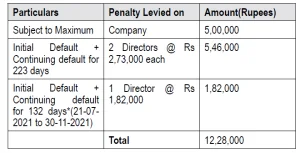
ii) Therefore, the case was covered by the first proviso to section 148A and the procedure prescribed under the provisions of section 148A need not be complied with before issuing the notices u/s. 148 for the A. Ys. 2020-21 to 2023-24.”

Re-assessment — Notice after four years — Advance Ruling — Effect of — Binding only on Assessee and AO in relation to transactions in question — Notice for reassessment for subsequent years issued on the basis of rulings in another case — Transactions similar to those in respect of which ruling rendered in Assessee’s case — No change in law or new tangible material and independent formation of belief by the AO — Notices for re-opening invalid.

78. Mrs. Usha Eswar vs. ITO and Ors.

[2024] 470 ITR 200 (Bom.)

A. Ys. 1997-98 – 2000-01

Date of order: 7th July, 2023

Ss. 147, 148, 245R and 245S of ITA 1961

Re-assessment — Notice after four years — Advance Ruling — Effect of — Binding only on Assessee and AO in relation to transactions in question — Notice for reassessment for subsequent years issued on the basis of rulings in another case — Transactions similar to those in respect of which ruling rendered in Assessee’s case — No change in law or new tangible material and independent formation of belief by the AO — Notices for re-opening invalid.

The assessee was a Non-resident Indian and was regularly assessed to tax in India in respect of income which accrued or arose in India or which was received in India. The Assessee was a resident of Dubai for several years and was a resident of the United Arab Emirates (UAE) as per the definition provided in the Double Taxation Avoidance Agreement (DTAA) between India and UAE. The Assessee had made an application to the Authority for Advance Ruling (AAR) seeking tax treatment as well as the rate of tax applicable in respect of income earned by way of dividends, interest and capital gains from sources in India. The said application was not made in respect of a specific assessment year. The AAR found that the Assessee was a resident as per Article 4 of the India — UAE DTAA and that the Assessee was not liable to pay tax in UAE as there was no levy of income tax on an Individual in UAE. The AAR applied the provisions of the Act and Articles 10, 11 and 13 of the DTAA and passed a ruling to the effect that the capital gains from transfer of moveable assets in India will be governed by Article 13(3) and the same will not be taxable in India on or before 1st April, 1994. The dividend income from shares held in India would be taxed at the rate of 15 per cent and income by way of interest on debentures and bonds as well as balance in partnership firm will be taxable at 12.5 per cent. In holding so, the AAR had relied upon its earlier ruling the case of MohsinallyAlimohammedRafik (“Mohsinally”).

Subsequently, after a period of four years, the Assessing Officer issued notice u/s. 148 of the Act for the AYs 1997-98, 1998-99, 1999-2000 and 2000-01 for re-opening the assessment on the ground that the ruling of the AAR was applicable only in respect of AY 1995-96 and that the AAR, in a subsequent ruling in the case of Cyril Eugene Pereria (“Cyril”), after considering the ruling in the earlier case of Mohsinally’s case, concluded that the benefit of DTAA would not be applicable as the applicant therein was not chargeable to tax in UAE. Therefore, the Assessing Officer concluded that the ratio of the ruling in Cyril’s case would be applicable and the benefits of DTAA were wrongly given to the Assessee for the AYs 1997-98 to 2000-01.

The Assessee filed writ petition challenging the re-opening of the assessment. The Bombay High Court allowed the petitions and held as follows:

“i) Section 245S of the Income-tax Act, 1961 states that the ruling pronounced by the Authority for Advance Rulings binds the Authority under section 245R . It is binding on the applicant who has sought the ruling in respect of the transactions in relation to which the ruling has been sought for and on the Commissioner and the Income-tax authorities subordinate to him in respect of the applicant and the transaction. Sub-section (2) of section 245S provides that the ruling shall be binding unless there is a change in the law or the facts on the basis of which the advance ruling has been pronounced.

ii) The Assessing Officer had manifestly exceeded his jurisdiction in reopening the assessment relying on the subsequent ruling of the Authority for Advance Rulings in the case of Cyril Eugene Pereira, In Re [1999] 239 ITR 650 (AAR). The ruling in that case could not bind the assessee nor could it displace the binding effect of the ruling in the assessee’s case. The transaction in respect of which the assessee had sought a ruling and in respect of which the Authority for Advance Rulings had issued the ruling to the assessee was of the same nature as that for the assessment years 1997-98, 1998-99, 1999-2000 and 2000-01. There was no change in law or facts. The Assessing Officer had not personally formed the belief that income liable to tax had escaped assessment and there was no tangible material to conclude that there was any escapement of income. Therefore, the notices under section 148 were set aside. The Director (International Transactions) had ignored the relevant provisions of law. The power to reopen the assessments under section 147 could not have been invoked.”

Deduction of tax at source — Self Assessment Tax — Not required where tax deducted at source on payment — Tax deducted at source from amount received by the Assessee — Assessee entitled to benefit u/s. 205 — Assessee need not produce Form 16A.

77. Incredible Unique Buildcon Pvt. Ltd. vs. ITO:

[2024] 470 ITR 106 (Del)

A. Y. 2011-12

Date of order: 3rd October, 2023

S. 205 of ITA 1961

Deduction of tax at source — Self Assessment Tax — Not required where tax deducted at source on payment — Tax deducted at source from amount received by the Assessee — Assessee entitled to benefit u/s. 205 — Assessee need not produce Form 16A.

The Assessee provided services to an entity by the name of CAL. The value of the service provided amounted to ₹8,50,26,199. The said entity CAL deducted tax at source amounting to ₹24,96,199. Out of ₹24,96,199 deducted by CAL, only an amount of ₹69,897 was deposited towards TDS and the balance ₹24,26,302 remained to be deposited. As a result, the Department did not give full credit of TDS deducted by CAL and raised a demand.

Therefore, the Assessee filed a writ petition and challenged the non-grant of full credit TDS. The Delhi High Court allowed the writ petition and held as under:

“i) In our view, the petitioner is right inasmuch as neither can the demand qua the tax withheld by the deductor-employer be recovered from him, nor can the same amount be adjusted against the future refund, if any, payable to him.

ii) Thus, for the foregoing reasons, we are inclined to quash the notice dated 28th February, 2018, and also hold that the respondents- Revenue are not entitled in law to adjust the demand raised for the A. Y. 2012-13 against any other assessment year. It is ordered accordingly.”

The High Court dismissed the review petition filed by the Department and held follows:

“i) Under section 205 of the Income-tax Act, 1961 where the tax is deductible at source, the assessee shall not be called upon to pay the tax himself to the extent to which tax has been deducted from his income. The bar operates as soon as it is established that the tax had been deducted at source and it is wholly irrelevant as to whether the tax deducted at source is deposited or not and whether form 16A has been issued or not. Form 16A is amongst others, a piece of evidence which can establish deduction of tax at source. That said, form 16A is not the only piece of evidence in that regard. In a case where the assessee can show reliable material other than form 16A and prima facie establish the deduction of tax at source. The assessee cannot be left at the mercy of the tax deductor, who for multiple reasons may not issue form 16A or may not deposit the deducted tax.

ii) The assessee admittedly declared in his return of income the tax deducted at source by CAL. and supported this with his ledger account. Not only this, the assessee even filed a complaint dated 25th January, 2017 with the Department alleging that CAL. had deducted but not deposited the tax deducted at source. But no action was taken on its complaint. The assessee could not be burdened with the responsibility to somehow procure form 16A to secure benefit of the provision of section 205.”

Assessment — Faceless assessment — Intimation u/s. 143 — Procedure — Corrections to returns must be intimated to assessee — Reply by assessee must be considered.

76. Northern Arc Investment Managers Pvt. Ltd. vs. Dy. DIT

[2025] 472 ITR 154 (Mad)

Date of order: 10th November, 2023

S. 143 of ITA 1961

Assessment — Faceless assessment — Intimation u/s. 143 — Procedure — Corrections to returns must be intimated to assessee — Reply by assessee must be considered.

A writ petition was filed to direct either the first respondent or the second respondent to permit the petitioner to file their rectification petition to rectify the mistake of double disallowance in the intimation dated July 29, 2023 and also to process the refunds.

The Madras High Court Held as under:

“i) A reading of section 143 of the Income-tax Act, 1961 makes it clear that if there are any corrections, errors, addition or reduction in the return of the assessee, the Department has to intimate it to the assessee. Thereafter, as per the provisions of the Act, the Department is supposed to consider the reply and make suitable modifications in the Income-tax return as requested by the assessee.

ii) The Assessing Officer had not considered the reply filed by the assessee and issued the intimation. The Faceless Assessment Officer has to consider the reply and proceed with the assessee’s case based both on the original returns filed by the assessee and the modified returns after considering the reply of the assessee.”

Glimpses of Supreme Court Rulings

18. HDFC Bank Ltd. vs. State of Bihar &Ors.

(2024) 468 ITR 650 (SC)

Prosecution — Order dated 5th October, 2021 u/s. 132(3) of the IT Act was served upon the Branch Manager of the bank directing the said branch of the bank to stop the operation of any bank lockers, bank — Subsequently, by an order dated 1st November, 2021, the Branch Manager of the said bank was directed to revoke the restraint put on the bank accounts — On 9th November, 2021, the concerned branch of the bank allowed Smt. SunitaKhemka (one of the searched person) to operate her bank locker bearing No. 462 on misinterpretation of the order dated 1st November, 2021 — FIR was registered against Smt. SunitaKhemka and the staff of the bank for the offences punishable u/s. 34, 37, 120B, 201, 207, 217, 406, 409, 420 and 462 of the IPC for breach of the order dated 5th October, 2021 — Held — FIR did not show that the appellant-bank had induced anyone since inception — Bank being a juristic person, question of mens rea does not arise — There was nothing to show that the bank or its staff members had dishonestly induced someone deceived to deliver any property to any person, and that the mens rea existed at the time of such inducement — As such, the ingredients to attract the offence u/s. 420 IPC would not be available — There was not even an allegation of entrustment of the property which the bank has misappropriated or converted for its own use to the detriment of the Income-tax Officer — As such, the provisions of sections 406 and 409 IPC would also not be applicable — Since there was no entrustment of any property with the bank, the ingredients of section 462 IPC were also not applicable — Likewise, since the offences u/s. 206, 217 and 201 of the IPC requires mens rea, the ingredients of the said sections also would not be available against the bank — FIR/complaint also did not show that the bank and its officers acted with any common intention or intentionally co-operated in the commission of any alleged offences — As such, the provisions of sections 34, 37 and 120B of the IPC would also not be applicable — Thus, continuation of the criminal proceedings against the bank would cause undue hardship to the bank — Therefore, the impugned judgment and order of the High Court and the FIR were quashed and set aside.

In October, 2021, Smt. Priyanka Sharma, Dy. Director of IT (Inv.), Unit-2 (2), (being Respondent No. 5 in the proceedings before the Supreme Court), conducted a search and seizure operation in the case of several income-tax assessees including Shri Sunil Khemka (HUF), Smt. SunitaKhemka and Smt. ShivaniKhemka at the third floor of Khataruka Niwas, South Gandhi Maidan, Patna. The said search and seizure operation was conducted based on warrants of authorisation issued u/s. 132(1) of the IT Act, 1961 (IT Act’ for short). During the search, it was found that Smt. SunitaKhemka held a bank locker bearing No. 462 in the Bank (appellant-bank before the Supreme Court) at its Exhibition Road Branch, Patna.

On the basis of the said operation, on 5th October, 2021, an order u/s. 132(3) of the IT Act was served upon the Branch Manager of the appellant-bank at its Exhibition Road Branch, Patna by the concerned Authorised Officer. The order directed the said branch of the appellant-bank to stop the operation of any bank lockers, bank accounts and fixed deposits standing in the names of Shri Sunil Khemka (HUF), Smt. SunitaKhemka and Smt. ShivaniKhemka, among several other individuals and entities, with immediate effect. It was further clarified that contravention of the order would render the Branch Manager liable u/s. 275A of the IT Act and the same would result in penal action.

In compliance of the aforesaid order, the appellant-bank stopped the operation of the bank accounts, bank lockers and fixed deposits of the individuals/entities mentioned in the order. Further, on 7th October, 2021, the appellant-bank blocked the bank accounts of the income-tax assesses named in the order and also sealed the bank locker bearing No. 462 belonging to Smt. SunitaKhemka.

Subsequently, on 1st November, 2021, Respondent No. 5 issued an order to the Branch Manager of the appellant bank at its aforementioned branch thereby directing the appellant-bank to revoke the restraint put on the bank accounts of Smt. SunitaKhemka and three other persons, in view of the restraining order dated 5th October, 2021 passed under s. 132(3) of the IT Act. Accordingly, the said persons, including Smt. SunitaKhemka, were to be allowed to operate their bank accounts. The said order was received by the concerned Branch Manager of the appellant bank of 8th November, 2021 at 4:00 p.m. However, on 2nd November, 2021 at 11:24 a.m., an email was sent to the Branch Manager which contained the same order.

Thereafter, on 9th November, 2021, the concerned branch of the appellant-bank allowed Smt. SunitaKhemka to operate her bank locker bearing No. 462 and proper entries recording the operation of the said locker were made in the bank’s records.

Subsequently, on 20th November, 2021, Respondent No. 5 conducted a search and seizure operation at the bank locker in the concerned branch of the appellant-bank, wherein it was found that Smt. SunitaKhemka had operated her bank locker with the assistance of the concerned officers of the appellant bank. This was validated by the entry made in the bank’s records and the CCTV footage of the bank. Resultantly, the concerned officials of the aforementioned branch of the appellant-bank were found to have breached the restraining order dated 5th October, 2021.

Accordingly, on 20th November, 2021, Respondent No. 5 issued summons u/s. 131(1A) of the IT Act to Abha Sinha-Branch Manager, Abhishek Kumar-Branch Operation Manager and Deepak Kumar-Teller Authoriser being the concerned officials of the appellant-bank at its aforementioned branch.

The aforementioned officials attended the office of Respondent No. 5 and their statements were recorded wherein Abha Sinha and Abhishek Kumar stated that there had been an inadvertent error on the part of the bank officials and they had misinterpreted the order dt. 1st November, 2021. Since the said order pertained to the bank accounts of the concerned individuals including Smt. SunitaKhemka, the bank officials had misread the order to understand / assume that the revocation of the restraint extended to the bank lockers as well. Having misunderstood the order, the bank officials under a bona fide assumption that bank locker had been released as well, allowed Smt. SunitaKhemka to operate the same.

The statement of Smt. SunitaKhemka had also been recorded wherein she stated that her accountant Surendra Prasad, after speaking with Deepak Kumar, had informed her that the restraint on the aforementioned bank locker had been revoked and she could operate the said locker. This was specifically denied by Deepak Kumar in his statement.

Dissatisfied with the said explanations, Respondent No. 5 submitted a written complaint to the SHO, Gandhi Maidan Police Station seeking to register an FIR against Smt. SunitaKhemka and the concerned bank officials on the ground that the order dt. 5th October, 2021 had been violated owing to the unlawful operation of the aforementioned locker.

On the basis of the said complaint, on 22nd November, 2021, an FIR being Case No. 549 of 2021 came to be registered against Smt. SunitaKhemka and the staff of the appellant-bank at its aforementioned branch for the offences punishable under ss. 34, 37, 120B, 201, 207, 217, 406, 409, 420 and 462 of the IPC at the Gandhi Maidan Police Station, Patna.

Aggrieved by the registration of the FIR, the appellant-bank preferred a Criminal Writ Jurisdiction Case thereby invoking the inherent power of the High Court u/s. 482 of the Code of Criminal Procedure, 1973 (hereinafter referred to as ‘Cr.P.C.’) for the quashing of the FIR. The High Court vide the impugned order dismissed the writ petition finding it to be devoid of merit.

Being aggrieved thereby, the appellant-bank filed the present appeal before the Supreme Court.

The Supreme Court observed that for bringing out the offence under the ambit of section 420 IPC, the FIR must disclose the following ingredients: (a) That the appellant-bank had induced anyone since inception; (b) That the said inducement was fraudulent or dishonest; and (c) That mens rea existed at the time of such inducement.

According to the Supreme Court, the appellant-bank being a juristic person the question of mens rea could not arise. However, even reading the FIR and the complaint at their face value, there was nothing to show that the appellant-bank or its staff members had dishonestly induced someone, deceived to deliver any property to any person, and that the mens rea existed at the time of such inducement. As such, the ingredients to attract the offence under s. 420 IPC would not be available.

The Supreme Court further observed that insofar as the provisions of section 409 IPC is concerned, the following ingredients will have to be made out: (a) That there has been any entrustment with the property, or with any dominion over property on a person in the capacity of a public servant or banker, etc.; (b) That the said person commits criminal breach of trust in respect of that property.

For bringing out the case under criminal breach of trust, it will have to be pointed out that a person, with whom entrustment of a property is made, has dishonestly misappropriated it, or converted it to his own use, or dishonestly used it, or disposed of that property.

According to the Supreme Court, in the present case, there was not even an allegation of entrustment of the property which the appellant-bank had misappropriated or converted for its own use to the detriment of the respondent No. 5. As such, the provisions of section 406 and 409 IPC would also not be applicable.

Since there was no entrustment of any property with the appellant-bank, the ingredients of section 462 IPC were also not applicable. Likewise, since the offences under sections 206, 217 and 201 of the IPC requires mens rea, the ingredients of the said sections also would not be available against the appellant-bank.

Further, according to the Supreme Court, the FIR / complaint also does not show that the appellant bank and its officers acted with any common intention or intentionally cooperated in the commission of any alleged offences. As such, the provisions of ss. 34, 37 and 120B of the IPC would also not be applicable.

According to the Supreme Court the present case would squarely fall within categories (2) and (3) of the law laid down by it in the case of State of Haryana &Ors. vs. Bhajan Lal &Ors. 1992 Supp. (1) SCC 335.

The Supreme Court referred to its following observations in the case of Bhajan Lal &Ors. (supra):

“102. In the backdrop of the interpretation of the various relevant provisions of the Code under Chapter XIV and of the principles of law enunciated by this Court in a series of decisions relating to the exercise of the extraordinary power under Art. 226 or the inherent powers under s. 482 of the Code which we have extracted and reproduced above, we give the following categories of cases by way of illustration wherein such power could be exercised either to prevent abuse of the process of any Court or otherwise to secure the ends of justice, though it may not be possible to lay down any precise, clearly defined and sufficiently channelised and inflexible guidelines or rigid formulae and to give an exhaustive list of myriad kinds of cases wherein such power should be exercised. (1) Where the allegations made in the first information report or the complaint, even if they are taken at their face value and accepted in their entirety do not prima facie constitute any offence or make out a case against the accused. (2) Where the allegations in the first information report and other materials, if any, accompanying the FIR do not disclose a cognizable offence, justifying an investigation by police officers under s. 156(1) of the Code except under an order of a Magistrate within the purview of s. 155(2) of the Code; (3) Where the uncontroverted allegations made in the FIR or complaint and the evidence collected in support of the same do not disclose the commission of any offence and make out a case against the accused; (4) Where, the allegations in the FIR do not constitute a cognizable offence but constitute only a non-cognizable offence, no investigation is permitted by a police officer without an order of a Magistrate as contemplated under s. 155(2) of the Code; (5) Where the allegations made in the FIR or complaint are so absurd and inherently improbable on the basis of which no prudent person can ever reach a just conclusion that there is sufficient ground for proceeding against the accused; (6) Where there is an express legal bar engrafted in any of the provisions of the Code or the concerned Act (under which a criminal proceeding is instituted) to the institution and continuance of the proceedings and/or where there is a specific provision in the Code or the concerned Act, providing efficacious redress for the grievance of the aggrieved party; and (7) Where a criminal proceeding is manifestly attended with mala fide and/or where the proceeding is maliciously instituted with an ulterior motive for wreaking vengeance on the accused and with a view to spite him due to private and personal grudge.103. We also give a note of caution to the effect that the power of quashing a criminal proceeding should be exercised very sparingly and with circumspection and that too in the rarest of rare cases; that the Court will not be justified in embarking upon an enquiry as to the reliability or genuineness or otherwise of the allegations made in the FIR or the complaint and that the extraordinary or inherent powers do not confer an arbitrary jurisdiction on the Court to act according to its whim or caprice.”

The Supreme Court was of the view that the continuation of the criminal proceedings against the appellant-bank would cause undue hardship to the appellant-bank.

In the result, the Supreme Court passed the following order – (i) The appeal is allowed; (ii) The impugned judgment and order dt. 8th June, 2022 passed by the learned Single Bench of the High Court of judicature at Patna in Criminal Writ Jurisdiction Case No. 1375 of 2021 is quashed and set aside; (iii) The First Information Report being Case No. 549 of 2021 registered at Gandhi Maidan Police Station, Patna on 22nd November, 2021, against certain officials of the appellant-bank working at its Exhibition Road Branch, Patna for the offences punishable under ss. 34, 37, 120B, 201, 206, 217, 406, 409, 420 and 462 of the Indian Penal Code, 1860 is also quashed and set aside qua the appellant-bank.

From The President

Last month, your Society uploaded all videos from the landmark BCAS Reimagine conference to its YouTube channel. Since then, these exclusive videos have accumulated thousands of views in a short period.

In one such video, being a dialogue on ‘The Victorious’ with living-legend Viswanathan Anand, the grandmaster shares insights on his deep passion for leveraging his personal learnings and achievements towards creating a virtuous, self-propelled chess ecosystem in our country. The true impact of this endeavour revealed itself when young GukeshDommaraju, his prodigious pupil, was crowned the youngest world champion in the history of the game.

Often times we underestimate the power of a single person, the power of a single idea and the power of a single organisation. From just one grandmaster in 1987 (being ‘Vishy’ Anand himself) to more than 85 Indian grandmasters today, with 6 out of top-20 world players being Indians and 3 out of top-6 world junior rankings being Indians, it was so apt when chess legend Garry Kasparov commented: “Children of VishyAnand are on the loose”.

Anand’s initiative, being superbly supported by the local government in Tamil Nadu, schools in Chennai, local coaches, capital providers along with technology access, has ushered a new era in Indian chess; it being highly speculated that the 2026 world championship title clash will be an Indian-vs-Indian clash. It’s a moment of pride, satisfaction and inspiration when in a short-span our country leads the world-pack, in a sport that was also historically invented in our beloved country itself, thousands of years ago.

As individuals and as organisations, there remain deep lessons in driving goodness and change through small-but-focussed interventions, powered by a supportive ecosystem. The single-most important reason for this ‘renaissance’ in Indian chess has been the contribution by multiple Indian Grandmasters who are ready to give back to society by creating a further line of champions. As an organisation itself, the BCAS think-tank aligns itself and continuously draws inspiration by such thoughts whilst constantly yearning to bring positive change for the members and the community it serves.

The resurgence of Indian chess, co-incidentally also had the Finance Minister Mrs Nirmala Sitharaman highlight the rise in Indian Grandmasters during her Union Budget speech last year. Whilst a year has gone by and Indian chess has created further records, our country’s excitement to the upcoming Union Budget in 2025 remains consistent.

Union Budget 2025

By the time you read this message, the Finance Minister would also have accomplished her own record of presenting the highest number of consecutive Union Budgets. The budget for the financial year 2025-26 will mark her eighth consecutive Union Budget, a new record in India’s Parliamentary history.

The upcoming annual Union Budget on 1st February, 2025 is also the first full-year budget in the third-lap of the Modi government. In the backdrop of (a) a stable coalition government with runway for next four years, (b) no major upcoming election rush and recent positive wins in state elections and (c) buoyant all-time high tax collections with simplification expectation, seen in contrast to (x) early sluggishness spotted in economic numbers, (y) anxiety in middle-income earners towards impactful taxes and (z) impact of geo-political shifts and Trump effect, the stage is set for this Union Budget to make its presence felt.

Not having the benefit of her thought process and the fine print under the Finance Bill, 2025, I will not risk speculating on the coverage under the Union Budget, but the formal BCAS expectation from the Union Budget, through a pre-budget memorandum has been submitted to the Finance Ministry, copy of which can be accessed at the society’s website. As Chartered Accountants, it will also be of immense interest to understand the outcome of the government’s initiative attempting to simplify the Income Tax Act, 1961.

The annual BCAS Budget Analysis publication is now available for pre-booking and we will strive to roll-out the publication, as soon as possible, post the Finance Bill, 2025 being available. The much-anticipated open-for-all BCAS Public Lecture Meeting on Direct Tax Provisions under Finance Bill, 2025 is scheduled to be held on 6th February, 2025 at 6:15 pm Yogi Sabhagruh, Dadar, Mumbai by learned Shri CA. Pinakin Desai, Past President – BCAS.

NFRA Representation

Separately, the Society has submitted a representation to NFRA regarding the fraud reporting requirements for statutory auditors of regulated entities. The representation focusses on the need to eliminate the duplication of reporting to different authorities, streamline the reporting process and simplify the regulatory framework for entities like banks, insurance companies, and NBFC’s by avoiding multiple reporting.

Open-for-all sessions and the BCAS YouTube Channel

Since inception, the BCAS has endeavoured to conduct open-for-all lecture meetings each month. In the month of January, the BCAS conducted 4 (four) such open-for-all lecture meetings. These sessions on (i) Navigating the Insolvency and Restructuring Landscape, (ii) Managing Challenges in Profession Today: Gita’s Perspective, (iii) Recent Important Decisions under Income Tax and (iv) Return of Trump – What does it mean for America, India and the World, were well received by our community. Most of these open-for-all sessions are also available through the BCAS YouTube channel. Over the years the BCAS YouTube channel has grown into a treasure trove of professional content and knowledge. Last month the BCAS YouTube channel touched a record 1 million views. With an ever-increasing content repository through open-for-all sessions, members not having subscribed, may choose to subscribe the BCAS YouTube channel.

Residential courses – 2025 season

The 2025-season of Residential Refresher Courses (‘RRC’) has officially started with the successful completion of the Residential Leadership Retreat in January. Next up:

1. Members’ RRC: At Lucknow / Ayodhya from 26th February to 1st March, 2025. Registrations closed!

2. IND-AS RRC: At Lonavala from 20th March to 22nd March, 2025.

3. International Tax and Finance Conference: At Jaipur from 3rd April to 6th April, 2025.

4. GST RRC: At Kolkata in June, 2025.

The concept of RRC’s was pioneered by the BCAS. Experience the magic of top-notch learning, networking, thought-leadership and unparalleled bonding at the BCAS RRCs. Join us for your preferred RRC and we look forward to interacting at the RRCs.

Warm Regards,


CA Anand Bathiya

President

From Published Accounts

COMPILER’S NOTE

As per the article in the Financial Times (FT), UK (9 December 2024), ‘Accounting errors force US companies to pull statements in record numbers’. The said article mentions that in the first 10 months of 2024, 140 (up from 122 in previous comparable period) public companies told investors that previous financial statements were unreliable and had to reissue them with corrected figures. It is also mentioned that a single ‘Big’ audit firm was involved in 26 of these cases.

In the US, the said restatements have been carried out in accordance with ASC 250 ‘Accounting changes and error corrections’ and in accordance with Staff Accounting Bulletin (“SAB”) No. 99, Materiality, and SAB No. 108, Considering the Effects of Prior Year Misstatements in Current Year Financial Statements. (corresponding to IAS 8 / IndAS 8).

Given below are instances and disclosures of 10 cases of companies listed on US markets where restatement has been carried out. (portions in bold highlight the reason and impact of the restatement). For reason of conciseness, tables giving the detailed impact of the restatement are not reproduced.

1. PLBY Group Inc. (Restatement of Interim period ended 30th June, 2023)

Note 1: Basis of Presentation and Summary of Significant Accounting Policies

Subsequent to the issuance of the condensed consolidated financial statements as of and for the quarter ended 30th June, 2023 included in the Form 10-Q originally filed with the Securities and Exchange Commission (the “SEC”) on 9th August, 2023 (the “Original Filing”), the Company identified a correction required to be made in its historical condensed consolidated financial statements and related disclosures as of and for the three and six months ended 30th June, 2023. The correction relates to the accounting treatment of impairment of a license agreement and the classification of commission expense adjustments related to all contract impairments recorded during the three months ended 30th June, 2023. In the Company’s Original Filing, the Company impaired a license agreement (which was ultimately terminated in the fourth quarter of 2023) and recorded impairment expense in relation thereto. Additionally, commission expense reversals related to contract impairments were recorded as an offset to the impairment expense.

Pursuant to the Company’s completion of its year-end audit procedures for its 2023 fiscal year, the Company determined that the accounting treatment of the license agreement, as described above, was incorrect. Rather than recording impairment expense of $3.2 million, the Company should have reduced its deferred revenue balance which related to the impaired license agreement. In addition, commission expense reversals of $1.2 million should have been recorded to the Company’s cost of sales, rather than offsetting its impairment expense. Additionally, tax expense was increased by $1.1 million to account for the aforementioned reversal of the impairment expense and changes in jurisdictional location of certain other impairment expenses.

2. Pioneer Power Solutions Inc. (Fiscal Year ended 31st December, 2022)

Note 2: Restatement Of Previously Issued Consolidated Financial Statements

In connection with the preparation of our consolidated financial statements for the years ended 31st December, 2023 and 2022, the Company identified errors related to revenue and cost recognition in its previously issued consolidated financial statements as of and for the year ended 31st December, 2022 included in its Annual Report on Form 10-K for the year ended 31st December, 2022 (the “Annual Period”).

During 2022 and 2023, the Company recognized revenues associated with customer contracts with performance obligations satisfied over time (“Over Time Contracts”) using labour hours as the measure of progress. The Company’s underlying estimates of total labour hours required to complete Over Time Contracts were materially different from the actual labour hours required, which was determined to represent an error since the information underlying the estimate was known or knowable as of the balance sheet date and, as a result, the percentage of completion used to recognize revenue in the Affected Periods is materially different from the percentage of completion using actual labour hours incurred. As a result, the Company has restated revenues during the Affected Periods to adjust the percentage of completion based upon the actual labour hours incurred to complete each Over Time Contract (the “Revenues Adjustment”).

Additionally, the Company has determined that costs from Over Time Contracts should be recognized as incurred and, as a result, the Company has recorded an adjustment to its consolidated financial statements during the Affected Periods (together with the Revenues Adjustment, the “Restatement Adjustments”), as the Company was previously incorrectly deferring costs incurred to a future period.

The Company evaluated the materiality of these misstatements both qualitatively and quantitatively in accordance with Staff Accounting Bulletin (“SAB”) No. 99, Materiality, and SAB No. 108, Considering the Effects of Prior Year Misstatements in Current Year Financial Statements, and determined the effect of correcting these misstatements was material to the Affected Periods. As a result of the material misstatements, the Company has restated its consolidated financial statements for the Affected Periods in accordance with ASC 250, Accounting Changes and Error Corrections (the “Restated Consolidated Financial Statements”).

A reconciliation from the amounts previously reported for the Affected Periods to the restated amounts in the Restated Consolidated Financial Statements is provided for the impacted financial statement line items for: (i) the consolidated balance sheet as of 31st December, 2022; (ii) the consolidated statement of operations for the year ended 31st December, 2022; (iii) the consolidated statement of changes in stockholders’ equity for the year ended 31st December, 2022; and (iv) the consolidated statement of cash flows for the year ended December 31, 2022. The amounts labelled “Restatement Adjustments” represent the effects of the Restatement Adjustments.

3. Gatos Silver Inc. (Restatement of Fiscal Year ended 31st December, 2023)

Note 3: Restatement of Previously Issued Financial Statements

During the preparation of the financial statements for the three months ended 31st March, 2024, the Company identified that the capital distributions received from its investment in affiliate classified as cash provided by investing activities on the Consolidated Statements of Cash Flows should have been classified as cash provided by operating activities. Based on management’s judgement, the Company considered the declaration of the capital distribution (in its legal form) to be the nature of the activity that generated the cash flow and, therefore, classified capital distributions as cash provided by investing activities on the Consolidated Statements of Cash Flows. On further analysis, it was determined that management should have considered the underlying source of the cash flow at the Los Gatos Joint Venture (“LGJV”) that generated the funds for the capital distributions when determining its classification on the Company’s Consolidated Statements of Cash Flows. The capital distributions received previously classified as cash flow provided by investing activities should have been classified as cash flows provided by operating activities.

The impact of the restatement on the Consolidated Statements of Cash Flows for the year ended 31st December, 2023, is presented. The Consolidated Balance Sheets and balance of cash and cash equivalents as of 31st December, 2023, and the Consolidated Statements of Income and Comprehensive Income, Consolidated Statements of Stockholders’ Equity for the year ended 31st December, 2023, are not impacted by this error.

4. Reviva Pharmaceuticals Holdings, Inc (Fiscal Year ended 31st December, 2022)

Note 2: Restatement Of Previously Issued Annual Consolidated Financial Statements for The Fiscal Year Ended 31st December, 2022.

The need for the restatement arose out of the results of certain financial analysis the Company performed in the course of preparing its fiscal year-end 2023 financial statements. Principally, the Company completed a detailed lookback analysis to compare certain estimated accrued clinical trial expenses, specifically investigator fees, from one contract research organization to its actual clinical trial expenses that were incurred for the respective periods for that contract research organization during the Restatement Periods based on review of historical invoices. In the course of its analysis of the actual information gathered through the lookback process, the Company detected differences between the estimated accrued amounts of those clinical trial expenses and the actual expenses recorded due primarily to the Company’s failure to properly review and evaluate expenses incurred in those clinical trial contracts resulting in the Company not properly accruing for clinical trial expenses that were incurred but for which invoices were not yet received. In addition, the Company determined that an effective process for evaluating the completeness of the research and development expense accrual for investigator fees and related costs, for that contract research organization, was necessary. This included estimated patient site visits not yet reported, average site visit costs and average delay in site invoicing. This provides the Company with an effective estimate of the costs incurred as there can be a lag between receiving an invoice for the services provided from that contract research organization. Management and the audit committee of the Company’s board of directors have concluded that, in the ordinary course of closing its financial books and records, the Company previously excluded certain clinical trial expenses and associated accruals from the appropriate periods as required under applicable accounting guidelines. Therefore, the Company misstated research and development expenses, and accrued clinical expenses during the Restatement Periods. The Company received FDA authorisation in early 2022 to begin clinical trials and therefore, no similar error as of 31st December, 2021, would be expected or identified. Further, management determined that any misstatements to the quarterly periods ended 31st March, 2022, and 30th June, 2022, included in its Quarterly Reports on Form 10-Q, were not material.

Therefore, the Company misstated R&D expenses and associated accrued liabilities during the Restatement Periods. The Company principally attributes the errors to a material weakness in our internal control activities due to a failure in the design and implementation of our controls to review clinical trial expenses, including the evaluation of the terms of clinical trial contracts. Specifically, we failed to properly review and evaluate progress of expenses incurred in clinical trial contracts resulting in us not properly accruing for clinical trial expenses that were incurred but for which invoices were not yet received This is disclosed in Item II, Part 9A of this Annual Report on Form 10-K. The Company has commenced procedures to remediate the material weaknesses. However, these material weaknesses will not be considered remediated until the applicable remedial actions have been fully implemented and the Company has concluded that these controls are operating effectively for a sufficient period of time.

5. Paragon 28, Inc (Restatement of Fiscal Year ended 31st December, 2023)

Note 3: Restatement of Previously Issued Consolidated Financial Statements

Subsequent to the issuance of the Company’s consolidated financial statements as of and for the year ended 31st December, 2023 and the Company’s unaudited condensed consolidated financial statements as of and for the fiscal quarter ended 31st March, 2024, the Company identified errors in the calculation of its excess and obsolete inventory reserves, as well as its accounting for inventory variances, which resulted in a net overstatement of Inventories, net as of 31st December, 2023 and a net understatement in Cost of goods sold for the fiscal year ended 31st December, 2023. The consolidated financial statements (as restated) reflect the correction of this error and include adjustments to correct certain other previously identified misstatements relating to prior periods, including the fiscal year ended 31st December, 2022, that the Company had determined to be immaterial both individually and in aggregate.

DESCRIPTION OF MISSTATEMENT ADJUSTMENTS

(a) Inventory Treatment

The Company recorded adjustments to correct the calculation of its excess and obsolete inventory reserve and valuation of purchase price variances. The corrections resulted in a decrease in Inventories, net of $8,016, an increase in the Cost of goods sold of $8,356, and a decrease in the beginning balance of Accumulated deficit of $340, respectively, as of and for the fiscal year ended 31st December, 2023.

(b) Interest Rate Swap

The Company recorded adjustments to correct certain misstatements related to its interest rate swap previously corrected out of period in Q3 2023. The adjustments recognize the correction to prior periods.

6. ArhausInc (Restatement of Interim Period ended 30th June, 2023 and 31st March, 2023)

Note 16: Revision of Previously Issued Condensed Consolidated Financial Statements (Unaudited)

As described in Note 1 – Nature of Business, the Company identified an error within the consolidated balance sheets, related to certain leasehold and landlord improvements prior to showroom completion being incorrectly included in prepaid and other current assets rather than property, furniture and equipment, net. The error resulted in inaccurate cash flows ascribed to operating and investing activities in the consolidated statements of cash flows. The errors impacted the unaudited condensed consolidated balance sheets and unaudited condensed consolidated statements of cash flows as of and for the three months ended 31st March, 2023 and 2022, as of and for the six months ended 30th June, 2023 and 2022, and the unaudited condensed consolidated balance sheet as of 30th September, 2022. The Company has evaluated the errors both quantitatively and qualitatively and concluded they were not material, individually or in the aggregate, to such prior period unaudited condensed consolidated financial statements and concluded to revise such prior period unaudited condensed consolidated financial statements.

In connection with the revision of the Company’s unaudited condensed consolidated financial statements, we determined it was appropriate to correct for certain other previously identified immaterial errors. The Company will effect the revision of the unaudited interim condensed consolidated financial information for the first two quarters of 2023 as part of our filing of the 2024 interim Form 10-Qs.

7. BitFarms Limited (Fiscal Years ended 31st December, 2023)

Note No. 3: Basis of Presentation and Material Accounting Policy Information

  •  Restatement of statement of cash flows:

The statement of cash flows has been restated to reclassify the cash proceeds from the sale of digital assets, which is accounted for as an intangible asset under IAS 38, from cash flows from operations to cash flows from investing activities. The Company has determined that this error was material to the previously issued consolidated financial statements and as such, has restated its consolidated financial statements, as applicable.

  •  Adjustment on accounting for 2023 Warrants:

The Company is correcting an error in the fair value recorded for the 2023 exercises of warrants issued in connection with the private placement financing in 2023 (“2023 Warrants”). The correction resulted in an increase in the share capital and net financial expenses in the restated consolidated financial statements.

8. Cellectar Biosciences, Inc. (Fiscal Years ended December 31, 2023)

Note No. 2: Summary Of Significant Accounting Policies

Restatement of Previously Issued Consolidated Financial Statements — During the third quarter of 2024, and prior to the filing of the Company’s Form 10-Q for the quarter ended June 30, 2024, the Company determined that it was necessary to re-evaluate the Company’s accounting treatment for certain previously issued warrants and preferred stock. Additionally, the Company identified certain operating costs previously as research and development expenses which should have been classified as general and administrative expenses. In accordance with Staff Accounting Bulletins No. 99 (SAB No. 99) Topic 1.M, “Materiality” and SAB No. 99 Topic 1.N “Considering the Effects of Misstatements when Quantifying Misstatements in the Current Year Financial Statements,” the Company assessed the materiality of these errors to its previously issued consolidated financial statements. Based upon the Company’s evaluation of both quantitative and qualitative factors, the Company concluded the errors were material to the Company’s previously issued consolidated financial statements for the fiscal years ended 31st December, 2023 and 2022. Accordingly, this Form 10-K/A presents the Company’s Restated Consolidated Financial Statements for the fiscal years ended December 31, 2023 and 2022. Additionally, the Company has restated its previously filed unaudited interim condensed consolidated financial statements for the periods ending 31st March, 2023, 30th June, 2023, 30th September, 2023, 31st March, 2022, 30th June, 2022, and 30th September, 2022, contained in its Quarterly Reports on Form 10-Q.
Note No. 14: Restatement Of Previously Issued Financial Statements

As described in Note 2 and detailed below, in July 2024 the Company determined that it was necessary to re-evaluate its accounting treatment for certain previously issued warrants and preferred stock. The Company identified five areas where the historical accounting treatment applied to previously issued warrants and preferred stock required modification:

  1.  Contractual terms contained within the agreements governing the warrants issued to its investors in prior periods required further evaluation under Topic 815. After consultation with external advisors and completing an extensive review process, management concluded that the classification of certain previously issued warrants as equity was not consistent with Topic 815 and has restated them as liabilities. This also results in the requirement to account for the change in the fair value of the liability classified warrants through the Consolidated Statements of Operations at each reporting date they remain outstanding. Additionally, upon the issuance of the 2022 common warrants, pre-funded warrants, and common stock, the Company determined the fair value of each security issued and booked a charge for the amount that the fair value exceeded the proceeds received.
  2.  Upon the issuance of the Series E Preferred Stock in September 2023, the contractual language required the 2022 Pre-Funded Warrants be reclassified from equity to liability.
  3.  The Series D Preferred Stock issued in 2020 was determined to be temporary, or mezzanine equity upon issuance and was so recorded.
  4.  The accounting treatment for the Tranche A and B warrants issued as part of the September 2023 financing (See Note 6) continues to be appropriate; however, as part of the work performed for the restatement, the warrant valuation was adjusted to correct prior errors in the valuation.
  5. Certain operating costs previously recorded as research and development expenses were corrected to general and administrative expenses.

The impact on the consolidated financial statements is as follows (lettered for reference to the financial statement adjustments):

A. All the outstanding common warrants were corrected from permanent equity to Warrant Liability, and the Series D Preferred Stock was corrected from permanent equity to Mezzanine Equity as of 31st December, 2021.

B. The proceeds from the October 2022 financing were adjusted as described in Note 6. Additionally, the cost of the 2022 financing allocated to the issuance of the 2022 Warrants, which was $463,000, was removed from Additional Paid-In Capital and charged to Other Expense.

C. After the issuance of the Series E Preferred in September 2023, the 2022 Pre-Funded Warrants were corrected from Additional Paid-In Capital to Warrant Liability.

D. At each reporting period the warrants accounted for as liabilities were marked to market with the adjustment reflected in Other Income (Expense).

E. Certain operating costs previously recorded as research and development expenses were corrected to general and administrative expenses.

F. Adjusted the balance sheet as of 31st December, 2021, by reducing additional paid-in capital and increasing the accumulated deficit by $25,300,000 which was the change from the initial fair value amount of the warrants issued in 2017, 2018, and 2020 through 31st December, 2021

9. Ranger Gold Corp. (Restatement of nine months ended as on December 31, 2023)

Note F: Correction of an Error / Prior Period Restatement

During our 2022 fiscal year-end reconciliation/close-out and subsequent audit, Management discovered that Accounts Payable amounts owed to Vendors and the related expenses incurred were incorrect in 2022. Some vendors had been paid outside of the bank account and directly by the owner which should have been recorded as an addition to the Additional Paid in Capital. In addition, some unpaid vendor invoices were not billed to Accounts Payable. Per ASC 250, since the error correction is material and material to financial statements previously issued, Management promptly corrected the errors and restated previously issued financial statements.
Fiscal Year 2023:

During our most recent reconciliation/close-out and subsequent audit, Management discovered that amounts paid and owed to Vendors and the related expenses incurred were incorrect in 2023. Expenses paid by the owner, which should have been recorded as expenses and as an addition to Accounts Payable and Paid in Capital Contributions were not properly posted. Per ASC 250-10, since the error correction is material and material to financial statements previously issued, Management is promptly correcting the errors and restating previously issued financial statements.

10. Sun Communities, Inc. (Restatement of 3 months ended 31st March, 2023, 30th June, 2023 and 30th September, 2023)

Note No. 22: Quarterly Financial Data (Unaudited and Restated)

Restatement of Prior Quarterly 2023 Financial Statements (Unaudited)

During the course of preparation and review of our financial statements for the year end 31st December, 2023, it was determined that we did not identify certain factors indicative of triggering events relevant to the valuation of the UK reporting unit, including reduced financial projections and increased interest rates when preparing our previously issued unaudited interim consolidated financial statements (collectively, the “Interim Financial Statements”) as of and for the period ended 31st March, 2023, as of and for the period ended 30th June, 2023, and as of and for the period ended September 30, 2023 (collectively, the “Interim Periods”), included in our Quarterly Reports on Form 10-Q for the quarters ended 31st March, 2023, 30th June, 2023 and 30th September, 2023, respectively. Management undertook a full review of the valuations and determined that as of each of 31st March, 2023, 30th June, 2023 and 30th September, 2023. we should have recognized non-cash impairments to goodwill for the UK reporting unit within our MH segment.

Pursuant to SEC Staff Accounting Bulletin (“SAB”) No. 99, Materiality, and SAB No. 108, Considering the Effects of Prior Year Misstatements when Quantifying Misstatements in Current Year Financial Statements, we evaluated these misstatements, and based on an analysis of quantitative and qualitative factors, determined that the impact of misstatements related to goodwill impairments was material to our Interim Periods. Accordingly, we have restated the unaudited consolidated financial statements for the Interim Periods and have included that restated unaudited financial information within this Annual Report.

The restated quarterly unaudited consolidated financial information for the interim periods ended 31st March, 2023, 30th June, 2023 and 30th September, 2023 are provided. These adjustments have no impact on cash flows from operating activities as goodwill impairment is a non-cash adjustment to reconcile net income / (loss) to cash provided by operating activities.

Forensic Accounting & Investigation In Healthcare Industry – Challenges & Opportunities

Forensic Accounting – The word forensic accounting makes you think about frauds, misappropriation, manipulation, embezzlement, illegal activities that can be detected from the examination of financial statements, books of accounts and other such documents with the intention to detect, investigate, or prevent any fraud.
Healthcare activities covers every section of the society. Due to wide spread and complex nature of activities, fraud may occur at any given point in the cycle, starting from patient registration at a healthcare centre or a hospital to the final prescription given to the patient.

INTRODUCTION

Forensic Accounting – The name itself causes you, the reader to promptly think about frauds, misappropriation, manipulation, embezzlement, illegal activities related to finance, etc. Yes, forensic accounting is related to the examination of financial statements, books of accounts and other such documents with the intention to investigate, detect or prevent any fraud. Unlike other audits, statutory or otherwise, the forensic accounting is not mandated under any statute. However, The Institute of Chartered Accountants of India has issued the Forensic Accounting and Investigation Standards on 1st July, 2023. Also, these standards are mandatorily applicable to all the Forensic Accounting engagements conducted on or after 1st July, 2023. Hence, mostly, forensic accounting is seen as an audit similar to a statutory audit or a tax audit since it also involves the examination of financial statements and books of accounts. However, it has more facets to it.

Forensic accounting is conducted with the main aim of gathering information and acquiring minute details about the financial matters of an entity or an individual, which can be put forth as admissible evidence in a court of law. As the judicial aspect is involved, forensic accounting goes beyond the step of regular audit, towards investigation. Forensic accounting requires a comprehensive set of skills and investigative techniques to corroborate the evidence of any fraud that has been committed or instances where an entity is prone to fraud. Generally, it is said that an auditor is a ‘watchdog’ and not a ‘bloodhound’. However, it can be said that a forensic accountant is a ‘bloodhound’.

Forensic Accounting covers various areas and industries where different investigative approaches have to be curated that suit the type of industry. The approach decides the investigative techniques to be used while conducting a forensic accounting engagement. Every sector is prone to frauds. In this article I take up the Healthcare industry.

HEALTHCARE INDUSTRY & FRAUDS

Healthcare Industry has several cycles and interactions which are two way — where both provider and recipient interact. Its spread and need is pervasive. One reason for susceptibility for fraud is the cyclical nature of activities. The following may be the normal structure of the cycle:

  1.  Patient Registration
  2.  Appointments
  3.  Patient diagnosis
  4.  Utilisation of services
  5.  Billing & Coding
  6. Payment
  7. Prescription
  8.  Medical Follow-up
  9.  Insurance Claim (Reimbursement or Cashless) and back to Step 1

A fraud may occur at any given point in the cycle mentioned above, starting from patient registration at a healthcare centre to the final prescription given to the patient. It is important to note that, unlike cyber frauds where the victim is mostly the consumer, in the case of the healthcare industry, apart from the patient, fraud can be perpetrated on the healthcare provider, health insurance provider, etc., by a frivolous lawsuit, fake claim of insurance, deliberate targeting of a healthcare centre or a hospital with the intention of harming its reputation, etc. Furthermore, healthcare centres or large hospitals are also prone to organisational frauds, leading to reputational embarrassment and loss of credibility.

A number of frauds are being detected in the healthcare industry at various levels, which underlines a worrying truth, i.e., “Wealth is Health”. Frauds are committed with the sole purpose of acquiring money illegally, immorally and at the cost of human health. Frauds are committed over intricate issues which are difficult to detect or prevent without the help of forensic accounting. Even though fraud might have a negative financial impact, it is not the only issue at hand. Major consequences regarding human health are being faced by numerous patients, their relatives, etc. due to frauds perpetrated on them and the dire fact is that the healthcare system in India is under heavy risk of fraud and manipulation. Frauds in the healthcare industry may be characterized into 2 categories:

  •  Deliberate Offences
  •  Offences occurring due to ignorance / over-tolerance / lack of vigilance

Deliberate offences include fraudulent activities carried out in order to defraud an individual or an entity carrying out its operations in the healthcare industry. Fraudulent activities may include providing false information about patients and their diagnosis, mishandling of critical information about patients, false and incorrect claims lodged with insurance companies, fake prescriptions for medicines which are not at all required but made only to claim reimbursement for the same, etc.

Offences occurring due to ignorance are mostly due to the casual approach. It includes cases where medical ethics are not followed, and overbilling is tolerated just because the patient was critical, upcoding of services which were not even prescribed but have been added to the billings, and illegal supply of drugs, medicines, and other medical equipment without proper entries at the medical stores, etc.

These are just some examples which are known and have been discussed later in this article. However, the list is not exhaustive since perpetrators find various ways to commit frauds when it comes to the healthcare industry, and the lack of a strong monitoring and safeguarding system helps them get away with it.

Following are various types of frauds in the healthcare industry that have made it vulnerable and how the number of frauds is growing day by day due to a lack of a standardized and structured forensic accounting procedure, which is adding fuel to the fire.

PATIENT INFORMATION MANAGEMENT

Whenever a person registers as a patient at a healthcare centre or a hospital, his/her critical and personal information is gathered in order to make proper and accurate records. These records not only contain the health issues of the particular person but also contain the medical history of his / her family. The doctor is assisted by this information while prescribing medicines or further medical procedures or tests. Such critical information has to be stored with proper safeguards, and it has to be ensured that there is no unauthorized access to the same. However, perpetrators hack into the system, use fake user IDs to enter the system, attempt to control the system from an undisclosed location, etc., only to gain access to patient records. Once the information is accessed, the same is sold to various companies or parties for hefty prices. Another way to perpetrate the fraud is through an insider. An employee of the healthcare centre or hospital acts in an unethical way in exchange for bribes, a guarantee of promotion, or any other enticement or incentives, etc., when he/she provides access to the records without tampering with the system. In this age of digitization and advanced information technology, one of the most important aspects of human life is data privacy. Hence, data has become more valuable than money and the healthcare industry is an avenue where fraudsters can have a plethora of personal information at their hands. Forensic accounting and investigation provide a comprehensive approach where investigative techniques are used in order to find lacunas with the system or any other technological aspect of the entity which may make it prone to fraud. At the same time, it shall be conducted in a way where the findings shall be admissible as evidence in the court of law.

Furthermore, such information, which is gained unlawfully, is also utilized to make false insurance claims, leading to insurance fraud. Mostly, this is done in order to dupe the insurance companies and acquire funds in an illegal way. Insurance fraud is an area where forensic accounting and investigation can assist companies in verifying whether the claims launched are legitimate and true. A forensic accountant can apply a string of audit and investigative procedures to ensure the legitimacy of a claim, which shall protect the insurance company from falling prey to a fraudulent claim.

PRESCRIPTIONS & MEDICATIONS

In India, chemists and medical shops are allowed to sell both prescribed as well as non-prescribed drugs, medicines, etc. This is another grey area where multiple levels of frauds are perpetrated, and these are difficult to detect since the amounts involved in these frauds are negligible, but overall, they have a huge impact. Fake prescriptions are prepared in order to claim reimbursements; multiple prescriptions are collected from various doctors and medical practitioners in order to gain access to certain prescribed medicines. Once these medicines are purchased on the basis of a fake prescription, the medicines are sold illegally at exorbitant prices without any proper billings. Otherwise, there have been cases where such medicines are used for substance abuse with prescription drugs not being used for their intended medical objective.

Have you ever wondered when you visit a certain doctor / medical practitioner or a hospital, and they provide you with a prescription for medicines, those medicines are available only at the medical stores affiliated with the hospital or which are set up within the hospital premises or only in selected medical shops? One might ponder upon the thought that since these are prescription drugs, they should be available at almost every medical shop. However, this is not the case. The patient has no choice but to purchase medicines from selected medical shops or the ones within the hospital premises. What could be the logic behind this? Why is there a compulsion on the patient to purchase medicines from certain medical shops only? Why are they not provided with an option to purchase medicines from a medical shop of their own choice? It seems that the doctors / medical practitioners or the hospitals have a nexus with the medical shops where the medical shops keep such medicines in their stock in huge quantities, which the doctor/medical practitioner shall prescribe. It is pre-decided as to what brand of the medicine shall be prescribed and only that brand of medicine is ordered in wholesale by the medical shop. Due to this pre-arrangement, a patient is unable to acquire medicines from a medical shop of his/her own choice since that medical shop does not have the stock of the prescribed medicine. This stems to a whole new level of fraud since an illegal nexus has been formed where the patients are being tricked and are given no choice but to buy medicines and other medical items from selected stores only. Forensic accounting function at this level may assist in investigating the types of medicines being prescribed. It may provide a structure to prepare a database which shall duly prompt the auditor to report where a particular brand of medicine is being prescribed frequently. The reasons for the same shall be sought from the management.

Furthermore, a forensic accounting function may provide insights related to the pricing of the medicines where it can be investigated that a doctor / medical practitioner or a healthcare center or a hospital is prescribing expensive medicines in most cases, whereas medicines with similar ingredients for a same diagnosis are available in the market which are priced at lower rates. Another point of malpractice could be the rates of the medicines where certain medical shops provide medicines at their Maximum Retail Prices whereas certain medical shops apply huge discounts for the same medicines. If the patient is not given the option to purchase the medicines from the medical shop of his own choice, he / she might end up paying more since the discount scheme may not be available at the affiliated medical shop or the medical shop within the hospital premises. Yes, there is a National Pharmaceutical Pricing Authority (NPPA), a government agency responsible for setting prices of drugs and ensuring medicines are available across the country. It published an Analysis Report in 2018, which included facts that private hospitals procure medicines and other medical equipment at very low prices and sell them to patients at much higher prices, with profit margins going beyond 500 per cent for some items. However, not everything falls under the ambit of the NPPA. Items such as diagnostic services and devices do not come within the purview of NPPA and, hence, have been found to be overpriced.

In most cases, it was noted that nearly 15% of the total bill was for diagnostic services with the prices being at a higher side. The NPPA reported that profit margins for “Non-Scheduled Devices” such as syringes and catheters were “exorbitant and clearly a case of unethical profiteering in a failed market system”. In the case of a reputed private hospital, as reported by the Economic Times in December 2017 and the report of the NPPA, it was found that certain devices and medical equipment were charged to the patients at a very high price, whereas it was procured by the hospital at a very low price. For example, a bed wet wipe used to clean the patient was procured by the hospital at ₹33 per unit; however, it was charged to the patient at ₹350 per unit with a profit margin of a whopping 960 per cent. Apart from that, disposable syringes without needles used for the treatment was procured by the hospital at ₹13.60 apiece yet it was charged to the patient at ₹200 a piece, an increased markup of 1370 per cent. A thorough forensic accounting and investigation function may help curb such practices and bring to light such instances where patients are required to pay more just because it is the hospital policy to purchase medicines from selected stores only and at the prices stated by the hospitals.

OVERCHARGING FOR MEDICAL PRODUCTS & SERVICES

Generally, treatments provided in private healthcare centres or hospitals or clinics are expensive, and they charge the patients for every single service provided, including accommodation. As per the Analysis Report of the NPPA, it was found that the largest items on the hospital bills were drugs, devices and diagnostics, which comprised nearly 56 per cent of the total bill, which was higher than the charges for medical procedures and room rent which comprised around 23 per cent of the total bill. As per the “Health in India” Report from the 71st Round of the National Sample Survey, around 58% of households in rural areas and around 68 per cent of households in urban areas prefer private hospitals for in-patient treatments. Hence, the reliance of the public on private hospitals is key for such hospitals to rake up the prices for better services. There is a need for a regulator to keep a check on these issues.

As far as the law is concerned, the NPPA classifies medical items, including medicines and drugs, into 3 categories:

  •  Medicines under Price Control
  •  Medicines not under Price Control
  •  Consumables that are neither under Price Control nor under the country’s list of essential medicines

Here is the interesting part. Scheduled Medicines come under essential medicines, which ultimately are covered under the price control mechanism whereas Non-Scheduled branded medicines are not covered under the price control mechanism. Hence, the drug-making companies often bring into the market new variants of scheduled drugs as “new drugs” or “fixed drugs combinations” in order to escape the price control mechanism. The healthcare centres or the hospitals taking advantage of the same and to earn higher profits, often prescribe Non-Scheduled branded medicines instead of Scheduled Medicines. Hence, this could be another area where an effective Forensic Accounting function can investigate such matters and provide various counter-measures to ensure that instances of overcharging are avoided in the future.

KICKBACK SCHEMES

To start with, kickback in the healthcare industry is defined as an arrangement where a doctor / medical practitioner is paid for patient referrals. This payment may be in cash or kind. Cases have been found where kickbacks include payments in the form of bookings of international flights, overseas vacations, expensive appliances, five-star hoteling, etc. It can be seen in normal cases where an ENT (Ear-Nose-Throat) specialist recommends his/her patient to get certain tests done by a radiologist, a pathologist, or a doctor who recommends each of his/her patients to get their hearts checked out by a heart specialist surgeon for no concrete reason, etc. In most cases, the patients do not ignore such advice being a matter of health. Obviously, in the cases mentioned above, the doctors referring the patients to the latter receive the kickback. These are simple examples of kickback schemes that are being applied mostly in Tier 2 and Tier 3 cities of India on a large scale. Tier 1 cities are no exception either.

However, in spite of such activities, there is no law to regulate and curb such practices. In the state of Maharashtra, a recent case involved a reputed hospital, where its 11 Heads of Departments were found to be operating unauthorized bank accounts. The same was reported by the Times of India in April 2023. The amount involved ran up to ₹6 Crores, and the majority of it was spent on foreign trips, flight bookings and hotels. The inquiry was initiated in 2018 by the then Medical Education Secretary. As per the Times of India report, questionable actions were in departments such as ophthalmology, radiology and surgery. In that, the surgery department was the major recipient of “kickbacks”, with deposits being found which were made by various pharmaceutical companies.

In this background, the Maharashtra State Government had nearly finalised the draft of an Act to curb such practices of kickbacks in the healthcare industry. It was known as “The Prevention of Cut Practices Act, 2017”. However, it never passed the draft stage due to protests from the medical fraternity over the provision of harsh punishments and administrative difficulties over its implementation. Apart from the punishment for kickbacks, the draft Act also contained provisions for punishing fake complainants and those trying to deliberately malign the image of a doctor/medical practitioner. Even then, the draft has not been implemented to date.

Challenges involved in the implementation of Forensic Accounting and Investigation in the healthcare industry:

LACK OF A PROPER STATUTE

Currently, no statute requires a healthcare centre, a hospital or an individual doctor / medical practitioner to get its transactions audited by a Forensic Accountant. Hence, most of the institutions shall resist appointing such an auditor unless there is a statutory requirement to do so. Since forensic accounting is still considered to be a niche sector in India, there is no law governing the implementation of forensic accounting functions. It is recommended in various industries, however, there is no mandatory provision regarding the same.

We have various laws in place for dealing with issues of fraud, such as Section 143(12) of the Companies Act, 2013 requires the auditor to report frauds against the company being committed by the officers or employees of the company to the Central Government within the prescribed time. Apart from that, the Companies (Auditor Report) Order 2020 requires the auditor to report on the events of frauds noticed during the audit period.

Regulation 11C of the SEBI Act, 1992 empowers the SEBI to direct any person to investigate the affairs of Intermediaries or Brokers associated with the securities market whose transactions in securities are being dealt with in a manner detrimental to the investors or the securities market.

Section 43 and Section 44 of the Information Technology Act, 2000 have prescribed penalties for 6 types of offences.

Section 33 of the Insurance Act of 1938 empowers the Insurance Regulatory and Development Authority of India to direct any person (investigating authority) to investigate the affairs of any insurer.

LACK OF PUBLIC AWARENESS

There is a great need to raise public awareness about frauds in the healthcare industry and the impact of forensic accounting functions in such an environment. For that, various finance institutions may conduct public awareness programs where the public is given first-hand information about various types of frauds, their impacts and the tools of forensic accounting to detect and prevent such frauds. The Central Government could also take initiative in this matter. It can establish specialised task forces for regular mentoring of the public throughout the country.

ROLE OF HEALTHCARE PROVIDERS

The healthcare providers of the country should be willing to conduct forensic accounting functions of their medical activities. They should consider preparing a set of robust internal controls which will assist in the prevention of fraudulent activities and the same time, facilitate the conducting of forensic accounting engagement.

DATA PRIVACY CONCERNS

As mentioned earlier, data and information are vital aspects in the age of the digitised healthcare industry. Forensic accounting requires access to critical data related to patients in order to investigate. However, healthcare centres or hospitals might be hesitant to provide access to patient details. Further, the consent from a patient could also be an issue in the effective implementation of forensic accounting procedures.

COMPLEX BILLING STRUCTURE

It is a complex structure since the fees being charged are not for reaching a pre-decided conclusion. A forensic accounting engagement starts with a suspicion or doubt and ends with that suspicion or doubt being proven or otherwise. Hence, it takes a while to negotiate with the management regarding the appropriate fees for conducting the forensic accounting engagement.

TRAINING & EDUCATION

In most of healthcare centres or hospitals, the medical staff is not aware of the frauds happening in the healthcare industry, or they are simply unaware of the facts as to what is a malpractice, or a healthcare fraud is. Healthcare centres or hospitals need to train their staff in the operation of various types of fraudulent activities and urge them to avoid the same and to come forward if they witness certain fraudulent activities. An effective whistleblowing policy is recommended so that employees do not resist from reporting issues related to frauds and fraudulent activities. Simultaneously, they also need to be made aware of forensic accounting functions along with their impact on the business of the healthcare centre or hospital.

A standardized structure or an audit plan may assist in lowering certain challenges for a successful implementation of forensic accounting functions.

Opportunities for conducting forensic accounting engagement in the healthcare industry:

SUPPLIERS’ FRAUD

Healthcare centres or hospitals deal with various suppliers for medical devices, equipment, and other related services. Forensic accounting can examine contracts with suppliers, invoices, payment terms and other conditions to detect kickbacks, instances of inflated prices, excess supply or conflicts of interest arising due to the business transactions.

MEDICAL DEVICE FRAUD

With the increasing use of medical devices, there is a risk of fraud related to their procurement, usage and maintenance. Forensic accounting functions can assess the procurement process, inspect the actual usage of the device along with the price charged to the patients, and verify the ratio of stock turnover in order to get a clear idea of whether excess supply is being procured by the management.

PATIENT RECORDS MANIPULATION

Healthcare providers or hackers may alter patient records to justify unnecessary and complicated medical procedures. Forensic accounting function can assist in the analysis of electronic health records of patients for unauthorised access, tampering, or inconsistencies in documentation or prescribed medication.

DATA SECURITY BREACHES

With the digitisation of healthcare data, there is an increased risk of data breaches and unauthorised access to sensitive patient information. The auditor could provide various insights related to the maintenance of critical data of patients via data analytics, the use of Artificial Intelligence to detect and prevent frauds and to enhance the reliability of the internal controls installed by the management.

FRAUDULENT PRACTICES IN CLINICAL TRIALS

Clinical research is integral to the healthcare industry; however, fraudulent practices such as data fabrication or manipulation can compromise the integrity of clinical trials. A forensic accounting function can assist in examining trial protocols, data collection methods and participant recruitment processes to ensure compliance with ethical standards and regulatory requirements.

GOVERNMENT HEALTHCARE PROGRAMS

Government-funded healthcare programs like Ayushman Bharat face challenges related to fraud, waste and abuse. Forensic accounting can evaluate program implementation, eligibility criteria, actual existence of the patient with actual requirement for a treatment and claims processing to prevent misuse of public funds. Recently, a multi-speciality hospital1 in Ahmedabad allegedly misused Ayushman Bharat Pradhan Mantri Jan ArogyaYojana (PM-JAY) and performed unnecessary surgeries to get benefits under this scheme.


1.http://www.hindustantimes.com/cities/others/ahmedabad-crime-branch-busts-ayushman-card-fraud-linked-to-khyati-hospital-101734452205203.html

GHOST PATIENTS AND PHANTOM BILLING

Some healthcare providers may engage in phantom billing by charging for services not rendered or billing for fictitious patients. Forensic accounting function can identify discrepancies between patient records, appointment schedules, actual treatment with medicines or further procedures prescribed and billing invoices to detect such fraudulent activities.

ANTI-MONEY LAUNDERING (AML) COMPLIANCE

Healthcare centres or hospitals are susceptible to money laundering schemes, wherein illicit funds are disguised as legitimate healthcare transactions. Forensic accounting can prove to be a game changer since it can investigate and assess transactional data, monitor financial activities, and implement AML controls to prevent money laundering and terror financing.

FRAUDULENT RESEARCH GRANTS

Academic institutions and research organisations receive grants for conducting medical research and to provide valuable insights on various issues in the healthcare industry; however, there is a possibility of misuse of funds or they may engage in research misconduct. Forensic accounting functions can thoroughly examine grant expenditures, rigorous implementation of research protocols and publication records to verify the integrity and reliability of research activities and ensure proper accountability for research grant funds.

WHISTLEBLOWER ALLEGATIONS

Whistleblowers within healthcare centres or hospitals may report concerns about fraud, corruption, illegal activities or regulatory violations. Forensic accounting function can investigate whistleblower allegations, protect whistleblower confidentiality and provide evidence for legal proceedings or regulatory enforcement actions, which shall be considered as admissible in a court of law. In various whistleblower cases, it is noted that the findings are not admissible in the court since the employment provisions of the employee prevent him/her from disclosing information about the employer, or it is deemed as a conflict of interest. In some cases, a non-disclosure clause is also added to the contract of employment to prevent the employee from whistleblowing. In such cases, a forensic accounting function can go leaps and bounds to protect the rights of whistleblower employees and bring to light any fraudulent activities being carried out at healthcare centres or hospitals.

CONCLUSION

After getting through with various implications of the forensic accounting function in the healthcare industry, it can be concluded that current practices and policies are increasingly putting Wealth over Health, and that is a serious concern for the industry since almost the entire populace is integrated with the healthcare industry.

However, it may also be noted that black ships are in every profession. For a few such scrupulous people, the entire profession gets a bad name. Forensic Accounting function, in a way, helps to protect the reputation of the profession by exposing malpractices and wrong people. Lastly, forensic accounting engagement should not be visualised as a tool or a measure which has limited utility. It has the ability to go beyond the strides of frauds and ensure a healthcare industry so effective and transparent that it sets a global benchmark.

Misconduct and Punishments

Arjun: Hey Bhagwan, today, all CAs are under tremendous tension due to the fear of Regulators.

Shrikrishna: Really? How many Regulators are frightening you?

Arjun: Practically. All of them! Our Disciplinary Committees, NFRA, CBK, SFIO, EOW – all are after us. We can’t breathe freely!

Shrikrishna: Yes. I heard that many CAs are suffering from stress at a young age and a few are even dying due to the pressure of work.

Arjun: And regulators like MCA, Tax Authorities, Registrars of Co-op. Societies, RBI, SEBI. Charity Commissioners are vying with one another in sending complaints or information to the ICAI. CBI makes even the auditors as co-accused in the frauds basically committed by the management.

Shrikrishna: Yes, Parth. Today, I am told, many CAs are on bail and a few are in jail.

There is no strong agency to stand behind you firmly and strongly. There is no unity amongst you. So, many CAs are suffering harassment.

Arjun: True. Their lives have become miserable. They cannot even afford the litigation expenses, lawyer’s fees, etc. This is in addition to the loss of business since they cannot attend their office work peacefully.

Shrikrishna: Arjun, what you say is right. What are your leaders doing?

Arjun: I have no answer to this question, Lord. Anyway. You had once told the punishments prescribed for various items of misconduct. Please tell me again.

Shrikrishna: Why talk of punishments?

Arjun: I am very much worried due to the letter received by some CAs from NFRA.

Shrikrishna: What was that?

Arjun: His partner was held guilty by NFRA and punished. There was a fine, and also debarring from signing any audit for 2 years.

Shrikrishna: Oh! Then?

Arjun: Now his partner has received a letter that since the signing partner was held guilty, the quality review partner is also equally responsible. So, there is a show-cause notice against him as well!

Shrikrishna: Yes. NFRA has this power.

Arjun: They have asked him to submit a list of names and contact details of all other audits signed by him! That means they will write to all such clients! Disastrous! We will be nowhere if such things happen.

Shrikrishna: I agree; but you have to face the reality. There is a rationale behind this provision of law. This is much more severe than the punishments prescribed in your CA Act.

Arjun: What are they? Let me revise the knowledge.

Shrikrishna: For that, you need to know that there are two schedules to the CA Act. First Schedule items of misconduct are considered of lesser gravity. So, the punishments are a little milder.

Arjun: I remember now. There can be a combination of reprimand, fine up to ₹1,00,000/- and/or suspension of membership for a maximum of 3 months. Right?

Shrikrishna: Yes. But it is proposed to be doubled now. Fine up to ₹2 Lakhs and suspension up to 6 months.

Arjun: Oh! And for the Second Schedule, the same – reprimand, fine up to ₹5 lakhs and suspension for any length of time, even permanent.

Shrikrishna: Here also, the fine is proposed to be doubled. But then there is a more dangerous amendment.

Arjun: What is that?

Shrikrishna: If one partner of a firm is held guilty and within 5 years if another partner is held guilty, then the Council can directly punish the firm without any proceedings!

Arjun: Oh My God!!

Shrikrishna: But Arjun, there are many indirect punishments which are even more harsh. They are not prescribed in the Act.

Arjun: Really? What are they?

Shrikrishna: Firstly, your disciplinary proceedings last for 3 to 4 years minimum. So you need to carry that tension. Secondly, it is a stigma. Your name gets published in the official gazette and gets spread on social media.

Arjun: That is really dangerous.

Shrikrishna: Moreover, the firm is deprived of professional assignments if any one partner is held guilty. Even while the proceedings are in progress, the firm may not get any audits from C & AG, Banks, large corporates, MNCs and so on. Just consider the loss of revenue.

Arjun: Then the only alternative is the guilty partner should quit the firm! It has a demoralising effect.

Shrikrishna: So, Arjun, do your work diligently. Prevention is better than cure.

Arjun: It is easy to say so. But Lord, I feel the only way to avoid misconduct is not to do practice at all.

Ha! Ha!! Ha!!!

“OM Shanti”

This dialogue is based on the present mood of fear among the majority of practising CAs who are faced with Regulatory action, probably for their small, human lapses

Is Tax Binging On Your Earnings?

Will the FM be able to POP the CORNy tax system in the budget? These words were coined after the hullabaloo around GST on popcorn. However, this is also the state of the tax system today: not considering popcorn to be popcorn. It treats it as a staple (unpackaged food item), or namkeen (packaged) or sugary (caramelised) item to levy different tax rates.

For normal mortals — popcorn is popcorn. Fitment seems like an excuse when the difference is 5 per cent to 18 per cent. Then why would Babus think that every form of popcorn deserves a different rate with so much rate difference? One of the reasons I can think is to keep the law packed in complexity so that when it is unpacked there are high chances of litigation and collection of tax on appeal. For Babudom, litigation is akin to caramelising (pun intended), it keeps their importance intact and keeps their tax targets. Let me present another perspective to litigation as a borrowing technique.

Let us ask whether tax ligation is a borrowing technique. If one sees parts of tax collection from litigation as borrowing, you will understand that government interest to lower litigation is about 4.2 per cent (pun intended). How? Firstly, the Union Budget doesn’t factor pending litigation amounts as contingent liabilities or provisions. Secondly, there is 20 per cent pre-payment before the assessee litigates and zero percent when the government litigates. Thirdly, interest on refund of tax is 6 per cent, while interest on late payment of tax is 12 per cent. Interest on refund is taxable at, say 30 per cent. Interest on late payment if grossed up, will be about 17 per cent (as it is disallowed for tax purposes and if tax rate is assumed at 30 per cent). So net interest on refund is 4.2 per cent post-tax at a 30 per cent rate (because the government receives 1.8 out of 6 back as taxes), and you lose 17 per cent when you pay interest for late payment.  What a spread that is! This is as unfair as it is beneficial to the government, such that Sarkar will favour sitting on disputed tax money for long at a very low rate of interest. Lastly, connect another dot: amounts and appeals pending at CIT Appeals  (2024): 549,0421 appeals (₹14.2 Lac Crores), at ITAT (2022): 26,812 cases (₹3.1 Lac Crore), High Court: 29,763 cases (₹3.3 Lac Crores) and Supreme Court: 4,108 cases (₹0.3 Lac Crores). Total disputed amounts come to about ₹21 Lac Crores. Out of these disputed amounts perhaps ₹7 to 9 lac crores along with interest could become payable by the government to taxpayer. Assuming that taxes on some of these amounts are already paid, TDS collected, 20 per cent paid as prepayment for litigating and so on, the government may be sitting on ₹7-9 Lac crore of off balance sheet amounts, which may become payable. Some reports say Income Tax litigation alone is about 9.6 per cent of India’s GDP2. This is more than 64 per cent or more of the 2024 Union Budget (₹48 Lac Crore). So why would Sarkar not want to drag litigation until infinity?


1CBDT Central Action Plan 2024-25

2  Parliamentary Standing Committee Report 2024-25 dated December 2024, amounts are before VSV-2 Scheme

Common taxpayer’s acquiescence of obfuscated tax law is only a sad spectacle of helplessness and not adulation or acceptance. The taxmen, in the meantime, meet their tax targets, often by taxing every activity and even by false demands and litigation to collect money which is often put to suboptimal use, purchase of votes and of course probable future refunds. This mass delusion of over-taxation perpetuated by the finance ministry makes“आयकर” (tax on income) feels like “अतिकर” (excess of taxation) in quantum and complexity.

Over-taxing, a small minority with high rates has been the Indian tax department’s maxim and also a cause of tax evasion. In a conversational format like MrVaze uses in his columns in BCAJ, a common taxpayer (TP) asked a tax expert (TE): How come the Sarkar taxes the same money multiple times? Say I have R10,00,000. When I get it, that amount is taxed. When I spend it, it is taxed. If I spend on things like vehicles or property, the same amount becomes the basis of taxation again with other smart names like road tax or stamp duty. “Well” said the TE: “everything is taxed, including breathing because pollution in the air due to Sarkari apathy, will result in future taxes recovered from your medical treatment”. The TP said, “If I have paid lifetime road tax, why do a pay a toll to cross WorliSealink – is it not a road? The amused TE said: “no it’s a favour from politicians and Babus (who used your money to build it) that they built it for you and are allowing you to use the bridge.Then the TP asked: “I bought a Maruti Car after saving for it worth Rs. 10.62 lacs base price. Why was I charged ₹4.76 Lacs as GST (45 per cent) and ₹1.89477 Lacs as RTO tax (18 per cent), totalling to 63 per cent on the base price of car?” TE said: Well this GST is charged because a car is considered a luxury for decades and therefore you pay sin tax rate!

A person in middle-income bracket/salary class pays Profession tax, GST, Income Tax, Stamp Duty, STT, Water tax, Road Tax, Toll Tax, Sales Tax / Excise on Fuel. The question is what total percentage should one pay as taxes by whatever name called? It also poses a question of whether one works and lives for the government as itsकरदास(tax slave) or one is really aकरदाता(taxpayer)? Should the Sarkar give a deduction of these taxes in ITR so that total taxes do not exceed a certain percentage of income for the common taxpayer? Masquerading levies by different names, such as state / central / local / road tax, etc., is a tax atrocity on middle-income group that is trying to improve the quality of their life, live with dignity, face inflation, become financially stable and bring their family out of lack.

Now, let’s come to the final point: Tax GDP ratio.SurjeetBhalla, a former EAC member of Modi 1.0 wrote an article in a national daily last week. India’s personal income tax to GDP has reached 3.9 per cent. Eastern Europe is highest at 3.4 per cent. China is at 1.1 per cent, Vietnam at 1.8 per cent, Brazil at 3 per cent and Mexico at 3.4 per cent. To counter the argument that countries find other taxes to meet their needs, he gives the total taxes (state / centre / local / wherever) to GDP ratio. There, India tops even the developed countries and is likely to cross 19 per cent of GDP. East Asia is at 13.5 per cent, China at 15.9 per cent, and Vietnam at 14.7 per cent. Countries like Korea and the US with per capita income more than eight times higher are at 20 per cent and 19 per cent of GDP, according to Bhalla.

It’s not that middle income does not want to fend for those in need. It’s also not that the government has not done a good job mostly. At the same time the government should not give the excuse of ‘compulsion’ all the time. The question to the government is best put in the words of Thomas Sowell: what exactly is ‘your fair share’ of what ‘someone else’ has worked for. To cut to the chase, we need more balanced, realistic and innovative tax system that takes care of those who pay taxes.

Finally, lets end with the debate on tax rate and tax base. We hope that some other advice of Kautilya, who is quoted by the FM will be taken this time. King should, by his orders, take from his subjects, very small amounts of taxes[ 7.129]3. The tax rate should not be detrimental to the tax base, and they should be rather conducive to the tax base. We hope that tomorrow, the FM madam will announce a Budget that will make the taxpayer feel like there is also a “Laadkaa Taxpayer Yojana” and will spill into the upcoming Income Tax Code!


3 “On the Manu-Kautilya norms of taxation: an interpretation using laffer curve analytics” – D K Srivastava, Professor at National Institute of Public Finance and Policy


Raman Jokhakar

Co- Chairman, Journal Committee, 31st January, 2025

Digital Arrest – A Serious Threat

We have all been reading about cyber attacks for quite some time now. Siphoning off money from the bank accounts of unsuspecting people is now part and parcel of our lives. With more and more people using digital means for making payments, more and more people are exposing their bank accounts to fraudsters through their mobile phones. Apart from this, even credit cards are being hacked with impunity.

As if all this was not enough, we now have the latest scam that is taking the world by storm — “digital arrest”. As per news reports, in India, citizens lost around ₹120 crore to digital arrest frauds in the first quarter of 2024, and according to the Ministry of Home Affairs (MHA), digital arrests have become a prevalent method of digital fraud. Many of those carrying out these frauds are based in Myanmar, Laos, and Cambodia.

So, what is “digital arrest”? In simple terms, it is a scam that thrives on the common man’s lack of knowledge and information about how regulators / government agencies work. Most people are not aware of how the police, the CBI, the tax department, or the Enforcement Department operate and how they carry out their investigations. Crooks take advantage of this lack of awareness and play on the human psyche by impersonating such official agencies.

In a “Digital Arrest” scam, the perpetrators leverage technology and fool people by simulating an official arrest scenario online and thereafter exploit the victim. The fraudsters impersonate law enforcement or government officials. They use methods like video calls, falsified documents, and other digital tactics to convince their targets that they are under some form of legal scrutiny.
The incredible thing is that a digital arrest is purely virtual, and there is no physical contact. The crooks create a scenario that resembles a real-life scenario with the help of props, and in the video call, the victim starts to believe that a real policeman or a real CBI officer has called him / her. The digital interrogation is done in such a manner that the room where the “officer” is seated very accurately resembles a real police station or a real government office.

Typically, the fraudster informs the victim that the police or the government has unearthed some wrongdoing by the victim and that he / she needs to remain online and also keep the camera switched on throughout the discussion. In many cases, the fraudster would already have collected some information about you such as Aadhaar, PAN, Bank details, etc. With such information, you will be made to believe that your Aadhaar, PAN, Mobile or Bank account has been used for illegal activities.

Then, the victim is manipulated into believing that immediate action will save him / her from severe consequences, including imprisonment. Initially, the fraudster would talk in legalese and would quote all kinds of laws / sections, etc, to sound very authentic. Then, fear would be induced in the mind of the victim by citing various penal provisions, including imprisonment, raid, etc.

Once the victim is in a state of shock and is scared enough to believe anything, the fraudster would then capitalise on the victim’s fears of legal repercussions. A “solution” would then be offered and the victim would be coaxed into transferring money to the bank account of the fraudster. Of course, the whole chain of transfer of money is arranged in such a way that it would become almost impossible to trace that transfer later. So, once the money is transferred, the victim would invariably lose that money forever.

So, a digital arrest would begin with a phone call from an unknown number. If you pick up that call, the caller would identify himself as a policeman or an investigator and would talk about some urgent matter relating to your bank account or some alleged fraud that is uncovered by the police or the investigating agency. Then, the video call begins, and you will see someone in a policeman’s uniform sitting inside what appears to be a real police station. Obviously, by now, you are scared and are convinced that the call is genuine. As the conversation progresses, you are led into believing that you have committed a crime and that crime has been discovered and that you are likely to face drastic consequences, which could include an arrest.

Then, an “arrest warrant” would be issued to take the victim to a virtual court on a Skype call while in “Digital arrest”.

Then, you would be made to believe you need to transfer the balance in your bank account to another bank account and that the same would be verified by the authorities and then returned in a few minutes. In many cases, receipts are also issued on fake letterheads of various authorities.

Thus, the fraudsters capitalise on the ignorance, fear, anxiety or blind trust of their target and with this kind of mental trauma, the victim loses the ability to think and act rationally. As per news reports, recently, the Chairman and Managing Director of a leading textile group in India was defrauded by a group posing as officials from various government agencies, and they also took him to a virtual court, where the impersonalised Chief Justice of India (CJI) was hearing the case.

Unfortunately, the digital arrest scam has already succeeded in many cases and that too even in cases of high-profile professionals. So, it is not just the common man that is being targeted now. Even educated and/or rich people are also being conned into making large payments.

The government is aware of this kind of fraud and has tried to warn citizens not to fall prey to such fraud.

The Ministry of Electronics and Information Technology, Government of India, has issued an advisory on the matter. The gist of the advisory is:

  1.  To stay calm and not to panic
  2.  To verify the Caller’s Identity
  3.  Not to share personal information with anyone
  4.  To be wary of unsolicited communications from unknown numbers
  5.  To immediately report suspicious activities
  6.  Educate yourself and others

What has the government done so far in the matter?

Government initiatives to tackle Cybercrime

  •  Indian Cyber Coordination Centre (I4C): Under MHA, it coordinates activities related to combating cybercrime in the country.
  •  CERT-In: It is the national nodal agency for responding to computer security incidents.
  •  National Cyber Crime Reporting Portal: Launched as part of I4C to enable the public to report incidents of cybercrimes.
  • National Toll-free Helpline number 1930: Operationalised to provide citizen assistance in lodging online cyber complaints.

Readers would be aware of “CERT-In”. It is the functional organisation of the Ministry with the objective of securing Indian cyberspace. It provides Incident Prevention and Response services as well as Security Quality Management Services.

If you suspect a digital arrest scam, please report it immediately to the National Cyber Crime Reporting Portal at cybercrime.gov.in or call the cybercrime helpline at 1930. Prompt reporting can help authorities take swift action against scammers.

Further, as a preventive measure, the government has launched the Chakshu portal ( https://sancharsaathi.gov.in/sfc/Home/sfc-complaint.jsp ) under the Sanchar Sathi initiative of the Department of Telecom. This portal enables citizens to report a suspected fraud communication with the intention of defrauding telecom service users for cyber-crime, financial frauds, non-bonafide purposes like impersonation or any other misuse through Call, SMS or WhatsApp.

Readers would be doing great service if they educated senior citizens (especially those above the age of 70) about this and help in preventing them from falling prey to such frauds.

Credit Notes under GST

INTRODUCTION:

An invoice is a legal document issued to the customer evidencing the supply of goods or services and generally contains various particulars, such as nature & description of supply, value of supply (taxable & otherwise), applicable tax rate, place of supply, etc. By issuing an invoice, a supplier stakes a legal claim for the value on the customer. Such invoice is recorded in the books of accounts. From a GST perspective, the law does not prescribe a format of the invoice but does list down the minimum particulars expected to be mentioned in the invoice (which is nomenclated as tax invoice). For most of the entities, the GST Law also requires that the particulars of the invoice be submitted to the Government portal for generation of Invoice Reference Number (‘IRN’), which needs to be mentioned in the invoice. The issuance of such tax invoice also triggers liability towards payment of applicable GST. In view of substantial volumes involved, most of the organizations have automated the process of generation of invoice, including the IRN and recording of the same in the books of accounts.

In a practical scenario, post the issuance of the invoice, there could be a need for a change in the particulars of the invoice or cancellation of the invoice already issued. The GST law envisages a possibility of such amendment or cancellation of invoice and prescribes detailed guideline on how to carry out such amendment or cancellation of invoice. Further, there could be situations where subsequent events like discounts or rate differences may cause a need to carry out a downward or an upward adjustment in the value or tax. The GST law suggests that such subsequent events warranting a downward or an upward adjustment in the value or tax be carried out through the issuance of a credit note or a debit note and has prescribed detailed guidelines in this regard.

An earlier article published in February 2024, examined various issues pertaining to credit notes under GST. Certain further developments have warranted an additional article in this regard covering issues which continue to grapple the trade and industry.

CANCELLATION CREDIT NOTES

While the GST law envisages a possibility of such amendment or cancellation of invoice, the IRN portal does not permit an amendment. Even a cancellation of an erroneously uploaded invoice is permitted within 24 hours. Further, most of the invoicing/accounting/ERP systems do not permit a cancellation of invoice already generated. Therefore, it is a common practice that in case of errors in generation of invoice, the cancellation of invoice is effectively carried out through the issuance of a credit note bearing the like amount and tax. As stated in an earlier article, the adjustment of tax on account of issuance of credit notes is governed by the provisions of section 34, which permits a self-adjustment of the tax in specific circumstances and within the prescribed timelines, subject to the incidence of tax not being passed on to the customer. The relevant provision is reproduced for easy reference:

34. Credit and debit notes:

(1) Where one or more tax invoices have] been issued for the supply of any goods or services or both and the taxable value or tax charged in that tax invoice is found to exceed the taxable value or tax payable in respect of such supply, or where the goods supplied are returned by the recipient, or where goods or services or both supplied are found to be deficient, the registered person, who has supplied such goods or services or both, may issue to the recipient one or more credit notes for supplies made in a financial year containing such particulars as may be prescribed.

(2) Any registered person who issues a credit note in relation to a supply of goods or services or both shall declare the details of such credit note in the return for the month during which such credit note has been issued but not later than the thirtieth day of November following the end of the financial year in which such supply was made, or the date of furnishing of the relevant annual return, whichever is earlier, and the tax liability shall be adjusted in such manner as may be prescribed:

Provided that no reduction in output tax liability of the supplier shall be permitted, if the incidence of tax and interest on such supply has been passed on to any other person.

Generally, the cancellation credit notes are unilateral acts carried out by the supplier for erroneously generated invoices. In such cases, it may be possible to argue that such credit notes are indeed covered by the provisions of section 34 since the taxable value or the tax mentioned in the invoice exceeds the taxable value or the tax payable. It can be argued that effectively, no supply is effected against an erroneously generated invoice and hence there is no question of any tax payable on the same. However, disputes could arise in situations where the supply was actually effected against the tax invoice, but later on it is realized that there is an error in the mention of the details of the recipient (Wrong customer selected or Wrong GSTIN of the said customer selected). In such situations, the Department may like to argue that there is no change in the taxable value or tax and therefore the provisions of section 34 are not triggered. In defense, the taxpayer may want to contend that qua the erroneous recipient, there is no taxable supply, value or tax and therefore indeed, qua the erroneous recipient plotted in the invoice, the conditions mentioned in section 34 are indeed satisfied. Since in such situations, another invoice is raised with the correct recipient details, one may want to link the actual supply of goods or services with the fresh invoice so raised. In cases where the error is discovered at a later point of time, this may result in an allegation of delayed generation of invoice. However, this would be an independent allegation from the Department and cannot prejudice the claim of the taxpayer that qua the erroneously generated invoice, indeed there was no supply.

OTHER CREDIT NOTES

Other than the cancellation credit notes issued for erroneously generated invoices, the trade and industry also issue credit notes for passing on discounts. Section 15(3)(b) provides for an exclusion from the value of taxable supply for certain post-supply discounts, subject to the condition of reversal of input tax credit by the recipient. While section 15 deals with the substantive aspect of subsequent exclusion from taxable value and therefore a consequent reduction in the tax liability, the mechanism for self-adjustment of the consequent excess tax continues to be governed by the provisions of section 34. There could also be situations where a supply of goods is actually made but the goods are thereafter rejected by the customer, warranting the issuance of a credit note. Such credit notes are not unilateral credit notes, but bear a visibility vis-à-vis the customer as well. Since the original tax invoice was also available to the customer, it is possible that he may have claimed input tax credit and therefore, the reduction of output tax credit at the end of the supplier is dependent on reversal of input tax credit by the customer. Due to substantial volumes and time-lapse, this dependency on the customer has presented significant challenges to the suppliers. There was no uniform approach adopted by the revenue authorities to satisfy themselves about this condition of reversal of input tax credit by the customer. As an interim measure, the CBIC had therefore clarified that a certificate that the recipient has made the required proportionate reversal of input tax credit at his end in respect of such credit note issued by the supplier may be sufficient evidence to this effect.

CONSEQUENTIAL IMPACT OF CREDIT NOTE ON THE RECIPIENT

While the said Circular to some extent addressed the challenges at the supplier end, the challenges at the recipient end are very different.

When GST was introduced in July 2017, a mechanism of matching transactions between supplier & recipient was proposed whereby the recipient was required to either accept, modify, reject, or keep pending transactions that are reported by the supplier. While the transactions were made available to the recipient in GSTR-2A, the matching mechanism was never implemented which resulted in substantial litigation vis-à-vis claim of input tax credit.

System-generated notices are being issued to the taxpayers alleging non-reversal of input tax credit on credit notes reflected in GSTR-2A, on a generic verification of aggregate data filed by the taxpayer. Such presumption results in needless litigation since the data available with the Department from the aggregate data filed is insufficient to conclude the non-reversal of input tax credit. Some practical examples may be considered:

  1. The recipient reversed the input tax credit on the credit notes by netting off the tax amounts against the fresh input tax credit claimed during the month in Table 4(A)(5) of GSTR-3B In such cases, the reversal is not expressly reflected on the face of the return and therefore, a system generated notice is issued. The taxpayer may respond to the said notice explaining the facts in detail, but at times, the Department is unable to verify the genuineness of the claim since the relevant data is not available in the filings.
  2.  The recipient reversed the input tax credit on the credit notes by reducing it in Table 4(B) in GSTR-3B. In such cases, a co-relation can be established (if there are no other reversals disclosed in GSTR-3B). However, there can be cases of timing difference, i.e., input tax credit on credit note may be reversed in a particular tax period & credit note may be reflected in GSTR-2A in another tax period. Demonstrating such a correlation then becomes challenging.
  3.  The challenges get compounded in case of unilaterally issued cancellation credit notes by the supplier. Since the recipient taxpayer neither has a privy to the erroneous invoice or the cancellation credit note, in all probability, he would not have claimed input tax credit and therefore the need for reversal of input tax credit does not arise. However, at times, the tax officers proceed on a presumption that the recipient has claimed the input tax credit on the invoice and not reversed the ITC on the credit note, based on (a) above, resulting in unwarranted litigation.

INVOICE MANAGEMENT SYSTEM

Recently the Government has introduced the Invoice Management System (IMS) facility on the portal. The invoices and debit notes issued by the supplier and reported in GSTR-1/ e-invoicing facility are transmitted to the recipients’ interim IMS dashboard with an option available to the recipient to either accept such documents, reject them, or keep them pending for action in a subsequent period. However, in the case of credit notes, the recipient is not permitted to keep them pending and is required to either accept or reject them. Accepted documents are transmitted to the recipient’s GSTR-2B while rejected documents are available back to the supplier to take corrective action as deemed fit. Pending documents are
carried forward for action by the recipient in the subsequent tax period. The IMS is optional and in the absence of any action taken by the recipient, all the documents are deemed to be accepted and transmitted to GSTR-2B.

The intention of IMS is to streamline the process of claim of input tax credit at the recipient end and therefore generally does not impact the tax liability of the supplier. However, in the case of credit notes, it is provided that the rejection of the credit note by the recipient will result in automatic additional tax liability (due to non-allowance of self-adjustment) to the supplier. As a corollary, acceptance of the credit note by the recipient will result in automatic reversal of input tax credit at his end.

While the introduction of IMS results in better documentation and control, the prohibitive volumes, the inability of keep action on credit notes pending and the automatic adjustment mentioned above has resulted in a widespread practical difficulty specifically in the context of unilateral cancellation credit notes. Three situations can be examined

ERRONEOUS INVOICE AS WELL AS CANCELLATION CREDIT NOTE REJECTED BY THE RECIPIENT

Since both the erroneous invoice as well as the cancellation credit note were unilaterally issued by the supplier, it is very likely that the documents did not become a part of the accounting records of the recipient, who is more akin to a stranger to such documents. It is therefore fitting that the recipient would reject both the erroneous invoice as well as the cancellation credit note. Interestingly, while the IMS and GSTN Portal provide for an automatic addition of tax liability in case of rejection of credit notes, no such automatic reduction of tax liability is envisaged for rejection of invoices. Therefore, in such situations, the supplier is forced to amend both the erroneous invoice as well as the cancellation credit note to a negligible value and tax.

ERRONEOUS INVOICE KEPT PENDING BUT CANCELLATION CREDIT NOTE REJECTED BY THE RECIPIENT

In view of substantial volumes at the end of the recipient, it may not be possible for the recipient to differentiate cases where the invoice was erroneously raised by the supplier from cases where the supplier has genuinely raised the invoice, but the invoice is pending for processing and/or accounting at the recipient’s end. Therefore, most of the recipients avoid rejection of unmatched records and choose to keep them pending till the end of the timeline available for claim of input tax credit. However, as the credit notes are not permitted to be kept pending, the recipient may reject the credit notes. In such situations also, the supplier is forced to amend both the erroneous invoice as well as the cancellation credit note to a negligible value and tax.

ERRONEOUS INVOICE ACCEPTED BUT CANCELLATION CREDIT NOTE REJECTED BY THE RECIPIENT

Ideally, this situation should not arise since it is not correct on the part of the recipient to accept the erroneous invoice. However, in case of substantial volumes, the recipient may have incorrectly accepted the erroneous invoice (or it could have been deemed to be accepted due to the optional nature of IMS). In most of these situations, the recipient would have temporarily or permanently reversed the credit in GSTR3B. The recipient therefore ends up rejecting the cancellation credit note. At the supplier end, he is again forced to amend both the erroneous invoice as well as the cancellation credit note to a negligible value and tax. However, this situation is slightly more challenging. Since the original erroneous invoice was accepted or deemed to be accepted by the recipient, a downward amendment in the invoice value would be permitted only of such downward amendment is accepted by the recipient. Again, acceptance of such downward amendment results in reduced input tax credit to the recipient, which he will have to compensate by reclaiming the temporarily or permanently reversed input tax credit. In essence, this scenario results in a substantial dependency on the recipient

HOW TO RESOLVE THE SITUATION?

A possible solution to address this issue of dependency would be for the supplier to review the documents before filing GSTR1 to identify erroneous invoices as well as cancellation credit notes and manually remove both documents before uploading the GSTR1. While this will result in a non-alignment of the IRN data and the GSTR1 filings, the same can be explained when the query is raised by the Department. Alternatively, if the erroneous invoice has already been uploaded in an earlier month, the supplier may choose to amend the erroneous invoice in the subsequent month to a negligible value rather than uploading the cancellation credit note. This will substantially reduce the ‘noise’ of voluminous erroneous records being uploaded on the GSTN portal.

CONCLUSION

The emphasis placed by the authorities on demonstrating whether the burden of tax has been passed on to the customer / whether the input tax credit has been reversed on credit notes or not, and the introduction of matching mechanism for credit notes, is resulting in lots of friction for taxpayers, be it from the department perspective or business perspective. The taxpayers should therefore start working on setting up a separate ecosystem for dealing with credit notes from both, outward supply as well as inward supply perspective.

Part A | Company Law

15. Mrs. Anubama

Registrar of Companies, Tamil Nadu, Chennai

Adjudication Order No. ROC/CHN/ANUBAMA/ADJ/S.155/2024

Date of Order: 3rd October, 2024

Adjudication order for violation of section 155 of the Companies Act 2013(CA 2013): Applying, Obtaining or possessing two DINs.

FACTS

Mrs. Anubama had submitted an Adjudication application in GNL-1dated 28th August, 2024 for violation of Section 155 of the companies Act, 2013 and also submitted a physical application. The applicant submitted that she has obtained her first DIN on 9th January, 2018. After that she was appointed as a director in multiple Companies using this first DIN but later resigned from all the companies as director, and hence she was not a director in any of the said companies thereafter. The applicant has further obtained inadvertently the second DIN on 23rd April, 2013. The applicant was also appointed as Director in some of the companies using this second DIN and later resigned from all such positions. Further, the applicant was appointed as designated partner in two LLPs and was continuing thereafter. The applicant had applied in form No DIR-5 to surrender the second DIN. However, the form was returned for resubmission with remarks stating that “the DIN holder has taken second DIN in violation of Section 155 of the CA 2013 and required to be adjudicated. The applicant further stated that Hence, submitted the adjudication application as the aforesaid contravention was not committed with any malafide intent and no prejudice is caused to any stake holders.

Based on the adjudication application, this Adjudicating Authority (AO) had issued Adjudication Hearing Notice to the Company and its officers in default. Pursuant to hearing notice issued an authorized representative of the applicant appeared before the Adjudicating Authority and made submissions that, ‘the said violation mav be adjudicated as per section 159 of the Companies Act, 2013’.

PROVISIONS OF THE ACT

Section 155: Allotment of Director identification Number. No individual, who has already been allotted a Director identification Number under section 154, shall apply for, obtain or possess another Director identification Number.

Section 159 – Penalty for Default of certain Provisions: If any individual or director of a company makes any default in complying with any of the provisions of Section 152, section 155, and Section 156, such individual or director of the company shall be liable to a penalty which may extend to fifty thousand rupees and where the default is a continuing one, with a further penalty which may extend to five hundred rupees for each day after the first during which such default continues.

FINDINGS AND ORDER

It is noticed that the applicant, Mrs. Anubama obtained her first DIN on 9th January, 2008 and she was appointed as a director in multiple companies using this first DIN. Further, on 23rd April, 2013, the applicant has further inadvertently obtained a second DIN. The applicant was also appointed as Director in some of the companies using this second DIN, although the applicant continues to serve as a designated partner in two LLPs.

The applicant was holding 2 DINs from 23rd April 2013. Further, Mrs. Anubama has filed e-form DIR-5 to surrender the DIN which was obtained on 23rd April 2013. The form was returned with remarks to adjudicate the violation. After that she filed the adjudication application in e-form GNL-1 on 28th August 2024. Hence, there was a violation of Section 155 of the CA 2013 till 27th August 2024. The applicant is liable for penalty under Section 159 of CA 2013.

After considering the facts, AO concluded that Mrs. Anubama has violated Section 155 of the CA 2013 and accordingly he imposed a Penalty u/s 159 of CA 2013 amounting to `19,51,000/-.

• Penalty from 1st April, 2014 to 27th August, 2024: 3802 days i.e. `50,000 + (`500*3802=19,01,000) = `19,51,000.

16. Panama Wind Energy Private Limited

Registrar of Companies, Maharashtra, Pune

Adjudication Order No. ROCP/ADJ/Sec. 203/STA(V)/23-24/ 2072 to 2075

Date of Order: 12th December, 2024

Adjudication order for violation of section 203 of the Companies Act 2013 (CA 2013): Violation arising out of non-filling of the vacancy of the whole time key managerial personnel within a period of 6 months.

FACTS

Company had submitted Form GNL-1 for filing an application before ROC, Pune under Section 454 of the Companies Act 2013 for adjudication of the offence committed under Section 203 read with rule 8 and 10 (Companies Appointment & Remuneration of Managerial Personnel Rules, 2014) of the Act.

It was stated in the application that Company Secretary was appointed by the Board of Directors in its Meeting held on 30th October 2019, with effect from 19th October, 2019. The said Company Secretary tendered her resignation from the post of Company Secretaryshipw.e.f. 23rd December, 2020, after serving the notice period of 30 days, and the same was approved by the board on 18th January, 2021. The Company was required to appoint a Company Secretary within 6 (Six) months from the date of such vacancy i.e. 22nd January, 2021 till 21st July, 2021. Further, the Company has appointed another incumbent as Company Secretary of the Company in the meeting of its Board of Directors with effect from 1st March, 2022, with the period of default from 21st July, 2021 to 28th February, 2022.

On receipt of the aforesaid application, a notice was sent to the company and Ex-Directors vide letter dated 06th August, 2024 to which the company replied vide its letter dated 20th August, 2024.

PROVISIONS OF THE ACT IN BRIEF

Section 203(4) of the Act provides that if the office of any whole-time key managerial personnel is vacated, the resulting vacancy shall be filled-up by the Board at a meeting of the Board within a period of six months from the date of such vacancy.

Section 203(5) of the Act provides inter alia that if any company makes any default in complying with the provisions of section 203, such company shall be liable to a penalty of five lakh rupees and every director and key managerial personnel of the company who is in default shall be liable to a penalty of fifty thousand rupees and where the default is a continuing one, with a further penalty of one thousand rupees for each day after the first during which such default continues but not exceeding five lakh rupees.

FINDINGS AND ORDER

  •  The company, in its reply, accepted that the company is in violation of the provisions of the Act for non-appointment of the Company Secretary as required under the Act within a stipulated period of 6 (Six) months from the date of vacancy. The erstwhile Company Secretary had resigned w.e.f. 23rd December, 2020 and the same was approved by the board on 18th January, 2021. The company has filed the required form related to the resignation of the Company Secretary wherein the date of cessation is stated as 22nd January, 2021. Subsequently, the Company was required to appoint a Company Secretary within 6 (Six) months from the date of such vacancy i.e. 22nd January, 2021 till 21st July, 2021. However, the company appointed a Company Secretary with effect from 1st March, 2022, thereby defaulting for a period from 21st July, 2021 to 28th February, 2022 (223 days).
  •  On reading the provision of the Act, it is stated that the Act provides for a fixed penalty on the company and its officers in default for violating Section 203(4) of the Act.
  •  Section 203(4) clearly casts the obligation for appointment of a KMP in timely manner on the Board, making the entire Board of the company liable for the period in which the default occurred. Thus, it is required to identify the officers in default for the period of violation. On perusal of the records of the company, it is seen that the directors of the company for the relevant period of time are officers in default.
  •  Thus, in exercise of the powers conferred and having considered the facts and circumstances of the case besides submissions made by the Noticee(s) and after considering the factors mentioned herein above, AO imposed the penalty on the officers in default of an aggregate amount of `12,28,000/- as under:

* Ceased to be a director w.e.f. 30th November, 2021

17. In the Matter of M/s MACQUARIE GROUP MANAGEMENT (INDIA) PRIVATE LIMITED

Registrar of Companies, NCT of Delhi & Haryana

Adjudication Order No – ROC/D/Adj/Order/Section 62 (2)/MACQUARIE/4651-4654

Date of Order – 11th December, 2024

Adjudication order issued against the Company and its Director for contravention of provisions of Section 62(2) of the Companies Act, 2013 with respect to not following Statutory period i.e. dispatched notice of right issue to all existing shareholders at least three days before the opening of the issue.

FACTS

M/s MGMIPL suo-moto filed application for adjudication of offence before the office of Registrar of Companies, NCT of Delhi & Haryana i.e. Adjudication Officer (AO) with regards to violation of the provisions of the Section 62(2) of the Companies Act, 2013 stating that M/s MGMIPL had proposed the issues of shares pursuant to section 62 (1) of the Companies Act, 2013 which provides for further issue of share capital viz rights issue of 80,000,000 equity shares of ₹1/- each to its existing shareholders.

Further, it was stated that M/s MGMIPL relied on the exemption issued by Ministry of Corporate Affairs (MCA) to the Private Companies on 5th June 2015, and accordingly dispatched notice on email mentioned under sub-section (2) of section 62 of the Companies Act, 2013 on 30th June 2021, and offer was opened on 1st July, 2021. However, M/s MGMIPL was required to arrange consent from 90% of the shareholders in case where the issue was opened before three days and the fact was admitted by M/s MGMIPL that it erroneously missed to arrange for a written consent of shareholders for opening the issue ahead of the statutory period of 3 days.

Accordingly, a Show Cause Notice (SCN) was issued to M/s MGMIPL and its officers for the default under section 62(2) of the Companies Act, 2013. M/s MGMIPL in its reply, had reiterated the facts as stated in its application and informed that the default was unintentional and involuntary, occurred without mala fide intent. Further, no objections have been raised by the shareholders of the company regarding this matter throughout the Company’s proceedings.

PROVISIONS

Section 62 (Further issue of share capital)

(2) The notice referred to in sub-clause (i) of clause (a) of sub-section (1) shall be dispatched through registered post or speed post or through electronic mode or courier or any other mode having proof of delivery to all the existing shareholders at least three days before the opening of the issue.

Provided that notwithstanding anything contained in this sub-clause and sub-section (2) of this section, in case ninety percent, of the members of a private company have given their consent in writing or in electronic mode, the periods lesser than those specified in the said sub- clause or sub-section shall apply.

Section 450 (Punishment where no specific penalty or punishment is provided)

If a company or any officer of a company or any other person contravenes any of the provisions of this Act or the rules made thereunder, or any condition, limitation or restriction subject to which any approval, sanction, consent, confirmation, recognition, direction or exemption in relation to any matter has been accorded,given or granted, and for which no penalty or punishment is provided elsewhere in this Act, the company and every officer of the company who is in default or such other person shall be liable to a penalty of ten thousand rupees, and in case of after the first during which the contravention continue, subject to a maximum of two lakh rupees in case of a company and fifty thousand rupees in case of an officer who is in default or any other person

ORDER

AO after consideration of the reply submitted by M/s MGMIPL, concluded that M/s MGMIPL had not adhered to the minimum time period of 3 days for opening of the offer [to be reckoned from the date of dispatch of the notice till the opening of the issue]. Further, by its own admission it did not take the benefit of obtaining a prior consent as per the proviso to the said sub-section so as to relax the minimum time specified therein. Hence, it had violated the provisions of Section 62(2) of the Company Act, 2013.

AO therefore imposed the penalty of ₹10,000/- on M/s MGMIPL and ₹10,000/- on each of its officers in default.

Thus, a total penalty of ₹40,000/- was imposed on M/s MGMIPL and its Directors.

Merger of Intimation under Section 143(1) With Subsequent Assessment Order under Section 143(3)

ISSUE FOR CONSIDERATION

The return of income filed by the assessee first gets processed by the CPC under section 143(1) of the Income-tax Act, 1961 (‘the Act’), and an intimation is issued to the assessee. While processing the return of income, adjustments may be made to the total income as provided in section 143(1) for the reasons as specifically provided in clause (a) of section 143(1) such as arithmetical error, incorrect claim, etc.

Thereafter, a few of the returns are also selected for regular assessment, popularly referred to as scrutiny assessment, by issue of notice under section 143(2) of the Act. The consequential order of regular assessment is then passed under section 143(3) or 144, as the case may be.

In such cases, where the intimation is issued first and then the regular assessment order is passed, the issue often arises as to whether the intimation issued u/s. 143(1) merges with the subsequent assessment order passed. This issue is relevant mainly from the point of view of maintainability of the appeal filed against the intimation issued u/s. 143(1).

In few of the cases, the tribunals have taken a view that the appeal against the intimation issued u/s. 143(1) becomes infructuous in cases where the assessment order has been passed subsequently u/s. 143(3); and that the additions made in the intimation under section 143(1) can be challenged in the appeal against the order under section 143(3). As against this, in few cases, the tribunals have taken a view that the enhancement to the income arising from the adjustments made in an intimation issued u/s. 143(1) cannot be challenged in the appeal filed against the assessment order passed u/s. 143(3), and ought to have been challenged in an appeal against the intimation under section 143(1).

ARECA TRUST’S CASE

The issue had earlier come up for consideration before the Bangalore bench of the tribunal in the case of Areca Trust vs. CIT (A) – ITA No. 433/Bang/2023 dated 26th July, 2023.

In this case, the assessee trust filed its return of income for assessment year 2018-19 on 28th August, 2018 declaring total income at Nil. The return of income was processed by the AO/CPC under section 143(1) of the Act on 28.02.2020. In the said intimation, an amount of ₹23,29,62,417 was considered as income chargeable to tax @ 10 per cent at special rate under section 115BBDA of the Act. Thereafter, the assessment was selected for scrutiny and notice under section 143(2) of the Act was issued on 23rd September, 2019. The assessment under section 143(3) was completed by assessing the total income at the same amount i.e. ₹23,29,62,420/- as per the intimation issued under section 143(1) of the Act.

Being aggrieved by the order passed under section 143(3) of the Act, the assessee filed an appeal to the CIT (A). Before the CIT (A), it was contended that the assessee earned dividend income of ₹23,29,62,417 on mutual funds registered with SEBI and hence the exemption claimed under section 10(35) r.w.s. 10(23) of the Act was to be granted. Further, it was contended that the income was assessed at 10 per cent as per the intimation under section 143(1) of the Act, whereas in the assessment completed under section 143(3) of the Act, it was treated as business profit and taxed at 30 per cent as against the special rate of 10% under section 115BBDA of the Act.

The CIT(A) held that the assessee had filed an appeal against the assessment completed under section 143(3) of the Act, wherein no separate addition was made, but which only incorporated the adjustment made under section 143(1) of the Act. Therefore, it was concluded by the CIT(A) that appeal against the order passed under section 143(3) of the Act was not maintainable, and he did not adjudicate the appeal on merits. However, the CIT(A) directed the AO to dispose of the assessee’s rectification application dated 16.06.2020 against the order passed under section 143(1) of the Act. As regards the rate of tax, the CIT(A) directed the AO to tax the income of ₹23,29,62,420 at 10 per cent as per section 115BBDA of the Act, as was done in the intimation under section 143(1) of the Act. Accordingly, the appeal of the assessee was partly allowed.

The assessee filed a further appeal to the tribunal and reiterated the submissions which were made before the CIT (A).

The tribunal held that section 246A specifically provided for an appeal against intimation issued under section 143(1) of the Act. In the case before it, total income had been assessed at ₹23,29,62,420 as per the intimation issued under section 143(1) of the Act. Therefore, according to the tribunal, the cause of action of the assessee arose from the intimation issued under section 143(1) of the Act and appeal ought to have been filed against the same. The assessment completed under section 143(3) of the Act merely adopted the assessed figures in the intimation order passed under section 143(3) of the Act. Therefore, no cause of action arose from the order passed under section 143(3) of the Act. Section 143(4) of the Act only mentioned that on completion of regular assessment under section 143(3) or 144 of the Act, the tax paid by assessee under section 143(1) of the Act shall be deemed to have been paid toward such regular assessment. That by itself did not mean there was a merger of the intimation under section 143(1) with that of regular assessment under section 143(3) / 144 (unless the issue had been discussed and adjudicated in regular assessment under section 143(3) / 144 of the Act).

Accordingly, the tribunal dismissed the appeal of the assessee, with the direction that a liberal approach may be taken for condonation of delay in filing the appeal against the intimation under section 143(1) if the same was filed by the assessee, since the assessee’s application for rectification of the intimation under section 143(1) of the Act had been filed within time and was pending for disposal.

A similar view has also been taken by the tribunal in the following cases –

  •  Epiroc Mining India Pvt. Ltd. vs. ACIT (ITA No. 50/Pun/2024) dated 14.5.2024
  •  Global Entropolis (Vizag) Private Limited vs. AO, NFAC 2023 (8) TMI 81 – ITAT Chennai
  •  Orient Craft Ltd. vs. DCIT (2024) 158 taxmann.com 1124 (Delhi – Trib.)

SOUTH INDIA CLUB’S CASE

Recently, the issue had come up for consideration of the Delhi bench of the tribunalin the case of South India Club vs. Income-tax Officer [2024] 163 taxmann.com 479 (Delhi – Trib)[22-05-2024].

In this case, the assessee society had filed its return of income for assessment year 2018-19 on 30th March, 2019, wherein it had claimed application of income for charitable purposes of ₹6,01,35,500. The return was processed u/s 143(1)(a) of the Act, wherein the exemption claimed u/s. 11 was disallowed on the ground that the total income of the trust, without giving effect to the provisions of section 11 and 12, exceeded the maximum amount which was not chargeable to tax and, therefore, the audit report in Form 10B was required to be submitted along with the return of income. Since, the assessee had not filed its audit report in Form 10B electronically along with or before filing the return of income, exemption u/s 11 was not allowed. Aggrieved with the above order, the assessee preferred an appeal before the CIT (A).

Before the CIT (A), the assessee submitted as under –

  •  The application for registration under Section 12A was submitted on 27th March, 2019. While this application was pending, the assessee filed its return of income for the Assessment Year 2018-19 on 30th March, 2019 claiming the exemption u/s. 11.
  • The intimation u/s.143(1) dated 10th November, .2019 was issued by the DCIT, CPC, wherein the exemption claimed u/s. 11 was denied as Form No. 10B was not e-filed in time.
  • The application for registration under Section 12A was rejected by CIT(E) vide his order dated 30th September, 2019. The order of the CIT(E) was appealed and the assessee received a favourable decision of Hon’ble ITAT dated 13th August, 2020 allowing its appeal and directing the CIT (Exemption) to grant registration u/s 12AA.
  • Consequent to the ITAT’s order, the CIT (Exemptions) granted registration by order dated 5th January, 2021.
  •  It was due to the reason that the registration was not granted on the date when the return of income was filed for the year under consideration, that the assessee could not submit the audit report in Form No. 10B.
  • When the CIT (Exemptions) granted registration on 05.01.2021 the income tax scrutiny assessment for the assessment year 2018-19 was pending which was completed on 8th February, 2021 denying the exemption claimed u/s. 11. The appeal was filed before the CIT (A), NFAC and the same was yet pending.
  • On the basis of the above, the assessee pleaded that when the CIT (Exemptions) granted registration to it w.e.f. Assessment year 2019-20 in accordance with sub-section 2 of Section 12A, on the basis of the application filed in March 2019, automatically the second proviso to that sub section had become applicable, granting the benefit of exemption under section 11 and 12 for pending assessments of earlier assessment years, subject only to the condition that there has been no change in objects and activities in the intervening period.
  • Since there was no change in the objects and activities of the appellant during the financial year concerned, the assessee claimed that the benefit of exemption u/s. 11 and 12 was required to be granted, and the second proviso did not prescribe any other pre-condition to become eligible for the exemption.
  • The assessee also took an alternative plea of non-taxability of the amount received during the year on the basis of the principle of mutuality.

The CIT (A) took the view that the intimation issued u/s. 143(1) merged with the subsequent order passed u/s. 143(3) and, therefore, the appeal on this issue had become infructuous. In addition to this, the CIT (A) also held that the filing of Form 10B before the filing of return was compulsory to grant exemption u/s 11 even in a case where the assessment order passed u/s. 143(3) was considered. On that basis, the CIT (A) held that the exemption could not be granted even in an appeal against the order passed u/s. 143(3) without there being any application for condonation of delay by the assessee in respect of filing of Form 10B.Against this order of the CIT (A), the assessee filed an appeal before the tribunal.
Before the tribunal, apart from contending that the exemption u/s. 11 ought to have been granted to it in view of the Second Proviso to Section 12A, the assessee also submitted that once an assessment was selected for scrutiny; notice u/s 143(2) had been issued and an order had been passed u/s 143(3), the intimation u/s 143(1) merged into the assessment order and lost its standalone existence. On this basis, it was contended that intimation u/s. 143(1) and consequential demand should be quashed. The assessee relied upon the following decisions in support of this contention —

  •  ACIT vs. GPT-Bhartia JV (I.T.A No. 13/Gty/ 2022 dated 9th June, 2023)
  •  Dura Roof Pvt. Ltd. vs. ACIT (I.T.A No. 49/Gty/ 2022 dated 14th June, 2023)
  •  M P Madhyam vs. DCIT (I.T.A No. 424 & 426/Ind/2022 dated 30th August, 2023)

On behalf of the revenue, it was argued that there was no decision of the jurisdictional High Court available with respect to the point that upon issuing of notice u/s 143(2) of the Act, passing of the order u/s 143(1) of the Act was impermissible. Further, regarding the issue of pending assessment at the time of granting of registration, it was agreed that the assessment was pending at the time of grant of registration. However, it was submitted that whether other conditions for claiming deductions u/s 11 were fulfilled or not, had to be verified.

The Delhi bench of the tribunal held that the validity of the intimation issued u/s 143(1) was limited to mere intimation of correctness and accuracy of the income declared in ROI and its accuracy based on the information submitted along with the ROI. It did not carry the legitimacy of an assessment. When the return of income was assessed under the regular assessment, then it lost its individuality and merged with the regular assessment. The tribunal concurred with the view of the CIT (A) that the intimation u/s 143(1) merged with the order passed u/s 143(3) of the Act and the appeal against the said intimation became infructuous. However, it was further held that the CIT (A) should have stopped with the above findings and should not have proceeded to decide the issue on merits, because it was brought to his knowledge that the assessee had filed an appeal against the regular assessment order. Therefore, he had travelled beyond his mandate. The issue of allowability of section 11 was already considered in the regular assessment and that issue was already in appeal before another appellate authority. Therefore, reviewing the same by the CIT(A) in an appeal against the intimation u/s. 143(1), which had become infructuous, was uncalled for. With respect to the applicability of the Second Proviso to Section 12A, the tribunal held that this issue has to be raised before the FAA in the appeal against regular assessment passed u/s 143(3).

Accordingly, it was held that the intimation passed u/s 143(1) had merged with the regular assessment passed u/s 143(3), and it did not have legs to stand on its own, once the regular assessment proceedings were initiated.
A similar view has also been taken by the tribunal in the following cases –

  •  National Stock Exchange of India Ltd. vs. DCIT (ITA No. 732/Mum/2023)
  • Lokhandwala Foundation vs. ITO (ITA No. 1702/Mum/2020)

OBSERVATIONS

The issue under consideration is whether, in a case where the regular assessment has been made, the intimation issued under section 143(1) still survives, or it loses its existence and merges with the assessment order passed after the issue of intimation.

There is no express provision under the Act providing for such merger of the intimation issued under section 143(1) with the assessment order passed subsequently either under section 143(3) or under section 144. However, there are several provisions under the Act which need to be considered for the purpose of deciding the issue under consideration, which are discussed below:

  •  Firstly, the processing of the return and issuing intimation under section 143(1) is not expressly prohibited in a case where the notice has already been issued under section 143(2) selecting the return for the purpose of scrutiny assessment. In fact, in sub-section (1D), as it stood prior to its amendment by the Finance Act, 2017, it was provided that the processing of a return shall not be necessary, where a notice has been issued to the assessee under sub-section (2). However, by virtue of the amendment made by the Finance Act, 2017, the provisions of sub-section (1D) have been made inapplicable to the returns pertaining to AY 2017-18 and thereafter. Therefore, the Act provides for both i.e. processing of the return of income as well as making the assessment, if that is required in a particular case. Had it been intended that the intimation issued under section 143(1) should get merged with the assessment order passed subsequently, then the law would not have provided for processing of the return of income at all in a case where the case had already been selected for the scrutiny assessment and that too on a mandatory basis.
  •  Section 246 and section 246A provide for the list of orders against which the appeal can be filed by the assessee. Here, both the orders i.e. the intimation issued u/s. 143(1) and the assessment order passed u/s. 143(3) or 144 have been listed separately. Therefore, it is clear that an appeal can be filed before the Joint Commissioner (Appeals) or Commissioner (Appeals) against both; intimation as well as the assessment order. For filing the appeal against the intimation issued u/s. 143(1), section 246A does not differentiate between cases where the assessment order has been passed subsequently or not. Therefore, technically, the provisions permit filing of the appeal against the intimation issued under section 143(1), even in a case where the appeal has already been filed against the assessment order, if the delay in filing that appeal is condonable.
  •  An intimation under section 143(1) may not have been appealable at a time when no adjustments were permitted under section 143(1)(a). Now that such adjustments are permitted, the right of appeal has been restored, which indicates that such adjustments have to be agitated separately in appeal.
  •  There is no provision in the law for merger of the two appeals, if two appeals are filed separately against the intimation under section 143(1) and against the assessment order under section 143(3). Both appeals have to be adjudicated separately. Withdrawal of any one of the appeals is possible only with the permission of the Commissioner (Appeals).
  •  In civil law, the doctrine of merger is a common law doctrine that is rooted in the idea of maintenance of the decorum of the hierarchy of courts and tribunals. The doctrine is based on the simple reasoning that there cannot be, at the same time, more than one operative order governing the same subject matter. As stated by the Supreme Court in Kunhayammed vs. State of Kerala, (2000) 6 SCC 359, “Where an appeal or revision is provided against an order passed by a court, tribunal or any other authority before superior forum and such superior forum modifies, reverses or affirms the decision put in issue before it, the decision by the subordinate forum merges in the decision by the superior forum and it is the latter which subsists, remains operative and is capable of enforcement in the eye of the law”. However, as clarified by the Supreme Court in Supreme Court in State of Madras vs. Madurai Mills Co. Ltd.(1967) 1 SCR 732, “… doctrine of merger is not a doctrine of rigid and universal application and it cannot be said that wherever there are two orders, one by the inferior tribunal and the other by a superior tribunal, passed in an appeal on revision, there is a fusion of merger of two orders irrespective of the subject-matter of the appellate or revisional order and the scope of the appeal or revision contemplated by the particular statute. In our opinion, the application of the doctrine depends on the nature of the appellate or revisional order in each case and the scope of the statutory provisions conferring the appellate or revisionaljurisdiction.”In this case, both the appeals are before the same level of appellate authority, and in the absence of any specific provision, the doctrine of merger of appeals should not apply.
  •  Further, the adjustments made to the returned income while processing the return under section 143(1) and the additions or disallowances made while passing the assessment order are treated differently in so far as the levy of penalty under section 270A is concerned. The former is not considered to be under-reporting of income by the assessee, whereas the latter is considered to be under-reporting of income. Therefore, the enhancement made to the total income of the assessee by way of adjustments as permissible under section 143(1) does not lead to levy of penalty under section 270A. However, the enhancement made to the total income of the assessee by virtue of the assessment order might result in levy of a penalty under section 270A, if other relevant conditions are satisfied. Section 270A(2)(a) provides that a case where the income assessed is greater than the income determined in the return processed under section 143(1)(a) is to be regarded as under-reporting. If a view is to be taken that the intimation issued under section 143(1) gets merged with the assessment order and it loses its existence, then the provisions of section 270A(2)(a)may become redundant.
  •  Also, the intimation issued under section 143(1) is deemed to be a notice of demand under section 156 in a case where any sum is determined to be payable by the assessee under that intimation. Therefore, the assessee is required to make the payment of the said demand within a period of thirty days as provided in section 220. In case if such demand has not been paid within a period of thirty days, then the consequences as provided under the Act like levy of interest under section 220(2) or levy of penalty under section 221 etc. would follow. If a view is to be taken that the intimation issued under section 143(1) gets merged with the assessment order and loses its existence, then it might be possible to also argue that the assessee will not be liable for any consequences that would have otherwise arisen for non-payment of the demand raised in the intimation within a period of thirty days.

Considering the above, it appears that the better view is that the intimation issued under section 143(1) will not lose its existence, even in a case where the assessment order has been passed subsequently. It is only the demand raised vide that intimation, if it has remained outstanding, which will get merged with the demand raised consequent to the passing of the assessment order, wherein the tax liability will be recomputed based on the income assessed finally. Therefore, appeals filed against intimations under section 143(1)(a) would have to be decided independent of the appeals against assessment orders under section 143(1)(a).

It is therefore advisable to file an appeal against adjustments under section 143(1)(a), which according to the assessee are not tenable, and such appeal should be filed independent of whether assessment proceedings under section 143(2) are initiated or not. Such adjustments need not again be the subject matter of the appeal against the assessment order under section 143(3) though retained in that assessment. Of course, as a matter of abundant precaution, till such time as the CBDT does not clarify its views on this matter, the assessee may still choose to take up such matters in the appeal, particularly if the issue has been discussed and has been examined during the assessment proceedings

Allied Laws

47. Leela and Ors. vs. Murugananthan and Ors.

Civil Appeal No. 7578 of 2023

2025 LiveLaw (SC) 8

2nd January, 2025

Will — Validity — Necessary to prove execution — Mere registration does not guarantee validity. [S. 68, Indian Succession Act, 1925; S. 68, Indian Evidence Act, 1872].

FACTS

The Respondents (first wife and children of one late Mr. Balasubramaniya) instituted a suit for partition. The Appellants (second wife and her children) contested the said partition, claiming that the deceased had already executed an unregistered Will in their favour in 1989. The Respondents — first wife and children of the deceased — contended that the suit property should be partitioned among themselves and the children of the Appellant (children of the second wife), but excluding the Appellant herself (second wife), on the ground that she is an illegitimate wife. The learned Trial Court accepted the contention of the Respondent — the first wife and declined to accept the unregistered Will propounded by the Appellant-second wife on the ground that the same was non-genuine. The same was confirmed by the Hon’ble High Court of Madras.

Aggrieved, an appeal was filed before the Hon’ble Supreme Court.

HELD

The Hon’ble Supreme Court observed several inconsistencies in the Will propounded by the Appellant-second wife. Further, the Appellants failed to establish the execution of the Will as per section 63 of the Indian Succession Act, 1925. The Hon’ble Supreme Court, relying on its decision in the case of MoturuNalini Shah vs. Gainedi Kaliprasad (dead through legal heirs) (2023 SCC OnLine SC 1488) reiterated that mere registration of a Will (let alone an unregistered Will, as in this case) does not confer validity unless its execution is duly proved.

The appeal was therefore, dismissed.

48. Vidyasagar Prasad vs. UCO Bank and Anr.

AIR 2024 Supreme Court 5464

22nd October, 2024

Insolvency Proceedings — Recovery — Limitation period of three years — Acknowledgement of debt in Balance Sheet and Audit Report — Limitation period extended from last acknowledgement made. [S.7, 238A, Insolvency and Bankruptcy Code, 2016; S. 18, Limitation Act, 1963].

FACTS

The Appellant is a suspended Director of a Corporate Debtor (Respondent No. 2). The Corporate Debtor had availed a loan from UCO Bank (Respondent No. 1) and other consortium banks in 2012. The said loan was defaulted by the Corporate Debtor and was declared a Non-Performing Asset. Subsequently, in 2019, Respondent No. 1 – UCO Bank had filed an application under section 7 of the Insolvency and Bankruptcy Code, 2016 to initiate a corporate insolvency resolution process against the Corporate Debtor. It was contended by the Appellant-Director that the application was barred by limitation, as it was filed after the expiration of the three year limitation period, leaving no remedy available. However, the argument was rejected by the Hon’ble National Company Law Tribunal as well as Hon’ble National Law Company Appellate Tribunal. It was held by both the authorities that the debt had been duly acknowledged by the Corporate Debtor in its financial statements and Auditor’s report, thereby extending the limitation period in accordance with Section 18 of the Limitation Act, 1963 (Limitation Act).

Aggrieved, an appeal was filed before the Hon’ble Supreme Court.

HELD

The Hon’ble Supreme Court examined the balance sheet of the Corporate Debtor as of 31st March, 2017 and found a clear acknowledgement of the default in loan repayments. Further, the Court noted entries indicating the balance loan payable by the Corporate Debtor. The Court dismissed the argument that the balance sheet did not specifically name the creditor bank to whom the loan was owed, stating that such specificity was not required. Relying on a series of precedents, the Hon’ble Supreme Court held that entries in the balance sheet constituted an acknowledgement of debt as per Section 18 of the Limitation Act, 1963, thereby extending the limitation period for initiating recovery actions.

The Appeal was therefore dismissed.

49. Central Warehousing Corporation and Anr vs. Sidhartha Tiles & Sanitary Pvt Ltd.

SLP(c) No. 4940 of 2022 (SC)

21st October, 2024

Arbitration and Conciliation- Lease agreement —Dispute — To be resolved by arbitration mechanism only. [S. 11, Arbitration and Conciliation Act, 1996; Public Premises (Eviction of Unauthorised Occupants, 1971].

FACTS

A lease agreement was entered into between the Appellant — a statutory body incorporated under the Warehousing Corporations Act, 1962 and operating under the administrative control of the Ministry of Consumer Affairs and the Respondent — a company engaged in the business of trading. As per the lease agreement, the Appellants were to provide warehouse space to the Respondent-Company for a period of three years at a mutually agreed rate. The agreement included an arbitration clause for resolving disputes arising during the lease term. Subsequently, the Appellant unilaterally increased the lease rent and informed the Respondent that non-payment of the revised rate would result in eviction, and the Respondent’s occupancy being deemed illegal. In response, the Respondent approached the High Court under Section 11 of the Arbitration and Conciliation Act, 1996 (Arbitration Act), seeking the appointment of an arbitrator to resolve the dispute. The Appellant however, contended that the Respondent-Company was illegally occupying the storage premises and that the matter fell under the ambit of the Public Premises (Eviction of Unauthorised Occupants) Act, 1971 (Public Premises Act). The High Court declined to accept the contention of the Appellant and proceeded to appoint an arbitrator.

Aggrieved, an appeal was filed before the Hon’ble Supreme Court.

HELD

The Hon’ble Supreme Court held that the dispute arose between the parties during the existence of a lease agreement. Further, all the disputes emerging out of the said agreement must strictly be resolved through an Arbitration mechanism as per the said agreement. Rejecting the Appellant’s contention, the Court relied on its decision in SBI General Insurance Co. Ltd vs. KrishSpinning [2024 SCC OnLine SC 1754] and held that the provisions of the Public Premises Act cannot override the provisions of the Arbitration Act.

The appeal was therefore dismissed along with a cost of ₹50,000/- to the Appellant.

50. Purnima BhanuprasadGohil vs. State of Maharashtra and Ors.

AIR 2024 Bombay 370

3rd October, 2024

Registration — Settlement deed — Registration within four months from execution — Period for determination of stamp duty value by the stamp authority to be excluded. [S. 23, Registration Act, 1908; S. 34, Maharashtra Stamps Act, 1958].

FACTS

The Appellant and her ex-husband had executed a settlement deed on 20th December, 2011, following a long-drawn legal battle in the family court.

The said deed was deposited with the family court until both parties fulfilled their respective obligations. Subsequently, the family court issued a decree on 17th February, 2012. Subsequently, on 6th June, 2012, the Appellant filed an application before the Superintendent of Stamps for determination of stamp duty payable on the settlement deed for registration. The said application was processed by the authority on 28th August, 2012, and the stamp duty that was determined was paid within two days. Upon compliance with the settlement deed, the Appellant requested the family court to return the original deed on 12th September, 2012, for affixing the requisite stamps under the Bombay Stamp Act. It was received the following day. The Appellant then lodged the deed for registration on 16th November, 2012. However, the stamp authority refused to register the settlement deed on the ground that the deed was executed on 20th December, 2011, and as per Section 23 of the Registration Act, 1908, documents must be presented for registration within four months of execution.

Aggrieved, a petition was filed under Article 227 of the Constitution before the Hon’ble Bombay High Court.

HELD

The Hon’ble Bombay High Court held that from 20th December, 2011 (date of execution) till 17th February, 2012 (i.e. till the date of passing of decree), the period must be excluded as per the proviso to section 23 of the Registration Act. Further, relying on its earlier decision in the case of KritiJagdish vs. State of Maharashtra and Ors [Writ Petition No. 2662 of 2012], the Hon’ble Court held that for the purpose of calculating the period of four months, the period from 6th June, 2012 (date of application for determination of stamp duty) till 13th September, 2012 (receipt of settlement deed from the family court) must also be excluded. This was because such a period cannot be attributable to the Applicant. Therefore, after such period was excluded, it was observed that the Petitioner had lodged the settlement deed for registration within four months of execution.

The petition was therefore allowed.

51. KumudMahendra Parekh vs. National Insurance Company., Kochi and Ors.

AIR 2024 KERALA 189

17th July, 2024

Insurance — Medical insurance for travel —Hospitalisation — Claim of insurance — Mention of pre-existing disease in discharge papers —Non-disclosure of disease at the time of issuance of policy — Rejection of claim — Disease during childhood, 30 years ago and cured thereafter — No existing disease since last 30 years — Claim allowed. [S. 45, Overseas Medical Insurance for Trip].

FACTS

The Petitioner, a septuagenarian had availed medical insurance for her overseas travel after undergoing a detailed medical examination. During her trip, she fell ill with fever and shortness of breath, requiring hospitalisation for three days. Upon returning to India, she submitted an insurance claim, which the Respondent (insurance company) initially approved, and requested for hospitalisation documents for the claim processing. However, during the review, it was discovered that the discharge summary mentioned a history of bronchial asthma, which had not been disclosed at the time of availing medical insurance. Since the form specifically required the disclosure of any pre-existing diseases, the Respondent rejected the claim on the grounds that the Petitioner had withheld vital information regarding her medical history.

The Petitioner, however, maintained that she did not suffer from any existing disease. Further, discharge papers cannot be held as conclusive proof of any pre-existing disease. Furthermore, it was stated that the Petitioner suffered from bronchial asthma in her childhood and was cured almost 30 years ago therefore, the same was not needed to be disclosed. However, the Respondent, Grievance Cell of the Respondent as well as the Insurance Ombudsman, rejected the claim of the Petitioner.

Aggrieved, a petition was filed before the Hon’ble Kerala High Court (Eranakulam).

HELD

The Hon’ble Kerala High Court observed that, under the Overseas Mediclaim Insurance Policy for Business & Holiday Travel, a ‘pre-existing disease’ is defined as any ailment the insured had within 48 months prior to the issuance of the policy. It was undisputed that the Petitioner had bronchial asthma 30 years ago, well beyond the 48 month limit prescribed. Further, the condition had been cured, and therefore, there was no question of disclosure of any existing disease. Accordingly, the Hon’ble Court held that the insurance company was liable to accept the Petitioner’s claim.

The Petition was thus allowed.

From The President

Dear BCAS Family,

It is that time again when we all tune in to a single track. Yes, it’s the budget time. When you get this message, the Finance Minister (FM) after enduring grueling hours with her team would have presented the last full budget of the government – repeatedly walking a tightrope to balance a budget between the several populist demands and the financial prudence. While the nation is full of expectations, ideas and suggestions, it is the community of tax practitioners that in particular is keeping its fingers crossed as to see what the budget will offer. While the FM echoes the sentiments of Robert Frost that she has ‘promises to keep and miles to go’, the daunted community of tax payers and the tax practitioners will be happy with even the small steps on the reforms and concessions.

I would like to echo a wish list that has surfaced in conversations with many of you on multiple occasions.

First, we need to have the income tax slabs, deductions and relief benchmarked to the inflation index. Inflation is not a produce of the populace but the fallout of the policies of the government. To punish the honest tax payers with tax on an income that has truncated due to rise in the inflation, is like beating a dumb man for his inability to lend his voice. They both are helpless victims of the circumstance.

Second, there needs to be some concessions for the senior citizens whose contribution as tax payers in their prime earning years to the nation cannot be overlooked. With the nuclear family system gaining more preference the seniors must have income saving capability to support themselves independently. A few graceful concessions on mediclaim limits, pensions and special interest rates will help them give more security.

Third, the ease of doing business is implemented in its true sense in the income tax assessments for the business. Undoubtedly, common man has substantially benefitted by the simplified procedures. However, the same cannot be said about the tax assessments of the business. Increasing appeals is the proof of this. There are approx. five lakh appeals pending at the CIT levels across the country. Add to that the appeals pending with the IT Tribunals, High Courts and Supreme Court and that gives a scary picture of the mindset of those in the administration. Accepting that many of these could be justifiable from the point of view of Revenue, it is by far admitted even at the senior levels of the tax administration that many are infructuous and have their origin in the fear of being labelled as partisan to the assesse. FM must give impunity to the tax administration for encouraging fair and impartial interpretation of the statute and speedy resolution of the issues.

Fourthly, there needs to be an administrative reform that brings about a better coordination between the CPC Bengaluru and the assessing officers. There can be a separate series of articles that could be written about the issues that the assesses face. To name a few, grievances are attended in a mechanical manner and resolution thereof is not in the best interest of the justice, process of online rectification has a lot of restriction in conveying the points of rectification, issue of not allowing credit of TDS of earlier years, whose accounts are maintained on cash basis is a nightmare.

Lastly, the controversial judgement on the Charitable Trust by the Hon. Supreme Court has opened a Pandora’s Box which will completely unsettle the accepted norms of exemption of the income of the Charitable Trust. Before the issue gets out of the hand the FM needs to bring appropriate amendments to the provisions that income can be spent on the primary as well as the related objects of the Trust.

If wishes were horses then beggars would ride is the famous proverb. The irony of the life is when the rightful wishes render you as beggars. I am sure the corridors of the powers do realize the compulsion of the people to seek better system for them and will eventually comply.

Annual Transparency Report
National Financial Reporting Authority (NFRA) has issued a draft of the Annual Transparency Report to be submitted by audit firms every financial year. The implementation of this filing will start with statutory auditors of the top 1,000 listed companies on 31st March.

Audit firms will have to reveal details of their ownership and management structures. The report will cover details about the revenues of the auditor and its network firm for the current and previous years. It will include the statutory audit and a detailed break-up of the non-audit service fees too. It will have to report professional and technical education for the professional staff as also share their working alliances, collaborations, licensing and knowledge sharing arrangements in India or abroad. These and many more details as required will have to be published on the website of the statutory auditor.

The report is stated to be on the lines of contemporary international best practices implemented by independent audit regulators in other geographies. NFRA believes the report will be a lighthouse to ensure high quality audits and preventing conflict of interest by maintaining independence.

The question that arises is while it states ‘what’ is required does it clarify ‘why’ it requires it? Does it in any way improve the quality of audit? Could these aspects have not been covered by the ICAI through its Peer Review mechanism? Is it a direct fallout of requirements that have been considered as best practice in the developed world? Maybe some more introspection and open forum discussion is required before this step is implemented.

Winds of Change
Breaking with the tradition, ICAI has revamped the curriculum after five years, instead of ten, keeping in mind significant changes in GST and the evolving industry requirements. The new course will have a multidisciplinary approach with diverse subjects, that include; AI, Blockchain, Data Science, Traditional Knowledge (proposed by NEP), Psychology and Indian Constitution. And to boost accessibility for students, it is proposed to offer the course in regional languages with computer-based exams. Hopefully this should bear good fruits in future.

Female Power
The CA Final results were out and it is very hearteningto see more young ladies in the toppers’ list. I hope this will encourage many more female students from acrossthe country to aspire to become CAs. With 3.65 lakh CAs and 44 overseas chapters, the ICAI has grown phenomenally to become the second largest accounting body in the world. In a concerted effort, to keep the momentum escalating, ICAI is focusing and investing in education, to fulfil its aim of preparing ‘global professionals’.

Events
BCAS has organised a Public Lecture Meeting on the Direct Tax Law provisions of the Finance Bill, 2023, on Tuesday, February 07, 2023, at Yogi Sabhagruh. I urge you all to make it convenient to attend in person at 06:15 PM at the venue to get insight into nitty-gritties of the provisions from a distinguished speaker CA P. D Desai. Apart from this there are many interesting events lined up in the days to come on various topics viz. Master Class on M & A, Prosecution for Cheque Bouncing, ChatGPT, Audit Quality Maturity Model, Power Summit, International Tax & Finance Conference and Residential Study Course on GST at Gandhi Nagar, Gujarat. For details, please keep a tab on the announcements.

Before I sign off let me wish you all a very happyVasant Panchami with a hope that it brings spring back in our life.

Thank You!

Best Regards,

CA Mihir Sheth

President

Taxation of ‘Fees for Technical Services’ : Application of the Concept of ‘Make Available’


In Part-I of the Article published in November 2009, the
concept of ‘Make Available’ used in the Article in the Tax Treaties relating to
“Fees for Technical Services (FTS)” or “Fees for Included Services” has been
discussed and analysed. In the second and third parts of the Article published
in December 2009 and January 2010, we have analysed in brief some of the Indian
judicial decisions dealing with the subject. In the fourth part of the Article,
we are analysing in brief, the remaining Indian judicial decisions as of date
dealing with the subject.


A.
Concept of ‘make available’ as explained in various judicial pronouncements


The concept of ‘make available’ has been examined, explained
and applied by various judicial authorities in India. A gist of some of the
relevant cases was given in Parts II & III of the Article published in the
December, 2009 and January 2010 issues of BCAJ. A gist of the remaining relevant
cases as of date is given below. It is important to note that in the gist of
cases given below, we have only considered and analysed the aspect relating to
the ‘Make Available’ concept. Other aspects relating to royalty, PE, etc. have
not been discussed or analysed here. For this, the reader should consider

and refer to the text of
the decisions.

Sr.   No.


Decisions/Citation/Tax  Treaty

Gist of the
decision relating to              concept of ‘Make Available’ aspect

32.  

Raymond Ltd.
vs. DCIT


[2003] 86 ITD 791 (Mum.)


DTAA – UK


Nature of services and
payments :


Payment of management
commission, underwriting commission and selling commission in respect of GDR
issues.


Issue(s) :


(i) Is the selling
commission, underwriting commission and management commission paid by the
assessee to Merrill Lynch “fees for technical services”; and whether the
same is chargeable as income in India with reference to the provisions of
Section 9(1)(vii) of the Income-tax Act and the provisions of the double
tax agreement with UK?

(ii) Assuming that the
services fall within the above mentioned Section, can they be considered
as “technical services” within the meaning of the relevant article in the
Double Tax Agreement with UK?


Held :


Whereas Section 9(1)(vii)
stops with the ‘rendering’ of technical services, the DTA goes further and
qualifies such rendering of services with words to the effect that the
services should also make available technical knowledge, experience, skills,
etc., to the person utilizing the services. The ‘making available’ in the
DTA refers to the stage subsequent to the ‘making use of’ stage. The
qualifying word is ‘which’ and the use of this relative pronoun as a
conjunction is to denote some additional function the ‘rendering of
services’ must fulfil. And that is that it should also ‘make available’
technical knowledge, experience, skill, etc. Thus, the normal, plain and
grammatical implication of the language employed is that a mere rendering of
services is not roped in unless the person utilising the services is able to
make use of the technical knowledge, etc., by himself in his business or for
his own benefit, and without recourse to the performer of the services in
future. The technical knowledge, experience, skill, etc., must remain with
the person utilising the services even after the rendering of the services
has come to an end. A transmission of technical knowledge, experience,
skills, etc., from the person rendering the services to the person utilising
the same is contemplated in the article. Some sort of durability or
permanency of the result of the ‘rendering of services’ is envisaged which
will remain at the disposal of the person utilising the services. The fruits
of the services should remain available to the person utilising the services
in some concrete shape such as technical knowledge, experience, skills, etc.

In the instant case, after
the services of the managers came to an end, the assessee-company was left
with no technical knowledge, experience, skill, etc., and still continued to
manufacture cement, suitings, etc., as in the past.

For the above reasons, the
DTA with UK applied to the instant case, and no technical knowledge,
experience, skills, know-how or process, etc., was ‘made available ‘to the
assessee-company by the non-resident managers to the GDR issue within the
meaning of article 13.4(c).

Since the DTA was held
applicable then, no part of the fees for ‘managerial services’ could be
considered as fees for technical services, since the word ‘managerial’ does
not find a place in the article concerned. Therefore, the ‘management
commission’ could not be charged to tax in the hands of MLI, to whom the
same was paid. MLI, to whom the same was paid. The assessee-company, consequently, was under no obligation to deduct tax under Section 195.As regards the ‘underwriting commission’, since no technical knowledge, etc., was made available to the assessee company by the rendering of the underwriting services, the definition in the DTA was not applicable. As regards selling concession or selling commission relying on Circular No. 786 dated 7-2-2000, it was contended that it was not income in the hands of the recipient. In view of the import of words ‘make available’ appearing in the DTA with UK, it was unnecessary to dilate on the circular further. Therefore, neither the management commission nor the underwriting commission or even the selling commission/concession would amount to fees for technical services within the meaning of the DTA with UK and, consequently, there was no obligation on the part of the assessee-company to deduct tax under Section 195.


[ 2002]
82 ITD 239

Payment
for installation and commissioning of machines purchased

(Kol.)

DTAA –
France

Issue(s)


Whether
such payments for installation and commissioning are liable for


TDS u/s
195?


Held


Installation
and commissioning of machineries constituted services that


were
ancillary and subsidiary, as well as inextricably and essentially


linked
to the sale of the machines. Therefore, these services, rendered to


the
assessee, were not covered by the scope of ‘fees for technical services’


referred
to in Article 13 of the India France DTAA. Hence, installation


and
commissioning fees, on the facts of the present case, were not exigible


to tax
in India.


Note


It is
important to keep in mind that contrary to the popular belief, the


ITC’s
case does not deal with the ‘make available’ clause of the treaty,


and
instead deals with the importance and relevance of the Protocol to the


India
French Treaty for application of the restricted meaning of FTS.


34.   Pro-Quip Corpora-

Nature of services and payments

tion
vs. CIT (AAR)

Payment
for supply of engineering drawings and designs for the setting

[2002]
255 ITR 0354

up of
the plant.

DTAA –
US

Issue(s) Involved


Whether
the applicant is liable to tax on the amount received towards


consideration
for the sale of engineering drawings and designs received.


Whether
the payment is to be treated as fee for included service covered


by
clause (b) paragraph 4 of Article 12.


Held


The facts of this case are very similar to the
facts of the first part of ex


ample 8
given in the MoU to the India-US Tax Treaty. The engineering


services
were being rendered as a part of the purchase agreement as a


composite
whole. This service was essentially linked with the sale of


drawings
and designs. It is not an agreement for long-term service to be


rendered
after the sale of the machinery. The case is a case of out and


out
sale of property.


The AAR
held that the payments made to the American company will


not
fall within the ambit of Article 12 of the Indo-US Treaty for Double


Taxation.


Sr.

Decisions/Citation/Tax

Gist of
the decision relating to concept of ‘Make Available’ aspect


No.

Treaty


35 .

Sahara
Airlines Ltd.

Nature of services and payments


vs. Dy
CIT

Payment
for providing training to the crew members


[2002]
83 ITD 11


(Delhi)

Issue(s)


DTAA –
UK


Whether such payments amounted to fee for
technical services as defined


in
Explanation 2 of Section 9(1)(vii) of the Act, as well as Article 13(4) of


DTAA
with UK.


Held


The
ITAT was of the view that it was an agreement for training of asses-


see’s
personnel and not for mere use of simulator. Training can be given


to the
trainees either directly or through customer’s instructors. Clause 14


of the
agreement clearly provides for free training to assessee’s instructors,


who, in
turn, had provided the same to its personnel. Since training to


assessee’s
instructors was free of charge, the payment in the invoice was


shown
for use of simulator alone but that does not mean that technical


knowledge
was not provided by the UK company. The simulator is a


highly
sophisticated machine which cannot be operated unless requisite


technical
knowledge is given to the user of the machine. Therefore, we


are
unable to accept the main contention of assessee’s counsel that no


technical knowledge was given. Apart from
this, flight training personnel


are experts
and experienced persons, who have shared their experiences


with
the assessee’s instructors and, therefore, on this account also, it would


fall within the definition of technical
services as provided in Article 13


of DTAA
with UK, in as much as it not only includes making available


of
technical knowledge but also the experience. Therefore, it is held that


the
agreement was for providing of training to assessee’s personnel and


consequently,
the payment for the same was fee for technical services and,


therefore,
chargeable to tax in the hands of the recipient under section 9(1)


(vii)
of the Act as well as under the provisions of DTAA with UK.


36.

P. No.
28 of 1999 In

Nature of services and payments


re vs.
(AAR)

Payment
for services to make available executive personnel for develop-


[2000]
242 ITR 0208


ment of general management, finance and
purchasing, service, marketing


DTAA –
USA


and
assembly/manufacturing activities under the management provision


agreement.


Issue(s)


Whether
any part of the amount invoiced by the foreign company in terms


of the
management provision agreement is liable to tax in India.


Held


These
clauses envisage transfer of information by “XYZ” [Foreign Com-


pany]
to “AB” [Indian JV Company] (whether independently of or through


Sr.

Decisions/Citation/Tax

Gist of
the decision relating to concept of ‘Make Available’ aspect

No.

Treaty


the
personnel employed) and also confer on “AB” the right to use and


disclose
the technology and knowledge developed by the employees in


the
course of their work. Reference has also been made to the letter of


approval
of the Government of India which shows that the government


was
informed that these personnel were being deputed for a period of


up to
three years for providing management and technical service to the


joint
venture, so that the services of these employees could eventually


be replaced by Indian personnel. It is,
therefore, difficult to accept the


plea
that no technology, information, know-how or processes were made


available
to “AB” by “ XYZ”.


The AAR
concluded that the services of the nominees of “XYZ” are “mana-


gerial”
and not “technical or consultancy” services within the meaning of


Article 12, and in the result, the Authority
finds, on the facts available to


it, that the services of the five nominees of “XYZ”
are not covered by the


expression
“included services” in Article 12.


37.

Bovis  Lend
Lease

Nature of services and payments


(India)
Pvt. Ltd. vs.

Assistance
with respect to administrative matters between the appellant


ITO(IT), Bangalore


and
LLAH [Foreign Company based in Singapore]; Assistance with respect


2009-TIOL-666-ITAT-

to personal matters, legal matters, finance
and accounting information,


marketing
support, insurance matters; Assistance in operation of the busi-


Bang


ness;
Treasury Management; Information Technology.


DTAA –
Singapore

Issue(s)


(a)  Whether the reimbursements made to the
foreign company be not


considered
as fees for technical services or income chargeable to tax


in
India;


(b) At
any rate, since the in situs of the services was outside India, no


part of
the payment be held as deemed to accrue or arise in India.


Held


The
ITAT, in respect of the payment to be considered as reimbursement


of
expenses, laid down the following tests:


a)

The actual liability to pay should be of the
person who reimburses


the
money to the original payer.


b)

The liability ought to have been clearly
determined. It should not be


an
approximate or varying amount.


c)

The liability ought to have crystallized. In
other words, payments


which
were never required to be done, but were done just to avoid


a
potential problem, may not qualify.


d)

There should be a clear ascertainable
relationship between the


paying
and reimbursing parties. Thus, an alleged reimbursement by


an
unconnected person may not qualify.


e)

The
payment should first be made by somebody else whose liability


Sr.

Decisions/Citation/Tax

Gist of
the decision relating to concept of ‘Make Available’ aspect


No.

Treaty


it never
was, and the repayment should then follow to that person to


square
off the account.


f)  There should be clearly three parties
existing: the payer, the payee


and the
reimbursing party.


The
transactions tested, fail to meet the criteria that would enable the


payments
to be treated as reimbursements.


The
dictionary meaning of the word ‘make available’ is ‘able to use or


obtain’.
It does not mean that the recipient should equally use the tech-


nology.
In a case like this where a group owns a number of companies


and
certain companies provide services to the companies belonging to


the
group, then it becomes the policy of the group to get services of that


company
though other group companies might be able to perform the same


functions
on the basis of the services already provided to them. Therefore,


in the
instant case, Section 195 will b e applicable because reimbursement


of
expenses relates to the fee for technical services. Hence, we hold that


the authorities below were justified in
holding that tax was not required


to be
deducted on the ground that the appellant company reimburse the


expenses,
as the amounts payable were to be taxed in the hands of the


recipient
as fees for technical services as per DTAA.


The
jurisdictional High Court, in the case of Jindal Thermal Power Company


vs.
DCIT, had an occasion to consider the taxability of income deeming to


accrual
and arising in India as mentioned in section 9(1)(vii). The Hon’ble


High
Court has considered the explanation introduced in Section 9(2) of


the I T
Act. Before the Hon’ble High Court it was argued that the ratio of


Supreme
Court in Ishikawajma Harima Heavy Industries Ltd. vs Director


of
Income Tax 288 ITR 408 regarding twin criteria of rendering of services


and its
utilization in India has not been done away with by the incorpo-


ration
of Explanation to section 9(2). It was also argued that the objects


and
reasons stated in introducing explanations are only external aids, to


be used
only when the text of the law is ambiguous. After considering


the
submission, the Hon’ble High Court held that “however, in respect


of
technical services, the rendering of services being purely off-shore and


outside
India, the remuneration, whatever paid towards technical services,


does
not attract tax liability”. In the instant case, from the perusal of the


certificate from the auditor, it is clear that
services have been provided


offshore.
Hence, in view of the decision of the jurisdictional High Court,


the
appellant will not incur any liability to deduct tax towards the amount


paid in
respect of the services. Hence, it is held that the appellant was not


required
to deduct tax at source in respect of the payments.


38.

Federation of Indian

Nature of services and payments


Chambers
of  Com-

Non-resident
service provider acting as a facilitator and technical consultant


merce and Industries


(FICCI) in re AAR

for the purpose of commercialisation of
identified technologies; screening


2009-TIOL-30-ARA-IT

and
assessment of technologies by deploying the expertise and resources


and
preparing technical reports including market analyses.


DTAA


Sr.

Decisions/Citation/Tax

Gist of
the decision relating to concept of ‘Make Available’ aspect

No.

Treaty


Issue(s)


Whether
on the facts and circumstances of the case, the non-resident is


not
liable to pay income tax in India out of the payments received by it


from
FICCI in instalments.


Held


Explaining
broadly the principles involved in technology commercializa-


tion
and making the participants familiar with various aspects of the


programme,
does not prima facie amount to making available technical


knowledge
or expertise possessed by the instructors of University of Texas


[UT].
At any rate, it seems to be merely incidental to the implementation


of the programme which does not fall within
the definition of ‘included


services’.
It is not possible to split up this segment of service and appor-


tion a part of consideration received to ‘training’,
even if it has the flavour


of ‘included
services’.


Expression
of opinion, formulation of recommendation, and rendering


assistance
to DRDO in connection with ATAC programmes do not really


make
available the technical knowledge or know-how to DRDO, except


perhaps
in an incidental or indirect manner. UT’s services and the con-


sideration
received, therefore, cannot be brought within the ambit of Art


12.4 of
DTAA.


39.

International
Tire

Nature of services and payments


Engineering

Granting
a perpetual irrevocable right to use the know-how as well as to


Resources LLC. in


Re AAR

transfer
the ownership in tread and side-wall designs and patterns required


2009-TIOL-25-ARA-

for the
manufacture of radial tyres for a lump sum consideration.


IT

Issue(s)


DTAA –
USA


Whether
on the stated facts in the “Technology Transfer Agreement” en-


tered
into between the applicant and M/s. CEAT Limited, and in law, the


consideration
for the transfer of documentation payable by M/s. CEAT


Limited
to the applicant is exigible to tax under the Act, in the hands of


the
applicant.


Whether
on the stated facts, and in law, the consideration for consultancy


and assistance
receivable by the applicant from M/s. CEAT Limited is


taxable
in the hands of the applicant in India under the Act.


Held


Whether or not the first limb of Art 12(4)
applies, undoubtedly, the second


limb is
attracted in the instant case. The consultancy, assistance and train-


ing
services make available to CEAT the technical knowledge, experience,


know-how
and processes, so that transferee CEAT will be able to derive


full
advantage from the know-how supplied by the applicant and equip


Sr.

Decisions/Citation/Tax

Gist of
the decision relating to concept of ‘Make Available’ aspect


No.

Treaty


itself
with the requisite knowledge and expertise so that the transferee


will be
able to utilize the same even in future ventures on its own and


without
reference to the transferor. The importance of consultancy and


assistance
services is highlighted by an express declaration in the ‘Agree-


ment’
which we may, at the risk of repetition, notice at this stage. The


“transferor
acknowledges that the transferee will not be able to use the


know-how
unless the transferor trains the transferee’s personnel in the


plant
in order to be capable of designing, developing and manufacturing


the
products in accordance with the know-how.” In the MOU concerning


fees for included services appended to
US-India Treaty, it is thus clarified:


“Generally
speaking, technology will be considered “made available” when


the
person acquiring the service is enabled to apply the technology. The


fact
that the provision of the service may require technical input by the


person
providing the service does not per se mean that technical knowl-


edge,
skills, etc., are made available to the person purchasing the service,


within the meaning of paragraph 4(b).” This
test is satisfied in the instant


case.
The fee received by the applicant under clause 8 of the Agreement,


therefore, falls within the scope of fee for
included services as defined in


paragraph
4 of the Art 12 of the ‘Treaty’. The position, in regard to the


liability under the Act, is equally clear. The
definition of fee for technical


services
in Explanation 2 to clause (vii) of Section 9(1) is even wider in


its
scope and amplitude than the corresponding provision in the ‘Treaty’.


The
restrictive phrase “make available” is not there in the Act. In fact, the


learned
counsel for the applicant has not disputed that the fee received


by
virtue of clauses 7 and 8 of the Agreement constitute fee for technical


services
or included services as per the Act and the Treaty.


Thus,
for more than one reason, the AAR held that paragraph 5 of Art


12 of
the Treaty cannot be invoked by the applicant.


The
consideration received for consultancy, assistance and training as per


clauses
7 and 8 of the Agreement is liable to be taxed as fee for included


services
under the Treaty, and as fee for technical services under the


Income-tax
Act, 1961.


40.

ADIT
(IT), Mumbai

Nature of services and payments


vs.
McKinsey & Co

Strategic
consultancy and other services; Advisories do not include any


Inc., UK & others


2009-TIOL-728-ITAT-

transfer
of technical know-how or specialised knowledge.


Mum

Issue(s)


DTAA –
USA


Whether
such payments made can be considered as fees for included


services
as per the India-USA Treaty.


Held


The assessing officer should not be prevented
from calling for details,


under
the pretext of “the world knows what McKinsey & Co, Inc does”.


Even if the burden is on the assessing officer
to prove that a particular


Sr.

Decisions/Citation/Tax

Gist of
the decision relating to concept of ‘Make Available’ aspect

No.

Treaty


item of
income is taxable, and at the same time the assessee does not


co-operate
or give any information or documentation whatsoever when


specifically asked for and when it is
undisputed that these documents


are in
its exclusive possession and only relies on its history and facts that


were submitted in the earlier assessments, the
assessing officer can draw


an
adverse inference.


Nobody
can refuse to furnish any information which is exclusively in


its possession
and then argue that the revenue has not discharged the


burden
of proof. The onus is also on the assessee to lead the evidence to


prove
that the receipt is not taxable because it falls within a provision or


it is
exempt.


Accepting
the assessee’s plea that the case be decided on the basis of in-


formation
furnished in 1997, would amount to laying down a very wrong


precedent.
The departmental representative was correct in pointing out that


if such
a view is taken by the Tribunal, in future also the assessees would


not produce any document before any assessing
officer on the argument


that
the facts are same as in the earlier years and the proposition for the


law
laid down by the Tribunal in earlier years should be followed.


Note


Please
also refer to the decision of the ITAT Mumbai in the case of McK-


insey
and Co., Inc (Philippines) vs. ADIT (IT) (ITAT-Mum) [2006] 284 ITR


(A.T.)
0227 discussed at Sr. No. 20 of the Part III of the Article.


41.

ITO vs.
Sinar Mas

Nature of services and payments


Pulp
& Paper (India)

Fees
for preparing feasibility study on the project to be used for  presen-


Limited


ITAT –
Delhi

tation of the project to the foreign investors
and financial institutions.


2003-TIOL-19-ITAT-

Issue(s)


DEL


DTAA –
Singapore

Whether
payment for said services liable to tax in India as “Fees for


Technical Services” as defined in Article 12
of India-Singapore Double


Taxation
Agreement?


Held


Held
that the payment made, clearly and unquestionably comes under


clause
(b) of Para 4 of the Article 12. The ITAT have taken note of the fact


that
the concerned party has clearly made available technical knowledge,


experience,
skill by way of the ‘Project Report’ which was used to woo


the
foreign investors, and the detailed project report not only provides


the
rough road map but virtually provides the entire detailed design and


map
work. At the cost of reiteration, the project report not only lays down


the
mill site and infrastructure but also deals with mill organization and


training;
it takes care of the grades to be produced; and the markets which


will supply fibre to the mill.  The technology and environment aspects


Sr.

Decisions/Citation/Tax

Gist of
the decision relating to concept of ‘Make Available’ aspect


No.

Treaty


memorandum
of understanding, is `communication through satellite or


otherwise`,
and relying on the same, learned special counsel for the Rev-


enue
has contended that the interface between the reservation system of


the
assessee-company and that of the Indian hotels/clients was covered


in this category.” We, however, find it
difficult to agree with this conten


tion of
the learned special counsel for the Revenue. First of all, it is the


area which has been specified in the
Memorandum of Understanding for


ascertaining
the services relating thereto being of technical and consultancy


nature
making technology available, whereas the services rendered by the


assessee
in the present case are in the hotel industry and such services


are in
relation to advertisements, publicity and sales promotion which are


not in
the nature of technical and consultancy services involving making


of
technology available. Secondly, the interface between the computerized


reservation
system of the assessee and the computerized reservation system


of the
Indian hotels/ clients was provided to facilitate the reservation of


hotel
rooms by the customers worldwide as an integral part of the inte-


grated
business arrangement between the assessee and the Indian hotels/


clients.
This interface thus was not separable from and independent of


the
main integrated job undertaken by the assessee-company of render-


ing
services in relation to marketing, publicity and sales promotion; and


the
same, in any case, was not in the nature of technical and consultancy


services,
making any technology available to the Indian hotels/clients in


the field/area of communication through
satellite or otherwise. Moreover,


as pointed
out by the learned counsel for the assessee before us, no com-


munication
through satellite was involved in the interface between the


computerized
reservation system of the assessee and that of the Indian


hotels/clients.


What is
transferred to the Indian company through the service contract


is
commercial information and the mere fact that technical skills were re-


quired
by the performer of the service in order to perform the commercial


information
services does not make the service a technical service within


the
meaning of paragraph (4)(b) of article 12. Since the facts of the present


case
are almost similar to the facts of this case given in Example 7 of the


Memorandum of Understanding, it leaves no doubt
that the payment in


question
received by the assessee-company from the Indian hotels/clients


or any
part thereof could not be treated as ` fees for included services`


within
the meaning of paragraph (4)(b) of Srticle 12.”


For the
sake of ready reference, we shall provide in the next part of the


Article,
the list of various comprehensive DTAAs entered into by India


with
all other countries. We shall also indicate those countries which are


members
of OECD and the date of coming into effect of the treaties and


protocols
with countries having the restricted scope in respect of Fees for


Technical
Services by incorporating the ‘make available’ clause, and also


discuss
other relevant aspects.


Society News

BEPS Study Circle Meetings held
on 7th and 22nd December 2016

International Taxation Committee of BCAS organized 2 BEPS
Study Circle Meetings on 7th and 22nd December, 2016 at
BCAS Conference Hall. CA. Rashmin Sanghvi led the discussion on BEPS Action
Plan 1 thereby addressing the Tax Challenges of the Digital Economy.

The first meeting of BEPS Study Circle was held on 7th December,
2016 to explain the objective of the meeting. President CA. Chetan Shah,
Chairman of International Taxation Committee CA. Gautam Nayak, CA. Rashmin
Sanghvi and CA. T. P. Ostwal explained the motive and importance of study
circle in studying the subject of future importance.

OECD/G20 have brought out BEPS Action reports. Countries are
obligated to take measures considering that the erstwhile ways of International
tax practice will not hold good. The Multilateral instrument to amend the DTAs
is expected to be ratified by the countries by June 2017. It is better to plan
with the objective to study the BEPS reports and understand what will be the
implications. 

The 2nd meeting was held on 22nd
December to take the discussions forward on BEPS Action Plan-1. In both the
meetings, CA. Rashmin Sanghvi made the presentation and explained the
provisions of the challenges existing in Taxation of Digital Transactions and
the Equalisation Levy being levied by Indian Government to tackle the same. He
further emphasised that current International Tax rules require the presence in
the country of source, to enable that country to tax the income. E-commerce
companies do not pay tax in country of source as they do not have their
presence in the country of source. Due to sophisticated tax planning, they also
do not pay tax in country of residence. Mr. Sanghvi also informed that the
world is debating on how to tax such companies and that the Digital Economy is
the only report where there are no specific recommendations. The report gives
three alternatives – bringing in the concept of Significant Economic Presence,
TDS and Equalisation Levy. India has adopted Equalisation Levy and other
countries are also studying the Indian law.

Members debated the basic principles for equitable taxation
of Digital transactions between country of residence of entity and country of
revenue. Equalisation Levy by India has some difficulties as tax is being
collected from Indian residents and not from non-residents. Members discussed
the alternatives to reduce the difficulties.

The meeting was very informative, participative and was
appreciated by members.

Direct Tax Law Study Circle
Meeting on “Appellate Proceedings & Penalty Pro-ceedings”

The Taxation Committee of BCAS conducted Direct Tax Law Study
Circle Meeting on “Appellate Proceedings & Penalty Proceedings” on 5th
January 2017 at BCAS Conference Hall.

The meeting was chaired by CA. Ronak Doshi. The Group leader,
CA. Jhankhana Thakkar meticulously explained the procedural aspects during
appellate proceedings.

During the course of discussion, emphasis was placed on
practical aspects while drafting appeal including stay application before each
level of appellate authorities mentioned below:

    Appeal to Commissioner of Income-tax
(Appeals)

    Dispute Resolution Scheme, 2016 (since
filing date was extended to 31 January 2017)

    Dispute Resolution Panel

    Income-tax Appellate Tribunal

    Proceedings for stay of demand.

She reiterated that due care needs to be taken while drafting
appeal, covering technical issues as well the merits of the case, based on
authorities’ impression on submissions filed by assessee.

However, due to paucity of time, Penalty Proceedings were not
taken up for discussion which would be covered up in the next study circle
meeting.

The members benefitted from the meeting and thanked Taxation
Committee for organising the meeting on such interesting subject.

Lecture Meeting on “Important
Case Laws of 2016 on Service Tax”

Bombay Chartered Accountants’ Society organised a lecture
meeting on “Important case laws of 2016 on Service Tax” on 11th January
2017 at BCAS Conference Hall which was addressed by the speaker CA. A. R.
Krishnan. 

CA. A.R. Krishnan

It was the first lecture meeting of the year 2017.The Speaker
stressed upon the importance of understanding the facts of the case properly
for representing before the tax authorities. He began his lecture with case
laws related to “Cross Border Transactions”. Various case laws on this subject
namely Tech Mahindra vs. CCE, Genom Biotech Pvt. Ltd. vs. CCE&C etc.
and their decisions were very well explained by the speaker.

Then he moved on to “Currency Conversion Transaction” (use of
credit/debit cards) wherein the case laws namely SBI Cards and Payment
services Pvt. Ltd. vs. CST
and Citibank N.A. vs. CST were elaborated
with the help of chart which was very helpful for the participants’
understanding.

It was followed by case laws based on “freight forwarder
(airline & shipping industry)”. Few case laws under this subject which were
Greenwich MedrianLogistics(I) Pvt. Ltd., Global Transportation Services Pvt.
Ltd. and DHL Lemuir Logistics Pvt. Ltd. etc. along with a circular
No.197/7/2016-ST dated 12.08.2016 were also taken up by Mr. Krishnan.

The next topic presented was “Freight Forwarder Ocean Freight
Surplus” where cases of logistics and transport service providers were
deliberated in details.

Thereafter, Mr. Krishnan elucidated the case laws related to
“CENVAT Credit” and talked about various issues related to availing credit and
payment methods. He also described other important case laws on the CENVAT such
as Jawahar SSK Ltd. vs. CCE, Tata Technologies Ltd vs. CCE etc. with
numerical illustrations for easy grasping of the attendees.

The speaker also enlightened those present about the case
laws relating to “Cost Sharing Arrangements” including judgment of the Supreme
Court in the case of Gujarat State Fertilizer & Chemicals (GSFC). At the
end, miscellaneous case laws i.e. N. Bala Baskar vs. UOI and Sumeet C.
Tholle vs. CCE
were discussed.

The participants had a very enriching experience as all the
relevant and important case laws and the principles of service tax law were
brought out with the help of analytical and lucid presentation.

FEMA Study Circle Meeting

International Taxation Committee of BCAS conducted a FEMA
Study Circle Meeting on 12th January, 2017 at BCAS Conference Hall
on the topic of “Foreign Direct Investment in Construction & Development”
and “Investment in Immovable Property In and Outside India” where CA. Niki Shah
& CA. Natwar Thakrar led the group for a very interactive discussion. It
was a wonderful beginning of the year 2017 and the FEMA study circle began with
a bang.

As India started gaining popularity among other emerging
economies, 2016 offered a few major Liberalisations in the overall FDI segment.
Construction and Development sector saw a major overhaul with many conditions
like “minimum capitalisation” and “minimum built up area” made redundant. CA.
Niki Shah led a power packed session and enlightened the group.

The participants were also greatly benefitted by one of the
most consistent and oldest group member CA. Natwar Thakrar. He shared his rich
experience on the subject and briefed the members on how Foreign Residents
misused FEMA provisions to acquire Immovable Property in India and how RBI
tackled the issue.

Experts Chat @BCAS on “Effective
Professionalization of Family Managed Business – Opportunities &
Challenges”


Mr. Jalaj Dani in the fireside chat with CA. Shariq Contractor

An Expert Chat @BCAS was  
organised  on the subject  on 23rd January, 2017 at BCAS
Conference Hall wherein a fireside chat was arranged between  the industrialist Mr. Jalaj Dani, Executive
Director, Asian Paints Limited and CA. Shariq Contractor, Past President, BCAS.
The programme commenced with the welcome address by BCAS Vice President CA.
Narayan Pasari who introduced the session with entrepreneurial and professional
aspects of family run businesses in India. The session was made available
online for our members. Mr. Dani enlightened the audience in regard to the
progression of Asian Paints Limited starting from a very small set of 4
families to a large number of shareholders and creating huge wealth for the
investors with current market capitalisation of Rs. 90,000 crores. The pillars
on which  the business stood were innovation,
team building, shareholder value, professionalization, responsibility and
empowerment. He emphasised that patriarchs and professionals must act in
synergy and are a part and parcel for the success of any family managed
business.  

Mr. Shariq initiated the Experts Chat with Mr. Dani on his
expert views on the opportunities and challenges in professionally managed
family businesses in India and abroad. He also posed various interesting
questions to Mr. Dani on the challenges in managing the conflict of interests
in personal and professional lives within the partnering families and also with
hired professionals at the helm of affairs of the company, for sustainable
growth in the present competitive environment. They also discussed about the
Social, Economic and Financial Impact of the large family run businesses on the
economy as a whole. At the end, the floor was opened for a Q & A Session.

The programme was an interactive one with active
participation from all participants. CA. Shariq Contractor thanked Mr. Jalaj
Dani for responding to all the queries candidly and also enlightening the
partticipants on the subject in depth.

Lecture Meeting on “Global
Developments in International Taxation-Impacting India”

A  lecture meeting  on “Global Developments in International
Taxation-Impacting India” was held on 25th January, 2017 at BCAS
Conference hall which was addressed by CA. T. P. Ostwal. The session was
chaired by the past president of the society CA. Mayur Nayak.

Mr. Ostwal, in the technical session, dealt with the subject
of “Case Studies on Recent Developments and Issues in Cross-border Taxation” in
his inimitable style covering day to day issues in the fields of Equalisation
Levy, Transfer Pricing, Indirect Transfers, Residential Status, Place of
Effective Management and Taxability of the overseas dividends in the hands of
the Indian shareholders. While dealing with case studies on different topics,
he covered various jurisdictions and examined the taxability under both the
domestic tax laws as well as applicable tax treaties. He also answered various
queries raised by the participants on these case studies.

The meeting got an encouraging response and the
participants benefitted a lot from the session.

Society News

fiogf49gjkf0d
Special Lecture Meeting & Felicitation, 8th January 2014 Mr. Porus Kaka, Senior Advocate has recently been elected as President of the International Fiscal Association (IFA). Mr. Kaka is not only the first Indian but also the first Asian to achieve this feat. As a mark of regard and acknowledgement, the BCAS took this opportunity to felicitate him for achieving this very well deserved honour by the auspicious hands of Mr. Y. P. Trivedi, Senior Advocate. While Mr. Kaka also delivered a lecture on BEPS (Base Erosion & Profit Shifting), Morality in Taxation and the Changing Effect on a CA’s life, through an excellent way law is understood now. He ended the lecture by speaking on morality in tax laws and its effect on CAs and professionals.

Senior Advocate Mr. Trivedi as the Chairman of the session concluded the program by giving his views on the topic on certain current controversies relating to the stand taken by India at the WTO.

More than 950 people benefited from the lecture with the Live Webcast facility arranged by BCAS. The members present, had an opportunity to ask questions to Mr. Porus Kaka.

presentation animated with practical instances and videos. Mr. Kaka also covered 5 international tax and transfer pricing judgements that changed the The video of the Speaker is made available at www. bcasonline.tv for benefit of all members and web subscribers.

levitra

Society News

Indirect
Tax Laws Study Circle


Study Circle
Meeting on “Goods and Services Tax – Composite Supply, Mixed Supply, Works
Contract and Valuation” held on 21st December, 2017 at BCAS
Conference Hall


Indirect Tax
Laws Study Circle convened a meeting on 21st December, 2017 at BCAS
Conference Hall which was addressed by Group Leader CA. Bijal Doshi. The
Speaker discussed various issues post GST roll out such as Composite Supply,
Mixed Supply, Works Contract and Valuation etc. with relevant case
studies. Participants also shared their practical experience in dealing with
the above issues. The meeting was quite interactive and participants benefitted
a lot from the meeting.


Non
Residential Study Course on Ind AS held on 21st & 22nd
December 2017.


Accounting
& Auditing Committee organised a 2 days’ Non-Residential Study Course
(NRSC) on Ind AS on 21st and 22nd December, 2017 at Hotel
Novotel, Juhu. The NRSC was structured into 2 Case studies, 3 Presentation
papers and a Panel Discussion which dealt with important aspects of Financial
Instruments Standards (Ind AS 32, 107 and 109) perspective for Banks, NBFCs and Other Financial Institutions.


CA. Narayan
Pasari, President, BCAS in his inaugural speech, gave a glimpse of the
activities being carried out by BCAS and its contribution to the CA Profession
and also invited the non-member participants to become members of BCAS.


CA. Himanshu
Kishnadwala, Chairman of Accounting and Auditing Committee outlined the theme
of the 2 day NRSC,  which focused on Ind
AS related to financial instruments including classification, measurement,
impairment, disclosures and first time adoption issues.


The 1st
group discussion was held on the paper of CA. Rukshad Daruvala on Financial
Instruments-Classification (Business Model) and Measurement. CA. Rukshad
Daruvala while addressing the participants gave replies to all the queries
raised at the group discussion. It was followed by CA. K. G. Pasupathi’s paper
on Derivatives and Hedge accounting. Thereafter, CA. Ajith Vishwanathan
presented his paper on Ind AS 101 on First Time adoption issues for financial
instruments.


CA. Rukshad N.
Daruvala

On the 2nd
day, group discussion was held on the paper of CA. Charanjit Attra carrying
case studies on Financial Instruments on Impairment and the ECL Model. CA.
Charanjit Attra then addressed the participants on his paper and answered the
questions raised by them. After this, CA. Manan Lakhani presented his paper on
Disclosure requirement-Instrument and other related disclosures and explained
the same in detail.


CA. K.G. Pasupathi

CA. Ajith Vishwanathan

The last
session included the Panel discussion with CA. Pinky Mehta, CFO of Aditya Birla
Capital Ltd. and Mr. Gobind Jain, EVP of Kotak Bank, as the panellists for
discussion on Implementation Issues of IndAS for Financial Institutions, Banks
and NBFCs. The discussion was moderated by CA. Drushti Desai and the Chairman
of the Committee CA. Himanshu Kishnadwala, and various issues raised by the
moderators and participants were debated and replied by the panellists.


CA. Charanjit Attra


CA. Manan Lakhani


Panel Discussion: L to R – CA. Gobind Jain, CA. Himanshu Kishnadwala, CA. Pinky
Mehta, and CA. Drushti Desai

The program
was attended by 66 participants including many from Banks and NBFCs. It
was indeed an enriching experience for the participants and they benefitted a
lot from the deliberations at the NRSC.


“Data
Analytics for Audit and Business Decision Making-Hands on Training Work-shop”
held on 22nd December, 2017 at BCAS Conference Hall


CA. Nikunj S. Shah

CA. Saran Kumar

HDTI Committee
organised a meeting on “Data Analytics for Audit and Business Decision
Making-Hands on Training Workshop” on 22nd December, 2017 at BCAS
Conference Hall, to discuss the advance techniques of data analytics for Audit
and Business decision making.


The faculties,
CA. Nikunj Shah from Mumbai and CA. Saran Kumar from Hyderabad took on the
interactive and knowledge sessions where participants received hands-on
training on real life data from business and audit world. While CA. Nikunj Shah
focussed on how analytics can be used for business decision making, CA. Saran
Kumar shared his experience of implementing analytics in audit scenarios. The
focus of both the sessions included reading and interpreting results of
analytics followed by brain storming on how these interpretations can be used
in the decision making process.


The
participants found the sessions very enriching and benefitted a lot.


Direct
Tax Laws Study Circle


Meeting on
“Important Income Tax Rulings of 2017” held on 4th January 2018 at
BCAS Conference Hall


Direct Tax
Laws Study Circle of the Taxation Committee conducted a meeting on ‘Important
Income Tax Rulings of 2017’ at BCAS Conference Hall. The Chairman of the
session CA. Saroj Maniar gave the opening remarks and referred to the
importance of judicial precedents. The group leader CA. Priyanka Jain briefly
gave an overview of a
few important rulings and discussed the following decisions at length:

    CIT
vs. M/s. Spice Enfotainment Ltd.
: Civil Appeal No. 285 of 2014 – Assessment
framed on a non-existent amalgamating company is void ab initio.

   Godrej
& Boyce Manufacturing Company Ltd. vs. DCIT [2017] 394 ITR 449 (SC)

Applicability of section 14A to dividend income which is subject to DDT.

    Siemens
Public Communication Network (P.) Ltd. vs. CIT
: [2017] 390 ITR 1 (SC) –
Subvention received by a loss making subsidiary from its parent company

    CIT
vs. Madhur Housing and Development Company
Civil Appeal No. 3961 of 2013
(SC) – Deemed dividend income u/s. 2(22)(e).

    CIT
vs. M/s. Vodafone Mobile Services Ltd.
 
I.T.A. Nos. 331 of 2017 (AP&TS HC) – Automatic stay vacation in view
of third proviso to section 254(2A) of the Act.

    Claris
Life Sciences Ltd. v. DCIT [2017] 59 ITR(T) 450
(Ahmedabad – Trib.) (SB) –
Penal liability under section 221(1) in case of non payment of advance tax at
time of filing original return.

    ACIT
vs. Vireet Investments [2017] 58 ITR(T) 313 Del-
Trib (SB) – Non-
applicability of methodology of computing disallowance under Rule 8D to MAT.

    B.
A. Mohota Textiles Traders Pvt. Ltd. vs. DCIT
: ITA No. 73 OF 2002 (Bom HC)
– Non-lifting of corporate veil in case of family settlement involving a
corporate entity.

   Palam Gas Service vs. CIT [2017] 394 ITR
300
– Disallowance u/s. 40(a)(ia) would get triggered on non-deduction of
TDS not only on amount which is payable as on the last day of the year, but
also on amount already paid during the year.

   ACIT
vs. Shri Dilip Ranjrekar ITA No.858/Bang/2016
(Bangalore ITAT) – EPF
interest exemption only upto retirement date – subsequent interest till
withdrawal is taxable

    Late
Shantidevi Bimalchand Jain vs. PCIT
: ITA No. 18/2017 (Bombay) – Bogus Long
Term Capital Gains from Penny Stocks.

    DCIT
vs. M/s Narayani Ispat Pvt. Ltd
. :  ITA No.2127/Kol/2014 –
Interest paid on delayed payment of TDS is allowable as deduction.


The meeting
was very interactive and participants benefitted a lot from the session.


HRD
Study Circle


Human
Development Study Circle Meeting on “Live Stress Free” held on 9th January,
2018 at BCAS Conference Hall.


HRD Study
Circle of Human Development and Technology Initiatives Committee convened a
meeting on ‘Live Stress Free’ at BCAS Conference Hall which was addressed by
Ms. Zenobia Khodaiji who deliberated on the various Aspects of Living Stress
Free Life. She explained the mantra of stress free mind to lead a happy,
peaceful and successful life i.e. how to overcome stress by confidence,
self-esteem, focussed and proactive approach etc. to accomplish the
desired outcomes and objectives. She also deliberated on many other ways of
destressing e.g. talking, exercising, breathing, meditation etc. to gain
much peace and energy for a satisfying and fulfilling life.    


The
participants appreciated the insights given by the Speaker and benefitted a lot
from the meeting. 


Student
Study Circle


Meeting on
“Computation of ALP and issues in TP Scrutiny” held on 12th January
2018 at BCAS Conference Hall.


Students Forum
under the auspices of HDTI Committee of the Society organised a Students’ Study
Circle on ‘Computation of ALP and issues in TP Scrutiny’ on 12th January,
2018 at BCAS Conference Hall which was led by student speaker Mr. Vismay Tolia
under the chairmanship CA. Janvi Vakil. The objective of the study circle was
to provide a blend of conceptual clarity on Arm’s Length Price and practical
intricacies and issues in computation of the same.


Mr. Vismay
Tolia covered the topic on Arm’s Length Price using comparables with examples
in a lucid manner and also practically demonstrated the methodology applied in
arriving at the price.


The Study
Circle meeting proved to be a great value additive experience for students
especially for those who were not aware of the practicalities of Transfer
Pricing. It also proved to be a wonderful experience for the student members
and a platform to resolve their various doubts regarding Transfer Pricing.


The convenors
of the Students Study Circle Mr. Parth Patani & Mr. Prathamesh Mhatre urged
the students to stay connected with Students Forum through social media and
send their feedback and suggestions about the study circle, whilst encouraging
them to be a part of the Student Forum.


The meeting
was quite interactive and the participants benefitted a lot from the meeting.


Lecture
Meeting on “Future of Oil & Gas Industry” held on 19th
January, 2018 at BCAS Conference Hall.

The captioned
lecture meeting, organised at BCAS Conference Hall, was addressed by Padma Shri
Dr. Rabi Bastia, a renowned persona in the Hydrocarbon Industry who put India
into international Oil & Gas map in a short span of time. The meeting
commenced with the opening remarks by CA. Narayan Pasari, President, BCAS who
briefly touched upon the subject, followed by introduction of the Guest Speaker
by CA. Rashmin Sanghvi. The meeting was also live streamed for the participants
who could not attend the lecture in person.


Padma Shri
Dr. Rabi Bastia


The Speaker
explained about the unprecedented volatility observed in oil prices in recent
times from a high of $145/b in June, 2008 to a low of $27/b in Jan, 2016 mainly
due to Global unrest, OPEC production controls & Forex Volatility in
Dollar. He also brought out evolution of Electric Car & “transportation as
a service (TaaS)” business model and mentioned that there would be generation
of newer employment opportunities. The shift to clean energy could also bring
Environmental, health and social benefits and there could be barriers to
electric vehicles in terms of time line and storage issues besides grid related
issues.


Dr. Bastia
also talked about India’s long-term solar potential which could be unparalleled
in the world since it has the ideal combination of both high solar insolation
and a big potential consumer base density. When solar & wind energy is
unavailable, alternatives will be needed to provide more power to the grid. As
a result, there is no unique solution, no either/or to our energy demands.
According to him, the ultimate solution is a balanced mix of Oil, EVs
and Renewables.


Finally, the
Speaker brought out the theme “Man has evolved… so has Technology” by
highlighting changes brought in by Cell Phone Revolution, Uber`s Model and if
the same can be replicated in energy & transportation, we would have some
respite from Global Warming. The Speaker ended his talk with a theme “Man
has overpowered crises in the past; The
future will be no different.


At the end,
the floor was opened for Q&A session wherein the Speaker addressed all the
queries of the audience to their utmost satisfaction.


The meeting
was very interactive and the participants benefitted a lot from the insights
given by the
learned Speaker. _


Society News

fiogf49gjkf0d
International Taxation On “Digital disruption – a view from Silicon Valley” held on 23rd December, 2015

Mr. Nikunj Sanghvi gave a presentation on “Digital disruption – a view from Silicon Valley”. The presentation talked about how modern technology is fast changing the age old traditional ways in which business and personal lives are conducted. According to the speaker, digital disruption can be described as “Disruption of established intermediaries that used to capture most of the value in the value chain by automated platforms that drive benefits for participants at both ends of the value chain.”

The speaker explained how the present value chains are being turned topsy-turvy by use of technological platforms. For example, earlier, Hotels used to possess properties and brand trust; while reservations would be computerised to some extent. However, with newer business models like the one adopted by AirBnB, property is owned by the people listing on the portal. The brand trust is maintained by AirBnB by specifying the minimum requirements; and guests give reviews based on which further reservations are pulled in.

Similarly, new platforms are removing intermediaries like distributors between suppliers and customers and bringing them in direct contact with each other. The speaker provided examples of digital disruption over various business sectors:

In media: While earlier media offerings like newspapers were edited and customers had no choice in what a newspaper should carry; now all content is available free of charge online; and customers can choose what they want to read. Similarly, while earlier, distribution used to be the hardest problem, now discovery of good content is an issue.

In music and publishing industry: Music producers, publishers,etc. are affected badly because of YouTube, Sound Cloud, Online music stores, Netflix, Blogs and others. Through these applications, people are able to read and listen only to those things in which they are interested. Each song can be separately purchased; while eBooks reduce costs of publishing even allowing self-publication on blogs, etc.

In transportation: Autonomous cars and delivery drones will reduce cost of transportation and increase efficiency. Already, miners have started deploying selfdriven trucks. Drones will have many commercial applications.

In financial services: Online payment systems, Digital currency, Online Lending, P2P insurance will change the way financial services are provided.

Telemedicine, AI Doctors, etc., will revolutionise Health Care; Online education, customised study plans, etc.,willchange the traditional educational system; and IT industry will allow people to recruit from online skill listing platforms; allow work from home, etc.

The speaker also mentioned that technology can bring a lot of change in CA profession too: Software can provide basic solutions on tax matters; while data analytics tools will allow detecting patterns, duplicates, frauds, etc.

The speaker also touched upon the fear of whether Robots will take away jobs in the near future. His view was that Robots and other such technologies will make things cheaper and easier but might decrease employment. But each revolution till now has focused on improving efficiency. In his view, this change will remove the monotonous routine work and will allow people to work on higher skilled practices likes the arts, sports, spirituality, etc. He believes that there is a strong case for optimism provided those affected are provided help during the transition phase. One should welcome the new revolution and find out creative ways to earn from this revolution.

Indirect Tax Study Circle on “Service Tax Implications on Redevelopment of Housing Societies” held on 29th December, 2015

The Indirect Tax Study Circle organised its meeting to analyse implications of service tax liability on re-development of housing societies in light of recent notices being received by the industry. Advocate Shri Badrinarayan chaired the session which was led by CA. Jayesh Gogri. The study meeting was attended by more than 60 members and there was intense discussion based on legal provisions and relevant judicial pronouncements between the members present.

All issues could not be completed in the first session and hence a continuation session is being planned. Advocate Badrinarayan has extended his support and willingness to chair the second session as well.

FEMA Study Circle Meeting on “Outbound Investments – Nuances & Issues & Revised Frameworks on ECB” held on 7th January, 2016 & 21st January, 2016

The Study Circle meeting on “OUTBOUND INVESTMENT – NUANCES AND ISSUES (REVISED FRAME WORKS FOR ECB SESSION –I” was led by CA. Sagar Maru. He discussed the importance of layers in offshore structuring and linked it with the test/concept of POEM and Black Money Act. This was very interactive and the members participated actively in the discussion.

With regard to the “Revised framework for ECB”, he explained the liberalisation brought about in the ECB regulations, specifically for issuance of Rupee Denominated Bonds.

The follow up Study Circle meeting on “Revised Framework for ECB” was also led by CA .Sagar Maru. He continued on the subject and discussed the main principals relating to ECB. Important terms like all-in-cost ceiling, end use, eligible borrowers and lenders were all discussed at great length in the most interactive manner. He also shared his practical insights on the subjects and took us through various case studies.

Human Development and Technology Initiatives Committee – Full Day Workshop on “Power of Focus” held on 9th January, 2016

This workshop was conducted by Presenter Mr. Bhaavin Shah.

This workshop was about how to utilise the power of focus in daily lives, to accomplish our goals in different areas of our life and how to balance between different objectives.

The importance and difference between effectiveness and efficiency was discussed. We have to decide how we can do the right things and at the same time also be efficient.

It was also discussed how we can prioritize the different aspects of our life like Financial, Professional, Social, Personal, Physical, Spiritual and bring harmony and purpose in our life, while we grow as well as be happy all the time. The presenter taught how to overcome distractions in the way of accomplishments and retain the mindset to focus.

This workshop kept the participants interested and the proceedings were very interactive. The participation and interaction and involvement of all brought about consensus and unity to the whole group at the end of the day. There was a determination to implement the learning of the day.

Lecture Meeting on “Crowd funding, New comers IPO & SME Listing” held on 13th January, 2016

This meeting was conceived by the Corporate and Allied Laws Committee of BCAS and was jointly organized with the BSE. Mr. Neeraj Kulshrestha (Chief of Business Operations – BSE) was the Guest of Honour, Mr. Ajay Thakur (Head – BSE SME) was the keynote speaker and Mr. Mahavir Lunawat, (Founder – Pantomath Group) was the speaker for the day. Mr. Kanu Chokshi (Chairman, Corporate & Allied Laws Committee) chaired the meeting. Mr. Raman Jokhakar (President, BCAS) welcomed the participants and highlighted the relevance of the topic in view of the proposed ‘Startup India’ and ‘Standup India’ initiatives, launched by the Government of India. Mr. Kanu Chokshi briefly introduced the speakers and the topic.

Mr. Neeraj Kulshrestha opened the discussion with a brief background about the options available for raising funds in India. Mr. Ajay Thakur, the keynote speaker, enlightened the participants about the new age funding alternatives, and the role played by the BSE in facilitating SMEs. Mr. Mahavir Lunawat, the speaker, made his presentation on the nitty-gritties of current regulatory environment and the key aspects related to SME listing and crowd funding. In the ensuing interaction, the speakers gladly addressed the queries raised by the participants.

Direct Laws Study Circle on “Recent Important Income Tax Judgments” held on 15th January, 2016

The Study Circle meeting on “Recent Important Income Tax Judgments” was led by Adv. Harsh Kothari. He took the participants through recent Supreme Court and High Court judgments on various issues under different sections of the Income-tax Act. He also made special references to earlier judgments on the same issue by various courts and gave his view on what lies in store for days ahead. The Judgments selected by him covered issues revolving around section 14A, Disallowance of Interest on borrowed funds u/s. 36(1) (iii), 40(a) (ia) disallowance, Inclusion of Service Tax under gross receipts for the purpose of computing presumptive income u/s. 44BB, Conditions u/s. 72A(2)(a)(i), Expression ‘not less than 51 percent of voting power’ u/s. 79, Advance paid for the purpose of purchase of an asset towards Utilisation of capital gains u/s. 54G and many others. The participants actively participated and shared their personal experience as well.

Industrial Visit to Reliance Jamnagar Oil Refinery held on 12th January, 2016

January 12, 2016 was a very special day. Twenty six BCAS members had the opportunity to visit the world’s largest refinery at a Single Location – Reliance Jamnagar Refinery plant. After arriving at the site of the gigantic Jamnagar Refinery, the BCAS team was greeted by Team Reliance and then, the Members were served delicious breakfast.

The team was taken to the the main administrative building to a film movie highlighting the making of the Jamnagar refinery. To make it easy for all participants to understand the vastness of the refinery, they gave an analogy of each of the measures and processes. The movie highlighted the futuristic thinking of the promoters – the late Mr. Dhirubhai Ambani, the contribution of the over 1,00,000 workforce and the large size of equipments that were imported during the construction phase. The movie broadened the horizon of all the participants. After viewing the film, the team toured around the refinery area in a bus. Senior persons from the Reliance team guided the team, as they passed through each process area of the refinery. Then the team headed to Hall of Fame where numerous trophies were on display. The trophies were received from a wide range of great institutions. This instilled a feeling of pride among all the participants.

Moving to the product zone, the team saw samples of each product processed out of the refinery, namely Propylene, Naptha, Gassoline, Jet/Aviation Turbine Fuel, Sulphur, Petcock etc. Participants were fortunate to visit control room. The entire refinery is controlled from this area. The control room has earmarked the area for each unit – Fluid catalytic cracking unit (FCCU), clean fuel plant (CFP), Hydrogen manufacturing unit (HMU), Reliance tank farm (RTF ) and so on.
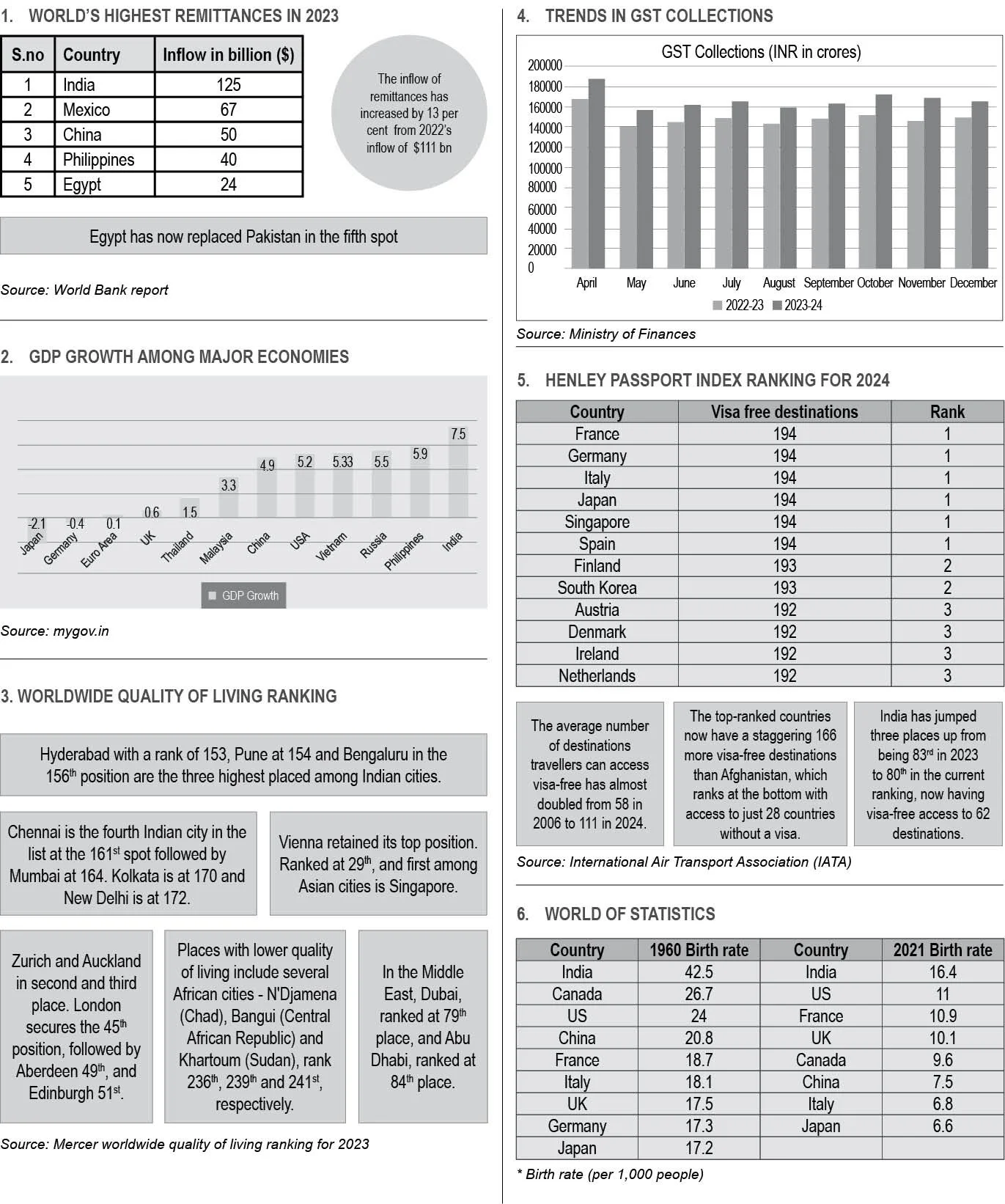
After visiting the marvelous, astonishing and fantastic refinery, the team visited the Green belt. This area has over 70 lakh plantations. The mango orchard, named as Dhirubhai Ambani Lakhibag Amrayee has over 1 lakh mango trees of more than 140 varieties of Mango. Drip irrigation method is applied to water all the plants and thereby conserving precious water.

After a refreshing lunch, the team was taken to the jetty. The team saw the large subsea cables and pipes connected to the jetty, to transfer crude from large crude carrier to jetty and then to the refinery.The jetty has single point mooring (SPM) and tanker berth for exporting its products.

As an individual, it is easy to reach the nearest fuel station and fill the tank with gasoline in a vehicle. But, after touring the refinery, the participants understood the quantum of efforts that goes in processing petroleum products from crude oil.

Society News

LEARNING EVENTS AT BCAS

1. A three-day Mega Conference “R७ima५ine” was held from 4th January to 6th January, 2024 at Jio World Convention Centre, Mumbai.

We take pride in informing you that “R७ima५ine”, organised by the BCAS to celebrate its 75th year, received a thumping response; 1,000+ delegates from 75 Cities attended the event. R७ima५ine was, without a doubt, the biggest and most ambitious event hosted by BCAS in its illustrious history — an exuberant recognition of resilience, growth and the indomitable spirit of the accounting community, guided by over 40 thought leaders from different fields. The event was highly appreciated and acclaimed in the profession and garnered deserving coverage in the press.

For accessing the press coverage,

click here – https://bit.ly/496wOyV

On this occasion, BCAS also received a note of appreciation from the Hon’ble Prime Minister of India recognising the Society’s seven-and-a-half-decade committed service to the nation. The said commendation can be accessed at https://bit.ly/3SBhZhM

A detailed report on “R७ima५ine” is also given in this issue on page no: 11.

2. International Economics Study Group organised a meeting “Israel Palestine Conflict-Issues & Implications” on 19th December, 2023 in an Online Mode.

Group Leaders CA Deepak Karanth and CA K. K. Pahuja shared their practical insights regarding the Israel-Palestine conflict. The discussion on the war, spanning over 75 years with six wars and two uprisings, followed the intricacies of the conflict and noted that it is linked to the Middle East’s complex geopolitics, and that similar to the Russia-Ukraine conflict, involving powerful nations, its escalation could destabilise the global economy, impacting India and the world.

CA Deepak Karanth presented Israel’s perspective, while CA K. K. Pahuja highlighted Palestine’s suffering, revealing dire conditions in Gaza with a 50 per cent unemployment rate, widespread poverty, and a food security crisis. As tensions rise, targeting the US to draw it back into the Middle East may lead to further escalation, leaving the world on edge, uncertain if the US can prevent conflict escalation.

They further elaborated that the fate of the Israel-Palestine conflict is intertwined with global stability and the potential for repercussions that could resonate far beyond the borders of the Middle East, particularly for the economies of India and the world at large. The escalating tensions raise concerns about the fragility of the current state of affairs, akin to a powder keg waiting to explode.

3. Direct Tax Laws Study Circle organised a meeting “Financial Instrument Taxation” on 7th December, 2023 in an Online Mode.

The Group Leader CA Anup Shah shared a detailed analysis of financial instrument taxation, referring to specific sections and case laws to support his insights, showcasing a solid understanding of the topic. He further elaborated on the following:

1. Various trading segments.

2. Rates of taxation for listed and unlisted equity investments.

3. The requirement of audit of accounts as prescribed under section 44AB of the Income-tax Act, 1961 (Act).

4. The prescribed method of calculation of turnover in the case of speculative, derivatives and delivery based transactions.

5. The impact of section 44AD(4) read with section 44AD(1) along with a reference to the recently added proviso.

6. The tax treatment as per the Act of:

a. Shares and securities held as assets vs. stock-in-trade with reference to the CBDT Circular 6/2016, dated 29th February, 2016.

b. On the conversion of shares held as capital assets into stock-in-trade with reference to certain case laws.

c. In the case of the issue of shares in a company in which the public is not substantially interested as per section 56(2)(viib) of the Act.

d. In the case of the receipt of ESOPs.

e. Debt instruments, buyback of shares, and crypto assets.

The meeting was interactive and various issues were deliberated upon by the participants.

Miscellanea

1. BUSINESS

RBI not thinking of moving towards de-dollarisation: Governor

Reserve Bank of India (RBI) Governor Shaktikanta Das said that it is incorrect to say that there was a move towards de-dollarisation as the efforts of the central bank towards internationalisation of the rupee are not aimed at replacing the dollar.

“There is no such thinking to move towards de-dollarisation. The dollar will continue to be the dominant currency and whatever we are doing for the internationalization of the rupee, it is not to replace the dollar,” Das said at the World Economic Forum (WEF) Annual Meeting 2024 in Davos late on Tuesday.

India’s economy is expanding, with an increasing role in international trade. Gradually and steadily, India has entered new markets, countries, and products, particularly in services.

The objective is to offer the rupee as an alternative currency for settling transactions in international trade. It is incorrect to describe the internationalisation of the rupee as an effort towards de-dollarisation.

“Dependence on one currency can be risky as the entire global trade will be subject to the volatility of that particular currency,” he added.

Das said that the RBI has managed to achieve currency stability, making it ideal for overseas companies to invest in India and domestic companies to tap capital markets abroad.

Inflation in India is moderating and steadily approaching the central bank’s 4 per cent target while growth prospects remain robust, the RBI Governor noted.

Das also said that cryptocurrencies pose a huge risk, particularly for emerging market economies because they can impact your financial stability, currency stability, and monetary system.

“Cryptocurrency as a product is highly speculative, and my opinion and Reserve Bank’s opinion is that considering the big risk around it, I think countries like India should be very careful,” he added.

(Source: International Business Times — By IBT desk — 17th January, 2024)


2. TECHNOLOGY

PLI scheme to help India create a complete mobile supply chain in the next 3 years: Samsung

India will establish a complete supply chain for mobile production in the next three years driven by the production-linked incentive (PLI) scheme, just like China built its global supply chain years ago, and then, the growth will truly be led by the industry, Samsung India President and CEO J.B. Park said on 18th January, 2024.

In 2021, the Indian government had announced an outlay of R1.97 lakh crore for the PLI schemes for 13 key sectors, including mobile manufacturing.

The minimum production in India as a result of PLI schemes is expected to be over $500 billion in 5 years. Of the $101 billion electronics production in FY23, smart phones constituted $44 billion.

According to the government, the PLI scheme for smart phone manufacturing has resulted in local value addition of 20 per cent within a span of two-three years.

According to Park, the country still has about three years to further boost mobile exports from the country
and enable several brands to be eligible for the PLI scheme.

“This kind of policy that the government has given to the brands to come and build not only for domestic usage but also for exports, these kinds of incentives are very important to pivot the target that needs to be achieved,” Park told reporters here.

He said that in the next three years, “a complete mobile supply chain will be established in India”, just like China built its global supply chain years ago.

“After three years when all of the sub-supplier supply chains are established, I think the growth engine will be industry-led instead of government policy-led. It is the actual development that occurs with such initiatives,” Park noted.

The PLI scheme has attracted over ₹1.03 lakh crore of investment (till November 2023), according to the Ministry of Commerce and Industry.

The biggest impact of the PLI scheme is seen in mobile phone manufacturing as PLI beneficiaries, which account for about 20 per cent of the market share, contributed to about 82 per cent of mobile phone exports during FY 2022–23.

“Production of mobile phones increased by more than 125 per cent and export of mobile phones increased around 4 times since FY 2020–21,” according to the ministry. Manufacturing of various electronic components like batteries, chargers, printed circuit boards, camera modules, passive components and certain mechanics have been localised in the country.

Green shoots in the component ecosystem have emerged with large companies such as Tatas entering component manufacturing. The PLI scheme has made Indian manufacturers globally competitive, attracted investment in the areas of core competency and cutting-edge technology; ensured efficiencies; created economies of scale; enhanced exports, and made India an integral part of the global value chain.

According to Park, India has around 250 million feature phone users and they will eventually migrate to smart phones and, in five to 10 years of AI time-frame, they will again upgrade to the next level of device.

“More than 650 million smart phone base will start to increase as we will see more shifts of feature phone users happening to smart phones in India,” he said.

With the new Galaxy S24 series, Samsung has heralded the ‘AI phone’ era and AI-driven features will need to go local in order to address the needs of the masses.

“With brilliant engineers in India, we are already making the experiences local for our consumers. We will develop more local use cases adaptive to the users with AI,” said Park.

(Source: International Business Times — By IBT Technology desk — 18th January, 2024)


3. SCIENCE

Intermittent fasting may help slow brain ageing, boost longevity

If you want to help slow down your brain from ageing and increase your lifespan then follow diet patterns like intermittent fasting or restrict your calorie intake, suggests a study, led by researchers, one being of Indian origin.

A team of scientists at the Buck Institute for ‘Research on Ageing’ in California have found a role for a gene called OXR1 that is necessary for the lifespan extension seen with dietary restriction and is essential for healthy brain ageing.

OXR1 gene is an important brain resilience factor protecting against ageing and neurological diseases, said the researchers in the study, published in the journal Nature Communications.

“When people restrict the amount of food that they eat, they typically think it might affect their digestive tract or fat buildup, but not necessarily about how it affects the brain,” said Kenneth Wilson, a postdoctoral student at the Institute.

“As it turns out, this is a gene that is important in the brain.”

The team additionally demonstrated a detailed cellular mechanism of how dietary restriction can delay ageing and slow the progression of neurodegenerative diseases.

The study, done in fruit flies and human cells, also identifies potential therapeutic targets to slow ageing and age-related neurodegenerative diseases.

“We found a neuron-specific response that mediates the neuroprotection of dietary restriction,” said Professor Pankaj Kapahi from Buck Institute.

“Strategies such as intermittent fasting or caloric restriction, which limit nutrients, may enhance levels of this gene to mediate its protective effects,” he added.

The team began by scanning about 200 strains of flies with different genetic backgrounds. The flies were raised with two different diets, either with a normal diet or with dietary restriction, which was only 10 per cent of normal nutrition.

They found the loss of OXR1 in humans results in severe neurological defects and premature death. In mice, extra OXR1 improves survival in a model of amyotrophic lateral sclerosis (ALS).

Further, a series of in-depth tests found that OXR1 affects a complex called the retromer, which is a set of proteins necessary for recycling cellular proteins and lipids.

Retromer dysfunction has been associated with age-related neurodegenerative diseases that are protected by dietary restriction, specifically Alzheimer’s and Parkinson’s diseases.

The team found that OXR1 preserves retromer function and is necessary for neuronal function, healthy brain ageing, and lifespan extension seen with dietary restriction.

“Diet is influencing this gene. By eating less, you are actually enhancing this mechanism of proteins being sorted properly in your cells, because your cells are enhancing the expression of OXR1,” said Wilson.

(Source: International Business Times — By IBT desk — 16th January, 2024)

Statistically Speaking

Regulatory Referencer

I. SEBI

1. Extension of the deadline for implementation of new SCORES norms to April 2024: Earlier, SEBI had notified norms for the redressal of investor grievances through the SEBI Complaint Redressal (SCORES) Platform and linking it to the Online Dispute Resolution platform. As per the said circular, the new norms were to be implemented from 4th December, 2023. However, SEBI has now extended the date of implementation to 1st April, 2024. [Notification No. SEBI/HO/OIAE/IGRD/CIR/P/2023/18, dated 1st December, 2023]

2. Revised framework for computation of Net Distributable Cash Flow by REITs and INVITs: In order to promote ease of doing business, SEBI has decided to standardise the framework for the calculation of available Net Distributable Cash Flows (NDCF). Accordingly, the revised framework for computation of NDCF by REITs, INVITs, and its Holding companies / SPVs shall be as per the computation formula provided in the circulars. Further, any restricted cash should not be considered for NDCF computation by the SPV, REITs or InvITs. The revised framework shall be applicable from 1st April, 2024. [Circular No. SEBI/HO/DDHS/DDHS-POD/P/CIR/2023/184 & 185, dated 6th December, 2023]

3. Procedures for dematerialisation / crediting of units by AIFs when investors have not provided dematerialisation account details: SEBI had earlier mandated AIFs to dematerialise units within a specified timeframe. SEBI has now provided guidelines for dematerialising / crediting units in cases where investors haven’t provided demat account details. As per the said circular, the AIF managers shall continue to reach out to existing investors to obtain demat account information. Additionally, provisions for a separate demat account named “Aggregate Escrow Demat Account” have also been introduced. [Circular No. SEBI/HO/AFD/POD1/CIR/2023/186, dated 11th December, 2023]

4. Revision of framework requiring Stock Brokers / Clearing Members to upstream clients’ funds to Clearing Corporations: Earlier, SEBI issued a framework requiring Stock Brokers (SBs) / Clearing Members (CMs) to upstream (i.e., placed with) clients’ funds to Clearing Corporations (CCs). Later, representations have been received citing difficulties in implementation. Now, SEBI has issued a revised framework for the same. The bank instruments provided by clients as collateral cannot be upstreamed to CCs, and they shall be ineligible to be accepted as collateral in any segment of the securities market. [Circular No. SEBI/HO/MIRSD/MIRSD-POD-1/P/CIR/2023/187, dated 12th December, 2023]

5. Accreditation Agencies, which are also KRAs, can now access KYC docs of applicants available with them: Earlier, SEBI vide circular dated 26th August, 2021, issued a framework for accreditation of investors by Accreditation Agencies. Now, SEBI has decided to simplify the requirements for grant of accreditation to investors. Accreditation Agencies, which are also KYC Registration Agencies (KRAs), may access Know Your Customer (KYC) documents of applicants available with them in the capacity of KRA and may also access the same from the database of other KRAs, for the purpose of accreditation. [Circular No. SEBI/HO/AFD/POD1/CIR/2023/ 189, dated 18th December, 2023]

6. Amendment of guidelines for online resolution of disputes in the Indian securities market: Earlier, the SEBI vide circular dated 11th August, 2023, had consolidated the norms relating to the guidelines for online resolution of disputes in the Indian securities market. Pursuant to feedback received for providing clarity on certain aspects, SEBI has notified various additions and amendments. It has been now decided that the seat and venue of mediation, conciliation and / or arbitration shall be in India and can be conducted online. Further, various other changes were notified too. [Circular No. SEBI/HO/OIAE/OIAE_IAD-3/P/CIR/2023/191, dated 20th December, 2023]

7. Trading Members (TMs) allowed to settle client accounts on Fridays and / or Saturdays, offering flexibility and easing operations: SEBI has decided to accept the recommendation of the Broker’s Industry Standards Forum (ISF) to settle the running account of clients on Friday and / or Saturday, which streamlines the process of settlement and ensures ease of doing business for various stakeholders viz., stock brokers and banks, while at the same time safeguarding the interests of the investors by ensuring error-free settlement. Accordingly, SEBI has made key changes in the Master Circular Dated 17th May, 2023. [Circular No. SEBI/HO/MIRSD/MIRSD-POD1/P/CIR/2023/197, dated 28th December, 2023]

8. Extension of timeline for nomination in demat accounts and mutual funds to 30th June, 2024: Earlier, SEBI had extended the deadline for submitting the ‘choice of nomination’ for demat accounts and mutual fund folios to 31st December, 2023. However, in response to representations from market participants and in an effort to enhance compliance ease and investor convenience, the deadline for submitting the ‘choice of nomination’ for demat accounts and mutual fund folios has been further extended to 30th June, 2024. [Circular No. SEBI/HO/MIRSD/POD-1/P/CIR/2023/193, dated 27th December, 2023]


II. DIRECT TAX: SPOTLIGHT

1. Guidelines under 194O(4) of the Income-tax Act,1961 —

Circular No. 20 of 2023 dated

28th December, 2023:

In continuation to circular no. 17 of 2020 dated 29th September, 2020, and circular no. 20 of 2021 dated 25th November, 2021, CBDT has issued further guidelines to remove the difficulties in implementation of section 194O.

2. Form ITR-1 SAHAJ and Form ITR-4 SUGAM notified for A.Y. 2024–25 — Income-tax (Thirtieth Amendment) Rules, 2023 — NotificatIoN No. 105/ 2023 dated 22nd December, 2023.

III. FEMA AND IFSCA REGULATIONS

1. FEMA Notification on “Manner of Receipt and Payment” revised:

FEMA Notification No. 14(R)/2016-RB dated 2nd May, 2016, on “Manner of Receipt and Payment” has been replaced and superseded by FEMA Notification 14(R)/2023-RB dated 21st December, 2023. It seems to be an attempt to bring simplification and clarity in line with the internationalisation of the Rupee. It has been clarified that trade transactions can now be in Indian Rupees or any foreign currency. Provisions regarding special cases have been removed considering INR payments and receipts are now allowed. It should be noted that the new notification uses the term “foreign currency” in place of “freely convertible foreign currency”. [Notification No. FEMA 14(R)/2023-RB dated 21st December, 2023]

2. Overhaul of Master Direction on Risk Management and Inter-Bank Dealings:

The present framework for hedging of foreign exchange risks was after a comprehensive review and public consultation undertaken in 2020. RBI has further reviewed them now based on feedback received from market participants and experience gained since the revised framework came into force. A new Master Direction on “Risk Management and Inter-Bank Dealings” has been issued and will come into effect on 5th April, 2024. The regulatory framework governing the hedging of foreign exchange risks has been made more comprehensive by consolidating the directions in respect of all types of transactions — over-the-counter (OTC) and exchange traded. Further, the Directions contained in the Currency Futures (Reserve Bank) Directions, 2008, and Exchange Traded Currency Options (Reserve Bank) Directions, 2010, are also now incorporated in the same Master Direction. [A.P. (DIR Series) Circular No. 13 dated 5th January, 2024]

3. Taxation, Accounting, Book-Keeping and Financial Crime Compliance Services Notified as ‘Financial Services’ under the IFSCA:

The Finance Ministry has expanded the kind of services that Units in an International Finance Services Centre can be provided by notifying book-keeping services, accounting services, taxation services and financial crime compliance services as ‘financial services’ under the IFSC Authority Act, 2019. Such financial services shall be offered by units in an IFSC only to non-residents (as per FEMA) whose businesses are not set up either by splitting up or reconstructing or reorganising businesses already in existence in India. Such Units shall also not offer services by either transferring or receiving existing contracts or work arrangements from their Indian group entities. Financial crime compliance services shall include services rendered in relation to compliances of Anti-Money Laundering (AML), Countering the Financing of Terrorism (CFT) measures and Financial Action Task Force (FATF) recommendations, and other related activities. [Notification No. S.O. 291(E) dated 18th January, 2024]

Allied Laws

45 IFFCO Tokio General Insurance Co. Ltd vs. Geeta Devi and others

AIR 2023 Supreme Court 5545

Date of Order: 30th October, 2023

Compensation — Right of recovery — Death due to negligent driving of employee — Fake driver’s license — Failure on the part of the insurance company to plea — Failure on the part of the insurance company to prove wilful breach of insurance policy by the insured — Insurance policy did not mandate to confirm every license with RTO authorities — Liable to compensate for damages. [S. 149, 168, Motor Vehicle Act, 1988].

FACTS

In 2010, Mr. Dharambir died in a road accident, when his motorcycle was hit by a truck driver who was driving negligently. Dependents (Respondents) of the deceased sought compensation from the insurance company of the truck (Petitioner). The Tribunal held that the insurance company was liable but later discovered that the driving license of the truck driver was fake. Thus, the Tribunal directed the Petitioner to deposit the awarded amount with the liberty to recover the same from the present owners of the truck. Aggrieved, the Petitioner approached the Hon’ble Delhi High Court. The Hon’ble High Court ruled that the insurance company couldn’t recover compensation from the current truck owner as the Petitioner neither pleaded nor proved that the insured (vehicle owner) did not take adequate steps to verify the genuineness of the driving licence and in the absence of such a plea on its part, it cannot be said that there was a breach of contract.

The Petitioner filed a Special Leave Petition before the Hon’ble Supreme Court.

HELD

The Hon’ble Supreme Court observed that employers relying on a driver’s license from a seemingly competent authority cannot be expected to independently verify every license with the RTO authority. Further, the court observed that such a condition was not mandated in an insurance policy. The Hon’ble Supreme Court also observed that Petitioner failed to prove that there was a wilful breach of insurance policy on the part of the insured. The Court concluded that the insurance company lacked the right to recover compensation, given the absence of pleading and proof for a willful breach.

Thus, the decision of the Hon’ble Delhi High Court was upheld.


46 Prataap Snacks Ltd vs. Royal Marketing

AIR 2023 Madhya Pradesh 173

Date of Order: 28th July, 2023

Arbitration and Conciliation — Super-Stockiest agreement with provision for arbitration — Application for appointment of arbitrator -Instrument neither registered nor stamped — Cannot be considered as a contract — Application dismissed. [S. 7, 11(6), Arbitration and Conciliation Act, 1996; S. 35, Indian Stamps Act, 1899].

FACTS

The Petitioner, a registered company entered into a super-stockist agreement with the Respondent, a Telangana-based proprietor firm, appointing the proprietor firm as a non-exclusive distributor. The Petitioner alleged that despite purchasing materials from the Petitioner, the Respondent failed to pay the outstanding amount. The agreement included a provision for dispute resolution through discussion and subsequently through formal arbitration proceedings. The Petitioner proposed a retired High Court Judge as the sole arbitrator. With no response from the Respondent, the Petitioner filed an application before the court to seek a resolution.

HELD

The Hon’ble Madhya Pradesh High Court observed that the Petitioner had not submitted the original or certified copy of the agreement. Furthermore, the photocopy of the agreement which was provided was unregistered and unstamped. Relying on the decision of the Hon’ble Supreme Court in the case of N.N. Global Mercantile Private Limited vs. Indo Unique Flame Ltd [(2023) SCC Online SC 495], the Hon’ble Madhya Pradesh High Court held that the instrument which attracts the stamp duty may contain an arbitration clause and if it is not stamped or insufficiently stamped, the same cannot be said to be a contract which could be enforced. It is further held that the arbitration agreement which attracts the stamp duty, if not stamped or insufficiently stamped cannot be acted upon given Section 35 of the Indian Stamps Act.

Thus, the Arbitration application was dismissed.


47 Sri Basavegowda vs. The State of Karnataka

Writ Petition No. 10872 of 2023 (Karnataka High Court at Bengaluru)

Date of Order: 20th December, 2023

Gratuity — Appointed as daily wage employee — Services regularised subsequently — Retirement after 42 years — Denied gratuity for the time spent as a non-regularised employee — Daily wage employee same as Regular employee – Entitled to full gratuity for services of 42 years. [S. 2(e), 14, Payment of Gratuity Act, 1972].

FACTS

The Petitioner, a septuagenarian, joined the services of a Government High School on 18th November, 1971, as a Group-D employee. The Petitioner had joined as a daily wage employee until his services were regularised on 1st January, 1990. He retired on 31st May, 2013, after serving for 42 years in the Government school. However, the gratuity entitlement during the period when the petitioner served as a daily wage worker was denied, with gratuity being granted only from the date of service regularization. Thus, he filed a writ petition before the Hon’ble Karnataka High Court.

HELD

The Hon’ble Karnataka High Court after interpreting section 2(e) and 14 of the Payment of Gratuity Act, 1972 held that a daily wage employee is within the definition of an employee. Thus, there is no distinction between a regular employee and a daily wage employee. The Hon’ble Karnataka High Court relied on the decisions of the Hon’ble Supreme Court in the case of Nagar Ayukt Nagar Nigam, Kanpur vs. Mujib Ullah Khan [(2019) 6 SCC 103] and Netram Sahu vs. State of Chhattisgarh [(2018) 5 SCC 430) and directed the Respondent to pay gratuity to the Petitioner for his entire period of service i.e. for 42 years along with interest.

The Petition was allowed.


48 Nitin Shambhukumar Kasliwal vs. Debt Recovery Tribunal

Writ Petition No. 26333 of 2023 (Karnataka High Court at Bengaluru)

Date of Order: 6th December, 2023

Impounding of Passport — Power is available only to Passport Authority or Constitutional Courts – Impounding by Debt Recovery Tribunal — No authority — Passport impounded to be immediately released. [S. 10, The Passport Act, 1967].

FACTS

On 16th April, 2015, the Hon’ble Debt Recovery Tribunal ordered impounding of the passport of the Petitioner following the initiation of a case against him by lender banks. The petitioner was granted temporary access to his passport whenever he travelled abroad for business purposes, subject to the submission of a duly filed application and appropriate travel itineraries. On 2nd December, 2016, the Petitioner sought the release of his passport as he had to renew it before its validity expired. However, his application was rejected. The Petitioner, thus, filed an application under Articles 226 and 227 of the Constitution before the Hon’ble Karnataka High Court (Bengaluru Bench) seeking an order instructing the Hon’ble Debt Recovery Tribunal (Respondent) to release the petitioner’s passport for passport renewal.

HELD

The Hon’ble Karnataka High Court after referring to the decision of the Hon’ble Supreme Court in the case of Suresh Nanda vs. CBI [(2008) 3 SCC 674] held that as per section 10 of the Passport Act, 1967, only the Passport Authority of India has the powers to impound or seize a passport of a citizen. The Debt Recovery Tribunal had no power to order the impounding of the passport. The Hon’ble Karnataka High Court also observed that neither the police nor the courts (other than constitutional courts) have the power to seize or impound the passports of citizens. Thus, the Hon’ble Court ordered the release of the passport by the Respondent.

The Petition was allowed.


49 Amol Vaman Tilve vs. Goa State Information Commission and others

AIR 2023 Bombay 382

Date of Order: 21st September, 2023

Right to Information — Failure to provide information within statutory timeline — First Appeal – Directed to provide information — Failure to provide information — Second Appeal — Directed to provide information and awarded cost — Petition before High Court — Consistently failed to provide information — Penalty justified. [S. 4, 20, Right to Information Act, 2005].

FACTS

Respondent had filed an application seeking information under provisions of the Right to Information Act, 2005. However, the Petitioner failed to provide the relevant information within the prescribed timeline. The Respondent instituted the first appeal after her application was deemed to have been rejected. In the first appeal, the Petitioner was directed to give the information as per the said application. However, despite directions, the Petitioner did not bother to provide the information. The Respondent, thus, filed a second appeal to the Global State Information Commission (GSIC). The Ld. GSIC allowed the appeal in favour of Respondent and imposed a penalty on the Petitioner. The Petitioner challenged this order before the Hon’ble Bombay High Court (Goa Bench) by invoking provisions of articles 226 and 227 of the Constitution.

HELD

The Hon’ble Bombay High Court held that the Petitioner had consistently failed to perform its statutory duties. The Hon’ble court further held that various allegations put forth by the Petitioner such as Respondent acting under mala-fide intentions were vague and baseless. Furthermore, the Court observed that the Petitioner was seeking excuses of the corona virus and nationwide lockdown in March 2020, which were not acceptable. Thus, the Hon’ble Bombay High Court upheld the order of the GSIC and directed the Petitioner to pay the penalty ordered by the Ld. GSIC.

The Petition was dismissed.

Shares ~ Nominee Vs. Will: And The Winner Is……?

INTRODUCTION

Problems of inheritance and succession are inevitable especially in a country like India where many businesses are still family owned or controlled. Many times bitter succession battles have destroyed otherwise well established businesses.

A Will is the last wish of a deceased individual and it determines how his estate and assets are to be distributed. However, in several cases, the deceased has not only made a Will, but he has also made a nomination in respect of several of his assets.

Nomination is something which is extremely popular nowadays and is increasingly being used in co-operative housing societies, depository / demat accounts, mutual funds, Government bonds / securities, shares, bank accounts, etc. Nomination is something which is advisable in all cases even when the asset is held in joint names. Simply put, a nomination means that the owner of the asset has designated another person in his place after his death. SEBI has made it mandatory for all investors to compulsorily opt for nomination in demat accounts or expressly opt out of the same. The deadline for the same was 31st December, 2023, and those for holders who did not nominate or opt out of nomination by 31st December, 2023, their demat account were frozen.

A question which often arises is which is superior — the Will or the nomination made by the deceased owner. While the position was quite clear that a nominee was not superior to the legal heirs / a Will, a judgment rendered in the context of shares in a company had taken a contrary view. The Supreme Court in Shakti Yezdani vs. Jayanand Jayant Salgaonkar, Civil Appeal No. 7107 of 2017, Order Dated 14th December, 2023, has settled the matter once and for all!

EFFECT OF NOMINATION

The legal position in this respect is crystal clear. Once a person dies, his interest stands transferred to the person nominated by him. Thus, a nomination is a facility to provide the society, company, depository, etc., with a face with whom it can deal with on the death of a person. On the death of the person and up to the execution of the estate, a legal vacuum is created. Nomination aims to plug this legal vacuum. A nomination is only a legal relationship created between the society, company, depository, bank, etc. and the nominee.

The nomination seeks to avoid any confusion in cases where the Will has not been executed or where there are disputes between the heirs. It is only an interregnum between the death and the full administration of the estate of the deceased.

WHICH IS SUPERIOR?

A nomination continues only up to and until such time as the Will is executed. No sooner the Will is executed, it takes precedence over the nomination. Nomination does not confer any permanent right upon the nominee nor does it create any beneficial right in his favour. Nomination transfers no beneficial interest to the nominee. A nominee is for all purposes a trustee of the property. He cannot claim precedence over the legatees mentioned in the Will and take the bequests which the legatees are entitled to under the Will.

The Supreme Court in the case of Sarbati Devi vs. Usha Devi, 55 Comp. Cases 214 (SC), had an occasion to examine this issue in the context of a nomination under a life insurance policy. The Court held, in the context of the Insurance Act, 1938, that a mere nomination made does not have the effect of conferring on the nominee any beneficial interest in the amount payable under the life insurance policy on the death of the assured. The nomination only indicates the hand which is authorised to receive the amount, on the payment of which the insurer gets a valid discharge of its liability under the policy. The amount, however, can be claimed by the heirs of the assured in accordance with the law of succession governing them.

The Supreme Court, once again in the case of Vishin Khanchandani vs. Vidya Khanchandani, 246 ITR 306 (SC), examined the effect of a nomination in respect of a National Savings Certificates. The Court examined the National Savings Certificate Act and various other provisions and held that the nominee is only an administrative holder. Any amount paid to a nominee is part of the estate of the deceased which devolves upon all persons as per the succession law and the nominee must return the payment to those in whose favour the law creates a beneficial interest.

Again, in Shipra Sengupta vs. Mridul Sengupta, (2009) 10 SCC 680, the Supreme Court upheld the superiority of a legal heir as opposed to a nominee in the context of a nomination made under a Public Provident Fund.

The Supreme Court again reinforced its view on a nominee being a mere agent to receive proceeds under a life insurance policy in Challamma vs. Tilaga (2009) 9 SCC 299.

In Ramesh Chander Talwar vs. Devender Kumar Talwar, (2010) 10 SCC 671, the Supreme Court upheld the right of the legal heirs to receive the amount lying in the deceased’s bank deposit to the exclusion of the nominee.

The position of a nominee in a flat in a co-operative housing society was analysed by the Supreme Court in Indrani Wahi vs. Registrar of Co-operative Societies, CA NO. 4646 of 2006(SC). The Court held that the possession of the flat must be handed over by the society immediately to the nominee till such time as the succession issue (under a Will or intestate) is legally settled.

Thus, the legal position in this respect is very clear. Nomination is only a legal relationship and not a permanent transfer of interest in favour of the nominee. If the nominee claims ownership of an asset, the beneficiary under the Will can bring a suit against him and reclaim his rightful ownership.

FOR SHARES AND DEMAT ACCOUNTS — IS NOMINEE SUPERIOR?

S.109A of the Companies Act, 1956, was added by the Amendment Act of 1999. S.109A provided that any nomination made in respect of shares or debentures of a company, if made in the prescribed manner, shall, on the death of the shareholder / debenture holder, prevail over any law or any testamentary disposition, i.e., a Will. Thus, in case of shares or debentures in a company, the nominee on the death of the shareholder / debenture holder, becomes entitled to all the rights to the exclusion of all other persons, unless the nomination is varied or cancelled in the prescribed manner. In case the nominee is a minor, then the shareholder/debenture holder can appoint some other person who would be entitled to receive the shares/debentures, if the nominee dies during his minority. This position continues under the Companies Act, 2013 in the form of s.72 of this Act read with Rule 19 of the Companies (Share Capital and Debentures) Rules, 2014. A similar position is contained in Bye Law 9.11 made under the Depositories Act, 1996 which deals with nomination for securities held in a dematerialised format.

A Single Judge of the Bombay High Court explained this proposition in the case of Harsha Nitin Kokate vs. The Saraswat Co-op. Bank Ltd, 112 (5) Bom. L.R. 2014. Interpreting Section 109A of the Companies Act, 1956 and the Depositories Act, the Court ruled that the rights of a nominee to shares of a company would override the rights of heirs to whom property may be bequeathed. In other words, what one writes in one’s Will would have no meaning if one has made a nomination on the shares in favour of someone other than the heir mentioned in the Will. The High Court ruled that securities automatically get transferred in the name of the nominee upon the death of the holder of shares. The nominee is required to follow the prescribed procedure in the Business Rules. Upon the death of the holder of shares the nominee would be entitled to elect to be registered as a beneficiary owner by notifying the depository participant along with a certified copy of the death certificate. The bank would be required to scrutinize the election and nomination of the nominee registered with it. Such nomination carries effect notwithstanding anything contained in a Testamentary Disposition (i.e. Wills) or nominations made under any other law dealing with Securities. The last of the many nominations would be valid.

The Court referred to the use of the word “vest” in the provisions of Section 109A of the Companies Act, 1956, which the court interpreted as giving ownership rights and not just custody rights as is the case for an insurance policy or shares of a housing society. The Bombay High Court distinguished the Supreme Court’s judgment in the case of Sarbati Devi vs. Usha Devi, 55 Comp. Cases 214 (SC) citing a difference in the language of the applicable law. Section 109A of the Companies Act, 1956 provided that upon the death of a shareholder, the shares would “vest” in the nominee. A nominee became entitled to all the rights attached to the shares to the exclusion of all others regardless of anything stated in any other disposition, testamentary or otherwise. The Court concluded that the Legislature’s intent under s.109A of the Companies Act, 1956 and Bye Law 9.11 made under the Depositories Act, 1996 was very clear, i.e., to vest the property in the shares in the nominee alone. A similar view was also endorsed by a Single Judge of the Delhi High Court in the case of Dayagen P Ltd vs. Rajendra Dorian Punj, 151 Comp. Cases 92 (Del).

A TWIST IN THE TALE?

Another Single Judge of the Bombay High Court, had an occasion to consider the above provisions of the Companies Act and the earlier decision of the Bombay High Court in Jayanand Jayant Salgaonkar vs. Jayashree Jayant Salgaonkar and others, Notice of Motion No. 822/2014 in Suit No. 503/2014 decided on 31st March, 2015. The Bombay High Court after an exhaustive study of all the Supreme Court and Bombay High Court decisions on the subject of superiority of Will / legal heirs over nomination, concluded as follows:

a) The earlier decision of Harsha Nitin Kokate vs. The Saraswat Co-op. Bank Ltd was rendered per incuriam, i.e., without reference to several binding Supreme Court and Bombay High Court decisions.

b) It wrongly distinguished the Supreme Court’s decision in the case of Sarbati Devi vs. Usha Devi whereas the reality was that the ratio of that decision was applicable even under the Companies Act, 1956.

c) Neither the Companies Act, 1956 nor the Depositories Act provide for the law of succession or transfer of property. They must be viewed as being sub-silentio (i.e., as being silent on) of the testamentary and other dispositive laws.

d) If a nomination is held as supreme then it cannot be displaced even by a Will made subsequent to the nomination. This obviously cannot be the case.

e) The nomination would even oust personal law, such as Mohammedan Law and become all-pervasive.

f) The nomination under the Companies Act is not subject to the rigour of the Indian Succession Act in as much as it does not require witnesses as mandated under this Act. It cannot be assailed on grounds of importunity, fraud, coercion or undue influence. There cannot be a codicil to a nomination. In short, a nomination, if held supreme, wholly defenestrates the Indian Succession Act. According to the judgment in Harsha Nitin Kokate, a nomination becomes a “Super-Will”, one that has none of the defining traits of a proper Will.

g) Thus, a nomination, even under the Companies Act only provides the company or the depository a quittance. A nominee only continues to hold the securities in trust and as a fiduciary for the legal heirs under Succession Law.

BOMBAY HIGH COURT DIVISION BENCH VERDICT

The Single Judge’s decision in Jayanand Jayant Salgaonkar vs. Jayashree Jayant Salgaonkar was appealed before the Division Bench of the Bombay High Court in Appeal No. 313/2015. The Division Bench observed that the object and provisions of the Companies Act were neither to provide a mode of succession nor to deal with succession at all. The Division Bench felt that the consistent view in the various judgments of the Supreme Court and the Bombay High Court must be followed and those did not warrant any departure. Accordingly, it declared that the nominee of a holder of a share or securities was not entitled to the beneficial ownership of the shares or securities which were the subject matter of nomination to the exclusion of all other persons who are entitled to inherit the estates of the holders as per the law of succession. It concluded that a bequest made in a Will executed in accordance with the Indian Succession Act, 1925 in respect of shares or securities of the deceased, superseded the nomination made under the provision of S. 109A of Companies Act and Bye-law 9.11 framed under the Depositories Act, 1996.

SUPREME COURT’S VERDICT

The Apex Court in its recent decision in the case of Shakti Yezdani (supra) has upheld the verdict of the Division Bench of the Bombay High Court. It held that reading the provision of nomination within the Companies Act with the broadest possible contours, it was not possible to say that the same dealt with the matter of succession in any manner. It referred to various decisions (cited above) which had dealt with the precedence of a Will over nomination in the context of various assets such as, bank account, insurance policy, provident fund, etc. It concluded that in all cases, the usual mode of succession was not to be impacted by such a nomination. The legal heirs therefore had not been excluded by virtue of nomination.

Importantly, the Court concluded that the presence of the three elements i.e., the term ‘vest’, the provision excluding others as well as a non-obstante clause under S.109A of the Companies Act, 1956 did not persuade the Court to hold any different view. The concept of nomination, if interpreted differently than was understood, would cause major ramifications and create a significant impact on disposition of properties left behind by deceased nominators. It referred to the use of the term ‘vest’ and held (after referring to various decisions) that it had a variable meaning and the mere use of the word ‘vest’ in a statute did not confer absolute title over the subject matter. Byelaw 9.11.1 under the Depositories Act, 1996 provided for ‘vesting’ of the securities held in the demat account unto the nominee on the death of the beneficial owner. The Court concluded that the vesting of the shares/securities in the nominee under the Companies Act, 1956 and the Depositories Act, 1996 was only for a limited purpose, i.e., to enable the Company to deal with the securities thereof, in the immediate aftermath of the shareholder’s death and to avoid uncertainty as to the holder of the securities.

It next dealt with the use of the non-obstante clause in s.109 of the Companies Act, 1956 (similar wordings are found in s.72 of the Companies Act, 2013) and held that use of the non-obstante clause, served a singular purpose of allowing the company to vest the shares upon the nominee to the exclusion of any other person, for the purpose of discharging of its liability against diverse claims by the legal heirs of the deceased shareholder. This arrangement was until the legal heirs had settled the affairs of the testator and were ready to register the transmission of shares, by due process of succession law.

It also held that the Companies Act does not lay down a line of succession. The ‘statutory testament’ by way of nomination was not subject to the same rigours as was applicable to the formation and validity of a Will under the succession laws. The Companies Act did not deal with succession nor did it override the laws of succession. It was beyond the scope of the company’s affairs to facilitate succession planning of the shareholder. In case of a Will, it was upon the administrator or executor under the Indian Succession Act, 1925, or in case of intestate succession, the laws of succession to determine the line of succession. The Court observed that the object of introduction of nomination facilities for shares was only to provide an impetus to the investment climate and ease the cumbersome process of obtaining various letters of succession, from different authorities upon the shareholder’s death.

The Court’s final verdict read as follows:

“Consistent interpretation is given by courts on the question of nomination, i.e., upon the holder’s death, the nominee would not get an absolute title to the subject matter of nomination, and those would apply to the Companies Act, 1956 (pari materia provisions in Companies Act, 2013) and the Depositories Act, 1996 as well.”

In following earlier decisions on nomination, the Court invoked the doctrine of stare decisis et non quieta movere, which means “to stand by decisions and not to disturb what is settled”. Thus, the line of judicial thinking on nomination in the case of shares / demat account was the same as earlier Court judgements on other asset classes.

EPILOGUE

The Court has thankfully prevented a major upheaval in estate planning, as is understood. The Court made a very important and telling observation that an individual dealing with estate planning or succession laws understood nomination to take effect in a particular manner and expected the implication to be no different for devolution of securities per se. Therefore, an interpretation otherwise would inevitably lead to confusion and possibly complexities, in the succession process, something that ought to be eschewed.

Recent Developments in GST

A. AMENDMENT TO CGST ACT

Act No. 48 of 2023 dated 28th December, 2023

By this Act, CGST Act is amended. The amendment is relating to appointment and age limits of the Members of GST Appellate Tribunal. Amongst others, the Advocate is also eligible to appointment as member subject to fulfillment of other conditions.

B. NOTIFICATIONS

i) Notification No. 55/2023-Central Tax dated 20th December, 2023

By above notification, due date for filing of return in FORM GSTR-3B for the month of November 2023 for the persons registered in certain districts of Tamil Nadu is extended till 27th December, 2023.

ii) Notification No. 56/2023-Central Tax dated 28th December, 2023

By above notification, dates for specified compliances are extended in exercise of powers under section 168A of CGST Act. The time limit specified for issuing orders under section 73(10) for the year 2018–19 is extended till 30th April, 2024, and for the year 2019–20 till 31st August, 2024.

iii) Notification No. S.O.1(E), dated 29th December, 2023

By this notification, the principal Bench of Goods and Services Tax Appellate Tribunal (GSTAT) is constituted at New Delhi.

C. NOTIFICATIONS RELATING TO RATE OF TAX

Notification No. 1/2024-Central Tax (Rate) dated 3rd January, 2024 & Notification No. 1/2024-Integrated Tax dated 3rd January, 2024

The above notifications seek to amend NotificationNo. 01/2017- Central Tax (Rate) dated 28th June, 2017 and Notification No. 1/2024-Integrated Tax dated3rd January, 2024. Particularly, the changes are made in Schedule 1, and in Sr. No.165 & 165(A), the tariff items are substituted. The said serial numbers are relating to LPG and other gases.

D. ADVISORY / INSTRUCTIONS

a) Instruction no. 5/2023-GST dated 13th December, 2023 – In this instruction, CBIC referring to judgment of Hon. Supreme Court in the case of Northern Operating Systems Private Limited (NOS), has instructed that the application of section 74(1) of the CGST Act for issuing show cause notices should only occur when investigations reveal concrete evidence of fraud, deliberate misrepresentation, or withholding of facts to avoid tax.

b) The GSTN has issued Advisory dated 29th December, 2023, informing about extension for reporting opening balance of ITC reversal.

c) The GSTN has issued an Advisory dated 1st January, 2024, whereby availability of functionalities on the portal for the GTA taxpayers is informed.

E. ADVANCE RULINGS

49 Liability to GST vis-à-vis Money deposited in Escrow Account

Dedicated Freight Corridor Corporation of India Ltd.

(Order No. A. R. GUJ/GAAR/R/2023/31

dated 3rd November, 2023 (Guj)

The facts are that M/s. Dedicated Freight Corridor Corporation of India Limited (hereinafter, referred as Applicant), a PSU under the ownership and control of Ministry of Railways and incorporated under the Companies Act, 1956, is registered with the GST department.

Applicant is engaged in the business of construction, maintenance and operation of dedicated freight corridors. To undertake this work, they enter into contract with third-party contractors. The agreements so entered into contain dispute resolution clauseto tackle any eventuality of dispute that may arise between the contractor and the applicant.

The dispute resolution clause is based on the General Conditions for Contract as defined in FIDC’s first Edition 1999. [FIDIC means (Federation InternationaleDesIngenieurs – Conseils) which is an International Standards Organization for Consulting Engineering & Construction Technology].

The dispute resolution clause has various features and time mechanisms.

The relevant clause is about deposit of money into Escrow Account, pending litigation. The condition related to deposit in Escrow Account states that if PSUs are challenging any award / order passed against them by the Arbitral Tribunal, they are required to deposit 75 per cent of the amount directed to be paid in such award / order, in an Escrow Account against bank guarantee (BG) submitted by the contractor, without prejudice to the final order of the Court in the matter under challenge. Further that this deposit of 75 per cent amount into Escrow account by the PSU is subject to the fact that the contractor may ask for payment of 75 per cent of the amount awarded in terms of Cabinet Committee of Economic Affairs (CCEA) decision, after justifying the utility of such payment supported with authentic documents.

It was submission of applicant that the amount so deposited by the applicant in an Escrow account cannot be withdrawn by the contractor on his own volition. It was explained that as per the Arbitral Award Escrow Account Agreement, the Banker shall act as the trustee of the Escrow account and in terms of Clause 5 of the said agreement, the concerned banker shall withdraw and appropriate the amounts from the said Escrow account strictly in accordance with the instructions issued by the applicant to the contractor.

The further process of deposit in Escrow Account is that in case the applicant succeeds in the challenge / appeal, the amount so deposited and utilised by the Contractor is required to be paid back along with applicable Interest, and if the contractor fails to do so, the Applicant can en-cash the BG submitted by the contractor.

It is also evident that in case the challenged order / award is passed in favour of the contractor, the Applicant will be liable to pay the remaining 25 per cent of the amount along with any remaining balance in the Escrow account.

The applicant interpreted that even though he has parted away with 75 per cent of the disputed amount required to be paid in terms of the DAB decision / arbitral award, it is not an amount finally ‘paid’ to the contractor but only ‘deposited’ in an Escrow account.

It is submission of applicant that in terms of section 7 of the CGST Act, 2017, with respect to the transaction in question, it cannot be said that there is any supply of goods / services since there is no sale, transfer, barter, exchange or disposal made or agreed to be made for consideration by a person in the course or furtherance of business. It was also submitted that the amount deposited is under its control and appropriation is subject to its consent and subject to furnishing of BG of equivalent amount by contractor.

The treatment of ‘deposit’ as per the definition of term ‘Consideration’ was cited. As per the applicant, the deposit in Escrow Account is deposit as referred to in said definition.

Applicant also pointed out consequences if such deposit in Escrow account is treated as supply.

It was clarified that the present application is in respect of litigated area where no invoice about such litigated area is raised by contractor, like escalation clause, prior period differential amount, etc.

With the above background, the applicant posed the following question for advance ruling:

“1. Whether the amount deposited by the applicant (75%) in escrow account against bank guarantee pending outcome of the further challenge against Arbitral Award or dissatisfaction against DAB decision, is liable to GST under the provisions of CGST Act, 2017?

2. If the answer to first question is in affirmative, then, what shall be the ‘time of supply’ when tax on such DAB/arbitral award is payable to Government exchequer, i.e., whether tax is payable (a) when part amount (75%) is deposited into escrow account pending litigation, or (b) when complete award amount (100%) is paid to the contractor pursuant to finality of the decision.

3. If answer to Question No. 1 is affirmative, whether the applicant is eligible to claim Input Tax Credit (ITC) thereupon?”

The ld. AAR considered argument of department also where they stated that it is supply and liable to GST.

The ld. AAR referred to definition of “consideration” as per section 2(31) and meaning of “supply” in section 7 of CGST Act.

The ld. AAR noted that the primary question raised before them is whether the amount deposited in an Escrow account, which is pending outcome of the further challenge before DAB / Arbitral Tribunal and which can be withdrawn only against BG, is liable to GST under the provisions of CGST Act, 2017 or otherwise. The ld. AAR noted that the main crux of the argument of the applicant is that there is no supply involved in terms of section 7 of the CGST Act, 2017, and that it would not fall within the ambit of the definition of “consideration”.

Based on analysis of facts and definitions as above, the ld. AAR observed as under:

“25. We find that though the amount ie 75% paid into an escrow account is towards the dispute pertaining to the supply, what brings this particular transaction out of the scope of the consideration is the fact is that it is not paid to the contractor [supplier] but is deposited in an escrow account; that it cannot be withdrawn from the account without the explicit approval of the applicant; that the amount can be withdrawn only subject to the condition that the supplier [contractor] provides a BG for the said amount. In-fact, the applicant, though he has deposited the amount in an escrow account, also does not term this as a consideration for the supply since he is agitating his case, feeling aggrieved by the decision rendered against him. In view of the foregoing, we hold it to be outside the scope of ‘consideration’ as defined under section 2(31) of the CGST Act, 2017.”

In view of the above, the ld. AAR held that there isno supply as there is no consideration, confirming no tax is at present payable on said deposit in Escrow account.
However, the ld. AAR put a rider that the moment the supplier [contractor] finally succeeds in the dispute / the applicant accepts the adverse decision, this ruling would be rendered infructuous. In other words, the ld. AAR clarified that this AR is in operation only for a limited period when the supplier [contractor] has not succeeded in the litigation or the applicant has not accepted an adverse decision. The ld. AAR observed that the department reserves every right to recover any interest due on such amount for the delay in payment of GST, if any, on account of the non-acceptance of adverse decision of the DAB / Tribunal.

Accordingly, the ld. AAR disposed of AR application holding that there is no liability on amount deposited in the Escrow account.

50 Job Work

Shree Avani Pharma (Order No. A. R. GUJ/GAAR/R/2023/32

dated 3rd November, 2023 (Guj)

The facts are that the applicant is a partnership firm and is engaged in the job work of converting raw material [inputs owned by others] viz [i] Nitroantraquinone (HSN 2909); (ii) Monon methyl Amine (HSN 2921) & (iii) Bromine (HSN 2801) into Antraquinone derivatives (HSN 2914). The conversion is done by the applicant for their client M/s. Profile Bio-Chemical Pvt Ltd. (referred to as ‘client’), who is registered under GST. It is clarified that during the job work, ownership of the goods does not change, i.e., remains with its client.

Applicant has given the process flow chart, which depicts the following steps:

The applicant has further explained the process in detail, not repeated here for sake of brevity.

Applicant was of opinion that their service of job work falls under SAC 9988, and that he has to pay GST @ 12 per cent.

With this background, the applicant has sought advance ruling on the below mentioned question viz:

“1.Whether the service in question falls within the entry Sr. No. 26 of notification No. 11/2017-CE (Rate) dated 28.6.2017, as amended vide notification No. 20/2017-CT (Rate) dated 30.9.2019 & SAC 9988 (id) & attract GST @ 12% [CGST 6% + SGST 6%] or otherwise.”

The ld. AAR referred to definition of “job work” as given in section 2(68), which reads as under:

“(68) ‘job work’ means any treatment or process undertaken by a person on goods belonging to another registered person and the expression ‘job worker’ shall be construed accordingly.”

The ld. AAR also reproduced Notification No. 11/2017- Central Tax (Rate) dated 28th June, 2017, which gives reduced rate for job work which is amended from time to time.

The last amendment in the above notification is reproduced in AR as under:

“[Notification No. 20/2019-C.T. (Rate), dated 30-9-2019] (n) against serial number 26, in column (3), after item (ia) and the entries relating thereto in columns (3), (4) and (5) the following shall be inserted, namely:

Sl. No. Chapter Section. Heading, Group or Service Code (Tariff) Description of Services Rate (per cent) Condition
(1) (2) (3) (4) (5)
26 Heading 9988 (Manufacturing services on physical inputs (goods) owned by others) ‘(ib) Services by way of job work in relation to diamonds falling under Chapter 71 in the First Schedule to the Customs Tariff Act, 1975 (51 of 1975) 0.75
(ic) Services by way of job work in relation to bus body building; 9
(id) Services by way of job work other than (i), (ia), (ib) and (ic) above.’ 6

2. This notification shall come into force with effect from the 1st day of October, 2019.”

The ld. AAR also made reference to Circular no. 126/45/2019-GST, dated 22nd November, 2019, in which the scope of the above notification is explained.

The relevant portion of circular is as under:

“4. In view of the above, it may be seen that there is a clear demarcation between scope of the entries at item (id) and item (iv) under heading 9988 of Notification No. 11/2017-Central Tax (Rate), dated 28-6-2017. Entry at item (id) covers only job work services as definedin section 2(68) of CGST Act, 2017, that is, servicesby way of treatment or processing undertaken by a person on goods belonging to another registeredperson. On the other hand, the entry at item (iv)specifically excludes the services covered by entry at item (id), and therefore, covers only such services which are carried out on physical inputs(goods) which are owned by persons other than those registered under theCGST Act.”

The ld. AAR considered that the description of the heading 9988 is manufacturing services on physical inputs (goods) owned by others and that the job work as defined under section 2(68) of the CGST Act, 2017, means any treatment or process undertaken by a person on goods belonging to another registered person. The activity of the applicant is converting the inputs supplied by the client into Antraquinone derivatives (HSN 2914).

After discussing the scope of Notification No. 11/2017-CT(Rate) dated 28th June, 2017, the ld. AAR summarised that Sr. No. 26(id) [residual entry] covers job work where inputs are sent by a registered person, while Sr. No. 26(iv) covers manufacturing services (processing) wherein inputs (goods) are sent by an unregistered person.

Since in this case, the applicant is carrying out the processing for their client M/s. Profile Bio-Chemical Pvt Ltd., who is registered under GST and that during the course of job work, ownership of the goods does not change and remains with its client, the ld. AAR concurred with applicant that it is liable to GST @ 12 per cent as per entry at Sr. No. 26(id) of notification No. 11/2017-CE (Rate) dated 28th June, 2017, as amended vide notification No. 20/2017-CT (Rate) dated 30th September, 2019, and the activity is classifiable under SAC 9988, which attracts GST @ 12 per cent.

51 GST charged on Canteen Service provider — Whether ITC available?

Tata Motors Ltd. (A. R. (Appeal) No. GUJ/GAAR/APPEAL/2022/23 (in App.No.AR/SGST&CGST/2021/AR/18)

dated 22nd December, 2022 (Guj))

The appellant has filed an appeal against the Advance Ruling no. GUJ/GAAR/ R/39/2021 dated 30th July, 2021 (2021-VIL-316-AAR).

The appellant had sought Advance Ruling on the following questions, from ld. AAR:

“1. Whether input tax credit (ITC) available to applicant on GST charged by service provider on canteen facility provided to employees working in factory?

2. Whether GST is applicable on nominal amount recovered by Applicant from employees for usage of canteen facility?

3. If ITC is available as per question no.(1) above, whether it will be restricted to the extent of cost borne by the Applicant (employer)?”

In AR, the appellant had submitted that they aremaintaining canteen facility for their employees at their factory premises to comply with the mandatoryrequirement of maintaining the canteen as per the Factories Act, 1948, and as per proviso to section 17(5)(b) of CGST Act, 2017, ITC of GST paid on goods or services or both shall be available where it is obligatory for an employer to provide the same to its employees under any lawfor the time being in force. It was also submitted thatthe appellant is recovering nominal amount from employees and expenditure incurred towards canteen facility borne by appellant is part and parcel cost to company.

The appellant had further submitted that they are not in the business of providing canteen service and, hence, recovery of nominal amount will not fall in definition of supply and relied upon ruling of Maharashtra AAR in the case of Jotun India P Ltd [2019 TIOL 312 AAR GST – 2019-VIL-296-AAR].

The ld. AAR vide the AR order dated 30th July, 2021 referred to the above, gave the following ruling:

“1. Whether input tax credit (ITC) available to applicant on GST charged by service provider on canteen facility provided to employees working in factory? Ans: ITC on GST paid on canteen facility is blocked credit under Section 17(5)(b)(i) of CGST Act and inadmissible to applicant.

2. Whether GST is applicable on nominal amount recovered by Applicants from employees forusage of canteen facility? Ans: GST, at the hands on the applicant, is not leviable on the amount representingthe employees portion of canteen charges, which is collected by the applicant and paid to the Canteen service provider.”

Aggrieved by the aforesaid advance ruling in respect to question no. 1 and indirectly to question no. 3, the appellant has filed the present appeal.

Appellant pointed out that the advance ruling was given by ld. AAR on footing that the proviso to section 17(5)(b)(iii) is not connected to the sub-clause 17(5)(b)(i). However, the appellant submitted that such interpretation cannot be read into it, and if such interpretation of ld. AAR is accepted, then it will make the proviso to section 17(5)(b)(iii) redundant for aspects which have been incorporated under section 17(5)(b)(i).

Various unexpected results of such interpretation were shown to ld. AAAR.

The appellant also relied upon various judgments for interpretation of legislation.

Lastly, the appellant also submitted that the CBIC vide its Circular no. 172/04/2022-GST dated 6th July, 2022, has clarified this issue also at Sr. No. 3 which is as under:

“Sl. No. Issue Clarification
Whether the proviso at the end of clause (b) of sub-section (5) of section 17 of the CGST Act is applicable to the entire clause (b) or the said proviso is applicable only to sub-clause (iii) of clause (b)? 1. Vide the Central Goods and Service Tax (Amendment Act) 2018, clause (b) of sub-section (5) of section 17 of the CGST Act was substituted with effect from
1st February, 2019. After the said substitution, the proviso after sub-clause (iii) of clause (b) of sub-section (5) of section 17 of the CGST Act provides as under:“Provided that the input tax credit in respect of such goods or services or both shall be available,where it is obligatory for an employer to provide the same to its employees under any law for the time being in force.”2. The said amendment in sub-section (5) of section 17 of the CGST Act was made based on the recommendations of the GST Council in its 28th meeting. The intent of the said amendment in sub-section (5) of section 17, as recommended by the GST Council in its 28th meeting, was made known to the trade and industry through the Press Note on Recommendations made during the 28th meeting of the GST Council, dated 21st July, 2018. It had been clarified that “scope of input tax credit is being widened, and it would now be made available in respect of Goods or services which are obligatory for an employer to provide to its employees, under any law for the time being in force.”3. Accordingly, it is clarified that the proviso after sub-clause (iii) of clause (b) of sub-section (5) of section 17 of the CGST Act is applicable to the whole of clause (b) of sub-section (5) of section 17 of the CGST Act.”


Appellant further submitted that in view of the above clarification, the appellant is eligible to take ITC on the GST charged by the service provider on the canteen facility provided to its employees working in their factory. They further clarified that input tax credit to the extent applicable on the amount of canteen charges recovered from their employees will not be taken.

The ld. AAAR referred to provision of section 17(5)(b) and reproduced the same as under:

“Section 17(5): Notwithstanding anything contained in sub-section (1) of section 16 and sub-section (1) of section 18, input tax credit shall not be available in respect of the following, namely:

(b) the following supply of goods or services or both-

(i) food and beverages, outdoor catering, beauty treatment, health services, cosmetic and plastic surgery, leasing, renting or hiring of motor vehicles, vessels or aircraft referred to in clause (a) or clause (aa) except when used for the purposes specified therein, life insurance and health insurance:

Provided that the input tax credit in respect of such goods or services or both shall be available where an inward supply of such goods or services or both is used by a registered person for making an outward taxable supply of the same category of goods or services or both or as an element of a taxable composite or mixed supply;

(ii) membership of a club, health and fitness centre; and

(iii) travel benefits extended to employees on vacation such as leave or home travel concession:

Provided that the input tax credit in respect of such goods or services or both shall be available, where it is obligatory for an employer to provide the same to its employees under any law for the time being in force.”

Though ld. AAR has given reasons for adopting its views, the ld. AAAR, considering the above Circular No.172/04/2022-GST dated 6th July, 2022, wherein at Sl. No. 3, it is clarified that the proviso at the end of clause (b) of section 17(5) of CGST Act is applicable to the entire clause (b), the ld. AAAR held that the issue is to be decided in favour of the appellant.

Thus, it is held that Input Tax Credit will be available to appellant in respect of canteen facility provided to its direct employees but not in respect of other types of employees including contract employees / workers, visitors etc. It is also clarified that the ITC will be eligible to the extent of cost suffered by the appellant, i.e., after reducing recovery from employees out of total cost incurred.

In view of the above finding, the ld. AAAR modified the Advance Ruling No. GUJ/GAAR/R/39/2021 dated 30th July, 2021.

52 Recipient vis-à-vis Agent

West Bengal Agro Industries Corporation Ltd. (Order No. 15/WBAAR/ 2022–23

dated 22nd December, 2022) (WB)

The facts are that the applicant is a Government Undertaking under the administrative control of Water Resources Investigation & Development Department, Government of West Bengal. The commercial operations carried out by the applicant are mainly related with three operating divisions namely, (i) Project Division, (ii) Agronomy Division and (iii) Agri Engineering Division.

It was submitted by the applicant that the Agri Engineering Division undertakes civil works as “Executive Agency or Project Implementing Agency” entrusted by various Administrative Departments of Government of West Bengal in the development of rural infrastructure like road, bridge, building, etc., under various schemes like, RIDF, etc., and the applicant accordingly gets the work done from different suppliers / contractors.

The applicant filed this application for ruling on the following issue:

“(a) Whether the applicant is required to issue tax invoice to State Government Department / Directorate on the contract value as determined by the department where the applicant is working as a ‘Project Implementing Agency’?”

The applicant reiterated that upon selection by various departments of Government of West Bengal as an ‘executing agency’, it undertakes various works following the Standard Operating Procedure. The variousclauses in SOP show that the applicant is doing work as an agent.

The applicant submitted that the work being undertakenby him as an ‘executing agency’ is in line with the notification number 5400-F(Y) dated 25th June, 2012,issued by the Audit Branch of Finance Department, Government of West Bengal. The applicant further referred to Memo No. 8183-F(Y) dated 26th September, 2012, which is issued on the subject matter of “Clarification regarding engagement of ‘Agency’ under Rule 47D of Finance Department’s Notification No. 5400-F(Y) dt.25.06.2012” wherein issues regarding the appointment of Government Agency for execution of work in terms of rule 47D has been clarified.

The applicant submitted that the aforesaid clarification along with the SOP to be followed, clearly indicates that his work is to facilitate execution of the entrusted works of the Government Department by calling tender, awarding the work to L1 bidder, monitoring the execution and finally releasing the payment to agency, on behalf of the concerned Administrative Department. It was further submitted that the applicant has no choice to execute the work on its own and has to get the work done by a contractor, being selected through a transparent tendering process.

In light of the above, the applicant contended that his role is similar to an ‘agent’ where the concerned Administrative Department acts as a ‘principal’.

The applicant submitted that for the purpose of implementing any work assigned to him as an ‘executing agency’, he enters into two separate contracts, one with the Department concerned and other with the contractor respectively.

It was also contended that the property in goods used in the execution of works is directly transferred from contractor to concerned Department through principle of accretion, accession or blending, and the applicant neither holds, nor is in a position to transfer the property in goods used thereon, and hence, the contract between the concerned Department and the applicant should not be treated as ‘works contract’ as defined in clause (119) of section 2 of the GST Act.

The applicant also conveyed that the concerned Government department does not ask for invoice from the applicant. In view of the above, the applicant expressed its view that he is not required to submit tax invoice to concerned department for the works done by him as a project implementing agency, and he is required to issue tax invoice only for Agency Fees along with the summary bill of the works done with the required certificate.

The ld. AAR examined the argument of the applicant. The ld. AAR made reference to definition of “recipient” insection 2(93) of CGST Act, which reads as under:

“(a) where a consideration is payable for the supply of goods or services or both, the person who is liable to pay that consideration;

(b) where no consideration is payable for the supply of goods, the person to whom the goods are delivered or made available, or to whom possession or use of the goods is given or made available; and (c) where no consideration is payable for the supply of a service, the person to whom the service is rendered, and any reference to a person to whom a supply is made shall be construed as a reference to the recipient of the supply and shall include an agent acting as such on behalf of the recipient in relation to the goods or services or both supplied.”

The ld. AAR observed that the applicant enters into an agreement with the contractor and so he is liable to pay the consideration to the contractor. The ld. AAR also noted the submission of the applicant that he merely acts as an ‘agent’ of the said administrative department to execute the work. The ld. AAR observed that an agent shall also be treated as recipient of supply of goods or services or both since the aforesaid definition has made it abundantly clear that “any reference to a person to whom a supply is made shall be construed as a reference to the recipient of the supply and shall include an agent acting as such on behalf of the recipient in relation to the goods or services or both supplied”. Reading as above the ld. AAR observed that the applicant undisputedly is the recipient of supply provided by the contractor meaning thereby the contractor doesn’t make any supply to the department concerned.

In view of the above findings, the ld. AAR held that there are two separate supplies: the first one by the contractor to the applicant and the second one by the applicant to the department concerned though there is no value addition in respect of the second supply.

The ld. AAR gave ruling as under:

“The applicant while working as a ‘Project Implementing Agency’ is making supplies to State Government Department/ Directorate and therefore is required to issue tax invoice on the contract value as determined by the department.”

Corporate Law Corner – Part A | Company Law

18 In the matter of Vridhi Finserve Home Finance Limited Registrar of Companies, Karnataka, Adjudication order

Date of order: 30th November, 2023

Order of Adjudication of Penalty for violation of provisions of the Rule 9A of the Companies (Prospectus and Allotment of Securities) Rules, 2014.

FACTS

M/s VFHFL had filed a suo-moto application on 9th August, 2023 for adjudication before Registrar of Companies, Karnataka (‘ROC’) with regards to non-compliance of Rule 9A (1) (a) & 9A (3)(a) of the Companies (Prospectus and allotment of Securities) Rules, 2014, as M/s VFHFL had issued 10,000 equity shares in physical mode on 25th January, 2022 instead of dematerialised mode and the Board of M/s VFHFL had also approved the transfer of 4990 equity shares in physical mode on 20th June, 2022.

As per Rule 9A (1) of the Companies (Prospectus and Allotment of Securities) Rules, 2014, every unlisted public company was at material time required to issue securities only in dematerialised form and further facilitate dematerialisation of all its existing securities.

Therefore, on the basis of the above suo-moto application, notice of hearing was sent and hearing was held before the office of ROC which was attended by Ms. K, Company Secretary and Mr SM, Director & CFO of M/s VFHFL who made their submissions.

ROC further asked for clarification on the matter. It was clarified that M/s VFHFL had made good the default by issuing the shares to initial subscribers and the transferees in dematerialised mode as per NSDL letters submitted to ROC with regards to activation of ISIN and for crediting equity shares in dematerialised accounts.

Provisions of the of 9A (1) (a) & (b) Companies (Prospectus and allotment of Securities) Rules, 2014 states that;

Issue of securities in dematerialised form by unlisted public companies. –

(1) Every unlisted public company shall –

(a) Issue the securities only in dematerialised form; and

(b) Facilitate dematerialisation of all its existing securities

in accordance with provisions of the Depositories Act, 1996 and regulations made there under.

Provisions of the of 9A (3) (a) & (b) Companies (Prospectus and allotment of Securities) Rules, 2014 states that;

Every holder of securities of an unlisted public company,

(a) who intends to transfer such securities on or after 2nd October, 2018, shall get such securities dematerialised before the transfer; or

(b) who subscribes to any securities of an unlisted public company (whether by way of private placement or bonus shares or rights offer) on or after 2nd October, 2018 shall ensure that all his existing securities are held in dematerialised form before such subscription.

Provisions of the section 450 of the Companies Act, 2013 states that;

Punishment Where No Specific Penalty or Punishment is Provided:

If a company or any officer of a company or any other person contravenes any of the provisions of this Act or the rules made thereunder, or any condition, limitation or restriction subject to which any approval, sanction, consent, confirmation, recognition, direction or exemption in relation to any matter has been accorded, given or granted, and for which no penalty or punishment is provided elsewhere in this Act, the company and every officer of the company who is in default or such other person shall be liable to a penalty of ten thousand rupees, and in case of continuing contravention, with a further penalty of one thousand rupees for each day after the first during which the contravention continues, subject to a maximum of two lakh rupees in case of a company and fifty thousand rupees in case of an officer who is in default or any other person.

HELD

Adjudication Officer (AO), after considering the facts and circumstances of the case and submissions made by M/s VFHFL and its representatives, held that in view of violations of the provisions of Rule 9A(1)(a) & 9A(3)(a) of the Companies (Prospectus and Allotment of Securities) Rules, 2014 penalty be imposed under Section 450 of the Companies Act, 2013 as mentioned in below table:

Sr. no. Penalty imposed on Penalty imposed for violation of Rule 9A(1)(a)
(
R)
Penalty imposed for violation of Rule 9A(3)(a)
(
R)
Total Penalty Imposed (R)
1. M/s VFHFL 10,000/- 10,000/- 20,000/-
2. Mr. SR, Director 10,000/- 10,000/- 20,000/-
3. Mr SS, Director 10,000/- 10,000/- 20,000/-
4. Mr DS, Director 10,000/- 10,000/- 20,000/-

M/s VFHFL and its directors were directed to pay the penalty amount as above within 90 days from the date of receipt of the Order and to file INC-28 attaching a copy of the order and payment challans. In the case of directors of M/s VFHFL, such a penalty amount was required to be paid out of their own funds.

Financial Reporting Dossier

This article provides: (a) key recent updates in the financial reporting space globally; (b) Global Regulators’ Actions – FRC and PCAOB; (c) SEC reports on audit, accounting and fraud matters.

A. KEY GLOBAL UPDATES:

1. IASB — ACCOUNTING FOR COMPOUND FINANCIAL INSTRUMENTS

On 29th November, 2023, the International Accounting Standards Board (IASB), based on feedback received from the Investors, proposed amendments to address the challenges in companies’ financial reporting on instruments that have both debt and equity features. The proposed amendment would amend the IAS 32, IFRS 7 Financial Instruments: Disclosures, and IAS 1 Presentation of Financial Statements.

IAS 32 Financial Instruments: Presentation sets out how a company that issues financial instruments should distinguish debt instruments from equity instruments. The distinction is important because the classification of the instruments affects the description of a company’s financial position and performance. The proposed amendment mainly to (i) clarify the underlying classification principles of IAS 32 to help companies distinguish between debt and equity; (ii) to require companies to disclose information to further explain the complexities of instruments that have both debt and equity features; and (iii) to issue new presentation requirements for amounts—including profit and total comprehensive income. The comments are to be received by 29th March, 2024.

2. IASB — REPORTING OF CLIMATE RELATED AND OTHER UNCERTAINTIES IN FINANCIAL STATEMENTS

On 20th September, 2023, the International Accounting Standards Board (IASB) decided to explore targeted actions to improve the reporting of climate-related and other uncertainties in the financial statements. Currently, IFRS Accounting Standards do not refer explicitly to climate-related matters. In July 2023, the IASB republished Education Material on Effects of climate-related matters on financial statements which provides examples illustrating when IFRS Accounting Standards may require companies to consider the effects of climate-related matters in applying the principles in several Standards.

For e.g. IAS-2- Inventories- Climate-related matters may cause a company’s inventories to become obsolete, their selling prices to decline or their costs of completion to increase. If, as a result, the cost of inventories is not recoverable, IAS 2 requires the company to write down those inventories to their net realisable value.

The possible actions include development of educational materials, illustrative examples and targeted amendments to IFRS Accounting Standards to improve application of existing requirements.

3. IASB — ACCOUNTING REQUIREMENTS IN CASE CURRENCY NOT EXCHANGEABLE

On 15th August, 2023, the International Accounting Standards Board (IASB) issued an amendment to IAS 21 The Effects of Changes in Foreign Exchange Rates that will require companies to provide more useful information in their financial statements when currency cannot be exchanged into another currency.

These amendments will require companies to apply a consistent approach in assessing whether a currency can be exchanged for another currency and, when it cannot, in determining the exchange rate to be used and the disclosures to be provided.

The amendments will become effective for annual reporting periods beginning on or after 1st January, 2025. Early application is permitted.

4. FASB — ACCOUNTING FOR AND DISCLOSURE OF CERTAIN CRYPTO ASSETS

On 13th December, 2023, the Financial Accounting Standards Board (FASB) published an Accounting Standards Update (ASU) intended to improve the accounting for, and disclosure of certain Crypto Assets. The amendments in the ASU improve the accounting for certain crypto assets by requiring an entity to measure those crypto assets at fair value each reporting period with changes in fair value recognized in net income. The amendments also improve the information provided to investors about an entity’s crypto asset holdings by requiring disclosures about significant holdings, contractual sale restrictions, and changes during the reporting period.

It will provide investors and other capital allocators with more relevant information that better reflects the underlying economics of certain crypto assets and an entity’s financial position while reducing cost and complexity associated with applying current accounting.

The amendments in the ASU apply to all assets that meet all the criteria:- (a) Meet the definition of intangible asset as defined in the FASB ASC (b) Do not provide the asset holder with enforceable rights to or claims on underlying goods, services, or other assets (c) are created or reside on a distributed ledger based on block chain or similar technology (d) are secured through cryptography (e) are fungible and (f) are not created or issued by the reporting entity or its related parties.

The amendments in the ASU are effective for all entities for fiscal years beginning after 15th December, 2024, including interim periods within those fiscal years. Early adoption is permitted.

5. FASB — NEW SEGMENT REPORTING GUIDANCE

On 27th November, 2023, the Financial Accounting Standards Board (FASB) issued a final Accounting Standards Update (ASU) on Segment Reporting. It is based on the FASB’s extensive outreach with stakeholders, including investors, who indicated that enhanced disclosures about a public company’s segment expenses would enable them to develop more decision-useful financial analyses. The key amendments are:

  • Require that a public entity disclose, on an annual and interim basis, significant segment expenses that are regularly provided to the chief operating decision maker (CODM) and included within each reported measure of segment profit or loss.
  • Require that a public entity disclose, on an annual and interim basis, an amount for other segment items by reportable segment and a description of its composition. The other segment items category is the difference between segment revenue less the significant expenses disclosed and each reported measure of segment profit or loss.
  • Require that a public entity provide all annual disclosures about a reportable segment’s profit or loss and assets currently required by FASB Accounting Standards Codification® Topic 280, Segment Reporting, in interim periods.
  • Clarify that if the CODM uses more than one measure of a segment’s profit or loss in assessing segment performance and deciding how to allocate resources, a public entity may report one or more of those additional measures of segment profit. However, at least one of the reported segment profit or loss measures (or the single reported measure, if only one is disclosed) should be the measure that is most consistent with the measurement principles used in measuring the corresponding amounts in the public entity’s consolidated financial statements.
  • Require that a public entity disclose the title and position of the CODM and an explanation of how the CODM uses the reported measure(s) of segment profit or loss in assessing segment performance and deciding how to allocate resources.
  • Require that a public entity that has a single reportable segment provide all the disclosures required by the amendments in the ASU and all existing segment disclosures in Topic 280.

The ASU applies to all public entities that are required to report segment information in accordance with Topic 280. All public entities will be required to report segment information in accordance with the new guidance starting in annual periods beginning after 15th December, 2023.

6. FASB — INDUCED CONVERSIONS OF CONVERTIBLE DEBT INSTRUMENTS

On 14th September, 2023, the Emerging Issues Task Force (EITF) reached a consensus-for-exposure to amend the induced conversions guidance to improve its relevance. The Task force reached a consensus-for-exposure to (a) Pursue the preexisting contract approach for induced conversion assessment. Under this approach, only conversions that include the issuance of all the consideration (in form and amount) pursuant to conversion privileges included in the terms of the debt at issuance would be accounted for as induced conversions. (b) Include clarifications that, under the preexisting contract approach, when evaluating whether the amount of cash (or combination of cash and shares) issuable under the original conversion privileges is preserved by the inducement offer, (1) an entity should determine the amount of cash and number of shares that would be issued based on the fair value of the entity’s shares as of the offer acceptance date (2) if within a year leading up to the offer acceptance date the debt has been exchanged or modified without being deemed to be substantially different, then the debt terms that existed a year ago should be used in place of the terms of the debt at issuance. (c) Apply induced conversion accounting to all convertible debt instruments, including instruments that are not currently convertible, so long as those instruments contained a substantive conversion feature as of the time of issuance and are within the scope of the guidance in Subtopic 470-20, Debt—Debt with Conversion and Other Options.

7. FASB — ACCOUNTING FOR AND DISCLOSURE OF SOFTWARE COSTS

On 6th June, 2023, the Financial Accounting Standards Board (FASB) provided input about potential financial reporting improvements for software costs, including the development of a single model to account for costs to internally develop, modify, or acquire software. The project objectives are to (a) modernize the accounting for software costs and (b) enhance transparency about an entity’s software costs, noting the prevalence and continuous evolution of software. The FASB supported additional disclosures to provide transparency about software costs, given the judgement involved in the accounting and the nature of software costs incurred. Some investors and other allocators of capital expressed the importance of having information that enables them to understand a company’s technology spend and the expected return on that investment.

There were mixed views on the Recognition & Measurement of Software costs requiring capitalization at the time when it is probable that a software project will be completed, whereas some suggested refinements to the indicators to help apply the threshold, some questioned whether probability is a workable threshold and the rest advised that the current GAAP is sufficient.

Also, it was advised to have distinction between maintenance & enhancement costs since costs incurred for Maintenance activities should be expensed as incurred.

For Presentation & Disclosures, information about total software costs would be useful, information that differentiates between types of software such as revenue-generating & non-revenue generating, etc., information for potential additional disclosures would be feasible. Some practitioner council members stated that some of the potential disclosures could be challenging to audit due to the high level of management judgement involved in preparing them.

8. FASB — JOINT VENTURE FORMATIONS

On 23rd August, 2023, the Financial Accounting Standards Board (FASB) has issued an Accounting Standards Update (ASU) intended to (1) provide investors and other allocators of capital with more decision-useful information in a joint venture’s separate financial statements and (2) reduce diversity in practice in this area of financial reporting. Currently, there has been no specific guidance in the Codification that applies to the formation accounting by a joint venture in its separate financial statements, specifically the joint venture’s recognition and initial measurement of net assets, including businesses contributed to it. The proposed update provides decision-useful information to a joint venture’s investors and reduces diversity in practice by requiring that a joint venture apply a new basis of accounting upon formation. As a result, a newly formed joint venture, upon formation, would initially measure its assets and liabilities at fair value (with exceptions to fair value measurements that are consistent with the business combinations guidance). The said amendments in this ASU are effective prospectively for all joint ventures with a formation date on or after 1st January, 2025, and early adoption is permitted.

9. IAASB — NEW STANDARD FOR AUDIT OF LESS COMPLEX ENTITIES

On 6th December, 2023, the International Auditing & Assurance Standards Board (IAASB) published the International Standard on Auditing for Audits of Financial Statements of Less Complex Entities, known as the ISA for LCE. The ISA for LCE is a standalone global auditing standard designed specifically for smaller and less complex businesses and organizations. Built on the foundation of the International Standards on Auditing (ISAs), audits performed using this standard provide the same level of assurance for eligible audits: reasonable assurance. The standard is effective for audits beginning on or after 15th December, 2025 for jurisdictions that adopt or permit its use. The ISA for LCE underscores the IAASB’s commitment to ensuring the credibility and reliability of financial reporting for entities of all sizes.

10. IAASB — AUDITOR’S REPORT TRANSPARENCY ON INDEPENDENCE

On 12th October, 2023, the International Auditing and Assurance Standards Board (IAASB) has released amendments aimed at bolstering transparency and providing auditors with a clear mechanism to action changes to the International Ethics Standards Board for Accountants’ (IESBA) Code of Ethics for Professional Accountants (including International Independence Standards). The IAASB amended International Standard on Auditing 700 (Revised), Forming an Opinion and Reporting on Financial Statements and ISA 260 (Revised), Communication with Those Charged with Governance. The IESBA Code now requires firms to publicly disclose when a firm has applied the independence requirements for public interest entities in an audit of the financial statements of an entity. The IAASB’s amendments provide a clear and practical framework for implementing this new requirement through appropriate communication in the auditor’s report and with those charged with governance.

11. FRC — REVISED ISA (UK) 505 EXTERNAL CONFIRMATIONS

On 3rd October, 2023, the FRC published revised ISA (UK) 505 External Confirmations. The revisions to the standard reflect recent enforcement findings as well as ensuring that modern approaches to obtaining external confirmations are considered, with additional material in respect of digital means of confirmation, enhanced requirements in relation to investigating exceptions and a prohibition on the use of negative confirmations.

There are following revisions:

Definitions

  • External Confirmation: Audit evidence obtained as a direct written response to the auditor, or by the auditor directly, from a third party (the confirming party), in paper form, or by electronic or other medium. Electronic or other mediums could include auditors directly accessing information held by third parties through web portals, software interfaces or other digital means.
  • Negative Confirmation Request: A request that the confirming party respond directly to the auditor only if the confirming party disagrees with the information provided in the request. The use of negative confirmations is prohibited in an audit conducted in accordance with ISAs (UK). Accordingly, the requirements and related application material in this ISA (UK) relating to negative confirmations are not applicable.

Requirements

  • External Confirmation Procedure: Designing the confirmation requests, including determining that requests are appropriately designed to provide evidence relevant to the assertions identified in accordance with ISA (UK) 330, are properly addressed and contain return information for responses to be sent directly to the auditor.

12. FRC — THEMATIC REVIEW OF AUDIT SAMPLING

On 24th November, 2023, the FRC published its thematic review of Audit Sampling. Audit sampling is a fundamental tool for auditors, allowing the auditor to draw conclusions about a population based on the sample selected. The FRC reviewed the sampling methodologies of the largest audit firms to identify areas of good practice and to highlight any concerns.

The review found all audit firms should:

  • Ensure that they provide engagement teams with sufficient guidance and training to support their use of professional judgement in audit sampling; and
  • Update their methodologies and guidance to drive better documentation of key professional judgements in this area.
  • Audit Committees should understand how auditors obtain audit evidence to support their choice of auditor when tendering and to aid understanding of how their auditor takes the audit.

13. PCAOB — NEW STANDARD: MODERNIZING REQUIREMENTS FOR AUDITOR’S USE OF CONFIRMATION

On 28th September, 2023, the Public Company Accounting Oversight Board (PCAOB) adopted a new standard to strengthen and modernize the requirements for the auditor’s use of confirmation- the process that involves verifying information about one or more financial statement assertions with a third party.

Among its key provisions, the new standard:

  • Includes a new requirement regarding confirming cash and cash equivalents held by third parties or otherwise obtaining relevant and reliable audit evidence by directly accessing information maintained by a knowledgeable external source;
  • Carries forward the existing requirement regarding confirming accounts receivable, while addressing situations where it is not feasible for the auditor to perform confirmation procedures or otherwise obtain relevant and reliable audit evidence for accounts receivable by directly accessing information maintained by a knowledgeable external source;
  • States that the use of negative confirmation requests alone does not provide sufficient appropriate audit evidence;
  • Emphasizes the auditor’s responsibility to maintain control over the confirmation process and provides that the auditor is responsible for selecting the items to be confirmed, sending confirmation requests, and receiving confirmation responses; and
  • Identifies situations in which alternative procedures should be performed by the auditor.

Subject to approval by the Securities and Exchange Commission, the new standard will take effect for audits of financial statements for fiscal years ending on or after 15th June, 2025.

B. GLOBAL REGULATORS’ ENFORCEMENT ACTIONS AND INSPECTION REPORTS

I. THE FINANCIAL REPORTING COUNCIL, UK

a) Sanctions against audit firm, audit plc and two former partners

On 12th October, 2023, the FRC has issued two Final Settlement Decision Notices under the Audit Enforcement Procedure and imposed sanctions against KPMG LLP, KPMG Audit Plc, and two former audit partners following the conclusion of her investigations into the audits of Carillion plc (“Carillion”).

Decision 1:

Prior to going into liquidation in January 2018, Carillion was a leading UK based multinational construction and facilities management services company. KPMG audited the financial statements of Carillion and its group companies for the financial years 2014, 2015, and 2016. In each of these years, KPMG provided an unqualified audit opinion that the financial statements gave a true and fair view of Carillion’s affairs. The audit opinion for the financial year 2016 was dated 1st March, 2017. In July and September 2017, Carillion announced expected provisions totalling £1.045 billion, primarily arising from expected losses on a number of its contracts, and a goodwill impairment charge of £134 million.

The outcome of the investigation was that this very large public company, which had multiple large contracts with public authorities, was not subject to rigorous, comprehensive, and reliable audits in the three years leading up to its demise. In particular, in 2016, KPMG and Mr Meehan’s work in respect of going concern and Carillion’s financial position generally was seriously deficient. KPMG and Mr Meehan failed to respond to numerous indicators that Carillion’s core operations were lossmaking and that it was reliant on short term and unsustainable measures to support its cash flows.

KPMG failed to gather sufficient appropriate audit evidence to enable it to conclude that the financial statements were true and fair and also failed to conduct its audit work with an adequate degree of professional skepticism. Instead of consistently challenging and scrutinising such audit evidence as it gathered, KPMG failed to subject Carillion’s management’s judgements and estimates to effective scrutiny, even where those judgements and estimates appeared unreasonable and/or appeared to be inconsistent with accounting standards and might suggest potential management bias.

Additionally, audit procedures in a range of areas were not completed until more than six weeks after the date of the audit report was signed and records of the preparation and review of working papers were unreliable and, in some cases, misleading.

Decision 2:

The investigation related to transactions entered into by Carillion in 2013, that involved changing its provider of outsourced IT and business process services. At the same time as entering into a contract for those services with the new provider, Carillion concluded other agreements, with the same counterparty, involving the assignment of certain IP rights for a significant sum, as well as receiving a further sum as a contribution to ‘exit fees’ payable to the former outsourcing provider. Each of these transactions was treated in Carillion’s financial statements as being independent of each other and this treatment resulted in a significant increase in Carillion’s reported profit for 2013.

b) FRC – Inspection findings for tier 2 & 3 audit firms

On 13th December, 2023, the FRC published its annual inspection findings for Tier 2 and Tier 3 audit firms, alongside the actions these firms must prioritise to deliver high quality audits and contribute to a more resilient audit market.

As part of the FRC’s 2022-2023, the inspection programme of Tier 2 and Tier 3 firms, which audit Public Interest Entities (PIEs), the FRC inspected 13 audits at 11 of these firms. Only 38 per cent of audits reviewed required no more than limited improvements, 24 per cent required more than limited improvements and a further 38 per cent required significant improvements. Tier 2 and Tier 3 firms must prioritise audit quality improvements and respond swiftly.

Some of the key observations in the report are as follows:

  • audit teams not demonstrating sufficient professional skepticism in the areas involving significant levels of management judgement and the potential for bias;
  • weaknesses in the audit procedures to evaluate the underlying going concern assessments and supporting evidence provided by management.
  • weaknesses in the planned audit approach and the linkage of this to the audit team’s fraud risk assessment.
  • shortcomings in processes for the archiving of audit files in line with the requirements of the auditing standards.
  • lack of a policy and formal process, driven by a risk-based assessment, for accepting new clients and re-accepting existing clients.

II. THE PUBLIC COMPANY ACCOUNTING OVERSIGHT BOARD (PCAOB)

a) Light on rising audit deficiencies related to engagement quality reviews

On 12th October, 2023, PCAOB published a report which revealed that 42 per cent of firms the PCAOB inspected in 2022 had a quality control criticism related to engagement quality reviews (EQRs), up from 37 per cent in 2020. The report focuses on the PCAOB-mandated EQR process, in which a reviewer who is not part of the engagement team evaluates significant judgements made by the audit engagement team. The EQR reviewer should (1) hold discussions with the engagement partner and other members of the engagement team and (2) review the engagement team’s audit documentation.

Common deficiencies related to EQR’s are:

  • Failing to identify certain Engagement Level Performance Deficiencies in the Audit.
  • Failing to provide competent, knowledgeable EQR reviewer.
  • Failing to properly document EQR.
  • Failing to provide Concurring Approval.
  • Failing to provide an EQR.

b) Sanctions on audit firms for violating PCAOB rules and standards related to audit committee communications

On 16th November, 2023, PCAOB announced settled disciplinary orders sanctioning six audit firms for violating PCAOB rules and standards related to communications with audit committees. The firms were sanctioned as part of a sweep, which enabled the PCAOB to collect information on potential violations from a number of firms at the same time.

Specifically, all six firms failed to make certain required communications with audit committees related to the planned participation of other firms and individuals in the audit, as required by AS 1301.10, Communications with Audit Committees.

In addition, UHY LLP failed to obtain audit committee pre-approval in connection with providing non-audit services to an issuer audit client, in violation of PCAOB Rule 3520, Auditor Independence, and PCAOB Rule 3524, Audit Committee Pre-Approval of Certain Tax Services.

RH CPA also failed to file an accurate Form AP in violation of PCAOB Rule 3211, Auditor Reporting of Certain Audit Participants.

c) Historic sanctions on China-based audit firms

On 30th November, 2023, PCAOB announced the first major enforcement settlements with mainland Chinese and Hong Kong firms since securing historic access to inspect and investigate firms headquartered in China and Hong Kong in 2022 in accordance with the Holding Foreign Companies Accountable Act (HFCAA).

The settled disciplinary orders sanction three China-based firms and four individuals a total of $7.9 million and include the highest civil money penalties the PCAOB has imposed against a China-based firm and some of the highest penalties it has imposed against any firm around the globe.

The firms are:

  • PwC China
  • PwC Hong Kong
  • Shandong Haoxin & four of its auditors

PwC China and PwC Hong Kong violated the integrity and personnel management elements of the PCAOB quality control standards by failing to detect or prevent extensive, improper answer sharing on tests for mandatory internal training courses.

Shandong Haoxin and four of its auditors falsified an audit report, failed to maintain independence from their issuer client, and improperly adopted the work of another accounting firm as their own.

d) Deficiencies identified in inspection reports

1. ASA & Associates LLP (16th November, 2023)

Deficiency: In an inspection carried out by PCAOB, (a) when at the time of issuing audit report(s) the firm had not obtained sufficient appropriate audit evidence to support its opinion(s) on the issuer’s financial statements and/ or ICFR, (b) Instances of non-compliance with PCAOB standards or rules, (c) Instances of potential non-compliance with SEC rules or with PCAOB rules related to maintaining independence.

2. Baker Newman & Noyes, P.A. Limited Liability Company (16th November, 2023)

Deficiency: In an inspection carried out by PCAOB, (a) the firm used confirmations to test the existence of loans. The sample size did not provide sufficient appropriate audit evidence because it was based on a level of reliance on other substantive procedures that was not supported given the nature and scope of those other substantive procedures (b) the firm used negative confirmations to substantively test the existence of certain types of loans. The firm’s use of negative confirmations did not reduce audit risk to an acceptable level because the population of such loans did not comprise a large number of small balances.

3. T R CHADHA & CO LLP (28th September, 2023)

Deficiency: In an inspection carried out by PCAOB, (a) the firm did not perform any substantive procedures to evaluate the reasonableness of certain significant assumptions developed by the company’s specialist (b) did not perform any substantive procedures to test the fair value of certain other accounts (c) The firm did not perform any procedures to identify and select journal entries and other adjustments for testing.

III. THE SECURITIES EXCHANGE COMMISSION (SEC)

a) Violations of the anti-bribery, books and records, and internal accounting controls (10th January, 2024)

SEC announced charges against global software company SAP SE for violations of the Foreign Corrupt Practices Act (FCPA) arising out of bribery schemes in South Africa, Malawi, Kenya, Tanzania, Ghana, Indonesia, and Azerbaijan. SAP employed third-party intermediaries and consultants from at least December 2014 through January 2022 to pay bribes to government officials to obtain business with public sector customers in the seven countries mentioned above. SAP inaccurately recorded the bribes as legitimate business expenses in its books and records, despite the fact that certain third-party intermediaries could not show that they provided the services for which they have been contracted. SAP failed to implement sufficient internal accounting controls over the third parties and lacked sufficient entity-level controls over its wholly owned subsidiaries.

b) Medical Device Startup Fraud (19th December, 2023)

The SEC charged Laura Tyler Perryman, the former CEO and co-founder of Florida-based medical device startup Stimwave Technologies Inc., with defrauding investors out of approximately $41 million by making false and misleading statements about one of the company’s key medical device products. The medical device comprised several components, one of which was a fake, non-functional component that was implanted into patients’ bodies.

During capital fundraising events from 2018 through 2019, Perryman made material misrepresentations about Stimwave’s peripheral nerve stimulation device, or PNS Device, which purported to treat chronic nerve pain by delivering electrical signals to targeted nerves. The device consisted of three key components: (1) a transmitter; (2) a receiver; and (3) an electrode array. The transmitter was worn by patients in a pouch outside the body and sent a wireless signal into the body. A receiver and electrode array were implanted inside patients’ bodies and were together supposed to receive the signal and convert it into electrical currents that stimulated target nerves. As alleged, Stimwave included two receivers of different sizes with the PNS Device, the smaller of which was designed to be used when the larger receiver was too big to implant.

The SEC’s complaint alleges that Perryman knew, or was reckless in not knowing, that the smaller receiver was, in reality, fake and nothing more than a piece of plastic. According to the complaint, Perryman misrepresented to investors that the PNS Device was approved by the U.S. Food and Drug Administration and was the only effective device of its kind on the market. The complaint also alleges that Perryman made false and misleading statements to investors about Stimwave’s historical revenues, revenue projections, and business model.

After Perryman’s fraud unraveled in the fall of 2019, Stimwave voluntarily recalled the PNS Devices and eventually filed for bankruptcy.

c) Fraud: Inflation of Financial Performance (19th December, 2023)

The SEC found that Mmobuosi Odogwu Banye a/k/a Dozy Mmobuosi spearheaded a scheme to fabricate financial statements and other documents of the three entities of which he is the CEO- Tingo Group Inc., Agri-Fintech Holdings Inc., and Tingo International Holdings Inc. and their Nigerian operating subsidiaries, Tingo Mobile Limited and Tingo Foods PLC to defraud investors worldwide. The SEC has obtained emergency relief including a temporary restraining order: (1) freezing Mmobuosi’s assets; (2) prohibiting TIH, OTC-traded Agri-Fintech and Nasdaq-listed Tingo Group from transferring money or property or issuing shares to Mmobuosi; (3) enjoining Defendants from selling or otherwise disposing of their respective holding in Agri-Fintech and/or Tingo Group stock; (4) prohibiting Defendants and their agents from destroying, altering, or concealing records and documents; and (5) ordering Defendants to show cause why a preliminary injunction continuing the relief set forth in any temporary restraining order as well as ordering repatriation of proceeds and a sworn accounting should not be entered.

d) Fraud: Misappropriation with Invoice (22nd December, 2023)

The SEC announced fraud charges against Brooge Energy Limited, a publicly-traded energy company located in the United Arab Emirates, the company’s former CEO, Nicolaas Lammert Paardenkooper, and its former Chief Strategy Officer and Interim CEO, Lina Saheb.

Before and after going public through a special purpose acquisition transaction, Brooge, whose securities trade on NASDAQ, misstated between 30 and 80 percent of its revenues from 2018 through early 2021 in SEC filings related to the offer and sale of up to $500 million of securities. The order finds that Brooge created false invoices to support inflating revenues from its oil facilities in Fujairah, UAE by over $70 million over three years, and that Paardenkooper and Saheb knew, or were reckless in not knowing, of the fraud. The SEC order also finds that Brooge provided these false invoices to its auditors to conceal the inflated revenue.

Brooge agreed to settle the SEC’s charges that found the company violated the antifraud, proxy statement, reporting, and books and records provisions of the federal securities laws and to pay a $5 million penalty. Paardenkooper and Saheb also agreed to settle the charges, to each pay $100,000 civil penalties, and to permanent officer and director bars.

According to the order, Brooge agreed during the SEC’s investigation not to issue the $500 million in securities. In April 2023, the company announced a restatement of its audited financial statements from 2018 through 2020.

e) Violation of Internal Accounting Controls (2nd November, 2023)

The SEC’s order finds that, from 2008 through 2020, Royal Bank of Canada’s accounting controls failed to ensure that the firm accurately accounted for its internally developed software project costs. The order finds that, for a portion of its internally developed software projects, Royal Bank of Canada applied a single rate to determine how much of those projects’ costs to capitalize, but it lacked a reliable method for determining the appropriate rate to apply, in part because it could not adequately differentiate between capitalizable and non capitalizable costs. This resulted in, among other things, the bank using the same capitalization rate each year without a sufficient basis and capitalizing certain costs that were ineligible under the appropriate accounting methodology.

Royal Bank of Canada has agreed to cease and desist from committing or causing any violations or any future violations of these provisions. Royal Bank of Canada also agreed to pay a $6 million civil penalty, offset by amounts paid to Canadian regulatory authorities as a result of the same conduct. The SEC considered Royal Bank of Canada’s remedial acts in determining to accept the settlement.

f) Representation of Material Misstatements (28th November, 2023)

SEC issued a suspension order against Daniel Rothbaum, CPA who as a controller for a subsidiary of UniTek Global Services Inc., was among others responsible for UniTek materially overstating its earnings in public filings with the Commission. The misstatements arose from the premature recognition of revenue using the percentage of completion accounting model based on goods and services purportedly purchased from subcontractors. Rothbaum did not fully understand the relevant accounting principles with respect to this issue and, along with UniTek’s Chief Accounting Officer and Corporate Controller, provided incorrect accounting advice to others and improperly relied on receipt of subcontractor invoices rather than receipt of the related goods and services to conclude when recognition of revenue was appropriate.

g) Misleading Investors about Sales Performance (29th September, 2023)

The SEC charged Newell Brands Inc., a Georgia-based consumer products company and its former CEO, Michael Polk, with misleading investors about Newell’s core sales growth, a non-GAAP (Generally Accepted Accounting Principles) financial measure the company used to explain its underlying sales trends. From Q3 2016 through Q2 2017 (the “Relevant Period”), Newell announced core sales growth rates that were misleading because Newell did not also disclose that its publicly disclosed core sales growth rate was higher as the result of actions taken by Newell that were unrelated to its actual underlying sales trends. Internal communications during this period recognized that Newell’s sales were disappointing and had fallen short of management’s goals. In response, Newell’s then-CEO, Polk, approved plans to pull forward sales from future quarters, asked employees to examine accruals established for customer promotions in order to determine if they could be reduced, and agreed with decisions to reclassify consideration payable to customers that resulted in the value of that consideration not being deducted as required by generally accepted accounting principles (GAAP).

Part A – Goods and Services Tax

I. HIGH COURT

82. Parsvnath Traders vs. Principal Commissioner, CGST

2023 (77) G.S.T.L. 413 (P&H.)

Date of Order: 27th July, 2023

Amount deposited during search operation cannot be treated as voluntary deposit and retained by the department where no proceedings were initiated under section 74(1) of CGST Act.

FACTS

Petitioner was engaged in trading of chemicals. Respondent searched the business premises and informed the petitioner that it was in possession of bogus invoices from the supplier without actual receipt of goods and had illegally availed ITC. Further, petitioner was forced to deposit tax amount on the same day and respondent did not provide the copy of statements recorded. On conclusion of search operations, neither any SCN nor any Order determining tax liability as per GST Law was provided to the petitioner. Accordingly, the petitioner requested the respondent to refund the amount deposited during the search. Thereafter, an order rejecting such refund was issued by respondent contending that deposits made voluntarily vide GST DRC-03 amounted to self-ascertainment as per section 74(5) of CGST Act.

Being aggrieved, petitioner preferred a writ petition before Hon’ble High Court seeking refund of amount forcefully deposited during search.

HELD

Hon’ble High Court, relying on its own decision in cases of William E-Connor Associates & Sourcing (P.) Ltd vs. Union of India & Others [76 GSTL 494 (P&H)], Diwakar Enterprises (P.) Ltd vs. Commissioner of CGST & Others [2023 (74) GSTL 202 (P&H)] and Modern Insecticides Ltd vs. Commissioner, CGST and Others [2023 (78) GSTL 423 (P&H)] held that amount deposited during search cannot be retained by department if no proceedings were initiated under Section 74(1) of CGST Act. Further, it was held that the amount deposited during search under stress does not amount to “self-assessment” or “self-ascertainment” as per section 74(5) of CGST Act. Accordingly, Hon’ble High Court instructed respondent to refund the amount deposited back to petitioner within a period of 6 weeks along with interest @ 6 per cent.

Thus, the petition was allowed in favour of the petitioner.

83. TVL. Raja Stores vs. Assistant Commissioner (ST)

2023 (77) GSTL 367 (Mad.)

Date of Order: 11th August, 2023

Audit as per section 65 of CGST Act cannot be conducted by department subsequent to closure of business operations and order for cancellation of registration was passed.

FACTS

Petitioner was a partnership firm registered under GST Act, 2017. It made an application before the department for closure of business. An order was issued allowing the petitioner to close its business with effect from 31st March, 2023. Subsequently, a notice dated 19th May, 2023 was issued for conducting audit under section 65 of CGST Act. Petitioner being aggrieved, filed a writ petition challenging the notice issued for conducting audit before Hon’ble High Court

HELD

It was held that section 65 of CGST Act specifically states that audit can be conducted for “any registered person” “for such period”, “for such frequency” and in “such manner”. Hence, unregistered persons are exempt from purview of the said section. Respondent failed to conduct audit for all these years from 2017–18 till 2021–22. When the section provides for periodical audit, respondent cannot suddenly wake up as per its own sweet will and conduct an audit. However, assessment proceedings could be initiated under sections 73 and 74 of CGST Act against petitioner.

Hence, the impugned order was quashed.

84 Kesoram Industries Ltd vs. Commissioner of Central Tax

2023 (78) GSTL 291 (Tel.)

Date of Order: 20th September, 2023

Garnishee proceedings initiated under section 79(1)(c) of CGST Act without issuing any prior notice are arbitrary and violate the principles of natural justice.

FACTS

Petitioner was engaged in manufacture and supply of cement. A letter was issued to the petitioner on  19th June, 2023 demanding interest of ₹1,28,97,335 on account of delay in payment of tax for the period from July 2017 to January 2023. Also, petitioner was further instructed to discharge the interest liability within 7 days failing which recovery proceedings would be initiated as per section 79 of CGST Act. In its response, petitioner submitted two letters dated 28th June, 2023 and 25th July, 2023, stating that they had already paid interest of ₹13,07,942 on delayed payment of tax dues. However, disregarding the submissions made by petitioner, garnishee proceedings were initiated under section 79(1)(c) of CGST Act vide notice dated 25th July, 2023 and 28th July, 2023 without issuing any SCN or providing opportunity of being heard.

Aggrieved by the same, a writ petition was filed before Hon’ble High Court.

HELD

It was held that respondent had erred while initiating the impugned garnishee proceedings since neither any SCN under section 73 or 74 of CGST Act was issued nor any opportunity of personal hearing was provided resulting in breach of principles of natural justice. Thus, the impugned proceedings are liable to be set aside with a discretion to respondent for initiating fresh proceedings in accordance with law.

85. Ganesh Steel (India) vs. State of Punjab

2023 (79) GSTL 168 (P&H)

Date of Order: 31st October, 2023

Refund of tax fine and penalty deposited for release of goods confiscated under section 130 of CGST Act pursuant to a favourable ordercannot be denied under the pretext that the department intends to file an appeal especially where no appeal was filed for a period of more than 1 year 4 months.

FACTS

An order dated 5th September, 2019 was passed by respondent demanding tax penalty and fine under section 130 of CGST Act amounting to ₹8,80,992. Petitioner for the sake of getting back the goods paid the amount. Subsequently, an appeal was preferred which was decided in favour of the petitioner. Accordingly, the petitioner applied for a refund of the entire amount of ₹8,80,992. Thereafter, application for refund was rejected and refund was declined via order dated 28th April, 2023 by State Tax Officer on the ground that department was under process of filing an appeal against order passed by Appellate Authority which was not filed even after more than 1 year and 4 months had lapsed. Aggrieved, a writ petition was filed before Hon’ble High Court.

HELD

It was held that the department was merely delaying the refund accrued to petitioner since no appeal was filed against the order passed by Appellate Authority for a period of more than 1 year 4 months. Thus, order dated 28th April, 2023 rejecting refund of petitioner was quashed, and respondent was directed to refund the amount within a period of 2 weeks.

86 Praveen Bhaskaran vs. Union of India

2023 (79) GSTL 210 (Ker.)

Date of Order: 20th September, 2023

ITC cannot be denied merely due to non-reflection of transaction in GSTR 2A without examining evidence submitted and giving the opportunity of being heard.

FACTS

ITC claimed by petitioner was denied by an order on the ground that ITC was not reflected in GSTR 2A since the supplier of petitioner had not mentioned supplies while filing GSTR 1. Also, no proof of payment of GST to the department was provided by the petitioner.

Aggrieved, a writ petition was filed before Hon’ble High Court.

HELD

It was held that ITC cannot be denied merely because it was not appearing in GSTR 2A of petitioner. High Court relied on the decisions of Diya Agencies vs. State Tax Officer [2023 (10) Centax 266 (Ker.), Suncraft Energy Pvt Ltd vs. Assistant Commissioner, State Tax, Ballygunge Charge [2023 (77) GSTL 55 (Cal.)] and State of Karnataka vs. M/s. Ecom Gill Coffee Trading (P.) Ltd [2023 (72) GSTL 134 (S.C.)]wherein it was held that reasonable opportunity should be provided to the taxpayer for submitting evidences and ITC should be allowed if the claims were bonafide and genuine. Impugned order for denial of ITC was thus set aside and matter was remanded back to respondent for examining evidences.

From Published Accounts

COMPILERS’ NOTE

Illustration of disclosure and reporting for disputed income tax purposes regarding deductions claimed. Also, for the first time, NFRA after examining the process followed by 2 Chartered Accountants (other than the auditor) who certified the said deductions and passed an adverse order commenting on the verification process followed by the said Chartered Accountants. On an appeal to the Delhi High Court by the said Chartered Accountants, the Show Cause Notice of NFRA levying penalty on the said Chartered Accountants has been stayed till date of next hearing.

Quess Corp Ltd (31st March, 2023)

From Notes to Financial Statements

INCOME TAX MATTERS

During the year that ended 31st March, 2023, the Company received assessment order (‘Order’) under section 143(3) read with section 144C(13) of the Income Tax Act after completion of Dispute Resolution Panel (‘DRP’) proceedings for fiscal 2017-2018 resulting in disallowances primarily relating to deduction under section 80JJAA of the Income Tax Act and depreciation on goodwill. The Company has filed an appeal with the Income Tax Appellate Tribunal relating to these disallowances. Further, during the year ended 31st March, 2023, the Company also received a draft assessment order for fiscal 2018-2019 under section 144C(1) of the Income Tax Act in which a primary deduction under section 80JJAA of the Income Tax Act and depreciation on goodwill has been disallowed. The Company has filed objections before the DRP against the draft assessment order.

The Company intends to vigorously contest its position and interpretative stance of these sections on merits, including judicial precedents, and believes it can strongly defend its position through the legal process as defined under the Income Tax Act. Based on its internal evaluation, the Company has disclosed a contingent liability of R740 million for fiscal 2017-2018 and fiscal 2018-2019, excluding interest and penalties, if any. The contingent liability will be updated as developments unfold in future.

The Company continues to maintain its stand on the manner of claiming the 80JJAA deduction, and accordingly, 80JJAA deduction of R1,824.01 million is claimed for the year ended 31st March, 2023, respectively. The Company believes that such deduction, including its quantum, has been validly and consistently claimed, in conformity with its interpretation of the statute.

From Auditors’ Report

EMPHASIS OF MATTERS

We draw attention to Note 37.4 of the standalone financial statements relating to disallowance by the Income Tax authorities primarily relating to depreciation on goodwill and deduction under section 80JJAA of the Income Tax Act, 1961 for financial year ended 31st March, 2018 and 2019, and Company’s evaluation relating to these disallowances. Our opinion is not modified in respect of these matters.

EXTRACT FROM EXECUTIVE SUMMARY OF ORDER PASSED BY NFRA (ORDER DATED 3RD JANUARY, 2024)

In August 2022 the Director General of Income Tax (Investigation), Bengaluru (IT department) shared information about claim of deduction under section 80 JJAA of Income Tax Act totalling R1135.41 crores by Quess based on form 10 DA issued by two chartered accountants for Financial Years 2016-17, 2017-18, 2018-19, 2019-20 & 2020-21. NFRA Suo motu initiated action under Section 132(4) of the Companies Act 2013 (‘Act’ hereafter) to look into the professional conduct of the chartered accountants and their firms involved in the said certification.

NFRA’s investigations inter alia revealed that the CA failed to exercise due diligence and obtain sufficient information before issuing reports under the Income Tax Act. The CA failed to apply the necessary checks, e.g.,

(a) verify reorganisation of business with various parties;

(b) exclude employees whose EPS contribution was paid by the Government;

(c) correctly report the number of additional employees during FY 2020-21;

(d) verify that payment of additional employee cost was made by account payee cheque/draft/electronic means; and

(e) verify salary limit of ₹25,000 per month for new employees, etc.

Based on investigation and proceedings under section 132 (4) of the Companies Act 2013 and after giving the CA an opportunity to present their case, NFRA found the CA, who issued reports under Income Tax Act to Quess Corp Ltd, guilty of professional misconduct and imposes through this Order a monetary penalty of ₹ fifty (50) lakhs which take effect from a period of 30 days from issuance of this Order.

Can Negative Revenue Be Reclassified to Expense?

In recent months, global regulators have become active on the topic of reclassification of negative revenue to expenses under IFRS 15 Revenue from Contracts with Customers (Ind AS 115 Revenue from Contracts with Customers). The purpose of this article is to help address this question and to clarify the authors’ view under Ind AS. This issue will require significant judgement and therefore formal consultation is desirable.

Payments to customers can take many different forms, including payments made by an entity to current customers (such as compensation for delays paid by an airline to its passengers), and payments or discounts provided by an entity to its customers’ customers. This issue is, therefore, closely linked to:

  • Principal versus agent considerations;
  • Determining who is(are) the current customer(s) (and the customer’s customer); and
  • Whether payments or discounts granted to a customer’s customer are the result of contractual or implied promises to one’s direct customer (and, therefore, in the scope of Ind AS 115).

All of these have the potential to be judgemental assessments and will depend on the facts. Therefore, the application of the same requirements might look different between entities.

AUTHOR’S VIEW

Ind AS 115.70 requires payments to customers that are not in exchange for a distinct good or service to be treated as a reduction of the transaction price. Therefore, in light of the words in the standard, we believe it is acceptable for an entity to present payments to a customer in excess of the transaction price that are not in exchange for a distinct good or service within revenue (i.e., not reclassify to expense). This would be the most preferred treatment.

However, the author believes it might also be acceptable, in certain circumstances, to reclassify negative revenue to expense in an entity’s income statement. For example, if an entity demonstrates that characterisation of consideration payable to a customer as a reduction of revenue results in negative revenue for a specific customer on a cumulative basis (i.e., since the inception of the financial year between the entity and the customer or inception of the relationship with the customer and considering anticipated future contracts), then the amount of the cumulative negative revenue for a financial year could be reclassified to expense.

Ideally, whether cumulative negative revenue exists for a specific customer, revenues from all contracts with that customer recognised by all entities within the consolidated group that includes the entity paying the consideration to the customer needs to be considered (i.e., revenues recognised from sales to the customer from all of the consolidated entities needs to be considered). However, that could be very restrictive and not practical, and therefore a more practical approach in this regard may be acceptable. There could be situations, where some contracts with a customer result in positive revenue whereas other contracts with that customer result in negative revenue. Even in such circumstances, the author believes that the positive revenue and negative revenue need not be set off against each other for presentation purposes, and the negative revenue could be presented as an expense and the positive revenue presented as revenue. To justify this position, the entity shall have to demonstrate that each of these contracts with the customer were negotiated based on independently fair terms, and the contracts that resulted in negative revenue were entered into due to the exigencies involved and keeping in mind the market situation and nature of the product sold or service delivered at that time.

HOW DOES AN ENTITY MAKE THE ASSESSMENT?

An entity needs to use its judgement to make the assessment relating to the presentation of negative revenue. The answers to the questions below may provide an insight into the analysis for negative revenue and the degree of complexity involved.

  • Is the entity the principal or the agent in relation to specified goods or services in the contract and, therefore, who are its current customers? Note: the focus of this discussion is current customers (not former or potential customers)
  • Does the entity make payments to its identified customer(s) and / or other entities in the distribution chain for that contract (i.e., a customer’s customer)? Such payments are in the scope of the requirements for consideration payable to a customer in Ind AS 115.
  • Are any payments or discounts made to end-consumers (i.e., a customer’s customer) outside the distribution chain that are a contractual or implied promise to the entity’s direct customer? Such payments are also in the scope of the requirements for consideration payable to a customer in Ind AS 115.
  • If there is more than one customer (e.g., the merchants and end-consumers are both customers), to which customers do the payment or discount relate? i.e., understand to which customer relationship the consideration payable to a customer relates. This is important because, as noted above, it might not automatically relate to the party to whom it is paid (e.g., if it is paid by the entity on behalf of a customer to another party, who also happens to be a customer of the entity).

ILLUSTRATIVE EXAMPLE

This illustrative example is provided to assist in understanding this guidance. However, it is not intended to limit the types of fact patterns to which this guidance relates (e.g., the above guidance equally applies to direct payments to customers, arrangements involving more than one customer (e.g., where an end-consumer is also a customer), entities arranging other goods or services through websites, apps etc. (e.g., food delivery, taxi rides) for only a single merchant or several merchants).

Entity A operates a platform that facilitates the booking of air travel from various airlines through its website. Entity A has determined that it is the agent and that its performance obligation is to facilitate the sale of air travel on behalf of the airlines. For the sake of simplicity, assume that the airlines are Entity A’s only customers.

Even though the airlines set the prices for the tickets, Entity A has discretion in determining what price it charges the end-consumers. Therefore, Entity A is able to discount the amounts end-consumers pay, while still having to pay the full price to the airlines. It offers discounts to end-consumers to increase their use of the platform. However, it has determined that these payments are an implied promise to its customers (the airlines). That is, its customers have a valid expectation that the payment will be made to the end-consumer based on reasonably available information about the entity’s incentive program, including written or oral communications and any customary business practices of the entity.

As Entity A is an agent and its customers are the airlines, the assessment of cumulative negative revenue on a customer relationship basis would be with the individual airlines (and its group companies), not with each individual end-consumer.

Assume Entity A has two Airlines as customers (B and C). In each case, Entity A determines that these discounts:

  • Are not outside the scope of Ind AS 115 – while they might be paid to anyone, they are an implied promise to their customer (each Airline) and, therefore, the consideration payable to a customer,
  • Are not within the scope of other requirements in Ind AS 115 – e.g., they are not in settlement of a refund (or other) liability,
  • Are not in exchange for a distinct good or service – while they are intended to drive traffic to the website, that is not sufficient to conclude they are providing a distinct marketing service (or similar) to the entity.

Therefore, Entity A calculates total cumulative revenue (including consideration paid or payable to the customer) from all transactions with each Airline (and their group companies) across past, current, and anticipated future customer contracts or for a particular financial year.

Scenario 1: Net amount is not negative on a cumulative basis [Customer Airline B]

Entity A has earned, and expects to earn from current and anticipated contracts, revenue from Airline B that is sufficient to exceed any current discounts provided to Airline B’s customers (the end-consumers). Therefore, it treats the current discounts as a reduction of revenue and does not reclassify any amounts in the current period (even if it causes revenue in the current period to be negative for this customer).

However, as discussed above the entity may have good reasons to classify with regards to Airline B, all the negative revenue as the expense and all positive revenue as revenue, depending upon facts and circumstances, which are discussed earlier.

Scenario 2: Net amount is negative on a cumulative basis [Customer Airline C]

Entity A has earned, and expects to earn from current and anticipated contracts, revenue from Airline C that is not sufficient to exceed any current discounts provided to Airline C’s customers (the end-consumers). That is, the entity performed a thorough review of all past, current and anticipated contracts with Airline C, and all revenues from and payments to that customer recognised by all entities within the consolidated group that includes the entity paying the consideration to the customer and determining that there is a cumulative negative revenue for Airline C.

Therefore, the entity can reclassify the cumulative negative revenue (not the current period shortfall) to expense. However, the entity is not mandatorily required to do so; i.e., negative amounts could remain in revenue in accordance with Ind AS 115.70.

CONCLUSION

There are multiple ways of addressing the presentation of negative revenue, in the absence of specific guidance under Ind AS 115 on this topic. The presentation of negative revenue can be extremely complex under Ind AS and formal consultation on the matter is always desirable.

Credit Notes in a GST Scenario

INTRODUCTION

In any commercial transaction, an invoice represents a document staking a claim towards supplies made by an entity to another. Subsequent adjustments to the value of such supplies already accounted for through the issuance of an invoice are typically made by either debit notes or credit notes. In many cases, a debit note by one entity is also mirrored by a credit note by another entity and vice versa. It is also a common business practice to issue a debit note instead of a tax invoice in certain specific types of transactions like reimbursements, etc.

Since GST imposes a tax on supplies of goods or services or both, extensive provisions have been made to prescribe for the issuance of a tax invoice, contents of the said invoice and timelines for the issuance thereof. Thus, the issuance of a tax invoice for a taxable supply triggers a liability to pay GST. In fact, by mandating the requirement to issue a tax invoice in all cases of taxable supplies, the GST Law has reduced the extent and flexibility available to commercial enterprises to issue debit notes, and therefore, tax invoice and debit notes cannot be issued interchangeably.

The GST Law also considers situations wherein the supplier is required to issue a debit note or credit note. As mandated by Section 34(3) of the CGST Act, any upward adjustment to the value or tax specified in the original tax invoice would be through a debit note, and the said debit note is required to be reported as specified under Section 34(4). There is no timeline for the issuance of the debit note. Similarly, Section 34(1) permits the issuance of a credit note for downward adjustment to the value or tax and also in circumstances like return of goods or deficiency in supply and Section 34(2) prescribes for reporting of the said credit note. However, Section 34(2) prescribes a timeline for the said reporting. In this article, we shall deal with the various issues revolving around credit notes from a GST perspective.

LEGAL POSITION & ANALYSIS THEREOF

Section 34 of the CGST Act, 2017, deals with the provisions relating to issuance of a credit note. The same provides as under:

(1) [Where one or more tax invoices have] been issued for supply of any goods or services or both and the taxable value or tax charged in that tax invoice is found to exceed the taxable value or tax payable in respect of such supply, or where the goods supplied are returned by the recipient, or where goods or services or both supplied are found to be deficient, the registered person, who has supplied such goods or services or both, may issue to the recipient [one or more credit notes for supplies made in a financial year] containing such particulars as may be prescribed.

(2) Any registered person who issues a credit note in relation to a supply of goods or services or both shall declare the details of such credit note in the return for the month during which such credit note has been issued but not later than [the thirtieth day of November] following the end of the financial year in which such supply was made, or the date of furnishing of the relevant annual return, whichever is earlier, and the tax liability shall be adjusted in such manner as may be prescribed.

A plain reading of the above provisions indicates that Section 34(1) permits a taxable person who has made a supply of goods or services to issue a credit note only in following cases:

– The taxable value as per invoice or the tax charged thereon is in excess of what should have been disclosed.

– The goods supplied are returned by the recipient.

– The goods or services or both are found to be deficient.

A quick reading of the above provisions would suggest that the credit note issued shall be declared and adjusted against the tax liability within the above timeline, failing which a taxable person may not be entitled to claim reduction in his outward taxable liability. However, a closer reading of the said provisions may suggest otherwise.

At the outset, Section 34(1) is an enabling provision which permits the issuance of a credit note upon satisfaction of the prescribed conditions. It does not impose any time limit for issuance of the credit note. Therefore, so long as the incidents warranting the issuance of a credit note are attracted, there is no provision in the law which prohibits a supplier from issuing a credit note after the time limit prescribed. Section 34(2) merely prescribes a timeline for reporting of the said credit notes. At this juncture, it may be relevant to interpret the timeline mentioned in Section 34(2). As reproduced above, Section 34(2) requires a credit note to be reported in the return for the month during which such credit note has been issued
but not later than the thirtieth day of November following the end of the financial year in which such supply was made.

This provision can be understood with a simple example. If the supply was made in the Financial Year 2022–2023, and the credit note is issued in June 2023, the above provision requires the reporting of the credit note in the return to be filed for the month of June 2023. It also requires that the said return should be filed before30th November, 2023. In case the supplier omits to report the credit note in the return of June 2023, in view of the specific provisions of Section 37 (discussed later), he can declare the said credit note in any subsequent return so long as the said return is filed before 30th November, 2023.

However, real-life situations can be slightly complex. What if in the above case, if the underlying supply itself is cancelled or the goods are entirely returned in December 2023? Commercially and legally, the credit note cannot be issued before December 2023. Assuming it is issued in December 2023, how would one interpret the above provisions prescribing an outer timeline of 30th November, 2023?

It may be important to understand the provisions relating to the reporting of credit notes. The process of transaction-level reporting of documents in a statement in GSTR-1 to be filed under Section 37, which would automatically result in a compilation of aggregate-level tax liability to be paid through a return in GSTR-3B to be filed under Section 39, is now a settled proposition. It is also clear that GSTR-3B and not GSTR-1 constitutes a return for the purposes of GST Law.

In general, once a credit note is issued u/s 34(1), a taxable person would be required to report it in his GSTR-1 (i.e., statement prescribed u/s 37) which provides as under:

(1) Every registered person, other than an Input Service Distributor, a non-resident taxable person and a person paying tax under the provisions of section 10 or section 51 or section 52, shall furnish, electronically, [subject to such conditions and restrictions and] in such form and manner as may be prescribed, the details of outward supplies of goods or services or both effected during a tax period on or before the tenth day of the month succeeding the said tax period and such details [shall, subject to such conditions and restrictions, within such time and in such manner as may be prescribed, be communicated to the recipient of the said supplies].

As can be seen from the above, Section 37(1) requires furnishing of details relating to outward supplies. What “details” have to be furnished has been prescribed vide Rules. Rule 59(4) provides that the taxable person shall furnish details relating to invoices and debit and credit notes issued during the month for such invoices which were issued previously. Tables 4, 5 and 6 require the reporting of tax invoices whereas Table 9B requires the reporting of debit notes and credit notes. It is, therefore, evident that the law considers invoice and credit note as distinct details.

Independent of the above provisions pertaining to debit / credit notes issued after the issuance of a tax invoice, the law also envisages errors or omissions in furnishing of details pertaining to the above referred invoices, debit notes and credit notes. Section 37(3) of the Act reads as under:

(3) Any registered person, who has furnished the details under sub-section (1) for any tax period [***], shall, upon discovery of any error or omission therein, rectify such error or omission in such manner as may be prescribed, and shall pay the tax and interest, if any, in case there is a short payment of tax on account of such error or omission, in the return to be furnished for such tax period.

Provided that no rectification of error or omission in respect of the details furnished under sub-section (1) shall be allowed after [the thirtieth day of November] following the end of the financial year to which such details pertain, or furnishing of the relevant annual return, whichever is earlier.

Tables 9A and 9C deal with the reporting of the said amendments, and as can be seen from the above provisions, a timeline is prescribed for the said amendments.

Coming back to the original example of a credit note issued in December 2023 for a supply made in FY 2022–2023. Such a credit note would require reporting under Section 37(1) in Table 9B and may not be governed by the timelines prescribed under Section 37(3). What constitutes “discovery of error or omission” would necessarily mean that a document issued was either not reported or reported with some discrepancy in GSTR-1 which required the amendment of GSTR-1 by the taxable person. For example, against an invoice issued in April 2022, the taxable person issues a credit note in June 2022 but fails to disclose the credit note in his GSTR-1, and this omission is detected only in December 2023. Such failure to disclose would be covered u/s 34(3) as this clearly is an omission. However, if the credit note itself is issued in December, it cannot be said that such credit note is governed by Section 34(3), i.e., amendment of an error or omission.

The details furnished in Section 37(1), subject to Section 37(3) are supposed to flow as “self-assessed” liability to GSTR-3B, the return prescribed u/s 39. It is known that GSTR-3B is a summary return requiring disclosure of details of outward supplies and inward supplies at an aggregate level, i.e., no breakup is required to be given as to liability on account of outward supplies, reduction in liability on account of credit notes issued, etc. Therefore, if once a credit note is correctly disclosed u/s 37 (1), the details of which flow to GSTR-3B, there cannot be a question for restriction on adjustment against tax liability as there is no specific restriction prescribed vis-à-vis Section 34(2) for adjustment.

The question that, therefore, arises is what is the role of Section 34(2)? One may say that Section 34(2) firstly casts an obligation by defining a timeline for reporting the credit note and creates a right for the taxable person by permitting an adjustment in the prescribed manner. Prescribed manner would mean reporting a credit note u/s 37 and adjusting the same while filing the return u/s 39, both of which do not restrict adjustment of tax liability on account of such credit notes, as discussed above. Section 34(2) casts an obligation for reporting but does not restrict reporting thereafter. For example, if GSTR-1 is not filed on 11th, it does not mean it can’t be filed on 12th. There are consequences like a late fee, but it could still be filed. However, there is nothing which explicitly mentions that if you do not follow the obligation of reporting, the right of adjustment will be taken away. If the intention was indeed to restrict the adjustment in case of delayed reporting, Section 34(2) should have been worded as under:

The tax liability on account of the credit note referredto in sub-section (1) shall be adjusted in such manner as may be prescribed, only if the registered person who issues the credit note has declared the details ofsuch credit note in the return for the month during which such credit note has been issued but not later than the thirtieth day of November following the end of the financial year in which such supply was made, or the date of furnishing of the relevant annual return, whichever is earlier.

DISTINGUISHING BETWEEN CREDIT NOTE GOVERNED AND NOT GOVERNED BY SECTION 34(1)

As discussed above, Section 34(1) envisages issuance of the credit note, disclosure and adjustment against other tax liability in following scenarios:

– The taxable value as per invoice or the tax charged thereon is in excess of what should have been disclosed.

– The goods supplied are returned by the recipient.

– The goods or services or both are found to be deficient.

In addition to the above, there can be other scenarios necessitating a taxable person to issue a credit note but which may not satisfy conditions prescribed u/s 34 (1), such as:

– An invoice for supply of goods has been issued to customer A, Maharashtra. However, before the goods could be delivered, the customer asked the supplier to issue an invoice to his Gujarat registration.

– An invoice for supply of goods has been issued to customer A though the goods have been delivered to customer B. The invoice issued to customer A is, therefore, required to be cancelled by issuing a credit note, and a new invoice is to be issued to customer B.

– An invoice for supply has been raised for ₹100 plus GST of ₹18. Later on, it comes to the supplier’s attention that the agreed amount was ₹80 / ₹120, and the recipient asks for a new invoice.

– An airline issues a ticket (which is treated as a tax invoice) for a future air travel. However, before the travel, the passenger cancels the ticket resulting in no supply taking place.

In all the above scenarios, the question that arises is whether the supplier has an option to issue a credit note for the invoice issued with incorrect details and generate a fresh invoice or invoice issued for a future supply which ultimately did not take place.

This is relevant because Section 34 permits the credit notes only in specific scenarios. However, the question remains as to whether a credit note can be issued in cases where an invoice issued for supply agreed to be made is subsequently cancelled or invoice is wrongly issued? Can such cases be classified as goods return or deficient supply? This is because to claim goods return, the goods should be supplied in the first place.

Similarly, to claim deficiency in supply, the supply should have been made and only then can there be a deficiency thereof. In this regard, one may refer to similar provisions u/r 6(3) of Service Tax Rules, 1994, which specifically permitted issuance of credit note in specific cases. The said rules provided as under:

(3) Where an assessee has issued an invoice, or received any payment, against a service to be provided which is not so provided by him either wholly or partially for any reason [orwhere the amount of invoice is renegotiated due to deficient provision of service, or any terms contained in a contract], the assessee may take the credit of such excess service tax paid by him, if the assessee,—

[(a) has refunded the payment or part thereof, so received for the service provided to the person from whom it was received; or]

[(b) has issued a credit note for the value of the service not so provided to the person to whom such an invoice had been issued.]

Similar provision permitting issuance of a credit note in case of non-supply per se is missing under GST. Therefore, there is a possibility of the Department claiming that the option of issuing a credit note to rectify the mistakes in an invoice other than in case of scenarios covered u/s 34 is not available.

This leads us to the next question of how to deal with such instances. In such cases, a taxable person always has an option to claim non-liability to pay tax on the grounds that there is no supply being made. GST is levied on supply of goods or services or both. When no underlying supply takes place, there is nothing in the law which authorises the collection and payment of a tax on a supply which is not affected. Therefore, the tax cannot be retained by the Government and should be refunded to the person who bears the same.

In fact, in the context of real estate transactions where cancellation of contracts take place, the Board has issued Circular 188/20/2022-GST permitting the recipient to claim refund of tax paid on cases involving deficient supplies or cancellation of supplies. Interestingly, the Circular at para 4.4 clarifies that in case the time limit prescribed u/s 34 has not lapsed, the supplier can issue a credit note to the recipient and adjust the tax amount against his other liability. In that sense, the clarification can be used to counter any challenge to the issuance of a credit note u/s 34 on account of cancellation of supply. However, so far as wrong invoicing is concerned, whether a credit note u/s 34 can be issued or not remains a subject matter of debate. For such cases also, a taxable person can take shelter under this Circular to claim refund u/s 54(1) of a tax paid, which was otherwise not payable subject to unjust enrichment. Interestingly, section 54(8)(c) provides for a refund of tax paid on a supply which is not provided, either wholly or partly and for which, invoice has not been issued. However, shelter can be taken u/s 54(8)(e) which provides for refund of tax and interest or any other amount paid by the applicant the incidence of such tax and interest has not been passed on to any other person.

CREDIT NOTES IN CASE OF WRITE-OFFS

GST is generally payable at the time of issuance of invoice. However, it is possible that the realisation of invoice might take place over time, and in many cases, there might not be realisation of invoice proceeds, i.e., the amount recoverable from the recipient is written off, either as bad-debts or renegotiation on account of non-payment of consideration by the recipient.

A perusal of Section 34 shows that such write-offs do not qualify as one of the reasons for which credit note u/s 34 can be issued. Therefore, the taxable person cannot claim a reduction from his outward liability, though he can issue a financial credit note, also known as non-GST Credit Note for the purpose of settling the accounts with the recipient.

However, in case of cross-border transactions, i.e., exports, one of the conditions for a supply to be classified as export of service is that export proceeds should be realised in convertible foreign exchange. In fact, when a supplier executes a LUT with the Department for effecting zero-rated supplies without payment of integrated tax, they give an undertaking to make the payment if the export proceeds are not realised within the prescribed period. In such cases, the question that arises is whether reduction in consideration receivable by way of issuance of a credit note (whether or not governed by Section 34) will reduce the obligation on the part of the supplier to demonstrate receipt of consideration to that extent or it will be treated as non-compliance of condition u/s 2(6) of IGST Act, 2017, resulting in a denial of claim of export of services to that extent. The larger issue will be in the context of credit notes not governed by Section 34. In such cases, the only recourse available with the supplier would be to challenge the vires of Rule 96A which requires payment of integrated tax to the extent payment is not realised on the grounds that there is no power to demand tax on export transactions under the Constitution. Additionally, one may argue that write-offs are governed by the FEMA regulations.

In fact, RBI has issued RBI FED Master Direction No. 16/2015-16 dated 1st January, 2016, on “Export of Goods and Services”, consolidating directions in respect of export of goods and services. Para C.23, thereof, provides that, subject to certain conditions, any exporter who has not been able to realise the outstanding export dues despite best efforts may either self-write off or approach the authorised Dealer for write-off of such export bills. The maximum amount of unrealised export proceeds that can be written-off is 10 per cent of total export proceeds realised during the previous calendar year, which itself provides for write-off up to 10 per cent. Therefore, when the law meant to regulate foreign exchange dealings itself allowed for extension of time for realising export proceeds and also provided for writing-off of certain export proceeds and Section 2(6) of the IGST Act alsonot prescribing any time limit to realise export proceeds, Rule 96A and Notification 37/2017-CT dated 4th October, 2017, prescribing the said time limit are ultra-vires the statute.

IMPACT OF CREDIT NOTES ON ITC

One of the conditions u/s 16 to claim input tax credit is that the recipient of supply should have made payment of the consideration to the supplier except in cases where the tax is payable on reverse charge basis. The relevant provision is reproduced below:

Provided further that where a recipient fails to pay to the supplier of goods or services or both, other than the supplies on which tax is payable on reverse charge basis, the amount towards the value of supply along with tax payable thereon within a period of one hundred and eighty days from the date of issue of invoice by the supplier, an amount equal to the input tax credit availed by the recipient shall be [paid by him along with interest payable under section 50], in such manner as may be prescribed.

As discussed above, a supplier can issue two types of credit note, one which is governed u/s 34(1) and results in reduction of his outward tax liability and another being a financial / commercial credit note which does not have any impact on his outward tax liability. In either case, the credit note results in the supplier agreeing to a reduction in the consideration receivable for the supply. The question that remains is whether in the case of the issuance of a credit note by the supplier casts an obligation on the recipient to reverse the ITC claimed.

It must be kept in mind that issuance of a credit note results in reduction in the consideration payable by the recipient to the supplier, i.e., to the extent of the credit note issued, the supplier foregoes his right to receive the consideration, and therefore, to that extent, it cannot be said that there is a failure to pay by the recipient to the supplier. What constitutes failure to pay has been dealt with by the Bombay High Court in the case of Malaysian Airlines vs. UOI [2010 (262) E.L.T. 192 (Bom.)] wherein it has been held that failure to pay means non-payment when amount is due. In the case of a credit note, when the supplier himself has agreed to receive a lower amount, the question of the amount being due to that extent does not arise, and therefore, it cannot be said that there is a failure to pay to the extent of the credit note issued. This view has also been followed in Board Circulars 877/15/2008-CX dated 17th November, 2008 and 122/3/2010-ST dated 30th April, 2010. In fact, in the context of post supply discounts, even in the context of GST, the CBIC had clarified that no reversal of ITC is required vide Circular 105/24/2019-GST dated 28th June, 2019 (though subsequently withdrawn by circular 112/31/2019 – GST dated 3rd October, 2019) as under:

5. There may be cases where post-sales discount granted by the supplier of goods is not permitted to be excluded from the value of supply in the hands of the said supplier not being in accordance with the provisions contained in sub-section (3) of section 15 of CGST Act. It has already been clarified vide Circular No. 92/11/2019-GST dated 7th March, 2019 that the supplier of goods can issue financial/commercial credit notes in such cases but he will not be eligible to reduce his original tax liability. Doubts have been raised as to whether the dealer will be eligible to take ITC of the original amount of tax paid by the supplier of goods or only to the extent of tax payable on value net of amount for which such financial/commercial credit notes have been received by him. It is clarified that the dealer will not be required to reverse ITC attributable to the tax already paid on such post-sale discount received by him through issuance of financial/commercial credit notes by the supplier of goods in view of the provisions contained in second proviso to sub-rule (1) of rule 37 of the CGST Rules read with second proviso to sub-section (2) of section 16 of the CGST Act as long as the dealer pays the value of the supply as reduced after adjusting the amount of post-sale discount in terms of financial/commercial credit notes received by him from the supplier of goods plus the amount of original tax charged by the supplier.

Therefore, in general, one may take a position that no obligation is cast on the recipient to reverse the ITC on account of a credit note issued by a supplier. However, when a credit note is issued u/s 34(1), it inter alia means a reduction in the value of taxable supply and the corresponding tax payable on the said supply. In fact, Section 15(3), which deals with exclusion of discount from the value of supply, specifically provides that exclusion of eligible discount from the value of supply shall be permitted only if the recipient also reverses the corresponding ITC. However, the same applies only in the context of eligible discounts which are excludable from the value of taxable supply. However, there is no such condition prescribed u/s 34 which requires the supplier issuing credit note to ensure that the recipient reverses the corresponding ITC except when issued in relation to a discount eligible for exclusion from value of supply. However, in case the supplier has issued a credit note u/s 34, a logical conclusion would be that the same results in a reduction in the value of supply for both the parties, and therefore, even the recipient will have to reverse the claim of ITC. The same has also been clarified under the pre-GST Regime by Board Circular 877/15/2008-CX dated 17th November, 2008 as under:

3. In view of above, it is clarified that in such cases, the entire amount of duty paid by the manufacturer, as shown in the invoice would be available as credit irrespective of the fact that subsequent to clearance of the goods, the price is reduced by way of discout or otherwise. However, if the duty paid is also reduced, along with the reduction in price, the reduced excise duty would only be available as credit. It may however be confirmed that the supplier, who has paid duty, has not filed/claimed the refund on account of reduction in price.

To summarise, in case of credit notes issued which are governed by Section 34, there is a requirement on the part of the recipient for the supplier to claim reduction in his outward tax liability. This takes us to the next question of when shall the reversal of ITC trigger. Just like there can be a timing difference in the issuance of invoice by the supplier and corresponding claim of ITC by the recipient, there can always be a timing difference in case of issuance of a credit note by the supplier and its accounting by the recipient. In fact, on many occasions, it is observed that the issuance of a credit note comes to the notice of the recipient on the basis of transaction reflecting in GSTR-2A which might also involve a scenario wherein the supplier declares the credit note backdated; for example, credit note dated April 2022 is disclosed in GSTR-1 of September 2022 and the recipient accounts for the same only in December 2022.

The question in such case would be whether the recipient is required to reverse ITC in April 2022 (credit note period), September 2022 (GSTR-2A period) or December 2022 (accounting period) and can the Department demand interest for delay in reversal of ITC in case the ITC is reversed in period subsequent to April 2022, i.e., May 2022 and onwards.

To deal with such a scenario, one would need to determine when the liability to reverse ITC triggers. While there is no specific provision for this, there is a provision as to when the ITC can be claimed, which is governed u/s 16. Section 16(2)(a) specifically provides that for claiming ITC, the recipient should be in possession of the document. More importantly, the recipient was not even aware of the issuance of the credit note in April 2022. Expecting him to reverse the ITC on the basis of a document which he is unaware of is clearly incorrect. Similarly, expecting reversal of ITC in September 2022 would also be incorrect. It must be noted that a recipient cannot claim ITC merely on the basis of transaction reflecting in their GSTR-2A. Similarly, a recipient cannot be expected to reverse the ITC merely on the basis of a credit note reflecting in GSTR-2A. Logically, if there is an expectation to reverse the ITC, the same can also be done only when the recipient is in possession of the corresponding document, i.e., credit note. Therefore, one can take a view that the tax period in which the credit note is received by the recipient is the appropriate trigger for reversing the ITC.

Another aspect which needs to be looked into is whether a recipient can defer the reversal of ITC on the ground that the same is not reflecting in his GSTR-2B, and therefore, just like claim of credit is dependent on ITC reflecting in GSTR-2B, even the reversal of ITC should depend on the same. Meaning there can be a situation where the recipient receives the credit note in September 2022 but the same is reflected in GSTR-2B of December 2022. A strict reading of the provision would indicate that just like eligibility to claim ITC is dependent upon the transaction reflecting in GSTR-2B, even the reversal, thereof, should depend upon the transaction getting reflected in GSTR-2B. This is because unless and until the transaction is not reflected in GSTR-2B, the recipient may not be in a position to determine whether the credit note received by him is governed by Section 34(1) or not and whether the recipient has adjusted his outward liability to that extent or not. If the recipient reverses the ITC and the supplier has issued a commercial / financial credit note not governed by Section 34(1), the transaction might end up getting taxed twice, as the recipient would have reversed the ITC and the supplier would not have claimed reduction in outward tax liability.

Another angle to be analysed is from the perspective of ITC claimed on import of goods. At times, after the goods are imported and cleared on payment of IGST, there are credit notes issued by the supplier. Whether a reversal of ITC would be triggered on such credit notes, as there is no exclusion prescribed under the 2nd proviso of Section 16(2) for ITC claimed on import of goods. A view can be taken that since the original document, based on which the ITC was claimed, i.e., bill of entry filed on the strength of commercial invoice issued by the supplier was not a tax invoice, even the consequential credit note cannot be issued u/s 34. Since such a credit note cannot have any GST implications, the question of any consequential impact on ITC should not arise. More importantly, there is also the support to claim that the issuance of a credit note does not result in failure to pay, and therefore, the 2nd proviso of Section 16(2) will also not get triggered in such cases.

CONCLUSION

Issuance of credit notes in commercial parlance is common. However, when such a credit note is issued in relation to a taxable outward supply, it gives rise to tax implications for both, the supplier issuing the invoice from the perspective of claiming reduction in outward tax liability as well as the corresponding recipient from the perspective of liability to reverse the input tax credit, if any. It is, therefore, important that while dealing with input tax credit, both at the time of issuing as well as receiving them, one exercise due care and understand the GST implications thereon.

Glimpses of Supreme Court Rulings

55 Commissioner of Income Tax vs. Jindal Steel & Power Limited (and connected appeals)

(2024) 460 ITR 162 (SC)

Industrial Undertaking — Captive Power Plant — Deduction under section 80-IA — The market value of the power supplied by the State Electricity Board to the industrial consumers should be construed to be the market value of electricity for computing the profits of the eligible business — The rate of power sold to or supplied to the State Electricity Board cannot be the market rate of power sold to a consumer in the open market.

Depreciation — There is no requirement under the second proviso to Sub-rule (1A) of Rule 5 of the Rules that any particular mode of computing the claim of depreciation has to be opted for before the due date of filing of the return — All that is required is that the Assessee has to opt before filing of the return or at the time of filing the return that it seeks to avail the depreciation provided in Section 32 Under Sub-Rule (1) of Rule 5 read with Appendix-I instead of the depreciation specified in Appendix-1A in terms of Sub-rule (1A) of Rule 5.

RECOMPUTATION OF DEDUCTION UNDER SECTION 80IA OF THE INCOME TAX ACT, 1961.

The Assessee, M/s Jindal Steel and Power Ltd., Hisar, a public limited company was engaged in the business of generation of electricity, manufacture of sponge iron, M.S. Ingots etc.

Since electricity supplied by the State Electricity Board was inadequate to meet the requirements of its industrial units, the Assessee set up captive power generating units to supply electricity to its industrial units. Surplus power was supplied by the Assessee to the State Electricity Board.

The Assessee filed its return of income for the assessment year 2001-02 on 29th October, 2001 declaring nil income. The total income computed by the Assessee at nil was arrived at after claiming various deductions, including under Section 80IA of the Act. Since there was substantial book profit of the Assessee, net book profit being ₹1,11,43,36,230.00, income tax was levied under Section 115JB of the Act at the rate of 7.5 per cent along with surcharge and interest.

The return of income filed by the Assessee was processed by the Assessing Officer under Section 143(1) of the Act. After such processing, a refund was made to the Assessee.

Thereafter, the case was selected for scrutiny following which statutory notices under Section 143(2) and 142(1) of the Act were issued calling upon the Assessee to furnish details for clarification, which were complied with by the Assessee. During the assessment proceedings, the issue relating to deduction under Section 80IA of the Act came up for consideration. Assessee had claimed deduction under the said provision of a sum amounting to ₹80,10,38,505. The deduction claimed under Section 80IA related to profits of the power generating units of the Assessee.

The Assessing Officer noticed that the Assessee had shown a substantial amount of profit in its power generating units. The power generated was used for its own consumption and also supplied to the State Electricity Board in the State of Chhattisgarh and prior to the creation of the State of Chhattisgarh, to the State Electricity Board of the State of Madhya Pradesh. The electricity generated by the Assessee in its captive power plants at Raigarh (Chhattisgarh) was primarily used by it for its own consumption in its manufacturing units; while the additional/ surplus electricity was supplied to the State Electricity Board. Assessee had entered into an agreement on 15th July, 1999 with the State Electricity Board as per which Assessee had supplied the surplus electricity to the State Electricity Board at the rate of ₹2.32 per unit. Thus, for the assessment year under consideration, the Assessee was paid at the rate of ₹2.32 per unit for the surplus electricity supplied to the State Electricity Board.

It was further noticed by the Assessing Officer that the Assessee had supplied power (electricity) to its industrial units for captive consumption at the rate of ₹3.72 per unit.

Assessing Officer took the view that the Assessee had declared inflated profits by showing supply of power at the rate of ₹3.72 per unit to its sister units i.e., for captive consumption. According to the Assessing Officer, there was no justification to claim electricity charge at the rate of ₹3.72 per unit for supply to its own industrial units when the Assessee was supplying power to the State Electricity Board at the rate of ₹2.32 per unit. Assessing Officer observed that the profit calculated by the Assessee (power generating units) at the rate of ₹3.72 per unit was not the real profit; the price per unit was inflated so that profit attributable to the power generating units could qualify for deduction from the taxable income under the Act. Thus, it was held to be a colourable device to reduce taxable income. On such an assumption, the Assessee was asked to explain its claim of deduction under Section 80IA of the Act which the Assessee complied with.

Response of the Assessee was considered by the Assessing Officer. By the assessment order dated 26th March, 2004 passed under Section 143(3) of the Act, the Assessing Officer held that ₹3.72 claimed by the Assessee as the rate at which power was supplied by it to its own industrial units was not the true market value. According to the Assessing Officer, the rate of ₹2.32 per unit agreed upon between the Assessee and the State Electricity Board and at which rate surplus electricity was supplied by the Assessee to the State Electricity Board was the market value of electricity. Therefore, for the purpose of computing the profit of the power generating units, the selling rate of power per unit was taken at ₹2.32. On that basis, Assessing Officer held that there was an excessive claim of deduction of ₹1.40 per unit on captive consumption (₹3.72 – ₹2.32), following which the Assessing Officer worked out the excess deduction claimed by the Assessee under Section 80IA at ₹31,98,66,505. Therefore, the Assessing Officer restricted the claim of deduction of the Assessee under Section 80IA at ₹48,11,72,000/- (₹80,10,38,505 – ₹31,98,66,505).

Aggrieved by the aforesaid reduction in the claim of deduction under Section 80IA of the Act, the Assessee preferred appeal before the Commissioner of Income Tax (Appeals), Rohtak (‘CIT (A)’). By the appellate order dated 16th May, 2005, CIT (A) confirmed the reduction of deduction under Section 80IA.

Assailing the order of CIT (A), Assessee preferred further appeal before the Income Tax Appellate Tribunal, Delhi (‘the Tribunal’). The Revenue also filed a cross appeal arising out of the same order before the Tribunal but on a different issue. The grievance of the Assessee before the Tribunal in its appeal was against the action of CIT (A) in affirming the reduction of deduction under Section 80IA of the Act made by the Assessing Officer.

In its order dated 7th June, 2007, the Tribunal noted that the dispute between the parties related to the manner of computing profits of the undertaking of the Assessee engaged in the business of generation of power for the purpose of relief under Section 80IA of the Act. The difference between the Assessee and the revenue was with regard to the determination of the market value of electricity per unit so as to compute the income accrued to the Assessee on supply made by it to its own manufacturing units. After referring to the provisions of Section 80IA of the Act, more particularly to Sub-section (8) of Section 80IA and also upon an analysis of the meaning of the expression “market value”, Tribunal came to the conclusion that the price at which electricity was supplied by the Assessee to the State Electricity Board could not be equated with the market value as understood for the purpose of Section 80IA(8) of the Act. In this regard, the Tribunal also analysed various provisions of the Electricity (Supply) Act, 1948 and the agreement dated 15th July, 1999 entered into between the Assessee and the State Electricity Board. Consequently, Tribunal was of the view that the stand of the revenue could not be approved thereafter it was held that the price recorded by the Assessee at ₹3.72 per unit, being the price at which the Electricity Board supplied electricity, was the market value for the purpose of Section 80IA(8) of the Act. Thus, the Tribunal upheld the stand of the Assessee and set aside the order of CIT (A) by directing the Assessing Officer to allow relief to the Assessee under Section 80IA as claimed.

Aggrieved by the aforesaid finding rendered by the Tribunal, revenue preferred appeal before the High Court of Punjab and Haryana under Section 260A of the Act. The High Court in its order dated 2nd September, 2008, disposed of the appeal by following its order dated 2nd September, 2008 passed in the connected ITA No. 544 of 2006 (Commissioner of Income Tax, Hisar vs. M/s. Jindal Steel and Power Ltd.). That was an appeal by the revenue on the same issue against the order dated 31st March, 2006, passed by the Tribunal in the case of the Assessee itself for the assessment year 2000-2001. Insofar as allowance of deduction under Section 80IA of the Act was concerned, the High Court answered the question against the revenue as it was submitted at the bar that the issue already stood covered by the previous decision against the revenue.

Aggrieved, Revenue filed appeal before the Supreme Court. The Supreme Court noted the provisions of section 80-IA, and adverting to Sub-section (1) observed that, where the gross total income of an Assessee includes any profits and gains derived from any business of an industrial undertaking or an enterprise which are referred to in Sub-section (4), referred to as eligible business, this Section provides that a deduction shall be allowed in computing the total income. Such deduction shall be allowed from the profits and gains of an amount which is equivalent to hundred percent of the profits and gains derived from such business for the first five assessment years as specified in Sub-section (2) and thereafter 25 per cent of the profits and gains for a further period of five assessment years. As per the proviso, if the Assessee is a company, then the benefit for the further five years would be 30 per cent instead of 25 per cent.

As per Sub-section (2), the deduction specified in Sub-section (1) may be claimed by the Assessee at its option for any ten consecutive assessment years out of fifteen years beginning from the year in which the undertaking or the enterprise develops and begins to operate any infrastructure facility or starts providing telecommunication service or develops an industrial park or generates power or commences transmission or distribution of power.

Adverting to Sub-section (4) of Section 80-IA, the Supreme Court observed that as per Sub-section (4) (iv), Section 80-IA is applicable to an industrial undertaking which is set up in any part of India for the generation or generation and distribution of power if it begins to generate power at any time during the period commencing on the 1st day of April 1993 and ending on the 31st day of March, 2003; and starts transmission or distribution by laying a network of new transmission or distribution lines at any time during the period beginning on the 1st day of April, 1999 and ending on the 31st day of March, 2003. Proviso below Clause (iv) says that such deduction shall be allowed only in relation to the profits derived from laying of such a network of new lines for transmission or distribution.

According to the Supreme Court, crucial to the issue under consideration was Sub-section (8) of Section 80-IA.

The Supreme Court noted that Sub-section (8) says that where any goods held for the purposes of the eligible business are transferred to any other business carried on by the Assessee or where any goods held for the purposes of any other business carried on by the Assessee are transferred to the eligible business but the consideration for such transfer as recorded in the accounts of the eligible business does not correspond to the market value of such goods as on the date of the transfer, then for the purposes of deduction under Section 80-IA, the profits and gains of such eligible business shall be computed as if the transfer had been made at the market value of such goods as on that date. The proviso says that if the Assessing Officer finds exceptional difficulties in computing the profits and gains of the eligible business in the manner specified in Sub-section (8), then in such a case, the Assessing Officer may compute such profits and gains on such a reasonable basis as he may deem fit. The explanation below the proviso defines “market value” for the purpose of Sub-section (8). It says that market value in relation to any goods means the price that such goods would ordinarily fetch on sale in the open market.

The Supreme Court observed that the expression “open market” was however not defined.

The Supreme Court also noted the relevant provisions of the Electricity (Supply) Act, 1948 (“the 1948 Act”), which was the enactment governing the field at the relevant point of time. As per Section 43 of the 1948 Act, the State Electricity Board was empowered to enter into arrangements for purchase or sale of electricity under certain conditions. Sub-section (1) says that the State Electricity Board may enter into arrangements with any person producing electricity within the State for purchase by the State Electricity Board on such terms as may be agreed upon of any surplus electricity which that person may be able to dispose of. Thus, what Sub-section (1) provides is that if any person who produces electricity has surplus electricity, he may dispose of such surplus electricity by entering into an arrangement with the State Electricity Board for supply of such surplus electricity by him and purchase thereof by the State Electricity Board.

Section 43A provides for the terms, conditions and tariff for sale of electricity by a generating company. It says that a generating company may enter into a contract for the sale of electricity generated by it with the State Electricity Board of the State in which the generating station owned or operated by the generating company is located or with any other person with the consent of the competent government.

As per Section 44, no person can establish or acquire a generating station or generate electricity without the previous consent in writing of the State Electricity Board. However, such an embargo would not be applicable to the Central Government or any corporation created by a central act or any generating company. As per Section 45, the State Electricity Board has been empowered to enter upon and shut down a generating station if the same is in operation contravening certain provisions of the 1948 Act.

The Supreme Court noted that since electricity from the State Electricity Board to the industrial units of the Assessee was inadequate, the Assessee had set up captive power plants to supply electricity to its industrial units. For disposal of the surplus electricity, the Assessee could not supply the same to any third-party consumer. Therefore, in terms of the provisions of Section 43A of the 1948 Act, the Assessee had entered into an agreement dated 15th July, 1999 with the State Electricity Board as per which, the Assessee had supplied the surplus electricity to the State Electricity Board at the rate of ₹2.32 per unit determined as per the agreement. Thus, for the assessment year under consideration, the Assessee was paid at the rate of ₹2.32 per unit for the surplus electricity supplied to the State Electricity Board. The Supreme Court also noted that the State Electricity Board had supplied power (electricity) to the industrial consumers at the rate of ₹3.72 per unit

According to the Supreme Court, there was no dispute that the Assessee or rather, the captive power plants of the Assessee are entitled to deduction under Section 80-IA of the Act. For the purpose of computing the profits and gains of the eligible business, which was necessary for quantifying the deduction under Section 80-IA, the Assessee had recorded in its books of accounts that it had supplied power to its industrial units at the rate of R3.72 per unit.

The Supreme Court observed that while the Assessing Officer accepted the claim of the Assessee for deduction under Section 80-IA, he, however, did not accept the profits and gains of the eligible business computed by the Assessee on the ground that those were inflated by showing supply of power to its own industrial units for captive consumption at the rate of ₹3.72 per unit. Assessing Officer took the view that there was no justification on the part of the Assessee to claim electricity charge at the rate of ₹3.72 for supply to its own industrial units when the Assessee was supplying surplus power to the State Electricity Board at the rate of ₹2.32 per unit. Finally, the Assessing Officer held that ₹2.32 per unit was the market value of electricity and on that basis, reduced the profits and gains of the Assessee thereby restricting the claim of deduction of the Assessee under Section 80-IA of the Act.

According to the Supreme Court, there was no dispute that the Assessee was entitled to deduction under Section 80-IA of the Act for the relevant assessment year. The only issue was with regard to the quantum of profits and gains of the eligible business of the Assessee and the resultant deduction under Section 80IA of the Act. The higher the profits and gains, the higher would be the quantum of deduction. Conversely, if the profits and gains of the eligible business of the Assessee is determined at a lower figure, the deduction under Section 80-IA would be on the lower side. Assessee had computed the profits and gains by taking ₹3.72 as the price of electricity per unit supplied by its captive power plants to its industrial units. The basis for taking this figure was that it was the rate at which the State Electricity Board was supplying electricity to its industrial consumers. Assessing Officer repudiated such a claim. According to him, the rate at which the Assessee had supplied the surplus electricity to the State Electricity Board i.e., ₹2.32 per unit, should be the market value of electricity. Assessee cannot claim two rates for the same good i.e., electricity. When it supplies electricity to the State Electricity Board at the rate of R2.32 per unit, it cannot claim R3.72 per unit for supplying the same electricity to its sister concern i.e., the industrial units. This view of the Assessing Officer was confirmed by the CIT (A).

The Supreme Court noted that the Tribunal had rejected such contention of the revenue which had been affirmed by the High Court.

The Supreme Court, reverting back to Sub-section (8) of Section 80-IA, observed that if the Assessing Officer disputes the consideration for supply of any goods by the Assessee as recorded in the accounts of the eligible business on the ground that it does not correspond to the market value of such goods as on the date of the transfer, then for the purpose of deduction under Section 80-IA, the profits and gains of such eligible business shall be computed by adopting arm’s length pricing. In other words, if the Assessing Officer rejects the price as not corresponding to the market value of such good, then he has to compute the sale price of the good at the market value as per his determination. The explanation below the proviso defines market value in relation to any goods to mean the price that such goods would ordinarily fetch on sale in the open market. Thus, as per this definition, the market value of any goods would mean the price that such goods would ordinarily fetch on sale in the open market.

But the expression “open market” was not a defined expression.

The Supreme Court noted that Black’s Law Dictionary, 10th Edition, defines the expression “open market” to mean a market in which any buyer or seller may trade and in which prices and product availability are determined by free competition. P. Ramanatha Aiyer’s Advanced Law Lexicon has also defined the expression “open market” to mean a market in which goods are available to be bought and sold by anyone who cares to. Prices in an open market are determined by the laws of supply and demand.

Therefore, according to the Supreme Court, the expression “market value” in relation to any goods as defined by the explanation below the proviso to Sub-section (8) of Section 80IA would mean the price of such goods determined in an environment of free trade or competition. “Market value” is an expression which denotes the price of a good arrived at between a buyer and a seller in the open market i.e., where the transaction takes place in the normal course of trading. Such pricing is unfettered by any control or Regulation; rather, it is determined by the economics of demand and supply.

Section 43A of the 1948 Act lays down the terms and conditions for determining the tariff for supply of electricity. The said provision makes it clear that tariff is determined on the basis of various parameters. That apart, it is only upon granting of specific consent that a private entity could set up a power generating unit. However, such a unit would have restrictions not only on the use of the power generated but also regarding determination of tariff at which the power generating unit could supply surplus power to the concerned State Electricity Board. Thus, determination of tariff of the surplus electricity between a power generating company and the State Electricity Board cannot be said to be an exercise between a buyer and a seller under a competitive environment or a transaction carried out in the ordinary course of trade and commerce. It is determined in an environment where one of the players has the compulsive legislative mandate not only in the realm of enforcing buying but also to set the buying tariff in terms of the extant statutory guidelines. Therefore, the price determined in such a scenario cannot be equated with a situation where the price is determined in the normal course of trade and competition. Consequently, the price determined as per the power purchase agreement cannot be equated with the market value of power as understood in the common parlance. The price at which the surplus power supplied by the Assessee to the State Electricity Board was determined entirely by the State Electricity Board in terms of the statutory Regulations and the contract. Such a price cannot be equated with the market value as is understood for the purpose of Section 80IA (8). On the contrary, the rate at which the State Electricity Board supplied electricity to the industrial consumers would have to be taken as the market value for computing deduction under Section 80IA of the Act.

Thus, on careful consideration, the Supreme Court was of the view that the market value of the power supplied by the State Electricity Board to the industrial consumers should be construed to be the market value of electricity. It should not be compared with the rate of power sold to or supplied to the State Electricity Board since the rate of power to a supplier cannot be the market rate of power sold to a consumer in the open market. The State Electricity Board’s rate when it supplies power to the consumers have to be taken as the market value for computing the deduction under Section 80-IA of the Act.

That being the position, the Supreme Court held that the Tribunal had rightly computed the market value of electricity supplied by the captive power plants of the Assessee to its industrial units after comparing it with the rate of power available in the open market i.e., the price charged by the State Electricity Board while supplying electricity to the industrial consumers. Therefore, the High Court was fully justified in deciding the appeal against the revenue.

DEPRECIATION-EXERCISE OF OPTION TO ADOPT WRITTEN DOWN VALUE METHOD

The Assessee had purchased 25 MV turbines on and around 8th July, 1998 for the purpose of its eligible business. Assessee claimed depreciation on the said turbines at the rate of 25 per cent on WDV basis.

On perusal of the materials on record, the Assessing Officer held that in view of the change in the law with regard to allowance of depreciation on the assets of the power generating unit w.e.f. 1st April, 1997, the Assessee would be entitled to depreciation on the straight line method in respect of assets acquired on or after 1st April, 1997 as per the specified percentage in terms of Rule 5(1A) of the Income Tax Rules, 1962. Assessing Officer however noted that the Assessee did not exercise the option of claiming depreciation on WDV basis. Therefore, it would be entitled to depreciation on the straight line method. On that basis, as against the depreciation claim of the Assessee of ₹2,85,37,634/-, the Assessing Officer allowed depreciation to the extent of ₹1,59,10,047/-.

In the appeal before the CIT (A), the Assessee contended that the Assessing Officer had erred in limiting the allowance of depreciation on the turbines to ₹1,59,10,047/- as against the claim of ₹2,85,37,634/-. However, vide the appellate order dated 16th May, 2005, CIT (A) confirmed the disallowance of depreciation made by the Assessing Officer.

On further appeal by the Assessee before the Tribunal, vide the order dated 7th June, 2007, the Tribunal on the basis of its previous decision in the case of the Assessee itself for the assessment year 2000-2001 answered this question in favour of the Assessee.

When the matter came up before the High Court in appeal by the revenue under Section 260A of the Act, the High Court referred to the proviso to Sub-rule (1A) of Rule 5 of the Rules and affirmed the view taken by the Tribunal. The High Court held that there was no perversity in the reasoning of the Tribunal and therefore, the question raised by the revenue could not be said to be a substantial question of law.

The Supreme Court noted that Rule 5 provides for the method of calculation of depreciation allowed under Section 32(1) of the Act. It says that such depreciation of any block of assets shall be allowed, subject to provisions of Sub-rule (2), as per the specified percentage mentioned in the second column of the table in Appendix-I to the Rules on the WDV of such block of assets as are used for the purposes of the business or profession of the Assessee during the relevant previous year.

As per Sub-rule (1A), the allowance under Clause (i) of Sub-section (1) of Section 32 of the Act in respect of depreciation of assets acquired on or after the 1st day of April, 1997 shall be calculated at the percentage specified in the second column of the table in Appendix-IA to the Rules. As per the first proviso, the aggregate depreciation of any asset should not exceed the actual cost of that asset. The second proviso says that the undertaking specified in Clause (i) of Sub-section (1) of Section 32 of the Act may instead of the depreciation specified in Appendix-IA may opt for depreciation under Sub-rule (1) read with Appendix-I but such option should be exercised before the due date for furnishing the return of income under Sub-section (1) of Section 139 of the Act. The last proviso clarifies that any such option once exercised shall be final and shall apply to all the subsequent assessment years.

The Supreme Court observed that in the instant case, there was no dispute that the Assessee had claimed depreciation in accordance with Sub-rule (1) read with Appendix-I before the due date of furnishing the return of income. The view taken by the Assessing Officer as affirmed by the first appellate authority that the Assessee should opt for one of the two methods was not a statutory requirement. Therefore, the revenue was not justified in reducing the claim of depreciation of the Assessee on the ground that the Assessee had not specifically opted for the WDV method.

The Supreme Court agreed with the view expressed by the Tribunal and the High Court that there is no requirement under the second proviso to Sub-rule (1A) of Rule 5 of the Rules that any particular mode of computing the claim of depreciation has to be opted for before the due date of filing of the return. All that is required is that the Assessee has to opt before filing of the return or at the time of filing the return that it seeks to avail the depreciation provided in Section 32 under the Sub-Rule (1) of Rule 5 read with Appendix-I instead of the depreciation specified in Appendix-1A in terms of Sub-rule (1A) of Rule 5 which the Assessee had done. According to the Supreme Court there was no merit in the question proposed by the revenue. The same is therefore answered in favour of the Assessee and against the revenue.

56 Shah Originals vs. Commissioner of Income Tax-24, Mumbai

(2024) 459 ITR 385 (SC)

Export profits – Deduction under section 80HHC — The gain from foreign exchange fluctuations from the EEFC account does not fall within the meaning of “derived from” the export of garments by the Assessee — The profit from exchange fluctuation is independent of export earnings and could not be considered for computing deduction under section 80HHC.

The Assessee, a 100 per cent Export-Oriented Unit (EOU), filed its return of income for the assessment year 2000-01 declaring the total taxable income at ₹28,25,080/-. The Assessee for the relevant assessment year had export turnover at ₹8,27,15,688/-. The said turnover included an amount of ₹26,62,927/- being gains on accounts of foreign currency fluctuations in the assessment year 2000-01. The Assessee treated the said earning from foreign currency as income earned by the Assessee in the course of its export of goods/ merchandise out of India, i.e., profits of business from exports outside India. The Assessee claimed deduction under Section 80HHC of the Income Tax Act.

The Assessing Officer (AO), by the assessment order dated 10th February, 2006, disallowed the deduction claim of ₹26,62,927/- and added it to the Assessee’s taxable income. According to the AO, the gain/ profit on account of foreign currency fluctuations in the Exchange Earners Foreign Currency (EEFC) account could not be attributed as an earning from the export of goods/ merchandise outside India by the Assessee. The Assessee had completed the export obligations and received the foreign exchange remittances from the buyers / importers of the Assessee’s goods. The credit of the foreign currency in the EEFC account and positive fluctuation at the end of the financial year could not be treated as the Assessee’s income/ receipt from the principal business, i.e., export of goods and merchandise outside India. The AO noted that the Reserve Bank Notification No. FERA.159/94-RB dated 1st March, 1994 permitted foreign exchange earners to open and operate an EEFC account by crediting a percentage of foreign exchange into the account. The guidelines issued in continuation of the Notification dated 1st March, 1994 allow the units covered by the notification to credit twenty-five per cent or as permitted, in the EEFC accounts and operate in foreign currency. In other words, the credit of foreign exchange to the EEFC account facilitated the foreign exchange earners to use the foreign currency in the EEFC account depending upon the business necessities of the exporter.

The AO observed that the Assessee received the foreign exchange remittances and credited the foreign exchange in the EEFC account. At the end of the financial year, the convertible foreign exchange value was reflected in the Assessee’s balance sheet. The Assessee had gained/ earned from the fluctuation in foreign currency credited to its EEFC account. The AO was therefore of the view that the maintenance of an EEFC account was neither necessary nor incidental in any manner to the export activity of the Assessee. Crediting remittances or maintaining a balance in an EEFC account was akin to any deposit held by an Assessee in the Indian Rupee. The Assessee was not entitled to the deduction under Section 80HHC because gains from foreign currency fluctuation were not profit derived from exporting goods / merchandise outside India.

The Assessee, aggrieved by the disallowance, filed an appeal before the Commissioner of Income Tax (Appeals), who dismissed the Assessee’s appeal by the order dated 21st November, 2006.

The Assessee filed further appeal before the Income Tax Appellate Tribunal, Mumbai. On 25th October, 2007, the Appellate Tribunal. By an order dated 25th October, 2007, the Tribunal set aside the disallowance of the deduction claimed under Section 80HHC of the Act of the gains earned on account of foreign exchange fluctuations.

The Revenue filed an appeal under Section 260A of the Act. The appeal at the instance of Revenue was allowed by the High Court, resulting in restoring the disallowance of the deduction under Section 80HHC of the Act.

The Assessee filed an appeal before the Supreme Court.

According to the Supreme Court, the following question fell for its consideration: “whether the gain on foreign exchange fluctuation in the EEFC account of the Assessee partakes the character of profits of the business of the Assessee from exports and can the gain be included in the computation of deduction under profits of the business of the Assessee under Section 80HHC of the Act?”

The Supreme Court observed that Section 80HHC provides for the deduction of profits the Assessee derives from exporting such goods/merchandise. The operation of Section 80HHC is substantially dependent on two sets of expressions, viz., (a) is engaged in the business of export outside India of any goods/merchandise; (b) a deduction to the extent of profits defined in Sub-section (1B) derived by the Assessee from the export of such goods / merchandise.

The Supreme Court, after noting the construction/ interpretation of the expression “derived from” adopted by it and by few High Courts, observed that the expressions “derived from” and “since” are used in multiple instances in the Act. Unless the context does not permit, the construction of the expression “derived from” must be consistent.

According to the Supreme Court, in interpreting Section 80HHC, the expression “derived from” has a deciding position with the other expression viz., “from the export of such goods or merchandise”. While appreciating the deduction claimed as profits of a business, the test is whether the income/ profit is derived from the export of such goods/ merchandise.

The Supreme Court observed that the relevant words in Section 80HHC of the Act, are, “derived by the Assessee from the export of such goods or merchandise”, and in the background of interpretation given to the said expression by it in catena of cases, the Section enables deduction to the extent of profits derived by the Assessee from the export of such goods and merchandise and none else.

The Supreme Court observed that the policy behind the deductions of profits from the business of exports was to encourage and incentivise export trade. Through Section 80HHC, the Parliament restricted the deduction of profit from the Assessee’s export of goods/ merchandise. According to the Supreme Court, the interpretation now suggested by the Assessee would add one more source to the sources stated in Section 80HHC of the Act. Such a course was impermissible. The strict interpretation was in line with a few relative words, namely, manufacturer, exporter, purchaser of goods, etc. adverted to in Section 80HHC of the Act. From the requirements of Sub-sections (2) and (3) of Section 80HHC, it should be held that the deduction was intended and restricted only to profits of the business of export of goods and merchandise outside India by the Assessee. Therefore, including other income as an eligible deduction would be counter-productive to the scope, purpose, and object of Section 80HHC of the Act.

By applying the meaning of the words “derived from”, as held in the catena of cases, the Supreme Court was of the view that profits earned by the Assessee due to price fluctuation, in the facts and circumstances of this case, could not be included or treated as derived from the business of export income of the Assessee.

The Supreme Court concluded that the gain from foreign exchange fluctuations from the EEFC account does not fall within the meaning of “derived from” the export of garments by the Assessee. The profit from exchange fluctuation is independent of export earnings.

The Supreme Court consequently dismissed the appeal.