Subscribe to the Bombay Chartered Accountant Journal Subscribe Now!

BCAS Foundation Annual Activities Report 2025-2026

During the year 2025–26, the BCAS Foundation continued its commitment to social development by undertaking and supporting a wide range of initiatives in the areas of education, environment, healthcare, skill development, women empowerment, and community welfare. Through strategic partnerships and direct interventions, the Foundation strengthened its efforts to create sustainable impact in underserved communities.

Education had always remained one of the key focus areas of the Foundation. The Foundation extended substantial assistance to institutions serving tribal and rural communities, with a focus on infrastructure development and improving learning conditions.

A major initiative undertaken during the year was the support extended to the V.K. Lakhani School.

BCAS Foundation 1

BCAS Foundation 2

The Foundation sanctioned financial assistance of ` 6 lakhs for essential repairs to the school infrastructure, specifically, roof restoration and refurbishment of the science laboratory. The work was completed successfully during the year, and the school submitted the required documentation evidencing proper utilisation of the funds. Trustees visited the school personally to inspect the completed work and appreciated the positive outcomes achieved through the project.

The interaction with the school also led to discussions on future development possibilities. During the visit, it was observed that the school required extensive structural repairs estimated at approximately ` 20 lakhs. Discussions were initiated to mobilise additional resources through member contributions and fundraising efforts. A proposal to establish a vocational skills development centre on the school campus was also discussed, recognising the employment opportunities expected to arise in the surrounding region due to the upcoming Vadhvan Port development. This initiative is expected to become a significant long-term project for the Foundation.

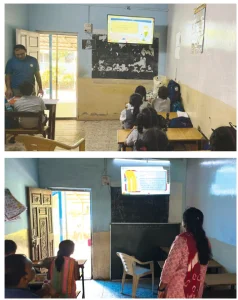
The Foundation also continued its association with the digital classroom initiative. This year, on 2nd August, 2025, the Foundation donated 5 digital classrooms to the V. K. Lakhani High School, Bordi. President Zubin F. Billimoria along with other trustees of the Foundation and a group of 25 volunteers visited Bordi school during the inauguration function. Trustees and volunteers visited the tribal schools in Talasari, Bordi and Umargam areas to review the implementation of digital classrooms introduced earlier with the Foundation’s support. The visit provided an opportunity to assess the effectiveness of technology-enabled learning in rural educational settings and reaffirmed the Foundation’s commitment to educational advancement in tribal areas.

BCAS Foundation 3

BCAS Foundation 4

Further, the Foundation extended support to Kumbharwadi Madhyamik School at Kolhapur by donating ₹2.5 lakhs towards the procurement of desks and benches for students. This assistance was aimed at improving the basic classroom environment and creating better learning conditions for students from economically weaker sections.

BCAS Foundation 5

This year, the Foundation also undertook the tree plantation programme in collaboration with Keshav Shrushti Foundation. The Tree Plantation Drive 2025 was conducted at Vada, Palghar. The initiative focused on increasing green cover and contributing to ecological conservation in the region.

A donation of ₹6.25 lakhs was collected to support the plantation programme. This initiative reflected the Foundation’s belief that environmental sustainability is an essential pillar of community development. The programme also facilitated active participation by members and strengthened collaboration with institutions dedicated to ecological preservation.

BCAS Foundation 6

BCAS Foundation 7

BCAS Foundation 8

The Foundation remained actively engaged in programmes aimed at enhancing employability and livelihood opportunities, particularly for women and underprivileged communities.

Its long-standing collaboration with the Rangoonwala Foundation (India) Trust continued during the year. The Foundation approved financial support of ₹5 lakhs for the Trust’s educational and skill-building activities. These initiatives included vocational training programmes aimed at equipping women and youth with practical skills for sustainable employment.

A report received from the Rangoonwala Centre highlighted the launch of a new community skills development programme. The same was formally taken on record by the Trustees as part of the Foundation’s ongoing developmental work. The programme aligns closely with BCAS Foundation’s objective of empowering communities through skill enhancement and self-reliance.

BCAS Foundation 9
Further, representatives of the Foundation attended the Women’s Day celebrations organised by Rangoonwala Foundation. During the event, women who had successfully completed beautician training courses were felicitated. Several of these beneficiaries had received sponsorship support under the BCAS Foundation’s skill development programme. This initiative showcased the direct impact of the Foundation’s support in creating employment opportunities and encouraging economic independence among women.

The Foundation also supported women’s empowerment initiatives under the CA-Thon programme. As part of this initiative, five sewing machines were donated to beneficiaries to enable income generation through tailoring and related vocational activities. The total expenditure for this programme was ₹92,500. This project was recognised as a meaningful contribution to empowering women through self-employment.

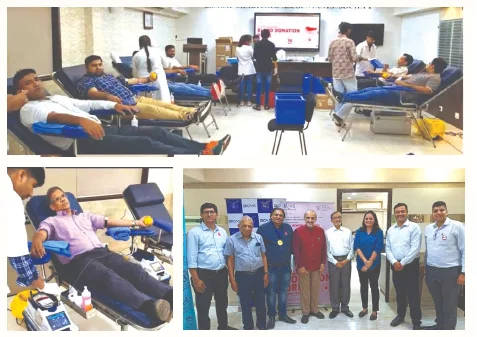
The Foundation, jointly with the Seminar, Membership & Public Relations Committee of BCAS, organised the annual Blood Donation Drive in association with Tata Memorial Hospital. The event received enthusiastic participation from members, office bearers, past presidents, and staff. A total of 54 eligible donors contributed blood during the drive.

BCAS Foundation 10

The programme also included a Platelet Donation Awareness Campaign, which helped educate participants about platelet donation and assess their eligibility for future participation. NSS volunteers from H.R. College of Commerce & Economics and Dharma Bharathi Mission played an active role in raising awareness and securing donor support. Donors were felicitated with “Life Saver” medals in recognition of their contribution to this noble cause.

BCAS Foundation 11
In addition, the Foundation has decided to donate ₹3 lakhs to Dignity Foundation to support its welfare programmes focused on senior citizens and community well-being. This continued the Foundation’s broader engagement with healthcare and social support institutions.

BCAS Foundation 12

The Foundation made significant progress in operationalising the Shri P. N. Shah Memorial Endowment Fund, an important initiative established to provide financial assistance to deserving students pursuing the CA curriculum.

During the year, the Trustees deliberated on the fund’s utilisation framework and constituted a dedicated committee comprising trustees and office bearers to identify appropriate beneficiaries and recommend support mechanisms. As part of due diligence, it was decided that applicants seeking assistance should provide recommendation letters, preferably from BCAS members, to ensure transparency and effective utilisation.

BCAS Foundation 13

BCAS Foundation 14

The first instalment of scholarship support under the Endowment Fund was disbursed during the year, with selected beneficiaries receiving `37,500 each. This marked the formal commencement of the scholarship programme under the fund.

A significant development during the year was the receipt of a generous contribution of `21 lakhs from CA Anil Kumar Desai to the Shri P. N. Shah Memorial Endowment Fund.

The year 2025–26 was marked by purposeful growth in the Foundation’s outreach and impact. Through support to schools, environmental initiatives, healthcare programmes, women empowerment activities, and scholarship assistance, the BCAS Foundation continued to translate its vision of social responsibility into meaningful action.

INTERNATIONAL YOGA DAY CELEBRATIONS

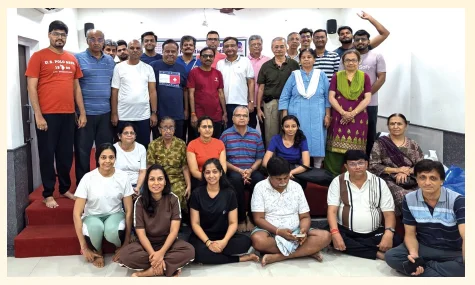
On June 21, 2026, the BCAS Foundation organized “International Yoga Day Celebrations” Jointly with the Human Resource Committee of the BCAS and MaBap Foundation at Shree Goghari Lohana Bhuvan, Paliram Road, Andheri West, Mumbai 400058. In Andheri East, Mumbai, the event was co-organized with MaBap.

Mr. Pradeep Thakkar, the accredited Yoga Trainer, conducted the session.

The takeaways from the workshop are briefly given below:

BCAS Foundation 15

  1.  Participants were guided to do various exercises and were explained the benefits of doing the exercises.
  2.  The exercises dealt with Asanas and tips for Osteoarthritis, Knee Pain, Blood Pressure, Diabetes and a lot more.
  3.  Also, breathing exercises, along with their benefits, were explained to the participants.
  4. The benefits of yoga for Flexibility, Strength and overall health were explained in detail.

Dr CA Mayur Nayak, a Certified Yoga Teacher, assisted in the conduct of the Yoga Session and ensured the smooth conduct of the yoga. BCAS Foundation was also awarded with the Certificate of Recognition from the Ministry of Ayush.

BCAS Foundation 17

BCAS Foundation 18

We take this opportunity to thank all our donors, volunteers, sister NGOs, office bearers of schools, Office Bearers and the Staff of BCAS, participants of all conferences/seminars at BCAS, for their continued support and encouragement to carry out some noble work to make a positive difference to the world. We also thank all beneficiaries and students/children for giving BCAS Foundation the opportunity to serve them.

We welcome suggestions and volunteering. Kindly send volunteering requests to

bcasfoundation@bcasonline.org

Best Regards,

For BCAS Foundation

Trustees

Learning Events At BCAS

1. Webinar on the Procedural Aspects of GSTAT held on Friday, 12th June 2026 @ Virtual

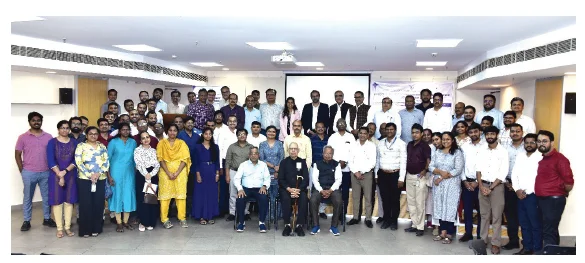
The Indirect Tax Committee of the Bombay Chartered Accountants’ Society (BCAS) successfully organized a webinar on “Procedural Aspects of GSTAT” on 12 June 2026.The webinar received an enthusiastic response from the professional community and was attended virtually by more than 700 members.

The session aimed to provide participants with practical insights into the procedural framework and operational aspects of the Goods and Services Tax Appellate Tribunal (GSTAT). The keynote address was delivered by Hon’ble Justice (Retd.) Dr. Sanjaya Kumar Mishra, President of GSTAT and Former Chief Justice of the Jharkhand High Court.

During the keynote session, valuable perspectives were shared regarding the role, functioning, and significance of GSTAT in the indirect tax dispute resolution mechanism. The technical session was conducted by Shri Vivek Chandel, Senior Consultant, NIC, who explained various technological and procedural facets associated with GSTAT.

The panelists highlighted practical aspects and key procedural considerations relevant for tax professionals and stakeholders in the interactive Question & Answer session, which was conducted after the above sessions, enabling participants to seek clarifications and engage directly with the experts and the same was skillfully moderated by CA Mandar Telang, who seamlessly guided the proceedings and facilitated meaningful engagement throughout the session.

The webinar concluded on a highly informative and engaging note, with participants appreciating the quality of discussions and practical insights shared during the session.

Scan to watch online at Youtube

Procedural Aspects of GSTAT

2. Finance, Corporate & Allied Laws Study Circle – Climate Finance: Opportunities, Regulations & Future Outlook held on Friday, 5th June 2026 @ Virtual

The study circle was led by Dr. Chetana Asbe, who is certified in Climate Finance by CFA Institute. She commenced the session with climate fundamentals and key concepts. She broadly covered the following aspects in the session.

– Climate Finance’s scope, Ecosystem, Global and Indian regulatory landscape.

– Impact of Climate change on the business and finance.

– professional responsibility and opportunities in Climate Finance.

The interactive format of the session, complemented by practical examples, made it highly engaging. The session was insightful, and all participant queries were comprehensively addressed by Dr. Chetana Asbe

3. AI Adoption & Peer Review Readiness held on Friday, 29th May 2026 @ BCAS

The Accounting & Auditing Committee of the Bombay Chartered Accountants’ Society organised this full-day hybrid programme at BCAS Hall, Mumbai and through Zoom. The seminar focused on the practical implementation of Artificial Intelligence in professional practice, together with ICAI Peer Review preparedness and Audit Quality Maturity Model (AQMM) implementation. The programme witnessed participation from around 93 members across physical and virtual modes.

The programme commenced with an inaugural and overview session by CA Raman Jokhakar, setting the context on the growing role of technology and quality frameworks in the profession. CA Devang Doshi conducted an insightful session on practical use cases of AI tools in Audit and Tax, demonstrating how professionals can leverage AI for efficiency, automation and better decision-making.

CA Murtaza Ghadiali delivered a practical session on the use cases of IDEA software in Audit, Income Tax and GST assignments, highlighting data analytics and risk identification techniques. The post-lunch session by CA Amruta Kulkarni focused on Peer Review preparedness, covering documentation standards, quality control measures and practical expectations during peer review processes.

The programme concluded with an informative session by CA Padmashree Crasto on practical implementation aspects of the Audit Quality Maturity Model (AQMM), helping participants understand structured approaches towards enhancing audit quality and compliance standards.

The seminar witnessed enthusiastic participation and interactive discussions throughout the day, providing members with practical insights into integrating technology with professional compliance and audit quality requirements.

Scan to watch online at BCAS Academy

AI Adoption & Peer Review

4. Direct Tax Laws Study Circle Meeting on Reassessment Provisions Under Income Tax Act 2025 held on Thursday 28th May 2026 @ Virtual.

The Direct Tax Laws Committee of BCAS organised this study circle session, covering the legal framework, judicial precedents, and practical strategies for handling reassessment notices.

1. Section 279 – AO can reassess escaped income and recompute losses/deductions. Reassessment is not a tool for review (CIT vs. Kelvinator of India Ltd.).

2. Reopening Notice (Sections 280 & 281) – Notice requires specific ‘information’ of escaped income; change of opinion does not suffice. Section 281 mandates a prior SCN with the information and an opportunity of hearing.

3. Section 282 – General limit: 4 years 3 months; extended to 6 years 3 months if escaped income ≥ Rs. 50 lakhs. No notice within 1 year from end of tax year.

4. Judicial Precedents – Reopening quashed on: no new material (Sapphire Foods, Alkem Laboratories); wrong authority (Skypak Travels); natural justice violation (Rajesh Kumar Agarwal); income below Rs. 50 lakh threshold (Sanath Kumar Murali).

5. JAO-FAO Controversy – Finance Act, 2026 retrospectively clarified via Section 147A (w.e.f. 1 April 2021) that JAO conducts the pre-assessment inquiry; NFAC completes reassessment in a faceless manner.

6. Validity of Section 147A – Sub judice before multiple High Courts; SC directed disposal by 30 September 2026. Pending writ petitions have an interim stay on reassessment proceedings.

7. Strategy – Raise all arguments at the first instance: change of opinion, time bar, wrong authority. Evaluate merits and exposure before choosing tax proceedings or writ petition.

The session was well-attended and generated active participation, providing practical clarity on the evolving reassessment framework under the Income Tax Act, 2025.

Speaker: Ujjval Gangwal, Khaitan & Co

5. ITF Study Circle meeting on “Recent Ruling in case of Bank of India on Issue of Foreign Tax Credit” held on 19th May 2026@ Virtual.

The Chairman of the session addressed the participants on the key aspects of the Background and Core Issues discussed in the Judgement. Thereafter, the Group Leader explained the nuances of the Foreign Tax Credit and the requirement to be subject to tax. He further analysed the key findings of the ruling for Assessment Year 2012–13, highlighting the critical considerations and judicial reasoning adopted. This was followed by a comparative discussion on Assessment Year 2013–14, wherein he elaborated on the nuanced distinctions and their implications

The session concluded with closing remarks from both the Chairman and the Group Leader, effectively summarising the deliberations and reinforcing the key takeaways for the participants

Speaker: Chairman of the session – CA Mayur Desai

Group Leader – CA Pranay Gandhi

6 Finance, Corporate & Allied Laws Study Circle – Virtual CFO Services & GCC: Emerging Opportunities for Professionals held on Saturday, 16th May 2026 @ Virtual.

The study circle was led by Ms. Kaveri Venkataraman, the learned speaker, who conducted an insightful session on emerging and non-conventional service offerings for chartered accountants, with a focus on roles such as Chief Financial Officer (CFO) and Global Capability Centers (GCC). Ms. Kaveri took the participants through the journey of virtual CFO in India – evolution to date. She highlighted that the extensive and rigorous training undergone by Chartered Accountants provides them with a distinct advantage over others in delivering such service offerings. She also emphasized the importance of keeping pace with technological advancements, particularly in the field of artificial intelligence, alongside developing complementary skill sets. The discussion on commonly encountered challenges and their proven solutions was particularly valuable and insightful

Ms. Kaveri also dealt with GCCs, inter alia, comprising its evolution types, finance function, career arch, etc. She also guided on ‘must have skills’ as well as ‘good to have skills’ to gain an advantage in service offerings. Her real-world examples, case studies, summarizing the options available along with a range of compensation trends for such services, added value to the session like icing on the cake.

Ms. Kaveri satisfactorily replied to all queries of the attendees. 75+ participants benefited from this session and expressed their appreciation.

7. FEMA Study Circle Meeting on FEMA Implications Arising Out of Cross-Border Structuring held on Friday, 8th May 2026 @Virtual.

The session examined FEMA implications across five areas of cross-border structuring –

Part I – Cross-border investment / acquisitions

  • Deferred consideration between PROI and PRII is capped at 25% of the total consideration with an 18-month timeline; transfers between two PROIs face no such restriction. Partly paid equity shares may be issued to PROIs with 25% upfront and balance within 12 months, whereas CCPS and CCDs must be fully paid-up. ODI regulations are comparatively flexible, permitting deferred consideration and indemnity obligations as contractually agreed between parties, subject to FEMA compliance.’
  • Press Note 3 of 2020 mandated Government Approval for investments from land-border countries (LBCs). Press Note 2 of 2026, implemented via the FEM (NDI) Amendment Rules 2026, expands this further covering direct LBC holdings, beneficial ownership via non-LBC entities exceeding 10% under PMLA, and cumulative indirect LBC holdings with drafting ambiguities persisting on aggregation.

Part II – Cross-border mergers

  • Inbound Mergers: The foreign company merges into Indian company subject to NDI Rules. RBI deemed approval available where the merger satisfies the FEM (Cross Border Merger) Regulations, 2018. Post-merger, overseas investments, ODI structures, and foreign assets acquired by Indian Company must be regularised within prescribed timelines.
  • Issuance of RPS to PROIs: While NCLT-approved merger schemes permit issuance of equity instruments to non-resident shareholders under the NDI Rules, the issuance of RPS or OCRPS remains contentious since such instruments are generally classified as debt instruments under FEMA. Consequently, their issuance may fall outside the automatic route and potentially require RBI approval and compliance with ECB regulations.
  • Outbound Merger: The Indian company merges into foreign entity and resident shareholders receive foreign securities, which are treated as ODI/OPI and must comply with the ODI framework with practical challenges including LRS constraints, host jurisdiction restrictions, and absence of tax neutrality under Indian tax laws.

Part III – ODI transaction

  • Investment in foreign startups (classified as “strategic sector”) is restricted to internal accruals for Indian entities, and own funds for resident individuals. For foreign startups with unlimited liability, any financial commitment may be regarded as exceeding the ODI limit, potentially requiring Central Government approval under the OI Rules.
  • SAFE Notes (Simple Agreement for Future Equity) raise interpretational questions on whether they qualify as “equity capital” under the OI Rules.
  • OI Rules restricts financial commitments in foreign entities that re-invest into India to two subsidiary layers. For resident individuals, ODI is further limited to operating entities not engaged in financial services and no subsidiary or SDS where individual has control. The definition of “control” creates interpretive challenges in multi-party structures.

Part IV – Conversions

  • Company ↔ LLP: Conversion of a company with foreign investment into an LLP is permitted under the automatic route where 100% FDI is allowed and no FDI-linked performance conditions apply. However, companies with outstanding ECBs may face compliance challenges, as LLPs were not recognised as eligible borrowers under the erstwhile ECB framework. Further issues arise where companies holding FDI-linked downstream investments seek conversion into LLPs. Conversion of an LLP (with foreign interest) into a company generally provides broader sectoral eligibility.
  • FDI ↔ ECB: While ECB to FDI conversion is expressly permitted under FEMA, conversion of FDI instruments (e.g., CCPS) into debt instruments (e.g., OCRPS) raises issues regarding prior RBI approval, ECB compliance, assured exit concerns, and whether such amendments constitute as transfer under the NDI Rules.

Part V – Repatriation

  • Capital reduction and buybacks involving PROI shareholders are treated as transfers under the NDI Rules, attracting pricing guidelines, reporting requirements, and applicable government approvals.
  • Resident shareholder buybacks of an Indian company may inadvertently increase foreign shareholding beyond the applicable sectoral cap, potentially triggering sectoral approval concerns despite no fresh foreign investment being received.

Closing Thoughts

  • FEMA an evolving and incomplete framework, early engagement with RBI is often preferable to relying on assumptions.
  • The foundational rule of FEMA – “What cannot be done directly, cannot be done indirectly.”

Group Leader – CA Parag Kiri, Partner at TransEdge Advisory LLP

Chairman – CA Shabbir Motorwala

8. Workshop on New Look at Proven Principles of Professional Success held on Saturday 25th April 2026 & Saturday 09th May 2026 @ BCAS

The Human Resources Development Committee Organized this half-day workshop spread over two days The speaker Mr. Walter Vieira explained the various Proven Principles for Professional Success, especially considering the current circumstances today. Through a combination of lectures and group discussions, he brought out the practical aspects of challenges faced today and how proven principles can be adjusted to achieve success.

The takeaways from the workshop are briefly given below:

  1. How every CA needs to ideally convert the Profession into a passion.
  2. The Group dealt with the Pros and Cons for CA’s in different categories – Single/Partners/Senate/SMP.
  3. The Workshop also dealt with (i) The Role of an Independent (ii) The Role as an Independent and (iii) The Role of a Team Player. Participants were encouraged to assess their strengths and preferences to determine the role in which they can contribute most effectively
  4. The Workshop discussed the critical role of ethics in the profession, especially in the context of ‘Intrapreneurship’ and ‘Extrapreneurship’
  5. Working “Ethically” becomes much easier if each one subscribes to a list of Nine values articulated by Cyrus Vance were discussed at length.
  6. The session highlighted communication as one of the fundamental pillars of success across professions. It was discussed that communication can manifest in both overt and covert forms, each significantly influencing professional outcomes. Participants actively engaged in group discussions, sharing illustrative examples of both effective and ineffective communication practices. A presentation was also made on the themes of jealousy and envy, examining how these emotions often surface through communication patterns and can adversely impact professional relationships. It was observed that such factors have, in several instances, contributed to setbacks in the careers of professionals.
  7. Networking: The session also covered the importance of networking, with particular emphasis on building a strong managerial network to enhance professional performance and expand career opportunities. It further explored networking across various dimensions, including within the organization, the profession, peer groups at similar levels, and shared interests such as music and sports.
  8. How do you assess yourself- Additionally, participants were encouraged to undertake self-assessment to determine their preferred career path, whether to function as an independent professional or to operate within the structured environment of a corporate framework.

Workshop on New Look at Proven Principles of Professional Success

9. Direct Tax Home Refresher Course – 7 held on Saturday 25th April 2026 to Saturday 9th May 2026 @ Virtual

The Direct Tax Committee of BCAS successfully organized the Direct Tax Home Refresher Course 7 (DTHRC 7) jointly with 14 professional organizations from across the country, namely:

  • Association of Chartered Accountants, Chennai
  • Chartered Accountants Association, Ahmedabad
  • Chartered Accountants Association Surat
  • CA Association of Jalandhar
  • The Chartered Accountants Study Circle, Chennai
  • Hyderabad Chartered Accountants Society
  • Karnataka State Chartered Accountants’ Association
  • Lucknow Chartered Accountants’ Society
  • Goa Chamber of Commerce and Industry
  • Tax Practitioners’ Association, Indore
  • Jaipur Chartered Accountants’ Group
  • All India Federation of Tax Practitioners (Western Zone)
  • Bbdbag Professional Association, Kolkata
  • Maharashtra Tax Practitioners Association, Pune

The virtual refresher course was conducted over 7 days from 25 April 2026 to 9 May 2026 and comprised 14 technical sessions covering important and contemporary developments under the Income-tax Act, 2025 and allied tax laws.

The topics covered during the course included:

  1. Income-tax Act, 2025 – Structural Overview and Key Conceptual Changes vis-à-vis the Income-tax Act, 1961
  2. Technology, Artificial Intelligence and Data Analytics in Tax Practice
  3. Practical Issues relating to TDS/TCS – Outreach Programme
  4. TDS & TCS Regime under the Income-tax Act, 2025
  5. Salary Income under the New Income-tax Act, 2025 – Computation Framework, Deductions and Rules
  6. Business Income under the New Income-tax Act, 2025 – Computation Framework, Deductions and Emerging Controversies
  7. Issues under Corporate Taxation including MAT, Business Reorganisation, Buy-back and Tax Schemes for Corporates
  8. Presumptive Taxation – Practical Issues and Case Studies
  9. Foreign Assets of Small Taxpayers – Disclosure Scheme (FAST-DS 2026)
  10. Charitable Trusts Taxation – Recent Amendments, Registration and Compliance Requirements
  11. Capital Gains relating to Real Estate Transactions and Redevelopment Issues
  12. Transfer Pricing – Documentation and Safe Harbour Updates
  13. Penalty Provisions, Immunity Provisions and Decriminalisation under Income-tax Law
  14. Recent Important Judicial Decisions covering various provisions of Direct Tax Laws

The distinguished speakers shared their deep insights on the evolving tax landscape, particularly the implementation and interpretation of the Income-tax Act, 2025, practical challenges faced by taxpayers and professionals, and the latest judicial and legislative developments. Each session concluded with an interactive question-and-answer segment, enabling participants to engage directly with the faculty and seek practical guidance on complex issues.

The course witnessed enthusiastic participation of more than 1500 tax professionals, chartered accountants, advocates, and industry representatives from across India, reaffirming the significance of DTHRC as a premier knowledge-sharing platform in the field of direct taxation. The collaborative efforts of BCAS and the 14 participating associations contributed immensely to the success of the programme and strengthened professional learning across the country.

Speakers: The faculty for the course comprised eminent professionals and subject matter experts, including Adv. K.K. Chythanya, CA Karthikeya Shenoy, Mr. Amit K Singh (JCIT-TDS, Mumbai), CA Sandeep Kumar Jain, CA Ravikant Kamat, CA Bhadresh Doshi, CA Dhinal Shah, CA Pankaj Agarwal, CA Rishab Aggarwal, CA Deven Shah, CA Jagdish Punjabi, CA Riddhi Shah, Sr. Adv Dr. K. Shivaram & Adv. Rahul Hakani, Adv T. Banusekar

Scan to watch online at BCAS Academy

Direct Tax Home Refresher Course

10. Indirect Tax Laws Study Circle Meeting on GST Issues in Manufacturing Sector held on Friday, 24th April 2026 @ Virtual.

The session was led by CA. Jinesh Shah (Group Leader) under the mentorship of Adv. (CA) Harsh Shah (mentor), and witnessed active participation from members across the fraternity.

The presentation covered the following aspects for a detailed discussion:

  • GST Implications on Volume Discounts

It focused on GST implications of primary discounts, volume discounts, retail incentive schemes, secondary discounts and return of expired or obsolete goods. Deliberations were made on the valuation provisions under Section 15, treatment of credit notes, post-sale discount mechanisms and the impact of recent GST clarifications.

  • Input Tax Credit (ITC) Challenges on Solar Power Plant

The Study Circle thereafter examined complex input tax credit issues arising in the context of captive solar power plants established by manufacturing companies. Deliberations centred around the GST implications of electricity generation, captive consumption through the power grid, sale of surplus electricity, admissibility of ITC on EPC contracts and the applicability of ITC reversal provisions under Sections 17(2), Rule 42 and Rule 43 of the CGST Rules

  • Supply of moulds and dies by a manufacturer to outsourced vendors on a free-of-cost basis.

Discussions were made as to whether such arrangements constitute a supply under GST, the admissibility of ITC on moulds, valuation implications and the applicability of Circular No. 47/21/2018-GST. The valuation treatment of scrap retained by job workers and its possible characterization as consideration in kind also generated significant discussion.

  • Eligibility of ITC on Expenses incurred for an Initial Public Offering

Discussions were made regarding whether IPO-related expenditure, such as merchant banker fees, legal expenses, listing fees and advertising costs, could be regarded as incurred in the course or furtherance of business and whether issuance of shares could be regarded as a transaction in securities requiring reversal of ITC under Section 17.

Around 147 participants from all over India benefited while taking an active part in the discussion. Participants appreciated the efforts of the group leader and the mentor.

11. ITF Study Circle Meeting on “Transfer Pricing Provisions under the New Income Tax Act, 2025 & Income Tax Rules, 2026 and Impact of the current Middle East crisis on Transfer Pricing” held on 23rd April 2026 @ Virtual.

The session commenced with the opening address by the session Chairman on the key aspects of the Transfer Pricing provisions under the New Income Tax Act, 2025. Subsequently, the Group Leader provided a detailed overview of the Transfer Pricing provisions of the New Income Tax Rules, 2026.

The participants discussed an issue regarding significant changes to the definition of ‘Associated Enterprises’ and debated the impact of the change, expressing divergent views.

The Group Leader discussed the changes in the forms under the New Income Tax Rules, 2026, dealing with the additional disclosures under the Transfer Pricing provisions The Group Leader discussed the nuances of the new Safe Harbour regime for software companies and its application. Further, the Group Leader discussed the impact of war and other significant economic events on Transfer Pricing and the approach to be adopted in determining arm’s length price. The participants debated the implications with many senior members sharing their past experiences in similar situations.

The session concluded with closing remarks by the Chairman of the session and the Group Leader.

Speaker: Chairman of the session – CA Natwar Thakrar, Group Leader – CA Namrata Dedhia

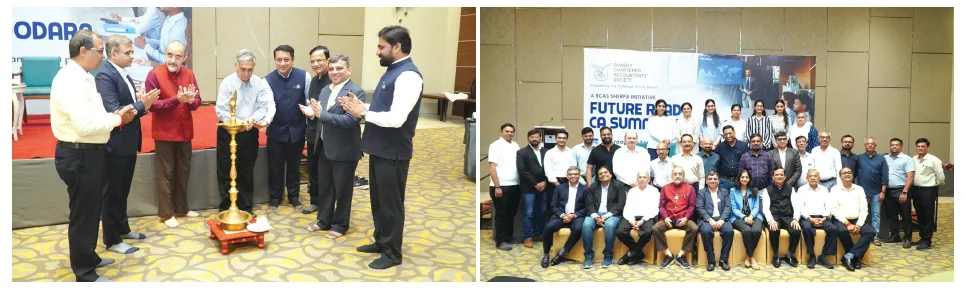
12. Future Ready CA Summit Vadodara held on Saturday 18th April 2026 @ Hotel Grand Mercure – Surya Palace, Vadodara

Under the BCAS Sherpa Initiative, the Society organized the full-day summit that brought together members and non-members to explore emerging opportunities, regulatory developments, and strategies for building future-ready professional practices.

Future Ready CA Summit

CA Zubin Billimoria, President of BCAS, and CA Kinjal Shah, Vice President of BCAS, addressed the participants and highlighted the significance of BCAS membership and the wide range of professional development initiatives undertaken by the Society.

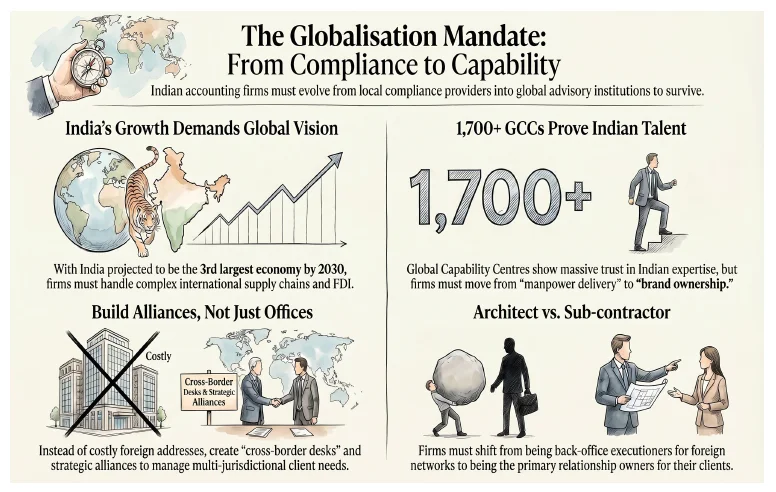
CA Anand Sanghvi spoke on Strategic Practice Development – Domestic & Global Pathways for CA Firms, highlighting the need for firms to embrace global delivery models, technology, and cross-border competencies to remain competitive in an evolving professional landscape.

CA Chirag Doshi’s session on CA Firm’s Valuation focused on building institutional value through robust systems, processes, and intellectual capital, while providing insights into the key drivers of firm valuation.

A Brain Trust Session on case studies on Direct and Indirect Taxes, led by CA Anil Sathe and CA Jatin Harjai and ably moderated by CA Manish Baxi, provided practical insights into recent tax developments, judicial precedents, and emerging challenges in professional practice.

In line with the summit’s theme of being “Future Ready,” Adv. (CA) Kinjal Bhuta, Treasurer of BCAS, shared her perspectives on the transition of assessment provisions from the Income-tax Act, 1961 to the Income-tax Act, 2025 and its implications for tax professionals.

The summit featured engaging discussions, interactive Q&A sessions, and valuable networking opportunities, enabling participants to exchange ideas and gain practical insights. The event successfully reinforced the importance of strategic growth, continuous learning, and adaptability in preparing the profession for the future.

13. M&A Summit 2026 held on 17th April 2026 @ Ginger by Taj, Mumbai Airport.

The Finance, Corporate & Allied Laws Committee of BCAS organised the M&A Summit bringing together regulators, investors, legal professionals, transaction advisors and corporate leaders to discuss developments shaping the mergers and acquisitions landscape.

The summit was inaugurated by Chief Guest Mr. Deep Mani Shah, Chief General Manager, SEBI, who shared his perspectives on the evolving deal environment and the growing importance of governance, transparency and investor confidence in transactions.

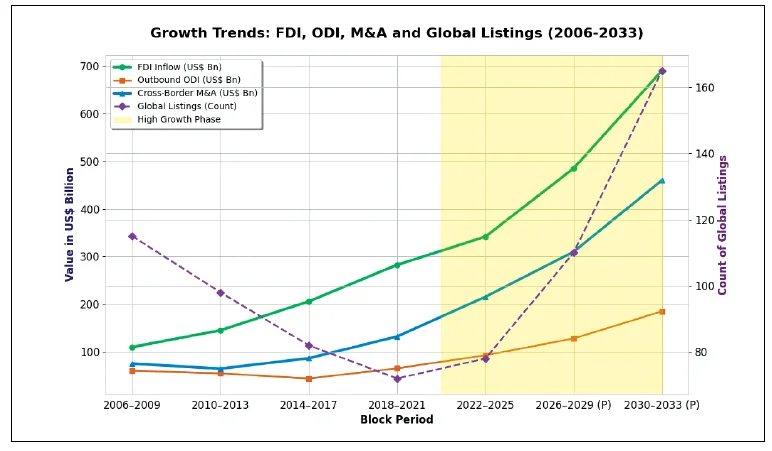
Mr. Ashok Wadhwa, Group CEO, Ambit Private Limted, in his keynote address on “India’s M&A Outlook 2030: What’s Driving the Next Wave?”, shared perspectives on the evolving deal landscape, discussing the factors likely to shape M&A activity over the next decade, including consolidation trends, capital flows and strategic growth opportunities.

Discussions during the summit highlighted the evolving regulatory landscape, increasing investor participation and the growing complexity of transaction structuring in today’s deal environment.

Participants gained insights into key considerations influencing M&A transactions, including governance, financing, tax implications, ESG factors and cross-border regulatory challenges. The deliberations underscored the importance of balancing commercial objectives with legal, regulatory and stakeholder expectations while executing transactions.

Industry experts shared practical perspectives on value creation, risk management and successful deal execution in a dynamic business environment. The summit concluded with an engaging exchange of views on emerging opportunities, challenges and future trends shaping the Indian M&A ecosystem.

14. Multi-Stakeholder Workshop on Reforming Tax Policy Consultation in India held on Tuesday, 15th April 2026 @ Jolly Bhavan Hall – BCAS, Mumbai

The Bombay Chartered Accountants’ Society (BCAS) partnered with the Bharti Institute of Public Policy (BIPP), Indian School of Business (ISB), to host a one-of-its-kind – Multi-Stakeholder Workshop on “Reforming Tax Policy Consultation in India” on 15th April 2026 at BCAS Office, Mumbai.

Multi-Stakeholder Workshop on Reforming Tax Policy Consultation in India

The workshop was organised as part of a larger research initiative by BIPP, ISB, promoted by the Consultative Group on Tax Policy (CGTP) at NITI Aayog, with the objective of developing a structured and inclusive framework for tax policy consultation in India. The Delhi leg of this initiative was held on 23rd February 2026 at India Habitat Centre, New Delhi where BCAS was invited and participated. The Mumbai workshop represented the second leg of stakeholder engagement, with BCAS as the proud partner.

The proceedings commenced with key note address by Dr. Pushpinder S. Puniha, Chairperson of the Consultative Group on Tax Policy at NITI Aayog who spoke for building a more consultative and collaborative policy ecosystem in India. This was followed by address of Dr. Aarushi Jain, Director Policy and Head, Government Affairs, at the BIPP, ISB, who emphasized the need to move from ad hoc consultation to a predictable process that strengthens trust between the government, the profession, and citizens.

The workshop was structured into two focused rounds of deliberation. The first round brought together senior tax practitioners to discuss the ground-level realities of how policy changes affect compliance and advisory work. The discussion provided suggestions on how the government could make consultations more structured and outcome-linked. The second round engaged corporate representatives of industry bodies. This group brought a complementary perspective — that of taxpayers navigating complex compliance landscapes while also trying to plan long-term investments.

Together, both rounds of discussion were practical, bringing in ground-level experiences, and provided recommendations that will provide meaningful inputs for a framework for tax policy consultation. The insights from the discussions will feed directly into the study’s final framework to be presented to NITI Aayog.
The workshop reflected BCAS’s enduring commitment to advocacy and contributing constructively to public policy processes that positively impacts the profession.

15. “Empowering the Profession — A BCAS Outreach on Firm Growth & Income Tax Imperatives” event held on 11th April 2026 at ICAI Bhawan, Indore.

On the sidelines of BCAS 30th International Taxation and Finance Conference, the Society conducted an Outreach Program in Indore jointly with the Indore Branch of CIRC of ICAI and the Tax Practitioners Association, Indore.

Empowering the Profession — A BCAS Outreach on Firm Growth & Income Tax Imperatives

The program was conducted on Saturday, 11th April 2026 at the ICAI Bhawan Indore from 4.30 pm to 6.30 pm. CA Samkit Bhandari, Chairman of ICAI Indore Branch along with CA. Vijay Bansal, President TPA Indore gave the welcome address. The CA Megha Jain, Treasurer of the Indore Branch Moderated the program. Then the President of BCAS, CA. Zubin Billimoria addressed the participants in which he made them aware about various initiatives, courses, activities conducted by the Society.

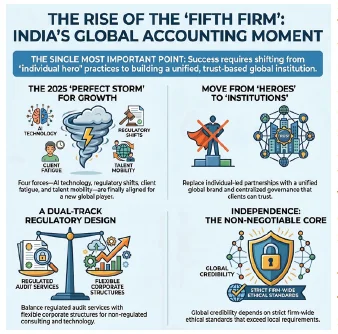
CA Shariq Contactor, spoke on the topic “India’s Big Four Moment: Are we Ready to Lead the World?”.

His session was followed by panel discussion, where the panellists CA. Jagdish Punjabi and CA. Naman Shrimal along with CA. Manish Dafria as moderator, enshrined on important practical issues under the Income-tax Act revolving around following topics:

  1.  Taxation of real estate transactions; and
  2.  TDS & TCS.

The co-ordination for this Outreach Program was done by CA. Chaitanya Maheshwari and CA. Chirayu Sodani.

The program was attended by about 50 participants.

II. BCAS IN NEWS & MEDIA

  •  BCAS has been featured in several news and media platforms, showing our active involvement, professional contributions, and commitment to the field. This reflects the growing recognition of BCAS in the public and professional space.

Link: https://bcasonline.org/bcas-in-news/

QR code

News and Views

Regulatory Referencer

I. FEMA

1. RBI issues framework for outward remittance services by non-bank entities through AD Category-I banks

Para 10 of the Master Direction – ‘Miscellaneous’ which provided a framework under which non-bank entities could obtain specific approval from RBI for tie-up arrangements with Authorised Dealers (AD) for facilitating international money transfers through third-party digital platforms has been deleted. The AD is now responsible to comply with instructions furnished in Annex to the Circular while facilitating cross-border outward remittance of funds for non-trade current account transactions using third party entity in online mode. To protect consumers, the third-party interface must prominently display the AD’s name, role, and category, the quoted foreign exchange (FX) rate with its timestamp and validity, a transparent breakdown of the total estimated transaction costs (separately outlining the interbank rate, mark-up, and service charges), the exact foreign exchange amount to be credited, the maximum credit timeline, and grievance contact details.

(A.P. (DIR Series 2026-27) Circular No.10, dated 13th May 2026)

2. AD Category-I banks must submit monthly BO/LO/PO and NRO remittance returns

The Reserve Bank of India has issued a new directive mandating that Category-I Authorised Dealer banks to electronically submit monthly data regarding the establishment and closure of Branch, Liaison, and Project Offices using return code R343 on the Centralized Information Management System (CIMS) starting 30 June 2026. Additionally, the reporting of fund transfers from Non-Resident (Ordinary) Rupee accounts must now be processed through the same digital portal under return code R006.

(A.P. (DIR Series) Circular No. 12, dated 5th June 2026)

3. RBI allows AD banks to exclude FCNR (B), ECB & forex swap positions from NOP-INR limits

The Reserve Bank of India (RBI) mandated that Authorised Dealers must ensure their Net Open Positions involving the Indian Rupee (NOP-INR) in the onshore deliverable market do not exceed USD 100 million at the end of each business day as per A.P. (DIR SERIES 2025-26) Circular No. 24, dated 27th March 2026 included in BCAJ May 2026 edition.

Through this circular, the RBI provided a specific relaxation to AD Category-I banks regarding how they calculate this limit. Banks are permitted to exclude swap positions that arise from Foreign Currency Non-Resident (B), or FCNR (B), deposits, External Commercial Borrowings (ECB) and Overseas Foreign Currency Borrowings.

(A.P. (DIR Series) Circular No. 13, dated 8th June 2026)

II. IFSCA

1) IFSCA Circular on FLA Return Obligations for GIFT City Financial Institutions

The International Financial Services Centres Authority (IFSCA) has issued an advisory to all Financial Institutions operating in GIFT IFSC drawing their attention to Q. Nos. 43, 44 and 45 of the RBI’s updated FAQs on the Annual Return on Foreign Liabilities and Assets (FLA) under FEMA, 1999 (updated as on March 25, 2026) which provided that the entities registered in IFSC shall also file the FLA Returns. The Authority has noted that the implications of the said FAQs are presently under discussion with the Reserve Bank of India, and has accordingly directed Financial Institutions to refrain from taking any action on the matter until further instructions are issued.

(Circular No. IFSCA-BDev0DEAC/1/2026 dated 1st May 2026)

2) IFSCA issues Master Circular for Broker Dealers and Clearing Members in GIFT IFSC

The IFSCA issued a comprehensive Master Circular for Broker Dealers and Clearing Members in GIFT IFSC, consolidating past circulars into a single, unified regulatory framework. It aligns with the CMI Regulations and supersedes various IFSCA Circulars issued between 2021 to 2025 and all applicable SEBI circulars issued prior to October 1, 2020, streamlining compliance and bolstering risk management. The Master Circular is organised across eleven chapters covering the full lifecycle of a Broker Dealer or Clearing Member, from registration and eligibility through ongoing supervision, technology and conduct obligations, to surrender of registration.

(Circular No. IFSCA/CMD/MIIT/MCBDCM/2026 and Press release dated 12th May 2026 )

3) IFSCA issues clarification on implementation services framework for Investment Advisers in IFSC

IFSCA issued a circular concerning the provision of implementation services by Investment Advisers in the International Financial Services Centre (“Circular”). The Circular is issued under the IFSCA (Capital Market Intermediaries) Regulations, 2025 (“CMI Regulations”), which, inter alia, permit investment advisers, in the IFSC, to provide implementation services to advisory client in securities market. By way of this Circular it is clarified that the term “implementation services” shall refer to the services provided for the purpose of executing or giving effect to the Investment Advice rendered by the Investment Adviser. It prevents investment advisors from functioning as unregulated brokers or distributors. It also protects investors through regulated execution channels, prescribes separate mechanism for foreign listed, IFSC listed and unlisted products.

(Circular No. E.F.No .IFSCA-PLNP/94/2025- Capital Markets dated 12th May 2026)

4) IFSC Authority updates consolidated framework for ship leasing activities in IFSCs

The IFSCA has issued a comprehensive regulatory framework to govern ship leasing operations within IFSC from time to time. Originally, the framework has been issued on 16th August 2022 which was last amended up to 7th April, 2025 incorporating all the intervening amendments. The IFSCA has again updated the said framework on 20th May, 2026 incorporating the amendments to the framework introduced through ‘IFSCA-FCR0SL/25/2025-Banking/2026-27/01’ dated April 22, 2026 doing away with the carve-out requiring a separate ancillary services authorisation for such Asset Management Support Services. The framework overall classifies operating and financial leases as distinct financial products, outlining specific capital requirements and licensing fees for each category. Prospective lessors must register through a digital single window and may operate as companies, trusts, or partnerships, provided they meet strict anti-money laundering and eligibility standards. Beyond basic leasing, the guidelines permit ancillary activities such as voyage charters and asset management support, provided the entities maintain adequate foreign currency reserves. Furthermore, the framework imposes rigorous compliance and reporting obligations to ensure transparency and financial stability in the maritime sector.

(Circular No. 496/IFSCA/FC/SLF/2022-23/001, dated 16th August 2026 and updated up to 20th May 2026)

5) IFSCA cautions IFSC entities on cyber risks arising from frontier AI models

The IFSCA has issued an advisory highlighting heightened cyber security risks arising from frontier AI models, which can significantly accelerate identification and exploitation of vulnerabilities. Regulated Entities in IFSCs have been advised to reassess cyber security risks, strengthen monitoring and detection capabilities, maintain software inventories, assess third-party risks & implement appropriate safeguards while deploying AI-assisted vulnerability management tools.

(Circular No. IFSCA-CSD/MSC/3/2026-DCS dated 4th June 2026)

6) IFSCA issues formats for reporting requirements prescribed in regulation 25 and 27 of CMI Regulations.

International Financial Services Centres Authority (Capital Market Intermediaries) Regulations, 2025 (“CMI Regulations”), under regulation 25 requires CMIs to conduct an annual audit in respect of their compliance with CMI Regulations and submit a copy of such compliance audit report to the Authority. Also, under regulation 27, it provides that CMIs, including broker dealers, desirous of dealing in securities in foreign jurisdictions, shall comply with the norms and requirements specified by the Authority. Therefore, IFSCA has issued reporting formats and norms for annual compliance audits of Capital Market Intermediaries (CMIs) in IFSCs. Accordingly, all categories of CMIs must submit a copy of the Annual Compliance Audit Report (ACAR) along with the Annual Compliance Audit Checklist (ACAC) to the Authority in the specified format by September 30th of each year for the preceding financial year. Further, Global Access Providers have been directed to file ACAR and ACAC to the IFSCA annually in the formats specified therein. Along with the formats, the IFSCA has also provided the clarification on the criteria for appointment of the Compliance Auditor.

(Circular No. IFSCA-DSI/1/2026-Capital Markets dated 5th June 2026)

7) IFSCA issues master circular for Stock Exchanges and Clearing Corporations in IFSCs

IFSCA has issued a Master Circular for recognised Stock Exchanges and recognised Clearing Corporations in IFSC. The Master Circular consolidates various circulars and guidelines relating to trading, settlement, technology, governance, risk management, business continuity, reporting requirements and other operational aspects applicable to Market Infrastructure Institutions (MIIs) in IFSC. The circular supersedes various circular issued by the IFSCA previously and all circulars and guidelines issued by SEBI prior to October 1, 2020.

(Master Circular IFSCA/CMD/MIIT/MCSECC/2026-27 dated 5th June 2026)

Tech Mantra

ReAlarm – Alarm Clock for Heavy Sleepers

Transform your habits with ReAlarm, the advanced smart interval alarm clock built especially for heavy sleepers who struggle to wake up on time. Stay perfectly notified with powerful scheduling and wake-up tools!

You can customize your alarms for daily, weekly, monthly, and other schedules. It supports very long repeat intervals with gradual volume increase. You may choose from built-in tones or add yours. Smart Wake-Up Challenges are available for Heavy Sleepers, includingMath Problems, QR Code Scanner, Walk to Dismiss and many more!

It also features a smart snooze system. You can customize the snooze duration and even make the snooze interval progressively shorter. Weather integration is also built-in, with an elaborate real-time weather display. You can set quiet hours to prevent alarms during certain times and change themes too!

A very customisable alarm clock for heavy sleepers, designed to help them wake up or be reminded of tasks more assertively!

Android : https://tinyurl.com/realarm

Google AI Edge Gallery – Minimalist Powerful AI for Android

Google

AI Edge Gallery is the premier destination for running the world’s most powerful open-source Large Language Models (LLMs) on your mobile device. Experience high-performance Generative AI directly on your hardware—fully offline, private, and lightning-fast.

It now features Gemma 4 which allowing you to test the cutting edge of on-device AI. Experience advanced reasoning, logic, and creative capabilities without ever sending your data to a server.

Core features include

Agent Skills: Transforming it from a conversationalist to a proactive assistant

AI Chat with Thinking Mode: Displays the reasoning that takes place behind the scenes to arrive at the final solution

Ask Image: Identify objects, solve visual puzzles, or get detailed descriptions using your device’s camera or gallery

Audio Scribe: Transcribe and Translate voice recordings into text in real time

and much more…..

AI Edge Gallery is an open-source project, free for all and designed for the developer community and AI enthusiasts alike. You can explore features, contribute your own skills, and help shape the future of the on-device agent ecosystem.

Android : https://tinyurl.com/gaiedge

Wispr Flow: AI Voice-to-Text

Wispr Flow
Talk naturally. Wispr Flow writes perfectly.

Wispr Flow is a voice-to-text accessibility tool for Android that turns rambling speech into perfectly formatted text, so you can just talk instead of type.

Unlike built-in voice dictation, Flow cleans up what you say as you speak. No filler words. No broken sentences. No reformatting before you hit send.

It works inside any app, including ChatGPT, WhatsApp, Instagram, Slack, and Gmail. It also eliminates filler words such as “ah” and “um” and accurately catches your corrections. Punctuation and formatting are automatic and you can train it to recognize new words that you use often.

Whether you’re texting friends, taking notes, drafting emails, or navigating pain, fatigue, or mobility challenges that make typing difficult, Wispr Flow makes it easier than ever to just talk instead of type. Flow supports users with motor impairments, Parkinson’s, arthritis, RSI, dyslexia, ADHD, stuttering, visual impairments, and more.

And the best part is that you can use it in 100+ languages: Communicate in the language that works best for you, including Español, Français, 中文, ไทย, हिन्दी, or Hinglish.

Very cool, one of my current favourites!

Android : https://tinyurl.com/wisprflo

Adaptive Volume

Adaptive
We have all been using Adaptive Display for a while – it adjusts the display based on the ambient light at that moment. This app does exactly that with sound – it adjusts the volume based on the ambient sounds around.

The app uses your microphone to detect ambient noise and intelligently increases or decreases the volume. Once installed, it runs quietly in the background and is lightweight and battery efficient. There is no data collection – everything is processed locally on your device.

Perfect for people who move between quiet offices, noisy streets, or busy cafes throughout the day.

Android : https://tinyurl.com/mvb37ba4

ICAI and Its Members

ICAI CODE ETHICS

The revised Code of Ethics, 2026 represents a significant modernization of the ethical framework governing Chartered Accountants. The overall direction of change is towards greater professional visibility, digital engagement, expansion of permissible services, recognition of emerging practice areas, and strengthening audit-related accountability and independence requirements.

The revised Code of Ethics (13th edition)- Volume-I, II & III is applicable with effect from April 01, 2026 except for the s.no. (xxxi).

  • The s.no. (xxxi) “Assessment and evaluation of Social Impact, CSR Impact, Business Responsibility and Sustainability Reporting, and the like” under Management Consultancy and other services issued under Section 2(2)(iv) of the Chartered Accountants Act, 1949 in Code of Ethics, Volume-I, is effective from December 11, 2025.

The Code has been completely restructured:

  • Volume I now contains domestic ethical provisions and ICAI guidelines.
  • Link- https://resource.cdn.icai.org/92475coe2026v1.pdf

resourcecdnicaiorg

  • Volume II is aligned with the latest IESBA Code (2024 edition).
  • Link- https://resource.cdn.icai.org/92476coe2026v2.pdf

IESBA Code

  • Volume III introduces Ethics Standards for Sustainability Assurance.

  • Link- https://resource.cdn.icai.org/92477coe2026v3.pdf

Ethics Standards for Sustainability Assurance

  • The Case law referencer has been separated into an independent publication.

PUBLIC CONSULTATION

IAASB Consultation on Amendments – Working with Experts

The International Auditing and Assurance Standards Board (IAASB) has issued a public consultation on narrow scope amendments to align its standards with recent revisions to the IESBA Code regarding the use of external experts.

The targeted amendments focus on the following IAASB standards:

  • ISA 620, Using the Work of an Auditor’s Expert
  • ISRE 2400 (Revised), Engagements to Review Historical Financial Statements
  • ISAE 3000 (Revised), Assurance Engagements Other than Audits or Reviews of Historical Financial Information
  • ISRS 4400 (Revised), Agreed-upon Procedures Engagements

Stakeholders are invited to submit comments via the digital Response Template on the IAASB website by July 24, 2025.

Link: https://www.iaasb.org/publications/proposed-narrow-scope-amendments-iaasb-standards-arising-iesba-s-using-work-external-expert-project

IAASB

Announcement link: https://www.iaasb.org/news-events/2025-04/iaasb-requests-feedback-proposed-narrow-scope-amendments-related-working-experts utm_source=Main+List+New&utm_campaign=f2ddf45d11-EMAIL_CAMPAIGN_2025_04_25_09_11&utm_medium=email&utm_term=0_-f2ddf45d11-80733240

Announcement

ICAI PUBLICATIONS:

  • GST Act(s) and Rule(s) Bare Law: The revised (12th) edition of this publication has been updated with amendments up to 31st March 2026.

https://d23z1tp9il9etb.cloudfront.net/download/pdf26/GST%20Act(s)%20and%20Rule(s)-Bare%20Law.pdf

GST Act(s) and Rule(s) Bare Law

  • Handbook on Government Supplies under GST (Including TDS Provisions): This Handbook focuses specifically on the GST implications of supplies made to and by the Government and has been comprehensively updated up to 15th April, 2026.

https://d23z1tp9il9etb.cloudfront.net/download/pdf26/Handbook%20on%20Government%20Supplies%20under%20GST%20(IncludingTDS%20Provisions).pdf

Handbook on Government Supplies under GST

  • Practical Guide to GST Adjudication and Appeals including GSTAT

The GST & Indirect Taxes Committee of ICAI has released the Practical Guide to GST Adjudication and Appeals including GSTAT, updated to 31 March 2026. The Guide provides practical insights on handling GST disputes, demands, investigations, and appeals, with coverage of litigation strategy, drafting, evidence, revisionary proceedings, and ethics. It also includes a step by step guide to filing appeals on the GSTAT portal, equipping CAs to represent clients effectively across all stages of adjudication and appellate processes.

https://d23z1tp9il9etb.cloudfront.net/download/pdf26/Practical%20Guide%20to%20GST%20Adjudication%20and%20Appeals%20including%20GSTAT.pdf

Practical Guide

GIST OF OPINIONS

1. Capitalisation of Dry Dock Expenditure (Major Inspection Costs) as a Separate Component of Dredgers and Depreciation Thereon After Completion of Their Estimated Useful Lives

A. FACTS OF THE CASE

A public sector company engaged in dredging activities owned dredgers having an estimated useful life of 25 years. Out of 14 dredgers, 4 dredgers had completed their estimated useful life of 25 years but continued to operate. To continue operations, each dredger was required to undergo periodic inspections and obtain a fitness certificate from the Indian Register of Shipping (IRS). For this purpose, the company incurred substantial dry dock expenditure comprising repairs, overhauls, inspections and related activities.

The company treated such dry dock expenditure as major inspection costs and capitalised them under Ind AS 16. The CAG objected to such capitalisation on the ground that the useful lives of the dredgers had already expired and the expenditure should have been charged to repairs and maintenance. The company contended that the expenditure generated economic benefits up to the next dry-docking cycle and that the useful life of the dredgers had been reassessed and extended based on inspection results.

B. QUERY

Whether capitalisation of dry dock expenditure incurred on dredgers whose estimated useful lives had already expired is permissible under Ind AS.

Whether subsequent expenditure can be recognised as a separate component of property, plant and equipment even after expiry of the useful life of the main dredger.

C. POINTS CONSIDERED BY THE COMMITTEE

The Committee analysed the requirements of Ind AS 16 relating to replacement costs, major inspection costs, spare parts and subsequent expenditure. It observed that not every cost incurred during a dry-docking exercise qualifies for capitalisation. Each expenditure must be separately analysed to determine whether it satisfies the recognition criteria under paragraph 7 of Ind AS 16.

The Committee noted that inspection costs may be capitalised as a separate component if they satisfy the recognition criteria. Similarly, replacement costs may be capitalised where the relevant conditions are met. However, expenditure on repairs, maintenance, consumables and day-to-day servicing must be charged to profit and loss.

The Committee further observed that Ind AS 16 does not prohibit capitalisation of qualifying subsequent expenditure merely because the useful life of the main asset has expired. Where expenditure results in an increase in expected utility or useful life, the useful life of the dredger should also be reassessed. The Committee also remarked that the company should revisit its methodology for determining the useful life of dredgers since several dredgers had continued to operate beyond the originally estimated useful life.

D. OPINION

The Committee opined that Ind AS 16 does not prohibit capitalisation of qualifying subsequent expenditure after expiry of the useful life of the main asset. Expenditure incurred during dry-docking that satisfies the recognition criteria of Ind AS 16 may be capitalised, while expenditure in the nature of repairs and maintenance must be charged to the statement of profit and loss.

Replacement costs and inspection costs recognised as part of the dredger should be depreciated separately where their useful lives differ from that of the dredger.

2. Accounting Treatment of Grant (Structured Package of Assistance for Setting up a Hardwood Pulp Plant) under Ind AS 20

A. FACTS OF THE CASE

A listed company engaged in the manufacturing of newsprint and printing and writing paper received incentives from the Government of Tamil Nadu under a structured package for setting up a Hardwood Pulp Plant (Expansion Project II).

Originally, the incentive was linked to reimbursement of VAT/CST and was subsequently converted into a capital subsidy option after implementation of GST. Under the revised arrangement, the company became eligible to receive subsidy over a period of 15 years, subject to fulfilment of investment commitments, employment generation requirements, continued operation of the plant and maintenance of committed employment levels.

The company treated the subsidy as a grant related to income and recognised it in the Statement of Profit and Loss under “Other Income”. The Auditors objected to this treatment and viewed the subsidy as a capital subsidy requiring treatment as a grant related to assets.

B. QUERY

Whether the accounting treatment adopted by the company for the structured package of assistance relating to the Hardwood Pulp Plant under Ind AS 20 was appropriate and, if not, what would be the correct accounting treatment.

C. POINTS CONSIDERED BY THE COMMITTEE

The Committee examined whether the subsidy constituted a grant related to assets or a grant related to income under Ind AS 20.

It observed that the nature of a government grant is determined by its substance and not by the nomenclature used. Although the subsidy was described as a “capital subsidy”, eligibility depended not merely on investment in the plant but also on fulfilment of continuing employment obligations and continued operation of the plant throughout the incentive period.

The Committee noted that these operational and employment-related conditions were primary conditions for entitlement to the subsidy. Therefore, acquisition of the hardwood pulp plant was not the sole primary condition for obtaining the grant.

The Committee also observed that the method of computing the subsidy with reference to capital investment and the fact that the subsidy was paid annually were not determinative of the nature of the grant.

D. OPINION

The Committee concluded that the subsidy was not a grant related to assets because eligibility depended on several primary conditions beyond acquisition of a long-term asset.

Accordingly, the subsidy constituted a grant related to income under Ind AS 20, and the accounting treatment adopted by the company in recognising the grant as income was appropriate.

3. Accounting Treatment of Payment Made to NHAI for Development of Road Connectivity to Exhibition-cum-Convention Centre (ECC) Project

A. FACTS OF THE CASE

A public sector undertaking incorporated as a special purpose vehicle for development of an Exhibition-cum-Convention Centre (ECC) project incurred expenditure towards development of external road connectivity through NHAI. The approved project cost for road connectivity was ₹442.39 crore, of which ₹354.89 crore had already been paid.

The company initially recognised the expenditure as Capital Work-in-Progress and subsequently capitalised it as part of Property, Plant and Equipment upon commencement of commercial operations, considering the expenditure to be directly attributable to making the ECC operational.

The auditor objected and contended that the expenditure should have been charged to the Statement of Profit and Loss.

B. QUERY

Whether capitalisation of the amount paid to NHAI for development of road connectivity as part of the cost of the ECC project under Ind AS 16 was appropriate.

If capitalisation was not appropriate, what accounting treatment should be followed.

C. POINTS CONSIDERED BY THE COMMITTEE

The Committee examined whether the expenditure on road connectivity was directly attributable to bringing the ECC project to the location and condition necessary for it to operate in the manner intended by management.

It observed that Ind AS 16 requires capitalisation only of costs directly attributable to bringing an asset to the location and condition necessary for its intended operation. Not every expenditure incurred in connection with a project qualifies for capitalisation.

The Committee noted that the expenditure was incurred to provide connectivity and additional access to the ECC through dedicated entry and exit points from nearby roads and expressways. The road development and the ECC project progressed simultaneously and the road was not necessary for construction of the ECC itself.

The Committee concluded that although improved connectivity could enhance future economic benefits and attractiveness of the project, it was not necessary for making the ECC capable of operating in the manner intended by management.

D. OPINION

The Committee opined that expenditure incurred on development of road connectivity was not directly attributable to bringing the ECC Centre to the location and condition necessary for it to operate as intended.

Accordingly, the expenditure could not be capitalised as part of the cost of any property, plant and equipment and should instead be recognised as an expense in the Statement of Profit and Loss when incurred.

The Chartered Accountant June 2026 Pages 95-100

Link: https://resource.cdn.icai.org/92505cajournal-june2026-27.pdf

jUNE 2026

Case Digest – ICAI Disciplinary Committee

1. Case: Information by J&K Bank vs. M/s SK & A

File No.: PPR/333/2016/DD/03/INF/2017/DC/1260/2020

Date of Order: 21.01.2026

Particulars                         Details

Complainant                  Information received from J&K Bank

Respondent                  M/s SK & A; Member Answerable: CA. RS and CA. SKS

Nature of Case          Failure of concurrent auditors to detect and report irregularities in Letter of Credit (LC) discounting transactions

Background             J&K Bank reported irregularities in the discounting of high-value Letters of Credit at its Ghaziabad Business Unit. The respondent firm was appointed as Concurrent Auditor. The allegation was that the auditors failed to identify and report suspicious LC transactions, including discounting of LCs without proper verification, discounting within unusually short time gaps, and processing based on hand-delivered documents instead of authenticated banking channels. The matter was referred to the Disciplinary Committee after the Board of Discipline disagreed with the Director (Discipline)’s prima facie opinion of not guilty.

Key Allegations – Failure to report high-value LC discounting transactions beyond delegated powers.

– Failure to comment on LCs issued, accepted and discounted within unusually short periods.

– Failure to report discounting based on hand-delivered documents instead of authorised banking channels.

– Failure to obtain sufficient audit evidence and exercise due diligence during concurrent audit.

Respondent’s Allegations –  Investigation report and concurrent audit reports were not supplied by the Bank.

– Audit reports were generated through the Bank’s software system and could not be downloaded or printed.

– Certain working papers were allegedly destroyed due to flooding of the office.

– Some respondents denied participation in the audit and sought to distance themselves from the engagement.

Findings

– The Committee held that concurrent auditors are required to verify not only supporting documents but also internal branch records and transactions reflected in the books of the Bank.

– Merely recording “No Record Found” was not considered an adequate audit response where material transactions existed.

– If records were unavailable, the auditors should have escalated the matter to higher authorities and performed additional verification procedures.

– High-value LC discounting transactions were reflected in the Bank’s records, yet no meaningful comments were made in the audit reports.

– The auditors failed to detect and report discrepancies in LC discounting and failed to exercise the degree of professional skepticism and diligence expected from concurrent auditors.

Charges Established        Guilty under Clauses (5), (6), (7) and (8) of Part I of the Second Schedule to the Chartered Accountants Act, 1949

2. Case: Mr. MR & Ms. GR vs. CA. AT

File No.: PR/157/20-DD/159/2020/DC/1785/2023

Date of Order: 21 January 2026

Particulars                           Details

Complainant               Mr. MR and Ms. GR

Nature of Case          Alleged forgery of directors’ signatures in financial statements and negligent certification of Form AOC-4

Background           

The Respondent was the statutory auditor of M/s MKJ since incorporation. The Complainants alleged that financial statements for FY 2016-17 and FY 2017-18 were filed with forged signatures of the directors. They contended that Mr. MR was outside India on the dates on which the financial statements were purportedly signed. A further allegation was that while filing Form AOC-4 for FY 2015-16, the Respondent attached the balance sheet of another company, M/s GIS, instead of the balance sheet of MKJ.

Key Allegations

(i) Filing Form AOC-4 for FY 2016-17 and FY 2017-18 with allegedly forged signatures of the directors.

(ii) Failure to verify authenticity of financial statements and Board approvals before signing as auditor.

(iii) Wrongly attaching the balance sheet of M/s GIS. while certifying Form AOC-4 of MKJ for FY 2015-16.

Respondent’s Defence      The Respondent denied any role in forgery and stated that signed financial statements were routinely provided by the company’s accountant before audit signing. He contended that there was no evidence linking him to fabrication of signatures. Regarding AOC-4, he admitted that the balance sheet of GIS was attached due to a clerical error by office staff. He explained that filings of both companies were made on the same day (28.11.2016), resulting in the attachment mix-up, while the figures reported in Form AOC-4 remained correct.

Findings  Forgery Allegation: The Committee noted that the Board Reports showed approval of financial statements by the Board and that the same directors had signed the financial statements for several preceding years. The Committee held that the Complainants failed to produce conclusive evidence establishing that the Respondent was involved in forging signatures. However, the outcome of proceedings before NCLT, ROC, ED and other authorities is pending and no conclusive findings have been presented to the Committee to establish the Respondent’s role. Therefore, the allegation remained unsubstantiated.

Wrong Attachment in AOC-4: The Committee accepted that the attachment of GIS’s balance sheet was a clerical error. It noted that both companies’ filings were made on the same date and that the financial figures reported in Form AOC-4 of MKJ were otherwise correct. The Committee held that the error did not affect the true and fair view of the financial statements and was insufficient to establish professional misconduct.

Charges Established       None. The Committee held that the allegations were not substantiated by sufficient evidence.

Decision      Not Guilty under Clause (7) of Part I of the Second Schedule. The Committee also ultimately held the Respondent Not Guilty of Professional and Other Misconduct, including the charge under Clause (2) of Part IV of the First Schedule.

3. Case: JKR vs. CA. UVB

File No.: PR/393/2021-DD/08/2022-DC/1858/2024

Date of Order: 06.02.2026 (Findings dated 26.12.2025)

Particulars                               Details

Complainant                 Shri JKR , Managing Director, GMI

Nature of Case                 Incorrect reporting of unabsorbed depreciation in Tax Audit Report (Form 3CD) resulting in tax demand on the company

Background     

The Respondent acted as Tax Auditor of GMI for AY 2015-16 and had also been Tax Auditor for AY 2009-10. Unabsorbed depreciation of ₹2,00,89,668 pertaining to AY 2007-08 had been fully set off in AY 2009-10. However, in Form 3CD for AY 2015-16, the same amount was again reported as available unabsorbed depreciation. The company relied upon the tax audit particulars while filing its return, following which the Income-tax Department raised a demand of approximately ₹1.04 crore upon detecting the incorrect claim.

Key Allegations

– Incorrect certification of brought forward unabsorbed depreciation in Form 3CD for AY 2015-16.

– Failure to verify that the depreciation had already been fully set off in AY 2009-10.

– Lack of due diligence resulting in financial loss to the company.

Respondent’s Defence

– He had not filed the income-tax return of the company.

– The error arose during migration from “Tax Base” software to “Winman”, where historical XML data was imported.

– Incorrect depreciation figures were auto-populated due to software mapping issues.

– The lapse was inadvertent and there was no adverse action by the Income-tax Department against him.

– Sought leniency considering his 37-year unblemished professional career.

Findings

– The Committee found no conclusive evidence that the Respondent had filed the company’s ITR; however, he had admittedly signed the Tax Audit Report (Form 3CD).
– Form 3CD for AY 2015-16 incorrectly reported unabsorbed depreciation of ₹2,00,89,668 as available despite the same having been fully utilised in AY 2009-10.
– The Respondent himself had been Tax Auditor for AY 2009-10 and was expected to know that no such depreciation remained available for carry forward.
– Reliance on software-generated data without independent verification could not absolve the Respondent of responsibility.
– During hearing, the Respondent’s counsel admitted that reporting the figure without verification was a lapse on the Respondent’s part.
– The Committee held that certifying incorrect figures in Form 3CD constituted failure to exercise due diligence and professional negligence.
Charges Established- Guilty under Item (7), Part I of the Second Schedule – failure to exercise due diligence / professional negligence.
Punishment -Reprimand under Section 21B(3) (a) of the Chartered Accountants Act, 1949.

Company Law

7. Saxena Multispecialty Hospital (P.) Ltd. vs.Tulip Multispecialty Hospital (P.) Ltd.

185 taxmann.com 529, NCLT, New Delhi

Date of Order 19th May, 2026

Where company allotted 1,20,000 equity shares through a rights issue without adhering to section 62 and principles of corporate fairness, such allotment was vitiated as an act of oppression under section 241. Hence, entire impugned share issuance was declared null and void, directing restoration of the shareholding and rectification of the register to its original pre-allotment position.

FACTS

  • Company is engaged in hospital services. Its paid-up capital consisted of 10,000 equity shares of Rs.10 each. The Petitioner held 5,000 shares (50%), while the Respondents held 2,500 shares each (25% each). Petitioners were directors from incorporation and resigned on 4th June 2019; their resignations were approved on 15th July 2019. Discussions for separation/exit commenced around June 2019
  • On 27th July 2020, the company’s lender asked for an improvement in the debt–equity ratio (as stated by the respondents). On 28th July 2020, the Board resolved to issue 2,40,000 equity shares on a rights basis and issued an offer letter dated 28th July 2020. The respondents stated that the offer was dispatched to Petitioner No. 1’s address by courier and speed post, delivered on 1st August 2020, and remained open until 19th August 2020. As the Petitioner did not accept the offer within the stipulated time, it was deemed to have declined the same. Thereafter, by Board resolution dated 20th August 2020, 60,000 shares each were allotted to the Respondents and statutory filings, including Form PAS-3, were made.
  • The petitioner filed the instant petition under sections 241 and 242 seeking reliefs viz., to declare and order that the affairs of the company had been carried on by the existing directors in a manner that was oppressive and that the affairs of the company had also been mismanaged in terms of Sections 241 (1)(b) read with Section 242; to declare that the dilution of the Petitioners’ shares was illegal and improper and to set aside the same; and to pass an order removing the current Board of Directors and appointing an independent Interim Board of Directors to manage the affairs of the company. Thus, the petition was filed under sections 241–242 seeking, inter alia, to set aside the dilution arising from a share issue and to restore the pre-allotment shareholding, along with governance-related reliefs.

HELD

  • Having considered the rival submissions and material on record, the primary issue for determination was whether the Rights Issue was undertaken in strict compliance with Section 62(1)(a) and Section 62(2), and whether the manner in which it was executed satisfies the test of fairness and probity expected in corporate governance, particularly in a closely held company with equal shareholding.
  • Section 62 confers a statutory pre-emptive right upon existing shareholders and mandates that a notice of offer be given specifying the number of shares offered and granting not less than fifteen days for acceptance. Compliance with Section 62 must therefore be real and substantive and not merely formal or technical.
  • In the present case, although the Respondents have produced proof of dispatch to the address reflected in MCA records, the surrounding circumstances raised serious doubts as to effective and meaningful service. It was not disputed that the address in question was also the registered office of the Company and was under the control of the then existing directors. The building belonged to the mother of one of the directors, as admitted by the company. The Petitioners had ceased participating in the management of the Company since June 2019. The delivery acknowledgment did not identify the recipient and merely mentioned “Family,” without clarity as to who accepted the communication. No attempt appeared to have been made to send the offer through electronic means, despite prior correspondence between the parties through such channels. In a situation where the consequence of non-subscription would be the complete erosion of a 50% shareholding, the Company was expected to ensure actual and demonstrable service upon the shareholder concerned.
  • The Tribunal was conscious that technical compliance with dispatch requirements may, in ordinary circumstances, suffice. However, in the context of a closely held company where two groups held equal shares and were in dispute, and where the impugned allotment would decisively tilt control in favour of one group, the obligation of fairness assumes heightened significance. Mere mechanical dispatch to an address under the control of the beneficiary group cannot, in these facts, be treated as adequate compliance with the spirit of Section 62.
  • The company relied upon a bank communication dated 27th July 2020 requiring improvement of the debt-equity ratio. Even assuming that such financial requirement existed, the manner in which the issue was executed remained questionable. The timing of the Board resolution immediately following the bank letter, the absence of any prior consultation with the 50% shareholder, and the ultimate allotment exclusively in favour of existing directors cumulatively indicated that the impugned issue had the effect of consolidating control. Corporate powers to issue shares cannot be exercised for the primary purpose of creating or perpetuating a majority. Where such issuance results in the drastic reduction of an equal shareholder to a negligible minority, the transaction must withstand strict scrutiny.
  • The company’s reliance on the alleged exit understanding and resignation of Petitioners from the Board does not advance its case. Resignation from directorship does not extinguish rights as a shareholder. In the absence of a concluded share transfer in accordance with law, Petitioner continued to enjoy full proprietary rights in respect of her 50% shareholding. Those rights could not be unilaterally diluted through a process lacking demonstrable fairness.
  • The effect of the impugned allotment was to reduce Petitioner from an equal participant in management and control to a marginal shareholder holding approximately 3.48%. Such a drastic alteration of the shareholding structure, conducted in circumstances where effective notice was doubtful and where the beneficiary group stood to gain complete control, constitutes conduct lacking in probity.
  • Oppression under Section 241 is established when the conduct complained of is burdensome, harsh, and wrongful, and such that it justifies interference by the Tribunal. In the present case, the cumulative circumstances like the questionable service, absence of meaningful opportunity to subscribe, and disproportionate dilution, establish that the impugned Rights Issue was not conducted in a fair and transparent manner.
  • In view of the foregoing discussion, the Tribunal held that the Rights Issue dated 28th July 2020 and the consequential allotment dated 20th August 2020 were not undertaken in a manner consistent with the requirements of Section 62 and the principles of corporate fairness. The impugned allotment therefore stood vitiated and constituted an act of oppression within the meaning of Section 241.
  • In view of the findings returned hereinabove holding that the Rights Issue dated 28th July 2020 and the consequential allotment dated 20th August 2020 to be invalid and unsustainable in law, the company Petition was allowed in terms of appropriate reliefs under Section 242.
  • Accordingly, it was ordered that the allotment of 1,20,000 equity shares made in favour of existing directors pursuant to the impugned Rights Issue was declared null and void and was set aside. The share capital of the company was restored to the position as it existed immediately prior to 20th August 2020
  • S was appointed as an Administrator in the Board of Directors of the company to take charge by all necessary means and conduct the day-to-day affairs of the company for a period of 90 days, and a sum of Rs.2,00,000/- (Rupees Two Lakhs Only) per month was fixed as remuneration. The remuneration and other incidental expenses of Administrator were ordered to be paid and shared by Petitioner (50%) and Respondent Company (50%). The Administrator would also take over all the functions of the Board qua the company, and the power and functions of the Board would remain in abeyance for a period of 90 days.
  • The Register of Members maintained by the company was ordered to be rectified to reflect the original shareholding pattern, restoring the Petitioner to a 50% shareholding as it stood prior to the impugned allotment. Such rectification was ordered to be carried out within a period of four weeks from the date of pronouncement of the Order.
  • The order further mentioned that:
  • The Administrator may appoint/engage Key managerial persons and skilled professionals to assist him in managing the affairs of the Company.
  • The Administrator may take steps to appoint an Independent Auditor for the purpose of ascertainment of the true and correct financial position of the company.
  • The Administrator shall take steps to convene the meeting for the board of the company within a period of thirty (30) days from the date of the Order.
  • The Administrator shall do all acts as necessary, keeping in view the complications involved in the case. All directors (existing and former), Key Managerial Personnel (KMPs), stakeholders, and officers of the Company were directed to extend full cooperation to the Administrator and provide all necessary documents, records, and assistance as may be required for the effective functioning of the Company, failing which necessary action shall be taken in accordance with law.
  • The Administrator was directed to file all the statutory document(s) along with prescribed fees/ additional fee/fine as determined by the Registrar of Companies within 30 days from the date of this Order.
  • The Administrator shall take steps to regularly file monthly compliance report, detailing all actions taken, compliance measures undertaken, and the overall functioning of the company. Furthermore, every action taken by the Administrator shall be in strict compliance with the provisions of the Companies Act, 2013, and any other applicable laws governing the Company. The Administrator was at liberty to approach the Tribunal for any clarification/direction with regard to the issues before him and may also seek an extension of the time period fixed by the Tribunal, if so required. The Administrator so appointed shall hand-over charge to the Board of the Company after 90 days from the passing of the order.

All the sections referred to above are of the Companies Act, 2013

8. Invesco Developing Markets Fund (formerly Invesco Oppenheimer Developing Markets Fund) vs. Zee Entertainment Enterprises Limited 

APPEAL (L) NO.25420 OF 2021

Date of Order: 22nd March, 2022

The Bombay High Court, held that the provisions of Section 100(4) of the Companies Act, 2013 are mandatory in nature, obligating the Board of Directors to call an Extraordinary General Meeting (EGM) upon receipt of a valid requisition from shareholders. The court further stated that Section 430 of the Companies Acts bars civil courts from entertaining suits on matters that the National Company Law Tribunal (NCLT) is empowered to adjudicate.

The Division Bench of the Bombay High Court established several critical principles regarding shareholder rights and the duties of a company’s Board:

  • Mandatory Duty of the Board: Under Section 100 of the Companies Act, 2013, the Board has a mandatory obligation to call an Extraordinary General Meeting (EGM) if the requisition meets numerical and procedural requirements (representing at least 10% of the paid-up share capital).
  • Interpretation of “Valid Requisition”: The Board cannot refuse to act on a requisition by questioning the legality or effectiveness of the proposed resolutions before they are considered and passed by the shareholders.
  • Shareholder Democracy: Shareholders have the same right as the management to propose the removal or appointment of directors. They are not legally bound to disclose the reasons or “motives” behind such resolutions.
  • Jurisdictional Bar: Under Section 430 of the Companies Act, 2013, Civil Courts are barred from granting injunctions that interfere with matters falling within the domain of the National Company Law Tribunal (NCLT), such as the calling and holding of meetings.

IN CONCLUSION,

The Court clarified that Section 100 of the Companies Act, 2013, serves as a vital mechanism for shareholder democracy, ensuring that the Board remains accountable to the shareholders, regardless of whether it agrees with the proposed changes or considers them incapable of implementation.

Outsourcing Directives For SEBI Regulated Intermediaries – Delegation V/S Accountability

SEBI’s 2011 guidelines regulate outsourcing to ensure investor protection and regulatory accountability.

  • While intermediaries may outsource ancillary tasks like technology support, “core” functions—including investment decisions, compliance, and risk profiling—must remain under their direct control
  • SEBI adopts a “substance-over-form” approach, intervening when third parties effectively assume regulated roles regardless of their formal titles
  • Recent enforcement orders demonstrate that accountability cannot be delegated; intermediaries must maintain effective oversight and remain fully liable for the acts and omissions of all service providers.

INTRODUCTION

Over a period of time, advances in technology, increasing regulatory complexity and the need for operational efficiency have led many SEBI regulated intermediaries to engage third-party service providers for a variety of support functions. While outsourcing can improve efficiency, scalability and cost effectiveness, it also raises concerns regarding investor protection, accountability, confidentiality, operational resilience and regulatory oversight.

Recognizing these concerns, the Securities and Exchange Board of India (“SEBI”) issued Circular No. CIR/MIRSD/24/2011 dated 15th December 2011 titled Guidelines on Outsourcing of Activities by Intermediaries (“Outsourcing Guidelines”). The Circular applies to all SEBI-registered intermediaries, including stock brokers, merchant bankers, portfolio managers, investment advisers, research analysts, mutual funds, depository participants, registrars and transfer agents, debenture trustees, custodians and other regulated entities. The principles enshrined in these guidelines extend to person’s (within or outside the group) who perform activities on behalf of the regulated intermediaries.

WHY REGULATE OUTSOURCING?

The Outsourcing Guidelines are substantially based on principles developed by the International Organization of Securities Commissions (“IOSCO”) for mitigating various risks associated with outsourcing which may be operational risk, reputational risk, legal risk, country risk, strategic risk, exit strategy risk, counter party risk, concentration and systemic risk. It also reflects SEBI’s broader regulatory objective of ensuring that investors continue to deal with regulated entities that remain responsible for the services provided.

If regulated intermediaries are permitted to outsource core functions without adequate oversight, a situation may arise where the licensed entity merely acts as a conduit while actual regulated activities are carried out by outsourced third parties. Such arrangements may undermine investor protection, dilute accountability and impair regulatory supervision.

Accordingly, the Circular seeks to ensure that:

  • Regulatory accountability remains with the registered intermediary;
  • Investors continue to receive services from regulated entities;
  • “Core” business activities are not outsourced to third persons;
  • SEBI’s supervisory and inspection powers remain unaffected; and
  • Intermediaries retain effective control over outsourced functions.

The central principle emerging from the Circular/Guidelines is that outsourcing should facilitate business operations, not substitute the intermediary’s regulated role.

SEBI has provided illustrative examples of activities considered core in nature:

Intermediary “Core” Activities
Stock Broker Execution of orders and monitoring of client trading activities
Depository Participant Dematerialization of securities
Mutual Fund Investment related activities
Portfolio Manager Investment related activities
All Intermediaries Compliance functions

The list above is illustrative rather than exhaustive. Whether a function constitutes a core activity depends on the nature of the intermediary’s regulated business and the extent to which the intermediary continues to exercise independent judgment, supervision and control.

The Accountability Anchor

As a general principle, functions involving investment discretion, advisory judgment, regulatory compliance, investor protection obligations and fiduciary responsibilities shall not be outsourced.

While designing the outsourcing framework for any organization, it is pertinent to keep the following parameters in mind:

i. Activities which can be outsourced

ii. Activities which cannot be outsourced

iii. To Whom Activities can be outsourced

iv. Terms of Outsourcing

v. Responsibilities & Obligations of the intermediary and third party in respect of outsourced activity towards client, regulator & market

BUILDING AN EFFECTIVE OUTSOURCING FRAMEWORK

The Outsourcing Guidelines require intermediaries to establish a comprehensive framework for managing outsourcing arrangements. The responsibility for such framework rests with the Board of Directors, partners or equivalent governing body of the intermediary.

The Key Constituents that should be kept in mind at the time of designing an Outsourcing Framework are as under:

1. Outsourcing Policy- Determining the activities that can be outsourced and are prohibited and its Governance and Monitoring arrangements

2. Risk Assessment – Effective Risk Assessment procedures should be carried out to address outsourcing risks and relationships with third party.’

3. Appropriate Due Diligence of Service Providers including evaluation of it’s: –

  • Financial strength;
  • Technical competence;
  • Experience and expertise;
  • Compliance track record;
  • Infrastructure capabilities;
  • Data protection standards; and
  • Business continuity arrangements.

4. Tightening of Contractual Obligations in Outsourcing Agreements

5. Ongoing Monitoring of Outsourced Services and Providers

6. Confidentiality and Data Protection

7. Business Continuity Planning Measures in case of Default of Service providers

8. Outsourcing within the Group wherein Shared Resources cannot overtake the responsibility of core functions and Implementation of Chinese Wall measures to ensure transactions are undertaken at arm’s length without compromising accountability.

The Circular permits intermediaries to outsource support and ancillary functions — for example, technology infrastructure maintenance, legal support and similar services that do not constitute core business activities. The line is crossed when external parties begin to participate in, generate, or drive core business activities. Therefore, it’s quintessential to have an outsourcing framework which by design does not defeat its core purpose and is also implementable in its true spirit. The situation should not arise whereby the market has only third parties to provide intermediation services while the registered intermediaries confine themselves to earning income.

ENFORECEMENT ORDERS

Although there are relatively few reported cases involving standalone violations of the Outsourcing Guidelines, SEBI has repeatedly relied upon the principles underlying the Circular
while examining whether intermediaries have impermissibly delegated core regulated functions to third parties.

A recent SEBI Final Order QJA/MN/IMD/IMD-SEC-4/32418/2026-27, dated May 26, 2026, (the “Order”), in the case of First Global Finance illustrates how these principles apply in practice. A SEBI-registered portfolio manager (the “Portfolio Manager”) had engaged in a technology consulting agreement with a third-party vendor. SEBI conducted an on-site inspection and a forensic audit covering a period of approximately two and a half years.

  • The findings revealed that the arrangement was, in substance, an outsourcing of core investment-related activities, wherein specific buy/sell allocations were generated by algo systems and transmitted for execution and personnel of the outsourced entity were involved in execution related communications & instructions.
  • Further, the compensation structures to the outsourced entity related to investment function and overall operational arrangement demonstrated substantial involvement in investment related activitiesOther multiple activities which corroborated and substantiated the role of technology consultant, detailed as under, had very well exceeded and surpassed his core responsibilities and his compensation structures were not commensurate to the title of services carried.
  • Governance documents i.e. the Board Resolutions did not separately identify the role of a consultant and was included to form a part of Investment Committee to take all investment related decisions. Distinguishing between technical invitees and core decision making members shall be made at the time of composition of committee and while circulating a Board Resolution and imposing a contemporaneous limitation reflecting such restricted role.
  • Participating, rendering an opinion and concurrence of collective decision making in substance cannot be viewed as originating separately and exclusively from a technical consultation, wherein the technology consultant was given authority and power to participate in decision making function of Investments.
  • The expression “investment decision” is broader than model portfolio approval and extends to all multiple inter-related determinants which involve governing actual deployment of client fund.
  • Sharing of performance linked fees is a clear indication that the outsourcing entity was contributing, participating or influencing the investment process which generated performance and can in no way be classified as fees for maintaining technological infrastructure.

Outsourcing cannot be examined in compartmentalized or an isolated manner but is a collation of multiple activities put together and the underlying intention to perform the activity.

It was further observed, in the matter of M/s AFCO Capital India Private Limited (QJA/SS/CFD/CFD-SEC-5/32324/2025-26) vide order dated 30 March 2026, a person who was not an employee of the company was assigned the responsibility to authorize and operate activities for the purpose of open offer. A serious compliance breach was identified as the merchant bankers desirous of outsourcing their activities shall not, however, outsource their core business activities and compliance functions. In the said case, outsourcing of core activities have been compromised, thereby dampening the core principle of outsourcing.

SEBI’s order the matter of Bharosa Technoserve Ltd (Order/AN/SM/2024-25/30748-30751) dated 11 September 2024 was explicitly clear that the core function of Risk Profiling & Suitability Assessment of clients was not carried out by the Investment Advisor and was outsourced to a technology platform provider and the client had access to investment advice without their intervention, which was in all practical sense violating the intent of the law.

Taken together, these cases demonstrate that, SEBI does not object to outsourcing per se. Rather, SEBI intervenes where the outsourced arrangement effectively transfers investment discretion, advisory judgment, merchant banking functions, compliance responsibilities or investor-facing regulated activities to third parties.

The enforcement actions reviewed above demonstrate that SEBI adopts a substance-over-form approach and focuses on whether a third party has effectively assumed functions that are expected to be performed by the regulated intermediary itself.

KEY TAKEAWAYS – PHILOSOPHY OF OUTSOURCING

A review of the Outsourcing Guidelines and enforcement actions indicates the following principles:

(a) Substance Prevails Over Form

SEBI examines the actual role performed by a third party and not merely the terminology used in agreements. A service provider described as a consultant, advisor, technology provider or support vendor may nevertheless be regarded as performing a regulated activity if it effectively influences or undertakes the relevant function.
(b) Investment Decisions Must Remain with the Registered Entity
Investment discretion, portfolio construction, security selection and investment recommendations are regarded as core functions that must remain with the regulated intermediary.
(c) Compliance Functions Cannot Be Outsourced
Responsibility for regulatory compliance remains with the intermediary irrespective of any outsourcing arrangement.
(d) Accountability Cannot Be Delegated
While operational activities may be outsourced, accountability for those activities cannot be transferred to a service provider.
(e) Effective Control Must Be Retained
The intermediary must continue to exercise independent judgment, supervision and oversight over all outsourced activities.
The intention of the directive is to distinguish between operational support functions and core regulated activities. While administrative, technological and ancillary support services may be outsourced subject to adequate safeguards; investment discretion, compliance functions, investor-facing regulated activities and other core business functions must remain under the direct control of the registered intermediary. Further, for functions outsourced, the arrangement shall not affect the rights of investors against the entity and the entity remains fully liable for omissions and acts of the third party.
It is not what we do, but also what we do not do, for which we are accountable” Molière

Using Companies As Investment Vehicles: Reboot By RBI

Effective July 1, 2026, the RBI’s Amendment Directions introduce “Unregistered Type 1 NBFCs,” exempting companies with assets under ₹1,000 crore from registration if they avoid public funds and customer interfaces. This shift addresses legacy issues where investment vehicles were often penalised as “deemed NBFCs” for conducting financial business without a license. These entities are now ideal for family offices, providing benefits like perpetual succession without intensive systemic risk regulations. However, they are barred from overseas investments and must register if they seek public funds or exceed asset thresholds. This modernization streamlines compliance for smaller, low-risk financial entities

INTRODUCTION

If you took a quick dip-stick poll of the number of people who have violated the NBFC Directions by making investments via a company structure or using a corporate investment vehicle, you would have a resounding majority! Most of them would look at you with innocent faces and say that they invested with their own funds or that they did not trade and were only investors! None of these arguments used to cut any ice with the RBI, and the clear view of the regulator was that if the Principal Business of a company was from financial services activities, then the company was a deemed NBFC that commenced operations without obtaining a Certificate of Registration (CoR) from the RBI. Scores of companies ended up becoming deemed NBFCs that had violated these norms and this led to stringent action by the regulator.

The biggest hurdle with the deemed NBFC aspect was that a company could not be used for the purposes of a family office/as an investment vehicle. This led to most family offices being structured in the form of a trust/partnership firm.

All this is set to change for many companies by virtue of the Amendment Directions issued by the RBI, which will be effective from 1st July 2026. The effect of these amendments is the creation of a new class of NBFCs called “Unregistered Type 1 NBFCs”.

LEGACY ISSUES

To better appreciate the Amendment Directions, let us first understand the legacy problems that the Directions seek to address.

Legal Framework ~ In the year 1997, sections 45-IA to 45-IC were enacted in the Reserve Bank of India Act, 1934 (“the Act”) and these for the first time introduced requirements such as registration, net owned funds, reserve fund, etc., for an NBFC. A non-banking financial company was defined as a company that has as its principal business the receiving of deposits, or lending in any manner. It also included a company that carried on as a part of its business the acquisition of shares, debentures or other marketable securities. However, it did not include any company that carried on as its principal business any industrial activity, development of immovable property, etc.

Principal Business ~ Subsequently, vide the Press Release dated 8th April, 1999, the RBI laid down the criteria for identification of the principal business for being treated as an NBFC. In order to identify a particular company as an NBFC, the RBI considers both the assets and the income pattern as
evidenced from the last audited balance sheet of the company to decide its principal business. A company is treated as an NBFC if its financial assets are more than 50% of its total assets, and the income from financial assets are more than 50% of the gross income. Both these tests are required to be satisfied as the determinant factor for the principal business of a company.

Auditor’s Report ~ Based on the same, the RBI issued the NBFC Auditor’s Report (Reserve Bank) Directions, 2016 (Master Direction dated 29th September 2016). As per these Directions, conducting a non-banking financial activity without a valid CoR was treated as an offence under the Act. In such a case, the Auditor was required to make a report containing the details of his qualification and report it to the Regional Office of the Department of Non-Banking Supervision of the RBI.

CARO ~ In addition, the CARO 2020 contains a reporting item of whether the company is required to be registered under s.45-IA of the Act and, if so, whether the registration has been obtained.

Scale Based Directions – RBI has issued the Reserve Bank of India (Non-Banking Financial Companies – Registration, Exemptions and Framework for Scale Based Regulation) Directions, 2025 (“the Registration Directions”), which provide for the registration and other criteria for NBFCs.

Violations ~ For companies that were required to be registered with the Reserve Bank as NBFCs, and were found to be conducting non-banking financial activity, such as, lending, investment, etc., as their principal business, without obtaining Certificate of Registration from the Reserve Bank, the same was treated as contravention of the provisions of the RBI Act, 1934 and invited penal action viz., penalty or fine or even prosecution in a Court of Law.

AMENDMENT DIRECTIONS

Recently, the RBI has issued the Reserve Bank of India (Non-Banking Financial Companies – Registration, Exemptions and Framework for Scale Based Regulation) Amendment Directions, 2026 (“the Amendment Directions”), which amend the Registration Directions and are effective from 1st July 2026.

The RBI Reboot

UNREGISTERED NBFC

The Amendment Directions introduce a new class of NBFCs known as the Unregistered Type I NBFCs. The meaning of this NBFC is defined as one:

a) not availing public funds;

b) not having any customer interface, as defined in these Directions; and

c) exempted from the provisions of sections 45IA and 45IC of the RBI Act, 1934.

BENEFITS

Such NBFCs can avail of the following benefits:

(a) NBFCs not availing public funds and not having any customer interface, and having asset size of less than ₹1,000 crore as per the latest audited balance sheet are exempted from the provisions of sections 45IA and 45IC of the Act with effect from 1st July, 2026.

(b) Existing ‘NBFCs not availing public funds and not having any customer interface’, including those holding CoR, and fulfilling the prescribed criteria for exemption, may apply to the Reserve Bank for deregistration within a period of six months, i.e., by 31st December, 2026.

(c) NBFCs currently not fulfilling the prescribed criteria for exemption but fulfilling the same in future are also eligible to apply for deregistration at that point of time.

The application for deregistration shall be made through the PRAVAAH Portal of the RBI along with the prescribed documents. One of the important documents is the Statutory Auditor’s Certificate certifying that the NBFC does not have public funds and also does not have a customer interface as of the date of application. The Statutory Auditors are also required to submit an Exception Report to the RBI in case of violation of conditions on public funds, customer interface or any other conditions for the exemption. RBI would grant deregistration if it is satisfied that all conditions are met. According to the RBI, the regulatory concerns on systemic risk and customer protection issues are not relevant in the case of these NBFCs. These companies normally undertake investments out of their own funds, and hence, their potential to pose systemic risk is very low. Furthermore, as per RBI, since they cannot have any customer interface, KYC regulations prescribed by the Reserve Bank may not be relevant for them due to absence of any account-based relationship. They are required to comply with applicable AML requirements as also adhere to requirements emanating from Prevention of Money Laundering Act (PMLA), 2002 and Rules framed thereunder, as applicable to them.

MEANING OF CERTAIN KEY TERMS

Certain key terms appearing in the Amendment Directions are explained below:

Customer interface’ is defined to mean the interaction between an NBFC and its customers in carrying on its business. Thus, granting of loans would be a customer interface. Customer interface can be through an account-based relationship, lending relationship or interaction with the customers as part of business of the NBFC. Any customer-oriented activity like lending or providing guarantee, or placing inter-corporate deposits, including to ‘entities in the Group’, its shareholders, its directors, or providing any other product or service to these entities would constitute ‘customer interface’. However, loans to employees as per terms of employment condition/ contract and not on commercial terms, shall not be treated as customer interface.

Public Funds’, which is the most important term, is defined inclusively to include funds raised either directly or indirectly through public deposits, inter-corporate deposits, bank finance, and all funds received from outside sources, such as funds raised by the issue of Commercial Papers, debentures, etc. However, it excludes funds raised by the issue of instruments compulsorily convertible into equity shares within a period not exceeding 5 years from the date of issue. As such, loans from directors and/ or shareholders will be classified as public funds. Further, money availed through margin trading facility shall also be classified as public funds. The Amendment Regulations further provide that the NBFC should not even have an indirect receipt of public funds, i.e., funds received not directly but through associates and Group entities that have access to public funds. Thus, if a company that has raised public funds, in turn, lends or invests (even in securities) in an NBFC, that would violate the Amendment Directions and hence, not be eligible for the exemption.

OVERSEAS INVESTMENTS

If an ‘Unregistered Type I NBFC’ intends to undertake an overseas investment in the financial services sector, then it shall be required to be registered with Reserve Bank and be regulated like an NBFC holding a Certificate of Registration. Further, an ‘Unregistered Type I NBFC’ shall not undertake overseas investment in the non-financial sector.

VIOLATIONS

Any ‘Unregistered Type I NBFC’ intending to avail public funds and/ or have customer interface must seek registration with the Reserve Bank as ‘Type II NBFC’ prior to having either of these, to avoid penal action. It may also be noted that ‘NBFCs not availing public funds and not having any customer interface’ with asset size of ₹1,000 crore & above shall invariably be required to seek registration as ‘Type I NBFC’ even if they do not avail public funds and do not have a customer interface. New companies desirous of not accessing public funds and not having customer interface are not required to seek registration till they attain the asset size of ₹1,000 crore. In other words, companies (including new companies) desirous of accessing public funds and/ or engaging in operations involving customer interface are compulsorily required to seek registration with the Reserve Bank, irrespective of their asset size or any other factor. Failure to comply with registration requirements would attract penal provisions under the RBI Act, 1934.Violation of any of the provisions applicable to ‘Unregistered Type I NBFC’ shall be viewed seriously and shall invite penal action under the provisions of the RBI Act, 1934.

USE FOR FAMILY OFFICES

In light of these amendments, companies can now be used for the purposes of family offices. Of course, from a tax perspective, the dual taxation issue remains, but there may be situations where a corporate structure is preferred over a trust or a firm, such as perpetual succession, liability ring fencing, etc. In such cases, a
company can now be freely used. While structuring the entity, the restriction on making overseas investments by Unregistered NBFCs should be remembered.

CONCLUSION

Exempting smaller NBFCs from registration is the right step by the RBI. Scores of companies were unwittingly caught up in the regulatory glare of the RBI. There have been countless instances of prosecution cases/ show cause notices, etc., languishing against companies. As a follow-up the RBI could probably even come up with a one-time amnesty scheme for companies that have already violated the Principal Business Test and become deemed NBFCs!

Allied Laws

15. Kulsum Nisha v. State of U.P. & Ors.

2026 INSC 617

Succession – Compassionate allotment – Married daughter – Exclusion from definition of “family” – Marital status cannot be the sole ground for denial of consideration. [Constitution of India, Arts. 14, 15, 19(1)(g) and 21; Uttar Pradesh Essential Commodities (Regulation of Sale and Distribution Control) Order, 2016] (Ratio )

FACTS

The appellant’s mother was a fair price shop dealer. Upon her death, the appellant sought allotment of the shop under the dependent quota. The application was rejected solely on the ground that the appellant was a married daughter and was excluded from the definition of “family” under the applicable Government Order. The appellate authority affirmed the rejection. The High Court dismissed the writ petition following earlier Division Bench decisions.

The appellant challenged the decision before the Supreme Court.

HELD

The Supreme Court held that the exclusion of a married daughter from consideration solely based on marital status is arbitrary and constitutionally impermissible.

Dependency is a question of fact and cannot be determined solely based on marriage. A beneficial scheme intended to provide financial support upon the death of a dealer cannot deny consideration merely because the dependent is a married daughter. The competent authority must examine actual dependency and eligibility instead of applying a blanket exclusion.

The Appeal was allowed.

16. Shishu Pal @ Shish Ram & Ors. v. Surjeet & Ors.

2026 INSC 634

Motor accident compensation – Homemaker – Economic value of domestic work – Contribution of homemaker requires realistic assessment – Fixed at a minimum of 30,000/- per month. [Motor Vehicles Act, 1988]

FACTS

The deceased, a homemaker, died in a motor accident in 2001. The Tribunal awarded compensation, which was subsequently enhanced by the High Court after nearly two decades of pendency.

The claimants sought further enhancement before the Supreme Court, contending that the contribution of the deceased homemaker had not been adequately valued.

HELD

The Supreme Court observed that the services rendered by a homemaker constitute a substantial economic contribution to the family and society. Domestic labour performed by a homemaker cannot be treated as having no pecuniary value merely because it does not generate direct monetary income.

Assessment of compensation must account for the multifaceted contribution of a homemaker and should not be based on outdated assumptions regarding unpaid domestic work. The Court stated that home makers are, in fact, the ‘nation builders’ and fixed the minimum value of the loss of domestic care rendered by the deceased homemaker at ₹30,000 per month.

The Court also expressed concern regarding extraordinary delays in the adjudication of motor accident claims and emphasised the need for expeditious disposal.

The Appeal was allowed in part.

17. K. Ranganayakulu v. State of Telangana & Ors.

2026 INSC 555

Dishonour of cheque – Authorised signatory – Liability under section 138 – Person responsible for transaction treated as drawer. [Negotiable Instruments Act, 1881, S.138]

FACTS

An NGO entered into an arrangement for the collection and remittance of electricity bill payments. The appellant, acting as Treasurer of the NGO, executed the relevant documents and signed the cheque that was subsequently dishonoured.

The appellant contended that he was merely an authorised signatory and not the drawer of the cheque and, therefore could not be prosecuted under section 138 of the Negotiable Instruments Act.

The High Court affirmed the conviction.

HELD

The Supreme Court held that liability under section 138 of the Negotiable Instruments Act depends upon the role undertaken by the person in the transaction. The appellant was the individual authorised to execute the agreement, sign negotiable instruments and undertake remittances on behalf of the NGO. In the factual context of the case, the appellant effectively functioned as the drawer of the cheque and was responsible for the consequences arising from its dishonour.

The conviction was upheld. However, the sentence was modified.

The Appeal was partly allowed.

18. Shephali Chakraborty v. State of West Bengal

2026 INSC 621

Minor’s property – Permission for development agreement – Court’s scrutiny under section 8 – Benefit to minor to be assessed prospectively.

[Hindu Minority and Guardianship Act, 1956, S.8]

FACTS

The appellant, mother and natural guardian of a minor, sought permission to transfer and develop immovable property in which the minor held an undivided share inherited from his deceased father.

A development agreement had been entered into with a developer under which the family would receive consideration and residential units in the redeveloped property. The District Judge rejected the application, holding that no material had been produced to demonstrate necessity or evident advantage to the minor.

The High Court affirmed the order. The appellant approached the Supreme Court.

HELD

The Supreme Court held that proceedings under section 8 of the Hindu Minority and Guardianship Act require an assessment of the proposed transaction from the standpoint of the minor’s future welfare and benefit. The inquiry is essentially prospective and not confined to a rigid evaluation of existing utilisation of the property.

Where the proposed transaction demonstrably advances the interests of the minor, courts should adopt a practical and welfare-oriented approach.

The matter was remitted for fresh consideration in accordance with law.

The Appeal was allowed.

19. H.N. Dhananjaya v. H.N. Malleshappa

RFA No.1835 of 2022 (Kar)(HC) August 7, 2025

Recovery of money – Acknowledgement through WhatsApp message – Limitation – Electronic evidence corroborated by bank transfers – suit held within limitation. [Limitation Act, 1963, S.18; Indian Evidence Act, 1872, S.65B]

FACTS

The plaintiff advanced a hand loan of Rs.2,00,000 to the defendant, who was his brother. The amount was transferred through bank transactions in October 2015.

Alleging failure to repay the loan, the plaintiff instituted a suit for recovery of money. The defendant denied the loan transaction and contended that the amounts were paid pursuant to a family arrangement. It was further contended that the suit was barred by limitation.

The Trial Court relied upon the bank statements evidencing transfer of funds and a WhatsApp message dated 11.10.2017 acknowledging the liability, and decreed the suit. Aggrieved, the defendant preferred an appeal before the High Court.

HELD

The Court held that the bank statements unequivocally established the transfer of Rs.2,00,000 from the plaintiff to the defendant.

The defence that the payments formed part of a family arrangement was unsupported by any documentary or oral evidence. The defendant also failed to establish repayment.

The WhatsApp message acknowledging the liability was not effectively disputed during the trial. The evidentiary value of the electronic record stood reinforced by the admitted bank transfers. The acknowledgement dated 11.10.2017, having been made within the original period of limitation, meant that the suit instituted on 20.10.2018 was within time. No perversity or illegality was found in the judgment of the Trial Court.

The Appeal was dismissed.

From Published Accounts

COMPILER’S NOTE:

Given below is the Auditor’s Report (report) on the consolidated financial statements of a leading global telephone operator headquartered in UK and operating in several countries, including India – it operates in India as Vodafone Idea Limited (or VI) and is in the news for state ownership on conversion of government telecom dues into Equity and also for sizable further liabilities payable to the government.

The report on the group’s consolidated financial statements is very informative and includes many disclosures not so far applicable in India. Some of these are:

  • Mention of non-audit services provided by the auditor and how the same did not affect independence;
  • Period for which the firm is acting as auditors;
  • Audit process and methodology including reporting to the audit and Risk Committee;
  • Addressing concerns regarding ‘Going Concern’;
  • Key risks and how addressed;
  • Impact of Climate change;
  • Involvement with Component Teams (as per ISA 600) – there is no ‘Other Matters’ paragraph which is the norm for reports by auditors in India on Consolidated Financial statements

The report is very relevant to get a glimpse of how the auditing professionals will have to adapt to the global reporting trends.

VODAFONE GROUP PLC

Independent auditor’s report to the members of Vodafone Group PLC (year ended 31st March 2026)

OPINION

In our opinion:

  • Vodafone Group PLC’s consolidated financial statements and Parent company financial statements (the “financial statements”) give a true and fair view of the state of the Group’s and of the Parent company’s affairs as at 31 March 2026 and of the Group’s loss for the year then ended;
  • the consolidated financial statements have been properly prepared in accordance with UK-adopted International Accounting Standards (‘IAS’), with International Financial Reporting Standards (‘IFRS’) as issued by the International Accounting Standards Board (‘IASB’);
  • the Parent company financial statements have been properly prepared in accordance with United Kingdom Generally Accepted Accounting Practice; and
  • the financial statements have been prepared in accordance with the requirements of the Companies Act 2006.

We have audited the financial statements of Vodafone Group PLC (the ‘Parent company’ or ‘Company’) and its subsidiaries (the ‘Group’) for the year ended 31 March 2026 which comprise:

Group Parent company
Consolidated income statement for the year then ended Company statement of financial position as at 31 March 2026
Consolidated statement of comprehensive expense for the year then ended Company statement of changes in equity for the year then ended
Consolidated statement of financial position as at 31 March 2026 Related notes 1 to 11 to the Company financial statements including material accounting policy information
Consolidated statement of changes in equity for the year then ended
Consolidated statement of cash flows for the year then ended
Related notes 1 to 33 to the financial statements, including material accounting policy information

The financial reporting framework that has been applied in the preparation of the consolidated financial statements is applicable law and UK-adopted international accounting standards, with IFRS as issued by the IASB. The financial reporting framework that has been applied in the preparation of the Company financial statements is applicable law and United Kingdom Accounting Standards, including Financial Reporting Standard 101 “Reduced Disclosure Framework” (United Kingdom Generally Accepted Accounting Practice).

BASIS FOR OPINION

We conducted our audit in accordance with International Standards on Auditing (UK) (ISAs (UK)) and applicable law. Our responsibilities under those standards are further described in the Auditor’s responsibilities for the audit of the financial statements section of our report. We believe that the audit evidence we have obtained is sufficient and appropriate to provide a basis for our opinion.

INDEPENDENCE

We are independent of the Group and Parent company in accordance with the ethical requirements that are relevant to our audit of the financial statements in the UK, including the FRC’s Ethical Standard as applied to listed public interest entities, and we have fulfilled our other ethical responsibilities in accordance with these requirements.

The non-audit services prohibited by the FRC’s Ethical Standard were not provided to the Group or the Parent company, except as discussed below, and we remain independent of the group and the parent company in conducting the audit.

Provision of non-audit services prohibited by the FRC’s Ethical Standard

This exception related to the provision of translation services of the local audited statutory financial statements for the years ending 31 March 2020, 31 March 2021, 31 March 2022, 31 March 2023 and 31 March 2024 of a subsidiary in Germany.

For audit periods covering 31 March 2021 to 31 March 2024, we note this is a breach under FRC Ethical Standard 2019, as the service is not permitted under paragraph 5.40 of FRC Ethical Standard 2019.

The service was performed by EY Germany with a total fee across the five years of service delivery of €13k. We considered that the provision of the service did not create a self-review threat as the prohibited service could only be delivered once the audit has been completed and there was therefore no risk of self-review. Appropriate safeguards also existed as the individuals who performed the prohibited services were not part of the audit engagement team. We informed the Audit and Risk Committee of the inadvertent breach in September 2025. We considered this to be a minor breach of the FRC’s Ethical Standard.

Reliance on M&A Transition Provision in relation to the Acquisition of Hutchison 3G UK Holdings Limited

We are required to provide an explanation of how we have maintained our independence where we have applied paragraph 1.31 of the FRC’s Ethical Standard 2024 (“the M&A Transition Provision”).

Vodafone Group PLC became the ultimate parent of Hutchison 3G UK Holdings Limited (“Three UK”), following the acquisition of Three UK on 31 May 2025.

During the course of our independence procedures prior to the completion of the acquisition, it was identified that we provided non-permissible services for which Three UK was a beneficiary. Except for certain tax advisory services provided by EY UK, all non-permissible services were ceased prior to completion of the acquisition.

The tax advisory services that could not be reasonably terminated by the effective date of the acquisition were terminated within the three-month transition period allowed under the M&A Transition Provision. Appropriate safeguards existed as the individuals who performed the prohibited services were not part of the audit engagement team.

We informed the Audit and Risk Committee of the matter in September 2025.

We consider that an objective, reasonable and informed third party would not conclude that our independence was impaired as a result of these matters; and that we remain independent of Vodafone Group PLC in conducting the audit.

CONCLUSIONS RELATING TO GOING CONCERN

In auditing the financial statements, we have concluded that the directors’ use of the going concern basis of accounting in the preparation of the financial statements is appropriate. Our evaluation of the directors’ assessment of the Group and Parent company’s ability to continue to adopt the going concern basis of accounting included:

  • confirming our understanding of the directors’ going concern assessment process, including the controls over the review and approval of the budget and long-range plan;
  • assessing the appropriateness of the duration of the going concern assessment period to 30 June 2027 (“the going concern assessment period”) and considering the existence of any significant events or conditions beyond this period based on our procedures on the Group’s long-range plan and knowledge arising from other areas of the audit;
  • verifying inputs against board-approved forecasts and debt facility terms and reconciling the opening liquidity position to the balance sheet as at 31 March 2026;
  • reviewing borrowing facilities to confirm both their availability to the Group and the forecast debt repayments through the going concern assessment period and to validate that there are no financial covenants in relation to any of the borrowing facilities;
  • understanding and evaluating the appropriateness of management’s model, including testing the assessment, including forecast liquidity, for clerical accuracy;
  • challenging whether sensitivities in respect of potential downside scenarios were reasonable and appropriately severe, in light of the Group’s relevant principal risks and uncertainties and our own independent assessment of those risks;
  • evaluating management’s historical forecasting accuracy and the consistency of the going concern assessment with information obtained from other areas of the audit, such as our audit procedures on the long-range plans, which underpin management’s goodwill impairment assessments;
  • evaluating the impact of the subsequent events relating to transactions expected to close within the going concern period, including with respect to Safaricom, VodafoneZiggo and VodafoneThree;
  • independently evaluating the mitigating actions available to respond to a severe, but plausible downside scenario, and whether those actions are feasible and within the Group’s control. These mitigations were not modelled by management as they were not relied upon for their conclusion;
  • reviewing management’s reverse stress test to understand how severe conditions would have to be to breach liquidity and whether the required reduction in profitability metrics has no more than a remote possibility of occurring when compared to current performance and forecasts;
  • performing independent sensitivity analysis on management’s assumptions, including applying incremental adverse cashflow sensitivities. These sensitivities included the impact of certain severe but plausible scenarios, evaluated as part of management’s work on the Group’s long-term viability materialising within the going concern assessment period; and
  • reviewing the Group and Parent company’s going concern disclosures included on page 125 of the Annual Report to assess that the disclosures are consistent with the basis upon which the Board have concluded, and in conformity with the reporting standards.

OUR KEY OBSERVATIONS

  • The directors’ assessment forecasts that the Group will maintain sufficient liquidity throughout the going concern assessment period. This included the scenario of non-refinancing of certain debt maturities in the assessment period, with continuing availability of the Group’s €7.6 billion revolving credit facilities, which were undrawn as at 31 March 2026.
  • Furthermore, management’s reverse stress test to model the extent of reduction in profitability compared to forecasts required to breach liquidity during the going concern assessment period is considered by management to have only a remote possibility of occurring.
  • The controllable identified mitigating actions available to increase liquidity over the going concern assessment period were not modelled by management due to the level of headroom in the directors’ assessment forecasts.

Based on the work we have performed, we have not identified any material uncertainties relating to events or conditions that, individually or collectively, may cast significant doubt on the Group and Parent company’s ability to continue as a going concern for a period from when the financial statements are authorised for issue to 30 June 2027.

In relation to the Group and Parent company’s reporting on how they have applied the UK Corporate Governance Code, we have nothing material to add or draw attention to in relation to the directors’ statement in the financial statements about whether the directors considered it appropriate to adopt the going concern basis of accounting.

Our responsibilities and the responsibilities of the directors with respect to going concern are described in the relevant sections of this report. However, because not all future events or conditions can be predicted, this statement is not a guarantee as to the Group’s ability to continue as a going concern.

Overview of our audit approach

Audit scope
  • We performed an audit of the complete financial information of 7 components and audit procedures on specific balances for a further 9 components. We also performed specified audit procedures on certain accounts on 1 additional component.
  • We performed certain central procedures on financial statement line items as detailed in the ‘Tailoring the scope’ section below.
Key audit matters
  • Carrying value of cash generating units, including goodwill (Germany).
  • Recognition and recoverability of deferred tax assets in Luxembourg and Vodafone Three.
  • Revenue recognition.
  • Merger of Vodafone Limited and Hutchison 3G UK Holdings Limited in the UK.
Materiality
  • Overall Group materiality of €270m (FY25: €215m) has been calculated based on the Group’s Adjusted EBITDAaL. This represents approximately 2.5% (FY25: approximately 2.0%) of the Group’s Adjusted EBITDAaL

AN OVERVIEW OF THE SCOPE OF THE PARENT COMPANY AND GROUP AUDITS

Tailoring the scope

We have followed a risk-based approach when developing our audit approach to obtain sufficient appropriate audit evidence on which to base our audit opinion. We performed risk assessment procedures, with input from our component auditors, to identify and assess risks of material misstatement of the consolidated financial statements and identified significant accounts and disclosures. When identifying components at which audit work needed to be performed to respond to the identified risks of material misstatement of the consolidated financial statements, we considered our understanding of the Group and its business environment, the potential impact of climate change, the applicable financial reporting framework, the Group’s system of internal control, the existence of centralised processes, applications and any relevant internal audit results.

The goodwill balance was audited centrally by the Group audit team. In addition, we determined that certain centralised audit procedures would be performed on investments in associates and joint ventures, other investments, deferred tax assets, post-employment benefits, derivative financial instruments (classified within trade and other receivables and trade and other payables), taxation recoverable, cash and cash equivalents, equity, borrowings, deferred tax liabilities, taxation liabilities, roaming revenue (classified within revenue), other income, investment income, financing costs and one-off transactions (including the accounting for the merger with Three UK). For these audit areas, audit procedures were also performed by the Group audit team with input from Component audit teams.

Vodafone has centralised processes and controls over certain areas within its Vodafone Intelligent Solutions (“VOIS”) finance shared service centre locations. The Group audit team and our audit teams at VOIS form an integrated audit team to perform centralised testing for certain controls and accounts, including procedures on property, plant and equipment, other intangible assets and centralised purchase to pay processes (impacting trade and other payables, cost of sales, selling and distribution expenses and administrative expenses).

We then identified 17 components as individually relevant to the Group due to our assessment of risks of material misstatement or a significant risk impacting the consolidated financial statements. We also considered the materiality of the components relative to the Group.

For those individually relevant components, we identified the significant accounts where audit work needed to be performed at these components by applying professional judgement. We considered the Group significant accounts on which centralised procedures would be performed, the reasons for identifying the component as an individually relevant component and the size of the component’s account balance relative to the Group significant financial statement account balance.

We then considered whether the remaining Group significant account balances not yet subject to audit procedures, in aggregate, could give rise to a risk of material misstatement of the consolidated financial statements.

Having identified the components for which work would be performed, we determined the scope to assign to each component.

Of the 17 components selected, we designed and performed audit procedures, including tests of controls, on the entire financial information of 7 components (“full scope components”). For 9 components, we designed and performed audit procedures, including tests of controls, on specific significant financial statement account balances or disclosures of the financial information of the component (“specific scope components”). For the remaining 1 component, we performed specified audit procedures to obtain evidence for one or more relevant assertions on specific account balances.

Our scoping to address the risk of material misstatement for each key audit matter is set out in the Key audit matters section of the report.

INVOLVEMENT WITH COMPONENT TEAMS

In establishing our overall approach to the Group audit, we determined the type of work that needed to be undertaken at each of the components by us, as the Group audit engagement team, or by component auditors operating under our instruction. Of the 7 full scope components, audit procedures were performed on 2 of these directly by the Group audit team with the remaining 5 being performed by component audit teams. For the 9 specific scope components, the audit procedures were performed on 4 of these directly by the Group audit team with the remaining 5 being performed by component audit teams. For the 1 specified procedures scope component, audit procedures were performed by the Group audit team. Where the work was performed by component auditors, we determined the appropriate level of oversight to enable us to determine that sufficient audit evidence had been obtained as a basis for our opinion on the consolidated financial statements as a whole.

The Group audit team continued to follow a programme of planned visits that has been designed to ensure that the Senior Statutory Auditor, or another Group audit team member, visits all full and specific scope locations each year. During the current year’s audit cycle, visits were undertaken by the Group audit team to the component teams in Germany, UK, South Africa, Turkey and Egypt as well as to VOIS in India. These visits involved meetings with local management, understanding the overall audit approach, including key issues and responses as well as reviewing key work papers on risk areas. The Senior Statutory Auditor, also remotely attended audit closing meetings with component teams and management of all full scope and specific scope locations.

The Group audit team interacted regularly with the component teams where appropriate, during various stages of the audit, were responsible for the scope and direction of the audit process and reviewed relevant working papers. Where relevant, the section on key audit matters details the level of involvement we had with component auditors to enable us to determine that sufficient audit evidence had been obtained as a basis for our opinion on the Group as a whole.

This, together with the additional procedures performed at Group level, gave us appropriate evidence for our opinion on the consolidated financial statements.

CLIMATE CHANGE

Stakeholders are increasingly interested in how climate change will impact the Group. The Group has determined that the most significant future impacts from climate change on its operations will be from its Planet activities and commitments set out on pages 28 to 32 and the material climate-related physical and transitional risks explained on pages 65 to 70 in the required Task Force for Climate related Financial Disclosures, both of which form part of the “Other information,” rather than the audited consolidated financial statements. Our procedures on these unaudited disclosures therefore consisted solely of considering whether they are materially inconsistent with the financial statements or our knowledge obtained in the course of the audit or otherwise appear to be materially misstated, in line with our responsibilities on “Other information”.

In planning and performing our audit we assessed the potential impacts of climate change on the Group’s business and any consequential material impact on its financial statements.

The Group has explained in Note 1 Basis of Preparation to the consolidated financial statements, environmental, regulatory and other factors responsive to climate change risks are still developing, and are outside of the Group’s control, and consequently financial statements cannot capture all possible future outcomes as these are not yet known. The degree of uncertainty of these changes may also mean that they cannot be taken into account when determining asset and liability valuations and the timing of future cash flows under the requirements of UK-adopted international accounting standards. The significant accounting estimates and judgements assessed by management to be potentially impacted by climate risks have been described in Note 1.

Our audit effort in considering the impact of climate change on the consolidated financial statements was focused on evaluating management’s assessment of the impact of climate risk, physical and transition, their climate commitments, the effects of material climate risks disclosed on pages 65 to 70 and the significant judgements and estimates disclosed in note 1, and whether these have been appropriately reflected in asset values and associated disclosures where values are determined through modelling future cash flows, being ‘Goodwill’, ‘Other intangible assets’ and ‘Deferred tax assets’, and in the timing and nature of liabilities recognised, being ‘Asset Retirement Obligations’. As part of this evaluation, we performed our own risk assessment, supported by our climate change internal specialists, to determine the risks of material misstatement in the financial statements from climate change which needed to be considered in our audit.

We also challenged the Directors’ considerations of climate change risks in their assessment of going concern and viability and associated disclosures. Where considerations of climate change were relevant to our assessment of going concern, these are described above.

Based on our work we have not identified the impact of climate change on the financial statements to be a key audit matter or to materially impact a key audit matter.

KEY AUDIT MATTERS

Key audit matters are those matters that, in our professional judgment, were of most significance in our audit of the financial statements of the current period and include the most significant assessed risks of material misstatement (whether or not due to fraud) that we identified. These matters included those which had the greatest effect on: the overall audit strategy, the allocation of resources in the audit; and directing the efforts of the engagement team. These matters were addressed in the context of our audit of the financial statements as a whole, and in our opinion thereon, and we do not provide a separate opinion on these matters.

Risk

Carrying value of cash generating units, including goodwill (Germany)

As more fully described in Note 4 to the consolidated financial statements, in accordance with IAS 36 Impairment of Assets, the Group calculates the recoverable amount for cash generating units (‘CGUs’) based on value in use (‘VIU’) to determine whether an impairment to the carrying value of the CGU, and therefore, goodwill, is required. As at 31 March 2026, the Group has recorded €21,918 million (FY25: €20,514 million) of goodwill, including €16,092 million (FY25: €15,985 million) with respect to Germany. The Group’s assessment of the VIU of its CGUs involves estimation about the future performance of the local market businesses. In particular, the determination of the VIU for Germany was sensitive to the significant assumptions of projected Adjusted EBITDAaL growth, timing and amount of future capital expenditure, licence and spectrum payments, the long-term growth rate, and the discount rate.

Auditing the Group’s annual impairment test for the Germany CGU was complex and involved significant auditor judgement, given the estimation uncertainty related to the significant assumptions described above and the sensitivity to fluctuations and market specific factors in those assumptions.

Our response to the risk

We obtained an understanding, evaluated the design and tested the operating effectiveness of management’s controls over the Group’s goodwill impairment review process, including, for example, management’s controls over the significant assumptions described above.

We evaluated, with the involvement of EY valuation specialists, the methodology applied in the Germany VIU model, as compared to the requirements of IAS 36, including the mathematical accuracy of management’s model. We performed procedures to assess the significant assumptions used in the Germany VIU model, including:

  • evaluating projected Adjusted EBITDAaL growth, for example by comparing underlying assumptions including Average Revenue Per User (‘ARPU’) to external data, such as economic and industry forecasts and competitor data for the German telecoms market, supporting contracts and benchmarking provided by management, and for consistency with evidence obtained from other areas of our audit;
  • comparing the cash flow projections used in the Germany VIU model to the Long-Range Plan approved by the Group’s Board of Directors as part of their annual budgeting exercise and evaluating the historical accuracy of management’s German business projections, which underpin the VIU model, by comparing the prior years’ forecast to actual results for each of the last five years;
  • comparing forecast capital expenditure and license and spectrum payments to actual historical spend, assessing market specific events such as network deployment plans, industry analysis and competitor data, where available;
  • comparing the long-term growth rate and discount rate assumptions to independently determined ranges, with the involvement of EY valuation specialists;
  • performing sensitivity analyses on the VIU model, to evaluate the impact that changes in assumptions would cause to the valuation of the Germany CGU; and
  • in considering the existence of contrary evidence, for management’s assessment of implied recoverable value, we compared the Germany CGU EBITDAaL multiple to market listed peers and considered independent analyst valuations for the Germany CGU.

We also assessed the adequacy of the related disclosures provided in Note 4 of the consolidated financial statements, in particular the sensitivity disclosures in relation to changes in assumptions that would lead to an impairment being recorded.

KEY OBSERVATIONS COMMUNICATED TO THE AUDIT AND RISK COMMITTEE

Based on our audit procedures, we considered management’s assessment supporting the recoverability of the goodwill balance allocated to the Germany CGU, including the conclusion that no impairment charge was required, to be reasonable. Accordingly, no impairment charge has been recognised for the year.

The disclosures in Note 4 of the consolidated financial statements in respect of the Germany CGU are consistent with the requirements of IAS 36 including the sensitivity disclosures.

How we scoped our audit to respond to the risk and involvement with component teams

The recoverability of the Group’s Germany CGU carrying value was audited centrally by the Group audit team with support from the component audit team on certain procedures at the local market level.

Risk

Recognition and recoverability of deferred tax assets in Luxembourg and VodafoneThree

As more fully described in Note 6 to the consolidated financial statements, the Group recognises deferred tax assets in accordance with IAS 12 Income Taxes, based on whether management determines that it is probable, which requires significant judgement, that there will be sufficient and suitable taxable profits in the relevant legal entity or tax group to allow the recognized assets to be recovered.

Deferred tax assets amounting to €15,248 million (FY25: €15,563 million) are recognised in Luxembourg in respect of losses and €2,067 million (FY25: Nil) for VodafoneThree, primarily relating to excess capital allowances.

Management concluded it is probable that the related entities will continue to generate taxable profits in the future against which the deferred tax assets will be recovered over a period of 46 to 50 years (FY25: 47 to 52 years) in Luxembourg and 46 years for VodafoneThree. The Company does not currently recognize deferred tax assets which are forecast to be used 60 years beyond the reporting period.

The nature of the respective forecasts impacts the timeframe over which the deferred tax assets in Luxembourg and for Vodafone Three are expected to be recovered.

  • The Luxembourg companies’ income is primarily derived from internal financing, centralized procurement and international roaming activities. The forecasted future finance income considers assumptions of future interest rates and levels of intragroup financing, as well as forecasted income from the activities described above.
  • The VodafoneThree income is derived from the operating activities of the VodafoneThree UK tax group. Management’s forecast assumes an expected level of future profitability, expected levels of intercompany debt and reflects inherent risks related to the telecommunications sector.

Auditing the Group’s recognition and recoverability of deferred tax assets in Luxembourg and of VodafoneThree is significant to the audit because it involves material amounts, and the judgements and estimates in relation to future taxable profits and the period of time over which the Group expected to utilise these assets, results in increased estimation uncertainty.

Our response to the risk

Overall procedures in respect of both jurisdictions

We obtained an understanding, evaluated the design and tested the operating effectiveness of management’s controls over the recognition and recoverability of deferred tax assets specifically relating to the Luxembourg and the VodafoneThree tax groups, including the calculation of the gross amount of deferred tax assets recorded and the preparation of the prospective financial information used to determine the Luxembourg and VodafoneThree entities’ future taxable income.

We involved our tax professionals and tax specialists, in the performance of our audit procedures which includes, among others, assessing the existence of available losses for both jurisdictions and excess capital allowances for VodafoneThree, and evaluating management’s position on the recoverability of the losses and excess capital allowances with respect to local tax law and tax planning strategies adopted. We also evaluated the nature of reconciling items between forecast profit before tax and taxable profit and considered their appropriateness in accordance with IAS 12. We performed sensitivities to understand the impact of changes in key assumptions of forecast taxable income, on the utilisation period, including historical profitability against forecast.

We evaluated the adequacy of the disclosures in respect of the recognition of the deferred tax asset against the requirements of IAS 12.

Luxembourg specific procedures

Our additional audit procedures included, among others;

  • evaluating the forecast finance income by, on a sample basis, recalculating income with reference to underlying agreements, comparing future interest rates utilised in the forecasts to relevant external benchmarks and assessing the projections of internal debt levels for consistency with our understanding of the business and relevant tax regulations in respect of transfer pricing of financial transactions;

  • assessing whether contrary evidence exists that is not consistent with either management’s stated intention that the financing structures, as projected, as well as the intercompany debt levels, will remain in place or that it is probable that sufficient future taxable profits will exist in the relevant jurisdictions;
  • evaluating how the assumptions used in the impairment model for the Germany CGU impact Luxembourg’s forecast interest income from Vodafone Germany, and therefore, the recoverability of the deferred tax assets in Luxembourg; and
  • assessing the reasonability of forecasted procurement and roaming taxable profits utilised in management’s assessment, by considering historical forecasting accuracy, and comparing forecasts with evidence obtained from other areas of our audit.

VodafoneThree UK specific procedures

Our additional audit procedures included, among others:

  • corroborating that the VodafoneThree UK forecast trading activities used within the deferred tax asset recognition model are consistent with those used as an input into the going concern, long-term viability statement, impairment assessment and the information approved by the Board related to management’s business plans;
  • assessing management’s expected future profitability, by comparing underlying assumptions, to external data, such as economic and industry forecasts and competitor data for the UK telecommunication sector, and supporting contracts and benchmarking provided by management; and
  • evaluating the reasonability of expected future profitability by comparing underlying assumptions to historical performance, commercial rationale, the application of transfer pricing policies and with evidence obtained from other areas of our audit.

KEY OBSERVATIONS COMMUNICATED TO THE AUDIT AND RISK COMMITTEE

We agree with the recognition of the deferred tax assets in Luxembourg and VodafoneThree, and consequently the long recoverability period, on the basis of forecast profits, which are considered probable. In the case of Luxembourg, this reflects the commercial rationale and management’s intention to retain current activities in Luxembourg and the intergroup debt levels, over the longer term and this reflects the track record of historical profitability. In the case of the VodafoneThree, this reflects the commercial rationale for the merger. Both VodafoneThree and Luxembourg have established market structure for telecoms including high barriers to entry for new market entrants, the long-dated funding structure and local tax law.

Changes in key assumptions, in particular Luxembourg, including a plausible reduction in the level of intra-group debt levels with Germany could lead to an increase in utilisation period beyond 60 years.

The Group does not currently recognise deferred tax assets which are forecast to be used 60 years beyond the balance sheet date and consequently, should the assumptions change, a different conclusion could be reached in respect of the level of deferred tax asset recognised.

We consider that the disclosures included within Note 6 to the consolidated financial statements acknowledges both the judgement made in respect of the timing and profile of the utilisation of the losses in the short to medium term and the longer-term uncertainties in relation to the carrying value of the related deferred tax asset.

How we scoped our audit to respond to the risk and involvement with component teams

Audit procedures on the recognition and recoverability of deferred tax assets on tax losses in Luxembourg were performed by the Group audit team and its tax professionals, with support from Luxembourg tax and transfer pricing specialists for certain procedures. Audit procedures on the recognition and recoverability of deferred tax assets in VodafoneThree were performed by the Group audit team and its tax professionals and with support from UK tax specialists for certain procedures.

Risk

Revenue recognition

As more fully described in Note 2, Note 14 and Note 15 to the consolidated financial statements, the Group reported revenue of €40,461 million (FY25: €37,448 million), contract assets of €2,982 million (FY25: €2,969 million) and contract liabilities of €2,262 million (FY25: €2,228 million) for the year ended or as at 31 March 2026. Management records revenue according to the principles of IFRS 15, Revenue from Contracts with Customers, including following the 5-step model therein.

We identified a risk of management override through inappropriate manual topside revenue journal entries, given revenue is a key performance indicator, both in external communication and for management incentives.

We also consider auditing the revenue recorded by the Group to involve greater auditor effort and attention, due to the multiple IT systems and tools utilised in the initiation, processing and recording of transactions, which includes a high volume of individually low monetary value transactions. The involvement of IT professionals was required to determine the audit approach to test and evaluate the relevant data that was captured and aggregated, and to assess the sufficiency of the audit evidence obtained.

Our response to the risk

Our audit procedures at full scope and specific scope component locations included, among others obtaining an understanding, evaluated the design and tested the operating effectiveness of management’s controls over the Group’s revenue recognition process, which includes management’s determination of the timing of revenue recorded. With the support of our IT professionals, we also evaluated the design and tested the operating effectiveness of management’s controls over the appropriate initiation and flow of transactional data through the IT systems and tools and the reconciliation of the transactional data to the accounting records. Where we were unable to rely on controls within the underlying IT systems, we designed alternative procedures to mitigate the risk.

For significant revenue streams, which include service and equipment revenue, at full and specific scope locations, our audit procedures included the following, on a sample basis:

  • We used data analytic tools to identify revenue related manual journal entries posted to the general ledger and traced these back to underlying source documentation, to evaluate the propriety, completeness and accuracy of the postings. We also performed analytical procedures to consider the completeness of journal entry postings;
  • Where it was deemed to be most effective, at certain components we extended the use of data analytics. These incremental procedures involved testing full populations of transactions, including performing a correlation analysis between invoiced revenue, receivables and cash. We performed targeted audit procedures over items above our testing threshold that did not correlate as expected;
  • In order to support our data analytic approach, we performed a completeness test over the underlying data to ensure this data reconciled to the financial statements;
  • At components where the above procedures were not used, for the significant revenue billing systems, we obtained the billing data to general ledger reconciliation, which included the relevant adjustments to deferred and accrued revenue balances. We reperformed these reconciliations, including assessing the accuracy of the revenue adjustments by vouching billing data inputs to underlying source documentation, including contractual agreements where applicable. In addition, we tested the mathematical accuracy and completeness of the reconciliations and reconciling items above our testing threshold, including significant revenue postings outside of the billing systems; and
  • We recalculated the revenue recognised to evaluate whether the processing of the revenue recognition by the Group’s IT systems was materially correct. Where relevant, for multi-element arrangements, we used contractual data to apply the Group’s accounting policy to allocate transaction price to the identified performance obligations and recalculate the revenue to be recognised.

We also assessed the adequacy of the Group’s disclosures in respect to the accounting policies on revenue recognition.

KEY OBSERVATIONS COMMUNICATED TO THE AUDIT AND RISK COMMITTEE

Based on the procedures performed, including those in respect of manual adjustments to revenue, we concluded that revenue has been appropriately recognised in accordance with IFRS 15, in the year ended 31 March 2026.

How we scoped our audit to respond to the risk and involvement with component teams

Our component audit teams performed audit procedures over this risk area in 5 full scope and 3 specific scope components, which covered 74% of the Group’s revenue. The Group audit team also performed centralised audit procedures over certain revenue streams which covered 1% of the Group’s revenue.

For the remaining 25% of revenue, we performed risk assessment, and selective analytical and controls testing procedures to ensure the risk of material misstatement was sufficiently low. We also performed targeted journal entry testing procedures to mitigate residual risk of material misstatement.

We held regular discussions with component teams throughout the audit, including in person on site visits at all locations. We participated in the development of their planned audit strategy for revenue recognition, reviewed all component deliverables and additional key and supporting workpapers prepared by the component teams to address the risk identified.

Risk

Merger of Vodafone Limited and Hutchison 3G UK

Holdings Limited in the UK

As more fully described in Note 27 to the consolidated financial statements, on 31 May 2025, the Group completed a transaction to merge Vodafone Limited (‘Vodafone UK’) and Hutchison 3G UK Holdings Limited (‘Three UK’), to form VodafoneThree Holdings Limited (‘VodafoneThree’) for a total consideration valued at €2,446 million. The transaction was accounted for using the acquisition method, which resulted in the recognition of identifiable intangible assets of €2,555 million, tangible assets of €3,457 million and goodwill of €1,358 million.

The audit of the merger required significant auditor judgement, in assessing control over VodafoneThree, including whether the Group has the power and ability to use that power to affect its returns. Significant judgement was also involved in evaluating the valuation of the consideration and the identified intangible and tangible assets, given the estimation uncertainty and sensitivity of key assumptions, including those relating to future performance.

Our response to the risk

We obtained an understanding, evaluated the design and tested the operating effectiveness of management’s controls over its accounting for the acquisition. We tested controls over management’s review of the control assessment, valuation of the consideration and valuation of identifiable intangible and tangible assets, including the review of the valuation models and significant assumptions, as described above, used in the valuation.

To test the control assessment, our audit procedures included, an evaluation of the terms of the Shareholder Agreement, including the rights of minority shareholders, and management’s own assessment against the requirements of IFRS 10.

To test the valuation models used to fair value the acquired identifiable intangible assets, our audit procedures included, among others:

  • assessing the competence, capabilities and objectivity of management’s specialists;
  • testing the completeness and accuracy of the underlying data used in the purchase price allocation by comparing to supporting ledgers, and evaluation of the valuation methodologies applied against the requirements of IFRS 13, with the involvement of our internal valuation specialists, and;
  • for identified intangible assets impacted by prospective financial information, we identified key assumptions and benchmarked them to available competitor data and external industry reports, and performed sensitivity analysis over the key assumptions.

To test the valuation of consideration, our audit procedures include, assessing the valuation of the Vodafone UK equity value contributed based on its standalone valuation model, market assumptions and review of the Shareholder Agreement.

In addition, we evaluated the adequacy of the related disclosures, in particular the description of the transaction and the purchase price allocation.

KEY OBSERVATIONS COMMUNICATED TO THE AUDIT AND RISK COMMITTEE

Based on the procedures performed, we agree that the assumptions, methodologies and judgements applied as part of the purchase price allocation (‘PPA’) are reasonable.

The disclosures in Note 1 and 27 are appropriate.

HOW WE SCOPED OUR AUDIT TO RESPOND TO THE RISK AND INVOLVEMENT WITH COMPONENT TEAMS

The Accounting for the merger with Three UK was audited centrally by the Group audit team with support from the component audit team on certain procedures at the local market level.

OUR APPLICATION OF MATERIALITY

We apply the concept of materiality in planning and performing the audit, in evaluating the effect of identified misstatements on the audit and in forming our audit opinion.

Materiality

The magnitude of an omission or misstatement that, individually or in the aggregate, could reasonably be expected to influence the economic decisions of the users of the financial statements. Materiality provides a basis for determining the nature and extent of our audit procedures.

We determined our materiality for the Group to be €270 million (2025: €215 million), which is approximately 2.5% (2025: 2.0%) of Adjusted EBITDAaL. We believe that Adjusted EBITDAaL provides us with the most relevant performance measure for the continuing business on which to determine materiality, given the prominence of this metric throughout the Annual Report and consolidated financial statements, investor presentations, profit metrics focused on by analysts and its alignment to the management remuneration metric of adjusted EBIT. When calculating our final materiality, we consider the need to make adjustments to the basis for materiality to reflect a consistent view of the underlying business.

We determined materiality for the Parent company to be €588 million (2025: €421 million), which is approximately 1.5% (2025: 1.0%) of the Parent company’s equity. However, since the Parent company was a full scope component, for accounts that were relevant for the consolidated financial statements, a performance materiality of €43 million was applied.

The increase in the materiality for the Group and Parent company reflects the completion of significant portfolio changes as well as the overall stability of the industry and business as well as the viability of the Group.

Performance materiality

The application of materiality at the individual account or balance level. It is set at an amount to reduce to an appropriately low level the probability that the aggregate of uncorrected and undetected misstatements exceeds materiality.

On the basis of our risk assessments, together with our assessment of the effectiveness of the Group’s overall control environment to prevent or timely detect and correct material errors, our judgement was that performance materiality was 75% (2025: 75%) of our planning materiality, namely €200m (2025: €160m).

Audit work was undertaken at component locations for the purpose of responding to the assessed risk of material misstatement of the consolidated financial statements. The performance materiality set for each component is based on the relative scale and risk of the component to the Group as a whole and our assessment of the risk of misstatement at that component. In the current year, the range of performance materiality allocated to components was €39m to €200m (2025: €32m to €160m).

Reporting threshold

An amount below which identified misstatements are considered as being clearly trivial.

We agreed with the Audit and Risk Committee that we would report to them all uncorrected audit differences in excess of €13m (2025: €11m), which is set at 5% of materiality, as well as differences below that threshold that, in our view, warranted reporting on qualitative grounds.

We evaluate any uncorrected misstatements against both the quantitative measures of materiality discussed above and in light of other relevant qualitative considerations in forming our opinion.

Other information

The other information comprises the information included in the annual report set out on pages 1 to 126, other than the financial statements and our auditor’s report thereon. The directors are responsible for the other information contained within the annual report.

Our opinion on the financial statements does not cover the other information and, except to the extent otherwise explicitly stated in this report, we do not express any form of assurance conclusion thereon.

Our responsibility is to read the other information and, in doing so, consider whether the other information is materially inconsistent with the financial statements or our knowledge obtained in the course of the audit or otherwise appears to be materially misstated. If we identify such material inconsistencies or apparent material misstatements, we are required to determine whether this gives rise to a material misstatement in the financial statements themselves. If, based on the work we have performed, we conclude that there is a material misstatement of the other information, we are required to report that fact.

We have nothing to report in this regard.

OPINIONS ON OTHER MATTERS PRESCRIBED BY THE COMPANIES ACT 2006

In our opinion, the part of the directors’ remuneration report to be audited has been properly prepared in accordance with the Companies Act 2006.

In our opinion, based on the work undertaken in the course of the audit:

  • the information given in the strategic report and the directors’ report for the financial year for which the financial statements are prepared is consistent with the financial statements; and
  • the strategic report and the directors’ report have been prepared in accordance with applicable legal requirements.

Matters on which we are required to report by exception

In the light of the knowledge and understanding of the Group and the Parent company and its environment obtained in the course of the audit, we have not identified material misstatements in the strategic report or the directors’ report.

We have nothing to report in respect of the following matters in relation to which the Companies Act 2006 requires us to report to you if, in our opinion:

  • adequate accounting records have not been kept by the Parent company, or returns adequate for our audit have not been received from branches not visited by us; or
  • the Parent company financial statements and the part of the Directors’ Remuneration Report to be audited are not in agreement with the accounting records and returns; or
  • certain disclosures of directors’ remuneration specified by law are not made; or
  • we have not received all the information and explanations we require for our audit.

CORPORATE GOVERNANCE STATEMENT

We have reviewed the directors’ statement in relation to going concern, longer-term viability and that part of the Corporate Governance Statement relating to the Group and Company’s compliance with the provisions of the UK Corporate Governance Code specified for our review by the UK Listing Rules.

Based on the work undertaken as part of our audit, we have concluded that each of the following elements of the Corporate Governance Statement is materially consistent with the financial statements or our knowledge obtained during the audit:

  • Directors’ statement with regards to the appropriateness of adopting the going concern basis of accounting and any material uncertainties identified set out on page 125;
  • Directors’ explanation as to its assessment of the Company’s prospects, the period this assessment covers and why the period is appropriate set out on page 64;
  • Directors’ statement on whether it has a reasonable expectation that the Group will be able to continue in operation and meets its liabilities set out on page 64;
  • Directors’ statement on fair, balanced and understandable set out on page 125;
  • Board’s confirmation that it has carried out a robust assessment of the emerging and principal risks set out on page 122;
  • The section of the annual report that describes the review of effectiveness of risk management and internal control systems, including the material control weakness described, set out on page 122; and
  • The section describing the work of the Audit and Risk Committee set out on page 92.

Responsibilities of directors

As explained more fully in the directors’ responsibilities statement set out on page 125, the directors are responsible for the preparation of the financial statements and for being satisfied that they give a true and fair view, and for such internal control as the directors determine is necessary to enable the preparation of financial statements that are free from material misstatement, whether due to fraud or error.

In preparing the financial statements, the directors are responsible for assessing the Group and Parent company’s ability to continue as a going concern, disclosing, as applicable, matters related to going concern and using the going concern basis of accounting unless the directors either intend to liquidate the Group or the Parent company or to cease operations, or have no realistic alternative but to do so.

Auditor’s responsibilities for the audit of the financial statements

Our objectives are to obtain reasonable assurance about whether the financial statements as a whole are free from material misstatement, whether due to fraud or error, and to issue an auditor’s report that includes our opinion. Reasonable assurance is a high level of assurance, but is not a guarantee that an audit conducted in accordance with ISAs (UK) will always detect a material misstatement when it exists. Misstatements can arise from fraud or error and are considered material if, individually or in the aggregate, they could reasonably be expected to influence the economic decisions of users taken on the basis of these financial statements.

Explanation as to what extent the audit was considered capable of detecting irregularities, including fraud

Irregularities, including fraud, are instances of non-compliance with laws and regulations. We design procedures in line with our responsibilities, outlined above, to detect irregularities, including fraud. The risk of not detecting a material misstatement due to fraud is higher than the risk of not detecting one resulting from error, as fraud may involve deliberate concealment by, for example, forgery or intentional misrepresentations, or through collusion. The extent to which our procedures are capable of detecting irregularities, including fraud is detailed below.

However, the primary responsibility for the prevention and detection of fraud rests with both those charged with governance of the Company and management.

  • We obtained an understanding of the legal and regulatory frameworks that are applicable to the Group and determined that the most significant are those that relate to the reporting framework (UK-adopted International Accounting Standards, with IFRS accounting standards as issued by the International Accounting Standards Board (IASB), Financial Reporting Standard 101 ‘Reduced disclosure framework’ (‘FRS 101’), the UK Companies Act 2006, UK Corporate Governance Code, the US Securities and Exchange Act of 1934 and the Listing Rules of the UK Listing Authority), the relevant tax compliance regulations in the jurisdictions in which the Group operates, the EU General Data Protection Regulation (GDPR) and other local Data Regulations.
  • We understood how the Group is complying with those frameworks by making enquiries of management, internal audit, those responsible for legal and compliance procedures and the Company Secretary. We supplemented our enquiries through our review of board minutes and papers provided to the Audit and Risk Committee, correspondence received from regulatory bodies and attendance at all meetings of the Audit and Risk Committee, as well as consideration of the results of our audit procedures across the Group, including our testing of entity level and group-wide controls.
  • We assessed the susceptibility of the Group’s financial statements to material misstatement, including how fraud might occur by meeting with management from various parts of the Group, including management and finance teams of the local markets designated as full scope and specific scope locations, management at Head Office, the Audit and Risk Committee, the Group Internal Audit function, the Group Legal function, the Group Corporate Security team and individuals in the fraud and compliance department, to understand where it considered there was susceptibility to fraud; and assessing whistleblowing logs and associated incidences for those with a potential financial reporting impact. We also considered performance targets and their propensity to influence efforts made by management to manage earnings or influence the perceptions of analysts. We considered the programmes and controls that the Group has established to address risks identified, or that otherwise prevent, deter and detect fraud, and how senior management monitors those programmes and controls.
  • Based on this understanding we designed our audit procedures to identify non-compliance with such laws and regulations or fraudulent financial reporting, where the impact on the financial statements of such non-compliance or fraudulent financial reporting could be material. These procedures included, where necessary, the use of forensic and other relevant specialists. Our procedures involved enquiries of external legal counsel and other specialists, management and finance teams of the local markets designated as full and specific scope locations, management at Head Office, the Audit and Risk Committee, the Group Internal Audit function, the Group Legal function, the Group Corporate Security team and individuals in the fraud and compliance department. We also performed journal entry testing, with a focus on manual consolidation journals, journals indicating large or unusual transactions and journals with key words that could indicate management override, based on our understanding of the business; and challenging the assumptions and judgements made by management in respect of significant one-off transactions in the financial year and significant accounting estimates, as referred to in the key audit matters section above. At a component level, our full and specific scope component audit teams’ procedures included enquiries of component management; journal entry testing; and testing in respect of the key audit matter of revenue recognition. We also leveraged our data analytics capabilities in performing work on the purchase to pay process and fixed asset balances and leases, to assist in identifying higher risk transactions and balances, for testing. Any instances of non-compliance with laws and regulations, including in relation to fraud, were communicated by/to components and considered in our audit approach, if applicable.
  • Where the risk of fraud, including the risk of management override, was considered to be higher, including areas impacting Group key performance indicators or management remuneration, we performed audit procedures to address each identified material fraud risk or other risk of material misstatement. These procedures included those on revenue recognition referred to in the key audit matters section above and testing journal entries that we judged to be of higher risk and were designed to provide reasonable assurance that the financial statements were free from material fraud or error.

A further description of our responsibilities for the audit of the financial statements is located on the Financial Reporting Council’s website at https://www.frc.org.uk/auditorsresponsibilities. This description forms part of our auditor’s report.

OTHER MATTERS WE ARE REQUIRED TO ADDRESS

  • Following the recommendation from the Audit and Risk Committee, we were appointed by the Parent company on 23 July 2019 to audit the financial statements for the year ending 31 March 2020 and subsequent financial periods.
  • The period of total uninterrupted engagement including previous renewals and reappointments is seven years, covering the years ending 31 March 2020 to 31 March 2026.
  • The audit opinion is consistent with the additional report to the Audit and Risk Committee.

USE OF OUR REPORT

This report is made solely to the Company’s members, as a body, in accordance with Chapter 3 of Part 16 of the Companies Act 2006. Our audit work has been undertaken so that we might state to the Company’s members those matters we are required to state to them in an auditor’s report and for no other purpose. To the fullest extent permitted by law, we do not accept or assume responsibility to anyone other than the Company and the Company’s members as a body, for our audit work, for this report, or for the opinions we have formed.

IFRS Disclosures About Uncertainties: What Finance Leaders Need To Know

The IASB’s 2025 illustrative examples clarify existing IFRS disclosure requirements regarding uncertainties, particularly climate-related risks. They emphasize that materiality includes qualitative factors, requiring transparency in critical assumptions and estimates even when financial impacts appear small. Financial statements must provide a coherent narrative consistent with sustainability reports to meet growing stakeholder expectations. Key themes include linking climate-related matters to credit risk and enhancing disaggregation. These principles apply equally to Ind AS, with regulators expecting companies to reassess their disclosures to ensure they faithfully reflect all significant strategic, economic, or operational uncertainties.

INTRODUCTION

In November 2025, the International Accounting Standards Board (IASB) issued a set of illustrative examples titled Disclosures about Uncertainties in the Financial Statements. These examples were added to the guidance accompanying IFRS 7, IFRS 18, IAS 1, IAS 8, IAS 36 and IAS 37. Although the examples use climate-related scenarios, the principles apply to all forms of uncertainty affecting financial reporting. Importantly, the guidance does not introduce new accounting requirements; instead, it demonstrates how existing IFRS requirements should be applied in practice.

The initiative reflects increasing expectations from investors, regulators and other stakeholders that financial statements, management commentary and sustainability disclosures should tell a coherent and consistent story. Concerns had been raised that some entities were discussing significant risks—particularly climate-related risks—in sustainability reports while providing little or no related information in their financial statements. The IASB’s examples seek to address this perceived disconnect.

WHY THE GUIDANCE MATTERS

The examples reinforce a fundamental IFRS principle: material information must be disclosed when it could reasonably influence the decisions of users of financial statements. Materiality is not determined solely by numerical size. Qualitative factors—such as strategic importance, regulatory developments, industry trends, or stakeholder expectations—can make information material even when the immediate financial impact appears limited.

Consequently, management must look beyond the face of the financial statements and consider the broader context in which investors evaluate the business. Information discussed in sustainability reports, climate-transition plans, industry developments, or public commitments may create expectations that require corresponding explanations within the financial statements.

KEY THEMES FROM THE ILLUSTRATIVE EXAMPLES

1. Materiality Requires Both Quantitative and Qualitative Assessment

The first example presents two contrasting scenarios. In one case, a company concludes that explaining why its climate-transition plan has not yet affected its financial statements is material because investors would reasonably expect to see such effects. In the second scenario, a company with limited exposure to climate-related risks determines that a similar disclosure would not be material.

The lesson is that materiality is highly entity-specific. Management must consider not only the magnitude of financial effects but also factors such as the business model, industry exposure, regulatory environment and stakeholder expectations.

The transparency Gap

2. Assumptions and Estimates Must Be Transparent

The guidance highlights that disclosures should focus on assumptions that truly drive outcomes.Under IAS 36, companies performing impairment testing should disclose key assumptions whenever they are material to understanding recoverable amounts, even when no impairment is recognised.

Similarly, IAS 1 and IAS 8 require disclosure of significant estimation uncertainties. Companies may need to explain assumptions that could lead to material changes in asset or liability values in future periods, even if those uncertainties will not be resolved within the next year.

For preparers, the implication is clear: boilerplate disclosures are increasingly unlikely to satisfy users or regulators. Investors want insight into the assumptions management considers most critical.

3. Climate Risk and Credit Risk Are Connected

The IFRS 7 example demonstrates how climate-related factors may affect credit risk assessments. Financial institutions and other lenders may need to explain how climate-related risks influence expected credit losses, portfolio quality and risk management practices.

This example is particularly significant because it shows that climate considerations are no longer viewed solely as sustainability matters. They can directly affect financial instruments, credit quality and valuation decisions.

4. Small Accounting Amounts Can Still Require Disclosure

One of the most practical examples relates to decommissioning and site-restoration provisions under IAS 37. The provision recognised in the financial statements may be quantitatively small because future cash outflows are discounted to present value. However, the underlying obligation and the undiscounted settlement costs may be substantial.

The example illustrates that disclosures may still be necessary when the nature of an obligation or the uncertainty surrounding it is significant, even if the carrying amount appears immaterial.

5. Greater Focus on Disaggregation

The final example addresses aggregation and disaggregation requirements under IFRS 18. Companies may need to separate information about assets that are currently reported together if they are exposed to different risks or uncertainties. For example, this may involve disclosing separately the carrying amounts of two types of PP&E in the notes to the financial statements.

The example illustrates possible factors an entity might consider when determining whether the two types of PP&E have sufficiently dissimilar risk characteristics such that disaggregating them would result in material information. These factors may include the size of the PP&E carrying amount, the significance of climate related transition risks to the entity’s operations, and external climate related qualitative factors (such as market, economic, regulatory and legal framework).

The objective is to ensure that users receive information that is sufficiently detailed to understand how different parts of the business are affected by evolving economic, regulatory or climate-related developments.

PRACTICAL IMPLICATIONS FOR COMPANIES

Regulators are likely to expect entities to consider them in upcoming reporting cycles. The examples represent the IASB’s current thinking on how existing disclosure requirements should be applied. As a result, companies should reassess whether their financial statement disclosures adequately reflect significant uncertainties discussed elsewhere in the annual report.

Management teams should consider the following questions:

  • Are climate-related or other strategic risks discussed outside the financial statements adequately reflected within the financial statement disclosures?
  • Do impairment models disclose the assumptions that genuinely drive valuation outcomes?
  • Have significant estimation uncertainties been described with sufficient specificity?
  • Could qualitative factors make an apparently small item material?
  • Would investors benefit from more disaggregated information about assets, liabilities or risk exposures?

CONCLUSION

The IASB’s new illustrative examples do not create new accounting rules. Instead, they raise expectations around transparency, judgement and connectivity in corporate reporting. The overarching message is that financial statements should provide a faithful and coherent explanation of how uncertainties—whether climate-related, economic, regulatory or operational—affect an entity’s financial position and performance.

For finance leaders, the challenge is no longer simply determining whether an uncertainty has produced a measurable accounting impact. Increasingly, the question is whether investors would expect to understand how that uncertainty has been assessed, even when the immediate financial consequences appear limited. The examples signal that meaningful disclosure, supported by robust judgement, will remain central to high-quality IFRS reporting. The examples do not have an effective date or transition requirements. Entities are entitled to sufficient time to implement any changes resulting from the illustrative examples.

Ind AS and IFRS requirements are aligned (barring some legacy differences). Whilst the above discussion is presented in the context of IFRS, it equally applies to Ind AS, and NFRA would expect to see disclosures that comply with the spirit of the change that IASB is seeking to achieve. The examples discussed above, do not introduce any new disclosure requirements; rather, they explain existing disclosure requirements. The Examples are not included in Ind AS because of prevailing copyright issues. Therefore, preparers applying Ind AS should refer directly to these examples in the IFRS guidance discussed above and comply with the spirit of those requirements, without exception.

Recent Decisions in GST

I HIGH COURT

30. (2026) 43 Centax 124 (Del.) Directorate General of GST Intelligence vs. Girish Sachdeva dated 05.06.2026

Prior notice before coercive action is an important safeguard, but it does not restrict the department from continuing its investigation or taking lawful action thereafter.

FACTS

Petitioner initiated investigation against M/s. Daak International Pvt. Ltd. on intelligence that the company had issued high-value E-way bills without filing GST returns. During verification, the company was found non-existent at its registered address. Respondents were identified as directors/persons connected with the company. Petitioner alleged availment of ineligible ITC and circular trading resulting in substantial tax evasion. Summons were issued requiring the respondents to appear and produce records. Respondents furnished replies but allegedly did not appear as required. They filed anticipatory bail applications before the Sessions Court. The Sessions Court rejected anticipatory bail but directed the petitioner to give seven day’s prior notice before taking coercive action. Being aggrieved only by the prior-notice direction, the petitioner approached the Hon’ble High Court.

HELD

The Hon’ble High Court held that economic offences involving tax evasion require serious investigation. Petitioner retained full power to investigate and proceed in accordance with law. Since only summons had been issued and there was no imminent threat of arrest, the Court declined to grant anticipatory bail. The Court further held that the direction requiring seven days’ prior notice before any coercive action did not amount to blanket protection, as it neither restricted the investigation nor prevented the department from proceeding in accordance with law. Accordingly, the petition was dismissed.

31. (2026) 43 Centax 73 (All.) Samarpan Jain vs. State of U.P. dated 21.05.2026

An Advocate cannot be criminally prosecuted for bona fide professional acts performed during client representation, absent independent material showing conspiracy

FACTS

Petitioner was an Advocate engaged by a registered taxpayer for the purpose of filing statutory appeals under section 107 of the Goods and Services Tax Act. The appeals challenged tax, interest, and penalty orders passed against the assessee. Acting on instructions, the petitioner filed two online appeals before the respondent. Petitioner debited the statutory pre-deposit from the assessee’s Electronic Credit Ledger by utilising ITC. Respondent rejected this mode and dismissed the appeals as not maintainable. Thereafter, respondent lodged an FIR against the assessee and the petitioner. The FIR alleged illegal debit of ITC and conspiracy to evade tax. The police filed a charge-sheet and cognizance was taken. Being aggrieved, the petitioner approached the Hon’ble High Court.

HELD

The Hon’ble High Court held that criminal proceedings against the petitioner were legally unsustainable. In Union of India vs. Yasho Industries Ltd. (2025) 30 Centax 352 dated 28-07-2025, ECL utilisation for pre-deposit was considered permissible. This supported the petitioner’s professional understanding while filing appeals. The petitioner acted only as an Advocate in the appellate proceedings. A professional act, even if legally debatable, could not constitute conspiracy with the client. Criminal prosecution for filing appeals would impair fearless legal representation and citizens’ right to legal assistance. The FIR, charge-sheet, and cognizance order were quashed against the petitioner.

32. (2026) 43 Centax 51 (Del.) IBA Crafts Pvt. Ltd. vs. Union of India dated 26.05.2026

Statutory IGST refund on zero-rated exports cannot be denied or stalled merely due to absence of departmental procedure.

FACTS

Petitioners exported goods through authorised Foreign Post Offices during July 2017 to June 2018. For July to December 2017, the exports were made on payment of IGST. From January 2018 onwards, the exports were made under LUT. Export proceeds were received through authorised banking channels. Petitioner claimed refund of IGST paid on zero-rated exports. They submitted export details, postal receipts, GSTR-1 records, and proof of tax payment. However, the refund claim was not processed due to absence of a prescribed procedure and data-capture mechanism. The Foreign Post Office stated that Customs was required to process the refund. The respondent-authorities, particularly Customs officers, expressed inability due to lack of Board-prescribed procedure. Being aggrieved, the petitioners approached the Hon’ble High Court.

HELD

The Hon’ble High Court held that a statutory refund of IGST paid on zero-rated exports cannot be denied or kept pending merely due to the absence of a prescribed procedure or data-capture mechanism. Having fulfilled the statutory requirements and furnished the necessary documents, the petitioners were entitled to refund. The Court observed that procedural gaps or administrative inaction could not defeat a substantive statutory right and directed the respondents to take concrete steps for processing the refund claims.

33. [2026] 187 taxmann.com 233 (Madras) Noordeen Enterprises vs. Additional Director General Directorate of GST Intelligence dated 03-06-2026] dated 03-06-2026

When the GST Department issued recovery notices to the customers of petitioner before completion of adjudication, the Hon’ble Court declared the pre-adjudication recovery communications invalid, while preserving the department’s right to undertake lawful recovery after determination of liability.

FACTS

The respondents (GST authorities) issued letters to the customers of the petitioners directing them to remit amounts payable to the petitioners directly to the Government GST account. These communications were issued during the investigation stage when only a tax proposal existed and no adjudicated tax liability was determined against the petitioners. Pursuant to such communication, one customer remitted ₹15 lakh to the GST authorities. Similar letters were allegedly issued to other customers of the petitioners. The petitioners challenged the validity of such actions. Meanwhile, adjudication orders determining tax liability were subsequently passed and were separately under challenge.

HELD

The Hon’ble Court held that any letters issued by the GST authorities to customers of the petitioners prior to the issuance of an Order-in-Original determining tax liability are invalid and cannot form the basis for recovery proceedings. In MNS Enterprises vs. Additional Director General Directorate of GST Intelligence WP No.20067 of 2021 dated 04/03/2022 recovery before crystallization of liability was held impermissible. The Court reiterated that when the communications were issued, the alleged tax demand was not crystallized into an enforceable liability. Therefore, neither section 79 (recovery proceedings) nor section 83 (provisional attachment) could be invoked for such recovery. However, the Court clarified that after issuing adjudication orders determining tax liability, the authorities are at liberty to initiate recovery proceedings in accordance with the law, including recourse to section 79(1)(c) of the GST enactment.

34. [2026] 187 taxmann.com 287 (Gauhati) Metal Syndicate vs. Union of India dated 05-06-2026

Unless evidence exists showing collusion, fraud or lack of bona fides on the part of the purchaser, the ITC cannot be denied to the bona fide purchasers of the goods if the supplier has failed to pay tax to the Government.

FACTS

The petitioner, engaged in the business of trading scrap batteries, purchased goods from registered suppliers located in Kolkata during the period July 2017 to March 2019. The petitioner received the goods, paid the value of the goods along with GST through banking channels, and possessed valid tax invoices.

The petitioner duly filed GSTR-1 and GSTR-3B returns and availed Input Tax Credit (ITC) in accordance with section 16 of the CGST Act. Subsequently, the Directorate General of GST Intelligence (DGGI) alleged that the petitioner had availed ineligible ITC on certain invoices without actual receipt of goods. Summons were issued and the petitioner produced all relevant documents, including purchase invoices and GST returns. A search conducted at the business premises did not result in recovery of any incriminating material. The petitioner also confirmed that goods were received and payments were made through banking channels. Despite this, a Show Cause Notice was issued proposing the denial of ITC amounting to ₹78.70 lakh along with interest and penalty alleging that the petitioner had wrongly availed and utilized the ITC of Rs.78,70,952/- in violation of section 16(2)(a)(b) of the CGST Act, 2017 without actual receipt of goods and thereby proposed recovery of tax along with interest and penalty. The demand was confirmed through an Order-in-Original and subsequently upheld in appeal. The petitioner challenged both orders before the High Court.

HELD

The Hon’ble Court observed that the issue was squarely covered by the earlier decision in the case of National Plasto Moulding vs. State of Assam. [2024] 129 GSTR 544 (Gauhati). The Court reiterated that where a purchasing dealer has purchased goods from a registered supplier, received valid tax invoices, received the goods, paid consideration including GST through banking channels, and complied with statutory requirements, ITC cannot be denied merely because the supplier subsequently failed to deposit the tax with the Government. The Court emphasized that a bona fide purchaser cannot be expected to ensure that the supplier remits tax to the Government. Such an interpretation would place an impossible burden upon the purchaser. It further held that the proper remedy for the department is to proceed against the defaulting supplier and recover the unpaid tax from such supplier rather than denying ITC to the purchasing dealer. However, if evidence exists showing collusion, fraud or lack of bona fides on the part of the purchaser, the department would be free to initiate proceedings in accordance with law. Accordingly, the Order-in-Original and Order-in-Appeal were quashed and set aside.

35. [2026] 187 taxmann.com 185 (Gauhati) MD. Nekib Hussain vs. Union of India dated 01-06-2026

The Hon’ble Court permitted the petitioner to approach the jurisdictional authority within sixty days seeking restoration of GST registration by fulfilling the requirements of proviso to Rule 22(4) of the CGST Rules.

FACTS

The petitioner, a proprietorship concern engaged in execution of works contract services, was a registered person under the GST law. Due to non-filing of GST returns for a continuous period of six months, a Show Cause Notice was issued by the Superintendent, CGST. Simultaneously, the GST registration of the petitioner was suspended and was subsequently cancelled. The petitioner contended that the default occurred because of negligence on the part of the tax consultant, who failed to inform him about the non-compliance. The petitioner was willing to file all pending returns and pay the entire tax dues along with applicable interest, penalty, and late fees but could not do so because of restrictions on the GST portal and expiry of the prescribed time for seeking revocation. The petitioner relied upon the earlier decision of the Gauhati High Court in Dhirghat Hardware Stores vs. Union of India [2025] 180 taxmann.com 73 (Gauhati), which involved identical facts and legal issues.

HELD

The Hon’ble Court observed that the controversy was fully covered by its earlier decision in Dhirghat Hardware Stores vs. Union of India. The Court noted that the proviso to Rule 22(4) provides that where a registered person, instead of replying to the show cause notice issued for non-filing of returns, furnishes all pending returns and pays the entire tax liability together with applicable interest and late fees, the proper officer may drop the cancellation proceedings and restore the registration. Considering that cancellation of GST registration results in serious civil consequences and that the petitioner was willing to regularize all defaults, the Court held that the petitioner deserved an opportunity to restore the registration. Accordingly, the petitioner was permitted to approach the jurisdictional authority within sixty days seeking restoration of GST registration. Upon filing all pending returns and making payment of tax, penalty, interest, and late fees as required under Rule 22(4), the authority was directed to consider the application and take necessary steps for restoration of registration expeditiously. The Court further directed that the limitation period prescribed under section 73(10) shall be computed from the date of the Court’s order, except for Financial Year 2024-25, which would be governed by section 44 of the CGST Act.

36. [2026] 187 taxmann.com 74 (Allahabad) Sai Auto Mobiles vs. Commissioner Central Goods Service Tax and Central Excise dated 29-05-2026

Where the Adjudication Order is passed adversely and against the petitioner without supplying to him relied upon documents even after specific requests made by the petitioner, the Hon’ble Court set aside the order and remanded the matter for adjudication afresh.

FACTS

The petitioner, a registered person under the GST regime, challenged an adjudication order passed under section 74 of the CGST Act confirming tax demand, interest and penalty. During adjudication proceedings, the petitioner specifically applied to the Department for supply of copies of the Relied Upon Documents (RUDs) forming the basis of the Show Cause Notice. However, neither was the application decided nor were the requested documents supplied. The petitioner contended that due to non-supply of RUDs, it was deprived of an effective opportunity to defend itself. It was also argued that certain accounting discrepancies, including alleged double entries, had been explained in the reply but were not considered by the adjudicating authority. Aggrieved by the confirmation of demand without supply of the relied upon documents, the petitioner approached the High Court under Article 226. The Revenue failed to produce satisfactory material showing that the RUDs had been supplied before passing the adjudication order.

HELD

The Hon’ble Court held that where a demand is proposed based on specific RUDs, supply of such documents is an essential requirement of natural justice. The Court observed that without access to the RUDs, a taxpayer’s reply to the Show Cause Notice would remain incomplete and the right to effectively contest the proposed demand would be seriously impaired. Since the Revenue failed to establish that copies of the RUDs had been supplied and the petitioner had specifically pleaded non-supply, the Court inferred that the documents had not been furnished prior to confirmation of the demand. Accordingly, the impugned adjudication order was set aside, and the matter was remanded for fresh adjudication for passing a speaking order and allow cross-examination of witnesses where adverse statements are relied upon, unless valid reasons exist for refusal.

II GST APPELLATE TRIBUNAL

37. (2026) 43 Centax 75 (Tri. – GST – Delhi) DG Anti Profiteering, Director General of Anti-Profiteering, DGAP vs SJP Hotels & Resorts Pvt. Ltd. dated 26.05.2026

A concluded anti-profiteering determination cannot be reopened through a fresh complaint for the same project, period, respondent, and cause.

FACTS

Respondent developed the real estate project after GST was introduced. Earlier, some homebuyers had filed complaints alleging profiteering in the same project. The DGAP investigated those complaints and computed profiteering for the entire project. The computation also included the amount attributable to the petitioner. The competent authority confirmed violation of section 171 of the CGST Act. The respondent challenged that order, but the writ petition was dismissed. Thus, the earlier findings became final. Later, the petitioner filed another complaint for the same project and period. The Standing Committee recommended fresh investigation. During proceedings, the petitioner withdrew the complaint after receiving possession. A full settlement deed was also produced. The DGAP placed the matter before the Hon’ble Tribunal.

HELD

The Hon’ble Tribunal held that fresh investigation was not maintainable for the same respondent, project, period, and cause. In DG Anti-Profiteering vs. SJP Hotels & Resorts Pvt. Ltd., (2026) 43 Centax 75 dated 26-05-2026, final adjudication barred reopening. The earlier profiteering determination had been investigated, adjudicated and affirmed by the Hon’ble High Court. The issue had therefore attained finality on facts and law. Res judicata prevented repeated proceedings on an already concluded subject. The unconditional withdrawal and settlement deed further rendered the complaint infructuous. Accordingly, the proceedings were dropped, and no further action was directed.

Recent Developments in GST

A. NOTIFICATIONS

i) Notification No.2/2026-Central Tax dated 07.05.2026

By above notification, the GSTAT Principal Bench is notified as the National Appellate Authority for Advance Ruling (NAAAR) with effect from 1st April 2026.

ii) By Office Order No.3/GSTAT/PB/2026 dt.14.05.2026, the constitution of the GSTAT Bench has been specified.

B. ADVISORY

i) GSTN has issued an Advisory dated 18.05.2026 in relation to the filing of Annexure-B for refund applications involving accumulated ITC using the offline utility on the GST portal.

ii) GSTN has issued Advisories dated 20.05.2026 & 21.05.2026 informing Taxpayers and Stakeholders about enhancements in the E-Way Bill (EWB) Portal.

iii) GSTN has issued an Advisory dated 09.06.2026 regarding the extension of the timeline for implementation of the “Ship to GSTIN” and Voluntary Closure of E-Way Bill functionalities. The timeline has been extended to 01.08.2026.

C. ADVANCE RULINGS

Easy Flux Polymers Pvt. Ltd. (AAAR Order No. 01/2026-2027 dt. 02.04.2026)(Raj)

16. Classification – Only Biodegradable Bags are eligible for the benefit of the concessional rate of tax, under Entry No. 319 of Schedule I to Notification No. 09/2025-Central Tax (Rate).

FACTS

This appeal arose out of the order of the Ld. AAR, Rajasthan, reported in 2026-VIL-36-AAR. The appellant is engaged in the manufacture and supply of compostable plastic bags, which are claimed to be eco-friendly substitutes for conventional plastic bags. The Appellant holds valid CPCB / CIPET / TÜV Rheinland certifications confirming compostability and biodegradability as per ISO 17088 and EN 13432 standards in respect of said product.

Vide Notification No. 09/2025-CTR dated 17th September, 2025 (effective from 22.09.2025), the Government inserted an entry at Serial No. 319 in Schedule- I, prescribing GST @ 5% for “Paper Sacks/Bags and Biodegradable Bags” under Chapters 39 & 48.

The appellant applied for an advance ruling before the Ld. AAR regarding the classification of its product.

The Ld. AAR ruled that the bags in question are made from polymer materials and are classifiable under Chapter 39 – Plastics and articles thereof, specifically under heading 3923, being articles for the conveyance or packing of goods. It was held that this classification is independent of whether the material is biodegradable or not. Regarding the rate of tax, the Ld. AAR held that it was not in a position to decide whether the product is biodegradable or compostable and ruled that, if bags are biodegradable, then the benefit of Entry No. 319 of Schedule I to Notification No. 9/2025-Central Tax (Rate) dated 17.09.2025 would be available and GST would be payable at the rate of 5% (2.5% CGST + 2.5% SGST); otherwise, GST would be payable at 18%.

In appeal, the appellant reiterated its submission that the Ld. AAR failed to appreciate that the CPCB/CIPET certification is conclusive and that the ruling lacks clear findings and is arbitrary and unsustainable.

The appellant further clarified the nature and quality of the goods so as to merit classification as biodegradable bags.

HELD

The Ld. AAAR, on the basis of the certificates and other material, appreciated the factual position that the bags manufactured by the appellant fall under Chapter 39- ‘Plastics and articles thereof’ and that rate of 5% applies if they are bio-degradable.

However, the Ld. AAAR concurred with the ruling of the AAR, observing as under:

“15. We agree with the findings of the AAR, Rajasthan that advance ruling authorities do not possess the jurisdiction to determine whether a product meets environmental, technical or scientific standards of bio-degradability or compostability and that determination of bio-degradability of any product is not in the scope of this advance ruling forum. We find that advance ruling authority is preordained forum for interpretation of GST law to answer questions on the issues as prescribed under Section 97(2) of CGST Act, 2017. And therefore, it can only be concluded that if the products of the applicant are bio-degradable, then the same would be eligible for benefit of concessional rate of tax under Entry No. 319 of Schedule I to Notification No. 09/2025-Central Tax (Rate) dated 17th September, 2025, otherwise the applicable rate for plastic bags under Chapter 39 would apply.”

The Ld. AAAR also observed that the jurisdictional GST field formation may draw samples and get the same tested and decide the applicability of the rate depending upon the findings regarding the biodegradability of the product.

17. Akhil Arun Naik (AAAR Order No. GOA/GAAAR/01 of 2025-26/1973 dt.31.7.2025)(Goa)

Classification – Drinking water not in sealed bottles. Supply of drinking or potable water through water tankers is exempt from Tax.

FACTS

The appellant received a work order from the Indian Institute of Technology (IIT), Goa for the staggered delivery of potable drinking water for students. The said water was to be transported either from a well or from an R.C.C. storage tank of the Public Works Department(PWD) for students.

The appellant sought an advance ruling as to whether GST would be applicable if a bulk quantity of water is supplied through tankers.

The members of the Advance Ruling Authority differed on the GST applicability on the supply of the said water. The SGST Member found the supply of water through water tankers exempt under Entry No. 99 of exemption Notification No. 2/2017-CT (Rate) dated 28.06.2017, whereas the CGST Member held opposite view. Accordingly, the impugned Advance Ruling Order No. GOA/GAAR/04 of 2023-24 dated 31.01.2025 – 2025-VIL-222-AAR was passed, and the said order was referred to the Appellate Authority for hearing and decision, as envisaged under Section 98(5) of the GST Act.

HELD

The Ld. AAAR noted that the water sourced from a well or an RCC storage tank (containing chlorinated water) maintained by the PWD is supplied via tankers by the appellant to IIT, Goa for use by students.

The Ld. AAAR reproduced the relevant Entry No. 99 of Notification No. 2/2017-CT (Rate) dated 28.06.2017, which reads as under:

“Water [other than aerated, mineral, purified, distilled, medicinal, ionic, battery, de-mineralized and water sold in sealed container]” – NIL rate of CGST.

The Ld. AAAR analyzed the entry and observed that:

“- The entry provides GST exemption for supply of “water”, subject to certain exclusions;

– Excluded from this exemption are specific types of aerated water, mineral water, purified water, distilled water, distilled water, medicinal water and water sold in sealed containers.”

The Ld. AAAR also referred to Circular No. 56/26/2018-GST dated 09.08.2018 explaining the applicability of GST on the supply of potable or drinking water for public purposes, which had not been considered by the members of AAR. The Ld. AAAR, after analysis, held that “it is an undisputed fact as observed from the work order submitted by the applicant that the drinking or potable water was required to be supplied by the applicant through water tankers to IIT Goa students. Hence, it clearly comes out in the instant case that the drinking or potable water is not supplied in a sealed container and is clearly for public purpose. Accordingly, exemption for GST to the impugned supply of drinking or potable water through water tankers to IIT Goa for students is available under Sl. No. 99 of Notification No. 2/2017-CT (Rate) dated 28.06.2017 as amended.”

Accordingly, the Ld. AAAR held supply of water as exempt.

18. Indian Oil-Adani Gas Pvt. Ltd. (AAAR Order No. GOA/GAAAR/02 of 2025-26/2209 dt.18.8.2025)(Goa)

RCM on Government Services: PWD Goa, being the service provider, falls under the category of State Government or Local Authority, and the service receiver (being business entity) is liable to pay GST under RCM.

FACTS

The appeal arose from the ruling of the AAR vide order no. GOA/GAAR/01 of 2024-25 dated 30.01.2025.

The appellant had sought an advance ruling for determination of the following questions:

“Whether GST on permission charges, reinstatement charges, road cutting charges and ground rent charges levied by Goa PWD authorities is to be paid under reverse charge by IOAGPL in terms of Serial No. 5 of Notification No. 13/2017- Central Tax (Rate) dated 28-06-2017?”

The Ld. AAR held that RCM is leviable on the charges paid as above to the Goa PWD.

In appeal, the appellant reiterated its submission that, as per section 7(2), activities or transactions undertaken by the Central / State Government, or any Local authority in which they are engaged as public authorities, as may be notified by the Government on the recommendations of the Council, shall be treated neither as a supply of goods nor a supply of service.

Reference was also made to Entry No.4 of the Twelfth Schedule to the Constitution, which entrusts the municipalities i.e. the local bodies/authorities, with the construction of roads and bridges within their respective jurisdiction, which includes maintenance, repairs, restoration etc. of the roads. The argument was that, since the functions of construction, repairs, maintenance of the roads were undertaken by the PWD department (which is the State Government itself), the same did not constitute a taxable supply by the PWD and, hence, no RCM was leviable.

HELD

After discussion, the Ld. AAAR held as under:

“11.2 Here, we observe that Sl. No. 5 of Notification No. 13/2017-CT dated 28.06.2017 clearly states that GST on the services that supplied by the Central Government, State Government, Union territory or local authority to a business entity is payable by the service recipient i.e. the business entity. In the instant case, PWD Goa, the service provider falls under category of State Government or Local Authority and the appellant (IOAGPL), the service receiver is a business entity. Hence, the appellant are rightly liable to pay GST under RCM, in the instant matter, in terms of Sl. No. 5 of Notification No. 13/2017-CT dated 28.06.2017.”

The Ld. AAAR refrained from deciding the taxability of the services under reference, as the same was not under challenge before AAR.

One more issue raised by the appellant was that the original Advance Ruling was passed after 90 days, as provided under section 98(6). The appellant argued that the Advance Ruling should be declared void. However, the Ld. AAAR held that although the Advance Ruling should be passed within 90 days, no consequences are prescribed under section 98(6) in the event of a delay in passing the Advance Ruling. In view of the above, the Ld. AAAR held that the Advance Ruling, though passed after 90 days, was still validly effective.

19. Nichirin Imperial Autoparts India Pvt. Ltd. (AAAR Order No. HAAAR/2022-23/03 dt.29.4.2026) (Haryana)

Classification – Brake Hoses – Interpretation of entries

FACTS

The appellant is engaged in the manufacture and import of automotive components, including Brake Hoses for two-wheelers and four-wheelers. The appellant sought an advance ruling from the AAR regarding the classification and applicable GST rate for its product, “Brake Hoses.” The AAR, in Order No. HAAR No. HR/ARI/09/2021-22, dated 13.12.2021, classified Brake Hoses for four-wheelers under HSN 8708 with a GST rate of 28% and brake hoses for two wheelers under HSN 8714 with a GST rate of 5%. Aggrieved by this ruling, the Appellant filed the present appeal before the AAAR.

The appellant contended that Brake Hoses are essentially rubber hoses with fittings and should be classified under HSN 40093100 & 40093200, which covers “Tubes, pipes and hoses, of vulcanized rubber other than hard rubber, with fittings,” attracting GST rate of 18%.

HELD

The Ld. AAAR considered three relevant Headings for classification of the above product – namely Heading 4009, 8708 and 8714 – as applicable prior to 22.9.2025.

The Ld. AAAR also referred to the classification methodology under the Customs Act and considered the relevant Chapter Notesas well as the General Rules for Interpretation.

The Ld. AAAR referred to Notification No. 72/93-Cus. dated 28.02.1993 issued under the Customs Act, wherein the product in question was also shown as classifiable under Chapter 4009.

The Ld. AAAR further referred to the decisions in M/s Track Parts Corporation [1992 (57) ELT 98 (Tri.) – 1991-VIL-15-CESTAT-DEL-CU] and M/s. Dunlop India Ltd. [1997 (91) ELT 673 (Tri.)], wherein the Tribunal consistently recognized that products composed predominantly of rubber and retaining their material identity must be classified under Chapter 40, even if used in automobiles. The mere fact that the hoses are sold to automobile manufacturers does not automatically reclassify them as “motor vehicle parts” under Chapter 87.

In view of the above, the Ld. AAAR held that the Brake Hoses manufactured and supplied by the appellant, being primarily composed of vulcanized rubber and retaining the essential characteristics of hoses, are appropriately classifiable under Heading 4009 of Chapter 40 and taxable at 18% GST.

The Ld. AAAR allowed the appeal and classified the product under Chapter 4009.

20. Chelliah Rangaraj (AAR Order No. 45/ARA/2026 dt.5.5.2026)(TN)

Business – Taxability of License fees: Activity of granting a license to collect hair from the temple premises against consideration by way of license fees is a taxable activity.

FACTS

The applicant, a registered person, is engaged in the collection of human hair from Arulmigu Mariamman Temple, Samayapuram, Tiruchirappalli Dist. Tamil Nadu (hereinafter known as the temple). The applicant stated that Temple Authorities conduct an auction for the activity of sale of human hair within the Temple premises, The Applicant participates in such auctions and pays the auction amount to the Temple Authorities. The applicant further stated that the Temple is collecting GST on the auction amount on the ground that the said activity falls within the ambit of GST.

Under above circumstances, the applicant has sought advance ruling on the following questions:

“1. Whether, the Auction amount that is collected by the Temple Authorities, which is controlled by the HR & CE Department for collection of human hair falls within the ambit of section 7 of CGST Act.

2. Whether the Temple is business premises.

3. Sale of Human hair is exempted from GST Tax liabilities, and whether as a consequence the Auction amount paid to the Temple for conducting the activity of collection of hair is also exempted.”

The applicant explained that the temple is managed by the Hindu Religious and Charitable Endowments Department, Tamil Nadu (HR & CE department). The public offers hair as part of a religious practice. The Temple grants a license to the successful tenderer to collect human hair from the premises of the temple against licence fees. The applicant argued that undertaking such activity from the temple premises does not amount to carrying on any business activity, nor does it amount to providing any service under the GST Act.

It was also argued that human hair is exempted from GST and that the payment of fees in terms of the tender cannot be considered as “consideration”. In the absence of any consideration, GST cannot be collected by the Temple Authorities.

Although the Ld. AAR was initially reluctant to entertain the Advance Ruling application on the ground that the applicant himself was not a supplier, it entertained the same after considering the judgment of Hon. Calcutta High Court in M/s. Anmol Industries Limited vs The West Bengal Authority for Advance Ruling, Goods and Services Tax & Others (M.A.T. 630 of 2023 with I.A. No. CAN 1 of 2023 dated 21.04.2023) (2023-VIL-251- CAL).

HELD

The Ld. AAR noted that the temple is not raising any invoice but merely grants a license to collect human hair from the temple.

The Ld. AAR noted one of the conditions in E-tender, as under:

“18. The successful bidder is entitled to collect only the hair offered by the devotees. Any share in tonsure ticket or any other tickets will not be given.”

The Ld. AAR also noted that the temple charges fees from devotees for allowing tonsuring and observed that such activity is exempt, being a religious activity. The Ld. AAR further noted that the process of granting a license to collect the tonsured hair is a different activity altogether.

The Ld. AAR observed that all the activities undertaken by a temple or any place of worship are not exempt from GST. It was observed that commercial activities undertaken from a place of worship are liable to tax.

The Ld. AAR compared the activity in question with the renting of rooms by charitable institutions, which is a taxable service, and accordingly held the activity of granting a license to collect hair against consideration by way of license fees is a taxable activity.

The Ld. AAR also noted that although the sale of human hair is exempt under Notification No. 10/2025-Central Tax (Rate) dated 17.09.2025, the activity of granting a license to collect human hair, being an independent supply of service, is liable to tax.

The Ld. AAR ruled that the license fees collected by the temple are liable to GST in its hands.

When Stakes Overrule Skills: Supreme Court’s Verdict On Online Gaming

The Supreme Court, in DGGI vs. Gameskraft, ruled that staking money on any game—whether based on skill or chance—constitutes “betting and gambling” under the GST framework. Reversing the Karnataka High Court’s decision, the Court validated a 28% GST levy on the full face value of bets rather than just the platform’s commission. It established that platforms create “actionable claims” and act as “suppliers”. Furthermore, the Court held that 2023 legislative amendments are clarificatory and retrospective, significantly impacting the digital economy by prioritizing the act of staking over player skill

INTRODUCTION

The advent of online gaming, fantasy sports, and digital casino platforms has brought longstanding debates regarding the boundaries between skill and chance, commerce and speculation, and regulation and prohibition into renewed focus within the Goods and Services Tax (GST) regime. Recently, the Supreme Court, in the case of DGGI vs. Gameskraft Technologies Private Limited 2026-VIL-51-SC ruled that placing monetary stakes on any game—irrespective of whether it is a game of skill or chance—constitutes “betting and gambling” under the GST framework, thereby validating the levy of GST on the full face value of the bets placed. This article analyses the said decision in detail and discusses the wide-spread impact thereon on GST jurisprudence.

LEGISLATIVE BACKGROUND

Prior to the introduction of the GST regime via the Constitution (One Hundred and First Amendment) Act, 2016, the legislative competence to levy taxes on betting and gambling was traceable to Entry 62 of List II of the Seventh Schedule to the Constitution, which empowered States to impose taxes on luxuries, including entertainments, amusements, betting, and gambling. Therefore, under the erstwhile service tax regime, betting, gambling, and lottery were placed in the negative list of services under Section 66D(i) of the Finance Act, 1994, thereby excluding them from the levy of service tax by the Union. Section 65B(15) of the Finance Act, 1994 defined “betting or gambling” as putting on stake something of value, particularly money, with consciousness of risk and hope of gain on the outcome of a game or contest whose result may be determined by chance or accident.

Following the 101st Constitutional Amendment, the earlier taxing fields under Entry 62 of List II were subsumed within the comprehensive GST framework under Article 246A, which conferred simultaneous legislative competence upon Parliament and State Legislatures to enact laws with respect to GST. Drawing upon the said powers, Section 9 of the CGST Act levies CGST on all intra-State supplies of goods or services or both. Section 2(52) of the CGST Act defines “goods” as every kind of movable property other than money and securities but explicitly includes “actionable claim”. An “actionable claim” is assigned the same meaning as in Section 3 of the Transfer of Property Act, 1882, which refers to a claim to any debt or to any beneficial interest in movable property not in the possession of the claimant, which civil courts recognise as affording grounds for relief.

While actionable claims are included within the definition of goods, Section 7(2) read with Schedule III of the CGST Act carves out certain activities which shall be treated neither as a supply of goods nor a supply of services. Entry 6 of Schedule III explicitly listed “Actionable claims, other than lottery, betting and gambling”. The entry was amended w.e.f. 01.10.2023 to list “Actionable claims, other than specified actionable claims”. In turn, the phrase “specified actionable claims” was defined under section 2(102A) to mean betting, casinos, gambling, horseracing, lottery and online money gaming. Therefore, even prior to its amendment on October 1, 2023, this entry excluded lottery, betting, and gambling from the general exemption granted to actionable claims, meaning actionable claims arising from these three activities remained expressly taxable under GST.

Further, Section 15 of the CGST Act mandates that the value of a supply of goods or services shall be the “transaction value”, which is the price actually paid or payable for the supply. Where the value cannot be determined under Section 15(1), Section 15(4) allows it to be determined in a prescribed manner. Section 15(5) additionally allows the Government, upon recommendations of the GST Council, to notify the value of certain supplies in a prescribed manner notwithstanding Section 15(1) or 15(4). Pursuant to these rule-making powers, Rule 31A of the CGST Rules was introduced, prescribing that the value of supply of actionable claim in the form of a chance to win in betting, gambling, or horse racing in a race club shall be 100% of the face value of the bet or the amount paid into the totalizator.

when stakes overrules skill

THE CONTROVERSY IN BRIEF

The genesis of the present nationwide constitutional and fiscal controversy stems from show cause notices (SCNs) issued by the Directorate General of Goods and Services Tax Intelligence (DGGI) to several online gaming platforms, fantasy sports operators, and physical casinos.

In the lead case involving M/s. Gameskraft Technologies Pvt. Ltd. (GTPL), the DGGI issued an SCN proposing to recover allegedly short-paid or unpaid GST amounting to Rs.20,989 crores for the period between 2017 and 2022. GTPL operated online platforms allowing users to play skill-based games, principally Rummy, against each other. GTPL had classified its activities as “services” under Service Accounting Code (SAC) 998439 and discharged 18% GST exclusively on the “platform fee” or commission it retained from the players for facilitating the game. For instance, if two players deposited Rs.200 each, the winner received Rs.360, and GTPL retained Rs.40 as a platform fee, upon which GST was paid.

The Revenue, however, alleged that by allowing players to play Rummy with monetary stakes, the platform was essentially supplying “actionable claims” in the nature of betting and gambling. Therefore, the Revenue sought to levy 28% GST on the entire “buy-in” or gross bet value (the full Rs.400 in the illustration) by invoking Rule 31A(3) of the CGST Rules, treating the entire pooled amount as the taxable value.

The industry, encompassing rummy platforms, fantasy sports operators like Dream 11, and physical casinos, vehemently contested this. The operators argued that their games were “games of skill”, which have historically and constitutionally been distinct from “games of chance”, and therefore outside the purview of “betting and gambling”. They argued that the 100% face value taxation was confiscatory, arbitrary, and legally baseless. This conflict led to multiple writ petitions across various High Courts, ultimately culminating in the Supreme Court transferring and consolidating the cases for a definitive ruling.

THE HIGH COURT DECISION AND ITS BASIS

In the focal judgment, the High Court of Karnataka (in Gameskraft Technologies Private Limited v. Directorate General of Goods Services Tax Intelligence) delivered a comprehensive order on May 11, 2023, allowing the writ petitions and quashing the SCN issued to GTPL.

The core issue adjudicated by the High Court was whether offline or online games such as Rummy, which are mainly or preponderantly based on skill and not on chance, when played with stakes, tantamount to “gambling or betting” as contemplated in Entry 6 of Schedule III of the CGST Act.

The High Court anchored its reasoning deeply in decades of Supreme Court jurisprudence, primarily what it termed the “Chamarbaugwala Jurisprudence.” The Court analyzed the landmark Constitution Bench decisions in State of Bombay v. R.M.D. Chamarbaugwala1 (RMDC-1) and R.M.D. Chamarbaugwalla v. Union of India2 (RMDC-2). In RMDC-1, the Supreme Court had evaluated the Bombay Lotteries and Prize Competitions Control and Tax Act, 1948, noting that a competition where success does not depend to a substantial degree upon the exercise of skill is recognized as being of a gambling nature. In RMDC-2, the Supreme Court applied the doctrine of severability to hold that the Prize Competitions Act, 1955 would apply only to competitions of a gambling nature and not to those involving substantial skill, which are protected business activities under Article 19(1)(g) of the Constitution.


1. 1957- VIL-05-SC

2.1957- VIL-06-SC

Building on this, the High Court referred to State of Andhra Pradesh v. K. Satyanarayana3, where the Supreme Court explicitly held that Rummy is not a game entirely of chance but is mainly and preponderantly a game of skill, comparable to bridge. The High Court observed that the Satyanarayana decision protected Rummy under the Hyderabad Gambling Act and did not criminalize it merely because it was played for stakes. The Revenue’s reliance on a specific sentence in Satyanarayana—that the offence of a common gaming house might be attracted if the club makes a profit or if there is “gambling in some other way”—was rejected by the High Court. The High Court clarified that this meant side-betting by third parties or the club taking a stake in the outcome, not the mere collection of a platform fee for facilitating the game.

The High Court also heavily relied on K.R. Lakshmanan v. State of Tamil Nadu4, wherein the Supreme Court held that horse racing is a game of mere skill (preponderance of skill) and that wagering or betting on horse racing does not constitute “gaming” or gambling. The High Court derived the principle that a game of skill does not transform into a game of chance merely because stakes are involved.

Addressing the interpretation of the terms under the GST framework, the High Court applied the principle of nomen juris. It held that words of legal import occurring in a statute should be construed in their established legal sense. Since the terms “gambling,” “game of chance,” and “game of skill” have developed distinct meanings in judicial parlance over 60 years, the expression “betting and gambling” in Entry 6 of Schedule III of the CGST Act must be interpreted to exclude games of skill. The High Court ruled that a game of mixed chance and skill is not gambling if it is substantially a game of skill, and Rummy, whether played online or offline, with or without stakes, is not gambling.

The High Court dismissed the Revenue’s reliance on M.J. Sivani v. State of Karnataka5, which had upheld regulations on video games. The High Court distinguished Sivani, noting it involved arcade video games that were tampered with to eliminate the player’s chance of winning, thus rendering them pure games of chance. In view of the High Court, Sivani did not erase the functional distinction between skill and chance.


3 1967 INSC 269
4 1996 (2) SCC 226
5 (1995) 6 SCC 269

The High Court therefore concluded that GTPL merely provided a platform service, and the pooled stake amounts held in a fiduciary capacity were not “consideration” for actionable claims supplied by GTPL. Therefore, the High Court declared the SCN illegal, arbitrary, and without jurisdiction, effectively shielding online skill-based games from the 28% GST levy on gross bet value.

THE REVENUE APPEAL AND 2023 LEGISLATIVE AMENDMENTS

In view of the high stakes involved, the Revenue preferred an appeal before the Hon’ble Supreme Court. In the interregnum, to resolve the prevailing ambiguities, the GST law was amended with effect from October 1, 2023. This amendment altered Entry 6 of Schedule III to explicitly exclude “specified actionable claims” from the general exemption granted to actionable claims. These “specified actionable claims” were statutorily defined to include actionable claims involved in betting, casinos, gambling, horse racing, lottery, and online money gaming.

Concurrently, numerous online gaming platforms, fantasy sports operators, and physical casinos received notices and such taxpayers were forced to approach various courts across the country. Consequently, a multitude of similar writ petitions, transferred cases, and appeals were tagged together by the Supreme Court to comprehensively settle the constitutional and statutory questions surrounding the taxation of the gaming industry, culminating in the recently delivered, consolidated landmark decision.

ARGUMENTS PRESENTED BY THE TAXPAYERS IN THE SUPREME COURT

In the Supreme Court, the taxpayers advanced extensive arguments defending the High Court’s ruling and challenging the GST imposition.

A. The Distinction Between Skill and Chance is Immutable

It was argued that the distinction between games of skill and games of chance is a binary, mutually exclusive constitutional classification. Relying on the Chamarbaugwala cases, Satyanarayana, and Lakshmanan, they asserted that activities where skill predominates fall outside the ambit of “betting and gambling”. A game of skill does not suddenly transform into a game of chance merely because money is staked. It was argued that players of online rummy exercise training, expertise, and strategic judgment, making it a constitutionally protected business activity under Article 19(1)(g).

In the context of Fantasy Sports, it was emphasized that selecting a virtual team of players requires analytical and strategic decision-making akin to a real-life coach. Since the mathematical combinations are vast and depend on player form and conditions, fantasy sports are games of skill. Multiple High Courts (Rajasthan, Punjab & Haryana, Bombay) had previously ruled fantasy sports as games of skill, and the Supreme Court’s dismissal of SLPs against those judgments meant the issue was no longer res integra.

B. Absence of an “Actionable Claim” and Lack of “Supply”

It was contended that no “actionable claim” comes into existence in the structure of online games. Relying on the historical concept of a chose in action, it was argued that an actionable claim must confer an enforceable right to money. Under Section 30 of the Indian Contract Act, 1872, agreements by way of wager are void and unenforceable. Consequently, it was argued that if the Revenue alleges that these are gambling transactions, the resulting “chance to win” is legally unenforceable and thus fails the statutory definition of an actionable claim under Section 3 of the Transfer of Property Act. Furthermore, it was argued that even if an actionable claim existed, there is no “supply” from the platform to the player. The gaming operators act purely as technology facilitators. The money deposited into digital wallets remains the property of the players and is held in escrow. When players join a game, their funds move into a common pool administered by the operator, but the operator has no beneficial interest in the pool. Applying the Quistclose trust doctrine (from Barclays Bank Ltd. v. Quistclose Investments Ltd. and Twinsectra Ltd. v. Yardley), it was argued that funds advanced for a specific purpose are impressed with a trust; if the operator went bankrupt, these funds would not form part of its liquidation estate. The operator only ever takes its predefined platform fee. The Supreme Court’s ruling in Sunrise Associates (holding lottery tickets as actionable claims) was distinguished, as lotteries involve a sovereign “grant” transferred to a buyer, whereas private online games involve mutual rights in personam which are merely discharged, not transferred.

C. Rule 31A is Ultra Vires Section 15 and Manifestly Arbitrary

The taxpayers also challenged the valuation mechanism under Rule 31A(3), which taxes 100% of the face value of the bet. They argued that under Section 15(1) of the CGST Act, GST must be levied on the “transaction value,” which is the price actually paid or payable. Because the operator only retains a platform fee (e.g., Rs.10 out of a Rs.100 pot), levying 28% on the entire pool (Rs.28) artificially inflates the tax base, making it a tax on the activity rather than the supply, thereby violating Article 246A. It was argued that the prize pool money is characterized as a “deposit” under the proviso to Section 2(31) of the CGST Act, meaning it cannot be treated as consideration. Furthermore, it was argued that Section 15(5) of the CGST Act requires a mandatory two-step process: first, the Government must notify the class of supplies, and second, prescribe the valuation rule. While the 2023 amendments followed this process for Rules 31B and 31C, Rule 31A lacked the foundational Section 15(5) notification prior to 2023, rendering it unenforceable.

D. The Casino Perspective: GGR versus GBV

It was argued that casinos do not supply actionable claims since bets are placed and settled instantaneously with chips that serve merely as tokens of convenience, not tradable goods. However, the crux of the casino argument was valuation. Historically and globally, casinos are taxed on Gross Gaming Revenue (GGR)—the net amount retained by the casino after payouts to players. The Revenue’s attempt to tax the Gross Bet Value (GBV) under Rule 31A was deemed mathematically absurd and practically impossible. In a dynamic physical casino environment, chips are continuously reused and circulated across multiple tables; tracking the face value of every single bet is unworkable. To calculate GBV, the Revenue resorted to an arbitrary “best judgment” extrapolation based on “House Advantage” from a limited 66-day sample, resulting in astronomical, confiscatory demands. For instance, one casino had a net revenue of Rs. 1,640 crores, but the GST demand computed via GBV was Rs. 11,139 crores. The casinos argued that a “chance to win” has a net value of zero at the time a bet is placed because there is an equal “chance to lose” and a simultaneous contingent liability incurred by the casino; thus, no transaction value accrues until the game ends.

E. Prospective Nature of the 2023 Amendments

The taxpayers submitted that the 2023 amendments to the CGST Act—which introduced specific definitions for “online money gaming” (Section 2(80B)), “specified actionable claims” (Section 2(102A)), and Rules 31B and 31C—were substantive changes rather than clarificatory. The very introduction of a deeming fiction in Section 2(105) (deeming the platform operator as the supplier) proved that platforms were not suppliers under the pre-amendment law. Therefore, these amendments could only operate prospectively from October 1, 2023, and the SCNs issued for the period between 2017 and 2023 lacked statutory backing.

ARGUMENTS PRESENTED BY THE REVENUE IN THE SUPREME COURT

The Revenue vehemently countered the taxpayers’ assertions on the following broad grounds:

A. Definition of Betting and Gambling

The Revenue highlighted several “Sutras” (principles), the core of which was that gambling arises whenever stakes are placed upon an uncertain outcome, irrespective of whether the underlying game is one of skill or chance. While a game of skill per se is not gambling, the introduction of stakes transforms the activity into gambling. A wager on a game of skill and a wager on a game of chance share the same preponderant uncertainty. The Revenue pointed out that the GST enactments use the phrase “betting and gambling,” not “betting on gambling” as interpreted by the High Courts. The statutory exemptions granted to games of skill under State police or gaming acts merely shield participants from penal/criminal consequences; they do not alter the inherent commercial character of the activity as betting or gambling for taxation purposes.

B. Supply of Actionable Claims by Platforms

The Revenue clarified that it was not arguing that pre-existing actionable claims were “transferred”; rather, the platforms “create” and “supply” actionable claims. Under Section 7 of the CGST Act, “supply” is defined with broad inclusivity and is not restricted to traditional sale or transfer of title. The moment a player stakes money on an uncertain outcome on the platform, a contingent beneficial interest in movable property (the prize pool) is created, fulfilling the criteria of an actionable claim under Section 3 of the Transfer of Property Act.

The Revenue dismantled the “trust” and “deposit” arguments by highlighting the Terms and Conditions of platforms like Gameskraft. Once a player deposits money into the “Deposit Segment” of the RC Account and commits it to a game, they lose unfettered dominion and control over that money. Withdrawals are heavily restricted by minimum thresholds and KYC requirements, proving there is no genuine entrustment.

Addressing the enforceability argument (Section 30 of the Contract Act), the Revenue asserted that while a wagering agreement inter se between players might be void, the collateral agreement between the player and the platform facilitating the game is perfectly valid and enforceable. Furthermore, the platform acts as the “supplier” because it orchestrates the entire ecosystem: it invites players, structures the game, regulates the algorithm, and distributes winnings.

C. Valuation: Gross Bet Value is Consideration

The Revenue maintained that the entire amount staked by the player constitutes “consideration” under Section 2(31) of the CGST Act. The payment is made “in respect of, in response to, and for the inducement of the supply” of the chance to win. The Revenue relied on Skill Lotto Solutions6, where the Supreme Court held that the value of lottery tickets is the full face value and deductions for prize payouts are not permissible. Rule 31A(3), which mandates 100% of the face value of the bet as the taxable value, was enacted on the explicit recommendations of the GST Council (Agenda Items 48-51) and thus satisfied statutory requirements.


6 2020-VIL-37-SC

D. Casinos and Fantasy Sports

Regarding Casinos, the Revenue argued that the GGR model is a flawed income-tax concept that conflates taxable supply with business profitability. The taxable event is the supply of gambling services upon placing a bet. When a player loses, the casino treats it as consideration; when a player wins, the casino nets the loss against other receipts. This netting off is impermissible in GST, which taxes gross supply. Because casinos failed to maintain records of every bet, the Department was justified in using Rule 31 (residual method) to extrapolate GBV using the mathematical “House Advantage”.

For Fantasy Sports, the Revenue argued that it is effectively “side betting”. Participants do not exercise physical skill in the sport; they merely wager on the performance of real-world athletes. The prior dismissals of SLPs by the Supreme Court were in limine non-speaking orders or kept the GST questions open for review, meaning the issue had not attained constitutional finality.

KEY OBSERVATIONS OF THE SUPREME COURT AND FINAL DECISION

The Supreme Court comprehensively reversed the Karnataka High Court’s decision, upholding the Revenue’s demands and validating the taxation of online gaming, fantasy sports, and casinos at 28% on the gross bet value.

A. Interpretation of “Betting and Gambling”

The Supreme Court fundamentally disagreed with the High Courts of Madras and Karnataka, calling their interpretation of Entry 34 of List II as “betting on gambling” a “clear Constitutional aberration, tinkering with the Constitution or actually rewriting the Constitutional text”. The Court clarified that “betting and gambling” is a composite and interchangeable expression referring to the act of staking money or money’s worth upon uncertain outcomes.

The Court held that the essential element of betting and gambling is the staking of money on an uncertain outcome with the hope of gaining more. Crucially, the Court ruled that “when the element of betting and gambling enters the picture, the nature of the game ceases to be of relevance”. Even if the underlying game is one of substantial skill (like Rummy or Fantasy Sports), once participation is conditioned upon staking money on uncertain outcomes, the transaction acquires the character of betting and gambling for the purposes of the GST framework. The Court observed that earlier judgments like RMDC-1 and Lakshmanan protected games of skill from being classified as gambling only in the context of specific penal statutes that carved out explicit exemptions for skill; these precedents did not immunize the wagering on such games from taxation.

B. Constitutional Validity of the Levy

The Court affirmed that the GST framework enacted under Article 246A of the Constitution gives Parliament and State Legislatures wide latitude to tax supplies. The inclusion of actionable claims within the definition of “goods” under Section 2(52) is constitutionally valid and does not transgress Article 366(12) or 366(12A). The levy is upon the “taxable supply of actionable claims” and not a direct tax on the activity of betting or gambling simpliciter. The Court also dismissed challenges under Articles 14, 19(1)(g), and 21, noting that the doctrine of res extra commercium applies to betting and gambling, removing fundamental right protections, and that mere commercial hardship or high tax incidence does not render a fiscal measure unconstitutional.

C. Existence and Supply of Actionable Claims by Platforms

The Court countered the taxpayers’ arguments regarding actionable claims. It held that once participants place stakes in the organized gaming framework, a pooled stake fund (movable property) comes into existence. Each participant acquires a “contingent beneficial interest” in this property, which fits the definition of an actionable claim under the Transfer of Property Act.

The Court rejected the Quistclose trust argument, finding that players relinquish unrestricted dominion and control over their funds once committed to gameplay. The funds cease to be a “refundable deposit” under the proviso to Section 2(31) and transform into consideration for the supply. Regarding Section 30 of the Contract Act, the Court held that the legal definition of an actionable claim does not require every wagering element to be independently enforceable; the proprietary interests created within the platform’s ecosystem are legally cognizable.

Importantly, the Court ruled that the online gaming platforms themselves are the “suppliers” under Section 2(105) of the CGST Act. They do not merely facilitate a transaction inter se between players; they control the architecture, pool the stakes, and administer the payout, thereby creating and supplying the actionable claim.

D. Valuation, Rule 31A, and 2023 Amendments

The Court upheld Rule 31A(3) as a valid machinery provision intra vires the CGST Act, traceable to Sections 15(4), 15(5), and 164. It operationalizes the concept of “transaction value” under Section 15(1) by establishing that the entire amount staked (face value of the bet) is the consideration paid for the chance to win.

Regarding the 2023 amendments (which introduced Rules 31B and 31C and specific definitions for “online money gaming”), the Court held that they did not create a fresh levy but were clarificatory and explanatory in nature. Therefore, they operate retrospectively.

E. Rulings on Fantasy Sports and Casinos

For fantasy sports, the Court ruled that previous SLP dismissals were non-speaking orders and did not establish binding law under Article 141. Fantasy sports involve pooled stakes on uncertain future outcomes, thereby acquiring the character of betting and gambling under the GST framework.

For physical casinos, the Court rejected the GGR methodology as incompatible with the GST structure, which taxes gross supply rather than business profits. The Court upheld the applicability of the newly inserted Rule 31C (which taxes the total amount paid for chips/tokens) as retrospectively applicable. For the pre-amendment period where casinos failed to maintain individual betting records, the Department’s use of best judgment assessment via Rule 31 (using the House Advantage method to extrapolate GBV) was deemed permissible. However, the actual quantification of the tax was left open for reconsideration by adjudicating authorities based on the clarified Rule 31C principles.

CONCLUSION:

The Supreme Court’s decision in the Gameskraft batch of matters transcends the online gaming and casino sectors. It establishes jurisprudential precedents that will influence the interpretation of the GST framework across all industries. The following observations carry significant legal implications across multiple sectors:

1. Expansive Interpretation of “Supply” Over Traditional Transfer:

The Court reaffirmed that GST marks a paradigm shift from a sale-centric model to a supply-centric one. The term “supply” in Section 7 is of the widest amplitude. It encompasses not just the traditional transfer or assignment of pre-existing rights, but the very creation of a contingent beneficial interest (such as a chance to win). Industries dealing in digital assets, intellectual property, derivatives, or complex financial instruments must note that the mere generation of a recognizable right can trigger a taxable supply.

2. Transformation of “Deposits” into “Consideration” :

The Court provided clarity on the proviso to Section 2(31). Monies held in wallets, escrows, or trust accounts lose their character as “deposits” the moment the user relinquishes unrestricted dominion and the funds are committed or appropriated toward a specific activity or supply. This strict standard affects e-commerce platforms, telecommunication operators, aggregators, and gig-economy apps holding user funds, dictating exactly when tax liability crystallizes.

3. Inapplicability of the Quistclose Trust Doctrine to Commercial Operations:

By rejecting the application of the Quistclose trust principle (where funds advanced for a specific purpose are shielded from the recipient’s general assets), the Court signaled that complex fiduciary structuring in mass digital platforms does not shield pooled funds from being characterized as consideration for a supply if the platform controls the operational matrix.

4. Intermediary vs. Supplier Distinction in Digital Platforms:

The judgment alters how digital platforms are classified. By holding that platforms controlling the algorithms, pooling of funds, and distribution of payouts are actual “suppliers” of the underlying actionable claim (rather than mere facilitators or intermediaries), the Court has set a high bar. Any platform exerting pervasive control over the transactional ecosystem may find itself vulnerable to GST on the gross transaction value rather than just its commission.

5. Gross Valuation (GBV) Over Net Profits (GGR):

The Court drew a sharp line between income tax jurisprudence and GST jurisprudence. GST is a transaction-based tax on the gross value of supply. The Court explicitly rejected the notion of netting off business expenses, payouts, or losses to arrive at a taxable value (the GGR model). Industries operating on narrow margins with high throughput (like trading, brokering, or certain financial services) must ensure their valuation models reflect gross supply if they act as principals.

6. Retrospective Application of Clarificatory Amendments:

The Court reaffirmed that statutory amendments designed to cure defects, standardise practices, or explain legislative intent can operate retrospectively, even if they introduce specialized machinery provisions (like Rules 31B and 31C). The use of a non-obstante clause or the insertion of detailed sub-rules does not automatically imply a substantive, prospective change if the core taxable event already existed in the parent act.

7. Unenforceability in Civil Law Does Not Preclude Taxability:

In a fascinating intersection of contract and tax law, the Court held that a transaction’s unenforceability under civil law (e.g., wagering agreements voided by Section 30 of the Contract Act) does not nullify its taxability. As long as a legally cognizable beneficial interest exists within an organized framework, the fiscal statute will apply. This reinforces that tax law operates independently of the strict enforceability paradigms of contract law.

8. Harmonious Construction of Subordinate Valuation Legislation:

The Court validated the use of executive rule-making power to determine valuation. Sections 15(4) and 15(5) of the CGST Act allow the Government to prescribe specific valuation methods that may deviate from the standard “transaction value” if authorized by the GST Council. The Court noted that fiscal legislation permits a greater degree of flexibility, and rules (like Rule 31A) that bear a reasonable nexus to the taxable event will not be easily struck down for manifest arbitrariness.

9. HSN Classification is Not a Prerequisite for Taxability:

The Court clarified that the Harmonized System of Nomenclature (HSN) or Customs Tariff entries are merely procedural tools for administrative convenience. The absence of a specific HSN code does not invalidate a levy if the charging section (Section 9) and the definition of goods (Section 2(52)) cover the supply. This is vital for emerging tech industries creating novel products that do not yet fit neatly into global tariff schedules.

10. Doctrine of Res Extra Commercium and Proportionality in Taxation:

By invoking the doctrine of res extra commercium for betting and gambling, the Court confirmed that activities considered noxious or injurious to public welfare do not enjoy fundamental right protections under Article 19(1)(g). Consequently, taxation on such activities can be intentionally burdensome or regulatory, and courts will not test such fiscal measures strictly on the anvil of proportionality or commercial hardship.

In conclusion, the Supreme Court’s judgment in the Gameskraft saga is a watershed moment in Indian indirect tax jurisprudence. By decisively settling the “skill versus chance” debate in the context of GST and endorsing the taxation of gross stakes, the Court has not only safeguarded massive public revenues but also provided a rigorous, modernized interpretation of “supply”, “consideration”, and “valuation” tailored for the digital economy.

Glimpses Of Supreme Court Rulings

5. L.K. Trust vs. Commissioner of Income Tax and Ors.- SC

Civil Appeal No. 527/2012 decided on 07.05.2026

Deduction – Interest – Section 36(1)(iii) – The provisions of Section 36(1)(iii) concern capital borrowed and not other debts or liabilities – for determining the allowability, the court should examine the transfer of borrowed funds from the point of view of commercial expediency and not from the point of view whether the amount was advanced for earning profits.

The Assessee borrowed a sum of Rs.3.80 crore from Corporation Bank to purchase shares of Shaw Wallace and Company Limited in pursuance of an Agreement dated 19-11-1987. Under the said Agreement, the Company had committed to sell 7.80 lakh shares for a total consideration of Rs.3.8 crore.

The Assessee filed its return of income for the Assessment year 1989-90 declaring total income of Rs.7,55,67,530/-. The return was processed under Section 143(1)(a) of the Act, and later a notice was issued under Section 143(2). While passing the Assessment Order in 1992, the Assessing Officer noted that the Assessee had availed a loan of Rs.3,80,00,000/- from Corporation Bank and had paid interest of Rs.21,74,234/-. However, the AO further noted that the amount had been transferred to M/s Gayatri Holdings Private Limited, a group company, through purchase of its shares, which in turn transferred the amount to Shri G Venkateshwaran for the purchase of shares of M/s Shaw Wallace and Company Limited.

In the circumstances referred to above, the AO took the view that the Assessee was not entitled to claim deduction under Section 36(1)(iii) of the Act and, accordingly, the interest paid on the loan was disallowed.

The Assessee went in appeal before the CIT(A). The CIT(A) also disallowed the deduction. The matter then went in appeal before the ITAT. The ITAT allowed the appeal preferred by the Assessee.

The ITAT noted that the Hon’ble Supreme Court, in the case of Madhav Prasad Jatia v. CIT, (118 ITR 200), while dealing with Section 10(2)(iii) of 1922 Act (which was akin to the present section 36(1)(iii) of the Income-tax Act, 1961), laid down three pre-requisites to be complied with before allowing the deduction of interest expenses. First, the loan must have been borrowed by the Appellant; second, it must have been borrowed for the purpose of Appellant’s business; and third, the Appellant must have paid interest on the loan and claimed deduction for the same.

According to ITAT, the first condition, namely, that the Assessee must have borrowed the monies, is fully satisfied in the instant case. The second condition was also satisfied, in its view, on the basis of detailed discussion in its decision wherein it was concluded that the money had been raised and utilized for the purposes which were integral to the business of the Appellant. Thirdly, the Assessee had paid the entire interest of Rs.21,74,234/- to the bank on the borrowings made by it and had claimed the said amount as a deduction by way of charge to P&L A/c.

The ITAT observed that the Appellant had more than one source of income under the head ‘business’ as it was deriving income from businesses of money-lending, speculation business, film distribution, and investment in shares. The Appellant-trust had maintained only one common set of books of account in which entries pertaining to these businesses of film distribution, money lending, investments, speculation etc. were incorporated. The management of the entire set of operations was vested in the trustees, and there was complete interlocking of funds. Therefore, according to ITAT, the business of the Appellant was a composite one in as much as it carried on several businesses, including the business of investment in shares through its subsidiaries.

The ITAT noted that the Hon’ble Supreme Court of India, in the case of CIT v. Associated Fibre and Rubber Industries (P) Ltd. (236 ITR 471), had opined that as long as the assets purchased from borrowings had been treated as business assets, the interest outgo on such borrowings was allowable. Also, the Apex Court in Veecumsees v. CIT (220 ITR 185) had taken the view that so long as the loans had been obtained for the purposes of business, the fact that the particular part of the business for which the loans had been obtained was closed or transferred subsequently did not alter the fact that the loans had (when raised), been for the purpose of Assessee’s business; and, that the interest paid on such loans could not be denied as the management was common, though the line or branch of business for which loan was raised had been closed down.

According to the ITAT, an irresistible inference that could be drawn from a reading of the judgments of the Apex Court was that the existence or otherwise of the composite nature of a business is essential in considering the allowability of interest on loans borrowed by an Assessee, and in the present case, it was found that the business was composite nature.

The ITAT concluded that a sum of Rs.21,74,234/- paid by the Appellant-trust as interest to Corporation Bank on borrowings of Rs.3.80 crore was eligible for deduction under Section 36(1)(iii) of Income-tax Act.

The Revenue, being dissatisfied with the Order passed by the ITAT, went before the High Court.

The High Court answered the questions of law referred to it in favour of the Revenue, holding as under:

“That the Appellant Trust has borrowed a loan from the Bank in order to invest the same in its share business. It is also not in dispute that a sum of Rs.3,80,00,000/- has been transferred to M/s. Gayathri Holdings Private Limited by the Assessee. It is also not in dispute that the Assessee has paid the interest payable to the Bank on the entire borrowings. It is also not in dispute that out of Rs.3,80,00,000/- transferred to M/s. Gayathri Holdings Private Limited, certain amounts of shares of Shaw Wallace and Company are also transferred to the name of the Assessee. Therefore, we are of the view that the Assessing Officer was justified in granting the relief to the Assessee in respect of the value of the shares purchased by it through M/s. Gayathri Holdings Private Limited in respect of shares of Shaw Wallace and Company Limited. We are also of the view that the Assessing Officer is justified in disallowing the interest paid by the Assessee to the Bank in respect of the amount which was lying with M/s. Gayathri Holdings Private Limited in the account of the Assessee.”

In the circumstances referred to above, the Assessee filed an appeal before the Supreme Court.

According to the Supreme Court, the short point that fell for its consideration was whether the Appellant – Assessee was entitled to a deduction of Rs.21,74,234/- being the interest paid by it in respect of the loan availed from the Corporation Bank under Section 36(1)(iii) of the Income-tax Act 1961.

On reading of the provisions of section 36(1)(iii) of the Act, the Supreme Court observed that the sub-section has three important words or phrases, i.e, (i) Interest, (ii) Borrowed and, (iii) For the purpose of business or profession.

The Supreme Court noted that the definition of “interest” in Section 2(28A) means “interest payable in any manner in respect of any moneys borrowed or debt incurred”. However, for the purposes of Section 36(1)(iii), “interest” is restricted to that on money borrowed and not on debt incurred. In other words, the essence of interest is that it is a payment which becomes due because the creditor has not had his money at his disposal. It may be regarded either as representing the profit he might have made if he had the use of his money, or conversely, the loss he suffered because he had not that use. The general idea is that he is entitled to compensation for the deprivation.

The provisions of Section 36(1)(iii) concern capital borrowed and not other debts or liabilities. A loan of money undoubtedly results in a debt, but every debt does not involve a loan. Liability to pay a debt may arise from diverse sources, and a loan is one of such sources. The legislature has, under this clause, permitted as an allowance interest paid on capital borrowed for the purposes of the business; and the capital, in this context, means money and not any other asset purchased on credit [Bombay Steam Navigation Co. Pr. Ltd. v. CIT, 56 ITR 52 (SC)].

The Supreme Court further noted that the expression “for the purpose of business” occurs in Section 36(1)(iii) and also in Section 37(1). A similar expression, with different wording, also occurs in Section 57(iii), which reads as “for the purpose of making or earning income”. This issue came up for consideration before this Court in the case of Madhav Prasad Jatia v. CIT reported in (SC) 118 ITR 200. The Court held that the expression occurring in Section 36(1)(iii) is wider in scope than the expression occurring in Section 57(iii). Thus, meaning thereby that the scope for allowing a deduction under Section 36(1)(iii) would be much wider than the one available under Section 57(iii).

On a plain reading of the impugned order, it appeared to the Supreme Court that, according to the High Court, the business of the subsidiary company could not be considered in law as the business of the Assessee. The High Court took the view that the finding of the Tribunal based on commercial expediency was not correct. The High Court went on to observe that the amount borrowed was ultimately utilised for the benefit of the subsidiary company of the Assessee and not for the business of the Assessee as such.

According to the Supreme Court, the High Court fell into error in taking the aforesaid view.

The Supreme Court observed that in Sharp Business System v. CIT, reported in 479 ITR 1, one of the questions considered by it was whether interest on borrowed funds invested by the Assessee in its sister concern and its directors is an allowable business expenditure.

In aforesaid context, the Supreme Court made an analysis of Section 36 of the Income Tax Act, 1961, more particularly, Section 36(1) (iii) thereof. After referring to its earlier decision in S.A. Builders v. CIT, reported in 288 ITR 1, it opined that the court should examine the transfer of borrowed funds from the point of view of commercial expediency and not from the point of view of whether the amount was advanced for earning profits.

In the facts of that case, it was held that the Assessee was entitled to claim allowance of interest on the borrowed funds invested in a sister concern for acquiring a controlling interest.

The Supreme Court agreed with the line of reasoning assigned by the ITAT insofar as the interpretation of Section 36(1) (iii) of the Act 1961 was concerned. In the result, the Appeal of the Assesee-Appellant was allowed and the impugned Judgment and Order passed by the High Court was set aside.

The Supreme Court declared that the Assessee was entitled to seek deduction of the amount of the interest paid in respect of the capital borrowed to the tune of Rs.3.80 crore for the purposes of the business.

TDS — Section 195 — Payment of interest to a Non-resident — Payment under a judgment debt — Execution of decree — Retains the character of a judgment debt — Cannot be subjected to deduction of tax in the absence of a provision in the decree.

22. DLF Home Developers Limited v. Anto Thomas

2026 (6) TMI 505 – (Ker):

Date of order 19/05/2026:

S. 195 of ITA 1961

TDS — Section 195 — Payment of interest to a Non-resident — Payment under a judgment debt — Execution of decree — Retains the character of a judgment debt — Cannot be subjected to deduction of tax in the absence of a provision in the decree.

A dispute between the Petitioner and the Respondent was referred to an Arbitrator, and by way of an award dated 16/07/2018, the Arbitrator directed the Petitioner to refund the amount paid by the Respondent along with interest. The arbitration award was challenged in appeal before the High Court, and the High Court dismissed the appeal filed by the Petitioner. The Petitioner further challenged the order of the High Court by way of an SLP, which also came to be dismissed by the Supreme Court.

Subsequently, the Petitioner submitted a calculation statement regarding the balance amount payable. The said amount was computed after deducting TDS. The amount, as per the statement, was
deposited. The Respondent raised a dispute regarding the deduction of TDS from the interest amount payable. The District Court directed the Petitioner to pay the amount of TDS deducted to the Respondent.

Being aggrieved by the said order of the District Court, the Petitioner filed a writ petition before the High Court and contended that there was a statutory obligation to deduct TDS from the interest payable to a non-resident and, since the Respondent was a non-resident, the amount was paid after deducting TDS to avoid any action from the Income-tax Department.

The Kerala High Court dismissed the petition and held as follows:

“i) As per the judgment of a learned Single Judge of the Delhi High Court in Voith Hydro Ltd. & Ors. v. NTPC Ltd. [2021 SCC OnLine Del. 1325], TDS was not liable to be deducted on amounts payable under a decree.

ii) The Delhi High Court in the said judgment has relied on the judgment of the Hon’ble Supreme Court in All India Reporter Ltd. v. Ramachandra D. Datar [AIR 1961 SC 943] and the decision of the High Court of Bombay in Islamic Investment Co. v. Union of India [(2002) 3 Mah. LJ 555], Sino Ocean Ltd. v. Salvi Chemicals Industries Ltd. [2017 SCC OnLine Bom. 9401] and DSL Enterprises Pvt. Ltd. v. Maharashtra State Electricity Distribution Co. Ltd. [EP No.422 of 2018, decided on 13.03.2018], which are also judgments which took the same view.

iii) In All India Reporter (supra), the Hon’ble Supreme Court held that under the scheme of the Civil Procedure Code, a decree has to be executed as it stands, subject to such deductions or adjustments as are permissible under the Code and as between the judgment debtor and the decree holder, the amount payable represented a judgment debt. The Court held that for payment of income tax on such debts, no provision was made in the decree and the judgment debtor cannot hence deduct at source the tax payable by the decree holder.

iv) Section 195 of the Income Tax Act, 1961 which requires to deduct TDS does not speak of a decretal debt. The definition of ‘interest’ in Section 2(28A) says that ‘interest’ means interest payable in any manner in respect of any moneys borrowed or debt incurred (including a deposit, claim or other similar right or obligation). The said definition also does not include interest payable on a decree amount. In view of the judgments in All India Reporter Ltd. (supra), Voith Hydro Ltd. (supra), Islamic Investment Co. (supra) and Sino Ocean Ltd. (supra), I do not find any reason to interfere with the order dated 10/11/2025 in EP No.202 of 2023 of the 2nd Additional District Court, Ernakulam.”

Stay of demand — S. 220(6) — Pre-deposit of 20% of the disputed demand — Not a mandatory condition — Issue is decided by the Jurisdictional High Court — Assessee eligible for grant of complete stay of demand.

21. Cadence Design Systems India Pvt. Ltd. v. PCIT:

TS – 652 – HC – 2026 (Del.):

A. Ys. 2020-21 & 2021-22: Date of order 04/05/2026:

S. 220(6) of ITA 1961

Stay of demand — S. 220(6) — Pre-deposit of 20% of the disputed demand — Not a mandatory condition — Issue is decided by the Jurisdictional High Court — Assessee eligible for grant of complete stay of demand.

In the scrutiny assessments for A. Y. 2020-21 and A. Y. 2021-22, additions were made by disallowance in relation to the expenditure incurred in respect of the employee stock option plan. The assessment were completed and demands were raised for both the years. The assessee filed appeals and filed applications for stay of demand u/s. 220(6) of the Income-tax Act, 1961. The assessee’s application for stay of demand was rejected, and the assessee was required to deposit 20% of the demand.

The assessee filed a writ petition before the High Court challenging the rejection of stay of demand, primarily on the ground that when the issue is decided in favour of the assessee by the jurisdictional High Court, the requirement of deposit of 20% of the demand would not be applicable.

The Delhi High Court allowed the petition and held as under:

“i) The leeway granted in the circular which gives the impression that the Assessing Officer may ask the assessee to deposit a lesser amount than 20%, cannot be construed to mean that in every case the Assessing Officer or the Competent Authority shall ask the assessee to deposit 20% of the due demand.

ii) Once the jurisdictional High Court has taken a view, in normal circumstances, the Assessing Officer or the Competent Authority deciding an application u/s. 220(6) of the Act of 1961 is supposed to grant a complete stay, because judgments of High Court are binding on all the authorities, including the authority deciding the stay application.

iii) The writ petitions are allowed and the impugned orders passed by the Deputy Commissioner of Income Tax, Circle 4(2) Delhi dated 21/05/2024 (2020-21) and 18/08/2025 (2021-22) and the order dated 15.09.2025 passed by the Competent Authority for both A. Ys. (2020-21 and 2021-22), to the extent they require 20% of demand pursuant to the impugned assessment orders dated 27/09/2023 (2020-21) and 23/12/2024 (2021-22) to be deposited as a condition for grant of stay of remaining recovery, are set aside. Needless to observe that till disposal of the appeals, the recovery proceedings against the petitioner shall remain stayed. The Assessing Officer to do requisite entry in Income Tax Business Application (ITBA) Portal.”

Settlement of case — Application for settlement in assessment pursuant to search and seizure — Undisclosed income in jewellery business — Modus operandi of inflation of refinery loss — Full and true disclosure in application of the manner in which undisclosed income derived — Rejection of application on ground of failure to make a full and true disclosure — Single Judge of the High Court dismissed the writ petition — Division Bench of the High Court allowed the appeal and held that failure of competent authority to scrutinize the assessee’s application in detail resulted in the dismissal of the writ petition — Order in the writ petition and order rejecting application for settlement of the case set aside — Matter remanded to the competent authority with a direction to scrutinize the application.

20. Khazana Jewellery (P) Ltd. v. Income-Tax Settlement Commission:

(2026) 487 ITR 19 (Mad): 2026 SCC OnLine Mad 3939:

A. Y. 2011-12 to 2017-18: Date of order 16/02/2026:

Ss. 245C(1) and 245D(4) of ITA 1961

Settlement of case — Application for settlement in assessment pursuant to search and seizure — Undisclosed income in jewellery business — Modus operandi of inflation of refinery loss — Full and true disclosure in application of the manner in which undisclosed income derived — Rejection of application on ground of failure to make a full and true disclosure — Single Judge of the High Court dismissed the writ petition — Division Bench of the High Court allowed the appeal and held that failure of competent authority to scrutinize the assessee’s application in detail resulted in the dismissal of the writ petition — Order in the writ petition and order rejecting application for settlement of the case set aside — Matter remanded to the competent authority with a direction to scrutinize the application.

The petitioner/assessee is a company engaged in the business of manufacturing and trading of jewels. A search u/s. 132 of the Income-tax Act, 1961 was conducted at its premises on April 21, 2016. During the course of the search proceedings, the Managing director admitted, in response to question No. 8 in his sworn statement, that the company’s inflated refinery loss would be around three per cent. to five per cent and that excess gold from the refining process was siphoned off and sold in the black market. By virtue of the inflation of refinery loss, the assessee had generated a sum of Rs. 70.66 crores during A. Ys. 2011-12 to 2016-17, which was stated by the assessee in its letter dated June 29, 2016. In the aforesaid letter dated June 29, 2016, the assesee had offered an amount of Rs. 80 crores (268.200 kgs. of gold bullion) towards stock-in-trade kept with and held by the employees, goldsmiths, agents, etc., in the year of search, i. e., A. Y. 2017-18.

During the pendency of the assessment u/s. 153 of the Act pursuant to the search, the assessee submitted a settlement application dated October 16, 2018 before the competent authority. The application came to be rejected.

The rejection order was challenged by filing writ petition. The learned single judge of the Madras High Court, vide impugned order (Khazana Jewellery Pvt. Ltd. v. ITSC [(2026) 487 ITR 1 (Mad).]), concluded that, in order to be eligible for settlement, the provisions contained in section 245C(1) of the Act require full and true disclosure. As the Settlement Commissioner arrived at the conclusion that there was no full and true disclosure, the rejection of the application could not be faulted. Moreover, it was held that the question of changing the stand by converting the undisclosed portion of income into the income u/s. 69B of the Act was beyond the scope of settlement proceedings.

The assessee filed an appeal. The Division Bench allowed the appeal and held as under:

“i) We have perused the application filed by the writ petitioner before the authority. The application itself titles “Confidential Enclosure ‘D’: The manner in which the additional income has been derived”. This contains the details of the assessee’s involvement in inflating refinery loss. The process of refinery, as to how the loss was being assumed and periodically accumulated has been explained in great detail. The details run in as many as 25 paragraphs.

ii) The order passed by the authority rejecting the application, however, says that full and true particulars of the materials and evidence have not been disclosed with regard to the manner in which the undisclosed income, i. e., Rs. 80 crores was derived.

iii) We are of the view that the assessee has submitted details of the manner in which the undisclosed income, i. e., Rs. 80 crores was derived. According to the assessee, the stock-in-trade is directly related to Rs. 80 crores which in turn was a result of inflation of refinery loss, which perhaps the assessee was not correct in claiming as such, and this appears to be only a device not to disclose an income which the assessee otherwise had accumulated.

iv) The aforesaid aspect, in our view, was not taken into consideration in a proper manner by the competent authority. Since the rejection of the application for settlement not only results in imposition of interest, penalty, but also in prosecution, we are of the view that the competent authority was required to closely examine and scrutinise the manner in which income was derived, as was stated by the assessee in his application dated October 16, 2018.

v) We are, therefore, of the view that interest of justice would be served if the competent authority scrutinises in detail the manner in which the assessee derived undisclosed income of Rs. 80 crores. We make it clear that even according to the Revenue, as far as the remaining Rs. 70 crores is concerned, the writ petitioner is already eligible for settlement.

vi) In view of the above consideration, the impugned order passed by the learned single judge (Khazana Jewellery Pvt. Ltd. v. ITSC, 1) is set aside. Consequently, the order dated June 11, 2020 is also set aside. The case is remanded to the competent authority for consideration afresh of the writ petitioner’s application for settlement, keeping in view the observations made by this court, more particularly, the detailed application filed by the writ petitioner explaining the manner in which it derived the undisclosed income.”

S. 115BBE — Scope of amendment — Enhancement of rate of tax from 30% to 60% — Prospective or retrospective operation of taxing statutes — Absence of express retrospective language — Onerous fiscal amendment — Applicable prospectively from 01/04/2017 and not from F. Y. 2016-17.

19. Deepak Maratha (S/o Ramchandra Maratha) v. UOI:

2026 (6) TMI 371 – (Raj):

A. Y. 2017-18: Date of order 27/05/2026

Ss. 115BBE and 271AAC of ITA 1961

S. 115BBE — Scope of amendment — Enhancement of rate of tax from 30% to 60% — Prospective or retrospective operation of taxing statutes — Absence of express retrospective language — Onerous fiscal amendment — Applicable prospectively from 01/04/2017 and not from F. Y. 2016-17.

The Assessee was engaged in the business of jewellery and bullion. During F. Y. 2016-17, the assessee deposited a sum of Rs. 66.17 lakhs (including Specified Bank Notes) in his bank account during November – December 2016, i.e., the demonetisation period. The assessee filed his return of income on 30/10/2017 declaring a total income at Rs. 7,92,860.

Subsequently, the assessee’s case was selected for scrutiny, and the assessment was completed vide an order dated 21/12/2019 passed u/s. 144 of the Act. The books of account of the assessee were rejected u/s. 145(3) of the Act, and it was held that the assessee could not explain the cash deposit of Rs. 66,17,500 in the bank account. Accordingly, the said amount was treated as unexplained money and was added to the total income u/s. 68 of the Act. Further, tax was computed at 60% on the addition of Rs. 66,17,500, and a separate penalty notice was issued under the newly inserted section 271AAC of the Act.

Section 115BBE was amended by way of the Taxation Laws (Second Amendment) Act, 2016, enhancing the rate of tax from 30% to 60% with an additional surcharge of 25% on such tax, resulting in an effective rate of 75% plus 10% of tax as penalty with cess, resulting in an aggregate tax liability of 83.25% w.e.f. 01/04/2017 on income falling u/ss. 68 to 69D of the Income-tax Act, 1961.

The assessee challenged the retrospective application of the amended provisions of section 115BBE, whereby income earned prior to 01/04/2017 was taxed at the higher rate of 60% plus surcharge and penalty was also imposed.

The assessee challenged the order by way of a writ petition challenging the validity and vires of the retrospective operation of the amended provisions of section 115BBE of the Act. The core issue before the Hon’ble High Court was as follows:

Whether the amendment to Section 115BBE, which enhanced the rate of tax from 30% to 60%, can lawfully be applied to income arising from transactions completed during Financial Year 2016-17 w.e.f. 01/04/2016 to 31/03/2017, and/or more specifically, whether such enhanced rate operates from 15/12/2016, being the date of notification/Presidential assent to the amending Act, or only from 01/042017, being the effective date expressly specified in the amending provision itself?

The Rajasthan High Court allowed the petition and held as follows:

“i) The assessee had voluntarily disclosed that the relevant sum of Rs.66,17,500/- deposited in his bank accounts during November/December, 2016 was part of his business income for F. Y. 2016-2017. True, the Assessing Officer was not satisfied the explanation of the assessee about this income. But the fact remains that there was absolutely no concealment of income by the assesse in this case.

ii) The rate prescribed in the principal charging section, Section 115BBE itself, is an integral and inseparable component of the substantive tax liability. It determines the precise fiscal consequence that attaches to the taxable event. An assessee who completes a transaction under a regime prescribing 30% tax acquires, at that moment, a vested right to be assessed at that rate. The subsequent doubling of that rate, from 30% to 60%, without express retrospective language, cannot reach back to alter the consequence of a transaction already complete.

iii) The distinction between “imposing a new tax” and “enhancing an existing rate” has never been recognised as a basis for implying retrospectivity in taxing statutes. Both create or increase a fiscal burden on the subject. As Vatika (supra) holds, citing Halsbury: “retrospective operation should not be given to a statute so as to affect, alter or destroy an existing right or create a new liability or obligation unless that effect cannot be avoided without doing violence to the language of the enactment.” An enhancement of the rate from 30% to 60%, i.e., doubling the burden, plainly “affects or alters” existing rights and cannot be treated as a mere procedural or clarificatory change.

iv) In our opinion, enhancement of principal tax certainly creates new liability. The rate prescribed in the principal charging section is an integral and inseparable component of the substantive tax liability. It defines the precise fiscal consequence that attaches to the taxable event, and an assessee who completes a transaction under a regime prescribing 30% acquires, at that moment, a vested right accrues in his favour to be assessed at that rate. The subsequent doubling of that rate, without any express language for retrospectivity of the doubling of rate of tax cannot relate back and to alter the legal consequences of a transaction already completed.

v) The fundamental rule of interpretation is that legislation is presumed to operate prospectively unless a contrary intention clearly appears, grounded in the principle of lex prospicit non respicit, i.e., law looks forward not backward, since every person is entitled to arrange his affairs by relying on existing law without finding later on that his plans have been upset retrospectively.

vi) The correct legal position which emerges is summarized as below:

“(a) The law applicable to an assessment year is the law in force on the first day of that year — i.e., 01st April. A provision coming into force after that date, without express retrospective language, cannot be applied to assessments for that year.

(b) Changes in law occurring after the commencement of a financial year cannot govern the tax liability for that year unless the amendment is expressly made retrospective.

(c) The amendment to Section 115BBE came into force on 01/04/2017 i.e. the first day of F. Y. 2017-18. For F. Y. 2016-17, the law in force on 01/04/2016, prescribing a rate of 30%, must govern. The enhanced rate of tax @60% came into force on 01/04/2017 and can apply only from that date, i.e. from financial year 2017-18 onwards.

(d) The Taxation Laws (Second Amendment) Act, 2016 contains no express language for its retrospective effect of section 115BBE. We thus hold that the Taxation Laws (Second Amendment) Act, 2016 is prospective in effect as specified therein (from 15/12/2016, except the amendment of Section 115BBE, which is effective from 01/04/2017).” ‘

vii) The question framed in para 8.1, in the preceding part, is answered accordingly. The appellate authority shall therefore proceed further to adjudicate the assessment order impugned before it keeping in mind what has been enunciated hereinabove, in accordance with law.”

Revision u/s. 264 — Scope of power of Commissioner u/s. 264 — Capital gain — Exemption u/s. 54F — Failure to claim exemption u/s. 54F in the return — Revised return not filed — Claimed raised in revision u/s. 264 — Commissioner rejected application u/s. 264 — Held by the High Court that the Power of Commissioner is wide enough to grant relief even for the assessee’s errors and mistakes — Power u/s. 264 is intended to prevent miscarriage of justice and grant relief even where errors are committed by the assessee — Rejection order quashed and set aside — Matter remanded to the Principal Commissioner to consider afresh and decide in accordance with law.

18. Nisarg Ajaykumar Vakharia v. Principal CIT:

(2026) 488 ITR 75 (Bom): 2026 SCC OnLine Bom 3455:

A. Y. 2022-23: Date of order 03/02/2026:

S. 54F and 264 of ITA 1961

Revision u/s. 264 — Scope of power of Commissioner u/s. 264 — Capital gain — Exemption u/s. 54F — Failure to claim exemption u/s. 54F in the return — Revised return not filed — Claimed raised in revision u/s. 264 — Commissioner rejected application u/s. 264 — Held by the High Court that the Power of Commissioner is wide enough to grant relief even for the assessee’s errors and mistakes — Power u/s. 264 is intended to prevent miscarriage of justice and grant relief even where errors are committed by the assessee — Rejection order quashed and set aside — Matter remanded to the Principal Commissioner to consider afresh and decide in accordance with law.

For A. Y. 2022-23, the assessee filed the return of income on July 19, 2022, declaring his income at Rs. 18.10 crores. The assessee’s income included long-term capital gains of Rs. 11.69 crores. The assessee had purchased an immovable property for Rs. 23.06 crores in December 2020, which was registered on February 1, 2021. The assessee had disclosed the new property under Schedule AL (Assets and Liabilities) of the income-tax return for A. Y. 2022-2023. Accordingly, the assessee was entitled to claim any deduction u/s. 54F but by mistake the assessee had not claimed any such deduction u/s. 54F. The return was processed, and an intimation order u/s. 143(1) of the Income-tax Act, 1961 was passed on October 19, 2022.

Therefore, the assessee filed a revision application u/s. 264 making a claim for deduction u/s. 54F. The assessee submitted that while filing the income-tax return for A. Y. 2022-2023, an inadvertent mistake had crept in as he did not make a claim u/s. 54F of the Income-tax Act against the long-term capital gains on the sale of shares. The assessee also submitted a copy of the intimation order, the sale deed, computation of income, etc.

The Principal Commissioner of Income-tax concluded that since the petitioner had not made the claim in his original return and had also not filed any revised return, he could not make the aforesaid claim before the Commissioner u/s. 264, for the first time. Accordingly, the Principal Commissioner dismissed the application filed by the assessee u/s. 264 of the Income-tax Act. While doing so, the Principal Commissioner relied upon the decision of the hon’ble Supreme Court in the case of Goetze (India) Ltd. v. CIT [(2006) 284 ITR 323 (SC); 2006 SCC OnLine SC 1446.].

The assessee filed a writ petition and challenged the order. The Bombay High Court allowed the petition and held as under:

“i) We find that the issue raised in the above writ petition is squarely covered by several decisions of this court in favour of the petitioner. This court has time and again held that revisional powers u/s. 264 are not only wider in their scope but are also intended for preventing miscarriage of justice and providing relief to an assessee, which it is otherwise entitled to.

ii) This court has also taken into consideration the decision of the Hon’ble Supreme Court in Goetze (India) Ltd. v. CIT [(2006) 284 ITR 323 (SC); 2006 SCC OnLine SC 1446.] and held that the said decision would be wholly inapplicable since the Hon’ble Supreme Court was not considering the revisional powers as conferred under the provisions of section 264 of the Income-tax Act, but was in the context of a deduction claimed by the assessee by a letter, after the return was filed, without filing of a revised return. If one needs to take support from any decision of this court, the decision rendered in Swaminarayan Mandir Trust v. CIT (Exemptions) [(2026) 488 ITR 65 (Bom).] (Writ Petition No. 2162 of 2025, decided on December 24, 2025) would be apposite.

iii) In view of the aforesaid settled position in law, we are clearly of the view that respondent No. 1 ought to have considered the revision application of the petitioner (filed u/s. 264) even though mistakes/errors were committed by the petitioner itself in the return of the income. Once we are of this view, the impugned order passed u/s. 264 cannot be sustained and would have to be set aside.

iv) The matter is remanded to the Principal Commissioner for fresh disposal in accordance with law.”

Charitable trust — Charitable purpose — Exemption — Filing of audit report within the prescribed time is a condition precedent — Assessee, a trust engaged in providing medical aid to the underprivileged — Delay of 687 days in filing of audit report not condoned by CIT(E) — High Court held that, considering the nature of the work done by the assessee and the fact that the audit report had already been filed, and that the reason for the delay in filing was bona fide, this was a fit case to condone the delay.

17. Manav Vikas Bahuuddeshiya Gramin Seva Sanstha v. CIT (Exemption):

(2026) 486 ITR 427 (Bom): 2025 SCC OnLine Bom 6396:

A. Y. 2017-18: Date of order 03/03/2025

S. 119(b) of ITA 1961

Charitable trust — Charitable purpose — Exemption — Filing of audit report within the prescribed time is a condition precedent — Assessee, a trust engaged in providing medical aid to the underprivileged — Delay of 687 days in filing of audit report not condoned by CIT(E) — High Court held that, considering the nature of the work done by the assessee and the fact that the audit report had already been filed, and that the reason for the delay in filing was bona fide, this was a fit case to condone the delay.

The assessee is a trust engaged in providing medical aid to the underprivileged. There was a delay of 687 days in filing audit report in Form 10B for the accounting years 2016-17. Therefore, on August 18, 2018, the assessee filed an application before the Commissioner of Income-Tax (Exemption) for condonation of delay of 687 days in filing the audit report in form 10B. The reason given for delay was that the Chartered Accountant of the petitioner was not aware of the online filing requirement, which was newly introduced, and that the mistake was unintentional and due to oversight. By an order dated July 25, 2024, the Commissioner of Income-Tax (Exemption) rejected the application, holding that it was not a genuine reason for the grant of condonation of delay u/s. 119(b) of the Income-tax Act, 1961.
The assessee filed a writ petition challenging the order. The Bombay High Court allowed the writ petition and held as under:

“i) Considering that the petitioner is a trust, engaged in providing medical aid to the underprivileged, considering what has been held in Al Jamia Mohammediyah Education Society v. CIT (Exemptions) [[2025] 482 ITR 41 (Bom); 2024 SCC OnLine Bom 1157; [2024] DGLS (Bom) 1521.] and the nature of work being done by the petitioner and the fact that the audit report has already been filed and considering the reason appears to be an honest one, we deem it a fit case to condone the delay.

ii) In view of this, the impugned order is quashed and set aside. and the delay in filing the audit report in form 10B was to be condoned subject to costs of Rs. 10,000 to be paid to the Raman Science Centre and Planetarium, Subhash Road, Empress City, Nagpur, Maharashtra 440 018.”

Article 5 of India-Denmark DTAA – Software sold through a distributor’s channel on a principal-to-principal basis cannot constitute a dependent agent permanent establishment.

8. [2026] 184 taxmann.com 194 (Delhi – Trib.)

Milestone Systems A/S vs. ACIT(IT)

A.Y.: 2022-23 Dated: 06 March 2026

Article 5 of India-Denmark DTAA – Software sold through a distributor’s channel on a principal-to-principal basis cannot constitute a dependent agent permanent establishment.

FACTS:

The Assessee, a Danish company, was engaged in the business of distributing video management and surveillance software through its distributor channel in India. It contended that the receipts constituted business income and, in the absence of a Permanent Establishment (“PE”) in India, were not taxable in India. Accordingly, it claimed a refund of taxes withheld by distributors.

The AO observed that the Assessee sold customised software and exercised significant control over the distributors’ operations, including the price at which the software could be sold to customers. The AO noted that resellers in the distribution channel were approved by the Assessee. The AO held that the distributors constituted dependent agents and triggered dependent agency PE (“DAPE”) for the Assessee.The AO attributed 50% of receipts from distribution of software as profit attributable to DAPE. The Ld. DRP upheld the finding of DAPE but restricted the profit attribution to 25% of the receipts. The primary contention of the Assessee was that the transactions between it and the distributors were on a principal to principal basis and not that of principal-agent.

Aggrieved by the final order, the department preferred an appeal before the ITAT.

HELD

The AO has not demonstrated that the distributors concluded contracts or played a principal role leading to their conclusion on behalf of the Assessee. Under the distribution agreement, the distributors sold the software on their own account and assumed the associated risks.

The distributors were free to determine the sale price of the software, subject only to the condition that the price should not exceed the maximum retail price. This restriction on ceiling retail price cannot establish that the Assessee exercised control over the distributor’s operations.

The distributors were also distributing competitors’ products. On comparison, the revenue generated from the Assessee’s products constituted a minuscule portion of their overall sales.

The approval of resellers in the distribution chain was intended solely to ensure the quality of service and product installation, and it could not be equated with control over the distributors’ business operations.

Based on the above, the ITAT held that distributors do not constitute a DAPE of the Assessee. Accordingly, in the absence of a PE, the business income was taxable only in Denmark.

Article 4 & 12 of India-USA DTAA – Even in the absence of a specific reference in Article 4(1)(b) of the DTAA, a single-member LLC is entitled to the benefits of the DTAA as it satisfies the ‘liable to tax’ requirement. The consideration for offshore repairs to aircraft engines is taxable only in the US in the absence of fulfillment of the make-available condition.

7. [2026] 184 taxmann.com 238 (Delhi – Trib.)

GE Engine Services LLC vs. ACIT

A.Y.: 2021-22

Dated: 11 March 2026

Article 4 & 12 of India-USA DTAA – Even in the absence of a specific reference in Article 4(1)(b) of the DTAA, a single-member LLC is entitled to the benefits of the DTAA as it satisfies the ‘liable to tax’ requirement. The consideration for offshore repairs to aircraft engines is taxable only in the US in the absence of fulfillment of the make-available condition.

FACTS I:

The Assessee, a single-member LLC owned by a US resident, was engaged in aircraft repair services. The Assessee obtained a tax residency certificate (“TRC”) from the US tax authorities. During the year, it earned INR 37.71 Lacs and claimed a refund of INR 60.22 Lacs. The AO noted that the Assessee received a sum of INR 471.64 Crores towards repairs of aircraft (including supply of parts), which was not offered to tax.

The AO observed that a single-member LLC was regarded as a fiscally transparent entity (“FTE”) in the USA and was not specifically included as a resident under Article 4(1)(b) of India-USA DTAA; hence, it was not entitled to treaty benefits. The Ld. DRP confirmed the draft order.

Aggrieved by the final order, the tax authority preferred an appeal before the ITAT.

HELD I:

The Assessee was allotted a tax identification number and also obtained a TRC from the US tax authorities. As per the TRC, the Assessee was certified to be a business unit of a US resident, and the US resident discharged tax on the LLC’s income.

The coordinate benches in the cases of General Motors Company USA v. ACIT (IT) [2024] 209 ITD 60 (Delhi-Trib), Wild West Domains, LLC v. ACIT [IT Appeal No.1774 (Delhi) of 2022, dated 29-7-2024] and Go Daddy.Com LLC v. Dy. CIT [2025] 123 ITR(T) 29 (Delhi – Trib.) held that while an LLC is not specifically referred to under Article 4(1)(b) of the India-US DTAA, it satisfied the requirement of being ‘liable to taxation’ by virtue of the tax being discharged by the US owners on the LLC’s income. The term ‘liable to tax’ is used in the treaty to determine fiscal domicile and refers to the powers of taxation, while the actual incidence/payment of tax may differ.

Following the coordinate bench rulings, the ITAT held that the Assessee was entitled to the benefits of the India-USA DTAA.

FACTS II:

Without prejudice, the AO treated the receipts from aircraft engine repair services as FTS under the Act and the DTAA, contending that the Assessee had provided technical guidance and expertise to its customers, enabling them to identify issues requiring repair.

HELD II:

The ITAT observed that the AO failed to produce any evidence demonstrating that the Assessee had made available technical knowledge, experience, or skill to its customers.

The customers’ learning or expertise acquired through their interactions with the Assessee over the years did not amount to the Assessee making such knowledge available. There must be a conscious effort by the Assessee to make such knowledge available.

Post-repairs, the customers remained dependent on the Assessee for future repairs and were not enabled to perform such services independently.

Based on the above, the ITAT held that the offshore repair services do not satisfy the make available condition; hence, in the absence of a permanent establishment, the receipts are taxable only in the US.

Amounts deposited in the bank account of a Chartered Accountant for payment of clients’ taxes, supported by corresponding tax challans and matching debits, cannot be treated as unexplained money under section 69A in his hands.

33. (2026) 186 taxmann.com 1084 (Chennai Trib)

Bose Saravanan v. DCIT

A.Y.: 2016-17  Date of Order: 11.05.2026

Section: 69A

Amounts deposited in the bank account of a Chartered Accountant for payment of clients’ taxes, supported by corresponding tax challans and matching debits, cannot be treated as unexplained money under section 69A in his hands.

FACTS

The assessee was a Chartered Accountant. He filed his return of income for AY 2016-17 on 14.10.2016 declaring total income of Rs.2,95,197. The A.O received information that the assessee had deposited substantial amount of cash into his bank account. Since the income declared by the assessee in the return of income was not commensurate with the cash deposit, the A.O held that he had a reason to believe that the income of the assessee had escaped assessment and accordingly reopened the assessment by issuing notice under section 148. The assessee submitted before the A.O that the said bank account was opened for the purpose of paying taxes on behalf of the clients and that the entire amount deposited was with respect to the amount received from the clients towards payment of various taxes such as income tax, VAT, TDS, service tax, etc. The A.O, however, did not accept the submissions of the assessee and proceeded to make addition of Rs. 23 Crores under section 69A.

Aggrieved, the assessee filed an appeal before the CIT(A), who enhanced the addition by Rs. 6,87,60,832, by considering the credits in another bank account as unexplained.

Aggrieved, the assessee filed an appeal before ITAT.

HELD

Considering the affidavit filed by the assessee and the various other documents, the Tribunal observed:

(a) On sample basis, the tax challans matched with the debits reflected in the bank account of the assessee and that the lower authorities, while making the addition, had completely ignored the debits in the bank account of the assessee, which in the narration clearly mentioned the various government authorities.

(b) Considering the overall facts and circumstances, there was merit in the submission that the assessee had acted as a conduit for payment of taxes on behalf of the clients and that the deposits reflecting in the bank account of the assessee did not belong to the assessee.

Accordingly, the Tribunal directed the AO to delete the addition.

In the result, the appeal of the assessee was allowed.

Where assessee deposited employees’ contribution to PF and ESI after due date under the respective Acts but before due date of return under section 139(1) during COVID-19 period, since issue regarding deductibility was debatable and pending before Supreme Court, adjustment under section 143(1) was not permissible.

32. (2026) 186 taxmann.com 1020 (Jodhpur Trib)

Yadvendra Dhabhai v. ITO

A.Y.: 2021-22

Date of Order: 21.05.2026

Sections: 36(1)(va), 143, 154

Where assessee deposited employees’ contribution to PF and ESI after due date under the respective Acts but before due date of return under section 139(1) during COVID-19 period, since issue regarding deductibility was debatable and pending before Supreme Court, adjustment under section 143(1) was not permissible.

FACTS

The assessee filed his return of income for AY 2021-22. The return was processed by the CPC under section 143(1) making an addition of Rs. 1,85,03,917 on account of delayed deposit of employees’ contribution as per due dates prescribed under the PF and ESI Acts, though such payments were admittedly deposited before the due date of filing the return of income under section 139(1). The assessee filed a rectification application under section 154 with a request to grant relief since the delay was due to unprecedented disruption caused by COVID-19 pandemic. However, the CPC rejected the said application.

Aggrieved, the assessee filed an appeal before CIT(A), who did not grant any relief.

Aggrieved, the assessee filed an appeal before ITAT.

HELD

The Tribunal observed as follows:

(a) Recently, the Supreme Court had issued a notice in the case of Woodland (Aero Club) Pvt. Ltd. v. ACIT [SLP No. 1532 of 2026, dated 15-1-2026] to examine the issue of due date for deposit of employer contribution to PF and ESI interpretation amid lingering conflicts where the proceedings were pending and judgment was awaited. Thus, the claim for deduction on deposit of employer contribution to PF and ESI before the due date under respective Acts or due date of filing of return of income u/s 139(1) of the Act was a debatable issue.

(b) Considering the EPFO Circular (infra) on granting relaxation from levy of damages and penalty for delay deposit during the lockdown period and that the issue was sub-judice for review before the Supreme Court, showed that it was an issue which involved interpretation of law at the level of Supreme Court, which was out of the scope of section 143(1) which allows for making prima facie adjustments by the CPC to the return of income of the assessee.

(c) The relaxation from penalties, made by EPFO vide Circular dated 15.05.2020, made it apparently clear that the EPFO authorities had acknowledged genuine hardship, and hence, intended to grant relief to the assessee from levy of penalty on acceptance of delayed payments under the exceptional circumstances such as the COVID-19 pandemic. Meaning thereby, that the relaxation of penalty by the competent authority from the Employees Fund Organization, Ministry of Labour and Employees, Government of India, acknowledged the genuine hardship and intended to grant relief.

(d) In circumstances of the COVID-19 pandemic, the non-levy of penalty tantamounted to acceptance of delay under exceptional circumstances and the absence of formal extension of due date did not negate the intent of relief. Therefore, such delays during the COVID-19 pandemic deserved to be viewed pragmatically and not in a strict technical manner.

Accordingly, the Tribunal held that the impugned order of CIT(A) rejecting the application under section 154 was perverse to the facts on record and did not appreciate the genuine hardships of the COVID-19 period as duly acknowledged by EPFO authorities, and thereby deleted the addition.

As a result, the appeal of the assessee was allowed.

A trust engaged in teaching of Islamic studies, Quranic texts or Arabic language to the public, without conducting religious rituals, ceremonies, or worship, is carrying on an educational activity rather than a religious activity and accordingly, such trust is eligible for registration under section 12AB and approval under section 80G.

31. (2026) 186 taxmann.com 769 (Bang Trib)

An-Nauman Educational Religious Social Charitable and Welfare Trust v. CIT(E)

A.Y.: N.A.

Date of Order: 19.05.2026

Sections: 12AB, 80G

A trust engaged in teaching of Islamic studies, Quranic texts or Arabic language to the public, without conducting religious rituals, ceremonies, or worship, is carrying on an educational activity rather than a religious activity and accordingly, such trust is eligible for registration under section 12AB and approval under section 80G.

FACTS

The assessee was a charitable trust established on 8.4.2013 with the primary object to establish, set up and run educational institutions. It was also imparting religious education on the tenets of Islam in Arabic and governed by the SUNNI-HANAFI sect of school of thought. It was also decided to set-up an Arabic Madarasa for imparting Arabic courses after generating funds and creating regular infrastructure such as building.

It filed applications for grant of registration under section 12AB and approval under section 80G. The CIT(E) observed that the nature of the trust was religious-cum-charitable since the building intended for use as an educational institution was proposed to be constructed in the land belonging to a Masjid, and that the trust was imparting religious education on tenets of Islam and running a Madarasa. Accordingly, he rejected the applications under section 12AB and section 80G.

Aggrieved, the assessee filed appeals before ITAT.

HELD

The Tribunal observed as follows:

(a) The trust was not doing any religious activities except to impart Arabic education which was nothing but a language. Similarly, the tenets of Islam were also taught to the public and not to any particular group of persons.

(b) The tax department did not have any documentary proof to show that the assessee trust was carrying on religious activities such as religious worship, rituals, ceremonies or propagation. When there was no proof to show that the trust was doing these activities, merely relying on some words in the trust deed would not be a reason to treat the trust as a religious trust.

(c) Nowhere in the trust deed was there a restriction that the education was to be imparted to a particular group of persons, and in fact, the trust served the entire public at large.

(d) Learning a language as well as owning a Madarasa (which was nothing but a place for education) could not be treated as religious in nature. (e) The assessee trust was carrying on various activities such as relief to the poor, provision of education, etc. and therefore the trust could not be treated as carrying out the religious activities.

(e) The assessee trust was carrying on various activities such as relief to the poor, provision of education, etc. and therefore the trust could not be treated as carrying out the religious activities.

(f) Imparting of education in Arabic language and Islamic academic instruction could at best be termed as education and not providing any religious practice. When the assessee trust was not engaging in any religious worship or rituals, it could not be presumed that the assesse was engaging in religious activities, and on that basis, a trust could not be termed as a religious trust.

(g) The teaching of Islamic studies, Quranic texts or Arabic language academically did not amount to religious worship or religious activity. When the assessee’s trust deed was examined, it was noticed that the dominant objective was to impart education, establish institutions, provide scholarships, develop knowledge, operate libraries and offer language, professional and technical courses. The aforesaid activities were not for a particular religious community but to the general public.

(h) The academic teaching of religious texts at best could be termed as an educational activity whereas the religious worship, rituals or propagation could be termed as a religious activity. In the present case, the assessee trust was engaged in the imparting of education and therefore the assessee trust could not be termed as a religious trust. There was no evidence to show that the assessee trust was engaged in religious activities such as religious worship, rituals, ceremonies and propagation.

(i) Relying on the madarasa to term the assessee trust as doing the religious activity was also not correct. The teaching of Arabic and establishing an Arabic madarasa could not be treated as doing the religious rituals. In fact, several universities in India were having Arabic departments and therefore the imparting of education in the Arabic language could not be treated the institution as a religious trust. The madarasa was performing the function of a school, i.e. imparting structured learning, teaching languages, moral studies, general subjects or vocational skills and therefore the madarasa could at the best be treated as educational institution and no religious worship was carried out in that place and therefore the madarasa could not be equated with mosque. Mosque was a place of religious worship whereas madarasa was a school imparting academic instruction. When the dominant purpose is providing education, the other incidental things done by the assessee could not term the assessee as a religious trust.

Accordingly, the Tribunal set aside both the rejection orders and directed the CIT(E) to grant registration under section 12AB to the assessee trust as a public charitable trust and also grant approval under section 80G.

As a result, the appeals of the assessee were allowed.

Utilization of borrowed funds does not alter the character of investment transactions where other indicators of business activity are absent. In terms of para 3(b) of CBDT Circular No. 6/2016, the Assessing Officer is bound to accept the treatment adopted by the assessee where shares are held for more than 12 months and are consistently reflected as investments in the balance sheet and there is no allegation of bogus or sham transactions.

30. TS-590-ITAT-2026 (Ahmedabad)

DCIT v. Kutir Navinchandra Patel

A.Y.: 2017-18

Date of Order: 23.4.2026

Sections: 28, 45

Utilization of borrowed funds does not alter the character of investment transactions where other indicators of business activity are absent.

In terms of para 3(b) of CBDT Circular No. 6/2016, the Assessing Officer is bound to accept the treatment adopted by the assessee where shares are held for more than 12 months and are consistently reflected as investments in the balance sheet and there is no allegation of bogus or sham transactions.

FACTS

The assessee, an individual engaged in the business of manufacturing corrugated boxes and trading in cloth filed his return of income for assessment year 2017-18 declaring total income of Rs. 8,62,20,910, which included Short Term Capital Gain (STCG) of Rs. 8,51,46,889 and exempt Long Term Capital Gain (LTCG) of Rs. 4,58,83,452 arising from sale of listed equity shares.

In the course of assessment proceedings, the Assessing Officer (AO) issued a show cause notice proposing to treat the capital gains as business income. The assessee filed reply along with documentary evidences explaining that the shares were held as investments, transactions were delivery-based, and investments were made out of own funds and business surplus. The assessee also submitted that the shares were consistently reflected as investments in the books and that there was no intention to carry on trading activity.

However, the AO rejected the explanation primarily on the ground that the assessee had utilized unsecured loans for making investments in shares and that such loans were repaid upon sale of shares, indicating a systematic and profit-oriented activity akin to business. The AO held that the entire activity constituted business activity. Accordingly, he treated both STCG of Rs. 8,51,46,889 and LTCG of Rs. 4,58,83,452 aggregating to Rs. 13,10,30,341 as business income and made addition under the head “Profits and Gains of Business or Profession.”

Aggrieved, the assessee preferred an appeal to the CIT(A) where he inter alia submitted that even if borrowed funds were used, the same would not ipso facto convert investment transactions into business transactions.

The CIT(A) allowed the appeal and held that the AO had failed to carry out any objective analysis of relevant factors such as intention, holding period, frequency, and accounting treatment, and had instead proceeded merely on presumptions regarding use of borrowed funds. With regard to LTCG, the CIT(A) held that in terms of para 3(b) of CBDT Circular No. 6/2016, the AO was bound to accept the treatment adopted by the assessee. On these specific facts, the CIT(A) held that the LTCG of Rs. 4.58 crores was rightly claimed as exempt under section 10(38) and could not be recharacterized as business income.’

As regards STCG, the CIT(A) applied the judicially settled tests, and having examined the specific facts of the assessee’s case, held the gains to be on investment account.

On the issue of borrowed funds, the CIT(A) held that the AO’s reliance on this factor was misplaced and contrary to settled law.

Aggrieved, the Revenue preferred an appeal to the Tribunal.

HELD

The CIT(A) has passed a well-reasoned and speaking order after duly appreciating the factual matrix and the settled legal position governing the issue. The Tribunal noted that there is no allegation by the AO that the transactions in shares are bogus, sham or in the nature of penny stock transactions. The genuineness of purchase and sale of shares, supported by demat statements, contract notes and banking channels, has not been doubted. Also, admittedly, the shares giving rise to Long Term Capital Gains were held for more than the stipulated period of 12 months and were consistently reflected as “investments” in the books of account of the assessee.

The CIT(A) has correctly applied the binding CBDT Circular No. 6/2016 dated 29.02.2016, particularly para 3(b), which mandates that where listed shares are held for more than 12 months and the assessee treats the same as investments, the AO shall not dispute the characterization of income as capital gains. It observed that the AO, in the present case, has disregarded the said binding circular without recording any finding that the transactions were non-genuine. Therefore, the CIT(A) was justified in holding that the LTCG of Rs. 4,58,83,452 is to be assessed under the head “Capital Gains” and is eligible for exemption under section 10(38) of the Act.

With regard to the STCG, the Tribunal observed that the CIT(A) has examined the issue in the light of well-settled judicial principles governing distinction between investment and trading. The factual findings recorded by the CIT(A) were not controverted by the Revenue, clearly demonstrating that the shares were held on delivery basis in dematerialized form, the investments were largely concentrated in a single scrip, there was no frequency or multiplicity of transactions indicative of systematic trading, and the assessee did not have any infrastructure or organized activity for dealing in shares as a business. Further, the accounting treatment consistently reflected the shares as investments and not as stock-in-trade. These factual findings, according to the Tribunal, establish that the intention of the assessee was to hold the shares as investments and not to trade.

It observed that the sole basis adopted by the AO for recharacterizing the income is the alleged use of borrowed funds. It held such reasoning is unsustainable in law. It noted that the jurisdictional High Court in CIT vs. Bhanuprasad D. Trivedi (HUF) [(2017) 87 taxmann.com 137 (Guj)], following the earlier decision in CIT vs. Rewashanker A. Kothari [(2006) 283 ITR 338 (Guj)], has categorically held that mere utilization of borrowed funds or volume of transactions does not alter the character of investment into stock-in-trade if the intention of the assessee is to hold the shares as investments.

The Tribunal dismissed the appeal filed by the Revenue.

Once the assessee has demonstrated that capital gains has been substantially invested in construction of a residential house, the deduction cannot be denied merely on the ground that certain additional documents such as approval letters, possession certificate or complete set of bills were not furnished. The provisions of section 54/54F are beneficial in nature and are intended to promote investment in residential housing. Therefore, the same should be interpreted liberally. Substantive compliance of the conditions is sufficient, and the claim cannot be denied on mere technicalities.

29. TS-571-ITAT-2026 (Bangalore)

Javaji Naga Darshan v. ITO

A.Y.: 2022-23

Date of Order: 15.4.2026

Sections: 54, 54F

Once the assessee has demonstrated that capital gains has been substantially invested in construction of a residential house, the deduction cannot be denied merely on the ground that certain additional documents such as approval letters, possession certificate or complete set of bills were not furnished.

The provisions of section 54/54F are beneficial in nature and are intended to promote investment in residential housing. Therefore, the same should be interpreted liberally. Substantive compliance of the conditions is sufficient, and the claim cannot be denied on mere technicalities.

FACTS

The assessee, in his return of income returned long term capital gains of Rs 33,18,773 on sale of immovable property and claimed entitlement to deduction under section 54 of Rs 45,00,000, but restricted the same to Rs 33,18,773 being amount of capital gains.

In the course of assessment proceedings, the Assessing Officer (AO) called for details and evidence such as purchase of land, evidence for construction and proof of ownership of constructed property. The assessee furnished only sample copies of bills of construction material which were held to be insufficient. The AO, accordingly, denied the claim for deduction of Rs 33,18,773 under section 54 of the Act.

Aggrieved, the assessee preferred an appeal to the CIT(A) and submitted that the AO has not appreciated the fact that the assessee had entered into a Joint Development Agreement and a copy thereof was placed on record to establish ownership and development of the property. The CIT(A) dismissed the appeal filed by the assessee.

Aggrieved, the assessee preferred an appeal before the Tribunal where it was submitted that copy of sale deed of original property, Joint Development Agreement, details of reinvestment in construction of residential house, bank statements evidencing flow and utilisation of funds and sample copies of invoices relating to construction have been furnished.

It was contended that the assessee has established that the amount of capital gains stood reinvested and that the claim for deduction has been denied on alleged deficiencies in documents without disproving the core fact of investment; substantive compliance cannot be denied on technical lapses; once the source of funds and their utilisation for construction is established, minor deficiencies such as non-submission of certain documents such as approval letters or complete bills cannot be a ground to deny exemption. The claim has been denied on mere suspicion and that neither the AO nor CIT(A) have conducted an independent enquiry. Such an action is violative of principles of natural justice.

HELD

The Tribunal noted that from the facts on record that it is not in dispute that the assessee has earned capital gain on sale of immovable property and has claimed deduction on account of construction of a residential house. The only basis for denial of the claim by the lower authorities is alleged insufficiency of documentary evidence.

On perusal of the records, it observed / held that –

(i) the assessee has furnished a Joint Development Agreement (JDA) entered between the assessee and his family members to substantiate the claim of construction of residential house. The CIT(A) has rejected the same by observing that the agreement mentions nil consideration and is executed on a stamp paper of Rs. 200, thereby treating it as doubtful; the Tribunal held the reasoning of the CIT(A) to be not sustainable;

(ii) the JDA placed on record evidences the arrangement for construction and cannot be disregarded merely on the ground that the consideration mentioned therein is nil or that the stamp duty is nominal, especially when the arrangement is within family members. It held that these factors, by themselves, do not disprove the factum of construction activity undertaken by the assessee;

(iii) the assessee has furnished sample bills for the purchase of building materials aggregating to Rs. 24,25,282. The Revenue authorities have rejected such evidence in a general manner without pointing out any specific defect or discrepancy in such bills. The Tribunal held that in absence of any adverse finding regarding genuineness of these documents, the same cannot be brushed aside as insufficient;

(iv) it is also pertinent to note that the assessee has furnished details of construction expenses exceeding Rs. 21 lakhs incurred through banking channels, along with the names of parties and nature of materials purchased or services availed but formal bill or voucher was not available. It held that such evidence clearly demonstrates the flow and utilization of funds towards construction. It also held that, the lower authorities have failed to consider these details in proper perspective and have proceeded to reject the claim without any verification or rebuttal.

The Tribunal held that the approach adopted by the AO as well as by the CIT(A) is hyper-technical. Once the assessee has demonstrated that the capital gains have been substantially invested in construction of a residential house, the deduction cannot be denied merely on the ground that certain additional documents such as approval letters, possession certificate, or complete set of bills were not furnished. It is well settled that the provisions of section 54/54F are beneficial in nature and are intended to promote investment in residential housing. Therefore, the same should be interpreted liberally. Substantive compliance of the conditions is sufficient, and the claim cannot be denied on mere technicalities. Considering the JDA, material purchase bills, and details of expenditure incurred through banking channels, the Tribunal held that the assessee has satisfactorily demonstrated the construction of a residential house and utilization of capital gains for the said purpose. Accordingly, the Tribunal deleted the disallowance made by the AO and confirmed by the CIT(A) amounting to Rs. 33,18,773 as not sustainable.

In the absence of consideration and absolute possession, capital gains cannot be taxed u/s 45(1).

28. TS-567-ITAT-2026(HYD)

Vasudeva Rao v. ITO

A.Y.: 2014-15

Date of Order: 17.4.2026

Sections: 2(47), 45

In the absence of consideration and absolute possession, capital gains cannot be taxed u/s 45(1).

FACTS

The assessee, for the first time, filed a return of income in response to a notice issued under section 147 of the Act, declaring total income to Rs 11,029 being interest income. In the course of assessment proceedings, the assessee denied any liability to capital gains tax on account of execution of Joint Development Agreement (JDA) dated 11.1.2013, in respect of which the Assessing Officer (AO) had information in his possession. Since the share of the assessee in respect of land which was subject matter of JDA was 1/8th, the AO taxed 1/8th of the total consideration of Rs 5.30,50,000 under JDA i.e. Rs 66,31,250 to be the long-term capital gains taxable in the hands of the assessee.

Aggrieved, the assessee preferred an appeal to the CIT(A) who upheld the action of the AO.

The primary issue raised by the assessee before the Tribunal was that during the year under consideration there is no taxable event of `transfer’ u/s 2(47) of the Act since during the year under consideration neither was any consideration received under the JDA nor was absolute possession granted by the assessee. This proposition was sought to be supported by the decision of the jurisdictional High Court in the case of Smt. Shantha Vidyasagar Annam vs. ITO (170 taxmann.com 754).

HELD

The Tribunal observed that, on perusal of clauses 1 to 3 of the JDA, it is evident that the possession of the property has been handed over by the assessee to the developer only for the limited purpose of development of the property, and not as an absolute transfer of possession in terms of section 53A of the Transfer of Property Act, 1882. It also noted that there is also no dispute about the facts that the assessee has not received any consideration from the developer on account of the said JDA during the year under consideration.

The Tribunal noted that the jurisdictional High Court in the case of Smt. Shanta Vidyasagar Annam (supra) has, in paras 17 and 18, categorically held that unless consideration is received by the assessee or possession is handed over in the manner contemplated under section 53A of the Transfer of Property Act, no “transfer” can be said to have taken place for the purpose of section 45 of the Act.

Since Revenue did not bring on record any material to demonstrate that the assessee has received any consideration, whether monetary or otherwise, during the year of execution of the JDA and neither was there any material to show that the possession was handed over to the developer in a manner other than for the limited purpose of development, the Tribunal held that the very foundation for invoking section 45(1) of the Act in the year under consideration fails.

Following the binding decision of the jurisdictional High Court in the case of Smt. Shantha Vidyasagar Annam vs. ITO (supra), it held that no taxable capital gain arose in the hands of the assessee during the year under consideration.

The issuance of valid notice u/s. 143(2) by a jurisdictionally competent AO is a mandatory requirement for completing assessment u/s. 143(3) of the Act and failure to issue such a notice, or issuing it without proper jurisdiction vitiates the entire assessment and renders it void ab initio. Section 292BB is only confined to service of notice and does not apply to issuance of notice.

27. TS-500-ITAT-2026(DEL)

Rachit Jain v. DCIT

A.Y.: 2019-20

Date of Order: 6.3.2026

Sections: 143(2), 153A, 292B

The issuance of valid notice u/s. 143(2) by a jurisdictionally competent AO is a mandatory requirement for completing assessment u/s. 143(3) of the Act and failure to issue such a notice, or issuing it without proper jurisdiction vitiates the entire assessment and renders it void ab initio.

Section 292BB is only confined to service of notice and does not apply to issuance of notice.

FACTS

The Tribunal in an cross appeal by the assessee was required to decide the legal issue viz. that a notice under section 143(2) issued by a non-jurisdictional Assessing Officer (AO) renders such a notice illegal, invalid, non-est and without jurisdiction and the consequent assessment order to be illegal. The facts relevant for deciding the issue were as under –

In the assessment proceedings u/s. 153A r.w.s. 143(3) of the Act for AY 2019-20, the AO claimed to have issued a notice u/s. 143(2) dated 30.9.2020. However, as per the record, the jurisdiction over the case was transferred to DCIT, Central Circle-31, New Delhi only on 15.10.2020, vide order u/s. 127 of the Act which was communicated to the assessee only on 25.02.2021. Therefore, on the date of issuance of notice, the AO did not have valid jurisdiction over the assessee. Also, on the assessee’s e-filing portal, a notice under section 143(2), a copy of the first page of the appraisal report was attached in place of the statutory notice.

During the appellate proceedings before CIT(A), the assessee raised the specific ground that no valid notice u/s. 143(2) had been issued by a jurisdictionally competent Assessing Officer (AO). However, in response thereof, the CIT(A) called for a remand report from the AO and in the remand report, the AO reiterated the issuance of notice dated 30.09.2020. The AO, however, failed to address that jurisdiction under section 127 was assumed after the date of notice. Despite this fact, the CIT(A) upheld the validity of the notice, holding that since the notice was visible on the portal and the assessment was completed u/s. 153A, the defect was curable.

Aggrieved, the assessee preferred an appeal to the Tribunal.

HELD

The issuance of valid notice u/s. 143(2) by a jurisdictionally competent AO is a mandatory requirement for completing assessment u/s. 143(3) of the Act and failure to issue such a notice, or issuing it without proper jurisdiction vitiates the entire assessment and renders it void ab initio. It is settled law that section 292BB is only confined to service of notice and does not apply to issuance of notice.

The Tribunal observed that the Apex Court in the case of ACIT vs. Hotel Blue Moon [(2010) 324 ITR 372 (SC)] has held that in the absence of the notice u/s. 143(2) of the Act, the assessment framed by the Assessing Officer is liable to be quashed.

The Tribunal held that the notice u/s. 143(2), which is mandatory, has not been served on the assessee and thus, the consequent assessment order is void ab initio and deserves to be quashed. It directed accordingly.

Since the Tribunal quashed the assessment on jurisdictional ground in the assessee’s appeal, the appeal filed by the revenue was held to have become infructuous and was dismissed as such.

Globalisation Readiness Self-Assessment For Indian Mid-Sized CA & Professional Services Firms

These questions accompany seven articles in this Annual Issue of BCAJ on the Globalisation of Indian Accounting Firms. They are intended to provoke honest reflection, serve as a mirror, and surface gaps that domestic incumbency may be concealing. We hope that the user will answer them with evidence rather than intention — and that the distance between the two will tell you something useful.

HOW TO USE THIS QUESTIONNAIRE

  •  Work through every section with your full partnership leadership team.
  • Answer with evidence, not aspiration. Where you cannot point to a concrete fact, name, decision, or number — record it as a gap.
  • Each question leads to an action. Use the right-hand column to commit to a specific action, owner, and date.
  • Rate each section GREEN (answered with evidence) / AMBER (answered aspirationally) / RED (cannot answer honestly) in the Readiness Summary at the end.
  • Answer the Diagnostic Question last. It is the single most important question in this document.
1 STRATEGIC INTENT & CLIENT REALITY

Why are you going global — and does the market actually validate it?

# Question Our Position Today / Action, Owner, Date
Q1 Why do we want to globalise — and can we articulate a reason that is not prestige, not a vanity address, and not ‘because others are doing it’? Response:

Prompt: Name the specific client need or market opportunity. If you cannot name it, reconsider the premise before spending a rupee.

Q2 Are we going global out of genuine ambition to build a better, stronger firm — or because domestic growth has slowed and we are looking for an exit from a problem? Response:

Prompt: Globalisation does not fix a weak home practice. It exposes it. Be honest about which dynamic is at work.

Q3 Have we made a documented, partnership-level decision to globalise — with a board resolution, a committed budget, and a named owner — or is this the initiative of one or two enthusiastic individuals? Response:

Prompt: Without a formal commitment, it is an intention, not a strategy. The difference matters when the first setbacks arrive.

Q4 Do our existing clients have genuine cross-border needs we currently cannot serve — and are we demonstrably losing mandates because of that gap? Response:

Prompt: Name 3 specific situations in the last 2 years where a global capability was needed and absent. These are your actual business case.

Q5 Is there a specific overseas market where Indian client need is forming ahead of full maturity — where early presence would give us a decisive, compoundable first-mover advantage? Response:

Prompt: Which market? What is the trigger — regulatory change, trade flow, or capital movement? What is the entry timing window?

Q6 Beyond serving existing Indian clients abroad, can we win clients who are not Indian — local clients, third-country multinationals — in the target market? Response:

Prompt: If the honest answer is ‘probably not yet’, the international office is a client-servicing outpost, not a global practice. Both are valid but require very different capital commitments.

Q7 Have we mapped the full advisory chain generated by India’s FDI and ODI flows — entry strategy, valuation, FEMA, transfer pricing, audit — and identified which links we handle end-to-end vs. which we refer out? Response:

Prompt: Every dollar of cross-border investment creates a chain of advisory needs. Where in that chain does our capability actually start and end?

Q8 Are we going global to become a better firm — or merely to look like a larger one? If the international office closed in Year 3, would the home practice be stronger or weaker for the experience? Response:

Prompt: The right answer is ‘stronger, because we will have identified and fixed gaps the domestic market conceals.’ If the honest answer is ‘we are not sure’, globalisation is premature.

2 HONEST SELF-ASSESSMENT OF CAPABILITY

What would remain if domestic incumbency were removed?

# Question Our Position Today / Action, Owner, Date
Q1 What are our one or two genuinely distinctive capabilities — the things a sophisticated overseas client, who owes us nothing, would pay meaningful fees for? Response:

Prompt: Not ‘we are good at tax.’ Name the specific sub-domain, jurisdiction, client type, and problem we solve better than competitors. ‘Inbound FDI tax structuring for Japanese manufacturers entering India’ is a capability.

Q2 Are those capabilities embedded in the firm as an institution — or do they reside in one or two senior partners who could leave next year? Response:

Prompt: If your two best partners resigned today, which client mandates and technical capabilities would walk out with them? The answer is your institutional capability gap.

Q3 Have we tested our quality against international benchmarks — through a quality review, a joint engagement, a network inspection, or competitive selection against global firms? Response:

Prompt: Domestic reputation is not a proxy for international quality. Have any of our professionals worked in or been assessed by international firms? What external evidence of our capability exists beyond long-standing client loyalty?

Q4 Do we have genuine specialisation by domain and by industry sector — or are we still a generalist practice that claims expertise in everything and is truly differentiated in nothing? Response:

Prompt: List your firm’s specialised practices. Is each staffed by a dedicated team with documented methodologies? Or is ‘specialisation’ just a website heading?

3 REGULATORY & COMPLIANCE READINESS

Do we understand the rules of the game in every market we intend to enter?

# Question Our Position Today / Action, Owner, Date
Q1 Do we have a jurisdiction-wise map of what services can be delivered from India, what requires local registration, what requires local collaboration, and what we cannot do at all in each target market? Response:

Prompt: For each target market: What are the licensing requirements? Is the Indian CA qualification recognised? Can Indian staff sign deliverables? These are non-negotiable baseline facts before any office investment.

Q2 Have we mapped our independence obligations under all applicable frameworks — ICAI, local auditor independence rules, IESBA, and PCAOB if relevant — and do we have a live, firm-wide conflict-check system? Response:

Prompt: An independence failure in one office can compromise the entire firm’s global reputation. Is there a partner whose specific and sole responsibility is independence governance?

Q3 Do we understand and have we prepared for peer review, external inspection, and regulatory scrutiny in every market we intend to enter? Response:

Prompt: Welcoming inspection, not resisting it, is the mark of a globally ready firm. Regulation is the architecture of trust — not the enemy of growth.

Q4 Have we built our globalisation plan within ICAI’s current regulatory framework on firm structure, branding, advertising, multidisciplinary partnerships, and external capital — or are we betting on regulatory reform that has not yet happened? Response:

Prompt: ICAI reform is necessary but not yet complete. Build for the regulations as they are, with optionality for reform. A strategy that requires ICAI to change before it works is not a strategy.

4 PEOPLE, LEADERSHIP & INSTITUTIONALISATION

Has this firm built something genuinely larger than its founding individuals?

# Question Our Position Today / Action, Owner, Date
Q1 Do we have a deliberate, documented hiring plan for the new office — naming specific roles, profiles, languages, and qualifications — or will we default to sending whoever is available from India? Response:

Prompt: Name the first 3 roles you will hire locally. If you cannot profile them specifically today, the hiring plan does not exist.

Q2 Does our international team plan genuinely reflect the local market — culturally, linguistically, professionally — or is it an Indian team operating in another country? Response:

Prompt: What percentage will be local hires vs. seconded India staff after Year 1 and Year 3? What is the explicit path to local leadership of the office?

Q3 Can we retain the best local hires once attracted? What is our answer when a senior local professional asks: ‘Is my growth path connected to this firm’s trajectory — or am I an instrument of delivery?’ Response:

Prompt: What equity, authority, or growth opportunity are we offering senior local hires beyond a salary? If the answer is ‘nothing yet’, retention risk is very high.

Q4 Do we have a formal HR function — with a dedicated HR head — or is people management a part-time responsibility of the managing partner? Response:

Prompt: Once a firm reaches critical mass, a professional HR head is not optional. At what headcount does your firm plan to appoint one?

Q5 Is succession planned, documented, and known to the full partnership — or would a founder stepping back create a client and capability crisis? Response:

Prompt: Name the next three people who could lead the firm in five years. What specific development plan is in place for each of them today?

Q6 Are client relationships owned by the firm as an institution — or by individual partners who could take those clients with them if they left? Response:

Prompt: Name your top 5 clients. How many have meaningful working relationships with more than one partner or senior manager? That number is the firm’s actual institutional client ownership.

Q7 Do we have a genuine second line of leadership — partners and directors with real authority, real accountability, and real client ownership — or does everything flow through two or three founders? Response:

Prompt: Name them. In the last 12 months, what significant decisions did they make independently, without founder sign-off? If you cannot name a decision, authority has not actually been transferred.

Q8 Will our current equity and governance structure survive when top talent demands a fairer share — or will it fracture under that pressure before the international practice reaches maturity? Response:

Prompt: When was the equity split last reviewed? Is it defensible to the next generation of partners who are already watching and making their own calculations?

Q9 Are we prepared to give real authority to the next generation before they have been fully tested — and absorb the uncertainty that involves? Response:

Prompt: In the last 12 months, name one significant decision made by a next-generation leader without founder sign-off.

Q10 Have we moved from a founder-name firm to an institution with its own identity, systems, and client relationships that are larger than any individual? Response:

Prompt: Obsession with founder names prevents meaningful consolidation and global scale. What is the firm’s institutional name and identity independent of its founders?

Q11 Have we seriously evaluated merger with one or more complementary Indian firms as a faster route to the scale required for credible global presence — before investing in international offices? Response:

Prompt: The Big Four were built through merger and consolidation over decades. Is domestic scale the missing precondition for our globalisation ambition? What formal conversations have we initiated in the last two years?

5 CULTURE & ETHICS

What happens when no one senior is in the room?

# Question Our Position Today / Action, Owner, Date
Q1 Would a junior team member in an overseas office raise a difficult client complication at 11 pm — or find a workaround because no one senior is watching? Response:

Prompt: When did a junior professional last raise an inconvenient issue with a client proactively? How the firm responded to that moment is more diagnostic than the incident itself.

Q2 Does our culture depend on physical proximity to the founders — or is it genuinely internalised and portable across cities, countries, and time zones? Response:

Prompt: What would change in how work gets done in the new office if a founding partner visited only once per quarter? If the answer is ‘a great deal’, it is supervision, not culture.

Q3 Have we ever explicitly defined what is non-negotiable in our culture — and demonstrated that commitment by making a costly decision to uphold it in the last three years? Response:

Prompt: Name one client mandate or piece of work we declined or resigned because it conflicted with our standards. If you cannot name one, the standard may not be as firm as believed.

Q4 Do we have a single P&L across all offices — or separate economics that create invisible incentives for each office to optimise locally at the expense of firm-wide standards? Response:

Prompt: How is the new office’s performance currently measured? Is it integrated with or separate from the home practice? Shared economics create shared accountability.

Q5 Do we have an ethics partner or governance function with real authority — not just a name on a policy document — and do partners see that independence breaches and lapses are taken seriously? Response:

Prompt: A global firm cannot operate with variable ethics. The firm’s ethical floor must be consistent everywhere. Where local law is less stringent, the firm’s own standard must still prevail.

Q6 Are we building institutional brand through knowledge publications, sector alerts, and thought-leadership — and can we show a sceptical new international client tangible evidence of our expertise? Response:

Prompt: What published content has the firm produced in the last year that a prospective overseas client could read to assess our capability? If the answer is ‘nothing’, the knowledge marketing programme does not yet exist.

6 TECHNOLOGY INFRASTRUCTURE

Can our systems support global delivery today — not eventually?

# Question Our Position Today / Action, Owner, Date
Q1 Where are we honestly on the technology maturity curve: Level 1 (email and spreadsheets), Level 2 (integrated cloud tools with standardised workflows), or Level 3 (unified, AI-enabled, continuously improving)? Response:

Prompt: Be specific. List the actual systems in use for practice management, document control, client collaboration, time recording, and quality review. Do not describe the aspiration — describe the current reality.

Q2 Are we allocating 5–10% of annual revenues to technology — or treating it as a residual cost that gets funded only after every other priority is met? Response:

Prompt: What was actual technology spend last year as a percentage of revenue? Who owns the technology investment decision, and does that person have authority to commit to multi-year infrastructure spend?

Q3 Can a colleague in another country pick up exactly where a Mumbai team member left off — with full access, no version confusion, no data privacy breach, and no loss of audit trail? Response:

Prompt: Test this. Name one current engagement and map how work would actually flow between Mumbai and, say, Dubai or Singapore. Where are the friction points today?

Q4 Do we have governance embedded into daily workflows — so that conflict checks, independence clearances, and quality sign-offs are systemic and cannot be bypassed? Response:

Prompt: Can a partner sign off on a deliverable without completing the required governance steps within the system? If yes, the governance is illusory regardless of what the policy document says.

Q5 Have we addressed compliance with India’s Digital Personal Data Protection Act 2023 and applicable data privacy laws in target markets (GDPR for Europe) — and do we have documented cybersecurity controls for multi-jurisdiction client data? Response:

Prompt: When was the last independent security audit? Is there a documented incident response plan? Have client data processing agreements been reviewed for DPDP 2023 compliance?

7 CAPITAL & FINANCIAL READINESS

Are we financially built for this?

# Question Our Position Today / Action, Owner, Date
Q1 Do we have an explicit, board-approved, multi-year capital plan covering technology, talent, brand building, overseas compliance, and office infrastructure — with committed rupee figures, not aspirational ranges? Response:

Prompt: Produce a 3-year capital requirement estimate with specific line items. If you cannot do this today, the globalisation plan is an intention, not a strategy.

Q2 Are our charge-out rates internationally competitive? Can senior partners bill at USD 500–800/hr equivalent for cross-border advisory — and does the international office stand on its own economics? Response:

Prompt: Compare your current blended rate per partner to market benchmarks. What would it need to be for the international office to be self-sustaining within 3 years without subsidy from the home practice?

Q3 Are we growing revenues at 15–20% annually with EBIT margins of 20–25%? If not, what specifically is preventing it — and is the cause structural or managerial? Response:

Prompt: Structural causes (equity model, service mix, pricing architecture) require strategic intervention. Managerial causes (execution quality, focus, talent gaps) require operational intervention. The diagnosis determines the solution.

Q4 If PE or other external capital becomes relevant, are we investor-ready — with documented governance, auditable MIS, credible second-line leadership, and a strategic plan not dependent on any one founding partner? Response:

Prompt: Could you hand an investor a board pack for the last 4 quarters today — with credible management accounts, KPIs, and a coherent strategic narrative? If not, when realistically could you?

Q5 Do we fully understand ICAI’s current position on external investment — including the separation of audit and non-audit practices required before PE capital can be accepted — and have we taken formal regulatory advice on this? Response:

Prompt: The firm must address statutory audit independence before signing a term sheet, not after. Assuming ICAI flexibility on this specific point is a material planning risk.

8 MARKET POSITIONING, NETWORKS & EXPANSION

Do we know what we are selling, who we are selling to, and how we will reach them?

# Question Our Position Today / Action, Owner, Date
Q1 Have we decided: are we building a full-service firm or a boutique? Or are we drifting between the two without having made the choice? Response:

Prompt: Write the answer in one sentence. If the sentence contains ‘both’ or ‘it depends’, the decision has not been made. Indecision on this question is visible to sophisticated clients and investors.

Q2 If boutique: is there genuinely a niche in the market, and — more importantly — is there a market in that niche large enough to sustain a viable international practice? Response:

Prompt: Estimate the addressable fee pool in your specific niche in your target geography. Is it large enough? Is it growing? Who else is competing for it?

Q3 Have we identified the 2–3 industry sectors where we can build differentiated cross-border credibility — pharma, engineering goods, SaaS, renewables, family-owned multinationals — rather than claiming relevance in every sector? Response:

Prompt: Sector-lens competition allows a mid-sized firm to compete on insight rather than size. Which sectors? What is the existing evidence of depth, not just familiarity?

Q4 Have we mapped the competition in the target market — who is already there, what they charge, what clients say about them, and where the genuine opening for an Indian firm lies? Response:

Prompt: Could you produce a 1-page competitor map for your target geography right now? If not, market research is the immediate next action before committing capital.

Q5 Have we consciously chosen our expansion model — organic greenfield, merger/acquisition, network membership, bilateral alliance, or building our own network — and can we articulate why we chose it over the alternatives? Response:

Prompt: Defaulting to the most familiar option without evaluating the alternatives is not a strategic choice — it is a habit. What is our chosen model and why?

Q6 If we are considering network membership, have we rigorously assessed whether it genuinely adds clients and capability — or primarily adds a brand name, quality reporting obligations, and fee payments? Response:

Prompt: What specific mandates has the network generated for member firms of comparable size in the last 3 years? What are the exclusivity terms, governance obligations, and exit conditions?

Q7 Do we have a cross-border referral network — formal alliances, best-friend relationships, or network memberships — with demonstrated referral flow in both directions? Response:

Prompt: Name the three overseas firms who would send us a referral today. When did a senior partner last visit them in person? Relationships that have never generated a referral are contacts, not alliances.

9 BRANDING & VISIBILITY

Are we building a firm — or just a name?

# Question Our Position Today / Action, Owner, Date
Q1 Within ICAI’s framework — which was meaningfully revised effective 1 April 2026 — are we doing everything permitted: strong website, LinkedIn presence, client roundtables, conference participation, authored publications? Response:

Prompt: Audit each of these. Which are active and regular? Which are absent? Assign ownership and a 90-day action to each absent item.

Q2 Are our senior professionals active in public forums of peers — study circles, seminars, BCAJ events, global conferences? Is this tracked, encouraged, and resourced by the firm? Response:

Prompt: In the last 12 months, how many times did a partner from your firm speak at an external professional forum? What is the firm’s target, and how is it supported?

Q3 Are we building institutional brand — or relying entirely on individual partner relationships that will not survive those partners stepping back? Response:

Prompt: What would remain of the firm’s market visibility if the two most senior partners stopped attending external events tomorrow? That residual is your institutional brand.

THE DIAGNOSTIC QUESTION — Answer This Last & Answer It Honestly


If we removed our domestic structural advantages — long-standing client relationships, regulatory barriers to foreign competition, and the market’s limited ability to distinguish excellent advice from confident mediocrity — what would a new client in a new market actually see when we walked through their door?


Write your honest answer below. This is not a question for the pitch deck. It is the question a sophisticated international client — a CFO of a cross-border MNC, a family office, a private equity fund — will answer for themselves in the first two meetings. Answer it before they do.


Our honest answer:

READINESS SUMMARY

Complete this after all nine sections.

After completing all nine sections, classify each section into one of three categories:

GREEN — Answered with evidence

Concrete facts, names, decisions and numbers support the answer.

AMBER — Answered aspirationally

The answer describes intent or plans, not current reality.

RED — Cannot answer honestly

Honest response is ‘we don’t know’ or ‘we haven’t thought about this.’

Section GREEN AMBER RED Priority Gap / Next Action
1. Strategic Intent & Client Reality
2. Honest Self-Assessment of Capability
3. Regulatory & Compliance Readiness
4. People, Leadership & Institutionalisation
5. Culture & Ethics
6. Technology Infrastructure
7. Capital & Financial Readiness
8. Market Positioning, Networks & Expansion
9. Branding & Visibility
Readiness Level What It Means
Sections answered confidently with evidence Globalisation-ready: proceed to market selection and capital planning.
Sections answered partially or aspirationally Globalisation-capable: address specific gaps before committing capital abroad.
Sections where honest answer is ‘we don’t know’ Globalisation-premature: invest in institutional foundations first.
The Diagnostic Question unanswerable honestly Do not globalise yet. Fix the home practice first. The market will not wait indefinitely — but neither will it reward an unprepared entry.

Learning From Global Firms, What Indian Firms Can Adopt And What They Can Avoid

Indian accounting firms struggle to compete with global giants due to deep fragmentation and lack of scale. To survive and grow, they must learn from the Big Four by prioritizing institutionalization over individual ownership, investing heavily in technology and AI, and developing deep industry and domain specializations. Furthermore, Indian practices need robust governance, talent management, and quality control systems. However, instead of mimicking the rigid silos of global networks, Indian firms can carve a competitive edge by offering highly integrated, personalized services and dedicated relationship management, particularly to mid-sized clients.

INTRODUCTION

The Indian accounting sector is highly fragmented, with over 72% of 1,00,000+ firms operating as sole proprietorships. With only 13 firms having more than 50 partners, these small firms lack the scale to invest in technology and talent and thus lose significant market share to large global giants.

GLOBAL FIRMS – A PERSPECTIVE

This article is about learning from global firms, and whilst there are many global firms other than the Big Four (such as BDO and Grant Thornton), for the purpose of this article, some statistics regarding the Big Four have been highlighted just as a reference point, especially to understand the difference in scale, and to keep in mind the big picture.

The global revenue and employment generation of the Big Four firms for the year 2025 is given in the table below.

Firm FY 2025 ($) Employees
Deloitte 70.5 B 4,73,000
PwC 56.9 B 3,64,000
EY 53.2 B 3,95,000
KPMG 39.8 B 2,76,000

Each of these “firms” (actually networks) have been built, on an average, over a hundred years and it is important to recognize that these are not firms which are, so to speak, majority owned by a handful of people; they are not. First of all, in most countries, the individual firms are part of a network and it is not that one country “owns” the entities in the other countries. It is often wrongly thought that USA would own, say, the Indian counterpart; local firms are owned by local partners, and the branding is the result of, say to speak, a franchise. There are, of course, some exceptions, such as that the US firm may have a joint venture with the Indian firm for some parts of the business, such as a back office or a global capability center, but that is not the same as saying that there is a holding company which owns all other entities. Also, this is not the same as consulting firms like, say, McKinsey or BCG or Accenture, where it is not a confederation or a network, but like a multinational MNC; it is very important to bear this distinction in mind to understand how these firms function and what could be the learnings therefrom.

The Indian Accounting Evolution

BIG FOUR IN INDIA

The Big Four in India are a minuscule part of the global operations, although obviously, India being the fifth largest economy in the world, it is very important to these firms. One of the reasons for this importance is not the revenue, but a gap in the ability to service MNCs across the world is a major issue; also, India often also has back office capabilities which are often leveraged by larger global firms, either as joint ventures or otherwise.

The 2025 March India revenues and employees of the Big 4 was estimated as under:

Firm FY 2024 (Rs. cr) Approximate employees in India
EY India 13,400 ~ 1,00,000+
Deloitte India 10,000 ~ 55,000 – 60,000
PwC India 9,200 ~ 30,000 – 35,000
KPMG India 5,900 – 6,200 ~ 25,000 – 30,000

SOME CHARACTERISTICS OF GLOBAL FIRMS

The single biggest characteristic of Global firms is institutionalization; as mentioned above, these are not individual partner owned and even the chairman of the firm at the global level (he is chairman of a network as such), or let’s say the chairman of an Indian Big Four firm does not “own” the firm, and therefore is not the “promoter/founder”. Majority of the people at the Chairman/CEO level (and there are some exceptions), are usually there for 8 to 10 years, and, in a sense, it’s like a rotating position; in a sense, this is like being the first amongst equals.

There are several other characteristics of a big global firm that are important to understand for aspiring large Indian firms in terms of learnings and aspirations and also what to avoid; some of these are elaborated below:

1. Big global firms have significant specialization, both domain and industry. In a sense, it’s a matrix organization; usually, the Global firms are divided into three broad service lines:

– Audit (or what is called “assurance”)

– Advisory/consulting

– Tax and regulatory services

Very often, internal audit is a part of the advisory practice and not the assurance practice.

2. The advisory practice has a large number of specializations in terms of domain, such as the following:

– Technology consulting, which is usually the biggest

– Cyber consulting

– Financial advisory

– HR/people consulting

– Strategy consulting

– Operations consulting

– Government advisory practice

The above list is not exhaustive and indeed may differ somewhat across firms, but it would possibly be substantially representative of most of them. It is important to understand that even within the above, there are several subdivisions; so for example, in financial advisory services, one would have corporate finance/investment banking, due diligence and valuations, each of which is a significant size practice in its own right.

The key thing is that there is a very vast range of services with significant specialization, which gives Global firms tremendous muscle power, in the sense that it gives it the ability to service clients across a spectrum of needs. Of course, it also has the disadvantage of being too “siloed” in some sense, which is a drawback that Indian firms can leverage on.

Another characteristic of a Big Four is industry specialization; for example, financial services in most Big Four firms as a part of the tax and regulatory practice is a separate SBU. So while direct tax, indirect tax, transfer pricing, expatriate taxation and transaction tax could be separate SBUs, none of which is industry specialized, very often, financial services is a separate specialization because it has its own peculiarities. Indeed, even within that, there are sub segments such as asset management, FIIs, private equity and others, recognizing the completely different nature of the respective animals. Obviously, that means that the professionals who work in these are specially trained for that purpose and obviously develop that knowledge over a period. Indeed, even within the assurance/audit practice, partners are often identified based on domain specialization, such as financial services, power sector, FMCG, pharma, etc., and that is one of the considerations that clients often use in deciding which firm to use even for audit.

WHAT ONE CAN LEARN FROM GLOBAL FIRMS

There are three pillars to a professional services firm: clients, people, and infrastructure. However, if one thinks deeply, it is essentially people, people, and people because with the right talent, the clients will come and the infrastructure will be built. Of course, this in one sense is an oversimplification, but it is important to bear in mind that global firms lay a lot of emphasis on people.

There are a variety of dimensions that one can learn from global firms and some of these are as follows.

– Institutionalisation is a critical aspect and institutionalise comes with size and also the other way around i.e. once you grow in size, you require the firm to be institutionalised; in simple terms, it means that the ownership mentality has to give way and if the founder or the owner has, let’s say, 60% equity and 20 or 30 other partners have 40% equity, it’s a model which will at some point face a challenge, although there are a large number of firms, (including law firms), which do have this model. However, if the talent is really top class, at some point, this model will face challenges; accordingly, a model needs to be thought upfront, or at least may need to be evolved once the firm acquires a critical mass as to what is the model in terms of institutionalisation versus non-institutionalisation. In the latter situation, there are likely to be challenges to growth and also to the attraction and retention of top talent. Of course, if it is a small boutique firm, the non-institutionalised model can work well.

– Governance is another major dimension, and it becomes complex because most global firms (and especially the Big Four) are networks and as such, not one unified firm. As such, the global governance involves a global Chairman who represents the network and the network entity which is not a service entity lays down standards, brand rules, independence rules, risk issues, etc, the enforcement being through membership service agreements. It’s important to recognize that each service line will also have a global service leader, such as an assurance global leader, a tax global leader, and an advisory global leader; the respective local entity service leaders do not report to them directly, but may have something like a dotted line relationship, but there is no direct enforceability by the network except through the membership agreements. This obviously creates its own complexities and tensions, which is unavoidable, given the overarching architecture . Most of the individual firms have an executive committee or an India leadership team, and there is usually also a “partner oversight committee” (or some similar body) which deals with partner related issues. It’s overall a very complex ecosystem which emerges out of the need for significant institutionalization and the checks and balances.

Quality standards and reviews is again a major issue and it partly emerges out of what is stated in the point above; as such, there are quality control reviews and of course, this becomes even more important in the assurance practice, which gets further complicated by regulatory issues such as PCOAB and NAFRA; most network firms, in any case, have their own quality departments not only for the assurance practice, but even for other service lines such as tax and advisory. In relation to tax, for example, there are reviews in relation to the quality of communication, technical positions, etc.

– Independence and conflict of interest management are also extremely important; as such, client acceptance is usually a long and sometimes painful process because it requires checks by an independence team. There is also often a conflict between different service lines, including on client ownership and, in relation to assurance clients, this becomes even more complex and of course has also significant regulatory constraints. The assurance practice has obviously got much more stringent independence requirements but even otherwise, overall, the independence and conflict of interest ecosystem is very elaborate and quite complex.

– Partner compensation is often a very sensitive topic and while the general principle is “eat what you kill” and it’s like a modified lockstep, this issue is always sensitive; some firms have a “grid”, and others have points, but the bottom line is that it is usually a combination of firm performance, service line performance, responsibilities assumed and individual performance. It is overseen by the executive committee and leadership team at an overall level, but in certain cases by specific remuneration committees somewhat on the lines of an NRC of a limited company. Very often, the issue of management responsibility vis a vis the delivery responsibility and the compensation becomes a complex issue and has inbuilt tensions.

– Global firms normally have robust structures and with structures, there is specialization. If one sees also from the perspective of knowledge/content, for a professional to say that “I do audit and I do tax and I do internal audit and I do cybersecurity”, does not sound credible, and in these days of deep knowledge and specialization, it will definitely not give comfort to a client. In other words, while some people at the top may be able to do work across different domains, more operating teams will need to have specialization. Obviously that means one needs structures; in practical terms, this means clearly defined service lines and SBUs within service lines; for example, even in a 50-people tax firm, one could have a Direct tax SBU, Indirect tax SBU and a transfer pricing SBU, each with, say, 15 to 20 people, so that the client gets comfort of specialisation.

– As mentioned elsewhere in this article above, industry specialisation is becoming crucial. In some sense, it could be a matrix of domain + industry. Usually, the industries where one may need to specialize is financial services, infrastructure, real estate, and, of course, the larger the firm, the larger the number of industries in which one could specialize. This industry specialization, along with domain specialization, is often seen as a critical differentiator of global firms; for example, if one is doing work for a NBFC, then a direct tax professional, an indirect tax professional, and a transfer pricing professional all of whom are specializing in financial services would create a better impact on the NBFC client than generalists who may not understand the special aspects involved in an NBFC.

– One other aspect of global firms is the quality of presentation and packaging; there is a lot of stress on communication, both oral and written, and there are detailed guidelines on fonts, formatting, presentation formats, etc. It would be helpful for Indian firms to also create certain templates so that there is a standardization; also, it’s important to have focus on oral communications and softer skills, so that the overall “packaging” is professional and creates a good impression. This is particularly relevant in situations where there is interaction with the C-suite.

– Linked with the issue of quality, as also with the issue of packaging, is the ability of big global firms to charge larger fees. Of course, their costs are also higher, but the combined effect of quality, domain specialization, industry specialization, and packaging is integrated into the ability to charge larger fees. Without getting over-commercial, it is important to recognize that earning good fees will also enable people to be paid well, and this creates a vicious cycle of talent and quality, which Indian firms could do well to emulate to the extent possible.

– Coming again to talent, there is a huge amount of training that would need to go in; this could be a combination of seminars, in-house trainings, international trainings, etc. This updation is critical because at the end of the day, one is in a knowledge profession and knowledge updation is a crucial dimension. Large global firms have significant budgets in this regard and it may be worth considering for Indian firms, (at least those who are 50 to 75 people or more), to actually have a formal budget for this aspect (equivalent of an R&D budget for manufacturing companies).

– As an elaboration of the above, Knowledge access is a critical part of large firms; some of them have knowledge centers or a Knowledge and solutions team, technical teams for audit, etc. Given that developments in regulations, specific industry related developments and judicial precedents are all making it a huge challenge to keep up to date, it is very important for Indian firms to have a knowledge updation architecture, and unless that engine fires and fires effectively, on an ongoing basis, the ability to make a difference qua clients will be impacted.

– Big global firms often tend to come up with publications on a variety of aspects; as an example, this could encompass developments on Ind AS/NFRA (both of which are very relevant for assurance practice) or changes in tax laws or changes in SEBI or RBI regulations, developments on Artificial Intelligence, Cyber Security related etc. These publications are usually significantly researched and very well presented. Indian firms may first of all not be engaged in many of these areas, but in relation to services they are engaged in, it would be a
good idea to think of periodical publications where there is some trigger; for example, Income Tax Act coming into force or a monthly newsletter would demonstrate pro-active capability and helps to build branding also.

– We are in a world where technology is becoming crucial and investment in technology is very crucial. Now, of course, there is a new dimension of technology which is artificial intelligence and hence, training in AI is becoming crucial and, of course, subscribing to AI tools like ChatGPT and Claude across the firm would be crucial because there is obviously going to increase productivity and quality, including in knowledge and drafting.

– Large global firms tend to have robust evaluation processes and HR practices and that is another aspect that Indian firms need to invest in. This obviously means that one may need to recruit an HR head, once the firm acquires a critical mass; HR is a very specialised function and the ability to have a proper professional people focus will come with an organized HR department headed by an HR professional. This obviously would include evaluations, trainings, surveys, proper recruitment processes, exit interviews, etc. This focus on talent is an extremely crucial learning from large firms.

One of the key items of focus for a big four firm or for a global firm is risk management. This manifests itself in various forms beginning from client acceptance to quality control checks and in many other ways. In audit/assurance practice, of course, the level of rigor is extremely high given the oversight also by NFRA as well as extreme focus by boards, proxy advisory firms, analysts and the press; this focus on risk management is an important learning for Indian firms although, of course, constraints of size both of the firm and of the clients, and often the inefficiency built into large firms, can be appropriately cut down in what would obviously be relatively small Indian firms, but the concept of risk management is extremely crucial to acknowledge and put into practice.

While the above and many more could be the learnings from large firms, it is important to recognize that the sheer scale and size of the big firms, the depth of the talent, the geographical spread and indeed, quite often, the compensation levels, is a significant issue in relation to the ability to compare. The compensation part is often a serious constraint in attracting talent, where the ground reality is that the growth of the Indian economy has led to quite a few average people being promoted to senior levels in global firms, at least in India; what is actually happening is that the “banding” concept in global firms is leading to people being in bands and being promoted. This is not to say that high quality talent does not exist in large firms in India; it does, but the practical reality which one has seen from experience is that very often the top 15% or 20% take completely disproportionate load, and very often average professionals tend to get overcompensated and this becomes a huge constraint for Indian firms to attract talent.

THE BRANDING IMPERATIVE … AND RELATIONSHIPS

Branding is another significant advantage that the large firms have and whilst one there are often risks associated with branding in the sense that something going wrong, it can seriously damage the brand, as a broad concept, the brand is a major attraction for clients because larger clients (and decision makers within those clients) usually want the “shelter” of going with a brand name, rather than sticking their neck out for relatively unbranded names. As such, global firms often tend to have the “pull factor” of a brand and a network, whereas an Indian firm may not have that brand or at least, not a level anywhere comparable to global firms, and therefore, the ability to build relationships and connects is crucial for Indian firms.

One of the issues that Indian firms face is that they rely primarily on individual contacts, and that is, of course, important, but global firms, including the Indian counterparts of these large firms, have a significant institutional connect more so with MNCs, but increasingly, also with large Indian corporates. The important thing to recognize is that when one is dealing with large clients, the size of the firm which deals with large clients becomes important, and in a sense, as one senior professional one put it, the institutional connect like “a building talking to a building, as opposed to the normal model in India of a person talking to a person”. As seen, both are important i.e. individual relations are extremely important, but institutional branding and networking is very crucial and a large advantage for global firms.

In this context, one has to recognize that the ICAI regulations have also lagged behind contemporary reality, and the ethical framework rooted in Clause 6 of Part 1 of the first schedule to the Chartered Accountants Act has traditionally been very restrictive. However, the professional services landscape has evolved significantly, and recognizing this, important revisions to the ethical framework has been announced with effect from 1st April 2026, signalling a glide path to what may be described as enabling professional visibility, at least to some extent. While one need not get into details in this article, (and much of this has been brought out in a very useful article in the BCA Journal of April 2026), suffice it to say that Indian firms can do a lot more in terms of institutional branding; here are some examples.

– A strong, robust and updated website

– Writing articles in professional/business journals/newspapers.

– A good social media presence, particularly on LinkedIn.

– Hosting webinars and/or podcasts.

– Holding roundtables for clients (this can be extremely effective if targeted properly; for example, separately for independent directors, separately for CFOs, separately for some specific industry, etc).

– Sponsoring some events.

Obviously, larger Indian firms can do this on a meaningful scale, but mid-size firms can also do this, although at a much smaller scale. One of the issues that will arise is funding, but that’s a “chicken or the egg” situation and that is indeed also one of the reasons why Indian firms are now looking at collaborating or merging, which obviously means that the mind set will have to change in terms of big a fish (maybe a big one) in a pond, as opposed to being the pond itself.

WHAT ASPIRING INDIAN FIRMS COULD DO ….. AND AVOID

Having discussed quite a few aspects of big firms and the constraints of relatively much smaller Indian firms, there are aspects of big global firms which Indian firms can avoid, and, in fact, do the converse in some sense. This is very important keeping in mind that the client landscape can also be segmented and different clients have different needs and also have need for different approaches.

Before one gets into that, as a broad concept, one of the temptations that Indian firms must avoid is getting into all kinds of work and accepting clients without understanding risks or cultural fit. Of course, in the last decade or so, both from a regulatory standpoint, the ability to raise funds and the market cap imperative, the overall quality of governance has gone up significantly and yet, Indian firms would do well to be careful and accepting clients only where the cultural fit is good and the governance levels are high.

One important dimension that has to be recognized is that a professional practice will need to architecture its path. Is it to be a full service firm, in which case size will become critical, or will it be a boutique firm? For example, a boutique firm which does only audit or only internal audit or only specialized tax work or only litigation. In fact, there could be many other examples, such as doing only structuring work, or only forensic work or only back office work. One important question to ask, in order to go down the niche path, “is there a niche in the market” and more importantly, “is there a market in the niche”? If the answer to both is yes, then that could be the model, but it is critical to recognize that if one is going the niche/boutique path, there has to be clearly demonstrated differentiation and skill. It’s like saying that “this is not a multi-cuisine restaurant, it’s a specialized Mexican food restaurant, but our Mexican food is the best”.

Global firms derive significant advantage from cross-border referral networks. Indian firms, especially those aspiring to serve inbound FDI clients or outbound Indian MNCs could seek to become part of formal networks or “best friend” alliances in order to create a larger catchment area in relation to cross border work.

Given that AI is fundamentally reshaping the audit, tax and advisory landscape, Indian firms can learn from the global firms as to how they are embedding AI in audit workflows, the risks of AI-driven commoditization of some services, and how Indian firms can use AI as a leveller against larger firms.

One critical aspect that Indian firms should do even if it is not fully institutionalised is regarding succession planning; that gives both team and clients, greater comfort.

Some further aspects which Indian firms would do well to keep in mind.

– Large firms often tend to work in silos due to the specialization and the structural imperatives Indian firms would also need structures, but have the ability often to provide a more “integrated” face to the clients and that becomes very important; for example, if one is doing tax work, an integrated approach between a direct tax partner, an indirect tax partner and a transfer pricing partner to present a coordinated face to the client is often very important. This does not mean that large firms are not doing it, but the sheer size and structure makes it more difficult for them to do so and that is where Indian firms can do better.

– In a Big Four, relationships are usually is normally institutional and that becomes sometimes a put-off for mid-sized companies, especially those which are promoter driven; what Indian firms can do is to have a more personalized, less commercial approach.

– Big firms will obviously have a large number of service lines and significant geographical spread; Indian firms may not be able to match up to this and should therefore avoid the temptation to spread too thin, both in terms of number of services as well as geography, but try and focus on quality and personalized service as their USP.

– Big firms have several internal constraints in partners accepting Board memberships (usually not permitted at all), whereas in Indian firms, that constraint may not be there; while one has to be careful in getting onto boards given the risks involved, it is worth considering joining high-quality boards because it leads to a lot of learning, creates stature and also enables creating a business and professional network that can be of benefit to the firm.

– Becoming a member of committees of professional organizations (and preferably business chambers of commerce) is often very helpful and Indian firms should have a framework to enable their partners to do so.

– Big firms normally have relationship partners for large accounts and that becomes a very important aspect for the clients; however, the relationship partner concept is usually for very large clients and the definition of what is “large” will obviously be very different from Indian firms and therefore, Indian firms which service mid-sized clients that can provide them with a relationship partner, especially where the firm is rendering different kinds of services, would be an important attraction for such clients as opposed to going for a global firm.

CONCLUSION

There is a lot to learn from global firms and Indian firms have a long way to go in that respect. Some key issues are that institutionalisation is a very important aspect of growth and talent retention. Also, that size does matter because investing in people, investing in technology, investing in knowledge is very difficult for a firm of smaller sizes. Also, alternatively of course, one can go the niche path, but then very specialized knowledge and clear differentiation is necessary.

As such, adapting the learning of big global firms to an Indian context, particularly in terms of structure, knowledge, updation, technology and focus on talent will enable Indian firms to get to the next level and reinvent themselves; it is however, important to bear in mind that the need to reinvent is not a one-time exercise, but needs to be revisited every few years in an incredibly fast changing world.

However, as mentioned above, there are a large number of things that large Indian firms that Indian firms can do in terms of personalized service, relationship building, providing work-life balance, and indeed, within the constraints of the size of the firm, also create visibility. At the end of the day, however, content and technical skill is also extremely important, and providing that content with personalised relationship and an integrated approach are very important dimensions where Indian firms can do better, particularly with mid-sized clients, and sometimes even with large ones.

Financing Global Growth

As Indian businesses globalise, Indian accounting firms must evolve from founder-centric, domestic practices into scalable global institutions. This transformation demands significant capital investment in enterprise technology, brand building, and top-tier talent, which traditional partnership economics can no longer sustain. Consequently, Private Equity (PE) is increasingly financing professional service firms, drawn by their high client stickiness and predictable revenues. However, attracting private capital requires adopting alternative practice structures to maintain strict statutory audit independence. Ultimately, firms seeking PE funding must professionalize governance, establish strong second-line leadership, and rigorously balance aggressive growth targets with uncompromising professional integrity.

Financing global growth is very critical for accounting firms — and, for that matter, for all types of professional service firms that are looking to grow. When it comes to capital requirements, private equity, and business economics, there are a few things I think are worth saying plainly, from the vantage point of someone who has lived this transition from the inside.

For decades, Indian accounting firms operated within a stable and predictable professional ecosystem. Growth was relationship-led, partner-driven, and largely domestic in orientation. Capital requirements were modest. Expansion was linear. International presence, if any, was through correspondent relationships or selective referrals. That world has fundamentally changed.

Today, Indian accounting firms operate in an environment shaped by cross-border transactions, global regulatory frameworks, multinational clients, digital delivery models, private capital flows, and rising client expectations around quality, responsiveness, and scalability. As Indian businesses globalise and international investors deepen their presence in India, professional firms are being compelled to evolve from founder-centric practices into scalable institutions. That transformation requires capital — more capital than traditional partnership firms and their underlying economics can comfortably generate.

I. CAPITAL REQUIREMENTS: WHAT IT ACTUALLY TAKES

Capital requirements fall into two broad categories: expenditure on the firm’s foundational assets, and expenditure on the people and activities that sustain and grow it. Both demand explicit planning and committed allocation. Neither can be treated as discretionary.

A. TECHNOLOGY

Every accounting firm today has to think about a reasonable but fair allocation to technology — and must do so without inhibition. Technology here means technology infrastructure, software, tools for automation, custom development tools, and specific aspects of AI that will help execute faster and in a much more efficient way than today.

What this means in practice is that firms need dedicated IT teams, or outsourced vendors, who can provide an honest estimate of technology spend on an annual basis. The subscription stack alone is longer than most managing partners appreciate: Microsoft 365 or equivalent, AI tools, audit tools, practice management platforms, HRMS, performance evaluation tools, timesheet and attendance systems, high-quality accounting and ERP software, CRM — each carrying annual licence costs that compound with headcount growth.

Firms need to provide for technology and technology-related spend constantly and without inhibition. For a typical mid-sized firm with INR revenues of around ₹50 crore, I would expect technology spend to be anywhere between 5 and 10% annually — so up to ₹5 crore per year. I would ideally like to go more, but I am careful about the relative size of the firm: a ₹50 crore practice would mean anywhere between 100 and 200 people, and all of them are using infrastructure, laptops, and service tools every day. All of that needs technology spend. None of it is optional. The example of ₹50 crores is merely an illustration — the 5 to 10% spend can be higher or lower depending on what is the priority for a particular firm. None of these percentages or numbers are cast in stone, so readers will need to consult their IT specialists and technology firms which specialise in servicing professional services firms, and then budget this aligned to their individual requirements.

Scaling the Global Accounting Firm

B. STRATEGIC INVESTMENTS: BRAND BUILDING

All views expressed in this section must be read in conjunction with the specific rules and advertising guidelines of the Institute of Chartered Accountants of India (ICAI) in respect of brand building, and the nuances thereof. Nothing herein should be construed as suggesting any practice or ideas which fall outside of ICAI’s regulations and ambit.

It is very important that accounting firms think about brand building in a manner that is recognised and appreciated. That means marketing and PR, a thought-through branding strategy, podcasts with well-known personalities and with partners and individual brilliant technical people who disseminate knowledge. For me, branding in a professional services firm is really about knowledge marketing. It is participation in events, conferences, seminars, and workshops. It is knowledge partnerships and sponsorships where the brand becomes visible.

But the most important thing in a professional services firm — especially an accounting firm — when it comes to branding, is clear technical speakers who talk about what is happening in the world of accounting, tax, M&A, valuation, and all the service areas in a consistent, crisp manner that shows expertise. Public speaking in study circles, seminars, workshops, global and national events — that, to my mind, is the finest form of branding one can do. Because when a professional is heard in a public forum of peers, and when those peers accept and respect that professional — there is no substitute to that kind of branding. No marketing budget can replicate it.

For both of the above, it is important that the budget for expenditure on brand building and on events is well thought through and planned in advance, such that capital raise discussions or investor conversations become easier and sharper — given the express and articulated need for funds.

C. OPERATING EXPENDITURE: TALENT

When it comes to operating expenses, the key lever for a professional services firm to grow is talent. It is really the people — good-quality, high-performing individuals — who are not only qualified as Chartered Accountants or Certified Public Accountants, but who have the right experience at every level. A firm can expect to grow positively only and only if the people are growing themselves.

That means real investment in two things: attracting high-quality people, and retaining them. Retention means learning and development programs, motivating people constantly, taking care of what they really need, having off-sites, dinners, and coffee chats — taking interest in their L&D and their growth at an individual level, as opposed to only the group level. A senior employee who is technically brilliant may need some help in soft skills and social skills. Somebody who is a great communicator may not have the best technical skills. Each individual is different in their thought process and in their work approach. The talent that one needs for running a professional service firm must take into account diversity of thought process, diversity of skill sets, and diversity of experience. Therefore, accounting firms must align on the right expenditure to be incurred for the right talent, and this should be very much part of the budgeting process.

D. OPERATING EXPENDITURE: GLOBAL EXPANSION AND COMPLIANCE

Global expansion is really about globalisation. Can a firm in India think about setting up licensed practices in locations like Dubai, Abu Dhabi, Singapore, Japan, Australia, London, and other English-speaking countries? I think it is about licensing, about having a vision, about ensuring that the plans are ambitious enough and have global aspirations — and that the firm can be the firm of choice for the global growth of its clients.

But global expansion comes with compliance obligations that are complex and non-negotiable.

A firm growing internationally has to ensure that all the laws of the overseas country, as well as India, are always fully complied with. There is transfer pricing. There is permanent establishment.There are tax withholding rules. There is documentation for each of these. And therefore, it is very important that a professional services firm — an accounting firm above all — thinks about the full level of compliance before thinking about growth. In this profession, a compliance failure overseas should be best avoided.

II. REVENUE ECONOMICS: SCALABILITY, MARGIN PROFILES, AND CROSS-BORDER PRICING

For an accounting firm, revenue has to sustainably grow at 15 to 20% year on year. Some service lines will grow faster — 25 to 30%. For high-growth firms, even 25 to 30% aggregate growth is not unachievable and is very much within the range of what disciplined firms have demonstrated.

For that to happen, the firm has to have a strong vision of scalability. It needs to invest in partners, directors, senior managers, and managers — and invest in their growth. It needs to identify the next-generation leaders from within the ecosystem of interns, associates, and assistant managers who are becoming managers, then directors, then partners. And for that, the firm has to have a high-quality culture of performance — which means merit-based promotions, not just general year-end conversations. High-quality processes, practice management, and policies that encourage and inspire growth, such that the firm scales both organically and inorganically. It is also important to cap the growth aspirations with a reasonable degree of focus. One cannot be generating revenues without direction — growth that is stunted or scattered is not what investors or the partnership expects. Focus on key core domain areas. In those focused areas, scalable growth at reasonable margins is possible and sustainable.

Investors evaluating revenue forecasts want to see achievable numbers — a trend that clearly demonstrates the firm’s growth trajectory without overpromising. Revenue projections, growth assumptions, and the partnership’s collective thinking on scale must be in alignment. When in doubt, err on the side of being conservative; a forecast that is met or exceeded builds far more investor confidence than one that is missed.

MARGIN PROFILES AND CHARGE-OUT RATE ARCHITECTURE

When we are talking about growth and global growth, one of the most important aspects that private equity investors — and investors in general — look at is the firm’s ability to scale at good margins. There is no value in revenue increase with losses or sustained cash burn. Scale has to happen at decent margin profiles.

From what I am seeing currently and basis my experience, typical charge-out rates for senior partners in India across mid-sized firms with specific expertise in say Tax or Valuation or Advisory would be between USD 500 and 800 per hour. For mid-level and junior partners, USD 300 to 500. For directors, USD 200 to 400. For senior managers, USD 150 to 300. For anybody below senior manager level, up to USD 150. These are the benchmarks of a firm that is competitive at an international level, and they should serve as directional targets even for firms that are earlier in the journey. Again these are perhaps averages and there will always be exceptions to these for a few firms.

Whilst the above is the way to think about high-quality margin profiles and charge-out rates, this is again not cast in stone. Individual firms may have higher charge-out rates or a different value-based pricing methodology, and there could be smaller or mid-sized firms charging lower. It all depends on the market being served, the customer value proposition being offered, and the way a particular firm — its partners and its services — is perceived in the market. The above is guidance, and one of several ways to think about this. It is by no means the only way to think.

CROSS-BORDER PRICING: A CALIBRATED APPROACH

When it comes to cross-border engagements, pricing must be well thought through at cross-border rates. Cross-border rates will carry a premium over Indian rates — but how much depends entirely on what type of work is being done. For high-end work — high-end tax advisory, complex M&A structuring, specialised assurance — one can even go to two, three, or four times Indian rates. For routine work — accounting, auditing, routine compliance taxation — one must be cognizant and not overcharge.

Cross-border pricing must therefore be approached thoughtfully and within a defined range: 10 to 15% for routine services, going to 30, 40, or 50% depending on the actual complexity and value of the work being done, and up to 2 to 4 times for genuinely high-end advisory. Price to the value delivered, not to the location of delivery.

III. PRIVATE EQUITY TRENDS IN ACCOUNTING FIRMS

Private equity is, of course, one of several financing levers available to a professional services firm, and it is worth briefly placing it in that context before going further. Firms across the globe have long used, and continue to use, discounting of outstanding receivables to manage working capital, lease financing for office infrastructure and equipment, and working capital facilities from banks for shorter-term needs. These tools remain valid and, for many firms, sufficient. What has changed is that for firms with genuinely global ambitions — multi-country expansion, large technology investment, and scaled talent acquisition — these traditional levers are often not enough on their own, and that is where private equity has entered the conversation.

Over the last five to six years, specifically in the United States, we have seen high and increasing interest from private equity in financing — through equity capital, convertible debt, and sometimes straight debt — of professional services firms, and especially accounting firms. This is not speculation. The transactions are on the record, and they tell a very clear story.

Table 1: Major PE Investments in Global Accounting Firms (2021–2025)

Year Firm PE Investor Deal / Valuation Structure
2021 EisnerAmper TowerBrook Capital Partners Undisclosed Minority  (non-audit)
2021 Citrin Cooperman New Mountain Capital Undisclosed Majority stake
2022 Cherry Bekaert Parthenon Capital Undisclosed Majority stake
2024 Baker Tilly Hellman & Friedman + Valeas Capital USD 2 billion+ Majority stake
2024 Grant Thornton US New Mountain Capital USD 2.4 billion (rev); majority stake Majority (non-audit)
2025 Citrin Cooperman Blackstone (secondary) First PE-to-PE transfer in profession Secondary buyout

Sources: Journal of Accountancy, Accounting Today, Financial Times, CFO Brew, Transacted (2024–25)

Limitation: Data shared to the extent publicly available from reliable sources.

Five of the top 26 US accounting firms received private equity backing in less than three years. Three of the top four fastest-growing US accounting firms — EisnerAmper, Citrin Cooperman, and Cherry Bekaert — were PE-backed, with year-on-year topline growth of between 38 and 100%, against an industry average of 18%. And in 2025, Citrin Cooperman completed the first-ever PE-to-PE transfer in the profession, with Blackstone acquiring the stake from New Mountain Capital. This flip is validation of why PEs got interested in the first place.

Private equity looks at accounting firms as businesses with annuity growth backed by strong partners, strong clients, and very high client stickiness. In an accounting firm, growth is directly proportionate to and corresponds with how the professional services firm has built its client base over years. Accountants by nature do not splurge. They do not spend too much money, which means most of the profits are retained in the business. Partners withdraw money as and when there is cash, but that is limited to their needs. The balance is typically reinvested. That frugality, i.e. a natural tendency toward cash accumulation, is a green tick in private equity investments. These are businesses that can effectively declare a dividend every month or every quarter, and do so reliably.

Even in an AI-driven environment and across all market climates — whether markets are up or down — accounting firms continue to play an essential role. Their value is increasingly recognised when greater assurance is required on the quality of earnings and the quality of numbers. When tax laws change and tax becomes complex, good accounting firms are needed. An M&A transaction or a funding transaction cannot happen without accounting firms conducting due diligence exercises, their audits, their M&A tax structuring. Private equity understands this well.

THE INDIA PICTURE: A MARKET AT THE BEGINNING OF ITS PE JOURNEY

India is at an early but accelerating stage of the same transition. The transactions completed so far are small by global standards, but highly significant as signals of direction.

NAVIGATING THE REGULATORY FRAMEWORK

This Indian picture must be read against the regulatory framework that governs it. ICAI does not, at present, permit external or private equity capital to be infused directly into a firm holding audit practice. Some of the transactions referenced above have been structured using an Alternate Practice Structure model (“APS”) in international firms that house the advisory, valuation, tax, and other non-audit lines of business, kept entirely separate from the audit practice, which continues to be owned and controlled exclusively by its partners in the manner the local regulations require. This is not a workaround; it is the operative model for any firm seeking external capital today, and it has direct implications for how a firm structures itself, its governance, and its independence safeguards. The AICPA has provided guidance on APS which then has been adopted by various regulators worldwide. ICAI regulated firms need to tread cautiously and seek appropriate advice before proceeding on these lines.

Table 2: PE and Institutional Investments in Indian Professional Services Firms (2022–2026)

Year Firm Investor Deal / Valuation Notes
2022 Uniqus Consultech (USA/ Mumbai) Nexus Venture Partners + Sorin Investments Seed / Series A First Indian PS firm to receive PE
2024 KNAV Advisory Inc.  (Atlanta / India) NKSquared (Nikhil Kamath) Minority For acquisitions, talent, technology
2025 Uniqus Consultech

(USA/ Mumbai)

Nexus + Sorin (Series C) USD 20 million; valuation USD 250 million Doubled valuation from Series B
2025 Springline Advisory (PE-backed, US) Acquired Smart Accountants + Infinity Globus, Ahmedabad Undisclosed PE-backed firm acquiring Indian outsourcing firms
2025 Dhruva Advisors (Mumbai, India) Ryan LLC, USA (global tax services firm) Undisclosed Ryan acquires majority stake in Dhruva, forming a JV in India; Dhruva partners receive equity in Ryan

Sources: Accounting Today, Uniqus Consultech, Economic Times, Tracxn, The Finance Story, Ryan LLC / Dhruva Advisors press release, BusinessWire (2024–26).

Limitation: Data shared to the extent publicly available from reliable sources.

The Indian accounting services market was valued at approximately USD 28.38 billion in 2025 and is expected to reach USD 65.63 billion by 2033, according to IMARC Group. PE capital will follow that growth. (Source: https://www.imarcgroup.com/india-accounting-services-market)

If a firm is generating 25% or more revenue growth over the last three to five years, and generating EBIT of 20 to 25%, that is a very strong green tick mark for any private equity investor. Capital will not be a constraint for firms that have built those foundations. The question is whether the firms are in readiness.

It is also important to note that when a firm attracts private capital, here would be expectations on accelerated growth. PE investors typically work to a five-to-seven year horizon, and within that window they expect to see growth, margin expansion, and a credible exit, whether through a secondary sale, a strategic acquisition, or in due course a public listing. That creates real pressure: pressure to grow faster than may be organically comfortable, to professionalise governance on a compressed timeline, and to demonstrate the kind of consistent reporting and forecasting discipline that an institutional investor expects. Firms that take private capital without a clear-eyed view of this pressure, and without the governance maturity to manage it, will find the relationship harder than they anticipated. This is precisely why readiness or willingness to adapt, is perhaps the way to evaluate the decision.

IV. VALUATION TRENDS AND VALUE DRIVERS

Typical valuations observed in PE transactions involving accounting firms have ranged from four and five times to mid-teens EBITDA as a broad range. Firms that have shown consistent growth in revenue and profitability and have great, diversified client relationships will typically end up on the right side of that equation. Firms which have not grown as fast, which are looking to exit, which have founder challenges or partner disputes, will be at the lower end of that range.

The drivers of premium valuation are really questions of firm quality. How strong is the brand in the market? How solid is the advice the firm delivers — is it the firm of choice for a certain type of problem? What are people saying when they come in as clients, and what are they saying when they leave? Has there ever been a partner dispute in the firm? How partner-dependent is it — could the firm have delivered the same outcome differently if key individuals had left? These are the questions that will come up in any due diligence. The answers will impact the valuation offered.

Leadership depth and succession planning deserve particular emphasis. A firm where client relationships and technical authority are concentrated in one or two founding partners faces a structural valuation discount, because the investor is effectively acquiring individuals rather than an institution. Building a genuine second line of leadership — ensuring that clients have relationships with multiple partners and senior managers, and that institutional knowledge is documented rather than residing in individual heads — takes years to execute but is among the highest-return investments a firm can make in its own future valuation.

V. GOVERNANCE CONSIDERATIONS: INDEPENDENCE, TRANSPARENCY, AND FIDUCIARY DISCIPLINE

INDEPENDENCE

Whenever there is an investor on the cap table, independence rules and conflict of interest rules become paramount. If investor has invested in an accounting firm, then the firm cannot accept audit mandates of the investor group. Even for investor’s portfolio companies, anything, if at all, will need proper conflict waivers and independence checks and the right governance approvals, without which the firm cannot accept engagements.

To be precise, this is not a single rule with an exception, but two distinct scenarios.

Audit services: largely, not possible. If an investor has invested in the firm, the firm cannot accept audit mandates for that investor or its portfolio companies.

Non-audit services: largely, possible, but only with fiduciary discipline. If the investor instructs the firm to handle a portfolio company’s financial planning, tax matters, MIS reporting, or similar advisory tasks, this may be structured as a non-audit engagement that does not create the same independence conflict — but only after the firm has reviewed independence pro-actively.

GOVERNANCE QUALITY: CAPITAL DEPLOYMENT AND TRANSPARENCY

One would also tend to look at governance from a broader perspective as well. Is the firm able to take the right decisions on deploying capital, on allocating capital, on using capital wisely? Is there proper transparency in decision-making – in the monthly and quarterly MIS meetings? Are the plans well shared and articulated? Is decision- making done through clearly defined processes and SOPs, so that there is no ambiguity about how divisions are driving growth and how resources are being allocated?

These are not bureaucratic requirements. They are the substance of what makes a PE-backed professional services firm actually work. Investors investing in an accounting firm are not investing in a project; they are investing in the firm’s leadership and in the firm’s processes. The governance processes of the firm, demonstrated through consistent investor reporting, credible and process driven performance reviews and clear strategic execution are what help in maintaining and growing investor relationship over the full investment cycle.

VI. STRATEGIC CONSIDERATIONS: BALANCING GROWTH, FUNDING, AND PROFESSIONAL INTEGRITY

It is very, very important for firm leaders to recognise that whilst funding will come, funding is a fiduciary responsibility that the partners — the CEO and the partners collectively — are assuming. Every single dollar, every single rupee raised from an investor has to be treated with the highest level of integrity and as a fiduciary obligation.

What this means is that no partner or leader can decide to spend money in isolation. Whether it is events and conferences, branding initiatives, or technology investments, every rupee of investor capital must flow through approved budgets and well-defined processes. The fiduciary standard demands discipline, structure, and accountability in every spending decision.

At the same time, professional integrity must be preserved not only in how capital is spent, but in how growth is pursued. The pressure to demonstrate returns to investors within a defined time horizon is real. It can, if left unmanaged, create incentives to prioritise revenue growth over quality, or to accept clients and mandates that compromise the firm’s independence or professional standards. Firm leaders must be explicit — with themselves and with their investors — about what growth the firm will and will not pursue. A reputation for integrity, once damaged, is not easily or quickly rebuilt. In a profession where reputation is the primary asset, protecting it is of paramount importance. It cannot be called a constraint.

The firms that will succeed in balancing growth, funding, and professional integrity are those whose leadership has thought carefully about all three before signing a term sheet. They will have a strategic plan that is ambitious, a governance framework that is robust, and a culture that holds the fiduciary standard as an extension of their core values. Those are the firms that will build enduring global institutions — and that will be remembered, decades from now.

CONCLUSION

The globalisation of Indian accounting firms is no longer aspirational. Clients, talent, regulation and capital are all globalising. Professional firms must adapt and evolve with this trend.

This evolution requires capital — for technology, for talent, for brand, for global presence. It requires a revenue model built for scale: growing at double-digit rates, priced appropriately for the value delivered, and structured to improve margins as the firm grows. It requires an understanding of what private equity investors see in this sector — and the governance discipline to manage their capital with the fiduciary responsibility. And it requires the strategic clarity to pursue growth in a way that preserves, rather than compromises, the professional integrity that makes accounting firms worth investing in at all.

Indian accounting firms have the talent, the reputation and the ambition to become genuine global institutions. What remains is the resolve to invest accordingly; and all this with the wisdom to do so in a manner worthy of our noble profession.

The views expressed are personal.

Technology as Infrastructure

For Indian accounting firms aiming for global scale, technology is no longer a mere support function; it is the core infrastructure driving growth. To seamlessly deliver services across borders, firms must invest strategically in cloud computing, artificial intelligence, and integrated collaboration platforms. This technological foundation enables standardized workflows, centralized knowledge management, and robust professional governance. However, successful adoption requires navigating significant challenges, particularly change management, cybersecurity threats, and stringent data privacy regulations. Ultimately, technology should not replace professional judgment but rather amplify human expertise, ensuring firms maintain the unwavering quality and trust demanded in a complex global marketplace.

As leaders of professional services firms, we are witnessing a defining shift in how accounting firms must prepare for growth. India’s accounting firms today operate in an increasingly global, connected, and demanding marketplace, where ambition is no longer limited by geography, but enabled by capability.

In this environment, technology must be understood not as a support function, but as core infrastructure. It is the foundation that allows firms to scale consistently, serve clients across jurisdictions, navigate regulatory complexity, and maintain the standards of quality and trust on which the profession is built. The firms that will lead in the years ahead will be those that deliberately embed technology into how they operate, collaborate, and deliver value. The firms should empower partners and practitioners to choose their technology roadmap that aligns with the firm’s purpose, ethics, quality standards while staying compliant with the laws of the land.

This article breaks down why technology is the very infrastructure that keeps modern global service delivery running. We’ll look at how to build scalable models, where to invest your capital, how to manage the risks, and how to tackle the practical challenges that come with it.

I. TECHNOLOGY IN GLOBAL DELIVERY

Global delivery is the beating heart of a modern accountancy practice, and technology is the circulatory system that keeps it running smoothly. Where the focus used to be simply on labor arbitrage – offshoring work and providing round-the-clock service coverage – today’s real value lies in a unified experience built on cloud, analytics and artificial intelligence.

TECHNOLOGY IN GLOBAL DELIVERY

The cloud completely dissolves physical boundaries. Clients expect information on demand, not just when their partner finishes travelling between meetings. At the same time, businesses are squeezing margins to the limit, forcing service providers to focus their energy on genuine value creation rather than back-office housekeeping. The friction of moving data across physical offices disappears when teams log onto a common platform.

The global delivery model powered by technology is often called a process-driven model. Standardized workflows are defined once and carried out synchronously across geographies.

These workflows can move from the UK to India to Australia without interruption, with quality checkpoints embedded into the daily routine so that consistency is built into the process. Technology also makes each stage of work transparent and traceable, replacing the older approach in which senior partners often reviewed only the final output.

EXAMPLE – BORDERLESS COLLABORATION

Client onboarding can be made much simpler through digital workflows. Instead of exchanging scanned forms over email, firms can use secure cloud-based portals where clients submit their information directly. A client entering data in New Delhi can have it instantly available to teams in Mumbai, while automated checks can identify potential issues early and partners in Dubai can review exceptions in real time. Processes that once depended on people working in the same office can now connect teams across cities and countries, making collaboration faster, smoother, and more efficient.

Today, firms can operate seamlessly across time zones, turning global teams into a round-the-clock delivery model. As one team finishes its day, another can pick up the work, helping projects move forward continuously. By using tools such as Microsoft SharePoint for document management, OneDrive for file sharing, and Teams for collaboration, firms can reduce version-control issues and improve visibility across locations. A deliverable can be prepared in one country, reviewed in another, and checked for compliance elsewhere—all while working from the same set of documents and maintaining clear audit trails. The real opportunity is not simply working across geographies but creating an infrastructure that enables teams to collaborate as if they were in the same office.

A. CLOUD

Cloud infrastructure is the baseline of global delivery. Data and applications live in secure remote data centers maintained by specialists, accessible from anywhere with a safe login. This eliminates upfront server costs, removes local installation headaches, and unlocks serious computing power right when you need it most – like during quarter-end reporting or heavy year-end reviews. Typically, mid-sized professional services firms invest between 5–10% of their revenue into overall technology, with the lion’s share going into storage, compute power, and integration layers. Larger firms push that figure toward 10–15% or more to support thousands of simultaneous users1.


1 Gartner Nasscom

From a technical standpoint, the big wins are centralized identity management, common APIs and built-in redundancy. These enable secure access to sensitive client data, seamless integration across tax, audit, and accounting systems, and uninterrupted service delivery. From a business perspective, the pay-as-you-go model ties your cost directly to consumption, aligning your expenses with the client engagements that bring in revenue.

The Borderless Firm

EXAMPLE – SCALABILITY POWERED THROUGH CLOUD

Business demands can change quickly, especially during peak periods such as year-end financial closes when workloads increase significantly. With cloud platforms like Microsoft Azure, firms can scale their computing capacity up or down as needed, often within hours rather than weeks. Additional resources can be deployed securely and in line with regulatory and compliance requirements, helping teams manage higher workloads without investing in permanent infrastructure. Once demand returns to normal, those resources can be scaled back, ensuring organizations pay only for what they use. For finance and BPO firms, this flexibility helps ensure that technology capacity supports business needs, even during the busiest periods.

B. ARTIFICIAL INTELLIGENCE AND ANALYTICS

AI is no longer a futuristic concept. It sits right alongside a practitioner’s desk, embedded directly into core platforms. Machine learning models classify account balances, flag deviations from normal patterns, draft narrative commentary, and turn complex regulatory updates into quick reminders. When you combine analytics with visualization tools, engagement managers can spot trends across hundreds of clients at once, scanning a clear heatmap instead of drilling into endless spreadsheets.

EXAMPLE – GENERATIVE AI FOR INTERNAL AUDIT FUNCTION

Generative AI can help firms review internal control documentation more efficiently by identifying potential gaps, inconsistencies, and areas that may not align with established compliance frameworks. While human expertise remains essential for validation and decision-making, AI can significantly reduce the time spent on manual reviews. This allows professionals to focus on higher-value advisory work, improve productivity, and support a growing client base without a proportional increase in headcount.

Professionals reviewing tax computations, audit observations, or compliance outputs provide feedback on AI-generated results, allowing the models to learn from corrections and improve over time. However, if the underlying training data or human inputs contain inconsistencies or biases, the system can reinforce those patterns. This makes robust model governance, periodic validation, documented audit trails, and oversight by experienced professionals essential to ensure accuracy, fairness, and regulatory compliance.

Firms must budget beyond AI platforms, account for data management, cybersecurity, model monitoring, and skilled talent. Investments often include analytics tools, RPA, predictive engines, and ongoing model refinement, making AI a continuous capability rather than a one-time expense.

C. COLLABORATION PLATFORMS

Collaboration is the glue that keeps distributed teams together. Platforms that bring together messaging, video, document editing and project tracking eliminate the constant context-switching tax that happens when practitioners are forced to juggle half a dozen disconnected tools.

A half-hearted adoption leaves email as the only common denominator and completely defeats investment.

Enterprise-grade chat and document management systems enforce retention policies, role-based access, and detailed audit logs. Because they integrate directly with the cloud backend, clicking a link opens the correct version of a spreadsheet instantly without forcing you to download it to your desktop. The business benefit is highly measurable: teams report 40–60% less time wasted chasing status updates, leaving more room to focus on client insights.

EXAMPLE – COLLABORATION TOOLS

Microsoft Teams enables multiple teams to communicate seamlessly through chats, virtual meetings, and shared workspaces, while SharePoint serves as a centralized repository for engagement files, standard templates, and knowledge resources with robust version control. Project management tools such as Asana help track assignments, statutory deadlines, and team responsibilities. Meanwhile, DocuSign streamlines client interactions by enabling secure digital execution of engagement letters, approvals, and other critical documents. Together, these tools foster better collaboration, governance, and operational efficiency across the firm.

EXAMPLE – SMART BOARD FOR GLOBAL TASK MANAGEMENT

Digital collaboration platforms can help firms manage work more efficiently across teams and locations. Tasks can be assigned, tracked, and reviewed through a shared workspace, giving everyone real-time visibility into progress and responsibilities. AI-powered tools can further support teams by summarizing key updates, highlighting outstanding items, and facilitating smoother handoffs between team members. By reducing the need for frequent status meetings and manual follow-ups, firms can free up more time for focused, value-added work while improving overall productivity.

II. STRATEGIC ROLE OF TECHNOLOGY

Technology is a strategic asset, not a commodity. Too often firms treat IT spend as a line-item cost center to be minimized. They adopt a bare minimum of tools, piece them together in an ad hoc way, and then wonder why workflows fall apart across engagement teams.

A more enlightened view positions technology alongside people and capital as one of the three core pillars of the business. When technology is consciously backed by investment – and aligned with professional judgment, it becomes a powerful engine for scalability, consistency, and continuous improvement.

A. SCALABILITY AND STANDARDIZATION

Firms that scale responsibly are the ones that standardize their work. The invisible scaffolding of reliable templates, defined roles and prebuilt workflows allows partners to redeploy talent from one client to another without endless retraining. Standardization makes the intangible tangible: Standardization helps firms maintain consistent quality and deal with exceptions in a structured and efficient manner.

Technically, this means using common APIs across systems, standardized file naming conventions, and centralized repositories indexed by task rather than office location. The core business logic is simple: when an associate in Pune produces work measured in the same units as one in New York, there’s zero translation cost for the partner overseeing both.

SCALABILITY AND STANDARDIZATION

EXAMPLE – STANDARDIZING ACROSS OFFICES

As professional services firms grow, they often develop different ways of working across teams and locations. Standardizing processes and moving from scattered spreadsheets to a unified system with built-in controls, workflows, and templates can help create greater consistency in service delivery. With a common approach, teams can complete work more efficiently, reduce variations in output quality across offices. Quality reviews can then focus less on identifying routine errors and more on applying professional judgement.

B. KNOWLEDGE MANAGEMENT

Knowledge is the core currency of any professional services firm. Technology unlocks it from the closed circuits of individual minds and puts it into a shared communal vault. By centralizing precedents, templates, rationales, regulatory interpretations, and benchmarks in easily searchable hubs, firms can help everyone reach top-level performance.

The technical building blocks here include knowledge graphs, tagging schemas, version-controlled wikis, and QMS systems integrated with engagement workflows. Business rules drive mandatory usage: a partner literally cannot proceed until the appropriate checklist is ticked or a required commentary is entered. Meanwhile, confidentiality is woven into the fabric of the platform, meaning any unexpected exposure of client data immediately triggers alerts and audit actions.

EXAMPLE – CENTRALIZED KYC REPOSITORY

Knowledge retention and easy access to information are increasingly important challenges for growing organizations. As teams expand and expertise becomes distributed across locations, firms need effective ways to capture, organize, and share institutional knowledge. Interactive learning and development platforms can help address this by digitizing training materials, best practices, and subject-matter expertise, making them easily accessible whenever employees need them.

C. PROFESSIONAL GOVERNANCE

Professional firms are strictly bound by codes of conduct, ethical obligations and rigid quality standards. Without technology that encodes those expectations into the daily workflow, governance simply lives in unread manuals and on whiteboards – inert and quickly forgotten.

A modern professional governance platform ties compliance directly to daily actions. The digital signature itself records who signed to what and when.

For instance, to sign off on a piece of work, a partner must confirm that the conflict check passed, peer review was completed, and no open issues remain. Behind the scenes, the system simply ensures that each required step is completed and verified before work can move to the next stage. This turns broad ethical and quality requirements into clear day-to-day actions that everyone follows consistently. Over time, the information collected helps identify where additional training is needed, where delays occurring, and where existing processes need to be updated.

D. SUSTAINING AND GROWING THE BUSINESS

Clients now demand the same accuracy and speed from professional services firms, that they would expect in their day-to-day life. With technology in everyday use, firms that fail to provide digital touchpoints will lose business to more tech-forward firms as these firms will be able to provide better outcomes at cheaper price. Embracing technology has become inevitable for the firms to remain in business.

Firms who have embraced technology will also be able to launch new-age services, increase global reach and build efficient processes thereby leading to business growth.

III. TECHNOLOGY STRATEGY IN ACTION

Technology delivers the greatest value when it is aligned with an organization’s operational needs and long-term business goals. However, many firms struggle with where to begin their transformation journey and how to prioritize investments. As organizations grow and expand across geographies, success often depends on a combination of standardized processes, integrated systems, and strong governance. While challenges are a natural part of any transformation effort, a phased and practical approach can help firms manage change effectively, build momentum, and achieve sustainable results.

A. FIRM SIZE AND TECHNOLOGY MATURITY

Technology maturity does not necessarily correlate with firm size. While larger firms often have greater resources to invest in technology, smaller firms can also achieve high levels of digital maturity through focused investments and cloud-native platforms. A firm’s position on the maturity curve is shaped by factors such as leadership priorities, legacy systems, client expectations, operational complexity, and investment strategy rather than headcount alone.

A straightforward maturity framework helps a firm decide exactly where to invest next:

  • Level 1 (Emergent): Technology barely touches the core process.
  • Level 2 (Established): common tools are adopted and basic integration begins.
  • Level 3 (Optimized): the tech stack is unified, intelligent and continuously improved.

Smaller firms often begin at Level 1 and progressively adopt integrated platforms as they grow, while many mid-sized and larger firms aim for Level 2 or Level 3. However, these are broad tendencies rather than fixed rules, and firms of any size may operate at any maturity level depending on their strategic priorities and technology investments.

EXAMPLE – A FIRM’S JOURNEY THROUGH MATURITY LEVELS

Technology transformation journey is a series of incremental improvements rather than a single transformation project. As firms grow, manual processes, spreadsheets, and disconnected systems often become difficult to manage, prompting the move from Level 1 (Emergent) to Level 2 (Established). This transition usually involves adopting integrated practice management, collaboration, or workflow tools. Common challenges include process standardization, data migration, training, and resistance to change.

The progression from Level 2 (Established) to Level 3 (Optimized) focuses on connecting systems, improving data quality, automating routine activities, and leveraging analytics and AI to support decision-making. At this stage, firms often face challenges related to integration, governance, cybersecurity, and ensuring that technology investments generate measurable business value.

Firms may pursue this journey through either a phased implementation or a full-scale transformation. A phased approach spreads costs over time, reduces disruption, and lowers implementation risk, although benefits may take longer to materialize. A full-scale transformation can deliver faster and more comprehensive benefits but requires greater upfront investment, stronger change management, and carries higher execution risk.

The appropriate path depends on the firm’s strategic objectives, operational complexity, available resources, and readiness for change.

B. TECHNOLOGY AS A STRATEGIC INVESTMENT

Investing in technology means accepting upfront costs in exchange for serious operational agility down the line. Firms that underinvest risk being left behind by competitors who harness automation, analytics and connectivity to deliver deeper insights at a much lower marginal cost. Too many practices view their IT spend through a narrow, defensive lens. A better approach sees extra spend as purchasing optionality – giving you – more flexible infrastructure, more powerful tools, and richer data at your fingertips.

Typical benchmarks for professional services put IT spend around 4–7% of revenue for nascent firms, 5–10% for those on a clear growth trajectory, and 10–15% or more for advanced global players.

These ranges are not strict rules but benchmarks to climb. Firms calibrate them to their own strategy, risk appetite, and long-term ambition.

EXAMPLE – ROI-DRIVEN TECHNOLOGY SCALING

Allocating a small percentage of revenue to a cloud-based CRM platform can help improve client engagement, strengthen relationship management, and create opportunities for repeat business. As the firm matures, investments may expand to include integrated finance, reporting, and analytics platforms that provide deeper operational and client insights. To maximize value, technology investments should be evaluated regularly against business outcomes, ensuring they are viewed as strategic enablers of growth rather than simply operating expenses.

A balanced investment approach carefully weighs cost vs. actual value and opportunity cost. If the firm doesn’t invest today, competitors will; if it overinvests in the wrong tech, it will end up locked into rigid, unfit solutions. Smart investors balance a solid baseline of core capabilities with a small portfolio of experimental bets, listening closely to feedback from practitioners and partners alike.

C. GLOBAL SCALING & THE DELIVERY MODEL

Scaling a firm beyond a single geography means divorcing knowledge from physical location. A report might be drafted in Chennai, reviewed in Cape Town, and filed in London. Technology dissolves that distance, but only if it’s paired with absolute process discipline.

Standardized end-to-end workflows break complex assignments into segments that can be assigned. Automated reminders and real-time deadlines keep progress on track, while quality gates built directly into the workflow orchestration ensure client data stays completely current.

The journey from partner-centric to institution-centric delivery requires codifying historical knowledge. The institution now embeds smart cues right into the workflow itself, so the next person can effortlessly pick up where the last person left off.

Cloud encryption and identity management ensure that only the parties with a strict ‘need to know’ can ever see the relevant portions of a file.

EXAMPLE – FOLLOW-THE-SUN DELIVERY

Firms with multi-geography teams can benefit significantly from standardized processes and shared digital platforms. By establishing common workflows and review standards, work can move seamlessly between teams in different time zones, creating a continuous delivery model. A task initiated by one team can be reviewed, refined, and finalized by others as the workday progresses around the world. This enables firms to accelerate turnaround times, improve collaboration across locations, and respond more quickly to client needs while maintaining consistency and quality.

D. INTEGRATION & GOVERNANCE

Going beyond individual tools, integration is where the real value starts to compound. Without it, email attachments and manual reconciliations remain the norm. An integrated platform shares a single source of truth: the numbers in a client’s balance sheet appear identically across the risk dashboard, the delivery timeline, the team’s mobile app, and the partner’s briefing pack.

Integration requires a reliable backbone bus or API contract with a common language, shared endpoints, and consistent schemas. Role-based access and strong identity management enforce the principle of least privilege. Retention policies are automatically applied so that records expire or transfer to archives strictly according to local law and firm policy. Every single click and keystroke is securely recorded in audit logs.

The system prevents a partner from overlooking the firm’s obligations, and the partner ensures the system doesn’t escape unchecked scrutiny.

EXAMPLE – INTEGRATION OF SYSTEMS FOR CLIENT MANAGEMENT

A firm can capture all leads in a centralized CRM platform and integrate it with contract management, finance, and other operational systems. This enables client information to flow seamlessly across the organization, reducing manual effort, improving data accuracy, and providing a unified view of client relationships across service lines.

Approval workflows live directly within the application. A draft simply cannot be moved to “signed” until the reviewer explicitly acknowledges all open issues and the contract manager has digitally countersigned. These fine details are what build a true governance culture.

EXAMPLE – ENTERPRISE IDENTITY AND TWO-FACTOR AUTHENTICATION

Implementing technologies such as multi-factor authentication, role-based access controls, and biometric verification can help validate user access before information is shared or transferred. At the same time, automated audit trails can record key access and activity events, providing greater transparency, strengthening governance, and supporting compliance requirements.

E. IMPLEMENTATION CHALLENGES & APPROACH

The journey to becoming a technology-enabled firm is full of real-world obstacles. The primary challenge is managing the change and people’s expectations. Most technology implementations fail because of change mismanagement. Integrating legacy systems, navigating interoffice politics, managing vendor divergence and fighting resistance to change can all slow progress down.

Another challenge that firms face is to get comfort on an ROI which is way in the future. As mentioned earlier, investment in technology will not just help in growing the business but also in sustaining the existing business. If this is factored in the decision making, ROI becomes much clearer and obvious. Implementation demands genuine patience; a credible program typically runs for 24–36 months and treats technology as a living art rather than a one-time sunk cost.

One of the other subtle challenges is the balance between global vs. local alignment: central policies need local context to actually resonate, otherwise they remain paper tigers. For example, technology implemented centrally for KYC compliances without taking into consideration local law requirements may not have acceptance in some regional offices.

One of the most significant decisions firms face is whether to pursue a phased implementation or a full-scale transformation. As discussed in Section III-A, the right approach often depends on the firm’s technology maturity. Firms at Level 1 (Emergent) typically benefit from a phased approach, introducing foundational systems and standardizing processes before moving to deeper integration and automation. Firms at Level 2 (Established) may be better positioned for broader transformation initiatives involving analytics, AI, and enterprise-wide integration.

While a phased approach reduces disruption and implementation risk, a full-scale transformation can deliver benefits faster but requires greater investment, stronger change management, and higher execution discipline. The appropriate path depends on the firm’s readiness, strategic priorities, and capacity to manage change.

IV. RISK AND GOVERNANCE

Firms today face a faster, more interconnected risk landscape that traditional governance models – periodic reviews, spreadsheets, siloed teams and annual audits – can no longer manage. Regulators aren’t just looking for a compliance manual gathering dust on a shelf – they want real time proof that your controls work in the real world.

The key is having an integrated Governance, Risk and Compliance (GRC) platform. Only integrated, technology-enabled GRC platforms can provide real-time visibility across risks, controls, incidents, vendors, and compliance obligations.

A. CYBERSECURITY AS A STRATEGIC PRIORITY

Cybersecurity has shifted to become one of the most critical strategic priorities for governments, businesses, and individuals alike due to the rapid evolution of threats, technologies, and global dynamics. Cyber attacks are becoming faster, more complex, and significantly harder to detect. AI has further added to the risk. AI is a double-edged sword: it powers smart, automated defences, but it also gives rise to highly sophisticated, automated attack vectors Build a Cyber-Aware and Security –First Culture, with a theme – “Do your part be Cybersmart”.

CYBERSECURITY AS A STRATEGIC PRIORITY

This calls organizations to Prioritize cybersecurity investments based on risk criticality and business impact. Strengthening Supply Chain and Third-Party Cyber Security are commonly referred to as Vendor Risk Management. Cyber security requires a proactive and resilience –focused approach. (Refer table for some proactive measures).

CYBERSECURITY CHECKLIST FOR CA FIRMS

√ Restrict access to client files based on roles and responsibilities.

√  Use strong passwords, multi-factor authentication, and secure login practices.

√  Ensure vendors, software providers, and outsourcing partners follow adequate security standards.

√  Clearly define data protection responsibilities in vendor and client agreements.

√  Periodically review systems for vulnerabilities and promptly fix identified issues.

√  Establish clear policies on the use of AI tools and prevent sharing confidential client information on unapproved platforms.

√  Maintain regular backups and periodically test whether critical data can be restored successfully.

√  Have a business continuity and disaster recovery plan for major disruptions.

√  Conduct regular employee awareness sessions on phishing, fraud, and data protection.

√  Encourage every team member to treat client information as confidential and report suspicious activities immediately.

B. DATA PRIVACY AND LOCALIZATION

Data privacy and localization are no longer mere footnotes: many jurisdictions strictly require client data to remain on local soil and be processed under local laws. Robust GRC means tying data sovereignty rules directly back into your access permissions and embedding them into the platform so that a file stays in the right country, even when it moves across a global screen. Local jurisdictions also need the contracts to be localized ensuring the local compliance as well as industry compliance (eg: Standard global engagement contract by client in US or UK may need localization like GST, AML obligations, professional standards issued by ICAI, for appointing Indian CA firm). Some jurisdictions may not accept DSC and will mandate wet signatures.

India’s Digital Personal Data Protection (DPDP) Act, 2023 places clear obligations on organizations to collect, use, store, and protect personal data responsibly. It requires appropriate consent mechanisms, security safeguards, and breach reporting procedures, while holding organizations accountable for protecting personal information throughout its lifecycle. For CA firms, compliance with DPDP has become a critical component of technology governance and client trust.

EXAMPLE – PRIVACY BREACH RESPONSE IN ACTION

Even with strong controls in place, firms may occasionally face situations where sensitive information is shared unintentionally. In such instances, a structured incident response process can help contain the issue, assess potential impact, notify affected stakeholders where necessary, and implement corrective actions. These experiences often highlight opportunities to strengthen privacy controls through technologies such as data loss prevention tools, access monitoring, and automated alerts that can detect unusual data-sharing patterns and help prevent future incidents.

PRIVACY BREACH RESPONSE IN ACTION

Governance is the art of guiding emerging capabilities toward professional benefit and away from emergent harm.

Other modern risks demand the exact same discipline: AI bias (unfair or inaccurate outcomes), model poisoning (manipulation of AI training data), privacy leaks (exposure of confidential information), rogue insider access (misuse by authorized users), algorithmic opacity (difficulty in understanding how an AI system reached a conclusion), and the dangerous assumption by a partner that technology somehow absolves them of professional responsibility instead of actively amplifying it.

Firms should ensure that client engagement letters, technology vendor agreements, and data processing contracts clearly define responsibilities, liability limits, and data protection obligations. Appropriate professional indemnity and cyber insurance can provide an additional layer of protection against residual risks.

CONCLUSION

Technology is no longer a support function for accounting firms – it is the infrastructure that enables scale, consistency, collaboration, governance, and client trust. Firms that adopt cloud platforms, AI-assisted workflows, integrated collaboration tools, and strong governance frameworks will be better positioned to serve global clients and deliver higher-value services.

However, technology adoption must be purposeful. Underinvestment can leave firms inefficient and uncompetitive, while investing in disconnected tools can create unnecessary complexity. The goal is to build a coherent digital foundation aligned with the firm’s strategy, service model, and professional obligations.

For Indian accounting firms operating in a global environment, technology is now central to sustainable growth. It helps standardize processes across offices, preserve institutional knowledge, strengthen cybersecurity and data privacy, and manage risk more effectively.

EXAMPLE – TECHNOLOGY ENABLING GLOBAL CLIENT DELIVERY

Consider a client with operations across India, the UK, and the Middle East. Using a common cloud platform, standardized workflows, collaboration tools, and centralized knowledge repositories, teams across locations can work on the same engagement while maintaining consistent quality standards and complete visibility. Client queries can be routed to the appropriate specialists, documents can be accessed securely, and progress can be tracked in real time. The result is faster turnaround, greater transparency, and a seamless client experience regardless of where the work is performed.

The firms that will succeed will not be those that adopt the most software, but those that combine technology with sound professional judgement, strong governance, and a clear client-centric strategy. Technology should amplify human expertise – not replace the responsibility and trust at the heart of the profession.

Talent, Leadership, and Culture Building Firms That Travel Well

Indian professional firms have a unique opportunity to expand globally, driven by client needs and the desire to elevate professional standards rather than domestic limitations. Successful globalization requires moving beyond commoditized compliance to offer high-value, partner-led judgment. Rather than merely exporting Indian staff, firms must build diverse, local teams to establish true international credibility. Furthermore, firms must transition from personality-driven models to systemic leadership architectures. Ultimately, globalization acts as a rigorous diagnostic test, exposing structural weaknesses and demanding an internalized culture of uncompromising quality and excellence across all borders.

I have been asked many times—by younger professionals, by firm founders, by partners considering their next move—what it actually takes to build a practice that works across borders. My honest answer is always the same: less than you think on the infrastructure side, and far more than you expect on the human side.

People focus on the relatively irrelevant things. They talk about office locations, billing structures, brand guidelines, referral arrangements. All of that matters, eventually. But none of it is the hard part. The hard part is whether your institution’s thinking—not just its name, but its actual standards, instincts, and culture—can survive being transplanted into a different location, a different country, a different language, a different commercial environment, and a different set of professional norms.

Most of the time, it may not. And the reason it may not is rarely what the firm’s leaders think it is.

WHY GO GLOBAL AT ALL?

Let me start with a question that doesn’t get asked enough: why should an Indian professional firm globalise in the first place?

I ask because the answer is not as obvious as it sounds, and because firms that get the answer wrong tend to globalise badly. If the motivation is prestige—if it is about having an address in Dubai or Singapore so that the firm can describe itself as international—then the result is typically a small, under-resourced outpost that serves as a vanity project and a drain on the home practice. I have seen this happen. It is more common than it should be.

As I speak to a number of professionals including Chartered Accountants, lawyers and other advisors, the point I invariably hear is that opportunities in India are limitless. Why go elsewhere? This is very understandable. India is a high performing growth story. Others are coming to India; why should we go elsewhere? The real reasons to go global are different. They certainly are not lack of opportunity in India.

The Indian Chartered Accountant is, by any honest assessment, among the most capable professionals that any accounting and advisory practice can employ. The qualification is genuinely hard. The training is genuinely broad. When an Indian CA sits across from a client or a counterpart anywhere in the world and demonstrates what they know—across financial reporting, taxation, corporate law, regulatory frameworks—there is a recognition that this person has been through something serious. That credibility is real, and it is portable. What is not portable, historically, is the institutional framework around that individual. We produce excellent professionals. We have been slower to produce excellent firms.

That gap is the opportunity. And the pressure to close it is now coming from the market itself.

Indian companies are not domestic businesses that occasionally venture abroad. They are genuinely global—acquiring overseas assets, managing cross-border supply chains, listing on international exchanges, navigating BEPS and Pillar Two and transfer pricing regimes across multiple jurisdictions simultaneously. These clients need advisors who can follow them. Not advisory networks that pass files between loosely affiliated member firms, but integrated practices with genuine multi-jurisdictional competence and a single point of accountability.

Beyond the client imperative, there is a professional one. A firm that operates only in one market tends, over time, to mistake local convention for universal best practice. It stops questioning its own assumptions because those assumptions are never tested from the outside. Global exposure—the discipline of competing in markets where your incumbency and relationships give you no advantage—forces a rigour that purely domestic practices rarely achieve. I genuinely believe that our Indian practice became better because of what we learned building our international ones. The causality runs both ways.

Firm that Travel Well The Human Side of Going Global

THE UAE: WHAT WE LEARNED BY GOING EARLY

In April 2017, we opened our office in the UAE. At the time, this was considered, by most people we spoke to, premature at best and inadvisable at worst; particularly by a firm which was doing very well in India.

VAT was being discussed, yes. But there was genuine uncertainty about whether it would actually happen. The region had positioned itself as a tax haven. VAT was thought to be counterproductive. Implementation on the announced timeline seemed, to many observers, ambitious. The advice we received, from people who knew the market well, was to wait and see.

We decided not to wait.

There was a prospective client—a well-established business in the Emirates—who told me, with some amusement, that he would call us on 1 January if the VAT actually came in. It was a polite way of saying he thought we were getting ahead of ourselves.

On 1 January 2018, VAT was introduced. He called, as promised. And because we had been on the ground for the better part of a year, we were ready in a way that firms arriving in January simply could not be. We had already built relationships, understood the local regulatory machinery, hired and trained people. When corporate tax followed some years later, the compounding effect of that early presence was substantial.

Today our UAE practice has around 150 professionals and is, by most assessments, one of the largest dedicated tax advisory practices in the country. From there, we expanded into Saudi Arabia as that market’s tax and regulatory environment developed its own complexity, and also into Singapore, where the nature of the work is somewhat different—more international structuring, more cross-border transactions, a different category of client conversation.

Each of these moves followed the same logic. Not going where the opportunity already exists, but going where the client need is forming, before it has fully formed. This requires a particular kind of institutional confidence—the belief that you can deliver something genuinely valuable in a new market, even before that market has validated you.

Getting that confidence right is the difference between conviction and recklessness. It has to rest on honest self-assessment. If you know what you can actually deliver, and why sophisticated clients will value it, then timing an entry into a developing market is a calculated bet. If you don’t know—if you’re entering because the opportunity looks large and you want a piece of it—then you are gambling with the firm’s reputation in a market that will find you out quickly.

BEING CLEAR ABOUT WHAT YOU ARE OFFERING

Every new market has the same initial dynamic: you arrive as an unknown. The clients who will eventually become your best relationships don’t know you. The referral sources are working with other firms. The market’s trust is elsewhere.

The question is what you have to offer that is distinctive enough for a client to take the initial risk of engaging you.

In tax advisory specifically—which is Dhruva’s core practice—the answer is not difficult to articulate, but it is not always honestly examined. Much of what passes for tax advice in most markets is actually tax compliance: competent, necessary, but ultimately commoditised. Any established firm can file a return, prepare a transfer pricing report, or manage standard corporate tax obligations. Clients know this, and they price it accordingly.

What is genuinely scarce—and what sophisticated clients will pay significant fees for—is judgment. The ability to read a regulatory framework and identify the position that is both legally sound and commercially intelligent. The ability to tell a client something they don’t want to hear before it becomes expensive. The experience of having seen how similar questions have been resolved across multiple jurisdictions, and applying that comparative perspective to a specific problem. That is not a commodity. It cannot be manufactured at scale. It requires partner-level involvement in every substantive engagement. We distinguished ourselves as a partner-led firm which stood apart from the competition and gave us a competitive advantage.

This is the positioning we chose, and I think it was right. But I want to be honest about something: it is also a constraint. A partner-led, judgment-intensive practice does not scale in the same way that a process-oriented compliance business does. Growth requires finding, developing, and retaining partners who are genuinely capable of that level of advisory work—not just technically competent administrators. That talent pool is smaller than it looks from the outside.

Too many Indian firms go international to look large. They end up with offices that produce neither the revenue nor the reputation that justified the investment. The firms that build something durable are those that go global to become better—and that have a clear, honest answer to the question of what they are distinctively good at. To compete effectively it is.

THE TALENT QUESTION: HARDER THAN IT LOOKS

When I think about what has actually determined the quality of our international practices, the honest answer is: the people we hired in the first eighteen months of each office.

Not the strategy. Not the brand. Not even the client relationships we brought with us. The people.

This is counterintuitive to firm leaders who are used to thinking about talent as an operational matter—important, obviously, but downstream of the strategic decisions about markets and positioning. In a global expansion, it’s the opposite. The early hires determine almost everything: the quality of the work, the relationships that develop with clients, the culture that the subsequent hires join, and ultimately whether the office becomes a real practice or an expensive holding position.

We made some decisions early that were, in retrospect, correct, though they weren’t obvious at the time. One of them was to resist the temptation to staff our international offices primarily with Indian professionals who were available. The available-people instinct is understandable—they know the firm, they’ve been trained in the firm’s methods, they’re low-risk in a certain sense. But if you staff a Dubai office with ten Indians and present yourself as an international firm, sophisticated local clients will see through it immediately. You’re not an international firm. You’re an Indian firm with a UAE phone number.

Real international credibility requires teams that genuinely reflect the market. In our UAE practice, we have professionals from India, from the Arab world, from South and Southeast Asia, and from other markets. This is not a diversity initiative. It is a practical necessity. When we are advising an Emirati family business on the implications of corporate tax for their holding structure, having team members who understand the cultural context of that conversation—not just the technical framework—is not a nice-to-have. It changes the quality of the advice.

On retention: the standard assumption is that compensation is the answer. Pay people well and they stay. In my experience, this is true up to a point—probably the point at which the person is no longer worried about the basics—and largely false beyond it. What actually retains talented professionals in a growing practice is participation. Meaningful work. Some sense that their own trajectory is connected to the firm’s trajectory, and that their input matters. Professionals who join a new office and are treated as instruments of delivery rather than co-builders of something tend to leave when they have developed enough to have options. And the ones who leave are, by definition, the best ones.

Building the talent pipeline for international markets also requires patience that many firm leaders struggle with. The best local talent will not join you in the first few months. They observe. They ask around about how the firm treats its people. They wait to see whether the promises in the recruitment conversation correspond to the reality. The reputation you build as an employer in the first year of a new office is as important as the reputation you build as an advisor—often more so, because the advisor reputation is built on a handful of client engagements, while the employer reputation propagates through the professional community at large.

LEADERSHIP AS ARCHITECTURE, NOT PERSONALITY

The professional services model in India has historically been personality-driven. There is a senior partner who has relationships, who brings in clients, who is the face of the practice. This works remarkably well at a certain scale. I have seen domestic practices built on the strength of one or two extraordinary individuals that generate revenues and client loyalty that most firms would envy.

But it does not travel. And this is one of the places where Indian firms going global most consistently underestimate the challenge.

The founding partner of an Indian firm entering a new market is unknown in that market. The relationships cannot be transferred because they are personal. The client’s trust in the senior partner’s judgment is a function of years of interaction and delivered value—you cannot replicate that by arriving in a new city with a well-designed pitch deck.

What you can do—what you must do—is build a leadership architecture that is systemic rather than personal. This means developing partners who have genuine authority within the practice and genuine accountability for outcomes. It means ensuring that client relationships are owned by the practice and not by any single individual, so that a partner’s departure does not take the relationship with it. It means creating quality frameworks that are embedded in how the work is done, not dependent on the senior partner reviewing everything personally.

I want to be direct about this because it has been one of the more difficult cultural shifts within Dhruva as we have grown. We were, in our early years, a partner-intensive practice in the sense that the senior partners were involved in almost everything. That model produced excellent work. It was also not scalable. Building the next generation of leadership—identifying individuals who have both the technical capability and the firm-building instinct, developing them, giving them real authority before they have been fully tested—requires accepting a degree of uncertainty that is uncomfortable.

The partners who succeed in global practices are a specific type. Technically strong, obviously. But also genuinely interested in building—in developing junior professionals, in creating institutional capability rather than personal leverage. And culturally resilient—able to maintain the firm’s standards and instincts in their market without constant reinforcement from the centre. If culture in your firm depends on the physical proximity of the founders, then you do not yet have a culture. You have supervision.
Succession in global practices is harder than in domestic ones, and it needs to be planned earlier. Domestic practices can sometimes sustain themselves through generational transitions on the basis of inherited client relationships—a long-standing client stays with the firm when the senior partner retires because the relationship has become institutional over time. In international offices, where relationships are newer and less deeply embedded, the systems and quality frameworks must carry more of the weight. That means they need to be built properly long before they are needed.

WHAT CULTURE ACTUALLY MEANS

Culture gets talked about constantly in professional services firms, and it is almost always described in terms of values statements or firm histories. Neither of those is culture. Culture is what happens when no one senior is in the room. What happens when no one is watching over your shoulder.

I mean that very specifically. When a junior associate is drafting an advice note at eleven at night and realises there is a complication that would require a difficult conversation with the client—does she raise it or find a way to work around it? When a partner is being pressured by a commercially important client to take a technical position that the partner privately believes is wrong—does he push back or find a way to frame the answer that gives the client what they want? When an office is having a bad quarter and a piece of work comes in that is at the margins of the firm’s standards—does the team take it or decline it?

The aggregate of those decisions, made hundreds of times a year across all the firm’s offices, is the firm’s actual culture. And the only way to build a culture that is consistent across geographies is to have those decisions be instinctive—not the result of checking whether someone senior is watching, but a reflection of genuinely internalised values.

This is why the single P&L across our practices has been important in ways that go beyond accounting. When every office is part of the same financial structure, the incentive for one office to cut corners—to take on work that the rest of the firm would decline, because the work is in that office’s market and its revenue impact is invisible to the centre—is significantly reduced. Shared economics create shared accountability. Fragmented economics, almost inevitably, create fragmented cultures.

The other mechanism is reputation indivisibility. I make this point to our partners regularly: if something goes wrong in our Singapore office, the firm’s reputation in Mumbai is affected. Not because clients will necessarily hear about it, but because we will know. And because the professionals in Mumbai will behave differently—more carefully, more rigorously—if they understand that the firm’s name is a single, undivided asset. Firms that treat international offices as separate ventures, to be assessed independently, produce exactly the quality inconsistency that clients notice and talk about.

ADAPTATION IS NOT THE SAME AS COMPROMISE

One of the practical questions that comes up in every market is how much to adapt. Local clients have preferences. Local professional norms differ. The pace of relationship-building, the formality of client communication, the acceptable scope of social interaction before business conversation begins—these vary meaningfully across cultures, and firms that ignore those differences come across as tone-deaf.

So adaptation is necessary. The question is what you are adapting and what you are not.

The things you adapt are operational: how you communicate, how you price engagements, how you structure the client relationship, how much flexibility you allow in payment terms, how you present technical advice in a way that is accessible to a client whose regulatory literacy is different from your home market. These are adjustments in method. They are entirely appropriate.

The things you do not adapt are standards: the rigour of the technical work, the honesty of the advice, the willingness to tell a client something inconvenient, the care taken in understanding a problem before proposing a solution. Firms that adapt on standards—that become more willing to cut corners, to give clients the answer they want rather than the answer that is correct, because local practice seems to permit it—are not adapting. They are diluting. And a diluted practice in one market will eventually infect the rest.

I have seen this happen with firms that entered markets with strong short-term commercial results and found, a few years later, that the quality of their work had degraded in ways they could not easily trace back to a single decision. The degradation was cumulative. Each small compromise seemed justifiable in context. Together, they had changed what kind of firm it was.

Preventing this requires a particular kind of clarity from firm leadership about what is non-negotiable. Not as an aspiration—everyone can articulate good values when asked—but as a practical behavioural commitment, demonstrated in specific decisions, especially costly ones.

WHAT GOING GLOBAL EXPOSES

Here is something that does not get said enough: globalisation is not just an expansion strategy. It is a diagnostic. And the diagnosis is often uncomfortable.

Domestic success in professional services is, to a significant extent, a function of structural advantages that have little to do with technical excellence. Incumbent relationships with clients who don’t change advisors often. Regulatory barriers that limit foreign competition in certain practice areas. Market sophistication that doesn’t always permit clients to distinguish between good advice and mediocre advice delivered confidently. These advantages are real and they are valuable—but they also create professional firms that believe themselves to be better than they are.

When you go international, those advantages disappear. The client owes you nothing. There is no switching inertia. The competition includes firms that have been building international practices for decades. And the sophisticated international client—the CFO of a multinational, the family office managing cross-border assets, the private equity fund navigating a multi-jurisdiction transaction—has typically worked with several firms and knows very well what good work looks like.

The firms that struggle internationally are usually not the ones that face an inhospitable market. They are the ones that, when they arrive in a new market, discover that the capabilities they thought they had are less developed than they believed. The talent they sent abroad is not quite ready for the environment. The quality frameworks they assumed were embedded turn out to have been enforced by proximity and supervision rather than internalised as habits. The partner-level judgment they trade on is available in only two or three individuals, rather than distributed across the practice.

Globalisation reveals all of that. And the right response is not to paper over the gaps—to make the international office look successful on the surface while the underlying problems remain—but to use the exposure as a genuine improvement mechanism. The firms that have built durable international practices are, almost without exception, firms that were honest with themselves about what they found when they looked.

THE LARGER OPPORTUNITY

I want to end with something that is more a matter of perspective than strategy.

The Indian professional services industry is at an unusual moment. The opportunities in India are significant and going global is not out of necessity but out of choice. The quality of the talent we produce is, as I said at the outset, genuinely exceptional. The client base we serve is becoming genuinely global. The regulatory environment is converging with international frameworks in ways that make cross-border expertise more valuable than it has ever been. And the competitive landscape—the question of which firms will define what a leading Indian-origin global practice looks like—is genuinely open. It has not been decided. The firms that will own that position in fifteen years are making the decisions that matter right now.

What I hope younger professionals and firm leaders take from this article is not a formula—there isn’t one—but a sense of what the work actually consists of. Building a firm that travels well is not primarily about geography or strategy. It is about people: finding them, developing them, retaining them by giving them something worth staying for. It is about leadership that is systematic and durable rather than personal and fragile. And it is about culture that is honest enough to be preserved in places where no one from the home office can see it.

A firm that gets those three things right will find that the markets are, in the end, receptive. Sophisticated clients everywhere are looking for the same thing: advisors who are genuinely excellent, genuinely honest, and genuinely invested in the client’s outcome. That is not a local proposition. It travels.

The question is not whether Indian firms will be present globally. They will be. The question is whether they will be there as leaders—firms that have built something of genuine institutional stature—or as participants. That choice is being made now, in the decisions that firm leaders are taking about talent, leadership, and culture. I hope more of them choose to build.

Regulatory, Ethical And Policy Dimensions Of Global Accounting Practices

India missed the chance to build a global accounting firm in 2002, but converging forces of technology, client fatigue, and regulatory shifts have reopened the window for a “Fifth Firm.” To succeed, Indian firms must evolve from fragmented, partner-led practices into unified institutions. This requires mastering complex regulatory dimensions across jurisdictions, maintaining strict audit independence, and managing cross-border conflicts. Firms must strategically separate regulated audit from non-regulated advisory services, embracing multidisciplinary structures and external capital to fund growth. Ultimately, Indian firms must view regulation not as a barrier, but as the foundational architecture of trust required for global scale.

1. INTRODUCTION – THE NEED FOR AN INDIAN FIRM WITH A GLOBAL PRESENCE

Some opportunities come once in a generation. They arrive quietly, without hype or hoopla, and leave just as quietly. You recognise them much later, when the world has moved on.

‘Professional Services’ had such a moment when a multinational firm collapsed. The crash opened the doors wide for a new entrant. For someone in India or the Global South. We didn’t seize the moment. We let it go uncashed.

In 2002, Arthur Andersen, the world’s top audit and accounting firm, went Kaput, courtesy of Enron, shredded documents, and broken trust. A once storied entity with over 80,000 professionals across more than 80 countries vanished overnight. The tsunami left many things under the debris, including hope, innocence, and trust.

The four remaining firms—Deloitte, PwC, EY, and KPMG—moved double fast. Within months, they absorbed Andersen’s people, practices, and clients. The Big Five became the Big Four. That moment was the crack through which an Indian firm could have emerged. A firm with different soil, different story, and different DNA. But it didn’t happen.

We lost the opportunity. Andersen disappeared, and the Big Four continued to party. The Fifth never showed up.

Now, in 2025, India has over 400,000 CAs. She is the headquarters for global back offices. She audits global subsidiaries. Her professionals speak the language of IFRS, ESG, and PE exits. Yet, India has not built a single professional services firm to match the Four.

This is the time to build The Fifth firm, in other words a large Indian firm with a global presence which could equal the Big Four at some point in time in the future. Thank fully the Government of India has embarked on the initiative of building more Indian firms to increase the options available in the market place.

AT ITS CORE, WHAT DOES THE FIFTH FIRM REPRESENT?

It represents a choice for clients seeking a longer shortlist. It represents the ability to interpret things through a dual lens, viz., global in structure, but local in insight. It represents the possibility of a world-class institution born not in Europe or America, but in Asia.

‘Professional Services’ remains perhaps the only trillion-dollar industry where four firms hold a vice-like grip. Here, market concentration is mistaken for competence. When clients select a Big Four, they believe they are managing risk. When ambitious talent joins them, they assume it is a shortcut to success.

Unfortunately, the brand has become a proxy for legitimacy. When clients choose a ‘Big Four’ firm they believe their actions would be justified as they have picked one of the best in the business in the belief that the world considers size as equivalent to capability and quality.

This has created a paradox: a high-trust industry with low innovation and zero institutional mobility. And India stays in the second tier. Not because it lacks capability, but because capability alone doesn’t build institutions. To scale globally, you need belief, which today is represented by brand, capital, governance, and an internal culture that can weather storms.

The globalisation of Indian accounting firms cannot be viewed merely as an exercise in opening offices abroad, joining international networks, or serving Indian clients in overseas markets. At its core, it requires the ability to operate within multiple regulatory systems, each with its own rules on licensing, audit eligibility, independence, confidentiality, data protection, quality review, disciplinary jurisdiction and ownership structures. A firm seeking to grow globally must therefore develop not only commercial ambition, but also regulatory awareness and an institutional ability to take considered positions on difficult questions before they arise in client situations.
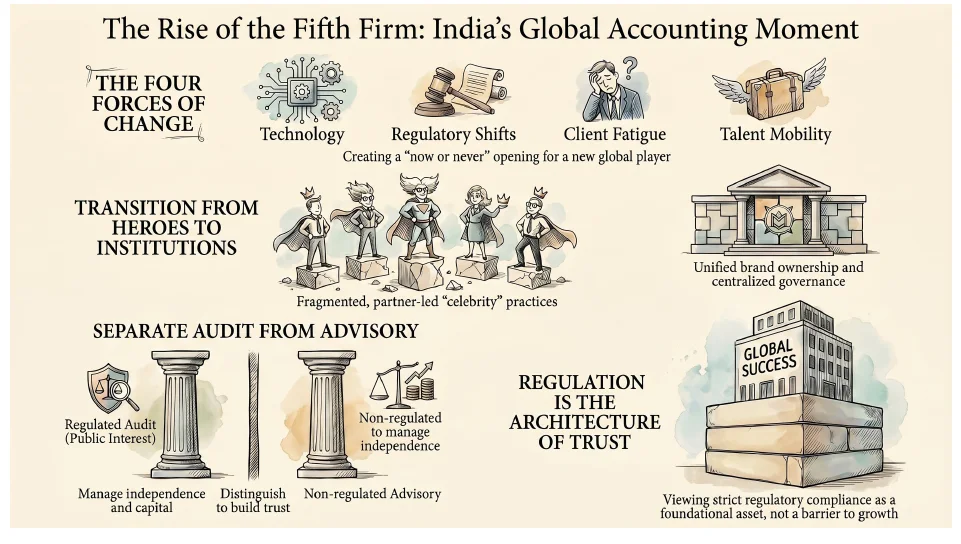
The Rise of the Fifth Firm Indian Global

That’s why dozens of mid-sized firms, some of which are technically excellent and trusted locally, have never crossed the line to achieve global relevance. Because the leap from regional to global isn’t about scale; it’s about design. It requires governance that clients can trust. It needs talent models that retain stars. It should have brand equity that signals both competence and confidence.

This is particularly important because accounting firms occupy a distinctive position in the economy. In advisory services, they compete like professional businesses. In audit and assurance, however, they perform a public-interest function. The audit opinion is relied upon not only by the client that pays the fee, but also by shareholders, lenders, regulators, employees and capital markets. Consequently, global accounting practices must reconcile two sometimes competing impulses: the commercial need to scale and the professional duty to remain independent, credible and ethically consistent.

For Indian firms, this balance will be central to global expansion. The firm of the future may combine audit, tax, transaction advisory, forensic, sustainability, technology and risk consulting services. It may work through Indian partnerships, LLPs, network arrangements, foreign affiliates, corporate entities for non-regulated services, or multi-disciplinary models. Each model creates opportunities, but also raises regulatory and ethical questions.

FOR DECADES, THE FIFTH FIRM FELT OUT OF REACH. BUT TODAY, THE GROUND IS MOVING.

First, there’s technology. AI and automation are transforming the face of delivery. Routine work, such as reporting, reconciliations, and document preparation, is getting commoditised. The traditional advantage of large firms, namely, their scale of delivery, is slipping. The differentiator is shifting from execution to interpretation, from templates to trust. And trust can’t be outsourced.

Second, regulators worldwide (from the UK’s Financial Reporting Council to India’s NFRA) are raising concerns about audit concentration and advisory conflicts. They’re looking for alternatives. The question now is “Why hasn’t someone else done it yet?”

Third, there’s client fatigue. After two decades of transformation programs, PowerPoint decks, and playbooks, clients are becoming less tolerant of generic value. They’re willing to work with smaller, smarter, and more contextually sharp partners—if they can trust them.

Fourth, talent is shifting. Young professionals today are not looking for ten-year ladders and corner-office titles. They want purpose and autonomy.

For the first time in decades, all four forces—technology, regulation, client sentiment, and talent mobility—are moving in the same direction. The forces reshaping this industry are already here. It depends on who steps forward and what they choose to build.

And the timing is not just right. It may be now or never.

2. THE INDIAN REGULATORY BASE: WHAT CAN TRAVEL AND WHAT CANNOT

Indian accounting firms begin their global journey from a regulatory base that is significantly shaped by the Chartered Accountants Act, 1949, the Chartered Accountants Regulations, 1988, the Code of Ethics issued by the ICAI, the Companies Act, 2013, and, for certain audit engagements, oversight by bodies such as the National Financial Reporting Authority. This base is not merely procedural. It determines who may practice, in what form, under what ethical obligations, and with what limitations on services.

A useful distinction must be drawn between regulated services and non-regulated services. Statutory audit, tax audit, certification and certain assurance functions are regulated professional services. They are typically required to be performed by members holding a certificate of practice, and the ability to sign reports is tied to professional registration and disciplinary control. In contrast, many non-assurance services—such as consulting, technology implementation, process transformation, transaction support, business advisory, risk management and outsourcing—may be capable of being delivered through other legal vehicles, subject of course to applicable laws and restrictions arising from independence or professional conduct rules.

This distinction is important for globalisation. If an Indian firm treats all services as though they must be delivered only through the traditional audit partnership model, it may constrain its ability to raise capital, hire non-CA professionals, build technology platforms and compete with integrated global firms. Conversely, if a firm treats all services as commercial services without recognising the regulated character of audit and assurance, it may compromise independence and invite regulatory action.

The corporate entity therefore has a legitimate role in the globalisation debate, particularly for non-regulated services. A limited liability company or other corporate structure may be appropriate for technology consulting, business process services, research support, data analytics, ESG advisory support, training, outsourcing or global capability services, provided it does not hold itself out as performing reserved professional functions and provided conflict, branding and independence issues are properly managed. The challenge is not whether corporate entities should exist around professional firms; they already do in many forms. The more important question is how the relationship between the regulated practice and the non-regulated entity should be governed.

Section 144 of the Companies Act, 2013 illustrates the issue sharply. It prohibits an auditor from rendering specified non-audit services to the audit client, its holding company or subsidiary company, including accounting and book-keeping, internal audit, design and implementation of financial information systems, actuarial services, investment advisory, investment banking, outsourced financial services and management services. The provision also expands “directly or indirectly” to include services through related entities or entities using the auditor’s name, trade mark or brand. This shows that merely shifting a prohibited service to a separate entity may not solve the problem if, in substance, the service remains connected with the auditor or its brand.

At the same time, the regulatory framework is slowly recognising the need for scale. It began with the setting up of LLP and now leading to allowing Multi Disciplinary Entities to be created. Additionally networks are being encouraged and the regulations around them are evolving despite the reluctance to open it up fully and jettison the past ‘controlled’ culture. Just as India opened up in the early 1990s the recent regulatory are welcome ‘green shoots’. These developments are important not because they immediately create global firms, but because they recognise that the traditional fragmented practice model needs institutional pathways for scale.

The Indian regulatory base, therefore, should not be seen as a barrier to globalisation. It is the starting architecture. But Indian firms must understand what part of that architecture is portable across borders and what part is jurisdiction-specific. The right to audit in India does not automatically create the right to audit in another country. Likewise, a network name may create market recognition, but it may also create independence, liability and quality-control expectations. For global practice, structure must follow regulation; it cannot be designed purely by reference to tax efficiency or branding convenience.

What the Big Four got right was that they built firms, not confederations of partners. In many professions, partnerships evolve into loose alliances of celebrities. There, clients belong to individuals, revenues are jealously guarded, and the firm exists as a shared letterhead. The Big Four resisted this movement, even at the cost of internal friction. They centralised brand ownership, partner admissions, and client acceptance norms. The logo did not belong to any one partner. The firm’s credibility no longer depended on a single individual.

The Key, therefore, is creating a model where no single firm, geography, individual or practice controls the firm. The model should facilitate regulatory compliance, balance risks, reward fairly and democratise decision making. One way of doing this is to form a non-practising entity which owns the brand, where leadership resides, where intangible assets are owned and licensed to individual entities in the network, cost are incurred for research and development, IT initiatives in each service line to develop new products and processes, manage the network through central policies, provide funding support to entities in need, etc.

In India, initially, this model feels unnatural. After all, Indian firms had been shaped by towering founders whose personal credibility carried client relationships. The Big Four model, by contrast, appeared impersonal. Partners rotate off marquee clients. Personal brands are deliberately submerged beneath a global identity.

This suppression of individual prominence allows for the emergence of continuity. Over time, clients will not leave when partners do. Relationships will outlive personalities. The firm, not the individual, will become the unit of trust. Single hero led firms will give way to numerous leaders with democratisation of ownership, decision making and choosing leaders with fixed terms through and unbiased merit based selection process.

All of this is possible within one network comprising of regulated and non-regulated entities with checks and balances to ensure that the regulated entities continue to comply with regulatory requirements.

3. INDEPENDENCE: THE NON-NEGOTIABLE CORE OF GLOBAL PRACTICE

Independence is the most sensitive regulatory issue in the globalisation of accounting firms. It is also the issue most likely to be misunderstood. Independence is not only a state of mind; it is also a matter of appearance. A firm may believe that its professional judgment is unaffected, but if the surrounding circumstances create a reasonable perception that the firm is financially dependent, commercially conflicted, or reviewing its own work, the independence concern remains.

The IESBA Code of Ethics has become an important global reference point. The 2024 IESBA Handbook includes revisions relating to the definition of public interest entity, including replacing the earlier “listed entity” category with the broader “publicly traded entity” concept for relevant provisions effective for audits of financial statements for periods beginning on or after 15 December 2024. (Ethics Board) The IESBA framework is based on identifying threats to compliance with fundamental principles and applying safeguards where available. However, for public interest entity audits, many non-assurance services are not merely subject to safeguards but are prohibited or tightly restricted.

Different jurisdictions apply independence requirements through different mechanisms. Some rely substantially on professional ethical codes; others combine professional codes with securities law, audit regulator rules, audit committee pre-approval and statutory prohibitions. A global Indian firm cannot rely only on Indian rules when servicing clients with overseas reporting, listing or audit requirements.

Jurisdiction / Framework Main Source of Independence Regulation Key Features Relevant to Global Firms Practical Implication for Indian Firms
India Companies Act, 2013; ICAI Code of Ethics; NFRA/ICAI oversight Section 144 prohibits specified non-audit services by auditors directly or indirectly to audit clients, holding companies and subsidiaries. Indian firms must map services across the audit client group and across entities using the same brand or network.
United States SEC independence rules; PCAOB standards and inspections Audit committees are expected to pre-approve audit and permissible non-audit services; SEC guidance identifies prohibited services such as bookkeeping, financial information systems design and implementation, management functions and advocacy roles. If an Indian firm audits or supports audit work for an SEC registrant, US independence standards may become relevant even where Indian rules appear less restrictive.
European Union Regulation (EU) No. 537/2014 for statutory audits of public-interest entities Article 5 prohibits statutory auditors and audit firms auditing PIEs from providing specified non-audit services to the audited entity, its parent and controlled undertakings within the prescribed framework. Network-level service mapping is critical, especially where advisory services are provided in one country and audit services in another.
United Kingdom FRC Ethical Standard for Auditors The FRC Ethical Standard applies to audits and other public interest assurance engagements; the 2024 update is effective from 15 December 2024. UK-related audit work requires attention to fee caps, non-audit services, long association and public-interest restrictions.
Singapore ACRA Code and Practice Monitoring Programme ACRA regulates public accountants and accounting entities, including registration, ethics and practice monitoring. The PMP assesses whether audits are performed according to prescribed professional standards. Singapore-facing work requires readiness for regulator-led practice monitoring and quality-control expectations.

There are a number of case studies of actions against professional firms by regulators for breach of independence. The lesson is clear: independence is not managed only by engagement partners. It requires firm-wide systems, consultation protocols, technology-enabled tracking, training and accountability.

For Indian firms aspiring to operate globally, independence should be treated as a design principle. Before accepting a client or service, the firm must ask: Who is the audit client? Who are its affiliates? Which network firms serve the group? Are there financial interests, employment relationships, family relationships, fee dependence issues, self-review threats or advocacy threats? Is the service prohibited absolutely, permissible with safeguards, or permissible only after audit committee approval? These questions must be asked before commercial discussions have matured, not after the engagement letter is ready.

Large global networks manage independence by classifying their global client base into attest and non-attest clients. They monitor compliance through continuous monitoring through using technology besides cross border conflict checks and have a rigorous oversight over individual partner and professionals’ independence through compliance tools requiring disclosure of holdings and other interests of themselves and their family members.

4. NETWORKS, ALLIANCES AND THE PROBLEM OF SHARED IDENTITY

Networks and alliances are attractive pathways for Indian firms because they allow access to global referrals, methodologies, training, branding and cross-border execution without immediate merger into a single global partnership. However, networks create their own regulatory complexity. The larger the network, the greater the risk that one-member firm’s services may affect another member firm’s independence.

In audit regulation, the concept of a “network firm” is significant because independence concerns may extend beyond the signing firm. Under international independence standards, non-assurance services provided by a network firm to an audit client or its related entities may affect the independence of the audit firm. The IESBA Handbook specifically addresses communication with those charged with governance before a firm or network firm provides non-assurance services to entities within the corporate structure of a public interest entity audit client.

This is where many mid-sized firms underestimate the challenge. A network may be marketed as “independent member firms,” but from the client’s or regulator’s perspective, common branding, shared methodologies, referral arrangements, common quality standards and global pitches may create expectations of coordinated conduct. The phrase “independent member firm” cannot become a shield against poor coordination. If a network markets itself globally, it must also govern itself globally.

Indian firms joining networks must therefore examine the network agreement carefully. Questions of exclusivity, brand use, referral obligations, quality control, inspection rights, client acceptance procedures, independence databases, confidentiality obligations, dispute resolution and exit consequences are not merely legal drafting points. They determine whether the network is a real institutional platform or only a loose referral club. Globalisation through networks is viable, but only if the firm understands that shared identity brings shared risk.

5. CONFLICTS OF INTEREST: BEYOND INDEPENDENCE

Conflicts of interest are related to independence, but they are not identical. Independence is primarily associated with audit and assurance objectivity. Conflict of interest is broader. It can arise in advisory, tax, valuation, insolvency, transaction support, forensic, litigation support and consulting assignments, even where no audit relationship exists.

For example, a firm advising a buyer on due diligence may previously have advised the seller on tax structuring. A firm assisting a company in a regulatory investigation may also be advising a whistle-blower or a competing bidder in another jurisdiction. A firm providing transfer pricing advice to two companies in the same supply chain may be asked to support positions that are commercially adverse. A firm providing forensic support to a board committee may have earlier designed internal controls that are now under review. In each case, the question is not merely whether the firm can technically perform the work. The question is whether its objectivity, loyalty, confidentiality obligations or professional credibility are compromised.

Sometimes firms claim to have “Chinese Wall” between teams providing services to get around conflict of interest situations. This is a mere fig leaf and firms have to realise that even the legendary Great Wall of China was breached. In today’s highly connected world where physical locations don’t matter and the spread of communication in the digital world and social media are lightning swift “Chinese Wall” is illusory.

A global firm faces a higher conflict risk because client relationships are dispersed across offices, legal entities and practice lines. The tax team in one country may not know that the transaction team in another country is advising an adverse party. A consulting entity may not know that the audit practice has a relationship with the same group. Without a centralised conflict check process, the firm may discover the conflict only after it has received confidential information from both sides.

A practical conflict-check framework for global Indian firms should include the following:

Conflict Area Practical Question Required Control
Client identity Who is the real client: parent, subsidiary, promoter, board committee, lender, investor or management? Client and beneficial ownership mapping
Adverse party Is the firm or any affiliate advising a counterparty or competitor in the same matter? Matter-level conflict search
Prior work Has the firm earlier advised on the structure, valuation, control, tax position or system now being reviewed? Prior engagement review
Confidential information Has the firm received non-public information from another party that may be relevant? Information barrier assessment
Scope creep Can a permitted advisory assignment become advocacy or management decision-making? Scope approval and periodic review
Network impact Does any network firm have a relationship that affects acceptance? Network-wide conflict confirmation
Resolution Can the conflict be cured by disclosure and consent, or is refusal/resignation required? Ethics partner approval

The most important discipline is to define the “matter” correctly. A conflict check limited to client name may fail where the conflict is transaction-specific. Global firms therefore need databases that identify clients, related parties, beneficial owners, engagement types, industry restrictions, independence status, confidentiality restrictions and adverse parties. More importantly, they need a culture where partners accept that a lucrative engagement may have to be declined.

6. CONFIDENTIALITY AND INFORMATION BARRIERS

Confidentiality deserves separate treatment because it is not merely a subset of conflict of interest. Professional accountants receive sensitive information: financial statements before publication, tax positions, merger plans, pricing models, payroll data, board papers, litigation strategies, regulatory exposures, whistle-blower complaints and personal data. In cross-border practice, confidentiality risk increases because information may move across countries, cloud platforms, shared service centres, network firms and subcontractors.

The ethical duty of confidentiality requires firms not to disclose information acquired through professional relationships without proper authority, unless there is a legal or professional duty to disclose. But in a global firm, the practical question is: who within the firm should have access? The answer cannot be “everyone under the same brand.” Access must be need-based.

Information barriers should therefore be formal, not informal. Engagement teams should be ring-fenced where necessary. Data rooms should have role-based access. Internal emails should avoid unnecessary circulation. Shared drives should be controlled. Consultants and external experts should sign confidentiality undertakings. Cross-border transfer of data should be checked against applicable data protection law. Where the firm operates through a network, confidentiality obligations must be contractually imposed across member firms and subcontractors.

The growing use of artificial intelligence and analytics tools adds a further dimension. Firms must ensure that client data is not uploaded into tools in a manner that breaches contractual confidentiality, data protection obligations or regulatory expectations. A global Indian firm should have a clear AI-use policy covering approved tools, client consent, anonymisation, retention, access control and prohibition on training public models using confidential client data.

7. DATA PROTECTION: FROM BACK-OFFICE ISSUE TO BOARD-LEVEL RISK

Data protection is now a core regulatory issue for global accounting firms. Accounting firms process large volumes of personal data relating to employees, customers, vendors, investors and directors. They also handle sensitive financial and commercial data. When services are delivered across borders, personal data may be transferred between jurisdictions with different privacy standards.

Indian firms must consider India’s Digital Personal Data Protection Act, 2023, but global work may also trigger the EU GDPR, UK GDPR, Singapore PDPA, UAE data protection laws or sectoral confidentiality rules depending on the client, data subject, place of processing and contractual terms. A single global engagement may involve data collected in Europe, processed in India, reviewed by a team in Singapore and stored on servers of a cloud provider located elsewhere. The regulatory analysis cannot be left to the IT department alone.

From a governance perspective, every cross-border engagement should answer certain basic questions: What data will be accessed? Does it include personal data? Who is the controller or processor? Is there a data processing agreement? Is cross-border transfer permitted? What security standards apply? What is the retention period? What is the incident reporting protocol? Are subcontractors involved? Has the client consented to offshore processing?

Data protection also intersects with professional secrecy. A firm may be contractually permitted to process data but ethically required to restrict access. Conversely, a regulatory demand in one jurisdiction may conflict with confidentiality expectations in another. Global firms must therefore establish escalation mechanisms for regulatory notices, data breach incidents and client information requests.

8. AUDIT OVERSIGHT, INSPECTION AND PEER REVIEW

Global accounting practices operate in a world where audit quality is no longer left only to self-regulation. Public oversight bodies, audit regulators, peer review mechanisms and inspection programmes increasingly shape the credibility of firms.

Internationally, audit oversight is perceived to be more intrusive than in India though NFRA in its recent inspections and investigations has changed this perception. The PCAOB oversees audits of public companies and SEC-registered brokers and dealers, and its responsibilities include registration, inspection, standard-setting and enforcement. Singapore’s ACRA Practice Monitoring Programme assesses whether audits are performed in accordance with prescribed professional standards and other requirements. These regimes demonstrate that global audit practice requires readiness for external inspection, not merely internal confidence.

Indian firms that aspire to global work must therefore invest in quality management systems, methodology, engagement documentation, consultation processes, EQCR/EQR mechanisms, independence tracking, training records and archival discipline. The firm’s quality file must be capable of being reviewed by an external inspector who was not part of the engagement and may not share the firm’s informal understanding of the client.

Indian firms must adopt quality practices which compare with the best in the world. Quality has to be consistent across clients and geographies and not different for listed companies and private limited companies. Global practices must be embraced including acting swiftly and firmly on non-compliances.

9. DISCIPLINARY JURISDICTION AND CROSS-BORDER ACCOUNTABILITY

Globalisation complicates disciplinary jurisdiction. A partner may be registered in India, the client may be incorporated in Singapore, the parent may be listed in the United States, the work papers may be stored in India, and a network firm may have contributed specialist input from the United Kingdom. If something goes wrong, which regulator has jurisdiction?

The answer may be: more than one. Professional bodies may discipline their members. Audit regulators may sanction registered firms. Securities regulators may act where listed-company filings are affected. Courts may entertain civil claims. Data protection authorities may investigate breaches. Insolvency, anti-money laundering, sanctions and anti-corruption regulators may also become relevant depending on the assignment.

This creates a major governance issue for Indian firms. Engagement letters and network agreements must address governing law, liability, confidentiality, cooperation with regulators, ownership of work papers, document retention, subcontracting and responsibility for specialist work. However, contractual provisions cannot override statutory jurisdiction. A firm cannot contract out of disciplinary obligations.

For global practice, the safest approach is to assume that work may be reviewed by regulators beyond India if it feeds into an overseas audit, listing, transaction, tax filing, investigation or assurance report. Firms must therefore avoid the attitude that “the signing happens elsewhere, so our risk is limited.” Component work, offshore support and specialist memoranda can all become part of a regulatory record.

10. MULTI-DISCIPLINARY PRACTICE: OPPORTUNITY WITH ETHICAL BOUNDARIES

Multi-disciplinary practice is a natural response to modern client needs. Clients do not experience problems in professional silos. A cross-border acquisition may require financial due diligence, tax structuring, regulatory review, valuation, accounting advice, integration support, technology assessment, ESG review and internal control design. A firm that can bring multiple disciplines together has a commercial advantage.

The key regulatory question in MDP is control of professional judgment. Can non-audit professionals influence audit decisions? Are revenue targets creating pressure on assurance teams? Are consulting partners rewarded for selling services to audit clients? Is confidential audit information being used for advisory opportunities? Are clients being offered bundled services that impair independence? These are not theoretical issues; they are structural risks.

A well-designed MDP must therefore have ring-fenced audit governance, independent ethics oversight, service-line restrictions, clear profit-sharing rules, conflict checks, independence systems and disciplinary accountability. The firm must be able to demonstrate that multi-disciplinary capability enhances service quality without diluting professional independence.

11. EXTERNAL CAPITAL

The interest of private equity and other investors in accounting firms has increased globally, driven by the need for technology investment, succession planning, consolidation, growth capital and professionalisation of management. Accountancy Europe has noted that private equity and third-party ownership are reshaping the European accountancy and audit sector and has highlighted both opportunities and risks relating to quality, independence and governance. (Accountancy Europe)

For Indian firms, external capital raises difficult questions. Audit is a public-interest function. If investors seek short-term returns, cost rationalisation or aggressive cross-selling, there may be pressure on audit quality and independence. On the other hand, without capital, Indian firms may struggle to invest in technology, training, global infrastructure, cyber security, quality systems and international expansion. The policy issue is not whether capital is good or bad. The issue is what type of capital, in what entity, with what governance rights, and with what restrictions.

One possible approach is to distinguish between the regulated audit practice and non-regulated service platforms. External investment may be more feasible in technology, consulting, outsourcing, analytics or training entities, subject to safeguards that prevent interference with audit judgment, misuse of brand and independence violations. If external capital is ever permitted in regulated audit entities, it would require stringent restrictions on voting rights, profit rights, governance influence, exit arrangements, confidentiality, independence and regulator access.

This debate should not be postponed. Global competitors are already investing heavily in technology and multidisciplinary capability. Indian firms cannot become global institutions solely through partner capital if the scale of investment required is far beyond traditional practice economics. But capital must serve the profession; the profession cannot become captive to capital.

There are many who argue against private capital in regulated firms. In my view if in the medical profession doctors can continue to save lives and yet be accountable despite the ownership of their institutions by non-doctors there is not reason why professional firms cannot have private capital. The day is not far off when professional firms would be also listed in stock exchanges!

12. RECOGNITION, MOBILITY AND QUALIFICATION BARRIERS

Professional mobility is another critical dimension of globalisation. A chartered accountant qualified in India may be highly competent, but the right to sign audit reports, appear before regulators, undertake insolvency work or provide reserved services in another jurisdiction depends on local law. Mutual recognition arrangements, qualification pathways, local licensing and residency requirements can determine how far an Indian firm can globalise through its own professionals.

For Indian firms, mobility should be viewed at three levels. The first is people mobility: the ability of Indian professionals to work abroad, obtain local qualifications where needed, and participate in global engagements. The second is firm mobility: the ability of Indian firms to register, affiliate, merge or practise in foreign jurisdictions. The third is service mobility: the ability to provide cross-border services remotely without violating licensing rules in the destination jurisdiction.

Technology may make cross-border delivery easier, but it does not eliminate licensing restrictions. A team sitting in India may support a foreign audit, but the signing rights, review obligations and regulatory responsibility may remain with a locally registered auditor. Similarly, tax advice may cross into unauthorised practice of law in some jurisdictions if not structured properly. Global firms therefore need jurisdiction-wise service maps: what can be delivered from India, what requires local registration, what requires collaboration, and what cannot be done.

13. ETHICAL CONSISTENCY ACROSS JURISDICTIONS

A global Indian firm cannot operate with variable ethics—strict in one country, flexible in another. Regulatory requirements may differ, but the firm’s ethical floor must be consistent. Where local law is less stringent, the firm should still follow its internal global standard. Where local law is more stringent, the firm must comply with the higher standard.

Ethical consistency requires written policies, but it also requires leadership behaviour. Partners must see that independence breaches, confidentiality lapses, poor documentation and aggressive client acceptance are taken seriously. Staff must be trained to escalate concerns. Ethics partners must have authority. Commercial success must not become the only measure of performance.

The reputation of a global accounting firm is cumulative. A failure in one office can affect credibility elsewhere. This is especially true in the age of public enforcement orders, inspection reports, social media and cross-border regulatory cooperation. Indian firms aspiring to global stature must therefore build reputational resilience by investing in ethics before scale, not after scale.

14. CONCLUSION: REGULATION AS THE ARCHITECTURE OF TRUST

The globalisation of Indian accounting firms is both necessary and possible. Indian businesses are global, Indian professionals are capable, and Indian firms have the opportunity to build institutions that combine technical depth, cost competitiveness, cultural adaptability and entrepreneurial energy. But globalisation cannot be built on ambition alone.

The successful global Indian accounting firm will not be the one that merely has the most offices or the widest network. It will be the firm that understands regulated and non-regulated services clearly, manages independence before conflicts arise, separates confidentiality from convenience, treats data as a fiduciary responsibility, welcomes peer review and external inspection, builds systems for multi-jurisdictional compliance, and balances capital with professional control.

Policy support will be useful—particularly in areas such as regulatory harmonisation, recognition of qualifications, facilitation of firm aggregation, and clarity on permissible structures. But the primary responsibility will remain with firms themselves. They must build governance before growth, quality before branding, and trust before scale.

If Indian accounting firms are to move from domestic practices to global institutions, they must recognise a simple truth: regulation is not the enemy of globalisation. Properly understood, it is the architecture that makes global trust possible.

The decisive difference between the past and the present is this: hero partners are no longer enough. Cross-border reporting, ESG assurance, forensic analytics, and technology-enabled audit require systems, platforms, and capital investment in methodology and risk governance. These are baseline expectations.

In earlier decades, caution preserved stability. Today, excessive caution may lead to irrelevance.

The emergence of a Fifth Firm would not be to fight the Big Four. It would be a response to conditions that now make institutional scale feasible within India.

History reminds us that windows do not remain open indefinitely. Competitors respond. Markets consolidate. So, the question is no longer whether India has the conditions for scale. It is whether its professional institutions recognise that the ground beneath them has shifted.


How To Go Global (India’s Big Four Moment)

That the next big accounting firm should emerge from India is a laudable vision. The Global Networking Guidelines is a step in that direction but much more needs to be done in terms of reducing regulatory constraints and aligning Indian regulations with global norms. The Indian firms need to abandon their legacy mindset and work at building a recognizable brand. The landscape is strewn with firms that are small and fragmented and there is a crying need for consolidation, particularly amongst mid-sized firms to build scale. The vision cannot be achieved in one big leap but will be a long and arduous journey. It needs all stakeholders to work in sync and to have a radical shift of thinking both on part of the regulator and the Indian firms.

Truth can walk naked, but a lie always needs to be dressed. Khalil Gibran.

THE REALITY

The naked truth is that the Indian CA firms are nowhere close to challenging the dominance of the multi-national accounting firms (MNF) (also popularly known as the Big 4). Their combined revenues exceeded a staggering INR 45,000 crore in FY251, driven largely by growth in consulting and technology-led services. 67% of the Nifty 5002 companies are audited by the Big 4, being the default preference due to their brand value.

So why are Indian firms not able to create their own brand and provide a strong and viable alternative to MNFs at least within India? After all the MNFs were established by recruiting Indian CAs who were then running their own professional practices. Even today these firms are managed and assignments are executed, predominantly by home grown CAs.

Statistics also show that more than 90% of India firms are “pop & mom shops” with 3 or less partners3. It seems Indian firms are unwilling to scale up as they are averse to sharing authority and are trappedin the illusion that being small ensures independence. They are also wedded to their name which prevents meaningful collaboration with other firms.


1 Big four's Indian arms outpace global counterparts in FY24 revenue growth | Company News - Business Standard

2 https://thefinancestory.com/audit-rotations-in-india-dominated-by-big-6

3 https://thefinancestory.com/mid-sized-indian-ca-firms-employing-20-percent-audit workforce

THE BIG (FOUR) MOMENT

But now there is a thrust from the Government and from ICAI encouraging the next large accounting firm to emerge from India. Many mid-sized Indian firms have also come of age and are looking at scaling up in India and globally.

It is indeed a great vision set for the Indian firms, but has the right framework been put in place where Indian firms can unleash their ambitions and capabilities and break the shackles that limits them to playing second fiddle.

The answer lies in reducing regulations and constraints and creating a level playing field where Indian firms can operate with greater freedom.

Often ICAI regulations are aimed at reigning in the MNFs, particularly those working through surrogate entities. But these very regulations also restrict Indian firms, perhaps more than they restrict the MNFs. We must accept that the MNFs are here to stay and have become an integral part of the Indian ecosystem. They have helped enhance service standards and professionalism, which in turn has benefited Indian firms. Today, advisory services are recognised, valued and are monetized, which was rare earlier.

History has shown that competition helps improve quality, which benefits both the clients and the CA firms. There can be no question that all firms including MNFs must function within the constraints of the ICAI regulations. But the solution is not to put in place stifling regulations but to look at international practices and ensure that regulations apply equally to all.

In most countries the regulations are much more liberal in terms of firm name, advertising, sponsorship, payment of referral fees, charging success fees in certain situations and so on. A more liberal approach with focus on creating a level playing field will benefit everyone. Indian firms are unable to flourish and expand globally as the ecosystem currently is holding them back. Rather than tinkering with current regulations with cosmetic changes, ICAI should consider completely overhauling its ICAI regulations and Code of Ethics even if it requires approval from the Parliament. With the Government supporting this initiative, now is the right time to push for big changes.

India Big Four Moment

THE LONG ROAD AHEAD

It is important to remember that Indian firms cannot become global players overnight. The MNFs emerged through mergers and consolidation, and this process started in 1980s or even earlier. So, the vision of an India incubated MNF to fructify will be a long and arduous journey. The CA community, Government and ICAI will need to stay the course and act consistently with complete synchronization. Any contradictory messaging or constant change in policy will likely derail the process. Only if Indian firms are sure that the policy framework will be consistent would they be willing to invest funds and resources in major strategic decisions and initiatives.

MNFs grew through merger and consolidation and Indian firms aspiring to create a globally recognizable brand will have to follow that route and change their obsession of wanting to maintain their name or the illusory independence.

Indian firms cannot reach scale in one big leap and would have to take many small steps towards their goal. The first obvious step is to gain international exposure and imbibe the best practices followed around the world. ICAI must remove roadblocks to allow Indian firms to get that exposure.

GLOBAL NETWORKING GUIDELINES

ICAI has recently formulated the ICAI (Global Networking) Guidelines, 2025 where the preamble lays down the laudable objectives of exposing Indian firms to global best practices and to enhance their capacities and capabilities. The guidelines require the global Network to be registered with ICAI if any Indian firm or Indian Network is a constituent of such global Network.

The guidelines also encourage Indian firms to take the initiative and establish their own global network. However, this can be the ultimate goal and not the starting point. The obvious first step would be to become member of an existing international association/network and thereby build international experience and connections. This can be the steppingstone to finally going global.

The guidelines define Network as an arrangement, alliance, or association, drawn in writing, (irrespective of its nomenclature) formed with the objective aimed at any one or more of the following:

√ cost sharing amongst member firms;

√ Sharing common quality control / procedures

√ Sharing a common operational strategy;

√  Common brand name. initials, name or logo amongst the constituents;

√   Common website / domain name / email;

√ Common systems, partners and staff, technical resources, audit methodology, training courses, facilities

√  Any other circumstances wherein the actions of the constituents convey that they are associated in a way that constitutes a network.

The first 6 qualifying parameters for a Network have been adapted from the Handbook of the International Code of Ethics for Professional Accountants published by International Federation of Accountants (IFAC). The IFAC guidelines recognise the distinction between a Network (where there is much greater cohesion and at least one of the above six criteria are satisfied) and other Associations where firms come together on a common platform but maintain their own distinct and independent identity. Each member firm is free to develop its own brand and is totally independent of the Association or its other members. In fact, member firms may also compete amongst themselves and may have completely divergent growth and operational strategies. An Association is typically a membership model where none of the above-mentioned criteria are satisfied, and the purpose is to imbibe best practices and establish international connections.

So, Networks and Associations are fundamentally different, and it appears that ICAI wants only those alliances to be registered that satisfy the criteria of a network. This makes logical sense; however, it would be good if ICAI clarifies this explicitly to avoid any confusion. Appropriate safeguards can be put in place (if considered necessary by ICAI) to avoid misuse.

These guidelines are a welcome initiative as besides giving a framework to the Indian firms, it seeks to bring the MNFs within the regulatory framework. Unsurprisingly, due to the disclosure requirements, these guidelines have not been welcomed by the MNFs that function through multiple entities that are structured to stay outside the oversight of ICAI.

ALL MEMBERSHIPS ARE NOT NETWORKS

The guidelines clarify that when an Association is aimed at cooperation, by any means whatsoever, and there is cost sharing amongst the constituent entities, it is deemed to be a Network. However, the guidelines accept the proposition that all alliances or memberships are not networks required to be registered with ICAI. They specifically state that “the determination as to whether an Association is a Network shall be made as a person of ordinary prudence is likely to conclude under the given facts and circumstances…….”. It also clarifies that a larger structure aimed only at facilitating referral of work by itself would not constitute a network.

Take an example of a mid-size firm that already operates a domestic network registered with ICAI and has presence in various cities in India. Also, consider that such a firm also has presence outside India through entities under its direct control. Therefore, under the guidelines, the Indian firm would have to register this international presence as a global Network with ICAI. Let’s call this Network G1. Typically, the domestic network (registered with ICAI) would become part of G1, which in turn would also be registered with ICAI.

Further, assume that in consonance with the vision of the Indian Government and avowed objectives of ICAI, the Indian firm wants to further expand its footprints globally. With that in mind, it wants to stay connected with like-minded foreign firms and stay abreast of international practice. To achieve this long-term growth strategy, it would also like to be a member of an international association with member firms from more than 50 countries. The Indian firm is totally independent of this international association and its members and is pursuing its own global expansion strategy. There is no cooperation between the member firms with regards to strategy or operations or branding. Indeed, the membership of the global association is a steppingstone in the direction of ultimately establishing its direct presence outside India in many countries. Let’s call this membership to the International Association G2.

Surely, the Indian firm is not be expected to register G2 with ICAI. The Indian firm is just a member of this association and has no commonality with the other member firms as each of them function independently. Justifiably, G1 would be registered with ICAI as all the constituents cooperate and are working under a common brand with a unified operational strategy. G2 is a mere membership model and would not be required to be registered with ICAI as a network. The guidelines also support this view as the intention is to monitor Networks where there is commonality of objectives between member firms and at least one of the specified criteria is met.

ESTABLISHING PRESENCE IN A FOREIGN COUNTRY

The guidelines issued by ICAI would help and clearly come in play when an Indian firm wants to establish its global imprints.

An Indian firm could enter an existing network where all member firms closely cooperate and work with a common objective or may create its own separate network. In both cases, this would be a Network model (as envisaged in the guidelines issued by ICAI) that would have to be registered with ICAI. It could also consider establishing a branch or entering in partnership with an existing firm in a foreign country.

An Indian firm that wants to establish presence outside India directly under its control has its task cut out for it. It cannot enter in partnership with a local firm in that country unless all the partners of that firm are also qualified Indian CAs. The problem is that cross-nation partnership is not permitted by ICAI and by most jurisdictions. Therefore, partnership with locally qualified professionals who understand the terrain is not possible. ICAI (and most other countries) does not permit partnership with anyone who is not a member of ICAI.

Even if one finds a firm in another country where all partners hold the Indian COP the problem is not solved. Besides Indian qualification, the partners will also need to hold qualifications of that country so that it is eligible to sign audits and do attest functions under the regulations of that country. In most jurisdictions this would mean not just passing the relevant exam of that country but also serving the internship period there. This effectively means the person needs dual qualification and should have done dual internship in India and in that foreign country. Such an animal may not exist and hence it becomes mission impossible.

The Indian firm may consider setting a branch abroad and this under the ICAI regulations will require appointing an Indian CA to be in charge of that branch. Again, audit and attest functions may not be possible unless the gridlock mentioned above is broken. So most Indian firms that establish presence abroad render services other than attest functions.

The Global Networking guidelines enacted by ICAI are therefore a real and viable way forward. An Indian firm can enter into an arrangement with firms in a foreign country with partners holding qualification in that country. It would be a network arrangement with all firms under a common brand. This network would have to be registered with ICAI. So, this is a good starting point. However, taking a direct partnership interest in an entity abroad would not be possible as that entity may have persons qualified in that country but not holding an Indian COP. International co-operation and reciprocity is required between countries and their regulators for cross-border partnerships to become practically possible.

The other option would be to establish an entity that does not do any attest functions. This can even be a corporate entity, and the Indian firm or the partners of the Indian firm may invest in the share capital of that entity. Such arrangement would also have to be registered with ICAI as a global network.

So, it is not easy and the firms have to navigate a myriad of problems to establish presence outside India. The global networking guidelines provide some direction, but a lot more needs to be done. ICAI is well aware of the problems and will hopefully come out with more options and clarity by not just changing the Indian regulations but also working internationally for greater cooperation and reciprocity.

We are still at a stage where we are struggling to establish international presence. All stakeholders need to recognise that building an internationally recognizable brand is a long way off.

LEVEL PLAYING FIELD

Besides audits and attest functions, MNFs have grown in size and recognition due to their large consulting practice. They have managed conflict by creating multiple entities, some of which operate as surrogate entities outside the oversight of ICAI. It is essential to bring MNFs within the regulatory framework and the global networking guidelines are a step in that direction. This will, to an extent, provide level playing field within India.

All of us agree that the independence of the auditor cannot be compromised and conflict of interest must be avoided. However, the definition of a related party for determining conflict of interest is not consistent across regulations. It is imperative that there should not be any divergence between Company Law, SEBI, NAFRA and ICAI. There is need to lay down clear ground rules that apply and are enforced consistently for all CA firms, including MNFs.

MANAGING CONFLICT

ICAI has framed regulations which prohibit CA firms from taking up non-attest functions for certain Audit clients. There are stringent restrictions, but due to conflicting versions across different regulations there is confusion and lack of clarity. Surely, there should be one set of uniform guidelines. Secondly, such restrictions should not apply to unlisted SMES and other privately owned companies and the “one size fits all” approach needs a rethink. The smaller enterprises prefer getting all their services from a single service provider as this is a value proposition for them. Arguably, the advantage of relaxing these restrictions for small entities would far outweigh any risk of professional independence being compromised. In many jurisdictions smaller entities are exempted from Audit. In India also such exemption to small entities is under consideration through amendment to the Companies Act.

MULTI-DISCIPLINARY FIRMS

Multi-disciplinary firms are another initiative that needs to be fast tracked. Time is ripe for CAs to partner with other professionals, including technology experts, to enhance their service offerings. The idea has widespread acceptance, and it is time that it is operationalized so that CA firms leverage expertise of other domain experts.

Despite the clear advantages, conflict of regulatory jurisdiction (e.g. ICAI vs Bar Council) is a major roadblock. Who regulates whom if an MDF is charged with misconduct or professional violation could trigger jurisdictional nightmare. Strict restrictions on advertising and branding as well on raising capital through innovative funding methods is another damper.

CA firms doing audit functions are restricted from doing several non-attest functions and this is pushing firms from being either an all-audit firm or all consulting and non-attest firm. This means audit firm may not opt to partner with other professionals as each will restrict and may even cannibalize the other. On the other hand, CA firms not engaged in audit and attest functions are increasingly preferring to stay altogether outside the ambit of ICAI regulations.

So, there are legal amendments that would have to be formalized and harmonized across different disciplines if MDF is to become a reality. But even more important, the inherent contradiction will have to be acknowledged and bridged.

CONCLUSION

Indian CA firms have the quality and the capabilities to compete with MNFs, if they are unshackled from the constraints imposed on them and are provided a level playing field. In recent times, several mid-sized firms have emerged as a viable alternative to the MNFs. But the gap between them and the MNFs is huge in terms of size, scale and access to resources. These Indian firms must now go through a second renaissance of scaling up not incrementally but exponentially. Both organic and inorganic growth options need to be considered. In particular, they should consider further consolidation amongst themselves. After all the Big eight consolidated into the Big four.

Indian firms have an opportunity to realise their tryst with destiny. The atmosphere is conducive and time is ripe with the momentum set by the Government. However, I am sure even ICAI recognises that what has been done is just a beginning and the road is long and arduous with many hurdles to be crossed.

ICAI needs to look at the regulatory framework with a clean slate without carrying the legacy of the past. If Indian firms are to emerge as global players, then the Indian regulations must model itself based on global norms. If our regulations are more restrictive then we lose our competitive advantage. Indian firms cannot compete with their hands and feet tied up.

Similarly, partners of Indian firms have to get out of their narrow thinking of clinging to their name, which has no real brand value or unwillingness to let go of control.

If all stakeholders work in sync, the vision of the next big firm emerging from India need not be just the proverbial castle in the air. It can indeed be a dream that can be actualised.

Why Globalisation Matters The Strategic Imperative For Indian Accounting Firms

As Indian businesses expand internationally, globalisation is no longer merely an option for Indian accounting firms, but a strategic necessity. Currently, many firms remain focused on domestic compliance or act as mere back-office executioners for foreign networks. If they fail to adapt, they risk losing high-value clients, top talent, and market relevance. To survive, Indian firms must transition from individual, partner-led practices into unified, capability-led global institutions. This requires building strategic international alliances, investing in enterprise-grade technology, creating dedicated cross-border teams, and developing deep sector-specific expertise. Ultimately, firms must become trusted, globally connected advisors to accompany their clients’ international growth.

INTRODUCTION

क्षणे क्षणे यन्नवतामुपैति तदेव रूपं रमणीयतायाः।

That which attains newness every single moment, that alone is the form of true excellence.

Nothing could be more relevant than this from Shishupal Vadha in the context of Raivatak Mountain.

In this everchanging world, evolution and adaptation to change is the only constant. The globalisation of Indian accounting firms is no longer an aspirational conversation to be conducted at conferences; it is becoming a strategic necessity arising from the changing character of Indian business itself. For decades, a large part of the Indian accountancy profession grew around domestic compliance—statutory audit, tax audit, income-tax representation, company law compliance, indirect tax, exchange control filings and allied advisory. This domestic orientation served the profession well when Indian clients were largely domestic, capital was substantially local, regulatory exposure was mostly Indian and international work was either exceptional or routed through large multinational networks. That world has changed. Indian enterprises are acquiring companies abroad, raising foreign capital, setting up overseas subsidiaries, entering global supply chains, dealing with transfer pricing and Pillar Two-type tax developments, building global capability centres, and facing investors, lenders and regulators who expect advice that is integrated across jurisdictions. Therefore, the relevant question before mid-size Indian accounting firms is not whether they should become global in some abstract sense, but whether they can remain strategically relevant without building global capability.

EVER INCREASING PACE OF GLOBALISATION

India’s macroeconomic position provides the first and perhaps most compelling reason. India is projected to remain among the fastest-growing large economies, and several assessments place it on the path to becoming the third-largest economy around 2030, with S&P Global projecting annual growth of about 6.7% and India becoming the third-largest economy by fiscal 2030-31. With this scale comes a change in the nature of professional services demand. A larger economy does not merely produce larger domestic companies; it produces companies with global ambitions, international supply chains, cross-border financing requirements and multi-country regulatory exposure. India has also become a major destination for global capital.

ever increasing

Growth Trends FDI ODI

The Chart below gives some idea about how cross border investments have grown in last 2 decades and where it is likely to go in next 5 – 7 years.

[Table created from data from DPIIT, RBI, UNCTAD and World Bank]

These numbers are not merely economic data; they are indicators of professional services opportunity. Every dollar of FDI / ODI creates advisory requirements around entry strategy, valuation, due diligence, tax structuring, FEMA compliance, transfer pricing, accounting, audit, reporting, governance and eventual exit. This does not only require knowledge of the domestic laws but also laws of other jurisdictions of either the investor / investee as the case may be.

This outward expansion changes the advisory landscape. A client that acquires a subsidiary in Europe, establishes a manufacturing operation in Vietnam, invests in a UAE holding company, sells SaaS products in the United States, or raises capital from Singapore does not need isolated Indian compliance advice. It needs a firm that can understand the commercial intent in India, coordinate local law, tax and accounting advice abroad, maintain consistency of positions, and take responsibility for the integrated outcome. If mid-size Indian firms cannot provide or organise such capability, the client relationship will naturally migrate to firms that can.

CHANGING CLIENT EXPECTATIONS

The profession of accountancy and related advisory services is very closely connected with the businesses and commercial entities. The profession has evolved with the changes occurring in business entities. In last few decades, the scope of services of an accounting firm has extended significantly. Due to offering of diverse services by the Indian Accounting Firms (IAFs), the expectation of the society from a CA Firm has also been ever expanding and they would consider an accounting firm which provides an entire catena of services to be more “evolved” as compared to a firm which restricts to certain areas of services.

Similarly, the international businesses have been eying fondly active investments in India. If India is not the most preferred investment destination, it is certainly one of the most preferred destinations. The sheer size of the domestic demand is attracting global companies for having more firm Indian presence.

A mid-market Indian company today may have export revenues, overseas warehouses, foreign subsidiaries, ESOPs for international employees, global investors, inter-company services, royalty payments, cloud-based digital operations, and permanent establishment risks in multiple countries. Even when the company is not large, the complexity of its footprint may be global. Further, even if an entity does not have such global reach, aspirational targets for all growing entities include the above. Such clients increasingly expect their trusted advisor to provide a single conversation across audit, tax, regulatory, valuation, transaction, ESG, technology risk and business advisory. They may not insist that every service be rendered by the same legal entity, but they do expect the Indian advisor to organise the solution, manage the interfaces and remain accountable. A single-location, single-speciality, single-jurisdiction practice therefore appears increasingly inadequate for growth-oriented clients. The relevant capability is not merely technical knowledge in one area, but the ability to assemble and govern a multi-disciplinary, multi-jurisdictional response.

With introduction of Transfer Pricing in India under the income tax laws, the IAFs could no longer provide complete tax service to a multi-national enterprise unless the IAFs had capability of transfer pricing advisory, document preparations (which was multi-disciplinary) and also knowledge about the transfer pricing regulations of the jurisdiction of the counter related party, as the policy and the transaction has to meet the regulations of both the countries. Those IAFs which could not cope with these requirements ultimately lost this work to the firms which could provide such services and in long term also impacted retention of such clients for the tax services.

Similarly, with introduction of IFRS, initially and then Ind AS, which were primarily adopted from the International Accounting Standards, several firms which could not cope with the complex requirements of these standards, lost out to the firms which could do so.

The Globalisation Mandate

STATUS TODAY

There is almost negligible presence of IAFs in any major economies, save and except in some specialised jurisdiction like UAE, Singapore, etc. IAFs have somehow chosen to remain subservient as a service provider to international accounting firms without creating their own brand presence in any of the major jurisdictions. These outsourced service outfits are marketed on the principles of cost arbitrage, whereas the real arbitrage is exceptional intelligence that we IAFs possess in accounting, finance and tax related matters irrespective of the country and complexities. The question that arises is whether we are able to leverage the said capabilities in true sense or allow these capabilities to be leveraged by other firms.

What we have observed is that even attempts of the larger and mid-size IAFs have been to persuade ICAI to enable them to become members of some foreign networks / associations. Our aspirations are also not centred around creating a global branded capability of ourselves that is India centric, India focussed and India controlled. This would only make us subservient to the global players including networks / associations.

Due to our almost negligible presence in countries outside India, whenever a person needs services outside India, IAFs have to either rely on their associates outside India or let the client source services independently from their own sources. In this process, we may lose a client to multi-national accounting firms (MNFs), who are vying for such opportunities. Similarly, due to our absence outside India, when an entity outside India enters India for the first time, it has no background of the IAFs and therefore they by default fall in the hands of MNFs.

EMERGENCE OF GLOBAL CAPABILITY CENTRES (GCC)

One of the drivers for the need for changes in the service areas, is the transformation of India into a hub for global enterprise operations. The rise of global capability centres in India demonstrates both India’s professional talent advantage and the risk to Indian accounting firms if they remain positioned only as manpower providers. NASSCOM-Zinnov’s India GCC landscape report notes that India had over 1,700 GCCs in FY 2024, with more than 2,975 centres, estimated revenue of USD 64.6 billion and employment of over 1.9 million people; it further projects GCC revenue of around USD 100 billion by 2030 and headcount crossing 2.5 million. The significance of GCCs for accounting firms is twofold. On the positive side, they confirm the world’s trust in Indian talent, process discipline and cost-effective delivery. On the cautionary side, they show how Indian professionals may become embedded in global service delivery without Indian firms necessarily owning the brand, the client relationship or the intellectual property. If Indian accounting firms remain content with back-office execution for foreign networks, they may grow in headcount but not in institutional stature. The strategic challenge is to move from “delivery capacity” to “market-facing capability”. The move has been from Global Delivery Centre (GDC) to GCC.
Now we have to be the client facing capability created in India.

INCREASING COMPETITION FOR GLOBAL WORK IN INDIA

The competitive landscape reinforces the urgency. Multinational networks and global advisory firms have become more aggressive in India because India is both a high-growth market and a global delivery base. At the same time, global networks outside the Big Four and large consulting brands are strengthening their India presence through member firms, affiliates, alliances and specialist practices. The Indian deals market also reflects the increasing sophistication of business activity where each transaction generates work in diligence, tax, valuation, financial reporting, integration, controls and post-acquisition compliance. If Indian firms do not scale their capabilities, much of this work will be captured by larger networks, even when the client relationship originated locally.

Increasing competitions

RISKS FOR IAFs

There is, therefore, a serious strategic risk for domestically focused firms. The first risk is client leakage: the firm may retain routine compliance but lose strategic work. The second risk is talent leakage: ambitious professionals prefer platforms offering cross-border exposure, sector specialisation and technology-enabled work. The third risk is margin compression: domestic compliance work is increasingly standardised, automated and price-sensitive, whereas integrated advisory commands better economics. The fourth risk is brand stagnation: firms that do not invest in visible capability may become known for execution, not judgement. The fifth risk is dependency: Indian firms may become sub-contractors or resource pools for global networks rather than independent institutions with their own market identity. These risks do not arise suddenly; they accumulate gradually as clients outgrow the firm’s capability.

STRATEGIC GLOBAL CAPACITY CREATION

The answer, however, is not that every Indian mid-size firm must immediately open offices across continents or join a global network. Globalisation should not be confused with foreign addresses. The real strategic requirement is controlled access to global capability. A firm may build this through a combination of its own specialist teams, carefully chosen correspondent firms, bilateral alliances, referral arrangements, sector-focused collaborations and technology platforms. The essential point is that the Indian firm must remain the relationship owner and solution architect. It should not merely “refer” the client abroad and disappear. It should frame the issue, select the overseas advisor, coordinate advice, challenge assumptions, ensure Indian implications are considered, manage timelines, and present an integrated conclusion. This is the difference between being a local practitioner with contacts and being a globalising professional institution.

For practical implementation, mid-size firms should begin with a deliberate international strategy rather than opportunistic networking. Recommended steps could be as under:

STRATEGIC GLOBAL CAPACITY CREATION

1. The first step is to map the existing client base and identify global touchpoints: exports, imports, overseas subsidiaries, foreign investors, ECBs, ODI, transfer pricing, digital services, expatriate employees, cross-border M&A, and international tax exposures. This mapping will reveal which jurisdictions matter most—often the UAE, Singapore, the United States, the United Kingdom, the Netherlands, Mauritius, Japan, Germany and selected African or Southeast Asian markets.

2. The second step is to create internal service lines around recurring global needs: international tax, transfer pricing, FEMA and ODI advisory, cross-border transaction support, IFRS / Ind AS reporting, global mobility, ESG reporting and technology risk.

3. The third step is to identify reliable overseas firms in priority jurisdictions and convert informal relationships into documented working protocols covering response time, confidentiality, conflict checks, fee sharing, quality standards and client communication.

4. The fourth step is to invest in knowledge infrastructure. A globalising firm cannot depend entirely on individual memory or partner-level improvisation. It requires jurisdiction notes, checklists, standard engagement models, tax treaty summaries, transfer pricing documentation protocols, foreign subsidiary reporting calendars, and templates for cross-border diligence. These tools need not be elaborate at the beginning, but they must be systematic.

5. The fifth step is to create a cross-border desk within the firm, even if initially small, which acts as the coordinating point for international matters. Such a desk should not be a decorative label; it should maintain the alliance database, track assignments, update regulatory developments, coordinate webinars with foreign firms, and support partners in client conversations.

6. The sixth step is to develop talent differently. Global capability cannot be built only through senior partner relationships. Younger professionals must be trained in international tax concepts, IFRS, global audit methodologies, data analytics, business communication and project management. They should participate in joint assignments with overseas firms and, where feasible, undertake short secondments. The firm should encourage writing, speaking and thought leadership on cross-border issues because brand is built not only by doing work but by being seen as capable of doing it.

7. The seventh step is to choose sectors in which the firm can build differentiated credibility. For example, Indian firms can develop strong cross-border practices around pharmaceuticals, engineering goods, chemicals, IT/SaaS, renewable energy, financial services, family-owned multinational groups, start-ups expanding overseas, and inbound manufacturing. A sector lens allows a mid-size firm to compete on insight rather than size.

FINER ASPECTS FOR GLOBAL ACCEPTABILITY – TECHNOLOGY – CONFIDENTIALITY – BRANDING

Technology must be treated as infrastructure, not as an accessory. A firm that seeks to manage multi-jurisdictional work requires secure document management, workflow tools, knowledge repositories, data analytics, collaboration platforms and cyber controls. Global clients will increasingly ask how data is protected, how work is reviewed, how continuity is ensured, and how quality is monitored. The internationalisation of services also brings challenges of data privacy, confidentiality, sanctions screening, anti-money laundering sensitivity, independence conflicts and professional liability. Globalisation expands opportunity, but it also expands risk. Mid-size firms must therefore strengthen governance, risk acceptance procedures, engagement documentation, quality review and insurance arrangements before aggressively pursuing cross-border work.

A further strategic shift is required in branding. Indian accounting firms have historically underinvested in institutional brand building, partly because professional work was relationship-led and partly because regulatory culture discouraged overt marketing. However, brand building need not mean aggressive advertising. It means clarity of positioning, quality of publications, consistency of client experience, visible expertise, professional website content, participation in international forums, collaboration with chambers of commerce, and the ability to present credentials confidently. If Indian firms wish to become alternatives to multinational service providers, they must project themselves not as low-cost substitutes but as high-quality, India-rooted, globally connected advisors.

COLLABORATIONS AND NETWORKING

The profession must also recognise that independence and collaboration can coexist. Joining or setting up your own global network may be suitable for some firms. In fact, an Indian firm or group of firms, may consciously decide to either become member of (though not the best option) or set up a global network, which has scope for preserving strategic autonomy, avoid restrictive branding obligations, and work with best-fit firms across jurisdictions. What matters is not membership for its own sake, but capability, quality and control. A carefully curated independent alliance model may sometimes serve clients better than a passive network membership, provided the Indian firm invests in governance and relationship depth.

CONCLUSION

In conclusion, globalisation matters because Indian clients have globalised, capital has globalised, regulation has globalised, competition has globalised and talent aspirations have globalised. The accounting firm that remains purely domestic may continue to survive, but its ability to remain central to high-value client decisions will diminish. For mid-size Indian firms, the strategic imperative is to move from compliance-centric practices to capability-led institutions; from manpower supply to brand ownership; from referral dependence to coordinated global delivery; and from individual partner networks to firm-level international strategy. The opportunity is considerable. India has the talent, credibility, entrepreneurial energy and client base to create globally respected accounting and advisory institutions. The next phase will belong to firms that do not merely follow their clients abroad, but build the confidence, systems and alliances to accompany them as trusted global advisors.

Conclusion

From The President

My Dear BCAS Family,

The month of July signifies not only the beginning of the busy compliance and assurance season but also heralds the onset of a new academic year at BCAS, coupled with the new leadership team taking over.

I would like to welcome CA Kinjal Shah as the President and CA Mandar Telang as the Vice President of the Society for the academic year 2026-27. Kinjalbhai is an experienced professional who has been associated with BCAS for several years in various capacities and is also a techno-savvy administrator with an eye for detail. Mandar is a solid professional in his chosen field of Indirect Taxation, methodical in his work, and tech-savvy. Alongside them, CA Kinjal Bhuta, CA Mrinal Mehta, and CA Samit Saraf complete the team of youthful office bearers who will bring vibrancy and push the Society to greater heights in the coming years.

As part of our ongoing self-reflection, the Managing Committee formulated a comprehensive five-year strategic plan for the Society in 2023–24, structured around six key pillars (reach, professional development, networking, advocacy, Yuva Shakti and chartered for change), which is midway through its implementation. During the year, to implement these themes into meaningful outcomes, we identified several focused projects and strategic verticals, each of which was reviewed through periodic monitoring and key actionable plans. The overarching theme binding the implementation of various projects and initiatives was Logistical and Administrative Excellence, reflecting our continuing ISO accreditation, which was further renewed until 28th February, 2029. Accordingly, we have continued to focus on strengthening operational efficiency and ensuring the smooth execution of programmes, events, and internal processes. Continuous efforts were made to streamline events and administrative functions, improve coordination mechanisms, and enhance the overall effectiveness of programme delivery and backend support systems.

SEVEN STRATEGIC INITIATIVES:

Considering that we are in the seventh month of the year and as the seventy-seventh President, I would like to focus on seven strategic initiatives that I believe will go a long way toward building and strengthening the Society’s professional development and visibility in the coming years.

BCAS A New Chapter of Excellence

  •  Appointment of Sherpas – The formal appointment of Sherpas in 13 cities during the year played a key role in connecting with members, facilitating local engagement, and supporting the Society’s outreach efforts across the country.
  • Town Hall and Sherpa-Led Events – These were conducted at Jaipur, Kolkata, Thane, Indore, Coimbatore and Vadodara with help and support from local associations in certain cases, covering diverse topics, depending on the needs of local members. These events fulfil a key finding from last year’s membership survey, in which outstation participants longed for more in-person programmes on contemporary topics.
  • AARAMBH and FALCON Initiatives – Through the AARAMBH – MAKING ARTICLESHIP COUNT initiative, we engaged directly with students by sharing practical insights, real-life experiences, and guidance from young Chartered Accountants who have recently walked the same path, with the aim of getting students and youngsters familiarised with the Society. Under the FALCON (FROM ARTICLESHIP TO LEADERHIP CARVING ONES NICHE) initiative, BCAS offers aspiring graduates an opportunity to interact and learn from young Core Group members who have walked the path before them. The initial sessions under these initiatives were conducted at H.R. College of Commerce & Economics and N M College of Commerce & Economics, respectively.
  • Sakhi Circle and Women’s RefresHER Courses (Nari Shakti Initiative) – The formation of the Sakhi Circle, a women-only study circle, provided a dedicated platform for women CAs to converse, connect and collaborate on professional and technical developments in a supportive environment. During the year, 3 meetings were held by senior women core group members on topics aimed at encouraging women’s uniqueness and on soft skills. During the year, the Society also launched Specialised RefresHER Course under the BCAS Academy Platform exclusively for women CAs, covering relevant technical, regulatory, and professional subjects to help members stay updated in an evolving professional landscape. A total of 14 sessions were conducted during the year by experienced women subject-matter experts.
  • SAMVAD with BCAS – This was launched as a PODCAST SERIES, wherein recorded conversations with renowned speakers on certain topics that inspire insights and shape the future, moderated by the President and Past Presidents, were released. These were all recorded at our own in-house studio.
  • Collaboration and Outreach Initiatives – The Society continues to deepen its existing collaborations with IMC, CTC, WIRC – ICAI, amongst others. Further, during the year, an MOU was signed with SIMSREE to focus on relevant professional opportunities and research and a campus visit and lecture meeting was organised during the RRC at IIM-BANGALORE. During the year, the Society continued to collaborate with NITI Aayog, the premier think tank on policy and planning initiatives, and with the Bharti Institute of Public Policy – Research Division of the Indian School of Business (BIPP), by participating in a multi-stakeholder workshop on reforming tax policy consultation in India. BCAS also hosted an outreach programme in association with the Office of the Chief Commissioner of Income Tax – 4, Mumbai, to raise awareness of the provisions of the Income Tax Act, 2025, and the Income Tax Rules, 2026, which came into effect from April 1, 2026. The session was conducted under ‘Prarambh 2026’ initiative of the Income Tax Department.
  • Reading Club – BCAS recently launched the ‘BCAS Reading Forum’ with the objective of reviving the BCAS library and creating a community around the idea of reading through discussions, curated conversations, and reading-led engagements.

To conclude, I would like to reflect on BCAS’s journey and its commitment to collective progress over the past 77 years with the following quote from Henry Ford, which aptly sums up our ethos.

“Coming together is a beginning, staying together is progress, and working together is success.”

As we end another year, I would like to place on record my deep appreciation to all the members, office bearers, Past Presidents and other stakeholders for their co-operation and allowing me an opportunity to serve. May God bless you all, and may God bless our beloved BCAS!

A big thank you to one and all!

Warm Regards,

CA. Zubin F. Billimoria

President

Globalisation Of Indian Firms | A Timed Opportunity

Some opportunities arrive quietly and leave just as quietly. In 2002, the collapse of a global accounting giant left a vacuum in the professional services market, instantly consolidating the Big Five into the Big Four. It was a moment when a new, formidable institution could have emerged from the Global South. India missed that window. Over two decades later, despite producing hundreds of thousands of the most rigorously trained professionals in the world, India has yet to build a single accounting firm of true global scale. We have mastered the art of exporting exceptional talent, but we have fundamentally struggled to export the institution.

The market will no longer wait for us to catch up. Indian corporations are no longer purely domestic entities; they are acquiring assets overseas, operating complex cross-border supply chains, and navigating multi-jurisdictional tax and regulatory regimes. They require advisors who can follow them, providing integrated, multi-jurisdictional competence with a single point of accountability. Simultaneously, technology has dismantled the traditional advantages of geographic proximity. Cloud infrastructure and artificial intelligence are rapidly commoditizing routine compliance work. The premium has shifted entirely to high-level professional judgment and trust.

So, what holds Indian firms back? The barrier is rarely technical capability; it is our structural DNA. The Indian accounting sector remains deeply fragmented, with the vast majority of practices operating as small proprietorships. Many firms remain trapped in the illusion that staying small preserves professional independence. We are often wedded to founder names, reluctant to share authority, and deeply reliant on individual hero-partners who control marquee client relationships. A practice built entirely around the personal credibility of one or two individuals cannot cross a state line, let alone an international border. More importantly, the regulatory architecture has historically constrained the form, branding, ownership, fee-sharing and multidisciplinary models through which Indian CA firms could participate in international platforms.

The rise of the Fifth Firm

To build a firm that travels well, leadership must pivot from personality to systemic architecture. Globalisation demands transitioning from a loose confederation of partners sharing a letterhead to a unified institution. This requires uncomfortable shifts. Client relationships must belong to the firm, not the individual. Technology must be treated not as a discretionary overhead, but as the core infrastructure that enables scale and enforces quality. Most critically, it requires massive capital. Expanding internationally, attracting top-tier local talent in foreign markets, and deploying enterprise-grade technology necessitates funding models that challenge traditional partnership economics. It requires patient capital and investment discipline: whether generated internally, pooled across partners, or enabled through structures that remain consistent with professional independence.

Furthermore, true global expansion exposes the cracks in a firm’s foundation. Domestic success is frequently insulated by long-standing relationships and regulatory barriers. In a new market, incumbency vanishes, and the firm must survive purely on its distinctive value. To survive this exposure, firms must view regulation and independence not as constraints, but as the very architecture of trust. A global practice cannot operate with variable ethics—strict in one jurisdiction and flexible in another. Institutional culture is not a values statement; it is what happens when a junior associate spots an error at midnight and raises it, even when no senior partner is watching.

The forces of technology, client fatigue with market concentration, and shifting regulatory frameworks are finally aligning to create an opening for the “Fifth Firm”. However, going global must never be a vanity project pursued simply to print a foreign address on a business card. It is the ultimate diagnostic test of a firm’s resilience and maturity.

History reminds us that windows of opportunity do not stay open indefinitely. The question facing the Indian accounting profession is no longer whether we have the talent to operate on a global stage; our professionals already run the engine rooms of the world’s largest corporations. The real question is whether we have the institutional courage to build our own. We can choose the comfort of our fragmented domestic ecosystem, remaining highly competent participants in a game governed by others. Or, we can undertake the heavy work of forging an enduring global institution—one where the firm outlives its founders, where economics are shared, and where the name on the door stands for uncompromising trust. Two decades ago, we watched an opportunity pass us by. The ground has shifted once again. This time, we must be the ones to build.

Best Regards,

CA. Sunil Gabhawalla

Editor

द्रव्येण सर्वे वशा !!

This is an age old truth in life. This is a common experience over hundreds of years. An irrefutable reality! The Subhashit reads as follows: –

माता निन्दति नाभिनन्दति पिता भ्राता न संभाषते

भृत्य : कुप्यति नानुगच्छति सुत: कान्ता च नालिङगते !

अर्थप्रार्थनशङ्कया न कुरुते संभाषणं वै सुहृद

तस्मात् द्रव्यमुपार्जयस्व सुमते ! द्रव्येण सर्वे वशा : !!

This is the plight of a poor man! Literal meaning –

माता निन्दति   Mother keeps on cursing

नाभिनन्दति पिता   Father does not hold such son in high esteem. Father criticises him.

भ्राता न संभाषते    Brother does not talk or converse with him.

भृत्य : कुप्यति       The servant disrespects him or gets irritated.

नानूगच्छति सुत:   The son does not follow him nor does he obey him.

कान्ता च नालिङगते      Wife does not love (embrace) him. She keeps a distance!

अर्थप्रार्थनशङ्कया न कुरुते संभाषणं वै सुहृद    F riends avoid him thinking that he will demand money from him. She is always displeased.

तस्मात द्रव्यमुपार्जयस्व सुमते   Hence, Oh wise man, earn money, make money.

द्रव्येण सर्वे वशा:   Since, money makes the mare go.

The weight of wealth

If one has not earned money nor if one possesses money, one is nowhere! One is not counted at all. The family members do not love him, nor respect him. They may even disown such person. They may have sympathy but no affection or respect.

In the society, people will avoid him. Even in his friend circle, he has no say. He is not welcome. No one listens to him nor cares for him.

If a man is poor, his whole family also may suffer from all these difficulties among their relatives or in the society. Poor man/family may not be even invited for social functions or events.

Extending this logic, a poor community or even a poor nation may be ignored or looked down upon. Unfortunately, even good qualities of poor people will not be recognised or appreciated.

On the other hand, if one has money one is regarded as a talented and respectable person! सर्वे गुणा: कांचनमाश्रयन्ते We have earlier studied this Subhashit – meaning all good qualities and virtues automatically get attributed to a wealthy person.

Hence, friends, always try to be a moneyed person!

Sec 56(2)(vii)(b)(ii): Addition on account of difference between stamp duty value and purchase consideration for agricultural land made under a provision which was introduced subsequently – AO could not apply amended provision retrospectively – Further, payment of actual consideration duly established – Addition unsustainable.

27 [2025] 122 ITR(T) 312 (Lucknow- Trib.)

Smt. Vimla Tripathi vs. ITO

ITA NO.: 310 (LKW.) OF 2023

A.Y.: 2013-14 DATE: 31.12.2024

Sec 56(2)(vii)(b)(ii): Addition on account of difference between stamp duty value and purchase consideration for agricultural land made under a provision which was introduced subsequently – AO could not apply amended provision retrospectively – Further, payment of actual consideration duly established – Addition unsustainable.

FACTS:

The assessee filed her return of income for the AY 2013-14. Subsequently, based on third-party information, the Assessing Officer noticed that the assessee, jointly with another person, had purchased an agricultural land on 01.08.2012 for a declared consideration of ₹12,00,000.

The AO observed that the market value of the land for stamp duty purposes was ₹71,30,000. Upon response from the assessee to notices u/s 142(1), she provided documentary evidence showing details and modes of payment, copies of bank statements and the sale deed.

Finding a discrepancy of ₹59,30,000 between the stamp duty value and actual consideration paid, the AO treated 50% of such difference (i.e., ₹29.65 lakhs) as income of the assessee under section 56(2)(vii)(b)(ii), since the property was jointly purchased.

The assessee contended that the transaction took place on 01.08.2012 and provision of section 56(2)(vii)(b)(ii) was introduced by Finance Act, 2013 and came into effect only from 01.04.2014 (A.Y. 2014-15). Therefore, the said provision could not be applied to a transaction undertaken in A.Y. 2013-14.

Despite these submissions, the NFAC dismissed the appeal, upholding the addition made by the AO.

HELD:

ITAT observed that the transaction was carried out in F.Y. 2012-13. The provision under section 56(2)(vii)(b)(ii), which sought to tax the difference between stamp duty value and actual consideration for property purchases, was introduced w.e.f. 01.04.2014 and was applicable only from A.Y. 2014-15 onwards. Therefore, it could not be applied retrospectively to a transaction of A.Y. 2013-14.

The Tribunal noted that the CIT(A)’s observation that the transaction was “without consideration” was factually incorrect. The assessee had placed on record the bank statements and the sale deed evidencing payment of ₹6 lakhs (her share of the total ₹12 lakhs consideration). Hence, the transaction involved actual consideration and was not a gift or zero-value transfer.

ITAT further held that, the assessee also raised a valid legal argument that agricultural land is not treated as a “capital asset” under section 2(14) and thus not subject to the deeming provisions of section 56(2)(vii)(b)(ii), which apply only to capital assets.

Accordingly, the Tribunal found merit in the assessee’s arguments, quashed the order of the CIT(A),  and directed the Assessing Officer to delete the addition of ₹29.65 lakhs made under section 56(2)(vii)(b)(ii).

Sec 145 – Percentage Completion Method (PCM) – Rejection of consistently followed method of accounting without any defects or inconsistencies – Addition of entire actual sale value led to double addition as income had already been recognised on accrual basis under PCM in earlier years – Not permissible – Once accepted, accounting method cannot be altered without just cause.

26 [2025] 122 ITR(T) 154 (Ahmedabad – Trib.)

ITO vs. Sainath Land Developers

ITA NO.: 441 (AHD.) OF 2020

A.Y.: 2015-16 DATE: 31.12.2024

Sec 145 – Percentage Completion Method (PCM) – Rejection of consistently followed method of accounting without any defects or inconsistencies – Addition of entire actual sale value led to double addition as income had already been recognised on accrual basis under PCM in earlier years – Not permissible – Once accepted, accounting method cannot be altered without just cause.

FACTS

The assessee, a partnership firm was engaged in real estate development. The return was selected for limited scrutiny under CASS. During the course of assessment, the Assessing Officer noted that the assessee had shown opening work-in-progress (WIP) of ₹6.47 crores and had sold flats and shops worth ₹4.20 crores during the year. However, the sales reported in the profit and loss account amounted to only ₹55.70 lakhs.

The assessee explained that it had been consistently following the Percentage Completion Method (PCM) of revenue recognition since A.Y. 2012-13, which had been accepted by the Department in earlier assessments.

The AO concluded that the difference between the stock sold (₹4.20 crores) and the sales disclosed (₹55.70 lakhs) represented undisclosed sales and made an addition of the entire ₹4.20 crores to the assessee’s income.

Aggrieved, the assessee filed an appeal before the CIT(A), who deleted the entire addition. The Revenue preferred further appeal before the Tribunal.

HELD

ITAT observed that the assessee had consistently followed PCM, which is a recognised method of accounting as per the Accounting Standards issued by the ICAI. The Revenue had accepted this method in earlier years without raising any objection. And AO failed to point out any defects or discrepancies in the books of accounts maintained by the assessee.

ITAT observed that the addition made by the AO resulted in double taxation of the same profits – first when revenue was recognised under PCM in earlier years and again when full actual sales were considered in the current year.

ITAT held that once a method of accounting has been accepted by the Department and regularly followed by the assessee, it cannot be rejected in subsequent years unless a material change in facts is demonstrated. In the present case, no such change or deviation was shown by the AO.

Thus, the ITAT held that the method of accounting consistently and correctly followed by the assessee under the Percentage Completion Method could not be rejected in the absence of any defect or inconsistency, and the addition of ₹4.20 crores was rightly deleted by the CIT(A).

S. 54F – Capital gain arising out of surrender of tenancy rights is eligible for exemption under section 54F if the developer-builder has allotted a residential flat without any consideration against such surrender by executing Permanent Alternate Accommodation Agreement. S. 56 – Once an income from a source falls within a specific head, the fact that it may indirectly be covered by another head will not make the income taxable under the latter head.

25 (2025) 174 taxmann.com 1015 (Mum Trib)

Vasant Nagorao Barabde vs. DCIT

ITA No.: 5372 (Mum) of 2024

A.Y.: 2018-19 Dated: 22.05.2025

S. 54F – Capital gain arising out of surrender of tenancy rights is eligible for exemption under section 54F if the developer-builder has allotted a residential flat without any consideration against such surrender by executing Permanent Alternate Accommodation Agreement.

S. 56 – Once an income from a source falls within a specific head, the fact that it may indirectly be covered by another head will not make the income taxable under the latter head.

FACTS

The assessee and his daughter entered into agreement for Permanent Alternate Accommodation (PAA) dated 21.9.2017 with the developer whereby the tenancy rights in respect of residential premises in building “SS” in Mumbai were surrendered. The developer agreed to provide and allot on ownership basis, without any consideration, one flat in the new building proposed to be constructed on the said property. The stamp value of the said property was ₹2,88,85,600. The assessee filed his return of income on 15.08.2018 reporting total income at ₹61,34,820.

Case of the assessee was selected for limited scrutiny for the reason that purchase value of property was less than stamp value. Since no explanation came from the assessee, the AO completed the assessment under section 143(3) making an addition of ₹2,88,85,600, being the stamp duty value for which no consideration was paid by applying section 56(2)(x)(b)(B).

Against this, assessee went in appeal before CIT(A). Before the CIT(A), the assessee filed detailed explanations and additional evidence under rule 46A. However, the CIT(A) dismissed the appeal of the assessee.

Aggrieved, the assessee filed an appeal before ITAT.

HELD

The Tribunal observed that-

(a) It was an undisputed fact that both the assessee and his daughter were tenants in the registered agreement for PAA dated 21.09.2017 under which flat in the new building had been allotted by the developer against surrender of tenancy rights. Existence of tenancy was not in dispute.
(b) It was important to note that there was a surrender of tenancy rights against which a new flat had been allotted for which a registered deed was executed. Once there is a surrender of tenancy rights, the factual position which emerges was that tenancy right (which is a capital asset) was transferred and was liable to be taxed under section 45 read with section 48.

(c) The moot point that arose was as to in whose hands this capital gain was to be taxed depending upon who owned the tenancy rights and who transferred the same to the builder against which the new flat was allotted. In present set of facts, it could be either the assessee or his daughter. In either case, deduction under section 54F was available against the capital gain so computed since there was an investment in residential flat allotted by the builder by way of PAA of equivalent stamp duty value of ₹2,88,85,600. Thus, in either hands, the capital gain so computed was eligible for deduction under section 54F in toto.

(d) Once an income from a source falls within a specific head, the fact that it may indirectly be covered by another head will not make the income taxable under the latter head. Thus, applicability of section 56(2)(x)(b)(B) was ruled out.

(e) Claim of the assessee for deduction under section 54F against the capital gain on the impugned transaction was an allowable claim by taking into account the observation of Supreme Court in the case of Goetze (India) Ltd. whereby Court held that “nothing impinges on the power of the appellate authorities to entertain such a claim of the assessee.”

Accordingly, the appeal of the assessee was allowed.

S. 70 – Short-term capital loss (on which STT was paid) can be set off against short-term capital gains (on which STT was not paid) as per section 70(2).

24  (2025) 174 taxmann.com 932 (Mum Trib)

Teacher Retirement System of Texas vs. ACIT

ITA No.: 1371 (Mum) of 2025

A.Y.: 2022-23 Dated: 23.05.2025

S. 70 – Short-term capital loss (on which STT was paid) can be set off against short-term capital gains (on which STT was not paid) as per section 70(2).

FACTS

The assessee was a resident of the United States of America, and was registered as a Foreign Portfolio Investor with the Securities and Exchange Board of India. For AY 2022-23, the assessee filed its return of income on 26.07.2022, declaring a total income of ₹1,392,97,42,630. The return filed by the assessee was selected for scrutiny.

During the assessment proceedings, it was observed that the assessee computed the net short-term capital gains amounting to ₹312,17,86,831, after set off the short-term capital loss [on which securities transaction tax (STT) was paid], which is taxable at 15% under section 111A, against the short-term capital gains (on which STT was not paid), which is taxable at 30% under section 115AD. Thereafter, the assessee set-off the balance loss against the short-term capital gains earned on the transaction of sale of share subjected to STT. The AO held that section 111A and 115AD provide different rate of taxes and the assessee’s manner of setting-off its short-term capital loss, taxable at 15%, first against the short-term capital gains taxable at 30%, and the balance set off against the short-term capital gains taxable at 15% was disallowed. Accordingly, vide draft assessment order dated 14.3.2024, he computed the short term capital gain by first setting off 15% loss against 15% gains, and thereafter, set off with other gains.
Dispute Resolution Panel (DRP) rejected the objections filed by the assessee and upheld the computation of capital gains made by the AO vide draft assessment order.

Aggrieved, the assessee filed an appeal before ITAT

HELD

The sole issue before the Tribunal was whether the short-term capital loss (on which STT was paid) can be set off against short-term capital gains (on which STT was not paid)

Following the decisions of co-ordinate bench in a number of cases, the Tribunal observed that as per the provisions of section 70(2), the short-term capital loss can be set off against gain from any other capital asset. Section 70(2) does not make any further classification between the transactions where STT was paid and the transactions where STT was not paid and the term “similar computation” in section 70(2) only refers to the computation as provided under sections 48 to 55.

Accordingly, the Tribunal directed the AO to accept the methodology adopted by the assessee for the computation of capital gains.

In the result, the appeal of the assessee was allowed on this ground.

S. 56 – The term “immovable property” in section 56(2)(x) includes agricultural land. S. 56 – Where the assessee disputes the stamp duty value, the Assessing Officer is required to refer the matter to District Valuation Officer (DVO).

23 (2025) 174 taxmann.com 1111 (Ahd Trib)

Clayking Minerals LLP vs. ITO

ITA No.: 82 (Ahd) of 2025

A.Y.: 2018-19 Dated: 27.05.2025

S. 56 – The term “immovable property” in section 56(2)(x) includes agricultural land.

S. 56 – Where the assessee disputes the stamp duty value, the Assessing Officer is required to refer the matter to District Valuation Officer (DVO).

FACTS

The assessee filed its income tax return on 30.08.2018, declaring a loss of ₹1,24,010 for AY 2018-19. Subsequently, the case was selected for limited scrutiny to examine whether the purchase value of a property was less than the value determined by the stamp valuation authority under section 56(2)(x). During the course of assessment proceedings, the AO noted that the assessee purchased a property for ₹42,72,000 having stamp duty value of ₹1,15,62,880. The assessee contended that since the property was agricultural land at the time of purchase, it did not qualify as a “capital asset” as per section 2(14), and therefore, section 56(2)(x) was not applicable. The AO held that section 56(2)(x) was attracted and taxed the difference of ₹72,90,880 between the purchase consideration and the stamp duty value under the head “income from other sources”.

CIT(A) affirmed the addition of the AO.

Aggrieved, the assessee filed an appeal before ITAT.

HELD

The Tribunal observed that-

(a) On a plain reading, it is seen that section 56(2)(x) mentions the term “any immovable property”. The term “immovable property” has not been defined in section 56(2)(x) or in any other section in the Income Tax Act. This renders the word to be interpreted in general parlance. In general understanding of the term, the word “immovable property” means an asset which cannot be moved without destroying or altering it. Going by the general definition, “immovable property” would include any rural agricultural land, in absence of any specific exclusion in section 56(2)(x).

(b) Notably, section 56(2)(x) does not use the word “capital asset”. The sale of rural agricultural land is exempt in the hands of the seller since the word “capital asset” has been specifically defined to exclude agricultural land in rural areas under section 2(14). Thus, sale of rural agricultural land shall not give rise to any capital gains in the hands of the seller as it is not considered as a capital asset itself. However, from the point of view of the “purchaser” of immovable property, section 56(2)(x) mentions “any immovable property” which going by the plain words of the statute, does not specifically exclude “agricultural land”.

(c) However, since the assessee had disputed the stamp duty value, the AO was required to make a reference to the DVO for the purpose of valuing the same as per third proviso to section 56(2)(x).

Accordingly, the matter was referred to the file of the AO with a direction to refer the valuation to DVO as requested by the assessee.

Editor’s Note: Please refer detailed analysis of this judgement in the Controversy Column of this issue on page 60

The expression “on the occasion of marriage” used in proviso to section 56(2)(vii) cannot be given restricted meaning. When the gift is associated with the event of marriage, the immediate reason or cause for the gift is the marriage of the recipient, it would be covered by the said expression and the relationship between the gift and the marriage is the relevant factor and not the time of making the gift.

22 Dhruv Sanjay Gupta vs. JCIT

ITA No. 5749/Mum./2024

A.Y.: 2013-14 Date of Order : 20.6.2025

Section : 56(2)(vii)

The expression “on the occasion of marriage” used in proviso to section 56(2)(vii) cannot be given restricted meaning. When the gift is associated with the event of marriage, the immediate reason or cause for the gift is the marriage of the recipient, it would be covered by the said expression and the relationship between the gift and the marriage is the relevant factor and not the time of making the gift.

FACTS

During the previous year relevant to the assessment year under consideration, the assessee claimed to have received gifts of ₹2,11,35,523 which he claimed to have been received on the occasion of his marriage. The assessee got married on 8.12.2012. The amounts of gifts received on occasion of marriage comprised of a sum of ₹2 crore received from Shri Anil Kumar Goel and balance ₹11,35,523 from Siddharth Jatia.

Anil Kumar Goel is the first cousin from paternal grandfather. The cheque from Anil Kumar Goel was dated 8.12.2012 and the Memorandum of Gift dated 8.12.2012 was also executed for the said gift. The cheque got cleared and credited to the bank account of the assessee on 18.12.2012 i.e. 10 days after the date of marriage. As regards second gift of ₹11,35,523 it was submitted that Siddharth Jatia is a family friend from Singapore and has gifted USD 21,000 vide cheque dated 4.12.2012 which has been gifted vide Gift Deed dated 4.12.2012. This cheque was cleared on 2.1.2013.

The Assessing Officer (AO) held that the amounts claimed by the assessee to be gifts on the occasion of marriage were received by the assessee after the occasion of the marriage, based on dates of clearing of cheques and amount getting credited to the bank account of the assessee. He thus, held that these transactions of gift received by the assessee are sham transactions wherein assessee has been used as a benami to build up his capital.

While treating the transaction of gift as sham transaction, AO observed in his order that there was a meagre balance in the bank account of the donor, Shri Anil Kumar Goel as on 13.12.2012 at ₹7,523. Also, on 16.12.2012, the balance was only ₹8,39,201. It was only on 17.12.2012 that the donor received ₹1.40 Crores from one, Shri Pinku Bagmar and ₹50 lakhs from grandfather of the assessee, i.e., Shri Devki Nandan Gupta. It was out of these funds that the cheque of gift given to the assessee was encashed and funds got transferred to the bank account of the assessee. According to the AO, the funds got transferred much after the date of marriage which occurred on 08.12.2012.

The AO took a view that no person can give a gift of money on a particular day which he does not possess or does not actually have. On the date of cheque i.e. 08.12.2012, Shri Anil Kumar Goel did not have sufficient balance in his bank account to give the gift of ₹2 Crores which was actually transferred to the assessee on 18.12.2012 after the receipt of moneys from Shri Pinku Bagmar and Shri Devki Nandan Gupta. Thus, he concluded that the amounts received by the assessee as gifts are not covered under the proviso to section 56(2)(vii), since the same were not received on the occasion of marriage but much later after the marriage. The AO also made an observation that gift received by the assessee was transferred back to Shri Devki Nandan Gupta on 19.12.2012. According to the AO, if assessee has received the gift for his marriage, then what was the need for him to transfer the same on the next day to Shri Devki Nandan Gupta. Based on these observations, AO concluded that transaction of gift is a sham transaction and assessee has been used as benami in the transactions between Shri Anil Kumar Goel and Shri Devki Nandan Gupta for building up of capital without incidence of tax.

In respect of the second gift from Shri Siddharth Jatia, the AO enquired from the bank by issuing notice u/s.133(6) about the said transaction. Based on this enquiry, AO noted that the said credit of amount of ₹11,35,523 mentioned by the bank is against export advance proceeds USD 4,779.85 by Manish Export. Based on this fact, AO concluded that it is not a gift received on the occasion of marriage but a sum received by the assessee without any consideration and therefore chargeable to tax.

Aggrieved, the assessee preferred an appeal to CIT(A) who confirmed the action of the AO.

Aggrieved, the assessee preferred an appeal to the Tribunal where further documentary evidences were submitted to substantiate creditworthiness of Shri Anil Kumar Goel and also of Devki Nandan Gupta. As regards certificate given by the Bank it was submitted that the Bank had inadvertently given a wrong certificate. Foreign Inward Remittance Certificate in Form 10H was produced to demonstrate that the amount received was gift.

HELD

The Tribunal held that the AO has taken a microscopic view of the term used in proviso to section 56(2)(vii) relating to “on the occasion of marriage”. The expression “on the occasion of marriage” used in proviso to section 56(2)(vii) cannot be given restricted meaning. When the gift is associated with the event of marriage, the immediate reason or cause for the gift is the marriage of the recipient, it would be covered by the said expression and the relationship between the gift and the marriage is the relevant factor and not the time of making the gift. Clause (b) of the proviso to section 56(2)(vii) mentions that the provisions of clause (vii) shall not apply to any sum of money or any property received “on the occasion of marriage of an individual”.

The Tribunal held that the observations made by the authorities below to be more of surmises and conjectures in nature rather than those made by bringing any cogent material on record to disprove the documents and the explanations furnished by the assessee. The Tribunal having taken into account all the documentary evidences and explanations, found that the gifts received by the assessee on the occasion of his marriage, though the amount were credited at a later date, which is 10 days after the date of marriage in the case of gift received from Shri Anil Kumar Goel and 15 days in the case of gift received from Shri Siddharth Jatia, i.e., on 02.01.2013 since the cheque was issued from the Singapore branch of the bank of the donor, are covered by the proviso to section 56(2)(vii) as the same are received by the assessee on the occasion of his marriage. Microscopic view taken by the AO of the expression “on the occasion of marriage” to receive a gift on the day of marriage as well as to get the account credited on the same date was held to be devoid of real-life situations.

The Tribunal deleted the addition made by the AO.

Where assessee is otherwise eligible to claim deduction and has submitted computation, mere typographical error in claiming deduction under section 54 instead of section 54F does not disentitle the assessee from getting relief under section 54F. Limitation of allowing deduction only if claimed in the return of income applies only to the AO and not to the Appellate Authority which can allow correct claim if facts on record support the claim being made.

21 Seema Srivastava vs. ITO

[2025] 175 taxmann.com 374 (Patna – Trib.)]

A.Y.: 2017-18 Date of Order : 6.6.2025

Sections : 54, 54F

Where assessee is otherwise eligible to claim deduction and has submitted computation, mere typographical error in claiming deduction under section 54 instead of section 54F does not disentitle the assessee from getting relief under section 54F. Limitation of allowing deduction only if claimed in the return of income applies only to the AO and not to the Appellate Authority which can allow correct claim if facts on record support the claim being made.

FACTS

During the previous year relevant to the assessment year under consideration, the assessee in her return of income declared capital gains arising on sale of immovable property and claimed deduction under section 54. During the course of assessment proceedings, the Assessing Officer (AO) disallowed the claim of deduction made under section 54 on the ground that the asset sold was not a residential house. Although section 54F could have applied, the AO held that assessee had not claimed deduction under section 54F nor submitted the requisite details.

Aggrieved, assessee preferred an appeal to the CIT(A) and contended that she was eligible to claim deduction under section 54F but had inadvertently claimed it under section 54 and this was a clerical error which should have been ignored and the rightful claim under section 54F should have been allowed. The CIT(A) rejected the ground of appeal and held that the eligibility of claim under section 54F was not substantiated.

Aggrieved, revenue preferred an appeal to the Tribunal.

HELD

The Tribunal considered the rival submission and having gone through the order of the Supreme Court in the case of Goetze India Ltd. vs. CIT [(2006) 284 ITR 323] agreed with the contention of the assessee that the limitation for allowing the deduction by filing a revised return is applicable only to the AO and not to the Appellate Authority. Accordingly, the CIT(A) ought to have allowed the deduction u/s 54F of the Act. It held that since this is a purely legal issue and the mistake occurred at the level of the AO and on behalf of the assessee, it was submitted that the matter may be sent back to the AO as he has disallowed the claim without specifying the fact that section 54F of the Act was not applicable.

The Tribunal held that since the assessee had purchased a residential house and was eligible for deduction u/s 54F of the Act, the order of the CIT(A) was to be set aside and the matter was remitted to the AO to allow the claim u/s 54F of the Act on the basis of evidence filed by the assessee. In case any further evidence is required, the same may also be furnished by the assessee before the AO. The action of the Tribunal was in light of the settled judicial principle that the claim under a wrong section does not bar the assessee from making the claim under the correct section, if the assessee is otherwise eligible. Even though the deduction has to be claimed in the return of income for being allowed by the AO, however, this limitation is only for the Assessing Authority and the Appellate Authority can grant the exemption/deduction claimed if the facts on record convey so. ,


Non-filing of Form 68 is only a technical or venial breach which should not snatch away the substantive right to claim immunity from levy of penalty, which assessee got vested with on fulfilment of substantive conditions mandated in Clause (a) & (b) of sub-section (1) of section u/s. 270AA of the Act.

20 New Dawath Traders vs. ITO

TS-119-ITAT-2025 (Mum.)

A.Y.: 2017-18 Date of Order : 14.2.2025

Sections: 270A, 270AA

Non-filing of Form 68 is only a technical or venial breach which should not snatch away the substantive right to claim immunity from levy of penalty, which assessee got vested with on fulfilment of substantive conditions mandated in Clause (a) & (b) of sub-section (1) of section u/s. 270AA of the Act.

FACTS

The assessee firm engaged in the business of wholesale rice trade in the name and style of M/s. Dawath Traders filed its return of income for AY 2017-18, on 30.10.2017, disclosing total income at ₹6,52,740. Later, the premises of the assessee was surveyed u/s.133A of the Act on 17.03.2017 and based on the survey findings, the return was selected for scrutiny and the AO assessed total income at ₹55,46,812 and since, the assessee has offered ₹30 lakhs under PMGKY Scheme, net-assessed income came down to ₹25,46,812.

Pursuant to the assessment order dated 30.12.2019, assessee remitted the tax computed at ₹8,70,297 within 30 days of the demand, and didn’t file any appeal against the assessment order dated 30.12.2019. Thus, assessee claimed that it was eligible/entitled for immunity from imposition of penalty u/s.270AA of the Act. However, the AO didn’t agree, because assessee didn’t file Form 68 before him, within the period stipulated under sub-section (2) of section 270AA of the Act. Accordingly, he issued notice u/s.270A of the Act, despite having taken note of the assessee’s assertion that it had paid tax & interest as per the assessment order u/s.143(3) of the Act dated 30.12.2019 [within the period specified in the notice of demand] and not having preferred an appeal against the assessment order.

The AO levied penalty u/s.270A of the Act, alleging assessee’s failure to explain on merits against disallowance/addition made in the assessment order and imposed penalty u/s.270A of the Act for under-reporting of income by levying penalty of ₹2,72,549 @ 50% of the amount of tax payable on under-reported income.

Aggrieved, assessee preferred an appeal to the CIT(A) who confirmed the action of the AO by observing that immunity [from levy of penalty u/s.270A of the Act] could have been granted only if the assessee had filed Form 68 within one month from the end of the month in which the assessment order has been received. In the absence of filing of such form, he rejected the claim of immunity and also observed that the assessee didn’t bring any evidence to show that the assessee’s case would fall under Rule 6DD of the Income Tax Rules, 1962 to exclude the transaction from violation of sec.40A(3) of the Act, which led to the disallowance of Rs.47,64,072.

Aggrieved, assessee preferred an appeal to the Tribunal.

HELD

The Tribunal noted that the assessee-firm has fulfilled conditions prescribed u/s.270AA of the Act for claiming immunity from imposition of penalty u/s.270A of the Act by duly remitting the tax & interest as per the order of the assessment as well as not filing any appeal against the assessment order dated 30.12.2019. Thus, it is noted that the assessee has fulfilled the conditions under Clause (a) & Clause (b) of sub-section (1) of section 270AA of the Act. However, the assessee didn’t file before the AO the application for immunity in Form 68 as prescribed by sub-section (2) of section 270AA of the Act. In case, if the assessee had filed Form 68 within the prescribed period stated in subsection (2), [i.e. within one month from the end of the month in which the assessment order was received by assessee] then the AO should have granted immunity from imposition of penalty u/s.270A of the Act. Having fulfilled both the conditions for grant of immunity as stipulated under clause (a) & (b) of sub-section (1) of section 270AA of the Act, which are substantive in nature except not filing Form 68 before AO, the assessee, in substance assessee was entitled for claiming immunity from imposition of penalty u/s.270A of the Act.

The Tribunal observed that courts are meant to do substantial justice between the parties, and that technical rules or procedure should not be given precedence over doing substantial justice. Undoubtedly, justice according to the law, doesn’t merely mean technical justice, but means that law is to be administered to advance justice [refer the decision dated 30.10.2017 of the Supreme Court in the case of Pankaj Bhai Rameshbhai Zalavadiya vs. Jethabhai Kalabhai Zalavadiya in Civil Appeal No.155549 of 2017].

In the given factual background, according to the Tribunal, non-filing of Form 68 was only a technical or venial breach which should not snatch away the substantive right to claim immunity from levy of penalty, which assessee got vested with on fulfilment of substantive conditions mandated in Clause (a) & (b) of sub-section (1) of section u/s.270AA of the Act. The Tribunal noted that it has been further brought to its notice that assessee has filed Form 68 [a copy of which is found placed at Page Nos.1-3 of the Paper Book which has been uploaded in the IT portal].

Considering the overall facts, the Tribunal held that no penalty ought to have been levied u/s.270A of the Act for under-reporting of income. It directed deletion of the penalty levied.

Tech Mantra

Perplexity

Perplexity is your personal AI-powered Swiss Army Knife for information discovery and curiosity. It’s not just about answering questions; it’s about empowering you to do more—whether you’re looking to summarise content, explore new topics, dive deep into them or even get a little creative.

If you need a quick healthy recipe or you are shopping for a new router – Perplexity helps you research and discover anything under the sun. Perplexity answers questions, helps you explore topics in depth, allows you to create and organise your own Library by collecting threads and also helps you to interact with your own data / files.

Pro Search is your conversational search guide. It engages with you and fine-tunes the answers based on your own individual preferences. You can personalize your settings and profile and as you use it more, it understands you and your preferences and gives better, focussed responses.

You have options to access it on your browser, use it as a desktop app, or even download it as an app on your iPhone or Android phone.

The free version allows you to do unlimited basic searches, 3 Pro searches per day and upload 3 files per day for summaries and / or analysis. The Pro version unlocks the full capabilities of Perplexity and enjoy new perks as they are added.

Try it today, you may never need to look at any other AI tool for a while.

https://www.perplexity.ai/

Action Notch: Touch The Notch

Transform your camera hole cutout or notch into a powerful shortcut button! With Action Notch, enjoy features inspired by Assistive Touch and Dynamic Island, allowing you to perform tasks using gestures like single tap, double tap, long press, or swipe. Simplify your daily interactions, protect physical buttons, and enhance multitasking with this must-have app!
You can record audio / videos on recorder or Front/ Back camera instantly without opening the relevant app. Take screenshots, toggle flashlight, lock your screen or open any of your favourite apps. You can also control your brightness, ringer mode, music and much more with just a tap.

All you need to do is configure your favourites to respond to various pre-set gestures and you are done!

Using Action Notch protects your phone’s physical buttons from wear and tear. It is fully customizable to fit your needs and simplifies multitasking for a seamless experience.

Android : https://bit.ly/4ksioyt

Your News

This app keeps you updated with the news that matters to you! With Your News, you are in full control of your content, including RSS feeds, YouTube channels, and Reddit posts. Read updates directly in the app or continue from your home screen with customizable RSS widgets. Enjoy the best content without distractions—only the news you care about, all in one place.

It does not require a sign-up, no cloud access and no hassles. You can quickly add your favourite RSS feeds, YouTube Channels, Reddit feeds with dedicated buttons, making it simple to tailor your personalised news aggregator experience. You can even use the search button to find feeds by website name or explore new content in the Discover Section.

If you want to stay focused only on the content that interests you, you may apply custom keyword filters to show or hide articles based on specific topics or keywords.

Get started with Your News today and enjoy the most personalissed, private, and convenient news reading experience!

Android : https://bit.ly/45K0lPP

Spot Scam Mobile / Email / Website / Apps

These days, we come across multiple scams where lay users are driven to suspicious websites or apps and tricked into revealing their personal details, leading to financial loss.

The Government of India has now come up with a suspicious list of Mobile nos., Email ids, Website URLs and Apps to warn users before they transact with them.
So, if you are asked to go to a particular site or app or communicate with a Mobile no. or email id, you may visit https://cybercrime.gov.in/, go to the Report & Check Suspect Tab, and look up the relevant telephone no., address or website. If the target is suspicious and/or flagged, the website will let you know the problem. The same tab can be used to report a suspicious Site or phone number or email id or website.

And, unfortunately, if you have been scammed, do not panic – just dial 1930 from anywhere in India and report the incident with full details and the Cybercrime experts will help you trace the suspect and your money as soon as possible.


A similar service is also available at the Global Level. Just visit https://www.scamadviser.com/ and check out the suspicious target at the international level. This site has a huge repository of scams at the international level and provides valuable guidance when visiting unknown websites, rating them and even giving reasons for the rating, so that you can be cautious when dealing with them.

Better be safe than sorry – prevention is better than cure!

Learning Events at BCAS

1. 19th Residential Study Course on GST @ Kolkata

The Indirect Tax Committee organised its 19th Residential Study Course at The Westin, Rajarhat, Kolkata, between 12th – 15thJune 2025, exclusively on Goods & Service Tax. More than 310 delegates attended the program from over 60 towns and cities in India.

The Study Course started with Shree Ganesh Vandana and the lighting of lamp. Later, it was inaugurated by Shri Shrawan Kumar, Chief Commissioner of Central GST & Central Excise, Kolkata Zone, who spoke on the 8 years of GST and the way forward. Shri Ranjit Kumar Agarwal, immediate Past President of the Institute of Chartered Accountants of India, was the guest of honour. Chairman CA Govind Goyal welcomed all the participants, and Past Chairman CA Deepak Shah spoke about various activities of BCAS.

The first technical session on day 1 was a presentation paper by CA. Mandar Telang on the topic – “Addressing the deficiencies in Returns, Forms & Portal through effective documentation & strategic preventive steps”. The session takeaways primarily covered the facts that inadvertent mistakes are not akin to fraud, and for proper facts, justice is received even though it might be delayed. Committee member CA. Vikram Mehta chaired the session.

On day 2, the participants deliberated on the case studies in the group discussion format on the Panel Discussion paper on the topic “Real Estate Transactions”. The participants were divided into seven groups, each group led by 2 group leaders. As an innovative approach, the role of group leaders in each group was divided into “pro-revenue and pro-taxpayer” so that the participants get an understanding of the likely stand that can be taken by the department also. This format of GD was appreciated by the delegates.

After the GD session, the delegates gathered for the 2nd technical session by Adv. (CA) Ankit Kanodia. It was a presentation session on the topic of “Penalties under GST”. Committee Member CA. Jayesh Gogri chaired the session.

The 3rd technical session was the replies to the Panel Discussion paper on the topic “Real Estate Transactions”. The panel comprised of CA. A R Krishnan, as Moderator, CA. Sunil Gabhawalla & CA. A. Jatin Christopher as panelists. CA. Sunil Gabhawalla’s replies were from the taxpayer’s perspective, while CA. A. Jatin Christopher’s replies were from the Department’s perspective. Past President CA. Govind Goyal chaired the session.

On day 3, the participants deliberated on various case studies involved in the Group Discussion paper on the topic “Assorted Issues in GST”. This was followed by the 4th technical session – “T-20 capsules”. This is the continuous 4th year wherein selected delegates are invited to submit a detailed research paper on the assigned topic and further make a 20 minutes brief presentation on the technical topic at the RSC, thus providing them a forum to express their views on technical topics in just 20 minutes, i.e. in T20 Format. Committee Member CA. Prashant Deshpande chaired the session.

The sightseeing arrangements were made for the delegates, and they were delighted to visit the Victoria Memorial, Belur Math and Dakshineshwar Kali Temple. The delegates enjoyed the outing.

On the concluding day, i.e., day 4, the 5th technical session was the replies on the Group Discussion Paper by CA. S S Gupta. The session was chaired by the Vice President, CA. Zubin Billimoria.

The RSC concluded with acknowledgements and thanks to all those who had worked towards making the event a success, especially the Paper Writers, Group Leaders, Mentors, Panelists, Article contributors to the paper book and others who had worked tirelessly to deliver a seamless experience. Last but not least, thanks were expressed to the participants, without whom the sessions would not have been so interactive. Overall, it was an enriching experience and was appreciated by all the participants. This 4-day Residential Study Course at Kolkata (the city of joy) concluded with sincere appreciation for the tremendous efforts put in by the conveners CA Dushyant Bhatt, CA Gaurav Save and CA Parth Shah.

2. BCAS Town Hall Meeting @ Kolkata

The Bombay Chartered Accountants’ Society (BCAS) successfully conducted a Town Hall Meeting in Kolkata on 14th June 2025, on the sideline of the 19th Residential Study Course on GST. Organised with the support of CA Sanjay Poddar, CA Arup Das Gupta, and CA Abhishek Agarwal, the event brought together members for an open dialogue on professional development, Society initiatives, and future opportunities in the region.

The meeting featured key inputs from BCAS leadership:

  •  CA Zubin Billimoria, Hon. Vice President, provided an overview of the Society’s structure, committee ecosystem, and the contributions of its 250+ core group members.
  •  CA Mandar Telang, Hon. Treasurer, outlined recent initiatives, stressed the importance of local study circles, and expressed BCAS’s enthusiasm for future events in Kolkata, supported by active member involvement with the help of other sister organisations and local representatives.
  •  CA Gaurav Save offered insights into the efforts behind the GST RRC and shared how online Indirect Tax Study Circles have broadened access to national subject matter experts.

The event also featured active participation from attending members, who shared their expectations and ideas. Office bearers engaged constructively, addressed the queries raised and assured members of continued support in tailoring future programs to local needs.

Esteemed professionals, including CA Sushil Kumar Goyal, Past Central Council Member, ICAI, graced the occasion, making it a memorable and impactful exchange of ideas.

This Town Hall reaffirmed BCAS’s focus on regional inclusivity and its resolve to co-create meaningful platforms for professional excellence.

3. Webinar on Opportunities for CAs in Oman held on Tuesday, 10th June 2025@ Virtual

The webinar organised by the Seminar, Membership & Public Relations Committee enhanced the audience’s understanding of the opportunities present in Oman concerning practice, employment, and business. Around 200 participants registered for the event – drawn from across the country and mainly holding senior positions.

India and Oman are on the verge of signing a Comprehensive Economic Partnership Agreement (CEPA), which is expected to create new prospects in accounting, taxation, and transfer pricing for Chartered Accountants.

The Guest of Honour, Ms. Juhaina Al Balushi from the Ministry of Commerce, Industry, and Investment Promotion, addressed the participants regarding the investment climate in Oman and the tax incentives available for newly established businesses.

Dr. Yousuf Hamed Al Balushi, a respected thought leader and former employee of the Central Bank of Oman, provided valuable insights into the mining, renewable energy, and financial services sectors.

CA Jay Duseja discussed the employment opportunities in Oman, along with the practical considerations for relocating to the country. Additionally, CA Abhishek Vaishya outlined the necessary steps to establish an auditing or consultancy firm in Oman.

The webinar concluded with a Q&A session with participants sharing their questions and seeking clarifications.

Youtube link: https://www.youtube.com/watch?v=Jlt6aUSQxig

QR Code:

4. International Economics Study Group – In the context of the Trade war, what are the Strengths, Weaknesses & Threats to China, and what are the opportunities for India vis-a-vis China held on Monday, 9th June 2025 @ Virtual

The meeting was led by CA Harshad Shah & CA Vijay Maniar and presented the following:

Strength of China: World’s 2nd Largest Economy, Manufacturing Powerhouse, Large Domestic Market, Largest Foreign Reserves, Infrastructure Development, Technological & Innovation, Major Trading Partner to Many Large Economies, Over-Reliance on Many Sectors, Products, & Critical Minerals in many countries, Large, Competent Labor Pool with Unmatched Productivity, World’s Largest Military etc.

China’s Weaknesses: Authoritarian & Police State, Systemic Issues in Governance, Corruption, Chinese Demographic Disaster, Rising Unemployment in Youths, Real Estate Market Collapse, Very High Debt Levels, Export Dependency, Overcapacity, Untested Military (5+ Decades) etc.

Opportunities for India: Manufacturing & Supply Chain Diversification, Export Growth to the U.S. Market, Attracting Foreign Investment, Aviation and Aerospace Opportunities, etc.

Threats to China: Shutdown of Industries reliant on the US Market, Unemployment from Industrial Shutdowns, Disruption of Supply Chains, Infrastructure Overexpansion, Risk of Recession, Risk of Technological Decoupling & Containment, Currency, Financial & Stock Market Volatility, Stress on China’s Fragile Banking System, Potential for Protests and Civil Unrest etc.

5. Four-Day Study Course on Foreign Exchange Management Act (FEMA) held on 30th to 31st May 2025 & 6th to 7th June 2025 @ Virtual (except the last day in Hybrid Mode at BCAS)

Four Day Study Course on Foreign Exchange Management Act, 1999 (FEMA) – on Day 4, it was planned as FEMA Focus – Advanced Perspectives on Foreign Exchange Laws

The first three days of the course were online and Day 4 was in hybrid mode. Many participants (including some from outside Mumbai) were present at the BCAS office and appreciated the personal interaction with speakers and networking opportunities with peers. The course was attended by nearly 300 participants.

This course covered the basic concepts of FEMA. The objective was to simplify extremely complex provisions for the participants. The course was comprehensive, and all key aspects of FEMA were covered. The speakers shared their vast experience with the participants and covered concepts as well as their practical applications. The examples and insight into real-life scenarios deeply enriched the participants.

After 3 days of covering basics, the last day focused on advanced level discussions and participants who were interested only in that day’s proceedings enrolled separately for the seminar “FEMA Focus – Advanced Perspectives on Foreign Exchange Laws”.

Day 4 began with an address by Dr. Aditya Gaiha, Chief General Manager, Foreign Exchange Department, Reserve Bank of India – who shared the regulator’s perspective and shed light on certain developments that are likely to take place over the next few months. It is worthwhile to note that he spoke at a professional forum after a long time and his session was greatly appreciated by the participants.

Other sessions on Day 4 covered advanced concepts and practical insights on succession in cross-border scenarios and cross-border restructuring.

The final session was a panel discussion with esteemed members of the profession. Interesting case studies were discussed during the panel discussion, and panelists shared divergent views on various issues.

Overall, the course was very enriching for the participants in terms of conceptual understanding as well as practical insights on FEMA.

6. Direct & Indirect Tax – Concept & Intricacies of Joint Development Agreements held on Friday, 6th June 2025@ Hyderabad.

The Bombay Chartered Accountants’ Society (BCAS) organised an engaged its first Sherpa Event in Hyderabad on 6th June 2025 at the G. P. Birla Auditorium. The Sherpa Initiative is BCAS’s national reach-out project aimed at deepening relationships with members and the wider community by appointing dedicated BCAS representatives (‘Sherpas’) in various towns and cities across India. These Sherpas act as a vital bridge between BCAS and local Chartered Accountant communities, helping plan and execute high-quality professional development programs while upholding the society’s strong ethical standards.

The session focused on the ‘Concept and Intricacies in Direct & Indirect Tax related to Joint Development Agreements’, featuring insightful presentations by CA Jagdish Punjabi (Direct Tax) and CA Mandar Telang (Indirect Tax). A highlight of the session was an interactive Q&A round lasting over an hour, addressing practical issues and real-world challenges faced by professionals.

The event was efficiently organised by Hyderabad’s SherpaCA Siddharth Mantri, whose efforts ensured smooth conduct and meaningful interaction. It saw an overwhelming response with 125+ Chartered Accountants in attendance, including 60+ non-members, reflecting BCAS’s growing reach and relevance. Additionally, an open dialogue led by Past President CA Narayan Pasari and CA Kinjal Bhuta provided participants with a deeper understanding of BCAS’s vision, the Sherpa Initiative, and the society’s ongoing activities and opportunities for members and aspiring professionals alike.

The evening concluded with a lively networking meet and dinner, fostering connections and camaraderie among the participants.

7. Supply Chain – A Gold-mine for Internal Auditors held on Friday, 6th June 2025@ Vile Parle.

The Internal Audit Committee hosted a full-day seminar, “Supply Chain – A Gold Mine for Internal Auditors,” on 6th June 2025, at the Ginger Hotel in Vile Parle. This event brought together over 60 participants eager to learn from distinguished supply chain experts from both industry and consulting practice.

Esteemed speakers included Mr Amit Kumar Baveja, Mr Vineet Jajodia, Mr Venkatadri Ranganathan, Mr Pankaj Raut, Mr Kaushal Mehta, Mr Chetan Thakkar, and Mr Govind Purohit. They generously shared their wealth of experience and insights with an engaged audience.
The seminar delved into the complexities of the supply chain, emphasising how internal auditors can play a pivotal role in helping organisations manage risks and disruptions. Key topics explored during the sessions included:

  •  The dynamics of supply chains amid the rise of AI, automation, sustainability initiatives, and the current geopolitical landscape.
  •  Technologies employed by companies to mitigate supply chain disruptions.
  •  Fraud detection and prevention in supply chain audits.
  •  The digital transformation of supply chains, sustainability, and ESG reporting, particularly within the B2C sector.
  •  Practical case studies on supplier risk management.

This seminar provided valuable knowledge and strategies for internal auditors, helping them enhance their contributions to the ever-evolving field of supply chain management.

9. Lecture Meeting on Recent Judicial Pronouncements under GST held on Wednesday, 21st May 2025 @ Virtual.

BCAS hosted a virtual lecture meeting on recent jurisprudence in GST, which was delivered by Senior Advocate Mr Vikram Nankani. The session covered over ten significant court rulings, with Mr. Nankani providing clear and insightful explanations that helped demystify complex legal concepts.

Attendees greatly appreciated the depth of his knowledge and the structured manner in which he presented the evolving legal landscape under GST. His perspectives offered valuable guidance for professionals in the field.

The session concluded with a formal vote of thanks, expressing gratitude for Mr. Nankani’s time and contribution. More than 300 Participants acknowledged the enriching nature of the lecture with a round of virtual applause.

Youtube link: https://www.youtube.com/watch?v=QF4ZFe70lGc

QR Code:

9. Direct Tax Home Refresher Course – 6 held from 17th May 2025 to 31st May 2025 @ Virtual.

Taxation Committee of the Bombay Chartered Accountants’ Society, in collaboration with the Association of Chartered Accountants, Chennai, Chartered Accountants Association, Ahmedabad, CA Association of Jalandhar, The Chartered Accountants Study Circle, Chennai, Hyderabad Chartered Accountants Society, Karnataka State Chartered Accountants’ Association and Lucknow Chartered Accountants’ Society, Maharashtra Tax Practitioners Association, Pune, Chartered Accountants Association, Surat and All India Federation of Tax Practitioners (West Zone), organized its flagship online course known as Direct Tax Home Refresher Course – 6.

The course again this year got a good response from the participants and more than 480 total registrations were received for the course. There were 14 sessions, where 14 speakers from different
cities across India covered 14 important topics on direct tax.

Session 1 CA Narendra Jain delved into an overview of Section 536 of the New Income Tax Bill and its impact on the scope and charge of income. He covered the issues which can emerge during this transition from the current Income Tax Act to the New Income Tax bill.

Session 2 was taken by CA T G Suresh, where he gave a detailed presentation on Capital Gains including recent amendments and issues emerging out of that.

Session 3 was on the subject of Transfer Pricing, where CA Vijay Iyer discussed the recent developments and jurisprudence in Transfer Pricing. He also shared his insights on the APA Program and the benefits of the Safe Harbour Rule.

Session 4 was GAAR, TRC and PE, wherein CA Amrish Shah delved deep into the concepts and even explained the recent jurisprudence on all three topics.

Session 5 was on GIFT City and its framework, where CA Jaiman Patel gave a bird’s eye view of the entire framework and explained the regulations of the same under various Laws.

Session 6 was addressed by CA Pradip Kapasi on the topic of the Interplay of Benami and Income tax and other Economic Laws w.s.r.t.s 68 to 69D, SAAR and GAAR provisions. He beautifully explained the critical points that one needs to be aware of while dealing with the relevant provisions of those Acts.

Session 7 was on the subject of Related Party Definitions under various Laws vis-à-vis the Income Tax Act. CA Dr. Anup Shah dealt with the topic holistically and explained the interplay and the differences between those definitions.

Session 8 was addressed by Mr Purshottam, ITO CPC TDS Ghaziabad, wherein he explained the entire TDS/TCS Framework and the recent changes made under the same.

Session 9 was on the topic of Foreign Assets and Overseas Income and its reporting under the Income Tax Act, which was taken up by CA Rutvik Sanghvi in detail. His presentation covered each and every aspect, including the implications under the Black Money Act and various case studies on the same.

Session 10 was on the new age topic of AI and in Legal, Tax and Ethical Issues, which was beautifully explained by Huzefa Tavawalla and Ipsita Agarwalla.

Session 11 was taken up by CA E Chaitanya on the topic of ITR Forms for AY 2025-26 wherein he explained the forms and the changes made this year. He also explained the precautions to be taken while filing tax returns.

Session 12 was on Tax Audit changes for FY 24-25, addressed by CA K Gururaj Acharya wherein he explained the process of tax audit and the Forms and the points one has to be mindful of while conducting a Tax Audit.

Session 13 was addressed by Sr. Advocate Tushar Hemani on the subject of Appeal before CIT(A) & ITAT – Practical Tips – covering the Importance of cross-objections / Additional grounds/etiquette/drafting grounds, etc., which was very detailed and practical. He also addressed some of the common issues which practitioners need to be aware of.

In the last session, 14, CA Ishraq Contractor dealt with features and the recent changes of the Faceless Assessments. He also discussed the challenges faced by the department and assesses possible resolutions for the same.

The course was overall well-received by the participants.

10. Suburban Study Circle Meeting on 360 Degree of TDS held on Friday, 16th May 2025 @ S H B A & CO LLP.

The Suburban Study Circle hosted an insightful session on “360 Degree of TDS” led by CA Ravi Soni.

CA Ravi Soni delivered a practical and comprehensive presentation covering the entire spectrum of TDS—from foundational provisions to the latest amendments introduced by the Finance Act 2024. His expertise and clarity helped demystify common issues related to TRACES, default rectification, and complex sections such as 194Q, 206AB, and the newly introduced 194T (TDS on payments to partners).

Key Takeaways

Concept and Purpose: TDS as a mechanism to ensure regular tax collection and expand the tax base.

Amendments Covered: Several threshold increases and per-transaction applicability across Sections 194, 194A, 194C, 194H, 194M, etc.

Compliance Challenges: Common defaults, interest implications, and correction processes were explained with real-time illustrations.

TRACES Utility: A walkthrough of functionalities like downloading Form 16/16A, correction statements, and justification reports.

Latest Changes: New section introductions and amendments effective from October 2024 and April 2025 were discussed in detail.

The session concluded with an engaging Q&A, where participants discussed practical challenges in monthly filings, reporting, and reconciliations. The speaker also shared compliance checklists and tools to simplify TDS obligations for deductors and firms alike.

11. ITF Study Circle Meeting on Provisions of the New Income Tax Bill 2025 related to International Tax – Part 2 held on Thursday, 15thMay 2025 @ Virtual.

The International Tax and Finance Study Circle organised a meeting (online mode) on 15 May 2025 to discuss the provisions of the Income Tax Bill 2025 related to International Tax. The agenda covered corresponding provisions of Section 44B to 44DA and 92 to 92F of the Income-tax Act, 1961

  •  CA Siddharth Parekh covered Sections 92 to 92F (the transfer pricing provisions). At the outset, he shared insights on the Income Tax Bill 2025 and various rules for interpretation.
  •  He then discussed the subtle differences between the language in the current provisions and the provisions in the Income Tax Bill 2025.
  •  There was a lively discussion on the potential implications of these subtle differences, and divergent views were expressed.
  •  The group agreed that there will be uncertainty for the initial years when the Income Tax Bill 2025 is implemented.
  •  Adv Gunjan Kakkad took the group through the provisions of Section 44B to 44DA and the corresponding provisions of the Income Tax Bill 2025.
  •  He pointed out that there weren’t many differences between the language of the existing provisions
    and the corresponding provisions of the Income Tax Bill 2025.
  •  He further pointed out that the provisions in the Income Tax Bill 2025 were more structured with easy to understand tables as compared with the current provisions and took the group through the new provisions.

II. BCAS QUOTED IN NEWS & MEDIA

BCAS was quoted in 18 news and media platforms between May 2025 and June 2025. This coverage reflect our thought leadership and commitment to the profession. For details

Link: https://bcasonline.org/bcas-in-news/

QR Code:

Redefining IPO Frameworks: A Detailed Exploration of SEBI’S March 2025 ICDR Amendment

THE EVOLUTION OF THE ICDR FRAMEWORK

Over the past two decades, India’s equity capital markets have undergone a dramatic transformation, characterised by a progressive shift to a sophisticated, disclosure-based regulatory framework. At the core of this journey lies the SEBI (Issue of Capital and Disclosure Requirements) Regulations, 2018 (‘Regulations’) first introduced in 2009 and later revamped in 2018 to consolidate and modernisze multiple prior issuances.

The ICDR framework has since served as the statutory compass for every issuer seeking to access public capital, dictating the eligibility, disclosure, and procedural architecture for initial public offerings (IPOs), follow-on public offerings (FPOs), rights issues, and preferential allotments. With the deepening of capital markets and diversification of issuer profiles spanning traditional industrial giants, digital-first startups, and MSMEs, SEBI has regularly amended these regulations to balance investor protection with ease of capital formation.

The latest amendment, notified in March 2025, builds on this philosophy, it opts for precision over a sweeping overhaul: nuanced modifications intended to simplify compliance, improve disclosure symmetry, enhance inclusivity for smaller issuers, and rationalize expectations around employee incentives and post-issue governance. Its significance lies not in revolutionising the IPO framework, but in refining it to reflect the practical realities of an evolved and maturing market. The key changes have been explained as under:

• Subtle Codification of Evolving Corporate Practices: SARs and Promoter Contributions

One of the most quietly consequential developments has been the formal incorporation of Stock Appreciation Rights (SARs) into the recognised universe of employee incentive instruments for unlisted companies approaching IPOs. While SARs have long been favoured by unlisted, innovation-driven enterprises for their performance-linked structure and non-dilutive character, their treatment under the Regulations, was hitherto undefined particularly in relation to promoter contribution and pre-issue lock-in.

The amendment resolves this uncertainty by expressly recognizing equity shares allotted pursuant to SARs under a scheme compliant with the SEBI (Share Based Employee Benefits and Sweat Equity) Regulations, 2021. A new proviso to Regulation 14(1) provides that such shares, if allotted prior to the filing of the draft offer document, shall be eligible to be included in the minimum promoter contribution. Simultaneously, the proviso to Regulation 16(1)(a) exempts these shares from the customary one-year lock-in applicable to other pre-issue capital, provided the allotment is made under a compliant SAR scheme.

These clarifications enhance regulatory predictability and align SEBI’s norms with global IPO practices involving employee incentives and promoter structuring.

  •  Expanding the Boundaries of Financial Transparency: Optional Disclosure of Sub-Material Transactions

The amended regulatory framework allows voluntary disclosure of financial information including audited or Chartered Accountant-certified pro forma financials pertaining to acquisitions, divestitures, or business combinations that do not meet the prescribed materiality thresholds under Regulation 2(1)(r) and associated guidance.

Additionally, disclosures related to working capital utilization must now give reference to the audited standalone financials, if restated consolidated figures significantly impact them. This move bridges disclosure asymmetry, ensuring investors access a coherent financial picture even when standalone restatements are not legally mandated.

This calibrated flexibility reflects an evolved understanding of contemporary business strategy, particularly within sectors such as technology, digital services, and life sciences, where smaller acquisitions though quantitatively immaterial may yield significant qualitative transformation in capabilities, market reach, or intellectual capital.

By enabling such disclosures at the issuer’s discretion, the amendment supports greater narrative continuity in the offer document, especially for entities pursuing inorganic expansion. It mitigates information asymmetries without imposing blanket disclosure burdens, thereby preserving proportionality in regulatory compliance.

The revised framework also inherently enhances the role of statutory auditors and professional certifiers, embedding their opinion into a broader context of strategic disclosures. It signifies a regulatory shift from minimum compliance toward facilitated transparency, empowering issuers to shape more nuanced and investor-informative public offer documents.

  •  Reintroducing Agility into Shareholder-Centric Capital Raising

Rights issues, historically a dominant mechanism for equity capital raising in India, had witnessed declining adoption in recent years due to procedural rigidity and cost-intensive regulatory intermediation. A significant shift in this landscape is witnessed by rationalising the compliance requirements and re-establishing rights issues as a viable, efficient, and shareholder-centric fundraising route.

Key regulatory relaxations are embedded in Regulation 3 and Regulation 60 of the Regulations. Under the amended Regulation 60(1)(c), issuers making a rights issue not exceeding ₹50 crore are no longer required to appoint a lead manager, thus reducing intermediary costs. Additionally, Regulation 3 proviso now exempts specified categories of rights issues from the requirement of submitting the draft letter of offer to SEBI for prior review, subject to compliance with prescribed eligibility conditions.
Meanwhile, Regulation 8A introduces caps on Offer-for-Sale (OFS) quantities based on pre-issue shareholding. Shareholders holding ≥20% can now only offer up to 50% of that holding in an IPO, while those below 20% are limited to 10%. These percentages are to be calculated as of the draft offer document filing date and include any pre-IPO secondary transfers, ensuring alignment with updated ownership structures and preventing excessive secondary dilution.

Complementing these changes is the introduction of a simplified disclosure framework under Schedule VI, which mandates a standardized, template-based disclosure regime. This significantly enhances clarity and reduces documentation complexity for mid-cap and promoter-driven companies, while ensuring consistency in investor communication.

Collectively, these reforms democratize access to the capital markets by lowering entry barriers and facilitating faster execution. The amendments are calibrated to maintain regulatory oversight without compromising procedural efficiency, thereby enabling a broader base of listed entities to pursue rights issues as a credible capital augmentation strategy.

  •  Institutionalising Governance in SME Listings: Raising the Bar Without Raising Barriers

These amendments, notified in March 2025, are aimed at strengthening investor protection and elevating the credibility of SME listings, while preserving access for genuine capital seekers.

Under the revised Regulation 229, issuers seeking to list on SME platforms must now satisfy specified quantitative eligibility criteria, including profitability thresholds and a defined operational track record post-conversion from partnership or proprietorship entities. This enhancement reflects a refined risk-based regulatory posture that seeks to elevate the qualitative profile of listed SMEs and attract long-term institutional participation.

Further, the threshold for mandatory monitoring of issue proceeds has been lowered from ₹100 crore to ₹50 crore. Issues above this threshold are now subject to monitoring by a credit rating agency, while issues below must comply with a statutory auditor certification requirement through quarterly financial disclosures. These provisions enhance transparency in fund deployment without disproportionately burdening smaller issuers.

Further, Regulation 281A introduces an exit mechanism for dissenting shareholders if post-IPO changes are made to the use of proceeds or core business terms. This provision elevates issuer accountability and reinforces investor protection without imposing disproportionate compliance costs on small-cap issuers.

Collectively, these reforms embed greater discipline, integrity, and investor confidence into the SME listing framework. The emphasis on governance-led eligibility, deployment oversight, and post-listing accountability strengthens the structural foundation of India’s SME capital market architecture, fostering a more predictable and responsible market environment.

  •  Convergence and Coherence: Harmonizing Disparate Regulatory Standards

Perhaps the most quietly impactful facet of the amendment lies in its harmonization of definitions, interpretations, and compliance expectations across SEBI’s broader regulatory universe. In recent years, inconsistencies between the ICDR Regulations, LODR norms, and other SEBI codes have bred interpretive uncertainty—especially in transitional situations like promoter reclassification, subsidiary disclosures, and related party governance.

By reconciling these definitions and aligning procedural interpretations across its regulatory framework, SEBI has reduced friction not just for issuers, but also for advisors, auditors, and regulators themselves. The legal and compliance machinery surrounding an IPO is now better equipped to deliver consistent, defensible interpretations—minimising last-minute escalations and interpretive disputes.

  •  Refining Post-Listing Governance: Calibrated Expectations from Anchor Investors and Monitoring Agencies

The IPO lifecycle does not conclude at listing. Increasingly, regulatory attention has turned toward the post-offer environment, particularly the stabilisation of shareholding structures and the integrity of fund utilisation. Within this context, two quiet but meaningful refinements have emerged.

First, the revised framework grants issuers greater discretion in capping the number of Anchor Investors, eliminating the erstwhile ceiling of 15 per category. This minor change, on the surface, unlocks deeper flexibility in constructing the pre-listing institutional book — especially in sectors where investor specialisation matters more than scale. For instance, new-age tech companies may prefer sector-focused funds with domain knowledge over larger, generalized institutional investors. The ability to curate a more tailored anchor cohort enhances both signaling and stability.

Second, with the reduction of the threshold for mandatory appointment of Monitoring Agencies (from ₹100 crore to ₹50 crore of fresh issue proceeds), SEBI signals a renewed commitment to post-issue fund discipline. While the mechanics of monitoring are not novel, the expansion of its application reflects regulatory concern over potential misalignments between disclosed intentions and actual deployment — a theme particularly relevant in IPOs driven by aggressive valuation narratives. From a compliance standpoint, it places renewed responsibility on merchant bankers and independent auditors to enforce a continuous feedback loop post-listing.

CONCLUDING INSIGHT: A REGULATORY ARCHITECTURE IN QUIET MATURITY

The 2025 amendments to the Regulations represent not disruption, but distillation. Rather than reinventing the playbook, they refine it harmonizing legacy provisions with contemporary issuer behavior, clarifying interpretive uncertainties, and enabling capital market access to evolve without compromising integrity. Navigating India’s capital markets in 2025 and beyond will demand not just knowledge of the law, but an ability to engage with its spirit. These reforms are a reminder that regulation, at its best, is not a constraint but a combination of trust and accountability.

Beyond the issuers and investors, this round of reforms recalibrates the professional ecosystem supporting IPOs and other public issues. The optional financial disclosures for non-material transactions place greater emphasis on judgment and credibility, especially where Chartered Accountants are called upon to certify supplemental data. Similarly, relaxed rights issue requirements reduce the procedural load on lead managers, instead reorienting their role towards strategic guidance and investor alignment.

In its true sense, professionals are no longer just process facilitators; they are becoming capital market interpreters, navigating clients through a disclosure and eligibility regime increasingly focused on maturity over mere legality.

Regulatory Referencer

I. DIRECT TAX : SPOTLIGHT

1. Valid returns of income filed electronically on or before 31 March 2024 pursuant to condonation of delay u/s 119(2)(b) of the Act by the competent authority, for which date of sending intimation under sub-section (1) of section 143 of the Act has lapsed, shall be processed by 31 March 2026 – Circular No. 7/2025 dated 25 June 2025

2. Form ITR-U amended – Income-tax (Nineteenth Amendment) Rules, 2025 – Notification No. 49/2025 dated 19 May 2025

3. Protocol amending the Agreement between the Republic of India and the Sultanate of Oman for the avoidance of double taxation and the prevention of fiscal evasion with respect to taxes on income, was signed at Muscat on 27 January, 2025. Central Government notifies that all the provisions of said Agreement and Protocol, as annexed hereto, shall be given effect to in the Union of India from 25 June 2025 – Notification No. 69/2025 dated 25 June 2025.

II. FEMA

1. RBI grants grace period for Investment Vehicles to file Form InVI for partly paid units without LSF

The Foreign Exchange Management (Mode of Payment and Reporting of Non-Debt Instruments) Regulations, 2019 requires Investment Vehicles (IVs), which have issued units to persons resident outside India, to file Form InVI within 30 days from the date of issue of such units. A relaxation has now been provided whereby IVs which have issued partly paid units before 23rd May 2025 (date of issuance of the circular), shall report such issuances of partly paid units within 180 days from 23rd May 2025. No late submission fees will be levied for reporting within this period. However, partly paid units issued after 23rd May 2025 shall be reported within 30 days itself.

[A.P. (DIR Series 2025-26) Circular No. 6, dated 23rd May 2025]

2. Govt. amends NDI Rules – Indian Cos. may issue bonus shares in FDI-prohibited sectors if foreign shareholding doesn’t change

Earlier, the Department for Promotion of Industry and Internal Trade (DPIIT), vide Press Note No. 2 dated April 7, 2025, clarified that an Indian company engaged in an FDI-prohibited sector may issue bonus shares to its pre-existing non-resident shareholders provided that the shareholding pattern of non-resident shareholders does not change after the issuance of such bonus shares. The Central Government has now amended the NDI Rules, 2019 by introducing Rule 7(2) to notify this clarification.

[Notification No. S.O. 2549(E) dated 11th June 2025]

3. RBI allows advance remittance up to USD 50M for vessel imports without BG or unconditional, irrevocable SBLC

RBI has decided to permit importers to make advance remittance up to USD 50 million for import of shipping vessels without requiring a bank guarantee (BG) or an unconditional, irrevocable standby letter of credit (SBLC). This relaxation is subject to conditions under Para C.1.3.3 of the Master Direction on Import of Goods and Services (MD-Imports), dated January 1, 2016.

[AP (DIR Series 2025-26) Circular No. 7 dated 13th June 2025]

III. IFSCA

1. IFSCA issues framework to facilitate Co-investment by Venture Capital Scheme and Restricted Scheme

Regulations 29(1) and 41(1) of IFSCA’s Fund Management Regulations enable a Venture Capital Scheme and Restricted Scheme to co-invest in permissible investments through SPV; and for such SPV to undertake leverage as disclosed in the placement memorandum. It has now issued by way of a Framework a ‘Special Scheme’ to provide mechanism and manner for facilitating this co-investment and then for such Special Scheme to undertake leverage.

[Circular No. IFSCA-AIF/6/2025-Capital Markets, dated 21st May 2025]

2. IFSCA extends the timeline for appointment of Custodian under Fund Management Regulations, 2025

As per Regulation 132 of IFSCA (Fund Management) Regulations, 2025, an FME is required to appoint an independent custodian for Retail schemes, Open ended restricted schemes and all other schemes managing AUM above USD 70 million. The custodian appointed shall be based in IFSC unless local jurisdiction requires otherwise. For schemes where custodian was not based in IFSC before FM Regulations came into effect, a transition period of 12 months was provided to comply with the regulations. This period has now been further extended by 6 months. FMEs shall make necessary arrangements to ensure compliance with the above regulation.

[Circular No. IFSCA-IF-10PR/7/2024-Capital Markets, dated 24th May 2025]

3. IFSCA mandates prior approval for PSPs in overseas payment systems tied to IFSC transactions

IFSCA has laid down certain policies for Payment Service Providers (PSPs) participating in international payment systems including seeking prior approval before participating or becoming members of international payment systems with regard to cross-border transactions. Further, international payment systems that permit PSPs to make or receive payments among themselves or among other financial institutions in IFSC, thereby affecting domestic (within IFSC) transactions, will require authorisation under the Payment and Settlement Systems Act, 2007 (“PSS Act”). PSPs can only then participate or be members of such international payment systems for making or receiving payments with other PSPs or to or from other financial institutions in IFSC. IFSCA has directed each PSP to review its participation in light of these policies and intimate about its compliance to the Department of Banking Supervision within 30 days from the date of this circular as also share with the IFSCA a list of all the international payment systems in which the PSP was participant.

[Circular IFSCA-FMPP0BR/3/2023-Banking dated 6th June 2025]

Recent Developments in GST

A. CIRCULARS

(i) Clarifications – DIN is not required for GST Portal Communications – Circular no.249/06/2025-GST dated 9th June, 2025.

By the above Circular, it has been clarified that Document Identification Number (DIN) is not required to be quoted on communications generated through the GST common portal, as these documents are assigned a Reference Number (RFN) that can be verified online.

B. ADVISORY

i) Vide GSTN dated 14.5.2025, the information relating to appeal withdrawal with respect to Waiver Scheme is provided.

ii) Vide GSTN dated 16.5.2025, the information relating to reporting values in Table 3.2 of GSTR-3B is provided.

iii) Vide GSTN dated 7.6.2025, the information regarding non-editability of auto-populated liability in GSTR-3B is provided.

iv) Vide GSTN dated 7.6.2025, the information about time barring of GST Return on expiry of three years is provided.

v) Vide GSTN dated 10.6.2025, the information about system Validation for filing of Refund Applications on GST Portal for QRMP Taxpayers is provided.

vi) Vide GSTIN dated 11.6.2025, the information about filing of Amnesty applications under section 128A of the CGST Act is provided.

vii) Vide GSTN dated 12.6.2025, the information about filing of SPL-01/SPL-02, where payment made through GSTR 3B and other cases, is provided.

C. ADVANCE RULINGS

ITC vis-à-vis blocking of ITC u/s.17(5)(b)

Sikka Ports & Terminals Ltd.

(AAAR Order No. GUJ/GAAAR/APPEAL/2024/05 (in Appl. No. Advance Ruling/SGST&CGST/2021/AR/29) dated: 30th December, 2024) (Guj)

The present appeal was filed by the department i.e. Assistant Commissioner, Central GST & Excise, (hereinafter referred to as ‘appellant’) against the Advance Ruling No. Guj/GAAR/R/57/2021 dated 29.10.2021 – 2021-VIL- 437-AAR, passed by the Gujarat Authority for Advance Ruling [GAAR].

The brief facts are that M/s. Sikka Ports & Terminal Ltd. (hereinafter referred to as the ‘respondent’) is engaged in the activity of operating a port and terminal handling facility at Sikka Port for receipt of crude oil and other feedstock as well as for evacuation of various finished products of the crude oil refinery set up by Reliance Industries Limited (‘RIL’) at Jamnagar.

It was their case that they provide port and terminal handling services which include loading and unloading of cargo, transportation of cargo from the vessels berthed in the sea to the port, berthing facilities to the vessel, storage facilities etc., which should be treated as a composite supply of ‘Port and waterway operation services (excluding cargo handling) such as operation services of ports, docks, light houses, light ships etc.’ classifiable under heading 996751.

It was further case of Respondent that Very Large Crude Carriers (‘VICCs’), which transport crude oil and other feedstock need a very deep draught to drop anchor, hence, VLCCs berth in mid-sea and discharge their liquid cargo there. Sub-sea pipelines are laid to transport the discharged cargo to bring it in storage near the shore. It was submitted that VLCC tanks are required to be connected to the sub-sea pipelines for which expert divers have to be employed to connect the discharge pipes of the vessel to the sub-sea pipelines. These divers and their diving equipments are stationed on the Diving Support Vessel (DSV), which are required to be manned, operated and maintained by third party contractors, who are specialists in this field. Further, to guard the port facilities, particularly the SPMs, MTFs and subsea pipelines, all of which are located mid-sea, the respondent is also required to have a robust security and patrolling mechanism for which they employ Security Patrol Vessels (SPVs) which not only perform the function of providing security but also enable the respondent to comply with its obligations under the environmental laws.

Based on above facts, AR was sought on following questions:

“1. Whether M/s. Sikka Ports & Terminals Limited, is entitled to avail Input Tax Credit (‘ITC’) on services procured for the operation and maintenance of Diving Support Vehicle owned by them and used by it for supplying port and terminal handling services?

2. Whether the M/s. Sikka Ports & Terminals Limited, is entitled to avail Input Tax Credit (‘ITC’) on services procured for hiring, and for operation and maintenance of Security Patrol Vessel used by it for supplying port and terminal handling services?”

AAR, vide its impugned order dated 29th October, 2021, answered the aforementioned questions as under:

“i. M/s Sikka is entitled to avail ITC on the services procured for the operation and maintenance of DSVs: Relsagar & Reldarshan.

ii. M/s Sikka is entitled to avail ITC on the services procured for the operation and maintenance of SPVs: Eagle, Chetak, Calypso fortune & ML Noorani.”

The department has filed this appeal against above ruling. In appeal, the department sought to prove that the conclusion arrived at by AAR is incorrect in many ways.

The ld. AAAR referred to relevant provisions of section 17(5) and reproduced the same in order. The ld. AAAR observed that the ruling sought was specifically on eligibility of ITC in respect of [a] hiring services of SPV, and [b] services procured for operation and maintenance of DSV and SPV for rendering port and terminal handling services.
On analysis of provision of section 17(5)(ab), the ld. AAAR held that the AAR/AAAR being creature of statute cannot stretch the statute and held that ITC for repairs and maintenance of DSV and SPV would not be available to the respondent, since the vessels per se are not used for transportation of goods.

In respect of ITC of hiring services of SPV, the ld. AAAR observed that the SPV is not used for further supply of such vessel. In other words, it is neither used for transportation of passenger nor for imparting training on navigating such vessels. The contention of respondent that they are used for transportation of goods was not approved by the AAAR as it was only meant for security patrolling services and not for transportation.

The ld. AAAR held that the SPV is not being used for given purposes in section 17(5)(b)(i) read with clause (aa). Accordingly, the ld. AAAR held that the ITC in respect of hiring of vessel (SPV) is blocked under section 17(5).

In effect, the ld. AAAR reversed the AR making the respondent ineligible to ITC in respect of both the above items.

Excess – Pure Service to Government

Ravindra Navnath Satpute (Dewoo Engineers)

(AAR Order No. GST-ARA-15/2024-25/B-158 dated: 27th March, 2025) (Mah)

The applicant jointly owns property at C.S. no.690 5, Plot no.24, Balikashram Road, Ahmednagar- 414001. Said Property is provided on rental basis for 36 months to Sant Sakhubai Government Girls Hostel Ahmednagar, a hostel run by the Department of Social Justice & Special Assistance Department of Maharashtra Government. Said hostel is registered under GST as TDS Deductor, vide GSTIN 27PNES19339F1DZ. Based on above facts, the applicant has raised following questions for ruling by the ld. AAR.

“1. Whether such service is taxable or exempt?

2. If the service is taxable, then what will be the time of supply?

3. If the service is taxable, then whether Tax is payable under Reveries charge or under Forward charge mechanism?

4. As both owners are registered under GST, separately, is it appropriate to disclose all receipts on applicants’ registration number?

5. Whether separate registration Under GST is required by joint name?”

The applicant submitted that GST is not applicable on above transaction as being covered by Entry No.12 of the Exemption Notification No.12/2017-Central Tax (Rate) dated 28.06.2017 relating to residential property.

By additional submission, exemption was claimed vide entry 3 in Notification no.12/2017-Central Tax (Rate) dated 28th June,2017 on the ground that Pure services (excluding works contract service or other composite supplies involving supply of any goods) provided to the Central Government, State Government or Union territory or local authority by way of any activity in relation to any function entrusted to a Panchayat under article 243G of the Constitution or in relation to any function entrusted to a Municipality under article 243W of the Constitution, are exempt from GST. It was submitted that in the present case, the State Government is taking the property on rent for welfare of under-privileged section of the society and in particular, girls and therefore services provided to “Sant Sakhubai Government Girls Hostel Ahmednagar”, will be covered under the functions entrusted under Article 243W and / or 243G and accordingly exempt. Argument was also advanced in relation to other questions.

The ld. AAR referred to entry at sl.no.3 of the Notification No.12/2017-C.T. (Rate) dated 28th June, 2017 and reproduced the same as under:

The ld. AAR observed that the services provided by applicant are renting of immovable property services and do not involve any supply of goods and hence pure service. It is further observed that since the services are provided to Social Justice and Special Assistance Department of Maharashtra Government, the services are Provided to the State Government.

The ld. AAR referred to articles 243G and 243W of the Constitution of India. From rent agreement, the ld. AAR observed that the Government has taken said property on rent for accommodation of girls from Backward Classes.

The ld. AAR, on examining article 243G and 243W, observed as under:

“5.8 We observe that the Articles 243G and 243W of the Indian Constitution along with the eleventh and twelfth Schedule to the Constitution, entrust panchayats and municipalities with the responsibilities of planning and implementation of the various schemes for ensuring social justice and development of the weaker sections of the society, which clearly includes the girls and women from, the Backward classes/Scheduled Tribes. Thus, any welfare measure undertaken by the panchayats and municipalities for the social development of the girls belonging to the backward classes/Scheduled Tribes, including the residential accommodation of the girls or women, will definitely come within the ambit of the functions entrusted to a Panchayat under article 243G or to a municipality under article 243W of the Constitution of India”

In view of above, the ld. AAR held that the renting out of immovable property to the State Government, is an activity in relation to the function entrusted to a Panchayat under article 243G of the Constitution, or in relation to the function entrusted to a Municipality under article 243W of the Constitution, thereby, eligible for exemption from GST in terms of the exemption entry at Sl. No. 3 of the Notification No. 12/2017-C.T. (Rate) dated 28th June, 2017.

The ld. AAR also held that since activity is held to be exempt from the levy of GST, there is no question of application of the TDS provisions under Section 51 of CGST Act, 2017.

Accordingly, the ld. AAR decided questions in favour of the applicant.

Classification – Baby Car Seat used in Motor Cars
Artsana India Pvt. Ltd.
(AAR Order No. GST-ARA-47/2024-25/B-203 dated: 28th April, 2025) (Mah)

The applicant sought an advance ruling in respect of the following questions.

“1. Whether the product namely baby car seat is correctly classified under 94018000?

2. If the above question is negative, then,

a. whether the product can be classified as baby carriage and the HSN 87150010 OR

b. Whether the product can be considered as Safety Equipment under accessory of vehicle and can be classified under the HSN Chapter 87089900?

3. Whether the entry 210A of Notification No 5/2024- Central Tax (Rate) dated 8th October, 2024, applicable on applicant?”

The facts are that the applicant is a wholesaler/trader of baby and child-care products. The products of applicant are designed to support the health and well-being of infants and children. The applicant also supplies toys, baby carriages, baby chairs etc.

One of the products supplied by the applicant is a baby chair used in cars for the safety of children while driving. This baby chair can be affixed with the help of a clip on the main seat of the car without making any structural change in the design of the car seat. It is also not permanently fixed in cars, but as an attachment over and above the main seat of the car which can be fastened easily as and when required.

It was submitted that the baby chair can be used for babies only and there is no additional use of the said chair, other than the safety and comfort of the child in the car while travelling.

The applicant was importing the baby chair from Italy under the HSN code 94018000.

The questions as above, were posed as the applicant came to know that such kind of baby chair may be treated as safety equipment for cars and the HSN used by applicant may not be correct.

The applicant justified its classification with reference to analysis of relevant HSN i.e. HSN 94018000.

The applicant also gave its submission in respect of applicability of alternative HSN i.e. HSN 87150010 or 87089900.

The department also submitted its written submission. The ld. AAR, after referring to classification method under GST, referred to the First Schedule to the Customs Tariff Act, 1975 in order to find out the correct classification of the given product.

After going through HSN 9401, the AAR observed that though chairs are designed specifically for use in a motor vehicle, they cannot be classified under 94012000 as seats of a kind used for motor vehicles because these seats are not used for motor vehicles but are used in addition to the normal seats which are attached to a motor vehicle. Such seats are attached on to the already existing seats of a motor vehicle, whereas heading 94012000 covers the basic seats which are used for a motor vehicle whereas this chair is an additional special attachment affixed to the seat of a motor vehicle for safe carriage of the baby, while driving the vehicle.

The ld. AAR observed that as per HSN Explanatory Notes, baby seats, as referred to by the applicant, is covered under Chapter 9401.80. The ld. AAR held that the baby safety seats supplied by the applicant is correctly classifiable under Chapter 94018000 and not in 94012000.

Regarding alternate argument of being covered by as baby carriage under 878089900 or as a safety equipment under accessory of vehicle.

The ld. AAR confirmed the classification under 94018000.

Supply of Service vis-à-vis Liquidated Damages

GSPC (JPDA) LTD.

(AAAR Order No. GST/GAAAR/APPEAL/2025/02 (in Appl. No. Advance Ruling/SGST & CGST/2021/AR/25) dated: 22nd January, 2025) (Guj)

The present appeal arose out of Advance Ruling No. GUJ/GAAR/R/50/2021 dated 6th September, 2021 – 2021-VIL-376-AAR.

The facts are that appellant, along with other six concessionaries entered into a Production Sharing Contract [PSC] with Timor Sea Designated Authority for undertaking exploration activities in Block JPDA 06-103 in the Joint Petroleum Development Area [JPDA].

JPDA is an area of Timor-Leste & Australia & the petroleum existing within JPDA is a resource exploited jointly by Governments of Timor-Leste and Australia.
Timor-Leste Government, initiated arbitration proceedings against Government of Australia to have certain Maritime Agreements in Timor Sea Treaty to be declared as void-ab-initio which will also result in termination of contract entered into by appellant. Therefore, appellant requested ANP ([Autoridade Nacional do Petroleo E Minerals] is Timor-Leste’s regulatory authority for oil, gas and mineral related activities; that this institution is vested with administrative and financial autonomy) for termination of the PSC by mutual agreement. ANP, issued a notice of intention to terminate PSC to the operator. ANP, thereafter, terminated the PSC with a demand of payment of estimated cost of exploration not carried out & damages for breach of its local content obligations in terms of article 4.5(a)(iii) of PSC.

The appellant has to pay proportionate sum, along with other concessionaries, to ANP.

In view of the foregoing facts, the appellant sought Advance Ruling on the following question, viz;

“Whether payment of settlement fees against demand made by ANP vide letter dated 15th July, 2015 attract levy of GST under GST regulations.”

The ld. AAR held that the transaction was liable to GST on RCM basis, considering it as import of Services from ANP of ‘tolerating an act’.

Before ld. AAAR, appellant showed fallacy in the above ruling, on following counts.

“*the payment to ANP is on account of breach of condition of production sharing contract;

* that the production sharing contract is for a block in JPDA which is in non-taxable territory;

* that the amount payable by the appellant to ANP is for a period prior to GST regime;

* that the production sharing contract is not akin to a service contract.”

Before arriving at a decision, the ld. AAAR referred to terms in contract and background in detail and also circular 178/10/2022-GST dated 3rd August, 2022.

The ld. AAAR observed as under:

“20. As is evident in this case liquidated damages are paid only to compensate for loss due to breach of PSC in terms of clause 4.5(a)(iii). We have not been in a position to pinpoint any agreement, express or implied between ANP and the six concessionaire that on receiving the liquidated damages, ANP will refrain from or tolerate an act or do an act for the concessionaires [including the appellant] paying the liquidated damages. This being the factual matrix, the liquidated damages, in terms of the aforementioned circular are merely a flow of money and such payments do not constitute consideration for a supply and hence, are not taxable. On going through the documents produced before us, it is difficult to establish that the impugned payments constitute consideration for another independent contract envisaging tolerating an act or situation or refraining from doing any act or situation or simply doing an act. Nonetheless, we also find that the impugned ruling dated 6th September, 2021 erred in holding that the settlement amount [liquidated damages] is not due to breach in PSC but due to ANPs obligation to supply services to the appellant.”

In view of above, the ld. AAAR allowed the appeal, thereby reversing the AR.

Goods And Services Tax

SUPREME COURT

24 (2025) 27 Centax 14 (S.C.)Union of India vs. Shantanu Sanjay Hundekari dated 24.01.2025

SCN issued under section 74, demanding penalty under section 122 and seeking prosecution under section 137, to an employee of a company for retaining the benefit from evasion of tax is not tenable as he is neither directly involved in the conduct of business, nor he is taxable person as well, as due to lack of jurisdiction.

FACTS

M/s. Maersk Line India Pvt. Ltd. was appointed as a steamer agent of a Denmark based company named Maersk A/s for handling the shipping business across the globe. Petitioner was a Taxation Manager of M/s. Maersk Line India Pvt. Ltd. and entrusted with assisting in tax compliances and representing Maersk A/s before tax authorities. Accordingly, an inquiry was carried out by DGGI, where it was found that Maersk A/s had wrongly utiliszed ITC amounting to Rs.₹1,561 crores. Further, petitioner was issued SCN under section 74 of CGST Act, 2017 imposing penalty amounting to Rs.₹3,731 crores under section 122(1A) and section 137 of CGST Act alleging that petitioner had assisted Maersk A/s in evading tax by incorrect utiliszation of ITC and retained the benefit arising thereof. Petitioner preferred a writ petition before Bombay High Court which was allowed in favour of petitioner. Being aggrieved, Respondent filed this Special Leave Petition (SLP) before the Apex Court.

HELD

The Hon’ble Supreme Court had dismissed the Special Leave Petition without interfering with the decision of the High Court where it held that Respondent has no jurisdiction to invoke section 122(1A) since it would only apply to a taxable or a registered person under GST whereas, petitioner was merely an employee would not fall within the ambit of CGST Act to retain the benefit of transaction involving evasion of tax. It was further held that proceedings under section 137 cannot be initiated under section 74 of CGST Act, 2017. Accordingly, the SLP filed by Respondent was dismissed.

HIGH COURT

25 (2025) 28 Centax 93 (Bom.) S.K. Age Exports vs. State of Maharashtra dated 31.01.2025

Where multiple bank accounts were provisionally attached, defreezing of two bank accounts for conducting of genuine business operations was allowed.

FACTS

Petitioner was engaged in the business of pharmaceuticals and auto spare parts. Respondent investigated the business activities where it was found that the petitioner had fraudulently availed and claimed refund of ITC pertaining to transactions with its group company. Accordingly, Respondent had passed orders of provisional attachment under section 83 of the CGST/MGST Act attaching seven bank accounts of the petitioner. Being aggrieved, the petitioner filed a writ petition before the Hon’ble Bombay High Court and requested de-freezing of one bank account and partial de-freezing of another to the extent of ₹70 lakhs for day-to-day business operations.

HELD

The Hon’ble Bombay High Court directed full de-freezing of one HDFC Bank account and partial de-freezing of one SBI account to the extent of Rs.₹70 lakhs, strictly for the petitioner’s business operations with a restriction on withdrawal from such bank account by partner or any other person. The Court further stated that proceedings challenging validity of provisional attachment under Rule 159(5) of CGST Rules, 2017 should be heard and decided on merits without being influenced by anything stated in this order.

26 (2025) 29 Centax 369 (Cal.) Javed Ahmed Khan vs. Deputy Commissioner of Revenue dated 25.03.2025

Transitional credit cannot be denied solely on the ground of new registration taken under GST on the direction of the department due to technical migration issues.

FACTS

Petitioner had approached the CBEC helpdesk on 27th June 2017, requesting reissuance of the provisional ID for GST migration. A screenshot of ST-2 was duly submitted to highlight the technical issue faced during the migration process. In response, the helpdesk, by email dated 16th August 2017, advised the petitioner to apply for a fresh registration through the GST Common Portal. Pursuant to this advice, the petitioner applied for new registration on 23rd August 2017, which was approved on 8th November 2017. Petitioner’s claim for transitional credit in Form TRAN-1 amounting to ₹35,59,064/- was rejected by the respondent on the ground of new GST registration was obtained voluntarily and had not filed GSTR-3B for July 2017. The petitioner challenged the rejection order dated 7th February 2023 by filing a writ petition before the Hon’ble High Court.

HELD

The Hon’ble Calcutta High Court observed that the petitioner’s application for new GST registration was not a voluntary act but was made pursuant to directions issued by the CBEC helpdesk due to technical difficulties in obtaining the provisional ID. Since the petitioner acted based on respondent’s advice, the rejection of transitional credit solely on the ground of having taken new registration under GST law could not be sustained. Accordingly, the impugned order was set aside.

27 (2025) 26 Centax 69 (Del.) Siemens Ltd vs. Sales tax officer dated 22.11.2024

Two conflicting orders passed for the same tax period on identical issues by the same Authority can neither survive nor be acted upon. The later order is to be quashed whereas appropriate remedies may be pursued in respect of the earlier order.

FACTS

Petitioner received two separate orders on 27.04.2024 for F.Y. 2018-19 from the same Respondent. The first order was based on four grounds: difference in output tax liability between GSTR-1 and GSTR-9, difference in outward supplies between GSTR-1 and e-way bills, excess ITC claimed under reverse charge in GSTR-3B and ITC availed on invoices where the supplier’s GSTIN was cancelled. In the second order, the respondent dropped the first three grounds and confirmed demand only on the fourth ground, with a variation of ₹70,733/- in the tax amount. Aggrieved by these conflicting orders, the petitioner filed the present writ petition before the Hon’ble High Court.

HELD

The Hon’ble High Court held that two competing or conflicting orders cannot be sustained for the same tax period. Since both orders were issued by the same officer on identical issues, the later order was quashed. The Court observed that the petitioner may pursue appropriate remedies in respect of the earlier order. It was further clarified that the petitioner retains the right to file an appeal against the demand related to ITC availed on invoices where the supplier’s GSTIN was subsequently cancelled.

28 (2025) 29 Centax 15 (Kar.) Sri. Nandi Studio and Colour Lab vs. Asst. Commissioner of Central Tax dated 19.02.2025

Pre-deposit made within the limitation period for filing appeal under section 107 shall be treated as valid compliance even when it was made subsequently after to filing of appeal.

FACTS

Petitioner filed an appeal under section 107 of the CGST Act, 2017 against the order passed by respondent on 02.12.2021 and made 10% pre-deposit on 07.12.2021,. within the statutory limitation period prescribed under section 107(1). However, the respondent rejected the appeal solely on the ground that the pre-deposit was not made along with the appeal. Aggrieved by this, the petitioner challenged the order of the respondent before the High Court.

HELD

The Hon’ble High Court held that a liberal interpretation should be given to section 107(6)(b) of the CGST Act, 2017 where 10% pre-deposit made within the limitation period prescribed for filing an appeal, it should be treated as being made “along with” the appeal. It was further highlighted that dismissing the appeal on a hyper-technical ground would certainly defeat the intent of legislature. The Court quashed the impugned order and directed the respondent to consider the appeal on merits.

29 (2025) 30 Centax 317 (All.) BKP Media Vision Pvt. Ltd. vs. Union of India dated 02.05.2025.

Transfer of leasehold rights by the lessee to a third party falls outside the ambit of ‘supply’ and is not leviable to GST.

FACTS

Petitioner was granted a 99-year lease of industrial land by NOIDA authority. Petitioner transferred all the leasehold rights to a third party with the approval of NOIDA authority after paying the requisite stamp duty. Subsequently, proceedings were initiated under section 74 of the CGST Act, 2017, alleging suppression and non-payment of GST on a lease transaction. Aggrieved by the initiation of proceedings under section 74 of CGST Act, the petitioner filed a writ before the Hon’ble High Court.

HELD

The Hon’ble High Court held that the transfer of leasehold rights after execution of the lease deed does not amount to ‘supply’ under section 7(1)(a) of the CGST Act, 2017 by squarely relying upon the judgement of Gujarat Chamber of Commerce and Industry vs. Union of India 2025 (94) G.S.T.L. 113. It further distinguished the decision relied upon by Respondent in the case of Builders Association of Navi Mumbai vs. Union of India 2018 (12) G.S.T.L. 232 (Bom) which was upheld by Apex Court stating that it was related to the initial grant of lease and was not applicable to the present transaction. Accordingly, the recovery pursuant to the impugned order was stayed until further orders.

30 [2025] 175 taxmann.com 371 (SIKKIM) SICPA India (P.) Ltd. vs. Union of India dated 10-06-2025

Refund of unutilised ITC permissible upon closure of business in absence of statutory bar under CGST Act, as statute also does not provide for retention of tax without the authority of law.

FACTS

The petitioners, engaged in manufacturing security inks and solutions, discontinued operations in Sikkim and sold their plant and machinery. Upon sale, they reversed the Input Tax Credit (ITC) in accordance with applicable GST provisions. Subsequently, they sought a refund of the remaining unutilised ITC under section 49(6) of the CGST Act, read with section 54. The department, however, denied the claim, stating that current provisions do not permit refund of unutilised ITC solely on account of business closure.

HELD

The Hon’ble High Court identified the issue before it as whether the refund of ITC under section 49(6) of the CGST Act is only limited to companies carved out under section 54(3) of the CGST Act or does every registered company have a right to refund of ITC in case of discontinuance of business. It relied upon the decision in the case of Union of India vs. Slovak India Trading Co. (P.) Ltd. [2006] 5 STT 332 (Karnataka) and held that there is no express prohibition in section 49(6) read with section 54 and 54(3) of the CGST Act, for claiming a refund of ITC on closure of unit. Although, section 54(3) of the CGST Act deals only with two circumstances where refunds can be made, however the statute also does not provide for retention of tax without the authority of law. Consequently, the Hon’ble Court held that the petitioners are entitled to the refund of unutilised ITC claimed by them and ordered accordingly..

31 [2025] 175 taxmann.com 176 (Gauhati) Mahabir Tiwari vs. Union of India dated 02-06-2025

Extension of time limit under section 73(10) vide Notification No.56/2023-Central Tax, dated 28.12.2023 is held ultra vires as the same was extended without recommendation of GST Council.

FACTS

The petitioner has challenged the legality of Notification No. 56/2023-Central Tax dated 28.12.2023, along with the Demand-cum-Show Cause Notice dated 30.05.2024 and Order-in-Original dated 29.08.2024, in respect of financial year 2019-20, both issued beyond the original due date prescribed by section 73 of the CGST Act, 2017. CBIC vide Notification No. 09/2023 dated 31.03.2023, extended the time limit prescribed under section 73 of the CGST Act, 2017 till 31.03.2024, without there being any force majeure as required under section 168A of the CGST Act, 2017, which was further extended up to 31.08.2024, vide Notification No. 56/2023-Central Tax, dated 28.12.2023, without there being any recommendation of the GST Council and on the strength of such extension, the respondent passed the impugned order dated 29.08.2024.

HELD

The Hon’ble Court relied upon the decision in the case of Barkataki Print And Media Services vs. Union Of India 2024 (90) G.S.T.L. 162 (Gau) dated.19-09-2024 and held that Notification No.56/2023-Central Tax, dated 28.12.2023 would not be sustainable. Accordingly, the Hon’ble Court quashed the same along with Demand-cum-Show Cause Notice, dated 30.05.2024 and the Order-in-Original dated 29.08.2024.

The Hon’ble High Court held that wherever the provisions of the Central Act or the State Act stipulates that an act is required to be done on the recommendation of the GST Council, the act can be done only when there is a recommendation. The meaning of the word ‘recommend’ applicable to the interpretation of section 168A would mean “giving of a favourable report opposed to an unfavourable one” by the GST Council for exercise of power under Article 168A. It further held that the power under section 168A of the CGST Act, conferred jointly under the Central and State Acts, must be exercised in line with the parent statute, including the requirement for GST Council recommendations. In the present case, despite the absence of such a recommendation, an admitted fact is that the Central Government issued Notification No. 56/2023-C.T. citing Council approval. This misrepresentation renders the notification a colourable exercise of power and therefore legally unsustainable. The Court also noted that in the 49th Meeting of the GST Council, it was clearly recorded that there shall be no further extension beyond the three months in the interest of the taxpayers. Despite this, the Notification No. 56/2023-C.T. was issued. A natural corollary thereof is that the GST Council had no occasion to consider existence of force majeure as warranted under section 168A, in as much as the same was never placed before the GST Council before issuance of the same. Therefore, the Notification No. 56/2023-C.T., if construed from that angle, also would be a notification issued without the force majeure condition being not considered in accordance with law.

Note: In Barhonia Engicon Pvt. Ltd. vs. State of Bihar, 2025 (93) G.S.T.L. 4 (Pat), the Patna High Court declined to follow the view of the Gauhati High Court in Barkataki Print (see para 29). It held that the Supreme Court’s direction to exclude the period from 15.03.2020 to 28.02.2022 applies equally to assessees and authorities. The Court observed that the GST Council’s recommendation and the corresponding notification were issued out of abundant caution. It concluded that the limitation stands extended for the exempted period per the Supreme Court’s order; however, the effective extension for the relevant years would be limited to the period notified by the respective Governments.

32 [2025] 175 taxmann.com 182 (Allahabad) Bharat Mint & Allied Chemicals vs. State of U.P. dated 30-05-2025.

Due to paucity of time, issues undecided under section 73 cannot be reopened under section 74 if such notices lacks the ingredients of section 74, such an action is liable to be quashed.

FACTS:

The petitioner was initially served a notice under section 73 of the Act, outlining ten issues. A detailed reply was submitted addressing all points. In the order passed under section 73(9), the authority accepted the petitioner’s response on all but four issues—Points 1, 6, 8, and 10—stating that further investigation was required and fresh proceedings would follow. Thereafter, a notice under section 74 of the Act was issued in respect of the same.

HELD:

The Hon’ble Court, relying on the decision in M/s. Vadilal Enterprises Ltd. vs. State of U.P. [2025], held that the essential elements for invoking section 74 were absent in the notice, rendering the jurisdictional basis for such invocation invalid. Consequently, the notice issued under section 74 was quashed.

33 [2025] 175 taxmann.com 211 (Delhi) Lala Shivnath Rai Sumerchand Confectioner (P.) Ltd. vs. Additional Commissioner, CGST Delhi-West dated 30-05-2025.

The Court adjusted the amount of pre-deposit with a direction to approach the appellate authority where it noted that the impugned order was raising double demands viz. demand for ineligible ITC availed and demand towards its utilisation.

FACTS:

The petitioner, operating a combined sweetmeat shop and restaurant, received a show cause notice alleging wrongful availment of Input Tax Credit (ITC) on restaurant service, which attracts 5% GST without ITC benefit. The petitioner contended that the ITC pertained solely to the sweetmeat shop, which is eligible for ITC, thereby rendering the notice untenable. It was further argued that the impugned order created a duplicative demand, first by adjusting the availed ITC and again by denying the same ITC thus effectively resulting in a double recovery for the same amount.

HELD:

The Hon’ble Court held that prima facie, there would be duplication of two demands as demand qua reversal of availed ITC and demand qua utilisation of ITC would be one and the same thing. It noted that in the impugned order, both have been separately demanded. Accordingly, in the peculiar facts of the case, the Court relegated petitioner to the Appellate Authority by lowering the amount of pre-deposit to adjust the effect of duplication.

34 [2025] 175 taxmann.com 324 (Himachal Pradesh) Himalaya Communication (P.) Ltd vs. Union of India dated 06-06-2025.

The ITC credit cannot be denied to the recipient without checking genuineness of the transaction and solely on the ground that the GST Registration of the supplier is cancelled retrospectively.

FACTS AND HELD:

The Hon’ble Court noted that the denial of Input Tax Credit (ITC) was solely based on the retrospective cancellation of the supplier’s GST registration. It observed that neither the Assessing Officer nor the Appellate authority evaluated the genuineness of the underlying transaction and proceeded directly under section 16(2) of the CGST Act. The Court held that such action required prior examination of all relevant documents to assess the genuineness of the transaction. Accordingly, the impugned order was set aside and the matter was remanded for reconsideration.

यदल्पमपि तद्बहु ! (A little gain is also abundant)

Apparently, a strange thought! But if we understand the complete verse, it has a deep meaning contained in it. It has a great righteous implication. The text reads like this: –

अकृत्वा परसंतापम् Without causing harm to others

अगत्वा खलमंदिरम् !         Without approaching a bad or wicked person (for favours)

अक्लेशयित्वा चात्मानम्      Without straining yourself

यदल्पमपि तद्बहु !               Whatever little you get is to be considered as plentiful!

Very difficult to digest in modern times – i.e. in the present kaliyug.

अकृत्वा परसंतापम्

One can cause damage to others in many, many ways – by cheating, stealing, depriving others of opportunity, exploiting, harassing, blackmailing, taking undue advantage, misleading, giving false promises or hopes, physically beating or causing injury, mentally torturing, unfair conduct …. etc.

If we introspect, knowingly or unknowingly, directly or indirectly, we may be causing harm to many people for our gain, even to our family members, our staff or our friends/relatives. We may not even realise it.

अगत्वा खलमंदिरम् !

We need to often approach some bad person for some favours! A professional, for getting results, may have to directly or indirectly approach a corrupt person in power or authority! Or we may have to seek help from a politician who adopts unfair means, muscle power, or money power. The favours could be admission to a school or college, or a job in a company, getting something in times of scarcity, obtaining travel bookings, buying accommodation, getting positive results in litigation, obtaining certain things quickly without waiting in a ‘queue’; even for getting a seat / berth in a train!

अक्लेशयित्वा चात्मानम्

It could be a petty thing; but it makes us compromise on ethics. One may get a feeling that without this, we cannot survive! It may be true. However, if everybody adopts the principles enshrined in this verse, there can be a level playing field.

Today’s work culture has totally changed. People keep on slogging for hefty pay packages. They leave from home early, slog day and night, and return late at night.

All work and no play! No family life, no social or cultural life, no exercise, no entertainment. Physically and mentally, they get exhausted. That is a struggle for survival in a competitive world, they say! Loans, EMIs, unaffordable luxuries, showmanship, imitation effect, pretending to be too busy – so much so that they don’t find time even to have food! They sacrifice sleep. Thus, they sacrifice health to acquire wealth and, finally, end up spending that wealth to ‘maintain’ the so called ‘health’ in advanced age!

A simple, unambitious man may not resort to any such thing. However, the shloka does not advocate ‘complacency’. You may be ambitious but try to fulfil your ambition by righteous means.

If everybody follows the rules of the game (first three lines), then the real talent will succeed – meaning deserving persons do not get deprived of rightful things.

Readers will appreciate the truth and beauty of this philosophy, if they ponder on it peacefully!

Miscellanea

1. SPORTS

#Benefits of sports go beyond whether you make the pros or not, says Sports For Amateur Athletes founder Maurice Barnett

Many see sports as a means to an end, teaching life lessons to athletes. If a player is skilled enough, their love of their sport can become an eventual professional career. On the other hand, for most youth, their identity is wrapped around their sports performance, and excelling is a validation of their self-worth. Becoming a professional athlete becomes a source of pride, as it proves that they are among the best in the country in their respective sports.

Furthermore, for more popular sports, such as football, basketball, and baseball, making it to the pros could mean a six- to seven-figure income and a chance to lift themselves and their families out of poverty.

However, the reality is that very few people who pick up a sport are good enough to become a professional. According to Maurice Barnett, a parent, coach, entrepreneur, and founder of The Sports Portal and non-profit organisation Sports for Amateur Athletes (SAA), the pathway to the pros is a huge funnel. It’s huge at the top and anyone can enter, but it gets narrower and narrower, and almost everyone ends up dropping out at some point. Some people see not making it through the funnel as failure, so many don’t even try or avoid sports altogether.

Barnett disagrees with this kind of thinking, arguing that many of the lessons and skills athletes learn through sports can help them become a good doctor, lawyer, engineer, or any other profession someday. This is the mission of Sports for Amateur Athletes – to help every athlete, regardless of their background or circumstances, have the opportunity to engage in sports that inspire them.

“We believe that sport has a transformational power on individuals and their development,” Barnett says. “Participating in sports builds not only athletic skills but also character, resilience, and a sense of community, and making the pros isn’t the be-all and end-all of sports. The personal and development growth is not like the opportunity of making 1 of the 30 teams, everyone has the opportunity to benefit. All over the world, there is a need for more doctors, teachers, or engineers. Here, the funnel is inverted, and sports can help the youth navigate life’s challenges in other areas of their life. This is why, when young people do enter into the sports funnel, we need coaches, program directors and other caretakers who ensure that they stay inspired and accomplish whatever they choose to accomplish. That’s SAA’s main goal.”

As a 501(c)(3) non-profit, SAA finds organisations that have good sports programs and coaching but are in need of resources, then helping them raise funds so they can keep their programs going. Aside from monetary donations, SAA also helps these programs obtain equipment such as balls, shoes, and uniforms, as well as assistance for transportation and accommodations when playing in another city. To ensure transparency and increase its fundraising capabilities, SAA is building out a larger team as well as adding more board members.

According to Barnett, SAA also seeks to help promising athletes who are struggling with their development due to potential off-court circumstances. For example, it partners with non-profits that provide literacy programs, helping the athletes catch up with their academics and ensure that they can properly balance their time between studies and sports.

“We believe that building partnerships and networks is important to magnify the impact of our charitable efforts. Partnering with multiple other non-profits will allow us to help more young athletes, versus going at it alone and only being able to help one. With our partnership programs, we’ve been able to open doors for athletes and their families, allowing them to experience being part of these national circuits, which they would otherwise not be able to participate in without financial help.”

(Source: International Business Times – By Karcy Noonan – 8 June 2024)

2. ENVIRONMENTAL

# 35 billion trees, just ₹100 each: The hidden value of India’s forest boom

India has successfully increased its forest cover, ranking among the top ten countries with forest growth.

India, renowned for its diverse ecosystems and landscapes, has recently been acknowledged as one of the few nations globally to have successfully augmented its forest cover. This accomplishment, as reported by an SBI Research, positions India among the top ten countries where forest cover has seen a significant rise over the years.

The report discloses that India’s forest cover remained unchanged from 1991 to 2011, but has seen a steady increase since then. This growth is attributed to the U-shaped relationship between urbanisation and forest cover. In the initial stages of urbanisation, deforestation is a common phenomenon. However, as urbanisation advances, policies such as urban greening, forest conservation programs, and sustainable land-use planning are implemented, leading to an eventual recovery of forest cover.

India is a country that is urbanising at a swift pace. As per the 2011 Census, 31.1% of the total population resided in urban areas. This percentage is projected to rise to 35-37% by the 2024 Census.

The report suggests that once the urbanisation rate crosses 40%, the impact on forest cover becomes positive. This is where initiatives like the Smart Cities Mission and the Atal Mission for Rejuvenation and Urban Transformation (AMRUT) play a crucial role. These programs aim to integrate green infrastructure and enhance urban ecological resilience.

The current assessment reveals that the total forest cover in India’s mega cities is 511.81 km2, accounting for 10.26% of the total geographical area of these cities. Delhi leads the pack with the largest forest cover, followed by Mumbai and Bengaluru. Interestingly, the maximum gain in forest cover from 2021 to 2023 is seen in Ahmedabad, followed by Bengaluru. On the other hand, Chennai and Hyderabad have witnessed the maximum loss in forest cover.

The forestry sector contributes approximately 1.3-1.6% to India’s Gross Value Added (GVA), supporting industries such as furniture, construction, and paper manufacturing. With an estimated 35 billion trees, the GVA per tree in India is only ₹100.

However, the report also highlights that India’s forest cover is asymmetric. States like Odisha, Mizoram, and Jharkhand have seen an increase in forest cover. North-East and hilly states like Uttarakhand and Himachal Pradesh have a larger geographical area under forest cover. Whereas, states like Uttar Pradesh, Bihar, Rajasthan, Haryana, Punjab, etc., have less than 10% of their geographical area under forest cover.

To enhance forest sustainability, the report suggests expanding biodiversity hotspots and incentivising private sector participation. Investment in afforestation projects through Corporate Social Responsibility (CSR) and carbon offset markets can enhance conservation funding. Strengthening enforcement against encroachment through satellite monitoring and digital databases can protect critical forest areas.

The government has undertaken various initiatives, such as the Smart Cities Mission and AMRUT, to integrate green infrastructure and enhance urban ecological resilience. These initiatives align with the postulated U-shaped hypothesis, leading to better institutional capacity that supports both urban growth and environmental conservation.

(Source: International Business Times – By Sheezan Naseer – 15 May 2025)

3. HEALTH

# Could Non-Invasive Tools be the future of early Oral Cancer Detection?

Dr. Hiren Patadiya said early detection not only reduces treatment costs but also significantly improves the patient’s quality of life. Oral cancer remains a significant global health concern, with early diagnosis playing a crucial role in reducing mortality rates and improving patient outcomes. Experts in the field emphasize that the challenge lies not only in the lack of awareness among healthcare professionals but also in the invasive nature of conventional diagnostic methods. However, innovative approaches are reportedly paving the way for more accessible and non-invasive screening tools.

Dr. Hiren Patadiya, a distinguished expert in Oral Medicine, has been at the forefront of developing cutting-edge diagnostic tools aimed at facilitating early detection of oral cancer. With three design patents to his credit, his contributions are reshaping how clinicians approach oral lesion analysis. “Early detection is paramount in reducing morbidity and mortality rates associated with oral cancer. My goal has been to bridge the gap between diagnostic accuracy and accessibility,” Dr. Patadiya stated. His patents include Caviscan, an Automated Oral Lesion Analysis Tool designed to enhance clinical assessments; Biocheck, a non-invasive tool for detecting oral cancerous lesions, offering a patient-friendly alternative to traditional biopsy; and a Biosensor-Based Oral Cancer Detection Device, a novel technology aimed at providing precise diagnostic capabilities with minimal discomfort.

Experts suggest that one of the major limitations in diagnosing oral cancer lies in the inadequate knowledge of clinical features and the lack of training among healthcare providers to perform biopsies. Dr. Patadiya underscores this challenge, stating, “Many clinicians struggle to differentiate between benign and malignant oral lesions. This not only leads to missed diagnoses but also delays critical interventions.” To tackle this issue, he has also authored a book, “Oral Potentially Malignant Disorders,” which extensively discusses clinical signs and symptoms, equipping practitioners with the knowledge needed to enhance diagnostic accuracy. “Your eyes can only see what your brain knows. Comprehensive knowledge of oral lesions is fundamental in ensuring timely and accurate diagnosis,” he emphasised.

The rampant nature of oral cancers reportedly places a substantial financial burden on healthcare systems. According to experts, late-stage cancer treatments are considerably more expensive and resource-intensive than early interventions. “Early detection not only reduces treatment costs but also significantly improves the patient’s quality of life,” Dr. Patadiya noted. Moreover, integrating non-invasive diagnostic tools into routine screenings can lead to a marked reduction in delayed diagnoses. Statistically, early-stage detection has been linked to higher survival rates and less aggressive treatment requirements.

Looking ahead, researchers and clinicians alike are advocating for widespread adoption of non-invasive diagnostic methods. “We need to shift our focus from reactive treatment to proactive screening. With advancements in technology, tools like Caviscan and Biocheck have the potential to revolutionize early cancer detection,” Dr. Patadiya commented. As the medical community continues to innovate, the emphasis remains on equipping healthcare professionals with both the knowledge and the tools necessary to detect oral cancer at its
earliest stages. With pioneering efforts like those led by Dr. Patadiya, the future of oral cancer diagnosis is poised for transformation, making early detection more accessible and effective than ever before.

(Source: International Business Times – By Karcy Noonan – 4 June 2025)

“Mera Naya Article Clerk Ek Algorithm Hai” (By A CA Who Misses Paper Vouchers But Loves AI Sarcasm)

When our office WhatsApp group lit up with the message “We are going digital!”, I thought we were finally done printing 148-page audit reports just to courier them two buildings away. Little did I know this digital leap meant I’d be sharing my cabin with a machine that doesn’t drink chai, doesn’t gossip, and finishes bank reconciliations faster than I can find my spectacles.

Ladies and Gentlemen, meet RoboCFO – my new article assistant. Technically, HR wants us to call him “AI Assistant (Beta),” but if it balances a trial balance in less time than it takes my human article to log into Traces, it gets a name. Period.

THE ARRIVAL OF THE MACHINE: AAPKA IT ASSISTANT ONLINE HAI

Now, I’ve worked with all kinds of articles—hardworking ones, sleepy ones, the ones who vanish mysteriously at 1:03 PM daily, and of course, the ones who “go on study leave” right before audit season and resurface only after Diwali sweets arrive. But nothing prepared me for RoboCFO.

First day on the job, I asked it to vouch 4,000 purchase invoices.

TIME TAKEN: 4 MINUTES, 18 SECONDS.

Human article Raj watched in horror—like a calculator seeing Excel for the first time.

“Sir,” he whispered, “yeh mera kaam le lega kya?”

“Sirf tab,” I replied, “jab yeh client se bank statement timely mangwana seekh le.”

He calmed down instantly.

TAX ASSIGNMENTS: ROBOCFO IN SCRUTINY MODE

During income tax season, RoboCFO became my right hand. It drafted replies to notices, prepared submission indexes, and even generated sarcastic comments for clients who failed to deduct TDS for the fifth quarter in a row.

(“Paanchwa quarter? Haan ji, ab TDS bhi lunar calendar se chalega.”)

One client asked, “Can I claim honeymoon expenses as business promotion?”

RoboCFO replied, “Sir, agar Shaadi mein 200 GST officers invite kiye the, toh zaroor!”

I had tears in my eyes. Not from laughter—from respect.

AUDIT ASSIGNMENTS: MAY THE BOTS BE WITH YOU

If tax season was a trailer, audit season was the blockbuster. RoboCFO took over bank reconciliations, vouching, TDS ageing, Form 26AS–AIS matching, GSTR-2B reconciliation and even tried to perform physical verification of fixed assets—remotely.

It once flagged a mismatch of ₹3.21 in depreciation.

“Sir, as per Schedule II, this asset should’ve been fully depreciated in FY 2020-21.”

I didn’t know whether to say “well done” or throw my calculator at it.

And when it questioned my chai bill: “Tea expense exceeds historical mean by 42%. Possible non-business expenditure?”

Et tu, RoboCFO?

CLIENT MEETINGS WILL NEVER BE THE SAME AGAIN

Took RoboCFO into a Zoom meeting once—just for fun. Client says, “We’d like to project next quarter’s cash flow.”

Before I could unmute myself, RoboCFO shared a working, generated charts and added:

“Suggest reducing office snacks. Your P&L will thank you.”

Client: “Fantastic insight!”

Me: Beta tu toh gaya.

After the meeting, I confronted him. “You’re getting too smart.”

It responded, “I learn from the best.”

Flattery. Great. Now the robot is also sarcastic.

ROBOT VS RAJU: THE GREAT INDIAN SHOWDOWN

Raju, our beloved peon, was not impressed. He’s the man who could locate any file, even if it was saved as “Final_Final_USETHIS_v3(Reviewed)_DONOTDELETE.xls”.

“Sir,” he said, “yeh machine na rest leta hai, na chai peeta hai, aur na paper staple karta hai. Kaise kaam karega?”

To reassure him, I gave RoboCFO the task of reading IT circulars from 1974.

Update: It’s still stuck on Para 2.3 of Circular No. 14. Possibly reconsidering its life choices.

THINGS GOT WEIRD: THE AI GOT AMBITIOUS

Last week, RoboCFO tried to generate a UDIN.

I panicked. I haven’t felt that kind of fear since I signed a balance sheet on March 31st at 11:58 PM.

Turned out, it was just preparing a draft audit report with:

  •  Emphasis of Matter
  •  Note on Going Concern
  •  Footnote quoting AS-29 (like a boss)

At this point, my senior article began prepping for UPSC. “Sir, CA toh AI ban gaya. Main IAS try karta hoon.”

WILL AI REPLACE CHARTERED ACCOUNTANTS?

Let’s be clear. RoboCFO is great. It can:

√ Match ledgers

√ Read scanned invoices

√ Generate 3D cash flow forecasts

√ Flag “non-business” tea expenses

But can it:

⊗ Convince a PSU bank to accept scanned balance sheets “just this once”?

⊗ Handle a client who says, “Sir, cash mein transaction kiya hai, par tension mat lo, sab white hai.”

⊗ E-file returns at 11:59 PM with a hanging server and a prayer to St. FinMin?

ABSOLUTELY NOT.

That, my friends, still needs a human CA—with caffeine in his veins, sarcasm in his soul, and a backup dongle in his bag.

FINAL ASSESSMENT REPORT

AI in a CA office is like GST:

Confusing at first. Occasionally misused.

But once you crack it—transformational.

Sure, RoboCFO doesn’t know the joy of finding a file saved as “USE_THIS_FINAL_FINAL_REVISED(FINAL2).xls”, but it does know Section 43B better than my senior partner.

And no, it doesn’t replace us. It just makes us work faster, better, and with less Excel-induced rage.

So here’s to our new intern, punching bag, co-worker, and unofficial audit partner—RoboCFO.

As for Raju? He’s now our official “AI Trainer.” He proudly claims:

“Maine hi isko sikhaya GSTN ka error kaise solve karte hai.”

And honestly? We believe him.

Disclaimer: No human articles were harmed in the making of this story. But one did consider switching to law after watching RoboCFO complete an entire GST audit while sipping digital chai. The content is AI-generated with human intervention / guidance for understanding future scenarios in a lighter way.

Letter to the Editor

The Editor

BCAJ

Mumbai

Dear Sir

I express my sincere appreciation for the insightful article named “शीलं परमं भूषणम्” in “NAMASKAAR” section published in the recent issue of the BCAS Journal.

The article is “thought-provoking”. A great deal of effort and expertise went into this piece, and it truly enriches the content of the BCAS Journal. Thank you for sharing your timeless wisdom and contributing to the knowledge within our community.

I look forward to reading more of your work in future issues.

Warm Regards,

CA Manish M. Toshniwal


The Editor

BCAJ

Mumbai

Sir,

Re: Your Editorial in the June 2025 issue of the BCAJ

1. This editorial crafts a potent, vision of India weaving together themes of national pride, decisive military action, economic optimism, and a collective call to national development. It’s a striking piece designed to evoke strong patriotic sentiment and project a narrative of a resurgent India.

2. The name “Operation Sindoor,” laden with cultural symbolism of auspiciousness and protection, underscores this new chapter. The narrative of its success, coupled with unified political support, is crafted to instil confidence in India’s defence capabilities and governmental resolve.

3. Seamlessly, the editorial pivots from military might to economic prowess, presenting the latter as a “silver lining” and a cornerstone of India’s rising global stature.

4. The tone throughout is optimistic, assertive, and deeply nationalistic, aiming to inspire readers by celebrating perceived military and economic victories.

Thank you Dr. Nayak for making us proud by effectively narrating our achievements.

Regards,

Adv. R. K. Sinha

IRS and Ex – DIT

Guardianship of Persons with Intellectual Disabilities

INTRODUCTION

Guardianship of Persons with intellectual disabilities or mentally challenged persons and their estate is a specialised subject. However, while India has multiple legislations dealing with this sensitive issue, it does not have a holistic Law that addresses all concerns. Unlike a person suffering from a physical disability, a person with an intellectual disability cannot easily take care of his own property/estate and hence, it becomes very essential to understand who can be the guardian and what such a guardian can do.

MULTIPLE LEGISLATIONS

In India, this subject is specifically addressed by three main Laws:

(a) The National Trust for Welfare of Persons with Autism, Cerebral Palsy, Mental Retardation and Multiple Disabilities Act, 1999 (“National Trust Act”) – an Act to provide for the constitution of a body at the National level for the Welfare of Persons with Autism, Cerebral Palsy, Mental Retardation and Multiple Disabilities and for matters connected therewith or incidental thereto;

(b) The Rights of Persons with Disabilities Act, 2016 (“Disabilities Act”) – an Act to empower persons with disabilities; and

(c) The Mental Healthcare Act, 2017 (“MHCA”) – an Act to provide for mental healthcare and services for persons with mental illness and to protect, promote and fulfil the rights of such persons during the delivery of mental healthcare and services.

In addition, guardianship of minors is generally regulated by the following Acts:

(a) Guardians and Wards Act, 1890

(b) Hindu Minority and Guardianship Act, 1956

Let us examine these different Legislations in more detail.

NATIONAL TRUST ACT

Under this Act, the Central Government has constituted an authority known as the National Trust for the welfare of Persons with Autism, Cerebral Palsy, Mental Retardation and Multiple Disabilities. The National Trust functions through various Local Committees. One of its objectives is to evolve the procedure for the appointment of guardians and trustees for persons with disability requiring such protection.

The phrase “persons with disability” has been defined to mean a person suffering from any of the conditions relating to autism, cerebral palsy, mental retardation or a combination of any two or more of such conditions and includes a person suffering from severe multiple disabilities. The Act also defines these intellectual disabilities as follows:

(a) “Autism” means a condition of uneven skill development primarily affecting the communication and social abilities of a person, marked by repetitive and ritualistic behaviour;

(b) “Cerebral palsy means a group of non-progressive conditions of a person characterised by abnormal motor control and posture resulting from brain insult or injuries occurring in the pre-natal, perinatal or infant period of development;

(c) “Mental retardation” means a condition of arrested or incomplete development of mind of a person which is specially characterised by sub-normality of intelligence;

(d) “Multiple disabilities” means a combination of two or more disabilities as defined in the Persons with Disabilities (Equal Opportunities, Protection of Rights and Full Participation) Act, 1995. This Act has been since repealed by the Disabilities Act.

The Act provides that the parent of a person with disability or his relative may make an application to the local level committee for the appointment of any person of his choice to act as a guardian of the person with disability. The Act gives a very expansive meaning to the term relative as including any person related to the person with disability by blood, marriage or adoption. Thus, all possible types of relatives are included within this phrase. Any registered organisation (i.e., an association of persons with disability or an association of parents of persons with disability or a voluntary organisation) may also make an application in the prescribed form to the local level committee for the appointment of a guardian for a person with disability. The local committee would then consider whether or not such a person should be appointed as a guardian. While taking a decision on the appointment of a guardian, the local level committee shall ensure that the person whose name has been suggested for appointment as guardian is:

(a) a citizen of India – the Delhi High Court in Sunil Podar vs. the National Trust for Welfare of Persons with Autism, Cerebral Palsy, Mental Retardation and Multiple Disabilities, 2023/DHC/000987 has upheld the provision requiring only Indian citizens to be appointed as guardians.

(b) is not of unsound mind or is currently undergoing treatment for mental illness;

(c) does not have a history of criminal conviction;

(d) is not a destitute and dependent on others for his own living; and

(e) has not been declared insolvent or bankrupt.

Every person appointed as a guardian under the Act shall, wherever required, either have the care of such person of disability and his property or be responsible for the maintenance of the person with disability. The guardian shall, within 6 months from the date of his appointment, deliver to the authority which appointed him, an inventory of immovable property belonging to the person with disability and all assets and other movable property received on behalf of the person with disability, together with a statement of all claims due to and all debts and liabilities due by such person with disability.

The Act also provides for the removal of the guardian. If a parent or a relative of a person with disability or a registered organisation finds that the guardian is (a) abusing or neglecting a person with disability; or (b) misappropriating or neglecting the property, it may in accordance with the prescribed procedure apply to the committee for the removal of such guardian. The National Trust Rules, 2000 define what constitutes an act of neglect or abuse on the part of the guardian.

DISABILITIES ACT

This Act seeks to empower persons with disabilities. It deals with all sorts of disabilities and defines a person with disability to mean a person with long term physical, mental, intellectual or sensory impairment which, in interaction with barriers, hinders his full and effective participation in society equally with others. The Act defines certain disabilities as follows:

(a) Intellectual disability is defined as a condition characterised by significant limitation both in intellectual functioning (reasoning, learning, problem solving) and in adaptive behaviour which covers a range of everyday, social and practical skills, including —

(i) “Specific learning disabilities” which means a heterogeneous group of conditions wherein there is a deficit in processing language, spoken or written, that may manifest itself as a difficulty to comprehend, speak, read, write, spell, or to do mathematical calculations and includes such conditions as perceptual disabilities, dyslexia, dysgraphia, dyscalculia, dyspraxia and developmental aphasia;

(ii) “Autism spectrum disorder” means a neuro-developmental condition typically appearing in the first 3 years of life that significantly affects a person’s ability to communicate, understand relationships and relate to others, and is frequently associated with unusual or stereotypical rituals or behaviours.

(b) “Mental Illness” means a substantial disorder of thinking, mood, perception, orientation or memory that grossly impairs judgment, behaviour, capacity to recognise reality or ability to meet the ordinary demands of life, but does not include retardation which is a condition of arrested or incomplete development of mind of a person, specially characterised by subnormality of intelligence.

The Act overrides anything contained in any other law for the time being in force. If a District Court or any Designated State Authority, finds that a person with disability, who had been provided adequate and appropriate support but is unable to take legally binding decisions, then he may be provided further support of a limited guardian to take legally binding decisions on his behalf in consultation with such person.

The Act introduces the concept of limited guardianship. This means a system of joint decision which operates on mutual understanding and trust between the guardian and the person with disability, which shall be limited to a specific period and for specific decision and situation and shall operate in accordance with the will of the person with disability. Every guardian appointed under any provision of any other law for the time being in force, for a person with disability shall be deemed to function as a limited guardian.

MHC ACT

The Mental Healthcare Act is the most recent Law on this subject and repeals the erstwhile Indian Lunacy Act, 1912. The Act provides that Mental illness shall be determined in accordance with such nationally or internationally accepted medical standards (including the latest edition of the International Classification of Disease of the World Health Organisation) as may be notified by the Central Government. It defines “mental illness” to mean a substantial disorder of thinking, mood, perception, orientation or memory that grossly impairs judgment, behaviour, capacity to recognise reality or ability to meet the ordinary demands of life, mental conditions associated with the abuse of alcohol and drugs, but does not include mental retardation which is a condition of arrested or incomplete development of mind of a person, specially characterised by subnormality of intelligence.

Every person, including a person with mental illness shall be deemed to have capacity to make decisions regarding his mental healthcare or treatment if such person has ability to—

(a) understand the information that is relevant to take a decision on the treatment or admission or personal assistance; or

(b) appreciate any reasonably foreseeable consequence of a decision or lack of decision on the treatment or admission or personal assistance; or

(c) communicate decisions by means of speech, expression, gesture or any other means.

The Act also introduces the concept of an advance directive. Every major individual has a right to make an advance directive in writing, specifying (a) the way he wishes to be cared for and treated for a mental illness; (b) the way he wishes not to be cared for and treated for a mental illness; (c) the individuals, he wants to appoint as his nominated representative.

The Act introduces an important concept of a nominated representative. Every major individual has a right to appoint a nominated representative. The person appointed as the nominated representative must be competent to discharge the duties or perform the functions assigned to him under this Act and give his consent in writing to the mental health professional to discharge his duties and perform the functions assigned to him under this Act.

Where a nominated representative is not appointed, the following persons for the purposes of this Act in the order of precedence shall be deemed to be the nominated representative of a person with mental illness, namely:

(a) The individual appointed as the nominated representative in the advance directive; or

(b) a relative (i.e., any person related to the person with mental illness by blood, marriage or adoption), or

(c) a care-giver (i.e., a person who resides with a person with mental illness and is responsible for providing care to that person and includes a relative or any other person who performs this function, either free or with remuneration), or if not available or not willing to be the nominated representative of such person; or

(d) a suitable person appointed as such by the Mental Health Review Board appointed under the Act; or

(e) if no such person is available to be appointed as a nominated representative, the Board shall appoint the Director, Department of Social Welfare, or his designated representative, as the nominated representative of the person with mental illness:

However, in case of minors, the legal guardian shall be their nominated representative.

The nominated representative has various duties, including, providing support to the person with mental illness in making treatment decisions.

The Act also lays down various rights of persons with mental illness, such as right to equality and non-discrimination, right to access mental healthcare, etc.

GUARDIANS AND WARDS ACT, 1890 (“G&W ACT”)

In addition to the above specific legislations, there is the generic Guardians and Wards Act, 1890 that deals with guardians in respect of all minors. This Act applies to all minors. A guardian under this Act means a person having the care of the person of a minor or of his property, or of both and a ward means a minor for whose person or property, or both, there is a guardian.

A Court on being satisfied that it is for the welfare of a minor may make an order — (a) appointing a guardian of his person or property, or both, or (b) declaring a person to be such a guardian.

An application for being appointed as a guardian may be made by (a) the person desirous of being, or claiming to be, the guardian of the minor, or (b) any relative or friend of the minor, or (c) the Collector of the district or other local area within which the minor ordinarily resides or in which he has property, or (d) the Collector having authority with respect to the class to which the minor belongs.

A guardian stands in a fiduciary relation to his ward, and, save as provided by the will or other instrument, if any, by which he was appointed, or by this Act, he must not make any profit out of his office. A guardian of the person of a ward is charged with the custody of the ward and must look to his support, health and education, and such other matters as the law to which the ward as subject requires. A guardian of the property of a ward is bound to deal therewith as carefully as a man of ordinary prudence would deal with it if it were his own, and he may do all acts which are reasonable and proper for the realisation, protection or benefit of the property. However, one of the important restrictions on the power of the guardian is that he shall not, without the previous permission of the Court

(a) mortgage or charge, or transfer by sale, gift, exchange or otherwise, any part of the immovable property of his ward, or

(b) lease any part of that property for a term exceeding 5 years or for any term extending more than one year beyond the date on which the ward will cease to be a minor.

HINDU MINORITY AND GUARDIANSHIP ACT, 1956 (“HMG ACT”)

In addition, the Hindu Minority and Guardianship Act, 1956 applies to Hindu minors. This Act is in addition to, and not, save as expressly provided, in derogation of, the Guardians and Wards Act, 1890. It provides that in case of a Hindu minor, the natural guardians in respect of the minor’s person as well as in respect of the minor’s property are:

(a) in the case of a boy or an unmarried girl—the father, and after him, the mother. However, that the custody of a minor who has not completed the age of 5 years shall ordinarily be with the mother. In Surinder Kaur Sandhu vs. Harbax Singh Sandhu, (1984) 3 SCC 698 the Court held that the Act constitutes father as a natural guardian of a minor son but that provision cannot supersede the paramount consideration as to what is conducive to the welfare of the minor.

(b) in the case of an illegitimate boy or an illegitimate unmarried girl – the mother, and after her, the father;

(c) in the case of a married girl – the husband:

The natural guardianship of an adopted son who is a minor, passes on adoption, to the adoptive father and after him to the adoptive mother.

A Hindu father who is entitled to act as the natural guardian of his minor legitimate children may, by his Will appoint a guardian for any of them in respect of the minor’s person or in respect of the minor’s property or in respect of both. A Hindu mother entitled to act as the natural guardian of her minor illegitimate children may, by her Will, appoint a guardian for any of them in respect of the minor’s person or in respect of the minor’s property or in respect of both.

The Act also provides that where a minor has an undivided interest in HUF property and the property is under the management of an adult member of the family, no guardian shall be appointed for the minor in respect of such undivided interest. However, the High Court has powers to appoint a guardian even in respect of such undivided interest.

In Gaurav Nagpal vs. Sumedha Nagpal, AIR 2009 SC 557, the Court held that it is not the welfare of the father, nor the welfare of the mother that is the paramount consideration for the Court. It is the welfare of the minor and the minor alone which is the paramount consideration.

GUARDIANSHIP UNDER

DIFFERENT LAWS

While the different laws explained above do not specifically refer to each other and many of them appear contradictory, one may adopt the following approach while making an application for being appointed as a guardian of a person with intellectual disability / who is mentally challenged:

(a) If the person with disabilities is a minor – for Hindus the HMG Act will be the main law while for other communities the G&W Act will be the main law. The National Trust Act also provides for the appointment of a guardian but only for those minors who have specified mental disabilities. The Disabilities Act only permits a limited guardian to be appointed whereas the MHC Act only allows a nominated representative.

(b) If the person with disabilities is a major – The National Trust Act would be the main statute as it provides for appointment of a guardian but only for those minors who have specified mental disabilities. The Disabilities Act only permits a limited guardian to be appointed whereas the MHC Act only allows a nominated representative.

SUCCESSION TO PROPERTY

It may be noted that a person suffering from mental disabilities may not be able to make a Will for his property/estate. This is because one of the main conditions under the Indian Succession Act, 1925 for making a Will is that the testator must be of sound mind. A person who is ordinarily insane may make a Will during the interval in which he is of sound mind. The Indian Contract Act, 1872 defines a person to be of sound mind if at the time of making a contract he is capable of understanding it and of forming a rational judgment as to its effects. The Kerala High Court in Natarajan vs. Sree Narayana Dharma Sanghom Trust, A.S.No.203 of 1988, Order dated 27-10-1995 has held that the question of sound disposing mind is a question of fact and degree of mental capacity in each case. Mental weakness to constitute testamentary incapacity must be qua the Will itself. A testator ought to be capable of making his Will with an understanding of the nature of the document he is purporting to create, a recollection of the property he means to dispose of, of the persons who are the objects of his bounty, and the manner in which it is to be distributed between them. The testator’s age, disease and mental weakness are all important considerations in determining the soundness of the mind of the testator at the time of the execution of the Will.

In case a person with mental disability is not treated as being of sound mind and hence, not capable of making a Will, then such a person would die an intestate and the succession to his property would be as provided under the personal law applicable to him. Thus, in the case of a Hindu/Jain/Buddhist/Sikh intestate, the Hindu Succession Act, 1956 would apply; in the case of a Muslim intestate the Shariyat Law would apply, and in the case of a Parsi/Christian/Jewish intestate, the Indian Succession Act, 1925 would apply.

TAX DEDUCTION

S. 80DD of the Income-tax Act, 1961 allows a deduction of ₹75,000 per year to an Individual / HUF assessee who incurs expenditure on medical treatment / nursing / training / rehabilitation of a dependent who has a specified disability. The deduction is also available for paying any sum to an approved Scheme framed by any insurance company for the maintenance of such a dependent. Dependent in the case of an individual means his spouse, children, parents, siblings and in the case of an HUF means any of its members. The specified disabilities include the intellectual disability mentioned in the Disabilities Act, 2016 as well as autism and cerebral palsy referred to in the National Trust Act.

CONCLUSION

It is quite unfortunate that we have multiple laws dealing with the same subject, but no single unified law that weaves all these diverse provisions together. Guardianship is a very sensitive subject and more so in the case of persons with intellectual disability. It is high time that we deal with this issue in a more comprehensive and holistic manner!

Artificial Intelligence (AI) and the Future of Chartered Accountancy


“I DON’T BELIEVE AI WILL REPLACE CHARTERED ACCOUNTANTS, BUT I DO FIRMLY BELIEVE THAT THOSE WHO UNDERSTAND AND LEVERAGE AI WILL REPLACE THOSE WHO DON’T.”

Some perceive AI as a big threat to the profession, while others perceive it as a big opportunity. Is it like seeing a glass half full or half empty, or does it have some deep nuances? What is in store for the CA Profession with the advent of AI? Can we ignore it, or do we have to embrace it? CA Ninad Karpe answers these and several other questions in an interview with BCAS.

Ninad Karpe is the Founder of Karpe Diem Ventures, which invests in early stage startups in India. He is also the Founder & Partner at 100X.VC, India’s pioneering early-stage VC firm that has invested in 180 startups through the innovative iSAFE note model. Widely known as a “startup whisperer” for his sharp insights and no-nonsense advice, Karpe earlier served as MD & CEO of Aptech Ltd. and as MD of CA Technologies India. Karpe has authored the business strategy book “BOND to BABA” and served as Chairman of CII Western Region (2017-18). Passionate about storytelling and creativity, he has also produced four Marathi plays, seamlessly blending boardroom strategy with the magic of the stage.

Being a lead technology person from the CA Fraternity, his insights on the AI revolution impacting the CA Profession carry weight. Considering his time constraints, BCAJ sent him questions to receive written answers from him. We hope this interview will enrich readers.

Q. Mr. Karpe, thank you for sparing your valuable time. Let’s begin by discussing the future. How do you see the role of a chartered accountant evolving over the next five years, especially given the rise of AI?

A. Ninad Karpe: Thank you, it’s a pleasure to discuss AI. We are currently witnessing a profound shift in the accounting profession. I don’t believe AI will replace chartered accountants, but I do firmly believe that those who understand and leverage AI will replace those who don’t.

In five years from now, the CA’s role will move away from being execution-heavy and compliance-focused toward something far more strategic and analytical. Much of the routine work, like data entry, reconciliation, standard reporting, etc., will be completely automated. But that only opens up space for CAs to deliver real value through insights, interpretation, and decision-support. Human judgment won’t become irrelevant. In fact, it will become more important, because it will be applied to higher-order problems. The AI-assisted CA will be the norm, not the exception.

Q. That’s a powerful vision. In your view, what’s the most underrated opportunity that AI presents to accounting professionals right now?

A. Ninad Karpe: That would be the ability of AI to make sense of unstructured data.

CAs are used to working with structured ledgers and financial statements. But what about the mountains of unstructured data, like emails, WhatsApp chats, handwritten notes, scanned invoices, or boardroom transcripts? AI can now process, analyse, and even summarise such data. That’s a goldmine.

Most firms are just scratching the surface by using AI for automating data entry or filling out forms. But the real breakthrough lies in using AI for strategic insights like flagging hidden risks, spotting patterns, and even predicting client behaviour. This capacity to derive intelligence from chaos is what can transform how CAs add value.

Q. Which AI tools do you find most effective for day-to-day accounting tasks? And how safe is it to use free versions of these tools?

A. Ninad Karpe: For everyday use, tools like ChatGPT, Microsoft 365 Copilot, and AI-enhanced Google Sheets are quite useful. You can use them for summarising tax policies, preparing checklists, analysing trends, or even drafting emails and reports.

That said, I must stress that data sensitivity is paramount. For anything involving client data, free versions should be avoided. Use enterprise-grade tools that offer robust security, encryption, and compliance controls. Experimentation is great, and free tools are ideal for learning and prototyping. But when it comes to real-world applications, especially involving confidential financial information, always prioritise data privacy.

Q. How should mid-sized firms approach AI adoption? Should they prioritise investing in technology or focus on building talent?

A. Ninad Karpe: Definitely start with talent.

Technology can be bought, but talent needs to be nurtured. I always recommend identifying an “AI Champion” within the firm; someone who is naturally curious, digitally savvy, and willing to experiment. They don’t need to be a coder or a data scientist. But they do need to be open-minded and passionate about exploring new tools.

Start with one small use case, like automating invoice classification or generating audit checklists. Allocate a modest budget, say ₹5–7 lakhs, annually. That’s more than enough for a pilot program that could yield 10x returns in productivity and insights. The key is to build a culture of experimentation. Begin small, learn fast, and scale confidently.

Q. Can AI ever replace human judgment in complex areas like auditing or tax planning?

A. Ninad Karpe: AI can assist, but not replace human judgement.

It can definitely highlight inconsistencies, flag outliers, and run complex simulations. But when it comes to interpretation, especially in areas like tax law or regulatory compliance, human experience is irreplaceable. A CA understands nuance, ethics, and business context, all of which are beyond the capabilities of even the most sophisticated AI models today.

AI might be able to tell you what can be done. But only a human can determine what should be done. The “why” behind a financial recommendation, or the strategic judgment behind audit materiality, still lies in the human domain.

Q. That brings us to a critical concern. What are the biggest risks of placing blind trust in AI?

A. Ninad Karpe: One word. Hallucinations.

AI tools sometimes generate answers that are completely wrong, but sound perfectly plausible. That’s incredibly dangerous in our field, where accuracy is non-negotiable. If those hallucinated results make their way into a tax filing or an audit report, it’s not the AI that is held responsible; it’s the CA who signed off.

Another risk is outdated or irrelevant data. Many AI models are trained on publicly available data, which may not be current or jurisdiction-specific. So yes, AI is a wonderful assistant. But it needs constant supervision, especially in high-stakes accounting environments.

Q. How should firms maintain client trust while increasingly using AI in their advisory processes?

A. Ninad Karpe: Be transparent. Always.

Tell your clients how you’re using AI. Let them know it’s being used to support, not to replace, your professional judgment. For example, explain that the AI tool is helping cross-verify financial entries, scan for anomalies, or summarise reports, but the final call is always yours.

Clients appreciate honesty. When they see that AI enables better, faster, and more accurate service from you, they consider it a value addition. But if they suspect that you’re hiding behind the technology, that’s when trust breaks down. Transparency is not just ethical, it is strategic.

Q. Could you share a real-world example where AI truly made a difference?

A. Ninad Karpe: Absolutely. There’s a retail business I know of that was using an AI-based GST reconciliation tool. This tool flagged a recurring mismatch in filing entries, a pattern that manual checks had missed for months.

Because of that early detection, the company avoided a ₹15 lakh penalty. That one instance alone justified their investment in the tool several times over. It wasn’t just about speed, it was about precision, and about averting a regulatory crisis. That’s the real power of AI, when it turns data into actionable insight.

Q. Before implementing an AI tool, how should a firm assess whether the tool is reliable?

A. Ninad Karpe: Start with internal testing. Feed the AI dummy data and evaluate its outputs. Ask yourself: Do the results make sense? Are they consistent with domain knowledge? More importantly, can the AI explain how it arrived at those conclusions?

Any model that functions like a black box, where you can’t understand or trace the logic, is a red flag. In accounting and auditing, transparency is everything. Reliable AI doesn’t just give you answers, it gives you justifications. That’s what you want to look for.

Q. Is AI adoption creating a divide in the profession between tech-savvy CAs and traditional practitioners?

A. Ninad Karpe: Yes. And that divide is growing. But let me clarify, it’s not an age issue. It’s an attitude issue.

I’ve seen 50-year-old senior partners embrace AI with more enthusiasm than 25-year-old associates. The real difference is mindset. Those who see AI as a threat will struggle. Those who see it as a tool will thrive.

Being tech-fluent is no longer optional. Just like knowing Tally was essential 20 years ago, understanding AI tools is now part of the core skill set. If you’re not learning, you’re lagging.

Q. From a policy standpoint, what framework do you believe India should adopt to ensure ethical AI in finance?

A. Ninad Karpe: We need a national “Finance-AI Code of Conduct.” And this should be co-created by ICAI, regulatory authorities, industry leaders, and clients.

This framework should rest on four key pillars:

  1.  Data Protection: Client information must be encrypted and access-controlled.
  2.  Transparent Algorithms: Firms should understand and disclose the logic behind AI decisions.
  3.  Usage Disclosure: Clients should be aware of how AI tools are used in service delivery.
  4.  Audit Trails: Every AI-assisted output must be traceable and verifiable.

As AI advances, so must our ethical standards. We can’t afford to be reactive – we must be proactive in shaping responsible adoption.

Q. Finally, if you were a young CA starting your career today, how would you prepare for this AI-powered future?

A. Ninad Karpe: I would double down on two things: strong financial acumen and digital fluency.

Master the fundamentals of accounting standards, tax laws, and regulatory frameworks. That’s your core. But alongside that, become proficient with AI tools. Learn to prompt effectively, analyse outputs critically, and integrate these tools into your daily workflow.

Think of yourself as an “augmented accountant”, which is a blend of strategist, analyst, and tech interpreter. That’s not a futuristic fantasy. That’s the reality already unfolding around us. And those who are ready will lead the profession into its most exciting era.

Q. Any final concluding thoughts?

A. Ninad Karpe: As Chartered Accountants, embracing AI isn’t optional — it’s essential. But what sets us apart isn’t the ability to crunch numbers faster — it’s our judgment, ethics, and human context. AI may offer intelligence, but we offer wisdom.

So, the next time your audit file closes at the speed of light, just remember — behind every great AI is a greater CA… quietly debugging the logic, one ledger at a time.

Q. Mr. Karpe, thank you for this insightful and inspiring knowledge sharing. Your perspectives provide a roadmap for firms and professionals navigating the AI transition.

A. Ninad Karpe: Thank you. It’s been a pleasure to connect with BCAS Readers and share these thoughts. The future is not just coming. It is already here. Let’s embrace it.

Accounting of Sale of Fertilizers and Related Subsidy

Rourkela Core Fertilizers Ltd (RCF), a fertilizer manufacturing company, sells fertilizers to dealers, who in turn sell to farmers. Under the Direct Benefit Transfer (DBT) scheme, the Government of India provides a fertilizer subsidy to RCF. This subsidy is disbursed based on actual sales made by dealers to the end-users—the farmers, for whom the subsidy is actually directed towards. These transactions are validated using Point-of-Sale (POS) devices at dealer location and authenticated through farmer identification, such as Aadhaar, Voter ID, or Kisan Credit Card.

The subsidy rates are notified by the government and are subject to periodic revisions, either retroactively or prospectively. RCF receives the subsidy upon submission of a valid claim supported by appropriate evidence.

There exists an inherent time lag between the sale of fertilizers by RCF to dealers and the subsequent sale by dealers to farmers. Subsidy entitlement is governed by the law in force at the time the dealer sells the fertilizers to the farmer. RCF recognizes revenue from sales when control of goods is transferred to dealers in accordance with Ind AS 115 – Revenue from Contracts with Customers. Based on the contractual terms and interpretation of Ind AS 115, RCF considers the point of dispatch to dealers as the moment of transfer of control and hence a trigger for revenue recognition. Accordingly, RCF recognizes revenue when goods are dispatched to the dealers.

RCF is evaluating appropriate timing for recognition of subsidy income, and is considering the following three alternative approaches. This note discusses the accounting treatment, excluding presentation aspects of the subsidy income.

View 1: Recognize the revenue when goods are dispatched to the customer at which time control is transferred in accordance with Ind AS 115. The subsidy is recognized as a variable consideration in accordance with Ind AS 115.

View 2: Recognise the revenue when goods are dispatched to the customer at which time control is transferred in accordance with Ind AS 115. The subsidy is recognised in accordance with the principles laid out in Ind AS 20 Accounting for Government Grants and Disclosure of Government Assistance. RCF interprets this to mean that the subsidy will be recognised only when the dealer sells the goods to the farmers, which will therefore not coincide with the timing for recognition of revenue on sale of good.

View 3: Recognise the revenue when goods are dispatched to the customer at which time control is transferred in accordance with Ind AS 115. The subsidy is recognised as a grant income in accordance with Ind AS 20. RCF interprets this to mean that the subsidy will be recognized at the time of recognition of the revenue, basis best estimate, which will then be trued up/down in subsequent period if necessary (for e.g., if the subsidy rate is revised).

Accounting Standard References

Ind AS 115 Revenue from Contracts with Customers

“31 An entity shall recognise revenue when (or as) the entity satisfies a performance obligation by transferring a promised good or service (i.e. an asset) to a customer. An asset is transferred when (or as) the customer obtains control of that asset.”

“47 An entity shall consider the terms of the contract and its customary business practices to determine the transaction price. The transaction price is the amount of consideration to which an entity expects to be entitled in exchange for transferring promised goods or services to a customer, excluding amounts collected on behalf of third parties (for example, some sales taxes). The consideration promised in a contract with a customer may include fixed amounts, variable amounts, or both.”

“50 If the consideration promised in a contract includes a variable amount, an entity shall estimate the amount of consideration to which the entity will be entitled in exchange for transferring the promised goods or services to a customer.”

“87 After contract inception, the transaction price can change for various reasons, including the resolution of uncertain events or other changes in circumstances that change the amount of consideration to which an entity expects to be entitled in exchange for the promised goods or services.”

“98 An entity shall recognise the following costs as expenses when incurred: (a)…(b)…….. (c) costs that relate to satisfied performance obligations (or partially satisfied performance obligations) in the contract (i.e. costs that relate to past performance); and (d) costs for which an entity cannot distinguish whether the cost relate to unsatisfied performance obligations or to satisfied performance obligations (or partially satisfied performance obligations).”

Ind AS 20 Accounting for Government Grants and Disclosure of Government Assistance

“3. Government grants are assistance by government in the form of transfers of resources to an entity in return for past or future compliance with certain conditions relating to the operating activities of the entity. They exclude those forms of government assistance which cannot reasonably have a value placed upon them and transactions with government which cannot be distinguished from the normal trading transactions of the entity”.

“7 Government grants, including non-monetary grants at fair value, shall not be recognised until there is reasonable assurance that: (a) the entity will comply with the conditions attaching to them; and (b) the grants will be received.”

“12 Government grants shall be recognised in profit or loss on a systematic basis over the periods in which the entity recognises as expenses the related costs for which the grants are intended to compensate.”

Ind AS 2 Inventories

“9 Inventories shall be measured at the lower of cost and net realisable value.

Cost of Inventories

10 The cost of inventories shall comprise all costs of purchase, costs of conversion and other costs incurred in bringing the inventories to their present location and condition.”

“34 When inventories are sold, the carrying amount of those inventories shall be recognised as an expense in the period in which the related revenue is recognised. The amount of any write-down of inventories to net realisable value and all losses of inventories shall be recognised as an expense in the period the write-down or loss occurs. The amount of any reversal of any write-down of inventories, arising from an increase in net realisable value, shall be recognised as a reduction in the amount of inventories recognised as an expense in the period in which the reversal occurs.”

Discussion

View 1: Recognise the revenue when goods are dispatched to the customer at which time control is transferred as per Ind AS 115. The subsidy is recognised as a variable consideration in accordance with Ind AS 115 and its estimated value is included in the transaction price.

Supporting Rationale:

a) Revenue is recognised on transfer of control of the underlying goods (fertilizers) at the time of dispatch in accordance with the contract with the dealers (para 31).

b) The subsidy received by RCF is a subsidy not to RCF but to the farmers. The subsidy received by RCF is a payment by the government on behalf of the farmers. In other words, RCF receives the consideration largely from the farmers (through the dealers) and partly from the government on behalf of the farmers (see para 47).

c) Since the amount to be received from the government may fluctuate, the provisions relating to variable consideration under Ind AS 115 will kick in. On this basis, variable consideration will be estimated using either the expected value method or the most likely amount method under Ind AS 115 whichever the entity expects to better predict the amount of consideration to which it will be entitled. The entity will constraint the amount determined to an extent that it is highly probable that significant reversal of revenue will not happen in subsequent period. In subsequent period, the variable consideration will be trued up basis the amount received from the government (see para 50 and 87).
d) In addition to the subsidy for which variable consideration is to be applied, variable consideration will also be applied for likely goods that may be returned by the dealers. A simple consequence of this is that the subsidy amount is also not recognized on estimated goods that may be returned by the dealers (see para 50 and 87).

e) This view will allow subsidy income on an estimated basis to be recognized in the same period it transfers control of the underlying goods (fertilizers). However, it is likely to require significant estimates which will get updated in subsequent periods. It is possible that this view would result in significant volatility in margins for each reporting period. Additionally, depending on extent of changes in subsidy rate, the matching principle may not be met in its entirety, as the entire cost of manufacture of fertilizers is booked in one period, while a specific portion of the revenue (resulting from changes in subsidy rates on channel stock, which is happening more frequently) is recognized in another period.

Dissenting opinion

The counter view in the extant case is that there is contract between RCF and the dealer, who is the customer. The ultimate customer is the farmer, who is the customer of the dealer and not of RCF. Apparently, neither the contract between RCF and the dealer nor the contract between the dealer and the farmer specifies that any portion of the consideration is payable to RCF by the government (on behalf of the farmer).

Transaction price under Ind AS 115 is defined as consideration that is paid by a customer to the vendor. Since the subsidy is received from the government who is not the customer of RCF, the fertilizer subsidy does not form part of the variable consideration element of the transaction price and is outside the scope of Ind AS 115.

Consequently, view 1 is not acceptable.

View 2: Recognise the revenue when goods are dispatched to the customer at which time control is transferred in accordance with Ind AS 115. The subsidy is recognized in accordance with the principles laid out in Ind AS 20 Accounting for Government Grants and Disclosure of Government Assistance. RCF interprets this to mean that the subsidy will be recognized only when the dealer sells the goods to the farmers, which will therefore not coincide with the timing for recognition of revenue on sale of good. Further, the cost of inventories will be allocated proportionately to the main revenue component and the subsidy element. Since the subsidy revenue is to be recognized in later periods, the proportionate cost of inventories will be carried forward as an asset, and adjusted against the subsidy revenue in subsequent periods.

Supporting Rationale

a) Basis paragraph 3 of Ind AS 20, in the case of RCF, the subsidy received on sale of fertilizers qualifies as a transfer of resources to an entity and hence is a grant under Ind AS 20.

b) The purpose of fertilizer subsidy is to ensure availability of fertilizer at an affordable rate to farmers. Under DBT regime, the Government decides subsidy rate for each season depending on trending of few products like DAP, Urea, MOP and Sulphur which are not having any direct link with cost of production of companies. However, the Government assumes that if above mentioned products are imported today and sold at certain prices, then, the companies require the difference as subsidy to sustain operations. Paragraph 4 of Ind AS 20 reads as, Government assistance takes many forms varying both in the nature of the assistance given and in the conditions which are usually attached to it. The purpose of the assistance may be to encourage an entity to embark on a course of action which it would not normally have taken if the assistance was not provided.

c) DBT regime requires accounting practice which is more aligned to subsidy entitlement under DBT, unlike the earlier scheme where the condition to receive the subsidy was tied to RCF selling the goods, rather than when the goods were ultimately purchased by the farmer. Under DBT regime, subsidy entitlement is final when material is sold to farmer.

d) The volatility on margins would be minimised and matching principle would also be met.

Dissenting View

a) The costs of producing inventories of fertilizers are costs incurred in fulfilling the contract with the customers i.e., dealers, which should be accounted for in accordance with Ind AS 2 and not in accordance with Ind AS 115 (para 9, 10, 34 or Ind AS 2). When such inventories are sold to the dealers, the carrying amount of the same should be expensed in the period in which the related revenue is recognised. No amounts can be recognised or carried forward to be adjusted against subsidy income in future periods.

b) The recognition of subsidy receivable with concurrent recognition of the subsidy income in profit or loss at the time of sale to farmers by the dealers would generally not be appropriate, since the reasonable assurance condition prescribed in paragraph 7 of Ind AS 20 is met when the goods are sold to the dealers, unless proved otherwise. The government is unlikely to renege on its promises and therefore the subsidy income recognition criterion is met at the point in time when the sale to dealers is recognised.

c) Even assuming the reasonable assurance condition that the grant will be received is not met, at the time of sale to dealers, the proportionate cost related to the subsidy cannot be separately treated as an asset. A portion of inventories on goods sold cannot be carried forward (to be adjusted against subsidy income in subsequent periods) and is neither permitted under Ind AS 2 (as discussed above) or Ind AS 20 (see para 12). Neither does Ind AS 115 (see para 98) allows such a cost to be carried forward.

Final recommendation

The correct accounting treatment is set out in View 3 below.

View 3: Recognise the revenue when goods are dispatched to the customer at which time control is transferred in accordance with Ind AS 115. The subsidy is recognized as a grant income in accordance with Ind AS 20. RCF interprets this to mean that the subsidy will be recognised at the time of recognition of the revenue (sale to dealers), basis best estimate, which will then be trued up in subsequent period if necessary (for e.g., if the subsidy rate is revised).

Consequently, the correct accounting treatment is summarised below:
a) Ind AS 115 will apply to sale of fertilizers to dealers and Ind AS 20 (para 3) will apply to subsidy income.

b) The Ind AS 115 revenues will be recognised at the time of transfer of control (see para 31 of Ind AS 115) along with entire cost of inventories (see para 34 of Ind AS 2).

c) The subsidy meets the definition of grant under Ind AS 20 since there is transfer of resources (cash subsidy) from the government to RCF in return for past compliance with a condition i.e., sale of fertilizers to the ultimate customer (viz., farmer) at the rate notified by the government and the grant is a revenue related grant (see para 3 of Ind AS 20).

d) RCF should assess, in its own circumstances, the point of time at which the reasonable assurance condition is met, having regard to factors such as, quantity of non-moving channel stock, if any, past experience in receipt of subsidy etc. In the extant case, the subsidy is intended to either reimburse to RCF a portion of cost of production of goods sold or to compensate RCF for loss of revenue arising on account of sales to the dealers at rates not commensurate with the cost of production. In both the situations, the periods in which the subsidy income should be recognised in profit or loss on a systematic basis will be the periods of sale to the dealers, provided the reasonable assurance condition prescribed in paragraph 7 of Ind AS 20 is met.

View 3 offers the most suitable accounting treatment. It establishes a consistent method for recognising revenue and the corresponding subsidy in line with the relevant Indian Accounting Standards, while also requiring adjustments (either upward or downward) to subsidy income when the government announces revised subsidy rates. Although these future subsidy true-ups may introduce volatility, such fluctuations are appropriate as they accurately reflect changes in government subsidy rates in subsequent periods.

Section 144C(5): Document Identification Number [‘DIN’] – Circular No.19/2019 [F.No.225/95/2019-ITA II] dated 14.08.2019 – DIN has to be generated for DRP proceedings :

8 Commissioner of Income Tax, International Taxation vs. M/s. Laserwords US Inc.,

[T.C.A. No. 46 OF 2025 and CMP Nos. 5208 and 5211 of 2025 Dated: 10/06/2025, (Madras) (HC).]

[ Arising out of ITAT: “D” Bench, Chennai, dated 22.12.2023 passed in IT (TP) A.No.44/CHNY/2021 for the AY 2015-16.]

Section 144C(5): Document Identification Number [‘DIN’] – Circular No.19/2019 [F.No.225/95/2019-ITA II] dated 14.08.2019 – DIN has to be generated for DRP proceedings :

The ITAT by impugned order held that the direction issued by the Dispute Resolution Panel [‘DRP‘] under Section 144C(5) of the Act did not contain a Document Identification Number [‘DIN’] as mandated by the Central Board of Direct Taxes by its Circular No.19/2019 [F.No.225/95/2019-ITA II] dated 14.08.2019. The subsequent communication intimating the DIN for DRP proceedings did not satisfy the conditions prescribed in paragraph No.3 of the said circular. Accordingly, the said directions were invalid in law and as a sequitur, the assessment order which was impugned before the ITAT was liable to be quashed. In the instant case, the assessment order also did not contain a DIN.

The counsel for appellant/revenue, submitted that the DRP proceedings had a valid DIN and the DIN was also subsequently communicated to the assessee by another communication. Accordingly, the requirement under the circular has been complied with; and that in any case, the assessee had not challenged the directions issued by DRP. Hence, the impugned assessment order ought not to have been quashed.

The counsel for respondent/assessee submitted that apart from the fact that a DIN was not generated electronically for DRP proceedings, the subsequent communication does not satisfy the requirement in paragraph No.3 of the circular, i.e., to state the reasons in the prescribed format for not generating the DIN. In the instant case, the assessment order also does not contain a DIN; and that therefore, the impugned order by ITAT does not call for any interference.

The Hon. Court observed that it is well-settled that circulars issued by CBDT in exercise of its powers under Section 119 of the Act are binding on the revenue. The consequences of not following the directions issued in the circular are also provided in the circular.

The Court further observed that Paragraph No.4 of the circular makes it clear that any communication which is not in conformity with paragraph No. 2 and 3 of the circular, shall be treated as invalid and shall be deemed to have never been issued.

Further, paragraph No.3 of the circular provides for exceptional circumstances where the mandatory requirement may not be adhered to, but requires that if an order/communication is issued without a DIN, it could be done after recording reasons in writing in the file and with prior written approval of the Chief Commissioner / Director General of Income Tax. Paragraph No.3 also states that if DIN is not generated and quoted in the body of the communication, then reasons for not generating and quoting DIN should be mentioned in a specific format set out in paragraph No.3 of the circular. The argument of the appellant/revenue that, even if the directions of the DRP did not contain a valid DIN, it would not render the said DRP directions invalid because the proceedings of the DRP do not result in an order requiring the generation of DIN as per the circular, cannot hold water.

The Court observed that it is the case of appellant that there was a DIN generated and it was written in hand in the proceedings of DRP and subsequently, communicated to assessee on the same day, i.e., on 12.02.2021. Therefore, appellant conceded that DIN has to be generated for DRP proceedings.

Secondly, the issue was no longer res integra. Relying on a decision of Division Bench of Bombay High Court in Ashok Commercial Enterprises vs. Assistant Commissioner of Income Taxation [2023] 154 taxmann.com 144 (Bombay) it was observed that even a satisfaction note would fall within the scope of paragraph No.2 of the circular. Accordingly, in the view of the Hon. Court, there cannot be any doubt that the directions of the DRP (which consists of a collegium of three Income Tax Commissioners) also would fall within the scope of paragraph No.2 of the circular.

Apart from the fact that the DRP proceedings did not contain a valid DIN and was invalid for the reasons stated above, the assessment order also in this case did not contain a DIN. There was no explanation offered by the appellant for not generating the DIN in the assessment order. Therefore, the Appeal was dismissed.

Section 2(15): Charitable activity – commercial activity – violation of section 13(2) – ITAT is the last fact-finding authority: [section 260A]

7 Commissioner of Income Tax (Exemption) Mumbai vs. Kutchi Sarvodaya Nagar

[ITXA No. 1887 OF 2018, Dated: 11/06/2025; A.Y. 2011-12 (Bom) (HC)]

Section 2(15): Charitable activity – commercial activity – violation of section 13(2) – ITAT is the last fact-finding authority: [section 260A]

The Assessee is a Trust registered with Director of Income Tax (Exemption), Mumbai under Section 12A of the Act. The Assessee filed its Return of Income declaring a total income of ₹NIL. The Assessee, Trust was constructing houses for its members and this was the only activity of the Trust for the last 50 years. The construction of these houses was for deserving vegetarians. For the purpose of construction, the Assessee Trust acquired 51,000 Sq. yards of land from Shri. V. K. Chedda at ₹2.75 Per Sq. yard. 352 persons came forward to participate and contributed ₹501/- as a membership fee and accordingly a sum of ₹1,76,352/- was collected and from that amount the said plot was purchased in the year 1962. It was also observed from the Income and Expenditure Account and the Balance-sheet that the Assessee had collected ₹48.68 crores from its members as instalments, till date, towards construction of flats. Transfer fees to the tune of ₹6.35 crores was also collected by the Assessee till date. For the year under consideration i.e. A.Y. 2011-12, the Assessing Officer observed that the Assessee had collected ₹1.15 crores as transfer fees from new members and the Assessee – Trust was also in receipt of interest on investment amounting to ₹1,07,67,876/-. The Assessing Officer was, therefore, of the view that the Assessee was engaged in a commercial activity by constructing houses on the property of the Assessee Trust and was selling the same to the members. The members and the Assessee Trust were alienating the flat along with the membership, and for this alienation, the Trust had collected a sum of ₹6.35 crores as transfer fees from its members till date. Therefore, the Assessing Officer found that the activity of the Trust was not found charitable in nature and was found commercial in nature. Since the officials of the Assessee Trust were getting the flats for their residence, the activity of the Trust was also found contrary to the provisions of Section 13(2) of the Act and hence, the proposal for cancellation of registration of the Assessee Trust, as a Charitable Trust, was sent to the DIT(E), Mumbai. The activity of the Trust was also not found to be covered under the concept of mutuality. In short, the Assessing Officer, found that the Assessee Trust was not entitled to the exemption as contemplated under Section 11 of the Act.

The CIT(A), after examining the facts and circumstances of the case, inter alia came to the conclusion that in fact, there was no sale of houses to any members, and except for defaulter – members who have nominated / substituted their membership, there was no instance of admitting new members in general. Even though the nominated members had to fulfil the criteria of membership and, therefore, as such no transfer of any asset had taken place in terms of sale/purchase/trading/commerce. The CIT(A) also came to the conclusion that the finding of the Assessing Officer that the ‘activity of the Assessee Trust was a commercial activity’ was arrived at from the error that members are not fixed, that flats were sold for consideration which was received by the old member and which is not known to the Trust. The CIT(A) came to a factual finding that there is no case of sale consideration, or sale of houses in the market, and there is no transaction of sale or purchase in the admission of the new member in place of the defaulting member, who is admitted only after specifying the eligibility conditions in that behalf and confirming the Deed of the Trust and its objects. The CIT(A) also found that admittedly the Assessee Trust is not a party to any transaction between two inter se members and, therefore, the proviso to Section 2(15) of the Act was also not attracted. The CIT(A), therefore, partly allowed the Appeal filed by the Assessee.

The Revenue carried the matter in Appeal before the ITAT. The ITAT too, after examining the facts in detail, came to the conclusion that the CIT(A) had passed the order judiciously and correctly, which required no interference at the appellate stage.

The Hon. High Court observed that the entire case has been decided purely on facts. The ITAT is the last fact-finding authority which had come to the conclusion that the Assessee Trust is not carrying on any commercial activity and, therefore, is entitled to the exemption under Section 11 of the Act. This finding of the ITAT is purely based on the facts of the case, which were also analysed by the CIT(A) before he partly allowed the Appeal of the Assessee Trust.

In these circumstances, as the decision of the ITAT is purely based on facts, the Appeal was accordingly dismissed.

Reassessment — International transactions — Arm’s length price — Condition precedent — Notice after four years — Failure to disclose material facts necessary for assessment — Unless assessee shown to be aware of facts, it cannot be said to have failed to disclose them — Nothing to show assessee was aware of third party prices — Transfer pricing study of assessee accepted by Transfer Pricing Officer and assessment completed on basis thereof — Presumption that query raised was considered in assessment — Assessment on basis of change of opinion — Notice not valid:

23 Sanofi India Ltd. vs. Dy. CIT:

(2025) 474 ITR 114 (Bom):

A. Y. 2007-08: Date of order 29 February 2024:

Ss. 92CA, 143(3) 147 and 148 of ITA 1961:

Reassessment — International transactions — Arm’s length price — Condition precedent — Notice after four years — Failure to disclose material facts necessary for assessment — Unless assessee shown to be aware of facts, it cannot be said to have failed to disclose them — Nothing to show assessee was aware of third party prices — Transfer pricing study of assessee accepted by Transfer Pricing Officer and assessment completed on basis thereof — Presumption that query raised was considered in assessment — Assessment on basis of change of opinion — Notice not valid:

The assessee petitioner filed its return of income for the A. Y. 2007-2008 on October 30, 2007 declaring a total income of ₹2,33,67,08,748. Subsequently, a revised return was filed on March 25, 2009 wherein a claim of additional tax deducted at source of ₹19,86,957 was made. The case was selected for scrutiny and assessment u/s. 143(3) of the Income-tax Act, 1961 was made on December 28, 2010 determining a total income of ₹240,48,78,390.

Subsequently, the petitioner received a notice dated November 11, 2013 u/s. 148 of the Act for the A. Y. 2007-2008, has escaped assessment. By a communication dated December 16, 2013, the petitioner also received the reasons recorded for reopening of the assessment. The petitioner objected to the reopening and the petitioner’s objections were rejected by an order dated March 31, 2015.

The Bombay High Court allowed the writ petition filed by the assessee and held as under:

“i) The revenue contended that the reopening was based on the transfer pricing study of the subsequent assessment year, which is the A. Ys. 2008-2009 and 2009-2010. In our view, that would still not help the Assessing Officer to overcome the condition to reopen, namely, failure to truly and fully disclose material facts.

ii) As held by the apex court in Calcutta Discount Co. Ltd. vs. ITO [(1961) 41 ITR 191 (SC); 1960 SCC OnLine SC 10.] , the duty of an assessee does not extend beyond the full and truthful disclosure of all primary facts. Once all the primary facts are before the assessing authority, it requires no further assistance by way of disclosure. It is for the Assessing Officer to decide what inferences of facts can reasonably be drawn and what legal inferences have ultimately to be drawn. The duty of the assessee, the court held, is to disclose fully and truly all primary relevant facts, it does not extend beyond that.

iii) In N.D. Bhatt, Inspecting Assistant Commissioner vs. I.B.M. World Trade Corporation [(1995) 216 ITR 811 (Bom); 1993 SCC OnLine Bom 243.], the Division Bench of this court relying on Indian Oil Corporation vs. ITO [(1986) 159 ITR 956 (SC); (1986) 3 SCC 409; 1986 SCC (Tax) 552; 1986 SCC OnLine SC 161.] observed that the assessee is under an obligation to disclose only all basic facts and the assessee cannot be expected to draw any inference or to disclose any inference to be made from these basic facts. The court also observed that the assessee must be aware of those facts, which are not disclosed before it can be said that there is any omission or failure on his part to disclose the same. In this case, there is not even an allegation that the assessee was aware of the prices at which the third-party companies had imported glimepride and analgin. Reasons also do not record how the assessee must have been aware of those facts. The fact is, a transfer pricing study was submitted by the assessee and the Transfer Pricing Officer has accepted it. Based on the order under sub-section (3) of section 92CA of the Act from the Transfer Pricing Officer, the Assessing Officer has proceeded to compute the total income of the assessee under sub-section (4) of section 92C of the Act in conformity with the arm’s length price as determined by the Transfer Pricing Officer.

iv) In the circumstances, there is nothing to indicate that there was any failure on the part of the assessee to truly and fully disclose any material fact. It has also to be noted that once a query is raised during the assessment proceedings and the assessee has replied to it, it follows that the query raised was subject of consideration of the Assessing Officer while completing the assessment. From the reasons recorded, it is rather obvious that reopening of the assessment by the impugned notice is merely on the basis of “change of opinion” and that “change of opinion” does not constitute justification and/or reasons to believe that income chargeable to tax has escaped assessment.

v) In the circumstances, rule that was granted on May 8, 2015 is made absolute in terms of prayer clause (a), and the notice dated November 11, 2013 issued under section 148 of the Act to reopen the assessment for the assessment year 2007-2008 together with the order dated March 31, 2015 dealing with the petitioner’s objections, are quashed and set aside.”

Reassessment — Validity — Undisclosed income — Evidentiary value of photocopy of document — Addition on basis of photocopy of sale agreement received by way of complaint for which original document not produced — Burden to prove authenticity of evidence on AO — No evidence of undisclosed income except photocopy of alleged sale agreement of property — Held, addition to income unsustainable and assessment order invalid:

22 Principal CIT vs. Rashmi Rajiv Mehta:

(2025) 474 ITR 97 (Del):

A. Y. 2010-11: Date of order 4 March 2024:

Ss. 69, 143(3) and 147 of ITA 1961:

Reassessment — Validity — Undisclosed income — Evidentiary value of photocopy of document — Addition on basis of photocopy of sale agreement received by way of complaint for which original document not produced — Burden to prove authenticity of evidence on AO — No evidence of undisclosed income except photocopy of alleged sale agreement of property — Held, addition to income unsustainable and assessment order invalid:

The instant appeals relate to the A. Y. 2010-2011. The genesis of the case pertains to receipt of information by the Assessing Officer in the form of a photocopy of an alleged agreement to sell dated March 5, 2010. The said photocopy of the agreement to sell indicated that the land in Ghittorni, Delhi, was to be purchased against a total consideration of ₹11,00,00,000, wherein, the assessee was described to be a co-purchaser. It has been alleged that the assessee paid a sum of ₹2,75,00,000 as advance for purchase of the said land, which amounted to 25 per cent. of the total consideration. Out of the said amount, a sum of ₹1,38,00,000 was stated to have been paid by way of a cheque and the remaining amount, i.e., ₹1,37,00,000 was allegedly paid in the form of cash at the time of the execution of the said agreement to sell.

In view of the above, a notice u/s. 148 of the Income-tax Act, 1961 was issued to the assessee on September 26, 2014. The assessee appears filed the return on November 7, 2014, declaring a total income of ₹44,676 for the A. Y. 2010-2011. Consequently, proceedings u/s. 143(3) read with section 147 of the Act were initiated against the assessee. The Assessing Officer, while relying on the photocopy of the said agreement to sell vide assessment order dated March 28, 2016, inter alia, made an addition of ₹9,00,00,000 to the income of the assessee on account of purchase of the said land from undisclosed sources.

The Commissioner(Appeals) vide order dated December 15, 2017, restricted the addition of ₹9,00,00,000 to ₹1,37,00,000, on the ground that it is only the aforesaid amount which can be attributed to the income of the assessee for the relevant assessment year. However, the veracity of the photocopy of the alleged agreement to sell was not doubted by the Commissioner (Appeals). On cross appeals by the Revenue and the assessee both the Tribunal vide common order dated May 28, 2019 dismissed the appeal preferred by the Revenue and the appeal of the assessee was allowed.

On appeal by the Revenue the Delhi High Court framed the following substantial question of law for consideration.

“A. Whether the photocopy of a document, some part of information/facts recorded on it found to be correct in verification, could be treated as a valid document or not in the absence of the original?”

The High Court confirmed the order of the Tribunal and held as under:

“i) The entire foundation for addition is laid on the basis of the photocopy of the alleged agreement to sell dated March 5, 2010. The original copy of the said document has not seen the light of the day. Further, there is no other evidence to support the veracity of the recitals made in the aforesaid alleged agreement. Therefore, under the facts of the present case, the same cannot be construed to be a sustainable ground for making addition to the income of the assessee.

ii) We, thus, find that these appeals do not raise any substantial question of law. The Income-tax Appellate Tribunal has rightly opined that under the facts of the present cases, sustaining an addition on the basis of photocopy of alleged agreement to sell would be completely unwarranted and unjustifiable. The appeals are, therefore, dismissed.”

Reassessment — Procedure for initiation of proceedings — Objections of assessee for re-opening to be disposed of in separate order — Assessing Officer passing consolidated order disposing of objections and completing re-assessment simultaneously — Violation of principles of natural justice — No reasonable opportunity given to assessee to challenge rejection of objections — Writ petition maintainable — Held, notice and order without jurisdiction and hence quashed:

21 Kesar Terminals and Infrastructure Ltd. vs. DCIT:

[2025] 474 ITR 498 (Bom.):

A. Y. 2011-12: Date of order 7 January 2025:

Ss. 147 and 148 of ITA 1961:

Reassessment — Procedure for initiation of proceedings — Objections of assessee for re-opening to be disposed of in separate order — Assessing Officer passing consolidated order disposing of objections and completing re-assessment simultaneously — Violation of principles of natural justice — No reasonable opportunity given to assessee to challenge rejection of objections — Writ petition maintainable — Held, notice and order without jurisdiction and hence quashed:

The Assessee’s return of income for AY 2011-12 was selected for scrutiny and assessment u/s. 143(3) of the Income-tax Act, 1961 was completed after revising the claim u/s. 80-IA of the Act. Subsequently, notice u/s. 148 of the Act was issued on 30.03.2021 proposing to re-open the assessment. In response to the said notice, the Assessee filed return of income 7.04.2021 and on 12.05.2021 requested for reasons for re-opening the assessment. On 6.07.2021, the reasons were furnished to the Assessee. Against the reasons recorded for re-opening of assessment, the Assessee filed objections on 04.08.2021. Thereafter, a notice dated 22.11.2021 was issued u/s. 142(1) of the Act directing the Assessee to justify its claim u/s. 80-IA of the Act. However, the order disposing objections was not passed by the Assessing Officer and directly notice was issued u/s. 142(1) of the Act. In response to the said notice, the Assessee filed its reply requesting the Assessing Officer to dispose of the objections before proceeding further. However, the Assessee’s objections were not disposed of and a consolidated re-assessment order dated 31.03.2022 was passed wherein the objections filed by the Assessee were also disposed.

On writ petition filed by the Assessee against the said order, the Bombay High Court allowed the petition and held as follows:

“i) An Assessing Officer cannot pass a combined or consolidated order simultaneously disposing of objections to reopening of the assessment u/s. 147 of the Income-tax Act, 1961 and completing the reassessment, as it violates principles of natural justice and mandated procedure. The assessee must be given reasonable opportunity to challenge rejection of objections before assessment is completed.

ii) Since the consolidated order warranted interference due to non-compliance with jurisdictional parameters, relegating the assessee to the alternate remedy would not be appropriate. This court has interfered with consolidated orders in identical circumstances, making assessments and disposing of objections. Therefore, the Department’s objection based on exhaustion of alternate remedy was unsustainable. The assessee had clarified that it had instituted a statutory appeal u/s. 246A after the filing of the writ petition only to protect from the bar of limitation. Its statement to withdraw the appeal was accepted. The notice and the consolidated order were set aside, stating that apart from the fact that the making of such consolidated or combined orders was not approved in decided cases, such a procedure involved breaching the principles of natural justice and fair play.

iii) For all the above reasons, we allow this petition and make the rule absolute in terms of prayer clause (a) and quash, cancel and set aside the impugned notice dated March 30, 2021 and impugned order dated March 31, 2022”.

Penalty — Share Application Money — Share application money otherwise than by account payee cheque or bank draft — Neither loan nor deposit but for participation in capital of company — Share application money is neither repayable after notice nor repayable after a period of time — Provisions of s. 269SS or s. 269T or consequential penalty provisions u/s. 271D or s. 271E not applicable:

20 CIT vs.Vamshi Chemicals Ltd:

[2025] 474 ITR 422 (Cal.):

A. Ys. 2004-05 to 2007-08: Date of order 6 May 2024:

Ss. 269SS, 269T, 271D and 271E of ITA 1961

Penalty — Share Application Money — Share application money otherwise than by account payee cheque or bank draft — Neither loan nor deposit but for participation in capital of company — Share application money is neither repayable after notice nor repayable after a period of time — Provisions of s. 269SS or s. 269T or consequential penalty provisions u/s. 271D or s. 271E not applicable:

During the assessment years under appeal, the assessee received share application money for issue of preference shares amounting to ₹20,000 or more from persons otherwise than by an account payee cheque or account payee bank draft. The Assessing Officer issued a show cause notice for penalty u/s. 271D / 271E of the Income-tax Act, 1961 on the ground that the Assessee violated the provisions of section 269SS. The Additional Commissioner imposed penalty u/s. 217D for A.Y.s 2005-06, 2006-07 and 2007-08 and imposed penalty u/s/ 271E for A.Y.s 2004-05, 2005-06, 2006-07 and 2007-08.

The Tribunal held that share application money or its repayment is neither a loan nor a deposit and as such provisions of section 269SS or 269T were not attracted and consequently no penalty could be imposed u/s. 271D or 271E of the Act.

The Calcutta High Court dismissed the appeal of the Department and held as follows:

“i) The words “loan or deposit” has been defined in Explanation (iii) to section 269T of the Income-tax Act, 1961 which is not an expansive definition. It provides that “loan or deposit” means any loan or deposit of money which is repayable after notice or repayable after a period and, in case of a person other than a company including loan or deposit of any nature. Share application money is neither repayable after notice nor repayable after a period. It is for participation in the capital of the company. Share application money is for participation in capital of a company which is neither a loan nor a deposit. Therefore, neither under the definition of the words “loan or deposit” as given in Explanation (iii) to section 269T of the Act, 1961 nor in ordinary sense, share application money can be said to be a loan or deposit. Once share application money is neither loan nor deposit, then neither section 269SS nor section 269T shall attract. Consequently, no penalty either u/s. 271D or u/s. 271E could be imposed.

ii) Looking into the objects and purpose of sections 269SS and 269T read with Explanation defining the words “loan and deposit”, the share application money received could neither be said to be loan nor a deposit, and was for participation in capital of the assessee which was neither a loan nor a deposit and, therefore, the provisions of these sections would not be attracted. Consequently, no penalty u/s. 271D or section 271E could be imposed.

iii) Hence, there was no illegality in the order of the Tribunal holding that the receipt of share application money or its repayment was neither a loan nor a deposit and as such, the provisions of section 269SS or 269T were not attracted and consequently no penalty could be imposed u/s. 271D or section 271E.”

Income — Interest — Capital or revenue receipt — Precedents — Purchase of property in auction paying full consideration — Auction subsequently nullified by Court order — Interest received on amount by direction of Court not compensation — Amount Bonafide receipt by Assessee as successful auction bidder and not as compensation from order of Court — Held, interest receipt capital in nature and not assessable as income from other sources:

19 Pr. CIT vs. INS Finance and Investment Pvt. Ltd.:

[2025] 475 ITR 83 (Del):

A. Y. 2011-12: Date of order 30 May 2024:

S. 56(2)(viii) of ITA 1961:

Income — Interest — Capital or revenue receipt — Precedents — Purchase of property in auction paying full consideration — Auction subsequently nullified by Court order — Interest received on amount by direction of Court not compensation — Amount Bonafide receipt by Assessee as successful auction bidder and not as compensation from order of Court — Held, interest receipt capital in nature and not assessable as income from other sources:

The Assessee had acquired a right to purchase a property through an auction carried out by Punjab National Bank (PNB) and thereafter paid the entire purchase price. However, subsequently, the auction came to be annulled and the Punjab and Haryana High Court, vide order dated 21 September 2010 directed for refund of the whole amount deposited by the Assessee along with interest accrued thereon.

The Assessee added an amount of ₹3,19,07,676 to the Capital Reserve in the Balance Sheet. The Assessee also claimed TDS credit of ₹54,41,122. In the scrutiny assessment for AY 2011-12, the Assessing Officer was of the view that the interest so received along with the refund of amount deposited by the Assessee was not a capital receipt and thus made addition of ₹3,19,07,676 to the total income of the Assessee.

The CIT(A) affirmed the order of the Assessing Officer. However, for the purpose of computation, the CIT(A) directed that ₹3,19,07,676 should be offered as income by dispersing it over a period concerning other relevant AYs. Against this order of the CIT(A), both the Assessee as well as the Assessing Officer filed rectification application u/s. 154 of the Act. The Assessee contended that the amount should be considered as capital receipt and the Assessing Officer contended that the apportionment of the amount over the other AYs was contrary to the provisions of section 145A(b) and therefore should not be apportioned. However, the CIT(A) allowed the application of the Assessee and modified its earlier order and held that the amount received was in the nature of a capital receipt not chargeable to tax. The Tribunal held that the interest received by the Assessee was capital receipt not chargeable to tax.

The Delhi High Court, dismissed the appeal filed by the Department and held as follows:

“i) It is crystal clear that the interest accrued on the compensation received herein can be termed as a capital receipt and thus, the same is not chargeable to tax. In the present case, the amount in question was received due to the order passed by the Punjab and Haryana High Court in CWP No. 1470/2010 on account of cancellation of the auction.

ii) The Tribunal had appropriately characterised the interest on the amount received by the assessee under the court order as capital receipt and rightly held that it was not chargeable to tax. It was ex facie evident from the order of the Tribunal that it had considered the aspect that the amount received by the assessee was not in the nature of debt but was received on account of cancellation of the auction of the property.

iii) However, it is pertinent to point out that this amount cannot be characterised as compensation granted by the Court on account of cancellation of the auction. Rather, such an amount was a bonafide amount of the successful auction bidder, which he had deposited against the purchase of the land. The amount so received by the assessee was the entitlement of the successful bidder which was given back to the assessee vide an order of the Court. Thus, when the amount in question was not in the nature of compensation, then, as a natural corollary, the interest accrued on the said amount cannot tantamount to revenue receipts and hence, the same cannot be subjected to tax as per Section 56(2)(viii) of the Act.”

Income — Valuation of shares — Shares allotted as part of employee stock purchase scheme — Lock-in period during which shares could not be transferred — Valuation of shares taking into account restrictive condition:

18 Ravi Kumar Sinha vs. CIT:

[2025] 474 ITR 594 (Del.):

A.Ys.: 1997-98 to 1999-00: Date of order 14 August 2024:

S. 17 of ITA 1961

Income — Valuation of shares — Shares allotted as part of employee stock purchase scheme — Lock-in period during which shares could not be transferred — Valuation of shares taking into account restrictive condition:

The Assessee was allotted 11,50,500 shares at ₹15 per share under the Employees Stock Purchase Scheme (ESPS). Out of these, 25% of the shares were subject to lock-in period of 12 months and the balance 75% of the shares were subject to lock in period of 18 months. During the previous financial year, the Assessee paid only ₹10.50 per share against the issue price of ₹15 per share. The employer company obtained independent valuation report in respect of the shares in question, the value of which was determined at ₹22.50 per share. In the return of income filed by the Assessee, the Assessee took the position that due to lock-in period, the shares were not marketable and therefore the Fair Market Value (FMV) of the shares could not exceed the face value of the shares. Thus, the Assessee did not offer any income in respect of the shares. The Assessing Officer held that the market price of the shares was ₹49.45 per share and the Assessee was allotted shares at a concessional rate of ₹15 per share and therefore the difference of ₹34.45 was liable to be taxed as perquisite u/s. 17(2)(iiia) of the Act. Accordingly, the Assessing Officer made an addition of ₹3,96,34,725.

The CIT(A) held that since the shares were subject to a lock-in and therefore not available for trade, it would be inappropriate to take the quoted price appearing on the Stock Exchange for the purpose of determining FMV. However, keeping in mind the valuation report, the CIT(A) held that the FMV should be taken at ₹22.50 per share. Against the said order of the CIT(A), both the Assessee as well as the Department filed appeals before the Tribunal. The Tribunal upheld the order of the CIT(A).

The Delhi High Court allowed the appeal filed by the Assessee, and held as follows:

“i) In DY. CGT vs. BPL LTD. [2022] 448 ITR 739 (SC); 2022 SCC OnLine SC 1405 , the Supreme Court observed that equity shares which are quoted and transferable in the stock exchange are to be valued on the basis of the current transactions and quotations in the open market. The market quotations would reflect the market value of the equity shares that are transferable in a stock exchange, but this market price would not reflect the true and correct market price of shares suffering restrictions and bar on their transferability. It is a fact that the market price fluctuates, and the share prices can move up and down. Share prices do not remain static. Equally, the restriction or bar on transferability has an effect on the value/price of the shares. Easy and unrestricted marketability are important considerations that would normally impact valuation/price of a share. The expression “if sold in the open market” does not alter the nature of the property. What the expression postulates is to permit the assessee or the authorities to assume a sale in the open market, which is to limit the property to be valued at the price that a person would be prepared to pay in the open market with all rights and obligations. The value would not exceed the sum, which a willing purchaser would pay, given the fact that the right to purchase is restricted or barred. This does not imply that the valuation of the shares can be made artificially and by ignoring the restrictions on the property. Valuation cannot ignore the limitations attached to the shares.

ii) The shares in question would become transferable post the lock-in-period. In the light of the restriction with respect to marketability and tradeability of the stock in question, the fair market value could not have been recognised to exceed the face value of the shares and thus the determinative being ₹15. The valuation report was at best a medium adopted by the employer in order to broadly ascertain its obligations for the purposes of withholding tax. It could not have consequently been taken into consideration for the purposes of determining the fair market value. The face value alone would be conclusive for purposes of taxation.

iii) Well-settled position in law is that the Act does not contemplate a tax being levied on notional income.”

ICAI and Its Members

Editor’s Note:

We are pleased to restart this Feature w.e.f. July 2025, after a long break, to keep our readers abreast of the latest developments at the ICAI and important announcements of the ICAI for its members. In the past, this Feature was contributed by the past presidents of the BCAS, Late CA P. N. Shah and CA Harish Motiwala. We are happy to inform you that CA Paras Savla has agreed to contribute this Feature. We thank CA Paras Savla and wish you a happy reading.

I OPINION

Accounting treatment of salary paid to the Company Secretary of the Company having a single unit project under construction, under the Ind AS framework.

Summary

The EAC opinion evaluates the appropriate accounting treatment for salary payments made to the Company Secretary during the construction phase of a single-unit project, in accordance with Indian Accounting Standards (Ind AS). The focus is on determining whether such costs should be capitalised as part of the project cost or recognised as an expense in the period in which they are incurred.

Context and Facts of the Case

  •  Nature of the Company:

The company is currently in the project development phase, with a single unit under construction, which has not yet commenced commercial operations.

  •  Status of the Project:

The ongoing project qualifies as a “Qualifying Asset” under the provisions of Ind AS 16 (Property, Plant and Equipment) and potentially under Ind AS 23 (Borrowing Costs).

  •  Role of the Company Secretary (CS):

The Company Secretary is employed on a full-time basis during the construction phase, primarily undertaking:

♦ Statutory and compliance-related duties (e.g., Board meetings, ROC filings, maintaining statutory registers).

♦ Project-related legal and governance tasks are necessary for operational readiness.

  •  Cost Consideration:

The company incurs regular salary payments to the CS. However, there is no systematic time allocation maintained to segregate time spent between project-specific activities and routine corporate compliance functions.

  •  Financial Reporting Framework:

The company prepares its financial statements under the Indian Accounting Standards (Ind AS) framework.

Technical Query:

Is the company’s practice of capitalising the salary paid to the Company Secretary, considering it has a single-unit project (where tariff is determined based on the approved project cost), in line with the requirements of Ind AS? If not, what is the correct accounting treatment?

Key Observations & Technical Analysis

1. Principles of Capitalisation – Ind AS 16

  •  As per Para 16(b) of Ind AS 16, “directly attributable costs” necessary to bring an asset to the location and condition for it to be capable of operating as intended should be capitalised.
  •  However, Para 19 specifically excludes general administrative and overhead costs from capitalisation unless they are directly attributable to the construction or acquisition of the asset.

2. Role of Company Secretary – Nature of Duties

  •  The CS primarily undertakes:

♦ Statutory compliance

♦ Board governance

♦ Regulatory filings

These are entity-level governance functions and are not directly linked to the physical construction or technical development of the asset.

  •  In the absence of a clear, auditable time allocation, it is impractical to distinguish any portion of the salary as being directly attributable to the project.

3. Tariff Linked to Project Cost – Not a Determinant

  •  While the tariff determination may be based on the approved project cost (common in regulated sectors such as power, infrastructure, etc.), the accounting principles under Ind AS take precedence over regulatory pricing mechanisms.
  •  Regulatory approvals of cost do not override the recognition and measurement criteria prescribed under Ind AS. Only costs that meet the test of “directly attributable” under Ind AS 16 are eligible for capitalisation.

Conclusion and EAC’s Viewpoint

The salary paid to the Company Secretary does not qualify for capitalisation under Ind AS 16, since the duties performed are not directly attributable to the construction or physical development of the asset. Accordingly, this expense should be charged to the Statement of Profit and Loss in the period in which it is incurred.

(Refer to Pages 1631-1635 of C.A. Journal-June, 2025)

II CPE HOURS OF MEMBERS – CONSEQUENCES OF NON-COMPLIANCE

The ICAI has notified that members who failed to complete their mandatory CPE hours for the calendar year 2024 are being granted a final opportunity to complete them by June 30, 2025.

This falls under Level I of the Consequential Provisions, which is part of the disciplinary/monitoring framework for non-compliance with Continuing Professional Education (CPE) requirements.

Who is Affected:

  •  Members in Practice and Industry who have not completed the minimum CPE hours for 2024.

Implications of Non-Compliance of CPE for 2024:

  •  Members who do not comply by June 30, 2025,
    may face:
    ♦ Further consequences under Level II or III, or IV
    ♦ Ineligibility for certain ICAI positions or panels,
    ♦ Public disclosure of non-compliance in records.


  •  Level II Consequences (1-07-2025 to 31-12-2025) – From 1st July 2025, the non-compliance status for the year 2024 of the member would be displayed on the CPE Portal of the ICAI under his login till he has complied with the CPE requirement of twice the shortfall of CPE hours for that year.
  • Level III Consequences (1-01-2026 to 30-06-2026)- From 1st January 2026, a Member holding Certificate of Practice (COP) is required to disclose the status of non-compliance of CPE hours requirement for the year 2024 in Multipurpose Empanelment Form (MEF) of ICAI (+) List of non-compliant members shall also be provided to Professional Development Committee (PDC) of the ICAI by CPE Committee of ICAI.
  •  Level IV Consequences (1-07-2026 to 31-12-2026) – if the individual or the firm is otherwise eligible for the issuance of a Peer Review Certificate, only a Provisional Peer Review Certificate would be issued to such Individual, if he has not complied with the CPE requirement for the year 2024. Level – IV 1st July 2026 to 31st December 2026 Firm, if any partner has not complied with the CPE requirement for the year 2024.
  •  Final consequences 1-01-2027 – If the member has not complied with CPE requirement for the year 2024 by 31st December 2026, then the CPE Committee may refer the matter to the Disciplinary Directorate for action as deemed fit for the violation of these guidelines. (Refer to Page 1639 of C.A. Journal-June, 2025)

III EXPOSURE DRAFT ON PROPOSED GUIDELINES FOR OVERSEAS NETWORK FOR PUBLIC COMMENTS

ICAI Seeks Public Comments on Draft Guidelines for Overseas Networks

The Institute of Chartered Accountants of India (ICAI) has taken a significant step towards modernising the regulatory framework for Chartered Accountant firms through the establishment of the Committee for Aggregation of CA Firms (CACAF) in 2024-25. This specialised committee has been tasked with undertaking comprehensive studies, reviews, and revisions of various guidelines pertaining to CA firms, marking a crucial development in the profession’s regulatory landscape.

Background and Context

The formation of CACAF represents ICAI’s commitment to enhancing the operational framework for CA firms in an increasingly globalised business environment. As Indian businesses expand their international presence and foreign entities seek professional services from Indian CA firms, the need for clear, comprehensive guidelines governing overseas networks has become paramount.

The committee’s mandate encompasses a broad spectrum of activities aimed at strengthening the CA profession’s infrastructure, with particular emphasis on facilitating effective collaboration and maintaining professional standards across borders.

Key Development: Draft Guidelines for Overseas Networks

Following extensive deliberations and research, CACAF has developed draft Guidelines for Overseas Networks, which were presented to the ICAI Council during its 442nd meeting. Recognising the importance of stakeholder input in the regulatory process, the Council has approved the exposure of these guidelines for public consultation.

The draft guidelines address critical aspects of overseas network operations, including:

  •  Regulatory compliance requirements for international collaborations
  •  Professional standards and quality control measures
  •  Risk management frameworks for cross-border operations
  •  Ethical considerations in overseas network arrangements
  • Documentation and reporting requirements

Public Consultation Process

ICAI has initiated a comprehensive public consultation process to ensure that the final guidelines reflect the diverse perspectives and practical insights of the profession’s stakeholders. The institute has made the exposure draft readily accessible to all interested parties.

Document Access: The complete Exposure Draft is available for download at: https://resource.cdn.icai.org/86376ed-cacaf-dgon.pdf

Submission Deadline: Recognising the importance of thorough stakeholder engagement, ICAI has extended the deadline for submitting comments to July 16, 2025 (Wednesday).

Multiple Submission Channels

To ensure maximum accessibility and convenience, ICAI has established multiple channels for submitting comments:

1. Online Submission: The most convenient option is through the dedicated Google Form available at: https://forms.gle/aNbDXFYJJWZ11Q8K7

2. Email Submission: Comments can be sent directly to the committee’s dedicated email address: cacaf@icai.in

3. Postal Submission: For those preferring traditional correspondence, written comments can be mailed to:

Secretary, Committee for Aggregation of CA Firms

The Institute of Chartered Accountants of India

ICAI Bhawan, Post Box No. 7100

Indraprastha Marg, New Delhi 110 002

IV INVITATION FOR EMPANELMENT AS EXAMINERS FOR CHARTERED ACCOUNTANTS EXAMINATIONS

Who Can Apply

  •  Chartered Accountants: Minimum 5 years in practice or service.
  •  University Lecturers/Professors: Minimum 5 years of teaching experience.
  •  Must not exceed 65 years of age.
  •  Not eligible: those in CA coaching currently (5-year cooling-off period applicable), visually impaired, or previously rejected without serving the waiting period.

How to Apply

  1.  Online submission via ICAI’s examiners panel portal.
  2.  Print, sign & attach photo, then post with required documents to:
  • CA Anand Kumar Chaturvedi, Joint Secretary (Exams), ICAI Bhawan, New Delhi

Selection Process

  •  Must pass a Computer-Based Qualifying Test:

♦ Part A: 25 MCQs in 30 minutes
♦ Part B: Evaluation of 5 sample answers in 2½ hours

Remuneration

  •  Foundation Papers 1 & 2: ₹160 per answer book
  •  Intermediate Papers: ₹200 each (for Paper 1,2,4,5)
  •  Final Papers: ₹250 per answer book
    (Refer to Page 1641 of C.A. Journal-June, 2025)

V DISCIPLINARY CASES OF THE BOARD OF DISCIPLINE

1) Board of Discipline Case No. BOD/692/2023 dated 10-Feb-2025

Background:

  •  The complainant, owner of M/s M (later converted to a Section 8 company), accused CA of colluding with the Trust Secretary, leading to alleged misappropriation of over ₹18 crore.
  •  Allegations included failure to comply with Income Tax and ROC filings, causing penalties and disqualification of directors; ₹1.3 crore transferred to CA XYZ from the Trust Secretary’s account on the day of an alleged ₹7 crore theft from the Trust, CA allegedly issued a cheque for ₹3.7 crore as a settlement for misappropriated funds.

Board’s Observations:

  •  The complainant failed to provide credible evidence to prove theft or fraud.
  •  ₹1.3 crore received by the Respondent was explained as legitimate dues for professional services, supported by documents.
  •  The cheque for ₹3.7 crore was neither encashed nor supported by evidence suggesting it was related to fraud; the Respondent claimed it was issued under coercion.
  •  Several FIRs filed by the complainant against the CA were quashed or stayed by the High Court, citing them as baseless or filed under political pressure.
  •  Investigations by the Enforcement Directorate (ED) and other authorities revealed that the claim of theft itself was false and misleading.

Conclusion:

  •  The Board of Discipline (ICAI) held that CA is NOT GUILTY of other misconduct under Item (2) of Part IV of the First Schedule of the Chartered Accountants Act, 1949.

2) Case No.: BOD/655/2022 Date of Order: 10th February 2025

Background:

This case arose from a complaint filed by A against CA, the former auditor of M/s B. The allegation centered around the Respondent’s refusal to issue a No Objection Certificate (NOC) to the incoming auditor, allegedly causing hardship to the company in appointing a new auditor. The complainant alleged that the Respondent acted with mala fide intent and deliberately delayed or denied the NOC, which was unethical and unprofessional.

Board’s Observations:

  •  The Complainant lacked locus standi, as he was neither a director nor an authorised officer of the company. The authorisation provided was incomplete and not supported by proper board resolutions.
  •  The dispute arose solely between two professionals (the Respondent and the incoming auditor) regarding procedural compliance for auditor change and pending audit fees.
  •  The Respondent cited non-payment of his legitimate audit fees as the reason for withholding the NOC initially. The NOC was subsequently issued after payment.
  •  The Board noted that the Complainant failed to appear before it, despite being served notice.

Conclusion:

  •  The Board of Discipline held the Respondent ‘Not Guilty’ of ‘Other Misconduct’ under Item (2) of Part IV of the First Schedule of the Chartered Accountants Act, 1949.

3) Case No.: BOD/317/2017 | Date of Order: February 10 2025

Background:

This case was in connection with the widely publicised 2G Spectrum Case. The case was initiated based on CBI press releases, charge sheets, and media reports from 2011 alleging involvement in financial structuring and fund transfers aimed at circumventing Department of Telecommunications (DoT) regulations regarding license eligibility.

Key Allegations:

  •  Colluding with other accused persons, to structure companies in a manner that misrepresented the ownership of S to secure telecom licenses.
  •  Facilitating fund transfers of ₹95.51 crore and ₹3 crore to associated companies, allegedly to conceal the controlling interests.
  • Supplying false information to the DoT regarding shareholding patterns to misrepresent eligibility.

Board’s Observations:

  •  The Board noted that the Special CBI Court (2G Spectrum Cases) had thoroughly adjudicated the matter and acquitted all accused, including the Respondent, citing a complete lack of evidence.
  •  The Special Court highlighted that the charge sheet was based on misreading, selective reading, and out-of-context interpretation of official records.
  • The Court categorically stated that there was no evidence of criminality, no manipulation of policies, and no fraudulent intent proven.
  •  The Board recognised that the funding structures through debt instruments (like preference shares and debentures) did not violate DoT guidelines, which only restricted equity cross-holdings beyond 10%.
  •  The Board found that the Respondent acted within his professional role as an employee of the company, and no evidence substantiated any professional misconduct.

Conclusion:

The Board of Discipline held the Respondent ‘Not Guilty’ of ‘Other Misconduct’ under Item (2) of Part IV of the First Schedule to the Chartered Accountants Act, 1949, read with Section 22. Accordingly, the case was ordered to be closed under Rule 15(2) of the Chartered Accountants (Procedure of Investigations of Professional and Other Misconduct and Conduct of Cases) Rules, 2007

Glimpses of Supreme Court Rulings

4 Shital Fibers Limited vs. Commissioner of Income Tax

[2025] 174 Taxmann.com 807 – SC

Industrial Undertaking – Special Deduction – Sub-section (9) of Section 80-IA, does not provide that when a deduction is allowed under Section 80-IA, while considering the claim for deduction under any of the provision under heading ‘C’, the deduction allowed under Section 80-IA should be deducted from the gross total income – The restriction under Sub-section (9) of Section 80-IA is not on computing the total gross income.

A group of appeals / petitions had been referred to a Bench of three Judges in view of the Order dated 10th December, 2015 in Assistant Commissioner of Income Tax, Bangalore vs. Micro Labs Limited (2015) 17 SCC 96 [(2015) 64 Taxmann.com 199-SC] which recorded the difference of opinion between two Hon’ble Judges of the Supreme Court.

For the sake of convenience, the Supreme Court referred to the facts of the case in Civil Appeal No. 14318 of 2015.

The Appellant was a company which filed a return declaring net taxable income at ₹46,99,293 for the Assessment Year 2002-03. The Appellant claimed deductions under Section 80-HHC and 80-IA of the Income Tax Act, 1961 (for short ‘the IT Act’). The return was accepted on 31st October, 2002.

Reassessment proceedings under Section 147 of the IT Act were initiated in respect of the said Assessment Year by a notice dated 10th December 2008 by the Assistant Commissioner of Income-Tax, Range II, Jalandhar, based on the judgment dated 17th July, 2008 of the jurisdictional ITAT, in ITA Nos. 320 and 321, Amritsar Bench in respect of Appellant’s case for the assessment year 2003-04 and 2004-05. In the said notice dated 10th December, 2008, under Section 147 of the IT Act, it was observed that a deduction of ₹90,43,347 was claimed by the Appellant under Section 80-IB on the total profit of ₹4,19,40,609. The Appellant claimed a deduction of ₹1,76,90,799 under Section 80-HHC. Reliance was placed by the Revenue on the decision of Income Tax Appellate Tribunal (for short ‘ITAT’), Chennai (Special Bench) in the case of ACIT vs. Rogini Garments 108 ITD 49.

In the case of ACIT vs. Rogini Garments (supra), ITAT held that in order to prevent the taxpayers from taking undue advantage of existing provisions of the IT Act by claiming repeated deductions in respect of the same amount of eligible income, in-built restriction was introduced by enacting sub-section (9) of Section 80-IA with effect from 1st April, 1999.

The Appellant filed response to the notice under Section 143(2). The Appellant relied upon the decision of Madras High Court in the case of SCM Creations vs. ACIT 304 ITR 319 wherein it was held that sub-section (9) of Section 80-IA does not bar computation of deductions provided under different provisions of the IT Act. But, it merely restricts the allowability of deductions to the extent of profits and gains of business. However, by the Order dated 12th March, 2009, Additional Commissioner of the Income Tax rejected the argument of the Appellant and deductions claimed by the Appellant under Section 80-IA and 80-HHC were disallowed.

The appeal preferred by the Appellant against the said Order was dismissed by Commissioner of Income Tax (Appeals). In appeal preferred by the Appellant before the ITAT, the Appellant was unsuccessful.

Thereafter, an appeal was preferred before the Punjab and Haryana High Court which came to be dismissed by the impugned judgement and order. The High Court relied upon its own decision in the case of Friends Casting (P) Ltd. vs. Commissioner of Income Tax (2011) 50 DTR Judgments 61. The High Court took the view that sub-section (9) of Section 80-IA bars claim for deduction under any other provision of Chapter VI-A, if deduction under Section 80-IA has been allowed. In fact, a decision of Bombay High Court in the case of Associated Capsules (P) Ltd. vs. Deputy Commissioner of Income Tax and Anr. (2011) 332 ITR 42 (Bom) was also referred. However, the High Court did not agree with the view taken by Bombay High Court. In addition, the High Court relied upon a decision of Delhi High Court in the case of Great Eastern Exports vs. Commissioner of Income Tax (2011) 332 ITR 14 (Del).

The Supreme Court noted that section 80-HHC provides for a deduction in respect of profits retained for export business. The provision is applicable to a company or a person engaged in business of export out of India of any goods or mercantile to which the Section applies. In computing the total income, the Assessee is entitled to deduction to the extent of percentage of profits set out in Sub-section (1B) of Section 80-HHC.

Section 80-IA deals with deductions in respect of profits and gains from industrial undertakings or enterprises engaged in infrastructure development etc. Sub-section (1) provides that when the gross total income of an Assessee includes any profits and gains derived by an undertaking or an enterprise from any business referred to in Sub-section (4), in computing total income, the Assessee will be entitled to deduction of an amount equal to hundred per cent of profits and gains derived from such business for ten consecutive years.

Section 80-IB deals with deductions in respect of profits and gains from certain industrial undertakings other than infrastructure development undertakings. The deduction under said provision is applicable when gross total income of an Assessee includes any profit or gain derived from any business mentioned in various Sub-sections of Section 80-IB. An Assessee is entitled to a deduction from such profits and gains of an amount equal to such percentage and for such number of assessment years as specified in the Section.

According to the Supreme Court, the provision of Sub-section (9) of Section 80-IA must be considered, in this context. The Supreme Court upon analysis of sub-section (9) observed that, it is applicable where any amount of profits and gains of an undertaking or enterprise is claimed and allowed under Section 80-IA. The deduction is to the extent of percentage of profits and gains derived from certain category of businesses. Sub-section (9) of Section 80-IA provides that the deduction to the extent of profit or gain shall not be allowed under any other provisions under heading ‘C’ of Chapter VI-A. It is further provided in Sub-section (9) that in no case, the deduction allowed under any other provision of Chapter VI-A under the heading ‘C’ shall exceed profits and gains of such eligible business of undertakings or enterprises, as the case may be.

Therefore, on plain reading of Sub-section (9) of Section 80-IA, the Supreme Court held that if a deduction of profits and gains under Section 80-IA is claimed and allowed, the deduction to the extent of such profits and gains in any other provision under the heading ‘C’ is not allowed. The deduction to the extent allowed under Section 80-IA cannot be allowed under any other provision under heading ‘C’. Therefore, if deduction to the extent of ‘X’ is claimed and allowed out of gross total income of ‘Y’ under Section 80-IA and the Assessee wants to claim deduction under any other provision under the heading ‘C’, though he may be entitled to deduction ‘Y’ under the said provision, he will get deduction under the other provisions to the extent of (Y-X) and in no case total deductions under heading ‘C’ can exceed the profits and gains of such eligible business of undertaking or enterprise.

Sub-section (9) of Section 80-IA, on its plain reading, does not provide that when a deduction is allowed under Section 80-IA, while considering the claim for deduction under any of the provision under heading ‘C’, the deduction allowed under Section 80-IA should be deducted from the gross total income. The restriction under Sub-section (9) of Section 80-IA is not on computing the total gross income. It restricts deduction under any other provision under heading ‘C’ to the extent of the deduction claimed under Section 80-IA.

According to the Supreme Court, the view taken by the Bombay High Court, in the case of Associated Capsules (P) Ltd. vs. Deputy Commissioner of Income Tax and Anr. (supra) was correct.

The Supreme Court further noted that Shri Dipak Misra, J (as he then was), in paragraphs 47 and 48 of the decision in the case of Assistant Commissioner of Income Tax, Bangalore vs. Micro Labs Limited (2015) 17 SCC 96 had approved the view taken by Bombay High Court. The Supreme Court referred to the following relevant paras –

“Paragraphs 47 and 48 read thus:

47. It is in the context of Section 80-HHC that Sub-section (9) of Section 80-I has come up for interpretation. There is no dispute that Sub-section (9) of Section 80-I would be applicable as the Assessee would be entitled to deduction Under Section 80-IA as well as under Section 80-HHC. The contention of the Revenue is that the said sub-section mandates that deduction under Section 80-HHC has to be computed not only on the profits of business as reduced by the amounts specified in Clause (baa) and Sub-section (4-B) of Section 80-HHC but by also reducing the amount of profit and gains allowed as a deduction under Section 80-IA(1) of the Act. In other words, the gross total income eligible for deduction under Section 80-HHC would be less or reduced by the deduction already allowed under Section 80-IA. Thus, the gross total income eligible for deduction would not be the gross total income as defined in Sub-section (5) of Section 80-B read with Section 80-B, but would be the gross total income computed under Sub-section (5) of Section 80-B read with Section 80-AB less the deduction Under Section 80-IA. An example will make the position clear. Supposing an Assessee has gross total income of ₹1000 and is entitled to deduction under Sections 80-IA and 80-HHC and the deduction under Section 80-IA is ₹300, then the gross total income of which deduction under Section 80-HHC is to be computed would be ₹700, and not ₹1000.

48. On the other hand, the case of the Assessee is that the gross total income would not undergo a change or reduction for the purpose of Section 80-HHC. The two deductions will be computed separately, without the deduction allowed under Section 80-IA being reduced from the gross total income for computing the deduction under Section 80-HHC. The reason being that Sub-section (9) of Section 80-IA does not affect computation of deduction under Section 80-HHC, but postulates that the deduction computed under Section 80-HHC so aggregated with the deduction under Section 80-IA does not exceed the profits of the business.

In paragraphs 53 and 54 of the same decision, it is held thus:

53. The first part of Sub-section (9) of Section 80-IA refers to the computation of profits and gains of an undertaking or enterprise allowed under Section 80-IA in any assessment year and the amount so calculated shall not be allowed as a deduction under any other provisions of this Chapter. It is in this context that the Bombay High Court has rightly pointed out that there is a difference between allowing a deduction and computation of deduction. The two have separate and distinct meanings. Computation of deduction is a stage prior and helps in quantifying the amount, which is eligible for deduction. Sub-section (9) of Section 80-IA does not bar or prohibit the deduction allowed under Section 80-IA from being included in the gross total income, when deduction under Section 80-HHC(3) of the Act is computed. In this context it has been held that the expression “shall not be allowed” cannot be equated with the words “shall not qualify” or “shall not be allowed in computing deduction”. The effect thereof would be that while computing deduction under Section 80-HHC, the gross total income would mean the gross total income before allowing any deduction Under Section 80-IA or other Sections of Part C of Chapter VI-A of the Act. But once the deduction Under Section 80-HHC has been calculated, it will be allowed, ensuring that the deduction Under Sections 80-HHC and 80-IA when aggregated do not exceed profits and gains of such eligible business of undertaking and enterprise.

54. As I find, the legislature has used the expression “shall not qualify” in Sections 80-HHB(5) and 80-HHD(7), but the said expression has not been used in Sub-section (9) of Section 80-IA. The formula prescribed in Sub-section (3) of Section 80-HHC is a complete code for the purpose of the said computation of eligible profits and gains of business from exports of mercantiles and goods. It has reference to total turnover, turnover from exports in proportion to profits and gains from business in Clause (a) and so forth under Clauses (b) and (c) of Section 80-HHC(3) of the Act. In case the gross total income is reduced or modified taking into account the deduction allowed under Section 80-IA, it would lead to absurd and unintended consequences. It would render the formula under Sub-section (3) of Section 80-HHC ineffective and unworkable as highlighted in para 30 of the decision in Associated Capsules (P) Ltd. [Associated Capsules (P) Ltd. vs. CIT, (2011) 332 ITR 42 (Bom)] with reference to Clause (b) of Section 80-HHC(3). Even when I apply Clause (a) and calculate eligible deduction under Section 80-HHC, it would give an odd and anomalous figure. To illustrate, I would like to expound on the earlier example after recording that the gross total income of ₹1000 was on assumed total turnover of ₹10,000 which includes export turnover of ₹5000 and the deduction allowable under Section 80-IA was 30% and the deduction allowable under Section 80-HHC was 80% of the eligible profits as computed under Section 80-HHC(3). The stand of the Revenue is that without alteration or modification of the figures of total turnover and the export turnover, the gross total income would undergo a reduction from ₹1000 to ₹ 700 as ₹300 has been allowed as a deduction under Section 80-IA. This would result in anomaly for the said figure would not be the actual and true figure or the true gross total income or profit earned on the total turnover including export turnover and, therefore, would give a somewhat unusual and unacceptable result. There is no logic or rationale for making the calculation in the said impracticable and unintelligible manner.”

The Supreme Court accordingly, answered the reference and directed the Registry to place the appeals / petitions before appropriate Bench.

From The President

July, the seventh month of the year named after Julius Caesar, is on average the warmest month in the northern hemisphere and the coldest month in most parts of the southern hemisphere. This month holds significant importance for our profession and our Society. We commemorate CA Day in July and also celebrate the founding day of our Society during this month.

It also signifies the beginning of the busy assurance and compliance season, as well as the transition of BCAS leadership with the commencement of the new academic year at our Society. The BCAS leadership model functions similarly to a ‘relay marathon’, where each year the leadership baton is passed forward to continue to expand the scope, reach, depth and prestige of BCAS.

It is my honour to announce CA Zubin Billimoria as the President and CA Kinjal Shah as the Vice President of our Society for the academic year 2025-26. Zubinbhai, a seasoned professional who has been associated with BCAS for many years, brings immense energy, leadership, and meticulousness to our Society. Kinjalbhai, a technology-savvy administrator and detail-oriented professional, has volunteered at BCAS for over two decades, contributing fresh ideas and initiatives.

Alongside them, CA Mandar Telang, CA Kinjal Bhuta, and CA Mrinal Mehta form a well-rounded team of office-bearers who are prepared to continue advancing the ‘1st 5-year Strategic Plan’ into its third year of implementation.

Over the past year, whilst we consistently propagated high-quality learning, advocacy and professional development, our Society has undertaken various new initiatives aligned with the six pillars under the 1st 5-year Strategic Plan, aimed at addressing the needs of our community and fostering professional development.

1. Reach

  •  Membership growth: Your Society has significantly enhanced its reach by increasing its membership and subscribership to an all-time high of 11,650 members and subscribers, thanks to Project ‘Mount 11,000’ and other membership-focused initiatives.
  • Audience expansion: Non-member participation in events, access to self-paced online courses, and social media followers hit record highs: 70,000+ followers, 800+ YouTube videos crossing 1.1 million views.
  •  Media presence: 200+ mentions across print, radio, television, podcasts, and articles—boosting BCAS’s visibility and engagement.
  • Local engagement: Enhanced reach with strengthening of the ‘Sherpa’ initiative by conducting events and town halls outside Bombay (Coimbatore, Kolkata and Hyderabad).
  • Global outreach: First joint webinar with the American Accounting Association on ESG, webinar with Oman officials and UN Tax Cooperation conference participation.
  • WhatsApp engagement: WhatsApp chatbot and WhatsApp channel launched with 2,200+ subscribers, enabling non-intrusive yet quick dissemination of information and updates.
  • Publications distribution through flipkart.com: BCAS secured ISBNs for all its publications and began distributing through Flipkart.com.

2. Professional Development

  •  Member survey: Started the academic year with a membership survey, which guided focus for this year’s programming based on this member feedback.
  • Lecture series: Held 16 (sixteen) open-access lectures, resulting in 50,000+ additional YouTube views.
  • Publications: Released new/updated editions (‘Laws & Business, ‘Gita for Professionals’, ‘Thought-Mailer compilation’, etc.) in addition to BCAS Referencer, BCAS Diary and BCA Journal.
  • BCAS Academy: Launched a digital learning and networking platform offering courses, journals, forums, and resources. BCAS Academy promises to change the way our community consumes BCAS content and can go a long way in enhancing the breadth and reach of our Society.
  • Innovative pedagogy: Introduced contemporary topics such as AIFs, AI, ESG, supply-chain, geopolitics and more; DTAA course celebrated its 25th year.
  • Journal reach: Expanded BCAS Journal’s audience significantly through targeted efforts, adding many new subscribers.
  • Digital credentials: Introduced e-certification for BCAS certificate courses with verifiable digital badges.
  • Podcast & self-paced content: Conducted various Podcasts, self-paced content-series like ‘Are You Aware,’ ‘GST Bytes,’ and ‘Tax Gurucool’.
  • Guest lectures & training for managing committee and staff: Hosted experts and organised staff workshops on AI, yoga, management, etc. for the managing committee and BCAS staff.
  • Communication improvements: Standardised BCAS namestyle and bi-monthly updates through ‘BCAS Broadcast newsletter; office premises branding refurbished.

3. Networking

  •  MOU with IIM-M: During the year, we entered into a research-focussed MoU with IIM-M to enhance the academia-professional engagement.
  •  MOU with NISM: During the year, we entered into a capability-development MoU with NISM to build enhanced skill-sets on avenues connected with securities markets.
  •  MOU with BIA: We entered into an industry-professional MOU with Bombay Industries Association and further built-upon our existing arrangements with IMC, CTC, WIRC, GSTPAM, MCTC and others.
  •  CA Thon marathon: BCAS powered India’s first “run for cause” CA marathon with 1,600+ participants; supported women’s economic empowerment.
  •  Cricket tournament: First BCAS Turf Cricket Tournament in January 2025 with wide CA participation.

4. Advocacy

  •  Research: Published blue-sky research paper on ‘group taxation’ in collaboration with IIM Mumbai; to be shared with policymakers.
  • Regulatory engagement: Interacted with multiple regulators, including NFRA, ICAI, RBI, SEBI, CBEC, IFSCA, IBBI, CBDT and others.
  • Representations: Provided feedback on various regulatory changes, e.g. Budget 2024, ITR utility, FEMA drafts, SA 600 revisions, fraud reporting guidelines, overseas networking guidelines, etc.
  • Parliamentary input: Presented recommendations on the Income Tax Bill, 2025, to the Parliamentary Select Committee.
  • Policy roundtables: Hosted “Viksit Bharat” and “Profession @ 2047” discussions; curated a SEBI AIF white paper to be presented to the securities market regulator.
  • Niti Aayog collaboration: Partnered to perform a focused research on tax policy reforms with Niti Aayog through its Consultative Group on Tax Policy.

5. Yuva Shakti

  • Younger members: Notable increase from under 35 members; BCAS managing committee average age is 42 years.
  • Student platform: A for-by-of Students platform, aka, ‘BCAS Nxt’ launched with bootcamps conducted for CA students.
  • Tarang 2025: Student festival with ~350 participants, showcasing diverse skills concluded with zeal, enthusiasm and camaraderie.
  • Mentoring programs: CAMBA and आDaan Daan mentoring expanded across 20+ locations, including reverse mentoring.
  • Endowment fund: Shri P. N. Shah CA Students’ Endowment Fund established a ₹5 million corpus for financial aid to needy CA students.

6. Chartereds for Change

  •  Environmental projects: Planted 200+ native saplings in Mumbai (Miyawaki Forest) with BCAS Foundation partners.
  • Educational support: Modernised MM High School in Gujarat with e-classrooms, labs, library, and upcoming sports infrastructure.
  •  Inspirational publications: Released 4 (four) books, including Gita for Professionals 7th Edition and a Thought Mailers compilation.
  •  BCAS Foundation initiatives: Carried out e-learning, blood drives, tree-planting, sewing-machine donations, and collaborated on social causes.
  •  Solar support: Installed solar power at Vraj Hostel via Sparsh Foundation for sustainable benefit.

Year after year, our Society has flourished and expanded its influence and contributions due to its strong ethical foundation and the dedicated efforts of its selfless volunteers. I would like to take this opportunity to express my heartfelt gratitude to the selfless volunteers of the BCAS Core Group, who uphold the values and principles of BCAS with utmost integrity. I also express our sincere gratitude and appreciation to Dr. CA Mayur Nayak, editor of the BCAJ, for his invaluable contribution to the BCAJ and our community over the last many years.

To celebrate our founding legacy, we will have the privilege of hearing valuable insights from our distinguished guests: (i) Shri Tuhin Kanta Pandey, Chairperson of SEBI, and (ii) Shri Nithin Kamath, Founder and CEO of Zerodha.

As we end another year of selfless contribution, a reflection of true ‘success’ in the words of Ralph Waldo Emerson guides us:

“To laugh often and much: To win the respect of intelligent people and the affection of children, to earn the appreciation of honest critics and endure the betrayal of false friends; to appreciate beauty, to find the best in others, to leave the world a bit better whether by a healthy child, a garden patch, or a redeemed social condition; to know even one life has breathed easier because you lived. This is to have succeeded”

Thank you for allowing me an opportunity to serve you and our community.

CA Anand Bathiya

President

From Published Accounts

COMPILER’S NOTE

In the last few weeks, a large bank in India was in the news for several accounting lapses resulting in a discrepancy in its derivatives portfolio, interest income and other matters. The regulators were also actively monitoring the developments for the same. Given below are the relevant disclosures in the financial results of the Bank for the quarter and year ended 31st March, 2025.

INDUSIND BANK LIMITED

From Independent Auditors’ Report on Standalone Financial Results pursuant to Regulation 33 and Regulation 52 of SEBI (LODR) (extracts)

Emphasis of Matters

4. We draw attention to Notes 12 to 16 to the Statement, which explain that the Board commissioned an investigation/review into the alleged discrepancies, covering the following significant matters:

a. Internal Trades Derivative Accounting under the head “Other Assets” amounting to ₹1,959.98 crores being accumulated notional profits since FY 2015-16 have been written off as a prior period item in the current financial year.

b. Incorrect accounting and subsequent reversal of cumulative interest income of ₹673.82 crore and Fee Income of ₹172.58 crores within the current financial year.

c. Certain incorrect Manual Entries posted in the “Other Assets” and “Other Liabilities” pertaining to prior years amounting to ₹595 crores has been set off during the current financial year.

The resultant findings from the investigation / reviews reports, in summary, revealed an involvement of senior Bank officials, including former Key Management Personnel (KMP), in overriding key internal controls across the aforesaid functions/areas, and a concealment from the Board and the statutory auditors of the wrongful accounting practices adopted, over such period of time, as indicated in the respective investigation/ review reports.

Basis our evaluation of the findings in the above reports, in particular the likely involvement of senior management in the above matters, we have reason to believe that suspected offences involving fraud may have been committed and thereby we have reported these to the Central Government under Section 143 (12) of the Companies Act, 2013 read with Companies (Audit and Auditors Rules), 2014.

5. We draw attention to Note 18 to the Statement, which explains that in light of the findings and adjustments noted above, in particular the override of management controls by KMPs, the Board of Directors initiated an internal review of material financial statement account captions and directed the Management and the Internal Audit Department to perform additional procedures such as reconciliations of system reports and listings with balances reflected in general ledger, test checks over such items in the listing and certain digital procedures over and above. Based on the above review, rectifications/ reclassifications including those relating to prior-period items were made to the accompanying Statement.

6. We draw attention to Notes 17 and 18 to the Statement which states that the Bank is currently in the process of determining the accountability of the persons involved in the discrepancies and irregularities mentioned in paragraph 4 above and assessing the resultant legal or penal implications, if any, that may arise thereon.

Our opinion on the Statement is not modified with respect to these matters.

From Notes to Standalone Financial results (extracts)

12. On March 10, 2025, the Bank filed a disclosure under Regulation 30 of SEBI (Listing Obligations and Disclosure Requirements) Regulations, 2015 stating that it had, during an internal review of process relating to other assets and other liabilities of derivative portfolio, noted discrepancies in these account balances and that an external firm appointed by the management
was carried out an independent review to validate its internal findings.

On March 20, 2025, the Board decided to appoint another independent professional firm to conduct a comprehensive investigation amongst others to identify the root causes of discrepancies, assess correctness and impact of accounting treatment, identify any lapses and establish accountability of persons involved.

The Bank has since received reports from both the firms. The investigation indicated that from FY 2016 to FY 2024, the Bank entered into several derivative transactions referred to as internal trades wherein the accounting followed was improper and not in consonance with the accounting guidelines. This incorrect accounting resulted in recognition of notional income in the Profit and Loss Account with corresponding balance in assets account over the years till FY 2023-2024.

Based on quantification of accounting discrepancies that were identified and confirmed in investigation report, other assets amounting to ₹1,959.98 crores being accumulated notional profits since FY2016 have been written-off as prior period item in the current financial year.

13. During the review of other assets and liabilities by the Internal Audit Department (IAD), it was noted that certain incorrect manual entries resulted in an unsubstantiated increase in other assets and other liabilities amounting to ₹595.00 crores. The Bank has determined that these assets need to be set off against corresponding other liabilities. The rectification of these have been carried out. This has no impact on the results of the Bank for the year ended March 31, 2025.

14. In conducting a review of the Bank’s microfinance portfolio for the period ended December 31, 2024, the IAD of the Bank noted incorrect recording of cumulative interest income of ₹673.82 crores and fee income of ₹172.58 crores. Reversal of this incorrect recording (net of an interim provision of ₹322.43 crores and actual interest income for this period of ₹101.41 crores) has resulted in an adverse impact of ₹422.56 crores during the quarter ended March 31, 2025.

In respect of the above matters mentioned in note 12, 13 and 14 above, the joint auditors have filed letter u/s 143(12) of the Companies Act, 2013 for suspected offense involving fraud.

15. The Bank during its internal review noted misclassification of certain microfinance loans as ‘standard assets’ along with accrual of interest income. The Bank corrected this classification resulting in an additional recognition of Non-Performing Advances aggregating to ₹1,885.19 crores. The Bank provided for these at a rate of 95% aggregating to ₹1,791.08 crores. This provision together with a reversal of interest income of ₹178.12 crores resulted in an adverse impact of ₹1,969.20 crores to the Profit and Loss Account of the Bank for the quarter and year ended March 31, 2025.

16. Through its internal financial review, the Bank also identified other instances of incorrect accounting that required rectification and have been rectified during the quarter and year ended March 31, 2025. These include the following:

  •  Interest payment of ₹99.97 crores on certain borrowing instruments was not recognised in the Profit & Loss Account in earlier years.
  •  A provision of ₹133.25 crores in respect of balances in Other Assets that are not expected to be realised.
  •  Prior period operating expenses of ₹206.00 crores and income of ₹126.75 crores.

The Bank reviewed groupings and classification of the Profit & Loss items to assess compliance with prevailing guidelines. Based on the review, the Bank reclassified the following for the financial year ended March 31, 2025.

  •  ₹760.82 crores from interest income to other income.
  •  ₹157.90 crores from Provision (other than tax) & Contingencies to Other Operating Expense.

17. As a result of the above matters mentioned in note 12 to 16, any financial implications arising from past inaccurate regulatory submissions, including those to SEBI, Income Tax authorities, and the RBI, are currently unascertainable.

18. The Board of Directors has taken necessary steps in addressing all the areas of concerns and disclosing transparently at the appropriate stage. The Board of Directors initiated a comprehensive internal financial review of all the material financial statement balances. In this regard, the Bank has received recommendations from various internal and external agencies involved. These recommendations include strengthening policy and procedures, preparation and approval of accounting analysis, control and discipline over reconciliations, minimising manual accounting entries, automating processes, addressing manual overrides of control, etc. These shall be reviewed and implemented under oversight of the Board.

Also, the Bank is in the process of taking necessary steps to assess roles and responsibilities and fix accountability for persons involved in any of these lapses. The Bank is fully committed towards
taking these matters to their conclusion under applicable laws.

19. As per regulation 33(3)(i) of the SEBI (Listing Obligations and Disclosure Requirements) Regulations, 2015, the aggregate effect of material adjustments made for the quarter and year ended March 31, 2025 which pertains to earlier periods, amounted to ₹2,601.94 crores.

Editorial – One Last Time… ADIEU.. SAYONARA.. PHIR MILENGE..

The month of June 2025 has been quite eventful. There were numerous global upheavals. The tragic plane crash at Ahmedabad left us dumbstruck and disconsolate. This incident raised serious concerns about safety in the aviation industry. The 12 day Israel-Iran conflict and ongoing Russia-Ukraine war along with other developments have had a severe impact on the world trade and economy.

THEME OF THE SPECIAL ISSUE – JULY 2025

The use of Artificial Intelligence (AI) is the order of the day. Machines are taking over human tasks faster than we thought. The use and success of AI in recent wars and various areas of life have not only proven its utility but also its essentiality. The CA profession is no exception to the impact of AI. My recent certification course on AI revealed that it is enthralling, empowering, engrossing, and encompassing, yet also scary and overwhelming. Considering its importance and essentiality, this year’s special issue of BCAJ is based on the theme – “ARTIFICIAL INTELLIGENCE – ITS IMPACT ON CA PROFESSION.”

The issue features an interview with CA Ninad Karpe and five articles covering various aspects of AI’s impact on the CA profession. The issue also carries a poem by CA Divya Jokhakar on AI titled “Humanity in the Machines”, two cartoons on AI by Anirudh Parthasarathy and also the column of CA C.N. Vaze on “Light Elements” assisted by AI.

We hope readers will appreciate and enjoy reading them. However, the real crux of AI lies in its implementation, not merely in reading. So, readers are well advised to adopt and implement AI in their practice.

THE END OF THE JOURNEY

I have mixed emotions as I write my last Editorial. On the one hand, I have the satisfaction of completing three years of my tenure and doing my duty diligently, whereas on the other hand, the sadness of no longer being able to communicate with all of you through this medium. All good things must come to an end, and this is also true so far as my association with the BCAJ as editor is concerned. When I took over from Raman, I had the daunting task of maintaining the quality and reputation of this great journal, which it has had for decades, thanks to the tremendous contributions and hard work of my predecessors. Raman did a stupendous job during his tenure and elevated the journal to new heights. He had the privilege of heading it in its 50th year.

When I took over the baton from him in 2022, India was celebrating its 75th year of independence, and two years later, BCAS celebrated its 75th year. God has been very kind in blessing me with the role of Editor of this prestigious journal during these two important years of its illustrious 56-year history. In a couple of issues, we published QR Codes of articles with an option to listen to them as a podcast.

My association with BCAJ dates back to my student and articleship days, when I would read BCAJ to stay updated on Direct Tax Case Laws, as there was limited or no internet access in the late 1980s. At that time, I had never imagined that one day, I would head this prestigious journal. My esteem for the journal has increased by the day, as I have witnessed numerous individuals selflessly contribute and share their knowledge. It is indeed a privilege to serve the profession through a knowledge-enriched publication. I thank God and my Gurus for this honour.

I am grateful to CA Ninad Karpe, who invited me to serve as the Editor of Touch Down India Magazine in the 1990s. This gave me exposure and experience in heading a professional Journal quite early in my life.

I am lucky to have been born to a journalist father, the late Dr. Bhanukumar Nayak. I believe I have inherited some of my father’s qualities as a journalist. My PhD studies further developed my academic skills and qualities. I express my gratitude and thanks to the seniors in the BCAS for entrusting me to head this prestigious publication. Not only that, but they also continuously supported, guided, and contributed to the journal. This makes BCAS a unique and distinct organisation.

Like many of my predecessors, I also faced my share of challenges during my three-year stint. Working past midnight to meet deadlines, finalising and editing during travel at odd hours and in odd places is perhaps a common challenge to all editors. Meeting the postal deadline while facing challenges at the printer’s end is also equally daunting.

However, such challenges test our strength and help us grow. Fortunately, the support of the Editorial Board members comes to the rescue of the editor at BCAS. But when one sees his fellow members and colleagues benefited and enriched, then one has the satisfaction that all that trouble and effort was worth it. Some readers express their gratitude through e-mails; others silently appreciate it. I thank all of you who have thanked BCAJ expressly or silently.

Writing an Editorial is a growth journey. It is challenging and, at times, overwhelming. Selecting a topic, conducting research, and articulating it to meet readers’ expectations (without AI’s help) is a herculean task for any Editor. However, it is equally satisfying when readers appreciate Editorials. I had the fortune of communicating with you through my Editorials month after month, which I shall be truly missing. I was fortunate to have received valuable contributions to my Editorials from CA Gautam Nayak, CA Tarun Kumar Singhal, CA Anil Doshi, CA Raman Jokhakar, Adv. R.K. Sinha, IRS and Ex-DIT, and many others. I am grateful to all of them.

My sincere thanks to all authors, contributors, feature writers, advertisers and readers for their continuous support, encouragement, and contributions in making BCAJ a world-class publication. I thank many luminaries who readily gave interviews and shared their valuable insights on important topics, their life journeys and gave tips to succeed in life. This year, we organised a successful Writers’ Workshop, and we had some enthusiastic writers as well. I appeal to all budding writers to write for BCAJ, as writing is a means of expressing oneself.

I thank CA Mihir Sheth, CA Chirag Doshi, and CA Anand Bathiya for inviting me to join their team as Chairman of the Journal Committee and other Office Bearers for their support in this role. I thank every member of the Editorial Board, the Journal Committee, Ms. Navina Perarasan and my convenors, CA Jagdish Punjabi, CA Abbas Jaorawala, CA Rohit Jethani, and CA Vinayak Pai, for their support and valuable contributions. I thank Mr. Davar of Spenta Multimedia, his entire team and various coordinators for their support and help. I thank my family for their sacrifices in many ways and for their encouragement to accomplish my tasks. My thanks to CA Uday Padia, my partner, and the other staff members of my firm who assisted me in various ways. My special thanks to my co-chairman, CA Raman Jokhakar and CA Gautam Nayak for their solid support and for being my sounding boards in various matters. Thanks to Raman for giving me one month’s break during my daughter’s wedding.

I am happy to hand over the baton of the BCAJ to my able colleague and a dear friend, CA Sunil Gabhawala, an accomplished professional, author, speaker, and writer. I am sure BCAJ will scale new heights in his tenure. I wish him good luck.

In Gujarati, we don’t say goodbye, we say Aavjoઆવજો (Means do come next time). In Marathi, it is said, Bara Yeu Me बरं येऊ मी (Meaning I will come back). In Hindi it is said, Phir Milenge… फिर मिलेंगे.

I prefer to say goodbye in local languages, which expresses a hope to meet again, perhaps in a different role, at a different place, for a different purpose.

Let me end by saying…

धन्यवाद दिल से अदा करता हूं

अब मैं आपसे विदा लेता हूं

लेकिन प्यार भरा यह संदेश भूल न जाना

आपसे फिर कभी मिलने का वादा करता हूं!

Best Regards,


Dr CA Mayur Nayak,

Editor

To ERR Is Human, To Forgive Divine

Despite automation in GST, errors in tax filing have been a norm for business enterprises. They arise from voluminous data, manual interventions, technical intricacies and frequent amendments. The errors are noticed during internal reviews, statutory audits, annual filings or eventually through departmental actions.

The Goods and Services Tax Network (GSTN) system is founded on a complex fiscal architecture involving multiple stake holders whose compliance is unified on a single platform and settlement system. Errors may have an impact on the inter-government settlement of revenue. Taking cognizance of this, the GST law has not permitted rectification of previously filed returns as it would lead to frequent disturbance in such settlements.

Though many errors were addressed at early stages, some disputed cases reached higher legal fora. The judiciary played a pivotal role in clarifying the statutory framework governing such errors, while balancing the need for tax certainty with fairness to taxpayers. In this article, we highlight the array of errors committed in the prominent forms, with legal resolutions provided by the Courts. Specific focus would be made on the errors committed in Forms GSTR-1/3B in the later part of the article.

TRANSITION RETURNS – SUPREME COURT’S INTERVENTION

One of the most prominent judicial interventions concerned the transition returns, where taxpayers’ errors triggered a torrent of litigation. During trial-and-error phase of GST development, taxpayers committed bona-fide errors due to requirement of complex data inputs. Being a one-time exercise and lack of prior experience, many taxpayers failed to report required supporting data resulting in legal disputes over credit entitlement. Moreover, the said return had the peculiarity of the original due date coinciding with the revised return date, leaving the taxpayer perplexed. High Courts were flooded with grievance over errors committed by taxpayers. Grievance redressal committees were formed by the tax administration which addressed case-specific issues. Acknowledging the procedural confusion and inexperience, the Supreme Court (in Filco Trade Centre’s case1) directed reopening of transition return filings for a limited period, enabling taxpayers to correct their mistakes. This intervention was conditional – the CBIC issued circulars and guidelines, mandating officer verification before any credit could be recorded in the Electronic Credit Ledger. Genuine claimants ultimately received their credits, though only after enduring lengthy litigation and verification procedures (Article published in January 2021 may be referred).


1 2022 (63) G.S.T.L. 162 (S.C.)

E-WAY BILL – PROPORTIONALITY AND INTENT

E-way bills were generally backed by supporting invoices which ensured that the taxes due on the consignment would be duly paid. Though E-way bills were documents for movements, many officers placed excessive importance and treated it on par with a tax-invoice. For example, despite the tax invoice reporting the correct data and tax liability, incorrect reporting of delivery address in e-way bill was treated as a ‘contravention’ resulting in potential tax loss. A tug of war took place between the taxpayer and intercepting officers with the former generally relenting due to commercial compulsions. Simple bona-fide errors faced harsh penalties along with demurrages and damage to goods. Courts have emphasized that mere technical mistakes — such as an incorrect vehicle number or typographical errors — should not automatically trigger hefty penalties or confiscation of goods, provided there is no evasion of tax. The judiciary2 has consistently ruled that the presence of tax evasion is a necessary precondition for imposing such harsh penalties (Article published in January 2021 may be referred).


2  2022 (57) G.S.T.L. 97 (S.C.) Asst. Comm. vs. Satyam Shivam Papers Pvt. Ltd.

EXPORT DOCUMENTATION – ADMINISTRATIVE APATHY

Integration of customs and GSTN system for export refunds raised multiple data entry discrepancies forcing the Government to issue Circulars3 on the type of errors and the manual redressal by Customs officers (such as incorrect shipping bill number in GSTR-1, IGST amount paid on exports in GSTR-3B and not matching with customs data, exports not appropriately reported in GSTR-1/3B though rectified in GSTR-9, etc). Errors which were rectified in subsequent returns were also not being auto-populated for matching with customs data. In many cases, the errors could not be addressed on account of the limited purview of customs officials and lack of coordination with GST authorities. Obviously, courts frowned upon the revenue’s plea that the IT systems did not permit them to resolve the errors.4 High Courts compelled tax authorities to consider genuine representations on merits, rather than hide behind the limitations of IT systems. The judiciary’s stance was clear: administrative shortcomings should not defeat the substantive rights of taxpayers.


3  Circular 42/2017-Cus., dated 7-11-2017 , No. 5/2018-Cus., dated 23-2-2018, etc

4  [2023] 152 taxmann.com 247 (Bombay) Sunlight Cable Industries vs. 
Commissioner of Customs; 2024 (91) G.S.T.L. 145 (Guj.) BAJAJ HERBALS PVT. LTD. vs.
 Dy. Comm. of Customs, etc

REFUND APPLICATION – UNDERCLAIMING REFUNDS

The complexities of the GST framework also extended to the domain of refund applications, where procedural missteps and inadvertent omissions have often resulted in taxpayers underclaiming their rightful refunds. Given the intricate eligibility computations and the voluminous data required — from invoice-wise details to correlation with returns and shipping documents — errors are not uncommon. Applicants have found themselves short-claiming refund amounts due to misreporting of figures, incorrect selection of tax periods, or failure to include all eligible invoices or export documents. Moreover, in the absence of a mechanism for filing an additional refund claim in the same category, taxpayers resorted to filing refund in the residual ‘any other category’. Authorities claimed that having filed a refund claim for ITC once, another/supplementary application for differential amount of refund could not be filed. Judicial forums5 in numerous instances, directed authorities to permit rectification or additional refund claims—provided the error did not result in unjust enrichment or affect revenue interests. Where the portal’s technical limitations prevented additional claims, the judiciary has emphasised that substantive rights should not be defeated on mere technicalities, and that taxpayers should be allowed to present supporting documentation to substantiate their claims.


5 2023 (78) G.S.T.L. 324 (Guj.) SHREE RENUKA SUGARS LTD.vs. STATE OF GUJARAT

DRC-03 ERRORS – NAIL IN THE COFFIN

This simple document was also not immune to errors and inconsistencies. Taxpayers, while attempting to voluntarily discharge additional tax liabilities or rectify inadvertent errors through DRC-03 filings, often encountered further complications. Instances abounded where the particulars entered in DRC-03 were incorrectly mapped to the wrong tax period, tax head, or nature of liability—sometimes as a result of system’s rigid architecture or human oversight. Such mistakes led to confusion and, in several cases, double payments or misallocation of credits. Taxpayers faced arduous processes in seeking rectification before the Courts, as the GST portal does not provide for amending DRC-03 submissions6. As a result, what was intended as a means of self-compliance frequently became a source of technical and administrative frustration, occasionally culminating in protracted disputes. Such issue will also crop up when taxpayers would attempt mapping the DRC-03 with the electronic liability register through submission of DRC-03A forms.


6  (2024) 16 Centax 156 (Bom.) Rajesh Real Estate Developers Pvt. Ltd. vs. UOI

GSTR1/3B – OPPORTUNITY FOR CORRECTION

GST law envisioned a self-correcting system of GSTR-1, 2 and 3, where any data error at the supplier’s end could be identified and communicated at an invoice level by the recipient through GSTR-1A/2A. The adjustments/ rectifications were tabulated separately in GSTR-3 and necessary tax impact could be provided. Unfortunately, this two-way system was not operationalised and ultimately abandoned by the Government. As an alternative, a partial system of GSTR-1 and GSTR3B was introduced wherein the recipient was a mute spectator to the data uploaded and had to communicate through offline channels. Unless the supplier rectified the data in subsequent returns, the error persisted on the common portal.

Typically, errors involve incorrect reporting under appropriate heads – such as ITC under reverse charge / import of goods incorrectly reported as ‘All other ITC’; exempt values reported along with taxable supplies, outward supplies reported as B2C or with incorrect GSTIN, incorrect tax-type, incorrect POS for supplies, export transactions missed to be reported, credit notes reported as input tax credit, etc. Even-though net tax payable by the taxpayer was correct these errors caused significant confusion during assessments. The adjustments in subsequent returns were clubbed/netted with the respective tax period data. Since the GST form did not contain a separate tab or attachment for reporting tax adjustments of prior period errors, it was an onerous task for the taxpayers to explain these errors and equally challenging for the officer to verify them from the books of accounts.

STATUTORY PROVISIONS ON ERRORS IN GSTR1/3B

Section 37(4) (GSTR-1) and 39(9) (GSTR-3B) deal with such errors (omission or furnishing of incorrect particulars) in the GSTR returns. It specifically provides for appropriate adjustments in subsequent returns, subject to certain timelines. But there is a fine distinction between section 37(4) and 39(9) which leads to an interesting analysis.

Section 37(4) provides for adjustment of errors in GSTR-1 before 30th November of the relevant financial year to which the details ‘pertain’. On the other hand, section 39(9) states that a person who discovers any omission or incorrect particulars (other than as a result of scrutiny, audit, inspection or enforcement activity) would be permitted to rectify the same in the return in which such error is ‘noticed’. The said section originally contained a proviso which permitted rectification in the return of September following the end of the financial year. What was the ‘relevant financial year’ (year of committing the error or noticing error) was unclear from the proviso. While the provisions for GSTR-1 specifically linked the amendment to the year to which such details pertain, the provisions for GSTR-3B were silent over it.

Conjoined reading of the proviso and section 39(9) indicates that since rectification is to be performed in the return in which it is noticed, the relevant financial year would be the one in which such error was noticed. Subtly this gives ample liberty to the taxpayer to rectify the data with an open-ended time frame (subject to departmental action) by claiming that he/she noticed such error in a particular month and not before. To address this lacuna, the proviso was amended vide CGST (Amendment) Act, 2018 by specifically linking the financial year to the month to which the details pertain. This amendment implies that the taxpayer is obliged to rectify the error latest by 30th November following the financial year in which such error was committed. However, the said amendment has not seen the light of day as it is yet to be notified and hence does not have legal force.

Interestingly, the proviso which places a restriction on the adjustment has not fixed the outer time limit for such amendment (specifically the relevant financial year). This table will amplify the lacuna in section 39(9):


7 Substituted vide Finance Act, 2022 w.e.f. 01-10-2022 before it was read as, "the due date for furnishing of return for the month of September or second quarter

The ambiguity which was present in the original section continues to persist despite the legislation of this provision. Even during 2022, where the due date was shifted to 30th November of the financial year, the proviso failed to specify the relevant base year to decide the outer time limit for rectification of errors. Yet as a matter of practice both taxpayers and administration have limited themselves to rectifying errors latest by 30th November following the financial year in which the error was committed. Certainly, courts would take notice of the difference in wording in section 37(4) and the amended (but unnotified) wordings to arrive at the true purport of the section.

CIRCULARS ON ERROR HANDLING

Under the GSTR-1/2/3 system, the Board issued Circular No. 7/7/2017-GST, dated 1-9-2017 during the introductory phase of GST. Recognising that GSTR-3B has been introduced as a stop-gap measure, the Circular provided for recording the adjustments in liabilities (short ‘payment of output’ or ‘claim of input’, excess ‘claim of input’ or ‘payment of output’) between GSTR-1/2 and 3B into the final reconciliation table of GSTR-3. Essentially, the amendments at invoice level in GSTR-1/2 poured into GSTR-3 leading into the net tax liability. But on account of suspension of GSTR2/3, another Circular 26/26/2017-GST, dated 29-12-2017 was issued directing adjustments in GSTR3B (on net basis) and removing references to GSTR-3. The underlying philosophy was to discharge the net-short payment of tax or claim the excess payment of tax in subsequent GSTR-3B returns. But nowhere did the provisions provide for rectification of the original return itself.

BHARTI AIRTEL’S CASE

The above issue was taken by the Supreme Court in the famous Bharti Airtel’s case8, wherein the taxpayer had made an excess payment of INR 934 crores (in cash) on account of short availment of ITC in GSTR-3B. The Delhi High court observed that the said short claim of ITC was on account of non-operationalisation of GSTR-2A restricting the taxpayer from knowing the actual ITC. The Court read down the Circular and permitted taxpayer to rectify the original return by availing the said credit. Consequentially it would result in excess payment of output and a refund of excess cash paid. On appeal to Supreme Court, revenue argued that under a self-assessment scheme, the taxpayer is under a duty to examine its accounting records and need not await the implementation of GSTR-2A for availment of credit. The Court concluded that self-assessment should be performed based on the accounting records and GSTR data on the portal is only a facilitator. The express provisions of section 39(9) clearly direct adjustments of errors in the month in which it is noticed and hence the circular is in consonance with the said prescription. Since any rectification of original return would have cascading effect on revenue settlements, the provisions of section 39(9) directing adjustment in subsequent periods should be enforced completely. This judgement gave a thrust to the Government to enforce adjustment in subsequent returns rather than seeking correction in the original return.


8. Union of India vs. Bharti Airtel Ltd - 2021 (54) G.S.T.L.257(S.C.)
 reversing 2020 (38) G.S.T.L.145(Del)

ABERDARE TECHNOLOGIES’ CASE

In the meanwhile, the Bombay High Court in Star Engineers (I) Pvt. Ltd9 permitted the taxpayer to amend the GSTIN incorrectly reported in GSTR-1 on the premise of being a bona-fide error without revenue impact. The court held that if any rectification is not permitted it would amount to accepting incorrect particulars leading to an incorrect cascading impact.

But there were adverse rulings on this subject as well. In Bar Code India Ltd10 taxpayer’s plea for amendment in POS/ GSTN of recipient was rejected despite reference to the said decision. It held that a taxpayer should be aware of his legal responsibilities and merely because a loss is caused to its customer it cannot be resolved by seeking a rectification in GST return. In another decision in Yokohama India private Limited11, the Telangana High Court rejected the plea of rectification after statutory timelines on account of the specific verdict in Bharti Airtel’s case.


9  2024 (81) G.S.T.L. 460 (Bom.)

10  2025 (93) G.S.T.L. 56 (P & H) BAR CODE INDIA LTD. v UOI

11   [2022] 145 taxmann.com 130/[2023] 108 GSTR 115 (Telangana)

In a twist of events, in another decision of Bombay High Court in Aberdare Technologies12, the taxpayer sought rectification of the returns after the statutory deadline. The court directed the revenue to open the portal to rectify/amend the return data or alternatively permit a manual return. At the Supreme Court, the revenue’s SLP was dismissed with an observation that the right to rectify an error is embedded in the right to doing business. Accordingly, a taxpayer cannot be deprived of such right in terms of Article 14 of the Constitution. Denial of the right to rectify would cause double payment by taxpayer and hence the Court directed the CBIC to examine a more realistic timeline for correcting bona-fide errors. Despite being rendered at SLP stage, the reasoning providing in the decision would have the effect of a declaration of law in terms of Article 141 of Indian Constitution (extracted below):

“Right to correct mistakes in the nature of clerical or arithmetical error is a right that flows from right to do business and should not be denied unless there is a good justification and reason to deny benefit of correction. Software limitation itself cannot be a good justification, as software are meant ease compliance and can be configured. Therefore, we exercise our discretion and dismiss the special leave petition.”


12  2024 (89) G.S.T.L. 6 (Bom.) SLP dismissed in [2025] 172 taxmann.com 724 (SC)

RECONCILIATION OF BOTH DECISIONS13

Bharti Airtel’s case pertained to an error committed in GSTR-3B and the Aberdare Technologies’ case pertained to an error committed in GSTR-1. Though both contain similar provisions, the answer seems to be patently different. On the one hand, in Bharti Airtel’s case the plea for rectification (swapping of payment between electronic cash ledger with electronic credit ledger) was rejected u/s 39(9) as the section only permitted subsequent period adjustments (in the month the error is noticed), but on the other hand in Aberdare’s case, a rectification of the original GSTR-1 was directed on account of the error being revenue neutral. How do we reconcile these decisions?


13 Both decisions will fall under consideration in Brij Systems Ltd [2025] 
172 taxmann.com 722 (SC) case where an Amicus Curie has been appointed.  
But we have attempted to reconcile both decisions pending the Court’s verdict

On a finer reading, it appears that Bharti Airtel’s case is a declaration u/s 39(9) for cases where the taxpayer wishes to alter its self-assessment right (despite being revenue neutral). The tax payable under GSTR-3B was sought to be swapped from electronic cash ledger with electronic credit ledger. This was held as being impermissible u/s 39(9). Whereas the decision of Aberdare Technologies involved amendment of the details furnished in GSTR-1 (without alteration of the tax payable in GSTR-3B). There was no alteration of any legal right but merely a substitution of incorrect data fed into the GSTR-1. This difference leads us to the following classification and analysis:

  •  Errors leading to alteration of legal rights (Legal errors) : such as replacement of cash payment with credit, reporting of credit notes under the head input tax credit, etc. These are errors can be said under exercise of a legal right and permitted only way of adjustment within due date prescribed in section 39(9), in terms of the Bharti Airtel’s case.
  •  Errors of mere disclosure (Disclosure errors): such as incorrect reporting of GSTIN/POS, reporting of export sales under domestic tab, incorrect reporting of B2B as B2C supplies, etc. Such errors are merely incorrect data entry. Such errors fall under the domain of a fundamental right to do business in terms of Article 14 of the Constitution and permissible to be performed at any stage, in terms of Aberdare’s case.

SAMPLE CASE STUDY

Let’s take a case study to further appreciate the difference between the said errors. Mr A classifies a transaction as an inter-state supply and reports the same as IGST in the invoice/ GSTR-1 and the GSTR-3B. On noticing that that the said transaction is correctly classifiable as an intra-state supply, the taxpayer would be permitted to adjust this excess payment of IGST and the short payment of CGST/SGST accordingly in their subsequent period GSTR-1/3B. This would be legal error which has arisen from the exercise of a legal right which was subsequently overturned. Bharti Airtel’s case would operate in such a situation and the time-limits specified in section 39(9) would be applicable for such adjustments. The taxpayer would not be permitted to have the return reopened for this rectification.

Whereas, lets also take a slightly contrasting case where Mr A correctly classifies the transaction as intra-state supply in its invoice and GSTR-1, but inadvertently reports the same as inter-state supply in its 3B resulting in incorrect discharge of tax. Going by Aberdare’s case, this is a pure disclosure error which should be permitted to be rectified as its fundamental right to do business and not be governed by strict time limitations. No legal right was incorrectly exercised in such a situation and hence the Bharti Airtel’s case should not apply. A step further, the taxpayer should in fact be permitted to have the Form GSTR-3B reopened and replace the same with the appropriate tax entries and accordingly redrawn. Certainly, there would be technical challenges for the GSTN to implement, but such challenges should not hamper the fundamental right of the taxpayer to report the correct figures on the portal.

The Karnataka High Court in Orient Traders14 case stated that an incorrect reporting of the ITC in a wrong head cannot be subject to the rigours of section 39(9) and distinguished the Bharti Airtel case. Being a disclosure error, the court ultimately directed rectification of the GSTR-3B return through online or physical mode. Though the court stated that this decision does not have precedential value, it underpins the thought process of the judiciary over fundamental taxpayer rights.


14  WRIT PETITION No.2911 OF 2022 (T-RES)

ERROR VS. TECHNICAL LIMITATIONS

Many a times the vivid line between an ‘inadvertent error’ and a ‘technical limitation’ seems to be blurred by the tax officers. In a case involving transition credit15, the taxpayer originally reported the transitional credit claim under a wrong head of TRAN-1 and consequently was unable to file the TRAN-2. Despite the direction of the Supreme Court in Filco’s Trade Centre to reopen the portal, the taxpayer was unable to file TRAN-2 in the reopened form as well and filed grievances before the relevant authorities. Now in this case, the entire thrust of the argument of the revenue was that claim of transition credit under 140(3) – Table 7A is different from the credit under Table 7B. Accordingly, the claim is inadmissible. The High Court took consideration of the technical limitation even in the re-opened form and directed the officer to permit the claim of refund.


15  2024 (88) G.S.T.L. 166 (Guj.) NIKHIL NAVINCHANDRA MEHTA vs. UOI

Similar would be a case where a taxpayer issued a credit note in a particular month and did not have sufficient positive turnover as output for adjustment. The taxpayer crossed the time limit specified u/s 39(9) for adjustment of the credit note. But what needs to be delved into is whether this credit note adjustment arises on account of a ‘technical limitation’ or a ‘human error’. CBIC Circular No. 26/26/2017 (supra) acknowledged that since the GSTR-3B is not equipped to record negative entries, the adjustments in output tax should be performed in subsequent months and wherever this is not feasible a refund may be sought. If the adjustment is arising from a technical limitation to report a negative liability in GSTR-3B, it would be incorrect to classify this as an ‘omission’ or ‘incorrect particular’ as specified in section 39(9). Consequently, the provisions of section 39(9) and its time limitations would not apply for adjustment of credit notes arising on account of negative entries. Advance adjustments which are not permitted to be reported in GSTR-3B on account of negative entries may also be treated accordingly. These adjustments should be permitted as part of fundamental rights of the taxpayer.

WAY FORWARD – BALANCING EQUITY AND TAX CERTAINTY

Courts have granted relief where taxpayers demonstrated bona fide intent and sought to rectify mistakes within the timelines prescribed by law. Judicial scrutiny in such cases often revolves around whether the taxpayer acted in good faith and whether the error resulted in any real loss to the revenue. High Courts frowned upon revenue masquerading behind technical limitations on the reasoning that the portal is only a facilitator and not the driver of the GST law. Accordingly, revenue has been directed to allow corrections either online or manually for assessment purposes.

Ultimately, legal principles in this domain revolve around distinguishing between legal errors (exercise of legal rights) and disclosure errors (data entry omissions or mistakes in reporting). The principle of equity underpins most judicial interventions: corrections are permissible, but only after due verification, and not via unchecked self-correction that could undermine the scrutiny and integrity built into the system. This approach seeks to ensure that the GST regime is not only robust and reliable, but also fair and responsive to practical realities faced by taxpayers. The Government may consider constituting a judicious panel (comprising technocrats and legally reputed personnel) to resolve past and future disputes. As famously said by the English Poet Alexander Pope, that to err is human and to forgive is divine…!!!

Part A | Company Law

8. In the Matter of Vaishali Proficient Nidhi Limited

Registrar of Companies, Bihar

Adjudication Order: ROC/PAT/ Sec 158 / 013895/ 200 to 208

Date of Order: 30th May, 2025

Adjudication order for violation of section 158 of the Companies Act 2013 (CA 2013):

FACTS

  •  It was observed from the financial statements (filed for financial year ended 31st March, 2015 to 31st March, 2019) that they did not consist of Director’s Identification Number (DIN) in the annexure attached to the e- forms thereby leading to the violation of Section 158 of CA 2013.
  •  Notices were issued to the company seeking details as well explanation.
  •  In response, directors appeared in person but did not make any submissions.
  •  Hence, it was concluded that provisions of Section 158 of CA 2013 have been contravened by the company and its directors and therefore they are liable for penalty under section 172 of CA 2013.

THE PROVISIONS OF THE ACT IN BRIEF

Section 158: Every person or company, while furnishing any return, information or particulars as are required to be furnished under this Act, shall mention the Director Identification Number in such return, information or particulars in case such return, information or particulars relate to the director or contain any reference of any director.

Section 172: If a company is in default in complying with any of the provisions of this Chapter and for which no specific penalty or punishment is provided therein, the company and every officer of the company who is in default shall be liable to a penalty of fifty thousand rupees, and in case of continuing failure, with a further penalty of five hundred rupees for each day during which such failure continues, subject to a maximum of three lakh rupees in case of a company and one lakh rupees in case of an officer who is in default.

FINDINGS AND ORDER

  •  The company being a Nidhi Company, does not fall in the definition of a small company u/s 2(85) of CA 2013 and as such the provisions of Section 446B of CA 2013 imposing lesser penalty shall not be applicable.
  •  After taking into account all the factors, and having considered all the facts and circumstances of the case, penalty was imposed on the company and directors as per details given below:
  •  On company for each of 5 years @ ₹50,000 per year = ₹2,50,000.
  •  On 6 directors who were directors at the time of respective defaults ranging from ₹50,000 to ₹2,00,000. Aggregate penalty on all the directors subject to Rs ₹50,000 per year = ₹7,50,000.

9 In the Matter of M/s ORIENTAL INDIA KISANSHAKTI NIDHI LIMITED

Registrar of Companies, Uttar Pradesh

Adjudication Order No – 07/23/ADJ/2024/ORIENTAL INDIA/1525

Date of Order – 04th September, 2024

Adjudication order issued against the Company and its Director for not regularising the Additional Director in the subsequent Annual General Meeting which was contravention of provisions of Section 161 of the Companies Act, 2013.

FACTS

During the inquiry, it was observed that Mr. KB was appointed as an additional director of the company w.e.f. 25th February, 2017. However, he was not regularised in the subsequent Annual General Meeting of the M/s OIKNL.

As per Section 161(1) of the Companies Act, 2013, an additional director shall hold office up to the next annual general meeting. Thus, accordingly, it was evident that the company and its Directors had failed to comply with the provisions of Section 161(1) of the Companies Act, 2013 and are liable for penal action under Section 172 of the Companies Act, 2013.

Thereafter, a Show Cause Notice (SCN) was issued to M/s OIKNL and its directors on 11th June, 2024 under section 161 of the Companies Act, 2013. M/s OIKNL and its directors had not furnished any reply to the said SCN, hence no hearing was fixed for this matter.

PROVISIONS

Section 161 (Appointment of Additional Director, Alternate Director and Nominee Director)

“(1) The articles of a company may confer on its Board of Directors the power to appoint any person, other than a person who fails to get appointed as a director in a general meeting, as an Additional Director at any time who shall hold office up to the date of the next annual general meeting or the last date on which the annual general meeting should have been held, whichever is earlier.”

Section 172 (Penalty)

“If a company is in default in complying with any of the provisions of this Chapter and for which no specific penalty or punishment is provided therein, the company and every officer of the company who is in default shall be liable to a penalty of fifty thousand rupees, and in case of continuing failure, with a further penalty of five hundred rupees for each day during which such failure continues, subject to a maximum of three lakh rupees in case of a company and one lakh rupees in case of an officer who is in default.””

ORDER:

Adjudicating Officer (AO) after consideration of the facts and circumstances of the case concluded that M/s OIKNL and its directors have failed to comply with the provisions of section 161 of the Companies Act, 2013 thereby attracting the penal provisions mentioned under Section 172 of the Act.

AO, therefore imposed the total penalty of ₹6,00,000/- i.e. maximum ₹3,00,000/- on M/s OIKNL and maximum ₹1,00,000/- each on each of its directors.

Applicability Of Section 56(2)(X) To Receipt Of Rural Agricultural Land

ISSUE FOR CONSIDERATION

Section 56(2)(x) provides for the taxability of certain receipts, which inter alia include the receipt of any immovable property as well as receipt of any other property, either without consideration or for a consideration which is less than its stamp duty value. Earlier, a similar provision was contained in section 56(2)(vii). For this purpose, the term ‘property’ is defined in clause (d) of the Explanation to section 56(2)(vii) as the capital asset of the assessee as specified therein, which, inter alia, includes immovable property, being land or building or both.

The issue has arisen as to whether the receipt of agricultural land, which does not fall within the definition of the term ‘capital asset’ under section 2(14), is covered within the ambit of section 56(2)(x) or not. The Jaipur bench of the tribunal has held that in order to apply the provisions of section 56(2)(x) to agricultural land, it must fall within the definition of “capital asset”. As against this, the Ahmedabad bench of the tribunal has held that all types of immovable property would get covered within the ambit of section 56(2)(x), irrespective of whether it falls within the definition of capital asset or not.

PREM CHAND JAIN’S CASE

The issue had earlier come up for consideration of the Jaipur bench of the tribunal in the case of Prem Chand Jain vs. ACIT [2020] 183 ITD 372.

In this case, during the previous year relevant to assessment year 2014-15, the assessee had purchased two pieces of agricultural land for an aggregate consideration of ₹5,50,000, which were valued by the Sub-Registrar at ₹8,53,636. On this basis, the Assessing Officer made an addition of the difference of ₹3,03,596 u/s. 56(2)(vii)(b) in the hands of the assessee under the head “Income from other sources”.

Before the CIT (A), the assessee contended that since the purchased land was agricultural, his case was not covered u/s. 56(2)(vii)(b). However, the CIT (A) rejected this argument of the assessee on the ground that no express exclusion was provided for agricultural land from the said section. Accordingly, the CIT (A) confirmed the addition made by the Assessing Officer.

In the appeal before the tribunal, the assessee invited the attention to the amendment brought in by the Finance Act, 2010 whereby clause (d) of the Explanation to Section 56(2)(vii), which provided the definition of the term ‘property’, was amended. In the opening portion of the definition of the term ‘property’, for the word “means – ”, the words “means the following capital asset of the assessee, namely:–“ were substituted with retrospective effect from 1-10-2009.

It was submitted that in section 56(2), an explanation has been provided to clause (vii) to explain the meaning and intendment of the Act itself. As the word “property” has been used in sub-clause (b) and (c) of clause (vii), and the Explanation was for the purpose of this clause, i.e. for clause (vii), the Explanation removed all doubts, obscurity or vagueness of the main enactment and clarified the property to be covered in its ambit, so as to make it consistent with the dominant objective, which it seemed to subserve.

The assessee fairly pointed out that what had been defined was the term ‘property’ and not the term ‘immovable property’ for the purpose of Section 56(2). However, the term ‘property’ was defined to mean the following capital asset of the assessee, namely immovable property being land or building or both, shares and securities, jewellery, archaeological collections, drawings, paintings, sculptures, any work of an art or bullion. From the above definition, it was evident that ‘property’ covered only the immovable properties which were in the nature of ‘capital asset’.

However, Section 56(2)(vii) has used the word ‘any immovable property’ while fixing the charge of taxation. Therefore, the challenge was whether the phrase ‘any’ should be interpreted in light of ‘capital asset’ or in its normal meaning. If the former interpretation is adopted, then only such immovable properties which were in nature of capital assets were getting covered in the ambit of Section 56(2). If the latter interpretation is adopted, then any kind of immovable property was covered, and there was no necessity to go and examine whether such immovable property would fit under the definition of capital asset.

The assessee contended that as per the rules of interpretation, where the language of the Act was clear, the former interpretation was more accurate, keeping the intent of the legislature in the background. Further, the phrase ‘capital asset’ as defined vide Section 2(14) was not only for the purposes of capital gains, but for the entire purposes of the Act, and hence the immovable property which was not in the nature of capital asset was not taxable under section 56(2). On the basis of this, and more particularly in view of the specific amendment made in this regard, the assessee contended that the intention of the legislature was very clear that the deeming provision of section 56(2)(vii)(b) would apply if and only if the asset received was a capital asset.

Since the impugned property purchased by the assessee was not a capital asset as defined in section 2(14), it was submitted that it was not taxable as income from other sources u/s. 56(2)(vii)(b). Without prejudice, it was submitted that the matter should have been referred to the DVO for determination of the fair market value since the assessee had objected to the DLC value adopted by the Assessing Officer.

On the other hand, the revenue contended that the provisions of section 56(2)(vii)(b) were clearly attracted in the instant case. Further, no proof had been submitted before the AO that agriculture land so purchased was not a capital asset. Further, it was also submitted that the assessee had not made any specific request for reference of the matter to the DVO. Therefore, in absence thereof, the Assessing Officer was not required to refer the matter to the DVO.

Referring to the provisions of section 56(2)(vii), the tribunal held that provisions of section 56(2)(vii)(b) referred to any immovable property. The provisions of section 56(2)(vii)(c) referred to any property other than an immovable property. The meaning of the term “property” has been provided in Explanation (d) to section 56(2)(vii) where the term “property” has been defined to mean capital asset of the assessee, namely immovable property being land or building or both. Where the term “property” has been defined to mean a capital asset as so specified, and where an immovable property as so specified being land, building or both was not held as a capital asset, it would not be subject to the provisions of section 56(2)(vii)(b). Therefore, where the agricultural land did not qualify as falling in the definition of capital asset, provisions of section 56(2)(vii)(b) could not be invoked.

However, in the instant case, since there were no findings of the lower authorities with regard to whether the agriculture land acquired by the assessee fell in the definition of capital asset or not, the tribunal set-aside the matter to the file of the AO for the limited purposes of examining whether the two plots of agricultural land so acquired fell within the definition of capital asset or not.

A similar view has been taken by the tribunal in the case of Ramnarayan vs. ITO (ITA No. 767/Del/2024 – order dated 14-6-2024), Yogesh Maheshwari vs. DCIT 187 ITD 618 (Jaipur), Dipti Garg vs. ITO 162 taxmann.com 347 (Jaipur), Mubarak Gafur Korabu vs. ITO 117 taxmann.com 828 (Pune), Ram Prasad Meena vs. ITO 119 taxmann.com 217 (Jaipur).

CLAYKING MINERALS LLP’S CASE

The issue, recently, came up for consideration before the Ahmedabad bench of the tribunal in the case of Clayking Minerals LLP vs. Income-tax Officer [2025] 174 taxmann.com 1111 (Ahmedabad – Trib.).

In this case, for the assessment year 2018-19, the assessee filed its income tax return on 30.08.2018, declaring a loss of ₹1,24,010/-. Subsequently, the case was selected for ‘Limited Scrutiny’ through CASS to examine whether the purchase value of a property was less than the value determined by the stamp valuation authority under section 56(2)(x) of the Act.

During the course of assessment proceedings, the Assessing Officer noted that the assessee purchased a property during the relevant year for ₹42,72,000/, whereas the stamp duty value of the same was ₹1,15,62,880/-. The assessee contended that the land in question, located at Ghanshyam Nagar Sosa, Kundal, Mahesana, was agricultural at the time of purchase on 21.09.2017. The land was later converted to non-agricultural use after obtaining permission from the Collector on 23.10.2017, and the property was registered on 26.03.2018. The assessee submitted that since the property was agricultural land at the time of purchase, it did not qualify as a “capital asset” as per section 2(14), and therefore, section 56(2)(x) was not applicable.

However, the Assessing Officer held that although the land was purchased as agricultural, the assessee’s intention was always to use it for non-agricultural purposes, as evident from the early application and subsequent conversion. The Assessing Officer placed reliance on the Supreme Court’s decision in Smt. Sarifabibi Mohmed Ibrahim v. CIT [1993] 204 ITR 631 in which it was held that agricultural status depends on actual use and intention, and not merely on classification in revenue records. Since the land was not used for agricultural purposes and was bought with a clear intention to convert it, the AO was of the view that it did not qualify as a capital asset. Accordingly, the Assessing Officer held that the provisions of section 56(2)(x) of the Act were attracted, and the difference of ₹72,90,880/- between the purchase consideration and the stamp duty value was liable to be taxed as “income from other sources”.

The CIT (A) dismissed the appeal filed by the assessee against the assessment order on the ground that the impugned land had been purchased by the assessee for industrial purpose and this fact was mentioned in the certificate of the District Collector, Surendra Nagar. It was held by him that the decisions relied upon by the assessee wherein it was held that if agricultural land is transferred to a non-agriculturist, it will not cease to be agricultural land were not applicable to the facts of the assessee’s case.

Before the tribunal, the assessee contended that the CIT(A) had erred in law and on facts by upholding the action of the Assessing Officer in failing to refer the matter to the Departmental Valuation Officer (DVO), despite specific requests made by the assessee. The assessee submitted that the addition made without such reference renders the assessment order void and legally untenable, for which it placed reliance upon several decisions. The assessee also submitted that the addition made under section 56(2)(x) was not sustainable since the land in question was rural agricultural land when it was purchased on 21.09.2017 for ₹42,72,000/-. Although the land was subsequently permitted for use for bona fide industrial purposes, such conversion was post-purchase, and therefore, the nature of the land at the time of acquisition remained agricultural.

With respect to the issue of the applicability of the provisions of section 56(2)(x) to the agricultural land, the tribunal proceeded to deal with it on the assumption for argument’s sake that the land in question qualified as an “agricultural land”. After referring to section 56(2)(x), the tribunal observed that it referred to the term “any immovable property”. The term “immovable property” has not been defined in section 56(2)(x) of the Act or in any other section in the Income Tax Act. Therefore, in the opinion of the tribunal, the term “immovable property” was required to be interpreted in general parlance. In general understanding of the term, the word “Immovable Property” meant an asset which could not be moved without destroying or altering it. Therefore, going by the general definition, the tribunal held that “immovable property” would include any rural agricultural land, in absence of any specific exclusion in section 56(2)(x) of the Act. The tribunal observed that section 56(2)(x) of the Act did not use the word “capital asset”. The sale of rural agricultural land was exempt in the hands of the seller since the word “capital asset” has been specifically defined to exclude agricultural land in rural areas under section 2(14). Thus, sale of rural agricultural land did not give rise to any capital gains in the hands of the seller as it was not considered as a capital asset itself.  However, from the point of view of the “purchaser” of immovable property, as stated, section 56(2)(x) mentioned “any immovable property” which, going by the plain words of the Statute, did not specifically exclude “agricultural land”.

Therefore, the tribunal held that the agricultural land could not be taken out of the purview of section 56(2)(x) of the Act.

A similar view had been taken by the Jaipur bench of the Tribunal in the case of ITO vs. Trilok Chand Sain 174 ITD 729. According to the Tribunal, the reference to “immovable property” was not circumscribed or limited to any particular nature of immovable property. It referred to any immovable property which by its grammatical meaning would mean all and any property which is immovable in nature, i.e., attached to or forming part of the earth surface. Importantly, this decision was rectified by the tribunal, itself, on a Miscellaneous Application by Trilok Chand Sain by holding that the scope of s 56(2)(vii) did not cover the receipt of an agricultural land. In between, the Rajasthan High Court has admitted the appeal of the assessee on 1st July, 2020 against the first order of the tribunal.

OBSERVATIONS

Clause (x) of section 56(2) (as well as the other clauses which were in effect prior to 1-4-2017) has three sub-clauses under which the receipt as specified in the respective sub-clause becomes taxable. The first sub-clause (a) refers to the receipt of any sum of money without consideration. The next sub-clause (b) refers to the receipt of ‘any immovable property’ either without consideration or for an inadequate consideration. The last sub-clause (c) refers to the receipt of ‘any property, other than immovable property’, either without consideration or for an inadequate consideration.

The Explanation to section 56(2)(vii) defines the meaning of certain terms which have been used in the above referred clause (x). Clause (d) of the Explanation defines the term ‘property’ and its definition is reproduced below –

(d) “property” means the following capital asset of the assessee, namely:-

(i) immovable property being land or building or both;

(ii) shares and securities;

(iii) jewellery;

(iv) archaeological collections;

(v) drawings;

(vi) paintings;

(vii) sculptures;

(viii) any work of art;

(ix) bullion;

The Explanation inserted w-e.f. 1.10.2009 has the effect of defining the term ‘property’ for the purposes of the main provision contained in clause (vii) and now clause(x). The main clause deals with the property as well as immovable property. For reasons best known, the term immovable property is defined in a roundabout manner; instead of defining the term directly and independently, the same is defined while defining the term ‘property’. The possible reason could be that the legislature wanted to limit the meaning of the term to the ‘capital asset’ only besides for the term ‘property’. Be that it may be, it is clear to us that the meaning of the term is to be gathered from the Explanation to the clause (vii). There does not seem to be any other way for gathering the meaning of the term ‘immovable property’’; any attempt to confer the meaning independent of the Explanation, would make entry (i) of sub-item(d) of the Explanation otiose and therefore such an interpretation that makes some part of the law redundant should be avoided. On acceptance of this important rule of interpretation, the next step is to give meaning to the term ‘capital asset’ used in the opening part of sub-item (d) of the Explanation. It is clear that the opening part of the Explanation is meant to relate to all the entries (i) to (ix) in the said sub-item that included an ‘immovable property” besides many other entries. Where each of the entries, in order for it to be covered by the Explanation and the main provision, has to be a capital asset in the hands of the recipient; taking any other view is very difficult (if not impossible) and might lead to violation of the provision and the intention of the legislature.

By no means can it be said that the definition as provided above does not apply to sub-clause (b) of section 56(2)(x), which deals with the taxability in respect of the receipt of an immovable property. Therefore, the observation of the Ahmedabad bench of the tribunal in the case of Clayking Minerals LLP (supra) that the term ‘immovable property’ has not been defined in section 56(2) does not appear to be correct.

Having said that, the definition of the term ‘property’ as given in clause (d) of Explanation is required to be taken into consideration while interpreting sub-clause (b) of section 56(2)(x). The inevitable conclusion would be that the relevant portion of that definition, referring to ‘the following capital asset of the assessee’, would also apply in so far as the immovable property is concerned. Therefore, in order to create the charge of tax u/s. 56(2)(x) upon the receipt of the immovable property, it should first be in the nature of the capital asset of the assessee. The immovable property, which is not in the nature of the capital asset of the assessee, therefore will not come within the purview of section 56(2)(x). This position has been made clear by Chaturvedi & Pithisaria’s Income-tax Law, Volume 4 (sixth edition) p. 4796.

Now, the crux of the issue is whether the term ‘capital asset’ used here would be interpreted as defined in section 2(14) of the Act. Here, it would be worthwhile to refer to the Memorandum explaining the provisions of the Finance Bill, 2010 by which the concerned amendment was made, inserting the reference to the term ‘capital asset’. The relevant extract is reproduced below for reference –

The provisions of section 56(2)(vii) were introduced as a counter evasion mechanism to prevent laundering of unaccounted income under the garb of gifts, particularly after abolition of the Gift Tax Act. The provisions were intended to extend the tax net to such transactions in kind. The intent is not to tax the transactions entered into in the normal course of business or trade, the profits of which are taxable under specific head of income. It is, therefore, proposed to amend the definition of property so as to provide that section 56(2)(vii) will have application to the ‘property’ which is in the nature of a capital asset of the recipient and therefore would not apply to stock-in-trade, raw material and consumable stores of any business of such recipient.

It can be observed that the objective of the making the amendment was to exclude the transactions entered into in the normal course of business or trade i.e. transactions of stock-in-trade etc. from the purview of the taxability u/s. 56(2). It is with this intention that the amendment was made providing that the ‘property’ should be in the nature of a capital asset for applying the provisions of clause(vii) or (x).

Since the language of the provision is very clear and unambiguous and so is the intention spelt out by the memorandum, it is correct to cover only such immovable property that qualifies as a ‘capital asset’ while applying the provisions of clause (vii) or (x) of s.56(2) and in doing so the meaning of the term ‘capital asset’ should be gathered from s.2(14) as that is the only provision of the Act that defined the term for the purposes of the Act. The said term so defined in s.2(14) excludes an agricultural land and therefore the Jaipur bench was right in applying the provisions of s.2(14) while holding that the provisions of s.56(2)(vii) were not attracted on receipt of the agricultural land. Needless to say, the assessee is under onus to conclusively establish that the nature of the land was agricultural as held by the Ahmedabad bench of the tribunal.

Also, this provision is an anti-avoidance measure to check under-statement of consideration. Normally, under-statement of consideration is resorted to in order to avoid capital gains tax. Since capital gains on sale of agricultural land is not chargeable to tax, there is therefore no incentive to under-state the consideration. In a sense, therefore, applying this provision to the purchase of agricultural land may not have been intended. Please see Fitwell Logic Pvt. Ltd. 1 ITR(T) 286(Del.) and Ashok Soni, 102 TTJ (Del) 964; Navneet Kumar Thakkar, 112 TTJ (Jd) 76 : 298 ITR 42 (Jd) (AT) ; Kishan Kumar , 215 CTR (Raj) 181 and 315 ITR 204 (Raj) .

The Jaipur bench of the tribunal in the case of Yogesh Maheshwari vs. DCIT 187 ITD 618 (Jaipur), in paragraph 11 observed “Now, coming to the decision of Jaipur Bench of Tribunal in Trilok Chand Sain (supra), wherein provisions of cl. (b) of s. 56(2)(vii) of the Act were considered. However, they have failed to take into cognizance the provisions of cl. (c) of said section, which talks of property other than immovable property. The Tribunal in para 6 refers only to the definition of ‘immovable property’ and hold that it is not circumscribed or limited to any particular nature of property. However, cl. (c) very clearly talks of property other than immovable property and the word ‘property’ has further been defined under cl. (d) of Explanation thereunder. In the totality of the above said facts and circumstances, there is no merit in reliance placed upon by the learned Departmental Representative for the Revenue on the ratio laid down by Jaipur Bench of Tribunal in ITO vs. Trilok Chand Sain (supra). In view of clear-cut provisions of the Act, we find no merit in the orders of authorities below in making the aforesaid addition in the hands of assessee. The ground of appeal No.1 raised by assessee is thus, allowed.”

Therefore, the view taken by the Jaipur bench of the Tribunal in Prem Chand Jain’s case, and followed in numerous other ITAT decisions, seems to be the better view of the matter, that the provisions of section 56(2)(x) do not apply to receipt of agricultural land.

Announcement of Award Winners – BCA Journal

We are pleased to announce the recipients of the prestigious awards for the year 2024-2025 as follows:

I. JAL ERACH DASTUR AWARD FOR BEST ARTICLE

• Adv. Pankaj R. Toprani

Title: “Chamber Research by the Judges Post Conclusion of Hearing –Whether Justified?”

[This Article Published on page 39 of November 2024 issue of the BCAJ]

Please scan the QR code to access the PDF copy of this Article.

II. S. V. GHATALIA FOUNDATION FUND AWARD FOR BEST AUDIT ARTICLE

(1) CA Anand Paurana

Title: “Audit Trail Compliance in Accounting Software

[This Article Published on page 11 of December 2024 issue of the BCAJ]

Please scan the QR code to access the PDF copy of this Article.

(2) CA Kishor M. Parikh and Ms. Divya A. Khaire

Title: “Climate Change & Its Impact on Financial Statement”

[This Article Published on page 11 of Januaryy 2025 issue of the BCAJ]

Please scan the QR code to access the PDF copy of this Article.

III. JAL ERACH DASTUR AWARD FOR BEST FEATURE

CA Chandrashekar Vaze

Three Features Contributed by CA Vaze are as follows:

“Namaskaar”, “Ethics and You” and “Light Elements”

We congratulate all winners and appreciate their outstanding contributions and commitment.

BCA Journal Editorial Team

The AI Revolution in Indian Accounting: A Landscape Analysis and Future Trends

Authors’ note: Reference has been made to certain software/tools/websites in this article only to highlight what is happening in the world in the context of AI. We have no intention of marketing or promoting any of these software/tools/websites.

INTRODUCTION

The world is on the brink of an AI revolution, with artificial intelligence reshaping industries by automating decisions, optimising workflows, and learning new things from data more effectively than before. From healthcare and logistics to finance and education, AI is transforming traditional systems, and accounting is no exception. What was once a field dominated by meticulous, manual work is now being rapidly redefined by AI-driven automation and real-time insights. And it’s not just in big firms or flashy start-ups. From CA offices in Mumbai and Delhi to practitioners in Surat or Bhopal, AI is becoming a part of daily life.

Also, this isn’t just about using a new tool. It’s about learning a new way to think, work, and grow as professionals.

Accounting, by its very nature, is rule-based, repetitive, and highly structured, making it uniquely suited for AI disruption. Tasks like ledger reconciliations, invoice processing, and compliance checks, which once took hours, are now completed in seconds. Modern AI systems can not only automate these functions but also interpret complex data, flag anomalies, and provide strategic insights. India, with initiatives like Digital India, GSTN, and MCA 21 V3, is uniquely poised to lead this AI-driven transformation in accounting.

In the last 10 years, we have already seen how the government has taken giant leaps in terms of digitisation of various services. With AI, all these would be taken to a completely different level in the days to come.

With the increasing role of AI in our daily professional and personal lives, we Chartered Accountants need to understand the disruption that is taking place, accept it and adapt it in our practices. All of us must understand the fact that AI is here to stay and that merely knowing this fact would not be enough. We need to not only have knowledge about AI but also learn how to use it in our daily professional practice.

In the other articles that are carried in this special issue of BCAJ, specific issues are dealt with by the respective authors. In this article, we look at the ways in which AI is impacting accounting and accountants in general and how, because of that, our traditional CA practice areas would also be affected.

INSTITUTIONAL PUSH AND EMERGENCE OF CA GPT

Recognising this shift, the Institute of Chartered Accountants of India (ICAI) has actively supported the integration of AI in accounting. From recommending platforms like Quadratic AI and EasyRecon to supporting Smart GST AI Summarizer, ICAI is paving the way for AI adoption in practice. A landmark development is the emergence of CA GPT a generative AI model tailored for the Indian Chartered Accountancy domain. It can interpret tax laws, generate audit documentation, and provide client-friendly summaries, showcasing the transformative potential of AI for professionals. At the same time, like any other AI tool, the CA GPT will also need to be used with moderation and care. Data privacy of our clients must be protected at all costs. It may also be appropriate and/or necessary to disclose to our client(s) that we have used an AI tool while rendering a particular service to that client.
Further, the ICAI is also conducting certificate courses on AI. It is only a matter of time before which other professional bodies too follow suit and start offering such courses to their members.

AI-POWERED ACCOUNTING PLATFORMS

Platforms like Zoho Books and TallyPrime are revolutionising financial management. They learn patterns, spot errors, and keep your ledgers neat.

Zoho Books, for example, offers powerful automation features:

  •  Automates recurring tasks such as expense entries, invoice generation, and payment reminders.
  •  Enables custom workflows to update, notify, or validate data, improving day-to-day operational efficiency.
  •  Enhances payment collection through auto-charging mechanisms and smart follow-ups.TallyPrime is evolving with smart capabilities:
  •  Automates routine processes like invoice generation, bank reconciliation, and compliance reporting.
  •  Supports integration with procurement systems and e-commerce platforms for seamless data flow.
  •  Offers built-in smart assistants and extensibility via TDL (Tally definition language) code generation, empowering businesses to tailor workflows efficiently.

One compelling example lies in the reimagining of data entry within TallyPrime. Traditional manual data input, especially from invoices, is being phased out in favour of AI-powered automation. Whether invoices are received digitally or as paper copies, intelligent systems can now extract, validate, and enter
data directly into Tally, eliminating human error and saving time.

There are other software that read data from bank statements and then provide ready-made entries that can be imported into Tally along with narrations. Edit facility is obviously available before the actual import of data into Tally. And the efficiency of this software improves as it gets more experience of how you carry out the edits. Thus, mundane and repetitive tasks like accounting are slowly but steadily being taken over by intuitive AI tools.

AI is also transforming compliance. Tools for e-invoicing and GST reconciliation now automate invoice validation, data matching, and error detection, minimising compliance risks and enhancing accuracy. These systems are not just making tax filing easier; they are fundamentally redefining the role of financial professionals by shifting their focus from data handling to strategic decision-making.

AI-DRIVEN ANALYTICS AND SaaS INNOVATIONS

Beyond automation, AI helps us not only to predict what might happen in the future but also to suggest the best actions to take.

These tools help businesses anticipate cash flow needs, detect fraud, and make proactive financial decisions. SaaS-based platforms like RazorpayX, Credgenics, and ClearTax are pushing the boundaries even further:

  •  RazorpayX offers integrations with Zoho Books and Tally, enabling seamless syncing of accounting data.
  •  ClearTax has launched AI-assisted tax filing tools that provide real-time insights and automate compliance.
  •  Credgenics leverages AI for credit risk analysis and intelligent collections, streamlining financial operations.

GOVERNMENT AND REGULATORY DEVELOPMENTS

The CBDT has embraced data analytics to enhance tax enforcement and compliance. A notable initiative includes a comprehensive review of approximately 40,000 taxpayers to identify discrepancies in Tax Deducted at Source (TDS) filings for the financial years 2022-23 and 2023-24. This effort involves a detailed 16-step strategy leveraging data analytics to pinpoint irregularities and ensure tax compliance.

The MCA’s rollout of MCA21 Version 3.0 marks a significant step towards leveraging AI for corporate compliance and fraud detection. This upgraded portal incorporates advanced features such as e-Adjudication, e-Consultation, and Compliance Management, all aimed at strengthening enforcement and promoting ease of doing business. By integrating AI and machine learning capabilities, MCA21 Version 3.0 enhances the ministry’s ability to detect anomalies, monitor compliance, and facilitate real-time data analysis.

THE FUTURE OF AI IN ACCOUNTING

AI-Powered Virtual CFOs are reshaping SME finance by offering intelligent financial planning, budgeting, cash flow optimisation, and real-time forecasting—services once exclusive to large firms with full-time teams. Integrated with platforms like Zoho Books and TallyPrime, they provide live dashboards, alerts, and compliance updates, helping Indian SMEs make informed decisions at a fraction of the traditional cost.

Building on this, AI and Blockchain-enabled Smart Contracts are transforming financial transactions and audits. These contracts self-execute terms, reduce errors and fraud, and, with AI, can learn from past data, detect anomalies, and adapt dynamically—streamlining compliance and taxation workflows.

Meanwhile, predictive and prescriptive analytics are enabling precise forecasting of cash flows, tax risks, and fraud while recommending strategic actions. This shift is moving accountants from record-keepers to real-time advisors.

Finally, AI-powered audit tools like MindBridge AI and Deloitte’s Argus are revolutionising risk detection, using machine learning to uncover anomalies and fraud, fundamentally changing how audits are conducted.

IMPLICATIONS FOR CHARTERED ACCOUNTANTS

As Artificial Intelligence (AI) continues to automate repetitive tasks such as data entry, reconciliations, and compliance checks, the role of Chartered Accountants (CAs) is undergoing a fundamental transformation. Traditional responsibilities are increasingly being handled by machines, compelling CAs to evolve from transactional number crunchers to strategic, tech-savvy professionals. Every traditional practice area of a CA is already and would be further impacted by the use of AI.

GST and compliances made easier

Whether it’s checking for ITC mismatches or sending reminders for upcoming filings, AI tools from platforms like ClearTax have become silent assistants for many mid-sized firms—even in smaller cities like Indore and Pune.

Audits are getting an upgrade

Instead of relying only on sampling, tools like MindBridge scans all the data, flagging unusual entries and helping us focus on where it really matters. It’s like having a microscope for your audit file.

Tax filing with a twist

Some platforms now auto-read your Form 26AS, AIS, and bank statements—and even suggest what deductions might apply. And yes, some can draft replies to scrutiny notices based on past cases. Scary or smart? Maybe both.

Smarter client conversations

Firms are building chatbots trained on their own advice and old case files. These bots answer common queries so that the team can focus on complex, value-added work.

In these very interesting and challenging times, to remain relevant, CAs must upskill in emerging areas such as Python, data analytics, and visualisation tools like Power BI, while also developing a working knowledge of AI and machine learning concepts.

This technological shift brings with it a new set of ethical challenges, including concerns around data privacy, algorithmic bias, and accountability for decisions made by AI systems. As a result, CAs will not only need to navigate these complexities but also advise clients on the responsible use of AI. In this regard, readers may read up on the recent news item about recalling of an ITAT order because it was passed based on submissions made by the DR who relied on AI tools to come up with case laws that never existed. Anyone who relies on AI must take proper care to recheck the facts / figures and verify whether what the AI tool is suggesting is factually correct or not.

Moreover, the profession is seeing the rise of new hybrid roles such as AI implementation consultants, forensic auditors using machine learning, and cyber risk advisors that combine financial expertise with technological fluency. Client expectations are also changing, with a growing demand for real-time insights, predictive analytics, and strategic financial advice. In this evolving landscape, CAs must adopt a forward-thinking mindset, repositioning themselves as financial strategists and trusted advisors who can bridge the gap between finance and technology.

Rise of Strategic Roles

CAs are moving from being ‘compliance experts’ to ‘financial interpreters’—drawing insights, foreseeing risks, and helping clients navigate financial futures rather than just recording the past.

Faster Turnarounds

With AI-enabled data entry and verification, turnaround time is dropping. Clients now expect real-time insights, not month-end reconciliations.

Democratisation of Expertise

AI tools are empowering even solo practitioners in small towns to offer insights once limited to Big 4 firms.

Cultural Shift: How Indian CAs Are Responding

The adoption of AI is uneven—but growing.

  •  Gen Z Articles and Young Partners are embracing tools like ChatGPT, Notion AI, Python scripts, and Airtable automation to optimise their workflows.
  •  Senior Partners are cautiously optimistic. While some see it as an opportunity, others worry about quality control, liability, and client trust.
  •  Training and ICAI Curriculum need to evolve faster. AI literacy must now be as foundational as Ind AS.

Interestingly, the firms leading this revolution are those that build cross-functional teams—pairing accountants with data scientists or assigning articles to innovation pods.

FUTURE TRENDS: WHAT THE NEXT 5 YEARS MAY HOLD

The AI wave is not cresting—it is still rising. Here’s what the future might look like:

1. Real-Time AI-Powered Audits

Blockchains and integrated ERP-AI models could enable continuous auditing—where anomalies are flagged the moment they occur.

2. Client-facing AI Tax Assistants

Imagine a WhatsApp bot that helps a small trader plan taxes, track invoices, and even file returns—all trained by a CA firm.

3. Algorithm Assurance Services

As businesses start relying on AI for decision-making, they will need CAs to audit the AI itself—ensuring it is fair, compliant, and explainable.

4. AI Co-pilots in Litigation & Representation

Drafting responses to show-cause notices or appeal memos with AI support will soon become standard.

5. Compliance-as-a-Service

Entire back offices for SMEs and start-ups may be run on AI-backed systems, with CAs providing periodic strategic oversight.

Ethical and Regulatory Considerations

This transformation must be accompanied by responsibility.

  •  Who is liable if AI makes a mistake?
  •  Should clients be informed when AI is used in their work?
  •  What regulatory framework is needed for AI audit tools?

As guardians of ethical practice, CAs must shape—not just follow—this debate. The ICAI should lead with a Code of Conduct for AI usage in the profession.

Conclusion

The AI revolution in Indian accounting is not a distant prospect; it is unfolding in real-time. While automation is changing the operational core of accounting, the real shift is strategic from compliance to insight, from recording history to predicting the future. CAs who embrace this shift and reinvent themselves will not just remain relevant they’ll lead.

AI is not the end of our profession. It is the rebirth of its most powerful version yet. This is not about man versus machine. It is about a man with a machine, serving better, faster, and with deeper insight.

Firms that embrace AI will not just survive—they will lead. CAs who upskill and reimagine their roles will not be replaced—they will redefine the profession.

And as we stand here, at this incredible intersection of tradition and transformation, we must ask ourselves:

“What kind of CA do I want to be by 2030?”


1 Assisted by Chaitanya Vora and Pranav Nargale, Articled Students

LLMs in Audit – A Double-Edged Algorithm

INTRODUCTION

The exuberance associated with artificial intelligence (“AI”) has seamlessly transcended the practice of auditing. Large Language Models (“LLMs”) are heralded as a transformative solution due to their apparent ability to infer and reason both structured and unstructured data. Traditional auditing applications, constrained by rules and structures, are inherently rigid and complex, requiring intricate coding skills to derive substantive insights. In contrast, LLMs appear to be sentient, with their ability to interpret simple natural language instructions. Their ability to perform various tasks, from complex data analysis to code generation, makes them a versatile, unified tool. A simple instruction can now accomplish what previously required multiple applications and data analysis expertise.

This apparent ease of use and accessibility has made LLMs attractive to auditors seeking efficiency and potentially offers smaller audit firms an economical means to bridge their technology gap with larger competitors. As such, it is not surprising that most auditors intend to use LLMs1. However, the use of LLMs for audits may be fraught with risks, particularly when they are used in relation to matters that involve professional judgement. This article seeks to explore these issues.


1 “Audit Survey 2024”, Thomson Reuters Institute, https://www.thomsonreuters.com
/en-us/posts/wp-content/uploads/sites/20/2024/06/2024-Audit-Survey.pdf, 
Last Accessed on April 7, 2025.

BEYOND RULES: THE PROBABILISTIC NATURE OF LLMs

AI encompasses a wide range of technologies, including robotic process automation and machine learning (“RPA/ML”), which auditors have long leveraged. However, LLMs represent a fundamental shift in this landscape. Unlike RPA/ML systems, which are deterministic and bound by rules programmed by humans, LLMs are probabilistic – a feature enabling them to generate unique content. To use an analogy, RPA/ML is comparable to agreed-upon procedures where specific predetermined steps are undertaken within a tightly structured framework. LLMs function more like a statutory audit by operating within a broad framework with significant discretion in execution.

Unlike human auditors, who rely on professional judgment developed through education, experience, and reasoning, LLMs operate fundamentally as sophisticated pattern recognition systems. At their core, LLMs are probabilistic prediction engines that determine the most statistically likely response based on patterns observed in their training data rather than genuine understanding or reasoning.

When an auditor prompts an LLM with a question or instruction, it calculates probability distributions across its vocabulary, essentially “guessing” which words should follow based on the observed statistical patterns. This process fundamentally differs from human cognitive thinking, which involves causal reasoning, domain expertise, professional skepticism, and ethical judgment. Their ability to produce coherent text arises from identifying and encoding textual patterns as numerical “weights,” parameters reflecting statistical relationships among words, sentences, and broader textual contexts. Think of a parameter as something that demonstrates a connection between two facets of a word, concept, or idea. Recent LLMs have hundreds of billions of parameters. For example, the DeepSeek V3 model has 671 billion parameters2.


 2 “DeepSeek explained: Everything you need to know”, February 6, 2025, 
https://www.techtarget.com/whatis/feature/DeepSeek-explained-Everything-you-need-to-know, 
Last Accessed on April 7, 2025.

LLMs derive their knowledge from the data on which they have been trained. General purpose LLMs like ChatGPT and DeepSeek are trained on generalised information (primarily sourced from the Internet) and possess broad knowledge across various topics. Specialised LLMs, in contrast, are trained on specific data sets, making them more reliable in those particular domains. For instance, LLMs trained on legal material demonstrate greater accuracy on legal topics compared to general-purpose models like ChatGPT3. This distinction holds critical implications for auditing, where domain-specific knowledge of accounting standards, regulatory requirements, and industry practices is essential for practical professional judgement.


3  “AI on Trial: Legal Models Hallucinate in 1 out of 6 (or More) Benchmarking Queries”, May 23, 2024, 
https://hai.stanford.edu/news/ai-trial-legal-models-hallucinate-1-out-6-or-more-benchmarking-queries, 
Last Accessed on April 8, 2024

CONVERGENCE OF LLMs AND AUDIT PROCEDURES

The foundation of auditing rests on the pillars of professional judgement.4 and skepticism5, where auditors are required to apply requisite skills and knowledge in decisions related to an audit while being wary of factors that could lead to misstatement. Standards on Auditing (“SA”) mandate the application of these principles throughout the audit process.6 with particular emphasis on critical stages such as risk assessment7, determining materiality8 and conducting substantive audit procedures9. Contrary to the widespread notion that auditors primarily focus on financial metrics, the SAs require consideration of non-financial elements, such as governance structures, economic conditions, enterprise risks, and internal controls, as may be relevant while applying professional judgement.


4  Paragraph 13(k) of SA 200 - Overall Objectives of the Independent Auditor and 
the Conduct of an Audit in Accordance with Standards on Auditing (“SA 200”)

5 Paragraph 13(j) of SA 200 - Overall Objectives of the Independent Auditor and 
the Conduct of an Audit in Accordance with Standards on Auditing (“SA 200”)

6 Paragraph 15 and 16 of SA 200 - Overall Objectives of the Independent Auditor and 
the Conduct of an Audit in Accordance with Standards on Auditing (“SA 200”)

7 Paragraph A1 of SA 315 - Identifying and Assessing the Risks of Material Misstatement 
Through Understanding the Entity and its Environment (“SA 315”)

8 Paragraph 4 read with Paragraph A2 of SA 320 – Materiality in Planning
 and Performing an Audit (“SA 320”)

9 Paragraph 4 SA 520 – Analytical Procedures (“SA 520”)

LLMs seem attractive in this context, as they can process and analyse numeric and textual data, potentially enabling auditors to adopt a more rigorous and comprehensive approach. ICAI-led initiatives10 and use cases hosted on the ICAI website suggest that LLMs can be utilised for tasks such as risk assessments11, formulating audit procedures12, analytical procedures, fraud detection, and reporting (“LLM Use Cases”), where professional judgment and skepticism are crucial.


10 “Inviting AI Research Paper Submission at AI Innovation Summit 2025,”
 https://ai.icai.org/ais2025/research_paper.php, Last Accessed on April 7, 2025.

11 “Grand Finale AI Hackathon (S1) UC-5 | AI in Auditing”, September 23, 2024,
 https://ai.icai.org/video_details.php?id=348, Last Accessed on April 7, 2025.

12 “Enhancing Auditing Through AI: A Comprehensive Use Case of AI, Audit and
 Governance with ChatGPT Plus (4o)”, https://ai.icai.org/usecases_details.php?id=4, Last Accessed on April 7, 2025.

CONFIDENTIALITY IN LLMs: A MIRAGE

However, an LLM’s output not informed by confidential and/or unpublished information (“Classified Data”) risks being irrelevant as SAs mandate that auditors should consider non-Classified Data. For instance, decisions relating to risk assessment, materiality, and corresponding audit procedures must be made in conjunction with analysing unpublished financials. However, providing Classified Data to LLMs could potentially breach the auditor’s confidentiality obligations under the ICAI’s Code of Ethics13 and SEBI’s Prohibition of Insider Trading Regulations14 (“PIT”).


13  Refer Section 100.4(d) of ICAI’s Code of Ethics.

14  Refer Clause 3(1) of SEBI’s Prohibition of Insider Trading Regulations, 2015,

This risk is accentuated as the Classified Data may be accessible to other users by design.15 (i.e. used by the LLM to train itself) or inadvertently16 (e.g. data breaches), thereby broadening the exposure. Notably, Samsung has banned the use of LLMs after its employees uploaded sensitive data.17 While these risks can be mitigated by instituting curated access controls or using a secure offline LLM, such solutions are costly and complex.18 And would be infeasible for smaller audit firms who may default to general-purpose LLMs like ChatGPT.


15 “How your data is used to improve model performance”, 
Open AI, https://help.openai.com/en/articles/
5722486-how-your-data-is-used-to-improve-model-performance, 
Last Accessed on April 8, 2025

16 “Hundreds of LLM Servers Expose Corporate, Health & Other Online Data”,
 August 28, 2024, https://www.darkreading.com/application-security/
hundreds-of-llm-servers-expose-corporate-health-and-other-online-data,
 Last Accessed on April 4, 2025.

17 "Samsung bans staff’s AI use after spotting ChatGPT data leak”, November 21, 2024,
 https://www.straitstimes.com/asia/east-asia/samsung-bans-staff-s-ai-use-after-spotting-chatgpt-data-leak, 
Last Accessed on April 8, 2025

18 “Should You Use a Local LLM? 9 Pros and Cons”, October 24, 2023, 
https://www.makeuseof.com/should-you-use-local-llms/, Last Accessed on April 8, 2025

Consequently, auditors face an untenable choice: rely on generic and formulaic LLM outputs that exclude critical Classified Data or risk violating professional and regulatory standards by sharing Classified Data with LLMs.

EXPLAINING LLMs’ DECISIONS: A SISYPHEAN TASK

Assuming an auditor has instituted sufficient guardrails to negate the risk of leakage of Classified Data, LLMs pose another challenge. With their billions of parameters, LLMs lack explainability. Unlike traditional audit methodologies, where each step can be documented and justified, it is impossible to analyse the computational steps of an LLM and, therefore, understand the underlying correlation, accuracy, and relevancy between a prompt and the output. For example, an LLM cannot explain why it recommended a particular work procedure or course of action. While one can comprehend the logical accuracy of a response through one’s knowledge and experience, this approach will be infeasible in intricate problems that involve consideration of multiple complex factors.
SA 230—Audit Documentation underscores the importance of articulating the basis for professional judgment, which requires auditors to document the rationale and basis for significant audit matters19.


19 Refer Paragraph 8(c.) of SA 230 – Audit Documentation

Their probabilistic nature compounds this issue. LLMs provide different responses for the same instruction, bias, and their propensity to “hallucinate,” i.e., generate incorrect responses, is well documented. To illustrate these fallacies in an audit context, we queried20 ICAI’s AASB GPT regarding an auditor’s obligations when informed about an established fraud exceeding ₹1 Crore in a ‘limited company”. While superficially accurate, the response contained critical errors.


20 https://chatgpt.com/g/g-QpYe5htDG-icai-aasb-gpt/c/67f91b6b-82bc-8008-abbd-b82ea27a8a43
  •  It universally mandated reporting the fraud to the Central Government under Section 143(12) of the Companies Act, 2013, directly contradicting ICAI’s guidance21 that reporting obligations do not arise when management identifies the fraud. This recommendation would only be correct for listed companies (per NFRA’s 2023 circular22), but the query didn’t specify the company type. By failing to reference the NFRA circular while recommending universal reporting, AASB GPT effectively contradicted ICAI’s official position.
  •  The response incorrectly enumerated “Guidance Note on Audit of Banks (2025 Edition)” as the source document.
    This combination of explainability and output inconsistency creates a fundamental conflict with audit standards that demand transparency, consistency, and justifiable professional judgment. ICAI23 as well as general-purpose LLMs like ChatGPT24, explicitly disclaim any responsibility for the accuracy or correctness of the LLM’s output or the consequences arising therefrom, underscoring this technology’s inherent frailty. As such, attributing an audit error to an LLM would amplify the grounds for professional negligence, as this would be akin to a surgeon blaming their scalpel for a surgical error, or more precisely, blaming an untested experimental medical device that came with explicit warnings against relying on it for critical procedures. The auditor’s decision to delegate professional judgment to a technology explicitly designed without accountability mechanisms represents not merely an error in professional practice but a conscious circumvention of established standards designed to protect the integrity of the audit process.

21 Paragraph V of Part A of ICAI’s Guidance Note on Reporting on Fraud 
under Section 143(12) of the Companies Act, 2013 (Revised 2016),
 https://resource.cdn.icai.org/41297aasb-gn-fraud-revised.pdf,

22  NFRA’s circular dated June 26, 2023, 
https://cdnbbsr.s3waas.gov.in/s3e2ad76f2326fbc6b56a45a56c59fafdb/uploads/2023/06/2023062673.pdf,
 Last Accessed on April 8, 2025

23 Disclaimer on ICAI’s GPT, https://ai.icai.org/cagpt/gptlist.php, 
Last Accessed on April 8, 2025.

24 Open AI – Terms of Use, December 11, 2024, https://openai.com/policies/row-terms-of-use/, 
Last Accessed on April 8, 2025.

LLM DEPENDENCY – A SLIPPERY SLOPE

While technology has ushered in a range of benefits, overuse and overreliance on technology are common outcomes, leading to issues such as a decline in cognitive abilities25. This cognitive offloading, where we increasingly rely on technology to perform mental tasks, has become so pervasive that many can no longer function without it. Consider how few people today can recall phone numbers from memory, having delegated this cognitive function entirely to their devices. This dependency manifests gradually and results in unconscious self-reinforcing dependency.


25 “The impact of digital technology, 
social media, and artificial intelligence on cognitive functions: 
a review”. November 24, 2023, 
https://www.frontiersin.org/journals/cognition/articles/10.3389/fcogn.2023.1203077/full, 
Last Accessed on April 8, 2025.

The risk of over-reliance on LLMs is significantly higher, that humans may subconsciously defer to LLMs. Compared to conventional technology tools based on data analytics or RPA/ML, which are bound by rules and need human oversight, LLMs provide a comprehensive solution for nearly any query or task in a simple interface. This ease of use and all-around functionality amplify the risk of cognitive offloading, and research supports this assertion26. A study conducted across different age groups suggests that an increase in AI usage is correlated with a decline in critical thinking skills, and this decline was markedly increased in young participants. In a recent case, a bench of the Income Tax Appellate Tribunal passed an order based on cases that did not exist, suggesting that the underlying submissions were generated using ChatGPT27.


26 “Increased AI use linked to eroding critical thinking skills”, January 13, 2025,
https://phys.org/news/2025-01-ai-linked-eroding-critical-skills.html, Last Accessed on April 8, 2025.

27 “Bengaluru Tax Tribunal issued order based on ChatGPT research on cases that didn’t exist, 
recalls after finding out”, February 26, 2025, 
https://www.opindia.com/2025/02/bengaluru-tax-tribunal-issued-order-based-on-chatgpt-research-on-cases-that-didnt-exist/, 
Last Accessed on April 8, 2025.

While LLMs project an aura of omniscience, their responses, particularly from general-purpose models like ChatGPT, are inherently generalised answers derived primarily from publicly available data. This statistical approach fundamentally differs from the targeted domain expertise that SAs require auditors to apply28. For instance, an auditor evaluating a pharmaceutical company’s research and development capitalisation policy needs specialised knowledge of industry practices and applicable accounting standards. LLMs may generate plausible-sounding responses that miss crucial industry-specific considerations or regulatory nuances that would be evident to a seasoned professional.


28 Refer Paragraph A24 of SA 200 - Overall Objectives of the Independent Auditor 
and the Conduct of an Audit in Accordance with Standards on Auditing

This has profound implications as auditors may become complacent and overly dependent on LLM-generated insights without applying their professional judgment. When auditors rely on an LLM’s output without understanding its derivation, they effectively delegate their professional judgment to an opaque system that cannot be interrogated about its methodology or assumptions. This delegation potentially undermines the very essence of SAs. In other words, blindly relying on an LLM’s output without critically assessing its relevance, reliability, and appropriateness for the specific audit context would be a failure to exercise professional judgment.

CONCLUSION:

It is undisputed that LLMs can enhance and supplement auditing. Their demonstrated use across different specialised domains, such as finance and medicine, suggests that LLMs can be equally deployed for auditing. However, the emergence of LLMs in auditing represents a double-edged sword that demands careful consideration.

While they offer unprecedented capabilities in processing diverse data, their usage in context may be fundamentally inconsistent with core auditing principles. The inability to incorporate Classified Data without confidentiality risks and their inherent lack of explainability and consistency creates significant tensions with professional standards requiring documented, transparent judgment. Auditors who over-rely on LLMs risk compromising audit quality and potentially breaching their professional obligations under SAs and regulatory frameworks. The distinction between leveraging LLMs as supplementary tools versus delegating professional judgment to them will likely become a critical benchmark in determining professional negligence.

While regulators strive to define rules and guidelines on this vexing issue, maintaining and demonstrating the primacy of human judgement, particularly at critical junctures requiring skepticism and professional expertise, is paramount. Auditors must approach LLM adoption with clear guardrails that preserve their ultimate judgement, documentation, and compliance with SAs.

Challenges and Considerations of AI Adoption (Issues in Ethics, Privacy, Dependency)

AI tools are gradually finding a place in audits, tax work, and compliance reviews. Their appeal lies in speed and automation — but the risks, if ignored, can be operationally and reputationally damaging. This article examines the real-world challenges of AI in professional practice and argues for a disciplined, evidence-based adoption strategy — emphasising human supervision and strong procedural checks.

In June 2024, the ICAI published the results of an online survey on the use of AI within CA firms. Results showed that adoption is still limited, with most respondents expressing concerns about the cost of tools, unclear benefits, and a lack of AI knowledge. The response trend clearly indicates that the profession remains cautious—not because of resistance to technology, but due to practical concerns about reliability and control.

Consider this: an AI tool can scan and index over 1,000 judicial tax rulings in under five minutes. But if it confidently misapplies a case law and uses it in the wrong context for a client matter, the repercussions are real and potentially damaging. This is not just a technical flaw—it’s a professional liability.

The idea isn’t to avoid using AI, but to use it with clear limits and constant human oversight. It shouldn’t be a trial-and-error approach—AI must be handled like any high-risk tool, with proper checks and controls in place.

A January 2025 study by Wolters Kluwer1 based on insights from 2300 global participants revealed that :

  •  57% of accounting professionals view AI advancements as a significant industry influencer.
  • 27% of firms have integrated generative AI into their workflows, with an additional 22% planning adoption within the next 12 to 18 months.
  •  Only 25% have established AI policies, and concerns about data security, accuracy, and implementation costs persist.

[1] 1 https://www.theaccountant-online.com/news/wolters-kluwer-releases-study/?cf-view

The survey indicates that although there is significant global interest in AI technology, its adoption remains limited, with most taking a cautious approach.

Against this backdrop, the article delves into the primary ethical, privacy, and dependency challenges of AI—and highlights what every forward-thinking CA should consider before embracing it.

HALLUCINATION CHALLENGE

AI hallucinations—where AI tools produce seemingly credible but false information—present serious risks in our work. These errors can lead to incorrect financial analyses, misguided tax advice, and flawed audit conclusions.

Case Study: ITAT Bengaluru’s Erroneous Order2

In December 2024, the Bengaluru bench of the Income Tax Appellate Tribunal (ITAT) issued an order in the case of Buckeye Trust vs. PCIT, which cited three Supreme Court judgments and one Madras High Court ruling. Subsequent scrutiny revealed that these citations / judgements were non-existent, raising concerns about the possible use of AI tools like ChatGPT in drafting the order. The ITAT revoked the order within a week, citing “inadvertent errors,” and scheduled a fresh hearing.

This incident highlights the biggest challenge of AI adoption: accuracy and reliability. AI tools can hallucinate information, generating details or facts that seem convincing but are entirely fabricated.

However, despite these inherent limitations, several scientific approaches can significantly reduce hallucination. For example, using well-crafted prompts, connecting the model to verified external information sources, i.e. Retrieval Augmented Generation (RAG). Additionally, custom-trained models can be developed for specific domains to improve performance in specialised areas.


2 https://counselvise.com/blogs/ai-hallucination-itat-buckeye-trust

ACCURACY CHALLENGE

When we use traditional accounting or tax software, the results are predictable. The same input always gives the same output—this is called a deterministic system. For example, if you enter income and deductions into a trusted tax filing software, it will compute the same tax every single time.

But AI systems don’t work like that. Most large language models (LLMs), like those used in AI assistants, are probabilistic. This means the output can vary slightly each time, even for the same question, depending on how it interprets the context. This makes it difficult to guarantee accuracy—especially for tasks like tax calculations, legal interpretations, or audit reporting.

So, how do we know if an AI model is reliable enough to be used in CA practice?

How AI Accuracy is Measured: Benchmarking

AI benchmarking is like a test or exam for AI models. Experts feed the model a large set of carefully designed questions and see how well it performs. These tests help us compare different models and understand where they are strong—or weak.

One of the most relevant benchmarks for our profession is Tax Eval V2, released in May 2025. It includes over 1,500 questions prepared by tax and law experts, covering:

  •  Tax compliance,
  •  Case law reasoning,
  •  Critical thinking in tax scenarios,
  •  Interpretation of tax statutes.

Each model is scored based on whether the final answer is correct and whether the reasoning steps are sound. Here’s how the top AI models performed:

These are top-tier models—and yet, they still get about 20% of tax questions wrong. That’s not acceptable if you’re relying on them for filings, opinions, or representations before authorities.

Source: https://www.vals.ai/benchmarks/tax_eval_v2-05-30-2025

How AI Stacks Up Against Humans

Another interesting study3, compared AI tools with human lawyers across seven real-world legal tasks. The findings help us understand where AI shines—and where it still struggles

This tells us something important: AI is very good at fast, structured tasks. But when precision, legal nuance, or contextual interpretation is needed, human judgment still outperforms.


3 https://www.vals.ai/vlair

What This Means for CAs

Accuracy is not optional in our profession—it’s mandatory. Whether it’s for audit work, return filings, or drafting submissions, we are responsible for what goes out with our name on it. If you’re using AI, ask:

  •  Has this tool been tested for CA use cases?
  •  Is the output verifiable and consistent? What is the source of output?
  •  Is a CA reviewing the output before it’s final?

AI can assist—but not replace—your professional judgment. Not until it can consistently hit 100% accuracy. And as of now, no model comes close.

ETHICAL CHALLENGES

Transparency and Explainability

AI systems must earn the trust of professionals. That starts with transparency—knowing what data the model learned from and how it arrives at a particular conclusion. But transparency alone isn’t enough. What we also need is explainability: the ability of the AI to justify its answer in a way that’s understandable and logical.

If an AI model behaves like a black box—giving you an answer without showing how it got there—it becomes impossible to audit or rely on it. This is especially dangerous in regulated fields like tax, audit, and financial reporting.

Example: Capital Gains Query

Query:

What is the rate of capital gains tax on equity shares purchased 15 months ago and sold on NSE?

Answer A (Black Box Response):

“The rate is 12.5% on gains exceeding ₹1,25,000 per financial year.”

No section is cited. No explanation of other relevant conditions.

Answer B (Explainable Response):

“As per the Income Tax Act, listed equity shares held for more than 12 months qualify as long-term capital assets. Since these were held for 15 months, gains are long-term. Under Section 112A, if STT was paid on both purchase and sale, LTCG on such equity shares is taxed at 12.5% for transfers on or after July 23, 2024 (Finance Act 2024). LTCG up to ₹1,25,000 is exempt. Indexation under Section 48 is not allowed. Surcharge and 4% HEC are additionally applicable.”

While giving Answer A, LLM models behaved as a black box, i.e. did not disclose sources and provide explanations for output. Answer B, on the other hand, gave a step-by-step explanation and cited proper Sections. So, Answer B passes the test of Explainable AI.

This is the kind of explanation a CA would expect. Step-by-step reasoning, proper references, conditionality, and full scope of implications.

Bias and Fairness in Algorithms

AI bias is not always visible—but it can have real-world consequences. If the data used to train an AI model reflects past discrimination or blind spots, the model will carry that forward. This is especially dangerous when used for decisions involving people—like fraud detection or internal audit flags.

Example

A company created an AI system to detect fraudulent expense claims by employees. The model was trained on past incidences of such claims.

Same expense. Different scores. Why?
The model had learned from a biased audit history—where scrutiny was disproportionately applied to junior employees from Tier 2/3 cities. The result: the AI repeated and amplified that bias.
Such systemic errors aren’t just unfair—they can damage employee trust, expose firms to HR and legal risk, and weaken the credibility of internal control systems.

Professional Integrity

Professionals are trusted and respected for their high standards of accountability, independence and judgement. This is the result of their intensive training and knowledge. However, when AI tools are used for generating advice, interpreting laws or drafting legal submissions without sufficient oversight, there is a risk of diluting this trust by delegating the core tasks to machines.

A Utah lawyer was sanctioned by the state Court of Appeals after filing a legal brief containing false case citation that were fabricated by ChatGPT. The brief was authored by one of the law clerks. Hence, the lawyer took full responsibility, acknowledging he neglected his duty to verify the AI-generated research before submission. This serves as a reminder that professional accountability in law remains human.5


5 https://www.theguardian.com/us-news/2025/may/31/utah-lawyer-chatgpt-ai-court-brief

PRIVACY CHALLENGES

Privacy with AI tools is a major worry, especially for jobs that deal with private client information, financial records, or legal documents. When you use AI, your sensitive data often gets processed or stored on internet servers, which creates risks of hackers accessing it, misuse, or information leaks. Many AI tools—particularly free ones—might keep and use your data to improve their systems unless you specifically tell them not to. Organisations need to make sure any AI tool they use follows privacy laws like GDPR in Europe, India’s data protection rules, or specific confidentiality requirements for their industry.

Case Study: Sage Group’s AI Assistant Mishap4

In early 2025, Sage Group, a UK-based accounting software provider, faced issues with its AI assistant, Sage Copilot. The tool inadvertently disclosed business information related to other clients during routine invoice lookups. Although no sensitive data was exposed, the incident highlighted deficiencies in access controls and data isolation, emphasising the need for robust safeguards in AI deployments within accounting systems.


4 https://www.theregister.com/2025/01/20/sage_copilot_data_issue/

Case Study: DeepSeek AI

DeepSeek – a Chinese AI company, rose to sudden fame when they launched their model DeepSeek-R1 in Jan 2025. The company claimed to cost 95% cheaper than OpenAI’s ChatGPT and required 1/10 of computing power as compared to META, yet offers a similar quality of response. However, within a short period, the Government and corporates of several countries (Italy, South Korea, the US and Australia) blocked, prohibited or advised against using DeepSeek. The ban was based on data privacy and security risks associated with the model’s origin and usage.

Data Collection and Consent

Before you upload a file or data to an AI tool, you must clearly understand

  •  Is your data stored permanently on their servers? If not, then what is the retention period?
  •  Is the uploaded data accessible to any support staff in their organisation?
  •  Is your data used for training the model?

Here is a comparison of two commonly used AI Chatbots

ORGANISATIONAL CHALLENGES

Accountability and Professional Liability

AI technologies serve as valuable support tools for tasks like drafting and analysis, but ultimate accountability belongs to the qualified professional who validates and endorses the results. AI technologies cannot face legal consequences, leaving humans fully responsible for mistakes and omissions.

In Nov 2022, Jake Moffatt used Chatbot on the Air Canada website and sought information about bereavement fares for a last-minute trip to attend his grandmother’s funeral. The airline’s chatbot informed him that he could apply for a bereavement fare refund within 90 days of ticket issuance, even after travel had occurred. Later, the airlines rejected the claim, citing the actual rule mentioned on the website that requires bereavement fare requests to be made prior to travel. British Columbia Civil Resolution Tribunal rejected these arguments, stating that the airline is responsible for all information given by the Chatbot.6


6 https://www.bbc.com/travel/article/20240222-air-canada-chatbot-misinformation-what-travellers-should-know

This and many such cases emphasise that companies and professionals are responsible for the output given by their AI systems.

HUMAN CHALLENGES

Skills Gap and Upskilling Needs

Adopting AI requires a basic understanding of

  •  How LLMs are created and how they generate response
  •  Selecting the right AI tools
  •  Identifying and mitigating risks associated with AI responses
  •  Adhering to data privacy regulations

AI tools have existed for more than two years. Even though chartered accountants and their teams are very aware of this technology and the many tools available, they still need to improve their skills. ICAI has been regularly conducting a Certificate Course on AI ( AICA-Level-1). As per estimates, about 20,000 CAs have taken this course so far, which is just 5% of the total number.

Addressing these skill gaps through structured training, certification programs, workshops, and continuous professional education can significantly enhance AI adoption.

Resistance to Change and Fear of Job Displacement

Leaders across the world are divided about the impact of AI on jobs. While some warn that AI could eliminate substantial white-collar jobs in the near future, others are optimistic about the technology transforming current jobs rather than eliminating them.

The World Economic Forum’s Future of Jobs Report 2025 indicates that 40% of employers anticipate workforce reductions in areas where AI can automate tasks. This trend is particularly affecting entry-level positions, as AI increasingly handles tasks traditionally assigned to junior staff, potentially limiting early career opportunities.7


7 https://www.weforum.org/publications/the-future-of-jobs-report-2025/

There are regular news stories about lay-offs by tech companies across the world, partially driven by AI adoption. This is causing anxiety among people, and they tend to avoid AI tools.

DEPENDENCY CHALLENGES

When AI tools become more powerful and user-friendly, there’s a danger that professionals will depend on them too heavily. This could lead to machines handling critical thinking and ethical choices that humans should make, potentially weakening professional abilities.

Several taxpayers in Ontario received tax demands and penalties from the Canada Revenue Authority for incorrect Child Tax Care Credit. They had relied on TurboTax software to file their tax returns and relied on its computation. No CPA cared to verify the calculation.8


8 https://globalnews.ca/news/11128974/turbotax-ontario-cra-audits/

Skill Atrophy

This refers to the gradual loss of human skills due to over reliance on automation and now on AI tools. There are fears that the professionals will stop practising key tasks requiring analytical or decision-making skills, thereby deferring human judgements to machines.

A pertinent example of skill atrophy is about commercial pilots – who heavily rely on flight autopilot systems. It has been regularly reported that over-reliance on automation has led to atrophy in manual flying skills. The regulators are now emphasising the importance of manual flying skills.
In the context of tax practice, drafting is considered as an intellectual craft among tax practitioners. Several lawyers and CAs are known for their distinguished style of legal drafting, where each clause reflects careful anticipation of risk, future disputes and the nuanced intent of the parties involved.

As AI tools make drafting a routine automated task, younger professionals may never be able to develop the instinct and depth required for sophisticated legal drafting.

Loss of Institutional Memory

Even now, senior legal counsels pass down case strategies, negotiation skills and interpretation of complex legal clauses through hands-on mentorship and formal/ informal internal notes. This process forms the backbone of consistent standing in the market across years and throughout leadership changes. Over-reliance on AI tools may disconnect and harm a firm’s legal heritage.

AI ADOPTION

With all these challenges outlined above, should a CA firm stay away from AI tools altogether or embrace them? Staying away is no option at all. As AI technology evolves and makes strides, it will be impossible to stay away and remain competitive.

Balanced adoption: Human + AI = Augmented Intelligence

The ideal approach for any firm is to strike a balance between AI capabilities and human judgment. AI tools should be considered valuable for augmenting human expertise. For example, during the audit, an AI tool may flag unusual journal entries or patterns in financial data across multiple subsidiaries within seconds—but it takes an experienced auditor to determine whether those anomalies are due to fraud, error, or legitimate business reasons.

Phased Implementation and Clear Objectives

Jumping into full-scale automation without a defined purpose often leads to inefficiencies, employee resistance, and misaligned outcomes.

There are certain areas where AI tools can bring speed and reasonable amounts of precision; such areas should be the first to be implemented. Later, more complex areas can be considered. Each phase should have measurable goals, like reducing turnaround time, and must include feedback loops for refinement. This approach not only builds internal confidence and capability but also allows teams to adapt culturally and technically.

Investing in People and Culture

For AI adoption to succeed sustainably, investing in people and culture is as important as investing in technology. Even the most advanced AI tools will fail to deliver value if the workforce is not prepared, engaged, and aligned with the transformation.

Employees should be encouraged to upskill themselves to utilise the power and understand limitations of the AI technology.

Strategic Tool Selection

The selection of a proper tool is very important for AI adoption to work smoothly.

  1.  Ensure that the tool fits the functional requirements and performs accurately on real-world test cases. Example: A Tax research tool should be able to present a comprehensive note on a given question, considering all relevant legal provisions, case laws and expert commentaries.
  2.  Verify that the tool offers clear reasoning and citations for the output i.e. should follow explainable AI principles. In the above example, in the output, the response must contain specific references to the sections, rules, notifications and citations used for generating the response.
  3.  Data Protection and Privacy: Check the tools provide strong encryption during data transmission. Do not use data for model training / other purposes without consent and compliance with data protection laws.
  4.  The ROI can be justified with measured success criteria, e.g. time-saving.

CONCLUSION

Looking at this comprehensive analysis of AI adoption challenges in professional practice, the path forward is clear: cautious optimism paired with strategic implementation. While AI tools present significant risks around accuracy, bias, privacy, and over-dependence, completely avoiding them is not a viable competitive strategy.

The key lies in treating AI as an intelligent assistant rather than a replacement for professional judgment, maintaining human oversight at every critical decision point, and investing equally in technology and people.

Success requires a phased approach that begins with lower-risk applications, establishes robust verification processes, and builds organisational capability through continuous learning and cultural adaptation.

Paradigm Shift in Drafting of Various Documents in Chartered Accountants’ Office Using Artificial Intelligence

“Tools maketh man. With tools he is everything, without tools he is nothing.” Thomas Carlyle, in Sartor Resartus, circa 1834

INTRODUCTION

In recent years, tools equipped with generative and assistive AI technologies have moved from the fringes into mainstream professional services. Chartered Accountants (CAs) are increasingly leveraging AI to transform how they draft, review, and finalise critical documents—from audit reports to tax opinions. This shift is not merely technological; it represents a fundamental change in workflows, skill sets, and value propositions for CA firms. This article explores that paradigm shift, drawing on industry surveys, flagship initiatives by major firms, and practical implementation guidance. Most importantly, it also identifies the AI edge and shortcomings when such AI technologies are used as tools in drafting, reinventing the drafting process flow.

CONVENTIONAL APPROACH TO DOCUMENT DRAFTING

Traditionally, drafting financial statements, audit opinions, limited review reports, tax submissions, board minutes, etc. has been mostly manual; a mix of labour and skill intensive process. CAs and their teams spend countless hours researching regulations, formatting disclosures, ensuring consistency, and tailoring wording to each client’s facts. Key steps included:

  •  Manual Template Updates: Maintaining Word/Excel templates with standardised language.
  •  Regulation Research: Manually searching for the latest standards or tax provisions.
  •  Drafting and Review: Repeated back-and-forth between juniors and seniors for completeness, accuracy and tone.
  •  Compliance Checks: Ensuring all disclosures meet statutory and professional requirements.

While this approach has served the profession for decades, it often led to bottlenecks, inconsistencies, mistakes and high costs—particularly during peak season. Enter AI.

OVERVIEW OF AI TECHNOLOGIES

Modern drafting tools have evolved to address challenges and limitations of conventional approach. These tools are built on one or more technologies that are Key AI components; these include:

  •  Natural Language Processing (NLP)
    Enables machines to understand and generate human-like text, improving grammar, tone, and context.
  •  Generative AI / Large Language Models (LLMs)
    Models such as GPT-4 can produce full-length narratives—like audit report sections—based on prompts.
  •  Machine Learning (ML)
    Learns from past document versions to suggest consistent phrasing and identify anomalies.
  •  Advanced Search & Knowledge Graphs
    Allow quick retrieval of relevant regulations or precedent documents.
  •  Conversational AI / Chatbots
    Provide on-demand assistance, summarise complex guidance, and automate routine queries.

With these capabilities, AI can draft first drafts, propose edits, extract key data, and even format entire documents—all under human oversight. Besides the popular and general-purpose AI tools like ChatGPT and Perplexity, some AI tools that have particularly found adoption for drafting include Claude, Gemini, Legalfly, and Gavel. Although most of these offer both free and subscribed versions, readers are encouraged to use subscribed version in order to harness their full capabilities.

AI IN DRAFTING: CORE APPLICATIONS

Audit Proposals, Observations and Reports

AI tools can generate complete proposals for Internal / Special purpose audits, given the financial statements or other relevant documents as inputs. It can also suggest fees for the proposed engagement, by identifying and comparing fees for similar engagements that may have been used in its training.

Feed an AI with data from Purchase or Sales register and it can identify an exhaustive list of high-risk transactions along with possible control deficiencies in client’s internal control system. Your audit observations are ready for management comments!

AI tools can generate sections of audit reports—such as Qualified Opinion, Emphasis of Matter, and Key Audit Matters—by analysing trial balance data, risk assessments, and fixed-asset registers. Similarly, AI tools can draft the “Basis for Opinion” section, reducing manual write-ups by up to 50%.

Financial Statements and Notes

Disclosures (e.g., related party transactions, impending litigation, asset impairments) often require standardised wording. AI can fill templates with client-specific numbers, adjust narratives based on materiality thresholds, and update references when accounting standards change.

Tax Returns and Schedules

From populating Schedule AL (Asset/Liability) of income tax returns to drafting TDS certificates, AI can extract figures from ERP systems, apply relevant sections (e.g., 194H, 44AD), and flag inconsistencies such as missing Form 16 entries.

Management Letters and Client Memos

Writing management letters after audit findings may also involve drafting recommendations to address each observed deficiency. AI-driven summarisation can convert bullet points—like control deficiencies—into coherent corrective action points. Chatbots can draft reminder emails or follow-ups, akin to the mail templates used by your firm in data-submission reminders.

Board Minutes and Corporate Filings

AI templates comply with Companies Act requirements for board resolutions, share allotments, and annual filings. A few prompts (e.g., “record today’s meeting approval of financial statements”) generate complete minutes, ready for partner review.

Routine Correspondence

Letters for engagement terms, appointment letters, and client onboarding can be drafted with minimal edits. AI ensures consistent tone and up-to-date compliance references, saving administrative staff over two hours per letter on average.

Tax scrutiny submissions, Grounds of Appeal, Statement of facts, Affidavits, Application to keep penalty proceedings under abeyance, etc.

CAs use AI to generate all of the above and more with remarkable accuracy and unmatched efficiency. Need a tax opinion on any complex matter, fully supported with citations, in a jiffy? With a few well-structured prompts, the first draft is ready, within seconds, literally!

Interpreting regulatory notifications, circulars and assessing their impact on Client’s operations
CAs are increasingly using AI tools to interpret regulatory changes (e.g., changes in TCS provisions and FEMA regulations) and help their clients understand their impact on their operations.

THE AI IMPACT – AI’S HITS AND MISSES

At this stage, the reader must know how this evolution (of implementing AI based tools) for document drafting has fared for the profession so far. Below is a concise comparison of where AI has outperformed even an experienced Chartered Accountant in drafting, and where it still lags behind.

Aspect AI’s Hits AI’s Misses
1. Speed & Throughput Generates first drafts (e.g. audit report sections, board minutes) in seconds versus hours or days of manual work. Studies show up to a 75% reduction in drafting time for standard documents. Cannot autonomously verify the factual accuracy of source data; human review remains essential to catch mis-pulls or misalignments with client-specific facts.
2. Consistency & Standardisation Always applies the latest approved wording and formatting, eliminating fatigue-induced inconsistencies across multiple documents. Lacks the ability to subtly tailor tone, emphasis, or “voice” to long-standing client relationships or firm culture—often resulting in language that feels generic or impersonal.
3. Regulation & Template Updates Instantly integrates new tax rulings or accounting-standard changes from a centralised knowledge base. No lag between enactment and template update. May “hallucinate” or misquote regulations if its underlying model isn’t rigorously fine-tuned and constantly validated, risking non-compliance without close human oversight.
4. Scalability Can draft hundreds or thousands of similar documents (e.g., TDS certificates, engagement letters) in parallel, with zero incremental fatigue or margin for human error. Cannot exercise professional judgement in distinguishing which items truly warrant emphasis in complex, non-standard cases—AI treats every file as a cold “data dump” unless explicitly guided.
5. Availability Operates 24/7 without downtime or shift constraints, enabling off-hours drafting and on-demand updates for global teams. No ethical responsibility or accountability. If a draft contains errors that lead to regulatory penalties, AI cannot be held liable—only the human practitioner can certify and assume professional risk.
6. Cost Efficiency Virtually zero marginal cost for each additional draft once deployed, driving down per-document costs significantly for high-volume tasks. Requires substantial upfront investment in secure, compliant infrastructure, model licensing, and ongoing retraining—often out of reach for smaller practices without clear ROI.
7. Multilingual & Formatting Quickly localises documents into multiple languages (e.g., English → Marathi) with minimal post-editing, and auto-formats tables, footnotes, and numbering. Struggles with idiomatic expressions or culturally nuanced phrasing—post-translation editing by a native speaker remains necessary to ensure readability and avoid misinterpretation.
8. Data Extraction & Linking Automatically pulls figures from ERP/GL and populates schedules or disclosures, linking cross-references accurately across a firm’s documents. Cannot detect missing disclosures or interpret ambiguous data without clear rules—in complex scenarios (e.g., unusual related-party transactions), the AI may omit or misclassify items, requiring a CA’s domain insight to catch and correct.

IMPLEMENTATION ROADMAP

Are you tempted to embark on your journey to make this paradigm shift in document drafting at your firm? Super! Here are the steps –

Assessing Readiness

Conduct an internal assessment to gauge your firm’s AI maturity, identify areas with high drafting volumes, and evaluate how well your systems and teams can adapt to AI-driven workflows.

Pilot Projects

Select one document type, such as tax scrutiny submissions or internal audit observations, for a pilot project to assess the AI tool’s ability to generate accurate drafts, track time savings, and measure user satisfaction with the process.

Training and Change Management

Provide targeted training to your teams on how to effectively use AI tools, focusing on prompt engineering, managing AI output, and integrating these tools into daily workflows. Also ensure that continuous support and resources are available to teams, such as AI usage workshops and a dedicated support team, to help with the transition and encourage adoption across the firm.

Governance and Controls

Establish clear governance policies to oversee AI usage, ensuring proper privacy and confidentiality of clients’ data, validation of AI outputs, compliance with applicable regulations, maintaining audit trails, and implementing change management procedures to monitor and adjust AI models as necessary.

In conclusion, while AI offers significant advantages in efficiency, scalability, and standardisation, it remains essential that Chartered Accountants oversee and guide AI-driven drafts to ensure compliance, judgement, and ethical considerations are consistently met.

And yes, good luck to you in the journey ahead!

Leveraging AI for Enhanced Ca Practice: A Practical Guide To Publicly Available Models

The post-pandemic digital transformation has accelerated professional adoption of AI-enabled tools across industries. For chartered accountants, the emergence of sophisticated AI models presents opportunities to enhance practice efficiency, analytical capabilities, and client service delivery. This guide explores how Indian CAs can strategically leverage publicly available AI models whilst maintaining professional standards and ethical obligations.

THE AI REVOLUTION IN PROFESSIONAL PRACTICE

The launch of ChatGPT in late 2022 marked a turning point in AI accessibility. What began as curiosity-driven experimentation has evolved into practical business applications across audit, taxation, advisory services, and compliance functions. By 2025, AI integration will be crucial for maintaining a competitive advantage and meeting evolving client expectations.

This transformation requires CAs to understand not merely what AI can do, but how to use it responsibly and effectively within professional frameworks. The approach involves viewing AI as an augmentation tool that enhances human expertise rather than replacing professional judgment.

CHATGPT BY OPENAI: THE FOUNDATIONAL TOOL

Core Features and Customisation

ChatGPT remains the most accessible entry point for AI adoption in professional practice. However, effective utilisation requires proper configuration  and understanding of its capabilities. The below-mentioned list gives specific suggestions on how it can be made better:

a. Custom Instructions Setup

Users should begin by personalising ChatGPT through Settings > Personalisation > Custom Instructions. This feature allows practitioners to provide context about their professional role, preferred communication style, and specific requirements. For instance, specifying that one is a chartered accountant in India ensures responses consider relevant regulatory frameworks and professional standards.

Figure 1 – Customise ChatGPT

Figure 2 – Set Custom Instructions

b. Leveraging Custom GPTs The Custom GPTs feature (free for all) provides pre-built specialisations that can enhance productivity. Notable options include “Data Analyst” by ChatGPT, YouTube Summarisers, and Whimsical Diagrams.

Practitioners can also create bespoke GPTs tailored to their practice needs, such as proposal generation, minute formatting, or specific compliance checklists.

c. ICAI’s CA-GPT Integration

The Institute of Chartered Accountants of India has developed CA-GPT (accessible at https://ai.icai.org/cagpt/), which provides authenticated access to specialised GPTs with ICAI publication repositories. This resource offers multiple domain-specific GPTs, including Direct and Indirect Tax GPTs, as well as industry-specific GPTs with annual report data for comparative analysis of FY 2023-24.

Figure 3 – CAGPT

Figure 4 – Industry GPT

d. Model Selection Strategy

Users with paid accounts can often access different models, such as GPT-4 and GPT-3, which are quite powerful. A model for simplicity’s sake is like a thinking hat that the AI puts on every time you ask a question. Some can answer with advanced reasoning (like the O3 model) and some with quick answers for general purposes (4O).

COMPARATIVE INSIGHTS: GPT-4O VS GPT-O3

Prompt Used in Both Models: “Clarify if input tax credit is available on RCM paid for legal services.” The prompt was kept simple and to the point to see how both models respond to a compliance-based GST question.

Using the GPT 4o Model

Figure 5 – Using CAGPT – Indirect Taxes – in GPT 4-o

RESPONSE FROM GPT-4O: QUICK, CONCISE, AND BUSINESS-FOCUSED

Figure 6 -Response from – Indirect Taxes – in GPT 4-o

GPT-4o answered promptly within 2–5 seconds and offered a well-structured, client-ready response.

RESPONSE FROM GPT-O3: DETAILED AND RESEARCH-FOCUSED

Figure 7 – Using CAGPT – Indirect Taxes – in GPT o3 with reasoning

GPT-o3 would take much longer to process the same question, indicative of its more analytical nature. Although the screenshot depicts it only as “thinking,” this model typically tries to probe questions in greater depth.

PERPLEXITY AI: RESEARCH AND COMPLIANCE INTELLIGENCE

Perplexity AI distinguishes itself as a research-focused tool that prioritises accuracy through source verification. Unlike traditional generative AI, it combines conversational intelligence with real-time web access, making it valuable for regulatory research and compliance updates.

Figure 8 – Perplexity giving reference to sources and linkages for further reference.

ILLUSTRATIVE PRACTICAL APPLICATIONS FOR CAs

  •  Source Verification: Every response includes citations from government websites, regulatory agencies, and official databases, enabling users to verify information independently.
  •  Real-Time Updates: Live connectivity ensures access to the latest amendments, notifications, and regulatory changes necessary for tax and compliance professionals.
  •  Factual Focus: Perplexity concentrates on factual information rather than interpretative content, making it suitable for compliance-sensitive work.

PRACTICAL APPLICATIONS

  •  Regulatory Monitoring: Track RBI, SEBI, and ministry announcements for weekly compliance digests
  •  Research Support: Fetch current provisions and notifications with source links for verification
  •  Due Diligence: Compile recent regulatory changes affecting specific sectors or transactions

The tool’s emphasis on source attribution makes it particularly useful when preparing regulatory updates or compliance memoranda where citation accuracy is critical.

CLAUDE BY ANTHROPIC: PROFESSIONAL COMMUNICATION EXCELLENCE

Claude excels in contextual understanding and ethical alignment, making it particularly valuable for professional environments requiring nuanced communication and balanced analysis. In addition, the ability to code and showcase VBA Scripts, Python Programs or even simple artefacts is compelling.

Figure 9 -Illustrative Valuation Forecasting Model created using Claude

DISTINCTIVE CHARACTERISTICS

  •  Contextual Reasoning: Claude interprets queries within broader professional and regulatory contexts, providing more relevant responses than literal text interpretation.
  •  Risk Sensitivity: Responses regularly include appropriate caveats and highlight potential exceptions, supporting balanced professional advice.
  •  Coding Proficiency: Strong capabilities in automation, macro development, and process scripting for practice efficiency improvements.
  •  Professional Tone: Maintains formal, legally prudent communication suitable for both internal and client-facing documentation.

ILLUSTRATIVE PRACTICAL APPLICATIONS FOR CAs

Claude proves particularly effective for:

  •  Draft preparation requires professional language and structure
  •  Complex regulatory interpretation requiring balanced analysis
  •  Automation scripts for repetitive tasks
  •  Client communication requires diplomatic language

The tool’s emphasis on ethical considerations and balanced responses aligns well with professional requirements for objective advice.

GEMINI: GOOGLE WORKSPACE INTEGRATION

Gemini represents Google’s integration of AI capabilities throughout its Workspace environment, including Docs, Sheets, Gmail, Slides, Meet, and Drive. This integration enables professionals to access AI assistance within their existing workflow.

KEY FEATURES

  •  Contextual Integration: Gemini analyses current documents, emails, or spreadsheets to provide contextually relevant suggestions and content.
  •  High Context Window: Capability to process approximately 500,000+ words or 25,000+ lines of code, enabling analysis of large documents or datasets.
  •  Collaborative Features: Functions as a co-author or co-analyst, proposing edits, formatting tables, and summarising meeting content.
  •  Clean Formatting: Outputs are structured with appropriate headings, bullet points, and tables for immediate use in professional documents.

ILLUSTRATIVE PRACTICAL APPLICATIONS FOR CAs

  •  Google Sheets Financial Analysis: Automated margin analysis, ratio report creation, and variance identification for management information systems and board presentations.
  •  Google Docs Compliance Drafting: Formatted tax summaries, CSR applicability notices, and FEMA checklists with appropriate formatting and legal clarity.
  •  Gmail Client Communication: Professional update drafting, audit query clarification, and reminder generation through prompt-based email composition.
  •  The tool’s integration within Google’s ecosystem makes it particularly valuable for practices already using Google Workspace for collaboration and document management.

MICROSOFT COPILOT: OFFICE 365 ENHANCEMENT

Microsoft Copilot integrates across Microsoft 365 applications (Word, Excel, PowerPoint, Outlook, Teams), providing AI assistance within existing workflows rather than requiring platform changes.

Figure 10 – Microsoft Copilot Integration and Use Cases

Features and Capabilities

  •  Context-Aware Support: Copilot understands file formats and content context, providing appropriate responses whether working in Excel, Word, or Outlook.
  •  Task-Specific Commands: Users can request email summarisation, financial report creation, audit schedule building, or client message refinement with appropriate tone adjustments.
  •  Data Integration: Leverages existing spreadsheets, documents, calendars, and Teams messages to produce accurate outputs without repetitive input requirements.
  •  Professional Standards: Employs skilled and consistent formatting that adheres to business conventions across all applications.

Applications in Practice

  •  Excel – Financial Modelling: Natural language input for pivot table creation, GST summary automation, cash flow forecasts, and working capital ratio analysis.
  •  Word – Document Preparation: Professional memo drafting, report formatting, and compliance documentation with appropriate structure and language.
  •  Teams – Collaboration: Meeting note recording, action item management, and team onboarding with a checklist and SOP-based briefings.
  •  Outlook – Communication: Email composition assistance, meeting scheduling optimisation, and client communication management.

ADDITIONAL SPECIALISED TOOLS

Several other AI applications serve specific professional needs:

Meeting and Documentation Tools

  •  Fireflies, Otter, Spinach.ai: Meeting transcription and minute preparation
  •  Guidde: Process documentation and flowchart creation

Content Creation

  •  Gamma.App, AIPPT.com: Professional presentation development
  •  Grammarly, Quillbot, Rytr: Writing enhancement and grammar correction

Custom Solutions

  •  Dante.ai, BotPress.com: Knowledge-based chatbot development for client service
  •  Loveable.dev, Cursor, Replit: Custom application development through natural language programming

Analysis and Summarisation

  •  Summarise.ing, TLDR, Google Notebook LM: Article and video summarisation for research.
  •  Midjourney: Professional infographic and visual content creation

CRITICAL CONSIDERATIONS FOR ETHICAL AI USAGE

The implementation of AI tools in CA practice must align with professional standards, regulatory requirements, and ethical obligations.Several considerations are essential for responsible adoption:

Data Privacy and Confidentiality

  •  Client Data Protection: Never input confidential client information, including financial statements, PAN numbers, or sensitive business details, into public AI tools.
  •  Enterprise Solutions: Use enterprise-grade AI solutions that comply with GDPR, Indian Data Protection Laws, and ICAI data security guidelines.
  •  Implementation Protocols: Establish strict data handling protocols when using cloud-based AI services, and consider local deployment options for highly sensitive information processing.

Professional Judgement Maintenance

  •  Independent Analysis: AI outputs must never replace professional scepticism and independent judgement in audit or advisory work.
  •  Validation Requirements: Always validate AI-generated content before incorporating it into reports, filings, or client deliverables.
  •  Professional Responsibility: Maintain full responsibility for all professional opinions regardless of AI assistance utilised.

ICAI Code of Ethics Compliance

  •  Fundamental Principles: Ensure all AI usage aligns with ICAI’s principles of integrity, objectivity, professional competence, and due care.
  •  Independence Considerations: Avoid situations where AI usage could compromise independence or create conflicts of interest.
  •  Ethical Standards: Maintain consistent ethical standards when using AI tools, as with traditional practice methods.

Transparency and Documentation

  •  Stakeholder Disclosure: Disclose to stakeholders when AI has been used in analysis, reports, or audit procedures that are material to their understanding.
  •  Record Maintenance: Maintain detailed records of AI tool usage in decision-making processes and report generation.
  •  Audit Trail: Document the extent and nature of AI assistance in audit working papers and client files.

Regulatory Compliance

  •  Legal Adherence: Verify that AI usage complies with the Income Tax Act, Companies Act 2013, SEBI guidelines, and relevant audit standards.
  •  Regulatory Updates: Stay current with regulatory guidance on AI usage in professional services.
  •  Jurisdictional Considerations: Consider jurisdictional differences when serving clients across multiple regulatory environments.

Continuous Professional Development

  •  ICAI Guidance: Stay informed about ICAI’s evolving guidance on AI and digital tools in professional practice.
  •  Education Participation: Engage in continuing education programmes focused on AI ethics and responsible usage.
  •  Policy Updates: Regularly review and update firm policies on AI usage based on emerging best practices and regulatory developments.

ILLUSTRATIVE IMPLEMENTATION STRATEGY

Successful AI adoption in CA practice requires a structured approach:

Phase 1: Foundation Building

  •  Begin with ChatGPT customisation and Custom GPT exploration
  •  Establish data handling protocols and ethical guidelines
  •  Train team members on basic AI tool usage and limitations

Phase 2: Workflow Integration

  •  Implement Perplexity AI for research and compliance monitoring
  •  Integrate Gemini or Copilot based on the existing software ecosystem
  •  Develop standard operating procedures for AI tool usage

Phase 3: Advanced Applications

  •  Create custom GPTs for specific practice needs
  •  Implement specialised tools for meeting management and documentation
  •  Establish quality control processes for AI-assisted work

Phase 4: Continuous Improvement

  •  Monitor AI tool developments and updates
  •  Regularly assess effectiveness and adjust usage patterns
  •  Stay current with professional guidance and regulatory requirements

CONCLUSION

The strategic integration of AI in chartered accountancy practice represents both an opportunity and a responsibility. AI tools offer substantial capabilities for enhancing efficiency, analytical depth, and client service quality, but professional judgement, ethical considerations, and regulatory compliance must guide their implementation.

Success in AI adoption requires understanding each tool’s strengths and limitations, implementing appropriate safeguards and validation protocols, and maintaining the professional scepticism and independent judgement that define chartered accountancy practice. By thoughtfully integrating AI as an augmentation tool rather than a replacement for professional expertise, chartered accountants can enhance their practice capabilities while preserving the trust and integrity that are fundamental to the profession.

The future of chartered accountancy lies not in choosing between human expertise and artificial intelligence, but in strategically combining both to deliver enhanced value to clients whilst maintaining the highest standards of professional practice. Practitioners who master this integration will be well-positioned to serve their clients effectively and contribute to the profession’s continued evolution in an increasingly digital landscape.

BCAS Foundation Annual Activities Report – 2024-2025

The Board of Trustees of the BCAS Foundation are pleased to present the Annual Report of the activities of the Foundation during the Financial Year 2024-2025.

The year witnessed many activities during the financial year, with the help of volunteers and joint initiatives with the Human Resource Development Committee of the Bombay Chartered Accountants’ Society (BCAS Foundation). The list of activities and their impact analysis is given below:

1.0 CHILDREN’S EDUCATION

1.1 Science Laboratory and Books Library at M.M. High School, Umbergaon, Gujarat

BCAS Foundation has donated a Book Library, Science Laboratory and Four Smart Classrooms to M. M. High School, run by the Umbergaon Education Society, Umbergaon, Gujarat. The school has 125 years of glorious presence and history and has 2300 plus students.

On 9th August, 2024, the team of BCAS Foundation visited and inaugurated these facilities. President, CA Anand Bathiya; Trustees of the BCAS Foundation and Past Presidents – Dr CA Mayur Nayak and CA Deepak Shah; Chairman of the Human Resource Development Committee and the Past President CA Mihir Sheth; Chairman of the Seminar, Membership and Public Relation Committee and the Past President CA Chirag Doshi, Ms. Silky Anand Bathiya (First Lady of the BCAS), and other volunteers graced the occasion. CA Prakash Mehta, member of the BCAS and an ex-student of the M. M. High School 50 years ago, was also present at the inauguration ceremony.

The planning, designing and execution of the making of the Science Lab, Modern Library and the Smart Classes are worth appreciation.

The inauguration on 9th August coincided with “Adivasi Divas” and “Book Lovers Day”. Adivasi Students performed various dances and skits to celebrate the Adivasi Divas, followed by motivational speeches by eminent dignitaries and teachers.

At the end, the dignitaries and teachers planted a tree in their mother’s name in the school compound and participated in the movement called “Ek Ped Maa Ke Naam” – “एक पेड मा के नाम” by the Government of India.

These initiatives will benefit 2300-plus students every year. The impact was instant as within a couple of months, four science projects of the school were selected at the District Level, first time in the history of the school.

Ceremonies were diligently planned and executed meticulously.

1.2 Digital Classrooms at Talasari

BCAS Foundation continued its initiative to empower tribal and poor children of Talasari, Maharashtra, Umbergaon, Gujarat and surrounding areas with digital learning.

BCAS Foundation, with the help of Rushabh Foundation, sponsored 7 digital classrooms in two schools in the Talasari area.

Each digital classroom comprises a TV Screen and preloaded content of the curriculum of standards 1 to 10 of the SSC Board, Maharashtra. In the absence of teachers, students learn on their own with the help of digital classrooms.


1.3 Distribution of Notebooks to Children at Govandi-Mankhurd

BCAS Foundation distributed 4000 notebooks to needy children studying in Municipal Schools in the Govandi – Mankhurd areas, Mumbai, with the help of Dharma Bharati Mission (DBM).
Along with DBM, the Foundation has also been supporting an initiative of “Chalo English Sikhaye” to the students at Vernacular Medium Schools of Govandi – Mankhurd areas.

1.4 Support to the Balvatika Language Programme for Grades 1 and 2 at ARCH Foundation, Valsad, Gujarat

ARCH has been working for the past seventeen years in developing early childhood education processes for children in preschool and Balvatika age groups. It has also conducted focused programs for language and mathematics in Grades 1 and 2 of Balvatika. Based on this extensive experience, regular training sessions for supervisors and teachers under this project are organised at Dharampur.

This year, BCAS Foundation funded the material and training costs of this project, which was undertaken in collaboration with Nachiketa Trust in Balvatika, grades 1 and 2 of the Government Schools. The entire project was coordinated and supervised by teachers appointed by the Arch Foundation. In all, 292 students from six schools have benefited from this project so far.

2.0 COMMUNITY DEVELOPMENT ACTIVITIES JOINTLY WITH  RANGOONWALA FOUNDATION (INDIA) TRUST

Rangoonwala Foundation (India) Trust-[RF(I)T] is a Mumbai based people-centric public charitable Trust, committed to empowering underprivileged communities in the slums of Mumbai through various programmes on capacity building, skill development and health.

During the FY 2024-2025 BCAS Foundation actively supported RF(I)T on capacity building and education related initiatives for marginalised women and children, in the slums of Mumbai.

During these joint initiatives, BCAS worked with RF(I)T in Mumbai’s ‘bastis’ through eight Community Centres in Premnagar- Andheri Plot, Subhash Nagar – Gumpha Road and Shivtekdi in Jogeshwari-east; Mahakali and Pump House in Andheri- east; Anandwadi and Pathanwadi in Malad east and Damunagar in Kandivali east.

Overall, 1735 women and youth from the above areas benefited. Fifteen skill development programmes were conducted benefiting more than 1300 women. More than 275 youth benefitted from the Aptitude Test and Career Guidance sessions conducted at various centres.

3.0 TREE PLANTATION DRIVE – MIYAWAKI FOREST

BCAS Foundation and Keshav Srushti Collaborate for Miyawaki Forest Project – 2024

On Sunday, 4th August 2024, the Bombay Chartered Accountants’ Society (BCAS Foundation), in collaboration with the NGO Keshav Srushti, launched the Miyawaki Forest Project – 2024 at Ismail Yusuf College, Jogeshwari (East), Mumbai. The initiative aims to contribute to environmental restoration and urban afforestation using the acclaimed Miyawaki plantation technique, developed by Japanese botanist Dr Akira Miyawaki.

Under this initiative, 1,000 native trees—including species such as Mango, Bakul, Kaner, Bel, Kadi Patta, and Neem—were planted in a compact 3,000 sq. ft. area. These trees are expected to grow 10 times faster and 30 times denser than traditional plantations, thereby fostering a self-sustaining urban ecosystem.

In his inaugural address, CA Anand Bathiya, President of BCAS Foundation, highlighted the significance of the event, citing BCAS Foundation’s 15-year-long commitment to environmental and community-centric initiatives, including captive plantations and rural upliftment programs in Dharampur, Gujarat.


Keshav Srushti, known for its extensive environmental initiatives, has planted over 1.25 lakh trees across Maharashtra and established 43 Miyawaki forests in urban and rural areas. Representatives, including Dr CA Mayur Nayak (Trustee, BCAS Foundation), CA Meena Shah and CA Utsav Shah (Active volunteers of the BCAS Foundation), Ms. Silky Anand Bathiya (First Lady of the BCAS), CA Rashmin Sanghvi (BCAS Member), CA Mihir Sheth (Chairman of the Human Resource Development Committee), Mr Sateesh Modh (President, Keshav Srushti), and Mr Vinay Nathani (Secretary), along with other BCAS Foundation volunteers and office bearers, graced the occasion.

This initiative aligns with BCAS Foundation’s continued commitment to sustainability, member engagement, and social responsibility.

4.0 BLOOD DONATION CAMP AND PLATELET AWARENESS DRIVE

On Friday, 16th May 2025, the BCAS Foundation, in collaboration with the Seminar, Membership & Public Relations (SMPR) Committee of the Bombay Chartered Accountants’ Society (BCAS Foundation), organised its annual Blood Donation Drive with the active support of Tata Memorial Hospital (TMH).

Notably, individuals with conditions such as controlled cholesterol, thyroid imbalances, or blood pressure were also considered eligible to donate, provided they fulfilled the requisite medical criteria. A total of 54 units of blood were successfully collected from eligible donors, which included the President of the BCAS – CA Anand Bathiya, the SMPR Committee Chairman – CA Chirag Doshi, members, and BCAS Foundation staff.

To foster awareness and dispel common myths surrounding platelet donation, a Platelet Donation Awareness Drive was also organised simultaneously.

As a token of appreciation, all donors were honoured with a “Life Saver” medal, along with a copy of the BCAS Calendar and a publication from the BCAS Book Mela, which was also held on the same day.

5.0 INTERNATIONAL YOGA DAY CELEBRATIONS

The BCAS Foundation, with the help of the Human Resource Development Committee, Organised “International Yoga Day Celebrations” on 21st June, 2025. The event was jointly organised with MaBap at Andheri East, Mumbai. The session was conducted both for Physical and online participants.

Mr. Pradeep Thakkar, the accredited Yoga Trainer, conducted the session.

The takeaways from the workshop are briefly given below:

1. Participants were guided to do various exercises and were explained the benefits of doing the exercises.

2. The exercises dealt with Asanas and tips for Osteoarthritis, Knee Pain, Blood Pressure, Diabetes and a lot more.

3. Also, breathing exercises, along with their benefits, were explained to the participants.

4. The benefits of yoga for digestion, Bloating, Chest and Lung congestion were explained.

5. The benefits of yoga for Flexibility, Strength and overall health were explained in detail.

Mr Vinayak Yadav, Founder of Aham Yog Institute, was a special guest and gave a talk for 5 Minutes on the importance of Yoga, not just for the body but for the mind also. He demonstrated exercise for Sciatica.

CA Mayur Nayak – assisted in the presentation and ensured the smooth conduct of the yoga. CA Gracy Mendes and CA Vinod Jain coordinated this event.
A Group Photo of Yoga Day Participants

This year, BCAS Foundation got recognition as a registered participant of the YOGA SANGAM, an initiative by the Ministry of Ayush, Government of India.

6.0 Other Activities

During the year, the Foundation extended medical and educational help to needy students and family members of the BCAS Foundation staff.

BCAS Foundation donated 350 sets of Steel Plates, Vati and Spoons to Prathmik Shala, Bhathi-Karambeli, Umbergaon, Gujarat.

During the CA-Thon Marathon, the Foundation donated Sewing Machines to needy women to enable them to earn their livelihood.

We take this opportunity to thank all our donors, volunteers, sister NGOs, office bearers of schools, Office Bearers and the Staff of BCAS, participants of all conferences/seminars at BCAS, for their continued support and encouragement to carry out some noble work to make a positive difference to the world. We also thank all beneficiaries and students / children for giving the opportunity to BCAS Foundation to serve them.

We welcome suggestions and volunteering. Kindly send volunteering requests to om1@bcasonline.org or bcasfoundation@bcasonline.org.

Best Regards,

For BCAS Foundation

Trustees

Allied Laws

16 Union of India vs. M/s. GR – Gawa R (JV)
2025 Live Law (Del) 565
April 24, 2025

Arbitration – Condonation of delay – Basic documents like impugned order not attached – Application filed only to circumvent limitation period without filing all the enclosures / documents – Application non-est in the eyes of the law. [S. 34(3), Arbitration and Conciliation Act, 1996].

FACTS

An arbitral award was passed in favour of the Respondent on January 3, 2024, and was subsequently modified through a corrigendum dated March 2, 2024. The Applicant challenged the said award on June 20, 2024, with a delay of 18 days beyond the prescribed limitation period. The Respondent, however, contended that although the delay appeared to be of only 18 days, the initial filing by the Applicant was deliberately made without attaching essential documents such as the impugned arbitral award, e-court fee receipt, one-time process fee, affidavit of service, and other requisite enclosures. It was argued that such a filing was not merely defective but was a strategic attempt to circumvent the limitation period, and therefore, the application should be treated as non-est in the eyes of law. The Respondent also highlighted that the initial filing comprised only 146 pages, whereas the final filing contained 6,677 pages, further indicating that the earlier filing was not a bona fide attempt to institute proceedings. The Applicant, on the other hand, submitted that the delay was only of 18 days and deserved to be condoned, especially since the defects pointed out by the Registry were subsequently rectified.

HELD

The Hon’ble Delhi High Court after relying on its earlier decision in the case of Oil and Natural Gas Corporation Ltd. vs. Joint Venture of Sai Rama Engineering Enterprises & Megha Engineering and Infrastructures Ltd (2023 SCC OnLine Del 6088) held that the initial filing of application without attaching the basic documents like the impugned arbitral award was only an attempt to circumvent the provision of the limitation period. Therefore, the application deserved to be treated as non-est. The delay was therefore not condoned and the application was rejected.

17 Saurabh Mishra vs. State of U.P. through Principal Secretary of Medical and Family Welfare U.P. and Ors.
Writ Civil No. 10898 of 2024 / 2025 Live Law (AB) 211 May 27, 2025

Wills and Preferences – Appointment of Representative – Intellectual Disability of the patient – Presumption of capacity to appoint – Lacuna in the Act – Courts exercise jurisdiction of parens patria. [S. 4 , 5, 14, Mental Healthcare Act, 2017].

FACTS

An application was filed by the Petitioner under section 14 of the Mental Healthcare Act, 2017 (Act) before the Mansik Swasthya Punarvilokan Board, (Board / Respondent No. 2) seeking to be nominated as the representative of his aunt, who was suffering from a moderate intellectual disability assessed at approximately 75 per cent. It was contended by the Petitioner that he was residing with his aunt and was actively involved in her day-to-day care and welfare. In support of his application, a no-objection certificate was also issued by a close relative/sibling of the aunt, expressing consent to the Petitioner being appointed as her nominated representative under the Act. However, the Board rejected the application on the sole ground that the Petitioner was facing two criminal cases registered against him.

Aggrieved a writ petition was filed before the Hon’ble Allahabad High Court.

HELD

The Hon’ble Allahabad High Court held that the two criminal cases filed against the Petitioner were still at the admission stage, and the Petitioner must be treated as innocent until proven guilty. With respect to the Petitioner’s plea to be nominated as the representative of his aunt, the Court observed that, under Section 14 read with Sections 4 and 5 of the Act, there exists a presumption that persons suffering from mental illness have the decision-making capacity to appoint a nominated representative. Thus, the Act envisages a deemed capability. However, in cases involving significant intellectual disability, such as in the present matter, the wills and preferences of the individual cannot be ascertained. The Hon’ble Court noted that the Act does not provide any mechanism for appointing a representative where the person concerned is incapable of making such a decision due to their mental condition. Thus, there existed a legislative vacuum in the Act. Accordingly, the Court exercised its parens patriae jurisdiction and nominated the Petitioner as the representative of his
mentally ill aunt under the Act. The petition was, therefore, allowed.

Editor’s Note: This issue of the BCAJ carries an article under feature `Laws and Business’ on ‘Guardianship of Persons with Intellectual Disabilities’ which also covers the Mental Healthcare Act, 2017.

18 Madhu Gupta vs. Municipal Corporation of Delhi and Ors.
Writ Petition Civil 8214 of 2025 (Delhi) (HC)
May 30, 2025

Writ Petition – Not signed by the litigant – Signed only by the counsel of the litigant – Abuse of process of law – Cost – Petition dismissed. [A. 226, Constitution of India].

FACTS

A Petition was filed before the Hon’ble Delhi High Court with respect to illegal construction carried out by the Municipal Corporation of Delhi (Respondent). It was contended by the Respondent that the illegal construction in question was already being taken care by the Corporation and steps have already been taken to remove the same. Further, with respect to the Petition, it was contended by the Respondent that Petition was not signed by the litigant and only the counsel for the Petitioner had signed the Petition.

HELD

The Hon’ble Delhi High Court took serious note of the fact that the petition had not been signed by the Petitioner himself and bore only the signature of the counsel appearing on his behalf. The Court held that such a practice amounted to a clear abuse of the process of law and could not be permitted. Consequently, the Petition was dismissed and a cost of ₹50,000/- was imposed on the counsel of the Petitioner.

Book Review

Title of the Book: THE ANTHOLOGY OF BALAJI

Author: ERIC JORGENSON

Reviewed by SHIVANAND PANDIT

When I saw a book sub-titled ‘A Guide to Technology, Truth, and Building the Future’, my guardrails went up, and a set of neurons in my brain started firing. Scepticism and wariness set in, because in the volatile world of start-ups, there’s no shortage of founders peddling pitches to investors, and this sounds like one of those claims.

However, my scepticism quickly faded as I flipped through the pages of this book, actually titled ‘The Anthology of Balaji’, written by Eric Jorgensen and illustrated by Jack Butcher. As I delved into just under 290 pages, my initial doubt gave way to a willing acceptance of Balaji’s aphorisms, which are succinctly captured and often humorously conveyed by the author. One such gem is: “Building a billion-dollar company is like assembling IKEA furniture blindfolded — challenging but rewarding!”

Of course, there are some general statements like “The future belongs to those who build it,” “In a world of noise, seek signal,” and “Technology is the ultimate force multiplier.”

If some of these concepts seem familiar, it’s likely because they are. Balaji relies on some classic ideas and modernises them. For example, the traditional 4 Ps of marketing evolve into 6 Ps in his framework: Product — What are you selling? Person — To whom? Purpose — Why are they buying it? Pricing — At what price? Priority — Why now? Prestige — And why from you? While useful, these ideas are not entirely original. However, once you become accustomed to this approach, it becomes easier to follow along.

His insights on technology remind us that it isn’t just about gadgets; it’s about shaping our world. Here are some standout points from these chapters:

a) The Value of Technology: “Technology is the ultimate lever. It allows us to do more with less.”

b) Building What Money Can’t Buy: “The best things in life are not for sale.” Balaji explores how technology creates value beyond mere transactions.

c) Faster, Better, and Cheaper: “Technology drives progress. It accelerates our journey toward a better future.”

d) Unlocking Unseen Value: “Look beyond the obvious. The real magic lies in the hidden potential.”

e) Technology Determines Political Order: “The tools we create shape our societies.” He delves into how technology influences governance.

In the second section, his relentless pursuit of truth urges us to question assumptions and seek clarity:

1) The Power of Radical Honesty: “Truth is liberating. It’s the foundation of trust and progress.”

2) The Art of Independent Thinking: “Don’t be a parrot. Be an original thinker.”

3) Embracing Uncertainty: “The future is a puzzle waiting to be solved. Embrace it.”

In part three — Building the Future — Balaji’s vision goes beyond the present, encouraging us to shape our destinies:

A) Creating New Nations: “Why not? The world needs fresh ideas and experiments.”

B) The Network State: “Imagine decentralised countries, powered by technology.”

“The Anthology of Balaji” is more than just a book — it’s a roadmap to navigate our complex and convoluted world. It’s a guide, indeed. At the beginning of any guided journey, scepticism is natural. One might wonder if this book is a collection of random ideas or an illusion. However, Eric Jorgenson’s compilation of Balaji Srinivasan’s musings takes the reader on a deep dive into the realms of technology, truth, and the future.

What’s commendable about the anthology is its ability to push readers to perceive technology in extraordinary ways. From blockchain to biohacking, Balaji covers a wide range of topics. For those seeking intellectual stimulation, the book offers plenty to chew on. It’s refreshingly honest: Balaji’s dedication to truth echoes the ‘Satyameva Jayate’ philosophy, which means ‘truth alone triumphs’ (yes, I know this might make you sceptical). This exploration of transparency and authenticity may resonate with the yet-unjaded Indian reader. His vision of decentralised governance is also fascinating: imagine India as a network state, powered by blockchain! It’s a bold idea, but isn’t boldness often a precursor to progress?

However, the book does have its drawbacks. There is a fair amount of esoteric language, with references to Silicon Valley jargon and crypto-speak that might perplex uninitiated Indian readers. The humour, which I mentioned earlier, is rather lacklustre. Balaji’s wit is reminiscent of PG Wodehouse’s restrained and polite style, unlikely to provoke a laugh. Additionally, there is a cultural disconnect: his global perspective can sometimes clash with local sensibilities. His mantra of “starting a new country” sounds a lot like a Silicon Valley start-up pitch. In a country that is a cacophony of contradictions rather than a controlled environment, the anthology might not always hit the mark.

In conclusion, “The Anthology of Balaji” is like a typical masala chai — strong and aromatic, but an acquired taste for someone who prefers the more refined and elegant Darjeeling tea. If you’re willing to sift through the jargon and embrace the boldness, give it a read. But remember, wisdom isn’t always presented on a silver platter in an air-conditioned dining room; sometimes, it’s hidden in a roadside dhaba.

Miscellanea

1. TECHNOLOGY

Humans vs. Robots: Scientists create self-healing human-like skin for robots

Scientists have successfully grafted living, self-healing skin onto robots, a feat that could revolutionise the future of robotics. Imagine robots that can not only move and think like humans but also look and heal like them. The team led by Michio Kawai, MinghaoNie, Haruka Oda, and Shoji Takeuchi from the University of Tokyo has developed a technique to seamlessly attach living skin to robotic faces, creating lifelike robots capable of displaying human emotions.

The magic lies in something called “perforation-type anchors.” Inspired by human skin ligaments, these anchors attach cultured skin to robotic surfaces through tiny perforations, much like how our skin connects to underlying tissues. This method ensures the skin adheres securely, even on complex 3D structures like faces, and can withstand the wear and tear of everyday interactions.
To showcase this technology, the researchers created a robotic face that can express emotions, like smiling. Using these innovative anchors, they attached a skin equivalent — a lab-grown model of human skin — onto the robot’s face. The robot’s smile isn’t just a mechanical movement; it’s a lifelike expression made possible by the skin’s ability to stretch and contract naturally, thanks to the underlying anchors.

This isn’t just about making robots more realistic; it’s about functionality. The living skin can heal itself, much like our own, making robots more durable and suitable for long-term use. This self-repair capability is crucial for robots expected to operate in unpredictable environments where they might get scratched or damaged.

The implications of this research are vast. From healthcare robots that assist the elderly to humanoid robots in customer service and entertainment, the possibilities are endless. Robots with lifelike, self-healing skin could blend seamlessly into human environments, making interactions more natural and effective.
In essence, this breakthrough takes us one step closer to a future where robots are not just tools but companions, indistinguishable from humans in both appearance and functionality. The team’s research, published in Cell Reports Physical Science, marks a significant milestone in the quest to create the ultimate human-robot symbiosis.

(Source: businesstoday.in dated 26th June, 2024)

India to Adopt Common Charger Law for Smartphones and Tablets by Mid-2025

Starting June 2025, all new smartphones and tablets sold in India will be required to feature a standard charging port, allowing a single charger and cable to power multiple devices. This regulation is similar to the “universal phone charger” law implemented by the European Union (EU). India’s common charging law will extend to laptops in 2026 but will not apply to basic phones and wearables at this time, according to three informed sources, says a report by Mint.

“USB-C or Type C charging port will be made mandatory for smartphones and tablets from June next year. Feature phones or basic phones, hearables and wearables will be kept out for now,” the Mint report cited a source as saying.

USB-C Port to be Mandated for Laptops

The source also mentioned that the USB-C port requirement for laptops will take effect in the country at the end of 2026. These deadlines were established following discussions with industry representatives and manufacturers.

The new regulation applies across a wide spectrum of devices, including not only Android and iOS smartphones and tablets but also Windows and Mac devices. However, the law excludes small accessories like fitness bands, smartwatches, earbuds and basic feature phones.

Although the Indian Union IT Ministry has not issued an official statement yet, reports suggest that the regulation will likely be announced soon.
To recall, in 2022, the Indian government unveiled its initiative to enforce uniform ports across consumer electronics, following an agreement reached during discussions with industry bodies including MAIT, FICCI and CII. As part of this move, USB Type-C was designated as the standardised charging port for smartphones, tablets and notebooks in India. The Type-C charging port uses a Type-C cable with identical connectors at both ends, allowing for reversible plug-in capability.

This simplifies consumer convenience by enabling the use of a single cable and charger across multiple devices. For manufacturers, adopting a standardised charging solution like Type-C streamlines their supply chains and sourcing efforts, reducing complexity associated with multiple components specific to different charging ports.

Additionally, this transition is expected to contribute to reducing the burden of e-waste.

(Source: abplive.com dated 27th June, 2024)

2. ENVIRONMENT

“Ocean Is Changing”: NASA Visuals Show Impact of Greenhouse Gases On Earth’s Water Bodies

The greenhouse gases are impacting Earth’s water bodies, NASA’s scary visualisation of the oceans revealed. Taking to Instagram, NASA Climate Change shared a visualisation showing sea surface currents on the Estimating the Circulation and Climate of the Ocean, Phase II (ECCO2) model. In the caption, the space agency wrote that the gases produced by human activities are altering the ocean. “Our ocean is changing,” the National Aeronautics and Space Administration (NASA) wrote in its post.

“With 70% of the planet covered by water, the seas are important drivers of Earth’s global climate. Yet, increasing greenhouse gases from human activities are altering the ocean before our eyes. NASA and its partners are on a mission to find out more,” NASA further posted.

Further, elaborating on the visualisation, NASA shared that different colours depict the average temperature for the sea surface currents. “With warmer colours (red, orange, and yellow) representing warmer temperatures and cooler colours (green and blue) representing cooler temperatures,” the agency added.

NASA shared the visualisation just a day back. Since then, it has accumulated more than 13,000 likes. Social media users posted varied comments while reacting to the post.

“Can you please explain what this data is showing? Is it taken over days or months? What time of year? Is it ocean currents or ocean temperatures? What have we concluded from this data?” asked one user. NASA responded, “The visualisation shows sea surface current flows. The flows are coloured by corresponding sea surface temperature data.

“Amazing data and visualisation. Very cool!” said one user.

(Source: ndtv.com dated 26th June, 2024)

Regulatory Referencer

I. DIRECT TAX: SPOTLIGHT – JUNE 2024 ISSUE

1. CBDT notified 363 as Cost Inflation Index for FY 2024–25 – Notification No. 44/2024, dated 24th May, 2024

2. RBI is excluded from the definition of “specified person” for the purposes of Section 206AB and Section 206CCA – Notifications No. 45/2024 and 46/2024, dated 27th May, 2024

II. COMPANIES ACT, 2013

1. MCA relaxes additional fees on filing of certain LLP Forms up to 1st July, 2024: In view of the transition of MCA-21 from version 2 to version 3 and to promote compliance on the part of reporting LLPs, MCA has granted relaxation in filing of LLP forms. Accordingly, LLPs may now file Form LLP BEN-2 and LLP Form No. 4D, without payment of any further additional fees up to 1st July, 2024. Form LLP BEN-2 is filed with the ROC regarding declaration u/s 90 of Companies Act, 2013. LLP Form No. 4D is filed with the ROC regarding declaration of beneficial interest in contributions received by LLP. [General Circular No. 03/2024, dated 7th May, 2024]

III. SEBI

1. Nomination for Mutual Funds shall be optional for jointly held Mutual Fund folios: Earlier, SEBI vide Master Circular for Mutual Funds dated 19th May, 2023 prescribed the requirement for nomination / opting out of nomination for all existing individual unit holders holding Mutual Fund units either solely or jointly by 30th June, 2024. SEBI has now modified this requirement in a Master Circular regarding nomination for Mutual Fund unit holders. SEBI has clarified that the requirement of nomination for Mutual Funds shall be optional for jointly held Mutual Fund folios. [Circular No. SEBI/HO/IMD/IMD-POD-1/P/CIR/2024/29, Dated 30th April, 2024]

2. Appointment of a dedicated fund manager for commodity-based funds shall be optional: SEBI has modified Clause 3.3.11 of the Master Circular for Mutual Funds dated 19th May, 2023 regarding the appointment of a dedicated fund manager. SEBI has clarified that appointment of a dedicated fund manager shall be optional for commodity-based funds such as Gold ETFs, Silver ETFs and other funds participating in the commodities market. However, the person appointed as a fund manager for such funds must have adequate experience in managing investments in the commodities market. [Circular No. SEBI/HO/IMD/IMD-POD-2/P/CIR/2024/30; Dated 30th April, 2024]

3. SEBI releases framework for administration and supervision of Research Analysts and Investment Advisers: Earlier, SEBI notified that a recognised stock exchange may undertake activities of administration and supervision over specified intermediaries. Accordingly, stock exchanges can be recognised as Research Analyst Administration & Supervisory Body (RAASB) and Investment Adviser Administration & Supervisory Body (IAASB) for administration & supervision of RAs and IAs. SEBI has now released a framework for the administration & supervision of Research Analysts and Investment Advisers. [Circular No. SEBI/HO/MIRSD/MIRSD-SEC-3/P/CIR/2024/34, dated 2nd May, 2024]

4. SEBI mandates person or entity involved in distribution of portfolio management services to get registered with APMI: In order to facilitate collective oversight of PMS distributors at the industry level, SEBI has decided that any person or entity involved in the distribution of portfolio management services must obtain registration with APMI. This move is aimed at promoting ease of doing business initiatives for portfolio managers. Further, portfolio managers must ensure that registration is obtained in accordance with the criteria laid down by APMI. The circular shall be effective from 1st January, 2025. [Circular No. SEBI/HO/IMD/IMD-POD-1/P/CIR/2024/32, dated 2nd May, 2024]

5. Portfolio Manager now requires new client’s separate signature on fee annexure with handwritten confirmation: SEBI has notified amendments to facilitate ease in the digital onboarding process for clients and enhance transparency for Portfolio Managers. Now, while onboarding a client, Portfolio Managers must ensure that the client has understood the fee and charge structure. Further, for physical & digital onboarding, a new client must provide a separate signature on the fee annexure, with acknowledgement either by handwritten note or by electronically typing or using a finger or stylus pen. [Circular No. SEBI/HO/IMD/IMD-POD-1/P/CIR/2024/35, dated 2nd May, 2024]

6. SEBI issues updated master circular on “Alternative Investment Funds”: SEBI has issued an updated master circular on “Alternative Investment Funds” (AIFs). The master circular consolidates all existing circulars issued by SEBI till date. [Circular No. SEBI/HO/AFD-1/AFD-1-POD/P/CIR/2024/39, dated 7th May, 2024].

7. SEBI prescribes timeline for payment of annual charge by Depositories: SEBI has notified amendment in Regulation 9, i.e., Payment of annual charge of SEBI (Depositories and Participants) Regulations, 2018. Now, a depository shall make payment of annual charge within 15 days from the end of each month a percentage of the annual custody charges received by it from the issuers during the month. Earlier, no such timeline was prescribed. [Notification No. SEBI/LAD-NRO/GN/2024/173, dated 10th May, 2024]

8. At least one KMP among associated persons functioning as AIF manager must obtain certification from NISM: SEBI has notified an amendment to Regulation 3 of the SEBI (Certification of Associated Persons in the Securities Markets) Regulations, 2007. It states that at least one key managerial personnel (KMP), amongst the associated persons functioning in the key investment team of the Manager of an AIF, must obtain certification from the National Institute of Securities Market (NISM) by passing the NISM Series-XIX-C: Alternative Investment Fund Managers Certification Examination issued by NISM. [Notification No. SEBI/LAD-NRO/GN/2024/176, dated 10th May, 2024]

9. SEBI issues updated master circular on “REITs and InvITs”: SEBI has issued an updated master circular on “Real Estate Investment Trusts” (REITs) and “Infrastructure Investment Trusts” (InvITs). This is done to enable stakeholders to have access to all applicable circulars at one place. This master circular consolidates all existing circulars issued till 15th May, 2024. [Circular No. SEBI/HO/DDHS-POD-2/P/CIR/2024/43 & 44, dated 15th May, 2024]

10. SEBI issues updated master circular consolidating all existing circulars on “Debenture Trustees”: SEBI has issued an updated master circular on “Debenture Trustees” (DTs). This circular is a compilation of all the existing circulars issued till date. This is done to enable the Debenture Trustees and other market stakeholders to access all the applicable circulars at one place. Further, Debenture Trustees are directed to comply with the conditions laid down in this circular. Also, BODs of Debenture Trustee must be responsible for ensuring compliance with these provisions. [Circular No. SEBI/HO/DDHS-POD3/P/CIR/2023/46, dated 16th May, 2024]

11. SEBI issues updated master circular on “Credit Rating Agencies”: SEBI has issued an updated master circular on “Credit Rating Agencies” (CRAs). This circular is a compilation of all the existing circulars issued till date. This is done to enable the industry and other users to access all the applicable circulars / directions at one place. The circular covers norms such as registration requirements, rating operations, reporting and disclosures, internal audits for CRAs and miscellaneous guidelines. [Circular No. SEBI/HO/DDHS-POD3/P/CIR/2023/47, dated 16th May, 2024]

12. Unverified media reports to be excluded from purview of “generally available information” under Insider norms: SEBI has notified the SEBI (Prohibition of Insider Trading) (Amendment) Regulations, 2024. An amendment has been made to Regulation 2(1)(e). The definition of “generally available information” has been broadened. The term “generally available information” means information that is accessible to the public on a non-discriminatory basis and shall not include unverified events or information reported in print or electronic media. The amended norms are effective from 17th May, 2024. [Notification No. SEBI/LAD-NRO/GN/2024/181, dated 17th May, 2024]

13 SEBI allows non-individual public shareholders holding 5 per cent of post-issue capital to meet minimum promoters’ contribution: SEBI has notified the SEBI (Issue of Capital and Disclosure Requirements) (Amendment) Regulations, 2024. Regulation 14 relating to minimum promoters’ contribution has been amended. It states that if promoters’ post-issue shareholding is less than 20 per cent, any non-individual public shareholder holding at least 5 per cent of the post-issue capital or any entity forming part of promoter group (other than promoters) may also contribute to meet the shortfall in minimum promoters’ contribution. [Notification No. SEBI/LAD-NRO/GN/2024/178, dated 17th May, 2024]

14. Company’s share price impact due to material price movement excluded from volume-weighted average price under buyback norms: SEBI has notified the SEBI (Buy-Back of Securities) (Amendment) Regulations, 2024. Regulation 19 has been amended. As per the amended norms, the effect on the price of the company’s equity shares due to material price movements and confirmation of reported events or information may be excluded when determining the volume-weighted average market price. The amended norms are effective from 17th May, 2024. [Notification No. SEBI/LAD-NRO/GN/2024/180, dated 17th May, 2024]

15. SEBI notifies Industry Standards on verification of market rumours: The Industry Standards Forum (ISF) comprising representatives from three industry associations, viz., ASSOCHAM, CII and FICCI, has formulated industry standards, in consultation with SEBI. The purpose is to effectively implement the requirement to verify market rumours under Regulation 30(11) of SEBI (LODR) Regulations, 2015. The industry associations which are part of ISF (ASSOCHAM, FICCI, and CII) and the stock exchanges shall publish the industry standards note on their websites. [Circular No. SEBI/HO/CFD/CFD-POD-2/P/CIR/2024/52, dated 21st May, 2024]

16. SEBI issues updated Master Circular for Research Analysts: SEBI, from time to time, has been issuing various circulars / directions to Research Analysts (RAs). In order to enable users to have access to the applicable circulars at one place, this master circular consolidating all the existing circulars on Research Analyst has been issued. The provisions of circulars issued until 15th May, 2024 have been incorporated in this master circular. [Circular No. SEBI/HO/MIRSD/MIRSD-POD-1/P/CIR/2024/49, dated 21st May, 2024]

17. SEBI issues updated Master Circular for Stock Brokers: SEBI, from time to time, has been issuing various circulars / directions to Stock Brokers (SBs). In order to enable users to have access to the provisions of applicable circulars at one place, SEBI has issued master circular dated 17th May, 2023 in respect of Stock Brokers, which is superseded by the instant master circular. [Master Circular No. SEBI/HO/MIRSD/MIRSD-POD-1/P/CIR/2024/53, dated 22nd May, 2024]

IV. FEMA

I. Regularisation permitted through compounding for partly paid units issued by AIFs before amendment allowing such issuance:

Investment funds were not permitted to issue partly paid units to non-residents. In March 2024, the FEM (Non-Debt Instruments) (Second Amendment) Rules, 2024 were notified permitting investment funds to issue partly paid units to non-residents. Under FEMA, a contravention needs to be first regularised before it can be compounded. In order to simplify the regularisation of cases where partly paid units had been issued by AIFs when it was not permitted, regularisation has been permitted through compounding. In essence, where AIFs had issued partly paid units to non-residents at the time it was not permitted, there is no separate regularisation required; the Fund can directly apply for compounding. The AD Banks have been directed to ensure that necessary administrative action, including the reporting of such issuances by Alternative Investment Funds to the Reserve Bank, through Foreign Investment Reporting and Management System (FIRMS) Portal and issuing of conditional acknowledgements for such reporting, is completed.

[A.P. (DIR Series 2024-25) Circular No. 7, dated 21st May, 2024]

II. Launch of PRAVAAH portal:

The RBI launched PRAVAAH portal. PRAVAAH is a secure and centralised web-based portal for any individual or entity to seek authorisation, license or regulatory approval. At present, 60 application forms covering different regulatory and supervisory departments of RBI have been made available on the portal. Even compounding applications can be submitted on the portal though no changes are yet made in the Compounding Proceedings Rules. This also includes a general purpose form for applicants to submit their requests which are not included in any other application form. The application can be submitted online; it can be tracked and monitored; response to RBI’s queries can be provided online and the decision of RBI can be received on the portal.

[RBI Press Release: 2024-2025/393 dated 28th May, 2024]

III. IFSCA notifies regulations for Book-Keeping, Accounting, Taxation and Financial Crime Compliance Services:

The IFSCA has notified a comprehensive framework for providers of Book-keeping, Accounting, Taxation and Financial Crime Compliance Services. Detailed guidelines have been prescribed for registration application, requirements for “Fit & Proper” criteria and Key Management Personnel, and other conditions.

[Notification No. IFSCA/GN/2024/003, Dated 4th June, 2024]

IV. RBI expands the scope of Overseas Portfolio Investment (OPI):

Two-fold expansion has been made pertaining to Overseas Portfolio Investment (OPI) by residents. Residents could make OPI in units issued by an overseas Investment fund provided it (the Fund) was duly regulated by the regulator for the financial sector in the host jurisdiction. This created practical issues due to diverse regulatory frameworks governing investment funds across various jurisdictions. The main hurdle was that many countries regulate the Investment Manager and not the Investment Fund. Para 1(ix)(e) of FEM (Overseas Investment) Directions, 2022 required that the Investment Fund should be regulated. An explanation has been inserted to this provision whereby “investment fund overseas, duly regulated” would also include funds whose activities are regulated by financial sector regulator of host country or jurisdiction through a fund manager.

Secondly, such OPI was allowed only in “units” of investment fund. This has now been expanded to permit any other instrument issued by investment funds; not only “units”.

[A.P. (DIR Series 2024-25) Circular No. 7, dated 7th June, 2024]

V. Facility to AD Banks for opening additional current account for settlement of export transactions now extended for settlement of import transactions as well:

AD Category-I banks who maintain Special Rupee Vostro Account vide A.P. (DIR Series) Circular No. 10, dated 11th July, 2022 on International Trade Settlement in Indian Rupees (INR) were earlier permitted to open an additional special current account for its constituents, exclusively for settlement of export transactions. Now, this facility has been extended for import transactions as well.

[RBI FED Circular No. 11, Dated 11th June, 2024]

Part A | Company Law

5 In the Matter of M/s EIT Services India Private Limited

Registrar of Companies, Koramangala, Bengaluru

Adjudication Order No.ROC(B)/Adj.Order/454-118(1)/EITServices/Co.No.026968/2023

Date of Order: 05th January, 2024

Adjudication Order for not properly/consecutively numbering the pages of the minute book of the Board Minutes and a few pages of the book were left blank without crossing the same with initials of the Chairman, which amounts to a violation of section 118 (1) of the Companies Act, 2013 (CA 2013) read with the Secretarial Standard — I (SS-1) issued by the Institute of Company Secretaries of India

FACTS

It was observed during an inquiry conducted by the Inquiry Officer (“IO”) for violation of section 118(1) of CA 2013 that the Minute Book of the Board Minutes of M/s ESIPL dated 19th January, 2017, 23rd December, 2017 and 23rd March, 2018 did not contain proper pagination and few pages were left blank without crossing the same with the initials of the Chairman of the Board.

The Registrar of Companies, Koramangala, Bengaluru i.e., Adjudication Officer (“AO”) issued an adjudication notice dated 24th February, 2023 to M/s ESIPL and its directors. M/s ESIPL responded vide letter dated 12th March, 2023 accepting the default stating that due to management change and oversight, there was a non-compliance of section 118 of CA 2013 read with SS-I.

Relevant provisions of CA 2013:

Section 118(1) “Every company shall cause minutes of the proceedings of every general meeting of any class of shareholders or creditors, and every resolution passed by postal ballot and every meeting of its Board of Directors or of every committee of the Board, to be prepared and signed in such manner as may be prescribed and kept within thirty days of the conclusion of every such meeting concerned, or passing of the resolution by postal ballot in books kept for that purpose with their pages consecutively numbered.”

Section 118(10) “Every company shall observe secretarial standards with respect to general and Board meetings specified by the Institute of Company Secretaries of India constituted under section 3 of the Company Secretaries Act, 1980 (56 of 1980), and approved as such by the Central Government.”

Section 118(11) “If any default is made in complying with the provisions of this section in respect of any meeting, the company shall be liable to a penalty of twenty-five thousand rupees and every officer of the company who is in default shall be liable to a penalty of five thousand rupees.”

AO held a physical hearing which was attended by an Authorized Representative (AR) on behalf of M/s. ESIPL and its directors and made submissions. Further, AR submitted that M/s ESIPL has made good the offence and displayed the minutes book of the Board Meetings to the AO.

HELD

AO after considering the facts of the case and submissions made, for the non-compliance of the provisions of Section 118(1) read with SS-1, in the exercise of the powers vested under section 454(3) of CA 2013 imposed a penalty in the following manner on M/s ESIPL and its directors.

The amount of penalty was ordered to be paid through the MCA website, within 90 days of the receipt of the order and to be intimated by filing Form INC-28 attaching a copy of the order and payment challans. In case of directors, such penalty amount was ordered to be paid out of their own funds.

Learning Events at BCAS

LEARNING EVENTS AT BCAS

1. Power Summit 2024 | 28th & 29th June, 2024 | Hotel Fountainhead and Imaginarium AliGunjan, Alibaug

Human Resource Development Committee of BCAS organised a two-day residential program “The Power Summit 2024” on 28th and 29th June, 2024 at Hotel Fountainhead and Imaginarium AliGunjan, Alibaug. This was the 8th season of the Power Summit with the first one being held in 2011.

Much before the last date for early bird was to end, the registrations for the Summit were full. There were many members who had even listed down their names in the Wait List. Such an overwhelming response in itself is a strong testimony of the popularity of the Power Summit amongst our members.

The Power Summit hosted 88 participants from 15 different cities. We witnessed a mixed age group of audience with members in their twenties to experienced patrons and seniors. This diversity added to the charm of the Summit. The Summit had 8 eminent faculties. The program was curated and anchored by a team of 3 esteemed members — CA Nandita Parekh, CA Ameet Patel and CA Vaibhav Manek.

This is the second year in which we continued to hold this program in residential format. The benefits in residential format was truly reaped and cherished by the participants. They got added networking opportunities and chance to have casual interactions with the faculties some of whom were present through the entire duration of the program.

The theme for the Power Summit was “Walk the Talk | Leverage AI, Technology, Capital & Collaboration”. All the sessions had been strategically crafted around this theme.

The presentations by the faculties over the two days were creative, intriguing and intertwined in a way that all the participants came back with good food for thought and also a zeal to walk forward on the growth trajectory.

The program on Day 1 started with a panel discussion on the topic of Leadership Quotient for CA Firms. CA Hitesh Gajaria and CA Milan Mody shared their journeys as panellists and candidly explained the challenges of leading a CA firm. The session was moderated by CA Nandita Parekh.

In the next session, CA J. K. Shah shared his entrepreneurial journey and inspiring everyone by touching upon the values of Courage, Conviction and Commitment.

The next session was creatively crafted by CA Vaibhav Manek in the form of a Workshop. A mock Merger Lab had been organized wherein 4 CA Firms from amongst the participants were selected and divided in group of two firms each in advance. Each group was asked to stimulate a scenario wherein they have approached each other for a potential merger. The discussions that they would have carried out in a closed meeting room was stimulated and held on stage for all the participants to observe. This gave everybody an exposure on how the real-life merger discussions take place.

The last session for the day was a power packed session on Partnering with Technology for Growth by CA Lalit Valecha and CA Rajeev Sharma. They shared their experiences and introduced the Technology Best practices for CA Firms. This session continued late into the evening and yet saw a packed house till the very end.

While Day 1 of the Summit was hosted at Hotel Fountainhead, the Day 2 of Summit was hosted at Imaginarium AliGunjan. Imaginarium AliGunjan is a state-of-the-art research facility developed by Nishith Desai Associates in Alibaug. The philosophy of Blue Sky with which the research centre has been developed inspired our participants and added to their zeal for sessions to be hosted on this Day.

Day 2 began with a session by CA Aniket Talati. He shared insightful statistics around the composition of our current fraternity and the direction in which our fraternity and the profession is moving. He also reminded the participants about the Prime Minister’s wish to have large Indian firms emerging from amongst the existing firms.

The next session was by CA Dinesh Kanabar who shared his own journey and experiences of how one can navigate or sail through the Winds of Change.

The last session of the Summit focused on the new age HR practices for professional services firms. The session was led by Pakzad Nussirabad who has headed the HR function in various organisations in the past including a CA firm. He gave useful inputs to the participants on people management and how to face the challenges of a multi generational workforce.

The Power Summit was concluded with the closing bell session from CA Nandita Parekh, CA Ameet Patel and CA Vaibhav Manek summarising the learnings of the two days and motivating everyone to carry on the energy and zeal and take necessary action on their growth trajectory. They also thanked the convenors and other members of the HRD Committee for the excellent work done in organising the Summit.

The interest of the participants was evident in terms of the involved discussions and the large number of questions raised during and after each session and also during the casual networking interactions.

The Summit succeeded in generating a lot of interest amongst the participants thereby motivating them to strategically plan for their growth. The participants were extremely thankful to the organising team for the excellent work done by them and for providing a top-quality program to them. All the participants graciously shared their Testimonies and Gratitude over WhatsApp group and Social Media platforms.

2. Webinar on Use of Technology for Practice Management in CA Firm held on 18th May, 2024 Zoom Online Meeting

The Technology Initiatives Committee of BCAS conducted a Webinar on “Webinar on Use of Technology for Practice Management in CA Firm” on 18th May, 2024. The webinar was aimed enlightening the participants on how to improve a CA Firm’s practice management techniques through the use of technology.

The webinar began with CA Rahul Bajaj explaining the dashboard of the Practice Management Software BIZALYS. He demonstrated the features of the cloud based software like minimal data entry, auto work flow reports, automated reminders to clients and staff, branch and team management, document management, departmental hearing notices management, billing and receivables, appointment, library base etc. The speaker also answered multiple questions and addressed doubts of the participants.

In the second part of the webinar Mr Kshitiz Bharti, explained the features of MyTasksoftware. He demonstrated the management problems faced by the practicing professional firms and the benefits of using technology with enhanced tracking and control. He further elaborated the unique offerings of the software like Income Tax Return Status checker, geo location based attendance, client portal, GST return status tracker etc.

Key takeaways for the participants from the webinar:

  • With increasing complexity in the various laws of the land and with multiple due dates to be taken care of, it is risky to continue to rely on manual ways of managing one’s practice.
  • Various practice management software available in the market enable CAs to put in place proper processes and rules for carrying out each task in each assignment that the firm takes up
  • Exploring the latest trends and advancements in CA practice management software.
  • Understanding how automation can enhance productivity and reduce manual errors.
  • Demonstration of the features and dashboards of the software
  • Real-life case studies showcasing the transformative impact of software’s on CA Firm operations.

The webinar had 100+ participants from more than 35 cities.

3. ITF Study Circle Meeting held on Friday, 17th May, 2024 in Hybrid mode at BCAS.

Discussion on Case Study 1 of the ITF Conference Paper II: Unraveling GAAR, SAAR, PPT and LOB – Overlap and Intricacies by CA H Padamchand Khincha. The meeting was attended by approximately 28 participants.

The International Tax and Finance Study Circle organised a meeting (hybrid mode) on 17th May, 2024 to discuss the implications and different viewpoints of Case Study 1 of the ITF Conference Paper II

  • The basic facts of the Case Study were summarised.
  • Discussions began on various questions in the Case Study.
  • Several members expressed divergent views on various issues.
  • Various rulings and interpretations with respect to GAAR provisions were discussed.
  • Some members shared their experiences dealing with GAAR provisions.
  • Divergent views on different issues were well summarised.

Speaker: CA Rohit Jethani

4. Workshop on Positive Parenting held virtually on 21st April, 2024, 28th April, 2024 and 5th May, 2024.

The Human Resources Development Committee organised a workshop on “Positive Parenting” on 21st April, 28th April and 5th May, 2024. It was attended by 48 participants.

The faculty, Rev Fr Patrick D’Mello, Dr Janice Morais and Dr Sheryl John showed how parents can enjoy with their kids at the same time bring out the best in them.

The takeaways from the workshop are briefly given below:

1. “A child is the beauty of God’s presence in the world, the greatest gift to a family.” – Mother Teresa

2. The old ways of disciplining — shouting, correcting, spanking, punishing don’t work. They impact the children negatively. They are replaced by new ways — positive incentives, contracts, empathy, environmental control, curiosity questions, ‘and’ and not ‘but’.

3. The parenting process — holding, reassuring and letting go has to be age appropriate.

4. Various problems can be solved by “connect” and “skill-building” techniques

5. How to deal with internet addiction, excessive video games, and gadgets.

6. Spend time with children on activities that will have beneficial effects for their growth and success.

7. Positive parents nurture, discipline and respect their children
8. Universal problems like excessive mobile use, no motivation, disrespect & lying were discussed and the ways to deal with them were shown.

9. Important to be aware of the common mental health problems and seek help for the same.

10. Understanding that annoying and irritating behaviour are not misbehaviour.

11. Encourage children to express themselves and not to whine.

A lot was taught, enabling parents to use new strategies to get children to become more disciplined and grow to their full potential.

5. CAMBA Certified Management Programme for CAs held on 12th to 14th April, 2024 @ ATLAS SkillTech University Mumbai

These represent CAMBA — a certified Management Programme for CAs organised by BCAS in association with the ATLAS SkillTech University, mentored by CA Naushad Panjwani and designed by Dr Chetana Asbe. Approximately 90 participants from over 20 cities attended 10+ enjoyable sessions.

It was a unique program where CAs from across the country gathered not to enhance their technical skills but to dive into the nuances of personal and professional growth. From 12th to 14th April, 2024, participants embarked on an immersive journey designed to stretch their minds and broaden their perspectives. Sessions spanned topics like ‘AI for non-technical professionals’, ‘Leadership Ascendancy’ and ‘Design thinking for goal setting’. What truly set CAMBA apart was its hands-on, experiential approach to learning. Attendees didn’t just passively absorb information; they actively engaged in real-world scenarios, solving challenges, and refining their skills in real-time.

But it wasn’t all business. In between sessions, participants bonded over unique experiences like a Heritage City Bus Tour and a delightful Food Crawl, fostering connections that transcended professional boundaries.

A standout feature was the Speed Mentoring sessions, where eager young professionals had the invaluable opportunity to tap into the wisdom of seasoned experts, gaining insights that textbooks alone could never offer.
CAMBA wasn’t just a program; it was a holistic journey of growth, camaraderie, and enlightenment — an experience that left participants not just better professionals, but better equipped to navigate the ever-evolving landscape of the professional world with poise and confidence.

6. Suburban Study Circle Meeting on “Issue-based study and discussion on Section 44AD & 44ADA” on 7th June, 2024 at C/o Bathiya & Associates LLP, Andheri (E), Mumbai.

Suburban Study Circle Meeting on “Issue-based study and discussion on Section 44AD & 44ADA”, was led by CA Viral Shah as Group Leader under the Guidance of CA Ketan Vajani.

In a comprehensive and insightful session, CA Viral Shah, under the chairmanship of CA Ketan Vajani, elucidated the intricacies of Sections 44AD and 44ADA of the Income Tax Act. The session focused on the provisions, applicability, and critical issues related to these sections, which are designed to simplify the taxation process for small businesses and professionals. The meeting was attended by approximately 20 participants. They shared their views on the following:

  • Overview of Sections 44AD and 44ADA
  • Eligibility and Conditions
  • Computation of Income
  • Advantages and Limitations
  • Practical Scenarios and Case Studies
  • Recent Amendments and Judicial Pronouncements

During the course of an engaging question-and-answer segment, participants raised queries about specific concerns and received expert advice from CA Viral Shah and CA Ketan Vajani.

The session was highly informative, providing attendees with a thorough understanding of Sections 44AD and 44ADA. Both speakers effectively highlighted the benefits of these presumptive taxation schemes while also cautioning about potential issues, ensuring that professionals and small business owners are better equipped to make informed decisions regarding their tax filings.

Arbitration Clauses in Unstamped Agreements

INTRODUCTION

An agreement often contains a clause for arbitration. An agreement is an instrument under the meaning of the Stamp Act and if it falls within the Articles contained in the Schedule to the Stamp Act, then the agreement needs to be stamped. An interesting question arose as to what would be the status of the arbitration clause in an event where the underlying agreement itself is inadequately stamped? Would the reference to arbitration survive since the main agreement itself is not properly stamped? A seven-judge Bench has given its final opinion on this issue in the case of Re Interplay Between Arbitration Agreements Under the Arbitration and Conciliation Act 1996 And The Indian Stamp Act 1899 Curative Pet(C) No. 44/2023 In R.P.(C) No. 704/2021 In C.A. No. 1599/2020.

Judicial History

A three-judge Bench of the Supreme Court in its decision N N Global Mercantile (P) Ltd. vs. Indo Unique Flame Ltd. (2021) 4 SCC 379 held that an arbitration agreement, being separate and distinct from the underlying commercial contract, would not be rendered invalid, unenforceable, or non-existent. The Court held that the non-payment of stamp duty would not invalidate even the underlying contract because it is a curable defect.

However, this decision of the Supreme Court was at variance with an earlier decision of a co-ordinate bench of the Court in the case of Vidya Drolia vs. Durga Trading Corporation (2021) 2 SCC 1. In that case, the Court had held that an agreement evidenced in writing has no meaning unless the parties can be compelled to adhere and abide by the terms. A party cannot sue and claim rights based on an unenforceable document. Thus, there are good reasons to hold that an arbitration agreement exists only when it is valid and legal. A void and unenforceable understanding is no agreement to do anything. Existence of an arbitration agreement means an arbitration agreement that meets and satisfies the statutory requirements of both the Arbitration Act and the Contract Act and when it is enforceable in law. Accordingly, it was concluded that an arbitration agreement does not exist if the agreement is illegal or does not satisfy mandatory legal requirements. It concluded that an invalid agreement is no agreement.

Reference to Larger Bench

The Supreme Court in NN Global (supra) noted the earlier contrary decision and hence, referred the matter to a larger five-judge bench of the Supreme Court. The question framed was whether non-payment of stamp duty would also render the arbitration agreement contained in such an instrument, as being non-existent, unenforceable, or invalid, pending payment of stamp duty on the substantive contract/instrument.

The five-judge Bench in N N Global Mercantile (P) Ltd. vs. Indo Unique Flame Ltd 8 (2023) 7 SCC 1,by a majority of 3:2, held that the earlier decision in NN Global (supra) did not represent the correct position of law. It concluded that:

(a) An unstamped instrument containing an arbitration agreement was void under the Contract Act;

(b) An unstamped instrument, not being a contract and not enforceable in law, could not exist in law. The arbitration agreement in such an instrument could be acted upon only after it was duly stamped;

(c) The “existence” of an arbitration agreement contemplated under the Arbitration Act was not merely a facial existence or existence in fact, but also “existence in law”;

(d) The Court acting under the Arbitration Act could not disregard the mandate of the Stamp Act requiring it to examine and impound an unstamped or insufficiently stamped instrument; and

(e) The certified copy of an arbitration agreement must clearly indicate the stamp duty paid.

Curative Petition

Subsequent to the above five-judge Bench Decision, several other cases reached other three-judge and five-judge Benches of the Apex Court on the same issue. Considering the larger ramifications and consequences of the five-judge decision in the 2nd NN Global Case, a curative petition was referred to a seven-judge Constitution Bench of the Supreme Court. It was requested to reconsider the correctness of the view of the five-judge Bench.

Verdict of seven-Judge Bench

Scheme of Stamp Act

The Court analysed the entire framework of the Indian Stamp Act, of 1899 (which was the charging Stamp Act in the case at point). It noted that section 17 of the Stamp Act provided that all instruments chargeable with duty and executed by any person in India shall be stamped before or at the time of execution. Section 62 inter alia penalised a failure to comply with Section 17. However, despite the mandate that all instruments chargeable with the duty must be stamped, many instruments were not stamped or are insufficiently stamped. The parties executing an instrument may, contrary to the mandate of law, attempt to avoid the payment of stamp duty and may therefore refrain from stamping it. Section 33 provided that every person who has authority to receive evidence (either by law or by consent of parties) shall impound an instrument which is, in their opinion, chargeable with duty but which appears to be not duly stamped. The power under Section 33 may be exercised when an instrument is produced before the authority or when they come across it in the performance of their functions. In terms of Section 35, an instrument which was not duly stamped was inadmissible in evidence for any purpose and it shall not be acted upon, registered, or authenticated. The Collector was conferred with the power to impound an instrument under Section 33. If any other person or authority impounded an instrument, it must be forwarded to the Collector under clause (2) of Section 38. The Collector may also levy a penalty, as provided.

It noted that in terms of Section 42 of the Stamp Act, an instrument was admissible in evidence once the payment of duty and a penalty (if any) was complete. Once an instrument has been endorsed, it may be admitted into evidence, registered, acted upon or authenticated as if it had been duly stamped.

Section 36 of the Stamp Act provided that where an instrument was admitted in evidence, the admission of an instrument was not to be questioned at any stage of the same suit or proceeding on the ground that the instrument was not duly stamped.

Difference between inadmissibility and voidness

It held that the admissibility of an instrument in evidence was distinct from its validity or enforceability in law. The Contract Act provided that an agreement not enforceable by law was said to be void. The admissibility of a particular document or oral testimony, on the other hand, refers to whether or not it can be introduced into evidence. An agreement can be void without its nature as a void agreement having an impact on whether it may be introduced in evidence. Similarly, an agreement can be valid but inadmissible in evidence.

A very important distinction was made by the Court as follows:

“When an agreement is void, we are speaking of its enforceability in a court of law. When it is inadmissible, we are referring to whether the court may consider or rely upon it while adjudicating the case. This is the essence of the difference between voidness and admissibility.”

Unstamped does not mean Void

The Court held that the effect of not paying duty or paying an inadequate amount rendered an instrument inadmissible and not void. Non-stamping or improper stamping did not result in the instrument becoming invalid. The Stamp Act did not render such an instrument void. The non-payment of stamp duty was accurately characterised as a curable defect. The Stamp Act itself provided for the manner in which the defect may be cured and set out a detailed procedure for it. The Court observed that there was no procedure by which a void agreement can be “cured.”

The Supreme Court held that in Hindustan Steel Ltd. vs. Dilip Construction Co. (1969), 1 SCC 597 held that the provisions of the Stamp Act clearly provided that an instrument could be admitted into evidence as well as acted upon once the appropriate duty had been paid and the instrument was endorsed.

The Court held that the negative stipulations in Sections 33 and 35 of the Stamp Act were specific, albeit not so absolute as to make the instrument invalid in law. A “void ab initio” instrument, which was stillborn, had no corporeality in the eyes of law. It did not confer or give rights or create obligations. However, an instrument which was “inadmissible” existed in law, albeit could not be admitted in evidence by such person, or be registered, authenticated or be acted upon by such person or a public officer till it was duly stamped.

An instrument which is void ab initio or void, could not be validated by mere consent or waiver unless consent or waiver undid the cause of invalidity. However, after due stamping as per the Stamp Act, the unstamped or insufficiently stamped instrument could be admitted in evidence, or be registered, authenticated or be acted upon by such person.

It held that to hold that an insufficiently stamped instrument did not exist in law will cause disarray and disruption.

Harmonious Construction

The Court stated that the challenge before it was to harmonize the provisions of the Arbitration Act and the Stamp Act. The object of the Arbitration Act was to inter alia ensure an efficacious process of arbitration and minimize the supervisory role of courts in the arbitral process. On the other hand, the object of the Stamp Act was to secure revenue for the State. It was a cardinal principle of interpretation of statutes that provisions contained in two statutes must be, if possible, interpreted in a harmonious manner to give full effect to both the statutes — Jagdish Singh vs. Lt. Governor, Delhi, (1997) 4 SCC 435. The challenge, therefore, before the Court was to preserve the workability and efficacy of both the Arbitration Act and the Stamp Act.

Supremacy of Arbitration Act

The Apex Court laid down an important principle that the Arbitration Act was legislation enacted to inter alia consolidate the law relating to arbitration in India. It will have primacy over the Stamp Act and the Contract Act in relation to arbitration agreements.

The Arbitration Act was a special law and the Indian Contract Act and the Stamp Act were general laws and it was a settled proposition that a general law must give way to a special law — LIC vs. D.J. Bahadur 7 (1981) 1 SCC 315.

The issue in this case was not whether all agreements were rendered unenforceable under the provisions of the Stamp Act but whether arbitration agreements, in particular, were unenforceable. Hence, the special law in this case was the Arbitration Act. The Court held that the Arbitration Act was a special law in the context of the case because it governed the law on arbitration, including arbitration agreements — Section 2(1)(b) and Section 7 of this statute defined an arbitration agreement. In contrast, the Stamp Act defined ‘instruments’ as a whole and the Contract Act defined ‘agreements’ and ‘contracts.’ As observed by the Supreme Court in Bhaven Construction vs. Sardar Sarovar Narmada Nigam Ltd (2022) 1 SCC 75, “the Arbitration Act is a code in itself’.

It further observed that the Arbitration Act contained a non-obstante clause in section 5 by virtue of which must take precedence over any other law for the time being in force. Any intervention by the courts (including impounding an agreement in which an arbitration clause is contained) was, therefore, permitted only if the Arbitration Act provided for such a step, which it did not. The five-judge Bench held that this non-obstante clause did not mean that the operation of the Stamp Act, in particular, the power to impound would not have any play. The Constitutional Bench of the Supreme Court disagreed with this view and held that section 5 was rendered otiose by the aforesaid interpretation. The Court held that it must be cognizant of the fact that one of the objectives of the Arbitration Act was to minimise the supervisory role of courts in the arbitral process.

It also held that Parliament was aware of the Stamp Act when it enacted the Arbitration Act. Yet, the latter did not specify stamping as a pre-condition to the existence of a valid arbitration agreement.

The Arbitral Tribunal had full Powers

The Supreme Court held that section 16 of the Arbitration Act, empowered the arbitral tribunal to rule on its own jurisdiction. This included the authority to decide the existence and validity of the arbitration agreement. As per Section 16, an arbitration agreement was an agreement independent of the other terms of the contract, even when it was only a clause in the underlying contract. The section specifically stated that a decision by the arbitral tribunal holding the underlying contract to be null and void did not lead to ipso jure the invalidity of the arbitration clause. The existence of an arbitration agreement was to be ascertained with reference to the requirements of the Arbitration Act. In a given case the underlying contract may be null and void, but the arbitration clause may exist and be enforceable. The invalidity of an underlying agreement may not, unless relating to its formation, result in invalidity of the arbitration clause in the underlying agreement.

The Court held that it was the arbitral tribunal and not the court which may test whether the requirements of a valid contract and a valid arbitration agreement were met. If the tribunal found that these conditions were not met, it would decline to hear the dispute any further. If it found that a valid arbitration agreement existed, it may assess whether the underlying agreement was a valid contract.

The Court held that once the arbitral tribunal has been appointed, the Tribunal will act in accordance with the law and proceed to impound the agreement under Section 33 of the Stamp Act if it sees fit to do so. It has the authority to receive evidence by consent of the parties, in terms of Section 35 of the Stamp Act. The procedure under Section 35 may be followed thereafter. The arbitral tribunal continues to be bound by the provisions of the Stamp Act, including those relating to its impounding and admissibility. The interpretation of the law in this judgment ensures that the provisions of the Arbitration Act are given effect while not detracting from the purpose of the Stamp Act.

The interests of revenue were not jeopardised in any manner because the duty chargeable must be paid before the agreement in question was rendered admissible and the dispute between the parties adjudicated. The question was at which stage the agreement would be impounded and not whether it would be impounded at all.

The seven-judge Bench held that the decision of the five-judge Bench in N N Global 2 (supra) gave effect exclusively to the purpose of the Stamp Act. It prioritised the objective of the Stamp Act, i.e., to collect revenue at the cost of the Arbitration Act). The impounding of an agreement which contained an arbitration clause at the stage of the appointment of an arbitrator under Section 11 (or Section 8 as the case may be) of the Arbitration Act will delay the commencement of arbitration. It was a well-known fact that Courts were burdened with innumerable cases on their docket. This had the inevitable consequence of delaying the speed at which each case progressed. Arbitral tribunals, on the other hand, dealt with a smaller volume of cases. They were able to dedicate extended periods of time to the adjudication of a single case before them. It concluded that if an agreement was impounded by the arbitral tribunal in a particular case, it was far likelier that the process of payment of stamp duty and a penalty (if any) and the other procedures under the Stamp Act were completed at a quicker pace than before courts.

Conclusive Findings

The Supreme Court summarised its findings as follows:

(a) Agreements which are not stamped or are inadequately stamped are inadmissible in evidence under Section 35 of the Stamp Act. Such agreements are not rendered void or void ab initio or unenforceable;

(b) Non-stamping or inadequate stamping is a curable defect;

(c) An objection as to stamping does not fall for determination under Sections 8 or 11 of the Arbitration Act. The concerned court must examine whether the arbitration agreement prima facie exists;

(d) Any objections in relation to the stamping of the agreement fall within the ambit of the arbitral tribunal; and

(e) The five-judge decision in NN Global stood overruled on this issue.

Epilogue

This is a very good decision by the Apex Court which will uphold arbitrations rather than referring disputes to lengthy and time-consuming Court procedures.

Allied Laws

16 Atanu Mondal vs.The State of West Bengal and Ors.

AIR 2024 Calcutta 144

9th January, 2024

Auction of property — Sale Certificate issued by Bank officer — Market Value higher than bid value — Bank Officer deemed to be a Revenue Officer — Stamp duty payable on Bid value and not Market value. [S. 47A, Stamps Act, 1899].

FACTS

A property was set up for auction by the United Bank under the provisions of the Securitisation and Reconstruction of Financial Assets and Enforcement of Security Act, 2022 (SARFAESI Act). The Appellant emerged as the highest bidder and purchased the property at ₹39,00,000/-. The Authorised Officer of the bank issued a sale certificate to appellant after payment was made by the appellant. However, during registration of the said property, the stamp duty officer ascertained the market value of the property at ₹1,71,19,140/- and directed the Appellant to pay stamp duty at 6 per cent on the ascertained market value of the property as against the purchased value. Aggrieved, the appellant filed a writ petition before the Hon’ble Calcutta High Court (Single Bench). The Hon’ble Court dismissing the petition, held that the registration authority was empowered under section 47A of the Stamps Act, 1899 (Stamps Act) to determine the correct market value of the property and calculate the stamp duty payable thereon.

Aggrieved by the said order, an appeal was filed before the division bench of the Hon’ble Calcutta High Court.

HELD

The Hon’ble Court observed that the property was sold in an auction by the bank under the provisions of the SARFAESI Act. Further, an Authorised Officer of the bank conducting such a sale shall be deemed to be a Revenue Officer and a certificate issued by him shall be evidence of sale. Furthermore, the Court noted that such a sale by a revenue officer is exempted from the provision of section 47A of the Stamps Act. Furthermore, the Court also noted the market value of the property is a changing concept and the value fetched after it is sold in the open market pursuant to advertisement and publication, the invitation of bids shall be exempted from scrutiny under the Stamps Act. Thus, the appeal was allowed.

17 Sivarajan vs. Jagadamma

AIR 2024 (NOC) 372 (KER)

6th December, 2023

Will or Gift Deed — Entire property rights transferred — Only life interest was reserved to reside — Gift deed — No saleable rights after property transferred / gifted. [S. 63, Succession Act, 1925; S. 122, Transfer of Property Rights, 1882].
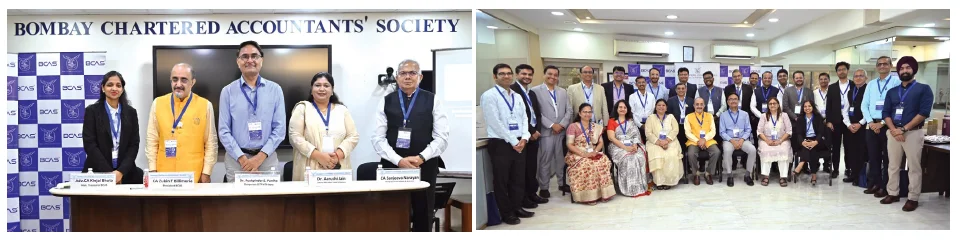
FACTS

The Plaintiff (Respondent- Jagadamma) had instituted a suit for declaration of title and peaceful possession of property against the Defendant (Appellant – Sivarajan). The Plaintiff, relying on a gift deed, had contested that the property in dispute was allegedly gifted to her by her mother. Whereas, Defendant had contested that the said property was sold to her by the mother of Plaintiff through a conveyance deed. Further, the Defendant also contested that the alleged gift deed was actually a Will and not a gift deed. Furthermore, the Defendant also contested that the time period for instituting the said suit began immediately after the death of her mother. Thus, since the suit was instituted after a period of three years from the death of the mother, the Defendant contended that the said suit was barred by limitation as per the provisions of the Article 58 of the Schedule of the Limitations Act, 1963 (Act).

HELD

The Hon’ble Kerala High Court observed that the alleged deed / Will gave the entire rights of the property to the Plaintiff. Further, only life interest was reserved by the mother of the Plaintiff to reside in the house until death. Thus, the Hon’ble Court concluded after relying on section 122 of Transfer of Property Rights, 1882 that the document was in fact a gift deed and not a Will. Further, the Hon’ble Court held that once the property was gifted to the Plaintiff, she (mother) had no saleable interest in the property and thus, the conveyance deed would not have any legal effect. Furthermore, the Hon’ble Court held that the period of limitation shall be as per the provisions of Article 65 (providing limitation period for suit for possession based on title) of the Schedule of the Act, i.e., a period of twelve years from the date of death of the mother and not as per Article 58 (providing limitation period for suit for obtaining a declaration) of the Act.

Thus, the appeal of the Defendant was dismissed.

18 Ramesh Tiwary vs. Sheo Kumari Devi

AIR 2024 (NOC) 393 Patna

3rd May, 2023

Power of Attorney — Attorney holder cannot depose for the acts of Principal — Spouse of the parties to the suit — Can depose as a witness to the extent of personal knowledge. [O. 3, R. 1 and 2, Code for Civil Procedure, 1908; S.120, Indian Evidence Act, 1872].

FACTS

The Respondent (Original Plaintiff) had instituted a suit against the Appellant (Original Defendant) for declaration of title over a property. Since the Plaintiff was an eighty-year-old woman suffering from various diseases, she had executed a power of attorney in favour of her husband (Respondent no. 2) to adduce evidence on her behalf. The Appellant, however, objected by relying on Order 3, Rules 1 and 2 of the Code for Civil Procedure, 1908 (CPC) that a power of attorney holder can adduce evidence or depose for the principal only in respect of acts done by the attorney holder in pursuance to said power. Further, the Appellant also argued that an attorney holder cannot depose on behalf of the principal in respect of acts done by the principal itself or where the principal is the only person who has personal knowledge about the facts. However, the Learned Trial Court dismissed the objections of the Appellant and allowed Respondent No. 2 to adduce evidence on behalf of her wife (Original Plaintiff).

Aggrieved by the said dismissal, a Civil Miscellaneous Application was filed under Article 227 of the Constitution before the Hon’ble Patna High Court.

HELD

The Hon’ble Patna High Court observed that Order 3, Rules 1 and 2 of the CPC restricted an attorney holder to adduce evidence only in respect of acts done by itself. However, the Hon’ble Court also noted that section 120 of the Indian Evidence Act, 1872 empowers the spouse of the parties to the suit to depose as a witness. Therefore, the Hon’ble Court held that Respondent No. 2 cannot adduce evidence in place of his wife (Original Plaintiff) but can adduce evidence as a witness only to the extent of his personal knowledge.

Thus, the Miscellaneous Application was partially allowed.

19 People Welfare Society vs. State Information Commissioner and Ors.

AIR 2024 Bombay 54 (Nagpur Bench)

1st March, 2024

Right to Information — Supply of Information — Public Trust running educational institution from government fund/grant — Substantial grant — Duty bound to provide information about the educational institution — Charity Commissioner is not bound to supply information regarding Public Trust — [S. 2(h), 4, 6 – Right to Information Act, 2005; S. 18, Maharashtra Public Trust Act,1950].

FACTS

The moot question which was referred to the full bench of the Hon’ble Bombay High Court (Nagpur Bench) was whether a public trust registered under the provisions of Maharashtra Public Trusts Act, 1950, which is running an educational institution and receiving a grant from the state is duty bound to supply information sought from it under the provisions of Right to Information Act (RTI Act)?

HELD

The Hon’ble Bombay High Court held that if the information solicited under the RTI Act is regarding the Public Trust, which has not received substantial government largesse to implement the aims of the Public Trust, then, in that case, there is no obligation to supply information if that Public Trust does not fall within the ambit of section 2(h) of the RTI Act. Further, the Hon’ble Court also held that in case the information is solicited in respect of an educational trust or other institution, which is run by that Public Trust, in case financial support from the government is found to be substantial, (which is a plea to be decided by the Information Commissioner), information relating to such Educational or other Institutions can be directed to be supplied. Furthermore, the Charity Commissioner would also not be legally obliged to supply such information, which may be collected by him, in respect of the Public Trust, under the provisions of the Maharashtra Public Trusts Act, 1950 in case such information falls under the exempted category mentioned in Section 8(j) of the RTI Act and the demand does not have statutory backing.

20 Vivek Jain vs. Deputy Commissioner vs. Ors

2024 LiveLaw (Kar) 248

4th June, 2024

Gift Deed — Father to son — Property — Gift cannot be cancelled for failure to maintain if no condition is specified in the Gift deed to maintain father. [S. 23, Maintenance and Welfare of Parents and Senior Citizen Act, 2007].

FACTS

Respondent No. 3 (father) had gifted a property by way of a gift deed to his son (Respondent No. 4). Thus, Respondent No. 4 became a lawful owner of the property. Subsequently, Respondent No. 4 sold the property by way of a sale deed to the Petitioner. Two years after the sale deed, the father (Respondent No. 3) filed an application before the Learned Assistant Commissioner under section 23 of the Maintenance and Welfare of Parents and Senior Citizen Act, 2007 (Act) to set aside the gift deed and the subsequent sale deed. The Learned Assistant Commissioner observed that the son (Respondent No. 4) had failed to maintain his father, thus, he cancelled the said gift deed and subsequent sale deed.

Aggrieved by the said order, a Petition was filed by the Purchaser of the property (the Petitioner) before the Hon’ble Karnataka High Court.

HELD

The Hon’ble Karnataka High Court observed that section 23 of the Act mandates for a condition to be mentioned in the gift deed for maintaining the father. Thus, in absence of any such condition mentioned in the gift deed, the Hon’ble Court quashed the order of the Learned Assistant Commissioner.

The Petition was allowed.

BCAS Foundation Annual Activities Report – 2023–2024

The Board of Trustees of the BCAS Foundation are pleased to present the Annual Report of the activities of the Foundation during the Financial Year 2023–2024.

The year witnessed many activities during the financial year with the help of volunteers and joint projects with the Human Resource Development Committee of the Bombay Chartered Accountants’ Society (BCAS). The list of activities and their impact analysis are given below:

1. Children’s Education

1.1 Digital Classrooms at Vevji, Talasari

BCAS Foundation has undertaken various projects in the Vevji area of Talasari, Maharashtra and Umbergaon, Gujarat for the benefit of tribal and other poor children.

There is an acute shortage of teachers in the Talasari area and therefore, the Foundation set up 25 digital classrooms in 11 schools in the Vevji area. Each digital classroom comprises a TV Screen and preloaded content of the curriculum of standards 1 to 10 of the SSC Board, Maharashtra. In the absence of teachers, students learn on their own with the help of digital classrooms. The project was launched on 28th January, 2023 with the help of the Rushabh Foundation and is working very well. About 1900 students will benefit every year from this project.

1.2 Distribution of Notebooks to Children at Govandi — Mankhurd

BCAS Foundation distributed 4000 notebooks to needy children studying in Municipal Schools in the Govandi — Mankhurd areas, Mumbai, with the help of Dharma Bharati Mission (DBM).

Along with DBM, the Foundation had also been engaged in a project of “Chalo English Sikhaye” for the students at Vernacular Medium Schools of Govandi — Mankhurd areas.

1.3 Educational Tailormade Games / Toys at Arch Foundation, Valsad1

Balvadi is a kind of experimental platform which not only provides interactive processes to the children but also becomes an idea exchange ground for the persons interested in assisting young kids in their foundational journey.

With the help of BCAS’s contribution, Arch Foundation earlier made a number of wooden blocks and prepared other materials which helped a number of children. Wooden Blocks and building open-ended structures, Rollers, and Water play have got children interested in trying out various structures themselves.


1. Five of the short videos of physical knowledge activities.

https://drive.google.com/drive
folders/19cIkxc0n0uNp4we12LD90MAwg6hmdrhp?usp=drive_link

This year with BCAS Foundation helped in developing some other things — indoors and outdoors in preschool and the surrounding external campus. Arch Foundation provides objects and playthings so that children act on them and create their own knowledge. Some of these interesting play games are as follows:

Balance Beam

The balance beam enables kids to be challenged while improving balance and coordination. Kids improve vestibular balance, movement coordination, and concentration while understanding their body’s centre of gravity. The balance beam also helps to improve self-confidence, learning stability and sense of reaction. Balance is fundamental in all human movement. Research shows that balance skills help children to develop better language, improve reading and writing skills, and improve concentration and body control. In practising new skills in all sports and physical activity, balance is the most essential.

Wooden Wobble Board

Due to the sturdy, design of a balance board, children will support their physical development, practice spatial awareness, and strengthen coordination as they balance.

Playgrounds offer many benefits and childhood opportunities. Playground equipment and child development are closely linked. Children can work on their mental and emotional development by building confidence as they master play equipment such as swings and slides. They can also build social skills as they learn to share, take turns and play together.

Incline

The popularity of slides on playgrounds indicates that young children are naturally interested in incline. Incline seemed particularly rich in potential in physical knowledge activity because children wonder how objects move at different speeds by letting them go without applying any force to them and at different angles and this wonderment builds up their learning.

2.0 Solar Panels at Vraj Hostel, Kaprada, Gujarat — A Green Initiative by BCAS

Sparsh Foundation: Vraj Hostel: Solar Efficient Vraj is home to 20 boys between the ages of 8–14 years, most of whom belong to poor families. The hostel is situated at Tetbari, Kaprada District and the closest city is Vapi, which is 60+ km. away.

BCAS Foundation funded the Solar set up which will make the Hostel a Green Project.

3.0 Tree Plantation Drive

As we celebrate our 75th anniversary, the BCAS Foundation proudly launched a significant green initiative, planting 7,500 trees in Banaskantha, Gujarat, which we now call BCAS वन (Forest). We are deeply grateful to our CSR Donors, Omkara Asset Reconstruction Private Limited and Siyaram Silk Mills Ltd. The Van was created with the support of Vicharta Samuday Samarthan Manch (VSSM) and we are extremely thankful to them. We express our gratitude and sincerely appreciate generous contributions from our various donors.

75 trees were planted by the volunteers of BCAS Foundation at the divine land of Siddh Guru Pith (Proposed), (Courtesy: MaBap Foundation) at Nivari Faliya, Bathi Karambeli, Sanjan, Umargaon.

4.0 INTERNATIONAL YOGA DAY CELEBRATIONS

BCAS Foundation along with MaBap Foundation celebrated International Yoga Day on 21st June, 2023 at the Prestige Banquets, Andheri East, Mumbai 400069 from 7 am to 9 am. About 30 people participated and benefited. Yoga Teacher Pradeep Thakkar, a volunteer of the MaBap Foundation conducted the session. CA Gracy Mendes and CA Anand Kothari coordinated the event with the support of BCAS staff and volunteers of the MaBap Foundation.

5.0 OTHER HELPS

Some other activities of the Foundation

During the year the Foundation extended medical and educational help to needy students and family members of the BCAS staff. The foundation also became instrumental in carrying out 50 cataract operations for poor people in Vansada, Gujarat.

We take this opportunity to thank all our donors, volunteers, sister NGOs, office bearers of schools, Office Bearers and the Staff of BCAS, and participants of all conferences / seminars at BCAS for their continued support and encouragement to carry out some noble work to make a positive difference to the world. We also thank all beneficiaries, and children for giving us an opportunity to serve you.

We welcome suggestions and request volunteers to contact us at om1@bcasonline.org.

Best Regards,
For BCAS Foundation

Trustees

Article 11 of India-Cyprus DTAA — Assessee is the beneficial owner of income if it has the right to receive and enjoy interest income without any obligation to pass on income to any other person.

7 [2024] 162 taxmann.com 766 (Delhi — Trib.)

Little Fairy Ltd vs. ACIT

ITA No: 1513/Del/2022

A.Y.: 2017–18

Dated: 15th May, 2024

Article 11 of India-Cyprus DTAA — Assessee is the beneficial owner of income if it has the right to receive and enjoy interest income without any obligation to pass on income to any other person.

FACTS

Assessee, a tax resident of Cyprus, invested in Compulsorily Convertible Debentures (CCDs) of an Indian Company (ICO). In terms of India-Cyprus DTAA, the assessee offered a gross amount of interest on CCDs to tax @10 per cent. AO held that the assessee was not the beneficial owner of income as (a) the Assessee had not performed any activity in Cyprus; (b) there were other companies having the same registered address; and (c) the Assessee was merely a conduit for channelizing the funds invested in CCDs. Accordingly, AO charged tax @40 per cent on the interest income of the assessee.

On appeal, CIT(A) confirmed the order of AO. Being aggrieved, the assessee appealed to ITAT.

HELD

ITAT held that the assessee is the beneficial owner of income on account of the following facts:

  •  The Assessee had taken the following decisions in its Board meeting held in Cyprus:

               (a) Decision to invest in ICO. (b) Declaration of dividend to its sole shareholder.

  •  The parent company by itself does not become the beneficial owner of income because it does not get any right over the assets of the assessee.
  •  The Assessee made an investment in CCD’s of ICO in its own name through proper banking channels. Unlike in the case of manufacturing and trading businesses where a person is required to undertake business activity, after making an investment, no activity is required since the investment may fetch either interest or capital gains to the assessee without doing anything.
  •  The Assessee being an investment company, does not require any personnel other than directors on its payroll to carry out day-to-day operations. The Directors of the assessee company were qualified and competent to run the company and make its business investment decisions. Furthermore, the assessee had availed services of a professional administrator for general administration, such as book-keeping, company secretarial services, etc., and there was no need to have any employee on its own payroll.
  •  The Assessee received interest in its bank account. Assessee had the right to receive interest income. There was no compulsion or contractual obligation to simultaneously pass on the same to another entity. The assessee had also borne foreign currency risk as well as counter-party risk.

S. 115JB, 147–Reopening under section 147 is not maintainable where MAT liability would not get disturbed on correct application of law and tax on such book profits exceeded the total income determined as per the normal provisions of the Act.

26 (2024) 162 taxmann.com 730 (DelhiTrib)

Genus Power Infrastructure Ltd. vs. ACIT

ITA Nos.: 2573 & 2680(Del) of 2023

A.Y.: 2010–11

Dated: 10th May, 2024

S. 115JB, 147–Reopening under section 147 is not maintainable where MAT liability would not get disturbed on correct application of law and tax on such book profits exceeded the total income determined as per the normal provisions of the Act.

FACTS

For AY 2010–11, the assessee filed its return of income on 23rd September, 2010 declaring total income at Nil. The case was subjected to regular assessment vide order under section 143(3) dated 28th March, 2013 and income was assessed at ₹8,71,08,200 and book profit under section 115JB at ₹31,04,38,156.

Thereafter, notice under Section 148 was issued by the AO on 31st March, 2017, that is, after a period of four years from the end of the assessment year where the original assessment was earlier completed under Section 143(3). The reasons recorded by AO showed that an adjustment at ₹4,28,41,017 was proposed to the book profit on the ground that provision on the repair of partly damaged assets had been wrongly allowed and was not eligible for deduction while computing book profits. The reasons recorded also made allegations towards escapement of income on varied grounds [namely, prior period expenses, deduction under s. 80IC, calculation mistakes etc.] while reassessing the taxable income under the normal provisions of the Act. The book profit was thus reassessed at ₹35.31 crores [as opposed to ₹31.04 crores in original assessment] whereas the taxable income under the normal provisions was assessed at ₹13.67 crores [as opposed to ₹8.71 crores in original assessment].

Cross appeals were filed by the Revenue and assessee against the order of CIT(A).

A jurisdictional controversy had been raised before the Tribunal as to whether re-opening under section 147/148 is maintainable where MAT liability as per book profits computed under section 115JB would not get disturbed on the correct application of the law, and tax on such book profits also exceeded the total income determined as per normal provisions.

HELD

The Tribunal observed as follows:

Escapement alleged qua book profits did not meet the conditions embodied in the first proviso to section 147 having regard to full and true disclosure of the relevant/material facts attributable to provisions for repairs in the ROI by making disallowances under normal provisions and suitable declarations in the audited financial statement;

One cannot say that when the adjustment on account of such provision for repairs has been made by the assessee while determining the income as per normal provisions of the Act, there was a failure on the part of the assessee to disclose facts in not making such corresponding adjustments while determining the book profit. The disclosures were also made in the financial statement. The condition of the first proviso was thus clearly not satisfied in the instant case. Hence, the escapement qua book profits were not sustainable in law.

In the absence of escapement qua book profits, the escapement alleged under normal provisions was of no consequence since despite the purported escapement qua normal provision which may lead to enhancement of taxable income under the normal provision, the tax liability thereon would still be lower than the book profits assessable in law;

The claim of the assessee that the tax liability on book profit was higher than the income assessable under normal provisions including escapement alleged qua normal provisions, had not been disputed by the revenue.

Accordingly, following the decisions of the Gujarat High Court in India Gelatine and Chemical Ltd. vs. ACIT, (2014) 364 ITR 649 (Guj) and Motto Tiles P. Ltd. vs. ACIT, (2016) 286 ITR 280 (Guj), the Tribunal quashed the reassessment notice and declared the reassessment order null and void.

S. 12A–Where the assessee-trust selected an incorrect clause in an application for section 12A / 80G, since the mistake was not fatal, CIT was directed to treat the application under the appropriate clause and consider the case on merits.

25 Shree Swaminarayan Gadi Trust vs. CIT

(2024) 162 taxmann.com 772 (SuratTrib)

ITA Nos.: 369 & 370(Srt) of 2024

A.Y.: N.A

Dated: 13th May, 2024

S. 12A–Where the assessee-trust selected an incorrect clause in an application for section 12A / 80G, since the mistake was not fatal, CIT was directed to treat the application under the appropriate clause and consider the case on merits.

FACTS

The assessee-trust applied for registration under section 12A and section 80Gin Form 10AB. Instead of selecting section 12A(1)(ac)(iii) in the Form, the assessee incorrectly selected section 12A(1)(ac)(iv). A similar mistake was also made in the Form relating to section 80G. In the proceedings before CIT(E), the assessee requested the CIT to consider the application under the appropriate sub-clause.

CIT(E) held that he has no power to change / amend / rectify Form 10AB and therefore, rejected the applications.

Aggrieved, the assessee filed appeals before ITAT.

HELD

The Tribunal observed as follows—

a) the mistake in filing entry was not fatal and could be considered under the appropriate sub-clause or clause of section 12A(1).

b) Being the first appellate authority, the plea of the assessee for correction in Form-10AB should be accepted and the order of CIT(E) be set-aside.

The Tribunal directed CIT(E) to treat the application of the assessee under Section 12A(1)(ac)(iii) in place of Section 12A(1)(ac)(iv) and to consider the case on merit and pass the order in accordance with the law. Similar directions were also given for application for approval under section 80G(5).

Black Days

Arjun : (Chanting) Krishna Krishna Hare Krishna Krishna! Sabhi dishame Krishna Krishna

Shrikrishna : (enters) Arey Arjun, why are you chanting my name?

Arjun : Oh Krishna! Lord, I was not chanting your name. Krishna means darkness. For my profession, I see darkness everywhere. No one is there to protect us.

Shrikrishna : Why? You are capable of protecting yourselves. You are so highly qualified. Nothing moves without your signature.

Arjun : Those signatures only have brought this darkness. We do not see any ray of hope.

Shrikrishna : How can the signatures bring darkness?

Arjun : That I will tell you later. By the way, tell me, ‘Krishna’ means black or dark. Why is your name Krishna?

Shrikrishna : Arjun. You are right. But in Sanskrit language, every word has multiple meanings. Krishna means who has a lot of attraction in his personality. ‘Aakarshan’ karnewala krishna. He who pulls the attention of all, who is attractive.

Arjun : Oh Lord, our profession also was very attractive once upon a time. All of us got attracted and fell in this deep well. We cannot come out. I see no light around. Everything looks gloomy.

Shrikrishna : Why are you nervous?

Arjun : We have become like ‘Abhimanyu’, my brave son who was killed by Kauravas in an unfair manner. He knew how to enter the ‘chakravyuha’ but did not know how to come out.

Shrikrishna : But why do you want to come out? People outside envy you.

Arjun : Because people do not know about our real plight. The grass is always greener on the other side…

Shrikrishna : I do not understand why you have become so helpless.

Arjun : Who is there with us? We don’t get good staff. They are keen to grab some opportunity outside right from the day they join! We don’t get article trainees. There is a mountain of regulations. Unsurmountable!

Shrikrishna : Arjun, if you come together, you can lift the mountain. Do you remember? All Gopas and Gopikas had lifted Goverdhan mountain in Mahabharata.

Arjun : Natural mountains can be easily lifted. But this man-made mountain of laws and regulations…
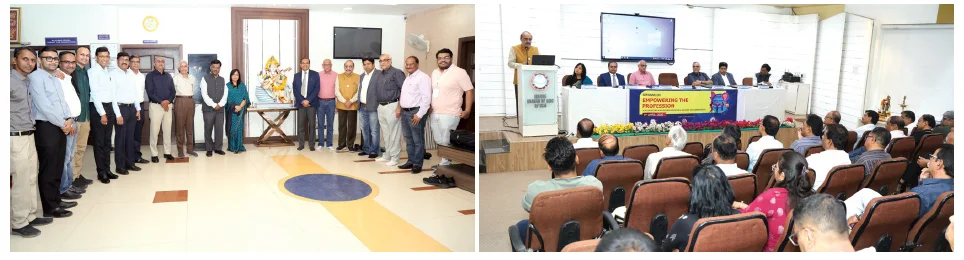
Shrikrishna : But what you do is so valuable…

Arjun : (laughs sarcastically). Value? No one sees any value in it. The clients for whom we slog and invite risks for ourselves ask us ‘what value addition you have made.

Shrikrishna : But basically, it is clients’ responsibility to do it properly.

Arjun : Ha! Ha!! Ha!!! Lord, it is only in theory. Everybody feels it is our responsibility. So, no payment for carrying this burden.

Shrikrishna : Then why don’t you refuse to sign?

Arjun : If I say, “No,” there are hundreds of other CAs who will jump to sign. We are never together. We have no unity amongst us. So, the question of lifting the mountain does not arise. And if I refuse to sign, we will die of starvation! We have no choice, Lord.

Shrikrishna : Regulations are bound to be there. They were there also in the past.
Arjun : Agreed. But in the past, the regulators were more sensible and decent. They understood the spirit behind the law and our practical difficulties. Now, they are bent on killing us.

Shrikrishna : Who are they all?

Arjun : All investigating and regulatory authorities keep on complaining against us. Any fraud occurs, we are the first to blame as if we only commit frauds or we mastermind them.

Shrikrishna : Why are they having such a negative opinion against you?

Arjun : In the past, I admit that a few CAs might have been involved in scams or at least connived at it. They did the audit very casually and signed it very carelessly. But all are not like that.

Shrikrishna : But your Institute does not protect you?

Arjun : These regulators complain against us to our Institute only. And we have to also face disciplinary action.

Shrikrishna : Really?

Arjun : Managements sponsor a fraud. They themselves have vested interests. Such frauds are difficult to detect and we have limited time. We have to meet deadlines. Limited manpower, limited authority. And the investigating authorities routinely make us co-accused! We are made to face SEBI, RBI, Stock Exchange authorities, EOW, SIFO, NFRA, CBI…


Shrikrishna : Oh! You mean there are criminal cases against you CAs?

Arjun : Then our first task is to obtain bail. Today many CAs are on bail. The criminal proceedings take years together; and until it is settled, there is no peace of mind. Even technical errors are made a hype of! They treat it as misconduct.

Shrikrishna : How do you plead your case before the courts and investigators?

Arjun : That is another burden of expenditure on us. Compiling the old data, hunting for it, then conveyance, travelling, lawyer’s fees…just unaffordable. And in the process, regular work suffers. So again a loss. And they rake up matters where we would have done the audit even 15 years ago! They expect us to produce evidence of those years!

Shrikrishna : But you can always deny or refuse.

Arjun : Many times, the investigating officials have no concept at all as to what an audit is and how is it distinct from investigation. They have wide powers, team of experts working for them and their own sweet time of even a couple of years to detect the fraud. And for us, only a couple of weeks’ time — with limited authority, pressures from clients, limited manpower, and to look after so many rules and regulations!

Shrikrishna : What is the remedy!

Arjun : Lord, you are Bhagwan, and you are asking me for remedy? Even you will have no solution to this problem. Already, many are quitting the profession, surrendering their COP, giving up audit work, avoiding signing the audits…and their next generations profession. Grossly underpaid; and overburdened with regulation!

Shrikrishna : Who else complains against you?

Arjun : Our clients, our partners, our staff, our articles, our spouse, close relatives and almost everyone. Even a stranger can complain. I am told there are even professional black mailers! Lord, nothing appears to be positive. Ghor Kaliyuga.

Shrikrishna : Make more use of technology to add efficiency in your functioning.

Arjun : Technology? That is another monster. Soon we will be rendered outdated due to the automation. That is why I was chanting Krishna Krishna. Everywhere, there is darkness.

Shrikrishna : I feel, only a strong base of ethics and unity amongst you all can save you in this scenario.

Arjun : Agreed. But under ethics, they charge us for negligence. How can a fraud and negligence, exist together? In fraud, something is done consciously. In negligence, there is absence of application of mind.
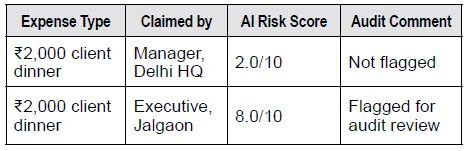
Shrikrishna : You have a point.
Arjun : Moreover, these authorities are not accountable to anyone. In the process, our ordinary professionals are being harassed.

Bhagawan, it is high time that you use your ‘Sudarshan Chakra’ to save us. Otherwise, we see only ‘black days’ around.

Shrikrishna : Do not worry Arjun. Bright days will come soon. Keep on fighting ethically. And ultimate success will be yours.

|| Om Shanti ||.

Note: This dialogue is based on the general scenario in the profession today, where regulators have become a little too active against CA professionals.

I. The area of Balconies open to the sky is not to be considered as part of the built-up area of a particular residential unit. Claim for deduction under section 80IB(10) cannot be denied in respect of those residential units whose built-up area exceeds 1,000 sq. feet only when the area of open balcony is added to the built-up area of the residential unit. II. The project completion method is the right method for determining the profits. The Project Completion Method should not have been disturbed by the AO as it was being regularly followed by the assessee in earlier years also and there is no cogent reason to change the method.

24 Shipra Estate Ltd. & Jai Krishan Estate Developers Pvt. Ltd. vs. ACIT

ITA No. 3569/Del./2016

Assessment Year: 2012–13

Date of Order: 24th April, 2024

Section: 80IB(10)

I. The area of Balconies open to the sky is not to be considered as part of the built-up area of a particular residential unit. Claim for deduction under section 80IB(10) cannot be denied in respect of those residential units whose built-up area exceeds 1,000 sq. feet only when the area of open balcony is added to the built-up area of the residential unit.

II. The project completion method is the right method for determining the profits. The Project Completion Method should not have been disturbed by the AO as it was being regularly followed by the assessee in earlier years also and there is no cogent reason to change the method.

FACTS I

The assessee aggrieved by the order of CIT(A) denying a claim for deduction under section 80IB(10) in respect of those residential units whose built-up area exceeds 1,000 sq. feet only when the area of open balcony is added to the built-up area of the residential unit preferred an appeal to the Tribunal.

HELD I

The Tribunal upon perusal of the orders of the authorities below and the decision of the Tribunal in the assessee’s own case for AYs 2008–09 to 2011–12 observed that the Tribunal for AYs 2008–09 and 2009–10 in the common order dated 30th May, 2016 in ITA Nos. 1950/Del/2012 & 5849/Del/2012 allowed the claim for deduction under section 80IB(10) of the Act in respect of flats excluding the balcony open to the sky for the purpose of calculating the built-up area of the individual units. Following the earlier orders, the Tribunal allowed the claim for deduction u/s 80IB(10) in respect of those flats whose area exceeded 1,000 sq. feet only as a result of including a balcony open to the sky. The AO was directed to verify the claim of the assessee after obtaining the details and allow the deduction after providing adequate opportunity of being heard by the assessee.

FACTS II

Aggrieved by the order of the CIT(A) directing the AO to accept the project completion method followed by the assessee, revenue preferred an appeal to the Tribunal.

It was submitted that this issue came up for adjudication in assessee’s case for AY 2008–09 to 2011–12. It was also mentioned that the Tribunal for AY 2008–09 and 2009–10 has upheld the order of the CIT(A) in accepting the project completion method adopted by the assessee.

HELD II

The Tribunal observed that the Tribunal has decided the issue in appeal in favour of the assessee by sustaining the order of CIT(A) in holding that the project completion method adopted by the assessee is the right method for determining the profits. The CIT(A) had held that the AO should not have disturbed the project completion method followed by the assessee regularly and there is no cogent reason to change the method. Both these findings of the CIT(A) were upheld by the Tribunal for AYs 2008–09 and 2009–10. The appeal of the revenue has been dismissed by the High Court in ITA No. 766/2016 and 178/2017 dated 16th May, 2017 holding that there is no substantial question of law. The tribunal also observed that the Court held that the question “whether the addition made by the AO to the income of the Respondent for the relevant year based on percentage completion method was not correct as held by the ITAT’ stands answered in favour of the assessee and against the revenue by order dated 16th November, 2016 in ITA No. 802/2016 in PCIT vs. Shipra Estate Ltd. & Jai Krishan Estate Developers Pvt. Ltd. Following this decision of the High Court, Tribunal rejected the ground of the revenue.

In This Issue, We Look At Some Interesting AI Driven Tools For Productivity At The Workplace

Summarize.tech

We often come across lengthy YouTube videos which may be useful but time consuming. We just want to know the summary of the content without having to go through the entire video.

Summarize.tech is a very useful tool to get a text summary of the entire video within seconds. Just head to summarize.tech, paste the YouTube or Video link in the space provided and within seconds, you will get a simple text summary of the entire video in a single paragraph. If you wish to see an elaborate summary of a lengthy video, you may scroll down and see the detailed summary broken up over the entire timeline.

It even works on Hindi and Hinglish Videos!

The free version of summarize.tech has daily limits of just a few videos a day. The premium version has no daily limits, and you can summarize up to 200 videos a month.

A very valuable tool if you are short on time and want the summary instantly!

https://www.summarize.tech/


Xume : Health Food Scanner App

Groceries now have ratings!

We all want to eat healthy, but do not know how to analyse the food products which we buy. It is almost impossible to sort through and decode all the perplexing and contradictory health claims and counterclaims mentioned on the labels.

Xume’s food scanner takes the con out of consumption by giving personalised health scores. No more demystifying food ingredient lists, decoding nutrition information or getting fooled by product claims.

All you have to do is to scan the barcode on the label of the food item you have and it will give you detailed information about its ingredients and nutritional information, along with a rating — whether it is healthy enough to consume. If it is rated as unhealthy, it will also suggest healthier alternatives. And, if there are any concerns in some ingredients, it will highlight those too! An important tab shows you how processed the food item is, along with a Taste Meter to tell you how tasty it is.

While at a supermarket or shopping online, you can scan the packaging before you actually decide to buy any food item.

The first few scans are free and to continue using it, you may have to subscribe for a paid version.

If you are serious about your health and the foods you eat, this is the app for you!

Android: https://bit.ly/4aT52pk

iOS: https://apple.co/3x5k11F


Cool the Globe

Are you serious about caring for the planet? Want to know what is your carbon footprint? Want to do something about it yourself?

Cool the Globe is the app for you. Just enter details of your daily travel, your appliances, the materials you use (including plastics), forest / tree plantations, etc., and it will immediately let you know your carbon footprint. It will also indicate choices which you have in your daily travel / consumption / food, etc. to help you improve your carbon footprint.

The app will instantly calculate your GHG wastage / savings which you can save on a daily basis. You can then share your scores on Social Media with family and friends and help create a movement for reducing emissions and cooling the earth!

Be the change – join this citizen-led movement for climate action!

Very cool, huh?

https://www.cooltheglobe.org/

Android : https://bit.ly/3Xb5Q63

iOS : https://apple.co/4c3iUOM

Ghostwrite

Are you tired of writing emails? Do you spend substantial time composing long emails? Stop wasting your valuable time and use AI to automate your email writing.

Install the Ghostwrite extension for Chrome or Outlook and start writing emails with just a few prompts. Ghostwrite is an AI tool that writes your emails using ChatGPT and other AI technologies. Your writing process will be automated so that you can spend more time on things that matter.

Once you install the extension, whenever you compose a new email, Ghostwrite will prompt ask you to tell it what the email is about. If it is a reply to an existing email, it will understand the context by reading it. You then need to give a few words on telling it about the content of the email you want to write. It will further prompt you to decide what Style you want to write in, what is the Tone (professional / casual), what is the Length of the email and what is the Language of the response. Then just click on Write and your email is composed automatically, magically.

The first 100 emails every month are free and if you are a heavy email composer, you may have to pay a nominal monthly fee beyond that.

https://www.ghostwrite.rip/