




Subscribe to the Bombay Chartered Accountant Journal Subscribe Now!

Learning Events At BCAS

I. BCAS HOSTS DISTINGUISHED INTERACTION WITH ICAI LEADERSHIP

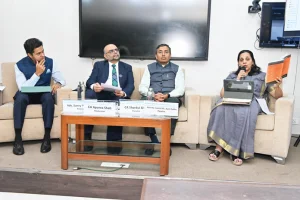
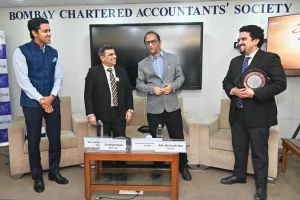
On Thursday, 12th March 2026, a close interaction was organised at the BCAS Office, Jolly Bhavan, featuring CA Prasanna Kumar D, President ICAI, and CA Mangesh Pandurang Kinare, Vice President ICAI. The dignitaries were warmly felicitated by CA Zubin Billimoria, President BCAS, and CA Kinjal Shah, Vice President BCAS, in the presence of select BCAS past presidents, office bearers, Western Region Central Council Members, WIRC ICAI office bearers and elected members, and BCAS Core Group members.

The session, moderated by CA Zubin Billimoria, facilitated a structured, time-bound discussion on key professional issues, including:

  • Representation before the Charity Commissioner
  • Policy sustainability for professional growth
  • Freedom to operate and regulatory minimisation
  • Clarity in networking guidelines
  • Updates on Delhi High Court litigation concerning CAs’ representation rights before Tribunals
  • Profession vs industry dynamics
  • Top three opportunities and challenges facing the profession
  • Future of audit, ethics, and stakeholder expectations
  • Capacity building in audit, technology, and AI
  • CA employability and syllabus dynamism

CA Prasanna Kumar D and CA Mangesh Pandurang Kinare responded thoughtfully to members’ queries, sharing ICAI’s strategic vision and forthcoming developments. The interaction concluded with collaborative ideas for strengthening BCAS-ICAI coordination to advance the chartered accountancy profession.

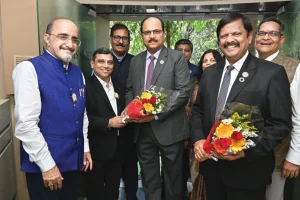
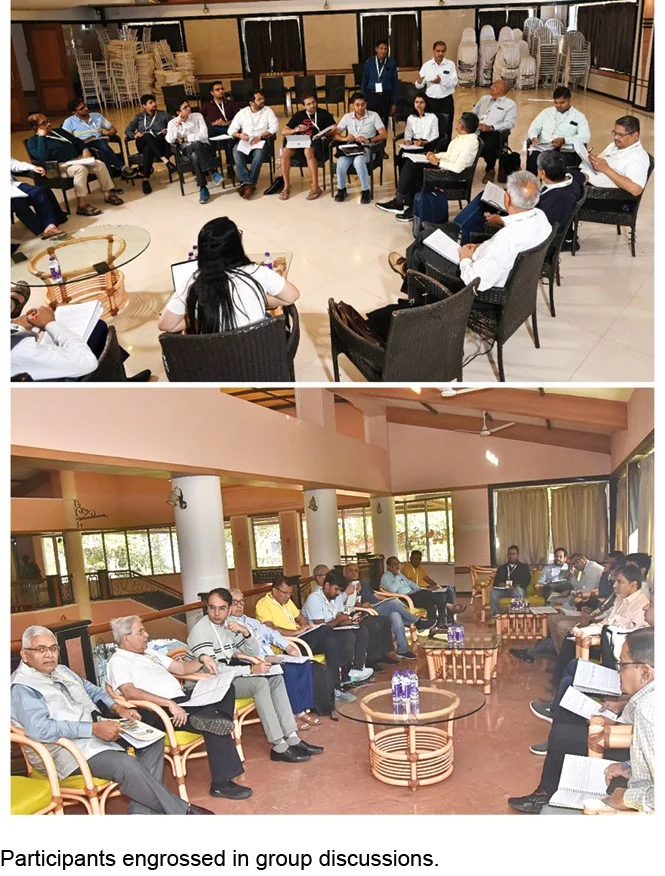
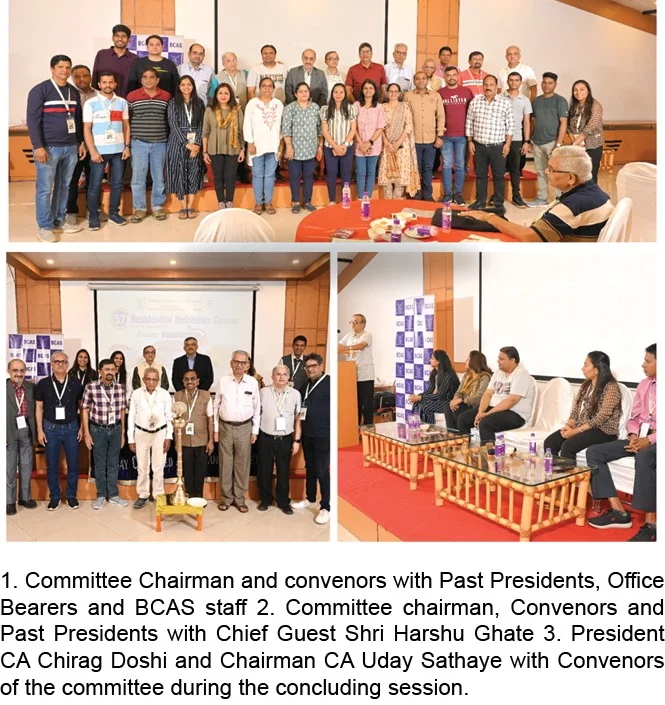
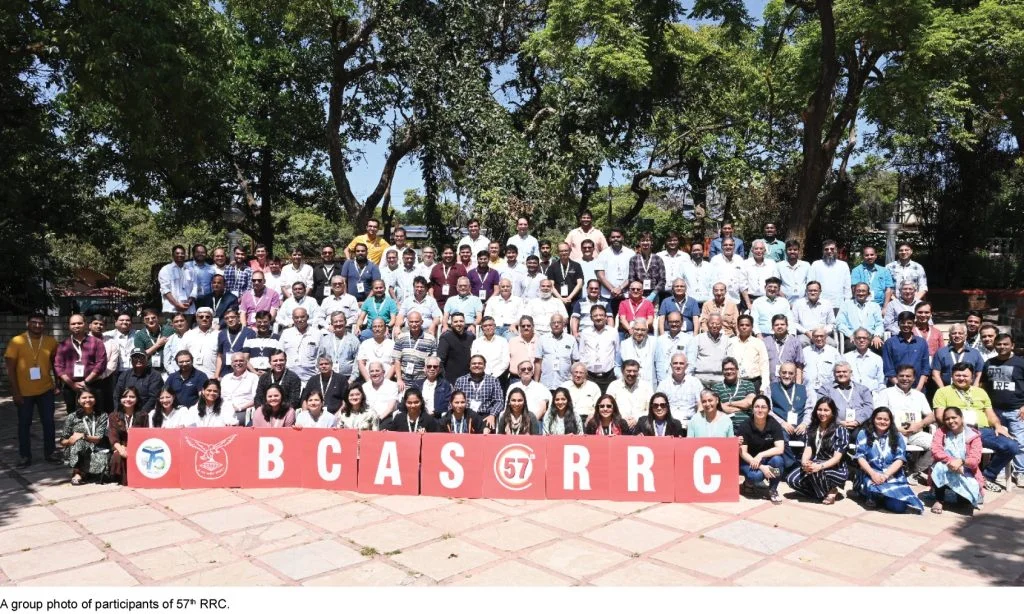
BCAS-Hosts-Interaction-with-distinguished-ICAI-Leadership BCAS-Hosts-Interaction-with-distinguished-ICAI-Leadership BCAS-Hosts-Interaction-with-distinguished-ICAI-Leadership BCAS-Hosts-Interaction-with-distinguished-ICAI-Leadership

II. Learning Events At BCAS

1. Sakhi Circle – International Women’s Day held on 14th March 2026@ BCAS.

Speakers: Panelists – Hetal Kotak, Nisha Gala

Moderator – Kinjal Bhuta

The Women’s Day Celebration hosted by BCAS featured an engaging panel discussion on Ambition without Apology.

The event opened with an insightful panel discussion that highlighted how careers move through varied phases—from moments of doubt to moments where one’s voice is valued. The panel emphasised themes of continuous learning, authenticity, and staying relevant in a dynamic work environment.

A rapid-fire segment added energy to the discussion, drawing spontaneous and practical insights from the panelists. The evening concluded with a networking activity where participants introduced themselves using two adjectives, prompting self-reflection and encouraging authentic engagement within the group.

The session also reinforced that in person interactions create meaningful value, especially for women professionals, as shared experiences often help them draw strength from one another. Participants agreed that opportunities to connect, converse and collaborate play a vital role in personal and professional growth.

Sakhi-Circle-International-Womens-Day Sakhi-Circle-International-Womens-Day

2. Seminar on Attachment and Seizure Provisions under Prevention of Money Laundering Act, 2002 held on Friday, 27th February 2026 @ Hybrid

This event was jointly organised by Finance, Corporate and Allied Laws Committee of the Bombay Chartered Accountants’ Society, along with the Commercial & Allied Law Committee of The Chamber of Tax Consultants at the BCAS Auditorium, Churchgate and was conducted as a hybrid event, with participants attending both physically and virtually.

The details of the program was as follows:

Topic Session Summary Faculty
Opening Remarks by CA Kinjal Shah, Vice President BCAS and CA Jayant Gokhale  President CTC
Session I : Keynote Address on the Framework of Search & Seizure under Section 17 of followed by an Interactive Discussion on Defense Strategies and Compliance Informative session which explained the scope of powers vested in the enforcement authorities, the statutory requirement of “reason to believe,” and the procedural safeguards that must be followed during the conduct of such actions. The address also touched on important judicial interpretations that shape the application of the provision. The session provided participants with valuable insights into both the investigative powers under the law and the practical approaches for handling such proceedings. Hon’ble Justice Ms. Aarti Sathe, Judge, Hon’ble Bombay High Court


Adv. Sunny Punamiya

CA Shardul Shah


Moderator: CA Apurva Shah


Session II: Keynote Address on the Framework of Attachment under Sections 5 & 8 of PMLA followed by an Interactive Discussion on the Attachment Procedure Enlightening lecture which explained the concept of provisional attachment, the conditions required for invoking such powers, and the procedure followed by the Enforcement Directorate before and after passing an attachment order. The address also highlighted the role of the Adjudicating Authority under Section 8 in confirming or setting aside the attachment after providing an opportunity of hearing. The session provided an overview of the practical aspects, legal safeguards, and key considerations for professionals dealing with such proceedings, enabling participants to gain a clearer understanding of the statutory process and its implications. Hon’ble Justice Shri. Advaith Sethna, Judge, Hon’ble Bombay High Court


Adv. Sunny Punamiya

Adv. Bernardo Reis


Moderator: CA Kinjal Shah


The Seminar provided a comprehensive perspective on the framework of search and seizure and attachment proceedings under the Prevention of Money Laundering Act, 2002, and featured two insightful and interactive sessions that simplified the legal and procedural complexities surrounding these provisions.

The program had 10 physical attendees and 108 virtual attendees. 34 of the participants who attended this seminar were from outside Mumbai.

This informative seminar was coordinated by Shardul Shah, with the help of convenors Raj Khona and Khubi Shah Sanghvi, and Team CTC.

Seminar-on-Attachment-and-Seizure-Provisions-under-Prevention-of-Money-Laundering-Act-2002 Seminar-on-Attachment-and-Seizure-Provisions-under-Prevention-of-Money-Laundering-Act-2002

3. FEMA Study Circle -“Downstream Investment” held on 27th February 2026@ Virtual

The FEMA Study Circle organised a meeting to deliberate on the Downstream Investment provisions as provided under the FEM (Non-Debt Instruments) Rules, 2019. The session was chaired by CA Hardik Mehta and led by CA Swetha Prasad.

The discussion covered key aspects as provided below:

  • Definition of downstream investment & indirect foreign investment
  • Aspects to keep in mind before making downstream investments
  • Computation of indirect foreign investment
  • Procedural compliance in relation to downstream investments
  • Pricing & reporting guidelines for downstream investments
  • Relaxations/clarifications issued in relation to downstream investments

The group leader also took the participants through various scenarios for the identification of FOCC, computing foreign ownership, etc. There were good discussions about the issuance of stock options and non-equity instruments by the FOCC and how it would trigger downstream investment provisions. There were deliberations on investment holding entities making downstream investments, considering the recent relaxation by the RBI for NBFCs. The meeting concluded with participants sharing practical learnings on downstream investments.

4. 23rd Residential Leadership Retreat held on Friday, 27th February 2026 and Saturday, 28th February 2026 @ Rambhau Mhalgi – Bhayander

The 23rd Residential Leadership Retreat was conducted over two days on the theme Krishna Niti for Life Excellence, at Rambhau Mhalgi Prabodhini.

Dr. Girish Jakhotiya

Dr. Girish Jakhotiya, a renowed author and economist, drew structured lessons from the life journey of Lord Krishna, linking key milestones – from Gokul and Mathura to Dwarka and Kurukshetra – with principles of strategic thinking, leadership and self-transformation.

 Dr. Jakhotiya distinguished excellence from perfection and explained “Life Excellence” through four pillars: economic prosperity, intellectual supremacy, social equality, and cultural bliss. Through case studies and illustrations from Krishna’s life, he encouraged participants to examine strategy, risk versus uncertainty, leadership styles, branding, ethical flexibility and institution building.

The Leadership retreat received an encouraging response from members across practice and industry. Around 50 participants from 8+ cities and towns across India enrolled for this residential program. Participants appreciated the clarity of explanations and the practical insights shared by the faculty.

5. BCAS Women’s Study Circle — SAKHI CIRCLE on Voice to Influence – Build Yourself as a Professional Speaker held on Saturday, 21st February 2026@ Virtual.

Speaker: Ms. Kalpana Thakur

The Women’s Study Circle organized an engaging session titled “Voice to Influence – Build Yourself as a Professional Speaker.” The session focused on how individuals can develop their speaking abilities by strengthening three core elements: Action, Belief and Visibility. Participants were encouraged to take proactive steps toward improving their communication skills and not wait for perfection before beginning their journey. The importance of building strong internal beliefs—particularly the confidence to express ideas and share knowledge—was highlighted as the foundation of impactful speaking.

The faculty emphasized the power of visualizing one’s future self and breaking long-term aspirations into smaller, consistent practice-based goals. Practical guidance was provided on preparing content, practicing delivery, presenting effectively, and developing one’s personal brand through clarity and consistency. The session also covered techniques for narrowing down areas of expertise and leveraging digital platforms to enhance visibility and influence. Attendees found the insights valuable for strengthening their professional presence and building themselves as confident speakers.

Motivational Highlight:The rest of my life is going to the best of my life!!

6. ITF Study Circle meeting on the ruling of “Binny Bansal” held on Tuesday, 17th February 2026@ Virtual.

The International Tax and Finance Study Circle organized an online meeting to discuss the Tribunal ruling in the case of Binny Bansal and its implications.

The session began with brief opening remarks by the Chairman of the session, CA Rashmin Sanghvi. Thereafter, the Group Leader, CA Nithin Surana, explained the case in detail, covering the facts of the case, the arguments of the taxpayer and the tax authorities, and the ruling given by the Tribunal, along with key inputs from the Chairman.

After presenting the case, the Group Leader shared his analysis of the ruling and discussed the legal issues arising from it. The participants actively shared their views on the implications of the ruling.

The Chairman and the Group Leader also shared their perspectives on the possible way forward and the likely outcomes if the matter is taken to higher appellate levels. The discussion was comprehensive and covered the important aspects of the ruling.

7. FEMA Study Circle – “Guarantees under FEMA” held on 13th February 2026@ Virtual.

The FEMA study circle organised a meeting on the revised Guarantee regulations issued by the RBI. The session was chaired by CA Vijay Gupta and led by CA Jigar Mehta.

  • The discussion covered the following aspects:
  • Concept and classification of Guarantees under FEMA
  • Important Definitions
  • Exemptions from Guarantee Regulations
  • Permissions under the Regulations
  • Guarantee as per ODI regulations
  • Reporting requirements
  • Case studies for discussion

The meeting provided insight into the new regulations for the issuance and receipt of inward as well as outward guarantees.

8. Finance, Corporate & Allied Laws Study Circle – NBFCs: Key Regulatory Developments And Emerging Areas held on Thursday, 12th February 2026 @ Virtual.

Speaker: Mr. Kunal Mehta

The Finance, Corporate & Allied Laws (FCAL) Study Circle organised a virtual session on the Zoom platform to discuss the intricate regulatory framework governing Non-Banking Financial Companies (NBFCs). The meeting, attended by 52 participants, focused on providing practical insights into the rapidly evolving regulatory landscape and recent developments initiated by the RBI. Key discussion points included identifying major compliance challenges faced by NBFCs in the current dynamic environment. The speaker highlighted best practices for maintaining audit readiness and ensuring robust adherence to statutory requirements. Participants explored the essential concepts of the NBFC framework to better navigate evolving legal standards. The session emphasised the importance of staying updated with shifting regulatory expectations to mitigate operational risks. Attendees engaged in a dialogue regarding the practical application of these regulations within their respective professional capacities. The event concluded with a comprehensive overview of how firms can maintain a proactive stance toward future regulatory shifts.

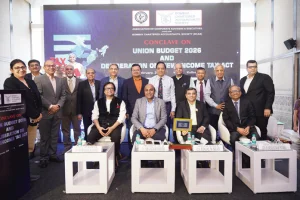
9. Report on Conclave on Union Budget 2026 & Deliberation on New Income Tax

Association of Corporate Advisers & Executives (ACAE), jointly with Bombay Chartered Accountants’ Society (BCAS), successfully organized a full-day programme on Conclave on Union Budget 2026 and Deliberation on the New Income Tax Law on 7th February, 2026 at Williams Court, 40, Shakespeare Sarani Road, 4th Floor, Kolkata – 700017, bringing together eminent professionals and experts to deliberate on key fiscal and legislative developments impacting the nation.

The Inaugural Session commenced with the ceremonial Lighting of the Lamp by CA. Jai Prakash Agarwal, Chairman of ICAI Dubai Chapter, CA. Kinjal M. Shah, Vice President of BCAS, CA. Niraj Kumar Harodia, President of ACAE, other esteemed dignitaries and ACAE Office Bearers symbolizing the pursuit of knowledge and wisdom.

This was followed by a warm and insightful Welcome Address by CA. Niraj Kumar Harodia who highlighted the significance of the Conclave, shared his reflections on his interactions with the esteemed speakers, spoke about the rich legacy and evolution of ACAE as one of the oldest professional associations in Kolkata and welcomed everyone to the Conclave.

The distinguished Guests of Honour, CA. Kinjal M. Shah, Vice President of BCAS, initiated the deliberations with an analytical perspective on Shaping Responsible, Respected and Future Ready Professionals for Decades.

CA. Jai Prakash Agarwal, Chairman of ICAI Dubai Chapter, further enriched the discussion with his practical insights on Emerging Professional Opportunities in the Middle East.

The first technical session was delivered by eminent Guest Speaker, CA. Pradip N. Kapasi, Past President of BCAS, Mumbai, on an in-depth comparative analysis on the Major Changes between the Income Tax Act, 1961 vis a vis Income Tax Act, 2025, clearly outlining structural reforms, simplification measures, and compliance implications.

CA. Padamchand Khincha, Partner at H C Khincha & Co., Chartered Acountants, Bengaluru, in the second technical session elaborated on the Major Amendments proposed through the Income Tax Bill, 2026, explaining the legislative intent, interpretational aspects, and the anticipated impact on tax administration.

Mr. Sameer Narang, Head at Economics Research Group, ICICI Bank, Mumbai, concluded the speaker sessions with a macro-economic perspective on the Impact of Budget on Indian Economy, addressing fiscal discipline, growth projections, capital expenditure focus, and the overall economic outlook.

The Conclave witnessed enthusiastic participation from over 100 delegates, including members, professionals, and representatives from various industries. The sessions were highly interactive, marked by meaningful discussions and thought-provoking queries, making the programme both informative and intellectually stimulating.

The joint initiative with the Bombay Chartered Accountants’ Society reinforced the spirit of professional collaboration and knowledge sharing, ensuring that members remain well-equipped to navigate the evolving taxation landscape.

The programme concluded with a formal Vote of Thanks, expressing sincere gratitude to the esteemed speakers, dignitaries, and participants for contributing to the grand success of the Conclave.

Report on Conclave on Union Budget 2026 & Deliberation on New Income Tax

10. ITF Study Circle meeting on “Discussion on Supreme Court Ruling in the case of Tiger Global” held on 27th January 2026@ Virtual.

The International Tax and Finance Study Circle organised an online meeting to discuss the implications of the Supreme Court’s ruling in the case of Tiger Global.

Group Leaders CA Ramesh Khaitan and CA Jimit Devani

The session opened with remarks from the group leaders on their initial thoughts on the Supreme Court ruling, covering the facts of the case, the contentions raised, and the Court’s ruling. Then the group leaders discussed the critical implications of the ruling. Some of the issues discussed included whether a Tax Residence Certificate is sufficient to claim benefits under a tax treaty, the application of the substance-over-form principle, etc. The group leaders discussed the likely next course of action for Tiger Global. The participants also shared divergent views on the implications of the Supreme Court ruling. The participants expressed apprehensions about the wider application of the principles in this ruling and its unintended consequences.

The discussion covered several key issues that will impact similar cases in the future. The session closed with concluding remarks by the Group Leaders.

11. Indirect Tax Laws Study Circle Meeting on Practical Issues under GST in Healthcare Industry held on Thursday, 22nd January 2026 @ Virtual

Group Leader: CA. Shefali Bang

Mentor: CA Parag Mehta

The group leader first presented the Law pertaining to the healthcare industry under GST, followed by five case studies covering the various aspects of Issues in the healthcare industry under GST.

The presentation covered the following aspects of the Healthcare Industry for a detailed discussion:

  • Whether treatment for Substance Use Disorder through OPD consultation, counselling, and supervised medicine dispensing qualifies as an exempt healthcare service under GST, or whether it may be treated as a taxable supply of medicines.

  • Whether doctor consultation and medicines supplied to outpatients by the hospital pharmacy should be treated as separate taxable supplies or a composite supply of healthcare services, and the related ITC reversal mechanism.
  • GST implications in a revenue-sharing arrangement between a diagnostic laboratory and a sample collection centre, focusing on the taxability of sample collection services and diagnostic testing services.
  • Whether health check-up packages marketed by a company through empanelled hospitals and diagnostic centres qualify for GST exemption as healthcare services, particularly when sold to healthy individuals or corporate employees.
  • Whether naturopathy therapies, along with residential accommodation provided by a wellness retreat, constitute a composite exempt healthcare service or whether accommodation should be taxed separately.
  • The reversal of Input Tax Credit (ITC) when certain life-saving drugs become GST-exempt, particularly regarding raw materials, semi-finished goods, finished goods, and capital goods held in stock
  • Around 100 participants from all over India benefited while taking an active part in the discussion. Participants appreciated the efforts of the group leader and the mentor.

III. REPRESENTATION

1. Representation to SEBI on Research Analyst Regulations

BCAS has submitted a representation on 24th February 2026 to SEBI highlighting practical issues faced during registration under the Research Analyst (RA) Regulations, 2014. The representation is based on feedback from professionals and applicants.

Key concerns include the absence of a clear framework for transition from individual to corporate entities, leading to disruption and duplication of processes. BCAS has also pointed out delays in processing applications after delegation to BSE.

Further, the Society has raised issues regarding restrictive interpretation of rules, especially relating to the “other employment” of Principal Officers, and lack of clarity on certain operational aspects.

BCAS has requested SEBI to provide necessary clarifications and streamline the process to reduce difficulties faced by applicants while ensuring investor protection.

Link: https://bcasonline.org/wp-content/uploads/2026/02/SEBI-RA-Representation.pdf

IV. BCAS IN NEWS & MEDIA

  • BCAS has been featured in several news and media platforms, showing our active involvement, professional contributions, and commitment to the field. This reflects the growing recognition of BCAS in the public and professional space.

Link: https://bcasonline.org/bcas-in-news/

Statistically Speaking

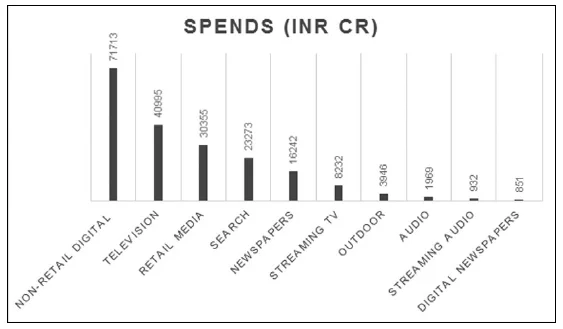
1. INDIA’S ADVERTISING SPEND OUTLOOK

Spends (INR CR)

Source: WPP Media Company (formerly GroupM)

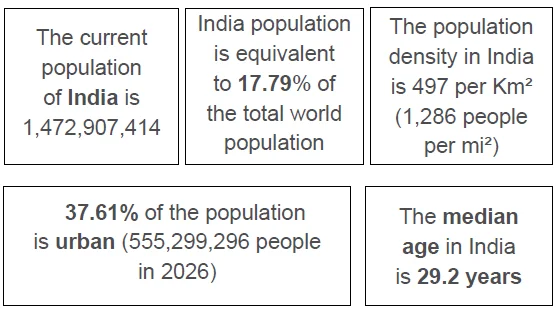
2. INDIA’S CURRENT POPULATION

INDIA’S CURRENT POPULATION

Source: Worldometer

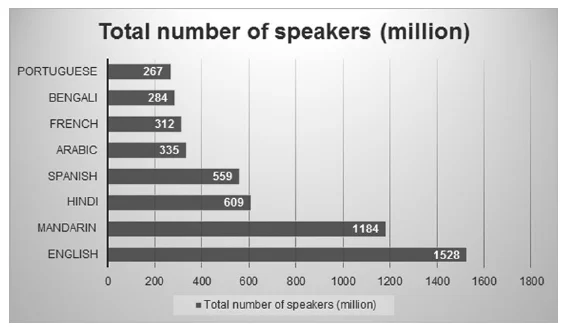
3. MOST SPOKEN LANGUAGES ONLINE AND OFFLINE

MOST SPOKEN LANGUAGES ONLINE AND OFFLINE

Source: Data Reportal, Ethnologue

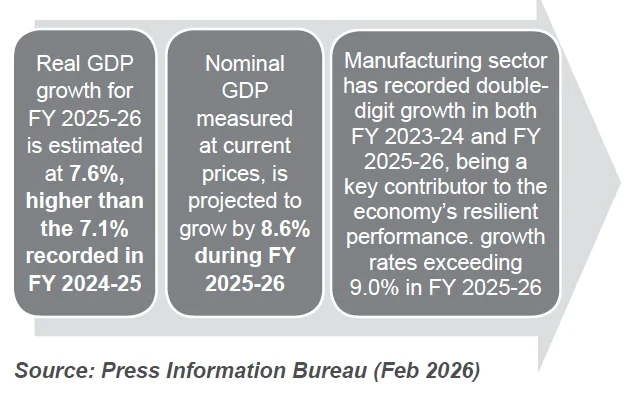
4. INDIA’S GROWING GDP

INDIA’S GROWING GDP

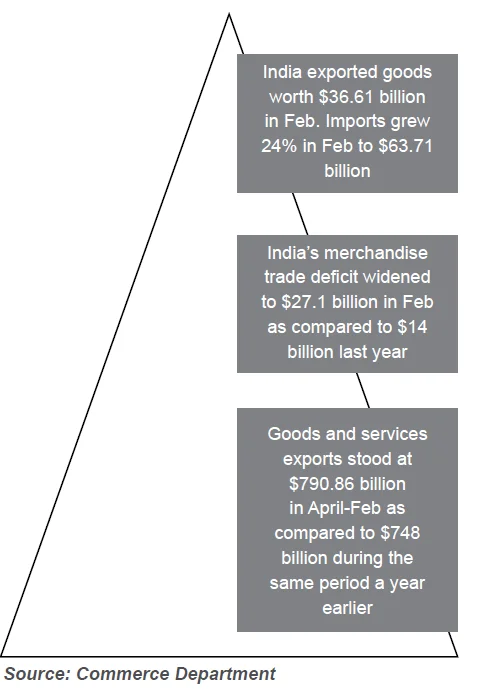
5. TRADE DEFICIT WIDENS

TRADE DEFICIT WIDENS

Regulatory Referencer

I. DIRECT TAX : SPOTLIGHT

1. Income tax Rules 2026 notified. They will come into effect from 1 April 2026. – Notification No.22/2026 dated 20 March 2026

II. FEMA

1. RBI modifies the ECB forms in line with the revised ECB Framework under FEM (Borrowing & Lending) Regulations

The RBI, on 9th February 2026 issued new Borrowing and Lending regulations, revising External Commercial Borrowing (ECB) framework. The old ECB forms have been revised in line with the new ECB framework. Part V – Annex I and Annex II have been substituted with Form ECB I/Revised Form ECB I and Form ECB 2 respectively.

[AP (DIR Series 2025-26) Circular No. 23,dated 18th February 2026]

2. RBI introduces ‘Currency Declaration Form’ under FEM (Export and Import of Currency) Regulations, 2015

The RBI has amended Regulation 6 of FEM (Export and Import of currency) Regulations, 2015 by introducing a ‘Currency Declaration Form’. The following points are to be noted with respect to the form:

a. The form needs to be filled in by passengers where the aggregate value of foreign exchange brought in, in the form of currency notes, bank notes, or travellers’ cheque exceeds USD 10,000 or its equivalent, or where the value of foreign currency notes exceeds USD 5,000 or its equivalent.

b. This form needs to be produced to a bank authorised to deal in foreign exchange or a money changer at the time of conversion or reconversion.

c. In case visitors to India do not wish to encash all the foreign exchange declared, they should retain this form for producing the same to  Customs at the time of their departure. This is to enable them to take with them the unutilised balance.

[Notification No. FEMA 6(R)/2026-RB, dated 23rd February 2026]

3. Govt. amends FDI Policy on ‘Investments from Countries sharing land border with India’

In April 2020, Press Note 3 (2020) was introduced to prevent opportunistic takeovers of Indian companies by certain neighbouring countries during Covid-19 pandemic. Government approval was made mandatory for any investment by an investing entity incorporated in a country sharing a land border with India (LBC), or where the beneficial owner of such an investment was a citizen of, or situated in, such LBC.

The Union Cabinet has recently approved changes in these provisions relating to investments from LBCs. The amendments in Para 3.1.1. of the FDI policy have brought much needed clarity. The existing policy has been amended as follows:

a. An entity or citizen of an LBC, or where the beneficial owner of an investment into India is a citizen of such country, can invest only under Government route. This restriction also applies to any transfer of ownership, directly or indirectly, in an existing or future FDI in an entity in India.

b. Beneficial owner (BO) shall have the same meaning as defined under section 2(1)(fa) of Prevention of Money laundering Act, 2002 and shall be determined as per Rule 9(3) of the Prevention of Money Laundering (Maintenance of Records) Rules, 2005. Further, it is provided that determination of BO shall be applied at the Investor entity level.

c. The above criteria shall be applied in substance. Hence, where a citizen or an entity of an LBC has the ability to directly or indirectly, individually or cumulatively, independently or collectively, whether acting together or otherwise, hold rights/entitlements which:

                  a. exceed the prescribed threshold in an investor entity outside the LBC; or

                 b. enable such citizens or entities to exercise control over such investor entity; or

                  c. enable them to exercise ultimate effective control over the Indian entity in any manner; the beneficial ownership of such an investment shall be deemed to be from an LBC.

                 d. Effectively, investors with non-controlling BO from an LBC of up to 10% shall be permitted under automatic route, subject to applicable sectoral caps, entry route and attendant conditions. However, such investments shall be subject to reporting of relevant information or details by the investee entity to DPIIT.

                e. Further, direct investment from LBCs will still require Government approval. Such applications in following sectors must now be processed and decided within 60 days:

                                    i. Manufacturing of Capital Goods

                                   ii. Electronic Capital Goods

                                  iii. Electronic Components

                                  iv. Polysilicon manufacturing

                                  v. Ingot and wafer manufacturing

In these cases, the majority shareholding and control of the Investee entity will be with resident Indian citizen(s) and/or resident Indian entity(ies) owned and controlled by resident Indian citizen(s), at all times.

              f. The present Rule also covers beneficial owners “situated in” LBC. Thus, even an NRI situated in an LBC could not make a direct investment into an Indian entity without prior Government approval. One important change that Press Note 2 of 2026 brings about is that the Government Route is now applicable only to citizens of these countries or entities incorporated or registered in such countries. Thus, a citizen of countries other than LBCs can invest in Indian entities without prior approval from the Government, even though they may be present in an LBC.

The above amendments will take effect from the date of notification to the NDI Rules.

[Press Release, dated 10th March 2026, Press Note No. (2026 Series), dated 15th March 2026]

III. IFSCA

1.IFSCA specifies a fee structure for entities undertaking or intending to undertake permissible activities in IFSC

The IFSCA has issued a circular prescribing a fee structure for entities undertaking permissible activities in IFSCs and for persons seeking guidance under Informal Guidance Scheme, 2024. The circular applies to applicants seeking license, registration, recognition, or authorisation as well as existing regulated entities. The different categories of fees include application fees, license or registration fees, recurring fees (flat and conditional based on turnover), activity based fees, processing fees, interest on delayed payments, charges for delayed reporting, fees for informal guidance, etc.

The circular also prescribes penalties for delays, including 0.75% monthly interest on unpaid fees and USD 100 per month for delayed regulatory reporting. The circular will apply from FY 2026-27. This circular supersedes previously issued circulars related to fee structured from the date of commencement of this circular i.e. 1st April 2026.

[Circular No. IFSCA-DTFA/1/2026, dated 2nd March 2026 Circular No. IFSCA-DTFA/2/2026, dated 13th March 2026]

2. IFSCA launches a scheme titled “Support for Alternative Trade Instruments under Export Promotion Mission”

IFSCA has launched a scheme titled “Support for Alternative Trade Instruments under Export Promotion Mission (EPM) – NIRYAT PROTSAHAN”. The Scheme aims to improve access to export finance for Micro, Small, and Medium Enterprises (MSMEs) involved in international value chains by providing support for alternative trade finance instruments with a focus on export factoring.

Eligible financial institutions shall ensure compliance with all operational requirements, including submission of claims, reporting obligations, and timelines.

[Circular No. IFSCA-FCR0ITFSR/3/2025 – Banking, dated 19th March 2026]

3. IFSCA issues new measures to ensure operational substance in Capital Market Intermediaries operating in GIFT IFSC

The IFSCA has issued measures to ensure substance in Capital Market Intermediaries (CMIs) in GIFT IFSC. As part of these measures, IFSCA has been conducting multiple rounds of market intelligence visits. The visits were made to registered office premises of CMIs to verify the presence of substance, including the presence of the Principal Officer and Compliance Officer, as well as the adequacy of infrastructure, in accordance with the provisions of the IFSCA Capital Market Intermediaries Regulations, 2025.

The supervisors made the following key observations:

a. Some CMIs were found to be closed or unattended during business hours.

b. Neither the Principal officer, nor the Compliance Officer, nor authorised personnel were present in some CMIs.

c. The designated Principal and Compliance officers lacked adequate awareness of regulatory framework applicable to CMIs in some cases.

d. Necessary infrastructure was lacking to effectively carry out business activities in a few CMIs.

e. In some CMIs, certain practices were carried out using remote access software like Anydesk, Ultraviewer, etc. Further, the Compliance Officer was also handling the trading desk, which is a conflict of interest.

Based on these observations, IFSCA has initiated appropriate regulatory action against the concerned CMIs in accordance with applicable regulatory framework. All CMIs are advised to ensure substance, including strict adherence to provisions of IFSCA CMIs Regulations, 2025.

[Press Release, dated 19th March 2026]

(Audacity To Complain!)

Arjun Hey Bhagwan, good that you came early today.

Shrikrishna Arjun. You know that I never come nor do I go. I am Omni present!

Arjun That I am aware of. But in this kaliyuga, it seems, your presence is missing at many places. Innocent people are suffering.

Shrikrishna I have told you in Geeta that people suffer due to their own Karma; and my presence may not help unless they surrender to me! And improve their karma.

Arjun Be it as it may! Today I am very much worried. Rather frightened.

Shrikrishna Why? Is it because of wars everywhere? Ukraine, Iran, Afghanistan….

Arjun I am never frightened of wars. Thanks to your blessings, I was always triumphant.

Shrikrishna Then what are you worried about?

Arjun Our own profession! This war of complaints of misconduct is terrible. So much of nuisance. So much of harassment to innocent CAs. And no one to help!

Shrikrishna Yes. I have heard that. But it is common. Everywhere Asat (Evil) is powerful since Sat (सत्) Righteous is not strong and assertive! Anyway, tell me what is the present problem?

Arjun Lord, it is very serious. I have lost my sleep. My friend is totally depressed due to a very mischievous complaint against him. And there is no fault on his part whatsoever!

Shrikrishna In Mahabharata also, there wasShakuni!

Arjun This is super Shakuni! See the audacity of the present complainant. There are two partnership firms with 5 partners each – ABC Caterers and Decorators; and ABC Caterers.

Mrs. A is a common partner in both the firms. One or two other partners are also common.

Shrikrishna Okay. Then?

Arjun ABC Caterers and Decorators (C & D) took a loan from a PSU bank.

Loan application was made on C & D letterhead, their partners’ data was given to bank, Mrs. A has signed the application and other papers.

Loan was sanctioned and disbursed to C & D only.

Shrikrishna Fine. Quite normal.

Arjun Moreover, Mrs. A’s husband was a guarantor to this loan. He was fully aware of everything as Mrs. A was a partner for name’s sake.

Shrikrishna That is also normal.

Arjun Unfortunately, the bank while opening the account, mentioned only ABC Caterers. The words – ‘and Decorators’ were missing. Entire paper work was in the name of C & D only.

Shrikrishna Didn’t they ask the banker?

Arjun They did. They were told that in their system, full name was not accommodated. Only these many characters are accommodated.

C & D firm operated this account as its own, also it utilised the loan amount, but it became NPA!

Shrikrishna Oh!

Arjun Bank started recovery proceedings against C & D.

Shrikrishna Obviously.

Arjun My CA friend audited accounts as if the transactions and bank account were of C & D only. And he was right.

Shrikrishna Did the other firm – ABC Caterers consider these transactions as theirs?

Arjun Not at all! Everybody was fully aware that it was of C & D only and it had nothing to do with the other firm.

Shrikrishna Mr. & Mrs. A were also aware?

Arjun Of course, yes. They were signatories. My friend was also involved right from beginning – in the process of obtaining the loan.

Shrikrishna Now, what is the problem?

Arjun Lord, Mr. A who is fully aware of everything, has filed a complaint against my friend.

Shrikrishna What for?

Arjun My friend was the auditor. The complainant says that he audited the accounts with transactions of C & D although the account on the face it was in the name of the other firm.

Shrikrishna Oh!! That was perhaps the mistake of the bank or the limitation of its system.

Arjun Yes, Lord. The fact remains that it was legally and factually of C & D itself. The bank has taken up legal proceedings against C & D only.

Bank has confirmed all these facts in the recovery proceedings before DRT.

Shrikrishna Very strange! But your friend will be definitely absolved.

Arjun I am not sure since your present has become doubtful! And any complaint takes at least 4 years for disposal. My poor friend is totally depressed and frustrated.

Shrikrishna The lesson is – Don’t trust anyone in such matters. Write to the bank there and then when the account is opened

Arjun I agree. But these are afterthoughts. No one could have even dreamt this. Question is that the guarantor despite being a party to the whole affairs has the audacity to make such a complaint.!

Shrikrishna Don’t worry. I will help him!

Om Shanti.

(This dialogue is based on the current scenario of rampant frivolous complaints of misconduct)

Miscellanea

1. ARTIFICIAL INTELLIGENCE

# AI Traffic Could Surpass Human Activity by 2027

The internet is on the brink of a fundamental transformation. In a speech at the SXSW conference in Austin, Texas, Cloudflare CEO Matthew Prince warned that traffic generated by AI-powered bots could overtake human online activity as early as 2027. Prince described generative AI as having an “insatiable need for data,” driving automated agents to browse websites at a scale humans could never match. From shopping and research to content generation, these bots are already reshaping the digital landscape, creating real load on servers and networks worldwide.

Prince drew a sharp contrast between human and bot behaviour. A typical human shopping for a digital camera might visit just five websites. An AI agent performing the same task, however, could scan 1,000 times more—potentially 5,000 sites—in seconds. “That’s real traffic, and that’s real load, which everyone is having to deal with and take into account,” Prince said. Before the generative AI boom, bots accounted for roughly 20% of global internet traffic, mostly from legitimate sources like search-engine crawlers. Malicious bots existed, but they were a minority. Now, the explosion of AI tools has flipped the script.

The Cloudflare chief painted a picture of explosive, sustained growth. Unlike the sudden COVID-era surge in streaming (YouTube, Netflix) that strained networks for a few weeks before stabilising, AI-driven traffic is rising steadily with “no sign of slowing down or stopping.” This shift is forcing companies to rethink the very architecture of the internet. Prince highlighted the need for new infrastructure: instant, temporary “sandboxes” for AI agents. These lightweight environments could spin up in the same time it takes a user to open a new browser tab, run the agent’s task, and then shut down automatically. He predicted that, in the near future, millions of such sandboxes could be created every second.

(Source: indianexpress.com dated 21st March 2026)

#India’s outsourcing industry is worth $300bn. Can it survive AI?

India’s $300 billion (£223 billion) outsourcing sector, which accounts for 80% of the country’s total services exports and has created millions of white-collar jobs over the past 30 years, is facing its biggest threat yet from artificial intelligence. The Nifty IT index of the country’s top software firms has already plunged 20% this year, wiping out tens of billions of dollars in market value, after tools such as Anthropic’s Claude agent began automating core legal, compliance and data processes. Some CEOs and investors now warn that traditional IT services could “vanish by 2030”, with AI potentially eliminating up to 50% of entry-level white-collar roles; Jefferies forecasts that application-managed services (currently 22-45% of revenues) will suffer sharp deflation, dragging overall revenue growth down by 3% annually for the next five years before flatlining beyond 2031.

Indian IT giants, however, insist AI will ultimately create far more work than it destroys. Infosys CEO Salil Parekh points out that generative AI could displace 92 million jobs in roles such as front-end developers and testers, yet generate 170 million new positions in data annotation, AI engineering and AI leadership. Nasscom data shows AI-related revenue still accounts for just $10 billion of the industry’s $315 billion total, with sector-wide growth slowing to a modest 6% this year (from double-digit rates previously) and net employee strength projected to rise only
2.3% in 2026. HSBC’s “Software Will Eat AI” report adds that enterprise software firms remain irreplaceable for complex, reliable systems that pure AI cannot yet replicate, suggesting the industry will pivot from experimentation to large-scale AI deployment and outcome-based billing rather than disappear.

(Source: bbc.com dated 18 March 2026)

2. ENVIRONMENT

#An Invisible Crisis: The Hidden Environmental Impact of Pharmaceutical Waste

Pharmaceutical pollution has emerged as a silent global environmental crisis, with around 4,000 active pharmaceutical ingredients (APIs) currently in use worldwide. According to the UN, 631 pharmaceuticals or their transformation products have been detected in the environment across 71 countries. A major 2022 study found pharmaceutical contamination in river samples from over 1,000 locations in 104 countries, affecting every continent. Traces appear in rivers, lakes, and groundwater everywhere, with Pakistan’s Ravi River identified as the world’s most polluted from pharmaceutical waste. Manufacturing sites discharge concentrations 10 to 1,000 times higher than typical wastewater, and residues have been traced more than 30 km downstream

The ecological damage is already severe. Synthetic hormones act as endocrine disruptors at concentrations as low as one nanogram per litre, causing feminisation in male fish and reproductive failure. In South Asia, the veterinary drug diclofenac triggered a catastrophic decline of over 95% in vulture populations within a decade. Antibiotic residues in water are accelerating the rise of “superbugs,” a major global health threat highlighted by the WHO. While wastewater treatment plants can remove 90–95% of pharmaceutical compounds, the vast majority of pollution stems from human excretion, improper disposal of unused medicines, livestock farming, and factory discharges, raising serious long-term concerns for both ecosystems and human health.

(Source: earth.org – 17 March 2026)

ICAI and Its Members

I. ICAI PUBLICATIONS

1. GUIDANCE NOTE ON AUDIT OF BANKS

The Institute issues a revised edition of the publication “Guidance Note on Audit of Banks” annually. This Guidance Note serves as a comprehensive resource for members, providing detailed guidance on the conduct of statutory audits of banks and their branches.

https://resource.cdn.icai.org/91301aasb-aps4524-b.pdf

2. BRIDGING THE EXPECTATION GAP – AUDIT VS. FORENSIC

The publication “Bridging the Expectation Gap – Audit vs. Forensic” addresses this critical issue in a structured and objective manner. It offers a clear exposition of the conceptual foundations, scope, and inherent limitations of statutory audits conducted under the Standards on Auditing, while contrasting them with the distinct objectives, methodologies, and deliverables of forensic engagements.

https://resource.cdn.icai.org/90762caq-aps4099.pdf

3. COMPENDIUM OF OPINIONS

44th Volume of the Compendium of Opinions, which encapsulates the opinions finalised during the period from February 12, 2024 to February 11, 2025.

https://icainet-my.sharepoint.com/:b:/g/personal/eac_icai_ in/IQCUOeRAj9 JjTZSNOKQCL7 svAdoR6l tUGs7etyMBuKenSD8

4. HANDBOOKS

a. Applicability of GST on the Agricultural Sector

https://d23z1tp9il9etb.cloudfront.net/download/pdf26/Handbook%20on%20Applicability%20of%20GST%20on%20Agricultural.pdf

b. Composition Scheme Under GST-February (3rd) 2026 Edition

https://d23z1tp9il9etb.cloudfront.net/download/pdf26/Handbook%20on%20Composition%20Scheme%20Under%20GST-February%20(3rd)%202026%20Edition.pdf

c. E-Commerce Operators under GST

https://d23z1tp9il9etb.cloudfront.net/download/pdf26/Handbook%20on%20E-Commerce%20Operators%20under%20GST.pdf

d. Refunds under GST

https://idtc.icai.org/publications.php#:~ :text=Handbook%20on%20Refunds%20under%20GST

e. Significant Judicial and Advance Rulings in GST-A Compilation

https://d23z1tp9il9etb.cloudfront.net/download/pdf26/Significant%20Judicial%20and%20Advance%20Rulings%20in%20GST-A%20Compilation%20 %20February%20(2nd)%202026%20Edition.pdf

5. TAXATION OF DIGITAL ECONOMY – A STUDY

“Taxation of Digital Economy – A Study” presents a comprehensive analysis of evolving tax frameworks impacting digital businesses. It highlights India’s multifaceted response—ranging from the Significant Economic Presence provisions to its commitment under the global Two-Pillar solution—while underscoring the principles of sovereignty and fairness that underpin these measures.

https://resource.cdn.icai.org/91170cit-aps4336.pdf

II. ICAI Opinion – Accounting treatment of non-construction fee under Ind AS framework

A. FACTS OF THE CASE

  • The company was allotted land by GMADA for the construction of an office building, with a condition to complete construction within a stipulated period.
  • Due to construction delays, GMADA levied non-construction / extension fees from time to time.
  • The company accounted for such fees (except penal interest) under Capital Work-in-Progress (CWIP), considering them attributable to the asset.
  • C&AG objected, stating that such fees are in the nature of a penalty for delay and should be expensed, not capitalised.

B. QUERY

  • Whether the accounting treatment of non-construction fees debited to CWIP is in compliance with applicable Ind AS.
  • If not, whether any modification in treatment is required.

C. POINTS CONSIDERED BY THE COMMITTEE

  • The Committee restricted its examination to the accounting treatment of non-construction fee only.
  • As per Ind AS 16, only costs directly attributable to bringing the asset to the location and condition necessary for its intended use can be capitalised.
  • Such directly attributable costs are those necessary for the construction or development of the asset, without which the asset cannot be made ready for use.
  • The non-construction fee arises due to delay in construction or non-compliance with stipulated timelines under the allotment terms.
  • The Committee observed that such fees are not necessary for construction activity nor for bringing the asset to its operational condition.
  • Instead, these represent a cost of holding the land without construction or during construction, similar to administrative costs

D. OPINION

  • The non-construction fee relates to delay/non-compliance with construction conditions and is not directly attributable to bringing the asset to its intended operating condition.
  • Accordingly, such expenditure cannot be capitalised under Ind AS 16
  • It should be expensed in the Statement of Profit and Loss with appropriate disclosures.

III. ICAI BOARD OF DISCIPLINE – CASES

Case: In Re : CA. DKA

File No.    :    PPR/P/348/17/DD/334/INF/2017/BOD/489/ 2018

Date of Order : 30.12.2025

Particulars Details

Complainant Information received from CBI (RC No. G(E)/2005/EOW-I/DLI)

Nature of Case Involvement in fraudulent donation routing through bogus trusts

Background  :A CBI investigation revealed a large-scale fraud (2003–2005) involving the misuse of the name of the Indian Medical Scientific Research Foundation (IMSRF). Fake bank accounts were opened in the name of IMSRF and other fictitious trusts, through which donations aggregating ₹3.26 crore were received and siphoned off. Funds were routed back to donor companies after deducting commission, enabling wrongful tax exemptions.

Key Allegations Acted as a key conspirator in the creation and operation of bogus trusts.

– Facilitated opening of fake bank accounts and routing of funds.

– Had control/association with accounts used for diversion of donations.

– Assisted in enabling fraudulent tax benefits to donor entities.

Respondent’s Defence – Alleged procedural irregularities and lack of proper opportunity.

– Claimed delay and non-supply of documents by ICAI.

– Stated that the related CBI matter was still pending at the pre-charge stage.

– Did not substantively address allegations on merits and largely remained absent during proceedings.

Findings

– Evidence from CBI investigation, bank records, PAN data, and witness statements established active involvement.

– Respondent repeatedly failed to appear despite multiple opportunities

– No credible defence on merits was provided.

– Proceedings remain valid even if member’s status ceases at a later stage.

– Conduct showed a serious ethical breach and disregard for the disciplinary process.

Charges Established Guilty under Item (2), Part IV, First Schedule – other misconduct (read with Section 22).

Punishment Removal of name from Register of Members for 3 months

Case : CA. KHJ vs. CA. RK

File No. : PR/29/2020/DD/66/2020/BOD/643/2022

Date of Order : 30.12.2025

Particulars Details

Complainant CA. KHJ

Respondent CA. RK

Nature of Case Holding Certificate of Practice while in full-time employment

Background The Respondent, holding a Full-Time Certificate of Practice since 2005, was found to be simultaneously working as Chief Financial Officer (CFO) in a government organisation in Bihar, namely JEEVIKA (Bihar Rural Livelihoods Promotion Society). As per ICAI regulations, a CA in practice cannot engage in any other employment without prior permission.

Key Allegations – Continued to hold a full-time COP while working as CFO in a Government organisation.

                               – Engaged in employment without obtaining prior permission from ICAI.

                              – Violated Clause (11), Part I, First Schedule and Regulation 190A.

Respondent’s Defence Claimed employment was contractual and performance-based, not full-time.

– Argued misunderstanding regarding the permissibility of holding COP.’

– Submitted that no attestation work, UDIN generation, or professional practice was carried out.

– Subsequently surrendered COP and membership (2024).

Findings- Documentary evidence (staff list & website) established Respondent as a full-time CFO.

– No evidence of ICAI permission for employment was produced.

– Claim of contractual engagement was unsupported.

– Counsel admitted lapse during the hearing.

– Holding a COP alongside employment is a clear violation of professional ethics.

Charges Established Guilty under Item (11), Part I, First Schedule – engaging in another occupation while in practice.

Punishment Removal of name from the Register of Members for 1 month

Case : Ms. PDP vs. CA. M.S.M.

File No. : PR/300/2018/DD/301/2018/BOD/646/2022

Date of Order : 30.12.2025

Particulars Details

Complainant Ms. PDP

Respondent CA. M.S.M.

Nature of Case Gross negligence in handling ITAT appeal

Background The Complainant engaged the Respondent to represent her in income-tax appellate proceedings (AY 1999–2000 to 2004–05) before CIT(A) and ITAT, Pune. Despite payment of professional fees, the Respondent allegedly failed to appear before ITAT on multiple hearing dates, leading to an ex-parte order confirming a tax demand of approx. ₹56 lakh, causing financial hardship.

Key Allegations Failure to attend ITAT hearings despite engagement and receipt of fees.

– Non-representation resulted in ex-parte order and substantial tax liability.

– Negligence in the discharge of professional duties.

Respondent’s Defence No substantive defence; the Respondent failed to appear or file a reply despite multiple opportunities.

Findings

– ITAT order recorded non-appearance of the authorised representative on hearing dates (page 4).

– Complainant provided documentary evidence, including the appointment letter, fee proof, and ITAT order.

– The Respondent remained absent in all proceedings (7 hearings) and failed to rebut the allegations.

– Conduct was held to constitute gross negligence and dereliction of professional duty.

Charges Established Guilty under Item (2), Part IV, First Schedule – Other Misconduct (lack of due diligence).

Punishment Removal from the Register of Members for 3 months

Company Law

1. Jayaben Shantilal Doshi vs. Ronak Dyeing Ltd.

183 taxmann.com 186 (NCLT – Mumbai Bench)

CP No. 200(MB) of 2023 | Decided: 4th February, 2026

Non-service of notices of general meetings to shareholders and sale of company property at an undervalued price both independently constitute acts of oppression and mismanagement under Section 241 of the Companies Act, 2013. Further, offer letters for a rights issue must be served on each shareholder individually, a director’s deemed knowledge cannot substitute personal service on other shareholders.

Background: RDL was originally promoted by SDD, Kirti Kumar Vasa (KV), and the Sharma Group, each holding equal stakes. SDD died on 30.03.2013 and his shareholding was transmitted to the Petitioner in FY 2018–19. KV’s group subsequently exited by transferring their shares to the Sharma Group, leaving the Petitioners as the only minority shareholders with 10.79% of the capital.

FACTS

The Petitioners filed a petition under Sections 241–242 of the Companies Act, 2013 alleging four distinct acts of oppression and mismanagement:

  1. Undervalued Sale of Bhuleshwar Property: RDL sold an immovable property at Bhuleshwar, Mumbai vide Deed of Conveyance to M/s Asteya Properties for ₹64.80 lakhs. The Petitioners’ IBBI-registered valuer determined the ready reckoner value at ₹1.25 crore and the fair market value at ₹3.41 crore. The conveyance deed described the property as “open vacant land” with a demolished structure, which contradicted even the photograph filed by the Company itself, showing a two-storeyed structure.
  2. Dilution of Shareholding via 2011 Rights Issue: In March 2011, RDL issued 5,00,000 new equity shares on a rights basis. These shares were allotted exclusively to the Sharma Group and 11 of their relatives (including non-shareholders), with no offer letter served on the Petitioners, SDD, or KV. As a result, the combined shareholding of the SDD group was diluted from 21.56% to 10.79%.
  3. Excessive Director Remuneration: The Respondents and their family members (including daughters of Respondent No. 2 and newly inducted directors Respondents No. 4 & 5) were alleged to be drawing disproportionate remuneration without the requisite qualifications or participation in business activities.
  4. Non-Service of Notices of General Meetings: The Petitioners alleged that they were never served notices of General Meetings or Annual Audited Financial Statements, except for the AGM pertaining to FY 2022–23. This excluded them from any participation in the Company’s affairs after SDD’s demise.

Arguments by the Petitioners

  •  The Bhuleshwar property was sold without a special resolution, as required under Section 180(1)(a) of the Companies Act, 2013, and at a grossly undervalued price — just ₹64.80 lakhs against a fair market value of ₹3.41 crore.
  •  The 2011 rights issue was an oppressive act, as no offer letter was ever served on the Petitioners or SDD; the allotment of a large portion to non-shareholders was illegal under Section 81 of the Companies Act, 1956. The petition was not time-barred because limitation should run from the discovery of fraud in 2023 and the wrong was a “continuing wrong.”
  • Remuneration paid to family members of the Respondents was excessive and unjustified, particularly to those without qualifications or business involvement, and possibly in excess of limits under Section 197 read with Schedule V.
  •  Non-service of meeting notices to shareholders constitutes a continuing act of oppression, depriving them of their statutory rights.
  •  Relief sought included cancellation of the conveyance deed, restoration of shareholding to 21.56%, removal of respondents from the board, forensic audit, appointment of an independent administrator, and, alternatively, winding up.

Arguments by the Respondents

  •  The petition was barred by limitation and delay & laches, particularly the challenge to the 2011 rights issue, which was over 12 years old. SDD had signed Annual Returns for FY 2010–11 and FY 2011–12 showing the changed shareholding, constituting his implied acquiescence.
  • The Bhuleshwar property’s conveyance deed described it as vacant land after demolition of the shed, and a photograph taken in May 2023 could not be used to impute the property’s condition in July 2022. No special resolution was required since the property did not qualify as an “undertaking” under the Explanation to Section 180(1)(a).
  • The Sharma Group submitted that since SDD himself served as a director, the Petitioners cannot solely blame the Respondents for non-service of notices; the Petitioners’ long silence belied their claims.
  • The remuneration to Respondents No. 2 & 3 was commensurate with the company’s growth. Revenue grew 228%, and Plant & Machinery investment grew 260% over 10 years. Remuneration to the daughters (approx. ₹60,000/month) was not excessive. No Income Tax disallowance had been reported in the tax audit report.
  • Respondents were willing to buy out the Petitioners, and a court-appointed valuer determined the share value at ₹178.46 per share.

Decision

The NCLT allowed the petition and made the following key findings and directions:

Sale of Bhuleshwar Property

  • The property did not require a special resolution since its book value was zero and it generated no income — it did not qualify as an “undertaking” under the Section 180(1)(a) explanation. This ground of challenge was rejected.
  • However, the sale was held to be at an undervalued price. The conveyance deed’s description of it as vacant land contradicted both the company’s own photograph and the IBBI valuer’s report. The Respondents filed no counter-valuation report. The sale was declared an act of oppression and mismanagement prejudicial to the members’ interests.

2011 Rights Issue

  •  The challenge qua SDD’s shares was held barred by limitation, as SDD had signed Annual Returns reflecting the changed shareholding and was actively involved in the company — he was expected to have noticed the dilution with reasonable diligence.
  • However, the challenge qua the Petitioners’ direct shareholding was not barred, as the Respondents could not prove service of offer letters to the Petitioners specifically. Notices and offer letters must be served on each shareholder individually, and SDD’s knowledge cannot be imputed to the Petitioners without evidence of authorisation. The allotment to the exclusion of the Petitioners was held to be a continuing wrong and bad in law under Section 81 of the Companies Act, 1956.

Director Remuneration

  • The remuneration to Respondents No. 2 & 3 was found reasonable given the Company’s growth trajectory and no Income Tax disallowance.
  • However, the Tribunal directed the Registrar of Companies to examine whether the total managerial remuneration exceeded the limits prescribed under Section 197 read with Schedule V, and any excess amount is to be factored into the share buyout price.

Non-Service of Notices

  •  Non-service of meeting notices was squarely held to be an act of oppression. The Respondents offered no evidence of dispatch; a bare assertion was insufficient.

Directions

  • Respondents directed to buy out the Petitioners’ shares at the value determined by Valuer, (adjusted upward for items below) within 60 days, failing which interest at 10% p.a.
  • The difference between fair market value (₹3.41 crore) and actual sale consideration (₹64.80 lakhs) of the Bhuleshwar Property, along with interest @ 12% p.a., to be added to the share value.
  • Remuneration in excess of Section 197 limits, if determined by RoC, is to be added to the share buyout value.
  • Petitioners’ shareholding to be adjusted to include the rights shares they were individually entitled to in the 2011 issue.
  • An independent IBBI valuer (Ms. Manisha Satej Dharia) appointed to re-value the Kalyan industrial property, with the revised value to be substituted in the valuer’s report.
  • Alternatively, the company may buy back the Petitioners’ shares.

2. Yerram Vijay Kumar vs. The State of Telangana

Before Supreme Court (SLP (Crl.) No. 11530 OF 2024)

Date of Order: 09th January, 2026

The Supreme Court held that for offences relating to fraud under Section 447 of the Companies Act, 2013, for which prosecution can be initiated only on a complaint filed by Serious Fraud Investigation Office (SFIO) or with its authorization, and a private complaint is not maintainable under Section 212 of the Companies Act, 2013.

FACT

The Special Court for Economic Offences had taken cognizance of “fraud-related” offences under Section 448 Companies Act, 2013 based on a private complaint and the appellant had raised a jurisdictional objection that the Special Court could not take cognizance of “fraud” under the provisions of the Companies Act because Section 212 (6) requires that such complaints to be filed by the Serious Fraud Investigation Office (SFIO) or the Central Government, not by a private individual.

The Charges on the appellant based on a private compliant taken by the Special Court, were under following provisions:

i) Offences under the Companies Act, 2013

  • Section 448 (False Statement): Relates to intentionally making false statements in any return, report, certificate, or document required under the Act.
  • Section 451 (Punishment for Repeated Default): Relates to enhanced penalties for those who commit the same offence twice within three years.

ii) Offences under the Indian Penal Code (IPC)

The complaint also alleges traditional criminal acts:

  • Section 420: Cheating and dishonestly inducing delivery of property.
  • Section 406: Punishment for criminal breach of trust.
  • Section 468 & 471: Forgery for the purpose of cheating and using forged documents as genuine.
  • Section 120B: Criminal conspiracy.

The Core Legal Interpretation/Question before Supreme Court was:

Whether a Special Court could take cognizance of offences under Section 448 (punishment for false statements) and Section 451 (punishment for repeated defaults) based on a private complaint?

ORDER

The Supreme Court observed that Section 448 does not prescribe an independent punishment. Instead, it mandates that a person found guilty “shall be liable under Section 447.” Consequently, any proceeding under Section 448 is functionally an “offence covered under Section 447”.

Supreme Court held that the mandatory safeguard in the second proviso of Section 212(6) applies and a Special Court cannot take cognizance of these offences except upon a written complaint by the Director of the Serious Fraud Investigation Office (SFIO) or an authorized Central Government officer. Accordingly, the Court quashed the proceedings before Special Court specifically to the extent of Sections 448 and 451 of the Companies Act, as they were initiated via a private complaint without SFIO/Government authorisation.

The Court further stated that a person alleging corporate fraud is not remediless but should follow the statutory route, by filing an application under Section 213 before the National Company Law Tribunal (NCLT) to trigger an investigation.

Structural Shift In Merchant Banking Regulations – Aligning With Maturing Capital Markets

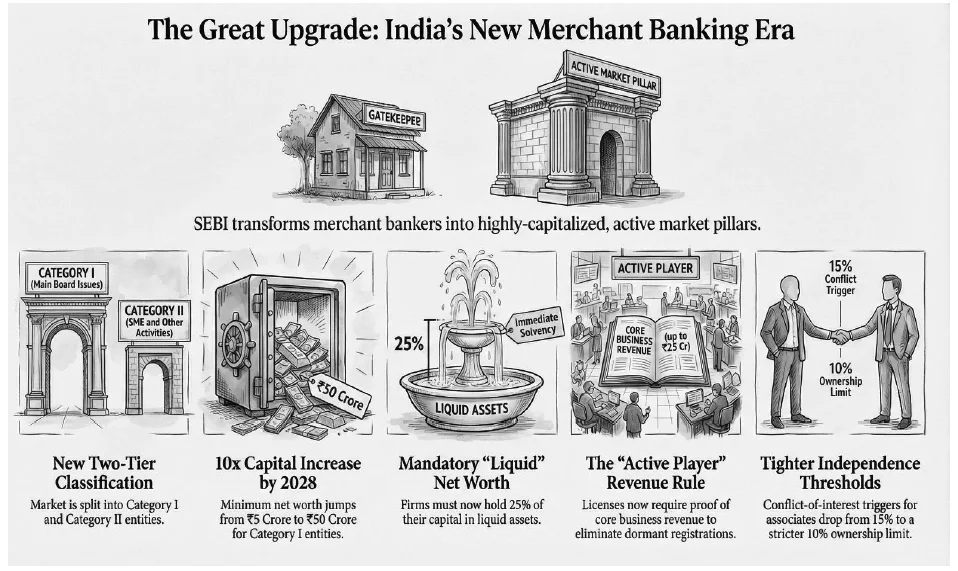
The SEBI (Merchant Bankers) (Amendment) Regulations, 2025, modernize India’s capital markets by replacing the 1992 framework. Key reforms include a tiered categorization (Category I and II) with significantly higher net worth requirements, reaching ₹50 crore for Category I by 2028. A new liquid net worth mandate and a cap on underwriting commitments (20x liquid net worth) mitigate systemic risk. To ensure active participation, minimum revenue thresholds are introduced. Furthermore, non-core activities must be managed through Separate Business Units (SBUs), shifting oversight toward substance-based supervision.

I. INTRODUCTION

Merchant bankers occupy a pivotal and institutionally sensitive position within the architecture of the modern capital market and function as the principal intermediaries and gatekeepers between issuers seeking access to capital and investors deploying risk capital.

In the Indian context, merchant bankers have historically played a foundational role in the development and expansion of the country’s primary securities market. The Securities and Exchange Board of India (Merchant Bankers) Regulations, 1992 (“erstwhile Regulations”), were formulated at a time when India’s equity markets were still in their formative phase. Issue sizes were relatively small, institutional participation was limited, and regulatory priorities were centred on market creation rather than systemic risk containment.

As we deep dive into the Indian Market Scenario in the last few decades, the scale, pace, and complexity of India’s capital markets today bear little resemblance to the conditions that prevailed when the 1992 regulatory framework was introduced.

There are more than 230 registered merchant bankers; however, only a smaller set of Book Running Lead Managers are actively managing Initial Public Offerings (IPOs). The companies planning IPOs in the upcoming Year 2026 number more than 190, of which 84 have received SEBI approval and 108 are awaiting approval. This shall set a new fundraising potential to more than ₹2.5 Lakh Crore from more than 190 issuers1.

Further, there has been a steep rise in the Draft Red Herring Prospectus (DRHP) Filings, with 19 startups and more than 24 companies preparing IPO documentation. In the month of February 2026 alone;

DRHP’s filed on SME Exchanges – 6 companies

DRHP filed on Mainboard – 2 Companies

SME IPO Listings – 14 Companies

Mainboard IPO Listings -3 Companies2.

The sharp increase in public issue sizes, the rapid expansion of the SME IPO segment and heightened retail investor participation have explicitly highlighted the limitations of the erstwhile Regulations. Acknowledging this structural disconnect, the Securities and Exchange Board of India, through the Securities and Exchange Board of India (Merchant Bankers) (Amendment) Regulations, 2025 (‘’Amended Regulations’’), has undertaken the first comprehensive amendment of the merchant banking framework in over three decades.


1 https://timesofindia.indiatimes.com/business/india-business/ipo-market-2026-

over-190-companies-line-up-for-debut-over-rs-2-5-lakh-crore-fundraisingtargetted/

articleshow/126172612.cms

2 https://www.ipoplatform.com

II. REGULATORY RATIONALE FOR REFORM:

The capital adequacy framework under the Securities and Exchange Board of India (Merchant Bankers) Regulations, 1992, anchored to a uniform net worth requirement for merchant bankers of ₹five crore, had ceased to be proportionate to the scale and complexity of contemporary capital market transactions, thereby requiring increasing minimum net worth requirements in a phased manner from ₹25 Crores in 2027 to ₹50 Crores in 2028 for existing Category I regulated intermediaries, i.e. merchant bankers.

Effective from January 1, 2026, these amendments reflect a clear shift towards a prudential, risk-focused, and activity-based regulatory approach, aimed at strengthening market integrity while aligning Indian standards with evolving international regulatory benchmarks.

This regulatory transition was preceded by a structured consultative process initiated through SEBI’s consultation paper issued in August 2024, which systematically identified key gaps in the existing regime, including inadequate capital thresholds, an open-ended scope of activities, underwriting risk concentration, and the persistence of dormant registrations. This process underscores SEBI’s move towards evidence-based and participatory rulemaking in the regulation of market intermediaries.

III. KEY AMENDMENTS:

a) Capital Re Architecture: Tiered Categorisation and the advent of Liquid Net Worth

The Securities and Exchange Board of India (Merchant Bankers) (Amendment) Regulations, 2025, introduce a tiered classification of merchant bankers, creating Category I and Category II intermediaries. Category I merchant bankers are authorised to undertake all permitted activities under Regulation 13A of the Amended Regulations, including lead management of main board public issues, whereas Category II merchant bankers may undertake all other permitted activities except main board public issues. This bifurcation aligns regulatory obligations with market scale, ensuring that high-risk main board mandates are undertaken by well-capitalised entities. The revised norms shall apply to existing MBs in a phased manner as under:

Category Current Requirement (As per 1992 Regulations) Phase 1 (on or before January 2, 2027) Phase 2 (on or before January 2, 2028)
Category I ₹5 crore ₹25 crore & Liquid Net worth – 6.25 Cr. ₹50 crore & Liquid Net worth – 12.5 Cr.
Category II ₹5 crore ₹7.5 crore & Liquid Net worth – 1.875 Cr. ₹10 crore & Liquid Net worth – 2.5 Cr.

*Please note all new applicants shall adhere to the revised Net worth Requirements.

b) Compliances of minimum revenue from permitted activities

It has been observed that several Merchant Bankers are engaged only in activities other than core issue management and its related activities, utilising SEBI registration primarily as a reputational asset rather than as an operational mandate. Accordingly, Merchant Bankers shall now be required to generate minimum revenue on a cumulative basis over the three immediately preceding financial years as ₹Twenty-Five Crores for Category I & ₹Five Crore for Category II. The first assessment with respect to minimum revenue from permitted activities will be carried out w.e.f. 1st April 2029. This will allow only serious and credible market players to sustain in the merchant banking business. However, professionals auditing merchant banking companies, as a matter of practice, reconcile revenue reported in Half-yearly reports to SEBI with minimum revenue from permitted activities reflected in the statement of Profit & Loss to ensure ongoing compliances.

c) Compliances in respect of underwriting obligations

The rapid growth of the SME IPO segment further exposed deficiencies in due diligence standards, underwriting discipline, and conflict management, especially among smaller and thinly capitalised intermediaries. Regulation 22B(2) of the amended regulations caps total underwriting commitments at twenty times a merchant banker’s liquid net worth, replacing the earlier regime that permitted disproportionate exposure based on notional net worth. This reform materially mitigates systemic risk and ensures that underwriting obligations are backed by financial strengths.

d) Threshold for Determining Merchant Banker Association with Issue of Securities

A merchant banker, being a promoter or an associate of either the issuer of the securities or of a person making an offer to sell or purchase securities in terms of any of the regulations made by the Board, shall not lead manage any issue or be associated with any activity undertaken under any of the regulations made by the Board by such issuer or person. The threshold for determining the association of a merchant banker, either by control directly or indirectly through its subsidiary or holding company, has been reduced from fifteen percent to ten percent.

Merchant bankers are prohibited from lead-managing public issues where their key managerial personnel or relatives hold, in aggregate, more than 0.1% of the paid-up share capital or shares whose nominal value is more than Ten Lakh rupees, whichever is lower. These measures reinforce independence, objectivity, and fiduciary accountability across merchant banking operations.

e) Professional Accountability and Institutional Governance

The amended framework also elevates professional standards within merchant banking entities. Principal officers must possess a minimum of five years’ experience in financial markets. Compliance oversight has been strengthened under Regulation 28A through mandatory NISM Series-IX and Series-IIIA certifications, reinforcing regulatory adherence and investor protection. Transitional provisions allow existing compliance officers to continue subject to experience thresholds and timely certification, balancing continuity with enhanced competence.

The Great Upgrade India New Merchant Banking ERA

f) Redefining the Scope of Merchant Banking and the Separate Business Unit (SBU) Framework

The Amendment Regulations explicitly recognise that SBUs are not separate legal entities; the focus is on in substance segregation, operational independence, independent reporting lines, and the maintenance of robust Chinese walls to prevent risk contagion. Under the amended Regulation 13, merchant bankers are expressly permitted to undertake activities directly connected to the securities market lifecycle, including;

(i) managing of public issues, qualified institutions placements, rights issues of securities and advisory or consulting services incidental to such issues;

(ii) managing of:

a. acquisitions and takeovers under the Securities and Exchange Board of India (Substantial Acquisition of Shares and Takeovers) Regulations, 2011;

b. buy-back under the Securities and Exchange Board of India (Buy Back of Securities) Regulations, 2018;

c. delisting under the Securities and Exchange Board of India (Delisting of Equity Shares) Regulations, 2021;

d. compliances as may be required under the Securities and Exchange Board of India (Listing Obligations and Disclosure Requirements) Regulations, 2015 in respect of any scheme of arrangement;

e. implementation of a scheme under the Securities and Exchange Board of India (Share Based Employee Benefits and Sweat Equity) Regulations, 2021; and

f. advisory or consulting services incidental to the activities specified in clauses (a) to (e);

(iii) underwriting activities as specified by the Board from time to time; private placement of listed or proposed to be listed securities on a stock exchange recognised by the Board and activities incidental thereto.

(iv) advisory or consulting services incidental to the activities specified in clauses (a) to (e);

For the purpose of this clause, ‘securities’ shall be treated as ‘proposed to be listed’ from the date of approval of the board resolution of the issuer, for the issuance of such securities to be listed on a stock exchange recognised by the Board;

(v) managing the international offering of securities and advisory or consulting services incidental to such offering;

(vi) filing of placement memorandum of an alternative investment fund;

(vii) issuance of a fairness opinion;

(viii) managing of secondary market transactions of securities listed on a stock exchange recognized by the Board and activities incidental thereto;

(ix) market making in accordance with the Securities and Exchange Board of India (Issue of Capital and Disclosure Requirements) Regulations, 2018;

(x) and any other activity as may be specified by the Board from time to time.

Activities outside the core list are no longer permissible as part of merchant banking and must, if undertaken, be conducted through Separate Business Units (SBUs), thereby ensuring a clear distinction between core merchant banking and other financial services activities. To ensure a smooth transition, existing merchant bankers are required to restructure non-core activities into SBUs within six months from the effective date of January 1, 2026.

Key Differences in Erstwhile Regulations and Amended Regulations

Feature 1992 Regulations (Erstwhile Regulations) 2025 Amendments (Amended Regulations) Strategic Shift
Categorization Unitary framework (Category I dominant) Two-tier framework (Category I and Category II) Recognition of market bifurcation between Main Board and SME platforms
Minimum Net Worth ₹5 Crores ₹50 Crores (Category I) / ₹10 Crores (Category II) Increase to ensure financial resilience and institutional strength
Liquidity Requirement No specific liquidity requirement Mandatory Liquid Net Worth (minimum 25%) Shift from book solvency to immediate solvency
Underwriting Exposure No explicit cap on underwriting Underwriting capped at 20× Liquid Net Worth Risk-taking capacity strictly linked to liquid capital
Valuation Activity In-house valuation permitted Valuation prohibited; mandatory use of Registered Valuer Removal of conflict of interest between deal execution and valuation
Data Localization No data localization requirement Mandatory data storage within India Data sovereignty and assured regulatory access
Record Retention Period 5 years 8 years Alignment with tax, enforcement, and other investigation statutes
Activity / Revenue Requirement No minimum revenue requirement Minimum revenue thresholds: ₹25 Cr (Category I) / ₹5 Cr (Category II) “Active player” doctrine to eliminate dormant registrations

VI. Way Forward: Towards a Resilient, Credible and Globally Aligned Merchant Banking Ecosystem

The regulatory overhaul of the merchant banking framework marks a transformative step in the evolution of India’s merchant banking landscape, establishing a regulatory directive that carefully balances prudential discipline with operational flexibility. The Amended Regulations enable market participants to adapt to heightened standards without disrupting market continuity or capital formation.

Some of the key takeaways are:

  •  Merchant banking regulation in India has decisively moved from form-based registration to substance-based supervision, commensurate with the evolving and growing capital market activities.
  • Capital adequacy is operationally enforced through tiered net worth thresholds, liquid asset requirements, and underwriting exposure limits.
  • The positive list framework defines the boundaries and permissible merchant banking activities.
  • Licence continuity is now tied to demonstrable market participation, reinforcing the principle that merchant banking is an active institutional responsibility rather than a passive regulatory entitlement.

Collectively, these measures position India’s merchant banking industry to operate with greater credibility, resilience, and strategic alignment with international standards, ensuring that the primary markets function efficiently and securely while supporting long-term capital formation objectives.

Personal Guarantors under the Insolvency and Bankruptcy Code, 2016

The IBC treats personal guarantors as a distinct class closely linked to corporate debtors. Their liability is co-extensive, meaning creditors can proceed against them directly without first exhausting remedies against the principal borrower. Supreme Court rulings clarify that a corporate resolution plan does not discharge guarantor obligations, nor does the Section 14 moratorium protect them. To ensure efficiency, insolvency proceedings for both debtors and guarantors are typically consolidated under the NCLT. Ultimately, guarantor liability remains independent, allowing creditors to pursue parallel remedies under statutes like SARFAESI

INTRODUCTION

Personal guarantees have historically been a central feature of commercial lending in India. Promoters and directors frequently provide personal guarantees to secure corporate borrowings. The Insolvency and Bankruptcy Code, 2016 introduced a comprehensive framework governing the insolvency of corporate persons as well as individuals, including personal guarantors to corporate debtors.

The evolution of jurisprudence relating to personal guarantors under the IBC reflects an attempt by courts to reconcile traditional contract law principles with the modern insolvency framework. The central issues addressed by courts include the co-extensive liability of guarantors, the independence of guarantor obligations, the jurisdictional forum for insolvency proceedings, and the relationship between proceedings against corporate debtors and guarantors.

A series of landmark judicial pronouncements have clarified these questions and collectively established a coherent legal framework governing the treatment of personal guarantors under the IBC.

CONTRACTUAL FOUNDATIONS: CO-EXTENSIVE LIABILITY OF GUARANTORS

The legal foundation of guarantor liability lies in Section 128 of the Indian Contract Act, 1872, which provides that the liability of the surety is co-extensive with that of the principal debtor unless otherwise agreed.

The Supreme Court has consistently interpreted this provision to mean that a creditor may proceed against the guarantor without first exhausting remedies against the principal borrower.

In K. Paramasivam vs. Karur Vysya Bank Ltd., 2023 SCC OnLine SC 1653, the Court reaffirmed that a financial creditor is entitled to proceed directly against the guarantor even if proceedings have not been initiated against the principal borrower. The Court reiterated that the liability of the guarantor arises immediately upon default and is not contingent upon prior action against the borrower.

Earlier Supreme Court decisions have also recognised this principle. In Bank of Bihar Ltd. vs. Damodar Prasad, AIR 1969 SC 297 : (1969) 1 SCR 620, the Court held that a creditor is not bound to exhaust remedies against the principal debtor before enforcing the guarantee. Similarly, in Industrial Investment Bank of India Ltd. vs. Biswanath Jhunjhunwala, (2009) 9 SCC 478 : AIR 2009 SC 2420, the Court held that the guarantor’s liability arises simultaneously with that of the principal debtor.

These foundational principles continue to inform the interpretation of guarantor liability within the IBC framework.

PERSONAL GUARANTORS UNDER THE INSOLVENCY AND BANKRUPTCY CODE

The legal framework governing personal guarantors under the IBC was clarified by the Supreme Court in Lalit Kumar Jain vs. Union of India, (2021) 9 SCC 321 : AIR 2021 SC 2367.

In this case, the Supreme Court upheld the constitutional validity of the notification dated 15 November 2019, which brought personal guarantors to corporate debtors within the insolvency framework of the IBC.

The Court held that personal guarantors constitute a distinct class of individuals intrinsically connected with corporate debtors, particularly because such guarantors are usually promoters, directors, or individuals closely associated with the corporate debtor’s management and finances.

The Court further held that Parliament was justified in creating a specialised insolvency framework for personal guarantors and placing their insolvency proceedings under the jurisdiction of the National Company Law Tribunal (“NCLT”) where proceedings against the corporate debtor are pending.

Neither a Borrower nor Guarantor Be

RECOGNITION OF PERSONAL GUARANTORS AS A DISTINCT CATEGORY

The Supreme Court further clarified the unique status of personal guarantors in PNB Housing Finance Ltd. vs. Mohit Arora, 2022 SCC OnLine SC 150 and Axis Trustee Services Ltd. vs. Brij Bhushan Singal, 2022 SCC OnLine SC 1440.

In these decisions, the Court recognised that personal guarantors represent a separate category of individuals intrinsically linked to corporate debtors. The Court emphasised that insolvency proceedings against corporate debtors and personal guarantors should ideally be adjudicated by the same forum to prevent conflicting outcomes and ensure procedural efficiency.

This principle is reflected in Section 60(2) of the Insolvency and Bankruptcy Code, 2016, which provides that where insolvency proceedings against a corporate debtor are pending before the NCLT, proceedings relating to the insolvency of its personal guarantor must also be filed before the same tribunal.

INDEPENDENCE OF GUARANTOR LIABILITY AFTER RESOLUTION

Another important dimension of guarantor liability under the IBC concerns the effect of a resolution plan on the guarantor’s obligations.

In BRS Ventures Investments Ltd. vs. SREI Infrastructure Finance Ltd., 2024 SCC OnLine SC 330, the Supreme Court held that the approval of a resolution plan for a corporate debtor does not automatically discharge the liability of personal guarantors.

The Court held that the liability of a guarantor arises from an independent contract of guarantee and therefore survives even after the corporate debtor undergoes resolution.

The Court further reaffirmed the well-established principle that a creditor is entitled to recover its dues from guarantors even where the principal debtor has been discharged or has become insolvent.

MORATORIUM AND PROCEEDINGS AGAINST PERSONAL GUARANTORS

The relationship between the moratorium provisions of the IBC and guarantor liability was clarified by the Supreme Court in State Bank of India vs. V. Ramakrishnan, (2018) 17 SCC 394 : AIR 2018 SC 3876.

The Court held that the moratorium imposed under Section 14 of the IBC applies only to the corporate debtor and not to guarantors.

Personal guarantors may avail a separate moratorium under Sections 96 and 101 of the IBC, but this protection arises only when insolvency proceedings are initiated against them under Part III of the Code.

The Court further held that the 2018 amendment to Section 14(3), excluding sureties from the corporate debtor moratorium, is retrospective in nature.

INDEPENDENT INSOLVENCY PROCEEDINGS AGAINST PERSONAL GUARANTORS

The independence of insolvency proceedings against personal guarantors was further affirmed in Mahendra Kumar Jajodia vs. State Bank of India, (2022) 9 SCC 47.

In that case, the Supreme Court dismissed appeals challenging insolvency proceedings initiated under Section 95 of the IBC against personal guarantors even though no insolvency proceedings were pending against the corporate debtor.

The Court thereby affirmed that the insolvency framework applicable to personal guarantors under Part III of the IBC operates independently and does not necessarily depend upon the initiation of insolvency proceedings against the corporate debtor.

JURISDICTIONAL ISSUES: NCLT VERSUS DRT

The jurisdictional framework governing insolvency proceedings against personal guarantors has also been the subject of important judicial clarification.

In Kotak Mahindra Bank Ltd. vs. State of Maharashtra, 2023 SCC OnLine Bom 1294, the Bombay High Court held that applications under Section 95 of the IBC against personal guarantors of corporate debtors are not maintainable before the Debt Recovery Tribunal where proceedings against the corporate debtor are pending before the NCLT.

The Court held that the DRT lacks jurisdiction in such circumstances and must either dismiss the application for want of jurisdiction or transfer the proceedings to the NCLT.

PARALLEL REMEDIES UNDER SARFAESI AND IBC

The question whether creditors may pursue remedies under the SARFAESI Act against guarantors while insolvency proceedings against the borrower are pending under the IBC was examined by the Delhi High Court in Kiran Gupta vs. State Bank of India, 2021 SCC OnLine Del 4041.

The Court held that proceedings under the SARFAESI Act against guarantors are not barred merely because insolvency proceedings against the principal borrower are pending under the IBC.

The Court reiterated that the liability of the guarantor is independent and co-extensive, and therefore creditors may pursue remedies against guarantors under other statutory frameworks unless specifically prohibited by law.

ADDITIONAL CLARIFICATION IN RAKESH BHANOT VS. GURDAS AGRO PVT. LTD.

The Supreme Court’s decision in Rakesh Bhanot vs. Gurdas Agro Pvt. Ltd., 2025 SCC OnLine SC 359, further contributed to the jurisprudence concerning insolvency proceedings involving guarantors and related parties.

The Court emphasised that the provisions of the IBC must be interpreted in a manner that preserves the effectiveness of creditor remedies while maintaining the integrity of the insolvency process.

CONCLUSION

The Law relating to personal guarantors under the Insolvency and Bankruptcy Code has evolved significantly through judicial interpretation. The important principles emanating from various decisions are as follows:

a) The liability of guarantors is co-extensive and independent of that of the principal debtor.

b) A creditor may proceed against a guarantor without first suing the principal borrower.

c) Personal guarantors constitute a distinct category under the IBC, closely linked to corporate debtors.

d) Approval of a resolution plan for the corporate debtor does not automatically discharge guarantor liability.

e) The moratorium under the IBC does not extend to personal guarantors.

f) Insolvency proceedings against personal guarantors may proceed independently under Part III of the IBC.

g) Proceedings involving corporate debtors and their guarantors should ordinarily be adjudicated by the same forum to avoid conflicting outcomes.

h) Creditors may pursue parallel remedies under SARFAESI and other statutes against guarantors unless expressly barred.

A personal guarantor’s liability is like the proverbial ‘Sword of Damocles’ which is hanging by a very slender thread and can come down at any time. One may even rephrase Shakespeare’s famous piece of advice appearing in Hamlet (Act I, Scene III) to say, “Neither a Borrower nor a Guarantor be”.

Allied Laws

1. Quantum Park Cooperative Housing Society Ltd vs. AHCL-PEL & Ors.

2026 LiveLaw (Bom) 84

February 24, 2026

Deemed conveyance – Application by housing society – Pendency of civil suits regarding alleged illegal construction – Not a bar to consideration of deemed conveyance. [Maharashtra Ownership Flats Act, 1963, S.11]

FACTS

The petitioner’s Society consisted of purchasers of flats in buildings known as “Quantum Park”, constructed on leasehold land at Bandra, Mumbai. The developers had undertaken development of the property under a Slum Rehabilitation Scheme and constructed residential buildings, thereafter executing agreements for sale with individual flat purchasers.

Upon completion of construction and possession being handed over, the petitioner society was registered under the Maharashtra Co-operative Societies Act. Despite repeated demands, the developers failed to execute conveyance of the land and building in favour of the society.

Consequently, the Society filed an application for deemed conveyance under section 11 of the Maharashtra Ownership Flats Act before the Competent Authority. The application was rejected on the grounds that the area sought to be conveyed exceeded the area allegedly admissible to the society and that certain civil suits were pending regarding the legality of the upper floors in the building.

The society challenged the rejection order before the High Court.

HELD

The Court observed that the pendency of civil suits concerning the legality of certain floors in the building had no direct bearing on the statutory right of the society to obtain conveyance under section 11 of the Act.

The Competent Authority was required to examine the entitlement of the Society to conveyance of the land and building on the basis of the material placed before it. The existence of disputes relating to the construction of certain floors could not be treated as a legal bar to the grant of a deemed conveyance.

By rejecting the application solely on such grounds, the Competent Authority had failed to exercise jurisdiction in accordance with the law.

The impugned order was set aside, and the matter was directed to be reconsidered in accordance with the law.

The Petition was allowed.

2. S. Rajendran vs. DCIT (Benami Prohibition)

2026 INSC 187

February 24, 2026

Insolvency – attachment of property under Benami Transactions Act – challenge before NCLT – Not maintainable – Remedy lies under Benami Act. [Prohibition of Benami Property Transactions Act, 1988; Insolvency and Bankruptcy Code, 2016, S.14, 60(5)]

FACTS

Investigations conducted under the Benami Act revealed that the promoters of a company had transferred their shareholding in the company to a beneficial owner through an intermediary in exchange for consideration paid in demonetised currency.

Meanwhile, insolvency proceedings were initiated against the company (corporate debtor) under the Insolvency and Bankruptcy Code (IBC), and the company eventually went into liquidation. Proceedings were initiated under the Benami Act, and a provisional attachment order was passed attaching the immovable properties of the corporate debtor.

The liquidator challenged the attachment order before the National Company Law Tribunal, contending that the attachment violated the moratorium under section 14 of the IBC and that the attached assets formed part of the liquidation estate.

The NCLT rejected the challenge, holding that it lacked jurisdiction to adjudicate the validity of attachment orders passed under the Benami Act. The decision was affirmed by the NCLAT.

The matter was carried to the Supreme Court.

HELD

The Supreme Court held that the Benami Act constitutes a self-contained statutory framework providing its own mechanism for adjudication and appeal regarding attachment and confiscation of benami property.

The jurisdiction of the NCLT under section 60(5) of the IBC is not all-pervasive and does not extend to reviewing administrative or quasi-judicial orders passed under independent statutory regimes.

Proceedings under the Benami Act are sovereign actions intended to identify and confiscate property held through illegal transactions. Such proceedings are distinct from recovery actions by creditors and, therefore, are not barred by the moratorium under section 14 of the IBC.

Consequently, the validity of attachment orders passed under the Benami Act must be challenged only before the authorities constituted under that Act and not before insolvency tribunals.

The appeals were dismissed.

3. Om Sakthi Sekar vs. V. Sukumar & Ors.

2026 LiveLaw (SC) 240

March 13, 2026

Auction sale – Challenge after confirmation – Protection of bona fide auction purchaser – Revaluation after several years impermissible. [Recovery of Debts and Bankruptcy Act, 1993]

FACTS

Respondent borrowers had obtained financial facilities from a bank and created equitable mortgages over several immovable properties. Upon default, the bank initiated recovery proceedings before the Debt Recovery Tribunal.

The DRT issued a recovery certificate and ordered the sale of the mortgaged properties. In the auction conducted in 2010, the appellant emerged as the highest bidder and paid the full consideration. The sale was confirmed, and a sale certificate was issued and registered.

Subsequently, the guarantors challenged the recovery proceedings before the DRAT and thereafter before the High Court. While upholding the validity of the recovery proceedings and auction sale, the High Court remanded the matter to the DRT for reconsideration of the valuation of the properties and directed that, if the sale price was found to be lower than the actual value, the appellant purchaser may be required to pay the difference.

The auction purchaser challenged this direction before the Supreme Court.

HELD

The Supreme Court held that once an auction sale conducted pursuant to recovery proceedings has been confirmed and a sale certificate issued, valuable rights accrue in favour of the auction purchaser.

A bona fide third-party purchaser who participates in a public auction conducted by a statutory authority is entitled to protection of his title unless the sale is vitiated by fraud or material irregularity.

In the present case, both the DRT and DRAT had upheld the validity of the auction, and there was no finding of fraud or illegality. The High Court itself had affirmed the validity of the auction but nevertheless remitted the matter for revaluation nearly ten years later.

Such a direction was contrary to settled principles governing court auctions and would undermine certainty in judicial sales.

The appeal was allowed.

4. P. Anjanappa (D) vs. A.P. Nanjundappa & Ors.

(2025) LiveLaw (SC) 1074

November 6, 2025

Partition – Registered relinquishment deed – Effect – Unregistered family settlement admissible for collateral purposes. [Hindu Succession Act, 1956; Registration Act, 1908]

FACTS

The dispute concerned the partition of properties belonging to a joint Hindu family. The plaintiffs claimed that the suit properties were joint family properties liable to partition.

The contesting defendant relied upon registered release deeds executed by his brothers relinquishing their shares in the family property in his favour. He also relied upon a family arrangement recorded in a document known as “palupatti” which purported to record a partition between certain members of the family.

The Trial Court and the High Court refused to recognise the exclusive share claimed by the defendant and held that the unregistered palupatti could not be relied upon to prove partition.

Aggrieved, the defendant’s legal representatives approached the Supreme Court.

HELD

The Supreme Court held that a registered relinquishment deed executed by a coparcener releasing his share in joint family property operates immediately upon execution and effectively transfers the releasor’s interest.

The courts below erred in ignoring the effect of the registered release deeds while determining the shares of the parties.

Further, a family arrangement recorded in writing does not necessarily require registration when it is relied upon only for a limited purpose, namely to explain the manner in which parties subsequently held and enjoyed the property.

Such a document may be admitted for collateral purposes even if it is unregistered.

Accordingly, the judgments of the courts below were set aside.

The Appeal was allowed.

5. Pravinkumar Jethalal Dave vs. State of Maharashtra & Ors.

W.P. No.2317 of 2011 (Bom)(HC)

February 9, 2026

Co-operative societies – Nomination – Nominee does not become owner – Membership dispute among heirs – Authority cannot decide title. [Maharashtra Cooperative Societies Act, 1960, S.23]

FACTS

The petitioner claimed membership in a co-operative housing society in respect of a flat owned by his deceased father. The father had executed a nomination in favour of the petitioner.

After the father’s death, the competent authority granted membership to the petitioner. The order was challenged by the society and by a person claiming tenancy rights through revision proceedings.

The revisional authority set aside the order granting membership on the ground that the nomination form contained overwriting and, therefore, could not be relied upon.

The petitioner challenged the revisional order before the High Court.

HELD

The Court reiterated that a nomination in favour of a person does not confer ownership of the property upon the nominee. A nominee merely represents the legal heirs and holds the property on their behalf.

In the present case, the deceased member had left behind several legal heirs, most of whom had either supported or not opposed the petitioner’s claim for membership. The dispute, if any, was essentially among the legal heirs regarding succession. The tenant had no locus to question the internal arrangement among heirs, and the society had not disputed the petitioner’s eligibility under the Act or bye-laws.

Authorities exercising powers under the Maharashtra Co-operative Societies Act are concerned only with the regulation of membership and are not competent to decide disputes relating to title or succession.

The revisional authority, therefore, exceeded its jurisdiction in interfering with the order granting membership to the petitioner.

The Writ Petition(s) were allowed.

From Published Accounts

COMPILER’S NOTE:

As part of the initiative on Sustainability Reporting, the Securities & Exchange Board of India (SEBI) had, from FY 2023-24 onwards, mandated publication of Business Responsibility and Sustainability Reporting (BRSR) for the top 1,000 companies (as per market cap). Assurance for the same was also made mandatory in phases – accordingly, for FY 2024-25, the top 250 companies needed to give Reasonable Assurance; the same will be increased to the Top 500 companies in FY 2025-26 and to the entire 1,00 companies from FY 2026-27 onwards.

Given below are extracts from an Independent Practitioners’ Assurance Report for FY 2024-25 on identified Sustainable information in the BRSR where a Qualified Conclusion has been given.

Larsen & Toubro Ltd (31-3-2025)

From Independent Practitioners’ Assurance Report for FY 2024-25 on identified Sustainable information in the BRSR

1. We have undertaken to perform a reasonable assurance engagement for LARSEN AND TOUBRO LIMITED (the “Company”), vide our engagement letter dated February 20, 2025, in respect of the agreed Sustainability Information or (“BRSR Core indicators”), in accordance with the criteria stated in paragraph 3 below. This Sustainability Information is included in the Business Responsibility and Sustainability Report (the “BRSR” or the “Report”) of the Integrated Annual Report (the “IAR”) of the Company for the year ended March 31, 2025. This engagement was conducted by our multidisciplinary team, including assurance practitioners, environmental engineers, and specialists.

2. Identified Sustainability Information

Our scope of reasonable assurance consists of the BRSR Core indicators listed in Appendix I to our report. The reporting boundary of the Report is as disclosed in Question 13 of Section A: General Disclosure of the BRSR, with exceptions disclosed by way of note under respective questions of the BRSR, where applicable.

11. BASIS OF QUALIFIED CONCLUSION

i. As described in the Note to BRSR- Section C: Principle 6 “ Business should respect and make efforts to respect and restore the environment” -Essential Indicators 3 and 4 of the Report, which pertains to details related to water, the Company has redesigned its Standard Operating Procedures (the” SOPs”), by implementing a new data management platform and has adopted a hybrid approach consisting of direct measurement through flowmeters or estimation where direct measurement is not possible. However, the Company’s redesigned SOPs are not uniformly implemented across project sites in relation to the use of appropriate estimation methods for water withdrawal, wastewater generation, and water discharge. In the absence of sufficient appropriate evidence to test the completeness and accuracy of the disclosures under Essential Indicators 3 and 4 as at and for the year ended March 31, 2025, we were unable to determine whether any adjustments to the reported figures with respect to those essential indicators were necessary or not as at and for the year ended March 31, 2025.

ii. As described in the Note to BRSR- Section C: Principle 6 “Business should respect and make efforts to respect and restore the environment” -Essential Indicator 9 of the report, which pertains to details related to waste management, the quantification of construction and demolition waste (the “C&D waste”) generated and its disposal is complex due to heterogeneous composition, voluminous nature and due to lack of application of standardised measurement methodology. Considering the complexity, the Company has used estimation methods for measuring waste generation based on volume of activity or output at respective sites and waste generation per unit activity or process. In the absence of sufficient appropriate evidence to test the completeness and accuracy of the disclosures under the C&D waste as at and for the year ended March 31, 2025, we were unable to determine whether any adjustments to the reported figures with respect to the C&D waste were necessary or not as at and for the year ended March 31, 2025.

iii. As described in the Note to BRSR Section C Principle 5 “ Business should respect and promote human rights” -Essential Indicator 3(b) “Gross wages paid to females as % of total wages paid by the entity” and Principle 8 “Business should promote inclusive growth and equitable development” -Essential Indicator 5 “Job Creation in smaller towns”, the Company has considered the wages paid to other-than-permanent workers based on filings made under Contract Labour (Regulation and Abolition) Act (the “CLRA”) for the calendar year 2024. The data collation process is largely manual and is not reconciling completely with the source documents (i.e. wage registers, invoices etc.). In the absence of sufficient appropriate evidence to check the accuracy of the disclosures under “Gross wage paid to females as % of total wages paid by the entity” and “Job Creation in smaller towns” as at and for the year ended March 31, 2025, we were unable to determine whether any adjustments to the reported figures with respect to “Gross wages paid to females as % of total wages paid by the entity” and “Job Creation in smaller towns” were necessary or not as at and for the year ended March 31, 2025.

12. QUALIFIED REASONABLE ASSURANCE OPINION

Except for the effect of the matter described in the Basis for Qualified Conclusion section of our report, the Identified Sustainability information as mentioned in Annexure l is fairly presented, in all material respects, in accordance with Criteria mentioned in paragraph 3 above.

Investments Held By Investment Entities and Application Of FVTPL

Under Ind AS 28, investment-oriented entities like venture capital organizations or mutual funds can elect to measure associates and joint ventures at fair value through profit or loss (FVTPL) instead of using the equity method. This election, made at initial recognition, recognizes that these entities prioritize fair value performance. Recent IASB proposals seek to clarify which “similar entities” qualify for this exemption, linking eligibility to a “main business activity” of investing to align with IFRS 18 presentation requirements. These changes are expected to be adopted in India to maintain international accounting convergence.

Investments in associates and joint ventures are ordinarily accounted for using the equity method under Ind AS 28 – Investments in Associates and Joint Ventures. However, the standard recognises that certain types of entities, particularly those engaged in investment activities, evaluate the performance of their investments on a fair value basis.

As per paragraph 18 of Ind AS 28, “When an investment in an associate or a joint venture is held by, or is held indirectly through, an entity that is a venture capital organisation, or a mutual fund, unit trust and similar entities including investment linked insurance funds, the entity may elect to measure that investment at fair value through profit or loss in accordance with Ind AS 109. An entity shall make this election separately for each associate or joint venture, at initial recognition of the associate or joint venture.

Accordingly, paragraph 18 of Ind AS 28 provides an important exemption from the equity method. It is clear that this exemption does not apply to non-investment type entities holding investments in associates. In practice, there may be cases where a group has venture capital activities as well as other activities. In these cases, Ind AS 28 allows an entity to measure the portion of an investment in an associate, that is held through a venture capital organisation or similar entities, at FVTPL (fair value through profit or loss) in accordance with Ind AS 109 Financial Instruments. This is regardless of whether the venture capital organisation has significant influence over that portion of the investment. If an entity makes this election, it must apply equity accounting to the remaining portion of the investment not held through the venture capital organisation.

This approach recognises that investment-oriented entities typically assess performance based on changes in fair value rather than through the periodic recognition of a share of profits under the equity method.

To elaborate, consider a scenario. Parent P operates in the telecommunication business. In addition, it owns a venture capital subsidiary that invests in the retail and e-commerce industry. The board of directors of the parent as well as the subsidiary, monitors the performance of subsidiary’s business based on the fair value of its investments. In this case, even though P itself is not a venture capital organisation, its subsidiary should be able to apply the exemption and account for its investments at FVTPL. In the CFS of P, the investments held (in associates or joint ventures) by the venture capital subsidiary could also be accounted for at FVTPL (choice to be exercised at initial recognition). Any changes in fair value are recognised in profit or loss in the period of change. The author believes that a similar analysis may also apply where a single reporting entity has two different segments: one segment engaged in venture capital activities and the second segment is carrying out other business activities.

It may be clarified that this is an exemption from the requirement of Ind AS 28 to measure interests in joint ventures and associates using the equity method, rather than an exception. If an entity decides, it may apply the equity method to investments in an associate or a joint venture held through a venture capital organisation or similar entities.

Chossing Fair Value The Investment Entity Exemption

Ind AS 28 does not explain which entities comprise “venture capital organisations, or mutual funds, unit trusts and similar entities, including investment-linked insurance funds”. Rather, the same needs to be decided based on the facts of each case. The author believes that, to apply this exemption, an entity should be able to demonstrate that it runs a venture capital business or investment business, rather than merely undertaking some ad hoc activities that a venture capital business may also undertake. Additionally, it is what the entity actually does, rather than what the entity calls itself, for e.g., an entity may title itself as an investment entity, though the activity conducted may not be largely investment related. In such a case, the exemption is not available.
It was noticed by the International Accounting Standards Board (IASB) that an important interpretational issue arose from the wording of paragraph 18 itself, creating diversity in practise, particularly for those in the insurance industry. The insurance industry informed the IASB about diversity in how the requirements for the fair value option in IAS 28 are applied and the effects of that diversity on the classification of income and expenses in the statement of profit or loss in accordance with IFRS 18 Presentation and Disclosure in Financial Statements.

When an investment in an associate or a joint venture is held by, or is held indirectly through, an entity that is a venture capital organisation, or a mutual fund, unit trust and similar entities, including investment-linked insurance funds, the entity may elect to measure that investment at fair value through profit or loss in accordance with IFRS 9. Similar entities include those that have a main business activity of investing in particular types of assets (see paragraph 49(a) of IFRS 18).

An example of an investment-linked insurance fund is a fund held by an entity as the underlying items for a group of insurance contracts with direct participation features. For the purposes of this election, insurance contracts include investment contracts with discretionary participation features. An entity shall make this election separately for each associate or joint venture, at initial recognition of the associate or joint venture.

IFRS 18 requires income and expenses from all investments accounted for using the equity method to be classified in the investing category of the statement of profit or loss. However, it requires income and expenses from investments in associates and joint ventures accounted for using the fair value option in IAS 28 to be classified in the operating category if an entity invests in these assets as a main business activity. Some entities, particularly those in the insurance industry, consider some investments in associates and joint ventures to be part of their main business activity of investing in assets.

Therefore, they consider the related income and expenses to be part of their operating results. To enable them to classify the income and expenses from these investments in the operating category of the statement of profit or loss, some insurers are considering expanding their use of the fair value option in IAS 28 to measure these investments.

In 2023, during the development of IFRS 18, the IASB acknowledged diversity in how stakeholders, particularly those in the insurance industry, interpret which entities are eligible to measure their investments in associates and joint ventures using the fair value option in IAS 28. Some stakeholders interpret the requirement in paragraph 18 of IAS 28 narrowly to refer only to those investments in associates or joint ventures held by or through investment-linked insurance funds. Other stakeholders interpret the requirement more broadly to refer to any investments in associates and joint ventures directly or indirectly related to insurance contracts issued. The IASB observed at that time that clarifying which entities are eligible to use the fair value option in IAS 28 was beyond the scope of that project.

The ED proposes targeted amendments to paragraphs 18 and 19 of IAS 28 to clarify which entities are eligible to elect the fair value option. The election would apply to “an entity that is a venture capital organisation, or a mutual fund, unit trust and similar entities”. The ED removes the reference to “investment-linked insurance funds” and instead clarifies that “similar entities” include those that have a main business activity of investing in particular types of assets, as described in paragraph 49(a) of IFRS 18.

The IASB intends this clarification to address diversity in how the scope of the fair value option in IAS 28 is interpreted in practice, particularly in assessing whether certain types of entities qualify as similar entities. In developing the ED, the IASB proposes a narrow-scope clarification focused on clarifying the meaning of “similar entities” and minimising differing outcomes arising from the interaction between IAS 28 and IFRS 18.

The ED proposes that, on transition:

  •  Where entities have yet to adopt IFRS 18, the amendments will apply at the same time they adopt IFRS 18.
  •  Where entities have adopted IFRS 18 early, the amendments will be applied retrospectively in accordance with paragraph C7 of IFRS 18.

The ED is designed to clarify eligibility for applying the fair value option in IAS 28 by explicitly linking the notion of “similar entities” to IFRS 18’s description of entities with a main business activity of investing in particular types of assets. Entities with a main business activity of investing in particular types of assets may wish to change their election for measuring an investment in an associate or joint venture from the equity method to fair value through profit or loss in accordance with IFRS 9 on transition to IFRS 18. The decision will impact not only the measurement of the investments but will have presentation consequences under IFRS 18.

Although the exposure draft formally amends IAS 28, the issue it addresses is equally relevant in jurisdictions that apply Ind AS, given the close alignment between the two standards. It is therefore reasonable to expect that, if the proposals are finalised, similar amendments may eventually be introduced in the Indian accounting framework to maintain convergence with international standards.

Goods And Services Tax

I. SUPREME COURT

1. (2026) 39 Centax 265 (S.C.) Union of India vs. Torrent Power Ltd. dated 10.02.2026.

Where the incidence of tax has been passed on to consumers, any refundable amount must be credited to the Consumer Welfare Fund.

FACTS

The Respondent was engaged in electricity generation and distribution. Respondent had imported natural gas under CIF contracts and paid IGST on ocean freight under reverse charge pursuant to Notification No.10/2017–Integrated Tax (Rate). Respondent later filed refund applications for the tax paid after the levy on ocean freight under CIF contracts was declared unconstitutional in Union of India vs. Mohit Minerals Pvt. Ltd. 2020 (33) G.S.T.L. 321 (Guj.). The refund was denied on the ground that the incidence of tax had been passed on to consumers and, therefore the amount was liable to be credited to the Consumer Welfare Fund.

Subsequently, the respondent filed a writ petition before Hon’ble Gujarat High Court, where it was held that the respondent was entitled to a refund of the tax paid and its proposal to deposit the refunded amount in a separate account and subsequently pass the benefit to consumers through tariff adjustments approved by the Gujarat Electricity Regulatory Commission was accepted. Being aggrieved, the petitioner filed an appeal before the Supreme Court of India.

HELD

The Hon’ble Supreme Court held that under section 54(5) of the CGST Act, 2017, when a tax amount is found refundable, it must ordinarily be credited to the Consumer Welfare Fund unless it falls within the specified exceptions. One such exception under section 54(8)(e) allows a refund to the applicant only where the incidence of tax has not been passed on to any other person. In the present case, it was an admitted fact that the Respondent had passed on the burden of the tax to electricity consumers; therefore, the exception did not apply. The Court further held that the procedure adopted by the Gujarat High Court to allow the refund to be deposited in a separate account and later passed on to consumers through tariff adjustments was not contemplated under section 54 of the CGST Act and was, therefore, unsustainable.

Accordingly, the Supreme Court set aside the High Court’s judgment and directed the respondent to transfer the refundable amount to the Consumer Welfare Fund.

II. HIGH COURT

2. (2026) 39 Centax 319 (Mad.) Bharathidasan University vs. Joint Commissioner of GST (ST-Intelligence), Tiruchirappali dated 10.02.2026.

Affiliation fees collected by a university from affiliated colleges are liable to GST, as such affiliation is only a prerequisite to admission and examination and does not qualify for any exemption.

FACTS

The Petitioner collected affiliation fees from colleges affiliated to it for enabling them to admit students and present them for university examinations. During an inspection and investigation conducted by the GST Intelligence authorities, it was found that GST had not been paid on such affiliation fees for the financial years 2019–2020 to 2022–2023.

Following the inspection, the respondent issued separate notices of intimation of liability under section 74(5), calling upon the petitioner to show cause as to why GST, along with 18% interest and penalty, should not be levied. Aggrieved by these notices, the petitioner filed a writ petition before the Hon’ble High Court challenging the said notices.

HELD 

The Hon’ble High Court held that affiliation granted by a university to colleges is only a prerequisite for colleges to admit students and conduct examinations, and does not itself constitute a service relating to admission of students or the conduct of examinations.

Therefore, the affiliation fees collected by the petitioner from affiliated colleges do not fall within the exemption provided under Notification No.12/2017-Central Tax (Rate) for services relating to admission or conduct of examinations by educational institutions.

Consequently, the Court held that such affiliation fees are amenable to the levy of GST, thereby deciding the issue in favour of the Respondent.

3. (2026) 40 Centax 54 (Bom.) Hong Kong and Shanghai Banking Corporation Ltd. vs. State of Maharashtra dated 20.02.2026.

The Goods and Services Tax Appellate Tribunal has inherent power to grant interim relief, including a stay of recovery during pendency of an appeal, and parties must seek such relief before the Tribunal instead of directly approaching the High Court.

FACTS

The Petitioner was issued an Order-in-Original under the CGST Act confirming tax liability against it. The petitioner filed a first appeal, which was dismissed by the appellate authority through an Order-in-Appeal. Thereafter, the petitioner filed an appeal before the Goods and Services Tax Appellate Tribunal. During the pendency of this appeal, the respondent issued demand intimations and a recovery notice for recovery of the tax dues. The Petitioner informed the respondent that the demand amount had been deposited through Form GST DRC-03A and that the appeal was pending before the Tribunal, and subsequently filed a writ petition before the Hon’ble High Court seeking quashing of the intimation and recovery notices and a stay of recovery proceedings.

HELD

The Hon’ble High Court held that the Goods and Services Tax Appellate Tribunal possesses inherent and incidental powers to grant interim relief, including stay of recovery proceedings during the pendency of an appeal, even though the CGST Act does not expressly provide for such power. The Court observed that sections 111 and 113 of the CGST Act confer wide appellate powers on the Tribunal, which necessarily include the authority to pass appropriate interim orders to make the appellate remedy effective. Consequently, the Court held that the petitioner should seek interim relief before the Tribunal instead of invoking the writ jurisdiction.

4. (2026) 40 Centax 16 (Guj.) Marhabba Overseas Pvt. Ltd. vs. Union of India dated 20.02.2026.

Quasi-judicial authorities must verify the authenticity and relevance of judicial precedents and cannot blindly rely on AI-generated or incorrect case citations while deciding matters under GST law.

FACTS

The Petitioner was issued a SCN under section 75 of the CGST Act, and thereafter an impugned order was passed by the respondent. While dealing with the defence submissions recorded in the impugned order, the respondent relied upon various judicial precedents, including Union of India vs. Coastal Container Transporters Association, NKAS Services (P) Ltd., CCE vs. Flock (India) (P) Ltd., Union of India vs. W.N. Chadha, and Rajasthan State Chemical Works. It was noticed during the proceedings that several of these citations were incorrectly referred to, wrongly attributed to Courts, or unrelated to the issues addressed in the impugned order. Consequently, the petitioner filed a Special Civil Application before the Hon’ble High Court challenging the order.

HELD

The Hon’ble High Court observed that the reasoning adopted in the impugned order appeared flawed and deceptive, as the respondent had relied on incorrect or unrelated judicial citations without examining the actual judgments.

The Court noted that such practice indicated reliance on AI-generated or mechanically reproduced citations, which could lead to serious errors in quasi-judicial decision-making. The Court held that quasi-judicial authorities must verify the correctness and relevance of judicial precedents before relying on them and should not blindly rely on AI-generated citations.

The Court also observed that guidelines may be required for such authorities, issued notice to the respondent and the Union of India, and granted interim relief by staying the impugned order until further hearing.

5. (2026) 39 Centax 338 (Utt.) Raj Shekhar Pandey vs. State Tax Officer dated 16.02.2026.

Once GST registration is cancelled, service of notice only through the GST portal is insufficient, and the department must ensure effective service through other permissible modes under section 169 of the CGST Act.

FACTS

The Petitioner had surrendered his GST registration. Subsequently, the respondent issued a SCN and later passed an order under the provisions of the Central Goods and Services Tax Act, 2017 and the communications were made available on the GST portal. The proceedings were thus initiated after the cancellation of the petitioner’s GST registration.

Being aggrieved by the SCN and the order, the petitioner filed a writ petition before the Hon’ble High Court seeking quashing of the said notice and order.

HELD

The Hon’ble High Court held that once the GST registration of an assessee stands cancelled, the assessee cannot be expected to continuously monitor the GST portal. The Court observed that section 169 of the Central Goods and Services Tax Act, 2017 provides multiple modes for service of notice, and making a notice available on the GST portal is only one permissible mode and not the exclusive method. Accordingly, the Court quashed the impugned order, granted liberty to the petitioner to file a reply to the SCN within two weeks, and permitted the respondent to pass a fresh order in accordance with law after granting an opportunity of personal hearing under section 75(4) of the CGST Act.

6. (2026) 40 Centax 88 (Mad.) Reliance Jio Infocomm Ltd. vs. Union of India dated 05.03.2026.

Input Service Distributor can distribute ITC only when such credit becomes legally available after fulfilment of the conditions under section 16(2) of the CGST, 2017 and not merely based on receipt of invoices.

FACTS

The Petitioner had distributed ITC through its Input Service Distributor unit for the period 2018–2019 to 2023–2024 under the CGST Act, 2017. During audit proceedings, the respondent issued a SCN alleging contravention of the provisions relating to the manner and timing of distribution of ITC, particularly with reference to section 20 of the CGST Act and Rule 39(1)(a) of the CGST Rules.

The SCN questioned the distribution of ITC by the ISD unit on the ground of delay in distributing the credit after receipt of invoices. Being aggrieved by the issuance of the SCN, the petitioner filed writ petitions before the Hon’ble High Court challenging the said notice.

HELD

The Hon’ble High Court held that under section 20 of the CGST Act, 2017, an Input Service Distributor is required to distribute only such ITC that is available for distribution, and such credit becomes available only after the statutory conditions prescribed under section 16(2) are fulfilled.

The Court observed that Rule 39(1)(a) of the CGST Rules refers to ITC “available for distribution,” indicating that the obligation to distribute credit arises only when the credit is legally available. Accordingly, the Court clarified that distribution of ITC cannot be required merely upon issuance of invoices and must depend on fulfilment of the statutory conditions governing availment of ITC.

7. [2026] 184 taxmann.com 262 (Andhra Pradesh) Harsha Trading (P.) Ltd., Hyderabad vs. Additional Commissioner of Central Tax dated 23.02.2026.

Once an appeal filed manually is accepted and heard on merits, it cannot be dismissed on technical grounds, such as non-electronic filing of the Appeal.

FACTS

The appellant received an assessment order that was not uploaded to the GST portal, resulting in certain demands. Aggrieved by the said order, the petitioner, after payment of the mandatory pre-deposit, filed the appeal. The said appeal was received and acknowledged without raising any objections, and a notice for hearing was also issued. On the said day, the appeal was heard on the merits.

It is further stated that thereafter, the petitioner also filed additional submissions along with supporting material. Subsequently, the appeal came to be dismissed by the impugned Order on the ground that the appeal was filed manually but not electronically as per Rule 108 of the CGST Rules, 2007.

HELD

Once the Appellate Authority accepted pre-deposit, entertained a manual appeal, issued a hearing notice, and heard the matter on merits, it ought not to have dismissed the appeal on the technical ground of the mode of filing. Any objection to manual filing ought to have been raised at the inception and not after a long pendency.

The dismissal order was set aside, and the matter was remanded to decide the appeal on the merits without reference to the filing mode.

8. [2026] 184 taxmann.com 191 (Himachal Pradesh) Deepak Agro Industries vs. State of Himachal Pradesh dated 24.02.2026.

Payment made against the show cause notice under protest cannot be considered as a demand admitted so as to conclude the proceedings under section 73(8) of the CGST Act.

FACTS

The petitioner received a show cause notice demanding tax, against which the petitioner filed a response seeking additional time to file a detailed reply and stating that the tax demanded had been deposited under protest.

Subsequently, the petitioner filed a detailed reply along with supporting documents.

Thereafter, the authorities passed an order stating that as the amount of tax and other dues mentioned in the notice, along with applicable interest and penalty, had been paid, the proceedings initiated vide the said notice are hereby concluded. The petitioner appealed the same before the First Appellate Authority, which dismissed the appeal on the ground that the usage of the expression “deemed to be concluded” in section 73(8) of the Act clearly indicates that there is no scope for any decision by the Adjudicating Authority, once payment of tax along with due interest has been made.

HELD

The Hon’ble Court held that the authorities committed an error in treating the deposit made by the petitioner as a voluntary deposit and concluding the notice accordingly. Accordingly, the orders passed by the First Appellate Authority and the Adjudicating Authority were quashed, and the matter was remanded back to the Adjudicating Authority for fresh adjudication.

9. [2026] 184 taxmann.com 219 (Andhra Pradesh) Golden Traders vs. Deputy Assistant Commissioner of State Tax dated 16.02.2026.

Valuation of Goods cannot be determined at the check-post. The right or jurisdiction of the tax authorities of another State to levy penalties or to confiscate goods, on the ground of evasion of tax in another State, does not appear to be a reasonable exercise of power.

FACTS

The issue before the Court was whether the proceedings initiated under section 129 or section 130 of the Central Goods and Services Act, 2017, on the ground of gross under-valuation of goods in transit, especially when there is no dispute that the documents specified under section 68 of the Goods and Services Act, 2017, were available, is proper in law.

In other words was whether the authorities of a check post, of a State, through which the goods are passing, while being transported from one State to another State, can go into the question of the valuation of goods and confiscate and levy a penalty in respect of goods in transit.

HELD

The Hon’ble Court relied upon various judicial pronouncements to hold that the issues of valuation cannot be taken up by the officials at the check post under the provisions of section 129 or section 130 of the G.S.T. Act.

It further observed that the manner of the valuation conducted by the officials was also one-sided and would not withstand scrutiny. The Authorities sent samples to an organisation in Karnataka for valuation, collected without the petitioners’ participation.

It held that, in such cases, the authorities should be directed to draw samples from all consignments, dividing them into three parts: one retained by the respondents, one sent to the Jurisdictional Assessing Officer, and one to be given to the petitioners. These samples must be sealed and countersigned by both Officers and petitioners or their representatives. The Jurisdictional Assessing Officer may then proceed based on these samples.

The Hon’ble Court also held that the provisions of section 129 and section 130 of the G.S.T. Act are to ensure due compliance with the taxation laws so as to prevent loss of revenue to the State where the tax is payable. In such a situation, the right or jurisdiction of the tax authorities of another State to levy penalties or to confiscate goods, on the ground of evasion of tax in another State, does not appear to be a reasonable exercise of power.

10. [2026] 184 taxmann.com 115 (Calcutta) Adani Wilmer Ltd. vs. Assistant Commissioner of State Tax dated 25.02.2026.

The right to claim a refund accrued to the petitioner on filing a refund for the relevant month and would continue up to the period of limitation specified in section 54. Any notification subsequent to such accrual of the cause of action (i.e. right to claim refund) cannot curtail such right, as it’s a settled law that a provision that curtails the existing period of limitation would be inapplicable to accrued causes of action.

FACTS

The petitioner had applied for a refund of accumulated unutilised Input Tax Credit (ITC) for the month of May 2021 arising from the inverted duty structure on 16/06/2023. The said application was rejected by the proper officer based on the clarificatory circular bearing no.181/13/2022-GST dated 10/11/2022, which clarified that the restriction imposed by notification no.9/2022-CT dated.13-07-2022 would be applicable in respect of all refund applications filed on or after 18.07.2022. The said notification denied the benefit of inverted duty refund to certain specified animal, vegetable or microbial fats and oils and their cleavage products, in which the petitioner’s product did fall.

HELD

The Hon’ble Court observed that the due date for the petitioner to file its return for the month of May 2021 under section 39 of the said Act of 2017 would be June 20, 2021. Therefore, June 20, 2021, would be the relevant date in terms of the aforesaid Explanation to section 54(1) of the said Act of 2017 and that being so, the petitioner’s application for refund made on June 16, 2023 was well within the two years’ timeframe mentioned in section 54(1) of the said Act of 2017 upon right to claim refund having accrued to the petitioner.

Referring to the decision of Hon’ble Supreme Court in the case of Harshit Harish Jain vs. State of Maharashtra (2025) 3 SCC 365, it was held that it is a settled law that although, ordinarily, the law of limitation applies retrospectively, there are certain exceptions to this rule. One such exception is that a provision that curtails the existing period of limitation would be inapplicable to accrued causes of action. The Hon’ble Court held that, in the present case, the cause of action to apply for a refund accrued to the petitioner on the date the petitioner filed its return and hence its right to claim a refund would continue till the expiry of the period mentioned in section 54(1) of the said Act of 2017. The same could not, therefore, have been curtailed by an executive circular by giving it retrospective effect.

The Court also relied upon various decisions, including Patanjali Foods Ltd. vs. UOI [2025] 172 taxmann.com 133, Vaibhav Edibles (P.) Ltd. vs. State of U.P. [2025] 181 taxmann.com 269 (Allahabad), Priyanka Refineries (P.) Ltd. vs. Deputy Commissioner ST [2025] 171 taxmann.com 240 (Andhra Pradesh) to hold that merely because an application for refund had been made subsequent to the circular but within the time prescribed under section 54(1) of the said Act of 2017, the same would not disentitle the registered tax payer from claiming a refund, if such person was otherwise eligible and the right to claim refund had arisen/accrued prior to the said circulars.

Accordingly, the Hon’ble Court set aside the order passed by the Appellate Authority and remanded the matter to the Proper Officer to consider the same on merits.

Recent Developments In GST

A. ADVISORY

i) GST has issued an Advisory dated 21.02.2026 in relation to new online facility for eligible taxpayers to apply for withdrawal from the option availed under Rule 14A of the CGST Rules by filing Form GST REG-32 on the GST Portal.

B. ADVANCE RULINGS

  1. Acer India Private Limited (AAAR Order No. 06/2025/A2 dt.8.12.2025)(TN)

Classification – Interactive flat Panels with additional features are classifiable under 85285900, and the applicable rate of GST is 28%.

The appellant had filed application before the ld. AAR and sought clarification on the following questions, viz.,

“a) What is the appropriate classification of various models of ACER Interactive Flat Panels for the purpose of GST?

b) What is the applicable rate of GST?”

The ld. AAR, vide Order No. 29/ARA/2025 dated 12-08-2025 – 2025-VIL-134-AAR, ruled that various models of ACER Interactive flat Panels with additional features are classifiable under 85285900 and that the applicable rate of GST is 28%.

The appellant has preferred this present appeal against said Advance Ruling.

In the appeal, the applicant made various arguments to reiterate that the product is not classifiable under 8528 5900 but under 8471 as Automatic Data Processing Machine (ADP).

Certain rulings of CESTAT and Advance Rulings under the Customs Act were relied upon.

The ld. AAAR observed that the appellant undertakes the supply of various models of ‘ACER’ brand Interactive Flat Panel Display (IFPD) within India, either as finished goods imported by them or manufactured on a contract basis through third parties. Regarding the nature of the product, it was observed that an IFPD is an interactive screen having embedded interactive whiteboard software and a compatible CPU known as an open pluggable specification, and has a built-in processor, memory, and storage along with Android operating Software.

The ld. AAAR also observed the nature of ADP as given in Note of 6(A) of Chapter 84. It is observed that the use of an ADP machine has the benefits of increased efficiency and speed, reduced human error, handling of vast volumes of data, and real-time processing and analysis, which enable user to make swift decisions.

The ld. AAAR then referred to the important features of the product and observed that, in the case of the given product, the primary feature are the screen size, the nature of screen technology, image sharpness and resolution, touch display with IR (Infra-red) technology, interactive white board feature, colours, duration of operation, and wide angle viewing, which relates only to display and viewing. Therefore, the ld. AAAR observed that the principal use of the product is for display and viewing, whereas the other features incorporated in the product upgrade it into an all-in-one facility for the user to avoid attaching multiple gadgets and equipment during its usage.

By elaborate reasoning the ld. AAAR rejected the various arguments given by the appellant, confirmed the classification determined by the ld. AAR, and dismissed the appeal.

2. Shibaura Machine India Pvt. Ltd. (AAAR Order No. 07/2025/AAAR dt.18.12.2025)(TN)

ITC on Electrical Installation in Factory- The taxes under GST paid on the electrical installation work carried out for expansion of a factory for manufacturing activity are not eligible for availment of Input Tax Credit (ITC) by the Appellant, as it is blocked under Sections 17(5)(c) and 17(5)(d) of the CGST/TNGST Acts, 2017

In this case, the Appellant had applied for an Advance Ruling, seeking ruling on the following questions, viz.,

“1) Whether Input Tax Credit (ITC) is eligible on electrical works carried out for expansion of factory for manufacturing activity?

2) What should be the basis to arrive the timeline to avail ITC on tax invoice raised by Supplier to bill “Advance Component” of the Contract and Subsequent Adjustment of Advance in the Service Bills showing both Gross and Net amount.”

The ld. AAR, vide Ruling No.32/ARA/2025 dated 18.08.2025 – 2025-VIL-143-AAR, ruled as follows: –

“1) The taxes under GST paid on the electrical installation work carried out for expansion of factory for manufacturing activity is not eligible for availment of Input Tax Credit (ITC) by the Appellant, as it is blocked under Sections 17(5)(c) and 17(5)(d) of the CGST/TNGST Acts, 2017.

2) The question of answering the second query on the timeline to avail ITC on the ‘Advance component’ involved in the instant contact, does not arise, as the main query on availment of ITC on the said contract is answered in negative.”

This appeal was filed against above ruling.

The facts are that the appellant had entered into an agreement for the erection of electrical works for a new factory with M/s. SMCC Construction India Limited.

Various aspects of the contract were explained, with its photos etc. Appellant was under the bona fide impression that ITC on the above given inward supply was available to them.

The appellant explained eligibility with reference to the provisions of section 16(1) and also explained how the blocking of ITC u/s.17(5)(c)/(d) is not applicable to it.

The ld. AAAR observed that the appellant is engaged in the manufacture of injection moulding machinery and accessories. It was observed that the appellant is expanding its business operation and has constructed a new factory adjacent to its existing factory, for which it has incurred capital expenditure towards procurements in relation to the setting up of the said factory. It was also noted that the appellant has entered into a separate contract and the ‘Scope of Work’ has been specified as “Supply, Installation, Testing and Commissioning of Electrical Works”.

The ld. AAAR made reference to section 16 and section 17(5)(c) and 17(5)(d) and observed that the electrical installation in the instant case, involving the supply and installation of LT Panels, Busducts, LT Electrical Works, Lightning Protection Works, Light fixtures, and associated civil works, etc., cannot be considered as ‘equipment’ or ‘machinery’ by any means. The ld. AAAR further observed that the work is not capable of being categorized as an ‘Apparatus’, as defined and specified in given section, because it is not just for a specific use or for a particular purpose/function, but is highly generic in nature and is intended for a variety of purposes such as distribution of power supply, providing adequate lighting to the premises, protecting the building/facility from lightning, operation of cranes, etc..

Regarding the other contention about the movable nature of work, the ld. AAAR held that the ‘object’, ‘intendment’, ‘marketability’ of the said work is to be taken into account.

After referring to various aspects for determining the movable/immovable nature of property and after reference to the cited judgments, the ld. AAAR observed that the electrical installation in the instant case, even in the event of considering the fact that the panels, bus-ducts, and other electrical installations are detachable and movable, the object behind their installation, being to assist and enable the operation of cranes and other machinery, indicates that they are basically meant for the permanent beneficial enjoyment of the land and are to be considered as immovable property.

Accordingly, the ld. AAAR held that once such electrical installations/fittings are installed, they cease to have an independent existence and become part of the immovable property, and do not get covered within the ambit of “plant and machinery” as defined under the Explanation to Section 17(5) of the CGST Act,2017.

Accordingly, the ld. AAAR upheld the advance ruling as correct and rejected the appeal.

3. Shibaura Machine India Pvt. Ltd. (AAAR Order No. 08/2025/AAAR dt.18.12.2025)(TN)

ITC on Fire Fighting System and Public Health Equipment- The taxes under GST paid on the fire-fighting system, and public health equipment carried out for expansion of factory for manufacturing activity are not eligible for availment of Input Tax Credit (ITC) by the Appellant, as it is blocked under Sections 17(5)(c) and 17(5)(d) of the CGST/TNGST Acts, 2017.

The appellant involved in the above case reported at (2) above is also involved in this appeal. In this case, the appellant had put the following questions for ruling by the ld. AAR.

“1) Whether Input Tax Credit (ITC) is eligible on firefighting system and public health equipment for expansion of factory for manufacturing activity?

2) What should be the basis to arrive the timeline to avail ITC on tax invoice raised by Supplier to bill “Advance Component” of the Contract?”

The ld. AAR vide order in AR No.31/ARA/2025 dated 18.08.2025 had ruled as under:

“1. The taxes under GST paid on the fire-fighting system, and public health equipment carried out for expansion of factory for manufacturing activity is not eligible for availment of Input Tax Credit (ITC) by the Appellant, as it is blocked under Sections 17(5)(c) and 17(5)(d) of the CGST/TNGST Acts, 2017.

2. The question, of answering the second query on the timeline to avail ITC on the ‘Advance component’ involved in the instant contract, does not arise, as the main query on availment of ITC on the said contract is answered in negative.”

The appeal was against the said Advance Ruling order. The arguments of the appellant were similar to those made in respect of electrical installation.

The ld. AAAR noted that the Appellant is engaged in the manufacture of injection moulding machinery and accessories. Since they are expanding their business operation, they have constructed a new factory adjacent to their existing factory, whereby they have incurred capital expenditure towards procurements in relation to setting up of this factory. There is a contract with the Supplier for design and construction work for the new factory and a separate contract for fire extinguishers, signage, sprinkler systems, fire detection & alarm systems, and in relation to PHE and sanitary fixtures & fittings, sewage system, water supply system, rain water harvesting system, pumps, etc.

As in the above reported case regarding electric installation, in this case also, appellant reiterated the same arguments as made in respect of electric installation. In addition, it was further submitted that the above installation of the firefighting system is in compliance with the Factories Act,1948.

The ld. AAAR, using the same analogy as in case of electric installation, rejected the arguments that the system constitutes movable goods or that it qualifies as plant and machinery. Regarding the appellant’s contention that the Firefighting system is mandatory infrastructure under the Factories Act, 1948 and the Occupational Safety, Health and Working Conditions Code, 2020, the ld. AAR held that such mandatory requirements do not confer the right to avail ITC under GST, unless the conditions/restrictions provided under the CGST/TNGST Act, 2017, are satisfied.

Thus, the ld. AAAR confirmed the AR and dismissed the appeal of the appellant.

4. GAIL (India) Ltd. (AAAR Order No. 04/ ODISHA-AAAR /Appeal /2025-26 dt.15.1.2026)(Odisha)

ITC on laying of Pipeline outside Factory- The laying of cross-country pipelines meant for the supply of natural gas does not fall under the definition of plant and machinery, and hence ITC on such pipelines is not admissible in view of the exclusion clause in Section 17(5)(d) of the CGST Act, 2017.

The appellant, M/s. GAIL (India) Limited, a Maharatna Public Sector undertaking of Govt. of India, is engaged in the transmission of natural gas. The Appellant Company owns and operates a network of approx. 16,421 km of natural gas pipelines across the country and commands about a 66% market share in gas transmission and over a 54% share in gas trading in India. The Appellant Company obtains authorization from the Petroleum & Natural Gas Regulatory Board (PNGRB) for laying cross-country pipeline. For completing the said task, the Appellant Company engages different contractor/supplier for procuring pipes, pipe fittings, and services for laying underground pipeline.

Since a huge investment is being made by the Appellant in laying a cross-country pipeline for the transmission of natural gas, the Appellant sought an Advance Ruling as to the admissibility of ITC on inward supplies for laying the pipeline.

The AAR issued ruling vide Order No. 06/ODISHA-AAR/2025-26 dated 23.07.2025 and held that the laying of cross-country pipelines meant for the supply of natural gas does not fall under the definition of plant and machinery, and hence ITC on such pipelines is not admissible in view of the exclusion clause in Section 17(5)(d) of the CGST Act, 2017.

This appeal is against the above advance ruling. The appellant reiterated its submission.

The ld. AAAR noted that the main grounds of appellant are that the pipelines qualify as plant and machinery or as apparatus, equipment or machinery, and hence the blocking provisions provided u/s.17(5)(c) or 17(5)(d) are not applicable and ITC is eligible. The ld. AAAR examined the submissions of the appellant.

The ld. AAAR dealt with the submission of the appellant that the pipeline laid below the surface of the earth is movable goods. It was submitted by appellant that the pipelines are laid underground for carrying natural gas with a pre-designated pressure, and merely because the pipeline is laid below the ground surface for safety purposes, the pipelines do not become immovable property.

The ld. AAAR noted the parameters for considering the question of movable/immovable property and additionally referred to the Petroleum & Minerals Pipelines (Acquisition of Right of User in Land) Act, 1962 which provides for acquiring the “right of user” in land for laying pipelines, thereby acknowledging their permanent nature and attachment to the land.

Accordingly, the ld. AAAR rejected the contention of the appellant and held pipeline to be immovable property and, therefore, ineligible for ITC. The Appeal was rejected.

5. Thermo Fisher Scientific India P. Ltd. (AAAR Order No. 02/ODISHA-AAAR/Appeal/2025-26 dt.9.1.2026) (Odisha)

Registration vis-a-vis ‘Fixed Establishment’- Repair and maintenance services provided by the HO of the appellant through FSEs in Odisha do not constitute ‘Place of Business’ under Section 2(85) of CGST Act and also do not constitute a “fixed establishment” in Odisha, as defined u/s.2(50).

The appellant is a Private Limited Company and had filed an appeal against Advance Ruling ORDER No.5/ODISHA-AAR/2025-26dated 11.07.2025 – 2025-VIL-123-AAR pronounced by the AAR.

The ld. AAR has held that the appellant is liable for registration in Odisha. Against above adverse ruling, the appeal was filed before AAAR.

The ld. AAAR framed the issues is to be decided by it as under:

“(i) Whether the repair and maintenance services provided by the Head Office of the Appellant which is in Maharashtra through Field Service Engineer under Annual Maintenance Contract or Comprehensive Maintenance Contracts with the Customers in Odisha constitute a ‘Place of Business’ in Odisha under Section 2(85) of the CGST Act;

(ii) Whether temporary storage of spare parts and tool kit at the Appellant’s location in Odisha constitute a ‘Place of Business’ under Section 2(85) or a ‘Fixed Establishment’ under Section 2(50) of the CGST Act;

(iii) Whether the Appellant is required to obtain separate GST registration on Odisha solely on account of the activities performed by them Odisha”

The facts relevant to above issues are noted as under:

  • “ The appellant is a service provider and provides services under AMC and CMC plan to their clients. The Head Office (H.O) of the appellant which is at Mumbai, issues invoices to the Customers in Odisha as per the Agreements.
  •  Once request is raised by the Customer, the HO sends FSE (Field Service Engineers) to the Client/Customer’s place. The FSE visits the clients and attends the issue. Under the CMC plan, where there is requirement of replacement of spare parts, the HO despatches the necessary spare parts to FSE’s location or the Customer’s location with delivery challan and generates e-way bill for movement of goods from Maharashtra to Odisha. After replacement, the unused spare parts are returned to the HO by the FSE.
  •  The appellant drew attention to Para 5.6 of the ruling in the case of M/s. Konkan Railway Corporation Ltd. in AAR, Odisha, for reference. o Additionally, the appellant stated that they do not have any physical permanence in the State of Odisha and therefore not required registration in Odisha.”

The further fact is that the appellant was also registered in Odisha also but sought this advance ruling to ascertain the correct legal position so as to enable it to surrender the existing GSTIN in Odisha and other States, in order to avoid compliances requirements and the complexity of GST.

The ld. AAAR made reference to the definition of ‘place of business’ and also the definition of ‘location of supplier’ in section 2(85) and 2(71), respectively.

The ld. AAAR observed that all the agreements are entered into between the HO of the Appellant, which is located in Maharashtra (bearing a different GSTIN), and the customers in Odisha. Further, the FSEs of the appellant company provide services to the customers on the direction of the HO and there is no separate administrative set up of the appellant company in Odisha.

Accordingly, the ld. AAR concurred with the argument of the appellant that the service is provided from the HO in Maharashtra. In respect of stock of goods in Odisha, the ld. AAAR observed that the stock referred to by the appellant comprises leftover spare parts retained by engineers after service visit, more specifically leftover spare parts under the CMC plan. Therefore, the goods retained by the FSEs of the appellant are not for trading but are rather incidental in nature

The ld. AAAR also observed that the FSEs, who work as service engineers of the appellant company, cannot be termed as ‘agent’ of the appellant.

Accordingly, the ld. AAAR held that repair and maintenance services provided by the HO of the appellant through FSEs in Odisha do not constitute ‘Place of Business’ under Section 2(85) of CGST Act and also do not constitute a “fixed establishment” in Odisha, as defined u/s.2(50).

Taking above view, the ld. AAAR answered the issues raised in the appeal in negative, i.e. held that the appellant is not liable for registration in Odisha.

Writ Petition As An Alternative Remedy

Writ petitions under Articles 32 and 226 offer extraordinary remedies for GST disputes when statutory appeals are inadequate. Courts emphasize the “exhaustion doctrine,” generally requiring litigants to pursue primary appellate routes first. However, writs remain maintainable for violations of natural justice, lack of jurisdiction, or challenging the legality of tax laws. High Courts also intervene against administrative overreach, such as improper provisional attachments or software-driven denials of rights. While statutory remedies handle factual issues, writs are a constitutional necessity for correcting systemic failures.

The doctrine of writ remedy has always piqued the interests of litigants who are in search of a swift resolution to their disputes. The title ‘alternative remedy’ has been consciously used as a misnomer for Writs to emphasise that a writ cannot be a default remedy for legal grievances. These cannot substitute primary appellate remedies as a matter of routine and need to be sparingly used by High Courts.

At the heart of the article lies the sole discerning point of whether “Writ Jurisdiction” can be invoked when one becomes a victim of bureaucratic adversaries and long-standing injustice. Routine appellate remedies can be sluggish, inefficient or ineffective. But is this by itself sufficient for someone to invoke the Writ jurisdiction for enforcing their natural rights and justice? This article is structured as follows: First, it introduces the concept of Writ Jurisdictions by Courts. Second, it explores the discretionary powers of the courts in exercising such jurisdiction. Third, it critically applies the said jurisdiction in the context of GST litigation. Finally, it summarises the approach to be adopted while pursuing the Writ remedy.

CONCEPT OF WRIT JURISDICTION

The writ jurisdiction has its roots in the English Common law. The origin of this doctrine can be traced to the strong legal traditions of England, where it evolved as an organic extension of the prerogative writs. These exceptional remedies, such as the habeas corpus, mandamus, prohibition, certiorari, quo warranto, were the much-acclaimed tools of the King’s Bench, employed to uphold justice in the face of bureaucratic or administrative intransigence. With increasing resort to these exceptional remedies, Courts (both English & American), in a pragmatic approach, treated these remedies as exceptional remedies only after the litigant exhausts all other remedies (The Exhaustion Doctrine under American jurisprudence).

Under the Indian Legal system, Article 32 was incorporated into the Indian Constitution, devolving constitutional authority to the Courts in exercising such extraordinary jurisdiction. Article 32 grants the Supreme Court the power to hear matters involving the violation or enforcement of fundamental rights which are guaranteed under the Constitution. This means that if someone believes their fundamental rights have been violated, they can approach the Supreme Court directly for relief. It also ensures that not only do individuals have the right to move the Supreme Court, but the Court also has the power to issue appropriate orders, directions, or writs for the enforcement of fundamental rights

Similarly, Article 226 constitutionally empowered the High Courts to exercise their extraordinary jurisdiction for the issuance of appropriate Writs for the violation of fundamental rights and any other purpose. Article 226 of the Constitution of India confers very wide powers on High Courts to issue writs, but this power is discretionary and the High Court may refuse to exercise the discretion if it is satisfied that the aggrieved person has an adequate or suitable remedy elsewhere. It is a rule of discretion and not a rule of compulsion or the rule of law. Even though there may be an alternative remedy, the High Court may entertain a writ petition depending upon the facts of each case. High Courts can entertain Writs if the cause of action arises in the state over which they possess jurisdiction, irrespective of where the litigant resides.

TYPE OF WRITS

High Courts in India can issue the following types of writs under Article 226 of the Constitution:

  •  Habeas Corpus: To enforce the fundamental right of personal liberty and prevent illegal detention;
  • Mandamus: To compel a public official or authority to perform a duty they are legally obligated to fulfil but have failed or refused to do;
  • Prohibition: To prevent a judicial or quasi-judicial body from exceeding its jurisdiction or pursuing jurisdiction not possessed by it;
  • Certiorari: To order a public authority to certify the legality of its proceedings or to provide information;
  • Quo Warranto: To prevent a person from exercising a power or authority that they are not authorised to exercise;

Among the above, the Writ of Certiorari and/or Mandamus are invoked under the GST law seeking the intervention of the court against gross illegality in the adjudication proceedings.

MAINTAINABILITY OF WRITS

Maintainability of writs is a vast subject in itself. Yet there is neither a possible nor desirable way to lay down a law which lays down a scientific rule to be applied rigidly for entertaining a writ petition. But time and again, Courts on multiple occasions have explicitly spelt out that writs are maintainable in certain circumstances as under1:

(i) Where there is a complete lack of jurisdiction in the officer or authority to take the action or to pass the order impugned.

(ii) Where the vires of an Act, Rules, Notification or any of its provisions have been challenged.

(iii) Where an order prejudicial to the writ petitioner has been passed in violation of principles of natural justice.

(iv) Where enforcement of any fundamental right is sought by the petitioner.

(v) Where a procedure required for a decision has not been adopted.

(vi) Where tax is levied without the authority of law.

(vii) Where the decision is an abuse of the process of law.

(viii) Where palpable injustice shall be caused to the petitioner, if he is forced to adopt remedies under the statute for the enforcement of any fundamental rights guaranteed under the Constitution of India.

(ix) Where a decision or policy decision has already been taken by the Government, rendering the remedy of appeal an empty formality or a futile attempt.

(x) Where there is no factual dispute but merely a pure question of law or interpretation is involved.

(xi) Where a show cause notice has been issued with a preconceived or premeditated or closed mind.


1 Summarised in Bharat Mint & Allied Chemicals vs. Commr. of Commercial Tax 2022 (59) G.S.T.L. 394 (All)

GST Litigation The Emergency Exit

THE DOCTRINE OF ALTERNATIVE REMEDY AND JUDICIAL RESTRAINT’

A defining characteristic of the Indian legal system is the principle that a writ petition is not a substitute for a statutory appeal. Generally, where the GST Law provides an efficacious alternative remedy (such as an appeal to the Commissioner (Appeals) or the Appellate Tribunal), the High Courts are reluctant to exercise their discretionary power. This is rooted in the “right of the nation-state to impose regulations” necessary to secure tax payments, a position partially mitigated by the requirement that such taxation be implemented through “non-discriminatory rules”. The courts have often observed that the “doors open at odd hours for some” while tens of thousands of cases remain pending, emphasising the need to preserve judicial resources for matters where statutory routes are genuinely unavailable or inadequate.

THE GENERAL RULE OF EXHAUSTION

The judiciary maintains that when a statute creates a specific right or liability and provides a mechanism for its enforcement, that mechanism must be exhausted before invoking the writ jurisdiction. In the context of GST, this means that an order passed by an adjudicating authority should ideally be challenged before the designated appellate authorities and only after that appellate remedy is exhausted should one approach the Writ Court.

ANALYSIS UNDER THE GST LAW

Section 107 of the CGST Act provides a specific statutory mechanism for appeals against adjudication orders. It mandates that any person aggrieved by any decision or order passed by an adjudicating authority may appeal to the Appellate Authority within three months from the date of communication of the order. Similarly, Section 73 and Section 74 of the CGST Act provide the procedural framework for adjudicating tax demands, requiring the proper officer to consider the representation (reply) made by the taxpayer before determining the tax, interest, and penalty. Similarly, other sections relating to registrations, blocking of ITC, assessments culminate into decisions or orders which are appealable u/s 107 of the CGST Act. While the existence of an alternative remedy does not place an absolute jurisdictional bar on the High Court, it operates as a self-imposed restraint. The Courts have consistently adopted a strict approach under the GST regime, holding that where the CGST Act prescribes a specific remedy or procedure, taxpayers must exhaust that remedy rather than approaching the Writ Court prematurely.

On discretionary power

In recent times, the decision of the Supreme Court in Radha Krishan Industries2 has been the guiding force on the point of maintainability of Writs. The Court, relying upon the coveted decisions in Whirlpool Corporation3 and Harbanslal Sahnia vs. Indian Oil Corpn. Ltd4, emphasised the wide discretionary powers of Courts to entertain writ petitions. Where the Court believes that there is gross injustice being meted out to the taxpayer (such as invoking draconian powers of provisional attachment without reasonable grounds), it can invoke its Writ jurisdiction. Presence of an alternative remedy does not ipso facto divest the Court of its powers under Article 226. The exhaustion doctrine is a rule of policy, convenience and discretion as well. On the other side, the Supreme Court dismissed the writ petition of Commercial Steel Ltd5 seemingly curtailing the discretion of the Court to entertain Writs in matters involving factual assessment. There are contrary views on the discretionary powers of the Courts to admit writ petitions on matters other than the grounds listed above.


2 2021 (48) G.S.T.L. 113 (S.C.)

3  (1998) 8 SCC 1

4  (2003) 2 SCC 107

5 2021 (52) G.S.T.L. 385 (S.C.)

Interestingly, in Dabur India Ltd6, the Court emphasised that the scope of Writ jurisdictions is for judicial review of the decision-making process and not the decision itself. The power of judicial review extends to jurisdictional limits, committed errors of law, principles of natural justice, and whether the decision is perverse or not. The powers of judicial review are thus distinct from the powers of an appellate court. The order of the Appellate Authority can be judicially reviewed and not appealed against. We will examine certain situations where Writs have been admitted and some of the cases where Courts have refused to entertain writs on the grounds of an alternative remedy.


6 2020 (34) G.S.T.L. 9 (All.)

On Violation of the Principles of Natural Justice

A core tenet of the Indian legal fabric is that “no person shall be condemned unheard” (also codified u/s 75(4)). The object of giving notice to an affected party is to provide an opportunity to present their case and apprise them of the charges levelled. The rules of natural justice are not limited to judicial tribunals; they apply to all authorities acting as “judges of the rights of others”. A writ petition is maintainable if:

  • An order is passed without issuing a Show Cause Notice.
  •  The notice issued is vague, cryptic or fails to specify the charges.
  • Non-furnishing of the relied-upon documents collected during the previous stages
  • Incorrect or ineffective service of notices or orders
  • Denial of cross-examination of the witness

This is the most prominent ground on which Writs are entertained, and the typical relief granted is in the form of remanding the case for a fresh opportunity.

On Lack of Jurisdiction or Statutory Infraction

A writ petition is an appropriate remedy when an authority acts beyond the powers conferred upon it by the GST Law. This includes:

  • Issuance of a notice by an officer not having the jurisdiction to do so.
  • Failure to follow the “statutorily prescribed procedure” for initiating proceedings.
  • Issuance of notices beyond the period of limitation.
  • Parallel proceedings by authorities

In SREI Equipment Finance Ltd7 Adjudication in case of companies under the resolution process of the IBC law was held to be without jurisdiction, warranting the interference of the Court in Writ Jurisdiction. SCN and adjudication post approval for prior-period dues were in the teeth of binding law and were held to be wholly without jurisdiction. Similarly, orders beyond show cause notices (such as the amount of tax, interest and penalty demanded in order is more than the amount specified in the notice) amount to ex-facie violation of statutory provisions (i.e., section 75(7)) and Writ Courts have intervened in such statutory infractions8.

On the contrary, the High Court in Shree Renuka Sugars9 dismissed a writ petition filed at the show cause notice stage when the petitioner claimed that Extra Neutral Alcohol (ENA) was not covered under GST and hence the proper officer lacked jurisdiction. Being a matter involving facts, the High Court dismissed the plea of the petitioner that a pre-deposit of 25% in the form of a bank guarantee ought not to be imposed on it when the levy itself was beyond jurisdiction. The court even refused to permit the petitioner to pursue its legal remedy without committing to the direction of 25% bank guarantee by the High Court.


7  2025 (103) G.S.T.L. 401 (Bom.) 

8  2026 (104) G.S.T.L. 95 (All.) SAI COMPUTERS vs. State of UP

9  2024 (89) G.S.T.L. 440 (Kar.)

ON WRITS AT THE SHOW CAUSE STAGE

Courts have been reluctant to entertain writs at the show cause stage itself and do not interfere in the adjudication proceedings. The Supreme Court in Union of India vs. Vicco Laboratories10 , has advocated abstinence from interference at the show cause stage as a normal rule. Yet as an exception, in case of lack of jurisdiction or abuse of process of law, courts are permitted to interfere in the adjudication proceedings. Similarly, in cases where the binding decisions of the High Court or Supreme Court are not applied, writs have been entertained by the Court at the show cause stage. But in one particular case, the Court11 admitted the Writ Petition since the show-cause notice suffered from the absence of essential ingredients. The officer had merely issued the summary in DRC-01 without specifying the allegations that were levelled against the taxpayer.

On the flip side, the Bombay High Court in PayU Payments Private Limited12 dismissed a writ petition filed against an SCN issued under Section 74 of the CGST Act, invoking the extended period of limitation. The Court held that the scope of judicial review is narrow at the stage of issuing a Show Cause Notice and the Petitioner’s contentions can be raised in response to the notice. The Court noted that mere allegations that the adjudicating authorities will not take a different view do not constitute a valid ground to interfere with the SCN. Similarly, in Chennai Citicentre Holdings Pvt. Ltd13 The Court refused to entertain a writ petition filed directly against an SCN demanding Service Tax/GST. The Court observed that it is certainly not open to the petitioner to challenge the show cause notice itself before this Court and make an attempt to convince this Court on the factual submissions. It directed that the petitioner is legally bound to answer the show cause notice and work out their remedies in a manner known to the law.


10  2007 (218) E.L.T. 647 (S.C.)

11  2022 (64) G.S.T.L. 406 (Jhar.) Juhi Industries Pvt. Ltd. vs. State of Jharkhand

12  (2025) 26 Centax 67 (Bom.)

13  2021 (52) G.S.T.L. 597 (Mad.)

On factual grounds

As observed above writ courts are strictly against admission of petitions involving factual grounds. Even in cases where the litigants believe that the invocation of extended period of limitation is illegal on the grounds of fraud, suppression etc, the Courts14 have stated that these are factual grounds and suitably addressable at the appellate forums rather than Writ Courts. The Supreme court also dismissed SLP15 on the ground that the aspect of limitation is a mixed question of fact and law and cannot be examined in Writ jurisdictions.

But courts have intervened on non-consideration of material facts/ legal provisions/circulars, or judicial precedents. In Amman trading company Pvt. Ltd16 it was held that the basic principle of administrative law require that when a defense raised is not considered in the final order, the order is vulnerable on the ground of non-consideration of the contentions raised by the assessee.


14  Ramnath Prasad vs. PCGST (2025) 29 Centax 306 (Pat.)

15  (2024) 20 Centax 519 (Telangana) Sri Krishna Exim LLP vs. UOI

16  (2026 (104) G.S.T.L. 261 (Mad.)

Lack of service of orders

Once again, a subset of the natural justice principles, online service of orders or uploading on the Additional Notices/ orders tab, has been considered as statutorily valid but ineffective service. Accordingly, multiple decisions have been rendered by the Courts17 In writ jurisdiction on natural justice principles, granting the appellant an opportunity to file its appeals against such orders despite being beyond the period of limitation.


17  2025 (102) G.S.T.L. 199 (Mad.) SHARP TANKS AND STRUCTURALS PVT. LTD.  vs. DC_GST

Lack of appellate remedy

Clearly, Courts have entertained Writ Petitions against orders of the appellate advance ruling authority on the ground of lack of an alternative appellate remedy. However, a peculiar observation emerged in JSW Energy’s case18 where the Court denied examining the merits of the Appellate Advance Ruling Order and only limited itself to examining the decision-making process. The litigant can be left remediless insofar as the merits of the case were concerned. This is despite the Supreme Court’s view in Columbia Sportswear19 which directed that Writs are maintainable against the orders of the advance ruling authority.


18  2019 (27) G.S.T.L. 198 (Bom.)

19  2012 (283) E.L.T. 321 (S.C.)

On blocked Electronic Ledgers

Writ Courts have intervened in cases of blocking Electronic Credit ledgers beyond the disputed ITC; in cases of NIL balance or in cases where blocking persisted beyond the statutory 1-year period. Courts have held that the fiscal provision (Rule 86-A) had to be strictly construed and no intendment or negative blocking could be read into its plain text.

On the right to correct mistakes

The judiciary has increasingly recognised that “human errors and mistakes are normal”, and that these errors are made by both the Revenue and the taxpayer. When a departmental system or software limitation prevents a taxpayer from exercising a legitimate right, the High Court may intervene. In Aberdare Technologies Private Limited20, The Supreme Court dismissed an SLP filed by the CBIC against a Bombay High Court judgment. The court held that the “right to correct mistakes like clerical or arithmetical error is a right that flows from the right to do business”. Crucially, the court stated that “software limitation itself cannot be a good justification” to deny the benefit of correction, as software is “meant to ease compliance and can be configured”.


20  (2025) 29 Centax 10 (S.C.)

Constitutional Validity and Unconstitutional Restrictions

If a departmental utility or a specific provision of the law attempts to “restrict or prohibit an assessee from making a particular claim at the threshold itself”, such actions may be challenged as unconstitutional. The courts have noted that the allowance or disallowance of a claim should be deduced through an “interpretative and adjudicating process”, not by pre-emptive technical blocks. Where exports were made through post, the GSTN system did not envisage a process of refund, thus invoking the Writ Court21 to intervene and direct the Government to disburse legally entitled refunds dehors the technical glitch/ difficulty in processing such refunds.


21  (2025) 29 Centax 378 (Bom.) VEA Impex

On Overreach and Misuse of Powers

In Radha Krishan Industries22 The Supreme Court permitted the exercise of jurisdiction against the indiscriminate use of provisional attachment powers by officers without grant of any opportunity to the taxpayer. In Lalita vs. UOI23 the assessee was subjected to provisional attachment u/s 83 of CGST Act, 2017 for 4th time to which the C(applying Supreme Court’s decision in Kesari Nandan24) held that when a statute does not provide for an extension, renewal, reissuance, revival, and the same cannot be done by authorities, such an action would amount to executive overreaching of the statute.


22  2021 (48) G.S.T.L. 113 (S.C.)

23  2025 (102) G.S.T.L. 130 (All.)

24  2025 (101) G.S.T.L. 177

Decisions on challenges to the vires of Circular/ statutory provisions

The High Court25 permitted Writs where the vires of a Circular or statutory provision of subordinate legislation is challenged. Section 107 does not confer any power or jurisdiction upon the Appellate Authority to declare any provision of a statute or a statutory Circular to be ultra vires to the parent Act of the Constitution. It was held that such Power is vested with the Constitutional Court and, therefore, it is a paramount duty of the High Court to decide issues only in writ jurisdiction.


25  (2024) 16 Centax 181 (Cal.) North East Water Tank Manufacturing Private Limited vs. UOI

CONCLUSION

The right to file a writ petition against a GST Show Cause Notice or a confirmed order is necessary to prevent the administrative pillar of the state from becoming fragile. While the slow nature of the court system remains a concern, the High Courts remain vigilant in protecting taxpayers against jurisdictional excess, violations of natural justice, and systemic failures. For the professional, the strategy must be twofold: first, to diligently pursue statutory alternative remedies for factual and routine legal disputes; and second, to identify those “special situations” —such as software-enforced denials of rights, lack of jurisdiction, or the “condemning of a party unheard”—where the extraordinary power of the High Court is not just an option, but a constitutional necessity. As the Supreme Court aptly noted in the Aberdare Technologies case, the right to correct errors is fundamental to the right to do business, and no “software limitation” or procedural rigidity
can be permitted to supersede the core principles of justice.

Validity Of Manually Filed Forms Where E-Filing Mandatory

This feature addresses the validity of manually filed tax forms where e-filing is mandatory. While the Gemini Communication case held a company’s manual return invalid due to strict regulatory mandates, other rulings like Shri Vasavi Gold & Bullion took a liberal view, asserting that procedural rules should not override statutory rights. Generally, courts treat e-filing as a directory requirement, accepting manual submissions if there is justification for technical difficulties or if the form is subsequently e-filed to ensure substantive justice is not denied on mere technicalities.

ISSUE FOR CONSIDERATION

Over the past couple of decades, the manner of filing of many income tax forms and returns has been converted from manual filing to electronic filing (e-filing). Such filings include income tax returns, tax audit reports, various certifications required under tax laws, income tax appeals to the Commissioner (Appeals), etc. In most such cases, e-filing is mandatory as per the Income Tax Rules, 1962.

It is, however, common to come across cases where a person files a return, etc., manually instead of through the mandatory e-filing/digital filing/uploading process. At times, the authorities ignore such filings, though made within time, resulting in denial of benefits attached to statutory compliance. Many a time, the person filing manually is not technology efficient, or has no access to the technology required for digital filing, or the power supply or internet connection is not available at that time, or the person is not conversant with the latest requirements.

The issue has arisen before the High Courts and Tribunal as to whether, when a return or form is filed manually before the due date, with e-filing done later belatedly, such manual filing is valid or not.

While the Madras, Bombay and Andhra Pradesh High Courts have taken a liberal view that such manual filing would be valid, recently, the Madras High Court has held that a manually filed income tax return was not valid, since the return was required to be e-filed.

The Paper Trail vs. the Digital Gate is manual tax filling still valid

SHRI VASAVI GOLD & BULLION’S CASE

The issue had come up before the Madras High Court in the case of CIT vs. Sri Vasavi Gold & Bullion (P) Ltd 278 Taxman 352.

In this case, pertaining to Assessment Year 2009-10, a reassessment order was passed under section 143(3) read with section 147 on 29th March 2016. The assessee filed an appeal in physical form before the Commissioner (Appeals) on 25th April 2016, within the time limit of 30 days. The appeal memorandum was kept pending in the office of the Commissioner (Appeals) till 12th December 2018.

On 13th December 2018, the Commissioner (Appeals) issued a notice to the assessee stating that, in terms of Rule 45 of the Income Tax Rules, 1962, with effect from 1st March 2016, it was mandatory to file appeals only by way of e-filing, for which the due date had been extended to 15th June 2016. The Commissioner (Appeals) proposed to treat the appeal as non est and called upon the assessee to state whether any appeal had been filed electronically; and if so, to bring it to the notice of the office of the CIT(A) immediately, along with a copy of such e-filed appeal within 10 days from the date of receipt of the said notice, failing which the manual appeal filed would be treated as invalid and disposed of accordingly.

The Commissioner (Appeals) noted that the show cause notice was served on the assessee, but the assessee neither filed the e-appeal nor replied to the notice. Hence, the Commissioner (Appeals) concluded that, in the absence of any material placed by the assessee to demonstrate that there was no negligence, inaction or lack of due diligence in not filing the e-appeal, sufficient cause had not been established by the assessee. Accordingly, the manual appeal filed by the assessee was dismissed in limine.

The assessee preferred a further appeal before the Tribunal, which was allowed, remanding the matter back to the Commissioner (Appeals) for denovo consideration and for disposal of the appeal on merits.

On appeal by the Revenue, before the High Court, , it was contended that the Tribunal erred in holding that the manual appeal filed by the assessee before the Commissioner (Appeals) was a valid appeal even where the e-appeal was not filed as mandated, and in remanding the matter back to the Commissioner (Appeals). It was argued that the Tribunal ought to have appreciated that Rule 45 of the Income-tax Rules mandated assessees to file only e-appeals with effect from 1st March 2016, which time limit was extended till 15th June 2016, only vide Circular No. 20/2016 dated 11th July 2016. It was also contended that the Tribunal ought to have held that the manual appeal filed by the assessee was non-est in view of the mandate under Rule 45 of the Rules. It was further submitted that the assessee could not plead ignorance of law, especially when assisted by professionals, and that there was no reason for the Tribunal to interfere with the order passed by the Commissioner (Appeals).

On behalf of the assessee, it was submitted that the manual appeal in Form No. 35 was filed well within the period of limitation; that the Commissioner (Appeals) did not intimate the assessee for over three years; and that only on 13th December 2018, was a notice issued, an aspect that was rightly taken note of by the Tribunal while upholding the validity of the manual appeal filed before the CIT(A) and allowing the appeal filed by the assessee.

The Madras High Court observed that there could be no quarrel with the proposition that once the statutory rules mandated a particular procedure requiring an appeal to be e-filed, the same should be filed in such manner, only and not in any other manner. The Court, however, noted the decisions of the Supreme Court wherein it was held that procedural rules are only handmaidens of justice, and if there is a failure to adhere to the procedure, and such failure is pitted against a statutory right of appeal, then such statutory right should not be abdicated or rejected on technical reasons.

Perusing CBDT Circular 20/2016, the High Court noticed that the CBDT had taken note of cases where taxpayers who were required to e-file Form 35 but were unable to do so due to lack of knowledge of the e-filing procedure and/or technical issues, among other reasons.

In order to mitigate the inconvenience caused to taxpayers on account of the new requirement of mandatory e-filing of appeals, the CBDT had extended the time limit for filing such e-appeals to 15th June 2016, and all e-appeals filed within this extended period were treated as appeals filed in time, provided the assessees filed such e-appeals within the extended period.

The High Court observed that the assessee had manually filed the appeal in Form No. 35 in the office of the Commissioner (Appeals) well within the time limit of 30 days. There were two options available to the office of the Commissioner (Appeals), first, to refuse to accept the manual filing citing Rule 45 of the Rules; or second, to receive the appeal and then return it to the assessee with a covering note stating that the relevant rule mandated e-filing of appeal with effect from 1st March 2016. However, the office of the Commissioner (Appeals) did not exercise either of these options and, therefore, the assessee was led to believe that the appeal had been accepted.

The assessee came to know that the manual appeal filed in Form No. 35 would not be entertained only when a notice was issued by the Commissioner (Appeals) after a period of three years. The show-cause notice clearly indicated that the office of the Commissioner (Appeals) was not aware as to whether the assessee had filed any appeal electronically. The facts clearly showed that, at the relevant point of time, the process of integration of manual and digital systems was not in place, as observed by the Court.

The High Court took note of the fact that in courts and tribunals, where a defective appeal is filed or an appeal is not properly presented, there exists a provision to regularize such defects, often upon payment of court fee. It further noted that where there is a lack of jurisdiction, appeal papers are immediately returned with a memo giving the party an opportunity to re-present them after rectifying defects. At the relevant time, in the present case, the office of the Commissioner (Appeals) did not have any such procedure in place to ease these difficulties.

The Madras High Court eventually held that that the manual appeal filed before the Commissioner (Appeals) should be decided on merits and not be dismissed on technical grounds, especially when the assessee was informed only after a period of three years that the manual appeal filed in Form No. 35 was not acceptable. The High Court was of the clear view that the right of appeal, being a statutory and valuable right, should not be denied on technicalities.

A similar view in favour of admitting appeals and forms filed manually has been taken by other High Courts as under:

1. The Bombay High Court, in the case of Nav Chetana Charitable Trust vs. CIT 169 taxmann.com 543, in the context of filing the option in Form 9A manually within time, and e-filing the form after a delay of 799 days.

2. The Bombay High Court, in the case of Borivli Education Society vs. CIT 304 Taxman 34, in the context of filing the audit report in Form 10B manually, which was e-filed only upon being informed of the requirement of uploading Form 10B electronically during the hearing of the rectification application filed  after receipt of intimation under section 143(1) rejecting exemption.

3. The Andhra Pradesh High Court, in the case of Electron Volt Renewables (P) Ltd 168 taxmann.com 378, in the context of filing an appeal to the Commissioner (Appeals) manually due to issues arising in affixing digital signatures for online filing.

GEMINI COMMUNICATION’S CASE

The issue came up again recently before the Madras High Court in the case of CIT vs. Gemini Communication Ltd 182 taxmann.com 197.

In this case, the assessee company filed a return of income manually for AY 2008-09 on 30th September 2008 and e-filed its return of income on 6th November 2008 belatedly. The assessment under Section 143(3) was passed on 31st December 2010, rejecting the deduction claimed under section 80-IC on the ground that the return filed electronically was belated, as the provisions of section 80AC required that, for the purpose of claiming deduction under section 80-IC, the return ought to have been filed in time.

The appeal by the assessee to the Commissioner (Appeals) was dismissed. On further appeal, the Tribunal allowed the appeal of the assessee, expressing the view that the scheme for electronic filing of returns of income has been framed only by the CBDT, and that there was nothing in the Act which made it mandatory for the assessee to file a return only electronically. The Tribunal remanded the case back to the AO to consider the deduction under section 80-IC of the Act as per law.

The Madras High Court observed that the issue in question boiled down to whether the assessee had an option to file its return of income manually. It examined the provisions of section 139 and noted that it did not specify the manner of filing of the return for it to be a valid. It then noted that Rule 12(3), inserted with effect from 14th May 2007, stipulated that all assessees, including companies, were required to file their returns of income electronically. The only option available to the assessee while e-filing was whether to digitally sign the e-return or submit a physical ITR V after e-filing of the return.

The High Court observed that there was no option, under the rule, for filing of a return manually, followed by an electronic return thereafter, especially, beyond the due date. The High Court also noted subsequent amendments to the Rules mandating almost all persons to e-file their returns.

The Madras High Court noted that, in the case before it, the assessee was a company, and in light of the prescription under Circular No.9/2006 dated 10.10.2006, which stated that “All corporate taxpayers are necessarily required to furnish the return for assessment year 2006-07 electronically after 24-7-2006. Thus, a company has to necessarily file e-return either under digital signature or in accordance with two step procedure explained in para 2 or in accordance with the Scheme mentioned at para 3(i). However, for other class of taxpayers, it is optional to furnish an e-return”, it became incumbent upon such assessee to file a return of income electronically following the procedure set out in that Circular. There was no further avenue available for a company to continue filing manual returns of income.

It was also pointed out on behalf of the Revenue that the company had e-filed its earlier two years returns. The High Court observed that the assessee was therefore not unaware of the procedure for submission of the e-return of income.

The High Court further observed that, while it was true that the impetus for the e-filing scheme emanated from the CBDT, there was nothing improper in that, as the CBDT is the apex body for streamlining and managing tax administration. Hence, there was no merit in the Tribunal’s conclusion that the CBDT had overridden statutory stipulations and rules. The necessary amendments to the Rules to enable such mechanisms had been made, and circulars were issued from time to time. The inception of the e-filing schemes was in the interest of administrative efficiency, and was a necessary incident of progress.

The Madras High Court allowed the appeal of the revenue, holding that the manually filed return was an invalid return, and therefore, the deduction claimed under such a return u/s 80IC was not allowable.

OBSERVATIONS

Generally, the Courts have found that the manual return and such other filings under the Act are valid, and that any claim made thereunder are allowable and not to be denied. In some cases, the courts have found the subsequent e-filings to be a factor that strengthens the case of the assessee filing manual return, forms, or reports, more so where difficulties in e-filing have necessitated such manual filings. Besides the decisions referred to above, in various cases where difficulties in e-filing have been pointed out by assessees, the High Courts have permitted manual filing of returns or forms. One may refer to the following cases:

Samir Narain Bhojwani vs. Dy CIT 115 taxmann.com 70 (Bom) – In this case, the Bombay High Court held that procedure of filing return of income cannot bar an assessee from making a claim which he is entitled to. The Court directed the assessee to make an application to the CBDT and, in the meantime, to file the return in electronic form as well as in paper form with the AO and return of income would be taken up for consideration only after the decision of CBDT.

Cosmo Films Limited [TS-282-HC-2019(DEL)] – In this case, the Delhi High Court directed the CBDT to either allow assessee (claiming Sec.10AA deduction) to file return of income manually or alter online utility to enable the assessee to file the return claiming the carry forward of losses of its ineligible unit. The High Court took note of the decision of the Madras High Court in Tara Exports vs. Union of India 98 taxmann.com 363 and observed that ‘when faced with the situation of a software glitch that prevents an Assessee from either filing a return or claiming a benefit, the Courts have repeatedly had to permit the manual filing of return/claims and have directed the Respondents to act on such manual filing of returns.’

Shyam Century Ferrous Ltd vs. ACIT ITA No 1 of 2025 dated 26.6.2025 (Meghalaya HC) – In this case, the Tribunal had held that a mistake could be corrected by filing a revised return and had directed CPC/AO to consider the revised return, if filed. The assessee approached the High Court for directions as it was unable to e-file the revised return, which was mandatory. The Department conceded, and the High Court directed that the CPC/AO would accept the revised returns filed manually/physically, for due consideration.

In Gemini Communication’s case, from a reading of both the High Court’s order and that of the Chennai bench of the Tribunal (144 ITD 634), the facts are not clear as to what was the difficulty that prompted the assessee to file a manual report before the due date and then subsequently e-file an identical return. No such difficulty appears to have been brought to the notice of either Tribunal or the High Court, which necessitated the filing of the manual return.

The only argument taken up seems to have been that the CBDT exceeded its powers in requiring e-filing. This contention, though valid, did not appeal to the court, which, without providing reasons for not accepting it, held in favour of mandatory e-filing of the return.

One aspect that had been appreciated by the Tribunal in Gemini Communication’s case, was that filing of return electronically was a directory requirement and, if the return is filed manually on or before due date, such return should not be ignored. The Tribunal observed that, at most, the AO could have done was require the assessee to file the return again electronically so that the technical requirement of processing was satisfied.

The Madras High Court does not seem to have addressed this aspect of directory versus mandatory requirement while deciding the appeal and instead considered only whether the CBDT requirement was in accordance with the Rules Importantly, the Court did not consider its own ruling in Shri Vasavi Gold & Bullion’s case, which, if cited, may have led the court to decide differently.

There have been a number of decisions where Courts have taken a view that filing of a form was mandatory, but that the time limit laid down in the rules for such filing is a directory requirement, and have therefore accepted belated filing of the form. Similarly, violation of the procedure for e-filing is, in substance, violation of a directory requirement, and not a mandatory requirement, particularly where the return is otherwise complete in all respects. When the same return is subsequently e-filed, that should constitute sufficient compliance with the requirement, particularly in cases where there is adequate justification for not being able to e-file the return.

The better view therefore seems to be that if a return or form is filed manually instead of being e-filed, it will still be valid filing. Where the same return or form is subsequently e-filed, there would certainly be a strong case for accepting the manual filing, particularly where there is a valid justification for the inability to e-file the return or form.

Glimpses Of Supreme Court Rulings

1. Dr. Doma T Bhutia vs. UOI

(2025) 481 ITR 501 (SC)

Exemption – Sikkimese Persons – The definition of the term “Sikkimese” under section 10 clause (26AAA) of Explanation (v) of the Income-tax Act, 1961, by the Finance Act 2023, is only for the purpose of the Income-tax Act, 1961, and not for any other purpose

A writ petition had been filed by a designated Senior Advocate, Dr. Doma T. Bhutia, as a Public Interest Litigation (PIL) before the High Court of Sikkim, Gangtok, challenging the vires to Explanation (v) contained under clause (26AAA) of section 10 of the Income Tax Act, 1961, which was introduced by way of amendment in terms of the Finance Act, 2023, insofar as it dealt with the definition of the term “Sikkimese”. According to the writ petitioner, this amendment to the definition of the term “Sikkimese” under section 10 clause (26AAA) of Explanation (v) of the Income-tax Act, 1961, by the Finance Act2023, was in violation of Article 371F(k) of the Constitution of India. According to the writ petitioner, it was the responsibility of the State of Sikkim to ensure protection of the old laws, including their preservation/protection, as provided under Article 371F(k) of the Constitution of India, in public interest.

The High Court dismissed the writ petition in view of the clarification provided as per the “Press Release” dated 04th April, 2023, namely, that the term “Sikkimese” defined for the purpose of clause (26AAA) of section 10 of the Income-tax Act, 1961, by the Finance Act, 2023, was only for the purpose of Income-tax Act, 1961, and not for any other purpose.

The Supreme Court noted that the Explanation to Section 10 (26AAA) of the Income-tax Act, 1961, had been amended pursuant to its judgment in W.P. (C) No.59 of 2013 [Association of Old Settlers of Sikkim and Ors. vs. Union of India and Anr.].

Learned counsel for the petitioner submitted before the Supreme Court that the term “Sikkimese” has been expanded by virtue of the amendment and, therefore, the identity “Sikkimese” people has been lost.

The Supreme Court did not accept the said contention, as according to the Supreme Court, the expression “Sikkimese” has been defined only for the purpose of the Explanation which is to Section 10 (26AAA) of the Income-tax Act, 1961.

According to the Supreme Court, if the Parliament, in order to grant a benefit, has expanded the scope of the expression “Sikkimese” under the Explanation to Section 10 (26AAA), the petitioner could have no grievance as that is a matter of policy and the Parliamentary intent.

The Supreme Court however, observed that the expression “Sikkimese” is expanded only for the purpose of grant of benefit to such persons who come within the scope of the Explanation to Section 10 (26AAA) and not for any other purposes as such. Hence, there was no reason to entertain this Writ Petition any further. The Writ Petition was, accordingly, disposed.

The Supreme Court went further to suggest that the Union of India may also issue a formal notification with regard to what has been stated in the press release if not already issued.

2. PCIT vs. Indo Rama Synthetics (I) Ltd

(2025) 481 ITR 660 (SC)

Reassessment – When records (reasons of reopening the assessment) could not be produced before the High Court despite its directions, it could not be demonstrated that findings returned by CIT and the Tribunal were perverse qua the objections and in such circumstances, the High Court had no option but to dismiss the appeal of the Revenue.

Reopening of assessment was questioned by the assessee on multiple grounds including that (i) reasons-recorded for initiating the proceedings were never furnished to the assessee; (ii) there was no suppression of information; (iii) consequent to the amendment, vide Finance Act, 2008, assessee filed a revised return including the amount debited towards deferred tax for the purposes of Section 115JB; (iv) objection to reopening of concluded assessment was not disposed of; and (v) there cannot be reopening of assessment on mere change of opinion.

The objections raised by the assessee to the reopening of the assessment were sustained by the CIT while allowing the appeal(s) vide order dated 30.06.2011, and the appeal(s) preferred by Revenue were dismissed by the Tribunal vide order dated 31.01.2018.

In the course of the appeal preferred by the Revenue against the order of the Tribunal, the High Court directed the Revenue to produce a copy of the ‘reasons to believe’ recorded, and the original order under Section 143(3) of the Income Tax Act, 1961. This was obviously to test the correctness of the findings returned by the CIT and the Tribunal. Those records were, however, not produced by the Revenue despite repeated opportunities on a lame excuse that the records are not traceable. In such circumstances, the High Court concluded that Revenue is not interested in pursuing the appeal and the appeal was, accordingly, dismissed by the impugned order.

On 20.11.2019, the Supreme Court issued a limited notice on the question whether, on mere non-filing of the relevant document, the High Court ought to have drawn an adverse inference on the Revenue’s appeal.

The Supreme Court, having regard to the reasons recorded in detail by the CIT and the Tribunal, was of the view that the direction to produce the records was to test the correctness of the findings returned by the CIT and the Tribunal. When records could not be produced, it could not be demonstrated that findings returned by CIT and the Tribunal were perverse qua the objections. In such circumstances, the Supreme Court was of the view that the High Court had no option but to dismiss the appeal, though it could have desisted from observing that the Revenue was not interested in pursuing the appeal.

According to the Supreme Court, in any view of the matter, the fact remained that in the absence of relevant materials, the findings returned by CIT, affirmed by the Tribunal, were not liable to be interfered with. Consequently, the Supreme Court did not find merit in this appeal. The same was, accordingly, dismissed.

Notice and assessment order passed, in the name of a non-existent entity – scheme of amalgamation – Department intimated.

JSW Steel Coated Products Limited vs. National Faceless Assessment Centre (Assessment unit) & Ors.

[Writ Petition No. 4296 of 2024 dated : 4th March, 2026 (Bombay High Court) ] Assessment Year 2022-23

Notice and assessment order passed, in the name of a non-existent entity – scheme of amalgamation – Department intimated.

The Petitioner (‘JSW Steel Coated Products Limited’) is a company incorporated under the Companies Act, 1956, engaged in the manufacturing of steel, including special steel products. Vide Order dated 19.05.2023, the National Company Law Tribunal (NCLT) approved the scheme of amalgamation of JSW Vallabh Tinplate Private Limited (“erstwhile/transferor company’) with the Petitioner, whereby the former company got amalgamated into the Petitioner. Pursuant to the NCLT Order, Form No. INC-28, being notice of the order of the Tribunal, was filed with the Registrar of Companies (‘RoC’) on 26.06.2023.

Pursuant to the amalgamation, the Petitioner, vide its letter dated 29.06.2023, duly communicated to the Authorities the amalgamation of the erstwhile/transferor company, namely ‘JSW Vallabh Tinplate Private Limited’ (hereinafter referred to as“JSW Vallabh Tinplate”)

For A.Y. 2022-23, Respondent No.1 issued a Notice dated 02.06.2023 under Section 143(2) of the Act in the name of JSW Vallabh Tinplate, intimating that its case has been selected for faceless scrutiny. Further, despite the fact of amalgamation being duly communicated by the Petitioner, Respondent No.1, vide Notice dated 18.10.2023, proceeded with the assessment proceeding against JSW Vallabh Tinplate on its PAN, in terms of Section 143(2) and 144B of the Act for A.Y. 2022-23

Respondent No.1 without considering the preliminary objection of the Petitioner that JSW Vallabh Tinplate was not in existence, proceeded with the issuance of further notices dated 27.01.2024 and 07.02.2024 in the name of JSW Vallabh Tinplate, in terms of Section 142(1) of Act, seeking production of various accounts/ documents/ information. The Petitioner, thereafter, vide its letter dated 08.02.2024, once again requested Respondent No.1 not to proceed with the assessment proceedings in light of the fact that JSW Vallabh Tinplate was no longer in existence.

Subsequently, Respondent No. 1 issued a show cause notice dated 01.03.2024 in the name of JSW Vallabh Tinplate. The Petitioner, vide its letter dated 06.03.2024, responded to the said notice under its own name and seal.

Respondent No.1, thereafter, passed the Assessment Order on 21.03.2024 under Section 143(3) of the Act in the name of ‘JSW Vallabh Tinplate Private Limited’ in respect of AY 2022-23. Further, the Notice of demand under Section 156 of the Act and the notice for initiating the penalty proceedings were also issued in the name of ‘JSW Vallabh Tinplate Private Limited’.

The Petitioner contended that upon a scheme of amalgamation being sanctioned, the amalgamating company/transferor company ceases to exist in the eyes of law, as held by the Hon’ble Apex Court in the case of Saraswati Industrial Syndicate Ltd vs. CIT [(1990) 53 Taxman 92 (SC)] and PCIT vs. Maruti Suzuki India Ltd. [(2019) 107 taxmann.com 375 (SC)]. Once, such a transferor company ceases to exist, it cannot fall within the definition of a ‘person’ as defined under Section 2(31) of the Act. Consequently, no proceedings can be conducted in respect of a ‘person’ that no longer exists. Thus, the notices and the impugned Assessment Order, having been issued in the name of a non-existent entity, were void ab initio and bad in law.

The Respondent, relying upon the Affidavit in Reply dated 31.07.2025, submitted that the initiation as well as completion of the assessment proceedings were valid in law, and the assessment would not be rendered invalid merely because it was framed in the name of JSW Vallabh Tinplate. In support of the above, the Revenue placed reliance on the decision of the Hon’ble Supreme Court in Principal Commissioner of Income Tax vs. Mahagun Realtors (P) Ltd. [(2022) SCC OnLine SC 407] and the decision of Hon’ble Madras High Court in the case of Vedanta Limited vs. DCIT [(2021) 438 ITR 680 (Mad)].

The Hon. Court observed that it is an undisputed fact that the Petitioner had made Respondent No. 1 aware about the amalgamation of “JSW Vallabh Tinplate Private Limited” with the Petitioner during the assessment proceedings for A.Y. 2022-23. Despite the aforesaid, Respondent No.1 issued Notices under Section 142(1) in the name of JSW Vallabh Tinplate; proceeded to issue the Show Cause Notice in the name of JSW Vallabh Tinplate; and ultimately even passed the assessment order, issued notice of demand under Section 156, and issued a penalty notice, all in the name of JSW Vallabh Tinplate.

The Hon. Court observed that the issue regarding the invalidity of a notice issued to a non-existent entity was no longer res integra and was covered by the decision of the Hon’ble Supreme Court in Principal Commissioner Income Tax vs. Maruti Suzuki India Ltd. (supra).

The Court further observed that the decision in Mahagun Realtors (P) Ltd. (supra) must be appreciated bearing in mind the peculiar facts and circumstances of that case, including the conduct of the assessee therein. It was those facts which appear to have weighed upon the Supreme Court to hold against the assessee. The present case was clearly distinguishable from the facts in the case of Mahagun Realtors (P) Ltd. (supra) because (i) in that case, there was no intimation by the resultant company i.e., Mahagun India Pvt. Ltd., regarding the amalgamation of Mahagun Realtors (P) Ltd. into it, to the Income Tax Authorities; (ii) the Assessment Order was made in the name of both the amalgamating company and the resultant company; and (iii) the resultant company also participated in the assessment proceeding holding itself out as the amalgamating company.

The Hon. Court noted that the Petitioner had, at the very threshold, objected to the continuation of the assessment proceeding in the name of a non-existent entity and had consistently maintained such objection throughout. Hence, the decision rendered by the Hon’ble Supreme Court in Mahagun Realtors (P) Ltd. (supra) was wholly inapplicable to the factual situation in the present matter.

The Hon. Court further distinguished the decision of the Hon’ble Madras High Court in the case of Vedanta Limited (supra) wherein the error pertained to multiple changes of the name of an existing company without any change in the PAN, and a corrigendum was also issued to rectify the error, after which the proceedings were continued. However, in the present case, the assessment has been framed in the name, and PAN, of a company which had admittedly ceased to exist upon amalgamation. The said decision in Vedanta Limited (supra) was therefore, held to be distinguishable.

The Hon. Court held that Respondent No.1 has committed a jurisdictional error by issuing notices and passing the Order of Assessment in the name of a non-existent entity. It was no longer res integra that proceedings undertaken in the name of a non-existent entity are void. The Hon. Court relied on the case of J. M. Mhatre Infra Pvt. Ltd. (Erstwhile J M Mhatre, Partnership firm) vs. UOI [WPL 16514 OF 2023 decided on 16.12.2025] and Paras Defence and Space Technologies Ltd. vs. Deputy Commissioner of Income Tax 15(1)(1) and Others [Writ Petition No.4934 of 2022 decided on 27th January 2026].

Thus, the impugned notices issued under Section 142(1), the Show Cause Notice issued on 01.03.2024, the impugned Order of Assessment passed under Section 143(3) read with Section 144B dated 21.03.2024, and the consequential notice issued raising a demand under Section 156, as well as the penalty notice issued under Section 274 read with Section 270A, all being in the name of a non-existent entity [i.e. JSW Vallabh Tinplate], were held to be void and bad in law.

Stay Application – Pendency of Appeal before CIT(A) – Addition made based on statement recorded of third party which was retracted – Assessee salaried employee – unconditional stay granted and attachment on bank account lifted.

1. Hoshang Jamshed Mohta vs. Income Tax Officer Ward 42(2)(3) & others

[Writ Petition (L) no. 4937 of 2026 dated 23/2/2026 BOMBAY HIGH COURT) A. Y. 2022-23 :

Stay Application – Pendency of Appeal before CIT(A) – Addition made based on statement recorded of third party which was retracted – Assessee salaried employee – unconditional stay granted and attachment on bank account lifted.

During the year under consideration, the Petitioner sold ancestral land admeasuring 4,775 sq. mtrs. in Vesu, Surat, Gujarat to Bhavya Developers (a partnership firm) on 18th October, 2021 for a consideration of ₹10 Crores. This was done by a Registered Conveyance Deed, on which the requisite stamp duty on the value of ₹10 Crores was also paid.

The Petitioner invested a part of the sale consideration in a residential property and purchased a Flat in Mumbai on 20th December, 2021 from Keystone Realtors Pvt. Ltd. for ₹5,27,00,000. The Petitioner claimed deduction of ₹5,03,06,880/- under Section 54F of the Act, and offered the balance to tax as Long Term Capital Gains on the sale of land.

During the course of the scrutiny assessment proceedings, Respondent No.3 issued notice under Section 142 (1) of the Act, seeking details on 7 issues, which included a working of capital gains. It was stated that during the course of a search under Section 132 on 3rd December, 2021 on M/s. Sumangal Safe Deposit Vault LLP and a group key member, Mahendra Champaklal Mehta, certain incriminating documents and material were found. It was, therefore, alleged that the Petitioner had sold one immovable property for a consideration of ₹54,02,80,000/- and received ₹44,02,80,000/- in cash. This was duly replied to by the Petitioner.

Finally, the Assessing Officer passed the Assessment Order under Section 143(3) of the Act, not only denying the Petitioner’s deduction of capital gains under Section 54F, but also adding ₹44.02 Crores to his income under Section 69A of the Act.

Being aggrieved by this Order, the Petitioner preferred an Appeal before the CIT(A), which was pending. The Stay Application filed by the Petitioner had been dismissed by the Assessing Officer, and an attachment had also been levied on the petitioner’s bank account.

The Petitioner approached the Hon. Court seeking a stay of the entire demand and release of the attachment on the bank account till the disposal of the appeal filed by the Petitioner before the CIT(A).

The Hon. Court observed that, in the facts of the present case, a case was made out for an unconditional stay. According to the Revenue, the Petitioner had received a total sum of ₹54.02 Crores for the sale of his ancestral property in Surat, out of which ₹44.02 Crores was received in cash. This was primarily based on the statement of Mr. Mahendra C. Mehta made during the search proceedings conducted under Section 132 of the Act. From the record, it was also clear that the aforesaid statement has thereafter been retracted by the said Mahendra C. Mehta vide his Affidavits dated 8th December, 2021 and 11th March, 2024 respectively.

On these facts, and considering that the amount sought to be added to the income of the Petitioner was four times the sale price of the property, the Hon. Court granted unconditional stay of the demand. The Court had noted that the Petitioner stated in his application seeking a stay that he did not have the means to deposit even 20% of the demand, which amounted to approximately to ₹9 Crores. The Petitioner was a salaried employee of Godrej & Boyce Manufacturing Co. Ltd., and it would not be possible for him to deposit such a huge amount.

The Hon. Court set aside the impugned Order dated 22nd December, 2025 and directed that, till the Appeal filed by the Petitioner against the Assessment Order is heard by the CIT(A), any demand arising out of the Assessment Order shall remain stayed. The Court also directed that the lien marked on the petitioner’s bank account shall be forthwith lifted, and the Petitioner shall be entitled to operate the bank account as if there was no lien marked.

A. TDS — Certificate for deduction at lower rate u/s 197 — Validity — Certificate is valid for the assessment year specified in the certificate unless cancelled earlier — Effective throughout the assessment year and not prospectively from the date of certificate. B. Assessee in default u/s. 201(1) — Since certificate operates for the entire assessment year the assessee cannot be deemed as assessee in default — Consequent interest u/s. 201(1A) is unjustified.

5. CIT(TDS) vs. National Highways Authority of India: 2026

TMI 338 – MP:

A. Y. 2009-10: Date of order 06/03/2026:

Ss. 197 and 201 of ITA 1961:

A. TDS — Certificate for deduction at lower rate u/s 197 — Validity — Certificate is valid for the assessment year specified in the certificate unless cancelled earlier — Effective throughout the assessment year and not prospectively from the date of certificate.

B. Assessee in default u/s. 201(1) — Since certificate operates for the entire assessment year the assessee cannot be deemed as assessee in default — Consequent interest u/s. 201(1A) is unjustified.

One SECCL entered into a contract with the assessee for the development of national highways. The assessee made a payment to SECCL after deducting tax at source u/s. 195 of the Income-tax Act, 1961 at marginal rates mentioned in the order of the Assessing Officer passed u/s. 197 for different assessment years.

The assessee was treated as the person responsible for making payments to the foreign contractor, deducting tax at source and filing a return u/s. 206 of the Act. On verification, it was noticed that the assessee had made payment of a contract worth of ₹19,61,36,514/- to the deductee company from 01/04/2008 to 30/06/2008 without proper deduction of tax at source. Upon issuance of notice, the assessee filed an explanation that the payments were made with a lower deduction of tax at source because of the order issued u/s. 195/197 by their Assessing Officer on 30/06/2008 for the F.Y. 2008-09.

The Assessing Officer opined that the payments were made by the assessee for a sum of ₹19,61,36,513/- for the period from 10/04/2008 to 24/06/2008, when no certificate for non-deduction of tax at source was in force, meaning thereby, at the time of making such payment or crediting such payment, there was no certificate. The certificate dated 30/06/2008 came into effect from the date of its issuance. Therefore, the period prior to 30/06/2008 suffered a lower deduction of tax at source than the rate prescribed under the Act. The Assessing Officer, passed an order dated 04/03/2011, assessed ₹31,03,54,504/- as total default of TDS and imposed the interest and directed for initiation of proceedings for penalty, in total of ₹41,89,78,580/-.

The CIT(A) dismissed the appeal filed by the assessee. The Tribunal allowed the appeal and held that the assessee was not an assessee in default as contemplated u/s. 201 of the Act.

The Madhya Pradesh High Court admitted the appeal filed by the Department on the following substantial questions of law:-

“1. Whether on the facts and in the circumstances of the case, the ITAT was justified in law inholding that the assessee could not be held to be assessee in default u/s 201(1)? and 201(1A) of the Act and thereby granting the relief?

2. Whether, on the facts and in the circumstances of the case, the ITAT was justified in law in deleting the interest levied u/s 201(1A) of the Act, while failing to appreciate that the deductor cannot consider the assessment status of the deductee unless and until a certificate u/s 197 of the Act is granted by the Assessing Officer?”

The High Court dismissed the appeal filed by the Department and held as follows:

“i) It is clear from the language of Section 197 that if the Assessing Officer is satisfied that the total income of the recipient justifies the deduction of income tax at any lower rate or no deduction of income tax, as the case may be, the Assessing Officer shall on an application made by the assessee in his behalf, give him such certificate as may be appropriate. Under Sub-section (2), where any such certificate is given, the person responsible for paying the income tax shall deduct the income tax at the rate specified in such certificate unless the same is cancelled by the Assessing Officer throughout the assessment year. As per sub-rule (2) of Rule 28AA, the certificate shall be valid for the assessment year to be specified in the certificate, unless it is cancelled at any time before the expiry of the specified period. The assessment in income tax is always for the entire assessment year. Every provision of the Income Tax Act is liable to be applied for a particular assessment year. Even the tax liabilities are fixed on the assessee for the entire assessment year.

ii) As per the proviso to Section 201, any person, including Principal Officer or Company, shall not be deemed to be an assessee in default in respect of such tax, if he furnishes a certificate to this effect from the accountant in such form. In view of the above, the question of law No.1 is answered against the revenue that the respondent cannot be held as an assessee in default u/s. 201 and Section 201(1A).

iii) And so far as the question of law No.2 is concerned, the ITAT was justified in deleting the interest levied u/s. 201(1A) of the Act because the assessee had certificate u/s. 197 for an entire assessment year.”

A. Reassessment — Income escaping assessment — Audit Objections — Relevant details submitted and on record before the AO during original assessment — It amounts to review of assessment — Re-considering of same material to arrive at different conclusion cannot be permitted — Re-opening of assessment bad-in-law. B. Reassessment — Time limit for issuance of notice for A. Y. 2016-17 — Time limit of four years from the end of the relevant Assessment Year applicable prior to 01/04/2021 — Notice u/s. 148 issued on 31/03/2023 — Beyond a period of four years — First proviso to section 149 — No notice could have been issued under the pre-amended provisions — Notice and subsequent proceedings barred by limitation.

4. Sapphire Foods India Ltd. vs. ACIT:

(2026) 183 taxmann.com 506 (Del.):

A.Y.: 2016-17: Date of order 16/02/2026:

Ss. 147, 148, 148A and 149 of ITA 1961:

A. Reassessment — Income escaping assessment — Audit Objections — Relevant details submitted and on record before the AO during original assessment — It amounts to review of assessment — Re-considering of same material to arrive at different conclusion cannot be permitted — Re-opening of assessment bad-in-law.

B. Reassessment — Time limit for issuance of notice for A. Y. 2016-17 — Time limit of four years from the end of the relevant Assessment Year applicable prior to 01/04/2021 — Notice u/s. 148 issued on 31/03/2023 — Beyond a period of four years — First proviso to section 149 — No notice could have been issued under the pre-amended provisions — Notice and subsequent proceedings barred by limitation.

The assessee is a company. In the original assessment for AY 2016-17, an addition of ₹24,80,39,169 was made u/s. 56(2)(viib) of the Income-tax Act, 1961 on account of premium charged in excess of the fair market value of the shares by adopting book value instead of the DCF method adopted by the Assessee. The appeal filed before the CIT(A) was partly allowed and the second appeal before the Tribunal was pending for orders.

Meanwhile, on 22/03/2023, show cause notice u/s. 148A(b) was issued along with scanned copy of the audit objections raised by the local audit party informing that there was information in possession which suggests that income chargeable to tax for A. Y. 2016-17 has escaped assessment and the assessee was called upon to show cause why notice u/s. 148 of the Act should not be issued.

The audit objections provided along with the show cause notice contained two reasons for re-opening of assessment. The first reason being that the total amount of premium was ₹30,23,74,146 and premium disallowed in the original assessment was only ₹24,80,39,16 and the balance premium of ₹5,43,34,977 was not disallowed. Thus, there was escapement of income. The second reason for re-opening of assessment pointed out by the audit party was that there was no justification why huge bonus was paid by the assessee to its MD / shareholders in the first year when the turnover of the company was negligible. The expenses were not allowable as business expense.

The Assessee filed its response. Based on the response filed by the Assessee, the re-opening of assessment on the first issue regarding share premium was dropped. However, as regards the second issue, the conclusion of the audit party was adopted by the Assessing Officer.

The assessee filed petition before the High Court challenging the order passed u/s. 148A(d) and the notice issued u/s. 148 of the Act. The Delhi High Court allowed the petition and held as follows:

“i) We are of the view that reopening the assessment on the basis of the objections of the Audit Party, shall in the above facts, amount to reviewing the assessment already made, as the relevant material was available with the assessing officer during that assessment. It is necessary to draw a distinction between a case where the assessee failed to provide some material /information during the assessment, which was flagged by the Audit Party, as against a case where all information was provided by the assessee, but was not considered or commented upon by the Assessing Officer in the assessment order, resulting in a subsequent audit objection. The latter cannot be subject matter of reassessment, as it shall have the effect of reconsidering the same material to arrive at a different conclusion, which cannot be permitted. The attempt of the Revenue to now hold that the amounts are chargeable to tax certainly amounts to a change of opinion, which cannot be sustained.

ii) It is trite law that the Revenue can reopen assessments based on audit objections to the effect that the assessment in the case of the assessee for the relevant assessment year has not been made in accordance with the provisions of the Act. In fact, Clause (ii) to Explanation 1 of Section 148 of the Act, which was incorporated into the Act by virtue of the Finance Act, 2022 empowers the Assessing Officer to issue notice reopening the assessment when audit objections suggests that income has escaped assessment. However, the first proviso to Section 148 states that no notice shall be issued under the provision, unless the Assessing Officer has information with him which suggests that income chargeable to tax has escaped assessment in the case of the assessee for the relevant assessment year. The question that arises now is whether notice can be issued u/s. 148, notwithstanding the fact that the issue flagged by the Audit Party was subject matter of examination in the assessment proceedings and a final decision in terms of an assessment order. We are of the view that the mere fact that objections were raised by the Audit Party cannot change or expand the nature of the power vested in the Assessing Officer to assess/reassess the income of the assessee to a power to review an already concluded assessment.

iii) It is clear that the audit objection pointing out that there is no justification available in the file as to why the amounts were paid, cannot be said to be ‘information’ for the respondent to initiate reassessment proceedings, when the Assessing Officer was in possession of the information and necessary documents at the time of the assessment proceedings. As such, the impugned action of the respondents is unsustainable.

iv) In the present case, the assessee had made a return of its income on 18/10/2016 for the relevant assessment year and had provided all necessary material for its assessment. As such, the extended period of six years for reopening the assessment would not be available to the Revenue u/s. 147 of the Act as it existed prior to April 1, 2021. The period of limitation is thus, four years from the end of AY 2016-17. It is a matter of record that the notice u/s. 148 has been issued on 31/03/2023, which is beyond the said period of four years. Therefore, in view of the first proviso to Section 149 of the Act, no notice could have been issued u/s. 148, as no such notice could have been issued under the provisions that were in force prior to April 1, 2021. We hold that the notice dated 31/03/2023 and the subsequent proceedings are barred by limitation.

v) We are of the view that the impugned notice and order, both dated 31/03/2023 need to be set aside. The assessment proceedings initiated pursuant to the same also need to be quashed. We order accordingly.”

Provisional attachment of property — Powers u/s. 281B — Power must be exercised cautiously — Before attachment authorities must examine whether assessee is a regular taxpayer — Mere reliance on factors such as bank loans or hypothetical future demand is incorrect — Attachment without objective satisfaction is impermissible.

3. ARL Infratech Limited vs. DCIT:

2026 (3) TMI 495 – Raj.:

A. Ys. 2021-22 to 2026-27: Date of order 06/03/2026:

S. 281B of ITA 1961:

Provisional attachment of property — Powers u/s. 281B — Power must be exercised cautiously — Before attachment authorities must examine whether assessee is a regular taxpayer — Mere reliance on factors such as bank loans or hypothetical future demand is incorrect — Attachment without objective satisfaction is impermissible.

A search was conducted at the premises of the assessee and assessment order was passed and on the basis of the appraisal report, Investigation Wing made an addition of ₹4.40 lakhs. The assessee filed an appeal before the CIT(A) which is pending.

The Assessing Officer issued notice u/s. 148 of the Act for A. Ys. 2021-22, 2022-23 and 2024-25 and on the basis of apprehension that demand of ₹1.30 crores may be created for A. Ys. 2022-23 and 2024-25, a provisional attachment order was passed by the Assessing Officer exercising powers u/s. 281B of the Income-tax Act, 1961 making a provisional attachment of the industrial plot which was owned by the assessee.

The Assessee challenged the said provisional attachment order before the Rajasthan High Court by way of a petition. The Assessee, inter alia, submitted before the High Court that it had paid ₹45.43 crores for the A. Ys. 2021-22 to 2026-27 and that the attachment was contrary to the guidelines laid down by the CBDT vide Circulars and OM dated 29/02/2016 and 31/07/2017. Further, due to the past record of the assessee, there was no basis to conclude that there was a possibility of non-payment of demand.

The High Court allowed the petition and held as follows:

“i) While Section 281B of the Act of 1961 gives unequivocal power to the authority to put the properties under attachment, the Hon’ble Apex Court has time and again held that such power has to be exercised by taking into consideration all the aspects as noticed in the case of Radha Krishan Industries (supra) and the contentions prescribed in the statute must be strictly fulfilled. Once such provision has to be treated as draconian in nature, in the opinion of this Court, the minimum requirement is to give an opportunity to the concerned assessee to make the payment or part of it as required in the Office Memorandum issued by the CBDT. A presumption cannot be drawn that the assessee would not make the payment. Principles of natural justice to that extent would be inherent as the civil rights are likely to be harmed, if action is taken u/s. 281B of the Act of 1961

ii) Before invoking power u/s. 281B of the Act of 1961, the authorities must examine whether the assessee before it is a person who has been a regular tax payer. Merely because he may have taken loan from the Bank for his business, may not be the only sufficient ground to attach the properties. Such attachment, even if provisional, creates a sense of apprehension and fear in the minds of bankers who are giving loans to the concerned units for their businesses. Their public reputation is seriously hampered. Therefore, invoking of such provision has to be done by exercising great caution and care and so as not to harm the reputation of an honest income tax payer.

iii) Even if a demand is raised, the same can be challenged in appeal and maximum amount to be deposited for settling the remaining demand is 20% of the said demand. In the present case, demand of ₹1,30,11,024/- has been provisionally assessed and as of today even the demand has not been raised. Therefore, issuing of provisional attachment order would be wholly unjustified and would go contrary to the purpose sought to be achieved.

iv) We, therefore, disapprove the approach adopted by the respondents and set aside the order of attachment dated 01/01/2026. However, we direct the petitioner-assessee to deposit 20% of the demand, provisionally assessed, with the authorities within a period of one week.

v) It is made clear that, ultimately, if the demand is found to be unjustified or deserves to be reduced or waived, the amount as directed by us to be deposited, shall be refunded with interest to the assessee.”

Collection and recovery of tax — Company —Recovery from director of the Company — Attachment of the Bank Account of the wife of the Director — Unjustified — S. 179 is applicable to the Director of the Company — Cannot be extended to the wife of the Director of the Company.

2. Manjulaben Mafatlal Shah vs. TRO:

(2026) 183 taxmann.com 746 (Bom.):

Date of order 17/02/2026:

Ss. 226 r.w.s. 179 of ITA 1961:

Collection and recovery of tax — Company —Recovery from director of the Company — Attachment of the Bank Account of the wife of the Director — Unjustified — S. 179 is applicable to the Director of the Company — Cannot be extended to the wife of the Director of the Company.

A notice u/s. 226(3) was issued upon the Assessee attaching the bank account of the Assessee in respect of liability of one Shri Ram Tubes Private Limited. The Assessee was the wife of the Director of the said Shri Ram Tubes Private Limited and she had nothing to do with the company. She was neither the Director, nor the Shareholder nor the employee of the said company. In view of the facts, it was the contention of the Assessee that the Department did not have the power to attach the bank account of the Assessee which stood in her sole name.

The Assessee challenged the notice and the action of the Department by way of writ petition filed before the Bombay High Court. The High Court allowed the petition and held as follows:

“i) The factual position has not been disputed by the revenue. It is not the case of the revenue that the petitioner was ever a director of the company, and against whom an income tax liability arises.

ii) Once this is the case, the Income Tax Department cannot attach the bank account of the Petitioner, and which stands in her sole name, only on the basis that she is the wife of a Director of Shri Ram Tubes Private Limited. Though the Income Tax Department may probably be able to proceed against the Petitioner’s husband by invoking provisions of Section 179, the same is wholly inapplicable to the Petitioner.”

Assessment — Validity of assessment order — Revised return filed within time — Revised return filed during pendency of scrutiny proceedings based on an audit objection — Assessment order passed based on the original return — CIT (Appeals) annulled the assessment order — Tribunal, proceeding on the erroneous basis that revised return was filed beyond period of limitation, set aside order of CIT (Appeals) and restored matter to the AO — High Court held that where revised return filed is validly filed, the assessment order cannot be passed on basis of the original return — Once a revised return is filed, original return stands obliterated — Assessment order set aside, order of CIT (Appeals) modified, and matter remitted to the AO — AO directed to determine taxable income on the basis of revised return.

1. Tripura State Electricity Corporation Ltd. vs. Principal CIT: (2026) 484 ITR 405 (Tri): 2025 SCC OnLine Tri 552:

A. Y. 2013-14: Date of order 14/08/2025:

Ss. 139(1), (5) and 143(2), (3) of ITA 1961:

Assessment — Validity of assessment order — Revised return filed within time — Revised return filed during pendency of scrutiny proceedings based on an audit objection — Assessment order passed based on the original return — CIT (Appeals) annulled the assessment order — Tribunal, proceeding on the erroneous basis that revised return was filed beyond period of limitation, set aside order of CIT (Appeals) and restored matter to the AO — High Court held that where revised return filed is validly filed, the assessment order cannot be passed on basis of the original return — Once a revised return is filed, original return stands obliterated — Assessment order set aside, order of CIT (Appeals) modified, and matter remitted to the AO — AO directed to determine taxable income on the basis of revised return.

The appellant assessee is the Tripura State Electricity Corporation Ltd. The appellant is engaged in the business of sale and distribution of electricity within the State of Tripura. For the A. Y. 2013-2014, the appellant had filed its return of income-tax on September 26, 2013 disclosing the total income computed at a loss figure of (-) ₹182,05,36,779 as against the loss as per the profit and loss account of (-) ₹13,32,27,00,075. The return of the appellant was taken up for scrutiny under the Computer Assisted Scrutiny Selection (CASS), and accordingly, a notice u/s. 143(2) of the Act was issued on September 4, 2014 to the appellant, and the details were furnished by the appellant on September 23, 2014.

During the pendency of the said proceedings initiated through the notice u/s. 143(2) of the Act issued on September 4, 2014, the appellant, on February 23, 2015, filed a revised return based on an audit objection by the Comptroller and Auditor General. In the meantime, due to a change in the incumbent in the office of the assessing authority, a notice u/s. 142(1) of the Act was issued on June 8, 2015. Subsequent notices were also issued on August 4, 2015 and October 11, 2016. Thereafter, after issuing a show-cause notice on February 26, 2016, the Assistant Commissioner of Income-tax, Agartala Circle, Agartala completed the assessment on March 18, 2016 by disallowing a deduction of ₹40,36,51,685 u/s. 40(a)(ia), 68 and 37 of the Act and determining the income at ₹1,41,68,85,094.

The Commissioner of Income-tax (Appeals) allowed the appeal filed by the assessee. The CIT (Appeals) held as under:

i) The Assessing Officer did not address the filing of the revised return; Though a revised return was filed on February 23, 2015 after the issuance of the notice dated September 4, 2014 under section 143(2) of the Act, and since the revised return was filed within time, the original return did not survive and stood substituted by the revised return; Therefore, it was not open for the Assessing Officer to advert to the original return. Certain decisions of the High Court of Punjab and Haryana, Karnataka and Gujarat were referred to by the Commissioner of Income-tax (Appeals). He held that the Assessing Officer was required to issue a notice u/s. 143(2) on the revised return, and since the assessment order was completely silent about the revised return filed on February 23, 2015, the assessment order could not be sustained and was annulled.

ii) U/s. 139(5) of the Act, revised return may be filed if the assessee discovers any omission or any wrong statement in the return filed under section 139(1) or in response to the notice issued under section 142(1) of the Act; Such revised return must be filed before expiry of one year from the end of the relevant assessment year or before the completion of assessment, whichever is earlier. In the instant case, the revised return could have been filed by March 31, 2016; it was however filed within time on February 23, 2015; Since the revised return was filed due to comments made by the Comptroller and Auditor General, there was sufficient bona fide reason for filing of the revised return. It was also noted by the appellate authority that, in the report of the Assessing Officer, it was stated that there was no violation of provisions of law while filing the revised return.

iii) Once a revised return has been validly filed, an assessment order cannot be passed on the basis of the notice issued u/s. 143(2) on the original return. It was not open for the Assessing Officer to refer to the original return or the statements filed along with the it, and only the revised return has to be taken into account for the purpose of making the assessment.”

In the appeal filed by the Revenue before the Tribunal, the Department contended that the Commissioner of Income-tax (Appeals) could not have annulled the assessment order because the assessee failed to bring to the knowledge of the Assessing Officer during the continuation of the proceeding under section 143(2) on the original return, that the assessee filed a revised return subsequent to the receiving of notice u/s. 143(2) on the original return, and that too at the appellate stage.

The Tribunal allowed the appeal filed by the Revenue and held that, in the cases cited by the assessee, it was observed that when a revised return is filed, the original return stands obliterated, and the determination of the taxable income is to be made on the basis of the revised return; but in those cases it was not held that issuance of notice under section 143(2) on the revised return was mandatory, failing which the entire assessment proceedings would be vitiated.

The Tribunal erroneously noted that the revised return had been filed on March 17, 2016 (though it had been filed on February 23, 2015), and that this was not known to the Assessing Officer, as the return had been filed at the receipt counter, making it impossible for the Assessing Officer to take cognizance of such a fact in such a short period of time.

It, therefore, held that it was only an irregularity and not an illegality, and that it could have been cured by the first appellate authority by calling a remand report from the Assessing Officer after redetermination of the income on the basis of the revised return; however, the assessment order could not be declared as null and void.

It therefore set aside the order of the Commissioner of Income-tax (Appeals) and restored the matter to the file of the Assessing Officer, and directed him to redetermine the taxable income of the assessee after taking the details from the revised return of income.

On appeal by the assessee, the Tripura High Court framed the following substantial question of law for consideration:

“i) “Whether, on the facts and in the circumstances of the case, the learned Tribunal was justified and correct in law in holding that non-issuance and/or non-service of notice u/s. 143(2) in respect of a valid return furnished u/s. 139(5) during the continuance of a scrutiny assessment proceeding u/s. 143(3) was a mere irregularity and not an illegality, and therefore, in not annulling the assessment order u/s. 143(3)?

ii) Whether the learned Tribunal acted perversely in not setting aside the order of the assessing authority in spite of noticing that the appellant had filed a revised return and accepting the legal position that such revised return will obliterate the original return ?”

The High Court allowed the appeal and held as under:

“i) Once the revised return is filed, it is well settled that the original return stands obliterated as rightly held by the Commissioner of Income-tax (Appeals) in his order dated July 24, 2018 placing reliance on the judgments in CIT vs. Rana Polycot Ltd., [(2012) 347 ITR 466 (P&H); 2011 SCC OnLine P&H 17591.] and Beco Engineering Co. Ltd. v. CIT, [(1984) 148 ITR 478 (P&H); 1984 SCC OnLine P&H 800.] , etc. So the Assessing Officer can only take into account the revised return for the purpose of making assessment, and he cannot act upon the original return which stood obliterated.

ii) For some reason in the instant case, the Assessing Officer took no notice of the revised return, and continued the proceedings on the basis of the original return and passed an assessment order on March 18, 2016. This is a clear illegality vitiating his order.

iii) The Commissioner of Income-tax (Appeals) noted the correct legal position as set out above, and also gave a finding of fact that there was a bona fide mistake that impelled the assessee to file the revised return on February 23, 2015, i.e., it was necessitated due to comments given by the Comptroller and Auditor General. It also noted that once a valid revised return is filed, the Assessing Officer has to take cognizance of the same, and he had to issue notice u/s. 143(2) on the revised return. The assessment order was totally silent about the revised return which disclosed a loss of (-) ₹194,75,04,007, and that loss had not been considered in the final computation of income. He, therefore, rightly held that the assessment proceeding was vitiated.

iv) Consequently, he ought to have remitted the matter back to the Assessing Officer after setting aside the assessment order passed on March 18, 2016, and directed him to pass an assessment order after taking into consideration the revised return. Instead he merely annulled the assessing authority’s order.

v) In the order passed by the Income-tax Appellate Tribunal, there is a clear error in noting that the revised return was filed on March 17, 2016, just a day prior to the passing of the order on March 18, 2016. The revised return had been filed on February 23, 2015 itself, and the Tribunal, had it noted the correct date of filing of the revised return, because there was at least a one year gap between the filing of the revised return and the passing of the assessment order, would not have come to the conclusion that it was impossible for the Assessing Officer to take cognizance of the revised return. This is because a year’s time is good enough for the Assessing Officer to take note of the revised return, ignore the original return, and then pass the assessment order on the basis of the revised return.

vi) Its view that the step taken at the end by the assessee would frustrate the whole assessment machinery is clearly perverse because once the assessee has a right to file a revised return, and such a revised return was filed within time, the Assessing Officer has no choice, but to act on the revised return only because the original return stood obliterated. Once the statute permits the filing of the revised return by giving such a right to the assessee, the Income-tax Department cannot question the wisdom of Parliament in providing such a right to the assessee, and the Tribunal cannot hold that filing of the revised return would frustrate the assessment machinery.

vii) Its view that it is only an irregularity and not an illegality, is also unsustainable having regard to the judgments cited in the decision of the Commissioner of Income-tax (Appeals) and also more particularly the judgment of the Supreme Court in CIT vs. Mahendra Mills, [(2000) 243 ITR 56 (SC); (2000) 3 SCC 615; 2000 SCC OnLine SC 577.] and other connected matters confirming the judgment in Chief CIT (Administration) vs. Machine Tool Corporation of India Ltd., [(1993) 201 ITR 101 (Karn); 1992 SCC OnLine Kar 202.]

viii) In our view, the Assessing Officer committed a clear illegality by ignoring the revised return, and the Tribunal got misled by noting the date of filing of the revised return incorrectly, and came to the perverse conclusion that it would only be an irregularity, and not an illegality.

ix) Therefore, the Tribunal ought to have modified the order of the Commissioner of Income-tax (Appeals) by setting aside the order of the assessing authority and remitted the matter back to the Assessing Officer for redetermining the taxable income of the appellant after taking the details from the revised return of income. Instead, it set aside the order of the Commissioner of Income-tax (Appeals), but restored the matter to the file of the Assessing Officer without setting aside the assessment order passed on March 18, 2016. This is a clear error of law.

x) Therefore, the second substantial question of law framed by us is held in favour of the appellant, and so we modify the decision of the Income-tax Appellate Tribunal in the following manner:

            (a) The assessment order dated March 18, 2016 is set aside;

            (b) The order of the Commissioner of Income-tax (Appeals) is modified, and the matter is remitted to the Assessing Officer to redetermine the taxable income of the assessee after taking the details from the revised return of income, and this exercise should be carried out after providing due opportunity of hearing to the assessee.

xi) Having regard to this view taken by us, it is not necessary to decide the first substantial question of law, but we hold that the reference to section 139 in sub-section (1) of section 143 would include a revised return filed under sub-section (5) of section 139 also, and section 143 cannot be applied only to original returns, and should be applied to revised returns too. The appeal is partly allowed as above.

Articles 13 and 24(4A) of India-Singapore DTAA – Entities interposed to take benefit under DTAA were not entitled to qualify for benefit under capital gains article. Accordingly, the gains arising from alienation of shares acquired before 01 April 2017 were taxable in India.

[2026] 183 taxmann.com 125 (Delhi – Trib.)

Hareon Solar Singapore (P.) Ltd. vs. DCIT (International Taxation)

IT APPEAL NOS. 2226 (DELHI) OF 2024

A.Y.: 2020-21

Dated: 30 January 2026

Articles 13 and 24(4A) of India-Singapore DTAA – Entities interposed to take benefit under DTAA were not entitled to qualify for benefit under capital gains article. Accordingly, the gains arising from alienation of shares acquired before 01 April 2017 were taxable in India.

FACTS

The Assessee, a tax resident of Singapore, was incorporated in 2015. The Assessee was a subsidiary of Hareon Hong Kong, which, in turn, was owned by Hareon China. The Singapore tax authorities had granted a tax residency certificate (“TRC”) to the Assessee. The Assessee was incorporated pursuant to a joint venture (“JV”) between Hareon China and third-party entities from India. As part of the JV commitment, investment in Indian Company was made through Hareon Singapore. The Assessee made investments in the form of equity and compulsorily convertible debentures (“CCD”) into an Indian Company.

The Indian Company had received a contract to set up a power generation plant. Hareon China, one of the leading solar PV module manufacturers, agreed to supply PV Modules to the Indian Company.

The Assessee sold the shares and CCDs of an Indian entity and claimed that, under Article 13 of the India-Singapore DTAA, income was taxable only in Singapore.

The AO observed that the Assessee had no employees on its rolls and incurred no expenditure on operating or utility costs, except for payments to consultants. The majority of the board of directors were located outside of Singapore. Hence, control and management of the Assessee was not in Singapore. Even the banking facilities were managed by directors outside of Singapore. Hence, the AO was of the view that the Assessee was a conduit or shell entity, interposed with the primary motive of obtaining a tax benefit that would not have been available if the investment had been made from China or Hong Kong. Accordingly, the AO invoked Article 24A (which is the principal purpose test limitation in the treaty) and denied the claim of treaty benefits. The DRP upheld the order of the AO.

Aggrieved by the final order, the Assessee appealed to ITAT.

HELD

The entity operated as an investment entity with investments in an Indian Company and two other entities (India and Singapore). The investments were funded by the parent company.

The majority of expenses pertained to fair value losses or impairments of investments. Other operating expenditure consisted of (i) forex loss and (ii) professional charges paid to consultants. No employee costs, director’s salary, or other operating expenses were incurred in Singapore.

The majority of directors present at the meeting to decide on an investment in an Indian Company were based outside Singapore. While Assessee claimed director’s meeting held in Singapore to make investment decisions, evidence such as travel tickets, passports, or immigration information was not produced to prove directors’ presence in Singapore.

The JV agreement was signed by one of the directors of the Assessee, who was a Vice President of Hareon China, and his address for communication was listed as USA. The KYC submitted to the bank was signed by the US director, and directors outside Singapore controlled the bank’s facilities.

Hareon China, having contracted to supply PV modules to an Indian Company, decided to invest in the same company through Hareon Singapore. Hence, the sole purpose of investment from Singapore was to
obtain a tax benefit that would otherwise not be available if the investment were made from China or Hong Kong.

The TRC could not be considered as conclusive evidence without considering surrounding circumstances, and in the instant case, such circumstances were against the Assessee.

Based on the above, the ITAT held that the Assessee was not entitled to benefit of Article 13 and hence, gains arising to the Assessee from alienation of shares and CCDs were taxable in India.

Author’s Note – As the hearing of this case was concluded much before Apex Court pronouncement in Tiger Global [2026] 182 taxmann.com 375 (SC), the ITAT had merely placed on the record the fact that the Tiger Global ruling was delivered.

Articles 13 and 24(4A) of India-Singapore DTAA – On facts, in absence of any primary motive of tax avoidance, gains from alienation of shares acquired before 01 April 2017 were taxable only in Singapore

1.[2025] 180 taxmann.com 241 (Mumbai – Trib.)

Fullerton Financial Holdings Pte. Ltd. vs. ACIT (International Taxation)

IT APPEAL NOS. 1137 (MUM) OF 2025

A.Y.: 2022-23 Dated: 28 October 2025

Articles 13 and 24(4A) of India-Singapore DTAA – On facts, in absence of any primary motive of tax avoidance, gains from alienation of shares acquired before 01 April 2017 were taxable only in Singapore

FACTS

The Assessee, a tax resident of Singapore, was incorporated in 2003. The Assessee was an indirect subsidiary of Temasek Holdings Private Limited, an entity owned by the Singapore Government through its Minister of Finance. The Singapore tax authorities had granted a tax residency certificate (“TRC”) and expressed their satisfaction with the Assessee’s operating expenditure. The Assessee operated as an investment company for the group in the financial sector and had investments across Asia. The Assessee, along with its group entity, had investments in India. The Assessee sold its stake in Indian company shares, which were acquired before 1 April 2017 to a Japanese entity for ₹681.32 Crores and it claimed that the gains arising from sale of shares of Indian company were taxable only in Singapore under Article 13(4A) of India-Singapore DTAA.

The AO observed that the Assessee had no employees on its rolls, and the group entities made all management decisions relating to the investment. A major portion of expenses pertained to management charges paid to group entities. Hence, the AO was of the view that the Assessee was a conduit or shell entity with the primary motive of obtaining tax benefit. Accordingly, the AO invoked Article 24A of India-Singapore DTAA and denied treaty benefits. The DRP upheld the order of the AO.

Aggrieved by the final order, the Assessee appealed to ITAT.

HELD

The examination of the Principal Purpose Test (“PPT”) requires consideration of various factors, such as the commercial rationale, the government framework, economic substance, and transaction’s functional controls.

A ‘conduit company’ means an intermediary that would not have real economic or commercial substance of its own. In the case of the Assessee, it acted as an investment and portfolio company for Temasek Holdings, which was owned by the Singapore Government. Hence, it could not be characterised as a conduit or pass-through entity.

From the functioning of the board of the Assessee, it was evident that all the activities relating to the affairs of the Assessee were managed and controlled from Singapore.

The fact that management of affairs was carried out through group entities could not, by itself, justify ignoring the expenditure test. The Assessee satisfied the S$ 200,000 expenditure-on operations test, and which was substantiated by a confirmation from the Singapore Revenue Authorities and a certificate issued by statutory auditors. Based on management control and expenditure tests, it was evident that the Assessee was not a shell or conduit entity.

The investment of the Assessee in the Indian entity was a long-term strategic investment, and the sale was a commercial realisation of that investment.

The Assessee had demonstrable substance and an independent economic presence in Singapore, and the investment was aligned with the regional expansion objective and not tax-motivated. Further, the ultimate beneficial owner of the investment was the Government of Singapore; hence, it cannot be said that obtaining benefit was the principal purpose of the transaction.

Based on the above, the ITAT held that in terms of Article 13(4A) of India-Singapore DTAA, gains arising from alienation of shares were chargeable to tax only in Singapore.

Author’s Note – The case was decided before the Apex Court ruling in the case of Tiger Global [2026] 182 taxmann.com 375 (SC).

Sec. 54F – Capital gains exemption – Investment in residential plot for construction – Possession not handed over and construction not commenced within prescribed period due to reasons beyond assessee’s control – Subsequent surrender of plot and reinvestment in new residential property – Deduction allowable considering beneficial nature of provision.

5. [2025] 128 ITR(T) 246 (Delhi- Trib.)

Rajni Kumar vs. ITO

A.Y.: 2017-18

DATE: 17.09.2025

Sec. 54F – Capital gains exemption – Investment in residential plot for construction – Possession not handed over and construction not commenced within prescribed period due to reasons beyond assessee’s control – Subsequent surrender of plot and reinvestment in new residential property – Deduction allowable considering beneficial nature of provision.

FACTS

The assessee sold an immovable property and declared long-term capital gains, against which a deduction under section 54F was claimed on the basis of an investment made in a residential plot intended for construction of a house. The assessee had made substantial payments towards the purchase of the plot within the prescribed period.

However, possession of the plot was not handed over by the builder, and consequently, the assessee could not commence construction within the stipulated period. The delay was attributed to factors such as prolonged disputes relating to the Dwarka Expressway project, intervention by Government authorities, regulatory restrictions, and issues concerning the builder. Due to continued non-delivery of possession, the assessee eventually surrendered the allotment, received refund of the investment, and thereafter purchased another residential property.

The Assessing Officer denied the deduction under section 54F on the ground that no residential house was constructed within the prescribed time and that possession of the plot was not obtained. The Commissioner (Appeals) upheld the disallowance.

Aggrieved, the assessee preferred an appeal before the Tribunal.

HELD

The Tribunal observed that the assessee had invested the entire sale consideration in the purchase of a residential plot with the bona fide intention of constructing a residential house and had complied with the investment requirement within the prescribed time.

It was noted that the failure to obtain possession of the plot and consequent inability to commence construction was due to circumstances beyond the control of the assessee, including governmental and regulatory delays as well as defaults on the part of the builder.

The Tribunal held that section 54F is a beneficial provision intended to promote investment in residential housing and, therefore, deserves liberal interpretation. It emphasized that where the assessee has demonstrated a clear intention and has substantially complied with the requirement of investment, the exemption cannot be denied merely because construction was not completed within the stipulated period due to factors beyond the assessee’s control.

The Tribunal further noted that the assessee had ultimately surrendered the plot and reinvested the amount in another residential property, thereby reinforcing the bona fide intention to acquire a residential house.

Relying on judicial precedents, it was held that non-completion of construction or delay in possession, when not attributable to the assessee, does notdisentitle the assessee from claiming exemption under section 54F. Accordingly, the Tribunal held that the assessee was entitled to deduction under section 54F and allowed the appeal.

Sec. 68 r.w.s. 69C – Bogus exports – Additions based solely on DRI show-cause notice without independent inquiry – No corroborative evidence brought on record – Deletion by CIT(A) justified – Subsequent Customs adjudication having material bearing admitted as additional evidence – Matter remanded for de novo adjudication

4. [2025] 128 ITR(T) 572 (Chandigarh – Trib.)

ITO vs. A.K. Exports

A.Y.: 2002-03, 2005-06, 2006-07 AND 2007-08 DATE: 01.07.2025

Sec. 68 r.w.s. 69C – Bogus exports – Additions based solely on DRI show-cause notice without independent inquiry – No corroborative evidence brought on record – Deletion by CIT(A) justified – Subsequent Customs adjudication having material bearing admitted as additional evidence – Matter remanded for de novo adjudication

FACTS

A search action was conducted in the case of the assessee group by the Directorate of Revenue Intelligence (DRI), pursuant to which show-cause notices were issued alleging that the assessee
and its group concerns were not engaged in genuine manufacturing activities and had undertaken bogus export transactions to fraudulently claim export incentives such as DEPB and duty drawback.

Relying solely on such show-cause notices, the Assessing Officer concluded that the assessee had obtained bogus purchase bills, exported inferior quality goods at inflated prices to non-existent foreign entities, and routed unaccounted money back into India in the guise of export proceeds. Accordingly, foreign remittances were treated as unexplained cash credits under section 68, and further additions were made towards estimated expenditure under section 69C.

On appeal, the Commissioner (Appeals) observed that no further action had been taken by the DRI on the show-cause notices even after a considerable lapse of time, and that the Assessing Officer had failed to carry out any independent investigation or bring any corroborative material on record. It was further noted that the exports were supported by documentary evidence, including letters of credit and customs records. Accordingly, the additions made under sections 68 and 69C were deleted.

Aggrieved, the revenue preferred an appeal before the Tribunal. During the course of hearing, the revenue sought to place on record a subsequent order passed by the Principal Commissioner of Customs (Import) dated 06.02.2024 in the case of the assessee group, containing detailed findings, including disallowance of export incentives and imposition of penalties.

HELD

The Tribunal observed that the entire basis of the impugned assessments was the show-cause notices issued by the DRI, and that the Assessing Officer had made additions merely based on allegations contained therein without conducting any independent inquiry or bringing any corroborative evidence on record. It reiterated the settled legal position that additions cannot be sustained based on presumptions, conjectures, or unverified allegations.

The Tribunal noted that the Commissioner (Appeals) had rightly deleted the additions on the ground that no independent investigation was carried out by the Assessing Officer and that the allegations contained in the show-cause notices had not been substantiated through any judicial or quasi-judicial proceedings.

However, the Tribunal further observed that the subsequent adjudication order passed by the Principal Commissioner of Customs (Import), which had culminated from the very same show-cause notices, contained detailed findings and would have a material bearing on the assessment of the assessee.

Invoking Rule 29 of the Income-tax (Appellate Tribunal) Rules, 1963, the Tribunal held that the said order constituted additional evidence which could not have been produced earlier despite due diligence, and that its admission was necessary for substantial cause.

Accordingly, the additional evidence was admitted, and the matter was restored to the file of the Commissioner (Appeals) for de novo adjudication in light of the said adjudication order. All issues were kept open for fresh consideration. In the result, the appeals were allowed for statistical purposes.

Where the assessee-trust purchased land out of trust funds originally contributed by the trustees, but the sale deeds were mistakenly registered in the names of the trustees, and the facts showed that the property was used exclusively for running the school without any benefit accruing to the trustees, section 13(1)(c) was not applicable.

3. (2026) 184 taxmann.com 22 (Chennai Trib)

ACIT vs. Everwin Educational & Charitable Trust

A.Y.: 2016-17 Date of Order: 24.02.2026

Section : 13(1)(c), 13(2)(g)

Where the assessee-trust purchased land out of trust funds originally contributed by the trustees, but the sale deeds were mistakenly registered in the names of the trustees, and the facts showed that the property was used exclusively for running the school without any benefit accruing to the trustees, section 13(1)(c) was not applicable.

FACTS

The assessee was a public charitable trust holding registration under section 12A/12AB. For AY 2016-17, it filed the return of income after claiming exemption under section 11. During the year, the trustees had settled two schools, which they were operating in their individual capacity since 1992, along with assets, liabilities and cash balances of about Rs. 19.49 crores, upon the assessee-trust with effect from 1.4.2015. Out of these funds, the trust purchased land parcels worth about Rs. 14.70 crores for establishing a school; however, due to a misunderstanding and bona fide omission, the sale deeds were executed in the names of the trustees without there being any specific mention that they were acting in their fiduciary capacity as trustees of the assessee trust. The trust recorded the land as its asset in its books, the trustees did not disclose the same in their personal balance sheets, and the trust constructed and operated the school thereon after obtaining all statutory approvals in its own name.

The case of the assessee was selected for regular scrutiny, which was completed under section 143(3), accepting the returned income. In exercise of the revisionary power under section 263, CIT(E) set aside the assessment order, holding that the acquisition of the properties in the names of the trustees using the trust funds violated provisions of Section 13(1)(c). Upon receipt of the order under section 263, the AO made an addition of Rs.14.70 crores under section 13(1)(c) read with section 13(2)(g), after concluding that trustees had benefited by registering the land in their own names without spending from their accounts.

Aggrieved, the assessee filed an appeal before CIT(A). During the pendency of the appeal, the assessee-trust executed a registered rectification deed whereby the original purchase deed was rectified and the name of the purchaser was shown as the assessee-trust instead of the trustees. The property was also mutated in the name of the trust, and encumbrance certificate and property tax were in the name of the trust. Noting this, the CIT(A) held that section 13(1)(c) was wrongly invoked by the AO and allowed the appeal of the assessee.

Aggrieved, the revenue filed an appeal before the ITAT.

HELD

The Tribunal observed as follows:

(a) In order to invoke the provisions of section 13(1)(c), it is required to be shown that there was use or application of income or property for the benefit of a specified person. There ought to be some accompanying enjoyment, diversion or personal advantage to the specified person.

(b) The contemporaneous evidence produced by the assessee, the conduct of the assessee trust and the trustees, more particularly having regard to the fact that the funds to acquire the property were provided by the trustees in the first place, lent credence to the assessee’s plea that the acquisition of the land was not meant to benefit the trustees in their individual capacity.

(c) It was incorrect for the AO to assume that registration in trustees’ names automatically resulted in benefit to them when the facts and circumstances placed on record showed the contrary, that the property beneficially belonged to the assessee-trust and was all along enjoyed and used by the assessee-trust, and that the individual trustees did not derive any benefit therefrom. There was no iota of evidence to show that the assessee- trust had used or applied any income or property of the trust for the personal benefit of the trustees.

Following the decision of the Tribunal in DDIT vs. A.R. Rahman Foundation [2015] 61 taxmann.com 130 (Chennai-Trib), the Tribunal upheld the order of CIT(A) that section 13(1)(c) was not applicable, and dismissed all the grounds raised by the revenue.

Where the assessee-society invested in shares of a private limited company and none of its office bearers individually held or controlled substantial interest in the said company, section 13(2)(e) was not applicable in respect of such investment.

2. (2026) 183 taxmann.com 409 (Del Trib)

Jan Kalyan Samiti vs. ITO

A.Y.: 2015-16

Date of Order: 06.02.2026

Section: 13(2)(e)

Where the assessee-society invested in shares of a private limited company and none of its office bearers individually held or controlled substantial interest in the said company, section 13(2)(e) was not applicable in respect of such investment.

FACTS

The assessee-society was granted registration under section 12AA in 2004. It filed its return of income for AY 2015-16, declaring Nil income. During the year under consideration, it had purchased 115,000 shares of M/s. RFCPL at Rs.60 per share for an aggregate consideration of Rs.69,00,000. Its case was selected for limited scrutiny under CASS on the grounds that it had undertaken transactions with specified persons. Upon perusal of the list of shareholders of RFCPL produced under section 133(6), the AO contended that Mr. SA (President of the society) held 25.84% voting power in RFCPL through SA(HUF) (11.66%) and the assessee-society (14.18%). He further observed that Mr. SA was a director in another private limited company, which held 17.10% shares in RFCPL. He also contended that another member of the society, Mr. RKM also held 17.10% in RFCPL through a private limited company. Accordingly, the AO held that Mr. SA and Mr. RKM through other entities, controlled 37.84% in RFCPL, from whom the assessee-society had purchased shares for more than the market value, and therefore, the whole of the investment of Rs.69,00,000 was hit by section 13(2)(e).

On appeal, CIT(A) sustained the addition made by the AO.

Aggrieved, the assessee filed an appeal before ITAT.

HELD

The Tribunal observed as follows:

(a) As per the list of shareholders in RFCPL, Mr. SA, as an individual, was not a shareholder. However, he held shares to the extent of 11.66% as a Karta of the HUF. Further, the assessee-society itself held shares of 14.18%. As per the provisions of the Income tax Act, 1961, the assessee-society and the HUF were separate persons.

(b) In order to apply section 13(2)(e), there should be a transaction between the trust or society and a person referred to under section 13(3). In the facts of the case, the persons referred under section 13(3) were the seven office bearers, from whom the assessee should have directly purchased the shares or through the entities wherein the said office bearers controlled or held more than 20% of the voting power or had a substantial interest in such concerns. The AO misunderstood the provision when he observed that the assessee-society held 14.18% and combined that with SA (HUF) who is a separate entity having no interest in the assessee-society, and another private limited company in which one of the office bearer was a director.

(c) In the facts of the case, none of the office bearers directly held more than 20% of shares or had a substantial interest in RFCPL.

Therefore, following the decision of Navajbhai Ratan Tata Trust vs. ADIT, (2022) 140 taxmann.com 157 (Mum Trib), the Tribunal held that section 13(2)(e) was not applicable to the facts of the case and directed the AO to allow the claim of the assessee.

Authors note: “The Tribunal has not considered / examined the applicability of section 13(1)(d) which essentially disallows investment in shares of any company (barring few exceptions) by a tax-exempt charity.”

Software expenses such as annual maintenance charges, database support fees and licence renewal costs, being in the nature of subscriptions for a fixed period and conferring benefits limited to that period, were held to be revenue in nature and allowable as a deduction under section 37(1).

1. (2026) 183 taxmann.com 396 (Mum Trib)

ACIT vs. BNP Paribas India Solutions (P.) Ltd.

A.Y.: 2017-18

Date of Order : 09.02.2026

Section: 37(1)

Software expenses such as annual maintenance charges, database support fees and licence renewal costs, being in the nature of subscriptions for a fixed period and conferring benefits limited to that period, were held to be revenue in nature and allowable as a deduction under section 37(1).

FACTS

The assessee was registered under the Software Technology Parks of India (STPI) Scheme and operated as a captive service provider for “B” Group. It filed its return of income, inter alia, debiting software expenditure amounting to Rs. 28,24,19,000 in its profit and loss account. During scrutiny proceedings, AO held that the expenses were capital in nature and therefore, allowed deduction of depreciation only to the extent of 60%.

Upon appeal, CIT(A) allowed the claim of the assessee, treating the software expenses as revenue in nature.

Aggrieved, the revenue filed an appeal before ITAT.

HELD

The Tribunal observed as follows:

(a) On the basis of details of expenditure incurred by the assessee, it was evident that all the expenses were on account of annual maintenance charge, fees for database support, licence renewal cost, etc. They were all “period costs” and “recurring” in nature.

(b) The assessee had incurred these expenses not for acquiring any right in the software, but were towards subscription for a fixed period, giving annual benefits only and no enduring benefits accrued to the assessee by incurring these period costs. Further, no asset or intellectual property right had come into existence, and there was no transfer of ownership to the assessee in these software by incurring such expenses.

Following a number of decisions of the ITAT and High Courts, the Tribunal held that the software expenses claimed by the assessee were revenue expenses and, therefore, deductible under the provisions of section 37(1).

Accordingly, the Tribunal dismissed the appeal of the revenue.

Section 12AB – Bombay High Court Holds Irrevocability Clause Not A Precondition For Registration

A writ petition was instituted by the Bombay Chartered Accountants’ Society (BCAS) jointly with the Chamber of Tax Consultants (CTC) and several public charitable trusts, challenging orders passed by the Commissioner of Income-tax (Exemptions) rejecting applications for renewal of registration under section 12AB of the Income-tax Act, 1961, on the ground of absence of an irrevocable clause or a dissolution clause in the trust deed.

The Bombay High Court, in Writ Petition (L) No. 7587 of 2026 (order dated 9 March 2026), has rendered a significant ruling, allowing the petition, and granting relief to many trusts, particularly old and established ones, which did not have such clauses.

BACKGROUND AND CONTROVERSY

Pursuant to the revamped registration regime effective from 1 April 2021, the trusts had applied for renewal of registration under section 12AB by filing Form 10AB. The applications were rejected on the following grounds:

  •  the trust deeds did not contain an express clause declaring the trust to be “irrevocable” or providing for dissolution; and
  • the applicants had answered “Yes” to the query in Form 10AB regarding existence of irrevocable clause in the trust deed, which was treated as furnishing “false or incorrect information” and consequently regarded as a “specified violation”.

The challenge before the Court was not merely to address individual rejection orders, but to the approach adopted by the Department, particularly in Mumbai, which had the potential to affect a large number of charitable institutions.

STATUTORY SCHEME

Section 12AB of the Act empowers the Commissioner to grant or refuse registration upon satisfaction regarding:

  1.  the objects of the trust or institution;
  2. the genuineness of its activities; and
  3. compliance with requirements of other laws material for the purpose of achieving its objects.

The provision does not prescribe the presence of any specific clause, such as irrevocability or dissolution, in the trust deed.

CORE ISSUE

The principal issue before the Court was whether the absence of an express irrevocability clause in the trust deed renders the trust “revocable” in law so as to disentitle it from registration under section 12AB.

DECISION AND REASONING

(i) Impermissibility of importing additional conditions

The Court held that the Commissioner had travelled beyond the statutory mandate by insisting upon the presence of an irrevocability clause. Section 12AB does not contemplate such a requirement, either expressly or by necessary implication. The enquiry under the provision is confined to the objects and genuineness of activities, and cannot be expanded by administrative interpretation.

(ii) Proper construction of sections 60 to 63

The Revenue’s reliance on sections 60 to 63 (relating to revocable transfers) was rejected. The Court emphasised that:

  •  Section 63 defines a “revocable transfer” as one where the instrument contains a provision for re-transfer or confers a right to reassume power over the income or assets;
  • such a provision for revocation must be positively found in the instrument;
  • the statute does not provide that the absence of an irrevocability clause renders a transfer revocable.

The Court held that the Department’s approach effectively reversed the legal test laid down in the statute.

(iii) Public charitable trusts under the MPT Act

A substantial part of the judgment is devoted to the scheme of the Maharashtra Public Trusts Act, 1950. The Court noted that:

  • upon dedication, the settlor is completely divested of the trust property;
  •  even where a trust is revoked or deregistered, the property cannot revert to the settlor but is required to be dealt with in accordance with statutory provisions, including vesting in the Public Trusts Administration Fund;
  • Section 55 of the MPT Act embodies the doctrine of cy-pres, ensuring that the property continues to be applied to charitable purposes.

On this basis, the Court concluded that public charitable trusts governed by the MPT Act are inherently irrevocable and the possibility of reversion of assets to the settlor, central to the concept of “revocable transfer” under section 63 does not arise.

(iv) Distinction between “revocable trust” and “revocable transfer”

The Court also clarified that the reference to sections 60 to 63 in section 11 pertains to specific transfers or contributions that may be revocable and not to the nature of the trust itself. A trust may be irrevocable in character, yet receive a donation subject to a revocable condition, in which case the tax consequences are governed by those provisions.

(v) Consistency with earlier precedents

The Court reaffirmed its earlier decision in CIT v. Tara Educational & Charitable Trust ((Income Tax Appeal No. 247 of 2015 dated 31.07.2017), holding that absence of a dissolution clause is not a valid ground for refusal of registration. It noted that the substantive conditions for registration under section 12AB are not materially different from those under section 12AA.

(vi) Adequacy of statutory safeguards

The apprehension of the Revenue regarding possible misuse was found to be unfounded in light of existing safeguards, including:

  • section 13 (denial of exemption where income or property is applied for the benefit of specified persons);
  • section 115TD (tax on accreted income upon conversion or dissolution); and
  • conditions typically imposed while granting registration restricting diversion of assets.

(vii) Defect in Form 10AB

The Court also took note of the practical difficulty arising from the e-filing utility, which compelled applicants to select a particular response in order to upload the form. The subsequent reliance on such response to allege furnishing of incorrect information was held to be arbitrary and unsustainable.

CONCLUSION

The High Court set aside the rejection orders and held that:

  • absence of an express irrevocability or dissolution clause cannot constitute a ground for refusal or cancellation of registration under section 12AB;
  • a public charitable trust is to be regarded as irrevocable unless a power of revocation is expressly reserved; and
  • the Commissioner cannot impose conditions not contemplated by the statutory framework.

The ruling provides much-needed clarity in the administration of the re-registration regime and is likely to have wide application across similarly placed trusts.

ACKNOWLEDGMENT

The petitioners were represented by Mr. Percy Pardiwalla, Senior Advocate along with Mr. Dharan Gandhi Advocate. Their lucid articulation of the statutory scheme assisted the Court in resolving the issues involved. Their contribution is gratefully acknowledged.

Beyond The Business Card

ICAI’s New Era of Responsible Professional Visibility: Analysing the Revised Advertising and Branding Framework for Chartered Accountants

Effective April 2026, the ICAI is introducing a revised ethical framework that shifts from strict advertising restrictions to “responsible professional visibility”. While the core prohibition on direct solicitation under the Chartered Accountants Act remains, the updated Code of Ethics allows CAs to actively engage in thought leadership, share educational insights on digital platforms, and host knowledge-sharing webinars. Furthermore, firms can now provide detailed descriptions of specialized services on their websites rather than just basic write-ups. However, all communication must remain truthful, factual, and devoid of exaggerated claims to maintain professional dignity.

INTRODUCTION

For decades, the chartered accountancy profession in India has been defined by a distinctive professional culture, one that emphasised credibility, independence, and restraint in public communication. Chartered accountants have long played a pivotal role in guiding businesses through taxation, regulatory compliance, financial reporting, and governance. Yet despite this central role, the profession historically maintained a conservative approach toward professional publicity.

Unlike consulting firms, legal practices, and financial advisory organisations that actively communicate their expertise through publications, seminars, and digital platforms, chartered accountants traditionally relied on reputation and referrals rather than marketing to build professional visibility.

This approach was firmly rooted in the ethical framework governing the profession. Clause (6) of Part I of the First Schedule to the Chartered Accountants Act, 1949 provides that a member shall be deemed guilty of professional misconduct if he solicits professional work directly or indirectly through advertisements, circulars, personal communication, or other forms of publicity.

Over the years, the Institute of Chartered Accountants of India (ICAI) supplemented this statutory restriction through detailed guidance under the Code of Ethics and Council Guidelines on Advertisement and Website, which further limited the scope of permissible professional communication.

However, the professional services landscape has evolved significantly. Businesses increasingly identify advisors through digital platforms, research publications, and professional networks. Chartered accountants today operate alongside consulting firms, law firms, and financial advisory organisations that actively communicate their expertise through structured branding and thought leadership.

Recognising these developments, ICAI has introduced important revisions to its ethical framework governing advertising and professional communication. The revised provisions, proposed to be effective from 1 April 2026, signal a calibrated shift toward what may be described as responsible professional visibility.

Rather than removing the prohibition on solicitation, the revised framework clarifies the forms of professional communication that may be permissible when conducted ethically and responsibly. This article analyses these changes from a marketing and professional communication perspective and explores their implications for the future of branding within the chartered accountancy profession.
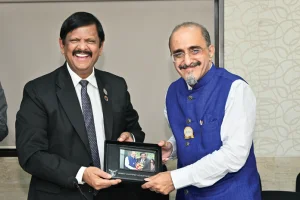
LEGAL FOUNDATION: THE ETHICAL FRAMEWORK

The regulation of advertising and professional communication within the chartered accountancy profession is primarily anchored in Clause (6) of Part I of the First Schedule to the Chartered Accountants Act, 1949, which prohibits solicitation of professional work through advertisements or other forms of publicity.

Historically, this provision has been interpreted conservatively, resulting in strict limitations on marketing or promotional communication by chartered accountants.

Further guidance is provided through the ICAI Code of Ethics, particularly under Section 300 – Marketing of Professional Services. This section clarifies that professional accountants may communicate information regarding their services provided that such communication:

  • is not misleading or deceptive
  • does not make exaggerated claims
  • does not disparage other professionals
  • can be substantiated if challenged

The revised framework must therefore be understood not as a removal of the prohibition on solicitation but as a clarification of the types of professional communication that may fall within the ethical boundaries of the profession.

Beyond the Business Card A new Era for Indian CAs

THE EARLIER POSITION: A CULTURE OF RESTRAINED VISIBILITY

Under the earlier regulatory framework, chartered accountants were permitted to maintain professional websites; however, the content of such websites was restricted to what ICAI guidelines referred to as a firm write-up.

The permissible content typically included basic information such as:

  • name and address of the firm
  • names and qualifications of partners
  • contact details
  • broad description of services offered

Promotional language, detailed descriptions of expertise, or marketing-oriented narratives were discouraged.

Similarly, the use of social media platforms for professional communication remained a grey area. Many practitioners avoided sharing professional insights publicly due to concerns that such communication might be interpreted as solicitation of professional work.

While these restrictions were designed to preserve professional dignity, they also limited the ability of chartered accountants to communicate their expertise in an increasingly digital and knowledge-driven professional environment.

THE REVISED FRAMEWORK: TOWARD RESPONSIBLE PROFESSIONAL COMMUNICATION

The revised ethical framework reflects a more contemporary approach to professional communication. While the prohibition on solicitation under Clause (6) remains unchanged, the revised Code of Ethics recognises that professionals may communicate their expertise through educational and informational platforms.

Under Section 300 of the Code of Ethics, communication relating to the marketing of professional services is permissible provided that it remains truthful, factual, and not misleading.

This shift acknowledges that activities such as technical publications, regulatory analysis, and professional commentary may serve the public interest by improving understanding of complex financial and regulatory issues.

The revised framework therefore introduces greater clarity regarding permissible professional communication while continuing to safeguard the integrity of the profession.

KEY DEVELOPMENTS IN ADVERTISING AND PROFESSIONAL VISIBILITY

The revised framework introduces several developments that affect how chartered accountants may communicate their services and expertise.

EXPANDED WEBSITE CONTENT

Under the earlier framework, websites were limited to basic firm write-ups. The revised guidelines allow firms to provide more structured descriptions of their professional services and areas of expertise.

This includes the ability to describe specialised services such as forensic accounting, startup advisory, international taxation, sustainability reporting, and management consultancy services.

These changes are reflected in the updated Council Guidelines on Advertisement and Website issued under Clause (6).

RECOGNITION OF THOUGHT LEADERSHIP

The revised Code of Ethics recognises thought leadership as an important form of professional engagement.

Under Section 300 – Marketing of Professional Services, chartered accountants may communicate professional insights through technical articles, regulatory commentary, research publications, and professional analyses.

Such communication contributes to knowledge dissemination and enhances public understanding of financial and regulatory issues.

DIGITAL PLATFORMS AND PROFESSIONAL ENGAGEMENT

The revised framework acknowledges the growing role of digital platforms in professional communication. Professional networks and digital knowledge platforms allow chartered accountants to share insights on regulatory developments and financial governance practices. Such engagement, when conducted responsibly, supports professional education while maintaining ethical discipline.

PROFESSIONAL KNOWLEDGE EVENTS

Professional seminars, webinars, and knowledge sessions are also recognised as legitimate forms of professional engagement. These initiatives enable chartered accountants to contribute to professional education and regulatory awareness among businesses and stakeholders.

TRANSPARENCY IN DESCRIBING EXPERTISE

Another important development is the recognition that professionals may describe their areas of expertise transparently. Firms may communicate their professional capabilities and practice areas provided that such communication remains factual and does not imply superiority over other professionals.

UNDERSTANDING THE SHIFT IN PROFESSIONAL VISIBILITY

The transition from the earlier framework to the revised approach is best understood not as a binary change, but as a shift in how professional communication is interpreted.

Under the earlier regime, communication by chartered accountants was characterised by caution and minimalism. Professional presence was largely confined to static information, with limited scope for articulation of expertise or engagement beyond formal interactions.

In contrast, the revised framework introduces a more enabling environment. Communication, when undertaken within ethical boundaries, is now recognised as a legitimate extension of professional practice.

Firm websites, which were previously restricted to basic descriptions, may now reflect structured and detailed articulation of services. Similarly, digital platforms — once approached with hesitation — are now acknowledged as avenues for sharing knowledge and contributing to professional discourse.

Perhaps most significantly, activities such as publishing technical insights and participating in knowledge forums are no longer viewed conservatively, but are recognised as integral to thought leadership.

This shift reflects a broader transition from restricted visibility to responsible and purposeful professional presence.

APPLYING ETHICAL BOUNDARIES IN PRACTICE

While the revised framework expands the scope of professional communication, it also necessitates careful judgement in its application.

Certain forms of communication remain clearly within acceptable boundaries. These include factual descriptions of services, educational insights shared on professional platforms, and technical or analytical publications that contribute to knowledge dissemination. Similarly, participation in seminars and webinars that are oriented towards education rather than promotion aligns with the intended spirit of the framework.

At the same time, there exists a category of communication that requires thoughtful consideration. Language that moves beyond factual description into subtle positioning, or content that may indirectly promote services without explicit solicitation, must be approached with caution. Likewise, references to professional experience must ensure that confidentiality is preserved and identification risks are minimised.

There are, however, clear boundaries that remain unchanged. Any form of direct or indirect solicitation, exaggerated claims, misleading statements, or explicit client testimonials continues to fall outside permissible limits. The use of communication channels for overt promotional intent remains inconsistent with the ethical foundations of the profession.

The distinction, therefore, lies not merely in the medium of communication, but in its intent, tone, and substance.

CONCLUSION

The revised advertising and professional communication framework introduced by ICAI represents a significant evolution in the regulatory landscape governing the chartered accountancy profession in India.

While the earlier framework focused primarily on restricting publicity, the revised approach recognises that responsible professional visibility is necessary in a modern and digitally connected professional environment.

At the same time, the ethical foundations of the profession remain unchanged. Professional communication must continue to be truthful, factual, and consistent with the dignity and credibility of the profession. When exercised responsibly, the ability to communicate professional expertise can strengthen public trust, enhance regulatory awareness, and contribute meaningfully to the financial ecosystem.

Fraud Reporting – A Convoluted Examination

The article examines India’s complex fraud-reporting landscape, highlighting tensions among regulatory frameworks that define fraud differently and impose varying reporting obligations. Companies face challenges with inconsistent standards across SEBI, NFRA, ICAI, and criminal law, creating timing conflicts and interpretational difficulties that require integrated compliance approaches

1. INTRODUCTION

Over the past decade, India has undergone a significant transformation in the perception of and approach to fraud in the corporate sector. Once regarded as an internal issue that could be discreetly investigated and resolved, fraud now stands prominently under the scrutiny of regulators, shareholders, auditors, and the public.

Despite the widely accepted understanding of fraud as a deceptive act that causes harm, there is no unified, formal definition of fraud. Instead, a mosaic of laws, ranging from the Companies Act, 2013 (the “Act”) and the Bharatiya Nyaya Sanhita, 2024 (“BNS”) to various sectoral regulations, establishes differing standards of evidence, reporting obligations, and consequences. This variation arises from the diverse objectives pursued by these regulations. As a result, different regulators consider a fraud to have occurred at different events. Previously, the impact of these differences was softened by lenient oversight; however, the increasing assertiveness of regulators such as the National Financial Reporting Authority (“NFRA”) and the Securities and Exchange Board of India (“SEBI”) has brought these issues to the forefront. Companies can no longer afford to wait until an investigation concludes to determine their compliance strategy. Instead, they must implement an integrated approach in which investigative processes and compliance strategies continuously inform and strengthen each other, ensuring that every stage of the investigation aligns with all relevant regulatory frameworks.

2. THE REGULATORY LANDSCAPE FOR FRAUD

2.1. Criminal Dimensions: Understanding Fraud in the Eyes of Law Section 4471 of the Act offers an expansive definition of fraud, encompassing any act, omission, concealment of facts, or abuse of position by any person, including an employee, with the intent to deceive, gain undue advantage, or injure the interests of the company, its shareholders, creditors, or others. This broad definition implies that even atypical deceptive acts committed by any person, such as theft of confidential information or insider trading, are classified as fraud regardless of whether they result in a wrongful gain or loss. Section 4482 of the Act, a coterminous provision, criminalises “false statements” or “omissions of material facts” in documents or returns required under the Act.

Although the substantive provisions of criminal law under the Bharatiya Nyaya Sanhita (“BNS”) do not explicitly define “fraud,” Section 2(9) of the BNS defines “fraudulently” as acting with the intent to defraud, but not otherwise3. Many provisions of the BNS, including those related to cheating and criminal breach of trust, address or closely align with conduct considered fraudulent.

The offenses mentioned above are classified as criminal because they carry the possibility of imprisonment. The standard of proof required for such violations is “beyond a reasonable doubt”,4 meaning that the evidence must eliminate any reasonable doubt in a reasonable person’s mind regarding the defendant’s guilt. While the BNS does not mandate reporting these offenses, companies are guided by the principles of their governance framework when considering whether to file a complaint with the appropriate authorities.


1 Section 447 of the Companies Act, 2013, https://www.indiacode.nic.in/bitstream/123456789/2114/5/A2013-18.pdf, 
Last Accessed on March 28, 2025.

2 Section 448 of the Companies Act, 2013, https://www.indiacode.nic.in/bitstream/123456789/2114/5/A2013-18.pdf, 
Last Accessed on March 28, 2025.

3 Section 2(9) of the Bharatiya Nyaya Sanhita, https://www.mha.gov.in/sites/default/files/250883_english_01042024.pdf, 
Last Accessed on March 28, 2025.

4 Goverdhan vs State of Chattisgarh, 2025, SCC Online, SC 69 

2.2. CIVIL RAMIFICATIONS OF FRAUD: THE LOWER BURDEN OF PROOF

In civil proceedings under the law and disciplinary proceedings for violations of company policies, which generally include fraud, the standard of proof is typically a “preponderance of probabilities”5 rather than “beyond a reasonable doubt.” To establish alleged misconduct, it is sufficient to demonstrate on the basis of the evidence, misconduct is more likely than not.

For instance, if an employee submits inconsistent travel receipts and expense reports, this may indicate a misappropriation of assets under the preponderance of probabilities standard, suggesting it is more likely than not that the employee acted improperly. However, that evidence might not meet the higher “beyond reasonable doubt” standard required in criminal proceedings. Additional evidence, such as clear intent to defraud, eyewitness testimony, or a confession, would be necessary to eliminate any reasonable doubt of guilt.


5 Goverdhan vs State of Chattisgarh, 2025, SCC Online, SC 69

2.3. REPORTING OBLIGATIONS FOR LISTED COMPANIES

For listed companies, SEBI’s Listing Obligations and Disclosure Requirements (“LODR”) impose disclosure requirements in various circumstances, which inter-alia include one where directors6 or senior management commit fraud, or if employees commit material fraud7 that could affect investor decisions. When contrasted with Section 447 of the Act, fraud under LODR has broader applicability as it also encompasses fraud8 as contemplated under the Prohibition of Fraudulent and Unfair Trade Practices relating to Securities Market Regulations, 2003 (“PFUTP”). Fraud under PFUTP includes acts that induce another person to deal in securities. Crucially, an intent to deceive is not a prerequisite (when contrasted with Section 447 of the Act), and as such, erroneous financial statements, such as due to reckless application of accounting standards, may be classified as fraud under PFUTP accounting standards, may be classified as fraud under PFUTP.
Fraud under LODR is to be reported at two junctures9; when the fraud is “unearthed”, followed by subsequent reporting when the facts and figures surrounding the fraud are conclusively established. However, the term “unearthed” is undefined within the LODR. This omission creates a subjective threshold for each listed entity, which must decide, based on its specific circumstances and internal procedures, when a potentially fraudulent act has been sufficiently identified to trigger the initial disclosure obligation. Some companies might consider the fraud “uncovered” when there is a credible allegation, while others might wait for preliminary investigations to yield stronger evidence before reporting. This inherent subjectivity means that timing for initial disclosure can vary widely, posing compliance risks if regulators or investors later determine that information was inordinately withheld.


6 Point 6 of Paragraph A of Part A of Schedule III of the SEBI 
(Listing Obligations and Disclosure Requirements) Regulations, 2015, Last Accessed on March 28, 2025

7 Point 9 of Paragraph B of Part A of Schedule III of the SEBI
 (Listing Obligations and Disclosure Requirements) Regulations, 2015, Last Accessed on March, 28, 2025

8 Regulation 2(c) of the Prohibition of Fraudulent and
 Unfair Trade Practices relating to Securities Market Regulations, 2003, Last Accessed on March 28, 2025.

9 Circular No SEBI/HO/CFD/CFD-PoD-1/P/CIR/2023/123 dated July 13, 2023, 
issued by SEBI, https://www.sebi.gov.in/legal/circulars/jul-2023/disclosure-of-material-events-information-by-listed-entities-under-regulations-30-and-30a-of-securities-and-exchange-board-of-india-listing-obligations-and-disclosure-requirements-regulations-201-_73910.html


The convoluted web of fraud reporting

2.4. STATUTORY AUDITORS AS GATEKEEPERS: HIGH STAKES IN FRAUD REPORTING

Section 143(12) of the Act mandates that auditors report to regulators if they have “reason to believe” that employees or officers of the company have committed fraud exceeding ₹1 Crore. The Institute of Chartered Accountants of India (ICAI) has opined10 that possessing knowledge evidencing the commission of fraud meets this threshold; a standard similar to that implied under LODR. Notably, this standard is lower than the “preponderance of probabilities” and “beyond reasonable doubt.” Further, the ICAI has also clarified11 that an auditor’s obligation qua fraud reporting is to be restricted to matters involving fraudulent financial reporting or misappropriation of assets.

NFRA regulates12 auditors of listed and certain specified companies, while the auditors of the rest, including private companies, are regulated by ICAI. While the ICAI, through its guidance note, has opined that obligations under Section 143(12) of the Act would arise only if the auditor had identified or detected the fraud, NFRA has mandated that frauds have to be reported by auditors regardless of the13 source of identification. These differing directions have led to uncertainty and inconsistent practices among private company auditors, with some adhering to the NFRA’s directions and others following the ICAI’s guidelines.

Furthermore, an auditor must file a report along with the Company’s responses within 60 days of the auditor having knowledge about the fraud14. Realistically, it would be infeasible for a Company to investigate fraud in such a short span, mainly when the objective of the investigation is to meet more rigorous evidentiary standards.


10 Section VIII of Overview of Guidance Note on reporting of fraud under 
Section 143(12) of the Companies Act issued by the ICAI, https://resource.cdn.icai.org/41297aasb-gn-fraud-revised.pdf, Last Accessed on March 28, 2025.

11 Section III of Overview of Guidance Note on reporting of fraud under 
Section 143(12) of the Companies Act issued by the ICAI, https://resource.cdn.icai.org/41297aasb-gn-fraud-revised.pdfread with Para 3 of SA 240 - The Auditor’s Responsibilities Relating to Fraud in an Audit of Financial Statements issued by the ICAI, https://resource.cdn.icai.org/15374Link9_240SA_REVISED.pdf, , Last Accessed on March 28, 2025.

12 Rule 3 of the National Financial Authority Rules, 2018 of the Companies Act 2013,  
https://www.indiacode.nic.in/bitstream/123456789/2114/5/A2013-18.pdf, Last Accessed on March 28, 2025.

13 Circular dated June 26, 2023, issued by the NFRA, 
https://cdnbbsr.s3waas.gov.in/s3e2ad76f2326fbc6b56a45a56c59fafdb/uploads/2023/06/2023062673.pdf, Last Accessed on March 28, 2025

14 Rule 13(2) of the Companies (Audit and Auditors) Rules, 2014 of the Companies Act, 2013, , 
https://www.indiacode.nic.in/bitstream/123456789/2114/5/A2013-18.pdf, Last Accessed on March 28, 2025.


3. DIVERGENT TIMELINES AND DEFINITIONS: EMERGING COMPLEXITIES

While the preceding sections outline the distinct evidentiary thresholds and reporting requirements across various statutes and regulations, two overarching complexities merit closer scrutiny. First, differing disclosure obligations create a timing mismatch, often resulting in a single incident being disclosed at multiple junctures. Second, the lack of a uniform definition of fraud across regulatory frameworks fosters interpretational hurdles that can create confusion and discord among stakeholders.

3.1. TENSIONS IN TIMING AND STAKEHOLDER EXPECTATIONS

A pressing concern for listed companies involves the tension between prompt disclosure obligations, such as the near-immediate reporting required under LODR, and management’s desire to confirm or conclusively investigate any alleged wrongdoing before making it public. On one side, transparency and investor protection principles motivate SEBI’s mandate for swift disclosures. Conversely, management must weigh the reputational harm and legal risks of publicising suspicions that may prove baseless later. While there is no obligation to proactively report suspected fraud to auditors, withholding of information from the auditors, particularly when requisitioned, may lead to erosion of the trust between auditors and management and can compromise audit effectiveness.

These conflicts can create a sub-optimal environment where management is reluctant to reveal potential fraud to auditors or regulators before an internal investigation is complete, leading to partial or delayed disclosures. This may also trigger parallel investigations by auditors or regulators, resulting in duplication of effort, complexity, and stakeholder fatigue.

3.2. DISPARITIES IN DEFINITIONS: INTERPRETATIONAL QUAGMIRES

A second layer of complexity arises from how differently fraud is defined under diverse legal and regulatory frameworks. Section 447 of the Act sets out an expansive definition encompassing virtually any deceptive act intended to injure or secure an undue advantage. Meanwhile, LODR captures a broad spectrum of misconduct by not only encompassing fraud committed by directors, senior management, or other employees that could materially affect investor decisions, but also including potential violations under PFUTP, which do not necessarily require an element of deceit.

Under Section 143(12), statutory auditors focus on fraudulent financial reporting or misappropriation of assets above certain thresholds, guided by a standard of “reason to believe.” Management, by contrast, may hesitate to label certain incidents as fraud unless they meet criminal or civil criteria. Such definitional divergences can lead to conflicting interpretations between stakeholders. Auditors might deem a matter reportable under Section 143(12), while management may view it as an infraction that does not rise to the level of fraud. In industries with additional sector-specific regulations, this definitional patchwork can become even more daunting, prompting uncertainty about whether—and under which law—an official complaint or self-reporting obligation is triggered. The result can be inconsistent enforcement and uneven approaches to investigations, ultimately exposing companies to the risk of contradictory outcomes under different legal regimes.

4. MANAGING COMPLEXITIES – AUDITEES PERSPECTIVE

To tackle the regulatory complexities surrounding fraud reporting, companies would benefit from implementing a comprehensive and integrated compliance framework that proactively reconciles the diverse standards across various regulatory regimes. This could inter alia include the following measures:

  •  Establishing a cross-functional fraud response committee comprising representatives from legal, finance, compliance, and audit would create a centralised decision-making body capable of navigating the multifaceted reporting obligations. This committee should develop a tiered disclosure protocol that carefully balances the immediacy required by SEBI’s LODR with the necessity for thorough investigation, potentially utilising preliminary notifications followed by more detailed disclosures as facts emerge.
  •  Companies should also establish clear internal definitions of fraud that encompass the broadest applicable regulatory standards, ensuring that potential incidents are evaluated against all relevant frameworks simultaneously rather than sequentially.
  •  Regular tabletop simulations of fraud scenarios would enhance organisational readiness, allowing management to rehearse responses to various regulatory triggers and stakeholder expectations.
  •  Furthermore, developing robust documentation procedures that thoroughly record the rationale behind disclosure decisions would provide defensible evidence of good faith compliance efforts.
  •  Continuous engagement with auditors through formalised information-sharing protocols could help bridge the disclosure timing gap, fostering transparency while managing reputational risks.

Ultimately, the objective should be to transform what is currently a reactive and often disjointed approach into a strategically integrated system that anticipates regulatory intersections, addresses definitional discrepancies, and harmonises the timing of mandatory disclosures across the regulatory landscape.

5. MANAGING COMPLEXITIES – AUDITORS PERSPECTIVE

Auditors facing the complexities of fraud reporting must establish a robust methodological framework to navigate the regulatory landscape effectively. As gatekeepers with significant reporting obligations under

Section 143(12) of the Companies Act, auditors should develop comprehensive internal protocols that clearly define what constitutes “reason to believe” in potential fraud scenarios, along with detailed documentation templates that capture their decision-making process at each evaluation stage.

Auditors would benefit from maintaining ongoing communication channels with management while preserving their independence, perhaps through structured quarterly fraud risk assessment sessions that facilitate information exchange without compromising objectivity. They should consider implementing a graduated approach to potential fraud indicators, establishing internal thresholds that trigger progressively more intensive scrutiny and documentation before formal reporting obligations are invoked. Given the divergent guidance from NFRA and ICAI, audit firms may consider developing unified firm-wide policies that lean toward the more stringent standard while thoroughly documenting their rationale.

Additionally, training programs that focus on fraud detection techniques and reporting obligations across various regulatory frameworks would enhance auditors’ abilities to identify reportable incidents earlier in the audit process. These measures would empower auditors to meet their statutory obligations while helping to close the timing and definitional gaps that currently complicate the fraud reporting ecosystem.

6. CONCLUSION

In essence, the variability of definitions, evidentiary benchmarks, and reporting obligations highlights the evolving complexity of India’s regulatory framework. What was once a fairly insular exercise, i.e. evaluating misconduct internally and unobtrusively deciding on criminal or civil recourse, now warrants a more transparent and collaborative approach. While there is no singular solution, recognising the complications stemming from varying and sometimes incongruent regulations is crucial for prudent decision-making. Whether establishing a core compliance panel, updating internal procedures for phased disclosures, or strengthening legal and operational processes, each enterprise will have to define its trajectory towards compliance. What endures unchanged, however, is the underlying mandate: the sooner businesses address the potential for discordance in reporting obligations, the better they can shield themselves against the reputational and legal pitfalls that loom large under the heightened regulatory glare.


Chatting Up About India: Part II : Statins, Stents and Lifestyle Changes to Unblock the Arteries of Regulations

India’s pursuit of Ease of Doing Business and Ease of Living is severely choked by “regulatory cholesterol”. To unblock economic growth, India must transition from reliance on foreign standards to building home-grown domestic frameworks. Policymakers must focus on process reforms to eliminate systemic frictions, transforming regulations into enabling “trampolines” rather than restrictive safety nets. Key solutions include decriminalizing civil omissions, ensuring perpetual registrations, minimizing duplicative reporting, and enforcing strict timelines with a “silence is consent” rule. Ultimately, achieving true economic freedom requires a comprehensive civil services reform rather than mere superficial tweaks.

It doesn’t matter if a cat is black or white, so long as it catches mice – Deng Xiaoping

In the previous article (BCAJ, March 2026), we examined a “lipid profile” of regulations affecting Ease of Doing Business (EoDB) and Ease of Living (EoL). In this part, we consider certain causes, effects and ways to reduce regulatory cholesterol.

1. STRATEGIC

There are order-setting regulations and there are directional ones. EAM of India talks of Strategic Autonomy. There are many areas where we have none. Consider sovereign rating agencies: We largely depend on global agencies such as S&Ps. We don’t have our own standards1, we depend on western reports, they rank us and we abide by those norms. China has changed this. A recent image circulating in terms basic things used by India and China demonstrated this – our dependence on external. In areas such as social media platforms (we let KOO die), operating systems, financial messaging systems (like SWIFT), and quality standards (ISO), we rely significantly on external frameworks. Even indices such as the SENSEX carry external branding S&P.


1  Say Digitisation of medical records, how can we analyse this massive 
data of reports now available to prepare for prevention, care and predictive analytics

We need domestic, home-grown, home governed, home rooted entities to do work much of what happens in India and see it from Indian lenses. Dependence, identity and confidence go hand in hand and therefore must evolve together. Encouragingly, in capital markets, the dependence on foreign institutional investors has reduced relative to domestic SIP flows. Similar shifts are required across sectors.

We need more changes like this and build our turf on our terms. Regulations, therefore, must enable the creation of domestic institutions, standards, technologies, and services—rooted in Indian conditions and perspectives. This is the strategic dimension of regulation: laws that enable the development of Bharat in a sustained and accelerated manner.

2. STRUCTURAL VS. PROCESS REFORMS

This is already underway, especially we have heard from Shri Sanjeev Sanyal of EAC to the PM, about structural reforms (GST, IBC, Tax, and so on) already undertaken, and now we need more of process reforms to even out frictions in the system.

Process reforms address frictions that, while seemingly small, have large cumulative effects. For instance, closing a company still takes months or years. Similarly, certain public sector entities continue despite diminished relevance, while sectors that are more critical remain understaffed. Process reforms aim to remove these inefficiencies and improve system responsiveness.

He calls these nuts and bolts reforms2.


2 https://dsppg.du.ac.in/wp-content/uploads/2023/11/Process-Reforms-Working-Paper-Nov-2023_Final.pdf

3. ENABLING

Regulations must enable the very objectives they seek to regulate – growth, quality, employment, and so on. They should remove peripheral burdens and allow focus on core activity. Regulations should create orbits and facilitate shifts in them—not destroy or constrain them. The emphasis must be on enabling transformation rather than constraining activity.

Enabling means removing dross around the core and keeping the main thing the main thing.

The Cardiology of regulation

4. FACILITATING:

Regulations should act as problem-solvers for businesses. Recent GST changes3 demonstrate movement towards trade facilitation. Such responsiveness should become a general principle.

Regulation should rapidly take market inputs, and become the greatest facilitator of free enterprise, which is an expression of freedom and liberty. They should be tested on this question: What can they impede vs. what can they serve. At times, impedance is itself justified as serving a purpose, leading to a self-reinforcing cycle.


3 Referred to as GST 2.0

5. QUANTUM:

A key question is: how much regulatory effort is required merely to remain compliant? Say the number of core regulations to run a business or time spent on compliance vs. to do core work.

Typically, regulatory requirements fall into three categories:

  • Registration
  • Operations (dos and don’ts)
  • Reporting

Registrations should ideally be one-time or long-term, without repeated renewals. Instead of frequent re-registration4, non-compliant entities can be addressed through targeted enforcement.Permissions should be minimal. Regulations should define clear and simple rules of the game, with regulators acting as overseers rather than controllers.

Reporting should be:

  • Infrequent
  • Consolidated
  • Non-duplicative

Currently, reporting often involves duplication across multiple authorities who do not share data effectively. Over time, reporting requirements also tend to expand beyond their original intent a ‘Stretching’ of sorts. Take UDIN5 when it comes to reporting.


4 Section 80G and 12A – These were withdrawn now brought to life from the grave
 instead of targeting certain entities involved in anti-national, conversion, illegal activities.
5 UDIN was meant for authenticity by correlating: Document – Person - Date. 
Now it’s asking way too many things specific to the content.

6. VOLUME AND CHANGES IN REGULATIONS

How many Regulations do authorities introduce and tweak each year? In US 3000 come each year6. India likely experiences similar numbers or more. The concern is:

° how many regulations are introduced,

° how many are amended, and

° how many are repealed?

Every ministry needs to report this. Look at any sarkari agency’s web page—‘new’ red-coloured announcements pop up as if they were badges of honour. Arbitrary changes at any time have become the norm. There is limited institutional incentive for removal of outdated regulations, leading to a cumulative increase. Frequent and sometimes unpredictable changes add to compliance uncertainty.


6 Nikhil Kamath talking to Ruchir Sharma - https://www.youtube.com/watch?v=lTCzIDITaac&t=2212s at 33.50 min

7. BENEFICIARIES OF REGULATIONS

Regulations often favour incumbents by creating entry barriers. Compliance complexity disproportionately affects small and medium enterprises, both in terms of cost and managerial bandwidth.

In contrast, larger entities may navigate complexity more effectively due to scale and resources. This asymmetry needs to be recognised and addressed.

Biggies flourish from obfuscation, maze of regulation and complexities. Biggies often write the laws for lawmakers. Take the example of ICFR. Authorities applied it to all entities in year one—crazy stuff. Then they withdrew it and adjusted it to cover only those entities that needed them. Obviously, someone pushed this through and some parties benefitted from it, adding no value to the actual ground situation.

8. SAFETY NET VS. TRAMPOLINE:

Erstwhile Singapore PM7 Tharman (now president) gave this example. A BBC reporter asks him about safety nets, obviously trying in a cheeky way to trap him. Tharman said they create Trampoline instead safety nets. Both are made of the same thing, however, trampoline allows people who fall into it to bounce back, to rise. Trampoline is meant to propel and accelerate out of the net. Safety net safeguards against setbacks. It prevents and protects. Trampolines amplify trajectory through responsibility, skill development, exposure and innovation.

In India, we have created many safety nets. We need to tweak them to become trampolines – where the same net protects against setbacks but doesn’t make one dependent. We should not make support perpetual and unconditional, but instead design it to enable a person to earn one’s success eventually.


7 https://youtu.be/nPZ8Kj1nIAU?si=c2EU4QSrplAQ2CLE

9. POLITICS

Laws pass through the colour of politics (preservation and extension of votes), and are often made/repealed that way so that someone can hijack them – like trade unions where job preservation is presented as job creation. Trade unions should rather fight for improvement in ESIC or PF or EPS – for better services and thousands of crores stuck in the so-called ‘inoperative accounts’.

Votes override constitutional fundamentals. Politicians talk about ideas like reservation in the private sector. While reservation, being birth based benefit is a problem and is akin to discrimination based on birth. Laws are made to punish people simply based on a certain person complaining, making acts non bail-able. This is just for political purposes – where objectivity and reason goes missing in favour of outright discrimination. Politicising is a magic show where self-interest is garbed as national interest.

10. DECENTRALISE

Greater decentralisation can improve responsiveness. Proximity of decision-making to stakeholders often results in better outcomes.

Keeping power proximate to people is best, instead of situating it in Delhi. Deregulation often means decentralisation.

11. ABSENCE OF TIMELINES

A critical issue is the absence of defined timelines for regulatory approvals.

We need a count of permissions or approvals from administration that lack a timeline whereas every compliance imposes a timeline on the business. These regulations require free citizens to petition the unelected civil servants for permissions. Where timelines are not specified, applicants are effectively dependent on administrative discretion. Introducing enforceable timelines, along with accountability mechanisms, can significantly improve efficiency.

12. THE REGULATED

To be fair, we have to call out the group whose careless disregard fuels this mess. That is Indians against Indians. I was at Surat station waiting for the train to come. One man walking up the platform ate the last biscuit and simply threw the wrapper on the platform and kept walking. When I see such people, my hope shatters.

It will be a shame to call for rules for basics, which otherwise needs sensitivity – say how to park near the kerb; where to stop on the road or to walk on the footpath (when there is one) instead of on the road. Careless disregard for others – fellow citizens – is a consistent and pervasive element. However, we have seen that better processes – say at the Metro where there is certain order is possible. It is a pity that our own conduct and lapses, trigger regulatory reprimand.

DESTRAGULATION, REFORM & EFFECTIVENESS

There is a saying: power corrupts, and absolute power corrupts absolutely. In our context this means: Regulations corrupts, absolute regulations corrupt absolutely. This often happens (apart from the quantum and excessive severity) when legislation, execution and adjudication are bundled with one set of civil servants / department. Here is a partial checklist to accomplish destrangulation:

Registration vs. Approval / Permission – The idea of ‘permissions’ should be terminated except for prohibited sectors like defence. Registration should be default means to kick start something in business sphere. Recent Charity Trust Re-registration by income tax department, is asking what is already supplied in previous ITRs and Audit Reports already with the department. Registrations should be perpetual once there is periodic reporting.

Compliances: We should call this reporting. Reporting should be minimum, non-duplicating, infrequent and easy. Currently, multiple agencies seek overlapping information, often with strict timelines. A rationalised reporting framework, particularly for SMEs, is necessary.

Decriminalisation: Remember, minor TDS delays led to prosecution! Instead of inventing thousands of ways to prove citizens criminal, let’s be civil again. The state compels the deductor to act as its agent. If the government doubts the deductor’s reliability, it should transfer the responsibility to the payee.

Digitisation: Zero officer interface. Filings flow through automated acceptance and processing as standard practice. Interrelated data sharing eliminates duplication. Once a company enters its CIN or PAN, all other registrations should follow automatically, or any single number (like a consolidated folio) should suffice for all reporting. The same applies to cancellations—companies should be able to opt out of GST online when it’s not applicable. This requires databases and departments to communicate with one another.

Timelines: The legislature must evict laws that let bureaucrats sit on paperwork forever. Implement a ‘Silence is Consent’: if authorities ignore a filing beyond the deadline, the system auto-approves it. No ‘No’ in time? We take that as ‘Yes.’ Non-working portals automatically extend compliance timelines.

Regulatory Opacity and Inefficiency without recourse: Implementation fails because citizens have little to no recourse when the government doesn’t enforce laws as required. Authorities routinely auto-close grievances without verifying whether the taxpayer’s problem was actually resolved.

On the ‘Surprise!’ method of governance: When the government makes abrupt policy U-turns, it shatters trust and paralyzes risk-takers. It is hard to build a business when the floor can keep turning into lava. The government must disclose upcoming changes well in advance and explain implementation methods clearly. All changes should come in a bundle through a consolidated master circular / directions once a year for business laws. Predictability builds the trust that citizens expect from their government.

Process as Punishment: Jail provisions for otherwise civil omissions are threat-based governance. Add bureaucratic discretion and you get corruption and court congestion. The Jan Vishwas principle rejects micromanagement8 in favour of accountability9 and prioritises actual harm10 over paperwork11 variations.


8 By inspectors breathing down your throat

9 Trust based compliance and civil fine for delay

10 Fraud, poisoning the environment etc.

11 Removes jail time for missing paperwork and saves it for ‘harm’

Democracy vs. Economic Growth—A False Choice: Some portray mass prosperity and mass democracy as competing goals. Yet if we can manage mass democracy despite our nation’s vast differences, why should mass prosperity prove harder? Obviously, people in power take helicopter view instead of worm’s eye view. We still have too many people farming instead of working in other sectors. We don’t have jobs problem; we have wage problem. Wages stagnate because productivity stagnates. And productivity stagnates because regulations make it so difficult to establish factories that could train college graduates as apprentices.

CONCLUSION: THE HEALTHY RANGE

First, let me clarify which regulatory cholesterol we’re discussing: the harmful kind—Non-HDL cholesterol beyond acceptable biological limits. Just as Vitamin D affects bone health when deficient but becomes toxic when in excess, regulations require constant monitoring. For regulatory cholesterol, statins or stents cannot cure or even manage an over-regulated system. We need comprehensive lifestyle change across all levels and sectors.

Post-1991 liberalization didn’t deliver Poorna Swaraj. India still waits for crisis-driven transformation. This doesn’t mean abolishing all regulations—or Afghanistan would be a unicorn factory. We need laws that let our people sprint, not crawl. EoDB and EoL remain fundamentally civil services reform problems. Deng said it best: “Reform is China’s second revolution.” In Gandhian terms, Poorna Swaraj remains a distant goal until we achieve genuine EoDB and EoL.

GST on Sale, Transfer, Amalgamation of Business

Under the GST framework, transferring a business as a “going concern” is exempt from tax, ensuring neutrality for genuine reorganizations, whereas itemized asset transfers attract GST. During mergers or demergers, merging entities remain distinct taxable persons until the NCLT order date.

Under Section 18(3) and Rule 41, the transferor can pass unutilized Input Tax Credit (ITC) to the transferee via FORM GST ITC-02, provided liabilities are also transferred. While controversies exist regarding transitional ITC mismatches and unadjusted advances, courts have affirmed the transferee’s right to unutilized ITC and ruled that tax proceedings against non-existent amalgamated entities are void ab initio.

The GST implication on the sale or transfer of a business depends fundamentally on the manner in which such transfer is structured. Under the GST framework, a business may be transferred either as a going concern or through an itemized transfer of individual assets and liabilities, with materially different tax consequences in each case. While the transfer of a business as a going concern is recognized as a distinct category of supply and is eligible for exemption subject to prescribed conditions, an asset-wise transfer attracts GST depending upon the nature of the goods or services involved.

GST Navigator for Business Mergers & Transfers

TRANSFER OF BUSINESS AS A GOING CONCERN

Under the GST law, the taxability of a business transfer depends on how a transaction is structured. Paragraph 4(c) of Schedule II to Central Goods and Services Act, 2017 (CGST Act) read with Notification No. 12/2017–Central Tax (Rate), exempts services by way of transfer of a business as a going concern, whether as a whole or as an independent part thereof. Though “going concern” is not defined under GST law, it is a well-established accounting and commercial concept signifying continuity of operations, transfer of assets along with liabilities and absence of intent to liquidate.

Paragraph 4 of the said Schedule II further provides that when a person ceases to be a taxable person, goods forming part of business assets are deemed to be supplied immediately before such cessation, unless the business is transferred as a going concern. Accordingly, where a division or undertaking is transferred in entirety pursuant to a merger or demerger, together with employees, contracts and liabilities, the deeming fiction does not apply, ensuring tax neutrality for genuine reorganisations. The following illustrations provide further clarity on the distinction.

Illustration-1: Where a company discontinues one of its business divisions and cancels its GST registration for that division while retaining the underlying assets such as machinery, inventory or office equipment, the transfer of such assets would be treated as a deemed supply under Paragraph 4 of Schedule II and GST would be payable on their value. However, where the same division is transferred in its entirety to another company as a going concern, together with employees, contracts and liabilities, pursuant to a scheme of demerger or slump sale, the deeming provision would not apply, and no GST would be payable on the transfer of such business assets.

Illustration-2: Where a partnership firm dissolves and the partners distribute the closing stock and capital assets among themselves without transferring the business as a going concern, such distribution would be treated as a deemed supply and GST would be payable on the value of the assets so distributed. However, if the partnership firm is converted into a company and the entire business is transferred to the company as a going concern, with continuity of operations and transfer of liabilities, the deeming provision would not apply, and no GST would be leviable on the transfer of business assets.

REGISTRATION REQUIREMENTS UNDER GST

GST registration is State-specific and entity-specific under Section 25 of the CGST Act. Corporate restructuring approved by the National Company Law Tribunal (NCLT) or Ministry of Corporate Affairs (MCA) does not automatically alter GST registrations. In terms of Section 87(2) of the CGST Act, amalgamating or merging companies are treated as distinct taxable persons up to the date of the NCLT order, notwithstanding any retrospective appointed date mentioned in the scheme. Consequently, the transferor entity must continue to comply with GST obligations, including filing returns and paying tax, until its registration is cancelled.

Post-restructuring, the transferee or resulting entity is required to obtain a fresh GST registration or amend its existing registration to include the transferred business. Cancellation of registration of the transferor operates prospectively and does not extinguish past liabilities. Transfer of ITC on Sale / Merger / Demerger

Section 18(3) of the CGST Act specifically provides that where there is a change in the constitution of a registered person on account of sale, merger, demerger, amalgamation, lease or transfer of business, and such change is accompanied by specific provisions for transfer of liabilities, the registered person is permitted to transfer the unutilized input tax credit (ITC) lying in its electronic credit ledger to the transferee. The manner and conditions for such transfer are prescribed under Rule 41 of CGST Rules 2017 as further clarified by Circular No. 133/03/2020-GST dated 23 March 2020 .

ILLUSTRATION

In a case where a transferor entity transfers only its plant and machinery and unutilized ITC to a transferee entity without transferring its liabilities since the transaction does not involve transfer of liabilities, the conditions of Section 18(3) of the CGST Act read with Rule 41 are not satisfied. Accordingly, the transferor entity is not permitted to transfer the unutilized ITC to the transferee entity.

Under Rule 41, the transferor is required to file FORM GST ITC-02 on the common portal, furnishing details of the transaction and seeking transfer of unutilized ITC. In the case of a demerger, the ITC is required to be apportioned in the ratio of the value of assets of the resulting units as specified in the approved demerger scheme. The term “value of assets” has been clarified to mean the value of the entire assets of the business, irrespective of whether ITC has been availed thereon.

As per Section 232(6) of the Companies Act 2013, a scheme of demerger is deemed to be effective from the appointed date specified therein. Accordingly, for the purpose of apportionment of ITC under Rule 41, the ratio of asset values should be determined as on the appointed date of demerger.

Additionally, the transferor is required to furnish a certificate from a practicing chartered accountant or a cost accountant certifying that the transaction provides for transfer of liabilities. Upon acceptance of FORM GST ITC-02 by the transferee on the common portal, the specified ITC stands credited to the transferee’s electronic credit ledger.

Major Controversies on ITC Mismatches, Credit Notes, Transitional Issues, Unadjusted Advances.


1 Notification No. 16/2019-Central Tax dated 29.03.2019 w.e.f. 29.03.2019

TRANSITIONAL ITC ISSUES

A recurring controversy prevails on the issue of mismatch of ITC between the appointed date under the demerger scheme and the date of filing FORM GST ITC-02. While Rule 41 requires apportionment based on asset values as on the appointed date, the actual transfer is restricted to the ITC available in the electronic credit ledger on the ITC-02 filing date. Since ITC may be availed or reversed during the intervening period due to ongoing operations, disputes arise on whether such intervening adjustments should form part of the transferable ITC pool. Further, ITC transferred through ITC-02 often pertains to pre-demerger periods and may not reflect in the transferee’s GSTR-2B, exposing the transferee for automated mismatch notices and demands.

Another major issue may arise when the transferor is engaged in both taxable and exempt supplies, where Rule 42 reversal of common ITC is applicable. The GST department may insist on a proportionate reversal by the transferor before filing ITC-0 and failing which excess or ineligible ITC gets transferred to the transferee. Taxpayers, on the other hand, contend that Rule 41 does not mandate prior Rule 42 reconciliation as a precondition, and that ITC-02 merely transfers the net balance legally lying in the electronic credit ledger on that date. Insisting on retrospective reversals post ITC-02 effectively results in double adjustment once by restricting transferable credit and again by demanding reversal contrary to the scheme of seamless credit under Section 18(3) which is a vested right of the taxpayer.

Although Section 155 of CGST Act places the burden of proving eligibility of ITC or any claimed benefit on such person, i.e., the transferee, it cannot be invoked to compel the transferee to disprove vague or unquantified past liabilities, especially where the relevant tax periods precede the effective date of transfer and the statutory compliance stood in the name of the transferor.

Another significant issue under Rule 41 arises from post-transfer scrutiny of eligibility, place of supply and nature of credit at the transferee’s end, despite such issues having never been disputed in the hands of the transferor.

Issues on Credit Notes, Debit Notes & Unadjusted Advances

Section 87 of CGST Act provides that the transferor and transferee entities are to be treated as distinct taxable persons up to the date of the order. Accordingly, all inter-se supplies made during the period from the appointed date to the date of the order remain taxable, and any price revision or adjustment must be effected only through debit or credit notes issued between the respective entities. Credit notes issued under Section 34 of CGST Act require corresponding ITC reversal by the recipient, while debit notes permit additional tax payment and ITC availment, subject to the prescribed statutory limits.

Similarly, unadjusted advances create practical difficulty where GST has been paid by the transferor on advances, but the actual supply is made by the transferee post-transfer. Further, under the said Section 87, the transferor and transferee are jointly and severally liable for GST dues up to the date of transfer, to the extent of the business transferred, and any allocation of liabilities in the NCLT scheme operates only inter se between the parties and does not bind the GST authorities.

JUDICIAL DEVELOPMENTS

Recently in the case of Alstom Transport2 Hon. Gujarat High Court examined whether an amalgamating company could claim refund of unutilized ITC after merger. The Court held that upon the merger of Alstom Rail Transportation India Pvt. Ltd. into Alstom Transport India Ltd., pursuant to an NCLT order dated 10 August 2023 effective from 22 September 2023, the transferor entity ceased to exist in law and its GST registration ought to have been cancelled from the effective date. Consequently, unutilized ITC could only be transferred to the transferee in accordance with Section 18(3) read with Rule 41 and could not be partly retained for claiming refund under Section 54(3) of CGST Act as refund is a statutory concession requiring strict compliance. The refund granted to the transferor was therefore held to be legally unsustainable.


2 Alstom Transport India Ltd vs. Additional commissioner, CGST and Central Excise (appeals) & Ors (Writ Petitions (SCA Nos. 11025–11043 of 2025) (23-01-2026)

Further, in another case of Umicore Autocat3 Hon’ble High Court of Bombay (GOA Bench) held that the transferee company is entitled to utilise the unutilised ITC lying in the electronic credit ledger of the transferor company, irrespective of territorial boundaries, since upon amalgamation the transferor had ceased to function and all its assets and liabilities, including ITC, stood vested in the transferee. The Hon’ble Court further directed the GST Council and the Goods and Services Tax Network (GSTN) to evolve an appropriate mechanism to address situations involving inter-State transfer of ITC by upgrading the GSTN system.

Similarly in FLY TXT Mobile4 (AAR -Kerala) it was held that upon merger, the closing balance of CGST and IGST lying in the electronic credit ledger of the transferor can be transferred to the resulting company even where the GST registrations are not within the same State.


3 Umicore Autocat India Pvt. Ltd. vs. Union of India ((2025) 32 Centax 416 (Bom.) [10-07-2025])

4 Flytxt Mobile Solutions Pvt. Ltd. (2025) 36 Centax 149 (A.A.R. - GST - Ker.) [23-07-2025]

PROCEEDINGS AGAINST NON-EXISTENT ENTITIES

Upon amalgamation, the transferor entity ceases to exist in the eyes of law and any proceedings initiated or continued against such a non-existent entity are legally untenable.

In the case of HCL Infosystems5, Hon’ble Delhi High Court held that once a company is dissolved pursuant to amalgamation, any proceedings initiated or continued against such a company are void ab initio. The Hon’ble Court further held that that Section 87 of the CGST Act merely deals with apportionment of liabilities and does not authorize continuation of proceedings against a non-existent entity. Similar views have been expressed by the Karnataka High Court in the case of Trelleborg India6.


5 HCL Infosystems Ltd. vs. Commissioner of State Tax (2024) 25 Centax 72 (Del.)/2025 (93) G.S.T.L. 279 (Del.) [21-11-2024]

6 Trelleborg India Pvt. Ltd. vs. State of Karnataka (2024) 20 Centax 355 (Kar.)/2024 (89) G.S.T.L. 37 (Kar.) [02-07-2024]

CONCLUSION

Thus, GST implication in sales, transfers, mergers, and demergers is determined based on transaction structuring. Services by way of transfer of a business as a going concern enable tax neutrality and seamless ITC transfer under Section 18(3) and Rule 41, while asset-wise transfers may attract GST depending upon the nature of the goods or services involved. Proactive planning, robust documentation, clarity in drafting agreement clauses, defining nature of the transaction to be undertaken as well as valuation aspect are essential to mitigate risks and prevent future disputes.

NFRA’S Twin Imperatives: New Audit Documentation And Communication Regime In Audit Governance

The National Financial Reporting Authority (NFRA) has issued two circulars shifting auditing from “implied compliance” to “demonstrated governance”. The December 16, 2025 circular strictly mandates contemporaneous audit documentation. Auditors must assemble final files within 60 days and submit them within 7 days of an NFRA request, with zero post-facto alterations or metadata-stripping format conversions allowed. Furthermore, the January 2026 circular enforces robust, documented two-way communication with appropriately identified “Those Charged with Governance” (TCWG). It mandates at least two meetings annually to meaningfully discuss strategic risks, fraud, and controls, actively rejecting superficial presentations.

The Indian audit landscape is undergoing a fundamental shift, moving from mere procedural adherence to a regime of substantive accountability. Two recent circulars issued by the National Financial Reporting Authority (NFRA) dated December 16, 2025, and January 7, 2026 represent a pivotal moment in corporate governance. These mandates collectively signal that NFRA is no longer just observing; it is actively re-engineering the DNA of audit evidence and the bridge of communication between auditors and Those Charged with Governance (TCWG). The “tone at the top” must now resonate with the reality that an audit not documented contemporaneously and communicated transparently is, in the eyes of the regulator, an audit not performed. NFRA has observed notable deficiencies, prompting a clear articulation of compliance requirements.

THE REGULATORY PURVIEW: REALITY CHECK

The reach of NFRA is extensive, covering Public Interest Entities (PIEs) as defined under Rule 3 of the NFRA Rules, 2018. The regulator’s recent outreach indicates a heightened focus on the “middle tier,” with a 2025 survey garnering participation from 383 firms across India to tailor audit quality initiatives.

NFRA STANCE ON TIMELINES, MAINTENANCE, ARCHIVAL AND INTEGRITY OF AUDIT FILES.

The circular dated December 16, 2025, addresses chronic deficiencies in how audit firms maintain and submit their work papers. NFRA has issued a timely reminder and a firm warning to all statutory auditors of PIEs must rigorously adhere to the existing Standards on Auditing (SAs) and Standard on Quality Control (SQC)1 regarding the maintenance, archival, and submission of audit documentation. NFRA has observed notable deficiencies, prompting a clear articulation of compliance requirements.

NFRAs Twin Imperatives the new era of audit accoutability

THE NON-NEGOTIABLE: CONTEMPORANEOUS DOCUMENTATION

The foundational principle of SAs is that audit documentation must be prepared contemporaneously as the audit is performed. NFRA highlights observed instances where audit firms requested unreasonable extensions, using that time to convert file formats or even worse, prepare fresh/additional documentation after the fact. This practice is a direct violation of professional standards and compromises the integrity of the audit process.

Practical Problem: An audit firm receives an NFRA request for a 3-year-old audit file. The original electronic workpapers were poorly maintained, and the firm considers “tidying up” or regenerating certain schedules before submission.

Circular’s Stance: This is explicitly prohibited. Any modification or addition to original workpapers is a violation. The documentation must exist in its final, archived form (assembled within 60 days of the report date) and be ready for submission on short notice.

INTEGRITY OF ELECTRONIC RECORDS

A major point of concern for NFRA is the loss of data integrity during format conversions. The circular emphasizes that audit evidence obtained or prepared originally in electronic form must be preserved and maintained in that exact form.

Practical Problem: To compile a submissiondossier, a firm prints original MS-Excel worksheets and then scans them into a single, unsearchable PDF for NFRA or provides printed manual file to NFRA.

Circular’s Stance: This practice is unacceptable. Printing electronic documents and / or scanning them removes crucial metadata (timestamps, authorship, history of changes), formulas, and links to underlying data. This loss of evidentiary value means the documents “cannot constitute valid audit evidence”. Original electronic files must be preserved electronically unless conversion to any other form can be done without loss of evidentiary value.

RETENTION BEYOND SEVEN YEARS: A CRITICAL CAVEAT

Paragraph 82 and 83 of SQC 1 read with A23 of SA 230 suggests a minimum retention period of seven years from the auditor’s report date. However, NFRA clarifies a critical legal requirement often overlooked by firms.

Practical Problem: A regulatory investigation begins in year six of the retention period. The auditor assumes they can delete the files once the seven years are complete, regardless of the ongoing case.

Circular’s Stance: The auditor must retain the audit files even beyond the standard seven-year timeline if legal or regulatory proceedings have been instituted and are ongoing. Preservation of evidence is a legal requirement under Indian law once production in a proceeding is compelled. Such documents must be retained until the proceedings attain finality.

ACTIONABLE COMPLIANCE POINTS

Firms must update their internal policies immediately to reflect these points of compliance:

  • Submission Window: Be prepared to submit complete files within 7 days of an NFRA request.
  •  Extension Requirements: Extensions are for exceptional circumstances only and require detailed justification and upfront submission of key audit documents (Audit Strategy and Audit Plan, Risk Assessment Summary, Summary of corrected and uncorrected misstatements and copies of all communication with Audit Committees and Board of Directors. Details ascertaining completeness of the Audit file are also required to be submitted which includes details such as total number of pages of paper audit file and / or total volume of electronic file in MBs, The index of the paper audit file and / or list of documents in the electronic file are also required to be submitted along with the application for seeking extension within seven days of receipt of communication from NFRA. These requirements ensure completeness of file integrity to be produced by the entity and would act as a deterrent for preparation of fresh / additional documents to improve the file post the archival date.
  • File assembly and archival: Final files must be assembled and archived within the 60-days from the date of the audit report. If NFRA requisitions a file, it must be submitted within 7 days.

STRENGTHENING THE BRIDGE: COMMUNICATION WITH THOSE CHARGED WITH GOVERNANCE (TCWG)

The Circular dated January 7, 2026, focuses on the “two-way” nature of communication required by SA 260 and SA 265. This circular is applicable to all listed companies, companies and bodies corporate as specified in Rule 3 of NFRA Rules, 2018 and auditors of such companies.

Action items for stakeholders.

Category Key Compliance Requirements / Action Points
Statutory Auditor (Section 143 of CA 2013)

Identify and determine TCWG at the start of the audit at the planning stage and communicate planned scope, timing, and significant risks. The Process of communication must be two ways.

Board of Directors (Section 134 of CA 2013) Approve financial statements including consolidated financial statements, selection of accounting policies, making judgements/ estimates on reasonable and prudent basis, maintaining safeguards on assets and preventing and detecting fraud, preparation of financial statements on a going concern basis, implementation of internal controls over financial reporting and to ensure their operating effectiveness, and provide the Directors’ Responsibility Statement; establish proper systems to ensure compliance with laws and regulations.
Audit Committee (Section 177 of CA 2013) Review and monitor auditor independence and performance; discuss areas of judgment/estimates with auditors (e.g. related party transactions, inter corporate loans and investments, Internal controls, valuation of assets, critical estimates etc.,).The Audit Committee is also responsible to ensure the effectiveness of audit process.
Independent Directors- Schedule IV of CA 2013 Satisfy themselves of the integrity of financial information; ensure concerns are recorded in Board minutes if unresolved, induction and regular updating of skills, knowledge and familiarity with the company, approving related party transactions and reporting concerns about unethical behaviour, actual or suspected fraud and violation of Company’s code of conduct / ethical policy.

NFRA has noted instances where auditors incorrectly identified Management Executives as TCWG or relied solely on the engagement letter for communication. To improve governance, NFRA suggests:

  •  Inadequate evaluation and Incorrect identification of TCWG: SA 260 defines TCWG “as those with responsibility of overseeing the strategic direction of the company and obligations relating to the accountability of the entity”. For some entities, those charged with governance may include management personnel, for example, executive members of a governance board of a private or public sector entity, or an owner-manager It casts mandatory requirement for an auditor to determine appropriate persons as TCWG within the governance structure. The Board of Directors (BOD) or a sub-group thereof could qualify for being considered as TCWG. In case the sub-group of BOD is identified as a TCWG, it would be incumbent on the auditor to determine whether there would arise a need to communicate with the full Board.

SA 260 defines Management as “The person(s) with executive responsibility for the conduct of the entity’s operations. For some entities, management includes some or all of those charged with governance, for example, executive members of a governance board, or an owner-manager” A practical issue would arise in distinguishing TCWG from Management and often discussions with management are erroneously construed as discussions with TCWG.

Executive responsibility involves the mandate of executive leadership to administer and enforce laws and policies through operational oversight. The difference lies in the fiduciary scope of oversight held by the board of directors, focused on “supervision and guidance” of the company’s long-term interests and fiscal performance. It involves a “duty of care” to make informed decisions and a “duty of loyalty” to safeguard shareholder interests versus the duty of execution administrative duty to “carry laws and policies into effect,” focusing on day-to-day operations and tactical implementation.

  •  Documentation of Two-way Communication: Oral communications must be documented in writing with clear communication in an unambiguous manner of auditor’s responsibilities, the form of communication, date and time of communication along with the participants must be specified. The Communications should include discussions such as strategic decisions, suspected or identified fraud discussions, auditors approach for testing internal controls, specialised skill requirements such as fair value measurements, expected credit loss allowance and critical management estimates and forecasts, compliance statements by auditors in relation to Code of Ethics, non-audit services ( section 141 and 144 of CA 2013 compliance) and matters of concern to senior management including from the internal audit function.

Some of the critical aspects of documentation requirements are enunciated as below:

› Purpose and objective of communications to have better understanding of relevant issues and the expected actions arising from the communication process.

› The nodal officers who would represent the engagement team and TCWG respectively.

›  The auditor’s expectation that communication will be two-way, and that those charged with governance will communicate with the auditor matters they consider relevant to the audit, for example, strategic decisions that may significantly affect the nature, timing and extent of audit procedures, the suspicion or the detection of fraud, and concerns with the integrity or competence of senior management.

›  The process for acting and reporting back on matters communicated by the auditor and the process of taking matters back to TCWG and escalation if required.

›  Matters that may be discussed with management in the ordinary course of an audit

›  Manner of communication with third parties for example bankers or lawyers or certain regulatory authorities. Or the Manner in which written communications by the auditor’s may be presented to third parties by TCWG

› Effective means of communications could be structured presentations and written reports as well as less structured communications, including discussions. Written communications may include an engagement letter that is provided to those charged with governance.

›  Audit Committee Meeting (ACM) presentations in bullet form without adequate supporting documentation or e-mail communications with caveats or without management comments or responses are unacceptable.

  •  Frequency of meetings: NFRA has recommended that, auditors and TCWG should meet in person or virtually at least twice a year—once before the audit starts and once before the approval of financial statements. Often presentations made to Audit Committee at the time of approval of financial statements are the only evidence available in the audit file which evidences meetings with lesser frequency.
  • Communication of critical matters not communicated: NFRA identified that often matters such as weakness and deficiencies in internal controls, related party transactions and assessment of arm’s length, significant unusual transactions, non-compliance of laws and regulations, discussions with group entities, borrowings and supplier finance arrangements, land advances, significant investments and matters required to be communicated as prescribed by Standards of Auditing are not communicated to TCWG.
  • Specific Agenda: Interactions must include quantification of materiality, assessment of Risk of Material Misstatement (ROMM), and status of work, significant findings, significant difficulties encountered during the audit must be communicated to TCWG and an agenda for the matters to be communicated and timing and frequency thereof must be finalised at the commencement of the audit engagement for the year.

THE MIRROR OF INTROSPECTION

The dual mandates from NFRA are not merely administrative updates; they are a redefinition of the auditor’s burden of proof. The December 16, 2025 circular, on maintenance, archival, retentions and submission of audit files unmasks the excuses for delayed or altered documentation and emphasis on contemporaneous documentation of audit files.

The circular dated January 7, 2026 on effective two-way communication removes the veil of “management-only” discussions. As practitioners, we must ask ourselves:

  • If a regulator were to demand our audit file today, would it reveal a contemporaneous record of professional scepticism, or a hurried reconstruction of events?
  • Would the minutes of our meetings with the Board reflect a robust challenge of accounting estimates, or a “bullet-point presentation” with no evidence of meaningful dialogue?

The era of “implied compliance” is over. We are now in the age of “demonstrated governance.” It is time for every firm, from the local practices to the global networks to look within and introspect. The files we archive today are the only source of defence we will have tomorrow. The question remains; are we truly ready for that that scrutiny?

From The President

My Dear BCAS Family,

As I start to pen my thoughts, another financial year has ended. This has prompted me to reflect on how the audit profession is keeping pace with the rapidly changing landscape, in which the businesses we audit are no longer confined to tangible assets and predictable revenue streams. We now navigate complex financial instruments, platform-driven business models, increasingly intricate related-party structures and the emerging frontier of ESG and sustainability reporting, where assurance standards are still taking shape. Are we, as a profession, truly keeping pace with the world we are being asked to audit?

Further, technology, primarily driven by AI, is bringing about a tectonic shift in the audit profession. Finally, communication has always been a major pillar of the audit profession, be it in the form of the Audit Report, communication to Those Charged With Governance (TCWG), Engagement team discussions and Audit Documentation, is under greater public scrutiny by various stakeholders and regulators, thereby changing its role and importance.

Accordingly, I feel it is appropriate to discuss the themes of Upskilling and Communication and their roles within the audit profession’s changing dynamics.

The Evolving Auditor Adapt or Fade

UPSKILLING – AN ESSENTIAL IMPERATIVE OF THE AUDIT PROFESSION

Audit, over the years, has been rooted in processes such as planning, execution, and reporting, which require skills such as professional scepticism, technical accounting knowledge, an understanding of internal controls, auditing standards, and relevant laws and regulations. How we apply these processes has drastically transformed over the past few years and we have not seen the last of it.

Some of the important changes like automation of routine work, increasing volume and complexity of data, emerging areas like cyber security and IT audit and the ever-expanding and complex regulatory environment, demand increasingly specialised skill sets which were not the core competency of the profession.

While each of these changes may not represent an immediate threat to the profession, they make it imperative for the auditor to upskill to remain relevant. Further, upskilling cannot be achieved by attending seminars alone; it requires a conscious effort to acquire new capabilities that enable auditors to add greater value and improve the quality and delivery of services. Though the list of areas where upskilling is required is unlimited, the following are, in my view, certain critical domain skills which auditors need to acquire.

Data Analytics: Proficiency in data analytics tools, whether it is Excel or at a more sophisticated level like Power BI, Python, etc., is now a baseline expectation rather than a distinguishing skill. It helps structure and interrogate large datasets, identify anomalies, and provide insightful analysis well beyond routine compliance verification.

Technology and IT Audit: Every auditor working with technology-dependent organisations, which are now predominant, needs knowledge of cloud architecture, application controls, access management, and cybersecurity controls to analyse their impact on financial reporting risk. Certifications such as DISA and CISA, as well as courses offered by ICAI’s Digital Accounting and Assurance Board (DAAB), are valuable starting points.

Soft Skills: As transactional and compliance work becomes more automated, the distinctively human dimensions of the audit relationship assume greater importance. The ability to communicate complex findings in plain language, provide constructive guidance, and build trusted relationships at the board and audit committee levels is a skill no algorithm can replicate.

This brings me to the role of communication within the changing audit paradigm.

CHANGING ROLE OF COMMUNICATION FOR THE AUDIT PROFESSION

The audit profession today operates in an environment of remarkable complexity. The rise of data analytics, artificial intelligence, and blockchain has altered not only how audits are conducted but also what auditors are expected to know and convey. The advent of real-time reporting means that stakeholders no longer wait for an annual report; they expect continuous, transparent, and digestible financial intelligence. These changes demand a corresponding evolution in how auditors communicate.

A few of the relevant changes are as follows:

Changing Architecture of the Audit Report: The traditional audit report, has evolved from a boilerplate template, to include Key Audit Matters, enabling focused communication between the auditors and financial statement users by highlighting areas of significant judgment and estimation, as well as the procedures followed to address them.

Communication to Those Charged with Governance (TCWG): While Standards on Auditing always dealt with this topic, the expectations of Boards, Audit Committees and Management have increased in the recent past with greater expectations of conversations around internal control weaknesses, going concern assessments, fraud risk, management estimates and judgements, related party transactions, etc. Further, the recent circular dated 7th January, 2026, issued by NFRA mandates a two-way communication process, as opposed to the one-way process from the Auditors to the Audit Committee and TCWG, which had been the general norm. Accordingly, commencing from 1st April, 2026, Boards would have to clearly define who would be considered as TCWG and also document an overall communication framework between TCWG and auditors.

Technology and Digital Communications: Digital communication channels like email, video calls, and other digital platforms have transformed the nature of communication, making it more informal, thereby challenging audit documentation in terms of the SAs. Further, the use of AI-driven audit tools and their algorithmic opacity, together with cyber breaches and data privacy considerations under the recently enacted DPDP Act, pose new challenges and limitations for auditors’ client communications.

ROLE OF BCAS

Over the past seven decades, BCAS has supported various capacity-building initiatives, focusing on programmes on emerging and contemporary topics, as well as advocacy and research initiatives such as the recent research paper on Global Taxation. The recent lecture by CA Nawshir Mirza, “Auditors Expectations from Audit Committees,” could not have been more timely in the context of the NFRA circular referred to above. Our mentorship programmes also establish a cross-generational communication channel.

Adaptability is Non-Negotiable

To conclude, I would like to refer to the famous quote by the naturalist and scientist Charles Darwin in the context of the transformation driven by AI and digital transformation, making it imperative for the audit profession to adapt continuously.

“It is not the strongest of the species that survive, nor the most intelligent, but one most responsive to change”

A big thank you to one and all!

Warm Regards,


CA. Zubin F. Billimoria

President

When Words No Longer Reveal The Writer

For centuries, the written word has served as a window into the mind of the writer. The clarity of language suggests good reasoning ability, the structure of an argument reveals intellectual discipline, and the tone of expression hints at maturity and judgment.

Not surprisingly, this assumption has shaped many important decision-making processes in professional life. Employers evaluate candidates as fit for the interview rounds through résumés and cover letters. Academic institutions judge merit through essays, statements of purpose and research papers. Organizations assess performance through reports, presentations, and written self-evaluations. Even outside formal settings, articles, blogs, and public commentary allow readers to infer the depth and authenticity of the writer.

Words vs Wisdom The AI Mirror

All of these processes rest on an implicit assumption – that the words on the page are the product of the mind behind them. That assumption is now undergoing a significant disruption.

THE DETACHMENT OF WRITING FROM THINKING

Artificial intelligence has dramatically lowered the effort required to produce a structured article, a professional bio, a thoughtful LinkedIn post, or a carefully worded proposal. Grammar, coherence, and even persuasive tone can be produced instantly. As a result, writing is gradually becoming detached from the thinking that traditionally underpinned it. Quite often, excellent writing may reflect the fluency of an algorithm or efficient prompt writing rather than the clarity of the individual.

This does not mean AI-assisted writing is inherently problematic. In many situations it improves efficiency and communication. The difficulty arises when readers continue to assume that the traditional strong link between writing and thinking still exists. When that assumption persists, the consumer of written material faces a new kind of risk.

THE RISK OF MISPLACED INFERENCE

Employee evaluations illustrate this risk clearly. In many organizations, written self-assessments, project reports, and summaries form a significant part of performance reviews. Traditionally these documents helped managers understand how employees approached problems and articulated insights. Today, such documents may be heavily assisted by AI systems capable of organizing ideas, refining arguments, and enhancing tone. If evaluators rely heavily on the written submission, they may inadvertently reward presentation rather than genuine contribution.

The same challenge arises in recruitment. Résumés, statements of purpose, and cover letters have long been tools for understanding a candidate’s intellectual orientation. Yet these documents can now be drafted and optimized with remarkable ease. The written artifact, once central to evaluation, is gradually losing its diagnostic value as a reliable indicator of original thinking.

The risk exists across other areas as well. In professional services such as auditing, taxation, and advisory, written opinions and reports have traditionally reflected the practitioner’s understanding and judgment. When such documents are increasingly drafted with heavy technological assistance, the ability to distinguish genuine insight from polished language becomes more important than ever.

HOW DO WE SEPARATE THE WHEAT FROM THE CHAFF IN SUCH AN ENVIRONMENT?

At a macro level, as writing becomes easier to generate, deeper capabilities will be the key to differentiate between professionals. At the highest level, the question arises of integrity of the author. AI may generate a perceived reality, which may not be the truth. One will therefore have to rely on other attributes as well.

Some deep questions may help evaluate conceptual clarity. Those who understand underlying principles can apply them flexibly and explain them without relying on prepared language.

Judgment under uncertainty also gains importance. Real professional decisions involve incomplete information and competing priorities. Algorithms can summarize options, but they cannot assume responsibility for choices.

Checking about practical experiences helps since exposure to real-world situations—client interactions, negotiations, and implementation challenges—creates insights that cannot easily be synthesized.

Intellectual humility also becomes a signal of credibility. In an environment where language can appear artificially confident, professionals who acknowledge uncertainty often demonstrate deeper understanding.

Recruitment and evaluation processes will need to focus on these differentiating factors. Instead of treating written output as proof of thinking, evaluators must treat it as the starting point for inquiry. The key question is no longer simply: How well is this written? The more relevant question is: Does the individual genuinely own the thinking expressed here? Written submissions will remain useful, but they should be complemented by methods that test genuine understanding: interactive discussions, scenario-based questioning, and detailed probing of past experiences. Such approaches allow evaluators to observe how individuals think rather than how effectively they can produce polished text. The emphasis must gradually shift from documentation to demonstration. This is most important – can the author say it with the same tone, passion and clarity. These methods will uncover the reality beneath the coverings of writing.

A WORD OF CAUTION FOR PROFESSIONALS

For those seeking AI assistance for writing, a note of caution: while such tools can enhance productivity and improve communication, excessive reliance on them can gradually outsource one’s own thinking process. Maintaining intellectual ownership therefore becomes essential. Professionals must question automated outputs, reflect on their reasoning, and ensure that their understanding extends beyond the words they present. Ultimately, those who use AI as an aid to thinking will benefit. Those who use it as a substitute for thinking may find their credibility increasingly fragile.

CLOSING REFLECTIONS

For centuries, writing was assumed to be a mirror of the mind. Today it may sometimes be a mirror of the machine. In this new environment, the true differentiator will not be the ability to produce impressive language. It will be the ability to demonstrate authentic thought behind that language. And that distinction, unlike good grammar, cannot be automated.

Best Regards,

CA. Sunil Gabhawalla

Editor

‘म’ कारा दश चञ्चला:

मा मनो मधुपो मेघो मद्यपो मर्कटो मरुत्

मक्षिका मत्कुणो मत्स्या ‘ म’ कारा दश चञ्चला:

This is a very well-known and interesting saying. It says, there are ten things whose names start with the alphabet M ( म ) which are very unstable ( चञ्चला: ) or unsteady.

The 10 Unstable Ms

मा Means Lakshmi. Wealth. Everybody knows. It is never stable. It comes and suddenly disappears. A super rich man suddenly becomes a pauper!

मनः Mind. It needs no elaboration.

मधुप: Honeybee. It keeps on flying from one tree to another.

मद्यप: A drunk person. No explanation needed.

मर्कट: Monkey. Self-explanatory! Sometimes, a monkey even becomes a ruler of State!

मरुत् Wind or Breeze.

मासिका A fly. Never relaxes at one place.

माकुण: A bug.

मत्स्य: Fish. Seldom is it found at one place. Continuously on the move.

The keen observations of the poets creating such Subhashits is amazing. If one applies one’s mind, there is lot of learning. In fact, it suggests that our life is also unstable. Therefore, all philosophies like Bhagwad Gita and Yoga aim at stabilizing the mind which is the most unstable one. Once mind is stable and detached, we don’t get mentally affected by uncertainties of life.

They say the change is the only constant. All these 10 things keep on changing their places. Man should control his mind so that he can control all unstable things and achieve peace in life.

Letter To The Editor

To,

The Editorial Board,

BCAJ.

Subject: Article “परोपदेशेपांडित्यम्” in the March 2025 issue

Thank you for publishing C.N. Vaze’s deeply thought-provoking article “परोपदेशेपांडित्यम्” in the March 2025 issue. It struck a powerful chord. The observation that we are often eloquent in advising others yet lax in applying those very principles to our own lives is not only accurate but uncomfortably familiar.

Mr. Vaze has written with great clarity on professional ethics in the past, and this piece continues that important reflection. A typical case in this context is when a peer, who shares the same ethical vows, enables the filing of frivolous complaints—not out of a sense of duty, but from rivalry, resentment, or plain indifference. These aren’t just baseless grievances; they are missiles launched from the silos of personal angst, and once fired, they initiate a procedural chain reaction. Long-drawn ethical proceedings are set in motion. Time, energy, and resources are drained not in pursuit of justice, but in managing shadows. And while these cases often crumble under scrutiny, their residue lingers—on reputations, on mental health, on the very fabric of professional dignity.

Genuine breaches must be pursued with rigor—I fully support that. But unchecked misuse erodes trust. Ethics and values must be more than just talk; they should guide our choices, especially when faced with personal agendas.

The line चित्तेवाचिक्रियायांचसाधूनाम्एकरूपता encapsulates a rare ideal—that of harmony between thought, speech, and action. As professionals, that alignment should be our guiding star. And though we may falter, striving toward that integrity gives our journey its meaning.

Warm regards,

CA Rajeev Joshi

Mumbai


The Editor

BCAJ

Mumbai

Dear Sir,

I refer to Ms. Kunjal Parekh’s article “ A Chartered Accountant’s guide to writing…”. She has written like a veteran writer and not as some one who is writing her first article. With liberal doses of humour (self-deprecating at times), the article is a good read. Having made a start, hope Ms. Parekh writes more often. After all, writing, as the author says, is about starting.
Congratulations to the author for scoring a century on debut.

Warm regards.

S.Viswanathan

Bangalore

Article 7(3) of India-UAE and Section 44Cof the IT Act – Prior to amendment with effect from 1st April, 2008, while computing the profits of PE, expenses incurred by HO were allowable without any restriction as per domestic tax law governing computation of income

1- [2025] 171 taxmann.com 230 (SB)

Mashreq Bank Psc vs. DCIT

ITA No:1342 (MUM) of 2006

A.Y.:2002-03Dated: 6th February, 2025

Article 7(3) of India-UAE and Section 44Cof the IT Act – Prior to amendment with effect from 1st April, 2008, while computing the profits of PE, expenses incurred by HO were allowable without any restriction as per domestic tax law governing computation of income

FACTS

The Assessee, a tax resident of the UAE, was engaged in banking business in India through branches. The branch claimed deduction towards expenses incurred by HO without any restriction on the quantum of deduction. Further, it claimed certain expenses that were directly incurred outside India by HO as they were related to business operations of Indian branch.

Applying Section 44C, the AO restricted deduction of HO expenses to 5% of average adjusted total income. Further, the AO denied deduction for certain expenses (such as, SWIFT charges and global accounting software maintenance expenses) that were directly incurred by HO for branch operations.

CONSTITUTION OF SPECIAL BENCH

In Assessee’s case for AY 1996-97, ITAT held that Article 25(1) provided for computation of income and Article 7(3) of India-UAE DTAA should not be interpreted in a manner to restrict the application of domestic law. For AY 1998-99 and 2001-02, ITAT did not follow its earlier order and held that Article 7(3) did not restrict deduction of head office expenses. Therefore, provisions of DTAA should prevail over domestic law. ITAT further noted that amendment to Protocol to India-UAE DTAA with effect from 01 April 2008 restricted allowability of HO expenses.
Given the conflicting view in the Assesses’ own cases and other cases, a Special Bench was constituted at department’s request.

HELD

Head Office Expenses

Article 7(3) deals with determination of profits of PE. It provides for deducting all expenses incurred for PE business, including general and administrative expenses. Prior to amendment of India-UAE DTAA vide Protocol (Notification no. SO 2001(E) (NO) 282/2007, dated 28-11-2007), the Article did not restrict quantum of deduction or provide for reference to domestic law.

The first part of Article 25(1) provides that domestic law provisions deal with income and capital taxation arising in respective states. The later part provides that if any express provision under DTAA is contrary to domestic law, taxation shall be governed by DTAA and not by domestic law. This position aligns with interpretation of Section 90(2) namely, DTAA provisions shall override domestic law provisions to the extent beneficial to Assessee.

The scope of Article 25(1) as regards computation of business profits cannot be interpreted in a way that imposes restrictions on the manner of computing tax liability under Article 7(3), or to read restrictions under domestic law into DTAA. There was no need to introduce limitation via the Protocol if Article 25(1) was to be interpreted otherwise. Article 25(1) and Article 7(3) operate differently as the former deals with eliminating double taxes and later deals with determining business profits.

Provisions contained under DTAA must be interpreted in good faith in accordance with the terms employed by the contracting states. Prior to its amendment, Article 7(3) did not restrict allowability of expenses. This position was changed after re-negotiation of India-UAE DTAA. The amended Article 7(3) was intended to be applied w.e.f. 1st April, 2008. Hence, in absence of an express provision, it could not be applied retrospectively.

India has entered into certain DTAAs, such as those with UK and Germany, which impose restrictions on allowability of expenses, and certain DTAAs, such as those with France, Mauritius, and Japan, which do not impose any such restrictions. This indicates that conditions imposed under respective DTAAs are based on bilateral negotiations between the partners and consideration of economic and political factors.

Therefore, Article 7(3) is an express provision that overrides the provisions of Section 44C of the Act.

DIRECT EXPENSES BY THE HO FOR BRANCH OPERATIONS

Section 44C defines the term ‘head office expenditure’. These are common expenses incurred by HO for HO and various branches and are subsequently allocated to respective branches.

Circular No. 649 dated 31st February, 1993, provides that while computing business profits, the expenditure covered by Section 44C must be allowed without imposing any restriction.

Therefore, an expenditure exclusively incurred outside India for Indian branches must be allowed as a deduction without any limits.

Unravelling The Forensic Accounting And Investigation Standards

1. INTRODUCTION:

Investigations in the corporate landscape are referred to by a multitude of typologies, such as workplace, fraud, forensic or ethics investigations, to name a few and these typologies are representative of the myriad methods, techniques and processes deployed to achieve a singular objective i.e. discovery and determination of facts relating to an alleged violation. Given this context, the Forensic Accounting and Investigation Standards (“FAIS” or “Standards”)1 issued by the Institute of Chartered Accountants of India (“ICAI”) is a salient endeavor as it seeks to amalgamate a multitude of complex and divergent topics to provide a simple and unified framework for practitioners. However, applying a reductive approach to a complex matter can sometimes introduce unforeseen challenges. This note explores issues which stakeholders ought to consider apropos the services which fall within the ambit of FAIS.


1 Paragraph 1.2 of the Framework governing Forensic Accounting & Investigation 
(“FAIS Framework”) read with Paragraph 1.2 of FAIS 110 – Nature of Engagement

2. SCOPE:

The FAIS which took effect on 1st July, 2023, comprise of 20 standards addressing core topics such as fraud risk and fraud hypothesis, engagement acceptance, planning, and reporting and apply when a Professional renders services falling within the definition of Forensic Accounting, Investigation or Litigation Support services (“FAIS Services”). The definition of “Professional”2 encompasses not only members of ICAI but also other professionally qualified accountants engaged in forensic accounting and investigation. However, while compliance with the FAIS is mandatory for Chartered Accountants (“CA”), whether in practice or employment, it remains voluntary3 for qualified professionals who are not members of the ICAI.


2  Paragraph 3.1 of FAIS Framework
3  Paragraph 3.1.2. of the Implementation Guide on FAIS No 000


3. DEFINING & DISTINGUISHING FAI SERVICES: OVERLAPPING BOUNDARIES AND CONSEQUENCES

Formulating a precise definition can be especially challenging when a term aims to cover a wide range of scenarios or straddles multiple domains. This difficulty is apparent in the FAIS, which seeks to capture all possible subject matter and objectives of investigations, including investigations into financial, operational matters or in connection with litigation. As discussed further, while striving to remain sufficiently broad, these definitions run the risk of being so expansive that they become unwieldy.

3.1. FAIS DEFINITIONS

  •  Forensic Accounting4 :This term is defined as “gathering and evaluation of evidence by a professional to interpret and report findings before a Competent Authority5” and is further explained as “The overriding objective of Forensic Accounting is to gather facts and evidence, especially in the area of financial transactions and operational arrangements, to help the Professional6 report findings, to reach a conclusion (but not to express an opinion) and support legal proceedings”.

    4 Paragraph 3.2.1 of FAIS Framework read with Paragraph 3.3.1 of FAIS 
    Framework
    5 Competent Authority is defined as “Competent Authority refers to a court of law 
    (or their designated persons), an adjudicating authority or any other judicial 
    or quasi-judicial regulatory body empowered under law to act as such” - 
    Refer Page 155 of FAIS - Glossary of Terms
    6 Professional is defined as a professionally qualified accountant, 
    carrying membership of a professional body, such as the ICAI, 
    who undertakes forensic accounting and investigation assignments using accounting, 
    auditing and investigative skills. Refer Paragraph 3.1 of the FAIS Framework.
    
  •  Investigation7: Investigation is defined as “the systematic and critical examination of facts, records and documents for a specific purpose” and is explained as “a critical examination of evidences, documents, facts and witness statements with respect to an alleged legal, ethical or contractual violation. The examination would involve an evaluation of the facts for alleged violation with an expectation that the matter might be brought before a Competent Authority or a Regulatory Body8”.

    7 Paragraph 3.2.2 of FAIS Framework read with Paragraph 3.3.2 of FAIS Framework.
    
    8 Regulatory Body is defined as “Regulatory Bodies are established to govern 
    and enforce rules and regulations for the benefit of public at large”.- 
    Refer Page 160 of FAIS – Glossary of Terms
  •  Litigation Support9: While this term is undefined, it has been explained as “may include mediation, alternative dispute resolution mechanisms or the provision of testimony”10. Litigation is defined as “a process of handling or settling a dispute before a Competent Authority or before a Regulatory Body. Litigation could include mediation and alternative dispute resolution mechanism11”. Examples of Litigation Support include scenarios where a CA is asked to provide evidence in support of the observations made in a forensic report to an Investigation Agency or Competent Authority or a valuation exercise which may be used in settlement negotiations in context of a dispute12.

    9 Paragraph 3.2.3 of FAIS Framework – Page 17

    10  Paragraph 1.2.(c) of FAIS 110 – Nature of Engagement

    11  Paragraph 3.2.3 of FAIS Framework

    12 Paragraph 5.4 of the Implementation Guide on FAIS 110 –
      Nature of Engagement

While at first blush, Forensic Accounting and Investigation appear to be similar in coverage as they envisage evaluation of evidence in connection with reporting to a Competent Authority. However based on a conjunct reading of FAIS 11013 – Nature of Engagement read with the Implementation Guide on FAIS 11014 it appears that matters involving review of transactions and accounts with a definitive objective to report to a Competent Authority would be classified as Forensic Accounting. The clear implication here is that this exercise should be taken to gather evidence which is admissible in front of a Competent Authority. On the other hand, considering that Forensic Accounting presupposes reporting to a Competent Authority, it appears that any internally initiated exercise including review of financial transactions, would be classified as an Investigation, even though the underlying issue may be subject to the jurisdiction of a Competent Authority or Regulatory Body.


13  Paragraph 3.2, 3,3,4.2 & 4.3 of FAIS 110 – Nature of Engagement.

14  Paragraph 3.2, 3.3 and 3.4 of the Implementation Guide on FAIS 110 – 
Nature of Engagement

However, the examples cited in the FAIS15 do not appear to support the aforesaid reasoning. For instance, the estimation of loss of assets or profits for an insurance claim or the assessment of pilferage of inventory, which would not necessarily entail reporting to a Competent Authority are classified as Forensic Accounting, whereas alleged manipulation of stock prices or an exercise to identify misutilisation of funds consequent to loan defaults, are placed under the umbrella of Investigations. Furthermore, although the term Litigation Support suggests services where a CA represents a client in legal proceedings, its broad scope and varied applications, as can be inferred from the inclusive meaning and examples, can blur the lines between Litigation Support and Investigation.


15 Paragraph 5.2 and 5.3 of the Implementation Guide on FAIS 110 –
 Nature of Engagement

In conclusion, the imprecision and overlap in the definitions of Forensic Accounting, Investigation, and Litigation Support create an interpretational haze that is difficult to resolve.. Without more precise and harmonized guidelines, these definitions risk being stretched to a point where they offer little functional clarity, thereby leaving CA uncertain about the exact nature of their engagements and the requirements to be met before a Competent Authority or a Regulatory Body.

3.2. BROADENING THE SCOPE: BEYOND FRAUDULENT ACTS

Although fraud16 has been defined in the FAIS, the definitions of Forensic Accounting and Investigation (“Forensic Investigation”) do not explicitly reference it. The Implementation Guide on FAIS 110 – Nature of Engagement, which is advisory, notes that an Investigation aims to “uncover potential fraud…” and “check for fraudulent intent…”17, yet the definition of Investigation, which refers to “legal, ethical or contractual violation”, strongly suggests that fraud is not a predicate element. Collectively this implies that even matters where fraud, misrepresentation, or misappropriation (collectively “Fraudulent Acts”) is not suspected might fall under the FAIS.


16  Paragraph 3.2.4 of FAIS Framework

17  Paragraph 3.3 of Implementation Guide on FAIS 110 – Nature of Engagement

The Cambridge dictionary describes the term Forensic as “related to scientific methods of solving crimes”18. The American Institute of Certified Public Accountant’s Statement on Standards for Forensic Services (“AICPA FS”) specifies wrong doing 19 as predicate element of an investigation. On a similar note, SEBI’s LODR which mandate reporting of Forensic Audits by listed companies reference an element of wrongdoing by referring to “mis-statement in financials, mis-appropriation / siphoning or diversion of funds” as a prerequisite element20. Collectively, this implies that wrongdoing or misconduct ought to be an essential aspect of a Forensic Investigation.


18 Cambridge Dictionary, https://dictionary.cambridge.org/dictionary/english/forensic?q=Forensic, 
Last accessed on March 25, 2025.

19  Para 1 of AICPA FS

20 “Frequently Asked Questions (FAQ) On Disclosure of Information Related 
to Forensic Audit of Listed Entities”, SEBI, https://www.sebi.gov.in/sebi_data/faqfiles/nov-2020/1606474249513.pdf, 
Last Accessed on March 25, 2025.

As such, it appears that FAIS diverges from the norm. To cite an example, the AICPA FS stipulate that valuation exercises not rendered in context of a litigation or investigation, would not be considered as a forensic service21. However, the examples cited in the FAIS22 suggest that exercises in nature of valuations and loss estimations are classified as Forensic Accounting, including even where litigation is not anticipated or wrongdoing is not suspected.


21 Para 2 of AICPA FS

22 Annexure 1 of FAIS 210 – Engagement Objectives read with Paragraph 5.2

 and 5.3 of the Implementation Guide on FAIS 110 – Nature of Engagement

By not requiring Fraudulent Acts as a starting point and by using undefined terms like “operational arrangements” or broad phrases such as “legal, ethical or contractual violations,” the FAIS potentially and may be inadvertently extend their scope to a wide array of fact-finding engagements. Even routine engagements can fall under the FAIS definition of an Investigation. For instance, if GST authorities flag discrepancies in sales data, hiring a CA to verify these discrepancies, even without any suspicion of wrongdoing could fall within the ambit of FAIS, as it involves a critical examination of records for a potential legal violation. Similarly, if a buyer alleges discrepancies in supply of goods, any assistance provided in evaluating the claims, may qualify as an Investigation, given the alleged breach of contract.

The decision not to explicitly require an allegation or indication of fraudulent activity in the definitions of Forensic Accounting and Investigation under the FAIS has significant practical implications. Although this breadth appears designed to accommodate a wide range of factual inquiries, it can lead to confusion and dissonance among both CAs and stakeholders as to whether a particular engagement would fall within the ambit of FAIS.

CAs are bound to assess whether an engagement falls within the FAIS and report compliance in their reports23. However, clients would be wary of labelling ordinary fact-finding exercises as a “forensic” exercise as this characterisation may lead to an inference of suspected misconduct triggering governance and reporting obligations as well as potential reputational risks. This approach may translate into more extensive documentation, enhanced reporting standards, and greater administrative overhead, placing a disproportionate burden on clients for lower-risk assignments. The same poses practical challenges which the CAs and client will have to proactively work together to address appropriately.


23  Paragraph 4.3 of FAIS 510 – Reporting Results

Furthermore, if Fraudulent Acts are not a predicate element, then the application of topical standards relating to fraud (such FAIS 120 – Fraud Risk) would be irrelevant. And since fraud is the predicate theme which binds the various FAIS, this incongruity may lead to potential complexities in the application of the FAIS leading to deficient outcomes.

3.3. DETERMINING FAIS APPLICABILITY

The FAIS ties its applicability to the purpose for which a service is rendered, yet its broad definitions may make it difficult to classify engagements. In particular, the terms “alleged legal, ethical or contractual violations” and “expectation” of litigation remain undefined, allowing multiple interpretations of whether an engagement qualifies as an Investigation or a general fact-finding exercise.

For instance, examining financial records for improper payments can serve markedly different objectives; from a straightforward risk assessment to probing suspected impropriety. If the client’s stated goal is merely to assess risk, the FAIS may not apply. However, if concerns of wrongdoing trigger the exercise, then FAIS could be applicable. In practice, determining which scenario applies can be challenging and, while dependent on the Client’s stated objectives, would also require a CA to assess the potential outcomes which would arise thereon.

Making a consistent and defensible classification often calls for legal expertise to interpret complex facts and predict potential outcomes; tasks that may extend beyond the CA’s traditional skill set. In high-stakes situations with uncertain or evolving circumstances, this lack of clarity poses a significant risk of non-compliance, underlying the need for more precise guidance in the FAIS.

4. INDEPENDENCE – UNREALISTIC PRESCRIPTIONS

The Basic Principles of FAIS (“Principles”) mandate that a CA should be “independent” and should “be free from any undue influence which forces deviation from the truth or influences the outcome of the engagement24 and that the CA “needs to resist any pressure or interference in establishing the scope of the engagement or the manner in which the work is conducted and reported”25. A CA who is unable to establish the scope or the way the work is conducted would be violating the principle of independence26, which in turn would necessitate a qualification in the CA’s report27 or withdrawal by the CA from the engagement. At the same time ‘FAIS 210 – Engagement Objectives’ indicates that scope should be agreed upon with the client. Based on a conjunct reading, it appears that a CA should primarily determine the scope but with the consent of the client.

This strict independence requirement would be reasonable where the mandate to investigate is derived under law, such as an investigation initiated by regulators like SEBI but would appear to be excessive in case of client-initiated mandates, such as internal investigations, where a CA is rendering a contractual service at the client’s request. It may be noted that he AICPA FS do not prescribe independence as a requisite standard for forensic service28.


24 Paragraph 3.1 of Basic Principles of Forensic Accounting
 and Investigation (“Basic Principles”)

25  Paragraph 3.1 of Basic Principles

26  Paragraph 3.1 of the Basic Principles

27Paragraph 5.3 of the Preface to the Forensic Accounting 
and Investigation Standards (“Preface”)

28  Paragraph 6 of AICPA FS

5. ADHERENCE TO FAIS BY IN-HOUSE CAs

As explained above, the Basic Principles of FAIS (“Principles”) mandate that a CA should be “independent” and “needs to resist any pressure or interference in establishing the scope of the engagement or the manner in which the work is conducted and reported”29. FAIS appear to be mandated for CAs in employment (“CA-E”) and it is obvious demonstrating this extent of independence in an employer-employee relationship is infeasible given the nature of the relationship.


29  Paragraph 3.1 of Basic Principles

CA-Es operate in a different work construct when compared to CAs in practice. In fact, independence standards stipulated in the Code of Ethics issued by the ICAI apply to CAs in practice only. If FAIS are considered to be applicable to CA-Es, the potential conflicts and issues which would arise, may discourage CA-Es in undertaking any task in the nature of a FAIS Service. To illustrate, FAIS presupposes that the lifecycle of a FAIS engagement would be structured starting with engagement acceptance and culminating with a report, a structure which may not be practical or realistic in certain respects in the context of Forensic Investigations performed by a CA-E. As such, FAIS Services rendered by CA-E may be challenged as being non-compliant with FAIS and this deficiency may be used to discredit the outcome or findings of FAIS Services.

6. ATTORNEY CLIENT PRIVILEGE – DISHARMONIOUS CONSTRUCTION

Attorney-client privilege, in the context of investigations, is a legal doctrine that protects communications, including the work product, between a client and their legal counsel from disclosure to third parties including regulators, ensuring that sensitive information exchanged for obtaining legal advice remains confidential. In many Forensic Investigations, a CA may be retained under the direction of legal counsel specifically to maintain this protective umbrella, thus preserving privileged communications and related work products from forced disclosure.

However, the FAIS presupposes that the CA independently determines the scope and procedures of the engagement, without explicitly acknowledging the role of legal counsel over the investigatory process. This oversight can create tension: on one hand, the CA must comply with the FAIS; on the other, she is expected to operate under legal counsel’s instructions to maintain privilege. The resulting ambiguity raises serious questions about whether adherence to FAIS could inadvertently undermine attorney-client privilege, potentially compelling a CA to disclose information that would otherwise remain protected.

While the FAIS provides that CAs should consider the applicability of privilege while sharing evidence, the application of independence standards prescribed under FAIS may mean that umbrella of privilege may not be available, even if the CA is working under the directions of legal counsel. It is suggested that the ICAI should provide clarification that in relation to all work products protected by privilege, CA engaged through legal counsel may heed to the advice of the legal counsel, especially considering the applicable law which confers privilege on persons engaged by advocates under Section 132 (3) of Bhartiya Sakshya Adhiniyam, 2023.

7. SHARING INFORMATION WITH GOVERNMENT AGENCIES: BALANCING OBLIGATIONS AND CONFIDENTIALITY

“FAIS 240 – Engaging with Agencies” (“FAIS 240”) prescribes the standards in connection with interactions with Law Enforcement Agencies30 and Regulatory Bodies31 (collectively referred to as “Agencies”) in connection with FAIS Services. FAIS 240 clarifies that testimony32 is a statement provided to a Competent Authority33 such as a court, and is not included in the scope of FAIS 240. As such, it appears that any interaction with Agencies such as CBI or the ED, which are distinct from a Competent Authority, would fall under the scope of FAIS 240.

FAIS 24034, when read with Implementation Guide on FAIS 24035, appears to stipulate that a CA should provide information and / or clarifications to Agencies in connection with FAIS Services when called upon do so. FAIS 240 also stipulates that CAs should, in their engagement letters36, include clauses relating to sharing of information with Agencies without prescribing any guardrails on the nature or extent of information which is to be shared or any due processes to be followed, such as approval of or communication to the client, before sharing such information.


30 Defined in Paragraph 1.3 of FAIS 240 – Engaging with Agencies as 

“typically Central or State agencies mandated to enforce a particular law with the power to prevent,

 detect and investigate non-compliances with those laws. Their powers may be restricted

 by jurisdiction or by the law they are entrusted to enforce.”
31 Defined in Paragraph 1.3 of FAIS 240 -- Engaging with Agencies as

 “established to govern and enforce rules, laws and regulations for the benefit of public at large”

32 Defined in Paragraph 1.3(b) of FAIS 360 – Testifying before a Competent Authority - 

 as “A statement of the Professional whether oral, written or contained in electronic form,

 testifying before the Competent Authority on the facts in relation to a subject matter.”

33 Defined in Paragraph 1.3(d) of FAIS 360 – Testifying before a Competent Authority as 

“Competent Authority refers to a court of law (or their designated persons), an adjudicating 

authority or any other judicial or quasi-judicial regulatory body empowered under law to act as such.”

34 Paragraph 1.4(b) FAIS 240-Engaging with Agencies

35 Paragraph 3.2 of Implementation Guide on FAIS 240

36 Paragraph 4.4 FAIS 240-Engaging with Agencies

It also appears that FAIS 240 conflicts with the Basic Principles which prohibit the sharing of confidential information without the approval of the client, unless there is a legal or professional responsibility to do so and it can be argued that FAIS 240, which is specific, would take precedence over the Basic Principles, which are generic. Agencies can potentially use this argument to seek information from CAs, including that protected by attorney-client privilege, as refusal to share may be construed as non-compliance with FAIS which would in turn may lead to grounds for initiating disciplinary action against the CA.

It would be beneficial for the FAIS to explicitly provide exemptions for CAs from disciplinary action in situations where they refrain from sharing information to uphold attorney-client privilege, as outlined in FAIS 240. This clarification would further reinforce the principle of client primacy established in the Basic Principles.

8. CONCLUSION

While the FAIS are a laudable initiative to standardize and elevate forensic engagements, certain ambiguities and unrealistic requirements risk creating confusion and compliance challenges. The likely outcome and forum of a FAIS Service is litigation where it would be subject to extensive rigor and scrutiny. However, as discussed, the inherent ambiguities and sometimes, incompatible standards may impact the defensibility of a FAIS Service in a legal setting. Greater precision in defining key terms, a more realistic approach to independence in client-engaged scenarios, explicit accommodation for attorney-client privilege, and clearer guidance for in-house CAs are needed. By addressing these issues, the ICAI can ensure that the FAIS supports effective and credible investigative work.

Sec. 48 r.w.s. 50A & 55A.: Assessing Officer has no right to replace Government approved valuer’s opinion with his own.

7 [2024] 116 ITR(T) 261 (Mumbai – Trib.)

Piramal Enterprises Ltd. vs. DCIT

ITA NO.:3706 & 5091(MUM.) OF 2010

AY.: 2005-06

Dated: 11th January, 2024

Sec. 48 r.w.s. 50A & 55A.: Assessing Officer has no right to replace Government approved valuer’s opinion with his own.

FACTS I

The assessee had sold a flat at Malabar Hills during the year under consideration and for computing the cost of Acquisition of the said flat the assessee adopted the fair market value as on 1-4-1981 based on valuation report of government valuer. The AO after rejecting the valuation made by the valuer, calculated the cost of acquisition by assessing the rate at ₹1480 per sq. ft. as compiled in the reference book and thereby made an addition of ₹2,98,680/-.

Aggrieved by the order, the assessee preferred an appeal before the CIT(A). The CIT(A) upheld the addition. Aggrieved by the CIT(A) order, the assessee preferred an appeal before ITAT.

HELD I

The ITAT observed that for the year under consideration, the AO had no power to refer the matter for valuation to the Department Valuation Officer (DVO) but rather had power under section 50A of the Act to refer the case to the valuation officer in case the valuation adopted by the assessee was lower than the fair market value. But at the same time section 50A of the Act inserted by Finance Act, 2012 is prospective in nature as has been held by Hon’ble Jurisdictional High Court in case of CIT vs. Puja Prints[2014] 43 taxmann.com 247/224 Taxman 22/360 ITR 697 (Bom.).

The ITAT held that when the assessee had calculated the cost of acquisition on the basis of fair market value determined by the government valuer the AO had no right to replace the government approved valuer’s opinion on his own.

Thus, the appeal of the assessee was allowed to the extent of this ground.

Sec. 24.: Where assessee continued to be owner of part premises of House, rental income should be assessed only under the head income from house property and assessee would be entitled for statutory deduction @30% under section 24(a) for same.

FACTS II

The AO had treated the rental income earned by the assessee during the year under consideration from the let out portion of the property named “RP house” as income from other sources instead of income from house property on the ground that the assessee was not the owner of the property. The CIT(A) had confirmed the action of AO.

Aggrieved by the CIT(A) Order, the assessee preferred an appeal before ITAT.

HELD II

The ITAT followed the order passed by the co-ordinate Bench of the Tribunal on the identical issue in its own case for A.Y. 2003-04 & 2004-05 wherein rental income earned by the assessee from let out portion of RP house was treated as income from house property and directed the AO to assess the rental income of let out portion of RP house as income from house property.

S. 115BBC – Where the tax department had recognized the assessee-trust as both charitable and religious in terms of approvals granted under section 80G and section 10(23C)(v) and therefore, its case was covered by exception under section 115BBC(2), it cannot be held that the Assessing Officer had formed a legally valid belief for the purpose of section 147 that the cash donations received by the assessee were taxable under section 115BBC. S. 11(1)(a) – Accumulation under section 11(1)(a) is allowable on the gross receipts of the assessee and not on net receipts. S. 11(2) – Any inaccuracy or deficiency in Form No. 10 would not be fatal to the claim of accumulation under section 11(2).

6 (2025) 171 taxmann.com 392 (Mum Trib)

Sai Baba Sansthan Trust vs. DCIT

ITA Nos.: 932 & 935(Mum) of 2023

A.Ys.: 2013-14

Dated: 17th January, 2025

S. 115BBC – Where the tax department had recognized the assessee-trust as both charitable and religious in terms of approvals granted under section 80G and section 10(23C)(v) and therefore, its case was covered by exception under section 115BBC(2), it cannot be held that the Assessing Officer had formed a legally valid belief for the purpose of section 147 that the cash donations received by the assessee were taxable under section 115BBC.

S. 11(1)(a) – Accumulation under section 11(1)(a) is allowable on the gross receipts of the assessee and not on net receipts.

S. 11(2) – Any inaccuracy or deficiency in Form No. 10 would not be fatal to the claim of accumulation under section 11(2).

FACTS – I

The assessee was a charitable organisation registered under section 12A, section 80G and section 10(23C)(v). It was having a temple complex in the town of Shirdi consisting of Samadhi of a popular Saint fondly called as “Shri Sai Baba” and also other deities. The assessee usually receives huge amount of cash donations by way of hundi collections / charity box collections from the followers/devotees of Shri Sai Baba where the name and address of the contributor is not maintained. The assessee filed its return of income for A.Y. 2013-14 declaring NIL income which was processed under section 143(1).

Taking note of the Annual Information Report (AIR) for A.Y. 2013-14 and based on the stand taken by him for A.Y. 2015-16, the AO sought to reopen the assessee’s assessment by issuing notice under section 148 dated 23.3.2018 on the basis that cash deposits of ₹257 crores received by the assessee were taxable as anonymous donations under section 115BBC.The writ petition filed by the assessee against the notice was rejected by the High Court. SLP against the said High Court judgment was also rejected by the Supreme Court. Accordingly, the AO proceeded to pass the reassessment order wherein he determined the total income of the assessee at ₹67.01 crores, besides bringing the anonymous donations of ₹175.53 crores to tax @ 30% under section 115BBC.

On appeal, CIT(A) held that the reopening of the assessment was valid. On merits, CIT(A) held that the assessee was both charitable and religious trust and hence it would fall within the exceptions provided under section 115BBC(2). Consequently, he held that the anonymous donations received by the assessee were not taxable in the hands of the assessee. However, on other issues, CIT(A) confirmed the additions.

Aggrieved, both the parties filed appeals before the Tribunal.

HELD – I

The Tribunal observed that-

(a) At the time of recording of reasons for reopening, the AO should have been aware of the approval granted to the assessee under section 10(23C)(v) which is granted to a trust existing wholly for public religious purposes or wholly for public religious and charitable purposes. If the approvals under section 80G and section 10(23C)(v) granted by the income tax authorities were read together, there should not have been any doubt that the tax department has recognized the assessee trust as existing “wholly for charitable and religious purposes” which was covered by the exception listed in section 115BBC(2). Accordingly, had the AO considered both these approvals, he would not have entertained the belief that the assessee would be covered by section 115BBC.

(b) The AO had relied upon the approval granted under section 80G only and had chosen a document which would suit his requirement and ignored another important document which went in favour of the assessee, which is not permitted in law.

(c) Even on merits, in the appeals for AY 2015-16 to 2018-19, the Tribunal had held that the assessee was a charitable and religious trust, which order was upheld by the Bombay High Court vide its order dated 8.10.2024 in (2024) 167 taxmann.com 304 (Bombay).

Thus, the Tribunal held that the belief entertained by the AO, without considering the record in totality, could not be considered as a legally valid belief under section 147 and accordingly, the reopening of assessment was not valid.

HELD – II

On the issue of accumulation under section 11(1)(a), following the decision of the Supreme Court in CIT vs. Programme for Community Organisation,(2001) 248 ITR 1 (SC), the Tribunal held that accumulation under section 11(1)(a) is to be allowed on the gross receipts and not on the net receipt.

FACTS – III

In the return of income, the assessee had claimed accumulation of income under section 11(2) to the tune of ₹183.26 crores. During the course of assessment proceedings, it came to light that the assessee had omitted to disclose receipts from educational and medical activities to the tune of ₹78.84 crores. The assessee agreed to the addition of said amount and prayed that the deduction under section 11(1)(a) @ 15% of the above receipts should be allowed and further claimed enhanced accumulation under section 11(2) for the balance amount of ₹67.01 crores.

The AO noticed that the Form No. 10 filed by the assessee during assessment proceedings had certain deficiencies such as (a) it did not mention the date;(b) it did not quantify the amount to be accumulated; (c) the Board resolution passed for accumulation mentioned all types of objects; and (d) the amount to be accumulated was incorrectly mentioned as ₹575 crores. Therefore, he rejected the claim for enhancement of accumulation under section 11(2). However, he allowed the claim of accumulation of ₹183.26 crores as was originally claimed in the return of income.

CIT(A) upheld the action of the AO.

HELD – III

The Tribunal observed that the AO, even after pointing out the deficiencies in Form No. 10, had allowed the claim of accumulation under section 11(2) as originally claimed in the return of income. Therefore, such deficiencies should not come in the way of allowing the enhanced accumulation claimed by the assessee during assessment proceedings. In any case, as held by Gujarat High Court in CIT (E) vs. Bochasanwasi Shri Akshar Purshottam Public Charitable Trust, (2019) 102 taxmann.com 122 (Gujarat), any inaccuracy or lack of full declaration in the prescribed format by itself would not be fatal to the claimant for the purpose of section 11(2). Accordingly, the Tribunal directed the AO to allow the enhanced amount of accumulation claimed under section 11(2).

In the result, the appeal filed by the assessee was allowed and the appeal of the Revenue was dismissed.

S. 270A – Where the Assessing Officer had not specified in the assessment order or in the notice issued under section 274 read with section 270A as to under which limb of section 270A(2) or section 270A(9) the case of the assessee fell, no penalty under section 270A was leviable. S. 270A – Where the profit of the assessee had been estimated by resorting to section 145(3), no penalty under section 270A was leviable

5 (2025) 171 taxmann.com 133(Pune Trib)

DCIT vs. Chakradhar Contractors and Engineers (P.) Ltd.

ITA No.:1939 & 1940(Pun) of 2024

A.Y.: 2020-21 & 2021-22.

Dated: 26th December, 2024

S. 270A – Where the Assessing Officer had not specified in the assessment order or in the notice issued under section 274 read with section 270A as to under which limb of section 270A(2) or section 270A(9) the case of the assessee fell, no penalty under section 270A was leviable.

S. 270A – Where the profit of the assessee had been estimated by resorting to section 145(3), no penalty under section 270A was leviable

FACTS

The assessee was a company engaged in the business of construction. It filed its return of income declaring total income by estimating the income from contract work at 7.37% of the turnover. The AO completed scrutiny assessment by estimating the income from contract work at 10 per cent of the turnover, which the assessee accepted and paid the due taxes thereon.

Subsequently, the AO initiated penalty proceedings under section 270A. Referring to section 270A(9), he levied penalty @ 200% of the tax payable on the under-reported income in consequence of misreporting.

On appeal, CIT(A) cancelled the penalty on the ground that the AO had not specified the sub-limb under section 270A(9)(a) to (g) and therefore, the penalty was not sustainable.

Aggrieved, the tax department filed appeals before ITAT.

HELD

The Tribunal held that where the Assessing Officer had not specified, either in the assessment order or in the notice issued under section 274 read with section 270A, as to under which limb of provisions of section 270A(2) or section 270A(9) the case of the assessee falls, no penalty under section 270A was leviable.

Further, applying the various decisions under erstwhile section 271(1)(c) that penalty was not leviable when the profit was estimated, the Tribunal held that since the profit of the assessee had also been estimated by resorting to the provisions of section 145(3), no penalty under section 270A was leviable.

Accordingly, the appeals of the tax department were dismissed.

S. 12AB – Absence of registration under Rajasthan Public Trusts Act, 1959 cannot be a ground to deny registration under section 12AB since such non-registration did not prohibit the assessee to carry out its objects.

4 (2025) 171 taxmann.com 569 (Jaipur Trib)

APJ Abdul Kalam Education and Welfare Trust vs. CIT(E)

ITA No. 567 (Jpr) of 2024

A.Y.: N.A.

Date of Order: 15th January, 2025

S. 12AB – Absence of registration under Rajasthan Public Trusts Act, 1959 cannot be a ground to deny registration under section 12AB since such non-registration did not prohibit the assessee to carry out its objects.

FACTS

The assessee was running a hostel. It obtained provisional registration under section 12A(1)(ac)(vi) on 3.8.2022. Thereafter, it applied for final registration on 30.9.2023.

CIT(E) rejected the application for final registration and cancelled the provisional registration on the grounds that (a) non-registration under the Rajasthan Public Trusts Act, 1959 (RPT) was in violation of section 12AB(1)(b)(ii)(B); (b) it was not specifically mentioned in the trust deed that foreign donations will be taken only after prior approval under Foreign Contribution (Regulation) Act, 2010 (FCRA); and (c) the assessee was not able to prove genuineness of its activities.

Aggrieved with the order of CIT(E), the assessee filed an appeal before ITAT..

HELD

Distinguishing Aurora Educational Society v. CCIT, (2011) 339 ITR 333 (Andhra Pradesh) and New Noble Educational Society vs. CCIT, (2022) 448 ITR 594 (SC) on the ground that the said cases applied to educational institutions only, the Tribunal observed that a plain reading of section 12AB (1) (b) (ii) (B) shows that compliance of requirement of any other law is required if compliance under such other law is material for achieving its objects. Section 17 of the RPT Act, 1959 requires that trustees of the trust have to apply for registration of a public trust. However, there is no section in the RPT Act, 1959 which prohibits a trust to carry out its objects if it is not registered under the RPT Act, 1959. Both the statutes, namely Income-tax Act and RPT Act, have their own provisions and implications and none of them have overriding effect. Even if the assessee trust was not registered with the RPT Act, 1959 and the concerned officials under the RPT Act, 1959 deemed it necessary to get the entity registered under section 17 of the RPT Act, 1959, appropriate action could be taken against the trustees of the trust. However, this issue cannot be a hurdle in getting registration under section 12AB of the Income-tax Act. Accordingly, the Tribunal directed the CIT(E) to not deny registration on this ground.

Considering the provisions of FCRA, the Tribunal directed the assessee trust to incorporate the relevant amendment in the trust deed mentioning that prior to receiving any foreign remittance whatever may be the form or nomenclature, prior approval will be taken from the Ministry of Home Affairs, Govt. of India, and produce the same for verification (in original) before CIT (E). Accordingly, the Tribunal restored the matter back to the file of CIT(E).

Since the assessee had furnished all the information and documents such as Income an Expenditure Account, note on activities etc. and the observations of the CIT(E) were either wrong or self-contradictory in nature, the Tribunal held that the CIT(E) was wrong in rejecting the registration on the ground of genuineness of activities and directed him to accept the reply of the assessee in toto.

Accordingly, the appeal of the assessee was allowed.

Reassessment Notice issued beyond the surviving time limit would be time-barred. Surviving time limit can be calculated by computing number of days between the date of issuance of deemed notice u/s 148A(b) of the Act and 30thJune, 2021. The clock of limitation which has stopped w.e.f. date of issuance of S. 148 notices under the old regime (which is also the date of issuance of deemed notices) would start running again when final to the notice deemed to have been issued u/s 148A(b) of the Act is received by the AO.

3 Addl CIT vs. Ramchand Thakurdas Jhamtani

ITA No. 3553/Mum./2024

A.Y.: 2014-15

Date of order: 28th February, 2025

Section: 149

Reassessment Notice issued beyond the surviving time limit would be time-barred. Surviving time limit can be calculated by computing number of days between the date of issuance of deemed notice u/s 148A(b) of the Act and 30th June, 2021. The clock of limitation which has stopped w.e.f. date of issuance of S. 148 notices under the old regime (which is also the date of issuance of deemed notices) would start running again when final to the notice deemed to have been issued u/s 148A(b) of the Act is received by the AO.

FACTS

For AY 2014-15, a notice u/s 148 of the Act (old regime) was issued to the Assessee on 07.06.2021 (i.e., after the expiry of 4 years but before the expiry of 6 years from the end of AY 2014-2015). Subsequently, in compliance with the judgment of the Apex Court, dated 4.5.2022, in the case of UOI vs. Ashish Agarwal [444 ITR 1 (SC)], communication, dated 25.05.2022, was sent to the Assessee intimating that the aforesaid notice issued u/s 148 of the Act (under old regime) would be treated as the show-cause notice issued in terms of Section 148A(b) of the Act (under new regime introduced by the Finance Act, 2021 w.e.f. 01.04.2021). The Assessing Officer (AO) also shared with the Assessee material / information on the basis of which he had formed a belief that income had escaped assessment.

The Assessee filed reply on 09.06.2022. Thereafter, order u/s 148A(d) of the Act was passed on 24.07.2022 after taking approval from the Principal Commissioner of Income Tax (PCIT), Mumbai. This was followed by issuance of notice on 24.07.2022 u/s 148 of the Act (new regime). The reassessment proceedings culminated into passing of the Assessment Order, dated 26.05.2023, passed u/s 147 r.w.s. 144B of the Act.

Aggrieved by the assessment, the Assessee preferred an appeal to CIT(A) who vide Order dated 16.05.2024 allowed the appeal.

Aggrieved, the Revenue preferred the present appeal before the Tribunal challenging the relief granted by the CIT(A), while the Assessee has filed cross-objection challenging the validity of the re-assessment proceedings.

The contention, on behalf of the Assessee was that the AO has passed order u/s 148A(d) of the Act and has issued notice u/s 148 of the Act (new regime) after the expiry of surviving period as computed according the judgment of the judgment of the Apex Court in the case UOI vs. Rajeev Bansal [(2024) 469 ITR 46]. Therefore, both, the order u/s 148A(d) of the Act and the notice u/s 148 of the Act (new regime) are barred by limitation.

HELD

The Tribunal observed that the issue which arises for consideration is whether the order, dated 24.07.2022, passed u/s 148A(d) of the Act and notice, dated 24.07.2022, issued u/s 148 of the Act (new regime) were passed / issued within the prescribed time. It noted that there is no dispute as to facts. It is admitted position that the notice issued u/s 148 of the Act (old regime) on 24.07.2022, was treated as notice issued u/s 148A(b) of the Act by the Assessing Officer (AO). Thereafter, order u/s 148A(d) of the Act, was passed on 24.07.2022, and the same was followed by issuance of notice dated 24.07.2022, u/s 148 of the Act (new regime). Thus, the notice u/s 148 of the Act (new regime) was issued after the expiry of 6 years from the end of the relevant assessment year.

The Tribunal noted the observations of Apex Court in the case of UOI vs. Rajeev Bansal [(2024) 469 ITR 46] which have been made in relation to the interplay between the judgment of the SC in the case of UOI vs. Ashish Agarwal [444 ITR 1] and TOLA.

The Tribunal held that on perusal of the observations of the Apex Court it becomes clear that the assessing officer was required to complete the procedures within the ‘surviving time limit’ which can be calculated by computing the number of days between the date of issuance of the deemed notice u/s 148A(d) of the Act and 30th June 2021 (i.e. the extended time limit provided by TOLA for issuing reassessment notices u/s 148, which fell for completion from 20.03.2020 to 31.3.2021).

The clock of limitation which has stopped with effect from the date of issuance of S. 148 notices under the old regime (which is also the date of issuance of the deemed notices), would start running again when final reply to the notice deemed to have been issued u/s 148A(b) of the Act is received by the AO. It was clarified that a reassessment notice issued beyond the surviving time limit would be time-barred.

The Tribunal observed that, in the present case, notice u/s 148 of the Act (old regime) was issued on 07.06.2021 and was deemed to be notice issued u/s 148A(b) of the Act (new regime). Thus, the surviving time limit can be calculated by computing the number of days between the date of issuance of the deemed notice (i.e., 07.06.2021) and 30.06.2021, which comes to 23 days. The clock started ticking only after Revenue received the response of the Assesses to the show causes notices on 09.06.2022. Once the clock started ticking, the AO was required to complete these procedures within the surviving time limit of 23 days which expired on 02.07.2022. Since notice u/s 148 of the Act was issued on 24.07.2022 which fell beyond the surviving time limit that expired on 02.07.2022, the Tribunal held that the notice issued u/s 148 of the Act to be time-barred and therefore, bad in law.

The Tribunal quashed notice dated 24.7.2022 issued u/s 148 of the Act (new regime), the consequential reassessment proceedings and the Assessment Order, dated 26.5.2023, passed u/s 147 r.w.s. 144B of the Act.

Thus, Cross-Objection raised by the Assessee was allowed and accordingly, all the grounds raised by the Revenue in the departmental appeal in relation to the relief granted by the CIT(A) on merits were dismissed as having been rendered infructuous.

In view of the First Proviso to S. 149(1)(b) of the Act a notice u/s 148 of the Act (new regime) cannot be issued if the period of six years from the end of the relevant assessment year has expired at the time of issuance of the notice. This also ensures that the new time limit of ten years prescribed u/s 149(1)(b) of the Act (new regime) applies prospectively. The said Proviso limits the retrospective operation of S. 149(1)(b) to protect the interests of the assesses.

2 Addl CIT vs. Ramchand Thakurdas Jhamtani

ITA No. 3552/Mum./2024

A.Y.: 2015-16

Date of Order: 28th February, 2025

Section: 149

In view of the First Proviso to S. 149(1)(b) of the Act a notice u/s 148 of the Act (new regime) cannot be issued if the period of six years from the end of the relevant assessment year has expired at the time of issuance of the notice. This also ensures that the new time limit of ten years prescribed u/s 149(1)(b) of the Act (new regime) applies prospectively. The said Proviso limits the retrospective operation of S. 149(1)(b) to protect the interests of the assesses.

FACTS

For AY 2015-16, notice u/s 148 of the Act was issued to the Assessee on 30.06.2021 (i.e., after the expiry of 4 years but before the expiry of 6 years from the end of the relevant AY). Subsequently, in compliance with the judgment of the Apex Court, dated 4.5.2022, in the case of UOI vs. Ashish Agarwal [444 ITR 1 (SC)], communication, dated 25.05.2022, was sent to the Assessee intimating that the aforesaid notice issued u/s 148 of the Act (under old regime) would be treated as the show-cause notice issued in terms of Section 148A(b) of the Act (under new regime introduced by the Finance Act, 2021 w.e.f. 01.04.2021). The Assessing Officer (AO) also shared with the Assessee material / information on the basis of which he had formed a belief that income had escaped assessment. Thereafter, order u/s 148A(d) of the Act was passed on 27.07.2022 which was followed by issuance of notice u/s 148 of the Act on 27.07.2022.

The reassessment proceedings culminated into passing of the Assessment Order, dated 29.05.2023, passed u/s 147 r.w.s. 144B of the Act.

Aggrieved by the assessment made, the assessee preferred an appeal to CIT(A) who allowed the appeal videhis Order dated 16.05.2024.

Aggrieved, the Revenue preferred the present appeal before the Tribunal challenging the relief granted by the CIT(A), while the Assessee filed cross-objection challenging the validity of the re-assessment proceedings.

HELD

The Tribunal, first dealt with the cross objections of the Assessee. It noted that the issue which arises for consideration is whether notice, dated 27.07.2022, issued u/s 148 of the Act (new regime) is barred by limitation specified in S. 149 of the Act as contended, on behalf of the Assessee.

The Tribunal observed that it is admitted position that the notice, dated 30.06.2021, issued u/s 148 of the Act (old regime) was treated as notice issued u/s 148A(b) of the Act by the AO. Thereafter, order u/s 148A(d) of the Act was passed on 27.07.2022, and the same was followed by issuance of notice, dated 27.07.2022, issued u/s 148 of the Act (new regime) (i.e. after the expiry of 6 years from the end of the Assessment Year 2015-2016).

The Tribunal noted the contention made on behalf of the Assessee that as per First Proviso to S. 149(1) of the Act, no notice u/s 148 of the Act (new regime) could have been issued after 31.03.2022.

The Tribunal noted the relevant portions of the decision of the SC, in the case of UOI vs. Rajeev Bansal [(2024) 469 ITR 46], dealing with notice issued u/s 148 for AY 2015-16 and in relation to first proviso to section 149(1) of the Act (new regime). On perusal of the relevant extracts of the said decision of the SC, the Tribunal held that the SC has clarified as under –
(a) a notice could be issued u/s 148 of the new regime for AY 2021-2022 and assessment years prior thereto only if the time limit for issuance of such notice continued to exist u/s 149(1)(b) of the old regime;

(b) in view of the First Proviso to S. 149(1)(b) of the Act a notice u/s 148 of the Act (new regime) cannot be issued if the period of six years from the end of issuance of the notice. This also ensures that the new time limit of ten years prescribed u/s 149(1)(b) of the Act (new regime) applies prospectively. The said Proviso limits the retrospective operation of S. 149(1)(b) to protect the interests of the assesses.

Having noted that, in the present case, the time limit of 6 years from the end of AY 2015-2016 expired on 31.03.2022, the Tribunal held that, as per S. 149(1)(b) read with First Proviso to S. 149(1) of the Act (new regime), notice u/s 148 of the Act could not have been issued for the AY 2015-2016 after 31.03.2022. It held that notice, dated 27.07.2022, issued u/s 148 of the Act was barred by limitation.

The Tribunal also noted that before the Apex Court in the case of Rajeev Bansal [(2024) 469 ITR 46], the Revenue has conceded that for the AY 2015-16, notices issued on or after 01/04/2021, would have to be dropped and this has been recorded by the SC in para 19 of the decision of the Apex Court.

In view of the above, the Tribunal quashed the notice, dated 27.07.2022, issued u/s 148 of the Act and the consequent the Assessment Order, dated 29.05.2023, passed u/s 147 read with Section 144B of the Act as being bad in law.

Thus, Cross-Objection raised by the Assessee was allowed and accordingly, all the grounds raised by the Revenue in the departmental appeal in relation to the relief granted by the CIT(A) on merits were dismissed as having been rendered infructuous.

Non-compliance by the AO with the provisions contained in S. 148A(d) r.w.s. 151(ii) of the new regime affects the jurisdiction of the AO to issue a notice u/s 148 of the Act. Since the order u/s 148A(d) dated 30.7.2022 and also notice u/s 148 were issued with approval of Principal Commissioner of Income-tax instead of Principal Chief Commissioner of Income-tax or Chief Commissioner of Income-tax, the consequential reassessment proceedings and also the order dated 25.5.2023 passed u/s 147 r.w.s. 144B of the Act were quashed as bad in law and were held to be violative of the provisions contained in Ss. 148A(d), 148 and 151(ii) of the Act.

1 Addl CIT vs. Ramchand Thakurdas Jhamtani

ITA No. 3551/Mum./2024

A.Y.: 2017-18

Date of Order: 28th February, 2025

Sections: 148, 148A, 151

Non-compliance by the AO with the provisions contained in S. 148A(d) r.w.s. 151(ii) of the new regime affects the jurisdiction of the AO to issue a notice u/s 148 of the Act. Since the order u/s 148A(d) dated 30.7.2022 and also notice u/s 148 were issued with approval of Principal Commissioner of Income-tax instead of Principal Chief Commissioner of Income-tax or Chief Commissioner of Income-tax, the consequential reassessment proceedings and also the order dated 25.5.2023 passed u/s 147 r.w.s. 144B of the Act were quashed as bad in law and were held to be violative of the provisions contained in Ss. 148A(d), 148 and 151(ii) of the Act.

FACTS

A notice u/s 148 of the Act (old regime) was issued to the Assessee for the AY 2017-2018 on 28.06.2021 (i.e., after the expiry of 3 years but before 30.06.2021 — extended period time granted by TOLA1 ). Subsequently, in compliance with the judgment of the Apex Court, dated 4.5.2022, in the case of UOI vs. Ashish Agarwal [444 ITR 1 (SC)], communication, dated 27.05.2022, was sent to the Assessee intimating that the aforesaid notice issued u/s 148 of the Act (under old regime) would be treated as the show-cause notice issued in terms of S. 148A(b) of the Act (under new regime introduced by the Finance Act, 2021 w.e.f. 01.04.2021). The AO also shared with the Assessee material/information on the basis of which he had formed a belief that income had escaped assessment.


1 Taxation and Other Laws (Relaxation and Amendment of Certain Provisions) Act, 2020

Thereafter, order u/s 148A(d) of the Act was passed on 30.07.2022 after taking approval from the Principal Commissioner of Income Tax (PCIT), Mumbai. This was followed by issuance of notice on 30.07.2022 u/s 148 of the Act (new regime). The reassessment proceedings culminated into passing of the Assessment Order, dated 25.05.2023, passed u/s 147 r.w.s. 144B of the Act.

The appeal preferred by the Assessee against the aforesaid Assessment Order was allowed by the CIT(A) vide Order, dated 16.05.2024.

Aggrieved, the Revenue preferred the present appeal before the Tribunal challenging the relief granted by the CIT(A), while the Assessee filed cross-objection challenging the validity of the re-assessment proceedings.

HELD

The Tribunal, at the outset, observed that the issue which arises for consideration is whether the PCIT or the PCCIT was the Specified Authority for seeking approval for passing order u/s 148A(d) of the Act and issuance of notice u/s 148 of the Act (new regime) for the AY 2017-18.

The Tribunal having considered the decision of the Apex Court in the case of UOI vs. Rajeev Bansal [(2024) 469 ITR 46], to the extent it has dealt with issue of approval from Specified Authority in terms of section 151 of the Act, noted that the Supreme Court has clarified as under –

(a) under new regime introduced by the Finance Act, 2021 Assessing Officer was required to obtain prior approval or sanction of the ‘Specified Authority’ at four stages – at first stage under Section 148A(a), at second stage under Section 148A(b), at third stage under Section 148A(d), and at fourth stage under Section 148. In the case of Ashish Agarwal [444 ITR 1] the Apex Court waived off the requirement of obtaining prior approval u/s 148A(a) and u/s 148A(b) of the Act only. Therefore, the AO was required to obtain prior approval of the ‘Specified Authority’ according to Section 151 of the new regime before passing an order u/s 148A(d) or issuing a notice u/s 148;

(b) under new regime if income escaping assessment is more than ₹50 lakhs a reassessment notice could be issued after expiry of three years from the end of the relevant previous year only after obtaining the prior approval of the Principal Chief Commissioner(PCCIT) or Principal Director General (PDGIT) or Chief Commissioner (CCIT) or Director General (DGIT);

(c) the test to determine whether TOLA will apply to Section 151 of the new regime is this: if the time limit of three years from the end of an assessment year falls between 20th March, 2020 and 31st March, 2021, then the ‘Specified Authority’ under Section 151(i) has an extended time till 30th June 2021 to grant approval;

(d) S. 151(ii) of the new regime prescribes a higher level of authority if more than three years have elapsed from the end of the relevant assessment year. Thus, non-compliance by the AO with the strict time limits prescribed u/s 151 affects their jurisdiction to issue a notice under section 148;

(e) grant of sanction by the appropriate authority is a precondition for the assessing officer to assume jurisdiction under section 148 to issue a reassessment notice.

The Tribunal held that, in the present case, the period of 3 years from the end of the AY 2017-2018 fell for completion on 31.3.2021. The expiry date fell during the time period of 20.3.2020 and 31.3.2021, contemplated u/s 3(1) of TOLA. Resultantly, the authority specified u/s 151(i) of the new regime could have granted sanction till 30th June, 2021.

On perusal of the order, dated 30.07.2022, passed u/s 148A(d) of the Act the Tribunal found that the aforesaid order was passed after taking approval from PCIT. The Tribunal held that since the aforesaid order was passed after the expiry of 3 years from the end of the AY 2017-2018, as per the new regime, the authority specified under Section 151(ii) of the Act (i.e. PCCIT or CCIT) was required to grant approval. The Tribunal also noted that even the notice, dated 30.07.2022, was issued u/s 148 of the Act (new regime) after obtaining the prior approval of the PCIT.

The Tribunal concluded that, in the present case, the approval has been obtained by authority specified u/s 151(i) of the new regime instead of the authority specified u/s 151(ii) of the new regime.

The Tribunal held that non-compliance by the AO with the provisions contained in S. 148A(d) r.w.s. 151(ii) of the new regime affects the jurisdiction of the AO to issue a notice u/s 148 of the Act. Accordingly, the order, dated 30.07.2022 passed u/s 148A(d) of the Act, the consequential reassessment proceedings and the order, dated 25.05.2023, passed u/s 147 r.w.s. 144B of the Act were quashed as being bad in law as being violative of the provisions contained in Ss. 148A(d), 148 and 151(ii) of the Act.

The Tribunal allowed the cross objections filed by the assessee and dismissed, as infructuous, all the grounds raised by the Revenue in the appeal in relation to the relief granted by CIT(A) on merits.

The Judgement Of The Supreme Court In The Case Of Radhika Agarwal And Its Implication On Arrest Under The Goods And Service Act, 2017

1. INTRODUCTION

The laws regarding the prosecution of economic offences are evolving at a rapid pace. With the multitude of special acts governing commercial transactions growing and evolving over the years, it is but natural that even the enforcement of penal provisions would occur. The structure of taxation for indirect tax saw a marked change with the introduction of the Goods and Service Tax Act, 2017 (‘GST’) in all its various avatars. Almost a decade later, the field of direct taxation seems to be headed for a complete overhaul in the year 2026. These new laws, which have financial consequences and also impose criminality on certain transactions will interact with laws that were enacted prior in time to them and shall also try and find a place within the existing framework of criminal law jurisprudence. The subject of tracing the interplay between various acts has justifiably become a blockbuster headline for many articles and seminars. With a variety of laws being triggered by a singular transaction, the implication in the commercial world can be that of a complication. While it is true that ignorance of the law cannot be a defence against legal action, the plethora of laws that can potentially get triggered and the consequent multitude of proceedings (both civil and criminal) can weigh very heavily on the shoulders of a businessman or a professional. As if the interplay between various special laws by themselves was not complicated enough, the interplay of these special acts with traditional acts and codes has given rise to significant litigation in recent days.

The recent judgment of the Supreme Court in the case of Radhika Agarwal vs. UOI [2025] 171 taxmann.com 832 (SC) is a landmark judgment that sheds light on certain aspects of summons and arrest under the Customs Act, 1972, as well as the Goods and Service Tax Act, 2017. For the purposes of this discussion, we will explore the implications it has on proceedings under the latter.

A BRIEF INTRODUCTION TO PROSECUTION UNDER THE GST

Chapter XIX of the GST deals with offences and penalties under the central act and its counterpart in each State. The various offences under the act are contained primarily under section 132 of the GST. While Section 132(1) lists the various offences that are punishable under the act, all of them are not equal.

Section 132(4) states that “Notwithstanding anything contained in the Code of Criminal Procedure, 1973,  all offences under this Act, except the offences referred to in subsection (5), shall be non-cognizable and bailable.”

Section 132(5) states, “The offences specified in clause (a) or clause (b) or clause (c) or clause (d) of sub-section (1) and punishable under clause (i) of that sub-section shall be cognizable and non-bailable.”

For the sake of convenience, let us call the non-cognizable and bailable offences minor offences and the cognizable and non-bailable offences major offences. The major offences are as follows:-

Whoever commits, or causes to commit and retain the benefits arising out of, any of the following offences

(a) supplies any goods or services or both without the issue of any invoice, in violation of the provisions of this Act or the rules made thereunder, with the intention to evade tax;

(b) issues any invoice or bill without supply of goods or services or both in violation of the provisions of this Act, or the rules made thereunder leading to wrongful availment or utilisation of input tax credit or refund of tax;
(c) avails input tax credit using the invoice or bill referred to in clause (b) or fraudulently avails input tax credit without any invoice or bill;

(d) collects any amount as tax but fails to pay the same to the Government beyond a period of three months from the date on which such payment becomes due;

Only when they are punishable under sub-section (i) – which reads as follows –

“In cases where the amount of tax evaded or the amount of input tax credit wrongly availed or utilised or the amount of refund wrongly taken exceeds five hundred lakh rupees, with imprisonment for a term which may extend to five years and with fine”.

The term five hundred lakh refers to a sum of ₹5,00,00,000/- (Rupees five crore only). Therefore, even if the above offences are committed, and the sum involved is ₹5,00,00,000/- or less, then the offence shall be non-cognizable and bailable. It is important to note that the monetary limit in this case, therefore, is an indicator not of the threshold for prosecution but more of the severity of the consequences that follow. There are three different monetary limits prescribed in Section 132, with the thumb rule being that the lower the threshold, the lesser the severity of the sentence. However, if the accusation is of the aforementioned offences for more than a sum of Rupees Five Hundred Lakh, then the GST department officers are clothed with significant powers of arresting without a warrant, and bail is not available as a matter of right.

WHAT IS THE DIFFERENCE BETWEEN A BAILABLE AND A NON-BAILABLE OFFENCE?

A bailable offence is one in which Bail is available as a matter of right. Section 436(1) of the Code of Criminal Procedure, 1973 (‘CRPC’) and Section 478(1) of the BharatiyaNagrik Suraksha Sanhita,2023 (‘BNSS’) are parimateria in as much they mandate that if a person other than one detained or arrested for the non-bailable offence without a warrant, then the officer in charge of the police station or the Court shall release such person on bail. The word shall signify that in the case of a bailable offence, bail is available as a matter of right.

For a non-bailable offence, bail is not available as a matter of right and is at the discretion of the Court as per Section 437 of the CRPC and Section 480 of the BNSS. The term non-bailable does not signify that there is an absolute bar on the grant of bail but signifies that the grant of bail will not be a matter of course or a matter of right.

WHAT EXACTLY IS A COGNIZABLE OFFENCE?

Section 2(c) of the CRPC defines a cognizable offence. In the BNSS, the same is defined in Section 2(1)(g). The words used in the definition are ‘parimateria’ to each other and read: “cognizable offence” means an offence for which, and “cognizable case” means a case in which a police officer may, in accordance with the First Schedule or under any other law for the time being in force, arrest without warrant”.

In short, for a cognizable offence, the police officer does not require a warrant to arrest an accused.

DO GST OFFICERS HAVE THE POWER TO ARREST?

The Supreme Court, in the case of Om Prakash v. Union of India (2011) 14 SCC 1, while examining the powers of officers of the Central Excise Department to effect arrest, had held that “In our view, the definition of “non-cognizable offence” in Section 2(l) of the Code makes it clear that a non-cognizable offence is an offence for which a police officer has no authority to arrest without warrant. As we have also noticed hereinbefore, the expression “cognizable offence” in Section 2(c) of the Code means an offence for which a police officer may, in accordance with the First Schedule or under any other law for the time being in force, arrest without warrant. In other words, on a construction of the definitions of the different expressions used in the Code and also in connected enactments in respect of a non-cognizable offence, a police officer, and, in the instant case, an Excise Officer, will have no authority to make an arrest without obtaining a warrant for the said purpose. The same provision is contained in Section 41 of the Code which specifies when a police officer may arrest without order from a Magistrate or without warrant.” However, the statutory scheme under the GST is different from what the scheme under the Central Excise Act 1944 was at the time of ‘Om Prakash’.

In the case of GST, Section 69 explicitly deals with the power to arrest and vests the discretion to authorize an officer to effect arrest based on his ‘reasons to believe’ that a person has committed any offence specified in Section 132(1) a, b, c or d as read with Sub-section (1) or (2) thereof.

The power of the GST officers to arrest has been upheld by the Supreme Court in the case of Radhika Agarwal. This power had been challenged in the said Petition on the grounds of legislative competency. The position canvassed was that Article 246-A of the Constitution, while conferring legislative powers on Parliament and State Legislatures to levy and collect GST, does not explicitly authorize the violations thereof to be made criminal offences. The Court held that “The Parliament, under Article 246-A of the Constitution, has the power to make laws regarding GST and, as a necessary corollary, enact provisions against tax evasion. Article 246-A of the Constitution is a comprehensive provision and the doctrine of pith and substance applies.. .. a penalty or prosecution mechanism for the levy and collection of GST, and for checking its evasion, is a permissible exercise of legislative power. The GST Acts, in pith and substance, pertain to Article 246-A of the Constitution, and the powers to summon, arrest and prosecute are ancillary and incidental to the power to levy and collect goods and services tax.”

The Supreme Court has, therefore, upheld the power of GST officers to effect arrests as provided by the GST.

CAN ANTICIPATORY BAIL BE SOUGHT FOR OFFENCES UNDER THE GST?

The power of the Courts to grant anticipatory bail under Section 438 of the CRPC (predecessor to Section 482(1) of the BNSS) was not available in the cause of a person summoned under Section 69 of the GST Act.

In State of Gujarat vs. Choodamani Parmeshwaran Iyer, (2023) 115 GSTR 297, a two-judge Division Bench of the Supreme Court had held that “The position of law is that if any person is summoned under section 69 of the CGST Act, 2017 for the purpose of recording of his statement, the provisions of section 438 of the Criminal Procedure Code, 1973 cannot be invoked. We say so as no first information report gets registered before the power of arrest under section 69(1) of the CGST Act 2017 is invoked, and in such circumstances, the person summoned cannot invoke section 438 of the Code of Criminal Procedure for anticipatory bail. The only way a person summoned can seek protection against the pre-trial arrest is to invoke the jurisdiction of the High Court under article 226 of the Constitution of India.” The decision was then later followed in the case of Bharat Bhushan v. Director General of GST Intelligence, (2024) 129 GSTR 297 by another two-judge Division Bench of the Supreme Court.

However, Radhika Agarwal marks a departure from this line of Judgements in as much as the three-judge bench of the Supreme Court has held that the power to seek anticipatory bail shall be available to a person who is apprehensive of arrest under the GST. The Supreme Court held that

“The power to grant anticipatory bail arises when there is apprehension of arrest. This power, vested in the courts under the Code, affirms the right to life and liberty under Article 21 of the Constitution to protect persons from being arrested. Thus, in Gurbaksh Singh Sibbia (1980) 2 SCC 565, this Court had held that when a person complains of apprehension of arrest and approaches for an order of protection, such application, when based upon facts which are not vague or general allegations should be considered by the court to evaluate the threat of apprehension and its gravity or seriousness. In appropriate cases, application for anticipatory bail can be allowed, which may also be conditional. It is not essential that the application for anticipatory bail should be moved only after an FIR is filed, as long as facts are clear and there is a reasonable basis for apprehending arrest. This principle was confirmed recently by a Constitution Bench of Five Judges of this Court in Sushila Aggarwal and others vs. State (NCT of Delhi) and Another (2020) 5 SCC 1. Some decisions State of Gujarat vs. Choodamani Parmeshwaran Iyer and Another, 2023 SCC OnLine SC 1043; Bharat Bhushan v. Director General of GST Intelligence, Nagpur Zonal Unit Through Its Investigating officer, SLP (Crl.) No. 8525/2024 of this Court in the context of GST Acts which are contrary to the aforesaid ratio should not be treated as binding.”

Therefore, anticipatory bail can be applied for and granted in the case of offences under the GST, where there is a reasonable basis for apprehending arrest.

ARE THERE SAFEGUARDS OF THE POWER TO ARREST?

Though the Supreme Court has upheld the power of GST officers to arrest, it has deemed fit to elucidate and clarify certain aspects of this power. Some key takeaways are listed below:-

(a) The GST Acts are not a complete code when it comes to the provisions of search and seizure and arrest, for the provisions of the CRPC (and now the BNSS) would equally apply when they are not expressly or impliedly excluded by provisions of the GST Acts.

(b) To pass an order of arrest in case of cognizable and non-cognizable offences, the Commissioner must satisfactorily show, vide the reasons to believe recorded by him, that the person to be arrested has committed a non-bailable offence and that the pre-conditions of sub-section (5) to Section 132 of the Act are satisfied. Failure to do so would result in an illegal arrest. On the extent of judicial review available with the court viz. “reasons to believe”, in Arvind Kejriwal vs. Directorate of Enforcement, (2025) 2 SCC 248, it was held that judicial review could not amount to a merits review.

(c) The exercise to pass an order of arrest should be undertaken in right earnest and objectively, and not on mere ipse dixit without foundational reasoning and material. The arrest must proceed on the belief supported by reasons relying on material that the conditions specified in sub-section (5) of Section 132 are satisfied and not on suspicion alone. Such “material” must be admissible before a court of law. An arrest cannot be made to merely investigate whether the conditions are being met. The arrest is to be made on the formulation of the opinion by the Commissioner, which is to be duly recorded in the reasons to believe. The reasons to believe must be based on the evidence establishing —to the satisfaction of the Commissioner — that the requirements of sub-section (5) to Section 132 of the GST Act are met. In Arvind Kejriwal it was held that “reasons to believe” are to be furnished to the arrestee such that they can challenge the legality of their arrest. Exceptions are available in one-off cases where appropriate redactions of “reasons to believe”
are permissible.

(d) The power of arrest should be used with great circumspection and not casually. The power of arrest is not to be used on mere suspicion or doubt or for even investigation when the conditions of subsection (5) to Section 132 of the GST Acts are not satisfied.

(e) The reasons to believe must be explicit and refer to the material and evidence underlying such opinion. There has to be a degree of certainty to establish that the offence is committed and that such offence is non-bailable. The principle of the benefit of the doubt would equally be applicable and should not be ignored either by the Commissioner or by the Magistrate when the accused is produced before the Magistrate.

(f) The Supreme Court reiterated certain principles laid down in Arvind Kejriwal with regard to arrest by the Directorate of Enforcement and held that they shall be applicable to arrest under GST as well. These safeguards include the requirement to have “material” in the possession of the Commissioner, and on the basis of such “material”, the authorised officer must form an opinion and record in writing their “reasons to believe” that the person arrested was “guilty” of an offence punishable under the PML Act. The “grounds of arrest” are also required to be informed forthwith to the person arrested.

(g) The Court reiterated that the courts can judicially review the legality of arrest. This power of judicial review is inherent in Section 19, as the legislature has prescribed safeguards to prevent misuse. After all, arrests cannot be made arbitrarily on the whims and fancies of the authorities. This judicial review is permissible both before and after criminal proceedings or prosecution complaints are filed. Courts may employ the four-part doctrinal test as observed in the case of Arvind Kejriwal with regard to the doctrine of proportionality in their examination of the legality of arrest, as arrest often involves contestation between the fundamental right to life and liberty of individuals against the public purpose of punishing the guilty.

(h) The investigating officer is also required to look at the whole material and cannot ignore material that exonerates the arrestee. A wrong application of law or arbitrary exercise of duty by the designated officer can lead to illegality in the process. The court can exercise judicial review to strike down such a decision.

(i) The authorities must exercise due care and caution as coercion and threat to arrest would amount to a violation of fundamental rights and the law of the land. It is desirable that the Central Board of Indirect Taxes and Customs promptly formulate clear guidelines to ensure that no taxpayer is threatened with the power of arrest for recovery of tax in the garb of self-payment.  In case there is a breach of law, and the Assessees are put under threat, force or coercion, the Assessees would be entitled to move the courts and seek a refund of tax deposited by them. The department would also take appropriate action against the officers in such cases.

(j) A person summoned under Section 70 of the GST Acts is not per se an accused protected under Article 20(3) of the Constitution.

(k) It is obvious that the investigation must be allowed to proceed in accordance with law and there should not be any attempt to dictate the investigator, and at the same time, there should not be any misuse of power and authority.

(l) Relying on Instruction No. 02/2022-23 [GST – Investigation] dated 17th August, 2022, the Court held that the procedure of arrest prescribed in the circular has to be adhered to and that the Principal Commissioner/Commissioner has to record on the file, after considering the nature of the offence, the role of the person involved, the evidence available and that he has reason to believe that the person has committed an offence as mentioned in Section 132 of the GST Act. The provisions of the Code, read with Section 69(3) of the GST Acts, relating to arrest and procedure thereof, must be adhered to.

(m) The arrest memo should indicate the relevant section(s) of the GST Act and other laws. In addition, the grounds of arrest must be explained to the arrested person and noted in the arrest memo as per Circular No. 128/47/2019-GST dated 23.12.2019 and the format prescribed by it.

(n) Instruction No. 01/2025-GST dated 13.01.2025 now mandates that the grounds of arrest must be explained to the arrested person and also be furnished to him in writing as an Annexure to the arrest memo.

(o) Instruction 02/2022-23 GST (Investigation) dated 17.08.2022 further lays down that a person nominated or authorised by the arrested person should be informed immediately, and this fact must be recorded in the arrest memo. The date and time of the arrest should also be mentioned in the arrest memo. Lastly, a copy of the arrest memo should be given to the person arrested under proper acknowledgement. The circular also makes other directions concerning medical examination, the duty to take reasonable care of the health and safety of the arrested person, and the procedure of arresting a woman, etc. It also lays down the post-arrest formalities which have to be complied with. It further states that efforts should be made to file a prosecution complaint under Section 132 of the GST Acts at the earliest and preferably within 60 days of arrest, where no bail is granted.

(p) The arresting officer shall follow the guidelines laid down in D.K. Basu vs. State of West Bengal. (1997) 1 SCC 416.

TO CONCLUDE

The Judgement of the Supreme Court in the case of Radhika Agarwal is a giant leap forward in the realm of GST prosecutions. While it does not divest the GST officers of their powers to effectively investigate and prosecute offences under the GST, it also clarifies and reiterates the important safeguards to be kept in place to ensure that these provisions are not abused.

However, in a separate and concurring Judgement Justice Bela Trivedi, while agreeing with the Judgement of Chief Justice Sanjeev Khanna and Justice M.M. Sunderesh, expressed that she thought it expedient to pen down her views on the jurisdictional powers of judicial review under Article 32 and Article 226 of the Constitution of India when the arrest of a person is challenged.

She held that “When the legality of such an arrest made under the Special Acts like PMLA, UAPA, Foreign Exchange, Customs Act, GST Acts, etc. is challenged, the Court should be extremely loath in exercising its power of judicial review. In such cases, the exercise of the power should be confined only to see whether the statutory and constitutional safeguards are properly complied with or not, namely to ascertain whether the officer was an authorized officer under the Act, whether the reason to believe that the person was guilty of the offence under the Act, was based on the “material” in possession of the authorized officer or not, and whether the arrestee was informed about the grounds of arrest as soon as may be after the arrest was made. Sufficiency or adequacy of material on the basis of which the belief is formed by the officer, or the correctness of the facts on the basis of which such belief is formed to arrest the person, could not be a matter of judicial review.” She further held that “Sufficiency or adequacy of the material on the basis of which such belief is formed by the authorized officer, would not be a matter of scrutiny by the Courts at such a nascent stage of inquiry or investigation.”

Reiterating the principle that was invoked in the case of Vijay Madanlal Choudhary and Others vs. Union of India and Others 2022 SCC OnLine SC 929 while weighingthe constitutional validity of certain provisions of the Prevention of Money Laundering Act, 2005 (‘PMLA’) that special Acts are enacted for special purposes and must be interpreted accordingly, it was held that:-

“Any liberal approach in construing the stringent provisions of the Special Acts may frustrate the very purpose and objective of the Acts. It hardly needs to be stated that the offences under the PMLA or the Customs Act or FERA are offences of a very serious nature affecting the financial systems and, in turn, the sovereignty and integrity of the nation. The provisions contained in the said Acts therefore must be construed in a manner which would enhance the objectives of the Acts and not frustrate the same. Frequent or casual interference of the courts in the functioning of the authorized officers who have been specially conferred with the powers to combat serious crimes may embolden the unscrupulous elements to commit such crimes and may not do justice to the victims, who in such cases would be the society at large and the nation itself. With the advancement in Technology, the very nature of crimes has become more and more intricate and complicated. Hence, minor procedural lapses on the part of authorized officers may not be seen with a magnifying glass by the courts in the exercise of the powers of judicial review, which may ultimately end up granting undue advantage or benefit to the person accused of very serious offences under the special Acts. Such offences are against the society and against the nation at large and cannot be compared with the ordinary offences committed against an individual, nor can the accused in such cases be compared with the accused of ordinary crimes. To sum up, the powers of judicial review may not be exercised unless there is manifest arbitrariness or gross violation or non-compliance of the statutory safeguards provided under the special Acts required to be followed by the authorized officers when an arrest is made of a person prima facie guilty of or having committed offence under the special Act.”

The last word on this subject may not yet have been spoken. The application of the law laid down in this judgement, as always, shall depend upon the facts and circumstances of each case. However, with this Judgement, an accused under the GST who is apprehensive of arrest is no longer without safeguards.

Learning Events at BCAS

1. Suburban Study Circle Meeting on “Navigating the New Income Tax Bill, TDS, Deductions & Critical Provisions” on Thursday, 13th March, 2025 and at C/o SHBA & Co. LLP, Andheri (E), Mumbai.

Suburban Study Circle Meeting on “Navigating the New Income Tax Bill, TDS, Deductions & Critical Provisions”, was led by CA Upamanyu Manjrekar & CA SnehalMayacharya, where they delved into critical amendments in the Income Tax framework, with a focus on TDS, deductions, and key provisions. The discussion highlighted changes in terminology, procedural updates, and practical implications for businesses and professionals.

Key changes discussed included:

  • Modifications in Income Tax Bill Wording – Minor yet impactful changes in phraseology, altering interpretation and compliance requirements.
  • TDS Revisions – Updates on applicability, rates, and compliance, including sector-specific changes.
  • Procedural & Compliance Changes – New filing requirements, reporting obligations, and penalty structures.
  • Impact on Business & Professionals – Discussion on how the amendments affect different taxpayer categories.
  • Group Interpretation & Case Studies – Open discussion on ambiguous provisions and their practical implementation.
  • Retrospective vs. Prospective Amendments – Debate on whether certain provisions apply retrospectively or prospectively.
  • Practical Challenges & Solutions – Addressing common compliance difficulties and suggested best practices.
    The session was highly interactive, with participants engaging in insightful discussions and real-world case studies. CA Upamanyu Manjrekar & CA SnehalMayacharya provided clear explanations, ensuring attendees left with a well-rounded understanding of the amendments and their implications.

2.  HRD Study Circle on The Secret Formula of Successful ENTREPRENEURS on Tuesday, 11th March, 2025 @ Virtual.

The Human Resources Development Committee Organised a Talk on Topic “The Secret Formula of Successful ENTREPRENEURS” on 11th March, 2025.
Faculty Mr. Walter Vieira

The takeaways from the workshop are briefly given below:

  1.  Comparing entrepreneur with a turtle he quoted James Byrant Conant who said – “Behold the turtle. He makes progress only when he sticks his neck out.”All cannot be entrepreneurs. Those who stick their neck out — take risk, have perseverance, conviction in their idea and believe in themselves could become excellent entrepreneurs
  2.  Entrepreneurship is a process of creating something new and needs deep study of business environment backed up by Fundable business plan.
  3.  There is a certain degree ofaptitude and attitude that is needed to do business and move further as Entrepreneur

They are

a) Creativity and flexibility
b) Resilience
c) Humility to accept success and failure
d) Perseverance
e) Spirit of adventure
f) People skills with a back-up technical knowledge in the subject

There were 167 participants who attended the meeting and good number of them asked questions which were well answered by the faculty.

3. Indirect Tax Laws Study Circle Meeting on Tuesday, 25th February, 2025, @ Virtual

The Group Leader & the Group Mentor introduced the participants to the topic and dealt with the relevant provisions & clarifications before proceeding to the case studies covering the following contentious & practical issues on the topic:

  1. Can an application be filed u/s 128A filed when there is a demand for only interest & penalty?
  2. Distinction between self-assessed liability and whether section 128A can be invoked if an Order is passed confirming demand for such self-assessed liability?
  3. Practical challenges in adjusting liability when payment is made in GSTR-3B / pre-deposit while filing an appeal / third party recovery against DRC-13.
  4. In case of appeal Order, section 128A application to be filed against the appeal Order or adjudication order?
  5. Is section 128A option available if the Appeal Authority remands the matter?
  6. Can application for rectification of order for demand confirmed for multiple points, including section 16 (4) be filed?
  7. Can the rectification order for demand confirmed u/s 16 (4) go beyond the scope of the original notice?
  8. Availability of refund of pre-deposit paid in case of successful appeal order for demand u/s 16 (4)

The meeting was attended by 50 members. The participants appreciated the efforts of the Group Leader and Group Mentors.

4. Tarang 2K25 – The 17th Jal ErachDastur CA Students’ Annual Day on Saturday, 22nd February, 2025 @ M M Pupils Own School — Khar.

The completion of the November 2024 CA exams commenced the preparations for the grand Tarang 2k25. The stage was set for the awe-inspiring event to happen, and it was when the Students’ Team and members of the Human Resource Development Committee (HRD) met to re-write the success story of the marvellous legacy of the past 16 years.

The 17th year of Jal ErachDastur CA Students’ Annual Day under the brand of ‘Tarang’ had to be engaging, enthralling, and magnificent. With this mission in mind, the Students’ Team started upon the journey for delightful Tarang 2k25 under the requisite guidance of CA MihirSheth, CA DnyaneshPatade, CA Jigar Shah, and CA Utsav Shah. MsPrachi Shah and Mr Paras Doshi were appointed as the student coordinators.

Tarang, when described, is an ecstatic annual CA students’ celebration mainly intended to provide a platform for CA students to unleash their talent and creativity in areas of public speaking, writing skills, performing arts, business, technical, and innovative skills. Additionally, the event also intends to act as an insight and potential gateway into the real world outside academic books by providing access and tutelage by skilled and experienced leaders in the form of participation in various fields with a view to building interpersonal and team-building skills with an opportunity to fraternize and network with hundreds of like-minded students.

The event was organized under the auspices of the HRD Committee of BCAS. All meetings were held in offline and online format. The event was supported by a total of 30 volunteers. Tarang 2k25 completely changed the dull and monotonous perception regarding CA students when they were witnessed as event managers, anchors, talented dancers, and photographers too!

As intended, it was truly an event ‘Of CA Students, By CA Students and For CA students.’

Tarang 2k25, to our surprise, saw a huge enrollment of around 350 students despite the pending due dates. There were an overall 165 participants in Tarang 2k25, along with the highest number of participants in the ‘Treasure Hunt’ too. The event became very popular, and we received huge enrollments along with amazing ideas that were pitched to the judges, which were worth the watch.

Also for the very first time Mock Stock exchange was organised specially for CA students where around 75 students participated.

The 17th Jal ErachDastur CA Students’ Annual Day – ‘Tarang 2K25’ elimination rounds were held at the BCAS Hall on the 15th and 16th of February 2025, To keep the fun going and the crowd engaged, the students’ team had organized various online games and networking sessions, This provided a unique opportunity for all the participants to build a productive and constructive network along with a lot of fun too.

The Grand Finale of Tarang 2k25 was held at MM Pupils School, Khar on the 22-2-25 from 3 pm onwards. We were delighted to have Bank of Baroda as the sole sponsor for the prizes of the winners of the various games and quizzes held offline. Arrangements for various exciting games were made to engage and build excitement among the audience before the event’s commencement.

The grand finale commenced at 3 pm with the lighting of the divine lamp by the HRD Committee with the Ganesh Vandana and Saraswati Vandana being played in the background to seek blessings and express gratitude to Lord Ganesh and Maa Saraswati.

The winners of the competition representing their firms were announced as follows:

Invest, Conquer, Compete (Mock Stock Exchange) – Winning Team – Dikshant Pandiyan, Jainil Sheth and Priyansh Jindal

Reel Making Competition ‘Shutter Stories’ – Sushil Khubchandani

Photography Competition ‘The Capture Challenge ’ – Anjali Vaishya

Antakshari Competition – ‘Suronke Maharathi’
Winning Team – NikunjPatel ,Harshita Dave and Rahul Jaiswar

Debate Competition – ‘The Battle Of Perspectives’ Winning Team – Sanjog Shah, Jainam Doshi, Vedant Agarwal and Madhur Bhartiya

Best Debater – Vedant Agarwal

The Rotating Trophy went to – Vedant Agarwal (SRBC and Co)

Talk Tastic – Winner – Piyush Gupta

2nd – Neha Agnihotri

3rd – Sejal Bagda

The Rotating Trophy went to – Piyush Gupta (DBS Bank)

Essay Writing Competition – ‘Pen- Power- Play’ 1st Prize Winner – Dhairya Thakkar

2nd Prize Winner – Neha Agnihotri

3rd Prize Winner – JesikaSahaya

The Rotating Trophy went to – Dhairya Thakkar (JHS Associates)

Talent Show ‘CA’s Got Talent’ Best Performer – Music Category – YashLadha

Best Performer – Instruments Category – Mithil Category

Best Performer – Dancing Category – The JDians

Best Performer – Other Performing Arts Category – Param Savijani and Rishit Raithatha

Pirates Plunder (Treasure Hunt) winners – Rushi Ghuge, Siddharth Gada and Yash Khalse

Hearty Congratulations to all the winners and their firms.

The euphoric evening was superbly anchored by the Master of Ceremony with their unmatched energy and mind-boggling acts to keep the audience engaged throughout the event.

With the 17th edition reaching new milestones and the scale increasing, all eyes are now set on what the anticipated 18th edition would have to offer. One thing is clear, the sky will not be the limit for the goals set to be achieved.

II. BCAS Quoted in News & Media

BCAS has been quoted in various esteemed news and media platforms, reflecting our thought leadership and commitment to the profession. For details

Link: https://bcasonline.org/bcas-in-news/

QR Code:

Rights Issue Simplified (SEBI ICDR Amendments, 2025)

CONCEPTUAL FRAMEWORK FOR RIGHTS ISSUE

A Rights Issue is a well-established capital-raising mechanism that enables companies to generate additional funds while preserving the pre-emptive rights of existing shareholders. The legal foundation for Rights Issue in India is enshrined in section 62(1)(a) of the Companies Act, 2013 (“Companies Act”), which mandates that any further issuance of capital must initially be offered to existing shareholders.

Unlike preferential allotments or public offerings, Rights Issue confer a distinct advantage by allowing companies to raise capital swiftly without requiring shareholder approval in a general meeting. Instead, the Board of directors is vested with the authority to approve and execute the Rights Issue under Section 179(3) of the Companies Act, subject to compliance with the statutory offer period, which must range between 15 to 30 days as stated in Rule 13 of the Companies (Share Capital and Debentures) Rules, 2014.

For listed companies, the regulatory landscape extends beyond the Companies Act, with additional oversight by the Securities and Exchange Board of India (SEBI) under the SEBI (Issue of Capital and Disclosure Requirements) Regulations, 2018 (“ICDR Regulations”). In view of cumbersome procedure, companies usually do not consider Rights Issue as preferred mode. Following chart below depicts that in past Issuers have preferred QIP and Preferential Allotment over Rights Issue.

The other major factor was that of involvement of the timelines to complete the process of Rights Issue. The chart below shows the time taken for Rights Issue process for listed companies:

As shown above, issuers have preferred fund raising mode like preferential issues or QIP which usually takes lesser time vis-à-vis Rights Issue. It was also observed that even though the existing shareholders have the first right to participate in fund raising activity of the issuer, the listed entities have preferred to raise fund though preferential issue by offering it to select few investors including promoters’ reason being swift fundraising, attracting strategic investors and increase in promoter’s stake.

SEBI CONSULTATION PAPER DATED 20th AUGUST 2024

To enable faster Rights Issue and to simplify procedures, SEBI initiated a comprehensive review of the Rights Issue framework and released the consultation paper on 20th August, 2024. This consultation paper aimed to address key inefficiencies, including extended timelines, disproportionate compliance costs, and structural constraints, which made Rights issues less attractive compared to alternative fundraising methods.

Some of the key Issues which were needed attention were-

  •  Rights Issue below ₹50 crore were exempt from the ICDR Regulations, creating an uneven compliance burden across different categories of issuers.
  •  high cost associated with mandatory merchant banker engagement, which was often disproportionate to the size of the issue.
  •  inefficiencies stemmed from challenges in handling unsubscribed shares, which restricted issuers from effectively managing excess demand or reallocating unclaimed shares.

In addition to above, the proposed Rights Issue guidelines also addressed the other shortcoming associated with the prevalent Rights Issue process such as lengthy time-period, requirements of filing detailed Draft offer letter, appointment of intermediaries, etc.

Following extensive industry feedback on this consultation paper, SEBI made significant amendments to ICDR Regulations on 3rd March, 2025, effective from 4th April, 2025 designed to streamline processes, enhance transparency, and improve overall market efficiency. These changes aim to ensure that Rights Issue remain a viable and competitive method of capital raising while fostering greater investor participation.

KEY AMENDMENTS RESHAPING THE RIGHTS ISSUE FRAMEWORK & THEIR LIKELY IMPACT

  •  Application of ICDR Regulations to Rights Issue Below ₹50 Crore

Prior to the amendments, Rights Issue below R50 crore were exempt from ICDR Regulations, creating regulatory disparities between small and large issuers. SEBI has now mandated uniform compliance with ICDR Regulations for all Rights Issue, irrespective of size, ensuring transparency, investor protection, and a level playing field across the market.

This amendment brings additional compliance requirements, particularly in terms of enhanced disclosures, financial reporting, and regulatory approvals. While this may increase regulatory costs for smaller issues, it also enhances investor confidence and credibility, potentially improving subscription rates.

  •  Reduction of Rights Issue Timeline from 317 Days to 23 Working Days

Prior to the Recent ICDR Amendments, while a fast-track Rights Issue typically took 12-14 weeks, a non-fast-track Rights Issue used to take approximately 6-7 months from the date of the board meeting approving the Rights Issue until the date of closure of the Rights Issue leading to valuation mismatches, investor resistance, and a lack of responsiveness to market conditions. The Recent ICDR Amendments provide that the Rights Issue may be completed within 23 working days from the date of the board of directors of the issuer approving the Rights Issue (except in case of Rights Issue of convertible debt instruments which require prior shareholders’ approval).

Reduction in timeline for completing a Right Issue from 317 days to just 23 working days will enhance efficiency, predictability, and responsiveness to market conditions, allowing companies to raise capital in a shorter timeframe and minimizing exposure to price fluctuations and the Investor will also get benefit that it will counter the volatility and enhance liquidity in the secondary market.

  •  Elimination of Mandatory Merchant Banker Requirement

SEBI has done away with the requirement of compulsory merchant banker involvement in Rights Issue, allowing issuers to self-manage the process or engage advisors selectively.

This will result in reduction in compliance costs and timelines, particularly for mid-sized and smaller companies, which previously incurred substantial fees for engaging merchant bankers and taking time for completing the process. This amendment will grant companies with greater control over the Rights Issue process, enabling them to structure offerings in a cost-effective and efficient manner.

  •  Improved Treatment of Unsubscribed Shares

Historically, the inability to effectively manage unsubscribed shares has been a significant challenge for issuers. SEBI’s amendment now permits issuers to reallocate unsubscribed portions to specified investors, thereby increasing the likelihood of full subscription and reducing the risk of undercapitalization. This change introduces greater flexibility for companies, allowing them to strategically distribute shares based on market demand. This amendment enhances the overall attractiveness of Rights Issue, as companies are now better equipped to manage excess demand and prevent subscription shortfalls. The companies need to ensure efficient allocation of unsubscribed shares while complying with SEBI’s revised guidelines, its legal enforceability. Also, companies must exercise due diligence to ensure compliance with the evolving framework, failing which it can lead to regulatory scrutiny and potential legal ramifications.

For professionals, this regulatory shift present both Challenges and Opportunities. The opportunity for compliance and advisory services shall witness a rise, as the role of Merchant Banker has substantially reduced at one hand and on the other hand regulatory environment has become more complex. This change opens opportunities for legal, accounting, and regulatory advisory services which includes preparation of comprehensive offer documents, ensure regulatory compliance, and reviewing disclosures. The compressed timeline necessitates faster regulatory filings, due diligence, disclosures, etc. which will open new opportunities for Chartered accountants (CAs) and Auditors.

FUTURE OF RIGHTS ISSUE IN THE CONTEXT OF INDIA’S CAPITAL MARKET

SEBI has effectively streamlined the Rights Issue process, contributing to a more predictable and efficient capital-raising environment, making Rights Issue a more attractive option for corporate Issuers.

To further strengthen the Rights Issue framework, adopting of digital platforms to streamline the application process, reducing the paperwork, and integrating blockchain technology for real-time subscription tracking, can improve transparency and allow for more effective monitoring of fund utilization.

For companies which are fully compliant having strong financials and credibility, expedited regulatory approvals may be granted under the concept of Green Route Channel, which could further enhance market efficiency. This would encourage greater participation from a diverse range of companies, making the Rights Issue process more accessible and attractive. Further relaxation of disclosure requirements for smaller issues may be provided in case companies adhere to stringent investor protection policies.

As capital markets evolve, various developments will also unfold but continued vigilance and proactive adaptation will be crucial for maintaining a competitive and investor-friendly capital-raising mechanism and retaining the trust in the integrity of the capital market ecosystem. These amendments reinforce SEBI’s emphasis on transparency, particularly through stricter fund utilisation monitoring mechanisms and enhanced investor protection measures.

Report On BCAS 58th Members’ Residential Refresher Course

The flagship event of the Bombay Chartered Accountants’ Society (BCAS), the Members’ Residential Refresher Course (RRC), was held in the city of Nawabs, Lucknow between Wednesday, 26th February, 2025 and Saturday, 1st March, 2025.

Keeping pace with the theme “ReImagining the Profession” of the immensely successful three-day mega conference, held in January 2024, the theme of the 58th RRC was finalised as “Profession Today And Tomorrow”. The Committee was seized of the need to deliver an event that would be both contemporary and forward looking. The topics and speakers were carefully selected and fitted in the time-tested mix of panel discussion, paper presentations and group discussions.

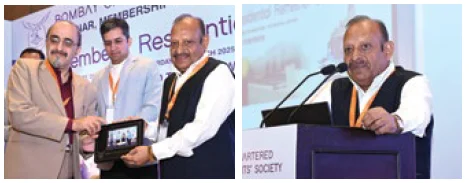

The annual RRC is nothing short of a yearly pilgrimage for her die-hard bhakts (devotees), and the consecration ceremony of Shree Ram Mandir in January 2024 had triggered the desire to hold the next year’s RRC in Ayodhya. This would provide the members a chance to pay obeisance to Ram Lalla and seek His blessings. With no hotel in Ayodhya large enough to accommodate a contingent of 175+, the Seminar, Membership & Public Relations (SMPR) Committee of the BCAS and the Office Bearers zeroed in on Lucknow — less than 160 kms from Ayodhya and, more importantly, with hotels large enough to accommodate the mammoth RRC contingent. The recce in October 2024 helped decide the venue — the newly constructed hotel, The Centrum, Lucknow.

Respecting the natural desire to visit Shree Ram Mandir along with their significant other, for the second time in history, a decision was taken to permit member spouse and children to register for the RRC. The response was immediate — it was houseful by the time the Early Bird stage ended! A total of 187 participants, drawn from 14 states and 31 cities and towns, including 11 non-residential members registered for the event. A heartening realisation was that for 76 members, this would be their very first RRC! Participants also included 2 newly wed couples, 5 member couples including a couple who gifted the BCAS Life Membership to their recently qualified daughter and enrolled her for the RRC as well.

The excitement in the air on the afternoon of 26th February was there for all to see as delegates checked in from all corners of the country. Day 1 began with the group discussion on “Case Studies in Direct Taxes on Assessment, Reassessment, Reviews and Appeals” which saw the break-out groups discuss the challenging and compelling case studies threadbare. This was followed by the formal inaugural session, with CA Preeti Cherian, Convenor, SMPR Committee, extolling everyone with the city’s tagline, “Muskuraiye! Aap Lucknow Mein Hain!”.

The President, CA Anand Bathiya, in his address, thanked the Committee for delivering on its promise to make the dream of visiting Shree Ram Mandir into a reality. He spoke about how the “Members’ only” flagship event of BCAS, the RRC has stood the test of time and continues to have its devoted following; the RRC serves as a confluence of like-minded members, with each one bringing a certain uniqueness to the table. The Chairman of the Committee, CA Chirag Doshi elaborated on the relevance of the RRC, selection of the venue, detailed schedule and RRC statistics.

It was then the turn of the unbeaten RRC champion (with 38 RRCs Not Out), Past President, CA Uday Sathaye to take centre stage and to formally introduce the Chief Guest, Past President CA Govind G Goyal to the audience. Past Presidents of ICAI, CA Mukund Chitale and CA Ved Jain joined the Chief Guest, the President CA Anand Bathiya, the Vice President CA Zubin Billimoria, the Past Presidents CA Anil Sathe,CA Ashok Dhere, CA Pranay Marfatia, CA Rajesh Muni and CA Uday Sathaye, the Chairman CA Chirag Doshi and the Convenors of the Committee, CA Ashwini Chitale,CA Mrinal Mehta and CA Preeti Cherian in lighting the ceremonial lamp. The esteemed Chief Guest and Past President, CA Govind G Goyal spoke in chaste Hindi about his association with BCAS in general and with RRCs in particular.


The inaugural session was followed by the curtain raiser — the fireside chat on the contemporary topic “Journey of CA Firms (Investible Firms, Mergers and Alliance of Firms)” with CA Manish Modi and CA Vaibhav Manek. The chat was moderated by Managing Committee member, CA Samit Saraf. The panelists spoke frankly of the challenges and opportunities their individual journeys had posed / opened up for them.


Day 2 started with the participants experiencing the mehman-nawaazi (hospitality) of our local member, CA Pradeep Kumar who made special arrangements to make available a huge cauldron of the winter speciality Malai Makhan at the breakfast table.

Suitably satiated, the participants were greeted by Convenor, CA Rimple Dedhia as they sat down to listen to the Past President of ICAI, the erudite Adv. CA Ved Jain discuss in detail the intricacies of the case studies which had been deliberated upon a day prior by the groups. The session was chaired by CA Pankaj Agarwal.

The Presentation Paper I “Role of Chartered Accountants in IPO Process” by CA Sumith Kamath helped the audience realise the opportunities available to CAs in this otherwise less explored terrain. The session was chaired by Past President CA Rajesh Muni. The Presentation Paper II “Practical Use of Technology in Professional Firms” by CA Rahul Bajaj had the audience captivated as they experienced for themselves the power of AI through his live demonstrations. The session was chaired by Joint Secretary, CA Kinjal Shah. The fact that the participants were reluctant to allow the session to close for the lunch break (despite it being way past 2 pm!) speaks volumes.

Post a sumptuous meal, Convenor, CA Mrinal Mehta invited all gathered to the Multi-Disciplinary Brains Trust session on the topic “Interplay of Direct Tax, GST Law and Audit on issues relating to Real Estate and Health Care Industry”. The esteemed panel comprising the Past President of ICAI, CA Mukund Chitale, Past President CA Anil Sathe and Shri Vishal Agarwal presented their views on the case studies at hand. The session was ably moderated by Adv CA Kinjal Bhuta and CA Mandar Telang. The day had been long; however, given that the dawn held the promise of fulfilling their dream of a lifetime, the participants felt doubly energised as they retired for the night.

Day 3 found a super enthusiastic group of devotees dressed in traditional attire, gather in the hotel foyer, eagerly waiting for the buses to take them to Ayodhya. The Committee Organisers had pulled out all stops to ensure that all the logistic arrangements, permissions, etc to transport the 190+ devotees from Lucknow to Ayodhya and back, were in place. The recently concluded Maha Kumbh Mela had resulted in unprecedented crowds flooding Ayodhya after taking the holy dip. The strain on the infrastructure had been tremendous — and yet, despite all this, through divine intervention undoubtedly, the entire contingent travelled to Ayodhya in a seamless manner.

The Sugam Darshan of Ram Lalla organised by the Committee brought tears of joy to many an eye and the group returned to Lucknow late afternoon, suitably invigorated. After a refreshing coffee break, the break-out groups for the group discussion on “Case Studies on Practical Implementation of Auditing Standards” retired to their designated areas to discuss the interesting case studies.

Day 4 was kick-started by Convenor, CA Ashwini Chitale inviting Past President CA Ashok Dhere to chair the session by CA Himanshu Kishnadwala as he replied to the case studies debated a day prior by the groups. This was followed by a presentation on the New Income Tax Bill by CA Uttamchand Jain. The session was chaired by Past President CA Pranay Marfatia.

The presence of BCAS through its annual RRC in the city of Lucknow had not gone unnoticed by the powers-that-be. A special session with none other than the Deputy Chief Minister of Uttar Pradesh, Shri Brajesh Pathak ji formed part of the concluding session. In his address, the Deputy CM acknowledged the vital role played by Chartered Accountants in the nation building process and spoke at length about the various domestic and international industries that are now housed in Uttar Pradesh. Shri Mukesh Singh, Executive Council Member & Chairman UP Coordination Committee Indo American Chamber of Commerce then addressed the audience on the topic “Challenges & Opportunities for Business in UP”. The address by the Deputy CM was extensively covered in the news by the 10+ media channels who were in attendance.

In the concluding session, both the President CA Anand Bathiya and Chairman of SMPR Committee, CA Chirag Doshi acknowledged all those who had worked towards delivering a successful RRC, especially the support extended by the local members, CA Anshul Agarwal and CA Pankaj Agarwal. And as the curtains came down on yet another successful RRC – one which had the participants wear their thinking caps and deliberate on where the profession is today and what the future holds, one was reminded of the ghazal penned by shaayar Nida Fazli:

सफ़र में धूप तो होगी, जो चल सको तो चलो

सभी हैं भीड़ में, तुम भी निकल सको तो चलो

किसी के वास्ते, राहें कहाँ बदलती हैं

तुम अपने आप को,

ख़ुद ही बदल सको तो चलो…..

यही है ज़िंदगी, कुछ ख़्वाब, चंद उम्मीदें

इन्हीं खिलौनों से तुम भी बहल सको, तो चलो l


Regulatory Referencer

DIRECT TAX: SPOTLIGHT

  1.  Due date for filing of Form No. 56F required to be filed under section 10AA(8) for Assessment year 2024-25 extended to 31st March, 2025 — Circular No. 2/2025 dated 18th February, 2025
  2.  Income tax deduction from Salaries during the financial year 2024-25 under section 192 of the Act — Circular No. 3/2025 dated 20th February, 2025
  3.  Frequently Asked Questions (FAQs) on Guidelines issued for Compounding of Offences under the Income-Tax Act, 1961 dated 17th October, 2024 — Circular No. 4/2025 dated 17th March, 2025
  4.  Ten Year Zero-Coupon Bond of Power Finance Corporation Ltd. notified for the purpose of section 2(48) — Notification No. 19/2025 dated 11th March, 2025

FEMA:

1. IFSCA replaces Fund Management Regulations of 2022 with IFSCA (Fund Management) Regulations, 2025.

IFSCA, along with the Fund Management Advisory Committee (FMAC) of IFSCA, senior industry leaders and through public consultations, has reviewed and replaced Fund Management Regulations of 2022 in order to enhance the ease of doing business and to develop the GIFT IFSC as a hub for International financial activities. Key reforms have been made in following areas:

i. Non-Retail Schemes (Venture Capital Schemes and Restricted Schemes)

ii. Manpower requirements for FMEs

iii. Registered FME (Retail) and Retail Schemes

iv. Portfolio Management Services

v. Other Key matters

Significant relaxations have been made including by way of reduction in minimum corpus; carve-outs from the regulatory requirements for fund of funds schemes; dispensation of prior approval for appointment of KMPs; streamlining and broadening the requirements regarding educational qualification and work experience of the KMPs; clarifications on several requirements; and reduction in compliance burden among several other measures. It will be worthwhile to read the new Fund Management provisions in detail for those interested in Fund Management activities in IFSCA.

[International Financial Services Centres Authority (Fund Management) Regulations, 2025 Notification No. IFSCA/GN/2025/002 and Press Release dated 19th February, 2025]

2. IFSCA sets procedure for ‘Fund Management Entity’ (FME) to appoint or change KMPs post-registration

The IFSC Authority has prescribed the manner and procedure to be followed by a Fund Management Entity for effecting the appointment of or change to the Key Managerial Personnels (KMPs) subsequent to the grant of registration by the Authority to the FME. The FME shall file an intimation to the Authority regarding the proposal to appoint or change a KMP in the prescribed format. This circular shall come into force with immediate effect.

[International Financial Services Centres Authority (Fund Management) Regulations, 2025 Press Release No. IFSCA-IF-10PR/1/2023-Capital Markets/6, dated 20th February, 2025]

3. IFSCA amends Aircraft Lease (“AL”) framework — restricts IFSC Lessors from leasing solely to Indian residents

Clause O.2 of AL Framework is replaced with O.2

“Transactions with person(s) resident in India”. As per this circular, lessor shall not purchase, lease or otherwise acquire the assets covered under this framework, where post-acquisition the asset will be operated or used solely by persons resident in India or to provide services to persons resident in India. The amendments to AL Framework shall come into force with immediate effect.

[Circular No. F. No. 172/IFSCA/Finance Company Regulations/2024-25/02 dated 26-2-2025]

4. IFSCA issue guidelines on ‘Cyber Security and Cyber Resilience’ for Regulated Entities in IFSCs

IFSCA has issued guidelines on ‘Cyber Security and Cyber Resilience’ for Regulated Entities in IFSCs. The guidelines intend to lay down IFSCA’s broad expectations from its Regulated Entities (REs). For these guidelines, REs must include any entity which is licensed, recognised, registered or authorised by IFSCA. The key components of the guidelines are categorised into (a) Governance, (b) Cyber security and cyber resilience framework, (c) Third party risk management, (d) Communication and (e) Audit.

[International Financial Services Centres Authority Circular No. IFSCA-CSDOMSC/13/2025-DCS, dated 10th March, 2025]

5. RBI permits settlement of Indo-Maldives trade in INR and MVR, alongside the existing ACU mechanism

In the wake of signing of Memorandum of Understanding (MoU) between RBI and Maldives Monetary Authority in November 2024, the Reserve Bank of India (RBI) has now allowed bilateral trade transactions between India and Maldives to be settled in Indian Rupees (INR) and Maldivian Rufiyaa (MVR) in addition to the existing Asian Clearing Union (ACU) mechanism. These instructions shall come into force with immediate effect.

[Foreign Exchange Management (Manner of Receipt and Payment) Regulations, 2023 A.P. (DIR Series) Circular No. 22 under FEMA, 1999, dated 17th March, 2025]

Recent Developments in GST

A. NOTIFICATIONS

i) Notification No.10/2025-Central Tax dated 13th March, 2025

Above notification seeks to amend Notification  No. 2/2017-Central Tax dated 19th June, 2017  which is regarding revision of the Territorial  Jurisdiction of Principal Commissioner/Commissioner of Central Tax, etc.

B. CIRCULARS

(i) Clarification on Rate of tax and Classification of various items under GST – Circular no.247/04/2025-GST dated 14th February, 2025.

By above circular, the clarifications are given about GST Rates and Classification for various products including SUVs, Popcorn, Raisins, Pepper, and AAC Blocks based on the recommendations of the GST Council in its 55th meeting.

C. ADVISORY

i) Vide GSTN Advisory dated 12th February, 2025, information is given regarding guidelines on GST registration under Rule 8 of the CGST Rules, 2017.

ii) Vide GSTN Advisory dated 15th February, 2025, information about introduction of Form ENR-03, allowing unregistered dealers to generate E-Way Bills using unique Enrolment ID, effective 11th February, 2025, is given.

D. ADVANCE RULINGS

Lease of land vis-à-vis Exemption Anmol Industries Ltd. (AAR Order No. 03/WBAAAR/2024 Dated: 30th August, 2024 DT. 26th November, 2024 (WB AAAR)

Earlier there was AR order no.24/WBAAR/2023-24 dated 20th December, 2023 passed by WBAAR, holding that long-term lease transaction effected by Shyama Prasad Mukherjee Port, Kolkata (SMPK) is not exempted from GST.

The ld. WBAAAR set aside said order and remanded matter back to AAR vide appeal order dated 18th April, 2024. Thereafter, fresh AR passed by AAR.

This appeal was against fresh AR No. 06/WBAAR/2024-25 dated 29th July, 2024-2024-VIL-143-AAR. By the said order, the ld. WBAAR ruled that Services by way of grant of long-term lease of land by SMPK to the appellant for the purpose of “setting up commercial office complex’ is not to be covered under entry 41 of Notification No.12/2017 Central Tax (Rate) dated 28th June, 2017 and, therefore, cannot be treated as an exempt supply.

The facts are that the appellant entered into a leasing agreement with SMPK to take on lease a plot of land at Taratala Road for thirty (30) years for the purposes of setting up a commercial office complex. The appellant was to pay upfront lease premium along with GST @ 18% on consideration of `30,90,11,000/-. The question before AAAR was:

“Whether the upfront premium payable by the appellant towards the services of by way of granting of long-term lease of thirty years, or more of industrial plots or plots for development of infrastructure for financial business by SMPK is exempted under entry 41 of Notification No. 12/2017-CGST (Rate) dated 28th June, 2017?”

Based on use for infrastructure for financial business, the crux of the contention of the appellant was that the appellant being an industrial unit has fulfilled all the conditions as specified in entry number 41 of Notification No. 12/2017- Central Tax (Rate) dated 28th June, 2017 from the end of the recipient and hence SMPK should take exemption and should not charge any GST.

The conditions of aforesaid entry 41 are reproduced as under:

“I. The lease period should be of thirty years or more;

II. The property leased should be industrial plots or plots for development of infrastructure for financial business;

III. Service provider must be a State Government Industrial Development Corporations or Undertakings or by any other entity having 20 per cent. or more ownership of Central Government, State Government, Union territory (either directly or through an entity wholly controlled by the Central Government, State Government, Union territory);

IV. Service recipient must be an Industrial Unit.”

The ld. AAAR held that AAR has not discussed the condition mentioned in the first proviso in entry 41 i.e. whether the lease plot is being used for industrial or financial activity in an industrial or financial business area, which is substantial condition for grant of exemption.

The ld. AAAR examined the said issue in detail and found that the appellant is going to set up Commercial Office by setting up such commercial office complex and all the corporate activities including accounting and financial activities will be undertaken there and that such office will be planned to maintain and monitor all the financial records and transactions of the appellant company. The ld. AAAR found that the appellant is contemplating use of plot for financial business based on use of plot for such financial activity. Though finding on above aspect was not there in AR, the ld. AAAR held that under power u/s.101(1), the AAAR can modify AR order and accordingly considered itself as competent to go into above aspect of use for financial business.

In this respect, the ld. AAAR referred to Notice Inviting Tender, NIT No. SMP/KDS/LND/03-2022 dated 15th March, 2022, in which in para 8.7 the definition of setting up of a Commercial office complex is given as under:

“Setting up of a commercial office complex in a particular plot may be allowed where the listed purposes in the tender include Assembly, Business and Mercantile Buildings and the said land shall be used by the original lessee for own Corporate use and excess vacant space of the said office complex to be let out on lease to other corporate entities who will use the complex for setting up of Business Centre, Business Chambers, Conference Rooms, Office Infrastructure, Cafeteria, Restaurant, Gymnasium, Guest House, hotel accommodation, recreation facilities, pharmacies, diagnostic clinics, retail outlets etc. In other words, the original lessee will be a business integrator where various other stake holders /investors /retailers /service providers will operate under the business integrator (original lessee) as sub-lessees.”

As per clause 8.8 in NIT, it was also found that the plot is not allowable for Industrial building defined as “Any building or structure or part thereof used principally for fabrication, assembly and or processing of goods and materials of different kinds. Such building shall include laboratories, power plants, smoke houses, refineries, gas plants, mills, dairies, factories and workshops”.

Based on above facts, the ld. AAAR observed that when Industrial building itself is not allowed, no stretch of imagination can conclude that industrial activity is allowed under the instant tender. Accordingly, the ld. AAAR held that setting up of commercial office complex has a specific purpose and the same cannot be equated to industrial activity.

Regarding use for “financial activity”, the ld. AAAR observed that “Financial activity” is not defined in the GST Laws and hence meaning to be seen as per common business parlance. The ld. AAAR held that mere maintenance and monitoring of all the required financial records and transactions of a company does not mean financial activity. The ld. AAAR held that every business aims to achieve a profit which occurs because of increase in income and decrease in expenses and for this purpose obviously every business entity undertakes activities which have financial implications. The ld. AAAR held that it is a normal activity for a business and cannot be considered as financial activity implied in NIT. Elaborating this aspect, the ld. AAAR referred to meaning of Financial Service in IBC which indicates financial activity as services like acceptation of deposits and other such independent financial activities. SAC Code 9971 specifying financial services also referred to gather meaning of ‘financial activity’.

Noting above, the ld. AAAR came to the conclusion that the appellant is not providing any of the above Finance Services and hence cannot be considered as carrying out financial activity in a financial business area.

In respect of SMPK being Government Undertaking the ld. AAAR held that though SMPK is audited by the office of the Comptroller and Auditor General of India, it cannot be conclusively regarded as an entity having 20% or more ownership of Central Government.

Accordingly, the ld. AAAR confirmed AR of the AAR and rejected the appeal.

GST on Canteen Facility for Contractual Workers Troikaa Pharmaceuticals Ltd. (AAR (Appeal) Order No. GUJ/GAAAR/APPEAL/2025/07 (in Appl. No. Advance Ruling/SGST & CGST/2022/AR/09) dt.28th February, 2025)(Guj)

The present appeal was filed against the Advance Ruling No. GUJ/GAAAR/R/2022/38 dated 10th August, 2022 – 2022-VIL-231-AAR.

The facts are as under:

♦ “the appellant is engaged in the manufacture, sale & distribution of pharma products and is registered with the department;

♦ the appellant has appointed a CSP [Canteen Service Provider];

♦ the appellant provides subsidized canteen facilities to its employees & contractual workers;

♦ the appellant recovers 50% of the amount from the employees;

♦ that as far as security service contract workers is concerned, the canteen service provider raises bill for only 50% of the amount as the rest of the amount is being directly paid by the individual workers to the service provider.”

Based on above facts, the appellant had sought Advance Ruling on the following questions:

  1. Whether GST shall be applicable on the amount recovered by the company,Troikaa Pharmaceuticals Limited, from employees or contractual workers,when provision of third-party canteen service is obligatory under section 46 of the Factories Act, 1948?
  2.  Whether input tax credit of GST paid on food bill of the Canteen Service Provider shall be available, since providing this canteen facility is mandatory as per the Section 46 of the Factories Act, 1948?”

The ld. AAR gave following ruling:

  1. “ GST, at the hands of M/s Troikaa, is not leviable on the amount representing the employees portion of canteen charges, which is collected by M/s Troikaa and paid to the Canteen service provider.
  2.  GST, at the hands of M/s Troikaa, is leviable on the amount representing the contractual worker portion of canteen charges, which is collected by M/s Troikaa and paid to the Canteen service provider.
  3.  ITC on GST paid on canteen facility is admissible to M/s Troikaa under Section 17(5)(b) of CGST Act on the food supplied to employees of the
    company subject to the condition that burden of GST have not been passed on to the employees of the company.
  4.  ITC on GST paid on canteen facility is not admissible to M/s Troikaa under Section 17(5)(b) of CGST Act on the food supplied to contractual worker supplied by labour contractor.”

This appeal was filed in respect of denial of ITC on canteen services provided by the appellant to contractual workers and levy of GST on food charges recovered from contractual workers.

To decide the issue, the ld. AAAR referred to provision of Section 17(5) about blocking of ITC and also Circular No.172/04/2022-GST-dated 6th July, 2022 in which clarifications are given about various issues of section 17(5) of the CGST Act.

Regarding question about levy of GST on receipts for Contractual Workers, the ld. AAAR referred to provisions of Factories Act, 1948 as well as sections 20 and 21 of CTRA,1970.

The appellant was canvassing that statutorily it is the contractor who is required to provide the amenity to the contractual workers in terms of section 16 and the onus shifts on the principal employer i.e. the appellant in case the contractor is not providing the same. The ld. AAAR concurred with above situation that though statutorily it is the contractor on whom the CLRA Act has entrusted the task of providing the amenity and the responsibility shifts on the principal employer i.e. appellant in case the contractor is not providing the same. However, the ld. AAAR observed that section of CLRA provides also that all expenses incurred by the principal employer in providing such amenity may be recovered from the contractor either by deduction from any amount payable under any contract or as a debt payable by the contractor.

From documents submitted the ld. AAAR found that the contractor has been paid the gross amount which includes salary, allowances such as canteen facility, provident fund, etc. The ld. AAAR also did not found averment by the appellant that the contractor has failed to fulfil his statutory obligation so as to shift primary requirement for providing facility on appellant.

The ld. AAAR also noted terms in agreement with Labour Contractor which explicitly states that no relationship of employer-employee is created between the appellant and the workers engaged by the contractor. The ld. AAAR, therefore, held that the clarification at serial no.5, vide circular no. 172/4/2022-GST dated 6th July, 2022 relied upon by the appellant to aver that no GST amount is leviable on the amount recovered from contractual workers for canteen services is incorrect since the clarification states that GST will not apply when perquisites are provided by the employer to its employees and not in other cases. The ld. AAAR also held that clarification at serial no. 3 of the said circular dated 6th July, 2022, regarding availment of ITC, would also not be applicable since it is available only in respect of the goods supplied to the employees of the appellant in terms of section 46 of the Factories Act, 1948, which mandates provision of canteen facilities to the employees.

In view of the above, the appeal was rejected, confirming the AR given by AAR.

Classification – Treated Water

Palsana Enviro Protection Ltd. (AAR (Appeal) Order No. GUJ/GAAAR/APPEAL/2025/08 (in Appl. No. Advance Ruling/ SGST & CGST/2023/AR/04) dt.28th February, 2025)(Guj)

The present appeal was against the Advance Ruling No. GUJ/GAAR/R/2022/47 dated 30th December, 2022 – 2023-VIL-09-AAR.

The facts are that the appellant, who has been promoted by a cluster of textile processing industries, has set up a CETP [Common Effluent Treatment Plant]. In the said CETP, the appellant recycles & thereafter supplies treated water to its member units for use in their activities. This treated water can be used in non-potable activity. Though the CETP treated water is made free from various impurities, however, even after carrying out the said physical and biological processes the said water is not pure water& cannot be termed as purified water.

The further fact is that CETP treated water is supplied to industries through pipelines. The appellant further claimed that their activity falls within the ambit of Sr. No. 99 of notification No. 2/2017-CT (R), as amended vide notification No. 7/2022-CT (Rate) dtd 13th July, 2022, as the water obtained from CETP is not ‘purified water’. To substantiate this claim, they have also relied on circulars No. 52/26/2018 dated 9th August, 2018 & 179/11/2022-GST dated 3rd August, 2022.

With above background appellant posed following questions before the ld. AAR.

  1. “ Whether ‘Treated Water’ obtained from CETP (classifiable under Chapter 2201) will be eligible for exemption from GST by virtue of Sl. No. 99 of the Exemption Notification No. 02/2017- Integrated Tax (Rate), dated 28-6-2017 (as amended) as ‘Water (other than aerated, mineral, purified, distilled, medical, ionic, battery, demineralized and water sold in sealed container)’? or
  2.  Whether ‘Treated Water’ obtained from CETP (classifiable under Chapter 2201) is taxable at 18 per cent b virtue of Sl. No. 24 of Schedule – III of notification No. 01/2017- Integrated Tax (Rate), dated 28-6-2017 (as amended) as ‘Waters, including natural or artificial mineral waters, and aerated waters, not containing added sugar or other sweetening matter nor flavoured (other than Drinking water packed in 20 liters bottles).”

The ld. AAR ruled as under:

  1. “ ‘Treated Water’ obtained from CETP (classifiable under Chapter 2201) is not eligible for exemption from payment of Tax by virtue of Sl. No. 99 of the exemption notification No. 02/2017-CT (Rate) dated 28th June, 2017 (as amended) and Sl. No. 99 of the exemption notification No. 02/2017- Integrated Tax (Rate), dated 28th June, 2017 (as amended).
  2.  ‘Treated Water’ obtained from CETP (classifiable under Chapter 2201) is taxable at 18% by virtue of Sl. No.24 of schedule – III of notification No.01/2017- CT (Rate) (as amended) and Sl. No. 24 of schedule – III of notification No. 01/2017-Integrated Tax (Rate), dated 28th June, 2017 (as amended).”

In essence, the AAR held that CETP water as ‘de-mineralized water’, excluded from exemption.

The appeal was against the above ruling.

In appeal, the appellant has reiterated its stand.

The ld. AAAR referred to relevant entries and averment. The appellant has produced laboratory certificate in course of appeal.

Based on sample water of appellant, in certificate it was stated that the water does not meet parameters of demineralized water.

The ld. AAAR declined to accept the said certificate produced by the appellant because, [a] the same was produced at an appellate stage; [b] the certificate nowhere states that the laboratory is an accredited laboratory and [c] there is no mention about the way the sample was drawn.

The appellant had relied upon certain rulings.

The ld. AAAR did not agree with rulings cited before it on ground that rulings by the Authority for Advance Ruling would be binding only on the applicant who sought it, the concerned officer or the jurisdictional officer in respect of the applicant. The ld. AAAR further observed that the Tamilnadu Authority for Advance Ruling has held that treated water obtained from CETP is de-mineralized water and will
therefore not be eligible for the benefit of the notification Nos. No. 2/2017-CT(R) dated 28th June, 2017 as amended.

In view of above findings, the appeal was rejected confirming the AR passed by GAAR.

Supply of Transportation Service vis-à-vis School Students

Batcha Noorjahan (AAR Order No. 06/ARA/2025 dt.13th February, 2025)(TN)

The applicant is engaged in the business of plying school buses and providing transportation services to the school students in commuting to their school and back home.

Applicant put up following questions to AAR.

  1. “ Whether the services provided by the applicant to the school students by way of transportation of students and staff, shall be considered as the services provided to the school (Educational Institute).
  2.  Whether the services provided by the applicant as mentioned above, shall be considered as exempted from GST as per the Serial No. 66 of Notification No. 12/2017 – Central Tax (Rate) dated 28th June, 2017 or any other applicable provision of the Act.”

The applicant has submitted following aspects of the transaction:

“i) The fees for the transportation of school students are being collected from the students directly as per the agreement with the schools.

ii) There could be a view that since the fees are directly collected from the students, the service recipient is not the school or the Educational Institution.”

As per the provisions of the Act, the services provided to the Educational Institution by way of transportation of students and staff is exempted from GST (Notification No.12/2017). It was further submitted that the applicant is providing services by way of transportation of students and staff though the bus fee is received from the students directly. It was interpretated by applicant that the schools are the service recipients though the consideration is not directly paid by them.

The ld. AAR referred to facts like the applicant has entered into a lease agreement with Alphabet International School vide agreement dated 30.09.2022 for a period of 5 years for the purpose of transporting students and staff of the school only in connection with school activity as provided under clause (8) of Rule 2 of the Tamil Nadu Motor Vehicles Regulations and Control of school buses special rules, 2012.

It was seen from agreement that there was no mention of the consideration part payable by the school to the applicant for providing the vehicle and the services related thereto. There was also no mention in the lease agreement as to how the transportation fees are to be collected, whether by the applicant or by the school.

From the copies of the receipts furnished by the applicant, it was seen that the applicant has directly raised receipt on the student concerned, towards ‘Student Transport Fees’.

The ld. AAR also observed that the applicant is not receiving any payment from the school administration and therefore, no services are rendered to the school by the applicant. The ld. AAR held that the services provided by the applicant to the school students by way of transportation and accordingly, the first question is answered in negative.

Regarding second question the ld. AAR held that the school has outsourced the transport serviceto the applicant and the applicant is directly in receipt of the consideration from the students and accordingly, the service rendered by the applicant to the students is to be considered as ‘Transport of passenger by any motor vehicle’, meriting classification under SAC 9964, attracting GST at 5% without ITC as per Sl.No.8(vi) of Notification No. 11/2017, dated 28th June, 2017, as amended vide Notification No. 31/2017-Central Tax (Rate) dated 13th October, 2017.

Since the transportation services are not suppliedto Educational Institutions as provided under Sl. No.66 of Notification No. 12/2017 – Central Tax (Rate) dated 28th June, 2017, it is not applicable to the applicant. The ld. AAR decided the AR accordingly.

Composite Supply vis-à-vis Mixed Supply

Doms Industries Pvt. Ltd. (AAR (App) Order No. GUJ/GAAAR/APPEAL/ 2025/05 (In Appl. No. Advance Ruling/SGST&CGST/2023/AR/03) dt. 22nd January, 2025) (Guj)

This appeal was filed against the Advance Ruling No. GUJ/GAAR/R/2022/52 dt.30.12.2022-2023-VIL-03-AAR.

The appellant supplies the goods in a combination with other products viz.

[a] DOMS A1 pencil. This consist of 10 pencils along with a sharpener & eraser.

[b] DOMS Smart Kit. This is a gift pack which consists of a colouring book, two pack of pencils,
one pack of colour pencil, one pack of oil pastels, one pack of plastic crayons, one pack of wax crayons, one eraser, one scale and one sharpener.

[c] DOMS my first pencil kit. It consists of a pencil, eraser, scale and a sharpener.

The applicant held view that he satisfies the four conditions to term the aforesaid supply as ‘composite supply’.

With above background, ruling was sought on following questions:

“(i) Whether the supply of pencils sharpener along with pencils being principal supply will be considered as the composite supply or mixed supply?

(ii) What will be the HSN code to be used by us in the above case.

(iii) Whether supply of sharpener along with the kit having a nominal value will have an impact on rate of tax.

If yes, what will be the rate of tax & HSN code to be used by use.”

The ruling of ld. GAAR dated 18th October, 2021 held as under:

“(i) the supply of pencils sharpener along with pencils is covered under the category of ‘mixed supply’;

(ii) as discussed in para 21.1 of the impugned ruling.

(iii) yes, the supply of sharpener along with the kit having a nominal value will have an impact on rate of tax. As discussed in para 21.2 and 21.3 of the impugned ruling.”

The appeal was filed against the above ruling.

Appellant made various submission as well as cited case laws.

In appeal, the ld. AAAR observed that the appellant is aggrieved only in respect of their product ‘DOMS A1 pencil’ which consists of 10 pcs of pencil, one eraser and one sharpener and accordingly AAAR restricted scope of appeal to the ruling on above product only.

The ld. AAAR referred to Guidance in Service Tax Education Guide issued by CBIC.

The ld. AAAR also referred to definition of term ‘composite supply’ and ‘mixed supply’ given in Sections 2(30) and 2(74) of CGST Act respectively.

The ld. AAAR concluded its finding in following terms:

“We find that the CGST Act, defines a composite /mixed supply. Additionally, CGST Act, 2017, thereafter, specifies the tax liability in such case wherein a supply falls within the ambit of either a composite /mixed supply. We have already held that the product ‘DOMS A1 pencil’, is a mixed supply, the product not being naturally bundled, not having a principal supply and not supplied in conjunction with each other in the ordinary course of business. Now, for the sake of argument, even if we were to examine the claim of the appellant, we find that the product of the applicant, in question, would not fall either within Rule 3(a) or 3(b) of the GIR, leaving us with the only alternative of resorting to Rule 3(c). The question then which would arise is whether Rule 3(c) of the GRI or Section 8(b), of the CGST Act, 2017, would prevail. It is a trite law that when the section is unambiguous, the averment of the appellant to take the assistance GRI for deciding the nature of supply, classification and rate of tax, is not legally tenable. We therefore, reject this submission of the appellant.”

Accordingly, the ld. AAAR rejected the appeal and confirmed AR given by AAR.

Goods And Services Tax

HIGH COURT

1. [2025] 172 Taxmann.com 66 (Madras) Madhesh @ Madesan Vs. State Tax Officer Dated 21st December, 2024

Once the goods are detained under section 129, detention order passed beyond the period of seven days from the date of show cause notice is liable to be set aside and detention of goods based on such time-barred order is illegal.

FACTS

In this case, the goods were detained on 29th October, 2024 and notice under section 129(3) of the Act, 2017 in Form GST MOV-07 was also issued on 29th October, 2024. However, no order of detention made in Form GST MOV-09 till date of filing writ, thereby violating the time-line stipulated under section 129(3) of the Act. The short question was whether the proceedings under section 129(3) can be sustained in the absence of complying with the time-line mandated under section 129(3).

HELD

The Hon’ble Court noted that under section 129(3) of the Act, the order ought to have been passed within a period of seven days from the date of service of such notice and hence held that the impugned proceedings are beyond the timelines stipulated under section 129(3) of the Act. Consequently, the impugned proceedings are set aside and the vehicles / goods in question were directed to be released forthwith.

2. [2025] 172 taxmann.com 100 (Allahabad) Kei Industries Ltd vs. State of U.P dated 4th February, 2025

Where goods not covered under the requirements of an E-way bill were transported, they could not be seized under section 129 for not being accompanied with an E-way bill.

FACTS

The petitioner was aggrieved by an order directing a seizure of the vehicle and the goods on the ground that the E-way Bill was not present with the goods. The department admitted in the Court that during the period under consideration, the goods that were being transported by the petitioner were not covered by the requirement of the E-way bill.

HELD

Based on the admission of the department that during the period under consideration, goods which were being transported by assessee, were not covered by the requirement of the E-way bill and relying on the decision in the case of Godrej & Boyce Manufacturing Co. Ltd. vs. State of U.P. — [2018] 97 taxmann.com 552 (Allahabad), the Hon’ble Court held that the impugned order was bad and is therefore, liable to be set aside.

3. [2025] 172 taxmann.com 133 (Gujarat) Patanjali Foods Ltd. vs. Union of India dated 12th February, 2025

Notification No. 9/2022, effective from 18th July, 2022, has a prospective effect and did not apply to refund claims of prior period, even if the claim of refund is made after 18th July, 2022. Further, once the refund application filed by the assessee is adjudicated and order is passed sanctioning the same, it is not open for the department to recover the said refund by issuing another SCN and passing different order and not by challenging the earlier order which has become final.

FACTS

The petitioner is inter-alia, engaged in the manufacture and sale of edible oil. According to the petitioner, the rate of tax applicable to input supplies of the petitioner exceeded the rate of tax on output supplies. Therefore, the petitioner qualified for a refund under the inverted duty structure scheme as per section 54(3) of the Central / Gujarat Goods and Services Tax Act, 2017. Notification No.9/2022-Central Tax dated 13th July, 2022, was issued by the Central Government, notifying certain goods, including edible oil, as ineligible for a refund under the inverted duty structure. The said Notification was made effective from 18th July, 2022. The petitioner submitted a refund application dated 5th December, 2023 for the period from February 2021 to March 2021 under section 54(3) of the GST Act.

The petitioner received a show cause notice proposing to reject the refund application on the ground that there was an existing demand against the petitioner on the GST portal. The petitioner replied to the said show cause notice, pointing out that the demands had been withdrawn pursuant to the direction of the NCLT. Thereafter, the respondent accepted the petitioner’s explanation and granted the refund after passing a sanction order.

However, subsequently, the respondent issued a notice under section 73 of the Act in Form GST-DRC-01, claiming that the earlier refund was erroneously granted in terms of application of the aforesaid notification read with Circular No.181/13/2022-GST dated 10th November, 2022 wherein it was clarified that said restriction shall apply in respect of all refund applications filed on or after 18th July, 2022.

HELD

The Hon’ble Court relied upon the decision in the case of Ascent MeditechLtd. vs. Union of India, wherein the Court struck down para 2(1) of the same Circular dated 10th November, 2022 on the ground that an artificial class of assessees cannot be created on the basis of date of filing of refund application. By that exact logic, the Hon’ble Court held that Para 2(2) of the impugned Circular dated 10th November, 2022 insofar as it provides that the restriction contained in notification no. 13th July, 2022 will apply to all the refund applications filed after 13th July, 2022, even though they are pertaining to a period prior to the date of notification, is wholly arbitrary, discriminatory and ultra-vires Article 14 as well as section 54 of the CGST Act. The Court held that as the notification is prospective in nature, the refund pertaining to period prior to 13th July, 2022 cannot be affected by such notification.

The High Court also noted that against the petitioner’s refund application dated 5th December, 2023, there has been an adjudication by the order dated 12th January, 2024, by which the petitioner’s refund application was accepted and the refund was granted. No appeal under section 107 or revision under section 108 of the CGST Act, 2017 was preferred by the department, challenging the adjudication of the petitioner’s refund application and the consequent order sanctioning the refund. Therefore, the Hon’ble Court, opined that the grant of refund to the petitioner by order dated 12th January, 2024 had become final and no show cause notice could be issued by the respondents to take away the benefits of a quasi-judicial order in the petitioner’s favour. Thus, the subsequent Order-in-Original dated 10th September, 2024, by which the show cause notice dated 2ndMay, 2024 was adjudicated, was held to be illegal and unsustainable and was quashed and set aside.

4. [2025] 172 taxmann.com 105 (Jharkhand) Steel Authority of India Ltd vs. State of Jharkhand dated 30th January, 2025.

Inadmissible ITC of VAT regime cannot be disallowed in the GST regime which is carried forward through TRAN-1 and must be adjudicated under the pre-GST law.

FACTS

Petitioner, a Public Sector Undertaking is engaged in the manufacture of various steel products. Under the VAT regime, as on 30th June, 2017, Petitioner Company had un-availed input tax credit which was transitioned by it under the GST regime in terms of section 140(1) of JGST Act. However, the petitioner received a show cause notice on the following grounds, namely;

Petitioner availed input tax credit on the purchase of consumables which it was not entitled to avail in terms of section 18(8)(viii) of JVAT Act and accordingly, the transition of said credit under the GST Act was impermissible.

(ii) Petitioner availed input tax credit on capital goods which was also not available to them in terms of provisions of section 18(5) of JVAT Act and thus, transitioning of the same under the GST Act was illegal.

Petitioner filed a detailed reply, however order was passed denying the transitional credit in GST regime on the ground that transitioning of inadmissible input tax credit under the GST Act was illegal. Against the aforesaid order, the petitioner preferred an appeal before the Appellate Authority, but the Appellate Authority, rejected the appeal and confirmed the adjudication order.

HELD

Eligibility of input tax credit under erstwhile VAT Act to be adjudicated under provisions of repealed Act. Proceedings for alleged inadmissible credit under the GST Act is improper and without jurisdiction. Impugned adjudication order and appellate order quashed. Amount recovered to be restored with interest, however, Respondent authorities were allowed to initiate proceedings under repealed VAT Act if so advised.

5. [2025] 172 taxmann.com 129 (Madras) KesarJewellers vs. Additional Director General dated 7th February, 2025

There must be tangible material on record suggesting that it is necessary to provisionally attach the property of the petitioner, for the purpose of protecting the interest of the revenue.

FACTS

The petitioner is registered as a taxable person under the GST Act engaged in the trading of Gold Bullion and Gold Jewellery. The Senior Intelligence Officer, Directorate General of Goods and Service Tax, Intelligence (DGGI), issued a summons to the petitioner under section 70 of the CGST Act, calling upon the petitioner to be present at their office in connection with an investigation. Thereafter, the petitioner’s place of business was searched and certain documents such as purchase / sale invoices, mobile phone, pen drive along with files containing certain papers were seized. Thereafter there was another search of the petitioner’s place of business, during which, gold bars along with computer, mobile phones, loose cash, documents were seized and duly recorded in the Mahazar. Yet another summon came to be issued under section 70 of the CGST Act, calling upon the petitioner to appear for an enquiry. Thereafter, an arrest memo with grounds for arrest was issued. The petitioner was arrested and remanded to judicial custody. The impugned order in Form DRC-22 came to be issued i.e. on the very day when the petitioner was granted bail, thereby attaching provisionally the petitioner’s bank accounts.

Petitioner submitted that the impugned attachment proceeding is bad for want of jurisdiction inasmuch as it did not disclose any tangible material leading to the formation of the opinion, that it is necessary to provisionally attach the property of the petitioner, for the purpose of protecting the interest of the Government warranting exercise of power under section 83 of the Act and that in the absence of tangible material which indicates a live link to the necessity to order a provisional attachment to protect the interest of the Revenue, the exercise of power under section 83 of the Act is without jurisdiction.

HELD

The Hon’ble Court held that the provisional attachment is an extreme measure that must be based on tangible material and must be necessary to protect revenue. The Court held that the attachment order in the present case was mechanical and failed to disclose any specific tangible material or justification for attachment. Since, the pendency of proceedings under Chapter XII, XIV or XV was not sufficient to justify provisional attachment and revenue did not establish that revenue could not be protected without attachment, the impugned order of provisionally attaching multiple bank accounts was to be set aside.

Non-Repatriable Investment by NRIs/OCIs under FEMA: An Analysis – Part 2

NON-REPATRIABLE INVESTMENTS: EASY ENTRY, TRICKY EXIT!

In Part I, we explored how NRIs and OCIs can invest in India under Schedule IV, enjoying the perks of domestic investment while sidestepping FDI restrictions. We saw how this route offers flexibility in entry—with no foreign investment caps, no strict pricing rules, and freedom to invest in LLPs, AIFs, and even real estate (as long as it’s not a farmhouse!). But, much like a long-term relationship, once you commit, FEMA expects you to stay for the long haul.

Now, in Part II, we address the big question: Can you transfer, sell, or gift these investments? Will FEMA allow you a graceful exit? We’ll dive into the rules governing transfers, repatriation limits, downstream investments, and more—so buckle up, because while the non-repatriable entry was smooth, the exit is where the real thrill begins!

TRANSFER OF SHARES/INVESTMENTS HELD ON NON-REPATRIATION BASIS

Just as important as the entry is the ability to transfer or exit the investment. FEMA provides certain pathways for transferring shares or other securities that were held on a non-repatriation basis:

  •  Transfer to a Resident: An NRI/OCI can sell or gift the securities to an Indian resident freely. Since the resident will hold them as domestic holdings, this is straightforward. No RBI permission, pricing guideline, or reporting form is required. For instance, if an NRI uncle wants to gift his shares (held on a non-repat basis) in an Indian company to his resident Indian nephew, it’s permitted and no specific FEMA filing is triggered (aside from perhaps a local gift deed for records). Similarly, suppose an NRI non-repat investor wants to sell his stake to an Indian co-promoter. In that case, he can transact at any price mutually agreed upon (pricing restrictions don’t apply as this is essentially a resident-to-resident transfer in FEMA’s eyes), and no FC-TRS form is required.
  • Transfer to another NRI / OCI on Non-Repat basis: NRIs / OCIs can also transfer such investments amongst themselves, provided the investment remains on non-repatriation. For example, one OCI can gift shares held under Schedule IV to another OCI or NRI (maybe a relative) who will also hold them under Schedule IV. This is allowed without RBI approval, and again, no pricing or reporting requirements apply. The only caveat is that the transferee must be eligible to hold on a non-repat basis (which generally means they are NRI / OCI or their entity). Gifting among NRIs / OCIs on the non-repat route is quite common within families. Note: If it’s a gift, one should ensure it meets any conditions under the Companies Act or other laws (for instance, if the donor and donee are “relatives” under Section 2(77) Companies Act, as required by FEMA for certain cross-border gifts – more on that below).
  •  Transfer to an NRI / OCI on a repatriation basis (i.e., converting it to FDI): This scenario is effectively an exit from the non-repatriable pool into the repatriable pool. For instance, an NRI with non-repat shares might find a foreign investor or another NRI who wants those shares but with repatriation rights. FEMA permits the sale, but since the buyer will hold on a repatriation basis (Schedule I or III), it must conform to FDI rules. That means sectoral caps and entry routes must be respected, and pricing guidelines apply to the transaction. If it’s a gift (without consideration) from an NRI (non-repat holder) to an NRI / OCI (who will hold as repatriable), prior RBI approval is required and certain conditions must be met. These conditions (laid out in NDI Rules and earlier in TISPRO) include: (a) the donee must be eligible to hold the investment under the relevant repatriable schedule (meaning the sector is open for FDI for that person); (b) the gift amount is within 5% of the company’s paid-up capital (or each series of debentures / MF scheme) cumulatively; (c) sectoral cap is not breached by the donee’s holdings; (d) donor and donee are relatives as defined in Companies Act, 2013; and (e) the value of securities gifted by the donor in a year does not exceed USD 50,000. These are designed to prevent the abuse of gifting as a loophole to transfer large foreign investments without consideration. If all conditions are met, RBI may approve the gift. If it’s a sale (for consideration) by NRI non-repat to NRI/OCI repatriable, no prior approval is needed (sale is under automatic route) but pricing must be at or higher than fair value (since NR to NR transfer with one side repatriable is treated like an FDI entry for the buyer). Form FC-TRS must be filed to report this transfer, and in such a case, since the seller was holding non-repat, the onus is on the seller (who is the one changing their holding status) to file the FC-TRS within 60 days. Our earlier table from the draft summarizes: Seller NRI-non-repat -> Buyer NRI-repat: pricing applicable, FC-TRS by seller, auto route subject to caps.
  •  Transfer from a foreign investor (repatriable) to an NRI/OCI (non-repatriable): This is the reverse scenario – a person who holds shares as foreign investment sells or gifts to an NRI / OCI who will hold as domestic. For example, a foreign venture fund wants to exit and an OCI investor is willing to buy but keep the investment in India. FEMA allows this as well. Since the new holder is non-repatriable, the sectoral caps don’t matter post-transfer (the investment leaves the FDI ambit). However, up to the point of transfer, compliance should be there. In a sale by a foreign investor to an NRI on a non-repat basis, pricing guidelines again apply (the NRI shouldn’t pay more than fair value, because a foreigner is exiting and taking money out – RBI ensures they don’t take out more than fair value). FC-TRS reporting is required, and typically, the buyer (NRI / OCI) would report it because the buyer is the one now holding the securities (the authorized dealer often guides who should file; it has to be a person resident in India and as non-repat investment is treated as domestic investment, it has to be filed by NRI / OCI acquiring it on non-repat basis). If it’s a gift from a foreign investor to an NRI / OCI relative, RBI approval would similarly be needed with analogous conditions (the NDI Rules conditions on gift apply to any resident outside to resident outside transfer, repatriable to non-repat likely treated similarly requiring approval unless specified otherwise). The draft table indicated: Buyer NRI-non-repat from Seller foreign (repat) – gift allowed with approval, pricing applicable, FC-TRS by buyer, and subject to FDI sectoral limits at the time of transfer.

In all the above cases of change of mode (repatriable vs non-repatriable), one can see FEMA tries to ensure that whenever money is leaving India (repatriable side), fair value is respected and RBI is informed. But when the money remains in India (purely domestic or non-repat transfers), the regulations are hands-off.

Downstream Investment Impact: A critical implication of holding investments on non-repatriation basis is how the investing company is classified. FEMA and India’s FDI policy have the concept of indirect foreign investment – if Company A is foreign-owned or controlled, and it invests in Company B, then Company B is considered to have foreign investment to that extent. However, Schedule IV investments are excluded from this calculation. The rules (as clarified in DPIIT’s policy) state that if an Indian company is owned and controlled by NRIs / OCIs on a non-repatriation basis, any downstream investment by that company will not be considered foreign investment. In other words, an Indian company that has only NRI / OCI non-repat capital is treated as an Indian-owned company. So if it later invests in another Indian company, that target company doesn’t need to worry about foreign equity caps because the investment is coming from an Indian source (deemed). This is a major benefit – it effectively ring-fences NRI domestic investment from contaminating downstream entities with foreign status. This clarification was issued to remove ambiguity, especially in cases where OCIs set up investment vehicles. Now, an NRI / OCI-owned investment fund (registered as an Indian company or LLP) can invest freely in downstream companies without subjecting them to FDI compliance, provided the fund’s own capital is non-repatriable.

From a practical standpoint, when structuring private equity deals, if one of the investors is an NRI / OCI willing to designate their contribution as non-repatriable, the company can be treated as fully Indian-owned, allowing it to invest into subsidiaries or other companies in restricted sectors without ceilings. This has to be balanced with the investor’s interest (since that NRI loses repatriation right). Often, OCIs with a long-term commitment to India might be agreeable to this to enable, say, a group structure that avoids FDI limits.

Summary of Transfer Scenarios: For quick reference:

  •  NRI / OCI (Non-repat)-> Resident: Allowed, gift allowed, no pricing rule, no reporting.
  •  Resident -> NRI / OCI (Non-repat): Allowed, gift allowed, no pricing rule, no reporting (essentially the mirror of above, turning domestic holding into NRI non-repat).
  •  NRI / OCI (Non-repat) -> NRI / OCI (Non-repat): Allowed, gift allowed, no pricing, no reporting.
  •  NRI / OCI (Non-repat) -> Foreigner / NRI (Repat): Allowed, the gift needs RBI approval (with conditions), if sale then pricing applies; report FC-TRS.
  •  Foreigner / NRI (Repat) -> NRI / OCI (Non-repat): Allowed, gift possibly with approval; sale at pricing; report FC-TRS.

The key is whether the status of the investment (domestic vs foreign) changes as a result of transfer, and ensuring the appropriate regulatory steps in those cases.

Comparative Interplay Between Schedules I, III, IV, and VI

To fully understand Schedule IV in context, one must compare it with other relevant schedules under FEMA NDI Rules:

Schedule I (FDI route) vs Schedule IV (NRI non-repat route)

  •  Nature of Investment: Schedule I covers FDI by any person resident outside India (including NRIs) on a repatriation basis. Schedule IV covers investments by NRIs / OCIs (and their entities) on a non-repatriation basis. Schedule I investments count as foreign investment; Schedule IV do not.
  •  Sectoral Caps and Conditions: Schedule I investments are subject to sectoral caps (% limits in various sectors) and sector-specific conditions (like minimum capitalization, lock-ins, etc., in sectors like retail, construction, etc.). By contrast, Schedule IV investments are generally not subject to those caps/conditions because they are treated as domestic. For example, multi-brand retail trading has a 51% cap under FDI with many conditions – an OCI could invest 100% in a retail company under Schedule IV with none of those conditions, as long as it’s on a non-repatriation basis. Similarly, real estate development has minimum area and lock-in requirements under FDI, but an NRI could invest non-repat without those (provided it’s not pure trading of real estate).
  •  Prohibited Sectors: Schedule I explicitly prohibits foreign investment in sectors like lottery, gambling, chit funds, Nidhi, real estate business, and also limits in print media, etc. Schedule IV has its own (smaller) prohibited list (Nidhi, agriculture, plantation, real estate business, farmhouses, TDR) but notably does not mention lottery, gambling, etc. Thus, some sectors closed in Schedule I are open in Schedule IV, and vice versa (as discussed earlier).
  •  Valuation / Optionality: Under Schedule I, any equity instruments issued to foreign investors can have an optionality clause only with a minimum lock-in of 1 year and no assured return; effectively, foreign investors cannot be guaranteed an exit price. Under Schedule IV, these restrictions do not apply – one can issue shares or other instruments to NRIs/OCIs with an assured buyback or fixed return arrangement since it’s like a domestic deal. Likewise, provisions like deferred consideration (permitted for FDI up to 25% for 18 months) need not be adhered to strictly for non-repat investments – an NRI investor and company can agree on different terms as it’s a private domestic contract in FEMA’s eyes.
  •  Reporting: FDI (Sch. I) transactions must be reported (FC-GPR, FC-TRS, etc.), whereas Sch. IV initial investments are not reported to RBI as noted.
  •  Exit / Repatriation: Schedule I investors can repatriate everything freely (that’s the point of FDI), whereas Schedule IV investors are bound by the NRO / $1M rule for exits.

Bottom line: Schedule IV is far more liberal on entry (no caps, any price) but restrictive on exit, whereas Schedule I is vice versa. A legal advisor will often weigh these options for an NRI client: if the priority is to eventually take money abroad or bring in a foreign partner, Schedule I might be preferable; if the priority is flexibility in investing and less regulatory hassle, Schedule IV is attractive.

Schedule III (NRI Portfolio Investment) vs Schedule IV (NRI Non-Repatriation)

Schedule III deals with the Portfolio Investment Scheme (PIS) for NRIs / OCIs on a repatriation basis, primarily buying/selling shares of listed companies through stock exchanges.

  •  Listed Shares via Stock Exchange: Under Schedule III (PIS), an NRI / OCI can purchase shares of listed Indian companies only through a recognized stock broker on the stock exchange and is subject to the rule that no individual NRI / OCI can hold more than 5% of the paid-up capital of the company. All NRIs / OCIs taken together cannot exceed 10% of the capital unless the company passes a resolution to increase this aggregate limit to 24%. These limits are to ensure NRI portfolio investments remain “portfolio” in nature and do not take over the company. In contrast, under Schedule IV, NRIs / OCIs can acquire shares of listed companies without regard to the 5% or 10% limits because those limits apply only to repatriable holdings. An NRI could, for instance, accumulate a larger stake by buying shares off-market or via private placements under Schedule IV.
  •  Other Securities: Schedule III also allows NRIs to purchase on a repatriation basis certain government securities, treasury bills, PSU bonds, etc., up to specified limits, and units of equity mutual funds (no limit). On this front, both Schedule III and Schedule IV allow NRIs to invest in domestic mutual fund units freely if the fund is equity-oriented. So whether repatriable or not, an NRI can buy any number of units of, say, an index fund or equity ETF.
  •  Nature of Investor: Schedule III is meant for NRIs investing as portfolio investors (often through NRE PIS bank accounts), whereas Schedule IV is not limited to portfolio activity – it can be FDI-like strategic investments too.
  •  Trading vs Investment: Under PIS (Sch. III), NRIs are typically not allowed to make the stock trading their full-time business (they cannot do intraday trading or short-selling under PIS; it’s for investment, not speculation). Schedule IV has no such restriction explicitly; however, if an NRI were actively trading frequently under non-repatriation, it might raise questions – usually, serious traders stick to the PIS route for liquidity.

In summary, Schedule III is a subset route for market investments with tight limits, whereas Schedule IV offers NRIs a way to invest in listed companies beyond those limits (albeit off-market and non-repatriable). As a strategy, an NRI who sees a long-term value in a listed company and wants significant ownership may choose to buy some under PIS (repatriable) but anything beyond the threshold under the non-repat route, combining both to achieve a
larger stake.

SCHEDULE VI (FDI IN LLPs) Vs SCHEDULE IV (NRI INVESTMENT IN LLPs)

Schedule VI allows foreign investment in Limited Liability Partnerships (LLPs) on a repatriation basis. It stipulates that FDI in LLP is allowed only in sectors where 100% FDI is permitted under automatic route and there are no FDI-linked performance conditions (like minimum capital, etc.). This effectively bars FDI in LLPs in sectors like real estate, retail trading, etc., because those sectors either have caps or conditions. For example, multi-brand retail is 51% with conditions – so a foreign investor cannot invest in an LLP doing retail. Real estate business is prohibited entirely for FDI – so no LLP can be structured. Even an LLP in construction development is problematic under FDI if conditions (like a lock-in) are considered performance conditions.

However, Schedule IV imposes no such sectoral conditionality for LLPs (apart from the same prohibited list). Therefore, NRIs / OCIs can invest in the capital of an LLP on a non-repatriation basis even if that LLP is engaged in a sector where FDI in LLP is not allowed. For instance, an LLP engaged in the business of building residential housing (construction development) — FDI in such an LLP would not be allowed repatriably because construction development, while 100% automatic, had certain conditions under the FDI policy. Under Schedule IV, an NRI could contribute capital to this LLP freely as domestic investment. Another concrete example: LLP engaged in single-brand or multi-brand retail – FDI in LLP is not permitted because retail has conditions, but NRI non-repat funds could still be infused into an LLP doing retail trade. The only caveat is if the LLP’s activity falls under the explicit prohibitions of Schedule IV (agriculture, plantation, real estate trading, farmhouses, etc., which we already know). As long as the LLP’s business is not in that small prohibited list, NRI / OCI money can be invested on non-repatriable basis.

Thus, Schedule IV significantly expands NRIs’ ability to invest in LLPs vis-à-vis Schedule VI. It allows the Indian-origin diaspora to use LLP structures (which are popular for smaller businesses and real estate projects), which are otherwise off-limits to foreign investors. The outcome is that an LLP which cannot get FDI can still get funds from NRI partners, treated as local funds, potentially giving it a competitive edge or needed capital infusion. As noted earlier, an LLP receiving NRI non-repat investment remains an “Indian” entity for downstream investment purposes as well, so it could even invest in other companies without being tagged as foreign-owned.

SCHEDULE IV Vs SCHEDULE IV (FIRM/PROPRIETARY CONCERNS)

There is also a provision (in Part B of Schedule IV) for investment in partnership firms or sole proprietorship concerns on a non-repatriation basis. There is no equivalent provision under repatriation routes – meaning NRIs cannot invest in a partnership or proprietorship on a repatriable basis at all under NDI rules. Under Schedule IV, an NRI/OCI can contribute capital to any proprietorship or partnership firm in India provided the firm is not engaged in agriculture, plantation, real estate business, or print media. These mirror the older provisions from prior regulations. The exclusion of print media here is interesting, as discussed: an NRI cannot invest in a newspaper partnership but could invest in a newspaper company. This is likely a policy decision to keep sensitive sectors like news media more closely regulated (partnerships are unregulated entities compared to companies which have shareholding disclosures, etc.).

For completeness, Schedule V under NDI Rules is for investment by other specific non-resident entities like Sovereign Wealth Funds in certain circumstances, and Schedule VII, VIII, IX cover foreign venture capital, investment vehicles, and depository receipts respectively.

PRACTICAL CHALLENGES AND LEGAL IMPLICATIONS

While the non-repatriation route offers flexibility, it also presents some practical challenges and considerations for legal practitioners advising clients:

  1.  Exit Strategy and Liquidity: Perhaps the biggest issue is planning how the NRI/OCI will exit or monetize the investment if needed. Since direct repatriation of capital is capped at USD 1 million per year, clients who invest large sums must understand that they can’t easily pull out their entire investment quickly. Case in point: if an OCI invests $5 million in a startup via Schedule IV and after a few years the startup is sold for $20 million, the OCI cannot take $20 million out in one go. They would either have to flip the investment to a repatriable mode before exit (e.g. sell their stake to a foreign investor prior to the main sale, thereby converting to FDI at fair value and then repatriating through that foreign investor’s sale) or accept a long repatriation timeline using the $1M per year route, or approach RBI (which historically is reluctant to approve a big one-shot remittance). This illiquidity needs to be clearly explained to clients
  2.  Mixing Repatriable and Non-Repatriable Funds: Often, companies have a mix of foreign investment – say, a venture capital fund (FDI) and an NRI relative (non-repat). In such cases, accounting properly for the two classes is key. From a corporate law perspective, both hold equity, but from an exchange control perspective, one part of equity is foreign, and one part is domestic. The company’s compliance team must carefully track these when reporting foreign investment percentages to any authority or while calculating downstream foreign investment. Misclassification can lead to errors – e.g., a company might erroneously count the NRI’s holding as part of FDI and think it breached a cap, or conversely ignore a foreign holding, thinking it was NRI domestic. It’s advisable in company records and even on share certificates to mark non-repatriable holdings distinctly. Some companies create separate folios in their register for clarity..
  3.  Corporate Governance and Control: Because Schedule IV allows NRIs to invest beyond usual foreign limits, we see scenarios of foreign control via NRI routes. For example, foreign parents could nominate OCI individuals to hold a majority in an Indian company so that it is “Indian owned” but effectively under foreign control through OCI proxies. Regulators are aware of this risk. The law currently hinges on “owned and controlled by NRIs / OCIs” as the test for deeming it domestic. If an OCI is truly acting at the behest of a non-OCI foreigner, that could be viewed as a circumvention. In diligence, one should ensure OCI investors are bona fide and making decisions independently, or at least within what law permits. If an Indian company with large NRI non-repat investment is making downstream investments in a sensitive sector, one must document that control remains with OCI and not via any agreement handing powers to someone else, lest the structure be challenged as a sham.
  4.  Changing Residential Status: An interesting practical point – if an NRI who made a non-repat investment later moves back to India and becomes a resident, their holding simply becomes a resident holding (no issue there). But if they then move abroad again and become NRI once more, by default, that holding would become an NRI holding on a non-repat basis (since it was never designated repatriable). That person might now wish it were repatriable. There isn’t a straightforward mechanism to “retroactively designate” an investment as repatriable; typically, the person would have to do a transfer (e.g., transfer to self through a structure, which is not really possible) or approach RBI. It’s a corner case, but it shows that once an investment is made under a particular schedule, toggling its status is not simple unless a third-party transfer is involved.
  5.  Evidence of Investment Route: Down the line, when an NRI / OCI wants to remit out the sale proceeds under the $1M facility, banks often ask for proof that the investment was made on a non-repatriation basis (because if it was repatriable, the sale proceeds would be in an NRE account and could go out without using the $1M quota). Thus, maintaining paperwork – such as the board resolution or offer letter mentioning the shares are under Schedule IV, or a copy of the share certificate with a “non-repatriable” stamp, or the letter to AD bank at the time of issue – becomes useful to avoid confusion. If records are lost or unclear, the bank might fear to allow remittance or might treat it as some foreign investment needing RBI permission. So, documentation is a practical must.
  6.  Taxation Aspect: Though not directly a FEMA issue, note that dividends repatriated to NRIs will be after TDS, and any gift of shares etc. might have tax implications (gift to a relative is not taxable in India, but to a non-relative, it could trigger tax for the recipient if over ₹50,000). Also, the favourable FEMA treatment doesn’t automatically confer any tax residency benefit – e.g., just because OCI investment is deemed domestic doesn’t make the OCI an Indian resident for tax

BEFORE WE ALL NEED A REPATRIATION ROUTE, LET’S WRAP THIS UP!

Before we exhaust ourselves—or our dear readers start considering their own non-repatriable exit strategies—let’s conclude. The non-repatriation route under FEMA is like a VIP pass for NRIs and OCIs to invest in India while enjoying the perks of domestic investors. It’s a fine balancing act by policymakers: welcoming diaspora investments with open arms but keeping foreign exchange reserves snugly in place.

For legal practitioners, Schedule IV is both a playground and a puzzle—offering creative structuring opportunities while demanding meticulous planning for exits and compliance. Done right, it’s a win-win for investors and Indian businesses alike, seamlessly blending “foreign” and “domestic” investment. So, whether you’re an NRI looking for investment options or a lawyer navigating these rules—remember, patience, planning, and a strong cup of chai go a long way!

Miscellanea

1. TECHNOLOGY AND AI

# Italian newspaper says it has published world’s first AI-generated edition

An Italian newspaper has said it is the first in the world to publish an edition entirely produced by artificial intelligence. The initiative by Foglio, a conservative liberal daily, is part of a month-long journalistic experiment aimed at showing the impact AI technology has “on our way of working and our days”, the newspaper’s editor, Claudio Cerasa, said.

“It will be the first daily newspaper in the world on newsstands created entirely using artificial intelligence,” said Cerasa. “For everything. For the writing, the headlines, the quotes, the summaries. And, sometimes, even for the irony.” He added that journalists’ roles would be limited to “asking questions and reading the answers”.

The experiment comes as news organisations around the world grapple with how AI should be deployed. Earlier this month, the Guardian reported that BBC News was to use AI to give the public more personalised content. The front page of the first edition of Foglio AI carries a story referring to the US president, Donald Trump, describing the “paradox of Italian Trumpians” and how they rail against “cancel culture” yet either turn a blind eye, or worse, “celebrate” when “their idol in the US behaves like the despot of a banana republic”.

The front page also features a column headlined “Putin, the 10 betrayals”, with the article highlighting “20 years of broken promises, torn-up agreements and words betrayed” by Vladimir Putin, the Russian president.

The final page runs AI-generated letters from readers to the editor, with one asking whether AI will render humans “useless” in the future. “AI is a great innovation, but it doesn’t yet know how to order a coffee without getting the sugar wrong,” reads the AI-generated response.

Cerasa said Il Foglio AI reflected “a real newspaper” and was the product of “news, debate and provocations”. But it was also a testing ground to show how AI could work “in practice”, he said, while seeing what the impact would be on producing a daily newspaper with the technology and the questions “we are forced to ask ourselves, not only from a journalistic nature”.

(Source: www.theguardian.com dated 18th March, 2025)

2 STARTUPS

# Nandan Nilekani predicts that India will have one million startups by 2035

Infosys cofounder Nandan Nilekani predicts that India will have one million startups by 2035. He said that there are 150,000 startups today growing at a compound annual growth rate of 20%. He also noted that among 2000 funded startups, 100 unicorns have been created. He outlined a strategic roadmap for India to achieve an 8% annual growth rate and become an $8 trillion economy by 2035.

He stressed that while a 6% growth rate is commendable, a focused effort is needed to elevate living standards and accelerate progress. He noted that 50% of India’s wealth is in land.

He cautioned that significant headwinds, including income disparity, regional imbalances, and low productivity, threaten to impede progress. Nilekani revealed that only 13 districts contribute to half of India’s GDP, underscoring the stark spatial disparities. He also noted the vast income gap and the challenges posed by a largely informal economy.

Nilekani emphasised the need to leverage AI to bridge the digital divide and reach a billion Indians. He advocated for the development of low-cost, population-scale AI solutions, particularly in regional languages.

Nilekani predicted that India will have one million startups by 2035, driven by a thriving entrepreneurial ecosystem. He highlighted the “binary fission” effect, where successful startups spawn new ventures, creating a ripple effect of innovation.

His key recommendations for an $8 trillion economy included AI for a billion Indians: focus on last mile consumers and MSMEs, and emphasis on health, education and agriculture. His second recommendation was to accelerate capital investments, maximise AA penetration, and land monetisation via tokenisation.

Nilekani also suggested “unshackling” entrepreneurs and MSMEs by funding entrepreneurs outside the eight metros, and enabling credit and market access for 10 million MSMEs. He also recommended “turbocharging” formalisation, via portable credentials and benefits, and suggested deregulation for ease of business.

(Source: www.economictimes.com dated 12th March, 2025)

3. ENVIRONMENT

# ‘Unexpected’ rate of sea level rise in 2024: NASA

Sea levels rose faster than expected around the world in 2024 — the Earth’s hottest year on record, according to new findings from the United States’ NASA space agency, which attributed the rise to warming oceans and melting glaciers.

“With 2024 as the warmest year on record, Earth’s expanding oceans are following suit, reaching their highest levels in three decades,” NASA’s Nadya Vinogradova Shiffer, head of physical oceanography programmes said.

Josh Willis, a sea level researcher at NASA, said the rise in the world’s oceans last year was “higher than expected”, and while changes take place each year, what has become clear is that the “rate of rise is getting faster and faster”.

According to the NASA-led study of the information sourced via the Sentinel-6 Michael Freilich satellite, the rate of sea level rise last year was 0.59cm (0.23 inches) per year — higher than an initial expected estimate of 0.43cm (0.17 inches) per year.

Satellite recordings of ocean height started in 1993, and in the three decades up to 2023, the rate of sea level rise has more than doubled, with average sea levels around the globe rising by 10cm (3.93 inches) in total, according to NASA.

Rising sea levels are among the consequences of human-induced climate change, and oceans have risen in line with the increase in the Earth’s average surface temperature — a change which itself is caused by greenhouse gas emissions.

NASA said trends from recent years showed additional water from land due to melting ice sheets and glaciers to be the biggest contributor, accounting for two-thirds of sea level rise.

In 2024, however, the increased rise in sea levels was largely driven by the thermal expansion of water – when ocean water expands as it warms — which accounts for about two-thirds of the increase.

The UN has warned of threats to vast numbers of people living on islands or along coastlines due to rising sea levels, with low-lying coastal areas of India, Bangladesh, China and the Netherlands flagged as areas of particular concern, as well as island nations in the Pacific and Indian Oceans.

(Source: www.aljazeera.com dated 14th March, 2025)

# Purpose defeated: Brazil cuts thousands of trees to make way for climate summit

Brazil is facing growing criticism after clearing large sections of the Amazon rainforest to build a highway for the upcoming COP30 climate summit, set to take place in Belém, a northern city in Brazil, this November.

The four-lane highway, designed to accommodate tens of thousands of delegates, including world leaders, has sparked concerns about the environmental impact in one of the world’s most biodiverse regions.

The highway project, which was proposed by the state government of Pará over a decade ago, was delayed several times due to concerns about its environmental impact. However, with the summit approaching, the project has moved forward as part of a broader plan to prepare Belém for the influx of visitors. The state is also undertaking other major infrastructure projects, such as expanding the airport, redeveloping the port for cruise ships, and constructing new hotels.

The state government defends the highway, claiming it will be sustainable. They point to features like cycle lanes and wildlife crossings designed to help animals move through the area safely. Adler Silveira, the state’s infrastructure secretary, also highlighted that the road would use solar-powered lighting, further emphasizing its environmental credentials.

Despite these claims, many locals and environmental groups are outraged. Residents like Claudio Verequete, who lives about 200 meters from the new road, argue that the construction is devastating their livelihoods. Verequete, who once made his living harvesting açaí berries, shared his frustration with the BBC, saying, “Everything was destroyed. Our harvest has already been cut down. We no longer have that income to support our family.”

Conservationists have also raised alarms, warning that the deforestation could harm wildlife and disrupt the delicate balance of the Amazon ecosystem. The region is crucial for absorbing carbon dioxide and preserving global biodiversity, and many critics argue that the destruction of the forest for a highway goes against the very purpose of hosting a climate summit in the area.

As the summit draws closer, the debate over the highway and its environmental impact is intensifying, with critics questioning whether the destruction of part of the Amazon can be justified in the name of hosting a global climate event.

(Source: www.timesofindia.com dated 13th March, 2025)

Determination of ALP for Related Party Transactions

INTRODUCTION

“Everything is worth what its purchaser will pay for it”
– Publilus Syrus’ Maxim No. 847

One of the most important roles of the Board of Directors of a listed company and its Audit Committee is the review and approval of Related Party Transactions (RPTs). Related Party Transactions are prescribed under s.188 of the Companies Act, 2013 (“Act”) as well as the SEBI (Listing Obligations and Disclosure Requirements)Regulations, 2015 (“SEBI LODR”). The most crucial element in approving an RPT is determining whether the transaction is on an arms’ length pricing (ALP)? Let us examine some key facets in this respect.

STATUTORY FRAMEWORK

Regulation 2(zc) of the SEBI LODR defines a related party transaction to mean a transaction involving a transfer of resources, services or obligations between a listed entity on one hand and a related party of the listed entity on the other hand, regardless of whether a price is charged and a “transaction” with a related party shall be construed to include a single transaction or a group of transactions in a contract.

Under Regulation 23(2) of the SEBI LODR, all related party transactions and subsequent material modifications, shall require prior approval of the Audit Committee of the listed entity.

S.188 of the Companies Act, 2013 provides that all related party transactions require the approval of the Board of Directors if they are not on an arms’ length basis. The expression “arm’s length transaction” has been defined to mean a transaction between two related parties that is conducted as if they were unrelated, so that there is no conflict of interest.

The Act / SEBI LODR does not provide any further guidance on this expression. Hence, one may refer to other statutes.

DICTIONARY DEFINITIONS

Various Dictionaries have defined the term arm’s length transaction as follows:

(a) The Black’s Law Dictionary, 6th Edition, defines it to mean a transaction negotiated by unrelated parties, each acting in its own self-interest; the basis for a fair market value determination.

(b) The Shorter Oxford English Dictionary, 5th Edition defines it as dealings between two parties where neither party is controlled by the other.

(c) Merriam-Webster’s 11th Collegiate Dictionary states that arm’s length is the condition or fact that the parties to a transaction are independent and on an equal footing.

(d) The Judicial Dictionary by KJ Aiyar, 13th Edition, states that arm’s length transaction is a transaction between unrelated persons in which there is no improper influence exercisable by one party over another and no conflict of interests.

ALP UNDER INCOME-TAX ACT, 1961

The expression “arm’s length price” features prominently in sections 92-92F of the Income-tax Act, 1961 in relation to transfer pricing provisions.

S.92C of this Act deals with the computation of an arm’s length price. It states that the arm’s length price in relation to a transaction shall be determined by any of the following methods, being the most appropriate method, having regard to the nature of transaction or class of transaction or class of associated persons or functions performed by such persons or such other relevant factors.

The methods prescribed under this section to determine ALP are: —
(a) comparable uncontrolled price method;
(b) resale price method;
(c) cost plus method;
(d) profit split method;
(e) transactional net margin method;

The Chennai ITAT in the case of Iljin Automotive Private Ltd vs. ACIT, (2011) 16 taxmann.com 225 has defined ALP as “What would have been the price if the transactions were between two unrelated parties, similarly placed as the related parties in so far as nature of product, conditions and terms and conditions of the transactions are concerned?”

In Arvind Mills Ltd. vs. ACIT [2011] 11 taxmann.com 67 (Ahd. – ITAT), it was held that the arm’s length principle is based on:

(i) a comparison of the conditions in a controlled transaction with the conditions in transaction between two independent enterprises i.e. uncontrolled transaction,

(ii) subject to adjustments to the price of uncontrolled transaction to carve out differences between these two type of transactions.

Hence, locating proper comparables i.e. comparable uncontrolled transactions is at the heart of an ALP.

Paragraph 1 of Article 9 of the OECD’s Model Tax Convention (which is the basis of bilateral tax treaties) provides as follows:

“(where) conditions are made or imposed between the two enterprises in their commercial or financial relations which differ from those which would be made between independent enterprises, then any profits which would, but for those conditions, have accrued to one of the enterprises, but, by reason of those conditions, have not so accrued, may be included in the profits of that enterprise and taxed accordingly”

In Dy. CIT vs. Smt. Baljinder Kaur [2009] 29 SOT 9 (URO), the Chandigarh ITAT held that it was a well settled proposition that the concept of ‘fair market value’ envisaged under the Income-tax Act existence of a hypothetical seller and a hypothetical buyer, in a hypothetical market.

CUP METHOD

The Comparable Uncontrolled Price Method (“CUP method”) is the most direct assessment of whether the arm’s length principle is complied with as it compares the price or value of the transactions. As it is the most direct method, it should, be preferred to the other methods. Under the CUP method, the arm’s length price of an RPT is equal to the price paid in comparable uncontrolled sales including adjustments, if any.

In the case of M/s. Schutz Dishman Biotech Pvt. Ltd., Ahmedabad, ITA 554 / AHD / 2006, the Ahmedabad ITAT held that the CUP method is the most suitable method for determining ALP if market conditions in the territory of sale are the same.

Rule 10B of the Income-tax Rules, 1962 states that in determining the ALP, the comparable uncontrolled price method is a method, by which the price charged or paid for property transferred or services provided in a comparable uncontrolled transaction, or a number of such transactions, is identified. Thus, the steps for determining ALP are as follows:

(i) Identify the price charged or paid for property transferred or services provided in a comparable uncontrolled transaction or a number of such transactions.

(ii) Adjust such price for differences, if any, between the RPT and the comparable uncontrollable transactions. Adjustments required only if these could materially affect the price in open market.

The adjusted price arrived at in (ii) above is to be taken as the arm’s length price.

According to Rule 10A(ab), “uncontrolled transaction” means a transaction between enterprises other than associated enterprises or related parties. For instance, A and B are related parties. C and D are independent parties (non-related). A transaction between C and D is an uncontrolled transaction as both A and B are concerned. A transaction between A and C/A and D is an uncontrolled transaction as far as B is concerned. A transaction between B and C/B and D is an uncontrolled transaction as far as A is concerned.

The Rule further states that the comparability of a transaction with an uncontrolled transaction shall be judged with reference to the following, namely:-

(a) the specific characteristics of the property transferred or services provided in either transaction;

(b) the functions performed, taking into account assets employed or to be employed and the risks assumed, by the respective parties to the transactions;

(c) the contractual terms (whether or not such terms are formal or in writing) of the transactions which lay down explicitly or implicitly how the responsibilities, risks and benefits are to be divided between the respective parties to the transactions;

(d) conditions prevailing in the markets in which the respective parties to the transactions operate, including the geographical location and size of the markets, the laws and Government orders in force, costs of labour and capital in the markets, overall economic development and level of competition and whether the markets are wholesale or retail.

An uncontrolled transaction shall be comparable to an RPT if —

(i) none of the differences, if any, between the transactions being compared are likely to materially affect the price or cost charged or paid in, or the profit arising from, such transactions in the open market; or

(ii) reasonably accurate adjustments can be made to eliminate the material effects of such differences.

In this respect, the United Nations Transfer Pricing Manual defines ‘comparable’ as under:

  •  To be comparable does not mean that the two transactions are necessarily identical.
  •  Instead it means that either none of the differences between them could materially affect the arm’s length price or profit or, where such material differences exist, that reasonably accurate adjustments can be made to eliminate their effect.
  •  Thus, in determining a reasonable degree of comparability, adjustments may need to be made to account for certain material differences between the controlled and uncontrolled transactions.
  •  These adjustments (which are referred to as “comparability adjustments”) are to be made only if the effect of the material differences on price or profits can be ascertained with sufficient accuracy to improve the reliability of the results.

The UN TP Manual also recognises that perfect comparables are often not available in an imperfect world. It is therefore necessary to use a practical approach to establish the degree of comparability between controlled and uncontrolled transactions.

Comparable uncontrollable transactions are of two types:

♦ Internalcomparables – transactions entered into by related parties with unrelated parties. To be considered as an internal CUP also, a transaction has to be an independent transaction, i.e., between two entities, which are independent of each other – Skoda Auto India (P.) Ltd. vs. Asst. CIT [2009] 30 SOT 319 (Pune – Trib.)

♦ External comparables – transactions between third parties (i.e. transactions not involving any related party).

According to the OECD Guidelines, internal comparables would provide more reliable and accurate data than external comparables. This is because external comparables are difficult to obtain, incomplete and difficult to interpret. Hence, internal comparables are to be preferred over external comparables.

VALUATION UNDER THE CENTRAL EXCISE LAW

The concept of valuation in case of a related person also finds mention under the Central Excise Act. In this respect, the decision of the Supreme Court in the case of CCE vs. Detergents India P Ltd, (2015) AIR SCW 3304 is relevant:

“……transactions at arm’s length between manufacturer and wholesale purchaser which yield the price which is the sole consideration for the sale alone is contemplated. Any concessional or manipulative considerations which depress price below the normal price are, therefore, not to be taken into consideration. Judged at from this premise, it is clear that arrangements with related persons which yield a price below the normal price because of concessional or manipulative considerations cannot ever be equated to normal price. But at the same time, it must be remembered that absent concessional or manipulative considerations, where a sale is between a manufacturer and a related person in the course of wholesale trade, the transaction being a transaction where it is proved by evidence that price is the sole consideration for the sale, then such price must form the basis for valuation as the “normal price” of the goods………………”

Thus, as long as an unrelated price is comparable to a related party price, the related party price has been treated as a normal sale price.

VALUATION UNDER GST LAWS

The GST Laws also provide for determination of open market value in certain cases. For levying GST only that value should be used which is that of an unrelated buyer and supplier. The Central Goods and Services Tax (CGST) Rules, 2017 specify that the value of the supply of goods or services or both between related parties shall be the open market value of such supply.

The term “open market value” of a supply of goods or services or both has been defined to mean the full value in money, excluding GST payable by a person in a transaction, where the supplier and the recipient of the supply are not related and the price is the sole consideration, to obtain such supply at the same time when the supply being valued is made.

ICSI’S GUIDANCE NOTE

In this respect, the Guidance Note on Related Party Transactions issued by the Institute of Company Secretaries of India (ICSI) in March 2019 is relevant.

One of the Issues raised by the Guidance Note is “How do you satisfy the criteria of arm’s length pricing?” The Guidance Note replies as follows:

“One may check if there are comparable products in the market. If yes, check the terms of sale/purchase, etc. of similar transactions and try obtaining quotes from other sources. Price in isolation cannot be the only criteria. Terms of sale such as credit terms should also be considered”

The RPT as a whole and the entire bundle of the terms and conditions needs to be considered for determining whether the transaction is on an arm’s length basis. It further states that a simple way to prove that there is no conflict of interest in the RPT is to prove that existence of special relationship between contracting parties has not affected the transaction and its critical terms, including price, quantity, quality and other terms and conditions governing the transaction, by following industry benchmarks, past transactions entered by the company, etc.

Another issue raised by the Guidance Note is “What are the parameters to be considered by the Audit Committee while considering whether a transaction is on arm’s length basis? How should the Audit Committee decide such an issue?” The Guidance Note replies as follows:

“The Act does not prescribe methodologies and approaches which may be used to determine whether a transaction has been entered into on an arm’s length basis. Audit Committee may consider the parameters given in the company’s policy on transactions with related parties. Transfer pricing guidelines given under the Income-tax Act, 1961 may also be used. Depending on the nature of individual transaction, any appropriate method may be used by the Audit Committee”

Thus, the ICSI recommends obtaining quotations from unrelated parties as a basis for ascertaining the ALP and also using the methods under the Income-tax Act for determining the ALP.

SA 550 ON RELATED PARTIES

SA 550 is a Standard on Auditing issued by the ICAI on Related Parties. This Standard also provides guidance to the Auditor on how to verify whether the pricing for an RPT is indeed at an arm’s length:

  •  Comparing the terms of the related party transaction to those of an identical or similar transaction with one or more unrelated parties.
  •  Engaging an external expert to determine a market value and to confirm market terms and conditions for the transaction.
  •  Comparing the terms of the transaction to known market terms for broadly similar transactions on an open market.

RELIANCE ON QUOTATIONS – VALID

In Toll Global Forwarding India (P.) Ltd. vs. Dy. CIT [2014] 51 taxmann.com 342 (Delhi – Trib.) the validity of bona fide quotations as a means of ascertaining ALP was upheld:

“As long as one can come to the conclusion, under any method of determining the arm’s length price, that price paid for the controlled transactions is the same as it would have been, under similar circumstances and considering all the relevant factors, for an uncontrolled transaction, the price so paid can be said to be arm’s length price. The price need not be in terms of an amount but can also be in terms of a formulae, including interest rate, for computing the amount. In any case, when the expression “price which….would have been charged or paid” is used in rule 10AB, dealing with this method, in this method the place of “price charged or paid”, as is used in rule 10B(1)(a), dealing with CUP method, such an expression not only covers the actual price but also the price as would have been, hypothetically speaking, paid if the same transaction was entered into with an independent enterprise. This hypothetical price may not only cover bona fide quotations, but it also takes it beyond any doubt or controversy that where pricing mechanism for associated enterprise and independent enterprise is the same, the price charged to the associated enterprises will be treated as an arm’s length price”

Accordingly, quotations from unrelated parties could serve as a valid basis for determining the arm’s length pricing. However, the terms of the quotes should be similar. For instance, the wife of the company’s Managing Director is selling a key raw material to the company. She runs her own business. The rate charged to the company is on the same basis as that charged by her to other unrelated customers. However, in the case of the company, the entire payment is received by her upfront whereas she provides a 6 months’ credit period to all other buyers. This would not be an arm’s length price.

SEBI’S NEW MINIMUM STANDARDS

Regulation 23(2), (3)and (4) of SEBI LODR requires RPTs to be approved by the audit committee and by the shareholders, if material. Part A and Part B of Section III-B of SEBI Master Circular dated November 11, 20241 (“Master Circular”) specify the minimum information to be placed before the audit committee and shareholders, respectively,for consideration of RPTs. In order to facilitate a uniform approach and assist listed entities in complying with the above mentioned requirements, the IndustryStandardsForum (“ISF”) comprising of the representatives from three industry associations, viz. ASSOCHAM, CII and FICCI, under the aegis of the Stock Exchanges, has formulated industry standards, in consultation with SEBI,for minimum information to be provided for review of the Audit Committee and shareholders for approval of RPTs. This has been mandated by SEBI’s Circular dated 14th February, 2025.

This SEBI Circular requires that if a valuation or other report of external party has been obtained for an RPT then the same shall be placed before the Audit Committee. If any such report has been considered, it shall also be stated whether the Audit Committee has reviewed the basis for valuation contained in the report and found it to be satisfactory based on their independent evaluation.

Further, in the case of the payment of royalty, information on Industry Peers shall be given as follows:

(i) The Listed Entity will strive to compare the royalty payment with a minimum of three Industry Peers, where feasible. The selection shall follow the following hierarchy:

A. Preference will be given to Indian listed Industry Peers.

B. If Indian listed Industry Peers are not available, a comparison may be made with listed global Industry Peers, if available.

(ii) If no suitable Indian listed/ global Industry Peers are available, the Listed Entity may refer to the peer group considered by SEBI-registered research analysts in their publicly available research reports (“Research Analyst Peer Set”). If theListed Entity’s business model differs from such Research Analyst Peer Set, it may provide an explanation to clarify the distinction.

(iii) In cases where fewer than three Industry Peers are available, the listed entity will disclose, that only one or two peers are available for comparison.

Additional details need to be provided for RPTs relating to sale, purchase or supply of goods or services or any other similar business transaction:

(a) Number of bidders / suppliers / vendors / traders / distributors / service providers from whom bids / quotations were received with respect to the proposed transactionalong with details of process followed to obtain bids – the Circular states that if the number of bids / quotations is less than 3, Audit Committee must comment upon whether the number of bids / quotations received are sufficient.

(b) Best bid / quotation received. If comparable bids are available, disclose the price and terms offered -the Circular states that Audit committee must provide a justification for rejecting the best bid /quotation and for selecting the related party for the transaction.

(c) Additional cost / potential loss to the listed entity or the subsidiary in transacting with the related party compared to the best bid / quotation received – the Audit Committee must justify the additional cost to the listed entity or the subsidiary.

(d) Where bids were not invited, the fact shall be disclosed along with the justification for the same.

(e) Wherever comparable bids are not available, the Company must state what is the basis to recommend to the Audit Committee that the terms of proposed RPT are beneficial to the shareholders.

Similar details are also required for proposed RPTs relating to sale, lease or disposal of assets of the subsidiary or of a unit, division or undertaking of the listed entity, or disposal of shares of the subsidiary or associate.

For proposed RPTs relating to any loans, inter-corporate deposits or advances given by the listed entity or its subsidiary – Comparable interest rates shall be provided for similar nature of transactions. If the interest rate charged to the related party is less than the average rate paid by the related party, then the Audit Committee must provide a justification for the low interest rate charged.

WHAT MUST THE AUDIT COMMITTEE DO?

Considering the above, Audit Committee of a listed entity must carry out the following process when concluding whether or not an RPT is on an arm’s length basis:

(a) Follow the SEBI prescribed industry standards on minimum information to be placed before the Audit Committee.

(b) Ask for independent quotes / bids / tender from non-related parties for the same transaction. The terms and conditions of the transaction must be the same for the related and the non-related parties.

(c) In some cases, such as, rental RPTs, a broker’s opinion on comparable rent instances could also be relied upon.

(d) Sometimes, it may not be feasible or practical to obtain independent quotes / bids either due to the specialised nature of the transaction or limited number of entities offering that service/ goods. In such cases, the Audit Committee could rely upon an expert’s opinion as to the ALP determination. While relying on this opinion, it should verify that the expert has considered relevant factors and has given a speaking, well-reasoned opinion. For instance, in one case, a listed company acquired a very large piece of land from a promoter company. The management furnished two expert opinions, one from an international property consultant and the other from a chartered valuer. Based on various market studies, sale instances, registration details, etc., both of them concluded that the price paid by the listed company was on an arm’s length basis.

(e) If appropriate, reliance may also be placed on statutory valuations, such as, stamp duty ready reckoner rates, customs’ valuation assessment, etc.

(f) In case of acquisition of shares, an expert’s valuation report may be relied upon.

(g) Ask the Internal Auditor to verify RPTs and give a certification that they are on an arm’s length basis. The Auditor should examine the process for determining ALP in the RPTs.

EXAMPLES FROM LISTED COMPANIES

The RPT Policies of listed companies throw some light on how the Boards should determine ALP. A few such policies are discussed below:

(a) Infosys Technologies Ltd – the Board will inter alia consider factors such as, nature of the transaction, material terms, the manner of determining the pricing and the business rationale for entering into such transaction and any other information the Board may deem fit.

(b) Wipro Ltd – All RPTs are at arm’s length and are undertaken in the ordinary course of business, i.e., the relationship with the transacting party should not confer on the Company or the transacting party any undue benefit / advantage or undue disadvantage / onerous obligations, that will be unacceptable if such transacting party was not a related party and / or the Company will not enter into a transaction which it will ordinarily not undertake. It also states that there must be no “conflict of interest” while negotiating and arriving at terms of such Related Party Transactions. For this purpose, “Terms” will not be merely confined to ‘price’ or ‘consideration’ but also other terms such as payment terms, credit period, sale whether ex-factory, FOB, CIF etc.

If in doubt, management shall seek advice on “arm’s length” from the Chief Financial Officer, General Counsel, of the Company and / or the Audit Committee, as appropriate. The Audit Committee’s decision on these aspects shall be final. Audit Committee could seek external advice to assist in decision making on these aspects or for that matter in dealing with any issues connected with RPTs.

(c) Grasim Industries Ltd – Terms will be treated as on ‘Arm’s Length Basis’ if the commercial and key terms are comparable and are not materially different with similar transactions with non-related parties considering all the aspects of the transactions such as quality, realizations, other terms of the contract, etc. In case of contracts with related parties for specified period / quantity / services, it is possible that the terms of one-off comparable transaction with an unrelated party are at variance, during the validity of contract with related party. In case the Company is not doing similar transactions with any other non-related party, terms for similar transactions between other non-related parties of similar standing can be considered to establish ‘arm’s length basis’. Other methods prescribed for this purpose under any law can also be considered for establishing this principle.

(d) Tata Steel Ltd – While assessing a proposal put up before the Audit Committee / Board for approval, the Audit Committee / Board may review the following documents / seek the following information from the management in order to determine if the transaction is at an arm’s length or not:

  •  Nature/type of the transaction i.e. details of goods or property to be acquired / transferred or services to be rendered / availed (including transfer of resources) – including description of functions to be performed, risks to be assumed and assets to be employed under the proposed transaction;
  •  Material terms (such as price and other commercial terms contemplated under the arrangement) of the proposed transaction, including value and quantum;
  •  Benchmarking information that may have a bearing on the arm’s length basis analysis, such as:
  •  market analysis, research report, industry trends, business strategies, financial forecasts, etc.;
  •  third party comparable, valuation reports, price publications including stock exchange and commodity market quotations;
  •  management assessment of pricing terms and business justification for the proposed transaction as to why the RPT is in the interest of the Company;
  •  comparative analysis, if any, of other such transaction entered into by the Company.

It also states that for this purpose, the Company will seek external expert opinion, if necessary.

CONCLUSION

Valuation is a very subjective exercise based on highly objective data! Hence, it is often remarked that “value lies in the eyes of the beholder!” This subjectivity takes a more dramatic turn when faced with a transaction which is between parties who are associated or related. In the famous English case of R vs. Sussex Justices, ex parte McCarthy, [1923] All ER Rep 233, Lord Hewart CJ laid down the principle ~ “Not only must Justice be done; it must also be seen to be done”. Similarly, when determining the ALP in case of related transactions,

“Not only must the value be fair; it must also be seen to be fair!”

This is where the Board’s expertise and experience would come in handy. They would need to examine the facts of the RPT and remember Grabel’s Law in each ALP determination:

“Two is Not Equal To Three, Even for Very Large Values of Two!”

Issues Relating To ‘May Be Taxed’ In Tax Treaties

The term ‘may be taxed’ has been commonly used in tax treaties since before the OECD  Model Tax Convention was first published in 1963. In India, there has been significant litigation on whether the term indicates an exclusive right of taxation. While the CBDT vide Notification in  2008 has clarified the issue, certain ambiguities still exist.

In this article, the authors seek to analyse the said issue on whether the term ‘may be taxed’ in tax treaties refers to an exclusive right of taxation to any Contracting State.

BACKGROUND

The allocation of taxing rights in respect of various streams of income in DTAAs can generally be bifurcated into 3 categories:

a. Category I – May also be taxed:

Some articles provide that the particular income may be taxed in a particular jurisdiction (typically the country of residence) and also states that the income ‘may also be taxed’ in the other Contracting State, typically with some restrictions in terms of tax rates, etc. The articles on dividend, interest, royalty / fees for technical services, generally provide for such type of allocation of taxing right.

For example, Article 10(1) of the India – Singapore DTAA, dealing with dividends provides as follows,

“1. Dividends paid by a company which is a resident of a Contracting State to a resident of the other Contracting State may be taxed in that other State.

2. However, such dividends may also be taxed in the Contracting State of which the company paying the dividends is a resident and according to the laws of that State, but if….” (emphasis supplied);

b. Category II – Shall be taxable only:

Some articles provide that the particular income ‘shall be taxable only’ in a particular Contracting State indicating an exclusive right of taxation to the particular Contracting State (typically the country of residence). Generally, this type of allocation of taxing right is found in the article of business profits (where there is no permanent establishment) or capital gains (in respect of assets other than those specified).

For example, Article 13(5) of the India – Singapore DTAA provides as under,

“Gains from the alienation of any property other than that referred to in paragraphs 1, 2, 3, 4A and 4B of this Article shall be taxable only in the Contracting State of which the alienator is a resident.” (emphasis supplied);

c. Category III – May be taxed:

Some articles simply state that the particular income ‘may be taxed’ in a particular Contracting State (in most cases, the source State) without referring to the taxation right of the other Contracting State.

An example of such taxing right is in Article 6 of the India – Singapore DTAA which provides as under,

“Income derived by a resident of a Contracting State from immovable property situated in the other Contracting State may be taxed in that other State.(emphasis supplied)

In the above Article, the right of the source State is provided but no reference is made whether the State of residence can tax the said income or not.

While the allocation of taxing right in the first two categories is fairly clear, there is ambiguity in the third category i.e. whether in such a scenario, the country of residence has a right to tax in case the DTAA is silent in this regard.

Given the language in the DTAA, the question which arises is whether the income from rental of an immovable property situated in Singapore by an Indian resident can be taxed in India or would such income be taxed exclusively in Singapore under the India – Singapore DTAA.

DECISIONS OF THE COURTS

While some courts held that the term ‘may be taxed’ in a Contracting State, not followed by the term ‘may also be taxed’ in the other Contracting State meant that exclusive right of taxation was granted to the first-mentioned Contracting State, some courts held that ‘may be taxed’ is to be interpreted differently from ‘shall be taxed only’ and therefore, does not infer exclusive right of taxation. One of the most notable decision which provided the former view i.e. ‘may be taxed’ is equated to ‘shall be taxed only’, is the Karnataka High Court in the case of CIT vs. RM Muthaiah (1993) (202 ITR 508).

The issue before the Hon’ble Karnataka High Court in the above case was whether income earned from an immovable property situated in Malaysia was taxable in India in the hands of an Indian resident under the India – Malaysia DTAA. Article 6(1) of the earlier India – Malaysia DTAA provided,

“Income from immovable property may be taxed in the Contracting State in which such property is situated.”

In the said case, the Revenue argued that the DTAA did not provide for an exclusive right of taxation to Malaysia and India had a right to tax the income. The High Court, while not analysing the specific language of the DTAA, held as under,

“The effect of an ‘agreement’ entered into by virtue of section 90 would be: (i) if no tax liability is imposed under this Act, the question of resorting to the agreement would not arise. No provision of the agreement can possibly fasten a tax liability where the liability is not imposed by this Act; (ii) if a tax liability is imposed by this Act, the agreement may be resorted to for negativing or reducing it; (iii) in case of difference between the provisions of the Act and of the agreement, the provisions of the agreement prevail over the provisions of this Act and can be enforced by the appellate authorities and the Court.”

The High Court, therefore, held that as the DTAA did not specifically provide for India, being the country of residence, to tax the said income, it would be taxable only in Malaysia.

The Mumbai Bench of the Tribunal in the case of Ms. Pooja Bhatt vs. DCIT (2009) (123 TTJ 404) held that,

“Wherever the parties intended that income is to be taxed in both the countries, they have specifically provided in clear terms. Consequently, it cannot be said that the expression “may be taxed” used by the contracting parties gave option to the other Contracting States to tax such income. In our view, the contextual meaning has to be given to such expression. If the contention of the Revenue is to be accepted then the specific provisions permitting both the Contracting States to levy the tax would become meaningless. The conjoint reading of all the provisions of articles in Chapter III of Indo-Canada treaty, in our humble view, leads to only one conclusion that by using the expression “may be taxed in the other State”, the contracting parties permitted only the other State, i.e., State of income source and by implication, the State of residence was precluded from taxing such income. Wherever the contracting parties intended that income may be taxed in both the countries, they have specifically so provided. Hence, the contention of the Revenue that the expression “may be taxed in other State” gives the option to the other State and the State of residence is not precluded from taxing such income cannot be accepted.”

Similarly, the Madras High Court in the case of CIT vs. SRM Firm & Others (1994) (208 ITR 400) also held on similar lines. The above Madras High Court decision was affirmed by the Apex Court in the case of CIT vs. PVAL KulandaganChettiar (2004)(267 ITR 654), albeit without analyzing the controversy of ‘may be taxed’ vs ‘shall be taxed only’. The Supreme Court held that,

“13. We need not to enter into an exercise in semantics as to whether the expression “may be” will mean allocation of power to tax or is only one of the options and it only grants power to tax in that State and unless tax is imposed and paid no relief can be sought. Reading the Treaty in question as a whole when it is intended that even though it is possible for a resident in India to be taxed in terms of sections 4 and 5, if he is deemed to be a resident of a Contracting State where his personal and economic relations are closer, then his residence in India will become irrelevant. The Treaty will have to be interpreted as such and prevails over sections 4 and 5 of the Act. Therefore, we are of the view that the High Court is justified in reaching its conclusion, though for different reasons from those stated by the High Court.”

This view was further upheld by the Supreme Court in the cases of DCIT vs. Torqouise Investment & Finance Ltd. (2008) (300 ITR 1) and DCIT vs. Tripti Trading & Investment Ltd (2017) (247 Taxman 108). In both the above cases, it was held that dividend received by an Indian assessee from Malaysia was exempt from
tax in India by virtue of the India – Malaysia DTAA following the earlier decision of Kulandagan Chettiar (supra).

NOTIFICATION OF 2008 AND SUBSEQUENT DECISIONS

Section 90(3) of the ITA, inserted by the Finance Act 2003 with effect from Assessment Year 2004-05, provides that any term not defined in the DTAA can be defined through a notification published in the Gazette. Subsequently, the CBDT Notification No. 91 of 2008 dated 28th August, 2008 under section 90(3) was issued, which states as under,

“In exercise of the powers conferred by sub-section (3) of section 90 of the Income-tax Act, 1961 (43 of 1961), the Central Government hereby notifies that where an agreement entered into by the Central Government with the Government of any country outside India for granting relief of tax or as the case may be, avoidance of double taxation, provides that any income of a resident of India “may be taxed” in the other country, such income shall be included in his total income chargeable to tax in India in accordance with the provisions of the Income-tax Act, 1961 (43 of 1961), and relief shall be granted in accordance with the method for elimination or avoidance of double taxation provided in such agreement.”

Therefore, the CBDT, vide its above notification, provided that the term ‘may be taxed’ is not required to be equated to ‘shall be taxable only’ and India would still have the right of taxation, unless the tax treaty specifically provides that the income ‘shall be taxed only’ in the other State.

There are two possible views regarding implications of the aforesaid Notification issued by the CBDT.

View 1: The Notification clarifies the right of taxation in respect of ‘may be taxed’

The view is that the Notification now changes the position of taxability and that income of a resident of India shall be taxable in India unless the income is taxable only in the country of source as per the respective DTAA, has been upheld by the Mumbai ITAT in the cases of Essar Oil Ltd. vs. ACIT (2014) 42 taxmann.com 21 and Shah Rukh Khan vs. ACIT (2017) 79 taxmann.com 227, the Delhi ITAT in the case of Daler Singh Mehndi vs. DCIT (2018) 91 taxmann.com 178 and the Jaipur ITAT in the case of Smt. IrvindGujral vs. ITO (2023) 157 taxmann.com 639.

View 2: The Notification does not clarify all situations involving ‘may be taxed’

The alternative view is that Notification No. 91 of 2008 will have application only in a case where the primary right to tax has been given to the state of residence and such state has allowed the source State also to charge such income to tax at a concessional rate.

The relevant provisions in a DTAA could be divided into three broad categories:

i) where the right to tax is given to the State of source (e.g. Article 6 dealing with income derived from immovable property);

ii) where such right to tax is given to the State of residence (e.g. Article 8 dealing with income derived from International Shipping and Air Transport); and

iii) where the primary right to tax is with the State of residence. However, such State has ceded and allowed the State of source also to charge such income to tax, but, at a concessional rate (e.g. Article 7 dealing with business profits, Article 10 dealing with dividends, Article 11 dealing with interest and Article 12 dealing with royalties and fees for technical services).

Under this view, one may argue that the said notification has been issued to clarify the position of the Government of India only with respect to the category (iii) of income as it does not refer to a situation where the right of State of Residence to tax the said income, is silent. The said clarifications should not apply to incomes referred to in category (i) and category (ii) above. This is because, with respect to category (iii) income as explained above, the primary right to tax is with the state of Residence which has partially ceded such right in favour of the State of source by enabling such State to tax the income at a concessional rate of tax. If one reads the said notification in the above context, one may conclude that the Notification only covers income covered in category (iii) above.

Another aspect one may consider is that section 90(3) of the Act, itself provides that the meaning to be assigned to a term in the notification issued by the Central Government shall apply unless the context otherwise requires and such meaning is consistent with the provisions of the Act or the DTAA.

Further, interestingly, readers may refer to the January 2021 edition of this Journal1 wherein the authors of the said article have analysed that while section 90(3) of the ITA empowers the Government to define an undefined term, the above Notification goes beyond the scope of the section as it does not define any term but only clarifies the stand of the Government on the said issue without actually defining the term.

The authors of the said article have also questioned whether ‘may be taxed’ is a term or a phrase.

In this regard, one may also refer to the Mumbai ITAT in the case of Essar Oil (supra), wherein the issue of whether it is a term or a phrase was analysed and concluded as under,

“The phrases “may be taxed”, “shall be taxed only” and “may also be taxed” have a definite purpose and a definite meaning which is conveyed. Whether it is a term, phrase or expression does not make any significant difference because the contracting parties have given a definite meaning to such a phrase and once the Government of India have clarified such an expression, then it cannot be held that it does not fall within the realm of the word “term” as given in section 90(3). Thus, we do not feel persuaded by the argument taken by the learned Sr. Counsel.”

UNILATERAL AMENDMENTS

The India – Malaysia DTAA which was the subject matter of litigation in the matter before the High Courts and Supreme Courts for the meaning of the term, was amended in 2012. Interestingly, the new DTAA now specifically provides the following in the Protocol,

“It is understood that the term “may be taxed in the other State” wherever appearing in the Agreement should not be construed as preventing the country of residence from taxing the income.”

Therefore, in respect of the India – Malaysia DTAA now, there is no ambiguity about the interpretation of the phrase. However, the question does arise as to whether, the fact that this similar language is not provided in any other DTAA (in the main text or in the Protocol), another meaning has to be ascribed to the term in the other DTAAs.

Though the Notification is part and parcel of the Act, a DTAA is a thoughtfully negotiated economic bargain between two sovereign States and any unilateral amendment cannot be read into the DTAA such that the economic bargain is annulled, until and unless the DTAA itself is amended.

As mentioned above, the authorities being aware of the aforesaid fact, amended the India-Malaysia DTAA on 09-05-2012 to incorporate the unilateral amendment put forth by the aforesaid Notification into the DTAA by way of inserting paragraph 3 to the Protocol of the India-Malaysia DTAA. Similarly, paragraph 2 to the Protocol dated 30-01-2014 of the India-Fiji DTAA states that the term “may be taxed in the other State” wherever appearing in the Agreement should not be construed as preventing the country of residence from taxing the income. Paragraph 1 of India-South Africa DTAA provides that ‘With reference to any provision of the Agreement in terms of which income derived by a resident of a Contracting State may be taxed in the other Contracting State, it is understood that such income may, subject to the provisions of Article 22, also be taxed in the first-mentioned Contracting State.

In the earlier India-Malaysia DTAA (Notification No. GSR 667(E), dated 12th October, 2004), Clause 4 of the Protocol was agreed on between the two contracting States with reference to paragraph 1 of Article 6 to the effect that the said paragraph should not be construed as preventing the Country of Residence to also tax the income under the said Article.

It would be relevant to note that Article 6 of the India-Malaysia DTAA and that of other DTAAs on taxation of income from immovable property are worded alike. However, the aforesaid Protocol agreed between India and Malaysia in the India-Malaysia DTAA is not found for example, in the India-UK or India-France DTAA. It becomes all the more conspicuous when protocols under other DTAAs have been signed after the Notification No. 91/2008 issued under Section 90(3). An example can be considered of the India – UK DTAA wherein the Protocol is signed on 30th October, 2012 but there is no agreement with regard to interpretation of the expression “may be taxed”, which is used inter alia in Articles 6, 7, 11, 12 and 13. Thus, one may argue that the expression “may be taxed” required an understanding under the India-Malaysia DTAA that varied with the earlier judicial understanding of the said expression in other DTAAs.

In certain DTAAs where expression ‘may be taxed’ has been used in Article 6 or Article 13, it has been clarified through Protocols that income and capital gains relating to immovable properties may be taxed in both the contracting states. Some of these DTAAs with India are: Hungary, Serbia, Montenegro and Slovenia.

However, in certain other DTAAs where expression ‘may be taxed’ has been used in Article 6 or Article 13, it has been clarified through Protocols that income and / or capital gains relating to immovable properties may be taxed in the Contracting State where the immovable property is situated. For example, India’s DTAAs with Estonia and Lithuania.

A DTAA is a product of bilateral negotiation of the terms between two sovereign States which are expected to fulfill their obligations under a DTAA in good faith. This includes the obligation for not defeating the purpose and object of the DTAA. Therefore, while the amendment to the India-Malaysia DTAA was consciously made on the lines of the Notification, it is apparent that the same was deliberately not extended to other DTAAs in probable consideration of larger macro issues which could have had a bearing upon the bilateral trade relations.

It is to be noted that in the case of Essar Oil Limited (supra), the ITAT was interpreting Article 7 of the India-Oman DTAA and India-Qatar DTAA dealing with business profits. Article 7(1) clearly provides that the profits of an enterprise of a contracting State shall be taxable only in that State. The exception carved out is only to enable the “PE country” to tax the profits attributable to the PE. Profits attributable to a PE may be larger than the profits sourced within the PE State, which is not the case for Article 6 dealing with income from immovable properties, where the source is undisputedly within the State in which the immovable property is located. Contextually, the expression “may be taxed” lends itself to different meanings under Article 7 and Article 6. This distinction has not been brought to the attention of the Hon’ble Tribunal. Clarifications, if any, would serve the intended purpose only when incorporated in the respective DTAA. The same was done through a Protocol entered under the India-Malaysia DTAA in the context of the expression “may be taxed”.

Therefore, one may be able to argue that Notification No. 91/2008 should have no application in respect of cases covered under category I i.e. similar to Article 6.

INTERPLAY WITH ARTICLE ON TAX CREDIT

Another aspect which also needs to be considered is the language of Article 25 of the India – Singapore DTAA, dealing with Elimination of Double Taxation (foreign tax credit or relief). It provides as under,

“2. Where a resident of India derives income which, in accordance with the provisions of this Agreement, may be taxed in Singapore, India shall allow as a deduction from the tax on the income of that resident an amount equal to the Singapore tax paid, whether directly or by deduction.”

In the present case, if one argues that income from immovable property situated in Singapore shall be taxable only in Singapore as the Article states that such income ‘may be taxed’ in Singapore, the question of tax credit does not arise. However, Article 25(2), as discussed above, specifically provides that when the DTAA states that income may be taxed in Singapore, India should grant foreign tax credit to eliminate double taxation. The said credit can be provided only after India has taxed the income in the first place.

It may, however, be highlighted that the Mumbai ITAT in the case of Pooja Bhatt vs. DCIT (2009) 123 TTJ 404 did not accept this argument and held as under,

“8. The reliance of the Revenue on Article 23 is also misplaced. It has been contented that Article 23 gives credit of tax paid in the other State to avoid double taxation in cases like the present one. In our opinion, such provisions have been made in the treaty to cover the cases falling under the third category mentioned in the preceding para i.e., the cases where the income may be taxed in both the countries. Hence, the cases falling under the first or second categories would be outside the scope of Article 23 since income is to be taxed only in one State.”

ROLE OF OECD MODEL COMMENTARY

The OECD Model Commentary has explained the various types of allocation of taxing rights used in a DTAA. The OECD Model Commentary 2017 on Article 23A dealing with Elimination of Double Taxation provides as under,

“6. For some items of income or capital, an exclusive right to tax is given to one of the Contracting States, and the relevant Article states that the income or capital in question “shall be taxable only” in a Contracting State. The words “shall be taxable only” in a Contracting State preclude the other Contracting State from taxing, thus double taxation is avoided. The State to which the exclusive right to tax is given is normally the State of which the taxpayer is a resident within the meaning of Article 4, that is State R, but in Article 19 the exclusive right may be given to the other Contracting State (S) of which the taxpayer is not a resident within the meaning of Article 4.

7. For other items of income or capital, the attribution of the right to tax is not exclusive, and the relevant Article then states that the income or capital in question “may be taxed” in the Contracting State (S or E) of which the taxpayer is not a resident within the meaning of Article 4. In such case the State of residence (R) must give relief so as to avoid the double taxation. Paragraphs 1 and 2 of Article 23 A and paragraph 1 of Article 23 B are designed to give the necessary relief.”

The above Commentary makes it clear that where the Model wanted to provide an exclusive right of taxation to a particular country, it has provided that with the words “shall be taxable only”. In other scenarios both the countries shall have the right to tax the income.

It may be noted that the Hon’ble Supreme Court in the case Kulandagan Chettiar (supra) did not consider the validity of the OECD Model Commentary on the basis of which the DTAAs are entered into. In the said case, the Supreme Court held as under,

“16. Taxation policy is within the power of the Government and section 90 of the Income-tax Act enables the Government to formulate its policy through treaties entered into by it and even such treaty treats the fiscal domicile in one State or the other and thus prevails over the other provisions of the Income-tax Act, it would be unnecessary to refer to the terms addressed in OECD or in any of the decisions of foreign jurisdiction or in any other agreements.”

However, subsequent decisions of the Supreme Court including that of Engineering Analysis Centre of Excellence (P) Ltd vs. CIT (2021) 432 ITR 471 have held that the OECD Model Commentary shall have persuasive value as the DTAAs are based on the OECD Model.

Impact of Multilateral Convention to Implement Tax Treaty related measures to prevent Base Erosion and Profit Shifting [MLI]

India is a signatory to MLI. The DTAAs have to be read along with the MLI. Article 11 of the MLI deals with Application of Tax Agreements to Restrict a Party’s Right to Tax its Own Residents. Article 11(1)(j) provides that a Covered Tax Agreement (CTA) shall not affect the taxation by a Contracting Jurisdiction of its residents, except with respect to the benefits granted under provisions of the CTA which otherwise expressly limit a Contracting Jurisdiction’s right to tax its own residents or provide expressly that the Contracting Jurisdiction in which an item of income arises has the exclusive right to tax that item of income.

India has not reserved Article 11 of the MLI. The following countries have chosen Article 11(1) with India: Australia, Belgium, Colombia, Denmark, Croatia, Fiji, Indonesia, Kenia, Mexico, Mongolia, Namibia, New Zealand, Norway, Poland, Portugal, Russia, Slovak Republic, South Africa and UK. In respect of these countries, in absence of an express provision, the right of the resident country to tax its residents cannot be taken away under the DTAA. However, the same cannot be applied to countries which have not chosen Article 11(1) or which have not signed the MLI.

CONCLUSION

Even after the 2008 Notification under section 90(3), two strong views still exist as to whether the term ‘may be taxed’ grants exclusive right of taxation to the source State particularly in the case of the Article 6 where, unless otherwise expressly stated in the DTAA, it is clearly intended to allocate right of taxation exclusively to the source state where the immovable property is situated. This view would depend on the role of the tax treaties read with MLI in taxation – that is whether one considers that the country of residence always has the right to tax all income unless specifically restricted by the tax treaty or does the right of taxation of the country of residence need to be specifically provided in the tax treaty.

Disclosure of Climate Related Uncertainties

There was a strong concern from multiple stakeholders regarding information about the effects of climate-related risks in the financial statements, which either were insufficient or appeared to be inconsistent with information entities provide outside the financial statements, particularly information reported in other general purpose financial reports.

To address these concerns, the International Accounting Standards Board (IASB) collaborated with the International Sustainability Standards Board, and issued an Exposure Draft (ED) proposing eight examples illustrating how an entity applies the requirements in IFRS Accounting Standards to report the effects of climate-related and other uncertainties in its financial statements. The examples mostly focus on climate-related uncertainties, but the principles and requirements illustrated apply equally to other types of uncertainties.

The IASB expects that these illustrative examples will help to improve the reporting of the effects of climate-related and other uncertainties in the financial statements, including by helping to strengthen connections between an entity’s general purpose financial reports.

The IASB decided to focus the examples on requirements: (a) that are among the most relevant for reporting the effects of climate-related and other uncertainties in the financial statements; and (b) that are likely to address the concerns that information about the effects of climate-related risks in the financial statements is insufficient or appears to be inconsistent with information provided in general purpose financial reports outside the financial statements.

The eight examples, illustrate the application of various IFRS standards, to the extent they are related to climate related disclosures.

Paragraph 31 of IAS 1 Presentation of Financial Statements states “An entity shall also consider whether to provide additional disclosures when compliance with the specific requirements in IFRS is insufficient to enable users of financial statements to understand the impact of particular transactions, other events and conditions on the entity’s financial position and financial performance.”

Consider the example below.

The entity is a manufacturer that operates in a capital-intensive industry and is exposed to climate-related transition risks. To manage these risks, the entity has developed a climate-related transition plan. The entity discloses information about the plan in a general-purpose financial report outside the financial statements, including detailed information about how it plans to reduce greenhouse gas emissions over the next 10 years. The entity explains that it plans to reduce these emissions by making future investments in more energy-efficient technology and changing its raw materials and manufacturing methods. The entity discloses no other information about climate-related transition risks in its general-purpose financial reports.

In preparing its financial statements, the entity assesses the effect of its climate-related transition plan on its financial position and financial performance. The entity concludes that its transition plan has no effect on the recognition or measurement of its assets and liabilities and related income and expenses because: (a) the affected manufacturing facilities are nearly fully depreciated; (b) the recoverable amounts of the affected cash-generating units significantly exceed their respective carrying amounts; and (c) the entity has no asset retirement obligations.

The entity also assesses whether specific requirements in IFRS Accounting Standards—such as in IAS 16 Property, Plant and Equipment, IAS 36 Impairment of Assets or IAS 37 Provisions, Contingent Liabilities and Contingent Assets—require it to disclose information about the effect (or lack of effect) of its transition plan on its financial position and financial performance. The entity concludes that they do not.

In applying paragraph 31 of IAS 1 [paragraph 20 of IFRS 18], the entity determines that additional disclosures to enable users of financial statements to understand the effect (or lack of effect) of its transition plan on its financial position and financial performance would provide material information. That is, omitting this information could reasonably be expected to influence decisions primary users of the entity’s financial statements make on the basis of those financial statements.

Without that additional information, the decisions users of the entity’s financial statements make could reasonably be expected to be influenced by a lack of understanding of how the entity’s transition plan has affected the entity’s financial position and financial performance. For example, users of the entity’s financial statements might expect that some of its assets might be impaired because of its plans to change manufacturing methods and invest in more energy-efficient technology.

The entity reaches this conclusion having considered qualitative factors that make the information more likely to influence users’ decision-making, including: (a) the disclosures in its general-purpose financial report outside the financial statements (entity-specific qualitative factor); and (b) the industry in which it operates, which is known to be exposed to climate-related transition risks (external qualitative factor).

Therefore, applying paragraph 31 of IAS 1 [paragraph 20 of IFRS 18], the entity discloses that its transition plan has no effect on its financial position and financial performance and explains why.

Other examples, include, the applicability of materiality judgements on disclosures, the disclosure of assumptions on impairment of assets, under different standards, such as IAS 36, Impairment of Assets, IAS 1, and IAS 8 Accounting Policies, Changes in Accounting Estimates and Errors, disclosure about decommission and  restoration provisions, under IAS 37 Provisions, Contingent Liabilities and Contingent Assets and disclosure of disaggregated information under IFRS 18 Presentation and Disclosure in Financial Statements.

There is also an interesting requirement relating to disclosure of credit risks under IFRS 7 Financial Instruments: Disclosures. Entities are exposed to significant credit risks arising from climate change. For e.g., a financial institution may be exposed to significant credit risks from its agriculture focussed lending, because of drought or flood. An entity might disclose: (a) information about the effects of particular risks on its credit risk exposures and credit risk management practices; and (b) information about how these practices relate to the recognition and measurement of expected credit losses.

In determining whether the disclosures are required, and the extent of such disclosures, an entity considers(a) the size of the portfolios affected by climate-related risks relative to the entity’s overall lending portfolio. (b) the significance of the effects of climate-related risks on the entity’s exposure to credit risk compared to other factors affecting that exposure. The effects depend on factors such as loan maturities and the nature, likelihood and magnitude of the climate-related risks. (c) external climate-related qualitative factors—such as climate-related market, economic, regulatory and legal developments—that make the information more likely to influence decisions primary users of the entity’s financial statements make on the basis of the financial statements.

The entity considers what information to provide about the effects of climate-related risks on its exposure to credit risk. This information might include, for example: (a) an explanation of the entity’s credit risk management practices related to climate-related risks and how those practices relate to the recognition and measurement of expected credit losses. The information the entity discloses might include, for example, how climate-related risks affect: (i) the determination of whether the credit risk on these financial instruments has increased significantly since initial recognition; and (ii) the grouping of instruments if expected credit losses are measured on a collective basis.

(b) an explanation of how climate-related risks were incorporated in the inputs, assumptions and estimation techniques used to apply the requirements in Section 5.5 of IFRS 9 Financial Instruments. The information the entity discloses might include: (i) how climate-related risks were incorporated in the inputs used to measure expected credit losses, such as probabilities of default and loss given default; (ii) how forward-looking information about climate-related risks was incorporated into the determination of expected credit losses; and (iii) any changes the entity made during the reporting period to estimation techniques or significant assumptions to reflect climate-related risks and the reasons for those changes.

(c) information about collateral held as security and other credit enhancements, including information about properties held as collateral that are subject to flood risk and whether that risk is insured.

(d) information about concentrations of climate-related risk if this information is not apparent from other disclosures the entity makes.

CONCLUSION

Many entities do not disclose sufficient and relevant information relating to climate related risks and the impact on its financial statements. Mostly, the disclosures if made are boiler plated or are outside the financial statements, which are not subject to any scrutiny. The IASB’s ED is a step in the right direction for ensuring better compliance relating to the disclosure of climate related risks. The ED will be followed by similar requirements in India as well. Hopefully, what will follow is better disclosures and effective compliance. Entities in the meanwhile, should consider the above disclosures, on a voluntary basis, without waiting for the ED to become a standard.

Section: 279(2) :Prosecution — Compounding of offence – compounding application could not have been rejected on delay alone — Limitation — CBDT guidelines dated 16th November, 2022

2. M/s. L. T. Stock Brokers Pvt. Ltd. vs. The Chief Commissioner of Income

[W.P. (L) 21032/2024,

Dated: 4th March, 2025 (Bom) (HC)]

Section: 279(2) :Prosecution — Compounding of offence – compounding application could not have been rejected on delay alone — Limitation — CBDT guidelines dated 16th November, 2022

The Petitioner challenged the Chief Commissioner’s order dated 17 January 2024, made under Section 279(2) of the Act, dismissing the Petitioner’s application for compounding the offence.

The Chief Commissioner has dismissed this application on the sole ground that it was filed beyond 36 months from the date of filing of the complaint against the petitioners. The Chief Commissioner has relied upon paragraph 9.1 of CBDT guidelines dated 16 November 2022 for compounding offences under the Income-tax Act 1961.

The Hon. Court referred to the Co-ordinate bench decision of this Court vide order dated 18th July, 2023 disposing of the Writ Petition (L) No.14574 of 2023 (Sofitel Realty LLP and Ors vs. Income-tax Officer (TDS) and Ors) wherein the Hon. Court considered similar CBDT guidelines dated 23 December 2014. In the context of such guidelines and clauses like Clause 9 of the 2022 guidelines, the Court held that since the Income-tax Act, 1961 had provided for no period of limitation to apply for compounding, such period could not have been introduced through guidelines. In any event, no rigid timeline could have been introduced through such guidelines. This Court held that the compounding application could not have been rejected on delay alone.

The court further referred to the Madras High Court decision in the case of Kabir Ahmed Shakir vs. The Chief Commissioner of Income Tax & Ors Writ Petition No.17388 of 2024 dated 30/08/2024 which was rendered in the context of the 2022 CBDT guidelines.

The counsel for the revenue, however, submitted that even where no limitation is prescribed by the State, the application has to be filed within a reasonable period. Further, she referred to the decision of the Hon’ble Supreme Court in the case of Vinubhai Mohanlal Dobaria vs. Chief Commissioner of Income Tax & Anr. [2025] 171 taxmann.com 268 (SC) and submitted that the CBDT guidelines of 2014 were upheld by the Hon’ble Supreme court, including, the paragraph which has prescribed limitation period to file application for compounding.

The Hon. Court observed that the above paragraph states that para 8 of the 2014 guidelines [which had referred to the period of limitation] does not exclude the possibility that in the peculiar case where the facts and circumstances so required, the competent authority should consider the explanation and allow the compounding application. This means that notwithstanding the so-called limitation period in a given case, the competent authority can exercise discretion and allow compounding application.

The Hon. Court observed that the competent authority has treated the guidelines as a binding statute. On the sole ground that the application was made beyond 36 months, the same has been rejected. The competent authority has exercised no discretion as such. The rejection is entirely premised on the notion that the competent authority had no jurisdiction to entertain a compounding application because it was made beyond 36 months. Such an approach was inconsistent with the rulings of this Court, Madras High Court and the Hon’ble Supreme Court decision relied upon by the learned counsel for the revenue.

The impugned order dated 17th January, 2024 was set aside and the Chief Commissioner was directed to reconsider the petitioner’s application for compounding.

Section: 254 (1): Principles of natural justice violated — impugned order passed without hearing the petitioner and / or his representative and without considering the written submissions:

1. Vijay Shrinivasrao Kulkarni vs. Income Tax Appellate Tribunal & Ors.

[WP (C) No. 17572 OF 2024]

AY 2019-20

Dated: 4th February, 2025 (Bom) (HC)]

Arising from ITAT Pune ITA No.1159/Pun/2023 order dated 12th March 2024

Section: 254 (1): Principles of natural justice violated — impugned order passed without hearing the petitioner and / or his representative and without considering the written submissions:

The petitioner assessee in the present case is a 64 year old retired serviceman, who earned income primarily from salary for the Assessment Year 2019-20. He was then an employee of M/s. Pfizer Healthcare India Pvt. Ltd. posted at Aurangabad, from where he derived his salary income.

The petitioner filed his original income tax return for the A.Y. 2019-20 on 1 August 2019 declaring a total income of ₹57,84,740/- The petitioner had claimed relief under section 89(1) of the Act for an amount of ₹ 13,22,187/-. Subsequently, the petitioner’s case was selected for scrutiny. In response to notices, the petitioner submitted copies of computation of income, Form 26AS, Form 16, Form 10E along with other supporting documents.

The AO issued a show cause notice-cum-draft assessment order dated 16 September 2021 to the petitioner directing him to furnish his reply on or before 19 September, 2021. The petitioner filed his submissions / reply dated 16 September 2021 to the show cause notice-cum-draft assessment order issued by AO. The petitioner also requested for the grant of a personal hearing through video conferencing, which was so granted on 23 September 2021.

According to the petitioner, the relief claimed by him under section 89(1) of the Act warranted consideration, as such amount was a salary advance, justifying such relief. However, the petitioner during assessment proceedings withdrew such relief as claimed under section 89(1) and alternatively claimed receipts of Ex-Gratia and other incentives as capital receipts. This was with reference to the amounts received from his employer, i.e., Pfizer Healthcare on account of closure of its plant at Aurangabad and in terms of the settlement to all permanent employees under the financial scheme for employees of Aurangabad 2019, dated 9 January 2019.

The AO proceeded to pass the assessment order dated 29 September 2021. While passing such order, the petitioner’s submissions were rejected on the ground that the amount received by the Petitioner on termination of employment cannot be treated as salary in advance, as claimed by the Petitioner. Thus, the relief claimed by the petitioner under section 89(1) of the Act for an amount of R13,22,187/- was rejected by the assessment order.

The Petitioner being aggrieved by the said assessment order, approached the National Faceless Appeal Centre by filing an appeal. It was during the proceedings initiated by the petitioner before the NFAC that various notices under section 250 of the Act were issued to the petitioner. However, the petitioner’s Chartered Accountant could not respond to the above notices, and sought adjournments, mainly on the ground that a senior CA was intended to be engaged to defend the petitioner in the said proceedings.

The NFAC proceeded to pass an ex-parte order dated 8 September 2023, rejecting the petitioner’s appeal filed before it, thereby confirming the assessment order passed by AO.

The Petitioner, approached ITAT, Pune, by filing an appeal. The appeal filed by the Petitioner was listed for hearing on 11 March 2024 before the Division Bench of ITAT, Pune. The petitioner’s advocate submitted that the matter was required to be remanded to the NFAC, on the ground that the order of the NFAC was an ex-parte order, as it was passed in absence of a hearing being granted to the petitioner / his representative. The Petitioner’s CA also filed an affidavit in this regard. The ITAT rejected the petitioner’s prayer to remand the matter to NFAC and insisted on hearing the appeal on merits. The Petitioner’s advocate then requested for a short adjournment, so that a paper book could be submitted. However, such request was denied. The Petitioner’s advocate then requested to the ITAT to grant one day’s time to submit such paper book and to take up appeal for hearing on merits on the next date. Such request was also rejected by the ITAT. The Petitioner’s advocate was directed to submit written submissions and paper book on the basis of which, the ITAT would pass appropriate orders. The Petitioner through his legal representative accordingly submitted written submissions, along with the paper book and case laws on 12 March 2024, before the ITAT.

It was in the above backdrop that the ITAT proceeded to pass the impugned order dated 12 March, 2024, the Petitioner being aggrieved by such order approached this court by filing a writ petition.

The learned counsel for the Petitioner submitted that the Petitioner is seriously prejudiced by the actions of the ITAT in passing the impugned order dated 12th March, 2024. He further referred to the following orders passed by the ITAT on the same day, i.e., 12th March, 2024, which are summarized below:-

The ITAT had in similar facts and circumstances remanded the matter to the JCIT-A/the NFAC for further consideration on merits. However, ITAT did not adopt the same approach in the present case. According to him, a fair approach ought to have been adopted by the ITAT considering the facts of the case, as no prejudice would have been caused to the Dept.

The Dept contended that the ITAT was justified in concluding, that there was no need to remand the proceedings to AO as such remand would be an exercise in futility. Accordingly, the ITAT was justified in dismissing the appeal of the petitioner.

The Hon. Court observed that this is a case where the violation of the settled principles of natural justice is not just apparent but real, palpable and clearly visible. The Petitioner is deprived of an opportunity to present its case not only before the NFAC but also subsequently before the ITAT. Not affording a reasonable opportunity to the Petitioner to present its case had perpetuated from the ex-parte order passed by NFAC which was not noticed by the ITAT in passing the impugned order.

It was not disputed that the NFAC under the faceless regime passed an ex-parte appeal order, without affording an opportunity to the petitioner of being heard. Thus, evaluation of assessment of the petitioner’s income and rejecting the submissions of the petitioner was undertaken also ought to have been appropriately undertaken by following the natural rules of fairness adhering to the principles of natural justice and such infirmity at least should have been addressed by the ITAT in passing the impugned order.

The Court further observed that on a perusal of the impugned order of the ITAT makes it clear that it proceeded to deal with the case of the petitioner on merits as is evident from the order. The Petitioner submitted that considering the fact that the order impugned before the ITAT itself was passed by NFAC was passed ex-parte, it would be just and proper for the ITAT to remand the matter to NFAC for passing orders on merits, after considering submissions of the petitioner. Also, the written submissions being tendered on behalf of the petitioner before the ITAT on 12th March, 2024 have not being considered in the impugned order being passed by the Tribunal. The Court referred judgment of the Supreme Court in the case of Delhi Transport Corporation vs. DTC Mazdoor Union._AIR 1999 SC 564 wherein it was held that Article 14 guarantees a right of hearing to a person who is adversely affected by an administrative order. The principle of audi alteram partem is a part of Article 14 of the Constitution of India. In light of such decision, the petitioner ought to have been granted an opportunity of being heard which, partakes the characteristic of the fundamental right under Article 14 of the Constitution of India.

The Hon. Court further referred to a decision of the Supreme Court in the case of Commissioner of Income Tax Madras vs. Chenniyappa Mudiliar (1969) 1 SCC 591 wherein the Supreme Court in interpreting the section 33(4) of the Income Tax Act, 1922 has held that the Appellate Tribunal was bound to give a proper decision on question of fact as well as law, which can only be done if the appeal is disposed-off on merits and not dismissed owing to the absence of the appellant. There is no escape from the conclusion that under the said provision, the Appellate Tribunal had to dispose-off the appeal on merits which could not have been done by dismissing the appeal summarily for default of appearance. The Court observed that the principles laid down in the said decision would squarely apply to the facts and circumstances of the present case, in as much as the Petitioner was neither heard nor were his written submissions placed before the ITAT, considered.

The Hon. Court set aside the impugned order of the ITAT dated 12th March, 2024. Accordingly, the proceedings were remanded to the ITAT, for de novo hearing of the appeal filed before it.

Revision — Non-resident — Application by assessee for revision — Provisions of section 155(14) — Claim for tax deducted at source on amount not taxable in India — Credit not reflected in Form 26AS at time when return originally filed for relevant assessment year but reflected in subsequent assessment year — Commissioner cannot reject application on ground revised return not filed — Department to refund tax deducted at source with statutory interest: A.Y. 2015-16

6. Munchener Ruckversicherungs Gesellshaft Aktiengesellschaft In Munchen vs. CIT (International Taxation)

[2025] 473 ITR 53 (Del.):

A. Y. 2015-16

Date of order: 3rd September, 2024

S. 155(14) and 264 of ITA 1961

Revision — Non-resident — Application by assessee for revision — Provisions of section 155(14) — Claim for tax deducted at source on amount not taxable in India — Credit not reflected in Form 26AS at time when return originally filed for relevant assessment year but reflected in subsequent assessment year — Commissioner cannot reject application on ground revised return not filed — Department to refund tax deducted at source with statutory interest:

The assessee was a non-resident. For the A.Y. 2015-16, the assessee declared nil income asserting that its receipt of an amount would not be subject to tax in India in terms of the provisions u/s. 90 of the Income-tax Act, 1961 and claimed refund of tax deducted at source on the basis the tax credit statement being form 26AS, which included the tax deducted by an entity BALIC. The assessee submitted that the tax deducted at source pertaining to the last quarter of F. Y. 2014-15 was credited by BALIC on 21st January, 2016, that consequently, the original tax deducted at source stood increased. In the return for the A. Y. 2016-17 wherein the claim for tax deducted at source credit stood embedded on account of such amount having by then being captured in form 26AS and which amount had remained unclaimed in A. Y. 2015-16.

The Commissioner (International Taxation) was of the view that since the income received from BALIC was offered to tax, the assessee would not be entitled to the grant of tax deducted at source credit. He held that the assessee had failed to file revised return of income and rejected the assessee’s application u/s. 264.

The Delhi High Court allowed the writ petition filed by the assessee and held as under:

“i) Section 155 of the Income-tax Act, 1961 prescribes that where credit for tax has not been given on the ground of either a certificate having not been furnished or filed, but which is subsequently presented before the Assessing Officer, it would be sufficient for the assessment order being amended. Section 155(14) places the Assessing Officer under a statutory obligation to amend the order of assessment once it is established that the contingencies stated in that provision are duly established. Sub-section (14) neither contemplates nor mandates the original return being amended or revised and takes care of contingencies where tax deducted at source is either subsequently credited or is reflected in form 26AS after a time lag. An assessee may face such a spectre on account of a variety of unforeseeable reasons.

ii) Since the tax which was deducted at source by BALIC stood duly embedded in form 26AS which was produced by the assessee and the income earned from that entity had never been held to be subject to tax under the Act, the refusal on the part of the Department to refund that amount was illegal and arbitrary. The factum of tax having been deducted at source by BALIC and pertaining to income transmitted in the A. Y. 2015-16 was not disputed and stood duly fortified from the disclosures which appeared in form 26AS pertaining to that assessment year. It was also not disputed that BALIC had credited the tax deducted at source on 21st January, 2016 and as a consequence of which, the credit was not reflected at the time when the return had been originally filed for the assessment year 2015-16.

iii) The order passed u/s. 264 rejecting the assessee’s application was quashed. The Department was directed to refund the amount of tax deducted at source along with statutory interest.”

Revision — Revision order — Validity — Non-resident — Claim for benefits under DTAA — Opinion of Commissioner that assessee conduit company used for treaty shopping not stated in notice — Assessee not given an opportunity to satisfy Commissioner regarding his view — Order of Tribunal setting side revision order not erroneous: A.Y. 2017-18

5. CIT (International Taxation) vs. Zebra Technologies Asia Pacific Pte. Ltd.

[2025] 472 ITR 745 (Del.):

A. Ys. 2017-18

Date of order: 23rd October, 2024

S. 263 of ITA 1961

Revision — Revision order — Validity — Non-resident — Claim for benefits under DTAA — Opinion of Commissioner that assessee conduit company used for treaty shopping not stated in notice — Assessee not given an opportunity to satisfy Commissioner regarding his view — Order of Tribunal setting side revision order not erroneous:

The assessee was a non-resident and distributed electronic products and services related to after sales, repairs, and technical support services to the customers across the globe. It held tax residency certificate of Singapore and sought to avail of the benefit of India-Singapore Double Taxation Avoidance Agreement ([1982] 134 ITR (St.) 6). In the A. Y. 2017-18, the assessee received a sum for rendition of technical support, repairs and maintenance services under an agreement with an Indian entity and also an amount in USD from offshore sale of products. According to the assessee, since it did not have a permanent establishment in India and also did not make available technical know-how, knowledge, and skill to the Indian entity under the agreement, the receipts were not chargeable to tax in India under the Act by virtue of the Double Taxation Avoidance Agreement. The Assessing Officer accepted the assessee’s explanation in response to the notices u/ss. 142(1) and 143(2) of the Income-tax Act, 1961 during the assessment proceedings which culminated in an assessment order.

The Commissioner was of the view that the Assessing Officer did not conduct the necessary inquiries and verified the facts for accepting the assessee’s claim that its income was not chargeable to tax under the Act by virtue of India-Singapore Double Taxation Avoidance Agreement, that he did not call for the relevant details or verified whether the assessee had a permanent establishment in India during the relevant period, that he did not carry out any inquiry to ascertain whether any commercial substance existed in Singapore and whether the assessee was merely a conduit company and used with an object to obtain the tax benefit under the Double Taxation Avoidance Agreement. Accordingly, he invoked his power u/s. 263.

The Tribunal faulted the Commissioner for not affording the assessee an opportunity to rebut the allegations that it was merely a conduit without any substance and had entered into an agreement for the purposes of taking an advantage of the Double Taxation Avoidance Agreement and allowed the appeal filed by the assessee.

The Delhi High Court dismissed the appeal filed by the Revenue and held as under:

“i) There was no fault with the order of the Tribunal in setting aside the revision order passed by the Commissioner u/s. 263 on the ground that the assessee was not afforded an opportunity to counter the allegation that it was a conduit company without any substance.

ii) In the show-cause notice the Commissioner had faulted the Assessing Officer for not undertaking certain enquiries including verifying whether, (i) the assessee had a permanent establishment in India, (ii) in terms of section 9(1)(vii) of the Act, the income was chargeable as fees for technical services, (iii) tax at source at the rate of 10 per cent. on all the remittances made to the assessee were deducted, (iv) the condition as set out in article 12 of the India-Singapore Double Taxation Avoidance Agreement in regard to taxation of fees for technical services were satisfied, (v) regarding the commercial substance of the assessee in Singapore and (vi) it was a conduit company formed for obtaining the tax benefits under the Double Taxation Avoidance Agreement.

iii) These observations were made only for the purposes of calling upon the assessee to show cause why the proceedings not be initiated u/s. 263 of the Act but, thereafter, the Commissioner had not put the issue regarding treaty shopping to the assessee. The tentative opinion formed by the Commissioner that the assessee was a conduit company for the reasons as articulated in the revision order was not put to the assessee. Hence, the assessee had not been given an opportunity to satisfy the Commissioner regarding such view for the A. Y. 2017-18.”

Recovery of tax — Grant of stay of demand — Stay of recovery pending appeals before Commissioner (Appeals) — Effect of office memorandum issued by CBDT — Rejection of stay of demand for non-deposit of 20% of disputed demand — Application to the Principal Commissioner — Direction to deposit 40% — Authorities failed to consider prima facie merits of the case — Financial hardship and likelihood of success — Orders rejecting stay of demand unsustainable — Matter remanded to the AO with directions to consider in light of earlier decision: A.Ys. 2010-11 to 2020-21

4. Sushen Mohan Gupta vs. Principle CIT

[2025] 473 ITR 173 (Del.)

A. Y. 2010-11 to 2020-21

Date of order: 22nd March, 2024

Ss. 156, 220(1), 220(6) and 246A of ITA 1961

Recovery of tax — Grant of stay of demand — Stay of recovery pending appeals before Commissioner (Appeals) — Effect of office memorandum issued by CBDT — Rejection of stay of demand for non-deposit of 20% of disputed demand — Application to the Principal Commissioner — Direction to deposit 40% — Authorities failed to consider prima facie merits of the case — Financial hardship and likelihood of success — Orders rejecting stay of demand unsustainable — Matter remanded to the AO with directions to consider in light of earlier decision:

A search and seizure action was conducted and subsequently notices u/s. 153A of the Act for the A.Ys. 2010-11 to 2019-20 were issued and on culmination of proceedings so drawn, the assessment orders came to be framed on 30th September, 2021 raising a cumulative demand of ₹ 1,85,62,19,390 for the A.Ys. 2010-11 to 2020-21.

The Assessee filed appeals before the CIT(A) which are pending. Against the enforcement of demand, the Assessee filed application for stay of demand before the Assessing Officer which came to be rejected on the ground that the Assessee had not deposited 20% of the outstanding demand and therefore the application could not be entertained. In rejecting the assessee’s application for stay of demand, the Assessing Officer relied upon the Office Memorandums of the CBDT dated 29-02-2016 and 31-07-2017.

Thereafter, the Assessee filed application for rectification of mistakes which was disposed and the revised demand recoverable from the Assessee was computed at ₹1,81,37,14,107. The Assessee thereafter filed another stay application before the Assessing Officer for the A.Ys. 2010-11 to 2020-21. During the pendency of the said stay application, the Assessee was served with a letter seeking payment of the outstanding demand followed by a demand notice issued u/s. 220(1) of the Act. In response to the aforesaid, the Assessee filed a detailed response stating that the original assessment was wholly arbitrary and rendered unsustainable in the light of the judgment of the Supreme Court in the case of Pr.CIT vs. Abhisar Buildwell Pvt. Ltd. The Assessee also offered to pledge properties owned by an entity in which the Assessee’s family members were directors / shareholders to secure the outstanding demand to the extent of 20%. The Assessee’s prayer was rejected.

Aggrieved, the Assessee approached the Principal Commissioner for grant of interim protection against the outstanding demands. The Principal Commissioner disposed the application by observing that during search operations, various incriminating documents were found and seized and credible evidence were collected. He, thus, disposed of the applications of stay of demand and directed the assessee to deposit demand which was 40 per cent of total outstanding demand within 15 days of receipt of his order.

The Assessee filed a writ petition before the High Court. The Delhi High Court allowed the writ petition and held as follows:

“i) The Central Board of Direct Taxes’ Office Memorandum [F. No. 404/72/93-ITCC], dated 29th February, 2016 could not be read as mandating a pre-deposit of 20 per cent. of the outstanding demand, without reference to the prima facie merits of a challenge that may be raised by an assessee in respect of an assessment order.

ii) The assessee had approached the Principal Commissioner in terms of the provisions made in the Office Memorandum dated 29th February, 2016. The view taken by the second respondent, that applications for stay could neither be countenanced nor entertained till the assessee deposited 20 per cent. of the pending demand was untenable and erroneous. The Principal Commissioner had proceeded to cause even greater prejudice to the assessee by requiring him to deposit 40 per cent. of the outstanding demand.

iii) According to para 4(C) of the Office Memorandum [F. No. 404/72/93-ITCC], dated February 29, 2016 stated to the effect that where stay of demand was granted by the Assessing Officer on payment of 15 per cent. of the disputed demand and the assessee was still aggrieved, he could approach the jurisdictional administrative Principal Commissioner or the Commissioner for a review of the decision of the Assessing Officer. The Principal Commissioner could not be recognised to stand empowered to subject the assessee to more onerous conditions. Rather than examining the challenge raised by the assessee to the assessment orders and evaluating the prima facie merits of the challenge had in one sense placed him under a harsher burden of depositing 40 per cent. of the outstanding demand as opposed to the direction of 20 per cent. deposit by the second respondent as a pre-condition for the consideration of application for stay under section 220(6) .

iv) Both the authorities had failed to consider the aspect of prima facie merits, likelihood of success and undue hardship. Therefore, their orders were unsustainable and hence quashed and set aside. The matter was remitted to the Assessing Officer to examine the applications for stay afresh considering the legal position.”

Reassessment — Exemption u/s. 10B — Newly established hundred per cent. export oriented establishments — Reassessment — Notice — Survey — Denial of claim for deduction u/s. 10B in original assessment — Grant of deduction by Tribunal — Fresh survey during pendency of revenue’s appeal before court — Reassessment on ground of availability of new material would tantamount to getting over anomalous situation — Reassessment proceedings to disallow claim for deduction once again impermissible — Notice and order rejecting assessee’s objections quashed and set aside: A.Y. 2009-10

3. Sesa Sterlite Ltd. vs. ACIT

[2025] 472 ITR 591 (Bom.)

A. Y. 2009-10

Date of order: 4th September, 2024

Ss.10B, 133A, 147 and 148 of ITA 1961

Reassessment — Exemption u/s. 10B — Newly established hundred per cent. export oriented establishments — Reassessment — Notice — Survey — Denial of claim for deduction u/s. 10B in original assessment — Grant of deduction by Tribunal — Fresh survey during pendency of revenue’s appeal before court — Reassessment on ground of availability of new material would tantamount to getting over anomalous situation — Reassessment proceedings to disallow claim for deduction once again impermissible — Notice and order rejecting assessee’s objections quashed and set aside:

The assessee was in the business of manufacturing and production of iron ore and had three units situated at Amona, Chitradurga and at Codli. These units are export-oriented undertakings and for the assessment year 2009-10, the assessee claimed deduction u/s. 10B. A survey u/s. 133A was carried out at the assessee’s premises wherein the authorities sought to ascertain the relevant facts in connection with the claim for deduction u/s. 10B. The Assessing Officer issued a notice dated July 16, 2014 u/s. 148 to reopen the assessment u/s. 147. The Assessees objections were rejected.

The Assessee filed a writ petition and challenged the notice and the order rejecting the objection. The Bombay High Court allowed the writ petition and held as under:

“i) Section 10B(2) provided that section 10B applied to any undertaking which fulfilled all the conditions therein. The assessee had claimed deduction u/s. 10B in respect of the three export-oriented units for the A. Y. 2009-10 and a survey u/a. 133A had been carried out at its premises in connection with the claim for deduction u/s. 10B. The assessment order u/s. 143(3) was passed by the Assessing Officer whereunder the claim for deduction u/s. 10B was disallowed in its entirety for the reasons given by the Assessing Officer. He had held that the assessee’s units were not engaged in the business of manufacture and production of any article or thing, that the assessee had not produced satisfactory evidence with regard to the date of commencement of production, that the approval granted by the Development Commissioner for one unit was not ratified by the Board and that the profits of the units was determined without taking into consideration the cost of the wastage from other units which was utilised in the alleged production that was carried out in the unit under reference, and the units were not new units and the setting up of the units in the old mines which were operated by the assessee could not be regarded as new units and that the assessee had not maintained separate books of account for the export oriented units. The Commissioner (Appeals) had upheld the denial of the claim of deduction under section 10B by the Assessing Officer. The Tribunal had dealt with all the reasons given by the Assessing Officer and had upheld the claim for deduction u/s. 10B. Therefore, entitlement to deduction u/s. 10B had been the subject matter of appeal before the appellate authorities. During the pendency of the tax appeal before this court, a fresh survey was conducted u/s. 133A and on the basis of the materials which were found during the survey in 2014, reassessment u/s. 147 was sought to be justified for the purpose of denying the claim for deduction u/s. 10B. Thus, the reasons of the Assessing Officer in support of his finding could be several but what was relevant was the subject matter of the tax appeal. The third proviso to section 147, which provided that the Assessing Officer could assess or reassess such income, other than the income involving matters which were the subject matters of any appeal, reference or revision, which was chargeable to tax and had escaped assessment, would come into effect.

ii) When the fresh survey u/s. 133A was conducted in the year 2014 during the pendency of the tax appeal before this court, the new materials found by the Assessing Officer were sought to be placed before the Tribunal and this court and the issue under consideration was whether the assessee was entitled to claim deduction u/s. 10B. Assuming that the reassessment proceedings u/s. 147 was allowed to continue on the basis of the new materials a situation could arise to be held that the assessee was entitled to claim deduction u/s. 10B, whereas in the reassessment proceedings, the Assessing Officer on the basis of the new materials could conclude that the assessee was not entitled to claim deduction u/s. 10B.

iii) Reassessment proceedings were obviously to get over such an anomalous situation that the third proviso to section 147 was meant to cover. If the reassessment proceedings were allowed to continue, it would virtually amount to having an effect of sitting in appeal over the orders passed by this court and the Tribunal which could not be countenanced. Though it was the allegation that fresh evidence was unearthed during the course of fresh survey in March 2014, which indicated that the units considered as new units were not new units but an amalgamation of the existing units. The exercise really was to rely on these materials in support of the findings earlier recorded by the Assessing Officer which was already subject matter of challenge before the competent forum. Assumption of jurisdiction to reopen the assessment was without jurisdiction to once again disallow a claim for deduction u/s. 10B. The notice dated 16th July, 2014 issued u/s. 148 to reopen the assessment u/s. 147 for the A. Y. 2009-10 and the order rejecting the assessee’s objections were quashed and set aside.”

Public Interest Litigation — Return of Income — Filing of return in electronic form — Modification of online filing system —Jurisdiction of revenue authorities — Utility not providing for making claim for rebate under section 87A read with proviso to section after 5-7-2024 — Attempt to restrict or prohibit assessee from making particular claim at threshold itself in return of income unconstitutional — No provision under Act which debars assessee to make claim under section 87A qua tax computed at rates specified in provisions of chapter XII other than section 115BAC — Statutory safeguards and remedies in provisions of Act for consequences if claim made in self assessment found to be incorrect or not bona fide — Allowance or disallowance of claim to be deduced by interpretative and adjudicating process — Assessee cannot be debarred from making claim in return of income whether online or manual — Directions issued to modify utility to enable assessees file returns or revised returns of income — NFAC cannot continue assessment proceedings in concluded assessment — Assessment order passed by NFAC set-aside: A.Y. 2024-25

2. Chamber of Tax Consultants & Ors vs. DGIT (Systems)

[2025] 473 ITR 85 (Bom.)

A. Y. . 2024-25

Date of order: 24th January, 2025

Ss. 87A, 115BAC, 139, 139(5) and 139D of  ITA 1961

Public Interest Litigation — Return of Income — Filing of return in electronic form — Modification of online filing system —Jurisdiction of revenue authorities — Utility not providing for making claim for rebate under section 87A read with proviso to section after 5-7-2024 — Attempt to restrict or prohibit assessee from making particular claim at threshold itself in return of income unconstitutional — No provision under Act which debars assessee to make claim under section 87A qua tax computed at rates specified in provisions of chapter XII other than section 115BAC — Statutory safeguards and remedies in provisions of Act for consequences if claim made in self assessment found to be incorrect or not bona fide — Allowance or disallowance of claim to be deduced by interpretative and adjudicating process — Assessee cannot be debarred from making claim in return of income whether online or manual — Directions issued to modify utility to enable assessees file returns or revised returns of income — NFAC cannot continue assessment proceedings in concluded assessment — Assessment order passed by NFAC set-aside:

The Department releases utility for filing income tax returns online every year. The Department published a change in utility with effect from 05-07-2024. The said change unilaterally disabled the assessees from claiming rebate u/s. 87A. As a result, taxpayers, despite being statutorily eligible, were effectively deprived of their entitlements solely due to technical modifications introduced by the revenue.

The Chamber of Tax Consultants filed a petition seeking direction to modify the system and put in place by the Department for filing income tax returns for AY 2024-25 so as to allow the assessees at large to take benefit of rebate available u/s. 87A. It was contended that this unilateral modification is arbitrary, lacks justification, and deprives eligible taxpayers of statutory benefits. The Respondents’ actions violate the principles of fairness and transparency expected from public authorities and seek judicial intervention to ensure compliance with statutory provisions.

The Bombay High Court allowed the petition and held as follows:

“i) The Department could not restrain or prohibit an assessee from claiming section 87A rebate by modifying their utility by which an assessee was forbidden at the threshold itself from making such a claim in the return of income. The provisions of the Act were not so clear as to arrive at a definite conclusion that a rebate under section 87A could not be granted from the tax computed under the other provisions of Chapter XII. Certainly, such a claim whether eligible or not could be examined in the proceedings under section 143(1) or section 143(3). Merely because few selected cases were picked up for scrutiny would not mean and would not authorise any authority under the Act to prevent an assessee from making the claim on which more than one view was possible. Merely because many returns of income were required to be processed and only a few of them were selected for scrutiny assessment under section 143(3) could not be a ground to tweak the utility to prevent at the very threshold, an opportunity to raise a claim on a debatable issue based upon the interpretation of the provisions in sections 87A and 115BAC. Considering the mandates of articles 265 and 300A, ends, howsoever laudable, cannot justify means.

ii) Assuming that the legal provisions were ambiguous, the Department cannot resolve such ambiguity by adopting an interpretation favouring itself through the device of simply tweaking the utility and preventing the assessee from even raising a claim. Therefore, the main question is not whether the interpretation proposed by the learned counsel for the petitioners or that proposed by the learned Additional Solicitor General is correct, but the main question is whether the Department can insist that its interpretation prevails or triumphs because it has the capacity to and has exercised this capacity to tweak the utility and prevent an assessee to even raise a debatable claim. The provisions of the Income-tax Act do not permit the Department to do this without transgressing the constitutional boundaries

iii) The issue raised on the claim u/s. 87A was, at best, highly debatable and contentious. Therefore, the Department would not be justified in assuming that its interpretation was open and shut, and based upon such a conclusion, shut out bona fide claims for rebate under section 87A and could not be done by exercising administrative powers instead of quasi-judicial powers. Disputed claims, except to the limited extent explicitly permitted by the law, could not ordinarily be disposed of by the executive acting in its executive capacity. This is more so when the executive is itself a party to the lis. One of the foundations of our Constitution is the rule of law. This posits that all three organs of governance, the Legislature, the Executive, and the Judiciary function under and in accordance with the law as enshrined in our Constitution.

iv) The Department did not show any provision under the Act which expressly debarred an assessee to raise or make the claim u/s. 87A qua the tax computed at the rates specified in the provisions of Chapter XII other than section 115BAC. There was no rebuttal to the petitioner’s contention that a provision like section 112A(6) had been expressly enacted wherever the Legislature intended to deny such a benefit. Therefore, in so far as the prayers of the petitioners were concerned that the utility should permit an assessee to at least make a claim under section 87A, it could not be rejected at the threshold.

v) Whether rebate u/s. 87A was to be allowed only on the tax calculated in accordance with the provisions of section 115BAC or also on taxes calculated under other provisions of Chapter XII would require interpretation of the interplay of section 87A and section 115BAC To what extent the overriding provisions contained in section 115BAC(1A) would result in allowability or denial of rebate under section 87A would have to be examined by interpretative process. The impact of the phrase “subject to the provisions of this Chapter” would also have to be examined along with other provisions for adjudicating the claim under section 87A. What was the purport of the proviso to section 87A on the claim proposed to be made would have to be interpreted in conjunction with the provisions of section 115BAC(1A) and other connected sections. How the phrase “total income” should be construed for section 87A and section 115BAC along with the definition sections, charging sections and scope of total income and the scheme of the Act, would have to be examined. Whether the provisions of section 115BAC restricted itself only to tax rates or computation of total income would also have to be examined. If such exercise was required to be undertaken before coming to a definite conclusion as to whether the rebate under section 87A was to be granted or denied on the tax computed under the provisions of Chapter XII other than section 115BAC, had to be deduced by interpretative and adjudicating process. Therefore, the Department was not justified in modifying the utility from 5th July, 2024, by which an assessee was debarred at the threshold from making the claim, which claim was contentious or debatable.

vi) A combined reading of section 87 and section 87A would mean an assessee has to make a claim, the entitlement of which is to be examined by processing the return under section 143(1) or section 143(3) and the same should be allowed as a deduction. Section 87 which provides for rebate under section 87A uses the phrase “there shall be allowed from the amount of income tax . . .”. The proviso to section 87A uses the phrase “. assessee shall be entitled to a deduction . . .”. If a claim was not made, the Department could contend that the claim could not be allowed.

vii) In the absence of any concrete case, the petitioner’s prayer to direct the Department to make the utilities for filing the return of income online flexible so as to allow an assessee to self compute the income and there should not be any restriction on making of any claim whatsoever and to not release any utilities or make any changes in the utilities for filing of the return of income under section 139 which would not allow any assessee to raise any claim, could not be granted unless there was a demand for justice which had been rejected or a failure on the part of the Department to exercise its duty under the Act. The court should grant no relief in such broad and general terms because the ramifications would be unclear.

viii) The Department was directed to modify the utilities for filing of the return of income u/s. 139 of the Act immediately, thereby allowing the assessees to make a claim of rebate under section 87A of the Act read with the proviso to section 87A , in their return of income for the assessment year 2024-25 and subsequent years including revised returns to be filed u/s. 139(5).”

Exemption u/s. 10(38) — Long-term capital gains — Book profits — Minimum alternate tax — Amendments in provisions of sections 10 and 115JB — Commissioner (Appeals) and Tribunal not erroneous in allowing exemption u/s. 10(38) on long-term capital gains from sale of shares of amalgamating companies with assessee: A.Y. 2015-16

1. Principle CIT vs. Hespera Reality Pvt. Ltd

[2025] 472 ITR 630 (Del.)

A. Y. 2015-16

Date of order: 24th December

Ss.10(38) and 115JB of ITA 1961

Exemption u/s. 10(38) — Long-term capital gains — Book profits — Minimum alternate tax — Amendments in provisions of sections 10 and 115JB — Commissioner (Appeals) and Tribunal not erroneous in allowing exemption u/s. 10(38) on long-term capital gains from sale of shares of amalgamating companies with assessee:

During the F.Y. 2014-15 relevant to the A.Y. 2015-16, five companies which held shares of the entity IBHFL merged with the assessee and three of these companies sold their shares. Since the said amalgamating companies were merged with the assessee with effect from August 1, 2014, the income earned from the transaction of sale of IBHFL shares were assessed in the hands of the assessee. The Assessing Officer was of the view that the amount of long-term capital gains was required to be added to the book profits u/s. 115JB and that the amount was not entitled to exemption u/s. 10(38).

The Commissioner (Appeals) held that the entire amount of long-term capital gains was not liable to be included as income chargeable to tax u/s. 10(38) and accordingly, deleted the disallowance but upheld the Assessing Officer’s decision regarding the computation of book profits for the purpose of determination of minimum alternate tax u/s. 115JB. On the question, whether the long-term capital gains that arose from the sale of investments were exempted u/s. 10(38), the Tribunal concurred with the decision of the Commissioner (Appeals) and rejected the appeal of the Department.

Delhi High Court dismissed the further appeal by the Department and held as under:

“i) The proviso to section 10(38) of the Income-tax Act, 1961 was introduced by virtue of the Finance Act, 2006 ([2006] 282 ITR (St.) 14). The inclusion of the proviso was corresponding to the amendments to Explanation 1 of section 115JB. By virtue of the Finance Act, 2006, the Explanation to section 115JB was amended and expenditure incurred in respect of the income exempt u/s. 10, with the exceptions of section 10(38) was excluded for the purposes of calculation of book profits and minimum alternate tax under section 115JB. In other words, the expenditure incurred for earning such income as was exempt from taxation by virtue of section 10(38) was required to be accounted for as expenditure for determining the book profits. Correspondingly, income u/s. 10(38) was also included as a part of the book profits but other incomes covered u/s. 10 were excluded.

ii) The proviso to section 10(38) was added by virtue of the Finance Act, 2006 to abundantly clarify that the income from capital gains on certain assets, which are excluded from the income u/s. 10(38) would be included in computing book profits u/s. 115JB. The proviso to section 10(38) cannot be read in the reverse to mean that if the gains are not included as book profits u/s. 115JB they are liable to be included as income for the purposes of assessment to tax under the normal provisions, notwithstanding that the gains are required to be excluded from income chargeable to tax u/s. 10(38).

iii) There was no fault with the decision of the Commissioner (Appeals) and the Tribunal, in rejecting the Department’s contention and holding that the assessee was entitled to exemption u/s. 10(38) of the long-term capital gains on account of sale of shares by the amalgamating companies, which was denied by the Assessing Officer.”

Impact Of The Projects Of BCAS Foundation

We are pleased to inform you that the BCAS Foundation set up a Science Laboratory, a Modern Library and four Smart Classes at M. M. High School, Umbergaon, which is a 125-year-old School, run professionally. These projects will benefit more than 2300 students every year. These projects were inaugurated on 9thAugust 2024 at a grand function organized by the School. Interestingly, that day was an “Adivasi Divas” and also a “Book Lovers Day”. Guests present at the function also planted a tree in their mother’s name and became part of the movement called “Ek Ped MaaKeNaam”, ‘एकपेड़माँकेनाम’.

We are happy to share the impact of the Science Lab in just a few months of its inauguration in the following letter from the M. M. High School addressed to the BCAS Foundation.

TO BCAS FOUNDATION,

DEEP GRATITUDE FOR THE SCIENCE LABORATORY! IT’S BEEN INVALUABLE TO US.”

We utilized the Science Lab to create outstanding science fair projects, resulting in unprecedented success:- 4 projects selected for district level (A first-time achievement for our school )

The hands-on experience provided by the laboratory has sparked curiosity and enthusiasm among students. Practical learning has made science more engaging and accessible.

Thank you for empowering our students with cutting-edge facilities and fostering a love for science.

OUR SELECTED PROJECTS:-

1. ELECTRICITY GENERATED BY ROTTEN VEGETABLES (INNOVATIVE ENERGY HARVESTING):

Quality food is essential for our health. When vegetables are stored for a long time, their taste changes, and their nutritional value decreases. Such vegetables can lead to stomach aches, vomiting, and other illnesses. Due to the reduction in nutrients in these vegetables, immunity also decreases. The gases emitted from rotten vegetables can cause environmental pollution, and the flies and mosquitoes that gather on them can spread diseases. Therefore, an excellent way to manage stale and rotten vegetables is to generate electricity from them and then produce fertilizer.

2. FLOAT FARMING (SUSTAINABLE AGRICULTURE SOLUTION ):

Because of urbanization and industrialization, agricultural land is decreasing day by day. FLOAT FARMING is one baby step to solve this problem.

This system uses floating beds, which are made from water hyacinths, aquatic algae, water-borne creepers, herbs, plant residues, coconut husk and bamboo.

The system uses a floating bed of rotting vegetation that acts as compost for crop growth. There is no need for artificial fertilizer. We can develop Fish farms in that water, too, which will benefit farmers.

Float farming creates agricultural land areas in a wet area.

3. NIGHT SOLAR CAR (RENEWABLE ENERGY APPLICATION):

Purpose of the Project:-Everyone knows that solar vehicles only run during the day, but there is no option of energy harvesting for the vehicle during the night, so this is the purpose of our project that solar vehicles will harvest solar energy during the day and use the same energy at night using Thermoelectric Principle.

How it works:- The Night Solar Vehicle utilizes a Peltier module charged by hot sand during the day, converting heat into electricity. This energy is then stored in a battery, powering the vehicle at night. Additionally, a carbon solar panel generates electricity, supplementing the Peltier module’s energy.

4. EARTH AIR TUNNEL (ENVIRONMENTAL INNOVATION):

The temperature below the surface of the Earth (at a depth of 6 to 8 meters) remains stable throughout the year, with a variation of around 6°C to 10°C. This project works on that principle.

One end of the pipe is placed above the ground, and then the pipe is taken underground to a depth of 6 to 8 meters and passed through the earth, with the other end entering inside the house. During summer, the hot air from outside enters the pipe, and as it passes through the tunnel, the lower temperature beneath the earth causes a heat exchange, cooling the air. This cool air then enters the house, providing natural cooling. The same system is also useful in winter.

With Deep Gratitude,

M. M. High School, Umbargaon

(Alpesh Patel – Principal) (Jesal Shah – Vice Principal)

Glimpses of Supreme Court Rulings

1. K. Krishnamurthy vs. The Deputy Commissioner of Income Tax

(2025) 171 taxmann.com 413 (SC)

Penalty under section 271AAA — The imposition of penalty is not mandatory – Penalty may be levied if there is undisclosed income in the specified previous year — It is obligatory on the part of the Assessing Officer to demonstrate and prove that undisclosed income of the specified previous year was found during the course of search or as a result of the search – Appellant admitted ₹2,27,65,580/- as income for AY 2011-12 during the search before DDIT (Inv.) as well as substantiated the manner in which the said undisclosed income was derived and paid tax together with interest thereon, albeit belatedly, therefore, penalty under Section 271AAA(1) was not attracted on the said amount of  ₹2,27,65,580 — Appellant had not offered in the declaration before the DDIT(Inv.) any income on land transactions belonging to Mr. Sharab Reddy and Mr. NHR Prasad Reddy — Appellant offered ₹2,49,90,000/- under the head “Income From Other Sources” on account of these land transactions during the course of assessment proceedings only and not at any time during the search — Penalty under Section 271AAA(1) of the Income-tax Act 1961 was therefore leviable on the said amount.

A Memorandum of Understanding (‘MOU’) dated 19th January, 2009 was entered into between Mr. Hashim Moosa on the one hand and the Appellant as well as Mr. Surendra Reddy on the other, for procuring lands at a certain price from the land procurers, i.e. the Appellant and Mr. Surendra Reddy. As per Clause 10 of this MOU, ₹10,00,000/- (Rupees Ten lakhs only) was paid to the procurers for arranging facilitation of transfer of land from the landowners to Mr. Hashim Moosa / his nominees. No other payment, except a reimbursement under Clause 11, was contemplated under this MOU.

A transaction was entered into between Mr. Hashim Moosa and the Space Employees’ Co-operative Society Ltd. (in short ‘Society’) on 26th September, 2009. It was in order to facilitate purchase of land for this transaction that the MOU dated 19th January, 2009 was entered into by the Appellant with Mr. Hashim Moosa.

A search and seizure operation was carried out at the Appellant’s premises on 25th November, 2010, under section 132 of the Act. The Appellant disclosed an income of ₹2,27,65,580/- as a consequence of the search and seizure.

A notice dated 21st August, 2012 under Section 142(1) of the Act was issued to the Appellant calling for return of income for Assessment Year (‘AY’) 2011-2012. The Appellant filed his return of income on 05th November, 2012. The Appellant returned a total income of ₹4,77,11,330/- for Previous Year (‘PY’) 2010-2011, relevant to AY 2011-2012.

The Respondent issued the Assessment Order dated 15th March, 2013 for PY 2010-2011 relevant to AY 2011-2012, in respect of the Appellant. The total income assessed was ₹4,78,02,616/-.

The Assessing Officer noted that Space Employees’s Co-operative Housing Society Limited entered into an MOU on 26-09-2009 with Mr. HashimMoosa for acquiring 120 acres (which was further extended to 150 acres) of lands in Hoskote Taluk for a consideration of ₹74,26,980/- per acre. The Society will pay Mr. Moosa ₹73,26,980/- per acre of registered land to and the balance ₹1 lakh per acre shall be deposited in a Joint Escrow Account till the entire 120 acres of land is registered in favour of the Society.

To procure lands for the Society, Mr. HashimMoosa had entered into an MOU on 19-01-2009 with Mr. K. Krishna Murthy (Appellant) and P. Surendra Reddy for procuring lands @ ₹70,00,000/- per acre.

Mr. Krishnamurthy (Appellant) and Mr. Ananda Reddy had transferred 16.25 acres of lands which are in the names Mr. NHR Prasada Reddy and Mr. Sharab Reddy in favour of the Society.

On the basis of the copies of sale deeds collected from the Society, it was seen that Mr. N.H.R. Prasad Reddy sold 7 acres and 36 guntas of land to the Society and received total sale consideration of ₹4,34,50,000/-. Similarly, his brother Mr. N.H. Sharaba Reddy sold 10 acres and 33 guntas of lands to the Society and received sale consideration of ₹5,95,37,500/-. Overall they had sold 18 acres and 29 guntas of land and received total sale consideration of ₹10,29,87,500/. The consideration received by them works out to ₹55,00,000/- per acre.

Though, the Assessee had admitted that he had undertaken transaction and had promised to get alternative lands to Mr. NHR Prasad Reddy & Sharab Reddy, he had not offered any income on this count before the DDIT (Inv.). The Assessee offered an amount of ₹2,49,90,000/- during the course of assessment proceedings under the head income from other sources (income from assignment of rights) being the difference between the cost of lands which he has acquired on behalf of the brothers and cost of lands at which it is transferred to society.

On 30th September, 2013, an order imposing penalty under section 271AAA of the Act was passed against the Appellant for AY 2011-2012. The Respondent imposed penalty on the Appellant solely on the ground that the Appellant did not make payment of tax and penalty in terms of section 271AAA(2) of the Act after receipt of Show Cause Notice and considering the entire received income as the undisclosed income.

On the same day, another order imposing penalty under Section 271AAA of the Act was passed in respect of AY 2010-2011. Penalty at the rate of 10% (Ten per cent) was imposed on the entire returned income i.e. ₹4,78,02,616/- amounting to ₹47,80,261/-.

The CIT (Appeals), Bangalore allowed the appeal preferred against the Penalty Order dated 30th September, 2013 in respect of AY 2010-2011 accepting the submission of the Appellant that 2009-10 cannot be the ‘specified previous year’ for the purpose of Section 271AAA of the Income-tax Act, 1961.

Appeal preferred against the Penalty Order dated 30th September, 2013 in respect of AY 2011-2012 was however rejected solely relying on Section 271AAA(2) of the Income-tax Act, 1961 holding that the basic condition existing in the section has not been fulfilled.

The Income Tax Appellate Tribunal (‘ITAT’) vide order dated 17th October, 2016 rejected the Appellant’s appeal against the CIT(A) order again on the ground of non-compliance with Section 271AAA(2) of the Income-tax Act, 1961.

The Appellant preferred an appeal under section 260A of the Act.

Before the High Court, it was contended by the Assessee that it had admitted an undisclosed income of ₹2,27,65,580/- and filed returns showing income of ₹4,78,02,616/-. Nothing was found during the course of search. Assessee had voluntarily filed return of income more than what he had admitted before the DDIT. The machinery section had thus failed and therefore, penalty could not have been imposed.

According to the High Court compliance of all three conditions in sub-clause (2) of Section 271AAA of the Act were mandatory and the third condition namely, the payment of tax, together with interest, if any, had not been fulfilled by the Assessee.

On the question as to whether penalty prescribed @10% of undisclosed Income under section 271AAA of the Act can be reduced, if the tax together with interest on the undisclosed income as declared by the Assessee in the course of search in a statement under Section 132(4) is partly complied with, the High Court held that admittedly, the Appellant had not disclosed the income at all. But for search, the same could not have been unearthed. Having filed the returns, the Assessee did not comply with the third condition of sub-section (2). The assessee was therefore not entitled to any relief.

The High Court dismissed the appeal of the Appellant vide the judgment dated 2nd August, 2022.

On 6th January, 2023, the Supreme Court was pleased to issue notice confined to the second question urged before the High Court.

The Supreme Court noted that Section 271AAA(1) of the Income-tax Act 1961 stipulates that the Assessing Officer may, notwithstanding anything contained in any other provisions of the Act, direct the Assessee, in a case where search has been carried out to pay by way of a penalty, in addition to the tax, a sum computed at the rate of 10% (Ten per cent) of the undisclosed income of the specified previous year. The Supreme Court was of the view that the imposition of penalty therefore is not mandatory. Consequently, penalty under this Section may be levied if there is undisclosed income in the specified previous year.

According to the Supreme Court, though under Section 271AAA(1) of the Income-tax Act 1961, the Assessing Officer has the discretion to levy penalty, yet this discretionary power is not unfettered, unbridled and uncanalised. Discretion means sound discretion guided by law. It must be governed by rule, not by humour, it must not be arbitrary, vague and fanciful. [See: Som Raj and Ors. vs. State of Haryana and Ors. 1990:INSC:53 : (1990) 2 SCC 653].

The Supreme Court noted that Section 271AAA(2) of the Act stipulates that Section 271AAA(1) shall not be applicable if the Assessee — (i) in a statement under sub-section (4) of Section 132 in the course of the search, admits the undisclosed income and specifies the manner in which such income has been derived; (ii) substantiates the manner in which the undisclosed income was derived; and (iii) pays the tax, together with interest, if any, in respect of the undisclosed income.

Consequently, if the aforesaid conditions (i) and (ii) are satisfied and the tax together with interest on the undisclosed income is paid up to the date of payment, even with delay, in the absence of specific period of compliance, then penalty at the rate of 10% (Ten per cent) under section 271AAA of the Act 1961 is normally not leviable.

The Supreme Court further noted that the expression ‘Undisclosed Income’ has been defined in Explanation (a) appended to Section 271AAA of the Act. According to the Supreme Court, as Section 271AAA is a penalty provision, it has to be strictly construed. The fact that the Assessee had surrendered some undisclosed income during the course of search or that the surrender was emerging out of the statements recorded during the course of search was not sufficient to fasten the levy of penalty. The onus was on the Assessing Officer to satisfy the condition precedent stipulated in the said Explanation, before the charge for levy of penalty is fastened on the Assessee.

Consequently, it is obligatory on the part of the Assessing Officer to demonstrate and prove that undisclosed income of the specified previous year was found during the course of search or as a result of the search.

The Supreme Court further noted that the expression ‘specified previous year’ has been defined in Explanation (b) appended to Section 271AAA of the Act 1961. Since in the present case, the search was conducted on 25th November, 2010 and as the year for filing returns under Section 139(1) of the Act 1961 which ended prior to that date had expired on 31st July, 2010, Explanation b(i) was not applicable so as to make AY 2010-11 the specified previous year. Consequently, by virtue of Explanation b(ii), AY 2011-12 (the year in which the search was conducted) was the specified previous year in the present case for the purpose of Section 271AAA(1) of the Income-tax Act, 1961.

The Supreme Court further held that in the present case, the Appellant admitted ₹2,27,65,580/- as income for AY 2011-12 during the search before DDIT (Inv.) as well as substantiated the manner in which the said undisclosed income was derived and paid tax together with interest thereon, albeit belatedly.

Consequently, all the conditions precedent mentioned in Section 271AAA(2) stood satisfied and, therefore, penalty under Section 271AAA(1) was not attracted on the said amount of ₹2,27,65,580/-.

However, in the assessment order dated 15th March, 2013 passed under Section 143(3) of the Act, which has attained finality, it was an admitted position that the Appellant had not offered in the declaration before the DDIT(Inv.) any income on land transactions belonging to Mr. Sharab Reddy and Mr. NHR Prasad Reddy. From the assessment order dated 15th March, 2013, it was apparent that the Appellant offered ₹2,49,90,000/- under the head income from other sources on account of these land transactions during the course of assessment proceedings only and not at any time during the search.

The argument that the said transactions had not been found in the search at the Appellant’s premises but had been found due to ‘copies of sale deeds collected from the society’ had no merits as the sale deeds had been collected as a result of the search and in continuation of the search. The Supreme Court was of the view that as the causation for collecting the sale deeds from the Society was the search at the Appellant’s premises, it cannot be said that the said documents were not found in the course of the search.

The Supreme Court further held that the expression ‘found in the course of search’ is of a wide amplitude. It does not mean documents found in the Assessee’s premises alone during the search. At times, search of an Assessee leads to a search of another individual and / or further investigation / interrogation of third parties. All these steps and recoveries therein would fall within the expression ‘found in the course of search’.

The Supreme Court reiterated that since income of `2,49,90,000/- constituted undisclosed income found during the search, penalty under Section 271AAA(1) of the Income-tax Act, 1961 was leviable on the said amount. Also, as the said amount was not admitted in the declaration before the DDIT(Inv.) during the course of search but was disclosed by the Appellant only during the assessment proceedings, and that too, after the Assessing Officer had asked for copies of the sale deeds from the Society, the exception carved out in Section 271AAA(2) was not attracted to the said portion of the income.

The Supreme Court disposed the appeal with a direction to the Appellant to pay penalty at the rate of 10% (Ten per cent) on ₹2,49,90,000/- and not on ₹4,78,02,616.

From Published Accounts

COMPILER’S NOTE

National Financial Reporting Authority (NFRA) had case issued an order in 2023 against a company wherein it had questioned accounting policies followed for Revenue Recognition and disclosure of Operating Segments. Given below are the disclosures in the financial statements of the company for the same.

Mahindra Holidays & Resorts India Ltd (31st March, 2024)

From Boards’ Report

Significant and Material Orders passed by the Regulators or Courts

There were no significant and material orders passed by the Regulators / Courts / Tribunals which would impact the going concern status of the Company and its operations in the future. The Company received an order from National Financial Reporting Authority (“NFRA”) (“the Order”) on 29th March, 2023, wherein NFRA had made certain observations on identification of operating segments by the Company in compliance with the requirements of Ind AS 108 and the Company’s existing accounting policy for recognition of revenue on a straight line basis over the membership period under IND AS 115. In terms of the Order, the Company completed the review of its accounting policies and practices with respect to disclosure of operating segments and timing of recognition of revenue from customers and has taken necessary measures to address the observations made in the Order. Basis the said review, the existing accounting policies, practices and disclosures by the Company are in compliance with the respective Ind AS. Accordingly, the same have been applied by the Company in the preparation of financial results and a report to that effect has been submitted to NFRA.

As at 31st March, 2024, the Management assessed the application of its accounting policies relating to segment disclosures and revenue recognition. Basis the current assessment by the Company after considering the information available as on date, the existing accounting policies, practices and disclosures are in compliance with the respective Ind AS and accordingly, have been applied by the Company in the preparation of the financial statements for the year ended 31st March, 2024.

From Independent Auditors’ Report on Standalone Financial Statements

From Key Audit Matters

Directions by the Regulator (See Note 56 to standalone financial statements)

The key audit matter

Pursuant to a complaint made by a customer against the Company, National Financial Reporting Authority (‘NFRA’) passed an order dated 29th March, 2023 (‘the Order’) providing directions to the Company. As per the order, NFRA has made certain observations in respect of:

  •  the identification and disclosure of segments by the Company; and
  •  Company’s accounting policy for recognition of revenue on a straight-line basis over the period of the membership fees and annual subscription fees. As per the Order, the Company has carried out review of policies and practices in areas of operating segments and timing of recognition of revenue from customers and submitted its response to NFRA.

Given the significance of the findings of NFRA on the policies and practices adopted by the Company, this has been considered as a key audit matter.

How the matter was addressed in our audit

Our procedures included the following:

  •  Reading the Order received by the Company and us from NFRA;
  •  Evaluating the findings in the Order with reference to segment reporting under Ind AS 108 and revenue recognition under Ind AS 115;
  •  Communicating the findings of the Order with those charged with governance;
  •  Inquiring and assessing the Company’s existing practices and policies followed by the Company in respect of the findings made by NFRA;
  •  Reviewing Company’s response to NFRA as required by the Order;
  •  Submitting our report to NFRA, based on our review of Company’s aforesaid response.

Segment Reporting

  •  Inquiring with the Chief Operating Decision Maker (CODM) on the current process of identification of segments;
  •  Obtaining and inspecting the operating results regularly reviewed by Company’s CODM.
  •  Assessing the adequacy of disclosures of operating segments in accordance with Ind AS 108.

Revenue Recognition

  •  Evaluating the accounting policy for recognition of revenue for contracts entered with members against requirements of Ind AS 115 with reference to fulfillment of performance obligations by the Company;
  •  Inspecting and testing, on sample basis, relevant customer contracts and assessing revenue is recognised on satisfaction of performance obligation;
  •  Assessing the adequacy of disclosures in accordance with Ind AS 115.

From Notes to Financial Statements

Note No.56

NFRA order The Company received an order (‘the Order’) from National Financial Reporting Authority (‘NFRA’) on 29th March, 2023 wherein NFRA had made certain observations on identification of operating segments by the Company in compliance with requirements of Ind AS 108 and the Company’s existing accounting policy for recognition of revenue on a straight-line basis over the membership period. As per the order received from NFRA, the Company was required to complete its review of accounting policies and practices in respect of disclosure of operating segments and timing of recognition of revenue from customers and take necessary measures to address the observations made in the Order. The Company had submitted its assessment to NFRA and will consider further course of action, if any, basis directions from NFRA. As at 31st March, 2024, the management has assessed the application of its accounting policies relating to segment disclosures and revenue recognition. Basis the current assessment by the Company after considering the information available as on date; the existing accounting policies, practices and disclosures are in compliance with the respective Ind AS and accordingly have been applied by the Company in the preparation of these financial statements.

Study Circles

Shrikrishna: Arey Arjun, yesterday I called you many times; but you didn’t pick up the phone.

Arjun: Bhagwan, I was attending a lecture in our study circle meeting.

Shrikrishna: Oh! What was the topic?

Arjun: yehiapna Ethics! Bhagwan, I tell you, the future of the profession seems to be very bleak. Everybody was crying.

Shrikrishna: I am aware. There are many risks and threats. Too many regulations, harassment by Regulators, excessive expectations of clients, no reward ………Right?

Arjun: You said it. On many occasions, I have shared my worries with you. No good staff, no good articles. Can’t really cope up with the work. So many compliances!

Arjun: There is no unity amongst us. We cannot afford to say ‘No’ to any client. Whatever he wants we have to bow down. I am told, even well-established firms also have not much choice

Shrikrishna: True. I wonder whether real independence was ever there in your profession. That way, in all professions, the situation is more or less the same.

Arjun: Clients literally dictate us and take advantage of our lack of unity and solidarity.

Shrikrishna: Therefore, you can never demonstrate your collective strength.

Arjun: Our study circles are also focussing more on academic topics. Yesterday, the speaker suggested that we should have separate informal meetings for brain storming on our professional anxieties and to discuss the future of profession.

Shrikrishna: You can share your peculiar experiences and try to seek solutions. Even you can improve your communication skills to avoid many problems. By timely and effective communication, you can avoid embarrassing situations.

Arjun: The speaker also suggested that we should proactively discuss exposure drafts of Regulations and Standards and send our views. There is no point in shouting after it is passed.

Shrikrishna: So also, there can be many standardised letters that can be used by your members. All of you may not have good drafting skills. But wherever there are recurring compliances, you can use such ready made drafts which you can suitably modify.

Arjun: We can even take expert advice for getting such drafts.

Shrikrishna: Moreover, all firms may not have a ‘knowledge manager’. You can hire expert services to vet your audit reports or submissions. A studycircle can retain such expert for all members so that the cost is shared.

Arjun: That’s a good idea. We are not often updated, we need to depend on our juniors, we don’t get time to check everything as there is always a fire-fighting exercise.

Shrikrishna: Then your study circles can organise workshops for compact groups – not lengthy lectures. Each firm may not be in a position to organise training programmes for its staff. But 5 to 6 firms collectively can arrange trainings in a workshop. Study circles can do it more effectively.

Arjun: Lord, I find growing frustration amongst CAs at all levels. Even the partners of large firms are not happy. They are stressed. Most of them are trying to keep away from audit signing.

Shrikrishna: It’s a tragedy. People want to run away from the core function of the profession.

Arjun: Audit signing is now always very risky. No one is sure what he has seen and not seen! A lot of fear and discomfort, despite such a high academic qualification.

Shrikrishna: And your knowledge becomes outdated so fast! You should collectively keep on expressing your concerns and making representations to the authorities, to the Council, write articles in the press and social media airing your difficulties. Make your voice heard! Groups like study circles can do that.

Arjun: I think, one more thing the study circles can do. Today, there are many management-sponsored frauds rampantly happening. CAs are being held responsible for not detecting those frauds. They are also made co-accused!

Shrikrishna: Yes, the dividing line between the principles of watchdog vs bloodhound is getting blurred. People and Regulators want you to be fraud detectors. And if you apply a few important SAs strictly, frauds can easily come to light, especially, third-party evidence.

Arjun: So, there could be discussions or presentations on frauds, forensic audit and the like. This could be for CAs as well as for audit staff. That will arouse interest in the minds of staff and articles.

Shrikrishna: Actually, there are many more things that can be done. We will discuss them some other time.

Arjun: I agree. I will tell our convener to act on this.

“OM Shanti”

This dialogue is a general discussion on how study circles can add value for the members instead of arranging only academic lectures.

Essay

Editor’s Note : Tarang 2K25 – the 17th Jal ErachDastur CA Students’ Annual Day was held on 22nd February, 2025. The said event included an essay competition and the winning essay titled “The psychology of money: How financial decision shapes our lives” was penned by Dhairya M. Thakkar. Below is the verbatim print of the said essay

It is rightly said that, “Money is just a paper, but is never found in dustbin.” In simple words, from a popper to a multi-billionaire, everyone needs money to fulfill their needs, followed by comforts & desires.

Let us assume that there are 2 friends, Alex & Brian, who both earn Rs 1 Lakh per month. However, inspite of the assumption that everything between the 2 friends is same, the only difference is their choice of to spend money they earn. Alex chooses to purchase a few gifts for his family, uses money with a free-hand, shops a lot & hardly saves. On the other hand, Brian uses a simple yet effective rule which he names as “40-30-20 Rule”, i.e.-

40% of his income – For all the necessities, accommodation, etc.

30% of his income – Investing in stock markets, SIPs, Bonds, etc.

20% of his income – For all the additional luxuries, comforts, etc.

And lastly, he keeps his 10% of his income in form of cash at home or bank so that it can be enchased in case of any emergency.

Now, who do think, 20 years down the line, will be better with finances, money management & financially sound. Of course, it has to be the man who since Day 1 had that discipline to keep his savings aside & invest it constantly (So, in our example, it’s Brian).

It is rightly said by Mr. Robert T. Kiyosaki (who is the author of one of the most famous self-help book Rich Dad, Poor Dad) that: “It is more important how much you save & not how much you earn, So, spend after you save & never save after you spend.”

So, now let us connect the dots of psychological decision & money. In one of the books, which is also called as, ‘Bible for Investors’ – The Intelligent Investor,it’s author Benjamin Graham wrote that money has more to do with discipline while saving or investing.

Thus, if a man is disciplined enough to manage to save a decided component of his income, then he will surely be in a position to invest it & garner money in forms of dividend, capital appreciation, interest, etc. whereas on the other hand, if a man fails to save money, then there would be negligible chances of him earning any returns because he could not accumulate capital in the first place.

In the very famous Marshmallow experiment, two kids were asked to sit alone in a room with one marshmallow in front of them. However, the challenge was that if a kid chooses to not eat it, then he will get 2 marshmallows, instead of 1. One of the kids chose to eat it right away whereas the other kid chose the path of delayed gratification & he got twice the returns.

After decades, it was evident that the kid who chose instant gratification, was suffering in his financial life, social life & had issues in almost all areas of life, whereas the kid who chose delayed gratification was financially independent, successful, had good social status & was respected in the society.

This simple experiment proved that life has pretty less to do with grades, percentages, etc. and has majorly to do with discipline & money is not an exception to it. As correctly said by Mr. Warren Buffet, “Making money multiply is like watching grass grow on field … It requires patience to be rich.”

So, towards the conclusion, financial decision is like sowing a bamboo tree, it will grow just 2 feet in first 5 years but once it shoots up, it results into growing 100 feet in next 2 years. So, money grows at its own pace & person who keeps on investing, gets rich, a bit later but at a larger scale.

Punishable Offenses & Arrests under GST

INTRODUCTION

Since the implementation of the Goods and Services Tax (GST) in India in July 2017, enforcement actions have led to numerous arrests for offenses such as significant tax evasion, fraudulent input tax credit claims, and issuance of fake invoices. Data submitted to the Supreme Court indicates that from July 2017 to March 2024, the number of arrests under the GST framework varied annually, with 3 arrests in 2017-18 and peaking at 460 in 2020-21. In Gujarat alone, central tax officers booked 12,803 GST evasion cases between 2021 and 2024, resulting in 101 arrests. While these enforcement measures aim to deter large-scale fraud, concerns are often raised about potential coercion, especially when recoveries are significantly lower than the detected amounts, highlighting the need for a balanced approach between strict enforcement and maintaining a business-friendly compliance environment. Businesses and impacted individuals are often forced to knock the judicial forums to seek redressal in such situations. In a recent decision (Radhika Agarwal vs. UOI [(2025) 27 Centax 425 (S.C.)]), the Supreme Court has elaborately dealt with the constitutional validity of the provisions concerning power to arrest under the Customs and Goods and Services Tax (GST) law. This article analyses the provisions of arrest under the GST Law and the observations of the Supreme Court in this regard.

CONSTITUTIONAL VALIDITY

The Supreme Court has upheld the constitutional validity of the arrest provisions in Radhika Agarwal on the premise that the parliament, having  powers to make laws relating to levy & collection of GST, as a necessary corollary, has powers to  enact provisions for tax evasion in the form of  powers to summon, arrest and prosecute, which are ancillary and incidental to the power to levy and collect GST.

STATUTORY PROVISIONS RELATING TO ARRESTS

Section 69 of the CGST Act, 2017 deals with the powers to arrest. The relevant provisions are reproduced below:

(1) Where the Commissioner has reasons to believe that a person has committed any offence specified in clause (a) or clause (b) or clause (c) or clause (d) of sub-section (1) of section 132 which is punishable under clause (i) or (ii) of sub-section (1), or sub-section (2) of the said section, he may, by order, authorise any officer of central tax to arrest such person.

A plain reading of the above provisions shows that the provisions of arrest can be invoked only in the following cases:

a) The authorization to arrest must be granted by the Commissioner.

b) There must be reasons to believe that an offense is committed.

c) The offense must be a specified offense for which the powers to arrest can be invoked

REASONS TO BELIEVE

The essential condition for invoking the arrest provisions, as seen above, is that the Commissioner should have reasons to believe that an offense is committed. The phrase “reasons to believe” was recently analyzed by the Hon’ble Supreme Court in the case of Arvind Kejriwal vs. Directorate of Enforcement [(2025) 2 SCC 248] in the context of PMLA and applied on all fours to customs / GST matters in Radhika Agarwal’s case.

In Arvind Kejriwal’s case, the Hon’ble Supreme Court observes that the powers to arrest without a warrant is a drastic & extreme power. Therefore, the legislature had prescribed safeguards in the language of Section 19 (of PMLA) itself which act as exacting conditions as to how and when the power is exercisable. These safeguards include the requirement to have “material” in the possession of DoE, and based on such “material”, the authorised officer must form an opinion and record in writing their “reasons to believe” that the person arrested was “guilty” of an offence punishable under the PMLA. More importantly, the Supreme Court has held that not only the “grounds of arrest”, but the “reasons to believe” must also be furnished to the arrested persons. In simple words, the “reasons to believe” cannot be some concocted grounds at the whims and fancies of the authorities. It must be based on credible evidence admissible before the Court of law.

The court has held the above principles equally applicable to customs / GST matters. More leverage has been accorded to existence of evidence to form a reason to believe for the simple reason that the Commissioner is not only required to establish whether an offense is committed or not, he also needs to classify the offense as cognizable or non-cognizable. In fact, to do so, there must be a computation or explanation, based on various factors, such as goods seized. Such a level of detail is critical during judicial review of the exercise. This requirement is also laid down by the Board vide Instruction 2/2022-23 dated 17th August, 2022 based on the decision in Siddharth vs. State of UP [(2022) 1 SCC 676] wherein para 3 lays down the specific parameters for its’ Officers:

3.2 Since arrest impinges on the personal liberty of an individual, the power to arrest must be exercised carefully. The arrest should not be made in routine and mechanical manner. Even if all the legal conditions precedent to arrest mentioned in Section 132 of the CGST Act, 2017 are fulfilled, that will not, ipso facto, mean that an arrest must be made. Once the legal ingredients of the offence are made out, the Commissioner or the competent authority must then determine if the answer to any or some of the following questions is in the affirmative:

3.2.1 Whether the person was concerned in the non-bailable offence or credible information has been received, or a reasonable suspicion exists, of his having been so concerned?

3.2.2 Whether arrest is necessary to ensure proper investigation of the offence?
3.2.3 Whether the person, if not restricted, is likely to tamper the course of further investigation or is likely to tamper with evidence or intimidate or influence witnesses?

3.2.4 Whether person is mastermind or key operator effecting proxy / benami transaction in the name of dummy GSTIN or non-existent persons, etc. for passing fraudulent input tax credit etc.?

3.2.5 Unless such person is arrested, his presence before investigating officer cannot be ensured.

3.3 Approval to arrest should be granted only where the intent to evade tax or commit acts leading to availment or utilization of wrongful Input Tax Credit or fraudulent refund of tax or failure to pay amount collected as tax as specified in sub-section (1) of Section 132 of the CGST Act 2017, is evident and element of mens rea / guilty mind is palpable.

3.4 Thus, the relevant factors before deciding to arrest a person, apart from fulfillment of the legal requirements, must be that the need to ensure proper investigation and prevent the possibility of tampering with evidence or intimidating or influencing witnesses exists.

3.5 Arrest should, however, not be resorted to in cases of technical nature i.e. where the demand of tax is based on a difference of opinion regarding interpretation of Law. The prevalent practice of assessment could also be one of the determining factors while ascribing intention to evade tax to the alleged offender. Other factors influencing the decision to arrest could be if the alleged offender is co-operating in the investigation, viz. compliance to summons, furnishing of documents called for, not giving evasive replies, voluntary payment of tax etc.

The Supreme Court in Radhika Agarwal’s case reiterates the above requirements and holds that department’s authority to arrest hinges on satisfying these statutory thresholds (para 44). Infact, it is held that the “reasons to believe” can be subject to judicial review as arrest often involves contestation between the fundamental right to life and liberty of individuals against the public purpose of punishing the guilty. However, it has held that it cannot amount to a review on merits. Such an exercise, in all cases, shall be restricted to the review of material in possession that forms the basis for reasons to believe.

In Dharmendra Agarwal vs. UOI [[2025] 170 taxmann.com 558 (Gauhati)], the non-determination of liability by the respondent authorities before executing the arrest was one of the reasons for the grant of bail. In KshitijGhildiyal vs. DGGI [[2024] 169 taxmann.com 446 (Delhi)], bail was granted since the grounds for arrest were not provided while making the arrest. Post the decision in Kshitij Ghildiyal, the CBIC issued instruction 1/2025-GST dated 13th January, 2025 making it mandatory for the arresting officer to provide the grounds of arrest.

PUNISHABLE OFFENSES

Section 69 requires that the Commissioner must have reasons to believe that an offense is committed. While the statute does not define the term “offense”, section 3(38) of the General Clauses Act, 1897 defines it to mean any act or omission made punishable by any law for the time being in force. Such acts, which amount to an offense are covered u/s 132 of the CGST Act, 2017.

A perusal of the first limb of section 132 (1) brings out an important distinction when compared with section 69. It reads as follows:

(1) [Whoever commits, or causes to commit and retain the benefits arising out of, any of the following offences], namely:—

The distinction is vis-à-vis the applicability of the section. Section 69 applies to an offense committed by a person, while section 132 applies to a person committing, or causing to commit and retain the benefits arising out of the listed offenses. In other words, only a person who commits an offense can be arrested u/s 69 and not the person causing the offense to be committed, i.e., an auxiliary to a crime.

The next question that arises is the interpretation of applicability of section 132(1). The above extracts of section 132(1) can be interpreted in two different ways:

While the first interpretation substantially restricts the applicability of section 132, it may not stand judicial scrutiny. The importance of punctuation marks in interpreting statutes was recently examined by the Hon’ble Supreme Court in ShapoorjiPallonji& Company Private Limited [(2023) 11 Centax 180 (S.C.)] as follows:

27. In the present case, the use of a semicolon is not a trivial matter but a deliberate inclusion with a clear intention to differentiate it from sub-clause (ii). Further, it can be observed upon a plain and literal reading of clause 2(s) that while there is a semicolon after sub-clause (i), sub-clause (ii) closes with a comma. This essentially supports the only possible construction that the use of a comma after sub-clause (ii) relates it with the long line provided after that and, by no stretch of imagination, the application of the long line can be extended to sub-clause (i), the scope of which ends with the semicolon. We are, therefore, of the opinion that the long line of clause 2(s) governs only sub-clause (ii) and not sub-clause (i) because of the simple reason that the introduction of semicolon after sub-clause (i), followed by the word “or”, has established it as an independent category, thereby making it distinct from sub-clause (ii). If the author wanted both these parts to be read together, there is no plausible reason as to why it did not use the word “and” and without the punctuation semicolon. While the Clarification Notification introduced an amended version of clause 2(s), the whole canvas was open for the author to define “governmental authority” whichever way it wished; however, “governmental authority” was re-defined with a purpose to make the clause workable in contra-distinction to the earlier definition. Therefore, we cannot overstep and interpret “or” as “and” so as to allow the alternative outlined in clause 2(s) to vanish.

Therefore, the second interpretation seems more plausible. This takes us to the question of the difference between “commit” & “causes to commit”. The term “commit” refers to the person who has committed the offense while “causes to commit” refers to the person who influences or motivates the person committing the offense. As such, a person who supports / sponsors such offenses though does not commit them, will be equally liable. However, the onus to prove that the offense was caused by such a person will be with the Department. It would also be necessary for the Department to demonstrate that the person causing the offense also retains the benefits derived from the offense so caused.

Section 132 lists the following acts as punishable offenses, providing for arrest and imposition of fines.

  •  Supplying any goods or services without the issuance of any invoice, with an intention to evade tax [132(1)(a)]

– The phrase is self-explanatory and is intended to cover situations of clandestine removal of goods, under-reporting of services, etc. it may be noted that the situation covered here deals with supply of goods without issuance of invoice and is not intended to cover situations of interpretation relating to classification, valuation, applicability of tax rate or exemption notification, etc.

– Further, for this clause to trigger, the Commissioner must establish “intent to evade tax”. The ‘intention to evade’ assumes some positive act on the part of the alleged person. It is a settled law that the burden to prove the allegation shall be on the accuser, i.e., the Department.

  •  Issuing any invoice or bill without supply of goods or services or both leading to wrongful availment or utilization of ITC or refund of tax [132(1)(b)]

– This clause refers to a situation where a supplier issues any invoice or bill without the supply of any goods or services, resulting in the wrong availment / utilization of ITC or refund. What is essential for this clause to trigger is that the invoice issued without any underlying supply shall lead to a wrong availment / utilisation of ITC or refund of the tax. If the recipient has not availed / utilized ITC or claimed a refund of such tax, the offense may not arise. Therefore, for the Commissioner to have a reason to believe such an offense is committed, there must exist evidence to that effect. In the absence of such evidence, an allegation under this clause may not survive. It may be noted that intention to evade tax is not a pre-condition for offense under this clause.

  •  Avails ITC using the invoice or bill referred to above or fraudulently avails ITC without any invoice or bill [132(1)(c)]

– This clause is linked with clause (b). While clause (b) is from the supplier’s perspective, this clause is from the recipient’s perspective and provides that when a person avails ITC on an invoice issued by the supplier without any underlying supply or avails ITC without any invoice or bill.

– Let us first look at an offense where ITC is claimed on the strength of an invoice without any underlying supply being received by the recipient. Generally, such offenses are detected based on the investigation undertaken at the suppliers’ end and notices are sent to all recipients of such supplier based on supplier’s statement. In such cases, based on such a statement, the Department proceeds with a preconceived notion that all supplies made by such suppliers are fake and therefore, the recipients have claimed wrong ITC. It is therefore imperative that in such cases, when the investigation starts, the recipient should make available all the evidence to justify the genuineness of the transactions, such as invoices, payment proofs, delivery challans, EWB, etc., The recipient should also invoke his right to cross-examine all such persons, whose statements are relied upon in such proceedings.

– The next situation covered under this clause is one where ITC is claimed without any invoice / bill. One of the conditions for claiming the ITC u/s 16 is that the recipient should have the tax invoice or prescribed document in his possession, which can be either the original copy or in the forms prescribed u/s 145 of the CGST Act, 2017. However, if any person claims ITC in contravention of this provision, an offense under this clause gets committed. The situation might change if the ITC claimed is already reversed, as the reversal of ITC amounts to non-taking of ITC in the first place, as held in Commissioner vs. Bombay Dyeing & Mfg. Co. Ltd. [2007 (215) E.L.T. 3 (S.C.)]

  •  Fails to pay the tax collected within three months from the date on which such payment becomes due [132(1)(d)]

– This clause refers to cases where a supplier collects GST but fails to deposit it with the Government. This can be either self-assessed liability (i.e., liability declared in GSTR-1 but not discharged) or liability not disclosed / discharged in return.

  •  Evades tax / fraudulently obtains refund by committing an offense not covered under (a) to (d) [132(1)(e)]

– This clause refers to a situation of tax evasion / fraudulent refunds (other than cases covered in (a) to (d)). Any instance of non-payment of tax/ fraudulent refund, which is not covered under clauses (a) to (d) may be covered under this clause. However, not all cases of non-payment/ erroneous refunds can be treated as tax evasion / fraudulent. In case of interpretation issues, bona-fide beliefs, etc. where there is no intention to evade / fraud the Government, the said sub-clause may not apply.

  •  Falsifies or substitutes financial records / produces fake accounts or documents or furnishes false information with an intention to evade tax [132(1)(f)]

– This clause specifically covers cases where a person falsifies / substitutes financial records / produces fake accounts or documents or false information with an intention to evade tax. The documentary evidence to support an allegation that a person has committed this act with an intention to evade tax must exist beforehand.

  •  Obstructs or prevents any officer in the discharge of his duties under this Act [132(1) (g)] – omitted w.e.f 1st October, 2023

– As a trade-friendly measure, the above offense has been decriminalized w.e.f 1st October, 2023.

  •  Acquires possession of, or in any way concerns himself in transporting, removing, depositing, keeping, concealing, supplying or purchasing or in any other manner deals with, any goods which he knows or has reasons to believe are liable to confiscation [132(1)(h)]

– This clause refers to cases where goods are liable to be confiscated u/s 130 of the CGST Act, 2017 which is generally triggered in the following cases:

(i) Supply or receipt of any goods in contravention of any of the provisions of this Act or the rules made thereunder with intent to evade payment of tax; or

(ii) Non-accounting of any goods on which he is liable to pay tax under this Act; or

(iii) Supply of goods liable to tax under this Act without having applied for registration; or

(iv) Contravention of any of the provisions of this Act or the rules made thereunder with intent to evade payment of tax; or

(v) Use of any conveyance as a means of transport for carriage of goods in contravention of the provisions of this Act or the rules made thereunder unless the owner of the conveyance proves that it was so used without the knowledge or connivance of the owner himself, his agent, if any, and the person in charge of the conveyance.

– In addition to the above, this clause shall also apply to service providers providing warehousing services if it is found that they are storing goods that are liable to confiscation.

  •  Receives or is in any way concerned with the supply of, or in any other manner deals with, any services which he knows or has reasons to believe are in contravention of any provisions of this Act or rules made thereunder. [132(1)(i)]

– This clause refers to cases where a person either receives or supplies any service in contravention of any provisions of this Act or rules. An example of contravention would be when a person, though liable to register under GST, does not register and continues to supply service. Such a supply would be in contravention of the provisions of section 22.

  •  Tampers with or destroys any material evidence or documents [132(1)(j)] – omitted w.e.f 1st October, 2023

– As a trade-friendly measure, the above offense has been decriminalized w.e.f 1st October, 2023

  •  Failure to supply any information which he is required to supply under this Act or the rules made thereunder or (unless with a reasonable belief, the burden of proving which shall be upon him, that the information supplied by him is true) supplies false information [132 (1)(k)]– omitted w.e.f 1st October, 2023

– As a trade-friendly measure, the above offense has been decriminalized w.e.f 1st October, 2023

  •  Attempts to commit, or abet the commission of any of the offenses mentioned above [[132 (1)(l)].

– This clause covers cases where a person aids or abets in the commission of any offense specified in section 132. In one of the cases, a tax practitioner was arrested alleging he had facilitated registration based on fake & vague documents for evading GST, thus abetting the commission of an offense. (Satya Prakash Singh vs. State of Jharkhand [2025] 170 taxmann.com 684 (Jharkhand)].

A perusal of section 132 makes it clear that all cases of non-payment of tax / short-payment of tax/ wrong availment or utilization of ITC do not trigger the arrest provisions. Only when an offense specified under specific clauses and exceeding specified monetary limit is committed can a person be arrested. Therefore, genuine cases involving interpretation issues, such as rate classification, valuation, exemption eligibility, ITC eligibility, etc. cannot be covered under the offenses prescribed u/s 132 & in such cases, arrest provisions cannot be invoked. This shows that cases involving interpretation issues are given more flexibility and such cases cannot be treated as a punishable offense. This has also been clarified by instruction 2/2022-23-GST dated 17th August, 2022.

PUNISHMENTS

The punishment for the above offenses, based on the tax quantum involved, is prescribed u/s 132(1), as follows:

Section 132(2) further provides that a repeat offender shall be liable to imprisonment for a term that may extend up to 5 years with a fine for each subsequent offense. However, no person shall be prosecuted without the previous sanction of the Commissioner [section 132 (6)].

It is interesting to note that the punishment is prescribed only for offenses specified in clauses (b), (c), (e), and (f). Before 1st October, 2023, sub clause (iii) referred to any other offense, which has been now substituted with an offense under clause (b). Therefore, while the prescribed acts are offenses, no punishment is prescribed for them. Therefore, to that extent, even if the person commits the said acts, he cannot be punished, since no such punishment is prescribed under the law. In this regard, one may refer to Vijay Singh vs. State of UP [2012 (5) SCC 242]:

16. Undoubtedly, in a civilized society governed by rule of law, the punishment not prescribed under the statutory rules cannot be imposed. Principle enshrined in Criminal Jurisprudence to this effect is prescribed in legal maxim nullapoena sine lege which means that a person should not be made to suffer penalty except for a clear breach of existing law. In S. Khushboo v. Kanniammal&Anr., AIR 2010 SC 3196, this Court has held that a person cannot be tried for an alleged offence unless the Legislature has made it punishable by law and it falls within the offence as defined under Sections 40, 41 and 42 of the Indian Penal Code, 1860, Section 2(n) of Code of Criminal Procedure 1973, or Section 3(38) of the General Clauses Act, 1897. The same analogy can be drawn in the instant case though the matter is not criminal in nature.

OFFENSES – COGNIZABLE & NON-COGNIZABLE

In general, all the offenses are declared as non-cognizable &bailable offenses [section 132 (4)] except for the offenses covered under clause (a) to (d) which are punishable under (i) above [section 132(5)].

The Code of Criminal Procedure, 1973 classifies an offense as either “cognizable” or “non-cognizable”. The distinction between cognizable and non-cognizable offenses is in the manner of arrest. An arrest for a cognizable offense can be made without an arrest, i.e., a person can be arrested without a warrant. In contrast, the arrest in case of a non-cognizable offense can be made only based on an arrest warrant. The classification of an offense into cognizable & non-cognizable depends on the gravity of the offense and is provided u/s 132.

SPECIFIED OFFENSES – WHERE A PERSON CAN BE ARRESTED U/S 69

The third limb of section 69, to invoke the arrest provisions, is that the Commissioner should have reasons to believe that a specified offense is committed. While section 132 provides a list of acts as offenses, the arrest provisions can be invoked only in case of specified offenses, as follows:

a) An offense under clauses (a) to (d) of section 132(1) should have been committed.

b) The offense must be punishable under sub-clause (i) section 132, i.e., the tax amount involved exceeds ₹5 crores, making the offense cognizable & non-bailable.
c) The offense must be punishable under sub-clause (i) section 132, i.e., the tax amount involved exceeds ₹2.50 crores but is less than ₹5 crores, making the offense non-cognizable &bailable.

In other words, the powers to arrest by the Commissioner can be exercised in cases of specified cognizable & non-cognizable offenses. However, when a person is authorized for a non-cognizable and therefore, a bailable offense based on the authorization issued by the Commissioner, such person arrested shall be admitted in bail, or in the default of bail, forwarded to the custody of the Magistrate until such time that a bail is furnished.

EXECUTING THE ARREST

Section 4(2) of the IPC, 1860 provides that the offenses covered under laws other than IPC, 1860 shall be investigated, inquired, tried, or otherwise dealt with under the CrPC, 1973 (“code”). Section 5 carves out a savings clause to clarify that the Code shall not affect any special / local law, or any special jurisdiction or powers conferred or special procedure prescribed unless there is a specific provision prescribed. In other words, the provisions of the Code would apply to the extent that there is no contrary provision in the special act or any special provision excluding the jurisdiction and applicability of the Code. In the context of GST, in Radhika Agarwal, it has been held that the provisions of the Code shall equally apply to customs’ offense and by extension, to GST as well.

As stated above, section 69 provides for cases where the Commissioner may authorize any officer of central tax to arrest a person. However, for other offenses, the GST law is silent. Hence, in such cases, the procedure prescribed under the Code shall apply. This takes us to the Code. Chapter V thereof deals with the arrest of persons. A perusal of Chapter V provides for arrest by a police officer. The question that arises is whether the GST officer is a police officer. This issue has been examined by Courts on multiple occasions1 and recently summarised in Radhika Agarwal wherein it has been held that GST officers are not police officers.


1 State of Punjab vs. Barkat Ram, (1962) 3 SCR 338, Ramesh Chandra Mehta vs.
 State of West Bengal, 
(1969) 2 SCR 461, Illias v. Collector of Customs (1969) 2 SCR 613, 
Tofan Singh vs. State of Tamil Nadu [(2s021) 4 SCC 1]

Therefore, while in cases covered u/s 69, the GST officers can execute the arrest, for all other offenses, the arrest can be executed only by a police officer. In such cases, the arrest can be executed by a police officer based on a complaint filed by the GST Officer (section 41 (b) of the code). However, as provided in section 132 (6), no person shall be prosecuted without the prior sanction of the Commissioner. Therefore, even for prosecution in other offenses, a prior sanction of the Commissioner is mandatory.

Once a person is arrested, either u/s 69 by a GST officer or a police officer, the arrested person shall be presented before a Magistrate within 24 hours of the arrest, excluding the traveling time between the place of arrest & the Magistrate’s Court. Even in case of arrests u/s 69, it is incumbent upon the arresting officer to admit the arrested person to bail, or in default of bail, forward it to the custody of the magistrate.

When a person is presented before the Magistrates’ Court, the Magistrate shall, if the investigation is not completed within 24 hours of the arrest and feels that further investigation is required, order that such arrested person must remain in police custody for not more than 15 days. However, in case of GST offenses, custody may be granted to the GST officers, as held in Directorate of Enforcement vs. Deepak Mahajan [(1994) 3 SCC 440].

A person arrested for offenses u/s 132 shall have all the rights, whether arrested u/s 69 by a GST officer / by a police office under Chapter V of the Code, such as:

a) The right to meet an advocate of his choice during the investigation, but not throughout the investigation and have such advocate present within a visual distance but not audible distance during the investigation (section 41D of the code).

b) The right to give information regarding such arrest and place where the arrested person is being held to any of his friends, relatives, or other person as may be disclosed or nominated by the arrested person (section 50A of the code)

c) The guidelines laid down in D K Basu vs. State of West Bengal [(1997) 1 SCC 416] must be stringently followed.

Similarly, the duties and obligations cast on a police officer under the Code shall equally apply to the GST officers. This includes the obligation to maintain a diary of investigation proceedings, taking reasonable care of the arrested persons’ health and safety, etc.,

Double jeopardy – can a person be subjected to simultaneous proceedings u/s 73/74 as well as section 69?

As stated above, there can be instances where proceedings u/s 73 or 74 have already been initiated. The question that arises is whether in such cases, proceedings u/s 69 alleging offenses u/s 132 can be initiated. In other words, can there be simultaneous civil & criminal proceedings for the same offense or not?

This issue has been dealt with in the case of Maqbool Hussain vs. State of Bombay [1983 (13) E.L.T. 1284 (S.C.)] wherein the Constitutional Bench held that sea customs authorities are not judicial tribunals. Therefore, proceedings by sea customs authorities do not constitute prosecution and the Orders passed by them did not constitute punishment. Therefore, separate criminal proceedings can be initiated against the accused for such offense and the same would not be hit by double jeopardy. This view was also followed by the Hon’ble Supreme Court in Leo Roy Frey vs. Superintendent [1983 (13) E.L.T. 1302 (S.C.)] and RadheshyamKejriwal [[2011 (266) ELT 294 (SC)]]. One may also refer to instruction 4/2022-23 dated 1st September, 2022 which deals with this aspect of parallel criminal & adjudication proceedings.

In fact, relying on Makemytrip (India) Private Limited vs. UOI [2016 SCC OnLine Del 4951], one of the arguments raised in Radhika Agarwal was that prosecution can be done only after adjudication proceedings are completed. However, this argument has been rejected and it has been held that there could be cases where even without a formal order of assessment, the department / Revenue is certain that it is a case of offense under clauses (a) to (d) to sub-section (1) of Section 132 and the amount of tax evaded, etc. falls within clause (i) of sub-section (1) to Section 132 of the GST Acts with sufficient degree of certainty. In such cases, the Commissioner may authorise arrest when he is able to ascertain and record reasons to believe. This reiterates that there is no relationship between the adjudication proceedings or prosecution for offenses.

PRE-ARREST PROTECTION

Any person apprehending prosecution and arrest has a right to apply for anticipatory bail. In Radhika Agarwal’s case, it has been held as follows:

70. We also wish to clarify that the power to grant anticipatory bail arises when there is apprehension of arrest. This power, vested in the courts under the Code, affirms the right to life and liberty under Article 21 of the Constitution to protect persons from being arrested. Thus, in Gurbaksh Singh Sibbia (supra), this Court had held that when a person complains of apprehension of arrest and approaches for an order of protection, such application when based upon facts which are not vague or general allegations, should be considered by the court to evaluate the threat of apprehension and its gravity or seriousness. In appropriate cases, application for anticipatory bail can be allowed, which may also be conditional. It is not essential that the application for anticipatory bail should be moved only after an FIR is filed, as long as facts are clear and there is a reasonable basis for apprehending arrest. This principle was confirmed recently by a Constitution Bench of Five Judges of this Court in Sushila Aggarwal and others v. State (NCT of Delhi) and Another (2020) 5 SCC 1. Some decisions State of Gujarat v. ChoodamaniParmeshwaranIyer and Another, 2023 SCC OnLine SC 1043; Bharat Bhushan v. Director General of GST Intelligence, Nagpur Zonal Unit Through Its Investigating officer, SLP (Crl.) No. 8525/2024 of this Court in the context of GST Acts which are contrary to the aforesaid ratio should not be treated as binding.

POST-ARREST STEPS

Once a person is arrested, pending trial, he shall remain in custody unless granted bail. Chapter XXXIII of the Code deals with provisions relating to bail.

Section 436 of the code provides that a person arrested for a bailable offense shall be released on bail. Similarly, for non-bailable offenses, section 437 of the code provides that the bail may be granted subject to the exceptions provided therein (such as cases where the punishment for the alleged offense is death or life imprisonment, or a repeat offender). However, in any case, when a person undergoes detention for more than one-half of the maximum period of imprisonment specified for that offense, he shall be released by the Court on his bond with or without sureties (section 436A of the code).

In addition, there is a settled principle of law that bail is the norm, jail is an exception, which has been upheld for economic offenses (see Prem Prakash vs. UOI).

There are many reported cases where bail has been granted for non-bailable offenses also:

  •  In Ashutosh Garg vs. UOI [[2024] 164 taxmann.com 767 (SC)], the bail has been granted upon having served a substantial time in detention, pending trial.
  •  In yet another case2, the bail was granted since the co-accused was granted bail.
  •  In DGGI vs. Harsh Vinodbhai Patel [Director General of Goods and Service Tax Intelligence, Ahmedabad vs. Harsh Vinodbhai Patel [2024] 164 taxmann.com 410 (SC)], bail was granted since all documentary evidences and other material were seized by the investigation agency, the presence of accused was not necessary for the investigation and trial was unlikely to commence and conclude in near future. Similar view was followed in the case of Ratnambar Kaushik vs. UOI [[2022] 145 taxmann.com 296 (SC)].
  •  In Natwar Kumar Jalan vs. UOI [[2025] 171 taxmann.com 112 (Gauhati)], one of the reasons for a grant of bail was that the accused was not a flight risk.

2 Ronaldo Earnest Ignatio vs. State of Odisha [[2024] 167 taxmann.com 418 (Orissa)]

CONCLUSIONS

The Supreme Court, while upholding the legislative competence of the Parliament to incorporate criminal provisions under GST law, has delivered a balanced judgment reinforcing constitutional safeguards to protect personal liberty. The decision in Radhika Agarwal also imposes a glaring requirement on the tax officers to invoke the arrest provisions only based on substantial evidence, which can be subjected to judicial review and reiterates the rights of the arrested persons, by following the guidelines laid down in D K Basu, Deepak Mahajan, etc, This shows that Courts shall, as they always have, continue to maintain the balance between the curtailment of tax evasion and the liberty of the individual. On the other hand, taxpayers will have to be equivalently vigilant with their tax practices, i.e., filing of returns, responding to department notices and submissions before the department, and so on, and in case of impending prosecution and / or arrests, proactively take preventive steps.

Part A | Company Law

1. SMD STRATEGIC REAL ESTATE LIMITED & ORS.

Before the Regional Director, Western Region

Appeal Order No 454(5)/SMD Strategic/92/AB2222617/2024-25/962

Date of Order: 20th February, 2025

Appeal under Section 454(5) of the Companies Act 2013 (CA 2013) against order passed for offences committed under Section 92 of CA 2013

FACTS

The Registrar of Companies, Mumbai (ROC Mumbai) vide adjudication order dated 26th December, 2023 held the Company and its Officers / Directors, have defaulted and liable for penalty under Section 92(5) of the Act. The said default pertained to the period from 30th November, 2019 to 29th December, 2019 for not filing Annual Return for the Financial Year 2018-19 within sixty days from the date of Annual General Meeting. Adjudicating officer accordingly imposed a penalty of ₹53,000/- each on company and defaulting officer aggregating to ₹1,06,000/.

The Appellants filed appeal against the said order on 20th December, 2024. As per the provisions of Section 454(6) of CA 2013, every appeal u/s 454(5) is required to be filed within 60 days from the date of the receipt of the order. Thus, it was noticed that appeal was not filed within 60 days from the date of receipt of the order.

EXTRACT FROM THE RELATED PROVISIONS OF THE ACT IN BRIEF

Section 454(6):

Every appeal under sub section (5) shall be fled to within sixty days from the date on which the copy of the order made by the adjudicating officer is received by the aggrieved person and shall be in such form, manner and be accompanied by such fees as may be prescribed.

Rule 4(1) of the Companies (Adjudication of Penalties) Rules, 2014:

Every appeal against the order of the adjudicating officer shall be filed in writing with the Regional Director having jurisdiction in the matter within a period of sixty days from the date of receipt of the order of adjudicating officer by the aggrieved party, in Form ADJ setting forth the grounds of appeal and shall be accompanied by a certified copy of the order against which the appeal is sought:

FINDINGS AND ORDER

At the time of personal hearing, with regard to the delay in filing appeal, authorised representative stated that the said Adjudication Order was not received by the appellant.

Taking into consideration, submissions made by the Appellants in their application as well as oral submissions of authorized representative during the hearing, the Regional Director held as under;

“I am of the considered view that the appeal is barred by limitation and hence, is rejected without going in the merit of the matter as the appeal was filed beyond 60 days after the receipt of Adjudication Order dated 26th December, 2023. Accordingly, the Adjudication Order dated 26th December, 2023 passed by ROC, Mumbai is ‘CONFIRMED’ under Section 454(7) of the Act.

Note:We have been covering the orders of the Adjudicating Officers in the past. We thought it appropriate to cover the Appellate orders too. Sections 454(5) and 454(6) of CA 2013, provide that appeal against the order may be filed with Regional Director within a period of 60 days from the date of the receipt of the order setting forth the grounds of appeal and shall be accompanied by a certified copy of the order.

The purpose of such coverage is to have a 360-degree view of the approach of the MCA in handling defaults which are occasionally very trivial in nature too.

2. Tejas Cargo India Limited

Registrar of Companies, Delhi

Adjudication Order ID PO/ADJ/01-2025/DL/00052

Date of Order: 15th January, 2025

Adjudication order for violation of section 56(4) of the Companies Act 2013 (CA 2013): Failure to issue share certificates to subscribers to the memorandum within 2 months of incorporation

FACTS

  •  The company had submitted an application in Form GNL – 1 for adjudication of violation of the provisions of section 56(4)(a) of CA 2013.
  •  As per the said application, company was incorporated on 26th March, 2021 and as per the provisions of Section 56(4)(a) of CA 2013, the company was required to issue share certificates to the subscribers of memorandum within 2 months from the date of incorporation i.e. on or before 25th May, 2021.

The company in its application had further stated that the share certificates were issued on 7th August, 2021 and hence there was a delay of 74 days in issuance of share certificates to the subscribers of the memorandum of association (MoA). The company had further stated that delay occurred since there was a delay in receipt of share application money.

  •  A show cause was issued to the company and company in reply prayed adjudication of the matter on compassionate ground as the default occurred due to an oversight in procedural compliance.

EXTRACT OF THE RELATED PROVISIONS OF THE ACT IN BRIEF

(4) Every company shall, unless prohibited by any provision of law or any order of Court, Tribunal or other authority, deliver the certificates of all securities allotted, transferred or transmitted—
(a) within a period of two months from the date of incorporation, in the case of subscribers to the memorandum;
….
(6) Where any default is made in complying with the provisions of sub-sections (1) to (5), the company and every officer of the company who is in default shall be liable to a penalty of fifty thousand rupees.

FINDINGS AND ORDER

Considering the default and further considering the fact that the company failed to issue share certificate/s to both the subscribers to the MoA within 2 months of incorporation which was not in compliance with the provisions of section 56(4)(a) of CA 2013. The submission of the company for remission in the penalty cannot be considered as the relevant provisions of the act provides for a fixed penalty. The subject company is not a small company as defined u/s 2(85) of CA 2013.

Hence, adjudication officer imposed a penalty of ₹50,000 each on the defaulting company and subscribers to the MoA.

3. In the Matter of ANHEUSER BUSCH INVBEV INDIA LIMITED

Registrar of Companies, Mumbai

Adjudication Order No: ROC (M)/Sec 118/Anneuser/ADJ-ORDER2023-24/2965 to 2974.

Date of Order: 24th December, 2024

Adjudication Order passed imposing penalty under Section 454(3) for not complying with all the provisions of “Secretarial Standards” specified by the Institute of Company Secretaries of India with respect to General and Board Meetings which amount to violation of provisions of Section 118(10) of the Companies Act, 2013

FACTS

M/s ABNIIL filed suo-moto application dated 24.08.2024 for adjudication of offence before the Office of Registrar of Companies, Mumbai i.e. Adjudication officer (AO) under section 454 of the Companies Act, 2013 towards violation of Section 118(10) of the Companies Act, 2013.

M/s ABNIIL in its application stated that the provision of Sec 118(10) of the Companies Act,2013 which states that ” Every company shall observe secretarial standards with respect to general and Board meetings specified by the Institute of Company Secretaries of India constituted under section 3 of the Company Secretaries Act, 1980 (56 of 1980), and approved as such by the Central Government.”

However, M/s ABNIIL could not comply with all the provisions of Secretarial Standards with respect to General and Board Meetings specified by the Institute of Company Secretaries of India (ICSI) with respect to Board meetings for financial years 2020-21, 2021-22 and 2022-23.

Further, it was stated that non-compliance with respect to the Secretarial Standards mainly pertains to failure to furnish the following:-

i. Proof of sending of Notice and Agenda for the Board Meetings.

ii. Proof of sending of Draft Minutes and Copy of signed and certified minutes.

iii. Proof of circulation of some Board Resolutions passed by circulation along with their approval.

iv. Proof of sending Notice of General Meeting to the Directors and Auditors of the Company.

Thus, M/s ABNIIL had admitted that it was not in proper compliance with provisions of Section 118(10) of the Act and Secretarial Standards specified by (ICSI) and therefore, M/s ABNIIL and its officers in default are liable for penal action under Section 118 (11) of the Companies Act, 2013.

PROVISIONS

Section 118

Minutes of Proceedings of General Meeting, Meeting of Board of Directors and Other Meeting and Resolutions Passed by Postal Ballot

(1) Every company shall cause minutes of the proceedings of every general meeting of any class of shareholders or creditors, and every resolution passed by postal ballot and every meeting of its Board of Directors or of every committee of the Board, to be prepared and signed in such manner as may be prescribed and kept within thirty days of the conclusion of every such meeting concerned, or passing of resolution by postal ballot in books kept for that purpose with their pages consecutively numbered.

(11) if any default is made in complying total the provisions of this section in respect of any meeting, the company shall be liable to a penalty of twenty-five thousand rupees and every officer of the company who is in default shall be liable to a penalty of five thousand rupees.

ORDER

AO, after considering the facts and circumstances of the case and after taking into account the factors above, and submissions made by M/s ABNIIL in its application, imposed a penalty of ₹25,000/- (Rupees Twenty-Five Thousand only) on the Company for each financial year and a penalty of ₹5,000/- (Rupees Five Thousand only) each on officer in default for respective financial year for failure towards compliance with the provisions of Sec. 118(10) and Secretarial standards specified by the (ICSI) with respect to Board meetings for FY2020-21, 2021-22, 2022-23.

Thus, a total penalty of ₹1,50,000/- was imposed on M/s ABNIIL and its officers in default.

Do Provisions Of S.68 Of Income-Tax Act, 1961 Apply To Donations Received By A Charitable Trust?

ISSUE FOR CONSIDERATION

Charitable or religious trusts are generally funded by donations (voluntary contributions) received from donors. Such donations are taxable as income (subject to exemption in respect of application and accumulation), as they fall within the definition of income under s.2(24)(iia) of the Income Tax Act, 1961 (“the Act”), which reads as under:

“voluntary contributions received by a trust created wholly or partly for charitable or religious purposes or by an institution established wholly or partly for such purposes or by an association or institution referred to in clause (21) or clause (23), or by a fund or trust or institution referred to in sub-clause (iv) or sub-clause (v) or by any university or other educational institution referred to in sub-clause (iiiad) or sub-clause (vi) or by any hospital or other institution referred to in sub-clause (iiiae) or sub-clause (via) of clause (23C) of section 10 or by an electoral trust.”

Such donations are also regarded as income from property held for charitable or religious purposes by virtue of the provisions of section 12(1). Section 12(1) reads as under:

“Any voluntary contributions received by a trust created wholly for charitable or religious purposes or by an institution established wholly for such purposes (not being contributions made with a specific direction that they shall form part of the corpus of the trust or institution) shall for the purposes of section 11 be deemed to be income derived from property held under trust wholly for charitable or religious purposes and the provisions of that section and section 13 shall apply accordingly.”

A charitable or religious trust registered under section 12A of the Act is entitled to exemption under section 11 in respect of its income from property held for charitable or religious purposes, which would include such donations, to the extent of such income applied, accumulated, etc. as provided in section 11. Therefore, such donations are income in the first place, and are thereafter entitled to exemption to the extent permitted by section 11.

Section 68 of the Act provides for taxation of unexplained cash credits. Section 68 provides as under:

“Where any sum is found credited in the books of an assessee maintained for any previous year, and the assessee offers no explanation about the nature and source thereof or the explanation offered by him is not, in the opinion of the Assessing Officer, satisfactory, the sum so credited may be charged to income-tax as the income of the assessee of that previous year.”

Such unexplained cash credits are taxable at the rate of 60%, plus surcharge at the rate of 25% of such tax, plus education cess of 4% on the tax plus surcharge, i.e. at an effective tax rate of 78%.

An issue has arisen before the High Courts as to whether the provisions of section 68 apply to donations received by charitable trusts; in other words, whether donations received by a charitable trust, which may otherwise qualify for exemption, can be taxed as unexplained cash credits. While the Delhi, Allahabad and Karnataka High Courts have held that such donations received by a charitable trust cannot be brought to tax under section 68, the Punjab & Haryana High Court has held that such donations can be taxed under section 68.

KESHAV SOCIAL & CHARITABLE FOUNDATION’S CASE

The issue first came before the Delhi High Court in the case of DIT(E) vs. Keshav Social & Charitable Foundation 278 ITR 152.

In this case, during the relevant year, the assessee was a charitable trust registered under section 12A. It received donations amounting to ₹18,24,200. The assessee had spent more than 75% of the donations for charitable purposes.

During the course of assessment proceedings, the assessee was asked to furnish details of the donations, i.e. the names and addresses of the donors and the mode of receipt of donations. The assessee was unable to satisfactorily explain the donations. The assessing officer (AO) was of the view that the donations were perhaps fictitious donations, and that the assessee had tried to introduce unaccounted money into its books by way of donations. Therefore, the amount of ₹18,24,200 was treated as cash credit under section 68, and the benefit of exemption under section 11 was denied in respect of such donations.

In first appeal, the Commissioner (Appeals) was of the view that the AO was not justified in treating the donations received as income under section 68. He noted that the assessee had disclosed the donations as its income, and had spent 75% of the amount for charitable purposes. Therefore, in his view, the assessee had not committed any default. The Commissioner (Appeals) therefore directed the AO to allow exemption to the assessee under section 11, holding that the treatment of the donations of ₹18,24,200 as income under section 68 was incorrect.

In second appeal, the Tribunal was of the view that since more than 75% of the donations received by the assessee was spent on charitable purposes, the addition of ₹18,24,200 was not correct. The Tribunal accepted the argument of counsel for the assessee that once a donation was received, it was deemed to be received for a charitable purpose unless the donation was received towards the corpus of the trust.

Before the Delhi High Court, on behalf of the revenue, it was submitted that essentially what the assessee was trying to do was to launder its black money or unaccounted income by converting it into donations, and it should not be permitted to do so.

Referring to the decision of the Supreme Court in the case of S Rm M Ct M Tiruppani Trust 230 ITR 636, the High Court observed that every charitable or religious trust was entitled to exemption for income applied to its charitable or religious purposes in India. It noted that on the facts of the case before it, more than 75% of the donations for charitable purposes had been applied for its objects.

The Delhi High Court observed that to obtain the benefit of the exemption under section 11, the assessee was required to show that the donations were voluntary. The High Court further observed that the assessee had not only disclosed its donations, but had submitted a list of donors. According to the High Court, the fact that the complete list of donors was not filed or that the donors are not produced, did not necessarily lead to the inference that the assessee was trying to introduce unaccounted money by way of donation receipts. This was more particularly so in the facts of the case, where admittedly more than 75% of the donations were applied for charitable purposes.

The High Court held that section 68 had no application to the facts of the case, because the assessee had in fact disclosed the donations of ₹18,24,200 as its income. The High Court observed that it could not be disputed that all receipts, other than corpus donations, would be income in the hands of the assessee. Accordingly, there was full disclosure of income by the assessee, and also application of the donations for charitable purposes.

The High Court therefore upheld the decision of the Tribunal, holding that the provisions of section 68 would not apply to the donations received by the assessee trust.

This decision of the Delhi High Court was followed by the Delhi High Court in DIT v Hans Raja Samarak Society217 Taxman 114 (Del)(Mag), by the Allahabad High Court in the case of CIT v Uttaranchal Welfare Society 364 ITR 398, and by the Karnataka High Court in the cases of DIT(E) v. Sri BelimathaMahasamsthana Socio Cultural & Education Trust 336 ITR 694 and CIT v MBA Nahata Charitable Trust 364 ITR 693.

MAYOR FOUNDATION’S CASE

The issue came up again recently before the Punjab & Haryana High Court in the case of Mayor Foundation v CIT 170 taxmann.com 749.

In this case, the assessee was a company registered under section 25 of the Companies Act, 1956. It was also registered under section 12A and section 80G of the Act. It was running one educational institution, Mayor World School, at Jalandhar. The assessee had filed its income tax return, disclosing Nil income. During the year, it received corpus donations of ₹1,43,40,039.

During the course of assessment proceedings, the AO sought to verify the names and addresses of the donors. Notices were issued u/s 133(6) to some donors. 14 donors could be verified, and 7 were found not genuine as the donors’ identity was doubtful. A show cause notice was issued as to why such doubtful donations amounting to `53 lakh should not be taxed as anonymous donations under section 115BBC.

The assessee responded seeking more time to establish contact with such donors and obtain their due replies. None of the donors were produced before the AO. It was pointed out that such donations were received through bank accounts, and certain confirmations were received from 3 company donors.

The AO noticed the following in respect of these 3 companies:

  1.  In the case of all 3, first notices were first returned unserved. Responses were received to the second notices.
  2.  2 of the companies were located in West Bengal, and the replies were sent by post from Mumbai General Post Office.
  3.  2 of the companies were shown as struck-off in the ROC records, and 1 was reflected as dormant.
  4.  There seemed to be no working directors in all 3 companies.
  5.  The assessee had failed to produce any director or shareholder of all the 3 companies.

The AO therefore concluded that the assessee had received huge donations, the sources of income were not genuine, the companies were not working, and the genuineness, identity, sources and credit worthiness of these companies had not been proved. Besides addition of donations of ₹8,00,000,other donations of ₹40 lakh and ₹8 lakh were added as undisclosed cash credit under section 68, and tax was levied under section 115BBC and 115BBE.

In first appeal, the assessee submitted copies of income tax returns and proved the credit worthiness of 2 donees, who were NRIs, and who had given the rupee donations of ₹48 lakh. These additions of ₹48 lakh were deleted. The addition of donations of ₹8 lakh from the 3 corporate entities under section 68 was sustained in first and second appeals, on account of inability to prove any relationship between the donors and the donee, their whereabouts not being produced in the form of documents, and the companies having been struck off or being defunct.

The reasoning which prevailed with the Tribunal was that these companies had been struck-off the record of the Registrar of Companies, and therefore had to be treated as shell companies. Therefore, their identity was in question, the existence of the corporate body having been duly rejected by the Registrar of Companies. The existence of the donors itself was questioned, and the assessee was unable to produce any document in support of their action to restore the company before a judicial authority.

The questions of law raised before the High Court were:

“a. Whether the Income Tax Appellate Tribunal is justified in concurring with the findings of CIT(A) and in confirming the impugned income of ₹8,00,000 under the provisions of section 115BBC, section 68 read with section 115BBE of the Income Tax Act, 1961 being perverse and against the statutory provisions and as upheld in catena of judgments?

b. Whether the orders of the authorities below are illegal, erroneous, without jurisdiction and thus perverse?”

Before the Punjab & Haryana High Court, on behalf of the assessee, it was argued that there was sufficient material produced on record to show that the three companies existed and had been filing returns at the time of the corpus donations. Reliance was placed upon the documents in support of the publication that the amounts had been received by way of cheque. It was submitted that the companies were incorporated in 1992, and even if they were no longer registered at the time when the matter was inquired, there was no such reason why addition could have been made. It was submitted that the requisite communication had been made by the companies with the tax authorities, Ledger copy of the accounts and the income tax returns for the year and bank statements had been sent to the assessing officer. The three companies had acknowledged the donations that they had given.

The High Court observed that the companies at West Bengal had sought to give the details of the donations from Mumbai, and it was in such circumstances, that the AO came to the conclusion that the expression given was not bona fide. Opportunity was given to produce the directors, which was not done. It was due to this that the tax authorities had taken the view that the companies were no longer functional and not functioning and struck off by the Registrar of Companies. The High Court observed that nothing had been brought on record that these companies were actually functioning at the time of donations, and when they were struck off.

Under such circumstances, the High Court was of the opinion that the genuineness, identity and credit worthiness of these companies was rightly doubted by the AO, and under such circumstances, the additions had been made.

The High Court was therefore of the view that the question of law raised before it did not arise, keeping in view the facts and circumstances, as the appellant could not produce sufficient material before the authorities to dispel the suspicion which had been raised about the donations received from the companies which were not even based geographically close to the educational institution, and the reason to grant the donations were never properly explained.

OBSERVATIONS

It may be noted that in Mayor Foundation’s case (supra), neither before the Tribunal nor before the High Court were the decisions of other High Courts on the issue cited. Therefore, the Tribunal and the High Court merely decided the matter in that case on the basis of the facts before them, without really examining the legal issues involved in respect of the very applicability of section 68. Further, it seems that in that case, both section 115BBC as well as section 68 were invoked, which was patently incorrect, as the same income cannot be subjected to tax twice.

Section 68 seeks to bring to tax receipts which are not offered to tax as income, such as capital or loans received by a taxpayer. When the charitable trust has already included donations received as income in the first place, the question of applicability of section 68 should not arise.

Section 115BBC is a special provision introduced by the Finance Act 2006 with effect from AY 2007-08, to tax anonymous donations received by charitable trusts at the flat rate of 30%. The CBDT, vide Circular No. 14 of 2006 dated 28th December, 2006,has clarified that section 115BBC has been introduced” to prevent channelisation of unaccounted money to these institutions by way of anonymous donations”. An anonymous donation has been defined as a voluntary contribution where the recipient does not maintain details of the identity, indicating name and address of the donor. This is therefore a specific provision to tax donations received by charitable trusts where the donors are bogus entities. As opposed to this, the provisions of section 68 are general provisions to tax all types of cash credits which are unexplained, and apply to all types of assessees.

Section 115BBC is therefore a specific provision, while section 68 is a general provision. It is well-settled law that the specific provision of law would prevail over a general provision. Therefore, section 115BBC would prevail over the provisions of section 68 in the case of donations received by a charitable trust.

The Bombay High Court, in the recent case of Everest Education Society v ACIT 164 taxmann.com 744, while deciding a review petition against its order upholding treatment of donations as anonymous donations under section 115BBC, observed in paragraph 7 of the judgment that:

“Section 68 of the Act was not applicable since the applicant had disclosed the income from donation.”

Further, the Delhi High Court decision in Keshav Social and Charitable Foundation’s case (supra) has been upheld by the Supreme Court in a short decision disposing of the appeal, in the case reported as DIT(E) v Keshav Social and Charitable Foundation 394 ITR 496.

One aspect of the matter which also needs to be considered is that in Keshav Social & Charitable Foundation’s case, the donations were general donations, while in Mayor Foundation’s case, the donations were corpus donations. Would this make any difference to the aspect of applicability of the provisions of section 68?

This should really not make any difference on account of the following:

a. The provisions of section 115BBC apply equally to corpus donations as they do to general donations.

b. In the view of tax authorities, corpus donations are also income as defined in section 2(24)(iia) in the first place, and are thereafter exempt under section 11(1)(d) if the conditions specified therein are fulfilled.

c. In Uttaranchal Welfare Society’s case before the Allahabad High Court, the question before the High Court was in relation to taxability of corpus donations received under section 68. There also, the Allahabad High Court held that section 68 could not be applied to such corpus donations.

Therefore, the provisions of section 68 should not apply to donations received by registered charitable trusts (whether corpus or otherwise), and if at all, the provisions of section 115BBC may apply in such cases where details of the donor are lacking.

There Is Always A Door …

CA Girish Agrawal, a first-time author, embodies versatility. Besides being a Chartered Accountant, he was an avid footballer in his younger days, followed by being the President of the Leo Club in the mid-twenties and studying law in the mid-forties. He has handled the finance functions in an MNC and is currently an Income Tax Appellate Tribunal Member. I had the privilege of interacting twice with him, once professionally and secondly during the launch of the book.

The author initially indicates that the trigger for writing this book is to express his gratitude through leveraging his “word power” since his life has been extremely rewarding from his childhood in spite of experiencing three major near-death experiences (NDEs), which have made him cherish every moment of his life till date. The book goes on to reveal various facets of his personality in diverse roles ranging from academics, sports, leadership, social welfare and public events, professional pursuits, etc., with several achievements and failures on the way, including the NDEs indicated above; each of which has made him a complete person. He also expresses his gratitude to several persons starting with “My Master my beloved Maharita, who he considers his biggest source of faith and strength, followed by “my Lord Krishna“, whose practised principles like unconditional love, joy, detached engagement, beauty, energy and enthusiasm, amongst others reverberating through Krishna consciousness intrinsically weaves through his life’s journey lived  so far with all its complexities. He goes on to add  that the book has also been motivated by his completing fifty years since his master says that “fifty is the new zero”.

The first and the longest chapter, titled “In Spite of…” narrates the first and by far the closest of NDEs in the form of a horrific road accident which resulted in severe damage to his spine and several other injuries. He then narrates his feelings and experiences, which transcended him from a chaotic state from the outside into an absolutely blissful, sacred and divine state from the inside for the next 60 hours till the successful completion of the surgery, which he refers to as the “point of reference” for the rest of his life. He goes on to compare time to a stationery rail track. In spite of the severe trauma involved, the author conveys that he has reached the most relaxed state with a feeling of freshness since his intentions were very clear to bounce back since he had to add much to life. The chapter is a lesson for all of us to always adopt a positive and never-say-die attitude, howsoever daunting the situation which ultimately helps one to come out as a winner. Another regular feature of the book is the poetic references, which describe various situations. He concludes the chapter with a very profound quote which reads as under to signify his transformation in life:

“Just when the caterpillar thought the world was over, it became a butterfly”

The remaining part of the book is weaved into a series of compact chapters which describe the various stages of his life and the lessons which he has learnt therefrom.

The next chapter, titled “The Inception”, covers his early school days and goes on to narrate his first NDE when he was hospitalised for kidney surgery, which resulted in life-threatening complications during recovery, which helped him very early in life to develop an understanding of the existential state of living in the form of being alone(where one dissolves into one’s self and goes inside) and being lonely (a feeling of lacking something). He goes on to state the various struggles encountered and how they were conquered through persistence and also several learnings.

The remaining part of the book narrates his life’s journey through various chapters (referred to in bold and italics), which touch upon the early influences and values which his paternal grandfather instilled, the spiritual discipline which kept on miraculously working in his life followed by his varied experiences through meeting various people from different walks and in different stages of life. He goes on to narrate how each of these helped “sowing the early seeds in life”, “exploring unchartered territories”, and “doing everything with devotion”. In the midst of various challenges and struggles, he does not forget to mention that he did “experience happiness” in several things like eating “Mishti Doi”, travelling for sports tournaments and studying with a group of friends for his exams, which helped him advance in his career and resulted in “unleashing his true potential“. In the midst of all this, he touches upon the last NDE during the second wave of COVID-19 19 which hit so hard that he had to be in the ICU, where he witnessed seven deaths around him and how he navigated the subsequent recovery phase with fortitude due to his experiences from the earlier NDEs which he refers to as ” I am having an affair with my life”. He wraps up his experiences by stating the effect of “music in his life” in the form of not only his love for music and his encounter with various legends and the immense source of inspiration it has been but also how it shaped his parenting abilities followed by the mantra of “giving and getting” which he refers to as a “win-win “solution wherein the act of giving is done without the willingness of the giver which can at best be termed as fulfilling his obligatory duty without expecting anything in return. The book concludes with a poem titled “Flowing like a Rive, Mantra of My Life…” which was penned by him during a flight from as indicated to me during the launching of his book.

Each of the chapters and sections provides the reader with a solid perspective on life in the form of perseverance, patience and positive thinking which can overcome even the mightiest of challenges and that one should never give up, which aptly sums up the title of the book.

It is interesting to note the author’s analysis and interpretation of each of the words of the title in a tabular form, which provides deep insights into his thinking process.

To conclude, the book sums up a basic philosophy that life needs to be lived to the fullest in the present, and every moment thereof needs to be cherished without carrying any baggage from the past nor thinking and worrying about the future.

Allied Laws

1. Sachin Jaiswal v. Hotel Alka Raje and Ors.

Special Leave Petition (Civil) No. 18717 of 2022

27 February, 2025

Partnership Firm — Contribution – Introduction of property into the firm – Stock/Asset of the firm – Perpetual Property of the firm – Transfer of property in the name of the Partnership Firm by way of a relinquishment deed is valid transfer. [S. 14, Partnership Act, 1932; Transfer of Property Act, 1882].

FACTS

One Mr. Bhairo Jaiswal (deceased) had purchased one plot in 1965. Thereafter, in 1971, the deceased entered into an oral partnership agreement with his brother Hanuman Jaiswal. The same was reduced to writing and ‘M/s. Hotel Alka Raje’ (Respondent No. 1/Partnership Firm) was formed in 1972 wherein, the deceased introduced the plot as part of the firm’s assets. The Partnership Firm subsequently constructed a building on the plot and began operating a hotel business. Due to old age, Mr. Bhairo Jaiswal decided to retire from the firm and, on 9th March, 1983, executed a relinquishment deed stating that the said plot was relinquished in favour of Respondent No. 1 (Partnership Firm) and that his legal heirs shall have no right, title and interest in the said plot. Mr Bhairo Jaiswal died on May 30, 2005. Thereafter, the Appellant (legal heir of Mr. Bhairo Jaiswal) filed a suit for declaration of title over the said plot. It was contended by the Appellant that the plot was purchased in the name of Bhairo Jaiswal. Further, a property cannot be transferred in the name of the Partnership Firm by way of a relinquishment deed. This was for the reason that as per the Transfer of Property Act, 1882, sale, mortgage, gift, and exchange are the only recognised modes of transfer. However, both the learned Trial Court and Hon’ble Allahabad High Court dismissed the suit of the Appellant.

Aggrieved, a special leave petition was filed before the Hon’ble Supreme Court.

HELD

The Hon’ble Supreme Court observed that the plot was introduced as the property of the Partnership Firm by Mr. Bhairo Jaiswal as his contribution to the Partnership Firm. Consequently, the plot became the property of the Partnership Firm and ceased to be the exclusive asset of Mr. Bhairo Jaiswal. Relying on its earlier order in the case of Addanki Narayanappa v. Bhaskara Krishnappa (1966 SCC OnLine SC 6) and Section 14 of the Partnership Act, 1932, the Hon’ble Court reiterated that any property introduced into the Partnership Firm as an asset or stock shall become a perpetual property of the Firm.

The petition was therefore, disallowed and the Order of the Hon’ble High Court was upheld.

2. S. Sasikala vs. The State of Tamil Nadu and Ors.

AIR 2025 (NOC) 154 (Mad)

23 May, 2024

Guardianship – Appointment – Unwell husband – Family unable to sustain – Only option to relive properties of the husband – Wife appointed legal guardian of the husband. [Art. 226, Constitution of India; S. 7, Guardian and Wards Act, 1890].

FACTS

A Writ Petition was filed before the Hon’ble Madras High Court (Single Judge Bench) by one Mrs. S. Sasikala seeking appointment as the guardian of her husband who was unwell and in a vegetative / comatose state. The Petitioner argued that the family was facing financial problems as hospital bills had escalated to several lakhs of rupees, leaving them with no option but to liquidate properties registered in her husband’s name. Therefore, she sought guardianship to facilitate the necessary sale and manage his assets in his best interest. The Hon’ble Court, however, dismissed the said appeal and asked the Petitioner to approach the civil court.

Aggrieved, an appeal was filed before the Division Bench of the Hon’ble Madras High Court.

HELD

The Hon’ble Division Bench, relying on the decision of the Hon’ble Kerala High Court in Shobha Balakrishnan & Anr. vs. State of Kerala [W.P. (C) No. 37278 of 2018], held that although Section 7 of the Guardian and Wards Act, 1890, only allows for the appointment of a legal guardian for minors, the High Court, under its powers conferred by Article 226 of the Constitution, can appoint a guardian in exceptional cases for an unwell person or someone in a comatose state.

The Petition was therefore allowed.

3. Trident Estate Private Limited v. The Office of Joint District Register and Ors.

AIR 2025 Bombay 59

23 October, 2024

Auction – Property – Sold to the highest bidder – Fair Market Value for determination stamp duty payable – Auction conducted and approved by the Hon’ble Supreme Court – Stamp duty authority cannot determine the value of the property – Bound to accept FMV at the price sold to the highest bidder by the Hon’ble Supreme Court. [S. 32A, 33, Maharashtra Stamps Act, 1958; Registration Act, 1908].

FACTS

The Petitioner had purchased a property through auction under the sale-cum-Monitoring Committee constituted by the Hon’ble Supreme Court for liquidation of assets of one Citrus Check Inn Limited and Royal Twinkle Star Club Limited. The Petitioner had emerged as the highest bidder for the said property at ₹ 2,51,00,000/-Accordingly, a sale certificate was issued to the Petitioner. Thereafter, the Petitioner approached the office of Joint District Registrar (Respondent No.1) for registration of the said property under the provisions of the Registration Act, 1908. The Petitioner paid five per cent stamp duty on the consideration price. Respondent No. 1, however, refused to register the property on the ground that the fair market value of the property was at Rs. 16,72,11,000/- and therefore, stamp duty was payable at the rate of five per cent on the fair market value and not consideration price. Accordingly, a demand of ₹83,60,550/- (on account of stamp duty deficit) and ₹23,41,000/- (towards penalty) was raised on the Petitioner.

Aggrieved, a Writ Petition was filed before the Hon’ble Bombay High Court.

HELD

The Hon’ble Bombay High Court observed that the auction was carried out by the Hon’ble Supreme Court (or at least under the aegis of the Hon’ble Court). Further, it was observed that the method followed by the Hon’ble Supreme Court is one of the most open and transparent forms of sale. Further, the auction-based sale involves careful deliberation and multiple steps, including the fixation of a minimum price, assessment of the property’s present value, and ensuring a transparent bidding process. Even then, the Hon’ble Supreme Court also have a right to cancel the entire bid if it is in their opinion, the process was tainted or the property was sold at a very low price. In the present case, the sale was approved by the Hon’ble Supreme Court. Therefore, when a sale is conducted by the Hon’ble Supreme Court, the stamp authority cannot sit on an appeal and proceed to determine the true market value of the property. Therefore, the demand and penalty were deleted.

The Petition was allowed.

4. Balakrishna G. and Ors v. Sub Registrar Jayanagar District (Kengeri), Bangalore and Ors.

AIR 2025 Karnataka 43

19 July, 2024

Auction of property – Sold to the highest bidder – Registration denied by Stamp Authority – Reason – ED directed Stamp Office not to register any sale without its permission – No authority with the ED to give direction to the Stamp authority office [S. 89(4), Registration Act, 1908; Prevention of Money Laundering Act, 2002; Securitisation and Reconstruction of Financial Assets and Enforcement of Security Interest Act, 2002].

FACTS

The Petitioner had purchased a property through a public auction conducted by the Bank (Respondent No. 3) under the provisions of the Securitisation and Reconstruction of Financial Assets and Enforcement of Security Interest Act, 2002 (SARFAESI) for liquidation of debt owed by one Acropetal Technologies Limited. Thereafter, the Petitioner approached the office of the Sub-Registrar (Respondent No. 1) for registration of the property on the strength of the sale certificate issued by the Bank (Respondent No. 3). However, Respondent No. 1 refused to register the said property on the ground that they had received one letter by the Enforcement Directorate (ED) (Respondent No. 2) directing the Sub-Registrar office not to register the said property without their permission.

Aggrieved, a Petition was filed before the Hon’ble Karnataka High Court (Bengaluru).

HELD

The Hon’ble Karnataka High Court after relying on a series of decisions held that the ED have no power under the provision of the Prevention of Money Laundering Act, 2002 (PMLA) to direct Respondent No. 1 to stop the registration of any property. Further, the Hon’ble Court also noted that the rights of a secured creditor under SARFAESI shall always prevail over the claim of ED under the PMLA Act. Further, the Hon’ble Court also observed that as per Section 89(4) of the Registration Act, 1908, it was incumbent upon Respondent No. 1 to register the property upon receipt of the sale certificate. Therefore, the Hon’ble Court directed Respondent No. 1 to register the said property in the name of the Petitioner.
The Petition was therefore allowed.

5. Palaniammal v. Thasi alias Sukkadan

AIR 2025 MADRAS 44

22 November, 2024

Settlement deed – Transfer of title and possession – Unilateral Cancellation deed executed – Challenged validity of Cancellation deed – Maintainability of suit – Suit did not seek declaration of title based on Settlement deed – Not required – Suit maintainable. [S. 31, 34, Specific Relief Act, 1963].

FACTS

A suit was filed for declaration of a ‘cancellation deed’ as null and void. A settlement deed was executed between the Plaintiffs (Appellants) and Defendants (Respondents) wherein, the title of the suit property was transferred over to the Plaintiff along with possession of the land. Thereafter, the Defendants cancelled the ‘settlement deed’ and unilaterally executed a ‘cancellation deed’ on various grounds. Therefore, a suit was filed for declaration of the ‘cancellation deed’ as null and void. However, it was contested by the Respondents, inter alia, that the suit was not maintainable since the Plaintiff had challenged only for declaration of the ‘cancellation deed’ as invalid without seeking any relief for declaration title based on the ‘settlement deed’..

HELD

The Hon’ble Madras High Court observed that the ‘settlement deed’ was mutually executed between the parties. Further, possession and title were given to the Plaintiff. The Hon’ble Court further noted that even after the execution of the unilateral ‘cancellation deed’, the Plaintiff were still in possession of the property. Therefore, the Hon’ble Court held that there was no need for the Plaintiff to seek relief for declaration of title based on the ‘settlement deed’. Therefore, the suit was maintainable.

The suit was therefore allowed.

From The President

Dear Members,

Here comes April! The Romans gave this month the Latin name Aprilis, but the derivation from traditional etymology is from the verb aperire, meaning ‘to open’, in allusion to its being the season when trees and flowers begin to ‘open’, the season of Spring in the northern hemisphere.

Closer home at Bharat, April also coincides with the pious month of Chaitra, signalling the start of the harvesting season as well as a new calendar year, i.e. Shak Samvat 1947.

Even closer in the financial sector, April marks the beginning of a new fiscal year for commercial entities. As the largest economy begins its financial year in April, entities in our nation use April to assess their performance from the previous fiscal year with the objective to establish performance metrics for the new fiscal year.

For Chartered Accountants, April signifies the commencement of the busier period of the year as we undertake our professional duties for the companies and clients we serve. As your partner in learning and professional development, your Society has been organizing numerous learning and development events and will continue to do so, aiming to enhance our members’ capabilities in managing their professional responsibilities.

In addition to organizing learning events, BCAS consistently publishes the BCA journal, self-paced e-courses, books, and thought mailers to enhance professional skills further. In April, 4 (four) publications are being released by your Society:

  1.  The BCA Referencer: As a leader in the Referencer format, the BCA Referencer, now in its 63rd year of continuous publication, is renowned for being a high-quality, practical professional resource that assists chartered accountants in improving their effectiveness with ease. The BCA Referencer, featuring three updated modules on Direct Tax, Indirect Tax, and the latest amendments, is now available for booking through the Society’s website. This comprehensive referencer for Chartered Accountants is the result of extensive efforts by over 20 compilers, 5 senior members, and 3 editors, and it deserves significant recognition for their dedication and hard work.
  2.  A Compilation of Thought Mailers: Over the years, BCAS members have consistently shared their insights on topics related to personal and emotional development with our community. We are pleased to announce that a valuable compilation of these thought mailers is now available for purchase as a hard-bound book. Secure your copy today to experience the enriching perspectives presented by multiple contributors in this unique collection. We extend our gratitude to all the authors who have contributed to these Thought Mailers over the years.
  3.  Laws & Business: The much-awaited 6th edition of the publication on “Laws & Business” is being released by your Society this month. This comprehensive work, authored by Dr. (CA) Anup P. Shah, spans nearly 1500 pages across 2 (two) volumes and demonstrates the author’s dedication and expertise. Dr. (CA) Anup P. Shah’s commitment to distilling complex information into accessible content will undoubtedly benefit professionals navigating these critical areas of law. The Society remains grateful for the author’s contribution to our profession. Through this publication, BCAS reaffirms its mission to equip readers with the knowledge required to stay compliant, make informed decisions, and navigate India’s legal landscape effectively.
  4.  Gita for Professionals: The 7th edition of Gita for Professionals, authored by CA Chetan Dalal, is one of the most widely distributed publications from BCAS. In an era of constant change and evolving professional demands, the timeless wisdom of the Bhagavad Gita provides invaluable guidance for navigating modern complexities. This book, now in its 7th edition, highlights the enduring significance of ancient knowledge in today’s world. Since its initial publication, it has successfully bridged profound spiritual teachings with the practical challenges of professional life. The Society extends its gratitude to CA Chetan Dalal for his dedication to sharing the timeless wisdom of the Gita through his insightful writing.

Over the years, the Society has expanded in size and reach, now addressing the needs of various constituents within the community. To remain relevant and provide value to all stakeholders, three distinct cohorts are taking shape at BCAS:

  1.  BCAS Youth: This cohort is designed for newly qualified Chartered Accountants. The objective of the BCAS Youth cohort is to organize events and initiatives that meet the needs of young Chartered Accountants. One such initiative of CAMBA: A certified Management Program for CAs, is being held on the 11th, 12th, and 13th April, 2025 in three different batches to help Chartered Accountants enhance their management skills.
  2. Women @ BCAS: The progress of our profession and nation relies significantly on the support and strength of our women members. We are fortunate to be in a profession where the representation of women is increasing, and at BCAS, we are committed to advancing this cause. On 24th March, 2025, BCAS commemorated International Women’s Day by celebrating strength, success, and empowerment through an event that showcased the life stories of 3 (three) accomplished women role models.
  3. BCAS Nxt: The BCAS Nxt cohort is an ‘of-for-by’ student collective incubated within the Human Resources Development committee towards learning, networking and growth of budding students of Chartered Accountancy. Fresh on the heels of a remarkably successful ‘Tarang 2025’, these young Turks have now progressed to hosting Bootcamps on topics of importance and learning for CA students. A power-packed session on Bank Branch Audit Bootcamp from an article’s perspective was held on 22nd March, 2025, led by student volunteers.

These dedicated cohorts will continue to strengthen their influence in the coming years, addressing the specific needs of their respective constituencies more effectively.

Separately, your Society had the pleasure of hosting and felicitating President CA Charanjot Singh Nanda, President of The Institute of Chartered Accountants of India (‘ICAI’), Prasanna Kumar D, Vice President of ICAI and members of the central council of ICAI for an interactive meeting with the BCAS Core Group. Year-after-year the BCAS Core Group interactive meeting with the ICAI torchbearers has been a platform for sharing thoughts, suggestions and exchange of ideas for the betterment of our profession. The BCAS community engages closely with and complements the activities and initiatives of ICAI, as both institutions relentlessly work towards the professional development of Chartered Accountants.

Back to April, don’t forget to renew your BCAS memberships for this new financial year as we plan for a professionally enriching new financial year ahead. April is also a month wherein our beautiful nation celebrates diversity through our diverse festivals. Let us celebrate diversity and amplify this unique strength of our nation, leading our countrymen to better, happier and purposeful lives. Festive greetings for Baishakhi, Cheti Chand, Chaitra Navratri, Easter, Eid-ul-Fitr, GudiPadwa, Hanuman Jayanti, Mahavir Jayanti, Ram Navami, and Ugadi, amongst many others.

Warm Regards,


CA Anand Bathiya

President

Kalachakra (Impacting People, Peace And Planet)

The tenth Raisina Dialogues 2025, from 17th to 19th March, 2025, organised by the Observer Research Foundation and the Ministry of External Affairs (MEA), was held in New Delhi. It is one of India’s most prestigious conferences, where, every year, many interesting geo-political and geo-economic developments are discussed.

The theme for this year’s conference was “Kālachakra: People, Peace and Planet”. One of the important discussions was on Tariffs and Sanctions, where the Minister of External Affairs of India, Dr S. Jaishankar, informed that India is engaged in three big trade negotiations with the EU, the UK and the USA. These negotiations will have a significant impact on India’s trade and commerce, as these countries are growth markets for India and are strategic partners of India with a large Indian diaspora. It would, therefore, be interesting to track developments in these cross-border trade negotiations. Companies in India will have to gear up for fresh competition, both in India and in these markets, with realignment of tariffs.

Let’s look at the Kalachakra affecting People, Place and Planet in different contexts.

PEOPLE

With an estimated 1.46 billion people1, India is not only the most populous country, but is also the largest democracy in the world. India accounts for 17.78% (2025) of the world population, but its share of the world GDP2 is 9.7% (2024). However, India has a demographic advantage, with the median age of its population at 28.8 years. It is also considered one of the fastest-growing economies in the world, with an estimated 6.5% growth in FY 2025. It is likely to become the 4th largest economy, surpassing Japan, in 2025.


1 https://www.worldometers.info/world-population/india-population/
2 https://www.worldeconomics.com/Share-of-Global-GDP/India.aspx

However, India’s GDP per capita (i.e., GDP/Population) puts it 140th in the world ranking. Even considering Purchasing Power Parity, India ranks 119th in the world ranking.3  Within the growth figures, we also need to address the inequality of income and regional disparities.


3 https://www.businesstoday.in

Thankfully, macro-economic data are favourable, and huge capital spending by the government on infrastructure will give a fillip to industrial and economic growth. However, we need to invest a lot in terms of time and effort in skill building, increasing the employability of youth, education and health care. This was also echoed in the Raisina Dialogues. Coming to the contribution of people to India’s growth, some structural changes are required to arrest the brain drain.

The recent survey by Kotak Private Banking of 150 wealthy individuals across India revealed a startling fact that “1 in 5 Ultra-HNIs surveyed are currently in the process of or plan to migrate, most of whom intend to reside in their chosen host country permanently while retaining their Indian citizenship. Professionals show a higher propensity to migrate than entrepreneurs or inheritors. Among those considering global migration, 69% cited smoothening of business operations as the key driver.”4


4 https://www.kotak.com/content/dam/Kotak/about-us/media-press-releases/2025/media-release-kotak-private-top-of-the-pyramid-report-2024.pdf

This emphasises the need to provide a conducive environment for ease of doing business for entrepreneurs to grow and excel. We need large industries for manufacturing and generating employment.

PEACE

With wars in various parts of the world, peace is elusive. Various kinds of wars are being fought today: physical (political), technological, ideological, economic (through currencies, tariffs, etc.) and so on. One would not be surprised to see the borders of many nations changing in years to come. In any case, borders are losing significance with technological and ideological wars. Social media is enough to create a desired narrative which can topple governments. Data and cyber security assume a lot of significance in this new world order. The use of AI may expedite the work, processes, etc., but may pose a big threat to National Security. Guarding invisible technological and financial borders is, perhaps, more important now than ever before. That’s where we have a positive role to play.

The Prime Minister of India categorically stated that India is not neutral in the Ukraine war, but is on the side of Peace. We have seen the devastating impact on the lives of people in war-torn countries. Only Peace can bring prosperity to the world.

PLANET

India believes in Vasudhaiva Kutumbakam (वसुधैवकुटुम्बकम्), meaning the whole Earth is a Family. During the G20 Presidency of India, it was translated to “One Earth, One Family, One Future” and was chosen as the Motto.

Planet Earth is facing many challenges, the primary of them being climate change. The recent earthquake in Myanmar and Thailand has proven the fragility of human edifices. Frequent changes in climate have impacted human and animal lives. Rising temperatures and melting glaciers are matters of concern. The use of warheads, burning forests, and rampant use of fossil fuels have worsened the situation.

In such a situation, reporting for ESG (Environmental, Social and Governance) assumes significance. “Environmental criteria examine how a company performs as a steward of the planet. Social criteria examine how a company manages relationships with employees, suppliers, customers, and the communities where it operates. Governance defines a set of rules and best practices, along with a series of processes that determine how an organisation is managed and controlled.”5


5 https://www.thecorporategovernanceinstitute.com/

In India, from FY 2023-2024, SEBI has mandated disclosures as per the updated Business Responsibility and Sustainability Reporting (BRSR) format for the top 1000 listed companies (by market capitalisation).6


6 Circular No.: SEBI/HO/CFD/CFD-SEC-2/P/CIR/2023/122 dated Jul 12, 2023

It would be necessary for companies to become more responsible and responsive to the environment in which they are operating. It would be interesting to see the impact these new regulations will generate in times to come. Practitioners of the ESG assurance and auditors of the concerned companies will need to keep track of developments in this field and equip themselves for conducting necessary enquiries, reporting and disclosures.

PROFESSIONAL DEVELOPMENTS

The Finance Act 2025 has introduced a new section 194T applicable w.e.f. 1st April, 2025, which mandates TDS on Payments of any sum (in excess of ₹20,000/- during the financial year) in the nature of salary, remuneration, commission, bonus or interest to a partner of the firm. It will create difficulties for those firms which decide remuneration based on profitability at the year-end, as TDS will be applicable even on ad-hoc withdrawal towards remuneration. Such far-reaching amendments resulting in increased compliance should have been discussed with stakeholders before being enacted.

Recently, the Supreme Court dismissed the SLP filed by the Central Board of Indirect Taxes and Customs against the judgment of the Bombay High Court in the case of Aberdare Technologies Private Limited &Ors. wherein the Hon. High Court had allowed manual or electronic corrections in claiming the input tax credit. The Apex Court held that “Human errors and mistakes are normal, and errors are also made by the Revenue. Right to correct mistakes in the nature of clerical or arithmetical error is a right that flows from right to do business and should not be denied unless there is a good justification and reason to deny benefit of correction. Software limitation itself cannot be a good justification, as software are meant to ease compliance and can be configured. Therefore, we exercise our discretion and dismiss the special leave petition.”

This is a welcome decision giving relief to taxpayers for genuine mistakes and errors. In yet another decision in the case of Radhika Agarwal, the Apex Court clarified and reiterated the important safeguards to be kept in place to ensure that provisions of arrest under the GST laws are not abused. Readers can refer to the detailed Article, as well as in-depth discussion in the “Decoding GST” column on this case, in the subsequent pages of this Journal.

In conclusion, we are living in an exciting time with Kalachakra moving rapidly impacting our profession, businesses, lives and Planet. We shall see many unprecedented developments in times to come, but who knows what is in store for us in the Kalachakra? Let’s hope that whatever comes is best for the People, Peace and Planet.

Best wishes to our readers for the New Financial Year and Festivals.

Best Regards,


Dr CA MayurNayak, Editor

GudiPadwa, VikramSamvat 2082: 30th March, 2025

पय:पानं भुजङ्गानां केवलं विषवर्धनम्

This proverbial line describes a very commonly experienced fact of life, especially in the modern times. Although it is an age old reality, it is more prominently observed in last few decades. With the advancement of technology, degeneration of values and pollution of culture, its gravity is increasing day-by-day.

The stanza reads as follows:-

उपदेशो हि मूर्खाणाम्    Advice rendered to a stupid or undeserving person.

प्रकोपाय न शान्तये  results in his anger. (resistance) and not in peace.

पय:पानं भुजङ्गानां  If you feed milk to a snake,

केवलं विषवर्धनम्  It only adds to its poison.

This is from Panchtantra (1.420) and Hitopadesh 3.4

There is another version of this shloka –

उपकारोSपि नीचानाम्  Help offered to a bad person,

अपकारो हि जायते  Is taken otherwise by him (he treats it as a trouble with bad motive.

पय:पानं भुजङ्गानां केवलं विषवर्धनम् !

If any of the readers has not experienced this, please do try it!

Addicted people, drunkards, gamblers, gundas, hooligans, uneducated (uncivilised) people, will never listen to your sound advice. If you advise corrupt people to give up bad practices, they will either ridicule you or frown upon you. If people are unnecessarily quarrelling or fighting on the streets or even in a crowded compartment of a local train and if you request them to stop quarrelling and to ‘forget it’, they will first ask you not to interfere. They may even try to drag you into the dispute or react violently against you. Members in a co-operative housing society are behaving with complete non-co-operation. A trouble making member will raise disputes and will never mend his ways. No consultant can improvethis situation. If you ask naughty or mischievous children to behave themselves, they will react the opposite way.

If anyone advises our neighbouring countries to focus on their own development rather than causing destruction to India or promoting terrorism, they will on the contrary, increase their attempts to cause harm to India. Even if they are in utter poverty, they will import weapons to wage a war against us!

In our epics, Ravana, Duryodhana, other demons/villains are a classic example of this truth. Ravana did not listen to the advice of Bibheeshana to give Seeta back to Ram. Ravana drove him away from his kingdom. Duryodhana did not heed to the advice of Vidura and other elderly persons. Such good advice hardens their ego.

Today’s youth is more obsessed with social media, drugs, movies and many bad things. Our family system is cracking today. Husband wife relations are getting destroyed. The bonding between all relations is breaking. Break-ups and divorces are very common. The couple does not realise the importance of togetherness. They are often short sighted or excessively career oriented, materialistic, ambitious, egoistic, selfish and uncompromising. They cannot digest ‘adjustment’. The counselling has not much impact. If you try to advise them, they will ask you to mind your own business, saying that it is their personal matter. They don’t realise that when such things become rampant, it is no longer a personal matter but a great social menace!

The only solution is the strong moral culture ‘sanskaras’. In today’s rat race, the sanskaaras of parents and teachers are losing efficacy. A narrow minded, individualistic and self-centred approach is developing and people are immune to any words of wisdom. Thus the bhujangas (snakes) in the guise of ‘qualified’ money making machines are increasing. They will improve when they themselves realise it; but not on anyone’s advice!

Book Review

ESG and BRSR Reporting: A Comprehensive Guide by CA Kishore M. Parikh is a remarkable book that delves into the intricate world of Environmental, Social, and Governance (ESG) practices and Business Responsibility and Sustainability Reporting (BRSR). The author introduces innovative theories and presents complex topics in a concise and accessible manner. The book commences with a focus on the environment, where the author defines global risks as adverse circumstances that may lead to loss or injury.

Chapter 1 introduces the concept of ESG, emphasising that it encompasses not only environmental considerations but also broader aspects affecting various stakeholders such as customers, suppliers and employees. The pillars of ESG — environmental, social, and governance factors — are outlined, providing a comprehensive understanding of the framework. In the Environmental Pillar, the author provides examples of ESG considerations, ranging from air and water quality to climate change and nuclear radiation. Social factors, such as community relations, diversity and employee engagement, are also covered, along with governance factors like leadership, corruption and compliance. The book offers insights into environmental awareness in Vedic literature and updates global events such as COP26 and COP27, highlighting the advantages of incorporating ESG standards. Additionally, it explores country-wise ESG disclosure regulations and mandatory reporting worldwide. The book includes classic case examples and studies to enhance understanding. It showcases companies that address ESG issues and concludes with an analysis policy effects that demonstrate leadership in ESG performance.

Chapter 2 focuses on sustainability, covering the Brundtland Commission’s establishment, the triple bottom line (people, planet, profit), and the Circle of Sustainability with its economic, ecological, political and cultural domains. It discusses the benefits of sustainability reporting, a sustainable development timeline and the 5Ps for sustainable development. The book discusses the correlation between eradicating poverty and ensuring planetary conditions for sustainability and growth. It presents a deep understanding of sustainability and climate change on a global scale.

Chapter 3 shifts to the Climate Disclosure Standards Board, highlighting exposure drafts and industry-wise disclosure requirements for various sectors, such as consumer goods, financial, and technology. The author covers several organisations, including CDSB, IIRC, TCFD, SASB, VRF, ISSB, and the Global Reporting Initiative, providing an overview of their roles and impact. The chapter also incorporates government initiatives like the Social Stock Exchange and discusses audit assurance standards and their advantages.

Chapters 4 and 5 focus on the Social Stock Exchange — SEBI and global perspectives and audit and insurance related to ESG practices. They also detail the types of social audits, including economic, environmental, and human rights audits.

Chapter 6 explores BRSR, covering events leading to its development, national voluntary guidelines and principles of responsible business conduct. It discusses the practical challenges of BRSR adoption in India and provides case studies illustrating BRSR standards from various listed companies.

Chapter 7 introduces BRSR Lite for unlisted companies, emphasising its voluntary nature. The book provides a structure for BRSR Lite, including principles related to integrity, sustainability, employee well-being, stakeholder interests, human rights, environment protection, advocacy, inclusive growth and consumer engagement. The concluding section highlights recent regulatory developments, focusing on SEBI’s mandate for BRSR reporting for the top 1,000 listed entities since 2021. The book emphasises the significance of BRSR assurance, mandatory from 1st April, 2024, enhancing transparency, accountability and sustainable business practices.

In conclusion, ESG and BRSR Reporting: A Comprehensive Guide is an invaluable resource for executives, investors and sustainability professionals. With a blend of theoretical analysis, practical guidance and real-world examples, the book serves as a roadmap for organisations committed to integrating BRSR reporting into their operations and fostering positive change worldwide.

Miscellanea

1. INFORMATION TECHNOLOGY

Large Language Models could ‘revolutionise the finance sector within two years’

Large Language Models (LLMs) have the potential to improve efficiency and safety in the finance sector by detecting fraud, generating financial insights and automating customer service, according to research by The Alan Turing Institute.

Because LLMs have an ability to analyse large amounts of data quickly and generate coherent text, there is growing understanding of the potential to improve services across a range of sectors including healthcare, law, education and in financial services including banking, insurance and financial planning.

This report, which is the first to explore the adoption of LLMs across the finance ecosystem, shows that people working in this area have already begun to use LLMs to support a variety of internal processes, such as the review of regulations, and are assessing its potential for supporting external activity like the delivery of advisory and trading services.

Alongside a literature survey, researchers held a workshop of 43 professionals from major high street and investment banks, regulators, insurers, payment service providers, government and legal professions.

The majority of workshop participants (52 per cent) are already using these models to enhance performance in information-oriented tasks, from the management of meeting notes to cyber security and compliance insight, while 29 per cent use them to boost critical thinking skills, and another 16 per cent employ them to break down complex tasks.

The sector is also already establishing systems to enhance productivity through rapid analysis of large amounts of text to simplify decision-making processes, risk profiling and to improve investment research and back-office operations.

When asked about the future of LLMs in the finance sector, participants felt that LLMs would be integrated into services like investment banking and venture capital strategy development within two years.

They also thought it likely that LLMs would be integrated to improve interactions between people and machines; for example, dictation and embedded AI assistants could reduce the complexity of knowledge-intensive tasks such as the review of regulations.

But participants also acknowledged that the technology poses risks which will limit its usage. Financial institutions are subject to extensive regulatory standards and obligations which limit their ability to use AI systems that they cannot explain and do not generate output predictably, consistently or without risk of error.

Based on their findings, the authors recommend that financial services professionals, regulators and policymakers collaborate across the sector to share and develop knowledge about implementing and using LLMs, particularly related to safety concerns. They also suggest that the growing interest in open-source models should be explored and could be used and maintained effectively, but that mitigating security and privacy concerns would be a high priority.

Professor Carsten Maple, lead author and Turing Fellow at The Alan Turing Institute, said: “Banks and other financial institutions have always been quick to adopt new technologies to make their operations more efficient and the emergence of LLMs is no different. By bringing together experts across the finance ecosystem, we have managed to create a common understanding of the use cases, risks, value and timeline for implementation of these technologies at scale.”

Professor Lukasz Szpruch, programme director for Finance and Economics at The Alan Turing Institute, said: “It’s really positive that the financial sector is benefiting from the emergence of large language models and their implementation into this highly regulated sector has the potential to provide best practices for other sectors. This study demonstrates the benefit of research institutes and industry working together to assess the vast opportunities as well as the practical and ethical challenges of new technologies to ensure they are implemented safely.”

(Source: artificialintelligence-news.com dated 27th March, 2024)

2. SCIENCE

Max Planck scientists find ‘Shiva’ and ‘Shakti’, earliest building blocks of Milky Way

The Max Planck Institute for Astronomy on Thursday announced that astronomers have discovered what could be the earliest building blocks of the Milky Way, named “Shiva” and “Shakti”. These seem to be the remnants of the two galaxies that merged between 12 and 13 billion years ago with an earlier version of the Milky Way, contributing to its growth.

Astronomers from the institute named the components Shakti and Shiva and identified them after combining data from the European Space Agency’s Gaia satellite and the SDSS survey. This can be thought of like finding traces of an initial settlement that eventually grew into a metropolitan city, albeit on a cosmic scale.

The collisions and mergers of galaxies put several things in motion. Each galaxy will carry its own reservoir of hydrogen gas and when colliding, these clouds are de-stabilised and many new stars will be formed inside. Of course, both the galaxies will have their own sets of stars before they collide and these “accreted stars” will only account for some of the stellar population that forms the newly combined galaxy. The tricky part is identifying which stars came from which predecessor galaxy when the merger is done.

But basic physics provides the clues. When galaxies collide and their stars mingle, most of the stars retain some basic properties which are linked to the speed and direction of the galaxy they originally came from. Stars that were from the same predecessor galaxies share similar values of energy and what scientists call angular momentum, the momentum associated with their rotation. Both angular momentum and energy are conserved for stars moving in a galaxy’s gravitational field.

For this research, astronomers looked at Gaia data combined with stellar spectra data from the Sloan Digital Sky Survey. SDSS provided detailed information about the stars’ chemical compositions. “We observed that, for a certain range of metal-poor stars, stars were crowded around two specific combinations of energy and angular momentum,” said researcher.

For their present search, Malhan and Rix used Gaia data combined with detailed stellar spectra from the Sloan Digital Sky Survey (DR17). The latter provided detailed information about the stars’ chemical composition.

“We observed that, for a certain range of metal-poor stars, stars were crowded around two specific combinations of energy and angular momentum. Shakti and Shiva might be the first two additions to the ‘poor old heart’ of our Milky Way, initiating its growth towards a large galaxy,” said researcher Khyati Malhan, in a press statement. It was Malhan that named the two constituent galaxies Shiva and Shakti.

(Source: Indianexpress.com dated 26th March, 2024)

3. ENVIRONMENT

Almost one-fifth of all food available to consumers ends up as waste: UNEP Food Waste Index Report 2024

Globally, 1.05 billion tonnes of food waste isgenerated (including inedible parts) which is almostone-fifth of all food available to consumers, and each person, on average, wasted 79 kg of food annually in households in the world compared to 55 kg per capita per year in India, said the United Nations Environment Programme (UNEP) Food Waste Index Report 2024 released recently.

The report that factored in the data of the year 2022 underlined that the toll of both food loss in supply chain and waste on the global economy is estimated at roughly $1 trillion.

It noted that the aggregated households’ food waste amounted to at least one billion meals of edible food worldwide every single day while 783 million people were affected by hunger and a third of humanity faced food insecurity.

The weight of the global food waste in 2022 was, incidentally, more than India’s total production of food grain, oilseeds, sugarcane and horticultural produce, put together, in 2022–23.

Out of the total food wasted globally in 2022, 60 per cent happened at the household level, 28 per cent at food services level and 12 per cent at retails. The country-wise food waste data confirms that such waste is not just a ‘rich country’ problem, with levels of household food waste differing in observed average levels for high-income, upper-middle and lower-middle-income countries by just 7 kg per capita.

At the same time, hotter countries appear to generate more food waste per capita in households, potentially due to higher consumption of fresh foods with substantial inedible parts and a lack of robust cold chains.

This is the second such report of UNEP after the first one in 2021 that factored in the food waste in the year 2019. Its comparison with the latest one, released on Wednesday, shows that the per capita per year food waste at household level globally increased from 74kg in 2019 to 79 kg in 2022. Similarly, it increased in India from 50 kg/capita/year to 55 kg/capita/year during the same period. Per capita per year food waste at household level was the highest in Maldives at 207 kg/capita/year in 2022.

“Food waste is a global tragedy. Millions will go hungry today as food is wasted across the world. Not only is this a major development issue, but the impacts of such unnecessary waste are causing substantial costs to the climate and nature,” said Inger Andersen, executive director of UNEP.

According to recent data, food loss and waste generates 8–10 per cent of annual global greenhouse gas(GHG) emissions — almost five times that of theaviation sector — and significant biodiversity loss by taking up the equivalent of almost a third of the world’s agricultural land.

Still, only 21 countries have included food loss and / or waste reduction in their national climate plans — called nationally determined contributions (NDCs) — under the Paris Agreement. Besides, only four G20 countries (Australia, Japan, UK, the USA) and the European Union have food waste estimates suitable for tracking progress to 2030.

In this context, the Food Waste Index report may serve as a practical guide for countries to consistently measure and report food waste, and also try to integrate it in their next round of NDCs in 2025 to raise their climate ambition.

Currently, many low- and middle-income countries continue to lack adequate systems for even tracking progress to meet Sustainable Development Goal (SDG) of halving food waste by 2030, particularly in retail and food services.

(Source: timesofindia.com dated 28th March, 2024)

Daring

There was a National Award instituted by a reputed organisation. It was for the outstanding courage or valour shown by any person in any field. There were many nominations. People had indeed performed unbelievably fantastic feats in various fields. Their daring was simply amazing.

There was a mountaineer who climbed all the top summits in the world without an oxygen cylinder. Another nominee took a jump into a deep valley from a mountain peak, without a parachute or any other support. Another one swam across the Pacific Ocean without any guard-boat with him.

One nominee had fought successfully with four elephants at a time with only a stick in his hand. There was someone who jumped directly on a station platform from a bullet train running at the highest speed.

One para-commando from the Army fought alone with more than 100 enemy soldiers with only one rifle in his hand and killed many of them. Others ran away.

One fireman jumped into a burning fire without his protective gear and saved dozens of people caught in the fire. There were many who had travelled around the world, across all oceans, in a sailboat, alone! They were in the sea continuously, alone, for more than 60 days! They faced all storms, cyclones and other calamities.

Yet another one stayed in the company of very fierce animals for one full month in a jungle; all by himself! One more amazing feat was hanging upside down on a tree for one full month!!

Then there was another one who ate one truckload of food in one sitting. His friend drank 1000 litres of milk in one sitting. Another hero swallowed many hard materials like blades, and parts of a truck, all materials required for a spacious bungalow within three days.

Everything was unheard of! Unimaginable! All the members of the Jury were highly impressed. But the prizes went to —

One lawyer who won a big court case purely on merits! People took it as a fiction; — Bronze Medal.

Man who stood erect before his wife and tried to raise his voice! — Silver Medal.

But the real winner, who bagged the Gold Medal, was a chartered accountant who showed a willingness to sign large company audits for the next three years.

Statistically Speaking

Learning Events at BCAS

1. HR Conclave was held on 16th March, 2024 in Hybrid Mode @ BCAS.

The HR Development Committee orchestrated a highly informative and engaging HR Conclave on Saturday, 16th March, 2024, meticulously designed to unravel the intricacies of managing human resources within professional services firms. This one-day event, offered in a hybrid format, brought together esteemed industry experts and HR practitioners to delve into various facets of HR management. 49 participants from 7 cities participated in the event.

Among the distinguished speakers was Ms. Falguuni Sheth, who kicked off the day with an insightful session titled “Well Chosen is Half Done,” emphasising the strategic underpinnings of HR management and its alignment with organisational objectives. Following this, CA Saroj Maniar and Ms. Priya Sawant shared invaluable perspectives in their session “Courtship cues. Employee engagements that lead to a long-term marriage,” shedding light on practical approaches to bolstering employee engagement and fostering enduring professional relationships.

The conclave also delved into the critical domain of performance appraisals and feedback, with CA Mehul Shah leading a session titled “Appraisals and Feedback – appreciate the strengths, help in bridging the gaps.” This session provided attendees with actionable insights into conducting fair and constructive performance assessments, essential for nurturing employee growth and development. Furthermore, Ms. Deepti Sheth facilitated a thought-provoking discussion on gracefully managing employee exits in her session “Grace in goodbyes – parting need not be painful,” highlighting the significance of maintaining positive relationships even during times of transition.

A panel discussion on “Remote Working – A reality or just another topic for Over the Coffee discussions,” moderated by CA Dhruv Shah and featuring panelists CA Samit Saraf, CA Sushrut Chitale, and CA Mitesh Katira, a comprehensive exploration of the dynamics, challenges, and opportunities associated with remote work in the professional services landscape. Throughout the day, participants were equipped with practical insights, actionable solutions, and e-kits containing over 150 HR templates, enriching their understanding and empowering them to navigate the complex terrain of HR management effectively. As the event concluded, attendees departed with a deeper understanding of strategic HR management, employee engagement, performance evaluation, effective communication strategies, and the nuances of remote working, poised to drive positive change within their respective organisations.

2. Indirect Tax Laws Study Circle on “Classifications in GST” was held on 14th March, 2024 in Online Mode.

Group leader CA Tapas Ruparelia along with mentor CA S S Gupta had prepared case studies and a presentation covering various issues & challenges faced by taxpayers in regard to the Classification under the GST law. Around 45 participants from all over India benefitted while taking an active part in the discussion. The case studies covered the following aspects for a detailed discussion on the place of supply:

1. Whether an assessee can adopt different classifications for the same product under customs and GST? If a particular classification under which goods are cleared with Customs is disputed, can the GST department also insist that the correct classification sought (for which an appeal has been filed with GST authorities) should be applied for GST as well?

2. Whether raw materials, being chemicals for the pharmaceutical sector qualify as “bulk drugs” or “drugs” to decide classification under Schedule I (5 per cent) or Schedule III (18 per cent)?

3. Whether GST on the interest component of EMI on Credit Card loans liable to GST or is exempted, being interest on loans and advances?

4. Whether renting of e-bikes, where charges are levied on a use basis, is classifiable under “rental services of transport vehicles” taxable at the standard rate of 18 per cent or as “leasing or rental service without operators” in which case, the GST Rate applicable to the e-bikes would be applicable to the service?

5. Whether services provided by naturopathy centres qualify as health care services and are eligible for exemption?

3. The Webinar on “Recent CBDT Circulars in relation to Charitable Trusts and Institutions” was held on 9th March, 2024 in Online Mode.

The Taxation Committee organised a Webinar on Recent CBDT Circulars in relation to Charitable Trusts and Institutions.

CA Ashok Mehta broadly explained the two CBDT critical Circulars in relation to Charitable Trusts and Institutions-

(1) Circular No. 2/2024, dated 5th March, 2024

(2) Circular No. 3/2024, dated 6th March, 2024

The Speaker highlighted the fact that the CBDT has observed instances where trusts and institutions submitted the wrong audit report form (Form No. 10B or 10BB) for the A.Y. 2023-24. To address this, the CBDT has granted an extension for corrective measures. If a trust or institution has submitted Form No. 10B where Form No. 10BB was applicable, or vice versa, on or before 31st October, 2023, the trust is now permitted to rectify this by submitting the correct audit report in the applicable Form No. 10B or 10BB for the A.Y. 2023-24 on or before March 31, 2024.

The Speaker welcomed the Clarificatory Circular No.3/2024 dated 6th March, 2024 pertaining to inter-trust donations which allows the entire donation to be treated as an application of income and not restricted to only 85 per cent of the donation given.

Link to access the session: https://www.youtube.com/watch?v=SkbpXjcXFeI&t=2s


4. The Human Resource Development Committee organised “CA Pariksha Pe Charcha” on 2nd March, 2024 in Online Mode.

The event, “CA Pariksha Pe Charcha,” organised by the BCAS Human Resource Development Committee, was a two-hour session held via Zoom, focusing on strategies for success in CA examinations and dealing with failures. The event aimed to guide CA aspirants and provide them with the motivation and tactics needed to excel in their exams.

CA Pritam Mahure led the first hour with a talk on how to achieve success in CA Exams and cope with failures, sharing insights and practical advice.

The second hour featured a panel discussion with Chartered Accountants who have achieved top ranks in recent CA exams. They discussed their experiences, study techniques, and personal journeys.

The interactive session provided attendees with an opportunity to gain valuable knowledge and ask questions about the CA exam process.

Panelists:

CA Akshay Jain (AIR 1 May 2023)

CA Kalpesh Jain (AIR 2 May 2023)

CA Sanskruti Parolia (AIR 2 Nov 2023)

CA Shruti Parolia (AIR 8 Nov 2023)

Moderator: CA Kartik Srinivasan

Link to access the session: https://www.youtube.com/watch?v=cMRGAm8Je4c&t=3s

5. A Panel Discussion “Future Ready Finance Professionals” was held on 1st March, 2024 @ JBIMS Auditorium.

The HRD Committee, in collaboration with Jamnalal Bajaj Institute of Management Studies (JBIMS), organised a discussion on “Future Ready Finance Professionals” on 1st March, 2024 at the JBIMS Auditorium. The event featured a distinguished panel of CFOs from various esteemed organisations, which comprised of CA Sajal Gupta from Rustomjee Group, CA Pinky Mehta from Aditya Birla Capital, Mr. Ramesh Subramanyam from Hinduja Group, and CA NaozodSirwalla from HDFC AMC Ltd, moderated by Dr. CA. Sahrdul Shah. The discussion provided profound insights into the multifaceted responsibilities of CFOs in contemporary business environments.

The panel emphasised the strategic orientation increasingly demanded of CFOs, underscoring the imperative for Chartered Accountants to lead with foresight and agility. Addressing a diverse array of topics, including technological innovation, ethical governance, and sustainability, the panel highlighted the critical role Chartered Accountants play in driving organisational success through astute financial stewardship.

Emphasising the indispensable nature of continuous learning and adaptation, the discussion urged Chartered Accountants to remain abreast of technological advancements and emerging trends. Moreover, it stressed the significance of ethical integrity and professional responsibility in upholding the highest standards of financial practice.

With a focus on preparing Chartered Accountants to navigate the complexities of the modern business landscape, the event served as a platform for knowledge exchange and networking, empowering finance professionals to chart a course toward future readiness.

In summary, the event provided invaluable insights into the evolving role of Chartered Accountants as strategic partners in organisational growth and sustainability. Through collaborative dialogue and shared expertise, the panel reaffirmed the indispensable contributions of Chartered Accountants to the finance profession and underscored their pivotal role in shaping a prosperous future.

6. Direct Tax Laws Study Circle meeting was held on 1st March, 2024 in Online Mode.

CA Manish Dafria covered the newly introduced Section 43B(h) of the Income Tax Act; 1961 (“the Act”)– Analysis and Impact, wherein the speaker provided his perspective and a detailed analysis and shed light on its various aspects as indicated below:

1. The conditions laid down for the applicability of Section 43B(h) of the Act.

2. Classification of enterprises based on the definitions mentioned in the Micro, Small and Medium Enterprises Development Act, 2006 (MSMED Act).

3. Time limit as mentioned in Section 15 of the MSMED Act and with the relevant definitions.

4. Clarifications to issues namely:

i. Whether the amount payable to enterprises on account of Capital Expenditure would attract disallowance u/s 43B(h) of the Act.

ii. Whether amounts payable to traders / retailers would attract disallowance u/s 43B(h) of the Act.

iii. Applicability of 43B(h) to charitable organisations for determining “Application of Income”.

iv. Whether the GST component of the expenditure would be included in the amount to be disallowed u/s 43B(h) of the Act.

v. Whether 43B(h) would apply to assessees opting for declaring presumptive income u/s 44AD of the Act.

7. The 21st Leadership Camp “Empowering Relationship” was held on 16th–18th February, 2024 @ Leslie Sawhney Training Centre, Devlali by the Human Resource Development Committee.

The 21st Leadership camp on the topic, ‘Empowering Relationship’ was held at Leslie Sawhney Training Centre at Devlali between 16th and 18th February, 2024. Twenty-three participants which included 7 couples and 9 individuals participated in the programme.

The Trainers: Dr. Sudarshan Iyengar (Retired Vice Chancellor of Gujarat University) and Dr. Ashwin Zalathe, guide and mentors.

In his introductory remarks, the Chief Administrator of the venue, Major General (Retd) Pithawalla shared the real-life experience from his days in the Army. He emphasised that in the Military, as a leader one has to empower the relations with the team as dependability is one of the most critical criteria looked upon in every team member.

Important takeaways to empower the relationship are summarised here.

  • Complete attention to the person not just hearing but listening to him
  • Introspection and reflection: Introspect as to what happened and how one can improve the relations. Express unconditional love.
  • In any interaction conflict is bound to be there. Expectation and attachment result in a gap in relations.
  • Express gratitude to all you interact with including five elements of the Universe.
  • Understand the reasons that bring conflict and neutralise them with opposites. Fourteen reasons for conflict were identified. For instance one of the reasons for conflict is selfishness then neutralising it by unconditional love.
  • Other important concepts discussed were Attitude (values), behaviour (attitude in action) and situation (context) in relations and conflicts.
  • Learn to appreciate yourself through your words and actions. A Word without money is cheap, but money without a word is vulgar.

In the concluding session, questions were raised as to whether conflict is necessary. And the views echoed the sentiment that conflicts could be appropriate for understanding of the matter. One can always channelise the conflict into the opportunity for growth, love, and respect.

The camp concluded with a Vote of thanks and thrilling real life story of his war experience by Major General (Retd.) Cyrus Pithawalla about how the empowered relationship between the army teammates helped avert the major terror attack on India despite almost fatal injuries.

Report on BCAS 57th Residential Refresher Course

The 57th Residential Refresher Course (RRC) organised by the Seminar, Public Relations & Membership Development Committee (SPR & MD) held at Mahabaleshwar from 22nd to 25th February, 2024, marked another significant event in the annals of BCAS. Against the backdrop of BCAS’ 75-year journey, the 57th RRC embraced the theme of “Back to the Roots,” underscoring a commitment to foundational principles that underpin the BCAS’ ethos amidst evolving dynamics. Notably, this marked the 19th RRC hosted at Hotel Dreamland (coinciding with the Hotel’s 80th year) — a testament to enduring partnerships and shared milestones.

With 140 delegates from diverse regions across the country converging at Hotel Dreamland, the stage was set for an enriching experience over four days. The composition of attendees mirrored a balanced mix of youth, experienced professionals, and seasoned experts. This blend promised a diverse exchange of ideas and perspectives, enriching the collective learning experience.

At the inaugural session, CA Uday Sathaye, Chairman of the SPR & MD Committee, set the tone for the event by extending a warm welcome to all attendees and reflecting on the legacy of the past 56 RRCs. He shared nostalgic anecdotes about the long-standing association of RRCs with Mahabaleshwar and Hotel Dreamland. Additionally, he provided an overview of the program scheduled and various other statistics of delegates.

The inauguration witnessed the lighting of the ceremonial lamp by the esteemed Chief Guest, Shri Harshu Ghate, alongside the Committee Chairman, Past Presidents, Office Bearers and Committee Convenors. Shri Ghate, a distinguished Chartered Accountant and Company Secretary, who co-founded & established ESOP Direct as a thought leader & market leader, brought insightful perspectives to the forefront during his presentation on “CA Profession & Entrepreneurship.” His emphasis on cultivating a corporate mindset within firms resonated strongly, urging delegates to envision and build institutions with enduring value having separate identity from its founders which he aptly described as ‘infinite game.’

As the event was unveiled against the scenic backdrop of Mahabaleshwar, it served not only as a platform for knowledge dissemination and camaraderie but also as a celebration of the BCAS’ resilience and adaptability over the years.

The inaugural session was followed by a panel discussion on ‘Multi-Disciplinary Issues on Charitable Trusts’ that delved deep into the intricacies of charitable trusts, encapsulating a comprehensive 360-degree view on prevalent issues in Income Tax, GST, and Charity Law.

The session moderated by CA Mandar Telang and CA E. Chaitanya, provided a symphony of insights from CA (Dr) Gautam Shah, CA S.S. Gupta and CA Sonalee Godbole, addressed critical issues ranging from the application of principal repayments to the doctrine of Mutuality and the compliance regime applicable to Charitable Trusts. Past President CA Anil Sathe, the Chairman of the session, steered the discussion with finesse, supplementing the speakers with his expertise in direct taxes. As queries from participants punctuated the dialogue, the panellists adeptly elucidated each concern, leaving no stone unturned in ensuring clarity and comprehension.

The second day of the RRC witnessed a poignant exchange of ideas as members convened early for group discussions at various breakout venues led by group leaders CA Chaitee Londhe, CA Chintan Shah, CA Chirag Haraniya, and CA Manish Dafria. The focal point of these discussions were the thought-provoking case studies on ‘Taxation Issues in Respect of Non-Resident Indians’ curated by CA Kishore Phadke. In an atmosphere charged with intellectual fervour, participants delved deep into the nuances of the case studies, engaging in spirited deliberations and constructive dialogue. Case-studies in Direct Taxes is an annual feature of the RRC and is an endeavour to make it a great learning experience for all.

As the day unfolded, the RRC members navigated through a myriad of interesting dialogues as the group discussion was followed by the panel discussion on a very relevant topic- ‘Scaling up Professional Practice in a Challenging World’ that was enriched by the insightful contributions of distinguished panellists Past President CA Shariq Contractor and CA Milin Mehta, under the adept chairmanship of Past President CA Narayan Pasari, adding a touch of seasoned wisdom to the proceedings. The session, skilfully moderated by CA Sushrut Chitale, was marked by the exchange of intriguing experiences pertaining to the augmentation of CA practice.

The panel discussed strategies for CA firms to enhance market position and topics such as succession planning, the imperative of scaling up, partner remuneration structures, and others ensued. It was collectively acknowledged by the panel that there exists no singular correct approach to scale up and for a firm to work, and that varied strategies may be warranted based on unique circumstances. Furthermore, deliberations touched upon the significance of human resource management, effective delegation of tasks, and the willingness to part ways with clients not aligned with the firm’s vision or scale.

Following the panel discussion, CA Kishore Phadke offered elaborate responses for case studies concerning taxation issues for Non-Resident Indians (NRIs) which were discussed by participant groups in the morning. Insights on interpretation challenges regarding split residential status, tax implications of work-from-home policies, taxation of unpaid salaries earned as a non-resident but received upon becoming a resident, ramifications under the Black Money Act, influence of citizenship on stateless individuals, taxation of passive income earnings for NRIs within the context of the India-UAE Tax Treaty, etc. were shared at length. This session was expertly chaired by Past President Dr. CA Mayur Nayak.

As the day moved ahead, participants across age groups engaged in evening leisure pursuits/ recreational activities such as cricket and badminton, fostering camaraderie and relaxation. The group later proceeded to the picturesque Mystic Valley for extended delight. Morning discussion groups transitioned into competitive teams for fun-filled activities such as hula hoop passing, dog and bone, and musical chairs, amidst the scenic backdrop of the sunset, accompanied by participant-performed songs;, the atmosphere was imbued with a sense of serenity and camaraderie, creating lasting memories.

The eventful day culminated with an engaging session featuring eight esteemed Past Presidents — CA Ameet Patel, CA Anil Sathe, CA Ashok Dhere, Dr. CA Mayur Nayak, CA Narayan Pasari, CA Pranay Marfatia, CA Rajesh Muni and CA Uday Sathaye; offering a unique opportunity for a reflective dialogue titled ‘Back to the Roots – A Journey Through Time’. During this distinctive tête-à-tête, they reminisced about their experiences attending, presiding over, chairing, and deriving value from RRCs. They shared insights into various aspects such as event statistics, amusing anecdotes, memorable moments, unusual participant requests, revered speakers, attendance records, inaugural years of participation, esteemed chief guests during their tenure, and cherished the RRCs. The session was orchestrated by Convenor CA Preeti Cherian.

After a day of bonding and networking, the third day commenced with intensive brainstorming at group discussions for case studies on Direct Taxation that enthralled participants on a Saturday morning. Divided into four groups led by group leaders CA Atul Suraiya, CA E. Chaitanya, CA Kinjal Bhuta, and CA Shaleen Patni, group discussions continued even during breaks, reflecting the delegates’ enthusiasm. CA Jagdish Punjabi’s meticulously compiled case studies on pertinent and complex direct tax practitioner challenges formed the centrepiece of these discussions. The dynamic discussions underscored the collective zeal to unravel complex challenges and chart a course towards innovation and progress.

The subsequent session featured a Paper Presentation titled ‘Global Opportunities for CAs in India’ with a specific focus on the USA and UAE, delivered by CA (Dr) Mitil Chokshi and proficiently chaired by Past President CA Ameet Patel infusing a dash of knowledgeable insights into the proceedings. CA Mitil elucidated on the multitude of opportunities available to Indian Chartered Accountants (CAs) for servicing clients in the UAE and USA. He provided a comprehensive overview of the process involved in establishing a practice in these jurisdictions, including insights into expected setup costs, types of services offered, and supplemented his discourse with pertinent case studies. Additionally, he articulated strategies for CAs to procure work in these domains, thereby encouraging diversification into new business lines and harnessing the vast potential inherent in non-traditional sectors.

Following lunch on the third day, CA Satish Shenoy delivered a compelling paper presentation titled ‘Internal Audit – Thriving in the Co-sourcing Space’, proficiently chaired by Past President CA Rajesh Muni. CA Satish adeptly emphasised the essential qualities and guiding principles for auditors, emphasising adaptability in the digital era, introducing the ABCD framework (Automation, Blockchain, Cybersecurity, and Deep Data Analytics).
His engaging presentation included insightful dos and don’ts of auditing, accompanied by humorous songs relevant to audit scenarios, keeping the audience captivated. Overall, CA Satish’s presentation effectively conveyed his vision for thriving in the co-sourcing landscape.

The third day concluded with leisure activities, as participants engaged in an exhilarating treasure hunt followed by indulging in some retail therapy and leisurely strolls along the lanes of Mahabaleshwar in the evening while relishing the strawberries and other delectable dishes. The evening culminated with a delightful gala dinner by the poolside, providing a perfect ending to the day’s events.

On Sunday, the final day marked the last technical session of the event, featuring CA Jagdish Punjabi’s discussion on the direct tax case studies. This session was chaired by Past President CA Ashok Dhere exemplifying his seasoned leadership. CA Jagdish’s thorough deliberation on the case studies, covering topics such as capital gains, exemptions under sections 54 and 54F, property redevelopment taxation, rectification proceedings, penalty provisions under section 270A, presumptive taxation under section 44AD, and revision proceedings under sections 263 and 264, provided a comprehensive review of the Income Tax Act, 1961, akin to revisiting fundamental principles.

Overall, the breakout sessions served as crucibles of thought, igniting innovative perspectives, and fostering a culture of collaborative learning.

The 57th RRC also featured T20 sessions for the first time, inspired by the GST RRC, introducing a novel concept whereby first-time participants were allotted 20 minutes each to present on a topic. All three T20 sessions garnered positive reception from the audience.

Session 1 focused on “Financial Statements — a better way,” presented by CA Namit Bhambri. CA Namit elucidated on innovative techniques for enhancing financial statements using Excel efficiently. Additionally, he demonstrated SQL queries applicable in Tally software to facilitate effective management of ledger groupings during financial statement preparation.

Session 2 focused on “Recent Amendments in ITR Forms,” presented by CA Aditya Pradhan. CA Pradhan delivered a succinct and informative presentation regarding the latest amendments in the ITR forms, pertinent for the forthcoming tax return filing season.

In Session 3, titled “Unique Features of GST,” CA Payal (Prerna) Shah delivered an informative and comprehensive presentation highlighting key aspects of GST, providing attendees with valuable insights into the intricacies of the taxation system.

To commemorate the 75th year of BCAS, the office staff was graciously invited to Mahabaleshwar for a weekend getaway during the RRC. It was an opportunity for them to unwind, have fun, and finally experience firsthand the event they tirelessly work on but have never had the chance to attend.

The event reached its conclusion with Chairman CA Uday Sathaye delivering formal closing remarks. President CA Chirag Doshi extended his heartfelt congratulations to all participants for their contributions to another successful event, coinciding with BCAS’ 75th year celebrations. Reflecting on the recent three-day mega-conference, “Reimagine,” he fondly recalled the cherished memories and acknowledged the many unsung heroes who have played pivotal roles in BCAS’ journey. In particular, he highlighted the significant contribution of one such unsung hero — a respected senior gentleman, who generously contributed to BCAS including the 75th year as a gesture of giving back, citing how BCAS had played a crucial role in his formative years, attending the RRCs and learning from esteemed figures like CA Pradyumna Shah, CA Pinakin Desai and more. These experiences had greatly benefited him, honing his understanding, and instilling the confidence to develop a flourishing career.

As the event drew to a close, attendees reminisced about the fruitful exchanges and meaningful connections forged during the gathering. Delegates also provided heartwarming feedback and offered constructive suggestions. In celebration of the platinum jubilee of BCAS, attendees who had participated in 25 or more RRCs, as well as those under 40 who had attended five or more RRCs, were honoured with tokens of appreciation. The event exemplified a collective dedication to academic excellence and professional development. With hearts full of gratitude and minds enriched with new insights, participants departed, carrying with them not only cherished memories but also a renewed sense of camaraderie and commitment to excellence in their professional journeys. The contributions to the success of the RRC also goes to Convenors of the Committee CA Kinjal Bhuta, CA Manmohan Sharma, CA Preeti Cherian and CA Rimple Dedhia. We now move on till we meet next year for the 58th RRC.


Regulatory Referencer

I. COMPANIES ACT, 2013

1. Adoption of a centralised approach for processing all e-forms filed by companies: MCA has notified that effective 6th February, 2024, the Central Processing Centre (CPC) shall process and dispose of e-forms filed by the companies. This is aimed at freeing up capacity at the offices of Regional Directors and Registrar of Companies to deal with enforcement matters. Further, it has been clarified that the jurisdictional Registrars shall continue to have jurisdiction over the companies whose e-forms are processed by the CPC in respect of all other provisions of the Companies Act, 2013. [Notification No. S.O. 446(E), dated 2nd February, 2024]

2. Guidelines on the appointment of Independent Directors and Board evaluation process: The Confederation of Indian Industry (CII) has issued Guidelines on the Appointment of Independent Directors and the Process of Board Evaluation. The Guidelines are divided into two parts with ‘Part A’ focusing on Appointment of Independent Directors & Succession Planning and ‘Part B’ on the Process of Board Evaluation. [Guidelines dated 6th February, 2024]

3. Revised Secretarial Standards on ‘Meeting of Board of Directors’ and ‘General Meetings’: The ICSI has notified revision in SS-1 i.e., Secretarial Standard on Meeting of Board of Directors, and SS-2 i.e., Secretarial Standards on General Meeting. The revised Secretarial Standards align with recent amendments to the Companies Act, 2013 post publishing of second versions of SS-1 & SS-2. The revised SS- 1 and SS-2 will be effective from 1st April, 2024

4. Extension of the deadline for filing Form BEN-2 & Form 4D for LLPs without additional fees until 15th May, 2024: MCA vide notifications dated 9th November, 2023 and 27th October, 2023 had prescribed E-form LLP BEN-2 and E-form LLP Form no. 4D. In view of the transition of MCA-21 from V2 to V3 and to promote compliance on the part of reporting LLPs, the MCA has decided to allow LLPs to file Form LLP BEN-2 and LLP Form No. 4D, without payment of any additional fees, up to 15th May, 2024. The two forms shall be made available in version 3 for filing purposes from 15th April, 2024. [General Circular No. 01/2024, dated 7th February, 2024]

5. Norms regarding processing of forms by Central Processing Centre: MCA has notified an amendment to the Companies (Registration Offices and Fees) Amendment Rules, 2014. A new rule 10A has been inserted to the existing rules. The rule specifies the list of e-forms, applications and documents on which the Central Processing Centre (CPC) shall exercise jurisdiction. Further, the timeline for processing of application has also been specified. The provisions shall be effective from 16th February, 2024. [Notification No. G.S.R 107(E), dated 14th February, 2024]

6. Operationalisation of Central Processing Centre (CPC) for Corporate Filings to Promote Ease of Doing Business: MCA has operationalised the Central Processing Centre (CPC) for centralised processing of corporate filings without requiring any physical interaction with the stakeholders to promote ease of doing business. The Ministry said 12 forms have begun to be processed at CPC from 16th February, 2024 which will be followed by other forms from 1st April, 2024 onward. [MCA Press release, dated 16th February, 2024]

7. Deployment of the ‘Change Request Form’ on MCA-21 for the convenience of users of MCA-21 services: MCA has provided for deployment and usage of the ‘Change Request Form’ (CRF) on MCA-21. Stakeholders are informed that CRF has been made available on the V3 portal for convenience of users of MCA-21 services. This web-based Form is to be used only under exceptional circumstances, for making a request to ROC, for purposes which cannot be catered through any existing form or services or functionality available either at Front Office level (users of MCA-21 services) or Back Office level (RoCs). [General Circular No. 02/2024; dated 19th February, 2024]

II. SEBI

8. Guidelines for returning of draft offer document and its resubmission: SEBI has observed that at times, draft offer documents filed with the Board for public issue / rights issue are found lacking in compliance with respect to Schedule VI of ICDR Regulations. Such documents require revisions/changes and thus lead to a longer processing time. Now, for consistency in the disclosures & timely processing, SEBI has decided to issue ‘Guidelines for returning of draft offer document and its resubmission’. This Circular shall come into force with immediate effect. [Circular No. SEBI/HO/CFD/POD-1/P/CIR/2024/009, dated 6th February, 2024]

9. SEBI cautions investors to avoid transactions with unregistered entities: SEBI has issued a caution against unregistered entities falsely claiming registration, showcasing fake certificates, and promising high returns. SEBI urged investors to verify the registration statusand exercise due diligence to avoid potential fraud risks. In this regard, SEBI has also advised investors to (a) verify before investing (b) Beware of promises ofhigh returns (c) Verify enforcement action by SEBI (d)Be well informed. [SEBI Press release No. 2/2024, dated 13th February, 2024]

10. SEBI directs intermediaries to centralise FATCA and CRS certifications at KYC Registration Agencies: To promote ease of doing business and compliance reporting, SEBI suggests measures for the centralisation of certifications under the Foreign Account Tax Compliance Act (FATCA) and Common Reporting Standard (CRS) at KYC Registration Agencies. As per the new norms, SEBI has directed the intermediaries, who are reporting to financial institutions (RFI), to upload the FATCA and CRS certifications obtained from the clients onto the system of KRAs with effect from 1st July, 2024. [Circular No. SEBI/HO/MIRSD/SECFATF/P/CIR/2024/12, dated 20th February, 2024]

11. SEBI cautions investors against fraudulent trading schemes claiming to be offered to Indian residents by FPIs: SEBI has cautioned investors against fraudulent trading schemes claiming to be offered to Indian residents by Foreign Portfolio Investors (FPIs). In this regard, SEBI clarified that FPI investment route is unavailable to resident Indians, with limited exceptions. Further, there is no provision for an “Institutional Account” in trading, and direct access to the equities market requires investors to have a trading and demat account with a SEBI-registered broker/trading member and DP respectively. [Press release No. 04/2024, dated 26th February, 2024]

DIRECT TAX: SPOTLIGHT

1. Ex-post facto extension of due date for filing Form No. 26QE which was required to be filed during the period 1st July 2022 to 28th February, 2023 (pertaining to F.Y. 2022-23) – Circular No. 4 of 2024 dated 7th March, 2024.

As provided in Section 194S, any person who pays to a resident any sum by way of consideration for the transfer of a virtual digital asset is required to deduct tax @ 1 per cent of such sum. Further, he is required to report such deductions in a challan-cum statement electronically in Form No. 26QE within thirty days from the end of the month in which such deduction is made.

Persons who deducted tax under section 194S of the Act during the period from 1st July, 2022 to 31st January, 2023, could not file Form No. 26QE and pay corresponding TDS on or before the due date, due to unavailability of Form No. 26QE. Further, the persons who deducted tax under section 194S during the period from 1st February, 2023 to 28th February, 2023 had insufficient time to file Form No. 26QE and pay corresponding TDS thereon.

CBDT has ex-Post Facto extended the due date forfiling of Form 26QE to 30th May, 2023 in those cases where the tax was deducted by a person under section 194S of the Act during the period from 1st July, 2022 to 28th February, 2023.

Fee levied under section 234E and / or interest charged under section 201(1A)(ii) of the Act in such cases for the period up to 30th May, 2023, shall be waived.

2. Govt. notifies reduced tax rates on royalty andFTS with Spain by invoking Most Favoured Nation (MFN) clause – Notification No. 33/ 2024 dated 19th March, 2024.

Protocol of India-Spain DTAA has a MFN clause. Since India agreed to lower tax rates on royalties and technical service fees in its 1996 Convention with Germany, the same lower rates apply to this Convention with Spain. Accordingly, the Central Government has amended the rate given in Article 13 of the India-Spain DTAA. The rate is reduced to 10 per cent. The amended Article 13(2) of the India-Spain DTAA is effective from Assessment Year 2024-25.

3. Form ITR-V and Form ITR — Acknowledgement notified for A.Y. 2024-25 — Income-tax (Fifth Amendment) Rules, 2024 – Notification No. 37/ 2024 dated 27th March, 2024.

III. FEMA

1. Definition of unit in FEM (Non-debt Instruments) Rules, 2019 expanded to include partly paid units

The Central Government has notified the Foreign Exchange Management (Non-debt Instruments) (Second Amendment) Rules, 2024. An amendment has been made to Rule 2(aq), which defines the term ‘unit’ as the beneficial interest of an investor in an investment vehicle. The amendment has inserted an explanation to the clause. It states that ‘unit’ shall include a unit that has been partly paid up as permitted under regulations framed by SEBI in consultation with the Government of India. This is an enabling provision to allow investment by non-residents in partly paid units, as allowed by SEBI, in consultation with the Government of India.

[Foreign Exchange Management (Non-debt Instruments) (Second Amendment) Rules, 2024 dated 14th March, 2024]

2. Units set up in IFSC in ship leasing activity not required to maintain a separate office

The Govt. has notified the Special Economic Zones (Second Amendment) Rules, 2024. An amendment has been made to Rule 21B of the existing rules. As per the amended norms, the term ‘aircraft leasing’ has been replaced with ‘aircraft or ship leasing’. Accordingly, units set up in IFSC are authorised to undertake aircraft or ship leasing activity and are not mandatorily required to maintain a separate office.

[Special Economic Zones (Second Amendment) Rules, 2024 dated 14th March, 2024]

3. FDI norms liberalised to allow FDI in space sector under Automatic route

Under the extant policy, FDI was permitted in establishment and operation of Satellites through the Government approval route only. The FDI policy on the Space sector has now been eased by prescribing liberalised thresholds in various sub-sectors or activities under the Automatic Route. The entry route for the various activities under the amended policy are as follows:

i. Up to 74 per cent under Automatic route:Satellites-Manufacturing & Operation, Satellite Data Products and Ground Segment & User Segment.Beyond 74 per cent these activities are under government route.

ii. Up to 49 per cent under Automatic route: Launch Vehicles and associated systems or subsystems, Creation of Spaceports for launching and receiving Spacecraft. Beyond 49 per cent these activities are under government route.

iii. Up to 100 per cent under Automatic route: Manufacturing of components and systems / sub-systems for satellites, ground segment and user segment.

While the amendment has been made to the FDI Policy, a corresponding amendment under FEMA is pending. This decision will take effect from the date Foreign Exchange Management (Non-debt Instruments) Rules, 2019 are amended.

[Press Note No. 1 (2024 series), dated 4th March, 2024]

4. Amendments in SEZ Act, 2005 and SEZ Rules, 2006

Amendments have been made in the SEZ Act, 2005 and SEZ Rules, 2006 to streamline the process of applications by proposed IFSC units as follows:

i. The SEZ approval application made by proposedIFSC units will be handled by an officer nominated by the IFSCA designated as “Administrator (IFSCA)”. Such officer shall be the Chairperson of Unit Approval Committee of IFSCA.

ii. Form F has been replaced by a consolidated Form FA which should be filed by the proposed IFSC unit for SEZ approval to Administrator (IFSCA).

[Finance Ministry Notification No. S. O. 940(E) dated 28th February, 2024]

5. Amendment in Banking Regulation Act, 1949

The Banking Regulation Act has been amended so that the restrictions on loans and advances would not apply to the IFSC Banking unit of a Foreign Bank.

[Finance Ministry Notification No. S. O. 942(E) dated 28th February, 2024]

NFRA DIGEST

BACKGROUND ABOUT NFRA ORDERS

The National Financial Reporting Authority (“NFRA”) was constituted on 1st October, 2018 by the Government of India under section 132(1) of the Companies Act, 2013 (“the 2013 Act”). The NFRA had issued its first order on 22nd July, 2020 and since then has issued 58 orders till December 31, 2023.

As mentioned in our March 2024 issue (Page 67), these orders are issued generally when irregularities are noticed by some regulators e.g. Serious Fraud Investigation Officer (SFIO), Securities Exchange Board of India (SEBI), Director General of Income Tax (Investigation), Central Economic Intelligence Bureau (CEIB), Ministry of Finance, Media Reports, Ministry of Corporate Affairs (MCA) regarding irregularities observed by FRRB except in case of DHFL matter wherein NFRA has initiated the investigation on Suo Moto. Orders are normally concluded with debarment and imposition of penalty.

Our previous issue also covered, in detail, the structure of NRFA Orders and Powers of NFRA under Section 132(4)(c) of the 2013 Act with respect to imposition of monetary penalties and debarment of the member or / and firm, where the professional or other misconduct is proved

KEY LEARNINGS FROM NFRA ORDERS

The Statutory Auditors, including the Engagement Partners (‘EPs’ hereafter) and the Engagement Team that conduct the Audit are bound by the duties and responsibilities prescribed in the 2013 Act, the rules made thereunder, the Standards on Auditing (‘SAs’ hereafter), including the Standards on Quality Control (‘SQC’ hereafter) and the Code of Ethics. Violation of any of these constitutes professional or other misconduct and is punishable with penalty prescribed under section 132(4)(c) of the 2013 Act.

These NFRA orders have highlighted observations / lapses on the part of Statutory Auditors in relation to compliance with SAs and other applicable regulatory requirements.

For the purpose of better understanding and learning perspective of the reader, the observations/lapses in these orders are classified into following key themes of accounting and auditing:

1. Independence requirements

2. Engagement Quality Control Reviewer (EQCR)

3. Audit Evidence and Documentation

4. Performing Risk Assessment and Audit Execution

5. Audit Reporting

6. Related Party (RP) Relationship, Transactions and Disclosures

7. Going Concern (GC) assessment

8. Auditing of Accounting Issues

9. Non-compliance with laws and regulations

10. Presentations and Disclosures

11. Professional Misconducts

Major observations / lapses in each of the above-mentioned themes are as follows:

Sr. No. Themes Observations/Lapses
1. Independence requirements

●    Engagement Partner (EP) accepted the audit engagement despite owning the shares of the auditee Company through a Company which was wholly-owned by him and his family members and thereby violating applicable laws and Standard relating to conflict of interest and independence. (Order No- 65/2023)

●    EP, proprietorship firm, had provided audit and non-audit services to 29 entities belonging to the concerned Group including its promoters. The audit firm of EP’s daughter had provided audits as well as non-audit services to 27 entities of the concerned Group. Further, her firm was actively participating in making presentations etc. on behalf of EP’s firm and a partner of her firm as partner of EP’s firm in the Audit Committee meetings of the company. All these audit firms operate from the same address. (Order No. 23/14/2022)

●    The firm was found to have either directly or indirectly provided prohibited services to the auditee or its holding company. (Order No. 20012/1/2020)

2. Engagement Quality Control Reviewer (EQCR)

●    No evidence in the file regarding the work performed by the EQCR partner. Further, having a checklist in file with response “Yes” and “No” is not sufficient audit procedures by EQCR partner. Para 25 of SA 220 that stipulates to document the reason and basis for conclusion. (Order No. 64/2023)

●    Failure to have formal appointment of EQCR Partner even though the Company was listed. (Order No. 20012/2/20222)

●    Acceptance of appointment as EQC reviewer without experience and authority i.e. 2 years’ experience professional was assigned as EQCR to review the work of 32 years’ experience EP which demonstrated that EQCR was without adequate experience and authority as reviewer. (Order No. 30/2023)

●    Non-availability of EQCR in the firm as the firm was proprietary. NFRA considered his firm to be ineligible to carry out statutory audits of listed companies in absence of EQCR. (Order No. 023/2023)

●    EQCR also failed to: (Order No. 20012/1/2020)

–      review selected working papers related to significant judgements,

–      perform objective evaluation of the significant judgements made by engagement team

–      document his work properly and separately from the work of the audit team, to independently analyse and question the engagement team regarding the issues arising out of RBI inspections and directors etc.

–      prepare proper documentation related to discussion between the EQCR team and EP.

3. Audit Evidence and Documentation ●    No evidence as to who performed the work, who reviewed it and the date and extent of such review. (Order No. 62/2023)

●    Failure to document discussion of significant matters with Those Charged With Governance (TCWG). (Order No. 62/2023)

●    Failure to document allocation and division of work between joint auditors. (Order No. 20012/2/20222)

●    No communication with TCWG regarding responsibilities of auditors, overview of planned scope of work etc. (Order No. 023/2023)

●    No evidence at all of work performed on Internal Financial Control over financial reporting. (021/2023)

●    Not seeking external confirmations for balances of debtors and creditors. (Order no. 23/05/2021)

●    Misconduct in relation to the role of engagement partner due to non-availability of evidence of EP’s review in file, designating other partner as EP in audit file instead of signing partner, no evidence of EQCR performed. (Order No. 20012/1/2020)

●    Non-availability of engagement letter in the audit file. (Order No. 023/2023)

●    Lack of documentation with regard to recoverability assessment of security deposits given several years back. (Order No. 58/2023)

●    Failure to prepare documentation regarding Auditor’s responsibilities relating to fraud in an Audit of Financial Statements (“FS). (Order no. 62/2023)

4. Performing Risk Assessment and Audit Execution ●    Failure to perform Analytical Procedures in spite of substantial decrease in key financial parameters like revenue, PBT etc. (Order No. 62/2023)

●    Failure to conduct branch audit, reliance by EP on the work of illegally appointed branch statutory auditors. (Order No. 63/2023)

●    Failed to identify the deficiencies in internal control relating to the appraisal and sanction of loans. (Order No. 63/2023)

●    Lapses in fulfilling auditor’s responsibilities relating to fraud even though the auditor was aware about FIR due to fraud against managerial personal of the auditee company. (Order No. 30/2023)

●    Failure to perform audit work for physical verification and valuation of PPE due to miscommunication between joint auditors. (Order No. 20012/2/2022)

●    Non-assessment of risk of material misstatement in balance of Trade Receivables even though the previous auditor had issued a qualified opinion. (Order No. 29/2023)

●    Failure to question the accounting policies related to trade receivables, improper disclosure, non-disclosure of credit risk profile of trade receivables and also to obtain external confirmation of outstanding trade receivables. (Order No. 21/2023)

●    Failure to perform risk assessment, determine materiality, analytical procedures, communicate with TCWG, reporting on fraud etc. (Order No. 21/2023)

●    Failure to report fraudulent loan transactions, fraudulent understatement of loan and evergreening of loans through structured circulation of funds.  (Order No. 23/14/2022)

●    Failed to understand the nature of business and comprehend that a company which was a shell company used by promoters for financial manoeuvres and there was no operation in the company since its incorporation. (Order No. 23/14/2022/05)

●    Failed to understand the rational for interest free loan given to a group company without business rationale. (Order No. 23/14/2022/05)

●    Misconduct in evaluation of Risk of Material Misstatements – not considering certain serious RBI non-compliance while doing risk assessment. (Order No. 20012/1/2020)

5. Audit Reporting ●    Issuing qualified opinions on SFS and CFS with 11 and 15 qualifications respectively despite the fact that the nature and effect of qualifications were material and pervasive to the FS instead of issuing Adverse Opinion or Disclaimer of Opinion. (Order No. 65/2023)

●    Issuing a qualified opinion instead of adverse opinion for non-consolidation of the subsidiary. The assets & liabilities of the subsidiary constituted 19.20% and 28.96% respectively of the assets and liabilities of Parent. (Order No. 62/2023)

●    Audit report not modified with respect to reporting on Unilateral extinguishment of trade payables and non-compliance with valuation of finished goods inventory. Included only as KAM without communicating these matters to TCWG. (Order No. 59/2023)

●    Misuse of Emphasis of Matters for issuing a modified audit opinion. The auditor reported various matters under EOM para which by its nature requires modification in auditor’s report due to non-availability of sufficient appropriate audit evidence. (Order No. 27/2023)

●    False reporting by auditor in independent auditor’s report – this mainly includes non-inclusion of cash flow in FS and annual report uploaded on BSE, wrongly reporting the company as NBFC in CARO report though the Company was into the business of media and content syndication and not an NBFC, missing disclosures regarding SBN in FS but auditor’s report states that it is included in FS. Lapses in audit conclusion since none of the above transactions were modified by the auditor in its audit opinion. (Order No. 23/30/2021)

●    Non-consideration of observations of Internal audit reports wherein it was reported that management had not carried out any physical verification of PPE whereas the auditor in its report stated that it was carried out by management. (Order No. 29/2023)

6. Related Party (RP) Relationship, Transactions and Disclosures ●    Lapses in understanding the nature of RP relationship and transactions, failure in testing the completeness of RPs and transactions, failure in evaluating management override of controls, failure in verifying arm’s length basis of RP transactions and failure to report these in CARO 2016. (Order No. 63/2023)

●    Failure to report non-disclosure of RP Loans on gross basis (Order No. 62/2023)

●    Failure to report outstanding balance of capital advances to a wholly owned subsidiary under RP disclosure. (Order No. 021/2023)

●    Failure to identify RP and RP transactions even through 100% sales were made to RP. (Order No. 23/30/2021/2)

●    Charged with failure to exercise professional skepticism while performing audit of fraudulent transactions with its subsidiary. (Order no. 23/14/2022)

●    Charged with recording of certain repayment cheques received from subsidiary to reduce the loan at year end without encashing these cheques. Further, the subsidiary’s bank account does not have sufficient balance to clear the cheques. (Order No. 23/14/2022)

●    Failure to exercise professional judgement while performing the audit of RP transactions and balances, various items of cheques received but not realised and cheques issued but not cleared (as there were no sufficient bank balances available). This indicates the intention to suppress true balances of borrowings from RPs and present a sound financial position. Further, external party payments were done using NEFT or RTGS whereas the cheques were used only for RP transactions indicating additional factor of fraud. (Order no. 23/14/2022)

●    Failure to identify suspected fraudulent diversion of funds given as land advances to RPs which was outstanding at the beginning of the financial year and completely recovered during the year without purchasing any land. Release of huge amounts to RPs on the pretext of land advances, title disputes of land for which money is advanced and return of advances on the flimsy explanation of non-suitability of land, were required to be evaluated by auditors with professional scepticism. (Order no. 23/14/2022)

●    Failed to understand the rational for interest free loan given during the year which in turn was given to the personal account of the promoter and his relatives. (Order No.23/14/2022/05)

●    Failure to detect fraudulent diversion of funds through various RPs in the form of loans and advances. (Order No. 28/2023)

●    Failure to exercise professional skepticism during verification of advance to subsidiary wherein the amount of advance granted was significantly higher as compared to the actual transactions. (Order No. 23/14/2022)

●    Charged with failure to exercise due diligence with respect to capital advances given to one group entity and the lapses include no board approval in place u/s 188 for such advances. (Order No.23/14/2022)

7. Going Concern (GC) assessment ●    Non-assessment of GC or lapses relating to GC basis of accounting in spite of current period and accumulated losses, negative net worth, negative working capital, defaults in repayment of borrowings, discontinuation of many divisions etc. (Order no. 63/2023, 20012/2/20222, 23/14/2022/05, 20012/1/2020)
8. Auditing of Accounting Issues ●    Consolidated financial statements (“CFS”) materially misstated due to non-consolidation of the subsidiary in CFS considering the investment is temporary in nature, relying blindly on the opinion of experts. (Order No. 63/2023)

●    Lapses in evaluation of unilaterally writing back of substantial liabilities and subsequent recognition of the amounts involved as gains. (Order No. 59/2023)

●    Failure in evaluation and attendance at physical verification of inventories and to report on incorrect accounting policy for valuation of inventories. (Order No. 59/2023)

●    Failure to report non-provisioning of land advances given. (Order No. 58/2023)

●    Failure to report on non-provisioning on dues outstanding for more than 3 years. (Order no. 58/2023)

●    Failure to perform Impairment testing under Ind AS 36 for investments in subsidiaries even though these subsidiaries were loss making. (Order No. 20012/2/2022)

●    Failure to report non-recognition of Interest Cost on Borrowings classified as NPAs but was only disclosed in notes to accounts. (Order No. 29/2023)

●    Allowing recognition of deferred tax assets in absence of virtual certainty supported by convincing evidence for sufficient future taxable income. Considering the company was making consistent losses, the assets should not have been recognised. (Order No. 27/2023)

●    Note to the FS states that provision for gratuity funds and leave encashment has been made on ad hoc basis whereas accounting policy states that provision is made based on valuation by independent actuary resulting in contradictory disclosures. (Order No. 27/2023)

●    Failed to report non-provision of Interest Costs on Borrowings from Bank and NBFCs resulting in understatement of loss eight times of reported loss. (Order No. 23/2023)

●    Non-provisioning for trade receivables- Unsecured, Considered Doubtful comprising 22% of total assets. (Order No. 23/2023)

●    Wrong amortization of certain expenses like Preliminary expenses, Listing expenses etc. which do not meet the definition of non-current assets as no future benefit is expected to flow. (Order No. 23/2023)

●    Outstanding foreign currency loan liabilities were carried at transaction date exchange rate and not re-evaluated using closing date exchange rate. (Order No. 20/2023)

●    Inflation of Revenue and Purchase by recording Open position Commodity Market Future Trading on daily basis instead of recording once on settlement date. (Order No. 23/05/2021)

●    Lapses in audit of inappropriate recognition of finance cost which was an extraordinary item since the underlying borrowings were not used for business purpose but shown as ordinary items in FS. (Order No. 23/14/2022)

●    Failure to carry out impairment testing even though there were consistent losses, erosion of net worth and defaults in repayment of loans taken from financial institutions. (Order No. 29/2023)

9. Non- compliance with laws and regulations ●    Not considering flagged significant potential violations in National Housing Board (NHB) inspection reports issued under NHB directions. (Order no. 63/2023)

●    Failure to report full particulars of loan to RP – Section 186(4) of the Companies Act, 2013 (Order No. 62/2023)

●    Non-evaluation of utilisation of IPO proceeds- CARO 2016 even though approx. 44% of IPO proceeds were paid to one of its RP. (Order No. 59/2023)

●    Erroneous Application of Financial Reporting Framework by the Company- the company has erroneously applied the provisions of Companies Act, 2013 while the Companies Act, 1956 was applicable for the reporting period. (Order No. 27/2023)

●    The FS has been prepared under Accounting Standards instead of Indian Accounting Standards resulting in revision of audit report and full FS. (Order No. 20012/1/2022)

10. Presentations and Disclosures ●    Failure to report non-disclosure of Trade Payable covered under the Micro, Small and Medium Enterprises Development Act, 2006 (Schedule III of the Companies Act, 2013) (Order No. 62/2023)

●    Inadequate disclosure in CARO due to failure to report the period of defaults in repayment of loans or

borrowings to banks and FIs and dues to debenture holders. (Order No. 20012/2/2022)

●    Non-evaluation of Income tax orders for demand resulted in non-provision or disclosure in the FS. (Order No. 25/2023)

●    Multiple non-compliance with the format of FS not meeting the requirements of Division I of Schedule III. (Order No. 23/2023)

●    Assets given on lease were wrongly shown under PPE as tangible assets instead of showing as receivable as per Schedule III. (Order no. 20/2023)

●    Misstatement in cash flow statement- increase in short-term borrowing were shown as operating activity instead of financing activity, loans and advances to RPs should be shown as Investing activity but shown under operating activities. (Order No. 23/14/2022)

●    Lapses in evaluation of corporate guarantee and creation of charge – non-disclosure of contingent liability given by the Company for corporate guarantee given in respect of loans taken by family members of promoters from banks and other private companies. Further, these transactions were not disclosed under RP note. (Order No. 23/14/2022)

11. Professional Misconducts ●    Failure to maintain audit file and co-operate with NFRA. The auditor did not respond to NFRA emails seeking audit file and SQC policy despite several extensions of time. (Order No. 27/2023)

●    Charged with tampering of audit files during the period NFRA asked to submit the audit file to the actual date of submission of audit file including creation of new Audit work papers during the said period. (Order No. 23/14/2022, 23/14/2022/05)

(Order No. as mentioned against each observations indicates the respective NFRA orders in which the above lapses have been stated)

KEY TAKEAWAYS FOR FUTURE

The observations/lapses highlighted by the NFRA clearly highlights that the audit quality remains a persistent concern across all the types of companies and the statutory auditors. The CAs in practice and specially engaged in the statutory audit of companies covered by NFRA should consider this as an opportunity and ensure the compliance of the Standard on Auditing (SAs) in the engagements carried out by them. The auditing errors can only be minimised and not totally eliminated but should be reduced to acceptable levels.

The NFRA in collaboration with the Institute of Chartered Accountants of India (ICAI) may also consider publishing sample audit manuals with minimum documentation requirements. For mid-sized firms, this may be especially useful as they could use this document as a reference point for their audit documentation.

“Audit work documentation, if performed in true spirit, leads to ‘thinking audit’ rather than ‘ticking audit’.”

– Dr Ajay Bhushan Pandey – NFRA Chairperson

Part A : Company Law

20 In the Matter of M/s Blue Sapphire Healthcares Private Limited

Registrar of Companies, NCT of Delhi & Haryana

Adjudication Order No. ROC/D/Adj/Section 118/Blue Sapphire/3143-3149

Date of Order: 9th August, 2023

Adjudication Order for delay in circulation of draft Board Minutes to Directors of the Company and delay in entry of minutes in Minutes’ Book which amounts to violation of provisions of Clause 7.4 and 7.5 of the Secretarial Standard — I (SS-1) issued by the Institute of Company Secretaries of India (ICSI) read with Section 118(10) of the Companies Act, 2013.

FACTS

M/s BSPL initially made a suo moto application before the office of the Registrar of Companies, NCT of Delhi & Haryana (“ROC”) for adjudication of non-compliance with regards to delay in circulation of 2 (two) draft Board meeting minutes to its directors, which amounts to violation of provisions of Clause 7.4 of the Secretarial Standard–I (SS-1) issued by Institute of Company Secretaries of India read with Section 118(10) of the Companies Act, 2013.

M/s BSPL had conducted its Board meetings on24th September, 2021 and 21st January, 2022. Thereafter as per Clause 7.4 of SS-1, the draft minutes were required to be circulated on or before 9th October, 2021 and 5th February, 2022 respectively. However, M/s BSPL circulated the draft minutes for the Board Meetings on 22nd October, 2021 and 2nd March, 2022, respectively i.e. beyond the 15 days timeline from the date of holding of the meeting.

The ROC on the basis of said application observed that M/s BSPL not only had committed delay in circulating the draft minutes, but also committed default of delay in entering the minutes in the Minute Book timely. The following table depicts the default:

Particulars of events 3rd Board Meeting of FY 2021-22 4th Board Meeting of FY 2021-22
Date of Board Meeting 24th September, 2021 21st January, 2022
Due date for circulation of Draft Minutes as per Para 7.4 of SS-1 9th October, 2021 5th February, 2022
Draft Minutes circulated on (Default for Suo-moto application filed by M/s BSPL) 22nd October, 2021 2nd March, 2022
Due date for entry of Minutes in the Minute Book as per Para 7.5 of SS-1 24th October, 2021 20th March, 2022
Minutes entered in Minute Book (Default observed by ROC on the basis of application received in the case) 29th October, 2021 9th March, 2022


Thereafter, the ROC issued show cause notice (“SCN”) to M/s BSPL and its officer for default with regard to non-compliance of provisions of Clause 7.5 of SS-1 for delay or late entry of minutes in the Minutes books. Subsequently, M/s BSPL in its reply to SCN admitted the violation of Clause 7.5 of SS-1.

Relevant Provisions of SS-1 and Companies Act, 2013:

SS-1 Clause 7.4. Finalisation of Minutes: –

“Within fifteen days from the date of the conclusion of the Meeting of the board or the Committee, the draft Minutes thereof shall be circulated by hand or by speed post or by registered post or by courier or by e-mail or by any other recognised electronic means to all the members of the Board or the Committee for their comments.”

SS-1 Clause 7.5 Entry in the Minutes Book: –

7.5.1 Minutes shall be entered in the Minutes Book within thirty days from the date of conclusion of the Meeting.

Section 118 of the Companies Act, 2013

Minutes of Proceedings of General Meeting, Meeting of Board of Directors and Other Meeting and Resolutions Passed by Postal Ballot: –

(1) Every company shall cause minutes of the proceedings of every general meeting of any class of shareholders or creditors, and every resolution passed by postal ballot and every meeting of its Board of Directors or of every committee of the Board, to be prepared and signed in such manner as may be prescribed and kept within thirty days of the conclusion of every such meeting concerned, or passing of resolution by postal ballot in books kept for that purpose with their pages consecutively numbered.

(10) “Every company shall observe secretarial standards with respect to general and Board meetings specified by the Institute of Company Secretaries of India constituted under section 3 of the Company Secretaries Act, 1980 (56 of 1980), and approved as such by the Central Government.”

(11) If any default is made in complying with the provisions of this section in respect of any meeting, the company shall be liable to a penalty of twenty-five thousand rupees and every officer of the company who is in default shall be liable to a penalty of five thousand rupees.

HELD

Adjudication Officer (“AO”) after considering the facts of the case and submissions made, noted that provisions of Section 118 read with clause 7.4 and clause 7.5 of SS-1 for the aforesaid 2 (two) Board meetings ofM/s BSPL had not been complied for which ROC imposed the penalty on M/s BSPL and its officer in default except one of the directors Mr. MKM who ceased to be director w.e.f. 21st January, 2022. Hence, he was not considered as officer in default for the violations pertaining to only the Board meeting held on 21st January, 2022.


Sr. No. Name of Person on which penalty imposed Violation provisions of Section 118 of the Act and Clause 7.4 of SS-1 for meetings held on 24th September, 2021 and 21st January, 2022. Violation provisions of Section 118 of the Act and Clause 7.5 of SS-1 for meetings held on 24th September, 2021 and 21st January, 2022. Penalty imposed under Section 118 of the Companies Act, 2013
1. M/s BSPL Yes Yes ₹1,00,000/- (₹25,000/- for
two defaults in each of the two Board meetings)
2. Mr. MKM (Wholetime Director) Yes, except meeting dated
21st January, 2022
Yes, except meeting dated
21st January, 2022
₹10,000/- (₹5,000/- for each event of default on officer in default)
3. Mr. AP (Wholetime Director) Yes Yes ₹20,000/- (₹5,000/- for each event of default on officer in default)
4. Mr. PP (Wholetime Director) Yes Yes ₹20,000/- (₹5,000/- for each event of default on officer in default)
5. Mr. NKP (Managing Director) Yes Yes ₹20,000/- (₹5,000/- for each event of defaulton officer in default)
5. Mr. SM (Company Secretary) Yes Yes ₹20,000/- (₹5,000/- for each event of default on officer in default)

The amount of penalty was ordered to be paid through the MCA website, within 90 days of the receipt of the order and intimate by filing Form INC-28.

21 IN THE MATTER OF M/S CONTLO TECHNOLOGIES PRIVATE LIMITED

Registrar of Companies, Karnataka

Adjudication Order No. ROCB/ADJ.ORDER/SECTION 90(4)/CONTLO/Co. No.152010/2022

Date of Order: 9th November, 2022

Adjudication Order imposing penalty for delay in filing of Form BEN-2 with regards to declaration of Significant Beneficial Ownership (SBO) which amounts to violation of provisions of section 90 of the Companies Act, 2013.

FACTS

M/s CTPL suo-moto filed an adjudication application on 22nd August, 2022 for violation of sub-section (4) of section 90 of the Companies Act, 2013 before Registrar of Companies, Karnataka (“ROC”), for which hearing was held on 19th October, 2022.

It was noticed from the application that the share capital of M/s CTPL was held by 3 (three) shareholders, of which majority of the shares were held by a body corporate. Hence M/s CTPL identified that the provisions of Significant Beneficial Ownership (“SBO”) were applicable to M/s CTPL.

Thereafter, M/s CTPL had received a declaration in Form BEN-1 on 20th January 2022 which was required to be reported to the ROC in Form BEN-2 within 30 days of obtaining the declaration in Form BEN-1. However, M/s CTPL missed out the filing of Form BEN-2 within the required time period, i.e. on or before 19th February, 2022 but M/s. CTPL filed the Form BEN-2 with ROC on 2nd August, 2022 with a delay of 163 days.

Thus, M/s CTPL had failed to comply with the provisions of sub-section (4) of Section 90 of Companies Act, 2013 and Rule 4 of Companies (Significant Beneficial Owners) Rules, 2018.

During the hearing, the authorised representative of M/s. CTPL made written submissions, as directed by the ROC.

It was observed from the form BEN-2 that 99.98 per cent of M/s CTPL shares were held by M/s CI, USA. Hence M/s. CTPL was not a small company as defined under Section 2(85) of the Companies Act, 2013.

Provisions of section 90(4) of the Companies, 2013 require that every company shall file a return of Significant Beneficial Owners of the company and changes therein with the Registrar containing names, addresses and other details in Form No. BEN-2 within 30 days from the date of receipt of declaration from Significant Beneficial Owner, as prescribed in Rule 4 of Companies (Significant Beneficial Owners) Rules, 2018.

Sub-section(11) of Section 90 of the Companies Act, 2013, stipulates that a company, required to maintain register under sub-section (2) and file the information under sub-section (4) or required to take necessary steps under sub-section (4A), fails to do so or denies inspection as provided therein, the company shall be liable to a penalty of one lakh rupees and in case of continuing failure, with a further penalty of five hundred rupees for each day, after the first during which such failure continues, subject to maximum of five lakh rupees and every officer of the company who is in default shall be liable to a penalty of twenty five thousand rupees and in case of continuing failure, with a further penalty of two hundred rupees for each day, after the first during which such failure continues, subject to a maximum of one lakh rupees.

HELD

Accordingly, an Adjudication officer (‘AO’) as per powers vested under Section 454(3) of the Companies Act, 2013, imposed a penalty on M/s CTPL and its directors under Section 90 (11) of the Companies Act, 2013 as per below table:

Sl. No. Particulars Period of Default
(19th February, 2022 to
1st August, 2022) 163 days
Penalty Imposed ()
1. M/s CTPL R1,00,000 + (500*163 days) 1,81,500/-
2. Mr MNS, Director R25,000 + (200*163 days) 57,600/-
3. Mr IB, Director R25,000 + (200*163 days) 57,600/-
TOTAL 2,96,700/-


The penalty amount was to be remitted by M/s CTPL and its officers through the MCA portal within 60 days from the date of the order. M/s CTPL was required to file INC-28 as per the provisions of the Companies Act, 2013.

Reconciling Inconsistencies in a Document

INTRODUCTION

“To err is human” so the saying goes. Human error and mistakes could creep in even after due care and caution. Agreements / documents could be the subject matter of such mistakes. One often comes across inconsistencies in a document where the earlier part is at contradistinction to the later part. In such a scenario, how does one reconcile such discrepancies? The Supreme Court in a recent decision in the case of Bharat Sher Singh Kalsia vs. State of Bihar, Criminal Appeal No. 523 of 2024 (Special Leave Petition (CRL.) No. 6562 of 2021), Order dated 31st January, 2024, had an occasion to consider this issue. Let us analyse the position in this respect based on this as well as other decisions.

FACTS OF BHARAT SHER (SUPRA)

A Power of Attorney was granted in respect of an immovable property for its management and maintenance. It was provided therein that the Power of Attorney holder shall pursue litigation, file a plaint after obtaining signature of the land owners / principals of the Power of Attorney. Clause 3 of the Power of Attorney entitled the Power of Attorney holder to execute any type of Deed and to receive consideration on behalf of the landowners / executors of the Power of Attorney and get such Deed registered. Clauses 3 and 11 read with Clause 5 gave full authority to the Power of Attorney holder to sell the property, get the Sale Deed registered and receive consideration. Clause 15 empowered the holder to present for registration all the sale deeds or other documents signed by the owner.

The plea of the respondents was that a perusal of the Power indicated that as per Clause 3, the Power of Attorney holder was authorised to execute any type of deed, to receive consideration in this behalf and to get the registration done thereof. Clause 11 of the Power of Attorney further made it clear that the Power of Attorney holder had the authority to sell movable or immovable property including land, livestock, trees etc. and receive payment of such sales on behalf of the land-owners / principals. However, Clause 15 of the Power of Attorney stated that the Power of Attorney holder was authorised to present for registration the sale deed(s) or other documents signed by the landowners / principals and admit execution thereof before the District Registrar or the Sub Registrar or such other officer as may have authority to register the said deeds and documents, as the case may be, and take back the same after registration. The dispute resolved over whether the Power of Attorney holder had power to sell the property or only had a limited power to register the sale documents executed by the landowners. In short, which clauses prevailed, Clauses 3 and 11 or Clause 15?

COURT’S VERDICT IN BHARAT SHER (SUPRA)

The Supreme Court held that it was required to interpret harmoniously as also logically the effect of a combined reading of the impugned three clauses. Its endeavour would, in the first instance, necessarily require the Court to render all three clauses as effective and none as otiose. In order to do so, the Court would test as to whether all the three clauses could independently be given effect to and still not be in conflict with the other clauses. It dissected the three clauses as follows:

(a) Clause 3 pertained to execution of any type of deed and receiving consideration, if any, on behalf of the land-owners / principals and to get the registration thereof carried out. Basically, this took care of any type of deed by which the Power of Attorney holder was authorised to execute and also receive consideration and get registration done on behalf of the land-owners / principals.

(b) Clause 11 of the Power of Attorney dealt specifically with regard to sale of movable or immovable property including land and receiving payments of such sales on behalf of the landowners / principals. Thus, Clauses 3 and 11 of the Power of Attorney together authorised the Power of Attorney holder to execute deeds, including of / for sale, receive consideration in this regard and proceed to registration upon accepting consideration for and on behalf of the land-owners / principals.

(c) Clause 15 of the Power of Attorney stated that the holder was authorised to present for registration the sale deeds or other documents signed by the landowners/ principals and admit execution thereof. The Apex Court held that it was in addition to Clauses 3 and 11 of the Power of Attorney and not in derogation thereof. The Power of Attorney holder had been authorised to execute any type of deed and receive consideration and get registration done, which included sale of movable/ immovable property on behalf of the land-owners/ principals. In addition, the land-owners / principals had also retained the authority that if a Sale Deed was/ had been signed by them, the very same Power of Attorney holder was also authorised to present it for registration and admit to execution before the authority concerned.

The Court observed this was not a situation where the land-owners / principals had executed a Sale Deed in favour of any third party prior to the Sale Deed executed and registered by the Power of Attorney-holder. Further, it held that if the Power of Attorney-holder had gone ahead himself and registered a different or a subsequent Sale Deed, the matter would be entirely different. There was no contradiction between Clauses 3, 11 and 15 of the Power of Attorney. To restate, Clause 15 of the Power of Attorney was an additional provision retaining authority for sale with the land-owners / principals themselves and the process whereof would also entail presentation for registration and admission of its execution by the Power of Attorney-holder. The Court opined that all three clauses were capable of being construed in such a manner that they operated in their own respective fields and were not rendered nugatory.

RECONCILIATION PRINCIPLE

The Supreme Court also reiterated the principle that states that when different clauses in a document or a Deed or a Contract cannot be reconciled, the earlier clauses would prevail over the later clauses. The Privy Council of Canada in Forbes vs. Git [1922] 1 A.C. 256 has explained this as follows:

“The principle of law to be applied may be stated in few words. If in a deed an earlier clause is followed by a later clause which destroys altogether the obligation created by the earlier clause, the later clause is to be rejected as repugnant and the earlier clause prevails. In this case the two clauses cannot be reconciled and the earlier provision in the deed prevails over the later. Thus, if A covenants to pay 100 and the deed subsequently provides that he shall not be liable under his covenant, that later provision is to be rejected as repugnant and void, for it altogether destroys the covenant. But if the later clause does not destroy but only qualifies the earlier, then the two are to be read together and effect is to be given to the intention of the parties as disclosed by the deed as a whole. …”

The above Privy Council decision has been approved by a Three-Judge Bench of the Supreme Court in Radha Sundar Dutta vs. Mohd. Jahadur Rahim, AIR 1959 SC 24. In that case, the Court held that it is a settled rule of interpretation that if there be admissible two constructions of a document, one of which will give effect to all the clauses therein while the other will render one or more of them nugatory, it is the former that should be adopted on the principle expressed in the maxim “ut res magis valeat quam pereat”. This maxim means that it is better for a thing to have an effect than for it to become void. However, where the maxim cannot be implemented, then if there is a conflict between the earlier clause and the later clauses of a document by which it is not possible to give effect to all of them, then the rule of construction was well-established that it is the earlier clause that must override the later clauses and not vice versa.

The Delhi High Court in Sunil Kumar Chandra vs. M/s Spire Techpark Pvt Ltd, 2023/DHC/000492 has held that it has been held in a catena of judgments by the Hon’ble Supreme Court that where there exists any iota of inconsistency between two provisions of a same instrument, the former clause shall prevail over the latter one. It referred to the Supreme Court’s decision Ramkishorelal vs. Kamal Narayan; 1963 Supp (2) SCR 417 wherein the Court held as follows:

“12. The golden Rule of construction, it has been said, is to ascertain the intention of the parties to the instrument after considering all the words, in their ordinary, natural sense. ….. It is clear, however, that an attempt should always be made to read the two parts of the document harmoniously, if possible; it is only when this is not possible, e.g., where an absolute title is given is in clear and unambiguous terms and the later provisions trench on the same, that the later provisions have to be held to be void.”

INFIRMITY IN CLAUSES IN A WILL

What happens if a Will suffers from such an infirmity, i.e., the Clauses in a Will are at variance with each other? The Supreme Court had an occasion to consider such a situation in Mauleshwar Mani vs. Jagdish Prasad, 2002 (2) SCC 468. In this case, the testator bequeathed all his assets and properties to his wife with the power of alienation but in a later part of the Will, he bequeathed the same also in favour of his grandsons. The Court observed that the first part of the “Will” provided that after the death of the testator or author of the Will, his wife was entitled to the entire assets and properties with the right of transfer. The second part of the will is that after the death of his wife, the grandsons would inherit the property. Here, what the Court was concerned with was whether the wife acquired an absolute estate or a limited estate under the Will. Thus, the issue before the Court was whether the subsequent bequest in favour of the grandsons was valid considering the earlier absolute interest created by the testator in favour of his wife. The Court held that the general rule of construction of a Will was that a Will had to be read in its entirety and effort should be made that no part of it was excluded or made redundant. It was the duty of the court to reconcile if there was any apparent inconsistency in a Will.

The Apex Court held that it was obvious that the testator conferred an estate by providing that the wife would be entitled to get the property with right of alienation. Where the property was given by a testator with a right of alienation, such bequeath was a conferment of an absolute estate. The Will, therefore, gave an unlimited and an absolute estate to the wife. It held that where an absolute estate was created by a Will, the clauses in the Will which were repugnant to such absolute estate could not cut down the estate; but they must be held to be invalid. It laid down the following legal principle:

(a) Where under a Will, a testator had bequeathed his absolute interest in the property in favour of his wife, any subsequent bequest which was repugnant to the first bequeath would be invalid;

(b) Where a testator had given a restricted or limited right in his property to his widow, it was open to the testator to bequeath the property after the death of his wife in the same Will.

Once the testator has given an absolute right and interest in his entire property to a person, he could not again bequeath the same property in favour of the second set of persons in the same Will. The object behind is that once an absolute right is vested in the first person, the testator cannot change the line of succession of the first person. Where a testator confers an absolute right on anyone, the subsequent bequest for the same property in favour of other persons would be repugnant to the first bequest in the Will and would be held invalid. Accordingly, it concluded that under the Will, the wife had got an absolute estate and, therefore, subsequent bequest in the same Will in favour of the grandsons was repugnant to the first bequest and, therefore, invalid.

In Madhuri Ghosh vs. Debobroto Dutta, AIR 2016 SC 5242, the Supreme Court held that the position is clear that where an absolute bequest has been made in a Will in respect of certain property to certain persons, then a subsequent bequest made qua the same property later in the same Will to other persons will be of no effect.

Interestingly, the Indian Succession Act, 1925 deals with the construction of Wills. S. 88 provides that where two clauses of gifts in a Will are irreconcilable, so that they cannot possibly stand together, the last shall prevail. The section gives an Illustration that the testator by the first clause leaves his estate to A and by the last clause leaves it to B and not to A. In this case, B will have it. In Kailvelikkal Ambunh1 (Dead) vs. H. Ganesh Bhandary, 1995 (5) SCC 444, the Court explained that a Will may contain several clauses and the latter clause may be inconsistent with the earlier clause. In such a situation, the last intention of the testator is given effect to and it is on this basis that the latter clause is held to prevail over the earlier clause. This is regulated by the well-known maxim “cum duo inter se pugnantia reperiuntur in testamento itltinium ratum est” which means that if in a Will there are two inconsistent provisions, the latter shall prevail over the earlier. Thus, s.88 is at variance with the aforesaid Supreme Court decisions.

The commentary “The Indian Succession Act”, Paruck, 11th Edition, Lexis Nexis, seeks to reconcile the dichotomy between s. 88 and the decisions and states that this section does not apply where in fact there is a conflict between the earlier and later clauses and it is not possible to give effect to all of them. Then the rule of construction is well established that it is the earlier clause that must override the later clause and not vice versa.

CONCLUSION

The old adage “better safe than sorry” would clearly be useful in all cases when drafting documents. Pay attention to inconsistencies, especially when preparing a Will. A small slip could lead to years of wasteful litigation between the beneficiaries of the Will. Similarly, when drafting contracts, any error could prove very expensive to either party.

Allied Laws

55 In Re: Interplay between Arbitration Agreements under the Arbitration and Conciliation Act, 1996 and the Indian Stamp Act, 1899

AIR 2024 Supreme Court 1

Date of Order: 13th December, 2023

Arbitration Agreement — Unstamped agreement or insufficiently stamped agreement — Validity- Reference to a larger Bench — Curable defect — Enforceable- Principle of severability — Doctrine of competence — Agreement neither void nor voidable — [S. 7, 8, 11, Arbitration and Conciliation Act, 1996; S. 33, 35, Indian Stamps Act, 1899; S. 2(g), Indian Contract Act, 1872].

FACTS

An arbitral agreement between two or more parties is an underlying contract usually in the form of a clause in an original agreement / contract or a separate arbitral agreement based on the original agreement. This original agreement, thus, is an instrument which is mandated to be stamped under the Indian Stamps Act, 1899 (Stamp Act). Whenever an application is made before a court for the appointment of an arbitrator under section 8 of the Arbitration and Conciliation Act, 1996, an argument is normally made that the original agreement is not sufficiently stamped and thus, the arbitration agreement (or clauses) is inadmissible before the court. This issue was discussed at length before the Hon’ble Supreme Court before a five-member bench in the case of N.N. Global Mercantile Pvt Ltd vs. Indo Unique Flame Ltd & Ors [(2023) 7 SCC 1]. The Hon’ble Court in a 3:2 majority held that an unstamped arbitral agreement is void and thus lacked legal enforceability.

However, in a curative petition filed in one of the arbitration cases, the correctness of this decision was questioned. Subsequently, the question was referred to a larger bench. The primary issue which was referred to the seven-member bench of the Hon’ble Supreme Court was to ascertain the validity of an arbitration agreement if the underlying contract was unstamped or insufficiently stamped.

HELD

The Hon’ble Supreme Court observed that agreements which are inadequately stamped or are unstamped are deemed inadmissible in evidence as per Section 35 of the Stamp Act. However, such agreements are not automatically void, void ab initio, or unenforceable. The Hon’ble Court held that an instrument which is unstamped or insufficiently stamped would be inadmissible in evidence, however the same is a curable defect and that in itself does not make the agreement void or unenforceable. Further, relying on the principle of severability of an arbitration agreement and doctrine of competence-competence, the Court further held that objections regarding the stamping of the agreement fall under the jurisdiction of the Arbitral Tribunal and not judicial courts.

56 K. Loganathan vs. A. Elaango

AIR 2024 Madras 10

Date of Order: 2nd November, 2023

Evidence — Suit for recovery of money —Application for admission of electronic evidence — Non-production of 65B certificate — Mandatory provision- Curable defect- Production of Certificate- Any time before completion of Trial. [S. 65B, Indian Evidence Act, 1872; O.7 R. 14(3) Code for Civil Procedure, 1908].

FACTS

The Petitioner / Plaintiff instituted a suit against the Respondent in City Civil Court for recovery of money from Respondents. The Petitioner alleged that he had given a loan to Respondent which has not been repaid. The Petitioner, filed an application before the court to take on record, as additional evidence, certain electronic data such as a CD Compact, call history recordings and transcriptions wherein, the Respondent had confirmed the non-repayment of the loan. However, due to the non-production of the certificate mandated under s. 65B of the Indian Evidence Act, 1872 (Act), the Ld. Trial court rejected the said application of the Petitioner.

Aggrieved, the Plaintiff filed a civil revision petition under Article 227 of the Constitution before the Hon’ble Madras High Court.

HELD

The Hon’ble Madras High Court observed that the production of the certificate mandated under section 65B of the Act is a mandatory provision. However, the Court held that non-production of the certificate is a curable defect. This defect can be cured any time before the trial is over. Thus, the order of the Trial Court dismissing the application of the plaintiff was overturned.

57 Ashwani Sharad Pendese and Anr vs. Registrar of Hindu Marriage

AIR 2024 Rajasthan 23

Date of Order: 7th December, 2023

Registration of Marriage — Hindu — Husband, a resident of foreign residence — Denial of registration — Not mandatory that couple should be of Indian citizens [S. 5, 8, Hindu Marriage Act, 1955; S. 8, Rajasthan Compulsory Registration of Marriages, 2009, Article 14, Constitution of India.].

FACTS

The petitioners are a married couple. The wife (Petitioner No-1) is a Hindu and a resident of India, while the husband (Petitioner-2) is a Hindu residing in Belgium and frequently travels to India. The Petitioners are married as per Hindu rites and have a valid certificate of marriage from Arya Samaj, Ajmer. The Petitioners had submitted an application before the Hindu Marriage Registrar (Respondent) in order to get their marriage registered. However, the Respondent refused to register the marriage on the grounds that the husband was not a citizen of India.

Aggrieved, the Petitioner filed a Writ Petition under Article 226 of the Constitution before the Hon’ble Rajasthan High Court.

HELD

The Hon’ble Rajasthan High Court held that the Respondent cannot refuse to register the marriage of the Petitioner solely on the ground that the husband was a foreign national. Further, the Hon’ble Court held that the action of denying registration was violative of Article 14 of the Constitution. Thus, the Court ordered to accept the registration application of the Petitioners.

58 Sanyunkta Sangarsh Samiti and Anr vs. The State of Maharashtra and Ors

AIR 2024 Supreme Court 204

Date of Order: 15th December, 2023

Slum Rehabilitation Scheme- Allotment of flats- Settlement deed between residents and developers to allot flats — Private Agreement — Allotment as per the mandate of Slum Rehabilitation Authority — Public Policy- Lottery-based allotment. [S.3B, Maharashtra Slum Areas (Improvement, Clearance and Redevelopment) Act, 1971; Development Control Regulation, Maharashtra Regional Town Planning Act, 1966; Circular No. 162 of Slum Rehabilitation Authority].

FACTS

The Slum Rehabilitation Authority of Maharashtra (SRA) proposed a scheme to rehabilitate nearly 1,800 slum dwellers under the Slum Rehabilitation Scheme (SRS), governed under the Maharashtra Slum Areas (Improvement, Clearance and Redevelopment) Act, 1971. As per this Scheme, more than 70 per cent of the slum dwellers were to form a cooperative housing society and show their willingness to join the SRS. Thus, the slum dwellers unitedly formed a cooperative housing society (Respondents). The SRA had chosen a developer of Respondent’s choice for the construction of low-cost houses. However, shortly after the construction began, the project was stalled due to interference caused by a small section of slum dwellers (Appellants). The Appellants formed their own minority housing society. The Appellants and the developer initiated a legal battle which ended in a settlement deed whereby, the developer was to allot flats/houses to the Appellants. Despite a settlement deed between Appellants and developer, the SRA denied allotment of houses as per the settlement deed and proceeded with its own policy of lottery-based allotment. Aggrieved, the Appellants filed a petition before the Hon’ble Bombay High Court. The Hon’ble Bombay High Court dismissed the petition.

An appeal was filed before the Hon’ble Supreme Court.

HELD

The Hon’ble Supreme Court observed that the SRA was bound by its own established policies and rules in order to prevail over public policy. Further, as per the mandate of SRA, the allotment of houses has to be done as per a lottery system. Thus, private agreements between parties cannot be enforced in SRS since it is against the mandate of SRA. The appeal was thus dismissed.

59 S. Rajaseekaran vs. Union of India and Ors.

AIR 2024 Supreme Court 583

Date of Order: 12th January, 2024

Motor Vehicles — Hit-and-Run cases — Compensation under scheme — Effective Implementation — Direction issued [S. 145(d). 161(3), The Motor Vehicle Act, 1988].

FACTS

The Petitioner, a leading orthopaedic surgeon, filed a writ petition under Article 32 of the Constitution for effective implementation of s. 161 of The Motor Vehicle Act, 1988 (Act) which dealt with grant of compensation in cases of hit-and-run cases. According to s. 161 of the Act, an accident involving a motor vehicle can be considered a hit-and-run accident, provided the identity of the vehicle that caused the accident cannot be ascertained despite reasonable efforts. The victims or the legal representatives of such victims are entitled to compensation after making the necessary application before a Claims Enquiry Officer. However, it was discovered that a small percentage of victims or their legal representatives have actually sought compensation over the years. This was because the victims or their legal representatives were not made aware of compensation rights.

HELD

The Hon’ble Supreme Court after examining various reports including the annual report of the General Insurance Council for the financial year 2022-23 issued directions for the implementation of the scheme prescribed under s. 161 of the Act. The Hon’ble Court held that if the identity of the vehicle that caused the accident is not ascertainable after making reasonable efforts, the police officer in charge must inform the victims or their legal representatives about the scheme of compensation. Further, within one month of the accident, the officer-in-charge must forward the First Accident Report (FAR) to the Claims Enquiry Officer as per Clause 21(1) ofthe Scheme. Furthermore, the Hon’ble Court also held that a Monitoring Committee at the district level should be formed, comprising the Secretary of the District Legal Service Authority, the district’s Claims Enquiry Officer, and a police officer of Deputy Superintendent rank or above nominated by the District Superintendent of Police. The Committee shall meet at least once every two months to monitor the implementation of the Scheme in the district and the compliance with the aforesaid directions.

Service Tax

SUPREME COURT

29 Commissioner of Central Tax vs. IJM (India) Infrastructure Ltd.

2024 (15) Centax 309 (SC)

Date of Order: 2nd February, 2024

Service tax cannot be demanded for previous period outstanding receivables from associate enterprises where the law was amended prospectively.

FACTS

The respondent was engaged in providing different categories of taxable services. Pursuant to amendment in section 67 of Finance Act, 1994 and Rule 6 of Service Tax Rules, 1994, a SCN was issued demanding service tax amounting to ₹8,98,61,292 against receivables shown in books of accounts as outstanding from its associate enterprise under section 73(1) along with interest under section 75 and penalties under sections 76 and 78 of Finance Act, 1994. Also, a reply filed by the respondent was not considered and an Order-in-Original confirming tax demand along with interest and penalties was issued. Aggrieved, an appeal was filed by the respondent before the Tribunal and the same was allowed in favour of the respondent and an order demanding tax, interest and penalty were set aside. Being aggrieved by the Tribunal’s order, Revenue preferred an appeal before the Hon’ble Supreme Court.

HELD

Hon’ble Supreme Court did not interfere with the decision of Tribunal where it had relied upon the decision of Delhi High Court in case of Principal Commissioner of GST, Delhi vs. McDonalds India Pvt. Ltd.[2018 (8) GSTL 25 (Del.)] and held that amendments made in section 67 of Finance Act, 1994 and Rule 6 of Service Tax Rules, 1994 were amended w.e.f. 10th May, 2008 and could not be applied retrospectively. Accordingly, appeal was dismissed against appellant.

Goods And Services Tax

HIGH COURT

95 Star Health and Allied Insurance Co. Ltd. vs. State of Haryana

(2024) 15 Centax 468 (P&H.)

Date of Order: 25th January, 2024

The appeal cannot be rejected merely on the ground of limitation where it was filed electronically within the time period but the same was submitted physically beyond the prescribed time limit of 7 days as per Rule 108(3) of CGST Rules, 2017.

FACTS

Petitioner filed three appeals electronically on 27th May, 2022 before the appellate authority. Later, the same was filed manually on 10th June, 2022. Subsequently, all three appeals were rejected by the respondent on the ground that a self-certified copy of the order was not submitted by the petitioner within a period of 7 days as prescribed under Rule 108(3) of CGST Rules 2017. Aggrieved, a petition was filed before the Hon’ble High Court.

HELD

It was held that since the procedure prescribed in Rule 108(3) of CGST Rules, 2017 has been modified to consider the date of issuing provisional acknowledgement as the date of filing of an appeal, the mode of electronic filing of an appeal is accepted. Further, Hon’ble High Court after relying upon the decisions in the case of L.G. Electronics India (P.) Ltd vs. Union of India and others[CWP No. 12128 of 2020] and M/s. Suman Industries vs. State of Haryana and others [CWP No. 3602 of 2023] held that the respondent should decide the appeal on merits rather than dismissing on the grounds of technicalities. Hence, considering the date of electronic filing, appeal was filed within the period of limitation. Accordingly, order was set aside directing the Appellate Authority to decide the appeal on merits.

96 Arvindbhai Balubhai Vora vs. State of Gujarat

2023 (77) G.S.T.L 480 (Guj.)

Date of Order: 8th September, 2023

Bail cannot be denied where no notice in connection with evasion of GST was issued from GST Authorities especially where a co-accused was already released on bail.

FACTS

The applicant was alleged of the offence of GST evasion and was kept under the custody of an investigating officer after the registration of a First Information Report (FIR) against him. However, no GST notice was received from the GST authorities for of allegations with respect to tax evasion. Moreover, a co-accused was released on regular bail by a bench of the Hon’ble High Court. Accordingly, an application was filed by an applicant seeking a grant of regular bail before the Hon’ble High Court.

HELD

Hon’ble High Court squarely relied upon the decision given by the Hon’ble Apex Court in the case of Sanjay Chandra vs. CBI [2012] 1 SCC 40 wherein it was held that a regular bail be granted to the applicant. Further, the High Court directed the respondent to release the applicant on bail subject to execution of a personal bond amounting to ₹10,000 and subject to conditions stated in the order.

97 Chaizup Beverages LLP vs. Directorate General of System and Data Management (ICE-GATE)

2023 (78) G.S.T.L 79 (Mad.)

Date of Order: 19th July, 2023

The refund granted cannot be withheld by the respondent merely because the petitioner changed the bank account details for crediting the same.

FACTS

The petitioner had exported goods and claimed a refund of IGST paid on exports under section 54 of the CGST Act read with Rule 96 of CGST Rules, 2017. The Bank account designated for the purpose of the refund was closed by the petitioner by the time the refund claim was sanctioned. Thereafter, details of the new bank account opened were uploaded on ICEGATE Portal. Further, the petitioner raised a grievance with the Central Public Grievance Redress and Monitoring System (CPGRAMS) for crediting a refund to their new bank account. Subsequently, it was informed to the petitioner that a third respondent would redress the matter and transfer the refund amount to a new bank account. No refund was credited to the account of the petitioner thereafter. Aggrieved, the petition was filed before the Hon’ble High Court.

HELD

Hon’ble High Court held that once the petitioner is eligible for a refund, the same cannot be withheld by the respondent under the pretext that the old bank account was not operational. The concerned respondent was directed to credit the refund amount to the petitioner’s new bank account within a period of 15 days.

98 Bio Med Ingredients Pvt. Ltd. vs. Ass. Commr. (ST)/Commercial Tax Officer, Tamil Nadu

2024 (81) GSTL 133 (Mad.)

Date of Order: 1st November, 2023

Application for GST registration cannot berejected merely because both lessor andlessee were conducting separate businessesfrom the same premises without anydemarcation.

FACTS

Petitioner had applied for GST registration on 31st July, 2023 which was rejected by respondent without specifying any reason. Subsequently,the petitioner applied for GST registration once again and the same was rejected without conducting physical verification stating that both lessor and lessee were running their own businesses at the same premises. Being aggrieved, a writ petition was filed before Hon’ble High Court.

HELD

Hon’ble Court by adopting a justice-oriented approach held that respondent shall issue GST registrationnumber to petitioner within a period of one week.Further, the Court directed the petitioner to demarcatethe property within a period of one week from the date of issue of GST number and file demarcation report. Accordingly, the petition was disposed of in favour of the petitioner.

Recent Developments in GST

A. NOTIFICATIONS

1. Notification No.06/2024-Central Tax dated 22nd February, 2024

The above notification seeks to notify “Public Tech Platform for Frictionless Credit” as the system with which information may be shared by the common portal based on consent under sub-section (2) of Section 158A of the Central Goods and Services Tax Act, 2017.

B. ADVISORY / INSTRUCTIONS

a) The GSTN has issued an Advisory dated 21st February, 2024, giving information about new features of the revamped E-invoice Master Information Portal.

b) The GSTN has issued an Advisory dated 28th February, 2024 giving information about instances of delay in registration reported by some Taxpayers despite successful Aadhar Authentication in accordance with Rules 8 & 9 CGST Rules, 2017.

c) The GSTN has issued an Advisory dated 8th March, 2024 giving information about Integration of E-way bill system with New IRP Portals.

d) The GSTIN has issued further Advisory dated 12th March, 2024 giving information about introduction of new 14A and 15A tables in GSTR-1/IFF.

C. FINANCE ACT, 2024

The Government of India has enacted the Finance Act, 2024 (Act no.8/2024 dated 15th February, 2024). The Finance Act is with relation to Finance Bill, 2024 (Bill no.14/2024 dated 1st February, 2024) (reported in the March 2024 issue of BCAJ).

D. ADVANCE RULINGS

57 Hostel vis-à-vis Renting of Residential accommodation
M/s. 2 Win Residency Ladies Hostel (AR Order No. 32/AAR/2023 dated 31st August, 2023 (TN)

The applicant has submitted that they are providing best hostel facilities to college female students and also to working women as most of the students and working people travel far and wide from their remote villages. The total charges collected for lodging ranges between ₹66 per day to ₹100 per day. Thus, the monthly tariff per student or per inmate ranges between ₹2,000 to ₹3,000 per month per inmate. They provide single-room occupation or double-room sharing or dormitory style of accommodation and rates vary accordingly.

The applicant has raised following questions:

“(1) Whether the hostel and residential is required accommodation extended by the Applicant hostel would be eligible for exemption under Entry 12 of Exemption Notification No. 12/2017-Central Tax (Rate) dated 28th June, 2017 and under the identical Notification under the TNGST Act, 2017 and also under Entry 13 of Exemption Notification No.9/2017 – Integrated Tax-Rate dated 28th June, 2017 as amended?

(2) Whether the Applicant hostel being eligible for exemption under Sl. No. 12 of Notification-12/2017 (CT-Rate) dated 28th June, 2017 as amended would at all be required to take registration under the GST Enactments by virtue of the Exemption Notifications as afore-mentioned and also under the provisions of Section 23 of the CGST/TNGST Act, 2017?

(3) Whether any specific tariff entry is applicable to hostels under the Tariff Notification in the event of requirement of registration?

(4) Whether, in the event of the hostel accommodation being an exempt activity, the incidental activity of supply of in-house food to the inmates of the hostel would also be exempt being in the nature of a composite exempt supply?

(5) Whether the judgement of the Division Bench of the Hon’ble Karnataka High Court in the case of Taghar Vasudeva Ambrish – vs- Appellate Authority for Advanced Ruling, Karnataka reported in Manu/KA/0327/2022 — 2022-VIL-110-KAR is applicable to the facts of the applicant?”

The Applicant has interpreted its version on premises, that they have licence to run the residential hostel for boarding and lodging under Section 5 of the Tamilnadu Hostels and Home for women and children (Regulation Act 2014) [hereinafter referred to as the “Hostel Regulation Act”].

Applicant also made reference to definition in Section-2 (e) of the ‘Hostels Regulation Act’ which defines “Hostel” or “Lodging House” to mean “a building in which accommodation is provided for women or children or both either with boarding or not”. Further the term “Home for Women & Children” is defined in section-2 (d) to mean “an institution, by whatever name called, established or maintained or intended to be established or maintained for the reception, care, protection for welfare of women or children or both”: Reference also made to similar provisions in other Acts.

The applicant also referred to Entry No. 12 of Exemption Notification No. 12/2017-Central Tax (Rate) dated 28th June, 2017 which reads as follows:

Reference is also made to amendment in above notification by Notification under TNGST Act, 2017, Notification 15/2022- Central Tax (Rate) dated 30th December, 2022 whereby an Explanation is inserted in Column-3 against Entry 12 which reads as follows:

“Explanation — For the purpose of exemption under this entry this entry shall cover services by way of renting of residential dwelling to a registered person where the registration person is Proprietor of a Proprietorship concern and rents the residential dwelling in his personal capacity for use as his own residence and to such renting is on his own account and not that of the proprietorship concern.”

Applicant submitted that the occupants or the inmates of the residential hostel are either students or working women who are not registered persons under the GST Enactments and hence the activity of applicant is covered by above exemption notification.

Reference also made to certain judicial pronouncements.

The revenue also gave elaborate reply including that the applicant is rendering services by way of renting of immovable property with a business motive for pecuniary benefit and these services are classified under Heading 9963 (Accommodation, food and beverage services) and hence taxable.

The ld. AAR analyzed the submission of both sides and observed that the term “residential dwelling” has not been defined either under CGST Act or under Notification No. 12/2017.

It was further observed that, generally, renting of residential dwelling involves letting out any building or part of the building by a lessor to a person or family (related persons) against a rent for using rooms which form part of a house as kitchen, bedroom, and living room etc., on the whole as residence. The ld. AAR also observed that a common understanding of the term “residential dwelling” is one where people reside treating it as a home and renting of residential dwelling does not include amenities like food, housekeeping, or laundry etc. In comparison, the ld. AAR observed that a hostel is an establishment which provides living accommodation to a specific category of persons such as students and workers, and it is with intention of providing hotel accommodation which is more akin to sociable accommodation rather than what is typically considered as residential accommodation.

With reference to various licences held by the applicant, the ld. AAR observed that the above provisions are not mandatory or applicable to a typical residential building or “residence dwelling for use as residence”, whereas it is mandatory for a hostel building. In view of above, the ld. AAR observed that the hostel building cannot be considered as residential dwelling but a non-residential complex.

The applicant had strongly placed reliance on the decision of the Hon’ble High Court of Karnataka in the case of Taghar Vasudeva Ambrish vs. Appellate Authority for Advance Ruling, dated 7th February, 2022 – 2022-VIL-110-KAR, wherein it is held that hostel is a residential dwelling and since it is used for residence, the assessee is eligible for exemption. However, the ld. AAR observed that Special Leave Petition (Civil) No. 29980/2022 has been filed against this order before the Hon’ble Supreme Court of India, and the case is pending for disposal.

Therefore, ld. AAR ruled that exemption is not eligible to the applicant.

Regarding classification the ld. AAR held that the hostel accommodation service will be covered under Tariff heading 9963 and is taxable @ 18 per cent under Sl. No. 7(vi) of the Notification No. 11/2017, Central Tax (Rate), dated 28th June, 2017, as amended vide Notification No. 20/2019 – Central Tax (Rate) dated 30th September, 2019.

Regarding question 4, the ld. AAR held that it is not covered by section 97(2) and hence, no ruling is given.

58 Blocked ITC
M/s. VBC Associates (AR Order No. 06/2022/AAAR dated 13th<s/sup> October, 2023 (TN)

Appellant had filed application for AR as under:

“Whether the input tax credit on solar power panels procured and installed is a blocked credit under Section 17(5) (c) and (d) of CGST/ TNGST Act, 2017”.

The ld. AAR vide order No.33/AAR/2022 dated31st August, 2022-2022-VIL-257-AAR has ruled as follows:

“The applicant is not eligible for claim of Input Tax Credit, as per Section 17(2) of the CGST /TNGST Act read with Rule 43(a) of CGST /TNGST Rules 2017, on the Goods/Services used in installation of Solar Power Panels, which are considered as Plant and Machinery.”

The appeal is filed by Tax payer appellant with following grounds:

“> that the original authority exceeded the scope of the question and concluded that Appellant is not eligible to claim ITC under Section 17(2) of CGST Act read with rule 43(a) of CGST Rules 2017;

> that the original authority ignored documents placed (tax invoice etc.,) which evidenced that tax was discharged on the component of electricity recovered from tenants and incorrectly holding that electricity is exempt supply under Notification 2/2017-CT(R);

> that rather than delivering a ruling on the question of blocked credit, the original authority exceeded its jurisdiction in delivering a ruling on apportionment of credit in terms of Section 17(2).”

Based on the above, the appellant had prayed that the AAAR may pass an appropriate order.

The ld. AAAR observed that the Appellant is engagedin the business of maintenance of an immovableproperty in Chennai, have procured, erected and commissioned Solar Power Panels for generation of electricity at their additional place of business at R. Kombai Village, Kujilyambarai Taluka, Dindigul District, Tamil Nadu.

The ld. AAAR also observed that the question raised indicates that the intention of appellant is to claim the ITC on the inputs / input services used in the setting up of Solar Power Plant for generation of electricity at their above additional place of business, in relation to their taxable outward supply viz: maintenance of an immovable property at Chennai.

The ld. AAAR also observed that the main ground of appeal is that the AAR had exceeded its jurisdiction in delivering a ruling on apportionment of credit in terms of Section 17(2) of the CGST Act, 2017, rather than delivering a ruling on the question of blocked credit under section 17(5)(c)/(d).

In this respect, the ld. AAAR observed that section 97(2) of GST Act envisages the specific aspects / subjects in respect of which questions seeking Advance Ruling could be raised before the AAR. The ld. AAAR observed that the subject matter is covered by clause (d) of the Sec. 97(2) of the Act i.e.: “admissibility of input tax credit of the tax paid or deemed to have been paid”. The ld. AAAR, therefore, felt that the said provision does not provide for examination about the inadmissibility of Input Tax Credit under a particular sub-section of the Act relating to Input Tax Credit. The ld. AAAR expressed its view that while a particular sub-section of the Act may or may not allow / disallow the ITC in relation to a specific supply, but may be inadmissible for a given input supply under other provisions of the Act. Since in this case, the ITC is not admissible ab initio, on the goods / services used for erection and commissioning of the Solar Power plant in terms of the Sec. 17(2) of the Act, the ld. AAAR held that the AR given by AAR is correct.

In this relation, the ld. AAAR also made reference to section 17(5)(c) and observed that the said section is not applicable to facts of appellant as the claim is for ITC on solar power panel and not on works contract services.

The ld. AAAR also held that Sec. 17(5) (d) is also not attracted as it applies when ITC is not available on goods or services or both (being inputs) received by a taxable person for construction of immovable property, and in the case of appellant, there is no case of construction of immovable property.

The ld. AAAR held that non-application of section 17(5)(c)/(d) does not mean that the ITC is eligible and it may be hit by other provisions, in this case by section 17(2).

With the above discussion, in respect to the ground that the AAR has exceeded its jurisdiction, the ld. AAAR observed as under:

“8.3 To sum up, as the Appellants are not supplying works contract service for construction of an immovable property and since such their activity does not fall within the ambit of the Section 17(5)(c) or (d) of CGST Act, 2017, the question whether ITC is blocked or otherwise, in terms of the said provisions, does not arise at all and the issue raised before the AAR was totally irrelevant. Moreover, the issue raised is extraneous to provide a ruling, as it is not within the scope of Section 97(2)(d) of the Act i.e. admissibility of input tax credit.”

The ld. AAAR also observed the merits of the admissibility vis-à-vis section 17(2).

The ld. AAAR has referred to facts of transactions. The claim of appellant was that he is supplying Electricity generated by his Solar Panel to tenants as part of maintenance. However, the ld. AAAR noted that the appellant is merely receiving money as reimbursement of upfront payment of the bill paid by it to the Electricity Board. The ld. AAAR observed that so far as electricity generated by appellant is concerned, it is supplied to TN Electricity Board which is exempt supply and hence, ITC on Solar panel is not eligible as per Section 17(2). The appeal is dismissed by ld. AAAR.

59 Classification and applicable rate of tax on ‘Raula Gundi’
M/s. Das and Sons (Order No. 03/ODISHA-AAR/2022-23 dated 22nd November, 2022 (Odisha)

The facts are that the applicant’s principal place of business is at Mochinda, Salbani, Dist- Keonjhar, Odisha, and he is engaged in manufacturing of “Raula Gundi” (Chewable Gundi, final product) and supplying the same to various betel shops, grocery shops, tea shops etc. under the cover of GST invoices.

Applicant further explained that in preparation of “Raula Gundi”, he purchases different raw materials like tobacco dust, bhajadhania, madhuri, mala zira, mustard oil, epoil, lime etc.

The applicant also explained the manner of production of above product as under:

“a) Tobacco dust is added with lime and Mustard oil and mixed properly.

b) After being mixed, other ingredients like Dhania, Pan madhuri, Mala zira, Epoil Cinnamon & Clove etc. are added to the mixture to prepare the finished product i.e. Raula Gundi.”

The product is sold in the market in 500 gm, 10 gm and 50 gm packets.

he Applicant has requested AAR to consider the product “Raula Gundi” to be classified under HSN Code 24039920, and the applicable GST Rate at 28 per cent (14 per cent CGST & 14 per cent SGST) along with GST Cess @72 per cent.

In hearing, the department representative submitted that the product “Raula Gundi” is classifiable under Tariff Heading 24039910 considering that the predominant ingredient is Tobacco in the making of the Chewable Gundi (Raula Gundi). It was of the opinion that the tax rate of the product “Raula Gundi” which is Chewing Tobacco is 28 per cent (CGST-14 per cent + SGST-14 per cent) and Cess-160 per cent.

The ld. AAR observed about the nature of product as under:

“4.5 We see that the resultant product of the applicant is a combination of various ingredients/raw materials intended for chewing needs and the predominant ingredient is ‘Tobacco dust’ which constitutes about 50 per cent of the product and other ingredients are added to it as per required proportion to make it consumable a. In the process of manufacturing the product, the raw materials used by the Applicant undergo a set of processes and emerge as ‘Chewable Tobacco Gundi’ which is marketable/ consumable. Therefore, the product prepared and sold by the Applicant is a “Manufactured Tobacco product for chewing”. Once it is held that the product is ‘Manufactured Chewing Tobacco’, the classification of the product is under HSN Code 24039910 which specifies ‘Chewing Tobacco’ under the head “2403-Other manufactured tobacco”. The very purpose of consuming this combination is that it has both stimulant and relaxation effects, but regular consumption of the same leads to addiction. It is believed to produce a sense of euphoria in the body which is akin to that of smoking. On this analogy and on common parlance, we would like to consider the product ‘Raula Gundi’ i.e. chewable gundi as ‘Chewing Tobacco’, the principal/ predominant ingredient of which is Tobacco.”

The ld. AAR also referred to Tariff of Chewing Tobacco in HSN and has reproduced the same in AR. With reference to said Tariff also the ld. AAR considered the product as covered by 24039910 as Chewing Tobacco.

In view of above, the ld. AAR held the product as covered by HSN 24039910 liable to GST at 28 per cent plus 160 per cent cess.

60 Classification of service — Agricultural activity or not
M/s. Raj Mohan Seshamani (Trade Name: Sustainable Green Initiative) (App. Case No. 03/WBAAAR/APPEAL/2022
dated 22nd September, 2022 (WB)

The applicant has entered into agreement with M/s One Tree Planted. As per ‘Project details’ of the said agreement, the aim of the project is “to enhance biodiversity and re-establish ecosystem function to protect the islands and the populace from erosion. While this reforestation activity will offer an immediate economic stimulus, it will also help protect important livelihood functions of local communities while addressing climate adaptation benefits and addressing climate change impact.

In view of the above agreement, the appellant has carried out following activities.

“i) Initially, the land identification is made for the plantation of mangrove seeds & seedlings.

ii) Thereafter, trenches are dug on identified areas fortnight in advance to allow sedimentation for planting of the mangrove seeds, propagules and seedlings.

iii) The seeds are then collected from the mud lands or water bodies nearby. Sometimes, as per requirement of different species of mangroves, survivability is checked in nearby nurseries.

iv) Planting of Seeds & seedlings in the land identified and allotted by State Governments and also by the local people.

v) Local people are engaged for planting activity of these seeds and seedlings into the trenches. Planting activity is done during monsoons and low tide.

vi) Post plantation of seeds and seedlings, local people are engaged to safeguard the fenced areas and mangroves are monitored for 3 to 5 years to ensure survival.

vii) Periodic re-planting is done to make up for plant mortality.”

Based on above, the appellant had posed following questions before ld. AAR.

“What would be SAC Code & GST Rate for the outward supply made by the applicant, in case of mangroves being cultivated and nurtured at coastal communities?”

The appellant was of view that the above-described activity should be covered under Sl. No. 24 of the Notification No. 11/2017- Central Tax (Rate) dated 28th June, 2017 having SAC 9986 and therefore, shall attract Nil rate of tax.

The ld. AAR had observed that the appellant does not provide such services for food, fibre, fuel, raw material or other similar products or agriculture produce but the sole object of the services is to enhance biodiversity and re-establish ecosystem function to protect the islands and the populace from erosion.

Therefore, the ld. AAR disagreed with appellant and ruled as under:

“Supply of services for plantation of mangrove seeds and seedlings in coastal areas shall be covered under Sl. No. 32 of Notification No. 11/2017- Central Tax (Rate) dated 28/06/2017 having SAC 9994 and therefore shall attract tax @ 18 per cent (CGST @ 9 per cent + WBGST @ 9 per cent or IGST @ 18 per cent).”

This appeal is filed against above AR.

The challenge was made on various grounds, including the meaning of ‘agriculture’ as per Hon. Supreme Court, the overall effect of activity on Society and benefit of it to society.

The ld. department representative submitted that the appellant is doing activity only upon receiving a contract and it does not support services for food, fibre, fuel, raw material or other similar products or agricultural produce.

Based on the above propositions, the ld. AAAR observed that the appellant has entered into contract with foreign organizations for plantation of mangrove seeds and seedlings in coastal areas of the country with the sole purpose of enhancing biodiversity and re-establish ecosystem function to protect the islands and the populace from erosion.

The ld. AAAR concurred with department that ‘support services to agriculture, forestry, fishing, animal husbandry’ is applicable only if it is relating to cultivation of plants and rearing of all life forms of animals, except the rearing of horses, for food, fibre, fuel, raw material or other similar products.’

Since in present case, the appellant is engaged in business of cultivation, planting and nurturing of mangrove seeds and seedlings for the primary purpose of environmental protection by way of enhancing biodiversity and re-establishing the ecosystem functions and such services are not related to cultivation of plants for food, fibre, fuel, raw material or other similar products, the ld. AAAR justified the AR and dismissed the appeal.

61 GST liability on charges exceeding ₹7,500 in case of RWA
M/s. Prinsep Association of Apartment Owners (Case No. WBAAR-21 of 2023
dated 31st August, 2023 (WB)

The applicant is an Association of Persons (AOP, for short) registered with Association of Apartment Owners under the West Bengal Act XVI of 1972, whose primary functions are to:

(i) raise funds;

(ii) provide for maintenance, repair and replacement of the common areas and facilities of the property and payments thereof;

(iii) provide for proper maintenance of accounts;

(iv) provide for and do any other thing for the administration of the property in accordance with the Act and bye-laws.

The questions raised before AAR are as under:

“(1) Where monthly contribution charged to a member exceeds INR 7500 per month, whether the applicant can avail the benefit of Notification No. 12/2017 dated 28.06.2017 (Sl. No. 77) read with Notification No. 02/2018 dated 25.01.2018 which provide for exempting from tax, the value of supply up to an amount of R7,500 per month per member? In other words, whether tax would be charged over and above INR 7,500 or the total amount collected from members.

(2) Whether applicant is liable to pay CGST/SGST on amounts which it collects from its members for setting up a corpus fund for future contingencies / major CAPEX. Whether such fund from members will come under the definition of supply and liable to be taxed?

(3) Whether the applicant is liable to pay CGST/SGST on collection of common area electricity charges paid by the members and the same is recovered on the actual electricity charges?”

In respect of exemption up to ₹7500, applicant referred to definition of ‘supply’ given in section 7 as also entry 77 in above notification no.12/2017 read with notification no.2/2018. It was submitted that due to above legal position the supply of services by RWA (unincorporated body or a registered non-profit entity) to its own members by way of reimbursement of charges or share of contribution up to an amount of ₹7,500 per month per member is exempt from payment of tax and only amount in excess of ₹7500 is taxable.

The judgement of Hon. Madras High Court in case of Greenwood Owners Association vs Union of India [2021] 128 taxmann.com 182 (Madras) — 2021-VIL-523-MAD cited, wherein the Hon’ble Court has held that exemption up to ₹7,500 is available and only amount in excess of ₹7,500 is liable to GST.

Regarding contribution to corpus fund the applicant referred to definition of ‘goods’ and ‘service’ and sought to argue that where members of Association contribute such money as Corpus Fund (other than monthly/Quarterly maintenance) for future contingencies or development of Society, the same is transaction in money and not liable to GST.

In relation to common electricity charges, it was submitted that the same is recovered on actual basis and hence the same should be kept out of purview of GST. Reliance placed on the advance ruling given by the Telengana Authority for Advance Ruling in the case of Jayabheri Orange County Owners Association – 2022-VIL-158-AAR.

The revenue opposed all above submissions.

The ld. AAR referred to clarification given by the Tax Research Unit, Department of Revenue, Ministry of Finance vide Circular No.109/28/2019-GST dated 22.07.2019 [West Bengal Trade Circular No. 30/2019 dated 31.07.2019] in which the above issue, whether tax is payable only on the amount exceeding ₹7,500 or on the entire amount of maintenance charges, is clarified as under:

“The exemption from GST on maintenance charges charged by a RWA from residents is available only if such charges do not exceed ₹7,500 per month per member. In case the charges exceed ₹7,500 per month per member, the entire amount is taxable. For example, if the maintenance charges are R9,000 per month per member, GST @18 per cent shall be payable on the entire amount of ₹. 9,000 and not on [₹9,000 – ₹7,500] = ₹1,500.”

The ld. AAR also made reference to comments of the Fitment Committee from the Agenda for the 25th GST Council Meeting, where in the proposal is fixed for exemption up to ₹7500 on the basis that the person paying more than above limit can afford payment of GST.

Regarding the judgment of Madras High Court in Greenwood Owners Association, the ld. AAR noted that the matter is before the Division bench in an appeal petition filed by the Department in case of Union of India vs. M/s TVH Lumbini Square Owners Association.

Based on the above findings, the ld. AAR held that the tax is payable on the whole amount.

Regarding the tax on corpus fund (also referred to as sinking fund), the ld. AAR observed that sinking fund is created in order to meet future contingencies, e.g., to meet the expenses for structural repairing, reconstruction work, etc. It is observed that the members contribute to the sinking fund with an agreed condition that the RWA will provide some specific services in future, as and when required out of the said fund.

Accordingly, the ld. AAR held that the amount collected by the applicant from its members towards sinking fund is only meant for meeting expenses for future supply of services and, therefore, they cannot qualify as a deposit. Accordingly, such a collection was held taxable.

Regarding collection of electricity charges, the ld. AAR referred to Circular No. 206/18/2023-GST dated 31st October, 2023 in which it has been clarified that where the electricity is supplied by the Real Estate Owners, Resident Welfare Associations (RWAs), Real Estate Developers etc., as a pure agent, it will not form part of value of their supply. Further, when they charge for electricity on an actual basis, that is, they charge the same amount for electricity from their lessees or occupants as charged by the State Electricity Boards or DISCOMs from them, they will be deemed to be acting as a pure agent for this supply.

The ld. AAR observed that in the present case, the applicant collects the electricity charges consumed for the common area from its members on a pro-rata basis and the amount collected on account of consumption of electricity has not been shown separately in the said invoice. Accordingly, the ld. AAR held that electricity is supplied bundled with supply of goods and services sourced from a third person for the common use of its members, and it forms a part of composite supply where the principal supply is the supply of common area maintenance services. Accordingly, the ld. AAR held that such collection is liable to GST.

Accordingly, all three questions ruled against the applicant.

Financial Reporting Dossier

A. KEY GLOBAL UPDATES

1. IASB: PROPOSAL TO IMPROVE REPORTING OF ACQUISITIONS

On 14th March 2024, the international accounting Standards Board published Exposure Draft Business Combinations — Disclosures, Goodwill and Impairment aimed at enhancing the information companies provide to investors about acquisitions.

The exposure draft published responds to stakeholder feedback that reporting on acquisitions poses difficulties for both investors and companies:

  •  Investors lack sufficient and timely information about acquisitions and post-acquisition performance.
  •  Companies seek to provide useful information to investors but see risks and costs in providing some information, particularly commercially sensitive information that could be used by competitors.

The stakeholders have also expressed concern about the effectiveness and complexity of the impairment test for operations which have been allocated goodwill.

The Exposure Draft proposes amendments to:

  •  IFRS 3 Business Combinations — in particular, to improve the information companies disclose about the performance of business combinations; and
  •  IAS 36 Impairment of Assets — in particular, amendments to the impairment test of cash-generating units containing goodwill.

The proposed amendments would require companies to report the objectives and related performance targets of their most important acquisitions, including whether these are met in subsequent years. Companies would also be required to provide information about the expected synergies for all material acquisitions. However, companies would not be required to disclose information that could compromise their acquisition objectives. The comment period for the Exposure Draft Business Combinations — Disclosures, Goodwill and Impairment is open until 15th July, 2024.

2. IASB: IFRS 18- Presentation & Disclosure in Financial Statements

On 5th February, 2024, the International Accounting Standards Board (IASB), provided an overview on IFRS 18 Presentation & Disclosures in Financial Statements, the forthcoming IFRS Accounting Standard, that will set out the overall requirements for presentation and disclosures in the financial statements. This new Standard responds to investors’ demand for better information about companies’ financial performance. It will affect all companies and all investors.

IFRS 18 arises from the IASB’s work on the Primary Financial Statements project. This will introduce three sets of new requirements:

  • •The first set of requirements create structure in the statement of profit or loss by requiring companies to present two new defined subtotals. This will provide a consistent and comprehensive starting point for investors’ analysis and help investors compare performance between companies. In particular, using the subtotal for operating profit, which will now be defined and therefore more comparable.
  •  The second set of requirements is that companies will be required to disclose information about some non-GAAP measures in a single note to the financial statements. These are called management-defined performance measures. This will help companies to complement information provided using the new structure for the statement of profit or loss, with company specific information about performance and provide investors with greater transparency about those measures. Since the same will be disclosed in the financial statements they will be subject to audit.
  • The third set of requirements enhances guidance on grouping of information, also known as aggregation and disaggregation, in the financial statements. This will help ensure that investors receive material information, making financial statements more understandable and more useful. IFRS 18 will also provide guidance for a company to determine whether information should be presented in the primary financial statements or disclosed in the notes.

IFRS 18 is expected to be issued in April 2024. The effective date for IFRS 18 will be 1st January, 2027. IFRS 18 will replace IAS 1 Presentation of Financial Statements.

3. FASB: CONCEPTUAL FRAMEWORK OF MEASUREMENT

On 21st December, 2023, the Financial Accounting Standards Board (FASB) proposed a new chapter of its Conceptual Framework related to the measurement of items recognised in financial statements. The proposed chapter provides concepts for the Board to consider when choosing a measurement system for an asset or liability recognised in general purpose financial statements. It describes (a) Two relevant and representationally faithful measurement systems: the entry price systems and the exit price systems and (b) considerations when selecting a measurement system.

4. IAASB: AUDITOR’S RESPONSIBILITIES RELATED TO FRAUD

On 6th February, 2024, the International Auditing & Assurance Standards Board proposed significant strengthening of its standard on auditor’s responsibilities relating to fraud.

The proposed revisions to International Standards on Auditing 240 (Revised)- The Auditor’s Responsibilities Relating to Fraud in an Audit of Financial Statements, include:

  •  Clarified auditor responsibilities relating to fraud in an audit.
  •  Emphasised professional skepticism to ensure auditors remain alert to possible fraud and exercise professional skepticism throughout an audit.
  •  Strengthened identification and assessment of risks of material misstatement due to fraud.
  •  Clarified response to fraud or suspected fraud identified during the audit.
  •  Increased ongoing communication with management and those charged with governance about fraud.
  •  Increased transparency about auditors’ responsibilities and fraud-related procedures in the auditor’s report.
  •  Enhanced audit documentation requirements about fraud-related procedures.

The exposure draft is open for comments till 5th June, 2024.

5. IAASB: AMENDMENT TO ISQMS, ISAS AND ISRE 2400

On 8th January, 2024, the International Auditing and Assurance Standards Board launched a consultation process on proposed narrow scope amendments to achieve greater convergence with International Ethic’s Standards Board for Accountants’ (IESBA) International Code of Ethics for Professional Accountants (including independence Standards).

These proposed revisions have two key objectives (a) aligning definitions and requirements in IAASB Standards with new definitions for publicly traded and public interest entities in the IESBA Code, (b) amendments would extend the applicability of existing differential requirements for listed entities to meet heightened stakeholder expectations regarding audits of public interest entities (PIE).

Key proposed revisions include extending thescope of the entities included under the International Standards on Quality Management and theInternational Standards on Auditing such that they will be subject to:

  •  Engagement quality reviews;
  •  Providing transparency in the auditor’s report on specific aspects of the audit, including auditor independence, communicating key audit matters, and the engagement partner’s name; and
  •  Communicating with those charged with governance to help them fulfill their responsibility overseeing the financial reporting process, (e.g., communicating about quality management and auditor independence).

6. FRC: UPDATE ON ETHICAL STANDARD FOR AUDITORS

On 15th January, 2024, the FRC updated the Ethical Standard for Auditors. The update does three main things:

  •  First, the FRC has simplified the existing ethical standard and provided additional clarity in a limited number of areas to respond to helpful feedback from auditors.
  •  Second, the new standard considers recent revisions made to the international IESBA Code of Ethics. This aligns the UK with international standards and helps to ensure high standards of independence and ethical behaviour are applied consistently by UK audit firms and their networks.
  •  Third, the FRC has added a new targeted restriction on fees from entities related by a single controlling party. This is in response to issues identified through FRC audit inspection and enforcement cases.

The high-quality ethical standards for auditors enhance trust in the quality of financial information that drives investment in the UK. This is balanced with ensuring that any requirements are targeted and proportionate.

7. FRC: REVISION OF UK CORPORATE GOVERNANCE CODE

On 22nd January, 2024, the FRC announced important revisions to the UK Corporate Governance Code (the Code) that enhance transparency and accountability of UK plc and help support the growth and competitiveness of the UK and its attractiveness as a place to invest.

In a significant move aimed at promoting smarter regulation, the FRC has kept changes to the Code to the minimum that are necessary. The FRC is conscious that the expectations for effective governance must be targeted and proportionate.

Given stakeholder support for the importance of good corporate governance, the FRC has prioritised revisions to the Code in one significant area- Internal Controls. As signalled on 7th November, the FRC has dropped its earlier proposals for revisions to the Code related to the role of audit committees on environmental, social and governance issues; expanding diversity and inclusion expectations; over-boarding provisions, and expectations on Committee Chairs’ engagement with shareholders.

In relation to Internal Controls, the existing expectations in the Code will remain. Namely that the Board should monitor the company’s risk management and internal control framework and, at least annually, carry out a review of its effectiveness. The existing Code also includes the provision that monitoring and review should cover all material controls, including financial, operational, reporting and compliance controls. The main substantive changes the FRC is now making is asking Boards to explain through a declaration in their Annual Reports how they have done this and their conclusions.

A small number of other more minor changes have been made to the Code that aim to better streamline the expectations or clarify the language. This relates to the Code provisions on malus and clawback and audit committee minimum standards.

8. FRC: THEMATIC REVIEW OF REPORTING BY THE UK’S LARGEST PRIVATE COMPANIES

On 31st January, 2024, the FRC published the review of reporting by the UK’s largest private companies. This review looked at the annual report and accounts of 20 UK companies.

The key findings that company and their auditors should consider for future annual reports are:

  •  The best strategic report disclosures focused on the matters that are key for an understanding of the company. These were explained in a clear, concise and understandable way that was consistent with the disclosures in the financial statements. Good quality reporting does not necessarily require greater volume.
  •  Better examples of judgement and estimates disclosures included detail of the specific judgement involved and clearly explained the rationale for the conclusion. The significance of estimation uncertainty was much more apparent when sensitivities were quantified.
  •  Accounting policies for complex transactions and balances were often untailored, providing boilerplate wording. Entity-specific policies are particularly critical for revenue, where the better examples explain the nature of each significant revenue stream, the timing of recognition and how the value of revenue was determined.

9. FRC: ANNUAL REVIEW OF COMPETITION IN THE AUDIT MARKET

On 14th December, 2023, the FRC published an updated overview of competition in the UK’s audit market for public interest entities (PIE).

While the report shows a small increase in market share for challenger audit firms, the audit market remains highly concentrated. The Big Four accounting firms continue to dominate, earning 98 per cent of FTSE 350 audit fees in 2022, resulting in limited choices for businesses and ongoing concerns about resilience. The audit fees paid by FTSE 100 increased by 15 per cent in 2022 and FTSE 350 by 13 per cent.

Over the past year, and with a focus on addressing concerns in the quality of PIE audits among smaller firms, the FRC has pursued a range of initiatives targeting different aspects of market competition. These include publishing a standard for audit committees in relation to their role on the external audit, launching the FRC’s Scalebox to assist smaller firms’ entry in the PIE audit market, and exploring barriers to growth for smaller audit firms.

10. IESBA: NEW ETHICAL BENCHMARK FOR SUSTAINABILITY REPORTING AND ASSURANCE

On 29th January, 2024, the International Ethics Standards Board for Accountants (IESBA) announced the launch of two Exposure Drafts (EDs):

  • International Ethics Standard for Sustainability Assurance (including International Independence Standards) (IESSA) and ethics standards for sustainability reporting proposes a clear framework of expected behaviors and ethics provisions for use by all sustainability assurance practitioners regardless of their professional backgrounds, as well as professional accountants involved in sustainability reporting. The goal of these standards is to mitigate greenwashing and elevate the quality of sustainability information, thereby fostering greater public and institutional trust in sustainability reporting and assurance.
  •  The Exposure Draft on Using the Work of an External Expert proposes an ethical framework to guide professional accountants or sustainability assurance practitioners, as applicable, in evaluating whether an external expert has the necessary competence, capabilities and objectivity in order to use that expert’s work for the intended purposes. The proposals also include provisions to aid in applying the Code’s conceptual framework when using the work of an external expert.

These proposed ethics (including independence) standards are especially relevant in a context where sustainability information is increasingly important for capital markets, consumers, corporations and their employees, governments and society at large, and when new providers outside of the accounting profession play a prominent role in sustainability assurance.

B. GLOBAL REGULATORS- ENFORCEMENT ACTIONS AND INSPECTION REPORTS

I. THE FINANCIAL REPORTING COUNCIL, UK

a) SANCTIONS AGAINST KPMG LLP AND AUDIT PARTNER (4th March, 2024)

On 4th March, 2024, the FRC imposed sanctions against KPMG & Adrian Wilcox (the audit engagement partner) in respect of their statutory audit of M&C Saatchi plc for the financial year ended 31st December, 2018.

The FRC investigation was launched following M&C Saatchi’s discovery of accounting errors, announced in 2019, which ultimately led to a restatement of the FY 2018 profit in the FY 2019 annual accounts. The investigation looked at a number of elements of the audit, including revenue recognition, journal entries, and the year-end consolidation process.

KPMG and Mr. Wilcox have admitted breaches of relevant requirements in the following areas:

  •  A failure to audit with sufficient professional skepticisms the release of WIP credits (a type of client payment on account), which increased revenue by £1,200,000. These releases, processed as UK sub-consolidation adjustments, were subsequently reversed in the FY2019 annual accounts.
  •  Failures to properly audit journal entries across a number of subsidiary companies, including a lack of any journals-testing at all for two subsidiaries, and a failure to identify potentially high-risk journals for testing across a number of entities.
  •  A failure to document the auditors’ reasoning, or complete their inquiries with management, in relation to the retention of rebates under a contract which, on its face, appeared to require such rebates to be passed back to a client. The level of professional skepticism was insufficient.

The sanctions were a financial sanction of £2,250,000 on KPMG and financial sanction of £75,000 on Mr. Wilcox.

II. THE PUBLIC COMPANY ACCOUNTING OVERSIGHT BOARD (PCAOB)

a) Imposing $2 million in fines for pervasive Quality Control Violations Involving SPAC Audits

On 21st February, 2024, PCAOB announced a settled disciplinary order sanctioning WithumSmith+Brown, PC (“the firm”) for violations of PCAOB rules and quality control standards.

From January 2020 through December 2021, WithumSmith+Brown, PC accepted a substantial number of special purpose acquisition company (SPAC) audit clients, resulting in a dramatic increase in its issuer audit practice and putting a significant strain on its quality control system.

In 2021, for example, the firm’s issuer audit practice increased almost 500 per cent, from approximately 80 audit reports to almost 450. Yet the number of partners assigned to these audits increased by only 50 per cent (from 15 to 23). The firm’s quality control system failed to provide reasonable assurance that its personnel complied with applicable professional standards and regulatory requirements, including those related to appropriately staffing issuer audits.

The PCAOB found that the firm’s system of quality control failed to provide reasonable assurance that the firm would:

  •  Undertake only those issuer engagements that the firm could reasonably expect to be completed with professional competence and appropriately consider the risks associated with providing professional services in the particular circumstances;
  •  Ensure that partner workloads were manageable to allow sufficient time for engagement partners to discharge their responsibilities with professional competence and due care;
  •  Ensure that personnel were consulting with individuals within or outside the firm, when appropriate, when dealing with complex issues;
  •  Perform sufficient procedures to test estimates, including sufficiently evaluating the reasonableness of certain significant assumptions underlying the estimate;
  •  Make all required communications to issuer audit committees;
  •  Perform sufficient procedures to determine whether certain matters were critical audit matters;
  •  Perform sufficient procedures to test journal entries.

The firm settled with the PCAOB, without admitting or denying the findings, and consented to a disciplinary order imposing a $2 million civil money penalty on the firm.

On this, PCAOB Chair Erica Y. Williams said “Growth must not come at the expense of quality. The PCAOB will hold firms accountable for upholding quality control systems that protect investors.”

b) Sanctions audit firms for violating PCAOB rules and standards related to audit committee communications

On 20th February, 2024, PCAOB announced settled disciplinary orders sanctioning four audit firms for violating PCAOB rules and standards related to communications that firms are required to make to audit committees.

These firms failed to make certain required communications with audit committees, as required by Auditing Standards (AS) 301, Communications with Audit Committees. These firms includes (a) Baker Tilly US, LLP – $80,000; (b) Grant Thornton Bharat LLP (India) – $40,000; (c) Mazars USA LLP – $60,000; and (d) SW Audit (Australia) – $60,000.

Three of these firms also violated additional PCAOB rules and standards:

  •  Baker Tilly US, LLP failed to document pre-approval of statutory audit services, in violation of AS 1215, Audit Documentation.
  •  Grant Thornton Bharat LLP failed to ensure that an issuer client’s audit committee received a copy of management’s representation letter, in violation of AS 1301 and AS 2805, Management Representations.
  •  SW Audit failed to satisfy independence requirements in violation of PCAOB Rule 3520, Auditor Independence, and PCAOB Rule 3524, Audit Committee Pre-Approval of Certain Tax Services, by failing to obtain audit committee pre-approval of tax compliance and other services and by engaging an issuer audit client pursuant to an indemnification agreement. SW Audit also violated PCAOB quality control standards in failing to maintain effective policies and procedures with respect to independence and audit documentation.

c) Sanctions Audit firm & Partner for Violating PCAOB Audit & Quality Control Standards

On 24th January, 2024, the PCAOB announced a settled disciplinary order sanctioning Jack Shama (the “firm”) and Jack Shama, CPA (“Shama”), the sole proprietor of the firm, for numerous and repeated violations of various PCAOB rules and standards in connection with nine audits.

The PCAOB found that, among other violations, Shama and his firm

  •  failed to exercise due professional care and professional skepticism during the nine audits,
  •  failed to obtain sufficient appropriate audit evidence to support the firm’s opinions and failed to properly assemble and retain audit documentation.
  •  Violated PCAOB standards by failing to have an engagement quality review performed for any of the nine audits.

The PCAOB also found that the firm violated PCAOB quality control standards because it failed to design and implement adequate policies and procedures to provide reasonable assurance that (1) the work performed by engagement personnel would meet applicable professional standards and regulatory requirements, (2) the work was assigned to personnel with the required technical training and proficiency, and (3) the firm would only undertake engagements that it could reasonably expect to complete with professional competence.

The PCAOB permanently revoked the firm registration and permanently barred Shama from being an associated person of a registered public accounting firm.

d) Sanctions Haynie & Company and Four of Its Current and Former Partners for Audit and Quality Control Violations

PCAOB announced three settled disciplinary orders sanctioning Haynie & Company (“Haynie”); Haynie partner Tyson Holman, CPA (“Holman”) and former Haynie partner Anna Hrabova, CPA (“Hrabova”); and Haynie partner Steven Avis, CPA (“Avis”) and former Haynie partner Richard Fleischman, CPA (“Fleischman”) (collectively, “Respondents”).

PCAOB’s findings include the following:

  •  Holman and Avis — the engagement partners on the George Risk and Investview audits, respectively — failed to exercise due professional care and professional skepticism, failed to obtain sufficient appropriate audit evidence to support Haynie’s opinions, and failed to evaluate whether the financial statements were presented in conformity with the applicable financial reporting framework. With respect to George Risk’s investments, Holman was aware of deficiencies in his testing approach identified during the PCAOB’s inspection of Haynie’s audit of George Risk’s 2017 financial statements. Despite this awareness, he followed a similar deficient testing approach during the 2019 George Risk audit.
  •  Hrabova and Fleischman, while serving as engagement quality review partners on the 2019 George Risk and Investview audits, respectively, failed to exercise due professional care and professional skepticism. Therefore, they lacked an appropriate basis to provide their concurring approvals of issuance of Haynie’s audit reports.

The PCAOB further determined that Haynie violated PCAOB QC standards because it failed to (1) effectively implement policies and procedures to provide reasonable assurance that the work performed by engagement personnel met applicable professional standards and regulatory requirements; and (2) establish policies and procedures to provide reasonable assurance that Haynie’s quality control policies and procedures were suitably designed and were being effectively applied, and that its system of quality control was effective.

e) Deficiencies identified in Inspection Reports:

1) Grant Thornton (Dublin, Ireland) (11th December, 2023)

Deficiency: In an inspection carried out by PCAOB it has identified (a) deficiency in financial statements audit related to revenue. The firm did not performed procedures to test, or test any controls over, the accuracy of certain data used in its substantive testing of the issuer’s revenue disclosures, (b) the firm did not include all relevant work papers in the final set of audit documentation it was required to assemble, Non-compliant with AS 1215 Audit Documentation, (c) the firm did not make certain required communications to the issuer’s audit committee related to name, location and planned responsibilities of other accounting firms that performed audit procedures in the audit, uncorrected misstatements, other material written communications with management, non-compliant with AS 1301 communications with Audit Committees, (d) did not provide the copy of Management representation letter to the issuer’s audit committee.

2) Grassi & Co., CPAs, P.C. (21st December, 2023)

Deficiency: In an inspection report carried out by PCAOB it has identified (a) deficiency in the financial statement audit related to Revenue & Related Accounts and a Business Combination, (b) the firm when testing journal entries for evidence of possible material misstatement due to fraud, did not perform procedures to determine whether journal entry population from which it made its selections was complete, non-compliant with AS 1105 Audit evidence, (c) the firm did not assess the risks of Material Misstatement related to certain significant accounts and disclosures, non-compliant with AS 2110 Identifying and Assessing Risks of Material Misstatements.

3) KCCW Accountancy Corp., California (11th December, 2023)

Deficiency: In an inspection report carried out by PCAOB it has identified (a) deficiency in the financial statement audit related to Revenue, Financial Statement Presentation and Disclosures, and Related Party Transactions, (b) the firm did not communicate to the issuer’s audit committee certain critical accounting estimates, significant risks identified through its risk assessment procedures, certain critical accounting policies and practices, (c) did not include certain matters that were communicated or required to be communicated, to the issuer’s audit committee while performing procedures to determine whether or not matters were critical audit matters.

III. THE SECURITIES EXCHANGE COMMISSION (SEC)

a) Violation of Foreign Corrupt Practices Act (FCPA) (10th January, 2024)

The SEC announced charges against global software company SAP SE for violations of the Foreign Corrupt Practices Act (FCPA) arising out of bribery schemes in South Africa, Malawi, Kenya, Tanzania, Ghana, Indonesia, and Azerbaijan.

SAP violated the FCPA by employing third-party intermediaries and consultants from at least December 2014 through January 2022 to pay bribes to government officials to obtain business with public sector customers in the seven countries mentioned above. According to the SEC’s order, SAP inaccurately recorded the bribes as legitimate business expenses in its books and records, despite the fact that certain of the third-party intermediaries could not show that they provided the services for which they had been contracted. The SEC’s order finds that SAP failed to implement sufficient internal accounting controls over the third parties and lacked sufficient entity-level controls over its wholly owned subsidiaries.

The company agreed to monetary sanctions of nearly $100 million in disgorgement and prejudgment interest to settle the SEC’s charges.

b) Fraud in Block Trading Business (12th January, 2024)

The SEC charged investment banking giant Morgan Stanley & Co. LLC and the former head of its equity syndicate desk, Pawan Passi, with a multi-year fraud involving the disclosure of confidential information about the sale of large quantities of stock known as “block trades.” The SEC also charged Morgan Stanley with failing to enforce its policies concerning the misuse of material non-public information related to block trades.

A block trade generally involves the sale of a large quantity of shares of an issuer’s stock, privately arranged and executed outside of the public markets. According to the SEC’s orders, from at least June 2018 through August 2021, Passi and a subordinate on Morgan Stanley’s equity syndicate desk disclosed non-public, potentially market-moving information concerning impending block trades to select buy-side investors despite the sellers’ confidentiality requests and Morgan Stanley’s own policies regarding the treatment of confidential information. The SEC’s orders find that Morgan Stanley and Passi disclosed the block trade information with the understanding that those buy-side investors would use the information to “pre-position” by taking a significant short position in the stock that was the subject of the upcoming block trade. According to the SEC orders, if Morgan Stanley eventually purchased the block trade, the buy-side investors would then request and receive allocations from the block trade from Morgan Stanley to cover their short positions. This pre-positioning reduced Morgan Stanley’s risk in purchasing block trades.

SEC censures the firm, and orders it to pay approximately $138 million in disgorgement, approximately $28 million in prejudgment interest, and an $83 million civil penalty. The SEC’s order concerning Passi finds that he willfully violated Section 10(b) of the Exchange Act and Rule 10b-5 thereunder, orders him to pay a $250,000 civil penalty, and imposes associational, penny stock, and supervisory bars.

c) Violation of Whistleblower Protection Rule (16th January, 2024)

The SEC announced settled charges against J.P. Morgan Securities LLC (JPMS) for impeding hundreds of advisory clients and brokerage customers from reporting potential securities law violations to the SEC. JPMS agreed to pay an $18 million civil penalty to settle the charges.

According to the SEC’s order, from March 2020 through July 2023, JPMS regularly asked retail clients to sign confidential release agreements if they had been issued a credit or settlement from the firm of more than $1,000. The agreements required the clients to keep confidential the settlement, all underlying facts relating to the settlement, and all information relating to the account at issue. In addition, even though the agreements permitted clients to respond to SEC inquiries, they did not permit clients to voluntarily contact the SEC.

The SEC’s order finds that JPMS violated Rule 21F-17(a) under the Securities Exchange Act of 1934, a whistleblower protection rule that prohibits taking any action to impede an individual from communicating directly with the SEC staff about possible securities law violations.

d) Fraud: ‘HyperFund’, Crypto Asset Pyramid Scheme (29th January, 2024)

The SEC charged Xue Lee (aka Sam Lee) and Brenda Chunga (aka Bitcoin Beautee) for their involvement in a fraudulent crypto asset pyramid scheme known as HyperFund that raised more than $1.7 billion from investors worldwide.

According to the SEC’s complaint, from June 2020 through early 2022, Lee and Chunga promoted HyperFund “membership” packages, which they claimed guaranteed investors high returns, including from HyperFund’s supposed crypto asset mining operations and associations with a Fortune 500 company. As the complaint alleges, however, Lee and Chunga knew or were reckless in not knowing that HyperFund was a pyramid scheme and had no real source of revenue other than funds received from investors. In 2022, the HyperFund scheme collapsed and investors were no longer able to make withdrawals.

The SEC’s Office of Investor Education and Advocacy directs investors to resources on detecting and avoiding pyramid schemes.

e) Fraud: Misappropriation with Revenue (6th February, 2024)

The SEC announced settled accounting fraud charges against Cloopen Group Holding Limited, a China-based provider of cloud communications products and services whose American depositary shares formerly traded on the New York Stock Exchange.

Two senior managers who led Cloopen’s strategic customer contracts and key accounts department orchestrated a fraudulent scheme from May 2021 through February 2022 to prematurely recognise revenue on service contracts. The order finds that, facing pressure to meet strict quarterly sales targets, the two senior managers directed their employees to improperly recognise revenue on numerous contracts for which Cloopen had either not completed work or, in some instances, not even started work. As a result of this misconduct and other accounting errors, Cloopen overstated its unaudited financial results for the second and third quarters of 2021 and its announced revenue guidance for the fourth quarter of 2021.

Within a few days of starting an internalinvestigation, Cloopen self-reported the accounting violations to the SEC.

f) Failure to Disclose Influencer’s Role in connection with ETF Launch (16th February, 2024)

The SEC announced that registered investment adviser Van Eck Associates Corporation has agreed to pay a $1.75 million civil penalty to settle charges that it failed to disclose a social media influencer’s role in the launch of its new exchange-traded fund (ETF).

According to the SEC’s order, in March 2021, Van Eck Associates launched the VanEck Social Sentiment ETF to track an index based on “positive insights” from social media and other data. The provider of that index informed Van Eck Associates that it planned to retain a well-known and controversial social media influencer to promote the index in connection with the launch of the ETF. To incentivise the influencer’s marketing and promotion efforts, the proposed licensing fee structure included a sliding scale linked to the size of the fund so, as the fund grew, the index provider would receive a greater percentage of the management fee the fund paid to Van Eck Associates. However, as the SEC’s order finds, Van Eck Associates failed to disclose the influencer’s planned involvement and the sliding scale fee structure to the ETF’s board in connection with its approval of the fund launch and of the management fee.

From Published Accounts

Compilers’ Note:

Many companies publish information on the steps taken to alleviate the possible climate impact of their business. Details of all such steps are normally stated in the Sustainability Reporting under various frameworks. The effect of such possible climate impact on the financial results and financial statements is also an important aspect of financial reporting. Given below are instances where such disclosure is given in the Notes to the Financial Statements which are subjected to audit by the Statutory Auditors.

Hindustan Zinc Limited (year ended 31st March, 2023)
From Notes to Standalone Financial Statements
Significant management estimates and judgements

a) Restoration, rehabilitation and environmental costs

Provision is made for costs associated with restoration and rehabilitation of mining sites as soon as the obligation to incur such costs arises. Such restoration and closure costs are typical of extractive industries and they are normally incurred at the end of the life of the minefields. The costs are estimated on an annual basis on the basis of mine closure plans and the estimated discounted costs of dismantling and removing these facilities and the costs of restoration are capitalised when incurred reflecting the Company’s obligations at that time. The Company has not considered salvage value for the estimates of provision for decommissioning calculated as at 31st March, 2023.

The provision for decommissioning liabilities is based on the current estimate of the costs for removing and decommissioning producing facilities, the forecast timing of settlement of decommissioning liabilities and the appropriate discount rate.

b) Climate change

The Company aims to achieve net carbon neutrality by 2050 or sooner & committed to reduce its GHG emissions (Scope- 1 & 2) by 14 per cent by 2026 & Scope 3 by 20 per cent by 2026 from 2017 baseline, five times water positive by 2025 from the current 2.41 times, etc. as part of their climate mitigation and adaptation efforts and sustainability strategy. The Company conducted a climate risk assessment and outlined its risks and opportunities in the Task Force on Climate-Related Financial Disclosures (“TCFD”) report. Climate change may have various impacts on the Company in the medium to long term. These impacts include the risks and opportunities related to the demand of products, impact due to transition to a low-carbon economy, disruption to the supply chain, risk of physical harm to the assets due to extreme weather conditions, regulatory changes, etc. The accounting related measurement and disclosure items that are most impacted by our commitments, and climate change risk more generally, relate to those areas of the financial statements that are prepared under the historical cost convention and are subject to estimation uncertainties in the medium to long term.

The potential effects of climate change may be on assets and liabilities that are measured based on an estimate of future cash flows. The main ways in which potential climate change impacts have been considered in the preparation of the financial statements, pertain to (a) inclusion of capex in cash flow projections, (b) recoverable amounts of existing assets, (c) review of estimates of useful lives of property, plant and equipment, (d) assets and liabilities carried at fair value, etc.

The Company’s strategy consists of mitigation and adaptation measures and is committed to reduce its carbon footprint by limiting its exposure to coal based projects and reducing its GHG emissions through high impact initiatives such as investment in Renewable Energy (450 MW Power delivery agreement (‘PDA’) signed on a group captive basis, fuel switch, electrification of vehicles and mining fleet and energy efficiency opportunities. However, renewable sources have limitations in supplying round the clock power, so existing power plants would support transition and fleet replacement is part of normal life cycle renewal. We have also taken certain measures towards water management such as commissioning of zero liquid discharge plants, sewage treatment plants, dry tailing plants, rainwater harvesting, thus reducing freshwater consumption. These initiatives are aligned with the Company’s ESG strategy and no material changes were identified to the financial statements as a result.

As the Company’s assessment of the potential impacts of climate change and the transition to a low-carbon economy continues to mature, any future changes in the Company’s climate change strategy, changes in environmental laws and regulations and global decarbonisation measures may impact the Company’s significant judgments and key estimates and result in changes to financial statements and carrying values of certain assets and liabilities in future reporting periods. However, as of the balance sheet date, the Company believes that there is no material impact on carrying values of its assets or liabilities.

Vedanta Ltd (year ended 31st March, 2023)
From Significant management estimates and judgements

Climate Change

The Company aims to achieve net carbon neutrality by 2050, has committed reduction in emission by 25 per cent by 2030 from 2021 baseline, net water positivity by 2030 as part of its climate risk assessment and has outlined its climate risk assessment and opportunities in the ESG strategy. Climate change may have various impacts on the Company in the medium to long term. These impacts include the risks and opportunities related to the demand of products and services, impact due to transition to a low-carbon economy, disruption to the supply chain, risk of physical harm to the assets due to extreme weather conditions, regulatory changes etc. The accounting related measurement and disclosure items that are most impacted by our commitments, and climate change risk more generally, relate to those areas of the financial statements that are prepared under the historical cost convention and are subject to estimation uncertainties in the medium to long term. The potential effects of climate change may be on assets and liabilities that are measured based on an estimate of future cash flows. The main ways in which potential climate change impacts have been considered in the preparation of the financial statements, pertain to (a) inclusion of capex in cash flow projections, (b) review of estimates of useful lives of property, plant and equipment, (c) recoverable amounts of existing assets, (d) assets and liabilities carried at fair value. The Company’s strategy consists of mitigation and adaptation measures. The Company is committed to reduce its carbon footprint by limiting its exposure to coal-based projects and reducing its GHG emissions through high impact initiatives such as investment in Renewable Energy (1,826 MW on a group captive basis), fuel switch, electrification of vehicles and mining fleet and energy efficiency opportunities. Renewable sources have limitations in supplying round the clock power, so existing power plants would support transition and fleet replacement is part of normal life cycle renewal. The Company has also taken certain measures towards water management such as commissioning of sewage treatment plants, rainwater harvesting, and reducing freshwater consumption. These initiatives are aligned with the group’s ESG strategy and no material changes were identified to the financial statements as a result. As the Company’s assessment of the potential impacts of climate change and the transition to a low-carbon
economy continues to mature, any future changes in the Company’s climate change strategy, changes in environmental laws and regulations and global decarbonisation measures may impact the Group’s significant judgments and key estimates and result in changes to financial statements and carrying values of certain assets and liabilities in future reporting periods. However, as of the balance sheet date, the Group believes that there is no material impact on carrying values of its assets or liabilities.

From notes to financial statements

The Ministry of Environment, Forest and Climate Change (“MOEF&CC”) has revised emission norms for coal-based power plants in India. Accordingly, both captive and independent coal-based power plants in India are required to comply with these revised norms for reduction of sulphur oxide (SO2) emissions for which the current plant infrastructure is to be modified or new equipment have to be installed. The Company is required to comply with the norms by 31st December, 2026 via MoEF&CC’s notification dated 5th September, 2022.

Ind AS/IGAAP — Interpretation and Practical Application

Activities that represent efforts by a service provider in fulfilling the performance obligations, and which trigger revenue recognition, sometimes can be lumpy and unpredictable; whereas the cash received from the customer can be time-based, smooth and predictable. Therefore, the question is whether revenue recognition can follow a smooth pattern, rather than get recognized in a lumpy manner. Very often, stock markets reward more stable and predictable earnings per share (EPS), rather than a highly volatile EPS each quarter. Most entities, therefore, prefer to have a smooth revenue recognition pattern. The big question is whether such smoothing is possible under Ind AS 115 Revenue from Contracts with Customers. This question is addressed through a simple fact pattern.

QUERY

Repair Company Ltd (RepCo) provides repair and maintenance (R&M) services as well as overhaul and relining of crusher machines that are used in mining operations. The contract is for a period of six years. At the end of the second, fourth and sixth year, RepCo does a complete relining and overhaul of the crusher. Additionally, RepCo also provides R&M services for the crusher on a continuous basis, and for this purpose, it will have two of its mechanics located at the customer’s site on a full-time basis for a period of 6 years, along with certain stores and spares that would be required for relining, overhaul and regular R&M.

For the next six years, the customer will pay RepCo a consideration at the end of each month. The consideration is variable and is dependent upon the usage of the crusher determined at the end of each month; however, the customer will pay a basic minimum amount, even if the crusher was idle through the period. The customer does not pay separately for the relining and overhaul, and that consideration is embedded in the monthly payments.

For the sake of simplicity, consider that typically the R&M involves 40% effort and the relining and overhaul involves 60% effort.

RepCo, wants to recognize revenue, in line with the payment by the customer, i.e., recognize as revenue, the consideration paid by the customer at the end of each month. Is that permissible under Ind AS?

RESPONSE

Ind AS 115 Revenue from Contracts with Customers

22 At contract inception, an entity shall assess the goods or services promised in a contract with a customer and shall identify as a performance obligation each promise to transfer to the customer either: (a) a good or service (or a bundle of goods or services) that is distinct; or (b) a series of distinct goods or services that are substantially the same and that have the same pattern of transfer to the customer (see paragraph 23).

23 A series of distinct goods or services have the same pattern of transfer to the customer if both of the following criteria are met: (a) each distinct good or service in the series that the entity promises to transfer to the customer would meet the criteria in paragraph 35 to be a performance obligation satisfied over time; and (b) in accordance with paragraphs 39–40, the same method would be used to measure the entity’s progress towards complete satisfaction of the performance obligation to transfer each distinct good or service in the series to the customer.

29 In assessing whether an entity’s promises to transfer goods or services to the customer are separately identifiable in accordance with paragraph 27(b), the objective is to determine whether the nature of the promise, within the context of the contract, is to transfer each of those goods or services individually or, instead, to transfer a combined item or items to which the promised goods or services are inputs. Factors that indicate that two or more promises to transfer goods or services to a customer are not separately identifiable include, but are not limited to, the following: (a) the entity provides a significant service of integrating the goods or services with other goods or services promised in the contract into a bundle of goods or services that represent the combined output or outputs for which the customer has contracted. In other words, the entity is using the goods or services as inputs to produce or deliver the combined output or outputs specified by the customer. A combined output or outputs might include more than one phase, element or unit. (b) one or more of the goods or services significantly modifies or customises, or are significantly modified or customised by, one or more of the other goods or services promised in the contract. (c) the goods or services are highly interdependent or highly interrelated. In other words, each of the goods or services is significantly affected by one or more of the other goods or services in the contract. For example, in some cases, two or more goods or services are significantly affected by each other because the entity would not be able to fulfil its promise by transferring each of the goods or services independently.

46 When (or as) a performance obligation is satisfied, an entity shall recognise as revenue the amount of the transaction price (which excludes estimates of variable consideration that are constrained in accordance with paragraphs 56–58) that is allocated to that performance obligation.

56 An entity shall include in the transaction price some or all of an amount of variable consideration estimated in accordance with paragraph 53 only to the extent that it is highly probable that a significant reversal in the amount of cumulative revenue recognised will not occur when the uncertainty associated with the variable consideration is subsequently resolved.

84 Variable consideration that is promised in a contract may be attributable to the entire contract or to a specific part of the contract, such as either of the following: (a) one or more, but not all, performance obligations in the contract (for example, a bonus may be contingent on an entity transferring a promised good or service within a specified period of time); or (b) one or more, but not all, distinct goods or services promised in a series of distinct goods or services that forms part of a single performance obligation in accordance with paragraph 22(b) (for example, the consideration promised for the second year of a two-year cleaning service contract will increase on the basis of movements in a specified inflation index).

85 An entity shall allocate a variable amount (and subsequent changes to that amount) entirely to a performance obligation or to a distinct good or service that forms part of a single performance obligation in accordance with paragraph 22(b) if both of the following criteria are met: (a) the terms of a variable payment relate specifically to the entity’s efforts to satisfy the performance obligation or transfer the distinct good or service (or to a specific outcome from satisfying the performance obligation or transferring the distinct good or service), and (b) allocating the variable amount of consideration entirely to the performance obligation or the distinct good or service is consistent with the allocation objective in paragraph 73 when considering all of the performance obligations and payment terms in the contract.

86 The allocation requirements in paragraphs 73–83 shall be applied to allocate the remaining amount of the transaction price that does not meet the criteria in paragraph 85.

Ind AS 108 Operating Segments

27 An entity shall provide an explanation of the measurements of segment profit or loss, segment assets and segment liabilities for each reportable segment. At a minimum, an entity shall disclose the following: (a) ………. (b) the nature of any differences between the measurements of the reportable segments’ profits or losses and the entity’s profit or loss before income tax expense or income and discontinued operations (if not apparent from the reconciliations described in paragraph 28). Those differences could include accounting policies and policies for the allocation of centrally incurred costs that are necessary for an understanding of the reported segment information.

28 An entity shall provide reconciliations of all of the following: (a) ………. (b) the total of the reportable segments’ measures of profit or loss to the entity’s profit or loss before tax expense (tax income) and discontinued operations. However, if an entity allocates to reportable segments items such as tax expense (tax income), the entity may reconcile the total of the segments’ measures of profit or loss to the entity’s profit or loss after those items.

ANALYSIS

RepCo will apply paragraph 29, to identify the different performance obligations in the six-year contract. There are three promises, namely, (a) performing thrice the relining and overhaul services during the contract period (b) supplying spares as and when required (c) stand-ready obligations towards R&M.

The relining and overhaul service is distinct from the daily R&M service, as (a) the two services are not integrated with each other (b) the two promises do not modify each other (c) the two services are not highly interdependent or highly interrelated.

On the other hand, the stand-ready obligation to R&M, and to provide the necessary spares to deliver such a service is to be treated as one performance obligation. The customer has contracted with RepCo to provide daily R&M service, and in doing so, RepCo would need to use the services of mechanics or spares. In other words, the use of spares is an input to providing the service of daily R&M services.

Therefore, in accordance with the requirements of paragraph 29, the contract comprises two performance obligations, namely, the (a) three relining and overhaul services and (b) daily R&M service.

Paragraphs 22 and 23 contain requirements with respect to a series of distinct goods and services. An entity may provide a series of distinct goods or services that are substantially the same and have the same pattern of transfer to the customer. Examples could include services provided on an hourly or daily basis, such as cleaning services or security services. This requirement was incorporated in the standard to simplify the model and promote consistent identification of performance obligations in cases when an entity provides the same good or service over a period of time. Without the series requirement, applying the revenue model would have presented operational challenges because an entity would have to identify multiple distinct goods or services, allocate the transaction price to each distinct good or service on a stand-alone selling price basis and then recognise revenue when those performance obligations are satisfied.

A series of distinct goods or services has the same pattern of transfer to the customer if both of the following criteria are met:

(i) each distinct good or service in the series that the entity promises to transfer to the customer would meet the criteria to be a performance obligation satisfied over time; and

(ii) the same method would be used to measure the entity’s progress towards complete satisfaction of the performance obligation to transfer each distinct good or service in the series to the customer.

The series guidance requires each distinct good or service to be “substantially the same”. The promise to provide daily R&M services and stand ready for the same fulfils the series requirement. This is because the entity is providing the same service of “standing ready to provide R&M” each moment, even though some of the underlying activities may vary each day (for e.g., some days may involve more work and other days may not involve any R&M). The distinct service within the series is each time increment of performing the service (for example, each day or month of service).

The consideration in the contract is variable to the usage of the crusher, for e.g., the number of hours the crusher was in operation or volume crushed. At the inception of the contract, RepCo will have to estimate the variable consideration. In accordance with paragraphs 46 and 56, variable consideration is allocated to a performance obligation, only to the extent that it is highly probable that a significant reversal in the amount of cumulative revenue recognised will not occur when the uncertainty associated with the variable consideration is subsequently resolved.

In accordance with paragraphs 84–86, RepCo considers the underlying distinct goods or services in the contract, rather than the single performance obligation identified under the series requirement, when applying the requirement with respect to allocation of variable consideration. Consider a 5-year service contract that includes fixed annual fees plus a bonus (variable consideration) upon completion of a milestone at the end of year two. If the entire service period is determined to be a single performance obligation, comprising a series of distinct services, the entity may be able to conclude that the bonus should be allocated directly to its efforts to perform the distinct services up to the date the milestone is achieved (e.g., the underlying distinct services in years one and two). This would result in the entity recognizing the entire bonus amount, if earned, at the end of year two. In contrast, if the entity determines that the entire service period is a single performance obligation that is composed of non-distinct services, the bonus (after applying constraint) would be included in the transaction price and recognized based on the measure of progress determined for the entire service period. For example, assume the bonus becomes part of the transaction price at the end of year two (when it is probable to be earned and not subject to a revenue reversal). In that case, a portion of the bonus would be recognized at the end of year two based on performance completed to date and a portion would be recognized as the remainder of the performance obligation is satisfied. As a result, the bonus amount would be recognized as revenue through to the end of the five-year service period. The series requirement does not apply to the allocation of variable consideration; therefore, in this example, the bonus will be recognized at the end of year two.

The above analysis can be summarised as follows:

1. RepCo will determine the total consideration including the variable consideration to be allocated to the two performance obligations, namely (a) fulfilment of the promise to provide three overhaul and relining services and (b) the provision of daily R&M services.

2. The transaction price will include the basic minimum amount and the variable consideration to the extent that it is highly probable that a significant reversal in cumulative revenue recognized will not occur. Variable consideration is included in the transaction price when the uncertainty associated with the variable consideration is subsequently resolved.

3. The series requirement will apply separately to both, the relining/overhaul services and the daily R&M services. However, as discussed above the series requirement is not applied for the allocation of variable consideration. In other words, with respect to the daily R&M, if the usage of the crusher in the first month is greater than the usage in the following month, the variable consideration to the extent it is crystallized at the end of the first month, is recognized in that month.

4. Overhaul and relining service revenue will be recognized thrice when those services are performed. The overhaul and relining service revenue recognized at the end of the 2nd, 4th and 6th year, will be determined by the consideration received in years 1 & 2, years 3 & 4 and years 5 & 6, respectively.

5. Therefore, in accordance with the above analysis applied to the fact pattern, each month, when consideration is crystallized, 40% of revenue is recognized as relating to R&M, and 60% is carried forward to be recognized once the overhaul and relining services are provided.

CONCLUSION

RepCo will be unable to smoothen revenue as it desires because the relining and overhaul revenue gets recognised at the end of years 2, 4 and 6, and therefore it would result in lumpy revenue in those quarters. However, RepCo can soften the impact of such lumpy revenue, by doing the following:

1. Educate the investors and analysts on why there is lumpy revenue in certain quarters, and low revenue in other quarters.

2. Ensure that contracts are entered into and executed in a manner, that the lumpy revenue arises in each quarter, and the impact of lumpy revenue is therefore minimized. We see that typically happening in real estate contracts and other entities whose revenue is impacted by seasons, e.g., air conditioners. To achieve this objective, RepCo will have to carry out appropriate planning, scheduling and forecasting, such that each quarter will have an equal amount of relining and overhaul work, from different contracts.

3. RepCo can follow a different policy for the purposes of segment results, and to that extent the investors and analysts can be provided with a revenue pattern based on the cash flows received each month. Appropriate reconciliation between RepCo’s profit or loss and the segment profit or loss shall be disclosed in the financial statements (see paragraphs 27 & 28 of Ind AS 108)

4. Additional analysis can be provided over investor calls post the quarter results to mitigate the impact of lumpy revenue. This will ensure that RepCo’s earnings multiply and consequently the valuation of the share price is not adversely affected.