






58 C.I.T. Delhi vs. Bharti Hexacom Ltd.
(2003) 458 ITR 593 (SC)
Capital or Revenue expenditure — Amortisation of Licence fees to operate telecommunication services — Payment of one-time entry fee and licence fee based on percentage of annual revenue earned — Both payments are capital in nature and to be amortised.
The National Telecom Policy of 1994 was substituted by the New Telecom Policy of 1999 dated 22nd July, 1999. The said Policy of 1999 stipulated that the licencee would be required to pay a one-time entry fee and additionally, a licence fee on a percentage share of gross revenue. The entry fee chargeable would be the fee payable by the existing operator up to 31,sup>st July, 1999,calculated up to the said date and adjusted upon notional extension of the effective date. Subsequently, w.e.f. 1st August, 1999, the licence fee was payable on a percentage of Annual Gross Revenue (“AGR”) earned. The quantum of revenue share to be charged as a licence fee was to be finally decided after obtaining recommendation of the Telecom Regulatory Authority of India (“TRAI”) but in the meanwhile, the Government of India fixed 15 per cent of the gross revenue of the licencee as provisional licence fee. On receipt of TRAI’s recommendation by the Government, adjustment of the dues was to be made.
Pursuant to the request of the Assessee, a licence was granted to it, inter alia on certain terms and conditions to establish, maintain and operate cellular mobile services. Accordingly, having accepted the Policy of 1999 and migrated there to, after paying the licence fee up to 31st July, 1999, i.e., the one-time licence fee as stipulated in the Communication dated 22nd July, 1999, the Respondent-assessee continued in the business of cellular telecommunication and associated value-added services, under the regime governed by the Policy of 1999.
The Assessee filed its return of income on 1st November, 2004, for the assessment year 2003–2004 declaring nil income. The same was processed under Section 143(1) of the Act on 30th March, 2006. The case was selected for scrutiny and a notice was issued to the Assessee under Section 143(2) of the Act, on 20th October, 2005.
It was noted that an amount of ₹11,88,81,000, which was the licence fee paid by the Assessee on a revenue sharing basis, was claimed by the Assessee as revenue expenditure. In that regard, vide questionnaire dated 15th November, 2006, the Assessee was required to explain as to why the said amount may, instead, be treated as capital expenditure and amortised over the remaining licence period of 12 years. The Respondent-Assessee furnished its response to the questionnaire, on 4th December, 2006. On consideration of the Assessee’s response, an Assessment Order was passed on 27th December, 2006, observing that the amount of ₹11,88,81,000, i.e., the licence fee paid by the Assessee on revenue sharing basis, which was claimed as a revenue expense, ought to have instead been amortised over the remainder of the licence period, i.e., 12 years. Accordingly, an amount of ₹99,06,750 was allowed as a deduction under Section 35ABB of the Act, and the remaining amount of ₹10,89,74,250 was disallowed and added back to the income of the Assessee.
Being aggrieved, the Assessee filed an appeal before the Commissioner of Income Tax (Appeal), New Delhi. In view of the decision of the Commissioner of Income Tax (Appeal) in the Assessee’s own case for the assessment year 2003–2004, it was reaffirmed vide order dated 27th September, 2007 that the annual licence fee calculated on the basis of annual gross revenue of the Assessee would be revenue expenditure deductible under Section 37 of the Act.
Aggrieved by the said order, the Revenue preferred an appeal before the Tribunal, New Delhi. By order dated 24th July, 2009, the Tribunal dismissed the Revenue’s appeal following its earlier order dated 29th May, 2009 in ITA No.5335 (Del)/2003 in the case of Bharti Cellular Ltd., for the assessment year 2000–2001, the facts of which case were held to be identical to the facts of the case at hand. Being aggrieved, the Revenue filed an appeal before the High Court of Delhi.
The Delhi High Court in the judgment dated 19th December, 2013 made the following preliminary observations:
i. Section 35ABB applies when expenditure of a capital nature is incurred by an Assessee for acquiring a right for operating telecommunication services. It is immaterial whether the expenditure is / was incurred before or after commencement of the business to operate telecommunication services but what is material is that the payment should be actually made. That Section 35ABB is not a deeming provision but comes into operation and is effective when the expenditure itself is of a capital nature and is incurred towards acquiring a right to operate telecommunication services or for the purposes of obtaining a licence for the said services. That Section 35ABB does not help in determining and deciding the question, as to, whether licence fee paid under the Policy of 1999 under the 1994 Agreement, was / is capital or revenue in nature.
ii. That there was no decision of the Supreme Court or any of the High Courts directly applicable to the factual matrix of the case.
The Delhi High Court discerned the facts of the present case as under:
i. The licence was issued under a statutory mandate and was required and acquired, before the commencement of operations or business, to establish and also to maintain and operate cellular telephone services.
ii. The licence was for initial setting up but, thereafter, for maintaining and operating cellular telephone services during the term of the licence.
iii. Contrary to what was stated, under the licence agreement executed in 1994, the considerations paid and payable were with the understanding that there would be only two players who would have unfettered right to operate and provide cellular telephone service in the circle. The payment, therefore, had the element of warding off competition or protecting the business from third-party competition.
iv. Under the 1994 agreement, the licence was initially for 10 years extendable by one year or more at the discretion of the Government / authority.
v. 1994 Licence was not assignable or transferable to a third party or by way of a sub-licence or in partnership. There was no stipulation regarding transfer or issue of shares to third parties in the company.
vi. Under the 1994 agreement, the licencee was liable to pay a fixed licence fee for the first three years. For the fourth year and onwards, the licencee was liable to pay variable licence fee @ ₹5,00,000 per 100 subscribers or part thereof, with a specific stipulation on minimum licence fee payable for the fourth to sixth year and with modified but similar stipulations from the seventh year onwards.
vii. The licence could be revoked at any time breach of the terms and conditions or in default of payment of consideration by giving 60 days’ notice.
viii. The authority also reserved the right to revoke the licence in the interest of the public by giving 60 days’ notice.
ix. Under the 1999 policy, the licencee had to forgo the right of operating in the regime of a limited number of operators and agreed to multiparty regime competition where additional licences could be issued without limit.
x. There was a lock-in period on the present shareholding for a period of five years from date of licence agreement, i.e., the effective date, and even transfer of shareholding directly or indirectly through subsidiary or holding company was not permitted during this period. This had the effect of ‘modifying’ or clarifying the 1994 agreement, which was silent.
xi. Licence fee calculated as a percentage of gross revenue was payable w.e.f. 1st August, 1999. This was provisionally fixed at 15 per cent of the gross revenue of the licensee but was subject to the final decision of the Government about the quantum of revenue share to be charged as licence fee after obtaining recommendation of TRAI.
xii. At least 35 per cent of the outstanding dues,including interest payable as on 31st July, 1999 and liquidated damages in full, had to be paid on or before 15th August, 1999. Dates for payments of arrears were specified.
xiii. Past dues up to 31st July, 1999 along with liquidated damages had to be paid as stipulated in the 1999 policy, on or before 31st January, 2000 or on an earlier date as stated.
xiv. The period of licences under the 1999 policy was extended to 20 years starting from the effective date.
xv. Failure to pay the licence fee on a yearly basis would result in cancellation of licences. Therefore, to this extent, licence fee was / is payable for operating and continuing operations as a cellular telephone operator.
On a consideration of the aforesaid aspects, the Delhi High Court held that the payment of licence fee was capital in part and revenue in part and that it would not be correct to hold that the whole fee was capital or revenue in nature in its entirety. It was further observed that the licencees / Assessees in question required a licence in order to start or commence business as cellular telephone operators; that payment of licence fee was a precondition for the Assessees to commence or set up the business. That it was a privilege granted to the Assessee subject to payment and compliance with the terms and conditions.
It was observed by the High Court that the licence granted by the Government or the concerned authority to the Assessee would be a capital asset and yet, since the Assessee had to make the payment on a yearly basis on the gross revenue to continue to be able to operate and run the business, it would also be in the nature of revenue expenditure. Having opined thus, the High Court decided to apportion the licence fee as partly revenue and partly capital and divided the licence fee into two periods, that is, before and after 31st July, 1999 and observed that the licence fee that had been paid or was payable for the period upto 31st July, 1999, i.e. the date set out in the Policy of 1999, should be treated as capital expenditure and the balance amount payable on or after the said date should be treated as revenue expenditure.
In an appeal filed before the Supreme Court by the Revenue, the Supreme Court noted the provisions of the Act and observed that Section 35ABB of the Act governs the treatment of expenditure incurred by entities to obtain a licence for operating telecommunication services in India. The provision addresses the tax treatment of such expenses and ensures that they align with the income tax framework. With effect from 1st April 1996, this provision provides for amortisation of capital expenditure incurred for acquisition of any right to operate telecommunication services, regardless of whether such cost is incurred before the commencement of such business or thereafter. The cost is allowed to be amortised in equal installments in the years for which the licence is in force. The amortisation commences from the year in which such business commences (where such cost is incurred before the commencement of such business) or the year in which such cost is actually paid, irrespective of the method of accounting adopted by the Assessee for such expenditure.
The Supreme Court also noted provisions of the Telegraph Act, which is the parent legislation under which licences to establish, maintain or work a telegraph are issued.
The Supreme Court then referred to the terms of the Licence Agreement entered into under the Policy of 1994 and the terms of migration of the existing licencees to the New Telecom Policy, 1999 regime, with a view to examine whether the nature and character of the licence fee was changed in light of migration.
The Supreme Court, thereafter, made a detailed review of relevant case law detailing the nature and characteristics of capital expenditure and revenue expenditure and the tests to identify the same.
The Supreme Court culled out the broad principles / tests that have been forged and adopted by it from time to time, while determining whether a given expenditure is capital or revenue in nature.
The Supreme Court, having regard to the tests and principles forged by this Court from time to time, proceeded to consider whether the High Court of Delhi was right in apportioning the licence fee as partly revenue and partly capital by dividing the licence fee into two periods, i.e., before and after 31st July, 1999 and accordingly holding that the licence fee paid or payable for the period upto 31st July, 1999 i.e. the date set out in the Policy of 1999 should be treated as capital and the balance amount payable on or after the said date should be treated as revenue.
The Supreme Court answered the said question in the negative, against the assessees and in favour of the Revenue for the following reasons:
i. Reliance placed by the High Court on the decisions in Jonas Woodhead and Sons (1997) 224 ITR 342 (SC) and Best and Co. (1966) 60 ITR 11 (SC) and the decision of the Madras High Court in Southern Switch Gear Ltd. (1984)148ITR272(Mad) as approved by this Court (1998) 232ITR 359(SC) appeared to be misplaced in as much as the said cases did not deal with a single source / purpose to which payments in different forms had been made. On the contrary, in the said cases, the purpose of payments was traceable to different subject matters and accordingly, it was held that the payments could be apportioned. However, in the present case, the licence issued under Section 4 of the Telegraph Act was a single licence to establish, maintain and operate telecommunication services. Since it was not a licence for divisible rights that conceive of divisible payments, apportionment of payment of the licence fee as partly capital and partly revenue expenditure was without any legal basis.
ii. Perhaps, the decision of the High Court could have been sustained if the facts were such that even if the Assessee-operators did not pay the annual licence fee based on AGR, they would still be able to hold the right of establishing the network and running the telecom business. However, such a right was not preserved under the scheme of the Telegraph Act. Hence, the apportionment made by the High Court was not sustainable.
iii. The fact that failure to pay the annual variable licence fee led to revocation or cancellation of the licence vindicated the legal position that the annual variable licence fee was paid towards the right to operate telecom services. Though the licence fee was payable in a staggered or deferred manner, the nature of the payment which flowed was plainly from the licensing conditions and could not be recharacterised. A single transaction cannot be split up, in an artificial manner, into a capital payment and revenue payments by simply considering the mode of payment. Such a characterisation would be contrary to the settled position of law and decisions of the Supreme Court, which suggest that payment of an amount in installments alone does not convert or change a capital payment into a revenue payment.
iv. It is trite that where a transaction consists of payments in two parts, i.e., lump-sum payment made at the outset, followed up by periodic payments, the nature of the two payments would be distinct only when the periodic payments have no nexus with the original obligation of the Assessee. However, in the present case, the successive installments relate to the same obligation, i.e., payment of licence fee as consideration for the right to establish, maintain and operate telecommunication services as a composite whole. This is because in the absence of a right to establish, maintenance and operation of telecommunication services is not possible. Hence, the cumulative expenditure would have to be held to be capital in nature.
v. Thus, the composite right conveyed to the Assessees by way of grant of licences is the right to establish, maintain and operate telecommunication services. The said composite right cannot be bifurcated in an artificial manner, into the right to establish telecommunication services on the one hand and the right to maintain and operate telecommunication services on the other. Such bifurcation is contrary to the terms of the licensing agreement(s) and the Policy of 1999.
vii. Further, it is to be noticed that even under the 1994 Policy regime, the payment of licence fee consisted of two parts:
a) A fixed payment in the first three years of the licence regime;
b) A variable payment from the fourth year of the licence regime onwards, based on the number of subscribers.
Having accepted that both components, fixed and variable, of the licence fee under the 1994 Policy regime must be duly amortised, there was no basis to reclassify the same under the Policy of 1999 regime as revenue expenditure in so far as variable licence fee is concerned.
As per the Policy of 1999, there was to be a multi-licence regime in as much as any number of licences could be issued in a given service area. Further, the licence was for a period of 20 years instead of 10 years as per the earlier regime. The migration to the Policy of 1999 was on the condition that the entire policy must be accepted as a package and consequently, all legal proceedings and disputes relating to the period up to 31st July, 1999 were to be closed. If the migration to the Policy of 1999 was accepted by the Assessees here in or the other service providers, then all licence fee paid up to 31st July, 1999 was declared as a one-time licence fee as stated in the communication dated 22nd July, 1999 which was treated to be a capital expenditure. The licence granted under the Policy of 1999 was non-transferable and non-assignable. More importantly, if there was a default in the payment of the licence fee, the entire licence could be revoked after 60 days’ notice. The provisions of the Telegraph Act, particularly Section 8 thereof, are also to the same effect. Having regard to the aforesaid facts and in light of the aforesaid conclusions, the Supreme Court held that the payment of entry fee as well as the variable annual licence fee paid by the Assessees to the DoT under the Policy of 1999 was capital in nature and may be amortised in accordance with Section 35ABB of the Act.
According to the Supreme Court, the High Court of Delhi was not right in apportioning the expenditure incurred towards establishing, operating and maintaining telecom services as partly revenue and partly capital by dividing the licence fee into two periods, that is, before and after 31st July, 1999 and accordingly, holding that the licence fee paid or payable for the period up to 31st July, 1999 i.e. the date set out in the Policy of 1999 should be treated as capital and the balance amount payable on or after the said date should be treated as revenue. The nature of payment being for the same purpose cannot have a different characterisation merely because of the change in the manner or measure of payment or for that matter the payment being made on an annual basis.
Therefore, in the ultimate analysis, the nomenclature and the manner of payment are irrelevant. The payment post 31st July, 1999 is a continuation of the payment pre-31st July, 1999 albeit in an altered format which does not take away the essence of the payment. It is a mandatory payment traceable to the foundational document, i.e., the license agreement as modified post migration to the 1999 policy. Consequence of non-payment would result in ouster of the licensee from the trade. Thus, this is a payment which is intrinsic to the existence of the licence as well as trade itself. Such a payment has to be treated or characterised as capital only.
In the result, the judgment of the Division Bench of the High Court of Delhi, dated 19th December, 2013 in ITA No.1336 of 2010 and connected matters, was set aside.
The judgments passed by the High Courts of Delhi, Bombay and Karnataka, following the judgment of the Division Bench of the High Court of Delhi, dated 19th December, 2013, were also consequently set aside.
The appeals filed by the Revenue were allowed



 Every year, the most awaited event is the budget. What the Finance Minister unfolded on 29th February 2016 with respect to the direct tax provisions was covered in the Public Lecture Meeting held on 4th March 2016 by Senior Advocate Mr. S. E. Dastur. This was the 51st Budget Lecture Meeting of the Society and 28th year of address by Mr. S. E. Dastur. This year the Society has captured pre budget expectations and post budget inteviews from the stalwarts and the youth. Just before the lecture began, a series of views of various people on the budget were taken by Mr. Ameet Patel. All these videos are available on our website as well as Youtube channel and also on social media.
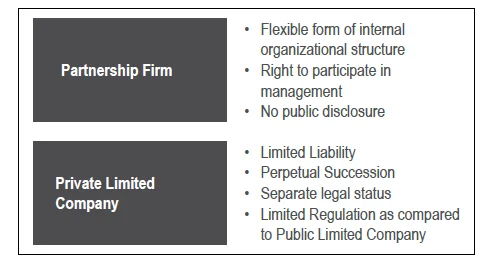
 President Raman Jokhakar welcomed the speaker, Senior Advocate Mr. Vikram Nankani, an eminent speaker on the subject to throw light on the amendments of the changes by the Finance bill 2016.The lecture meeting commenced with the launch of the new publication of the Society “Partnership Firms – Registration Procedure and Frequently Faced Issues with Registrar of Firms” by Mr. Uday Sathaye, Past President of the Society. The book was launched by the speaker Mr. Nankani.
  Professionals like CA’s, Advocates, Businessmen are finding it difficult to Register Partnership Firms with Registrar of Firms in Maharashtra due to various issues. This process of registration involves submission of documents and the careful adherence to a procedure which has been laid down.
 His address was followed by the interactive session wherein the panel of RBI officers provided views on the written queries provided to them in advance. The queries covered all important areas of FEMA including those dealing with ODI, FDI, LRS, ECB and Trade transactions. The Officers answered the queries and also dealt with several questions from the audience.
 The post lunch technical sessions was on “Trade Transactions” by Mr. Shabbir Motorwala who succinctly covered the vast subject in the time available with him. The last session was on “ECBs” wherein Mr. Kumar Saurabh Singh covered the recent amendments in the ECB policy and also dealt with the other financing routes available to borrowers. Both the speakers answered queries from the audience and covered the subjects in significant detail. The Conference was received well by all present.
  It was once again a proud moment for BCAS and BCAS Foundation to organise a music concert “Udat Abeel Gulal”, together with a few other organisations at Bharatiya Vidya Bhavan on 19th March, 2016 in aid of Dilasa Sanstha, an NGO engaged in relief work for drought affected farmers of Maharashtra. Attended by a large audience, it started with jugalbandi of Santoor and Saraswati Veena by Shri Snehal Muzoomdar, Maithili Muzoomdar on Santoor and Shri Narayan Mani on Saraswati Veena respectively, accompanied by a team of virtuoso musicians and interspersed with Vedic chants by Ved Pandit Dr. Narasimha Ghanpatigal. Explaining the theme “Bairagi se Basant”, Compere Mihir Sheth vividly created background atmosphere for celebration of spring with quotes from Kalidasa and Rig-Veda. Narrating the ethos of the theme and quoting medieval poet Maagh, he said when season of Basant arrives, its enchanting beauty feels us with a sense of bliss, Abeel and Gulal colour our lives, the fire of Holi protects our lives, give us the prosperity and hence, we all invoke Firegod Agni as narrated in Agnisooktam in Rig-Veda whose hymns are often chanted in raga Bairagi.
  The Jugalbandi started with raga Bairagi rendered on Santoor and Saraswati Veena interspersed with chanting of Vedic hymns and then deftly moved on to raga Basant and Kafi, which are the popular ragas of the Basant season, accompanied by vocalists Shraddha Shridharni in Hindustani style and Nupur Joshi in Carnatic style. Both the vocalists recreated magic with their rendition of poet Nanhalal’s poems so ably composed by Snehal Muzoomdar. Fine balance of melodious music with perfect percussion and dramatic entry of vocalists on the stage left the audience completely mesmerised when it reached the crescendo in the end.
  The Human Development & Technology Initiative Committee continued with the annual CSR activity of supporting Eye Camp for the tribals and the needy people from the rural area surrounding Vansda, Dist. Navsari.
  The Committee had set a target of one Eye Camp with a Budget of Rs.51,000/- for cataract surgery of 51 patients. However, with divine grace and kind support of all donor friends, it was able to collect Rs.2,17,200, which can take care of 217 patients i.e. little over four Eye Camps.


