Subscribe to the Bombay Chartered Accountant Journal Subscribe Now!

FROM THE PRESIDENT

fiogf49gjkf0d
Dear members of BCAS family,

Appearing for any of the CA exams? I am not going to wish you luck, for I don’t believe in luck. Let me instead extend my congratulations to you for choosing this profession. It is one of the most respected, versatile and lucrative professions. I say this with confidence as I have received all this thanks to my being a CA. This profession has given me a solid grounding. It is not superficial. Thanks to the hours put in for the exams, I have proved to myself that I can work very hard if the situation calls for it. A very important aspect in my future career. All the juggling that we, as CA students, have to do between the library, coaching classes, office and then yet being socially active, teaches us the need for planning and prioritising. This is something that all successful people do all the time. It is thanks to the solid grind that this profession has given me, which encompasses self-study, articleship and tough exams, that I have benefitted a lot. That’s the power of the reputation of this course.

But for me the most important gain was the in-depth exposure to the businesses of my clients during articleship and thereafter. While the curriculum gave me financial acumen, I learned commerce from client interaction. This came in good stead when I headed business units for an MNC. Today, CAs can be seen in all walks of life. “Versatile CA” as the BCAS calendar for this year says. Mr. Nandan Nilekani – in politics and in the legislature, Mr. Shekhar Kapoor – in the film industry, Mr. Deepak Parekh -in the banking industry, Mr. Prannoy Roy and Mr. Ronnie Screwvala – in the media, to name a few. All these luminaries are CAs.

All of them went through the same rigmarole as I did and now you will. They had a dream and so do you. They worked hard and smart at the same age as you all are today. Are you willing to work hard too?

Recently we had Mr. Nilesh Vikamsey speak to over 400 students on how to study for the exam. He gave some excellent practical tips and tricks. The video is available on BCAS WebTV. Please do view it.

My daughter is appearing for her IPCC this May. As a father, I am pained to see her put in so many hours preparing for her exams. I am aware of so many parties, outings and other programmes she gives a skip. She doesn’t show it but I am sure she must be sad and somewhere deep down has doubts. Both, on whether she can clear her exams and whether all this is worth it. Fortunately, I am a CA and having gone it through myself, I know exactly what her state of mind is. But seeing her toil so much, much more than I did, I am confident she will triumph. If it is of any solace, let me tell you that sadly every CA student goes through this state of mind. And when you clear the exam all that is forgotten. You walk taller.

Hard work never killed anyone. But hard work has a pattern. Our bodies are designed to withstand hardships when we are young and healthy. With age, your ability to work hard diminishes. The smart people recognise this and put in as much hard work in their younger age and reap benefits of that as they grow older. Even if you want to one day at the age of 50 decide that now you will work hard, your body will not support you. So while you could and had no need, you didn’t and when you needed and were willing, the body failed you. Think what is smarter.

That doesn’t mean that it should be all work and no play. But what is the right balance? Should play be a reward for all the hard work or should hard work be a filler between the partying? If you take the 16-17 hours of your waking time, how much of these can be devoted to studies? Are 9-10 hours too much? The average hours put in daily by a working individual are over 10 hours. The really ambitious ones do this and more, easily and happily. Take any successful person as an example. Would Sachin Tendulkar have been the world’s best and most revered cricketer if not for the hours of practice he put into the sport at a very young age? At the start of his career, Shah Rukh Khan slept on the streets of Mumbai and worked day in and out to now become known as the King Khan. Till date he is reputed to be a workaholic. Dhirubhai Ambani was born in a middle class family. He made the famous Ambani family. He started working towards his goal from a very young age.

If you are appearing for the exams this May then you have already dreamt of being a CA, invested some time in either self-study or attending coaching classes, many of you even cleared IPCC and started articleships. But you have developed self-doubts; confidence is wavering, frustration setting in. Right? This is no time for such emotions. I urge you to not give up now. In fact, give it your best. Study like you have never studied before. Work hard. Take care of your health. Indulge in your favourite activities to refresh your minds. Eat well. Sleep well. Hug your parents. Pray not for results, but the ability to work hard. Assume the results will be just 3% again and believe you will be part of that 3%. Go watch Chak De! again. Watch that motivational speech again and again. He who perspires in practice bleeds not in war. If you dream of heaven, be prepared to die for it.

May I request all my CA friends reading this, to convey this message to their article students in their office and outside.

I once again compliment all the students. Yashasvi Bhavva.

Here’s wishing everyone happiness and love.

With Warm Regards
Naushad A. Panjwan

levitra

Miscellanea

1. Spiritual


1.      
When You Are Aware, Life Is a
Movement of Joy


Someone met me recently and said, “I find it
difficult to listen to my spouse; he speaks so much, most of the time, I don’t
understand what he is saying.” I told her, “Listening to your spouse is like
reading the terms and conditions of a freeware you want to download from the
internet. It is long, and you don’t understand much, but still you click on
agree.” In the same way, to build a rapport with your spouse, just agree, and
when he calms down, try to discuss. Next time, when you find your spouse giving
a long lecture, and you need to convince him, do not be in a hurry. Wait for an
opportunity to explain your point of view.


We should learn the art of handling
difficulties gracefully. There is no one way. We have to be alert and let the
purity of alertness and goodness to guide you in handling difficult situations.
Our past knowledge is trapping us often. At the same time, we have to transform
gracefully. Our past should be a point of reference for increased awareness,
rather than a block.


Our past knowledge, conclusions, opinions,
hurts; they influence our listening and thinking. Our unconscious is leading
our life mechanically. When we are alert, we become conscious of our
unconscious and that enables us to lead a better life instead of bitter life.


Are you conscious of the fact that one is
unconscious to oneself? You say this is mine or that is mine. But, if you are
alert and conscious, you will realise that all that you have said as ‘mine’ is
not yours. You are riding a dream.


What you think is mine is not in the true
sense yours. You are using them for your need in a remarkably subtle sense. You
say your son is yours, for you have a dream that he will do this and that to
you. But, your son also has a dream and he feels this or that will make him
complete. So, one is using the other for fulfilling one’s dream, and in that
sense wants others to serve him.


All things and persons can be snatched away
from you, and what is capable of being snatched away is not yours. What cannot
be snatched away from you is your consciousness. Your body is given to you by
your parents. Your knowledge is given to you by books and other sources. These
can be snatched away from you.


Only our consciousness is intrinsically
ours, and in the true sense, we are not unaware what this consciousness is. We
are unconscious of our consciousness. When we are dependent on the things that
can be snatched away, and when it is snatched away by time, we feel cheated and
betrayed. It is our error in understanding.


If one understands that all things are
capable of being snatched one will not depend on it emotionally. Hence emotions
will have clarity and is free. You will be a giver of life, and not a beggar of
life. You will put your energy in understanding yourself, and when you
understand yourself as conscious, you will realise this consciousness, which is
your nature, is fullness and completeness. With fullness when you live life,
your life will be a movement of joy and not wanting joy.


(Source: Times of India dt 14.03.2017)


2. 
Social


2.      
Hawking won the world’s respect
– and gave disabled people like me hope – Frances Ryan


Growing up disabled, I had few role models.
But this brilliant, witty scientist helped shift the negative stereotypes many
face. As with most of the famous figures whose passing now hits us via a news
alert on our phones, I never met Stephen Hawking. In the vastness of the entire
universe, you could say I was one speck and he was another. And yet I thought
of him as a continual presence in my life, who – perhaps paradoxically, in the
light of his illness, not to mention of his work on time – would always be
there, somehow.


Growing up disabled in Britain, I didn’t
have many role models. There are hardly any statues of disabled leaders, no
great lives with chronic disability documented in the history books. As a
child, it’s easy to believe that disabled people have never really existed, and
that when they did, it was as cripples to be pitied or burdens on society. In
Hawking, we had a figure – brilliant, witty, kind – who confounded the negative stereotypes and the low expectations
so often forced on those of us with a disability.


He wasn’t without faults (accusations of
sexism were notable). He was also afforded opportunities – from wealth to
healthcare to being non-disabled throughout school – that clearly enabled his
success, opportunities too few young disabled people, facing cuts to multiple
strands of support, enjoy today. But his groundbreaking research, as well as
tireless commitment to the NHS and concern over Brexit, established him as
someone who, though physically stripped of his voice, should be listened to.


In the rush to eulogise a figure such as
Hawking the risk is that the media coverage either fails to acknowledge his
disability – and to ignore him being a disabled person is as regressive as a
white person saying they “don’t see colour” – or falls into condescending
cliches and objectification. Within hours of the news of his death breaking, I
saw headlines that reflected the (often well-intentioned) negative attitudes
that so often plague discussions of disabled people: ones of “inspiration”,
“overcoming disability” and references to “tragedy”. BBC Radio 5 Live asked
listeners if Hawking had “inspired” them – a question unlikely to be posed
about non-disabled academics. The Daily Mail referred to his “total disability”
while at the other end of the spectrum, John Humphrys used Radio 4’s tribute
segment to ask: “Did the science community cut him a lot of slack because he
was so desperately disabled?”


Even the Guardian’s obituary mentioned how
“despite his terrible physical circumstance, he almost always remained positive
about life”, as if it was a surprise that a world-renowned scientist with a
loving family could ever find happiness. Cartoonists illustrated him in heaven
– a place Hawking did not believe existed – standing up, as if finally free
from his wheelchair (an invention, much like his voice synthesiser, that
actually empowered him to engage with society). Even sentiments such as “He
didn’t let his disability define him” – as Marsha de Cordova, shadow
disabilities minister (and herself disabled) tweeted – verge on repeating the
ingrained belief that disability is an inherently negative thing: a part of
identity that, unlike race or sexuality, should be played down.


This is not to say that Hawking’s disability
didn’t help shape him. The thought that he had a sharply limited life
expectancy – it was originally believed he would die within two years of his
motor neurone disease diagnosis – by all accounts inspired Hawking to enjoy the
present, and spurred on his hunger for scientific discovery. But to reduce a
world-famous academic’s existence to one of tragedy and pluck respects neither
the reality of a disabled life nor the love, success, humour and fulfilment
that clearly marked Hawking’s. It is reminiscent of the countless “inspirational”
memes and posters that throughout his life featured Hawking’s image – often
using his body as inspiration for non-disabled people (“If he can succeed, so
can you!”) or criticising “lesser” disabled people (“The only disability is a
bad attitude”). Hawking, like all of us, deserves more than lazy, ableist
tropes.


Amid all the tributes to Hawking’s
contribution to scientific discovery, I would like to remember what he
contributed – perhaps unknowingly – to many disabled people: a sense of pride,
encouragement and hope. This was a genius who gained the world’s respect from
his wheelchair. Hawking’s achievements alone will not have begun to overturn
deep-seated prejudice, but he has played a significant part in shifting the
misconceptions that still routinely mark too many disabled people’s lives.
Hawking’s lesser-known lesson is one I hope others growing up disabled will be
left with: we can all reach for the stars.


(Source: www.theguardian.com)


3. World News


3.      
Plastic particles found in
bottled water


Tests on major brands of bottled water have
found that nearly all of them contained tiny particles of plastic. In the
largest investigation of its kind, 250 bottles bought in nine different
countries were examined. Research led by journalism organisation Orb Media
discovered an average of 10 plastic particles per litre, each larger than the
width of a human hair.


Companies whose brands were tested told the
BBC that their bottling plants were operated to the highest standards. The
tests were conducted at the State University of New York in Fredonia.


Commenting on the results, Prof Mason said:
“It’s not catastrophic, the numbers that we’re seeing, but it is
concerning.” Currently, there is no evidence that ingesting very small
pieces of plastic (microplastics) can cause harm, but understanding the
potential implications is an active area of science.


(Source: bbc.com)


4.      
A cheap Chinese TV threatens to
topple LG, Samsung & Sony’s India apple cart


Can Xiaomi replicate its smartphone success
in televisions? Its entry into the segment with TVs priced at as much as half
that of the top three —LG, Samsung and Sony — has taken the market by surprise
over the past few weeks. The leaders don’t yet have a strategy to counter the
Chinese company’s disruptive pricing, four senior industry executives said,
asking not to be named.


“While it’s a wait-and-watch scenario right
now, we have been asked to keep our ears to the ground to closely track
Xiaomi,” said a senior executive with one of the largest television makers.
“The scope to react right now is also limited for they are selling models at
almost throwaway prices which, if we have to match, it will completely disrupt
the pricing strategy.”


In less than a month of its foray into
televisions, Xiaomi has launched 32-inch, 43-inch and 55-inch models — sizes
that together account for 80% of the total television market by volume.


Its 32-inch set is sold at Rs.13,999
compared with a starting price of Rs. 24,000 for a similar specification model
from one of the three top brands. The 43-inch set is priced at Rs. 22,999
compared with Rs. 36,000-plus for a rival model while in the 53-inch segment,
Xiaomi’s model is tagged at Rs. 39,999, about half that of one from the top
three. The executives cited above said the top three brands are hoping that the
Chinese company won’t be as successful in TVs as the business calls for sales
and servicing strategies that differ from those for handsets.


(Source: gadgetsnow.com)


5.      
Wipro chairman unveils 3D metal
printing facility in Bengaluru


Global software major Wipro’s three
dimensional (3D) metal printing facility was unveiled by its Chairman Azim
Premji in this tech hub on 14 March. “The 12,000 sq.ft. centre has various
capabilities that include building up technology, post-processing, research,
characterisation and validation facilities,” said the city-based IT major
in a statement here. The company, however, did not disclose the cost of this
high-tech facility.


The software major’s 3D printing business
unit, Wipro3D, has been providing services to aerospace, space, industrial,
automotive, healthcare, oil and gas and heavy engineering sectors in the
country. Wipro3D was set up in 2012 here under the Wipro Infrastructure
Engineering, a hydraulic cylinder manufacturing unit of the software major. The
company soon plans to take its 3D printing services across the world, said the
statement, although no details were specified of its expansion plans.


(Source: firstpost.com)  

Ethics And U

Shrikrishna (S) — Arey Arjun, I am waiting here for you since long.  You were to come at 5.  It is already 5.45.
 
Arjun (A) — Very sorry, Bhagwan.  Got held up in income tax office.

S — Why?  Now all scrutiny assessments must be over. April is a relaxing month.  Isn’t it?

A — For CAs, there is no relaxation at all.  We have to work like     donkeys.  There is so much harassment for recovery of tax.Clients’ accounts are attached, prosecution notices are being issued like a child’s play.
.
S — Is it?  Why prosecution? 

A — The less said the better. I.T. authorities have innovative brains. They are always searching for new avenues to harass the assessees.  And the entire burden falls on CAs – with no fees!

S — Anyway!  That’s a permanent headache of our country.

A — I feel, bureaucracy does not want transparency.  They don’t want discipline and digitalisation.

S —  Why?  That will reduce their workload.

A — But they may be having vested interests in allowing the state of confusion to continue. They may be interested in manual intervention, for reasons best known to them!

S — That’s an endless subject.  Last time, we discussed the preliminaries of NFRA.

A — Yes.  I remember.  Now I am worried about bank audits. Days are very bad for CAs.

S — I agree.  CAs are projected to be main culprits in all financial frauds.  That’s unfortunate.  But sometimes, you CAs also behave very loosely.

A — What do you mean?  We work round the clock – with no family life.  And we are the most underpaid profession.

S — May be!  But you don’t follow even simple systems.  First and foremost is the time discipline.  You people are never on time!

A — It is partly true.  But we are always at the mercy of others!

S — You have made yourselves vulnerable; always a soft target.  You have allowed yourselves to be taken for granted.

A — What to do?  Business community is so dominant!  We can’t afford  to say ‘no’ to them.  They simply go away and catch hold of another CA.

S — That’s the pity.  You lack unity.  You come together for academic discussions; but never for collective action!  And you have developed a habit of ‘managing’ everything.

A — Yes.  Even CPE hours we try to ‘manage’.  But the recent episode of bank frauds has caused turmoil in the profession.  I wonder whether I should do any bank audit at all!

S — If you act methodically, you should have nothing to fear from.

A — But they don’t allow us to work systematically. There are strict timelines.  A big branch to be audited in barely 3 to 4 days.  And no one co-operates.  Poor branch manager alone has to face the music.

S — But what prevents you from keeping your own papers right?  Tell me, do you write to previous auditor?

A — Why should we write?  Appointment is made by RBI or the Board of a nationalised bank.

S — My dear, Arjun.  There is no exception to clause (8).  Whosever appoints you, whatever be the organisation, and whatever be the type of audit, writing to previous auditor is a must.

A — But then how can we meet the deadline if we wait for his reply?

S — In this particular context, you need not wait; but writing you cannot avoid.

A — I must keep this in mind.

S — Moreover, you don’t keep working papers.  You know that the work should not only be done; but it should be seen to be done.  And while doing audit, you should always have professional  skepticism.

A — What is that?  You mean we should suspect everything?

S — No.  Not that way.  But you cannot afford to accept everything in good faith and at face value.

A — But when reputed organisations produce documents before us, how can we disbelieve that?

S — But you should learn to verify independently the truth of every statement of a client.  He should get a feeling that you verify every document, it has a psychological impact.  And when there is  slightest of suspicion, you should take it to its logical end.

A — What you say is right.  Very often, we just leave it like that. We avoid to escalate the matter.

S — Do you ensure that your assistants are properly trained?  Tell me, have you ever read the Standards on Auditing?

A — You mean SAs?

S— Yes.  I believe, most of you carry out the audit just by common sense, without studying the relevant material properly.  You never make efforts to upgrade yourselves.  Do read SA 200 and SA 240 before you do any audit now.

A — But we really slog.  We do the work sincerely.  And there is no time for documentation and correspondence.

S — That is precisely where you lack.  Documentation is a must.

A — I know.  There are many big firms. They do not really do much indepth audit; but merely compile thick files of working papers.They command fat fees.  All these laws and ethics, I feel, apply only to small people like us.  After all, might is right.

S — Don’t say so.

A — I have a few friends who have affiliations with some foreign firms and they enjoy the brand, they do advertising under the corporate shield, they do anything they like.  Nobody is going to ask them in our country.

S — Arjun, I understand your grievance.  But don’t worry.  Now Supreme Court has taken serious cognizance of all these activities of Multinational firms.

A — Oh!  When was that?  Good, Good.  Tell me some details.

S — Supreme Court delivered its decision on 23rd February, 2018. Very detailed discussion.  I suggest you read it yourself.  But don’t read it just for fun.  Learn something from it and try to implement the basic principles of ethics.

A — O Lord!  I always obey your commands!

!!OM Shanti!!

Note:
This dialogue is in the context of recent scandal of PNB, ensuing bank audits and also the Hon’ble Supreme Court decision in respect of Multinational Accounting Firms (MAFs). – Civil Appeal No. 2422 of 2018 [Arising out of Special Leave Petition (civil) no. 1808 of 2016].

Corporate Law Corner

1. Yenugu Krishna Murthy vs. UOI

W.P. Nos. 7819, 7820/2018 and 7821/2018 (GM-RES)

Date of Order: 26th February, 2018


Section 164(2) read with section 167 of the
Companies Act, 2013 – The said section is constitutionally valid – Validity of
provision of law cannot be questioned merely because it operates a little
harshly on the directors of defaulting company


FACTS

Y was a director under the
Companies Act, 2013. His DIN status appeared as “disqualified” on the website
of Ministry of Corporate Affairs. The reason for the same in brief was
“Violated Section 164(2)(a)”. Y admittedly, did not seek a copy of
the order from the Registrar Of Companies (“ROC”). Further neither had he approached
ROC nor was he served any show cause notice or adjudication order u/s. 164(2)
of Companies Act, 2013 (“the Act”). 


Before the High Court, it
was urged that directors were put in a very piquant and irreparable situation
and even if, disqualification on account of non-filing of financial statements
and Annual Returns in one company does take place for which they may not be
personally liable, they incur the ‘disqualification’ u/s. 164(2)(a) of the Act
and they are deemed to have vacated the office of the director in other such
companies also as per section 167 of the Act.


HELD

The High Court held that
the writ petitions in the instant case were premature as the directors did not
even try to approach the appropriate authority under the Act, namely, the ROC,
seeking even a copy of the order u/s.164(2)(a) of the Act, which might have
been passed by it. In absence of adequate facts the High Court could not
conclude whether Y was at fault or not; whether he had brought the relevant
facts to the notice of the ROC or not.

If Y had approached the ROC
with the relevant facts, it would be duty bound to pass a reasoned and speaking
order. ROC has the quasi-judicial powers and an obligation under the Act to
pass such appropriate orders in the matter.


As far as constitutional
validity of sections were concerned, the High Court observed that provisions
could not be held to be illegal, unconstitutional or ultra vires merely
because they may operate harshly against the Directors of the defaulting
company. It observed that the academic questions or the legislative wisdom is
not the subject matter to be decided by the Courts of law unless such questions
are raised in properly instituted cases, based on proper factual foundation of
the case.


Accordingly, the writ
petitions were dismissed by the Court.


2. Dr. Reddy’s Research Foundation vs. Ministry of Corporate
Affairs

[2018] 142 CLA 351 (AP HC)                                        

Date of Order: 6th October, 2017


Rule 14 of the Companies (Appointment and Qualification of
Directors) Rules, 2014 – There is a lacuna in the procedure that is required to
be followed by the Companies, which are defaulted in filing their annual
returns and the consequent disqualification of the Directors to rectify the
defect.


FACTS

D Co had failed to furnish
annual returns for the years 2011-12 to 2015-16 and financial statements for
the years 2012-13 to 2015-16. Consequently, the directors of the company were
disqualified to act as directors under the provisions of Companies Act, 2013.

Rule 14 of the Companies (Appointment
and Qualification of Directors) Rules, 2014, prima facie provides for
rectifying the defect by enabling the defaulting companies to file their
returns. The company will have to act through its Directors in order to do so.
However, as the directors are disqualified, they are not able to file these
returns because the e-platform through which this is required to be done cannot
be accessed owing to the disqualification.

D Co thus, approached the
High Court seeking remedy for the inherent inconsistency.


HELD

The High Court observed
that there is a lacuna in the procedure that is required to be followed by the
Companies, which are defaulted in filing their annual returns and the
consequent disqualification of the Directors to rectify the defect.


Taking a note of the
anomalous situation, the High Court directed that the DIN of the directors be
restored in respect of D Co so that they are able to submit the returns in
accordance with Rule 14.


3. Power Grid Corporation of India Ltd. vs. Jyoti Structures Ltd.

[2018] 142 CLA 285 (Del HC)                                        

Date of Order: 11th December, 2017


Section 14 of the Insolvency & Bankruptcy Code, 2016 read with
section 34 of Arbitration And Conciliation Act, 1996 – Proceedings u/s. 34 of
Arbitration Act which are in favour of corporate debtor would not be stayed
even though a moratorium has been granted to such corporate debtor.


FACTS

Arbitral tribunal had given
an award dated 20.05.2016 which was in the nature of pure money decree in
favour of J Co. Counter claim of P Co had been rejected by the Arbitrator and
claim of J Co was upheld. During the pendency of these proceedings u/s. 34 of
the Arbitration And Conciliation Act, 1996, (“Arbitration Act”) an application
u/s. 7 of the Insolvency and Bankruptcy Code, 2016 (“the Code”) was filed by a
financial creditor against J Co. Through an order dated 04.07.2017 the National
Company Law Tribunal (“NCLT”) admitted the application and declared a
moratorium in terms of section 14 of the Code.


P Co filed a petition u/s.
34 of the Arbitration Act claiming that proceedings under said section be kept
in abeyance in terms of embargo contained under section 14(1)(a) of the Code.


HELD

The High Court having read
the provisions of section 14(1) of the Code observed that the term ‘proceedings’
as is mentioned in section 14(1)(a) of the Code is not preceded by the word
‘all’ to indicate the moratorium provisions would apply to all the proceedings
against the corporate debtor. The High Court relied on the report of the
Bankruptcy Law Reforms Committee which demonstrated that moratorium is to apply
to recovery actions and filing of new claims against the corporate debtor and
the purpose behind moratorium is that there should be no additional stress on
the assets of the corporate debtor.


It was argued that once the
moratorium comes into effect, no proceedings against the corporate debtor may
continue. However, the High Court held that it was important to consider the
nature of these proceedings.  Stay of
proceedings against an award in favour of the corporate debtor would rather be
stalking the debtor’s effort to recover its money and hence would not fall in
the embargo of section 14(1)(a) of the Code.


It was held that
proceedings would not be hit by section 14 of the Code due to following
reasons:


(a)  “ ‘proceedings’ do not mean ‘all proceedings’;


(b)  moratorium under section 14(1)(a) of the Code
is intended to prohibit debt recovery actions against the assets of corporate
debtor;


(c)  continuation of proceedings under section 34
of the Arbitration Act which do not result in endangering, diminishing,
dissipating or adversely impacting the assets of corporate debtor are not
prohibited under section 14(1)(a) of the Code;


(d)  the term ‘including’ is clarificatory of the
scope and ambit of the term ‘proceedings’;


(e)  the term ‘proceeding’ would be restricted to
the nature of action that follows it i.e. debt recovery action against assets
of the corporate debtor;


(f)   the use of narrower term “against the
corporate debtor” in section 14(1)(a) as opposed to the wider phase
“by or against the corporate debtor” used in section 33(5) of the
Code further makes it evident that section 14(1)(a) is intended to have
restrictive meaning and applicability;


(g)  the Arbitration Act draws a distinction
between proceedings under section 34 (i.e. objections to the award) and under
section 36 (i.e. the enforceability and execution of the award). The
proceedings under section 34 are a step prior to the execution of an award.
Only after determination of objections under section 34, the party may move a
step forward to execute such award and in case the objections are settled
against the corporate debtor, its enforceability against the corporate debtor
then certainly shall be covered by moratorium of section 14(1)(a).”


Once the
moratorium is declared the decision to continue with the objections need to be
taken only by the Resolution Professional. The High Court observed that in the
peculiar circumstances of this case where a counter claims was preferred by the
objector, though rejected, it would be appropriate if the interim resolution
profession be made aware of the proceedings and he consents to its
continuation.


Allied Laws

1.      
Naina Kala Sharma and Ors. vs.
Deepak Kumar Rai AIR 2018 (NOC) 4 (SIK.)


Hindu Law – Coparcenary – Suit for
Partition – Cannot demand share in Father’s property when self acquired. [Hindu
Succession Act, 1956 S.6]


The case of the Appellants is that the
Appellant No. 1 was married to the Respondent in the year 1993 and Appellants
No. 2 and 3 were born from the wedlock. A property(suit land) was gifted to
Appellant no. 1 by her father.


The issue was whether the Appellants no. 2
and 3 have any right, title or interest over the Suit land and the building
constructed thereon?


It was argued that the Mitakshara concept of
coparcenary is based on the notion of the birthright of son, son’s son and
son’s son’s son.


It was observed by the Court that the
daughter has also been made coparcener by virtue of Hindu Succession
(Amendment) Act, 2005.


It was held that the Law laid down in
Mitakshara in regard to father’s right of disposition of his self acquired
property, held that the father of a joint Hindu family governed by Mitakshara
law has full and uncontrolled powers of disposition over his self-acquired immovable
property and his male issue could not interfere with these rights in any way.


Hence, no rights were conferred to
Appellants No. 2 and 3 for partition, in view of the property being the self
acquired property of the Respondent.


2.      
Naveen Kumar vs. Vijay Kumar
And Ors Civil Appeal No. 1427 of 2018 (Arising out of SLP (C) No.18943 of 2016)
(SC)


Owner – As appearing on records – Liable to
pay compensation. [Motor Vehicles Act, 1988, S.2(30)]


In the present case, an accident had taken
place where the Tribunal had granted an award holding the first
respondent(original owner/first owner) responsible together with the driver. It
was contended that there were a series of transfers which took place, however,
the name in the records were not changed/altered.


It was observed by the apex court that the
expression ‘Owner’ in section 2(30), it is the person in whose name the motor
vehicle stands registered who, for the purposes of the Act, would be treated as
the ‘owner’. However, where a person is a minor, the guardian of the minor
would be treated as the owner. In a situation such as the present where the
registered owner has purported to transfer the vehicle but continues to be
reflected in the records of the registering authority as the owner of the
vehicle, he would not stand absolved of liability.


The principle underlying the provisions of
section 2(30) is that the victim of a motor accident or, in the case of a
death, the legal heirs of the deceased victim should not be left in a state of
uncertainty. A claimant for compensation ought not to be burdened with
following a trail of successive transfers, which are not registered with the
registering authority. To hold otherwise would be to defeat the salutary object
and purpose of the Act. Hence, the interpretation to be placed must facilitate
the fulfilment of the object of the law.


It was held that since in the present case,
the First respondent was the ‘owner’ of the vehicle involved in the accident
within the meaning of section 2(30), the liability to pay compensation stands
fastened upon him.


3.      
Gurbax Singh vs. Harminderjit
Singh AIR 2018 (NOC) 136 (P. & H.)


Registration – Period of Lease –
Admissibility. [Transfer Of Property Act, 1882, S.106, 107]


It was contended that since the lease
agreement was not specifically shown to be for a period of more than one year,
it was therefore not required to be compulsorily registered.


It was observed that a perusal of section
107 of the T. P. Act shows that any instrument by which a lease of immovable
property is created, either from year to year, or for any term exceeding one
year, or by which a yearly rent is reserved, must only be a registered
instrument.


Any other lease may either be by way of a
registered instrument or even by oral agreement accompanied by delivery of
possession. The proviso to section 107 does stipulate that the State Government
may by notification in the official gazette direct that leases of immovable
property other than leases from year to year or even for any term exceeding one
year or reserving an yearly rent, may be made by unregistered instrument, or
orally, even without delivery of possession. However, no notification issued by
the Government of Punjab has been brought to the notice of this Court by
learned counsel for the appellant, by which any lease as is required to be
registered u/s. 107, is exempted from being so registered.


In the facts of the case, since there was a
rent increase every 15 years by 3%, it was deemed that the lease agreement was
executed for a term exceeding 1 year and hence was supposed to be compulsorily
registered.


4.      
The State of Jharkhand and Ors.
vs. Lalita Devi Kejriwal and Ors. AIR 2018 JHARKHAND 7


Registration – Where properties are
situated. [Registration Act, 1908 (S.30)]


It was held that the registration of
properties in Mumbai, which were situated in Ranchi, was in utter violation of
section 30 of the Indian Registration Act 1908 as amended by Bihar Amended Act,
1991. By virtue of this amendment in Indian Registration Act, 1908, the
documents of sale or transfer of the properties must be registered at the place
where the immovable property is situated.


5.      
The State of Jharkhand and Ors.
vs. Lalita Devi Kejriwal and Ors. AIR 2018 JHARKHAND 7


Sale – Late mutation of name – Non-joinder
of co-sharer – Unregistered Letter – Invalid [Transfer of Property  Act, 1882, S.47]


It was observed that mutation of the names
after registration did not take place for as long as a period of 5 years.
Further, a letter written by the owner of the plots in question was also relied
upon, of which no evidence was provided. Neither the co-sharers joined as
parties to the suit. After taking into consideration the factual matrix as
above, it was held that the sale deed was not valid.


From Published Accounts

Audit Reporting as per revised

Standard on Auditing (SA 701)


Compilers’ Note


The
International Auditing and Assurance Standards Board (IAASB) has issued revised
and new International Standards on Auditing (ISAs) for audit reporting. These
audit reporting ISAs are applicable for all reports issued after 15th
December 2016 onwards.


With a view
to align the Standards on Auditing (SAs) in India, ICAI has also issued revised
reporting standards which are effective for audits of financial statements for
periods beginning on or after April 1, 2017. The said date was subsequently
deferred by 1 year to now become effective for audits of financial statements
for periods beginning on or after April 1, 2017. ICAI has also, in March 2018,
issued an implementation guide to SA 701.


One of the
key features of the revised audit reports is the inclusion of a paragraph
called “Key Audit Matters” (KAM). KAM are defined as those matters that, in the
auditor’s professional judgement, were of most significance in the audit of the
financial statements of the current period. KAM are selected from matters communicated
with TCWG.


Given below
are 2 illustrations of the KAM paragraph included in the audit reports for the
year 2017 of two entities listed overseas.


Unilever N.V. / PLC

Key Audit
Matters –       Consolidated Financial
Statements


Recurring risks     Revenue recognition

                            Indirect
tax contingent liabilities

                            Direct
tax provisions

Event driven         Business combinations –

                            Carver

                            Disposal
of  Spreads business –
                            presentation
in the financial statements


KEY AUDIT
MATTERS: OUR ASSESSMENT OF RISKS OF MATERIAL MISSTATEMENT

Key audit
matters are those matters that, in our professional judgement, were of most
significance in the audit of the Financial Statements and include the most
significant assessed risks of material misstatement (whether or not due to
fraud) identified by us, including those which had the greatest effect on: the
overall audit strategy; the allocation of resources in the audit; and directing
the efforts of the engagement team.


We summarise
below the key audit matters, in decreasing order of audit significance, in
arriving at our audit opinions above, together with our key audit procedures to
address those matters and, as required, where relevant, by law for public
interest entities, our results from those procedures.


These
matters were addressed, and our results are based on procedures undertaken, in
the context of, and solely for the purpose of, our audit of the Financial
Statements as a whole, and in forming our opinion thereon, and consequently are
incidental to that opinion, and we do not provide a separate opinion on these
matters
.


The
Risk

Our
Response and results

Revenue
recognition

Refer
to page 41 (Report of the Audit Committee), page 93 (accounting policy) and
pages 94 to 95 (financial disclosures).

Revenue is measured net of
discounts, incentives and rebates earned by customers on the Group’s sales.
Within a number of the Group’s markets, the estimation of discounts,
incentives and rebates recognised based on sales made during the year is
material and considered to be complex and judgemental. Therefore, there is a
risk of revenue being misstated as a result of faulty estimations over
discounts, incentives and rebates. This is an area of significant judgement
and with varying complexity, depending on nature of arrangement.  There is also a risk that revenue may be
overstated due to fraud through manipulation of the discounts, incentives and
rebates recognised resulting from the pressure local management may feel to
achieve performance targets.


Revenue is recognised when
the risks and rewards of the underlying products have been transferred to the
customer. There is a risk of revenue being overstated due to fraud resulting
from the pressure local management may feel to achieve performance targets at
the reporting period end.

Our
procedures included
:

u Accounting
policies
: Assessing the appropriateness of the Group’s revenue
recognition accounting policies, including those relating to discounts,
incentives and rebates by comparing with applicable accounting standards;

u Control
testing
: Testing the effectiveness of the Group’s controls over the
calculation of discounts, incentives and rebates and correct timing of
revenue recognition;

u Tests
of details
: Obtaining supporting documentation for sales transactions
recorded either side of year end as well as credit notes issued after the
year end date to determine whether revenue was recognised in the correct
period.

u Within a number of the Group’s markets,
comparing current year rebate accruals to the prior year and, where relevant,
completing further inquiries and testing.

u Agreeing a sample of claims and rebate
accruals to supporting documentation.

u Critically assessing manual journals posted
to revenue to identify unusual or irregular items;

u Our
sector experience
: Challenging the Group’s assumptions used in estimating
rebate accruals using our experience of the industry in which it operates;

u Expectation
vs. outcome
: Developing an expectation of the current year revenue based
on trend analysis information, taking into account historical weekly sales
and returns information, and our understanding of each market. We compared
this expectation against actual revenue and, where relevant, completed
further inquiries and testing; and

u Assessing
disclosures
: Considering the adequacy of the Group’s disclosures in
respect of revenue.

u Our
results

The results of our testing
were satisfactory and we considered the estimate of the accrual relating to
discounts, incentives and rebates and the amount of revenue recognised to be
acceptable and recorded in the correct period.

Indirect
tax contingent liabilities

Refer
to page 41 (Report of the Audit Committee), page 131(accounting policy) and
page 132 (financial disclosures).

Contingent liability
disclosures for indirect tax require the directors to make judgements and
estimates in relation to the issues and exposures. In Brazil, one of the
Group’s largest markets, the complex nature of the local tax regulations and
jurisprudence make this a particular area of judgement.

Our
procedures included:

u Control
testing
: Testing the effectiveness of controls around the recording and
re assessment of indirect tax contingent liabilities;

u Our
tax expertise:
Use of our own local indirect tax specialists to assess
the value of the contingent liabilities in light of the nature of the
exposures, applicable regulations and related correspondence with the
authorities;

u Enquiry of lawyers:
Assessing relevant historical and recent judgements passed by the court
authorities in considering any legal precedent or case law, as well as
assessing legal opinions from third party lawyers and obtaining formal
confirmations from the Group’s external counsel, where appropriate; and

u Assessing disclosures:
Considering the adequacy of the Group’s disclosures made in relation to
indirect tax contingent liabilities.

u Our
results

The results of our testing
were satisfactory and we considered the indirect tax contingent liability
disclosures to be acceptable.

Direct
tax provisions

Refer
to page 41 (Report of the Audit Committee), page 105 (accounting policy) and
pages 105 to 107 (financial disclosures).

The Group has extensive
international operations and in the normal course of business the directors
make judgements and estimates in relation to transfer pricing tax issues and
exposures. This is a key judgement due to the Group operating in a number of
tax jurisdictions, the complexities of transfer pricing and other
international tax legislation.

Our
procedures included
:

u Control testing:
Testing the effectiveness of the Group’s controls around the recording and
re-assessment of transfer pricing provisions;

u Our tax expertise: Use
of our own tax specialists to perform an assessment of the Group’s related
correspondence with relevant tax authorities, to consider the valuation of
transfer pricing provisions;

u Challenging the assumptions using our own
expectations based on our knowledge of the Group, considering relevant
judgements passed by authorities, as well as assessing relevant opinions from
third parties; and

u Assessing disclosures:
Considering the adequacy of the Group’s disclosures in respect of tax and
uncertain tax positions.

Our
results

u The results of our testing were
satisfactory and we found the level of tax provisioning to be acceptable.

Business
combinations –

Carver

Refer
to page 41 (Report of the Audit Committee), page 132 (accounting policy) and
pages 132 to 135 (financial disclosures).


On 1st November
2017, the Group acquired approximately 98% of the share capital of Carver
Korea for €2.28 billion, recognising identifiable assets and liabilities
acquired at fair value. The measurement of the assets acquired at fair value
is inherently judgemental. In particular, judgement is required in
determining the royalty rate and discount rate to be applied in the relief from
royalty valuation of the acquired brand intangible asset. Small changes in
the royalty rate and discount rate assumptions can have  a significant impact on the valuation of
the brand.


Our
procedures included

u Control testing:
Testing the effectiveness of controls over the review of assumptions used in
the brand valuation;

u Assessing principles:
Assessing the principles of the relief from royalty valuation model;

u Benchmarking assumptions:
Evaluating assumptions used, in particular those relating to: i) the royalty
rate used and ii) the discount rate used; using our own valuation specialists
to compare these rates with externally derived data; and

u Assessing disclosures:
Considering the adequacy of the Group’s disclosures relating to the business
combination.

Our
results

u The results of our testing were
satisfactory and we considered the valuation of the acquired brand to be
acceptable.

Disposal
of Spreads business


presentation in the financial statements

Refer
to page 41 (Report of the Audit Committee), page 136 (accounting policy) and
page 136 (financial disclosures).


On 15th December
2017, Unilever announced that it had received a binding offer to sell its
Spreads business.


The Spreads business
continues to be reported within continuing operations. The related assets
held for sale and liabilities held for sale amount to €3,184 million and €170
million respectively.


The presentation of the
event in the financial statements is an area of judgement, particularly
whether the Spreads business represents a separate major line of business or
component of the Group, and therefore should be presented as a discontinued
operation.

Our
procedures included:

u Control testing:
Testing the effectiveness of the Group’s controls over the presentation of the
event;

u Tests of details:
Inspecting the terms of the Share Purchase Agreement to identify the assets
and liabilities relating to the Spreads business and assess the directors’
conclusion to present them as
held for sale;

u Agreeing the assets and liabilities
presented as held for sale to relevant supporting evidence;

u Testing application:
Assessing the directors’ judgement that the Spreads business does not
represent a separate major line of business, considering quantitative and
qualitative factors such as the financial contribution of the business to the
Group and whether discrete financial information is regularly reviewed by the
Unilever Leadership Executive (ULE); and

u Assessing disclosures:
Considering the adequacy of the Group’s disclosures.

Our
results

u The results of our testing were
satisfactory and we consider the presentation of the Spreads business within
continuing operations to be acceptable.

Investment
in subsidiaries

Unilever N.V.

Refer
to page 148 (accounting policy) and page 150 (financial disclosures).


Unilever PLC


Refer
to page 153 (accounting policy) and page 154 (financial disclosures).


The carrying amount of the
investments in subsidiaries held at cost less impairment represent 87% and
68% of Unilever PLC and Unilever N.V. total assets respectively.


We do not consider the
valuation of these investments to be at a high risk of significant
misstatement, or to be subject to a significant level of judgement. However,
due to their materiality in the context of the NV Company Accounts and PLC
Company Accounts, this is considered to be an area which had the greatest
effect on our overall audit strategy and allocation of resources in planning
and completing our audits of Unilever PLC and
Unilever N.V.


Our
procedures included:

u Control design:
Testing the design of controls over the review of the investment impairment
analysis;

u Tests of details:
Comparing the carrying amount of investments with the relevant subsidiaries’
draft balance sheet to identify whether their net assets, being an
approximation of their minimum recoverable amount, were in excess of their
carrying amount and assessing whether those subsidiaries have historically
been profit-making;

u Our sector experience: For
the investments where the carrying amount exceeded the net asset value,
comparing the carrying amount of the investment with the expected value of
the business based on a suitable multiple of the subsidiaries’ earnings or
discounted cash flow analysis;

u Benchmarking assumptions:
Challenging the assumptions used in the discounted cash flow analysis based
on our knowledge of the Group and the markets in which the subsidiaries
operate; and

u Assessing disclosures:
Considering the adequacy of Unilever PLC and Unilever N.V. disclosures in
respect of the investment in subsidiaries.

Our
results

u The results of our testing were
satisfactory and we found the Group’s assessment of the recoverability of the
investment in subsidiaries to be acceptable.


Intangible
assets

Unilever N.V.


Refer
to page 148 (accounting policy) and page 149 (financial disclosures).


The carrying amount of
intangible assets represent 4% of Unilever N.V. total assets.


We do not consider the
valuation of these intangible assets to be at a high risk of significant
misstatement, or to be subject to a significant level of judgement. However,
due to their materiality in the context of the NV Company Accounts this is
considered to be an area which had the greatest effect on our overall audit
strategy and allocation of resources in planning and completing our audit of
Unilever N.V.


Our
procedures included
:

u Control design:
Testing the design of controls over the review of the intangible assets
impairment analysis;

u Tests of details:
Assessing the directors’ triggering event review relating to the intangible
assets having regard to the performance of the related brands and trademarks;

u Our sector experience:
Evaluating assumptions used, in particular those relating to forecast revenue
growth and royalty rates;

u Benchmarking assumptions: Comparing
assumptions to externally derived data in relation to key inputs such as
royalty rates and discount rates;

u Sensitivity analysis:
Performing sensitivity analysis on the assumptions noted above; and

u Assessing disclosures:
Considering the adequacy of Unilever N.V. disclosures in respect of the
intangible assets.

Our
results

u The results of our testing were
satisfactory and we found the resulting estimate of the recoverable amount of
intangible assets to be acceptable.


Diageo
PLC


Key audit matters


Key audit matters are those matters that, in
the auditors’ professional judgement, were of most significance in the audit of
the financial statements of the current period and include the most significant
assessed risks of material misstatement (whether or not due to fraud)
identified by the auditors, including those which had the greatest effect on:
the overall audit strategy; the allocation of resources in the audit; and
directing the efforts of the engagement team. These matters, and any comments we
make on the results of our procedures thereon, were addressed in the context of
our audit of the financial statements as a whole, and in forming our opinion
thereon, and we do not provide a separate opinion on these matters. This is not
a complete list of all risks identified by our audit.


Key audit
matter

How our audit
addressed the key audit matter

Carrying value of
goodwill and intangible assets (group)

Refer to the Report of the Audit Committee
and note 10 –

Intangible assets

The group has goodwill of £2,723 million,
indefinite-lived brand intangibles of £8,229 million and other intangible
assets of £1,614 million as at 30 June 2017, contained within 21 cash
generating units (‘CGUs’).


Goodwill and
indefinite-lived intangible assets must be tested for impairment on at least
an annual basis. The determination of recoverable amount, being the higher of
value-in-use and fair value less costs to dispose, requires judgement on the
part of management in both identifying and then valuing the relevant CGUs. Recoverable
amounts are based on management’s view of variables and market conditions
such as future price and volume growth rates, the timing of future operating
expenditure, and the most appropriate discount and long-term growth rates.


Management has determined
that the CGUs containing the USL goodwill and the Meta brand are sensitive to
reasonably possible changes in the assumptions used, which could result in
the calculated recoverable amount being lower than the carrying value of the
CGU. Additional sensitivity disclosures have been included in the group
financial statements in respect of these CGUs.


We evaluated the
appropriateness of management’s identification of the group’s CGUs and tested
the operation of the group’s controls over the impairment assessment process,
which we found to be satisfactory for the purposes of our audit.


Our audit
procedures included challenging management on the appropriateness of the
impairment models and reasonableness of the assumptions used, focusing in
particular on USL goodwill, certain USL brands and the Meta brand, through
performing the following:


u Benchmarking Diageo’s key market-related
assumptions in the models, including discount rates, long term growth rates
and foreign exchange rates, against external data, using our valuation
expertise;

u Assessing the reliability of cash flow
forecasts through a review of actual past performance and comparison to
previous forecasts;

u Testing the mathematical accuracy and
performing sensitivity analyses of the models;

u Understanding the commercial prospects of
the assets, and where possible comparison of assumptions with external data
sources;

u For USL goodwill and USL brands, assessing
the reasonableness of forecasts by challenging assumptions in respect of
growth strategies in the Indian market; and

u For
USL goodwill and the USL brands, assessing the intermediary period in the
context of market conditions and forecast consumption per capita.


We assessed the
appropriateness and completeness of the related disclosures in note 10 of the
group financial statements, including the sensitivities provided in respect
of USL goodwill and the Meta brand, and considered them to be reasonable.


Based on our
procedures, we noted no material exceptions and considered management’s key
assumptions to be within reasonable ranges.

Taxation
matters (group)

Refer to the
Report of the Audit Committee, note 7 – Taxation, and note 18

– Contingent
liabilities and legal proceedings


The group operates
across a large number of jurisdictions and is subject to periodic challenges
by local tax authorities on a range of tax matters during the normal course
of business, including transfer pricing, direct and indirect taxes, and
transaction related tax matters. As at 30th June 2017, the group
has current taxes payable of £294 million, deferred tax assets of £134
million and deferred tax liabilities of £2,112 million.


Where the amount
of tax payable is uncertain, the group establishes provisions based on
management’s judgement of the probable amount of the liability.


We focused on the
judgements made by management in assessing the quantification and likelihood
of potentially material exposures and therefore the level of provision
required. In particular we focused on the impact of changes in local tax
regulations and ongoing inspections by local tax authorities, which could
materially impact the amounts recorded in the group financial statements.


This included
evaluating the recent assessment under the Diverted Profits Tax regime issued
by HM Revenue & Customs in the UK and the assessments issued by the tax
authorities in France.


We evaluated the
design and implementation of controls in respect of identifying uncertain tax
positions, which we found to be satisfactory for the purposes of our audit.
We also evaluated the related accounting policy for provisioning for tax
exposures and found it to be appropriate.


We used our tax specialists
to gain an understanding of the current status of tax assessments and
investigations and to monitor developments in ongoing disputes. We read
recent rulings and correspondence with local tax authorities, as well as
external advice received by the group where relevant, to satisfy ourselves
that the tax provisions had been appropriately recorded or adjusted to
reflect the latest developments.


We challenged
management’s key assumptions, in particular on cases where there had been
significant developments with tax authorities, noting no significant
deviations from our expectations.


This included
review of the legal advice received, supporting relevant decisions where no
provision is recorded.


We assessed the
appropriateness of the related disclosures in notes 7 and 18 of the group
financial statements and considered them to be reasonable.


Presentation of
exceptional items (group)


Refer to the
Report of the Audit Committee and note 4 –


Exceptional items


In the past few
years, the group has reported significant levels of exceptional items
separately within the consolidated income statement which are excluded from
management’s reporting of the underlying results of the group.

We evaluated the
design and implementation of controls in respect of exceptional items, which
we found to be satisfactory for the purposes of our audit.


We considered the
judgements within management’s accounting papers for the one-off transactions
and obtained corroborative evidence for the items presented as exceptional items.
We considered these to be reasonable.


The nature of
these exceptional items is explained within the group accounting policy and
includes gains or losses arising on acquisitions or disposals, impairment
charges or reversals, and costs resulting from non-recurring legal or
regulatory matters.


This year the
group has reported £42 million of net operating exceptional costs and £20
million of non-operating exceptional income before tax, which relate
primarily to:


u The release of liabilities recorded in the
year ended 30th June 2016 in respect of disengagement agreements
relating to United Spirits Limited (£23 million);

u A charge in respect of a customer claim in
India (£32 million);

u A charge in respect of a claim received from
the competition authorities in Turkey (£33 million); and

u A gain in respect of the finalisation of the
disposal of the group’s wine interests in the US and UK (Percy Fox) (£20
million).

Our specific are
of focus was to assess whether the items identified by management as exceptional
met the definition of the group’s accounting policy (i.e. are exceptional in
nature and value) and have been treated consistently, as the identification
of such items requires judgement by management. Consistency in the
identification and presentation of these items is important to ensure the
comparability of year on year reporting.


The audit
procedures pertaining to the claims in India and Turkey are summarised under
the “Provisions and contingent liabilities” section below.


We challenged
management’s rationale for the designation of certain items as exceptional
and assessed such items against the group’s accounting policy considering the
nature and value of the items.


We assessed the
appropriateness and completeness of the disclosures in note 4 and other
related notes to the group financial statements and checked that these
reflected the output of management’s accounting papers, noting no significant
deviations from our expectations.


We also considered
whether there were items that were recorded within underlying profit that we
determined to be exceptional in nature and should have been reported within
‘exceptional items’.


No such material
items were identified.


Provisions and
contingent liabilities (group and company)


Refer to the
Report of the Audit Committee, note 14(d) – Working capital (provisions) and
note 18 – Contingent liabilities and legal proceedings


The group faces a
number of threatened and actual legal and regulatory cases. There is a high
level of judgement required in estimating the level of provisioning and/or
the level of disclosures required.


We evaluated the
design and implementation of controls in respect of litigation and regulatory
matters, which we found to be satisfactory for the purposes of our audit.


Our procedures
included the following:

u Where
relevant, reading external legal advice obtained by management;

u Discussing open matters and developments
with the group and regional general counsel;

u Meeting
with regional and local management and reading relevant correspondence;

u Assessing and challenging management’s
conclusions through understanding precedents set in similar cases; and

u Circularising relevant third party legal
representatives, together with follow up discussions, where appropriate, on
certain cases.


Based on the
evidence obtained, whilst noting the inherent uncertainty with such legal and
regulatory matters, we determined that the level of provisioning at 30th
June 2017 is appropriate.


We assessed the
appropriateness of the related disclosures in notes 14(d) and 18 of the group
financial statements and consider them to be reasonable.

Post-employment
benefit obligations (group)

Refer to the
Report of the Audit Committee and note 13 – Post-employment benefits


The group has
approximately 40 defined benefit post-employment plans. The total present
value of obligations is £9,716 million at 30th June 2017, which is
significant in the context of the overall balance sheet of the group. The
group’s most significant plans are in the UK, Ireland and North America.


The valuation of
pension plan liabilities requires judgement in determining appropriate
assumptions such as salary increases, mortality rates, discount rates,
inflation levels and the impact of any changes in individual pension plans.
Movements in these assumptions can have a material impact on the
determination of the liability. Management uses external actuaries to assist
in determining these assumptions.


We evaluated the
design and implementation of controls in respect of post-employment benefit
obligations, which we found to be satisfactory for the purposes of our audit.


We used our
actuarial specialists to assess whether the assumptions used in calculating
the liabilities for the United Kingdom, Ireland and North America pension
plans were reasonable, by performing the following:

u Assessing
whether salary increases and mortality rate assumptions were consistent with
the specifics of each plan and, where applicable, with relevant national and
industry benchmarks;

u Verifying that the discount and inflation
rates used were consistent with our internally developed benchmarks and in
line with other companies’ recent external reporting; and

u Reviewing the calculations prepared by
external actuaries to assess the consistency of the assumptions used.


Based on our
procedures, we noted no exceptions and considered management’s key
assumptions to be within reasonable ranges.


How we tailored
the audit scope


We tailored the
scope of our audit to ensure that we performed enough work to be able to give
an opinion on the financial statements as a whole, taking into account the
structure of the group and the company, the accounting processes and
controls, and the industry in which the group operates.


The group operates
as 21 geographically based markets across five regions, together with the
supply and corporate functions. These markets report through a significant
number of individual reporting components, which are supported by the group’s
five principal shared service centres in Hungary, Kenya, Colombia, India and
the Philippines. The outputs from these shared service centres are included
in the financial information of the reporting components they service, and
therefore are not separate reporting components. In establishing the overall
approach to the group audit, we determined the type of work that needed to be
performed at reporting components by us, as the group engagement team, or
component auditors from either other PwC network firms or non-PwC firms
operating under our instruction. This included consideration of the
procedures required to be performed by our audit teams at the group’s shared
service centres to support our component auditors.


We identified two
reporting components which, in our view, required an audit of their complete
financial information, due to their financial significance to the group.
Those reporting components were North America and USL (India). A further 12
reporting components had an audit of their complete financial information,
either due to their size or their risk characteristics, which included six
operating and three treasury reporting components. We audited specific
balances and transactions at a further six reporting components, obtaining
reporting over the financial information of Moet Hennessy, the group’s
principal associate, from its auditor, primarily to ensure appropriate audit
coverage. The work performed at each of the five shared services centres,
including testing of transaction processing and controls, supported the
financial information of the reporting components they serve.


Certain specific
audit procedures over central corporate functions and areas of significant
judgement, including goodwill and intangible assets, taxation, and material
provisions and contingent liabilities, were performed at the group’s head
office. We also performed work centrally on systems and IT general controls,
consolidation journals and the one-off transactions undertaken by the group
during the year.


Together, the
central and component locations at which work was performed by the group
engagement team and component auditors accounted for 72% of consolidated net
sales, 84% of the consolidated total assets, and 64% of the consolidated
profit before tax and exceptional items, with work performed by the group
engagement team over exceptional items contributing a further 1% coverage
over the consolidated profit before tax (total of 65%). At the group level,
we also carried out analytical and other procedures on the reporting
components not covered by the procedures described above.


Where the work was
performed by component auditors, including by our shared service centre
auditors, we determined the level of involvement we needed to have in the
audit work at those locations to be able to conclude whether sufficient
appropriate audit evidence had been obtained as a basis for our opinion on
the group financial statements as a whole. We issued formal, written
instructions to component auditors setting out the work to be performed by
each of them and maintained regular communication throughout the audit cycle.
These interactions included attending component clearance meetings and
holding regular conference calls, as well as reviewing and assessing matters
reported.


Senior members of
the group engagement team also visited eleven component locations (in six
countries) in scope for an audit of their complete financial information, as
well as four of the shared centre locations and six of the component
locations (in four countries) where audits of specific balances and
transactions took place. The team also met with the Moet Hennessy audit team.
These visits included meetings with local management and with the component
auditors, as well as certain operating site tours. The group engagement
partners also attended the year-end clearance meetings for North America and
USL, and the group engagement team reviewed the audit working papers for
these components and certain other components.


Direct Taxes

1.    CBDT issues Guiding Principles for determination of Place of Effective Management of a Company

Circular No. 6 dated 24th January 2017

2.    Place of Effective Management guidelines shall not apply to a company having turnover or gross receipts of Rs. 50 crores or less in a financial year

Circular No. 8 dated 23rd February 2017

3.    Amendment to Rule 114(1) and Rule 114A(1) to provide for a common application form for allotment of PAN/TAN for certain classes of persons to be notified. Income -tax (2nd Amendment) Rules, 2017

Notification No. 9 dated 9th February 2017

4.    Newly incorporating company electronically can apply for PAN in form INC 32 using digital signature as specified by Ministry of Corporate affairs. After generation of Corporate Identity Number, MCA will forward data in prescribed Form 49A to Income tax Authorities using digital signature

Notification No. 2 dated 9th March 2017

5.    India and Belgium sign Protocol amending the India-Belgium Double Taxation Avoidance Agreement and Protocol

-Press Release dated 9th March 2017

6.    Protocol amending the DTAA between India and Israel to come into effect from 14th February 2017

Notification no. 10/2017 dated 14.2.2017

7.    Standard Operating Procedures prescribed by CBDT for verification of cash transactions vis-à-vis Demonetisation 

8.    Under revised India – Korea DTAA – CBDT has clarified that applications for bilateral APA involving international transactions with AE in Korea for the APA period beginning Fiscal Year 2017¬ 18 can be filed along with request for rollback provision in prescribed form – Press Information Bureau dated 17th March 2017

9.    CBDT issues clarification on taxation and investment regime under the Pradhan Mantri Garib Kalyan Yojana, 2016

Circular no. 8/201/ dated 14th March 2017

RBI /FEMA

Given below are the highlights of certain RBI Circulars & Notifications

12.    FED Master Direction No. 1/2016-17 dated February 22, 2017

Master Direction – Money Transfer Service Scheme (MTSS)

This Notification contains the updated Master Direction 1 on MTSS. The Master Directions contains a list of Circulars and Notifications that have been consolidated vide this Direction and are Annexed to this Direction. Reporting instructions with respect to this Direction are mentioned in the Master Direction on Reporting.

13.    Notification No. FEMA.385/2017-RB dated March 03, 2017

Foreign Exchange Management (Transfer or Issue of Security by a Person Resident outside India) (Second Amendment) Regulations, 2017

This notification contains two amendments to Notification No. FEMA 20/2000-RB dated 3rd May 2000 – Foreign Exchange Management (Transfer or Issue of Security by a Person Resident outside India) Regulations, 2017. Both the amendments pertain to FDI in an Indian LLP.

1.    Sub-Regulation (9) of Regulation 5 is substituted as follows: –

    “5 (9) A person resident outside India (other than a citizen of Pakistan or Bangladesh) or an entity incorporated outside India (other than an entity in Pakistan or Bangladesh), not being a Foreign Portfolio Investor or Foreign Institutional Investor or Foreign Venture Capital Investor registered in accordance with SEBI guidelines, may contribute foreign capital either by way of capital contribution or by way of acquisition / transfer of profit shares in the capital structure of an LLP under Foreign Direct Investment, subject to the terms and conditions as specified in Schedule 9”

2.    Schedule 9 is substituted by a new Schedule 9.

    The new Schedule 9 will be known as – The Scheme for Foreign Direct Investment (FDI-LLP) in Limited Liability Partnerships (LLP) formed and registered under the Limited Liability Partnership Act, 2008.

    The details as to eligible investors, eligible investment, eligibility of LLP, pricing, mode of payment and reporting are given this Notification.

Part D ETHICS, GOVERNANCE & ACCOUNTABILITY

fiogf49gjkf0d

Openness, accountability, and honesty define government transparency. In a free society, transparency is government’s obligation to share information with citizens. It is at the heart of how citizens hold their public officials accountable.

Governments exist to serve the people. Information on how officials conduct the public business and spend taxpayers’ money must be readily available and easily understood. This transparency allows good and just governance.

“A lack of transparency results in distrust and a deep sense of insecurity.”
– Dalai Lama

Part C Information on & Around

fiogf49gjkf0d
Chief Minister’s office (Maharashtra ) paying nearly Rs. 8 lakh a month to eight officers on special duty:
An RTI query filed by activist Anil Galgali has revealed that the Chief Minister’s Office (CMO) incurs a monthly expenditure of Rs. 7.7 lakh to pay the officers on special duty (OSD). Galgali feels that the performance of these officers ought to be evaluated and appraised to justify the remuneration.

The CMO, however, feels these OSDs are discharging important duties. “All these officers have contributed immensely in various projects and flagship programmes of the government and the chief minister monitors their performance personally”, the CMO reacted in a written note. It mentioned that governance programmes, such as Aaple Sarkar, Right to Services Act and War Room that led to “good and speedy governance” were handled by OSDs.

The state is also using modern communication platforms such as Twitter, Facebook and WhatsApp. These candidates are handling it for the government to make the state schemes and decisions reach out to people. The OSDs have played an important role in the recent Make in India Week. The CMO still has vacancy for two OSDs.

‘Make In India’ logo designed by foreign firm
The logo of Prime Minister Narendra Modi’s much-hyped Make in India initiative, which aims to brand India as a manufacturing hub is designed by a foreign company’s Indian arm, reveals an RT I query. Replying to query by a Madhya Pradesh-based activist, Chandra Shekhar Gaur, Union Commerce and Industry ministry replied, “No tenders were invited for designing Make in India logo. In 2014-15, tenders were invited by the ministry for appointing a creative agency. And on the basis of this tender, Weiden+Kennedy India Limited, was chosen”.

While replying to another query, the ministry informed that Weiden+Kennedy India Limited was hired for Rs. 11 crore for advertising and promotion of Make In India campaign, for 3 years — Rs. 4.32 crore for financial year 2014-15, Rs. 3.6 crore each for 2015-16 & 2016-17, said the reply in the last week of December.

Speaking to TO I, Gaur said, “It feels good to hear about ‘Make in India’ and the campaign also talks good about our country. It’s a good initiative, but it would have been better and sent a stronger message if this was done by an Indian firm. There is no dearth of creative talent in India.”

HC refuses info under RTI for want of manpower
The Public Information Officer (PIO) of the Madras High Court Bench has refused to furnish information sought for by an advocate under the RT I Act, since “it is not readily available and collection of the same involves verification of voluminous records and huge manpower which is not possible.”

K. H. Elavazhagan, Registrar (Administration)-cum- PIO of the Bench, had said so in a written reply sent to the RT I applicant, A. Kannan, who had sought details of private cases filed by law officers representing the State government before their appointment to the posts of Special Government Pleader, Additional Public Prosecutor and Government Advocate in June 2011.

10 Janpath bigger than PM’s 7 RCR
Congress president Sonia Gandhi has one of the largest residences among politicians in the country, bigger than even the Prime Minister’s official abode at 7 Race Course Road in size. President Pranab Mukherjee and Vice-President Hamid Ansari are the only others who can boast of set-ups more palatial than the politically potent 10 Janpath. But while Rashtrapati Bhavan, the Vice- President’s residence and 7 RCR are official residences, Gandhi’s home at 10 Janpath is specifically allotted to her, irrespective of her status as Member of Parliament. The Gandhi residence is spread over 15,181 sq. m. while the Prime Minister’s is smaller at 14,101 sq. m., according to the Central Public Works Department.

Apex Court refuses to share pending ruling data
Fifteen years after its verdict that the confidence of litigants would be shaken if judgments were kept pending for years, the Supreme Court recently refused to share information under the RT I Act on the cases reserved for judgment. It also dismissed a plea to maintain the data on its pending judgments and make the information public under the RT I Act.

Closing the option for litigants and public-spirited persons to know details of cases which have been waiting endlessly for final decision, even though arguments are long over, the apex court refused to interfere with a Delhi High Court decision which said the court registry could not be directed to collect information on how long judgments on cases remained pending under the Right to information Act.

After a case is heard by a court, it reserves its verdict in the case. There is a certain time gap between this and declaration of the court’s decision or judgment. The case remains pending till the judgment is delivered. However, the Supreme Court’s refusal to be made accountable under the RT I Act is despite the Central Information Commission (CIC) ruling to disclose the number of pending or “reserved” judgments.

60% of discretionary fund used for Karnal, Gurgaon ignored

Haryana Chief Minister, Manohar Lal Khattar had released Rs. 14.30 crore for the state in 2014-15 under the discretionary fund. However, an RT I reply from the government has revealed that it has not spent a penny of this fund in Gurgaon.

The government in its reply said Rs. 8.76 crore, a whopping 60% of the entire amount was spent in Karnal, the CM’s constituency.

Chief Ministers’ discretionary fund is meant to provide immediate relief during calamities, disasters and other similar incidents when the other government machinery is slow and bound by rules and regulations. The apex court in 2011 had upheld this quota stating that the power of the chief minister to give monetary relief was power accompanied with duty.

While the funds in the CM’s discretionary quota are meant exclusively for an emergency, what is surprising is that Khattar has bestowed a major part of his largesse to only six villages in Karnal for development work.

Part B RTI Act, 2005

fiogf49gjkf0d
In 3 months, Delhi government to accept RTI applications online

As a part of its e-governance initiatives, the Delhi government will begin accepting online filing of RTI applications within the next 3 months. According to government sources, the online RT I project is in the pipeline along with the project to set up e-Mandis, which will also make the sale of agricultural produce more transparent.

The project will help citizens file applications seeking information pertaining to any government department, make payments online and receive replies through e-mail. Currently, RTI applications are filed in person or by post.

The online applications, sources said, will have a payment gateway similar to an e-commerce platform and payments will be enabled by credit or debit cards, or netbanking. The government is currently working on setting up the infrastructure to ensure appropriate channeling of applications to the concerned departments. A back-end set up will also have to be created to channel the RT I fees to the concerned department, said sources. In addition, the government is also training its officials to gradually shift the RTI setup to a paperless office. Sources said training of government employees will also take some time before all RT I operations become paperless. The government, however, will rope in various departments to be able to complete the process within the next three months. About the e-Mandi project, sources said it was conceptualised to regulate the prices of agricultural produce and eliminate the monopoly of some vendors. This will ensure that details of all products are online. If the sale of some product is stuck, their availability or otherwise can be seen online, said a source. The project is still nascent and will take time to be planned and executed. While both the projects have received the government’s nod, the cost involved in setting them up is still being worked out, said officials. The majority of the expenses, they said, would be on setting up the online platforms and back-end operations.

Part A Decision of Supreme Court

fiogf49gjkf0d
Public Service Commissions within RTI ambit

The Supreme Court held that candidates in recruitment examinations can seek scanned copies of answer sheets and tabulation of interview marks under the Right to Information (RT I) Act, but the right to information does not extend to disclosure of names of examiners.

A Bench of Justices M.Y. Eqbal and Arun Mishra in the case ‘Kerala Pub. Service Commn. & Ors. vs. State Information Commn. & Anr’ said disclosure of those who evaluated their mark sheets would not be in public interest.

The Apex Court held:
“The request of the information seeker about the information of his answer sheets and details of the interview marks can be and should be provided to him. It is not something which a public authority keeps it under a fiduciary capacity. Even disclosing the marks and the answer sheets to the candidates will ensure that the candidates have been given marks according to their performance in the exam. This practice will ensure a fair play in this competitive environment, where candidate puts his time in preparing for the competitive exams, but, the request of the information seeker about the details of the person who had examined/checked the paper cannot and shall not be provided to the information seeker as the relationship between the public authority i.e. Service Commission and the Examiners is totally within fiduciary relationship. The Commission has reposed trust on the examiners that they will check the exam papers with utmost care, honesty and impartially and, similarly, the Examiners have faith that they will not be facing any unfortunate consequences for doing their job properly. If we allow disclosing name of the examiners in every exam, the unsuccessful candidates may try to take revenge from the examiners for doing their job properly. This may, further, create a situation where the potential candidates in the next similar exam, especially in the same state or in the same level will try to contact the disclosed examiners for any potential gain by illegal means in the potential exam.”

Ethics and U

fiogf49gjkf0d
(Updating of knowledge)

Shrikrishna (S) — Yes Arjun, how was the budget?

Arjun (A) —You mean Union Budget of 2016-17? It was very nice!

S — What was nice about it?

A — FM has touched upon many pain-points of tax payers. Has tried to rationalise many provisions.

S — Oh! You CAs believe that Budget means Finance Bill. That too, only Direct tax. One needs to see the broader picture; the economic part as well.

A — I agree. But those astronomical figures of a few lakh crores; and high-dream schemes really don’t make any meaning. Statistics is always deceptive.

S — Still, you should try to understand those things.

A — What you say is right. But who has the time to go through it? You know how hectic March is for us.

S — But you have no choice. Clients will expect a communication from you about the salient features.

A — So many people and firms bring out the booklets. Our BCAS budget booklet is excellent. S — T hat’s true. But have you bothered to buy them and distribute among your clients? You should educate your clients.

A — We are running around for completion of scrutiny assessments; service tax calculations, and what not!

S — And what about bank audits that will come in April?

A — That reminds me. I need to attend branch audit seminars. I have also to complete my CPE hours! A headache!

S — But why did you not complete it before? Why wait till the last date; and do it only in extended time?

A — That is in our blood now! We CAs don’t like to do things in time.

S — So that at the last moment, you can act to be too busy!

A — But these compliances keep us busy round the year. There is no respite to think of anything creative.

S — There is one more important thing that you CAs have not taken seriously! And that may invite trouble.

A — He Bhagwan! What do you mean? Any more burden?

S — Yes. Income Computation Disclosure Standards. ICDS.

A — I have heard about it. What exactly is it?

S — You are mainly practising income tax. Then you should know it. There are 10 ICDS and the Income for financial year 2015-16 was supposed to be computed by applying ICDS.

A — Oh, My God! Really, is it applicable? So our advance tax estimates also were to be done by ICDS?

S — Of course! Materiality, Revenue Recognition, Foreign Exchange, Inventory Valuation and so many of them. All affecting taxable income.

A — But have they not postponed it? Such a new thing made applicable all of a sudden!

S — They brought it last year only. But you always expect extension of every compliance.

A — Lord, we meet here to discuss our Code of Ethics. What has ICDS to do with the Code of Ethics?

S — You are mistaken, my dear! Technical competence is a fundamental part of ethics. You are a professional. If you are not up-to-date in knowledge, how will you render proper service?

A — That’s a point.

S — Technical lapses, lack of basic knowledge on the part of a CA, are considered to be misconduct.

A — Is it negligence?

S — Certainly.

A — But is there any effect on accounts?

S — No. On account of ICDS, you need not change the accounts. But tax provision will be affected.

A — Then our audit will also be affected. It is a part of statutory compliance.

S — And not doing it properly is a gross-negligence; or at least a lack of due diligence!

A — Clause (7) of part I of Second Schedule! Right? S — Very good! You remember so much!

A — So now, I need to update myself on Ind AS and ICDS! That means, my summer vacation is gone!

S — Don’t sacrifice your vacation. But always have knowledge update in your priority list. Be pro-active and avoid last moment tensions.

A — I agree. It affects our health; quality of work suffers; and in general, there is trouble.

S — Timely action will bring you peace in practice.

A — You are absolutely right, Lord, as always! Om shanti !!!!!

From the President

fiogf49gjkf0d
Dear Members,

Greetings!

Spring is here. Many trees in Mumbai have fresh light green leaves. Mumbai streets sprinkled with yellow Peltophorum blossoms are quite a sight! Hues in heat give some respite to our eyes, at least. Indian Laburnum should bloom soon and you can identify them, as these are totally golden yellow blossom laden trees without any greens. To the otherwise sultry weather, trees with bright flowers give a colourful and cheerful touch.

The Lecture Meeting on Finance Bill 2016 addressed by respected Shri S. E. Dastur, Senior Advocate has been a sought after lecture meeting each year. This year, the number of proposed amendments in the direct tax provisions were numerous and therefore the interest was even more. The lecture meeting held at Yogi Sabhagruh, at Dadar was packed with nearly 2,500 professionals and tax payers. The proceedings of the meeting were also webcast live. There were 4,000+ connections watching the live webcast. This was his 28th speech on the Finance Bill and we are indeed grateful to him for that.

Just like we had short videos on budget expectations, which I hope you had a chance to look at, a short video on post budget analysis by various professionals is posted on the Society’s You Tube channel. A number of tax professionals have given their views on various aspects of the Finance Bill. This video was shot at Yogi Sabha Gruh just before Mr. Dastur’s lecture. I believe that we have to go digital in many more ways. Video as a medium often is easier to comprehend the topic than reading, especially when it is focussed on a specific topic and is succinct. At the Society we will roll out more digital initiatives, especially after our office is renovated.

The Society conducted its Annual FEMA conference where the RBI officials were present. The Executive Director, Mr. B. P. Kanungo inaugurated the conference and gave a wonderful keynote address. On hearing the RBI senior officials one would feel tremendous amount of comfort about this regulator which is critical to the economy of the nation. He mentioned that the spirit of FEMA is carefully preserved by the RBI resulting in a shift from intrusive monitoring to document based monitoring. He mentioned that RBI was committed to facilitate ease of doing business and therefore numerous regulations / circulars will be folded back to 19 regulations. In this context even master circulars under FEMA have been replaced by 17 Master Directions from 1st January 2016. Two more master directions are soon to be kept in the public domain. It was heartening to learn that the RBI was committed to the principle of growth with stability. He mentioned that the laws had to be simple, comprehensible and easy to enforce and that the central bank was working at reducing definition differences with other Acts such as the Companies Act, 2013 amongst several other changes that are likely to get rolled out in the coming months.

The changes in tax provisions brought out by the Union Budget give a mixed picture. The compliance burden remains and faith in taxpaying citizens is low. However, the economic growth seems to be in focus in a big way. Several changes either through the budget or otherwise are notable in this context. The unified agricultural market scheme on e platform will be a major boost. The National Digital Literacy Mission will cover more than 6 crore households. The Real Estate Bill finally brings in a regulator to regulate important areas affecting millions and is rightly skewed in favour of the consumer. The recent Companies (Amendment) Bill, 2016 clarifies, amends several facets of a badly drafted and hastily enacted law. The government opened the gates for FDI for e-retail. This sector with about Rs. 65,000 crores in investment in the last 10 years is bound to see massive changes in the way this sector works in a digital age. The FII inflows are at 3 year high. A rate cut from RBI is impending. The budget seeks to curtail fiscal deficit to 3.5% of GDP in accordance with the FRBM Act, 2003. The clearance of new defence procurement policy, categorising Indian Designed, Developed and Manufactured (IDDM) could spell a boost to manufacture of defence material in India. We are eager to see the bankruptcy code become a reality. In other words there are positive indicators, in spite of severe challenges meteorologically, economically, and politically.

This year we can celebrate 25 years of liberalisation of Indian economy. The present government will complete 2 years too. Overall, India has come a long way from where it was. The Modi Sarkar seems to be doing something right, at a level that can change the game in many areas. The Prime Minister certainly has been a pragmatic modernizer of the role of the government in an economy like ours.

The virtuous cycle of creating demand by putting money in the hands of a billion people is still a moving target. Large investment in India in the private sector still looks risky. Although creation of jobs is the top priority, there are about Rs. 13 Lakh crores of projects stuck in some approval issue. Even if most of these are unlocked, it can result in meaningful employment and gainful compensation for millions of youth entering the work force.

Wishing you all happy new financial year beginning from 1st April!

Glimpses Of Supreme Court Rulings

1. Sedco Forex International Inc. vs. Commissioner of
Income Tax, Meerut and Ors. (2017) 399 ITR 1 (SC). A. Ys.: 1986-87, 1987-88, 2000-2001.


Non-resident
– Prospecting for, or extra production of mineral ore – All amounts pertaining
to the aforesaid activity which are received on account of provisions of
services and facilities in connection with the said facility are treated as
profits and gains of the business under section 44BB – The fixed amount which
was paid to the Assessees in respect of the contract which was indivisible was
towards mobilisation fee and the same was not for reimbursement of expenses as
the same was payable irrespective of the amount of expenditure incurred and
thus was covered by the provisions of section 44BB.


In the group of appeals
that came up for hearing before the Supreme Court, the appeals filed by Sedco
Forex International Inc., M/s. Transocean Offshore Inc., M/s. Sedco Forex
International Drilling Inc. respectively were taken up as lead matters and,
therefore, for the sake of brevity, the factual matrix from the said appeals,
was considered for answering the question involved.


During the years under
consideration, the Assessees were engaged in executing the contracts all over
the world including India in connection with exploration and production of
mineral oil. The Assessees were companies incorporated outside India and,
therefore, non-resident within the meaning of section 6 of the Act. The
Assessees entered into agreements with ONGC, Enron Oil and Gas India Ltd. The
aforesaid agreements provided for the scope of work along with separate
consideration for the work undertaken. Since the dispute was about mobilisation
charges, the Supreme Court noted clauses in respect thereof which read as
under:


“Operating
Rate-Receipts for undertaking drilling operations computed by per day rates
provided in the contract. The operating rates shall be payable from the time
the drilling unit is jacked-up and ready at the location to spud the first
well.


Mobilisation-charges
for the transport of the drilling unit from a location outside India to a
location in India as may be designated by ONGC”.


In addition to the above,
Assessees also received amounts from the operator towards reimbursement of
expenses like catering, boarding/lodging, fuel, customs duty, the supply of
material etc., with which the Supreme Court was not concerned.


The Assessees filed their
return of income declaring income from charter hire of the rig. The same was
offered to tax u/s. 44BB of the Act. In the case of Sedco Forex International
Inc., the Assessee did not include the amount received as mobilisation charges
to the gross revenue for the purpose of computation u/s. 44BB of the Act. In
the case of Transocean Offshore Inc., the Assessee included 1% of the
mobilisation fees. The mobilisation fees were offered to tax on a 1% deemed
profit basis on the ratio of the CBDT Instruction No. 1767 dated July 1, 1987.


The AO
included the amounts received for mobilisation/demobilisation to the gross
revenue to arrive at the “profits and gains” for the purpose of
computing TAX u/s. 44BB of the Act. The Commissioner of Income Tax (Appeals)
confirmed the action of the AO. The Income Tax Appellate Tribunal in the case
of Sedco Forex International Inc. dismissed the appeal of the Assessee and the
action of the AO was upheld insofar as the mobilisation charges were concerned.
In the case of Transocean Offshore Inc., the ITAT upheld the view taken by the
Assessee and directed the AO to assess the profits on mobilisation charges at
1% of the amount received. This was done following the Circular of CBDT
Instruction No. 1767 dated July 1, 1987 and decision of the third Member in the
case of Saipem S.P.A. vs. Deputy Commissioner of Income Tax 88 ITD 213 (Del).
The High Court held that the mobilization charges reimbursed inter alia
even for the services rendered outside India were taxable u/s. 44BB of the Act
as the same were not governed by the charging provisions of sections 5 and 9 of
the Act. Even on the issue of reimbursement in M/s. Sedco Forex International
Drilling Inc., the High Court followed its earlier judgments dated September
20, 2007 and May 22, 2009 to hold that reimbursement of expenses incurred by
the Assessee was to be included in the gross receipts, and taxable u/s. 44BB of
the Act.


According to the Supreme
Court the issue that needed  examination
was as to whether mobilisation charges received by the Assessees could be
treated as ‘income’ u/s. 5 of the Act and would fall within the four corners of
section 9, namely, whether it could be attributed as having arisen or deemed to
arise in India.


The Supreme Court noted
that the argument of the learned Counsel appearing for the Assessees was that
the amount was received by way of reimbursement of expenses for the operation
carried outside India and the payment was also received outside India. It was
on this premise, entire edifice was built to argue that it was not an
“income” and, in any case, not taxable in India at the hands of the
Assessees which were foreign entities.


The Supreme Court noted
Clause 3.2 of the Agreement dated September 3, 1985 and Clause 4.2 of the
Agreement dated July 12, 1986. Clause 3.2 of the Agreement dated September 3,
1985 pertained to providing the Shallow Dash Water Jack Up Rig against which
payment was made to the Assessees. This Clause said that the Assessees shall be
paid ‘mobilisation fee’ for the mobilisation of drilling unit from its present
location in Portugal to the well location designated by ONGC, offshore Mumbai,
India. Fixed amount was agreed to be paid which was mentioned in the said
Clause. The aforesaid mobilisation fee was payable to the Assessees after the
jacking up of the drilling at the designated location and ready to spud the
well. After the aforesaid operation, Assessees were required to raise invoice
and ONGC was supposed to make the payment within 30 days of the receipt of this
invoice. Insofar as Clause 4.2 of Agreement dated July 12, 1986 was concerned,
it related to mobilisation of drilling unit. Here again, ‘mobilisation fee’ was
payable for the mobilisation of the drilling unit from the place of its origin
to the port of entry (Kandla Port, Mumbai). Hence, a fixed amount of
mobilisation fee was payable under the aforesaid contracts as
“compensation”. Contracts specifically described the aforesaid
amounts as ‘fee’. According to the Supreme Court it was in this hue, it had to
consider as to whether it would be treated as “income” u/s. 5 of the
Act and could be attributed as income earned in India as per section 9 of the
Act. For this purpose, section 44BB(2) had to be invoked.


The Supreme Court noted that
section 44BB starts with non-obstante clause, and the formula contained
therein for computation of income is to be applied irrespective of the
provisions of sections 28 to 41 and sections 43 and 43A of the Act. It was not
in dispute that Assessees were assessed under the said provision which was
applicable in the instant case. For assessment under this provision, a sum
equal to 10% of the aggregate of the amounts specified in sub-section (2) shall
be deemed to be the profits and gains of such business chargeable to tax under
the head ‘profits and gains of the business or profession’. Sub-section (2)
mentions two kinds of amounts which shall be deemed as profits and gains of the
business chargeable to tax in India. Sub-clause (a) thereof relates to amount
paid or payable to the Assessee or any person on his behalf on account of
provision of services and facilities in connection with, or supply of plant and
machinery on hire used, or to be used in the prospecting for, or extraction or
production of, mineral oils in India. Thus, according to the Supreme Court all
amounts pertaining to the aforesaid activity which are received on account of
provisions of services and facilities in connection with the said facility are
treated as profits and gains of the business.


This Clause clarifies that
the amount so paid shall be taxable whether these are received in India or
outside India. Clause (b) deals with amount received or deemed to be received
in India in connection with such services and facilities as stipulated therein.
Thus, whereas Clause (a) mentions the amount which is paid or payable, Clause
(b) deals with the amounts which are received or deemed to be received in
India. The Supreme Court therefore was of the opinion that in respect of amount
paid or payable under Clause (a) of sub-section (2), it was immaterial whether
these were paid in India or outside India. On the other hand, amount received
or deemed to be received have to be in India.


The Supreme Court held that
from the bare reading of the clauses, amount paid under the aforesaid contracts
as mobilisation fee on account of provision of services and facilities in
connection with the extraction etc. of mineral oil in India and against the
supply of plant and machinery on hire used for such extraction, Clause (a)
stood attracted. Thus, this provision contained in Section 44BB had to be read
in conjunction with sections 5 and 9 of the Act and sections 5 and 9 of the Act
could not be read in isolation.


The aforesaid amount paid
to the Assessees as mobilisation fee had to be treated as profits and gains of
business and, therefore,  would be
“income” as per section 5. This provision also treats this income as
earned in India, fictionally, thereby satisfying the test of section 9 of the
Act as well.


The Supreme Court
reiterated that the amount which was paid to the Assessees was towards
mobilisation fee. It did not mention that the same was for reimbursement of
expenses. In fact, it was a fixed amount paid which could be less or more than
the expenses incurred. Incurring of expenses, therefore, would be immaterial.
According to the Supreme Court, it was also to be borne in mind that the
contract in question was indivisible. Having regard to these facts in the
present case as per which the case of the Assessees got covered under the
aforesaid provisions, the Supreme Court did not find any merit in any of the
contentions raised by the Assessees.


In the batch of appeals,
before the Supreme Court there was a solitary appeal which was preferred by the
Director of Income Tax, New Delhi (Revenue) against the judgment of the High
Court of Uttarakhand. The computation of income of the Assessee was done u/s.
44BB of the Act.


However, the amount which
was sought to be taxed was reimbursement of cost of tools lost in hole by ONGC.
The Supreme Court held that it was thus, clear that this was not the amount
which was covered by sub-section (2) of section 44BB of the Act as ONGC had
lost certain tools belonging to the Assessee, and had compensated for the said
loss by paying the amount in question. On these facts, conclusion of the High
Court was correct. Even otherwise, the tax effect is Rs. 15,12,344/-.
Therefore, that Civil Appeal filed by the Revenue was dismissed.


2.  K. Lakshmanya and Company vs. Commissioner of
Income Tax and Ors. (2017) 399 ITR 657 (SC) A.Y.s:
1993-94, 1994-95.


Refund –
Interest on refund – Section 244A is even wider than section 244 and is not
restricted to refund being issued to the Assessee in pursuance to an order
referred to in section 240. Under this section, it is enough that the refund
becomes due under the Income-tax Act, in which case the Assessee shall, subject
to the provisions of this section, be entitled to receive simple interest.


The Assessee, being a
partnership firm, filed a return for assessment years 1993-94 and 1994-95 and
once the order of assessment was completed, interest under sections 234(A) to
(C) was levied.


Aggrieved by this levy of
interest, the Assessee filed an application before the Settlement Commission,
requesting the Commission to waive the interest on the ground that it caused
hardship to it. The Settlement Commission, by its order dated 22.03.2000,
referred to a circular of the CBDT which gave it the power to waive such interest;
and by the aforesaid order, interest was partially waived for the assessment
years in question. On an application made by the Assessee, the Assessing
Officer, by his order dated 25.04.2000 refused to grant interest on the refund
that was payable, and was not paid, within three months from the specified
date. This was done on two grounds, namely, that the provisions of section
244A  do not provide for payment of
interest on refund due on account of waiver of interest that is charged under
sections 234(A)-(C) of the Act and second, that the power assumed by the
Settlement Commission for waiver of interest, by following the CBDT circular
referred to, does not enable the Commission to provide for payment of interest
u/s. 244A.


An appeal that was filed
before the C.I.T. (Appeals) was allowed. This was done by referring to a
judgment of the Madras High Court in Commissioner of Income-Tax vs. Needle
Industries Pvt. Ltd. 233 ITR 370
and with reference to the CBDT circular
which enabled the Settlement Commission to waive interest. An appeal by the
Revenue to the Income-Tax Appellate Tribunal was dismissed. However, in appeal
to the High Court, by the judgment dated 09.12.2009, the High Court of
Karnataka held that, since waiver of interest was within the discretion of the
Settlement Commission, no right flowed to the Assessee to claim refund as a
matter of right under law. In the aforesaid circumstances, the judgements of
the Tribunal and C.I.T. (Appeals) were set aside and the Assessing Officer’s
order was restored.


The question that arose
before the Supreme Court therefore was whether the High Court of Karnataka at
Bangalore was correct in holding that the Assessee in the present case was not
entitled to interest u/s. 244A of the Income-Tax, 1961 Act, when refund arose
to it on account of interest that was partially waived by an order of the
Settlement Commission.


According to the Supreme
Court, a reading of the section 240 showed that refund may become due to the
Assessee, either as a result of an order passed in appeal or other proceedings
under this Act. It was clear that refund that arises as a result of an order
passed u/s. 245(D)(4) was an order passed in “other proceedings under this
Act”. Thus, it was clear that the Assessee in the present case was covered
by section 240 of the Act.


The Supreme Court noted
that when it comes to interest on refund, section 244, which applied to
assessment years up to and including assessment year 1989-90, makes it clear
that it would apply where a refund is due to the Assessee in pursuance of an
order referred to in section 240. It is only if the Assessing Officer does not
grant the refund within three months from the end of the month in which such
order is passed, that the Central Government shall pay to the assesses simple
interest on the amount of refund due.


According to the Supreme
Court, section 244A is even wider than section 244 and is not restricted to
refund being issued to the Assessee in pursuance to an order referred to in
section 240. Under this section, it is enough that the refund becomes due under
the Income-tax Act, in which case the Assessee shall, subject to the provisions
of this section, be entitled to receive simple interest.


The Supreme Court was of
the view that the present case would fall outside sub-clauses (a) and (aa) of
this provision and, therefore, fall within the residuary clause, namely
sub-clause (b) of section 244A.


The Supreme Court held that
the Madras High Court in Needle Industries Pvt. Ltd. (supra) concerned
itself with the position prior to the advent of section 244A. It found that the
expression “refund of any amount” used by section 240 and 244 would
include not only tax and penalty but interest also. It was, therefore, held
that the clear intention of Parliament is that the right to interest will
compensate the Assessee for the excess payment during the intervening period
when the Assessee did not have the benefit of use of such money paid in
whatsoever character. The Supreme Court further noted that in Sandvik Asia
Ltd. vs. CIT (2006) 280ITR 643 (SC),
it had expressly approved the decision
of the Madras High Court.


The Supreme Court also
referred to its decision in CIT vs. HEG Ltd. (2010) 324 (331) (SC) which
considered the meaning of the expression “where refund of any amount become due
to the assessee” in section 244A(1).


The Supreme Court referred
to its decision in UOI vs. Tata Chemicals Ltd. (2014) 363 ITR 658 (SC)
and observed that it clearly showed that a corresponding right exists, to
refund to individuals any sum paid by them as taxes which are found to have
been wrongfully existed or believed to be, for any reason, inequitable.


The statutory obligation to
refund, being non discretionary, carries with it the right to interest, also
making it clear that the right to interest is parasitical. The right to claim
refund is automatic once the statutory provisions have been complied with.


The Supreme Court held that
of the view that the expression “due” only means that a refund
becomes due if there is an order under the Act which either reduces or waives
tax or interest. It is of no matter that the interest that is waived is
discretionary in nature, for the moment that discretion is exercised, a concomitant
right springs into being in favour of the Assessee. According to the Supreme
Court the C.I.T. (Appeals) and the ITAT were therefore correct in their view
and that consequently, the High Court was incorrect in its view that since a
discretionary power has been exercised, no concomitant right was found for
refund of interest to the Assessee.


The appeals were
accordingly allowed by the Supreme Court.


3.  Commissioner of Income Tax vs. Modipon Ltd.
(2018) 400 ITR 1 (SC)A.Y.:1993-94,
1996-97,1998-99


Business
expenditure – The advance deposit of central excise duty constitutes actual
payment of duty within the meaning of Section 43B and, therefore, the Assessee
is entitled to the benefit of deduction of the said amount.


The question that was
involved in the appeals before the Supreme Court was formulated as under:


Whether the Assessee is
entitled to claim deduction under 43B of the Income Tax Act, 1961 in respect of
the excise duty paid in advance in the Personal Ledger Account (“PLA”
for short)?


The Revenue urged that
though levy of excise is on manufacture of excisable goods, actual payment of
duty is at the stage of removal. The advance duty paid in the PLA is
adjusted/debited from time to time, against clearances/removal made by the
Assessee. Unless such clearances/removal are made and excise duty is debited
from the advance deposit there is no actual payment of duty so as to entitle an
Assessee to the benefit of deduction u/s. 43B of the Income-tax Act which
contemplates deduction only against actual payment as distinguished from
accrual of liability. It was urged on behalf of the Revenue that the amount in
deposit was akin to a loan and under the provisions of Central Excise Rules,
part or whole of the said amount could be refunded to the Assessee. It was
further submitted that Under Rule 21 of the Central Excise Rules, 1944, at any
time before removal, the Commissioner or the other authorities prescribed
therein may remit duty in respect of manufactured goods lost or damaged or
otherwise unfit for consumption or marketing. The amount of advance deposit,
therefore, did not represent actual payment of duty so as to entitle an
Assessee to the benefit of deduction under section 43B. Accordingly the orders
of the High Courts challenged in the appeals were liable to interference.


In reply, the learned
senior Counsel appearing for the Assessee has submitted that u/s. 3 of the
Central Excise Act, the event for levy of excise duty is the manufacture of
goods though the duty is to be paid at the stage of removal of the goods.
Pointing out the provisions of Rule 173G of the Central Excise Rules, 1944 it
was submitted that the advance deposit of central excise duty in a current
account is a mandatory requirement from which adjustments are made, from time to
time, against clearances effected. Though, Sub-rule (1)(A) contemplates refund
from the current account, such refund could be granted only on reasons being
recorded by the concerned authority i.e., the Commissioner on the application
filed by the Assessee. Refund is not a matter of right. The amount deposited in
the PLA is irretrievably lost to the Assessee. Payment of central excise duty
takes place at the time of deposit in the PLA, though the deposit is on the
basis of an approximation and the precise amount of duty qua the goods removed
is ascertained at the stage of removal/clearances. The said facts, according to
the learned Counsel, would not make the deposit anything less than actual
payment of duty.


The Supreme Court noted
that deposit of Central Excise Duty in the PLA is a statutory requirement. The
Central Excise Rules, 1944, specify a distinct procedure for payment of excise
duty leviable on manufactured goods. It is a procedure designed to bring in
orderly conduct in the matter of levy and collection of excise duty when both
manufacture and clearances are a continuous process. Debits against the advance
deposit in the PLA have to be made of amounts of excise duty payable on
excisable goods cleared during the previous fortnight. The deposit once made is
adjusted against the duty payable on removal and the balance is kept in the
account for future clearances/removal. No withdrawal from the account is
permissible except on an application to be filed before the Commissioner who is
required to record reasons for permitting an Assessee to withdraw any amount
from the PLA. Sub-rules (3), (4), (5) and (6) of Rule 173G indicates a strict
and vigorous scrutiny to be exercised by the central excise authorities with
regard to manufacture and removal of excisable goods by an Assessee. According
to the Supreme Court, the self removal scheme and payment of duty under the Act
and the Rules clearly showed that upon deposit in the PLA the amount of such
deposit stood credited to the Revenue with the Assessee having no domain over
the amount(s) deposited.


The Supreme Court was of
the view that the analogy of decisions in C.I.T. vs. Pandavapura Sahakara
Sakkare Karkhane Ltd. 198 ITR 690 (Kar.)
and C.I.T. vs. Nizam Sugar
Factory Ltd. 253 ITR 68 (AP)
would apply to the case in hand, in which, it
was held that where Assessee had no control over the amounts received, the same
could not be taxed in its hands.

The Supreme Court observed
that the Delhi High Court in the appeals arising from the orders passed by it
had also taken the view that the purpose of introduction of section 43B was to
plug a loophole in the statute which permitted deductions on an accrual basis
without the requisite obligation to deposit the tax with the State.
Resultantly, on the basis of mere book entries an Assessee was entitled to
claim deduction without actually paying the tax to the State. Having regard to
the object behind the enactment of section 43B and the preceding discussions,
the Supreme Court held that the legislative intent would be achieved by giving
benefit of deduction to an Assessee upon advance deposit of central excise duty
notwithstanding the fact that adjustments from such deposit are made on
subsequent clearances/removal effected from time to time.


The Supreme Court concluded
that the High Courts were justified in taking the view that the advance deposit
of central excise duty constitutes actual payment of duty within the meaning of
section 43B and, therefore, the Assessee is entitled to the benefit of deduction
of the said amount.


The Supreme Court dismissed
the appeals and affirmed the orders of the High Courts of Delhi and Calcutta
impugned in these appeals.


4. ITO
vs. Venkatesh Premises Co-op. Society Ltd. (Civil Appeal No. 2708 of 2018 dated
12.3.2018 arising from SLP(C) No. 30194/2010)


Principle
of mutuality – Certain receipts by cooperative societies, from its members i.e.
non-occupancy charges, transfer charges, common amenity fund charges and
certain other charges, are exempt from income tax based on the doctrine of
mutuality.


A common question of law
that arose for consideration in a batch of appeals before the Supreme Court was
as to whether certain receipts by cooperative societies, from its members i.e.
non-occupancy charges, transfer charges, common amenity fund charges and
certain other charges, are exempt from income tax based on the doctrine of
mutuality.


The challenge was based on
the premise that such receipts were in the nature of business income,
generating profits and surplus, having an element of commerciality and
therefore exigible to tax.

The assessee in one of the
appeals (Civil Appeal No.1180 of 2015 – Sea Face Park Co.Op. Housing Society
Ltd. vs. Income Tax Officer
) assailed the finding that such receipts, to
the extent they were beyond the limits specified in the Government notification
dated 09.08.2001 issued u/s. 79A of the Maharashtra Cooperative Societies Act,
1960 (hereinafter referred to as ‘the Act’) was exigible to tax falling beyond
the mutuality doctrine.


The Supreme Court noted the
primary facts, for better appreciation from SLP (C) No.30194 of 2010 (ITO
vs. Venkatesh Premises Co-op. Society Ltd.
). The assessing officer held
that receipt of non-occupancy charges by the society from its members, to the
extent that it was beyond 10% of the service charges/maintenance charges
permissible under the notification dated 09.08.2001, stands excluded from the
principle of mutuality and was taxable. The order was upheld by the
Commissioner of Income Tax (Appeals). The Income Tax Appellate Tribunal held
that the notification dated 09.08.2001 was applicable to cooperative housing
societies only and did not apply to a premises society. It further held that
the transfer fee paid by the transferee member was exigible to tax as the transferee
did not have the status of a member at the time of such payment and, therefore,
the principles of mutuality did not apply. The High Court set aside the finding
that payment by the transferee member was taxable while upholding taxability of
the receipt beyond that specified in the government notification.


The Supreme Court held that
the doctrine of mutuality, based on common law principles, is premised on the
theory that a person cannot make a profit from himself. An amount received from
oneself, therefore, cannot be regarded as income and taxable. Section 2(24) of
the Income-tax Act defines taxable income. The income of a cooperative society
from business is taxable u/s. 2(24)(vii) and will stand excluded from the
principle of mutuality. The essence of the principle of mutuality lies in the
commonality of the contributors and the participants who are also the
beneficiaries. The contributors to the common fund must be entitled to
participate in the surplus and the participators in the surplus are contributors
to the common fund. The law envisages a complete identity between the
contributors and the participants in this sense. The principle postulates that
what is returned is contributed by a member. Any surplus in the common fund
shall therefore not constitute income but will only be an increase in the
common fund meant to meet sudden eventualities. A common feature of mutual
organisations in general can be stated to be that the participants usually do
not have property rights to their share in the common fund, nor can they sell
their share. Cessation from membership would result in the loss of right to
participate without receiving a financial benefit from the cessation of the
membership.


The Supreme Court noted
that in the appeals before it, transfer charges were payable by the outgoing
member. The Supreme Court held that if for convenience, part of it was paid by
the transferee, it would not partake the nature of profit or commerciality as
the amount is appropriated only after the transferee is inducted as a member.
In the event of non-admission, the amount is returned. The moment the
transferee is inducted as a member the principles of mutuality apply. Likewise,
non-occupancy charges are levied by the society and is payable by a member who
does not himself occupy the premises but lets it out to a third person. The
charges are again utilised only for the common benefit of facilities and
amenities to the members. Contribution to the common amenity fund taken from a
member disposing property is similarly utilised for meeting sudden and regular
heavy repairs to ensure continuous and proper hazard free maintenance of the
properties of the society which ultimately enures to the enjoyment, benefit and
safety of the members. These charges are levied on the basis of resolutions
passed by the society and in consonance with its byelaws. The receipts in the
present cases are indisputably been used for mutual benefit towards maintenance
of the premises, repairs, infrastructure and provision of common amenities.


The Supreme Court further
held that any difference in the contributions payable by old members and fresh
inductees cannot fall foul of the law as sufficient classification exists.
Membership forming a class, the identity of the individual member not being
relevant, induction into membership automatically attracts the doctrine of
mutuality. If a Society has surplus FSI available, it is entitled to utilise
the same by making fresh construction in accordance with law. Naturally such
additional construction would entail extra charges towards maintenance,
infrastructure, common facilities and amenities. If the society first inducts
new members who are required to contribute to the common fund for availing
common facilities, and then grants only occupancy rights to them by draw of
lots, the ownership remaining with the society, the receipts cannot be
bifurcated into two segments of receipt and costs, so as to hold the former to
be outside the purview of mutuality classifying it as income of the society
with commerciality.


The Supreme Court with
reference to decision in The New India Cooperative Housing Society vs. State
of Maharashtra 2013 (2) MLJ 666
relied upon by the Revenue to contend that
any receipt by the society beyond that permissible in law under the
notification was not only illegal but also amounted to rendering of services
for profit attracting an element of commerciality and thus was taxable held
that the challenge by the aggrieved was to the transfer fee levied by the
society in excess of that specified in the notification, which was a completely
different cause of action having no relevance to the present controversy.


According to the Supreme
Court, it was not the case of the Revenue that such receipts has not been
utilized for the common benefit of those who have contributed to the funds.


Also, there was no reason
to take a view different from that taken by the High Court, that the notification
dated 09.08.2001 is applicable only to cooperative housing societies and has no
application to a premises society which consists of non-residential premises.


In the result, all appeals
preferred by the Revenue were dismissed by the Supreme Court and Civil Appeal
No.1180 of 2015 preferred by the assessee society was allowed.

From the President

 Dear Members,


Surfing the net one evening, I found an interesting quote:


Contentment is the highest gain, Good
Company the highest course, Enquiry the highest wisdom, and Peace the highest
enjoyment

How true, how true… but I realised
it’s even more relevant if you are a highly respected and eagerly awaited
Journal and now on its way to celebrate the fiftieth anniversary of the
prestigious BCA Journal starting this April.

It has been very exciting and eventful
five decades that have gone by; and BCAJ has captured the essence of a growing
India as it oscillated between turbulence and smooth sailing. I see BCAJ as a
tireless marathon runner striding effortlessly as it straddles time, with well
researched and incisive articles for tax and accounting professionals, both in
practice and industry.

BCAJ has also been in a way like a
compass, pointing us all in the right direction with its vast spectrum of
analytical articles and updates, on diverse subjects such as Direct Tax,
Indirect Tax, International Tax, Accounting & Auditing and Information
Technology. Keeping pace with the requirements of the ‘digi-gen’, E-journal
access has been made available with the added advantage of a repository
spanning 17 years.

I would like to extend hearty
congratulations to the entire team behind the Journal – past and present on
behalf of all its readers. It is their long hours of painstaking efforts that
have made the BCAJ a solid foundation and a beacon of inspiration to all! I
wish the team all the very best in the years ahead in taking the journal to the
next level.

Last week around thirty thousand
farmers marched to Mumbai to press for their various demands to the Government.
What was remarkable is that these farmers protested with dignity and discipline.
On the last lap of their journey they walked almost 15 hours to avoid
disrupting the students from taking their final exams. What’s commendable was
the pain the farmers took to ensure no pain to the citizens of Mumbai. The
farmers dispersed as quietly as they came, but not before getting written
assurances.

When one looks at the statistics, the
enormity of the problem dawns with tremendous clarity. We have 90 million
families or around 54% of Indians engaged in agriculture, who after toiling
relentlessly day after day, generate a mere 14% of the nation’s GDP. Worse
still, the farmers seem to be on a lose-lose treadmill. If their crops fail,
they have little to sell and no profit. And in case of a bumper crop, the price
gets depressed, curtailing any serious profit. I believe some serious thinking
is required to go far beyond merely providing remedial aid. Innovative
solutions need to be chalked out in tandem with modern technology to transform
their lives and raise their living standards.

Grappling with the challenge of
employment generation, the government has focused on giving an impetus to the
services sector. Accounting for over 55% of the nation’s GDP, the service
sector has the possibility of stimulating domestic growth as well as winning
lucrative export opportunities. In this direction, twelve Champion Sectors in
services have been identified and a fund of Rs. 5,000 crore has been proposed
to accelerate support initiatives.

Accounting & Finance Services is
one of the 12 identified Champion Sectors where the Government is promoting
development to realize their true potential, increased productivity and
competitiveness which will further boost exports of diverse services from
India. However, experts feel that “there are miles to go…” before this sector
can harness the global opportunity. Being a regulated profession with a
licensing regime globally; there is a need to enter into many more MoUs with
foreign accounting institutes and mutually recognise each other’s
qualifications. The Indian accounting education system needs to be revamped to
match the challenges of globalisation. And lastly the curriculum is outdated
and needs to be in sync with market realities. Technology and new economy will
impact our profession immensely. Probably curriculum needs to capture that
impact in coming times. In fact curricula need to be futuristically and not
reactively structured if the profession has to meet these challenges. These
impediments need to be sorted if Indian accounting firms are to transit from
back end transactional processing work to big ticket contracts.   

Related to this, the Hon. Supreme
Court recently in a case ordered the Government to set up a panel to suggest
changes in laws to regulate multi-national accounting firms. The Bench ruled
that the panel to also look into the framework needed to enforce Sections 25
and 29 of the CA Act and the statutory Code of Conduct for Chartered
Accountants needs to be revisited appropriately. The Panel will also look into
the need of an exclusive oversight body for the auditors’ profession because of
conflict of interest of auditors with consultants.

The PNB scam has opened quite a can of
worms and has been in the news right from the day it broke. The general public
is outraged at the audacity and arrogance of the key accused. They are furious
with the bank officials who colluded or were scapegoats in the racket. They are
upset with RBI and market regulators for not unearthing the fraud…and the
politicians who allegedly allowed the swindlers to scoot with the loot. The
auditors too are being investigated and castigated for not raising a red flag.
Action and measures have been initiated by the government and RBI to prevent a
recurrence. Even ICAI has demonstrated its commitment to discipline errant CAs.

Representations to the Government on
key issues have always been taken up by the Society and it is regular in
interacting with the regulators. Recently BCAS along with the CA Associations
of Lucknow, Karnataka and Ahmedabad made an appeal to make statutory branch
audits of PSB banks more stringent. In a joint representation to RBI it has
listed several important issues/recommendations that need to be urgently
addressed by RBI and others for an effective audit coming up for the year ended
March 2018.

The World Bank in its bi-annual India
Development Update has been mildly critical of GST, calling it one of the most
complex with the second highest tax rate in the world. Comparing 115 countries,
the report says as many as 49 have a single slab; while 28 use two slabs and
five (including India) use four non-zero slabs. The Update also points out to
the positive impulse expected from India’s novel GST system which, is likely to
improve the domestic flow of goods and services, contribute to the
formalization of the economy and sustainably enhance growth.

Despite the recent momentum, attaining
a growth rate of 8 percent and higher on a sustained basis will require
addressing several structural challenges. India needs to durably recover its
two lagging engines of growth – private investments and exports – while
maintaining its hard-won macroeconomic stability. Crucial steps in this process
include cleaning up banks’ balance sheets, realizing the expected growth and
fiscal dividend from the GST, and continuing the integration into the global
economy.

As we start the new fiscal year each
member has jotted new ideas, new goals and new budgets and will be translating
them into action points. What is important to note is that the digital
revolution is cascading across every sphere of practice causing widespread
disruption besides redefining clients’ expectations. For the professionals of
the future, the ability to adapt their skills to the changing needs will be
critical. The time it will take for skills to become irrelevant will shrink.
There will be work for people with growth mindsets, but those with fixed
mindsets will be replaced with machines. The skills of yesterday will be
obsolete tomorrow. The future workforce need to align its skillsets to keep
pace with time.

As sunshine energy and a green
environment become increasingly the priority of our lives and nation, we at
BCAS have decided to discontinue our hard copy version of the monthly
Newsletter. Its content is being majorly covered in the BCAJ and regular
updates regarding upcoming programmes are accessible on our website and through
email. The VP Communique and a snapshot of programs of the Society will be sent
as a e-copy each month. We do hope our members will understand our
responsibility to practice green initiatives, instead of merely talking about
them.

With the start of the new fiscal year,
I look forward to getting more feedback from all of you about the opportunities
and challenges we should tackle in the months ahead.

Feel free to write to me on
president@bcasonline.org

With kind regards


CA.
Narayan Pasari

President


Direct Taxes

fiogf49gjkf0d
1 CBDT clarifies on classification of income from sale of shares as capital gains or business income

– Circular No. 6/2016 dated 29.02.16

In continuation to the earlier Instruction No. 1827, dated 31st August, 1989 and Circular No. 4 of 2007 dated 15th June, 2007 further clarifications have been provided by CBDT for considering income from sale of shares as Capital gains or Business Income as under:

i) If the assessee has treated the securities in his books as stock in trade, the same should be accepted

ii) In case holding period of the securities is more than a year and the assessee wants to treat it as a Capital asset, then the AO needs to accept it provided the treatment is consistently followed by the assessee in the subsequent years.

iii) In all other cases, the earlier mentioned Instructions and Circular be considered for determination of the nature of income.

iv) These guidelines would not apply to transactions the genuineness of which are questionable.

It is further clarified that these are broad guidelines and the determination needs to be based on the facts of the case.

2 Clarification by CBDT that the provisions of DTAA between India and UK would be applicable in case of a partnership resident in either state and its income be taxed either in the hands of the entity or beneficiaries/partners

– Circular No. 02/2016 dated 25.02.2016

3 CBDT has issued an Office Memorandum for clearing the pending refunds wherein the timeline for clearance laid down in Office Memorandum dated 29.01.2016 be reduced to 15 days for notices u/s. 245 of the Act valid till 31.3.16

– Office Memorandum dated 07.03.2016

4 CBDT extends the benefit of higher monetary limits laid down in Circular 21 of 2015 dated 10.12.2015 for filing appeals to Cross Objections filed by Department before ITAT and references made to the High Court u/s. 256(1) and 256(2) of the Act

– Letter No: F.No.279/Misc./M-142/2007-ITJ (Part) dated 08.03.2016

5 CBDT clarifies on the status of the EPC consortiums when to be treated as AOP –

Circular no. 7/2016 dated 7th March 2016

Certain broad parameters are laid down for NOT treating the EPC consortiums as AOP and thereby not taxing it as a separate entity:

i) Clear independence exists between each member in terms of responsibility, resources and risk for the scope of work defined for him.
ii) Each member earns profit/loss for his scope of work though all together can share contract price at the gross level for accounting convenience.
iii) R esources in terms of men and materials used by each member are under his risk and control parameters.
iv) There is no unified control and management of the consortium and common management is for administrative convenience and co-ordination.
v) Other facts and circumstances which point out that consortium is not an AOP.

It is further clarified that this Circular shall not be applicable in cases where all or some of the members of the consortium are Associated Enterprises within the meaning of Section 92A of the Act. In such cases, the Assessing Officer will decide whether an AOP is formed or not keeping in view the relevant provisions of the Act and judicial jurisprudence on this issue.

Guidelines for Implementation of Transfer Pricing Provisions – Instruction No. 15/2015, dated 16th October, 2015 replaced by Instruction No. 3/2016 dated 10th March 2016 ( full text available on www.bcasonline.org

6 CBDT reaffirms its view point of not adopting coercive action against payees for TDS which is not deposited by the payer and directs the AO to follow the Directives issued in letter dated 01.06.2015.

–Office memorandum – no: F.No. 275/29/2014- IT (B) dated 11th March 2016

From Published Accounts

fiogf49gjkf0d
Section B: Restatement of f inancial statements as per SEBI
directives pursuant to ‘Basis of Qualified Opinion’ – disclosures in
Consolidated Financial Statements GMR Infrastr uct ure Ltd . (31-3-2015)
From Notes to Consolidated Financial Statements

NOTE 30
During
the year ended 31st March, 2015, the Company (‘GIL’) received a letter
from National Stock Exchange of India Limited (‘NSE’) whereby Securities
and Exchange Board of India (‘SEBI’) directed NSE to advise the Company
to restate the consolidated financial statements of the Group for the
year ended 31st March, 2013 for the qualifications in the Auditor’s
Report for the year then ended in respect of the matters stated in the
Paragraph 1 and 2 of ‘Basis for Qualified Opinion’ in the said Auditor’s
Report, pursuant to the Paragraph 5(d)(ii) of the SEBI Circular
CIR/CFD/DIL/7/2012 dated August 13, 2012. Further, SEBI vide Circular
CIR/ CFD/DIL/9/2013 dated 5th June, 2013 had clarified that restatement
of books of account indicated in Paragraph 5 of the aforesaid circular
shall mean that the Company is required to disclose the effect of
revised financial accounts by way of revised proforma financial results
immediately to the shareholders through Stock Exchanges. However, the
financial effects of the revision may be carried out in the annual
accounts of the subsequent financial year as a prior period item.

In
response to its representations made, the Company received a letter
from SEBI dated 27th April, 2015, whereby SEBI has reiterated its
earlier advice for restatement of financial results, in terms of the
aforementioned circulars. Further, SEBI has advised the Company to
restate financial results for financial year 2012-13 and 2013-14 and the
effect of these restatement adjustments may be carried out in the
annual accounts of the financial year 2014-15, as a prior period item in
terms of the aforementioned circulars. With regard to matter described
in note 43(iii), the Group made adjustments in these consolidated
financial statements for the year ended 31st March, 2015. With regard to
the matter described in note 44(ii)(b), the Hon’ble High Court of
Delhi, while hearing the writ petition filed by the Group in this
regard, directed SEBI not to insist on restatement of accounts till the
next hearing date, which is scheduled on 4th September, 2015. Further,
the High Court of Delhi directed the Company that if the accounts for
2014-15 are prepared, the aforementioned issue will be reflected in the
accounts and the effect of both capitalisation and non-capitalisation on
the net worth will also be disclosed in due prominence, in the
financial accounts prepared by the Company. Refer note 44(ii)(b) for the
disclosure of such effects.

NOTE 44 – MATTERS RELATED TO CERTAIN POWER SECTOR ENTITIES

i) …

ii) a) …

b)
In respect of plant under construction at Rajahmundry, pending securing
supply of requisite natural gas, the Group has put on hold active
construction work of the plant. The management of the Group believes
that the indirect expenditure attributable to the construction of the
project and borrowing costs incurred during the period of uncertainty
around securing gas supplies qualifies for capitalisation under
paragraphs 9.3 and 9.4 of AS -10 and paragraphs 18 and 19 of AS -16. The
subsidiary setting up the plant had approached the Ministry of
Corporate Affairs (‘MCA’) seeking clarification/relaxation on
applicability of the aforementioned paragraphs to the gas availability
situation referred in note 44(ii)(a) above. MCA vide its General
Circular No. 35/2014 dated 27th August, 2014 on capitalisation under
AS-10 and capitalisation of borrowing cost during extended delay in
commercial production has clarified that only such expenditure which
increases the worth of the assets can be capitalised to the cost of the
fixed assets as prescribed by AS 10 and AS 16. Further, the circular
states that cost incurred during the extended delay in commencement of
commercial production after the plant is otherwise ready does not
increase the worth of fixed assets and therefore such costs cannot be
capitalised. The Group approached MCA seeking further clarification on
the applicability of the said Circular to its Rajahmundry plant and
pending receipt of requisite clarification, the Group has continued the
capitalisation of the aforesaid expenses of Rs.1,104.92 crore (including
Rs. 424.97 crore for the current year) cumulatively upto 31st March,
2015. Further as detailed in note 30 above, during the year ended 31st
March, 2015, the Company received a letter from NSE whereby SEBI has
directed NSE to advise the Company to restate the consolidated financial
statements of the Group for the year ended 31st March, 2013 as regards
the qualification on continuance of capitalization as stated aforesaid,
post cessation of active construction work. SEBI advised the Company
that the effect of these restatement adjustments may be carried out in
the annual accounts of the financial year 2014-15, as a prior period
item. The Company filed a writ petition with the Hon’ble High Court of
Delhi in this regard. In response to the writ petition filed by the
Company, the Hon’ble High Court of Delhi directed the Company that if
the accounts for 2014-2015 are prepared, the aforementioned issue will
be reflected in the accounts and the effect of both capitalisation and
non-capitalisation on the networth will also be disclosed in due
prominence, in the financial accounts prepared by the Company.
Accordingly the effect of charging off the above expenses to the
consolidated statement of profit and loss on the net worth of the Group
is disclosed below:

*
Net worth has been calculated as per the definition of net worth in
Guidance Note on “Terms used in Financial Statements” issued by the
Institute of Chartered Accountants of India.

From Auditors’ Report

Basis for Qualified Opinion

1.
As detailed in Note 44(ii)(b) to the accompanying consolidated
financial statements for the year ended 31st March, 2015, GMR
Rajahmundry Energy Limited (‘GREL’), a subsidiary of GIL, not audited by
us, has capitalised Rs. 424.97 crore and Rs. 1,104.92 crore for the
year ended and cumulatively upto 31st March, 2015 respectively towards
indirect expenditure and borrowing costs (net of income earned during
aforementioned period) incurred on a plant under construction where
active construction work has been put on hold pending securing supply of
requisite natural gas and has approached the Ministry of Corporate
Affairs (‘MCA’) seeking clarification on the applicability of the
General Circular 35/2014 dated 27th August, 2014 issued by MCA. However,
in our opinion, the aforesaid capitalisation of such expenses is not in
accordance with the relevant Accounting Standards. Had the aforesaid
expenditure not been capitalised, loss after tax and minority interest
of the Group for the year ended and cumulatively upto 31st March, 2015
would have been higher by Rs. 393.88 crore and Rs. 1,059.62 crore
respectively. In respect of the above matter, our audit report for the
year ended 31st March, 2014 was similarly qualified. In this regard,
also refer sub-paragraph 2 and 4 in Emphasis of Matter paragraph.

2.
As detailed in Note 43(iii) to the accompanying consolidated financial
statements for the year ended March 31, 2015, GMR Kishangarh Udaipur
Ahmedabad Expressways Limited (‘GKUAEL’), a subsidiary of GIL, not
audited by us, issued a notice of intention to terminate the Concession
Agreement with National Highways Authority of India (‘NHAI’) during the
earlier year and a notice of dispute to NHAI invoking arbitration
provisions of the Concession Agreement during the current year. Both the
parties have appointed their arbitrators and the arbitration process is
pending commencement.

As at 31st March, 2015, GKUAEL has
incurred and capitalised indirect expenditure and borrowing costs of
Rs.130.99 crore (including Rs. 6.56 crore incurred during the year ended
31st March, 2015) and has given capital advances of Rs. 590.00 crore to
its EPC Contractor. The Group also provided a bank guarantee of Rs.
269.36 crore to NHAI. Pursuant to the notice of dispute, GKUAEL
terminated the EPC contract on 15th May, 2015, transferred the aforesaid
project costs of Rs. 130.99 crore to claims recoverable and consequent
to the letter received from National Stock Exchange of India Limited
(‘NSE’), as referred in note 30 to the accompanying consolidated
financial statements, the Group has made a provision of Rs. 130.99 crore
towards such claims recoverable including Rs. 124.43 crore pertaining
to earlier years.

The notice of dispute and initiation of
arbitration proceedings, indicate the existence of a material
uncertainty that may cast a significant doubt about the going concern of
the GKUAEL and its impact on the net assets/bank guarantee provided by
the Group. Having regard to the uncertainty, we are unable to comment on
the final outcome of the matter and its consequential impact on the
consolidated financial statements for the year ended 31st March, 2015.
In respect of the above matter, our audit report for the year ended 31st
March, 2014 was similarly qualified. In this regard, also refer
sub-paragraph 2 in Emphasis of Matter paragraph.

3 and 4 – not reproduced

Qualified
Opinion In our opinion and to the best of our information and according
to the explanations given to us, except for the effect of the matters
described in sub-paragraphs 1 and 4 and the possible effect of the
matters described in sub-paragraphs 2 and 3 in the Basis for Qualified
Opinion paragraph, the aforesaid consolidated financial statements give
the information required by the Act in the manner so required and give a
true and fair view in conformity with the accounting principles
generally accepted in India, of the consolidated state of affairs of the
Group as at 31st March, 2015, its consolidated losses and its
consolidated cash flows for the year ended on that date.

Emphasis of Matter
We
draw attention to the following matters in the notes to the
accompanying consolidated financial statements for the year ended 31st
March, 2015:

1. …

2. N ote 30 regarding the receipt of a
letter by GIL from NSE whereby Securities and Exchange Board of India
(‘SEBI’) has directed NSE to advise GIL to restate the consolidated
financial statements of the Group for the year ended 31st March, 2013
for qualifications in the Auditor’s Report referred in the
aforementioned note, within the period specified and in terms of clause
5(d)(ii) of the SEBI Circulars dated 13st August, 2012 and 5th June,
2013. The Group has made adjustments in these consolidated financial
statements with regard to the matter described in note 43(iii) to the
accompanying consolidated financial statements. With regard to the
matter described in note 44(ii) (b) to the accompanying consolidated
financial statements, the Hon’ble High Court of Delhi, while hearing the
writ petition filed by the Group, directed SEBI not to insist on
restatement of accounts till the next hearing date. Also refer
sub-paragraphs 1 and 2 in Basis for Qualified Opinion paragraph.

3. …

4.
N ote 44(ii)(a) regarding (i) cessation of operations and the losses
including cash losses incurred by GMR Energy Limited (‘GEL’) and GMR
Vemagiri Power Generation Limited (‘GVPGL’), subsidiaries of GIL, and
the consequent erosion of net worth resulting from the unavailability of
adequate supply of natural gas; and (ii) rescheduling of the commercial
operation date and the repayment of certain project loans by GREL,
pending linkage of natural gas supply. Continued uncertainty exists as
to the availability of adequate supply of natural gas which is necessary
to conduct operations at varying levels of capacity in the future and
the appropriateness of the going concern assumption is dependent on the
ability of the aforesaid entities to establish consistent profitable
operations as well as raising adequate finance to meet their short term
and long term obligations. The accompanying consolidated financial
statements for the year ended 31st March, 2015 do not include any
adjustments that might result from the outcome of this significant
uncertainty.

5 to 11 – not reproduced

Our opinion is not qualified in respect of the aforesaid matters.

ETHICS AND U

(Timely communication)

Arjun (A) – Oh God! I am really tired. March is a nightmare!

Shrikrishna (S) – YI know. But you are quite used to such pressures.

A –    I agree. But too many things come at a time.  Advance tax, Service tax, time-barring returns and on top of it, gearing up for bank audits! Attend seminars!

S –    Time-barring returns? Why? They remain pending for two years.

A –    Yes. Our clients simply don’t move. They are lethargic and don’t respond to our calls!

S –    But do you write to them in time?

A –    Who has time to write? We make phone calls. Our staff reminds the clients and their staff. Somehow, writing becomes difficult.

S –    Why? You have technology at your command. You must initiate your action in time, by writing to the concerned people. You need to communicate with the client’s staff as well as with the client directly.

A –    What you say is right. Otherwise, clients keep on blaming us only, for their own lapses. They expect too much from us.

S –    Yours is perhaps the only profession that takes the burden on its own head to remind and follow up with the clients.

A –    You said it!

S –    You develop bad habits for the clients and then keep on crying. This is solely because you don’t communicate in appropriate manner and time! And with appropriate person ! It is the key of success in all walks of life; even in personal life.

A –    True. But we are always doing fire-fighting. There is no peace of mind to sit and write.

S –    That reminds me. You were saying, bank audits will be allotted and you need to gear up for it. But do you write to the previous auditor?

A –    It is allotted by the banks who are Government organisations. Where is the need to take NOC from previous auditor?

S –    You are mistaken. Firstly, there is no requirement of obtaining NOC as such. You have to simply communicate with the previous auditor in writing. That too, before accepting the audit. And the Council has recommended that it should be sent by registered post only.

A –    But even for Government audits?

S –    Of course, yes. It is immaterial who appoints you. I understand that bank branch audits are to be completed within a short time. But you can’t escape the requirement of writing. Also verify whether his undisputed audit fees have been paid.

A –    Oh My God ! Many of us don’t do that. They are under an impression that it is not required for Government audits.

S –    Remember, it is required not only for statutory audit; but for all types of audits – be it concurrent, internal, tax-audits and whatever.

A –    Email won’t do? or courier ? or hand delivery ?

S –    Why do you always think of bypassing the norms? Is it so difficult to send by registered post? If you send by hand, there should be clear proof that the previous auditor has received it.

A –    What if his address is changed?

S –    See, you have to send it to the last known address. And there are many ways of finding out the address, if you really wish.
A –    Anyway. Where else we need to be alert?

S –    Good question. See, Finance Bill is presented in February and it takes effect from April. There are many changes directly affecting your clients. Do you ever take the trouble of preparing a list or a note of provisions affecting your clients.

A –    Actually, so much literature is available. Why do the same effort?

S –    My dear Arjun, how many clients will understand what is relevant for them? There is so much of material; but one has to give them tailor-made suggestions. One has to pin-point what action and caution he should take. And also explain the gravity.

A –    I understand. It is always good to educate the clients.

S –    Not only clients; but your own staff and articled trainees. Do you ever take any trouble of training your own team? Otherwise, how will they perform well? How will they deliver what is expected of them?

A –    I agree, Lord !

S –    And remember, you have to do it now. Well in time !
A –    But many of our articles are on leave these days for their exams. That is another trouble.

S –    But you can do it as soon as they resume working.

A –    Good that you told this. I will plan it properly during this May. Ours is a group of CA firms. I will share this idea with them so that there will be many articles who can benefit.

S –    Good. But do it in time. You need to be proactive. Timely planning and communication is in your own interest. And a trained staff can make your life simpler.

A –    Yes, My Lord. I will try to inculcate this habit. Otherwise, things will go beyond our control; and every year, same stress will continue. Namaskar to You.

S –    You are blessed!

Om Shanti.

Note:This dialogue is based on clause 8 of part I of First Schedule to the CA Act; and also underlining the importance of timely communication.

Allied Laws

1.    Advocate – Duty of Advocate – Bring to the notice of the Tribunal, any pendency of appeal filed in the Supreme Court and other material facts – Non-disclosure leads to obtainment of the Tribunal’s order by fraud – Void-ab-initio.[Central Excise Act, 1944, Section 35C(2)]

Dewsoft Overseas (P) Ltd. vs. Commissioner of Service Tax, New Delhi 2016 (341) E.L.T. 321 (Tri – Del.)

As per facts on record, the dispute related to classification of the services provided by the appellant. The Tribunal vide its Final Order, by adopting the Larger Bench decision in the case of Great Lakes Institute of Management Ltd., rejected the appeal on merits. Thereafter, the said order of the Tribunal was appealed against by the appellant before the Hon’ble Supreme Court, who vide their order, granted leave to appeal in the matter. It is seen that the Hon’ble Supreme Court was also pleased to grant stay of recovery of penalty, subject to the appellants depositing the service tax along with interest within a period of two months.

Prior to the filing of appeal before the Hon’ble Supreme Court, the appellant had also moved an application for rectification of mistake before the Tribunal in terms of section 35C(2) of the Central Excise Act, 1944 on the ground that the Tribunal disposed of the appeal only on merits and did not consider the plea of limitation raised before it. It was contended that the non-consideration of limitation issue amounted to mistake on the part of the Tribunal, thus requiring rectification. The fact of filing of application for rectification before the Tribunal was also disclosed before the Hon’ble Supreme Court in the memo of appeal filed before the Hon’ble Apex Court.

The Assessee failed to bring to the notice of the Tribunal during the course of proceedings of the Miscellaneous Application, about the pendency of the appeal filed by the Assessee in the Apex Court. The Assessee had also failed to produce the material fact about the payment of service tax done on the directions of the Apex Court.

The Revenue’s case is limited to the point that the order of the Tribunal was obtained by fraud since the material facts were not disclosed before the Tribunal by the Assessee, even after being aware of the same, since the same law firm was handling the matter in appeal before the Supreme Court.

It was held by the Apex Court that the Advocate was under legal duty to bring to the notice of the Bench, at the time of disposal of Miscellaneous application, the above factual developments irrespective of the fact as to whether the Tribunal in that case would have decided or not decided the Miscellaneous application. It is a well-settled principle that one who comes to the Court seeking justice must come with clean hands. The fraud vitiates everything and the fact of non-disclosure of the order of the Hon’ble Supreme Court has the effect of making the order in Miscellaneous Application void ab initio.

Intentionally or unintentionally, the fact remains that the Bench was not appraised of the order of the Hon’ble Supreme Court. Non-disclosure of the relevant facts and obtaining of a favourable order by not bringing the relevant facts to the notice of the Bench abuses the due process of law and vitiates the very order so obtained. As such, the Court deemed it fit to recall the order passed.

2.    Document – Memorandum of Partition – Creating or affecting the rights of any party – Required to be mandatorily registered – If unregistered – Inadmissible as evidence [Contract Act 1872, Section 8; Registration Act 1908, Section 17; Stamp Act 1899, Section 35]

Bhanwari Devi vs. Arvind Kumar and Ors. AIR 2016 RAJASTHAN 198 (Jaipur Bench)

Brief facts stated that a suit was filed by the petitioner for possession of the property on the ground that a property along with other properties came into the possession of the petitioner’s father-in-law, as a result of a family settlement between her father-in-law and the father-in-law’s son.

However, it was contested by the defendant-respondent that the document in question cannot be presented as evidence as it was not registered and no stamp duty had been paid.

The question to be resolved by the Hon’ble Court was whether the said document was a mere memorandum of the partition already done, stating the events which is factual in its nature, and would be an admissible evidence? Or whether the document was in the nature of giving rise to a title or right or any extinguishment of a right, by itself, hence attracting the provisions of the Registration Act, 1809, whereby the registration was compulsory and in case of non-registration, could not be admissible as evidence in the court of law?

The Court held that from the language used in the document, the court was convinced that the document was not merely a memorandum or record of a prior partition/family settlement/family arrangement but it was an instrument of partition requiring compulsory registration and for want of registration it was inadmissible in evidence and it could not be admitted in evidence.

3.    Ejusdem Generis – Principle cannot be applied ignoring the natural meaning of the words used by the Legislature. [West Bengal Value Added Tax Act, 2003; Section 2(11)]

Tata Motors Finance Limited, ICICI Bank Limited and Family Credit Limited and Another vs. Assistant Commissioner of Sales Tax, Joint Commissioner of Sales Tax and Assistant Commissioner of Sales Tax Salt Lake Charge and Others [2016] 88 VST 227 (Cal) (HC)

Petitioners were a banking company and non-banking finance company. Petitioners granted loans to persons intending to purchase vehicles against hypothecation of vehicles by way of security under loan-cum-hypothecation agreements. The Tribunal held that Petitioners were dealers as per definition u/s. 2(11) of the West Bengal Value Added Tax Act. Hence, the present Petitions.    

The question which required consideration by the court was, whether in respect of disposal of vehicle for recovery of loan, petitioners were liable for tax as dealers as per definition in section 2(11) of Act?

Under section 2(11), the term ‘Dealer’ was defined as under:

“‘Dealer’ means any person who carries on the business of selling or purchasing goods.
(b) Government, a local authority, a statutory body, a trust or other body corporate…etc”

Since the section was clear, the principles of Ejusdem Generis need not be resorted to.

It was held by the Court that the word used in clause(b) particularly the word “a trust” does not appear nor was shown to have anything in common with the preceding word “a statutory body”. Similarly, the word “body corporate” was not shown to have any common characteristic with the preceding word “trust”. The theory of ‘ejusdem generis’ cannot be applied in construing clause(b) of sub-section11 of section 2 of the aforesaid Act.

4.    Precedent – Reference made by the co-ordinate bench to a larger bench – Would not amount to stay of earlier verdict – nor would it amount to the earlier verdict being inoperative. [Constitution of India, Article 141; Section 140, Section 163A, Motor Vehicles Act, 1988]

New India Assurance Co. Ltd. vs. Vinod C.s. & Ors.air 2016 (Noc) 766 (H.p.)

The main issue was whether a person would be entitled to take shelter u/s. 163A of the Motor Vehicles Act, 1988, where the person involved in the accident, was a victim due to his own rash and negligent actions or due to someone else’s acts or some other reason.

Various cases were cited before the Honourable Court wherein the issue that under sub-section (4) of section 140, there is a specific bar, whereby the concerned party (owner or insurance company) is precluded from defeating a claim raised u/s. 140 of the Act, by ‘pleading and establishing’, ‘wrongful act’, ‘neglect’ or ‘default’, but there is no such or similar prohibiting clause in section 163A of the Act. It was mentioned that the earlier verdict was not accepted by the later bench and hence was placed before the learned Chief Justice of India for referring the matter to a larger Bench for a correct interpretation of the scope of section 163A of the Motor Vehicles Act, 1988.

It was held by the High Court that merely because a verdict of the earlier bench is doubted by a subsequent co-ordinate bench, the earlier order does not become inoperative. It would also not amount to stay of the earlier verdict.

Unless and until the earlier decision is varied, it remains intact and the reference made by the subsequent co-ordinate bench cannot have any adverse consequence insofar as the declaration of the law is concerned.

Glimpses of Supreme Court Rulings

1.    Capital Gains – The sale of the business by the Official Liquidator as ongoing concern of the partnership firm which stands dissolved but continues the business as per court’s order pending completion of winding up could not be treated as slump sale when there is a specific and separate valuation for land and building and of machinery.   Business Income – As per the Court orders in the winding up petition, 40% of the income for the period 1.4.1994 to 20.11.1994 of the partnership firm that stood dissolved was to be retained by the successful bidder as tax component because after dissolution the same was taxed as AOP – The said income subject to tax in the hands of the successful bidder and not in the hands of the outgoing partners

Vatsala Shenoy vs. JCIT (2016) 389 ITR 519 (SC)

One S. Raghuram Prabhu started the business of manufacturing beedies in the year 1939. His brother-in-law joined him in the year 1940 and this sole proprietorship was converted into a partnership firm with the name ‘M/s. Mangalore Ganesha Beedi Works’ (hereinafter referred to as the ‘firm’). It was reconstituted thereafter from time to time and lastly on June 30, 1982. Partnership deed dated June 30, 1982 was entered between thirteen persons with the same name. Duration of this firm was five years, which period could be extended by six months. Thereafter, the affairs of the firm had to be wound up as provided in Clause 16 of the Partnership Deed. The firm was dissolved on December 06, 1987 by afflux of time after extending the life of the firm by a period of six months, as per the terms stipulated in the Partnership Deed. However, because of the difference of opinion among the erstwhile partners, the affairs of the firm could not be wound up.

Therefore, two of the partners of the firm filed a petition before the High Court under the provisions of Part X of the Companies Act, 1956 for winding up of the affairs of the firm in terms of section 583(4)(a) thereof. The said petition was registered as Company Petition No. 1 of 1988. Significantly, though the firm stood dissolved on December 06, 1987, and thereafter Company Petition No. 1 of 1988 for the winding up proceedings after dissolution was filed in the High Court, the business of the partnership firm continued because of the interim order passed by the High Court. This was because of the agreement of the partners, as stipulated in the Partnership Deed itself, providing that on dissolution, the firm was to be sold as a continuing concern to that partner(s) who could give the highest price therefor.

Considering the clauses in partnership deed, specific order dated November 05, 1988 was passed by the High Court permitting the group of partners, seven in number, who had controlling interest, to continue the business as an interim arrangement till the completion of winding up proceedings. Ultimately, the orders dated June 14, 1991 were passed in the said company petition for winding up the affairs of the firm by selling its assets as an ‘ongoing concern’. Though this order was challenged by some of the partners by filing special leave petition in Supreme Court, the same was dismissed as withdrawn in the year 1994. In this manner, orders dated June 14, 1991 became final, which had permitted the sale of the firm, as an ongoing concern, to such of its partner(s), who makes an offer of highest price. Reserve price of Rs.30 crore was also fixed thereby mandating that the price cannot be less than Rs.30 crore. The successful bidder was also required to accept further liability to pay interest @ 15% per annum towards the amount of price payable to partners from December 06, 1987 till the date of deposit. In the order dated June 14, 1991, it was also directed that the successful bidder shall deposit the offer price together with interest with the Official Liquidator within a period of sixty days of the date of acceptance of the offer.

On the aforesaid terms, these partners individually or in groups offered their bids. Bid of Association of Persons comprising three partners (hereinafter referred to as ‘AOP-3’), at Rs. 92 crore, turned out to be the highest and the same was accepted by the High Court vide order dated September 21, 1994. AOP-3 deposited this amount of Rs. 92 crore with the Official Liquidator on November 17, 1994 and with the occurrence of this event, assets of the firm were treated as having been sold to
AOP-3 on November 20, 1994. Even actual handing over of the business of the firm along with its assets by the Official Liquidator to the said AOP-3 took place on January 07, 1995.

Since the firm stood dissolved with effect from December 06, 1987, upto December 06, 1987, it is the firm which had filed the income tax returns in respect of the income which it had earned, for payment of income tax thereupon. However, as mentioned above, though the firm was dissolved, but the business continued because of the orders passed by the High Court keeping in view the provisions contained in the Partnership Deed. The income that was earned from the date of dissolution till the date of winding up and when the firm was sold to AOP-3 was assessed at the hands of dominant partners controlling the business activities (seven in number) as “Association of Persons” (AOP), meaning thereby, the income from the business of the said firm December 06, 1987 till winding up was assessed as an AOP. At the same time, these Assessees were also filing their individual returns as well.

The Assessees filed the return for the Assessment Year 1995-1996. It is in this Assessment Year the assets of the firm were sold as ongoing concern to AOP-3 on September 21, 1994. The Assessing Officer, while making the assessments, bifurcated this Assessment Year into two periods. One period from April 01, 1994 to November 20, 1994 (as AOP of the partners who had continued the business in that capacity in previous years). Second period from November 20, 1994 till March 31, 1995 (as the business was handed over to AOP-3 and the assessment was treated as that of AOP-3). While doing so, the Assessing Officer observed that the entire capital gains on the sale as a going concern of the business of the firm as well as the proportionate profits for the period April 01, 1994 to November 20, 1994, when the controlling AOP was carrying on business as computed in accordance with the order of the High Court in Company Petition No. 1 of 1988, on a notional basis a sum of Rs. 9,57,57,007 should be taxed in the hands of the firm. However, according to the Assessing Officer, to protect interests of the Revenue, the same amounts were included in the assessment of the AOP for the first period.

The income and tax computations were made separately for the two periods in the order of assessment. The Assessing Officer apportioned the consideration among the various assets comprised within the business with further splitting between short term and long term capital gains. While the aforesaid treatment was given to the assessment of the income of the firm, insofar as the Assessees as individuals (partners) were concerned, on the same date the Assessing Officer made assessment in their cases also by including therein the proportionate share from out of Rs. 92 crore (the amount of auction bid) as capital gain at their hands and bifurcated the same into long term and short term gain.

The approach adopted by the Assessing Officer was to take into consideration market value of the assets of the firm, viz. land, building and plant & machinery, which had already been evaluated by the Registered Valuers. The market value of these three assets was Rs. 21,52,90,000. Since total sale consideration at which the firm was sold was Rs. 92 crore, balance amount of Rs. 70,47,10,000 was treated as representing goodwill of the firm which was taxed as long term gain. This mode of arriving at short term and long term capital gain and taxing it accordingly by the Assessing Officer has received the stamp of approval by the Commissioner of Income Tax (Appeals) and the Income Tax Appellate Tribunal, as well as the High Court.

The argument of the learned senior Counsel for the Assessees was that since it was a sale of an ongoing concern, it had to be treated as a slump sale within the meaning of section 2(42C) of the Act and, therefore, it was not permissible for the Assessing Officer to assign the amount of Rs. 92 crore into different heads of land, building and machinery and treating balance amount as goodwill. It was a capital asset as an ongoing concern which was sold at Rs. 92 crore and in the absence of provisions relating to mode of computation and deductions at the relevant time, which were inserted subsequently only with effect from April 01, 2000, as per the decision in the case of PNB Finance Limited [307 ITR 75- SC], the consideration was to be treated as capital receipt and no capital gain was payable thereon.

Second submission of the learned senior Counsel for the Assessees pertained to the payment of tax on the income which the business earned from April 01, 1994 till November 20, 1994. The learned Counsel argued that as per the orders of the High Court in the winding up petition, 40% of this income was retained by AOP-3 as a tax component because of the reason that for business income of the earlier years, after the dissolution, the same was taxed as an AOP. Therefore, the individual partners could not be taxed on the said business income in the year in question, as held in Radhasoami Satsang, Saomi Bagh, Agra vs. Commissioner of Income Tax 193 ITR 321 and Commissioner of Income Tax vs. Excel Industries Ltd. 358 ITR 295. His related submission was that in any case this amount was not received by the Assessees as it was retained by AOP-3 and, therefore, tax was not payable by the Assessees.

The Supreme Court held that on the aforesaid facts, it became clear that asset of the firm that was sold was the capital asset within the meaning of section 2(14) of the Act. Once it is held to be the “capital asset”, gain therefrom is to be treated as capital gain within the meaning of section 45 of the Act.

According to the Supreme Court, the Assessees, however, were attempting to wriggle out from payment of capital gain tax on the ground that it was a “slump sale” within the meaning of section 2(42C) of the Act and there was no mechanism at that time as to how the capital gain is to be computed in such circumstances, which was provided for the first time by Section 50B of the Act with effect from April 01, 2000. However, in the opinion of the Supreme Court this argument failed in view of the fact that the assets were put to sale after their valuation. There was a specific and separate valuation for land as well as building and also machinery. Such valuation had to be treated as that of a partnership firm which had already stood dissolved.

The Supreme Court further held that as per the definition of slump sale in section 2(42C), sale in question could be treated as slump sale only if there was no value assigned to the individual assets and liabilities in such sale. This had obviously not happened. The Supreme Court observed that not only value was assigned to individual assets, even the liabilities were taken care of when the amount of sale was apportioned among the outgoing partners. Once it was held that the sale in question was not slump sale, obviously section 50B also did not get attracted as this section contained special provision for computation of capital gains in case of slump sale. As a fortiori, the judgment in the case of PNB Finance Limited also was not applicable.

The Supreme Court, in the aforesaid scenario, held that when the Official Liquidator has distributed the amount among the nine partners, including the Assessees herein, after deducting the liability of each of the partners, the High Court had rightly held that the amount received by them was the value of net asset of the firm which would attract capital gain.

The partnership firm had dissolved and thereafter winding up proceedings were taken up in the High Court. The result of those proceedings was to sell the assets of the firm and distribute the share thereof to the erstwhile partners. Thus, the ‘transfer’ of the assets triggered the provisions of section 45 of the Act and making the capital gain subject to the payment of tax under the Act.

Insofar as argument of the Assessees that tax, if at all, should have been demanded from the partnership firm was concerned, the Supreme Court held that on the facts of this case that may not be the situation, the firm had dissolved much before the transfer of the assets of the firm and this transfer took place few years after the dissolution, that too under the orders of the High Court with clear stipulation that proceeds thereof shall be distributed among the partners. 

Insofar as the firm was concerned, after the dissolution on December 06, 1987, it had not filed any return as the same had ceased to exist. Even in the interregnum, it was the AOP which had been filing the return of income earned during the said period. In this context, the Court also noted the detailed observations of the High Court which, interalia, explained the effect of sale of business conducted by the court among the partners under clause 16 of the partnership deed as : “once the partnership is dissolved, the partners would become entitled to specific share in the assets of the firm which is proportionate to their share in sharing the profits of the firm and they are placed in the same position as the tenants in common and for the purpose of dissolution and u/s. 47 of the Indian Partnership Act, 1932…”…”.. it is clear that the order passed by the assessing authority confirmed in the first appeal and by the Income-tax Appellate Tribunal (Special Bench) holding that the appellants as erstwhile partners are liable to pay capital gain on the amount received by them towards the value of their share in the net assets of the firm are liable for capital gains u/s. 45 of the Act. The said finding is justified..”

Advert to the second argument, the Supreme Court noted that it had been argued that insofar as income of the firm in the Assessment Year in question was concerned, it could not be taxed at the hands of the Assessees. According to the Supreme Court, there was merit in this submission.

First, and pertinently, it was an admitted case that 40% of the said income was allowed by the High Court to be retained by the successful bidder (AOP-3) precisely for this very purpose. This 40% represented the tax which was to be paid on the income generated by the ongoing concern being run by the Association of Persons, as authorised by the High Court. Secondly, in the previous years, the Department had taxed the AOP and this procedure had to continue in the Assessment Year in question as well.

According to the Supreme Court, the High Court had dealt with this aspect very cursorily, without taking into consideration the aforesaid aspects. The High Court dealt with the issue as to how the business income/revenue income was to be treated/calculated, but the question of taxability at the hands of the Assessees has not been touched upon at all.

The Supreme Court allowed the appeals partly only to the extent that business income/revenue income in the Assessment Year in question was to be assessed at the hands of AOP-3, in terms of the orders of the High Court, as AOP-3 retained the tax amount from the consideration which was payable to the Assessees and it was AOP-3 which was supposed to file the return in that behalf and pay tax on the said revenue income.

Insofar as the appeals preferred by the Revenue were concerned, they arose out of the protected assessment which was made at the hands of the partnership firm. As the Supreme Court upheld the order of the Assessing Officer in respect of payment of capital gain tax by the Assessees, these appeals were rendered otiose and were disposed of as such.

Note: The above judgment is based on the peculiar facts of that case and specific provisions of the partnership deed as well as earlier orders of the High Court and the Apex Court. As such, this should be read and understood in that context.

2.    Advance Tax – In cases where receipt is by way of salary, deduction u/s. 192 is required to be made and no question of payment of advance tax could arise in such cases and thus provisions for interest for default of advance in payment of advance tax (section 234B) and for deferment of advance tax (section 234C) would have no application

Ian Peter Morris vs. ACIT (2016) 389 ITR 501 (SC)

The Appellant-Assessee along with three others had promoted a company, namely, “Log in Systems Innovations Private Limited” (the acquiree company) in the year 1990. The said company was acquired by one Synergy Credit Corporation Limited (the acquirer company). The Appellant was offered the position of executive director in the acquirer company for a gross compensation of Rs. 1,77,200 per annum. This was by a letter for an offer of appointment dated October 8, 1993. On October 15, 1993, an acquisition agreement was executed between the acquirer company and the acquiree company on a going concern basis for a total consideration of Rs. 6,00,000. On the same date, i.e., October 15, 1993, a non-compete agreement was signed between the Appellant-Assessee and the acquirer company imposing a restriction on the Appellant from carrying on any business of computer software development and marketing for a period of five years for which the Appellant-Assessee was paid a sum of Rs. 21,00,000. The question that arose in the proceedings commencing with the assessment order was whether the aforesaid amount of Rs. 21 lakh was on account of “salary” or the same was a “capital receipt”.

The Assessing Officer held it to be an addition to salary for the Assessment Year 1994-95. The Commissioner of Income-tax (Appeals) held it to be a capital receipt not exigible to tax. The Tribunal reversed the order of the first appellate authority and held it to be revenue receipt covered by the provisions of section 17(1)(iv). The Tribunal sustained the levy of interest u/s. 234B and 234C as consequential in nature. The High Court upheld the order of the Tribunal.

The Appellant-Assessee filed a Special Leave Petition before the Supreme Court. A limited notice was issued confining the scrutiny of the court to correctness of levy of interest as ordered/affirmed by the High Court.

The aforesaid limited notice, therefore, had to be understood to have concluded the issue with regard to the nature of the receipt, namely, that the same was salary.

The Supreme Court held that a perusal of the relevant provisions of Chapter XVII of the Act (Part A, B, C and F of Chapter XVII) would go to show that against salary a deduction, at the requisite rate at which income tax is to be paid by the person entitled to receive the salary, is required to be made by the employer failing which the employer is liable to pay simple interest thereon.

The provisions relating to payment of advance tax is contained in Part “C” and interest thereon in Part “F” of Chapter XVII of the Act. In cases where receipt is by way of salary, deduction u/s. 192 of the Act is required to be made. No question of payment of advance tax under Part “C” of Chapter XVII of the Act can arise in cases of receipt by way of “salary”. If that is so, Part “F” of Chapter XVII dealing with interest chargeable in certain cases (section 234B – Interest for defaults in payment of advance tax and section 234C–Interest for deferment of advance tax) would have no application to the present situation in view of the finality that has to be attached to the decision that what was received by the Appellant-Assessee under the non-compete agreement was by way of salary. The Supreme Court allowed the appeals for the aforesaid reasons. The Supreme Court set aside order of the High Court so far as the payment of interest u/s. 234B and section 234C of the Act was concerned.

Note: The above judgment should now be read with the proviso to section 209(1) inserted by the Finance Act, 2012 w. e. f 1/4/2012.

From Published Accounts

SECTION A:  

REPORTING AS PER REVISED INTERNATIONAL AUDITING STANDARDS (ISAS) ON AUDIT REPORTING
   
Compilers’ Note
The International Auditing and Assurance Standards Board (IAASB) has issued revised and new International Standards on Auditing (ISAs) for audit reporting. These audit reporting ISAs are applicable for all reports issued after 15th December 2016 onwards.

With a view to align the Standards on Auditing (SAs) in India, ICAI has also issued revised reporting standards which are effective for audits of financial statements for periods beginning on or after April 1, 2018.

One of the key features of the revised audit reports is the inclusion of a paragraph called “Key Audit Matters” (KAM). KAM are defined as those matters that, in the auditor’s professional judgment, were of most significance in the audit of the financial statements of the current period. KAM are selected from matters communicated with TCWG.

Given below are some illustrations of the KAM paragraph included in the audit reports of some listed entities in the UAE for audit reports issued after 15th December 2016 for the year 2016.

EMIRATES ISLAMIC BANK PJSC

Key audit matters
Key audit matters are those matters that, in our professional judgment, were of most significance in our audit of the consolidated financial statements of the current period.  These matters were addressed in the context of our audit of the consolidated financial statements as a whole and in forming our opinion thereon, and we do not provide a separate opinion on these matters. For each matter below, our description of how our audit addressed the matter is provided in that context.
We have fulfilled the responsibilities described in the Auditors’ responsibilities for the audit of the consolidated financial statements section of our report, including in relation to these matters. Accordingly, our audit included the performance of procedures designed to respond to our assessment of the risks of material misstatement of the consolidated financial statements. The result of our audit procedures, including the procedures performed to address the matters below, provide the basis of our audit opinion on the accompanying consolidated financial statements.

(a)    Impairment of financing and investing receivables
    Due to the inherently judgmental nature of the computation of impairment provisions for financing and investing receivables, there is a risk that the amount of impairment may be misstated. The impairment of financing and investing receivables is estimated by management through the application of judgment and the use of subjective assumptions.  Due to the significance of financing and investing receivables and related estimation uncertainty, this is considered a key audit risk. The corporate financing and investing receivables portfolio generally comprise larger receivables that are monitored individually by management. The assessment of financing and investing receivables loss impairment is therefore based on management’s knowledge of each individual borrower. However, retail financing and investing receivables generally comprise much smaller value receivables to a much greater number of customers. Provisions are not calculated on an individual basis, but are determined by grouping product into homogeneous portfolios. The portfolios are then monitored through delinquency statistics, which drive the assessment of financing and investing receivables loss provision. The portfolios which give rise to the greatest uncertainty are typically those where impairments are derived from collective models, are unsecured or are subject to potential collateral shortfalls.

The risks outlined above were addressed by us as follows:
–    For corporate customers, we tested the key controls over the credit grading process, to assess if the risk grades allocated to the counterparties were appropriate. We then performed detailed credit assessment of all financing and investing receivables in excess of a defined threshold and financing and investing receivables in excess of a lower threshold in the watch list category and impaired category together with a selection of other financing and investing receivables.

–    For retail customers, the impairment process is based on projecting losses based on prior historical payment performance of each portfolio, adjusted for current market conditions. We have tested the accuracy of key data from the portfolio used in the models and reperformed key provision calculations.

–    We compared the Group’s assumptions for collective impairment allowances to externally available industry, financial and economic data. As part of this, we critically assessed the Group’s estimates assumptions, specifically in respect to the inputs to the impairment models and the consistency of judgement applied in the use of economic factors, loss emergence periods and the observation period for historical default rates. We have made use of specialists to assess the appropriateness of the collective impairment calculation methodology.

Other information
Management is responsible for the other information. Other information consists of the information included in the Group’s 2016 Annual Report, other than the consolidated financial statements and our auditors’ report thereon. We obtained the report of the Bank’s Board of Directors, prior to the date of our auditors’ report, and we expect to obtain the remaining sections of the Group’s 2016 Annual Report after the date of our auditors’ report.

NATIONAL GENERAL INSURANCE CO (PSC)
Key Audit Matters
Key audit matters are those matters that, in our professional judgment, were of most significance in our audit of the financial statements of the current period. These matters were addressed in the context of our audit of the financial statements as a whole, and in forming our opinion thereon, and we do not provide a separate opinion on these matters.

1.    Insurance contract liabilities

Refer to note 5 and 13 of the financial statements.

Valuation of these liabilities involves significant judgement, and requires a number of assumptions to be made that have high estimation uncertainty. This is particularly the case for those liabilities that are recognised in respect of claims that have occurred, but have not yet been reported (“IBNR”) to the Company. IBNR and life assurance fund is calculated by an independent qualified external actuary for the Company.

Small changes in the assumptions used to value the liabilities, particularly those relating to the amount and timing of future claims, can lead to a material impact on the valuation of these liabilities and a corresponding effect on profit or loss. The key assumptions that drive the reserve calculations include loss ratios, estimates of the frequency and severity of claims and, where appropriate, the discount rates for longer tail classes of business.

The valuation of these liabilities depends on accurate data about the volume, amount and pattern of current and historical claims since they are often used to form expectations about future claims. If the data used in calculating insurance liabilities, or for forming judgements over key assumptions, is not complete and accurate then material impacts on the valuation of these liabilities may arise.

Our response: Our audit procedures supported by our actuarial specialists included:

–    evaluating and testing of key controls around the claims handling and case reserve setting processes of the Company. Examining evidence of the operation of controls over the valuation of individual reserve for outstanding claims and consider if the amount recorded in the financial statements is valued appropriately;

–    obtaining an understanding of and assessing the methodology and key assumptions applied by the management. Independently re-projecting the reserve balances for certain classes of business;

–    assessing the experience and competence of the Company’s actuary and degree of challenge applied through the reserving process;

–    checking sample of reserves for outstanding claims through comparing the estimated amount of the reserves for outstanding claims to appropriate documentation, such as reports from loss adjusters; and

–    assessing the Company’s disclosure in relation to these liabilities including claims development table is appropriate.

2.    Insurance and other receivables

Refer to note 4, 5 and 11 of the financial statements.

The Company has significant premium and insurance receivables against written premium policies. There is a risk over the recoverability of these receivables. The determination of the related impairment allowance is subjective and is influenced by judgements relating to the probability of default and probable losses in the event of default.

Our response:
–    our procedure on the recoverability of insurance and other receivables included evaluating and testing key controls over the processes designed to record and monitor insurance receivables;

–    testing the ageing of trade receivables to assess if these have been accurately determined. Testing samples of long outstanding trade receivables where no impairment allowance is made with the management’s evidences to support the recoverability of these balances;

–    obtaining balance confirmations from the respective counterparties such as policyholders, agents and brokers;

–    verifying payments received from such counterparties post year end;

–    considering the adequacy of provisions for bad debts for significant customers, taking into account specific credit risk assessments for each customer based on period overdue, existence of any disputes over the balance outstanding, history of settlement of receivables liabilities with the same counterparties; and

–    discussing with management and reviewing correspondence, where relevant, to identify any disputes and assessing whether these were appropriately considered in determining the impairment allowance.

3.    Valuation of investment properties

Refer to note 5 and 9 of the financial statements.

The valuation of investment properties is determined through the application of valuation techniques which often involve the exercise of judgement and the use of assumptions and estimates.

Due to the significance of investment properties and the related estimation uncertainty, this is considered a key audit matter.

Investment properties are held at fair value through profit or loss in the Company’s statement of financial position and qualify under Level 3 of the fair value hierarchy as at 31st December 2016.

Our response:
–    We assessed the competence, independence and integrity of the external valuers and read their terms of engagement with the Company to determine whether there were any matters that might have affected their objectivity or may have imposed scope limitations on their work:

–    We obtained the external valuation reports for all properties and confirmed that the valuation approach is in accordance with RICS’ standards and is suitable for use in determining the fair value in the statement of financial position;

–    We carried out procedures to test whether property specific standing data supplied to the external valuers by management is appropriate and reliable; and

–    Based on the outcome of our evaluation, we determined the adequacy of the disclosure in the financial statements.
MASHREQBANK PSC
Key Audit Matters
Key audit matters are those matters that, in our professional judgment, were of most significance in our audit of the consolidated financial statements of the current period. These matters were addressed in the context of our audit of the consolidated financial statements as a whole, and in forming our opinion thereon, and we do not provide a separate opinion on these matters.

Key Audit
Matter

How our
Audit Addressed the Key Audit Matters

Impairment
of loans and advances and islamic financing

The management
exercises significant judgment when determining both when and how much to
record as loan impairment provisions. 
Because of the significance of these judgements and the size of loans
and advances and Islamic financing, the audit of allowance for related
impairment provisions is a key area of focus. At 31st December
2016, the total of gross loans and advances and Islamic finance was AED 64
billion (2015: AED 63 billion) against which allowance for impairment
provisions of AED 3.3 billion were recorded (2015: AED 2.8 billion).
Judgement is applied to determine appropriate parameters and assumptions used
to calculate impairment.


The accounting
policies and critical judgments relative to the calculations of the
impairment provisions on loans and advances and Islamic financing are
summarised in Note 3.14 and Note 4.1 to the consolidated financial statements
respectively.


The Group uses two
methods in its calculations of impairment provisions on loans and advances
and Islamic financing:


Individually assessed facilities

These represent
mainly corporate facilities which are assessed individually by the Group’s
Credit Risk Unit in order to determine whether there exists any objective
evidence that a loan is impaired.


Impaired
facilities are measured based on the present value of expected future cash
flows discounted at the original effective interest rate or at the observable
market price, if available, or at the fair value of the collateral if the
recovery is entirely collateral dependent.


Impairment loss is
calculated as the difference in between the facilities carrying   value and its present value or recoverable
amount calculated as above.


Collectively assessed facilities

The management of
the Group assesses, based on historical experience and the prevailing
economical and credit conditions, the magnitude of performing retail and   wholesale facilities which may be impaired
but not identified as of the reporting date.


Allowances against
performing loans and advances are reassessed on a periodical basis using
modelled basis for different portfolios with common features and   allowances are adjusted accordingly based
on the judgment of management and  
guidance received from the Central Bank of the UAE.

Our audit
procedures included the assessment of controls over the approval, recording
and monitoring of loans and advances, and evaluating the methodologies,
inputs and assumptions used by the Group in calculating collectively assessed
impairments, and assessing the adequacy of impairment   allowances for individually assessed loans
and advances.


We tested the
design, implementation and operating effectiveness of the key controls to
determine which loans and advances are impaired and provisions against those
assets. These included testing:


u    System-based and manual
controls over the timely recognition of impaired loans and advances;

u    Controls over the impairment
calculation models including data inputs;

u   Controls  over 
collateral valuation estimates

u    Controls over governance and
approval process related to impairment provisions, including continuous
reassessment by the management.


We also assessed
whether the financial statement disclosures appropriately reflect the Group’s
exposure to credit risk.


Individually  assessed facilities

We tested a sample
of individual facilities (including loans that had not been identified by
management as potentially impaired) to form our own assessment as to whether
impairment events had occurred and to assess whether adequate impairments
provisions had been recorded in a timely manner.


Where impairment
had been identified, we tested the estimation of the future expected cash
flows prepared by management to support the calculation of impairment,
challenging the assumptions, including realisation of collateral held. This
work involved assessing the work performed by external experts used by the
Group to value the collateral.


We examined a
sample of facilities which had not been identified by management as   potentially impaired and formed our own
judgment as to whether that was appropriate to support management’s
conclusion.


Collectively assessed facilities

For the collective
impairment models used by the Group, we tested a sample of the data used in
the models as well as evaluating the model methodology and re-performing the
calculations. For the key assumptions used in the model, we challenged
management to provide objective evidence that they were appropriate and
included all relevant risks. Further, we considered our industry experience
and knowledge to consider the appropriateness of the provision.


We recalculated
the collective impairment provision as per the Bank’s policies and IFRS and
compared it with the calculations as per UAE Central Bank to ensure adequacy
of the provision.


We performed
certain test procedures to ensure past due payments are reflected in the
right bucket. We have also involved our IT auditors to provide us assurance
on the accuracy of the ageing reports generated by the system and its related
configuration.


Valuation
of financial instruments including derivatives

The fair value of
financial instruments is determined through the application of valuation
techniques which often involve the exercise of judgement by management and
the use of assumptions and estimates. Due to the significance of financial
instruments (financial instruments measured at fair value represent 3% of
total assets) and the related estimation uncertainty, this is considered a
key audit risk. Fair values are generally obtained by reference to quoted
market prices, third party quotes, discounted cash flow models and  recognised pricing models as appropriate.

Our audit
procedures included the assessment of controls over the identification,
measurement and management of valuation risk, and evaluating the
methodologies, inputs and assumptions used by the Group in determining fair
values. For the Group’s fair value models, we assessed the appropriateness of
the models and inputs. We compared observable inputs against independent
sources and externally available market data.


For a sample of
instruments with the assistance of our own valuation specialists, we
critically assessed the assumptions and models used, by reference to what we
considered to be available alternative methods and sensitivities to key
factors.


We have also
assessed the adequacy of the Bank’s disclosures including the accuracy of the
categorisation into the fair value measurement hierarchy and adequacy of the
disclosure of the valuation techniques, significant unobservable inputs,
changes in estimate occurring during the period and the sensitivity to the
key assumptions.

Valuation of Insurance contract liabilities

As at 31st December 2016,
net insurance contract liabilities amounted to AED 1.5 billion, as detailed
in note 18 to these  consolidated
financial statements.


As set out in note 3.l8 and note 4.6,
valuation of these liabilities requires professional judgment and also
involve number of assumptions made by management.


This is particularly the case for
those liabilities that are based on the best-estimate of technical reserves
that includes ultimate cost of all claims incurred but not settled at a given
date, whether reported or not, together with the related claims handling
costs and related technical reserves. A range of methods are used by
management and the   internal actuary /
independent external actuary to determine these provisions. Underlying these
methods are a number of explicit or implicit assumptions relating to the
expected settlement amount and settlement patterns of claims.


Furthermore, valuation of life
insurance contract liabilities involves complex and subjective judgement made
by  management and the internal actuary
/ independent external actuary about variety 
of uncertain future outcomes, including the estimation of economic
assumptions,   such as investment
return, discount rates,  and operating
assumptions, such as expense, mortality and persistency. Changes in
these  assumptions can result in
material impacts to the valuation of these liabilities.


The valuation of these liabilities
also  depends on accurate data about
the volume, amount and pattern of current and historical claims since they
are often used to form expectations about future claims. As a result of all
of the above factors, insurance contract liabilities represent a significant risk
for the Group.


Our audit procedures included:


u    Testing the underlying Group
data to source documentation.

u    Evaluating and testing of
key controls around the claims handling and case reserve setting processes of
the Group.

u    Evaluating and testing of
key controls designed to ensure the integrity of the data used in the
actuarial reserving process.

u    Checking samples of claims
case reserves through comparing the estimated amount of the case reserve to
appropriate documentation, such as reports from loss adjusters.

u    Re-performing
reconciliations between the claims data recorded in the Group’s systems and
the data used in the actuarial reserving calculations.


In addition, with
the assistance of our actuarial specialists, we:

u    performed necessary reviews
to ascertain whether the results are appropriate for financial disclosure.

u    reviewed the actuarial
report compiled by the independent external actuaries of the Group and
calculations underlying these provisions, particularly the following areas;

    appropriateness
of the calculation methods and approach (actuarial best practice)

    review
of assumptions

    sensitivities
to key assumptions

    risk
profiles

    consistency
between valuation periods

    general
application of financial  and mathematical
rules


IT systems and controls over financial reporting

We identified IT systems and controls
over financial reporting as an area of focus because the Bank’s financial
accounting and reporting systems are vitally dependent on complex technology
due to the extensive volume and variety of transactions which are processed
daily and there is a risk that automated accounting procedures and related
internal controls are not accurately designed and operating effectively. A
particular area of focus related to logical access management and segregation
of duties. The incorporated key controls are essential to limit the potential
for fraud and error as a result of change to an application or underlying
data. Our audit approach relies on automated controls and therefore
procedures are designed to test access and control over IT systems.

We assessed and
tested the design and operating effectiveness of the controls  over the continued integrity of the IT
systems that are relevant to financial reporting. We examined the framework
of governance over the Group’s IT organisation and the controls over program
development and changes, access to programs and data and IT operations,
including compensating controls where required. We also tested the accuracy and
completeness of key computer generated reports heavily used in our testing
such as aging report of overdue loans and advances.


In events
deficiencies are noted during our testing affecting applications and
databases, we performed a combination of controls testing and substantive
testing in order to determine whether we could place reliance on the
completeness and accuracy of system generated information. In addition and
where appropriate, we extended the scope of our substantive audit procedures.


From The President

Dear Members,

“What I object to, is the craze for machinery, not machinery as such. The craze is for what they call labour-saving machinery. Men go on ‘saving labour’ till thousands are without work and thrown on the open streets to die of starvation.” These words of Mahatma Gandhi mirror his frustration with mechanization that swept through factories way back in 1924. Today the world and India are stuck in the quagmire called ‘technological unemployment.’

Technology is constantly re-inventing the world, and now it appears to be doing it at an incredibly accelerated pace. Today there are robotic arms that perfectly prepare Michelin starred recipes and pilot programs for self-driving cars, buses, trucks, and trains all across the world. Artificial Intelligence is blurring the line between rule and process driven tasks and creative jobs. It is already making its presence felt in the world of commercial music, like jingles and background scores for events. It is only a matter of time a higher quality of music will be composed by more complicated algorithms. Basic journalism and putting together legal briefs are some of the other areas being invaded by artificial intelligence. It is expected that biggest tech-driven disruption will be in the banking sector.

An excited doctor friend was telling me how wearable medical devices are teaming up with machine learning to save lives. Machine learning, also referred to artificial intelligence, he explained allows us to see patterns in data that were invisible before. And with high-speed data analytics and complex algorithms at work, this distilled data can be used to diagnose earlier and intervene faster to prevent suffering and save lives.

Undoubtedly, technology is a very fascinating topic, but what is more interesting is the repercussions it can have on the Indian economy. Technology is a two-edged sword – it can cut time and obstacles and dramatically multiply productivity and abundance. Technology also cuts a substantial quantum of costs and human labour. So, we have greater efficiency at reduced costs, but it also means widespread loss of jobs! In India where there is no welfare system that could mean well-stocked shelves but no people to buy them.

Numerous techno breakthroughs are rapidly shrinking the job market. The writing is on the wall! Industry veterans have warned that automation and artificial intelligence are rapidly displacing people and causing large-scale job losses. This situation is only set to get further aggravated in the near future. By 2025, 200 million young people in India are expected to be unemployed.

Technology has already demonstrated that cars can be assembled and surgeries performed by robots. Yes, technology proliferation will lead to widespread loss of jobs across all strata…from equity analysts to lower paid and less skilled workers. Even audit is prone to tech-driven disruption. So, what is the way ahead? Should India just avoid certain technologies and focus on the ones with the greater application? Or should we keep our R&D centers going full speed ahead and capitalize on marketing the patents and breakthroughs to a globally receptive market? These questions will keep bothering us and time will only tell…

Disruption also in Elections

March was a month that had us gripped by election results. What a finale it was with the BJP getting a sweeping majority in UP and Uttarakhand. It did not end here but continued its magic by grabbing both Manipur and Goa where it did not get a clear majority. One wonders whether Artificial Intelligence could have predicted this outcome. After crunching the data and trends, it is clear that the high voter turnout was the result of strong and continuous communications, particularly through rallies and social media. Voter mobilization was also undertaken in a more systematic manner with greater planning. Finally, it was the promise of a bundle of benefits that swayed voter direction. Now the key question is whether UP can shed its shady past and be re-invented to become a preferred destination for individuals, companies, tourists…

GST- knocking at our doors

The much awaited GST is progressing at a brisk pace and is very much on track to be rolled out from July 1. Designed to replace a slew of central and state taxes, GST is all set to transform Asia’s third largest economy into a single market for the first time. The GST Council, the driving force and apex decision making body for GST (with representation from the central govt. and all the state govts.) has met twelve times and ironed out many contentious issues.

Finance Minister Arun Jaitley was very appreciative of the operating style of the council when he remarked, “…not a single decision had been taken by voting…it was a deliberative democracy and federalism in action that all decisions have been taken by consensus.” As you read this, Lok Sabha too has cleared all four GST bills now all the action in State assemblies.

The GST regime will have a set of nine rules, out of which the council has already approved five – pertaining to registration, payment, refunds, invoices and returns. The remaining four rules, viz. composition, valuation, input tax and credit transitions are in the process of being formulated. Early April, the council will undertake the key task of assigning various commodities to the different tax slabs – 5%, 12%, 15% and 28%.

GST Training at BCAS

It is estimated that there are some 22-lakh indirect tax assessees currently in India, a number which will balloon to 70 lakh with the implementation of GST. The government is roping in various bodies to help in the task of familiarizing and training people in the basics of GST. BCAS has been recognized as an Accredited Training Partner by the Government for imparting GST training to the trade and industry. A team of ten volunteers from the Indirect Taxation Committee has agreed to devote their time and efforts for this mission and to work with the Government in Nation building. My sincere regards to them. A two-day GST Workshop with 380 participants from all over India has just concluded, and there will be many more in the months to come. Indirect Tax RSC has been planned in the month of June with GST as the focus. I request you all to keep a check on the announcement and enroll at the earliest to avoid disappointment.

YRRC – an event to remember

10th to 12th March 2017 marked the 4th Year of the flagship BCAS Youth Event – the Youth Residential Refresher Course, organized jointly with the YMEC of ICAI this year. This year’s YRRC was a trend-setter from which a cue shall be taken for all future Youth events across the profession. The days were loaded with top-of-the-line speakers across various professions with topics ranging from tax and accounts to leadership and entrepreneurship to workshop on mock stock markets and nights packed with fun activities like treasure hunt and movie night; the YRRC was everything it promised to be and more. It was heartening to see the participants attend 100% and participate 110% in each and every session. The sincerity, commitment, dedication, intelligence, capabilities, excitement and energy of this new breed of Chartered Accountants gives me hope that the future of our profession is in able hands.

Felicitation and Interaction with President of ICAI – Shri Nilesh Vikamsey

Another landmark event was felicitation of Shri Nilesh Vikamsey – President of ICAI on 9th March 2017 and very candid interaction on the future of the profession. Shri Nilesh Vikamsey outlined his approach of showcasing the efforts of the profession for the society at large and towards nation building through contribution at various ministry levels on the upgrading of their accounting systems. He also lauded the efforts of BCAS for its contribution in upgrading the knowledge base of the professionals and also in providing pro active suggestions at the economy level. Vice President Mr. Naveen N. D. Gupta though not able to attend due to his pre-occupation at New Delhi, conveyed his sincere thanks for organizing the meeting. We also acknowledge the active participation of Central Council Members Shri Nihar Jambusaria and Shri Prafulla Chhajed, who interacted actively. There was presence of managing committee members, many past presidents, and active core committee members, who aired their views.

“Great minds discuss ideas. Average minds discuss events. Small minds discuss people.” – Mahatria Ra

SOCIETY NEWS Part 1

DTAA Course held on 1st, 8th,
15th and 22nd December, 2018 and 5th, 12th
and 19th January, 2019 at BCAS Conference Hall


BCAS successfully conducted
its 19th Study Course on Double Taxation Avoidance Agreement at BCAS
Conference Hall spanning over 7 Full Days – 1st, 8th, 15th
and 22nd December, 2018 and 5th , 12th and 19th
January, 2019. As a result of continuous refinement, the Study Course was
designed to cover all the articles of DTAA, FEMA / BEPS / MLI / GAAR, Transfer
Pricing, Source Rules under Income Tax Act, 1961, TDS u/s. 195, Substance v/s
Form and other relevant provisions. The lectures were delivered by 25 eminent
faculties who shared their experience by way of case studies on critical topics
like Residence (including case studies and POEM) and PE. The Study Course was
attended by 64 participants with diverse background such as Senior
Professionals, Practicing CAs, Young Professionals associated with Big and SME
Accounting Firms. The Study Course was an eagerly awaited event amongst the
Practitioners of International Taxation from all around the country and was
well received and appreciated by the participants. The participants were hugely
enlightened with the knowledge imparted by learned speakers.


Technology Initiatives Study Circle


Study Circle Meeting on “Data Analytics and
use of CAATs” held on 22nd January, 2019 at BCAS Conference Hall


Technology Initiatives
Committee of the Society conducted a Study Circle Meeting on “Data Analytics
and use of CAATs” on 22nd January, 2019 at BCAS Conference Hall. The
study circle was led by CA. Murtaza Q. Ghandiali, who is a Practicing Fellow
Chartered Accountant and also having diploma in cyber law & information
technology from Mumbai University. 


The Speaker discussed Data
Analytics and how to use CAATs tools more effectively along with practical
examples and shared his in-depth knowledge with the participants. He also
resolved all the questions raised by the participants during the session.


The participants benefited
a lot and appreciated the efforts put in by the Speaker and group leaders.


BEPS Study Circle


Study Circle Meeting on
“Impact of MLI” held on 28th and 30th January, 2019 at
BCAS Conference Hall.


Study Circle Meeting was
held on 28th January, 2019 on Impact of MLI on Treaties entered into
by India with UK, Netherland and Belgium, at BCAS Conference Hall. The
discussion was led by Mr. Jimit Devani, Ms. Barkha Dave and Ms. Darshani Shah.
A very analytical presentation was given and an ‘Article by Article’ discussion
on clauses of MLI was done. The speakers also made references to other Treaties
entered into by India as well. 


To keep the momentum on,
the next meeting was held on 30th January, 2019 for further
discussions. Again a very interactive and informative session, the learned
speakers agreed to update the presentation with the inputs received during the
meetings and circulate to the participants.


The participants
appreciated the efforts put in by the speakers and benefitted a lot from the
sessions.


Lecture Meeting on “Changing Professional
Opportunities for Corporate Social Responsibility in India” held on 6th
February, 2019 at BCAS Conference Hall


Corporate and Allied Laws
Committee organised a meeting on the captioned subject at BCAS Conference Hall
which was presented by CA. Zubin Billimoria who has authored a book on the same
topic.


The
speaker provided a holistic view of Corporate Social Responsibility prevailing
since post-independence era and its evolution in the form of personal and
professional social responsibility. He spoke on various aspects of Corporate
Social Responsibility with regard to 4 P’s viz., People, Planet, Profit and
Process. He also shared broad framework for CSR commencing from internal
restructuring and reorganisation to reporting requirements of CSR citing some
good examples and anecdotes on social responsibility.


His in-depth knowledge and
passion towards the subject made the lecture meeting insightful, interesting
and knowledge enriching. He very diligently shared the professional
opportunities in CSR for professionals, consulting agencies and NGOs at large.
The meeting was a huge takeaway for the participants.


International Economics Study Group


International Economics Study Group Meeting
on “The Modi Government – Building India of our Dreams” held on 14th
February, 2019 at BCAS Conference Hall


International Economics
Study Group conducted a meeting on 14th February, 2019 at BCAS
Conference Hall to discuss “Road to 2019 – Modi`s perspective”. CA. Shalin
Divetia presented his well researched theme “The Modi Government – Building
India of our Dreams”
covering Challenges faced by Modi Govt., Addressing
Core Issues (Inequality in Living Standards, Lack of Economic Opportunities,
Corruption & Security), Permanent Solutions, Holistic Approach, Vision
backed by Execution, International Relations, Civilisational Pride. Modi
Government has launched schemes that encompass human lifecycle: Infancy, For
the Young, Family necessities, Risk Protection and Retirement. He also brought
out how Modi has attempted in Bridging Rural-Urban Divide, Initiative for
farmers, creating Economic Opportunities (Mudra Yojna, Make in India, Ease of
Doing Business, and Innovation), Tackling Corruption & NPAs, Economic
Reforms – GST & IBC, and International Relations.


CA. Harshad Shah
highlighted that 2019 Election has turned From Cakewalk to Contest and World’s
biggest election has suddenly become competitive. He highlighted few key themes
for this election such as:


Will Women Decide
India’s 2019 Elections? – Women have become a focal point of the BJP’s 2019
re-election campaign. When we empower the women in a family, we empower the
entire house-hold and have thus brought Women Centric Schemes. Women Turnout is
dramatically increasing from 2014.


Welfare Hook”– Big
Ticket Popular Schemes – 22 to 50 crore beneficiaries.


Health,
Pension, Electricity, Gas
– 10% Reservation to
Economically backward, Financing of MSMEs and Traders, KIsan Yojana, Tax Sops
for Middle Class Salaried & Small traders


Social
Media
– India has 30 crore Facebook users, 20 crore WhatsApp Members
(In 2014, they had only 5 crore), Twitter 3.44 crore, 45 crore Smart phones (3
times more than 2014 election) 1.14 billion mobile phone connections. Remember
2016 US Election?


UP
Mahagathbandhan
– Caste, Religion, Mathematics in politics,
1+1 doesn’t always equal 2 when 2 or more parties with diverse views, caste
matrix, ideology join together and fights compound.


Big 4 toss up states – Bengal,
Orissa, Tamilnadu, and Kerala


Numbers
Game
– Higher Voter Turnout benefits BJP & People vote differently
for state and general elections


Critical
Issues
– Farm Distress, Loan Waivers, Unemployment, Ram Mandir, Cow,
Polarisation, Triple Talaq etc.


CA.
Rashmin Sanghvi deliberated upon “Is this the beginning of Cold War II after
Trump withdrawing from Nuclear Missile Treaty”
and brought out historical
perspective of Cold War 1 which was between 2 Super Powers USA (NATO) &
USSR. This time it`s between USA (not NATO) & China plus Russia and is
playing out through different wars – Trade, Currency, Space, Cyber etc.


The sessions were a good
learning experience for the participants


“Interactive Session with Students for
Success in CA Exams” held on 16th February 2019 at BCAS Conference
Hall


The BCAS Students Forum
under the auspices of the HRD Committee organised an Interactive session with
students for success in CA Exams on 16th February, 2019 at BCAS
Conference Hall. Students Forum had invited CA. Mayur Nayak and CA. Atul Bheda
to guide students on how to crack CA exams. They both left the audience spell
bound.


CA. Rajesh Muni, Chairman
of HRD Committee in his opening address welcomed the speakers and the student
participants. He discussed about the activities which are undertaken by HRD
Committee throughout the year and motivated the students to actively take part
in the same.


CA. Mihir Sheth, Honourable
Joint Secretary of BCAS through his inspiring words encouraged the students.
CA. Raj Khona, HRD committee member then introduced the speakers and also
shared his experience in clearing the CA exams.


CA. Mayur Nayak took the
students through his own journey on how he turned his weaknesses into
opportunities and how he prepared to crack CA final exams in first attempt with
a Rank. His session was truly motivational and inspired the students to work
hard and excel in their exams. CA. Atul Bheda took the students through the
entire ICAI exam process and solved various myths and misunderstandings
regarding the same. He provided practical tips and tricks to be implemented in
order to crack the same exams. His session was very informative and
knowledgeable to the participating students.


Around 60 students got
enlightened from this interactive session and their feedback was very positive.


BEPS Study Circle


Study Circle Meeting on “OECD Report on
addressing the Tax Challenges of the Digitalisation of the Economy” held on 21st
February, 2019 at BCAS Conference Hall


Study Circle Meeting was
held on 21st February, 2019 on OECD Report on “Addressing the Tax
Challenges of the Digitalisation of the Economy” at BCAS Conference Hall.  The discussion was led by CA. Ganesh
Rajgopalan and CA. Rashmin Sanghvi.


OECD released “Public
Consultation Document – Addressing the Tax Challenges of the Digitalisation of
the Economy” and sought public comments on key issues identified in a public
consultation document on possible solutions to the tax challenges arising from
the digitalisation of the economy. The last date for submission of comments was
1st March, 2019 and therefore, the meeting was held to discuss the
report and the background thereof and also to take inputs from the participants
to enable BCAS to finalise its comments.


CA. Ganesh Rajgopalan
presented masterly overview of the paper and CA. Rashmin Sanghvi gave the
understanding of background facts which helped the participants to understand
the report in proper perspective. The participants benefited immensely from the
efforts put in by the speakers on the subject.


Technology Initiatives Committee


Half day workshop on “Technology as an
enabler for Compliance on Audit Documentation” held on 22nd
February, 2019 at BCAS Conference Hall


Technology Initiatives
Committee conducted a half day workshop on “Technology as an enabler for
Compliance on Audit Documentation” on 22nd February, 2019 at BCAS
Conference Hall. The Workshop was conducted by CA. Ashesh Jani who has domain
experience thereof in solutioning, architecting, customising and execution of
technology tools for ensuring compliance on audit documentation.


The speaker dealt with the
topic very systematically by providing insights on importance of thorough audit
documentation while conducting the audit assignments and essentials of
maintaining audit documentation in digital form. He also discussed various
issues and the control point to mitigate the issues while dealing with
technology for maintenance of audit documentation.


The program was truly
enthralling with participants. The participants appreciated the in-depth
insight given by the learned Speaker.

“9th Ind AS Residential Study Course” held on 28th February to 2nd March, 2019

The 9th Ind AS RSC was held at The Gateway Hotel, Taj Group, Nashik from 28th February to 2nd March, 2019 where 107 participants from across the country participated in this Mahakumbh of learning on Ind AS subject, based on the concept of Group discussion and Presentation. This year, the topics chosen for Group Discussion were of Topical importance like Ind AS 115 on “Revenue from contracts with Customers”, Ind AS 109 on “Financial Instruments”, other Ind AS topics like Ind AS 16 PPE, Ind AS 21 Foreign Currency Differences, Ind AS on Consolidation, Jt. Control, etc. There were 3 papers for presentation on very important and highly relevant topics like Ind AS 116 Leases, Ind AS and MAT, Audit Reporting under the revised Reporting Standards etc.

The list of Topics and the paper writers/presenters name is as under:-

Sr. No. Paper Author GD or Presentation
1. Case Studies on Ind AS 115 CA. Anand Banka GD
2. Case Studies on Various Important Ind ASs CA. Santosh Maller GD
3. Case Studies on Financial Instruments CA. V. Venkat GD
4. Audit Reporting under Revised Reporting Standards CA. S. Vasudeva Presentation
5 Impact of Ind AS on MAT CA. Santosh Maller Presentation
6 Ind AS 116 Leases CA. Manan Lakhani Presentation

The RSC Started on Friday, 28th February, 2019 with the group discussion on case studies on Revenue from contract with customers, Ind AS 115. The participants were divided into 3 groups to have a great learning and sharing experience. The group leaders had put in lot of efforts to prepare their PPTs for better discussion on the allotted Topics.

At the RSC inauguration function, CA. Sunil Gabhawalla, President BCAS, CA. Himanshu Kishnadwala, Chairman Accounting & Auditing Committee, CA. Abhay Mehta Jt. Secretary, CA. Amit Purohit and CA. Rajesh Mody, Convenors were present. The President – BCAS, in his opening remarks welcomed all the participants and wished all of them a great learning experience. He also briefly elaborated on the activities undertaken at BCAS and invited non-members to become members to gain uninterrupted knowledge.

  1. Himanshu Kishnadwala then briefly explained the importance and relevance for such RSC and outlined the events for next 2 days. At this occasion, the publication on “FAQs on Standards on Auditing – Part I” was released at the hands of CA. Sanjay Vasudeva, past Vice Chairman of AASB of ICAI. The Booking was opened for outstation members and the response was very positive.

Then the paper writer of 1st GD paper CA. Anand Banka presented his views and gave clarity on the issues covered by him. The evening ended with the Presentation Paper on “Reporting requirements under Revised Reporting Standards” presented by CA. Sanjay Vasudeva.

Next morning CA. Santosh Maller gave his views on the issues covered by his paper and he also clarified on the issues raised by the members. There was also a Presentation Paper on Ind AS and MAT by CA. Santosh Maller, who ably covered the most difficult and sought after subject in a very lucid manner. After a break, the groups assembled to discuss the 3rd GD Paper on Financial Instruments Standard.

The last day of the RSC started after the gruelling schedule of the previous day. The session started with the presentation of views by CA. V. Venkat on very complex Topic of Financial Instruments Standard. He also replied to members’ queries in his unique style to the fullest satisfaction of the members.

The last session of the RSC was a paper on Ind AS 116 – Leases which was aptly dealt by CA. Manan Lakhani. He covered the whole topic with lots of case studies and explained the complex standard. The RSC ended with a concluding session where in 8-10 members who were 1st time participants expressed their experience at the RSC.

The chairman thanked the participants for making the event a grand success. The Jt. Secretary, CA. Abhay Mehta thanked CA. Himanshu Kishnadwala for successfully planning and executing such an important event this year by setting highest benchmark for quality learning.

The participants got highly enlightened with the knowledge shared by the learned and experienced speakers.

“What Next? – A Career Planning Talk for Fresh Chartered Accountants” held on 8th March, 2019 at BCAS Conference Hall

The Seminar and Membership Development Committee organised a career planning talk for Fresh Chartered Accountants on the topic of “What Next?” on 8th March, 2019 at BCAS Conference Hall which was addressed by CA. Mudit Yadav, a TEDx speaker and Success Coach.

The session began with opening remarks by Chairman of committee CA. Narayan Pasari who briefed the young audience about BCAS and its activities. He also encouraged new CAs to join BCAS and become part of the knowledge sharing. CA. Sunil Gabhawalla, President, BCAS also addressed the gathering and inspired them to aim high and become respected professionals with immense integrity. A Rank holder of Nov. 2018 was felicitated and he shared his views on success in
CA exams.

The speaker CA. Mudit Yadav took up the following major issues faced by young professionals like:

(a) How to choose the ideal career path for yourself? (b) Difference between an average and a star professional. (c) Habits of the most extraordinary professionals. (d) How to develop the mindset of a true professional? (e) How to develop a sharper executive presence? (f) How can you be a pioneer of the future of CA profession?

  1. Mudit Yadav also shared his personal experience around his career and challenges he faced while carving out his career in unconventional and non-traditional field as a motivational speaker.

The talk was attended by more than 60 fresh Chartered Accountants who extensively benefited from the talk and experiences shared by the Speaker.

Half-Day Workshop for Senior CAs – Get the most from your smart phone! held on 9th March, 2019 at BCAS Conference Hall

HRD Committee organised half day workshop for the benefit of Senior CAs (including spouse) and those who were not familiar with their smart phone and mobile apps, on 9th March, 2019 at BCAS Conference Hall.

The first session was conducted by young and dynamic CA. Pankaj Singhal who narrated the benefit of various Banking Support Apps and Mobile Wallets. The participants were guided to download various apps like PhonePe, UTS, PayTM, Google Maps and Uber. He assisted them to register on these apps and perform transactions.

The second session was conducted by a senior and well-experienced techie CA. Yazdi Tantra who narrated the benefits of Google. He gave live training on optimum use of Google through Voice Search and performing simple arithmetic calculations, setting reminders and alarms, exploring time/weather in any city, playing a song or current news, translating in various languages and many more benefits of Google. He also explored various apps like Tripit, Shush, MAadhar, DigiLocker, Senthisfile.com, Blinkist, True Caller, Camscanner, Texpand, Skedit, Life360, Voter Helpline, Otter-Voice Notes and Calm.

The entire session was very interactive and participants were provided hands on experience on usage of various mobile apps. The faculties too were energetic in guiding the participants who were overwhelmed on knowing numerous benefits of a smartphone which till date was used largely by them for only making calls.

Lecture Meeting on “Recent Important Decisions in Income Tax” held on 13th March 2019 at BCAS Conference Hall

BCAS organised a lecture meeting on Recent Important Decisions in Income Tax on 13th March, 2019 at BCAS Conference Hall which was addressed by CA. Rajan Vora. The Speaker gave his insights on important decisions delivered by various courts and tribunals and the rationale behind those decisions, amongst other decisions on different topics and issues. He further explained far reaching impact of recent Supreme Court decision u/s. 68. The Speaker also responded to the queries raised by the participants during the Q&A session.

The lecture meeting was a good learning and very enlightening experience for the participants.

Suburban Study Circle Meeting on “The Banning of Unregulated Deposit Schemes Ordinance, 2019” held on 16th March, 2019

The Suburban Study Circle had organised a meeting on “The Banning of Unregulated Deposit Schemes Ordinance, 2019” on 16th March, 2019 at Bathiya & Associates, Andheri East which was addressed by CA. Janak Bathiya.

The Speaker made a detailed presentation on the section wise analysis of the “The Banning of Unregulated Deposit Schemes Ordinance, 2019” which was promulgated by the Hon’ble President of India Shri Ram Nath Kovind on 21st February, 2019. The Speaker explained some of the Important Provisions as noted below:

Meaning of Unregulated Deposits, Applicability of this Ordinance to Proprietors, Partnership Firm, LLP, Company etc., Impact on Existing Loans and Advances or Deposits, how to ensure compliance of this Ordinance, Grievance, Appeal, etc.

The practical examples helped the participants in understanding the latest ordinance. The participants learnt a lot from the presentation shared by the speaker.

International Economics Study Group

Study Group meeting on the topics “How IBC is Revitalising Indian Economy” and “Current Economic & Geopolitical Developments” held on 19th March, 2019 at BCAS Conference Hall

International Economics Study Group conducted a meeting on 19th March, 2019 at BCAS Conference Hall to discuss “How IBC is Revitalising Indian Economy and Current  Economic & Geopolitical Developments”. CA. Pravin Navandar (Insolvency Professional) led the discussion and presented his thoughts on the subject. He presented various provisions of IBC and how it is helping in resolving many big ticket NPAs such as – Essar Steel are getting handed over to new owners. He brought out India`s ranking in implementation of IBC, many finer provisions of the law, Supreme Court`s speedy disposal of some cases and bringing out clarity in law.

He also brought out how IBC has overriding effect on all other laws relating to insolvency and bankruptcy matters and how the new owners are reviving the sick units with increasing capacity utilisation and workers playing very important role in driving India to New age of economic growth. He also brought out how many Corporations are now taking preventive steps making sure that they don’t default and not land themselves in Insolvency proceedings. Bank lending will resume once IBC helps to clean up Balance Sheets of Banks and they get their stuck dues. India will develop an environment with ease of selling and buying Businesses. Financial Risk to Foreign Lenders would be decreased (faster and higher recovery), Foreign Investors now invited to take ready units without existing promoters and India will have much higher FDIs in Debt segment etc.

This has resulted in quantum jump of 30 places in World Bank`s “ease of doing business” in India. Lenders have been able to recover Rs.1.43 lakh crore from their NPAs. Truly, IBC is not just a Surgical Strike, it`s a full-fledged war on NPAs. Due to fear of IBC proceedings, many promoters are now approaching banks/financers and trying to regularize their loan accounts.

  1. Harshad Shah brought out developing situation in Venezuela which has largest proven Oil (one of the best quality) reserve in the world. USA is intending for a regime change in Venezuela where as China and Russia have economic interest to recover their debt from Venezuela. He also brought out reasons for sudden appreciation in exchange rate of Indian Rupee.

The sessions were very interactive and interesting for the participants to understand about the current Indian Economy.

Four Day Study Course on Foreign Exchange Management Act (FEMA) held on 15th, 16th, 22nd and 23rd March 2019 at BCAS Conference Hall

Four Day Study Course on FEMA was conducted at BCAS Conference Hall on 15th, 16th, 22nd  and 23rd March 2019. There were 14 presentation sessions and one Panel Discussion. The Course started with a topic “Understanding of FEMA” and it went on to cover various other subjects such as Practical aspects of FDI in Real Estate Sector, Immovable Property in India & Outside India, Export and Import of Goods & Services, Setting up of a Liaison Office, Branch Office & Project Office in India & outside India, FDI, Outbound Investment, Borrowing(ECB), Due Diligence/Audit from FEMA Perspective, Practical aspects of filing various forms under FEMA, Practical aspects of Money Laundering, Fugitive economic offence, Black Money Act, Compounding of offence etc. The study course concluded with a Panel Discussion wherein the participants got answers to various tricky questions. A total of 90 participants enrolled for the Course amongst whom many participated from outside Mumbai.

Eminent faculties shared their knowledge and experience with the Participants who got enriched immensely.


REPRESENTATIONS

1.  Dated: 6th
March, 2019

     To: Tax Policy and
Statistics Division, Centre for Tax Policy and Administration, Organisation for
Economic Cooperation and Development (OECD)

     Subject: Thanking
OECD for providing an opportunity to study and offer comments in the
consultation document on Addressing the Tax Challenges of the Digitalisation
of the Economy

     Representation by:
International Taxation Committee of the Bombay Chartered Accountants’ Society.


2.  Dated: 18th
March, 2019

     To: Principal Chief General Manager, Non-Resident Foreign Account
Division (NRFAD)-Policy Division, Foreign Exchange Department, Reserve Bank of
India

     Subject: Private
Trusts for Indian assets-clarification required

Representation
by:
International Taxation Committee of the Bombay
Chartered  Accountants’ Society.  

MISCELLANEA

1.  Economy


1.   1.   
Startups cheer as rule changes ease path for receiving new investments


CBDT clarifies relief like an increase in the limit
to Rs 25 crore and raising of benefit period to 10 years will be available from
February 19.


Indian startups are cheering the bonanza of the
proposed implementation of the recent changes to the ‘angel tax’ from February
19. The Department for Promotion of Industry and Internal Trade (DPIIT) has
announced new norms including a change in the definition of startups to help
budding entrepreneurs to benefit from the full range of the angel tax
concession, media reports say.


The new norms that the Central Board of Direct
Taxation (CBDT) has issued raise the limit of investments that can benefit from
angel tax norms to Rs 25 crore. The angel tax is the income tax payable on
capital unlisted companies raise through the issue of shares where the share
price is in excess of the fair market value of the shares sold. The excess
realisation is treated as income and taxed accordingly. The angel tax was first
introduced in the 2012 Union Budget by then finance minister Pranab Mukherjee
to tackle money laundering. The tax has come to be called angel tax because it
mostly affects angel investments in startups.


The CBDT will implement the detailed framework the
DPIIT has formulated for which it recently issued a new clarification,
according to a report in The Economic Times. The CBDT has said section 56
(2)(viib) of the Income Tax Act prescribing the angel tax will not apply to
consideration in excess of the fair value of shares issued to an investor if
the funds had been received in accordance with the DPIIT’s conditions. In the
past, the amount a startup raises by the issue of shares in excess of the fair
market value was being deemed as income from other sources liable to be taxed
at 30 per cent, deterring angel investors.


The new provisions have also raised the investment
limit for a startup to seek exemption under the section to Rs 25 crore from Rs
10 crore. The startups would also be able to avail themselves of the tax
benefits for up to 10 years as against seven years earlier, according to
reports. The only condition is that the startup will have to submit a
self-declaration about the use of the raised amount to the DPIIT, which will be
forwarded to the CBDT.


“……this was a procedural notification which the
CBDT was required to issue to put in place the mechanism for claiming benefit
given to startups by the earlier DPIIT notification. Startups are elated the
notification came at a time when many said they had received notices under
Section 56(2)(viib), adversely affecting their businesses. The CBDT has
reportedly directed the field staff to clear the proceedings if the tax demands
have been raised.


(Source: International Business Times – By
Prathapan Bhaskaran, 8 March 2019)


2.    2.  
Government completely bans import of solid plastic waste to fight pollution


It is to be noted that China had banned such
imports a few years ago, in the meanwhile India became one of the largest
importers of plastic waste.


The central government has now completely banned
the imports of solid plastic waste/scrap into the country. The decision has
been taken to fight the ever-growing plastic waste in India. As per the
official data, the country generates 25,940 tonnes of plastic waste daily. In
the past, such imports were partially banned as only the special economic zones
(SEZ) were allowed to import such solid wastes. Additionally, the government
had also allowed the imports of plastic waste/scrap by export-oriented units
(EOUs) which used to procure it from abroad as post-recycling resources.


Quoting one of the environment ministry officials,
national daily, the Times of India reported that keeping up with India’s
commitment to completely phase out single-use plastic by 2022, the government
has now entirely banned the imports of solid plastic waste. He added, “The
country has now completely prohibited the import of solid plastic waste by
amending the Hazardous Waste (Management & Trans-boundary Movement) Rules
on March 1.” He further said that the rules were changed because of the huge
mismatch between waste generation and recycling capacity in the country.


It is to be noted that China had banned such
imports a few years ago. Meanwhile, India became one of the largest importers
of plastic waste. In India, many companies were misusing the partial ban on the
pretext of being in an SEZ. The country lacks the adequate capacity to recycle
plastic waste and it is because of this reason a huge amount of such wastes
remains uncontrolled. This eventually causes heavy damages to soil and water
bodies. A study conducted by the Central Pollution Control Board (CPCB) shows
that out of 25,940 tonnes of plastic waste per day around 10,376 tonnes remains
uncollected. The figures are astonishingly high as it is almost 40 per cent of
the total waste generated.


The ministry has made changes in the existing
rules, now white category (practically non-polluting or very less polluting) of
industries will dump their hazardous wastes generated to authorised users,
waste collectors or disposal facilities. Since its inception in 1950, global
plastic production has increased exponentially, from 2 million tonnes to 380
million tonnes in 2015. Its sheer convenience — lightweight and durability –
has made this man-made material present in every sphere of human existence. In
the last 70 years, 8.3 billion tonnes of plastic have been produced.


(Source: International Business Times – By Ashesh
Shukla, 7 March 2019)


3.    3.  
Cross-border insolvency law changes to boost ease of doing business in India


A separate section in the Insolvency and Bankruptcy
Code (IBC) modelled after international best practices will help partners in
foreign tie-ups.


A proposal by the Narendra Modi government to tweak
the bankruptcy law to tackle cross-border insolvency is expected to boost the
country’s ease of doing a business ranking, media reports say. India made huge
strides in the World Bank’s Ease of Doing Business ranking to reach 77th
spot among 190 countries in 2018 from 100 in 2017.

The government proposes to bring about the changes
through an ordinance amending the Insolvency and Bankruptcy Code (IBC) and
adding a chapter on cross-border insolvency, a report said. The amended law is
aimed at giving comfort to foreign investors in India and vice-versa. The new
law will reduce the time for exchanging information with another country,
encouraging foreign investors and multi-lateral agencies such as the World
Bank.


A panel headed by Corporate Affairs Secretary
Injeti Srinivas recommended using the model law formulated by the United
Nations Commission on International Trade Law, known as the UNCITRAL model,
which has been accepted by 44 nations including some from where India’s major
investments originate like the US, the UK and Singapore. A cabinet nod for the
new law is soon expected, according to a report in Business Standard.


In view of the general election 2019 in a couple of
months, only the next government may introduce a bill in parliament. Such
cross-border insolvency provisions empower foreign creditors to get back money
lent to Indian corporate entities. The reciprocity of the law makes it easier
for Indian companies to claim their dues from foreign companies. The
cross-border insolvency provisions in sections 234 and 235 of the IBC have not
yet been notified and cannot be enforced. The amended law will replace the
provisions and make the Indian law up to international best practices.


The government is aware of the limitations of any
law handling cross-border insolvency because in the case of some foreign
governments bilateral treaties are required for effective execution, an
unidentified official in the Ministry of Corporate Affairs told the newspaper.


Such treaties take a long time finalising as each
one is different and all through the protracted negotiations, foreign investors
will be uncertain of the provisions. The ambiguity will also affect Indian
courts and the National Company Law Tribunal (NCLT), which have to handle each
case separately.


The compulsion for an altogether separate section
for handling insolvency of cross-border investors is to make the law more
comprehensive based on a global model so to encourage its global acceptance.
The new law will revolutionise the key aspects of cross-border insolvency
litigation. The law will give direct access to foreign insolvency professionals
and foreign creditors to participate in or commence domestic insolvency
proceedings against a defaulting debtor. Under the law, foreign proceedings and
remedies will find acceptance in Indian courts. It will enable cooperation
between domestic and foreign courts and domestic and foreign insolvency practitioners
as also coordination between two or more concurrent insolvency proceedings in
different countries, according to sources.


(Source: International Business Times – By
Prathapan Bhaskaran, 5 March 2019)


2.  Science


4.    4.  
New study finds evidence of extraterrestrial life on Mars; could revolutionise
future space missions


The discovery of alien life on Mars is expected to
revolutionise future Mars missions and planetary colonisation projects.


Conspiracy theorists including popular
extraterrestrial researcher Scott C Waring have been long alleging that alien
life might be thriving or might have thrived on Mars. Adding heat to these long
spanning claims, a new study published in the Journal of Astrobiology and Space
Science has suggested the possible presence of alien life forms on the Red
Planet.


As per the new study report, NASA’s Curiosity Rover
has snapped images of fungi and algae on Mars. Even though NASA has not
admitted or denied the conclusions made in the study, several space experts
strongly believe that this research report is indisputable proof of alien
presence on Mars.


It should be noted that the potential alien life
which has been now spotted on Mars are not evolved, but rather simple living
beings like fungi and algae.


As per Dr Regina Dass of the Department of
Microbiology, School of Life Sciences, India, the lead author of the study,
Curiosity Rover has sent at least 15 images that show fungi and algae growing
on the Martian surface.


“There are no geological or other abiogenic
forces on Earth which can produce sedimentary structures, by the hundreds,
which have mushroom shapes, stems, stalks, and shed what looks like spores on
the surrounding surface. In fact, fifteen specimens were photographed by NASA
growing out of the ground in just three days,” said Dass, Express.co.uk
reports.


Dr Vincenzo Rizzo, a
National Research Council biogeologist revealed that the seasonal fluctuations
of methane in the Martian atmosphere can be connected with natural life-and-death
cycles of organic matter on earth.


The study report is expected to revolutionise
future space missions to Mars. Upcoming probes to Mars by NASA is expected to
analyse these Martian fungi so that the habitat in which they are thriving can
be studied in depth. Potential life on Mars, even in its simplest form will
also raise the hope of surviving on Mars during colonisation.


Earlier, SpaceX founder Elon Musk had revealed that
he will surely go to Mars despite minimal chances of survival. With this new
discovery, it has been proved that alien life, at least in the simplest form
can survive on the Red Planet, and this will surely elevate the projects which
are being now carried out aiming at colonizing Mars.


A few weeks back, self-proclaimed researcher Scott
C Waring had claimed to have spotted fossil-like structures on Mars. In a post
on his website ‘UFO Sightings Daily’, Waring argued that Mars was once home to
an alien civilisation. The researcher also urged United States President Donald
Trump to make him the head of NASA, so that he can unveil the unknown mysteries
surrounding alien life on the Red Planet.


(Source: International
Business Times – By Nirmal Narayanan, 25 March 2019)


STATISTICALLY SPEAKING

1.    Inflation rate in India from 2012 to 2018


2.    Top 10 Fastest Growing cities in the World,
2019-35


3.    Budget 2019 – Increase in direct tax
collection


4.    Mumbai Roads


5.    Commuting time to be included in working
hours


ETHICS AND U

Arjun (A) — Bhagwan, we meet every
month.  I always get valuable insights
from you.


Shrikrishna — I also enjoy talking to you and
observe how you are following the principles from Geeta


A — I must admit that Kauravas
had a huge army; many times more than ours. But we won only because we followed
your advice.


S —Even today, you are in constant
war against evil. You can fight it only with the shield of ethics and sword of
action. If you want to be independent, you need to be eternally vigilant
.


ATrue. Times have changed.
People’s thinking has changed. Now we CAs are expected to be blood-hounds and
not mere watch-dogs.


SMany scams are revealing
direct or indirect involvement of your clan. People are perceiving auditor’s
involvement. This is very dangerous.


AI have the same dilemma as I
had in the Mahabharata what to do. It is whether to continue to act as
Auditor?


SI understand your anxiety.
But what else can you do?


AKrishna I feel like giving
up all audit and signing assignments.


SThat’s not the answer. A
professional like you cannot think of running away. Do you think there is no
risk in rendering other services like advisory?


AThe reality is that all
authorities are after our blood. They harass our clients – result – all
tensions come on us.


SThat’s precisely what I had
advised you in Geeta. Be detached. Yours’ probably is the only
profession that gets emotionally involved with the client.


AWe are trapped in a vicious
circle. On one side laws are radically changing. New laws are coming. Our own
Institute’s rules and regulations are a little too much for a small entity. On
the other hand, there is lack competent manpower. We can’t afford to employ too
many qualified people. The irony is that our clients don’t appreciate our
efforts and are also not willing to pay for our services! They take us for
granted.


SThat’s because they don’t
find any value addition. The client perceives your services as mere compliance.


AKrishna but that is a wrong
perception. By ensuring compliance we save them from penalty and prosecution.
Another issue that bothers us is : How much to study? Under pressure we neglect
our health and family. There is no time to relax and live – we merely exist.


SToday, you seem to be too
stressed.


AYes. As it is, every March
is like this. March mars our mood!


S(smiles). In Geeta, I
advised you to be a ‘sthitapradnya’ – a balanced and steady mind.
Unperturbed by anything!


A—Krishna, it is easy to advise, but difficult to
follow. See how many fronts we have to fight – advance tax, GST, planning for
closure of books, gearing up for bank audits! To add to this our
assistants/trainees are on exam leave! On top of this the tax authorities are
all out for coercive recoveries! How can they have target oriented tax
assessments and recoveries? Government’s thinking is strange!


SArjun, why are you whaling?
I understand your difficulties. But today all professions are sailing in the
same boat. Please remember your very survival depends on the laws made by the
Government! Don’t complain about complicated and confusing laws.


AI envy other professions –
that perform and also enjoy without any tension!


SThat’s a wrong impression.
Grass is always greener on the other side.


AWhat was the point you were
making?


SSee, you criticised the
Government. Now elections are coming. It is your duty to vote consciously. And
also educate and motivate others to do so! As intellectual professionals you
owe a duty to the nation and society.


AThat’s OK. But this year I
am worried about bank audits! The recent scams are frightening!


SEnsure that you write to the
previous auditor. Better talk to him and get fair idea and opinion about the
branch you are going to audit. Also, keep the record of your work – working
papers. In short, be diligent, meticulous and careful. Timely communication
backed by proper evidence will help you in doing the work smoothly. Remember,
work should not only be done; but it should be seen that it is done.


AYes, Lord! I cannot run away
from the profession.  Everywhere the
things may be the same. Whatever I do, I must do it properly and diligently. I
seek your blessing!


SYou are always blessed, My
Dear!


Om
Shanti.


RIGHT TO INFORMATION (r2i)

PART A I  DECISION
OF SIC


  •    SIC awards Rs. 10,000 relief to RTI
    applicant

Telangana State
information Commission has awarded a compensation of Rs. 10,000 to a senior
citizen who was fighting for information regarding her revised pension and
other records from the medical department for the last 10 months. Dr TSS
Lakshmi (76), a retired professor of dermatology/Medical Superintendent of
Osmania General Hospital, had filed a Right To Information petition in December
2017 seeking information from the Director of Medical Education on the revision
of her pension details. “Provide me with the xerox copy of my service register
and information of health card and a copy of the proposal for revision of pay
fixation and pension,” said the applicant in the petition. However, the
applicant did not get the required information even after 30 days of the
standard procedure time mentioned under the RTI Act, 2005.


In the follow up hearing of the case, she
was informed by the Public Information Officer that there were no records of
her data. Irked by the PIO’s response, the Chief Information Commissioner Dr
Raja Sadaram Soma ruled in favour of Lakshmi. He said that the complainant
retired in 2002 and that she has been drawing pension from the State,
suggesting that the PIO’s response was not convincing at all.


(Source:http://www.newindianexpress.com/states/telangana/2019/mar/17/sic-awards-rs-10000-relief-to-rti-applicant-1952150.html)


  •  RTI applicant can choose mode of information collection: SIC

The State Information Commission has held
that it is for the information seeker under the Right to Information Act to
choose the mode of collecting the required information and that the State
Public Information Officer (SPIO) has no discretionary power to dictate any
particular mode.The commission made the observation while issuing a show cause
notice to the SPIO of the Revenue Divisional Office, Kottayam, for asking an
information seeker to visit the office and gather the required information by
perusing the relevant files there.


The commission pointed out that as per
section 2(j) of the RTI Act, right to information meant the information held by
or under the control of any public authority and which include the right to
inspect work, documents, records, and take note, extracts or certified copies
of documents or records. The Commission pointed out that section 2(i)(ii)(iii)
and (iv) of the Act spoke of the right of the information seeker to gather
information by adopting his/her own mode of choice.


(Source:https://www.thehindu.com/news/national/kerala/rti-applicant-can-choose-mode-of-info-collection-sic/article26493229.ece)


PART B I RTI ACT, 2005


  •     With the RTI Law in Place,
    Rafale Deal Secrets Can’t Be Called ‘Stolen’

For discovering an incriminating document from the defence department, a
journalist is threatened. For attaching those documents to a public interest
litigation, a lawyer is threatened with prosecution under the Official Secrets
Act. The battle is now between the freedom of speech and official secrecy. Can
official deals, if wrongful, be protected under the curtains of secrecy?

In the wake of resistance and criticism from media bodies and the public,
the attorney general said the government had no intention of prosecuting
journalists and lawyers for using the ‘documents’.


Then Centre filed an affidavit on March 13, 2019 stating that those who
leaked were guilty of penal offences including theft. It was claimed that
annexed notes were marked ‘secret’, and exempted from disclosure even under the
Right to Information Act. It also raised a point under the Evidence Act, on the
use of evidence derived from unpublished official records relating to the
affairs of the state without permission.


These claims reflect the intention to attack the review petition on
technical grounds, without condemning the veracity of the contents that
strengthen allegations. First of all, it is not a trial in which admissibility
of evidence need to be thoroughly examined; the government can raise those
points in the trial that happens after the investigation the petitioners
are seeking. The facts of the case have to be considered to decide whether a
probe should be ordered.


The second point is on the documents being marked ‘secret’. Which part of
the deal is secret, and why? The test established by the Supreme Courts of
India and the US in several cases to withhold a document as secret is the
doctrine of ‘clear and present’ danger. The Pentagon Papers case in the
US and Raj Narain’s case against Indira Gandhi in India, the Supreme Courts
laid down the norm that the danger should be so clear that secrecy needs to be maintained.


In Pentagon Papers, failures of the US Army in Vietnam were leaked
by the New York Times, Washington Post and others. The US
government wanted to prevent newspapers from publishing these reports, citing
‘national security’. In the Raj Narain case, the Centre was refusing to
share the blue book for the then prime minister’s visit during electioneering,
even many years after the event. The Centre has a duty to explain how a dissent
note from three negotiators would pose a clear and present danger to
‘security’.


To say that this document could not have been disclosed even under RTI
Act is legally not tenable, because the RTI Act provided for disclosure of
defence details and information from exempted organisations as well in the
context of corruption and human rights violation. The political executive
cannot use the Official Secrets Act and a ‘national security’ defence, without justifying them, to hide the truth and prevent a
probe.


The very origins of the Official Secrets Act was to muzzle the voice of
the opposition and criticism. The pre-independence 1923 Official Secrets Act
promotes secrecy and confidentiality around ‘governance’. It is shocking that
attorney general, representing the Centre, said the prosecution had stolen
‘secret’ documents and pleaded with the Supreme Court not to consider the
stolen parts of the deal papers.


The review of the apex court’s December 14 decision will have very
serious implications because the petitioners – Yashwant Sinha, Arun Shourie and
Prashant Bhushan – are seeking an FIR against Prime Minister Narendra Modi and
others involved in the Rafale deal.


Relying largely on documents published in the media, the petitioners want
the Supreme Court to reverse their conclusion about the absence of alleged
commercial favouritism, because certain critical information was suppressed
from judicial scrutiny.


The AG attacked the review petition, claiming the documents were stolen
and then attached to the petition before the bench, which means the petitioners
are involved. It is in this context that the threat of prosecution under the
Official Secrets Act has to be examined.


Though the AG has retreated from this threat, it has stirred a debate
about practical application of provisions of the Official Secrets Act, because of
their inconsistency with the Right to Information Act, 2005. One must see how
official secrets are valid when transparency is the law and disclosure the
rule. Secrecy is now an exception.


More than a threat to the freedom of press and due process, the use and
abuse of the Official Secrets Act threatens good governance and promotes
corruption.


CULTURE OF SECRECY


As rightly observed by the Second Administrative Reforms Commission, the
Official Secrets Act is founded on colonial mistrust of people and primacy of
officials who deal with citizens. The culture of secrecy was established
through this draconian law.


The commission’s recommendation to repeal it was rejected. In 2017, a
committee of the cabinet secretariat recommended making the Act more transparent,
at least. That was not acted on.


On the one hand, the government fills information commissions with former
bureaucrats to discourage disclosure, and on the other promotes the use of the
Official Secrets Act. The pre-independence Congress party had resolved to
repeal the Act, but every party including the Congress has used it to stifle
voices. When it is used in the forum of the Supreme Court to stall a probe into
the Rafale deal, the public must doubt the commitment to transparency and zero
tolerance of corruption.


Every document is not a secret and every leak is not a crime under the
Official Secrets Act. Criminality lies in “intending to benefit enemy country
directly or indirectly”. Sections 3 and 5 of the Act refer to making or
accessing a sketch, plan, model or note or document which is useful to the
enemy or wrongfully communicating it, which is likely to affect the sovereignty
and integrity of India, security of state or friendly relations with foreign
state.


THE ACT DOES NOT DEFINE ‘SECRECY’

The most interesting factor is that the Officials Secrets Act does not
define ‘secret’ or ‘official secret’, and does not provide a ‘classification’
of documents. The Manual of Departmental Security Instruction (MODSI) of the
Ministry of Defence has laid down procedures and criterion for classification
of documents as ‘top secret’, ‘secret’ and ‘confidential’.


Papers containing vital information which cannot be disclosed for reasons
of national security are classified as ‘top secret’, and these must not be
disclosed to anyone for whom they are not essential. Such papers include
references to current or future military operations, intending movements or
disposition of armed forces, shaping of secret methods of war, matters of high
international and internal political policy, ciphers and reports derived from
secret sources of intelligence.


The ‘secret’ classification is reserved for papers the disclosure of
which could cause administrative embarrassment or difficulty, an internal
breach of peace and amity, injury to the interest and prestige of the
government, or would be of advantage to a foreign nation or enemy.


The ‘confidential’ category is reserved for papers containing information
the unauthorised disclosure of which, while not endangering national security,
would be prejudicial to the interests of the nation, any government activity or
individuals, or would cause administrative embarrassment or difficulty or be of
an advantage to a foreign nation. In S.P. Gupta, the Supreme Court
rejected the criteria of ‘embarrassment to the government’.


OFFICIAL SECRETS ACT VS RTI

Section 2 of the Official Secrets Act defines ‘document’ as ‘document
includes part of a document. This means if any part of the document is secret’,
then the disclosure of part other than ‘secret’ part also can be denied.


Section 10 of RTI Act provided for separation of the ‘secret’ part and
release of the rest.


This is the conflict between these two Acts. Section 22 of the RTI Act
expressly provided that the provisions of the RTI Act shall have effect
notwithstanding anything inconsistent therewith contained in the Official
Secrets Act, 1923, and any other law for the time being in force or in any
instrument having effect by any law other than the RTI Act.


This was further fortified in section 8(2), which stated that information
exempted under sub-section (1) or exempted under the Official Secrets Act, 1923
can be disclosed if public interest in the disclosure overweighs the harm to
the protected interest.


The Bofors scandal was the result of a media investigation and the
leakage of key documents. In fact, the official radio of Sweden released
threads of the bribery to Indian dealers behind the Bofors deal with India.
This could happen because there is a Freedom of Press Act in Sweden, which
granted people the right to information back in 1766. The transparency law
ensures corruption-free defence deals.


STOLEN TRUTHS

In this context of a 21st century access law overriding a
97-year-old British relic law of secrecy, one has to see whether all papers of
negotiations, undue increase in the price, irrational preference of Anil Ambani
to HAL, ignoring the ‘make in India’ policy, dissent of three members of
seven-member negotiating team against a parallel bargain by the PMO in Rafale
deal, etc., can be considered as ‘official secrets’.


Even if agreed that they are stolen, as contended by the AG, the
documents accessed by the media are not condemned as false. This strengthens
the plea to review the Supreme Court’s December 14 decision. The government has
a duty to tell the apex court and people which part of the Rafale deal could
harm security interests, and disclose the rest.


Whether citizen, journalist or lawyer, shouldn’t everyone have the right
to criticise and challenge the purchase of Rafale fighter aircraft at a price
much higher than earlier estimated?


M. Sridhar Acharyulu is a former Central Information Commissioner and a
professor of media law at Bennett University.


(Source:https://thewire.in/law/rafale-deal-official-secrets-act-rti)


PART C I INFORMATION ON & AROUND


  •     Movie Ticketing Apps Not Allowed to
    Charge ‘Internet Handling Fee’ from Customers, Says RBI In Response to RTI
    Query

An RTI query has revealed that portals like BookMyShow levy an extra
‘internet handling fee’ against each ticket, which is in violation of the RBI’s
Merchant Discount Rate (MDR) regulations that were issued by the Reserve Bank
of India on Dec 6, 2017.


As per the regulations, the merchant (in this case, the movie theater)
is supposed to pay an amount to the bank against every transaction made by
customers using a credit or debit card as per MDR regulations.


However, movie ticketing apps may be allowing the merchant to transfer
this fee onto unwitting customers by charging it from them in the form of
“internet handling fee”. This fee includes 18 percent Integrated GST
(IGST) which the customer is supposed to pay.


(Source:https://www.news18.com/news/buzz/rti-bookmyshow-overcharging-customers-rbi-meity-2068071.html)


  •     Rural distress: Farmer suicides in Maharashtra
    doubled in last 4 years, reveals RTI

In the last four years, Amravati division, commonly known as Vidarbha,
recorded highest number of suicides, at 5,214.This was followed by Aurangabad
division, also known as Marathwada, with 4,699 farmer suicides.


At a time when drought has been declared in about half of Maharashtra –
about 150 tehsils out of 360 – a Right to Information query has revealed that
the number of farmer suicides in the state has doubled in the last four years.


In a letter to the National Human Rights Commission (NHRC), the
Maharashtra government says between 2011 and 2014, which is when the
Congress-NCP was in power, 6,268 famers committed suicide. The number rose
sharply by 91 per cent to 11,995 from January 2015 till the end of 2018.


“The core issues of farmers related to the distress in the rural
area is mostly related to the credit, cost and the crop pattern adopted by the
farmers. The issues of health, rural unemployment and natural climate are also
very significant,” Kishore Tiwari, head of Vasantrao Shetti Swawalamban
Mission, Maharashtra government.


(Source:https://www.moneycontrol.com/news/india/rural-distress-farmer-suicides-in maharashtra-doubled-in-last-4-years-reveals-rti-3617231.html)


  •     Only one musk deer in country’s zoos,
    reveals RTI reply

Only one musk deer is present across zoos in the country, according to a
response obtained under the Right to Information Act.


The Central Zoo Authority, under the Ministry of Environment, Forest and
Climate Change (MoECC), stated that the lone male musk deer was in a zoo in
Himachal Pradesh.


A Noida-based RTI activist had sought details on the population of musk
deer across states in the country, both in zoos as well as in the wild. He had
also asked statistics related to the poaching of the wild species, if any.


“There is only single male musk deer (that) exists in recognized zoo
(Himalayan Nature Park, Kufri as on 31.03.2018),” said the Central Zoo
Authority, which maintains the records of captive animals in zoos.There are
seven musk deer species of the genus Moschus and all of them are endemic to
Asia.


(Source:https://www.tribuneindia.com/news/nation/only-one-musk-deer-in-country-s-zoos-reveals-rti-reply/739473.html)


  •     Does The Office Of CJI Come Under The
    Purview Of RTI Act? SC Finally Lists Its Own Appeal Before Constitution Bench

In the list of cases to be heard by the Constitution bench of the
Supreme Court from March 27th, the Supreme Court has included its
own appeal against a Delhi High Court judgment that had held that the Supreme
Court and the Chief Justice of India are “public authorities” under
the Right to Information Act. Three Judge bench of Delhi High Court comprising
the then Chief Justice A P Shah, Justice Vikramjeet Sen and Justice S
Muralidhar had upheld the single bench judgment that Supreme Court and the
Chief Justice of India have statutory duty to furnish information sought by
citizens regarding the functioning and administration of the Supreme Court. The
single bench had dismissed the challenge against the order of Central
Information Commission whereby it had directed the Supreme Court CPIO to
provide the information requested by Subhash Chandra Agarwal for supply of
information concerning declaration of personal assets by the Judges of the
Supreme Court.


(Source:https://www.livelaw.in/top-stories/constitution-bench-hearing-list-143623)


  •     Only 920 MBBS seats added in 5 years
    against 10,000 approved: RTI

Only 920 MBBS (Bachelor of Medicine and Bachelor of Surgery) seats have
been added in the government medical colleges against the approved 10,000, in
the last five years, reveals an RTI.


According to the RTI filed by Chandra Shekhar Gaur, a resident of Madhya
Pradesh, the government has approved 36 medical colleges for adding 2,615 MBBS
seats in Andhra Pradesh, Gujarat, Jharkhand, MP, Odisha, Punjab, Rajasthan,
Tamil Nadu, Uttarakhand, West Bengal, Manipur and Karnataka.


It also released Rs 685 crore in 2015-18 for 12 states for increasing
the number of MBBS seats.


In Andhra Pradesh and Rajasthan, only 50 new seats each have been added
against the approved 150 and 350 seats, respectively, in Karnataka, 350 seats
have been created against the approved 550, the RTI revealed.


In states like Jharkhand, MP, Tamil Nadu, Uttarakhand, West Bengal and
Manipur not a single seat has been added.

According to the RTI, 450 seats were to be created in MP. But even after
sanction of Rs 108 crore in three years for the four government-owned medical
colleges, not a single seat has been added.


In Tamil Nadu, too, over Rs 82 crore has been released by the Centre to
add 345 seats. But the seat count remains the same.


States like Odisha (200 seats), Gujarat (170 seats) and Punjab (100
seats) have upgraded their medical colleges and increased the requisite number
of MBBS seats.


In 2014, a cabinet committee of the UPA government had approved the
Ministry of Health and Family Welfare’s proposal relating to the
Centre-sponsored scheme for upgradation of government medical colleges and
increasing the number of MBBS seats. It was also announced that Rs 10,000 crore
would be invested for increasing the MBBS seats. Of this, the Centre was to
contribute Rs 7,500 crore and states/UTs Rs 2,500 crore.


The funding pattern was to be 90:10 between the central and the state
governments for northeastern states and the special category states. The ratio
of 70:30 was decided for other states.


Creation of one MBBS seat cost around Rs 1.20 crore, according to the
cabinet committee in 2014.


Again in 2018, the cabinet approved the proposal for adding 10,000
under-graduate seats by 2020-21 and 8,058 post-graduate seats — 4,058 in the
first phase by 2018-19 and 4,000 in the second phase by 2020-21.


(Source:https://www.moneylife.in/article/only-920-mbbs-seats-added-in-5-years-against-10000-approved-rti/56456.html)


  •     Two years after demonetisation: Okaying
    note ban, RBI rejected govt claim on black money, fake notes

Less than four hours before Prime Minister Narendra Modi announced
demonetisation on November 8, 2016, the Central Board of the Reserve Bank of
India (RBI) gave its approval to the scheme but also rejected, in writing, two
of the key justifications — black money and counterfeit notes — that he would
make in his televised address to the nation.


The minutes of the 561st meeting of the RBI’s Central Board,
which was convened hurriedly in New Delhi at 5.30 pm that day, reveal that the
central bank’s directors described the move as “commendable” but also warned
that demonetisation “will have a short-term negative effect on the GDP for the
current year”.


The minutes were signed by RBI Governor Urjit Patel on December 15,
2016, five weeks after the meeting was held. In all, six objections, described
as “significant observations”, were recorded in the minutes by the RBI Board.
The RBI directors, after receiving a proposal draft of the scheme from the
Ministry of Finance on November 7, 2016, argued that the government’s
reasoning, that the withdrawal of HD (high denomination) currency notes of Rs
1,000 and Rs 500 would help in curbing black money and restrict circulation of
counterfeit cash, did not really hold good.


The minutes list out the justifications given by the Ministry of
Finance.


RBI Red Flags

• Short term
negative on GDP

• Rs. 400 crore
fake notes not very significant share of total cash

• Most black money
not held in cash but gold, real estate • Adjustment for inflation, difference
between economic growth and cash available not so stark.


(Source:https://indianexpress.com/article/india/two-years-after-demonetisation-okaying-note-ban-rbi-rejected-govt-claim-on-black-money-fake-notes-5438516/)


  •     SBI has found fraud worth Rs 7,951.3
    crore in Apr-Dec: RTI reply

The State Bank of India has said as much as Rs 7,951.29 crore involving
1,885 cases of fraudulent activities have come to light during the first nine
months of the current fiscal year. In a reply to a right to information query,
the nation’s largest lender said, the first quarter reported 669 cases of
fraudulent activities amounting to Rs 723.06 crore, the second quarter saw 660
cases involving an Rs 4,832.42 crore and the third quarter reported 556 cases
amounting to Rs 2,395.81 crore. According to RTI activist Chandrashekhar Gaud,
the bank shared the data on Feb. 25.


Though he had also sought information about the financial losses to its
customers due to these fraudulent activities, the SBI refused to share the same
saying such information is exempted from disclosure under section 7 (9) of the
RTI Act of 2005. The bank did not share details of frauds such as phishing,
online, debit, credit cards fraudulent transactions or borrowers engaging in
fraudulent activities with the borrowed money.


(Source:https://www.bloombergquint.com/business/sbi-has-found-fraud-worth-rs-7-951-3cr-in-apr-dec-rti-reply#gs.1xytaa)


  •     Maharashtra: No internal committees in
    ministers’ offices to receive, address sexual harassment complaints

In a response to a Right to Information (RTI) application filed by The
Indian Express, the office of Maharashtra Chief Minister Devendra Fadnavis said
no IC has been established. In addition, none of the ministers’ offices have
such an IC either.


The Sexual Harassment of Women at Workplace (Prevention, Prohibition and
Redressal) Act, 2013, mandates that all places of employment with 10 or more
employees are mandated to have a functioning IC. While the Maharashtra CM
Secretariat has 110 employees, including 20 women, all the ministers’ offices
have more than 10 employees. In all, there are 38 ministers, including the
Chief Minister.


An RTI request was filed with the CM Secretariat seeking to know the
date of formation of the IC as per the provisions of law. In its reply, Public
Information Officer Geeta Yadav said, “The establishment works related to the
CM Secretariat is handled by the Desk 21 of the General Administration
Department (GAD),” and hence, such a committee was not established at the CM
Secretariat. “However, appropriate action is being taken in the matter after
seeking remarks from the concerned departments,” the reply added.


(Source:https://indianexpress.com/article/cities/mumbai/no-internal-committees-in-ministers-offices-maharashtra-sexual-harassment-complain-5605934/)


PART D I RTI CLINIC-SUCCESS STORY


RTI Clinic of BCAS was approached by Mr.
Gandhi whose goods (Bales) were in the custody of the GST department and a
penalty was charged to him. It was mentioned that on payment of the penalty his
goods would get released by the department, but even after 3 months of paying
the penalty the goods were not released. After filing of a RTI application the
goods were released by the department.


RTI Clinic in April 2019: 2nd, 3rd,
4th Saturday, i.e. 13th, 20th and 27th  11.00 to 13.00 at BCAS premises.
_


GLIMPSES OF SUPREME COURT RULINGS

1.      
CIT (Exemptions) vs. Jagannath
Gupta Family Trust (2019) 411 ITR 235 (SC)


Charitable purpose – The High Court allowed
the appeal mainly on one ground, namely, that one bogus donation would not
establish that the activities of the trust are not genuine – According to the
Supreme Court, the High Court had committed error in entertaining the appeal
against the remand order passed by the appellate-authority, and in quashing the
order of cancellation of registration


Jagannath Gupta Family Trust (the Trust), a
registered Trust u/s. 12AA of the Income Tax Act, 1961, (for short ‘the Act’)
and also approved u/s. 80G(5)(vi) of the Act, was created with an avowed object
of public and charitable purposes, namely, medical relief, education, any other
causes of public utility etc. The Trust is running an Engineering College.


A survey was conducted u/s. 133A of the Act,
in the premises of School of Human Genetics and Population Health (SHGPH),
Kolkata by the Investigation Wing on 27.01.2014. During the said survey the
Income-tax Department noticed a donation entry of Rs. 37,00,000/- (Rupees
Thirty-Seven Lakh) in two tranches in the months of February and March, 2013.
According to the Department, such donation given to the Trust was bogus and
sham. The donor did not actually donate such amount, such entry was shown by
receiving the amount in cash from the Trust, by retaining commission.


In view of such allegation, the Commissioner
of Income-tax (Exemptions) initiated the proceedings for cancellation of
registration and issued a show-cause notice to the Trust on 04.12.2015. The
Trust replied to the same and contested the proceedings. The main plank of the
defence was that the procedure adopted by the Department was contrary to the
principles of natural justice. It was also the case of the Trust, that though a
statement of the representative of the donor was recorded and on the said basis
proceedings were initiated for cancellation of registration, but the Trust was
not given any opportunity to cross examine such representative.


After receipt of the explanation to the
show-cause notice, alleging that the activities of the Trust were neither
genuine nor as per the objects of the trust, further alleging that the
transaction in question was only a money laundering, therefore, receipt of
donation in lieu of cash was never the object of the trust and as such it was
to be treated as ingenuine and illegal activity. It was also held that such activities
were carried out by the Trust not only in one year but in several years.


By recording the aforesaid findings, the
primary authority, by order dated 15.03.2016, in exercise of power u/s. 12AA(3)
of the Act, cancelled the registration of the Trust.


Aggrieved by the order of cancellation dated
15.03.2016, the Trust filed an appeal before the Income Tax Appellate Tribunal,
at Kolkata. The appellate authority, recorded a finding that, though the
statement of the donor was made basis for initiating proceedings for
cancellation of registration of the Trust, but the Trust was not given an
opportunity to cross-examine the representative. The appellate-authority held
that an opportunity of cross-examination of the representative of the donor was
to be given to the Trust. The appellate-authority set aside the order dated
15.03.2016 and remanded the matter for fresh consideration by primary
authority.


Aggrieved by the order of the appellate
authority dated 10.04.2017, the Trust filed an appeal, before the High Court of
Calcutta. By the impugned order, the High Court allowed the appeal by order
dated 18.09.2017 and quashed the order of cancellation of registration. The
High Court held that while it was possible that a particular donation may be
bogus or fictitious and, the Trust may be assessed to tax therefor and other
steps could be taken but the single donation which was allegedly bogus, would
not establish that the activities of the trust were not genuine and not being
carried out in accordance with the objects of the trust. It also held that if
there were multiple bogus transactions of similar kind, it may lead to
reasonable assessment for the Competent Authority to hold that the trust was
engaged in such activities which could be said to be not genuine or not in
conformity with the objects of the trust.


The Commissioner of Income tax (Exemptions),
Kolkata, aggrieved by the Order dated 18.09.2017 passed by  the High Court of Calcutta filed an appeal before the Supreme Court.


The Supreme Court noted that in the
proceedings initiated for the cancellation of registration, mainly it was the
case of the Trust that proceedings for cancellation were initiated only on the ex-parte
statement of the representative of the donor, without giving any opportunity to
the Assessee. It noted that though a survey was also conducted on the Trust,
but nothing adverse was found during such survey to support the case of the
Revenue, to cancel the registration. The Supreme Court, on the perusal of the
order passed by the High Court, found that the High Court had allowed the Writ
Petition mainly on one ground, namely, that one bogus donation would not
establish that the activities of the trust are not genuine.


According to the Supreme Court, such a reason
assigned by the High Court was erroneous and ran contrary to the plain language
of section 12AA(3) of the Act. In view of the serious allegations made against
the Trust, it was a matter for consideration of the issue, after giving
opportunity as pleaded by the Trust but the High Court had committed error in
entertaining the appeal against the remand order passed by the
appellate-authority, and in quashing the order of cancellation of registration.


The Supreme
Court therefore set aside order of the High Court, but however, clarified that
it had not expressed any opinion on merits, and it was open to the Commissioner
of Income Tax (Exemptions), Kolkata to consider all the issues on its own
merit, uninfluenced by the observations made by the appellate authority, the
High Court or in this order by it.

FROM PUBLISHED ACCOUNTS

Audit
Reporting as per revised Standard on Auditing (SA 701)

Compilers’
Note

The
International Auditing and Assurance Standards Board (IAASB) has issued revised
and new International Standards on Auditing (ISAs) for audit reporting. These
audit reporting ISAs are applicable for all reports issued after 15th
December, 2016 onwards.


With a
view to align the Standards on Auditing (SAs) in India, ICAI has also issued
revised reporting standards which are effective for audits of financial
statements for periods beginning on or after 1st April, 2017. The
said date was subsequently deferred by 1 year to now become effective for
audits of financial statements for periods beginning on or after 1st April,
2018. ICAI has also issued an implementation guide to SA 701.


One of the
key features of the revised audit reports is the inclusion of a paragraph
called “Key Audit Matters” (KAM). KAM are defined as those matters that, in the
auditor’s professional judgment, were of most significance in the audit of the
financial statements of the current period. KAM are selected from matters
communicated with TCWG.


Given
below is an illustration of the KAM paragraph included in the audit of interim
consolidated financial statements.


Infosys
Ltd: (9 months ended 31st December, 2018)

Key
Audit Matters

Key audit matters are those
matters that, in our professional judgment, were of most significance in our
audit of the financial statements of the current period. These matters were
addressed in the context of our audit of the interim consolidated financial
statements as a whole, and in forming our opinion thereon, and we do not
provide a separate opinion on these matters.


KEY AUDIT MATTER

RESPONSE TO KEY AUDIT MATTER

Accuracy of revenues and onerous obligations in
respect of fixed price contract involves critical estimates


Estimated effort is a critical estimate to determine revenues
and liability for onerous obligations. 
This estimate has a high inherent uncertainty as it requires
consideration of progress of the contract, efforts incurred till date and
efforts required to complete the remaining contract performance obligations.


Refer Notes 1.5a and 2.16 to the Interim Consolidated Financial
Statements.


Principal Audit Procedures

Our
audit approach was a combination of test of internal controls and substantive
procedures which included the following:

? Evaluated the design of internal controls
relating to recording of efforts incurred and estimation of efforts required
to complete the performance obligations.

?Tested the access and
application controls pertaining to time recording, allocation and budgeting
systems which prevents unauthorised changes to recording of efforts incurred.

? Selected a sample of
contracts and through inspection of evidence of performance of these
controls, tested the operating effectiveness of the internal controls
relating to efforts incurred and estimated.

? Selected a sample of
contracts and performed a retrospective review of efforts incurred with
estimated efforts to identify significant variations and verify whether those
variations have been considered in estimating the remaining efforts to
complete the contract.

? Reviewed a sample of
contracts with unbilled revenues to identify possible delays in achieving
milestones, which require change in estimated efforts to complete the
remaining performance obligations.

? Performed analytical
procedures and test of details for reasonableness of incurred and estimated
efforts.


Conclusion

Our procedures did not identify any material exceptions.

Reasonableness of carrying amount of assets
reclassified from “held for sale”


Carrying amounts of assets reclassified from “held for sale” is
at the lower of cost and recoverable amounts.


Recoverable amounts of assets reclassified from “held for sale”
have been estimated using management’s assumptions relating to business
projections which consist of significant unobservable inputs.


Refer Note 1.5f and 2.1.2 to the Interim Consolidated Financial
Statements.

Principal Audit Procedures

Our audit procedures consisted of challenging management’s key
assumptions relating to business projections and other inputs used by the
external valuer in computing the value in use to determine the recoverable
amounts. We have also considered the sensitivity to reasonable possibility of
changes in key assumptions and inputs to ascertain whether these possible
changes have a material effect on the recoverable amounts.


Conclusion

The assumptions and inputs have been appropriately considered in
estimating the recoverable amounts.


CORPORATE LAW CORNER

1 Commissioner of Income Tax vs. Gopal Shri
Scrips Pvt. Ltd.
[2019] LSI-87-SC-2019(NDEL) (SC) Civil Appeal No. 2922 of 2019 Date of Order: 12th March, 2019


Section 560(5)
of the Companies Act, 1956 – In the event name of a company has been struck off
the Register of companies, liability, if any, of every director, manager or
other officer who was exercising any power or management, and of every member
of the company, would continue and could be enforced as if the Company had not
been dissolved.


FACTS

Commissioner of  Income-tax (“CIT”) Jaipur (IT department) had
filed an appeal u/s. 260A of the Income Tax Act, 1961 in the High Court of
Rajasthan (Jaipur Bench) against the order of Income Tax Appellate Tribunal
(“ITAT”). During the course of the hearing of the said appeal, status of G Pvt
Ltd was sought. ROC had issued communication to the court that name of G Pvt
Ltd been struck off from the register and said company was dissolved. The High Court
of Rajasthan held that the appeal filed has become infructuous and accordingly
dismissed the appeal u/s. 260A of IT Act, 1961. An SLP was filed in Supreme
Court challenging the order of High Court of Rajasthan, dismissing the appeal
of IT department.


HELD

The Supreme Court (SC) examined the
provisions of section 560(5) of the Companies Act, 1956 and held that the High
Court failed to notice section 560 (5) proviso (a) of the Companies Act and
further failed to notice Chapter XV of the Income Tax Act which deals with
“liability in special cases” and its clause (L) which deals with
“discontinuance of business or dissolution”.


The SC further observed that the
aforementioned two provisions, namely, one under the Companies Act and the
other under the Income Tax Act specifically deal with the cases of the
Companies, whose name has been struck off u/s. 560 (5) of the Companies Act.


The SC further concluded that these
provisions provide as to how and in what manner the liability against such
Company arising under the Companies Act and under the Income Tax Act is
required to be dealt with.


Since the High
Court of Rajasthan did not decide the appeal keeping in view the aforementioned
two relevant provisions the order of the High Court is not legally sustainable
and hence was set aside. The case was accordingly remanded to the High Court
for deciding the appeal afresh on merits in accordance with law keeping in view
of the relevant provisions of Companies Act and the Income tax Act.


(Note: This judgment was delivered in the
context of section 560(5) (a) of the 1956 Act, dealing with the striking of the
name of the Company. 2013 Act covers identical provisions u/s. 248 and hence
this case is relevant in the current context).


ALLIED LAWS

1.      
Appeal – Ground before lower
authorities – Issue could not be adjudicated at appellate stage [Code of Civil
Procedure, 1908; Order 41, Rule 22]


Gunamma
(D) by L.R. vs. Shevantibai (D) by L.R. and Ors. (2018) 15 SCC 599


An issue was raised before
the court which was not raised before the lower authorities.


It was observed that the
filing of cross-objection is an optional course of action and not mandatory.
While the same may be correct, Under Order XLI Rule 22 of the Code of Civil
Procedure, 1908 a contest can also be made to a finding adverse to a party
though the decree may be in his favour. No contest to the findings of the
learned first appellate Court was made in the Second Appeal before the High
Court.


It was held that it was not
appropriate to go into the said question in the present proceedings under
Article 136 of the Constitution of India.


2.               
Evidence – Confessional
Statements after repeated interrogation – Recovery of incriminating material –
Held to be not voluntary and hence invalid [Constitution of India; Article
20(3)]


Ashish
Jain and Ors. vs. Makrand Singh and Ors. AIR 2019 SC 546


In a criminal appeal before
the honourable Supreme Court, it was observed that all the confessions by the
accused persons were made after interrogation, but the mode of this
interrogation did not appear to be of normal character, inasmuch as
investigating officer had deposed that the accused persons were grilled and
interrogated multiple times before extracting the confessions which lead to the
recovery of the ornaments, cash, weapons and key.


It was held that the
confessions that led to the recovery of the incriminating material were not
voluntary, but caused by inducement, pressure or coercion. Once a confessional
statement of the accused on facts is found to be involuntary, it is hit by
Article 20(3) of the Constitution, rendering such a confession inadmissible.
There is an embargo on accepting self-incriminatory evidence, but if it leads
to the recovery of material objects in relation to a crime, it is most often
taken to hold evidentiary value as per the circumstances of each case. However,
if such a statement is made under undue pressure and compulsion from the
investigating officer, as in the present matter, the evidentiary value of such
a statement leading to the recovery is nullified. It was opined that the
recovery of the stolen ornaments, etc., in the matter were based on involuntary
statements, which effectively negates the incriminating circumstance based on
such recovery and severely undermines the prosecution case.


The criminal appeal was
dismissed and the order of acquittal was upheld.


3.      
Hindu Law – Partition –
Memorandum of Settlement entered into after partition – Admissible in evidence
for collateral purpose provided the document is impounded, stamp duty is paid
together with penalty. [Registration Act, 1908 – Section 17]


Sita Ram
Bhama vs. Ramvatar Bhama (2018) 15 SCC 130


The facts of the case state
that Plaintiff and Respondent are brothers being sons of Late Mr. D. Mr. D on
25.10.1992 decided to divide his self-acquired movable and immovable properties
between the Plaintiff and the Defendant. The father D, however, did not execute
any settlement deed. D died on 10.09.1993 and thereafter on 09.09.1994, the
Plaintiff and the Defendant recorded a memorandum of settlement as decided by
their father regarding his self-acquired properties. The memorandum of
settlement was signed by mother of the parties as well two sisters had signed
as witnesses. The Plaintiff filed suit for partition.


The Defendant pleaded that
there was no cause of action for the Plaintiff to file a partition suit since
the partition had already taken place and a memorandum showed that the
partition had taken place.


The lower authorities
accepted the case of the Defendant that the parties which were in joint family
have been divided, there was nothing joint between the parties,  and hence there is no cause of action for the
Plaintiff for filing the suit for partition.


In
appeal, the Defendant contended that the memorandum of settlement was a family
settlement deed and a relinquishment document which was not admissible as
evidence, being inadequately stamped and not being registered. The High Court
upheld the view that so called family settlement takes away the share of the
sisters and mother, therefore, the same was compulsorily registrable. The
plaintiff is in appeal against the same.


The Hon’ble Apex Court,
while dealing with whether the memorandum of settlement could have been
accepted by the trial court in evidence or whether trial court had rightly
taken the view that the said document was inadmissible, held that the
memorandum of settlement was compulsorily registrable. However, it may be
admissible in evidence for collateral purpose provided the Appellant gets the
document impounded and pays the stamp duty together with penalty.


4.      
Natural Justice – Hearing
both sides to a Writ petition mandatory. [Constitution of India; Article 14,
226]


Johra and
Ors. vs. State of Haryana and Ors. AIR 2019 SC 542.


The High Court, in a writ
petition filed before it observed that they do not deem it necessary to issue
any notice to any of the private Respondents except to the State and its Authorities
considering the nature of the order they intend to pass for the disposal of the
writ petition.

In an SLP filed before the
Supreme Court, the Court observed that when a person is made a party to the
judicial proceedings in relation to a dispute, such person has a legitimate
right to raise an objection that before passing any order in such proceedings,
he should be at least heard and his views/stand in relation to the subject
matter of the proceedings be taken into consideration. The Court is duty bound
to hear all such person(s) by giving them an opportunity to place their stand.


It was held by the Supreme
Court that the High Court issued some mandatory directions to the State in
relation to the subject-matter of the proceedings but it was done without
hearing the Appellants (Respondents in the writ petition before the High
Court). It is for this reason, the impugned order was set aside.


GOODS AND SERVICES TAX (GST)

I.    
High Court


1.       2019 [21] G.S.T.L. 3 (Kerala). Kun Motor Co. Pvt. Ltd. vs.
Assistant State Tax Officer, Kerala State GST Department, Thiruvananthapuram.
Dated 6th December, 2018.


E-way
bill not required in case of transportation of car for personal use by dealer
of one State to individual buyer of another State, considered as intra-state
supply.


Facts

First
appellant, a resident of Thiruvananthapuram (Kerala) purchased a Mini-Cooper
Car from Second appellant assessee, a motor vehicles dealer, situated in
another State at Pondicherry for his personal use. Instead of driving, the
appellant opted for transportation of same to Thiruvananthapuram. Dealer’s
owned transportation and logistics wing registered under GST was used for the
transportation of car, in a specifically equipped carriage by road, without
issuance of E-way Bill. Revenue officials intercepted and seized the car in
Pondicherry due to non-compliance of E-way Bill.


Held

The
Hon’ble High Court held that transfer of property in goods vested with the
purchaser at Pondicherry itself, wherein supply was terminated. Further, it was
used for some distance which indicated that it was “used for personal effect”.
Further, subsequent transportation of car to another State would not make the
buyer liable to comply with E-way Bill requirements. Apparent doubt of the
Revenue as to whether a transaction was an inter-state or intra-state sale was
absurd as in case of intra-state there was no ground of detention and for the
latter case the applicable IGST was satisfied, which document was accompanying
the transport also. Detention notice and order quashed as illegal and without
jurisdiction. Appeal of Appellant was allowed.


2.      
2018 [19] G.S.T.L. 84
(N.A.P.A) Ankur Jain vs. Kunj Lub Marketing Pvt. Ltd.  Dated 8th October, 2018.


Benefit
of reduction in rate of tax of one product cannot be passed by reducing the
price of another product to a greater extent.


Facts

Complaint
was lodged against the respondent a distributor of Maggie Noodles alleging
profiteering. The rate of tax on Maggi Noodle pack (35 gms and 70 gms) was reduced
from 18% to 12%. However, the benefit of such reduction in rate of tax for pack
of 35 gms was not passed on. Instead, the respondent reduced the price of
Maggie Noodles of 70 gms to a greater extent than required.


Held

N.A.P.A
held that benefit to be passed on account of reduction in rate of tax cannot be
granted selectively thereby, concluding that benefit given to one set of
customers cannot be enhanced and set off against another. It was further held
that the respondent had no legal authority to fix the MRP of the product
arbitrarily. Subsequently, penalty was imposed and the respondent was directed
to refund the so earned profit.


3.      
2018 [19] G.S.T.L. 90
(N.A.P.A.) Raman Khaira and others vs. Yum Restaurants Pvt. Ltd.
and others.  Dated  29th October, 2018.


Allegation
of profiteering by non-passing of benefit of reduction in GST rate to recipient
could not be established for want of credible evidence, hence no violation of
Anti-profiteering provisions.


Facts

The
respondent was alleged to be resorting to profiteering on sale of products
after reduction in rate of tax from 18% to 5%. The Applicant could not conduct
investigation as specific evidence of profiteering against specific supplier.


Held

N.A.P.A
held that there lies no sustainability in the contention of the application
since no credible evidence was produced against the respondent by the
Applicants. The application was dismissed as no violation of anti-profiteering
provisions could be established.


II.    
Authority for Advance Ruling (AAR)


4.      
[2019-TIOL-12-AAAR-GST]
Ernakulam Medical Centre Pvt. Ltd.  Dated 14th December, 2018


Medicines
sold to outpatients by a pharmacy attached to the hospital is not a composite
supply of health care services and therefore taxable.


Facts

AAR had held
that supply of medicines and allied items provided by the hospital through the
pharmacy to the in-patients is part of composite supply of health care
treatment and hence not separately taxable. However, it was held that supply of
medicines and allied items by the hospital through the pharmacy to the
out-patients is taxable. An appeal is filed with the plea that the ruling of
AAR be modified by ruling that the supply of medicines and allied items to the
outpatients through the pharmacy attached to the hospital is also a part of
healthcare services and exempted under the notification.


Held

In case of
outpatients, it is the choice of the patient whether to follow the medical
advice given by the doctor or not. Neither the hospital nor the consulting doctors
can coerce the patient to follow the medical advice given by the doctor and nor
do they have any control over the patients’ medical care. Thus in the case of
outpatients, the healthcare service provided by the hospital is restricted to
the consultation of the doctor and these are not naturally bundled to be
considered as composite supply. Thus even if the outpatient decides to buy
medicines from the pharmacy run by the hospital, the charges for supply of
medicines is billed separately and cannot be considered as composite supply to
extend the exemption.


5.       [2019-TIOL-16-AAAR-GST] Shreenath Polypast Pvt. Ltd. Dated 24th
July, 2018


Interest
or late fee or penalty for delayed payment of consideration by the customer
would be leviable to Goods and Services Tax.


Facts

In the
present case, goods are supplied directly from the principal to the buyer
(recipient) and in case the buyer (recipient) is not in position to pay to the
principal by the due date, Del-Credere Agent extends loan to the buyer
(recipient) and makes payment of such supply to the principal on behalf of the
customer. The said loan is repaid by the buyer along with interest agreed
between the Agent and the buyer (recipient). AAR held that service provided by
applicant is by way of extending short term loans and that insofar as the
consideration is represented by way of interest, same is covered under Sl. No.
27 of Notification 12/2017-CT(R) and hence exempted from payment of Goods and
Services Tax – Appeal filed against this order before the AAAR by Assistant
Commissioner.


Held

It was
noted that once the Agent makes payment to the principal on behalf of the
customer, the Del-Credere Agent enters into the shoes of the principal and
becomes entitled to recover the amount from the customer. If such transaction
is treated as a short term loan and the interest thereon considered as exempt
then clause (d) of sub-section (2) of section 15 becomes otiose. In case of
direct transaction between supplier and the customer, where the customer makes
delayed payment with interest, the amount of interest would be charged to GST.
Therefore it was held that an interpretation which would make the leviability
of GST on the interest/late fee/penalty for delayed payment of consideration by
the customer dependent upon the nature of transaction is untenable. Thus, that
interest or late fee or penalty for delayed payment of consideration by the
customer would be leviable to Goods and Services Tax.


6.      [2019] 102 taxmann.com 37 (AAAR-Karnataka) Toshniwal Brothers (SR)
(P) Ltd. Dated 9th January, 2019


Since the
after sales support services are independent of promotion and marketing
services, though such services are supplied in terms of single composite
contract, the same cannot be considered as “composite supply” under GST law.


In light
of section 97(2) of CGST Act, 2017, the AAR lacks jurisdiction to give ruling
on questions relating to determination of place of supply. 


Facts

Appellant
supplies services of marketing, sales promotion and post-sale support services
to overseas clients located in non-taxable territory. As per the agreement, 25%
of the commission was attributable towards after sales support services. An
application was made to determine as to whether such after sales support
services, provided under composite contract, would amount to “composite supply”
under GST law and if so, what would be the principal supply? The AAR held that
the “after-sales support service” is independent from the promotion and
marketing service and is not a composite supply. Further, as regards whether
services supplied qualify as “export of services” and whether they will be
treated as “zero rated supply”, AAR refrained from giving a ruling for the said
issue being out of scope of section 97(2). Being aggrieved appellant filed
present appeal. 


Held

As regards
whether after sales support services constitutes composite supply, the
Appellate Authority observed that it is admitted fact that such after sales
services by way of installation are not required in each and every case of
sale. It was observed that in order for the supply to be termed as a “composite
supply”, what is required is that the supply of the said services should at
least be bundled, more specifically be “naturally bundled” and supplied in
conjunction with each other. The term “naturally bundled” has not been defined
in the GST Act. The appellate Authority noted that the concept of composite
supply under the GST law is similar to the concept of naturally bundled
services that prevailed under the service tax regime and the same was
understood to refer to those transactions involving an element of provision of
service and an element of transfer of title in goods in which various elements
are so inextricably linked that they essentially form one composite
transaction. Accordingly, it was held that the question of after sales service
being naturally bundled with other promotional and marketing services does not
arise for the reason that every promotional activity with a prospective
customer does not result in a sale. Further, every sale does not necessarily
mean that installation support or after-sale support is required. Consequently,
the Appellate Authority held that the after sales support service, although
rendered in a composite manner with the promotion and marketing service is not
a composite supply and especially when the price for the after sales support
service is clearly identifiable and has been so stated in the contract itself.
The ruling given by AAR was upheld. As regards next issue, the appellate
authority upheld ruling of AAR by observing that since question of
determination of place of supply is not covered under section 97(2) of CGST
Act, 2017, the AAR was right in refraining from answering this question on the
grounds of lack of jurisdiction.     


7.      
[2019] 102 taxmann.com 278
(AAAR-Haryana) Awla Infra. Dated 13th September, 2018


Providing
godowns on lease and the services of management of “storage and warehousing of
agricultural produce” in such godowns can be provided independently, thus when
both services are supplied simultaneously, it is case of “mixed supply”, and
applicable rate of GST would be rate for such supply which attracts highest GST
rate.   


Facts

The Food
Corporation of India (FCI) framed a scheme for construction of godowns for
storage of agricultural produce and appointed a nodal agency for implementing
said construction scheme. The nodal agency invited tenders from private parties
for construction of godowns for FCI and the godowns were to be managed and
supervised by nodal agency for guaranteed lease of ten years on Build, Own and
Operate/lease basis for varying capacity of storage of food grains. In terms of
agreements between (a) FCI and Applicant and (b) Applicant and Agency, there
were two types of schemes (i) on lease only basis and (ii) on lease and service
basis. In case of lease only scheme, godowns were built by the Applicant and
were leased out to Nodal Agency which then manages the godowns. Under “lease
and service arrangement”, Applicant entered into agreement with nodal agency
for construction of godowns, wherein Applicant built godowns, leased it to the
nodal agency and also managed the storage & preservation of stocks of food
grains of FCI under the supervision of nodal agency. The “rent received from
leasing of immovable property” is chargeable to GST, whereas “storage and
warehousing of Agricultural produce (Wheat & Paddy) and Rice” is exempt
from GST. However, due to nature of arrangement on “lease with service basis”
between Applicant and nodal agency, the FCI clarified that such arrangement
would be exempt from GST. Accordingly, applicant sought present ruling as to
whether the services supplied by Applicant to nodal agency would be exempt or
chargeable to tax as “renting of immovable property services”?  


Ruling

The
authority held that since the Applicant provides both the services to nodal agency
i.e. support services in relation to agricultural produce as well as real
estate services and since both these services are capable of being provided
independently, these cannot be considered naturally bundled. Therefore, it was
held that such services would be regarded as “mixed supply” under section 2(74)
of CGST Act, 2017 and would attract GST rate of that particular supply which
attracts the highest rate of tax of that particular supply in terms of section
8(b) of the CGST Act, 2017. Consequently, the services supplied by Applicant to
nodal agency are held to be chargeable to GST at 18%”.


8.       [2019] 102 taxmann.com 284 (AAAR-Haryana) Esprit India (P)  Ltd. 
Dated 22nd November, 2018


The
Advance Ruling Authority declined to give ruling on questions regarding
taxability of export of services and refund of ITC to exporter for said
questions being out of scope of section 97(2) of CGST Act, 2017.


Facts

The
Appellant is engaged by its foreign holding company/associates to provide
support services to them in relation to goods and merchandise sold by them in
India. Advance ruling is sought on taxability of such support services provided
to foreign associates under GST regime. Further, ruling is sought as to whether
such services would be “export of services” and thus, whether they would be
eligible for refund of Input Tax Credit paid on inputs services or goods or
both. The AAR held that services provided would be chargeable to GST being “intermediary
services”. As regards question of “export of services” and “refund of ITC”, the
AAR declined to give ruling by holding that said question is out of scope of
section 97(2) of CGST Act, 2017. Being aggrieved, Appellant filed the present
appeal.


Held

The
Appellate authority upheld the decision of AAR that services supplied to its
associates would be chargeable to GST under category of “intermediary
services”. As regards remaining two questions, it was observed that the powers
of Authority for Advance Ruling are limited to cases covered u/s. 97(2) of CGST
Act, 2017 only. However,  the question
whether a service is “export of service” and thereby whether assessee would be
eligible for “refund of taxes paid on inputs/input services” falls out of the
ambit of section 97(2), it was held that the AAR correctly declined to give
ruling on said issues.


Note: In [2019]
102 taxmann.com 217 (AAR-Maharashtra) K.Uttamlal Exports (P) Ltd.
(Date of
Ruling: 23.10.2018), similar issue arose i.e. whether goods exported out of
India directly by the manufacturer but mentioning the applicant as “Third Party
Exporter” on export documents for the purpose of compliance under Foreign Trade
Policy, can be considered as “export of goods” in the hands of applicant for
the purpose of GST law, the AAR declined to give ruling on the ground that said
question is not covered under purview of section 97(2) of CGST Act, 2017.    


9.      
[2019] 102 taxmann.com 420
(AAR-Odisha) Indian Institute of Science Education & Research. Dated 13th
February, 2019


Imported
Goods supplied by Indian OEM suppliers to specified research institutions are
chargeable to GST at concessional rates and not exempted from GST as such
exemption is available only when specified goods are directly imported by such
research institutions. 


Facts

Applicant institution is engaged in imparting science education and
research training. Research laboratories procure imported equipments from
abroad or from OEM (Original Equipment Manufacturer) suppliers of such imported
equipments in India. In terms of Notification No. 51/1996-Customs dated
23.07.1996 read with Notification No. 43/2017-Customs dated 30.06.2017,
equipments directly imported by applicant (i.e. Eligible Institution as
specified in notification) from outside India, are exempted from IGST. In some
cases, research institutions to which the imported goods are to be supplied is
known to the importer at the time of import and in some cases not. Since the
OEM suppliers charged GST at the rates applicable from time to time, the
applicant sought ruling as to whether benefit of exemption granted under
aforesaid notifications would be applicable for specified imported equipments
delivered to eligible research institutions and the applicant is not liable to
pay IGST charged on such imported equipments by OEM suppliers of imported
equipments. Also, applicant sought ruling as to whether concessional rate of
GST vide Notification No. 45 & 47-IGST (Rate) dated 14.11.2017 are
applicable for supply of specified indigenous equipments to the eligible
institutions?


Held

The
Authority noted that the OEM supplier is located in India and the supply of
equipments by such supplier to the specified research institutions is a case of
domestic supply. The transaction of import of equipments by the OEM suppliers
on their own and thereafter, supply of such equipments to some pre-determined
or other research institutions, who otherwise qualify for IGST exemption on
imports, are two different consecutive transactions. Since importer is not
covered under said exemptions under Customs Law, importer would be liable to
pay IGST. Authority observed that the liability to pay GST on the
importer-supplier and not on applicant. Thus, Authority held that in absence of
any liability, the applicant cannot claim for exemption. As regards next question,
authority held that concessional rate of GST is applicable to supply of all the
specified goods, whether imported or indigenous.     


10.    [2019] 102 taxmann.com 282 (AAR-Haryana)  B. M. Industries. Dated 29th June, 2018


Merger of
proprietary going concern with private limited company does not come within
ambit of term ‘supply’ and thus, not liable to GST. Upon the merger, the
transferor can transfer the balance in its Electronic Credit ledger only to the
transferee and not the balance in Electronic Cash Ledger.   


Facts

Applicant
proposed to merge his going concern proprietary business with a private limited
company along with all the assets, liabilities, rights, claims of proprietary
business etc. After merger, applicant would apply for cancellation registration
within 30 days as prescribed. The applicant sought ruling on GST implications
on said merger and transfer of balance lying in Electronic Credit Ledger and
Electronic Cash ledger of applicant to the company in which applicant’s
proprietary concern would be merged. 

Held

The
Authority observed that in terms of schedule II of CGST Act, 2017, transfer of
business as going concern to another person is not treated as supply under GST.
Thus, authority held that there will not be any GST liability on transfer of
assets and liabilities by applicant to another entity in the course of proposed
merger. AS regards transfer of balances lying in Electronic Cash and Credit
Ledger of Applicant, the authority held that in terms of provisions of section
18(3) of CGST Act, 2017 read with Rule 41 of the CGST Rules, 2017, only the
balance lying in Electronic Credit ledger pertaining to unutilised input tax
credit can be transferred to the credit ledger of the transferee by filing form
GST ITC-02. Since the said provision is not applicable to balance in Electronic
Cash Ledger, applicant cannot transfer such balance to the transferee. 


11.    [2019] 102 taxmann.com 283 (AAR-Haryana) Pasco Motor LLP. Dated 14th
August, 2018


When the
invoice for sale of goods is issued in one month but the goods are delivered in
subsequent month, the ITC is available to buyer in the month in which he
receives physical delivery of goods. 
Further, irrespective of date of actual delivery of goods i.e. whether
in the same month in which invoice is issued or subsequent month, the time of
supply shall be the date of issue of invoice by supplier. 


Facts

Applicant
purchases goods from vendors which is in transit for five to ten days. The
vendor raised invoices on applicant only after receiving payment in advance. As
regards the invoices issued by vendor in the end of the month, the goods are
received  in subsequent month and thus,
entry for such purchases is made in its books upon receipt of goods. However,
the vendor reports the invoices in its GST returns for the previous months only
i.e. the month in which such invoices are issued. The applicant sought ruling
as to whether the applicant would be entitled to claim the ITC in the same
month in which the vendor has issued the invoices or the next month in which
goods are received.  Further, in order
meet its monthly sales target, the applicant raises invoices on its customers
without being in actual possession of goods i.e. before receiving the physical
delivery of goods from its suppliers since the goods are in transit and then,
the applicant makes delivery of goods to its customers in next month. The
applicant sought ruling as to whether applicant will be under liability to pay
tax in the same month in which the invoice was raised though he was not in
possession of goods to be delivered under such invoice.


Held

As regards
the first issue, The authority observed that the explanation to section
16(2)(b) covers only those situations where goods are supplied on “Bill to –
Ship to” basis. In present case, since the applicant himself is the buyer and
the seller of the goods, it was held that the ITC on goods would be available
to the applicant only when he has received the goods in the next month and not in
the month in which the seller has raised the invoice.


As regards
next question, authority held that the provisions of section 12(2), which deals
with the time of supply in case of liability to pay tax on goods, clearly
stipulates that the time of supply shall be earlier of date of issue of invoice
or date of receipt of payment. Thus, in case of issuance of invoice where the
goods are delivered by applicant later on, but the invoice is raised earlier,
the date of issue of invoice will be the time of supply for the purpose of
determining tax period for filing of return and payment of tax.


SERVICE TAX

Tribunal


1.      
[2019-TIOL-530-CESTAT-MAD]
The Leigh Bazar Merchants Association Ltd vs. Commissioner of GST and Central
Excise  Date of Order: 24th January, 2019


Demand of
service tax on rent received from members is not sustainable on account of
principles of mutuality.


Facts

The appellant is an
association formed for the purpose of facilitating merchants to store and trade
food grains from the demarcated premises. They received certain amounts from
its members, who are merchants for utilising the land owned by them. A show
cause notice was issued demanding service tax under the category of
“Renting of Immovable Property”.


Appellant contended that
members are able to take lease of the lands only because they are members of
the association and therefore the principle of mutuality prevails. Further it
was also stated where the property is leased to non-members, the total taxable
value would be within the threshold limit and therefore, the demand cannot
sustain.


Held

The Tribunal relying on
Appellant’s own case held that the rent collected from members cannot be
subject to levy of service tax due to the principle of mutuality as laid down
in the case of Saturday Club Ltd. [2004-TIOL-48-HC-KOL-ST] and Ranchi Club
Ltd. [2012-TIOL-1031-HC-JHARKHAND-ST].
Further the benefit of threshold
limit was extended for the rent collected from non-members and the demand on
such rent from non-members was also set aside.


2.      
[2019-TIOL-722-CESTAT-MUM]
Commissioner of Service Tax, Mumbai-II vs. Reliance Communications
Infrastructure Ltd Date of Order: 8th February, 2019


Not
considering the written submissions while passing the order is an error
apparent on record.


Facts

Revenue has filed this
miscellaneous application, seeking rectification of mistake in the order passed
by the Tribunal. The appeal was heard in presence of both sides and the order
was reserved. Both sides were directed to file written submissions within two
weeks’ time. Revenue filed the written submissions in the Registry but they
were not placed on the file.


Held

The Tribunal held that it
is evident that without considering the submissions made by Revenue, the order
was passed which is an apparent mistake on the face of the record. Accordingly,
the miscellaneous application merits consideration for recalling the order and
for hearing of appeals afresh.


3.      
[2019-TIOL-725-CESTAT-DEL]
Premium Real Estate Developers vs. CST Service Tax, Delhi Date of Order: 27th
November, 2018


In
absence of any defined consideration for alleged service, there is no contract
of service at all and hence is not liable for service tax.


Facts

The assessee, a partnership
firm in the business of real estate trade entered into a Memorandum of
Understanding with Sahara India Limited. On perusal of the MOU, it is obvious
that MOU is not only for providing purely service for acquisition of the land but
also involves many other functions such as verification of title deeds of the
persons from whom the lands are to be acquired, obtaining necessary rights for
development of the land from the Competent Authority etc. The remuneration or
payment for providing this activity was not quantified in the MOU. The MOU
provided “the difference, if any, of the amount being actually paid to the
owner of the land and the average rate shall be payable to the second party
(appellant).” A show cause notice was issued demanding service tax under the
category of Real Estate Agent.


Held

The Tribunal noted that no
fixed amount was agreed in the MOU, the amount of remuneration for service, if
any is not clear in this case. It was noticed that for levy of service tax, a
specific amount has to be agreed between the service recipient and the service
provider. Reliance was placed on the decision of Mormugao Port Trust vs. CC,
CE&ST, Goa [2016-TIOL-2843-CESTAT-MUM]
. Accordingly it was held that
since the specific remuneration was not fixed in the deal for acquisition of
the land, both the parties have worked more as partners in the deal rather than
as an agent and the principal. Therefore the taxable value itself did not
acquire finality. Further it was also held that the issue relates to
interpretation and there is no malafide intention on the part of the
appellant. It was noted that the transaction is duly recorded in the books of
accounts. Therefore there is no suppression of information. Thus extended
period is also not invokable.


4.      
2018
[19] G.S.T.L. 270 (Tri. Mumbai) Raymond Ltd. vs. Commissioner of Service Tax,
Mumbai-II
Date of Order: 23rd March, 2018


Amount
deducted by foreign banks in foreign currency from the bank in India as
collection charges from export proceeds not taxable in the hands of Indian
exporter.


Facts

Appellant assessee incurred
certain expenditure on account of bank charges in foreign currency in respect
of which the Revenue authorities confirmed the demand contending that the said
charges were liable for service tax along with interest and penalty.


Held

Relying on its decision
passed in an identical case of Greenply Industries Ltd. vs. CCE, Jaipur,
Final Order No. 50149 dated 03.01.2014
of the Hon. Tribunal held that an
amount collected as bank charges by the foreign bank was collected from the
Indian bank and not from the assessee and thus the assessee cannot be construed
as service recipient and thereby not liable to service tax. The appeal was thus
allowed.


5.      
2018 [19] G.S.T.L. 277 (Tri.
All.) P.V.S. Construction Pvt. Ltd. vs. Commissioner of Central Excise &
Service Tax, Ghaziabad Date of Order: 23rd March, 2018


No
service tax on security deposit received as pure agent on behalf of flat owners
and subsequently given to society after its formation by flat owners.


Facts

Appellant,
a builder, did not discharge his service tax liability on account of late
registration and late filing of ST-3 returns. Consequent upon the audit by the
department, Appellant paid not only the tax amount, interest and late fee, but
also an excess amount at regular intervals except for the time when the
Appellant’s bank account was frozen. Despite paying more than the proposed tax
liability, the demand was confirmed along with interest, late fee and penalty.
Also tax was confirmed on amounts received by the Appellant as “Security
Deposit” from the prospective flat owners which were later handed over to the
Society.


Held

The Hon’ble Tribunal held
that the Appellant had no intentions of evasion of tax and freezing of bank
account was a reasonable cause for delay in submission of payment of taxes and
accordingly filing of returns were delayed. Therefore, penalty was liable to be
set aside. Further, Appellant suo motu applied for registration and also
did not have any taxable receipts prior to the date of registration. As regards
service tax liability on the amount of security deposit, it was held that said
amount received was in the nature of pure agent as it was later given to the
society when formed. Further it was also held that the amount paid in excess
was eligible for refund and such claim applied in respect of it shall be
granted with interest as per the rules.


6.      
2018 [19] G.S.T.L. 653 (Tri.
All.) Commissioner of Central Excise and Service Tax, Allahabad vs. Balrampur
Chini Mills Ltd Date of Order: 2nd August, 2018.


In case
of an exempt service, payment under reverse charge does not arise.


Facts

Appellant assessee obtained
certain amount from the International Finance Corporation as “External
Commercial Borrowings” for the purpose of purchase of a plant. Authorities
opined that service recipient was liable to pay tax on reverse charge basis
since supplier of service did not have an office in India. On perusal of facts
it was clearly seen that service supplier i.e. IFC was exempt from payment of
any tax and duty in India as per the IFC Act, 1958 and hence question of
payment of tax on reverse charge basis should not arise on something that was
already exempt. Thus, demand against assessee was set aside by Ld. Commissioner
(Appeals). The Revenue filed this appeal.


Held

On perusal of records and
facts of the case, the Tribunal held that the assessee had obtained services
from an institution that enjoys relief in the form of exemption given to it
vide the IFC Act, 1958 and thereby payment of tax by the service provider does
not arise. Therefore, the question of shifting any obligation on service
recipient does not arise. The Revenue’s appeal was thus dismissed.


7.      
2019 [20] G.S.T.L. 88 (Tri.-
Mumbai.) Pushpak Steel Industries Pvt. Ltd. vs. Commissioner of Central Excise
& Service Tax, Pune-III Date of Order: 7th May, 2018


Arrangement
of transportation merely to facilitate delivery of duty paid excisable goods at
buyers’ premises cannot be categorised as “Business Support Service”.


Facts

Appellant collected
delivery charges separately from the buyers along with assessable value of
goods, statutory dues etc., for delivery of excisable goods to buyers’
premises. No other agreement existed between the parties for providing any
service, over and above the supply of goods. Delivery charges were collected
from the buyers which were incurred for delivery of goods at buyers’ premises
for which appellant paid lump sum amount for transportation of goods and the
balance was shown as “Freight Reimbursement” in the books. Service tax and
penalty was imposed considering the balance amount retained by the appellant as
taxable service under the category of “Business Support Service”.


Held

The Hon’ble Tribunal held
that the appellant did not support the business of his clients in any manner.
The activity of the appellant cannot be held liable for service tax as Business
Support Service as they were outside the ambit of taxable services, thereby
allowing the appeal.


8.       2019 [21] G.S.T.L. 33 (Tri. All.)
Commissioner of Customs, Central Excise & Service Tax, Noida vs. Fortune
Cookie  Date of Order: 26th July, 2018


Restaurant
Services provided from rented premise in Golf Course would not amount to
Outdoor Catering Service.


Facts

Revenue
initiated proceeding against Respondent alleging that activity of providing
food in premises of Noida Golf Course to their members through Noida Golf
Course by the respondent would fall under “outdoor catering service” and not
under “restaurant service”. The demand was confirmed and penalty was imposed
vide adjudication order holding the assessee liable to pay service tax 2007
onwards. The adjudication order was quashed by the Ld. Commissioner (Appeals).


Held

It was held that since the
place from where service was provided was taken on rent from Noida Golf Course,
the services are considered as provided from premises of respondent assessee
only. Further, relying on the decision in the case of Tamil Nadu Kalyana
Mandapam Assn. vs. UOI 2006 (3) STR 206 SC
, it was observed that the
service of restaurant and outdoor catering are distinguishable and the service
provided by respondent are in nature of “restaurant service”.


9.      
2019 [21] G.S.T.L. 37 (Tri.
Chennai) MAS Logistics vs. Principal Commissioner of C.T. & Central Excise,
GST, Chennai Date of Order: 25th September, 2018


Logistic
services provided from India to foreign company for re-export of returned goods
amounts to export of service. Eligible for refund of tax on input services used
for such re-export of returned goods.


Facts

The Appellant provided
Logistic Support Service of return of imported goods under instruction of a
foreign shipper and received consideration in convertible foreign exchange.
Also availed various input services for the export of logistic services and
hence filed a refund claim. The said refund claim was rejected by the Revenue
stating that it did not appear to be in relation to export of service.


Held

The Hon’ble Tribunal held
that the allegation of department that Appellant acted as intermediary and so
place of provision of service as India cannot be sustained in light of the fact
that as Appellant was engaged by H & H, China, to whom they actually
provided service and raised invoices on account of facilitating re-export of
goods. As contract between shipper and importer cancelled, the delivery of
goods was not taken by the importer and the goods were taken back to China
resulting in re-export. The input services availed for doing such return of
goods to China are services availed for exports of services. It was H & H,
China who acted as intermediary and as recipient of logistic services situated
outside India and which paid consideration in convertible foreign exchange.
Therefore Appellant’s service is export of service. Consequently the appeal was
allowed and the refund along with consequential relief was granted.


FROM THE PRESIDENT

Dear Members,


General Elections are just
around the corner. The role of elections in ensuring a vibrant democracy and a
progressing nation cannot be underplayed. For the incumbent government,
elections present an opportunity to showcase their achievements and also promise
a path of continuity of policies. For the opposition, elections present an
opportunity to highlight the shortcomings of the incumbent government and offer
an alternative narrative towards various policies. In a sense, the elections
have the potential of acting as a reality check. As citizens, we regularly
voice our support or concerns to various initiatives (or the lack of them!) of
the government. At times, we feel frustrated that our voices go unheard. To
citizens, elections present a once in five years (subject to certain
exceptions!) opportunity to make their voices heard. How can we miss this
opportunity? Actually, it is not just an opportunity, it is our duty towards
the nation.


In a crowd of conflicting
noises and opinions, it is easy to get disillusioned, either due to
disagreement with policies or inability to see immediate outcome of the
policies. At the same time, not having many superlative alternatives may also
make one think whether there is really a choice and whether one vote matters?
Having an election day near a weekend may entice one to make simple choice of
enjoying a vacation. For the sceptics who believe that one vote may not matter,
let me remind them that each drop builds up the ocean. As accountants, we like
numbers. So let me draw up some eye-opening statistics from the General
Elections 2014 – in a whopping 524 constituencies, the vote margin of the
winning candidate was less than number of voters who did not turn up for
voting. While it is too ambitious to assume that everyone from the nation would
vote, even if 50% of the non-voters would have additionally voted over and
above those who actually voted, 427 constituencies could have reported a
different scenario since the vote margins there were less than even 50% of the
non-voters. Dilute this to 25% additional turnout of non-voters, one would
still see 240 impacted constituencies. In the past, we have seen political
parties with less than these many numbers calling the roost with other
coalition partners. In my view, these are eye opening numbers to suggest that
the biggest damage is done to the nation by voter apathy. The sum and substance
of the message is very clear – Come what may, Vote we must.


Closer to our profession,
the BCAS had the opportunity of an interaction with the newly elected
torch-bearers of the Institute-President Shri Prafulla Chajjed, Vice President
Shri Atul Kumar Gupta and Chairperson of WIRC Smt. Priti Savla. The meeting was
very fruitful and many issues of topical interest were discussed. BCAS
congratulates all of them and reiterates its commitment to complement the
efforts of the Institute towards long term development of the profession.


The month of March
witnessed varied activities and events at the Society–starting with an RRC on
Ind As, followed by two lecture meetings covering recent decisions in direct
taxes and Banning of Unregulated Deposits Scheme respectively, a series of
study circle meetings and workshops, a four-day intensive study course on FEMA,
two-day Company Law Conclave and a full-day Tech Summit were events cherished
by the members at large. The Society also felicitated rank holders and new
entrants to the profession. Acknowledging its responsibility towards the
Society, a Blood Donation Camp was organised, which also received good response.
The Journal Committee celebrated the occasion of completing 50 years of the
BCAJ with a bang and felicitated various feature writers and editors.


Though the financial year
has come to a close, the activities at BCAS continue unfettered. The JOSH is
high – the organising teams have planned the GST RRC at Vadodara, the Youth RRC
is also announced and the preparation for the annual student event Tarang is in
its final stages. It is the members’ enthusiasm and whole hearted participation
which motivates the organising teams of the volunteers to devote their time,
effort and energy to make each event more memorable than the earlier one. I
would urge all of you to participate in these events and contribute towards the
collective growth of the profession.


The membership for the
Society was due for renewal by 31st March and reminders were sent a
couple of months ago. In your busy schedule, if you have missed out on your
renewals, I would request you to kindly renew the membership at the earliest.


Please
feel free to write to me at president@bcasonline.org


Regards


CA.
Sunil Gabhawalla

President

RECENT DEVELOPMENTS IN GST

(Recent Developments in GST is a new feature
starting this month. It will cover select important proposals, notifications,
amendments, circulars, advance rulings, etc. in the field of Goods and Services
Tax. The column by the same authors titled ‘VAT’ is discontinued)


DECISIONS TAKEN IN 39TH MEETING OF GST COUNCIL

The GST Council, on 14th March, 2020, took several
important decisions. Here are some key ones:


®   The E-invoice and QR code requirement deferred
to 1st October, 2020. [Notification Nos. 13/2020 and 14/2020
dated 21st March, 2020.]

®   New returns implementation also deferred to 1st
October, 2020.

®   Date of filing Annual Return in Form GSTR9 and
Audit Reconciliation Statement in GSTR9C for F.Y. 2018-19 extended till 30th
June, 2020. [Notification No. 15/2020 dated 23rd March, 2020.]

®   New facility to ‘Know Your Supplier’ to be
introduced on site.

®   Restrictions to be brought in on passing of
ITC in case of new registrations.

®   Time for filing applications for revocation of
cancellation of registrations to be extended till 30th June, 2020
for all cancellation orders passed on or before 14th March, 2020.

®   Refund claims allowed across financial years
to facilitate exporters.

®   Extension of present exemptions from IGST and
Cess on the imports made under the AA/EPCG/EOU schemes extended up to 31st
March, 2021.

®   Special procedure for corporate debtors under
the provisions of the IBC, 2016 who are undergoing the Corporate Insolvency
Resolution Process so as to enable them to comply with the provisions of GST
laws during the CIRP period.

®   Finalisation of e-Wallet scheme up to 31st
March, 2021.

®   A few changes are also proposed in the GST
rates.


CIRCULARS

(a) Apportionment of ITC in cases of
business reorganisation u/s 18(3) of the CGST Act read with Rule 41(1) of the
CGST Rules.

[Circular No. 133/03/2020 dated
23rd March, 2020.]

(b) Appeals during non-constitution
of the Appellate Tribunal.

[Circular No. 132/02/2020 dated
18th March, 2020.]

(c) Special procedure for corporate debtors
under the provisions of the IBC, 2016 undergoing the Corporate Insolvency
Resolution Process.

[Notification No. 11/2020 Central
Tax dated 21st March, 2020 and Circular No. 134/04/2020 dated 23rd
March, 2020.]


CGST RULES AMENDMENTS

(i)  Procedure
for reversal of ITC in respect of capital goods partly used for affecting
taxable supplies and partly for exempt supplies under Rule 43(1)(c).

[Sub-Rule amended w.e.f. 1st
April, 2020. See Notification No. 16/2020 dated 23rd March,
2020.]

(ii) GSTR9C (furnishing of audited
annual accounts and reconciliation statement) for F.Y. 2018-19 applicable to
only those registered persons whose aggregate turnover during F.Y. 2018-19 has
exceeded Rs. 5 crores.

[Amendment to Rule 80(3) of CGST
Rules, 2017.]

(iii) Ceiling to be fixed for the
value of export supply for the purpose of calculation of refund on zero-rated
supplies.

[Amendment to Rule 89 of CGST
Rules, 2017.]

(iv) To allow for sanction of refund
in both cash and credit in case of excess payment of tax.

[Amendment to Rule 92 of CGST
Rules, 2017.]

(v) To provide for recovery of
refund on export of goods where export proceeds are not realised within the
time prescribed under FEMA.

[New Rule 96B inserted in CGST
Rules, 2017.]

(vi) To operationalise Aadhaar
authentication for new taxpayers.

[Sub-Rule 4A inserted in Rule 8
of the CGST Rules, 2017 w.e.f. 1st April, 2020. Rule 9 and Rule 25 also amended
from the same date.]


RELIEF MEASURES

A press release dated 24th
March, 2020 announced certain relief measures relating to statutory compliances
in view of COVID-19:

1. Those
having aggregate annual turnover less than Rs. 5 crores can file GSTR3B due in
March, April and May, 2020 by the last week of June, 2020. No interest, late
fee or penalty to be charged.

2. Others
can file returns due in March, April and May, 2020 by the last week of June,
2020 but the same would attract reduced rate of interest @ 9 % per annum from
15 days after due date (current interest rate is 18 % per annum). No late fee
and penalty to be charged if complied before / till 30th June, 2020.

3. Date
for opting for composition scheme is extended till the last week of June, 2020.
Further, the last date for making payments for the quarter ending 31st
March, 2020 and filing of return for 2019-20 by the composition dealers will be
extended till the last week of June, 2020.

4. Due
date for issue of notice, notification, approval order, sanction order, filing
of appeal, furnishing of return, statements, applications, reports, any other
documents, the time limit for any compliance under the GST laws where the time
limit is expiring between 20th March, 2020 and 29th June,
2020, shall be extended to 30th June, 2020.

5. Necessary
legal circulars and legislative amendments to give effect to the aforesaid GST
relief shall follow with the approval of the GST Council.


INTEREST ON NET CASH LIABILITY

One of the important decisions taken
at the 39th meeting of the GST Council is about liability to pay
interest by registered persons. Under the GST laws, interest is levied u/s 50
of the CGST Act. Section 50 reads as under:


‘(1) Every person who is liable
to pay tax in accordance with the provisions of this Act or the rules made
thereunder but fails to pay the tax or any part thereof to the Government
within the period prescribed, shall for the period for which the tax or any
part thereof remains unpaid, pay, on his own, interest at such rate, not
exceeding eighteen per cent., as may be notified by the Government on the
recommendations of the Council.


(2) The interest under
sub-section (1) shall be calculated in such manner as may be prescribed from
the day succeeding the day on which such tax was due to be paid.


(3) A taxable person who makes an
undue or excess claim of input tax credit under sub-section (10) of section 42,
or undue or excess reduction in output tax liability under sub-section (10) of
section 43, shall pay interest on such undue or excess claim, or on such undue
or excess reduction, as the case may be, at such rate not exceeding twenty-four
per cent, as may be notified by the Government on the recommendations of the
Council.’


The issue arose mainly on the
interpretation of section 50(1) which contemplates the levy of interest on
failure to pay tax within the prescribed period. The GST authorities interpreted
the above section to mean that interest is payable on gross outward liability.


Due to adjustment of ITC against
outward liability, the actual cash payment may be nil or less than the outward
liability. However, the authorities (mis)interpreted this to levy interest on
gross outward liability, i.e., without adjustment of ITC, for delayed period.


The matter had gone to different
High Courts. The Telangana High Court in the case of Megha Engineering
& Infrastructures Ltd. (2019-TIOL-893-HC Telangana-GST)
upheld the
view of the GST authorities. The Court was of the opinion that ITC becomes due
to the taxable person upon filing return and not before. Therefore, the Court
held that the gross tax remained payable till the filing of return and,
accordingly, upheld interest liability on gross outward liability.


However, the Madras High Court took
a different view in the case of Refex Industries Limited
(2020-TIOL-382-HC-Mad-GST)
and, considering the amendment in section
50(1), held that the interest is payable on cash payment and not on the ITC
component.


In the CGST Act an amendment has
been effected in section 50(1) by inserting the following proviso in
2019; it reads as under:


‘Provided that the interest on
tax payable in respect of supplies made during a tax period and declared in the
return for the said period furnished after the due date in accordance with the
provisions of section 39, except where such return is furnished after
commencement of any proceedings under section 73 or section 74 in respect of
the said period, shall be levied on that portion of the tax that is paid by
debiting the electronic cash ledger.’


However, the said section has not
yet been brought into operation. Therefore, confusion prevailed, more
particularly about the period up to implementation of the above proviso
as there is no mention about the date of application of the same. Besides,
although the proviso debars the application of the said proviso
in case of proceedings under sections 73 and 74, it is felt that there should not
be such exclusion in the matter of interest.


In its above meeting, the GST
Council has taken the decision to make interest payable on net cash liability
and also clarified that the said position will apply from 1st July,
2017.


CONCLUSION

The above decision about interest is
most welcome and has been long awaited. Taxable persons have already started
receiving notices for huge amounts as per interest calculated on gross
liability. However, now the issue has been cleared and will bring much-awaited
respite to taxable persons.


Keeping in view
the intention of charging interest on net cash liability, it is also expected
that the said position will be made applicable even if the proceedings are u/s
73 or 74. We have to wait for the actual provision for clarity. The authorities
should bring in the provision concerned or make necessary changes in the above proviso
at the earliest.


GOODS AND SERVICEs TAX (GST)

I.     HIGH COURT


1.       [2019
(31) GSTL 397 (Ker.)]

Relcon
Foundations (P) Ltd. vs. Asst. State Tax Officer, Kasargod

Date
of order: 8th November, 2019


Goods and vehicle cannot be
detained or seized on the ground of non-filing of Form GSTR1 and Form GSTR3B


FACTS

The writ
petition was filed against the order for detention and notice proposing
confiscation of goods belonging to the petitioner which were detained in
transit on the ground of non-filing of Form GSTR1 and Form GSTR3B.


HELD

The Hon’ble
High Court of Kerala held that non-filing of Form GSTR1 and Form GSTR3B cannot
form the basis for issue of an order for detention of goods u/s 129 as well as
notice proposing confiscation of the goods, since the ingredients of the
offence covered u/s 130 were not satisfied in the instant case.


2.       [2019
(31) GSTL 60 (Guj.)]

Thermax
Ltd. vs. Union of India

Date
of order: 11th February, 2019


Central Excise Duty paid
erroneously should be treated as voluntary deposit and refund thereof should be
made in cash during GST regime instead of crediting it in CENVAT account


FACTS

The
petitioner exported boilers and therefore claimed rebate of excise duty which
was not required to be paid. The rebate claim was rejected by the revisional
authority; however, on the ground that Government cannot retain an amount which
is not due to it, it was directed to re-credit the amount in the petitioner’s
CENVAT credit account. However, with the introduction of GST, the CENVAT credit
account has become redundant, and therefore, the petitioner contested that
CENVAT credit should have been paid in cash.


HELD

The Hon’ble
Court held that duty which was not required to be paid needs to be treated as a
voluntary deposit. Hence, the Court relied on section 142(3) of the CGST Act
and directed the sanctioning authority to refund the amount of duty, which was
erroneously paid, in cash instead of crediting the same in the petitioner’s
CENVAT account.


II. 
ADVANCE RULINGS


3.       [2019
(31) GSTL 554 (AAR-GST)]

In
Re.
Maarq Spaces Pvt. Ltd.

Date
of order: 30th September, 2019


Supply of services by way of
development of land provided under a joint development agreement where the
title of the land rests with the landowner, shall be liable for GST and the
value of supply shall be the total revenue share as per provisions of Rule 31
of the CGST Rules, 2017


FACTS

The
applicant, a private limited company engaged in the business of property
development, entered into a joint development agreement with the landowners for
development of plots which included survey of land, clearing and levelling the
site, laying sewage / water pipelines, etc. The revenue accrued from the sale
of the plots was agreed to be shared amongst the landowners and the applicant
in the ratio of 75% for the landowners and 25% for the applicant.


The
applicant sought advance ruling in respect of two questions: whether the
activity of land development along with sale of land is a taxable supply, and
if such activity is a taxable supply, whether provisions of Rule 31 are
applicable in ascertaining the value of the land and supply of service. The
applicant submitted that as per section 2(30) of the CGST Act, 2017 defining
composite supply, the sale of land being the principal supply and land and
developmental activity being incidental to the sale of land, the transaction
undertaken by the applicant is excluded from the scope of ‘supply’ under Entry
No. 5 of Schedule III. However, if at all the transaction attracts GST, then
the value can only be determined as per Rule 31 of the CGST Rules, 2017.


HELD

The
authority of advance ruling, placing reliance on the salient provisions of the
agreement, inferred that the activity actually carried out by the applicant is
that of development of land and not sale of land. The provisions of the
agreement clearly indicate that the applicant had a right only over the share
of revenue from the sale of the plot of land and not over the land. As the
applicant cannot be considered as the owner of the plot, the transaction cannot
be considered as ‘sale of land’; therefore, it is not covered under Entry No. 5
of Schedule III of the CGST Act, 2017.


Thus, the
activities undertaken by the applicant as provided in the agreement amount to
supply of service to the landowners and are a taxable supply under GST. It was
further inferred by the authority that Rule 31 applies in the instant case and
the taxable value of the supply of services by the applicant to the landowners
is equal to the consideration received by the applicant, i.e., 25% of the sale
value of the plots.


4.       [2019
(31) GSTL 154 (AAR – West Bengal)]

Rabi
Sankar Tah

Date
of order: 21st October, 2019


Co-owner’s share of rental income
in jointly-owned property cannot be clubbed for determining the threshold limit
for GST registration


FACTS

The
applicant, one of the co-owners of a jointly-owned property, received his share
of rental income. The total rent received by all co-owners together exceeded
the threshold limit for obtaining GST registration u/s 22(1) of the CGST Act,
2017 but the share of each of the three co-owners did not cross the said
threshold limit. The applicant sought advance ruling on whether he and the
other two co-owners were to be treated as an association of persons (AOP) or a
body of individuals and, therefore, were a ‘person’ defined u/s 2(84) of the
GST Act and liable for GST registration.


HELD

The Authority of Advance Ruling relied on the ruling
of Elambrancheri Khaldoon, 2018 (18) GSTL 152 (AAR – GST) and
held that the co-owners of the property cannot be treated as an AOP when income
from renting was separately ascertained and assessed for income tax
individually in the hands of each co-owner. Thus, the threshold limit is to be
ascertained separately, depending on the individual gross turnover for GST
registration.

Service Tax

I.
HIGH COURT


1.       [2019
(29) GSTL 199 (Mad.)]

Shanmugasundaram
vs. Assistant Commissioner of C.Ex., Karur

Date
of order: 15th July, 2019


Recovery proceedings cannot be
initiated where the order passed by Commissioner (Appeals) has not been served
to the petitioner


FACTS

Recovery was initiated by the
Department even though the petitioner had not received the order passed by the
Commissioner of Customs and Central Excise (Appeals). The disposal of the
appeal came to the knowledge of  the
assessee only when the assessing authority approached the assessee and
initiated coercive action for recovery of service tax and penalty. There was no
acknowledgement from the postal department for service of the order upon the
petitioner. Hence, the writ petition was filed.


HELD

The Hon’ble Madras High Court
provided relief to the petitioner by allowing him to file an appeal challenging
the order of the Commissioner (Appeals) dated 28th September, 2009
within a period of four weeks. The Assistant Commissioner was directed to keep
the recovery proceedings in abeyance for eight weeks from the date of the High
Court’s order. Further, the Tribunal was directed to hear and dispose of the
case once the appeal was filed within the stipulated time.


2.       [2019
(28) GSTL 545 (Mad.)]

Vendhar
Movies vs. Jt. Dir., DG of GST
Intelligence, Chennai

Date
of order: 16th April, 2019


Permanent / perpetual transfer of
copyright is outside the purview of service tax. Assignment of copyright cannot
be equated with relinquishment


FACTS

The
petitioners entered into various agreements with distributors, exhibitors and
television channels for assignment of exclusive rights for broadcast and
exhibition of various cinematographic films, both produced as well as purchased
by them. The rights so assigned were perpetual in nature, conferred permanently
and absolutely without any restriction or limitation.

Show cause notices /
orders-in-original were issued by the Service Tax Department disputing the
nature of the transfer of copyright on the basis that only specific copyrights
were assigned and that other copyrights were retained in the same
cinematographic films. Besides, the rights were assigned for 99 years.
Therefore, the transfer was ‘temporary’ in nature, attracting service tax. The
Department also relied upon the judgment of AGS Entertainment Pvt. Ltd. [2013
(32) STR 129 (Mad.)]
to substantiate its contentions. The
Department further contested that the agreement entered into between the
parties for transfer of copyright contains the word ‘revocable’. Therefore, the
agreements were only a sham, designed to camouflage, and the true intent of the
petitioners was to enter into a temporary transaction.


While examining the impugned show
cause notices and the orders-in-original, the Hon’ble High Court specifically
clarified that the same were taken up since the stand taken in such show cause
notices and orders-in-original were not in consonance with the Finance Act,
1994 or the Copyright Act, 1957. Besides, the Court was not concerned with any
factual particulars, except for the limited purpose of appreciating and
adjudicating upon the legality of the impugned notices and orders.


HELD

The Hon’ble Madras High Court
concluded that perpetual transfer or a transfer for 99 years is permanent in
nature as it is in excess of the period of 60 years as set out under the
Copyright Act. As regards the usage of the term ‘revocable’, it was solely
restricted to those situations where the consideration for the right was not
fully remitted by the purchaser. The interpretation accorded by the Department
was wholly misconceived as section 21 of the Copyright Act itself uses the
phrase ‘all or any of the rights comprised in the copyrights in the work’.
Therefore, copyright in work may either comprise of ‘single right’ or ‘bundle
or rights’, some may be relinquished and others pursued and survive and, thus,
the transaction clearly stands outside the ambit of service tax. The Department
was given directions to initiate proceedings afresh in accordance with section
73 of the Finance Act, 1994 after considering the observations of the Court.


II. 
TRIBUNAL


3.       [2020-TIOL-349-CESTAT-Mad.]

M/s
Altom and D India Limited vs.
Commissioner of Central Excise and Service Tax

Date
of order: 12th December, 2019


CENVAT credit of service tax on
group mediclaim policy of employees and their dependants is allowed


FACTS

A show cause
notice was issued disallowing input tax credit on the group mediclaim policy
for employees and their dependants on the grounds that the same had no nexus
with the manufacture or clearance of final products or with the provision of
output service by the assessee. It was alleged that such services were intended
for the personal consumption of the employees and so were ineligible.


HELD

The Tribunal, relying on the
decision in the case of M/s. Ganesan Builders Ltd. vs. Commissioner of
Service Tax, Chennai [2018-TIOL-2303-HC-Mad-ST]
held that the denial of
CENVAT credit on group medical insurance policy on the dependants of employees
is bad and consequently the credit is allowed.


4.       [2020-TIOL-350-CESTAT-Del.]

M/s Prakash Associates vs. Commissioner of
CGST

Date of order: 18th December, 2019


In absence of a definite
consideration defined in the contract of service, the demand of service tax on any
income received is not justified


FACTS

The assessee is engaged in the
collection of toll and royalty on behalf of the State and Central Governments.
The consideration is a lump sum amount for the given period. In such activity,
the assessee may either collect more amount than the bid amount and make a
profit in the process, or may also incur a loss by collecting less amount. The
Revenue is of the view that any surplus amount collected would be commission
earned for providing toll / royalty collecting service to the Government and as
such is liable to tax. The demand being confirmed, the present appeal was
filed.


HELD

The Tribunal primarily noted that
there is no defined consideration. Consideration is an essential element or
pre-requisite in a contract of service. Under the contract, the assessee is not
entitled to retain any amount by way of commission, irrespective of the total
royalty amount collected. The assessee would incur losses in some years or earn
profits in some and therefore the understanding is on principal-to-principal
basis. Therefore, the demand is not sustainable.


5.       [2020-TIOL-255-CESTAT-Hyd.]

Bharat
Heavy Electricals Ltd. vs. Commissioner of Central Tax

Date
of order: 23rd December, 2019


There is no provision in law for
refund of unutilised input tax credit in cash


FACTS

The assessee is a public sector
company engaged in manufacturing various products and avails benefit of CENVAT
credit. Upon introduction of GST, the assessee migrated to the new regime from
the erstwhile service tax and Central Excise regime. As per the new provisions,
CENVAT credit lying in balance at the time of transition could be taken as
input service credit and utilised accordingly. As on June, 2017 the credit of
Education Cess, Secondary and Higher Education Cess, Swachh Bharat Cess and
Krishi Kalyan Cess was lying unutilised. A refund application was filed u/s 11B
of the Central Excise Act, 1944. The application was rejected by the original
authority on the ground that there was no legal provision under which refund
could have been sanctioned.


HELD

The Tribunal
primarily noted that section 11B allows refund of duty paid and not of CENVAT
credit. There is no scheme under which CENVAT credit can be refunded except
under Rule 5 of CENVAT Credit Rules, 2004 in respect of CENVAT credit utilised
in manufacture of exported goods or exported services. Thus, there is no
provision in law where CENVAT credit can be refunded in cash.


6.       [2019
(31) GSTL 102 (Tri. Mum.)]

Executive
Engineer, Nagpur vs. Commissioner of C.Ex. & Cus., Nagpur

Date
of order: 13th December, 2018


Service provider being a
government department not liable for imposition of penalty under sections 77
and 78 of Finance Act, 1944. Non-payment caused by lack of understanding and
absence of motive


FACTS

The appellant, a department of
the Government of Maharashtra, fabricates and erects gates of various types and
carries out inspection of ‘parts of gate’ manufactured by outside entities. The
appellant collected inspection charges along with service tax, which was not
deposited with the Government. Penalties under sections 77 and 78 of the
Finance Act, 1944 were imposed. It was the contention of the appellant that the
activity undertaken by them is not a taxable service.


HELD

It
was held that service tax collected must be deposited with the government irrespective
of whether the services provided are taxable or not. However, the appellant
being a department of the Government of Maharashtra, owing to lack of
understanding and absence of motive, penalties under sections 77 and 78 of the
Finance Act, 1994 were set aside.

GLIMPSES OF SUPREME COURT RULINGS

1.       
Universal Cables Ltd. vs. Commissioner
of Income Tax

Jabalpur (2020) 420 ITR 111 (SC)


Refund – Interest on refund of
TDS deducted erroneously – Deductor to be paid interest u/s 244A of the Act

The appellant, M/s Universal
Cables Ltd., erroneously deducted tax on interest payments made to IDBI with
regard to the provisions contained in section 194A(3)(iii)(b) of the Act. The
TDS was Rs. 7,06,022 on payment of interest to IDBI, Bombay. IDBI objected to
the deduction of income tax as no tax was required to be deducted in respect of
payments made to a financial corporation established by or under a Central /
State or provincial Act; as IDBI was covered under the same, no tax was
required to be deducted on the payment of interest made to it. In view of the
above, the appellant requested the Income-tax Officer (TDS) to refund the
amount of Rs. 7,06,022 which was erroneously deducted and credited to the
account of the Central Government. The Commissioner of Income-tax, Jabalpur, by
an order dated 2nd February, 1996 directed the Income-tax Officer (TDS) to
refund the said amount to the appellant.


After the
grant of refund, the appellant requested the Department to grant interest on
the refund u/s 244A of the Act. The Income-tax Officer (TDS) declined to grant
interest. On an appeal, the Commissioner of Income-tax (Appeals) directed the
Income-tax Officer (TDS) to grant interest u/s 244A of the Act on the refunded sum
from the date of payment to the Government treasury to the date of issue of
refund voucher. On an appeal by the Revenue, the Tribunal reversed the order of
the Commissioner of Income-tax (Appeals), holding that the appellant was not an
assessee under the Act but only a tax deductor and that the tax refunded by the
Department was not a refund as per section 237 of the Act and therefore was not
entitled to refund u/s 244A of the Act. The High Court dismissed the appeal of
the appellant.

On further appeal to the Supreme
Court, the appellant relied on the decision of the Supreme Court in Union
of India vs. Tata Chemicals Ltd.
reported in (2014) 363 ITR 658,
in particular, paragraph 37 on page 675 of the said decision.


The Supreme Court held that from
the dictum in the said judgment, it was clear that there was no reason to deny
payment of interest to the deductor who had deducted tax at source and
deposited the same with the treasury. According to the Supreme Court, this
observation squarely applied to the appellant.


As a result, the Supreme Court
allowed the appeal of the appellant and directed the Department to pay interest
as prescribed u/s 244A of the Act as applicable at the relevant time at the
earliest.


2. Union of India (UOI) and Ors. vs. Gautam Khaitan

(2020) 420 ITR 140 (SC)


Undisclosed foreign income and
assets – In order to give benefit to the assessee(s) and to remove anomalies,
the date 1st July, 2015 has been substituted in sub-section (3) of
section 1 of the Black Money Act in place of 1st April, 2016 – By
doing so, the assessee(s), who desired to take the benefit of one-time
opportunity could have made declaration prior to 30th September,
2015 and paid the tax and penalty prior to 31st December, 2015


An appeal was filed before the
Supreme Court challenging the interim order passed by the Division Bench of the
Delhi High Court in Writ Petition (Crl.) No. 618 of 2019 dated 16th
May, 2019 thereby restraining the appellants from taking and / or continuing
any action against the respondent pursuant to the order dated 22nd
January, 2019 u/s 55 of the Black Money (Undisclosed Foreign Income and Assets)
and Imposition of Tax Act, 2015 (hereinafter referred to as the Black Money
Act).


According to the Supreme Court,
the short question that fell for its consideration was as to whether the High
Court was right in observing that in exercise of the powers under the
provisions of sections 85 and 86 of the Black Money Act, the Central Government
had made the said Act retrospectively applicable from 1st July, 2015
and passed a restraint order.


The Supreme Court, from the
Statement of Objects and Reasons, observed that the Black Money Act had been
enacted for the following purposes:

(a) to unearth the black money stashed in foreign countries;

(b) to prevent unaccounted money going abroad;

(c) to punish the persons indulging in illegitimate means of
generating money causing loss to the Revenue; and

(d) To prevent illegitimate income and assets kept outside the country
from being utilised in ways which are detrimental to India’s social, economic
and strategic interests and its national security.


The Black Money Act was passed by
Parliament on 11th May, 2015 and received Presidential assent on 26th
May, 2015. Sub-section (3) of section 1 provides that save as otherwise
provided in the said Act, it shall come into force on the 1st day of
April, 2016. However, by the notification / order notified on 1st
July, 2015, which was impugned before the High Court, it had been provided that
the Black Money Act shall come into force on 1st July, 2015, i.e.,
the date on which the order was issued under the provisions of sub-section (1)
of section 86 of the Black Money Act.


The Supreme Court noted that the
scheme of the Black Money Act is to provide stringent measures for curbing the
menace of black money. Various offences have been defined and stringent
punishments have also been provided. However, the scheme of the Black Money Act
also provided a one-time opportunity to make a declaration in respect of any
undisclosed asset located outside India and acquired from income chargeable to
tax under the Income-tax Act. Section 59 of the Black Money Act provides that
such a declaration was to be made on or after the date of commencement of the
Black Money Act, but on or before a date notified by the Central Government in
the Official Gazette. The date so notified for making a declaration is 30th
September, 2015, whereas the date for payment of tax and penalty was notified
to be 31st December, 2015. As such, an anomalous situation was
arising; if the date under sub-section (3) of section 1 of the Black Money Act
was to be retained as 1st April, 2016, then the period for making a
declaration would have lapsed by 30th September, 2015 and the date
for payment of tax and penalty would have also lapsed by 31st
December, 2015.


However, in
view of the date originally prescribed by sub-section (3) of section 1 of the
Black Money Act, such a declaration could have been made only after 1st
April, 2016. Therefore, in order to give the benefit to the assessee(s) and to
remove the anomalies, the date 1st July, 2015 had been substituted
in sub-section (3) of section 1 of the Black Money Act in place of 1st
April, 2016. According to the Supreme Court, this was done to enable the
assessee(s) desiring to take benefit of section 59 of the Black Money Act. By
doing so, the assessee(s) who desired to take the benefit of the one-time
opportunity could have made a declaration prior to 30th September,
2015 and paid the tax and penalty prior to 31st December, 2015.


According to the Supreme Court,
the penal provisions under sections 50 and 51 of the Black Money Act would come
into play only when an assessee fails to take benefit of section 59 and neither
discloses assets covered by the Black Money Act, nor pays the tax and penalty
thereon. The Supreme Court therefore concluded that the High Court was not
right in holding that by the notification / order impugned before it, the penal
provisions were made retrospectively applicable.


The Supreme Court also noted that
in the factual scenario of the present case, the assessment year in
consideration was 2019-2020 and the previous year relevant to the assessment
year was the year ending on 31st March, 2019 and in that view of the
matter, the interim order passed by the High Court was not sustainable in law;
the same was quashed and set aside.


3. Dalmia Power Limited and
Ors. vs. ACIT

(2020) 420 ITR 339 (SC)


Amalgamation of companies –
Revised return of income filed after amalgamation beyond the due date of filing
revised return provided u/s 139(5) without seeking permission from Central
Board of Direct Taxes u/s 119(2)(b) is a valid return where the Scheme of
Arrangement and Amalgamation which is approved by NCLT so provides and is not
objected to by the Department.


The appellant No. 1, M/s Dalmia
Power Limited, was engaged in the business of building, operating, maintaining
and investing in power and power-related businesses directly or through
downstream companies. The appellant No. 2, M/s Dalmia Cement (Bharat) Limited,
was engaged in the business of manufacturing and selling of cement, generation
of power, maintaining and operating rail systems and solid waste management
systems which provide services to the cement business. The appellants had their
registered offices at Dalmiapuram Lalgudi Taluk, Dalmiapuram, District
Tiruchirappalli, Tamil Nadu.


The appellant No. 1 filed its
original return of income u/s 139(1) of the Act on 30th September,
2016 for A.Y. 2016-2017, declaring a loss of Rs. 6,34,33,806. Similarly,
appellant No. 2 filed its original return of income u/s 139(1) of the Act on 30th
November, 2016 for A.Y. 2016-2017 declaring NIL income (after setting off
brought forward loss amounting to Rs. 56,89,83,608 against total income of Rs.
56,89,83,608).


With a view to restructure and
consolidate their businesses and enable better realisation of the potential of
their businesses, which would yield beneficial results, enhanced value creation
for their shareholders, better security to their creditors and employees, the
appellants (also referred to as ‘Transferee Companies’ or ‘Amalgamated
Companies’) entered into four inter-connected Schemes of Arrangement and
Amalgamation with nine companies, viz., DCB Power Ventures Ltd., Adwetha Cement
Holdings Ltd., Odisha Cement Ltd., OCL India Ltd., Dalmia Cement East Ltd.,
Dalmia Bharat Cements Holdings Ltd., Shri Rangam Securities & Holdings
Ltd., Adhunik Cement Ltd. and Adhunik MSP Cement (Assam) Ltd. (also referred to
as ‘Transferor Companies’ or ‘Amalgamating Companies’) and their respective
shareholders and creditors.


The appointed date of the Schemes
was 1st January, 2015 and these would come into effect from 30th
October, 2018.


The Transferor and Transferee
Companies filed company petitions under sections 391 to 394 of the Companies
Act, 1956 before the Madras and Guwahati High Courts.


On the coming into force of the
Companies Act, 2013, the company petitions were transferred to NCLT, Chennai
and NCLT, Guwahati.


The Schemes were duly approved
and sanctioned by the NCLT, Guwahati vide orders dated 18th May,
2017 and 30th August, 2017. NCLT, Chennai sanctioned the Schemes
vide orders dated 16th October, 2017, 20th October, 2017,
26th October, 2017, 28th December, 2017, 10th
January, 2018, 20th April, 2018 and 1st May, 2018.


The appellants / Transferee
Companies manually filed revised returns of income on 27th November,
2018 with the Department after the Schemes were sanctioned and approval was
granted by the NCLT. The revised returns were based on the revised and modified
computations of total income and tax liability of the Transferor / Amalgamated
Companies. In the revised returns of income, the appellant No. 1 claimed losses
in the current year to be carried forward amounting to Rs. 2,44,11,837; whereas
appellant No. 2 claimed losses in the current year, to be carried forward,
amounting to Rs. 11,05,93,91,494.


The revised
returns were filed after the due date for filing revised returns of income u/s
139(5) for the A.Y. 2016-2017 since the NCLT passed the final order on 1st
May, 2018. Consequentially, it was an impossibility to file the revised returns
before the prescribed date of 31st  March,
2018.


On 4th December, 2018,
the Department issued a notice u/s 143(2) of the Income-tax Act to give effect
to the approval of the Scheme.


On 5th December, 2018,
the Department recalled the notice dated 4th December, 2018 on the
ground that the appellants had belatedly filed their revised returns without
obtaining permission from the Central Board of Direct Taxes (CBDT) for
condonation of delay u/s 119(2)(b) of the Act read with CBDT Circular No.
9/2015 dated 9th June, 2015.


Next, on 28th
December, 2018, the Department passed an assessment order u/s 143(3) of the
Act, stating that in view of the Scheme of Arrangement and Amalgamation, the
notice issued u/s 143(2), and the assessment proceedings for A.Y. 2016-2017 had
become infructuous with respect to appellant No. 2.


The appellants filed writ
petitions before the Madras High Court praying for quashing of the order dated
5th December, 2018 and for a direction to the Department to complete
the assessment for A.Y. 2015-2016 and A.Y. 2016-2017 after taking into account
the revised income tax returns filed on 27th November, 2018, as well
as the orders dated 20th April, 2018 and 1st May, 2018
passed by the NCLT, Chennai approving the Schemes of Arrangement and
Amalgamation.


The learned Single Judge of the
Madras High Court, vide common judgment and order dated 30th April,
2019 allowed the writ petitions filed by the appellants and quashed the order
dated 5th December, 2018 passed by the Department and directed the
Department to receive the revised returns filed pursuant to the approval of the
Schemes of Arrangement and Amalgamation by the NCLT, Chennai and complete the
assessment for A.Y. 2015-2016 and A.Y. 2016-2017 in accordance with law within
a period of 12 weeks.


The Department filed writ appeals
under clause 15 of the Letters Patent Act challenging the judgment and order
dated 30th April, 2019 passed by the Single Judge.


A Division Bench of the Madras
High Court, vide the impugned judgment dated 4th July, 2019 allowed
the writ appeals and reversed the judgment of the Single Judge.


Aggrieved by the judgment of the
Division Bench, the appellants filed appeals before the Supreme Court on 9th
August, 2019.


According to the Supreme Court,
the issue arising for consideration in the appeals was whether the Department
ought to have permitted the assessee companies (the appellants) to file the
revised income tax returns for the A.Y. 2016-2017 after the expiry of the due
date prescribed u/s 139(5) of the Act on account of the pendency of proceedings
for amalgamation of the assessee companies with other companies in the group
under sections 230-232 of the Companies Act, 2013.


The Supreme Court observed that a
perusal of the Scheme of Arrangement and Amalgamation showed that the
appellants were entitled to file revised returns of income after the prescribed
time limit for filing or revising the returns had lapsed without incurring any
liability on account of interest, penalty or any other sum.


The Court noted that in
compliance with section 230(5) of the Companies Act, 2013, notices under Form
No. CAA 3 under sub-rule (1) of Rule 8 of the Companies (Compromises,
Arrangements and Amalgamations) Rules, 2016 were sent to the Department.


Rule 8(3) of the Companies
(Compromises, Arrangements and Amalgamations) Rules, 2016 provides that any
representation made to the statutory authorities notified u/s 230(5) shall be
sent to the NCLT within a period of 30 days from the date of receipt of such
notice. In case no representation is received within 30 days, it shall be
presumed that the statutory authorities have no representation to make on the
proposed scheme of compromise or arrangement.


The Supreme Court noted that the
Department did not raise any objection within the stipulated period of 30 days
despite service of notice.


Pursuant thereto, the Schemes
were sanctioned by the NCLT. Accordingly, the Schemes attained statutory force
not only inter se the Transferor and Transferee Companies, but also in
rem
, since there was no objection raised either by the statutory
authorities, the Department or other regulators or authorities likely to be
affected by the Schemes.


As a consequence, when the
companies merged and amalgamated with one another, the amalgamating companies
lost their separate identity and character and ceased to exist upon the
approval of the Schemes of Amalgamation.


Every scheme of arrangement and
amalgamation must provide for an appointed date. The appointed date is the date
on which the assets and liabilities of the transferor company vest in and stand
transferred to the transferee company. The Schemes come into effect from the
appointed date, unless modified by the Court.


The Supreme Court observed that
in Marshall Sons & Co. (India) Ltd. vs. ITO it had held that
where the Court does not prescribe any specific date but merely sanctions the
scheme presented, it would follow that the date of amalgamation / date of
transfer is the date specified in the scheme as ‘the transfer date’. It was
further held that pursuant to the Scheme of Arrangement and Amalgamation, the
assessment of the Transferee Company must take into account the income of both
the Transferor and the Transferee Companies.


The Court noted that in the
present case, appellant Nos. 1 and 2 / Transferee Companies filed their
original returns of income on 30th September, 2016 and 30th
November, 2016, respectively. Thereafter, they entered into Schemes of
Arrangement and Amalgamation with nine Transferor Companies in 2017. The
Schemes were finally sanctioned and approved by the NCLT, Chennai vide final
orders dated 20th April, 2018 and 1st May, 2018. The
appointed date as per the Schemes was 1st January, 2015.
Consequently, the Transferor / Amalgamating Companies ceased to exist with
effect from the appointed date, and the assets, profits and losses, etc. were
transferred to the books of the appellants / Transferee Companies / Amalgamated
Companies.


The Schemes incorporated
provisions for filing the revised returns beyond the prescribed time limit
since the Schemes would come into force retrospectively from the appointed
date, i.e., 1st January, 2015.


Accordingly, the appellants filed
their revised returns on 27th November, 2018. The re-computation
would have a bearing on the total income of the appellants with respect to the
A.Y. 2016-2017, particularly on matters in relation to carrying forward losses,
unabsorbed depreciation, etc.


The counsel appearing for the
Department relied on sections 139(5) and 119(2)(b) of the Act read with
Circular No. 9 of 2015 issued by the Central Board of Direct Taxes to contend
that the appellant ought to have made an application for condonation of delay
and sought permission from the Central Board of Direct Taxes before filing the
revised returns beyond the statutory period of 31st March, 2018. The
appellants having belatedly filed their revised returns on 27th
November, 2018, which was beyond the due date of 31st March, 2018
for the A.Y. 2016-17, the assessment could be done on the basis of the original
returns filed by the appellants.


According to the Supreme Court,
the provisions of section 139(5) were not applicable to the facts and
circumstances of the present case since the revised returns were not filed on
account of an omission or wrong statement or omission contained therein. The
delay occurred on account of the time taken to obtain sanction of the Schemes
of Arrangement and Amalgamation from the NCLT. In the facts of the present
case, it was an impossibility for the assessee companies to have filed the
revised returns of income for the A.Y. 2016-2017 before the due date of 31st
March, 2018 since the NCLT had passed the last orders granting approval
and sanction of the Schemes only on 22nd April, 2018 and 1st
May, 2018.


The Supreme Court further held
that a perusal of section 119(2)(b) showed that it was applicable in cases of
genuine hardship to admit an application, claim any exemption, deduction,
refund or any other relief under this Act after the expiry of the stipulated
period under the Act. This provision would not be applicable where an assessee
has restructured his business and filed a revised return of income with the
prior approval and sanction of the NCLT, without any objection from the
Department.


The Court observed that the rules
of procedure have been construed to be the handmaiden of justice. The purpose
of assessment proceedings is to assess the tax liability of an assessee
correctly in accordance with law.


According to the Supreme Court,
sub-section (1) of section 170 makes it clear that it is incumbent upon the
Department to assess the total income of the successor in respect of the
previous assessment year after the date of succession. In the present case, the
predecessor companies / transferor companies have been succeeded by the
appellants / transferee companies who have taken over their business along with
all assets, liabilities, profits and losses, etc. In view of the provisions of
section 170(1) of the Income-tax Act, the Department is required to assess the
income of the appellants after taking into account the revised returns filed
after the amalgamation of the companies.


According to the Court, the
learned Single Judge had rightly allowed the writ petitions. The Court set
aside the impugned judgment and order dated 4th July, 2019 passed by
the learned Division Bench and restored the judgment dated 30th
April, 2019 passed by the learned Single Judge, allowing the civil appeals.


The Supreme Court directed the
Department to receive the revised returns of income for A.Y. 2016-2017 filed by
the appellants and complete the assessment for A.Y. 2016-2017 after taking into
account the Schemes of Arrangement and Amalgamation as sanctioned by the NCLT.


Note: The
judgment of the Apex Court in the case of
Marshall Sons & Co.
(India) Ltd. vs. ITO (223 ITR 809)
was analysed by us in the column
‘Closements’ in the February, 1997 issue of this Journal.

SOCIETY NEWS

HOLISTIC HEALTHY LIVING…

The Human Resource Development Committee organised
a Study Circle meeting on ‘Holistic Healthy Living
(Emotional Upliftment Through Healthy Mind)’ on 10th
December, 2019 at the BCAS Hall. The presentation was
made by Dr. Viral Thakkar, MBBS, MD.

Key takeaways from the talk were as follows: A holistic
and healthy life entails harmony between the mental,
emotional and physical states of an individual. Recent
research has started accepting what our ancient scriptures
had proved – that physical health depends on what and
how we think and feel. Hence, maintaining equilibrium
and balance in one’s mental, emotional and physical
constitution leads to an ideal life. If everyone can learn
how to manage stress gracefully, most of the diseases
would not exist. Dr. Thakkar emphasised: ‘Everyone is
capable of achieving optimum health by becoming one’s
own physician.’

The speaker also covered the following concepts:
(i) Psychosomatic fundamentals;
(ii) R ole of emotions and thoughts in maintaining healthy
physiology;
(iii) Brief introduction to Bach Flower Remedies and
handling emotional health;
(iv) A dvance technologies to diagnose emotional and
thought patterns like aura videography;
(v) Lifestyle tips; and
(vi) M editation.

The meeting was well attended and the participants said
they would welcome more such discussions.
Maximising yourself

The HRD Committee organised another Study Circle
meeting on ‘Maximising Yourself by Living a Holistic
Life: Let 2020 be the Beginning of a Defining Decade’
on 14th January, 2020 at the BCAS Hall. The presentation
was made by Mr. Shyam Lata.

The talk provoked the members present to think about
whether they were leveraging the physical, intellectual,
emotional and spiritual fronts of their lives to the maximum
level.

He went on to explain the following:
(a) Physically, some of the essential aspects of life are
exercise, diet and rest; a balance of these helps maximise
our potential;
(b) For intellectual balance, an important aspect is to
filter the information received continuously before arriving
at conclusions. This requires a carefully considered gap
between listening and responding to make the right
decisions;
(c) For emotional balance, an important aspect is to be
assertive – but not aggressive;
(d) For spiritual balance, one needs to practice ethics in
dealings with others.

The speaker summarised these concepts by explaining
Maslow’s Hierarchy of Needs.

ACHIEVING $5 TRILLION ECONOMY

BCAS, along with experts from CCI, organised ‘Experts’
Chat’ on ‘Current Economic Scenario – How India can
achieve US $5 Trillion Economy Target’ at the C.K.
Nayudu Hall, CCI, on 29th January.
Those who participated in the discussion were:
Dr. Ajit Ranade – Group Executive President and Chief
Economist, Aditya Birla Group; Mr. Shyam Srinivasan
– CEO and Managing Director, Federal Bank Ltd.; and
Mr. Dipan Mehta – Stock Market Analyst. BCAS Past
President Shariq Contractor was the Moderator.

At the outset, BCAS President Manish Sampat thanked
the President of the CCI and its Executive Committee
for their co-operation in organising the joint event. He
welcomed the members of both organisations and gave
a brief idea about the activities of the BCAS. He set the
tone for the meeting by narrating the difficult times that
the Indian economy was passing through and hoped that
the experts would enlighten those present about the path
to take to achieve the desired target.

Manish Sampat formally introduced Moderator Shariq
Contractor and then requested Treasurer Abhay Mehta
to do the honours for the experts. After the introduction
of the experts and presentation of mementoes to them, it
was time for the Moderator to take over.

Shariq Contractor set the ball rolling
by first describing the headwinds
and challenges facing the economy
and then said that at the current rate
of growth, in order to achieve a $5
trillion economy India would have to
grow at 11% a year. Was it possible
to achieve this in five years in the
opinion of the panellists? He also wondered whether
the yardstick of consumption-driven growth, which was
the model adopted by the western countries till now,
was valid in view of the changing paradigms in ecology,
environmental concerns and the need for consideration of
the ‘index of human values’.

The panellists were unanimous in their opinion that despite
challenges, it was good to have a goal to propel India in
the desired direction. The challenges of low growth across
the world, the falling Indian agricultural sector putting
pressure on the manufacturing and services sectors and
the depreciating rupee were indeed matters of concern
and could act as a roadblock. However, if there was a
goal followed by action, it could yield the desired result,
if not in the targeted period then at some later time. But
the panellists negated the thought that liquidity was a
roadblock in achieving growth.

According to Mr. Shyam Srinivasan,
the real problem was that investments
were not happening. It was not
a supply problem but a demand
problem that was ailing the economy.
Changing patterns of consumption
and behaviour of the millennials also
needed to be given due consideration
as they did not believe in permanent ownership but useand-
throw, renting and bartering. This was putting a drag
on the economy and the growth rate needed to factor in
this major change.

Mr. Dipan Mehta said that globally, as in India, demand
for institutional finance was reducing as there were many
more avenues of financing available through VC and PE
funding. Besides, orbit-changing business enterprises
were created by ideas that had the potential of catapulting the economy to a very high growth
rate with low seed funding. And there
was enough funding available to
back such ideas.

Shariq Contractor asked whether
chasing the coveted growth rate
posed a risk for India and whether it
could lead to more inequality in the system.

Dr. Ajit Ranade opined that this was
inevitable in the pursuit of growth
because gains from successful
business always went first to the top
order. Besides, some social ills like
pollution, ecological disorders and
environmental hazards were bound
to come as a package along with
growth. However, the wisest thing would be to balance
these factors.

Answering a question on building human capital to
leverage the demographic advantage, Dr. Ranade said
that skill development was indeed a problem and massive
resources were needed to build up the required skill to
achieve the target. In fact, according to the panellists,
more investments would be necessary for investing in
skill-building than plant and machinery or buildings. Mr.
Shyam Srinivasan said that 2% of CSR funds could be
mandatorily made to be spent on skill-building. However,
all panellists agreed that the current level of CSR funds at
Rs. 3 billion might be insufficient to meet the requirements.

To specific questions whether India could afford to follow
a growth model that could potentially compromise the
environment, the panellists were unanimous that it could
only be possible with due balance and ensuring that the
model was financially and economically viable.

One of the critical factors for success in achieving the
desired growth rate and measuring the performance was
the availability of reliable statistical data. The Moderator
asked whether the panellists were convinced about the
reliability of data. They replied that India had a healthy
tradition of maintaining data and the advantage of a wellbuilt
system. They affirmed that GDP metrics did not
leave out any major data in all three sectors. In fact, the
government was consistently trying to improve methods
of data capturing and sampling methods to extrapolate
data in real time for the right decision and direction.

Mr. Dipan Mehta said that the auditors deserved special praise from society for ensuring that corporates presented
their figures accurately. All agreed that India was indeed
following global standards on most parameters for
measuring its progress.

Answering a question about what should one expect from
the forthcoming budget to act as a catalyst for growth,
the response was that no further taxes and greater
transparency by government would be the key.

The chat on targeted issues was followed by a rapid-fire
question round which was well fielded by the panellists.
Overall, the tone was both positive and optimistic about
having a target and working towards achieving it.

INTERNATIONAL ECONOMICS STUDY GROUP

The International Economics Study Group held its meeting
on 10th February on ‘Analysis of Economic Aspect of
Budget 2020’. Shalin Divatia led the discussions and
presented his considered views on the subject.

He first highlighted a few prominent themes of Budget
2020, how the past few years had shaped the budget
(‘Why we are where we are today’) and then dwelt on
some critical highlights of the (then forthcoming) budget.

Clearly, he said, this budget was a continuity of the
approach of the Modi government over the past five
years. During the ten years from 2004-05 to 2013-14,
India consumed by ‘importing’ and Indian corporates
resorted to high leveraging. Heavy external borrowings,
coupled with high fiscal deficit and very high bank credit
growth, had pumped the economy which reflected in the
GDP growth. However, this also resulted in ballooning
inflation and unsustainable PSU bank NPAs, in addition
to the depreciation of the rupee in the forex market.

The Modi government had gone on a systematic and
sustained course-correction to put the economy back on
track with the focus on measures relating to governance
(IBC, use of technology and DBT), strengthing the
economy (review of import duties and rules of origin
under FTA , increase in import duties to protect MSME
and the scheme to encourage electronics goods
manufacturing) and tax reforms (GST had resulted in
lowering of the total indirect taxes). The endeavour
had been to put purchasing power back in the hands of
the common man, promoting ‘Make in India’ for Indian
consumption, to protect / attract manufacturing in India and promote the sustainable competitiveness of the
Indian economy.

Among the prominent themes of the budget were
governance, ease of living (through ‘Aspirational India’,
economic development and a caring society) and the
financial sector. Speaker Shalin Divatia also presented
details of major infra projects announced by the
government to achieve a $5 trillion economy and how the
fiscal deficit is planned to be kept in control in a holistic
manner, including pushing of specific disinvestment cases.

He explained that the Indian economy being very diverse
and with vast inequalities, initiatives that are good from the
larger perspective may negatively impact certain sectors
in the short term. He described how the era of ‘making’
money was over and that with many opportunities, money
would now have to be ‘earned’.

DIGITAL TAXATION

A lecture meeting on ‘Digital Taxation’ was held at the
BCAS Hall on 12th February. Mr. Rashmin Sanghvi, was
the faculty.

He started with an explanation on
how BlockChain has changed the
banking system in India and the
world. He then went on to explain
how the big MNCs of the West such
as Apple and so on are engaged in a
tax war.

The difference between ‘Country of Source’ and ‘Country
of Residence’ was explained with the example of Google
Inc. That, in turn, led to a discussion on how the concept
of PE (Permanent Establishment) is outdated and what
are the current changes that the OECD has brought in.
What happens when the OECD brings in changes and
how do these impact India?

Mr. Sanghvi also elaborated the principles of Base Erosion
Profit Shifting – Action Plans and how these would affect
domestic laws when they were implemented by the nations
accepting them. He described how the term ‘equalisation
levy’ came into the picture and how nations like India and
France had implemented a tax on the digital advertisements
of digital marketing companies which, without a presence
in India, used these to evade taxes.

The erudite speaker explained the changes in the Finance Bill, 2020 which addressed significant economic presence
and also the digital economy, which would bring a change
in the way finance and taxes would work.

It was an upbeat and informative meeting, with the
participants benefiting enormously from the discussions
and the insights provided.

ITF STUDY CIRCLE MEETING

The ITF Study Circle meeting on ‘Amendments of
International Taxation – Finance Bill 2020’ was held on
14th February.

The International Taxation Committee Study Circle
organised this meeting at the BCAS Hall. It was addressed
by Ms Divya Jokhakar.

She began by sharing her personal views on how the
Finance Bill has its pros and cons. She then explained
the reasons for the change in the existing provisions
of section 6 – Residential Status; section 206C – TCS;
and section 94B – Interest Limitation. She led the group
discussion by throwing in several interesting questions,
leading finally to the conclusion that there were still many
doubts and queries which the Finance Bill would be able
to answer when it was made into an Act.

Divya Johkakar’s Excel workings on how to claim tax
credit in the event of an individual turning into a deemed
resident of India, and also the workings of disallowance
u/s 94B, were well received.

‘10X SUCCESS AND PRO SPERITY MINDSET’

The Human Resources Development Committee
organised a Study Circle meeting on 17th February at
the BCAS Hall to discuss the subject ‘10X Success
and Prosperity Mindset’ which was conducted by
Mr. Arunaagiri Mudaaliar.

He explained that what a human being achieves in life
depends on his mindset. And mindset comprises of
beliefs and attitudes that can be fine-tuned for success
through effective training. Dr. Arunaagiri is a master in
helping individuals convert their beliefs and attitudes into
liberating, empowering beliefs and mindset to achieve
holistic prosperity in life.

In the ‘10X Success and Prosperity Mindset’ seminar,
the participants got first-hand information on the subject.  Some of them claimed that they had experienced an
uplifting and positive feeling and enhanced energy at the
end of the seminar.

ANAL YTICS & AI – A GLO BAL PERSPECTIVE

A lecture meeting on ‘Analytics and AI – Global
Perspective and India Story’ was held on 20th February
at the BCAS Hall.

President Manish Sampat gave the opening remarks
and presented an overview of the seminar by explaining
the importance of Artificial Intelligence (AI). He also
introduced both the speakers, Mr. Jeffery Sorensen and
Deepjee Singhal.

Mr. Jeff Sorensen started the
session by highlighting various
points to be kept in mind at the time
of auditing and briefly described the
global perspective on audit analytics
and AI by listing the following points:
(i) Artificial Intelligence definition
(ii) Global development
(iii) T he audit perspective
(iv) A udit AI in practice
(v) H ow you can get started

‘AI is the branch of computer science concerned
with the automation of intelligent behaviour. AI is the
computational ability to achieve goals in the world,’
he said, before going on to describe some common
AI terms and concepts. He then explained Machine
Learning – which is a subset of AI – and a mathematical
model based on sample data.

He also described some key challenges for AI and global
development, which is a combination of faster computers
and smarter techniques. He described the global progress
on AI with examples from the fields of finance, healthcare,
automotive, retail, airlines / travel, security, lifestyle and
so on.

Further, he explained Audit Perspective, which applies
to audit – Automation and Robotic Process Automation
(RPA); audit apps; machine learning / deep learning for
auditors; goals of RPA; features of RPA and tasks for
RPAs; standardised, rule-based repetitive and machinereadable
inputs; and so on.

Considering the time limitation,
Deepjee Singhal, a member of the
BCAS Core Group, gave more time to
Mr. Sorensen to share his
experience.

In the limited time available to him,
Deepjee Singhal provided a brief
update on ‘the India Story’ and on Analytics and AI in the
context of internal audit.

He explained the future of Analytics and AI in India
and asserted that AI had a bright and promising future.
Further, he described, with examples, the presence of
AI in government, automotive, finance, restaurants,
etc. He also explained some key points of AI such as
the development of AI in India through auditing, audit
analytics, etc.

Both sessions were interesting and interactive. The
meeting was well attended and attracted a full house.

WOR KSHOP ON UNDERSTANDING MLI

A two-day workshop on ‘Understanding the MLI’
(Multilateral Instrument) was organised by the BCAS
at Hotel Orchid in Mumbai on 21st and 22nd February. The
objective of the workshop was to offer participants indepth
understanding of the MLI and its impact on Indian
tax treaties going forward.

The seminar received tremendous response with 112
participants of all generations, both members and nonmembers,
as also outstation participants from 16 cities
across India.

Manish Sampat, BCAS President, welcomed the
gathering and made the opening remarks. Dr. Mayur Nayak, Chairman of the International Tax Committee,
introduced the subject.

In the first session on Day 1, Mukesh Butani lucidly
explained the architecture of the MLI along with its basic
concepts, terminology and nuances in light of the BEPS
project of the OECD and its ‘Action Report 15’. His
presentation provided an insight into Part I of the MLI,
i.e., Article 1 (Scope of MLI) and Article 2 (Interpretation
of Terms). The session was chaired by BCAS Past
President Kishor Karia.

On the conclusion of the first session, the BCAS
publication, ‘Multilateral Instruments [MLI] (including an
overview of BEPS) – A Compendium,’ was launched by
BCAS Past President Pinakin Desai.

The day’s second session saw
Vishal Gada providing insights
into Part II of the MLI dealing with
hybrid mismatches. The case studies
presented by him provided practical
understanding to the participants
of the issues which are sought to
be tackled by the MLI and also the
issues that could possibly arise from its interpretation.
His presentation covered Article 3 (Transparent Entities),
Article 4 (Dual Resident Entities) and Article 5 (Application
of Methods for Elimination of Double Taxation) of the MLI.
This session was chaired by Dr. Mayur Nayak.

In the third session of
Day 1, Radhakishan
Rawal provided insights
on Part VII of the MLI
(Final Provisions), dealing
with how the MLI will be
interpreted, implemented,
amended, will enter into force, will enter into effect, relate to the protocols, etc.
His presentation covered Articles 27 to 39 of the MLI. The
session was chaired by Nilesh Kapadia.

The last session
of the day had H.
Padamchand Khincha
dealing with Articles
12 to 15 of the MLI,
which pertain to artificial
avoidance of Permanent
Establishment (PE)
status in light of BEPS
Action Report 7. He also enlightened the participants on
the amendments to the concept of ‘business connection’
proposed by the Finance Bill, 2020 and its impact on the
taxation of foreign enterprises operating in India through
digital means. Daksha Baxi chaired this session.

On Day 2, the first
session saw Geeta
Jani taking the stage
and enlightening the
participants about the
intricacies and nuances
of Articles 6 to 11 of the
MLI dealing with Treaty
Abuse in the backdrop
of BEPS Action Report 6. The case studies covered in
her presentation inter alia not only highlighted the various
issues that are expected to arise under Article 6 (Purpose
of a Covered Tax Agreement) and Article 7 (Prevention
of Treaty Abuse) of the MLI, but also provided possible
solutions and interpretations to deal with these issues.
This session was chaired by Tarunkumar Singhal.

In the second session on Day 2, Dr. Vinay Kumar Singh,
IRS dealt with the very important topic of synthesised texts of Indian tax treaties (post-MLI) issued by the Indian
tax authorities. His presentation provided insights into
the approach of Indian tax authorities to the MLI, the
non-binding nature of the synthesised texts and how the
same are expected to enhance the ease of interpreting
the MLI, which can otherwise be a daunting task. This
particular session was chaired by Anish Thacker.

The two-day workshop concluded
with a panel discussion on case
studies under MLI featuring Dr. Vinay
Kumar Singh, IRS, Sushil Lakhani
and Vispi Patel acted as panellist
and Moderator, respectively. Thanks
to their expert knowledge and rich
practical experience, they dealt with
the complicated issues arising in
the case studies and provided allround
inputs and arguments from
the perspective of both the taxpayer
and the tax authorities. The case
studies were prepared by Ganesh
Rajagopalan, Bhaumik Goda and
Karnik Gulati. They were guided and provided with
valuable inputs by Vispi Patel.

All the sessions were interactive, with the speakers
sharing their insights on their respective subjects and
issues. The participants benefited immensely from their
guidance and practical views. The Coordinators for the
workshop were Namrata Dedhia, Tarunkumar Singhal
and Abbas Jaorawala.

INTERACTIVE SESSION WITH STUDENTS

The BCAS Students’ Forum, an initiative of the HRD
Committee, organised an interactive session with
students on the subject ‘“Success in CA Exams’” on 23rd
February at RVG Hostel, Andheri (West), Mumbai.

The event was attended by Mr. Lalchand Choudhary (President, RVG Hostel), Mr. Rajesh Muni (Chairman, HRD Committee – BCAS), Mihir Sheth (Hon. Joint Secretary – BCAS), Narayan Pasari (Past President – BCAS) and Anand Kothari (Convener, HRD Committee – BCAS).

Ms Azvi Khalid (student co-ordinator) introduced the speakers, Dr. Mayur Nayak and Ashutosh Rathi, and shared brief details about the BCAS Students’ Forum. Rajesh Muni addressed the students and encouraged them to actively participate in the events organised by the Students’ Forum. Mr. Lalchand Choudhary was delighted to share students’ activities at RVG and said that he would be very happy to conduct more such programmes jointly with the BCAS for the benefit of the CA students’ community. Mihir Sheth and Narayan Pasari also motivated the students with words of encouragement.

Dr. Mayur Nayak shared his own inspiring journey as a CA student who failed to crack the final exams in the first attempt and thereafter secured an All-India Rank with his sheer determination, hard work and positive attitude. He focused on the ways to mentally prepare for the exams and how to accept failure. He gave tips to calm the mind while attempting the papers; and, while studying for the exams, learning a few deep breathing techniques. He explained that the biggest danger faced by students was not in setting their aim too high and falling short, but in setting their aim too low and achieving their mark.

Ms Drishti Bajaj (student co-ordinator) urged students to participate in the forthcoming Jal Erach Dastur CA Students’ Annual Day event, popularly known as ‘Tarang’ which offered an excellent platform to CA students to showcase their talent.

The second speaker of the day, Ashutosh Rathi, who has vast teaching experience, emphasised the importance of staying time-conscious; to ensure that they did not get distracted; he suggested maintaining a ‘Mission Chartered Diary’ creating a plan for the next day before going to sleep and logging hourly performance marks.

At the end of every day, the student needs to do selfanalysis and ask three Golden Questions to himself:
1) What worked?
2) What did not work?
3) What is the improvement plan for things that did not work?

Planning and time management played a crucial role in getting the best ROI on the time invested. A good and realistic plan kept the student focused, sorted and in charge. He also shared a six-step approach:

Step 1: A sk the Golden Question
Step 2: Zero-Based Budgeting – Subject-wise and
Chapter-wise Time Estimates
Step 3: Subject Scheduling (Macro)
Step 4: Week Scheduling
Step 5: D ay Scheduling
Step 6: Fortnightly Refinement

Ashutosh Rathi pointed out that planning was a dynamic process. Often, the target may not be accomplished for various reasons and it would require the student to refine his plans to make up for the lost time; for this it was best for the students to spend 30 minutes every two weeks to refine their strategy.

At the end of the session, he shared the inspiring story of Ms Rajani Gopala, India’s first visually impaired woman who achieved the milestone of becoming a CA by transforming her weaknesses into strengths and sympathy into empathy by sheer determination, hard work, planning, focus and perseverance. He also offered practical tips and tricks to be implemented to qualify as a CA and provided students with powerful affirmations to stay self-motivated.

Finally, Mr. Vedant Satya (student co-ordinator) briefed the participants about the forthcoming BCAS events and thanked the speakers for sharing their knowledge.

VIVAD SE VISHWAS

BCAS Past President Gautam Nayak chaired the Direct Tax Laws Study Circle meeting on the ‘Vivad se Vishwas’ Bill, 2020, at the BCAS Hall on 24th February. Advocate Devendra Jain was the Group Leader.

Devendra Jain gave a brief overview of the objects of the Bill and the reasons for its enactment. The cases in which the scheme will be applicable, along with important definitions, were discussed in detail. Cases wherein the declaration would be considered inapplicable were highlighted.

All the aforesaid points were discussed in light of the amendments to the Bill, which were passed on the day of the meeting.

Chairman Gautam Nayak gave practical insights on various issues from time to time in the course of the meeting. Both he and the Group Leader took questions from the floor throughout the session.

INDIRECT TAX STUDY CIRCLE

The Indirect Tax Law Study Circle held its meeting on ‘Issues concerning the applicability of section 50, rule 86A and section 43A of the CGST Act’ at the BCAS Conference Hall on 2nd March. More than 40 members attended the meeting.

The Group Leader and session chairman provided insights on the topic with wide coverage and gave a detailed analysis on it. He also answered many of the doubts raised by members. It was an interesting and interactive meeting which concluded with a vote of thanks to the Group Leader and the Mentor. On a demand from the members, it was decided to hold a continuation of the same meeting at a later date.

MISCELLANEA

I. Technology


1.      
Blockchain can protect privacy during
coronavirus crisis


Citizens the world over typically
demand their governments respond to catastrophes by reaching out and helping
people when they are most in need. The coronavirus pandemic is no different –
and political leaders know they must step up. But when institutions stretch out
a hand, should we blindly accept the way governments take so much new control
over our lives in exchange for their help?


It is clear there must be some
restrictions on normal life to fight a pandemic. But we risk the crisis
response becoming an overreach and imposing limits on personal freedoms that
could last long after the virus is defeated.


How much privacy are we willing
to sacrifice to protect populations from the virus? In Israel, the government
has authorised its security service to track mobile phone location data of
people suspected to have coronavirus using techniques originally deployed for
anti-terrorism surveillance. China took advantage of facial-recognition systems
to trace people’s movements in its anti-virus fight. And the United States is
engaging in public-private partnerships with the likes of Palantir, a
data-scraping company known for its predictive policing tools.


These emergency measures risk
normalising monitoring mechanisms in much the same way that the 9/11 terror
attacks triggered legislation enabling broad spying on citizens. That
ostensibly temporary legislation remains largely unchecked almost two decades
later.


But just as technology empowers
governments to ratchet up their surveillance, so can technology unleash
opportunities to protect people’s privacy – and help keep them safe. The
solution lies with Blockchain, a decentralised technology offering data
sovereignty that facilitates individuals choosing what data they are willing to
share and with whom.

By combining Blockchain and
secure hardware, smart devices can achieve their intended purpose while also
preserving privacy. For example, residents in an apartment building or a gated
neighbourhood can use a Blockchain-powered security camera and choose which
agencies receive the data generated by the camera. This is ‘privacy-by-design’
built to protect individuals.


It avoids data being held in any
central point such as a government or corporation, where all too often leaks
and hacks or profit-driven data-selling deprive people of any chance of
privacy. With Blockchain’s unique ability to store information in a decentralised
way, the data has no such vulnerability.


2.       Human-centred
privacy protection


There is an
emerging philosophy in privacy spheres, which is ‘bring the code to the data,
not data to the code’. One technology that employs this is confidential computing
which combines encrypted data from users and open-source algorithms from
companies in a trusted, neutral hardware environment to run privacy-preserving
computations. This human-centred approach protects users’ privacy while still
providing the insights that governments need. It also ensures user data is only
used for its intended purpose, as the algorithms applied to the data can be
verified.


Blockchain
also plays an important role here. In these privacy-preserving computations,
Blockchain technology coordinates the activity – such as uploading or deleting
data – for various stakeholders in the decentralised process. Blockchain
ensures the data can always be audited, meaning the consumer who provided the
information will always be able to tell if their data has been used for the
purpose they intended it, and for that purpose alone.


3.       Keep
safe and keep your privacy


Protecting data privacy in the
ongoing coronavirus crisis is a bigger concern than many people might realise.
Just as people have come over time to understand how important it is to wash
their hands with soap, so will people increasingly learn to practice data
hygiene to keep ownership of their own data.


People need to be aware that once
data is out there, it is impossible to fully rein it back in. Scraping data
that users voluntarily put on the internet is one thing. But leveraging fears
in a crisis to incentivise them to upload highly sensitive data that they never
intended to share is dangerous and permanent.


For example, U.S. President
Donald Trump directed anxious Americans to Google’s Project Baseline, citing
that it would help with coronavirus. But its Terms and Conditions state: ‘If
you withdraw your consent, information that has already been gathered will be
retained. Once you join, your membership could last indefinitely, or could be
ended at any time without your permission.’ Talk about giving up any rights to
your own data!


These kinds of crises initiatives
highlight how vulnerable we all are to surveillance and losing control of our
data. Still, the good news is that Blockchain means we do not have to trust a
government or a Google. Instead, we can rely on Blockchain to enable us to
share only what we want to share. In short, we can help keep ourselves safe –
and keep our privacy, too.


(Source: International Business
Times – Opinion by Raullen Chai, 26th March, 2020

Raullen Chai is the co-founder
and CEO of IoTeX, a technology company that uses Blockchain to secure hardware
devices and data storage to build end-to-end encrypted device ecosystems for
the Internet of Trusted Things)


4.      
E-commerce faring better now, issues
being resolved, says DPIIT Secretary


Secretary in the Department for
Promotion of Industry and Internal Trade (DPIIT) Guruprasad Mohapatra has said
that thanks to several follow-ups, relaxations have been given to e-commerce
players by the Home Ministry. The government has held several meetings with
them to resolve issues arising due to the lockdown and the situation is now
improving on a daily basis. ‘The e-commerce position is much better now than
what it was on Day One of the lockdown’.


E-commerce representatives had
shared the problems faced by them in the movement of essential goods by
delivery boys due to the lockdown.


Traders and e-commerce companies
had raised concerns over police beating up delivery boys in various states
while they were doing their duty.


Commerce and Industry Minister
Piyush Goyal had earlier said the government was committed to ensuring that
essential goods reached people in the most safe and convenient manner.


Home Secretary Ajay Bhalla and
the DPIIT Secretary also held detailed meetings with traders and e-commerce
firms in this regard.


The DPIIT has set up a control
room to monitor the real-time status of transportation and delivery of
essential commodities amid the coronavirus lockdown. It is also monitoring
difficulties being faced by various stakeholders.


(Source: Business Standard –
Press Trust of India, 4th April, 2020)


II. Markets


5.      
Coronavirus outbreak eats into stock
valuations, market plunges 34%


The Indian
stock market has plunged 34% from its record high. As a result, the
price-to-earnings (P/E) ratio for the Nifty50 Index has declined to 12.3 from
18 at the start of the year. The Nifty’s valuation is still slightly above the
2008-09 global financial crisis trough level, when it had fallen to 11.


However, a
record 50% of the Nifty stocks are currently trading at a single-digit P/E
ratio. So, is this a good time for bargain-hunting? Experts say such low valuations
are a signal that the market is pricing in huge disappointment in earnings due
to the demand shock created by the lockdowns to contain Covid-19.


Stocks whose
outlook is better haven’t got much cheaper. For example, Nestle India,
Hindustan Unilever, Asian Paints and Britannia still quote at valuations of
more than 40 times.


(Source: Business Standard – By
Samie Modak, 4th April, 2020)


III.  Business


6.       Coronavirus
pandemic delivers a major blow to struggling shipping industry


The developing Covid-19-related
scene brings to light once again the symbiosis between the global shipping
industry and world economic growth.


The furious speed at which
Covid-19 has spread from the most populous of all continents, Asia, to Europe
and then to the US killing thousands of people, is sending the global economy
reeling. As country after country, including India is enforcing a comprehensive
lockdown of life the economic cost of which remains anybody’s guess, all
stakeholders of shipping and ports across the globe are scurrying for cover.
The possibility of a repeat of lockdowns in India and elsewhere cannot be
dismissed at this stage. Thanks to Covid-19, maritime operators are likely to
contend with a crisis bigger than what they faced in the wake of the economic
meltdown of 2008-09.


The developing Covid-19-related
scene brings to light once again the symbiosis between the global shipping
industry and world economic growth that, in turn, leaves a major impact on
merchandise and services trade among nations. International Monetary Fund (IMF)
Managing Director Kristalina Georgieva warns that the damage being wrought by
the Covid-19 pandemic could be the ‘gravest threat’ to the global economy since
the financial crisis more than a decade ago. Describing Covid-19 as the ‘No. 1
risk for the world economy with multidimensional ramifications’, ratings and
research organisation CRISIL has drastically cut the gross domestic product
(GDP) growth forecast for India for 2021 fiscal to 3.5% from the earlier 5.2%.


To the horror of maritime
operators, who are facing the greatest existential challenge in decades as
Covid-19 deals a major blow to trade, the Organisation for Economic
Co-operation and Development (OECD) says global growth this year could sink to
1.5% from 2.9% forecast ahead of the virus outbreak.


The World Trade Organisation
(WTO) goods trade barometer published on 17th February showed the
real-time measure of trade trends at 95.5, down from 96.6 recorded in November,
2019, well below the baseline value of 100. This suggests below-trend growth in
goods trade. In WTO’s reckoning, services trade will remain under growing pressure
as well. What the two WTO readings, however, say only partly captures the
likely economic impact of Covid-19. The next couple of WTO barometer readings
of goods and services trade will invariably show further declines with their
consequential impact on shipping, ports and related services.


London-based analytics group, IHS
Markit, said in an early January report, well before coronavirus started
spreading its fangs across the globe and lockdowns in major trading
nations,  that after global trade grew by
a disappointingly low 0.6% in 2018 and 0.3% in 2019, the ‘world merchandise
trade volume is forecast to grow 2.7% in 2020.’ If this happens, global
merchandise trade volume this year would reach 14.175 billion tonnes (bt) from
13.804 bt in 2019. But the IHS Markit forecast was based on world real GDP
growth of 2.5% in the current year, so trade growth prediction will also fall
on its face. Shipping is, therefore, destined to bear the brunt as around 90%
of world trade is carried by sea.


Headwinds buffeted global dry
bulk trade through most of last year. Trade tensions between the US and China
left in their trail collateral damage on many other trading nations. Major
mining disasters in Brazil and then weather-related disruptions in prominent
Australian mining regions upset iron ore and coal shipments. A toxic
combination of geopolitical tensions, trade restrictions and low GDP rise
restricted global trade growth to around 1% in 2019. As a result, points out
New York-based maritime consulting Seabury, global container cargo volume last
year amounted to around 152 million twenty-foot equivalent unit (TEU), a
piffling growth of 0.8% on 2018.


For both global shipping and
logistics giants Maersk and Hapag-Lloyd, India is an important centre for
delivery and receipt of cargoes in containers. What will be the precise impact
of the still unfolding pandemic on the shipping industry and ports is a subject
of speculation. Maersk of Denmark, which made a 2019 earnings forecast of $5.5
billion in February, has now decided to ‘suspend’ it. It says in a statement:
‘The current situation gives great uncertainties about global demand for
containers as a result of Covid-19 pandemic and the measures taken by
governments to contain the outbreak.’ Incidentally, several seafarers of Maersk
vessels suspected of coronavirus infection had to be evacuated for treatment in
the Chinese city of Ningbo.


In a tone similar to Maersk,
Germany headquartered Hapag-Lloyd says: ‘The year 2020 will be very unusual,
after we have seen that conditions in many markets have changed very rapidly in
recent weeks as a result of the coronavirus.’ China, on which the rest of the
world has become heavily dependent for supply of components and semi-finished
and finished products, claims to have controlled Covid-19. But the global
shipping crisis was progressively spawned by Chinese ports becoming
non-operational January onwards as logistics support, including movement of
goods-carrying trucks and wagons, came to a standstill due to the nationwide
lockdown. China is an important trading partner of India – our 2019 imports
from China were $74.72 billion and exports to that country $17.95 billion – and
major disruptions in sailings between the two countries upset the production
schedules of many companies here.


Hapag-Lloyd says China returning
to normal is ‘positive news’ for the shipping industry. But this is
‘considerably overshadowed’ by all the major economies of the West standing in
the throes of ‘collapse’. Such developments can only have serious consequences
for the shipping industry. Indian port operators are experiencing a drop in
cargo volumes since February and no one is certain about the turnaround time.
Container shipping lines are idling vessels at a record pace, resulting in
growing numbers of boxes being removed from the trade network, as they go on
cutting sailings on all major trade lanes.


Only a few
very large shipping lines with plenty of cash such as Cosco of China, Maersk
and Hapag-Lloyd will be able to weather the current storm, albeit
with profits taking a hit. But how will smaller Indian companies, forced to
cancel sailings generate cash to pay for chartered ships, ship maintenance and
staff salaries? In the current situation, New Delhi is left with no option but
to shelve the disinvestment of Shipping Corporation of India whose performance
has been uninspiring for a long time.


(Source:
Business Standard – By Kunal Bose, 2nd April, 2020)

STATISTICALLY SPEAKING

1.    Key
India Fdi Sources In Top 10
Jurisdictions (April 2000 to September 2019)


Source: Economic Times


2. Big payouts
declared in February, 2020 post the Finance Bill, 2020 which proposes to
abolish Dividend Distribution Tax (DDT)


Source: Capitaline

3.  Stock movements between 12th
February and 12th March, 2020

 Source: The Spectator Index


4.  Operational
airports


Source: Airport Authority


 5.  Financial
Secrecy Index 2020


Jurisdiction

Secrecy Score

FDI rank*

FDI inflows in crores (Rs.) #

Cayman Islands

76

11

32,617

US

63

5

1,61,399

Switzerland

74

12

26,806

Hong Kong

66

13

25,041

Singapore

65

2

5,61,933

Luxembourg

55

16

17,768

Japan

63

3

1,85,787

The
Netherlands

67

4

1,78,365

British Virgin Islands

71

22

8,727

UAE

78

10

40,455

*ranked on secrecy score plus share in global
financial
services market

# April, 2000 to September, 2019

Source: Economic
Times, 20th February 2020 and Tax justice Network

ETHICS AND U

Arjun: Oh my
Lord, please save me! Please save me! I totally surrender to Thee!


Shrikrishna: (Smiling);
Arrey Arjun, what happened? What is your panic about?


Arjun: Last time
you mentioned something about NOCLAR and I asked you whether it was some
disease. It really made me uneasy.


Shrikrishna: You are
talking about disease. Today, the only disease the world over is Corona!


Arjun: I am not
afraid of Corona. It will come and go but NOCLAR will stay forever on our
heads. Or even if Corona comes to me, I will myself go. So, no worries!


Shrikrishna: Ha! Ha!
Ha!


Arjun: Since you
have mentioned about Corona, tell me, how long will it stay? Can it be a good
excuse for seeking extension of time for payment of taxes?


Shrikrishna: (laughs)
Wah, Arjun! You are constantly thinking of extension of deadlines only. When
are you going to improve?


Arjun: Anyway,
tell me something more about NOCLAR.


Shrikrishna: See, this
is basically connected with the fundamental principles of integrity and
professional behaviour.


Arjun: But
reporting on non-compliances is dangerous. Both the entity as well as the
‘auditor’ will get into trouble.


Shrikrishna: Why? If
an accountant or auditor takes cognisance of it and acts accordingly, then
there is no problem for him.


Arjun: Agreed.
But the same non-compliances could be there in earlier years, too. And the CA
may not have reported on it.


Shrikrishna: But
Arjun, you need to start somewhere. Better late than never.


Arjun: But the
company will be ruined.


Shrikrishna: No,
Arjun, don’t jump to conclusions. Actually, it is meant for the betterment of
the company. It can take timely steps to set things right. Non-compliances
cannot continue perpetually. Some defaults, if continued, can cause serious
damage. They may lead to huge losses and penal consequences.


Arjun: True. We
are required to report on ‘going concern’. The non-compliances will soon make
the company itself ‘go away’.


Shrikrishna: You said
it! It’s like your health. Early detection of disease increases the chances of
cure – including diseases like cancer. For that matter, even Corona.


Arjun: But tell
me, what exactly are we supposed to do if we come across such non-compliance?


Shrikrishna: Look, if
you give early signals to the management, the serious damage can be avoided.
This will enhance the reputation of your profession. Look at the positive
aspect, my dear.


Arjun: Yes, I
agree. But tell me, how to tackle the situation?


Shrikrishna: In a few
situations NOCLAR may not apply – like where the default is minor and
inconsequential, more like a simple traffic offence or personal misbehaviour of
an employee.


Arjun: Yes. But
should we always qualify our report?


Shrikrishna: Not
necessarily. First, remember that it is not your duty to seek or search for
non-compliances. It should be the ones which you come across in the course of
your work.


Arjun: Good.


Shrikrishna: Then you
need to understand the matter well. Discuss it with the management or you may
seek legal opinion. Discuss and then decide whether any further action is
required.


Arjun: But what
if the management does not listen?


Shrikrishna: That is
more likely. Then create the evidence that you have drawn their attention. If
it is serious, then decide whether to report it to the appropriate authority.
But for all this, keep your documents perfectly in order in terms of the
relevant standard of auditing.

Arjun: Okay.
Understood. So, we need to tackle it tactfully, with a cool-head. We need not
panic nor rush to take further steps.


Shrikrishna: And in an
extreme situation you may even withdraw from the assignment.


Arjun: That’s a
good piece of advice! Thank you for enlightening me as usual.


Om Shanti

This
dialogue is a continuation of the concept of NOCLAR


REPRESENTATION

1.  Dated: 16th March, 2020

     To:Honourable Finance Minister
Ministry of Finance, Government of India, 128-A North Block, New Delhi

     Subject: Representation for
extension of time-line of 31st March 2020 for Vivad Se Vishwas
Scheme, 2020 (‘VSVS’)

     Representation by: IMC Chamber of
Commerce and Industry; Bombay Chartered Accountants Society; Chartered
Accountants Association, Ahmedabad; Chartered Accountants Association, Surat,
Karnataka State Chartered Accountants Association; Lucknow Chartered
Accountants Society


Note: For full Text of the above Representation, visit
our website www.bcasonline.org

CORPORATE LAW CORNER

1.       Flat
Buyers’ Association Winter Hills-77 vs. Umang Realtech Pvt. Ltd.

Company Appeal (AT)(Ins.) No. 926 of 2019

Date of order: 4th February, 2020


Insolvency and Bankruptcy Code, 2016 – Reverse Corporate
Insolvency Resolution Process is to be followed in the case of real estate
companies – The CIRP initiated for one project of a real estate company is
restricted to that project alone – It does not extend to the other assets or
projects of the said company


FACTS

R and A were allottees in the real
estate project of U Co. They moved an application u/s 7 of the Insolvency and
Bankruptcy Code, 2016 (Code) for initiating Corporate Insolvency Resolution
Process (CIRP) against U Co. NCLT passed an order admitting the application and
directed that R and A deposit a sum of Rs. 2 lakhs with the Interim Resolution
Professional (IRP). Under the Code, it is the duty of the IRP to keep the
company a going concern which would be very difficult in the facts of the
present case where Rs. 2 lakhs would be insufficient for the said purpose.


The typical issue for real estate
companies stems from the fact that while homebuyers / allottees are financial
creditors, the homes / projects are often assets of the corporate debtor that
are offered as security against loans taken from banks or Non-Banking Financial
Companies (NBFCs). The assets of the corporate debtor as per the Code cannot be
distributed, they are secured for secured creditors. On the contrary, the
assets of the corporate debtor are to be transferred in favour of the allottees
/ homebuyers and not to the secured creditors such as financial institutions /
banks / NBFCs.


Normally, the banks / financial
institutions / NBFCs also would not like to take the flats / apartments in
lieu
of the money disbursed by them. On the other hand, the
‘unsecured creditors’ have a right over the assets of the corporate debtor,
i.e., the flats / apartments which constitute the assets of the company.

The NCLAT was to examine whether
during the CIRP a resolution could be reached without approval of the
third-party resolution plan.


One of the promoters, UH Co, agreed
to remain outside the CIRP but intended to play the role of a lender (financial
creditor) to ensure that the CIRP reaches success and the allottees take
possession of their flats / apartments during the CIRP without any third-party
intervention. The Flat Buyers’ Association of Winter Hills-77, Gurgaon also
accepted the aforesaid proposal. ‘JM Financial Credit Solutions Ltd.’, one of
the financial institutions, has also agreed to co-operate in terms of the
agreement on the condition that they will get 30% of the amount paid by the
allottees at the time of the registration of the flats / apartments.


The CIRP progressed and a number of
allottees took the possession of their flats and had the sale deeds registered
in their favour. UH Co invested a certain amount as an outside financial
creditor and as promoter co-operating with the IRP. The specific details of the
project were laid out before the NCLAT and which were also endorsed by the IRP.
The claim of JM Financials was also satisfied at the time of registration of
flats.


HELD

NCLAT
observed that there were some aspects which were typical to real estate
companies. The decisions of the Supreme Court in the cases of Committee
of Creditors of Essar Steel India Limited vs. Satish Kumar Gupta
as
well as Pioneer Urban Land and Infrastructure Limited & Anr. vs.
Union of India
were referred to. It was observed that ‘allottees’
(homebuyers) come within the meaning of ‘financial creditors’. They do not have
any expertise to assess the viability or feasibility of a corporate debtor.
They don’t have commercial wisdom like financial institutions / banks / NBFCs.
However, these allottees have been provided with voting rights for approval of
the plan. NCLAT observed that many such cases came to its notice where the
allottees were the sole financial creditors. However, it was not made clear as
to how they can assess the viability and feasibility of the ‘Resolution Plan’
or commercial aspect / functioning of the corporate debtor.


Further, it was observed that in a
CIRP against a real estate company if allottees (financial creditors), or
financial institutions / banks (other financial creditors), or operational
creditors of one project initiated a CIRP against the corporate debtor (the
real estate company), it is confined to the particular project. It cannot
affect any other project(s) of the same real estate company (corporate debtor)
in other places where separate plan(s) are approved by different authorities;
land and its owner(s) may be different and mainly the allottees (financial
creditors), financial institutions (financial creditors), operational creditors
are different for such separate projects. Accordingly, all the assets of the
corporate debtor are not to be maximised. CIRP should be on a project basis as
per plans approved by the Competent Authority. Any other allottees (financial
creditors), or financial institutions / banks (other financial creditors), or
operational creditors of other projects cannot file a claim before the IRP of
the other project of the corporate debtor and such claim cannot be entertained.


It was thus held that CIRP against a
real estate company (corporate debtor) is limited to a project as per the plan
approved by the Competent Authority and does not extend to other projects which
are separate and for which separate plans are approved.


Further,
a secured creditor such as a bank or financial institution, cannot be provided
with the asset (flat / apartment) in preference over the allottees (unsecured
financial creditors) for whom the project has been approved. Their claims are
to be satisfied by providing the flat / apartment. While satisfying the
allottees, one or other allottee may agree to opt for another flat / apartment
or one tower or another tower if not allotted otherwise. In such a case, their
agreements can be modified to that effect.


The prayer of any allottee asking
for a refund cannot be entertained in view of the decision of the Supreme Court
in the case of Pioneer Urban Land and Infrastructure Limited & Anr.
vs. Union of India & Ors. [(2019) SCC OnLine SC 1005]
. However,
after offering allotment it is open to an allottee to request the IRP /
promoter, whoever is in charge, to find out a third party to purchase the said
flat / apartment and get the money back. After completion of the flats /
project or during the completion of the project, it is also open to an allottee
to reach an agreement with the promoter (not corporate debtor) for a refund of
the amount.


In a CIRP, NCLAT was of the view
that a ‘Reverse Corporate Insolvency Resolution Process’ could be followed in
cases of real estate infrastructure companies in the interest of the allottees
and survival of the real estate companies, and to ensure completion of projects
which provides employment to large numbers of unorganised workmen.


UH Co, in the facts of the present
case, was directed to co-operate with the IRP and disburse amounts (apart from
the amount already disbursed) from outside as lender (financial creditor) and
not as promoter, to ensure that the project is completed within the time frame
given by it. The flats / apartments should be completed in all aspects by 30th
June, 2020. All internal fitouts for electricity, water connection should be
completed by 30th July, 2020. The financial institutions / banks
should be paid simultaneously. Common areas such as swimming pool, clubhouse,
etc. as per the agreement be also completed by 30th August, 2020.
The allottees are allowed to form a ‘Residents’ Welfare Association’ and get it
registered to empower them to claim the common areas. Only after getting the
certificate of completion from the Interim Resolution Professional / Resolution
Professional and approval of the Adjudicating Authority (National Company Law
Tribunal), unsold flats / apartments, etc. be handed over to the promoter / UH
Co.


If the ‘promoter’ fails to comply with the
undertaking and fails to invest as financial creditor, or does not co-operate
with the Interim Resolution Professional / Resolution Professional, the
Adjudicating Authority (National Company Law Tribunal) will complete the
Insolvency Resolution Process.

ALLIED LAWS

1.       Appeal
– High Court – Non-appearance of counsel – Matter dismissed by the High Court
on merits – Unjustified – Matter remanded [Civil Procedure Code, 1908, S. 100,
O. 41, R. 17]


Prabodh Ch. Das and Ors. vs. Mahamaya Das and Ors.; AIR 2020
SC 178


The question for consideration is whether the High Court is
justified in dismissing the second appeal on merits in the absence of the
learned counsel for the appellants. It was held that, with the explanation that
was introduced in Order 41 Rule 17(1) w.e.f. 1st February, 1977 to
clarify the law by making an express provision that where the appellant does
not appear, the Court has no power to dismiss the appeal on merits – thus, Order
41 Rule 17(1) read with its explanation makes it explicit that the Court cannot
dismiss the appeal on merits where the appellant remains absent on the date
fixed for hearing.


In other words, if the appellant does not appear, the Court
may, if it deems fit, dismiss the appeal for default of appearance but it does
not have the power to dismiss the appeal on merits. Therefore, the impugned
judgment was set aside and it was directed to remit the matter to the High
Court for fresh disposal in accordance with the law.


2.       Hindu
Undivided Family (HUF) – Recovery of debt – Auction sale – Coparcener
challenging sale as property mortgaged without his consent – Material produced
– Property purchased by mortgager in his own name for his own business –
Property never brought into the HUF – Bank would have every right to sell
property for recovery of loan [Recovery of Debts Due to Banks and Financial
Institutions Act, S. 25]


Abhimanyu Kumar Singh vs. Branch Manager, I.D.B.I. Bank Ltd.
and Ors.; AIR 2020 Patna 22


The petitioner filed a case that the property in question
which was mortgaged with the bank by his father and an equitable mortgage was
created by way of deposit of title deed, happened to be a joint Hindu family
property. The fact that the petitioner is a coparcener and the property in
question had been mortgaged without his consent, means that the 1/4th
share of the petitioner cannot be attached and sold by auction.


The High Court held that the fact remains that the property
in question is in the individual name of the father of the petitioner
(mortgagor), the mutation and rent receipts remained in his individual name and
he could very well satisfy the bank that he happened to be the absolute owner
of the property and for his business he was mortgaging the land with the bank
by deposit of title deed.


Further, in a Hindu Undivided Family there would be a
presumption of jointness and the burden to prove that there was a partition
lies upon the person who claims the partition. It is well settled that even
within an HUF, a member of the family may create self-acquired and personal
property. It is only when such self-acquired property is brought into the
hotchpotch of the joint family that the property acquires the status of a joint
family property.


3.       Partnership
– Dissolution– Partnership which is not at will cannot be terminated by notice
u/s 43 [Partnership Act, 1932, S. 43]


Manohar Daulatram Ghansharamani vs. Janardhan Prasad
Chaturvedi and Ors.; AIR 2019 Bombay 283


An issue arose with respect to the dissolution of a
partnership firm upon issuance of a notice u/s 43 of the Indian Partnership
Act, 1932. It was held that the terms of the partnership deed clearly stipulate
that the partnership was entered into for the purpose of developing the
property and constructing buildings. Thus, the partnership deed did not
expressly spell out a fixed term of duration. Nevertheless, the terms of the
contract indicate that the partnership was to end after completion of
construction of the buildings, obtaining completion certificates and execution
of conveyance in favour of the society. The terms of the contract thus imply
that the duration of the partnership was until completion of construction and
execution of conveyance. Further, the partnership deed also provides for
dissolution of partnership in the event of insolvency or death of any of the
partners.


Therefore, it was held that where a partnership deed which
contains a provision for duration of the partnership or for the determination
of the partnership, cannot be a partnership at will. As a corollary thereof,
the partnership that is not a partnership at will cannot be legally terminated
by a notice u/s 43 of the Partnership Act. Consequently, sending of notice u/s
43 of the Partnership Act, 1932 seeking dissolution of partnership is of no
consequence.


4.       Will
– Onus to prove – None of the witnesses appeared before the Court to prove the
Will – Petitioner assured to produce the witnesses – No assistance taken from
Court to issue summons – Document in question cannot be said to be a validly
executed last Will [Succession Act, 1925, S. 222, S. 223, S. 246]


Chankaya vs. State and Ors.; AIR 2020 Delhi 30

A petition was filed u/s 226 of the Indian Succession Act,
1925 seeking grant of probate in respect of the document, purported to be the
validly executed last Will of deceased Shri D.C.S., grandfather of the
petitioner.


The petitioner has contended that he is aware of the
whereabouts of the witness and time and again assured that he would produce the
said witness before the Court. However, the same was not done. Later the
petitioner contended that the whereabouts of the witness was not known. The
petitioner did not exhaust all the remedies for producing the witness before
the Court. The petitioner could have resorted to Order 16 Rule 10 of the Civil
Procedure Code, 1908 for the purpose of seeking appearance of the attesting
witness. No assistance was taken from the Court to summon the said witness.


The Court held that, the burden of proof in the present case,
to prove the document claimed to be the validly executed last Will of the
deceased, lay on the petitioner who propounded the same. Indisputably, none of
the attesting witnesses had appeared before the Court to prove the Will. Thus, the
petitioner has failed to prove that the document is a Will executed by the late
Shri D.C.S. and accordingly the said issue is decided against the petitioner.
Therefore, the said Will has not been proved.


5.   Writ
– Jurisdiction of High Court – Alternative remedy – Writ jurisdiction can be
exercised in respect of orders passed by the Armed Forces Tribunal (AFT) – No
blanket ban on exercise of writ jurisdiction because of alternative remedy
[Armed Forces Tribunal Act, 2007, S. 34, S. 15, Constitution of India, Art.
226]


Balkrishna Ram vs. Union of India; AIR 2020 SC 341


An issue arose before the Hon’ble Supreme Court whether an
appeal against an order of a single judge of a High Court deciding a case
related to an Armed Forces personnel pending before the High Court is required
to be transferred to the Armed Forces Tribunal, or should be heard by the High
Court. It was held that the principle that the High Court should not exercise
its extraordinary writ jurisdiction when an efficacious alternative remedy is
available, is a rule of prudence and not a rule of law. The writ courts
normally refrain from exercising their extraordinary power if the petitioner
has an alternative efficacious remedy. The existence of such a remedy, however,
does not mean that the jurisdiction of the High Court is ousted. At the same
time, it is a well-settled principle that such jurisdiction should not be
exercised when there is an alternative remedy available. The rule of
alternative remedy is a rule of discretion and not a rule of jurisdiction.
Merely because the Court may not exercise its discretion is not a ground to
hold that it has no jurisdiction. There may be cases where the High Court would
be justified in exercising its writ jurisdiction because of some glaring
illegality committed by the AFT.


One must also remember that
the alternative remedy must be efficacious and in case of a Non-Commissioned
Officer (NCO), or a Junior Commissioned Officer (JCO), to expect such a person
to approach the Supreme Court in every case may not be justified. It is
extremely difficult and beyond the monetary reach of an ordinary litigant to
approach the Supreme Court. Therefore, it will be for the High Court to decide
in the peculiar facts and circumstances of each case whether or not it should exercise
its extraordinary writ jurisdiction. There cannot be a blanket ban on the
exercise of such jurisdiction because that would effectively mean that the writ
court is denuded of its jurisdiction to entertain such writ petitions.

FROM THE PRESIDENT

Dear Members,

As i write to you, india and the rest of the world is engaged in a ierce battle against the spread and damage caused due to COVID-19. Combating the coronavirus pandemic has created a war-like situation of complete lockdown, curfew and restrictions on movement of people and goods. Apart from the tragic human consequences, there is a complete standstill of business and economic activity resulting in uncertainty about the future of  the global economy. There are also talks about an emergency type of situation with panic amongst citizens. This is a Black Swan event for the world. Amongst all the gloomy and negative propaganda on the event, we should learn and practice to think positively and act accordingly to overcome fear and negative thoughts that can cause depression, stress and a lot of unhappiness. We need to focus on the good things, inculcate positive thoughts, spend time with positive-thinking people, learn to enjoy nature, be thankful and have gratitude and above all keep faith and hope. Positive thoughts de-stress the mind, help in having a positive outlook, improve mental health, thus leading to living a successful and happy life.

Positives from the situation. As I see it, in these times of compulsory staying at home (social distancing), we have been able to do so many things that make us happy, which we had forgotten and used to do once upon a time. Most importantly, we now get to spend time with our children, parents and family. We have been running a race away from them and now is the time to match our pace with that of our family. Get the basics right and learn to enjoy and respect nature. Read, upgrade your skills, work on your itness, meditate, listen to music, cook, talk to long-lost friends, cousins. Learn to live and help others too.

India is grappling with the concept of ‘work from home’ (WFH), a work culture that is not yet very popular and accepted, particularly with the small and medium enterprises. WFH is changing the way we live and the way we work. Many of us proactively worked on technologies like cloud computing, remote access, VPN, network security, data backup and recovery and other such collaborative tools to prepare for WFH. If used wisely and appropriately, WFH has the potential of building a smart and effective remote workforce for business and our profession. This could lead to substantial reduction in overhead costs, increased productivity, boost employee morale and eficiencies, thus resulting in better customer satisfaction and thus proitability. Despite the challenges, one thing seems certain, that the time for WFH has come and more and more people would like to experiment with it.         

CSR draft rules 2020: The MCA recently issued a draft of ‘The Companies (Corporate Social Responsibility Policy) Amendment Rules, 2020’. These Rules have proposed considerable and far-reaching changes in the existing Companies (CSR) Rules, 2014. The most signiicant and draconian change is in clause 4(1) – CSR implementation. The proposed new rule seeks to amend this to ‘CSR activities to be undertaken by the company itself or through a company established under section 8 of the Act, or any entity established under an Act of Parliament or a State legislature’. This amendment effectively makes registered societies and other public charitable trusts ineligible to carry out CSR activities, projects or programmes in future. This, I believe, is a potentially hazardous amendment. In India, historically, effective charitable work has been carried out by public charitable trusts and registered societies. Section 8 (or section 25 under the erstwhile Companies Act) are more recent phenomena. Charitable organisations depend heavily on donations and support from businesses and corporates in the form of CSR funds. I would like to believe that this is just a drafting error and will be corrected when the inal rules are notiied. However, looking at the recent trends and changes in various statutes (Income Tax Act, FCRA and others), it appears that the Government wants greater accountability, more transparency and stricter supervision of the NGO sector. We at the BCAS have made a strong representation seeking amendment to the draft CSR rules.
  
Normally, this is the time of year when all of us work towards inancial year-end compliances and prepare for the beginning of the new inancial year. However, this year is going to be completely different. A nationwide lockdown and the deferment of the statutory and regulatory compliances will ensure that March, 2020 will be a different and a once in a lifetime occurrence.

India’s strengths, lexibility and adaptability have withstood many such challenges in the past. Ancient Indian philosophy has encouraged us, as a human race, to adapt to new ideas, absorb shocks and face challenging circumstances with equanimity. Over the years, we have developed endurance and resilience to ight any eventuality. I am sure that we will bounce back quickly and emerge as a more powerful, united and happier Nation in the days to come. 

Yes, this storm will also pass, humankind will survive, most of us will still be alive — but we will inhabit a different world.

Jai hind!

With Best Regards,
CA Manish Sampat
President

FROM PUBLISHED ACCOUNTS

DISCLOSURES
IN INTERIM FINANCIAL RESULTS REGARDING IMPACT OF CORONA VIRUS


Compiler’s Note

The Financial Reporting
Council, UK, on 18th February, 2020 issued an advice to companies
and auditors on corona virus risk disclosures. On similar lines, the US
Securities and Exchange Commission also issued a release dated 4th
March, 2020 whereby besides extending the deadlines for regulatory filings by
45 days, it also asked companies affected by the corona virus to give adequate
disclosures. Given below are such disclosures by some companies.


Starbucks Corporation,
USA (quarter ended 29th December, 2019)

Subsequent Event

In late January, 2020 we
closed more than half of our stores in China and continue to monitor and modify
the operating hours of all our stores in the market in response to the outbreak
of the corona virus. This is expected to be temporary. Given the dynamic nature
of these circumstances, the duration of business disruption, reduced customer
traffic and related financial impact cannot be reasonably estimated at this
time but are expected to materially affect our international segment and
consolidated results for the second quarter and full year of fiscal 2020.


Cathay Pacific Airways
Ltd., Hong Kong (annual results, 2019)

Event after the
reporting period

The outbreak of COVID-19
since January, 2020 has resulted in a challenging operational environment and
will adversely impact the group’s financial performance and liquidity position.
Travel demand has dropped substantially and the group has taken a number of
short-term measures in response, including aggressive reduction of passenger
capacity measured in Available Seat Kilometres (ASK) by approximately 30% for
February and 65% for March and April, with frequencies cut approximately 65%
and 75% over the same periods. Substantial passenger capacity and frequency
reduction is also likely for May as we continue to monitor and match market
demand.

As at the end of
February, passenger load factor had declined to approximately 50% and
year-on-year yield had also fallen significantly. It is difficult to predict
when these conditions will improve. However, the group is expected to incur a
substantial loss for the first half of 2020. The group’s available unrestricted
liquidity as at 31st December, 2019 was HK$20 billion. The directors
believe that with the cost-saving measures being taken, the group’s strong
vendor relationships, as well as the group’s liquidity position and
availability of sources of funds, the group will remain a going concern.


Rio Tinto plc, UK
(Annual results 31st December, 2019)

From Statement of
Risk Management (extracts)

There remain certain threats, such as natural disasters and
pandemics where there is limited capacity in the international insurance
markets to transfer such risks. We monitor closely such threats and develop
business resilience plans. We are currently closely monitoring the potential
short and medium-term impacts of the covid-19 virus, including, for example,
supply-chain, mobility, workforce, market demand and trade flow impacts, as
well as the resilience of global financial markets to support recovery. Any
longer term impacts will also be considered and monitored, as appropriate.


Marriott International
Inc., USA (year 31st December, 2019)

Notes below results

Corona virus

Due to the uncertainty
regarding the duration and extent of the corona virus outbreak, Marriott cannot
fully estimate the financial impact from the virus, which could be material to
first quarter and full year 2020 results. As such, the company is providing a
base case outlook for the first quarter and full year 2020, which does not
reflect any impact from the outbreak. Assuming the current low occupancy rates
in the Asia-Pacific region continue, with no meaningful impact outside the
region, Marriott estimates the company could earn roughly $25 million in lower
fee revenue per month, compared to its 2020 base case outlook. Room additions
for the current year could also be delayed as a result of the corona virus
outbreak.

BOOK REVIEW

I ‘INDIA 2030: THE RISE OF A RAJASIC NATION’ – Edited by Gautam Chikermane Reviewed by Riddhi Lalan, Chartered Accountant

The world, beset by uncertainties and crumbling under the weight of a global pandemic, has now ushered in a new decade with socio-economic disturbances, sluggish growth and global disorder. This new decade shall surely mark the resurgence of a new world order and the revamping of the old. India 2030: The Rise of a Rajasic Nation is a book to read if you are curious about what the next ten years might hold and how India can charter its course towards 2030.

In the words of Editor Gautam Chikermane, Vice-President of Observer Research Foundation, ‘In the 2020s, the world will look at India to provide inner stability in outer chaos. It will bring out and turn into action the collective journeys of 1.3 billion souls. It will create new civilizational-spiritual narratives. It will pour out and share its knowledge of the intellectual-philosophical traditions in ways not seen before, through mediums that are still evolving. All this it will do while becoming the world’s third largest economy, a regional power and a shaper of world events. This it will do in an era of constant Black Swan events.’

What is intriguing is the use of the term ‘Rajasic Nation’. In his introductory essay Gautam talks about how the nation has been under the pressure of tamas – inertia, inactivity and dullness – since the war of Kurukshetra. Independence and the surge of nationalism were expected to see the transformation from tamas to rajas – action, force and passion. As these transformations take time to gather momentum, he expounds that the last seven decades were a preparation for the domination of rajasic forces that the 2020s shall witness.

He has comprehensively woven together essays by Abhijit Iyer-Mitra, Ajay Shah, Amish Tripathi, Amrita Narlikar, Bibek Debroy, David Frawley, Devdip Ganguli, Justice B.N. Shrikrishna, Kirit Parikh, Manish Sabharwal, Monika Halan, Parth Shah, R.A. Mashelkar, Rajesh Parikh, Ram Madhav, Reuben Abraham, Samir Saran, Sandipan Deb and Vikram Sood into a single volume that looks towards the next decade leading to 2030, beautifully describing the nuances and complexities of various subjects ranging from health, politics, justice, defence, economy, education, intelligence, science and technology and foreign policy.

Keeping this thought in mind, this annotation could either be considered a book of ideas, a guide for citizens, a handbook for policy-makers, or simply a collection of essays. At first it may seem partly like crystal-gazing and partly a wish list; on a closer reading, it turns out to be a scientific and strategic estimation of the future based on an analysis of historical and current facts. While ten years is a long time frame to look at, especially in an era when tomorrow seems to be as different from today as one’s imagination allows, the extrapolation of the future based on the current patterns and trends makes for interesting reading.

The underlying theme of optimism and assertiveness that emerges from it does not distract the reader from the challenges that the nation must overcome in the next decade. This is evident in most of the essays.

The essay on health by Rajesh Parikh points out that the less sensationalised problems of lifestyle, climate change, pollution and existing infections have been killing us from long before the advent of the novel corona virus. He also describes the looming danger of bio-terrorism and anti-microbial resistance. According to him, Artificial Intelligence (AI) and nature’s wisdom will be the future of healthcare.

The essay on economy by Bibek Debroy shows how the existing policy, focusing on inequality rather than inequity and wealth redistribution rather than wealth creation, is flawed. He points out that the policy shall now shift to wealth creation to reduce inequity. While inequality will still exist, that does not matter as long as the absolute standard of living improves.

In his essay on justice, B.N. Shrikrishna touches on the collegium system which will change in the 2020s. He unabashedly points out that the justice system resembles a mansion in utter disrepair and stresses the need to focus on technology, educating citizens about enforcing their rights, further strengthening the independence of the judiciary, the rise of the written word against oral arguments and faith in fiat justitia ruat caelum.

Abhijit Iyer-Mitra, writing on defence, gives an interesting insight into the Balakot strike, highlighting the flaws of the current defence system. He has listed nine trends that will dominate the defence sector in the 2020s. These include a shift from offsets to work share, empowerment of Medium, Small and Micro Enterprises (MSMEs), privatisation and bifurcation of economic and security policy, among others.

Amrita Narlikar brilliantly brings out how the pandemic has taught certain nations that ‘weaponised inter-dependence’ is not just an academic theory. Emphasising the importance of India’s stubborn adherence to principles and values, she predicts that a new robust and deeper multilateralism shall replace the old one, based on a commitment to shared principles reinforced by India.

In his essay on energy, Kirit Parikh predicts three concurrent trends: a fall in energy intensity at the level of industries, increasing use at the household level and greater use of clean energy. Pointing out that the share of renewable energy is currently low, he postulates that India’s rising energy consumption will be cleaner, greener and more sustainable compared to that of the rest of the world.

Manish Sabharwal gives us a thought-provoking line: ‘The problem in India is not unemployment but employed poverty’. Predicting a shift towards productivity, he highlights the key areas that will bring the required change, viz., increased formalisation, urbanisation, industrialisation, better governance and higher skills. The problem, he believes, is that we have created corporate dwarfs which remain small instead of babies that can grow. This will change by 2030.

Amish Tripathi in his essay on soft power, calling out the downsides of consumerism and individualism, anticipates that India could be a strange confluence of both materialism and spiritualism. He highlights how the Indian spiritual path helps us to be liberal while still being traditional. India will become a source of soft power that is gentle, compassionate and inclusive. It will reset the new principles of global co-existence.

Each essay in this compilation highlights the importance of strong and exemplary policy formulation along with disciplined implementation of these policies. We, as citizens, play a role in influencing such policies and manifesting the collective rajasic force emerging within us, too. As overwhelming as it seems, this idea is thought-provoking. It is for this that the book is worth a read both for the common citizen and policy-maker alike.

‘Philosophers have described the world in thousands of ways. The point, however, is to change it.’ This Karl Marx quote referred to by Manish Sabharwal in his essay is an appropriate description of what this book is about. Thought leaders from twenty diverse fields attempt to describe what 2030 could look like for India. Together, they lay out a path for the nation’s evolution in the coming decade. The point, therefore, is the synchronised efforts of the citizens and the policy-makers to take forward this daunting yet adventurous journey towards 2030.

Only time will tell whether this is a book of mere wishful thinking, a collection of informed predictions for 2030, or a prophecy for 2030. To some readers it may seem tilted towards the right and exceedingly optimistic. However, this illuminating book gives positive vibes that there are better times ahead and a hope that India will emerge as a ‘Developmental Superpower’ even while grappling with constant internal disruptions and uncertainties. For someone interested in comprehensively understanding the implications of the historical and current trends in various subjects and influencing policy-making, this book makes a good read.

II ‘INDIAN ACCOUNTING STANDARDS (Ind AS) – Interpretation, Issues & Practical Application’ by Dolphy D’Souza, Chartered Accountant
Reviewed by Bhavik Jain, Chartered Accountant

Many years ago the author had published two small pocket-edition books on accounting standards. From those days to now, we have seen the ever-widening scope of accounting standards. These three volumes, and they are really voluminous, contain exhaustive guidance to help understand the principles and practices prescribed by these ‘principle-based’ accounting standards. It goes without saying that Ind AS has made accounting not just complex but also complicated and treacherous. This fifth edition containing 3,000 pages of analysis, including a third volume containing reference and application material, make a must-have compilation for preparers and auditors of financial statements.

The author has been an eminent writer and contributor to the BCAJ every month for more than 18 years. He has been involved in the standard-setting process at the ICAI as well as at the IASB. Hence his ‘word’, to be fair, carries both weight and value.

Coming to the book under review, it is structured to cover all Ind AS’s. Specifically, it exhaustively covers new Ind AS 115, 116 (more than 300 practical illustrations and examples each) and guidance on the new definition of business under Ind AS 103. It handles these with illustrations, examples, references to EAC opinions, ITFG/IFRIC interpretations, where necessary and issues as well as the author’s response and that, too, industry-wise. A section that covers the differentiation between IFRS and Ind AS is of particular academic interest especially for first-time users. The book is replete with numerous illustrations and examples. Some of the examples feature actual working cases and solutions with comments.

Ind AS’s are particularly complicated when one comes to Financial Instruments (FIs). The book devotes more than 600 pages to them. Business combination draws particular attention. Charts, explanations of definitions, accounting, group re-organisation issues and more offer the clarity that one seeks. The book also covers tax implications arising from Ind AS Accounting.

The book reproduces the text of both Ind AS and ICDS. It also gives significant changes made in the Draft ICDS on Real Estate Transactions vis-a-vis the Guidance Note on Real Estate Transactions issued by ICAI, making it handy for the Real Estate Sector. Electronic copy of the illustrative financial statement blending Schedule III and Ind AS makes it beneficial for preparers, especially during Work from Home / Remote Working situations. The last part of the book consists of some useful circulars / notifications on Ind AS issued by Securities and Exchange Board of India, related to Banking and Insurance Sector and Company Law such as the format of publishing financial results, formats for limited review / audit reports, clarification on ‘appointed date’ under the Companies Act, 2013 and more.

This book carries an enormous amount of content packed in three volumes with practical resources. The author once again deserves a pat on the back for writing on a subject which is in a constant state of flux (changing, blurry and ephemeral). I am sure that this book, like Dolphy’s previous works, will remain a handy tool for both practitioners and preparers.

SOCIETY NEWS

THE ‘SCIENCE OF MANIFESTATION’

The HRD Study Circle organised an online meeting on 13th October, 2020 on the ‘Science of Manifestation’ presented by Mr. Sanjay Mansukhani.

Interestingly, the speaker started the session in a matter of fact manner by saying that ‘all that we need to do is go in’. What he meant thereby was that when we go ‘inside ourselves’, we meet both our Mind and our Soul. By training our Mind and our Soul we can develop and access their power to the fullest. And if this is done smartly, then it can create magic in our lives and in the lives of others around us, namely, our family, community, nation and humanity at large.

The session was based on two world-class treatises that expound the powers of the Mind and the Soul.

1. ‘Master Key System’ by Charles F. Haanel, 1912
Mr. Mansukhani stated that this American tome is the ‘Father’ of all transformational and creative manifestation teachings. It produces unbelievable results through the right understanding and application of Thought, of the Conscious mind, the Sub-conscious mind, the Universal Mind, Universal Laws and Mental exercises. It is meant for advanced learners of the science of manifestation. It is for those who have already read ‘The Secret Book’ and know the ‘Law of Attraction’.

2. ‘Yoga Sutras’ by Rishi Patanjali, 400 BC
This is the ancient Indian science of Dhyana yoga. The four padas of Samadhi, Sadhana, Siddhis and Kaivalya reveal the deep science of manifestation. By practising it all worldly manifestations to God realisation can be achieved. It is strictly for serious advanced learners of the science of manifestation. It helps if the ‘Master Key System’ has already been learnt and practised.

A discussion on the above leads one to obtain a complete picture of the science of manifestation. ‘Master Key System’ is the western science of manifestation where the current laws of science are applicable, whereas Patanjali yoga sutras are the ancient Indian science of manifestation where the results go beyond the realms of modern-day science such as Siddhi (mystic powers) and Kaivalya (liberation).

The outcome of BIG manifestations will come with the right training and disciplined practice. The session ended with some intriguing thoughts. India and our friends and family are waiting for us to deliver BIG THINGS. The question is, CAN WE?

PANEL DISCUSSION ON ‘BUDGET 2021’

An illustrious panel of experts participated in a lively virtual discussion on ‘Budget 2021 – A 360° view of the Indian Economy’, on 24th February, 2021. They were Bhagirath Merchant, Ex-President, BSE; Niranjan Hiranandani, Co-Founder and Managing Director of the Hiranandani Group, and Dr. Ajit Ranade, Chief Economist of the Aditya Birla Group. Vikas Khemani moderated the discussion.

Welcoming the guests and participants, President Suhas Paranjpe explained that it was important to have a 360° view of the Budget as it was likely to have significant implications in the years to come. Vice-President Abhay Mehta introduced the panellists and the moderator.

Launching the discussion, Vikas Khemani said that the current year’s Budget did manage to meet the expectation of a ‘Once in 100 years Budget’ as was promised by the Finance Minister. It was indeed a shift of mind-set from extreme prudence to growth orientation, from incremental approach to leap-frogging, all this while keeping in mind the new economic realities. The Budget had demonstrated that policy-makers were working in a coordinated way to reach the goal of a ‘Five Trillion Dollar’ economy that the Prime Minister had envisioned.

Agreeing with these views, Niranjan Hiranandani said that there was indeed a paradigm shift evidenced in ‘Budget 2021’. Not deterred by the challenges posed by the pandemic, it had tried to convert them into an opportunity to bring about major reforms. The proposal to increase the capital expenditure for infrastructure by Rs 5 lakh crores without burdening the taxpayers with additional taxes was visionary. Although it could lead to deficit financing, it clearly reflected the positive mind-set of the policy-makers to give an impetus to infrastructure without impacting the consumption power of the people. Besides, openly supporting privatisation of the public sector was indeed a trendsetter. The concept of an infrastructure bank was a welcome move and he wished that there could be a couple of them rather than just one so as to increase the capability of taking on more projects with distributed risk. With expectations having been roused in the business community, he said that it would not be too much to ask for a clear asset monetisation policy and rationalisation of the highest tax rates which were currently at 42%. Concluding his remarks, he said that it was a great Budget that would put India on the trajectory of a growth rate of 11 to 12% in real terms.

Expressing his views, Dr. Ajit Ranade said that Budget 2021 laid the roadmap for several generations by providing funds for infrastructure. He was glad to note such evolved thinking on the part of the Government, that deficit financing is not a taboo if money is planned to be spent on building the future for generations to come. Lauding the Budget, he said that among the positives were that it was bold, with no further taxes, it showed a clear intent of privatisation of the public sector and proposed a push on many initiatives that would make GDP growth possible at 15% in nominal terms and at 11 to 12% in real terms. In Dr. Ranade’s opinion, the only caveat was to meet deficit financing without moving interest rates, with a proactive role for the RBI and providing a level playing field for the private sector to succeed.

For his part, Bhagirath Merchant complimented the Finance Minister for thinking out of the box and laying down the policy intent clearly. He appreciated the increased allocation for infrastructure, health and education and said that this was the first Budget that clearly quantified the disinvestment target. Making railways ‘future ready’ would help the manufacturing and agriculture sectors. Agricultural income would double thanks to this Budget. Growth in manufacturing will create opportunities by giving rise to ancillary industries, the SME sector and also the services sector. The move for privatisation of the public sector would unlock funds for Government to direct them in the right channels and would prove very useful in the long run.

Giving an example of how infrastructure investment could be self-fulfilling, Bhagirath Merchant said that with the build-up of the road network, the daily toll collection itself was more than Rs. 100 crores, thus helping in the direct recoupment of capital spent (to the tune of Rs. 36,500 crores per annum). Add to that the other benefits of faster traffic movement, increased trade volumes and tax collections, the benefits could be humongous. He gave a ‘thumbs up’ to the Budget on all these counts.

Pointing out that Government departments will now be permitted to bank with private banks, moderator Vikas Khemani said that the role of the private sector and external capital will assume greater importance. He invited the panellists to give their points of view. All panellists agreed with him and stressed the inevitability of investments from the private sector and access to funds from external sources. The general consensus was that ease of business will have to be accelerated even further as there were still quite a few issues on last-mile connectivity at the ground level. However, there was no denying that Government was quite proactive in responding to the challenges.

The next question raised by the moderator was whether the current account would continue to be in deficit or would be in surplus with rising exports that may occur with the push on manufacturing and the Atmanirbhar Bharat initiative. Most panellists felt that the current account numbers would continue to remain in deficit with rising import of crude and increasing consumption of aspirational India. However, that deficit would have ample leeway to be compensated by a rise in capital funding from external sources, making the overall balance of payment position positive.

On a question about the opportunities for wealth creation and green shoots for various types of industries, Bhagirath Merchant felt that there were ample opportunities. His opinion was backed by other panellists, too. The point in support of this argument was that the current pandemic had opened the vistas for cost reduction. And this was evidenced in the second quarter results of several companies. The Balance Sheets of Government banks and NBFCs had been nearly cleaned up to a ‘hygienic level’, free from their past issues, resulting in an improvement in their asset quality. The BFSI sector was on the verge of a major breakthrough with serious commitment of Government on business. The market would see huge capital mobilisation that companies already had on the anvil.

Niranjan Hiranandani echoed the above sentiments and said that the realty sector was also on the verge of a big turnaround with ease of finance, push to building houses under the PMAY and a proper regulatory framework of RERA in place. He said that NPAs in the realty sector could be transferred to the ‘Bad Bank’ which was under consideration of the Government. The private sector was prepared for something similar to SWAMIH fund that could infuse new life into many stalled projects. All these could provide a big boost to the realty industry. He cautioned, however, that instead of looking at the industry in general it would be prudent for the investors to look at each company separately for its credentials. On the whole, he was very positive about the market opportunities in the realty sector.

Dr. Ajit Ranade also opined that with growth in manufacturing and availability of funds, sectors such as warehousing, data warehousing, logistics, etc., looked positive.

The panel discussion was followed by a Q&A session. On a question whether there were any missed opportunities in the Budget, the opinion was that the wish list is always long but the Budget needs to be looked at as a balancing act for one year, and to that extent it did do justice to the exercise. To another question on the probable risks of losing the momentum, the answer was that there were always some risks in a democratic society that arise out of political fallouts, the excessive caution-driven approach by bureaucrats and last-minute hitches due to external factors. However, despite all these, the
Budget was indeed path-breaking in its approach and thinking.

Treasurer Chirag Doshi proposed the vote of thanks.

The panel discussion is available on YouTube and the BCAS website for viewing.

MISCELLANEA

I. Economy

1. How 100 unicorns are propelling India forward

Many believe constant claims by opposition parties and leftist journals that our economy is dominated by two Modi-friendly conglomerates. Rubbish. A research paper by Neelkanth Mishra of Credit Suisse reveals that India has spawned 100 ‘unicorns’ – unlisted new companies worth over a billion dollars each.

Never before has India witnessed such a broad-based upsurge of massive new businesses unconnected with old wealth, political contacts or dirty deals with public sector banks. The unicorns have raised billions of dollars from global investors keen to invest not in venerable names but newcomers with ideas capable of dominating the 21st century. The investors know that many unicorns will fail, but enough will succeed to make their investment profitable.

There is a veritable explosion of new entrepreneurs backed by global billions.

In the bargain, they are giving opportunities unknown in history to entrepreneurs earlier shut out of big business for want of capital, contacts and bribing capacity. This does not mean the newcomers are Yudhisthirs who have never sinned. But it does mean old businesses are being challenged by a veritable explosion of new entrepreneurs backed by global billions. Earlier, challengers started small and grew slowly. Today, they can explode from nothing to a billion dollars in a few years, threatening all existing giants.

Earlier, financial experts estimated that India had 30 to 50 unicorns. Credit Suisse used a slightly different definition, including firms valued at at least $1 billion in a recent round of funding; companies where, at the average multiple of similar firms, operating profits of newcomers would justify a billion-dollar valuation; and companies where business momentum had risen so strongly since the last round of funding that a fresh round would have a valuation of one billion-plus. Credit Suisse excluded subsidiaries of existing companies and firms that once rode high but had subsequently slipped in momentum. This gives it credibility.

Some unicorns are famous. The Serum Institute of India is the world’s biggest producer of vaccines. Flipkart sold its e-commerce business for $16 billion to Walmart. But few readers know other names like Wonder Cement, GRT Jewellers, Greenko, Digit or Chargebee. Ask Credit Suisse for the full list.

Two-thirds of these unlisted unicorns started after 2005. They are very diverse, covering not just IT and e-commerce but more humdrum areas. The fastest growth is of software-as-a-service, including gaming, new-age distribution and logistics, modern trade, bio-tech, pharmaceuticals and consumer goods. Unicorns are just the tip of a fast-growing pyramid of 80,000 startups, one-tenth of the new companies formed every year.

Their ambitions are stunning. Ola Cabs, famous for transport, also plans the world’s biggest electric two-wheeler factory of ten million vehicles. The dream may fail – but what a dream!

SEBI, India’s stock market regulator, is pathetically obsolete in rules and outlook. An Initial Public Offering enables companies to list shares on stock exchanges. For this, SEBI has dozens of onerous conditions including profits in three of five preceding years. But giants like Amazon and Facebook made no profits for years even as their value soared because of their potential. Many Indian unicorns too have never made a profit and would not qualify for a stock market listing under SEBI rules.

SEBI focuses on saving Indian household investors from crooks, not on nurturing unicorns. Had India been dependent only on local money and SEBI, it would not have 100 unicorns with hundreds more raring to go. Luckily, globalisation has enabled unicorns to sidestep local rules and red tape. Brand new companies with great ideas but no profit record are viewed by global investors as potential giants rather than potential crooks (as SEBI does).

This is not a bubble about to burst. The world has created massive new pools of private capital in recent decades from venture capitalists and private equity funds. It is now witnessing the explosion of a new species – SPACs, or Special Purpose Acquisition Companies. These raise billions from private investors (including the most illustrious financial names) with no specified investment targets or strategies, which is why some call them ‘blank-cheque’ companies. They are free to search the world for good investment opportunities. In 2020, 248 SPACs in the US raised $83 billion and in January, 2021 alone they raised $26 billion. SPACs can finance promising newcomers without the onerous, expensive route of an IPO to get listed on stock exchanges. Once, a stock market listing was essential for reputation and large-scale financing. Not anymore.

Most unicorns are owned overwhelmingly by foreigners. Indian promoters typically have only a small shareholding. In the US, Facebook CEO Mark Zuckerberg issued shares to others with reduced or zero voting rights, enabling him to raise billions without losing control over his company. India needs to go the same way. Nirmala Sitharaman, please pay attention.

Source: The Times of India – S.A. Aiyar in Swaminomics – 14th March, 2021

II. Science

2. Indian researchers discover unknown strains of bacteria in International Space Station

Researchers from the United States and India have discovered four strains of bacteria in the International Space Station (ISS) and three of these strains were until now completely unknown to science. The new finding suggests that bacteria living on earth are also capable to live in low gravity environments such as the International Space Stations.

In the study report published in the journal Frontiers in Microbiology, researchers noted that the bacteria were formed on plants that astronauts were growing in space. Three of these strains were found on the surface of the ISS in 2015, while one strain was discovered long back in 2011.

Researchers revealed that one of the bacterial strains was Methylorubrum rhodesianum, a known strain. However, after sequencing, researchers noted that the remaining three strains were unknown to humans until now. Researchers have now named these three strains IF7SW-B2T, IIF1SW-B5 and IIF4SW-B5.

‘To grow plants in extreme places where resources are minimal, isolation of novel microbes that help to promote plant growth under stressful conditions is essential,’ said Kasthuri Venkateswaran and Nitin Kumar Singh, researchers at NASA’s Jet Propulsion Laboratory in a recent press release.

Researchers also noted that the International Space Station is maintaining a clean environment, but beneficial microbes should also be there in these low-gravity conditions.

Breakthrough in space farming
As humans are eyeing space tourism and space colonization, the new discovery could create revolutionary changes in plant growth and space farming. The discovery could also help humans during long space missions which include a manned Mars exploration programme that could be initiated soon by NASA.

‘This will further aid in the identification of genetic determinants that might potentially be responsible for promoting plant growth under microgravity conditions and contribute to the development of self-sustainable plant crops for long-term space missions in the future,’ researchers wrote in the study report.

Source: International Business Times – By Nirmal Narayanan – 17th March, 2021

III. News

3. RBI may have to delay liquidity normalisation amid rising Covid cases

The central bank may have to delay the start of monetary policy normalisation by three months amid rising Covid-19 cases, but barring the return of stringent lockdowns there is no significant threat to the economy’s recovery, analysts say.

Having seen a peak of daily cases of nearly 100,000 in late September, infections had been on a steady decline but have now started rising again over the last month. ‘Even as the increase in the current caseload points to the risk of a second wave, more localised and less stringent restrictions (on activity) will help contain the economic impact versus the initial wave,’ said Radhika Rao, an economist with DBS Bank.

DBS has retained its assumptions for a stronger pick-up in March quarter growth versus the December, 2020 quarter and expects a double-digit rebound in the fiscal year 2021-22. India reported 35,871 new corona virus cases on 18th March, the highest in more than three months, with the worst-affected state of Maharashtra, which houses the country’s financial capital Mumbai, alone accounting for 65% of that.

India needs to take quick and decisive steps soon to stop an emerging second ‘peak’ of Covid-19 infections, Prime Minister Narendra Modi has said. Though analysts are unlikely to rush to review their long-term growth forecasts, several believe policy normalisation on interest rates and liquidity may now take a backseat.

‘Monetary policy normalisation might be pushed back by a quarter as authorities monitor developments closely, with status quo on the cards on the repo as well as liquidity management plans for H121,’ Rao said.

The Reserve Bank of India has repeatedly assured bond markets of ample liquidity being maintained to support the recovery, but in early January said it wanted to start restoring normal liquidity operations in a phased manner.

‘Growth concerns due to rising pandemic cases amid a negative output gap could push back market expectations on the timing of policy normalisation in the near term,’ Nomura economists Sonal Varma and Aurodeep Nandi wrote in a note. Though surplus liquidity is a positive from the perspective of ensuring credit flows to productive sectors, economists fear it may add to inflationary pressures if it remains in the system for too long.

‘Although inflation has moderated from the high level, the surge in global crude oil price has added to the upside risk,’ said Arun Singh, global chief economist at Dun and Bradstreet. ‘The central bank, thus, has a difficult task of managing the inflation target while preventing a rise in borrowing cost to the government.’.

Source: International Business Times – By IANS –  18th March, 2021

4 . India now has 4th largest forex reserves behind China, Japan and Switzerland

India has become the fourth largest in the world with forex reserves at $580.3 billion surpassing Russia and behind China, Japan and Switzerland.

Emerging markets have been building reserves to guard against volatility due to Covid aftershocks.

Reserves for India and Russia have plateaued after rising for months. India pulled ahead as Russian holdings declined at a faster rate. India’s foreign currency holdings fell by $4.3 billion to $580.3 billion as of 5th March, the Reserve Bank of India said, edging out Russia’s $580.1 billion pile.

The world’s largest forex reserves league table is headed by China, followed by Japan and Switzerland. India’s reserves are now worth 18 months of imports; they have been boosted by massive inflows by FIIs into the stock market and burgeoning FDI.

According to a recent report by Acuite Ratings, the Indian rupee has strengthened in 2021 so far on healthy portfolio inflows and sharp downward adjustment in inflation. ‘We expect India to post record BoP surplus of $105 billion in FY21, followed by a healthy surplus of $55 billion in FY22.

‘While FX intervention from the central bank will continue in FY22, the pace is likely to ease with moderation in inflation. We expect gradual appreciation in the currency to play out with USD-INR at 73.0 (with downside risk) in March, 20 to 71.0 by March, 21,’ the report said.

Source: International Business Times – By IANS –  15th March, 2021

RIGHT TO INFORMATION (r2i)

PART A | DECISION OF HIGH COURT

Cogent reasons have to be given by the public authority as to how and why the investigation or prosecution will get impaired or hampered by giving the information in question
 

Case name:

Amit Kumar Shrivastava vs. Central Information
Commission, New Delhi

Citation:

Writ Petition (Civil) No.: 3701/2018

Court:

The High Court of Delhi

Bench:

Justice Jayant Nath

Decided on:

5th February, 2021

Relevant Act / Sections:

Section 8 of Right to Information Act, 2005

Brief facts and procedural history:

  •  The petitioner filed an RTI application on 5th September, 2016 under Rule 6 of the Right to Information Act, 2005 (‘the RTI Act’) seeking disclosure of point-wise information which was mentioned at serial Nos. 5(i) to 5(xxv) of the said application.
  •  The CPIO did not provide correct information in respect of point 5(i) of the RTI application. The CPIO hid the cases registered under IPC / PC Act. Information was not disclosed u/s 8(1)(h) of the RTI Act.
  •  The petitioner filed a first appeal on 10th October, 2016 before the First Appellate Authority. The Appellate Authority did not decide the appeal of the petitioner in the defined period. The petitioner then filed a second appeal before the Second Appellate Authority CIC. It is the grievance of the petitioner that during the hearing the respondent believed the verbal submissions of the CPIO instead of the written submissions of the petitioner and allowed them to sustain their stand for non-disclosure of the information in respect of all the points by claiming exemption u/s 8(1)(h) of the RTI Act.

Court’s observation and judgment
The Court was of the view that the facts, including details regarding the grave allegations against the petitioner and the pending criminal and departmental proceedings against him, were not disclosed. However, the CIC dismissed his appeal holding that the proceedings initiated by the CBI are pending and exemption can be claimed u/s 8 of the RTI Act that lays down certain conditions when exemptions are allowed.

Section 8(1)(h) of the Act provides that information which ‘would impede the process of investigation or apprehension or prosecution of offenders’ need not be disclosed to citizens. On examination, the High Court observed that what follows from the legal position is that where a public authority takes recourse to this section to withhold information, the burden is on the public authority to show in what manner disclosure of such information could impede the investigation. The word ‘impede’ would mean anything that would hamper or interfere with the investigation or prosecution of the offender.

Further, the word ‘investigation’ used in section 8(1)(h) of the Act should be construed rather broadly and include all inquiries, verification of records and assessments. ‘In all such cases, the inquiry or the investigation should be taken as completed only after the competent authority makes a prima facie determination about the presence or absence of guilt on receipt of the investigation / inquiry report from the investigating / inquiry officer’, said the Single Bench.

Since the CIC in its order made no attempt whatsoever to show how giving the information sought would hamper the investigation and the on-going disciplinary proceedings, the Court decided to quash its order. The Court also remanded the matter back to the CIC for consideration afresh in terms of the legal position held by the High Court in the present matter.

Justice Jayant Nath also referred to the case of Union of India vs. Manjit Singh Bali (2018) where the High Court of Delhi had held that the exclusion u/s 8(1)(h) of the RTI Act (information which would impede the process of investigation or apprehension or prosecution of the offenders) has to be read in conjunction with Article 19(2) of the Constitution of India. Such denial must be reasonable and in the interest of public order1.

PART B | DECISION OF SIC

Private medical colleges within RTI Act’s purview: Rajasthan SIC

The private medical colleges in Rajasthan have been brought within the purview of the Right to Information (RTI) Act, 2005, following an order of the State Information Commission which has imposed a fine of Rs. 25,000 on the Principal of Geetanjali Medical College in Udaipur for flouting the transparency law and refusing to provide information.

Allowing an appeal against the college, the Information Commission held in its recent order that the State Government had allotted land to the institution at concessional rates and the college was established under a law passed by the State Legislature.

‘Based on these facts, the college falls within the purview of the RTI Act. The college is governed by the rules and regulations framed by the State government’, said Information Commissioner Narayan Bareth.

He imposed the fine on the Principal for refusing to provide information sought by an applicant2.

PART C IINFORMATION ON AND AROUND
  •  Vaishno Devi temple got 1,800 kg. of gold in 20 years

The Vaishno Devi Temple in Jammu received over 1,800 kg. of gold and over 4,700 kg. of silver, besides Rs. 2,000 crores in cash, in the past 20 years (2000-2020) as donation3.

  •  Supreme Court refuses to disclose Justice Patnaik’s probe report on ‘Larger Conspiracy’ against judiciary under RTI

The Public Information Officer of the Supreme Court has refused to disclose the details of a report submitted by the former Supreme Court Judge, Mr. Justice A.K. Patnaik, on the probe into the ‘larger conspiracy’ behind the sexual harassment allegations levelled against the then Chief Justice of India, Mr. Ranjan Gogoi4.

  •  Who writes PM Modi’s speeches?

‘Depending upon the nature of event, various individuals, officials, departments, entities, organisations, etc., provide inputs for the PM’s speech and the speech is given final shape by the PM himself,’ the PMO said in its reply to an RTI query5.

  •  SBI refuses data under RTI on interest waiver claims it received

In October, 2020 the Government had appointed SBI as the nodal agency and said it will receive funds for settlement of such (interest waiver) claims. Other lenders were told to submit their claims by 15th December to India’s largest lender. The State Bank of India, in charge of collating and settling compound interest waiver reimbursement claims by lenders for the last round of the interest waiver scheme during the moratorium, has declined to provide information on the quantum of claims it received6.

  •  Centre paid Rs. 4.10 crores as commission to SBI for sale of electoral bonds

The Department of Economic Affairs, Ministry of Finance, in its reply dated 19th March, 2021 to an RTI application stated that an amount of over Rs. 4.35 crores (Rs. 4,35,39,140.86), inclusive of GST, has been charged to the Government as commission consequent to the sale of electoral bonds in 15 phases.

An aggregated amount of Rs. 4.10 crores (Rs. 4,10,16,764.60) has been paid by the Government as commission, consequent to the sale of electoral bonds in 13 phases. Commission for the 14th and 15th phases of electoral bond issuance has not been paid till date7.


1   https://www.latestlaws.com/latest-news/public-authority-to-give-cogent-reasons-for-claiming-exemption-from-disclosure-of-information-sought-under-the-rti-act-read-order/

2   https://www.thehindu.com/news/national/other-states/rajasthan-brings-private-medical-colleges-within-rti-acts-purview/article34135979.ece

3   https://timesofindia.indiatimes.com/city/dehradun/vaishno-devi-temple-received-over-rs-2000-crore-cash-1800-kilos-of-gold-and-4700-kilos-of-silver-in-last-20-years-rti/articleshow/81638135.cms

4   https://www.livelaw.in/top-stories/supreme-court-refuses-disclose-justice-patnaiks-probe-report-larger-conspiracy-rti-171351

5   https://www.indiatoday.in/india/story/who-writes-pm-modi-speeches-pmo-reply-to-rti-1774874-2021-03-02

6   https://www.livemint.com/companies/news/sbi-refuses-data-under-rti-on-interest-waiver-claims-it-received-11616563915641.html

7   https://www.theweek.in/news/india/2021/03/22/centre-paid-rs-4-10-crore-as-commission-to-sbi-for-sale-of-electoral-bonds.html

REGULATORY REFERENCER

DIRECT TAX

1. Amendment to Notification No. 85 of 2020 for extension of date in Vivad Se Vishwas Act, 2020. [Notification No. 9 of 2021 dated 26th February, 2021.]

2. Extension of dates specified in Taxation and Other Laws (Relaxation and Amendment of Certain Provisions) Act, 2020 for penalty and reassessment proceedings under Income-tax Act and completion of action under Prohibition of Benami Property Transaction Act, 1988. [Notification No. 10 of 2021 dated 27th February, 2021.]

3. When the Designated Authority passes an order under Vivad Se Vishwas Act, the Assessing Officer shall pass consequential order under the Act. [Circular 3 of 2021 dated 4th March, 2021.]

4. Insertion of Rule 3B to compute annual accretion referred to in the sub-clause (viia) of clause (2) of section 17 of the Act – Income-tax (1st Amendment) Rules, 2021. [Notification No. 11 of 2021 dated 5th March, 2021.]

5. CBDT amends Form 12BA, Form 16 and Form 24Q to incorporate changes related to Finance Act, 2020 The CBDT has amended Form 12BA, Form 16 and Form 24Q vide Income-tax (3rd Amendment) Rules, 2021. The Finance Act, 2020 has brought concessional tax regime for individual taxpayers. Further section 17(2) was amended to tax contribution made in excess of Rs. 7.50 lakhs in the hands of employees. The consequential changes related to the above amendments have been incorporated in the forms. [CBDT Notification No. 15/2021 dated 11th March, 2021.]
    
6. CBDT enhances the scope of Statement of Financial Transactions (SFT) In line with the announcement made in the recent Union Budget, the CBDT has amended Rule 114E. A new sub-rule 5A has been inserted to provide that for the purposes of pre-filling the return of income, an SFT shall be furnished by the specified persons, containing information relating to:

Nature of Transaction

Reporting Entity

Capital gains on transfer of listed
securities or units of Mutual Funds, (Refer Note Below)

Recognised Stock Exchanges, Depository,
Clearing Corporation, Registrars and Transfer Agents

Dividend Income

A Company

Interest Income

Banking Company, Post Master General, NBFCs
holding Certificate of Registration under RBI Act

[CBDT Notification No. 16/2021 dated 12th March, 2021.]

7. Insertion of Rule 29BA and Form 15E being Application for grant of certificate for determination of appropriate proportion of sum (other than salary), payable to non-resident, chargeable in case of the recipients. [Notification No. 18 of 2021 dated 16th March, 2021.]

COMPANIES ACT, 2013

(I) MCA notifies 5th March, 2021 as the effective date for enforcement of amendment to the provisions relating to annual returns MCA has notified amendment to section 92 which relates to Annual Returns. The amendment was introduced vide Companies (Amendment) Act, 2017 and will be effective from 5th March, 2021. Now companies would not be required to provide particulars of their indebtedness in their Annual Returns. Companies are also exempted from providing details pertaining to FIIs, their names and addresses, countries of incorporation, registration and percentage of shareholding held by them, etc. [MCA Notification No. S.O. (E) dated 5th March, 2021.]

(II) MCA introduces new E-form MGT-7A for filing of annual return by OPCs and Small Companies from F.Y. 2020-21 MCA has amended the Companies (Management and Administration) Rules, 2014 requiring every OPC and Small Company to file its annual return from F.Y. 2020-21 in Form No. MGT-7A (Abridged Annual Return). Further, the requirement of filing extract of Annual Return (Form MGT-9) is removed in case of such companies.[MCA Notification No. G.S.R. (E) dated 5th March, 2021.]

(III) MCA notifies amendment relating to remuneration of Independent Directors and Non-Executive Directors MCA has appointed 18th March, 2021 as the date on which provisions relating to remuneration to Independent Directors and Non-Executive Directors would come into force. This amendment was introduced vide Companies (Amendment) Act, 2020. The amendment prescribes the quantum of remuneration payable to an Independent Director in case a company has no profits or its profits are inadequate. [MCA Notification No. S.O. 1255 (E) dated 19th March, 2021.]

(IV) MCA amends schedule V; prescribes limit of remuneration payable to ‘other Directors’ in case of no profits MCA has notified an amendment to Schedule V, wherein a limit of yearly remuneration payable to ‘other Directors’ has been prescribed. The remuneration shall be Rs. 12 lakhs where the effective capital of the company is negative or less than Rs. 5 crores. The remuneration will be Rs. 17 lakhs if the effective capital is Rs. 5 crores or more but less than Rs. 100 crores. In case the effective capital is Rs. 250 crores and above, other Directors’ remuneration per year shall not exceed Rs. 24 lakhs plus 0.01% of the effective capital. [MCA Notification No. S.O. 1256 (E) dated 19th March, 2021.]

(V) Amendment to Schedule III to the Companies Act – The MCA has amended Divisions I (AS), II (Ind AS) and III (NBFCs, Ind AS) of Schedule III that is effective 1st April, 2021. The amendments require incremental disclosures in the financial statements including: a) disclosure of shareholding of promoters; b) current maturities of long-term borrowings; c) ageing schedules of trade payables, trade receivables, and capital work-in-progress; and d) specified Additional Regulatory Information that include: title deeds of immovable property not held in name of the company, details of Benami property held, relationship with struck off companies, ratio analysis, undisclosed income and details of Crypto / Virtual currency traded / invested. [MCA Notification G.S.R._(E ) dated 24th March, 2021.]

(VI) Companies (Accounts) Amendment Rules, 2021 – The MCA has mandated that for financial year commencing on or after 1st April, 2021, every company which uses accounting software for maintaining its books of accounts, shall use only such accounting software which has a feature of recording audit trail of each and every transaction, creating an edit log of each change made in books of accounts along with the date when such changes were made and ensuring that the audit trail cannot be disabled. [MCA Notification G.S.R._(E ) dated 24th March, 2021.]

(VII) Companies (Audit and Auditors) Amendment Rules, 2021 – The MCA has amended Rule 11 of the Companies (Audit and Auditors) Rules, 2014 that deals with ‘Other Matters to be included in Auditor’s Report’. The amendment which is effective 1st April, 2021 requires auditors to report on additional matters that include: a) management representation on no funds having been advanced / loaned to other persons / entities (Intermediaries) with the understanding that the intermediary whether directly or indirectly lends or invests in other persons or entities identified in any manner whatsoever by or on behalf of the company; b) whether dividend declared / paid during the year is in compliance with section 123; and c) whether the company has used such accounting software for maintaining its books of accounts which has a feature of recording audit trail facility. [MCA Notification G.S.R._(E ) dated 24th March, 2021.]

SEBI

(VIII) SEBI specifies investment limits for mutual fund schemes w.e.f. 1st April, 2021 SEBI has decided to put investment limits for mutual funds schemes with special features like Additional Tier 1 (AT1) and Additional Tier 2 (AT2) bonds. At present there are no specified investment limits for these instruments with special features and these instruments may be riskier than other debt instruments. Therefore, the prudential investment limits have been decided for such instruments. [Circular No. SEBI/HO/IMD/DF4/CIR/P/2021/032 dated 11th March, 2021.]

(IX) Ministry of Finance notifies new format of ‘Annual Report’ for SEBI The Ministry of Finance has notified the Securities and Exchange Board of India (Annual Report) Rules, 2021 whereby a new format for the Annual Report has been prescribed. Henceforth, such report shall include an analysis of the economic and investment environment in India along with a comparison with developed and peer countries and potential risk factors, stress factors indicated through market signals, etc. The Board shall have to submit a report to the Central Government giving a true and full account of its activities, policies and programmes during the previous financial year in the new format. The report shall be submitted within 90 days after the end of each financial year.[Notification No. G.S.R. 176(E) F. NO. 2/8/2019-RE dated 15th March, 2021.]

FEMA

(i) The Ministry of Home Affairs has issued a Notification superseding many of the earlier Notifications in respect of rights that Overseas Citizens of India (OCIs) enjoy in India. Among other points, the Notification states that:
(a) OCIs would enjoy parity with NRIs for purchase or sale of immovable property other than agricultural land or farmhouse or plantation property; and
(b) In respect of their rights in economic and financial fields not specified in the Notification or those not covered by the Notifications issued by RBI under FEMA, an OCI Cardholder shall have the same rights and privileges as a foreigner.

Kindly refer to the full Notification for other rights and privileges. [Notification – F. No. 26011/CC/05/2018-OCI dated 4th March, 2021.]

(ii) The Government had announced a hike in foreign investment limit for the insurance sector from 49% to 74% during the Budget presented on 1st February, 2021. In line with that, the Government has now introduced and passed into law (both in the Rajya Sabha and the Lok Sabha) the Insurance (Amendment) Bill, 2021 to raise the limit of foreign investment in Indian insurance companies from the existing 49% to 74%. A corresponding amendment in the Non-Debt Instrument Rules, 2019 (NDI Rules) is required. This should be announced soon. [The Insurance (Amendment) Bill, 2021 and news reports.]

(iii) DPIIT has issued a Press Note amending the Consolidated FDI Policy of 2020 by inserting a clause to state that downstream investment made by an Indian entity, which is owned and controlled by NRIs on a non-repatriation basis as per Schedule IV of the NDI Rules, 2019, shall not be considered for calculation of indirect foreign investment. This is because investments made by NRIs on a non-repatriation basis are deemed to be domestic investments at par with investments made by residents. It should be noted that OCIs, who enjoy similar relief, are not mentioned in the Press Note. Further, amendments made by Press Notes are not effective as law until corresponding amendments are made in the NDI Rules, 2019. However, in this case, the current NDI Rules in any case do not count investments made on a non-repatriation basis by both NRIs and OCIs towards indirect foreign investment. [Press Note No. 1 (2021 Series) dated 19th March, 2021.]

ICAI MATERIAL

Accounts and Audit

  •  Educational material on Ind AS 105, Non-current Assets Held for Sale and Discontinued Operations. [25th February, 2021.]
  •  Technical Guide on Audit of Internal Financial Controls in Case of Public Sector Banks. [19th March, 2021.]
  •  Guidance Note on Audit of Banks (2021 Edition). [20th March, 2021.]

CORPORATE LAW CORNER

1. Puthenpurakal Properties Private Ltd. vs. UOI, Delhi and Others LSI-128-HC-2021 (Ker) Date of order: 2nd March, 2021

Kerala High Court grants liberty to the Government to proceed against petitioner companies for violating section 203 of the Companies Act, 2013 which inter alia mandates appointment of a whole-time Company Secretary where a company’s paid-up capital exceeds Rs. 5 crores

FACTS
Company P, the petitioner, is a company incorporated with the Registrar of Companies, Kerala. P has filed these writ petitions seeking to direct the respondents to permit it to file E-form ACTIVE, INC-22A without insisting on appointment of a whole-time Company Secretary (CS). P has also sought to declare that the restrictions imposed in filing E-form ACTIVE, INC-22A with regard to non-compliance of section 203 of the Companies Act, 2013 in appointment of a whole-time Company Secretary, or Rule 8A of the Companies (Appointment and Remuneration of Managerial Personnel) Rules, 2014, is arbitrary and illegal.

P contended that pursuant to the powers vested u/s 469 of the Companies Act, 2013 the Union of India amended the Companies (Incorporation) Rules, 2014. As per the newly-added Rule 25A, every company incorporated on or before 31st December, 2017 was required to file the particulars of the company and its registered office in E-form ACTIVE (Active Company Tagging Identities and Verification) on or before 25th April, 2019. P further contended that the website of the Ministry of Corporate Affairs was not accepting the E-form ACTIVE submitted by it for the reason that its paid-up capital is more than Rs. 5 crores and yet the petitioners have not appointed a whole-time CS.

It was the case of the petitioners that as per section 203(5) if any company makes any default in complying with the provisions, such company shall be liable for a penalty of Rs. 5 lakhs and Directors and Key Managerial Personnel are personally liable for a penalty of Rs. 50,000, and if the default is a continuing one, with a further penalty of Rs. 1,000 for each day.

The petitioners contended that they have part-time Company Secretaries and Auditors to properly look after the affairs of their companies and for the last several years they have been functioning well within the provisions of the Act without giving any room for initiating any penal proceedings. On these premises, the petitioners contended that they should not be forced to appoint a whole-time Company Secretary and should be permitted to file E-form ACTIVE, INC-22A without insisting on the appointment of a whole-time Company Secretary.

When these writ petitions came up for admission, interim orders were passed by the Court permitting the petitioners to file E-form ACTIVE, INC-22A, Form PAS-03 (change in paid-up capital) and Form DIR-12 (change in Director, except cessation) without insisting on appointment of a whole-time Company Secretary provisionally, pending further orders in these writ petitions.

When the petitions came up for final hearing, the Counsel for the respondents urged as under:

The Central Government counsel representing the respondents argued that as per the existing rules the petitioners are bound to appoint a whole-time Company Secretary as their paid-up capital is more than Rs. 5 crores. The petitioners cannot be granted any exemption from the Rules.

The Counsel further argued that non-appointment of Company Secretary by the petitioners is an offence u/s 383A of the Companies Act, 1956 with effect from 1st December, 1988. If a company fails to comply with this requirement, the Company and every one of its officers who is in default shall be punishable with a fine which may extend to Rs. 500 per day during which the default continues.

HELD
After deliberations, the Kerala High Court held as under:
    
As things stand now, the petitioners have been permitted to file E-form ACTIVE, INC-22A without insisting on the appointment of a whole-time Company Secretary on a provisional basis. Section 203(5) of the Companies Act, 2013 provides that if any company makes any default in complying with the provisions of section 203 relating to appointment of a Key Managerial Personnel, such company shall be liable to a penalty of Rs. 5 lakhs and every Director and Key Managerial Personnel of the company who is in default shall be liable to a penalty of Rs. 50,000, and where the default is a continuing one, with further penalty of Rs. 1,000 for each day after the first during which such default continues, but not exceeding Rs. 5 lakhs.

It is evident that the petitioner has not adhered to the provisions of the Companies Act, especially section 203 thereof. In such circumstances, the respondents are empowered to proceed against the petitioner companies in accordance with the law.

In the circumstances, the writ petitions were disposed of granting liberty to the respondents to proceed against the petitioners for violating section 203 of the Companies Act, 2013 if they are so advised. It is made clear that the interim orders passed in these writ petitions shall not be taken as pronouncements on merits on the legality of section 203 of the Companies Act, 2013 or Rule 8A of the Companies (Appointment and Remuneration of Managerial Personnel) Rules, 2014.

ALLIED LAWS

1. Uma Mittal & Ors. vs. UOI & Ors. AIR 2020 Allahabad 202 Date of order: 15th June, 2020 Bench: Shashi Kant Gupta J., Saurabh Shyam Shamshery J.

Guardian – Comatose state – No remedy under law – Wife appointed as guardian – Central Government directed to consider enacting an appropriate legislation [Constitution of India, Art. 21, Art. 226; Guardians and Wards Act, 1890, S. 7]

FACTS
Petitioner No. 1 is the wife of Sunil Kumar Mittal (SKM). The couple has four children (petitioner Nos. 2 to 5), three daughters and a son Raghav Mittal; petitioner No. 2 is a married daughter. However, petitioner Nos. 3 and 4 are unmarried daughters and petitioner No. 5 is the son.

SKM had a fall and suffered a severe head injury. After a series of medical procedures, Doctors opined that till his eventual demise SKM would remain in comatose condition.

SKM was carrying on business as a sole proprietor till December, 2018. He also had a few real estate properties and bank accounts.

Writ Petition was filed to appoint the petitioner No. 1 as the guardian of her husband to protect his interest, administer bank accounts, investments, proprietorship business, etc., and in the event of necessity, to sell the immovable property standing in the name of her husband and to use the proceeds towards medical treatment of her husband and family welfare expenses.

HELD

There appears to be no dispute that any of legislative enactments are applicable qua SKM, a person lying in a comatose state. Further, the petitioners are in dire need of money towards medical treatment of SKM and for the welfare of the family as they have exhausted their financial resources in the past one and a half years.

Further, since the petition has been filed jointly, there is no dispute amongst the legal heirs of SKM.

Petitioner No. 1, Uma Mittal, wife of SKM as the guardian of her husband who is in a comatose condition, is vested with the property of her husband to do all acts, deeds and things for the proper medical treatment, nursing care, welfare and benefit of SKM and his children and with power to do all acts, deeds and things with respect to his assets and properties.

Further, the Central Government to consider enacting an appropriate legislation pertaining to appointment of guardians qua persons lying in a comatose state, as no remedy is provided in any statute to persons in comatose / vegetative state.

2. N. Mani and Ors. vs. Babyammal AIR 2020 (NOC) 511 (Mad) Date of order: 19th September, 2019 Bench: T. Ravindran J.

Registration – Alleged relinquishment of property – Family arrangement – Instrument not registered – Agreement not sustainable [Hindu Succession Act, S. 14(1)]

FACTS
The properties in the plaint belonged to one Natesa Naicker and when it is admitted that the plaintiff and the defendants are the legal heirs of Natesa Naicker, it is found that on the demise of Natesa Naicker, the plaintiff and the defendants would be each entitled to equal share in the schedule properties.

However, the defendants have put forth the case that the defendants had effected a partition amongst the family members by a partition deed and further also put forth the case that in the family arrangement jewels and cash were given to the daughters including the plaintiff and thereby the daughters had relinquished their right in the family properties and accordingly the plaintiff is not entitled to claim any share in the family properties.

HELD
The family arrangement and the alleged relinquishment said to have been made by the plaintiff in respect of her share in the family properties has been stoutly challenged by the plaintiff and despite the same the defendants have not placed any acceptable and reliable materials to establish that the so-called family arrangement said to have been effected between the family members is true and validly effected. When the defendants are unable to put forth the clear case that the daughters had been given jewels and cash in lieu of their shares in the family properties and when the defendants have not tendered clear evidence as to when actually the jewels and cash were given to the daughters, we cannot safely accept the case of the defendants that a valid family arrangement had been effected and the daughters had been given jewels and cash in lieu of their shares and that the daughters had thereby relinquished their right in respect of their family properties.

On a perusal, when such instruments are required by law to be compulsorily registered and when it is found that they are not registered, no safe reliance could be made on the abovesaid documents for sustaining the defence version and the Courts below had rightly rejected the said documents.

3. Food Corporation of India & Anr. vs. V.K. Traders & Anr. (2020) 4 SCC 60 Date of order: 6th March, 2020 Bench: S.A. Bobde C.J., B.R. Gavai J. and Surya Kant J.

Lease deeds – Unregistered lease deeds – Not admissible as evidence – No right in lease [Registration Act, 1908, S. 17; Transfer of Property Act, 1882, S. 107]

FACTS
It was common practice in Punjab for different government agencies to allocate paddy for custom milling to hundreds of rice mills, which in turn would supply the rice, post-milling as per approved specifications, to the appellant FCI. Such allocation would take place through terms of a bipartite agreement and the same took place for the kharif marketing season (KMS) of 2004-05.

A dispute arose as to the quality of the milled rice stock for the aforementioned KMS, leading to an investigation by the Central Bureau of Investigation (CBI). Finding the quality to be defective, the CBI initiated prosecution against numerous rice millers and additionally recommended blacklisting of a total of 182 millers. Such ban was effected by the FCI vide a Circular dated 10th October, 2012.

The blacklisted rice mills, thus, were not allocated any paddy for purposes of custom milling in 2011-12. Allegedly with a view to wriggle out of the ban period, the mill owners leased out their rice mills to other similar partnership / proprietorship firms. Notably, all such lease deeds were unregistered.

These new lessees subsequently applied to the appellant FCI for allocation of paddy and asserted that none of them had committed any default or been blacklisted and that the disqualification attached to their lessors could not traverse onto their lawful entitlements. The FCI, on the other hand, declined to entertain such requests on the ground that the new lessees had simply stepped into the shoes of the earlier blacklisted lessors as the lease deeds were nothing but sham transactions to circumvent the ban.

HELD
No reliance can be placed upon the lease deeds allegedly executed between the defaulting rice miller(s) and the respondent(s), as they do not satisfy the statutory requirements of section 17(1)(d) of the Registration Act, 1908. These lease deeds thus cannot be accepted as evidence of valid transfer of possessory rights. The plea taken by the appellant FCI, that such documentation was made only to escape the liability fastened on the defaulting rice millers, carries some weight, though it is a pure question of fact. The appeal is allowed.

4. Apurva Jagdishbhai Dave vs. Prapti Apurva Dave AIR 2020 Gujarat 124 Date of order: 25th October 2020 Bench: A.P. Thaker J.

Electronic evidence – CD recording – Application dismissed – Certificate u/s 65B filed later – Admitted as primary evidence u/s 62 [Evidence Act, 1872; S. 62, S. 65B]

FACTS

The petitioner wanted to play a CD in the Court proceedings and asked a question to the respondent either to controvert or to admit the incident of a particular date and also asked the respondent whether or not it was her voice. It was contended that the petitioner had made an application for playing the CD.

The respondent raised an objection with regard to playing of the CD in the Family Court and filed a reply wherein she disputed the contents of the recording and stated that no such incident had occurred; after hearing both the parties, the trial Court rejected the application.

HELD


The trial Court dismissed the application on the ground that the certificate under section 65B of the Evidence Act has been produced at a later stage and not at the time when the original document was produced. Now, it is an admitted fact that u/s 65B of the Evidence Act, the electronic document can be produced along with the certificate which is prescribed under the Act.

In view of the provisions of section 65B of the Evidence Act, the Supreme Court in the case of Anwar P.V. vs. P.V. Basheer, reported in (2014) 10 SCC 473 has held that an electronic record by way of secondary evidence shall not be admitted in evidence unless the requirements u/s 65B are satisfied. Thus, in the case of CD, VCD, chip, etc., the same shall be accompanied by the certificate in terms of section 65B obtained at the time of taking the document, without which the secondary evidence pertaining to that electronic record is inadmissible. Although the aforesaid case clarified the position relating to certification to a large extent, it did not specify as to whether the certificate can be supplied at a later stage.

There are two decisions of the Delhi High Court and the Rajasthan High Court, i.e., Kundan Singh vs. State, 2015 SCC Online Delhi 13647 and Paras Jain vs. State of Rajasthan (2015) SCC Online Rajasthan 8331, respectively. Both the Courts have taken the view that section 65B certificate can be provided at a later stage and it is not an illegality going to the root of the matter.

Therefore, the impugned order of the Family Court regarding non-submission of the certificate at the time of production of electronic record is not legally sustainable. The document ought to have been permitted to be produced in the matter and after proper verification it could have been exhibited. Therefore, the impugned order of the trial Court is set aside and the electronic record is liable to be taken on record.

Service Tax

I. HIGH COURT

1. [2021] 125 taxmann.com 197 (Guj) Deepak Print vs. UOI Date of order: 9th March, 2021

The Gujarat High Court ordered that rectification of GSTR3B be permitted to the assessee. Also ordered not to levy late fees hoping that such unnecessary litigation would be avoided in future

FACTS
The writ applicant while submitting the GSTR3B return in May, 2019 inadvertently uploaded the entries of M/s Deepak Process instead of M/s Deepak Print. It, therefore, made an application to the Nodal Officer for allowing it to edit the figures and off-set the correct liabilities and to re-submit the said return. Failing to get the appropriate response from the authority concerned, the applicant filed a writ before the Gujarat High Court.

HELD
The Court noted that the short question in the writ was whether the applicant was entitled to seek rectification of Form GSTR3B for the month of May, 2019. Relying on the decision of the Delhi High Court in the case of Bharti Airtel Limited vs. Union of
India & Ors., Writ Petition (Civil) No. 6345 of 2018
, the Court held that the applicant should be permitted to rectify the Form GSTR3B in respect of the relevant period. It further ordered that since it had been dragged into unnecessary litigation only on account of technicalities, it should not be saddled with the liability of payment of late fees. The Court also expressed the hope that the applicant may not have to come back to it on any further technicalities that the Department was in the habit of raising and thereby resulting in unnecessary litigation.

2. [2021] 125 taxmann.com 241 (Bom) Skoda Auto Volkswagen India (P) Ltd. vs. Commissioner (Appeals) Date of order: 12th March, 2021

As per section 9(1) of the General Clauses Act read with section 85(3A) of the Finance Act, 1994, if the order was received on 30th August, 2019 the extended period of three months for filing an appeal would end on 1st December, 2019 and not on 30th November, 2019 because there are ‘no 31 days’ in November and the word ‘to’ is not used in section 85(3A) to cap the limitation period to 30th November, 2019. Further, when the period for filing of appeal expires on a Sunday and the said appeal is dispatched by Speed Post on the immediate next working day, then the appeal is said to have been filed within the period of limitation

FACTS

The petitioner had filed a service tax appeal before the Commissioner (Appeals) against the adjudicating order dated 8th July, 2019. The order was dispatched on 29th August, 2019 and was received on 30th August, 2019. On 29th November, 2019 the petitioner made a mandatory pre-deposit u/s 35F of the Central Excise Act. It had also dispatched its appeal to the Commissioner (Appeals) which was received by him on 4th December, 2019. The limitation period for filing such an appeal is two months extendable by another one month, a total of three months. The three months’ period had lapsed on 30th November, 2019 which was a Saturday. Therefore, the appeal was dispatched by the petitioner immediately on the following Monday, 2nd December, 2019, being the next working day. The petitioner also sent an application dated 5th December, 2019 to the Commissioner (Appeals) requesting the latter to condone the delay in presenting the appeal, if any, which was received by him on 9th December, 2019. The Commissioner (Appeals) held that the appeal was filed beyond the extended period of limitation and since as per the decision of the Apex Court in the case of Singh Enterprises vs. Commissioner of Central Excise, 2008 (221) ELT 163 he had no power to condone the delay beyond the period of one month after the normal period of limitation of two months, the appeal was found to be time-barred. Accordingly, the application for condonation of delay was rejected and the appeal was dismissed. Aggrieved by the same, the applicant filed the writ petition before the High Court.

HELD
The High Court noted that since the matter relates to a service tax appeal, the provisions of section 85 of the Finance Act would be of relevance. Section 85(3A) of the Finance Act is in pari materia to the provisions relating to filing of an appeal in matters of Central Excise and uses the word ‘presented’ and not ‘filed’. In other words, the appeal is to be presented and not filed. It also noted that while u/s 35 of the Central Excise Act, 1944 the limitation period is 60 days from the date of communication, extendable by another period of 30 days, in section 85(3A) of the Finance Act, 1994 the limitation period for presentation of appeal is two months from the date of receipt of the decision or order, extendable by a further period of one month.

The Court held that there is no dispute on the proposition that section 5 of the Limitation Act, 1963 would stand excluded when the statute itself provides the limitation period for filing of appeal as well as the period beyond the limitation period within which the delay in filing the appeal can be condoned. Noting the differences between the provisions of the Central Excise Act and the Finance Act as mentioned above, it held that as per sub-section (35) of section 3 of the General Clauses Act, the word ‘month’ has been defined to mean a month reckoned according to the British calendar. The Court referred to the decision of the Supreme Court in the case of Bibi Salma Khatoon vs. State of Bihar, AIR 2001 SC 3596, wherein it was held that when the period prescribed is a calendar month running from any arbitrary date, the period of one month would expire upon the day in the succeeding month corresponding to the date upon which the period starts. Therefore, it held that a month means and has to be reckoned according to the British calendar and not by the number of days comprising a month.

Referring to the decision of Bhikha Lal vs. Munna Lal, AIR 1974 Allahabad 366 (Full Bench), the Court held that there was no infirmity on the part of the petitioner in dispatching the appeal by post, Speed Post in the present case, as the order challenged in the appeal was also sent to the petitioner by Speed Post. It was also clarified that there is no bar u/s 85(3A) of the Finance Act, 1994 or the rules framed thereunder, i.e., the Service Tax Rules, 1994 for dispatching or presentation of appeal by Speed Post or by post. Referring to section 9(1) of the General Clauses Act, the Court held that the said section statutorily recognises that while computing the time period the first date is to be excluded when the word ‘from’ is used and to include the last date when the word ‘to’ is used. It also referred to the principle laid down in the decision in Jhabboo Lal Kesara Rolling Mills vs. Union of India, 1985 (19) ELT 367 (All) that if the appeal was sent by registered post to the appellate authority at the correct address within the period of limitation but was received beyond the period of limitation, that would not render it barred by limitation. This principle will apply where it is found that the appeal had been dispatched to the appellate authority prior to the expiry of the period of limitation.

Next, referring to the provisions of section 10 of the General Clauses Act, the Court held that as propounded by the Supreme Court in Harinder Singh vs. S. Karnail Singh, AIR 1957 SC 271, the object of this section is to enable a person to do what he could have done on a holiday on the next working day. Where, therefore, a period is prescribed for the performance of an act in a Court or office and that period expires on a holiday, then according to this section the act should be considered to have been done within that period if it is done on the next day on which the Court or office is open. For section 10 to apply the requirement is that there should be a period prescribed and that period should expire on a holiday. Section 10 itself indicates that this provision is for the computation of time. Therefore, if the limitation for filing an appeal or the extended period for filing an appeal expires on Sunday but it is filed on Monday, then by operation of section 10 it would be deemed to have been done within time.

After discussing the various legal principles as above, the High Court held that as the petitioner received the order on 30th August, 2019, this date would have to be excluded while counting (and) the limitation period of two months would commence from 31st August, 2019. Accordingly, it held that the delay could have been condoned till 31st November, 2019 but because there are no 31 days in November, the extended period of limitation would spill over to 1st December, 2019. This is more so because the word ‘to’ is not used in section 85(3A) to cap the limitation period on 30th November, 2019. Therefore, the appeal was required to have been dispatched by 1st December, 2019. But it was dispatched on 2nd December, 2019. The Court, however, noted that 1st December, 2019 was a Sunday and therefore the benefit of this public holiday would be available to the petitioner in terms of section 10 of the General Clauses Act. Accordingly, the appeal presented on 2nd December, 2019 would be construed to be within the extended period of limitation. The writ petition was therefore allowed.

II. TRIBUNAL
    
3. [2021-TIOL-152-CESTAT-Mum] State Street Syntel Service Pvt. Ltd. vs. CGST Date of order: 25th November, 2020

Notice pay recovered on termination of employment before serving the notice period is a service liable to service tax

FACTS
The appellant was issued with a show cause notice alleging non-payment of service tax during the period 2012-13 to 2015-16 on account of recovery of certain amounts from the employees who had opted for termination of employment or resignation from service before serving the notice period prescribed under the contract of employment, in violation of section 66E(e) of the Finance Act, 1994. The demand was confirmed, hence the present appeal is filed.
    
HELD

The Tribunal noted that the issue of levy of service tax on the amount received by the employer from the employee in lieu of ‘notice period’ on termination of employment is no more res integra and covered by the judgment of the Madras High Court in GET&D India Ltd.’s case -2020-TIOL-183-HC-Mad-ST. The said judgment clearly provides that notice pay in lieu of sudden termination does not give rise to rendition of service either by the employer or the employee. Thus, the appeal is allowed.

4. [2021-TIOL-147-CESTAT-Ahmd] Gujarat Eco Textile Park Limited vs. Commissioner of Central Excise and Service Tax Date of order: 5th March, 2021

Contribution made by own members is not liable to service tax on the ground of mutuality

FACTS
The appellant is a Special Purpose Vehicle (SPV), a public-private partnership. The SPV was formed for acquiring land and setting up infrastructure for establishing textile parks wherein different member textile units could operate. In terms of the scheme the member unit intending to establish a unit in the said park executes a share subscription agreement with SPV and becomes a member of the SPV. On becoming a member, it is entitled to allotment of a parcel of land and access to the common facilities at the park. Subsequent to the execution of the share subscription agreement, the member units and the SPV entered into a lease deed for allotment of land situated in the park. Accordingly, the SPV received payment against the shares purchased, rent for the allotted parcel of land, non-refundable contribution towards capital expenditure and usage charges for the common facilities from the member units. The Revenue sought to demand service tax on non-refundable contribution made by member units under the category of ‘renting of immovable property service.’

HELD
The Tribunal noted that the case of the Department is that the rental amount is collected in the guise of a non-refundable contribution which is nothing but service charge against ‘renting of immovable property service’ and hence liable to service tax. However, the Department has failed to provide any evidence to bolster the allegation. Hence, the contention of the Department has no legs to stand on. In the judgment in Calcutta Club Limited 2019-TIOL-449-SC-ST-LB the Supreme Court has held that the service provided by a company incorporated under the Companies Act to its members is not under the tax net. There is no dispute that the appellant is an incorporated company under the Companies Act and provided the service to its own members; therefore, the ratio of judgment in Calcutta Club applies directly. The demand is therefore unsustainable, hence the same is set aside.

GOODS AND SERVICES TAX (GST)

From Volume 53, GST decisions will be displayed under PART A (as opposed to PART C) and Service Tax Decisions will be taken under PART B (as opposed to PART A). VAT decisions, which were earlier reported under PART B, have been discontinued. This is done considering the relevance of decisions / ratios and the overall importance of each of the laws going forward.

I. HIGH COURT

1. [2021-TIOL-57-AAR-GST] M/s Bhushan Power and Steel Ltd. vs. ACST & E (Proper Officer) Date of order: 11th February, 2020

Where only the validity of the E-way bill had expired and all the documents were accompanying the invoice, the invocation of penalty proceedings u/s 129(1) was harsh and unsustainable

FACTS

In pursuance of orders received, the appellant generated several invoices for movement of goods to Himachal Pradesh from its manufacturing unit in Odisha. When the goods reached Chandigarh, they were transferred to different vehicles because the original driver of the vehicles was unable to drive in the hilly terrain of Himachal Pradesh. In transit, the Revenue authority concerned found that the validity of the E-way bill of one of the vehicles had lapsed. The vehicle was seized and duty demand was raised. They were directed to furnish bank guarantee and personal bond to secure release of the vehicles and the goods.

HELD

The Authority noted that the validity of the E-way bill had expired when it was detained by the Revenue. The vehicle was stationary and parked by the roadside and the driver was called telephonically and proceedings were initiated u/s 129(1) for expiry of validity of the E-way bill. There were no discrepancies either with regard to the other documents or with the quantity of goods being transported. It was noted that Part-B of the E-way bill was duly filled which puts to rest any doubts about the intention of the appellant to evade tax. It appears that an E-way bill is invalid only if Part-B is not filled or a considerable time has gone by before updating Part-A of E-way bill. Paragraph No. 5 of Circular No. 64/38/2018-GST dated 14th September, 2019 provides that in case a consignment of goods is accompanied with an invoice or any other specific document and also an E-way bill, proceedings u/s 129 of the GST Act may not be initiated. Therefore, since all the documents were available and only the validity of the E-way bill had expired, the imposition of tax and penalty by the Revenue is harsh and therefore unsustainable.

II. ADVANCE RULING

2. [2021-TIOL-53-AAR-GST] Thirumalai Chemicals Ltd. Date of order: 18th December, 2020

Where distinct persons are eligible for full Input Tax Credit, the amount charged in the invoice is deemed to be the open market value

FACTS
The applicant is engaged in the business of manufacture and trading of chemicals. It has sought a ruling on the value to be adopted in respect of transfer to branches located outside the State. The question before the Authority is whether the value of supplies can be determined in terms of the second proviso to Rule 28 in respect of supplies made to distinct units in accordance with clauses (4) and (5) of section 15 of the GST law.

HELD
The Authority noted that they supply material to their branches and in turn the branch supplies to the ultimate consumer. It was noted that the branch is eligible to avail full Input Tax Credit (ITC) of the tax paid by the applicant. Therefore, following the judicial discipline [Specsmakers Opticians Private Limited – 2020-TIOL-05-AAAR-GST], the Authority holds that the value to be adopted can be arrived at by following the methodology of one of the methods provided under Rule 28 of the Rules read with section 15 of the Act, 2017: (a) Open Market Value as is presently being adopted; (b) 90% of the ultimate sale value as raised by the distinct persons to the unrelated ultimate customers based on the purchase orders in cases of ‘as such’ supplies. Since the distinct person is eligible for full ITC, the ‘invoice value’ charged is deemed to be the open market value.

3. [2021-TIOL-49-AAR-GST] M/s Khatwani Sales and Services LLP Date of order: 28th August, 2020

GST on demo or demonstration cars is not available as Input Tax Credit to a dealer in vehicles

FACTS
The applicants are authorised dealers of KIA cars. The question before the Authority is whether ITC is available on the motor vehicle purchased by them for demo purposes. The vehicle is purchased against tax invoice after paying tax and is capitalised in the books of accounts. The applicants further submit that every model of the car is used for demonstration for a limited period and is usually replaced every two years or after 40,000 kilometres, or up to continuation of the model, whichever is earlier. The vehicles used for demo purposes are sold in subsequent year(s) at the written down value. It was also stated that no depreciation will be claimed on the tax component of such capitalised vehicles.

HELD
For deciding the eligibility of ITC on demo vehicles, the provisions of section 17(5)(a) of the GST Act, 2017 are relevant. A reading of section 17(5)(a) indicates that ITC shall be available in respect of motor vehicles which are further supplied as such, or which are used for transportation of passengers, or which are used for imparting training for driving of such vehicles. Subsequent sale of the demo vehicle after one or two years cannot be said to be further supply inasmuch as the sale of the demo vehicle in a subsequent year on which depreciation has been charged is to be treated as a sale of used second-hand vehicle and not a sale of a new vehicle. Therefore, although the demo vehicles are for furtherance of business, even then they are not eligible for ITC in view of the provisions of section 17(5)(a) of the Act.

Note: Readers may note a contrary decision in the case of Chowgule Industries Private Limited [2020-TIOl-05-AAR-GST-Maharashtra] dated 26th December, 2019 where the credit is allowed on demo cars to a trader in motor vehicles. Similarly, the decision in AM Motors reported at [2018-TIOL-185-AAR-GST, Kerala] has also allowed ITC on the purchase of demo cars.

RECENT DEVELOPMENTS IN GST

NOTIFICATIONS
(a) Exclusion from Authentication Procedure – Notification No. 03/2021-Central Tax dated 23rd February, 2021
As per sections 25(6B) and 25(6C) of the CGST Act, authentication is necessary for getting registration under GST. By the above Notification, the specified entities, like not a citizen of India; a Department or establishment of the Central or State Government; a local authority; a statutory body; a Public Sector Undertaking; or a person applying for registration under the provisions of sub-section (9) of section 25 of the said Act, are excluded from operation of the above procedure.

(b) Extension of due date of filing of Form 9/9C – Notification No. 04/2021-Central Tax dated 28th February, 2021
Through this Notification, the due date of filing annual return in Form 9 and audit report in Form 9C is extended from 28th February, 2021 to 31st March, 2021.

(c) E-Invoicing – Notification No. 05/2021-Central Tax dated 8th March, 2021
By the above Notification the turnover limit for complying with E-invoicing is brought down to Rs. 50 crores from Rs. 100 crores. The change is effective from 1st April, 2021.

CIRCULARS
(i) Clarification in respect of applicability of Dynamic Quick Response (QR) Code on B2C invoices and compliances of Notification 14/2020-Central Tax dated 21st March, 2020 – Circular No. 146/02/2021-GST dated 23rd February, 2021
CBEC has issued a Circular clarifying various aspects relating to QR Code requirements. The issues clarified are about requirement of QR code on export invoices, details required to be captured in the QR code, payment mode by customers vis-à-vis the QR code, etc.

(ii) Clarification on refund-related issues – Circular No. 147/03/2021-GST dated 12th March, 2021
In the above Circular, clarifications regarding difficulties faced by the taxpayers in relation to getting refunds are given. The main issues covered are about the refund claim by recipients of Deemed Export supply, wrong declaration in Table 3.1(a), the manner of calculation of Adjusted Total Turnover under Sub-rule (4) of Rule 89 of the CGST Rules, etc.

(iii) Guidelines for provisional attachment – CBEC-20/16/05/2021-GST/359 dated 23rd February, 2021
The CBEC has issued an instruction communication giving guidelines for provisional attachment of property u/s 83 of the CGST Act.

ADVANCE RULINGS
ITC vis-à-vis goods distributed on FOC basis

M/s BMW India Pvt. Ltd. (Advance Ruling No. 49/2018-19 dated 10th April, 2019)
The issue in this Advance Ruling was about the availability of ITC on certain items distributed at promotional events.

The applicant is engaged in the business of manufacturing and sale of motor cars. It organises various events through the year for the purposes of marketing and sales promotion of its products. Such events are organised all over the country with an intention to increase the brand loyalty of its customers. In short, these are referred to as sales promotion events. For organising such events various expenses are incurred such as booking of space, hiring of consultants and other such expenses.

At such events, amongst other things, the applicant distributes BMW branded lifestyle accessories like duffle bags, T-shirts, golf balls, caps, keychains, etc. These items are given on free of cost (FOC) basis to the attendees at such events.

The applicant company filed this Advance Ruling application before the Haryana AAR to know the eligibility of ITC on the purchase of the above items. The main contentions of the applicant were as under:

  •  The applicant’s activity is in the course of business and further it is certainly in furtherance of business being sales promotion activity.
  •  Section 16 of the CGST Act allows credit on inward supplies, which are in course or furtherance of business.
  •  Section 17(5)(h) also does not affect its claim of ITC.
  •  The distribution of the above items is not as a gift but on FOC principle.
  • The meaning of gift as per Gift Tax Act was cited.
  •  The accessories supplied are embossed with the company’s logo for the purpose of enhancing brand loyalty in existing customers and attracting potential customers.
  •  A gift was distinguished from FOC on the ground that a gift is voluntary without consideration whereas FOC distribution is in exchange for a hidden consideration in the form of future customers.

The AAR considered the above arguments vis-à-vis the provisions of the GST Act. Section 17(5)(h) is also reproduced in the order as under:

Notwithstanding anything contained in sub-section (1) of section 16 and sub-section (1) of section 18, input tax credit shall not be available in respect of the following:
(h) goods lost, stolen, destroyed, written off or disposed of by way of gift or free samples.’

Based on the above analysis, the AAR observed as under:

The applicant has contended that the goods supplied by it in the marketing events are intended to earn consideration in the form of reciprocity from customers and increase in sales and brand value of the company. It has further maintained that the customers invited at such events are existing and potential customers. It is true that the existing BMW customers must have paid some consideration at the time of purchasing BMW motor cars / motor bikes but this consideration was in respect of the supply of motor cars or motor bikes. This consideration had not the remotest of connection with the goods supplied on free of cost basis at the promotional events.

As far as the supply of goods to the potential customers is concerned, the issue of consideration does not arise because the potential customers may not be actual customers / buyers of the applicant company’s motor cars and motor bikes. The company has itself maintained that these free of cost supplies are made with an intention to earn consideration. This statement itself reflects that there is no consideration involved at the time of making of these free of cost supplies. It is also important to refer to the proviso to the definition of consideration as provided under the CGST Act. It contains that a deposit given in respect of the supply of goods or services or both shall not be considered as payment made for such supply unless the supplier applies such deposit as consideration for the said supply. It is not the case of the applicant that any part of the amount received or to be received from the existing customers or the potential customers, as the case may be, at the time of supply of taxable products by the applicant company is applied to the goods provided on free of cost basis at these promotional events.

Reversal of ITC on finished goods destroyed
M/s Jay Chemical Industries Ltd. (Advance Ruling No. GUJ/GAAR/R/101/2020 dated 14th October, 2020)

The issue in this Advance Ruling was about reversal of ITC on the facts given by the applicant. The applicant is engaged in the business of manufacturing and marketing of dyes and dye intermediates.

The applicant company manufactures Vinyl Sulphone, H Acid, M.P.D.S.A, C.P.C., etc. (collectively known as ‘dye intermediates’) which are finished and marketable products. There was a fire in the warehouse of the applicant and the above materials got destroyed.

The applicant company filed this Advance Ruling application before the Gujarat AAR to know whether reversal of ITC on the inputs consumed in the above destroyed dye intermediates is necessary. The main contention of the applicant was that, as per sections 2(59), 2(62) and 2(63), the definition of Input Tax is very wide. A registered person is entitled to take Input Tax Credit on inputs, input services and capital goods, if the same are used by him in course or furtherance of his business or if such input, input service or capital goods are intended for use in course or furtherance of business.

In respect of the restriction in section 17(5)(h), which prohibits ITC in relation to goods destroyed, it was submitted that the restriction is ‘in respect of goods destroyed’. The judgment in the case of Swastik Tobacco Factory (AIR-1966-SC-1000) was cited to explain that raw goods and finished goods are different. Therefore, it was submitted that ITC cannot be allowed in respect of input destroyed. Once the inputs are utilised in manufacturing of finished goods, inputs have been said to be consumed and have lost their identity and have been said to be used in course or furtherance of business. Therefore, once the finished goods are manufactured and subsequently get destroyed then it cannot be said that input got destroyed. What is destroyed is finished goods and not the inputs. It was further argued that the section nowhere states that ITC, in respect of input utilised for manufacture of finished goods, should be reversed if such goods get destroyed.

Accordingly, it was submitted that once the ITC was availed legitimately, the applicant cannot be asked to reverse the ITC without any specific provision in this regard.

The AAR went through the provisions. He reproduced section 17(5)(h) in the AR:

‘Notwithstanding anything contained in sub-section (1) of section 16 and sub-section (1) of section 18, input tax credit shall not be available in respect of the following:
(h) goods lost, stolen, destroyed, written off or disposed of by way of gift or free samples.’

Based on this analysis, the. AAR observed as under:

‘In view of the above, we find that since the said inputs and capital goods have been used in manufacturing of finished goods that have been destroyed, the same are not used in course or furtherance of business. We therefore hold that the ITC taken on the inputs used in the manufacture or production of goods, i.e., intermediate dye, and the ITC taken on input service used in or in relation to the manufacture or production of said goods, shall be reversed’.

Thus, the learned AAR has given a ruling for reversal of ITC in the above situation.

CLASSIFICATION – ‘ODOMOS’
M/s. Dabur India Ltd. [Advance Ruling No. 25 dated 20th February, 2019 (Uttar Pradesh)]
The issue in this AR order was about the classification of ‘Odomos’. The applicant has given facts about the nature of the product. It is a cream meant for application on the skin and it is said to be providing 100% protection against mosquitoes which cause life-threatening diseases like dengue, malaria, etc. It is also submitted that the active compound in it is NNDB. It is the substance that prevents mosquitoes from biting humans. It was further submitted that NNDB is a drug under the Indian Pharmacopoeia. It was also submitted that ‘Odomos’ is manufactured and sold under Drug License. In support of the above submission, further material was also submitted such as the judgment in the case of ICPA Health Products Ltd. vs. CCE, Vadodara 2004 (4) SCC 481 in which the meaning of ‘prophylactic’ is considered to mean medicament, intended to prevent disease, a preventive medicine or course of action.

Therefore, it was submitted that the item is covered by Chapter heading 3004 of Custom Tariff Act (Sl. No. 63 of Schedule II in the GST Act). Accordingly, the prayer was that it should be considered as drugs under GST and liable to tax @ 12%.

The learned AAR referred to the entry in Schedule II, which is reproduced below:

‘Sl. No.

Chapter Heading /
Sub-heading / Tariff item

Description of goods

63.

3004

Medicaments (excluding goods of heading
30.02, 30.05 or 30.06) consisting of mixed or unmixed products for
therapeutic or prophylactic uses, put up in measured doses (including those
in the form of transdermal administration systems) or in forms or packings
for retail sale, including Ayurvedic, Unani, Homoeopathic, Siddha or
Bio-chemic systems medicaments, put up for retail sale.’

According to the Learned AAR, ‘Odomos’ is not intended to prevent any disease and has no therapeutic properties to be classified under Chapter 30.03 or 30.04. He referred to Chapter 38.08 of the Custom Tariff Act which covers products other than medicaments and used to destroy insects (mosquitoes). It was also observed that ‘Odomos’ performs the above effect by way of odour.

Therefore, the AR held that the correct classification of the product is under Chapter heading 38.08 and not 30.03 or 30.04. Therefore, the item cannot get benefit of lower rate of tax.

FROM PUBLISHED ACCOUNTS

Compiler’s Note: The impact of the Covid-19 pandemic was particularly adverse on the air travel, commercial aerospace and supporting industries. This has necessitated impairment testing of goodwill for companies that have invested in such entities. Given below is an illustration of such impairment evaluation and provision by one of the largest corporations in the US which had invested in such an entity and the reporting thereon by the Independent Auditor under Critical Audit Matters.

BERKSHIRE HATHWAY INC.  (31ST DECEMBER, 2020)

From Notes to Consolidated Financial Statements

Significant accounting policies and practices
(b) Use of estimates in preparation of financial statements
We prepare our Consolidated Financial Statements in conformity with accounting principles generally accepted in the United States (‘GAAP’) which require us to make estimates and assumptions that affect the reported amounts of assets and liabilities at the balance sheet date and the reported amounts of revenues and expenses during the period. Our estimates of unpaid losses and loss adjustment expenses are subject to considerable estimation error due to the inherent uncertainty in projecting ultimate claim costs. In addition, estimates and assumptions associated with the amortisation of deferred charges on retroactive reinsurance contracts, determinations of fair values of certain financial instruments and evaluations of goodwill and identifiable intangible assets for impairment require considerable judgment. Actual results may differ from the estimates used in preparing our Consolidated Financial Statements.

The novel coronavirus (Covid-19) spread rapidly across the world in 2020 and was declared a pandemic by the World Health Organization. The government and private sector responses to contain its spread began to significantly affect our operating businesses in March. Covid-19 has since adversely affected nearly all of our operations, although the effects are varying significantly. The duration and extent of the effects over longer terms cannot be reasonably estimated at this time. The risks and uncertainties resulting from the pandemic that may affect our future earnings, cash flows and financial condition include the time necessary to distribute safe and effective vaccines and to vaccinate a significant number of people in the U.S. and throughout the world as well as the long-term effect from the pandemic on the demand for certain of our products and services. Accordingly, significant estimates used in the preparation of our financial statements including those associated with evaluations of certain long-lived assets, goodwill and other intangible assets for impairment, expected credit losses on amounts owed to us and the estimations of certain losses assumed under insurance and reinsurance contracts may be subject to significant adjustments in future periods.

Goodwill and other Intangible Assets (Extracts)
During 2020, we concluded it was necessary to re-evaluate goodwill and indefinite-lived intangible assets of certain of our reporting units for impairment due to the disruptions arising from the Covid-19 pandemic. We believed that the most significant of these disruptions related to the air travel and commercial aerospace and supporting industries. We recorded pre-tax goodwill impairment charges of approximately $10 billion and pre-tax indefinite-lived intangible asset impairment charges of $638 million in the second quarter of 2020. Approximately $10 billion of these charges related to Precision Castparts Corp. (‘PCC’), the largest business within Berkshire’s manufacturing segment. The carrying value of PCC-related goodwill and indefinite-lived intangible assets prior to the impairment charges was approximately $31 billion.

The impairment charges were determined based on discounted cash flow methods and reflected our assessments of the risks and uncertainties associated with the aerospace industry. Significant judgment is required in estimating the fair value of a reporting unit and in performing impairment tests. Due to the inherent uncertainty in forecasting cash flows and earnings, actual results in the future may vary significantly from the forecasts.

From Report of Independent Registered Public Accounting Firm

Critical Audit Matters
Goodwill and Indefinite-Lived Intangible Assets – Refer to Notes 1 and 13 to the Financial Statements

Critical Audit Matter Description
The Company’s evaluation of goodwill and indefinite-lived intangible assets for impairment involves the comparison of the fair value of each reporting unit or asset to its carrying value. The Company evaluates goodwill and indefinite-lived intangible assets for impairment at least annually. When evaluating goodwill and indefinite-lived intangible assets for impairment, the fair value of each reporting unit or asset is estimated. Significant judgment is required in estimating fair values and performing impairment tests. The Company primarily uses discounted projected future net earnings or net cash flows and multiples of earnings to estimate fair value, which requires management to make significant estimates and assumptions related to forecasts of future revenue, earnings before interest and taxes (‘EBIT’) and discount rates. Changes in these assumptions could have a significant impact on the fair value of reporting units and indefinite-lived intangible assets.

The Precision Castparts Corp. (‘PCC’) reporting unit reported approximately $31 billion of goodwill and indefinite-lived intangible assets as of 31st December, 2019. During the second quarter of 2020, the Company performed an interim re-evaluation of the goodwill and indefinite-lived intangible assets at the PCC reporting unit. This determination was made due to disruptions arising from the Covid-19 pandemic that had an adverse impact on the industries in which PCC operates. As a result of the re-evaluation, the Company recognised goodwill and indefinite-lived intangible asset impairment charges in the amount of approximately $10 billion, as the fair values of the PCC reporting unit and indefinite-lived intangible assets were less than their respective carrying values. As a result, PCC reported goodwill and indefinite-lived intangible assets of approximately $21 billion as of 31st December, 2020.

Given the significant judgments made by management to estimate the fair value of the PCC reporting unit and certain customer relationships with indefinite lives along with the difference between their fair values and carrying values, performing audit procedures to evaluate the reasonableness of management’s estimates and assumptions related to forecasts of future revenue and EBIT and the selection of the discount rate required a high degree of auditor judgment and an increased extent of effort, including the need to involve our fair value specialists.

How the Critical Audit Matter was addressed in the audit
Our audit procedures related to forecasts of future revenue and EBIT and the selection of the discount rate for the PCC reporting unit and certain customer relationships included the following, among others:
• We tested the effectiveness of controls over goodwill and indefinite-lived intangible assets, including those over the forecasts of future revenue and EBIT and the selection of the discount rate.
• We evaluated management’s ability to accurately forecast future revenue and EBIT by comparing prior year forecasts to actual results in the respective years.
• We evaluated the reasonableness of management’s current revenue and EBIT forecasts by comparing the forecasts to historical results and forecasted information included in analyst and industry reports and certain peer companies’ disclosures.
• With the assistance of our fair value specialists, we evaluated the valuation methodologies, the long-term growth rates and discount rate, including testing the underlying source information and the mathematical accuracy of the calculations, and developed a range of independent estimates and compared those to the long-term growth rates and discount rate selected by management.

GLIMPSES OF SUPREME COURT RULINGS

1. Travancore Education Society vs. CIT [2021[ 431 ITR 50 (SC)

Charitable purposes – The object of a trust which admittedly collects capitation fees for admission in addition to regular fees cannot be said to be charitable and is not entitled to be registered u/s 12AA

The assessee was a society registered under the Travancore-Cochin Literary, Science and Charitable Trust Act, 1955. It had established an engineering college named ‘Travancore Engineering College’. During a search operation in the office of the assessee, several incriminating materials were found which disclosed the receipt of capitation fees for admission of students. It was collected by the trust in addition to the prescribed fees. The fact that capitation fee was being collected was admitted by the treasurer of the trust, one Shajahan, and the secretary, Sainulabdeen, in the statement given by them. On these facts, the Commissioner rejected the application for registration u/s 12AA. According to the Commissioner, the object of the trust was not charitable. The Tribunal dismissed the appeal of the assessee.

On appeal, the High Court agreed with the Tribunal that on the materials it was evident that the trust was not carrying out any charitable activities entitling it for registration u/s 12AA.

On further appeal, the Supreme Court dismissed the appeal holding that there was no ground to interfere with the order passed by the High Court.

2. PCIT vs. Majestic Developers [2021] 431 ITR 49 (SC)

Special deduction in respect of housing project – Condition precedent – Proof of completion of project within specified time must be satisfied in terms of local State Act

The assessee was involved in the business of development and construction. For the assessment year 2008-09, it filed its return of income on 29th September, 2008 declaring an income of Rs. 2,53,460 by claiming deduction u/s 80-IB. This return of income was taken up for scrutiny and was accepted. Subsequently, in exercise of the power vested u/s 147, reassessment proceedings were commenced for withdrawing the deduction allowed u/s 80-IB and reassessment proceedings came to be concluded by withdrawing the said deduction.

The claim of the assessee for deduction u/s 80-IB, which was in respect of a residential project ‘Majestic Residency’ had been disallowed by the A.O. on the ground that the assessee had failed to produce the completion certification.

The first appellate authority, the Commissioner of Income-tax (Appeals), considered the assessee’s claim in the background of the provisions, viz., u/s 80-IB(10) and clause (ii) of the Explanation to clause (a), and allowed the claim since the documents and explanation proved or established that the assessee had completed the project within five years from the date of commencement.

The Revenue, being aggrieved by the said order, preferred a second appeal before the Income-tax Appellate Tribunal which came to be dismissed by arriving at a conclusion that in a similar / identical fact situation, the issue had been dealt with by the jurisdictional High Court in CIT vs. Ittina Properties Pvt. Ltd. [2014] 49 taxmann.com 201 (Karn.).

Revenue filed an appeal contending that the authorities erred in arriving at the conclusion that the assessee was entitled to deduction u/s 80-IB(10) by relying upon the decision in Ittina Properties Pvt. Ltd. (Supra) which had not reached finality.

The High Court dismissed the appeal, holding that the completion certificate which is referred to in section 310 of the Karnataka Municipal Corporation Act, 1976 (KMC Act) is the completion certificate which is required to be issued by the architect and / or engineering supervisor, as the case may be, of the factum of completion of the building or project to the Commissioner. It is only after the completion certificate is furnished and inspection conducted by the Commissioner that the occupancy certificate would be issued by the Commissioner of the Bengaluru Mahanagara Palike. According to the High Court, the contention of the Revenue that the completion certificate was required to be issued by the local authority as prescribed under clause (ii) of the Explanation to clause (a) of sub-section (10) of section 80-IB could not therefore be accepted.

The Supreme Court dismissed the appeal of the Revenue opining that the judgment of the High Court did not warrant any interference, clarifying that the observations as to the scope of section 310(2) of the KMC Act made in the impugned judgment were qua the State of Karnataka given the particular local Act in that case.

FROM THE PRESIDENT

My Dear Members,
On 15th March we lost our evergreen Past President (1964-65) Shri Arvindbhai H. Dalal. He was also Past President (1989-90) of ICAI, our alma mater. A thorough and dedicated professional, he was always ready to guide and provide a helping hand to all professionals and juniors and mentored many. I had occasion to speak to him on call many times and he was very informed and keen to know everything, including new publications, joining BCAS events on a digital platform and so on. The March issue of the BCAJ published a photograph from 1951-52 in which he could be seen and I had occasion to speak to him for the last time – today I recall the saying, ‘coincidence means only a connection that’s not seen’. It’s the end of an era and the profession will truly miss him. Our sincere prayers for his soul to remain in eternal peace.
Recently, the ICAI Council approved ‘Guidelines for networking of Indian CA firms, 2021’. These were originally framed in 2005, revised in 2011 and in 2020 a group was formed for final revision to make them conducive for CA firms to grow through networking. It is now expected that Indian CA firms will network and grow big to handle larger assignments. These are domestic networking guidelines and do not govern international affiliations of CA firms, which need to be addressed in due course.
Our Taxation Committee submitted its post-Budget memorandum for consideration by Finance Minister Nirmala Sitaraman. The Finance Bill, 2021 was passed in the Lok Sabha on 23rd March with quite a few changes in the original proposals of the Union Budget. The overall theme was the ease of doing business and reduction in compliances. Certain amendments in the charitable trust space are a concern and could pose real challenges in operations and compliance for a genuine charitable organisation.
Recently, we completed one year of the pandemic-induced national lockdown. But we are not out of the woods yet with the anticipated second and third waves and the risk of infection spreading. The vaccination drive is on in full force with the Government agencies and local bodies doing their best. The last year taught us so much. It changed our work culture, our work habits, our work model. It changed our lifestyle with the domination of technology. It also gave us new directions, new possibilities and, on a positive note, taught us how to perform under constraints – physical, financial, and human.
At BCAS, the last year was a virtual year with all events and meetings held digitally. Over a period of time, we realised that it provided us with an opportunity to excel and become even more relevant. Participation in virtual events increased manifold with geographical spread all over India and in some cases international, too. Content is king and under virtual circumstances it became much more structured, disciplined and systematic. The faculties, national and international, happily came to our platform and we could reach more people at a reasonable cost. It was a blessing in disguise with real value unlocking for BCAS events. The message is loud and clear, that virtual realities are here to stay – maybe permanently, even after the pandemic recedes.
The Final CA results for the January, 2021 attempt were declared on 21st March and we congratulate and welcome all fresh CAs entering this noble profession. BCAS has planned a fresh felicitation on 23rd April for all CAs who entered the profession in February and March, 2021. Please remain connected with www.bcasonline.org for more details.
The beginning of a new financial year starts with the bank audit season and corporate audits and finalisation. Financial results will start flowing in and give us the full-year performance of companies in one of the most difficult years in corporate history. New CARO reporting is applicable from 1st April and will need deliberations to create awareness among small and medium-sized practitioners. We at BCAS would plan the same and keep you updated.
I wish everyone a Happy Gudhi Padwa, Ram Navami and Mahavir Jayanti.
Best Regards,
 

Suhas Paranjpe
President

REGULATORY REFERENCER

DIRECT TAX

1. Deduction of tax at source from Salaries u/s 192 during F.Y. 2021-22: The Ministry of Finance has issued a Circular that contains the rates of deduction of Income-tax from the payment of income chargeable under the head ‘Salaries’ during F.Y. 2021-22 and explains certain related provisions of the Act and Income-tax Rules. [Circular No. 4/2022, dated 15th March, 2022.]

2. Relaxation from the requirement of electronic filing of application in Form No.3CF for seeking approval u/s 35(1)(ii)/(iia)/(iii): Due to the difficulties faced in electronic filing of Form No.3CF, CBDT has permitted filing of physical Form No. 3CF till 30th September, 2022 or till the date of availability of Form No. 3CF for electronic filing on the e-filing website, whichever is earlier. [Circular No. 5/2022, dated 16th March, 2022.]

3. Condonation of delay u/s 119(2)(b) in filing of Form 10-IC for A.Y. 2020-21: As per section 115 BAA r.w. Rule 21 AE, a company is required to submit Form 10-IC electronically on or before the due date of filing of return of income to avail concessional rate of tax of 22%. Many assesses could not file Form 10-IC along with the return of income for A.Y. 2020-21, which was the first year of filing of this form. The delay in filing of Form 10-IC relevant to A.Y. 2020-21 is condoned on fulfilment of certain conditions. Form 10-IC can be filed electronically on or before 30th June, 2022 or 3 months from the end of the month in which this Circular is issued, whichever is later. [Circular No. 6/2022, dated 17th March, 2022.]

COMPANY LAW

I. COMPANIES ACT, 2013

1. More than 3.82 lakh companies struck off in special drives taken by ROCs: The Union Minister of State for Corporate Affairs, in a written reply to question in the Rajya Sabha, stated that the Registrar of Companies struck off 3,82,875 companies u/s 248(1) till F.Y. 2020-21 under a special drive. The Minister specified that the RoC struck those companies after following the due process of law from the Register of companies when it had reasonable cause to believe that those companies were not carrying on any business/operation for a period of two immediately preceding financial years. The RoC also verifies that such a company has not made any application within such period to obtain the status of a dormant company u/s 455. [Press Release dated 15th March, 2022.]

II. SEBI

2. SEBI clarifies on circular dated 4th October, 2021 w.r.t discontinuation of usage of pool account for transactions in units of MFs: SEBI, vide circular dated 4th October, 2021 discontinued intermediate pooling of funds and/or units in Mutual Fund transactions by Mutual Fund Distributors (MFDs), Investment Advisers (IAs), Mutual Fund Utilities (MFU), Channel Partners or any other service providers/ platforms, by whatsoever name called. Similarly, SEBI, vide circular dated 4th October, 2021 discontinued the pooling of funds and/or units by stock brokers/clearing members in any manner for MF transactions on Stock Exchange platforms, permitted vide SEBI circulars, dated 13th November, 2009 and 9th November, 2010. Various other requirements related to the modalities of discontinuation of the pooling, measures to prevent third-party payments and to safeguard the interest of unit holders were also prescribed in the aforesaid Circulars. Both the said circulars come into effect from 1st April, 2022. [Circular No. SEBI/HO/IMD/IMD-I DOF5/P/CIR/2022/29, dated 15th March, 2022.]

3. Large Value Funds for accredited investors of Category-III AIFs may invest upto 20% of ‘Investible Funds’ in Investee Company: The SEBI has notified the SEBI (Alternative Investment Funds) (Second Amendment) Regulations, 2022. Amended Rule 15(1)(d) provides that Category III AIF shall invest not more than 10% of the investable funds in an Investee Company, directly or through investment in units of other AIF. Large value funds for accredited investors of Category III AIF may invest up to 20% of the investible funds in an Investee Company, directly or through investment in units of other AIFs. [Notification No. SEBI/LAD-NRO/GN/2022/75, dated 17th March, 2022.]

4. SEBI raises the limit for placing orders per second to 120: The SEBI has increased the limit for placing the number of orders per second (OPS) by a user to 120 from the existing limit of 100 for algorithmic trading in Commodity Derivatives. The limit on OPS may be further relaxed by Stock Exchanges based on the increased peak order load observed and corresponding upgrade of infrastructure capacity to ensure that capacity of the trading system of Exchange remains at least four times the peak order load. The circular shall be effective from 1st April, 2022. [Circular No. SEBI/HO/CDMRD/CDMRD_DRM/P/CIR/2022/30, dated 19th March, 2022.]

FEMA

1. Withdrawal of Circulars and conversion of Returns into online returns: The RBI has set up a Regulations Review Authority (RRA 2.0) to reduce the compliance burden on Regulated Entities. In this tranche, RRA has recommended withdrawal of around 100 circulars and around 65 returns that would either be discontinued/merged with other returns or converted into online returns. These include converting several returns into online returns covered under ‘Master Direction – Reporting under FEMA’. The complete list is available in the circular. Further, on RRA’s recommendation, a separate web page, ‘Regulatory Reporting’, has been created on the RBI website to consolidate information relating to regulatory reporting by the regulated entities at a single source. [A.P. (DIR Series) Circular No. 26, dated 18th February, 2022.]

2. Modifications to FDI Policy for allowing FDI in LIC and other matters:

2.1. FDI in LIC: The Government has modified the FDI policy to permit foreign investment in the upcoming Life Insurance Corporation of India (LIC) IPO. Accordingly, the following amendments have been made under the Consolidated FDI Policy Circular of 2020:

a. New Sectoral cap for LIC and related conditions: A new addition has been made by way of clause 5.2.22.1A to the Sector-specific conditions on FDI to allow 20% FDI in LIC under the automatic route. Other conditions which were earlier applicable to Insurance companies and intermediaries have now been demarcated separately for Insurance companies other than LIC and intermediaries, while separate conditions have been provided for investment in LIC.

b. FDI permitted in a body corporate: While the existing policy permits FDI in Insurance Companies subject to conditions, LIC being incorporated under a special act of Parliament was not covered there. The FDI Policy now expands the definition of ‘Indian Company’ to include a body corporate established or constituted by or under any Central or State Act. Consequential changes have been made in definitions of ‘Capital’ and ‘Foreign Investment’. The Press Note also clarifies that ‘Indian Company’ does not include society, trust or any entity which is excluded as an eligible investee entity as per the FDI Policy.

2.2. Other important amendments:

a. Convertible notes issued by Startups: To facilitate investment in Startups, FDI Policy allows Convertible Notes whereby funds can be invested in the form of debt initially, which is repayable at the option of the holder; or convertible into equity shares within 5 years from the date of issue. This period of 5 years has now been extended to 10 years.

b. Definition of Subsidiary: The term subsidiary was not defined in the FDI Policy. It has now been defined under clause 2.1.48A: ‘Subsidiary’ shall have the same meaning as is assigned to it under the Companies Act, 2013, as amended from time to time.

c. Real Estate Business definition: FDI in Real estate business is prohibited. ‘Real Estate business’ was defined differently at two places within Schedule 1 of the FDI Policy dealing with Sectoral Caps. The wording at both places have now been amended to align the definitions.

d. Acquisition of shares under Scheme of Merger/Demerger/Amalgamation: Para 4 of Annexure 3 of the FDI Policy has been amended to include references to reconstruction by means of demerger or otherwise; transfer of an undertaking; or division of a company. Further, approval from ‘court in India’ was mentioned in this clause. This has been updated to approval from NCLT or other competent authority.

e. Issue of ESOPs/Sweat Equity Shares / Share Based Employee Benefits: Para 5 of Annexure 3 of the FDI Policy has been replaced to include reference to issue of Share Based Employee Benefits. The term has also been defined by inserting new Para 2.1.47A to mean any issue of capital instruments to employees, pursuant to Share Based Employee Benefits schemes formulated by a body corporate established or constituted by or under any Central or State Act.

f. ESOP Reporting: As per the present FDI policy, the Indian company issuing ESOP/ sweat equity shares needs to furnish Form-ESOP to RBI’s Regional Office under whose jurisdiction the registered office of the company operates. Instead, now the modified policy provides that the form ‘ESOP Reporting’ is to be filed with RBI’s Foreign Exchange Department. It is stated that form ‘ESOP Reporting’ shall mean the form so named and specified by the RBI for reporting either the statement of shares allotted to Indian employees/directors under ESOP schemes; or the statement of shares repurchased by the issuing foreign company from Indian employees/directors under ESOP schemes, as the case may be.

g. Calculation of total foreign investment i.e. direct and indirect foreign investment: Annexure 4 to the FDI Policy provides guidelines in respect of indirect foreign investment. For this purpose, para 1.2(v) states conditions that are applicable to calculate direct and indirect foreign investment. Clause (e) therein provides that declaration made by any persons as per Companies Acts (1956 and 2013) about beneficial interest held by a non-resident entity, then such investment by a resident would be counted as foreign investment. This clause has now been amended to include reference to any other applicable law apart from the Companies Acts. [Press Note No. 1 (2022 series), dated 14th March, 2022]

3. Financial Action Task Force adds UAE to list of ‘High-Risk and Other Monitored Jurisdictions’: FATF plenary has released a document titled ‘High-Risk jurisdictions subject to a Call for Action’ and ‘Jurisdictions under Increased Monitoring’. These refer to jurisdictions that have strategic Anti-Money Laundering (AML)/Combating of Financing of Terrorism (CFT) deficiencies. FATF had earlier identified the following jurisdictions as having strategic deficiencies which have developed an action plan with the FATF to deal with them: Albania, Barbados, Burkina Faso, Cambodia, Cayman Islands, Haiti, Jamaica, Jordan, Mali, Malta, Morocco, Myanmar, Nicaragua, Pakistan, Panama, Philippines, Senegal, South Sudan, Syria, Turkey, Uganda, Yemen, and Zimbabwe. As per the public statement dated 4th March, 2022, United Arab Emirates has now been added to the list of Jurisdictions under Increased Monitoring, and Zimbabwe has been removed from this list. It should be noted that Notification No. FEMA. 382/2016-RB dated 2nd January, 2017 prohibiting overseas direct investment (ODI) in a JV/ WOS set up/acquired by Indian Party under automatic route in FATF non-cooperative countries and jurisdictions is applicable only on countries identified by FATF as ‘Call for action’ and not ‘Jurisdictions under Increased Monitoring’. [RBI Press Release: 2021-2022/1872, dated 16th March, 2022]

CORPORATE LAW CORNER

PART A | COMPANY LAW

1 Usha Martin Telematics Ltd. & Anr. vs. Registrar of Companies, West Bengal
High Court of Calcutta
[2021] 165 CLA 133 (Cal.)
CRR No. 494 of 2019 with CRAN Nos. 1, 2 & 5 of 2019
Date of Order: 27th January, 2021

Typographical/inadvertent error in recording of minutes of meeting of the Board of Directors is rectified subsequently, that cannot be termed as an offence under the provisions of Sections 447 and 448 of the Companies Act, 2013, until there was any intent to deceive, gain undue advantage or injure the Company’s interest or any person connected.

FACTS
• M/s UMT had applied to the Reserve Bank of India vide application dated 28th March, 2014 for being registered as a Core Investment Company (‘CIC’) pursuant to the Core Investment Companies (Reserve Bank) Directions, 2011.

• Thereafter, the meeting of the Board of Directors of the company was held on 11th June, 2014 and in the course of preparing the minutes of the said meeting in compliance with section 118(1) of the Companies Act, 2013, it was erroneously recorded in item No. 12 of the minutes that the company had submitted an application to the Reserve Bank of India (‘RBI’) for its de-registration as an NBFC and registration as a CIC. Such recording was an inadvertent/typographical error as the company was not a registered non-banking financial company (‘NBFC’) at the relevant time, and the question of de-registration as NBFC did not arise. The said error was detected by the company subsequently and was rectified in a meeting of its Board of directors held on 9th September, 2015.

• In February 2016, the Registrar of Companies, West Bengal (‘RoC’) inspected the books of account and other relevant records of the company u/s 206(5) of the Act of 2013 and detected the erroneous recording in the minutes of the meeting dated 11th June, 2014 and  the company was asked to show cause as to why prosecution should not be initiated against it under the provisions of sections 118(2) and (7) r.w.s. 447/448 of the Act for violation of the said provisions of law by the company, in a notice issued on 24th August, 2018.

• M/s UMT, in reply to the said notice, explained that it was an inadvertent mistake, and was rectified vide letter dated 20th September, 2018. However, RoC did not find the said explanation satisfactory and lodged a complaint against M/s UMT before the learned 2nd Special Court, Calcutta.

• Being aggrieved, M/s UMT moved the High Court under article 227 of the Constitution of India r.w.s. 401/482 of the Code of Criminal Procedure and prayed for quashing the entire proceedings pending before the learned 2nd Special Court, Calcutta, being Complaint Case No. 15 of 2018.

HELD
• The High Court of Calcutta observed that the key ingredient of an offence was the intent to deceive, gain undue advantage or injure the company’s interest or any person connected thereto. In the case in hand, the complaint lodged by the RoC did not prima facie reflect such intent on the part of the company and its manager.

• It was also inconceivable that the inspection by RoC was held sometime in 2018 and the notice to show cause signed on 24th August, 2018 whereas the instruction of the Ministry of Corporate Affairs (‘MCA’) to launch prosecution for such violation was issued on 7th December, 2017, i.e., preceding the inspection. The complaint did not prima facie make out an offence u/s 118(2) and (7) r.w.s. 447/448 of the Act.

• Further, it was held that typographical/inadvertent error in the recording of minutes rectified subsequently can under no stretch of imagination be termed as an offence, far less an offence under the provisions of the Act as alleged. That the company and its manager had acted with a mala fide intention to deceive, gain undue advantage or injure the company’s interest or any person connected thereto does not reflect in the four corners of the complaint.

• The High Court of Calcutta also observed that by allowing the proceeding before the learned 2nd Special Court, Calcutta would have been a futile exercise and abuse of the process of law in view of the fact that the inadvertent error had been sufficiently and adequately explained and it did not call for any prosecution.

• Upon consideration of the entire facts and circumstances of the case, the High Court of Calcutta held that the contents of the complaint itself as well as the law on the point, the court had no hesitation to hold that the proceeding in respect of the Complaint Case No. 15 of 2018 was liable to be quashed. Hence, the application and the proceedings in respect of the complaint pending before the learned 2nd Special Court, Calcutta were quashed.

2 Alice P M and Ors. vs. Vyapar Mandir Palarivattom (P.) Ltd. and Ors.
National Company Law Tribunal, Kochi Bench, Kerala
[2020] 158 CLA 276 (NCLT)
CA/35/KOB/2019
Date of Order: 5th March, 2020

A company has no right to exercise lien on shares for recovery of dues and cannot auction and allot shares to third parties ignoring the right of fully paid-up shareholders.

FACTS
• Mrs. Alice P M (Mrs. APM), Ms. Neethu Joy (Ms. Neethu) and Mr. Nithin Joy (Mr. NJ) were the legal heirs, i.e., wife, daughter and son respectively (collectively referred to as ‘legal heirs’) of late Mr. Antony Joy (Mr. AJ), the original shareholder holding 100 shares of Rs. 100 each of M/s VMPPL under Folio No. 50.

• The company’s paid-up capital was Rs.3,90,000 divided into 3,900 equity shares of Rs. 100 each. The company’s object was to carry on the business of acquiring land by purchase, lease or otherwise and constructing structures such as shopping complexes, hotel complexes or housing complexes to let out, lease or sell.

• The legal heirs were in possession of Shop Nos. 13 and 44, for which the rent was in arrears.

• The legal heirs had filed the above-said petition u/s 59(1) of the Companies Act, 2013 for seeking interim relief to restrain the respondent-company from holding the annual general meeting or extraordinary general meeting along with the main relief, i.e., the rectification of the register of members of the respondent-company.

The following was submitted by the legal heirs before NCLT, Kochi Bench:

• The legal heirs were entitled to be shareholders of the company by virtue of transmission of shares held by late Mr. AJ to the extent of 100 equity shares since Ms. Neethu and Mr. NJ have relinquished their rights over the shares, which belonged to their late father Mr. AJ. Mrs. APM had requested for transmission of shares in her favour on 27th April, 2018. On the company’s requisition dated 15th May, 2018, Mrs. APM had submitted necessary documents for transmission of shares of late Mr. AJ vide letter dated 26th June, 2018. But till that point in time, no transmission had been effected by M/s VMPP. On 28th June, 2019, M/s VMPPL issued a letter to all shareholders through Mr. KMB stating that out of the total 3,900 equity shares of Rs. 100 each, 1,650 equity shares constituting 34.61 per cent stand vested in the company on account of rental arrears and the same is offered for sale.

• The original share certificate was still with the legal heirs, and they had not executed any share transfer instrument for the purpose of transferring of shares to any third parties.

• The counsel further stated that the M/s VMPPL is governed by clause 6(2) and (3) of the articles of association where the lien can be exercised only on the dividends payable on the shares and cannot be extended or stretched beyond the scope of clauses 6(2) and (3).

• The legal heirs were in occupation of shop room Nos. 13 and 44 for the last 22 years and no lease agreement existed between the applicants and the respondent-company in respect of these shop rooms and no quantum of monthly or yearly rent has ever been fixed between the parties by any contract.

The following was submitted by M/s VMPPL, Mr. KMB and RoC before NCLT, Kochi Bench:

• The legal heirs are in default of arrears of rent for shop Nos. 13 and 44, which are in their possession. They were asked to pay arrears of rent by letter dated 23rd January, 2019, and the company had warned that the shares would have a first and paramount lien under clause 6(2) of the articles of association of M/s VMPPL.

• There is no fraud in the procedure adopted by M/s VMPPL as alleged, as the sale was affected after due deliberations in a Board meeting in the interest of M/s VMPPL.

HELD

1. The legal heirs were declared as the legitimate equity shareholders under Folio No. 50.

2. The Tribunal directed rectification of the register of members of M/s VMPPL by re-entering the total number of 100 equity shares belonging to legal heirs in the share register of the company and further ordering to restore the total shareholding of
the applicants as it existed prior to 8th February, 2019 forthwith.

3. M/s VMPPL was restrained from conducting a tender for the sale of 100 shares by allotting or effecting transfer of any shares to any members or non-members till the rectification of share register belonging to the legal heirs without their express consent.

4. M/s VMPPL was directed to file the register of members after carrying out the rectifications as per this order, with the Registrar of Companies within one month.

5. M/s VMPPL was directed to pay Rs. 25,000 to the petitioner towards the costs and damages sustained by the petitioner in this regard.


PART B | INSOLVENCY AND BANKRUPTCY LAW

1 63 Moons Technologies Limited vs. The Administrator of Dewan Housing Finance Corporation Limited
Company Appeal (AT) (Insolvency) No. 454, 455, 750 of 2021

Treatment of avoidance transaction application upon approval of resolution plan-Whether Commercial wisdom is above legal wisdom-NCLAT observed that Adjudicating Authority must decide whether the recoveries vested with the Corporate Debtor should be applied for the benefit of creditors of the corporate debtor, the successful resolution applicant or other stakeholders and remanded matter back to CoC for reconsideration on treatment of avoidance transactions.

FACTS
In accordance with the report submitted by M/s Grant Thornton, nine applications were filed before Hon’ble Adjudicating Authority under Sections 43 to 51 and 66 of the Insolvency and Bankruptcy Code, 2016 (‘IB Code’) for adjudication. The recovery estimated from such avoidance applications amounted to Rs. 45,050 Crores. As per the resolution plan submitted by Piramal Enterprises, any benefit arising from such avoidance transaction application shall go to Resolution Applicant as the amount recoverable from such applications is appropriated by the Resolution Applicant to stakeholders of the Corporate Debtor while considering Resolution Plan. In the Resolution Plan, CoC consciously decided that money realised through these avoidance transactions would accrue to the members of the CoC and at the same time, they have also consciously decided after a lot of deliberations, negotiations that the monies realised, if any, u/s 66 of IBC i.e. Fraudulent Transactions, CoC has ascribed the value of Rs. 1 and if any positive money recovery the same would go to the Resolution Applicant.

ISSUES
• Whether the stipulation in DHFL’s Resolution Plan of recoveries from various transactions in ensuring to the benefit of Resolution Applicant amounted to illegality or whether a Successful Resolution Applicant can appropriate recoveries from avoidance applications filed u/s 66 of the Code?

• Whether the same was within the commercial domain of the COC?

• Further, if there was illegality, could it be saved by any majority strength within the CoC voting in favour of the Resolution Plan or is it the domain of the Adjudicating Authority?

HELD
The Hon’ble Appellate Tribunal relied on the judgment of Venus Recruiters Private Limited vs. Union of India and Ors. (W.P.(C) 8705/2019 & CM Appl. 36026/2019), which states that an outcome of an avoidance application was meant to give benefit to the creditors of the Corporate Debtor, not for the Corporate Debtor in its new avatar. The judgment observed that the benefit of avoidance transactions is neither in favour of Resolution Applicant nor Corporate Debtor and further held that DHFL depositors who are also creditors are rightful beneficiaries of all the monies that have been siphoned off by the promoter/directors of the Corporate Debtor. Adjudicating Authorities are empowered to decide to whom the recoveries should go being Resolution Applicant, creditors or other stakeholders and therefore, any decision taken by CoC that strikes at the very heart of the Code cannot simply be upheld under the garb of commercial wisdom. However, with all such observations, Hon’ble NCLAT remanded back the matter to CoC after giving analysis of commercial wisdom as well treatment of avoidance transactions under the IB Code.

SERVICE TAX

I. HIGH COURT

1 Linde Engineering India Pvt. Ltd. vs. Union of India
[2022 (57) GSTL 358 (Guj.)]
Date of order: 16th January, 2020

Services provided to foreign holding company would be qualified as export of service since foreign holding company outside India cannot be treated merely as an establishment of distinct person in accordance with item (b) Explanation 3 of Clause (44) of Section 65B of Finance Act, 1994

FACTS
Petitioner, a private limited company, was engaged in providing consulting engineering services and works contract services to various entities located in and outside India, including its holding company Linde AG, Germany and had claimed the benefit of export of services. Audit objection was raised where it was questioned that Linde Group Companies would be treated as mere establishment of petitioner and the services rendered to them would not fall under ‘export of service’ under Rule 6A of Service Tax Rules and consequently, fall under ‘exempted service’ under Rule 2(e) of CENVAT Credit Rules, 2004. The petitioner submitted a satisfactory response with no further inquiry. Thereafter Show Cause Notice was issued for recovery of tax for the period 2012-13 to 2016-17. Being aggrieved by the aforesaid show cause notice, petitioner preferred a writ before Hon’ble High Court.

HELD
It was held that services rendered by an Indian subsidiary company to its foreign holding company in non-taxable territory would be considered as export of service because foreign holding company cannot be termed as establishment of distinct person as per item (b) Explanation 3 of Clause (44) of Section 65B of Finance Act, 1994.

II. TRIBUNAL

2 Nasir Mohd. Rawat Contractor vs. Commr. of C. EX & S.T., Shimla
[2022 (57) GSTL 382 (Tri. – Chan.)]
Date of order: 19th August, 2021

Amount paid during the course of investigation is merely a deposit which cannot be appropriated towards service tax without issuing a valid show cause notice and hence the same is refundable

FACTS
Appellant was engaged in providing ‘Manpower Recruitment Supply Agency’ and ‘Works Contract Services’ in Himachal Pradesh. During the course of investigation, Rs. 13 lakhs were deposited. Thereafter neither the said amount was appropriated, nor was any show-cause notice issued to the appellant. Further, the appellant filed a refund claim of Rs. 7,41,939, which was rejected by the Adjudicating Authority, stating that the appellant was liable for Service Tax. Commissioner (Appeals) also reiterated that service tax was appropriated u/s 73(3) of Finance Act, 1994, and therefore, refund claim was not maintainable. Being aggrieved by the order rejecting refund, the appellant preferred an appeal before the Hon’ble Tribunal.

HELD

Tribunal held that since neither show cause notice was issued for appropriation of the amount nor for rejection of the refund claim, the order rejecting refund claim was bad in law, and the same was against the provisions of the Finance Act, 1994 as well as Central Excise Act, 1994. Hence it was without the authority of law, and the appellant was entitled for refund claim u/s 11B of the Central Excise Act read with Section 83 of the Finance Act, 1994. The appeal was thus allowed.

MISCELLANEA

I. OTHERS

1 Inflation is everywhere – where’s the Fed?

Inflation is everywhere, from the factory floor to the warehouse gate, the supermarket register, and the kitchen table, as evidenced by a string of inflation reports confirming the rise of commodity prices across the board.

On Tuesday morning, the U.S. Bureau of Labor Statistics (BLS) reported that the Producer Price Index (PPI) — a measure of inflation at the wholesale level — rose at an annual rate of 9.7% in January. The December number stood at a 13-year high.

The PPI number comes a few days after the BLS reported that the Consumer Price Index (CPI), a measure of inflation at the retail level, rose at an annual rate of 7.5% in January, up from 7% in the previous month. It was the highest inflation number since 1982 and ahead of market forecasts.

“We’re currently in this hypersensitive consumer environment where a large portion of the population has been going through a prolonged period of financial challenge, with 55% of U.S. consumers being financially constrained, according to NielsenIQ’s recent Consumer Outlook report,” said Carman Allison, vice president at NielsenIQ. “Additionally, in January 2022, consumers paid +9.7 percentage points more for CPG products, and we don’t foresee inflation settling any time soon. A diverse range of shoppers are looking to trim their grocery budgets amid inflationary pressures without compromising quality and given these financial sensitivities, consumers are putting careful consideration into the products going into their shopping carts in terms of price, quality and safety assurances, health and wellness claims and convenience capabilities through online delivery or in-store pickup.”

The substantial inflation numbers followed a U.S. government report early in the month showing that U.S. businesses added 467,000 jobs in January, well above the 150,000 markets had expected. In addition, unemployment increased to 4%, while the December jobs report was revised upward to 510,000.

When taken together, these reports confirm that the U.S. economy is very close to one of the Fed’s mandates, maximum employment. But it is far away from the other Fed mandate, price stability, usually defined as 2% inflation.

Conventional economics has a standard explanation for this situation. The U.S. economy is overheating thanks to unprecedented monetary and fiscal stimulus during the COVID-19 recession and robust equity and real estate markets that feed into consumer spending.

Economics has a standard solution for this problem: take liquidity out of the economy through interest-rate hikes.

Back in the old days, the Federal Reserve would have acted swiftly, raising the federal funds rate by a full basis point, following such strong numbers on both the inflation front and the employment front. But not these days, when the nation’s central bank seems to have multiple mandates, with inflation being at the bottom of the list.

Meanwhile, the Federal Reserve seems to be hiding behind the theory that inflation is transitory due to supply chain bottlenecks and labor market frictions. The Fed has yet to raise short-term interest rates and it continues to add liquidity with its emergency-era quantitative easing program.

But debt markets cannot wait for the Fed to get its act together and are beginning to do their job. They have been pushing long-term interest rates higher, as investors demand an inflation premium to lend their money out for more than a year. The 10-year U.S. Treasury bond, a benchmark for long-term rates, has crossed the threshold of 2%.

That isn’t a good development for equity markets, especially for profitless companies that trade on the NASDAQ. Thus, the sell-off in recent weeks, with the NASDAQ accounting for most of these losses.

[Source: Opinion – International Business Times – By Panos Mourdoukoutas – 15th February, 2022]

2 On the counterintuitive power of doing less

The other day, I was talking to a friend who works out a lot. He said he injured his knee and couldn’t exercise his lower body much. I asked how it happened, and he said, “I just took on too much.” He was running several times a week, going to boxing class twice a week, and he also lifted weights a few times a week. When you take on more than your body can handle, you inevitably get injured if you don’t also take care to recover like a professional athlete.

So many of us have this internal voice that says, “Do more!” Whether that’s doing more fun things on the weekend, or taking on more at work, we often have the tendency to do more because we think that’s somehow better. That’s how we end up living overly busy lives, full of “more.” More goals, tasks, projects, money, vacations, clothes, experiences, exercise, and so forth. There are many times I get excited about my work and feel good. And because I enjoy working and being active, I do a lot. I might write a lot, record podcasts, create new videos, take on more work at my family business, and also do more fun things like travel. My mindset during those times is: “Nothing is enough. I can do more of everything.”

But those moments are never long-lasting, right? It’s like you’re on this crazy sugar rush. You’re like a six-year-old who ate a bag of Skittles and only wants to go, go, go. But after some time, you crash hard. The post-sugar-high-crash is pretty bad because you feel so drained you only want to sleep. And if you keep living your life from one high to the other, you never have any real peace. Or, like my friend with the busted knee, you end up injuring yourself.

But we don’t want to live from injury to the other, with some healthy bouts in-between. You get injured, recover, get agitated because you couldn’t work out, pick things up again, go hard until you get injured again. And so the cycle repeats itself. There’s a better way of living. As the philosopher-king Marcus Aurelius once wrote: “If you seek tranquility, do less.”

It’s counterintuitive because so often our innate drive is to do more, and because more so often seems to signify “better.” But when we do less, we can be more consistent. We can pay attention to the things that really matter to us. Aurelius continued: “do what’s essential — what the logos of a social being requires, and in the requisite way. Which brings a double satisfaction: to do less, better. Because most of what we say and do is not essential. If you can eliminate it, you’ll have more time, and more tranquility. Ask yourself at every moment, ‘Is this necessary?’ But we need to eliminate unnecessary assumptions as well. To eliminate the unnecessary actions that follow.”

I’d like to think about that question often. In fact, you can do it with me. Ask: “What’s something I’m doing that I can easily do without?” Maybe it’s a side project that is only making you frustrated. Maybe it’s going out with co-workers every single Friday. It could be anything. Say no, at least for now. You can always decide to pick something up again. The goal is to clear your mind of any excess clutter. Focus on what’s important. Do that, but better than you have been doing. All the best.

[Source: The Blog of Darius Foroux – 18th February, 2022 – medium.com/darius-foroux/on-the-counterintuitive-power-of-doing-less-74dddc13a474]

II. BUSINESS

3 Stellantis, LG Partner to build EV batteries in Canada

US-European automaker Stellantis is partnering with LG Energy Solution to make batteries for electric vehicles at a massive new plant in Canada, the largest ever investment in the country’s auto sector, officials said Wednesday.

The joint venture commits Can $ 5 billion (US$ 4.1 billion) to build the facility in Windsor, Ontario that will supply batteries for a “significant portion” of Stellantis’ electric vehicle production in North America, according to a statement from the companies.

South Korea-based LGES announced separately that it would spend another US $ 1.4 billion to build a factory in the US state of Arizona to make batteries for electric vehicle and tool makers in North America.

The decision was driven by growing demand in the region for rechargeable batteries for vehicles and wireless power tools, LGES said.

Construction of the Arizona plant is expected to begin in the coming months, with a goal of mass producing batteries there by the second half of 2024.

The partnership with Stellantis fits into Canada’s EV strategy to nurture local manufacturing of advanced lithium-ion batteries for the North American market.

Industry Minister Francois-Philippe Champagne, who was in Windsor for the announcement, called the venture “the largest investment ever in the auto sector in our nation’s history.”

He noted that Canada is “the only nation in the Western Hemisphere with the capacity and the materials to transform cobalt, graphite, lithium and nickel into the next generation of batteries which will be needed to power electric cars.”

In a nod to that effort, the two companies said they expect the plant “to serve as a catalyst for the establishment of a strong battery supply chain in the region.”

The facility, which will have an annual production capacity in excess of 45 gigawatt hours (GWh) and employ 2,500 workers, is scheduled to begin operation in 2024.

Stellantis, which was formed in January last year when Fiat-Chrysler and Peugeot merged, is aiming to shift towards battery-electric vehicles as tightening pollution regulations mean internal combustion engines will need to be phased out.

Carlos Tavares, the company’s chief executive, said Wednesday Stellantis is aiming to sell five million electric vehicles or “50 percent of battery electric vehicle sales by the end of the decade” in Canada and the United States.

In Europe, where Stellantis also announced battery manufacturing plants in France, Germany and Italy, the company is planning for all of its vehicles — including Jeep, Peugeot, Citroen, Opel, Fiat and Alfa Romeo — to be electric by 2030.

“In total, we will rely on five gigafactories, together with additional supply contracts, to meet our planned battery capacity of 400 GWh by 2030,” Tavares said.

[Source: International Business Times – By AFP News – 23rd March, 2022]


Regulatory Referencer

DIRECT TAX

Amendment to Rule 12 – Income-tax (Second Amendment) Rules, 2023- Notification No. 5/- 2023 dated 14th February,2023

ITR-7 Form is used by persons including companies who are required to furnish return under section 139(4A) or section 139(4B) or section 139(4C) or section 139(4D). Form ITR-7 for A.Y. 2023-24 is now notified.

Amendment to Rule 16CC and 17B – Income-tax (Third Amendment) Rules, 2023- Notification No. 7/ 2023 dated 21st February, 2023

CBDT has notified amended Form 10B and 10BB. These forms are to be submitted by Charitable or religious trusts, organisations, universities or other educational institutions in compliance with section 10(23C) and 12A of the Income-tax Act.

Consequences of PAN becoming inoperative as per the newly substituted rule 114AAA – Circular No. 3/2023 dated 28th March 2023

The Aadhaar is required to be linked with PAN. Even if PAN is not linked to Aadhar, the adverse consequences of PAN becoming inoperative were not to apply till 31st March, 2023. This deadline is extended by three months from 31st March to 30th June, 2023 subject to payment of fee of Rs. 1,000.  All unlinked PAN cards will become inoperative as of  1st July, 2023.


II. SEBI

  • Stockbrokers/Depositories Participants to maintain a designated website to keep the investors informed: SEBI has mandated above intermediaries (SB/DP) to maintain a designated website. The website shall mandatorily display certain information like basic details, contact details of the KMPs/authorized persons, etc. Further, URL to the website of a SB/DP shall be reported to stock exchanges/ depositories within a week of this circular coming into effect and modifications if any shall be reported within 3 days of change. [Circular No. SEBI/HO/MIRSD/MIRSD-POD-1/P/CIR/2023/30, dated 15th February, 2023]


  • Additional restrictions for Companies undertaking a buy-back via Stock Exchange Route: The SEBI has notified SEBI (Buy-Back of Securities) (Amendment) Regulations, 2023. Some additional restrictions have been introduced for Companies doing buy back of securities through stock exchange route. Now, a company shall not purchase more than 25 per cent of average daily trading volume of its shares in the preceding 10 trading days, etc. Further, the company shall not place bids in the pre-open market, first 30 minutes and the last 30 minutes of regular trading session [Circular No. SEBI/HO/CFD/POD-2/P/CIR/2023/35, dated 08th March, 2023]

Miscellanea

1. BUSINESS

1 Analysis – LIBOR sunset could get stirred up by banking turmoil

A crisis of confidence in global banking and a backlog of uncleared contracts is making an already cumbersome shift to a new set of rates even harder as the end of the LIBOR era approaches, according to industry experts.

Once dubbed as the world’s most important number, the London Interbank Offered Rate or LIBOR is a rate based on quotes from big banks on how much it would cost to borrow short-term funds from one another. It was discredited when the authorities found traders had manipulated it, prompting calls for reform.

It is largely being replaced by risk-free rates (RFRs) compiled by central banks as they are based on actual transactions, including the Federal Reserve’s Secured Overnight Financing Rate (SOFR) for instance, making them harder to rig.

LIBOR has already been scrapped for use in new contracts, with the use of a few remaining dollar-denominated rates in outstanding contracts due to end in June.

“With the transition deadline in sight, LIBOR’s grand finale may be more dramatic than previously thought with derivative contracts piling up amid the current banking turmoil,” said Glenn Yin, Head – Research and Analysis, AETOS Capital Group.

Global trading activity (as measured by DV01) in cleared over-the-counter (OTC) and exchange-traded interest rate derivatives (IRD) that reference RFRs in eight major currencies was at 52.9 per cent in February, according to the ISDA-Clarus RFR Adoption Indicator.

It helps derivatives market participants keep tabs on progress on the shift to RFRs. The indicator was at 4.7 per cent in June 2020 and then surged to 53.9 per cent in December 2022, its highest level, before declining slightly in the first two months this year.

DV01 is a gauge of risk that represents the valuation change in a derivative contract resulting from a 1 bp shift in the swaps curve.

“SOFR’s slow uptake was already setting the stage for a late rush to amend credit agreements, and I suspect the ongoing challenges in the banking sector will push transition plans back even further,” said Matt Orton, Chief Market Strategist, Raymond James Investment Management.

Banks around the world are facing a major upheaval after three U.S. banks collapsed in a week and 167-year old Swiss banking giant Credit Suisse was taken over by UBS in a state-orchestrated rescue to stem broader repercussions in the crisis-laden sector.

“The current turmoil is forcing banks to split their focus and may be diverting resources from the transition,” said Gennadiy Goldberg, U.S. Interest Rate Strategist,TD Securities.

“This might make it a bit more difficult for banks to transition on time, but I suspect regulators are highly unlikely to postpone the end date for LIBOR,” Goldberg added.

While plans are in place to convert cleared U.S. dollar LIBOR swaps and Eurodollar futures and options into corresponding contracts referencing SOFR before 30th June, 2023 non-cleared derivatives that continue to reference U.S. dollar LIBOR “may transition via bilateral negotiations,” ISDA said earlier this month.

Many contracts will reference SOFR-based fallbacks after that date and the Adjustable Interest Rate (LIBOR) Act will replace U.S. dollar LIBOR in tough legacy contracts that do not have fallbacks and don’t provide clearly defined benchmark replacements.

“Only about 15 per cent-20 per cent of outstanding loans are using SOFR and I fully expect to see administrative logjams for borrowers, lenders, lawyers, and bankers,” said Orton.

Around 80 per cent of institutional loans and Collateralized Loan Obligations (CLOs) are still tied to LIBOR even as it nears its 30th June end-date, private equity firm KKR & Co Inc said last month. KKR and Co is also a lender, borrower and investor in CLOs.

LIBOR has been used globally to price trillions of dollars of financial products from mortgages and student loans, to derivatives and credit cards.

“One of the hurdles in the flip to SOFR has been in agreeing to amendments that address credit spread adjustments, and the wild swings in the market will only add to lender reticence to resolve these issues in the near term,” said Orton.

(Source: International Business Times – By Mehnaz Yasmin – 24th March, 2023)


2 Apple Inc Supplier Pegatron in talks to open second India factory – sources

Apple Inc’s Taiwanese supplier Pegatron Corp is in talks to open a second India factory, said two sources with direct knowledge of the matter, as the U.S. tech giant’s partners continue to diversify production away from China.Pegatron plans to add a second facility near the southern city of Chennai in Tamil Nadu just six months after opening the first with an investment of $150 million, said the sources, who sought anonymity as the talks are private. The new factory, the first source said, is “to assemble the latest iPhones”.Pegatron declined to comment but said, “Any acquisition of assets will be disclosed based on regulations.”

Apple did not respond to a request for comment.

India is seen as the next growth frontier for Apple. Around $9 billion worth of smartphones have been exported from India between April 2022 and February 2023, and iPhones accounted for more than 50 per cent of that, according to the India Cellular and Electronics Association.

Pegatron currently accounts for 10 per cent of Apple’s iPhone production in India on an annualized basis, research firm Counterpoint said.

Apple and its key suppliers have been shifting production away from China as they seek to avoid a potential hit to business from mounting Sino-U.S. trade frictions. In recent years, Pegatron has sought to expand its footprint in Southeast Asia and North America.

The talks for starting a second Pegatron facility on lease are ongoing and it will be located inside Mahindra World City near Chennai, just around where the company inaugurated the first plant in September 2022.

Pegatron’s planned investment outlay for the expansion is not immediately clear. The first source, however, said the new factory will be smaller than the first one.

Apple Inc has bet big on the South Asian nation since it began iPhone assembly in the country in 2017 via Wistron and later Foxconn, in line with the Indian government’s push for local manufacturing.

India is the second biggest smartphone market in the world, where Apple also plans to assemble iPad tablets and AirPods.

India’s Karnataka state said this week it has approved a $968 million investment by Foxconn, leading to the creation of 50,000 jobs.

Last week, Reuters reported Foxconn has plans to build a $200 million factory in India to produce the wireless earphones for Apple after winning a contract. It already assembles some iPhone models at its plant located in Tamil Nadu.

(Source: International Business Times – By Munsif Vengattil and Aditya Kalra – 24th March, 2023)

Letters to The Editor

Dear Sir,

Re: Tax Laws & Ease of Doing Business in India

The Income-tax Act, 1961 has undergone thousands of Amendments since its inception. The Finance Act, 2023 has carried out more than 125 amendments. This has been the general trend for the last several decades. As a result of frequent amendments, many tax provisions have become too difficult to comprehend, understand, interpret and implement/ administer.

Also, the tax provisions have become very complex and unfathomable even to the best brains in the Legal Profession. This is evident from the fact that the judicial verdicts by various High Courts do not interpret the provisions in the same manner as the other High Courts have done. Consequently, decisions rendered even by the High Courts are distinguished or just reversed/overruled by a larger Bench or by the Apex Court. The taxpayers and their tax advisors are often at their wit’s end as to which judicial pronouncement represents the correct interpretation of the law to be relied upon as a guide for future course of action more so when the decision of the jurisdictional court is against the assessee and the decision of the non-jurisdictional court is in favour.

Many times, an amendment, instead of simplifying the existing complexity unintentionally adds to the complexities/ambiguities. Section 10(23C) is one of many such lengthy and very complex tax provisions.

Widespread litigation is evidence of the fact that many of the Tax Officials in the field are not able to understand the true meaning and purport of the tax provisions they are expected to administer and their interplay with the other provisions of the law and other ancillary laws. The tendency to play safe and disallow the taxpayer’s claims for various Deductions/ Allowances/ Exemptions and Incentives results in huge additions / high-pitched assessments, unjustified and unwarranted assessments /reassessments being made, and huge penalties are being levied, leaving the issues to be settled by the Judiciary, which is a very time consuming and costly process for the assessee.

The situation under other similar /related laws such as GST Customs Duty, PMLA etc., is not much different. The GST law is no longer the “Good & Simple Tax” as hailed by the Prime Minister.

It is probably a misconception that the Tax Laws are framed by the Parliament/ Legislatures. The reality is that many tax proposals are drafted by a handful of officials in the Finance Ministry and the CBDT. One also finds that such tax proposals are not adequately discussed and debated in Parliament. One finds that for many years, there is so much acrimony and pandemonium in both Houses of Parliament that the tax proposals drafted by the bureaucrats are quite often passed by a voice vote or by a show of hands without any/much debate and discussion, amidst the ongoing pandemonium/hungama.

Earlier, the Taxation Laws Amendment Bills were referred to the Select Committee of the Parliament which used to discuss the Proposals thread-bare and the suggestions of the Select Committee were considered while finalising the tax proposals. The Reports of the Committee’s deliberations were published and quite often referred to by the Judiciary to understand and interpret the amended provisions.

Unfortunately, now most of the amendments have been brought in through the Finance Bills which do not go through the Select Committee.

Sir, the existing situation is not very conducive for enhancing “Ease of Doing Business in India”, and the Tax Policy and Administration is a very important element in this regard.

There is a need to have a comprehensive relook/redraft of the entire Income-tax Act to simplify and rationalize the tax provisions with the help of highly respected Senior Tax Jurists, Counsels, Revenue Officials, etc. But redrafting the Tax Laws alone will not do. There is also an urgent need for a change in the mindset and attitude of the Tax Officials/ Administration who should stop viewing and treating the taxpayers with suspicious eyes and instead, treat them as honourable citizens. I wholeheartedly support strong and stern action against tax evaders, habitual offenders, and gross violators of tax laws, but not at the cost of punishing honest taxpayers even for technical infringements.

There is also an urgent need to change the mindset of the tax administration to have a trust-based relationship with taxpayers. A higher threshold needs to be prescribed to exclude minor lapses from levying of penalties and initiation of prosecution which in any case should be an exception and not a rule as it is practiced today.

Yours Sincerely,

CA. Tarunkumar Singhal


Respected Sir,

I invite your kind attention to the editorial of the journal of the month of March 2023, wherein you have highlighted the plight of small and medium trusts who are engaged solely for the cause of education.

It is heartening to note that you have suggested an exist scheme for small and medium trusts to get out of the rigors of sections 2, 10(23), 12AA, 13 and Income-tax Act, 1961 (Act) 80G.

The finance bill of 2023 meets half way of the suggested exit scheme. If income is to be taxed like any individual, AOP, or juridical person under the 115BAC why deny the benefits of depreciation as envisaged u/s 32 of the Act and allowable expenditure u/s 30-37.

The denial of claim of depreciation and taxing the income will be a death blow to small and medium trusts, who are under severe cash crunch.

Sir, if education as a whole has a lept during the past decade it is only the small and medium trust who have worked assiduously for the cause of education. We pray that good sense prevails on the government and not to kill the goose that lays the golden egg.

Thanking You,

Yours Faithfully,

S. Doraiswamy

Tax Consultant, Salem

Corporate Law Corner Part A : Company Law

1 Case law no. 01/April 2023

Sonasuman Constech Engineers Pvt Ltd

ROC/PAT/SCN/143/36124

Office of the Registrar of Companies, Bihar-Cum-Official Liquidator, High Court, Patna

Adjudication order

Date of order: 04th January, 2023

Adjudication order for penalty for violation of section 143 of the Companies Act, 2013 on Auditors for non-reporting of non-compliance by SCEPL in the Audit report.

FACTS

SCEPL was incorporated on 30th October, 2017 having its registered office at Patna.

RK – KV and Associates were the Auditors for the financial years ending 31st March, 2018, 31st March 2019 and BKJ – BJ and Associates for financial year ending 31st March, 2020 as per the MCA Portal and AOC-4 filed by SCEPL.

The Registrar of Companies, Bihar-Cum-Official Liquidator, High Court, Patna (‘RoC’) had issued a show cause notice to the abovementioned Auditors for default under section 143 of the Companies Act, 2013 for which no reply was received.

As per Section 129(1) of the Companies Act, 2013, the financial statements shall give a true and fair view of the state of affairs of the Company, comply with the accounting standards notified under section 133 and be in the form as provided in Schedule III.

The Auditors failed to comment on the following:

  • As per Schedule III of the Companies Act, 2013 for each class of share capital the number and amount of shares authorised; the number of shares issued, subscribed and fully paid, and subscribed but not fully paid; par value per share; a reconciliation of the number of shares outstanding at the beginning and at the end of the reporting period in the notes to the accounts of the Company. However, the same was not disclosed by SCEPL.
  • SCEPL did not classify the loans and advances in F.Ys. 2017-2018, 2018-2019 and 2019-2020 as Secured / Unsecured as per Schedule III.
  • SCEPL in the balance sheet for F.Ys. 2017-2018 and 2018-2019 showed long term borrowings of Rs. 51,80,000 and Rs. 1,13,79,970, respectively, but failed to sub-classify them as Secured / Unsecured long-term borrowings.
  • SCEPL had shown advances from relatives and customers in F.Y. 2019-2020 but did not classify them separately as loans from relatives and others.
  • Disclosure is required as per AS-18 of transactions between related parties during the existence of a related party relationship, such as the following: the name of the transacting related party; description of the relationship between the parties; description of the nature of transactions; volume of the transactions either as an amount or as an appropriate proportion; any other elements of the related party transactions necessary for an understanding of the financial statements; the amounts or appropriate proportions of outstanding items pertaining to related parties at the balance sheet date and provisions for doubtful debts due from such parties at that date; and amounts written off or written back in the period in respect of debts due from or to related parties. SCEPL did not disclose the name and nature of the Related Party Transactions as per AS-18.

Section 450 of the Companies Act, 2013 is a penal provision for any default/violation where no specific penalty is provided in the relevant section/rules;

Further SCEPL being a small company, applicability of Section 446B of the Companies Act, 2013 provides for lesser penalties for certain companies

HELD

The Adjudication Officer held that RK – KV and Associates and BK – JBJ and Associates were liable under section 450 for violation of section 143 of Companies Act, 2013. The penalty was levied as mentioned below:

Violation of section Penalty imposed on Company
/  directors
Penalty specified under
section 450 of the Companies Act, 2013
Penalty imposed by the
Adjudicating Officer under section 454 read with section 446B of the
Companies Act, 2013
Section
143 of Companies Act, 2013
RK – KV
and Associates (F.Y. 2017-2018 and F.Y. 2018-2019)
Rs. 10,000*2

no. of years

Rs. 20,000

Rs. 10,000
Section
143 of Companies Act, 2013
BK – JBJ
and Associates (F.Y. 2019-2020)
Rs. 10,000 Rs. 5,000

2 Case law no. 02/April, 2023

Adani Transmission Step-One Ltd

ROC-Guj/Adj. Order/Adani/Section 117/7359 to 7363

Registrar of Companies, Gujarat, Dadra & Nagar Haveli

Adjudication order

Date of order: 09th February, 2023

Adjudication order for penalty under section 454 of the Companies Act, 2013 read with Companies (Adjudication of Penalties) Rules, 2014 for violation of Section 117(1) r.w.s 14(1) of the Companies Act, 2013.

FACTS

ATSOL was incorporated on 23rd September, 2020 having its registered office at Ahmedabad.

ATSOL had filed the E-Form MGT-14 for passing a Special Resolution relating to the issue and allotment of 25 crore Compulsorily Convertible Debentures of Rs. 100/- each to ATL which was approved by the meeting of members held on 27th September, 2022.

ATSOL should have filed the E-Form MGT-14 within 30 days from the date of passing such a resolution. However, the said resolution was filed with the office of the Registrar of Companies on 05th January, 2023 i.e. with a delay of 71 Days. Thus, the company and its director have committed default and violation of Section with 117(1) of the Companies Act, 2013.

Section 117(1) of the Companies Act, 2013 provides as under,

(1) Where…….

(a) a copy of every resolution or any agreement in respect of matters specified in sub-section (3) together with explanatory statement as per section 102 shall be filed with the Registrar within 30 days of the passing or making thereof.

As per section 117 (3) (a), section (3) shall apply to all the special resolutions to be filed by the company.

Further, as per provisions of Section 117(2) of the Companies Act, 2013, where any company fails to file the resolution or the agreement of sub-section (1), such a company and every officer who is in default shall be liable to a penalty of Rs. 10,000 and in case of continuing failure, with a further penalty of Rs. 100 for each day after the first during which such failure continues, subject to a maximum of Rs. 200,000 and every officer of the company who is in default including liquidator of the company, if any, shall be liable to a penalty of Rs. 10,000 who is in default and in case of continuing failure with a further penalty of Rs. 100 for each day after the first during which such failure continues, subject to a maximum of Rs. 50,000.

Whereas, RoC, Gujarat had a reasonable cause to believe that the provisions of section 117 of the Companies Act, 2013 had not been complied with within the time frame as prescribed under the provisions of section 117(1) of the Companies Act, 2013. Therefore, ATSOL and AKG, RS and RK, its officers in default had violated the provisions of section 117(1) of the Companies Act, 2013 which were under the purview of section 454(3) of the Companies Act, 2013 and were liable to be penalized under section 446 B of the Companies Act, 2013.

Further, the office of RoC, Gujarat, Dadra & Nagar Haveli had issued a show cause notice for default under section 117(1) of the Companies Act, 2013 dated 10th January, 2023 for which the practicing Company Secretary (CS) of ATSOL submitted that inadvertently the E-Form MGT-14 could not be filed within the time frame as prescribed under the provisions of section 117(1) of the Companies Act, 2013. CS further submitted that the penalty may not be imposed on the company and its officers in default.

HELD

While adjudging the quantum of penalty under section 117(3) of the Companies Act, 2013, the Adjudication Officer shall have due regard to the following factors, namely:

(a) The amount of disproportionate gain or unfair advantage, whenever quantifiable, made as result of default.

(b) The amount of loss caused to an investor or group of investors as a result of the default.

(c) The repetitive nature of default.

The adjudication officer based on the above-mentioned factors noted that the details of disproportionate gain or unfair advantage or loss caused to the investor, as a result of the delay to redress the investor grievance are not available on the record. Also, it was stated that it was difficult to quantify the unfair advantage or the loss caused to the investors in a default of this nature.

Hence, penalty was imposed on ATSOL and every officer in default as given in the below mentioned table:

Violation of
section
Penalty imposed
on Company / directors
Penalty
calculated as   per Section 117(2) of
the Companies Act, 2013
Total
Penalty  (
Rs)
Violation of Section 117(1) On
ATSOL
Rs. 10,000+71*100

= Rs. 17,100

Rs. 17,100
AKG, Director Rs. 10,000+71*100

= Rs. 17,100

Rs. 17,100
RS, Director Rs. 10,000+71*100

= Rs. 17,100

Rs. 17,100
RK, Director Rs. 10,000+71*100

= Rs. 17,100

Rs. 17,100

Allied Laws

1 Senior Superintendent, Deptt. of Post and others vs. Bundu and Another
AIR 2023 Allahabad 33
Date of order: 30th November, 2022

Speed post – Lost articles – Department does not have immunity – Order of Lok Adalat awarding cost – valid. [Legal Services Authorities Act, 1987; Post Office Act, 1898, Section 6]

FACTS

The Department of Post preferred a Writ Petition against an order of the Lok Adalat where compensation of Rs. 4,500 was awarded on account of the loss of articles through speed post.

HELD

It was held that speed post services were introduced 88 years after the enactment of the Post Office Act, 1898 and hence weren’t covered within the ambit of immunity under section 6 of the Post Office Act, 1898.

It was also held that the Lok Adalat had valid jurisdiction to award such compensation. Further, it was remarked that the Department should refrain from litigating such small issues where the cost of litigation is higher than the amount involved.

2 Sridhar Balkrishna and others vs. Evaristo Pinto and others
AIR 2023 (NOC) 75 (BOM)
Date of order: 4th January, 2022
 
Registration – Compulsory registration – Non-mentioning of composition deed – Not exempted from registration. [Registration Act, 1908. Section 17 (1), 49]

FACTS

The Respondents/Original Plaintiffs, filed the suit in 1983 for partition of the suit property and praying for allotment of 1/3rd share in an immovable property. The Plaintiff had purchased an undivided 1/3rd share of the property from his vendor by a registered sale deed. In the plaint itself, it was stated that the Plaintiff,Original Defendant No.1 and his wife the Original Defendant No. 2, had agreed on the division of the property, but the said agreement was signed only by Original Defendant No 1, while his wife did not sign the same. It was also stated in the plaint that the said agreement was never presented for registration before the office of the Sub-Registrar. The said agreement was entered into on 17th July, 1980, but according to Plaintiff, it was never acted upon. On this basis, the Plaintiff sought the decree of partition and allotment of 1/3rd share in the property, which would include the residential house occupied by him.

The trial court allowed the decree to the plaintiffs. The appellate court dismissed the appeal of the appellants. On the second appeal.

HELD

A perusal of the agreement dated 17th July, 1980 shows that there is a reference made to the property in question and it is specifically recorded that from the date of the agreement, a specific division of the property shall stand exclusively allotted to the Original Plaintiffs and they shall be entitled to possession of the same. The said document did not reduce in writing any settlement or an arrangement arrived at in the past, to exempt it from the mandatory requirement of registration under the provisions of the Registration Act.

Once it is found that the said document was compulsorily registrable under section 17(1)(b) of the Registration Act, the effect of non-registration under section 49 of the said Act must follow. In this regard, the attempt made on behalf of the Appellants to wriggle out of the mandatory requirement of section 17(1)(b) of the Registration Act, by claiming that the agreement dated 17th July, 1980, was a composition deed, cannot be accepted. A perusal of the agreement dated 17th July, 1980, does not give any indication that it was a composition deed and that under section 17(2)(i) of the Registration Act, it could be said to be exempt from the applicability of section 17(1)(b) of the said Act.

The Appeal was dismissed.

3 D. T. Rajkapoor Sah thru LRs. and others vs. Kamakshi Bai and others
AIR 2023 (NOC) 78 (MAD)
Date of order: 30th November, 2022

Succession – Hindu Undivided Family – Daughters and sisters are coparceners – Entitled to an equal share in property and profits [Hindu Succession Act, 1956, Section 6A]

FACTS

The grandfather of the Plaintiffs and Defendants purchased the suit property.  The father of the Plaintiffs and Defendants received the said property vide partition deed dated 7th March, 1964. The father died intestate on 30th May, 2000.. The four sisters (Plaintiffs) filed the present suit for partition for partitioning the suit property and allotment of 4/7th (1/7th each) shares to them against their three brothers (Defendants).

The trial court allowed the partition in favour of the sisters. On appeal.

HELD

The separate property once thrown into the coparcenary stock, then by virtue of Doctrine of Blending, it also becomes the coparcenary property. If self-acquired property was made available for partition along with joint family property, that itself is a proof of blending. By the doctrine of blending the suit property loses its characteristic as separate property and the coparcener loses his/her claim against it. In light of the amendment in the amendment in the Hindu Succession Act in 2005 and the decision of the Hon’ble Supreme Court in the case of Vineeta Sharma vs. Rakesh Sharma 19 (2020) 9 SCC 1, the rights of the daughters are made equivalent to that of the son. The amendment is held to be retroactive and by their birth, the Plaintiffs also got the same rights in the coparcenary property and since the property of the father was not partitioned until the suit was filed in 2013, the property will be available to all seven coparceners.

The appeal was dismissed.

4 Kavita Kanwar vs. Pamela Mehta and Others
(2021) 11 SCC 209
Date of order: 19th May, 2020

Will – Legitimate suspicion – Several instances of suspicion – Probate was denied. [Indian Succession Act, 1925, Sections 61, 62, 63, 73, 111; Evidence Act, 1872, S. 68]
 
FACTS

The Will of Amarjeet Mamik (mother) was dated 20th May, 2006, and she expired on 21st May, 2006, leaving behind two daughters and one son. The properties in question were received by her from her father vide Will dated 14th February, 2001.

The father during his lifetime on 25th January, 2001, gifted the ground floor of the property to Kavita Kanwar (The appellant) whereas the first floor and other portions came to the testatrix. Pamela Mehta (Respondent No. 1) was the elder and widowed daughter of the testatrix who was living with her unmarried daughter on the first floor and also taking care of the testatrix. The son of the testatrix, Col. (Retd.) Prithviraj Mamik (Respondent No. 2) was bequeathed the ‘credit balance’ lying in the bank accounts with a clarification that he shall not inherit any portion of the immovable assets of the testatrix.

The appellant being the executor, filed for  probate which was challenged. The Trial Court  declined to grant probate on the grounds of  suspicion. The High Court upheld the views of the Trial Court.

HELD

The Supreme Court took into consideration facts such as the executor being a major beneficiary, the son and another widowed daughter not included in the execution of the will, only the presence of the appellant executor at the time of the execution of the will, unexplained unequal distribution of property, manner and language of the will, unreliable witnesses, etc..

Held that, before entering into the provisions of law and judgements it is important to understand the facts surrounding the will. Therefore, taking into consideration all the circumstances surrounding the Will, the order of the High Court refusing the probate was upheld.

The appeal was dismissed.

Service Tax

I. HIGH COURT

1 Commissioner of CGST vs. Shriram General Insurance C. Ltd

Date of order: 19th January, 2022

Service Tax paid on re-insurance by the insurance company would be allowable as input service within the meaning of Rule 2(l) of the Cenvat Credit Rules, 2004

FACTS

The assessee, an insurance company, deposited service tax on the insurance services. It had claimed input service credit for re-insurance services availed from other insurance companies. The department challenged the input service benefit claimed by the assessee on the grounds that the transaction comes to an end after issuing the insurance policy by the insurer and the same would not depend on re-insurance policy. The Appellate Tribunal passed its decision in favor of the assessee and hence an appeal was filed by department against the decision passed by the Tribunal before Hon’ble Court.

HELD

The High Court held that re-insurance is a statutory obligation and not a voluntary requirement. The assessee was entitled to CENVAT credit on the service tax paid which was necessary for its business to avoid double taxation. Relying on the decision of the Tribunal, the credit availed on re-insurance policy was held eligible.

II. TRIBUNAL

2 SGS India Pvt Ltd vs. Commissioner of CGST, Thane

Date of order: 29th December, 2021

The appellant is not liable to reverse the CENVAT credit availed irregularly and not utilized, where he had compensated exchequer by interest payment.

FACTS

The appellant was engaged in providing various taxable services. It discharged service tax liability under Reverse Charge Mechanism and availed the CENVAT credit facility.

During audit, the department observed that the appellant had paid service tax on 6th of the following month and the entitlement to the credit for some months was available in the next month. Department initiated show cause notice proceedings since the appellant had availed the credit without payment of service tax. Service tax demand along with interest and penalty under sections 77 and 78 of Finance Act, 1994 was raised. The appellant filed an appeal before the Learned Commissioner (Appeals) and the same was rejected. Being aggrieved by the order, appeal was filed before the Tribunal.

HELD

It was held that the appellant had availed the CENVAT credit without payment of service tax, but credit availed irregularly was not utilized for the payment of service tax. The appellant also discharged the interest liability for the same. Hence proceedings initiated for denial of the CENVAT benefit and the recovery did not stand for judicial scrutiny. There was no fraud, collusion, wilful misstatement, etc. as mentioned in section 78 of the Finance Act, 1994 since irregular Cenvat credit taken, payment of interest thereon and availability of CENVAT credit in the books of accounts were known to the department.

Goods and Services Tax

I. SUPREME COURT

1 Vipin Garg Alias Bindu vs. State of Haryana

2023 (69) GSTL 3

Date of order: 9th January, 2023

Granting of bail in case of misuse of Input Tax Credit (ITC) under section 132 of CGST Act and sections 438 and 439 of Code of Criminal Procedure, 1973 where the detention of the appellant was not warranted.

FACTS

The appellant was arrested and detained on the allegation of misuse of ITC under the CGST Act. A co-accused was already granted bail in this case. Further, charge sheet was also submitted. The Revenue refused the appellant’s plea for bail on the grounds of loss to the exchequer with no recovery till date. Being aggrieved by the order, the case was filed before the Hon’ble Supreme Court.

HELD

The Hon’ble Supreme Court held that further detention of the appellant was not warranted. The impugned order was thus quashed, and the accused appellant was ordered to be released on bail subject to any conditions imposed by trial court.


II. HIGH COURT

2 Aditya Narayan Ojha vs. Principal Commissioner, CGST, Delhi North

2023 (69) GSTL 22 (Del.)

Date of order: 2nd August, 2022

Registration cancelled for failure to respond to SCN issued by department. Court directs department to restore the cancelled registration.

FACTS

The petitioner was served SCN by the department on the grounds that the registration was obtained in a fraudulent manner. The registration was cancelled since no reply was filed by the petitioner before the officer. Being aggrieved by the order, the petitioner filed an appeal, and the impugned order was reversed by the first appellate authority. An undertaking was submitted by the petitioner that all the GST returns were filed up to the date of order, and also pending GST returns along with interest would be filed after restoration of registration. Further, an appeal was filed by petitioner for non-compliance of order passed by the first appellate authority by the department. However, the department did not restore the registration on the grounds that the assessee was not in existence at the time of physical inspection. Being aggrieved, the petitioner filed a petition before the Hon’ble High Court.

HELD

The Hon’ble High Court observed that, the fact that the registration was cancelled because the assessee did not exist was not mentioned in the order. No notice was served by the department before carrying out the physical inspection as mandated by Rule 25 of CGST Rules. Further, the impugned order was also revoked by first appellant authority after receipt of undertaking. Accordingly, writ petition was disposed of in favour of assessee with a direction by the Court to restore the cancelled registration.

3 Deepam Roadways vs. Deputy State Tax Officer [2023]

147 taxmann.com 35 (Madras)Date of or

der: 23rd January, 2023

An order passed for payment of penalty under section 129(1)(a) or (b) of the CGST Act, beyond seven days of the service of the show cause notice issued to the petitioner is barred by limitation, and hence is liable to be quashed.

FACTS

The petitioner challenged the detention order and the consequential order calling upon the petitioner to pay a penalty under section 129 of the CGST Act. The issue before the Court was whether section 129(3) of the CGST Act was adhered to or not.

HELD

The Hon’ble Court noted that as per section 129(3) of the CGST Act, the proper officer, after detaining the goods or conveyance, shall issue a notice of such detention or seizure specifying the penalty payable and thereafter, pass an order within a period of seven days from the date of service of such notice, for payment of penalty under section 129(1)(a) or (b). However, in the present case, the consequential order for payment of penalty was passed beyond the period of seven days from the date of service of notice on the petitioner, which is contrary to section 129(3) of the CGST Act, 2017. The Court, therefore, quashed the impugned order and allowed the writ petition.


4 Acambis Helpline Management (P) Ltd vs. UOI [2023]

147 taxmann.com 100 (Allahabad)

Date of order: 15th December, 2022

Whether the registration is cancelled on the sole ground that the assessee did not furnish any reply to the show cause notice, the said order is liable to be set aside as a non-speaking order.

FACTS

The petitioner challenged the order whereby the registration of the petitioner has been cancelled under section 29 of the CGST Act as well as the order dismissing the appeal preferred by the petitioner.

HELD

The Court observed that the only reason stated in the impugned order was that the petitioner did not respond to the show cause notice. The Court held that even in the case that the petitioner did not give a response to the show cause notice, it was incumbent on the competent authority to consider the facts of the case and come to the conclusion that the facts necessitate cancelling the registration of the petitioner under section 39 of the CGST Act. The Court, therefore, held that the impugned order is illegal and set aside the same.


5 Shraddha Overseas (P) Ltd vs. Assistant Commissioner of State Tax – [2023]

147 taxmann.com 209 (Calcutta)

Date of order: 16th December, 2022

To conclude that the dealer is non-existent, there should be material to show that on the date when the appellants had a transaction with him, there was no valid registration. Hence, the investigation is insufficient.

FACTS

A petition was filed challenging the order of the first Appellate Authority for disallowance of input tax credit based on the cancellation of the vendor’s registration.

HELD

The Court observed that a substantial portion of the transaction has been found by the Appellate Authority to have been done with valid documentation. However, a doubt had arisen in the mind of the Appellate Authority about the genuineness of the transaction going by the payload of the vehicles, which was used for transporting the goods in question. The Appellate Authority then referred to the action taken by the department against two parties on 14th November, 2019 and 17th February, 2020 based on which it was concluded that the said dealers were non-existent.

The Court observed that the transactions in respect of which ITC was disallowed were carried out by the petitioner with these parties in October 2018. The Court, therefore, held that to conclude that the other end dealer is non-existing, there should be material to show that on the date when the appellants had a transaction with him, there was no valid registration. If the cancellation of the registration of the other end dealer is by way of retrospective cancellation, then the question would be whether it would affect the transaction done by the appellants, more particularly when the appellants have been able to show that the payments for the transaction have been done through banking challans. The Court further held that in this case, the Appellate Authority was solely guided by the action taken by the tax authorities against the vendors without examining the specific facts and circumstances of the case at hand. The Court also noted that there were no allegations against the appellants in the SCN and though several grounds were raised by the Adjudicating Authority, none of these were considered.

In the circumstances, the Court held that the order of the Appellate Authority is a non-speaking order as there is no independent finding rendered qua the allegation against the appellants. Hence, the matter was remanded back to the Appellate Authority to specifically consider the contentions, which were advanced by the appellants and also the fact that the other end dealer’s registration was cancelled with retrospective effect.


6 Rohit Enterprises vs. Commissioner, State GST [2023]

147 taxmann.com 505 (Bombay)

Date of order: 16th February, 2023

The provisions of the GST enactment cannot be interpreted to deny the right to carry on trade and commerce to any citizen and subject. The issue relates to cancellation of registration. Right of the State is not adversely affected by the cancellation when the petitioner is willing to pay the tax along with interest and penalty.

FACTS

The petitioner’s GST registration was cancelled for non-filing of GST returns. In the show cause proceedings under section 29 of the CGST Act, the petitioner stated financial crunch as the reason and requested for revocation of the notice. However, the registration was cancelled w.e.f. August 2021. The petitioner applied for revocation of the order cancelling the registration. However, the said application was rejected. The petitioner filed an appeal under section 107 of the Maharashtra Goods and Service Tax Act, 2017 challenging the cancellation of registration which was rejected on the ground of limitation. Before the High Court, the petitioner contended that the petitioner earns his livelihood through the fabrication business. Due to the pandemic situation, the business activities of the petitioner were hampered causing huge financial loss. The petitioner was also unwell and had undergone angioplasty as a result of which he could not submit the returns. The revenue defended the order stating that the order is passed in accordance with the law and after giving the petitioner a reasonable opportunity to be heard and submit the documents.

HELD

The Court took note of the factual position and expressed a view that the provisions of the GST enactment cannot be interpreted so as to deny the right to carry on trade and commerce to any citizen and subjects. The constitutional guarantee is unconditional and unequivocal and must be enforced regardless of shortcomings in the scheme of GST enactment. The right to carry on trade or profession cannot be curtailed contrary to the constitutional guarantee under Article 19(1)(g) and Article 21 of the Constitution of India. If a person is not allowed to revive the registration, the State would suffer a loss of revenue and the ultimate goal of the GST regime will stand defeated. The petitioner deserves a chance to come back into the GST fold and carry on his business. The Court further stated that the objective of limitation is to terminate the lis and not to divest a person of the right vested in him by efflux of time. Since the issue involved is only the cancellation of registration, it cannot be said that any right has accrued to the State which would rather be adversely affected by the cancellation. The Court thus held that the petitioner, who is a sufferer of unique circumstances resulting from the pandemic and his health barriers, would be put to a great hardship for want of GST registration. The petitioner, who is a small-scale entrepreneur, cannot carry on production activities in absence of GST registration. Resultantly, his right to livelihood is affected. Hence, the petitioner must be allowed to continue business. Since his statutory appeal suffered dismissal on technical grounds, the Court held it appropriate to exercise its jurisdiction under Article 226 of the Constitution and allowed the writ petition as the petitioner agreed to pay all the dues along with penalty and interest, as applicable.


7 Abhishek Gumber vs. Commissioner of GST [2023]

146 taxmann.com 37 (Delhi)

Date of order: 6th July, 2022

When the Order rejecting the refund of ITC on the ground of bogus ITC claim is the subject matter of the appeal, the SCN issued by the department under section 73 for recovery of the said ITC claim is held to be pre-mature and set aside.

FACTS

The petitioner’s claim for a refund of the input tax credit was rejected on the ground that the refund was founded on a forged input tax credit claim and the same had to be rejected. The petitioner filed an appeal against the same. However, the petitioner was served with a show cause notice under section 73 of the CGST Act for recovery of such credit. The petitioner moved to the Court for quashing the said show cause notice. The department argued that the demand notice was issued to protect the interests of the revenue.

HELD

The Court held that once the petitioner’s refund claim was rejected on the ground that it was founded on forged ITC, the petitioner would be liable to pay tax, interest, and perhaps also a penalty, in the event the adjudication order is sustained. The Court further held that as the petitioner has filed an appeal against the order rejecting the refund which is pending adjudication, at this stage, the impugned show cause notice is premature and in case the appeals are dismissed it would be
open to the respondent/revenue to take recourse to section 75 of the Act and the attendant rules framed thereunder.


III. TRIBUNAL

8 Shriram Chits Pvt Ltd vs. Commissioner of C. EX., CUS. & S.T., Hyderabad

Date or order: 13th December, 2019

Agreement for granting of right to access to branch network not included under Business Support Services prior to introduction of negative list regime of service tax

FACTS

The appellant entered into agreements dated 1st December, 2005 and 1st December, 2008 with a third party for providing access to the entire branch network for a consideration. Show Cause Notice dated 19th October, 2011 was issued by revenue demanding service tax under purview of Business Support Services under section 65(104c) of Finance Act, 1994. The Adjudicating Authority, after appeal being filed by assessee, approved the demand made by the revenue along with interest and penalty. Being aggrieved by the order passed, an appeal was filed with the Tribunal.

HELD

It was held that after introduction of the negative list of Service Tax w.e.f. 1st July, 2012, the service provided by appellant became taxable. Hence, granting of the right to access branch network was not taxable before 1st July, 2012, since it was not in the inclusive list for definition of Business Support Services. Also, the extended period of limitation cannot be invoked since there was no evidence for existence of fraud, wilful suppression, misrepresentation, and evasion of tax, since the department was already aware of material facts through statutory documents filed. In view thereof, appeal was allowed in favour of the assessee.

Recent Developments in GST

I.     NOTIFICATIONS

1. Notification No.1/2023-Central Tax (Rate) dated 28th February, 2023

By the above notification, changes have been done in notification no. 12/2017
CST (Rate) dated 28th June, 2017 which is regarding exempt services. By this
notification, an explanation (iva) is inserted in the said notification. By the
above clause, it is clarified that any authority, board or body set up by the
Central or State Government including the National Testing Agency for conducting
entrance examination should also be treated as an Educational Institution for
providing services of conducting entrance examination for admission to
Educational Institutions. It seems to be a beneficial amendment.

2. Notification No.2/2023-Central Tax (Rate) dated 28th February, 2023

By the above notification, an amendment is made in the Notification no.13/2017
dated 28th June, 2017 which is regarding Reverse Charge Mechanism (RCM). The
explanation in clause (h) is now amended, and, Courts and Tribunals are added
in the Explanation. By this amendment it appears that the scope of RCM is
expanded.

3. Notification No.3/2023-Central Tax (Rate) dated 28th February, 2023

By the above notification, changes are made in notification no.1/2017 Central
Tax (Rate) dated 28th June, 2017. The rate of tax in Schedule 1, 2 and 3 of the
said notification has been amended. The changes are mainly in relation to items
Rab and pencil sharpener.

4. Notification No.4/2023-Central Tax (Rate) dated 28th February, 2023

By the above notification, an amendment is made in notification 2/2017 Central
(Rate) dated 28th June, 2017 regarding exempt goods. By this amendment
sub-entry (iii) is inserted in sr. no.94 so as to cover ‘Rab, other than
pre-packaged and labeled’ in the said notification.

v) Similar changes are also made in
IGST by issuing separate notifications bearing no. 1/2023, 2/2023, 3/2023 and
4/2023 Integrated Tax (Rate) dated 28th February, 2023.

II. GSTN NEWS

It is informed by the GSTN that a facility has been created in the portal
whereby negative values will be accepted in Table 4 of GSTR-3B.

III. ADVANCE RULINGS

1 Eberspaecher Suetrak Bus Climate Control Systems India Pvt Ltd

AAR No. KAR ADRG 34/2022

dated 14th September, 2022 (Kar)

Classification – Bus Rooftop Air conditioning Systems

The applicant was a manufacturer and supplier of air-conditioning systems.
There are different combinations of supply. The applicant has raised following
the three questions for determination by the AAR.

“i.    Classification of Bus air-conditioning system
inclusive of Rooftop unit, compressor and installation kit for one consolidated
price to a single customer.

ii.    Classification of Rooftop unit, compressor and
installation kit sold to single customer for a single fitting at customer end,
but price negotiated and agreed separately for each unit.

iii.    Classification of Rooftop unit, compressor and
installation kit sold as mentioned below:

a.    Rooftop unit alone

b.    Rooftop unit and compressor

c.    Compressor

d.    Installation Kit

e.    Compressor and installation kit

f.    Rooftop unit and installation kit

g.    Rooftop unit and compressor”

The applicant has provided basic information about the products. There are
different components of the system like, a rooftop unit, compressor and an
installation kit. Information is also provided about the installation of the
above units and the working mechanism of these units. It is further submitted
that a customer purchasing rooftop unit has the choice of purchasing
installation kits and compressor separately from other suppliers also. The
learned AAR has also noted the functions of the above units. Like, a rooftop is
fixed on the roof of the bus which has heat exchangers, blowers, fans, copper
tubings, relay panel, rubber hoses and electrical wiring harness, etc.

An installation kit consists of a controller, hoses, wiring harness, drain
hoses, hardware accessories.

Compressor is like heart of the complete AC system and it is a main unit to
give cold air.

The learned AAR referred to relevant notifications about rate of tax and
interpretation rules given therein.

In respect of classification of bus air conditioning system comprising of
rooftop unit, compressor and installation kit for one consolidated price to one
single customer, the learned AAR observed that it is supply of air conditioning
system for buses and it merits classification under heading 8415 2010 and the
same is classified under the said heading.

In respect of second question about classification of rooftop unit, compressor
and installation kit sold to single customer for a single fitting at the
customer end but prices negotiated and specified separately, the learned AAR
observed that though the prices are negotiated and stated separately, in view
of notes in Customs Tariff Act,1975, particularly note 3 and 4, it will amount
to supply of composite machine designed for the purpose of performing the
principle function of bus air conditioning system and it is classifiable under
Tariff heading 8415 2010. Accordingly, the classification is done under above
heading.

Regarding third question where the units are sold in different combinations,
the learned AAR held that they will be considered as supply of
identified/recognized parts of composite machine i.e. air conditioning system
of the bus itself. Therefore, the learned AAR held that they are to be
classified under Tariff heading 8415 9000.

In respect of sale of compressor, when sold individually, the learned AAR
referred to heading 8414 and finding that there is separate item for gas
compressor of kind used in air conditioning equipment, the learned AAR
classified the same under Tariff heading 8414 8011.

The learned AAR passed the order suggesting to levy tax as per above
classification.

2 KMV Projects Ltd

(AAR No. KAR ADRG 35/2022

dated 16th September, 2022)(Kar)

Rate of taxes for Government contracts from 1st January, 2022

The applicant in this case was involved in the construction activity for
Government and Government entities. The applicant filed an application to know
the rate of tax in specific contracts in view of changes in rate of taxes for
government contracts. The questions put before the learned AAR are reproduced
as under:

“i.    Applicable GST rates with regards to

a.    Government works contract services of Airport Terminal
Building at Sogane Village in Shivamogga taluk and District, Karnataka.

b.    Work received from Public Works Department for Development
of Greenfield Airport at Vijaypur in Karnataka State.

c.    Work received from Karnataka State Police Housing and
Infrastructure Development Corporation Limited for construction of High
Security Prison at Central Prison, Parappana Agrahara, Bangalore Karnataka
State.

d.    Work received from Commissioner, Kudalasangam Development
Board, Kudalasangam for construction of Basava International Center and Museum
at Kudalasangam of Hunagunda Taluka in Bagalkot District.

e.    Work received from Karnataka Residential Educational
Institutions Society for construction of Government School Buildings and
Hostels at various places in Karnataka State.”

The applicant submitted that there are changes by the Notification No.15/2021
dated 18th November, 2021-Central Tax (Rate) in respect of rates. The applicant
wanted to know the correct rates applicable to its contracts in view of above
changes.

The learned AAR examined the status of each of the entities involved in the
given contracts. For the said purpose, the learned AAR made a reference to the
meaning given to the governmental authority and government entity given in
notification no.11/2017 – Central Tax (Rate) dated 28th June, 2017 as amended
by notification no.31/2017 – Central Tax (Rate) dated 13th October, 2017. The
meanings given in the said notification for above terms are reproduced as
under:

“(ix)    “Governmental Authority” means an authority or a
board or any other body, –

(i)    set up by an Act of Parliament or a State Legislature; or

(ii)    established by any Government, with 90 percent, or more
participation by way of equity or control, to carry out any function entrusted
to a Municipality under article 243W of the Constitution or to a Panchayat
under article 243 G of the Constitution.

(x)    “Government Entity” means an authority or a board or any
other body including a society, trust, corporation,

i)    set up by an Act of Parliament or State Legislature; or

ii)    established by any Government, with 90 per cent, or more
participation by way of equity or control, to carry out a function entrusted by
the Central Government, State Government, Union Territory or a local
authority.”

The learned AAR held that the Karnataka State Police Housing and Infrastructure
Cooperative Ltd is a company of the Government of Karnataka and all its shares
are held by the Government of Karnataka. In view of above, the learned AAR held
that the above Corporation is a Government entity.

In respect of Kudala Sangama Development Board the learned AAR observed that it
was established under Kudala Sangama Development Board Act, 1994 where 90 per
cent of the members are from the State Government. In view of above the Board
is also held as Government entity.

In respect of Karnataka Residential Educational Institutions Society (KRIES)
the learned AAR held that it was formed under the Societies Registration Act,
and the Government of Karnataka is authorized to supervise the affair of the
society. Therefore, the society is also held as a government entity.

In respect of work of construction of airport terminal buildings/facilities and
associated works at Sogane village in Shivamogga Taluk and the development of a
Greenfield Airport at Vijaypur in Karnataka State, the learned AAR observed
that the works are awarded by the Public Works Department of the Government of
Karnataka. Therefore, these are services provided to State Government. However,
the learned AAR also observed that the said works for the construction of an
airport terminal building or a Greenfield airport are predominantly meant for
commerce and hence are not covered under entry 3 (iii), (vi), (ix) and (x). The
said works are covered under entry 3(xii) of notification no.11/2017 Central
Tax (Rate) dated 28th June, 2017.

After considering the nature of each contractee, the learned AAR referred to
the amendments made in Notification No.11/2017 – Central Tax (Rate) dated28th
June, 2017 by Notification No.22/2021- Central Tax (Rate) dated31st December,
2021 as well as Notification No.3/2022- Central Tax (Rate) dated 13th July,
2022. In view of the changes made by Notifications in the rates of taxes, the
learned AAR held that the rates become 18 per cent for services to Government
entities and authorities. In view of the above, in respect of works contract
with the Karnataka State Police Housing and Infrastructure Development Corporation
Ltd, Kudala Sangama Development Board and Karnataka Residential Educational
Institutions Society (KRIES), the rate is determined at 18 per cent from 1st
January, 2022, by the learned AAR. For the contracts executed for airport
terminal buildings also the tax rate is determined at 18 per cent from 18th
July, 2022.

3 Vouchers – ITC vis-à-vis Section 17(5)(h)

Myntra Designs Pvt Ltd

(AAR No. KAR ADRG 33/2022

dated 14th September, 2022)(Kar)

The applicant in this case is engaged in the business of selling fashion and
lifestyle products through the portal. The suppliers of such products,
intending to sell their products through the applicant’s portal, list them on
the portal and sell them to customers, who place their order by using the
applicant’s portal. Once an order is placed by the customer, the applicant
collects the money from them through its portal in the capacity of an
e-commerce portal operator and settles the amount payable with the supplier of
the said order within a specified period.

To incentivise the customers visiting the portal / e-commerce platform, the
applicant proposes to run a loyalty program, by issuing points to the customers
on the basis of the purchases effected by these customers from various sellers
on the said platform. The participation in the proposed loyalty program will be
on meeting the pre-defined eligibility criteria laid down by the applicant and
the same will be subject to acceptance of the applicant’s terms and conditions.
Further, the customers will be bound by the said terms and conditions and any
changes or modifications to the same.

As per the scheme, the applicant will issue vouchers and subscription packages
to the eligible visitors to the portal.

The applicant has to procure the above vouchers and subscription packages from
third party vendors. The applicant wanted to know whether it will be eligible
to claim ITC on such procurement. Therefore, applicant put following question
for determination by the learned AAR.

“Whether the applicant would be eligible to avail the input tax credit, in
terms of Section 16 of the CGST Act 2017, on the vouchers and subscription
packages procured by the applicant from third party vendors that are made
available to the eligible customers participating in the loyalty program
against the loyalty points earned / accumulated by the said customers.”

The applicant submitted that the above vouchers and subscription packages are
for use in the course of business. It was explained that the loyalty programme
is sought to be introduced with an object of increasing customer base of the
applicant’s platform which will lead to increased footfall and sales through
the said platform, and thus the said loyalty program will directly impact and
enhance the amount of commission earned by the applicants in the course of
their business.

It was further submitted that the vendors of the applicant, who supply the
voucher and subscription packages, describe the above products in their
invoices as “other professional, technical and business services”.

It was tried to impress upon that these are services, and not goods. In view of
above it was further tried to impress upon that section 17(5) will also not
apply as they are services, and not goods.

The learned AAR on above facts first tried to decide the nature of items
involved i.e. nature of vouchers and subscription packages.

The learned AAR referred to definition of ‘voucher” given in section 2(118) of
CGST Act, which is reproduced as under:

““voucher” means an instrument where there is an obligation to accept it as
consideration or part consideration for a supply of goods or services or both
and where the goods or services or both to be supplied or the identities of
their potential suppliers are either indicated on the instrument itself or in
related documentation, including the terms and conditions of use of such
instrument.”

In light of the above definition, the learned AAR held that subscription
packages are ‘vouchers’ as they place an obligation on the potential supplier
to accept them as consideration for supply of goods and services to the holder
of the instrument of the customer. Therefore, the subscription package is a
‘voucher’.

The learned AAR also referred to the definition of ‘goods’ given in section
2(52) of the CGST Act which is reproduced as under:

“Section 2(52) – ‘goods’ means every kind of movable property other than
money and securities but includes actionable claim, growing crops, grass and
things attached to or forming part of the land which are agreed to be severed
before supply or under a contract of supply.”

The learned AAR referred to the decided cases to know the meaning of ‘voucher’
vis-à-vis goods. The learned AAR referred to judgment of Supreme Court in case
of Tata Consultancy Services vs. State of Andhra Pradesh (2004) –
2004-VIL-06-SC-CB wherein the Supreme court has observed that goods can
be tangible or intangible and the test to determine whether property is goods
is whether the concerned item is capable of abstraction, consumption and use,
and whether it can be transmitted, transferred, delivered, stored, possessed,
etc. The learned AAR held that the ‘voucher’ in present case has all the
aforesaid capabilities and hence it gets covered under ‘goods’, though it is
intangible.

Thereafter the learned AAR referred to section 17(5)(h) which is also
reproduced in AR as under:

“(5) Notwithstanding anything contained in sub-section (1) of section 16 and
sub-section (1) of section 18, input tax credit shall not be available in
respect of the following, namely:

(a)….

(b)….

(h) goods lost, stolen, destroyed, written off or disposed of by way of gift or
free samples; and

(i)….”

The learned AAR though agreed that the items are used in the course of
business, it further held that they are covered by section 17(5)(h) above.

The learned AAR concluded its observations, in para 18, as under:

“18. It can be seen from the loyalty program that the applicant, on the basis
of a particular transaction / purchase by the customer through their e-commerce
platform and subject to acceptance of the terms and conditions of the applicant
by the customer, allows the customer to earn loyalty points. The applicant in
the said transaction recovers the full amount from the customer and gives the
loyalty points free of cost. Further the said loyalty points, in the
applicant’s own admission, do not have any monetary value, are non-transferable
and cannot be converted to cash. The redemption of loyalty points, admittedly
involves no flow of consideration from the customer. Thus, redemption of
loyalty points by the customer for receiving vouchers from the applicant
implies that the vouchers are issued free of cost to the customer and amounts
to disposal of vouchers (goods) by way of gift and squarely covered under
clause (h) of Section 17(5) of the Act, ibid.”

Accordingly, the learned AAR held that the applicant is not eligible to avail
the ITC on the vouchers and subscription packages procured by the applicant for
loyalty programme.

(Note: Recently, Hon. Karnataka High Court in the case of Premier Sales
Promotion Pvt. Ltd vs. Union of India & ors. (2023 Live Law (Kar) 53 dated
16th January, 2023) held that ‘vouchers’ are neither ‘goods’ nor ‘services’
and supply of them will not attract GST.)

Glimpses of Supreme Court Rulings

1 PCIT vs. Matrix Clothing Pvt Ltd

(2022) 448 ITR 732,737 (SC)

Export Commission – Business Expenditure – Disallowance under section 40(a)(ia) –The foreign entity receiving the amounts were not Indian residents and subject to tax in India and that the services rendered were rendered outside India – Payments not liable to deduction of tax at source

In a Special Leave Petition filed before the Supreme Court, the following questions arose, namely, (i) losses due to foreign exchange fluctuation on export proceeds, (ii) the advance of interest-free loans to the related party, and (iii) non-deduction of tax at source on payment of export commission.

According to the Supreme Court, the first issue was covered in favor of the assessee by its decision in CIT vs. Woodward Governor India Pvt Ltd (2209) 312 ITR 254 (SC).

The Supreme Court dismissed the second issue, keeping the question of law open, as the amount involved was only Rs. 6,00,000.

So far as the third issue in respect to non-deduction of tax at source on payment of export commission was concerned, the Supreme Court noted that there were concurrent findings recorded that the foreign entity receiving the amounts were not Indian residents and subject to tax in India and that the services rendered were rendered outside India. Therefore, according to the Supreme Court, no error was committed by the High Court in deciding the issue against the Revenue.

2 PCIT vs. Tata Sons Ltd

(2022) 449 ITR 166 (SC)

Reassessment – Reasons recorded after issuance of the notice – Notice issued under section 148 of the Act was invalid

On 6th March, 2009, the AO issued a notice under section 148 of the Act seeking to re-open the assessment for A.Y. 2004-05. The Respondent contended that the reopening notice was issued much before the reasons were recorded for reopening the assessment, thus the reopening notice was without jurisdiction. However, the AO did not accept the Respondent’s contention and passed an order of assessment under section 143(3) r. w. s. 148 of the Act.

In appeal, the CIT (A) held that the reopening notice had been issued without having recorded the reasons which led  the AO to form a reasonable belief that income chargeable to tax escaped assessment. He noted that reasons were recorded on 19th March, 2009 while the impugned notice issued is dated 6th March, 2009. In the above facts, the CIT (A) held the entire proceeding of reopening to assessment is vitiated as notice under section 148 of the Act is bad in law.

Being aggrieved, the Revenue filed Appeal to the Tribunal. The Tribunal specifically asked the Revenue to produce the assessment record so as to substantiate its case that impugned notice under section 148 of the Act was issued only after recording the reasons for reopening the assessment. The Revenue produced the record of assessment for A.Y. 2004-05 before the Tribunal. The Tribunal from the entries made in the assessment record produced, found an entry as regards issue of notice under section 148 dated 6th March, 2009. However, no entries prior thereto i.e. 6th March, 2009 were produced before the Tribunal, so as to establish that the reasons were recorded prior to the issue of notice dated 6th March, 2009 under section 148 of the Act. Thus, the Tribunal concluded that prior to 6th March, 2009 there was nothing in the record which would indicate that any reasons were recorded prior to the issue of notice. Therefore, in the absence of the Revenue being able to show that the reasons were recorded prior to 6th March, 2009, the Tribunal held that reopening notice was without jurisdiction.

The High Court noted that both the CIT (A) and the Tribunal had concurrently come to a finding of fact that no reasons were recorded by the AO prior to issuing the reopening notice dated 6th March, 2009. Nothing had been brought on record to suggest that the above finding of fact was perverse. Thus, the appeal did not give rise to any substantial question of law and was dismissed.

The Supreme Court dismissed the Special Leave Petition of the Revenue observing that it appeared that the reasons to reopen the assessment were recorded after issuance of notice of the reassessment notice and, therefore, it could be seen that when the notice for reassessment was issued, there was no subjective satisfaction. According to the Supreme Court, the High Court had not committed any error in setting aside the reassessment proceedings.

3 SRC Aviation Pvt Ltd vs.

ACIT (2022) 449 ITR 169 (SC)

Business Expenditure – Finding that bonus was paid in lieu of the dividend to avoid payment of dividend distribution tax – Not allowable under section 36(1)(ii) of Act

The facts in brief are that the assessee, a private limited company, of which, Arvind Chadha and Anoop Chadha are two shareholders and directors holding 50 per cent equity shares each since inception of the company.

In A.Y. 2011-2012, the company has paid bonus of Rs. 1 crore each to both the directors namely Arvind Chadha and Anoop Chadha. Similarly, in the A,Y. 2014-2015 the company paid a bonus of Rs. 1.5 crore each to both the Directors.

The AO disallowed the same relying upon section 36 (1)(ii) of the Act. The AO was inter alia of the view that bonus was paid  to avoid payment of dividend distribution tax.

The CIT (A), in the appeal filed by the Assessee, vide orders dated 24th March, 2014 and 29th November, 2016 confirmed the disallowance and took a view that had the impugned bonus not been paid to these two directors, the amount would have been paid to them as dividend.

The order of the CIT (A) was challenged before the ITAT. The Tribunal also agreed with the AO and CIT (A) and upheld the order of AO and CIT(A).

Aggrieved by the order of the ITAT, the assessee challenged the order before the High Court Court.

Before the High Court, the appellant submitted that the appellant company had been paying bonus to the above working directors apart from the directors’ remuneration and the same was being allowed as deductible business expenditure and no disallowance was ever made in the past. The remuneration including bonus was paid on the basis of Board resolution for the services rendered by the aforesaid two directors. Further, the directors had declared the bonus as part of the ‘salary’ under section 15 of the Act in their returns of income and the same were accepted and assessed as such in their assessments.

The High Court noted that there were only two directors in the company. The entire amount had been paid to both of them. It was not the case of the Appellant that there had been any term of employment nor was there any case that any special services had been rendered by these two directors.

The High Court noted that the AO and CIT (A) had given a concurrent finding that the assessee had paid the bonus in lieu of the dividend and therefore, the above sum was disallowed under section 36(1)(ii) of Act. The ITAT also after considering the findings of the AO and the CIT (A) had inter alia held that the payment of bonus or commission was not allowable as deduction under section 36(1)(ii) of the Act in the hands of the assessee company. The High Court dismissed the appeals in the absence of any substantial question of law.

The Supreme Court dismissed the Special Leave Petitions observing that there was a concurrent finding of fact by the AO, CIT (Appeal) and Income Tax Appellate Tribunal, Delhi which had been duly affirmed by the High Court, disallowing the payment of bonus to the two Directors of the petitioner-company. According to the Supreme Court, no case to interfere with the impugned Order passed by the High Court of Delhi was made out.

4 ACIT vs. CEAT Ltd

(2022) 449 ITR 171 (SC)

Reassessment – Assessment sought to be re-opened beyond four years – Conditions precedent for re-opening of the assessment beyond four years were not satisfied – No allegations of suppression of material fact – Re- assessment was on change of opinion – Notice rightly quashed

Petitioner challenged the notice dated 27th March, 2019 issued under section 148 of the Income Tax Act, 1961 (the Act) for A.Y. 2012-13 and the order dated 31st October, 2019 rejecting petitioner’s objections before the High Court.

The High Court observed that since the notice issued was after expiry of four years from the end of the relevant assessment year and assessment under section 143(3) of the Act was completed, proviso to Section 147 of the Act would apply. Therefore, the Respondent has to first show that there was a failure on the part of petitioner to disclose material facts required for assessment.

The High Court after considering the reasons recorded for reopening of the assessment was of the view that the Respondent had failed to show which facts, material or otherwise has not been disclosed. Further, the reasons indicated a change of opinion which was impermissible in law. According to the High Court, the entire basis for re-opening was due to the mistake of the AO that resulted in under-assessment.

The High Court observed that the Hon’ble Apex Court in Indian & Eastern Newspaper Society vs. Commissioner of Income-tax [1979] 119 ITR 996 (SC) has held that an error discovered on a reconsideration of the same material (and no more) does not give power to the AO to re-open the assessment.

This view had been followed by a full bench of the Karnataka High Court in Dell India (P) Ltd vs. JCIT, LTU, Bangalore (2021) 432 ITR 212 (Karn).

The High Court quashed the notice issued under section 148 of the Act and allowed the writ petition.

The Supreme Court noted that it was not in dispute that the assessment was sought to be re-opened beyond four years. Therefore, all the conditions under section 148 of the Income-tax Act for re-opening the assessment beyond four years were required to be satisfied. The Supreme Court, after going through the reasons recorded for re-opening was of the opinion that the conditions precedent for re-opening of the assessment beyond four years were not satisfied. The re-assessment was on change of opinion. There were no allegations of suppression of material fact. Under the circumstances, no error had been committed by the High Court in setting aside the re-opening notice under section 148 of the Income-tax Act. The Supreme Court was in complete agreement with the view taken by the High Court. The Special Leave Petition was therefore dismissed.

5 CIT vsJai Prakash Associates Ltd.

 (2022) 449 ITR 183 (SC)

Deduction of tax at source – TDS on non-convertible debentures and FDR below Rs.5,000 – No TDS is leviable – Once, there is no liability to deduct TDS, there is no question of charging any interest

The question that arose for consideration in an appeal filed before the Tribunal was – Whether charging of interest under section 201(1A) becomes time barred when action under section 201(1) is time barred despite the section not providing for limitation?

The High Court remanded the matter to the Tribunal to reconsider the question in light of decision of the Allahabad High Court in Mass Awash Pvt Ltd vs. CIT (IT) (2017) 397 ITR 305 (All). The High Court in that case held that a power conferred without limitation has to be exercised within a reasonable time but what is reasonable time would depend upon facts of each case.

The Supreme Court, however, noted that the main issue was with respect to the chargeability of TDS on non-convertible debentures and FDR below Rs.5,000/-.

The Supreme Court after going through the judgment and orders passed by the Tribunal as well as the High Court, was of the opinion that no error has been committed by the Tribunal and/or the High Court on the chargeability of TDS amount on non-convertible debentures and fixed deposit  of the value less than Rs.5,000. Both, the Tribunal as well as the High Court had concurrently found that, on non-convertible debentures and fixed deposit of the value less than Rs.5,000/-, there shall not be any TDS applicable. The Supreme Court was in complete agreement with the view taken by the Tribunal as well as the High Court. Once, there is no liability to deduct TDS on non- convertible debentures and fixed deposit of the value less than Rs. 5,000/-, there was no question of charging any interest.

However, at the same time the issue whether the levy of the interest was time barred considering section 201(1)/201(1A) of the Income-tax Act, 1961 not having been dealt with and considered in High Court, the Supreme Court kept the question of law on the aforesaid open.

The Supreme Court dismissed the Special Leave Petition of the Revenue.

6 Pioneer Overseas Corporation USA (India Branch) vs. CIT (IT) (2022) 449 ITR 186 (SC)

Interest – Waiver – Merely raising the dispute before any authority could not be a ground not to levy the interest and/or waiver of interest under section 220(2A) of the Act

The assessee is the branch office of Pioneer Overseas Corporation, United States of America (“POC US?). The assessee is engaged in Contract Research Activities and cultivation of parent seeds. The assessee has been regularly filing its returns of income. Since the A.Y. 1993- 94, it has been claiming exemption by treating its entire income as agricultural income in terms of Section 10(1) r.w.s. 2(1A) of the Act. This claim was accepted by the Department for the said assessment year as for the succeeding A.Ys. 1994-95, 1995-96 and 1996-97.

While concluding the assessment for the A.Y. 1997-98 and onwards, the AO treated the entire income of the Assessee as “business income?. The AO attributed the deemed income from research activity holding the assessee to be a Permanent Establishment (“PE?) of POC US carrying on research activity in India.

The appeal filed by the assessee against the aforementioned assessment order was partly allowed by the CIT (A) by deleting 50 per cent of the addition made by the AO on account of estimated attribution of income holding inter alia that only that much profit could be attributed to the PE which was derived from the assets and activities of the PE  in India.

In the further appeal filed by the assessee, the ITAT for the A.Ys, 1997-98 to 2001-02 held by its orders dated 30th November, 2009 and 24th December, 2009 that only 10 per cent of income was, therefore, to be treated as agricultural income and the balance was to be taxed as “business income?. On the issue of attribution of income on account of research activity carried out by the assessee, the ITAT remanded the matter to the AO for attribution of profits based on the transfer pricing method employed by the AO in subsequent A.Ys. 2002-03 to 2006-07.

In the remand proceedings, the AO attributed reimbursed cost plus markup of 17 per cent as appropriate arm’s length price for the research services provided by the assessee to POC US for the A.Ys. 1997-98 to 2001-02.

In the year 2005 POC US invoked the Mutual Agreement Procedure (“MAP?) under Article 27 of the India-US Double Taxation Avoidance Agreement (“DTAA?) and sought resolution of the tax matters pertaining to the assessee. Consequent upon negotiations between the Competent Authorities of the two countries, an agreement was concluded with respect to allocation of taxing rights qua the income taxable in India in the hands of the assessee branch (PE) and setting-off of the taxes paid in India by the assessee against the taxes payable in the US by POC US. On this basis, the assessment for A.Ys. 1997-98 to 2006-07 were finalized and taxes along with interest were paid by the assessee under section 220 of the Act.

By a letter dated 10th August, 2011, the MAP ruling was finalized by the US authorities by providing tax credit in the US to the Petitioner for the tax assessed in India on 90 per cent of income held to be business income. The relief was granted on double taxation in the US tax years corresponding to the Indian assessment years under consideration.

On 26th December, 2011, the Petitioner filed an application before the CIT under section 220(2A) of the Act for waiver of interest levied under section 220(2) of the Act. This was followed by a letter dated 27th April, 2012 wherein the Petitioner reiterated its request.

By the impugned order dated 6th May, 2016, the CIT dismissed the aforementioned application on the ground that no genuine hardship had been caused to the Petitioner.

The High Court, in a writ petition filed by the assessee held that no error was committed by the CIT in rejecting the assessee’s request for waiver of interest under section 220(2) of the Act. Under Section 220(2A) of the Act, the three conditions that are required to be satisfied are (i) payment of the amount towards interest under section 220(2A) of the Act should cause the Assessee “genuine hardship?; (ii) default in the payment of the amount should be due to circumstances beyond the control of the Assessee; and (iii) the Assessee should have cooperated in the proceedings for recovery of the amount.

It was urged before the Court that interest under section 220(2) of the Act was paid besides incurring costs on maintaining a bank guarantee was more than 1.5 times of the tax amount. The High Court agreed with CIT that the mere fact that the interest was 1.5 times the tax by itself does not have any relevance for determining whether the Assessee was suffering from any “genuine hardship?. According to the High Court, the fact that the Assessee is a part of “DuPont?, a global conglomerate which had in 2011 $37.96 billion in net sales and $6.253 billion as operating profit, cannot be said to be an irrelevant factor in considering whether any “genuine hardship? was undergone by the assessee. Further, in comparison to the profitability of the assessee over the years, the amount paid by it towards interest under section 220(2) of the Act was merely $0.004 billion (approx). In the circumstances, the conclusion arrived at by the CIT that no “genuine hardship? could said to have been caused to the assessee could not be said to be an erroneous exercise of discretion by the CIT. It was a plausible view to take and did not call for interference by the High Court in exercise of its extraordinary jurisdiction under Article 226 of the Constitution.

The Supreme Court noted that the issue involved in the Special Leave Petition was with respect to the waiver of interest under section 220(2A) of the Act. The appropriate competent Authority rejected the application of the assessee for waiver of interest while exercising the powers under section 220(2A) of the Act. The same had been confirmed by the High Court.

The Supreme Court noted that it is the case of the assessee that as the dispute was pending for Mutual Agreement Procedure [MAP] resolution which subsequently came to be culminated in the year 2012; the liability to pay the tax arose thereafter and therefore the assessee should be entitled to the waiver of interest under section 220(2)(A)(ii) of the Act. According to the Supreme Court, the aforesaid plea was without any substance. Merely raising the dispute before any authority could not be a ground not to levy the interest and/or waiver of interest under section 220(2A) of the Act. Otherwise, each and every assessee may raise a dispute and thereafter may contend that as the assessee was bona fidely litigating and therefore no interest shall be leviable. The Supreme Court held that under section 220(2) of the Act, the levy of simple interest on non-payment of the tax @ 1 per cent p.a. was mandatory.

The Supreme Court was in complete agreement with the view taken by the High Court. The Special Leave Petition was therefore dismissed.

From The President

Dear BCAS Family,

While you may be in the mood for relaxing after the financial year-end pressures of March, I thought let me lighten it further with some hilarious piece of ‘knowledgeable’ writing.

“The profession of Chartered Accountancy is represented by the accountants who have passed the examination conducted by the Institute of Chartered Accountants. This body was established under the Statute by the Parliament in 1949 and regulates the profession of accountancy with policies and guidelines for the Chartered Accountants. It will enter its 75th year in 2023-24. Bombay Chartered Accountants’ Society is a separate voluntary body of Chartered Accountants whose main objective is to disseminate knowledge and impart quality education to its members, students and accounting community at large” It will also be entering its 75 the year”.

If you are wondering why have I written these obvious facts known to everyone, let me clarify that this is the piece of writing you may end up with if you query ChatGpt about ‘75 years of ICAI and the BCAS’. What seems obvious and may be hilarious today has become a challenge to many professions and is causing a lot of heartburn due to insecurity about the future of their profession. Because what seems a possibility may soon become a reality. ChatGpt is continuously refining itself and has the capability of taking over a lot of tasks which are currently handled by skilled human beings.

The challenge posed by the technology to any existing norms, methodology and value system is not new. It has been happening since the dawn of civilization. This is how mankind has progressed. Every innovation has posed existential threats to a certain section of society, which then has been forced to adapt and evolve to more efficient ways to stay relevant. History will testify that every innovation or technology in its initial avatar only attempted to resolve a single challenge. The one which the innovator was obsessed with. However, the thinking faculty of human beings adapted it to various other uses over a period. A classic example is an airplane. What started the fascination for flying was just to feel like a bird, to view the world from the ground above. It was never thought to be for the transportation of passengers and cargo across the globe. Look at the scenario today. How it has changed its role and context. If we look back, we will realize that similar things have happened in the case of most technologies… be it the telephone, car, computer or even the mobile. It is the supremacy of the human mind which has shaped and improved the technology to put them to varied use because humans have a gift of this unique ability viz. thinking.

Unfortunately, the advent of new technology in the form of Artificial Intelligence (AI) embedded in the ChatGpt poses a threat to this very innate ability of the human being. The way it has been configured is that it quickly assimilates entire related data on the web and reproduces it in a summarized manner. So it becomes ready to cook and eat meal with some scope for dressing and seasoning. No thinking skills are required to be put to use and we may start living on a borrowed intelligence from the existing domain without stretching thinking beyond the limits, which is necessary to invent newer ways. And now a newer version has been launched viz. ChatGPT-4 – a more powerful version with advanced reasoning capabilities that enables it to crack difficult problems with greater accuracy. Responses are now more factual as it has access to greater data and training. Is the threat real? I think it is.

In an interview with ABC, Sam Altman, CEO of OpenAI and creator of ChatGPT, recently admitted that the AI chatbot could eliminate many jobs. He also mentioned this technology itself was incredibly potent and potentially hazardous and expressed support for regulating it. One of the top concerns is that ChatGPT could be extensively used by cybercriminals to further their game. It has been able to expertly generate phishing emails to implant malicious code to steal online data. ChatGPT is also well-equipped to build scam websites, create spam content and spread fake news. Scary? I think so.

While ChatGPT has proven to be a great boon in the sphere of education – becoming a powerful tool for both educators and students, its capabilities are already a nightmare as students are using it to do their assignments. Fortunately, the software is already available to detect AI-written text. ChatGPT’s responses are influenced and ‘taught’ by the numerous interactions with its users, which has resulted in pronounced racial and gender biases. And though the chatbot has access to humungous amounts of data, it still has accuracy issues that colour the truth. So, let us pledge to use ChatGPT as a good ‘servant’ without making it a ‘master’! Let us not sacrifice our ability to ‘think’. Let us not forget the famous saying of Rene Descartes “I think therefore I am”.

Mid-March witnessed the collapse of Silicon Valley Bank – America’s 16th largest commercial bank. The dizzying speed with which it got wiped out, spooked the banking world and the markets which feared a broader meltdown. The government stepped in and guaranteed customer deposits, but the repercussions had spread far and wide and lingered on. In a move to boost confidence, the government shut down Signature Bank, a regional bank that was already teetering on the verge of collapse, and guaranteed its deposits, too.

March also saw the much-revered, but crisis-hit Credit Suisse Bank falter and get swallowed by UBS – Switzerland’s largest banking group. In a swift government-brokered deal, UBS paid $2 billion to acquire its rival in an all-share deal that priced Credit Suisse at around one-fourth of its closing value of $8 billion. The 167-year-old Credit Suisse is the biggest name that was caught in the devastating wake unleashed by the collapse of US lenders Silicon Valley Bank and Signature Bank. The rapid action of the US and Swiss banking authorities have contained the situation and the fallout is not expected to adversely impact India.

However, these collapses occurring at regular interval poses a fundamental question. Is the concept of capitalism a failure? I believe this is a larger issue and I will perhaps discuss this in my next communique.

Events:

Ind AS RSC held at scenic valley view hotel at Khandala was successfully concluded with the active participation of BCAS members as well as non-members. Power Summit held by the Internal Audit committee got an overwhelming response prompting the need to shift the venue to a bigger hall to accommodate a larger number of participants. Much awaited ITF will be held in April at Gandhinagar for which the response has been very encouraging. There are interesting events on the anvil. Please keep a tab on the events announcements.

April is the month of examination of children. It is also a month of bank audits and a deadline for audit reports. It is the month to celebrate Baisakhi and remember the teachings of Mahavir Swami on the occasion of Mahavir Jayanti. I wish you all success in whichever pursuit you will be busy with in this important month.

Goodbye till we meet again next month!

Thank You!

Best Regards,

CA Mihir Sheth

President

BCAJ April 2007

SOCIETY NEWS

LECTURE MEETING ON ‘OPPORTUNITIES AT GIFT IFSC INCLUDING LATEST BUDGET AMENDMENTS’

A Lecture Meeting to discuss opportunities in GIFT City for professionals and companies was organised on 17th February, 2022.  The meeting, led by presentation made by Mr. Sandip Shah, Head, IFSC Department, GIFT City, Ms. Ketaki Gor Mehta, Partner, Cyril Amarchand Mangaldas, and Mr. Suresh Swamy, Partner, Price Waterhouse & Co. LLP, was aptly handled in the below-mentioned order:a. Overview and Insights into opportunities – Mr. Sandip Shah.b. Legal and Regulatory Framework – Ms. Ketaki Gor Mehta.

c. Tax Framework – Mr. Suresh Swamy.

It was a highly informative session that delved upon the types of businesses that can be conducted within GIFT City, along with an overview of products within each business. The presentations had a takeaway for people from all walks of life, namely businesspeople and professionals. IFSC has grown over the years due to its globally competitive financial platforms, many of which are first in India, e.g. the International Arbitration Center and the International Bullion Exchange. The highlight of the presentation was the explanation of the ‘Sandbox’ approach adopted by GIFT City. This approach allows eligible firms to test their solutions in isolation from the live markets before incorporating them in the mainstream line of services, reflecting the avant-garde approach and progressive mindset of those at the helm of GIFT City.

The session concluded with a Q&A session where participants posed questions that ranged from the types of entities and businesses that can be formed within GIFT City to their nuances, namely currency in which funds can be infused and the tax benefits offered while setting up a unit in GIFT City. The speakers handled the questions with great panache, reflecting their in-depth knowledge and subject-matter expertise.

Youtube Link: https://www.youtube.com/watch?v=kgMLzvtuCfo

QR Code:

PANEL DISCUSSION ON ‘BUDGET 2022 – THE ECONOMY, TAXATION AND THE CAPITAL MARKETS’


The Taxation Committee of the BCAS organized a Panel Discussion on ‘Budget 2022 – The Economy, Taxation and the Capital Markets’ held on 22nd February, 2022. The webinar (held on online platform) and also broadcasted on YouTube was moderated by Ms. Sonal Bhutra.

The session began with an introduction to Budget 2022 by CA Deepak Shah. Post that,CA Abhay Mehta and CA Vishesh Sangoi introduced the audience all three esteemed panelists and the moderator Shariq Contractor, who shared his thoughts on the budget. Mr. Contractor discussed various budget amendments and covered in detail the updated returns with their impact and amendments related to charitable trusts. He also suggested that the changes should not be brought in retrospectively unless absolutely necessary.

Mr. SoumyaKanti Ghosh discussed capital expenditure, fiscal deficit, nominal GDP percentage and the projected growth rate. He shared his thoughts on the multiplier effect and inflation rate.

Mr. Deven Choksey highlighted the three key areas of the budget i.e. Agriculture, Infrastructure and Money. He talked about the long-term impact of the budget and its beneficial effect on growth rates.

The panellists further delved into various specific provisions. The 2-hour session enlightened participants about significant outcomes of the Budget and what it has in store for all.

Youtube Linkhttps://www.youtube.com/watch?v=3kUxNi6aOGk


QR Code:

VIRTUAL WORKSHOP ON ‘SECRETS TO DEVELOP AN OUTSOURCING PRACTICE’

BCAS’s Technology Committee organized a virtual workshop on ‘Secrets to develop an outsourcing practice’ on 12th March, 2022.The session was led by CA Dhaval Paun, who began the session with a background to India’s outsourcing industry and its potential for Chartered Accountants and other professionals. The session was engaging in a talk and share format with live case studies on how to create effective proposals for outsourcing engagements and the common pitfalls.

CA Dhaval Paun introduced the audience to the various platforms available for outsourcing and shared his years of experience on how professionals can tap, engage and deliver such outsourcing engagements.

The session was highly interactive and the speaker demonstrated:

1.    Myths About Outsourcing Practice.
2.    Skill Alignment for starting Outsourcing Practice.
3.    How to start Outsourcing Practice from your current setup.
4.    Best Freelancing Platform to Start and Why.
5.    Right Strategy to success on Any Outsourcing Channel (Freelancing Platform or otherwise).

Participants learned new avenues of professional services, building on them and achieving success. The speaker answered questions raised by the participants who appreciated the efforts put in by the speaker

Youtube Link: https://www.youtube.com/watch?v=pMWy8eHiBhI
QR Code:

IESG MEETING– ‘RUSSIA UKRAINE CONFLICT-CAUSES & EFFECTS’

The International Economics Study Group (IESG) conducted a meeting on ‘‘Russia Ukraine Conflict-Causes & Effects’ on 14th March, 2022 to understand the conflict and players. The Study Group discussed the strengths and weaknesses of both Russia and Ukraine.Russia is the largest country in the world by area encompassing an eighth of earth’s inhabitable landmass having the world’s 3rd largest cultivated area, home to over 1,00,000 rivers, has one of the world’s largest surface water resources, extensive mineral and energy resources (world’s largest), boasts of world’s 2nd most powerful military with a million active-duty personnel, about 2–20 million reserve personnel and the world’s largest stockpile of nuclear weapons.

Ukraine is the 2nd largest country by area in Europe, with a population of 43 million, regained its independence in 1991 following the dissolution of the USSR, a developing country with a lower-middle-income economy, has extremely rich and complementary mineral resources, can meet food needs of 600 million people across the world and with a current military of 196,600 active personnel.

Russia-Ukraine War is a “Revenge of Geography” because of its peculiar geography. Russia has felt perpetually insecure for more than five centuries.Geographically Russia is a Eurasian country wherein Ukraine is the pivot state for Putin to anchor Russia in Europe wherein Ukraine’s very independence keeps Russia to a large extent out of Europe but with Ukraine back under Russian domination, Russia adds 43 million people to its own Western-oriented demography, and suddenly challenges Europe. Thus, Putin wants to restore the glory of the erstwhile Soviet Union. Russia says it has no intentions of controlling Ukraine and its military operation is only to “demilitarize” and “de-Nazify” Ukraine in an action taken after 30 years of the US pushing Russia too far as Ukraine wants to become a member of the NATO and Putin used this exact reason to mount military pressure (saying NATO accepting Ukraine as member will endanger Russian safety and sovereignty). Russian military action follows demands made in December 2021 to the US and NATO in the form of treaty proposals that would require: Ukraine and Georgia not to join NATO, US missiles in Poland and Romania to be removed; and NATO deployments to Eastern Europe reversed, which the US and NATO rejected, and hence Putin justifies the invasion.

USA’s apocalyptic “sanctions from hell” narrative has not gone well with many European and other countries. Saudi Crown Prince MBS and the UAE’s Sheikh Zayed declined US requests to speak to Mr. Biden on increasing oil production to compensate for sanctioned Russian oil.

Many western strategic thinkers (Kissinger, John Mearsheimer, Stephen Cohen, Bill Burns and Bob Gates etc.) had warned (in their Books and articles) about the expansion of NATO and the likely reaction in the form of a Russian invasion of Ukraine.

There is an information war being fought by western media and Russians (who are blocked) and we cannot get the true facts.

CA Milan Sanghani presented the impact on Commodities, Gold, Crypto, Debt and Equity Markets.

Group leaders: CA Harshad Shah & CA Milan Sanghani presented points for deliberations to All Group Members

BCAS @ BKH – CERVICAL CANCER AWARENESS & TESTING

Conversations about women’s health are quite the rarity… there is no rocket science behind this… they are ever so busy micromanaging and multitasking at so many levels… who has the time to focus on one’s well-being and health now, right!

In the words of Maya Angelou, “When women take care of their health, they become their own best friend.” And so it was that a small brigade of women from the Core Group Committee of the BCAS (CA Gunja Thakrar, CA Preeti Cherian, and CA Rimple Dedhia) decided that this year, the Women’s Day celebrations would help our members, their family and friends become their besties.

The connect for this event came from our suave Treasurer, CA Anand Bathiya. The Brahamakumaris’ GHRC BSES MG Hospital, Andheri West (BKH) has truly adopted a unique approach to Healthcare as it offers an experience of a mix of modern medicine with a focus on Spirituality – focusing on love, dedication, compassion, cooperation, and cleanliness.

The authorities at BKH suggested having an awareness talk on cervical cancer by the renowned gynaecologist and obstetrician Dr. Meghana Bhagwat. BKH also offered the PAP Smear test and private consult fees with the doctor, at discounted rates to all BCAS members, their family and friends.

With 18+ years of experience, Dr Bhagwat has immense expertise in handling high-risk pregnancies and treating female reproductive issues, especially infertility problems. She works closely with her patients to help them achieve their health goals.

Being the fourth Saturday, 26th March, 2022, was decided. The event started with CA Preeti Cherian welcoming all to the event and briefly introducing the doctor. Brahamakumari Pratibha then led everyone through a 2-minute guided meditation – her soothing voice acting like a balm on the jaded nerves. Chairman of the SPRMD Committee, CA Narayan Pasari, expressed his gratitude to BKH for opening up their facilities to host the event. Managing Committee member CA Kinjal Bhuta and Core Group member CA Sneh Bhuta were present in person to express their support for the event.

Dr Bhagwat spoke in the simplest of terms, underlining the need for women to make their personal gynaec their confidante. Cervical cancer is the second most common form of cancer in Indian women – with India alone accounting for one-quarter of the world’s burden. Most cervical cancer cases are treatable, with regular check-ups crucial for early detection. While cervical cancer is known to affect women in larger numbers, men have also been known to get affected by the virus HPV, which causes cervical cancer.

The doctor also answered questions by both the online attendees and those participating in person. She poignantly revealed that some of her patients visit her only to unburden themselves. Most doctors that one knows seem to be most pressed for time; by revealing her humane side, the doctor won the hearts of all those gathered there and those listening to her online.

In the words of Dadi Janki,

‘Live life fully balanced with your head, heart and hand…
Live life for your good self and for others..
Care.. share.. inspire’

Isn’t this what BCAS abides by? No wonder all of us felt right at home at BKH!

GOODS AND SERVICES TAX (GST)

I. SUPREME COURT

1 Paresh Nathalal Chauhan vs. State of Gujarat

[2022 (57) GSTL 353 (SC)]

Date of order: 1st February, 2022

Bail cannot be denied where accused was already in custody for 25 months which was almost 50% of the period for which he could have been sentenced

FACTS
Appellant was taken into custody for indulging in evasion of GST. A search operation was conducted by the officers, who had occupied the house for over a week, where female members were also present. This was adversely commented by the Hon. Gujarat High Court in its judgement dated 24th December, 2019. The appellant had been in custody for over 25 months out of a total period of 5 years for which he can be sentenced. The investigation was still pending even though the complaint was filed. The endeavour of officers was only to teach a lesson to the appellant, which had resulted in adverse order against him. Counter argument by Respondent was that appellant should not be enlarged on bail as he was a habitual offender who has been engaged in violation of law previously as well. The root problem of evasion of duty of Rs.64 crores can be detected only if the accused is taken into custody. Being aggrieved, the appeal was filed for grant of bail.

HELD
It was held that the appellant could not be detained indefinitely where he had already been under custody for approximately 25 months which is almost half of the maximum total sentence of 5 years. Bail was granted to the appellant subject to terms and conditions to the satisfaction of the Trial Court. Also, the appellant was warned not to indulge in any criminal activities in future.

II. HIGH COURT

2 Om Shanti Construction vs. State of Bihar

[2022 (57) GSTL 374 (Pat.)]

Date of order: 1st September, 2021

Writ Petition can be entertained even when there is alternative remedy available where the adjudication order has been passed ex-parte without specifying reasons and in violation of the principle of natural justice

FACTS
The Petitioner is engaged in carrying out construction activities. Respondent No. 3, i.e. Asst. Comm. of State Tax, East Circle, Muzaffarpur had passed an ex-parte order dated 11th January, 2021 and imposed tax, interest and penalty without assigning any reasons.

HELD
It was held that notwithstanding the statutory remedy, High Court is not precluded from interfering if the order is prima facie bad in law. The order was treated bad in law for two reasons: (i) violation of the principle of natural justice, i.e. fair opportunity to present the case was not given to the petitioner, and (ii) order was passed ex-parte without assigning sufficient reasons. Consequently, the writ petition was disposed off.

3 Radheshyam Spinning Pvt. Ltd. vs. Union of India

[2022 (57) GSTL 8 (Guj.)]

Date of order: 29th January, 2021

Exemption from payment of IGST on import of capital goods is applicable for the period from 01.07.2017 to 13.10.2017

FACTS
Petitioner paid IGST on import of capital goods from 01.07.2017 to 13.10.2017. In respect of Export Promotion Capital Goods (EPCG) Scheme, an amendment to Notification No. 16/2015-Cus. had exempted IGST paid on import of capital goods made from 01.07.2017 to 13.10.2017. The refund of ITC of IGST paid towards the import of capital goods was admissible only if the electronic credit ledger was debited by the IGST balance. Petitioner was unable to debit the electronic credit ledger with IGST on account of provisions of section 49A and section 49B of CGST Act, 2017, which required utilization of IGST balance first for payment of IGST, CGST or SGST. Therefore, the balance of IGST started getting utilized automatically during the pendency of petition and ITC of CGST and SGST started accumulating correspondingly. Seeing no alternative, the petitioner preferred the present writ.

HELD
It was held that the present issue was covered by the judgement of Hon’ble Gujarat High Court in M/s. Prince Spintex Pvt. Ltd. vs. Union of India 2020 (35) GSTL 261 wherein it was decided that amendment made by Notification No. 79/2017 dated 13th October, 2017 applied to imports made during the period 01.07.2017 to 13.10.2017. Further, the amendment to section 49, sections 49A and 49B read with Rule 88A specifying the manner of utilization of input tax credit on account of IGST had artificially inflated the balance of CGST and SGST. The writ petition was allowed with a direction to grant the refund subject to reversal of credit by debiting the electronic credit ledger from CGST and SGST balance.

4 Best Crop Science LLP vs. State of U.P.

[2022 (57) GSTL 373 (All.)]

Date of order: 14th September, 2021

Order for blocking input tax credit available in electronic credit ledger automatically comes to an end after one year

FACTS
Respondent had issued an order for blocking the Input Tax Credit of the petitioner. The direction for blocking input tax credit is confined for one year. However, the same was not unblocked even after the expiry of one year. Hence the writ.

HELD

It was held that order blocking input tax credit available in the electronic credit ledger came to an end after one year on its own by the operation of law.

5 Taghar Vasudeva Ambrish vs. Appellate Authority for Advance Ruling, Karnataka  (AAAR)

[2022 135 taxmann.com 287 (Karnataka)]

Date of order: 7th February, 2022

Letting residential premises to a company to use it as a hostel for providing long-term accommodation to students and working professionals qualifies for exemption under Entry 13 of Notification No. 9/2017 dated 28th September, 2017, namely ‘services by way of renting of residential dwelling for use as a residence’

FACTS
The petitioner, the owner of residential property having 42 rooms, entered into a lease agreement with a company to let out the said property as a hostel for providing long-term accommodation to students and working professionals with the duration of stay ranging from 3 months to 12 months. The issue before Hon’ble Court was whether the services of leasing of the said residential premises were eligible for exemption as ‘services by way of renting of residential dwelling for use as a residence’. The Revenue pointed out that the activity of the lessee requires a trade license from Mahanagar Palika, and in the license issued to the lessee, the trade name has been described as boarding and lodging to which public are admitted without consumption of food or drink. It was also pointed out that the lessee is registered as a commercial establishment under the Karnataka Shops and Establishment Act, 1961.

HELD
Hon’ble Court referring to various judicial pronouncements, held that the expression ‘residential dwelling’ must be understood according to its popular sense. While referring to the decision of residential dwelling provided in para 4.13.1 of Educational Guide issued under service tax regime, held that in normal trade parlance residential dwelling means any residential accommodation and is different from hotel, motel, inn, guest house etc. which is meant for a temporary stay. The Court also noted that the accommodation which is used for the purposes of the hostel of students and working women is classified as a residential building in the Revised Master Plan of Bangalore City. Referring to certain judicial pronouncements, the Court held that the hostel is used by the students for the purpose of residence wherein the duration of stay is longer as compared to a hotel, guest house, club, etc. The Court held that in the present case the premises are residential and also used for residential purposes. Hence exemption would be applicable. It also held that the notification does not require the lessee itself to use the premises as a residence, and hence denial of exemption is incorrect. It further held finding by the AAAR that the hostel accommodation is akin to social accommodation is unintelligible and that the lessee is a commercial establishment requiring trade license is not relevant for the purpose of determining the eligibility.

6 NKAS Services (P.) Ltd. vs. State of Jharkhand

[2022 136 taxmann.com 138 (Jharkhand)]

Date of order: 9th February, 2022

A show-cause notice which is completely silent as regards the grounds of demand and is issued in a format without even striking out any irrelevant portions and without stating the contraventions committed by the petitioner is liable to be quashed. The summary of demand in DRC-01, cannot act as a substitute for a show-cause notice

FACTS
The assessee challenged the show cause notice (SCN) issued u/s 73 of the Jharkhand Goods and Services Tax (JGST) Act and summary to show cause notice in Form DRC-01 on the ground that the said SCN lacks very ingredients of a proper SCN. He further submitted that the summary of show cause notice in FORM-GST-DRC- 01 is to be issued in an electronic form along with the notice for the purpose of intimating the assessee, and the same by its very nomenclature cannot be a substitute for the show cause notice lacking essential ingredients of a proper show cause notice. He further submitted that State Tax Authorities are fixated on the notion that since the SCN has to be issued in a format on the GSTN Portal, the ingredients of the SCN containing the detailed facts and the charges cannot be uploaded or inserted by them and instead a summary of show-cause notice would suffice.

HELD

The Hon’ble Court held that the SCN in the present case is a notice issued in a format without even striking out any irrelevant portions and without stating the contraventions committed by the petitioner. The Court further noticed that although in DRC-01 some reasoning has been mentioned, it does not disclose the information as received from the headquarter / government treasury as to against which works contract service completed or partly completed, the petitioner has not disclosed its liability in the returns filed under GSTR-3B. The Court reiterated that a summary of show cause notice issued in Form GST DRC-01 in terms of Rule 142(1) of the JGST Rule, 2017 cannot substitute the requirement of proper show-cause notice. Referring to certain judicial pronouncements, it held that the requirement of principles of natural justice could only be met if: (i) a show-cause notice contains the materials/grounds, which according to the Department necessitate an action; and (ii) the particular penalty/ action which is proposed to be taken. Even if it is not specifically mentioned in the show cause notice but it can be clearly and safely discerned from the reading thereof that would be sufficient to meet this requirement. Referring to section 75(7), the Court held that if a SCN does not specify the grounds for proceeding against a person, no amount of tax, interest, or penalty can be imposed in excess of the amount specified in the notice or on grounds other than the grounds specified in the notice as per section 75(7) of the JGST Act. Resultantly, the SCN was quashed along with DRC-01 with liberty given to the Department to initiate fresh proceedings from the same stage in accordance with the law.

7 Filatex India Ltd. vs. Union of India

[2022 136 taxmann.com 36 (Gujarat)]

Date of order: 18th February, 2022

The refund claim under Rule 89(4B) is to be filed under the ‘other category’ and in the absence of any formula in the said rule, it is to be determined on the principles of input/output ratio of the inputs/raw materials. Having regard to the fact that the assessee had already applied for the refund, the fresh refund claim pursuant to the order of Commissioner (Appeals) shall not be treated as time-barred

FACTS
The assessee claimed a refund for accumulated ITC applying the formula prescribed in Rule 89(4). The said claim was rejected by the Refund Officer on the ground that the assessee was supposed to file its claim for refund of the unutilized credit under Rule 89(4B) of the CGST Rules and not based on the formula of Rule 89(4) of the Rules. In other words, he held that the assessee filed the claim under the category ‘refund for unutilised ITC on account of export without payment of tax’ as per Rule 89(4), instead of ‘any other category’ as per Rule 89(4B). This was emphasised on the ground that filing of refund under such ‘any other category’ would enable the assessee to quantify the refund as per the principles laid down in Rule 89(4B). The assessee challenged the said order before the First Appellate Authority, who remitted the matter by recording a finding that the assessee is eligible for a refund of the accumulated credit, not under Rule 89(4) of the CGST Rules, 2017 as claimed, but under Rule 89(4B) of the Rules. The assessee submitted that Rule 89(4B) does not prescribe any formula, and hence formula prescribed in Rule 89(4) becomes applicable.

HELD
The Court noted that the stand taken by the GST Department that it is not correct on the part of the assessee to say that if Sub Rule (4B) of Rule 89 is to be applied, then it is difficult for the assessee to establish the quantum of ITC availed in respect of inputs or input services to the extent used in exporting the goods. The assessee submitted before the Court that if the input/output ratio of the inputs / raw materials is to be looked into, then it is feasible for the assessee to determine its claim and seek an appropriate refund. For this reason, the Court remanded the matter back to the Assistant Commissioner to proceed further in accordance with the directions issued by the Joint Commissioner (Appeals) and adjudicate the claim of the assessee in accordance with Sub Rule (4B) of Rule 89 of the CGST Rules but keeping in mind the formula of input/output ratio of the inputs / raw materials used in the manufacturing of the exported goods. The Court further clarified that the assessee has already furnished the necessary refund claim, but in view of the fact that the refund adjudication is to be undertaken afresh, it should not be considered time-barred.

8 Union of India and Ors. vs. Bundl Technologies Pvt. Ltd. and Ors.

[2022 136 taxmann.com 112 (Karnataka)]

Date of order: 3rd March, 2022

Amounts paid by the assessee during the investigation and reserving its right of refund shall be treated as an involuntary payment. Since the said payments are not made in accordance with the provisions of GST law and consequently as per Article 265, would amount to a collection of tax without the authority of law and would infringe rights of the person under Article 300-A of the Constitution. Hence, any amount so recovered pending investigation is liable to be refunded back to the assessee. The question as to whether there was a threat or coercion made or whether the officers acted in a high handed and arbitrary manner being the question of facts cannot be decided in summary proceedings under Article 226

FACTS
The DGGI visited the premises of the respondent-assessee on 28th November, 2019 at 10.30 a.m. The investigation was carried out from 28th November, 2019 to 30th November, 2019 during which DGGI issued spot summons to Directors and employees of the Company and their statements were recorded. On 30th November, 2019 at about 4:00 a.m., a sum of Rs.15 crores was deposited by the Company under the GST cash ledger and on the same day, the Company handed over the documents to DGGI officers. Thereafter summons was issued after a month and directors were called to the DGGI office. The assessee averred that the directors were present till late hours on 26th December, 2019 in the DGGI office and were locked in the DGGI office and threats of arrest were held out to them during the investigation, and they were not allowed to leave till early hours of 27th December, 2019. The officers of the Company, therefore, made a further sum of about 12 crores at about 1:00 a.m. to secure the release of three directors of the Company. The assessee, therefore, contended that all the payments were illegally collected from them during the course of an investigation under threat and coercion without following the procedure prescribed. It was further contended that despite a lapse of about ten months no SCN was issued to the assessee, and hence the assessee filed a refund application to DGGI and also before the jurisdictional officer. As there was no response a writ application was filed. The Ld. Single Judge held that the payment of the amounts made by the company during the course of the investigation was involuntary and disposed off the petition with a direction to consider and pass suitable orders for refund. Aggrieved by the same, the Department filed an appeal before the Division Bench.

HELD

The Court held that there is no evidence to suggest that the amounts paid by the Company were paid on the admission of the Company about their liability. Further, the Company communicated to the Department that it reserves the right to claim a refund of the amount and the same should not be treated as an admission of its liability. In these facts of the case, the Court held that the payment made during the investigation cannot be said to be made voluntarily u/s 74(5) of the CGST Act.

As regards the other grounds, namely whether the amounts were recovered from the Company under coercion and threat of arrest and whether the officers acted in a high handed and arbitrary manner, the Court held that although it’s clear that the payments were involuntarily made by the Company, there is no material on record to hold that any threats of arrest were extended, etc. to officers of the Company. The Court held that the said question being the question of fact, cannot be decided in summary proceedings under Article 226. The Court disposed of this ground accordingly with liberty to parties to agitate the issue of threat and coercion at appropriate proceedings. The Court, however reiterated that a statutory power should not be exercised in a manner so as to instill fear in the mind of a person.

As regards the refund of the amounts paid by the assessee during the course of the investigation, the Court held that the issue as to whether the Company has availed input tax credit correctly or not is pending investigation. Article 265 mandates that the collection of tax has to be by the authority of law. If the tax is collected without authority of law, the same would amount to depriving a person of his property without any authority of law and would infringe his rights under Article 300A. The only provision that permits deposit of amount during the pendency of an investigation is section 74(5) of the CGST Act, which is not attracted to the facts of the present case. Hence, as the said amounts are collected from the Company in violation of Articles 265 and 300A of the Constitution, the contention of the Department that the amount under deposit is made subject to the outcome of the pending investigation was not accepted by the Court. The Court, therefore, held that the Department is liable to refund the said amounts to the Company.

RECENT DEVELOPMENTS IN GST

I. CIRCULAR

(a) Amendment to Circular No. 31/05/2018-GST, dated 9th February, 2018 to further clarify ‘Proper officer under sections 73 and 74 under CGST Act and IGST Act’- The Circular provides various clarifications regarding the adjudication of show-cause notices issued by the Directorate General of Goods and Services Tax Intelligence officers.[Circular No. 169/01/2022-GST dated 12th March, 2022.]

II. ADVANCE RULINGS

1 M/s. Aishwarya Earth Movers
[Advance Ruling No. KAR ADRG 43/2021
dated 30th July, 2021]

Revised Contract Price received after appointed date

The Applicant is a proprietary concern registered under the provisions of the GST Act. The Applicant sought an advance ruling in respect of the following questions:

“i. Whether the applicant is liable to collect and pay goods and services tax on amount received from the PWD Department as per revised estimate in respect of work namely “Construction of bridge across Kumaradhara river on Kudmar Shanthimogru Sharavoor Alankar Road at KM 1.20 in Shanthimogaru of Puttur taluk”?

ii. Whether the applicant is liable to collect and pay goods and services tax on amount received from the Executive Engineer, Public Works, Inland Water Transport Department, Mangalore Division, or

iii. whether the PWD Department is liable to pay Goods and Service Tax under the GST Act or VAT Tax under Karnataka Value Added Tax Act?”

The applicant is a PWD Contractor, Class-I and registered under the provisions of the GST Act. During 2015-16, the applicant’s tender bid was accepted for the construction of a bridge across Kumaradhara in Dakshina Kannada District.

The applicant stated that, up to 30th June, 2017, the PWD Department was disbursing the tender contract bill amounts by deducting tax amounts at 4% under the KVAT Act. After completing the construction of the bridge and approach road as per the tender contract agreement, the same was handed over to the PWD Department, and it was accepted and taken over by them. After handing over the said Bridge, the PWD Department approved the revised estimate vide its letters dated 15th June, 2020 and 11th June, 2020. Consequently, the applicant also executed supplementary agreements on 15th June, 2020. Subsequently, the PWD Department paid part of the contract amounts of Rs. 5,56,285 and Rs. 1,48,26,658 on 29th December, 2018 (There appears to be some mistake in date/s in the AR). The applicant further submitted that for the said contract amount at Rs. 1,48,26,658, the PWD Department has deducted TDS at 1% under CGST Act and 1% under SGST Act. In view of the fact that the PWD Department is liable to pay the tax at 12% (6% CGST and 6% SGST), the applicant states that he had rejected the said TDS certificate.

The Ld. AAR relying on s.142(2)(a) of the GST Act, 2017 held that the Applicant had issued invoices for the above transactions after the appointed date, and the above invoices should be deemed to have been issued in respect of an “outward supply made under the GST Act”. Hence the turnovers on which the Applicant has raised the question are deemed to be the turnovers under the GST Act and not under the KVAT Act. The TDS amount deducted by the Department could be utilized by the Applicant while making the payment of the liability but that does not preclude him from paying the tax. Regarding the time of supply, it was held that s.142(2)(a) of the CGST Act requires the Applicant to issue a tax invoice within 30 days from the date of price revision, and if the tax invoice is issued within the said stipulated time limit, then the date of issue of the invoice would be the time of supply for the revised price, and in case the tax invoice is not issued within the stipulated time, then the time of supply would be the date of price revision.

Accordingly, the learned AAR held that the Applicant is liable to pay GST at the rate of 12 % (CGST @ 6% and KGST @ 6%) as per s.142(2)(a) of the GST Act on the amount received from the Public Works Department as per the revised estimate in respect of the construction of the bridge and the Applicant is eligible to collect the same from the recipient.

2 M/s. Vijayavahini Charitable Foundation
[AAR No. 14/AP/GST/2021
dated 20th March, 2021]

Classification – Purified water and Distribution service – Composite supply

The Applicant is a charitable foundation registered under the Companies Act, 2013, which undertakes, encourages, supports and aids charitable activities in relation to the poor in medical relief, education, health, vocation, livelihood, etc. The Applicant has proposed to undertake the activity of providing pure and safe drinking water at an affordable cost for the underprivileged people in villages in the state of Andhra Pradesh. The Applicant has sought an advance ruling in respect of the following question:

“Whether supply of drinking water to general public in unpacked/ unsealed manner through dispensers/ mobile tankers by a charitable organisation at a concessional rate is covered under exemption of GST as per Sl. No. 99 of Notification 02/2017 – Central Tax (Rate) dated 28.06.2017?”

The Ld. AAR examined the entry at Sr. No. 99 of Notification 02/2017 – Central Tax (Rate) dated 28th June, 2017, and held that the exemption entry excludes aerated, mineral, purified, distilled, medicinal, ionic, battery, demineralized water, and water sold in a sealed container. The supply in the instant case is ‘purified’ water, which is purified through a reverse osmosis (RO) process in the plants established by the applicant. Therefore, the learned AAR held that being purified water is covered under the exclusion clause in the above exemption entry and liable to tax @ 18%.

It was further held that the principal supply in the present case is of purified water, whereas the distribution through mobile units is the ancillary service. The service component of water distribution through mobile units is covered under Sr. No. 13 of Heading 9969- Electricity, gas, water and other distribution services vide Notification No. 11/2017-Central Tax (rate) dated 28th June, 2017 and taxable @ 18%. The Ld. AAR has held the supplies as composite supply liable to tax @ 18%.

3 M/s. Saddles International Automotive & Aviation Interiors Pvt. Ltd.
[AAR No. 15/AP/GST/2021
dated 21st June, 2021]

Classification – ‘Car Seat covers’

The Applicant is engaged mainly in the business of production and manufacture of car seat covers and other allied accessories, which are necessary for car seats. The Applicant was paying tax @ 28%, classifying the same under HSN 8708 at Sr. no. 170 under Schedule IV of Notification No. 1/2007-CT (Rules) dated 28th June, 2017.

Now the Applicant has approached AAR to know whether the product in question, namely, ‘seat covers’ would fall under HSN 9401 and whether liable to 18% under entry 435A in Schedule III read with HSN 9401 as effective on 14th November, 2017 as per notification no. 14/2017-CT (Rates) dated 14th November, 2017.

The HSN 8708 / 9401 are reproduced in the AR as under:

Sr. No. Chapter / Heading /
Sub-heading / Tariff Item
Description of Goods Rate
170 8708 Parts and accessories of the motor vehicles of headings 8701 to 8705 (other than specified parts of tractors) 14
211 9401 Seats (other than those of heading 9402), whether or not convertible into beds, and parts thereof 14

The Ld. AAR examined the meaning of both the terms, i.e. ‘parts’ and ‘accessories’. The Ld. AAR referred to various precedents to know the meaning of parts and accessories. If it is ‘part’, it can fall under HSN 9401. If it is ‘accessory’, it can fall under 8708. In the instance case, the Ld. AAR held that car seat covers could not be a part of seats by any means. They are meant for the protection of the seats, and the functional value of seat covers is the comfort and convenience it extends to the driver and the passengers. Thus, the ‘seat covers’ are not essential parts of the seats but accessories that enhance their functional value. It is observed that even in general trade parlance, a ‘seat cover’ provide a new look to the interior of the car and also make it more comfortable for passengers.

The Ld. AAR also observed that seat covers were also covered under ‘accessories’ in the pre-GST regime. As per the clarificatory circular issued by CBEC vide circular No. 541/37 /2000-CX dated 16th August, 2000, it was clearly mentioned that car seat covers were classifiable under heading 87.08 as accessories of car seats.

The Ld. AAR held that under GST period, the entry under HSN 8708 at Sr. No.170 under Schedule IV of Notification No. 01/2017-Central Tax (Rate) dated 28th June, 2017 is continued to be applicable. Hence, seat covers attract tax rate of CGST+SGST (l4% + l4%) @ 28%.

4 M/s. Bangalore Street Lighting Pvt. Ltd.
[AAR No. KAR ADRG 48/2021
dated 30th July, 2021]

Supply – Installation and operation and maintenance – composite supply

The Applicant is a Private Limited company registered under the provisions of CGST Act, 2017 and the Karnataka Goods and Services Tax Act, 2017. The ‘Applicant ESCO’ is a special purpose vehicle incorporated by a select consortium to implement and execute an energy performance contract dated 1st March, 2019 for the supply and installation of LED luminaries; feeder panels; switch gears; cables and other equipment; installation, operation and maintenance of the public lighting network.

The Ld. AAR, on examination of the contract, observed that the LED luminaries, feeder panels, switch gears etc., are not handed over to the Bruhat Bengaluru Mahanagara Palike (BBMP) but the Applicant installs, operates and maintains the same for energy saving. The Applicant receives consideration based on energy saving. The Applicant also receives fixed payments of Rs. 500 per switch point light towards O & M of switch point light. It is observed that these fixed payments are not relevant to the energy savings but for the O & M services of switching point lights.

The Ld. AAR relied on the order of the Appellate Authority for Advance Ruling in the case of M/s Karnataka State Electronics Development Corporation Ltd., (KEONICS), wherein it is mainly held as under:

a) The street lighting activity under the energy performance contract is considered as a composite supply of goods & services with the supply of service being the predominant supply. The service is classified under heading 999112.

b) The rate of tax applicable on the above supply is 18% (9% CGST & 9% KGST) as per entry Sl.No.29 of Notification No. 11/2017-Central Tax (Rate) dated 28th June, 2017. The appellant is not eligible for the benefit of exemption under entry 3 or 3A of exemption Notification No. 12/2017-Central Tax (Rate) dated 28th June, 2017.

In view of the foregoing, the Ld. AAR held that the Applicant is not entitled to the benefit of exemption under Entry 3A of Notification No. 12/2017-Central Tax (Rate) dated 28th June, 2017, as amended, since goods value is higher than 25%. The street lighting activity undertaken under the Energy Performance Contract dated 1st March, 2019 is to be considered as a composite supply under the CGST Act, 2017 where the O & M of the installation equipment is principal service classifiable under SAC 999112. The applicable rate of GST on a supply made under this contract is 18% (9% CGST & 9% KGST) as per entry Sr.No. 29 of Notification No. 11/2017-Central Tax (Rate) dated 28th June, 2017, and that value will include all amounts received from BBMP.

III. MAHARASHTRA SETTLEMENT OF ARREARS SCHEME-2022

The Maharashtra Government has recently announced a scheme to settle old arrears under various sales tax and VAT related laws through the Maharashtra Settlement of Arrears of Tax, Interest, Penalty or Late Fee Act, 2022.

From The President

Dear BCAS Family,

It is that time of the year when we all are busy completing the fiscal year-end tasks to ensure a smooth transition to the ensuing fiscal year. There is a need to introspect on the moments that made the year memorable and those which may have been difficult but would always have some learnings that improve our perspective for the future.The year had begun with a venomous second wave of the pandemic, which had sent many states into lockdown mode when there were green shoots of recovery after the first wave. However, during such times one should remember Newton’s first law of motion “An object at rest stays at rest, and an object in motion stays in motion with the same speed and the same direction unless acted upon by an unbalanced force”. For all of us, the pandemic acted as an unbalanced force. Such unbalanced force disrupts the status quo or the speed – and direction of life and changes the course of action. The unbalanced force of the pandemic was taken head-on by most of us, and accordingly, we have moved out of its inertia and are reasonably successful in channelizing the energy created through grit and passion for growth and progress. During these trying times, there have been new learnings, which has given us the impetus to adopt technology and do things in a way not done before. We all have followed the wisdom of the following statement by my GURU Mahatria Ra:

The crux of creativity is seeing things from a new perspective.
The greatest block to creativity is old judgements.
It is time to reprogram your minds.
So, try the untried.
We commence this month with the traditional New Year of Marathi Hindus – Gudi Padwa, the New Year for Sindhi Hindus – Cheti Chand and the New Year for Kannada, Telugu & Malayalee communities – Ugadi & Vishu. I take this opportunity to wish a very happy new year to all fellow professionals and pray for the well-being and progress of all.

Now turning to our profession, you all would be aware of the ongoing discussion on the ‘The Chartered Accountants, The Cost and Works Accountants and The Company Secretaries (Amendment) Bill, 2021’ in the Lok Sabha. The Bill was introduced 0n 17th December, 2021, and after representation from ICAI, the Bill was referred to the Standing Committee on Finance for examination and report thereon. Subsequently, after hearing the views of the three Institutes and other stakeholders, the Standing Committee finalized their Report on 21st March, 2022.

I would like to delve only into one aspect of the Report titled ‘Increasing Competition’. Here, the Committee has received views from the Ministry of Corporate Affairs and an independent witness. Based on their views and findings, the Committee has made the following observations:

•    Qualification and licensing of accountants in advanced countries like the US, UK and Canada are done by multiple bodies unlike in India where one institute has a statutory monopoly over the whole profession.

•    Scope for improving the quality and competency of the profession remains limited.

•    It is felt that multiple bodies on the lines of advanced countries is required to promote healthy competition, raise the standard and quality of auditing and accounting and improve the credibility of financial reporting.

•    The Committee has requested the Government to consider setting up Institutes of Accounting (IIA) akin to IITs and IIMs for further development of the accounting and finance profession in the country.

In my humble view, the mandate of the Standing Committee on Finance was to take views of the stakeholders impacted by the Bill, critically evaluate the Bill as well as the views of the stakeholders and then form their opinion. The section of ‘Increasing Competition’ dealt by the Report, is going beyond the scope delegated to the Committee. Further, the Committee has come out with far-reaching recommendations based on only two views put forth by the Committee. If there has to be any such recommendations which has the bearing on the genesis of the whole accounting and finance profession, there should be an elaborate exercise to call for views from all the stakeholders and institutions having interest in the efficient functioning of the profession.

Being part of the accountancy profession for three decades, I am of the firm belief that the Indian accounting diaspora is on an equal footing with other developed nations in terms of the quality of auditing and financial reporting. In fact, the quantum of auditing and accounting that is outsourced to India itself is testimony to the effectiveness and competency of the professionals who have been groomed under the three leading Institutes of the profession.

Let me now update you all on the initiatives at BCAS. We had the privilege and honour of Hon. CBDT Chairman Mr. J B Mohapatraji, delivering a talk from BCAS platform on the topic ‘Direction of Tax Policy in India’.  This is for the first time that the Hon. CBDT Chairman has addressed our members. I thank Respected Mohapatraji for this gesture and sharing his views on tax policies.

BCAS, as a service to its members and young aspiring CAs, organized through its Seminar, Public Relations & Membership Development Committee, a first-ever Job Fair jointly with Monster.com. This is an initiative to assist SMPs in participating and selecting suitable professionals who have qualified as CAs during the past four exams. This also provided an opportunity for young CAs to evaluate options at one place and understand the offerings of various employers. Response to the Job Fair was fairly good, with 13 employers participating and 142 candidates registering. There were in all more than 250 interviews conducted physically and virtually. There were more than 25 offers from employers to the candidates. The Job Fair was planned along with felicitation of recently qualified CAs with a talk on ‘Future Ready – What Next?’ by two eminent faculties CA Robin Banerjee and CA Chirag Doshi. They shared their perspective on the approach and opportunities in industry and practice. This year’s event was physical, and the response was very encouraging, where we felicitated 160 professionals, of which 5 were rank holders. The event was very well received and appreciated by the participants for the guidance provided by the speakers for the approach during their professional journey. I am sure this is the beginning of BCAS acting as a bridge between the SMPs and young budding CAs, thereby serving its objectives.

I have just discussed about felicitation of young recently qualified CAs and hence would end with a message for young professionals, to be consistent to be of relevance, which is narrated by my GURU Mahatria Ra:

You will not be remembered for what you do
or did once in a way,
but for what you do and did all the time.
Consistency is the hallmark of greatness

GLIMPSES OF SUPREME COURT RULINGS

1 Kerala State Beverages Manufacturing & Marketing Corporation Ltd. vs. The Assistant Commissioner of Income Tax

(2022) 440 ITR 492 (SC)

Disallowance under section 40(a)(iib) of the Income-tax Act, 1961 – The gallonage fee, licence fee and shop rental (kist) with respect to FL-9 and FL-1 licences granted to the State Govt. Undertakings would squarely fall within the purview of Section 40(a)(iib) of the Income-tax Act, 1961 – The surcharge on sales tax and turnover tax, is not a fee or charge coming within the scope of Section 40(a)(iib)(A) or 40(a)(iib)(B), as such same is not an amount which can be disallowed under the said provision.

For A.Y. 2014-2015, the Deputy Commissioner of Income Tax finalised the Appellant’s income assessment u/s 143(3) of the Income-tax Act, 1961 vide Assessment Order dated 14th December, 2016. The Principal Commissioner of Income Tax exercised the power of revision as contemplated u/s 263 of the Act and set aside the order of assessment on the ground that same is erroneous and is prejudicial to the interest of the revenue, to the extent it failed to disallow the debits made in the Profit & Loss Account of the Assessee, with respect to the amount of surcharge on sales tax and turnover tax paid to the State Government, which ought to have been disallowed u/s 40(a)(iib). Against the order of the Principal Commissioner, Income Tax, dated 25th September, 2018, the Appellant filed an appeal before the Income Tax Appellate Tribunal.

With respect to A.Y. 2015-2016, assessment against the Appellant was completed u/s 143(3) by the Assistant Commissioner of Income Tax vide order of assessment dated 28th December, 2017. Debits contained in the Profit & Loss Account of the Appellant with respect to payment of gallonage fee, licence fee, shop rental (kist) and surcharge on sales tax, amounting to a total sum of Rs. 811,90,88,115 were disallowed u/s 40(a)(iib). Aggrieved by the said order, Appellant filed an appeal before the Commissioner of Income Tax (Appeals), which was dismissed. The Appellant carried the matter by way of a second appeal before the Tribunal.

The Tribunal dismissed the appeals by a common order dated 12th March, 2019. The Appellant thereafter filed a miscellaneous application on the ground that the Tribunal had failed to consider the issue agitated against the disallowance of the surcharge on sales tax. The said miscellaneous application was allowed by recalling earlier order dated 12th March, 2019 and a fresh order was passed on 11th October, 2019, finding the issue against the Appellant and dismissing the appeal.

Aggrieved by the aforesaid three orders, the Appellant filed Income Tax Appeals before the High Court, which were disposed of by the common impugned order. In the common impugned order passed by the High Court, the question of law raised, was answered partly in favour of the Assessee/Appellant and partly in favour of the revenue.

On further appeal by the Assessee/Appellant as well as by the Revenue, the Supreme Court observed that, while it is the case of the Assessee/Appellant that the gallonage fees, licence fee, and shop rental (kist) for FL-9 licence and FL-1 licence, the surcharge on sales tax and turnover tax do not fall within the purview of the abovesaid amended section, the case of the Revenue is that all the aforesaid amounts are covered under section 40(a)(iib) as such, such amounts are not deductible for computation of income, for A.Ys. 2014-2015 and 2015-2016.

The Supreme Court noted that during the A.Ys. 2014-2015 and 2015-2016 the Appellant was holding FL-9 and FL-1 licences to deal in wholesale and retail of Indian Made Foreign Liquor (IMFL) and Foreign Made Foreign Liquor (FMFL) granted by the Excise Department. FL-9 licence was issued to deal in wholesale liquor, which they were selling to FL-1, FL-3, FL-4, 4A, FL-11, FL-12 licence holders. The FL-1 licence was for the sale of foreign liquor in sealed bottles, without the privilege of consumption within the premises. The gallonage fee is payable under Section 18A of the Kerala Abkari Act and Rule 15A of the Foreign Liquor Rules. The Appellant was the only licence holder for the relevant years so far as FL-9 licence to deal in wholesale, and so far as FL-1 licences are concerned, it was also granted to one other State owned Undertaking, i.e., Kerala State Co-operatives Consumers’ Federation Ltd. By interpreting the word ‘exclusively’ as worded in Section 40(a)(iib)(A) of the Act, the High Court in the impugned order has held that the levy of gallonage fee, licence fee and shop rental (kist) with respect to FL-9 licences granted to the Appellant will clearly fall within the purview of Section 40(a)(iib) and the amounts paid in this regard is liable to be disallowed. At the same time, the amount of gallonage fee, licence fee and shop rental (kist) paid with respect to FL-1 licences granted in favour of the Appellant for retail business; the High Court has held that it is not an exclusive levy, as such disallowance made with respect to the same cannot be sustained. Regarding surcharge on sales tax and turnover tax, it is held that same is not a ‘fee’ or ‘charge’ within the meaning of Section 40(a)(iib) as such same is not an amount that can be disallowed under the said provision.

The Supreme Court noted that section 40 of the Income-tax Act, 1961 is a provision that deals with the amounts which are not deductible while computing the income chargeable under the head ‘Profits and gains of business or profession’. Section 40 of the Act is amended in 2013, and 40(a)(iib) is inserted by Amending Act 17 of 2013, which has come into force from 1st April, 2014. In terms of Article 289 of the Constitution of India, the property and income of a State shall be exempt from Union taxation. Therefore, in terms of Article 289, the Union is prevented from taxing the States on its income and property. It is the constitutional protection granted to the States in terms of the abovesaid Article. This protection has led the States in shifting income/profits from the State Government Undertakings into Consolidated Fund of the respective States to have protection under Article 289. In the instant case, the KSBC, a State Government Undertaking, is a company like any other commercial entity, which is engaged in the business and trade like any other business entity for the purpose of wholesale and retail business in liquor. As much as these kinds of undertakings are under the States control, the total shareholding or in some cases majority of shareholding is held by States. As such, they exercise control over it and shift the profits by appropriating the whole of the surplus or a part of it to the Government by way of fees, taxes or similar such appropriations. From the relevant Memorandum to the Finance Act, 2013 and underlying object for amendment of Income-tax Act by Act 17 of 2013, by which Section 40(a)(iib)(A)(B) is inserted, it is clear that the said amendment is made to plug the possible diversion or shifting of profits from these undertakings into State’s treasury. In view of Section 40(a)(iib) of the Act, any amount, as indicated, which is levied exclusively on the State-owned undertaking (KSBC in the instant case), cannot be claimed as a deduction in the books of State-owned undertaking. Thus, the same is liable to income tax.

The Supreme Court observed that in the instant case, the gallonage fee, licence fee, shop rental (kist), surcharge and turnover tax are the amounts of which Assessee claims that they are not attracted by Section 40(a)(iib) of the Act. On the other hand, it is the case of the Respondent/revenue that all the said components attract the ingredients of Section 40(a)(iib)(A) or Section 40(a)(iib)(B), as such, they are not deductible. Broadly these levies can be divided into three categories. Gallonage fee, licence fee and shop rental (kist) are in the nature of fee imposed under the Abkari Act of 1902. These are the fees payable for the licences issued under FL-9 and FL-1. In the impugned order, the High Court has held that the gallonage fee, licence fee and shop rental (kist) with respect to FL-9 licence are not deductible, as it is an exclusive levy on the Corporation. Further a distinction is drawn from FL-1 licence from FL-9 licence, to apply Section 40(a)(iib), only on the ground that, FL-1 licences are issued not only to the Appellant/KSBC but also issued to one other Government Undertaking, i.e., Kerala State Co-operatives Consumers’ Federation Ltd. The High Court has held that as there is no other player holding licences under FL-9 like KSBC as such the word ‘exclusivity’ used in Section 40(a)(iib) attract such amounts. At the same time only on the ground that FL-1 licences are issued not only to the KSBC but also to Kerala State Co-operatives Consumers’ Federation Ltd., High Court has held that exclusivity is lost so as to apply the provision u/s 40(a)(iib). If the amended provision under Section 40(a) (iib) is to be read in the manner, as interpreted by the High Court, it will literally defeat the very purpose and intention behind the amendment. The aspect of exclusivity under Section 40(a)(iib) is not to be considered with a narrow interpretation, which will defeat the very intention of Legislature, only on the ground that there is yet another player, namely, Kerala State Co-operatives Consumers’ Federation Ltd. which is also granted licence under FL-1. The aspect of ‘exclusivity’ under Section 40(a)(iib) has to be viewed from the nature of undertaking on which levy is imposed and not on the number of undertakings on which the levy is imposed. If this aspect of exclusivity is viewed from the nature of the undertaking, in this particular case, both KSBC and Kerala State Co-operatives Consumers’ Federation Ltd. are undertakings of the State of Kerala; therefore, the levy is an exclusive levy on the State Government Undertakings. Thus, any other interpretation would defeat the very object behind the amendment to Income-tax Act, 1961.

The Supreme Court held that once the State Government Undertaking takes licence, the statutory levies referred above are on the Government Undertaking because it is granted licences. Therefore, the finding of the High Court that gallonage fee, licence fee and shop rental (kist) so far as FL-1 licences are concerned, is not attracted by Section 40(a)(iib), cannot be accepted and such finding of the High Court runs contrary to object and intention behind the legislation.

Further, the contention that because another State Government Undertaking, i.e., Kerala State Co-operatives Consumers’ Federation Ltd., was also granted licences during the relevant years, exclusivity mentioned in Section 40(a)(iib) is lost, also cannot be accepted, for the reason that exclusivity is to be considered with reference to nature of the licence and not on the number of State-owned Undertakings.

Regarding the surcharge on sales tax, the Supreme Court noted that the High Court had held in favour of KSBC and against the revenue. The reasoning of the High Court was that surcharge on sales tax is a tax, and Section 40(a) (iib) does not contemplate ‘tax’ and a surcharge on sales tax is not a ‘fee’ or a ‘charge’. Therefore, High Court was of the view that the surcharge levied on KSBC does not attract Section 40(a)(iib) of the Act.

According to the Supreme Court, the ‘fee’ or ‘charge’ as mentioned in Section 40(a)(iib) is clear in terms, and that will take in only ‘fee’ or ‘charge’ as mentioned therein or any fee or charge by whatever name called, but cannot cover tax or surcharge on tax and such taxes are outside the scope and ambit of Section 40(a)(iib)(A) and Section 40(a)(iib)(B) of the Act. The surcharge which is imposed on KSBC is under Section 3(1) of the KST Act.

According to the Supreme Court, a reading of preamble and Section 3(1) of the KST Act make it abundantly clear that the surcharge on sales tax levied by the said Act is nothing but an increase of the basic sales tax levied u/s 5(1) of the KGST Act, as such the surcharge is nothing but a sales tax. It is also settled legal position that a surcharge on a tax is nothing but the enhancement of the tax (K. Srinivasan 1972(4) SCC 526 and Sarojini Tea Co. Ltd. (1992) 2 SCC 156).

So far as the turnover tax was concerned, the Supreme Court noted that such tax was imposed not only on KSBC in terms of Section 5(1)(b) of the KGST Act, but it is imposed on various other retail dealers specified u/s 5(2) of the said Act. According to the Supreme Court, turnover tax is also a tax and the very same reason which have been assigned above for surcharge would equally apply to the turnover tax also. As such, turnover tax was also outside the purview of Section 40(a) (iib)(A) and 40(a)(iib)(B).

For the aforesaid reasons, the Supreme Court held that the gallonage fee, licence fee and shop rental (kist) with respect to FL-9 and FL-1 licences granted to the Appellant would squarely fall within the purview of Section 40(a)(iib) of the Income-tax Act, 1961. The surcharge on sales tax and turnover tax is not a fee or charge coming within the scope of Section 40(a)(iib)(A) or 40(a)(iib)(B), as such same is not an amount which can be disallowed under the said provision.

Accordingly, the civil appeal filed by the Assessee was dismissed, and the civil appeals filed by the revenue were partly allowed to the extent indicated above. As a result, the assessments completed against the Assessee with respect to A.Ys. 2014-2015 and 2015-2016 were set aside. The assessing officer was directed to pass revised orders after computing the liability according to the directions as indicated above.

ALLIED LAWS

1 Dr. A. Parthasarathy and Ors. vs. E Springs Avenues Pvt. Ltd. and Ors.
SLP (C) Nos. 1805-1806 of 2022 (SC)
Date of order: 22nd February, 2022
Bench: M.R. Shah J. and B.V. Nagarathna J.
Arbitration – High Court has no jurisdiction to remand matter to same Arbitrator – Unless consented by both parties. [Arbitration and Conciliation Act, 1996 S. 37]

FACTS

The Appellants challenged the judgment and order passed by the High Court in exercise of power u/s 37 of the Arbitration and Conciliation Act, 1996, wherein the High Court set aside the award passed by the Ld. Arbitrator and remanded the matter to the same Arbitrator for fresh decision.HELD

As per the law laid down in the case of Kinnari Mullick and Anr. vs. Ghanshyam Das Damani (2018) 11 SCC 328 and I-Pay Clearing Services Pvt. Ltd. vs. ICICI Bank Ltd. (2022) SCC OnLine SC 4, only two options are available to the Court considering the appeal u/s 37 of the Arbitration Act. The High Court either may relegate the parties for fresh arbitration or consider the appeal on merits on the basis of the material available on record within the scope and ambit of the jurisdiction u/s 37 of the Arbitration Act. However, the High Court has no jurisdiction to remand the matter to the same Arbitrator unless it is consented by both the parties that the matter be remanded to the same Arbitrator.The appeal was allowed.

2 Horticulture Experiment Station Gonikoppal, Coorg vs. The Regional Provident Fund Organization
Civil Appeal No. 2136 of 2012 (SC)
Date of order: 23rd February, 2022
Bench: Ajay Rastogi J. and Abhay S. Oka J.

Labour Laws – Compliance – Default or delay in payments – sine qua non for levy of penalty – mens rea or actus rea not essential. [Employees Provident Fund and Miscellaneous Provisions Act, 1952, (Act) S. 14B]

FACTS

The establishment of the Appellant(s) is covered under the Employees Provident Fund and Miscellaneous Provisions Act, 1952, (Act). The Appellant(s) failed to comply with the provisions of Act from 1st January, 1975 to 31st October, 1988. For non-compliance of the mandate of the Act, proceedings were initiated u/s 7A of the Act and dues towards the contribution of EPF for the intervening period were assessed by the competent authority, and after adjudication, that was paid by the Appellant to the office of EPF. Thereafter, the authorities issued a notice u/s 14B of the Act to charge damages for the delayed payment of the provident fund amounts which were levied for the said period.The High Court, under the impugned judgment, held that once the default in payment of contribution is admitted, the damages as being envisaged u/s 14B of the Act are consequential, and the employer is under an obligation to pay the damages for delay in payment of the contribution of EPF u/s 14B of the Act, which is the subject matter of challenge in the present appeals.

HELD

Taking note of three-Judge Bench judgment in the case of Union of India and Others vs. Dharmendra Textile Processors and others [2008] 306 ITR 277 (SC), the apex Court held that that any default or delay in the payment of EPF contribution by the employer under the Act is a sine qua non for imposition of levy of damages u/s 14B of the Act and mens rea or actus reus is not an essential element for imposing penalty/damages for breach of civil obligations/liabilities.The appeal was dismissed.

3 Arunachala Gounder (Dead) by Lrs. vs. Ponnusamy and Ors.
AIR 2022 Supreme Court 605
Date of order: 20th January, 2022
Bench: S. Abdul Nazeer J. and Krishna Murari J.

Succession – Intestate – Daughters of a Hindu male – Entitled to self-acquired and other properties obtained by their father in partition. [Hindu Succession Act, 1956, S. 14, S. 15]

FACTS

The property under consideration belonged to a person who had two sons, namely, Marappa and Ramasamy. Marappa had one daughter, namely, Kuppayee Ammal, who was issueless, and once she died, property devolved on legal heirs of Ramasamy, who predeceased his brother.The suit for partition was filed by one of the daughters of Ramasamy. Ramasamy had one son and four daughters, one of the daughters amongst these was deceased. The petitioner is the daughter claiming 1/5th share in the suit property on the basis that the plaintiff and defendants are sisters and brothers. All five of them being the children of Ramasamy Gounder, all the five are heirs in equal heirs and entitled to 1/5th share each.

HELD

The right of a widow or daughter to inherit the self-acquired property or share received in the partition of a coparcenary property of a Hindu male dying intestate is well recognized not only under the old customary Hindu Law but also by various judicial pronouncements.Thus, if a female Hindu dies intestate without leaving any issue, then the property inherited by her from her father or mother would go to the heirs of her father, whereas the property inherited from her husband or father-in-law would go to the heirs of the husband.

In the present case, since the succession of the suit properties opened in 1967 upon the death of Kupayee Ammal, the Hindu Succession Act,1956 shall apply, and thereby Ramasamy Gounder’s daughters being Class-I heirs of their father too shall be the heirs and shall be entitled to 1/5th share each in the suit properties.

The suit was decreed accordingly.

4 Bishnu Bhukta thru. Lrs. vs. Ananta Dehury and Anr.
AIR 2022 ORISSA 24
Date of order: 10th November, 2021
Bench: D. Dash J.

Gift – Donor having 1/5th interest in property – No partition of property – Interest of donor not covered under the definition of gift – Gift is invalid. [Transfer of Property Act, 1882, S. 122]

FACTS

Plaintiff’s case is that the land described in the schedule of the plaint belonged to one Barsana Bhukta who died, leaving his widow Sapura and four daughters, namely, Budhubari, Asha, Nirasa and Bilasa. Budhubari and Asha died issueless in 1970 and 1980 respectively. In 1983, Nirasa died, leaving as her heirs her two sons, the Plaintiffs. After the death of the daughters of Barsana, the Plaintiffs succeeded to the property.The Plaintiffs had filed Civil Suit for partition of the suit land, arraigning Bilasha as the Defendant. Defendant claimed exclusive right over the suit land on the strength of one registered deed of gift dated 2nd September, 1967 covering the entire property standing in favour of his wife, Bilasha, which he inherited upon Bilasha’s death.

The Appellant/Defendants filed the present Appeal challenging the judgment and decree passed by the Ld. District Court while dismissing the Appeal filed by the present Appellant.

HELD

Section 122 of the Transfer of Property Act, 1982 defines ‘gift’. It is the transfer of certain existing movable or immovable property, made voluntarily and without consideration, by one person, called the donor, to another, called the donee, and accepted by or on behalf of the donee. Such acceptance must be made during the lifetime of the donor and while he/she is still capable of giving.

Sapura was only having 1/5th interest over the property, and there was no partition amongst the five. So, Sapura cannot be said to be having any definite property. Thus, here the interest of the donor over the property would not get covered under the definition of a gift. Further, here in such a case, the acceptance of the same by the donee cannot be found out being faced with uncertainty as to which portion of the property the donee would be accepting to be the property gifted to her.

The registered deed of gift executed by Sapura on 12th September, 1967 gifting away the property in suit in favour of one of her daughters, namely, Bilasha is neither valid in its entirety nor can it be said to be valid up to the extent of her share over the entire property belonging to her and her four daughters.

Under the given circumstance, Sapura was neither competent nor had the authority to make a gift of the property inherited by her and her four daughters either in whole or even to the extent of her interest.

The appeal is dismissed.

5 Somuri Ravali vs. Somuri P. Roa and Ors.
AIR 2022 (NOC) 30 (TEL)
Date of order: 8th June, 2021
Bench: A. Rajasheker Reddy J.

Partnership – Original Partnership Deed contains an arbitration clause for disputes amongst partners – Amended deed did not have such a clause – Since firm is not re-registered after amended deed – original deed is valid – Dispute can be referred to Arbitration. [Indian Partnership Act, 1932 S. 43]

FACTS

Petitioner and Respondents No. 1 to 3 have established a Partnership Firm by the name M/s. Reliance Developers vide Partnership Deed dated 27th October, 2011. In 2014, vide Amendment Deed dated 18th September, 2014 they intended to amend the original Partnership Deed with regard to sharing pattern, inter alia. However, a dispute arose amongst the partners who tried to resort to arbitration.

The question arose on the applicability of the arbitration clause in the Original Deed after the termination of the contract on dissolution of the firm.

HELD

The purpose of the Arbitration and Conciliation Act, 1996 is to minimize the burden of the Courts so also to expedite the matters. Once the parties have intended to refer their disputes, if any, to the Arbitrator in the agreement, then any dispute pertaining to the contents of the agreement or touching the subject matter of the agreement is necessarily to be referred to the Arbitrator even though the agreement is mutually terminated by both the parties. Therefore, the arbitration clause in such a contract does not perish. Any dispute arising under the said contract is to be decided as stipulated in the arbitration clause.The arbitration agreement constitutes a “collateral term” in the contract, which relates to the resolution of disputes and not to the performance of the contract. Upon termination of the main contract, the arbitration agreement does not ipso facto come to an end. However, if the nature of the controversy is such that the main contract would itself be treated as non-est in the sense that it never came into existence or was void, the arbitration clause cannot operate, for along with the original contract, the arbitration agreement is also void.

Where a contract containing an arbitration clause is substituted by another contract, the arbitration clause perishes with the original contract unless there is anything in the new contract to show that the parties intended the arbitration clause in the original contract to survive. Even if a deed of transfer of immovable property is challenged as not valid or enforceable, the arbitration agreement would remain unaffected for the purpose of resolution of disputes arising with reference to the deed of transfer.

FROM PUBLISHED ACCOUNTS

Compilers’ Note: Given below are extracts from Significant Accounting Policies of restated consolidated financial information of Life Insurance Corporation of India as given in the Red Herring Prospectus.

LIFE INSURANCE CORPORATION OF INDIA

Basis of preparation
The Restated Consolidated Financial Information of the Group comprises the Restated Consolidated Statement of Assets and Liabilities as at 30th September, 2021, 31st March, 2021, 31st March, 2020, 31st March, 2019 and the Restated Consolidated Statement of Revenue Account (also called the Policyholders’ Account or Technical Account), Restated Consolidated Statement of Profit & Loss Account (also called the Shareholders’ Account/ Non-Technical Account) and the Restated Consolidated Statement of Receipts and Payments Account (also called the Cash Flow Statement) for the six months ended on 30th September, 2021 and for each of the financial years ended 31st March, 2021, 31st March, 2020 and 31st March, 2019 and Significant Accounting Policies and notes to the restated consolidated financial information and other explanatory notes (collectively, the “Restated Consolidated Financial Information”).

The Restated Consolidated Financial Information have been prepared by the Management of the Corporation for the purpose of inclusion in the Draft Red Herring Prospectus (“DRHP”) in connection with the proposed initial public offer of equity shares of the Corporation, in accordance with the requirements of:

i. Section 5 of Chapter II of the Act;

ii. Para 1 & 2 of Schedule I Part (c) of Insurance Regulatory and Development Authority of India (Issuance of Capital by Indian Insurance Companies transacting Life Insurance Business) Regulations, 2015 (referred to as the “IRDAI Regulations”) issued by the IRDAI;

iii. The SEBI (Issue of Capital and Disclosure Requirements) Regulations, 2018 issued by the Securities and Exchange Board of India (“SEBI”), as amended (together referred to as the “SEBI Regulations”);

iv. Guidance note on reports in Company Prospectuses (Revised 2019) as issued by the Institute of Chartered Accounts of India (“ICAI”), as amended (“Guidance Note”)

These Restated Consolidated Financial Information have been compiled by the Management from:

i. the audited special purpose consolidated interim financial statements of the Group as at and for the six months ended 30th September, 2021, prepared in accordance with the recognition and measurement principles of accounting standard (referred to as “AS”) 25 “Interim Financial Reporting” prescribed under Section 133 of the Companies Act, 2013 to the extent applicable and the other accounting principles generally accepted in India, which have been approved by the Board of Directors at their meeting held on 20th January, 2022; and;

ii. the audited consolidated financial statements of the Group as at and for each of the financial years ended 31st March, 2021, 31st March, 2020 and 31st March, 2019, prepared in accordance with the AS as prescribed under Section 133 of the Companies Act, 2013, to the extent applicable and other accounting principles generally accepted in India, which have been approved by the Board of Directors at their meeting held on 20th January, 2022.

The above referred audited special purpose consolidated interim financial statements and audited consolidated financial statements of the Group are prepared under the historical cost convention, with fundamental accounting assumptions of going concern, consistency and accrual, unless otherwise stated. The accounting and reporting policies of the Group conform to accounting principles generally accepted in India (Indian GAAP), comprising regulatory norms and guidelines prescribed by the Insurance Regulatory and Development Authority (Preparation of Financial Statements and Auditor’s Report of Insurance Companies) Regulations, 2002 (“the Financial Statements Regulations”), the Master Circular on Preparation of Financial Statements and Filing of Returns of Life Insurance Business Ref No. IRDA/F&A/Cir/232/12/2013 dated 11th December 2013 (“the Master Circular”) and other circulars issued by the IRDAI from time to time, provisions of the Insurance Act, 1938, as amended, norms and guidelines prescribed by the Reserve Bank of India (“the RBI”), the Banking Regulations Act, 1949, Pension Fund Regulatory and Development Authority, National Housing Bank Act, 1987, Housing Finance Companies (NHB) Directions, 2010 as amended, and in compliance with the Accounting Standards notified under Section 133 of the Companies Act, 2013, and amendments and rules made thereto, to the extent applicable.

The accounting policies have been consistently applied by the Corporation in preparation of the Restated Consolidated Financial Information and are consistent with those adopted in the preparation of financial statements for the six months ended 30th September, 2021.

Subsidiaries /Associates of the Corporation are governed by different operation and accounting regulations and lack homogeneity of business; hence only material adjustments have been made to the financial statements of the subsidiaries/associates to bring consistency in accounting policies at the time of consolidation to the extent it is practicable to do so. Where it is not practicable to make adjustments and, as a result, the accounting policies differ, such difference between accounting policies of the Corporation and its subsidiaries have been disclosed.

The Restated Consolidated Financial Information have been prepared:

• after incorporating adjustments for the changes in accounting policies, material errors and regrouping/reclassifications retrospectively in the financial years ended 31st March, 2021, 2020 and 2019 to reflect the same accounting treatment as per the accounting policy and grouping / classifications followed as at and for the six-month period ended 30th September, 2021;

•  after incorporating adjustments for reclassification of the corresponding items of income, expenses, assets and liabilities, in order to bring them in line with the groupings as per the audited consolidated financial statements of the Corporation as at and for the six months ended 30th September, 2021;

• in accordance with the Act, ICDR Regulations and the Guidance Note;

• do not require adjustment for any modification, as there is no modification of opinion in the underlying audit reports.

The Restated Consolidated Financial Information are presented in Indian Rupees “INR” or “Rs.” and all values are stated as INR or Rs. millions, except for share data and where otherwise indicated.

The notes forming part of the Restated Consolidated Financial Information are intended to serve as a means of informative disclosure and a guide towards a better understanding of the consolidated position and results of operations of the Group. The Corporation has disclosed such notes from the standalone financial statements of the Corporation and its subsidiaries that are necessary for presenting a true and fair view of the Restated Consolidated Financial Information. Only the notes involving items that are material are disclosed. Materiality for this purpose is assessed in relation to the information contained in the Restated Consolidated Financial Information. Additional statutory information disclosed in separate financial statements of the subsidiaries and/or the Corporation having no bearing on the true and fair view of the Restated Consolidated Financial Information are not disclosed in the notes to the Restated Consolidated Financial Information.

The accounting policies, notes and disclosures made by the Corporation on a standalone basis are best viewed in its standalone financial statements.

The Corporation has made certain investments in equity shares and various other classes of securities in other companies which have been accounted for as per Accounting Standard 13 – Accounting for Investments. This includes certain investments in companies, not considered for Consolidation, as per category wise reasons given hereunder:

1) Where the corporation is categorized as Promoter

The Corporation has nominee directors on the board of directors of some of these companies. However, the Corporation does not have any control or significant influence on these companies. The board seat of the Corporation in these investees is 1 out of total strength of the respective board of directors of the investee companies ranging from 6 to 15. The promoter status is by way of investment at the time of formation of these companies.

2) Shareholding of Corporation is more than 20%

Legacy investments by the Corporation without any representation on the board of directors and/or any involvement in the management/administration of the investee companies. As such, the Corporation does not have any management control or significant influence in these entities.

3) Corporation has Board position through agreement or nominee directors

In such cases the shareholding of the Corporation is below 20% and the Corporation has nominee directors on the board of directors of these investee companies. The investments in these companies are at par with other companies and shares are bought and sold depending upon market conditions. The board seat is 1 out of total strength of the respective board of directors of the investee companies ranging from 6 to 15. As such, the Corporation does not have control or significant influence on these companies.

FROM SIGNIFICANT ACCOUNTING POLICIES

Revenue Recognition

1.1 For Life Insurance Business Premium Income
a) Premiums are recognized as income when due, for which grace period has not expired and the previous instalments have been paid. In case of linked business, the due date for payment is taken as the date when the associated units are created.

b) Income from linked funds, which includes fund management charges, policy administration charges, mortality charges, etc., are recovered from linked funds in accordance with terms and conditions and recognized when due.

c) Premium ceded on re-insurance is accounted in accordance with the terms of the re-insurance treaty or in-principle arrangement with the re-insurer.

Investment Income

a) Interest income in respect of all government securities, debt securities including loans, debentures and bonds, Pass Through Certificate (PTC), mortgage loans is taken credit to the Revenue Account as per the guidelines issued by Insurance Regulatory and Development Authority.

b) In respect of purchase or sale of Government and other approved securities from secondary market, interest for the broken period is paid / received on cash basis.

c) Interest, Dividend, Rent, etc. are accounted at gross value (before deduction of Income Tax).

d) In respect of loans, debentures and bonds, accrued interest as at the date of the balance sheet is calculated as per method of calculation of simple interest mentioned in the loan document/information memorandum or such other document. In respect of Government and other approved securities and mortgage loans, accrued interest as at the date of balance sheet is calculated based on 360 days a year.

e) Profit or Loss on sale of Securities/Equities/ Mutual Fund is taken to Revenue only in the year/period of sale.

f) Dividend on quoted equity where right to receive the same has fallen due on or before 31st March (i.e., dividend declared by the company) is taken as income though received subsequently. Dividend on unquoted equity is taken as income only on receipt.

g) Interest on policy loans is accounted for on accrual basis.

h) Rental income is recognized as income when due and rent/license fees which is in arrear for more than 6 months is not recognized as income. Upfront premium is accounted on cash basis.

i) Outstanding interest on NPA’s as at Balance Sheet date is provided as interest suspense.

j) Dividend on Preference shares/Mutual Fund is taken as income only on receipt.

k) Interest on application Money on purchase of debentures/bonds is accounted on cash basis.

l) Income on venture capital investment is accounted on cash basis.

m) Income from zero coupon bonds is accounted on accrual basis.

n) Premium on redemption/maturity is recognized as income on redemption/maturity.

o) Processing fee is accounted on receipt basis.

1.2 For Banking Business

a) Interest income is recognized on accrual basis except in the case of non-performing assets where it is recognized upon realization as per the prudential norms of the Reserve Bank of India (RBI).

b) Commissions on Letter of Credit (LC)/Bank Guarantee (BG) are accrued over the period of LC/BG.

c) Fee based income is accrued on certainty of receipt and is based on milestones achieved as per terms of agreement with the client.

d) Income on discounted instruments is recognized over the tenure of the instrument on a constant yield basis.

e) For listed companies, dividend is booked on accrual basis when the right to receive is established. For unlisted companies, dividend is booked as and when received.

f) In case of non-performing advances, recovery is appropriated as per the policy of the Bank.

Investments

2.1 For life Insurance Business
A. Non-Linked Business
a) Debt Securities including Government Securities and Redeemable Preference Shares are considered as ‘held to maturity’ and the value is disclosed at historical cost subject to amortization as follows: i. Debt Securities including Government Securities, where the book value is more than the face value, the premium will be amortized on straight line basis over the balance period of holding/maturity. Where face value is greater than book value, discount is accounted on maturity. ii. Listed Redeemable Preference Shares, where the book value is more than the face value, the premium is amortized on a straight-line basis over the balance period of holding/maturity and are valued at amortised cost if last quoted price (not later than 30 days prior to valuation date), is higher than amortised cost. Provision for diminution is made if market value is lower than amortised cost. Unlisted Redeemable Preference Shares where the book value is more than the face value, the premium is amortized on a straight-line basis over the balance period of holding/maturity and are valued at amortised cost less provision for diminution. Listed Irredeemable Preference Shares are valued at book value if last quoted price (not later than 30 days prior to valuation date), is higher than book value. In case last quoted price is lower, it is valued at book value less provision for diminution. Unlisted Irredeemable Preference Shares are valued at book value less provision for diminution.

b) Listed equity securities that are traded in active Markets are measured at fair value on Balance Sheet date and the change in the carrying amount of equity securities is taken to Fair Value Change Account.

c) Unlisted equity securities and thinly traded equity securities are measured at historical cost less provision for diminution in the value of such investments. Such diminution is assessed and accounted for in accordance with the Impairment Policy of the Corporation. A security shall be considered as being thinly traded as per guidelines governing mutual funds laid down from time to time by SEBI.

d) All Investments are accounted on cash basis except for purchase or sale of equity shares & government securities from the secondary market.

e) The value of Investment Properties is disclosed at the Revalued amounts and the change in the carrying amount of the investment property is taken to Revaluation Reserve. Investment property is revalued at least once in every three years. The basis adopted for revaluation of property is as under: i. The valuation of investment property is carried out by Rent Capitalization Method considering the market rent. ii. Investment properties having land alone without any building/structure is revalued as per current market value.

f) Mutual fund and Exchange Traded Fund (ETF) investments are valued on fair value basis as at the Balance Sheet date and change in the carrying amount of mutual fund/ETF is taken to Fair Value Change Account.

g) Investments in Venture fund/ Alternative Investment Fund (AIF) is valued at cost wherever NAV is greater than the book value. Wherever, NAV is lower than book value the difference is accounted as diminution.

h) Money Market Instruments are measured at book value.

Linked Business

Valuation of securities is in accordance with IRDAI directives issued from time to time.

2.2 For Banking Business
A. Classification: 
In terms of extant guidelines of the RBI on Investment classification and Valuation, the entire investment portfolio is categorized into Held to Maturity, Available for Sale and Held for Trading. Investments under each category are further classified as: a) Government Securities b) Other Approved Securities c) Shares d) Debentures and Bonds e) Subsidiaries/ Joint Ventures f) Others (Commercial Paper, Mutual Fund Units, Security Receipts, Pass through Certificate).

B. Basis of Classification: 
a) Investments that the Bank intends to hold till maturity are classified as ‘Held to Maturity.’ b) Investments that are held principally for sale within 90 days from the date of purchase are classified as ‘Held for Trading.’ c) Investments, which are not classified in the above two categories, are classified as ‘Available for Sale.’ d) An investment is classified as ‘Held to Maturity,’ ‘Available for Sale’ or ‘Held for Trading’ at the time of its purchase and subsequent shifting amongst categories and its valuation is done in conformity with RBI guidelines. e) Investment in subsidiaries and joint venture are normally classified as ‘Held to Maturity’ except in case, on need-based reviews, which are shifted to ‘Available for Sale’ category as per RBI guidelines. The classification of investment in associates is done at the time of its acquisition.

C. Investment Valuation

a) In determining the acquisition cost of an investment: i. Brokerage, commission, stamp duty, and other taxes paid are included in cost of acquisition in respect of acquisition of equity instruments from the secondary market whereas in respect of other investments, including treasury investments, such expenses are charged to Profit and Loss Account. ii. Broken period interest paid/ received is excluded from the cost of acquisition/ sale and treated as interest expense/ income. iii. Cost is determined on the weighted average cost method.

b) Investments ‘Held to Maturity’ are carried at acquisition cost unless it is more than the face value, in which case the premium is amortized on straight line basis over the remaining period of maturity. Diminution, other than temporary, in the value of investments, including those in Subsidiaries, Joint Ventures and Associates, under this category is provided for each investment individually.

c) Investments ‘Held for Trading’ and ‘Available for Sale’ are marked to market scrip-wise and the resultant net depreciation, if any, in each category is recognised in the Profit and Loss Account, while the net appreciation, if any, is ignored.

d) Treasury Bills, Commercial Papers and Certificates of Deposit being discounted instruments are valued at carrying cost.

e) In respect of traded/ quoted investments, the market price is taken from the trades/ quotes available on the stock exchanges.

f) The quoted Government Securities are valued at market prices and unquoted/non-traded government securities are valued at prices declared by Financial Benchmark India Pvt Ltd (FBIL).

g) The unquoted shares are valued at break-up value or at Net Asset Value if the latest Balance Sheet is available, else, at Rs 1/- per company and units of mutual fund are valued at repurchase price as per relevant RBI guidelines.

h) The unquoted fixed income securities (other than government securities) are valued on Yield to Maturity (YTM) basis with appropriate mark-up over the YTM rates for Central Government securities of equivalent maturity. Such mark-up and YTM rates applied are as per the relevant rates published by Fixed Income Money Market and Derivative Association of India (FIMMDA)/FBIL.

i) Security receipts issued by the asset reconstruction companies are valued in accordance with the guidelines applicable to such instruments, prescribed by RBI from time to time. Accordingly, in cases where the cash flows from security receipts issued by the asset reconstruction companies are limited to the actual realisation of the financial assets assigned to the instruments in the concerned scheme, the Bank reckons the net asset value obtained from the asset reconstruction company from time to time, for valuation of such investments at the end of each reporting period.

j) Quoted Preference shares are valued at market rates and unquoted/non-traded preference shares are valued at appropriate yield to maturity basis, not exceeding redemption value as per RBI guidelines.

k) Investment in Stressed Assets Stabilisation Fund (SASF) is categorized as Held to Maturity and valued at cost. Provision is made for estimated shortfall in eventual recovery by September 2024.

l) VCF investments held in HTM category are valued at Carrying Cost and those held in AFS category are valued on NAVs received from Fund Houses.

m) PTC investments are presently held only under AFS category and are valued on Yield to Maturity (YTM) basis with appropriate mark-up over the YTM rates for Central Government securities of equivalent maturity and the spreads applicable are that of NBFC bonds. Such mark-up and YTM rates applied are as per the relevant rates published by Fixed Income Money Market and Derivative Association of India (FIMMDA) / FBIL. MTM Provision is done on monthly basis.

n) Profit or Loss on sale of investments is credited/ debited to Profit and Loss Account. However, profits on sale of investments in ‘Held to Maturity’ category is first credited to Profit and Loss Account and thereafter appropriated, net of applicable taxes to the Capital Reserve Account at the year/period end. Loss on sale is recognized in the Profit and Loss Account.

o) Investments are stated net of provisions

p) Repo and reverse repo transactions: In accordance with the RBI guidelines repo and reverse repo transactions in government securities and corporate debt securities (including transactions conducted under Liquidity Adjustment Facility (‘LAF’) and Marginal Standby Facility (‘MSF’) with RBI) are reflected as borrowing and lending transactions respectively. Borrowing cost on repo transactions is accounted as interest expense and revenue on reverse repo transactions is accounted as interest income.

Society News

LEARNING EVENTS AT BCAS

  1. POWER SUMMIT 2023 BY THE HRD COMMITTEE

Human Resource Development Committee organised a two-day residential program “The Power Summit 2023” on the 3rd and 4th March, 2023 at the Byke Suraj Plaza, Mumbai. This was the sixth season of the Power Summit with the first one being held in 2011.

Attended by 67 participants, the Power Summit had 13 eminent faculties. The program was curated and anchored by a team of three faculty members, CA Nandita Parekh, CA Ameet Patel, and CA Vaibhav Manek.

The benefits of holding the program in a residential format were truly reaped and cherished by the participants. They not only got added networking opportunities, but also a chance to have casual interactions with some of the faculties present during the entire duration of the program.

The topics of discussion at the Power Summit were selected to give momentum to the growth of the practicing firms. The summit aimed to help the participants develop and frame strategies to capitalise on the growth opportunities stirred up by the World Congress of Accountants held in Mumbai in November 2022.

The presentations by the faculties over the two days were creative, intriguing, and intertwined in such a way that all the participants returned home with good food for thought, and zeal to walk forward on the growth trajectory.

The program on Day 1 started with a session by CA Dinesh Kanabar, CA Jayesh Sanghrajka, and CA Vaibhav Manek on the importance of brand building for practicing CA firms with insights on how the same can be achieved.

In the next session, CA Druman Patel gave insights on how new-edge technologies like Artificial Intelligence would impact the profession. He also focused on the opportunities that these technologies open up for the CAs.

Thereafter, CA Vaibhav Manek and CA Nandita Parekh led an interesting discussion on the importance of capital in CA firms for growth, and the ways and options to exist.


CA Ajay Sethi, CA Arpit Jain, and CA Chetan Shah shared some of their strategies to navigate through road and mind blocks faced during their journeys over thee years.

On Day 2, CA Nitin Shingala talked about his desires he had during the early years of his career. Participants were also recommended several useful books read by the speaker in the past.


CA Rajat Dutta and Anu Chaudhary explained about the new and alternative service areas for CA firms including services around inheritance, succession planning, and ESG. Both speakers captivated the audience with their respective oratory styles as well as the contents of their talks.


CA Nikunj Shah explained how CA firms can use various technology-based tools in their day-to-day practice to improve their service offerings.

Three of the participating firms presented their mock pitch for possible merger and acquisition opportunities before the senior faculty members. The feedback shared by the faculty members helped all the participants.

The program ended with CA Vaibhav Manek, CA Ameet Patel, and CA Nandita Parekh sharing practical ways in which a firm should build up its strategic plan.

The interest of the participants was evident in terms of the involved discussions and the large number of questions raised during and after each session, and also during the casual networking interactions.

  1. SEMINAR ON BRAND Building Professional on Zoom

A seminar on ‘’Building a Professional and Personal Brand for Professionals,’ was held on 2nd March, 2023 on Zoom.

Led by speaker, CA Pankaj Mundra, the session provided insights and examples on ‘How to Build a Brand Personally and Professionally.’

He also explained the importance of brand-building, and cited social media as one of the driving factors of brand-building.

Link::- https://www.youtube.com/watch?v=aOtaI683Ah4

Q.R.Code :-


  1. LECTURE MEETING – SOCIAL AUDIT OF SOCIAL ENTERPRISES

On 1st March, 2023, BCAS organised a virtual lecture meeting on “Social Audit of Social Enterprises” in virtual mode.

The speaker, CA Sangeeta Kumar approached the topic in a very simple and logical manner by dividing it into various sections broadly covering the following:

  1. Historical background and principles of social audit.
  1. The legislative and policy background for setting up a Social Stock Exchange including the formation of relevant working and technical groups.
  1. Kumar also focused on the key highlights of the SEBI guidelines dealing with the setting up of Social Stock Exchanges and the regulation of Social Enterprises. She also gave an outline of the two stock exchanges functioning currently i.e. the Bombay Social Stock Exchange and the NSE Social Stock Exchange.
  1. The functioning of the various global social stock exchanges in different countries was touched upon covering their success stories and their failures in some countries resulting in closure were highlighted.
  1. The modes and procedures for registration and raising funds (including specific financial instruments like Zero Interest Zero Principal Bonds) by Social Enterprises through Social Stock Exchanges coupled with the various disclosure requirements, both initially at the time of raising funds and on an ongoing basis were also dealt with.
  1. Additionally, the seminar also discussed changes recommended in tax laws and CSR guidelines arising out of the legislation of social enterprises.
  1. Further, it provided an interesting perspective on undertaking social audits by the CAG coupled with a video on a case study on the social audit under the MGNREGA emphasizing the practical aspects like site visits and interviews coupled with the role of Gram Panchayats and Gram Sabha. The legislative support and the various global reporting standards and organisations dealing with the Social Audit were covered along with the draft Standards and Guidelines issued by the ICAI,
  1. Finally, the challenges which lie ahead for implementation in our country were highlighted.

BCAS Lecture Meetings are high-quality professional development sessions which are open-to-all to attend and participate. Missed the Lecture Meeting, but still interested in viewing the entire meeting video

Visit the below link or scan the Q.R. Code with your phone scanner app:

Link:- https://www.youtube.com/watch?v=GM04TqhoyDg

Q.R. Code:-

  1. study circle meeting on Deemed Conveyance

Corporate and Commercial Law Study Circle organised a meeting on the topic “an overview of Deemed Conveyance.” At the meeting, Adv. Viral Shukla gave an insight into the position related to Deemed Conveyance before the MOFA (Maharashtra Ownership Flat Act), and legal provisions relating thereto post-MOFA 1963. He also briefly summarized the subsequent amendments made thereto in 2008, 2010, and 2018. Further, he dealt with all the queries of the participants. The meeting was attended by 50 participants.

  1. PROGRAM ON SUCCESS IN CA EXAM

The society organized a program titled ‘Success in CA Exam ‘ on 19th February 2023 on Zoom. The program included a Q&A session with the rank holders.

In the first session of this program, Dr. CA Mayur Nayak shared his inspiring journey as a CA student who failed in CA intermediate exams but cracked the CA final exams in the first attempt and thereafter secured an all India rank with his sheer determination, hard work, and positive attitude. He focused on the ways to mentally prepare for the exams, and accept failure. He gave tips on how to mentally calm one’s mind while attempting the paper, besides teaching a few deep breathing techniques. He explained that the greatest danger faced by the students is not in setting their aim too high and falling short but in setting their aim too low and achieving their mark.

In Q&A with the Rank holders Session, students asked live questions to the rank holders. The answers were designed to help the students prepare their best strategy based on the experience of the rank holders. Moderated by CA Vishal Poddar, Penalist CA Radhika Beriwala, and CA Shubham Keshwani, the session was very interactive.

  1. CHATGPT – AN OPPORTUNITY OR A THREAT TO PROFESSIONALS?

Artificial Intelligence (AI) has already revolutionized most industries by taking up jobs that could only be performed by skilled and intelligent humans. The next move of AI is the professional services domain like law, medicine, and education, where it is all set to solve problems humanity faces. It looks like; we shall soon be blessed by technology!

In the session conducted by the society on 18th February 2023, the speaker CA Vatsal Kanakiya spoke about what is ChatGPT and whether it is an opportunity or a threat for professionals.

The event witnessed a thrilling registration count of 750 participants.

The speaker explained about Chat generative Pre-Trained Transformer (Chat GPT). This was a first-hand and insightful session that focused on how ChatGPT can be an opportunity for professionals.

Link:- https://www.youtube.com/watch?v=DcyqXjSH5f8

Q.R. Code:-

 7.  23RD DTAA COURSE HELD VIA ONLINE PLATFORM

The society successfully conducted its 23rd Study Course on ‘Double Taxation Avoidance Agreement’ via an online platform spanning from December 2022 to February 2023. The course was spread over 30 days and included over 36 sessions delivered by leading tax professionals of the country.

The course was designed to cover all the articles of DTAA, an overview of FEMA / BEPS / MLI / GAAR, Transfer Pricing, Source Rules under the Income Tax Act, 1961, TDS under section 195, Substance v/s Form, and other relevant provisions. The course introduced complex topics such as taxation of specific structures (e.g., Partnership, triangular cases, AOP, etc.) and selection of structures.

The course concluded with a Brain Trust Session having trustees namely CA Gautam Nayak, CA Yogesh Thar, and Shri Sanjeev Sharma, IRS, and moderated by CA Ganesh Rajgoplan.

About 167 Participants from 15 states spread over 30 cities attended the course which was well-received and appreciated by the participants.

The society will shortly distribute the participation certificates to all the eligible participants.

  1. IESG Meeting on Budget 2023

In the meeting held by the IESG (International Economics Study Group) on 16th February, 2023, CA (Dr.) Kishore K. Pahuja made a presentation on the topic,‘Impact of Budget on Indian Economy.’ In this presentation, Pahuja made a detailed analysis of many sectors including Defence, Agriculture, Automotive, Building, Construction & Real Estate, Education & Skill Development, Energy & Natural Resources, Healthcare, Infrastructure, Financial Services, etc.

CA Harshad Shah presented his ‘Vision for Amrit Kaal – an Empowered & Inclusive Economy.’ Amrit Kaal originates from the Vedic astrology and translates to the Golden era. It is the critical time when the gates of greater pleasure open for the inhuman, angels, and human beings, laying out a new roadmap for India for the next 25 years, a blueprint for India@100. The theme of the Amrit Kaal is a technology-driven and knowledge-based economy with strong public finances and a robust financial sector. It also focuses on ushering in the latest technology and digitization and reducing government interference in public life.

Financial Reporting Dossier

A. KEY RECENT UPDATES

1. IAASB – ISA 220, First-time Implementation Guide

On 17th February, 2022, the International Auditing and Assurance Standards Board (IAASB) released a First-time Implementation Guide for ISA 220, Quality Management for an Audit of Financial Statements. The publication is non-authoritative guidance to assist stakeholders in understanding the requirements of ISA 220 and implementing the standard in the manner intended. ISA 220 (R) focuses on quality management at the audit engagement level and requires the audit engagement partner to actively manage and take responsibility for the achievement of quality. It may be noted that practitioners must have quality management systems designed and implemented according to ISA 220 by 15th December, 2022. [https://www.ifac.org/system/files/publications/files/IAASB-ISA-220-first-time-implementation-guide.pdf]

2. IESBA – Proposed Revisions to Code Relating to Definition of Engagement Team and Group Audits

On 28th February, 2022, the International Ethics Standards Board for Accountants (IESBA) issued an Exposure Draft (ED) proposing revisions to the International Code of Ethics for Professional Accountants (including International Independence Standards). The ED establishes provisions that comprehensively address independence considerations for firms and individuals involved in an engagement to perform an audit of group financial statements. The proposals also address the independence implications of the change in the definition of an engagement team?a concept central to an audit of financial statements in ISA 220. The ED, inter alia, clarifies and enhances the independence provision at a component auditor firm and establishes new defined terms. [https://www.ethicsboard.org/publications/proposed-revisions-code-relating-definition-engagement-team-and-group-audits]

3. IFAC – Pathways to Accrual Tool for Public Sector Transition from Cash to Accrual Accounting

On 28th February, 2022, the International Federation of Accountants (IFAC) launched a new digital platform, Pathways to Accrual. The tool provides a central access point to resources helpful for governments and other public sector entities planning and undertaking a transition from cash to accrual accounting, including adopting and implementing International Public Sector Accounting Standards (IPSAS).  The tool, among other things, includes an overview of the wider context in which the transition to the accrual basis of accounting may occur, and a discussion of various transition pathways that entities choosing an incremental implementation process may adopt. [https://pathways.ifac.org/standards/pathways/2021]

  •  International Financial Reporting Material

1. UK FRC – Audit Committee Chair’s Views on, and Approach to, Audit Quality – A Research Report. [26th January, 2022.]

2. IESBA – Revised Fee-related Provisions of the Code, Guidance for Professional Accountants in Public Practice. [31st January, 2022.]

B. ENFORCEMENT ACTIONS AND INSPECTION REPORTS BY GLOBAL REGULATORS

I. The Public Company Accounting Oversight Board (PCAOB)

Enforcement Action:

Dale Matheson Carr-Hilton LaBonte LLP

The Case – Client A engaged the Audit Firm to audit its financial statements for F.Y. 2016. The Audit Firm was aware before it consented to the inclusion of its audit report (in the regulatory filing) that A was in the process of becoming a US public company. Its work papers contained a summary of press releases indicating that A was in the process of becoming a US public company. Despite this awareness, in planning and performing the audit, the Audit Firm failed to evaluate whether A’s plan to become a US public company was important to its financial statements and how it would affect the Firm’s audit procedures. It was required to plan and perform the audit following PCAOB standards and include in the audit report a statement that the audit was conducted following PCAOB standards. As a result of this failure, the Firm’s audit documentation and its audit report reflect that the Firm planned and performed the audit following CGAAS (Canadian Generally Accepted Auditing Standards) rather than under PCAOB standards.

In a comment letter dated 5th May, 2017, the SEC’s Division of Corporation Finance staff informed A that it should obtain a revised independent auditor’s report indicating the audit had been performed in accordance with PCAOB standards. Company A informed the Audit Firm of the comment letter. The Audit Firm, in response, issued an amended audit report bearing the same date as the original audit report but adding a statement that the audit was conducted in accordance with PCAOB standards (‘Amended Issuer A Report’). However, the Audit Firm failed to perform any additional audit procedures connected to the amended report. Instead, it inappropriately relied upon the work it had performed under CGAAS, which did not sufficiently address PCAOB standards.

PCAOB Rules/Standards Requirement – An auditor’s standard report stating that the financial statements present fairly, in all material respects, an entity’s financial position, results of operations, and cash flows in conformity with GAAP may be expressed only when the auditor has formed such an opinion based on an audit performed in accordance with PCAOB standards.

The Order – The PCAOB censured the Audit Firm and imposed a civil penalty of US$ 50,000 and required it to undertake specified remedial measures. [Release No. 105-2021-021 dated 14th December, 2021.]

Deficiencies identified in Audits:

a. MAYER HOFFMAN MCCANN P.C., MISSOURI

Audit Area: Inventories. Audit deficiency identified – The Audit Client recorded a reserve for excess and obsolete inventory. The Audit Firm did not evaluate the reasonableness of the reserve percentages and product lives used in the client’s reserve determination for excess inventory. Further, the Audit Firm did not evaluate the appropriateness of fully reserving for certain items at the end of their assumed product lives when those items continued to be sold during the year. For the portion of the reserve for obsolete inventory, the firm did not evaluate the reasonableness of the issuer’s policy to fully reserve for items with no sales in the past 24 months. Further, the firm did not evaluate the effect of fully reserved items sold during the year on that policy. [Release No. 104-2021-166 dated 9th September, 2021.]

b. K.R. MARGETSON LTD., CANADA

Audit Area: Audit Report. Audit deficiency identified – In three audits, the Audit Firm included in the audit report an explanatory paragraph describing substantial doubt about the client’s ability to continue as a going concern but did not place it immediately following the opinion paragraph and also did not include an appropriate title. In these instances, the firm was non-compliant with AS 2415, Consideration of an Entity’s Ability to Continue as a Going Concern. Further, in one audit reviewed by the PCAOB, the firm did not provide the audit committee equivalent with the required independence communications before accepting the audit. In this instance, the firm was non-compliant with PCAOB Rule 3526, Communication with Audit Committees Concerning Independence. [Release No. 104-2021-171 dated 17th September, 2021.]

c. ZIV HAFT CPA, ISRAEL

Audit Area: Revenue and Trade Receivables. Audit deficiency identified – To reduce the extent of its substantive procedures over revenue and trade receivables, the Audit Firm selected for testing certain controls over: unauthorized access to the sales system; changes in credit limits and commercial conditions of customers; monitoring of customer credit ratings; collectability of outstanding receivables; approval of the allowance for doubtful accounts journal entry; approval of product price changes and discounts; and review and approval of allowances for returned goods and credits. The firm’s sample sizes to test revenue and trade receivables were too small to provide sufficient appropriate audit evidence (since the firm did not identify and test any controls over the occurrence and completeness of revenue and the existence of trade receivables). [Release No. 104-2021-183 dated 21st September, 2021.]

d. SQUAR MILNER LLP, CALIFORNIA

Audit Area: Related Parties. Audit deficiency identified – The Audit Firm did not perform sufficient procedures to evaluate whether the client properly identified its related parties and relationships and transactions with related parties, because the Audit Firm did not consider information gathered during the audit. [Release No. 104-2021-180 dated 21st September, 2021.]

e. SPIEGEL ACCOUNTANCY CORP, CALIFORNIA

Audit Area: Critical Audit Matters (CAMs). Audit deficiency identified – The Engagement Team performed procedures to determine whether matters were critical audit matters but did not include in those procedures one or more material matters that were communicated to the client’s audit committee. The firm, therefore, was non-compliant with AS 3101, The Auditor’s Report on an Audit of Financial Statements When the Auditor Expresses an Unqualified Opinion. This instance of non-compliance does not necessarily mean that the ‘other critical audit matters’ should have been communicated in the auditor’s report. [Release No. 104-2021-179 dated 21st September, 2021.]

f. DYLAN FLOYD ACCOUNTING & CONSULTING, CALIFORNIA

Audit Area: Acquisition. Audit deficiency identified – The Client acquired a business, recording it as a business combination (including goodwill). But it disclosed that the transaction had been accounted as an asset acquisition. The Audit Firm did not identify and evaluate the effect on the issuer’s financial statements of a GAAP departure related to either the client’s accounting treatment or disclosure of the transaction. Specifically, the Audit Firm did not evaluate whether the acquisition met the conditions to be accounted for as a business combination or asset acquisition in conformity with FASB ASC Topic 805, Business Combinations. [Release No. 104-2021-175 dated 21st September, 2021.]

g. MNP LLP, CANADA

Audit Area: Investment Securities. Audit deficiency identified – The Client engaged an external specialist to estimate the fair value of specific investment securities. The securities had a publicly available quoted price on the last business day before year-end. The Audit Firm did not evaluate the difference between the estimated fair value of the securities determined by the external specialist and the publicly quoted price. [Release No. 104-2021-188 dated 30th September, 2021.]

II. The US Securities and Exchange Commission (SEC)

a. BAXTER INTERNATIONAL INC.

The Case – Baxter International Inc.’s FX convention was not following GAAP. Foreign currency transactions were initially measured using exchange rates from a specified date near the middle of the previous month instead of the exchange rate on the date of the transaction. Foreign currency denominated assets/ liabilities were subsequently remeasured at the end of each month using exchange rates from a specified date near the middle of the then current month, called ‘T Day’ and not at the end of the reporting period. Beginning in at least 2009 and continuing through July 2019, Baxter’s treasury department personnel engaged in FX Transactions solely to generate non-operating foreign exchange accounting gains or avoid foreign exchange accounting losses.

The Violations – Each FX Transaction comprised a series of transactions designed to create a foreign exchange gain or avoid a loss at a Baxter subsidiary. For example, when the dollar was strengthening compared to the Euro, Baxter would generate a foreign exchange gain by moving U.S. dollars to a Euro-functional Baxter entity. Specifically, a U.S. dollar Baxter entity would make a capital distribution in U.S. dollars to its Baxter Euro-functional parent (‘Euro Parent’). Euro Parent would then enter into simultaneous transactions with Baxter’s Euro-functional cash pooling entity (‘Euro Cash Pooling Entity’) to (i) trade the dollars for Euros and (ii) loan Euros in the same amount it just traded. The Euro Cash Pooling Entity would record a foreign exchange gain on the U.S. dollars held at month-end. The gain was the difference between exchange rates for the prior month’s T Day and the current month’s T Day. After month-end, the Treasury group would unwind the currency trade and the loan. Because of Baxter’s FX Convention, treasury personnel knew the foreign exchange rates that would apply to month-end transactions before they happened. With this knowledge, certain treasury personnel executed FX transactions to generate specific amounts of accounting gains or avoid specific amounts of accounting losses.

The SEC’s order against Baxter found that the company violated the negligence-based anti-fraud, reporting, books and records, and internal accounting controls provisions of the federal securities laws.

The Penalty – The SEC charged an $18 million penalty against Baxter for engaging in improper intra-company foreign exchange transactions that resulted in the misstatement of the company’s net income. The SEC also announced settled charges against Baxter’s former treasurer and assistant treasurer for their misconduct. The former treasurer consented to pay a $125,000 civil penalty while the assistant treasurer consented to pay a $100,000 civil penalty, disgorgement of $76,404 and prejudgment interest of $12,955. [Press release No. 2022-31 dated 22nd February, 2022; https://www.sec.gov/news/press-release/2022-31]

III. The Financial Reporting Council (FRC), UK

a. MAZARS LLP

The Case – The FRC’s Enforcement Committee determined that Mazars LLP had failed to comply with the Regulatory Framework for Auditing in its audit of a local government authority’s 2019 financial statements. The most significant failure was the PPE valuation. There was an insufficient and undocumented challenge of the accounting treatment for refurbishment costs in the valuation of the authority’s dwellings which could indicate a material overvaluation. Other areas of concern included first-year independence, group oversight and quality control.  

The Penalty – FRC considered that it is necessary to impose a sanction to ensure that Mazar’s Local Audit Functions are undertaken, supervised and managed effectively. The sanction proposed, and accepted by Mazars LLP, was a Regulatory Penalty of £314,000 adjusted by a discount of 20% for co-operation and admissions to £250,000.  In addition, the Committee accepted written undertakings given by Mazars. [https://www.frc.org.uk/news/january-2022-(1)/sanctions-against-mazars; 5th January, 2022]

b. KPMG LLP AND MICHAEL NEIL FRANKISH (AUDIT ENGAGEMENT PARTNER)

The Case – The Audit Firm and the AEP accepted failures in their work on the Audits of a Company (a newly listed leading UK operator of premium bars). The failings relate to three specific areas of the Audits: supplier rebates and listing fees; share-based payments; and deferred taxation. The Company’s financial statements for F.Y. 2015 and F.Y. 2016 contained various misstatements that had to be corrected, some of which arose from the three areas and were material. Consequently, the audits failed to achieve their principal objective of providing reasonable assurance that the financial statements were free from material misstatement. The failings regarding supplier rebates and listing fees were aggravated by the fact that the FRC had made auditors aware, through publications in 2014 and 2015, that such complex supplier arrangements were an area of particular audit risk and would be a focus of its inspection activity.

The FRCs adverse findings in respect of supplier rebates and listing fees include a) failure to agree rebates to underlying agreements as part of the analytical review procedures; b) failure to consider the correct period in which to account for listing fees accrued under agreements straddling the year-end; and c) failure to agree rebates to underlying agreements; and using erroneous figures in the audit testing and retaining this flawed information on the audit file.

The Penalty – The FRC, inter alia, imposed the following sanctions against the audit firm: financial sanction of £1,250,000; a published statement in the form of a severe reprimand; a declaration that the reports signed on behalf of KPMG in respect of the audits did not satisfy the requirement to conduct the audit in accordance with relevant standards; and a requirement for KPMG to analyse the underlying causes of the breaches of relevant standards, to identify and implement any remedial measures necessary to prevent a recurrence, and to report to the FRC at each stage of the
process. Also, a financial sanction of £50,000 was imposed against Frankish. [https://www.frc.org.uk/news/march-2022-(1)/sanctions-against-kpmg-llp-and-mr-michael-neil-fra; 8th March, 2022]

C. INTEGRATED REPORTING

• KEY RECENT UPDATES

1. Launch of an Impact Management Platform

On 17th November, 2021, leading international organisations that provide sustainability standards and guidance (including GRI, CDP, CDSB) launched an Impact Management Platform. Through the Platform, partnering organisations aspire to clarify the meaning and practice of impact management, work towards interoperability, fill gaps as needed, and coordinate dialogue with policymakers. The Impact Management Platform website supports practitioners to manage their sustainability impacts – including the impacts of their investments – by clarifying the actions of impact management and explaining how standards and guidance can be used together to enable a complete impact management practice. [https://www.cdsb.net/news/harmonization/1293/leading-international-organisations-launch-platform-address-calls-clarity]

2. European Commission – Adopts Proposal for Directive on Corporate Sustainability Due Diligence

On 23rd February, 2022, the European Commission adopted a proposal for a Directive on Corporate Sustainability Due Diligence aimed at fostering sustainable and responsible corporate behaviour throughout global value chains. Companies will be required to identify and, where necessary, prevent, end, or mitigate adverse impacts of their activities on human rights and on the environment. The new due diligence rules will apply to the following companies and sectors: a) EU Companies – Group 1: all EU limited liability companies of substantial size and economic power (with 500+ employees and EUR 150 million+ in net turnover worldwide), and Group 2: other limited liability companies operating in defined high impact sectors, which do not meet both Group 1 thresholds, but have more than 250 employees and a net turnover of EUR 40 million worldwide and more. For these companies, rules will start to apply 2 years later than for group 1, and b) non-EU companies active in the EU with turnover threshold aligned with Group 1 and 2, generated in the EU. [https://ec.europa.eu/commission/presscorner/detail/en/ip_22_1145]

3. CDP – New Climate Disclosure Framework for SMEs
On 25th November, 2021, the CDP launched a new Climate Disclosure Framework to empower small and medium-sized enterprises (SMEs) to make strategic and impactful climate commitments, track and report progress against those commitments, and demonstrate climate leadership. The framework provides key climate-related reporting indicators and metrics that SMEs should report and encourages setting targets grounded in science. Its modular design offers flexibility for SMEs to tailor the use of the framework to their disclosure needs. [https://www.cdp.net/en/articles/companies/smes-equipped-to-join-race-to-net-zero-with-dedicated-climate-disclosure-framework]

4. CDSB – New Biodiversity Application Guidance

On 30th November, 2021, the Climate Disclosure Standards Board (CDSB) launched the CDSB Framework – Application Guidance for Biodiversity-related Disclosures. The guidance aims to assist companies in disclosing material information about the risks and opportunities that biodiversity presents to an organisation’s strategy, financial performance,
and condition within the mainstream report (biodiversity-related financial disclosure). It is designed to supplement the CDSB Framework for reporting environmental and climate change information to investors (CDSB Framework). [https://www.cdsb.net/sites/default/files/biodiversity-application-guidance-spread.pdf]

5. VRF – Integrated Thinking Principles and Updated SASB Standards for Three Industries

On 6th December, 2021, the Value Reporting Foundation (VRF) published new Integrated Thinking Principles that provide a structured approach for creating the right environment within an organization w.r.t. Integrated Thinking. Integrated thinking is a management philosophy for strategically assessing the resources and relationships the organization uses or affects and the dependencies and trade-offs between them, especially in organizational decision-making. The Foundation also published updates to the Asset Management and Custody Activities, Metals and Mining and Coal Operations Industry Standards. The updated standards include new metrics in the waste management disclosure topics. [https://www.valuereportingfoundation.org/news/the-value-reporting-foundation-publishes-integrated-thinking-principles-and-updated-sasb-standards-for-three-industries/]

6. SGX – Mandates Climate-related Disclosures

And on 15th December, 2021, the Singapore Stock Exchange (SGX) announced that it would mandate climate-related disclosures based on recommendations of the Task Force on Climate-related Disclosures (TCFD). All issuers must provide climate reporting on a ‘comply or explain’ basis in their sustainability reports from F.Y. commencing 2022. Climate reporting will subsequently be mandatory for issuers in the financial, agriculture, food and forest products, and energy industries from F.Y. 2023. The materials and buildings; and transportation industries must do the same from F.Y. 2024. Other changes effective 1st January, 2022 include: requiring issuers to subject sustainability reporting processes to internal review; all directors to undergo a one-time training on sustainability, and sustainability reports to be issued together with annual reports unless issuers have conducted external assurance. [https://www.sgx.com/media-centre/20211215-sgx-mandates-climate-and-board-diversity-disclosures]

  •  EXTRACTS FROM PUBLISHED REPORTS – COMPANY’S RELATIONSHIP WITH THE COMMUNITY

BACKGROUND

In September 2015, the United Nations decided on new global Sustainable Development Goals (SDGs). ‘Transforming our world: the 2030 Agenda for Sustainable Development’ is a plan of action for people, planet, and prosperity that has 17 SDGs and 169 targets that are integrated and balance the three dimensions of sustainable development: economic, social and environmental.

EXTRACTS FROM AN ANNUAL REPORT

Hereinbelow are provided extracts from the 2020 Annual Report of an FTSE 100 company that articulates the Company’s relationship with the community in which it operates and the activities undertaken to meet four of the UNs SDGs.

Company: Keywords Studios PLC [Y.E. 31st December, 2020 Revenues – Euro 373.5 million]

UN
Sustainable Development Goals

Goal 3
Ensure healthy lives and promote well-being for all at all ages.

Goal 5
Achieve gender equality and empower all women and girls.

Goal 10
Reduce inequality within and among countries.

Goal 13 – Take urgent action to combat climate change and its
impacts.

Responsible Business Report – Community

Here at Keywords, we encourage community involvement and supporting good causes throughout our local studios. In order to do more to support good causes across the communities that we are a part of, under the Keywords Cares initiative we have set aside an annual central fund of €100,000. This can be applied to match funds raised for community outreach and charitable initiatives by our local teams around the world. In this way, we hope to encourage even more support for our local communities.

In 2020, we were delighted again to see so many Keywordians giving their time and energy in support of the numerous initiatives that so many of us feel strongly about, whether it’s local charities, not-for-profit programmes, educational initiatives or community outreach programmes. Some of the many proud examples of our community efforts in 2020 are set out in more detail on pages 33 to 351.

Supporting communities

  •  Keywordians volunteered significant hours in an effort to help our neighbours.
  •  Uniting and inspiring, making communities stronger.
  •  Ensuring player safety and wellbeing, our Player Support Agents and Community Managers have reported hundreds of online threats.
  •  Raised funds for various community needs.

Celebrating cultures

  •  70+ international holidays observed, including National Day, Diwali, International Women’s Day, Chinese New Year, Revolution Day, Independence Day, Day of National Unity and many more.
  •  Honouring the backgrounds of our teams located across 22 countries and four continents.
  •  65+ studios supporting diversity and inclusion.

6

studios supported diversity and inclusion programmes,
to improve the quality of life for marginalised communities

8

studios
supported local schools and education needs

6

studios supported green initiatives in
their studios and communities

7

studios supported emergency relief
measures, related to natural disasters and COVID-19

€46,000

Raised by employees for charity (2019:
€29,000)

1Not published for this Feature.

  •  INTEGRATED REPORTING MATERIAL

1. IFAC- Sustainability Information for Small Businesses: The Opportunity for Practitioners. [18th November, 2021.]
2. IFAC- The Role of Accountants in Mainstreaming Sustainability in Business – Insights from IFAC’s Professional Accountants in Business Advisory Group. [29th November, 2021.]
3. GRI– State of Progress: Business Contributions to the SDGs – A 2020-21 Study in Support of the Sustainable Development Goals. [17th January, 2022.]
4. UK FRC– FRC Staff Guidance, Auditor responsibilities under ISA (UK) 720 in respect of climate related reporting by companies required by the Financial Conduct Authority. [14th February,2022.]

Law and Order

Yogesh was an intelligent but a simple young boy. He belonged to an educated and cultured middle-class family. His girlfriend Priya was also from a similar family background. Both were doing their post-graduation.

Once, Yogesh’s father bought a new two-wheeler for Yogesh. He took a bank loan for buying it. Yogesh was very excited and took Priya with him to a garden. He parked the scooter on the road and they sat on a bench from where they could see the scooter. He was especially careful since it was new.

Unfortunately, an auto-rickshaw driver knocked down the scooter while parking his auto, causing some damage to it. Yogesh ran there and started shouting. People around came to help and caught the auto-driver. The auto driver had no regrets on his face. On the contrary, he started giving bad words at the top of his voice. He was drunk and blamed all those who had parked their vehicles!

The matter went to the police station. Both Yogesh and Priya were nervous and upset since their new scooter was damaged. That was their first occasion to go to the police station.

They were not afraid because they were honest and had not done anything wrong!

The policeman looked at them, realising what had happened. He looked at the auto driver who was cool and smiling. The police officer shouted at Yogesh: –

Police Officer: Show me your driving licence.

Yogesh showed it.

Police Officer: What do you do ?

Yogesh: Study at the University for Post-graduation.

Police Officer: Where is your identity card?

Yogesh: Sir, but my scooter was knocked down by this fellow. I have come to complain.

Police Officer: Shut up. Only answer my questions. Tell me, what does your father do?

Yogesh: He is a school teacher.

Police Officer: Then how did you get the money to buy a new scooter?

Yogesh: Sir, he took a bank loan,

Police Officer Bring all the papers of the scooter – the bill, delivery note, payment receipt, bank loan sanction letter….

Yogesh: Sir, what has that to do with the present episode?

Police Officer: Don’t argue with me. Have you got insurance and PUC?

Yogesh: Yes Sir. Everything is there.

Then Police Officer turned to Priya.

Police Officer: Tell me, what were you doing with this boy?

Priya: Sir, we are friends in the same class.

Police Officer: But what were you doing here in the garden? You should be studying for the exam.

Priya: Sir, why don’t you ask questions to the auto-wala?

Police Officer: Don’t teach me. Does your father know that you are roaming with this boy?

Priya: Yes, Sir. Our families are known to each other for long.

The police officer was getting a little nervous. All his attempts to intimidate or catch the young boy and girl were failing! As a last resort, he asked both Yogesh and Priya to bring their Parents. He told gently to the auto-wala that he could go since his business would suffer.

Next day, the fathers of Yogesh and Priya came to the police station. The police officer talked to them rudely and told them that their children were not behaving properly. He also scolded the children in front of their fathers.

They said – “Sir, we will take care of our children. But in this case, what is their fault?

In fact, they approached you for help since their scooter was damaged”

Police Officer “These children are enjoying sitting in the garden and unnecessarily troubling the poor rickshaw driver. We are so busy and have no time for such petty matters!

The fathers coolly went home. Children were very much upset!

Victims were themselves treated as criminals; and the real wrongdoer was scot-free! They did not even record the complaint!

SCENE 2

Same evening, the police officer and auto-wala called at Priya’s residence; and literally fell on her father’s feet! He was working as a PA to the Commissioner of Police!!

We CAs are often victims of wrong doings of others. We need to keep this story in mind.

BCAS 56th Residential Refresher Course


The flagship event of the Bombay Chartered Accountants’ Society (BCAS), the Residential Refresher Course (RRC), was held at Coimbatore or Kovai as it is called in the local language, from Thursday, 23rd February, 2023 to Sunday, 26th February, 2023..

The preparations for the RRC commenced in July 2022 with the formation of the Seminar, Public Relations and Membership Development (SPR&MD) Committee for 2022-23. Countless calls and meetings followed, even a recce to finalise the venue – after all, the 56th RRC was a special one. The previous RRC (the 55th RRC) had been a hybrid one (given that many of the participants were shy of travelling since the economy was slowly opening up after the onslaught caused by the global pandemic). The Committee was also conscious of the fact that they needed to deliver a program that was contemporary, relevant, and thought-provoking. The time-tested mix of panel discussion, paper presentations and group discussions were successfully adopted.

In Hindi, 56 is ‘chhappan’. The word evokes the memory of Chhappan Bhog, the special prasad offered to Lord Krishna during the Janmashtami festival. The preparation of the Chhappan Bhog is, by itself, an homage paid to the Divine. With great reverence and veneration, the bhog is lovingly cooked by the devotees with their hands – the rasas in the fingers slowly blending into the food. It is said that our five fingers have five rasas – sweet, salty, sour, spicy and savory. To the uninitiated, rasa is basically a source of emotion – it brings joy, brings back memories and opens up conversations.

To the participants of the 56th RRC this year – 138 participants drawn from 20 states and 38 cities – the event was akin to a Chhappan Bhog. Many of these participants have been devout bhakts of this annual pilgrimage, and the RRC gave them an opportunity to rekindle old friendships and reminisce over the past editions. For the first timers, the RRC gave a chance to experience the charm and bonhomie of this much-awaited event. Another unique feature was the four couple participants.

The excitement in the air on the 23rd February was palpable as delegates poured in from all corners of the country. Day 1 began with the inaugural session, with the CA Kinjal Bhuta, Convenor, SPR&MD Committee, welcoming everyone CA Mihir Sheth, President, BCAS officially opening the RRC. This was followed by an address by CA Chirag Doshi, Vice President, BCAS who spoke about the benefits of groups, associations, and local communities in the profession. CA Narayan Pasari, Chairman, SPR &MDSPR spoke about the relevance of the RRC, selection of its venue, detailed schedule and statistics of the RRC. The esteemed Chief Guest and Past President, CA Uday Sathaye, regaled the audience on the previous RRCs and how his involvement over the past decades has taught him precious life lessons, which have in turn contributed to his professional successes as well. He further noted how his passion for BCAS has led him to be crowned with the moniker, ‘BCAS che ladke vyaktimatva’ (the lovable personality at BCAS). The inaugural session was also graced by the presence of the Past President of ICAI, CA G Ramaswamy and the Officer Bearers of The Auditors’ Association of Southern India (TAASI) and SIRC members.

The inaugural session was followed by the curtain-raiser, the presentation paper on the contemporary topic “Handholding Startups – An emerging area of practice” by CA Eshank Shah. The session was chaired by CA Priya Bhansali. This was followed by a group discussion on “Case Studies in Direct Taxes” which saw the break-out groups discuss threadbare challenging and compelling case studies.

Day 2 saw the break-out groups continue their deliberations, followed by the erudite Adv. K.K. Chythanya who discussed the intricacies of the case studies at great length. The session was chaired by CA Phalguna Kumar Enukondla. Post a sumptuous lunch, the eager delegates set out to pay obeisance to Lord Shiva at the Perur Pateeswarar Temple. The temple traces its origins to the 2nd century CE, making it one of the oldest temples in the state and also India. This was followed by a visit to the Isha Foundation. Thanks to local participant, CA V Ramnath, both the visits went off smoothly. A special mention must be made of the Coimbatore team of Yuva participants, ably led by CA R Harish, who took it upon themselves to assist all the other delegates during the entire visit.

Day 3 witnessed the participants appreciate the complexities in the paper presentation on the topic “Additional Reporting Intricacies – Special focus on CARO, IFC & NOCLAR” by CA Mohan Lavi, ably chaired by CA Zubin Billimoria. Post lunch, the break-out groups gathered for yet another stimulating group discussion on the topic “Case Studies in penalty and prosecution in Direct & Indirect Taxes”. The evening ended with an engrossing brains trust session on multi-disciplinary areas of practice. The intellectual team comprising Past President CA Anil Sathe, CA Chinnsamy Ganesan, CA Rutvik Sanghvi and Past President CA Sunil Gabhawalla had a very engaging discussion, where they presented their individual views on the case studies at hand. The session was ably moderated by CA Kinjal Bhuta and CA Mandar Telang. The evening ended with some first-time participants sharing their feelings about the RRC. Post dinner, the young at heart and in age found themselves on the dance floor, grooving to the beat of the music which transcended all borders.

Day 4 commenced with Adv. Raghvan Rambhadran giving his replies on the topic, “Case Studies in penalty and prosecution in Direct & Indirect Taxes”. The session was chaired by CA Sanjeev Lalan. This was followed by the Presentation Paper, “Practice Automation Tools” by CA Druman Patel, ably chaired by CA Chirag Doshi. In the concluding session, Chairman Narayan Pasari once again acknowledged all those who had worked towards delivering a successful RRC, especially Committee member and local participant, CA Priya Bhansali who played an active role in making all the logistic arrangements. Apart from others, the ever energetic four Convenors – CA Kinjal Bhuta, CA Mrinal Mehta, CA Manmohan Sharma, and CA Preeti Cherian deserve credit – they were ably guided by Past President CA Uday Sathaye.

And as the curtains came down on yet another successful RRC, one was reminded of the passion that courses through the veins of the die-hard RRC fans, and the beautiful doha composed by the 15th century mystic poet and saint, Kabir:

“कबीरा कुंआ एक हैं, पानी भरैं अनेक। बर्तन में ही भेद है, पानी सबमें एक।।.”

 Meaning –

Kabira, the well is but one, from which many draw water,

Only the pots differ, the water they hold within is the same.

In the context of the RRC, the ‘well’ can be likened to the inexhaustible source of knowledge that the BCAS is – where the thirsty gather and meet; the ‘pots’ represent the diversity among the participants – drawn as they are from different corners of the country; and the ‘water’ is the knowledge that the participants and stakeholders of the RRC partake and emerge invigorated with.


Solutions to Climate Change

[This essay won the Best Essay Prize at Tarang 2k23 (CA Students Annual Day), organised by BCAS]

Climate change – A phenomenon of minor insignificant changes in seasons which piles up and accumulates to be a bigger issue. Many experts have presented their concern on this matter – a matter which if not resolved would become a black demon in the disguise of small, minor, ignorable changes.

The phenomenon of climate change is not a one-day event. It happens over time through subtle changes in seasons which are difficult to identify. But now these subtle changes have accumulated to be a big issue. We all have now experienced winters that are not as cold as they used to be earlier and hotter summers. It is now December and still, a majority of people are without their sweaters which is a matter of concern.

Talking about the reasons multiple factors are contributing to climate change be it depletion of the Ozone layer, pollution of air, water, and soil, or be it excess extraction of minerals, deforestation plays no lesser role in climate change. Lack of awareness amongst people and increase in industrialization are among the other contributors.

Talking about the ill effects that the environment has on society the first and foremost is the increased diseases among the people. The exposure of ultraviolet rays on humans has exposed them to various skin and eyes related diseases not only humans but animals, birds, and microorganisms and the entire ecosystem is a victim of such climate change. The Antarctician glaciers are melting day by day at an increasing rate which surely will drown down the coastal cities in water some or other day.

Considering the solution that can be bought to tackle this issue, the first thing to keep in mind is that it is not solely and exclusively the government’s responsibility to take care of the entire ecosystem, being affected by climate change the following changes need to be brought by all to be capable to solve the problem of climate change.

Stricter norms should be introduced to keep a check on untreated disposal of industrial influents. Though industrialization is important the waste it generates is not. Proper guidelines should be in place to regulate contamination of the environment, for instance, the manufacturing of single denim jeans consumes and contaminates water that can be consumed by an individual for 3 years.

Viable means of manufacturing should be introduced. Companies should be encouraged to install more pollution-controlling equipment. Companies should be given a rating on a per annum basis based on their contribution to polluting the environment and such rating needs to be disclosed on their packaging. Companies with below-expectation eating should be given a determined holiday period to improve their system and thus their ability to protect the environment. Their rating will not be publicly disclosed during this holiday period.

Another major contributor named plastic needs to be brought under control. Plastic takes considerable time to be disposed off thereby degrading the environment. Emphasis shall be placed on reusable bags rather than plastic bags. Also, the government can introduce a plastic tax on corporates that consume plastic above a pre-set limit or whose quality of plastic is below a pre-set limit.

The generation of electricity consumes many resources and contributed to the depletion of the Ozone layer. Awareness about solar panels, extension tax benefits for further periods, and government subsidies will help in the upbringing of solar panels thereby conserving electricity. Windmills are also a good substitute for generating electricity.

Motor Vehicles contribute about 20 per cent of total environmental pollution. The introduction of E- vehicles and the case of accessibility will help in controlling pollution we all witnessed the clarity in the environment during the lockdown owing to restrictions on traveling and industrialisation. Emphasis on shared public transportation and building good infrastructure therein can also help to tackle the issue.

Chloro Fluoro Carbon (CFC) has a major share in the depletion of the Ozone layer. CFC is emitted by equipment like air conditioners, refrigerators, etc. Purchasing  environment-efficient equipment can help in controlling CFC.

Due to increased population and urbanization the extent of deforestation has also increased. The scarcity of trees affects the entire ecosystem and thus the climate. Trees are natural machines that cut bad pollution and emit fresh air in the environment. Tree plantation should be instilled in citizens.

Education plays a vital role in conserving the climate and thus the planet Earth. Reforms should be brought into the educational system to make people in urban and rural areas aware of the environmental changes and the human duty to protect the same.

Thus, it can be said that the responsibility to protect the environment cannot be instilled upon the government only and citizens sitting with folded hands. People should keep aside their self-centric approach and work towards creating a better  tomorrow.

As a concerned citizen, every individual should take early steps to protect the environment with the
latest technology available we should work towards creating a sustainable environment for a better tomorrow.

Thank You!

SEBI Acts against Pump-N-Dump Operations through Telegram Channels

BACKGROUND

SEBI, on 25th January, 2023, passed a detailed interim order (in the matter of Superior Finlease Ltd) against persons allegedly involved in market manipulation through the popular messaging app, Telegram. This followed several search and seizure operations conducted about a year ago at multiple locations where SEBI seized, amongst other things, mobiles, hard disks, etc. SEBI found that a well-organized scam using the age-old “pump and dump” method was being carried out with illicit gains of Rs. 3.89 crores generated. SEBI carried out an elaborate and methodical investigation to join the various dots together. This revealed several interesting facts and issues, legal and otherwise. While such scams are regularly seen and even predictable now in their pattern, this was perhaps one unique case where the bare bones of the modus operandi were exposed in detail. SEBI carried out searches that enabled it to get its hands on mobile devices which contained lurid and explicit details of the scam.

At the outset, though, it must be emphasised that this was an interim order. Interim orders are usually passed in cases where the regulator cannot wait for the investigation and further proceedings to be wholly completed and only final orders are passed. Waiting a long time may not only mean that the scam could go on, but the illicit profits may also be diverted and the evidence destroyed, etc. However, this also means that the order lays down findings of SEBI to which the parties may have had no opportunity of presenting their side. Thus, it would be a one-sided case at that stage. Often, such orders are appealed against particularly if it is found that they contain grave errors and charges, and would result in injustice and even besmirching of the names of innocent parties. Appellate authorities do give relief in case of obvious errors or if it is found that the losses caused to parties may be irreversible and more than the benefit obtained by such order. Hence, the findings and conclusions in this order (and the discussion here) should be treated as mere allegations at this point.

Nonetheless, SEBI deserves due credit not just for the elaborate investigation and detective work including of technical aspects, but also for expressing its findings well in the order with graphs, transcripts of conversations and even sharing their recordings.

WHAT IS PUMP-AND-DUMP?

Pump and dump operations are age-old. And, sadly, they work again and again. Even SEBI has recognized the human psychology involved, where, the public and particularly lay investors, get a Fear of Missing Out (FOMO, as how this has become part of today’s popular slang) and act. This is partly because of greed which blinds them to rational and skeptical analysis and partly because of the sense of urgency created by the operators.

Pump and dump involve, as is obvious from the term, two parts. One is the initial part of pumping up the price. This involves two aspects. One is, of course, the steady raising of the price of the shares of the concerned company. This is done by a group of operators trading amongst themselves at a successively higher price. The second is creating volumes, though this may not always be the case. Nevertheless, high volumes create an appearance of credibility that there are many buyers even at higher prices.

Usually, most of the shares of the company are in the hands of this group of persons since otherwise, the public shareholders who see the price rising may sell their holding which could not only result in a fall in prices but also increase the cost of the operations. Thus, such operations are often carried out in companies that have little operations. Having said that, such operations are also seen in fully functioning companies where the idea is to pump up the price to enable a further issue of shares/securities at a higher price or simply to offload holdings to raise funds.

The second part involves dumping the shares at the higher price to the unsuspecting and expectant public who are eager to acquire these shares since they are promised a much higher price later. At this stage, the operators are selling and the public is buying. Of course, as was actually seen in this case too, the operators may have to step in if the price falls due to reasons such as some sellers coming in. Shares are thus offloaded within a price range and then the operators pack their bags and leave the investors high and dry.

SUMMARY OF THE INVESTIGATION AND FINDING IN THIS CASE INCLUDING INTERESTING ASPECTS

SEBI received complaints that certain telegram channels were giving out tips for dealings in shares through telegram channels. Telegram, as is well known, is a popular messaging application with others including WhatsApp, Signal, etc., and of course, the regular SMS services. Interestingly, action has already been taken in respect of stock manipulation scams through SMS messages by restricting messages with the use ‘buy’, ‘sell’, etc. However, acting against apps is more difficult as they are privately owned and also have secrecy features built in. Telegram has become more popular since it has many more features including anonymity, larger size of groups, etc.

SEBI followed such channels and noted that they did engage in giving out tips. Importantly, it was found that just the two channels put together had a subscriber base of more than 23 lakh persons. This was the ready audience the operators had and, as SEBI notes, even if a minuscule number of these people fell to the scam, it was enough for it to succeed and illicit gains of crores be made.

What is more, the channels also had paid subscribers. For getting periodic tips in various ranges, the subscribers paid periodic (weekly/fortnightly/monthly) subscriptions of Rs. 5000-10000. This by itself was a money-making operation. It may be noted that several SEBI regulations deal with such giving of tips, whether for money or otherwise, and if these are given by unregistered persons or against regulations, they are illegal. SEBI has, in recent times, passed numerous orders against such unregistered persons making recommendations.

SEBI found that there was an alleged mastermind who controlled a listed company and a broking firm. He approached certain intermediaries who in turn involved other persons including those who operated such telegram channels. SEBI found that the mobiles they seized had actual recordings of telephonic conversations between the parties where they summarized how broadly the scam would be managed and how they would share the profits. SEBI found that the parties had agreed that the portion of the price above Rs. 100 would be paid as a commission by the sellers to the other persons involved. There was discussion of even how a certain percentage of this commission would be retained for contingencies. The alleged mastermind was said to have even stated in this regard, justifying the retention, that “Mein beimaan aadmi nahi hu lekin…” (“I am not a cheat but…”). Considering that the whole operation was allegedly for making fraudulent profits from unsuspecting lay public investors, the irony cannot be missed.

Then there were messages of the actual working of the profits made and the amounts to be shared along with how they were paid or to be paid.

SEBI investigated methodically several things in this regard. It tracked the movement of the prices of the shares, their volumes and the persons who engaged in the trading leading to D-day when the offloading was to happen. It gave findings of a connection between these parties including how the trading was financed by the alleged mastermind. Thereafter, screenshots of the recommendations through messages in the telegram channel to buy such shares with the high target prices (and also the stop loss price) were found and given in the order. SEBI also not only tracked the number of calls between the parties including the total time of such calls, but it also traced the mobile locations to further support its case of connections between the parties. The bank account statements of some of the parties were analysed to show the flow of funds which were then linked with the agreed plan of financing and also sharing of the illicit profits.

Statements of parties were taken, and certain parties were said to have confessed and also explained the modus operandi and the role of various parties.

At the end, in this 93-page long order, SEBI concluded that multiple violations of law appeared to have taken place and also there was a need for immediate interim order giving directions. Accordingly, SEBI gave certain directions against 19 parties. It required that the total illicit profits of about Rs. 3.89 crores be impounded and incidental directions to banks, etc. not to permit debits to accounts till the money was paid, were given. It directed the parties not to buy or sell, such securities till further orders. Finally, the interim order was also to be treated as a show cause notice to parties asking them to give their responses as to why final adverse directions such as that of disgorgement, debarment, penalty, etc. not be passed.

SOME LEGAL ISSUES

As stated, the order is interim and comprises a set of allegations that do not give parties an opportunity to present their case. SEBI may also carry out further investigations and place them before the parties. It is thus possible that as the case progresses, perhaps also in appeals, there may be changes in the stated findings, conclusions, allegations, etc. Nonetheless, several legal questions can be considered at this stage itself that may be raised and ultimately resolved either by SEBI or by appellate authorities. Hence, the progress of this order would be worth tracking to see how such a case, perhaps the first of its kind in many aspects such as use of messaging apps, search and seizure, telephone recording, etc., progresses.

One issue is that the order is a combined one against 19 parties, who may be placed in unequal positions. Though SEBI has divided the roles of certain groups of parties, the law would require that each person’s guilt be individually established. An important aspect here is placing joint and several liabilities on a group of persons who are alleged to have jointly acted – and profited – from a part of the alleged scam. This has been questioned in the past and rightly so.

Then there are alleged confessions and statements. These may be retracted, possibly on grounds that they were made under duress, and the question of their validity would thus arise. In any case, other parties may seek cross-examination particularly if these statements are implicating them.

There are voice recordings taken from the mobile. There may be questions raised whether they are indeed of the persons that SEBI claims they were. And whether there would be a need under the law of expert voice analysis.

The transactions in the bank have been alleged to be for financing the trades, sharing illicit gains, etc. While there may be other corroborating evidences, the question in law would be whether other explanations may be plausible.

Also open to challenge are the reasons for mobile calls between the parties. Since, except for the recording found on the mobile itself, there are no details of what was discussed in the call, whether allegations that these show connections between parties would stand in law.

There are many other issues. Having said that, the Supreme Court (in Rakhi Trading ((2018) 143 CLA 15)) and Kishore R. Ajmera ((2016) 131 CLA 187) has created strong precedents to enable SEBI to apply lower benchmarks of proof in civil proceedings. However, if SEBI also initiates prosecution against these parties, the higher benchmark of proof may be applied, and hence the aforesaid issues may need stronger countering.

Finally, there is the issue of disgorgement of the illicit profits. These profits clearly correspond to the losses incurred by investors who fell prey to the scam. However, there are no explicit provisions in law to enable return of these profits to these investors.

CONCLUSION

While there is no solution to the greed amongst the public, which will regularly result in cases of cheating, it is also true that new technologies have made it even easier to reach a larger populace, anonymously and cheaply. Even right now, a simple search on telegram or even google, shows up multiple telegram channels, Twitter handles, etc. which claim to give ‘hot tips’ for stocks, futures and options. Close down one, and many more may crop up. However, SEBI’s making an example of a few may lead not only to a strong disincentive to others, but also awareness amongst the public. However, in practice, pursuing such cases could take longer and require evidence that stands up in law.

IBC & SC in Vidarbha Industries: NCLT May or Should Admit a Financial Creditor’s Application?

INTRODUCTION

The Insolvency and Bankruptcy Code, 2016 (“the Code”) provides for the insolvency resolution process of corporate debtors. The Code gets triggered when a corporate debtor commits a default in payment of a debt, which could be financial or operational. The initiation (or starting) of the corporate insolvency resolution process under the Code, may be done by a financial creditor (in respect of default in respect of financial debt) or an operational creditor (in respect of default in respect of an operational debt) or by the corporate itself (in respect of any default).

An interesting question has arisen as to whether the National Company Law Tribunal (NCLT) is bound to admit a plea for a Corporate Insolvency Resolution Process (“CIRP”) filed by a financial creditor against a corporate debtor or does it have the discretion to refuse to admit it, if the debtor is otherwise financially healthy? The Supreme Court in the case of Vidarbha Industries Power Ltd vs. Axis Bank Ltd, [2022] 140 taxmann.com 252 (SC) has given a very interesting reply to this very crucial question. A subsequent review petition has upheld the earlier decision of the Apex Court. Now, once again in an appeal filed before the Supreme Court, this decision has been questioned. This shows the importance of this decision to matters under the Code. Let us examine the issue at hand.

FINANCIAL CREDITOR’S APPLICATION

To refresh, the following terms are important under the Code:

a)    A corporate debtor is a corporate person (company, LLP, etc.,) who owes a debt to any person. Here it is interesting to note that defined financial service providers are not covered by the purview of the Code. Thus, insolvency and bankruptcy of NBFCs, banks, insurance companies, mutual funds, etc., are not covered by this Code. However, if these financial service providers are creditors of any corporate debtor, they can seek recourse under the Code.

b)    A debt means a liability or an obligation in respect of a claim and could be a financial debt or an operational debt. Financial debt is defined as a debt along with an interest, if any, which is disbursed against the consideration for the time value of money. An operational debt is defined as a claim for the provision of goods or services or employment dues or Government dues.

c)    It is also relevant to note the meaning of the term default which is defined as non-payment of debt when the whole or any part has become due and payable and is not repaid by the debtor.

The process for a CIRP filed by a financial creditor is as follows:

(a)    Financial creditors can file an application before the NCLT once a default (for a financial debt) occurs for initiating a corporate insolvency resolution process against a corporate debtor.

(b)    The NCLT would decide within 14 days whether or not a default has occurred.

(c)    Section7 (5)(a) of the Code provides that -if the NCLT is satisfied that a default has occurred and the application filed by the financial creditor is complete, it may, by order, admit such an application.

SUPREME COURT’S VERDICT IN VIDARBHA

In the case of Vidarbha (supra), the corporate debtor was a power-generating company which due to a fund crunch defaulted in its dues to a bank. It had however, received an Order from the Appellate Tribunal for Electricity in its favour which when implemented would result in an inflow of Rs.1,730 crores and would take care of its liquidity position. The NCLT admitted the application of the bank and held that all that was required to check whether there was a default of debt and whether the application, was complete. This Order was upheld by the Appellate Tribunal (NCLAT). Both the forums held that they were not concerned with the abovementioned favourable order which the debtor had received.

A Two-Judge Bench of the Supreme Court observed that the objective of the Code was to consolidate and amend the laws relating to reorganization and insolvency resolution of corporate persons, partnership firms and individuals, in a time-bound manner, inter alia, for maximization of the value of the assets of such persons, promoting entrepreneurship and availability of credit, balancing the interest of all the stakeholders and matters connected therewith or incidental thereto.

It held that both, the NCLT and the NCLAT proceeded on the premises that an application must necessarily be entertained under section7(5)(a) of the Code, if a debt existed and the corporate debtor was in default of payment of debt. In other words, the NCLT found section 7(5)(a) of the IBC to be mandatory.

Thus, the Supreme Court framed the question before it as whether section 7(5)(a) was a mandatory or a discretionary provision. In other words, could the expression ‘may’ be construed as ‘shall’?

It proceeded to answer the question by holding that there was no doubt that a corporate debtor who was in the red should be resolved expeditiously, following the timelines in the IBC. No extraneous matter should come in the way. However, the viability and overall financial health of the Corporate Debtor were not extraneous matters. When the corporate debtor had an Award of Rs. 1,730 crores in its favour, such a factor could not be ignored by the NCLT in considering its financial health. It laid down a principle that the existence of a financial debt and default in payment thereof only gave the financial creditor the right to apply for initiation of CIRP. The Adjudicating Authority (NCLT) was required to apply its mind to relevant factors and the overall financial health and viability of the Corporate Debtor under its existing management.

It strongly relied upon the fact that the Legislature had, in its wisdom, chosen to use the expression “may” in section 7(5)(a) of the IBC and had it been the legislative intent that section 7(5)(a) of the IBC should be a mandatory provision, the Legislature would have used the word ‘shall’ and not the word ‘may’.

It compared the position of a financial creditor with that of an operational creditor. Section 8 of the Code provided for the initiation of a resolution by an operational creditor. There were noticeable differences between the procedure by which a financial creditor could initiate resolution and the procedure by which an operational creditor could do so. The operational creditor, on occurrence of a default, was required to serve on the corporate debtor, a demand notice of the unpaid operational debt. If payment is not received within 10 days of this Notice, the operational creditor could file a petition before the NCLT. The Supreme Court observed the wordings of s.9(5)(i) of the Code in this respect

“9(5) The Adjudicating Authority shall, within fourteen days of the receipt of the application under sub-section (2), by an order

(i) admit the application……………..”

The Court concluded that the Legislature had used the word ‘may’ in section 7(5)(a) of the Code in respect of an application initiated by a financial creditor against a corporate debtor but had used the expression ‘shall’ in an otherwise almost identical provision of section 9(5) relating to the initiation of insolvency by an operational creditor. The Court gave an explanation on when the word “may” could be construed as “shall” and when it remained “may”.

The Legislature intended section 9(5)(a) to be mandatory but section 7(5)(a) to be discretionary. The rationale for this dichotomy was explained and it held that the law consciously differentiated between financial creditors and operational creditors, as there was an innate difference between financial creditors, in the business of investment and financing, and operational creditors in the business of supply of goods and services. Financial credit was usually secured and of much longer duration. Such credits, which were often long-term credits, on which the operation of the corporate debtor depends, could not be equated to operational debts which were usually unsecured, of shorter duration and of a lesser amount.

The financial strength and nature of business of a financial creditor were not comparable with that of an operational creditor, engaged in the supply of goods and services. The impact of the non-payment of admitted dues could be far more serious on an operational creditor than on a financial creditor.

In the case of financial debt, there was flexibility. The NCLT was conferred the discretion to admit the application of the financial creditor. If facts and circumstances so warranted, it could keep the admission in abeyance or even reject the application. A very telling statement was that it was certainly not the object of the Code to penalise solvent companies, temporarily defaulting in repayment of their financial debts, by the initiation of insolvency.

It however, concluded that the discretionary power of the NCLT could not be exercised arbitrarily or capriciously.

REVIEW PETITION

A review petition was filed before the Supreme Court in the case of Axis Bank Ltd vs. Vidarbha Industries Power Ltd, Review Petition (Civil) No. 1043 of 2022. It was contended that the above judgment was rendered per incuriam since it ignored an earlier Two-Judge Decision in E. S. Krishnamurthy vs. Bharath Hi-Tech Builders Pvt Ltd (2022) 3 SCC 161. In that case, the Court had held that NCLT must either admit or reject an application. These were the only two courses of action which were open to the NCLT in accordance with s. 7(5).

The NCLT could not compel a party to the proceedings before it to settle a dispute. Thus, it was contended that the NCLT had no discretionary power. The Supreme Court rejected the Review Application by holding that the question of whether section7(5)(a) was mandatory or discretionary was not an issue in the above judgment. The only issue was whether the NCLT could foist a settlement on unwilling parties. That issue was answered in the negative.

In the Review Application, the Solicitor General also contended that Vidarbha’s decision could be interpreted in a manner that might be contrary to the aims and objects of the Code and could render the law infructuous. The Apex Court held that such an apprehension appeared to be misconceived. Hence, the review petition was dismissed.

FOLLOWED BY NCLAT

Subsequently, Vidarbha’s decision was followed by the NCLAT in Jag Mohan Daga vs Bimal Kanti Chowdhary, CA (AT) (Insolvency) No. 848 of 2022. The NCLAT held that the dispute was a family dispute which was given the colour of a financial creditor’s dues.

The NCLAT set aside the admission of the plea by the NCLT on the grounds that the Supreme Court in Vidarbha has clearly laid down that it was not mandatory that s. 7 applications were to be admitted merely on proof of debt and default. Petitions should not be allowed to continue when the financial creditor proceeded under the Code not for the purposes of resolution of insolvency of the corporate debtor but for other purposes with some other agenda. The NCLAT held that the NCLT should not permit such an insolvency petition to go on which had been initiated to settle an internal family business dispute.

APPEAL AGAINST NCLAT / VIDARBHA AGAIN QUESTIONED

An appeal was filed before the Supreme Court (Maganlal Daga HUF vs. Jag Mohan Daga, CA 38798/2022) against the above-mentioned NCLAT decision. The matter was heard by a Three-Judge Bench and it noted that the NCLAT relied on Vidarbha’s decision against which the review petition was rejected. Once again the Petitioners contended that Vidarbha’s decision ran contrary to the settled position of law. The Solicitor General again pleaded that the principle which was enunciated in Vidarbha was liable to dilute the substratum of the Code. This appeal is still pending.

MCA’S DISCUSSION PAPER

Realising the gravity of the decision in Vidarbha’s case, the Ministry of Corporate Affairs (MCA) issued a Discussion Paper on 18th January, 2023 highlighting the proposed changes to the Code. One of the key changes is a proposed amendment to s. 7(5)(a) making it mandatory to admit the application if other conditions are met. Thus, the disparity between section 7(5) and section 9(5) is sought to be removed.

The MCA has stated that Vidarbha’s decision has created confusion and hence, to alleviate any doubts, it was proposed that section 7 may be amended to clarify that while considering an application for initiation of the insolvency process by the financial creditors, the NCLT was only required to be satisfied about the occurrence of a default and fulfilment of procedural requirements for this specific purpose (and nothing more). Where a default was established, it would be mandatory for the NCLT to admit the application and initiate the insolvency process.

CRITIQUE

It is submitted that the Supreme Court’s analysis in Vidarbha’s case is spot on and cannot be faulted. The objective of the Code must be to create and enhance value for all stakeholders and not merely send an otherwise sound company to the gallows. A discretionary power to the NCLT would empower it to provide for other remedial measures in case of a default on a debt. Rather than making the powers mandatory under section7(5)(a), the MCA could provide for alternative remedies which the NCLT can suggest in case of a default. It is true that several unscrupulous promoters have hoodwinked the financial system under the earlier laws, but it is also true that an overzealous law may in fact harm otherwise good companies.

If the MCA proposals are implemented then this discretionary power would be taken away from the NCLT. Also, the outcome of the Supreme Court appeal would be interesting. It could impact several NCLT cases, including the recent insolvency plea of IndusInd Bank against Zee Entertainment Ltd.

In conclusion, the words of the Supreme Court sum up the situation aptly ~ “It is certainly not the object of the IBC to penalize solvent companies, temporarily defaulting in repayment of its financial debts, by initiation of CIRP.”

Sectoral Analysis: Banking Sector

INTRODUCTION


The banking sector is the backbone of an economy. It not only acts as the guardian of monetary wealth but also aids in the economic growth of the nation by lending to various sectors of the economy. The sector is consumer-centric and therefore, a bank must be present where its consumer is. Therefore, a bank is required to have a branch in multiple locations across the country and at times, even outside India. This necessarily means that a bank must have sufficient human resources, apart from its’ technical resources which can serve its customer.

Considering the economic importance of the banking sector, it has always been regulated across the globe. In India, the banking sector is regulated by the Reserve Bank of India. The RBI has prescribed various norms for banks to follow, such as capital adequacy norms, assets classification, etc. A bank is required to hold a certain class of investments and therefore, there are frequent transactions of purchase / sale of securities. The complex network within which the sector operates results in peculiar issues from the GST perspective. In this article, we have attempted to analyse the various issues which plague the sector.


TAXABILITY OF REVENUE STREAMS

Interest Income


A bank carries out a range of activities for its clients and therefore, has different streams of revenue. Its core revenue is interest earned from lending activities, which has been exempted by entry 27 of notification 12/2017-CT (Rate). However, interest earned on credit cards is liable for payment of GST.

Processing charges

The next core revenue earned by the bank is processing charges levied when a customer applies for a loan or credit facility, or on an ongoing basis to service the loan. The said services are taxable. However, along with the processing charges, the bank also recovers a host of expenses from the account holder which it incurs while processing the application for loan/credit facility. For instance, in case of a loan against property or a loan for property, banks obtain a title search report to verify the ownership and title of the property. This service is generally obtained through an “on panel” advocate who provides the service, though the charges are recovered from the customer at actuals. The question that arises is whether such recovery is includible in the “value of service” provided or it qualifies as reimbursement on a “pure-agent basis”?Section 15(2)(c) of the CGST Act, 2017 which deals with inclusions in the value of supply provides that the value of supply shall include incidental expenses, including commission and packing, charged by the supplier to the recipient of a supply and any amount charged for anything done by the supplier in respect of the supply of goods or services or both at the time of, or before delivery of goods or supply of services. Therefore, while determining whether the reimbursement of expense needs to be included in the value of supply, it needs to be seen as to whether such expenses are charged by the bank to the customer or the advocate directly raises the invoice to the customer and the bank is only the medium through which the processing of payment takes place?

While one may be tempted to claim the benefit of pure agent under rule 33 of the CGST Rules, 2017, in most cases, the third parties are appointed by the bank, and as such, it may be difficult to demonstrate compliance with all the conditions of a pure agent. Further, the need for such third-party services is essentially necessitated by the banks, and as such the services can be said to be used by the banks. Therefore, it would be prudent to treat such reimbursement of expenses as part of the value of the services rendered by the bank and discharge GST accordingly.

Other charges recovered

Once a loan/credit facility is sanctioned, the bank starts receiving the revenue in the form of interest which is recovered from the client as per agreed terms. As discussed earlier, interest from lending activity is exempted from the purview of GST. However, at times, there are instances where the client defaults in making payment of the instalment, or the cheque given by the client towards payment of the instalment is not honored, etc. This also applies in the context of default in credit card payments. There are also instances where a client approaches the bank for repayment of loan/credit facility before its term, i.e., pre-closure which the bank permits on payment of charges termed in the industry as foreclosure charges. Banks also levy charges on pre-mature withdrawal of fixed deposits. The question revolves around taxability of such charges. We shall analyse the same as under:

a) Additional interest on delayed instalment/cheque bounce: When a customer delays payment of his loan instalment, banks levy additional/penal interest for such delay along with charges for cheque dishonour/ECS mandate rejection. The question that remains is whether such interest/charges are liable to GST or will they be covered under the exemption notification? So far as the additional/penal interest is concerned, it is apparent that the same is directly linked with the service of extending deposits, loans or advances and therefore, should be eligible for the benefit of exemption. This has also been clarified by the Board vide Circular 102/21/2019-GST.

Similarly, for cheque dishonor/ECS mandate rejection charges as well, the loan agreement itself provides that in the event of cheque dishonor/ECS mandate rejection, the bank shall levy charges on the customer. Such charges are also levied while providing the service of extending deposits, loans, or advances and therefore, should be eligible for the benefit of exemption. In fact, the Board has vide Circular 178/10/2022-GST clarified that such charges recovered are not a consideration for any service as they are like a fine or penalty imposed for penalizing/deterring/discouraging such an act or situation in the future.

b) Loan foreclosure charges: The Larger Bench of the Tribunal had in the case of Repco Home Finance Ltd. [2020 (42) GSTL 104 (Tri-LB)] had an opportunity to examine the taxability of such charges in the context of taxability under service tax. In this case, the Tribunal had held that the foreclosure charges are compensation for loss of future interest and therefore, cannot be considered as consideration for the performance of lending services, but imposed as a condition of the contract to compensate for the loss of “expectations interest” when the loan agreement is terminated prematurely. Therefore, foreclosure charges are nothing but damages that the banks are entitled to receive when the contract is broken. The Board has also examined the taxability of such charges in the context of GST and vide Circular 178/10/2022-GST clarified that such charges are not taxable. Therefore, a view can be taken that such charges are not taxable.

c) Fixed deposit foreclosure charges: A person deposits money in a fixed deposit account with a bank for a defined tenure. This is a commitment by the person that he shall not withdraw the money during the defined tenure. For the same, the bank offers a higher rate of interest as compared to the interest paid on the savings account. If a customer opts to close the fixed deposit before the expiry of the said term, the bank levies foreclosure charges, which are levied on the interest of the FD amount, i.e., the same will be deducted from the interest accrued/paid on account of the customer. In other words, the charges are more in the nature of a reduction in the interest paid to the customer, which is the cost for the bank. Therefore, the question of such foreclosure charge being a consideration for supply does not arise.

d) Interest on credit card charges: However, when a credit card customer defaults on making payment of a credit card bill and the bank levies penal interest/charges, the same will not be eligible for the exemption as the notification specifically excludes credit card interest. Therefore, such recoveries are liable to GST.

AUCTION ACTIVITY

In case of default in repayment of loans, the banks take possession of the mortgaged assets and auction the same to recover the outstanding amounts. Section 2(5) of the CGST Act, 2017 defines an agent to include an auctioneer and as such, the bank would be liable for payment of GST on behalf of the defaulting borrower by determining the applicable rate on the underlying product in case the auctioned asset is a moveable property.When banks undertake auctions, as a practice, the goods are auctioned on a “as is, where is” basis, i.e., the successful bidder is required to take the delivery of the goods from the location where the goods are warehoused. This concept of delivery on a ‘as is, where is’ basis presents certain challenges in view of the dual GST framework.

It is possible that the goods may be located in a State where the bank does not have an existing registration. In such a situation, the Department may argue that the supply is originating from the said State and therefore the bank should obtain a registration (maybe as a casual taxpayer) to discharge the GST Liability while the bank may plead that it is already registered in some other state and would discharge the GST liability from the said State. A similar issue in the context of an importer was presented before the Advance Ruling Authorities in the case of Gandhar Oil Refinery India Ltd 2019 (26) GSTL 531 (AAR), wherein the Authority has opined that the importer storing goods in a warehouse in Tamil Nadu need not register in Tamil Nadu and can discharge the GST liability from its existing registration in Maharashtra.

Another situation could be one where an Indian bank branch is auctioning goods located outside India. In view of Entry 7 of Schedule III, such an auction may not attract any GST.

A third situation could be that the goods being auctioned are located/stored in an SEZ Area. Since the goods are generally imported into a warehouse by filing a BOE for warehousing, they will qualify as warehoused goods and therefore, banks can take shelter under entry 8(a) of Schedule III of the CGST Act, 2017. However, the buyer will have to pay the applicable customs duty when after taking delivery; he is clearing the goods for home consumption.

In case the successful bidder is located outside India and intends to take the goods out of India after participating in an auction of goods located in India, in view of the terms of the auction contract, the delivery of goods vis-à-vis the bank terminates in the territory of India. The bank itself does not carry out the process of export and even on the shipping bill; the exporter details would not mention the IEC of the bank. In such a situation, the supply through the auction process may not qualify as export for the bank and GST would be payable.


ASSET RECONSTRUCTION ACTIVITY


One of the main challenges faced by banks is Non-Performing Assets (NPAs), i.e., cases where banks have advanced loans to their clients who have defaulted in repayment of these loans. In such cases, under the RBI framework, the banks transfer such non-performing debts to the Asset Reconstruction Companies at a mutually agreed value. For instance, a bank has an NPA of Rs. 100 crores. Post evaluation, it receives an offer from an ARC to purchase the NPA for Rs. 75 crores. In this scenario, the bank sells its’ NPA of Rs. 100 crores for Rs. 75 crores, i.e., at a loss of Rs. 25 crores and thus clearing its’ asset book of such NPA. On the other hand, the ARC starts the process of realizing the debt, and any excess amount recovered by them is treated as its’ profits.

A two-fold issue arises in the above transaction, namely:

1. Is the bank liable to pay GST on the sale of stressed assets to the ARC? 

Entry 6 of Schedule III specifies that actionable claims would be considered as neither supply of goods nor supply of services. The term ‘actionable claims’ is defined under section 3 of the Transfer of Property Act, 1882 as under:

“actionable claim” means a claim to any debt, other than a debt secured by mortgage of immovable property or by hypothecation or pledge of movable property, or to any beneficial interest in movable property not in the possession, either actual or constructive, of the claimant, which the Civil Courts recognize as affording grounds for relief, whether such debt or beneficial interest be existent, accruing, conditional or contingent

As can be seen from the definition above, an actionable claim includes a debt that is not secured. In most of the cases, the debt is a secured debt and therefore a doubt arises whether such a sale of stressed assets can be considered as actionable claims and excluded from the purview of GST. It may be important to note that the term ‘actionable claim’ also includes a beneficial interest in the moveable property not in possession of the claimant. A mortgage in goods creates such a beneficial interest in the moveable property and at the time of sale of stressed assets, the said assets are not in possession of the bank therefore, it can be argued that the second limb of the definition of ‘actionable claim’ can cover such stressed assets and accordingly, the transaction should not be liable for GST

Even the FAQ issued by CBIC clarifies that where sale, transfer or assignment of debts falls within the purview of actionable claims, the same would not be subject to GST.

2. Is the ARC liable to pay GST on the profits earned by it?

The ARC, upon assignment of debt by the bank, would undertake efforts to recover the outstanding from the defaulting borrowers. Any amount realized directly from the borrowers would not be liable to GST as the same is a mere transaction in money. If the ARC ends up realizing a higher amount as compared to the consideration paid to the ARC for the acquisition of the stressed assets, no GST would be payable on the differential amount as the same is profit from its’ business activity and not a consideration for a supply.

However, if amounts are not directly recovered by the ARC, they will also have to take additional steps, such as taking possession of the assets (moveable/immovable), invoking guarantees, etc., against which the loan was given by the bank. If the moveable assets, possession of which is taken by the ARC are sold, the ARC would be liable to pay GST on the same as it would amount to supply of goods. However, in case of immovable assets, the liability to pay GST would not arise as the same do not constitute goods / services.


CHARGES FOR CROSS-BORDER TRANSACTIONS


Banks are the medium for cross-border monetary transactions and all payments to/from outside India need to be routed through banks. For facilitating such transactions, banks levy charges from their customers on which GST is levied.

However, in the case of inbound remittances, the originating banks/intermediate banks also levy charges which are deducted from the gross payments made, i.e., the ultimate recipient receives less money to that extent. For example, ABC, an exporter has raised an invoice of USD 100 to their customer in the US. The customer remits the amount through their bank in the US which levied USD 1 as bank charges and remits only USD 99 to ABCs’ account. The issue that remains is w.r.t liability of payment of GST on the same. Is the bank liable to pay GST under reverse charge and then charge to the customer or is it the customer himself who is liable to pay GST under reverse charge? This issue was examined by the Larger Bench of Tribunal in the case of Tata Steel Ltd [2016 (41) STR 689 (Tri-Mum)] wherein it was held that the liability to pay GST was on the recipient, i.e., ABC in this case under reverse charge mechanism.


CUSTOMER LOYALTY PROGRAMS


Banks generally undertake customer loyalty programs under two different models, which can be briefly explained as under:

a) The points can be redeemed at any approved store for the purchase of goods/services. The customer utilizes the accumulated points towards making payment for the said purchase. The store will recover the amount from the loyalty partner who will further raise the invoice to the bank with the applicable tax.

b) The bank, either directly or through their loyalty partner, gives the customer option of goods/services against which the accumulated points can be encashed. The loyalty partner will raise the invoice to the bank and arrange to deliver the goods/service to the customer.

c) In many cases, banks provide their customer access to lounge at airports. In this case, the service providers charge bank based on use of service by customer and charge GST for the same.

In each of the above cases, the question that arises is whether the bank will be entitled to claim the input tax credit. To determine the answer to the said question, the bank needs to first qualify as a “recipient”. Section 2(93)(a) defines the term recipient to mean the person who is liable to pay the consideration. This is not disputable in the current case and therefore, a view can be taken that the bank qualifies as a recipient. This takes us to other conditions prescribed under section 16 for claiming credit, and more specifically the condition relating to the receipt of goods/services (satisfaction of other conditions though relevant, are not analysed here). This is a classic example where the supply is being made under the Bill To / Ship To concept for which, it has been clarified vide explanation that in such scenarios, it shall be deemed that the recipient has received the goods/services.

This takes us to the next question of whether the input tax credit would be hit by provisions of section 17 (5) (h), i.e., goods lost, stolen, destroyed, written off or disposed of by way of gift or free samples. A conservative view would be that the supplies received are given as a gift to the customer and therefore, are not eligible for an input tax credit. However, a more aggressive view that can be taken is that the supplies are not given free of cost to the customer. The points accrue to the customer on account of various transactions done by him with the bank (through which the bank receives bank charges). In other words, the bank charges levied by the bank factor the cost incurred towards the promotion activity. This is because the basis for the accrual of points is generally a part of the bank–customer agreement. A gift is generally meant to be something given out of ex-gratia. On the contrary, the rewards are arising out of a contractual obligation and therefore, it would be incorrect to treat them as a gift to deny input tax credit.

 
SAFE DEPOSIT LOCKERS


Banks also provide the service of safe deposit lockers to their customers for storing their valuables. Generally, the services are provided on payment of annual rent. However, banks also insist that the customer make a fixed deposit at the time of allotting the locker which will not be withdrawn during the period locker services are availed by the customer. Such services attract GST @ 18 per cent and may give rise to the following issues:

a) Determination of place of supply: Whether the place of supply will be determined under the property-based rule, i.e., section 12(3), i.e., services directly in relation to an immovable property or under the specific rule for banking sector, i.e., section 12(12)? While the applicability of section 12(3) itself is debatable as the services are storage services provided by the bank and not directly in relation to immovable property, the more plausible argument for section 12(12) would be that it is a specific provision and therefore, the same shall prevail over section 12 (3).

b) Valuation issue: It is possible that where the banks insist for a hefty/long term deposit, the officers may argue that the notional interest on the same is includible in the value of supply of the bank. However, such an interpretation is defendable as the deposit itself is interest-bearing, i.e., banks pay interest on such deposits at the same rate at which other customers, i.e., customers not operating a safe deposit locker with the bank are paid. Therefore, it can be argued that both transactions are unlinked and should be analysed independently.


FREE SUPPLIES AGAINST HUGE DEPOSITS / SATISFACTION OF CONDITIONS


In many cases, banks offer free services to their customers provided they invest a particular amount with the banks as a FD. For instance, various charges, such as NEFT/RTGS, chequebook issuance, etc., are waived for customers maintaining a minimum balance with the bank.

Similarly, for credit card customers, the annual charges for a particular year are refunded/for the next year are waived upon customer spending crossing the specific threshold limit.

The question that arises in the above scenarios is whether the bank has agreed to supply service to the customer where the price is not the sole consideration in which case the bank shall need to value the supply as per the valuation rules. In this case, one may refer to the decision of the Hon’ble SC in the case of Metal Box India Ltd [1995 (75) ELT 449 (SC)] wherein it has been held that when a lower price was charged to the customer on account of the huge deposit made by him, notional interest was includible in the assessable value. However, later on, in VST Industries Ltd [1998 (97) ELT 395 SC], the Court distinguished the above decision and held that where the deposit has no influence on the price charged from the customer, the notional interest is includible in the value of supply. The above principles would squarely apply in the context of GST as well since the Department is likely to argue that price is not the sole consideration and therefore, transaction value cannot be accepted. Infact, the AAR under GST has in the case of Rajkot Nagrik Sahakari Bank Ltd [2019 (28) GSTL 536 AAR] already held that the monetary value of the act of providing refundable interest-free deposit is the consideration for the services provided by the bank and therefore the same shall be treated as supply and chargeable to tax in the hands of the applicant.

To overcome the above, can the bank claim that the waiver granted is a pre-supply discount and therefore, eligible for deduction from the value of supply under section 15(3)? This would be a situation where the bank raises an invoice to the customer and on the invoice itself, discloses the waiver as a discount / subsequently raises a Credit Note claiming it as a pre-supply discount? This may not be a feasible solution as there cannot be an agreement for providing free service and the absence of consideration would render the contract void.

However, in the credit card example, the claim of pre-supply discount may sail through as the bank wants to encourage the customer to spend through credit cards, which gives a higher revenue to the bank in the form of charges from merchants and therefore, a view can be taken that the bank receives consideration from the third party for services rendered to the customer. Therefore, the waiver granted is a subsequent reduction in the value of supply in view of a pre-supply agreement with the customer.


GUARANTEE TRANSACTIONS


Banks also act as a guarantor to the transaction between two different parties. For instance, A (supplier) and B (recipient) intend to enter into a contract for supply of goods/services. However, B insists that A furnish a bank guarantee before the supply commences. Therefore, A approaches his bank and requests them to furnish a guarantee to B on behalf of A. For issuing the said guarantee, the bank levies a charge from A on which GST is applicable.

The above is a simple model of guarantee. There can also be instances where a customer approaches the bank to issue a guarantee in respect of transactions between different persons. For instance, A is a company incorporated in India. Its’ UK subsidiary, B intends to supply services to another UK-based company, C. For the transaction between B & C, C insists that A’s bank issues a guarantee to C since being a parent company, it has sufficient assets to provide such a guarantee. The question that arises is who is the recipient of the supply, A or B? A perusal of the definition of recipient would indicate that it is A who is the recipient by virtue of being liable to pay to the supplier of service, i.e., bank. Therefore, the Bank will be required to discharge GST on the same. Further, this may necessitate A to consider the transaction as a further supply by A to B (in the nature of a deemed supply) and raise an invoice to B. Similarly, in case of a reverse transaction, i.e., where A is outside India and provides guarantee for B, an Indian entity, the liability to pay tax under reverse charge would get triggered with corresponding valuation issues.

So far as government providing guarantees for its undertakings / PSUs is concerned, notification 11/2017 – CT(Rate) dated 28th June, 2017 exempts such services w.e.f. 27th July, 2018. However, for the prior period, the levy of GST is an open issue as the undertakings /PSUs would be liable to pay GST under reverse charge unless one is able to substantiate that such transactions are essentially sovereign functions.


SERVICE BY BUSINESS FACILITATOR / CORRESPONDENTS


Notification 12/2017-CT(Rate) dated 28th June, 2017 provides an exemption to services provided in the capacity of business facilitator/correspondent to a banking company with respect to accounts held in rural area branch and any person acting as an intermediary to a business facilitator / correspondent referred above.


DEEMED SUPPLY: INTERPLAY OF ENTRY 2 OF SCHEDULE I


As discussed earlier, a bank needs to have a multi-locational presence to cater to the various needs of its clients. This is not only in the form of branches, but also ATMs where the bank charges for use beyond the set limit. There can always be instances where the customer linked with a particular state uses the services of branch linked in a different state. In these cases, while the revenue lies in the home state, the expense for the execution of services is incurred by the executing state. The question that arises is whether the executing state has supplied any service to the home state in view of entry 2 of Schedule I of the CGST Act, 2017? In an earlier article (July 2019 BCAJ), the interpretation of Entry 2 of Schedule I has been elaborately discussed. The said principles will apply to the banking sector as well.


FOREIGN BRANCH – DOMESTIC BRANCH


A bank may also have branches in foreign countries. Indian citizens / Person of India origin may operate NRI/NRE accounts with the said branches. The foreign branches also provide services to domestic customers. For instance, a domestic customer travelling abroad avails the ATM facility installed in the foreign branch. Extending the above argument, such services shall be treated as import of services, and are liable for GST under Reverse Charge Mechanism.

If the transaction was reverse, i.e., customer of foreign branch availing the same service at Indian ATM, it would be a case of Indian branch providing service to foreign branch. In view of Section 2(v)(e) of the IGST Act, 2017, which provides that a service shall not be treated as export of service where the service provider and service recipient are distinct establishment of same person, export benefit cannot be claimed and there would be a GST liability on such a transaction. This aspect has also been clarified in the banking sector FAQs issued by the Board. However, notification 15/2018-IT (Rate) dated 26th July, 2018 exempts services supplied by an establishment of a person in India to any establishment of that person outside India, which are treated as establishments of distinct persons in accordance with Explanation 1 in section 8 of the Integrated Goods and Services Tax Act, 2017 provided the place of supply of the service is outside India in accordance with section 13 of Integrated Goods and Services Tax Act, 2017.


CROSS CHARGE VS. ISD


Similar issue would also arise in case of expenses incurred by the Head Office, such as administrative expense, advertising/marketing costs, etc. Logically, the expenses are incurred by the HO and the receipt of services is also by them, though the benefit is enjoyed across the board by the company. The question that remains to be considered is whether such expenses incurred would also require cross-charges or the ITC claimed needs to be distributed under the ISD mechanism? It may be noted that there is already a controversy on the issue of ISD vs. cross-charge on which the Board had shared a draft circular and then withdrawn it. In fact, in certain Commissionerates, taxpayers have received show cause notices denying ITC on cross-charge invoices alleging non-receipt of service, despite the tax being paid by the same legal person. Therefore, the issue is far from resolved and it remains to be seen as to how the Board and ultimately the Courts deal with the same.


RELATED PARTY TRANSACTIONS


In many situations, the bank is a part of a group transacting businesses in various financial services. Through its subsidiaries/group companies, the group engages in a host of other businesses, such as insurance, share broking, mutual funds, merchant banking, etc. While each of these businesses operates through separate legal entities, on a practical front, some facilities/services are used in common:

a)    Use of common trade name /logo / stationery

b)    Employees of the various entities operate out of the bank branch for easy access to the customers, thus using common premises.

c)    Bank employees promoting the products of the group entities and vice – versa

d)    Certain services received commonly for the group (for instance, insurance policy for all employees is under the cover of a single policy)

e)    Common management overview over the operations of each entity and IT infrastructure

Apparently, there is an activity done by the bank for its’ subsidiary / vice-versa. In view of valuation provisions, it becomes necessary that each transaction be valued and applicable GST be discharged. Further, since the entities have an element of exempt supply, proviso to Rule 28 which provides that the transaction value shall be accepted in cases where full input tax credit is available may not be available and therefore, the banks will have to determine the value of such supplies at arms-length.


LOCATION OF SUPPLIER, RECIPIENT AND THE PLACE OF SUPPLY – THE NEVER-ENDING CONUNDRUM 


As mentioned above, a bank is required to have multiple branches across the country, and at times, even outside India. A customer of the bank can obtain the services from any of its branches, which at times may not be in the same state. For instance, A holds an account with the Ahmedabad branch of PQR Bank Ltd. However, during his travel to Maharashtra, he approaches its Worli branch and carries out various transactions, such as generation of Demand Draft-based on balance in his account, offline NEFT/RTGS transfers, cash withdrawals, etc. The Worli branch provides the necessary service to Mr. A.

The above simple transaction gives rise to following GST implications:

a. Who is the supplier of services? PQR Maharashtra or PQR Gujarat?

b. What shall be the place of supply?

c. What shall be the consequences of incorrect LOS/ POS?

d. How shall PQR comply with entry 2 of Schedule I?


DETERMINING SUPPLIER OF SERVICE


The primary question that arises is who is the supplier of service for each type of service? Section 2(15) of the IGST Act, 2017 defines the location of supplier of service as under:

“location of the supplier of services” means, –

(a) where a supply is made from a place of business for which the registration has been obtained, the location of such place of business;

(b) where a supply is made from a place other than the place of business for which registration has been obtained (a fixed establishment elsewhere), the location of such fixed establishment;

(c) where a supply is made from more than one establishment, whether the place of business or fixed establishment, the location of the establishment most directly concerned with the provision of the supply; and

(d) in absence of such places, the location of the usual place of residence of the supplier;

In the instant case, the supply is made contractually from Ahmedabad since the valid contract is executed at the time of opening of the account. However, the supply is made physically from Mumbai since the actual performance of activity is in Mumbai. In such a case, it can be argued that the Ahmedabad establishment is the most directly concerned with the provision of the service and the tax will be discharged under the Gujarat registration. However, in cases where the nature of service rendered is not interlinked with the operation of accounts, the location of the supplier can be considered as Mumbai.


DETERMINING PLACE OF SUPPLY


This takes to the next question of place of supply. Section 12 & 13 contains specific provisions for determining the place of supply in relation to services provided by banks. The same provides that the determination of place of supply depends on the location of recipient/supplier of services.

On perusal of the same, it appears that the definitions indicate that whether a recipient is registered or not, the intention is to attribute the place of supply to the location of the recipient. However, services being intangible in nature, it is generally not possible to pin-point the location where the services are actually received, especially in cases like banking services. To overcome such a situation, clause (d) provides that the location of the usual place of residence of the recipient shall be treated as “location of recipient of services.” Therefore, in the context of above example where services provided are linked to the account of Mr. A, his location is available to the bank in its records and therefore, the place of supply will be Ahmedabad, Gujarat irrespective of where the services are availed.

Complications might arise in cases where there are multiple addresses available on record of the bank. There can always be instances where an account holder provides two different set of addresses, one being permanent address and second being correspondence address. The issue that arises is which of the two shall determine the place of supply, especially when both the addresses are in different states? Can a view be taken that the correspondence address is more relevant towards determining the place of supply as it is likely that the customer is residing at such location? This remains an issue for the sector as it is very common that customers change their place of residence temporarily without any change in permanent address.


WRONG / INCORRECT LOS/POS


The next issue which the bank faces is the consequences of wrong location of the supplier / place of supply tagging for the customer. For instance, what would be the consequences if in the above scenario the bank considers the Worli branch as the location of supplier instead of Ahmedabad? The answer in most likelihood would be a likely recovery of tax on the same amount by the Gujarat Officer even though the bank would have discharged IGST from the Maharashtra declaring Gujarat as the place of supply, i.e., the tax would have ultimately flown to the coffers of Gujarat Government only under the settlement mechanism. In this scenario, it is also possible that the bank might not be in a position to even claim refund of tax paid in Ahmedabad in view of time-barring.

Similarly, if in the above scenario, the invoice was correctly raised from the Ahmedabad branch but since the services were “consumed” in Mumbai branch, the bank ended up determining the place of supply as Maharashtra and therefore, paid IGST on the supply. In such an instance also, the bank would end up with a demand notice for recovery of GST as per correct place of supply, i.e., CGST + SGST. Of course, the only saving grace would be the fact that it would be able to claim refund of the IGST paid (Section 21 of IGST Act, 2017 r.w. Section 77 of the CGST Act, 2017) This was so held by the Telangana High Court in Ola Fleet Technologies Pvt Ltd [(2023) 2 Centax 69 (Telangana)].


INPUT TAX CREDIT
Exempt income – restrictions on claiming of input tax credit
A seamless flow of the input tax credit is essential for a successful implementation of a value added tax like GST. However, this flow of input tax credit is hampered when the inward supplies received are used for making both, taxable as well as exempt supplies. As discussed earlier, the core revenue of a bank, i.e., interest from lending activity is exempted under notification 12/2017 CT (Rate) dated 28th June, 2017. To add to this, banks generally have substantial securities transaction, which though not leviable to GST (as securities are neither goods nor services for the purpose of GST), the value of transactions in such securities is includible in the value of exempt supply, thus triggering the need for reversal of proportionate input tax credit.For the same, the bank has two options, one is to follow the rigours of reversal of credits under section 17(3) r.w. Rule 42/ 43 of the CGST Rules, 2017. However, under this option, even the ITC accruing on account of cross-charge will be available on a proportionate basis. The second option available to the bank is to avail only 50 per cent input tax credit monthly. However, under this option, it has been clarified that the ITC on a cross-charge invoice shall be allowed in entirety. The bank has to choose which option it intends to exercise at the start of the financial year and once exercised, it cannot change its stance. 


PROCEDURAL ASPECTS


1.    Banks have been exempted from complying with the provisions relating to e-invoicing and dynamic QR Code.2.    Normal taxpayers must raise the invoice within 30 days of completion of service while banks can raise the invoice within 45 days of completion of service. Therefore, the banks have an option to raise a single invoice for all charges levied during the month on a customer, instead of raising an invoice for each transaction.

3.    Services provided by recovery agents to banking company are covered under reverse charge under notification 13/2017-CT(Rate) dated 28th June, 2017.


CONCLUSION


The BFSI sector is a very vast sector and has a substantial impact on the overall economy. While in this article, we have predominantly dealt with the banking sector, we shall deal with financial services and insurance sector in the subsequent article.

Qualifications Regarding Constraints and Limitations Highlighted By the Forensic Auditor Appointed Due To Resignation of Independent Directors

PTC INDIA FINANCIAL SERVICES LTD (31ST MARCH, 2022) (REPORT DATED 16TH NOVEMBER, 2022 FROM AUDITORS’ REPORT

Qualified Opinion

We have audited the standalone financial statements of PTC India Financial Services Ltd (“the Company”), which comprise the Balance Sheet as on 31st March, 2022, and the Statement of Profit and Loss, Statement of Changes in Equity and Statement of Cash Flows for the year then ended, and notes to the standalone financial statements, including a summary of significant accounting policies and other explanatory information.

In our opinion and to the best of our information and according to the explanations given to us, except for the possible effect of the matters described in the Basis for Qualified Opinion section of our report, the aforesaid standalone financial statements give the information required by the Companies Act, 2013 (“the Act”) in the manner so required and give a true and fair view in conformity with the Indian Accounting Standards prescribed under section 133 of the Act read with Companies (Indian Accounting Standards) Rules, 2015 as amended and other accounting principles generally accepted in India, of the state of affairs of the Company as at 31st March, 2022, and its total comprehensive income (comprising of profits and other comprehensive income), changes in equity and its cash flows for the year ended on that date.

Basis for Qualified Opinion

On 19th January, 2022, three independent directors of the Company resigned mentioning lapses in governance and compliance. The Company, on the basis of directions of the audit committee in its meeting held on 26th April, 2022, appointed an independent firm (the “Forensic auditor”), vide engagement letter dated 18th July, 2022, to undertake a forensic audit in relation to the allegations raised by ex-independent directors.

On 4th November, 2022 the forensic auditor submitted its final report to the Company which included, in addition to other observations, instances of modification of critical sanction terms post sanction approval from the Board, non-compliance with pre-disbursement conditions, disbursements made for clearing overdue (ever greening), disproportionate disbursement of funds and delayed presentation of critical information to the Board. The Company’s management appointed a professional services firm (the “External Consultant”) to assist the management in responding to such observations and subsequently. It also obtained a legal opinion contesting certain matters with respect to the contents, including matters highlighted as ever greening in the forensic audit report, and approach adopted by the forensic auditor. Accordingly, the management, has rebutted the observations made by the forensic auditor and confirmed that, in their view, there is no additional impact on the Company’s standalone financial statements for F.Y. 2021-22 and that there are no indications of any fraud or suspected fraud. The Company has uploaded the forensic audit report, the management’s responses, report from the External Consultant and legal opinion on the website of stock exchanges.

In the adjourned audit committee meeting held on 13th November, 2022, the committee considered the forensic audit report and management’s responses thereon and accepted the findings in the report, by a majority but with dissent of two out of five directors. We have been informed about the discussions held in the meeting and reasons for dissent expressed by the two directors as set out in the Company’s communication to us dated 15th November, 2022, as attached in Annexure A accompanying our report.

In the board meeting held on 13th November, 2022, the board of directors of the Company (with the absence of Chairperson of the Audit Committee in the meeting, who recorded a dissent on the matters being discussed in his absence) considered the Forensic audit report, Management’s responses, and Report of External Consultant and legal opinions. We have been informed about the observations and views expressed in the meeting as set out in the Company’s communication to us dated 16th November, 2022, as attached in Annexure B accompanying our report.

Due to resignation of the former independent directors, the Company has not complied with the various provisions of Companies Act, 2013 and Securities and Exchange Board of India (Listing Obligations and Disclosure Requirements) Regulations, 2015 related to constitution of committees and sub-committees of the Board, timely conduct of their meetings and filing of annual and quarterly results with respective authorities. The Company intends to file for condonation of delay for non-compliance of such provisions with respective authorities. The Company has also not finalized the minutes of audit committee meetings held since 9th November, 2021 which results in non-compliance with applicable provisions. (Refer Note 55(c) of the Standalone Financial Statements)

In light of the constraints and limitations highlighted by the forensic auditor while preparing the forensic audit report and as also noted by the Audit Committee, several concerns raised therein as described in the second paragraph above (including observations around ever greening) and lack of specific procedures and conclusions thereon, divergent views among directors regarding forensic audit report (as further detailed in Annexure A and B, accompanying our report), we are unable to satisfy ourselves in relation to the extent of forensic audit procedures and conclusion thereon, including remediation of the additional concerns raised therein.

Considering the above and indeterminate impact of potential fines and/ or penalties due to non-compliance of various provisions as mentioned above, we are unable to obtain sufficient and appropriate audit evidence to determine the extent of adjustments, if any, that may be required to the standalone financial statements for the year ended 31st March, 2022.

We conducted our audit in accordance with the Standards on Auditing (SAs) specified under section 143(10) of the Act. Our responsibilities under those Standards are further described in the Auditor’s Responsibilities for the Audit of the Standalone Financial Statements section of our report. We are independent of the Company in accordance with the Code of Ethics issued by the Institute of Chartered Accountants of India together with the ethical requirements that are relevant to our audit of the standalone financial statements under the provisions of the Act and the Rules thereunder, and we have fulfilled our other ethical responsibilities in accordance with these requirements and the Code of Ethics. We believe that the audit evidence obtained by us is sufficient and appropriate to provide a basis for our qualified opinion.

ANNEXURE A

Resolution as agreed by (adjourned) the Audit Committee in meeting dated 13th November, 2022 and confirmed by all members.

“It is noted that the Forensic Auditor has given his findings in the Final Forensic Audit Report submitted by him on 4th November 2022. It is also noted that the forensic auditor has concluded that the findings as given by him in the draft report are not significantly altered by the explanations given by the management. The Audit Committee discussed these findings in reasonable detail and noted that the audit committee can go into even further detail in giving its observations on the forensic audit report. However as emphasized repeatedly by the management, considering the urgency of adoption of the annual accounts for the year ended March 22, it is felt that the significant and salient aspects of the forensic audit report have been brought out in the discussion and also the statutory auditor, who was present as an invitee during this discussion has taken note of these observations and examined the report of the forensic auditor in complete detail. Therefore, at this stage, the audit committee decides not to go into a further detailed discussion of the contents of the forensic audit report, its findings and conclusions in light of the priorities mentioned by the management. Accordingly, the audit committee takes on record Final Forensic Audit Report submitted by…. and thanks them for their services. After this discussion it was resolved that:-

The audit committee accepts findings of the forensic auditor as given in the Final Forensic Audit Report. The committee recommends them to the Board for appropriate follow up action. The Committee notes the constraints and scope limitations operating on the forensic auditor, which find mention in the Forensic Audit Report and that but for such limitations the forensic auditor would probably have been able to give even more specific findings. The Committee has also taken note of the responses given by the management. The Committee also notes that an external agency was appointed by the management to act as advisors to the management in responding to the findings given by the forensic auditor. It is noted that the views expressed by the said advisors contain many reservations, disclaimers and limitations. Some of the salient disclaimers are mentioned in the email dt 8th Oct 22 sent by the Chairman of the Committee to the board members. It is seen that the advisors state that they have relied on the justification provided by the management; and it is possible that there are factual inaccuracies where we have not been provided with the complete picture/information/documentation on a particular matter by the process owners. In turn the management states that it has relied upon the consultant’s findings to prepare their response to the forensic audit report. The audit committee therefore has given limited weightage to the recommendations of the consultant. The committee also notes that the statutory auditor assures that all significant aspects of the forensic audit report have been taken into consideration by them and further, that these aspects have been taken into consideration in auditing the financial results for the year ended March 22, and that appropriate modifications based on these findings have been suitably incorporated in their reports.

The above resolution was proposed by the Chairman (D1) and approved of by D4 & D5.

D2 expressed his dissent stating that in addition to the other points as mentioned by him during the course of discussions, he did not agree with the concept of ever greening as interpreted / applied by the forensic auditor. He also felt that the forensic auditor had Annexure A (continued) been selective in the presentation of certain facts and also, he was not in agreement with the findings given by the forensic auditor in regard to …. and related matters. He was not in agreement with scope limitation or constraints mentioned by Forensic Auditor. The Forensic Auditor has not done weekly discussions with the management as stipulated in the engagement letter, which is legally binding on him. He also pointed out that the limitations mentioned in the Advisor’s Report should be read in full, not selectively and the limitations as expressed are as per generally accepted norms.

D3 recorded his dissent on the basis of numerous issues mentioned by him in the course of earlier discussion including all the points specifically stated by D2. Further, Advisors has clarified that the facts mentioned in their note were based on independent review of supporting documents in relation to reply submitted by PFS. Thus, it was their independent assessment.

Basis the above, the Resolution was adopted and passed with a majority of 3 against 2 dissents.”

This is issued on specific requirement of Statutory Auditors and above resolution was passed during the meeting and minutes will be finalised shortly.

ANNEXURE B

Resolution as agreed by the Board Meeting dated 13th November, 2022 and confirmed by all members present in the meeting (except one Director – Audit Committee Chairman who was not present in the meeting)

The Board considered the forensic audit report of … along with management replies, … remarks, legal opinion by Former CJI, legal opinion of CAM and Former Director (Finance) of PFC. The Board noted that the Audit Committee considered the forensic audit report of … on 11th 12th and 13th Nov and accepted the report by majority (3:2).

The Board deliberated the report and observed that;

i.  _____ report is that has not identified any event having material impact on the financials of the Company. Hence not quantified.

ii.  _____ has not identified any instance of fraud and diversion of funds by the company.

iii.    Procedural / operational issues identified by … needs to dealt with expeditiously.

iv.    The Issue related to …. has already been examined by RMC committee of PTC (Holding Company) and approved by Board of PTC India. The report is already submitted to the regulators.

The Company has already complied by SEBI (LODR) by submitting the same to Stock Exchanges along with management comments and … remarks. The management is directed to submit the report of Forensic Audit with management comments, … remarks, legal opinion by Former CJI, legal opinion of CAM and former Director (Finance) of PFC and this Board resolution to SEBI. The Board is of the view that recommendation of … may be obtained by management to strengthen the business processes & operational issues and submit to the Board at the earliest.

This is issued on specific requirement of Statutory Auditors and above resolution was passed during the meeting and minutes will be finalised shortly.

From Directors’ Report

The Statutory Auditors in their Audit Reports on the Financial Statements of the Company for the F.Y.2021-22, provided certain qualification, which forms a part of the Annual Report. In this connection this is to inform that:

a)    On 19th January, 2022, three (3) independent directors of the Company resigned mentioning lapses in corporate governance and compliance. Since then RBI, SEBI and ROC (the ‘Regulators”) have reached out to the Company with their queries regarding the allegations made by the then independent directors and directed the Company to submit its response against such allegations. SEBI also directed the Company to submit its Action Taken Report (ATR) together with the Company’s response against such allegations. On the basis of the forensic audit report received by the Company on 4th November, 2022 and other inputs from professional services firm retained by the management, it has been decided that the management shall take necessary corrective actions and submit its ATR, if required, to the satisfaction of SEBI.

On 11th February, 2022, RBI sent its team at the Company’s office to conduct a scrutiny on the matters alleged in the resignation letters of ex-independent directors. While the RBl’s team completed its scrutiny at Company’s office on 14th February, 2022 and the Company satisfactorily responded to all queries and requests for information but has not received any further communication from RBI in this regard.

On 4th November, 2022 the forensic auditor appointed by the Company, submitted its forensic audit report. The Company engaged a reputed professional services firm to independently review the management’s response and independent review of the documents supporting such response and comments on such observations, including financial implications and any indications towards suspected fraud. The management’s responses and remarks of professional services firm, together with the report of the forensic auditor, have been presented by the management to the Board in its meeting held on 7th November, 2022 and 13th November, 2022..

b)    Onwards …. Not reproduced

‘Charitable Purpose’, GPU Category- Post 2008 Amendment – Eligibility for Exemption under Section 11- Section 2(15) – Part I

INTRODUCTION

1.1    The Indian Income-tax Act, 1922 (“1922 Act”) contained and the Income-tax Act, 1961 (“1961 Act”) contains, specific provisions to deal with income derived by a person from property held under trust wholly for charitable or religious purposes.

1.2    Section 4(3) of the 1922 Act provided that any income derived from the property held under trust or other legal obligation wholly for religious or charitable purposes shall not be included in the total income of the person receiving such income subject to fulfillment of conditions stated therein. The term “charitable purpose” was defined in the 1922 Act to include relief of the poor, education, medical relief and the advancement of any other object of general public utility. The last limb of the definition of charitable purpose– ‘advancement of any other object of general public utility’ (hereinafter referred to as “GPU” or “GPU category”) has been subject of matter of litigation and has been subjected to several amendments from time to time.

1.2.1    In the case of The Trustees of the ‘Tribune’, In re (7 ITR 415) (“Tribune”), the assessee claimed exemption under section 4(3) of the 1922 Act for the assessment year 1932 – 33 in respect of income earned by the trust which was created to maintain Tribune Press and Newspaper in an efficient condition, keeping up the liberal policy of the newspaper and devoting the surplus income in improving the said newspaper. The question before the Privy Council was as to whether the property was held under trust wholly for the GPU. The Privy Council took the view that the objects of the trust fell within the GPU category and held that the trust was entitled to exemption under section 4(3) of the 1922 Act.

1.2.2    In the case of CIT vs. Andhra Chamber of Commerce [1965] 55 ITR 722 (SC) (“Andhra Chamber”), the Supreme Court allowed the claim of the assessee for exemption under section 4(3) of the 1922 Act for six assessment years 1948 – 49 to 1951- 52, 1953-54 and 1954-55. The Court held that the principal objects of the assessee were to promote and protect, and to aid, stimulate and promote the development of trade, commerce and industries in India, which would fall within the GPU category. The Court further held that the expression “object of general public utility” is not restricted to objects beneficial to the whole of mankind but would also cover objects beneficial to a section of the public. The Court further held that if the primary object of the assessee was GPU, the assessee would remain a charitable entity despite the presence of an incidental political object being in the nature of promotion of or opposition to legislation affecting trade, commerce or manufacture.

1.3    Upon repeal of the 1922 Act and enactment of the 1961 Act, the term “charitable purpose” is defined in section 2(15) of the 1961 Act. The words ‘not involving the carrying on of any activity for profit’ [profit making activity] were added in the GPU category. ‘Charitable purpose’ as per section 2(15) of the 1961 Act included relief of the poor, education, medical relief (Specified Categories), and the advancement of any other object of general public utility “not involving the carrying on of any activity for profit”. Subsequently, from 2009 onwards, the list of Specified Categories (with which we are not concerned in this write-up) was expanded to include preservation of environment, yoga, etc.

1.3.1    The issue before the Supreme Court in the case of Sole Trustee, LokaShikshana Trust vs. CIT [1975] 101 ITR 234 (“LokaShikshana Trust”) was whether an assessee trust set up with the object of educating people inter alia by (i) setting up and helping institutions in educating people by the spread of knowledge on matters of general interest and welfare (ii) founding and running reading rooms and libraries and keeping and conducting printing houses and publishing or aiding the publication of books, etc. (iii) supplying Kannada speaking people with an organ or organs of educated public opinion, etc. and (iv) helping similar societies and institutions; would be entitled for exemption under section 11 of the 1961 Act for the assessment year 1962- 63. At the outset, the Court held that the object of the assessee trust was not education [by adopting narrower meaning of the term education] but would fall within the GPU category. The Court rejected assessee’s argument that the newly added words ‘not involving the carrying on of any activity for profit’ in the GPU category merely qualified and affirmed the position as it was under the definition of ‘charitable purpose’ in the 1922 Act and observed that there was no necessity for the Legislature to add the new words in the definition if such was the intention. The Court observed that to fall within the GPU category it was to be shown that the purpose of the trust is the advancement of any other object of general public utility, and that such purpose does not involve profit making activity. The Court then observed that the assessee trust was engaged in the business of printing and publication of newspaper and journals which yielded profit and also noted the fact that there were no restrictions on the assessee trust for earning profits in the course of its business. The Court held that the assessee trust did not satisfy the requirement that it should be one not involving profit-making activity and, accordingly, was not entitled to exemption under section 11 of the 1961 Act.

1.3.2    In the case of Indian Chamber of Commerce vs. CIT [1975] 101 ITR 796 (SC) (“Indian Chamber”), the assessee was a company set up under section 26 of the Indian Companies Act, 1913 primarily to promote and protect Indian trade interests and other allied service operations, and to do all other things as may be conducive to the development of trade, commerce and industries or incidental to attainment of its objects. The assessee company for the assessment year 1964 – 65 earned profits from three services rendered by it – arbitration fees, fees for certificate of origin and share of profit in a firm for issue of certificates of weighment and measurement. The issue before the Supreme Court was whether carrying on of the aforesaid three activities which yielded profits involved ‘carrying on of any activity for profit’ within the meaning of section 2(15) of the 1961 Act. The Court held that an institution must confine itself to the carrying on of activities which are not for profit and that it is not enough if the object is one of general public utility. In other words, the attainment of the charitable object should not involve activities for profit. On the facts of the case, the Court denied exemption under section 11 to the assessee.

1.3.3    The interpretation of words ‘not involving the carrying on of any activity for profit’ in section 2(15) of the 1961 Act then came up before a Constitution bench of the Supreme Court in the case of ACIT vs. Surat Art Silk Cloth Manufacturers Association (1978) 121 ITR 1 (“Surat Art”). In this case, while dealing with the category of GPU, the Court laid down what came to be known as ‘pre-dominant test’. Reference may be made to para 1.6 of this column – January 2023 issue of this journal where the aforesaid decision has been explained. The Court in Surat Art’s case overruled its earlier decision in the case of Indian Chamber interpreting the words ‘not involving the carrying on of any activity for profit’ and held that it was the object of GPU that must not involve the carrying on of any activity for profit and not its advancement or attainment. The Court in Surat Art also disagreed with the observation in the case of Sole Trustee, Loka Shikshana Trust and Indian Chamber to the effect that whenever an activity yielding profit is carried on, the inference must necessarily be drawn that the activity is for profit and the charitable purpose involves the carrying on of an activity for profit in the absence of some indication to the contrary.

1.3.4    The Supreme Court followed the principles laid down in Surat Art’s case while deciding the claim for exemption under section 11 of the 1961 Act in CIT vs. Federation of Indian Chambers of Commerce & Industries [1981] 130 ITR 186 (SC)and CIT vs. Bar Council of Maharashtra [1981] 130 ITR 28 (SC).

1.4    Section 11(4) which is a part of the 1961 Act right from the time of its enactment defined the term ‘property held under trust’ to include a business undertaking. Section 13 of the 1961 Act provides certain circumstances in which exemption granted under section 11 or 12 of the Act in respect of income derived from property held under trust for charitable or religious purposes will not be available. Clause (bb) was inserted in section 13(1)by the Taxation Laws (Amendment) Act, 1975 with effect from 1st April, 1977 to provide denial of exemption in respect of any income derived from any business carried on by a charitable trust or institution for the relief of the poor, education or medical relief unless such business is carried on in the course of the actual carrying out of a primary purpose of the trust or institution. Clause (bb) in section 13(1) of the 1961 Act was omitted by the Finance Act, 1983 with effect from 1st April, 1984.

1.4.1    The Finance Act, 1983 also made two further amendments in the 1961 Act with effect from 1st April, 1984 – (i) omission of the words ‘not involving the carrying on of any activity for profit’ in section 2(15) and (ii) insertion of clause (4A) in section 11 of the 1961 Act providing that sub-section (1), (2), (3) or (3A) of section 11 shall not apply in relation to any income being profits and gains of business unless (a) the business of a specified type is carried on by a trust set up only for public religious purposes or (b) business is carried on by an institution wholly for charitable purposes and the work in connection with the business is mainly carried on by the beneficiaries of the Institution and separate books of account are maintained by the trust or institution in respect of such business. Section 11(4A) which was restrictive in nature at the time of insertion was liberalized by the Finance (No. 2) Act, 1991 with effect from 1st April, 1992. Section 11(4A) now provided for two requirements – business should be incidental to the attainment of the objectives of the trust or institution and separate books of accounts are maintained in respect of such business.

1.4.2    The Supreme Court (Three Judges Bench) in the case of ACIT vs. Thanthi Trust [2001] 247 ITR 785 (SC)(“Thanthi Trust”) had adjudicated upon the assessee trust’s claim for exemption under section 11 of the 1961 Act. The business of a newspaper ‘Dina Thanthi’ was settled upon the assessee trust as a going concern. The objects of the trust were to establish the newspaper as an organ of educated public opinion. A supplementary deed was thereafter executed whereby the trust’s surplus income was to be used to establish and run schools, colleges, hostels, orphanages, establish scholarships, etc. The High Court’s decision allowing the assessee’s claim for exemption under section 11 of the 1961 Act was challenged before the Supreme Court by the tax department. The Court divided its decision into three distinct periods depending upon the law in force at the relevant time affecting the issue before it. The Court while deciding the batch of appeals for assessment years 1979 – 80 to 1983-84 (first period) denied exemption under section 11 and held that section 13(1)(bb) of the 1961 Act would apply even where a business is held under trust that is being carried on and is held as a part of corpus of the trust. The Court took the view that the business of the trust did not directly accomplish the trust’s objects of relief of the poor and education as stated in the supplementary deed and was therefore hit by section 13(1)(bb) [referred to in para 1.4.1 above]. With respect to the appeals for assessment years 1984- 85 to 1991-92 (second period), the Court denied exemption under section 11 of the 1961 Act on the basis that the requirements specified in clause (a) or clause (b)of section 11(4A) as in force [referred to in para 1.4.1 above] were not satisfied as the trust is not only for public religious purpose and exemption contained in section 11(4A)(b) does not apply to trust and it applies only to institution. Coming to the third batch of appeals for assessment years 1992-93, 1995-96 and 1996-97 (third period), the Court granted exemption under section 11 and took the view that the substituted section 11(4A) was more beneficial as compared to section 11(4A) as applicable prior to its amendment by the Finance (No. 2) Act, 1991 or as compared to section 13(1)(bb) of the 1961 Act. The Court held that the business income of a trust will be exempt if the business is incidental to the attainment of the objectives of the trust and that a business whose income is utilized by the trust for the purpose of achieving its objectives is surely a business which is incidental to the attainment of its objectives. The Court also observed that in any event, if there be any ambiguity in the language, the provisions must be construed in a manner that benefits the assessee.

1.5    Income of an authority constituted in India by or under any law enacted for the purpose of dealing with the need for housing accommodation or for the purpose of planning, development or improvement of cities, towns and villages was exempt under section 10(20A) of the 1961 Act which was inserted by the Finance Act, 1970 with retrospective effect from 1st April, 1962. Section 10(23) which was a part of the 1961 Act right from the enactment of the Act granted exemption to specified sports association or institutions. Both the aforesaid sections were omitted by the Finance Act, 2002 and the entities claiming exemption under these sections started making a claim for exemption under section 11 of the 1961 Act. In this regard, reference may be made to the decision of Supreme Court in CIT vs. Gujarat Maritime Board [2007] 295 ITR 561 (Gujarat Maritime Board) where it was held that the provisions of section 10(20) which exempted income of local authority and section 11 of the 1961 Act operated in totally different spheres and observed that an assessee that ceases to be a ‘local authority’ as defined in section 10(20) is not precluded from claiming exemption under section 11(1) of the 1961 Act.

1.6    Provisions of section 2(15) were amended by the Finance Act, 2008 (‘2008 amendment’) whereby a proviso was added to the definition of ‘charitable purpose’ stating that advancement of any other object of general public utility (GPU) shall not be a charitable purpose if it involves carrying on of any activity in the nature of trade, commerce or business or any activity of rendering service in relation thereto for a cess or fee or any other consideration [hereinafter, such activities are referred to as Commercial Activity/Activities) irrespective of the nature of use or application, or retention, of the income from such activity. The Finance Minister, in his budget speech for 2008-09 [(2008) 298 ITR (St.) 33 @ page 65] stated that genuine charitable organisations will not be affected by the 2008 amendments and that the amendment was introduced to exclude cases where some entities carrying on regular trade, commerce or business or providing services in relation thereto have sought to claim that their purpose falls under ‘charitable purpose.’ CBDT in its Circular No. 11 of 2008 dated 19th December, 2008 [(2009) 308 ITR (St.) 5] while clarifying the implications arising from the 2008 amendment stated that whether an assessee has a GPU object is a question of fact and if an assessee is engaged in any activity in the nature of trade, commerce or business, the GPU object will only be a mask or a device to hide the true purpose of trade, commerce or business. CBDT in its Circular No. 1 dated 27th March, 2009 [(2009) 310 ITR (St.) 42] explaining the 2008 amendment stated at pages 52 – 53 that it was noticed that a number of entities operating on commercial lines were claiming exemption under sections 10(23C) or 11 of the 1961 Act and that the 2008 amendments were made with a view to limiting the scope of the phrase ‘advancement of any other object of general public utility’ [i.e. GPU]. Finance Act, 2010 introduced second proviso to section 2(15) with retrospective effect from 1st April, 2009 to provide that the first proviso shall not apply if the total receipts from any activity in the nature of trade, commerce or business referred to in the first proviso does not exceed Rs. 10 lakhs in the previous year. This limit of Rs. 10 lakhs was thereafter increased to Rs. 25 lakhs by the Finance Act, 2011 with effect from 1st April, 2012. The current proviso in section 2(15) was introduced in place of the aforesaid first and the second provisos by the Finance Act, 2015 with effect from 1st April, 2016. The proviso as currently in force provides that advancement of an object of GPU shall not be a charitable purpose if it involves carrying on of any activity in the nature of trade, commerce or business, etc. for a fee or cess or any other consideration (i.e. Commercial Activity) unless (i) such an activity is undertaken in the course of actual carrying out of the advancement of any other object of GPU and (ii) the aggregate receipts from such activity or activities during the previous year, do not exceed 20 per cent of the total receipts, of the trust or institution undertaking such activity or activities, of that previous year.

1.7    Recently, Supreme Court in the case of CIT(E) vs. Ahmedabad Urban Development Authority and connected matters (449 ITR 1) has interpreted the last limb of the definition of charitable purpose ‘advancement of any other object of general public utility’ [i.e. GPU] and the provisos inserted by the 2008 and subsequent amendments. Therefore, it is thought fit to consider the said decision in this column. In all these matters, the Supreme Court was concerned with GPU Categories post 2008 amendments.

DIFFERENT CATEGORIES OF APPEALS BEFORE THE SUPREME COURT- BRIEF FACTS

2.1    The assessees in these batches of connected appeals before the Supreme Court were divided into six categories; namely – (i) statutory corporations, authorities or bodies, (ii) statutory regulatory bodies / authorities, (iii) trade promotion bodies, councils, associations or organizations, (iv) non-statutory bodies, (v) state cricket associations and (vi) private trusts. Brief facts of these categories are given hereinafter.

2.2    The lead matter of AUDA, which fell in the first category above, was an appeal filed by the Revenue from the decision of the Gujarat High Court in Ahmedabad Urban Development Authority vs. ACIT(E) (2017) 396 ITR 323 [AUDA]. The Gujarat High Court held that the activities of AUDA which was set up under the Town Planning Act with the object of proper development or redevelopment of urban area could not be said to be in the nature of trade, commerce or business.

2.2.1    In respect of the second category of assessee – statutory regulatory bodies/ authorities, the Delhi High Court in the case of Institute of Chartered Accountants of India vs. DGIT(E), Delhi (2013) 358 ITR 91 [ICAI] held that the assessee institute did not carry on any business, trade or commerce and that the activity of imparting education in the field of accountancy and conducting courses, providing coaching classes or undertaking campus placement interviews for a fee, etc. were activities in furtherance of its objects.

2.2.2    In one of the cases falling within the third category stated above, the Delhi High Court in the case of DIT vs. Apparel Export Promotion Council (2000) 244 ITR 736 [AEPC] dismissed the revenue’s appeal against the order of the Tribunal where the Tribunal had held that the assessee was a public charitable institution entitled to exemption under section 11 of the Act. The objects of AEPC, which was set-up in 1978, include promotion of ready-made garment export and for that to carry out various incidental activities such as providing training to instill skills in the work force, showcase the best capabilities of Indian Garment exports through the prestigious ‘Indian International Garment Fair’ organized twice a year by APEC, etc. It also provides information and market research to the Industry and carries out various related activities to assist the Industry. The tribunal had also held that as the assessee did not carry any activity for earning profit, it could not be said to be carrying on any ‘business’ as understood in common parlance.

2.2.3    In respect of a non-statutory body (fourth category) – GS1 India, the Delhi High Court in GS1 India vs. DGIT(E) (2014) 360 ITR 138 [GS1 India] took the view that the profit motive is determinative to arrive at the conclusion whether an activity is business, trade or commerce. The High Court held that the assessee was a charitable society set up under the aegis of the Union Government with the object of creating awareness and promoting study of Global standards, location numbering, etc. and a mere fact that a small contribution by way of fee was paid by beneficiaries would not convert a charitable activity into business, commerce or trade.

2.2.4    While dealing with the eligibility of a state cricket associations such as Suarashtra, Gujarat, Baroda Cricket Association, etc (fifth category), the Gujarat High Court in the case of DIT(E) vs. Gujarat Cricket Association (2019) 419 ITR 561 (GCA) held that the assessee was set up with the main and predominant object and activity to promote, regulate and control the game of cricket in the State of Gujarat. The GCA’s record revealed that large amount of receipts included income from sale of match tickets, sale of space, subsidy from BCCI, etc., as against which the amount of expenditure was much lower leaving good amount of excess of income for the relevant year. On these facts, the High Court held that the activities of the assessee were charitable in nature as the driving force of the assessee was not a desire to earn profits but to promote the game of cricket and nurture the best of the talent. Similar position was revealed from the records of Saurashtra Cricket Association.

2.2.5    In respect of the sixth category being private trusts, the Punjab & Haryana High Courts in the case of Tribune Trust vs. CIT (2017) 390 ITR 547 (Tribune) held that the assessee’s activity falls within the ambit of the words “advancement of any other object of general public utility” and that the decision of the Privy Council in assessee’s own case (referred to in para 1.2.1 above) still holds good. The High Court, however, held that as the activities of the assessee were carried on with the predominant motive of making a profit and there was nothing to show that the surplus accumulated had been ploughed back for charitable purposes, the assessee did not satisfy the definition of ‘charitable purpose’ in view of the proviso to section 2(15) of the Act.

ACIT(E) VS. AHMEDABAD URBAN DEVELOPMENT AUTHORITY (449 ITR 1 – SC)

3.1    Appeals were filed challenging the aforesaid decisions of the High Courts as well as other decisions in connected matters. Before the Supreme Court, the Revenue contended that the decisions of the Supreme Court in the case of Tribune and Andhra Chamber (referred to in paras 1.2.1& 1.2.2) were rendered in the context of the 1922 Act which did not contain any restrictions forbidding charitable entities from carrying on trade or business activities. Relying on the decisions in the cases of LokaShikshana Trust and Indian Chamber (referred to in paras 1.3.1 &1.3.2), the Revenue highlighted the change brought about by section 2(15) in the 1961 Act and the addition of the words ‘not involving the carrying on of any activity for profit’ and submitted that the intent of the Parliament in changing the law was to expressly forbid tax exemption benefit if an entity was involved in carrying on trade or business. The Revenue placed a reliance upon the speech of the Finance Minister while delivering the budget to bring out the rationale of the amendments. The Revenue also placed reliance on section 13(1)(bb) of the 1961 Act to state that only charities set up for “relief of the poor, education or medical relief” (i.e. specified categories) could claim exemption if they carried on business “in the course of actual carrying out of a primary purpose of the trust or institution” and not charities falling within GPU limb.

3.1.1    The Revenue also contended that the decision in Surat Art’s case had ignored the significance of the addition of the expression “advancement of any other object of general public utility not involving the carrying on of any activity for profit” and that Constitution Bench of the Supreme Court was wrong in laying down the ‘predominant test’. The Revenue also referred to the amendments made in 2008 onwards whereby GPU category charities were permitted to carry on activities in the nature of business up to the specified limits. The Revenue further contended that in view of the proviso to section 2(15), the Commercial Activity the proceeds from which are ploughed back into charity are also impermissible. With respect to the assessees falling within category (i) as stated in para 2.2 above – ‘statutory corporations, etc –the Revenue urged that even though such assessees may trace their origin to specific Central or State laws, they have to fulfill the restrictive conditions laid down in section 2(15) and proviso thereto.

3.2 The assessee in the lead matter, Ahmedabad Urban Development Authority [AUDA], fell within the first category referred in para 2.1 above. It was contended that it was a corporation set up and established by or under statute enacted by the State Legislature and that it did not carry out business activities. Its functions were controlled by the parent enactment under which it was created and that surplus generated was used for furthering its objectives. The assessee placed reliance on the decision in Surat Art’s case to contend that the pre-dominant objective should not be to carry on trade or business but to advance the purpose of general public utility and that surplus arising from some activity would not disentitle the entity from the benefit of tax exemption. Reliance was also placed on CBDT Circular 11 of 2008 and the Finance Minister’s speech to contend that exemption could not be denied to a genuine charitable organization. The assessee further contended that the expressions ‘trade’, ‘commerce’ or ‘business’ were interpreted to mean activities driven by profit motive and that organisations created with a view to earn profit are precluded from claiming exemption as a charitable organization. The assessee statutory corporations in the connected matters further urged that where they perform government functions and operate on a no profit – no loss basis, their activities could not be regarded as trade or business. The assessee – Karnataka Industrial Areas Development Board – also urged that it was a ‘State’ under Article 12 of the Constitution of India (Constitution) and its activities, therefore, could not be regarded as trade or business.

3.2.1 Submissions were also made to contend that the term “for a cess or fee or any other consideration” used in the proviso to section 2(15) was clearly violative of Article 14 as it failed to make a distinction between activities carried out by the State or by the instrumentalities or agencies of the State, and those carried out by commercial entities for which a consideration is charged. The assessee also pointed out that Article 289(1) of the Constitution exempts States’ property and income from Union taxation and, therefore, to permit levy of income tax on cess or fee collected by a State would violate Article 289(1) and, hence, the word “cess” or “fee” in the proviso to section 2(15) of the 1961 Act was liable to be declared unconstitutional and violative of Articles 14 and Article 289 in the context of state undertakings.

3.2.2 In respect of the second category being statutory regulatory bodies/authorities referred to in para 2.1 above, the assessee – Institute of Chartered Accountants of India [ICAI] stated that it was established under the Chartered Accountants Act, 1949 to impart formal and quality education in accounting and, thereafter, to regulate the profession of Chartered Accountancy in India and it was under the control and supervision of the Ministry of Corporate Affairs, Government of India (Corporate Ministry). The assessee submitted that surplus generated due to the fees collected from conducting coaching and revision classes was not a business or commercial activity but wholly incidental and ancillary to its objects which were to provide education and conduct examinations of the candidates enrolled for chartered accountancy courses. The assessee, therefore, submitted that separate books of account were not required to be maintained in terms of section 11(4A) read with the fifth and seventh proviso to section 10(23C) of the 1961 Act. The assessee further contended that as its activities fell within the purview of ‘education’ and not under the GPU category, it was not hit by the proviso to section 2(15) of the 1961 Act inserted by the 2008 amendment. The assessee also submitted that its activities were not driven by profits and that the word ‘profit’ should never be used for a body set up for public purposes to regulate activities in public interest.

3.2.3 In respect of the third category referred to in para 2.1 above, being trade promotion bodies, councils, associations or organizations, one of the assessees being AEPC referred to in para 2.2.2., contended that it was a non-profit organization set up with the approval of the Central Government for promotion of exports of garments from India and did not engage in any activity for profit. The assessee stated that mere earning of income and/or charging any fees is not barred by the proviso to section 2(15).

3.2.4 In respect of the fourth category referred to in para 2.1 above, being non-statutory bodies, one of the assessees, ‘GS1 India’ stated that it was registered as a society in 1996 whose administrative control vests with the Ministry of Commerce, Government of India (Corporate Ministry). The assessee urged that it was not involved in trade, commerce or business and also that the profit motive was absent. Another assessee (NIXI) falling within this category, submitted that it was a company set up under section 25 of the Companies Act, 1956 and was barred from undertaking any commercial or business activity for profit and was bound by strict licensing conditions, including prohibition on alteration in the memorandum of association, without prior consent of the government.

3.2.5    In respect of the fifth category referred to in para 2.1 above, being state cricket associations, one of the assessees Saurashtra Cricket Association submitted that it operated purely to advance its objective of promoting the sport and that it should not be considered as pursuing Commercial Activities. The assessee contended that under the proviso to section 2(15) of the 1961 Act, an organization ceases to be charitable if it undertakes an activity for a cess or a fee or other consideration. The assessee submitted that the term ‘cess’ had to be read down as non-statutory and that levy of any statutory cess or fee authorized or compelled by law, which is within the domain of the state legislature, cannot be construed as taxable. The assessee further submitted that the sport of cricket is a form of education and even if it is not considered as a field of education, it is still an object of general public utility. The assessee further submitted that selling tickets for a sport performance or match is to promote cricket and not trade.

3.2.6    In respect of the sixth category referred to in para 2.1 above, being private trusts, assessee Tribune Trust submitted that its charitable nature was upheld by the Privy Council in its decision referred to in para 1.2.1 above.

3.3 In response to the assessee’s submissions, the Revenue urged that Constitution does not provide immunity from taxation for the State if they carry on trade or business. The Revenue further submitted that one should not merely look at the objects of the trust to determine if it is for a charitable purpose but also whether the purpose of the trust is “advancement of any other object of general public utility”.

[To be continued]

Section 197: Withholding tax certificate – Non application of mind – Binding effect of the Supreme Court judgement – merely filing/pendency of the review petition will not dilute the effect of the decisions

3 Milestone Systems A/S vs.
Deputy CIT Circle Int Tax 2(2) (1) Delhi
[W.P.(C) 3639/2022, A.Y,: 2022 -23;
Dated: 14th March, 2023]

Section 197: Withholding tax certificate – Non application of mind – Binding effect of the Supreme Court judgement – merely filing/pendency of the review petition will not dilute the effect of the decisions

The petitioner is a non-resident company, incorporated under the laws of Denmark. The petitioner, admittedly, has been issued a tax residency certificate by the concerned authorities in Denmark. It is the petitioner’s case that it is in the business of providing IP Video Management Software and other video surveillance related products to entities and persons across the globe. In so far as India is concerned, the petitioner claims, that it has entered into a Distributor Partner Agreement with various companies/entities for sale of its Software. It is the petitioner’s case, that the Distributor Agreement does not confer any right of use of copyright on its partners or the end user. The petitioner claims, that all that the distributor partner acquires under the Distributor Agreement is a license to the copyrighted software. It is, therefore, the petitioner’s case, that this aspect of the matter has been considered in great detail by the Supreme Court in the judgment rendered in Engineering Analysis Center of Excellence Pvt Ltd vs. Commissioner of Income Tax & Anr 2021 SCC OnLine SC 159.

The petitioner, contends that the concerned officer, in passing the impugned order dated 19th May, 2021, has side stepped a vital issue i.e., whether or not the consideration received by the petitioner against the sale of software constituted royalty within the meaning of Section 9(1)(vi) and/or Article 13(3) of the Double Taxation Avoidance Agreement (DTAA) entered into between India and Denmark.

The department contented that while examining an application preferred under section 197 of the Act, the concerned officer is not carrying out an assessment. Therefore, the parameters which apply for assessing taxable income would not get triggered, while rendering a decision qua an application filed under the aforementioned provision. Under the provisions of Section 195, deduction of withholding tax is the rule, and issuance of a lower withholding tax certificate under Section 197 of the Act is an exception.

The Honourable Court observed that, the impugned order does not deal with the core issue which arose for consideration, and was the basis on which the application had been preferred by the petitioner under section 197 of the Act.

The Honourable Court observed that it is the petitioner’s case that the Software sold to its distributor partners under the Distributor Agreement, does not confer, either on the distributor partner or the reseller, the right to make use of the original copyright which vests in the petitioner. This plea was sought to be supported by the petitioner, by relying upon the judgment of the Supreme Court in Engineering Analysis, wherein inter alia, the Court has ruled, that consideration received on sale of copyrighted material cannot be equated with the consideration received for right to use original copyright work. Therefore, this central issue had to be dealt with by the concerned officer. Instead, as is evident on a perusal of the impugned order, the concerned officer has simply by-passed the aforementioned judgement of the Supreme Court by observing that the revenue has preferred a review petition, and that the same is pending adjudication.

The court held that as long as the judgment of the Supreme Court is in force, the concerned authority could not have side stepped the judgment, based on the fact that the review petition had been preferred. It would have been another matter, if the concerned officer had, on facts, distinguished the judgment of the Supreme Court in Engineering Analysis. That apart, the least that the concerned officer ought to have done was to, at least, broadly, look at the terms of Distributor Agreement, to ascertain as to what is the nature of right which is conferred on the distributor partner and/or the reseller.

The court observed that there is no reference whatsoever to any of the clauses of the Distributor Agreement. The concerned officer has, instead, picked up one of the remitters i.e., the distributor partners, and made observations, which to say the least, do not meet the parameters set forth in Rule 28AA of the Income Tax Rules, 1962 for estimating the income, that the petitioner may have earned in the given FY. A erroneous approach is adopted by the concerned officer.

The concerned officer was required to examine the application, in the background of the parameters set forth in Rule 28AA of the Rules. Concededly, that exercise has not been carried out.

The petitioner’s entire case is that the sum that it receives under the Distributor Agreement is not chargeable to tax. It is in that context, that the petitioner has moved an application under section 197 of the Act for being issued a certificate with “NIL” rate of withholding tax.

The Honourable Court set aside the impugned certificate and the order, with a direction to the concerned officer, to revisit the application. While doing so, the concerned officer will apply his mind, inter alia, to the terms of the Distributor Agreement, and the ratio of the judgment rendered by the Supreme Court in Engineering Analysis (supra). In this context, the provisions of Rule 28AA shall also be kept in mind. The concerned officer will not be burdened by the fact that a review petition is pending, in respect of the judgment rendered by the Supreme Court in Engineering Analysis (supra).

The writ petition was, accordingly, disposed off.

Section 179 – Recovery proceedings against the Director of the company – Taxes allegedly due from the company – gross neglect, misfeasance or breach of duty on the part of the assessee in relation to the affairs of the company not proved

1 Geeta P. Kamat vs. Principal CIT-10 & Ors.
[Writ Petition No. 3159 of 2019,
Dated: 20th February, 2023 (Bom) (HC)]

Section 179 – Recovery proceedings against the Director of the company – Taxes allegedly due from the company – gross neglect, misfeasance or breach of duty on the part of the assessee in relation to the affairs of the company not proved:

A show cause notice dated 12th January, 2017 was served upon the petitioner in terms of section 179 of the Act requiring the petitioner to show cause as to why the recovery proceedings should not be initiated against her in her capacity as a director of KAPL. The assessee company was not traceable on the available addresses and further the tax dues could not be recovered despite attachment of the bank accounts as the funds available were insufficient. An amount of Rs.1404.42 lakhs was thus sought to be recovered from the petitioner.

With a view to prove that the non-recovery of the taxes due could not be attributed to any gross neglect, misfeasance, breach of duty on her part, in relation to the affairs of the company, the petitioner took a stand that the petitioner, as a director in the company had no liberty, authorization or independence to act in a particular manner for the benefit of KAPL. She did not have any control over the company’s affairs. It was stated that the petitioner did not have any authority to sign any cheque independently or take any decision on behalf of the company nor did KAPL provide any operational control or space to the petitioner to perform her duties. It was also stated that the petitioner did not have any functional responsibility assigned to her and no one from KAPL reported to her or her husband Prakash Kamat, who was also a shareholder and a director in the company.

The petitioner’s husband, Prakash Kamat is stated to have developed a smart card-based ticketing solution for being used at various public transport organizations like BEST, Central and Western Suburban trains, etc. Trials were run successfully and an agreement was entered into between Prakash Kamat, BEST and Central Railways in 2006. The projects with BEST and Railways were to be implemented on “BOT” model and required funds to the tune of Rs. 50 to 60 crores as an initial investment. Khaleej Finance and Investment, a company registered in Bahrain (hereinafter referred to as “KFI”) agreed to make an investment in the said project subject to certain conditions, according to which a Special Purpose Vehicle was to be incorporated to carry on the said project which lead to incorporation of KAPL on 30th March, 2006. An investment was made by KFI in the said project through its Mauritius-based company “AFC System Ltd (hereinafter referred to as “AFC”)”. A joint venture agreement dated 21st June, 2006 (“JVA”), Deed of Pledge dated 21st June, 2006 (‘”DP”) along with Irrevocable Power of Attorney dated June 2006 (“IPOA”), was entered into between Prakash Kamat, the petitioner, KFI and the said company-KAPL.

The petitioner also stated and highlighted the fact that due to some differences that had cropped up with KFI since January 2009, the petitioner’s husband was removed as the Managing Director of KAPL in September 2009 along with the petitioner herein. It was also stated that while the petitioner was a director during the financial year 2007-08, since the petitioner stood removed as such director in September 2009, she could not be held liable for the liability of KAPL for the financial year 2008-09 relevant to assessment year 2009-10. It was also stated that the petitioner was not at all aware after she had been removed that there was any tax liability which was due and payable by KAPL, and therefore, it was stated that she could not have been held guilty of any gross neglect, malfeasance or breach of duty on her part in relation to the affairs of the company.

The AO by virtue of the order impugned dated 22nd December, 2017 passed under section 179 of the Act rejected the contention of the petitioner. It was held that not only had the petitioner failed to establish that she was not actively involved in the management of the company during the financial year 2007-08 and 2008-09 and further that she had failed to establish that there was no gross neglect, malfeasance or breach of duty on her part. The AO held that there was not a ‘shred of doubt’ that she was actively involved in the day-to-day affairs of the company till she was removed in September 2009. As regards the disputes between the petitioner and KFI, the AO held that it was normal to have such disputes during the working of an enterprise.

The petitioner preferred a revision petition under section 264 of the Act against the said order, which too, came to be dismissed vide order dated 18th March, 2019 simply on the ground that the petitioner was a director for the relevant assessment years and hence was liable.

The petitioner urged that the entire approach adopted by the AO in passing the order under section 179 of the Act was misplaced and the mistake was perpetuated by the revisional authority in dismissing the revision petition filed by the petitioner against the said order. It was urged that the order passed by the AO was perverse in as much as based upon the facts on record no proceedings under section 179 of the Act could have been initiated against the petitioner for the purposes of recovery from the petitioner the liability of the company for the assessment years 2007-08 and 2008-09. It was urged that the petitioner had placed enough material on record reflecting that the petitioner was not the Managing Director of the company and was not at the helm of affairs as such. She did not have any independent authority to take any decision on behalf of the company nor did she have any independent operational control. Yet, the AO proceeded to hold that the petitioner had failed to prove that there was no gross neglect, malfeasance or breach of duty on her part in relation to the affairs of the company.

The Honourable Court observed that Section 179 of the Act inter-alia envisages that where any due from a private company in respect of any income of any previous year cannot be recovered, then every person who was a director of the private company at any time during the relevant previous year, shall be jointly and severally liable for the payment of such a tax; unless he proves that the non-recovery cannot be attributed to any gross neglect, misfeasance or breach of duty on his part in relation to the affairs of the company. It therefore follows that if tax dues from a private company cannot be recovered then, the same can be recovered from every person who was a director of a private company at any time during the relevant previous year. However, such a director can absolve himself if he proves that the non-recovery cannot be attributed to any gross neglect, misfeasance or breach of duty in relation to the affairs of the company.

The Honourable Court observed that in so far as the requirement of the first part of the section is concerned, it can be seen from the order passed under section 179 of the Act that steps were taken for recovery against the company M/s Kaizen Automation Pvt Ltd (KAPL) including attachment of its bank accounts which did not yield any results. The company is also stated to be not traceable on the addresses available with the AO, and therefore, according to the AO, the only course left was to proceed against the directors in terms of section 179 of the Act.

The stand of the petitioner is that she could not be proceeded against, in as much as there was no gross neglect, malfeasance or breach of duty on her part in relation to the affairs of the company. The AO, however, did not accept this assertion. It laid emphasis on the fact that the petitioner had actively participated in the affairs of the company at least till the date of her removal in September 2009 and proceeded to hold that the petitioner had failed to prove that there was any gross neglect, misfeasance or breach of duty on her part as regards the affairs of the company. However, in the order impugned dated 22nd December, 2017 passed under section 179 of the Act, although the AO did make a reference to various Board meetings attended by the petitioner from time to time from 2006 till 8th January, 2008, there was no material highlighted by the AO, contrary to the material on record placed by the petitioner, based upon which the petitioner could be held to be guilty of gross neglect, malfeasance or breach of duty in regard to the affairs of the company. The petitioner had brought on record material to suggest lack of financial control and decision making powers. She had a very limited role to play in the company as a director and that the entire decision making process was with the directors appointed by the investors, i.e., KFI which was the single largest shareholder of the JVC. She had sufficiently discharged the burden cast upon her in terms of section 179 to absolve herself of the liability of the company.

The Honourable Court observed that the AO appears to have applied himself more on the issue of the petitioner participating in the affairs of the company for purposes of pinning liability in terms of section 179; rather than discovering the element of ‘gross neglect’, misfeasance or ‘breach of duty’ on the part of the petitioner in relation to the affairs of the company and establishing its co-relation with non-recovery of tax dues. The petitioner, having discharged the initial burden, the AO had to show as to how the petitioner could be attributed such a gross neglect, misfeasance or breach of duty on her part.

Reliance was placed on Maganbhai Hansrajbhai Patel [2012] 211 Taxman 386 (Gujarat) and Ram Prakash Singeshwar Rungta & Ors [2015] 370 ITR 641 (Gujarat)
 
The Honourable Court held that in the present case, the AO has not specifically held the petitioner to be guilty of gross neglect, misfeasance or breach of duty on part in relation to the affairs of the company. Not a single incident, decision or action has been highlighted by the AO, which would be treated as an act of gross neglect, breach of duty or malfeasance which would have the remotest potential of resulting in non-recovery of tax due in future.

The order impugned dated 22nd December, 2017 as also the order dated 18th March, 2019 in revision passed was held to be unsustainable.

Search and seizure — Assessment in search cases — Cash credit — Assessment completed on the date of search — No incriminating document against the assessee found during the search — Long-term capital gains added as unexplained cash based on statement of the Managing Director of searched entity recorded under section 132(4) — Addition unsustainable.

8 Principal CIT vs. Suman Agarwal
[2023] 451 ITR 364 (Del)
A. Y.: 2011-12
Date of order: 28th July, 2022
Sections 68, 132 and 153A of ITA 1961

Search and seizure — Assessment in search cases — Cash credit — Assessment completed on the date of search — No incriminating document against the assessee found during the search — Long-term capital gains added as unexplained cash based on statement of the Managing Director of searched entity recorded under section 132(4) — Addition unsustainable.

Search and seizure operations were conducted under section 132 of the Income-tax Act, 1961 and survey operations were carried out under section 133A in the business and residential premises of one KRP and its group companies which provided bogus accommodation entries. The AO relied upon a letter and the statement recorded under section 132(4) of the Managing Director of KRP and issued a notice under section 153A against the assessee for the A. Y. 2011-12. He held that the amount of long- term capital gains claimed by the assessee in her return of income was an accommodation entry pertaining to shares of a company KGN and treated the amount as unexplained cash credit under section 68 of the Act.

The Tribunal found that there was no incriminating material against the assessee found during the search of the assessee and held that statements recorded under section 132(4) would not by themselves constitute as incriminating material in the absence of any corroborative evidence and accordingly set aside the addition made by the AO.

On appeal by the Revenue, the Delhi High Court upheld the decision of the Tribunal and held as under:

“i)    The Department had not placed on record any incriminating material which was found as a result of the search conducted u/s. 132. There was no reference to the company KGN in either the letter or the statement of the managing director of the company KRP in respect of which search was conducted u/s. 132(4). No other material found during the search pertaining to KGN had been placed on record.

ii)    There was no infirmity in the order passed by the Tribunal setting aside the addition made u/s. 68 by the Assessing Officer. No question of law arose.”

Validity of Reassessment Proceedings

ISSUE FOR CONSIDERATION

The scope and time limits for initiation of reassessment and the procedure of reassessment underwent a significant change with effect from 1st April, 2021, due to the amendments effected through the Finance Act, 2021. Through these amendments, sections 147, 148, 149 and 151 were replaced, and a new section 148A, laying down a new procedure to be followed before issue of notice under section 148, was inserted.

Till 31st March 2021, section 149 laid down the time limit for issue of notice for reassessment as under:

“149. (1) No notice under section 148 shall be issued for the relevant assessment year,—

(a) if four years have elapsed from the end of the relevant assessment year, unless the case falls under clause (b) or clause (c);

(b) if four years, but not more than six years, have elapsed from the end of the relevant assessment year unless the income chargeable to tax which has escaped assessment amounts to or is likely to amount to one lakh rupees or more for that year;

(c) if four years, but not more than sixteen years, have elapsed from the end of the relevant assessment year unless the income in relation to any asset (including financial interest in any entity) located outside India, chargeable to tax, has escaped assessment.

Explanation.—In determining income chargeable to tax which has escaped assessment for the purposes of this sub-section, the provisions of Explanation 2 of section 147 shall apply as they apply for the purposes of that section.”

The new section 149, effective 1st April, 2021, reads as under:

“149. (1) No notice under section 148 shall be issued for the relevant assessment year,—

(a) if three years have elapsed from the end of the relevant assessment year, unless the case falls under clause (b);

(b) if three years, but not more than ten years, have elapsed from the end of the relevant assessment year unless the Assessing Officer has in his possession books of account or other documents or evidence which reveal that the income chargeable to tax, represented in the form of asset, which has escaped assessment amounts to or is likely to amount to fifty lakh rupees or more for that year:

Provided that no notice under section 148 shall be issued at any time in a case for the relevant assessment year beginning on or before 1st day of April, 2021, if such notice could not have been issued at that time on account of being beyond the time limit specified under the provisions of clause (b) of sub-section (1) of this section, as they stood immediately before the commencement of the Finance Act, 2021:

Provided further that the provisions of this sub-section shall not apply in a case, where a notice under section 153A, or section 153C read with section 153A, is required to be issued in relation to a search initiated under section 132 or books of account, other documents or any assets requisitioned under section 132A, on or before the 31st day of March, 2021:

Provided also that for the purposes of computing the period of limitation as per this section, the time or extended time allowed to the assessee, as per show-cause notice issued under clause (b) of section 148A or the period during which the proceeding under section 148A is stayed by an order or injunction of any court, shall be excluded:

Provided also that where immediately after the exclusion of the period referred to in the immediately preceding proviso, the period of limitation available to the Assessing Officer for passing an order under clause (d) of section 148A is less than seven days, such remaining period shall be extended to seven days and the period of limitation under this sub-section shall be deemed to be extended accordingly.

Explanation: For the purposes of clause (b) of this sub-section, “asset” shall include immovable property, being land or building or both, shares and securities, loans and advances, deposits in bank account.”

The Taxation and Other Laws (Relaxation and Amendment of Certain Provisions) Act, 2020 (TOLA) was enacted to relax certain timelines and requirements, in the light of the COVID-19 pandemic and related lockdowns. Section 3(1) of that Act provided that where, any time-limit had been prescribed under a specified Act which falls during the period from 20th March, 2020 to 31st December, 2020, or such other date after 31st December, 2020, as the Central Government may notify, for the completion or compliance of such action as completion of any proceeding or passing of any order or issuance of any notice, intimation, notification, sanction or approval by any authority under the provisions of the specified Act; , and where completion or compliance of such action had not been made within such time, then the time-limit for completion or compliance of such action shall stand extended to 31st March, 2021, or such other date after 31st March, 2021, as the Central Government may notify. Pursuant to this, notifications were issued from time to time, whereby the time limits up to 31st March 2021 for issue of various notices (including notices under section 148) were extended till 30th June 2021.

Pursuant to such notifications under TOLA, a large number of notices for reassessment were issued from April to June 2021 under the old section 148 r.w.s 149. Many of these notices were challenged in writ petitions before the High Courts. Some High Courts had held that such notices issued after 31st March, 2021 under the old law were invalid, as they could only have been issued under the new law which became effective from April 2021 by following the procedure prescribed under section148A, within the timelines prescribed by section 149.

All cases were then consolidated and heard by the Supreme Court. The Supreme Court, in the case reported as Union of India vs. Ashish Agarwal 444 ITR 1, held that the notices issued under old section 148 to the respective assessees were invalid but should nonetheless be deemed to have been issued under newly inserted section 148A as substituted by the Finance Act, 2021 and treated to be show-cause notices in terms of section 148A (b). With this the Supreme court regularised the defaults of the AOs under the special powers of Article 142 of the Constitution of India. The AOs were directed to provide to the assessees the information and material relied upon by the revenue within 30 days, so that the assessees could reply to the notices within two weeks thereafter. The requirement of conducting any enquiry with the prior approval of the specified authority under section 148A(a) was dispensed with as a one-time measure vis-à-vis those notices which had been issued under the old provisions of section 148 prior to its substitution with effect from 1st April, 2021. The Supreme Court, at the same time directed that such regularised reassessment proceedings should in all cases be subjected to compliance of all the procedural requirements and the defences which might be available to the assessee under the substituted provisions of sections 147 to 151 and which may be available under the Finance Act, 2021 and in law.

Given the fact that these notices issued under old Section148 were deemed to be notices under section 148A(b), and orders under section 148A(d) were to be passed after completion of enquiry along with issue of notice under new Section 148, the issue has arisen about the applicable time limit in such cases – whether the time limits under the pre-amended section 149 apply or whether the time limits under the amended section 149 apply for issue of notice under new Section148. Accordingly, the question that has arisen for the courts is whether notices under the old Section 148 issued after 31st March. 2021, particularly for A.Ys. 2013-14 and 2014-15 and for A.Y. 2015-16 under the new section 148 pursuant to notices issued under the old section 148 are validly issued within the time prescribed in new section 149. While the Delhi High Court has taken the view that such notices were validly issued within the time extended by TOLA, the Allahabad and Gujarat High Courts have held that such notices were invalid as they were not issued within the permissible time limit prescribed under new law.

TOUCHSTONE HOLDINGS CASE

The issue first came up before the Delhi High Court in the case of Touchstone Holdings (P) Ltd vs. ITO 289 Taxman 462.

In this case, a notice under the pre-amended section 148 was issued on 29th June, 2021 for the A.Y. 2013-14 in respect of an item of purchase of shares of Rs 69.93 lakhs. Pursuant to the decision of the Supreme Court in the case of Ashish Agarwal (supra), proceedings continued under section 148A, and an order was finally passed under section 148A(d) on 20th July, 2022, with notice under the amended section 148 being issued on the same date. The assessee challenged this order and notice in a writ petition before the Delhi High Court.

Besides arguing that the assessee had no connection with the concerned transaction, on behalf of the assessee, it was argued that as per the first proviso to Section 149 of the Act (as amended by Finance Act, 2021), no notice for re-assessment could be issued for A.Y. 2013-14 as the time limit for initiating the proceedings expired on 30th March, 2020 as per the provisions of Section 149 (as it stood prior to its amendment by Finance Act, 2021). It was therefore contended that the proceedings pursuant to the notice dated 29th June, 2021 and the judgement of the Supreme Court in the case of Ashish Agarwal (supra), were time barred.

On behalf of the Revenue, it was submitted that Section 3 of TOLA applied to the pre-amended Section 149 and therefore the initial notice dated 29th June, 2021, and the proceedings taken in continuation as per the judgment of Ashish Agarwal (supra) were not time barred. Further submissions were made regarding the merits of the reassessment proceedings.

Examining the submissions on merits of the reassessment proceedings, the Delhi High Court held that these being disputed questions of fact, could not be adjudicated by it in writ proceedings. The Delhi High Court further held that the contention of the assessee that the present proceedings were time barred was not correct in the facts of the case, which pertained to A.Y. 2013-2014 and where reassessment proceedings were initiated during the time limit extended by TOLA. Examining the pre-amended provisions of Section 149, the Delhi High Court noted that the time limit for issuing notice under unamended Section 149, which was falling from 20th March, 2020 till 31st March 2021, was extended by Section 3 of TOLA read with Notification No. 20/2021 dated 31st March, 2021, and Notification No. 38/2021 dated 27th April, 2021, until 30th June, 2021.

The Delhi High Court noted that the initial notice in the proceedings before it was issued on 29th June, 2021 i.e. within extended time limit. The notice was quashed by the Delhi High Court following its judgment in Mon Mohan Kohli vs. ACIT 441 ITR 207, as the mandatory procedure of Section 148A was not followed before issuing the notice. In the judgment, the Delhi High Court had struck down Explanations A(a)(ii) and A(b) to the said notifications. However, the relevant portion of the notification, which extended the time limit for issuance of time barring reassessment notices until 30th June, 2021 was not struck down by the Court and in fact the Court categorically held at paragraph 98 that power of re-assessment that existed prior to 31st March 2021 stood extended till 30th June, 2021. The notice stood revived as a notice under section 148A(b) due to the decision of the Supreme Court in the case of Ashish Agarwal (supra).

In the view of the Delhi High Court, consequently, since the time period for issuance of reassessment notice for the A.Y. 2013-14 stood extended until 30th June, 2021, the first proviso of the amended Section 149 was not attracted in the facts of the case. Since the time limit for initiating assessment proceedings for A.Y. 2013-14 stood extended till 30th June, 2021, consequently, the reassessment notice dated 29th June, 2021, which had been issued within the extended period of limitation was not time barred.

The Delhi High Court also held that the challenge to paragraph 6.2.(i) of the CBDT Instruction No. 1/2022 dated 11th May, 2022 was not maintainable. The contention of the assessee that assessment for A.Y. 2013-14 became time barred on 31st March, 2020 was incorrect. The time period for assessment stood extended till 30th June, 2021.The initial reassessment notice for A.Y. 2013-14 had been issued to the petitioner within the said extended period of limitation. The Supreme Court had declared that the reassessment notice be deemed as a notice issued under section 148A of the Act and permitted Revenue to complete the said proceedings. The income alleged to have escaped assessment was more than Rs 50 lakhs and therefore, the rigour of Section 149 (1)(b) of the Act (as amended by the Finance Act, 2021) had been satisfied.

The Delhi High Court therefore dismissed the writ petition. This decision was subsequently followed by the Delhi High Court in the case of Kusum Gupta vs ITO 451 ITR 142.

RAJEEV BANSAL’S CASE

The issue came up again before the Allahabad High Court in the case of Rajeev Bansal vs. Union of India 147 taxmann.com 549.

A large number of writ petitions involving A.Ys. 2013-14 to 2017-18 were heard by the Allahabad High Court together. In all these cases, notice had been issued under the pre-amended section 148 between 1st April, 2021 to 30th June, 2021. Two legal issues were framed by the court, which would cover the issues involved in all the cases. These were:

(i) Whether the reassessment proceedings initiated with the notice under section 148 (deemed to be notice under section 148A), issued between 1st April, 2021 and 30th June, 2021, can be conducted by giving benefit of relaxation/extension under TOLA upto 30th March, 2021, and then the time limit prescribed in Section 149(1)(b) (as substituted w.e.f. 01st April, 2021) is to be counted by giving such relaxation benefit of TOLA from 30th March, 2020 onwards to the revenue.

(ii) Whether in respect of the proceedings where the first proviso to Section 149(1)(b) is attracted, benefit of TOLA will be available to the revenue, or in other words, the relaxation law under TOLA would govern the time frame prescribed under the first proviso to Section 149 as inserted by the Finance Act, 2021, in such cases?

For the A.Ys. 2013-14 and 2014-15, it was argued by the counsels for the assessees that the assessment for these years cannot be reopened, in as much as, maximum period of six years prescribed in pre-amendment provision of Section 149(1)(b) had expired on 31st March, 2021. No notice under section 148 could be issued in a case for the A.Y. 2013-14 and 2014-15 on or after 01st April, 2021, being time barred, on account of being beyond the time limit specified under the provisions of Section 149(1)(b) as they stood immediately before the commencement of the Finance Act 2021. For the A.Ys. 2015-16, 2016-17, 2017-18, it was contended that the monetary threshold and other requirements of the Income Tax Act in the post-amendment regime, i.e. after the commencement of the Finance Act, 2021 have to be followed. The validity of the jurisdictional notice under section 148 was thus to be tested on the touchstone of compliances or fulfilment of requirements by the revenue as per Section 149(1)(b) and the first proviso to Section 149(1) inserted by the amendment under the Finance Act 2021, w.e.f. 1st April, 2021.

The Allahabad High Court noted that it was undisputed that the notices issued under the pre-amendment section 148 were to be regarded as notices issued under section 148A(b). The High Court analysed the provisions of the pre-amended section 148, the provisions of TOLA and the notifications issued under TOLA. It also analysed the history of the litigation in this regard, commencing from its decision in the case of Ashok Kumar Agarwal vs. Union of India 131 taxmann.com 22 and ending with the Supreme Court decision in the case of Ashish Agarwal (supra). The Allahabad High Court thereafter took note of the CBDT instruction No. 1 of 2022, dated 11th May, 2022, for implementation of the judgement of the Supreme Court in Ashish Agarwal (supra).

The Allahabad High Court thereafter noted the arguments on behalf of the assessees as under:

(i)    After the amendment brought by the Finance Act, 2021, new/amended provisions will apply to reassessment proceedings.

(ii)    TOLA will not extend the time limit provided for initiation of reassessment proceedings under the amended Sections 147 to 151 from 1st April, 2021 onwards.

(iii)    The result is that the revenue has to comply with all the requirements of the substituted/amended provisions of Sections 147 to 151A in the reassessment proceedings, initiated on or after 1st April, 2021. All compliances under the amended provisions will have to be made by the revenue.

(iv)    Simultaneously, all defences under the substituted/amended provisions will be available to the assessee.

(v)    About the impact of TOLA on the amendment by the Finance Act, 2021, no time extension under section 3(1) of TOLA can be granted in the time limit provided under the substituted provisions. Section 3(1) of TOLA saved only the reassessment proceeding as they existed under the unamended law.

(vi)    The scheme of assessment underwent a substantial change with the enforcement of the Finance Act, 2021. The general provisions of TOLA cannot vary the requirements of the Finance Act, 2021, which is a special provision, as the special overrides general.

(vii)    Reassessment notice under section 148 can be issued only upon the jurisdiction being validly assumed by the assessing authority, for which the compliances of substituted provisions of Sections 149 to 151A have to be made by the revenue.

(viii)    New/amended provisions are beneficial in nature for the assessee and provide certain pre-requisite conditions/monetary threshold, etc. to be adhered to by the revenue to issue jurisdictional notice under section 148. The revenue has to meet a higher threshold to discharge a positive burden because of the substantive changes made in the new regime.

(ix)    The pre-requisite conditions to issue notice under section 148 in the pre and post amendment regime demonstrate that for the reassessment notice after elapse of the period of 3 years but before 10 years from the end of the relevant assessment year, notice under section 148 cannot be issued unless the AO has in his possession books of accounts or other documents or evidence which reveal that the income chargeable to tax, represented in the form of assets, which has escaped assessment, amount to or is likely to amount to Rs.50 lakhs or more for that year.

(x)    The monetary threshold for opening of assessment after elapse of three years for the period upto ten years has, thus, been put in place.

(xi)    Further, first proviso to sub-section (1) of Section 149 has been placed to assert that the cases wherein notices could not have been issued within the period of six years as per clause (b) of sub-section (1) of Section 149 under the pre-amendment provision, reassessment notices cannot be issued on or after 1st April, 2021 after the commencement of the Finance Act, 2021, as such cases have become time barred.

(xii)    Such cases cannot be reopened by giving an extension in the time limit by applying the provisions of TOLA.

(xiii)    The Finance Act, 2021 had limited the applicability of TOLA and after amendment, the compliances/conditions under the amended provisions have to be fulfilled.

(xiv)    The Apex Court in Ashish Agarwal (supra) has categorically provided that all defences available to the assessee including those under section 149 and all rights and contentions available to the concerned assessee and revenue under the Finance Act, 2021 and in law, shall continue to be available. The effect of the said observation is that the Revenue though may be able to maintain the notices issued under the unamended Section 148, as preliminary notices under section 148-A as inserted by the Finance Act, 2020, but for issuance of jurisdictional notice under section 148, the requirements of the amended Section 149 under the Finance Act, 2021 have to be fulfilled.

(xv)    TOLA was enacted by the Parliament to deal with the contingency and the extension of time limit under section 3(1) of TOLA and was contemplated not to remain in perpetuity. TOLA had only substituted the limitation that was expiring. The extension under TOLA for the A.Y. 2015-16, 2016-17, 2017-18 was not permissible as the time limit for reopening of assessment proceedings for the said assessment years even under the unamended Section 149 was not expiring at the time of enforcement of the Enabling Act (TOLA 2020).

(xvi)    The findings returned by the Division Bench and the Apex Court as noted above were reiterated that the relaxation granted by the Apex Court to consider Section 148 notices under the unamended Act as preliminary notices issued under Section 148A as inserted by the Finance Act, 2021, was a one time measure treating them as a bona fide mistake of the Revenue. However, it is evident from the said finding that the provisions of the Finance Act, 2021 have to be given their full effect.

(xvii)    TOLA cannot infuse life into the pre-existing law to provide an extension of time to the Revenue in the time limit therein, to reopen cases for the assessment years which have become time barred under the first proviso to Section 149.

(xviii)    As regards Instruction No 1 of 2022, executive instructions cannot limit or extend the scope of the Act or cannot alter the provisions of the Act. Instructions or Circular cannot impose burden on a tax payer higher than what the Act itself as a true interpretation envisages.

(xix)    The direction issued in (clause 6.1, in third bullet point) that the decision of the Apex Court read with the time extension provided by TOLA, will allow extended reassessment notices to travel back in time to their original date when such notices were to be issued and then new Section 149 is to be applied at that point, is based on the wrong interpretation of the judgement of the Apex Court and the High Court. In clause 6.2 (i) of the Circular, it is provided that reassessment notices for A.Ys. 2013-14 and 2014-15 can be issued with the approval of the specified authority, if the case falls under clauses (b) of sub section (1) of Section 149 amended by the Finance Act, 2021. By issuing such instructions contained in clauses 6.1 and 6.2 of the Circular dated 11th May, 2022, the CBDT has devised a novel method to revive the reassessment proceedings which otherwise became time barred under the amended Section 149, specifically for the A.Ys. 2013-14 and 2014-15 being beyond the time limit specified under the provisions of unamended clause (b) of sub section (1) of section 149.

(xx)    Reference was made to the Bombay High Court decision in Tata Communications Transformation Services Ltd vs ACIT 443 ITR 49 for the proposition that section 3(1) of TOLA does not provide that any notice issued under section 148 after 31st March, 2021 will relate back to the original date when it ought to have been issued or that the clock is stopped on 31st March, 2021 such that the provisions as existing on the said date will be applicable to notices issued thereafter, relying on the provisions of TOLA. It was observed therein that the purpose of Section 3(1) of TOLA is not to postpone or extend the applicability of the unamended provisions of the IT Act. Observations were made by the Bombay High Court therein that TOLA is not applicable for A.Y. 2015-16 or any subsequent year as the time limit to issue notice under section 148 for these assessment years was not expiring within the period for which Section 3(1) of TOLA was applicable and hence TOLA could not apply for these assessment years. As a consequence, there can be no question of extending the period of limitation for such assessment years, where the revenue could have issued notice of reassessment by complying with the requirements of the unamended provisions. In a case where the revenue did not initiate proceedings within the time limit under the unamended IT Act extended by TOLA, further extensions for inaction of the revenue cannot be granted by the notifications issued under TOLA on 31st March, 2021 or thereafter, once the amendments have been brought into place on 1st April, 2021, to extend the time limit under the unamended provisions.

On behalf of the Revenue, it was pointed out that TOLA was enacted to provide relaxation of the time limit provided in the Specified Acts, including the IT Act. Issuance of notice under section 148 as per the prescribed time limit in Section 149 was permissible until 30th June, 2021. It was argued that the notices issued on or after 1st April, 2021 under section 148, for reassessment were issued in accordance with the substituted laws and not as per the pre-existing laws and TOLA was only applied for extension in the timeline. TOLA has overriding effect over the IT Act, and will extend the time limit for issue of notice/action under the IT Act. The extension of time granted by TOLA would save all notices issued on or after 1st April, 2021.

It was claimed on behalf of the Revenue that only the time limit for various action/compliances/issuance of notices had been changed in the Finance Act, 2021. In any case, timelines remained under both the enactments, pre and post amendment. The reassessment notices would have been barred by time had there been no extension of the time limit under the IT Act by TOLA. The applicability of Explanation to Clause A(a) of the notification dated 31st March, 2021 and Explanation to clause A(b) of the notification dated 27.4.2021, may have been restricted to reassessment proceedings as in existence on 31.3.2021 and have been read down as applicable to the pre-existing Section 147 to 151-A, but the substantive provisions of extension of time for action/compliances/issuance of notice of the notifications dated 31st March, 2021 and 27th April, 2021, still survive.

It was argued that in Ashok Kumar Agarwal’s case, the explanations which provided that for the notices issued after 1st April, 2021, the time line under the pre-existing provisions would apply, had been held to be offending provisions, but the Allahabad High Court had left it open to the respective assessing authorities to initiate reassessment proceedings in accordance with the amended provisions by the Finance Act, 2021. The extension in time until 30th June, 2021 as granted by the notifications dated 31st March, 2021 and 27th April, 2021 would, thus, apply to the timeline provided under the amended provisions brought by the Finance Act, 2021.

It was submitted that when two Parliamentary Acts were on the statute book, one providing substantive provisions and procedure for initiating reassessment proceeding and the other granting extension of time for action/compliances/issuance of notices under the substantive and procedural provisions of the IT Act, a harmonious construction of both the provisions had to be made. Thus, whatever time limit was provided under the IT Act as on 1st April, 2021, the same had to be extended until 30th June, 2021 to enable the revenue to initiate and process the reassessment proceedings under section 148 as amended by the Finance Act, 2021.

It was argued that in view of the decision of the Apex Court in saving all notices issued by the revenue pan-India by treating them as notices under section 148-A of the amended provisions, all actions of the revenue subsequent to the issuance of notices under section 148-A in compliance of the directions of the Apex Court would have to be saved. The reference to the date of issuance of Section 148 notices, which were quashed by different High Courts, thus, has to be the date of notices under section 148-A of the amended provisions and extension of time, for compliances prescribed under the amended provisions, has to be granted to the revenue, accordingly. As observed by the Apex Court, when all defences remain available to the assessee, all rights of the revenue will have to be preserved/made available.

It was urged that even the Division Bench in Ashok Kumar Agarwal’s case (supra) had recognised that TOLA plainly was an enactment to extend timelines. Consequently, from 1st April, 2021 onwards, all references to issuance of notices contained in TOLA must be read as references to the substituted provisions only. The Allahabad High Court had observed that there was no difficulty in applying the pre-existing provisions to pending proceedings and then proceeded to harmonize the two laws. It was argued that giving this plain and simple meaning to TOLA, the extensions in time limit which were available to the revenue until 31st March, 2021 under TOLA, became available to the revenue after 1st April, 2021 by the Notification No.20 of 2021 dated 31st April, 2021 and the Notification No.38 dated 2th April, 2021, which had not been quashed or held invalid by the High Court or the Apex Court. Thus, extension of three months until 30th June, 2021 in the time limit provided under the IT Act, whether pre or post amendment, had to be granted. The time limit provided in the amended Section 149 of three years and 10 years had to be extended until 30th June, 2021, by virtue of the notifications issued under section 3(1) of TOLA. It was argued that the CBDT Instruction only clarifies the above position of the two provisions – that the time extension provided by TOLA will allow “extended reassessment notices” to travel back in time to their original date when such notices were to be issued, and then the new Section 149 is to be applied at that point of time.

It was submitted that based on the said logic, the “extended reassessment notices” for the A.Ys. 2013-14, 2014-15 and 2015-16 were to be dealt with by issuance of fresh notice under amended Section 148, with the approval of the specified authority, in the cases which fall under clause (b) of Section 149(1) as amended by the Finance Act, 2021. It is further clarified in the CBDT instruction that the specified authority under section 151 of the amended provisions shall be the authority prescribed under clause (ii) of that section. Similarly, for A.Y. 2016-17 and A.Y. 2017-18, fresh notice under Section 148 can be issued with the approval of the specified authority under clause (a) of amended Section 149(1), as they are within the period of three years from the end of the relevant assessment years, because of the extension of time by TOLA.

On behalf of the Revenue, reliance was placed on the decision of the Delhi High Court in the case of Touchstone Holdings (supra), which had relied on the earlier decision of the Delhi High Court in the case of Mon Mohan Kohli vs. ACIT (supra), and had held that with the declaration by the Apex Court that the reassessment notice issued on or after 1st April, 2021 shall be deemed to be the notice under section 148-A, the Revenue was permitted to complete the reassessment proceedings in accordance with the amended provisions of Section 149.

A specific query was raised by the Bench to the revenue to answer the effect of the first proviso to Section 149(1) of the amended provisions inserted by the Finance Act, 2021 which prohibits issuance of notice under section 148, in a case where it has become time barred under the unamended (pre-existing) clause (b) of Section 149(1). The answer on behalf of the revenue was that time limit of 6 years provided in clause (b) of Section 149(1) stood extended by virtue of TOLA until 31st March, 2021, and further extensions in the time limit (of six years) are to be granted under the notifications issued under section 3(1) of TOLA until 30th June, 2021. The result would be that the cases for the A.Ys. 2013-14 and 2014-15, where the period of six years had expired on 31st March, 2020 and 31st March, 2021 respectively, would not be hit by the first proviso to Section 149(1) brought by the Finance Act, 2021. The cases for these assessment years had to be evaluated and the reassessment proceedings had to be conducted for them in accordance with clause (b) of Section 149(1) as amended by the Finance Act, 2021, being beyond the period of three years but within the limitation of ten years. Similarly, for the A.Y. 2015-16, on the expiry of three years on 31st March, 2019, the extension until 30th June, 2021 is to be granted to bring the reassessment proceedings under amended clause (b) of Section 149(1). For the A.Ys. 2016-17 and 2017-18, where the period of three years had expired on 31st March, 2020 and 31st March, 2021 respectively, the extension in the time limit of three years was to be granted under TOLA and these cases would fall under the amended clause (a) of Section 149(1), being within the prescribed limit of three years until 30th June, 2021.

The Allahabad High Court noted the summary of its observations in the case of Ashok Kumar Agarwal (supra) as under:

(i)    By its very nature, once a new provision has been put in place of the pre-existing provision, the earlier provision cannot survive, except for the things done or already undertaken to be done or things expressly saved to be done.

(ii)    In absence of any saving clause to save pre-existing provisions, the revenue authorities could only initiate proceeding on or after 1st April, 2021, in accordance with the substituted laws and not the pre-existing laws. TOLA, that was pre-existing, confronted the IT Act as amended by the Finance Act, 2021, as it came into existence on 1st April, 2021. In both the provisions, i.e. TOLA and the Finance Act, 2021, there is absence, both of any express provision in its effort to delegate the function, to save the applicability of provisions of pre-existing Sections 147 to 151, as they existed up to 31st March, 2021.

(iii)    Plainly, TOLA is an enactment to extend timelines only from 1st April, 2021 onwards. Consequently, from 1st April, 2021 onwards all references to issuance of notice contained in TOLA must be read as reference to the substituted provisions only.

(iv)    There is no difficulty in applying pre-existing provisions to pending proceedings and, this is how, the laws were harmonized.

(v)    For all reassessment notices which had been issued after 1st April, 2021, after the enforcement of amendment by the Finance Act, 2021, no jurisdiction has been assumed by the assessing authority against the assesses under the unamended law. No time extension could, thus, be made under section 3(1) of TOLA read with the notifications issued thereunder.

(vi)    Section 3 of TOLA only speaks of saving or protecting certain proceedings from being hit by the rule of limitation. That provision also does not speak of saving any proceeding from any law that may be enacted by the Parliament, in future. The non-obstante clause of Section 3(1) of TOLA does not govern the entire scope of the said provision. It is confined to and may be employed only with reference to the second part of Section 3(1) of TOLA, i.e. to protect the proceedings already underway. The Act, thus, only protected certain proceedings that may have become time barred on 30th March, 2021 up to the date 30th June, 2021. Correspondingly, by delegated limitation incorporated by notifications, the Government may extend that time limit. That timeline alone stood extended up to 30th June, 2021.

(vii)    Section 3(1) of TOLA does not itself speak of the reassessment proceeding or Section 147 or Section 148 as it existed prior to 1st April, 2021. It only provides a general relaxation of limitation granted on account of the general hardship existing upon the spread of pandemic COVID-19. After the enforcement of the Finance Act, 2021, it applies to the substituted provisions and not the pre-existing provisions.

The reference to reassessment proceedings with respect to pre-existing and new substituted provisions of Sections 147 and 148 has been introduced only by the later notifications issued under TOLA. It was concluded that in absence of any proceedings of reassessment having been initiated prior to the date 1st April, 2021, it is the amended law alone that would apply. The notifications issued by the Central Government or the CBDT Instructions could not have been issued plainly to over reach the principal legislation. Unless harmonised as such, those notifications would remain invalid.

(viii)    On the submission of the revenue that practical difficulties faced by the revenue in initiation of reassessment proceedings due to onset of pandemic COVID-19 dictates that the reassessment proceedings be protected, it was noted that practicality, if any, may lead to litigation. Once the matter reaches the Court, it is the legislation and its language and the interpretation offered to that language as may primarily be decisive to govern the outcome of the proceedings. To read practicality into enacted law is dangerous.

(ix)    It would be oversimplistic to ignore the provisions of, either TOLA or the Finance Act, 2021 and to read and interpret the provisions of Finance Act, 2021 as inoperative in view of the facts and circumstances arising from the spread of the pandemic Covid-19.

(x)    In absence of any specific clause in the Finance Act, 2021 either to save the provisions of TOLA or the notifications issued thereunder, by no interpretative process can those notifications be given an extended run of life, beyond 31st March, 2021.

(xi)    The notifications issued under TOLA may also not infuse any life into a provision that stood obliterated from the statute book w.e.f. 31st March, 2021, in as much as, the Finance Act, 2021 does not enable the Central Government to issue any notification to reactivate the pre-existing law, which has been substituted by the principal legislature. Any such exercise made by the delegate/Central government would be dehors any statutory basis.

(xii)    In absence of any express saving of the pre-existing laws, the presumption drawn in favor of that saving, is plainly impermissible.

(xiii)    No presumption exists by the notifications issued under TOLA that the operation of the pre-existing provisions of the Act had been extended and thereby provisions of Section 148A (introduced by the Finance Act, 2021) and other provisions had been deferred.

On these grounds, in Ashok Kumar Agarwal’s case, the Allahabad High Court had quashed the reassessment notices, leaving it open to the respective assessing authorities to initiate reassessment proceedings in accordance with the provisions of the IT Act as amended by the Finance Act, 2021 after making all compliances, as required by law.

The Allahabad High Court then summarized the Supreme Court findings in Ashish Agarwal’s case (supra) as under:

(I)    By substitution of Sections 147 to 151 by the Finance Act, 2021, radical and reformative changes are made governing the procedure for reassessment proceedings. Under pre-Finance Act, 2021, the reopening was permissible for a maximum period up to 6 years and in some cases beyond even 6 years leading to uncertainty for considerable time. Therefore, the Parliament thought it fit to amend the Income Tax Act to simplify the Tax Administration, ease compliances and reduce litigation. To achieve the said object, by the Finance Act, 2021, Sections 147 to 149 and Section 151 have been substituted.

(II)    Section 148(A) is a new provision, which is in the nature of a condition precedent. Introduction of Section 148A can, thus, be said to be a game changer with an aim to achieve ultimate object of simplifying the tax administration. By way of Section 148A, the procedure has now been streamlined and simplified. All safeguards are, thus, provided before issuing notice under section 148. At every stage, the prior approval of the specified authority is required, even for conducting the inquiry as per Section 148(A)(a).

(III)    Substituted Section 149 is the provision governing the time limit for issuance of notice under section 148. The substituted Section 149 has reduced the permissible time limit for issuance of such a notice to three years and, only in exceptional cases, in ten years. It also provides further additional safeguards which were absent under the earlier regime pre-Finance Act, 2021.

(IV)    The new provisions substituted by the Finance Act, 2021, being remedial and benevolent in nature and substituted with a specific aim and object to protect the rights and interest of the assesses as well as and the same being in public interest, the respective High Courts have rightly held that the benefit of new provisions shall be made applicable even in respect of the proceedings related to past assessment years, provided Section 148 notice has been issued after 1st April, 2021.

The Supreme Court had therefore confirmed the view taken by the High Courts, including by the Allahabad High Court in the case of Ashok Kumar Agarwal (supra). However, the Supreme Court had further observed that:

I)    The judgments of several High Courts would result in no assessment proceedings at all, even if the same are permissible under the Finance Act, 2021 as per substituted Sections 147 to 151. To remedy the situation where revenue became remediless, in order to achieve the object and purpose of reassessment proceedings, it was observed that the notices under section 148 after the amendment was enforced w.e.f 1st April, 2021, were issued under the unamended Section 148, due to bonafide mistake in view of the subsequent extension of time by various notifications under TOLA.

II)    The notices ought not to have been issued under the unamended Act and ought to have been issued under the substituted provisions of Sections 147 to 151 as per the Finance Act, 2021.

III)    There appears to be a genuine non application of the amendments as the officers of the revenue may have been under a bona fide belief that the amendments may not yet have been enforced.

The Supreme Court therefore held that:

“Instead of quashing and setting aside the reassessment notices issued under the unamended provisions of IT Act, the High Courts ought to have passed order construing the notices issued under the unamended Act/unamended provision of the IT Act as those deemed to have been issued under Section 148(A) of the Income Tax Act, as per the new provision of Section 148(A). In that case, the revenue ought to have been permitted to proceed with the reassessment proceedings as per the substituted provisions of Sections 147 to 151 of the Income Tax Act as per the Finance Act, 2021, subject to compliance of all the procedural requirements and the defences which may be available to the assessee under the substituted provisions of Section 147 to 151 of the Income Tax Act, and which may be available under the Finance Act, 2021 and in law.”

The Allahabad High Court observed that while passing the order, it was noted by the Apex Court that there was a broad consensus on the proposed modification on behalf of the revenue and the counsels appearing on behalf of respective assessees.

The Allahabad High Court noted that in Ashok Kumar Agarwal’s case, it had held that if the Finance Act, 2021 had not made the substitution of the reassessment procedure, revenue authorities would have been within their rights to claim extension of time, under TOLA. The sweeping amendments made by the Parliament by necessary implication or implied force limited applicability of TOLA. The power to grant time extension thereunder was limited to only such reassessment proceedings as had been initiated till 31st March, 2021. It was also held that in absence of any specific clause in the Finance Act, 2021 either to save the provisions of TOLA or the Notifications issued thereunder, by no interpretative process, the notifications could be said to infuse life into a provision that stood obliterated from the Statute book w.e.f 31st March, 2021. It was held that the Finance Act, 2021 did not enable the Central Government to issue any notification to reactivate the pre-existing law, the exercises made by the delegate/Central Government would be dehors any statutory basis. It was, thus, categorically held by the Division Bench that the notifications did not insulate or save the pre-existing provisions pertaining to reassessment under the Act and that the operation of the pre-existing provisions of the Act could not be extended.

The Allahabad High Court noted that the contention of the revenue, if accepted, would create conflict of laws. The limitation under the pre-existing provisions would have to be kept alive till 30th June, 2021 with the aid of the extensions granted by the notifications issued by the Central Government, which had been read down by the Co-ordinate Division Bench in Asok Kumar Agarwal’s case. As per the Division Bench judgment, the time limit provided in unamended Section 149, could not be extended beyond 31st March, 2021, so as to render the amended provisions of Section 149 ineffective. The stand of the revenue that TOLA simply extended the period of limitation until 30th June, 2021, due to the disturbances from the spread of pandemic COVID-19, had been categorically turned down by the Division Bench in Ashok Kumar Agarwal’s case (supra) with the above observations.

The Allahabad High Court observed that there was a substantial change in the threshold/requirements which had to be met by the revenue before issuance of reassessment notice after elapse of three years under clause (b) of Section 149(1). Not only monetary threshold had been substituted but the requirement of evidence to arrive at the opinion that the income escaped assessment has also been changed substantially. A heavy burden was cast upon the revenue to meet the requirements of clause (b) of Section 149(1) for initiation of reassessment proceedings after lapse of three years.

Analysing the first proviso to Section 149(1), the Allahabad High Court observed that the time limit in clause (b) of unamended Section 149(1) of six years, thus, cannot be extended up to ten years under clause (b) of amended Section 149(1), to initiate reassessment proceeding in view of the first proviso to Section 149(1). In other words, the case for the relevant assessment year where six years period has elapsed as per unamended clause (b) of Section 149(1) cannot be reopened after commencement of the Finance Act, 2021 w.e.f. 1st April, 2021.

The view in Ashok Kumar Agarwal’s case (supra) that after 1st April, 2021, if the rule of limitation permitted, the revenue could initiate reassessment proceedings in accordance with the new law, after making adequate compliances, had been upheld by the Apex Court in Ashish Agarwal’s case (supra). According to the Allahabad High Court, in case the arguments of the revenue were accepted, the benefits provided to the assessee in the substantive provisions of clause (b) of Section 149(1) and the first proviso to Section 149 had to be ignored or deferred. The defences which may be available to the assessee under section 149 and/or which may be available under Finance Act, 2021 had to be denied.

At the first blush, the argument of the revenue seemed convincing by simplistic application of TOLA, treating it as a statute for extension in the limitation provided under the IT Act, but on a deeper scrutiny, if the argument of the revenue were accepted, it would render the first proviso to Section 149(1) ineffective until 30th June, 2021 and otiose. This view, if accepted, would result in granting extension of time limit under the unamended clause (b) of Section 149, in cases where reassessment proceedings had not been initiated during the lifetime of the unamended provisions, i.e. on or before 31st March, 2021. It would infuse life in the obliterated unamended provisions of clause (b) of Section 149(1), which was dead and removed from the Statute book w.e.f. 1st April, 2021, by extending the timeline for actions therein.

According to the Allahabad High Court, in absence of any express saving clause, in a case where reassessment proceedings had not been initiated prior to the legislative substitution by the Finance Act, 2021, the extended time limit of unamended provisions by virtue of TOLA cannot apply. In other words, the obligations upon the revenue under clause (b) of amended Section 149(1) cannot be relaxed. The defences available to the assessee in view of the first proviso to Section 149(1) could not be taken away. The notifications issued by the delegates/Central Government in exercise of powers under Section 3(1) of TOLA could not infuse life in the unamended provisions of Section 149 by this way.

The Allahabad High Court addressed the argument of the revenue that this interpretation would render TOLA otiose, though it had not been declared invalid by any court, by stating that this argument was misconceived, as the extensions in the time limit under the unamended Sections of the IT Act prior to the amendment by the Finance Act, 2021, would still be applicable to the reassessment proceedings as may have been in existence on 31st March, 2021.

Referring to the CBDT Instruction No 1 of 2022, the Allahabad High Court found that that the third bullet to clause (6.1) which stated that the Apex Court had allowed time extension provided by TOLA and the “extended reassessment notices” will travel back in time to their original date when such notices were to be issued and then Section 149 is to be applied at that point, was a surreptitious attempt to circumvent the decision of the Apex Court. The Supreme Court observations had been given in piecemeal in that bullet to give it a distorted picture. As per the Allahabad High Court, terming reassessment notices issued on or after 1st April, 2021 and ending with 30th June, 2021 as “extended reassessment notices”, within the time extended by TOLA and various notifications issued thereunder, in Para 6.1 was an effort of the revenue to overreach the judgment of that Court in Ashok Kumar Agarwal (supra) as affirmed by the Apex court in Ashish Agarwal (supra).

In any case, the Allahabad High Court observed that this instruction, as per the Revenue itself, was only a guiding instruction – the instructions in the third bullet to clause 6.1 and clauses 6.2(i) and (ii), being contrary to the decision of the Supreme Court, had no binding force.

Referring to the Delhi High Court decision in Touchstone Holdings (supra), the Allahabad High Court observed that the view taken therein was in direct conflict with the view taken by the Allahabad High Court in Ashok Kumar Agarwal (supra) affirmed by the Apex Court in Ashish Agarwal (supra). In fact, the observation in Mon Mohan Kohli (supra) by the Delhi High Court in paragraph ‘98’ that the power of reassessment that existed prior to 31st March, 2021 continued to exist till the extended period, i.e. till 3th June, 2021, and the Finance Act, 2021 had merely changed the procedure to be followed prior to issuance of notice w.e.f. 1st April, 2021, had been misread and misapplied in Touchstone (supra) by the Division Bench of the Delhi High Court. Even in Mon Mohan Kohli’s case (supra), the Delhi High Court had quashed the reassessment notices issued on or after 1st April, 2021 on the grounds that TOLA did not give power to the Central Government to extend the erstwhile Sections 147 to 151 beyond 31st March, 2021 and/or defer the operation of substituted provisions enacted by the Finance Act, 2021. In fact, in Mon Mohan Kohli’s case (supra), the Delhi High Court had concurred with the Allahabad High Court view in Ashok Kumar Agarwal’s case (supra).

The Allahabad High Court observed that it was a settled law that a taxing statute must be interpreted in the light of what was clearly expressed. It was not permissible to import provisions in a taxing statute so as to supply any assumed deficiency. In interpreting a taxing statute, equitable considerations are out of place. Nor can taxing statutes be interpreted on any presumptions or assumptions. The court must look squarely at the words of the statute and interpret them. Taxing statute would need to be interpreted in the light of what is clearly expressed. It cannot imply anything which is not expressed. Before taxing any person it must be shown that he falls within the ambit of the charging section by clear words used in the section, and if the words are ambiguous and open to two interpretations, the benefit of interpretation is given to the subject. There is nothing unjust in the taxpayer escaping if the letter of the law fails to catch him on account of the legislature’s failure to express itself clearly.

The Allahabad High Court therefore held that:

(i)    The reassessment proceedings initiated with the notice under section 148 (deemed to be notice under section 148-A), issued between 1st April, 2021 and 30th June, 2021, could not be conducted by giving benefit of relaxation/extension under TOLA up to 30th March, 2021, and the time limit prescribed in Section 149(1)(b) (as substituted w.e.f. 01st April, 2021) cannot be counted by giving such relaxation from 30th March, 2020 onwards to the Revenue.

(ii)    In respect of the proceedings where the first proviso to Section 149(1)(b) is attracted, benefit of TOLA will not be available to the revenue, or in other words, the relaxation law under TOLA would not govern the time frame prescribed under the first proviso to Section 149 as inserted by the Finance Act, 2021, in such cases.

A similar view was taken by the Gujarat High Court in the case of Keenara Industries (P) Ltd vs. ITO 147 taxmann.com 585, where the Gujarat High Court held that the reassessment notices for A.Ys. 2013-14 and 2014-15, which had become time-barred prior to 1st April, 2021 under the old regime on expiry of 6 years limitation period, could not be revived by TOLA/extension of time notification issued under TOLA. Therefore, reassessment notices for A.Ys. 2013-14 and 2014-15 could not be issued on or after 1st April, 2021 under the new regime effective from 1st April, 2021 even within the extended time-limit of 1st April, 2021 to 30th June, 2021 applicable under the TOLA Notifications.

OBSERVATIONS

In Ashish Agarwal’s case, the Supreme Court had held:

“ 8.However, at the same time, the judgments of the several High Courts would result in no reassessment proceedings at all, even if the same are permissible under the Finance Act, 2021 and as per substituted sections 147 to 151 of the IT Act. The Revenue cannot be made remediless and the object and purpose of reassessment proceedings cannot be frustrated. It is true that due to a bonafide mistake and in view of subsequent extension of time vide various notifications, the Revenue issued the impugned notices under section 148 after the amendment was enforced w.e.f. 01.04.2021, under the unamended section 148. In our view the same ought not to have been issued under the unamended Act and ought to have been issued under the substituted provisions of sections 147 to 151 of the IT Act as per the Finance Act, 2021. There appears to be genuine non-application of the amendments as the officers of the Revenue may have been under a bonafide belief that the amendments may not yet have been enforced. Therefore, we are of the opinion that some leeway must be shown in that regard which the High Courts could have done so. Therefore, instead of quashing and setting aside the reassessment notices issued under the unamended provision of IT Act, the High Courts ought to have passed an order construing the notices issued under unamended Act/unamended provision of the IT Act as those deemed to have been issued under section 148A of the IT Act as per the new provision section 148A and the Revenue ought to have been permitted to proceed further with the reassessment proceedings as per the substituted provisions of sections 147 to 151 of the IT Act as per the Finance Act, 2021, subject to compliance of all the procedural requirements and the defences, which may be available to the assessee under the substituted provisions of sections 147 to 151 of the IT Act and which may be available under the Finance Act, 2021 and in law. Therefore, we propose to modify the judgments and orders passed by the respective High Courts as under:

(i)    The respective impugned section 148 notices issued to the respective assessees shall be deemed to have been issued under section 148A of the IT Act as substituted by the Finance Act, 2021 and treated to be show-cause notices in terms of section 148A(b). The respective assessing officers shall within thirty days from today provide to the assessees the information and material relied upon by the Revenue so that the assessees can reply to the notices within two weeks thereafter;

(ii)    The requirement of conducting any enquiry with the prior approval of the specified authority under section 148A(a) be dispensed with as a one-time measure vis-à-vis those notices which have been issued under Section 148 of the unamended Act from 01.04.2021 till date, including those which have been quashed by the High Courts;

(iii)    The assessing officers shall thereafter pass an order in terms of section 148A(d) after following the due procedure as required under section 148A(b) in respect of each of the concerned assessees;

(iv)    All the defences which may be available to the assessee under section 149 and/or which may be available under the Finance Act, 2021 and in law and whatever rights are available to the Assessing Officer under the Finance Act, 2021 are kept open and/or shall continue to be available and;

(iv)    The present order shall substitute/modify respective judgments and orders passed by the respective High Courts quashing the similar notices issued under unamended section 148 of the IT Act irrespective of whether they have been assailed before this Court or not.”

The Supreme Court therefore held that the new law would apply, even where notices issued under old law were deemed to be valid and the AO was permitted to proceed thereunder, and while so holding, did not exclude the operation of the first proviso to new Section 149(1). On the contrary, it held that all other provisions of the new law would apply and that the defences otherwise available thereunder would be available to the assessee. Further, the Supreme Court was seized with the view taken by the different High Courts, and had agreed with their views particularly that the notices issued under the old law of s. 148, on or after, 31st March, 2021, were invalid. It only modified those decisions to the extent stated above that the notices were deemed to be issued within the time. Therefore, the Allahabad High Court rightly held that the assessee was entitled to the defence that the notices were barred by limitation due to the applicability of the first proviso to the amended section 149(1), and that its order in the case of Ashok Kumar Agarwal (supra) was modified only to the extent of the above.

As observed by the Gujarat High Court, no notification could extend the limitation of a repealed law. The Apex Court in case of Ashish Agarwal (supra) had not disturbed the findings of various High Courts to the effect that the notifications in question were ultra vires the law. The Gujarat High Court also rightly pointed out that in Touchstone Holdings’ case, the Delhi High Court proceeded on the basis that earlier notice was legal, valid and within the time frame. The Delhi High Court had gone on a premise that by virtue of observation in case of Mon Mohan Kohli (supra), the extension to time limit would survive.

Therefore, the view taken by the Allahabad and Gujarat High Courts seems to be the better view of the matter, and that in cases where the notice is barred by limitation on account of the first proviso to new section 149(1), the reassessment notices would be invalid.

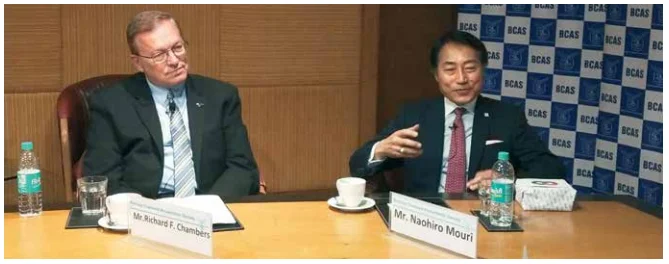
Section 153 – Assessment barred by limitation – Refund of the taxes paid

2 Aricent Technologies (Holdings) Ltd vs. Assistant Commissioner Of Income Tax & Anr.
[WP (C) 13765 of 2022, AY 2007-08
Dated: 27th February, 2023, (Del.) (HC)]

Section 153 – Assessment barred by limitation – Refund of the taxes paid:

FSSL (which is now amalgamated with the petitioner company) had filed its return of income for the A.Y. 2007-08 on 26th October, 2007 declaring a total income of Rs. 17,64,76,208. The said return was picked up for scrutiny under section 143(3) of the Income Tax Act, 1961. On 27th September, 2010, the Transfer Pricing Officer passed an order proposing an addition of Rs. 8,96,40,636 on account of corporate charges. Thereafter, on 24th December, 2010, the AO passed a Draft Assessment Order proposing to assess FSSL’s income for the relevant assessment year at Rs. 2,43,55,56,670 by disallowing the project expenses to the extent of Rs. 39,15,46,619 and disallowing deduction under section 10B of the Act quantified at Rs. 177,78,93,207.

The Dispute Resolution Panel upheld the Draft Assessment Order, by its order dated 02nd August, 2011. Pursuant to the said order, the AO concluded the assessment and passed the Assessment Order dated 31st October, 2011 under section 143(3) of the Act r.w.s 144C(13) of the Act, whereby the total income of FSSL was assessed at Rs. 243,55,56,670.

Pursuant to the said assessment, a demand of Rs. 117,22,62,912 was raised. A refund of Rs. 26,01,53,355 relating to assessment year 2006-07 was outstanding and payable to FSSL. The said refund was adjusted against the demand of Rs. 117,22,62,912 raised in respect of the A.Y. 2007-08.

Aggrieved by the assessment order dated 31st October, 2011, the petitioner filed an appeal before the Income Tax Appellate Tribunal (hereafter ‘the Tribunal’). By an order dated 07th January, 2016, the Tribunal partly allowed the appeal and deleted the disallowance of the project expenses to the extent of Rs. 39,15,46,619. However, in respect of the disallowance of deduction of Rs. 1,77,78,93,207 claimed under section 10B of the Act, and the transfer pricing adjustment of corporate charges, the Tribunal set aside the Assessment Order and remanded the matter to the Transfer Pricing Officer/Assessing Officer. The question of the transfer pricing adjustment on account of corporate charges was remanded to the Transfer Pricing Officer for a de novo adjudication and the question regarding disallowance of deduction claimed under section 10B of the Act, was remanded to the AOr to decide afresh in the light of the observations made in the order.

Concededly, the AO has not passed any order pursuant to the order dated 07th January, 2016 passed by the Tribunal. In the aforesaid context, the petitioner contended that the refund due to FSSL (which is now amalgamated with the petitioner company) amounting to Rs. 26,01,53,355 be refunded to the petitioner along with applicable interest. The said claim is founded on the basis that the assessment for the A.Y. 2007-08 is now barred by limitation.

Section 153 of the Act was amended by the Finance Act, 2017 with retrospective effect from 01st June, 2016 and the provision regarding limitation for framing an assessment pursuant to any order passed inter alia under section 254 of the Act was included under sub-section (3) of Section 153 of the Act. Sub-sections (3) and (4) of the Section 153 of the Act as applicable for framing the assessment pursuant to the order dated 7th January, 2016 passed by the Tribunal read as under:

“153. (3) Notwithstanding anything contained in sub-sections (1) and (2), an order of fresh assessment in pursuance of an order under section 254 or section 263 or section 264, setting aside or cancelling an assessment, may be made at any time before the expiry of nine months from the end of the financial year in which the order under section 254 is received by the Principal Chief Commissioner or Chief Commissioner or Principal Commissioner or Commissioner or, as the case may be, the order under section 263 or section 264 is passed by the Principal Commissioner or Commissioner.
………… ……………..
(4) Notwithstanding anything contained in sub-sections (1), (2) and (3), where a reference under sub-section (1) of section 92CA is made during the course of the proceeding for the assessment or reassessment, the period available for completion of assessment or reassessment, as the case may be, under the said sub-sections (1), (2) and (3) shall be extended by twelve months.”

Pursuant to the order dated 7th January, 2016 passed by the Tribunal, the Transfer Pricing Officer passed an order dated 24th January, 2017. However, concededly, the AO has not passed any final order.

The Honourable Court observed that in view of the above, the contention that passing fresh assessment order pursuant to the Tribunal’s order dated 07th January, 2016, is barred under the provisions to Section 153(3) and 153(4) of the Act, is merited. In view there of the contention that the income as returned by FSSL for the A.Y. 2007-08 would stand accepted. Consequently, any adjustment made for the refund due to FSSL for the A.Y. 2006-07 is not sustainable. Accordingly, the court directed that the said amount, which was due as a refund for the A.Y. 2006-07 be refunded to the petitioner along with interest as applicable within a period of eight weeks.

The court further expressed displeasure in the manner the present matter has been dealt with by the concerned officer. Despite clear directions from the Tribunal, the AO had failed to pass the assessment order within the prescribed time.

Reassessment — Notice — Validity — Transactions not disclosed in initial notice under section 148A(b) considered in order under section 148A(d) for issue of notice of reassessment — Department cannot travel beyond initial notice — Order under section 148A(d) and consequent notice under section 148 set aside.

7 Prakash Krishnavtar Bhardwaj vs. ITO
[2023] 451 ITR 424 (Chhattisgarh)
Date of order: 1st December, 2022
Sections 147, 148, 148A(b) and 148A(d) of ITA 1961

Reassessment — Notice — Validity — Transactions not disclosed in initial notice under section 148A(b) considered in order under section 148A(d) for issue of notice of reassessment — Department cannot travel beyond initial notice — Order under section 148A(d) and consequent notice under section 148 set aside.

The assessee filed a writ petition and challenged the order under section 148A(d) of the Income-tax Act, 1961, dated 22nd July, 2022, directing the issue of notice under section 148 and the consequent notice under section 148 dated 22nd July, 2022. It was pointed out that the transaction of Rs. 14 lakhs considered by the Department in the order under section 148A(d) was not in the noticeunder section 148A(b) which is not permitted in law. It was contended that if the said Rs. 14 lakh transaction which has been considered by the Department is excluded from the proceedings then the amount would be less than Rs. 50 lakh and would therefore be outside the purview of the assessment proceedings as per the CBDT circular dated 11th May, 2022 ([2022] 444 ITR (St.) 43).

Chhattisgarh High Court allowed the writ petition and held as under:

“i)    From the two notices that were issued on June 29, 2021 and on May 25, 2022, i. e., the notices initially issued u/s. 148 (old provision) and u/s. 148A(b) (new provision), the Department had not disclosed the fact that the assessee had suppressed Rs. 14 lakhs transaction which had also escaped assessment u/s. 147. In the absence of its being stated in the notice the assessment of such amount would prima facie be bad since the Department could not travel beyond the show-cause notice.

ii)    Given the facts and circumstances and in view of the circular dated May 11, 2022, issued by the Central Board of Direct Taxes the order u/s. 148A(d) and the consequent notice u/s. 148 dated July 22, 2022 were unsustainable and therefore were set aside reserving the right of the Department to take appropriate recourse available in accordance with law.”