

BCAJ November 1988

Stay abreast with the latest developments in the professional domain along with in-depth analysis through the monthly BCA Journal. Get access to an engaging library of researched publications from the BCAS stable.
Learn MoreExplore past issues of BCA Journal & indulge in a treasure trove of high-quality professional content across format of print, videos & learning events from the BCAS stable.
Learn More





LEARNING EVENTS AT BCAS
1. Indirect Tax Laws Study Circle – Legal position w.r.t conditional rate notifications under GST held on 16th October, 2023, in Online Mode.
The group leader CA Archit Agarwal had prepared 6 case studies on various issues revolving around the topics covering live issues, circulars and AARs / HC judgments. The case studies covered the following aspects for a detailed discussion:
1. Whether GST @ 18 per cent with ITC can be paid despite the specific entry in the rate notification?
2. Whether taxpayers can change the method of payment of GST from 18 per cent with ITC to a specific rate of 5 per cent without ITC after 5 years (i.e., after the ITC portion of the aircraft gets fully depreciated)?
3. Whether the conditions of lapsing of ITC on inverted duty structure through circular is legally valid?
4. Whether procedural lapse of filing declaration for opting GST @ 12 per cent with ITC for GTA be defended after the issue of SCN and whether any other remedy is available?.
5. Issues in the claim of abatement towards land cost by Taxpayers in Real Estate and Construction.
6. Issues and remedies for a claim of ITC on delayed development projects and sale of flats after receipt of OC.
The Group Mentor CA Naresh Sheth monitored the discussion and enlightened the group with his inputs from time to time.
Around 45-50 participants all over India benefitted while taking an active part in the discussion on the bare law, circulars, AARs and SC decisions. The group mentor and the participants appreciated the efforts of the group leader.
2. Seminar on e-Filing of Form 10B, 10BB & ITR-7 for A.Y. 2023-24 for Charitable Trusts held on 13th October, 2023, @ BCAS in Hybrid Mode.
In this event organised by Direct Taxation Committee, the opening remarks were given by President CA Chirag Doshi via a Video Conference. Then CA Gautam Nayak and CA Anil Sathe gave their remarks including on the issues relating to the nitty-gritties involved in the Forms applicable to Charitable Trust and how the trust’s auditor has to be careful while mentioning their qualifications and filling the clauses, especially those which can lead to denial of exemptions u/s 11 & 12 of the Income -tax Act, 1961.
CA Ashok Mehta explained the clauses in Form 10BB that are applicable to charitable trusts which earn income before claiming exemption u/s 11 & 12 of the Income-tax Act, 1961.
CA Deven Shah elaborately led the participants through the clauses which are uncommon in Form 10B as compared to what was explained in Form 10BB.
Details were discussed about clauses related to Corpus Donations, exemptions of income of 15 per cent, accumulation, and disallowances. Section 115BBI — Tax on Specified Income was well put up through the Forms that the respected speakers spoke in detail.
ITR 7 was later taken up post-lunch, where CA Divya Jokhakar elucidated the participants, the interconnection between the schedules, the static information, how to be more ready before e-filing on the CPC Income Tax Website.
After both the sessions pre-lunch and post-lunch, questions were invited online and in person from the present audience.
A robust discussion was carried out by all the speakers and both the chair making the event a grander success as all the queries were resolved.
There were 283 participants online and 41 offline.
3. Felicitation of the ICAI Torch Bearers by BCAS on 7th October, 2023 at BCAS Hall.
A meeting between CA Aniket Talati, President and CA Ranjeet Kumar Agarwal, Vice President along with other Central Council Members of ICAI and BCAS represented by CA Chirag Doshi, President and all officer bearers, Past Presidents and Managing Committee members of BCAS was held at BCAS Hall, Mumbai to felicitate the said ICAI torch bearers and also to discuss and exchange thoughts on various aspects of the profession.
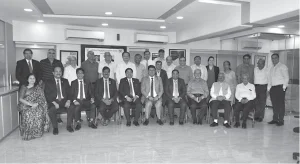
The positive perception of our profession within Government and its various instrumentalities, the areas where representation may be required for ease of compliance, the accountability of the chartered accountants as auditors and risk-mitigating measures, capacity building of small-time practitioners and regulations dealing with the formation of muti-disciplinary entities, need of chartered accountant services vis a vis marketing of those services, joint audits, developments in curriculum, examination & campus placements of fresh chartered accountants and students aspiring to become CA, global opportunities for CA were some of the topics in respect of which, members of both the institutions shared their
thoughts. CA Aniket Talati addressed various concerns raised during the meeting with facts, and statistical references (wherever possible) and also educated the group about various ongoing initiatives being undertaken by ICAI. CA Ranjeet Kumar Agarwal spoke about the history and development of the profession and its contribution to this Country in the past 75 years and enthused the group with the vision that ICAI bears and its roadmap for the future growth of profession in the Amrit-kal.
Both institutions also discussed ways to work together for the betterment of the profession and society at large.
From the Central Council of ICAI, CA Chandrashekhar Chitale, CA Durgesh Kabra, CA Mangesh Kinare, CA Piyush Chhajed and CA Priti Savla were present.
4. 6th Long Duration Course on Goods and Services Tax held from 24th August, 2023 to 7th October, 2023, in Online Mode.
The 6th Long Duration Course on GST – 2023 organised by the Indirect Taxation Committee was conducted by BCAS, virtually (online mode) from 24th August, 2023 to 7th October, 2023. It was held on every Tuesday, Thursday and Saturday covering theoretical as well as practical aspects of GST.
The course covered 30 pre-recorded training videos of 90-120 minutes duration each and 30 live interactive sessions of one hour each for 15 days. The sessions were conducted by proficient faculties having immense expertise in the field of indirect taxation. The course started with the constitutional overview of GST and covered various concepts such as supply, valuation, ITC, place of supply, returns, registration, refunds, litigations etc.
Listening to pre-recorded videos helped the participants to have an interactive session by highlighting various issues in GST before 30 GST stalwarts. The course received a very good response with 183 participants enrolling from various cities.
The course ended with a positive and encouraging response and feedback from all the participants, in turn motivating the BCAS team to conduct such courses in the near future.
5. Webinar on GST Reconciliations in Tally Prime held on 6th October, 2023, in Online Mode.
The above webinar was organised by the Indirect Taxation Committee to demonstrate how businesses using tally software can optimise the software using GST reconciliation feature for executing the compliance work smartly and efficiently. The speaker CA Parth Patel presented the various means of Simplifying Books vs. Portal Comparison in Tally Prime and also displayed Glimpses of the Reconciliation Process.
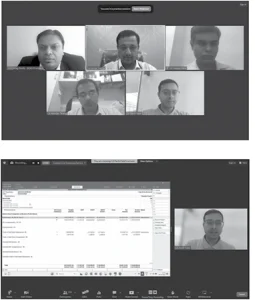
The presentation covered the following aspects of the Tally Prime Software for a detailed discussion:
1. Challenges in GST Reconciliations.
2. Structural enhancements for GST Reco.
3. GST Transactional compliances from Auditors Perspective.
4. Solution Walkthrough for GSTR 1, GSTR 2A and GSTR 2B Reconciliations.
5. Future roadmap for further improvements and new features.
More than 300 participants all over India benefitted while taking an active part in the discussion on the Reconciliation Process. The speaker answered more than 80 questions raised by the participants.
Link to access the session: https://www.youtube.com/watch?v=AS8vt4Zr14g
QR Code:

6. Indirect Tax Laws Study Circle – ISD vs. Cross-charge: the way ahead in view of announcements made in the 50th GST council meeting held on 27th September, 2023, in Online Mode.
The group leader CA Aumkar Gadgil prepared 5 case studies on various issues revolving around the topic covering live issues, circulars and AARs/ HC judgments. The case studies covered the following aspects for detailed discussion:
1. The distinction between ISD and cross-charge and applicability vis-à-vis the scenario.
2. Determining what should be cross-charge and what should be ISD in view of Circular 199?
3. Procedural aspects relating to cross-charge, such as:
a. Is the specific classification of service required or can it be classified as “support services”? Will classification decide the eligibility to claim the input tax credit of the recipient?
b. Can any and all services received be distributed or one needs to demonstrate that the services are actually received/ enjoyed by other branches?
c. Valuation and scope of proviso to Rule 28 when the receiving branch is not entitled to full input tax credit.
4. Procedural aspects relating to ISD, such as:
a. Can multiple ISD registrations be taken under one PAN?
b. Can a cross-charge invoice be raised to ISD for further distribution to other branches?
5. Decision of the High Court in the case of JSW Steel Ltd, AAR in the case of Columbia Asia Pacific and Others.
The Group Mentor CA Mandar Telang monitored the discussion and enlightened the group with his inputs from time to time.
Around 45-50 participants all over India benefitted while taking an active part in the discussion on the bare law, circulars, AARs and SC decisions. Participants appreciated the efforts of the group leader and the active participation of the mentor in an interesting segment analysis on the automobile sector.
7. Webinar On ‘Intertwining Of Laws In The Technology World’ held on 5th September, 2023.
The Corporate and Commercial Laws Committee organised above half-day seminar dealing with the laws relating to technology and data protection, equipping participants with the knowledge to navigate legal challenges in the digital age.
The session on “Data Protection, Cyber Security, Digital IP” was dealt by Mr. Huzefa Tavawalla & Mr. Purushotham Kittane. Both experts dealt with the nuances of legal frameworks and regulations governing technology and the new Data Protection Law.
“Regulatory aspects of online gaming” was conducted by Adv. K Vaitheeswaran. He very well dealt with the international legal jurisprudence relating to the game of chance and the game of skill.
“Revenue Models and managing Gaming and E-Commerce business” was conducted by Mr. Avinash Gupta. He broadly gave a framework and the business dynamics of online gaming and how the industry is evolving.
“Anti Money Laundering Regulations with respect to Technology Companies” was dealt by Adv. Ashoo Gupta. She touched upon the recent litiwgative issues of Payment applications and briefed about PMLA provisions.
The sessions were very well received and participants had a good learning of laws relating to the technology world.
1. TECHNOLOGY
1 Amazon plans drone deliveries for UK parcels next year in an Hour
Amazon has announced it will start using drones to deliver parcels in the UK in under an hour. The online retail giant said the service would start in one location which is yet to be revealed, at the end of 2024. The company already offers drone deliveries in two US states for goods weighing no more than 5 lbs (2.2 kg).
The aviation regulator said “exploring” how drones could be safely used in more of the UK’s airspace was “key”. Amazon said it was working closely with the Civil Aviation Authority (CAA) to meet regulations, while the government said the move would help it understand “how to best use the new technology safely and securely”. David Carbon, Vice President of Amazon Prime Air, said he believed there was demand for the technology in the UK and that it was “absolutely safe”.
“It’s hundreds of times safer than driving to the store,” he told the BBC in an interview in Seattle. “I’ve never heard anyone say they wouldn’t want something faster. Customers will be able to choose from thousands of items which weigh 5 lbs or less, from washing up liquid and toothbrushes to beauty products and batteries to fill a shoe-box size package.”
“What our customers will do is jump on to the Amazon website, they’ll select drone delivery if it’s available in their area, they’ll order their product….and that will then set off the chain of events that goes to our ground system that finds the customer’s yard, drops the package off where they asked it, and we’re out of there,” Mr Carbon said. The first area in the UK for deliveries by air will be named in the coming months. The company currently has drone postage in California and Texas and is also looking to launch the so-called “ultra-fast” deliveries in a third US state and in Italy.
Baroness Vere, the Government’s Aviation Minister said, “Amazon’s plans would help boost the economy and offer consumers more choice while helping in keeping the environment clean with zero emission technology. It will also build our understanding on how to best use the new technology safely and securely,” she said, adding that the Government planned for commercial drones to be a “commonplace” by 2030.
(Source: www.bbc.com – 19th October, 2023)
2 Seeing Chandrayaan-3 craft development, US experts wanted India to share space technology with them: ISRO chief
ISRO Chairman, Mr S. Somanath said, “Experts involved in developing complex rocket missions in the US, after witnessing the developmental activities of the Chandrayaan-3 spacecraft, suggested that India share space technology with them.”
“Times have changed and India is capable of building the best of devices and rockets and that is why Prime Minister Narendra Modi has opened the space sector to private players,” he said at an event. Somanath was addressing students at an event organized by Dr A P J Abdul Kalam’s Foundation, commemorating the 92nd birth anniversary of the late former President today.
“Our country is a very powerful nation. You understand that our knowledge and intelligence level in the country is one of the best in the world,” the ISRO Chief said, explaining, “In Chandrayaan-3, when we designed and developed the spacecraft, we invited experts from the Jet Propulsion Laboratory, Nasa-JPL, who does all the rockets and most difficult mission.”
He continued, “About 5-6 people from Nasa-JPL came to ISRO headquarters and we explained to them about Chandrayaan-3. That was before the soft landing took place on August 23. We explained how we designed it and how our engineers made it…..and how we are going to land on the moon’s surface, and they just said, no comments. Everything is going to be good.”
JPL is a research and development laboratory funded by the National Aeronautics and Space Administration and managed by the California Institute of Technology (CALTECH) in the United States of America.
US space experts also said one thing, “Look at the scientific instruments, they are very cheap. Very easy to build and they are high technology. How did you build it? Why don’t you sell this to America, they were asking,” he said.
“So students, you can understand how times have changed. We are capable of building the best equipment, the best devices, and the best rockets in India. That is why our Prime Minister, Shri. Narendra Modi has opened the space sector.” He further added, “India successfully touched down near the south pole of the lunar surface with the Chandrayaan-3’s Lander on August 23, making it only the fourth country to achieve the feat of a Moon landing after the US, China and the erstwhile Soviet Union.”
(Source: www.timesofindia.com – 16th October, 2023)
2. WORLD NEWS
1 Amazon Rivers fall to lowest levels in 121 years amid a severe drought
Rivers in the heart of the Amazon Rainforest in Brazil fell to their lowest levels in over a century as a record drought upended the lives of hundreds of thousands of people and damaged the jungle ecosystem. The Port of Manaus, the region’s most populous city, at the meeting of the Rio Negro and the Amazon River, recorded 13.59 meters (44.6 feet) of water on Monday, compared to 17.60 meters, a year ago, according to its website. That is the lowest level since records began 121 years ago in 1902, passing a previous all-time low set in 2010.
Rapidly drying tributaries to the mighty Amazon have left boats stranded, cutting off food and water supplies to remote villages, while high water temperatures are suspected of killing more than 100 endangered river dolphins. After months without rain, rainforest villager Pedro Mendonca was relieved when a Brazilian NGO delivered supplies to his riverside community near Manaus, late last week.
“We have gone three months without rain here in our community,” said Mendonca, who lives in Santa Helena do Ingles, West of Manaus, the capital of Amazonas state. “It is much hotter than past droughts.” Some areas of the Amazon have seen the least rain from July to September since 1980, according to the Brazilian Government Disaster Alert Centre, Cemaden.
Brazil’s Science Ministry blames the drought on the onset of the El Niño climate phenomenon this year, which is driving extreme weather patterns globally. In a statement earlier this month, the ministry said it expects the drought will last until at least December, when El Niño’s effects are forecast to peak. Underlying El Niño is the long-term trend of global warming, which is leading to more frequent and more intense extreme weather events, like drought and heat.
(Source: CNN.com – 17th October, 2023)
3. WOMEN EMPOWERMENT
1 One in Five Board Members at India Inc. is Now a Woman
This figure was one in 20, a decade ago, when law mandating one woman director came into effect. There are 885 women among the 4,783 directors that cumulatively sit on the boards of Nifty-500 companies, resulting in 18.5% women representation.
After 10 years of the enforcement of the Companies Act 2013, that made it mandatory for companies to have at least one woman director on their boards, one in every five board members on average in Nifty-500 companies is a woman. Five years ago, one in eight directors was a woman, and ten years ago, the proportion was one among twenty members, Prime Database research showed.
Though there is a progress in enhancing gender equity at the board level, the glass is both half full and half empty. The legal mandate has ensured that almost all the 500 companies have a woman director on their boards, but it has also defined the presence of women on Indian Boards. In total, 223 (or 45 per cent) of the Nifty-500 companies have only one woman director, in compliance with the law.
Furthermore, the bigger the size of the board, the more conspicuous the dearth of women directors. There are 81 companies with only one woman director on their respective boards of ten or more members. For instance, L&T with a board size of 19 members has only one woman director. Ironically, the only woman director on the board of L&T is Preetha Reddy, the Vice Chairperson of Apollo Hospitals which has six women directors on its board of 11 members. Apollo Hospitals is one of the eight companies of the ’50 per cent + club’ where women make up half or more of the board.
“Company managements hire independent directors, the people with whom they have some earlier interactions which give them comfort, or the government officials post their retirement,” said Manju Agarwal, an independent woman director on boards of several listed companies. “Since most of these people tend to be male officers/entrepreneurs, the boards end up having more male members. And typically, one woman director gets hired predominantly because of the legal mandate,”
she added.
Globally, one in three directors on the boards of S&P 500 companies is a woman. But this is not due to a law mandating women on board but the pressure from investors and efforts by the companies towards having gender diversity at the board level. The UK Government backed Hampton-Alexander Review in its February report, this year on FTSE Women Leaders recommended an increased target of 40 per cent women representation on the boards of FTSE-350 companies by the end of 2025. Last year, British Housing Developer, Barratt Developments, faced protests from its shareholders after the proportion of women board members fell below the recommended 40 per cent level.
In India, 22 companies among the Nifty-500 have women representation in their board at 40 per cent and above. Incidentally, several of these companies have women chairpersons or CEOs. For instance, Colgate Palmolive, Godrej Consumer, Jyothy Labs, Vinati Organics, Apollo Hospitals, Sundram Fasteners and New India Assurance.
“There is no dearth of qualified women but most of them do not have board experience,” said Vikesh Wallia, Managing Director Board, Steward-8 Ship Inc., a research and advisory firm. “Promoters in India are still settling down with the one-woman director mandate. Besides, women are not pitching themselves hard enough for board seats. Also, the Government and MNCs are not taking the lead in ensuring gender diversity at the board level. Several PSUs do not have a single woman on their boards and there are MNCs who have better women representation on their boards overseas but not here in India,” he added.
To be sure, PSUs such as Power Grid, UCO Bank, Bank of Maharashtra and BEML do not have a woman director on their boards.
(Source: Economic Times – 19th October, 2023)
4. SPORTS
1 India finished with a record haul of 107, including 28 gold, at the 2023 Asian Games in Hangzhou
India has been a powerhouse since the Asian Games started in 1951. Having participated in all editions of the quadrennial showpiece, India played an integral role in the establishment of the Asian Games and even hosted the inaugural edition in New Delhi.
India won 51 medals — 15 gold, 16 silver and 20 bronze — at the Asian Games 1951 to finish second behind Japan (60 medals). It remains India’s best finish at the Continental Games. Swimmer Sachin Nag won the 100 m freestyle event at New Delhi in 1951 to become India’s first gold medallist at the Asian Games.
In the same year, Roshan Mistry became the first Indian woman to win an Asian Games medal when she took silver in the 100 m sprint at the 1951 Asian Games. Since then, India has won 779 medals at the Asian Games, including 183 golds, 239 silvers and 357 bronze.
India has returned with a gold medal at every edition to date and is the fifth-most successful country at these Games. Indian track and field stars have led from the front, bagging a massive 283 medals in 19 appearances at the big-ticket event.
India’s best medal tally came at the Asian Games 2023 in Hangzhou, the People’s Republic of China. India won a record 107 medals, surpassing their previous-best haul of 70 from Jakarta 2018. Unsurprisingly, athletics was the most successful sport, accounting for 29 medals.
At Asian Games 2018, Neeraj Chopra became the first Indian to win a gold medal in the Javelin Throw while Dutee Chand brought home India’s first medal in the women’s 100 m since PT Usha’s silver in 1982. Neeraj Chopra successfully fended off a challenge from compatriot Kishore Kumar Jena to defend his Asian Games title at Hangzhou 2023.
Apart from athletics, wrestlers, boxers and most recently, shooters have contributed handsomely to India’s medal count at the Asian Games. All top Indian athletes such as wrestlers Bajrang Punia and Vinesh Phogat, boxers Mary Kom, Lovlina Borgohain, Nikhat Zareen and Vijender Singh and shooters Abhinav Bindra and Jaspal Rana have also stood on the Asian Games podium.
India, however, has been the most dominant in Kabaddi, winning eight out of the nine editions since the sport debuted in 1990. India’s only loss was with Iran at the Asian Games 2018 in Jakarta.
(Source: olympics.com – 9th October, 2023)
The Editor,
BCAJ,
Mumbai.
Re: Use of Artificial Intelligence (AI) in various areas of CA Practice: Need for Practical Training.
Dear Sir,
I read with interest an article by Shri Raman bhai Jokhakar, titled, ‘Chatting up about India: Technology Not Just about a Few, But for All’, in the September 2023 issue of BCAJ, and other articles on use of technology by CAs in the fields of Accountancy, Auditing, Data Analysis, Big Data, Forensic Investigations, etc., in recent issues of BCAJ and ICAI Journal.
Now, it is well established that AI and other technology tools are here to stay, and technology is advancing at a very rapid clip, and the same can be and should be deployed in our profession.
The next stage is providing practical training to our Members in the use of AI and other technology tools in various areas of CA practice. BCAS has been conducting various long-duration programs on subjects such as GST, FEMA, DTAA, Transfer Pricing, etc.
I would request the President to urgently organise training programs on the various AI tools and other technology tools on a regular basis so that our Members are equipped to use the same in their practice. The same has become very imperative as the compliance burden has increased, timelines have been compressed, and punitive actions by Regulators and Authorities have become very swift and quite devastating.
Yours Sincerely,
CA Tarunkumar Singhal
The Editor,
BCAJ,
Mumbai.
Dear Sir,
I am writing to you with reference to the Editorial I read in the October 2023 issue of the BCAJ.
The theme of the Editorial so beautifully captured the essence of Women’s Empowerment, serving as an emblem of inspiration and courage.
I am a retired employee from the Central Government organisation, and this feature spoke to me at many levels. The way it highlighted ‘Nari Shakti’, I think, is of the utmost need of the hour. I started my business at the age of 65 after retirement, as I — in all its capacity — believe in the power of women’s empowerment.
Instilled in me by my mother, who herself was a Govt. professional in her days, I have passed down the same courage to my daughters and strongly encourage every woman out there to follow their dreams.
I whole-heartedly thank you, Sir, for such a note-worthy Editorial that genuinely mirrored the foundation of a strong society, now more than ever.
Yours Sincerely,
Mrs. Shashi Sharma
I. COMPANIES ACT, 2013
1. MCA allows companies to hold AGMs & EGMs via ‘VC & Other Audio-Visual Means’ till 30th September, 2024: MCA has decided to allow companies whose AGMs are due in the year 2023 or 2024 to conduct their AGMs through Video Conference (VC) or Other Audio-Visual Means (OAVM) on or before 30th September, 2024. Also, companies are allowed to conduct their EGMs through VC or OAVM till 30th September, 2024. However, it is clarified that this shall not be treated as any extension of statutory time for holding of AGMs or EGMs. [General Circular No. 09/2023, dated 25th September, 2023]
II. SEBI
2. SEBI mandates listing of subsequent issuances of outstanding non-convertible debt securities: SEBI has notified an amendment to the SEBI (LODR) Regulations, 2015. A new regulation 62A has been inserted. The regulation states that a listed entity whose subsequent issues of unlisted non-convertible debt securities are made on or before 31st December, 2023, and are outstanding, may list such securities on a stock exchange. Further, listed entities whose non-convertible debt securities are listed must list all such securities proposed to be issued on or after 1st January, 2024, on the stock exchanges. [Notification No. SEBI/LAD-NRO/GN/2023/151, dated 19th September, 2023]
3 SEBI extends timeline for trading & demat account holders to submit nominee details by three months: SEBI has extended the timeline for existing trading and demat account holders to provide a choice of nomination or formally opt out of nomination through a declaration form by three months, i.e., by 31st December, 2023. Further, the submission of choice of nomination for trading accounts has been made voluntary by the regulator as a move towards ease of doing business. Earlier, the deadline for existing trading and demat account holders to provide a choice of nomination was on or before 30th September, 2023. [Circular No. SEBI/HO/MIRSD/POD-1/P/CIR/2023/158, dated 26th September, 2023]
4 SEBI issues Master Circular for ‘Merchant Bankers’: SEBI had issued multiple circulars, directions and operating instructions to Merchant Bankers on a regular basis to ensure compliance. In order to enable the stakeholders to have access to all circulars at one place, a Master Circular regarding Merchant Bankers has been issued. This Master Circular is a compilation of all the existing circulars and directions issued by SEBI to Merchant Bankers. [Master Circular No. SEBI/HO/CFD/POD-1/P/CIR/2023/157, dated 26th September, 2023]
5 SEBI extends timeline for nomination of Mutual Fund Unitholders by three months: SEBI has extended the timeline for nomination of mutual fund unit holders either solely or jointly from 30th September, 2023, to 31st December, 2023. Further, non-compliance of it will result in freezing of folios w.e.f. 1st January, 2024. In order to protect the interest of investors and regulate the securities market, AMCs and RTAs must encourage unitholder(s) to fulfill the requirement for nomination / opting out of nomination by sending a communication on a fortnightly basis by way of emails and SMSes to unitholder(s). [Circular No. SEBI/HO/IMD/IMD-I POD1/P/CIR/2023/160, dated 27th September, 2023]
Shrikrishna : Hello, Arjun; how was your Navratri? Enjoyed Garba?
Arjun : Hummmm (no reply).
Shrikrishna : Arjun, what happened? Not feeling well?
Arjun : Bhagwan, I am not in the mood to say anything. Please leave me alone.
Shrikrishna : Paarth! Why are you so nervous? You have never said such a thing before.
Arjun : I am afraid and depressed.
Shrikrishna : Really? You are the bravest person on Earth. You fought with Kauravas, who were much larger in number, and still defeated them.
Arjun : It was simpler to fight with enemies physically with weapons. Even psychological warfare is alright. But I can’t fight with Regulators!
Shrikrishna : Why? Are they so powerful?
Arjun : They are not powerful, but they have full power to do anything, and they can kill you even without fighting!
Shrikrishna : Strange! But I had advised you to be cool and composed despite all odds and difficulties. You should be a ‘sthitapradnya’- of balanced mind — neither excited in happiness nor depressed in sad situations.
Arjun : That was alright in Geeta. It is easy to preach such philosophy but difficult to implement.
Shrikrishna : Why?
Arjun : The very survival of our profession is at stake. All my colleagues are quitting practice, or at least giving up audits!
Shrikrishna : I have heard about it over the last 10 to 15 years.
Arjun : I have decided to surrender my certificate of practice. Recently, NFRA has passed negative orders against many CAs. They are ordered to pay a fine of ₹1,00,000 and have been debarred from signing any audit for at least one year!
Shrikrishna : They must have committed some lapses in the audits.
Arjun : Most of them are senior members and I am aware that they are knowledgeable and have a good track record of audits.
Shrikrishna : Still, the mistakes do occur.
Arjun : Bhagwan, there is a difference between an error and misconduct so as to attract such a severe punishment.
Shrikrishna : Have you read the orders?
Arjun : Yes, Lord, they are in the public domain. That is another bad part! And those members say that all orders are stereotyped with hardly any variation.
Shrikrishna : It was in which matter, Arjun?
Arjun : Many of them were the branch auditors of DHFL. Writ petitions and litigations are pending in a few High Courts against the proceedings. Even the jurisdiction of NFRA has been challenged, particularly for that financial year.
Shrikrishna : But what were their Counsels doing? Didn’t they argue properly?
Arjun : Bhagwan, members were denied the right to be represented by legal Counsel. My friends say about the proceedings — the less said is better!
Shrikrishna : You are telling one side of the story. We must know what is the stand of the Authority.
Arjun : I am not competent to comment on their work. But the fact remains that it is dicey to sign any audit. They are making our lives miserable. I don’t see any bright future for our profession.
Shrikrishna : Chill, my dear, chill.
Arjun : They are only thrusting more and more burdens on auditors. There is no commensurate reward. No good staff, no articles, no clarity in laws! I don’t know how to cope. I have lost hope.
Shrikrishna : But what are your leaders doing?
Arjun : God alone knows! But Bhagwan, I bet that even if you sign any audit, you will be held guilty of misconduct!
Shrikrishna : Paarth, you may be right. Better, I continue to drive your chariot.
Arjun : Bhagwan, I am not joking. The fact is that all senior members are avoiding signing the audits and delegating them to the junior partners!
Shrikrishna : Good that all my four hands are occupied. I cannot hold a pen to sign the balance sheets.
Arjun : Bhagwan, holding a pen is not necessary. Your assistants will put your digital signatures, and you will not even know!
Shrikrishna : Anyway, I will request Goddess Saraswati to give some wisdom to the Regulators.
Arjun : Please do that; otherwise, we are doomed!
(Both laugh and disperse!)
“Om Shanti”
Note:
This dialogue is based on the present scenario of the audit profession and average members’ perception of it in the context of recent orders passed by NFRA.
In this issue, we cover a variety of websites and apps which help us improve our online presence and personality.
16Personalities

This is an interesting website which helps you discover yourself. The makers believe that there are primarily 16 Personalities and help you discover what type of personality you have.
The online test consists of a set of questions divided into five major sections — Introverted / Intuitive / Feeling / Judging and Turbulent. Once you take the test and answer all questions honestly, a detailed report is generated about your personality. Apart from helping you understand yourself, you may like to explore traits which you would like to improve upon and take the test again after a few months. Although I believe it is impossible to change yourself fully, it is worth trying.
The only thing to remember is that you have to be fully honest in answering all questions. Some may take a while and some may be intuitive. Of course, it is completely free to try, with advanced options which require a subscription. The advanced options help you cultivate deep self-improvement, advance your career, improve relationships and go beyond your personality type.
Try it — it’s worth knowing who you are!
https://www.16personalities.com/
Humata AI

This is ChatGPT for all your files. Just upload any text file and ask questions on the same. All your answers will be available in a jiffy! You can learn 100X faster, analyse legal documents, understand technical papers and create reports. In short, ask questions and get answers about any file, instantly!
Humata is an Avestan word that means “good thought”. And good thoughts are what emanate from this simple website. It is very simple to use and quite easy to access.
The free version allows you to upload up to 60 pages and ask 100 questions, with a 100MB file size limit. Paid plans give you progressively more pages, capacity and questions.
Try out the free version for a few days, and if you feel happy and needy for more, subscribe to the appropriate plans!
https://www.humata.ai/
BIS Care App

The Bureau of Indian Standards has come out with an app to check the authenticity of various products by helping you verify the license details marked on the product.
You can check the authenticity of a product with the  mark by using “Verify License Details”, check the authenticity of Hallmarked Jewellery with an HUID number
  by using “Verify HUID” or even check the authenticity of electronic products with R-Number
  by using “Verify R-Number under CRS”.
You can also use the app to register complaints regarding the quality of the Product or the misuse of BIS standard marks by using the “Complaints” option. The app allows you to get locations of BIS labs and offices and helps you access products under compulsory certification of BIS and products under simplified procedure of licensing.
The app is absolutely free, is available on Android and iOS and is a must for lay users and professionals alike.
https://www.bis.gov.in/bis-apps/
ScamAdviser

ScamAdviser is a simple website that helps you identify scam sites. Is this site or online store a scam or safe? Are the reviews real or fake? That is the question ScamAdviser tries to answer for 2.5 million visitors every month. ScamAdviser uses an algorithm to determine if the website is legit with real reviews or a phishing website selling fake products. Their goal is to help consumers make the right choices online.
If you are visiting an unknown website and are not sure whether you can share your personal details or your credit card information online, just add the name of that doubtful website on to ScamAdviser.com and get a quick report on whether it is safe to buy from that website or not. It is a generic analysis of the website and various reports on that website and will also give you a rating on how safe they judge it to be.
Besides, they have various reports on online shopping scams, phishing and identity thefts, investment scams and much more. They scan thousands of sites daily and report on the top scams of the week, scam trends and scam alerts.
If you need to report a website as a scam, feel free to report it to ScamAdviser, and they will take care of the rest.
The site is completely free and a valuable addition to ensure your day-to-day cyber safety. Try it out today!
https://www.scamadviser.com/
14 Case law 01/November 2023
M/s. DEXTER BIOCHEM PRIVATE LIMITED
No. ROC-GJ /ADJ. ORDER/ DEXTER BIOCHEM/ Sec.140/ 2023-24/2632/33
Office of the Registrar of Companies, Gujarat, Dadra & Nagar Haveli
Adjudication order
Date of Order: 15th September, 2023
Adjudication Order against the Auditor of the Company for violation of section 140(2) of the Companies Act, 2013, read with Rule 8 of the Companies (Audit and Auditors) Rules, 2014, for Non-filing of Form ADT-3 with respect to Resignation from the Company.
FACTS
On perusal of documents available on the MCA21 Portal, M/s DBPL (the Company) had appointed M/s. DKN&A as Statutory Auditors of the company for the period from 1st May, 2015 to 31st March, 2020. Further, it was noticed that the company had also appointed M/s. P.U.N & Co. Chartered Accountants as Statutory Auditors of the Company for the period from 1st April, 2017 to 31st March, 2022.
Based on this, the Registrar of Companies, Gujarat, Dadra & Nagar Haveli (“RoC”) had issued a show cause notice to M/s. DBPL and M/s. DKN&A, Chartered Accountant Firm for default under section 140(2) of the Companies Act, 2013 asking clarification whether the company had removed M/s. DKN&A under Section 140(1) of the Companies Act, 2013 or whether M/s. DKN&A had resigned pursuant to Section 140(2) of the Companies Act, 2013.
M/s DBPL, in their letter dated 24th May, 2023 had replied that “they have forwarded the above-referred notice to M/s DKN&A and have requested to file Form ADT-3 for their resignation at the earliest to make the default good”. It was revealed from the reply of M/s. DBPL that M/s. DKN&A, Statutory Auditors had violated the provisions Section 140(2) of the Companies Act, 2013 due to non-filing of the notice of resignation in the prescribed e-form ADT-3, and were thereby liable for penalty under Section 140(3) of Companies Act, 2013.
Adjudication Notice vide No. ROC-GJ/ADJ-Sec. 454 read with Sec.140/Dexter Biochem/2023-24/1447 dated 21st June, 2023 was issued to Mr. KAS, Partner of M/s. DKN&A, as per Section 454 of the Companies Act, 2013 read with Rule 3 for violation of Section 140(2) of the Companies Act, 2013 regarding non-filing of Form ADT-3 and no reply was received from M/s. DKN&A on such notice.
Thereafter, for providing an opportunity of being heard a “written notice” was issued to the mailing address of M/s DKN&A on 4th September, 2023 to hold a physical hearing and to give an opportunity to be heard.
In the hearing, Mr. MD, Practising Company Secretary (“PCS”) being the authorised representative of M/s. DKN&A submitted that due to ill-health conditions, the auditor was not able to file Form ADT-3 for his resignation in a time-bound manner as per the provisions of the Companies Act, 2013. However, the Auditors had filed ADT-3 on 8th June, 2023 under the MCA portal with an additional fee of ₹7,200 with a delay of 1711 days in the filing.
He also submitted that the Auditors were engaged in a small company and the provisions of Section 446B be considered at the time of levying penalties.
Thereafter, the Presenting 0fficer submitted that the additional fees paid for delayed filing as prescribed under the Companies (The Registered offices and Fees) Rules, 2014 is, only a fees paid for filing of form as the cost of facility of delayed filing and thereby can neither be considered as fine nor penalty specified under the Companies Act, 2013. Therefore, payment of additional fees by the auditor does not absolve the default committed and hence M/s. DKN&A is liable to pay a prescribed penalty under Section 140(3) of the Companies Act, 2013.
Relevant provisions of the Companies Act, 2013 as applicable, are as under:
“As per Section 140(2); The auditor who has resigned from the company shall file within a period of thirty days from the date of resignation, a statement in the prescribed form with the company and the Registrar, and in case of companies referred to in sub-section (5) of section 139, the auditor shall also file such statement with the Comptroller and Auditor-General of India, indicating the reasons and other facts as may be relevant with regard to his resignation.
As per Section 140 (3); If the auditor does not comply with the provisions of sub-section (2), he or it shall be liable to a penalty of fifty thousand rupees or an amount equal to the remuneration of the auditor, whichever is less, and in case of continuing failure, with further penalty of five hundred rupees for each day after the first during which such failure continues, subject to a maximum of two lakh rupees.”
HELD
Accordingly, AO after considering the facts and circumstances of the case, imposed the following penalty on M/s. DKN&A:
| Name of Auditor’s Firm | Penalty as per Section 140(2) of the Companies Act, 2013 | Penalty for continuing default |
Final penalty imposed as per Section 140(2) of the Companies Act, 2013 read with Section 446B of the Companies Act, 2013 (R) # |
| M/s. DKN&A | R50,000 or an amount equal to the Remuneration of Auditors, which is less.
As per the financial statement, no remuneration was given to the Auditor for F.Ys. 2016–17 and 2017–18. |
1711 days*250 = R4,27,750 | ₹ 1,00,000 |
Further, it was directed to pay the penalty within 90 days of the order.
# Final Penalty was imposed pursuant to the provision of section 446B of the Companies Act, 2013 as M/s. DBPL satisfied the criteria of being a Small Company where M/s. DKN&A were Auditors.
The Securities and Exchange Board (SEBI) of India has always been, updating its regulations. It sets up Committees on specific areas to suggest changes, issues such reports, takes feedback, and then appropriately modifies the Regulations. Now, even the Ministry of Corporate Affairs (MCA) is initiating major changes to the Companies Act, 2013 (the Act). Major and frequent changes may be tough for practitioners and companies to keep up with, but at least some of their grievances are addressed and market evils are tackled. The MCA has often been seen to be sleepy in updating the laws, while SEBI has always taken a lead as far as listed companies are concerned. Part of the reason is that the SEBI Act contains just a few substantive provisions like powers to take action by SEBI including levy of penalties, procedure for appeals, etc. But largely it is a very brief enactment since most of the powers for laying down the details are delegated to SEBI. Hence, subject to the procedure for placing the amendments before Parliament, SEBI has been able to act swiftly in changing the law. On the other hand, the Companies Act, 2013, involves hundreds of provisions requiring hardwiring of many details including even the amounts. Many rules have been made to lay down details in several areas. However, there are several provisions in the Act which make substantive requirements. This requires amendments to be approved by Parliament which can be long and tortuous. But now, MCA seems to be becoming active. A good example is the fairly detailed report of the Company Law Committee released in March, 2022. It is also reported in the media to be implemented soon. Further, the term of the Committee is further extended and more aspects are to be covered. We can cover some of the amendments proposed as per the report released as also discuss some proposals said to be in the works as reported by the media with fair, though broad, details even if official confirmation is yet to be released on these. Undoubtedly, the proposals are at the initial stage and may be modified as the discussions progress. But that said, let us consider some important proposals with some angles I could think of.
ISSUE OF FRACTIONAL SHARES
Fractional shares often arise particularly out of corporate actions like mergers, bonus issues, etc. The law presently does not permit companies to make a fresh issue of fractional shares and, in any case, there is not a proper market for that. So companies typically opt for a workaround. All the fractional shares are accumulated and then a trustee sells them in the market and the proceeds are distributed proportionately to the respective shareholders.
However, there is a radical new proposal of permitting issue of fractional shares on an independent basis. The arguments given are primarily two. Some shares are so expensive that buying even one share may require spending more than ₹1,000 and, in one case, even more than ₹1 lakh. Thus, the Committee report says, the purchase of such shares is inaccessible to small investors. The proposal then is that the issue of fractional shares may be permitted, for listed and unlisted companies, with consultation with SEBI for the listed companies. The report cites that 1.42 crore new retail investors have entered into the market just in F.Y. 2021.
However, the Report lacks further details of the proposal on issuing fractional shares and hence several questions arise.
What will be the face value of such shares? Would multiple face-value shares be permitted? Say, if the original face value is ₹10, would fractional shares having face value of ₹1, ₹2, ₹5, etc. be permitted? Or even ₹0.50 or ₹0.10? Assuming there will be flexibility, will not there be a separate quoted price for each of such groups of shares? It would be perhaps naïve, considering history, to assume that the price quoted for a ₹1 share would be one-tenth of the price quoted in the market for the ₹10 face value shares, which may be the predominant category of the share capital.
We have seen (history now) the “odd lot” share market. Since there was a fixed minimum market lot, there was a problem with selling them. If the market lot size was, say, 50, one could not sell on the stock exchange their shareholding of, say, 27 shares. So a parallel market developed where agents would buy such shares at a discount, often heavy, and then accumulate them and sell almost all of them at the market lot. Of course, this issue has been largely resolved because the market now permits the sale/purchase of even 1 share. But the experience should teach us to be wary.
Another example is the issue of Differential Voting Right (DVRs) shares. The only difference between them and the ‘ordinary’ shares was that DVRs had fewer voting rights, depending on the terms of the issue. This concept has flopped miserably with some 3 odd companies only having issued them. The price of such DVRs is quoted at a discount, often as much as 50 per cent of the ‘ordinary’ shares.
So would this also happen to fractional shares? And would history repeat itself at the expense of small investors?
Curiously, the only example really given for this proposal is just one scrip, that is MRF, which is quoted at more than ₹1 lakh per share. But should the rule be made of such an exception?
Also, nothing prevents companies from issuing bonus shares, for example, to make shares available at a lower price.
Perhaps this proposal requires detailed reconsideration or at least clarity of the fine print of the proposals.
SOME OTHER IMPORTANT PROPOSALS
Space would not permit going into even major substantive proposals in detail of this lengthy report. So reference may be quickly made to some important of such proposals. One is for increasing communication through electronic mode.
Then there is a proposal to permit the issue of Restricted Stock Units and also Stock Appreciation Rights. These, though separate topics by themselves, require detailed consideration.
Then there is a move to eliminate the need to file affidavits. It is proposed to replace them with a simple self-declaration. The advantages are at least two. One is that it eliminates the need to buy stamp paper and get them notarised. The other is an approach of placing some element of trust in the concerned persons. Of course, the liability for violation/false declarations would remain the same.
A DIFFERENT REGIME FOR UNLISTED COMPANIES
While presently, we have a separate regime for listed companies regulated by SEBI, there are also some requirements in the Act for listed companies. Typically, the stricter of the two laws apply. But SEBI as an independent body has expertise and wide powers. A parallel regime seems to be the intention to be set up. This is what a detailed report in Business Standard of 25th September, 2023 states. The details of the proposal, which still can be stated to be general and also subject to official announcement, make for an interesting read. Notably, it is reported, that this would be a part of the Company Law Committee report in the upcoming second part.
Firstly, it would be applicable only to “large” companies. Nothing is stated specifically on what would constitute large companies. However, it is a fact that many unlisted companies are larger, at least in terms of valuation than some listed companies.
Here too, a few recent examples, one of which is specifically cited by name in the media report, is stated to be the motivation driving this proposal. The question again then is whether we are making a rule from an exception. Be as it may be, larger companies may require special focus. The other side is that smaller companies, which are in lakhs, may hopefully face a more relaxed regime.
It is stated that the new regime would not be a “light touch” one. Presumably, there will be detailed provisions. In particular, the punitive consequences of violations may be high. One will have to see how the proposal actually turns out to be. It would be of concern if the provisions are as harsh as, say, Section 447 of the Act which provides for very strict punishment under a very widely worded definition of “fraud”. This Section itself requires a close relook. But that does not seem to be the agenda. One hopes that since the intent of the Committee is to make India an easier place to conduct business. While consequences of serious violations ought to be harsh, a too widely drafted definition of what is such a serious violation may end up being intimidating or discouraging companies.
A welcome proposal is about auditors who resign. They would be asked to specifically state whether their resignation is due to fraud or similar serious wrongs observed in the company. The present Act already has certain provisions. But such a specific declaration would be helpful since later, if wrongs are soon found, they also can be confronted. On the other hand, the question would be whether an auditor would be required to ascertain whether there was fraud? The present requirement gives some leeway of judgment to the auditor. But generally, the powers of auditors as well as their legal expertise may not be wide enough for them to collect conclusive evidence and decide whether or not there was fraud. They may then face the Shakespearean dilemma of declaring there was fraud or there is not. Particularly, if they declare there is fraud, they could be subject to a lawsuit from the company/officials. They may end up taking a legal opinion that the information with them may be insufficient to declare that there is a confirmed fraud. And that would defeat the provisions. But in any event, this seems to be in the right direction. Indeed, such a requirement should also be made for independent directors and Key Managerial Personnel.
Finally, the question would be on who would administer this new regime. Presently, we have an independent body like SEBI that is not only well-empowered under the law, but has specialized knowledge of the field. If the new regime would still be under MCA, one wonders how effectively it would be implemented. Perhaps, an independent body for such unlisted companies, with wide powers, could be created.
Interestingly, we already have the Serious Frauds Investigation Office (SFIO) created under the Act itself which has wide powers to collect information, summon persons and investigate and give reports to various regulators under different laws. What more or better would the new regime and its administering body do, would have to be seen.
CONCLUSION
Several other amendments, largely technical or those relating to procedural aspects, are also proposed. For example, enabling more and more use of electronic technology, removing minor ambiguities, etc. These may be particularly important for those involved in day-to-day compliance like the Company Secretaries. Generally, they all seem to be in the right direction.
At the end, while the amendments proposed are several, they do not tackle the larger issue of keeping the principal provisions in the Act itself and do not move towards setting up a specialized independent body for unlisted companies to which extensive powers are delegated. Hopefully, as the media report says, the Committee report, the second part, would be released soon followed by a draft Bill which will give more details and the fine print.
INTRODUCTION
A probate means a copy of the Will certified by the seal of a Court. A probate of a Will establishes the genuineness and finality of a Will and validates all the acts of the executors. It conclusively proves the validity of the Will, and after a probate has been granted no claim can be raised about the genuineness or otherwise of the Will.
The most important question in relation to any Will, irrespective of whether a probate is required, is whether the Will is genuine. If a Will is forged / fraudulent, then it does not transmit the estate of the deceased to the beneficiaries named in the Will. The issue of determining the authenticity of a Will has been one which has been a perennial source of litigation. Several judgments of the Supreme Court have shed light on this issue. The Supreme Court’s decision in the case of Meena Pradhan vs. Kamla Pradhan, CA No. 3351/2014 Order dated 21st September, 2023, has laid down the principles which the Courts should consider in this respect.
TESTS LAID DOWN BY THE SC
In the above-mentioned decision on Meena Pradhan vs. Kamla Pradhan, the Supreme Court laid down 9 important tests to determine the validity of a Will. It held that broadly it has to be proved that (a) the testator signed the Will out of his own free will, (b) at the time of execution he had a sound state of mind, (c) he was aware of the contents thereof and (d) the Will was not executed under any suspicious circumstances. The Navratna Tests of the Apex Court are explained below:
TEST-1: EXECUTED BY TESTATOR
The court has to consider two aspects: firstly, that the Will is executed by the testator, and secondly, that it was the last Will executed by him. The Court held that it is not required to be proved with mathematical accuracy, but the test of satisfaction of the prudent mind has to be applied. A Testator is the person who makes the Will. He is the person whose property is to be disposed of after his death in accordance with the directions specified under the Will. The Indian Succession Act, 1925, governs the making of Wills and lays down who can be an Executor of a Will. The following persons can make a Will:
(a) Any major person who is of sound mind;
(b) An ordinarily insane person can make a Will when he is sane / of sound mind;
(c) A person who is intoxicated or who does not understand what he is doing cannot make a Will in that state, e.g., a Will made by a person who is heavily drunk and not in his senses is not a valid Will;
(d) Deaf / dumb / blind people can make a Will provided they know what they are doing, e.g., a Will made by a blind person in Braille script. An illiterate person can also make a Will but he should be aware of the contents and should affix his / her thumb impression as a mark of acceptance;
(e) A married woman can bequeath any property which she could dispose of during her lifetime.
TEST-2: SIGNING OF THE WILL
The testator must sign / affix his mark to the Will or it shall be signed by some other person in his presence and by his direction and the said signature or affixation shall show that it was intended to give effect to the writing as a Will. The Indian Succession Act, 1925, requires that a testator shall so sign a Will that it appears that he intended to execute it. Thus, it need not necessarily be at the end of the Will, it can also be at the beginning of the Will. The key is that it should appear that he intended to give effect to the Will. There is no requirement that each and every page must be signed or initiated – Ammu Balachandran vs. Mrs O.T. Joseph (Died) AIR 1996 Mad 442 which was followed again in Janaki Devi vs. R Vasanthi (2005) 1 MLJ 357. Nevertheless, it goes without saying that for personal safety, the testator must sign each and every page so that there is no risk of pages being replaced.
TEST-3: ATTESTATION
One of the tests laid down was that it was mandatory to get the Will attested by two or more witnesses, though no particular form of attestation was necessary. Each of the attesting witnesses was required to have seen the testator sign or affix his mark to the Will or has seen some other person sign the Will, in the presence of and by the direction of the testator or has received from the testator a personal acknowledgement of such signatures. Each of the attesting witnesses shall sign the Will in the presence of the testator.
It is trite that the witnesses need not know the contents of the Will. All that they need to see is the testator and each other signing the Will — nothing more and nothing less!
The Indian Succession Act states that any bequest (gift) to a witness of the Will is void. However, the Will is not deemed to be insufficiently attested for this reason alone. Thus, he who certifies the signing of the Will should not be getting a bequest from the testator. However, there is a twist to this section. This section does not apply to a Will made by a Hindu, Sikh, Jain or Buddhist and hence, bequests made under such Wills to attesting witnesses would be valid! Wills by Muslims are governed by Sharia Law. Thus, the prohibition on gifts to witnesses applies only to Wills made by Christians, Parsis, Jews, etc. However, there is no bar for a person to be both an executor of a Will and a witness of the very same Will. In fact, the Indian Succession Act, 1925, expressly provides for the same.
TEST-4: EVIDENCE OF WITNESSES
The Court held that for the purpose of proving the execution of the Will, at least one of the attesting witnesses, who was alive and capable of giving evidence, should be examined. The attesting witness should speak not only about the testator’s signatures but also that each of the witnesses had signed the Will in the presence of the testator.
Section 68 of the Indian Evidence Act, 1872 (‘the Evidence Act’) explains how a document that is required to be attested must be proved to be executed. In the case of a Will, if the attesting witness is alive and capable of giving evidence, then, the Will can be proved only if one of the attesting witnesses is called for proving its execution. Thus, in case of a Will, the witness must be examined in the Court and he must confirm that he indeed attested the execution of that Will.
TEST-5: EVIDENCE OF ONE WITNESS IS SUFFICIENT
The Court declared that if one of the attesting witnesses can prove the execution of the Will, the examination of other attesting witnesses can be dispensed with. Where one attesting witness examined to prove the Will fails to prove its due execution, then the other available attesting witness has to be called to supplement his evidence.
Section 69 of the Evidence Act provides that if no attesting witness can be found, it must be proved that the attestation by at least one of the witnesses is in his own handwriting and that the signature of the person executing the document is in the handwriting of that person. Thus, evidence needs to be produced which can confirm the signature of at least one of the attesting witnesses to the Will as well as that of the Testator of the Will.
The Supreme Court in V. Kalyanaswamy(D) by LRs. vs. L Bakthavatsalam(D) by LRs., Civil Appeal Nos. 1021-1026 / 2013, Order dated 17th July, 2020, has explained that attesting witness not being found refers to a variety of situations – it would cover a case of incapacity on account of any physical illness; a case where the attesting witnesses are dead; the attesting witness could be mentally incapable / insane. Thus, the word “found” is capable of comprehending a situation as one where the attesting witness, though physically available, is incapable of performing the task of proving the attestation and therefore, it becomes a situation where he is not found.
TEST-6: SUSPICION SURROUNDING THE WILL
The Apex Court laid down that whenever there existed any suspicion as to the execution of the Will, it was the responsibility of the propounder to remove all legitimate suspicions before it could be accepted as the testator’s last Will. In such cases, the initial onus on the propounder became heavier.
On being satisfied that a Will is indeed genuine, the Court would grant a probate under its seal. The Supreme Court has held in the cases of Lalitaben Jayantilal Popat vs. Pragnaben J Kataria (2008) 15 SCC 365 and Syed Askari Hadi Ali vs. State (2009) 5 SCC 528, that while granting probate, the Court must not only consider the genuineness of the Will but also the explanation given by the parties to all suspicious circumstances surrounding thereto along with proof in support of the same. The onus of proving the Will is on the propounder (person claiming that the Will is genuine). The propounder has to prove the legality of the execution and genuineness of the said Will by proving the absence of suspicious circumstances and surrounding the said Will and also by proving the testamentary capacity and the signature of the testator. When there are suspicious circumstances, the onus is also on the propounder to explain them to the court’s satisfaction and only when such onus is discharged would the court accept the Will – K. Laxmanan vs. T Padmini (2009) 1 SCC 354. In that case, the testator and one of the attesting witnesses to the Will died before the date of examination of the witnesses. The second attesting witness was also not in good physical condition, in as much as neither was he able to speak nor was he able to move. Consequently, as the execution of the Will could not be proved by leading primary evidence, the Court held that the propounder was required to lead secondary evidence in order to discharge his onus of proving the Will. This view has also been held in Daulat Ram vs. Sodha, (2005) 1 SCC 40.
TEST-7: OVERALL FACTORS TO BE CONSIDERED
The Court held that the test of judicial conscience has evolved for dealing with those cases where the execution of the Will is surrounded by suspicious circumstances. It requires to consider factors such as awareness of the testator as to the content as well as the consequences, nature and effect of the dispositions in the Will; sound, certain and disposing state of mind and memory of the testator at the time of execution; testator executed the Will while acting on his own free will.
The mental capacity of the Testator is possibly the most relevant factor in determining the validity of a Will. For instance, in the case of a person suffering from Alzheimer’s disease / or if he is a schizophrenic, the mental capacity of such a person would be highly debatable.
In this respect, the verdict of the Court in Shivakumar vs. Sharanabasappa, (2021) 11 SCC 277 is very relevant. Here it held that unlike other documents, a Will speaks from the grave of the Testator, and so, when it was propounded, the Testator had already died and could not say whether or not it was his Will. It was this aspect which introduced an element of solemnity in the decision of the question as to whether the document propounded was indeed his last Will. Ordinarily when the evidence adduced in support of the Will was satisfactory and sufficient to prove the sound and disposing state of the Testator’s mind and his signature as required by law, Courts would be justified in making a finding in favor of the propounder. However, it also held that a Will is not approached with doubts but is examined cautiously and with circumspection.
TEST-8: ONUS ON THE PERSON WHO ALLEGES
One who alleges fraud, fabrication, undue influence et cetera has to prove the same. However, even in the absence of such allegations, if there are circumstances giving rise to doubt, then it becomes the duty of the propounder to dispel such suspicious circumstances by giving a cogent and convincing explanation. In the case of Shivakumar (supra), the Court observed that there were three unnatural and unusual features of the Will — different sheets of paper were used; placement of the signatures of the Testator was beyond normal distance from the last typed matter; and in making of three signatures, at least two different pens were used. These, the Court held, made it clear that a deeper probe into the genuineness of the Will was called for to find out whether the document could at all be accepted as the last Will of the Testator.
TEST-9: SUSPICIONS SHOULD BE REAL
The Court explained an important principle — “suspicious circumstances surrounding the Will must be ‘real, germane and valid’ and not merely the fantasy of the doubting mind”. Whether a particular feature qualified as ‘suspicious’ would depend on the facts and circumstances of each case. Any circumstance raising legitimate suspicions would qualify as a suspicious circumstance for example, a shaky signature, a feeble mind, an unfair and unjust disposition of property, the propounder himself taking a leading part in the making of the Will under which he receives a substantial benefit, etc.
For instance, in Pratap Singh vs. State, 157 (2009) DLT 731, the Delhi High Court held that the fact that a person was suffering from a very painful form of terminal cancer of the mouth which prevented him from speaking, and that he succumbed to it within 2 weeks of executing a Will, showed that he may not have prepared the Will. Hence, in cases of terminal illness, it becomes very important to prove how the testator could have prepared the Will. The role of the witnesses in such cases also becomes very important. In Maki Sorabji Commissariat vs. HomiSorabji Commissariat, TS No. 60/2011 Order dated 30th April, 2014, the Bombay High Court was faced withthe issue as to whether the Testator who was suffering from Parkinson’s disease could make a Will. It concluded that merely because he suffered from Parkinson’s disease, it would not indicate or prove that it had affected his sound and disposing mind or capacity to execute a Will. Unless the disease was of such a nature that it would affect the sound and disposing mind of the testator, such disease cannot be a ground to refuse a Probate.
Again, the Court’s verdict in Shivakumar (supra) is quite interesting in this respect. It concluded that while a fishing enquiry of digging out faults and lacuna was not to be resorted to while examining a Will but at the same time, the real and valid suspicions which arose (any abnormal happening or conduct) could not be ignored either. Ignoring or brushing aside all the features noticed in relation to the Will would require taking up an individual feature and ignoring it as being trivial or minor and then proceeding with the belief that it had only been a matter of chance that all the abnormalities somehow chose to conglomerate into the Will. The Apex Court held that such an approach could not be adopted. It emphasized that the examination of a Will had to be on the norms of reality as also normalcy, and the overall effect of all the features and circumstances was required to be examined.
CONCLUSION
Covering all situations and scenarios for examining the genuineness of a Will would require an exhaustive treatise. However, this decision of the Apex Court has done a very good job of collating all the important principles at one place and giving guidance to Courts as to what they should consider when a Will comes up before them! Persons executing Wills should be aware of these nitty-gritties so that their Wills have fail-safe features.
32 A.S. Rawat vs. Dawa Tashi
AIR 2023 Delhi 252
Date of Order: 13th March, 2023
RTI — Filed by non-citizen — Public Information Officer denied on account of non-citizenship — RTI available to citizens as well as non-citizens. [Ss. 3, 6, 7(1), Right to Information Act, 2005; Article 21, Constitution of India].
FACTS
The Respondent / Right to Information (RTI) Applicant had requested information concerning various aspects such as his employment confirmation letter, children’s education allowance, and all India LTC benefits. In response, the Public Information Officer (PIO) / Petitioner stated that the RTI applicant did not have the right to use the provisions of the RTI Act, 2005, since he was a Tibetan and not a citizen of India. The appeal against this decision was denied. However, in a subsequent appeal to the Central Information Commission (CIC), the CIC ruled that the PIO ought to have provided the requested information to the Applicant. The CIC also found that the PIO’s actions were driven by ill intent and baseless suspicions about the applicant’s citizenship. As a result, the Commission imposed a penalty of ₹25,000 on the PIO.
The PIO filed a Writ Petition before the High Court against the order of the CIC.
HELD
The Hon’ble Delhi High Court held that the RTI is accessible to both Indian citizens as well as non-citizens, and refusing this right to non-citizens would be in conflict with both the Constitution of India and the RTI Act. Thus, the Hon’ble court directed the PIO to comply with the PIL filed by the Respondent. However, the Court quashed the penalty of R25,000 imposed on the PIO, stating that the actions of the PIO were not mala fide or ill-intended.
33 Sree Rengaraaj Steel and Alloys Limited vs. MSTC Limited
AIR 2023 Madras 278
Date of Order: 25th January, 2023
Limitation — Self-serving and unilateral payment made by the creditor — Cannot be constituted as an acknowledgement of debt or cannot extend the time period of calculating limitation period. [S. 3, 19, The Limitation Act, 1963].
FACTS
The Respondent/ Plaintiff filed a suit for recovery of a sum of money from the Appellant. The Appellant and the Respondent had a contract whereby, the Appellant was liable to pay money in exchange for goods along with interest if the Appellant failed to pay within a grace period of 175 days. The Appellant failed to pay within the grace period of 175 days. The Appellant contested that the suit filed by the Plaintiff was after the expiry of the period of limitation, and thus, the suit was liable to be dismissed. The Trial Court, in its finding, held that the last transaction (which took place on 6th July, 1996) was made by the creditor as payment for adjustment of the demurrage deposit and thus, held that the suit was filed within the limitation period.
On Appeal.
HELD
The Hon’ble Madras High Court held that self-serving adjustment of account by the creditor, in the ledger maintained by the Plaintiff cannot be considered as an acknowledgement of debt (as contemplated by section 19 of the Limitation Act, 1963) when it is admitted that no payment as such was received towards the debt or liability as per the ledger account. Thus, the suit filed by the Plaintiff was barred by limitation. The order of the Trial Court was set aside and the original suit was dismissed.
34 Debkanta Chakrabarti vs. State of West Bengal and others
AIR 2023 Calcutta 287
Date of Order: 28th June, 2023
Succession — Membership of Co-operative society — Heritable — Not automatic in the absence of a nominee — Legal heir required to produce probate, letter of administration or succession certificate. [Ss. 70, 92, West Bengal Co-operative Societies Act, 2006].
FACTS
The father of the Appellant was inducted as a shareholder / member of a cooperative society on 16th June, 1975. A deed of lease was executed between them on 20th September, 1990, to grant the leasehold right of the piece of land to the said member. His name was mutated in the government record of rights. He had since been possessing the land, by constructing a residential house and staying therein. The said person died on 18th July, 1997. The Appellant’s claim is that he and his mother, being the son and wife of the deceased person, are the only legal heirs and successors of the deceased. Therefore, the mother of the Appellant made an application to the Society, on 5th November, 1997, for the transfer of the share of her deceased husband in the Society, in the names of herself and the Appellant, so that they may be inducted as members in the Society, in place of the deceased member. However, the Appellant’s mother died on 10th January, 2018. It is the further case of the Appellant that since the death of his father, he has duly remitted all the expenses and charges payable to the Society, in a manner similar to an existing member. Appellant by his letters requested the Society to record his name as a member of the Society, by virtue of his being the only legal heir of the erstwhile member, since deceased. His letters not being acted upon by Society, the Appellant resorted to lodging his grievance to the registrar and assistant registrar of the co-operative societies. In response, the Society replied that the interest of the deceased member, i.e., the father of the present Appellant, shall be disposed of in accordance with the provisions laid down in Section 70 of the West Bengal Co-operative Societies Act, 2006 (Act) and the rules framed thereunder.
Aggrieved by this, the Appellant filed a Writ Petition before the Single bench of the Calcutta High Court, which was dismissed. Appeal was filed before the division bench.
HELD
According to Section 92 of the Act, even a nominee has to follow the procedure mentioned in the Act to be inducted as a member of a housing cooperative society. Shares of a cooperative society are heritable and transferable immovable property, and the Appellant does have a right to inherit the same. However, the Appellant is not named as a nominee by his father, and hence, the automatic transfer of interest does not arise. The Appellant should have produced either probate or letters of administration or succession certificate from a competent court of law, as per Section 70 of the said Act.
The appeal was dismissed.
35 Guruprasad Tah vs. Ashoke Kumar Tah and others
AIR 2023 Calcutta 267
Date of Order: 26th April, 2023
Succession — Will — Genuineness of Will in doubt — First Will was revoked — Second Will in favour of executor — Testator was not well at the time of Second Will — Signatures not proper — Witnesses were persons of the executor — Will was not a product of a free and fair mind.
FACTS
Ashok Kumar Tah (Respondent) filed an application for a grant of probate of a Will dated 4th July, 1983, executed by his father Gourpada Tah in respect of his property. Ashok was named as the executor in the Will. Gourpada, during his lifetime, executed two Wills. The first Will was executed on 3rd June, 1964. The said Will was revoked by the later Will dated 4th July, 1983. Ashok is claiming property under the Will dated 4th July, 1983.
The Trial Court allowed the application for a grant of probate. The trial Court was satisfied with the due execution and attestation of the Will by two attesting witnesses.
On an appeal by Guruprasad Tah (Appellant), the eldest son of the deceased.
HELD
There are several reasons to doubt the genuineness of the Will as it is made in suspicious circumstances. The Will is a second Will which revokes the First Will. At the time of the execution of the Second Will, the testator was physically ill and mentally frail. It was incumbent upon the executor and the attesting witnesses to establish the mental ability and physical fitness of the executor to execute the Will. There is no evidence that, at the registration, the testator was in a position to travel to the office for registration. Further, there is no evidence that the Will was registered at the residence of the testator. One of the attesting witnesses stated that he had not seen the other attesting witness at the registry office. The signature of the testator appears to be shaky and at the right-hand corner of the Will instead of the bottom of each page. Also, there is no endorsement in the Will that the sub registrar had explained the contents of the Will to the testator. It appears that the executor had a prominent role in the execution of the Will, and all the witnesses also appear to be the persons of the executor. Hence, it cannot be said that the Will was a product of the free and fair mind of the testator.
The appeal is allowed, and the probate proceedings fail.
INTRODUCTION
As one enters the month of tax filing for entities subject to transfer pricing, the international tax world has seen some major developments in the last few weeks, which could impact the way one analyses cross-border transactions. Globally, the world is getting closer to the implementation of a two-pillar solution. Closer home, there was a significant buzz in the international tax community in India after the Hon’ble Supreme Court delivered its decision in the case of AO vs. M/s Nestle SA (TS-616-SC-2023) on 19th October, 2023, on the application of the Most Favoured Nation (‘MFN’) clause in the context of tax treaties (‘DTAA’).
While an in-depth analysis of the above decision of the Apex Court is not within the scope of this article, given the landmark ruling with far-reaching implications, the authors have sought to cover some of the nuances of the MFN article in the background of this ruling.
BACKGROUND
Before one understands the matter before the Supreme Court, it is important to understand what is MFN and the various versions of the MFN that are found in DTAAs entered into by India. The MFN clause is generally typically found in Bilateral Investment Agreements, Trade Agreements and Tax Treaties. The clause generally seeks to extend preferential treatment, given to a country, to another country. In the context of tax treaties, the MFN clause generally seeks to extend preferential benefits negotiated in a DTAA with a third country to the existing DTAA. For example, if Country A and Country B have entered into a DTAA and have an MFN clause and if Country A’s DTAA with Country C satisfies the conditions as required in the MFN clause of the A – B DTAA, the beneficial provisions (to the extent provided for in the MFN clause) in the A – C DTAA would be imported into the A-B DTAA.
India has entered into MFN clauses in many of its DTAAs. However, the MFN clauses in those DTAAs are not the same, and there are certain subtle differences in each of those clauses. Further, while the MFN clause is generally found in the Protocol to the relevant DTAA, it is not always so. For example, the MFN clause in the India – UK DTAA is provided in the main text of the DTAA itself and not the Protocol. Article 7(6) of the India – UK DTAA, dealing with Business Profits, provides:
“Where the law of the Contracting State in which the permanent establishment is situated imposes a restriction on the amount of the executive and general administrative expenses which may be allowed, and the restriction it relaxed or overridden by any Convention between that Contracting State and a third State which is a member of the Organisation for Economic Cooperation and Development or a State in a comparable stage of development, and that Convention enters into force, after the date of entry into force of this Convention, the competent authority of that Contracting State shall notify the competent authority of the other Contracting State of the terms of the relevant paragraph in the Convention with that third state immediately after the entry into force of that Convention and, if the competent authority of the other Contracting State so requests, the provisions of this Convention shall be amended by protocol to reflect such terms.”
In the case of Indian DTAAs, the MFN clause does not apply to all the streams of income but is generally specified in the relevant clause itself. In most cases, where Indian DTAAs have an MFN clause, the said clause applies to dividend income, interest income and income from royalties or fees for technical services (‘FTS’). However, as can be seen from the above example of the India – UK DTAA, it may not always be so. Further, while most of the MFN clauses in Indian DTAAs give benefit to OECD member countries, it is not always so. For example, the India – Philippines DTAA extends to any third country with respect to income from shipping and air transport. Similarly, the MFN clause is not always reciprocal. In certain DTAAs (such as the India – France DTAA, the India – Netherlands DTAA, the India – Belgium DTAA, etc.), India is obligated to pass on the benefit of a DTAA with a third country to the existing DTAA, and in some cases (such as the India – Philippines DTAA), the treaty partner is obligated to provide the benefit of its DTAA with a third country.
APPLICATION OF MFN CLAUSE IN INDIAN DTAAs (PRIOR TO SUPREME COURT DECISION)
One of the most commonly used MFN clauses (before 2020) was the India – France DTAA, in the context of FTS as well as royalty. The Protocol to the India – France DTAA, signed in 1992 and which came into force in 1994, contains two clauses pertaining to MFN: para 7 of the Protocol in respect of dividend, interest, royalties and FTS, and para 10 in respect of levies by India other than those covered under Article 2 of the DTAA.
Para 7 of the Protocol of the India – France DTAA provides:
“In respect of articles 11 (Dividends), 12 (Interest) and 13 (Royalties, fees for technical services and payments for the use of equipment), if under any Convention, Agreement or Protocol signed after 1-9-1989, between India and a third State which is a member of the OECD, India limits its taxation at source on dividends, interest, royalties, fees for technical services or payments for the use of equipment to a rate lower or a scope more restricted than the rate of scope provided for in this Convention on the said items of income, the same rate or scope as provided for in that Convention, Agreement or Protocol on the said items income shall also apply under this Convention, with effect from the date on which the present Convention or the relevant Indian Convention, Agreement or Protocol enters into force, whichever enters into force later.”
Therefore, on a plain reading of the MFN clause, it applies in the following manner:
a. If India has entered into a DTAA or Protocol with another OECD member after 1st September, 1989; and
b. If the said DTAA or Protocol limits India’s right of taxation in the case of dividends, interest, royalties or FTS to a rate lower than or a scope more restricted than the rate or scope as provided in the India – France DTAA; then
c. The lower rate or the restrictive scope of the said DTAA would apply to the India – France DTAA,
It may be noted that these conditions above are only in respect of the position as it was generally interpreted by courts prior to the decision of the Hon’ble Supreme Court in the case of Nestle SA (supra), which has been covered in detail in the subsequent paragraphs.
When the India – France DTAA was entered into in 1992, the right of taxation of the country of source in the case of dividends was restricted to 15 per cent, and in the case of interest (other than paid to banks or financial institutions) was restricted to 15 per cent and in the case of royalties / FTS were restricted to 20 per cent.
Subsequent to this, India entered into a DTAA with Germany in 1995, wherein the right of taxation on dividends, interest, royalties and FTS in the country of the source was restricted to 10 per cent. Therefore, such a lower rate of tax under the India – Germany DTAA could be imported into the India – France DTAA from the date on which the India – Germany DTAA entered into force.
Similarly, India also entered into a DTAA with the USA, a member of the OECD, on 12th September, 1989, and the said DTAA entered into force in 1990. While the rates of tax in respect of dividend, interest, royalties or FTS in the India – USA DTAA were not lower than the India – France DTAA, the definition of the term ‘Fees for included services’ in the India – USA DTAA could be considered to be more restrictive than the India – France DTAA.
Article 13(4) of the India – France DTAA provides as follows:
“The term ‘fees for technical services’ as used in this Article means payments of any kind to any person, other than payments to an employee of the person making the payments and to any individual for independent personal services mentioned in Article 15, in consideration for services of a managerial, technical or consultancy nature.”
Therefore, the scope of FTS under the India – France DTAA was services of a managerial, technical or consultancy nature. Article 12(4) of the India – USA DTAA defines the term as follows:
“For purposes of this Article, ‘fees for included services’ means payments of any kind to any person in consideration for the rendering of any technical or consultancy services (including through the provision of services of technical or other personnel) if such services :
(a) are ancillary and subsidiary to the application or enjoyment of the right, property or information for which a payment described in paragraph 3 is received; or
(b) make available technical knowledge, experience, skill, know-how, or processes, or consist of the development and transfer of a technical plan or technical design.”
As can be seen from the definition above, the India – USA DTAA covers only technical or consultancy services and only if they are ancillary to the application or enjoyment of intangible property or make available technical knowledge, experience, skill, know-how or process. Therefore, ‘managerial’ services which are covered under the definition of the India – France DTAA are not covered under the definition of the India – USA DTAA. Similarly, if a technical or consultancy service does not make available technical knowledge, experience, skill, etc., it is not considered as FTS under the India – USA DTAA but is considered as such under the India – France DTAA.
This would mean that the scope of taxation of the India – USA DTAA is restrictive as compared to the India – France DTAA and, therefore, by virtue of the MFN clause in the India – France DTAA, the more restrictive scope of India – USA DTAA would be imported into the India – France DTAA. This view was upheld by the Delhi High Court in the case of Steria (India) Ltd vs. CIT (2016) 386 ITR 290, wherein the taxpayer sought to apply the restrictive scope (definition) of FTS under the India – UK DTAA (language is similar to the India – USA DTAA) to the India – France DTAA. Accordingly, one could apply the more restrictive definition of FTS under the India – USA or India – UK DTAAs while making a payment to a resident of France, and this view was accepted by the Delhi High Court. It may be highlighted that this Delhi High Court decision has been overruled by the Hon’ble Supreme Court in the case of Nestle SA (supra), albeit with respect to an automatic application of the MFN without notification.
The payment for the use of, or the right to use, industrial commercial or scientific equipment is taxable in the country of source under Article 13 of the India – France DTAA. However, the India – Sweden DTAA, another member of the OECD, entered into in 1997, does not grant the country of source the right of taxation for such payment, as the definition of royalties under Article 12 of the India – Sweden DTAA does not cover such payments. Accordingly, one could import the restrictive scope of taxation on such payments under the India – Sweden DTAA to the India – France DTAA on account of the MFN clause in the India – France DTAA.
Similar to the India – France DTAA, some other DTAAs negotiated by India such as with Belgium, Netherlands, Spain, Sweden and Switzerland also contain MFN clauses. It is important to read each MFN clause separately as the MFN clause in each DTAA has its own set of nuances.
WHETHER APPLICATION OF MFN IS AUTOMATIC?
Having understood the application of the MFN clause in the context of Indian DTAAs, it is important to understand whether the MFN clause can be applied automatically or whether it needs to be notified.
The types of MFN clause, which are a part of the DTAAs India has entered into, can be categorised into three categories as explained in detail in para 18 of the decision of the Mumbai ITAT in the case of SCA Hygiene Products AB vs. DCIT (2021) 187 ITD 419, which have been summarised below:
(a) Requiring fresh negotiations between the treaty partners (such as the India – Switzerland DTAA prior to the amendment);
(b) Requiring notification to the treaty partner (such as the India – Philippines DTAA); and
(c) Automatic wherein no notification to the treaty partner to be given (such as India’s DTAA with France, Netherlands, Sweden, etc).
Further, in the case of the India – Finland DTAA, there is a requirement of informing the treaty partner and issuing a notification in this regard. The Protocol to the India – Finland DTAA provides as follows:
“…The competent authority of India shall inform the competent authority of Finland without delay that the conditions for the application of this paragraph have been met and issue a notification to this effect for application of such exemption or lower rate.”
This requirement of notification is absent in the DTAAs with France, Netherlands, Belgium, etc.
However, the CBDT vide its Circular No. 3/2022 dated 3rd February, 2022, stated that a separate notification was required.
In the case of Steria (India) Ltd., In re (2014) 364 ITR 381, the AAR held that the restrictive scope of FTS in the India – UK DTAA could not be imported into the India – France DTAA unless the Government had notified such language to be imported into the India – France DTAA. The Delhi High Court (supra) held that such notification was not needed after considering the language of the MFN clause in the India – France DTAA and the restrictive scope of the India – UK DTAA would automatically apply.
This Delhi High Court ruling has been overruled by the Supreme Court in the case of Nestle SA (supra). The Hon’ble Supreme Court held as follows:
“88. In the light of the above discussion, it is held and declared that:
(a) A notification under Section 90(1) is necessary and a mandatory condition for a court, authority, or tribunal to give effect to a DTAA, or any protocol changing its terms or conditions, which has the effect of altering the existing provisions of law.
(b) The fact that a stipulation in a DTAA or a Protocol with one nation, requires same treatment in respect to a matter covered by its terms, subsequent to its being entered into when another nation (which is member of a multilateral organization such as OECD), is given better treatment, does not automatically lead to integration of such term extending the same benefit in regard to a matter covered in the DTAA of the first nation, which entered into DTAA with India. In such event, the terms of the earlier DTAA require to be amended through a separate notification under Section 90.”
The Hon’ble Supreme Court referred to the Constitution of India, which gives powers to the Parliament to enter into a treaty. It referred to various decisions and concluded as follows:
“44. The holding in the decisions discussed above may thus be summarized:
(i) The terms of a treaty ratified by the Union do not ipso facto acquire enforceability;
(ii) The Union has exclusive executive power to enter into international treaties and conventions under Article 73 [read with corresponding Entries – Nos. 10, 13 and 14 of List I of the VIIth Schedule to the Constitution of India] and Parliament, holds the exclusive power to legislate upon such conventions or treaties.
(iii) Parliament can refuse to perform or give effect to such treaties. In such event, though such treaties bind the Union, vis a vis the other contracting state(s), leaving the Union in default.
(iv) The application of such treaties is binding upon the Union. Yet, they ‘are not by their own force binding upon Indian nationals’.
(v) Law making by Parliament in respect of such treaties is required if the treaty or agreement restricts or affects the rights of citizens or others or modifies the law of India.
(vi) If citizens’ rights or others’ rights are not unaffected, or the laws of India are not modified, no legislative measure is necessary to give effect to treaties.
(vii) In the event of any ambiguity in the provision or law, which brings into force the treaty or obligation, the court is entitled to look into the international instrument, to clear the ambiguity or seek clarity.”
The Supreme Court also referred to its decision in the case of Union of India & Ors. vs. Azadi Bachao Andolan & Ors. (2003) 263 ITR 706, wherein section 90 of the Income-tax Act, 1961 (‘the Act’) was held to give power to the Central Government to implement the treaty.
Further, the Hon’ble Supreme Court also analysed India’s treaty practice in relation to DTAAs and Protocols and compared them with those of the treaty partners in question (in the said decision, the DTAAs with France, Netherlands and Switzerland were discussed). While evaluating the treaty practice, it observed as follows:
a. Pursuant to entering into DTAAs with Germany and the USA, a notification was issued, importing the lower rates of tax under those DTAAs (albeit not the restrictive scope) into the India – France DTAA vide notification No. SO 650(E) dated 10th July, 2000;
b. Pursuant to entering into DTAAs with Sweden, Switzerland and the USA, a notification was issued in 1999, importing the lower rates of tax under those DTAAs (albeit not the restrictive scope) into the India – Netherlands DTAA;
c. The above two actions clearly showed that there is an “established and clear precedent of behaviour, in relation to treaty practice and interpretation”1;
d. The omission of certain benefits, such as the restrictive scope in these notifications, is another indication that India does not intend to grant automatic benefits of other DTAAs without notification2;
e. This practice was compared with the treaty practice of the treaty partners wherein treaty ratification required a process to be followed in the constitution of those respective countries3.
Keeping the above observations in mind, the Supreme Court held as follows:
“72. In the opinion of this court, the status of treaties and conventions and the manner of their assimilation is radically different from what the Constitution of India mandates. In each of the said three countries, every treaty entered into the executive government needs ratification. Importantly, in Switzerland, some treaties have to be ratified or approved through a referendum. These mean that after intercession of the Parliamentary or legislative process/procedure, the treaty is assimilated into the body of domestic law, enforceable in courts. However, in India, either the treaty concerned has to be legislatively embodied in law, through a separate statute, or get assimilated through a legislative device, i.e. notification in the gazette, based upon some enacted law (some instances are the Extradition Act, 1962 and the Income Tax Act, 1961). Absent this step, treaties and protocols are per se unenforceable.”
Therefore, taking the example of the case of Steria (supra), the Supreme Court held that a separate notification was required to import the definition from the India – UK DTAA into the India – France DTAA even though the respective DTAAs were already individually notified.
1 Refer Para 55 of the Supreme Court decision
2 Refer Para 60 of the Supreme Court decision
3 Refer Paras 69–71 of the Supreme Court decision
TIMING OF APPLICATION OF THE MFN
Another issue before the Supreme Court in the case of Nestle SA (supra) was when does one evaluate if the third country with whom India has entered into a DTAA, is a member of the OECD. For a detailed analysis of this controversy, one may refer to the May 2021 issue of the Journal.
The India – Netherlands DTAA signed on 13th July, 1988, provided for a 10 per cent tax on dividends in the country of source. Pursuant to signing the DTAA with the Netherlands, India entered into a DTAA with Slovenia on 13th January, 2003. Article 10(2) of the India – Slovenia DTAA provides for a lower rate of tax at 5 per cent in case the beneficial owner is a company which holds at least 10 per cent of the capital of the company paying the dividends.
While the DTAA between India and Slovenia was signed in 2003, Slovenia became a member of the OECD only in 2010. In other words, while the Slovenia DTAA was signed after the India – Netherlands DTAA, Slovenia became a member of the OECD after the DTAA was signed.
Therefore, the question before the Supreme Court was whether one was required to evaluate the OECD membership as on the date of signing the DTAA or the date of application of the DTAA, i.e., the date of taxation of dividend income.
The Protocol to the India – Netherlands DTAA provides as under:
“If after the signature of this convention under any Convention or Agreement between India and a third State which is a member of the OECD India should limit its taxation at source on dividends, interests, royalties, fees for technical services or payments for the use of equipment to a rate lower or a scope more restricted than the rate or scope provided for in this Convention on the said items of income, then as from the date on which the relevant Indian Convention or Agreement enters into force the same rate or scope as provided for in that Convention or Agreement on the said items of income shall also apply under this Convention.” (emphasis supplied)
In this regard, the Delhi High Court in the case of Concentrix Services Netherlands BV vs. ITO (TDS) (2021) [TS-286-HC-2021(DEL)] held that the term “is a member of the OECD” would require an ambulatory approach to interpretation, and one would need to evaluate whether Slovenia is a member of the OECD when the DTAA is being applied and not when the India – Slovenia DTAA was entered into.
This argument has been overruled by the Supreme Court in the case of Nestle SA (supra) wherein after considering the meaning of the term “is” in the context of various laws, it was held that:
“88. The interpretation of the expression ‘is’ has present significance. Therefore, for a party to claim benefit of a ‘same treatment’ clause, based on entry of DTAA between India and another state which is member of OECD, the relevant date is entering into treaty with India, and not a later date, when, after entering into DTAA with India, such country becomes an OECD member, in terms of India’s practice.”
This controversy, therefore, has been put to rest by the Supreme Court by holding that one needs to evaluate if the third country was an OECD member when India entered into a DTAA with such a country.
CONCLUSION
The recent Supreme Court ruling has laid down the complete law on the application of the MFN clause. While the issue of the timing of OECD membership is a fairly new issue (since the abolishment of the DDT regime in 2020), the application of the MFN clause in the case of restrictive scope has been commonly applied in many cases in the past. Interestingly, when the CBDT vide its circular in 2021 sought to clarify that an MFN clause is not enforceable unless notified, the Pune ITAT in the case of GRI Renewable Industries S.L vs. ACIT (2022) 140 taxmann.com 448 held:
“Notwithstanding the above, it can be seen that the CBDT has panned out a fresh requirement of separate notification to be issued for India importing the benefits of the DTAA from second State to the DTAA with the first State by virtue of its Circular, relying on such requirement as supposedly contained in section 90(1) of the Act. In our considered opinion, the requirement contained in the CBDT circular No. 03/2022 cannot primarily be applied to the period anterior to the date of its issuance as it is in the nature of an additional detrimental stipulation mandated for taking benefit conferred by the DTAA. It is a settled legal position that a piece of legislation which imposes a new obligation or attaches a new disability is considered prospective unless the legislative intent is clearly to give it a retrospective effect. We are confronted with a circular, much less an amendment to the enactment, which attaches a new disability of a separate notification for importing the benefits of an Agreement with the second State into the treaty with first State. Obviously, such a Circular cannot operate retrospectively to the transactions taking place in any period anterior to its issuance.”
However, it is common knowledge that the law laid down or interpreted by the Supreme Court is applicable from the date on which such law was enacted. Further, this issue is exacerbated due to the fact that it was only in 2021 that the CBDT clarified that a notification was required for the MFN clause to apply. Therefore, unless the DTAAs with restrictive scope are not notified, there could be significant litigation on this issue by the foreign recipient companies as well as the Indian tax deductors.
Another issue that one may consider is that the Supreme Court has decided the matter purely on the powers given under the Constitution and the practice followed by India in DTAAs without discussing in detail the language used in the respective MFN clauses. For example, the India – France DTAA MFN provides for automatic application whereas the India – Finland DTAA MFN requires notification. The question which may need to be answered is how does one give effect to the differing language in light of the decision.
In any case, the Supreme Court decision provides guidance on how tax treaties are to be interpreted, which gives a tax professional a lot to ponder on and one may need to revisit the principles understood earlier in light of the said decision.
I. HIGH COURT
21 Commissioner of Central Tax vs. M/s. Singtel Global India Pvt. Ltd.
[2023-TIOL-1155-HC-DEL-ST]
Date of Order: 6th September, 2023
The Telecommunication service provider in India has entered into an Agreement with the foreign telecommunication service provider to provide services to its consumers with all the necessary infrastructure on its own account. The service is not an intermediary service and is an export of service eligible for refund.
FACTS
The Company claimed refund under Rule 5 of the CENVAT Credit Rules, 2004 read with the Place of Provision of Service Rules, 2012 of the unutilised input tax credit of input services used to provide telecommunication services to Singapore Telecommunication Ltd. (SingTel) located in Singapore. The refund was disallowed on the ground that the company is acting as an intermediary and therefore the service does not qualify as export of service. The Tribunal allowed the refund and accordingly, the revenue is on appeal.
HELD
The Court noted that the company is a licensed telecommunication service provider in India that has entered into a contract with SingTel in Singapore to ensure seamless global telecommunication services to its customers registered in Singapore and elsewhere. The company has entered into separate contracts with the telecom operators in India but on its own account and not as in the nature of a broker or agent for SingTel. The agreement envisages that the company has to provide, at its own expense, all necessary infrastructure in order to provide the services. It is further noted that the invoices will be raised in US dollars for the services rendered on a monthly basis and on such transfer prices as may be agreed upon from time to time. Accordingly, the company is not an intermediary and the refund is allowed against the export of services.
II. TRIBUNAL
22 M/s. Bharti Realty Ltd. vs. Commissioner of Service Tax, Delhi – III
[2023-TIOL-838-CESTAT-DEL]
Date of Order: 9th May, 2022
CENVAT credit on inputs, input services and capital goods used for construction of immovable property rented out for commercial purposes is allowable.
FACTS
The Assessee constructed buildings which they rented for commercial purposes and paid service tax under the head of “renting of immovable property service”. CENVAT credit was availed of service tax paid on “input services” and excise duty paid on inputs and capital goods used for construction of the buildings and utilized the same for payment of service tax on the renting service. Notices were issued denying CENVAT credit so availed on the ground that the inputs, input services and capital goods resulted in the creation of immovable property which is neither goods nor services as clarified by the CBEC Circular No. 98/1/2008-ST dated 4th January, 2008 and CBEC Instruction No. 267/11/2010-CX, dated 8th July, 2010 and, therefore, no CENVAT credit is available.
HELD
The Court noted that the immovable property so constructed is a means of providing the taxable service of renting of immovable property. It is not being constructed for its own sake but is being built with the intention of providing taxable service. All the inputs, capital goods and input services are used for the construction of buildings which are then rented out and service tax is paid thereon. Thus, they are entitled to the disputed CENVAT credit.
23 M/s. Sun Microsystems India Pvt. Ltd. vs. Commissioner of Central Excise and Service Tax
[2023-TIOL-844-CESTAT-BANG]
Date of Order: 28th June, 2023
Where marketing services are provided in India as per the direction and instruction of the foreign company and no Agreement entered into with the prospective customers in India, the activities qualify as an export of service.
FACTS
Appellant had entered into a Marketing Service Agreement with M/s. Sun Micro Systems Pvt. Ltd., Singapore for the purpose of marketing / sales promotion, and technical pre-sales support services in India. Notices were issued alleging that the services rendered are classifiable under “Business Auxiliary Services” covered under section 65(19) of the Finance Act, 1994 and do not qualify to be an export service.
HELD
The Court noted that the activity undertaken is canvassing for the products and services of the foreign company which is ultimately used by them for further business. There is no agreement between the prospective customers of the foreign company in India and the appellant. The agreement is only with the foreign company. It is on their request and direction that the marketing activities are carried out in India and it is for these services that they get the consideration in convertible foreign exchange. Thus, the service provided can be considered as an “export of service”.
I. HIGH COURT
58 M/s KBL SPML 25JV vs. Authority for Advance Ruling, Karnataka GST Bangalore
[2023-TIOL-1146-HC-KAR-GST]
Date of Order: 12th April, 2023
Rejection of Advance Ruling Application without providing an opportunity of a hearing is violative of the principles of natural justice.
FACTS
Application filed seeking Advance Ruling was rejected without being admitted for hearing and without due opportunity to show cause against the reason assigned. The Application was rejected on the grounds of the expiry of the contractual period.
HELD
The Court noted that the opportunity of hearing cannot be an empty formality, and the petitioner should have been informed that the application could be rejected without admission on the ground the corresponding contractual period has expired. It was held that appropriate liberty to file an additional plea to show cause against such reasoning should be provided and the application should be reconsidered.
59 Gobinda Construction vs. Union of India
[2023-TIOL-1178-HC-PATNA-GST]
Date of Order: 8th September, 2023
The availment of Input Tax credit is not an unconditional right and can be availed only when the conditions to take it are fulfilled.
FACTS
Petitioners challenged the constitutional validity of section 16(4) of the CGST Act, 2017 which denies entitlement of Input Tax Credit after a certain period, and contended that the same is violative of Articles 14 and 300A of the Constitution of India. Alternatively, the petitioners sought a declaration that the conditions as prescribed in section 16(4) are merely procedural in nature, and cannot override the substantive conditions for availing credit prescribed under section 16(1) and section 16(2) of the said Act. Also, GSTR-3B cannot be treated to be a return, as it does not satisfy the parameters of a return contemplated under section 39(1) of the said Act. They also sought a declaration that Rule 61(5) of the CGST Rules, 2017, as amended retrospectively prescribing Form GSTR-3B as a return under Section 39(1) of the CGST Act is ultra vires section 39(1) of the CGST Act itself.
HELD
There is no gain saying that language of section 16(4) of the CGST / BGST Act, is plain and unambiguous. The doctrine of reading down applies only when general words used in a statute or regulation should be construed in a particular manner so as to save its constitutionality. The language of section 16 of the CGST / BGST Act suffers from no ambiguity. It clearly stipulates grant of credit subject to the conditions and restrictions put thereunder. A registered person becomes entitled to credit only if the requisite conditions stipulated therein are fulfilled, and the restrictions contemplated under sub-section (2) of section 16 do not apply. The right of a registered person to take credit under subsection (1) of section 16 of the Act becomes a vested right only if the conditions to take it are fulfilled, free of restrictions prescribed under subsection (2) thereof. The provision under sub-section (4) is one of the conditions which makes a registered person entitled to take credit and by no means it is violative of Article 300-A of the Constitution of India.
60 Oasis Realty vs. Commissioner of Sales Tax
[2023-TIOL-1153-HC-MUM-VAT]
Date of Order: 26th July, 2023
Once the composition scheme is opted, the set-off on purchases is not permissible.
FACTS
The assessee is an Association of Persons, and is engaged in the business of construction, development and sale of immovable property. As part of its business, they have constructed various apartments / buildings / flats and transferred the same under written agreements to buyers along with the underlying land or the interest in such land. For the purpose of payment of VAT, the Scheme of Composition notified under Section 42(3A) of the MVAT Act vide Notification No. VAT 1510/CR-65/Taxation is opted. The said Scheme was opted for agreements in respect of the sale of flats which were registered during the year 2013-14 and was to be the basis on which VAT was to be paid in respect of the construction of such flats. They were purchasing three types of materials i.e., the material which is required in construction activity, purchases for office consumption and purchases at the site. It was contended that the said Notification was issued in respect of the discharge of liability on goods getting transferred in the construction contract and therefore the scope was restricted in relation to goods which were liable to tax. It further contended that since the aforesaid second and third category purchases were of goods that were not transferred, the said Notification was not applicable for such category of purchases, and therefore the assessee would be entitled to claim setoff of tax paid in respect of said purchases. The said set-off was rejected and it was contended that all purchases in respect of flat construction were not eligible for set-off.
HELD
As per the Composition Scheme notified by the said Notification dated 9th July, 2010, the composition amount is one percent of the agreement amount specified in the agreement or the value specified for the purpose of the stamp duty in respect of the said agreement under Bombay Stamp Act, 1958, whichever is higher. Thus the Scheme provides for tax at a flat rate of one percent. However, Condition No.3 provides that a dealer who opts to pay composition under the said Scheme shall not be eligible to claim set-off of taxes paid in respect of the purchases. The whole purpose of such a Composition Scheme is to provide for a convenient, hassle-free and simple method of assessment and if the credit of selective purchases is allowed the purpose is wholly defeated. The Appeal is accordingly dismissed.
61 Xilinx India Technology Services Pvt Ltd vs. The Special Commissioner Zone VIII & ANR
[2023-TIOL-1164-HC-DEL-GST]
Date of Order: 1st September, 2023
Subsidiary and Holding companies are separate establishments not covered by section 2(6)(v) of the IGST Act.
FACTS
The application for refund of IGST was rejected on the ground that the petitioner and its holding company are establishments of a single person and, therefore, the services provided to its holding company did not constitute an export of services within the meaning of section 2(6) of the IGST Act.
HELD
The petitioner is a separate entity and it is a settled law that the identity of an incorporated company is separate from that of its shareholders. Services rendered by a subsidiary of a foreign company to its holding are not covered under section 2(6)(v) of the IGST Act and the same is beyond any pale of controversy in view of the Circular dated 20th September, 2021 issued by the CBIC. The services are provided on a principal-to-principal basis. The services provided are on their own count and not facilitated by the provision of services from any third-party services provider. Respondents are directed to forthwith process the refund along with interest.
1. Disciplinary case :
In the case of ICAI v. Shri V. C. Agarwarl, on the
basis of information given by the ITO, Circle 5(7) Mumbai, a disciplinary case
was registered against the member. In this case the member audited the books of
WIE P. Ltd. and also conducted audit u/s.44AB of the Income-tax Act. During the
course of assessment proceedings of the company, the ITO noticed that there were
cash deposits in the bank account of the company. In the audited accounts this
was shown as cash sales. It was also shown in the audited accounts that the
company carried on trading activities whereas, the ITO on inquiry, found that
the company was only acting as Hawala broker and cash deposits related to Hawala
business.
The disciplinary committee conducted the enquiry. The member
did not attend before the committee but made written representation. The
committee held that the member was guilty of professional misconduct under
clauses (5) to (8) of Part I of the Second Schedule of the C.A. Act. This
finding was accepted by the Council which recommended to the High court that the
name of the member be removed for a period of six months.
The Bombay High Court has accepted the findings of the
Council and confirmed the penalty of removal of the name of the member for six
months. (Refer page 646 of C.A. Journal for October, 2008).
2. Guidelines for members of ICAI :
Prior to the enactment of the Chartered Accountants
(Amendment) Act, 2006, clause (ii) of Part II of the Second Schedule to the C.A.
Act authorised the Council of ICAI to issue a Notification whereby it could
provide that a member of ICAI would be held guilty of professional misconduct if
he is guilty of such act or omission as may be specified by the Council in the
Notification issued under this clause. Since this power of issuing such
Notification is not given to ICAI by amendment of the above Schedule by the
Amendment Act of 2006, old Notifications issued from 1965 to 2004 have now been
repealed w.e.f. 8-8-2008.
ICAI has now issued ‘Council General Guidelines, 2008’ by a
Notification dated 8-8-2008. These guidelines are published at pages 686-689 of
C.A. Journal of October, 2008. These guidelines deal with the following subjects
which were covered by the various Notifications issued from 1965 to 2004 under
erstwhile clause (ii) of Part II of Second Schedule to the C.A. Act :
(i) Conduct of a member being an employee.
(ii) Prohibition of appointment of member as cost auditor.
(iii) A member shall not express opinion on financial
statements of any business or enterprise in which one or more of his
relatives, either by themselves or in conjunction with such member, has
substantial interest in such business or enterprise. It may be noted that
under the earlier Notification dated 20-3-1971, under clause (ii) of Part II
of Second Schedule, it was provided that if such opinion is expressed, the
member should disclose his interest in his report. Under the above guidelines,
such member is prohibited from expressing his opinion on financial statements
of any enterprise in which he and/or his relatives have substantial interest.
(iv) Maintenance of books of accounts by a member in
practice or a firm of Chartered Accountants.
(v) Ceiling on tax audit assignments u/s.44 AB of the
Income-tax Act.
(vi) Appointment of an auditor in case of non-payment of
undisputed fees to previous auditor.
(vii) Specified number of audit assignments under the
Companies Act, 1956. This specified number under the Companies Act is 20
audits of public companies per partner (including 10 audits of public
companies with paid-up share capital of Rs.25 lacs or more). It may be noted
that this ceiling of 20 audits does not apply to audits of private companies.
Therefore, the Council of ICAI had decided in 2001 that an overall ceiling of
30 for public and private company audits (including 10 audits of public
companies with paid-up capital of Rs.25 lacs or more) should be observed by
members. The member/firm is required to maintain a register relating the
ceiling of 30 audits giving the particulars of (a) name of the company, (b)
registration No. of the company, (c) date of appointment, (d) date on which
Form 23-B filed with ROC.
(viii) Appointment of statutory auditor — A member or his
firm cannot accept fees for other assignments for fees exceeding the statutory
audit fees.
(ix) A member who is indebted to a concern for an amount
exceeding Rs.10,000 cannot accept audit of that concern.
(x) Directions of Council/committee in case of unjustified
removal of auditors is binding on members.
(xi) Minimum audit fees in respect of audits in specified
cases.
3. Amendments to C.A. Regulations :
By a Notification dated 25-9-2008, C.A. Regulations, 1988
have been amended. Some of the important amendments are as under :
(i) List of members as on 1st April every year will now be
available to members only on payment of cost. The rates for Western, Southern
and Northern Regions are Rs.500 each, for Eastern Region Rs.300, for Central
Region Rs.400 and for All India Rs.750 per copy.
(ii) Any person, (other than the Central or State Government
or any statutory authority) desiring to file a complaint against a member will
have to pay a fee of Rs.2,500. The procedure for conducting an enquiry against a
member on the basis of information or complaint shall be as specified in the
‘Chartered Accountants (Procedure of Investigations of Professional and other
Misconduct and Conduct of Cases) Rules, 2007’.
(iii) A member in C.A. practice can now share his fees from
professional practice with other professionals or can get a share from the fees
of such other professionals or accept professional assignments by an arrangement
with such other professionals. For this purpose, the list of such other
professionals is provided in new Regulation 53A as under :
(iv) New Regulation 53B now permits a CA. in practice to enter into partnership with (a) Company Secretary, (b) Cost Accountant, (c) Advocate, (d) Engineer, (e) Architect, and (f) Actuary. It may be noted that these professionals should be members of their respective regulatory bodies. Further, it will have to be ensured that these regulatory bodies permit their members to enter into such partnerships.
(v) Amendments are made in the following Regulations dealing with certain administrative matters :
(a) 137Co-option by Regional Council
(b) 175Functions of Executive Committee
(c) 176A Functions of Finance Committee
(d) 194Maintenance of Accounts
(e) 197Comparison of Actual Income & Expenditure with Budget Estimates.
4. Accounting Standards:
(i) Accounting Standard (AS-32) – Financial Instruments – Disclosures:
(Note: Page Nos. given below are from CA. Journal for October, 2008)
Text of AS-32 is published on pages 690-705. This standard is recommendatory for accounting periods commencing on or after 1-4-2009 and mandatory for accounting periods commencing on or after 1-4-2011. The principles in this standard complement the principles for recognising, measuring and presenting financial assets and financial liabilities in AS-30 – Financial Instruments – Recognition and Measurement and AS-31 – Financial Instruments – Presentation.
(ii) Limited Revision of AS-19 – Leases:
This limited revision of AS-19 (Leases) is consequential to issue of AS-32 dealing with Financial Instruments – Disclosures. (Refer Page 705)
(iii) Exposure Draft – Accounting Standard (AS- 2) (Revised) :
Exposure Draft of Revised AS-2 – Inventories is published for comments by members on pages 724-727.
5. Standards on Auditing (SA) :
(Note: Page Nos. given below are from c.A. Journal of October, 2008)
(i) SA580 – Written representations:
The above standard is revised and published on pages 706-710. Earlier this standard was known as ‘Representations by Management’ AAS-11.
(ii) Exposure Drafts:
The following Exposure Drafts are published for comments by members:
(a) Audit Considerations Relating to an Entity Using a Third Party Service Organisation (Revised) SA-402 with Explanatory Memorandum (Pages 728-736).
(b) Initial Audit Engagements – Opening Balances with Explanatory Memorandum – (Re-vised) SA 510 (Pages 737-741).
6. Standards on Internal Audit (SIA) :
(Note: Page Nos. given below are from c.A. Journal of October, 2008)
(i) Framework for standards on Internal Audit:
ICAI has decided to publish standards on Internal Audit (SIA). The framework for these standards is published on page 711.
(ii) SIA-4 – Reporting:
The purpose of this standard is to establish standard on the form and content of Internal Auditor’s Report. This is published on pages 712-714.
(iii) SIA-5 – Sampling:
This standard explains the design and selection of an audit sample for Internal Audit. It is published on pages 714-718.
(iv) SIA-6 – Analytical Procedure:
SIA-6 establishes standard on the application of analytical procedures during an internal audit. This is published on pages 718-721.
(v) SIA-7 – Quality Assurance in Internal Audit:
The purpose of SIA-7 is to establish standards and provide guidance regarding quality assurance in internal audit. This is published on pages 721-723.
(vi) Exposure Drafts:
Following Exposure Drafts are issued for Standards on Internal Audit (SIA) :
(a) Terms of Internal Audit Engagement (Pages 742-743).
(b) Internal Audit Evidence (Pages 743-744).
(c) Communication with Management (Page 744-746).
(d) Co-ordination with External Auditors (Pages 746-747).
(e) Consideration of Fraud in Internal Audit (Pages 747-748).
7. ICAI News:
(Note: Page Nos. given below are from C.A. Journal for October, 2008)
(i) ICAI Awards for 2008 to members in industry :
ICAI has decided to honour members in industry for 2008 on 25th January 2009. The Awards will be given under three categories viz. (a) Business Achievers,
(b) Chief Financial Officers (CFO’s), and (c) Professional Achievers. Nominations are invited for this purpose by 30-11-2008 (Refer pages 589 and 669).
(ii) Convocation for new members of ICAI :
First ICAI convocation to give away Certificate of Passing CA. Final Examination, Certificate of Membership and Certificate of Practice to new members will be held at New Delhi on 2-11-2008. Similar convocation will be held at various Regional Centres later on (Refer pages 588 and 596).
(iii) Common Proficiency Test (CPT) – ONLINE Examination:
ICAI has decided that in addition to the existing paper-pencil mode of CPT Examination to be held on 14-12-2008, online Examination will also be held on 7-12-2008 in 11 cities viz. Ahmedabad, Mumbai, Pune, Nagpur, Chennai, Bangalore, Hyderabad, Kolkata, Kanpur, Jaipur and New Delhi. Students will have option to select anyone mode of examination. (Details on page 596)
(v) SIA-7 – Quality Assurance in Internal Audit:
The purpose of SIA-7 is to establish standards and provide guidance regarding quality assurance in internal audit. This is published on pages 721-723.
(iv) Enhancing Audit Quality:
Some observations made by Reviewers while conducting peer review are listed in order to enable the members to improve the quality of audit of corporate bodies. (Page 655)
(v) Accounting Technician Course:
As reported earlier, ICAl proposes to introduce a new course called ‘Accounting Technician Course’ to enable students who are not able to complete CA. course to get a certificate as ‘Accounting Technician’. Draft Regulations for this purpose are published for comments by members at pages 682 to 685.
(vi) New Publications of lCAl :
(a) Technical Guide on Accounting for Micro-finance Institutions (Page 678).
(b) Introduction to WTO and Opportunities for CAs in International Trade Laws and WTO (Page 678).
(c) Compendium of Standards and Statements on Auditing as on 1-4-2008 Vol. I and Compendium of Guidance Notes Vol. II (Page 679).
(d) A study on Basel II and Risk-based supervision (Page 679).
(e) Frame work for Standards on Internal Audit and Standards on Internal Audit (SIA) 4 – Reporting, SIA 5 – Sampling, SIA 6 – Analytical Procedure, and SIA 7 – Quality Assurance in Internal Audit (Page 680).
The Ethical Standards Board of ICAI has discussed some ethical issues on pages 554 and 556 of the CA Journal of October, 2010, as under :
(i) Can a Member share profits with the widow of his deceased partner?
Ans. : When there are two or more partners and one of them dies, the widow of the deceased partner can continue to receive a share of the profit of the firm. A legal representative, say, widow of a deceased partner, would be entitled to share the profits only where the partnership agreement contains a provision that on the death of the partner, his widow or legal representative would be entitled to such payment by way of sharing of fees or otherwise for the specified period.
(ii) Can there be sharing of fees between the widow or the legal representative of the proprietor of a single member firm and the purchaser of the goodwill of the firm on the death of the sole proprietor of the firm ?
Ans. : There could not be any sharing of fees between the widow or the legal representative of the proprietor of a single member firm and the purchaser of the goodwill of the firm on the death of the sole proprietor of the firm. Payment of goodwill to the widow or legal representative is permissible in such cases and to enable such payments to be made in installments, the agreement of the sale of goodwill should contain such a provision. These payments, even if they are spread over the specified period, should not be linked up with participation in the earnings of the firm.
(iii) Can the details of a student passing examination be published in the local press ?
Ans. : It is usual for local papers to publish details of the examination success of local candidates. Some biographical information is often included. The candidate’s name and address, school and local background, examination passed with details of any prize or place gained, the name of the principal, firm and town in which the principal practices may be published.
(iv) Can a member act as Tax Auditor and Internal Auditor of an entity ?
Ans. : The Council has decided that the Tax Auditor cannot act as Internal Auditor or vice versa for the same financial year.
(v) Can a concurrent auditor of a bank undertake the assignment of quarterly review of the same bank?
Ans. : The concurrent audit and the assignment of quarterly review of the same entity cannot be undertaken simultaneously as the concurrent audit is a kind of internal audit and the quarterly review is a kind of statutory audit. It is prohibited in terms of the ‘Guidance Note on Independence of Auditors.’
(vi) Is a member holding certificate of practice entitled to own agricultural land and continue agricultural activity ?
Ans. : Member holding certificate of practice can own and hold agricultural land and continue agricultural activity through hired labour.
2. Basis of calculation of future cash flows — EAC Opinion :
(i) Facts :
A public sector company engaged in the business of mining of bauxite, manufacturing of alumina and aluminum as well as generation of power at the captive power plant for use of smelter plant. At alumina refinery, the company has set up two value added plants for (i) special grade hydrate and (ii) special grade alumina (SGA). Both the units have been identified as cash generating units for the purpose of Accounting Standard (AS) 28, Impairment of Assets.
The company has stated that estimate of future cash flows over the useful life of the SGA plant, i.e., up to the financial year 2022-23, was made in line with the provisions of paragraphs 26(a), 26(b), 27, 28, 29, 30, 31(a), 31(b) and 31(c) of the AS-28. For the SGA plant, calcined alumina, which is internally transferred, is the only raw material. While calculating the cash flows, cost or production of calcined alumina was considered as the cost of raw material.
During the course of scrutiny/checking of cash flow statement, C&AG auditors agreed to each and every assumption taken, except the cost of raw materials. In the opinion of the C&AG, auditors, market price of calcined alumina should have been taken as the cost of raw material instead of cost of production.
(ii) Query :
Based on the facts stated above, the opinion of the Expert Advisory Committee has been sought by the company on the issue as to whether the raw materials’ cost (internally transferred) should be taken at ‘cost of production’ or ‘market price’ for the purpose of calculating future cash flows for ascertaining impairment as per AS-28 ?
iii) EAC opinion:
The Committee is of the view that paragraph 31 of AS- 28 lays down the composition of the estimates of future cash flows. Paragraph 31(b) of AS-28 only lays down that the projections of cash flows for an asset; should include cash outflows required to generate cash inflows. The paragraph further requires that cash outflows should include, among other expenses, overheads and other related charges that can be directly attributed or allocated on a reasonable and consistent basis to the asset.
The Committee is of the view that, on the other hand, paragraph 68 of AS-28 lays down the payments for identification of the cash-generating unit in case when an active market exists for the output produced by the asset or a group of assets even if the output is used internally. This paragraph requires that in such a situation, that is, when an active market exists for the output of an asset or a group of assets which is used internally, that asset or group of assets should be identified as a separate cash generating unit. This paragraph further requires that in such a situation, it is the management’s best estimate for future market price of the output that should be used for determining the cash inflows even from internal use of the output. Similarly, for determining the cash outflows of the cash generating unit that uses the output of this CGU as its raw material, it is the management’s best estimate of future market prices of the product that should be used for determining cash outflows.
The Committee is of the view that paragraph 31(b) is a general paragraph which details with what cash outflows should be taken into account while determining future cash flows; whereas, paragraph of AS-28 contains specific requirements with respect to, inter alia, the price at which the raw material which is transferred internally, should be taken for the purpose of determining cash outflows. Thus, in the view of the Committee, there is no contradiction between paragraphs 31 and 68 of AS-28.
On the basis of the above, the Committee is of the opinion that for the purpose of calculating future cash flows for determining impairment as per AS-28, the cost of the internally transferred raw material should be taken at the management’s best estimate of future market prices of the output (raw material).
(Refer pages 575 to 577 of C.A. Journal for October, 2010)
3. Interview with Shri Mukesh Ambani:
Shri Mukesh Ambani gave an exclusive interview to the C.A. Journal, which is published on pages 578-580 of C.A. Journal of October, 2010. Some of the answers given by him are as under:
Would you like to say something about the chartered accountancy profession? How is your experience with chartered accountants?? Would you like to give any feedback on their knowledge, skills, training, etc.
Ans.: Chartered accountancy as a profession has very effectively helped business, because it has created high standards of accounting and rigorous systems that only allow the best to get certification. At RIL, we have a large number of chartered accountants who have made significant contribution to the organisation’s success and corporate governance.
ii) Would you like to give any message to the members of the chartered accountancy profession to inspire and enable them to fully tap opportunities and face the ever-changing dynamic world of business?
Ans.: I think chartered accountancy can benefit by expanding its horizons to encompass global standards prescribed by well-renowned courses such as the CPA, especially because our best students are brighter, can work harder and are mathematically inclined. I would also like to encourage them to maintain excellence.
iii)What are the areas ICAI and Reliance can jointly work for development of chartered accountancy as a profession with a focus on the economical and social development of our country?
Ans.: I believe ICAI can help evolve a standard template with the help of leading corporate houses to ensure minimum standards of corporate governance. An institution like ICAI can also align with our future initiatives in education to take the profession to the smaller towns of India.
4. Scheme for Secondment of Articled Trainees:
i) A Principal may, with the consent of the articled trainee, second from time to time the articled trainee to other member or members with a view to provide the articled trainee the opportunity of gaining practical experience in areas where the Principal may not be in a position to provide the same.
ii) The articled trainee shall be seconded only to a member who is entitled to train one or more articled trainees in his own right or to a member in industry who is entitled to train one or more industrial trainees.
vi) During the period of secondment, the Principal shall pay the stipend as provided under the Chartered Accountants’ Regulations.
(C.A. Student Journal for October, 2010 — page 21)
5. ICAI News:
(Note: Page Nos. given below are from the C.A. Journal of October, 2010)
i) New ICAI Chapter in UAE:
ICAI has added the 22nd International Chapter at RAS AL KHAIMAH, UAE, (page 546).
ii) International Conference on Accountancy:
ICAI is organising the International Conference on Accounting at New Delhi from 4th to 6th January, 2011. Many delegates from the Asia-Pacific Region will attend this conference. Subjects such as Financial Re-engineering, Governance, Harmonisation of Standards, Issues relating to SMP Accountants, and Millennium Developmental Goals, etc. will be discussed at the conference. (page 547).
iii) Group to Resolve Dispute for Members:
A new group has been constituted by ICAI to examine the matter of development of an alternate dispute resolution machinery (arbitrator) for dealing with disputes of member v/s member and member v/s student and make recommendations to the Central Council (page 549).
iv) Unique Code Numbers:
It is reported that ICAI has decided to introduce a Unique Code Number (UCN) for use of members and C.A. firms. It is believed that use of UCN will check the increasing instances of forged attestations of certificates issued by our members and CA firms. According to ICAI President, there are many instances reported where the financial statements produced before tax authorities, banks, etc. are different from those certified by our members and CA firms. To curb this practice it is proposed that ICAI will issue UCN which will have to be used by the members and CA firms. (Source: Business Standard of 7-10-2010).
v) New publications of ICAI:
The following new publications have been issued by ICAI (pages 663 & 666):
a)Compendium of Standards and Statements on Auditing (Vol. I & II).
b) Compendium of Guidance Notes on Auditing (Vol. III) as on 1-7-2010.
c) Technical Guide on Internal Audit of BPO Industries.
d) Technical Guide to Cenvat Credit.
Dear Esteemed Readers,
At the outset, my greetings to all of you on the ensuing
happy occasion of Deepawali – the festival of lights, which we celebrate to mark
the victory of ‘Good’ over ‘Evil’. The Ramayana notes that the people of Ayodhya
celebrated ‘Deepawali’ by lighting lamps and distributing sweets to mark the
victory of Rama over Ravana. Later, during King Vikram’s reign, this celebration
was linked with the New Year, which is why it has become a popular festival for
millions in India.
The war within the Ramayana is symbolic. Every person has a
battlefield within, where there is a constant fight between good and evil. We
have to conquer all our negative emotions with a positive attitude and courage.
On a positive note, India can take pride in the successful
organisation of the Commonwealth Games. The world was stunned by the spectacular
opening as well as by the scintillating closing ceremony. The depiction of
cultural and traditional India, marking the opening ceremony, was one of the
most creative ways which the world would never forget. The Commonwealth Games (CWG)
“aerostat”, unveiled at the inauguration ceremony, was another star attraction.
Our athletes and sports persons brought pride to the country by winning
sufficient number of gold medals to keep India at second position. The power of
creative visualization was evident as India achieved its targeted second
position. India is now poised to make its mark at the forthcoming Asiad Games in
China between 12th and 27th November 2010.
However, the huge expenditure of about Rs. 70,000 crores for
the CWG is mired in allegations of massive corruption. I think India did a
fantastic job in CWG but for the corruption, which has not only tarnished the
image of our country, but has also made the life of the aam aadmi
miserable to the core. Isn’t it an irony that the apex court had to comment that
“it is high time that the Government fixes price tags of bribes for getting work
done from the Government Department?” In spite of such severe strictures, our
spineless politicians remain unruffled. The gravity of “corruption” is aptly
shown in the Marathi film, “Ek Cup Chya”. This film, with English
subtitles, screened at BCAS for the benefit of its members on 6th
October 2010 is about an honest bus conductor who receives an abnormally high
electricity bill and how he fights the mighty system and the “babus”
through the weapon of “Right to Information Act”. He succeeds ultimately, but
the amount of hardships and sacrifices that he and his family have to endure for
treading the path of truth and honesty is memorable indeed. Mrs. and Mr. Julio
Ribeiro (Ex Police Commissioner) were amongst the distinguished guests at this
movie screening.
India is a land of paradoxes. On the one hand, tonnes of food
grains get spoiled due to improper storage facilities. On the other hand, almost
one third of its population is starving. Several orders and directions from the
Supreme Court to distribute food grains to the poor and needy have not
fructified. Another area of concern is conversion of thousands of hectares of
agricultural land into non agricultural use in the name of development. With a
one billion plus population and low productivity, India would find it extremely
difficult to feed its teeming populace in future, unless such conversion is
halted forthwith.
On 1st October, 2010, BCAS, jointly with IMC, had
an interactive meeting with the Commissioners of Service Tax department S/s
Ravichandran and K. K. Sharma, at which several issues concerning service tax
compliances and policy matters, including implementation of e-filing, etc. were
discussed. The meeting was a step towards co-operation and discussions between
professionals and revenue authorities which would go a long way in developing an
atmosphere of mutual trust and support. At the end of the meeting, both parties
felt the need to meet more often and exchange views as everyone is in the
learning curve, the law being in the developing and unfolding stage.
On 12th October, 2010, the BCAS Foundation,
jointly with the Public Concern for Governing Trust and IMC, celebrated the 5th
anniversary of the Right to Information Act at the IMC. Hon’ble Justice Suresh
Hosbet, former Judge of the Mumbai High Court, was the chief guest of the
evening. In his keynote address, he emphasized on the need for well informed
citizens such that they can participate in the affairs of the country. He
referred to various decisions of the Supreme Court, which are helpful in better
understanding of the RTI Act. Amongst other notable speakers were S/s Suresh
Joshi, retired Chief Information Commissioner, Maharashtra, Julio Ribeiro and
Narayan Varma. An educative and instructive street play on the RTI Act was
enacted by young artists of the “Umang” Group.
On the unique day “20102010”, a lecture meeting on the topic
of “Taxation of Real Estate – Some Important Aspects including Project
Completion Method, S. 50C, development and Redevelopment & 80-IB (10)” addressed
by Past President, Mr. Pradip Kapasi, elicited an overwhelming response with
about 400 members attending at the IMC.
A study course on FEMA organized by the International
Taxation Committee of the Society on 22nd and 23rd October
2010 also received a very good response, with more than 100 members attending
and benefiting therefrom.
It is said that October heat is worse than summer. Mumbai
experienced unprecedented heat this month, contributing to epidemics such as
Malaria and Dengue. Widespread construction and consequent debris and filth have
only added fuel to the fire. BCAS lost one of its dedicated and hardworking core
group members, Mr. Manesh Gandhi, on 10th October 2010. He succumbed
to Dengue after a brief illness of just two days. In him, the Society has lost a
committed member of the Taxation Committee and Convenor of the Study Circle on
Direct Tax Laws. May his soul rest in eternal peace!
The much awaited Residential Refresher Course has been
finalized at the picturesque and lush green hill station of Maharashtra, namely,
Matheran, during 22nd to 25th January 2011.
The Noble Peace Prize for 2010 has been awarded to Mr. Liu
Xiaobo, who is a political prisoner in China. He believes that freedom of
expression is the foundation of human rights. In China, he fought for this right
and got imprisoned, whereas in India, we not only enjoy this right but often
times, abuse it and get away with it. In life, we don’t value a thing which we
get easily. It is high time that we realise the value of freedom of expression
and use it wisely. This applies to every walk of life, be it professional,
political or personal. Someone has aptly said, “As per Biological Science, the
hurt on tongue gets healed very fast, but as per Science of Knowledge, hurt
caused by tongue never gets healed.”
I conclude wishing the readership a happy Deepawali and a
prosperous New Year, once again.
Dear BCAJ Lovers,
As I sit down to write this month’s column, the wonderful
festival of lights has just ended. I am now resuming office after a 4-day
holiday during which I relaxed, spent time with my family, met a lot of friends
and relatives and ate lots of food which is bound to make the weighing scale
groan if I have the guts to stand on it to check my weight. I am sure that all
of you too would have similar experiences. Diwali is like that — it tempts you
to be on a ‘forbidden trip’.
After a relaxing break, we all will once again get back into
the rut. Most CAs live an extremely hectic life and a very stressful one at
that. We have moulded ourselves into workaholics who take on the world’s
troubles on their shoulders. We allow our clients to force ourselves to work at
the absolute last minute and, in the process, create extremely stressful
conditions for ourselves. If a client’s case is selected for scrutiny, the sky
falls on our heads while the client is blissfully watching the latest Bollywood
movie or going for a 5-star cruise. Is this fair ? Is this required ? Is this
warranted ? Why are CAs such a meek lot ? Why do we not raise our voices loud
and clear ? Why do we get bullied into the corner every time ? Is there not
anything that we can all collectively do to reduce stress and make our lives
more relaxed ? Is there a problem of time management or is there a problem of
the ‘chalta hai’ attitude ? Can we not write to our clients in the month of
March every year itself and ask them to be ready with their accounts by April or
May end ? Can we not educate our clients about the advantages of being online as
far as their accounting and taxation goes ? This problem is faced not by small
practitioners alone. I have seen even the big accounting firms facing the same
stress and last minute chaos that sole proprietors and 2-3 partner firms face.
This clearly reflects a larger problem which pervades the profession at large.
Something needs to be done on an emergency basis. I invite views and feedback of
readers and assure you that BCAS will act promptly on suggestions received.
The ICAI elections are drawing closer. My thoughts expressed
in the October issue have drawn several responses. All of them agree with my
views. Of course, very few candidates have bothered to send in their feedback.
Obviously, their energies are directed at vote gathering. At BCAS, we earnestly
request every member to vote in the ensuing elections. While we cannot force
anyone to go and vote, we can certainly impress upon our members the need to
vote intelligently. I hope that the percentage of voting is high this time.
I was thinking about my wish list for the new team that will
take charge at the helm of affairs at ICAI. Some of the important matters that
need urgent attention are :
Allowing
creation of multi-disciplinary partnership firms so that CAs can team up with
other professionals and offer a broader spectrum of services to clients.
Allowing
our members to convert their existing partnership firms into LLPs.
Aggressively creating new areas of practice for our members so that over
dependence on bank and PSU audits is done away with. This will automatically
have a positive impact on our profession.
Deciding
once and for all whether global firms should be allowed to practise in India
or not.
Improving the public image of the CA profession.
Taking a
fresh look at our existing Code of Conduct. There are several provisions
particularly dealing with marketing one’s services, use of logos, use of
photographs on one’s website, use of name of one’s international network on
the stationery, etc. which are archaic and not in sync with global trends. If
we are serious about sending a message to the international fraternity that
Indian CAs are of global standards, then we need to seriously have a relook at
our rules and regulations.
Revisiting the issue of CPE credits. Conceptually, one cannot find fault with
the ICAI expecting every member to be academically updated. However, the
manner in which the entire system is being administered leaves a lot to be
desired. The first and most important issue that needs to be dealt with in
this connection is the monopoly that the ICAI has taken upon itself in
organising programmes that fetch CPE credits to its members. This needs
serious rethinking. I wonder what are the norms followed in other countries. I
find it very difficult to digest the fact that when a programme is organised
by a Regional Council of the ICAI with a speaker Mr. A, it gets CPE credit
whereas another programme arranged by any other professional organisation on
the same topic with the same speaker fetches no CPE credits. Is this fair ?
Similarly, if I start a study circle with 100 members today and register it
with ICAI, that study circle will get immediate recognition for CPE purposes.
On the other hand, a study circle of BCAS which has been in existence for
several years does not get any recognition. In the same manner, programmes
arranged jointly by ICAI and other organisations too do not get any CPE
credit.
Bringing
about electoral reforms in the ICAI. At present, the voter turnout is
generally very low. Can we not allow our members to cast their votes online
instead of having to travel to the booths for voting ? This would allow many
members who are not in India or who are travelling out of their cities to cast
their votes. Similarly, if I find that none of the candidates deserves my
vote, why can I not say so by casting a ‘No Vote’ ? This matter is already
generating a lot of discussion at the national level. Let ICAI take a lead in
this matter and allow its members to make bold statements.
I sincerely hope that whoever wins the ensuing elections takes note of the above few important action points.
Finally, let me end by sharing with you the news about the wonderful work that the BCAS Foundation is doing with respect to Right to Information Act. We have recently been part of two important events – celebration of the 4th Anniversary of the enactment of the RTI Act and a Press Conference where Shailesh Gandhi shared his views. Both the events were very encouraging. We also had the occasion to host an interaction with noted social activist Ms. Aruna Roy, a recipient of Magsaysay award and who is considered instrumental in the enactment of the RTI Act seeing the light of the day.
I have, as usual, run out of space and even though I have lots to write about, I have to stop.
More next month.
Dear Professional Colleagues,
I am proud to place in your hands, this special issue of the
Diamond Jubilee year with the theme ‘Challenges of Change — Always Ahead’.
Charles Darwin, the renowned scientist said,
“It is not the strongest species that survive, nor the most
intelligent, but the one most responsive to change.”
Change is the only thing that is certain in life, and yet
most changes are normally treated with circumspection and many a time with
suspicion. Most of us are averse to change and treat it as a threat. This is
presumably because we carry the baggage of the past and use the prism of the
present to predict the future. Anything that has an image different from what we
have seen earlier is perceived as a danger rather than a challenge to be
accepted. An adult will be worried or be suspicious of the object while a child
will grab it. This signifies the difference in attitudes. A child treats
something new as an opportunity, while an adult is likely to see it as a hurdle.
Every change evokes a reaction. The challenge is to ensure
that the positive reactions outnumber the negative ones. We are today in a world
where every day brings about a change which is a huge challenge. We are
witnessing tumultuous changes in the economy.
Institutions that have looked invincible have crumbled
against the onslaught of economic downturn. What is the primary cause of this
debacle ? It is the belief that the past will dictate the future. Consequently
some institutions that felt that the growth story was eternal have faltered.
Those who were able to predict the economic avalanche (though their number is
few) have become wealthier; those who saw it coming have escaped with minor
bruises. So the moral seems to be that you have to accept that there will be a
change, face that challenge and if possible, try and remain ahead of the change.
What is true in the economic scene is equally true on
professional front. There is substantial change in the nature of services that a
chartered accountant renders as well as the expectations of the client from him.
Today a client is not satisfied just with compliance of laws and regulations but
wants some value addition for the remuneration that he pays. With the advent of
technology and increase in size of the corporate, there is risk in audit. There
is a feeling in some quarters that in the zeal to mitigate that risk, the basic
soul of audit, the expression of opinion is being lost. In the accounting field
the adoption of the concept of fair value is being advocated strongly by some.
Acceptance of this concept may change the accounting scene totally. However,
looking to the current economic scenario, the breed of those who are against
this concept is increasing, while its votaries are also possibly having second
thoughts.
With laws constantly being amended, a professional has to
continuously hone his skills to remain abreast of the amendments. The
composition of the profession has also changed in the last decade. With
employment pastures growing greener, the numbers of those who join whole-time
practice have reduced considerably. Consequently, while opportunities have
increased, the number of those who have the ability to seize them has dwindled.
This situation is however likely to change. With recession looming large and
employment opportunities on the wane, the number of self-employed professionals
is likely to increase. Clients today require a wide range of services and expect
them to be available under one roof. Multidisciplinary firms are now a reality.
While today the number of disciplines in which such firms can have partners is
limited, the same will increase in future.
Throughout its existence, the Society has seen the profession
face many challenges. The Society has always met these challenges squarely. The
reason why it has earned the respect of its members is that it has attempted to
foresee the challenges of change and tried to equip its members to remain ahead
of them. It appreciated the need for continuing professional education long
before it became a buzzword. It recognises that students are the future and has
always strived to cater to their needs. It is the first to start an E-learning
course. A number of visionaries have contributed to this Society to make it an
institution of excellence. However, the one distinct factor that makes this
institution stand apart is the tradition that it has inculcated. Its presidents
do not turn their back on the institution as they lay down their office, but
make a transition to being mentors.
It is with the good wishes and support of these individuals
that our team has organised a Diamond Jubilee conference at which this special
issue will be released. The issue contains a number of thought-provoking
articles on a wide variety of subjects including those to which, I have made a
reference in the foregoing paragraphs.
I am confident you will enjoy reading it.
Wishing you a happy and prosperous new year.
Anil Sathe
1. Disciplinary case :
The disciplinary committee gave a report that the member was guilty of ‘Other Misconduct’. The council has accepted this finding and recommended to the High Court that the name of the member be removed from the register of members for a period of one month.
The Delhi High Court observed that the act of the member in issuing such a vague certificate with the intention of persuading the Bank to grant loan to his client was ‘Other Misconduct’. The High Court also observed that the lack of responsibility displayed by the member clearly shows that he had acted in a manner unbecoming of a Chartered Accountant and, therefore, the Council rightly recommended removal of his name form the register of members for a period of one month. As regards the punishment recommended by the Council, the High Court observed that there has to be some degree of integrity and probity which is expected of a Chartered Accountant who is regularly concerned with financial transactions and on the basis of whose recommendations and certificates financial institutions such as banks disburse loans or enter into other financial transactions. Under the circumstances, the Court was of the view that the punishment awarded to the member was not unduly harsh.
2. Some ethical issues :
The Ethical Standards Board of ICAI has issued the following clarifications on some ethical issues in the form of questions and answers for the benefit of members.
(i) Q. Can a chartered accountant in practice agree to select and recruit personnel, conduct training programmes and work studies for and on behalf of client ?
A. Yes, the ‘Management Consultancy and other Services’ as specified by the Council includes both, personnel recruitment and conduct of training programmes and work studies. As such, the same are permitted for a chartered accountant in practice.
(ii) Q. Whether a member in practice can act as insurance agent and arrange business for the Insurance Companies ?
A. No, a member in practice is permitted to render Insurance Financial Advisory Services only. It is not permissible for member to do any kind of marketing and business procurement for any insurance company. Their services are limited to professional services in the form of advisory and consultancy services.
(iii) Q. Whether Code of Ethics is applicable outside India ?
A. The Code of Ethics of the Institute is applicable to all the members, even outside India.
(iv) Q. Can a member in practice indicate in a book or an article, authored/contributed/published by him, his association with any firm of Chartered Accountants ?
A. No, as per C.A. Act, 1949, a member is not permitted to indicate in a book or an article, authored/contributed/published by him, his association with any firm of Chartered Accountants.
(v) Q. Can a Chartered Accountant in practice seek professional work from his professional colleagues ?
A. Yes, as per C.A. Act, 1949 a member is permitted to apply or request for, or to invite, or to secure professional work from another Chartered Accountant practice.
(Refer Page 572 C.A. Journal October, 2009)
3. Classification of Compulsorily Convertible Debentures in the Balance Sheet — EAC Opinion :
A private limited company, engaged in the business of construction and development of real estate, issued ‘Compulsorily Convertible Debentures’ to a Bank. These debentures were compulsorily convertible into equity after 39 months. Till the date of conversion interest at 13.65% p.a. was payable. The debentures were unsecured.
The company held the view that the amount raised by compulsorily convertible debentures has to be treated as ‘equity’ and should form part of Shareholders Funds. The auditors took the view that this amount should be considered as ‘Unsecured Loans’. When the matter was referred to the Expert Advisory Committee (EAC) of ICAI, it has given the following opinion.
From the facts of the case it is evident that the debentures issued by the company carry an interest @ 13.65% on quarterly basis till the date of conversion. Accordingly, the Committee is of the view that till the date of conversion the debentures are in the nature of loans. The company is a private limited company and, therefore, the provisions of Schedule VI to the Companies Act, 1956 would apply with respect to the form of balance sheet of the company. Schedule VI to the Companies Act, 1956 requires debentures to be classified under the head ‘secured loans’ and the disclosure is required to be made with respect to the terms of redemption or conversion (if any) of debentures issued to be stated together with earliest date of redemption or conversion. The debentures issued by the company are unsecured. Accordingly, the committee is of the view that the same should be classified under the head ‘unsecured loans’ in the balance sheet of the company.
(Refer Page 590 of C.A. Journal — October, 2009)
4. Campus Placement Programme :
ICAI organised Campus Placement Programme for newly qualified Chartered Accountants at 16 centres during the month of September, 2009. 3235 candidates appeared before 133 Interview Teams representing 71 organisations. 902 jobs were offered. Highest salary offered was Rs.10.61 lacs p.a. Minimum salary offered was Rs.3 lacs p.a. Average salary offered to the candidates works out to Rs.5.15 lacs p.a. (Refer page 574 of C.A. Journal for October, 2009).
5. Present status of ICAI Branch buildings:
(Refer Pages 558 of c.A. Journal for October, 2009)
6. Peesent studies of IFRS – Convergence:
(Refer Page 562 of CA. Journal for October, 2009)
7. Accounting Standards for Local Bodies (ASLB) Exposure Drafts:
Following Exposure Drafts are published for comments by members:
i) Property, Plant and Equipment (ASLB) 5
ii) Events after Reporting Dates (ASLB) 6
(Refer Pages 683 and 693 of CA. Journal for October, 2009)
8. ICAI News:
(Note Page Nos. given below are from CA. Journal for October, 2009)
i) Election Code of Conduct:
As reported on Page 98 of B.CA. Journal for October, 2009, elections to Central and Regional councils are to be heldon 4th and 5-12-2009. ICAI has published the Election Code and Conduct on Pages 673-677. Members are requested to take a note of this Code of Conduct and ensure that they vote on the date/s fixed for these elections. Names of members contesting these elections will be intimated to each member by ICAI in the month of November, 2009.
ii) New Publications of lCAl :
a) Compendium of Statements on Auditing (As on 1-7-2009)
b) Compendium of Guidance Notes on Auditing Pronouncements (as on 1-7-2009) (refer Page 664)
iii) Outsourcing by Registrar of Companies (ROC) :
ROC has decided to outsource the work of technial scrutiny of Financial Statements for 2009-10 filed by companies with ROC to our members (Page 546).
iv) Special Audit of Excise Records:
S. 14A and S. 14AA of the Central Excise Act, 1944 have been amended in the last Budget. Our members as well as Cost Accountants are now eligible to conduct Special Audit u/s.l4A dealing with computation of ‘Value of Goods’ and u/s.14AA dealing with ‘verification of proper utilisation of credit’ under the Central Excise Act and Rules. (Page 546)
v) Accounting Technicians:
Students who have passed Intermediate/PE-II/PCE and completed the prescribed period of articleship can opt to apply for issue of Accounting Technician Certificate without any further conditions. No fee is payable for this purpose. They will continue to be eligible to appear in the Final Examination. (Page 549)
vi) Names of candidates for lCAl Elections:
The following candidates are contesting the elections to be held on 4th and 5th December, 2009, for Central/Regional Councils from Western Region. Members are requested to note the names and treat it as their duty to cast their votes. Each member has to select a deserving candidate so that we have a strong council at the Centre and at the Regional Level which can enhance the prestige of our profession. We have to elect 11 candidates for central council and 22 candidates for WIRC The voting is by Single Transferable vote system.
a) Candidates for Central Council from Western Region
CA (1) Rajkumar Adukia, (2) Brijmohan Agarwal, Atul Bheda, (4) Praful Chhajed, (5) Ms. Bhavna Doshi, (6) Tarun Ghia, (7) Jayant Gokhale, (8) Pankaj [ain, (9) Nihar Jambusaria, (10) S. K. Maheshwari and I l I) Nilesh Vikamsey from Mumbai, (12) Arun Aanandagiri, (13) K. L. Bansal, (14) C V. Deshpande and (15) S. B. Zaware from Pune, (16) Durgesh Buch, Dhinal A. Shah, (18) Dilip Shah, and (19) Raju C Shah, from Ahmedabad, (20) M. K. Madkholkar (Thane), (21) Mahesh Sarda (Rajkot), (22) B. K. Rathi and (23) Hardik P. Shah from Surat, (24) Ashok R. Thakkar (Vadodara) and (25) [aydeep N. Shah (Nagpur).
b) Candidates for WIRC :
CA (1) S. H. Agarwal, (2) V. K. Agarwal, (3) A. S. Bhandari, (4) V. V. Dodhia, (5) N. C. Hegde, (6) A. C. Jain, (7) S. Y. Joshi, (8) D. K. Kabra, (9) J. V. Kala, S. K. Kedia, (11) D. K. Khandelwal, (12) M. P. Khare, (13) S. D. Lalan, (14) N. P. Majilhia, (15) N. L. Mishra, (16) S. K. Ratodia, (17) Ramesh Shetty, Shardul D. Shah, (19) Ms. Shruti J. Shah, (20) R. S. Sharma, (21) A. P. Shenoy and (22) K. K. Vaidya from Mumbai, (23) A. J. Patel, (24) A. K. Patel, (25) N. M. Pathak, (26) P. R. Raval, and (27) Y. A. Vyas from Ahmedabad, (28) R. N. Advani, (29) K. S. Mantary and (30) Dayaram Paliwal from Thane, (31) D. M. Apte, (32) D. B. Gandhi, (33) M. Y. Limaye and (34) C. D. Upasani from Pune, (35) S. G. Brahme (Dombivli), (36) J. A. Chaaira and (37) M. S. Modi from Surat, (38) P. D. Dhamankar (Vasai), (39) M. M. [oshi, and (40) J. M. Shah from Nagpur, (41) C. V. Pawar (Nashik), (42) R. N. Shah (Vadodara), (43) U. R. Sharma (Aurangabad) and Gautam Verlekar (Goa).
A. NOTIFICATIONS
1. The Government has issued a notification bearing no. S.O.4073(E) dated 14th September, 2023, by which the constitution of State Benches of GST Appellate Tribunal are notified.
2. Notification No. 46/2023-Central Tax dated 18th September, 2023
The above notification seeks to appoint a common adjudicating authority in respect of show cause notice/s issued in favour of M/s Inkuat Infrasol Pvt. Ltd.
3. Notification No. 47/2023-Central Tax dated 25th September, 2023
By the above notification, the amendment is made in notification no. 30/2023-CT, dated 31st July, 2023. By notification no. 30/2023, special procedure is prescribed in respect of products specified in Schedule to the said notification, like Pan Masala, etc. By the above amendment notification, the effective date for the implication of notification no. 30/2023 is specified as 1st January, 2024.
4. Notification No. 48/2023-Central Tax dated 29th September, 2023
By the above notification, the provisions of the Central Goods and Services Tax (Amendment) Act, 2023 (30 of 2023) are notified to be effective from 1st October, 2023. The Amendment Act is related to taxation schemes for online gaming.
5. Notification No. 49/2023-Central Tax dated 29th September, 2023
By the above notification, supplies falling under online gaming are notified under the powers conferred under section 15(5) of the CGST Act.
6. Notification No. 50/2023-Central Tax dated 29th September, 2023
By the above notification, consequential changes are made in relation to composition levy u/s.10 to make reference to the supply of specified actionable claims.
7. Notification No. 51/2023-Central Tax dated 29th September, 2023
By the above notification, certain amendments are made to the CGST Rules, 2017. The changes are related to PAN for registration, online money gaming, value of supply in case of online gaming, value of supply of actionable claim, submission of returns by persons providing OIDAR services, etc.
Notifications relating to Rate of Tax
8. Notification No. 11/2023-Central Tax (Rate) dated 29th September, 2023
By the above notification, rate of tax is provided in relation to “specified actionable claim”, like betting etc., by amending Schedule IV in Notification No 01/2017-Central Tax (Rate) dated 28th June, 2017. Because of the above amendment, the rate becomes 28 per cent on the specified actionable claims.
Notifications under IGST
9. Consequent to making the online money gaming, etc., taxable, appropriate notifications are issued under the IGST Act for implementation of the said taxation scheme under IGST. Notifications are from no. 2/2023-Integrated Tax dated 29th September, 2023, to No. 4/2023 and also from notification no. 11/2023-Integrated Tax (Rates) to No.13/2023 all dated 26th September, 2023, and also no. 14/2023 dated 29th September, 2023.
B. ADVISORY
a) The GSTN has issued an Advisory dated 13th September, 2023, regarding the Time limit for reporting Invoices on the IRP Portal.
b) The GSTN has further issued an Advisory dated 19th September, 2023, which is regarding geocoding functionality for the “Additional Place of Business”.
c) There is also an advisory dated 27th September, 2023, about Temporary / Short Period pause in e-invoice auto population into GSTR-1.
d) By advisory dated 3rd October, 2023, the information is given by GSTN that the e-Invoice JSON download functionality is now live on the GST Portal.
d) By advisory dated 6th October, 2023, the GSTN has further informed in respect of the introduction of compliance pertaining to DRC-01C.
C. ADVANCE RULINGS
40 Classification of Service — Export of Service
Testmesures Spherea Solutions Pvt. Ltd. (AR No. KAR-ADRG-46/2022 dated 2nd December, 2022 (Karnataka))
The applicant Testmesures Spherea Solutions Private Limited (referred to as “Spherea India”) is a Private Limited Company registered under the provisions of CGST/KGST Act 2017 and is a wholly owned subsidiary of Spherea Test & Services, France (referred to as “Parent Company”). The Parent Company sold two equipments (Test benches for aeronautics cases) to their customer in India, and the said equipments are currently with the Indian Air Force (IAF) at their operational forward bases. The Parent Company has subcontracted certain services to the applicant with respect to the test benches (also referred to as the Mermoz system).
It was explained that test benches are used to test and prove the airworthiness of the aircraft’s equipment. Also, on detection of any errors, the test benches are used for determination and correction of the errors which will ensure the safe flight of these aircrafts. In this regard, Spherea India shall provide a set of services with respect to the test benches specified as under:
i. Write incident reports on the Test benches.
ii. Support customers to investigate problems appearing in Test benches, perform periodic verifications, maintenance of test benches.
iii. Install new software on the test benches.
iv. Assist customers in daily operation of test benches, analyse the test results reports.
v. Provide advice to the customer.
vi. Generate monthly reports, activities summary and set up and manage meetings based on these reports.
The applicant is to raise an invoice on the Parent Company for the set of activities performed, since Spherea India does not have direct contact with the Indian customer. Payment against such invoices is received from the parent company in foreign currency.
Based on the above, the applicant has raised the following three questions before the ld. AAR:
“i. Whether the services provided by the company to its parent company relating to the test benches which are in the name of MRO services, be classified under heading ‘9987 i(a): Maintenance, Repair or Overhaul services in respect of aircrafts, aircraft engines and other aircraft components or parts’?
ii. If the answer to the above is in affirmation, then whether the Place of supply is the ‘location of the recipient’ as per the Notification No. 02/2020-Integrated Tax dated 26th March, 2020, which is the location of the Parent Company (Outside India) and that can be construed as exports of services?
iii. If the answer to the first question is in negation, then we would like to know the classification of the services provided to the parent company and can it be considered as exports of services?”
The applicant contended that the above set of activities are categorised as Maintenance, Repairs and Overhaul (MRO). It was further contended that the place of supply of MRO services shall be the location of the recipient of services as per notification no. 02/2020-Integrated Tax dated 26th March, 2020.
The applicant further draws attention to the definition of ‘location of recipient’ given in section 2(14) of the IGST Act, which reads as “…where a supply is received at a place other than the place of business for which registration has been obtained (a fixed establishment elsewhere), the location of such a fixed establishment”.
In view of the above, the applicant contended that the Parent Company is outside India, and hence, the registration is not obtained, and consequently, the place of supply shall be outside India if the services are covered under clause (b) of Section 2(14) of the IGST Act and will be Zero-rated supply as export of service.
The ld. AAR noted that the applicant is a wholly owned subsidiary of M/s Spherea Test Services, a joint stock company in France. The Parent Company sold two equipment, i.e., test benches for aeronautics cases to their customer in India, and these test benches are currently with IAF at their operational forward bases. These test benches are used to test and prove the airworthiness of the aircraft’s equipment. The test benches, on detection of any errors, are also used for the determination and correction of the errors, which will ensure the safe flight of these aircraft. The ld. AAR observed that the Parent Company has sub-contracted the services as enumerated above to the applicant.
It was further noted that the applicant has to provide the given services at the end customer’s site (IAF) and has raised an invoice to its Parent Company, and the payment against such invoices is received from the Parent Company in foreign currency.
The ld. AAR, thereafter, referred to the definition of various terms given in the agreement like: Mermoz System, Incident, Line Replaceable Unit (LRU), LRU P/N (Line Replaceable Unit Part Number), MRO’s activities, System Hardware, System Software, Test Program, etc.
The ld. AAR observed that Article 2 of the agreement deals with the scope of the agreement and Article 6 with the scope of MRO’s supply, which is explained in further exhibit, and observed that the impugned services are clearly with regard to Mermoz System, the operation of the bench and the EP (implementation and maintenance). It was also observed that the technicians of the Parent Company may participate in some tests of equipment on the bench with the customer, and the technicians will have to investigate to identify the root of the problem and initiate a Technical Fact follow-up sheet (Supply [F1]) to inform Dassault Aviation as well as the Parent Company for processing.
The ld. AAR observed that the contract is for Maintenance and Repair of the Mermoz system, which is used for testing the airworthiness of the aircraft and accordingly, impugned services are relevant to maintenance and repair services of instruments for testing airworthiness of an aircraft. The ld. AAR made reference to the Explanatory Notes to the Scheme of Classification of Services.
The relevant SAC codes are reproduced as under:
“9987:Maintenance, repair and installation (except construction) services
99871:Maintenance and repair services of fabricated metal products, machinery and equipment
998719:Maintenance and repair services of other machinery and equipment.
This service code includes maintenance and repair services of instruments and apparatus for measuring, checking, testing and navigating and other purposes such as aircraft engine instruments.”
The ld. AAR held that the impugned services are covered under maintenance and repair services of other machinery and equipment and are classifiable under SAC 998719. With respect to the applicant’s contention that their services are classifiable under 9987 as “Maintenance, repair or overhaul services in respect of aircrafts, aircraft engines and other aircraft components or parts” and hence, are taxable to GST @ 5 per cent, in terms of entry No.25 (ia) of Notification No. 11/2017-Central Tax (Rate), dated: 26th June, 2017, which is inserted vide Notification No. 02/2020-Central Tax (Rate), dated 26th March, 2020, the ld. AAR made reference to said notification and reproduced relevant part as under:
| “Sl. No. |
Chapter Section or Heading | Description of Service | Rate (per cent) | Condition |
| 25 | Heading 9987 | (i) ——- | 2.5 | — |
| (ia) Maintenance, repair or overhaul
services with respect to aircrafts, aircraft engines and other aircraft components or parts.”
|
The ld. AAR observed that the concessional rate of GST of 5 per cent is applicable to only Maintenance repair or overhaul services with respect to aircraft, aircraft engines and other aircraft components or parts. The ld. AAR observed that in the instant case, the applicant is providing maintenance and repair services for test bench equipment (Mermoz system) which are used for testing airworthiness of an aircraft. The said equipment does not qualify to be an aircraft or an aircraft engine, observed ld. AAR. The ld. AAR also held that it is not related to components part also since the equipment (Mermoz System) is not part of the aircraft or part of the component. It is for the repair of equipment which is used to test aircraft. To be “other aircraft components or parts”, it should form a constituent piece or ingredient that is used to build an aircraft, which is not the case here, held the ld. AAR. The test bench equipment (Mermoz system) neither forms the part of the aircraft or forms a component of the aircraft, and therefore, the said entry at Sl. No. 25 (ia) of Notification No. 11/2017-Central Tax (Rate), dated 26th June, 2017, as amended vide Notification No. 02/2020-Central Tax (Rate), dated 26th March, 2020, is not applicable to the applicant, and the ld. AAR held that the concessional rate of GST of 5 per cent is not applicable.
Regarding further questions as to whether it will be ‘export of services’, the ld. AAR made reference to the definition of said term in section 2(6) which reads as under:
“Section 2. Definitions. –
(6) ‘export of services’ means the supply of any service when,-
(i) the supplier of service is located in India;
(ii) the recipient of service is located outside India;
(iii) the place of supply of service is outside India;
(iv) the payment for such service has been received by the supplier of service in convertible foreign exchange 1 [or in Indian rupees wherever permitted by the Reserve Bank of India]; and
(v) the supplier of service and the recipient of service are not merely establishments of a distinct person in accordance with Explanation 1 in section 8”.
The ld. AAR held that the place of supply needs to be determined to decide whether the impugned supply of services by the applicant amounts to the export of services or not. The ld. AAR further held that the determination of place of supply is beyond the jurisdiction of the authority of AAR and accordingly, rejected to decide the said question.
41 Scope of AR – High Seas Sale vis-a-vis Services
Coperion Ideal Pvt. Ltd. (App Order No. 04/AAAR dated 14th October, 2022 (UP))
The appeal in this case was against the Advance Ruling Order No. UP ADRG – 01/2022 dated 25th April, 2022, issued by the Authority for Advance Ruling Uttar Pradesh.
M/s. Coperion Ideal Pvt. Ltd. (‘Appellant’) is engaged in designing, engineering, fabrication and supply of Pneumatic Conveying System (‘PCS’) and its parts and components. PCS is a system which is used for the transportation of material through pipes from one location to another using air / gas pressure for moving the goods.
There is a requirement for imported components also.
As regards the components imported from outside India, the appellant supplies the imported components to customers in India on a High Sea sale basis under a High Sea Sale contract, which is executed while the goods are on High Seas, i.e., in transit before crossing the customs frontiers of India. The said supply is carried out by the appellant by merely transferring the title in goods to the Indian customer while the goods are on High Seas, i.e., in international waters. On arrival of goods at the customs frontiers of India, the Indian Customer, who now owns the goods as per documents of title, clears the imported goods from customs after payment of applicable import duties, which also include applicable IGST on the value of goods. Appellant raises invoice on customers towards supply of domestic components as well as for imported components sold on a High Sea Sale basis.
The appellant does not undertake any erection, commissioning, installation work of the goods supplied by it to the customers. However, customers have the option to get the supervision of the appellant for such services availed by them from third parties, which is charged separately by the appellant. As per entry 8(b) of Schedule III to the CGST Act, the High Seas Sale Supply is excluded from GST. As per said entry, “Supply of goods by the consignee to any other person, by endorsement of documents of title to the goods, after the goods have dispatched from the port of origin located outside India but before clearance for home consumption” is considered to be neither supply, supply of goods or service.
Based on the above facts, the appellant has posed the following question before the ld. AAR as under:
“Whether supply of components of the Pneumatic Conveying System by the applicant to its customers on High Sea Sales basis will be treated neither as the supply of goods nor as the supply of service by virtue of entry 8 to the Schedule III of CGST Act?”
The ld. AAR held that the above question involves deciding the ‘place of supply’, which is not within their purview and hence, declined to answer the AR.
In the appeal, the appellant tried to explain that in deciding the above question, there was no issue of deciding the ‘place of supply’, and the AR application was wrongly rejected.
The ld. AAAR made reference to section 97(2), which is reproduced in AR order as under:
“(2) The question on which the advance ruling is sought under this Act, shall be in respect of–
(a) Classification of any goods or services or both;
(b) applicability of a notification issued under the provisions of this Act;
(c) determination of time and value of supply of goods or services or both;
(d) admissibility of input tax credit of tax paid or deemed to have been paid;
(e) determination of the liability to pay tax on any goods or services or both;
(f) whether the applicant is required to be registered;
(g) whether any particular thing done by the applicant with respect to any goods or services or both amounts to or results in a supply of goods or services or both, within the meaning of that term.”
(emphasis added)”
Having the above position, the ld. AAAR observed that essentially the appellant has sought to attain clarity as to whether the transaction undertaken by him is a supply under GST or not, so that taxability of the same, if any, can be determined. Therefore, the ld. AAAR held that the question sought by the appellant before the AAR falls within the purview of Section 97(2) of the Central Goods and Service Tax Act, 2017 under clauses (e) and (g) as reproduced above. Accordingly, the ld. AAAR undertook to decide the issue.
On merits, the ld. AAAR made reference to agreement for different transactions. The ld. AAAR found that in addition to supply by High Seas, there are terms for offering optional services like installation / supervision, commissioning, etc.
In this respect, the ld. AAAR made reference to various circulars issued by the Customs as well as CBIC.
The ld. AAAR also made reference to clause 8(b) of Schedule III.
The ld. AAAR held that by the above clause, only the High Seas Supply of ‘goods’ is excluded and not post-import services. Therefore, if there are any services rendered after import, they will be taxable, observed by the ld. AAAR.
In view of the above, the ld. AAAR ruled as under:
“1. We set aside the impugned ruling UP ADRG – 01/2022 dated 25.04.2022 passed by the Authority for Advance Ruling against the Appellant as the question sought to be answered is squarely covered u/s 97(2) of the CGST ACT.
2. We hold that supply of imported goods i.e. components needed for Pneumatic Conveying System made by the appellant to its customers on High Sea Sales basis will not be treated as a supply of “goods” by virtue of entry 8(b) to the Schedule III of CGST Act, 2017 as amended, with effect from 01.02.2019. However, the supply of “services” in relation thereto, if any, will fall under the purview of “supply” as defined under Section 7 of the CGST Act.
14. The Ruling given herein above applies to the unique facts and circumstances of the appellants’ matter in appeal and is based upon the submissions and evidences made available in this regard.”
S. 4(1)(c) :
S. 4(1)(c) reads as under :
Obligation of public authority — “4(1) every public authority
shall —
(C) publish all relevant facts while formulating important
policies or announcing the decisions which affect the public;”
Shri Venkatesh Nayak had filed 2 RTI applications with PIO of
two departments of Government of National Capital Territory of Delhi (GNCTD)
asking for proactive disclosure of contents of the Delhi Police (Amendment)
Bill, 2010 (DP Bill) as required u/s.4(1)(c) of the RTI Act. He received no
reply. Mr. Nayak then filed a complaint u/s.18 of the RTI Act with the
Commission.
Subsequently Mr. Nayak was informed that the DP Bill had been
placed on the website of the Delhi Police, GNCTD and the Ministry of Home
Affairs, Govt. of India and comments from the citizens, media persons, etc. were
invited.
CIC, Shailesh Gandhi in the decision wrote as :
“A plain reading of S. 4(1)(c) of the RTI Act suggests that
every public authority is required to publish or disclose all facts and
circumstances, which are relevant and taken into account while formulating
policies and taking decisions that would affect the public. S. 4(1)(c) of the
RTI Act requires proactive disclosure of proposed laws/policies and amendments
thereto or to existing laws/policies to enable citizens to debate in an
informed manner and provide useful feedback to the government, which may be
taken into account before finalising such laws/policies.Given that the DP is a significant legislative change, the
relevant public authorities involved in drafting of the said bill had a duty
to proactively disclose its contents u/s.4(1)(c) of the RTI Act. The concerned
public authority, however, acted only after the complainant approached the
Commission and filed a complaint u/s.18(1) of the RTI Act. The public
authority should have disclosed the contents of the DP Bill suo motu and by
omitting to do so, the very purpose of S. 4(1) of the RTI Act stands defeated.
The Commission has further observed that at present, the GNCTD is not fully
complying with S. 4 of the RTI Act and therefore, is of the view that citizens
must be provided with means to debate legislative and policy changes, which
are likely to affect public lives as contemplated by the GNCTD. The citizens
individually are the sovereigns of the democracy and they delegate their
powers in the legislature. The RTI Act has recognised this and S. 4(1)(c) is
meant to ensure that the citizens would be kept informed
about proposals for significant legislative and policy changes.In view of the aforesaid, the Commission, under the powers
vested in it vide S. 25(3)(g) and S. 25(5) of the RTI Act hereby directs the
Chief Secretary, GNCTD to develop a credible mechanism in all departments for
proactive and timely disclosure of draft legislations/policies and amendments
thereto or to existing laws/policies in the public domain, as required
u/s.4(1)(c) of the RTI Act, during the process of their formulation and before
finalisation.”
[Mr. Venkatesh Nayak v. Chief Secretary, Government of
National Capital Territory of Delhi, Decision No. CIC/SG/C/2010/000345+000400/8440,
decided on
7th July, 2010.]
?
Secret Accounts of Indian citizens in Swiss banks :
Very significant decision of the Full Bench (4 members) of
Information Commission on the subject in National debate since long viz. money
of Indian citizens lying in Swiss banks.
Shri V. R. Chandran had sought the following information from
the PIO of Directorate of Enforcement :
(1) Whether the Ministry of Finance/GOI is aware of the
existence of secret accounts of Indian citizens in Swiss banks amounting to
1456 billion US dollars?(2) If yes, has any action been taken to find the identity
of the account holders ?(3) If the list of depositors is available, please provide
a copy of the same, with complete information about the depositors,(4) Are the transactions legitimate ?
(5) If the deposits are illegal, what action has been
contemplated on them ?(6) Has the GOI/MOF addressed the Swiss authorities for
repatriating the illegal money ? If
not, why ?(7) Are there such accounts in any other
countries ?(8) If all or any of the actions mentioned above have not
been done, please furnish the reason therefor,(9) If MOF/GOI holds the view that the said media reports
are not to be trusted, what action has been taken or proposed to be taken on
them for false propaganda ?
The CPIO and the first Appellate Authority held that the
Directorate has been exempted u/s.24 read with the Second Schedule of the RTI
Act.
Before the Commission, some of the submissions of the
applicant were :
The Enforcement Directorate cannot dispute that exporting
Indian currency to foreign countries was illegal. It was possible only because
of failure of officers of the Government of India under the Enforcement
Directorate or I.T. Department. Because of non-exercising of the powers and
duties by the above-said officials, Indian citizens who deposited money in
secret accounts got pecuniary advantage to the extent of tax liability of the
said amount. Therefore, non-exercising of the powers by the officers would be
nothing but the abuse of power to cause pecuniary advantage to those persons who
deposited in secret accounts, which is nothing but a criminal misconduct as
defined by u/s.13(1)(d) of the P.C. Act. Further, the corruptive attitude is
glaringly evident that in spite of exposure by the news media the authorities
failed to initiate meaningful action to retrieve the money and even did not
enlighten the taxpaying citizens to know what was happening by furnishing
information under the RTI Act. Therefore, the whole episode involves corruption
and violation of human rights of all citizens, specifically the 30 crore
citizens living in undignified condition in India. As such, the applicant
satisfies the stipulations under the first proviso to S. 24 of the RTI Act, 2005
and hence the applicant is entitled to get information sought for and the
Enforcement Directorate is duty bound to furnish the same along with costs.
The Full Bench took assistance of the Ministry of Finance, Department of Revenue, Department of Banking and Ministry of Law and Justice in the matter. Their comments were invited. The Ministry of Law & Justice and Department of Banking did not give any comments on technical grounds. However, the Department of Revenue in brief stated as under :
The general impression that all accounts of Indian citizens in foreign banks are illegal is not correct.
Indian citizens, who are NRIs, can maintain and operate foreign accounts and there is no requirement to get permission or even inform the tax authorities or RBI in India.
The restriction is only for Indian residents. However, FEMA permits opening of accounts abroad with the knowledge or permission of competent authority. Thus, all foreign accounts of resident Indians are also not illegal.
Movement of funds from India to outside and vice versa are now permitted liberally under the FEMA regime.
The details of bank accounts of individuals are protected from disclosure even under the RTI Act, etc. As far as foreign accounts are concerned, the foreign banks do not come under the jurisdiction of Indian authorities.
In order to get the information from the foreign governments on bank accounts suspected to contain proceeds of crime/tax evasion, the Indian authorities have to indicate the name, a/c. No., crime/tax evasion and the jurisdiction for seeking the information.
Therefore, none of the agencies hold the full details of such accounts. There will be only the details of specific cases, which are under investigation, adjudication, prosecution, etc.
‘The Income Tax Authorities’ and ‘the Directorate of Enforcement’ are 2 agencies under the Department of Revenue, which deal with the illegal money of Indian residents lying abroad.
In order to bring back illegal Indian money lying abroad, the following actions have been initiated/taken :
a) The Income-tax Act, 1961 has been amended through the Finance (No. 2) Act, 2009, and it would enable the Central Govt. to enter into Agreement for the Exchange of Information and Assistance in Collection of Taxes (AEI&ACT) with non-sovereign jurisdictions.
b) In this regard, they have written to the Ministry of External Affairs with respect of 19 prioritised countries/jurisdictions, for taking up the matter with them for entering into such agreements.
c) Since the existing tax treaty with Switzerland does not provide for exchange of bank-related information, etc., the renegotiation of the tax treaty with Switzerland is being undertaken. The first round of negotiations was held on 10-12 Nov., 2009. Once the protocol amending the tax treaty is notified, India would be able to obtain bank-related information in specific cases from Switzerland.
d) MEA has also been approached to renegotiate the remaining tax treaties, which are in force, but do not specifically provide for exchange of bank-related information.
e) India has been actively taking part in building global consensus for taking action against those jurisdictions/countries, who are not transparent or cooperative in exchanging information with other countries.
‘The Directorate of Enforcement’ is listed in the Second Schedule of the RTI Act and therefore, in terms of S. 24 it is an exempted organisation. Assuming but not admitting that information about Indian money lying in foreign bank accounts is available with the Directorate, no disclosure need be made by the Directorate.
[My reaction to above 10 point reply : It appears that the Department of Revenue has diverted its reply to generality of the subject. It has not provided but avoided to give the information sought.]
Besides the above, the Directorate made submissions discussing DTAA with Switzerland, OECD standards on exchange of information as contained in Article 26 of the OECD model tax convention. He further stated that the Government of India has taken steps to collect authentic and accurate information about the black money stashed away. The Directorate of Enforcement also brought to the notice of the Commission writ petition (Civil) No. 176/2009 pending in the Supreme Court on the similar subject matter.
After considering the above submissions of both the parties, the Full Bench gave the following decision in 4 para, 14 to 17 of the order :
14. The issues, which have been raised in this RTI application, are serious and have understand-ably raised public concern. The Enforcement Directorate — the principal agency of the Government to check and undo illegal stashing away of money from the country — has taken a rather technical position about disclosure of the information relating to it. Their position, briefly stated, is that they cannot either confirm or deny the media reports about the likely volume of black money stashed away in foreign banks illegally by Indian nationals. While this position is, doubtless, defensible, it leaves unanswered the perennial question as to what resources the country has lost to the evil of money laundering. We would like this matter to be taken beyond technicalities and to address the larger issue related to transparency in this vital field, about which the citizens of our country are keen for answers.
15. While the Enforcement Directorate may take the position that they have no way of assessing the total volume of illegally held money by Indians in foreign banks, they can surely provide an estimate of the total volume of such money involved in the investigations they are presently conducting. In other words, the Enforcement Directorate can let the country know as to how much is the total sum of such money they are dealing with in their current investigations. This figure can be arrived at through the simple contrivance of aggregating the sums of money in all such investigations currently underway. The Enforcement Directorate need not disclose the nature of such investigations or the parties’ names. Surely, it is within its power to disclose the total amount of monies covered by these investigations.
16. The Enforcement Directorate had strenuously argued before us that they stand exempted from disclosure obligation under the RTI Act by virtue of their inclusion in the Second Schedule, u/s.24 of the RTI Act. We would like to dwell upon this aspect of argument in the context of a proviso built into the S. 24 itself, i.e., that these exemptions are subject to their not being matters of ‘human rights violations’ or ‘allegations of corruption’. In our view, all matters now investigated by the Enforcement Directorate in the matter of stashing away of Indian money in foreign banks, come within the definition of allegations of corruption in S. 24. There is eminent and compelling reason why this exception must be applied in the present case.
17. We direct the Enforcement Directorate to provide the information on Point Nos. (1) and (8) as per the direction in the preceding paragraphs. Point Nos. (2), (3) and (5) have been answered extensively in the foregoing discussions. Point Nos. (4) and (9) are questions which are in the form of seeking views and opinions and cannot be the subject-matter of RTI applications. Point No. (7) has been answered before us by the Department of Revenue.
[Shri V. R. Chandran v. Directorate of Enforcement, Appeal no. CIC/AT/A/2009/000353 decided on 28-9-2010]
PART B : THE RTI ACT 2005
In the last issue of BCAJ, the keynote remarks of Shri Gopalkrishna Gandhi at the CIC’s 5th annual convention held on 13th and 14th September 2010 was covered under this part. Now hereunder is covered the extracts from the speech of Shri Nandan Nilekani at the said convention :
A defining period for the country:
As a developing nation, the RTI Act was a decisive step for India. In most developing countries, citizen interaction with government is a Rubik’s cube of confusing procedure and requirements, and the asymmetry of power citizens face in interacting with governments encourage corruption and reduce the effectiveness of public services. The passing of the Right to Information Act in India was a big step away from this culture. The Act mandated that all citizens shall have the right to information, thus making it both a legal and justifiable right. It is a law that acknowledged that information can be a potent empowering force and critical to improving governance, and the public must have access to it.
A twin vision : bringing greater accountability in governance:
The Aadhaar Project, I believe, intensifies this movement. The RTI Act and the Aadhaar Project have a similar vision at their heart : that the government must be accountable to the people it governs.
While the RTI brings more accountability to governance by enabling better access to information, the UIDAI hopes to do this through the Unique Identification Number — the Aadhaar, it will issue to individuals across India. The number will allow individuals to clearly establish their identity to any agency in the country. This will be critical in combating the anonymity that impedes access for many of the poor to public benefits and services.
By authenticating their identity — either through biometrics or demographics — with the Aadhaar number in real time, individuals will also be able to verify whether they have received a particular service or benefit. This will bring last mile transparency to delivery of public services, and would also enable individuals to hold governments accountable when their wages and benefits are denied to them.
Such confirmation of benefit delivery is a particularly urgent requirement across social welfare schemes, since diversion and non-delivery of benefits has been a challenge across India.
The demand at the grassroots:
The Right to Information movement was driven by the passion of grassroot activists, and concerned citizens. From that local movement for ‘poora kaam, poora daam’ it became the national, visionary legislation we see now. The constitution of the UIDAI has a less romantic back-story, but has nevertheless, evolved into a project with similar transformational potential. There has long been a grassroot need for identity among India’s underprivileged, especially among the poorest and the most marginalised. Whether it is the anonymous migrants working and living in urban slums from Pune to Kanchipuram to Delhi; poor families unable to get BPL cards; or ordinary villagers who cannot open a bank account since they lack documentation, the demand for identity is palpable across the country, and the lack of it is deeply felt among the millions who work in the shadows of our institutions.
Building a bigger window:
accessing more information:
Since the Right to Information Act and the Aadhaar number have similar objectives for India’s residents, it is reasonable to consider that one can strengthen the other.
The vision of the RTI Act is a monumental one. In practice however, the Act has not been employed to the full extent that is possible. The RTI is most used today when a citizen applies for information from a particular public agency. We have been relatively less successful, however, in seeing the provisions of S. 4 enforced. S. 4 of the Act surrounds proactive disclosures — it states that public agencies and departments must release detailed information on operations and service delivery regularly to the public, and computerise records where possible for easier access. It requires public authorities to publish the matter of execution of subsidy programmes, including amounts allocated and the details of beneficiaries. In addition, it states that public authorities must maintain records as far as possible, in a computerised format, and connected by network all over the country to enable easy access for the public. For most public agencies and departments in India, however, computerising and releasing vast amounts of data, which now largely remain on paper, has proven to be a difficult task. Most departments, therefore, simply don’t do it.
The spirit behind S. 4 and proactive disclosure is that individuals should have to resort, as little as possible, to the Act in order to access information on public schemes. The Aadhaar-enabled applications the UIDAI envisions can turbo-charge the enforcement of these S. 4 provisions across our subsidy and welfare schemes, particularly within programmes such as the Public Distribution System and the NREGS. The availability of electronic records within such programmes would be a natural outcome of the applications that the UIDAI would implement in the coming years.
In the PDS, for example, public access to records through the RTI have been largely limited to the stock and sale registers of PDS outlets. The Aadhaar application in PDS would help enable broad-based computerisation of the PDS supply chain, making much of the available information across the various stakeholders electronically available. The Aadhaar application would enable every PDS beneficiary to confirm that they’ve received the grain by verifying their identity through Aadhaar. Such verification would be linked to an online MIS system. This would bring end to end accountability for every bag of grain — information on the movement of food grain that could be tracked online and in real-time, and published.
Petitioning the state:
enabling the underprivileged:
An important vision of the Right to Information Act was that it would bring the power of information to people most deprived of it in the country. However, the RTI application requires paperwork as well as follow-up in case it is rejected at the first level of appeal, which many of the poorest find difficult to do, due to the travel and additional filings that are required. BPL applicants face additional encumbrances — in order to waive the RTI application fees, they must provide documentation to prove that they are below the poverty line, which many of the poor don’t have.
Aadhaar could enable a mobile-based application, through which individuals could file an Aadhaar-linked RTI application through a mobile phone. Money could be debited either through the mobile phone or through an Aadhaar-linked bank account. The Aadhaar number could also be used to verify whether an individual falls into the BPL category. Follow-up of RTI requests and appeals could also be done remotely through mobile, reducing the travel and other practical constraints that the individual has to face. In addition, the status of the Aadhaar-linked RTI application could be tracked on a centralised, online database. Such a database would also enable the public and independent organisations to view the number of RTI applications that are pending, information that has been released, and so on.
Easing up the RTI process through Aadhaar applications would make the Act more accessible to millions across the country, particularly the poor.
The access to information is in itself a message : by enabling this, governments acknowledge that they are answerable to the people that elect them. By easing such information access to include the poor we would strengthen the objectives of the Act, help further reduce the inequalities that now exist between the ‘information rich’ and the ‘information poor’, and give the poor the tools to ensure that they receive better, fairer services.
Transforming India’s state-resident relationship:
What is perhaps the most defining feature of poverty is not just the absence of good housing and sufficient food, but the lack of access the poor have to the resources they need to change their circumstances — resources such as education, health, information and employment.
The RTI and Aadhaar are most fundamentally, about empowering the individual, and enabling such access for the poor. They do this by building a stronger, clearly acknowledged and accountable relationship between the state and the citizen. They give people the opportunity to form a direct relationship with their governments : through which they can request information necessary for them, demand individual recognition, get access to the services they need, and confirm to governments when they received an entitlement, and when they did not.
In the last few years, we have received a clear message in the recent policy efforts and reforms : that the path to development must be an inclusive, pro-poor one. The RTI and Aadhaar are potent, indispensable parts of this effort. Together, they can have a powerful impact on our broader reform movement : one that aims for a developmental agenda that is fairer, more equitable, and acknowledges and enables access for even its weakest citizens.
Part C?: Information On & Around
Political influence rules over merit :
Political interference at the highest level has been a common feature of the selection of staff at the Tamil Nadu Dr. MGR Medical University for three years between November 2006 and 2009, an RTI plea has found out. Documents obtained by TOI indicate the role of the Raj Bhavan and office of the State Health Minister in influencing the selection process in favour of certain applicants, thereby denying meritorious candidates a chance.
Errant taxi drivers of Mumbai :
There has been a rise in the number of errant taxi drivers being punished for rigged meters or inflated readings in Mumbai’s suburbs in the past three years. This was revealed in the official statistics provided by the RTO to civic activist Anil Galgali under the Right to Information Act. The RTO said in its RTI reply that the action was taken by the flying squads based on complaints lodged by commuters. “But why should RTO officials wait for us (commuters) to complain ? Why can’t these flying squads have surprise checks? I am sure they can catch several autos overnight if they go on a surprise round across the suburbs,” Galgali pointed out.
Maximum RTI applications in Maharashtra:
Statistics show that most queries raised under the Right to Information Act pertained to the State Urban Development Department. Of the nearly 4.5 lakh applications, clarity on issues related to the Department, which is considered crucial to the space-starved city. The data was provided by Chief Information Commissioner Suresh Joshi who addressed a press conference on his last day in office on 11-10-2010. According to Joshi, 12,5418 applicants sought information on matters involving the UD Department, followed by 72,393 info seekers who wanted the Revenue Department to answer their questions.
CIC rescued:
Recently, the Supreme Court has rescued CIC the nodal body for smooth implementation of RTI from slipping into administrative chaos. On May 21, the Delhi HC had quashed the CIC (management) Regulations, 2007, framed by the Chief Information Commissioner for smooth functioning of CIC. The HC had also held that the Chief Information Commissioner had no power to constitute benches of CIC. The Bench, after brief arguments, stayed only that part of the HC order which restrained CIC from constituting benches for distribution of work. This means, the Chief Information Commissioner can now allot work to other Information Commissioners, for speedy disposal of RTI appeals.
Part A: Decisions of the Court and CIC
Vide two RTI applications, the appellant had sought copies of various documents including her ACRs of 10 years, minutes of the meeting of Committee of Secretaries (COS) and certain other information concerning the process of empanelment.
Both, her applications and appeals were rejected on the ground that the information sought for is personal and confidential in nature and, therefore, exempted from disclosure u/s.8(1)(j) of the RTI Act and also on the basis that information sought is of secret/ confidential in nature, therefore, exempted from disclosure u/s.8(1)(i) of the RTI Act.
Interestingly, the First Appellate Authority (FAA) further invoked S. 8(1)(e) stating that the information is available with the Department of Revenue in their fiduciary relationship with officers who were under consideration during the selection.
In her appeal before CIC, she made following submissions :
(i) Both CPIO and Appellate Authority erred in denying her the information and the decision was announced without hearing her. Hence grave injustice has been done to her;
(ii) Information has been used against her without disclosing the comments/gradation to her at any time. This is gross injustice done to her;
(iii) The plea regarding secret and confidential nature of information does not hold force because the information relates to the appellant and that she is not seeking information in respect of any other person;
(iv) The procedure and technique followed to determine any cut-off point should be disclosed to the aspirants. The action relating to the determination and application of cut-off points being a critical factor for an aspirant should be put in public domain.
At the hearing before the full Bench of CIC, Ministry of Finance, Department of Revenue in the written submission argued that file dealing with selection of Members, CBDT contains various secret and personal information about the officials considered for selection. This information is exempted from disclosure in view of the provisions contained in S. 8(1)(e), (g), (h), and (j) of the RTI Act. At the time of hearing, the respondents also stated that what are being asked for are not DPC proceedings but proceedings of a Selection Committee consisting of senior Secretaries. All these proceedings are confidential and marked as such. They also submitted that these minutes are not with them but the Cabinet Secretariat.
CIC in its order stated :
Note :
Paras 1 and 2 in above order are contradictory to each other. In para 1, as stated, the Supreme Court has held that fairness and transparency in public administration requires that all entries whether poor, fair, average, good or very good in the ACR whether in civil, judicial, police or any other State service except military must be communicated to him within a reasonable period so that he can make a representation for its upgradation. The Apex Court held that in their opinion this is the correct legal position even though there may be no Rule/G.O. requiring communication of the entry, or even if there is a Rule/G.O. prohibiting it, because the principle of non-arbitrariness in State action as envisaged by Article 14 of the Constitution in our opinion requires such communication. Article 14 will override all rules or government orders.
In para 2, inspite of above position, Commission has denied disclosure. It has taken the following view :
There are, thus, reasonable grounds to protect all such information through a proper classification under the Official Secrets Act. This decision of the Commission has been followed in several other decisions also and the Commission has held that the disclosure of ACR is exempt u/s.8(1)(e) of the Right to Information Act, 2005 unless the Competent Authority is satisfied that a larger public interest warrants disclosure of such information.
It is further noted that the Commission may change the hitherto held view if a full Bench of the Commission considering the matter in a couple of appeal/complaint cases decides otherwise. Presently, the matter is still considered as sub-judice by the commission.
[Chief CIT-I, Ahmedabad v. Ministry of Finance, Department of Revenue, New Delhi, Appeal No. CIC/AT/A/2008/00027 & 33; Decided on : 6-2-2009]
(Full Bench Coram : Mr. Wajahat Habibullah, CIC, Prof. M. M. Ansari, IC and Mr. A. N. Tiwari, IC)
Whether co-operative societies are public authorities?
In September 2009 issue of BCAJ, in this column is reported the judgment of the Kerala High Court holding that co-operative societies are public authorities.
Similar issue has come before the H.C. of Bombay (Nagpur Bench) decided on 31-1-2009 in which the Court has held :
[Dr. Panjabrao Deshmukh Urban Co-operative Bank Ltd. v. The State Information Commissioner, W.P. No. 5666 of 2007; decided on 31-1-2009]
Author’s comments:
Similar to the decision as above of Bombay High Court, in more than one case, Karnataka High Court has. also decided on similar ground, that co-op. SOCIetiesare not public authority.
What distinguishes decisions of Bombay & Karnataka High Court v. that of Kerala HC is that the former is based on ‘control’ provision while the latter is based on ‘substantially financed’ part of the provision [So2(h)(d)(i) reads: body owned, controlled or substantially financed]. Kerala High Court has taken within its sweep all funds provided by appropriate Government from its own funds or funds which reach societies thru Government or with its concurrence i.e. financed directly or indirectly by appropriate Government.
I am of the opinion that the decision of Kerala High Court is eorrect and needs to be accepted by all. Other day justice D. Chandrachud said: “There must be wider norms for disclosure. Suppression of information must be the exception. He also said that time has come when RTI should not only cover just public bodies but also private bodies. In number of cases, Information Commission has stated: “Under this Act, providing information is the rule and denial is an exception. Any attempt to constrict or deny information to the sovereign citizen of India without the explicit sanction of the law will be going against rule of law”.
Part B : The RTI Act
Continuing from October BCAl, the summary of two reports:
One study by Price water house Coopers (PWC) as appointed by the Department of Personnel and Training (DOPT), titled as ‘Understanding the key issues and constraints in implementing the RTI Act.’ Its final report as Executive Summary is published in June 2009.
Second study by National Campaign for People’s Right to Information (NCPRI) and RTI Assessment Analysis Group (RaaG) in collaboration with number of other social bodies including TISS, Mumbai under the title ‘Safeguarding the Right to Information’ .
DOPT-PWC Report:
Improving convenience in filing requests:
As determined by the survey, most of the applications (more than 70% of the people surveyed) for information are filed at the Government offices, a conducive and facilitative environment at Government offices is a necessary condition to ensure that citizens are able to apply and receive information in a convenient manner.
Key issues:
Encouraging accessibility to information is one of the major change management issues among Government employees. For a Government servant, there has been a significant shift from the ‘Official Secrets Act’ mindset to the ‘Right to Information Act’ mindset.
Recommendations:
In order to facilitate filing RTI requests / appeals, the following alternative channels should be considered :
Common Service Centers (CSCs) is a scheme of the Government of India under which 1,00,000 CSCs are being created. This means that there would be approximately 1 CSC for every 6 villages. These CSCs are expected to act as front-end/single window outlets for many Government services. These are being operated by private agencies under the Public-Private-Partnership model. It is recommended that these CSCs should be used to collect applications [to act as APIO, as per S. 5(2)] and facilitate Citizens in filing RTI applications.
Department of Posts (GoI) is already a designated APIO under the S. 5(2) for Central Government. It is suggested that the State Governments also accord the status of APIO to post offices and designate staff to assist citizens in drafting and forwarding the applications/appeals.
RTI Call Centers : these have already been implemented in some states or are in the process of being implemented (e.g. in Bihar, Haryana). This is a convenient channel wherein the RTI application is taken by the call centre and payment of fee is included in the telephone bill.
RTI Portal: In this case the information request can be made through the RTI portal. Various State Governments have already started planning the implementation of this recommendation. The RTI portal should contain links to all Ministry /Department websites of the appropriate Government.
The RTI application is made online by choosing the relevant Public Authority on the website owned by IC/appropriate Government. The information seeker has the option of making the payment of fee through a payment gateway.
Define certain minimum channels for payment, some of which are convenient to people residing in other parts of the country. At the least, it should have the following channels:
i) Indian Postal Order
ii) Demand Draft
iii) Cash
iv) Court fee stamps
v) Non-judicial stamps
Introduce RTI envelopes, which would have an inbuilt cost of application fee.
Facilitate payment through Electronic Pay-ment Gateway while submitting RTI application on the web.
At this stage, it would be pertinent to mention that some of the above channels may lead to revenue loss for the State Government (for example payment made through Indian Postal Order /RTI envelopes would result in revenue accruing to the Central Government, whereas the revenue should accrue to the State Government in case the RTI application is for a Public Authority under the State Government.
However, it may be noted that this loss would be insignificant and the revenue accruing to the Central Government would be utilised for strengthening the Act through awareness generation, Knowledge Resource Centre, etc.
Raag & NCPRI Report:
Current status and preliminary findings:
(2) Urban survey:
RTI applications have been filed in Public Authorities (PAs) of the Central Government, 10 State Governments and Delhi. However, the current analysis is based on applications received by 305 PIOs in 6 States, the Central Government and Delhi. These applications are addressed to the sample of public authorities as listed and also included district level public authorities. The objective was to assess the ease of accessing information through the use of the RTI Act. The applications filed asked for lists of RTI applicants and appellants that have filed applications in the respective PAs, along with data on the total number of applications and appeals the PA received since 2005. The application also requested details of the nature of responses, and copies of all the applications, the appeals, and orders of the first appellate authority.
To assess the ease of applications, the RAAG team tracked these applications for four months to asses speed of responses, nature of response, process of accessing information based on the response and finally, the first appeal process.
Some interesting findings emerging from the Urban Survey’s RTI filing process are :
Response rates – Nearly three fourths of the applications filed received responses.
However, the responses were somewhat slow in coming. In only a third of the cases where the responses were received, were received within the stipulated time period of 30 days.
Access to information – Of the total responses received, three-fourths furnished information directly or upon receiving payments for photocopying.
About half of the total applications filed received positive responses. However, many difficulties were encountered in payments for photocopying and other fee demanded.
Variations across Centre, State and District PAs:
Overall, the central government responded much more quickly and shared much more information than state governments. The Ministry of Environment and Forests and the Railways stand out for speediest responses on a large number of applications. Nearly %th of the RTIs filed were responded to within 30 days and in over half the cases, information was furnished .
At the state level, Meghalaya stands out as the quickest, the most compliant, and also the politest amongst all the states surveyed, in responding to RTI applications – the largest percentage of responses with all the information requested were received from Meghalaya.
Overall, districts appear to be much slower, and much less efficient in responding to RTI applications than states. Meghalaya and Karnataka stand out for quickest responses at the district level.
PA level analysis suggests that the police department is overall the slowest to respond to RTI applications. The largest number of rejections also came from the police.
Interestingly most of these come from Delhi police. Revenue department and the women and child department come a close second to the police.
The RAAG Team’s practical observations on the RTI filing process:
In filing and appealing this vast diversity of applications, the RAAG team confronted four major challenges, which would certainly act to stymie RTI applications by those with less resources than we had.
Plethora of state rules and payment modes – As we discovered through hard experience, every State has its own set of RTI fee and mode of payment rules. In some States, the application fee is Rs.10 and can be paid by IPO; in others it is Rs.20 and can only be paid by Demand Draft or a court fee stamp issued in that particular state. Many of our applications were thus returned, and we had to pore over the plethora of differing State rules to ensure that we got it right the second time. Similarly, some States require that only treasury challans be used to pay for requested information, which required many trips to Government offices and officials, but without much success.
Poor information on First Appellate Authority – In many states, it proved very difficult, if not impossible, to find the name and address of the First Appellate Authority for the departments in which we filed RTIs. Almost none were listed on the departmental website, and many are not listed on the State RTI or SIC portal either. This was especially true at the district level.
Appealing deemed refusals – While the RTI Act binds the PlO to inform the applicant who the First Appellate Authority is in case of a rejection, the absence of publicly available FAA information becomes especially problematic in deemed refusals. Since, in such cases, the applicant receives no response at all from the PlO, he or she is constrained to appeal to the FAA. Thus, if FAA information is not easily available, it becomes a particular handicap in taking forward an application.
Unfamiliarity with the concept of a PlO – Confirming the rural survey finding that many PIOs do not know they are PIOs, many of our West Bengal district applications came back unopened. The post master’s remark was that the application had been rejected by the District Collectorate, because no such official existed.
Gender bias – Given the dominance of male applicants, PIOs appear to be convinced that anyone who files an RTI application MUST necessarily be male. Although RAAG RTI applications were all filed by women, unfailingly all the responses addressed us as ‘Mr.’ Equally amusing, but a poor reflection on attention to detail in public authorities, is that most responses completely miss-spelt and distorted our names, even though our RTI applications had all been typed to eliminate any such possibility. Bincy thus variously became Binoy, Vinay, Biceny, Binno, Bissy, etc. !
Part C : Other News
RTI query shows how undertrials suffer in jails:
All those who have been locked up while being completely innocent or have served more than half the prison terms as an under trial of the prescribed maximum sentence for their alleged crime are very ordinary people, without influence to raise a stink or money to hire pushy lawyers. To begin with they were all bewildered by the charge being brought against them, and then terrorised by the relentless grind of the wheels of justice, and finally left rotting behind bars with their spirit crushed. There are as many as 14 under trials and five convicts in judicial custody in just one jail of Tihar for the past five years because their appeal is yet to be heard by the Delhi High Court. These facts have come to light thanks to flurry of pointed questions under the Right to Information Act by a public-spirited lawyer, Manish Khanna.
Hawkers in Mumbai :
BMC wards give different answers to a query raised under RTI application like blind men trying to figure out the shape of an elephant. Jagdeep Desai wanted to know from the civic body as to what is the definition of ‘legal hawker’. But the confusing replies he got from different departments illustrate how clueless they are, and how lightly the BMC is treating the menace.
The Superintendent of Licence chose not to answer the query, stating that “the matter is sub-judice”. D/ ward and K/West Ward authorities replied that a hawker s a “person who sells goods kept on his head m ving around the street or road, and a legal hawke is one who has licence u/s.313 of the Mumbai Municipal Corporation Act”. S/Ward requested Desai to collect required information/ documents on payment of necessary charges from respective senior inspector (encroachment) of the ward while B/Ward and E/Ward replied that “the necessary information has already been furnished to you by the Superintendent of Licence”.
Desai is perplexed that while one BMC official did not answer the RTI query citing legal obligations, other replied readily. This is a complete contradiction. It seems that the information is being held back on purpose, because they have an issue with the definition of a legal hawker. Otherwise, all the replies to questions raised in the application should have been the same.
Chief Justice of India under RTI :
In many issues in past under this column, I have covered the huge controversy and litigation which was going on re. applicability of RTI Act to the office of CJI. After two years of stiff resistance, the Supreme Court finally replied to a Right to Information query, saying that its judges were declaring their assets to the Chief Justice of India (CJI).
President of India on RTI :
The 4th Annual RTI Convention hosted by Central Information Commission was inaugurated on 12th October by Smt. Pratibha Oevisingh Patil, the President of India. In her speech she stated:
“There is a fine balance which needs to be maintained between application under the Right to Information to public authorities and also ensuring that public authorities are not flooded with applications, some of them frivolous nature, which could over-whelm their ability to respond in time. She said that institutions were increasingly coming under” greater scrutiny and information was no longer the preserve of a few and there is greater emphasis on transparency of work and accountability”.
Elaborating on the initiatives taken by the government, minister of state for personnel, public grievance and pensions, Prithviraj Chavan said a policy on data sharing and accessibility was under’ active consideration’. He added, “A large amount of Scientific, technical and economic data is generated with public funds. The policy will encourage the data to be prepared in standardised, digital form so that all non-sensitive data can be shared for legitimate use”.
Statistics:
2006 1.4 lakh2007 3.16 lakh
2008 4.16 lakh 2009 2.5 lakh (6 months)
RTI’s 4th anniversary function on Monday, 12-10-2009 in Mumbai:
Private bodies should also be brought under the ambit of the Right to Information (RTI) Act, Bombay High Court judge justice Ohananjay Chandrachud said on Monday. “We cannot disempower our-selves, thinking that private bodies do not come under the purview of the Act.”
Celebrating four year of the sunshine act, RTI activists appealed that its scope be widened by including the private sector in the public service under it. “When the act is for fighting corruption, why not have it for the private sector too?” Ashok Rawat, an activist, asked.
“Disinvestment and deregulation have seen the government handing over public services to private hands. Now, private players are just as important as government. The RTI Act is not code to give information, but a constitutional right of a person to know about something. Right to Information is now beyond the scope of disclosure” said Chandrachud.
Introduced in 1766 in Sweden, the RTI Act has been adopted in 85 countries with varied levels of implementation. Activists also complained about the roadblocks public information officer (PIOs) created in their attempt to scuttle information. “The most common argument is that the information asked for does not come under the definition of the Act,” said Narayan Varma, a trustee of PCGT, an NGO working to spread the RTI awareness.
“Unfortunately, bureaucrats themselves train PlO how not to disclose information” said Rawat.
“One needs to understand that access to information is means to an end. This means should be eliminated as disclosure should be voluntary,” said Chandrachud.
“We are sensitising our officers. There is a need to institutionalise experience at the state level, jut as it had been at the Centre by making Shailesh Gandhi the Central Information Commissioner, so that there is a uniform pattern that will speed up the process of deliverance.”
Some NGOs, like Mahiti Adhikar Manch and PCGT, plan to set up a panel to ensure voluntary disclosure of information, which is part of the Act.
1. Beauty parlour service :
Whether carrying out activities of electro homoeo-pathy consultation and certain other related activities, such as hair bonding/hair weaving, sale of wigs, clips etc. were covered under ‘Beauty treatment services’ ?
Commissioner of Central Excise, Mangalore v. Beau Monde’s Clinic, (2009) 21 STT 326 (Kar.)
The appellant carried on activities of electro homo-eopathy consultation and had allegedly undertaken certain other related activities, such as hair bonding/hair weaving, sale of wigs, clips, etc. The original authority raised demand under the category of ‘Beauty Parlor Services’ on the contention that these activities would fall within ambit of ‘Beauty Treatment’. The Commissioner (Appeals) ruled in favour of the appellant. However, further appeal was preferred by Revenue in CESTAT. The Tribunal agreed with the detailed reasoning by Commissioner (Appeals) in his order, elaborating reasons why these activities of the assessee would not fall under ‘Beauty Treatment’ and ‘Beauty Parlor Service’. Finding no merit for interference, the appeal was dismissed by the High Court.
2. Refund :
Whether refund of Service Tax can be granted when service tax is paid under wrong assumption in spite of not rendering any services and where credit notes have been issued by the assessee ?
Shiva Analyticals (I) Ltd. v. Commissioner of Service Tax, Bangalore, (2009) 21 STT 328 (Kar.)
The appellant claimed refund of service tax u/s.11B of the Central Excise Act, 1944 on contending that service tax was originally paid inadvertently considering that they were liable to pay service tax. Original authority allowed refund on finding that appellant had not rendered any service. The Order was revised by the Commissioner directing to re-credit the refund as the same was erroneously gran-ted. On appeal by the appellant, CESTAT allowed the appeal relying upon the decision in case of Mohd. Ekram Khan & Sons v. Commissioner of Trade Tax, (2004) 6 SCC 1083 and held that since the appellant issued credit notes towards refund of service tax to its clients, refund order passed by the original authority was legal and proper. On appeal by the department calling for interference in the order of CESTAT, the Hon’ble Court held that the order was perfectly legal and valid, and did not call for interference as no questions of law much less the substantial questions framed in the appeal arose for consideration.
II. Tribunal :
3. CENVAT Credit :
CENVAT credit reversed on being pointed out non-admissibility.
3.1 CST Ahmedabad v. Amola Holdings P. Ltd., 2009 (16) STR 46 (Tri.-Ahd.)
Respondent was providing commercial construction service and as such paid service tax at abated rate under Notification No. 1/2006-ST dated 1-3-2006. He also availed CENVAT credit. However, on being pointed out that benefit of abatement was available only on the condition of non-availment of CENVAT credit, voluntarily reversed credit taken but not utilised and also paid interest. Commissioner (Appeals) relying on Chandrapur Magnet Wires (P) Ltd., 1996 (81) ELT 3 SC set aside the pe-nalty proposed by the revenue. Revenue challenging this, contended that once credit is availed, they became ineligible for abatement of 67% and subsequent reversal would not help as exemption Notification has to be strictly construed and relied on Supreme Court’s decision in Bombay Dyeing’s case [2007 (215) ELT 3 (SC)]. However, distinguishing the facts of the case of Bombay Dyeing (supra) and relying on the decision in the cases of Precot Mills Ltd. 2006 (201) ELT 356 (Tri.-Chennai) and Hello Minerals Water (P) Ltd. 2004 (174) ELT 422 (All.), it was held that since credit was not utilised and precedent decision holding exemption squarely applied to the respondent, revenue’s appeal was rejected.
3.2 GHCL Ltd. v. CCE, Bhavnagar 2009 (16) STR 89 (Tri.-Ahmd.)
Appellant was disallowed CENVAT credit of service tax paid on services utilised prior to 10-9-2004 and service tax paid on credit card services, security services, repairs and maintenance services, etc. Factually, security service was used for plant, residential colony and mining and was also evident as per invoice dated 1-11-2004. The contract for repairs and maintenance services pertained to period from 1-9-2004 to 31-8-2005. Since security service was one of the sixteen services covered by Rule 6(5), the credit was considered admissible and proportionate credit in case of repair service after working out was considered admissible for the period 10-9-2004 and 31-8-2005. In case of credit card services, for want of details and the invoice being in the name of individual, credit was disallowed. Appeal accordingly was remanded for limited purpose of working out proportionate admissible credit.
3.3 Whether debit note is an admissible document for allowance of credit.
Pharmalab Process Equipments P. Ltd. v. CCE, Ahmedabad 2009 (16) STR 94 (Tri.-Ahd)
The Tribunal in this case observed that debit notes contained all relevant information required under Rule 9(2) of the CENVAT Credit Rules and therefore, the credit in principle was admissible based on such document which was not named as ‘invoice’. However, the matter was remanded to the original authority as there was no clarity whether the authority had verified the same documents which were presented before the Tribunal. Directions were issued to verify the documents and ensure receipt of service after allowing opportunity to appellant to present the case.
4. Classification : Exclusion under one entry — Whether could be taxed under another entry ?
Kiran Motors Ltd. v. CCE, 2009 (16) STR 74 (Tri.-Ahmd.)
The appellant is an authorised service station of Tata Motors. vehicles and receives reimbursements for providing free service to customers during warranty period. Revenue demanded service tax u/ s. 6S(10S)(zzb) treating the service as business auxiliary service. Since the services provided by the appellant are in respect of servicing/repairs of vehicles as authorised service station services, the ‘- services are classifiable u/s.6S(10S)(zo) as authorised service station service and not under sub-clause (zzb) as contended by revenue. Under sub-clause (zo), only motor cars, light motor vehicles and two wheelers are included and commercial vehicles are not included. The appellant paid service tax in respect of motor cars etc. and the demand of the revenue was only in respect of light commercial vehicles. Relying on the Board’s Circular No. 87/ OS/2006-ST dated 6-11-2006 and Code 36.02 in the Master Circular No. 96/7/07-ST dated 23-8-2007, it was held that transport vehicles were clearly excluded from the category of authorised service station; it could not be brought to tax under another general category of business auxiliary service.
5. Intellectual property service: Services rendered in 1990 – whether payments in installments relevant to hold the service as taxable?
Modi Mundipharma P. Ltd. v. CCE, Meerut 2009 (15) STR 713 (Tri.-Del.)
Appellant, a manufacturer of medicines under an agreement with a Swiss Company received ‘know-how’ in the form of information, data, drawing, secret formula etc. under its own brand name in India and paid royalty for a period of 10 years or more for the know-how. Service tax was demanded on royalty payment paid as receiver of intellectual property service. After perusing the agreement and Show Cause Notice, the Tribunal accepted the contention of the appellant that there was no finding as to receipt of know-how continuously. Payment whether made lumpsum or on deferred basis for know-how received in 1990 could not determine the liability of service tax as no service was provided during the disputed period and allowed the appeal. Since the appeal was allowed on this short ground, other aspects of the applicable date for ‘reverse charge’ etc. were not gone into.
6. Mandap Keeper’s service:
When a hotel rented out rooms along with gardens, whether room rentals were liable for service tax under ‘Mandap Keeper Service’ ?
Merwara Estates v. Commissioner of Central Excise, Jaipur (2009) 21 SIT 327 (New Delhi CESTAT)
The appellants were running a hotel with gardens adjacent to it. They were renting the gardens for the purpose of various functions and for which they were registered as Mandap Keeper and were paying service tax accordingly. The appellant on few occasions, also rented hotel rooms simultaneously with the garden for the purpose of stay of people arriving for the functions. The appellant’s contention was that service tax was not payable on that portion.of the charges realised which is attributable to renting of hotel rooms. Revenue cited the decision of the Tribunal in the case of Rajmahal Hotel v. CCE, (2006) 3 SIT 75 (New Delhi CESTAT) in support of department’s case.
The Tribunal held that the decision in the case of Rajmahal Hotel (supra) only authorised levy of service tax on renting of halls attached to the hotels but not in respect of renting the hotel rooms. Renting hotel rooms for the purpose of stay was not covered under ‘Mandap Keeper Service’. Hence the view taken by the Tribunal earlier that the appellants were not liable to pay service tax in respect of charges recovered for renting of the hotel rooms was confirmed.
7. Outdoor catering service:
Preparation and serving food in company premises whether can be considered outdoor caterer’s service?
Rajeev Kumar Gupia v. CCE, Jaipur 2009 (16) STR 26 (Tri.-Del. )
Appellant cooked and served food in the canteen of a corporate where place for canteen, kitchen storer, furniture, electricity and even gas stove were provided by the company. The contract also provided for payment for advance to the appellant. It was held to be not liable as outdoor caterer’s service as appellant merely prepared and served food.
8. Penalty:
Not leviable when bonafide belief exists.
8.1 Jay Canesh Auto Centre v. CCE, Rajkot 2009 (15) STR 710 (Tri.-Ahd.)
Appellant, an authorised auto dealer paid service tax with interest before issue of Show Cause Notice and pleaded that on account of confusion as to liability under business auxiliary service on incentive received, did not pay such service tax. However, on receiving clarification from CBEC vide Circular No. 87/05/2006-ST of 6-11-2006, they paid service tax and therefore, penalty u/ s.78 be set aside by extending benefit u/ s.80. Penalty u/ s.78 was set aside.
8.2. Krunal Catering Service v. CCE, Vadodara 2009 (15) STR 716 (Tri:-Ahd.)
Appellant ran a canteen in a factory in the rural area and provided meals to employees. They were ignorant of liability of service tax as outdoor caterer as they merely ran a canteen. On learning about it, they paid service tax with interest. Revenue levied penalty u/ s.78 on the ground that ignorance of law could not be the excuse. According to the Tribunal, section 80 could come into play in the circumstances as the belief as to non-applicability of service tax was bonafide and accordingly, penalty u/ s.78 was set aside.
Part A : Decisions of CIC and SIC
Provisions of S. 19(8) of the RTI Act :
S. 19(8) provides for the powers of the Information
Commissions and includes the power to require the public authority to compensate
the complainant for any loss or other detriment suffered.
An interesting case came up before the State Information
Commission, Goa. Mr. Harihar Chodankar, Mapusa, Bardez, Goa made an RTI
application seeking information of certain details of conservations in different
properties within the jurisdiction of the Calangute Village Panchayat.
Application was rejected by PIO u/s.8(j) of the RTI Act. The first appellate
authority directed PIO to give the information within 15 days. PIO still did not
furnish the information. Hence Mr. Chodankar made a complaint to SIC, Goa u/s.18
of the RTI Act. Even under proceedings before SIC, the PIO went on taking
adjournments and finally wrote to Mr. Chodankar that documents requested are not
available and files not traceable; only in respect of one property, part of the
information was furnished.
SIC then ruled that there is a willful disobedience by PIO.
However as in one year a number of individuals had occupied the position of PIO,
it was difficult to find out who in particular is responsible for the defaults.
SIC, therefore directed the Director of Panchayats to hold an inquiry, fix up
responsibility for missing records in this case and initiate disciplinary
proceedings against the persons found responsible. He directed the Director to
file compliance report to the Commission in six months time.
SIC further noted : “As the appellant/complainant was put to
considerable hardship and also this not being the first case the Village
Panchayat has misplaced its records, we consider it proper to award compensation
to the appellant/complainant in exercise of powers vested in us u/s.19(8) of the
RTI Act. However, as the High Court in a writ petition No. 327/2007, is seized
of the jurisdiction of this Commission to award compensation u/s.19(8) in a
complaint proceeding u/s.18 of the RTI Act, we restrain ourselves from awarding
the compensation.
We shall await to find out what the High Court decides about
the powers u/s.19(8) as CIC has already awarded compensation to the complainant
u/s. 19(8). (See BCAJ : August 2008). No information available whether SEBI who
has to pay this compensation has gone in writ.
[2008 (2) ID 157 (SIC, Goa) : Mr. Harihar Chodankar,
Mapusa, Goa v. PIO, Secretary, Village Panchayat of Calangute, Goa and the
first AA, BDO, Goa]
Fee for certified copy of the information :
Very often at the RTI Clinic of BCAS Foundation, individuals
come to enquire as to what fees are payable for certified copies of the
documents under the RTI Act. The rules provide fee for copies of the document.
Under the RTI (Regulation of fees and cost) Rules of the Central Government, it
is Rs.2 for each page (in A4 or A3 size paper) created or copied. The same is
the fee in the rules of many states. However, there is no rule providing for
fees for certified copies.
Before SIC, Maharashtra, Mr. Bomi Mistry made a complaint
that BMC has been charging fees for certified copies which are not in consonance
with the RTI Act.
However in view of what the Rules provide, SIC (Dr. Suresh
Joshi, CIC) has ruled as under :
[Shri Bomi Mistry, Mumbai v. PIO, Assessment and
Collection Department, MCGM, Head Office, Mumbai]
Hundreds of individuals have raised this issue. It is
understood that SIC in Maharashtra generally rules that as such the co-operative
societies are not covered, but the information which the societies are required
to file with the Registrar of Co-operative Societies can be accessed from his
office and no information beyond it.
However, there has been a decision, extensively discussing
the issue, running into 42 pages of Gujarat Information Commission on this
subject. The decision/order reads as under :
(ii) All co-operative banks since all such banks are registered as co-operative societies are also bodies controlled falling within the ambit of the definition of ‘public authority’ given at S. 2(h)(i) of the Right to Information Act, 2005 and, therefore, are public authorities.
(iii) In view of the above decision, all co-operative societies and co-operative banks are required to abide by the relevant provisions of the Right to Information Act, 2005, particularly Chapter II thereof, dealing with obligations of public authorities, including providing information to the citizens, subject to the provisions contained in S. 8(1), S. 9 and S. 10 of the Right to Information Act, 2005.
The decision is challenged and pending before the Gujarat High Court.
The RTI Act is by now a three-year young Act, powerful and bringing solutions to many ills in society. However, no statistics of its implementation are available. It is funny to say that the Act to provide information does not provide information for its implementation! There have been many key issues and constraints in its implementation. In order to study the same, the Government of India, Department of Personnel and Training, in the Ministry of Personnel, Public Grievances and Pensions have appointed Price Waterhouse Coopers Private Limited to conduct a study. PWC has issued a separate questionnaire for feedback from each of the six stakeholders identified by them.
Answers to these questionnaires shall provide to PWC various missing, unavailable information and views of the information providers and information seekers.
Some of the information, very essential to assess the success of the Act, but not available are:
Let us hope that the study enlightens various stakeholders – Governments, Information Commissions, Public Authorities, Public Information Officers/ Appellate Authorities, Nodal Agencies (appointed for training of PIOs, etc. and awareness building) information seekers, RTI activists, media, etc.
• RTI Helpline :
RTI activists in many cities of India run RTI helpline. Telephone helplines today are an increasingly common part of communication. They are very easy, less expensive and fastest medium of communication in India. With the advent of mobile phone, every 4th/ 5th citizen has access to mobile.
The Public Concern for Governance Trust’s (PCGT) Right To Information (RTI) Helpline in MUMBAI, launched on 2nd October, is purported to be an effective initiative of dealing with governance issues in which large number of people need personal counselling or information for filing RTI applica-tions. RTI Helpline could answer basic questions such as: what is the fee for filing applications, how to pay fees for an RTI application, among other things.
The main goal of PCGT’s RTI Helpline is to inform the public of the many issues of governance that we as a society face today, while also encouraging the citizenry to take up the struggle for governance at individual level. As Mahatma Gandhi said, “The real Swaraj will come not by the acquisition of authority by a few, but the acquisition of capacity by all to resist authority when abused”.
An RTI-on-wheels facility started by the Gujarat Mahiti Adhikar Pahel, an NGO in Gujarat, was showcased in Mumbai and Pune by PCGT from 27th to 30th September. The mobile van is equipped with an LCD projector, screen and computer with internet, scanner, printer, copier and a small library. The vehicle showed films on RTI, distributed pamphlets and assisted people in filing RTI applications.
Thousands of individuals in Mumbai and Pune benefitted by the visit of this unique van to Maharashtra.
Data obtained under the Right to Information Act revealed that the Tree Authority had collected deposits of Rs.9,24,19,OOOfor granting permissions for removal of trees up to March 2006. In subsequent period, further deposit of around Rs.2 crores is received.
Nominated member of the Tree Authority Nilesh Baxi said, “One. thing is certain – out of around 30,000 trees transplanted since 2000, not more than a couple survived. To assume that 25,000 have not been replanted because refunds of the massive deposits are not claimed is one inference. But, in many cases, small-time builders who transplant trees don’t reclaim the amount after getting the no-objection certificate.
It is learnt that one Assistant Commissioner of Municipal Corporation of Greater Mumbai never even bothered to look at the pending 67 RTIappeals, a blatant violation of the RTI Act.
The Maharashtra State Information Commissioner, Suresh Joshi has penalised PIa, attached to crime branch’s economic offences wing, for not providing information under the RTI Act within the stipulated period. In his order, [oshi directed that Rs.2,750 should be deducted from PIa S. B. Mohite’s salary as he provided the required information after a delay of 11 days.
On 12th October 2008, The Right to Information Act completes three years. On this occasion, MIDDAY brought out a two-page special report which I had a privilege to edit. The report is available at BCAS Library for anyone to read. It contains articles by Arvind Kejriwal, Shailesh Gandhi, Julio Ribeiro and myself and one interesting story of 14-year young filing RTI application and bringing facilities to the town he resides in and much useful information.
I. Supreme Court :
Sales tax : Decision of Supreme Court in case of K. Raheja Development
Corporation referred to Larger Bench :
Larsen & Toubro Ltd. v.
State of Karnataka, 2008
(16) STT 286 (SC)
The assessee is engaged in property development involving
construction and building of flats and subsequent sale thereof. Under a
development agreement, it developed a plot owned by an owner and accordingly
tripartite agreement was entered into between the assessee, owner of plot and
prospective buyer. Relying on the Supreme Court judgment in K. Raheja
Development Corporation v. State of Karnataka, (2005) 2 STT 178 (SC), the
Department alleged that construction of flats was on behalf of purchaser and it
was a works contract and as such, sales tax be levied on works contract. The
question therefore was whether the tripartite agreement was entered into by the
assessee on its own or on behalf of the owner or on behalf of prospective
purchaser of flat.
The appellant did not deem it fit to rely on para 20 of K.
Raheja’s (supra) decision prima facie on the following grounds :
“20. Thus the appellants are undertaking to build as
developers for the prospective purchaser. Such construction/development is to
be on payment of a price in various instalments set out in the agreement. As
the appellants are not the owners, they claim a ‘lien’ on the property. Of
course, under clause 7 they have right to terminate the agreement and to
dispose of the unit if a breach is committed by the purchaser. However, merely
having such a clause does not mean that the agreement ceases to be a works
contract within the meaning of the terms in the said Act. All that this means
is that if there is a termination and that particular unit is not resold but
retained by the appellants, there would be no works contract to that extent.
But so long as there is no termination, the construction is for and on behalf
of the purchaser. Therefore, it remains a works contract within the meaning of
the term as defined under the said Act. It must be clarified that if the
agreement is entered into after the flat or unit is already constructed, then
there would be no works contract. But so long as the agreement is entered into
before the construction is complete, it would be a works contract.”
According to the Apex Court, if ratio of K. Raheja (supra)
had to be accepted, there could be no difference between a works contract and a
contract for sale of a chattel as a chattel and further there was a question
whether the petitioner was the contractor for the prospective flat purchaser.
The stand of the Department that not the development agreement but the
tripartite agreement was a works contract was found fallacious by the Court and
the judgment was recommended to be reconsidered by the Larger Bench.
Withdrawal of exemption retrospectively held as not within
the power of State besides being arbitrary.
MRF Ltd. v. A.C. Sales Tax, 2008 (12) STR 206 (SC)
Kerala State Sales Tax authorities in this case withdrew
retrospectively an exemption granted for a specified period and for a specified
amount under an MOU with the Government granted by the Board of Revenue. The
Court observed that the petitioner made a huge investment in
diversification/expansion of its industrial unit based on the exemption and the
State was benefited through central excise duty, industrial development of the
State and contribution to labour and employment. Therefore denial of right
accruing to the appellant was unfair, unreasonable, arbitrary and violative of
Article 14 of the constitution. Further, the Court held that the State did not
have power to withdraw the exemption retrospectively under the provisions of the
Kerala General Sales Tax Act and allowed the appeal.
II. High Court :
Time bar : Whether applies to duty paid mis-takenly ?
CCE, Bangalore v. Motorola India Pvt. Ltd., 2008 (11) STR 555 (Kar.)
An amount was mistakenly debited in excess of duty payable to
the PLA account by the assessee. On noticing the same, the Department was
informed about it. The authorities directed to file refund claim which was
rejected on the ground of lapse of time and it was also confirmed by the
Appellate Commissioner. The Tribunal accepted the assessee’s case on the ground
that the amount paid mistakenly did not amount to duty. The High Court relying
on the Apex Court’s decision in the case of India Cements Ltd. v. CCE,
1989 (41) ELT 358 and also noting that the Madras High Court also held the claim
reasonable in view of the Apex Court’s above decision, rejected Revenue’s
appeal.
Karamchand Thaper & Bros. (Coal Sales) Ltd. v. UOI, 2008 (11) STR 459
(Cal.)
The petitioner engaged in the business of leasing operation and supervision work for supply of coal to power plants applied for registration under business auxiliary service. The Department did not re-ject the application. There is a provision for deemed registration if not granted within 7 days. After 22 months, the Department on its own registered the firm under clearing ‘and forwarding service. Al-though the rate is the same, liability under the said category would arise from 1999. The case of the petitioner was restricted to the point that without appropriate order of adjudication, the petitioner could not be registered under a different category. Being a factual issue, service tax authorities offered to re-examine the issue. The Court ruled that certificate granted could not remain in operation until the Commissioner, Service Tax, gives reasoned decision after hearing the petitioner and until then, the petitioner would continue to pay service tax under business auxiliary service. However, the Court stated that it had not made any observation on merits which the Commissioner, Service Tax, had to adjudicate.
III. Tribunal:
Business Auxiliary Service – Data processing services whether taxable under this category?
Dataware Computer v. CCEC & ST (A) Guntur, 2008 (12) STR 121 (Tri.-Bang). Final order dated 25-3-2008.
The appellants under the order provided services of data processing and preparing MIS reports to Andhra Pradesh Electricity Board from July 2003 to April 2004. The contract defined the scope of services which included generation of various MIS reports and development of software for the same. The decision in the case ofBellary Computers v. CCE Mangalore, 2007 (8) STR 470 (Tri.-Bang.) was relied upon. Considering the service of the appellants as ‘Information technology service’, it was held as excluded from the scope of ‘business auxiliary service’.
CENVAT Credit:
Availing CHA services, whether input services for exporter of goods?
(i) CCE Rajkot v. Rolex Rings (P) Ltd., (2008) 16 STT (Ahd.-CESTAT)
While exporting goods, the appellant utilised services of CHA and surveyors. The Revenue treated them as non-eligible being of post-manufacturing activity and post-clearance of goods. Considering the Board’s Circular No. 91/8/2007 and the definition of ‘input services’ (which the Revenue had not considered), if was held that exporter remained owner of the goods until export took place and place of removal is port area. Further, the services are clearly related to business activity and therefore the Revenue’s appeal was rejected.
(ii) [indal Steel & Power Ltd. v. CCE Raipur, 2008 16 STT (N.D. – CESTAT)
For consulting engineer’s services received from abroad, the assessee got registered this category and paid service tax from CENVAT account. Later they also registered as output service provider of consulting engineer’s services. However, the services availed from foreign company related to transfer of technology. The assessee however, took credit for the service tax paid as receiver. The Revenue denied credit on the ground that considering the relevant period i.e., when credit was taken, the assessee did not provide any output service and therefore, services received were not ‘input services’ for output services provided later. The assessee contended that service tax on transfer of technology was paid only under the direction of the Department. The Tribunal observed that had the service tax been paid by actual service provider, the assessee would have been entitled to credit. Merely because tax was paid as receiver of service, its right as recipient could not be denied. Further, at the relevant time, in terms of Rule 2(p) of the CENVAT Credit Rules, service tax was paid as deemed output service provider. Also, there is no time limit prescribed for utilisation of credit. Therefore, the date on which output service registration was taken is not at all relevant. Utilisation of credit was permissible in view of the extended definition of ‘output services’. Further, case laws cited by the appellant viz. Bhushan Power & Steel Ltd. v. CCE & ST, (2008) 12 SIT 155 (Kol. – CESTAT) and CCE v. Florescence Microfinish Pumps (P) Ltd., (2008) 12 SIT 423 (Delhi – CESTAT) also supported the view and as such the appeal was allowed.
Subcontractor’s services:
Evergreen Suppliers v. CCE Mangalore, (2008) 16 SIT 122 (Bang. CESTAT) – Final order dated June 23, 2008.
Service tax was demanded from the assessee under cargo handling service and clearing and forwarding service, whereas the assessee contended that it acted as subcontractor and the main contractor had discharged the service tax liability. However, in absence of purportedly sustainable proof, the demand was confirmed. The assessee submitted that in their own case for the earlier period, the Tribunal held that the field officers failed in their duty by not verifying whether principal contractor discharged the tax liability as stated by the assessee and the said failure could not be used against the assessee as in terms of Trade Notice No. 39-CE of 11-06-97, subcontractor was not liable. The Tribunal felt bound by this ruling and held the demand as unsustainable.
In the last three issues, we have analysed various facets of the LLP Act and looked at different provisions contained therein. However, the LLP Act is not an island by itself. One also needs to consider the impact on an LLP by or under various other laws, such as, the Stamp Act, the FDI Policy/FEMA Regulations, tenancy laws, restructuring of companies with LLPs, etc. In this last part, let us look at some such laws and the issues arising therein in respect to an LLP.
2. Stamp Act :
2.1 To incorporate an LLP, the Partners need to execute an LLP Agreement. This Agreement would lay down the respective capital contributions, whether they would be in the form of cash or property, etc. One of the main unresolved issues in relation to an LLP is what would be the stamp duty on such an Agreement ? Stamp Duty is a State subject and hence, the law in this respect would depend upon the State in which the registered office is situated. For the purposes of our discussion, let us consider the Bombay Stamp Act, 1958, which is applicable in the State of Maharashtra.
2.2 The Bombay Stamp Act, 1958 (‘the Act’), which is applicable to the State of Maharashtra, levies stamp duty u/s.3 of the Act. The relevant portion of S. 3 reads as follows :
“3. Instrument chargeable with duty :
Subject to the provisions of this Act and the exemptions contained in Schedule I, the following instruments shall be chargeable with duty of the amount indicated in Schedule I as the proper duty therefor respectively, that is to say :
(a) every instrument mentioned in Schedule I, which is executed in the State . . . . . .;
(b) every instrument mentioned in Schedule I, which . . . . . . , is executed out of the State, relates to any property situate, or to any matter or thing done or to be done in this State and is received in this State :
Provided that a copy or extract, whether certified to be a true copy or not and whether a facsimile image or otherwise of the original instrument on which stamp duty is chargeable under the provisions of this section, shall be chargeable with full stamp duty indicated in the Schedule I if the proper duty payable on such original instrument is not paid”
From the analysis of s. 3, the following points emerge :
(a) Stamp duty is leviable on an instrument and not on a transaction.
(b) Stamp duty is leviable only on those instruments which are mentioned in Schedule I to the Act.
(c) Stamp duty is leviable on the instrument if it is executed in the State of Maharashtra or on the instrument which, though executed outside the State of Maharashtra, relates to any property situate, or to any matter or thing done or to be done in the State and is received in the State. Hence, for example, even if an LLP Agreement is executed outside the State of Maharashtra but if registered office of the LLP is located in Maharashtra, and the instrument of partnership is received in Maharashtra, then it would be subject to stamp duty under the Act.
(d) The charge of stamp duty is subject to the provisions of this Act and the exemptions contained in Schedule I.
Currently, there is no express provision in the Act for levying stamp duty on an LLP Agreement. Under the Act, the term ‘instrument’ is defined to include, amongst other things, every document by which any right or liability is, or purports to be created, transferred, limited, extended, extinguished or recorded. Stamp duty is always on an instrument and not on a transaction. The LLP Agreement would determine the contribution of capital, distribution of profits, ownership and transfer of property, rights and duties of partner, etc. Therefore, an LLP Agreement would come under the definition of an ‘instrument’ and attract Stamp Duty.
2.3 Let us consider some of the possible Articles of Schedule I to the Bombay Stamp Act under which the LLP Agreement could be stamped.
(a) Conveyance :
Article 25 deals with duty as on a Conveyance. The term Conveyance is defined (as is relevant to this discussion) u/s.2(g) of the Act to include, a conveyance on sale, every instrument by which property or any estate/interest in property is transferred to or vested in any other person inter vivos. Thus, a conveyance includes every transfer of property between two or more persons except those transfers which are covered by other Articles, e.g., lease, leave and licence, gift, etc. It would not be correct to say that an LLP Agreement is a conveyance of property from the partner to the LLP. Hence, in my view, an LLP Agreement should not be stamped with duty as on a conveyance. However, the Legislature can, by an amendment to the Stamp Act, extend the same rate as a conveyance to the introduction of property other than cash as capital contribution of the LLP.
(b) Instrument of Partnership :
Another Article is Article 47 which deals with the duty as on an Instrument of Partnership. Article 47 of Schedule I specifically provides for levy of stamp duty on partnership and the relevant article is reproduced below :
“47. Partnership :
The term ‘instrument of partnership’ and the term ‘partnership’ have not been defined in the Act. Hence, the term ‘partnership’ would have to be understood as defined in the Indian Partnership Act, 1932. At present, an LLP Agreement cannot be covered under Article 47 of the Bombay Stamp Act, 1958 since it expressly deals with a partnership firm and an LLP is not a partnership firm.
(c) Agreement :
Till the time an express amendment is made, the LLP Agreement may be covered under Article 5(h)(A)(iv) of the Bombay Stamp Act which provides as under :
“Agreement or its records or memorandum of an agreement


In case the LLP Agreement does not have any monetary value then the duty would be under Article S(h)(B) at Rs.200.
3. Foreign Investment in an LLP
3.1 The next important issue which arises is that can a foreigner /NRI invest in an LLP ? S. 7 of the LLP Act provides that at least one of the Designated Partners of an LLP should be a resident in India. This term is defined to mean a person who stayed in India in the preceding one year for more than 182 days. Thus, the LLP Act itself recognises that a partner of an LLP can be a non-resident.
3.2 However, the Foreign Exchange Management Act, 1999 and the Regulations issued thereunder do not deal with the investment by a person resident outside India (PROI) in the capital of an LLP. FEMA 20/2000 or the Foreign Exchange Management (Transfer or Issue of Security by a Person Resident Outside India) Regulations, 2000 provide for the Foreign Direct Investment Scheme. Para 1(1) of Schedule I to these Regulations enables a PROI to invest, on a repatriable basis, in the shares or convertible debentures issued by an Indian company. However, these Regulations do not enable a PROI to invest in the capital of an Indian LLP.
3.3 The Foreign Exchange Management (Investment in Firm or Proprietary Concern in India) Regulations, 2000 enable an NRI/PIO to invest in the capital of a partnership firm or a proprietary concern in India. R.3 of these Regulations empowers the RBI to permit, on application, any PROI to invest in the capital. of a firm, proprietary concern, AOP in India. However, these Regulations also do not enable a PROI to invest in the capital of an Indian LLP.
3.4 Till such time as the RBI amends the FEMA Regulations, it would be difficult for foreign investors to invest in LLPs. LLPs are a very tax-efficient way of structuring investments, especially in the infrastructure sector, such as in roads, highways, ports, etc. In sectors where the concept of multiple layers of SPVs, Holding Companies, JV Companies, etc., is prevalent, the use of LLPs can minimise the tax leakages. Hence, it is high time for the Government to amend the FEMA to facilitate the investment by PROIs in LLPs.
4. Foreign Investment by an LLP
4.1 FEMA 120/2004 or the Foreign Exchange Management (Transfer or Issue of any Foreign Security) Regulations, 2004 provide for the Direct Investment Outside India by an Indian party. Under s.2(v) of the FEMA, an LLP would be a person resident in India since it is a body corporate registered or incorporated in India.
4.2 These Regulations permit an Indian party to make an overseas investment in a JV or a subsidiary abroad. R.2(k) defines an Indian party to mean a company or a body created under an Act of the Parliament or a partnership firm registered under the Indian Partnership Act, 1932. An LLP is neither of these three entities. Further, the Regulations also permit Registered Trusts, Societies, unregistered partnership firms, sole proprietary concerns and individuals rendering professional services, etc., to acquire shares in a foreign entity or to set up JV/ WOS under certain situations. However, there is no provision to facilitate the overseas direct investment by an LLP. Hence, till such time as these Regulations are amended an LLP cannot make an overseas investment.
4.3 One wonders why, when the Ministry of Company Affairs is so upbeat about LLPs, it has not aggressively pursued these amendments with the RBI?
(To be continued)
INTRODUCTION
In the previous article (published in the October 2023 Issue), we had analysed the GST implications of joint development agreements executed between an owner of land and a developer of a real estate project. After highlighting the controversies surrounding the tax implications both under the erstwhile service tax regime as well as the GST regime, the article summarised the tax implications under the new scheme of taxation for real estate introduced through a series of notifications with effect from 1st April, 2019. Accordingly, it was summarised that a joint development agreement involving the sharing of the developed area between the owner of the land and the developer of a real estate project essentially may constitute a barter transaction consisting of two distinct deliverables:
Deliverable by the Owner to the Developer — The article examined whether the owner can be said to have supplied a service in the nature of the transfer of development rights and whether such service can be taxable in the hands of the promoter developer as a recipient of such service under reverse charge mechanism in view of the specific recitals of Entry 5B of Notification 5/2019-CT(Rate). The discussion can be summarised as under:
a. There is a school of thought to argue that no GST is attracted to the transfer of development rights under the development agreement. However, the said position would be litigative.
b. The value of the development rights is to be determined under Rule 27 as the open market value. Accordingly, the value adopted for stamp duty purposes can be considered to be the value.
c. The service would get classified under HSN 9972 and be liable for GST @ 18 per cent.
d. The tax is to be paid under the reverse charge mechanism by the developer.
e. The tax has to be paid on the date of issuance of the completion certificate for the project.
f. In view of a partial conditional exemption, GST is payable on a proportionate basis to the extent of the unbooked area as on the date of the completion certificate. For example, if 20 per cent of the developed area remains unbooked as of the date of the completion certificate, GST will be payable only to the extent of 20 per cent of the GST calculated amount.
DELIVERABLE BY THE DEVELOPER TO THE OWNER
The article further examined whether, to the extent of the flats allotted to the Owner, the Developer can be said to have provided construction services to the Owner warranting payment of GST. In this context, the article explained that Notification 6/2019-CT(Rate) prescribes that the promoter-developer will pay GST on the construction service provided by him against the consideration in the form of development rights at the time when the completion certificate is received. Further, para 2A of Notification 11/2017-CT(Rate) specifies that the value of construction service in respect of such apartments shall be deemed to be equal to the total amount charged for similar apartments in the project from the independent buyers nearest to the date on which such development right is transferred to the promoter. Considering the ad hoc deduction provided towards the land value, effectively GST @ 5 per cent becomes payable on the date of the receipt of the completion certificate in the case of residential apartments, again without any input tax credit.
In continuation of the above discussion, the current article focuses on a specific type of arrangement prevalent predominantly in metro cities where existing buildings already owned by co-operative societies and occupied by the members (who are owners of the units in the said buildings) are re-developed by developers through a redevelopment agreement.
UNDERSTANDING THE REDEVELOPMENT AGREEMENT
The typical need for redevelopment arises because the building is old and / or in a dilapidated condition and needs structural repairs involving substantial costs which the society/members are unable to bear themselves. Therefore, the society through its’ Managing Committee, seeks external participation for initiating redevelopment of the society. Such redevelopment process is fairly regulated (for example, in the State of Maharashtra, specific directives have been issued by the Government under Section 79(A) of Maharashtra Co-operative Societies Act, 1960 to all the Co-operative Housing Societies in the State of Maharashtra specifying the manner in which such redevelopment agreements should be executed.
Generally, the process of redevelopment involves the following steps:
a) After receiving approval from the members in the General Meeting, the society floats a tender inviting various developers to participate in the redevelopment process of the society.
b) The tender would impose the conditions on the applicants, such as obtaining the conveyance of the land on which the society is functioning, giving additional area to the existing members, providing alternate accommodation / compensation to the members during the period of redevelopment, corpus contribution, etc.,
c) The developers are expected to fill out the tender form and make an offer to the society.
d) At the tender opening meeting, the applications are opened where the Registrar of Society is a special invitee and the application most favourable to the society, i.e., which gives the maximum benefit to the society and its members is selected.
e) A redevelopment agreement (RDA) is entered into with the developer who is awarded the tender laying down the various terms and conditions negotiated with the society. The RDA is registered with the stamp duty authorities at which point of time, the transaction is valued, and appropriate stamp duty is paid on the same by the developer.
f) Post entering into the agreement, the developer’s first responsibility is to negotiate with the land-owner (if the conveyance of the society has not been obtained) and get the conveyance transferred to the society’s name. The expenses incurred in connection with the same are to the account of the developer and are generally to be borne by the developer only.
g) Once the conveyance is received, the developer is further expected to submit development plans to the authorities for approval. If the area intended to be developed is more than the development potential, the developer is further required to load FSI for which he needs to either make payment to the authorities / buy TDR from the open market.
h) Once approval is received, the developer may enter the premises and initiate the activity of redevelopment. Though not specifically warranted by the law, as a general practice, the Developer enters into Permanent Alternate Accommodation (PAA) agreements with all members separately reiterating the broad terms and conditions mentioned in the redevelopment agreement and identifying the particular unit in the newly constructed building which will be allotted to the member.
i) The members are expected to hand over the possession of their existing units to the developers. After obtaining the possession of the existing units and the necessary approvals from the authorities, the developer starts demolishing the structure and commences construction. During this period, the developer is expected to pay the monthly compensation to the members as agreed in the RDA / PAA.
j) Post-completion of construction, the developer is expected to hand over the units constructed for existing members which will mean the completion of the development process. The developer can sell the additional units constructed by him in the open market for consideration.
The above is the general flow of events in a typical RDA transaction. However, there can be variations in specific situations. For instance, when the building is in a dilapidated condition and is declared to be non-habitable or the development potential of the land has been consumed, the developer may not give any added benefits to the members but only the construction of the existing area.
JOINT DEVELOPMENT AGREEMENT VS. REDEVELOPMENT AGREEMENT
As analysed in the previous article, a joint development agreement is generally understood to be a barter whereby the landowner transfers a development right to the developer and the developer provides a constructed area to the landowner and both the legs of the barter constitute consideration for each other, with specific tax implications provided through notifications.
While the said notifications do not specifically cover the situation of a redevelopment agreement, it is generally felt that a redevelopment agreement being a variation of a joint development agreement, would bear similar tax consequences and accordingly, the entries imposing the tax obligations under reverse charge mechanism on the Developer for the receipt of development rights from the land owner and forward charge mechanism on the Developer for the allotment of units to the land owner should be applied to the redevelopment agreement as well. The responses to the FAQs issued by the CBIC also suggest a similar approach.
However, a minute comparison of the development agreement and a redevelopment agreement would suggest that there are fundamental differences between the two agreements.
Firstly, in a development agreement, there is a transfer of development rights in the underlying land with a commitment to eventually transfer the ownership rights in the land to the proposed society of the prospective buyers. In the case of a redevelopment agreement, in most of the cases, the co-operative society is already in existence and is the owner of the land. Therefore, such redevelopment agreements do not contain recitals to eventually transfer the ownership rights in the land to any third-party. Prior to, and after, the redevelopment process, the society was and continues to be the owner of the land. Through the redevelopment agreement, the society merely commits to the developer that it shall accept the applications of the prospective buyers for membership of the co-operative society and admit them as due members of the said society. As such, on a legal footing, it may be difficult to interpret that through a redevelopment agreement, rights are being transferred by the society to the developer.
Secondly, in a Development Agreement, the Developer and the Land owner are both liable to the prospective buyers as the agreement for sale is a tripartite agreement between the Developer, the Land owner and the prospective buyer. However, generally, in the case of a redevelopment agreement, the developer is typically in the position of a contractor and the buyers have no direct locus standi with the society (being the owner of the land).
In a series of decisions, where the developer fails to undertake development as committed resulting in a cancellation of the redevelopment agreement, the Courts have refrained from recognising the rights of the prospective buyers (who had bought units in the interim through registered agreements for sale) vis-à-vis the society (being the original land owner) and have held that the rights of such prospective buyers accrue only against the developers due to privity of contract between the said parties. Useful reference can be made to the observations of the Hon’ble Bombay High Court in the case of Vaidehi Akash Housing Pvt Ltd vs. D N Nagar CHS Union Limited as under:
16.5. The clauses quoted above, read together and in their proper perspective to be gathered from the whole agreement, clearly envisage the development and sale of the free sale component of the project by Vaidehi on their own account and as an independent contracting party, and not as agents of the Society. The contract between Vaidehi and the Society is on a principal-to-principal basis; it neither constitutes a partnership nor a joint venture or agency between the two. The third-party purchasers with whom Vaidehi might enter into agreements for sale would have no privity of contract with the Society and the Society would in no way be responsible for any claim made by such purchasers against Vaidehi under their respective agreements for sale.
16.6. There being no privity of contract between the Society and the third-party purchasers claiming under Vaidehi, the third-party purchasers cannot claim specific performance of their respective agreements for sale except through Vaidehi. They stand or fall by Vaidehi. If the rights of Vaidehi are brought to an end upon a lawful termination of the Society Development Agreement, the third-party purchasers cannot lay any independent claim against the Society or anyone claiming through the Society. The agreements with third-party purchasers are premised upon a valid, subsisting and enforceable agreement between their vendors, namely, Vaidehi and the owners, namely, the Society and in fact refer to the Society Development Agreement on this behalf. Admittedly, therefore, the third-party purchasers had, or at any rate, ought to have, notice of the Society Development Agreement and its terms and conditions, and Vaidehi’s obligations to perform the same. If Vaidehi fails to perform these obligations, the purchasers cannot but suffer the consequences. In other words, the purchaser’s rights are subject to Vaidehi’s rights and not higher than those. Therefore, from a contractual standpoint, the third-party purchasers have no case against the Society or Rustomjee, who claim through the Society.
Thirdly, in a development agreement, the area allotted to the landowner is generally meant for further sale. However, in the case of a redevelopment agreement, the area allotted to the existing members is not intended for sale. This distinction is relevant from two perspectives. Section 7 restricts the scope of supply only to the extent that the said supply is made in the course or furtherance of business. While there could be an ambiguity on whether a landowner supplies development rights in the course or furtherance of its business, clearly a society cannot be said to have supplied development rights in the course or furtherance of its business, notwithstanding the earlier argument that there is really no supply of development rights at all. Further, Entry 5(b) of Schedule II of the CGST Act, 2017 is triggered only when the complex or building is intended for sale to a buyer. In the context of the free area allotted to the existing member, it may be difficult to establish that the said activity constitutes a ‘sale’ and that the existing member is a ‘buyer’. In fact, in the context of RERA, the Tribunal has already taken a similar view and the same is analysed later in this article. It may be noted that Entry 5 of Schedule III treats all transactions of sale of land or building as neither supply of goods or services and the said Entry is only subject to the provisions of Entry 5(b) of Schedule II. If one is able to establish that Entry 5(b) of Schedule II is not applicable in the absence of an intention to sell to a buyer, the benefit of Schedule III should be available.
Fourthly, the entries related to the taxation of real estate are heavily anchored around the project being governed by RERA. For example, entry 3(i) reads as under:
Construction of affordable residential apartments by a promoter in a Residential Real Estate Project (herein-after referred to as RREP) which commences on or after 1st April, 2019 or in an ongoing RREP in respect of which the promoter has not exercised option to pay central tax on construction of apartments at the rates as specified for item (i.e.) or (if)below, as the case may be, in the manner prescribed therein, intended for sale to a buyer, wholly or partly, except where the entire consideration has been received after issuance of completion certificate, where required, by the competent authority or after its first occupation, whichever is earlier.
In the context of RERA, it has already been held that the free area is not covered by the RERA regulations as there is no sale involved. One may refer to the ruling of the Maharashtra Real Estate Appellate Tribunal in Savita Deokar vs. Bhalchandra Wadnerkar [Appeal No. AT00600000042047] wherein it has been held as under:
14. Appellant claims that a flat taker in rehab component is also an ‘allottee’ to whom a new flat or premises is allotted or transferred in lieu of vacation of flat held earlier by the flat taker. We do not find substance in the said contention of Appellant. As observed earlier, ‘allottees’ for the purpose of the RERA are only those persons, whose perform their obligations of paying consideration, etc. for the purchase of real estate. So far as flat taker in rehab component is concerned, they neither pay any consideration nor execute sale transaction, therefore, they cannot be equated with buyers of real estate envisaged to be covered by the RERA.
15. It is further observed that in the kind of project of hybrid nature like the project relating to Appellant, erstwhile occupants or members of the society cause the redevelopment by appointing a developer. Such a project has two components (1) rehab component, and (2) sale component. Developer normally provides free of costs permanent alternate accommodations to erstwhile occupants and in lieu of that gets incentives FSI/TDR to construct sale component. Developer is allowed to sell units in sale component to subsidise costs of unit of rehab component meant for original members/tenants. As the project involves sale of unit in sale component, such a project is required to be registered. Liability to register arises only on account of sale component. As the sanction is accorded to the whole project, the entire project mandatorily requires registration, It is often misconstrued as does the Appellant herein that on registering such a project, the RERA applies to the entire project including the rehab component. We would like to reiterate that as expressly provided U/S, 3(2)(c), since redevelopment is exempted from registration, the RERA provisions would apply only to sale component and not to rehab component upon registration of redevelopment project of hybrid nature. In view of the foregoing reasons, we are of the considered view that a redevelopment project or rehab component of a redevelopment project of hybrid nature do not fall within the purview of the RERA and flat taker/Appellant in rehab component is not entitled to any relief as provided under the RERA.
In view of the substantial differences between a joint development agreement and a redevelopment agreement, it is felt that the provisions relating to taxation of joint development agreements cannot be blindly adopted for the purposes of determining the tax consequences of redevelopment agreements.
GST IMPLICATIONS OF REDEVELOPMENT AGREEMENTS
If one is able to free oneself from the shackles of the entries drafted for taxation of the development agreements and look at redevelopment agreements independently of the said entries, one may examine the GST implications thereof with a fresh perspective. It is evident that there is an activity of construction undertaken by the developer for the existing members. However, as stated above, in a purely legal context, it may be difficult to decipher a flow of development rights from the society or the existing members to the developer. The identification of a consideration (even non-monetary) appears illusive. Even the agreements would suggest that the flats are to be constructed ‘free of cost’. At the same time, the basic principles of the Contract law would suggest that an agreement without consideration is not enforceable in law. It is in this context that a reference to the definition of consideration under section 2(31) of the CGST Act, 2017 becomes very relevant:
“consideration” in relation to the supply of goods or services or both includes —
(a) any payment made or to be made, whether in money or otherwise, in respect of, in response to, or for the inducement of, the supply of goods or services or both, whether by the recipient or by any other person but shall not include any subsidy given by the Central Government or a State Government;
(b) the monetary value of any act or forbearance, in respect of, in response to, or for the inducement of, the supply of goods or services or both, whether by the recipient or by any other person but shall not include any subsidy given by the Central Government or a State Government:
If one analyses the general business rationale of a redevelopment agreement, it would be difficult to deny that:
a. The Society/existing members continue to enjoy the ownership of the land and the development rights therein at all points in time.
b. The freshly constructed units would therefore ideally accrue to the society/existing members and thus, the society/existing members should be entitled to consideration from the sale of such freshly constructed units to prospective buyers.
c. Through the redevelopment agreement, the society/existing members permit the developer to sell such units and appropriate the sale proceeds for himself.
It may therefore be possible to contend that essentially, the consideration for the construction activity carried out by the developer for the existing members is received from the prospective buyers as per the express authorisation in the redevelopment agreement. Effectively, therefore the price paid by the prospective buyer consists of not only the consideration for the construction service received by him but also the consideration for the construction service received by the existing members free of cost. It is evident that such composite consideration received from prospective buyers suffers GST at the hands of the developer. If that be so, the tax is effectively discharged on the construction service rendered by the developer to the existing members.
In fact, in the context of service tax, the Hyderabad Bench of the Tribunal in the case of Vasantha Green Projects vs. Commissioner [2019 (20) G.S.T.L. 568 (Tri. – Hyd.)] (for the period from April 2012 to March 2015) has accepted such an argument while dealing with the issue of taxability of free area in the context of redevelopment agreements. The observations of the Tribunal are reproduced below for ready reference:
12. It can be seen from the abovesaid instructions, the gross amount charged by the builder is liable to tax. The said instructions are in force till today and has not been withdrawn by the Board. As already detailed herein above, the appellant has discharged the service tax liability on the gross amount charged i.e. consideration received from land owners in the form of kind other than cash (value of the land/development rights) + consideration received from prospective buyers in cash by way of financial arrangements on the construction services undertaken by the appellant on joint development basis.We also note that appellant had declared the same in the books of account like IT returns and ST-3 returns which has been certified by Chartered Accountant wherein it is stated that service tax compliance is towards the payment of gross amount of the construction undertaken on joint development basis and received from the customers has been made. This leads to conclusion that it is evident that appellant has complied with the service tax liability on the construction undertaken on joint development basis on the value of construction which is mandated in Section 67 of Finance Act, 1994, read with rules made thereunder. In our view, if once the service tax liability has been discharged on the gross amount, demand of service tax on the same amount again would amount to double taxation.
The decision in the case of Vasantha Green has distinguished the LCS City Makers decision by concluding that the facts in both cases were different. Further, the said decision has been followed by the Mumbai Bench of the Tribunal in the case of Commissioner vs. Ethics Infra Development Pvt Ltd [2022-VIL-70-CESTAT-MUM-ST]. The Revenue has filed an appeal against the decision in the case of Vasantha Green and the matter is pending for finality before the Supreme Court.
To summarise the discussion, it can be argued that:
a. A redevelopment agreement is not similar to a development agreement and should be viewed independently to determine the tax consequences.
b. There is no transfer of development rights by the society to the developer in a redevelopment agreement.
c. A redevelopment agreement does not constitute a barter but merely a provision of construction service by the developer (who effectively becomes a contractor) to the existing member.
d. The consideration for the said construction service provided to the existing member is received from the prospective buyers and the discharge of GST on consideration received from the prospective buyers effectively discharges the tax liability even on the construction services rendered to existing members.
WHAT IF THE SUPREME COURT HOLDS OTHERWISE?
The above interpretation is subject to the final interpretation of the Supreme Court. If the Supreme Court upholds the decisions of the Mumbai and Hyderabad Tribunal, no GST can be demanded on the redevelopment agreements. However, if the Supreme Court holds otherwise, it may still be possible to argue that in the case of a redevelopment agreement, the developer essentially steps into the shoes of a contractor vis-à-vis the rehab component and he should not be subjected to taxation based on the entries provided for joint development agreement. In such as case, the following questions would need to be analysed:
a) What is the classification of the service provided by the developer?
b) What is the value of supply made by the developer?
c) When is the tax payable?
So far as the question of classification of the services provided by the developer is concerned, the developer undertakes construction for the society members. Therefore, the appropriate entry under notification 11/2017 — CT (Rate) dated 28th June, 2017, would be entry 3.
A perusal of entry 3, and more importantly clauses (i) to (if) thereof which apply to the real estate sector, shows that they apply when the construction is undertaken with the intention to sell to a buyer. As stated earlier, even the RERA Tribunal has held that the rehab area is not intended for sale and therefore, cannot be classified under (i) to (if) of entry 3 which specifically deals with the real estate sector. Accordingly, the conditions specified therein which require the developer to pay tax on free area, and prescribes the method to determine the value of supply, would also not apply. This would necessarily mean that the supply would be classifiable under the residuary clause of entry 3 as a works contract service and therefore, taxable at 18 per cent with corresponding proportionate credits becoming available to the developer. Further, the provisions of Para 2A dealing with valuation would also not be applicable and the same will have to be determined as per section 15.
This takes us to the next question of determining the value u/s 15. Section 15 provides that where the supplier and recipient are not related and the price is the sole consideration for the supply, the transaction value shall be taken as the value of the supply. Section 15 provides that price shall mean the price actually paid or payable for the supply of goods or services. In the case of the development agreement, the price being paid by the society members is the license to enter into the property and undertake development. Such redevelopment agreement is specifically valued for stamp duty purposes and applicable stamp duty paid on the same. Therefore, it can be said that the value adopted for the payment of stamp duty on the redevelopment agreement is the price which the society has paid to the developer for carrying out the activity of construction of a free area and therefore, GST if any shall be payable on the same only.
CONCLUSION
Real estate is a complex sector, and when it comes to redevelopment, the complexities increase as the number of stakeholders increases. It is therefore important that while drafting the agreements, not only all GST implications should be kept in mind, but also the consequences of a tax authority taking a contrary view and the effect of the same on the stakeholders should be considered.
COMPILERS’ NOTE
The Companies Act, 2013 prohibits companies from holding their own shares. However, in certain cases, companies hold their own shares as ‘treasury shares’ due to amalgamation schemes approved by Courts / NCLT or under Employee Benefit schemes. Given below are disclosures in ‘Statement of Significant Accounting Policies’ for the year ended 31st March, 2023, by companies for such shares.
ORACLE LTD
Treasury Shares
The Company had created an Employee Benefit Trust (‘EBT’) to provide share-based payment to its employees. The EBT was used as a vehicle for distributing shares to employees under the employee remuneration schemes. The shares held by EBT are treated as treasury shares.
Own equity instruments (treasury shares) are recognised at cost and deducted from equity. Gain or loss is recognised in Other Equity on the sale of the Company’s own equity instruments.
INDIAN OIL CORPORATION LTD (IOCL)
Treasury Shares
Pursuant to the Scheme of Amalgamation, IOC Shares Trust has been set up by IOCL for holding treasury shares in relation to IBP and BRPL mergers. The shares held by IOC Shares Trust are treated as treasury shares.
Own equity instruments that are reacquired (treasury shares) are recognised at cost and deducted from equity. No gain or loss is recognised in the Statement of Profit and Loss on the purchase, sale, issue or cancellation of the Company’s own equity instruments.
MARICO LTD
Treasury Shares
The Company has created a “Welfare of Mariconians Trust” (WEOMA) for providing share-based payment to its employees under the STAR scheme. To fund the STAR schemes, the Trust, upon intimation from the Company, carries out secondary market acquisition of the equity shares of the Company. They are equivalent to STARs granted to its employees. The Company provides a loan to the Trust to enable such secondary acquisition. As and when the STARs vest in eligible employees, upon intimation of such details by the Company, the Trust sells the equivalent shares and hands over the net proceeds to the Company in accordance with the Trust Rules framed. The company treats WEOMA as its extension, and shares held by WEOMA are treated as treasury shares.
Own equity instruments that are reacquired (treasury shares) are recognised at cost and deducted from equity. No gain or loss is recognised in profit or loss on the purchase or sale of the Company’s own equity instruments. Any difference between the carrying amount and the consideration is recognised in the WEOMA reserve.
UNITED SPIRITS LTD
Equity
Own shares represent shares of the Company and those held in treasury by USL Benefit Trust. Pursuant to orders of the High Court of Karnataka and the High Court of Bombay, shares held in the aforesaid trust have been treated as an investment.
Note below Reserves and Surplus
Treasury Shares
Pursuant to the terms of the composite scheme of arrangement approved by the Honourable High Courts of Karnataka and Bombay, upon amalgamating various companies with United Spirits Ltd, USL Benefit Trust (of which the Company is the sole beneficiary) held 17,295,450 (post-split) shares in the Company (own shares). As per the term of the aforesaid scheme of arrangement, the Company has carried the aggregate value of such shares as per the books of the concerned transferor companies as investment in its standalone financial statements. For consolidated financial statements, such investment has been shown as treasury shares.
As per Ind AS 23 BorrowingCosts, an entity shall capitalise borrowing costs that are directly attributable to the acquisition, construction or production of a qualifying asset, as part of the cost of that asset. An entity shall recognise other borrowing costs as an expense in the period in which it incurs them. Though this appears simple, in practice, numerous complicated situations arise, particularly, with respect to allocation of interest on general borrowings, treatment of interest income, foreign exchange gains and losses, etc. Here, we take a look at the treatment of interest income earned on the mobilisation advances made to vendors involved in the construction of a project.
QUERY
1. Dixon is a debt-free company. For the purposes of constructing a new manufacturing plant, it has used internally generated funds that are currently deposited in fixed deposits with banks. The funds will be used to provide advances to vendors involved in the construction of the plant. These advances carry interest at applicable market rates. Since the fixed deposits are withdrawn, Dixon will no longer earn the interest income on fixed deposits. However, Dixon will earn interest income on the mobilisation advance. How is the interest income on mobilisation advance accounted for? Can Dixon capitalise as project cost the notional interest income lost on the fixed deposits, which going forward it will no longer earn?
2. Amber was hitherto a debt-free company. For the purposes of constructing a new manufacturing plant, it has borrowed money from a financial institution. The amount borrowed will be used to provide advances to vendors involved in the construction of the plant. These advances carry interest at applicable market rates. Since advances are extended over time, the surplus funds are temporarily invested in a bank and interest income is earned on the same. How are the interest expense and interest income accounted for?
RESPONSE
References
Indian Accounting Standard (Ind AS) 16 Property, Plant and Equipment
21. Some operations occur in connection with the construction or development of an item of property, plant and equipment, but are not necessary to bring the item to the location and condition necessary for it to be capable of operating in the manner intended by management. These incidental operations may occur before or during the construction or development activities. For example, income may be earned through using a building site as a car park until construction starts. Because incidental operations are not necessary to bring an item to the location and condition necessary for it to be capable of operating in the manner intended by management, the income and related expenses of incidental operations are recognised in profit or loss and included in their respective classifications of income and expense.
Indian Accounting Standard (Ind AS) 23 Borrowing Costs
5 Borrowing costs are interest and other costs that an entity incurs in connection with the borrowing of funds.
12 To the extent that an entity borrows funds specifically for the purpose of obtaining a qualifying asset, the entity shall determine the amount of borrowing costs eligible for capitalisation as the actual borrowing costs incurred on that borrowing during the period less any investment income on the temporary investment of those borrowings.
14 … The amount of borrowing costs that an entity capitalises during a period shall not exceed the amount of borrowing costs it incurred during that period.
26 An entity shall disclose: (a) the amount of borrowing costs capitalised during the period; and (b) the capitalisation rate used to determine the amount of borrowing costs eligible for capitalisation.
ANALYSIS
1. As per Ind AS 23, in accordance with the definition of borrowing costs in paragraph 5, borrowing costs are to be incurred. Also, paragraph 12 requires the borrowing costs to be the actual borrowing costs incurred. Additionally, paragraph 14 makes it clear that borrowing costs capitalised during a period shall not exceed the amount of borrowing costs incurred during the period. In other words, borrowing costs cannot be imputed costs or notional costs; they have to be actually incurred.
2. As per paragraph 12 of Ind AS 23, to the extent that an entity borrows funds specifically for the purpose of obtaining a qualifying asset, the entity shall determine the amount of borrowing costs eligible for capitalisation as the actual borrowing costs incurred on that borrowing during the period, less any investment income on the temporary investment of those borrowings.
3. As per paragraph 21 of Ind AS 16, because incidental operations are not necessary to bring an item to the location and condition necessary for it to be capable of operating in the manner intended by management, the income and related expenses of incidental operations are recognised in profit or loss and included in their respective classifications of income and expense.
CONCLUSION
Accounting by Dixon
1. As discussed above, borrowing costs cannot be negative, notional or imputed. Consequently, in accordance with paragraphs 5, 12 and 14 of Ind AS 23, the interest income earned by Amber on the mobilisation advance, as well as the imputed interest income on fixed deposits, which will no longer be earned by Amber going forward, cannot be reduced from the amount to be capitalised as project cost. The interest income earned from vendors on mobilisation advance should be accounted for as interest income under other income or other operating revenue as appropriate.
The above position can also be corroborated with paragraph 21 of Ind AS 16, which requires the income and related expenses of incidental operations to be recognised in profit or loss and included in their respective classifications of income and expense.
Accounting by Amber
2. In the case of Amber, there seems to be a direct correlation between the amount borrowed and used for the purposes of constructing the plant. Also, there is a direct correlation between the borrowing costs and the funds invested temporarily on which interest income is earned.
Consequently, Amber will reduce the said interest income from the interest expense, and capitalise only the net amount as part of the project cost, in accordance with the requirement of paragraph 12 of Ind AS 23.
DISCLOSURES
Both Dixon and Amber will make the requisite disclosures required under paragraph 26 of Ind AS 23. Additionally, the accounting policy applied will also be disclosed.
ISSUE FOR CONSIDERATION
The new provision of section 148 as substituted by the Finance Act, 2021, authorizes the Assessing Officer to issue a notice of reassessment where there is information with him which suggests that the income chargeable to tax has escaped assessment in the case of the assessee, subject to fulfillment of other conditions. Section 148A lays down the procedure which needs to be followed by the Assessing Officer before a notice under section 148 is issued by him, except where the search is conducted in the assessee’s case, or where assets or materials seized during the search in someone else’s case belong or pertain to the assessee.
One of the requirements of section 148A contained in clause (b), is to serve a notice upon the assessee providing him with an opportunity of being heard and asking him to show cause within a specified time as to why a notice under section 148 should not be issued on the basis of information which suggests that income chargeable to tax has escaped assessment in his case.
Recently, an issue has arisen as to whether it is sufficient if the relevant information suggesting escapement of income has been mentioned in the show cause notice issued under section 148A(b), or whether the Assessing Officer is also required to provide copies of the materials available with him containing such information and on the basis of which he wants to ascertain whether an income has escaped assessment or not. The Bombay, Delhi, Chhattisgarh and Calcutta High Courts have taken a view that the Assessing Officer is duty bound to provide not only the information but also the copies of the materials to the assessee. However, recently, the Madhya Pradesh High Court has taken a contrary view holding that the copies need not be provided with the notice u/s. 148A of the Act.
ANURAG GUPTA’S CASE
The issue had come up for consideration by the Bombay High Court in the case of Anurag Gupta vs. ITO [2023] 150 taxmann.com 99 (Bombay).
In this case, for the assessment year 2018–19, the Assessing Officer had issued a notice under section 148A(b) on 8th March, 2022, on the ground that the information was received consequent to search / survey action carried out in the case of Antariksh Group, that assessee had purchased a warehouse from BGR Construction LLP for which on-money of ₹70,00,000 was paid, which was not accounted in the books of account of the assessee.
The said show cause notice was replied by the assessee on 14th March, 2022, wherein he totally denied the existence of any transaction with BGR Construction LLP, booking of a warehouse or payment made to the said entity. The assessee also denied any ‘on-money cash transaction’ with the said entity and therefore, demanded that the proceedings initiated under section 147 of the Act be dropped.
Thereafter, on 21st March, 2022, the Assessing Officer issued a clarification in regard to the notice under section 148A(b), this time stating therein that the assessee had also executed a conveyance deed with Meet Spaces LLP and, therefore, the Assessing Officer required the assessee to furnish payment details regarding this deed also.
The assessee did not file any response to the second notice and, therefore, the Assessing Officer proceeded to pass an order under section 148A(d), wherein it was mentioned, firstly, that cash payments had been made by the assessee to BGR Construction LLP as had been confirmed in the statement recorded during the survey action and, secondly, that the assessee had entered into a conveyance deed as a purchaser with Meet Spaces LLP for a consideration of ₹10,00,000, which remained unexplained.
Before the High Court, it was argued on behalf of the assessee that the procedure as prescribed under section 148A(b) as well as the principles of natural justice had been violated. While the assessee was given the information in terms of section 148A(b), the material which ought to have been provided to the assessee was not so furnished. In the absence of the same, the assessee was precluded from filing an effective reply to the show cause notice. On the other hand, the revenue contended that there was no such obligation cast upon the revenue in terms of Section 148A(b) of the Act to provide to the assessee anything beyond providing him with the information.
The assessee also relied upon the decision of the Supreme Court in the case of UOI vs. Ashish Agarwal [2022] 138 taxmann.com 64 wherein on a related matter, the Assessing Officers were directed to provide to the respective assessee the information and material relied upon by the Revenue within thirty days of the decision so that the assessees can reply to the show cause notices within two weeks thereafter. It was urged that the requirement of section 148A(b) has clearly been spelt out in the direction of the Supreme Court in the case of Ashish Agarwal (supra), which envisaged that not only information be provided to the assessee, but also the copies of the material relied upon by the revenue for purposes of making it possible for the assessee to file a reply to the show cause notice in terms of the said section.
The High Court observed that no material had been supplied to the assesse even though there was material available with the Assessing Officer, as could be seen from the order passed under section 148A(d) which was in the shape of a statement recorded, during survey action of the partner of BGR Construction LLP. There also appeared to be a sale list, which was allegedly found during the search operations containing the names of 72 investors, including the assessee, which although referred to in the order under section 148A(d) as also in the subsequent clarification, was also not provided to the assessee. Interestingly, while the said subsequent communication dated 21st March, 2022, did say that the list of total sales “was being attached for the ready reference of the assessee for purposes of submitting a reply to the show cause notice”, no such list was admittedly furnished.
The High Court held that providing information to the assessee, without furnishing the material based upon which the information was provided, would render an assessee handicapped in submitting an effective reply to the show cause notice, thereby rendering the purpose and spirit of section 148A(b) totally illusive and ephemeral. The fact that the material also was required to be supplied could very well be gauged from the clear directions issued by the Supreme Court in the case of Ashish Agarwal (supra). Accordingly, the High Court held that the reassessment proceedings initiated were unsustainable on the ground of violation of the procedure prescribed under section 148A(b), on account of the failure of the Assessing Officer to provide the requisite material, which ought to have been supplied along with the information in terms of the said section. The order passed under section 148A(d) and consequential notice issued under section 148 were quashed, and the matter was left open for the revenue from the stage of the notice under section 148A(b) for supplying the relevant material, if it was otherwise permissible, keeping in view the issue of limitation.
Although the assessee raised the other two contentions with respect to the sanction to be obtained under section 151 and also with respect to the inquiry being not conducted under section 148A(b), the High Court did not deal with those issues, as the order passed under section 148A(d) was found to be bad in law on the ground of not providing the requisite materials to the assessee.
AMRIT HOMES (P) LTD’S CASE
The issue, thereafter, came up for consideration before the Madhya Pradesh High Court in the case of Amrit Homes (P) Ltd vs. DCIT [2023] 154 taxmann.com 289.
In this case, the order was passed under section 148A(d) for the assessment year 2016–17 on 28th April, 2023, which was followed by the issue of notice under section 148 on the same date. The assessee challenged the validity of this order and notice by filing a writ petition under Article 226 of the Constitution. Primarily, the grievance of the assessee was that information/evidence categorized as foundational material was not sufficient to suggest that any income chargeable to tax has escaped assessment.
The High Court held that section 148A was inserted in the Act by the Finance Act, 2021 primarily to give effect to the ratio laid down by Apex Court in GKN Driveshafts (India) Ltd vs. ITO [2003] 259 ITR 19 (SC). In the said decision it was held that the assessee, if it so desired, could seek for the reasons for issuing notice under section 148, could also file the objections to issuance of notice upon receipt of the reasons and the Assessing Officer was bound to dispose of the objections so raised by passing a speaking order. Section 148A has provided a similar opportunity of being heard before reopening the case and issuing notice under section 148.
It was held by the Court that the nature of inquiry contemplated by Section 148A was not a detailed one. The purpose of the inquiry was to communicate to the assessee that the Assessing Officer was in possession of information suggesting that certain income of the assessee which was chargeable to tax had escaped assessment. The communication made by issuance of show cause notice, should contain enough information and reasons to reveal the intention of the Assessing Officer.
The Court further held that the statute however did not oblige the Assessing Officer to supply the relevant material/evidence, which was the foundation for the Assessing Officer to come to the prima facie view that income chargeable to tax had escaped assessment. This was because neither in the judgment of the Apex Court in the case of GKN Driveshafts (India) Ltd. (supra) nor in section 148A any such indication could be gathered. The only duty cast upon the Assessing Officer was to supply information by mentioning the same in the show cause notice issued under section 148A(b). If the inquiry contemplated in Section 148A was interpreted to mean a detailed inquiry, where both sides could seek and adduce evidence / material (documentary / ocular), then the entire object behind Section 148A would stand defeated.
The High Court further held that section 148A did not expressly provide for the supply of any material/evidence in support of the show cause notice under section 148A(b). It did not obligate the Assessing Officer to supply any material / evidence, provided the show cause notice contained reasons disclosing the mind of the Assessing Officer nursing the prima facie view suggestive of a case where income chargeable to tax had escaped assessment.
The High Court also considered the concept of reasonable opportunity, and whether the said concept could be stretched to the extent of supplying material / evidence in support of the opinion of the Assessing Officer that certain income had escaped assessment. On this, the High Court held that the concept of reasonable opportunity in non-taxing statutes was required to be applied to its fullest (including supply of adverse material), irrespective of the presence of any express provision or not, in cases where the authority concerned passed an order entailing civil consequences of adverse nature. However, the law of interpretation of taxing statutes was at variance with the law of interpretation of non-taxing statutes. The difference was that the taxing statute was to be understood by the plain words used in it, without taking aid of other tools of interpretation of statutes e.g. intendment, implication or reading into. The words employed by section 148A(b) provided for affording of opportunity of being heard by way of show cause notice. This requirement of the law was satisfied if the show cause notice contained information which had persuaded the Assessing Officer to form an opinion that certain income had escaped assessment of a particular assessment year. The statute did not compel the Assessing Officer to supply material/evidence (documentary / oral) on the basis of which the aforesaid opinion had been formed by the Assessing Officer.
On the basis of these reasonings, the High Court concluded that the assessee was not entitled to the material/evidence (oral/documentary), which was the foundation of the opinion formed by the Assessing Officer, so long as a show cause notice mentioned about such foundational information and the supportive reasons to form the said opinion.
The Madhya Pradesh High Court disagreed with the view taken by the Delhi High Court in Mahashian Di Hatti (P) Ltd vs. Dy CIT (W.P. (C) 12505/2022), Divya Capital One (P) Ltd vs. Asstt CIT 445 ITR 436 (Delhi), SABH Infrastructure Ltd. vs. Asstt CIT 398 ITR 198 (Delhi), Chhattisgarh High Court in Vinod Lalwani vs. Union of India 455 ITR 738 (Chhattisgarh) and Bombay High Court in Anurag Gupta vs. ITO (W.P. No. 10184/2022) / 454 ITR 326 on the ground that the foundational principle of interpretation of taxing statutes was not considered. It was held that those High Courts were persuaded by the principle of reasonable opportunity, which was ordinarily applied while interpreting non-taxing statutes, and in taxing statutes, nothing could be read into or implied and the plain meaning of the words used in the taxing statute were to be given their due meaning.
The High Court dismissed the petition of the assessee and did not deal with the veracity and genuineness of material/evidence forming the opinion of the Assessing Officer suggesting that the income of the assessee had escaped assessment, as it was considered to be outside the scope of the writ jurisdiction under Article 226 or supervisory jurisdiction under Article 227 of the Constitution.
OBSERVATIONS
The relevant clause of section 148A under which this issue is arising is being reproduced below for reference –
The Assessing Officer shall, before issuing any notice under section 148,—
(a)……………..
(b) provide an opportunity of being heard to the assessee, by serving upon him a notice to show cause within such time, as may be specified in the notice, being not less than seven days and but not exceeding thirty days from the date on which such notice is issued, or such time, as may be extended by him on the basis of an application in this behalf, as to why a notice under section 148 should not be issued on the basis of information which suggests that income chargeable to tax has escaped assessment in his case for the relevant assessment year and results of enquiry conducted, if any, as per clause (a);
It can be seen the law expressly provides for issuing a notice on the basis of information available and affording an opportunity of being heard to the assessee, before a view is formed that an income has escaped assessment and the assessee is put to hardship by issuing a notice under section 148. Obviously, in availing the opportunity afforded, the assessee should be allowed to examine the veracity of the information relied upon and refute the derivation of the AO. Though prima facie this would be possible only where copies of the material or information are provided to the assessee. It is a settled principle of law that the opportunity to be heard should be real, reasonable and effective. It should not be an empty formality. The observations of the Hon’ble Supreme Court with respect to the principle of natural justice from the case of Mohinder Singh Gill vs. Chief Election Commissioner AIR 1978 (SC) 851, are noteworthy and they are being reproduced below:
“Natural justice is a pervasive facet of secular law where a spiritual touch enlivens legislation, administration and adjudication, to make fairness a creed of life. It has many colours and shades, many forms and shapes and, save where valid law excludes, it applies when people are affected by acts of authority. It is the bone of healthy government, recognised from earliest times and not a mystic testament of judge-made law. Indeed from the legendary days of Adam — and of Kautilya’s Arthashastra — the rule of law has had this stamp of natural justice, which makes it social justice. We need not go into these deep for the present except to indicate that the roots of natural justice and its foliage are noble and not new-fangled. Today its application must be sustained by current legislation, case law or another extant principle, not the hoary chords of legend and history. Our jurisprudence has sanctioned its prevalence even like the Anglo-American system.”
In order to provide the effective opportunity of being heard, as required in terms of clause (b) of section 148A, it is imperative that the relevant materials containing the information about the escapement of income in the case of the assessee have been provided to the assessee. Without having seen the relevant materials in the possession of the Assessing Officer, the assessee would not be able to effectively defend his case, and prove that there had been no basis to form an opinion that income had escaped assessment in his case. For instance, if the Assessing Officer was relying upon the statement of a third-party and, on the basis of the information provided in that statement with respect to the assessee, an opinion had been formed that income had escaped assessment, then it was obvious that the assessee needed to understand as to what had been deposed by the witness in his statement so recorded, and whether it was true and sufficient to come to a conclusion that income had escaped assessment as alleged by the Assessing Officer.
The Madhya Pradesh High Court has held that the assessee is not entitled to have the materials or evidence which were the foundation of the opinion formed by the Assessing Officer, so long as the show cause notice mentioned about such foundational evidence or materials, and the supportive reasons to form the said opinion. However, the question which arises is how the assessee would be able to show cause that based on the information specified it was not possible to conclude by the AO that the income could have escaped assessment, and defend himself effectively if he is not provided with the relevant materials or evidence which are proposed to be used against him. Such an interpretation would render the provisions of clause (b) to a mere formality, which is against the basic principle of natural justice, that opportunity should not be provided in a manner whereby it becomes a mere formality.
The Supreme Court in the case of Ashish Agarwal (supra) had directed the Assessing Officer to not only provide the information suggesting the escapement of income, but also the relevant materials while validating the notices issued under the erstwhile provisions of section 148, during the time period extended by TOLA. It appears that the relevant observations of the Supreme Court from the case of Ashish Agarwal (supra) were not brought to the notice of the Madhya Pradesh High Court.
Further, with due respect, the distinction drawn between the interpretation of a taxing statute and a non-taxing statute by the Madhya Pradesh High Court is illusive and in any case not very relevant in so far as the issue is with respect to the manner in which the opportunity of being heard should be given. The extent to which the opportunity of being heard is required to be given under a taxing statute can be no less than the extent to which it is required to be given under a non-taxing statute.
While taking a view that the Assessing Officer is not duty bound to provide the relevant materials or evidence, while issuing a show cause notice under section 148A(b), the Madhya Pradesh High Court has relied upon the literal interpretation of the law and noticed that there is no such requirement in the relevant provision of section 148A(b). However, what should have been considered as relevant is the interpretation of the words “provide an opportunity of being heard” as used in section 148A(d). The requirement to provide the relevant materials used against the assessee for forming an opinion about the escapement of income is in-built within the requirement of providing an opportunity to be heard.
Justice must not only be done but should also be seen to have been done. There is a difference between delivering justice and a judgment. A judgment could be delivered by reading the language of the law while justice is delivered on appreciation of the spirit of the law besides of course, the language of the law. We are fortunate to be in a country where both have been given equal weightage by the judiciary in dispensing justice.
The judiciary governed by a rule of law has tacitly and expressly accepted the application of natural justice unless otherwise expressly prohibited by the statute. Following the canons of natural justice is an accepted jurisprudence in dispensing justice. In interpreting the provisions relating to the scheme of reopening and reassessment, even without there being a specific provision, the courts have consistently emphasised the need for an authority to provide to the assessee, the copies of the reasons recorded, material relied upon, information available, sanction obtained, and the inquiry conducted. Please see GKN Driveshafts (India) Ltd., 259 ITR 19 (SC), SABH Infrastructure, (supra), Micro Marbles, 457 ITR 567(Raj.), Tata Capital Financial Services Ltd., 443 ITR 127(Bom.) and Ashish Agarwal (supra).
It is worthwhile to note the suo moto directions of the Delhi High Court on the subject in the case of SABH Infrastructure (supra);
Before parting with the case, the court would like to observe that on a routine basis, a large number of writ petitions are filed challenging the reopening of assessments by the Revenue under sections 147 and 148 of the Act and despite numerous judgments on this issue, the same errors are repeated by the concerned Revenue authorities. In this background, the court would like the Revenue to adhere to the following guidelines in matters of reopening of assessments:
| (i) | while communicating the reasons for reopening the assessment, a copy of the standard form used by the Assessing Officer for obtaining the approval of the Superior Officer should itself be provided to the assessee. This would contain the comment or endorsement of the Superior Officer with his name, designation and date. In other words, merely stating the reasons in a letter addressed by the Assessing Officer to the assessee is to be avoided; |
| (ii) | the reasons to believe ought to spell out all the reasons and grounds available with the Assessing Officer for reopening the assessment—especially in those cases where the first proviso to section 147 is attracted. The reasons to believe ought to also paraphrase any investigation report which may form the basis of the reasons and any enquiry conducted by the Assessing Officer on the same and if so, the conclusions thereof; |
| (iii) | where the reasons make a reference to another document, whether as a letter or report, such document and/or relevant portions of such report should be enclosed along with the reasons; |
| (iv) | the exercise of considering the assessee’s objections to the reopening of the assessment is not a mechanical ritual. It is a quasi-judicial function. The order disposing of the objections should deal with each objection and give proper reasons for the conclusion. No attempt should be made to add to the reasons for reopening of the assessment beyond what has already been disclosed. |
The application of principles of natural justice is confirmed by the courts by regularly applying various provisions of the natural justice to the practice of the Income-tax Act, to ensure that no order is passed without sharing of information, statements recorded, and the material relied upon and affording of an opportunity of hearing before an adverse order is passed. This is evident, especially in respect of the provisions of s. 131, 132, 133A, 142(3), 147, 151, 153, 250, 254, 260 and chapters dealing with penalties and punishment under the Income tax Act. Most of these provisions do not expressly provide for sharing the copies of the material and information but the courts have read such requirements in implementing the law by applying the simple rule that a person cannot be hanged without a trial and that the trial should be fair and equitable. Even in cases of criminal justice, the application of the provisions of natural justice is desired and is applied by the courts to the extent possible under the facts of the case.
The new scheme of reopening and reassessment has clearly recorded the legislative intent in accepting the law laid down by the courts on the lines of what has been discussed here. In fact, the memorandum explaining the provisions of the new scheme, has expressly stated the need for respecting natural justice and following the mandate of the Supreme Court in the case of GKN Driveshafts (India) Ltd (supra). The new scheme has gone a step further by including a statutory provision in the form of section 148A in the body of the Act containing 4 very important provisions, under clauses (a) to (b), each of which is nothing but affirmation of the tenets of natural justice spelt out by the apex court in the cases of GKN Driveshafts (India) Ltd. (supra) and Ashish Agarwal (supra).
All the High Courts with the exception of the Madhya Pradesh High Court, in interpreting the new scheme of reopening and reassessment have reiterated that there was no change in judicial understanding of the old law, which continues even under the new scheme, that required the authorities to provide copies of the information and the material available with them.
In our respectful opinion, the significant change between the old scheme and the new scheme is that, under the new scheme, the authorities, before issuing the notice under section 148, now have to make up their minds that an income has escaped assessment. For making up their minds, they have to first follow the due procedure of section 148A and thereafter decide that there was an escapement of income and then only issue a notice. Once a decision is taken, the only course open for the AO is to examine the case of the assessee on merits. Having once issued a notice under section 148, it may be difficult for an AO to drop the proceedings by holding that there was no escapement of income, other than doing so on merits of the facts produced before him.
The better view, in our considered opinion, is that the relevant materials and evidences on the basis of which an inquiry is initiated (and subsequently an opinion about the escapement of income would be formed), have to be provided to the assessee along with the show cause notice issued under section 148A(b). If that is not done, the notice would be invalid.
Co operative societies not out of ambit of RTI
The manner and timing of reporting regarding Supreme Court’s (SC) judgement (CIVIL APPEAL NO. 9017 OF 2013) about co-operative sugar factories (CS) is amazing. In many news papers they have published date of judgement as 15th October. Actually it was given on 7th October. At least people concerned with RTI knew about it but it was not discussed thoroughly. On 9th of October Anna Hazare and Medha Patkar alleged about Rs. 10,000 crore scam in the sale of the co-operative sugar factories purchased by the political leaders across parties in Maharashtra. After that, a lot of news items appeared in the media. That stunned the government as well as cooperative mafias .Then suddenly news appeared in the media “Cooperatives out of bounds of RTI, rules Supreme Court”.
If read carefully it is clear that SC has only decided about who should provide the information, and it has made it clear that Registrar of Cooperatives (RoC) is duty bound to provide the information irrespective of whether CS is substantially financed or not. Before one draws any conclusion let us study some of the paragraphs of the said judgement. In para 12 SC says, we are in these appeals concerned only with the cooperative societies registered or deemed to be registered under the Co-operative Societies Act, which are not owned, controlled or substantially financed by the State or Central Government or formed, established or constituted by law made by Parliament or State Legislature
It is very evident from the above para that this judgement is not applicable to only societies mentioned above. Then how one can say that due to SC judgement all societies have come out of RTI ambit.
In para 52, SC says Registrar of Cooperative Societies functioning under the Cooperative Societies Act is a public authority within the meaning of Section 2(h) of the Act. As a public authority, Registrar of Co-operative Societies has been conferred with lot of statutory powers under the respective Act under which he is functioning. He is also duty bound to comply with the obligations under the RTI Act and furnish information to a citizen under the RTI Act.
Information which he is expected to provide is the information enumerated in Section 2(f) of the RTI Act subject to the limitations provided under Section 8 of the Act. Registrar can also, to the extent law permits, gather information from a Society, on which he has supervisory or administrative control under the Cooperative Societies Act. Consequently, apart from the information as is available to him, under Section 2(f), he can also gather that information from the Society, to the extent permitted by law. Registrar is also not obliged to disclose that information if those information fall under Section 8(1)(j) of the Act. No provision has been brought to our knowledge indicating that, under the Cooperative Societies Act, a Registrar can call for the details of the bank accounts maintained by the citizens or members in a cooperative bank. Only that information which a Registrar of Cooperative Societies can have access under the Cooperative Societies Act from a Society could be said to be the information which is “held” or “under the control of public authority”. Even that information, Registrar, as already indicated, is not legally obliged to provide if that information falls under the exempted category mentioned in Section 8(j) of the Act.
Apart from the Registrar of Co-operative Societies, there may be other public authorities who can access information from a Cooperative Bank of a private account maintained by a member of Society under law, in the event of which, in a given situation, the society will have to part with that information. But the demand should have statutory backing.
It is clear from above para that whatever information the register has and can gather from cooperative societies, he/she is duty bound to furnish it to applicant under RTI act , irrespective of whether society is substantially financed or not. The only binding on the register is to take into consideration section 8 of the RTI act. However that burden was already there. In para 53, SC says, ‘Consequently, an information which has been sought for relates to personal information, the disclosure of which has no relationship to any public activity or interest or which would cause unwarranted invasion of the privacy of the individual, the Registrar of Cooperative Societies, even if he has information, is not bound to furnish the same to an applicant, unless he is satisfied that the larger public interest justifies the disclosure of such information, that too, for reasons to be recorded in writing’. From reading of above para it is well clear that SC has said that even if information is personal one if there is larger public interest RoC may provide that to applicant.
In para 40 SC says The burden to show that a body is owned, controlled or substantially financed or that a non-government organization is substantially financed directly or indirectly by the funds provided by the appropriate Government, is on the applicant who seeks information or the appropriate Government and can be examined by the State Public Information Officer, State Chief Information Commission, Central Public Information Officer etc., when the question comes up for consideration. A body or NGO is also free to establish that it is not owned, controlled or substantially financed directly or indirectly by the appropriate Government.
In para 41 SC says Powers have been conferred on the Central Information Commissioner or the State Information Commissioner under Section 18 of the Act to inquire into any complaint received from any person and the reason for the refusal to access to any information requested from a body owned, controlled or substantially financed, or a non-government organisation substantially financed directly or indirectly by the funds provided by the appropriate Government.
From reading para 40 and 41 together one can easily draw the conclusion that if Cooperative society or NGO body is owned, controlled or substantially financed then PIO, Information Commission have powers to decide over that. In other words if they come to conclusion that concerned CS or NGO is owned, controlled or substantially financed directly or indirectly by the funds provided by the appropriate Government they can declare such organisation a public authority. Otherwise registrar of cooperatives is duty bound to furnish the information. 240 (2013) 45-B BCAJ In other words Supreme Court in its recent judgment has only decided about who should provide the information under RTI Act , is it Registrar of co operative societies or direct societies and also answered that RoC is duty bound to supply the information in case CS is not substantially financed or ask society to appoint PIO if satisfied.
Against above opinion based on analysis made by Shri Vijay Kumbhar, some hold the view otherwise. Finantail Express (dated 23.10.2013) has reported as under: Cooperative societies including coop banks will not fall within the definition of ‘public authority’ for purposes of the Right to Information Act, and hence the Registrar of Cooperative Societies is not liable to provide information to the general public under this law, the Supreme Court has held in the case, Thalappalam Service Cop Bank Ltd vs state of Kerala.
Against above opinion based on analysis made by Shri Vijay Kumbhar, some hold the view otherwise. Finantail Express (dated 23.10.2013) has reported as under: Cooperative societies including coop banks will not fall within the definition of ‘public authority’ for purposes of the Right to Information Act, and hence the Registrar of Cooperative Societies is not liable to provide information to the general public under this law, the Supreme Court has held in the case, Thalappalam Service Cop Bank Ltd vs state of Kerala.
It said that the powers exercised by the Registrar and others under the Cooperative Societies Act are “only regulatory or supervisory” and will not amount to dominating or interfering with the management or affairs of the society so as to control it. Besides, “the societies are not statutory bodies and are not performing any public functions and will not come within the expression ‘sate’ within the meaning under Article 12 of the Constitution of India,” it added.
Recognizing that the right to privacy was a sacrosanct facet of Article 21 of the Constitution, the apex court said that if the information relates to personal information, the disclosure of which has no relationship to any public activity or interest or which would cause unwarranted invasion of the privacy of the individual, the Registrar, even if he has got that information, is not bound to furnish the same to an applicant, unless he is satisfied that the larger public interest justifies the disclosure of such information, that too, for reasons to be recorded in writing.
In this case, various coop societies had challenged the full Bench of the Kerala High Court’s judgment that upheld the state government’s circular and brought coops within the RTI ambit. The state government claimed the circular to be in the larger public interest so as to promote transparency and accountability in the working of every co-operative society in Kerala.
Dear Sir,
Re: Overhaul Economic & Tax Laws, Rules and Regulations
One often hears that one of the prime causes of slow Economic Growth is that our Laws, Rules & Regulations are not conducive to promote economic activity. Over the years, we have created such a thick jungle / maze of complicated Laws, Rules and Regulations, notifications and circulars in every area of Economic Activity that one finds it difficult to traverse the same; particularly, small businessmen and entrepreneurs. One really wonders if even various officials who are supposed to administer and implement the Laws, Rules & Regulations, truly understand the same; whether such a thick web is used for causing harassment and enabling extraction.
Every new law has admirable aims like inclusivity, environmental preservation and fair land acquisition. But there is no provision of funds for staff and expertise required to implement the new regulations effectively. This overloads a bureaucracy already collapsing under old commitments. Some district collectors say they have to oversee 3,000 schemes.
Good governance requires simple laws and enough financial resources to administer them. Otherwise, we get unending delay, cynicism and corruption. Don’t confuse this with policy paralysis: that’s a separate problem. Even when policymakers want to proceed, rules and regulations produce delays that are not merely long but cannot even be quantified or provided for.
Yes, we need rules sensitive to inclusion and the environment. But they must also be designed for compliance within reasonable, predictable periods. Uncertainity frightens the Indian investor no less than the foreigner. The most worrying phenomenon is that of Indian investors saying that they would rather invest abroad than in India. To end the investment drought, the Cabinet has often met to clear projects worth lakhs of crores. The very fact that projects galore cannot proceed without Cabinet intervention is a serious structural failure.
In any good system, the Cabinet makes policy, and project-by-project implementation is done by the ministries. If rules and regulations make it impossible for ministries to clear projects, the answer cannot be Cabinet meetings that guillotine the scrutiny process. Rather, the scrutiny process must be overhauled thoroughly so that clearances occur predictably within a fixed time frame, without Cabinet rescues.
RBI Governor Raghuram Rajan says repeatedly that we must slash red tape and unnecessary regulation. Yet, the government keeps coming out with more new laws, rules and regulations. Not a single legislative or administrative effort aims to ruthlessly prune the same.
Time has come to trust our citizens/businessmen and seriously review the jungle of laws, rules and regulations, to unleash the entrepreneurial energies of India’s Citizens. The administrative machinery should be strengthened to catch and punish those engaged in grave illegal acts and wrong doings.
Regards,
Tarun Singhal.
Penal provisions :
Penal provisions can be bifurcated in two parts, (i) express
penal provisions, and (ii) provisions which are not expressly stated to be penal
provisions, but the nature of provisions operating as penal provisions.
Let us take the second part first. In this category the
following important provisions can be mentioned.
1. Assessment — S. 23(1) :
This Section reads as under :
“23. Assessment : (1) Where a registered dealer fails to
file a return in respect of any period by the prescribed date, the
Commissioner may assess the dealer in respect of the said period to the best
of his judgment without serving a notice for assessment and without affording
an opportunity of being heard :
Provided that, if after the assessment order is passed, the
dealer submits the return for the said period along with evidence of payment
of tax due as per the return or submits evidence of return for the said period
having been filed before passing of the assessment order along with evidence
of payment of tax due as per the return, then the Commissioner shall cancel,
by order in writing, the said assessment order and after such cancellation,
the dealer may be assessed in respect of the said period under the other
provisions of this Section :
Provided further that, such cancellation shall be without
prejudice to any interest or penalty that may be levied in respect of the said
period :
Provided also that no order, under this sub-section, shall
be passed after three years from the end of the year containing the said
period.”
The Section is in the nature of penal action. Failure to file
return within prescribed time will invite this ex parte best judgment
order. Therefore, if after due date, return for relevant period is not available
on the file of the officer, he can pass best judgment assessment order raising
any demand. This order can be passed by him without giving any notice or hearing
opportunity to the concerned dealer. As per S. 85(2)(b-1), no appeal can lie
against such order. This order can be cancelled only if one approaches the
authority with proof of filing return and with proof of payment of tax admitted
in the return.
The harsh effect of this provision will be that even if the
dealer has filed return but it has not reached the file of the officer, an ex
parte action may take place. It may be noted that now returnwise assessment
is possible and therefore if a dealer is liable to file monthly returns, there
can be 12 such ex parte orders.
The Section will operate more harshly if the dealer is not in
a position to make the payment of admitted dues. For example, a dealer is liable
to pay Rs.1 lakh in the month of Feb. 2008. If he has not filed return, an ex
parte order can take place. In such an order, demand will be based on the
best judgment of the officer and the demand may be raised at, say, Rs.5 lakhs,
etc. Now the dealer can get this order cancelled by filing the return of Feb.
2008 and on showing proof of payment of Rs.1 lakh admitted in the return. If it
is not done, then recovery and other penal actions for Rs.5 lakhs can go on.
Thus a dealer, who is not in good financial position to make payment of admitted
dues, will suffer the most. The only escape route will be to file the return in
time and apply for instalments. Before due date, filing of return without
payment is possible, but once the order u/s.23(1) is passed for non-filing of
return in time, the same order will get cancelled only on making payment of
admitted dues. Thus filing of return within due date is now an onerous duty on
the dealers.
The passing of order under this Section can be said to be a
completed assessment and the dealer cannot be assessed under other provisions
for the period covered by the said order till such order is cancelled. Upon
cancellation a dealer can be assessed under other regular provisions.
The time limit for passing the order under this Section is 3
years from the end of the year containing the period for which such order is to
be passed. For example, the time limit for passing ex parte order
u/s.23(1) for Feb. 2008 return will be March 2011.
The above provision appears to be against principles of
natural justice. It is giving unrestricted powers in the hands of the officers.
2. Classification of turnover — S. 28 :
This is one more Section not specifically stated to be penal
in nature, but operating as penal Section. The text of the Section is as under :
“28. Classification of turnover:- Where any Court or
Tribunal or any Appellate authority or any other authority passes an order in
appeal or review to the effect that any tax assessed under this Act or any
other Act should have been assessed under the provisions of a law other than
that under which it was assessed, then in consequence of such order, such
turnover or part thereof may be assessed to tax at any time within five years
from the date of such order, and where any assessment has already been made,
the assessment shall be modified after giving the dealer a reasonable
opportunity of being heard, notwithstanding that any provision regarding
limitation applies to such assessment period.”
This Section operates very harshly and practically the
benefit of litigating the matter for long gets vanished. In other words, the
Section seems to give premium on the inefficiency of the officers.
The working of this Section can be seen with an example. Suppose a dealer is assessed under the VATAct for certain turnover. The dealer litigates the matter and claims that the said turnover cannot be liable to tax under VAT.The Appellate authority including the High Court and the Supreme Court may accept the contention and may hold that the turnover is not liable under the VAT Act. Now at this juncture the Department can assess such turnover under any other relevant Act. For example, if turnover is to be assessed under the CST Act the Department can assess the dealer under the CST Act within 5 years from date of such appeal order. The above assessment will be without restriction of limitation provisions. For example, even after 30 years, the order under other Act can be passed, irrespective of the fact that the limitation to pass or modify the order under such other Act is already over.
The Section is to operate when the Appellate authority decides that the turnover should have been taxed under other Act, than the one under which it has been actually assessed. If appeal is under VAT Act it is difficult to anticipate how any Appellate authority will be able to make order relating to other Act. The Appellate authority may be able to say that the turnover is wrongly held liable under the VAT Act. However, if it directs to assess the turnover under some other Act like the CST Act, it will perhaps be without jurisdiction. Also if corresponding provisions under other Act are not in confirmity with the provisions of above S. 28, then the limitation as per such other Act should remain applicable. Though the intention of the Section is to cover the turnover under some other relevant Act, because of above requirement of order from the Appellate authority, etc., in our opinion, practically the section will have limited application.
3. Adjustment of payment:
One more silent penal provision is about adjustment of payment. Under the erstwhile BST Act the law was that any payment made towards dues as per any order was first to be adjusted against tax dues and balance towards interest, penalties, etc. Now the law is changed and a provision similar to ‘pathani vyaj’ is created. S. 40 reads as under:
“40. Adjustment of any payment :- Any payment made by a dealer or person in respect of any period towards any amount due as per any order passed under the Act shall first be adjusted, ex-cept insofar as the recovery of the said amount or part thereof is stayed U Iss.(6) of S. 26, against the interest payable by him on the date of payment in respect of the said period and thereafter towards the amounts due as a penalty, sum for-feited and fine. Any amount remaining unadjusted shall then be adjusted towards the tax payable in respect of that period.”
As per this Section any payment against dues created by any order, will first be adjusted towards interest, then penalties and the balance, if any, towards tax. Thus the person will run the post-order interest till he pays out entire amount of the order. It seems the Government’s thinking is now more on the commercial basis rather than a fiscal statute to collect tax. Such treatment deserves strong objection. It is necessary that the law is amended at the earliest to save dealers from such humiliating provisions.
4. Set-off – S. 48(5) :
This Section relates to set-off. The Section reads as under:
“48. Set-off, refund, etc. :
(1)–
(2)–
(3)–
(4)–
(5) For the removal of doubt it is hereby declared that, in no case the amount of set-off or refund on any purchase of goods shall exceed the amount of tax in respect of the same goods, actually paid, if any, under this Act or any earlier law, into the Government treasury except to the extent where purchase tax is payable by the claimant dealer on the purchase of the said goods effected by him :
Provided that, where tax levied or leviable under this Act or any earlier law is deferred or is deferrable under any Package Scheme of Incentives implemented by the State Government, then the tax shall be deemed to have been received in the Government Treasury for the purposes of this sub-section. “
Though the intention of this Section is to protect the revenue loss, the same will hit innocent purchasing dealers very gravely. Though the purchasing dealer might have paid tax to his vendor, the failure of the vendor to discharge his liability to Government will disentitle the purchasing dealer from claiming set-off. This will happen without any defence or protection to the purchasing dealer.
In normal course, the purchasing dealer will claim set-off in the period in which he has affected the purchases. But the set-off so claimed will get disallowed if the Sales Tax Department proves that the vendor has not paid the tax on his sale of goods. What we fail to appreciate is that the Government has all the machinery to collect the money from defaulter. The Government can utilise its powers, including prosecution, etc. to recover the tax from that defaulting dealer who has sold the goods, issued tax invoice, collected tax, but has not depos-ited the same into the Government Treasury. However without performing its duty, just on very prima facie case of non-payment of tax by the vendor, if set-off is disallowed to purchasing dealer, then it will cause great injustice to the purchasing dealer. For inefficiency of the Department the purchasingdealer will have to suffer. It may be noted here that there is no machinery available to the purchasing dealer to check whether the vendor has made payment of his taxes or not. Thus the Section operates without any defence in the hands of the purchasing dealer. Under VAT,every dealer will be claiming set-off of taxes paid on his purchases and even one single weak link in the chain may disentitle set-off to every succeeding purchasing dealer.
5. Agreements to be void – S. 57:
This is one more mischievous Section under the VAT Act. The Section reads as under:
“57. Agreement to defeat the intention and application of the Act to be void: (1) If the Commissioner is satisfied that an arrangement has been entered into between two or more persons or dealers to defeat the application or purposes of this Act or any provision of this Act, then the Commissioner may by order declare the arrangement to be null and void as regards the application and purposes of this Act. He may, by the said order, provide for increase or decrease in the amount of tax payable by any person or dealer who is affected by the arrangement whether or not such dealer or person is a party to the arrangement, in such manner as the Commissioner considers appropriate so as to counteract any tax advantage obtained by that dealer from or under the arrangement.
(2) For the purposes of this Section,
(i) ‘arrangement’ includes any contract, agreement, plan or understanding, whether enforceable in law or not, and all steps and transactions by which the arrangement is sought to be carried into effect;
(i) ‘tax advantage’ includes,-
(a) any reduction in the liability of any dealer to pay tax,
(b) any increase in the entitlement of any dealer to claim set-off or refund,
(c) any reduction in the sale price or purchase price receivable or payable by any dealer.
(3) Before passing any order under this Section, the Commissioner shall afford a reasonable opportunity of being heard to any such person or dealer whose tax advantage is sought to be counteracted.”
It means now the Department has unrestricted powers to go beyond the agreements and to declare them void.
Although, the practical implications of this Section are yet to be seen, however, there are fears that Departmental officers may interfere in the normal sale/purchase transactions and in spite of the fact that the dealer has charged correct price as per his policy, the officer may take action to enhance the same by substituting the said price, using above powers. The Section does not speak of any proof before initiating action under this Section. It only speaks of reasonable opportunity of hearing. So even on mere suspicion an officer may give hearing and after such empty formality, pass an order enhancing the tax liability. The Section should have been with burden of providing contrary proof by the Department before initiating the provisions of this Section.
6. Assessment proceedings, etc. not to be invalid on certain grounds – S. 62 :
This is one more Section safeguarding the inefficiency of Department. The Section reads as under:
“62. Assessment proceedings, etc., not to be invalid on certain grounds:
(1) No assessment (including review, appeal, rectification, penalty and forfeiture, notice, summons or other proceedings furnished, made or issued or taken or purported to have been furnished, made or issued or taken in pursu-ance of any of the provisions of this Act shall be invalid or shall be deemed to be invalid merely by reason of any mistake, defect or omission in such assessment, notice, sum-mons or other proceedings, if such assess-ment, notice, summons or other proceedings are, in substance and effect in conformity with or according to the intent, purposes and re-quirements of this Act.
(2) The service of any notice, order or communication shall not be called in question, if the said notice, order or communication, as the case may be, has already been acted upon by the dealer or person to whom it is issued or which service has not been called in question at or in the earlier proceedings commenced, continued or finalised pursuant to such notice, order or communication.
(3) No order, including an order of assessment, review, appeal or rectification, penalty or for-feiture passed under the provisions of this Act shall be invalid merely on the ground that the action could also have been taken by any other authority under any other provisions of this Act.”
The text of the Section is sufficient to draw a conclusion that no responsibility is kept on the officer. He may take action in any way or serve notice the way he likes, no invalidity in order will take place. Up till today, any such deficiency is considered as nullifying the resultant order and there are number of judgments on this count. A reference can be made to judgment in the cases of CIT v. Bhushan Mallick, (55 CTR 73) (Cal.) and Kiran Oil Mills (S.A. 508 of 95 & 537 of 97 dated 31-5-2003), wherein defect in notice is considered as sufficient to declare the or-der as invalid. Similar is the position in respect of service of notice, especially when it is the case of revision, reassessment, etc. Reference can be made to the judgments in case of Prakash Electronics (S.A. 642 & 643 of 1995, dated 12-6-1998) and Zakaria Karim & Brothers (S.A. 68 of 1997, dated 9-10-1998).
However all this has been set at naught. This Section may be misused and in case of genuine injustice also, the dealer will not be able to come out of the clutches of this Section.
Above few provisions are illustrative of how penal provisions have been silently enacted without mentioning them as penal provisions.
Pursuant to the directions of the Delhi High Court in the case of Court on its Own Motion V Commissioner of lncome Tax, the Central Board of Direct Taxes (CBDT) had issued five instructions containing various directions to implement the directives of the court, instruction numbers 3,4,5,6 and 7 of 2013.
Under these instructions, assessing officers were directed to carry out the following in relation to CPC demands:
1. Give application number to the assessee for rectification applications when they are filed, and maintain a register of such applications online;
2. Dispose of applications for rectification within two months from the date that they are filed; 3. Serve unserved intimations where demands were raised by 31st August 2013;
4. Grant credit for mismatched credits on production of TDS certificate after verification of TDS payment;
5. Grant refunds by 31st August 2013, where refunds u/s.143(1) have been adjusted by CPC against demands of earlier years without following the procedure laid down u/s.245;
6. Grant interest u/s.244A where refunds are granted after rectification u/s.154 without excluding the period taken to file rectification application u/s.154.
Unfortunately, it has been noticed that, other than issue of notices u/s.245 by CPC proposing to adjust the refunds determined u/s.143(1), the other aspects of the instructions have by and large not been given effect to. Refunds wrongly adjusted are yet to be received by assessees. Unserved intimations with demands are yet pending service. Application Numbers are not being given to assessees at the time of filing rectification applications except in offices where ASK is operational, and are not being disposed of within two months.
One of the reasons noticed for pending rectifications is that in many cases, migration of PAN is pending from lncome Tax officers to Assistant commissioners. We understand that lncome Tax Officers are reluctant to transfer high tax paying cases to Assistant commissioners, where the assessments u/s.143(3) are actually being carried out and where rectifications are pending, as they would not get credit for advance tax paid by such taxpayers if they were to do so, and would then fall short of their tax collection targets.
We submit that proper follow up by Commissioners and Chief commissioners is essential, to see that all Such cases are disposed of and instructions scrupulously followed, as taxpayers are finding that while tax recoveries are being followed up on an emergency basis, refunds due are being totally ignored. Almost 2 months have elapsed since the deadline given by the CBDT.
We would request you to kindly look into the matter, and set up a proper monitoring mechanism to ensure that taxpayers are able to get the benefit of the CBDT instructions.
Thanking You,
Yours sincerely,
For Bombay Chartered Accountants’ Society
Naushad Panjwani Gautam Nayak
President Chairman
Taxation Committee
Extension of time to furnish Audit Report electronically
The CBDT has issued an order dated 26th September, 2013, extending time limit from 30th September, 2013 to 31st October, 2013 for electronically furnishing of various Audit Reports.
CBDT extends due date for furnishing of Tax Audit Report for A.Y. 2013-14
The CBDT has issued an order dated 24th October, 2013 u/s. 119 of the Act in continuation of the order dated 26th September, 2013 directing that in cases where the ‘due date’ of furnishing reports of audit and corresponding income-tax returns was 30th September 2013 and where the same are furnished electronically on or before 31st October 2013, such reports of audit and returns of income shall be deemed to have been furnished within the ‘due date’ prescribed u/s. 139(1) of the Income-tax Act, 1961
The Directorate of Income-tax (Systems) has issued a letter dated 22nd October, 2013 stating that pursuant to the decision of the Board the process has been initiated to issue refunds without adjustment of demand as an interim measure in certain cases. The AOs have been requested to carry out necessary verification following the procedure prescribed in section 245 of the Act.
Protocol amending the DTAA between India and Australia signed on the 16th day of December, 2011 shall enter into force on the 2nd day of April, 2013-Notification No .74 dated 20th September, 2013.
Income tax (17th amendment) Rules, 2013 – Introduction of General Anti Avoidance Rules, which will come into force from 1st April, 2016- Notification no-75/2013 dated 23rd September, 2013
Income-Tax Deduction from Salaries during the Financial Year 2013-14 u/s. 192 of the Income-Tax Act, 1961.-Circular No. 8 dated 10th October, 2013
1. Economists (businessmen) use politics to further their conflicts.
2. Conflicting groups use economics to further their politics.
3. Politicians use conflicts to further their economics (Conflict could read as anything from religion, caste, creed, race, region (domestic or international), gender, economic groups, ethnicity, cultural and many more.) Which of these statements rings a bell for you?
For me the third statement makes a lot of sense. To this statement let me add a couple of other beliefs.
One may argue that there would be those who would pump in their own money. For what purpose I would ask? Love of the country and public service are laughable reasons. It is an investment!
What is my point?
Also I’m disturbed by the fact that people so easily give their destinies and pin their hopes on these politicians to come and bring prosperity to them.
Now take the sentence “Politicians use conflicts to further their economics”. Take your favourite politician and see if this is true or not. If there is any such political partyor following this norm please do let me know and I will vote for it blindly. If there isn’t a single party like that, then let’s choose our respective parties quietly and vote on the day of the election and be done with it. Why do we want to be their salesmen? Why should this salesmanship be so aggressive? Why should it brew hatred? Why should we spew venom on behalf of these corporate political parties? Why try convincing each other about which is a better party? Instead why not convince a non voter to vote? And then allow him to choose who he wants to vote for. You are intelligent. You are controlled. You know where to draw the line after a heated argument. But the line is thin. The threshold is too low. Circumstances arise and lives are lost in this mindless “salesmanship” and we have played our role in it. You may console yourself by saying that you didn’t yourself resort to violence. But can you keep your hand on the heart and say that your intensity of “salesmanship” was less than of that of the person who partook in the actual violence. Even when the violence has occurred and you are reading the newspaper, do you look for identifying the victims and the aggressor to see to which ideology they belonged and form your opinion based on that? If the victim matches your beliefs then the victim deserves your sympathy. And if he had beliefs contrary to yours then he must have been the instigator and deserved the death. If the aggressor is from your belief, then he is innocently framed and if from a contrary belief to yours then he is guilty without trial. You and I are not bad people in our day to day lives. This is the low of inhumanity these corporate political parties have dragged us to. For their cause, for furthering their economic growth and at the cost of your humanity. Please ponder. Please go to the depth of the matter. Please understand the power and lure of economic greed before you get sucked into their agenda of self development. Nobody cares for you and me.
Is this true of Indian politics alone? I am sure you agree that it’s universal. If greed is universal then so is politics. Let me give you an example of how naive we are in the context of politics and here let me talk about cross border politics. Players: India, China and Pakistan. India and Pakistan have been in conflict from the time the two-nation theory was born. If anybody has been along the LOC you will realise that a large chunk of this region is barren wasteland. No economic value to either. Yet both these countries are spending huge amounts in fortifying and manning these lands. Countless lives on both sides are lost every year on skirmishes that occur time and again. So where does economics come into this? Before we understand this let’s see how China is placed. For all it’s economic might, China has a very circular and long connectivity to the Middle East and West. It is completely landlocked on its western side. It has no access to any sea on its west. It’s cargo has to go from its eastern coast on a long route past the Indian Ocean. Hence they are building a road from their western borders through a willing Pakistan straight to the Middle East. Cutting down on time and cost. China has already annexed a large portion of land from India and the rest of the access that it needs falls in the Pakistan side of the LOC. Hence conflict between India and Pakistan must not be resolved lest India denies access for this road. For China’s economic growth it will buy Pakistan’s support by way of aid, alms and arms to strengthen them militarily against India. What ideology? What belief? What conflict? Pure economics!
So what’s the solution? Choose that party that spews no hatred. Talks of uniting Indians. The difficult part is that all are the same. Just the degree changes from time to time.
48 Magnum International Trading Co. (P) Ltd vs. Commissioner of Income Tax, Delhi II
[2023] 454 ITR 141 (SC)
Exports – Special deduction — Section 80 HHC — Amendments made to Section 80-HHC(3) of the 1961 Act vide Finance (No. 2) Act, 1991, substituting Sub-section (3) to Section 80-HHC of the 1961 Act and prescribing a different formula, are applicable with effect from 1st April, 1992 and the amendments do not have a retrospective effect — Profits on sale of shares having been taxed as profits and gains of business should be treated as income from business for computation under clause (b) to section 80HHC(3) and should also be included in the total turnover — Surplus funds when deposited in bank or otherwise to earn interest are not taxable under head income from business and could not be considered for computation of deduction under section 80HHC.
Before the Supreme Court, the question raised pertained to the computation of deduction under Section 80-HHC of the Income-tax Act, 1961, as applicable to the aforesaid assessment years 1989-90, 1990-01 and 1991-92.
The Supreme Court noted that in the assessment year 1989-1990, the Assessing Officer had excluded the interest income of ₹1,03,28,913 and income from the sale of shares of ₹1,15,52,953 while computing the deduction under Section 80-HHC of the Act in terms of the proportionality formula prescribed under Sub-section (b) to Section 80-HHC(3) of the Act.
The Supreme Court observed that in P R Prabhakar vs. Commissioner of Income Tax, Coimbatore [2006] 284 ITR 548 (SC) it has been held that the amendments made to Section 80-HHC(3) of the Act vide Finance (No. 2) Act, 1991, substituting sub-section (3) to Section 80-HHC of the Act and prescribing a different formula, were applicable with effect from 01.04.1992. The amendments did not have a retrospective effect.
According to the Supreme Court, on the question of treatment/ head of income from the sale of shares, the Assessing Officer has contradicted himself. In the assessment order, after a detailed discussion, on the one hand, it had been held that income from the sale of shares was income from ‘profits and gains of business or profession’, which was not taxable as ‘income from capital gains’, yet for the purpose of computation of deduction under Section 80-HHC(3) of the Act, income from sale of shares had not been treated as ‘income from business’.
In view of the finding, as recorded by the Assessing Officer, on the head under which income from sale of shares was taxable, which finding has attained finality, the Supreme Court had no difficulty in accepting the plea and stand of the Assessee, that income from the sale of shares should be treated as ‘income from business’ for computation of deduction under Clause (b) to Section 80-HHC(3) of the Act.
The Supreme Court clarified that, once the income from the sale of shares is to be included under the head ‘income from business’, the amount will also be included in the total turnover of the business.
With regard to interest income, the Supreme Court agreed with the stand of the Revenue that this income should be taxed as ‘income from other sources’. The Supreme Court noted that the Commissioner of Income Tax (Appeals) had reversed the findings given by the Assessing Officer on the ground that the surplus funds had been utilised for earning interest income. He held that surplus funds were ‘transitory surplus funds’ and utilisation of the same for earning interest income cannot take away the character of ‘business income’ from such interest. According to the Supreme Court, this finding is fallacious and wrong. The surplus funds, when deposited in a bank or otherwise to earn interest, are not taxable under the head ‘income from business’, but under the head ‘income from other sources’. This income does not have a direct nexus nor is earned by way of business activity. Accordingly, the interest income is not to be treated as ‘income from business’ for computation of the deduction in terms of Clause (b) to Section 80-HHC(3) of the Act.
The Supreme Court clarified that the same reasoning would equally apply in the appeals for assessment years 1990-1991 and 1991-1992, in which years, the issue related to the treatment of interest income is raised, that is, whether it should be taxed under the head ‘income from business’ or under the head ‘income from other sources’. In consonance with its findings recorded above, the interest income earned in the assessment years 1990-1991 and 1991-1992 of R95,83,895 and R1,18,56,913 respectively, would be taxable under the head ‘income from other sources’.
Accordingly, Civil Appeals pertaining to the assessment years 1990-1991 and 1991-1992, were partly allowed.
49 ACIT, Surat vs. Kantilal Exports, Surat
[2023] 454 ITR 112 (SC)
Unexplained expenditure — Section 69C — ITAT found that the Assessee was maintaining the books of account outside the regular books — Addition upheld based on the consumption shown in the audit report which was later explained to be a typographical error by the Chartered Accountant — Reversal of this finding by the High Court solely based on the Statements filed before the ITAT for the first time is not proper.
The Assessing Officer made additions of ₹17,15,00,000 as unexplained expenditure under Section 69C of the Act taking into consideration the actual consumption of diamonds as 4,30,701.14 carats as mentioned in the audit report and after considering the consistent trend on yield which was found to be between 10-18 per cent. The Assessing Officer also considered the alternative prayer made by the Assessee on claiming deductions as expenditure under Section 80HHC. The CIT (Appeals) reversed the addition. The ITAT, on appreciation of the entire material on record and after taking into consideration the remand order which was necessitated due to the affidavits filed before the ITAT of the Typist and the Chartered Accountant, reversed the order passed by the CIT (Appeals) and restored the Assessment Order by upholding the addition of ₹17,50,00,000 as unexplained expenditure under Section 69C of the Act. The High Court set aside the order passed by the ITAT solely relying upon the two affidavits – one of the Typist and another of the Chartered Accountant and accepted the submission on behalf of the Assessee that there was a typographical error in the audit report in which the consumption was shown at 4,30,701.14 carats and that the actual consumption was 2,90,701.14 carats.
The Supreme Court after going through the findings recorded by the Assessing Officer, CIT (Appeals) as well as the ITAT observed that before the Assessing Officer, though it was the specific case on behalf of the Assessee that the figure of ₹4,30,701.10 was a typing mistake, except the statement of the Assessee, no further material was produced before the Assessing Officer. Therefore, the Assessing Officer proceeded further with the assessment taking into consumption of 4,30,701.14 carats. Thereafter, considering the figure of yield in different assessment years, the Assessing Officer came to the conclusion that the percentage of the yield would range between 10-18 per cent. Thereafter, the Assessing Officer specifically gave the finding that taking into consideration the figures on record for the relevant year under consideration, the yield would come to 24 per cent. Therefore, taking into consideration the average yield in the last assessment years, the Assessing Officer treated the same as unexplained income and made the additions of ₹17,50,00,000 under Section 69C. The ITAT has concurred with the said findings. Solely relying upon the statements of the Typist and the Chartered Accountant, the High Court had reversed the findings of the Assessing Officer as well as the ITAT. According to the Supreme Court, the High Court had not properly appreciated and considered the fact that the affidavits were filed for the first time before the ITAT. The High Court had also not at all considered the conduct on the part of the Assessee, which came to be considered in detail by the ITAT in its order. It was found that there had been a search in the case of the Assessee and its group concern on 7th January, 1999 which was concluded on 23rd March, 1999 and during the course of the search, duplicate cash book, ledger and other books showing the unaccounted manufacturing and trading arrived at by the Assessee in diamonds were found. The ITAT had also noted that a huge addition was made in the case of Assessee’s group in the block assessment on the basis of the books so found. Therefore, it was found that the Assessee was maintaining the books of accounts outside the regular books. The aforesaid had not at all been considered by the High Court while passing the impugned order.
In view of the above and for the reasons stated above, the Supreme Court held that the impugned judgment and order passed by the High Court was unsustainable and the same deserved to be quashed and set aside and was, accordingly, quashed and set aside. The orders passed by the ITAT as well as the Assessment Order were restored.
The Appeal was, accordingly, allowed.
50 PCIT vs. R. F. Nangrani HUF
[2023] 454 ITR 426 (SC)
Capital Gains — Amount received by the assessee on retirement from the firm — Amounts received from the incoming partners — Matter remanded for consideration.
The assessee was a partner in a firm. It retired from partnership firm on 14th August, 2008. When it retired, it received a sum of ₹15 crore from the partnership firm M/s Landmark Developments. It purported to be in full and final settlement of its right, title and interest as a partner. The assessee was having 50 per cent share in the firm. The other 50 per cent was being held by two other partners who had a 25 per cent share each.
According to the Assessing Officer, the consideration for payment of ₹15 crore received by the assessee was brought in by three incoming partners. The entire consideration paid accordingly, was debited to the account of the new partners. The Assessing Officer sought to bring the amount of ₹14,15,61,370 to tax. This was after deducting the amount of ₹84,38,630 which stood to the credit of the capital account of the assessee.
This order came to be upheld by the Commissioner of Income Tax (Appeals).
However, the Income Tax Appellate Tribunal allowed the appeal of the assessee. ITAT purported to follow the order passed by the jurisdictional High Court.
In further appeal, the High Court did not find favour with the contentions of the Revenue.
Before the Supreme Court, the Revenue contended that there was no basis for fixing the payment of an ad hoc amount of ₹15 crore to the Assessee. It was only on mutual understanding and after considering the 15-year association of Assessee with the firm and also future expected profit, the Assessee had relinquished his rights and shares in favour of continuing partners (including new partners entered on the date of retirement deed) and has received ₹15 crore as full and final settlement of right, title interest in excess of the amount standing to the credit of the capital account of the assessee.
According to the assessee, though the amount may appear to be in excess of the share standing to the credit of the capital account of the assessee, the amount in excess was attributable to the goodwill. This was subject matter of decisions of the Supreme Court and since goodwill under the law as it stood was to be taken into consideration in determining the share of the retiring partner, no part of the amount received by the assessee was exigible to tax.
According to the Supreme Court, it did not find any discussion in the order of the High Court on any submission on the lines which had been addressed before it. The Supreme Court was therefore of the view that the matter should, therefore, be reconsidered by the High Court with reference to the facts as were not in dispute and the law which governed the field. The Supreme Court allowed the appeal, setting aside the order of the High Court.
21 Pr. Commissioner of Income Tax – 10 vs. Nilkanth Tech Park Pvt. Ltd [Income Tax Appeal No. 807 of 2018;
Date of Order: 4th October, 2023 (Bom.) (HC)]
Section 263: Revision — Erroneous and Prejudicial to the interest of Revenue — Show Cause Notice (SCN) — Issue not raised in SCN — No opportunity provided — Order cannot be erroneous.
The respondent / assessee was engaged in the business of manufacturing chemicals. The assessee filed a Return of Income for Assessment Year 2009–10 on 29th September, 2009, declaring a total income at the loss of ₹4,88,18,926. The assessment was completed under Section 143(3) of the Act, and an assessment order dated 17th November, 2011, came to be passed.
Thereafter, CIT issued a Show Cause Notice (SCN) dated 4th March, 2014, under Section 263 of the Act, calling upon the assessee to show cause as to why the assessment made by the Assessing Officer (AO) should not be cancelled / set aside to the extent as mentioned in the notice. The issue raised was in regards to share trading loss applicability of Explanation to Section 73 of the Act.
The assessee replied to the SCN, and CIT rejected the submissions of the assessee and concluded that the order passed by the AO was erroneous and prejudicial to the interest of the assessee. CIT set aside the assessment order and directed the AO to pass the assessment order afresh by applying the provisions of Section 45(2) of the Act to the conversion of shares from investments or capital assets to stock-in-trade. The loss was directed to be treated as a speculation loss. The order passed by CIT under Section 263 of the Act was challenged before the Income Tax Appellate Tribunal (ITAT). Various grounds were taken before the ITAT. Apart from the ground that CIT erred in applying provisions of explanation to Section 73 of the Act and thereby, treating the loss as speculative, it was also urged that CIT erred in passing the order under Section 263 of the Act on the issue of Section 45(2) of the Act and treating loss as capital loss without raising the issue in the SCN. Assessee also urged that the order of CIT was a mere change of opinion and hence, erroneous.
The ITAT, after considering the submissions, by an order dated 19th May, 2017, set aside the order of CIT for various reasons, but one of the primary grounds for interfering was that the twin conditions for exercising jurisdiction under Section 263 of the Act, viz., order of the AO being erroneous and that was prejudicial to the interest of Revenue being conjunctive, have not been met. Further, in the notice, there was not even a reference to Section 45(2) of the Act. Thus, in the SCN, there is no discussion or even reference to Section 45(2) of the Act, and the assessee has not been given an opportunity to explain why the provisions of Section 45(2) of the Act should not be applied to the conversion of shares from investment or capital asset to stock-in-trade.
The Commissioner may call for or examine the record of any proceeding if he considers that any order passed therein by the AO is erroneous in so far as it is prejudicial to the interests of the Revenue. Once he is satisfied that the order passed by the AO is erroneous and it is prejudicial to the interest of Revenue, before he passes any order as the circumstances of the case may justify including an order enhancing or modifying the assessment or cancelling the assessment and directing a fresh assessment, an opportunity should be given to assessee of being heard. If there is no reference to provisions of Section 45(2) of the Act in the notice issued under Section 263 of the Act, it is obvious that such an opportunity of being heard has not been given to the assessee. The order passed by the CIT was quashed and set aside.
The Court further observed that the ITAT has proceeded to dispose of the matter on merits and has come to the conclusion that the very same issue of converting the capital asset into stock-in-trade was the subject of a query raised during the assessment proceedings. The ITAT came to the conclusion that the assessment order has been passed by the AO by application of mind and after considering the response of the assessee. Revenue has not disputed the replies that were placed by the assessee before the AO.
A point was raised by the tax department that there is no discussion on this in the assessment order. It is settled law as held in the judgment of this court in Aroni Commercials Ltd vs. Deputy Commissioner of Income Tax – 2(1) [2014] 44 taxmann.com 304 (Bombay) that once a query is raised during the assessment proceedings and the assessee has replied to it, it follows that the query raised was a subject of consideration of the AO, while completing the assessment, it is not necessary that an assessment order should contain reference and / or discussion to disclose its satisfaction in respect of the query raised.
The Hon. Court further relied on the judgment of this court in Commissioner of Income Tax vs. Fine Jewellery (India) Ltd [2015] 372 ITR 303 (Bom).
Accordingly, the appeal was dismissed.
20 National Centre For Cell Science vs. Dy. CIT Exemption Circle, Pune
[ITA (L) No. 24310 of 2023;
Date of Order: 11th October, 2023 (Bom.) (HC)]
Section 254: Nonspeaking and Cryptic order — No reasons stated by ITAT — Matter remanded to rehear.
The Hon. Court observed that there is no reason given by the ITAT as to why the Tribunal disagrees with the view of the learned CIT(A) and opines that the amount to be carried forward cannot exceed the unspent amount.
In the circumstances, the matter was remanded to the ITAT to give reasons as to why it has opined that the CIT(A) was not correct in concluding that the amount to be carried forward cannot exceed the unspent amount. The Hon. Court relied on the decision of the Hon’ble Apex Court in Udhavdas Kewalram vs. Commissioner of Income-tax (1967) 66 ITR 462 (SC):
“6. The Tribunal performs a judicial function under the Indian IT Act: it is invested with authority to determine finally all questions of fact. The Tribunal must, in deciding an appeal, consider with due care all the material facts and record its findings on all the contentions raised by the assessee and the CIT in the light of the evidence and the relevant law.
7. The judgment of the Tribunal suffers from a manifest infirmity. The Tribunal has not adjudicated upon the truth of the case of the assessee in the light of the evidence adduced by the assessee in support of his case. The infirmity becomes more pronounced when regard is had to fact that, relying upon the documentary evidence tendered by the assessee, the AAC had accepted the claim of the assessee relating to the sale of Gopi Bai’s ornaments. The Tribunal was undoubtedly competent to disagree with the view of the AAC. But in proceeding to do so, the Tribunal had to act judicially, i.e. to consider all the evidence in favour of and against the assessee. An order recorded on a review of only a part of the evidence and ignoring the remaining evidence cannot be regarded as conclusively determining the questions of fact raised before the Tribunal.”
In view of the above, the impugned order was set aside.
19 Narendra Kumar Shah vs. The ACIT Circle – 42 (2)(1)
[WP No. 2558 of 2023;
Date of Order: 10th October, 2023 (Bom.) (HC);
A.Y.: 2019–2020]
Section 148A — Reopening — Incorrect information — Non-application of mind by Assessing Officer — Notice u/s. 148A(b) as well order u/s. 148A(d) bad in law.
Petitioner is an individual assessed on income from salary, house property and other sources. Petitioner filed ROI on 29th November, 2019, for Assessment Year 2019–2020. The return was processed and an order dated 26th February, 2020, was passed under section 143(1) of the Act. Subsequently, Petitioner received a notice dated 31st March, 2023, u/s. 148A(b) of the Act alleging that there was information which suggests that income chargeable to tax for Assessment Year 2019–2020 has escaped assessment within the meaning of Section 147 of the Act. The details of the information / enquiry were also enclosed. Petitioner was directed to submit a reply to the notice along with supporting documents on or before
20th April, 2023.
The only information Respondent No. 1 had was that Petitioner, despite having a salary of ₹58,18,452 per annum and having purchased securities worth ₹5,22,000, was a non-filer for the Assessment Year 2019–2020, having failed to file a return of income. In short, the basis for re-opening is despite having a salaried income, Petitioner has not filed a return of income.
The Petitioner, as per the e-Proceedings response acknowledgement responded to the notice dated 26th April, 2023, issued u/s. 148A(b) of the Act and explained that the Return of Income has been filed and the copy Income Tax Returns were also attached.
On 26th April, 2023, the impugned order u/s. 148A(d) of the Act came to be passed rejecting the objections. The Assessing Officer (AO) observed that “the assessee in his reply only stated that he had filed Income Tax Returns for the year under consideration. However, the assessee did not provide his justification for the transactions in question. Thus it is logical to conclude that the assessee has no explanation to offer with respect to the above-mentioned information suggesting escapement of income in the case for Assessment Year 2019–2020.”
The Hon. Court held that the order dated 26th April, 2023, passed under Section 148A(d) of the Act is unsustainable. This is because the notice under Section 148A(b) of the Act does not call upon Petitioner to provide any justification for any transaction in question. The entire basis for issuing the notice under Section 148A(b) of the Act was that Petitioner was a non-filer for Assessment Year 2019–2020 as he had failed to file the Return of Income, and therefore, the income from salary and purchase of securities have not been declared / offered for taxation. But the fact is, Petitioner had filed his Return of Income and had also paid a total tax of ₹18,36,575 and had also claimed a refund of ₹1,27,100. Therefore, the order under Section 148A(d) of the Act, passed on 26th April, 2023, was quashed and set aside. Consequently, the notice issued under Section 148A(b) of the Act, dated 26th April, 2023, was quashed and set aside.
The Court further observed that even the notice under Section 148A(b) of the Act was unjustified. This is because the AO, before issuing the notice, was bound to at least verify or enquire following the information that was received in accordance with the Risk Management Strategy. The Hon. Court referred to the guidelines for issuance of notice under Section 148 of the Act bearing F. No. 299/10/2022-Dir(Inv.III)/611 dated 1st August, 2022, paragraph 2.1 (vi) and (vii) and the instruction regarding the uploading of data on functionalities / portal of the Income Tax Department bearing F. No. 299/10/2022-Dir(Inv. III)/647 dated 22nd August, 2022, paragraphs 3 and 4.
The court observed that if the AO had only verified in the portal of the assessee before initiating proceedings, particularly when he had the PAN number with him, AO would have realised that not only has Petitioner filed the Return of Income, but also the return has been processed and an order dated 26th February, 2020, under Section 143(1) of the Act had been passed. Therefore, the notice issued under Section 148A(b) of the Act also has to be quashed and set aside.
57 Jankalyan Vinimay Pvt Ltd vs. DCIT
[2023] 455 ITR 456 (Cal.)
A.Ys.: 2011–12, 2012–13 and 2016–17;
Date of Order: 7th February, 2023
S. 220(6) of ITA 1961
Recovery of tax — High-pitched assessment — Stay of recovery — Appeals not disposed of for a long time — Assessee is entitled to stay of recovery proceedings.
For the A.Ys. 2011–12, 2012–13 and 2016–17 high-pitched assessments were completed in the year 2017–18. Well within the period of limitation, the assessee filed the appeals before the Commissioner (Appeals) and the appeals have been pending since 2018. The Assessing Officer rejected the stay application u/s. 220(6) of the Income-tax Act, 1961 by communication dated 8th December, 2022.
Assessee filed writ petitions challenging the orders of the Assessing Officer rejecting the application for stay. Allowing the writ petition a Division Bench of the Calcutta High Court held as under:
“Since the appeals were filed in 2018 and the stay applications filed before the Deputy Commissioner during the year 2018 followed by subsequent reminders, were rejected only on 8th December, 2022, and the assessment orders were not given effect to date, there was to be a direction that the appeals filed before the Commissioner (Appeals) be disposed of at an early date and until then, the Department was not to take any coercive action against the assessee for recovery of the Income-tax, which had been assessed.”
56 SANATH KUMAR MURALI vs. ITO
[2023] 455 ITR 370 (Kar)
A.Y.: 2016–17; Date of Order: 24th May 2023
Ss. 48, 147, 148, 148A(b), 148A(d) and 149 of ITA 1961
Reassessment — Notice after three years — Limitation — Capital gains — Order for issue of notice without considering reply filed by assessee to initial notice —Words “income chargeable to tax” found in section 149 must be read in terms of “income” as arising out of “capital gains” as provided u/s. 48 in the assessee’s case — Notice barred by limitation — Order and notice set aside.
On 3rd March, 2023, the notice u/s. 148A(b) of the Income-tax Act, 1961 came to be issued to the petitioner stating that information was received which suggested that income chargeable to tax for the A.Y. 2016–17 has escaped assessment within the meaning of section 147, detailing the information along with supporting documents. The information was that as per the TDS statement u/s. 194-IA, during the relevant year the assessee had sold an immovable property for a consideration of ₹55,77,700 which has escaped assessment.
The assessee-petitioner filed a reply to the said notice dated 16th March, 2023, in which details were laid out, setting out the sale consideration relating to the sale deed of 22nd November, 2015, as ₹55,77,700 and also furnishing details of the sale deed by virtue of which the petitioner has purchased the property on 24th September, 2011, for a consideration of ₹15,91,735 (cost of acquisition). The assessee also worked out the long-term capital gain at ₹33,85,769. It was submitted that, as the income escaping assessment did not exceed rupees fifty lakh, in terms of section 149(1)(b) of the Income-tax Act, the notice u/s. 148 could not be issued. However, the Assessing Officer rejected the assessee’s submissions and on 21st March, 2023, passed order u/s. 148A(d) and also issued notice u/s. 148 dated 21st March, 2023.
The assessee filed a writ petition and challenged the order and the notice. The Karnataka High Court allowed the writ petition and held as under:
“i) When the procedure is followed culminating in an order passed u/s. 148A(d) of the Income-tax Act, 1961, the authority is required to apply his mind and consider the reply of the assessee to the show-cause notice u/s. 148A(b) and pass a considered order. The words used in section 149(1)(b) are “income chargeable to tax” which has escaped assessment amounts to or is likely to amount to fifty lakh rupees or more for that year. The income chargeable under the head “Capital gains” which would arise in case of a sale transaction is as provided u/s. 48, which provides that income chargeable under the head “Capital gains” shall be computed by deducting from the full value of the consideration, the cost of acquisition and in the event the property purchased has been held for a period beyond three years in terms of the second proviso to section 48 the words, “cost of acquisition” are to be substituted by the words, “indexed cost of acquisition”.
ii) The words found in section 149 “income chargeable to tax” must be read in terms of “income” as arising out of the “capital gains” as provided u/s. 48 and this is the only manner of understanding the words, “income chargeable to tax” u/s. 149(1)(b). Section 48 provides that the entirety of the sale consideration does not constitute “income”. The Memorandum Explaining the Provisions of Finance Act, 2021 does not in any way lead to a different interpretation of the words, “income chargeable to tax”. The words used u/s. 149 for the purpose of the extended time limit is to be interpreted in terms of the plain wording of section 149 and cannot be construed differently while relying on any executive instruction.
iii) The Assessing Officer had not applied his mind to the reply filed by the assessee to the show-cause notice u/s. 148A(b) nor noticed the legal position while deciding the application of the extended period u/s. 149(1)(b) which was pointed out by the assessee in its reply. There is a bar prohibiting the issuance of notice u/s. 148 of the Income-tax Act, 1961 for reopening the assessment u/s. 147 if three years have elapsed from the end of the relevant assessment year unless the case falls under clause (b). Accordingly, no notice u/s. 148 could be issued after three years from the end of the A.Y. 2016-17, and this is subject to the exception of an extended period of limitation of three years, but not more than ten years from the end of the relevant assessment year, if the Assessing Officer had material which would reveal that “the income chargeable to tax” which has escaped the assessment amounted to or was likely to amount to R50 lakhs or more. It could not be stated that since the stage at which the notice was issued was at a premature stage, the entirety of the sale consideration ought to be taken note of.
iv) The order passed u/s. 148A(d) and the notice issued u/s. 148 for the A.Y. 2016-17 were set aside.”
55 Excel Commodity and Derivative Pvt Ltd vs. UOI
[2023] 455 ITR 341 (Cal)
A.Y.: 2018–19; Date of Order: 29th August, 2022
Ss. 147, 148, 148A(b) and 148A(d) of ITA 1961
Reassessment — Notice — New procedure — Initial notice — Assessee’s explanation on the ground set down in initial notice accepted — Order for the issue of notice based on new ground — Order invalid — Writ — No question of remanding the matter to AO for passing speaking order — Order u/s. 148A(d) and direction of Court (Single Judge) remanding matter to AO set aside.
On a writ petition challenging the order u/s. 148A(d) of the Income-tax Act, 1961, the Single Judge of the Calcutta High Court held that the order dated 7th April, 2022, was devoid of reasons and without any discussion on the contentions raised by the assessee in its objections to the show-cause notice issued by the Assessing Officer u/s. 148A(b) and quashed the order but remanded the matter back to the Assessing Officer to pass a fresh speaking order.
The Division Bench allowed the appeal filed by the assessee and held as under:
“i) The term “information” in Explanation 1 u/s. 148 of the Income-tax Act, 1961 cannot be lightly resorted to and to give unbridled power to the Department to reopen an assessment. The procedure contemplated u/s. 148A requires the Assessing Officer to consider the reply to the show-cause notice u/s. 148A(b) and thereafter pass a reasoned order u/s. 148A(d). If in the opinion of the Assessing Officer, the information furnished by the assessee in his reply is satisfactory, then nothing more requires to be done. But if the Assessing Officer is of the view that the reply furnished by the assessee is not acceptable, he has to pass a speaking order u/s. 148A(d). Since the Central Board of Direct Taxes noticed that in several cases information made available or the data uploaded by the reporting entities is not fully accurate due to human or technical error it issued a Circular dated 22nd August, 2022, instructing to Departmental officers with regard to the uploading of data on the portal of the Department to effect due verification and opportunity of being heard given to the assessee before initiating proceedings u/s. 148 or 147.
ii) The Assessing Officer had used the information lightly which had resulted in the issuance of notice. The assessee had submitted an explanation to the notice with documents in support of its claim. The Assessing Officer had accepted the explanation given by the assessee that it had not indulged in fictitious derivative transactions and had given up the allegation which had formed the basis of the show-cause notice u/s. 148A(b). Thereafter, he had proceeded on fresh ground alleging that the transaction with some other company was an accommodation entryand passed the order under section 148A(d). The order passed u/s. 148A(d) was not based on the reason for which the notice dated 22nd March, 2022, was issued u/s. 148A(b). Therefore, on that score also, the order u/s. 148A(d) was to be set aside in its entirety without giving any opportunity to reopen the matter on a different issue.
iii) The order was illegal and unsustainable and the necessity to remand the matter to the Assessing Officer did not arise. The order dated 7th April, 2022 u/s. 148A(d) and the direction of the court remanding the matter to the Assessing Officer were set aside. Consequently, no further action could be taken by the Department against the assessee on the issue in question.”
54 H. P. Nursing Registration Council vs. Principal CIT
[2023] 455 ITR 512 (HP)
A.Y.: 2010–11; Date of Order: 25th May, 2022
S. 2(24) of ITA 1961
Income — Assessability — Meaning of “Income” — Institution established by State Government to regulate the registration of nurses and maintain standards of professionalism — One-time grant in aid received by the institution to strengthen it — Not assessable as income.
The assessee was formed under the Himachal Pradesh Nursing Registration Council Act, 1977 and was substantially funded by the Government. The assessee received ₹1 crore from the Government of India under the scheme of upgradation/strengthening of nursing services under human resources for health. In the return of income, the assessee declared NIL income and claimed exemption u/s. 11(1)(a) of the Act. In the scrutiny assessment, the Assessing Officer treated the grant in aid as the income of the assessee u/s. 2(24)(iia) of the Act. The Assessing Officer concluded that the assessee was not entitled to any exemption as its registration u/s. 12AA was effective from 01.04.2010 relevant to A.Y. 2011-12 and the assessee also did not qualify to be entitled to exemption u/s. 10(23C)(iiiab) of the Act.
The Commissioner(Appeals) and the Tribunal upheld the decision of the Assessing Officer.
The Himachal Pradesh High Court allowed the appeal filed by the assessee and held as under:
“i) The term “income” as defined in section 2(24) of the Income-tax Act, 1961, is inclusive of various heads mentioned therein. It was only by way of the amendment, made effective from 1st April, 2016, that such monetary release by a State or the Central Government has been incorporated as income by way of section 2(24)(xviii). Even in this clause exemption has been carved out in respect of subsidy or grant by the Central Government for the purpose of corpus of a trust or institution established by the Central Government or State Government, as the case may be. This clearly illustrates the legislative intent that prior to 1st April, 2016, this type of grant was not specifically included as income. The later inclusion of such a provision will not have a retrospective application. Even by way of the amendment, exemption is available to such institutions.
ii) Since the assessee received only a one-time grant with a specific purpose which nowhere suggested scope of profit generation or revenue for the assessee, the amount received by the assessee by way of grant-in-aid thus could not be termed to be revenue receipt.”
53 CIT(IT) vs. Brandix Mauritius Holdings Ltd.
[2023] 456 ITR 34 (Del.)
A.Y.: 2011–12; Date of Order: 20th March, 2023
S. 292B of ITA 1961 and CBDT Circular No. 19 of 2019 dated 14th August, 2019
Document Identification Number (DIN) — Orders from AO — Communication of — Validity — Circular of Board mandating DIN for communications — Circular binding on AO — Order passed in violation of Circular — Not a defect curable u/s. 292B — Communication of such orders not valid.
For the A.Y. 2011-12, the final assessment order passed on 15th October, 2019 did not bear the Document Identification Number (DIN). In appeal, the assessee challenged the validity of the assessment order. The Tribunal allowed the appeal of the assessee in view of the CBDT Circular No. 19/2019 dated 14th August, 2019 which specifies the manner in which DIN is required to be generated while communicating any correspondence issued by the Department.
The Delhi High Court dismissed the appeal filed by the Revenue and held as follows:
“i) It is well established that circulars issued by the CBDT in the exercise of its powers u/s. 119 of the Income-tax Act, 1961 are binding on the Department. The CBDT Circular No. 19 of 2019 dated
14th August, 2019 ([2019] 416 ITR (St.) 140) sets out the manner in which the document identification number is required to be generated while communicating a notice, order, summons, letter and any correspondence issued by the Income-tax Department, i.e., the Revenue. Inter alia, the object and purpose of allocating document identification numbers to communications, such as notices, orders, summons, letters or any correspondence emanating from the Revenue is to maintain a proper audit trail. Therefore, the CBDT, in the exercise of its powers, has mandated that no communication shall be issued by any Income-tax authority relating to assessment, appeals, orders, statutory or otherwise, exemptions, enquiry, investigation, verification of information, penalty, prosecution, rectification or approval, to the assessee or any other person, on or after 1st October, 2019, unless it is allotted a computer-generated document identification number. Further, there is a specific requirement under the 2019 circular to quote the document identification number in the body of any such communication. The 2019 circular also sets out certain circumstances in which exceptions can be made. These circumstances are categorically referred to in paragraph 3 of the 2019 circular.
ii) The object and purpose of the issuance of the 2019 circular, inter alia, is to create an audit trail. Therefore, the communication relating to assessments, appeals, orders, etcetera which are mentioned in paragraph 2 of the 2019 circular, albeit without a document identification number, can have no standing in law, having regard to the provisions of paragraph 4 of the 2019 circular. Recourse to section 292B of the Act, is untenable, having regard to the phraseology used in paragraph 4 of the 2019 circular.
iii) The final assessment order was passed by the Assessing Officer on 15th October, 2019, u/s. 147 read with sections 144C(13) and 143(3) of the Act. Concededly, the final assessment order did not bear a document identification number. There was nothing on record to show that the Revenue took steps to demonstrate before the Tribunal that there were exceptional circumstances, as referred to in paragraph 3 of the 2019 circular, which would sustain the communication of the final assessment order manually, albeit, without the document identification number.
iv) Given this situation, clearly paragraph 4 of the 2019 circular would apply. Paragraph 4 of the 2019 circular, decidedly provides that any communication which is not in conformity with paragraphs 2 and 3 shall be treated as invalid and shall be deemed to have never been issued. The phraseology of paragraph 4 of the 2019 circular fairly puts such communication, which includes communication of assessment orders, in the category of communications which are non-est in law. The Tribunal was right in holding that the final assessment order was not valid.”
52 Kausalya Agro Farms and Developers Pvt Ltd vs. Dy. CIT
[2023] 455 ITR 432 (Telangana)
A.Ys.: 2012–13 to 2014–15, 2016–17 to 2018–19;
Date of Order: 2nd February, 2023
Ss. 36(1)(iii), 147, 254 of ITA 1961
Appeal to Appellate Tribunal — Scope of proceedings — Appeal by the assessee against order affirming disallowance in part — No cross objections filed by Department — Tribunal remanding of matter in entirety — Prejudicial to the assessee — Tribunal directed to limit its adjudication to issues raised by assessees.
On appeals before the Tribunal against the order of the Commissioner (Appeals) partly affirming the disallowance of interest expenditure u/s. 36(1)(iii) of the Income-tax Act, 1961 and on the issue of validity of reopening of reassessment u/s. 147, the Tribunal remanded the matter in entirety to the Assessing Officer to examine afresh in the light of all the evidence of the assessees’ fund position and the issue as to whether the corresponding borrowings claimed to have carried no interest involving plotted land buyers.
The Telangana High Court allowed the appeal filed by the assessee and held as under:
“i) The Tribunal was required to adjudicate the appeals on the grounds which were raised before it by the assessees. Remanding the matter in its entirety to the Assessing Officer had caused serious prejudice to the assessees in as much as even those reliefs which had been granted by the Commissioner (Appeals) stood nullified in view of the Tribunal’s direction to the Assessing Officer to re-do the whole exercise in its entirety. No cross-appeals have been filed by the Department against the order of the Commissioner (Appeals) granting substantial relief to the assessees.
ii) The common order of the Tribunal u/s. 254 was to be set aside and the Tribunal directed to hear the appeals before it on the limited grounds urged by the assessee, namely, the disallowance of interest expenditure u/s. 36(1)(iii) to the extent disallowed by the Commissioner (Appeals) and the validity of the reassessment proceedings u/s. 147.”
The exit of Steve Jobs will be remembered by all of us for a long time to come. He was always full of new ideas and was a great thinker. He said “Innovation distinguishes between a leader and a follower”. It is this lack of innovation and leadership which is at the root of many of our current problems. People heading organisations, States and the country need to act differently. Whenever we face a problem we all tend to look at history for solutions. Despite all the talk of new thought our leaders take decisions based on precedent. It is here that we need a change and a break from the past.
Let me illustrate this. To meet the challenge of inflation the Reserve Bank of India, has at regular intervals increased the interest rates. Despite four or five increases in the past few months inflation is not showing any signs of being tamed. This is not to say that I have any other solution to offer. However I believe that it is necessary for the regulator to look at other options, deregulation being one of them. To that extent freeing of the savings rate is a step in the right direction. But this step by the Reserve Bank of India may not be sufficient. What we also need is for the government to step on the accelerator as far as the reform process is concerned. It is true that every decision of the government will be under intense public scrutiny but that does not mean, that to avoid public gaze one stops taking decisions altogether. The government must quickly come out from its stupor.
At the level of organisations including our very own we need to think differently. For over six decades the Society has played a pivotal role in updating its members about professional development, increasing their knowledge base and sharpening their skills to ensure that they render service of the highest quality. All the programmes of the society, its seminars, workshops, lecture meetings, publications as well as its flagship the Journal have maintained high standards of quality. However I must be candid and admit that the response is not the same as it was a decade ago. I think there is nothing wrong with our content we only need to rethink the manner and form in which we deliver it.
What I am trying to drive that is that if one is to change for the better it is necessary to look at what the future holds and innovate rather than look at history. Undoubtedly one learns lessons from history but even that is written with reference to the context which was in the mind of the author. To quote Winston Churchill “History will be kind to me for I shall write it”. Therefore while our glorious past must make us proud let us think and act differently for a bright future.
It is nearly 4 months since the time that I took over as the President of the society, and I thought that the middle of the year is the right time to share my thoughts with you in regard to what I mentioned in the foregoing paragraphs. What we miss at the society is a feedback from members. I would urge all of you to write to me about what we should do to ensure that the society continues to serve you to your satisfaction.
With warm regards,
The Rule prescribes the particulars that must be included in a Tax Residency Certificate, which a nonresident would obtain, from the Government of the country or the specified territory of which he is a resident. The Rule also provides that a person being a resident in India, shall, for obtaining a certificate of residence for the purposes of an agreement referred to in section 90 and section 90A, make an application in Form No. 10FA to the Assessing Officer and the Assessing Officer shall issue a certificate of residence in Form No. 10FB. The Rule will come into force from 1st April, 2013.
Income tax (13th Amendment) Rules, 2012 – Debt securities issued by infrastructure finance companies which are registered with RBI are now included in the list of eligible investments u/s. 11(5) for Charitable trusts – Notification no 40 dated 20th September 2012
Income tax (14th Amendment) Rules, 2012 – Notification no 42 dated 4th October, 2012
In case of search and requisition, specified categories of assessees have been notified wherein assessment/ reassessment notice would not be issued by AO for six assessment years immediately preceding the year for which assessment is in progress as prescribed in these rules.
Annual detailed Circular on Deduction of tax from Salaries during the Financial Year 2012-13 – Circular No. 8 of 2012 [F.No. 275-192-2012-IT(B)] dated 5th October, 2012
TDS on payment of gas transportation charges – Circular No 9/2012 dated 17th October, 2012
The Board has clarified that so long, as it can be established that the transportation of the gas is furtherance to the actual sale of natural gas by the seller, TDS provisions will not be triggered since essentially it is ‘contract of sale’ and not ‘works contract’. In case a third party transports gas, TDS would apply u/s. 194C of the Act.
(i) Issue : Whether a statutory auditor can be appointed in the adjourned meeting in place of existing statutory auditor where no special notice for removal or replacement of the retiring auditor is received at the time of the original meeting ?
If any annual general meeting is adjourned without appointing an auditor, no special notice for removal or replacement of the retiring auditor received after the adjournment can be taken note of and acted upon by the company, since in terms of section 190(1) of the Companies Act. Special notice should be given to the Company at least fourteen clear days before the meeting in which the subject-matter of the notice is to be considered. The meeting contemplated in section 190(1), undoubtedly, is the original meeting.
(ii) Issue : Whether a Chartered Accountant or a firm of Chartered Accountants can charge or offer to charge professional fees based on a percentage of turnover ?
In terms of Clause (10) of Part I of First Schedule to the CA Act, a Chartered Accountant or a firm of Chartered Accountants is not permitted to charge fees on a percentage of turnover, except in the circumstances provided under Regulation 192 of CA Regulations. This Regulation permits fees to be charged based on a percentage of profits or based upon the findings, or results of such work in the following cases :
(a) In the case of a receiver or a liquidator, the fees may be based on a percentage of the realisation or disbursement of the assets;
(b) In the case of an auditor of a co-operative society, the fees may be based on a percentage of the paid-up capital or the working capital or the gross or net income or profits; and
(c) In the case of a valuer for the purposes of direct taxes and duties, the fees may be based on a percentage of the value of the property valued.
(iii) Issue : Can a practising Chartered Accountant accept a position as auditor previously held by some other Chartered Accountant in such conditions as to constitute undercutting ?
Prior to the amendment in the CA Act in 2006, undercutting was not permitted under Clause (12) of Part-I of the First Schedule to the CA Act. After the 2006 amendment, this provision has been repealed, and hence, it is not violative for a practising Chartered Accountant to accept a position as auditor at a fee below the fee earlier charged by the previous auditor.
(iv) Issue : Whether a member of the Institute shall be deemed to be guilty of professional misconduct if he does not supply the information called for, or does not comply with the requirements asked for, by the Institute ?
A member of the Institute shall be deemed to be guilty of professional misconduct if he does not supply the information called for, or does not comply with the requirements asked for, by the Institute [As per Clause (2) of Part III of the First Schedule to the CA Act].
2. Disciplinary case
Segment reporting
Facts
A public limited company is engaged in the business of manufacturing products on contract basis. The company manufactures engineering products, castings, etc. as per the design, engineering standards and specifications prescribed by the customers. The company manufactures industrial valves under brand name of its customer in the USA. The company also manufactures castings, both machined and unmachined, and supplies the same to tractor and auto sector.
The geographical distribution of the sales of the company is restricted to one country/region. For example, more than 95% of valves are supplied to the USA. Castings are sold in India with a small portion of export.
The financial statements presented and reviewed by the Board is for the company as a whole without any segmentation. Bank facilities are also arranged based on the financials of the company as a single-segment organisation. Banks have accepted this position.
Query
On the facts and circumstances stated above, the company has sought the opinion of the Expert Advisory Committee as to whether it is in order to continue the present practice of treating the business as a single segment, i.e., contract manufacturing.
Opinion
From the facts of the case, the committee is of the view that the information about whether the risks and returns associated with the various products in which the company deals in, are different, is not clear.
In the company’s case, some of the products manufactured by the company, for example, in the case of valves, sales are restricted to a single customer and accordingly, the risks and returns in such cases where the company is relying on a single customer may be different from the risks and returns of a product where the company is not relying on a single customer. Similarly, risks and returns in case of products manufactured by machines may be different from the products which are hand-made. Therefore, considering the nature of the products produced, production processes involved in manufacturing and type or class of customers, the company should evaluate whether there can be different business segments in the present case.
Further, the Committee is also of the view that there may be different pricing strategies, credit risks and exchange control regulations involved for domestic and international sales. In such a case, the risks and returns in different geographical regions may be different and accordingly, the different geographical regions may be considered as different geographical segments. Thus, geographical segments may also be identified by segregating its total turnover into domestic sales and international sales, irrespective of the nature or kind of the products being sold.
In view of the above, if it is concluded that there is neither more than one business segment, nor more than one geographical segment, segment information is not required to be disclosed. The fact that there is only one ‘business segment’ and ‘geographical segment’ should be disclosed by way of a note as per the requirements of Explanation to paragraph 38 of AS-17.
[Please see pages 561 to 564 of C.A. Journal, October 2011].
4. Result of campus placements of members
Campus placement programme for new members was organised in major cities in August-September, 2011. Brief summary of the placement programme is given below:
|
(i) |
No. of candidates registered |
— |
10317 |
|
(ii) |
No. of interview |
— |
177 |
|
(iiii) |
No. of participating |
— |
74 |
|
(iv) |
No. of jobs offered |
— |
1262 |
|
(v) |
Highest salary |
|
|
|
|
posting (Rs. lakh |
— |
13.93 |
|
(vi) |
Minimum salary |
— |
3.75 |
|
|
(Rs. lakh p.a.) |
|
|
|
(vii) |
Average salary (Rs. |
— |
6.25 |
(For details please refer pages 623-624 of C.A. Journal for October, 2011)
5. ICAI News
(Note : Page Nos. given below are from C.A. Journal for October, 2011)
(i) Peer Review Board
The Peer Review Board has issued a Notification in August, 2011, stating that the cost of the peer review for stages I, II and III, including honorarium and TA/DA for reviewer and his qualified assistant, shall be as under:
|
Total revenue from attestation service |
Cost |
|
clients of practice unit (Per Annum) |
(Rs.) |
|
|
|
|
Less |
15,000 |
|
From |
25,000 |
|
|
|
|
From |
40,000 |
|
|
|
|
From |
60,000 |
|
|
|
|
From |
75,000 |
|
|
|
|
Above Rs.5 crore p.a. |
1,00,000 |
|
|
|
|
(Refer page 632) |
|
(iii) ICAI-ROC
ICAI has arranged a MCA-21 compliance software viz. ICAI-ROC for members in practice and CA firms. ICAI-ROC software was launched on 1-7-2011. Salient features of this software are given in page 633.
(iv) ICAI — Tax Suite
A Tax compliance software for members in practice and CA firms has been developed by ICAI in the name of Tax Suite. Members in practice and CA firms can make use of this software which was launched on 1-7-2011. Salient features of this software are at page 634.
(v) Group term insurance for members
ICAI has tied-up with LIC for special scheme for insuring life of its members and their spouses. This scheme is open for all the members of the Institute. The details about the premium and other conditions are at page 635.
(vi) Developing website for CA firms
ICAI had launched an exclusive website www.icai.org.in to enable the members in practice and CA firms to create their own websites and upload details of their firms in order to get network and get better visibility. So far, 1699 firms have created their websites. (page 519)
(vii) List of members
List of members as on 1-4-2011 has been prepared and hosted on the website of the Institute. The members can review the list on the website. CDs of the members’ list will also be released by ICAI. (page 519)
(viii) Number of Tax Audit Assignments
ICAI has clarified that Audit conducted u/s.44AD, 44AE and 44AF of the Income-tax Act will not be included in the specified number of Tax Audit Assignments conducted by the members of the Institute. (page 519)
Illustrations of Audit Reports with multiple qualifications
Compiler’s Note
On August 13, 2012, SEBI issued a circular directing Stock exchanges on the manner of dealing with audit reports filed by listed companies. As per the said circular, all stock exchanges will carry out a review of all audit reports filed with them. After such a review, in case the reports are ‘qualified/ subject to/except for’, the same shall be referred to a newly formed committee of SEBI called “Qualified Audit Reports Committee” (QARC). The QARC will after due deliberations can refer the case to the Financial Reports Review Board (FRRB) of ICAI for its opinion thereon. If the FRRB, opines that the qualification is justified, SEBI may direct the company to restate its financial statements. The above process by the stock exchanges, QARC and FRRB is to be completed in a time bound manner. The said process will be applicable to all annual audited financial results submitted for the period ending on or after December 31, 2012.
Given below are 2 Audit Report of listed companies, one of a private sector company and another of a PSU where, in the view of the compiler, restatement may become necessary in case the various qualifications and remarks recur in the audit of financial statements for 2012-13.
Kingfisher Airlines Limited (31-3-2012)
Note: Portions of the report as printed in italics in the annual report is reproduced accordingly
4. Other Income for the fifteen months ended June 30, 2006 included a sum of Rs. 2,672.20 lakh towards certain subsidy provided to the Company by one of its suppliers in conjunction with lease of aircrafts on operating lease basis. The previous auditors had reported that they were of the opinion that such accounting treatment was not in accordance with Accounting Standard 19 on “Leases” and the subsidy should be recorded on a straightline basis over the period of the lease. Their audit report on the financial statements for the fifteen months ended June 30, 2006 was modified in this matter. We concur with the views of the said auditors in principle that such subsidy should be recognized on a systematic basis in the Statement of Profit and Loss over the periods necessary to match them with the related costs, which they are intended to compensate although the matter does not appear to be covered explicitly by the said AS 19.
5. Attention is invited to note 48 of the Notes forming part of the Financial Statements (‘Notes’) regarding method of accounting of costs incurred on major repairs and maintenance of engines of aircrafts taken on operating lease during the year aggregating to Rs. 28,480.24 lakh (year ended March 31, 2011 Rs. 12,256.85 lakh) (aggregate amount as at March 31, 2012 Rs. 36,978.84 lakh), which have been included under fixed assets and amortized over the estimated useful life of the repairs. In our opinion, this accounting treatment is not in accordance with current accounting standards.
6. As reported in paragraph 6 of our report dated July 28, 2009, the Company novated its rights in certain aircrafts purchase agreements during the year ended March 31, 2009 in favor of certain lessors and took such aircrafts back on operating lease from the same persons. The Company incurred a loss of Rs. 8,110.36 lakh on such novation (including interest on loans borrowed for making predelivery payments to aircraft manufacturers of Rs. 2,706.77 lakh) (after eliminating loss in respect of redelivered aircrafts). As already reported in the said report, in the absence of an independent valuation report, we had relied on the representations of the management that the novation was not established at fair value, the fair value of the aircrafts is at least equal to or more than the cost of acquisition and the preconditions specified in AS 19 for deferring the said loss are satisfied. We do not express any independent opinion in the matter.
7. Attention is invited to note 49 of the Notes regarding use fees/hourly and cyclic utilization charges payable by the Company in respect of certain assets taken on operating lease aggregating to Rs. 6,033.53 lakh (year ended March 31, 2011 Rs. 5,576.45 lakh) (aggregate amount till March 31, 2012 Rs. 12,418.61 lakh), as maintenance reserves, in accordance with its understanding. Pending formalization of understanding with the relevant lessor, we do not express any independent opinion in the matter.
8. Attention of the members is invited to note 52 of the Notes regarding write back of withholding tax earlier accrued and non-provision for withholding tax for the year, on amounts paid/provided as payable to certain non-residents/ interest thereon, based on professional advice. This is subject to receipt of certain documentation from the relevant payees, the Company complying with the requisite formalities under the relevant tax laws and validation of the position stated in the books of account.
9. Attention of the members is invited to note 36(b) of the Notes regarding write back/non provision for guarantee and security commission to guarantors, which we understand was done at the behest of the consortium bankers (aggregate amount Rs.13,772.30 lakh). We understand that consent of the concerned guarantors has not been received. We cannot express any opinion in the matter.
10. Attention of the members is invited to note 39 of the Notes regarding recognition of deferred tax crediton account of unabsorbed losses and allowances during the year aggregating to Rs.111,808.46 lakh (year ended March 31, 2011 Rs. 49,341.80 lakh) (Total amount recognized up to March 31, 2012 Rs. 404,586.77 lakh). This does not satisfy the virtual certainty test for recognition of deferred tax credit as laid down in Accounting Standard 22.
11. We further report that, except for the effect, if any, of the matters stated in paragraphs 6 to 9 above, paragraph 1(b) of the annexure to this report and notes 34(a), 44, 46 and 53 of the Notes, whose effect are not ascertainable, had the observations made in paragraphs 4, 5 and 10 above been considered,the loss after tax for the year ended March 31, 2012 would have been Rs. 344,402.41 lakh (March 31, 2011 – Rs. 155,349.03 lakh) as against the reported loss of Rs. 232,800.75 lakh (March 31, 2011-Rs. 102,739.80 lakh), earnings per share would have been Rs.(68.92) (March 31, 2011 – Rs.(59.90)) as against the reported figure of Rs. (46.92) (March 31, 2011- Rs. (40.16)), debit balance in statement of profit and loss as at March 31, 2012 vide note 4 of the Notes would have been Rs.1,192,423.76 lakh (March 31, 2011 – Rs. 848,021.34 lakh) as against the reported figure of Rs.767,648.18 lakh (March 31, 2011 – Rs. 534,847.43 lakh), Other current liabilities would have been Rs. 321,876.74 lakh (March 31, 2011 – Rs. 202,878.92 lakh) as against the reported figure of Rs. 321,864.34 lakh (March 31, 2011 – Rs. 202,600.40 lakh), fixed assets would have been Rs.124,126.34 lakh (March 31, 2011- Rs. 137,071.61 lakh) as against the reported figure of Rs.144,302.75 lakh (March 31, 2011 – Rs. 157,188.69 lakh), deferred tax asset (net) as at March 31, 2012 would have been Nil (March 31, 2011 – Nil) as against the reported figure of Rs. 404,586.77 lakh (March 31,2011 – Rs.292,778.31 lakh). Data for the year ended March 31, 2011 recast from that stated in our previous year’s report taking into account deferred tax credit to be derecognized.
12. Attention of the members is invited to note 45 of the Notes regarding the financial statements of the Company having been prepared on a going concern basis, notwithstanding the fact that its net worth is completely eroded. The appropriateness of the said basis is inter alia dependent on the Company’s ability to infuse requisite funds for meeting its obligations, rescheduling of debt and resuming normal operations.
Further to our comments in the annexure referred to above, we report that:
13. We have obtained all the information and explanations, which to the best of our knowledge and belief were necessary for the purpose of our audit.
14. In our opinion, the Company has kept proper books of account as required by Law so far as appears from our examination of those books.
15. The Balance Sheet, Statement of Profit and Loss and Cash Flow Statement dealt with by this report are in agreement with the books of account.
16. In our opinion, subject to the effect of the matters stated in paragraphs 4 to 6 and 10 above, the Balance Sheet, Statement of Profit & Loss and Cash Flow Statement dealt with by this report comply in all material respects, with the mandatory Accounting Standards referred to in sub-section (3C) of section 211 of the Act.
17. … (not reproduced)
18. In our opinion and to the best of our knowledge and according to the information and explanations given to us, the said accounts subject to note 43 of the Notes and read with other notes, give the information required by the Act in the manner so required and subject to the effect of the matters stated in paragraphs 4 to 11 above, foot note to note 38(a) regarding carve out of certain costs from their natural heads based on estimates made by management and presentation of the same as ‘Restructuring/Idle costs’ and note 46 of the Notes regarding the basis of computation of unearned revenue (including refunds due on account of cancelled tickets/ flights) as at March 31, 2012 (Data of number of unflown tickets and their aggregate average value, based on which management has estimated the amount of unearned revenue, not being drawn from accounting records, have not been verified by us) (Effect thereof on revenue not ascertainable) give a true and fair view in conformity with the accounting principles generally accepted in India.
…..
Mahanagar Telephone Nigam Limited (31-3-2012)
Note: None of the portions of the report as printed in the annual report is in bold/italics.
4. Further to our comments in the Annexure referred to in paragraph 3 above and subject to:
a) Point No.6 (a) to Note No. 40 regarding deduction u/s. 80IA of the Income Tax Act claimed by the company of which 75% has already been allowed upto Tribunal level and the company has preferred an appeal for the remaining 25% with the High Court. The company is maintaining a provision for income tax amounting to Rs. 4003.31 million for the years 1997-98 to 1999-2000 on this account, whereas the similar claims for subsequent years involving a tax liability of Rs. 3948.46 million have been shown as Contingent Liability. In view of the pending disputes with the Income Tax Departments at the High Court level, we are unable to comment on the adequacy or requirement of the provision or contingency held in this regard.
b) Point No. 6 (b) to Note No. regarding accounting of appeal to the effect of Rs. 1015.43 million including accrued Interest of Rs.412.04 million (Rs.101.86 million for the year) as recoverable, is subject to adjustment as per the final orders to be passed by the Income Tax Department. Besides, the balances appearing in Advance Tax, Provisions for Income Tax and Interest on Income Tax Refund are subject to reconciliation with the figures of the Income Tax Department.
c) Points No.11 & 14 to Note No. 40 regarding the amounts recoverable from BSNL/DOT are subject to reconciliation and confirmation and in view of various pending disputes regarding each other’s claims, we are unable to comment on the impact of the same on the profitability of the company.
d) Point No. 1(k) of Note 40 regarding disclosure of contingent liability of Rs. 1403.63 million, instead of actual provision on account of License Fee to the DOT which is being worked out on accrual basis as against the terms of License Agreements according to which the expenditures/ deductions from the Gross revenue are allowed on actual payment basis.
e) The company has allocated the establishment overheads as per Note 25 and Administrative overheads as per Note 28.The company’s policy in this regard needs to be made more scientific and the same should avoid capitalising the loss due to idle time of labour and machines.
f) Point No.32 of Note No. 40 regarding no impairment adjustment required to the carrying value of the fixed assets as at 31st March 2012. In our view, due to recurring losses incurred by the Company and uncertainty in the achievement of projections made by the Company, we are unable to comment on the provisions, if any, required in respect of impairment of carrying value of the fixed assets (including capital work in progress), other than land, and its consequential impact, if any, on the loss for the year, accumulated balance in the Profit and Loss Account and the carrying value of the fixed assets as at 31st March 2012.
g) Point No. 27 (ii) of Note No.40 regarding the provision for employees benefits which have been made on the basis of actuarial valuation. The issue being technical, we are unable to comment on the adequacy or otherwise of these provisions.
h) Point No. 28 of Note No. 40 regarding Non provision of actuarial liability on account of medical expenses for retired employees and continuing employees as the Insurance policy has been taken by the company and yearly premium is only charged.
i) Insurance claim for the fire loss in Data Center in July, 2009 amounting to Rs. 40 million has been considered as good despite of the same being still pending with the Insurance Company.
j) Accounting Policy No.2 (iv) regarding valuation of scrapped/ decommissioned assets which are not being revalued every year.
k) Accounting Policy No. 1(ii)(b) regarding exclusion of dues from operators for making provision for Doubtful debts and non-provision of disputed cases which are outstanding for less than three years in Basic and less than six months in wire-less services.
l) Point No. 22 of Note No. 40 regarding non valuation of vacant land and Guest Houses/Inspection quarters at fair market value as at the year-end for the purpose of wealth tax provisions.
m) Point No.18 of Note No.40 regarding non confirmation and reconciliation of amounts receivable and payable from various parties.
n) Point No.14(b) regarding balance in subscriber’s deposits account of Rs. 588.81 million, unlinked receipts from subscribers Rs. 412.60 million are subject to reconciliation. Balance of sundry debtors as per Ageing Summary is short by Rs. 94.70 million with comparison to balance in general ledger though the same has been fully provided for (Refer Note No. 14(c)). The reconciliation of metered and billed calls in various units and leased, operational and billed circuits is in process. The final impact of above on the accounts is presently not ascertainable and the same may have an impact on the Profitability of the company.
o) The matching of Billings for roaming receivables/payable with the actual traffic intimated by the MACH is not being made and the amounts received are allocated on estimated basis. The impact thereof, on profitability, if any, is unascertainable.
p) The system of issuance of completion certificates by engineering department needs to be strengthened. The impact due to the delay in issuance of completion certificate on Fixed Assets and Depreciation is not ascertainable.
q) Point No.23 of Note No. 40 regarding provision for ADCC recoverable from Project Development Company amounting to Rs. 91.25 million and non-accounting of interest thereon in absence of explicit agreement to that effect.
r) Point No. 34 of Note No. 40 regarding non deduction of tax at source on services received from BSNL and treatment of the expenditure on account of Pension liability on the basis of actuarial valuation as an allowable expense based on experts opinion.
s) The Company had accounted for Rs. 2850.00 million towards wet lease for infrastructure and other services provided in respect of Commonwealth Games during the year 2010-11 of which Rs. 430 million is subject to acceptance and final settlement.
t) The reconciliation of Income from Re-charge Coupons, ITC Cards, Prepaid calling cards and stock of recharge coupons and leased circuits is not available for our verification.
u) No service tax is being charged on the revenue sharing with BSNL for inward circuits for which no bills are being raised.
v) The material sent to BSNL on barter basis, the VAT liability on this account has not been ascertained and provided for.
w) Point No 26 of Note No 40 regarding the requisite information & details for the identification of Micro, Small & Medium enterprises, as such we are unable to comment upon the compliance of section 15 & 22 of the Micro Small & Medium Enterprises Development Act-2006.
x) The Company has not made following disclosures required under Schedule VI of the Companies Act, 1956 as per references given after each item:
i. Consumption of imported and indigenous stores and spares and Percentage to the total consumption;
ii. The classification of Trade Receivable as unsecured, without considering the security deposit that the company has received from subscribers;
iii. Trade Receivable figures outstanding for more than six months and up to six months, are ascertained by the management and relied upon by the auditors.
iv. The Land and Buildings transferred from DOT have been classified as Leasehold as there was no breakup available.
v. The bifurcation of assets and liabilities into Current and Non Current, has been made by the company as per their own assessment of their recoverability and likely payments. In absence of any scientific basis, we are unable to comment on the same.
vi. Classification of amount recoverable from BSNL as loan & advances instead of Trade Receivable.
vii. The reclassification of previous year figures to make it comparable with the revised schedule VI requirements have been made by the management as per their assessment and relied upon by us.
The overall impact of matters referred to in the preceding paras on the loss for the year is unascertainable.
We report that:
i. We have obtained all the information and explanations, which to the best of our knowledge and belief were necessary for the purposes of our audit;
ii. In our opinion, proper Books of Account, as required by law, have been kept by the Company, so far as appears from our examination of those books except that the following items are consistently accounted on cash basis, instead of on accrual basis as required u/s. 209 of the Companies Act, 1956:
a) Interest Income / Liquidated Damages, when realisability is uncertain;
b) Annual recurring charges of amount up to Rs. 0.10 million each for overlapping period
c) Revenue on account of service connections is being accounted for when the recovery for the same is established.
iii. The Balance Sheet, Statement of Profit and Loss and the Cash Flow Statement dealt with by this report, are in agreement with the books of account;
iv. In our opinion, the Balance Sheet, Statement of Profit and Loss and the Cash Flow Statement dealt with by this report comply with the Accounting Standards referred to in sub-section (3C) of Section 211 of the Companies Act, 1956 except AS – 2 regarding Valuation of Inventories (Refer Significant Accounting Policy No.3); AS-4 regarding Contingencies and Events Occurring after the date of Balance Sheet; AS -5 regarding Net Profit or Loss for the Period, Prior Period Items and Changes in Accounting Policies [Refer Significant Accounting Policy No.1(i)(b) and ii(a)];AS- 6 regarding Depreciation Accounting [Refer Significant Accounting Policy No. 2(v)];- AS – 9 regarding Revenue Recognition [Refer Accounting Policy No 1(ii); AS- 10 regarding Accounting of Fixed Assets (Refer Significant Accounting Policy No.2);AS- 15 regarding Accounting for Retirement Benefits in the Financial Statements of Employers (Refer Note No.27);AS17 regarding Segmental Reporting; AS- 18 regarding related party transactions: AS 19 regarding Leases: AS -28 regarding Impairment of Assets ; AS-29 on Provisions for Contingent Liabilities and Contingent Assets.
v. Since the company is a Government company, clause (g) of sub-section (1) of section274 of the Companies Act, 1956 regarding obtaining written representations from the directors of the company, is not applicable to the Company in terms of Notification No.GSR-829 (E) dated 21.10.2003);
vi. Attention is further invited to the following without making them a subject matter of qualification: –
a) Point No.13 of Note No.40 regarding over dues of Rs.1000 million on account of Cumulative preference Shares of one of the Govt Company which are considered good on the basis of comfort letter issued by the concerned Ministry.
b) Point No.16 (e) to Note No.40 regarding the issue of pension liability on account of absorbed employees is yet to be settled with the DOT, which may have substantial impact on the profitability of the company which could not be ascertained by the company.
c) Point No.20 of Note No 40, regarding retaining of outstanding liability of Rs. 736.20 millions on account of decommissioned assets pending arbitration case.
d) Point No. 17 of Note No. 40 regarding non provision of diminution in the value of investments in joint ventures as these diminutions are considered temporary in nature.
vii. In our opinion, and to the best of our information and according to the explanations given to us, the said accounts read with the significant Accounting Policies and together with the notes thereon, give the information required by the Companies Act, 1956, in the manner so required and also give, subject to our observations in paragraph 4foregoing, a true and fair view in conformity with the accounting principles generally accepted in India.
When a person has a debt and is not paying, then the creditor can approach the Court for an attachment of debtor’s property. If the debtor were to transfer his property with an intent to defraud the creditor, then the creditor would be left without any source to recover his debts. This act of transferring the property on the part of the debtor is known as ‘fraudulent transfer’. Various laws have dealt with this subject of fraudulent transfer by giving it different terminologies, such as voluntary transfer, private alienation, etc. Let us look at some of the important laws dealing with the subject of fraudulent transfer. In this age where several agencies, such as the Enforcement Directorate, are contemplating attaching properties of businessmen/companies the subject of fraudulent transfers assumes importance.
Meaning of fraud
Since we are examining the concept of a fraudulent transfer, let us first understand the meaning of the term fraud. U/s.25 of the Indian Penal Code, 1860, a person is said to do a thing fraudulently if he does so with an intent to defraud and not otherwise. Hence, to prove a charge of fraud, mens rea or a culpable state of mind is a must. The term defraud has not been defined in the Code. However, its general meaning presupposes two elements, deceit or intention to deceive and an injury to someone. The Supreme Court in the case of Dr. Vimla v. Delhi Administration, 1963 SCR Supl. (2) 585, has held as follows:
“. . . . . . the two adverbs, ‘dishonestly’ and ‘fraudulently’ are used alternatively, indicating thereby that one excludes the other. That means they are not tautological and must be given different meanings . . . . . . . . The word ‘defraud’ includes an element of deceit. Deceit is not an ingredient of the definition of the word ‘dishonestly’, while it is an important ingredient of the definition of the word ‘fraudulently’. The former involves a pecuniary or economic gain or loss, while the latter by construction excludes that element. Further the juxtaposition of the two expressions ‘dishonestly’ and ‘fraudulently’ used in the various sections of the Code indicates their close affinity and therefore the definition of one may give colour to the other. To illustrate, in the definition of ‘dishonestly’, wrongful gain or wrongful loss is necessary enough. So too, if the expression ‘fraudulently’ were to be held to involve the element of injury to the person or persons deceived, it would be reasonable to assume that the injury should be something other than pecuniary or economic loss. Though almost always an advantage to one causes loss to another and vice versa, it need not necessarily be so. Should we hold that the concept of ‘fraud’ would include not only deceit but also some injury to the person deceived, it would be appropriate to hold by analogy drawn from the definition of ‘dishonestly’ that to satisfy the definition of ‘fraudulently’ it would be enough if there was a non-economic advantage to the deceiver or a non-economic loss to the deceived. Both need not co-exist. . . . . . ”
In S. P. Changalvaraya Naidu v. Jagannath, 1994 (1) SCC 1, it was held that a fraud is an act of deliberate deception with the design of securing something by taking unfair advantage of another. It is a deception in order to gain by another’s loss. It is a cheating intended to get an advantage. Fraud as is well known vitiates every solemn act. Fraud and justice never dwell together. Fraud is a conduct either by letter or words, which includes the other person or authority to take a definite determinative stand as a response to the conduct of the former either by word or letter. It is also well settled that misrepresentation itself amounts to fraud. Indeed, innocent misrepresentation may also give reason to claim relief against fraud. A fraudulent misrepresentation is called deceit and consists in leading a man into damage by willfully or recklessly causing him to believe and act on falsehood. It is a fraud in law if a party makes representations, which he knows to be false, and injury inures therefrom, although the motive from which the representations proceeded may not have been bad. An act of fraud on court is always viewed seriously. A collusion or conspiracy with a view to deprive the rights of the others in relation to a property would render the transaction void ab initio. Fraud and deception are synonymous.
Fraud is a conduct either by letter or word, which induces the other person or authority to take a definite determinative stand as a response to the conduct of the former either by word or letter — State of Andhra Pradesh v. T. Suryachandra Rao, Appeal (Civil) 4461 of 2005 (SC).
The Supreme Court in Ram Chandra Singh v. Savitri Devi, 2003 (8) SCC 319, held that it is well settled that misrepresentation itself amounts to fraud. Indeed, innocent misrepresentation may also give reason to claim relief against fraud. A fraudulent misrepresentation is called deceit and consists in leading a man into damage by willfully or recklessly causing him to believe and act on falsehood. It is a fraud in law if a party makes representations which he knows to be false, and injury ensues from the same, although the motive from which the representations proceeded may not have been bad. In an ‘action of deceit’ the plaintiff must prove actual fraud. Fraud is proved when it is shown that a false representation has been made knowingly, or without belief in its truth, or recklessly, without caring whether it be true or false.
In Ram Preeti Yadav v. U.P. Board of High School, JT 2003 (Supp. 1) SC 25 it was held that fraud is a conduct either by letter or word, which induces the other person, or authority to take a definite determinative stand as a response to the conduct of former either by word or letter. Although negligence is not fraud, but it can be evidence on fraud.
Civil Procedure Code The Civil Procedure Code, 1908 (‘the Code’) deals with the provisions relating to a Court decree and its execution. In case of a decree from a Court, the Court may require any person to pay any sum to the decree holder (or the plaintiff). In case the defendant fails to do so, the Court can, in execution of its decree, attach the movable and immovable properties of the defendant and recover the amount due by disposal of these assets. According to the CPC, an attachment prevents a private-transfer and no person can benefit from a subsequent transfer of the attached property.
Section 64 of the Code provides for such private alienation. Once a property has been attached, any private alienation of such property by private transfer or delivery and any payment to the judgment debtor of any debt, dividend, etc., contrary to such attachment shall be void as against all claims enforceable under the attachment. Section 64 applies whether the property stands in the name of the judgment debtor or any other person who is a name lender, i.e., benami property — Pradyut Shah, AIR 1979 Bom. 166. However, if the transfer is by an operation of law or pursuant to a Court order, then section 64 does not apply. For instance, a sale consequent to a later attachment would prevail even if there was an earlier attachment on the sale date — Rukmani v. Ram AIR, 1942 Nag. 36. It only covers private transfers, such as, voluntary sales, gifts, mortgages. It may be noted that the private transfers are not void ab initio, but only void as against all claims enforceable under the attachment. There is a difference of opinion amongst various Courts as to whether or not any private transfer after attachment but in pursuance of a contract of sale executed prior to attachment is covered by section 64. Various decisions have held that in order that an attachment renders a subsequent alienation as void u/s.64, the attachment must follow the due process laid down under the Code, e.g., Rules 41 to 57 of Order 21.
Under the Indian Penal Code (IPC) if the following four conditions are satisfied:
(a) the accused removes, conceals, delivers the property or transfers it or causes to transfer it to someone;
(b) the above is done without adequate consideration;
(c) the intention of the accused was to prevent the distribution of that property among his creditors or some other person’s creditors; and
(d) he must act in a dishonest or fraudulent manner then the accused shall be punished with imprisonment of a term up to 2 years and/or fine.
Similarly, if a person fraudulently or dishonestly prevents any debt which is due to him from being made available to him for the payment of his debts, then the person shall be punished with imprisonment of a term up to 2 years and/ or fine. Thus, this provision seeks to prevent debtors from dodging their dues by preventing receipts from accruing to themselves.
A dishonest or fraudulent execution of an instrument which purports to transfer/charge any property and which contains any false statement with respect to the consideration for such transfer/ charge or to the beneficiaries of such transfer/charge is punishable with imprisonment of a term up to 2 years and/or fine. Benami conveyances would be covered within the scope of this provision.
A person who dishonestly or fraudulently conceals or removes property belonging to himself/ some other person or dishonestly releases any demand or claim to which he is entitled shall be punished with imprisonment of a term up to 2 years and/or fine.
We have already examined the meaning of the term fraud. Let us now see the meaning of the term ‘dishonestly’. Section 24 of the IPC defines ‘dishonesty’ as doing anything with the intention of causing wrongful gain to one person or wrongful loss to another person. Wrongful gain is defined as the gain by unlawful means of property to which the person gaining is not legally entitled. Conversely, wrongful loss means the loss by unlawful means of property to which the person losing it is legally entitled. A person wrongfully gains when he retains/acquires wrongfully. A person loses wrongfully when he is wrongfully kept out or deprived of property. Thus, in order to attract a charge of dishonesty, wrongful gain or loss is a must.
Presidency-Towns Insolvency Act
The Presidency-Towns Insolvency Act, 1909 deals with the law relating to insolvency as applicable in the cities of Mumbai, Chennai and Kolkata. Section 56 of this Act enunciates the doctrine of Fraudulent Preference. Every transfer by a debtor of his property, every payment made, every obligation incurred and every judicial proceeding taken or suffered by him is fraudulent and void against the Official Assignee, if all the following conditions are satisfied:
(i) at the time of the transaction, the debtor was unable to pay his debts
(ii) the transfer must be in favour of a creditor
(iii) the transfer must be with a view to give a preference to that creditor over other creditors
(iv) the creditor has in fact been preferred over other creditors
(v) the debtor must have entered into the transaction without any compulsion
(vi) the debtor must be adjudged insolvent on a petition presented within 3 months after the date of the transaction.
However, the rights of a bona fide person acquiring a title in good faith and for valuable consideration are not affected by the above doctrine.
Section 57 of the Act provides for the protection of bona fide transactions. Subject to the provisions relating to fraudulent preferences, in case of an insolvency, the following would not be affected:
(i) any payment by the insolvent to any of his creditors
(ii) any payment or delivery to the insolvent
(iii) any transfer for valuable consideration; or
(iv) any contract or dealing by or with the insolvent for valuable consideration.
However, the transaction should take place before the date of the order of adjudication and that person with whom such transaction takes place does not have notice of any insolvency petition.
Transfer of Property Act
The Transfer of Property Act, 1882 also deals with the concept of a fraudulent transfer. According to section 53, every transfer of immovable property made with the intent of defeating or defrauding the creditors of the transferor shall be voidable at the option of any creditor who is defeated or delayed. Thus, the following important conditions must be satisfied:
(i) The transfer must be of an immovable property. Unlike the previous two Acts, this section only applies to immovable property. What is an immovable property would be a matter of fact and unless it is a clear-cut case of classic land and building, it would have to be ascertained on a case-by-case basis.
(ii) Section 5 of this Act defines a transfer of property to mean any act by which a living person conveys present or future property to one or more other living persons. The expression living person has been defined to include a company, AOP and BOI.
(iii) The transfer must be made with an intention to delay or defraud one’s creditors. Hence, mens rea or a culpable state of mind on the part of the transferor must be demonstrated. Unless the same is proved, section 53 would not apply. Further, if the intention is to give preference to one creditor over another, then this section would not apply — Sharp v. Jackson, (1899) AC 19. The transfer must be to delay the creditors.
(iv) The transfer is not void ab initio. It only becomes voidable at the creditor’s option. If the creditor sues to avoid the transfer, then he must do so on behalf of all the creditors. The onus of proving that the transfer was made with an intent to delay or defeat creditors lies on the creditors — Daulat Ram v. Ghulam Fatima, (1926) 89 IC 953. However, once the fraud is established, then the onus of proving good faith shifts to the debtor — Amarchand v. Gokul, (1903) 5 Bom LR 142.
However, section 53 does not impair the rights of a buyer in good faith and for consideration. Hence, if a buyer has purchased immovable property without notice of the intention on the part of the debtor to delay his creditors and he has paid good consideration for the same, then his title is not impacted by section 53. This section is subject to the law of insolvency.
Companies Act
U/s.531 of the Companies Act, 1956, any transfer of property, whether movable or immovable, delivery of goods, payment, execution, etc., taken or done by or against a company within 6 months before the commencement of winding-up of a company, is invalid and is treated as a fraudulent preference of the creditors if the same would, in the case of an individual’s insolvency petition, be deemed to be a fraudulent preference. The preference is fraudulent when the substantial and dominant motive was to prefer one creditor or particular creditors — Mohandas v. Tikamdas, (1917) 37 IC 250. It is important to prove that both the transferor and transferee had a common intent to defraud creditors and if the transaction was made in good faith for valuable consideration then the same is not void — Official Liquidator v. MD, AP State Financial Corp., 115 Comp. Cases 284 (AP).
Similarly u/s.531A, such transfer made by a company is void against the liquidator if it is made within one year before the presentation of a winding- up petition. This however, excludes a transfer in its ordinary course of business or in favour of a purchaser in good faith and for valuable consideration. The person who has been fraudulently preferred would be subject to the same rights and liabilities as if he had personally agreed to become a surety for the company’s debt. The extent of his liability is equal to lesser of the mortgage or charge on the property or the value of his interest. The value of his interest is to be determined as on the date of the transaction which constitutes the fraudulent preference as if the interest was free of all encumbrances other than those to which the mortgage or charge for the company’s debt was then subject. This section even applies to transfers made by book entries — Jayanti Bai v. Popular Bank Ltd., 36 Comp. Cases (Ker.).
Income-tax Act
Section 281 of the Act provides that where during the pendency of any tax proceedings or after the completion of the same but before the service of a tax recovery notice, any assessee creates a charge or transfers any of his assets in favour of any other person, then such a charge/transfer would be void as against any tax claim. However, this section does not apply where the transfer is made for adequate consideration and without notice of any previous proceedings/tax demand or with the prior approval of the Assessing Officer. This section applies to any asset being land, building, machinery, plant, securities, bank deposits, provided the same are not stock-in-trade of the assessee. The Bombay High Court has, in the case of Twinstar Holdings Ltd. 260 ITR 6 (Bom.) held that where shares held as investment were converted into stock-in-trade and the only purpose of such conversion was to avoid attachment of the shares by the Department to recover tax, the transfer was void.
Conclusion
Although the legal position appears quiet straight-forward on this issue, its practical implementation is a different ballgame altogether. Whether or not a particular transfer is a fraudulent transfer is a matter of fact, circumstances and evidence. One would have to make a deep study of the evidence before arriving at any conclusion. For instance, whether a settlement by a person on a trust amounts to a fraudulent transfer or is an act of valid asset protection, needs to be carefully scrutinised.
Those who stay away from the election think that one vote will do no good: ‘Tis but one step more to think one vote will do no harm. – Ralph Waldo Emerson
Always vote for principle, though you may vote alone, and you may cherish the sweetest reflection that your vote is never lost. – John Quincy Adams
Let these words of great minds inspire you, and you will get an answer to the basic questions which I am sure must be in your minds:
“Must one vote?”
“Should one vote?”
Elections of our Institute are scheduled for the 7th & 8th December. They are just a month away. At this juncture I would like to share my views on our duty and role, and why each one of us should vote.
We live in a democracy and that means we get a say in who runs our country, and how Your country is run. This is equally true with our Institute.
Today, we are surrounded with an unstable Government, political games being played everywhere. We come across cases of frauds that cannot be digested and which we never imagined would take place. Here, our fraternity is being looked at with great expectations, and our Institute has to play a big role in such a situation. When we say the Institute, it is we who play a major role, as we elect a few amongst us to represent us in the Institute. So the onus is on us to select a right candidate and the right team. It is we who can make a difference by selecting the right team, and that is possible when we get involved in the process. The first step towards that is to exercise our right and discharge our duty to vote, by taking the right and rational decision and casting a meaningful vote.
Remember elections are more than a process of voting for someone to represent us. It is a right and a responsibility. We cannot give up the power and let other people make our decision by not casting our vote. We need to keep our eyes open and make the decision ourselves.
It is very easy to be blasé about our right to vote and take a “whatever, who cares” kind of attitude about it, but if you ask me, not to vote is to abdicate our responsibility. Surely, voting involves some time , effort and cost. However, not casting your vote may result in the right candidate not being elected and that is too steep a price to pay.
Surely, the two basic questions posed earlier will come to your mind. So let me attempt to help you find the answer to that.
In my view, and as I look at it, voting is not an ethical obligation. Nor it is compulsory by the Act; voting is something as an Individual may do, not something we must, like pay taxes and attend school, and now after becoming CA’s attend seminars to get CPE hours. Many democracies have tried compulsory voting. Belgium, for example, introduced such a requirement as early as 1892, Argentina in 1914. Some later rescinded these measures, and whereever they remain they are not always vigorously enforced. In countries where this right exists, people do not value it and in others where it does not, people are literally dying to be able to cast a ballot and make a difference.
I, for one would think of voting as a prime duty. And as a Chartered Accountant, I would surely not like measures which compel me to go & vote, eg Vote and get “x” no of CPE hours. I believe that forcing people to vote will not encourage them to learn about the consequences of their vote. I believe in the old philosophy that says, “If you don’t vote, you can’t complain.” It was true then, and it is true now.
Today, most of the voters wonder whether One Person’s Vote Really Matters, but the fact remains that “every vote counts.” When you do not vote, you do not participate in a democratic process and your action not to vote might harm you, and will give a feeling that the things that matter to you are moving away. It’s the question of your professional security.
A healthy democracy requires an educated and engaged population, and we are amongst that fortunate lot. So I would urge that each one of you should go to the polling place on Election Day and vote, as we are highly educated and respected all over, and we should set the standard of the highest turnout ratio, so that in the forthcoming parliamentary elections, the government should quote our example to motivate the rest of the population .
My earnest request to all is – “Educate yourself on the issues and candidates, then vote. All of this is your civic duty.” But “just vote” is succinct.
And do remember the words of Andrew Lack: “Bad officials are elected by good citizens who do not vote”.
At BCAS, looking at the statistics of low turnouts in the past for voting, it would be our endeavour to get people to vote, not for anyone in particular, but as an expression of civic virtue. Vote for the candidate of your choice, but vote, and fulfill your duty of a responsible professional.
At BCAS, we would make all attempts to share with you, views of seniors and other professionals, on election and what they feel about the whole process, and how one can make a difference. If you can come up with better ways to encourage members to vote and otherwise participate in the democratic process, please do write to me at president@bcasonline.org.
With Diwali just round the corner, it’s time to celebrate with loved ones and friends. I am sure everyone would have made plans to be with family and friends to enjoy the festival of lights.
I on behalf of the entire BCAS family take the opportunity to wish each one of you and your family a very HAPPY DIWALI & HAPPY NEW YEAR.
With Warm Regards,
Yours truly,
Deepak R. Shah
51 Cement Corporation of India Ltd vs. ACIT
[2023] 456 ITR 61 (Del.)
A.Y.: 2011–12; Date of Order: 6th February, 2023
S. 254 of ITA 1961 and Rule 24 of Income-tax Rules, 1962
Appeal to Appellate Tribunal — Ex-parte order — Powers of Tribunal — Tribunal has the power to set aside ex-parte order — Matter remanded to the Tribunal to decide the appeal on merits.
By an order dated 24th January, 2018, the Tribunal dismissed the appeal filed by the assessee for non-appearance. The order was received by the assessee on 5th February, 2018. On 24th September, 2018, the assessee filed a miscellaneous application before the Tribunal praying for recalling the order dated 24th January, 2018 and requesting for hearing the appeal. The reason for non-appearance before the Tribunal was that the notice of hearing issued by the Tribunal was misplaced by the authorised officer of the assessee company. The assessee was unaware that its appeal had been dismissed and came to know about it only on 5th February, 2018. Further, the inadvertent delay in filing the miscellaneous application was due to the fact that the concerned employees were transferred to a plant outside Delhi and some of them even retired during the relevant period. The assessee thus submitted there was sufficient cause for delay.
The miscellaneous application was dismissed by the Tribunal on 7th September, 2022 on the ground that the time limit of six months for filing the miscellaneous application as provided by section 254(2) of the Income-tax Act, 1961, expired on 31st July, 2018. In the absence of power with the Tribunal to condone the delay in filing the miscellaneous application, the miscellaneous application came to be dismissed on the ground of limitation.
The Delhi High Court allowed the writ petition filed by the assessee and held as follows:
“i) According to rule 24 of the Income-tax (Appellate Tribunal) Rules, 1963, if on the date fixed for hearing by the Tribunal, or on any other date to which the hearing is adjourned, the appellant does not appear in person or through an authorized representative, when the appeal is called out for hearing, the Tribunal may dispose of the appeal on the merits or otherwise, after hearing the respondent. The proviso appended to the rule indicates that where an appeal has been disposed of on the merits, and the appellant appears thereafter, the Tribunal shall set aside the ex parte order and restore the appeal, if it is satisfied that there was sufficient cause for his non-appearance. Although in the main part of rule 24, the expression used is “may”, when read with the proviso appended thereto, it leads to the conclusion that if the Tribunal chooses to dispose of the appeal on the merits or otherwise, after hearing the respondent in the absence of the appellant, and the appellant, thereafter, appears and shows sufficient cause for not appearing on the date when the appeal is disposed of, the Tribunal is obliged, in law, to set aside the order passed and restore the appeal.
ii) Rule 24 of the 1963 Rules which does not have the impediment of limitation, as is prescribed u/s. 254 of the Income-tax Act, 1961. Under section 254, the Tribunal is also vested with incidental and ancillary powers which can be exercised in such situations such as in the assessee’s case. The issue involved in the appeal before the Tribunal which deserved a hearing on the merits, for the reasons that while there was a delay, the assessee had furnished reasons for explaining the delay that the notice of hearing issued by the Tribunal for the hearing on 24th January, 2018, was misplaced, and did not reach the concerned officer, that it was unaware of the passing of the dismissal order dated 24th January, 2018, and came to know about it only on 5th February, 2018, and that the inadvertent delay in filing the miscellaneous application was caused on account of the concerned persons having been temporarily transferred to a plant outside Delhi, and some persons retiring during the relevant period.
iii) The order of the Tribunal was set aside and the matter was remitted to the Tribunal for disposal of the assessee’s appeal on merits.”
(i) By a Notification dated 5-9-2012, Secretary, ICAI, has notified that the elections to the Central and Regional Councils of ICAI will be held on 7th and 8th December, 2012, in the cities of Ahmedabad, Bengaluru, Chennai, Delhi/New Delhi, Gurgaon, Hyderabad, Jaipur, Kolkata, Mumbai & Pune, Polling will be held on 7th and 8th December. In other places the Polling will be on 7th December only. Results will be declared on 9th January, 2013.
(ii) The number of candidates to be elected will be as under:
(iii) A candidate for Central Council has to pay a fee of Rs. 5,000/- and also provide Security Deposit of Rs. 20,000/-. Fees for candidates for Regional Council is Rs. 2,500/- and Security Deposit is Rs. 10,000/-. The Security Deposit will be forfeited if the candidate for Central Council does not get 2% of valid First Preference votes polled. Similarly, a candidate for Regional Council will forfeit the deposit if he does not get 1% of valid First Preference Votes.
(iv) CA Election Rules provide for compliance with a strict code of conduct by the candidates. A candidate for Central Council cannot incur expenditure exceeding Rs. 6 lakh. Similar limit for candidate for Regional Council is Rs. 4 lakh. All candidates have to file details of expenses with ICAI within 15 days of announcement of results of the elections. Disciplinary action will be taken against a candidate who violates the code of conduct provided for the candidates.
(v) Briefly stated’ the code of conduct for elections to ICAI Councils put restrictions on candidates as under:
(a) Restrictions on addressing conferences, seminars, study circle meetings etc. of our members.
(b) Restrictions on addressing meetings organised by other Trade and Professional Associations.
(c) No gifts, refreshments, parties etc. can be given to voters.
(d) Only one Manifesto/Circular or appeal seeking vote in the election can be issued.
(e) No separate website can be maintained for the election.
(f) Restriction on publication in News Papers, Magazines etc. about candidature of the members.
(vi) Sometimes, our members have a grievance that the institute is not doing enough to address their problems. It is, therefore, necessary for our members to elect a strong Council at the centre as well as at the regional level. This is possible only if each and every member of the Institute considers it to be his/her bounden duty to elect the right type of candidates to the Council. A member should consider whether the candidate will be able to contribute to the cause of the profession and devote time for the activities of the Institute. Integrity, honesty and ability to stick to the right path are the qualities of a good candidate, which should be our touchstone in selecting the right type of candidate in this election. A voter should not be carried away by innovative methods of canvassing adopted by some candidates. It may be noted that, as stated earlier, strict Election Code of Conduct has been introduced and a ceiling on election expenses to be incurred by each candidate is fixed. Our members should ensure that if a candidate is found to be canvassing for votes in a manner which violates the Election code of conduct, it should be brought to the notice of the Secretary to ICAI.
(viii) In elections of this type, each vote is valuable. Our elections are held on the ‘single transferable vote system, under which the voter has to indicate preference about the candidates by inserting figures 1,2,3 etc. against the names of candidates according to his/her preference. Some members are under the impression that only the ‘first preference’ vote is of value. This impression is not correct. A candidate is required to obtain only a specific number of first preference votes for getting himself elected. If the first preference votes obtained by him are more than the required number, the excess is transferred, at appropriate value, to the candidates who have secured 2nd, 3rd, 4th, etc. preferences. If a voter exercises only his/her first preference for a particular candidate and does not mark subsequent preferences and that candidate gets more than the required first preference votes, the balance of votes will go waste. Similarly, if the number of first preference votes received by the candidate are much below the required quota, candidates getting subsequent preferences will get an advantage by way of transfer of such votes at appropriate value. It is, therefore, essential to note that a voter should not select only one candidate of his choice, but should select as many candidates as possible and mark his preferences for such candidates. It may be noted that by giving second or subsequent preferences, the position of the candidate to whom the first preference vote is given will not be jeopardised. By giving subsequent preferences’s the voter will be able to get at least one of the candidates of his choice elected.
2. EAC Opinion
Provision for Warranty under Construction Contract and Corresponding Revenue Recognition:
Facts:
A public sector company (company) is engaged in the field of engineering, manufacture of equipment, erection and commissioning of power projects. In addition, the company is also in the business of transportation, transmission, defence, etc. The normal execution period of a contract ranges between three and five years. The normal warrantee/ guarantee period of a contract is between 18 and 24 months, which starts from the date of completion of trial operation of the project.
The Company has stated that the revenue recognition in respect of long term construction contracts is done based on percentage of completion method in line with the requirements of Accounting Standard (AS) 7, ‘Construction Contracts’. The warranty obligation is created at 2.5% of the contract value based on past trends.
The Company has stated that provision is created towards warranty obligation at 2.5% of the revenue progressively as and when the revenue is recognised and the same is added to ‘actual cost incurred’ upto reporting period for working out percentage of completion under AS 7 contracts. 2.5% of the contract value is also added towards warranty obligation to the ‘total estimated cost’ to complete the work for percentage completion method.
Query:
The company has sought the opinion of the Expert Advisory Committee as to whether the present policy and practice of the company on ‘provision for warranties’, viz. creation of provision towards warranty obligation progressively during construction period and considering the same as “cost incurred” to determine the percentage of completion for revenue recognition under AS 7 is in the line with the requirements of accounting standards?
Opinion:
After considering paragraphs 11 and 14 of AS 29, notified under the Rules, EAC is of the view that a provision should be recognised when there exists present obligation to act or perform in a certain way and other conditions for its recognition under AS 29 are satisfied. Obligation may arise from a binding contract or statutory requirement and may also arise from normal business practice, custom and a desire to maintain good business relations or act in an equitable manner. From the Facts of the Case, it is evident that all the contracts of the company provide for warranty for periods ranging between 12 and 24 months and while executing the contract over a period of 3 to 4 years, the company is always bound to rectify, rework and compensate any defects, short supplies, operational problems of the individual equipment already supplied under construction contracts. Thus, there exists a contractual/customary present obligation in respect of warranty service, which will require outflow of resources embodying economic benefits to settle the obligation. Further, EAC notes that, in the present case, the company can make reliable estimate of the amount of obligation on the basis of past trend. Accordingly, EAC is of the view that a provision in respect of warranty service should be recognised in the extant case of the company.
Further, as regards the timing of recognition of provision, EAC notes paragraphs 15, 16 and 21 of AS 7. After considering the same, EAC is of the view that the expected warranty cost is a contract cost which is directly related to a specific contract. When the outcome of a construction contract can be estimated reliably, contract revenue and contract costs associated with the construction contract should be recognised as revenue and expenses respectively, by reference to the stage of completion of the contract activity at the balance sheet date. In the present case, the company follows the percentage of completion method for recognising its revenue, which indicates that the outcome of a construction contract can be estimated reliably. Accordingly, following the percentage of completion method, the contract costs, including provision for expected warranty costs, should be recognised by reference to stage of completion of the contract activity at the reporting date.
[Pl. refer pages 596 to 599 of C. A. Journal – October, 2012]
3. Campus Placement Programme – September 2012
ICAI had organised the Campus Placement Programme for new members of the profession in August – September, 2012. This programme was held at Ahmedabad, Bengaluru, Baroda, Bhubaneshwar, Chennai, Coimbatore, Ernakulam, Hyderabad, Indore, Jaipur, Kanpur, Kolkata, Mumbai, Nagpur, New Delhi, Pune etc. Briefly stated, the result of this programme is as under.
(i) Number of candidates Registered (9382), Interview Teams (86) and Organisations (53);
(ii) Highest salary offered for – Domestic Assignments Rs. 13.77 lakh p.a.
– International Assignments Rs. 16.70 lacs p.a.
(iii) Minimum salary Rs. 4 lakh p.a.
(iv) Number of candidates who got jobs in (a) February/March Programme (933) and (b) August/September Programme (497).
(v) Highest number of jobs offered were in New Delhi (160) and Mumbai (100). Jobs offered in Chennai were (63) and Bengaluru (55).
(Refer pages 671-672 of C.A. Journal for October, 2012)
4. ICAI News
(i) ICAI Publications
(a) Guide to reporting on Pro Forma Financial-Statements.
(b) Compendium of statements on Auditing and Guidance Note (3 volumes) (As on 1-8-2012)
(c) Compendium of Implementation Guides to Engagement and Quality Control Standards.
(d) Data Analytics and Continuous Controls Monitoring.
(e) Technical Guide and Internal Audit to Tendering Process.
(f) Guide on Corporate Social Responsibility.
(Refer pages 691 to 696 of CA Journal for October, 2012)
(ii) Some Ethical Issues
Ethical Standards Board of ICAI has answered some questions on Ethical Issues at page 558 of C.A. Journal for October, 2012.
Shrikrishna (S) – Arey Arjun, Why are you looking so tired? Your pressure of September is still not over?
Arjuna (A) – September is over; but not our pressure.
S – I am sure, the Dandiya was keeping you busy late night.
A – Kaash! CAs were that fortunate!
S – Why? What happened?
A – By 30th September, returns were e-filed. But now we are signing all balance-sheets and reports. Besides, I have to do so many things for this Diwali.
S – Why? For CAs, what is special about Diwali?
A – Diwali has nothing to do with my practice. But that other business of mine! That consumes lot of my time.
S – What business?
A – Don’t you know? We are into trading of construction material. We have a few agencies.
S – We means who?
A – My wives Droupadi and Subhadra. They are directors but I only have to manage everything. It is our family business.
S – What do you mean by family business? Was it started by your father Pandu Chacha?
A – No. I only started it. I am also a director in Bhima’s company. Bhima runs a gym.
S – And what do you do in your business?
A – Get orders, procure material, manage the workers, look after Government authorities – and what not!
S – Have you sought your Council’s permission?
A – What for? In my business, I am just shown as a manager. My wives are directors and I draw only remuneration. In Bhima’s company, I look after administration. Actually, Nakula and Sahadeva want me to become a partner in their firm. They are into share-trading.
S – For Dharma’s sake, please don’t do that! Council does not permit all this.
A – I have already thought of it. I will become partner in my HUF capacity. Simple!
S – When you were a student in Guru Dronacharya’s school, you were very brilliant and focused. You could see only one single eye of the fish! But now, I find that you are simultaneously looking at so many things – except your profession and its ethics!
A – Why? What’s wrong?
S – Firstly, remember, an HUF as such can never be a partner. Only an individual or a company can be partners. – either a natural person or a legal person.
A – But HUF is also a person.
S – You are not able to think of any law except the Income Tax Act. Partnership is governed by Partnership Act and not by tax laws.
A – But I have formed firms where same individual is partner in both capacities – that is himself and also as Karta. None else.
S – Anyway, that’s a separate topic. Council will not recognise any activity under socalled HUF, if it is not a genuinely ancestral business.
A – This is very unfair. If I am serving my clients well and they don’t have any complaints, why should the Council come in the way? How is it concerned?
S – See, the council has two major concerns. Firstly, your profession is very demanding. It requires continuous update of knowledge. Council feels that you should pay undivided attention to the profession.
A – Ah! I can manage all things simultaneously.
S – If that is so, why are you signing the hard copies of balance sheet now, after the returns are e-filed?
A – OK. What is the other point?
S – Remember; as a businessman, you are likely to invite lots of risks and liabilities. Due to the financial or other worries, you may often compromise on your principles. That is most dangerous. Your quality of work then suffers. Moreover, doing certain businesses may hamper the dignity of your profession. And under the guise of promoting your business, you may even advertise your profession. This is unfair and not desirable.
A – Yes, Sometimes I also lose my patience and don’t feel like attending office, if I have to execute orders and manage the funds for business. But then, I have heard that the Council allows us to become a director in a company.
S – You are right. You can even be a promoter; and also a director in a board-managed company. But you cannot be an executive director.
A – What do you mean by that?
S – You can be only a ‘Director Simplicitor’. You may attend board meetings, participate in discussions; but cannot be involved in execution.
A – Can I sign cheques?
S – Council says, ‘no’. You should not sign any documents, bills, contracts, letters and the like.
A – This is strange. But I know many CAs who have a private limited company with only two directors – only husband and wife.
S – Then they must be signing the balance sheet also! – That is also not looked at with favour by the Council. Unfortunately, nowhere it is defined as to what amounts to ‘engaging in a business’.
A – And many CA friends of mine are doing regular trading in shares.
S – Blissful ignorance! You said you draw remuneration as Manager.
A – Yes. I am showing it in my income. What’s wrong?
S – You have to seek permission from the Council for any employment – be it full time or part – time. Even college lecturers have to seek permission.
A – And then what happens?
S – See, there is a prescribed application form, Council examines how much time you are required to devote for the other occupation. What are your financial stakes, and so on.
A – You mean I should have obtained permission?
S – Yes, obviously. And then, you will be treated as in part time practice.
A – So what?
S – You cannot then do attest function – cannot sign balance sheets as auditor! And cannot keep articled trainees.
A – Oh my God!
S – There is a recent real story. Mr. A was a CA who did active business in a private limited company in which his friend B, an engineer was the other director. There were the only two of them. B’s son completed articleship with A and passed his CA.
A – Then?
S – There was a serious dispute and litigation between A and B, and ‘B’s son filed a complaint against his own ex-boss ‘A’ that he was an executive director.
A – How ungrateful! Complaint against his own Guru!
S – Yes, And the Guru was held guilty of professional misconduct!
A – For each and everything, one has to approach the Council?
S – No, Council has announced certain general permissions and certain items require special permission. That is Regulation 190A.
A – Now, what do I do?
S – Better withdraw your name from everywhere. Stop signing any documents of business at once. And don’t join Nakula and Sahadeva as a partner.
A – Then who will sign the balance sheet of Bhima’s company?
S – Better induct someone. It always happens – many CAs start business knowingly or unknowingly. They avoid taking permission. Afterwards, when they come to know the seriousness, they are afraid of approaching the Council.
A – Then, what should they do?
S – Either stop the other activity; or approach the Council. Better late than never. Voluntary application may prove your bonafides.
A – Bhagwan, I forgot to mention one small thing. I have an agency of LIC ; but it is in Subhadra’s name; and a sub-brokership in Droupadi’s name.
S – Do they really do it themselves? Do they really know the business?
A – No, I have their Power of Attorney to do everything.
S – Then better take your own insurance! Also enquire about professional indemnity insurance. Dear Arjun, I saved you many times in Mahabharata War; But with your Council, I wonder whether I will be able to help.
A – How can you say so? You are God – Omni potent and Omniscient.
S – True. But I save only honest and righteous people. Not those who compromise on ethics.
‘Om Shanti’.
NOTE :
The above dialogue is with reference to Clause 11 of the First Schedule which reads as under:
Clause (11) : engages in any business or occupation other than the profession of chartered accountants unless permitted by the Council so to engage:
Provided that nothing contained herein shall disentitle a chartered accountant from being a director of a Company, (not being a managing director or a whole time director), unless he or any of his partners is interested in such company as an auditor;
Further, readers may also refer pages 211 to 225 of ICAI’s publication on Code of Ethics, January 2009 edition (reprinted in May 2009)
The on-going Supreme Court hearing in the case of Ram Jethmalani & Others vs. the Union of India has once again brought to the forefront, the issues of black money and illicit accounts in overseas banks. The likely disclosure of the complete list of those who have stashed black money abroad has triggered speculations that some prominent names, including those of politicians, may figure on this much-awaited list.
In the interim order [2011] 339 ITR 107 (SC) in this case, the Supreme Court remarked,
“The quantum of such monies may be rough indicators of the weakness of the State, in terms of both crime prevention, and also of tax collection. Depending on the volume of such monies, and the number of incidents through which such monies are generated and secreted away, it may very well reveal the degree of softness of the State.”
The Court also stated that the softer the State is, the greater the likelihood that there is an unholy nexus between the law-maker, the law-keeper, and the lawbreaker. It expressed concerns about the incapacity and failure of the State, declining moral authority and increase in volume and extent of tax evasion.
This judicial intervention in 2011 pushed the Government into a corner. Over the years the various governments did make attempts to investigate/study the problem, but rarely was any action taken to stem the menace.
• India finally ratified the United Nations Convention against Corruption (UNCAC) in May 2011 after dillydallying for about six years.
• In 2011, the Government commissioned a study to assess the quantum of black money stashed in India and abroad. This study by the National Institute of Public Finance and Policy (NIPFP), National Council of Applied Economic Research (NCAER) and National Institute of Financial Management (NIFM) is yet not complete.
• The Chairman, CBDT headed Committee, set up to examine measures to tackle black money in India and abroad, submitted a 109-page report in March 2012. It stated that there is no dearth of laws to deal with the menace of the black money. The Committee suggested strengthening of the existing agencies, both in terms of manpower and other resources, along with the improvement in coordination amongst various agencies.
• The Ministry of Finance published a 108-page White Paper on black money in May 2012 that presented different facets of black money and its complex relationship with the policy and administrative regime in the country. It also reflected upon the remedial measures by way of policy options and strategies to address the issue of black money and corruption in public life. The White Paper elaborates on working with the Global Forum on Transparency and Exchange of Information for Tax Purposes and through the Double Tax Avoidance Agreements and the Tax Information Exchange Agreements in dealing with black money stashed abroad.
It is ironical that the Government moves only when prodded by intense pressure brought through the judiciary or by international organisations. Even then the Government’s response, more often than not, is halfhearted, and the implementation tardy as is evident from the following examples.
• In the instant case, the UPA Government refused to follow the Supreme Court’s direction to constitute a Special Investigation Team (SIT) and its application to set aside this direction was rejected in March, 2014.
• Delays in implementation of international standards on anti-money laundering lead the Financial Action Task Force (FATF) to raise concerns about effectiveness of the Prevention of Money Laundering Act, 2002.
• India needs to address the issue of private sector corruption from both a legislative as well as practical perspective to fully comply with the requirements of the UNCAC. Internationally, significant anti-bribery legal framework has evolved over the last 15 years.
• The UNCAC requires criminalisation of bribery of national public officials, foreign public officials and officials of public international organisations.
• The OECD’s Anti-Bribery Convention focuses on the ‘supply side’ of the bribery transaction and has established legally binding standards to criminalise bribery of foreign public officials in international business transactions.
• The G20 too has established anti-corruption working group and announced anti-corruption action plan.
• In 2013, the OECD, the UN and the World Bank jointly published “Anti-Corruption Ethics and Compliance Handbook for Business.” The objective of this publication is to serve as a useful, practical tool for companies seeking compliance with anti-corruption measures and includes business guidance instruments illustrated using real life case studies.
Greater expectations from independent external auditors are emerging in this crusade against bribery and corruption.
The OECD Council’s “Revised Recommendation on Combating Bribery in International Business Transactions” requires an independent external auditor, who discovers indications of a possible illegal act of bribery, to report this discovery to management, and, as appropriate, to corporate monitoring bodies and to the competent authorities. The OECD’s consultation paper on this subject admits limitations in current Standards on Auditing in meeting the above recommendations, specifically those equivalent to SA 240 “The Auditor’s Responsibilities Relating to Fraud in an Audit of Financial Statements” and SA 250 “Consideration of Laws and Regulations in an Audit of Financial Statements.”
The Indian Government has been echoing similar sentiments expecting the auditors to contribute more in this anti-corruption fight. In his address at the International Conference organised by the ICAI in January, 2012, the then Union Minister of Corporate Affairs Dr. M. Veerappa Moily called upon the ICAI and its members to take the lead in the fight against corruption.
Increasingly, auditors are being entrusted with greater responsibilities as experienced recently with the Companies Act, 2013. The audit profession has never shied away from assuming greater responsibility. What is necessary is that, when an auditor discharges his obligation in this regard, the regulators should take the requisite action against the perpetrators of crime, protect the auditor and in deserving cases commend him. This will result in professionals doing their duty in accordance with the spirit of the law and not just the letter of the law.
The BCAS, as a principle centred organisation, under the leadership of the indefatigable Narayan Varma has been supporting the fight against corruption through RTI, a major tool in the fight against corruption, and various other activities regularly reported in the BCAJ. Many other prominent Chartered Accountants too are contributing to the fight against corruption in different ways.
Let us hope that the Modi Government extends a Clean India campaign for the eradication of black money and corruption, to help the Nation overcome this evil as well.
With warm regards,
Nitin Shingala
Greetings of the Season! October this year was unusually sultry at least here in Mumbai. However, the season has been ‘hot’ not just in the meteorological sense. The political climate has been hot with large number of hot seats at stake in Bihar. The professional scene is also hot with ICAI elections on 4-5 December. The fraud reporting landscape has been hot too, with a new type of scandal breaking out, from none other than the Volkswagen group.
As a patriot, the theme of India keeps on playing in my mind. Although India is such a wild, ever changing mix of positives and negatives of all hues, there is something about our country which makes us feel deep down that we will surmount it all. When we read statistics we can just skim through the magnitude and complexity of the challenge at hand. One theme that really fascinates me is the theme of gainful employment for all. Not only from the economic angle but also from every other perspective we can imagine.
Today, the generally accepted number of people who join the workforce is about 1.2 crore (12 million) each year (it could actually be higher). The job creation is barely 25-30 lakh jobs per year. Although, we frequently hear comparatively less relevant numbers such as stock indices, this indicator is downplayed. Yet, it is perhaps one of the biggest internal threats, which could potentially be an epidemic that could potentially become unmanageable, both economically and socially. A recent Hindustan Times report (25th August 2015) stated that a Chhattisgarh government department received 75,000 applications for 30 posts of peons. However, the startling fact is not the disproportionately large number of applications compared to openings, but what the commissioner of that department said “several engineers and post-graduates in arts and science also applied for the job”. The reality on the ground level seems to be serious. Unless the jobcreation, and that too for better paying jobs, is faster than people entering the job market, we are likely to pay with social instability.
Of course the role of the government and expected speed of reforms cannot be over emphasised, when our population is turning younger1. Although the Make in India program seeks to address this and the Prime Minister himself playing the role of its ambassador for attracting investment from across the globe, the challenges are very steep. Today the capacities across the world are excessive in almost every sector, demand is not growing as one would like, credit is not cheap in India and ease of doing business has only gotten better by some 4 points as per the latest World Bank Report.
Let’s start to look at this from the perspective of reliability of data on employment. Since policy making and all that follows thereafter depends heavily on data, measurement needs to be accurate and valid, to be reliable. With a large unorganised sector and a bunch of government agencies producing this data at long intervals and with incongruous basis and results, this data is all that is there.
The Conundrum gets even more complex when you look at some data points. When one looks at the GDP growth in the manufacturing sector, the employment growth in this sector is much lesser than the value add. Another data point is the estimated addition of 54 million people to the working age population coming from UP, Bihar, MP and Rajasthan between 2011 to 2021. More developed states like Maharashtra, Gujarat etc. are likely to add 22 million people. To deal with such possibilities, a reliable basis and real time measurement is imperative. There is a well known axiom – you can only change that, which you can measure. This measurement and mapping project perhaps requires the thrust like the ADHAAR project.
A direct fall out of unemployment could be the souring of the ‘demographic dividend’ story, if we do not look at this many faced monster of: job creation rate – skill development2 gap – hands without work3 – unorganised sector – lack of data reliability– low ease of doing legitimate business – inflation and the structure of labour force, we are headed for some trouble. The price of unemployment arising from low GROWTH could be worse than higher price due to INFLAT ION. From the Chhattisgarh news, the choice seems quite clear and I hope that the Reserve Bank understands the difference between not having any wage to buy food vs. eating less due to high prices.
4th and 5th December are big days for the Chartered Accountant fraternity. We all will have the opportunity to elect the people we want to be led by. Leadership has emerged as one big challenge in our country. Now that most of us have faced the barrage of messages wishing us for every possible reason, we now have the opportunity to cast our vote for the right candidates. I hope you will be able to make your choice wisely – firstly to decide to vote and then decide to select the appropriate person. I wish that as a fraternity we make a choice that is based on competence and credibility of the candidates, a choice that will rise above every other divisive factor. The questions that we need to ask before we choose is – Will this candidate be fit to lead and pave the way for the profession? Does he/she have the integrity, energy and capability to make the right decisions for the profession as a whole? I hope we bring the best central council possible in these challenging times for the profession.
Every holiday season calls for giving. Giving of gifts, good wishes, prayers and blessings bring out the spirit of the season. Giving, not only to the known, the near and dear ones, but also to those who may need our giving so much more! I hope we can keep this on our minds this holiday season to make it truly blessed for that part of us that is in all. I support the midday meal scheme, a wonderful initiative that is curing the menace of hunger, education and malnutrition, all at once. Just as I found this program, I am sure you too will find a project that you can relate to and support in a measure that you possibly can.
Wishing you and your family a joyous Diwali! May your dreams come true and may you help others fulfil their dreams this New Year. Amen!
United Spirits Ltd. (31-03-2014)
From Notes to Accounts
26. Provision for doubtful receivable, advances and deposits
Compilers’ Note
Disclosures from Notes to Accounts, Auditors’ Report and Directors’ Report for the above were reproduced in the October 2014 issue of BCAJ. Given below are the remarks/qualifications in the CARO report, and the explanation thereof in the Directors’ Report.
FROM CARO Report
Paragraph (iii) (a)
According to the information and explanations given to us, the Company has granted an unsecured loan to a company covered in the register maintained u/s. 301 of the Companies Act, 1956 (‘the Act’) by way of conversion of certain pre-existing loans/advances/deposits due to the Company and its subsidiaries (refer paragraph 3 under ‘basis for qualified opinion’). The year-end balance of the loan and the maximum amount outstanding during the year amounted to Rs.13,374 million.
Further, as mentioned in paragraph 1 under ‘basis for qualified opinion’, certain parties alleged that they have advanced certain amounts to certain alleged UB Group entities and linked the confirmation of amounts due to the Company to repayment of such amounts to such parties by the alleged UB Group entities. Also, some of these parties stated that the dues to the Company will be paid/ refunded only upon receipt of their dues from such alleged UB Group entities. Considering the matters disclosed in paragraphs 1 and 4 of ‘basis for qualified opinion’, we are unable to comment whether any such arrangements represent transactions with any company/ firm/other party covered in the register maintained under section 301 of the Act.
Directors’ Response: Information and explanation on the qualification at paragraph (iii)(a) of Annexure to the Auditor’s report is provided in Note 26(a) to the Statement. Further, the Management has certified to the Board that, on the basis of the Management’s current information, particulars of contracts or arrangements that are required to be entered in the register maintained u/s. 301 of the Companies Act, 1956 (the Act) have been so entered. As mentioned in Note 26(c) to the financial statement, the Board has ordered a detailed and expeditious inquiry in relation to the matters disclosed in paragraphs 1 and 4 of ‘basis for qualified opinion’ in the auditor’s report. On completion of such inquiry, appropriate action if any will be taken.
Paragraph (iii)(b):
In our opinion, the rate of interest and other terms and conditions on which the above unsecured loan has been granted to the company covered in the register maintained u/s. 301 of the Act as stated in sub-Clause (a) above, are prima facie, prejudicial to the interest of the Company.
Based on its assessment of recoverability, the Company has during the current year, made a provision of Rs. 3,303 million against the loan and has not recognised any interest income (amounting to Rs. 963 million on the said loan).
Further, as mentioned in paragraph 1 under ‘basis for qualified opinion’, a provision of Rs. 6,495.4 million has been made with respect to amounts due from certain parties who alleged that they have advanced certain amounts to alleged UB Group entities.
Directors’ Response:
Management informed the Board that: (i) pursuant to a previous resolution passed by the board of directors of the Company on 11th October 2012, certain dues (together with interest) aggregating to Rs.13,374 Million were consolidated into, and recorded as, an unsecured loan by way of an agreement entered into between the Company and UBHL on 3rd July 2013; (ii) the interest rate of 9.5% p.a. was in accordance with section 372A of the Companies Act, 1956, read with the circular issued by the Reserve Bank of India publishing the bank rate in terms section 49 of the Reserve Bank of India Act, 1934.
The management and the nominee directors of the controlling shareholder have informed the Board that they will take all the necessary steps within their power and authority as management and directors of the Company to fully protect the interest of the shareholders in this regard.
Further, the Board has directed the management to review the underlying loan agreement(s) and/or other relevant documents (“Loan Documents”), to inter-alia assess: (i) whether any event of default(s) under the Loan Documents has occurred on the part of UBHL; (ii) the legal rights and remedies which the Company has under the Loan Documents; (iii) whether the Company should invoke any of the remedies available to it under the Loan Documents (including recalling of the entire loan); and (iv) whether there is any scope of renegotiating the terms and conditions under the Loan Documents.
In this regard, the management should expeditiously take all the necessary steps to fully protect the interest of the Company and shareholders.
Paragraph (iii)(c):
According to the information and explanations given to us, in case of the unsecured loan granted to the company covered in the register maintained u/s. 301 of the Act as stated in sub-Clause (a) above, no amounts were repayable during the year as per the terms of the loan agreement.
Considering the matters disclosed in paragraphs 1 and 4 under ‘basis for qualified opinion’, we are unable to comment on the regularity in the receipt of the principal amount and interest relating to any other loan, secured or unsecured, that may have been granted to any company/ firm/other party covered in the register maintained u/s. 301 of the Act, as a result of the transactions disclosed in paragraphs 1 and 4 under ‘basis for qualified opinion’
Directors’ Response: The Management has certified to the Board that, on the basis of the Management’s current information, particulars of contracts or arrangements that are required to be entered in the register maintained u/s. 301 of the Act have been so entered. As mentioned in Note 8 to the Statement, the Board has ordered a detailed and expeditious inquiry in relation to the matters disclosed in paragraphs 1 and 4 of ‘Basis for Qualified opinion’ in the auditor’s report. On completion of such inquiry, appropriate action, if any, will be taken.
Paragraph (iii)(d):
According to the information and explanations given to us, in case of the unsecured loan granted to the company covered in the register maintained u/s. 301 as stated in sub-Clause (a) above, there is no overdue amount of more than Rs. 1 lakh in respect of the said loan.
Considering the matters disclosed in paragraphs 1 and 4 under ‘basis for qualified opinion’, we are unable to comment whether there is overdue amount of more than Rs. 1 lakh in respect of any other loan, secured or unsecured, that may have been granted to any company/ firm/ other party covered in the register maintained u/s. 301 of the Act, as a result of the transactions disclosed in paragraphs 1 and 4 under ‘basis for qualified opinion’.
Directors’ Response: The Management has certified to the Board that, on the basis of the Management’s current information, particulars of contracts or arrangements that are required to be entered in the register maintained u/s. 301 of the Act have been so entered. As mentioned in Note 8 to the Statement, the Board has ordered a detailed and expeditious inquiry in relation to the matters disclosed in paragraphs1 and 4 of ‘Basis for qualified opinion’ in the auditor’s report. On completion of such inquiry, appropriate action, if any, will be taken.
Paragraph (iv):
In our opinion and according to the information and explanations given to us, and having regard to the explanation that purchases of certain items of inventories and fixed assets are for the Company’s specialised requirements and suitable alternative sources are not available to obtain comparable quotations, there is an adequate internal control system commensurate with the size of the Company and the nature of its business with regard to purchase of inventories and fixed assets and with regard to the sale of goods and services during the year.
Except for the matter discussed below, we have not observed any major weaknesses in the internal control system during the course of the audit.
Considering the matters stated under ‘basis for qualified opinion’, we are unable to comment on the adequacy of the internal control system of the Company at certain points in time during the earlier years with respect to such instances as stated under ‘basis for qualified opinion.’
Directors’ Response: The matters stated under ‘basis for qualified opinion’ relate to the period prior to 1st April 2013. The Management believes that the Company has an internal control system commensurate with the size of the Company and the nature of its business. The Board has instructed the Management that, depending on the outcome of the inquiry, further strengthening of the internal control system should be carried out, as may be required.
Paragraph (v)(a):
In our opinion and according to the information and explanations given to us, the particulars of contracts or arrangements entered into during the year referred to in section 301 of the Act have been entered in the register required to be maintained under that section.
However, considering the matters stated under ‘basis for qualified opinion’, particularly paragraphs 1 and 4 thereof, we are unable to comment whether the particulars of any such contracts or arrangements that may result from the transactions disclosed under ‘basis for qualified opinion’ and that need to be entered in the register maintained u/s. 301 of the Act, have been so entered.
Directors’ Response: The Management has certified to the Board that, on the basis of the Management’s current information, particulars of contracts or arrangements that are required to be entered in the register maintained u/s. 301 of the Act have been so entered. As mentioned in Notes 26(a), 26(b) and 30(f) to the Statement, the Board has ordered a detailed and expeditious inquiry in relation to the matters disclosed in paragraphs 1 and 4 of ‘Basis for qualified opinion’ in the auditor’s report. On completion of such inquiry, appropriate action, if any will be taken.
Paragraph (vii):
In our opinion, the Company has an internal audit system commensurate with the size and nature of its business during the year, except in relation to matters stated under ‘basis for qualified opinion’, where the internal audit system needs to be strengthened. Directors’ Response: The matters stated under ‘basis for qualified opinion’ relate to the period prior to 1st April, 2013. The Management believes that the Company has an internal audit system commensurate with the size of the Company and the nature of its business. The Board has instructed the Management that, depending on the outcome of the inquiry, further strengthening of the internal audit system should be carried out, as may be required.
Paragraph (x):
The accumulated losses of the Company at the end of the year are not less than 50% of its net worth. The Company has incurred cash losses in the financial year. However, no cash losses were incurred in the immediately preceding financial year.
Directors’ Response: The Board notes that the accumulated losses of the Company at the end of the year is 52 % of its peak net worth in the previous four financial years. Therefore, the Company will be required to file a report u/s. 23 of the Sick Industrial Companies (Special Provisions) Act, 1985 (SICA), The Board believes this report u/s. 23 would arise as a technical requirement under SICA and does not reflect upon the long-term prospects of the Company given the profitable nature of its business and as the accumulated losses are principally on account of exceptional items during the year.
Paragraph (xi):
In our opinion and according to the information and explanations given to us, the Company has not defaulted in the repayment of dues to a bank or to any financial institution except that in case of loans due to banks, principal amounting to Rs. 410 million an interest amounting to Rs. 474 million were repaid with a delay of up to 67 days and 37 days, respectively. The Company did not have any outstanding debentures during the year.
Directors’ Response: The Management has informed the Board that as of 31st March 2014, there were no outstanding defaults by the Company of any dues to a bank or any financial institution.
Paragraph (xvi):
In our opinion and according to the information and explanations given to us, the term loans taken by the Company and applied during the year were for the purpose for which they were raised.
However, considering the matters stated under ‘basis for qualified opinion’, particular paragraphs 1, 3 and 4, we are unable to comment whether any transactions relating to such matters represent application of term loans for the purpose for which they were raised.
Directors’ Response: The Management has certified to the Board that, on the basis of the Management’s current information, the Company has applied term loans taken by the Company during the year for the purpose for which they were raised. However, as mentioned in Note 26(c) to the Statement, the Board has ordered a detailed and expeditious inquiry in relation to the matters disclosed in paragraphs 1, 3 and 4 of ‘basis for qualified opinion’ in the auditor’s report. On completion of such inquiry, appropriate action will be taken, as may be required.
Paragraph (xxi):
As mentioned in detail in paragraphs 1 and 2 under ‘basis for qualified opinion wherein it is stated that:
Certain parties alleged that they have advanced certain amounts to certain alleged UB Group entities and linked the confirmation of amounts aggregating to Rs. 5,846.9 million due to the Company to repayment of such amounts to such parties by the alleged UB Group entities. Further, some of these parties stated that the dues to the Company will be paid/refunded only upon receipt of their dues from such alleged UB Group entities; and an alleged instance of a purported agreement to create a lien on certain investments of the Company as security against loans given by an Alleged Claimant to Kingfisher Airlines Limited (KFA) in earlier years was noted. However, in a letter dated 31st July, 2014 from the Alleged Claimant, it was stated that the allegation made earlier did not take into account an addendum to the loan agreement; and after examining the aforesaid addendum and the agreement, the Alleged Claimant does not have any claim or demand of any nature against the Company. Subsequently, in September 2014, scanned copies of the purported agreements were furnished to the Management by KFA.The Management has represented to us that the Company had no knowledge of these purported agreements; that the Board of Directors of the Company have not approved any such purported agreements; and it is not liable under any such purport agreements.
Pending the completion of the inquiry as mentioned in paragraph 4 under ‘basis for qualified opinion’, we are unable to conclude whether these instances can be termed as ‘fraud’ and whether there are other instances of a similar nature.
Directors’ Response: See responses to paragraphs 1 to 3 of the Auditor’s Report to the Financial Statement. As mentioned in the note 30(f) to the Statement, the Board has directed a detailed and expeditious inquiry in relation to the matters disclosed in paragraphs 1 to 5 of “basis for qualified opinion” in the Auditors’ Report. Pending the completion of such inquiry, the Board is unable to conclude whether there have been any instances of fraud against the Company. Based on the findings of such inquiry, appropriate action, including action for recovery of the Company’s assets or amounts owing to the company, will be taken.
Decision Notice:
A coordinate bench of this Commission in its order dated 18/06/2013 (File No. CIC/RM/A/2012/000926 Sh. Ved Prakash Doda vs. ITO) has held as under:
“6. It has been the stand of the Commission that in respect of a tax evasion petition, once the investigation is completed, the appellant should be informed the broad results of the investigation, without disclosing any details. The appellant has a right to know as to whether the information provided by him was found to be true or false.
7. The Commission accordingly directs the CPIO to provide to the appellant, if investigation has been completed, the broad outcome of the investigation without divulging any details, within ten days from date of receipt of the order.” Following the ratio of above cited decision, the Commission directs the CPIO to respond to the RT I application and disclose the broad outcome of the TEP without divulging any details, to the appellant after the assessment is completed.
The appeal is disposed of accordingly.
[CIC/RM /A/2014/001153/BS/8839 of 15.10.2015 in the matter of Md. Masoom Afzal vs. CPIO/ACIT, HO (Tech), Income Tax Department, Patna]
A
division bench of Justice S. C. Dharmadhikari and Justice G.S.Kulkarni
pointed out that the applicability of the RT I Act on information that
is with the Chief Justice in his fiduciary capacity is pending before
the Supreme Court. The Court dismissed the petition filed by advocate
Mathews Nedumpara, challenging the orders of the public information
officer (PIO) and the appellate officer that the information could not
be furnished as the matter was subjudice before the Supreme Court.
PM’s foreign trips:
Prime
Minister Narendra Modi’s foreign trips cost the exchequer over Rs. 37
crore with his Australia trip proving to be the most expensive one.
Documents
accessed under RT I Act reveal that Indian missions in 16 countries
spent Rs.37.22 crore in one year. Modi visited 20 countries between June
2014 and June 2015.
Among the most expensive trips were those
to Australia, the US, Germany, Fiji and China while the cheapest trip
was Bhutan which cost Rs.41.33 lakh. In Australia, the mission spent
over Rs.5.60 crore on hotel stay for the PM and his delegation and
Rs.2.40 crore on hiring cars.
The PM’s trip to New York in
September 2014 resulted in a spending of Rs.9.16 lakh on hotel
accommodation for the SPG delegation and Rs.11.51 lakh for hotel rooms
for the PM, and official of the foreign ministry and the PMO. The
delegation stayed at the New York Palace Hotel.
Another Rs.39
lakh was spent on car rentals for the SPG delegation while Rs.3 lakh was
spent on Prasar Bharati for coverage of the PM’s visit. In Germany, the
embassy spent Rs.3.80 lakh on hotel accomodation, Rs.1.31 lakh on daily
allowances and Rs.19,405 on local travels.
RTI show on DD:
DD
programme “Janne Ka Haq” was the only TV show in India which for over
nine years was based solely on RT I and transparency related issues. Its
popularity was high, especially in rural areas and small towns. Most
institutions against whom RT I queries were posed were obviously
uncomfortable, since an ordinary individual could challenge the system.
Janne Ka Haq was suddenly discontinued a fortnight back before it could
complete its 10th anniversary in January next year. The order to cancel
the show reportedly came from the top.
Landmark Order of Chief SIC, Maharashtra:
In
a landmark order passed by the state information commission, all
offices of cabinet ministers and ministers of states will henceforth be
treated as public authorites. The order gives scope for more
transparency in these offices, by bringing the conduct of ministers and
their activities under the RT I ambit.
The order was passed by
state chief information commissioner Ratnakar Gaikwad on an application
made by Fort resident Govind Tupe. It directs the chief secretary to
appoint the required staff so that offices of ministers take RT I
applications. The order has to be complied with by October 31.
Chief secretary Swadheen Kshatriya said, “We will comply with the order.”
Tupe had submitted an application to the office of the social justice minister, which was not replied to.
After
the Act was implemented, barring the chief minister’s office, other
ministers’ offices gradually stopped accepting applications, saying they
should be sent to the department concerned and not the ministry. But in
such scenarios, unless the applicant categorically asked about a
particular detail regarding the minister/ministry, s/he wasn’t given
that information. And, with the ministers’ offices left out of the RT I
ambit, applicants would fail to get information that only the minister
and his/her ministry was in the know of. Now, recommendations made by
ministers, letters they write and other details, like their schedule is
expected to be made available.
“When political parties are under RT I, there is no reason why these people and their conduct can’t be included,” said Tupe.
“Recently,
some officers recommended by the Social justice minister were arrested
by the ACB. I wanted to know how many such recommendations were made and
to which departments. When I went to follow up on my application, the
minister’s staff refused to reply, saying his office is not under RTI.
So, neither could I get information, nor could I file the first appeal. I
then filed a complaint with the Commission.”
During the
hearing, the Commission stated, “Offices of ministers have been set up
by government…these perform several duties – receiving files from
various departments, applications from people and complaints from the
public, and correspond with authorities/offices…” “Sizeable staff is
also sanctioned by the government to these offices… They, therefore,
fall under the purview of section 2(h) (d) of the RT I Act, 2005.”
The Social justice minister’s private secretary has been asked to respond to Tupe’s application.
“There
is no doubt that ministers’ offices are public authority. They are
decision-making bodies and all their expenses, including ministers’
salary and perks, are taken care of by the government,” said RT I
activist Bhaskar Prabhu.
Education Minister Vinod Tawde:
The
state education board has rejected a Right to Information (RT I)
request about Education Minister Vinod Tawde’s mark sheets and
certificate because of political pressure, the NCP alleged.
NCP
spokesperson Nawab Malik claimed that Tawde had declared his educational
qualification as BE (electronics) from a bogus institute called
Dnyaneshwar Vidyapeeth. “It is believed that Tawde did not clear his Std
XII and hence an RT I query was made to clear doubts about his 10th and
12th standard education,” Malik alleged.
But the Maharashtra
State Board of Secondary and Higher Secondary Education rejected the
request after pressure from Tawde, Malik added.
Activist Anil Galgali had filed the application. In her reply, public information officer and joint secretary Ranjana Chaskar of the Mumbai Board said that documents such as mark sheets cannot be given to a “third person”.
Galgali appealed against the same, but divisional secretary C.Y. Chandekar also rejected his plea stating the same reason.
Malik said that if Tawde had nothing to hide, he should make public his Std X and XII mark sheets.
1) The DoPT has issued reasonably detailed guidance for Public Information Officers (PIOs) to help them send better drafted replies to RT I applicants. Every PIO is now required to include in his/her reply- the office number given to the request, name and contact details of the PIO including email address, detailed reasons invoking the relevant provisions of access to information is denied, name and contact details of the appellate authority whom the applicant may approach with a grievance within 30 days of receipt of the reply. This advisory is an outcome of the consultation on the subject that the DoPT launched in March this year.
This guidance also includes instructions as to how certified copies may be issued under the RTI Act by the PIO on request. The PIO will have to endorse the copy as follows: “True copy of the document/record supplied under RTI Act”, sign the copy with date and affix his/her seal containing his name and name of the public authority. If the requestor seeks documents that are numerous, then the certification of the copies may be done by any other junior gazette officer, but the reply must be sent by the PIO.
This communication has been dispatched to all Ministries and Departments, Secretariats of Parliament, President’s Secretariat, Prime Minister’s Office, NITI Ayog, Election Commission, Comptroller and Auditor General and the Chief Secretaries of all States and Union Territories.
It is heartening to note that two issues about which clarity was required have been dealt with officially after 10 years of implementation of the RT I Act. Readers will remember that the issue of certified copies being sought by applicants under the RT I Act was discussed by the Kerala High Court in January 2014 in the John Numpeli (Junior) case. In this case the Court ruled that section 2(j) of the RT I Act does not take away the right of an individual to get certified copies under other laws such as the Indian Evidence Act, 1872 or the Code of Civil Procedure, 1908. Conversely, if an RTI applicant seeks certified copies under the RT I Act then the PIO must attest to the fact that the copies have been issued under the RT I Act.
A “genius” PIO in one of the northern Indian States had used the Kerala HC judgement recently, to deny certified copies to an RT I applicant. When a prominent RT I activist brought this case to my attention, I had sent him a copy of the judgement to help the RT I applicant. This episode reminded me of the saying in my native language crudely translated as follows- “what God proposes the priest disposes as he deems fit” (in Kannada – “devaru vara kottaru, pujari koda”)
Thankfully the DoPT has now issued this communication making it very clear as to how certified copies may be given under the RTI Act. Frankly, there is no conflict between section 76 of the Indian Evidence Act and section 2(j) of the RT I Act. In both laws, any person who has the right to inspect any public document/record, has the right to seek a certified copy from its custodian on payment of the relevant fees. Public authorities resistant to the idea of greater transparency in their working had created much confusion holding that certified copies can be given only under the Indian Evidence Act and not under the RT I Act. PIOs also pointed out that documents certified under the RTI Act could not be used as evidence in Courts. Thankfully, the Kerala High Court’s judgement and now the DoPT’s latest OM have brought closure to this controversy. PIOs henceforth must supply certified copies to RTI applicants on demand if the information is not covered by any exemption under the RTI Act. In my opinion, documents certified under the RTI Act can be used in Courts as evidence/exhibits by litigants.
I hope the General Administration Department in Jammu and Kashmir also takes this step to bring clarity about issuance of certified copies to RTI applicants under the J&K RTI Act, 2009.
2) The DoPT has also uploaded on its website its 2nd Compendium of Best Practices in implementing RT I across the country. There are several interesting initiatives documented in this compendium. I hope the DoPT will bring out a 3rd volume focusing more on how Government Departments and Ministries have brought about changes to their working due to RT I interventions of the citizenry. This is what many of us would like to hear when we celebrate the 10th anniversary of the RT I Act. Readers may go through the documentation of CHRI’s efforts to make transparency a reality at the grassroots level in the Panchayats of Gujarat in this Compendium.
Central Vigilance Commission observes this year’s Vigilance Awareness Week from 27th October to 1st November, 2014.
The Income-tax department also organised, on 28-10-2014, an interactive meeting of senior officials, with stakeholders to mitigate potential areas of corruption.
• Mr. Rajiv, Central Vigilance Commissioner in his message wrote:
In its endeavour to fight corruption, the Central Vigilance Commission mandates observance of Vigilance Awareness Week every year. While reaffirming our commitment to eradicate corruption, we need to enlist the support and participation of all stakeholders and seek their active co-operation in fighting the menace of corruption. The Commission hopes that such initiatives would be an effective anti-corruption measure.
The theme chosen for this year’s Vigilance Awareness Week is “Combating Corruption–Technology as an enabler”. A combination of e-governance, web-enabled technologies and transparent policy initiatives by Government Departments/Organisation can provide an efficient and effective service delivery system to the citizens. Innovative technologies of social media promote citizens’ participation and enable reporting instances of corruption.
The Commission believes that transparency and objectivity in governance hold the key to combating corruption. Effecting systemic changes with simplified procedures, minimum discretion and optimum use of technology is the way forward. The commission expects all organisations to undertake technological initiatives relevant to their fields to facilitate fairness and equity in governance.
• The Prime Minister Shri Narendra Modi in his message wrote:
It is needless to point out that the integrity of public servants and transparence in public offices is utmost necessary in making transparent and efficient administration free of corruption.
• The President Shri Pranab Mukherjee wrote:
Corruption is a complex problem that needs a multi– faceted action. One of them is the use of technology that can help promote openness and transparency. Use of modern technologies can play an important role in eliminating human interface in service delivery systems. It is the collective responsibility of citizens as well as government departments to adopt technology initiative in combating corruption to maximise benefits.
Corruption of MLAs etc.:
An NGO by the name PRAJA aims at enabling accountable governance. It’s October 2014 issue reports on perception of citizens about corruption of MLAs, BMC officials, police officials and improvement of quality of life.

While the Mumbaikars’ perception about corruption of MLAs has increased by 17% they believe that their quality of life has decreased by 13%.
Supreme Court–Govt. cannot punish civil servants who expose corruption:
The Supreme Court in September ruled that any civil servant who exposes corruption and other illicit acts by knocking on the doors of a court cannot be subjected to disciplinary proceedings.
A bench of Justices, J. Chelameswar and A. K. Sikri, said that if a bureaucrat files a petition, alleging that the government was lax in discharging its constitutional obligations of establishing the rule of law, his or her conduct does not imply that he or she failed to maintain absolute integrity and devotion to duty, or indulged in conduct unbecoming of a member of the service.
“Clearly the rule only prohibits criticism of the policies of the government or making of any statement which is likely to embarrass the relations between the government of India and a foreign state or the government of India and the government of a state. Allegations of maladministration, in our opinion, do not fall within the ambit of any of the three categories (warranting disciplinary actions),” said the bench.
It added, “The right to judicial remedies for the redressal of either personal or public grievances is a constitutional right of the subjects of this country. Employees of the state cannot become members of a different and inferior class to whom such right is not available.”
The court issued the ruling while quashing disciplinary proceeding against IAS officer Vijay Shankar Pandey. The proceeding had been initiated against Pandey under charges of misconduct after he joined a campaign to bring back black money stashed abroad. He had actively participated as a member of a social group that filed a PIL and prompted the Supreme Court to pass a judgement on setting up a special investigation team to retrieve black money. He also gave his personal affidavit in the matter.
The bench said that the purpose behind these proceedings appeared “calculated to harass the appellant since he dared to point out certain aspects of maladministration in the Government of India.”
“The whole attempt appears to be to suppress any probe into the question of black money by whatever means, fair or foul. The present impugned proceedings are nothing but a part of the strategy to intimidate not only the appellant but also to send a signal to others who might dare in future to expose any maladministration,” it noted.
Gabriel Kuris (GK)
GK is a senior research specialist at Princeton University’s research centre, Innovations for Successful Societies.
Some months before he was in India, and in conversation with a journalist, he said:
“In democracies, if people want government action against corruption, they need to demand it through their voices and their votes. It’s easy for parties to make empty promises; voters need to hold them accountable.
The political class is resistant to the idea of a strong antigraft watchdog. The war against corruption is not just a war against politicians. Anti-Corruption-Agencies (ACAs) have many arrows in their quiver, and there are tactics that don’t single out and threaten individuals. Prosecution alone cannot reform a faulty system. ACAs in Botswana, Mauritius and Indonesia have made great strides by partnering with ministries and offices.
Real programmes against corruption requires preventive reforms and educational efforts that desire societal change.”
National Portal of India:
Fight corruption with the help of Central Vigilance Commission (CVC). If anybody is involved in corrupt practices report it now. You can use the following options to raise your voice:
• Call to the CVC toll free helpline number: 1800-11-0180 (All India)/011-24651000 (9:30 AM – 6 PM – Monday – Friday)
• Send a blank SMS or “VIGEYE” to 09223174440 to get an SMS containing the registration link in your mobile. You have to register first, before filing a complaint.
• Register your mobile phone directly with the CVC.
• File an online complaint register with CVC.
• Attach audio/video/photo evidence with your online and mobile complaint.
Users can also check the Status of the complaint filed by them with the Commission.
So get ready, be vigilant and take an initiative to fight against corruption.
Why Corruption?
“Nobody is corrupt with their own family. Corruption is happening because there is no sense of belonging. We need to create that belonging through satsangs as Gandhi did. Lack of spirituality is leading to corruption.” —Sri Sri Ravi Shankar.
(i) ICAI vs. Ved Prakash Verma (2014) 48 Taxmann. com245 (Delhi)
In this case, the member (CA) was an auditor of a Company. He was in possession of the records of the Company. The Disciplinary Committee (DC) of ICAI found the member guilty of professional misconduct on charges of filing of Bogus Forms 2,32 etc., with ROC appointing certain persons as Directors of the Company. Further, it was found that he was taking undue interest in the company’s matters after he resigned as its Auditor. The Council accepted the report of the DC and referred the matter to the Delhi High Court with a recommendation that the name of the Member be removed for a period of six months.
On appeal, the Delhi High Court has held that the DC and the Council of ICAI was justified in holding the member guilty of professional misconduct. The Court also held that such findings by members of the DC and the Council had to be given weightage, as they are experts with regard to the matters pertaining to CA Profession and they knew the intricacies of the professional matters due to their knowledge and personal experience. Hence, the High Court held that the name of the member be removed from the membership of ICAI for a period of six months.
(ii) SATYAM CASE:
On p. 451 of C.A. Journal for October, 2014, the President of ICAI has stated that soon after the SATYAM SCAM was exposed, disciplinary action was initiated against the Statutory Auditors, CFO and Head of Internal Audit Department of the Company. The Disciplinary Committee (DC) found the CA Members guilty of professional misconduct and awarded maximum punishment of removal of their names from the Register of Members of ICAI permanently and also imposed a fine of Rs. 5 lakh on each of them. The Appellate Authority has decided all cases, except one, and has upheld the decision of the DC of ICAI.
Considering the importance of this case and other similar cases, the Council of the ICAI should publish the orders of the DC and the Appellate Authority in the C.A. Journal for the information of our Members. By such publication, the Members will become aware of the facts of such cases and the reasoning adopted by the DC to award punishment. This will also ensure that our members become cautious while performing their professional activities and do not make similar mistakes in the future.
(iii) Case of Shri SB.
(Reported in Disciplinary cases Vol.I Part II published by ICAI – Page 239 – 242).
In this case, the Member was the owner of a flat which he agreed to sell to the Varanasi Branch of the ICAI. He collected Rs. 5,75,000/- from the said Branch and agreed to get the flat transferred to the name of the Branch. There was a delay of more than 10 years in getting the transfer of the flat to the Branch. However, during this period, the Branch was in possession of the flat and carried on its activities from there without payment of any charges. In the Disciplinary proceedings, the DC noted as under:
(a) The member had explained the difficulties in registration of the flat in the name of the Branch.
(b) I n the meantime, the member had entered into an agreement with the Council of the ICAI that in view of the difficulty in getting the registration in the name of the Branch, the member should take possession of the flat and pay Rs. 11 lakh (Rs. 5,75,000/- advance plus interest) to the ICAI.
(c) The member had paid this amount to the ICAI.
In view of the above, the DC was of the opinion that since the member had paid the above amount with interest to ICAI there was no mala fide intention on the part of the member. Therefore, the DC held that the member was not guilty of professional or other misconduct.
2 Some Ethical Issues
The Ethical Standards Board of ICAI has given some answers to some Ethical Issues on Pages 462 – 464 of CA Journal for October, 2014. Some of these issues are as under:
(i) Issue No.1: A Chartered Accountants firm issued circulars to non-clients that a Chartered Accountant who was the former partner in-charge of Taxation of one of the largest accounting firms of the world had joined them as partner. Can they do it?
Response: Clause (6) of Part 1 of the First Schedule to the C.A. Act prohibits solicitation of clients or performing work either directly or indirectly by circular, advertisement, personal communication or interview or by any “other means”. The issuance of circular to persons who are not clients but may require services of a chartered accountant would be tantamount to advertisement, since it is solicitation of professional work by making roving enquiries. As per Clause (7) of Part I of the First Schedule, the usage of the words “one of the largest accounting firms of the world” and the specification of specialisation in “taxation” would also amount to advertisement and, thus, constitute professional misconduct.
(ii) Issue No.2: Whether the word “Chartered Accountants” and name of city after the name of the members of the Institute be mentioned in the articles contributed by such members and published in the Institute’s Journal?
Response: There is no restriction in the Code of Ethics for mentioning the word “Chartered Accountant” and also the name of the city in an article contributed by a member in the Institute’s Journal as well as in newspapers and other periodicals.
(iii) Issue No.3: Whether the information contained in the website of the Chartered Accountants and /or Chartered Accountants’ firms can be circulated on their own or through e-mail or by any other mode or technique?
Response: Sub-Para (3) & (4) of Para (m) under Clause (6) of Part 1 of the First Schedule to the C.A. Act, as appearing in the Code of Ethics, 2009 prescribes that the Chartered Accountants and/or Chartered Accountants’ firms should ensure that none of the information contained in the website be circulated on their own or through e-mail or by any other mode or technique except on a specific “pull” request. The Chartered Accountants and/or Chartered Accountants’ firm would ensure that their websites are run on a “pull” model and not a “push” model of the technology, to ensure that any person who wishes to locate the Chartered Accountants or Chartered Accountants’ firms would only have access to the information and the information should be provided only on the basis of specific “pull” request.
3 Financial Reporting Review Board (FRRB)
ICAI has published a “Study on Compliance of Financial Reporting Requirements”. Some of the observations from this publication relating to “Inventories” are given below for information of Members.
(i) Treatment of MODVAT Credit Receivable on Inputs (p. 18)
It was noticed that in Financial statement, while showing the item of Inventories, it has been stated that the Cost of Raw Materials includes amount of MODVAT as per past practice consistently followed.
Observation of FRRB
As per Para 34 of the Guidance Note on Accounting Treatment for Excise Duty, the Inventory of inputs should be valued at net of input duty. In other words, specified duty paid on inputs will not form part of the cost of inventories. The debit balance of MODVAT/CENVAT Credit Receivable (inputs) Account should be shown as an asset under the head “Advances”. Therefore, including MODVAT Credit in the Cost of Inventories is not in accordance with the ICAI Guidance Note.
(ii) Treatment of Excise Duty in Inventory valuation (p. 18 – 19)
In the Annual Reports of some companies, certain noncompliances were observed with respect to treatment of Excise Duty in Inventory valuation as under
In respect of stocks lying in factory, in respect of which State Excise Duty is not determinable as the rates vary depending on places from where dis-patches are made, the excise duty is accounted on clearance of such goods. This method of accounting has no impact on results of the year.
Excise Duty has been accounted on the basis of those goods which are cleared on payment of Excise Duty.
The Company has not provided for Excise Duty on closing stock of Finished Goods and accordingly, the said amount has not been included in the valuation of Finished Goods.
No provision is made for estimated liability on unsold finished goods lying in the factory premises on the reporting date.
Observation of FRRB
Referring to Para 7 of AS-2 (Valuation of Inventories) and Para 18 of the Guidance Note on Accounting Treatment for Excise Duty FRRB has observed as under:
The liability for excise duty arises when the goods are manufactured. Hence, it is necessary to create a provision for liability of unpaid excise duty on stock lying in factory or bonded warehouse.
Therefore, liability for Excise Duty should be provided when the goods are manufactured rather than when the same is paid or at the time of clearance of goods from the factory/bonded ware house.
For determining cost of finished goods in stock on reporting date, the amount of Unpaid Excise Duty should be included in the valuation of such goods.
Therefore, in cases of companies whose Annual Reports were reviewed as stated above, the accounting policies followed for valuation of invento-ries of finished goods were not as per AS-2 as well as the above Guidance Note.
4. EAC Opinion:
Accounting Treatment of Raw materials sent to Manu-facturer by the Company for getting Finished Product
Facts
A Government Company is engaged in the business of transmission of power from the generating units to different State Electricity Boards (SEBs) through its transmission network. The company owns and operates more than 90% of India’s inter-state power transmission system (ISTS). It operates a network of 96,229 circuit kilometers of interstate transmission line, 158 EHV AC and HVDC sub stations. The company intends to continue rapidly increasing its capacity to maintain and grow its leadership position and adding more transmission lines and substations. For the construction of transmission lines, one of the ma-jor material is the conductor. The company is not manu-facturing the conductor. It is being purchased from the various manufacturers in India. Aluminium is the main raw material to manufacture the conductor.
The Company purchases aluminium from an aluminium manufacturer. The aluminium is being supplied directly to the manufacturer of conductor on endorsement in favour of manufacturer by the company. The company also raises the invoice for sale to the conductor manufacturer. The company does not collect any payment from the manufacturer of conductor at this stage against the aluminium supplied and shows it as trade receivable in its books.
The company has stated that the manufacturer, after processing aluminium along with some other raw materials and consumables (purchased by manufacturer at its own cost) like steel, wire, grease etc., manufactures the conductor and supplies it to the company and raises the invoice with full value of conductor as per the contract entered with the company. The company pays the invoice amount after deducting the cost of aluminium already supplied to the manufacturer for the conductor.
Query:
On the basis of the above, the opinion of the EAC is sought by the company on the question as to whether procurement of aluminium from the supplier be accounted for as ‘purchase of goods’ and aluminium given to the manufacturer may be accounted for as ‘sale of goods’ in the statement of profit and loss, or procurement of aluminium may be accounted for as input raw material as ‘construction stores’ in the balance sheet. Additional cost charged by the manufacturer for conversion of aluminium into conductor may be included under ‘construction stores’ as and when charged or simply as contract cost as and when incurred.
Opinion:
The Committee notes that the basic issue raised by the querist is whether the supply of raw material (viz. aluminium rod) by the company to the manufacturer for manu-facturing conductors to be supplied back to the company should be regarded as sale by the company. In other words, whether the supply of raw material to the manufacturer can be considered as an independent transaction from the transaction of purchase of the conductors from the manufacturer, given the fact that such conductors would be manufactured only by using the raw material supplied by the company.
The Committee noted that in the case of the Company, the aluminium rods are procured by the company and supplied to the manufacturer of conductor for conversion into finished product, i.e., the conductor.
The Committee after considering substance over form is of the opinion that transactions and events are account-ed for and presented in accordance with their substance i.e. the economic reality of events and transactions and not merely in accordance with their legal from. In other words, it is the ‘economic reality’ that is important in ac-counting and not only the ‘legal reality’.
From the Facts of the Case, the Committee notes that al-though the legal form of the transaction is that the company is raising invoice on the manufacturer has also taken an insurance policy in its name for the goods supplied to it, the substance of the transaction is that the company still retains effective control on the aluminium rods transferred to the manufacturer and significant risks and rewards relating to ownership of raw material (aluminium) are not transferred to the manufacturer.
Therefore, in view of the Committee, there is no sale to the manufacturer. In fact, the company pays to the manufacturer only for conversion of aluminum rod into con-ductor. Accordingly, the Committee is of the view that no revenue from sales should be recognised on dispatch of raw materials to the manufacturer. Rather, the company should treat them as its own inventory and should ac-count for it accordingly. The company should also make adequate disclosures so as to clearly disclose that such inventory is lying in the premises of the manufacturer for finished product, conductor.
[Pl. Refer page nos. 492 to 498 of C. A. Journal – October, 2014]
5. ICAI News
(Note: Page Nos. given below are from CA Journal for October, 2014)
C.A. Regulations
Draft Notification dated 10.09.2014 published on P. 567 – 568 proposes to amend CA Regulations 28E, 39, 39A and 48. The same will come into force on the date to be notified hereafter.
CA Intermediate (IPC) MAY/JUNE 2014 Examina-tion Results (p. 573)
Our Greetings and best wishes to all the above three and other candidates who have cleared the IPC Examination.
Robert Vadra’s land deal in Haryana:
Gurgaon resident Dharamvir Yadav filed an RTI application in 2013, which revealed that separate building plans for both plots in May field Garden (N29 owned by Vadra and N30 by a private company) were approved in November 2010. But work on a single structure–the guesthouse– straddling both plots commenced in 2011. Yadav claims the building was completed by March 2014. After this, Satpal Thakran, another resident of the same township, filed an RT I query in May this year seeking more details on the plots, but these got stonewalled by authorities who cited Vadra’s request not to disclose details. The TO I is now in possession of correspondence between the Haryana Urban Development Authority, Municipal Corporation of Gurgaon and District Town Planner over Change of Land Use permissions and occupation certificates, which show how rules were bent at every stage.
The Times of India had reported on how RT I pleas to uncover details of a plot registered in the name of Vadra were stonewalled. ToI now has documents which prove that not only was a single structure built on two plots of land ( one owned by Vadra, the other private company), but also that a change of land permission from residential to commercial was sought only after the building was completed, both of which are in gross violation of the law.
Maharashtra State Police Transfer rules:
Under the state police transfer rules, officers cannot be transferred before they complete two years in one post unless under exceptional circumstances. But an RT I query shows that 147 of the 150 transfers this year, from January to September, were under “exceptional” circumstances. This was revealed following a query filed under RTI Act by former central information commissioner Shailesh Gandhi, who asked for information on the number of deputy superintendents of police and officers above being transferred before their tenure was over this year. The data provided showed that only three out of 150 transfers were according to the law.
The transfers have raised questions about political interference in state policing with senior officers often found queuing up at politicians’ offices to choose postings. Some of the “exceptional reasons” cited are health problems and the distance between home and work place.
The data provided by the state police headquarters under RTI Act shows that 33 officers were transferred in February and 91 in June, just two months after the Parliament elections. On 23rd August, more officers were shifted, and all fell under the “exceptional” category.
Papers on First chief CIC’s resignation:
The Central Information Commission, entrusted with monitoring of record-keeping in government bodies, has lost the records relating to the resignation of the first Chief Information Commissioner Wajahat Habibullah who headed the institution for nearly five years. In an RTI response, the transparency panel said the lost files related to Habibullah’s resignation are not readily traceable, raising questions about record-keeping in the CIC. “The concerned file containing the communication relating to then Chief Information Commissioner Wajahat Habibullah regarding his resignation are not readily traceable though efforts have been made. The information will be provided as an when available,” Sushil Kumar, Deputy Secretary at the CIC, said in response to RTI application filed by Commodore (retd) Lokesh Batra. Batra told PTI that around 20th October, 2009 Habibullah had resigned to join as Chief Information Commissioner of Jammu and Kashmir.
Ajit Pawar makes RTI application:
NCP leader Ajit Pawar made use of the Right to Information (RTI) Act to scrutinise a large number of files that former chief minister Prithviraj Chavan had cleared in just 15 days.
Pawar, who was Chavan’s deputy in the Congress-NCP government, said that he had already filed RTI queries over the files from the urban development department. “Files stuck for a long time were suddenly cleared in the past 15 days. What suddenly happened?” he said. “As an ordinary citizen, I have sought information about the decisions taken in the urban development department.” [Source – news items published in The Times of India]

RTI Rules:
India has one Right to Information (RTI) Act but 118 separate sets of rules formulated independently by states, courts, information commissioners, Parliament and state assemblies that run a maze around the legislation.
The rules dictate varied fees, application format, number of words, type of identity proof required and mode of payment making the process of seeking information a complex one.
For instance, 34 states and union territories have prescribed application fee of Rs. 10. But cost of pursuing an RTI application could range between Rs. 50 to Rs. 100 excluding cost of information. Haryana charges Rs. 50 for all RTI applications while Arunachal Pradesh charges Rs. 50 for most applications but Rs. 500 for information related to bids, tenders or business contracts.
Only Andhra Pradesh has cut down on the fees—Rs. 10 for cities, free of cost for village level and Rs. 5 for subdistrict level. Sikkim charges Rs. 100 for both first and second appeal, while filing a first appeal in Madhya Pradesh costs Rs. 50 and a second appeal Rs. 100. While the central government has mandated Rs. 2 per photocopy, Chhatisgarh has limited the number to 50 pages while Arunachal charges Rs. 10.
To complicate things further, inspection of documents is allowed free of cost by some states for the first hour and then charges of Rs. 5 are levied in Tamil Nadu, Tripura, Sikkim and Uttarakhand. The cost of inspection of documents in Daman and Diu is Rs. 100 a day for a maximum of 3 hours and if the information sought is older by a decade or more, the public authority can charge an additional Rs. 25 an hour. States have also placed odd restrictions on the format of the application. In Karnataka, Bihar, Chhattisgarh and Maharashtra the length of the RTI application cannot exceed more than 150 words while the Centre has mandated a 500 word limit.
There are similar inconsistencies in rules related to proof of identity required by public authorities. While the RTI act does not mandate any proof of identity section 3 does say that only Indian citizens can use the law. This has led to states like Goa, Gujarat, Odisha, Sikkim insisting on identity proof of the applicant.
RTI users & where do they live:
Maharashtra Government’s notification:

On 17th October, the Maharashtra Government issued a notice directing all government departments not to part with information unless it is in “public interest.” “The notification violates the RTI Act and seems to be designed to promote corruption,”
(Author’s Note: Compare this with the judgement reported under part A in this issue. I believe that the notification is against the spirit of the RTI Act and is also illegal)
8 Metso Outotec OYJ, (Earlier Known as Outotec Oyj) vs. DCIT
[2023] 153 taxmann.com 723 (Kolkata – Trib.)
ITA No: 300/Kol/2022; ITA No: 269/Kol/2023
A.Ys.: 2018–19 & 2020–21
Date of Order: 29th August, 2023
Article 12(5) of India-Finland DTAA — Services are performed at the place where service is used and not where services are rendered — In absence of make available clause in India-Finland DTAA, consideration is chargeable to tax in India; Article 21 of India-Finland DTAA — Since providing corporate guarantee was not business activity but shareholder obligation, corporate guarantee fee was Other Income covered under Article 21 of India-Finland DTAA.
FACTS
Assessee, a tax resident of Finland, had provided IT services to Indian AE (“I Co”) and received consideration from I Co for such services. In view of Assessee, since it had performed IT services in Finland, and since it did not have PE in India, consideration received, therefore, was not chargeable to tax in India in terms of Article 12(5) of India-Finland DTAA1 .
Further, Assessee had provided corporate guarantee for I Co and received corporate guarantee fee from I Co. In view of Assessee, corporate guarantee fee was business income and since Assessee did not have PE in India, it was not taxable in India.
AO did not agree with the contentions of the Assessee and brought both receipts to tax. DRP ruled that services are performed at the place where beneficiaries can use them and guarantee fees are in the nature of parental support taxable as other income.
Being aggrieved, the Assessee filed an appeal before the Tribunal.
HELD
Income from IT Service
• Assessee had rendered specific services for the use of I Co. As India-Finland DTAA does not have a ‘Make Available’ clause, consideration for providing such services was taxable in India.
• ITAT followed its earlier decision in Assessee’s case2, wherein it had held that the performance-based rule in Article 12(5) was not applicable to the case of Assessee for the reasons given on the next page:
• Payment was made for test results which were used in India.
• Though Assessee may have conducted a process of testing outside India, I Co had made payment not for use of the process but for the results of testing which were used by I Co in India.
Income from corporate guarantee fee
• The main line of business of Assessee was to carry on, by itself, or through its subsidiary, the design, manufacture and construction of trade machinery, devices, etc.
• Giving of guarantee was a routine activity. It was the obligation of the Assessee towards its subsidiary. It was more like a shareholder obligation than a service activity.
• Giving of guarantee was not a business activity of Assessee, which was evident from the fact that except for I Co, Assessee had not given guarantee for anyone else.
• The fee received for giving corporate guarantee was in the nature of other income, which was covered under Article 21 of India-Finland DTAA.
Note: Article 21(3) of India-Finland DTAA provides items of income of a resident of a Contracting State not dealt with in other Articles of DTAA and arising in the other Contracting State may be taxed in that other State. The decision has not dealt with the aspect of place or situs where corporate guarantee arises.
1 “Royalties or fees for technical services shall be deemed to arise in a Contracting State when the payer is … a resident of that State. Where, however, … the fees for technical services relate to services performed, within a Contracting State, then such … fees for technical services shall be deemed to arise in the State in which the right or property is used or the services are performed ….”
2 Outotec (Finland) Oy vs. DCIT [2019] 109 taxmann.com 69 (Kol. – Trib.)
Due date for e-filing returns of income and audit reports extended from 30th September, 2015, to 31st October, 2015 – Circular No. F.No. 225-207- 2015-ITA.II dated 1st October 2015
CBDT simplifies procedure for furnishing NIL withholding declarations
Notification No. 76/2015/F. No.133/ 50/ 2015 -TPL dated 29th September 2015.
Under the new procedure effective from 1st October 2015, payees have the option to furnish declarations in Form 15G/H in paper format or electronic format. The payer will assign a Unique Identification Number (UIN) to each declaration and include the said information of UIN in quarterly withholding tax return. Under the new procedure, physical furnishing of copies of declarations to the Tax Authority on a monthly basis is not required. It will now form part of reporting in the quarterly withholding statements. The payers are required to preserve the declarations for a period of seven years from the end of the financial year in which declarations are received and make them available to the Tax Authority on requisition.
Validation of tax-returns through Electronic Verification Code – Circular No. F.No. 225-141- 2015-ITA.II dated 6th October 2015
Returns of income which are filed on or after 01.04.2015 electronically (without digital signature certificate) for Assessment Year 2014-2015 or returns filed in response to various statutory notices as prescribed under the Act or returns filed as a consequence of condonation of delay u/s. 119 of the Act can also be validated through EVC.
Claim for Medical expenses under section 80DDB of the Act
Notification No. – S.O. No.2791 (E) on 12th October 2015 – Income tax (Fifteenth amendment) Rules, 2015
The amended Rule 11DD relaxes the condition of obtaining the certificate for claiming expenditure under section 80DDB in respect of specified ailments. As per amended Rule 11DD, the prescription can be issued by any specialist mentioned in the amended Rule and not necessarily from a specialist working in a Government hospital.
Revised and Updated Guidance for Implementation of Transfer Pricing Provisions
Direct Tax Instruction No. 15 dated 16th October 2015 and Notification No. 83/2015 dated 19th October 2015
Income from display of rough diamonds in Special Notified Zone carried-out on or after 1st April, 2015 not to be taxable under the provisions of the Income
PIB Press Release dated 16th October 2015
Singh, who represents Samala Narsaiyya Ramulu and Narsavva Konka, who live in a slum near Worli Naka, wanted to check with the SRA as to why certain names had been included in a massive redevelopment project when the list was revised in 2012.
The SRA’s response said that in 2013, they had received a letter from the Brihanmumbai Electrical Supply and Transport Undertaking (BEST), saying that many of those who had been included in the second list had electric supply to their homes and establishments dating before 1995 turned out to be based on a forged letter.
Now, the state housing minister Prakash Mehta has ordered an inquiry into the matter.
The mystery letter
This particular SRA project concerns three slum pockets now merged into one — Shiv Ganesh and Shiv Sainath Cooperative Housing Societies — near Worli Naka with 753 residents. Singh claims that the builder, Om Omega Shelters, falsely hiked the number of dwellers eligible under Development Control Rule 33 (10), in order to claim a larger building area. As per rules, the more the number of slum dwellers a builder rehabilitates in a new construction for free, the greater the FSI he gets to build a new building on the same land, which he is allowed to sell in the open market. Singh estimates that, in this case, Om Omega Shelters has managed to get somewhere close to 10,000 square feet extra, by including names of nearly 100 dwellers in the revised list.
Showing Sunday Mid-day the RT I responses he received, Singh states that the SRA revised its original 2009 list prepared by BMC (which included nearly 500 eligible slum dwellers from the above mentioned co-operative societies), based on a letter from the BEST, which said that the new names were eligible.
Corruption Charge:
A government official cannot be convicted under corruption charges merely on the basis of recovery of bribe money and it is essential to prove that he had demanded money, the Supreme Court has ruled.
A bench of Chief Justice H. L. Dattu and Justices V. Gopala Gowda and Amitava Roy said the proof of demand is an “indispensable essentiality” for establishing an offence of bribe and acquitted an assistant director of technical education department of Andhra Pradesh despite allegedly being caught red-handed for taking Rs. 500 bribe in 1996.
“The proof of demand of illegal gratification, thus, is the gravamen of the offence under Sections 7 and 13(1) (d) (i) & (ii) of the Act and in absence thereof, unmistakably the charge therefore, would fail. Mere acceptance of any amount allegedly by way of illegal gratification or recovery thereof …… would thus not be sufficient to bring home the charge under these two sections of the Act,” it said.
The court said mere recovery of money would not prove the charge and it has to be proved that the accused had demanded the bribe and had voluntarily accepted the money.
“Mere possession and recovery of currency notes from an accused without proof of demand would not establish the offence. It has been propounded that in the absence of any proof of demand for illegal gratification, the use of corrupt or illegal means or abuse of position as a public servant to obtain any valuable thing or pecuniary advantage cannot be held to be proved,” the court said.
Preventing Corruption etc. at BCCI:
Mr. Shashank Manohar, after taking charge as the president of Board of Control for Cricket in India (BCCI) listed out the issues that he would take up immediately and carry out certain reforms within the next 2 months. One of them is prevention of corruption.
Preventing corruption:
BCCI will lay down norms and take forward measures to prevent corruption. There will be programmes to educate players. Board will meet govt. officials to see if it can get certain investigative agencies.
Accountability:
Accounts of all state associations, have their own internal auditors. A system to be introduced by which accounts of all affiliated units would be reviewed by an independent auditor appointed by BCCI, after which further money would be released to these associations.
Transparency:
There is grievance that the Board is not transparent and everything is kept under wraps. For this, BCCI will put the constitution and all rules on its website and expenditure beyond Rs.25 lakh will be listed so that people are aware of the spending. There are two powers vested with the president. At the AGM, there is a chairman’s vote and a casting vote. Manohar will not exercise the right of the chairman’s vote at the AGM till the constitution is amended.
Criminals in Bihar Polls:
First phase:
22% candidates face serious criminal charges.
130 candidates have serious criminal cases pending against them.
174 candidates have criminal cases.
Second phase:
142 candidates declare criminal charges.
Third phase:
27% candidates have criminal cases.
Of 808 candidates, 215 have criminal record.
4. M.D.
Frozen Foods Exports (P.) Ltd. vs. Hero Fincorp Ltd.
[2017] 86 taxmann.com 92 (SC) Date of Order: 21st
September, 2017
Securitisation and Reconstruction of
Financial Assets and Enforcement of Security Interest Act, 2002 (SARFAESI) –
Proceedings under SARFAESI and Arbitration Act can be conducted simultaneously
– Provisions of SARFAESI Act would become applicable in respect of all debts owing
and live when the Act became applicable to NBFC.
FACTS
MCo borrowed
money for its business from lenders against security of immovable properties by
the creation of an equitable mortgage by deposit of title documents (seven such
properties) on 30.09.2015 and 21.10.2015. Due to financial indiscipline, the
account of MCo soon turned into a ‘Non-Performing Asset’ (‘NPA’) within the
meaning of section 2(1)(o) of the SARFAESI Act on 06.07.2016 itself. Lender
invoked the arbitration clause on 16.11.2016. Pursuant to notification dated
05.08.2016, the lender NBFC was covered in the ambit of SARFAESI as well. NBFC
issued a notice u/s. 13(2) of the SARFAESI Act on 24.11.2016 for one of the
seven properties. The statement of claim was filed by the respondent before the
Arbitrator on 14.12.2016 and interim orders were granted by the Arbitrator on
05.01.2017, restraining MCo from creating any third party interest over the
properties. On 16.02.2017, the lender issued another notice u/s. 13(2) of the
SARFAESI Act for two more of the seven properties. MCo filed an appeal against
the final arbitration order which was dismissed by the High Court on
13.07.2017.
The following
issues came up for determination before the Supreme Court in light of these
facts –
(i) Whether
the arbitration proceedings initiated by the lender can be carried on along
with the SARFAESI proceedings simultaneously?
(ii) Whether
resort can be had to section 13 of the SARFAESI Act in respect of debts, which
have arisen out of a loan agreement/mortgage created prior to the application
of the SARFAESI Act to the NBFC?
(iii) A
linked question to question (ii), whether the lender can invoke the SARFAESI
Act provision where its notification as financial institution u/s. 2(1)(m) has
been issued after the account became an NPA u/s. 2(1)(o) of the said Act?
HELD
The Supreme
Court heard the extensive arguments and examined the divergent decisions laid
down by various High Courts. The Court observed that arbitration is an
alternative to the civil proceedings. The provisions of the SARFAESI Act are a
remedy in addition to the provisions of the Arbitration Act. Liquidation of
secured interest through a more expeditious procedure, is what has been
envisaged under the SARFAESI Act and the two Acts are cumulative remedies to
the secured creditors. SARFAESI proceedings are in the nature of enforcement
proceedings, while arbitration is an adjudicatory process. In the event that
the secured assets are insufficient to satisfy the debts, the secured creditor
can proceed against other assets in execution against the debtor, after
determination of the pending outstanding amount by a competent forum. The Court
upheld the judgements in case of Orissa High Court in Sarthak Builders Pvt.
Ltd. vs. Orissa Rural Development Corporation Limited 2014 SCC OnLine Ori 75,
the Full Bench of the Delhi High Court in HDFC Bank Limited vs. Satpal Singh
Bakshi (supra) and the Division Bench of the Allahabad High Court in Pradeep
Kumar Gupta vs. State of U.P AIR 2010 All 3.
In respect of the
second issue, the Supreme Court proceeded to hold that SARFAESI Act applies to
all the claims which would be alive at the time when it was brought into force.
Thus, in respect of the lender or the other NBFCs, it would be applicable
similarly from the date when it was so made applicable to them. The scheme of
the SARFAESI Act was to provide a procedural remedy against security interest
already created. Therefore, an existing borrower, who had been granted
financial assistance was covered u/s. 2(f) of the said Act as a ‘borrower’. The
right to proceed under SARFAESI Act accrued once the Notification was issued.
The scheme of
the SARFAESI Act sets out an expeditious, procedural methodology, enabling the
bank to take possession of the property for non-payment of dues, without
intervention of the court. The mere fact that a more expeditious remedy is
provided under the SARFAESI Act did not mean that it was substantive in
character or created an altogether new right. The Court held that argument of
MCo that substantive law cannot be made retrospective was bad in law and could
not be upheld for reasons specified above. The provisions of the SARFAESI Act
would become applicable qua all debts owing and live when the Act became
applicable to the NBFC.
The Supreme
Court observed that since the appeal was devoid of merit and an endeavour to
prolong the date of judgment, it dismissed the appeal and imposed cost of Rs.
20,000 on MCo.
5.
Arvind Aggarwal vs. Trinetra Cements Ltd.
[2017] 86 taxmann.com 53 (NCLAT – New Delhi) Date of Order: 12th September,
2017
Section 232 read with section 230 of
Companies Act, 2013 – Minority shareholder failed to show any irregularity in
the valuation report made by the valuer in a scheme of amalgamation – Plea for
modification of scheme was therefore rejected.
FACTS
Scheme of
Amalgamation of TCo1 and TCo2 with ICo was filed before the Madras High Court.
After the first motion, this scheme was transferred to the Tribunal at the
stage of second motion. Shareholders holding 2.37% stake in TCo1 (the
Appellants) sought modification of the Scheme of amalgamation and the same was
rejected by NCLT vide order dated 13.04.2017. Aggrieved, the Appellants have
preferred an appeal to the Appellate Tribunal.
The Appellants
filed objections under Rule 34 of the Companies (Court) Rules, 1959 challenging
the valuation arrived at by the Valuer on the ground that it was unfair and
non-transparent.
The Appellants
urged that the Tribunal had disregarded the fact that Valuation report and
Fairness opinion issued by the Valuer and Merchant Banker respectively carried
the same date, being 26.02.2014, which implied that they were working in tandem
and not independently as required under the law. It was further urged that the
Scheme could not be approved as the unaudited balance sheet for the nine months
as on 31.12.2013 relied on and referred to by TCo1, was not on record. It was
submitted that the Tribunal also failed to consider the surplus land available
with TCo1 and the ‘market deal of barring private equity’.
TCo1 and TCo3
argued that the objectors were not present, either in person or by proxy,
during the shareholders’ meeting held on 25.03.2015, when no objection to the
Scheme was raised by the shareholders and the resolutions were passed
unanimously. It was further submitted that no objections were raised by the
shareholders of TCo1 and that belated objections of the Appellants could not
have been taken into consideration after more than two years, as the decision
was taken on 25.03.2015 (inadvertently stated as 25.03.2013 in the order) and
as the scheme became effective on 28.04.2017.
HELD
The Appellate Tribunal
observed that the multiple steps for the ‘Scheme’ taken on a single day
(26.02.2014 herein) would not render the reports invalid. Validity of one or
other report can be looked into if specific illegality is brought to the notice
of the Hon’ble High Court/Tribunal. The external institutions engaged for
providing the valuation and fairness opinions were all professionals and
reputed institutions. It is usual practice by companies across India that the
reports are provided to the Board for approval on the same day.
It was held
that mere allegation made by the ‘minority shareholders’ (Appellants) that the
valuation was not properly made will not hold good, till certain illegalities
in the matter of valuation are highlighted. As the Appellants failed to show
any such illegality in the valuation made by the Valuer, the said reports could
not be interfered with.
With respect to
the surplus assets, it was held that the same were not valued separately
because the Company had to be treated as ‘going concern’. It was on this
premise, that valuation of both TCo1 and ICo, the ‘Net Asset Value’ method was
not used. TCo1 and ICo, both had power plants, mining leases etc., which
were their business assets. Adding the market value of business assets to the
enterprise value would be grossly erroneous, as the very cash flows were
generated using those business assets.
The Tribunal
thus dismissed the petition filed by the Appellant.
6.
Reebok India Co., In re
[2017] 79 taxmann.com 35 (NCLT – New Delhi) Date of Order: 6th February,
2017
Section 621A read with sections 193, 211,
217, 255, 256, 295 and 297 of the Companies Act, 1956 – Compounding of offences
– The Tribunal cannot compound the offences where defaults committed by the
Managing Director (MD) were not due to any bonafide omission.
FACTS
R Ltd. was a
company incorporated in India, the holding company of which was a foreign
company. The main objects of the company were to design, style, manufacture,
produce, merchandise, buy, sell, export and import all types of footwear, parts
and components thereof, and accessories thereto. ‘S’ was appointed as Managing
Director of the company on 01.10.2003 and resigned from the company on
28.03.2012. In August 2009, R Ltd. received notices from ROC for violating provisions
of sections 295, 297, 255 & 256, 193(2), 217(4) & 211(1) of Companies
Act, 1956 (the Act).
Office of ROC
initiated prosecution and certain offences were referred to SFIO which in turn
launched criminal prosecution for serious offences under sections 477A, 464,
471, 405 r/w 406, 418, 107, 409, 120A r/w 120B of the Indian Penal Code. The
investigation carried out by the office of SFIO established that the sale of
products of R Ltd. were grossly inflated by S in connivance with other
executives by raising fictitious invoices and manipulating other documents.
These activities were carried out with criminal intention and in conspiracy
with selected vendors and channel partners of R Ltd. Bills were discounted on
fictitious basis. Further, in violation of the provisions of section 58A of the
Companies Act, 1956, deposits were also accepted under the guise of a franchise
referral programme.
R Ltd. filed an
application seeking compounding of various offences under Companies Act, 1956.
HELD
The Tribunal
observed that discretion to compound an offence under the Act was with the
Tribunal and should primarily be exercised in cases of inadvertent technical
aberrations. The technicalities under the Act are vast, complicated, time bound
and tend to often escape the notice of even professionals. The provisions for
compounding primarily exist to impose fines for such inadvertent defaults with
a gateway to escape the trauma of a protracted trial for a bonafide mistake.
The discretion to compound the offence has therefore to be considered on the
merits of each case, whether such a mistake was inadvertent and bonafide or
deliberate.
The Tribunal
held that non-adherence to statutory compliances was both deliberate and
malafide. Defaults in this case were incurable and could not have been
rectified. Compounding of these offences would demolish and prejudice the
prosecution under the penal provisions as well.
The Tribunal
further held that the prayer to compound could not be granted since the
offences were not due to any bonafide omission or a delayed rectification of a
statutory requirement. Compounding of the offences under the Act would hamper
the criminal prosecutions. The Tribunal was of the view that no accused should
be allowed to get away with deliberate large-scale bungling and fabrication of
documents carried out with criminal intention and accordingly dismissed the
application for compounding filed by R Ltd.
Suo Motu Contempt Petition AIR 2017
SUPREME COURT 3836
The advocate on record contended in an
extremely agitated manner that a great manipulation had occurred in the
Registry of the Court, in order to favour the opposite party with the objective
of “Bench Hunt”. Alleging that unscrupulous litigants aimed to bench
hunt, the Advocate on record also alleged the involvement of the registry
stating that in deviation from normal Rule of listing the matter before regular
bench, and indulging in constituting a special bench at the eleventh hour is
non-conventional and mischievous act on part of Registry.
It was observed that the contemnor was an
Advocate-on-Record, practicing in that capacity since the year 2009 – not a
novice in the field. He had been representing prestigious institutions, State
Government and Authorities and is obviously quite familiar with the practices
of the Court. He cannot be said to be oblivious to the fact that no bench is
constituted by the Registry, but by the Chief Justice of this Court. Thus, in
an indirect manner, an imputation was impliedly made even against the Chief
Justice, though in the garb of a virulent attack on the Registry.
The contempt jurisdiction is not only to
protect the reputation of the concerned Judge so that he can administer Justice
fearlessly and fairly, but also to protect “the fair name of the
judiciary”. The protection, in a manner of speaking, extends even to the
Registry in the performance of its task, and false and unfair allegations which
seek to impede the working of the Registry and thus the administration of
Justice, made with oblique motives, cannot be tolerated.
It was held that the allegations sought to
be made against the Registry with insinuations directed even against the
Judges, led to the prima facie satisfaction, that the Advocate-on-Record
had committed contempt in the face of the Court, by making such insinuations
and allegations and hence the contemnor was not permitted to practice as an
Advocate-on-Record, for a period of one month from the date of the order.
Joint Property –
Income from joint property used for purchasing property – Joint property.
[Hindu Law]
Pana Devi and Ors. vs. Ayodhaya Prasad
and Ors. AIR 2017 PATNA 145
A partition
suit was filed to claim a share
in the property.
The issue was whether the property was
purchased out of the income of the joint property or from the individual’s own
income, since if the property was from the income of individual’s own income,
the plaintiffs would be entitled to get a larger share in the property.
The Honourable Court held that since there
was no reliable evidence to show that there was separate source of income as
claimed by the plaintiffs, the property was considered to be acquired out of
the income of the Joint Property and hence, such property would also be treated
as the joint property.
License to drive
Light Motor Vehicle – Can also drive transport vehicle – Should be of same
class. [Motor Vehicles Act, 1988, Sections
2(10), 2(21), 2(15), 2(47), 2(48), 3, and 10]
Mukund Dewangan vs. Oriental Insurance
Company Limited AIR 2017 SUPREME COURT 3668
The issue was, what was the meaning to be
given to the definition of “light motor vehicle” as defined in
section 2(21) of the Motor Vehicles Act? Whether transport vehicles were
excluded from it?
It was held by the Honourable Court that
‘Light motor vehicle’ as defined in section 2(21) of the Act would include a
transport vehicle as per the weight prescribed in section 2(21) read with
sections 2(15) and 2(48). Such transport vehicles are not excluded from the
definition of the light motor vehicle. There is no requirement to obtain
separate endorsement to drive transport vehicle, and if a driver is holding
licence to drive light motor vehicle, he can drive transport vehicle of such
class without any endorsement to that effect.
Power of Attorney
holder can appear as witness [Evidence Act, 1872 –Section 118]
Radha Sharan Dubey and Ors. vs. Ram Niwas
and Ors. AIR 2017 (NOC) 828 (ALL.)
The founder trustees had created trust
through their Power of Attorney. The power of attorney was present in the
office of the sub-registrar and had admitted execution of the trust deed. The
trustees had executed separate power of attorneys in favour of the power of
attorney holder which were duly registered, before execution of the trust deed.
Thus, the Power of Attorney had power to depose, having personal knowledge of
the affairs of the trust. His oral deposition cannot be ignored for the fact of
being Power of Attorney holder of the trustees.
The question which arose for determination
before the Court was, as to whether the oral deposition of Power of Attorney
can be ignored only on the ground that he was only Power of Attorney Holder of
the plaintiff trust and, therefore, he had no personal knowledge of the facts
deposed.
It was held that a comprehensive reading of
the procedure as provided under Order III Rule 1 and 2 of Civil Procedure Code
indicates that it does not deal with the merit of the evidence to be adduced in
a civil proceeding as to who may testify or depose. A careful reading of the
Order III Rule 1 CPC further shows that it does not deal with the power of the
General Power of Attorney to depose or the right of the Principal to authorise
his Power of Attorney to depose in his favour. There was also no prohibition
under the Evidence Act for a Power of Attorney to appear and depose on behalf
of his principal. The Power of Attorney Holder is a competent witness and is
entitled to appear as such. His evidence cannot be refused to be taken into consideration
merely on the ground that the parties to the suit i.e. the plaintiff or
defendant choose not to appear in the witness-box. Section 118 of the Evidence
Act provides the category of persons who are incapable of being witness in a
legal proceeding. The Power of Attorney does not fall in any of the said
categories. By cross-examination of the Power of Attorney, it can be seen
whether he has personal knowledge about the facts in controversy. The
evidentiary value of his deposition may be determined after due consideration
of his answer in the cross-examination.
It was thus concluded that the Power of
Attorney Holder was a competent witness and was entitled to appear as such, his
deposition will be read in evidence on record.
Surety – Liability
of surety co-extensive – Prerogative of decree holder as to against which
judgment debtors he should proceed against. [Chit Funds Act 1982, Section 25;
Contract Act 1872, Section 128].
Punyamurthula Venkata Viswa Sundara Rao
vs. Margadarsi Chit Fund Pvt. Ltd. and Ors. AIR 2017 (NOC) 774 (HYD.) (HC)
Civil revision petitions were filed to
execute an order passed against all the judgement debtors in the Arbitration
proceedings. The decree holder represented by its Principal Officer obtained
the award against the principal debtor and all the judgement debtors.
The simple issue which came up for
consideration was whether the decree holder has to proceed against all the
judgement debtors, who are guarantors, by claiming proportionate amount
decreed.
The
Honourable Court held that the law is well settled i.e. the decree holder has
an option to proceed against either the principal debtor or any of the
guarantors or against all of them. The liability of a surety is co-extensive
with that of the principal debtor, unless it is otherwise provided by the
contract, as section 128 of the Indian Contract Act is clearly worded. Hence,
it was concluded that it is completely the prerogative of the decree holder, as
to against whom he should proceed, for realising the debt. _
Accounting
and Disclosure under Ind AS for financial guarantees given by Holding company
for its subsidiaries, etc. (in standalone financial statements for year ended
31st March 2017)
Suzlon Energy Limited
From Notes to Accounts
SBLC
facility and security given to AE Rotor Holding B.V. (’AERH’)
Suzlon Energy Limited and
its identified domestic subsidiaries (collectively ‘the Group’) and Suzlon
Generators Limited, a jointly controlled entity (‘SGL’) are obligors under the
Onshore Stand by letter of credit (‘SBLC’) Facility Agreement and have provided
security under the ‘Offshore SBLC Facility Agreement in connection with a SBLC
issued by State Bank of India of USD 655 Million for securing the credit
facility and covered bonds availed by AE Rotor Holding B.V. (AERH), a step-down
wholly owned subsidiary of the Company. The Group has classified the Onshore
facility availed amounting to USD 538 million as a financial guarantee
contract. AERH has a borrowing of USD 626 million as at March 31, 2017, which
is due for repayment in March 2018, as per original schedule. The Group has
obtained a No Objection Certificate from the SBLC lenders as well as approval
from Reserve Bank of India for extension of SBLC from April 2018 to April 2023.
The Group believes that based on the strength of extended SBLC, the outstanding
borrowing of AERH can be extended/refinanced by the existing lenders or by new
lenders. AERH and its subsidiaries are engaged in dealing of WTGs in
international markets and the cash-flows generated from these business
activities will be used for serving the finance cost as well as towards part
repayment of outstanding debt of AERH. The ability of AERH to repay the
outstanding debt is primarily dependent on generation of cash-flows from
business operations in overseas market. The Company management believes that
AERH has reasonable business forecast over the next few years and estimates
that AERH will be able to refinance the outstanding debt, if required and meet
the debt obligations as and when they fall due and hence they believe that the
financial guarantee obligation of USD 538 million is not required to be
recognised in financial statements and it has been disclosed as contingent
liability.
From Auditors’ Report
Emphasis
of Matter
We draw attention to Note 6
of accompanying standalone Ind AS financial statements, in relation to
accounting of financial guarantee provided by the Company (along with its three
Indian subsidiaries and a jointly controlled entity) in respect of borrowing
availed by one of its subsidiary based in The Netherlands and disclosure of the
same as contingent liability as more fully described therein. Our opinion is not
qualified in respect of this matter.
Oil and Natural Gas Corporation Limited
(ONGC)
From Notes to Accounts
Investments
in subsidiaries, associates and joint ventures
When the Company issues
financial guarantees on behalf of subsidiaries, initially it measures the
financial guarantees at their fair values and subsequently measures at the
higher of:
i. the
amount of loss allowance determined in accordance with impairment requirements
of Ind AS 109 ‘Financial Instruments’; and
ii. the
amount initially recognized less, when appropriate, the cumulative amount of
income recognised in accordance with the principles of Ind AS 18 ‘Revenue
The Company records the
initial fair value of financial guarantee as deemed investment with a
corresponding liability recorded as deferred revenue under financial guarantee
obligation. Such deemed investment is added to the carrying amount of
investment in subsidiaries. Deferred revenue is recognized in the Statement of
Profit and Loss over the remaining period of financial guarantee issued as
other income.
Investments (Rs. in million)
|
Particulars |
As at 31st March, 2017 |
As at 31st March, 2016 |
As at 1st April, 2015 |
|
Other |
24,029.50 |
73,572.84 |
66,702.89 |
Other
Investments (Rs. in million)
|
Particulars |
As at 31st March, 2017 |
As at 31st March, 2016 |
As at 1st April, 2015 |
|
(i) Subsidiaries Mangalore Refinery and Petrochemicals Limited |
30.53 |
26.05 |
26.05 |
The amount of Rs.30.53 million
(Previous year Rs.26.05 million) shown as deemed equity investments denotes the
fair value of fees towards financial guarantee given for Mangalore Refinery and
Petrochemicals Limited without any consideration.
Vedanta Limited
From Notes to Accounts
Financial
Guarantees
Financial guarantees issued
by the Company on behalf of group companies are designated as ‘Insurance
Contracts’. The Company assess at the end of each reporting period whether its
recognized insurance liabilities (if any) are adequate, using current estimates
of future cash flows under its insurance contracts. If that assessment shows
that the carrying amount of its insurance liabilities is inadequate in the
light of the estimated future cash flows, the entire deficiency is recognised
in profit or loss.
The Company has issued
financial guarantees to banks on behalf of and in respect of loan facilities
availed by its group companies. In accordance with the policy of the Company
(refer note 3(j) the Company has designated such guarantees as ‘Insurance Contracts’.
The Company has classified financial guarantees as contingent liabilities.
Refer below for details of
the financial guarantees issued:
(Rs.in
Crore)
(list not
reproduced)
Wabag Limited
From Notes to Accounts
Financial guarantee
contracts issued by the Company are those contracts that require a payment to
be made to reimburse the holder for a loss it incurs because the specified
debtor fails to make a payment when due in accordance with the terms of a debt
instrument. Financial guarantee contracts are recognized initially as a
liability at fair value, adjusted for transaction costs that are directly
attributable to the issuance of the guarantee. Subsequently, the liability is
measured at the higher of the amount of loss allowance determined as per impairment
requirements of Ind-AS 109 and the amount recognized less cumulative
amortisation.
Other
Financial Liabilities (Rs. in lakhs)
|
Particulars |
As at 31st March, 2017 |
As at 31st March, 2016 |
As at 1st April, 2015 |
|
Current Financial |
1,446 |
1,398 |
1,398 |
Financial guarantee
obligation represents the loss allowance for expected credit losses on
financial guarantee provided by the Company to financial institutions for
banking facilities of its subsidiaries and joint venture.
Godrej Consumer Products Ltd.
From Notes to Accounts
Financial
Liabilities
Financial
guarantee contracts
Financial guarantee
contracts issued by the Company are those contracts that require specified
payments to be made to reimburse the holder for a loss it incurs because the
specified debtor fails to make a payment when due in accordance with the terms
of a debt instrument. Financial guarantee contracts are recognised initially as
a liability at fair value, adjusted for transaction costs that are directly
attributable to the issuance of the guarantee. Subsequently, the liability is
measured at the higher of the amount of loss allowance determined as per
impairment requirements of Ind-AS 109 and the amount recognised less cumulative
amortization. Where guarantees in relation to loans or other payables of
subsidiaries are provided for no compensation, the fair values are accounted
for as contributions and recognised as fees receivable under “other financial assets” or as a part of the cost of the
investment, depending on the contractual terms.
Contingent
Liabilities (Rs. in Crores)
|
Particulars |
As at 31st March, 2017 |
As at 31st March, 2016 |
As at 1st April, 2015 |
|
Guarantees (list
|
|
|
|
DLF Ltd.
From Notes to Accounts
Financial
guarantee contracts
Financial guarantee
contracts are those contracts that require a payment to be made to reimburse
the holder for a loss it incurs because the specified party fails to make a
payment when due in accordance with the terms of a debt instrument. Financial
guarantee contracts are recognised as a financial liability at the time the
guarantee is issued at fair value, adjusted for transaction costs that are
directly attributable to the issuance of the guarantee. Subsequently, the
liability is measured at the higher of the amount of expected loss allowance
determined as per impairment requirements of Ind AS 109 and the amount
recognised less cumulative amortisation.
Contingent
Liabilities and commitments (Rs. in lakhs)
|
Particulars |
As at 31st March, 2017 |
As at 31st March, 2016 |
As at 1st April, 2015 |
|
Guarantees Subsidiary
|
9,86,232 |
1,121,001 |
8,98,735 |
5. Business expenditure – Disallowance – A tax
at source is to be deducted at the time of credit of such sum to the account of
the contractor or at the time of payment thereof, whichever is earlier – One
consequence for default in compliance with these provisions provided u/s.
40(a)(ia) of the Act is that the payments made by such a person to a contractor
shall not be treated as deductible expenditure – The word ‘payable’ occurring
in section 40(a)(ia) refers not only to those cases where the amount is yet to
be paid but also covers the cases where the amount is actually paid
Palam Gas Service vs. Commissioner of
Income Tax (2017) 394 ITR 300 (SC)
The Appellant-Assessee was engaged in the
business of purchase and sale of LPG cylinders under the name and style of
Palam Gas Service at Palampur. During the course of assessment proceedings, it
was noticed by the Assessing Officer that the main contract of the Assessee for
carriage of LPG was with the Indian Oil Corporation, Baddi. The Assessee had
received the total freight payments from the IOC Baddi to the tune of Rs.
32,04,140/-. The Assessee had, in turn, got the transportation of LPG done
through three persons, namely, Bimla Devi, Sanjay Kumar and Ajay to whom he
made the freight payment amounting to Rs. 20,97,689/-.
The Assessing
Officer observed that the Assessee had made a sub-contract with the said three
persons within the meaning of section 194C of the Act and, therefore, he
was liable to
deduct tax at source from the payment of Rs.
20,97,689/-. On account of his failure to do so, the said freight expenses were
disallowed by the Assessing Officer as per the provisions of section 40(a)(ia)
of the Act.
Against the order of the Assessing Officer,
the Assessee preferred an appeal before the Commissioner of Income Tax
(Appeals), Shimla who vide his order dated August 17, 2012 upheld the
order of the Assessing Officer.
The matter thereafter came up in appeal
before the Income Tax Appellate Tribunal which too met with the same fate.
In further appeal to the High Court u/s.
260A of the Act, the outcome remained unchanged as the High Court of Himachal
Pradesh also dismissed the appeal affirming the order of the ITAT.
The Supreme Court noted that section 40 of
the Act enumerates certain situations wherein expenditure incurred by the
Assessee, in the course of his business, will not be allowed to be deducted in
computing the income chargeable under the head ‘Profits and Gains from Business
or Profession’. One such contingency is provided in Clause (ia) of sub-section
(a) of section 40. As per Clause (ia), certain payments made, which include
amounts payable to a contractor or sub-contractor, would not be allowed as
expenditure in case the tax is deductible at source on the said payment under
Chapter XVIIB of the Act and such tax has not been deducted or, after
deduction, has not been paid during the previous year or in the subsequent year
before the expiry of the time prescribed under sub-section (1) of section 200
of the Act.
The Supreme Court further noted that in the
instant case, certain payments were made by the Appellant Assessee, in the
Assessment Year 2006-2007, but the tax at source was not deducted and deposited.
Also, as per section 194C of the Act, payments to contractors and
sub-contractors were subject to tax deduction at source. The Income Tax
Department/Revenue had, therefore, not allowed the amounts paid to the
sub-contractors as deduction while computing the income chargeable to tax at
the hands of the Assessee in the said Assessment Year.
The Supreme Court observed that section
40(a)(ia) uses the expression ‘payable’ and on that basis the question which
was raised for consideration was:
“Whether the provisions of section 40(a)(ia)
shall be attracted when the amount is not ‘payable’ to a contractor or
sub-contractor but has been actually paid?”
The Supreme Court observed that the question
was, as noted above, when the word used in section 40(a)(ia) is ‘payable’,
whether this section would cover only those contingencies where the amount is
due and still payable or it would also cover the situations where the amount is
already paid but no tax was deducted thereupon.
The Supreme Court noted that as per section
194C, it is the statutory obligation of a person, who is making payment to the
sub-contractor, to deduct tax at source at the rates specified therein. Plain
language of the section suggested that such a tax at source is to be deducted
at the time of credit of such sum to the account of the contractor or at the
time of payment thereof, whichever is earlier. Thus, tax has to be deducted in
both the contingencies, namely, when the amount is credited to the account of
the contractor or when the payment is actually made. Section 200 of the Act
imposes further obligation on the person deducting tax at source, to deposit
the same with the Central Government or as the Board directs, within the
prescribed time.
According to the Supreme Court, a conjoint reading
of these two sections would suggest that not only a person, who is paying to
the contractor, is supposed to deduct tax at source on the said payment whether
credited in the account or actual payment made, but also deposit that amount to
the credit of the Central Government within the stipulated time. The time
within which the payment is to be deposited with the Central Government is
mentioned in Rule 30(2) of the Rules.
The Supreme Court held that section
40(a)(ia) covers not only those cases where the amount is payable, but also
when it is paid. In this behalf, one has to keep in mind the purpose with which
section 40 was enacted. Once it is found that the aforesaid sections mandate a
person to deduct tax at source not only on the amounts payable but also when
the sums are actually paid to the contractor, any person who does not adhere to
this statutory obligation has to suffer the consequences which are stipulated
in the Act itself. Certain consequences of failure to deduct tax at source from
the payments made, where tax was to be deducted at source or failure to pay the
same to the credit of the Central Government, are stipulated in section 201 of
the Act. This section provides that in that contingency, such a person would be
deemed to be an Assessee in default in respect of such tax. While stipulating
this consequence, section 201 categorically states that the aforesaid sections
would be without prejudice to any other consequences which that defaulter may
incur. Other consequences are provided u/s. 40(a)(ia) of the Act, namely,
payments made by such a person to a contractor shall not be treated as
deductible expenditure. When read in this context, it is clear that section
40(a)(ia) deals with the nature of default and the consequences thereof. Default
is relatable to Chapter XVIIB (in the instant case sections 194C and 200, which
provisions are in the aforesaid Chapter). When the entire scheme of obligation
to deduct the tax at source and paying it over to the Central Government is
read holistically, it cannot be held that the word ‘payable’ occurring in
section 40(a)(ia) refers to only those cases where the amount is yet to be paid
and does not cover the cases where the amount is actually paid. If the
provision is interpreted in the manner suggested by the Appellant herein, then
even when it is found that a person, like the Appellant, has violated the
provisions of Chapter XVIIB (or specifically sections 194C and 200 in the
instant case), he would still go scot free, without suffering the consequences
of such monetary default in spite of specific provisions laying down these
consequences.
The Supreme Court accordingly dismissed the
appeal with costs.
6.
Income – Disallowance of expenditure in relation to income not forming
part of total income – If the income in question is taxable and, therefore,
includible in the total income, the deduction of expenses incurred in relation
to such an income must be allowed, however, such deduction would not be
permissible merely on the ground that the tax on the dividend received by the
Assessee has been paid by the dividend paying company and not by the recipient
Assessee, when u/s. 10(33) of the Act, such income by way of dividend is not a
part of the total income of the recipient Assessee – In the earlier assessment
years when the Revenue had failed to establish any nexus between the
expenditure disallowed and the earning of the dividend income in question, no
disallowance could have been for assessment year 2002-03
Godrej and Boyce Manufacturing Company
Limited vs. Dy. Commissioner of Income Tax and Ors. (2017) 394 ITR 449 (SC).
For the Assessment Year 2002-2003, the
Appellant-Company filed its return declaring a total loss of Rs. 45,90,39,210/-. In the said return, it had shown income by way of dividend
from companies and income from units of mutual funds to the extent of Rs.
34,34,78,686. Dividend income to the extent of 98% of the said amount was
contributed by the Godrej group companies, whereas only 0.05% thereof amounting
to Rs.1,71,000/- came from non-Godrej group companies. A sum of Rs.66,79,000/-
constituting 1.95% of the aforesaid dividend income, came from mutual funds.
Admittedly, a substantial part of the Appellant’s investment in the group
companies was in the form of bonus shares, which did not involve any fresh
capital investment or outlay.
The other relevant fact was that on the
first day of the previous year relevant to the Assessment Year 2002-2003 i.e. 1st
April, 2001, the investment in shares and mutual funds of the Appellant
company stood at Rs. 127.19 crore whereas at the end of the previous year i.e.
as on 31st March, 2002, the investment was Rs. 125.54 crore. The
above figures would go to show that there were no fresh investments made during
the previous year relevant to the Assessment Year 2002-2003. In fact, the
investments had come down to the extent noticed above.
Furthermore, as against the investment of
Rs. 125.54 crore as on 31st March, 2002, on the said date, the
Appellant had a total of Rs. 280.64 crore by way of interest free funds in the
form of share capital (Rs. 6.55 crore) as well as Reserves and Surplus (Rs.
274.09 crore). On the other hand, as against the investment of Rs. 127.19 crore
on the first day of the previous year i.e. 1st April, 2001, the
Appellant had a total of Rs. 270.51 crore by way of interest free
funds in the form of
share capital (Rs. 6.55 crore) and Reserves and Surplus (Rs.
263.96 crore). The above facts showed that the Appellant had sufficient
interest free funds available for the purpose of making investments.
For the Assessment Year 1998-1999, the
Appellant’s dividend income was Rs. 11,41,34,093/-. The Assessing Officer
notionally allocated Rs. 1,47,40,000/- out of the total interest expenditure of
Rs. 34,64,89,000/- as referable to the earning of the said dividend income and
had disallowed such interest expenditure and consequently reduced the exemption
available u/s. 10(33) of the Act to the net dividend. In appeal, the
Commissioner of Income Tax (Appeals) allowed exemption of the entire dividend
income on the ground that the Assessing Officer had failed to show any nexus
between the investments in shares and units of mutual funds on the one hand and
the borrowed funds on the other. The learned Income Tax Appellate Tribunal which was moved by the Revenue confirmed the
appellate order. The said order had attained finality.
For the Assessment Years 1999-2000 and
2001-2002, the issue with regard to exemption u/s. 10(33) of the Act was
similarly held in favour of the Assessee by the Commissioner of Income Tax
(Appeals) and the learned Tribunal, once again. Initially, the Assessing
Officer, in both the Assessment Years, had disallowed notionally computed
interest expenditure as being relatable to the earning of dividend income. The
said appellate order(s) had also attained finality. For the intervening
Assessment Year 2000-2001, there was no scrutiny of the Appellant’s return of
income. Consequently, the exemption for dividend income was allowed in full,
without disallowing any expenditure incurred in relation to earning such income.
However, for
the Assessment Year 2002-2003, the
Assessing Officer did not allow interest expenditure to the extent of
Rs. 6,92,06,000/- holding the same to be attributable to
earning the dividend
income of Rs. 34,34,78,686/-. The said figure of
interest expenditure disallowed was worked out from the total interest
expenditure for the year on a notional basis in the ratio of the cost of the
investments in shares and units of mutual funds to the cost of the total assets
appearing in the balance sheet. Though the aforesaid order of the Assessing
Officer was reversed by the Commissioner of Income Tax (Appeals) following the
earlier orders pertaining to the previous Assessment Years, the learned
Tribunal, in appeal, took a different view by its order dated 26th August,
2009. The learned Tribunal held that sub-sections (2) and (3) of Section 14A of
the Act (inserted by the Finance Act, 2006 with effect from 1st April,
2007) were retrospectively applicable to the Assessment Year 2002-2003 and, therefore,
the matter should be remanded to the Assessing Officer for recording his
satisfaction/findings in the light of the said sub-sections of section 14A of
the Act. This was notwithstanding the fact that the only disallowance made by
the Assessing Officer which was reversed in appeal by the Commissioner of
Income Tax (Appeals) was in respect of interest expenditure that was worked out
on a notional basis.
The High Court by the judgement dated 12th
August, 2010, inter alia, held that section 14A of the Act has to
be construed on a plain grammatical construction thereof and the said provision
is attracted in respect of dividend income referred to in section 115-O as such
income is not includible in the total income of the shareholder. Sub-sections
(2) and (3) of section 14A of the Act and Rule 8D of the Income Tax Rules, 1962
(hereinafter referred to as
“the Rules”) would,
however, not apply
to the AY 2002-03 as the said provisions do not have
retrospective effect. Notwithstanding the above, the High Court upheld the
remand as made by the Tribunal to the AO though for a slightly different
reason. The High Court in its judgment also held that the tax paid u/s. 115-O
of the Act is an additional tax on that component of the profits of the
dividend distributing company which is distributed by way of dividends and that
the same is not a tax on dividend income of the Assessee.
Aggrieved, the Assessee filed an appeal
before the Supreme Court raising the following two questions:
(a) Irrespective of the factual position and
findings in the case of the Appellant, whether the phrase “income which
does not form part of total income under this Act” appearing in section
14A includes within its scope dividend income on shares in respect of which tax
is payable u/s. 115-O of the Act and income on units of mutual funds on which
tax is payable u/s. 115-R.
(b) Whatever be the view on the legal
aspects, whether on the facts and in the circumstances of the Appellant’s case
and bearing in mind the unanimous findings of the lower authorities over a
considerable period of time (which were accepted by the Revenue), there could
at all be any question of the provisions of section 14A in the Appellant’s
case.
The Supreme Court held that the object
behind the introduction of section 14A of the Act by the Finance Act of 2001 is
clear and unambiguous. The legislature intended to check the claim of allowance
of expenditure incurred towards earning exempted income in a situation where an
Assessee has both exempted and non-exempted income or includible and
non-includible income. While there can be no scintilla of doubt that if
the income in question is taxable and, therefore, includible in the total
income, the deduction of expenses incurred in relation to such an income must
be allowed, such deduction would not be permissible merely on the ground that
the tax on the dividend received by the Assessee has been paid by the dividend
paying company and not by the recipient Assessee, when u/s. 10(33) of the Act,
such income by way of dividend is not a part of the total income of the
recipient Assessee. A plain reading of section 14A would go to show that the
income must not be includible in the total income of the Assessee. Once the
said condition is satisfied, the expenditure incurred in earning the said
income cannot be allowed to be deducted. The section does not contemplate a
situation where even though the income is taxable in the hands of the dividend
paying company and the same to be treated as not includible in the total income
of the recipient Assessee, yet, the expenditure incurred to earn that income
must be allowed on the basis that no tax on such income has been paid by the
Assessee. Such a meaning, if ascribed to section 14A, would be plainly beyond
what the language of section 14A can be understood to reasonably convey.
The Supreme Court further held that
irrespective of the question of sub-sections (2) and (3) of section 14A being
retrospective, what could not be denied was that the requirement for attracting
the provisions of section 14A(1) of the Act was proof of the fact, that the
expenditure sought to be disallowed/deducted had actually been incurred in
earning the dividend income.
According to the Supreme Court, insofar as
the Appellant-Assessee was concerned, the issues stood concluded in its favour
in respect of the Assessment Years 1998-1999, 1999-2000 and 2001-2002. Earlier
to the introduction of sub-sections (2) and (3) of section 14A of the Act, such
a determination was required to be made by the Assessing Officer in his best
judgement. In all the aforesaid assessment years referred to above, it was held
that the Revenue had failed to establish any nexus between the expenditure
disallowed and the earning of the dividend income in question. In the appeals
arising out of the assessments made for some of the assessment years, the
aforesaid question was specifically looked into from the standpoint of the
requirements of the provisions of sub-sections (2) and (3) of section 14A of
the Act which had by then been brought into force. It is on such consideration
that findings have been recorded that the expenditure in question bore no
relation to the earning of the dividend income and hence, the Assessee was
entitled to the benefit of full exemption claimed on account of dividend
income.
The Supreme
Court held that in the aforesaid fact situation, a different view could not
have been taken for the Assessment Year 2002-2003. Sub-sections (2) and (3) of
section 14A of the Act read with Rule 8D of the Rules merely prescribe a
formula for determination of expenditure incurred in relation to income which
does not form part of the total income under the Act, in a situation where the
Assessing Officer is not satisfied with the claim of the Assessee. Whether such
determination is to be made on application of the formula prescribed under Rule
8D or in the best judgment of the Assessing Officer, what the law postulates is
the requirement of a satisfaction in the Assessing Officer that having regard
to the accounts of the Assessee, as placed before him, it is not possible to
generate the requisite satisfaction with regard to the correctness of the claim
of the Assessee. It is only thereafter that the provisions of section 14A(2)
and (3) read with Rule 8D of the Rules or a best judgement determination, as
earlier prevailing, would become applicable.
In the present case, there was no mention of
the reasons which had prevailed upon the Assessing Officer, while dealing with
the Assessment Year 2002-2003, to hold that the claims of the Assessee that no
expenditure was incurred to earn the dividend income could not be accepted and
why the orders of the Tribunal for the earlier Assessment Years were not
acceptable to the Assessing Officer, particularly, in the absence of any new
fact or change of circumstances. Neither any basis had been disclosed
establishing a reasonable nexus between the expenditure disallowed and the
dividend income received. That any part of the borrowings of the Assessee had
been diverted to earn tax free income despite the availability of surplus or
interest free funds available (Rs. 270.51 crore as on 1.4.2001 and Rs. 280.64
crore as on 31.3.2002) remained unproved by any material whatsoever. While it
was true that the principle of res judicata would not apply to
assessment proceedings under the Act, the need for consistency and certainty
and existence of strong and compelling reasons for a departure from a settled
position had to be spelt out which conspicuously was absent in the present
case.
In the above circumstances, the Supreme
Court held that the second question formulated must go in favour of the
Assessee and it must be held that for the Assessment Year in question i.e.
2002-2003, the Assessee was entitled to the full benefit of the claim of
exemption in relation to dividend income without any deductions.
The Supreme Court allowed the appeal and the order of the High Court was set aside subject to the conclusions, as above, on the
applicability of section 14A with regard to dividend income on which tax is
paid u/s. 115-O of the Act. _
Title : ‘Happiness is all we want’
Author : Ashutosh Mishra
Happiness is a journey, not a destination.
Seldom do we find books that revolve around how to
practise the art of living a simple happy life.
Quotes like ‘Happiness can be found’ or ‘Do more of what makes you
happy’ more often than not find a place only on our mobile wallpapers or
Whatsapp statuses. Are we really
fetching things and moments that make us happy or are we just hurrying to
strike things off our ‘to do lists’ that we prepare for ourselves every night?
And even if we are getting things off our bucket list, are we taking a moment
out of our lives to introspect through the journey and feel content of the
same?
In today’s mad
rush of materialism and the glamour of ‘modern living’, each one of us
invite unwanted complications and fail
to pay heed to our mental and physical well-being. And till the time we realise that it’s
probably the time to take care of our health, it is either very late or it’s
the time when we are already facing an existential crisis. This need not
necessarily be the case with a CEO of a multinational company or a struggling
artist in the Entertainment Industry. Cases as naïve as those of teenagers
trying to juggle academics and social life at the same time or cases as
delicate as retired senior citizens trying to find ways to pass their time,
would all find simple techniques to seek answers to their dilemmas through the
reading of this book.
‘Happiness is all we want’ is one of those that
would prove to be a good read for people across all generations for the simple
fact that it would either leave a smile on your face or would help you smile a
little more in your life.
‘Happiness is all we want’ not only convinces you
to start living your life a little more meaningfully than you already are, but
also shows and tells you how.
In the very beginning of the book, the author
makes a sincere effort to define Happiness in the most untainted and
unpretentious form. ‘Happiness is staying in the moment and utilising
opportunities to be happy from all that we do in our daily lives’, he says. He
compels us to ponder on why we have structured the goals of our life in a way,
where we have given material success the highest priority and mental wellbeing
the lowest, while in reality the former is achievable only if the latter is
attained.
Having said a lot about what the book preaches,
it’s mandatory to mention the one thing that differentiates this book from most
of the others in its genre. It is undoubtedly the intricate explanations on how
to, not just relate, but to also use this book and make the best out of it.
Also it makes it all the more easy to use the book via the concise ‘Things to
do’ and ‘Things to ponder’. It shows how to add a little bit of sane method to
the madness in our lives. It concentrates on the three pillars of our
existence. It tells us how to train, tame and tackle our mind, body and soul.
Though, prima facie the context and subject may seem to be a very heavy
read, especially after a busy day at work. More often than not, it would be a
leisure read, for there are instances from our lives that would make us smile
and grin at more times than we imagined it to.
The author,
Ashutosh Mishra, an MBA from XLRI Jamshedpur and Mechanical Engineer
from IIT Delhi, through his abundant experience of corporate life, shares his
personal experiences that make us realise that there is much more to life that
can make us content, than the luxuries which give us temporary pleasures which
neither add value to our lives nor to our well-being. The book gives elaborate
illustrations on various techniques like Yoga, Physical Exercises and a Healthy
Diet, that would bring peace and relaxation in our stressful lives.
Having applauded the content of the book, the
language fails to compel the reader to hold on to the book for a very long
time. A little bit of beating around the bush provokes you to jump to the ‘Wake
Up Stories’ and ‘Practical Tips’ directly, instead of giving the book a
thorough read.
In a nutshell, the book would definitely help us
in redefining the idea of happiness in our lives and also change our
perspectives about success. But in the end, everything boils down to how much
of a religious effort we put to better our minds and souls and not leave it to
a casual read. The best way to
acknowledge the author and celebrate the book, would be to regularly implement
the recommendations given in the book to which we can relate the most at
appropriate times in our lives. And that is when the success of the book would
be measured in the true sense.
Hope is indeed a great
motivator. One should always be optimistic. The Hon’ble Prime Minister has
given us the hope of “Achhe Din”. Howsoever difficult a situation may be, one
should never give up hope. Otherwise, we can’t survive. Hope, in Sanskrit,
means ‘Asha’. There is a very good subhashit (thought) that reads
like this:-

Meaning – hope is a
mysterious chain for men. Those who are bound by this chain keep on running;
but those without this chain get paralysed!
There are numerous
instances in history as to how brave people have come out of grave situations
of absolute darkness where there was no hope for escape.
A village potterman had a
donkey with him. The potterman was not a kind-hearted person. He used to
ill-treat the donkey by keeping him starved, slogging him every now and then
and extracting a lot of work from him.
The donkey had a friend –
obviously, another donkey. That friend asked this donkey – ‘Arey, your
boss is so cruel. He beats you, does not give you food and gets so much work
done from you. Then why do you continue with him?
The donkey said “friend,
what you say is right. My owner is not at all a good person. But I stay with
him with
one hope.
– What is that?
– See, my boss has a small daughter – just 5
years old. She is very naughty.
– So what?
– The boss keeps on shouting at her every now
and then. He scolds her and sometimes
even beats her gently.
– But what is your hope?
– She doesn’t stop her ‘masti’. She keeps on being naughty. She jumps from a tall stool, breaks the cups,
throws her things everywhere, spoils her clothes by dancing in the mud – and
what not!
– But how does it help you, my dear friend?
– Listen.
When she does too much of masti, he shouts, “Baby, now if you do
any more masti, I will get you married to this donkey!!
With this hope, I am
continuing with this boss.
I
think, this story has a great lesson to all of us CAs. We also get promises that our laws will be
simplified, regulation will be reduced, administration will be humane and
citizen-friendly, there will be ‘ease of doing business’. – so on and so
forth. Situation is worsening
day-by-day. Bureaucracy will never allow
good things to happen smoothly. We are
also taught a myth that a chartered accountant should have ‘independence’ – to
act without fear or favour!
Now, if we give up hope,
how can we survive? This hope alone may
bring us together and unite us to be more assertive!
So, never give up
hope. _
1. Economy
6.
Trump administration makes renewal of H1B visas more difficult
The H1-B and L1 work visas
are majorly used by Indian IT professionals. Currently, the cap on H1-B visas
stands at 65,000, out of which 25,000-35,000 are issued to Indian nationals.
The Donald Trump
administration has reportedly made renewal of non-immigrant visas like H-1B and
L1 more difficult. The new directive from the United States says that the
burden of proof lies on the applicant of the visa even when an extension is
sought.
The US H1-B visa is a
non-immigrant visa, which allows firms to hire foreign workers in specialised
occupations. The H1-B and L1 work visas are majorly used by Indian IT
professionals. Currently, the cap on H1-B visas stands at 65,000, out of which
25,000-35,000 are issued to Indian nationals.
The new restrictions were
made even as External Affairs Minister Sushma Swaraj on Wednesday said that she
had raised the H-1B visa issue with US Secretary of State Rex Tillerson during
their meeting in New Delhi. Swaraj had reportedly asked the US to not do
anything that would adversely affect India’s interests.
(Source:
International Business Times dated 26.10.2017)
7.
Indian Railways to get 7 lakh metric tonnes of rails to renew old tracks
The decision comes after
reports suggested earlier this month that Indian Railways will spend Rs 1,000
crore over the next six months to replace old and outdated tracks with new
ones.
Indian Railways has sent
out a global tender to get seven lakh metric tonne of rails for revamping old
tracks to ensure safety after several accidents in the recent past.
“So, seven lakh metric
tonne of additional rail (track) is sought to be procured for which a global
tender is already been out on the 12th of October,” said Union
Railways Minister Piyush Goyal.
(Source:
International Business Times dated 26.10.2017)
8. India projected to
become the third largest aviation market by 2025
IATA expects India to
surpass the UK in 2025. It is projected to add 337 million new passengers in
2036 for a total of 478 million.
All indicators lead to
growing demand for global connectivity. The world needs to prepare for a
doubling of passengers in the next 20 years. It’s fantastic news for innovation
and prosperity, which is driven by air links,” said International Air
Transport Association (IATA) Director General and Chief Executive Officer
Alexandre de Juniac.
The trade association of
the world’s airlines expects India to surpass the UK and become the third
largest airline market with 337 million new passengers for a total of 478
million. China is projected to remain at the top with 921 million new
passengers for a total of 1.5 billion.
(Source:
International Business Times dated 25.10.2017)
2. Technology
9.
Samsung Galaxy S8, S8+ Android Oreo update; here’s when Beta Program is
expected go live in US
Samsung is expected to
release Android Oreo Beta Program for Galaxy S8 and the Galaxy S8+ users in the
US next week.
(Source:
International Business Times dated 27.10.2017) _
Dear Members,
Welcome to the world of chatbots! It’s a service that’s powered by rules and artificial intelligence where you interact via a chat interface. And making purchases is not the only function of chatbots. Used in conjunction with many messenger platforms, chatbots are proving their worth in providing accurate and specific information, entertainment, customer service, lead generation and sales. Chatbots are replacing people in call centres and are increasingly present in toys providing an educational experience. It can guide you in buying a diamond, making investments, booking flights & hotels and even being a life coach!
With more people using messenger apps than social networks, chatbots are growing at a phenomenal rate. Today there are chatbots that teach you how to design and develop chatbots! In China there is a bot called Xiaoice, developed by Microsoft that’s a friend to 20 million people. Bots are changing the human resources landscape too – Engazify bot enables a person to appreciate their teammates…it captures team wins and turns the entire celebration into a game. Micromax has introduced AISHA which is a voice assistant very much like SIRI from Apple. It can initiate a Google search, give movie reviews, make calls and even give stock exchange news. Powered by artificial intelligence it has emerged as one of the most popular bots in India.
Predictably chatbots are revolutionising workplaces and business environments right here in India. They are inexhaustible and eliminate errors when it comes to managing tedious jobs like filling out formatted forms in the fields of medicine, insurance and finance. They can sift through details, undertake cross referencing and provide solutions at incredible speed. Many banks and financial organisations already offer bots, and many are in the process of introducing them to enhance customer experience.
Clearly chatbots are happening and are the future of many exciting opportunities and solutions in the years ahead. Professionals like us need to keep a track of its developments. The growing popularity of chatbots is the direct result of the vast number of mobile phone users in India along with the low data rates. According to the TRAI, there are near to 1020 million active mobile connections in India in May 2017. The sure versatility and convenience of the mobile is now turning us into unashamed addicts.
Opportunity – one of the best professional employment and business networking sites on the web surveyed its two million members worldwide to reveal some interesting trends. Phone addiction among professionals is real and is also one of the disadvantages of technology including chatbots. On a scale of 1 to 10 (10 being highly addicted) the average professional rated themselves with a level of 6.26. Most (around 60%) rated themselves as moderately addicted; while 20% claimed that they were highly addicted. Interestingly iOS users had a higher level of addiction vis a vis the more widespread Android users. What’s a bit alarming is that 42% of respondents said that they were getting more addicted to their mobile phones with each passing year.
Another interesting trend is that 34% checked their phone around 50 times a day while 10% checked their phone 6-10 times a day. And what were the most popular uses of the phone? Social media, checking mails and phone calls topped the list, with texting, checking news and business processes coming in next. What’s interesting is that the use of WhatsApp was nearly triple the next most popular app which was emails. Clearly mobile addiction is fast becoming a problem for people of all ages. We will need to learn how to disconnect and start communicating with people face to face without a technology interface. Our obsession with the phone is boxing us in and making us more robotic and less human…surely we can be successful and enjoy life without being chained to the mobile phone.
In the beginning of October, Brand Finance released its Nation Brand 2017 report which like a ship without lights slipped by with little media attention. India was ranked as the 8th most valuable nation brand with a total value of US$2.04 trillion. The recent slowdown in economic growth is considered the key reason behind India dropping one place from last year.
India improved its brand rating from ‘AA-’ to ‘AA’ but it failed to make it to the top ten best performing or strongest brands. Brand analysts have identified democracy, diversity, young population and technological receptivity as the pillars of India’s brand value. To ascend the rankings, India needs to introduce reforms to maximise job creation, provide fiscal support and boost economic growth. US retained its top spot as the most valuable nation brand growing a meagre 2% while China took the second spot notching an impressive growth of 44%. The interesting trend was that established European nation brands recorded negligible growth or a decline; while Asian nation brands have raced ahead at high speed.
The Ministry of Finance in early August had extended the ‘due-date’ for filing Income Tax Returns and various reports of audit prescribed under the Income-tax Act,1961 from 30th September 2017 to 31st October 2017 for all taxpayers who were liable to file their Income Tax Returns by 30th September 2017.Tax payers whose returns were required to be audited for fiscal year 2016-17 got an extra month in their hands to file their returns.
But the pressure of GST filings and other compliances in October led to heavy load of work in this month. It became the month of ITRs, Balance Sheets and Audit Reports. No matter how much you plan through the year and extensions you get, one still ends up racing towards meeting the due date. Your breakfasts, lunches and dinners, all take place in office. While the boss hopes for an extension of due date, the staff and articles pray for things to end as soon as possible. Lack of sleep may leave you with red eyes, the work pressure makes you go crazy. The best way to mitigate all this is to take concrete efforts to educate the clients not to be ready at the last moment in order to meet the various deadlines comfortably. This will ensure that a practicing CA can also find to spend quality time with his family even during the pressure months.
As we come to the end of this month of very hectic compliances, various programs are being planned and organised by several Committees of the Society in the coming few months. We have the “Finserv Conclave” on 10th November followed by the “Allied Laws Seminar” on 17th November, both at Mumbai. In December we have 2 joint programs. One at Bengaluru on 1st / 2nd on “Start-up Conference – Challenge Perspective” with KSCAA and the other at Kolkata on various subjects with DTPA on 8th. Our 51st Residential Refresher Course will be held between 11th to 14th January 2018 at our evergreen venue- Mahabaleshwar. Request members to enrol for these programs and enrich their knowledge besides build new networking among the fraternity.
Few of the valued members of the Society may have missed out to pay their renewal fees for the current year 2017-18. We request them to pay the same at the earliest and continue to be our worthy members and enjoy all benefits of BCAS membership.
Feel free to write to me on president@bcasonline.org
With kind regards,
CA. Narayan Pasari
President
It is that wonderful time of the year when you can see hundreds of colourful ‘Kandils’ gently swaying in the breeze, while thousands of shoppers’ surge in and out of brightly lit showrooms snapping up festival gifts. By the time this issue reaches you, you will have relished the celebrations, the fireworks, the sumptuous food and embarked on the new year. I am sure most of you will have enjoyed the much-needed holiday and family time. The best way to celebrate is isolating oneself from the clutches of technology, be it your mobile or laptop, and be in the company of family and friends.
Hillary-Trump – Is India affected?
As we leap across continents and oceans, we encounter a different sort of fireworks as a part of the US presidential elections. The clash of the Republican and Democrat candidates has been dominating the news for the last couple of months. The presidential election debates have seen sparks flying, dirty linen being washed in public and hidden agendas being exposed and brash allegations made.
Motor mouth Trump, a paragon of aggression and arrogance has driven himself into the loser’s corner with his careless locker room talk and hate speak directed at Muslims and immigrants. A dismayed and disgruntled Bible Belt, the stronghold of the Republicans and disgusted women across the nation have truly blunted if not scuttled Trump’s chances of moving to 1600 Pennsylvania Avenue.
Hillary Clinton, on the other hand, has come across as an admirable woman who has ably wielded power. Well informed and focused, with extensive experience as Secretary of State, she is well equipped to be the next POTUS (President of the US). But there are several issues that keep tripping Hillary – she has well-publicised health problems, and big lapses in Benghazi, Libya which resulted in the death of the American Ambassador. Even more serious is her breaching national security procedures by keeping her Secretary of State mails on a personal email server.
Now it’s only a matter of time that will see Hillary Clinton becoming the first woman president of the US, unless…Trump has still got an ace up his sleeve. So is India on a good pitch with Hillary? Most analysts believe so, despite the fact that Trump went on to light Diwali lamps on a stage and assert that if he became president, the “Indian and Hindu community will have a true friend in the White House.”
John Podesta, Bill Clinton’s Chief of Staff, is today a big wheel on Hillary’s campaign committee, and he believes that she has demonstrated credentials in fostering strong and healthy relations with India. With India having emerged as a powerful and buoyant economic force and a strong counter to China, Hillary is unlikely to adversely change the existing policy of working with India.
Analysts believe there will be no big swing in policy for the region. Tracking the situation from the end of the Cold War, US policy and diplomacy with India and other South Asian countries have remained consistent. Considerable conflict in the region and four presidents later, the situation appears to be very much a status quo. Even in handling the Indo-Pakistan conflict, the US has been reiterating the importance of talks to diffuse the heightened tension.
Great Show at BRICS
Back home, the government is riding a wave of immense popularity. The crippling surgical strikes and the successful Income Declaration Scheme are two more feathers in the government’s crown of achievements. This was closely followed by the recently concluded 8th BRICS Summit hosted by India in Goa. Prime Minister exhorted the nations to work together to give an added impetus to trade saying, “In a world of uncertainties, BRICS stands as a beacon of peace, potential, and promise.”
More importantly, India coaxed all the countries to unanimously condemn terrorism. Prime Minister spoke eloquently saying, “Terrorism casts a long shadow on our development and economic prosperity… our response to terrorism must, therefore, be nothing less than comprehensive.” What is noteworthy is that even China, Pakistan’s staunch ally, signed on the dotted line in the agreement to combat terrorism including cross border terrorism
CA exam – another change
It’s a well-known quote which declares that. “Change is the only thing that’s constant.” The world’s toughest exam is all set to undergo change to keep pace with the rapidly evolving needs of the market. The Institute of Chartered Accountants of India which conducts the CA exam has approached the ministry to revamp the curriculum, introduce new subjects and electives; and even allow open book tests in a few papers.
Globalisation has re-invented the benchmarks and language of business. ICAI believes that an updated course will prepare Indian auditors, accountants, finance executives and CFOs to tackle the emerging challenges and opportunities. The Bombay Chartered Accountants’ Society welcomes the proposed changes in the CA exam and hopes the revised syllabus and possibly the new methodologies of training will result in better-equipped CAs and earn greater respect for the profession.
Government interactions
As part of the BCAS vision to be a catalyst for bringing out better and more effective Government policies and laws, BCAS interacted with the Government officials on two occasions. On the first occasion, BCAS representatives met the Easwar Committee and made a detailed representation, and appraised officials of various anomalies in the Income Tax Act and offered suggestions for efficient administration and governance. On another occasion, BCAS had an interactive dialogue with Shri Upendra Gupta, Commissioner, GST Policy Wing, Ministry of Finance. It seems that the government is on track on its road map of GST and it will be implemented from 1 April 2017. One thing that deserves appreciation is the receptiveness shown by the government in discussing the suggestions from various associations and trade bodies, and hopefully many suggestions will find their way into the final legislation. The Commissioner assured the Society that the main areas of concern on valuation issues and issues of free supply of goods/services raised by industry would also get addressed in final law.
Reverence
Before I end, I pay my homage to an exemplary human being and a distinguished professional. Shri Rajesh G. Kapadia, past president of the Society, was not only an excellent chartered accountant but a nice archetypical person to scores of people. He will surely be missed by everyone whose lives he touched in so many ways. The contribution of the Kapadia family to BCAS (his brother Late Shri Shailesh Kapadia was also a Past President of the Society) is immense. It is only ironic that he was the Society’s president when BCAS celebrated its 50th year, and he left us when the Society is celebrating its 50th year of RRC. I can sum up the persona of Shri Rajesh G. Kapadia by stating that he had the guts to stand for something right, and the humility to be of service to others. He shall always have a place of pride in the hearts of BCAS family.
With warm regards,
Chetan Shah
40 Om Prakash Nahar vs. ITO
[2022] 100 ITR (T) 345 (Delhi – Trib.)
ITA No.: 960 (Del) of 2021
A.Y.: 2017-18
Date of Order: 27th January, 2022
S. 69A – Where there was a huge amount available with the assessee in the form of cash which he had deposited during demonetization, it could not be presumed that cash deposited by the assessee was out of some undisclosed source without any adverse material.
FACTS
The assessee was an individual. The assessee was a senior citizen, aged about 79 years old and a retired Govt. servant and had declared income of ₹19,06,400 from income from Pension and earnings from bank interest. The assessee’s case was selected under CASS for limited scrutiny to verify cash deposits during the demonetisation period.
The assessee explained that the amount of ₹63,63,000 was deposited in Bank of Baroda out of withdrawals from the same account from time to time made during the years 2014, 2015 and 2016, because of his suffering from serious illness — juvenile diabetes and old age. It has also been submitted by the assessee that he had undergone bypass surgery and operation in the past and looking to his ailment and staying alone with his wife, therefore, he has been withdrawing and keeping cash for his personal and psychological security. The AO rejected the assessee’s explanation and held that there is no substantial justification given by the assessee and accordingly, added the entire amount of ₹63,63,000 under section 69A/115BB of the Act.
Aggrieved, the assessee filed an appeal before CIT(A). The CIT(A) restricted the addition to ₹44,13,000 after holding that the cash withdrawn from the bank account from 1st April, 2016 to 9th November, 2016 for sums aggregating to ₹19,50,000 can be held to be out of money withdrawn from the bank account, which was deposited after demonetisation.
Aggrieved by the CIT(A) order, the assessee filed an appeal before the ITAT.
HELD
The ITAT observed that the assessee looking at his old age and suffering from various ailments as he had suffered a heart attack and had juvenile diabetes, for his mental security, he was in the habit of keeping huge cash with him. The ITAT also observed that the assessee had been withdrawing cash and keeping it with him after withdrawing from his bank account.
From the perusal of the history of cash withdrawals starting from the financial year 2014-15, the ITAT observed that the assessee has been regularly withdrawing huge cash amounts on various dates and there was hardly any credit balance left in his bank account. The ITAT held that the fund’s flow statement as submitted by the assessee clearly showed that each and every withdrawal has been mentioned and utilisation thereof and the money being withdrawn from the bank account. Even after household withdrawal, there was a huge amount available with the assessee in the form of cash. Under these facts and circumstances stated by the assessee, the ITAT held that it cannot be held to be improbable that the assessee did not have any availability of cash at the time of demonetisation. Further, it was never brought on record whether the assessee was carrying out any business or profession or was having income from undisclosed sources of income which can be said to be available with the assessee in the form of cash. The ITAT found the explanation of the assessee to be reasonable and plausible and preponderance of probability was in the favour of the assessee and without any adverse material, it cannot be presumed that the cash deposited by the assessee is out of his undisclosed source. Accordingly, the addition of ₹44,13,000 as sustained by the CIT (Appeals) was deleted.
The appeal of the assessee was allowed.
39 Emporis Properties (P.) Ltd. vs. PCIT
[2022] 100 ITR(T) 1 (Kolkata – Trib.)
ITA No.: 299 (Kol.) of 2022
A.Y.: 2014-15
Date of Order: 22nd September, 2022
S. 2(14), 50C, 43CA, 2(47), 263 — Where the assessee being an owner of the land had entered into a joint development agreement (JDA) with a developer, such an agreement of transfer of possession for development of property does not constitute transfer as per the Act as to attract provisions of section 43CA and said the order could not be treated as prejudicial to the interest of revenue.
FACTS
The assessee had entered into a joint development agreement (JDA) with a developer, wherein after the construction of the housing complex, a 55 per cent portion of the same would pertain to the assessee and the balance will pertain to the developer. In the course of the assessment, the Assessing Officer (AO) was of the primary view that the execution of JDA amounted to the transfer of the capital asset and therefore taxable as capital gains.
The assessee replied stating that there was no transfer of any capital asset on handing over possession of land to the developer. Further, it was submitted that the said land was stock-in-trade and therefore the same cannot be treated as a capital asset u/s 2(14) of the Act.
The AO accepted the said contention and did not make any additions to the total income of the assessee.
Thereafter, the Commissioner invoked his jurisdiction u/s 263 of the Act and stated that the said transaction was not examined in the light of section 43CA of the Act, making the order prejudicial to the interest of Revenue. Accordingly, the matter was set aside for the AO to ascertain the applicability of provisions of section 43CA of the Act to the JDA.
Aggrieved, the assessee filed an appeal before the ITAT.
HELD
The ITAT, on the perusal of the terms of the JDA, observed that the assessee had continued to be the owner of the property throughout the development of the property. The possession was only transferred for the development of the property.
It was also observed by the ITAT that there was no transfer / sale of the land under the JDA. Under the agreement, the developer would develop the land making it saleable and in lieu of the construction of the same, the developer will be provided a part of the stock-in-trade. Further, since the JDA cannot be considered as a transfer, the provisions of section 43CA will not have any applicability.
The ITAT held that merely, because the JDA has been registered with the municipal authorities and stamp duty has been paid on the agreement that does not attract the provisions of section 43CA of the Act.
Neither the terms and conditions of the JDA nor the registration authority has treated the JDA as transfer / conveyance.
The ITAT quashed the revision order and allowed the appeal of the assessee.
I. Tribunal
8. 2018-TIOL-3086-CESTAT-BANG]
Commissioner of Central Excise, Customs and
Service Tax, Kerala vs. Askar Timbers
Date of Order: 18th July, 2018
Reimbursement of Expenses not liable for service tax.
Facts
The Assessee is a clearing and
forwarding agent who receives the goods, warehouses the goods, receives
dispatch order and prepares invoices on behalf of the principal. Show Cause
Notice was issued for non-payment of service tax on amount reimbursed for services
rendered.
It was contended that charges like
loading/unloading, coolie, cartage, handling/portage and lorry freight charges,
electricity, telephone, godown rent, salary to staff etc., did not attract
service tax and service tax can be levied only on commission and other
reimbursed expenses cannot be added to commission.
Held
The Tribunal noted that as per
section 67, value of taxable service is the gross amount charged for providing
“such” taxable services. Any other amount, which is calculated not for
providing such taxable service, cannot be a part of valuation as that amount is
not attributable to such services.
Accordingly, relying on the
decision of the Apex Court in the case of UOI vs. Intercontinental
Consultants – [2018-TIOL-76-SC-ST] the demand was set aside.
9. [2018-TIOL-3152-CESTAT-MUM] Sairaj
Labour
Services vs. CCE and ST, Aurangabad Date of Order: 28th June, 2018
Amount contributed towards EPF in relation to Manpower Recruitment
& Supply Agency service is includible in the value of the services
rendered.
Facts
Appellant was providing services
taxable under manpower recruitment and supply agency service. A Show Cause
Notice was issued demanding service tax on the amounts paid to ESIC and EPF on
the contention that such amount paid is includible in the gross taxable value.
Held
The Tribunal relied on the decision
in the case of Neelav Jaiswal [2014] 34 STR 225 (Tri.-Del) wherein the
Tribunal held that the liability to remit provident fund to provident fund
authorities is a statutory liability on the Appellant, employer of persons who
are deployed to serve the needs of their client. The consideration for such
services not only includes the amounts agreed between the parties but also
their statutory obligation towards PF and ESIC. Both the amounts therefore are
considered as the gross taxable value. The Appeal was accordingly dismissed.
10. [2018-TIOL-3150-CESTAT-MUM]
Kalyani Hayes Lemmerez Ltd. vs. CCE, Pune-III
Date of Order: 4th August, 2017
CENVAT credit on outdoor catering and Rent-a-Cab service is
allowable as CENVAT credit.
Facts
The issue relates to entitlement of
CENVAT credit on transport and outdoor catering services during 2011 to 2013.
It was argued by the department that goods and services used primarily for
personal use or consumption of employees are not eligible for CENVAT credit.
Held
The Tribunal relying on the
decision in the case of Hindustan Coca-Cola Beverages Pvt. Ltd. vs.
Commissioner of Central Excise [2014-TIOL-2460-CESTAT-MUM] held that what
is excluded is only services used primarily for personal use. Since the service
is used in relation to business, the credit is allowable. Further,
relying on the decision in the case of Marvel Vinyls Ltd. vs. CCEx, Indore
[2016-TIOL-3071-CESTAT-DEL] it was held that credit on Rent-a-cab services
is also allowable.
Note: Readers may
note a similar decision on allowability of CENVAT credit on rent-a-cab in the
case of Nihilent Technologies Pvt. Ltd [2017-TIOL-2696-CESTAT-MUM]
digest provided in August, 2017 issue of BCAJ.
11. 2018 (14) GSTL
367 (Tri.-Del.) Accent Overseas P. Ltd. vs. Commissioner of Service Tax, New
Delhi
Date of Order: 2nd March, 2017
Receipt of indirect foreign currency sufficient to determine
services are exported.
Facts
Appellant assessee was engaged in providing
services of promotion of sales of products in India for the principals located
outside India. Department alleged the said activity was business auxiliary
services and demanded the service tax.
Held
It appeared to the Hon’ble Tribunal
that consideration was received in foreign currency for the export of services.
An identical issue came up before the Tribunal in the case of National
Engineering and Industries Ltd. vs. CCE, Jaipur 2016 (42) STR 537 (Tri. Del.),
wherein it was held that in case when the commission is received from foreign
supplier for procuring orders from the Indian buyers to whom the goods were
directly supplied by the foreign supplier, the service rendered clearly
satisfies the requirement of the provisions relating to export of service.
The Tribunal by relying on the said
case set aside the order and allowed the appeal of Appellant.
12. 2018 (14) GSTL 373 (Tri.-Mumbai)
Commissioner
of Service Tax, Mumbai vs. Wall Street Finance Ltd.
Date of Order 18th November, 2016.
Services of advertising and promoting activities of foreign entity
done in India, benefit of the same received abroad, hence activity amounts to
export of services.
Facts
The Revenue aggrieved by the order
of the Adjudicating Authority filed an appeal before Tribunal alleging that
demand of service tax on advertising and promotion services rendered by the
Respondent Assessee was incorrectly dropped by relying on Board’s circular
dated 24/02/2009 on “Export of services Rules, 2005” Further, it was alleged
that penalty u/s. 76 of the Finance Act, 1994 was not imposed correctly despite
various violations. The entire dispute in the matter was of determining the
place of provision of services when agents in India were recruited by overseas
entity to transfer money from abroad to persons situated in India. The
department contested that beneficiary was situated in India and therefore
services were taxable in India.
Held
The Hon’ble Tribunal held that since the
recipient of the service was located outside India and the consideration was
received in foreign exchange, the service undertaken by the Indian provider
amounted to export of service and therefore not taxable.
13. [2018]
97 taxmann.com 421 (New Delhi – CESTAT) H. N. Coal Transports (P) Ltd. vs. CCE
&ST
Date
of Order: 23rd July, 2018
When service provider rendered two separate services under two
separate agreements to a single person, the Tribunal held that merely because
such services are provided to single person
in the same premises, the same cannot be said to be naturally bundled u/s. 66F
and regarded as provision of single service.
Facts
The appellant entered into two
separate contracts with their client SECL for providing services of loading and
transportation/movement of coal in their mining area. Under the loading
agreement, operations of loading of coal at coal face (i.e. a place where the
coal is mined) and the coal which is mined was required to be loaded into
tipper/trucks was carried out. Under the transportation agreement, appellant
was required to transport the coal from coal face to the railway
siding/dump/stock yards within the mining area. As regards consideration
received under transportation agreement, it was that it was provision of “goods
transport agency services” and accordingly, the service recipient i.e. SECL
paid service tax under reverse charge mechanism. The Department alleged that
the activities carried out under loading agreement as well as transportation
agreement are to be considered as a “bundled service” u/s. 66F of
Finance Act, 1994. It was alleged that the contracts have been artificially
vivisected even though the activity comprised is nothing but different aspects
of mining and as both the activities are performed within mining area, it
constitutes a single bundled service with the essential character of mining.
Accordingly, appellant was required
to discharge service tax liability in respect of consideration received under
transportation agreement. The decision of the Hon’ble Supreme Court in CCE
& ST, Raipur vs. Singh Transporters [2017] 84 taxmann.com 39/63 GST 340,
wherein it was held that the activity of transportation of coal from the
pit-heads to railway sidings within the mining area is to be classified under
GTA and not under mining was relied upon.
Held
The Hon’ble Tribunal noted that the
appellant has carried out the activity in terms of each contract under its own
terms and the two contracts have been executed irrespective of each other.
These contracts indicate the rates separately for the respective activities.
The machinery used for the two activities are independent and unconnected with
each other. Further, it was noted that the total quantum of coal loaded at the
coal face has no co-relation with the total quantum of coal transported from
the coal face to the railway siding.
Therefore, the Tribunal held that
simply because both the activities are to be performed within the mining area,
that is no reason to bundle the two together and to take the view that
provision of one service is combined with an element of provision of the other
service. The difference in the quantity of coal loaded and the quantity being
transported clearly show that the appellant is not doing transportation of
loaded coal as a continuous activity. It was observed that perusal of the terms
of the contract clearly indicate that the two are independent contracts.
Consequently,
The Tribunal held that the services
provided under transportation agreement will continue to enjoy the benefit
available to goods transport agency and cannot be bundled into a single service
u/s. 66F along with lifting of coal at the coal face into the activity of
mining and thereby allowed present appeals by setting aside impugned demand.
14. [2018]
97 taxmann.com 532 (Rajasthan HC) CCE vs. Rambagh Palace Hotels (P.) Ltd.
Date
of Order: 8th November, 2017
When the assessee hotel entered into composite contract for
renting of premises for holding functions of marriage etc. and renting of rooms
for temporary stay in hotel, the amounts charged for such temporary stay in
hotel rooms and billed separately, are not chargeable to service tax under
“Mandap Keeper Services”.
Facts
The respondent hotel entered into
composite contracts with customers wherein they provided the banquet/conference
halls and gardens to hold the functions of marriage, conference & meetings
along with the rooms for stay of the persons who participated in such
functions. Revenue demanded service tax on amount charged towards renting of
rooms as such activity is part and parcel of the service provided in relation
to holding of the functions of marriage/meetings/conference and as such are
covered under the Mandap Keeper Service. The lower authorities held that when
the booking is composite and stay of the participants is in the same place as
the mandap, then such rooms are an extension/integral part of the mandap. It
was alleged that separate billing does not take away the fact of such services
being integral part of the overall service provided in relation to holding of
marriage/meeting/conference. The order of lower adjudicating authorities was
confirmed by first appellate authority and subsequently, in appeal before the
Tribunal, the impugned demand was set aside. Being aggrieved, revenue filed the
present appeal. Accordingly, in present appeal, the substantial question of law
before the Hon’ble High Court was whether the Tribunal is correct in holding
that no service tax is leviable/payable on the charges collected in the name of
booking of the rooms which were integrally used in connection with the
functions organised by the organisers in the adjacent gardens and the payment
for the entire premises was made by the organisers under a composite contract
whereas the service tax is leviable on the gross amount charged from the
customers under the category of Mandap Keeper Services in terms of the
provisions of section 67 of the Act, 1994?
Held
The Hon’ble High Court noted that
the Tribunal had relied upon decision in the case of Merwara Estate vs. C.C.
E., Jaipur (16) STR 268 (Tri-Del), wherein it was held that renting of
halls of hotel rooms cannot be held to be covered by the definition of “Mandap
Keeper” inasmuch as the hotel has an identity, personality and function quite
distinguishable from that of a mandap. In present case, the Tribunal had
observed that the activity of the appellant is entirely different from the
mandap keeper activity. The definition of mandap keeper nowhere covers the
temporary occupation of hotel rooms for the purpose of boarding, temporary
residence. It is not disputed that no function is held in the hotel room, which
is used for the purpose of staying. Therefore, the Tribunal held that the order
of the lower authorities holding inclusion of the hotel rooms rent into the
value of Mandap Keeper Service is not sustainable. Observing the same, the
Hon’ble High Court held that since the definition of mandap keeper does not
include the service in question, the Tribunal has rightly distinguished the
mandap service and the room rents received. Accordingly, present appeal was
dismissed.
II. High Court
15. Commissioner of Service Tax VI vs. Shreenath Motors Pvt. Ltd [2018-TIOL-2051-HC-MUM-ST] Date of Order: 19th
September, 2018
Confirmation of demand would ipso facto not lead to
penalty. Divergent views, reasonable cause for non-levy of penalty
Facts
The Respondent is a car dealer and
also a selling agent of banking and financial institutions. They receive
commission from the banks granting loans to the purchasers of the vehicle. Out
of abundant compliance of law, they discharged service tax on the said income
under business auxiliary service. A show cause notice was issued invoking
extended period of limitation demanding service tax, interest and penalties.
The Tribunal relying on the decision of South City Motors Ltd vs.
Commissioner of Service Tax, Delhi [2012 (25) STR 483 (Tri.-Del)] held
that service tax is payable, however in view of contrary decisions, no malafide
intent or suppression can be present and therefore penalties were dropped.
Accordingly, the revenue is in appeal.
Held
The Court appreciated the fact that
there was divergence of views. It was held that in these facts, there was
reasonable cause for non-payment of service tax making section 80 of the Act
applicable. Thus, the department’s appeal was set aside.
Note: Readers may
also note the decision in the case of Concept Motors Pvt. Ltd vs. CST &
ST Ahmedabad [2018-TIOL-2972-CESTAT-AHM] where the demand itself was set
aside as the extended period was held to be not invokable.
16. Team Global Logistics Pvt. Ltd vs.
Commissioner of Service Tax-V
[2018-TIOL-2068-HC-MUM-ST]
Date of Order: 26th September, 2018
A party who prosecutes a Writ Petition bonafide expecting
to succeed cannot be expected to keep preparing for an alternate remedy even
before his Petition is rejected. Accordingly the time spent in prosecuting the
petition before the High Court is required to be excluded for computing the
period of limitation in filing Appeal before the Tribunal.
Facts
The Assessee filed a writ petition
challenging the order of the Commissioner confirming the demand on the ground
that the order passed was without jurisdiction under Article 226 of the
Constitution of India. However, the Court refused to entertain the Appeal on
the ground that there is an
efficacious alternate remedy available by way of Appeal to the Tribunal.
Accordingly, appeal was filed before the Tribunal. The Tribunal dismissed the
condonation application on the ground that the provisions of section 14 of the
Limitation Act, 1963 and/or the principle thereof is not applicable to the
statutory Appeals filed under the Finance Act, 1994 read with Central Excise
Act, 1944. Further it was also stated that the delay is unreasonable on the
ground that the Appellant was agitating the issue before the High Court for over
a year, therefore, they should have kept its Appeal to the Tribunal ready and
filed it with the Tribunal no sooner the High Court dismissed its Writ
Petition. Accordingly, the present Appeal is filed before the High Court.
Held
The Court noted that a party who
prosecutes a Writ Petition bonafide expecting to succeed cannot be
expected to keep preparing for an alternate remedy even before his Petition is
rejected. The principle of section 14 of the Limitation Act, 1963 is applicable
even when in respect of statutory Appeals filed before the Tribunal from the
orders passed by the Collector of Customs (Appeals) under the Customs Act,
1962.
Thus, the period of time spent in prosecuting the Petition against
the order of the Commissioner of Service Tax has to be excluded while computing
the period of limitation in filing an Appeal before the Tribunal. In the
present case, after excluding the said period it is clear that the Appeal is
with a delay of merely 28 days. Therefore, the Court held that the delay is
sufficiently explained and therefore we condone the delay and direct the
Tribunal to consider the submissions on merits.
Technology Initiatives Study Circle
Technology Initiatives Study Circle on “Productivity Apps
for Workplaces Part 2” held on 21st September, 2018 at BCAS
Conference Hall
Technology Initiatives Committee conducted a Study Circle
Meeting on Productivity Apps for Workplaces Part 2 on 21st
September, 2018 at BCAS Conference Hall which was ably led by CA. Rajesh Pabari
who is an HR Consultant by Profession and aspiring management consultant by
Passion.
It was the second session on Productivity Apps for Workplaces
which was in continuation of the first
session held on 23rd August 2018. CA Rajesh Pabari covered effective
use of Gmail and important chrome extensions. He also covered various
productivity apps like Trello, Evernote, MightyText, Wunderlist, Anydesk,
PDFill, LibreOffice, Calibre, Agent Ransack, Xilisoft Video Downloader, Flux,
etc.
As the session was Productivity Apps for Workplaces, this
time Technology Initiatives Committee tried to experiment zoom application for
participants to attend the session online through their Desktop and
Smartphones. The Committee received wonderful response from the participants
and more than 15 participants attended session online through zoom application.
The session was followed by Q&A session where the Speaker
thoroughly addressed all the queries of the participants.
The study circle was truly captivating and the participants
got hugely enlightened from the insight given by the learned speaker.
Meeting on “Action Plans 8 to 10 – Aligning Transfer Pricing
Outcomes with Value Creation” held on 1st October, 2018
The BEPS Study Circle organised a discussion on 1st October,
2018 at Khilachand Hall, IMC to understand Action Plans 8 to 10 of BEPS in
order to ensure compliance with value addition. In the meeting the discussion
was led by CA. Ganesh Rajgopalan and CA. Shreyas Shah. The speakers discussed
the final report on Action Plan 8 to 10 of the OECD-G20 Base Erosion and Profit
Shifting Project. The discussion was about the changes to the OECD Transfer
Pricing Guidelines brought about after the adoption of the final Report on
Action 8-10. The concepts of location savings, local market features, assembled
workforce and MNE group synergies were analysed. The new chapter on Intangibles
in the TP Guidelines defining and identifying intangibles, identifying the
parties which perform the significant functions of development, enhancement,
maintenance, protection, exploitation were discussed by the Group. Guidance in
the Report relating to hard to value intangibles including the use of ex post
results by the tax authorities were also discussed.
The session was very interactive and the participants got
enlightened a lot from the discussion.
Lecture Meeting on “GST Audit Report – Clause Wise Analysis”
held on 1st October, 2018 at BCAS Conference Hall

Indirect Taxation Committee organised a lecture meeting on
“GST Audit Report – Clause by Clause Analysis” on 1st October 2018
at BCAS Conference Hall which was addressed by CA. Sunil Gabhawalla, President,
BCAS. He briefed the audience about the steps initiated by the Society in
making recommendations on the audit report to the GST Council from time to
time. He further explained the significant provisions under GST Audit and
various issues concerning the same. Referring to the contents of the
Certification format, he enlightened the audience about the expectations from a
professional and his roles and responsibilities as an Auditor. He subsequently
deliberated on scope of GST audit, documentation prescribed by the Government,
key features of audit report, clause by clause analysis, various contents of
the Annual Reconciliation Statement in Form GSTR-9C and the level of
preparedness required by both the assessees as well as professionals, for
carrying out the GST audits. He also touched upon some of the areas which may
be tricky to comply with and involve significant time and efforts. Some of the
prominent issues in GSTR-9C prone to multiple interpretations and warranting
representation to the government were also discussed.
The meeting got an overwhelming response with more than 150
participants in attendance who got extremely enriched with the knowledge shared
by the learned Speaker having immense expertise on the subject.
Experts Chat @ BCAS on “Criminal Law System, Prosecution,
Economic Offences & Cheque Bouncing” held on 4th October, 2018
at BCAS Congerence Hall
Bombay Chartered Accountants’ Society organised this unique
experts chat on the offbeat topic such as Criminal Law System and Economic
offences on 4th October 2018 at the BCAS Conference Hall. This
stimulating chat was well attended by the members with Adv. Niranjan Mundargi
and Adv. Yogesh Israni on the panel and Dr. Anup P. Shah as moderator.

Dr. Anup Shah started with questions relating to care and due
diligence that needs to be ensured by the Chartered Accountants while
discharging their attest function and issuing certification. Adv. Niranjan
Mundargi emphasised on the importance of documentation and record keeping for
Chartered Accountants with a caveat that they are prone to questioning by
authorities and regulators more frequently in the present dynamic economic
scenario.
Adv. Yogesh Israni explained
the members on laws around cheque bouncing and economic offences. He detailed
the procedure for registering a NC with Police Station and difference between a
bailable and a non-bailable warrant. He also spoke on the hierarchy of various
courts in the judicial system along with monetary limits for filing the suits
and important aspects of Criminal Procedure Code.
The participants found the seminar to be very useful since
with changing scenario, practising Chartered Accountants are also required to
get themselves acquainted with the knowledge of criminal laws and economic
offences.The meeting was interactive and participants enriched themselves with
the knowledge shared on the subject.
HDTI Study Circle
Study Circle Meeting on “Relationship Management” held on 9th
October, 2018 at BCAS Conference Hall
Human Development and Technology Initiatives Committee
organised a Study Circle meeting on 9th October, 2018 at BCAS
Conference Hall on the topic “Relationship Management” which was addressed by
Ms. Carissa Gudino.
The focus of the
discussion was to study all aspects of interpersonal relationships. Broad
points taken up for discussion included (1) Understanding ourselves (2) How to
communicate effectively and (3) How to manage conflict. Briefly, all facets of communication,
relationship building and conflict management were explained by the Speaker.
Overall, this discussion helped participants understand themselves in order to
manage and build better relationships on the personal as well as professional front.
International Economics Study Group
Study Circle Meeting on “Current Economic Issues” held on 9th
October, 2018 at BCAS Conference Hall
International Economics Study Group conducted a meeting on 9th
October, 2018 at BCAS Conference Hall to discuss “Current Economic Issues”. CA.
Rashmin Sanghvi, CA. K. K. Jhunjhunwala & CA. Harshad Shah led the
discussion with their thoughts on current turbulent times with disturbing
trends in Debt & Financial Markets, episodes like IL&FS & few NBFCs,
rising oil prices, depreciating Rupee and Emerging Economic War creating ripple
effects in global economy. This was followed by group interactions.
The group felt that Asset Liability mismatch (ALM) wherein
many NBFCs have used short term borrowings for lending towards long term assets
and issues in regulatory matters and corporate governance have resulted in
current turmoil in financial markets. Oil prices have seen 55% increase in last
1 year on account of OPEC controlling supplies, Saudi – Russia “Secret Deal” (despite
US President Trump`s harsh words) and supply constraints from Libya, Venezuela
& Iran (overhang of sanctions). Indian Rupee also saw sudden depreciation
due to Strong Dollar, Increased Oil prices and outflow of dollars due to sell
off in Debt & Equity market. US 10 & 30 Years Treasury yield has seen
spike to 7 year high resulting in massive outflow from Debt Markets and high
bond yields in India`s debt markets. Trade war between America & China is
escalating and is having ripple effect on global economies which if it spills
to geopolitics, could have adverse impact in economies globally.
The participants
benefitted enormously from the knowledge shared by the experienced and learned
speakers.
ITF Study Circle
Meeting on “Impact of Ind AS on International Taxation”
held on 11th October 2018 at BCAS Conference Hall
ITF Study Circle
organised a meeting on the Impact of Ind AS on International Taxation on 11th
October, 2018 at BCAS Conference Hall which was led by Group Leader CA. Bhaumik
Goda. Ind AS introduces significant differences from the requirements of
existing Indian Generally Accepted Accounting Principles (IGAAP) in areas such
as revenue recognition, property, plant and equipment, financial instruments,
business combinations, consolidation etc.
In addition to changes in the requirements of the standards
themselves, there are several areas where Ind AS requires application of
judgement and financial reporting would be based on estimates made by the
management. Certainly, fundamental shift to Ind AS from IGAAP will not bring
any solace in tax computation of domestic and international tax.
The Group Leader commenced the meeting by discussing the
roadmap to Ind AS for Companies and Banking sector entities. During the course
of the meeting, the speaker made successful attempt for deliberating the issues
with regards to corporate guarantee, principal vs. agent, thin capitalisation,
compounded instruments, redeemable preference shares, impact on CBCR and impact
on comparability. He also discussed case studies, jurisprudence, OECD
commentary, India’s position with various reporting aspects and their criteria
for implementation, consolidation and comparison. The members of the Study
Circle shared their experience on above mentioned issues and it was a huge take
away for all the participants through the insights provided during the meeting.
1. Economic
8. These Are the Best Countries to Live and Work in—And to
Boost Your Salary
Moving abroad boosts the average worker’s income by $21,000,
with the best-paid staff found in Switzerland, the U.S. and Hong Kong. That’s
the conclusion in a survey showing that 45 percent of expats said their
existing job paid more internationally and 28 percent changed locations for a
promotion. In Switzerland, famous for both sky-high mountains and prices, the
annual income boost totaled $61,000. Expat salaries there averaged $203,000 per
year — twice the global level.
In HSBC’s annual Expat Explorer, Singapore topped the ranking
as best place to live and work for a fourth straight year, beating New Zealand,
Germany and Canada. Switzerland ranked only eighth, with the high cost of
raising children and difficulty making friends going against it. “Singapore
packs everything a budding expat could want into one of the world’s smallest territories,”
said John Goddard, head of HSBC Expat. Sweden, one of the world’s most
gender-equal countries, got top billing for family, while New Zealand, Spain
and Taiwan led the way in the experience category.
Despite the cultural, financial and professional advantages
of moving abroad, the survey of 22,318 people uncovered that women trailed on a
variety of metrics.
While relocating boosted women’s income by roughly 27 percent
— topping the increase experienced by men — only about a quarter moved to develop
their careers, compared with 47 percent of their male counterparts. Just half
worked full time, and the overall level of education was somewhat lower.
Women’s average annual salary was also $42,000 lower than men’s.
(Source: Bloomberg – By
Catherine Bosley, 11 October 2018)
9. Rupee has slipped way too much and needs to be reined in
The oldest trick in the high school debater’s book is to make
the opponents’ propositions appear so risible that the judges are left
wondering whether the debate should be taking place at all. Some of the
defenders of unchecked depreciation of the rupee have adopted this tack. They
claim, for instance, that the case for a more managed currency is based on the
perception that the rupee is a symbol of ‘national pride’. I am, however, yet
to find any evidence of this uber-nationalism among economists who ask for
closer currency control.
Others have defended depreciation as a process of the
currency ‘finding its own level’ and cautioned against meddling too much in the
natural order of things. To me, this dogma in its most extreme could involve
gross oversimplification and misreading of the forces and mechanisms that drive
the rupee. The public debate on the rupee is not a high school competition, and
the arguments for and against a more active management have to rise above
adolescent tactics of point-scoring. So, let’s have a more meaningful
conversation.
Time for Practicals
Of the myriad things that make a currency market different
from an elementary textbook model (where demand and supply curves dutifully
intersect and price finds its own level), the one that needs to be emphasised
is the role of expectations in influencing market participant behaviour.
Throw in active speculation on the rupee in the offshore
non-deliverable forwards (NDF) market (any forex trader would corroborate its
massive influence on local rates), and you have a situation where bets on the
future hold the key to the rupee’s trajectory. So, any meaningful debate on a
‘hands-off ’ strategy must address the following questions. Does the free play
of forces in such a complex market bring the rupee close to a ‘desirable’
level? Or does it instead breed expectations that can take the currency further
and further away from it?
Should we try instead to manage these expectations to bring
the currency closer to this desirable level? What happens to the cost of
servicing external debt with this large depreciation? What is the future of the
nascent corporate debt market if overseas investors sense that policymakers are
indifferent to the future of the currency even in the throes of acrisis? Is our
domestic financial system with its problems of stressed assets and capital
shortage adequate to fund our growth needs? Let me add a couple of more
queries. How quickly can the current account compress on the back of rapid
depreciation?
Let’s take a recent
example from our neighbourhood. In the first bout of depreciation of emerging
market currencies that started in March this year, the Philippines Central Bank
chose to let the market guide its currency, the peso.
The result: high inflation without any noticeable rise in
exports that ultimately forced four policy rate hikes in quick succession. Are
we letting ourselves into the same trap by ignoring strong input price
inflation led by oil prices simply because food prices are soft?
The issue of the current account brings me to the point that
the ‘free depreciators’ champion: the overvaluation of the rupee. Yes, going by
simple real effective exchange rate (REER) measures, the rupee would have to
fall to around 72 or 73 to the dollar to correct for overvaluation. But is the
simple REER — which focuses entirely on trade competitiveness — necessarily be
the best measure of fair value?
REERing its Head
Let’s face the fact. We will continue to have a current
account deficit (CAD) if we have an economy where domestic demand is the
principal driver. That’s not necessarily a bad thing, but it means that we need
to get foreign capital to fund it.
If the capital account does matter, should the fairness
metric focus on trade alone? Don’t we, in the process of chasing trade
competitiveness, risk the possibility of chasing capital away? Instead,
shouldn’t the valuation measure bring balance trade (or current) account
competitiveness with capital account ‘attractiveness’? Fortunately, we don’t
really need a Nobel Prize-winning research breakthrough for this.
The textbook prescription of adjusting REER by productivity
differentials (usually proxied by per-capita GDP) does the trick. It partly
reduces the impact of higher inflation in India more than its trading partners
do by factoring in India’s growth advantage over its trading partners or
competitors. It might be good to remind ourselves that higher growth (usually
associated with higher interest rates) remains somewhat the strongest magnet
for capital. The adjusted REER would show a fair value of a little less than
Rs. 70 to the dollar. Going by this, the rupee has indeed slipped excessively
much and needs to be reined in.
I lay no claim to have the correct answers to the many
questions I have raised here. Perhaps a freer float for the rupee is the best
way forward. However, I am sanguine about a couple of things. Money will get
even tighter in the global financial system.
There is a vicious trade war between two global superpowers,
and the oil market is in the fragile balance. So, it would be risky to assume
that the recent respite in the rupee’s fall will last. Secondly, I need
convincing answers to some of my queries to switch sides. That, I hope, is a
fair demand
(Source: Economic Times, 24 October 2018)
2. Business
10. Facebook News: After Oculus Co-Founder Departs, Company
Says New Oculus Rift Still Coming
Facebook drew headlines on 22 October 2018 when Brian Iribe,
the co-founder and former CEO of Oculus VR, announced his departure from the
social media giant. The news was also accompanied by reports that Iribe left
because Facebook canceled an upcoming successor to the Oculus Rift headset,
which Facebook has denied, according to TechCrunch.
Iribe’s exit was announced in a Facebook post, which included
his intent to “recharge, reflect and be creative.” However, TechCrunch reported
that Facebook’s cancelation of the so-called Oculus Rift 2 may have played a
part in his decision. In response, Facebook told TechCrunch that there will be
another version of the Rift headset.
“While we can’t comment on our product roadmap specifics, we
do have future plans, and can confirm that we are planning for a future version
of Rift,” Facebook’s statement said.
Oculus makes a few different VR headsets. Rift was the
original, and is still the most expensive, as it must be wired to a high-end
gaming PC to function. In return, it can play the widest variety of VR
experiences. Oculus Go and the recently announced Oculus Quest are wireless and
cheaper, but do not support as many applications.It is possible the specific
Rift follow-up Iribe worked on was indeed canceled, but Facebook still plans to
support the higher end of the Oculus lineup down the road.
Iribe would not be the first founder of an acquired property
to leave Facebook after reports of internal tension. Instagram co-founders Mike
Krieger and Kevin Systrom left Facebook at the end of September, and reports
indicated there were disagreements between them and Facebook executives about
the future of Instagram.
WhatsApp co-founders Brian Acton and Jan Koum also left the
company in 2017 and 2018, respectively. Acton recently admitted to
disagreements with Facebook about the monetisation of WhatsApp.
(Source: International Business Times – By Alex Perry, 23
October 2018)

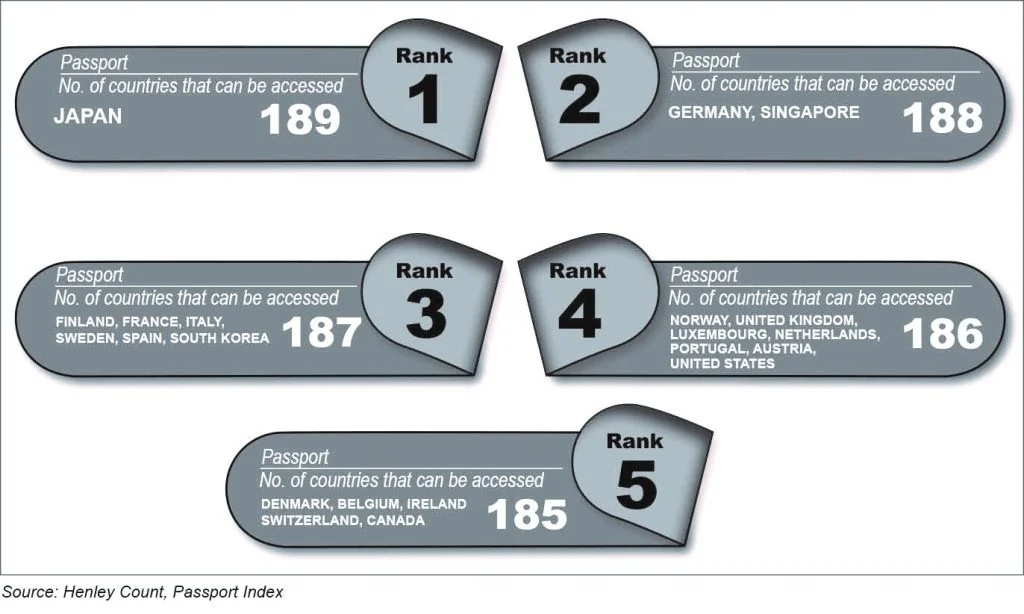
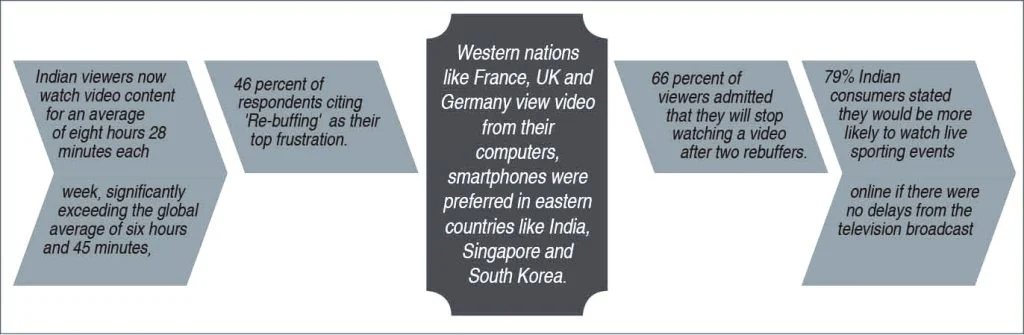
Source: State of Online Video 2018’ report by Limelight Networks.
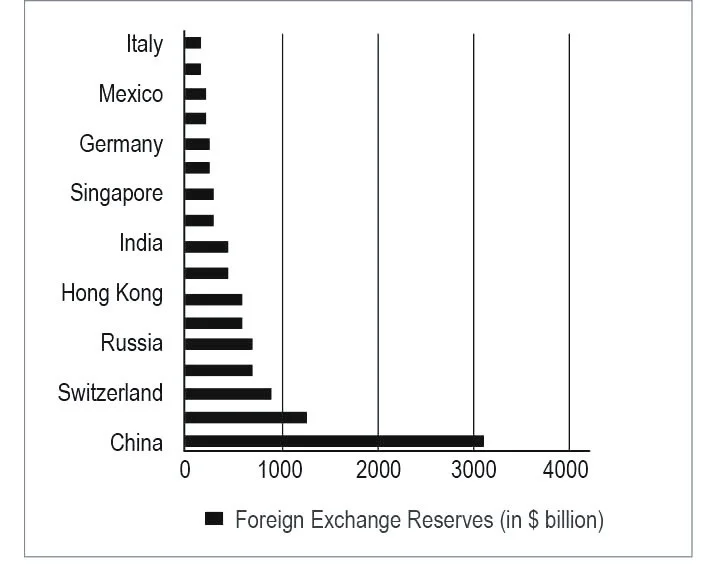
Source: Twitter @spectatorindex
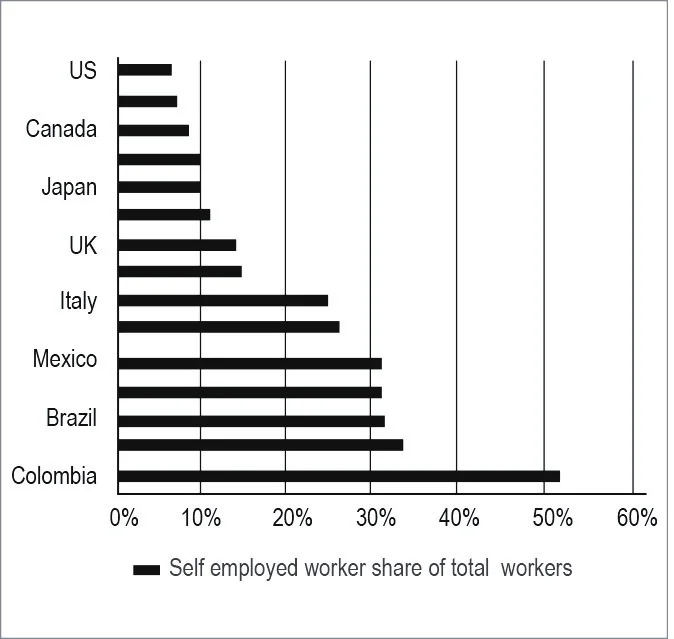
Source: OECD (twitted by @spectatorindex)
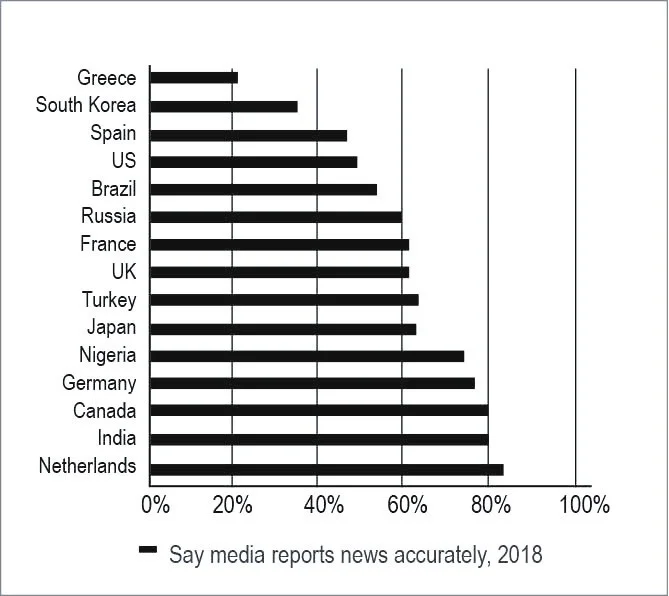
Source: Pew Research (twitted by @spectatorindex)
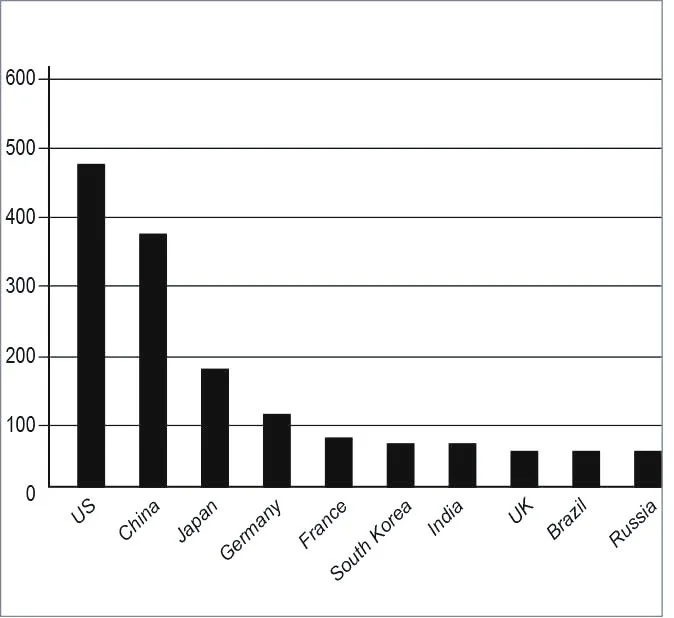
Research and Development, 2018 ( in billion)
Source: UNESCO (twitted by @spectatorindex)