COMPILER’S NOTE:
Given below is the Auditor’s Report (report) on the consolidated financial statements of a leading global telephone operator headquartered in UK and operating in several countries, including India – it operates in India as Vodafone Idea Limited (or VI) and is in the news for state ownership on conversion of government telecom dues into Equity and also for sizable further liabilities payable to the government.
The report on the group’s consolidated financial statements is very informative and includes many disclosures not so far applicable in India. Some of these are:
- Mention of non-audit services provided by the auditor and how the same did not affect independence;
- Period for which the firm is acting as auditors;
- Audit process and methodology including reporting to the audit and Risk Committee;
- Addressing concerns regarding ‘Going Concern’;
- Key risks and how addressed;
- Impact of Climate change;
- Involvement with Component Teams (as per ISA 600) – there is no ‘Other Matters’ paragraph which is the norm for reports by auditors in India on Consolidated Financial statements
The report is very relevant to get a glimpse of how the auditing professionals will have to adapt to the global reporting trends.
VODAFONE GROUP PLC
Independent auditor’s report to the members of Vodafone Group PLC (year ended 31st March 2026)
OPINION
In our opinion:
We have audited the financial statements of Vodafone Group PLC (the ‘Parent company’ or ‘Company’) and its subsidiaries (the ‘Group’) for the year ended 31 March 2026 which comprise:
| Group |
Parent company |
| Consolidated income statement for the year then ended |
Company statement of financial position as at 31 March 2026 |
| Consolidated statement of comprehensive expense for the year then ended |
Company statement of changes in equity for the year then ended |
| Consolidated statement of financial position as at 31 March 2026 |
Related notes 1 to 11 to the Company financial statements including material accounting policy information |
| Consolidated statement of changes in equity for the year then ended |
|
| Consolidated statement of cash flows for the year then ended |
|
| Related notes 1 to 33 to the financial statements, including material accounting policy information |
|
The financial reporting framework that has been applied in the preparation of the consolidated financial statements is applicable law and UK-adopted international accounting standards, with IFRS as issued by the IASB. The financial reporting framework that has been applied in the preparation of the Company financial statements is applicable law and United Kingdom Accounting Standards, including Financial Reporting Standard 101 “Reduced Disclosure Framework” (United Kingdom Generally Accepted Accounting Practice).
BASIS FOR OPINION
We conducted our audit in accordance with International Standards on Auditing (UK) (ISAs (UK)) and applicable law. Our responsibilities under those standards are further described in the Auditor’s responsibilities for the audit of the financial statements section of our report. We believe that the audit evidence we have obtained is sufficient and appropriate to provide a basis for our opinion.
INDEPENDENCE
We are independent of the Group and Parent company in accordance with the ethical requirements that are relevant to our audit of the financial statements in the UK, including the FRC’s Ethical Standard as applied to listed public interest entities, and we have fulfilled our other ethical responsibilities in accordance with these requirements.
The non-audit services prohibited by the FRC’s Ethical Standard were not provided to the Group or the Parent company, except as discussed below, and we remain independent of the group and the parent company in conducting the audit.
Provision of non-audit services prohibited by the FRC’s Ethical Standard
This exception related to the provision of translation services of the local audited statutory financial statements for the years ending 31 March 2020, 31 March 2021, 31 March 2022, 31 March 2023 and 31 March 2024 of a subsidiary in Germany.
For audit periods covering 31 March 2021 to 31 March 2024, we note this is a breach under FRC Ethical Standard 2019, as the service is not permitted under paragraph 5.40 of FRC Ethical Standard 2019.
The service was performed by EY Germany with a total fee across the five years of service delivery of €13k. We considered that the provision of the service did not create a self-review threat as the prohibited service could only be delivered once the audit has been completed and there was therefore no risk of self-review. Appropriate safeguards also existed as the individuals who performed the prohibited services were not part of the audit engagement team. We informed the Audit and Risk Committee of the inadvertent breach in September 2025. We considered this to be a minor breach of the FRC’s Ethical Standard.
Reliance on M&A Transition Provision in relation to the Acquisition of Hutchison 3G UK Holdings Limited
We are required to provide an explanation of how we have maintained our independence where we have applied paragraph 1.31 of the FRC’s Ethical Standard 2024 (“the M&A Transition Provision”).
Vodafone Group PLC became the ultimate parent of Hutchison 3G UK Holdings Limited (“Three UK”), following the acquisition of Three UK on 31 May 2025.
During the course of our independence procedures prior to the completion of the acquisition, it was identified that we provided non-permissible services for which Three UK was a beneficiary. Except for certain tax advisory services provided by EY UK, all non-permissible services were ceased prior to completion of the acquisition.
The tax advisory services that could not be reasonably terminated by the effective date of the acquisition were terminated within the three-month transition period allowed under the M&A Transition Provision. Appropriate safeguards existed as the individuals who performed the prohibited services were not part of the audit engagement team.
We informed the Audit and Risk Committee of the matter in September 2025.
We consider that an objective, reasonable and informed third party would not conclude that our independence was impaired as a result of these matters; and that we remain independent of Vodafone Group PLC in conducting the audit.
CONCLUSIONS RELATING TO GOING CONCERN
In auditing the financial statements, we have concluded that the directors’ use of the going concern basis of accounting in the preparation of the financial statements is appropriate. Our evaluation of the directors’ assessment of the Group and Parent company’s ability to continue to adopt the going concern basis of accounting included:
- confirming our understanding of the directors’ going concern assessment process, including the controls over the review and approval of the budget and long-range plan;
- assessing the appropriateness of the duration of the going concern assessment period to 30 June 2027 (“the going concern assessment period”) and considering the existence of any significant events or conditions beyond this period based on our procedures on the Group’s long-range plan and knowledge arising from other areas of the audit;
- verifying inputs against board-approved forecasts and debt facility terms and reconciling the opening liquidity position to the balance sheet as at 31 March 2026;
- reviewing borrowing facilities to confirm both their availability to the Group and the forecast debt repayments through the going concern assessment period and to validate that there are no financial covenants in relation to any of the borrowing facilities;
- understanding and evaluating the appropriateness of management’s model, including testing the assessment, including forecast liquidity, for clerical accuracy;
- challenging whether sensitivities in respect of potential downside scenarios were reasonable and appropriately severe, in light of the Group’s relevant principal risks and uncertainties and our own independent assessment of those risks;
- evaluating management’s historical forecasting accuracy and the consistency of the going concern assessment with information obtained from other areas of the audit, such as our audit procedures on the long-range plans, which underpin management’s goodwill impairment assessments;
- evaluating the impact of the subsequent events relating to transactions expected to close within the going concern period, including with respect to Safaricom, VodafoneZiggo and VodafoneThree;
- independently evaluating the mitigating actions available to respond to a severe, but plausible downside scenario, and whether those actions are feasible and within the Group’s control. These mitigations were not modelled by management as they were not relied upon for their conclusion;
- reviewing management’s reverse stress test to understand how severe conditions would have to be to breach liquidity and whether the required reduction in profitability metrics has no more than a remote possibility of occurring when compared to current performance and forecasts;
- performing independent sensitivity analysis on management’s assumptions, including applying incremental adverse cashflow sensitivities. These sensitivities included the impact of certain severe but plausible scenarios, evaluated as part of management’s work on the Group’s long-term viability materialising within the going concern assessment period; and
- reviewing the Group and Parent company’s going concern disclosures included on page 125 of the Annual Report to assess that the disclosures are consistent with the basis upon which the Board have concluded, and in conformity with the reporting standards.
OUR KEY OBSERVATIONS
- The directors’ assessment forecasts that the Group will maintain sufficient liquidity throughout the going concern assessment period. This included the scenario of non-refinancing of certain debt maturities in the assessment period, with continuing availability of the Group’s €7.6 billion revolving credit facilities, which were undrawn as at 31 March 2026.
- Furthermore, management’s reverse stress test to model the extent of reduction in profitability compared to forecasts required to breach liquidity during the going concern assessment period is considered by management to have only a remote possibility of occurring.
- The controllable identified mitigating actions available to increase liquidity over the going concern assessment period were not modelled by management due to the level of headroom in the directors’ assessment forecasts.
Based on the work we have performed, we have not identified any material uncertainties relating to events or conditions that, individually or collectively, may cast significant doubt on the Group and Parent company’s ability to continue as a going concern for a period from when the financial statements are authorised for issue to 30 June 2027.
In relation to the Group and Parent company’s reporting on how they have applied the UK Corporate Governance Code, we have nothing material to add or draw attention to in relation to the directors’ statement in the financial statements about whether the directors considered it appropriate to adopt the going concern basis of accounting.
Our responsibilities and the responsibilities of the directors with respect to going concern are described in the relevant sections of this report. However, because not all future events or conditions can be predicted, this statement is not a guarantee as to the Group’s ability to continue as a going concern.
Overview of our audit approach
| Audit scope |
- We performed an audit of the complete financial information of 7 components and audit procedures on specific balances for a further 9 components. We also performed specified audit procedures on certain accounts on 1 additional component.
- We performed certain central procedures on financial statement line items as detailed in the ‘Tailoring the scope’ section below.
|
| Key audit matters |
- Carrying value of cash generating units, including goodwill (Germany).
- Recognition and recoverability of deferred tax assets in Luxembourg and Vodafone Three.
- Revenue recognition.
- Merger of Vodafone Limited and Hutchison 3G UK Holdings Limited in the UK.
|
| Materiality |
- Overall Group materiality of €270m (FY25: €215m) has been calculated based on the Group’s Adjusted EBITDAaL. This represents approximately 2.5% (FY25: approximately 2.0%) of the Group’s Adjusted EBITDAaL
|
AN OVERVIEW OF THE SCOPE OF THE PARENT COMPANY AND GROUP AUDITS
Tailoring the scope
We have followed a risk-based approach when developing our audit approach to obtain sufficient appropriate audit evidence on which to base our audit opinion. We performed risk assessment procedures, with input from our component auditors, to identify and assess risks of material misstatement of the consolidated financial statements and identified significant accounts and disclosures. When identifying components at which audit work needed to be performed to respond to the identified risks of material misstatement of the consolidated financial statements, we considered our understanding of the Group and its business environment, the potential impact of climate change, the applicable financial reporting framework, the Group’s system of internal control, the existence of centralised processes, applications and any relevant internal audit results.
The goodwill balance was audited centrally by the Group audit team. In addition, we determined that certain centralised audit procedures would be performed on investments in associates and joint ventures, other investments, deferred tax assets, post-employment benefits, derivative financial instruments (classified within trade and other receivables and trade and other payables), taxation recoverable, cash and cash equivalents, equity, borrowings, deferred tax liabilities, taxation liabilities, roaming revenue (classified within revenue), other income, investment income, financing costs and one-off transactions (including the accounting for the merger with Three UK). For these audit areas, audit procedures were also performed by the Group audit team with input from Component audit teams.
Vodafone has centralised processes and controls over certain areas within its Vodafone Intelligent Solutions (“VOIS”) finance shared service centre locations. The Group audit team and our audit teams at VOIS form an integrated audit team to perform centralised testing for certain controls and accounts, including procedures on property, plant and equipment, other intangible assets and centralised purchase to pay processes (impacting trade and other payables, cost of sales, selling and distribution expenses and administrative expenses).
We then identified 17 components as individually relevant to the Group due to our assessment of risks of material misstatement or a significant risk impacting the consolidated financial statements. We also considered the materiality of the components relative to the Group.
For those individually relevant components, we identified the significant accounts where audit work needed to be performed at these components by applying professional judgement. We considered the Group significant accounts on which centralised procedures would be performed, the reasons for identifying the component as an individually relevant component and the size of the component’s account balance relative to the Group significant financial statement account balance.
We then considered whether the remaining Group significant account balances not yet subject to audit procedures, in aggregate, could give rise to a risk of material misstatement of the consolidated financial statements.
Having identified the components for which work would be performed, we determined the scope to assign to each component.
Of the 17 components selected, we designed and performed audit procedures, including tests of controls, on the entire financial information of 7 components (“full scope components”). For 9 components, we designed and performed audit procedures, including tests of controls, on specific significant financial statement account balances or disclosures of the financial information of the component (“specific scope components”). For the remaining 1 component, we performed specified audit procedures to obtain evidence for one or more relevant assertions on specific account balances.
Our scoping to address the risk of material misstatement for each key audit matter is set out in the Key audit matters section of the report.
INVOLVEMENT WITH COMPONENT TEAMS
In establishing our overall approach to the Group audit, we determined the type of work that needed to be undertaken at each of the components by us, as the Group audit engagement team, or by component auditors operating under our instruction. Of the 7 full scope components, audit procedures were performed on 2 of these directly by the Group audit team with the remaining 5 being performed by component audit teams. For the 9 specific scope components, the audit procedures were performed on 4 of these directly by the Group audit team with the remaining 5 being performed by component audit teams. For the 1 specified procedures scope component, audit procedures were performed by the Group audit team. Where the work was performed by component auditors, we determined the appropriate level of oversight to enable us to determine that sufficient audit evidence had been obtained as a basis for our opinion on the consolidated financial statements as a whole.
The Group audit team continued to follow a programme of planned visits that has been designed to ensure that the Senior Statutory Auditor, or another Group audit team member, visits all full and specific scope locations each year. During the current year’s audit cycle, visits were undertaken by the Group audit team to the component teams in Germany, UK, South Africa, Turkey and Egypt as well as to VOIS in India. These visits involved meetings with local management, understanding the overall audit approach, including key issues and responses as well as reviewing key work papers on risk areas. The Senior Statutory Auditor, also remotely attended audit closing meetings with component teams and management of all full scope and specific scope locations.
The Group audit team interacted regularly with the component teams where appropriate, during various stages of the audit, were responsible for the scope and direction of the audit process and reviewed relevant working papers. Where relevant, the section on key audit matters details the level of involvement we had with component auditors to enable us to determine that sufficient audit evidence had been obtained as a basis for our opinion on the Group as a whole.
This, together with the additional procedures performed at Group level, gave us appropriate evidence for our opinion on the consolidated financial statements.
CLIMATE CHANGE
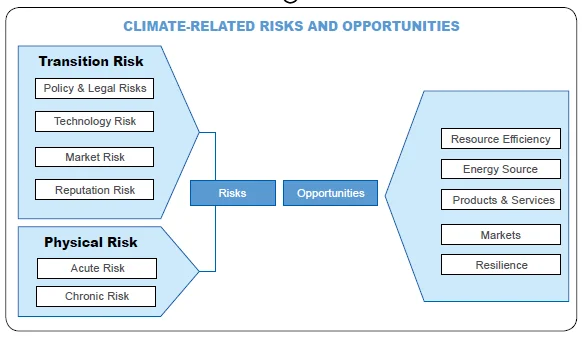
Stakeholders are increasingly interested in how climate change will impact the Group. The Group has determined that the most significant future impacts from climate change on its operations will be from its Planet activities and commitments set out on pages 28 to 32 and the material climate-related physical and transitional risks explained on pages 65 to 70 in the required Task Force for Climate related Financial Disclosures, both of which form part of the “Other information,” rather than the audited consolidated financial statements. Our procedures on these unaudited disclosures therefore consisted solely of considering whether they are materially inconsistent with the financial statements or our knowledge obtained in the course of the audit or otherwise appear to be materially misstated, in line with our responsibilities on “Other information”.
In planning and performing our audit we assessed the potential impacts of climate change on the Group’s business and any consequential material impact on its financial statements.
The Group has explained in Note 1 Basis of Preparation to the consolidated financial statements, environmental, regulatory and other factors responsive to climate change risks are still developing, and are outside of the Group’s control, and consequently financial statements cannot capture all possible future outcomes as these are not yet known. The degree of uncertainty of these changes may also mean that they cannot be taken into account when determining asset and liability valuations and the timing of future cash flows under the requirements of UK-adopted international accounting standards. The significant accounting estimates and judgements assessed by management to be potentially impacted by climate risks have been described in Note 1.
Our audit effort in considering the impact of climate change on the consolidated financial statements was focused on evaluating management’s assessment of the impact of climate risk, physical and transition, their climate commitments, the effects of material climate risks disclosed on pages 65 to 70 and the significant judgements and estimates disclosed in note 1, and whether these have been appropriately reflected in asset values and associated disclosures where values are determined through modelling future cash flows, being ‘Goodwill’, ‘Other intangible assets’ and ‘Deferred tax assets’, and in the timing and nature of liabilities recognised, being ‘Asset Retirement Obligations’. As part of this evaluation, we performed our own risk assessment, supported by our climate change internal specialists, to determine the risks of material misstatement in the financial statements from climate change which needed to be considered in our audit.
We also challenged the Directors’ considerations of climate change risks in their assessment of going concern and viability and associated disclosures. Where considerations of climate change were relevant to our assessment of going concern, these are described above.
Based on our work we have not identified the impact of climate change on the financial statements to be a key audit matter or to materially impact a key audit matter.
KEY AUDIT MATTERS
Key audit matters are those matters that, in our professional judgment, were of most significance in our audit of the financial statements of the current period and include the most significant assessed risks of material misstatement (whether or not due to fraud) that we identified. These matters included those which had the greatest effect on: the overall audit strategy, the allocation of resources in the audit; and directing the efforts of the engagement team. These matters were addressed in the context of our audit of the financial statements as a whole, and in our opinion thereon, and we do not provide a separate opinion on these matters.
Risk
Carrying value of cash generating units, including goodwill (Germany)
As more fully described in Note 4 to the consolidated financial statements, in accordance with IAS 36 Impairment of Assets, the Group calculates the recoverable amount for cash generating units (‘CGUs’) based on value in use (‘VIU’) to determine whether an impairment to the carrying value of the CGU, and therefore, goodwill, is required. As at 31 March 2026, the Group has recorded €21,918 million (FY25: €20,514 million) of goodwill, including €16,092 million (FY25: €15,985 million) with respect to Germany. The Group’s assessment of the VIU of its CGUs involves estimation about the future performance of the local market businesses. In particular, the determination of the VIU for Germany was sensitive to the significant assumptions of projected Adjusted EBITDAaL growth, timing and amount of future capital expenditure, licence and spectrum payments, the long-term growth rate, and the discount rate.
Auditing the Group’s annual impairment test for the Germany CGU was complex and involved significant auditor judgement, given the estimation uncertainty related to the significant assumptions described above and the sensitivity to fluctuations and market specific factors in those assumptions.
Our response to the risk
We obtained an understanding, evaluated the design and tested the operating effectiveness of management’s controls over the Group’s goodwill impairment review process, including, for example, management’s controls over the significant assumptions described above.
We evaluated, with the involvement of EY valuation specialists, the methodology applied in the Germany VIU model, as compared to the requirements of IAS 36, including the mathematical accuracy of management’s model. We performed procedures to assess the significant assumptions used in the Germany VIU model, including:
- evaluating projected Adjusted EBITDAaL growth, for example by comparing underlying assumptions including Average Revenue Per User (‘ARPU’) to external data, such as economic and industry forecasts and competitor data for the German telecoms market, supporting contracts and benchmarking provided by management, and for consistency with evidence obtained from other areas of our audit;
- comparing the cash flow projections used in the Germany VIU model to the Long-Range Plan approved by the Group’s Board of Directors as part of their annual budgeting exercise and evaluating the historical accuracy of management’s German business projections, which underpin the VIU model, by comparing the prior years’ forecast to actual results for each of the last five years;
- comparing forecast capital expenditure and license and spectrum payments to actual historical spend, assessing market specific events such as network deployment plans, industry analysis and competitor data, where available;
- comparing the long-term growth rate and discount rate assumptions to independently determined ranges, with the involvement of EY valuation specialists;
- performing sensitivity analyses on the VIU model, to evaluate the impact that changes in assumptions would cause to the valuation of the Germany CGU; and
- in considering the existence of contrary evidence, for management’s assessment of implied recoverable value, we compared the Germany CGU EBITDAaL multiple to market listed peers and considered independent analyst valuations for the Germany CGU.
We also assessed the adequacy of the related disclosures provided in Note 4 of the consolidated financial statements, in particular the sensitivity disclosures in relation to changes in assumptions that would lead to an impairment being recorded.
KEY OBSERVATIONS COMMUNICATED TO THE AUDIT AND RISK COMMITTEE
Based on our audit procedures, we considered management’s assessment supporting the recoverability of the goodwill balance allocated to the Germany CGU, including the conclusion that no impairment charge was required, to be reasonable. Accordingly, no impairment charge has been recognised for the year.
The disclosures in Note 4 of the consolidated financial statements in respect of the Germany CGU are consistent with the requirements of IAS 36 including the sensitivity disclosures.
How we scoped our audit to respond to the risk and involvement with component teams
The recoverability of the Group’s Germany CGU carrying value was audited centrally by the Group audit team with support from the component audit team on certain procedures at the local market level.
Risk
Recognition and recoverability of deferred tax assets in Luxembourg and VodafoneThree
As more fully described in Note 6 to the consolidated financial statements, the Group recognises deferred tax assets in accordance with IAS 12 Income Taxes, based on whether management determines that it is probable, which requires significant judgement, that there will be sufficient and suitable taxable profits in the relevant legal entity or tax group to allow the recognized assets to be recovered.
Deferred tax assets amounting to €15,248 million (FY25: €15,563 million) are recognised in Luxembourg in respect of losses and €2,067 million (FY25: Nil) for VodafoneThree, primarily relating to excess capital allowances.
Management concluded it is probable that the related entities will continue to generate taxable profits in the future against which the deferred tax assets will be recovered over a period of 46 to 50 years (FY25: 47 to 52 years) in Luxembourg and 46 years for VodafoneThree. The Company does not currently recognize deferred tax assets which are forecast to be used 60 years beyond the reporting period.
The nature of the respective forecasts impacts the timeframe over which the deferred tax assets in Luxembourg and for Vodafone Three are expected to be recovered.
- The Luxembourg companies’ income is primarily derived from internal financing, centralized procurement and international roaming activities. The forecasted future finance income considers assumptions of future interest rates and levels of intragroup financing, as well as forecasted income from the activities described above.
- The VodafoneThree income is derived from the operating activities of the VodafoneThree UK tax group. Management’s forecast assumes an expected level of future profitability, expected levels of intercompany debt and reflects inherent risks related to the telecommunications sector.
Auditing the Group’s recognition and recoverability of deferred tax assets in Luxembourg and of VodafoneThree is significant to the audit because it involves material amounts, and the judgements and estimates in relation to future taxable profits and the period of time over which the Group expected to utilise these assets, results in increased estimation uncertainty.
Our response to the risk
Overall procedures in respect of both jurisdictions
We obtained an understanding, evaluated the design and tested the operating effectiveness of management’s controls over the recognition and recoverability of deferred tax assets specifically relating to the Luxembourg and the VodafoneThree tax groups, including the calculation of the gross amount of deferred tax assets recorded and the preparation of the prospective financial information used to determine the Luxembourg and VodafoneThree entities’ future taxable income.
We involved our tax professionals and tax specialists, in the performance of our audit procedures which includes, among others, assessing the existence of available losses for both jurisdictions and excess capital allowances for VodafoneThree, and evaluating management’s position on the recoverability of the losses and excess capital allowances with respect to local tax law and tax planning strategies adopted. We also evaluated the nature of reconciling items between forecast profit before tax and taxable profit and considered their appropriateness in accordance with IAS 12. We performed sensitivities to understand the impact of changes in key assumptions of forecast taxable income, on the utilisation period, including historical profitability against forecast.
We evaluated the adequacy of the disclosures in respect of the recognition of the deferred tax asset against the requirements of IAS 12.
Luxembourg specific procedures
Our additional audit procedures included, among others;
-
evaluating the forecast finance income by, on a sample basis, recalculating income with reference to underlying agreements, comparing future interest rates utilised in the forecasts to relevant external benchmarks and assessing the projections of internal debt levels for consistency with our understanding of the business and relevant tax regulations in respect of transfer pricing of financial transactions;
- assessing whether contrary evidence exists that is not consistent with either management’s stated intention that the financing structures, as projected, as well as the intercompany debt levels, will remain in place or that it is probable that sufficient future taxable profits will exist in the relevant jurisdictions;
- evaluating how the assumptions used in the impairment model for the Germany CGU impact Luxembourg’s forecast interest income from Vodafone Germany, and therefore, the recoverability of the deferred tax assets in Luxembourg; and
- assessing the reasonability of forecasted procurement and roaming taxable profits utilised in management’s assessment, by considering historical forecasting accuracy, and comparing forecasts with evidence obtained from other areas of our audit.
VodafoneThree UK specific procedures
Our additional audit procedures included, among others:
- corroborating that the VodafoneThree UK forecast trading activities used within the deferred tax asset recognition model are consistent with those used as an input into the going concern, long-term viability statement, impairment assessment and the information approved by the Board related to management’s business plans;
- assessing management’s expected future profitability, by comparing underlying assumptions, to external data, such as economic and industry forecasts and competitor data for the UK telecommunication sector, and supporting contracts and benchmarking provided by management; and
- evaluating the reasonability of expected future profitability by comparing underlying assumptions to historical performance, commercial rationale, the application of transfer pricing policies and with evidence obtained from other areas of our audit.
KEY OBSERVATIONS COMMUNICATED TO THE AUDIT AND RISK COMMITTEE
We agree with the recognition of the deferred tax assets in Luxembourg and VodafoneThree, and consequently the long recoverability period, on the basis of forecast profits, which are considered probable. In the case of Luxembourg, this reflects the commercial rationale and management’s intention to retain current activities in Luxembourg and the intergroup debt levels, over the longer term and this reflects the track record of historical profitability. In the case of the VodafoneThree, this reflects the commercial rationale for the merger. Both VodafoneThree and Luxembourg have established market structure for telecoms including high barriers to entry for new market entrants, the long-dated funding structure and local tax law.
Changes in key assumptions, in particular Luxembourg, including a plausible reduction in the level of intra-group debt levels with Germany could lead to an increase in utilisation period beyond 60 years.
The Group does not currently recognise deferred tax assets which are forecast to be used 60 years beyond the balance sheet date and consequently, should the assumptions change, a different conclusion could be reached in respect of the level of deferred tax asset recognised.
We consider that the disclosures included within Note 6 to the consolidated financial statements acknowledges both the judgement made in respect of the timing and profile of the utilisation of the losses in the short to medium term and the longer-term uncertainties in relation to the carrying value of the related deferred tax asset.
How we scoped our audit to respond to the risk and involvement with component teams
Audit procedures on the recognition and recoverability of deferred tax assets on tax losses in Luxembourg were performed by the Group audit team and its tax professionals, with support from Luxembourg tax and transfer pricing specialists for certain procedures. Audit procedures on the recognition and recoverability of deferred tax assets in VodafoneThree were performed by the Group audit team and its tax professionals and with support from UK tax specialists for certain procedures.
Risk
Revenue recognition
As more fully described in Note 2, Note 14 and Note 15 to the consolidated financial statements, the Group reported revenue of €40,461 million (FY25: €37,448 million), contract assets of €2,982 million (FY25: €2,969 million) and contract liabilities of €2,262 million (FY25: €2,228 million) for the year ended or as at 31 March 2026. Management records revenue according to the principles of IFRS 15, Revenue from Contracts with Customers, including following the 5-step model therein.
We identified a risk of management override through inappropriate manual topside revenue journal entries, given revenue is a key performance indicator, both in external communication and for management incentives.
We also consider auditing the revenue recorded by the Group to involve greater auditor effort and attention, due to the multiple IT systems and tools utilised in the initiation, processing and recording of transactions, which includes a high volume of individually low monetary value transactions. The involvement of IT professionals was required to determine the audit approach to test and evaluate the relevant data that was captured and aggregated, and to assess the sufficiency of the audit evidence obtained.
Our response to the risk
Our audit procedures at full scope and specific scope component locations included, among others obtaining an understanding, evaluated the design and tested the operating effectiveness of management’s controls over the Group’s revenue recognition process, which includes management’s determination of the timing of revenue recorded. With the support of our IT professionals, we also evaluated the design and tested the operating effectiveness of management’s controls over the appropriate initiation and flow of transactional data through the IT systems and tools and the reconciliation of the transactional data to the accounting records. Where we were unable to rely on controls within the underlying IT systems, we designed alternative procedures to mitigate the risk.
For significant revenue streams, which include service and equipment revenue, at full and specific scope locations, our audit procedures included the following, on a sample basis:
- We used data analytic tools to identify revenue related manual journal entries posted to the general ledger and traced these back to underlying source documentation, to evaluate the propriety, completeness and accuracy of the postings. We also performed analytical procedures to consider the completeness of journal entry postings;
- Where it was deemed to be most effective, at certain components we extended the use of data analytics. These incremental procedures involved testing full populations of transactions, including performing a correlation analysis between invoiced revenue, receivables and cash. We performed targeted audit procedures over items above our testing threshold that did not correlate as expected;
- In order to support our data analytic approach, we performed a completeness test over the underlying data to ensure this data reconciled to the financial statements;
- At components where the above procedures were not used, for the significant revenue billing systems, we obtained the billing data to general ledger reconciliation, which included the relevant adjustments to deferred and accrued revenue balances. We reperformed these reconciliations, including assessing the accuracy of the revenue adjustments by vouching billing data inputs to underlying source documentation, including contractual agreements where applicable. In addition, we tested the mathematical accuracy and completeness of the reconciliations and reconciling items above our testing threshold, including significant revenue postings outside of the billing systems; and
- We recalculated the revenue recognised to evaluate whether the processing of the revenue recognition by the Group’s IT systems was materially correct. Where relevant, for multi-element arrangements, we used contractual data to apply the Group’s accounting policy to allocate transaction price to the identified performance obligations and recalculate the revenue to be recognised.
We also assessed the adequacy of the Group’s disclosures in respect to the accounting policies on revenue recognition.
KEY OBSERVATIONS COMMUNICATED TO THE AUDIT AND RISK COMMITTEE
Based on the procedures performed, including those in respect of manual adjustments to revenue, we concluded that revenue has been appropriately recognised in accordance with IFRS 15, in the year ended 31 March 2026.
How we scoped our audit to respond to the risk and involvement with component teams
Our component audit teams performed audit procedures over this risk area in 5 full scope and 3 specific scope components, which covered 74% of the Group’s revenue. The Group audit team also performed centralised audit procedures over certain revenue streams which covered 1% of the Group’s revenue.
For the remaining 25% of revenue, we performed risk assessment, and selective analytical and controls testing procedures to ensure the risk of material misstatement was sufficiently low. We also performed targeted journal entry testing procedures to mitigate residual risk of material misstatement.
We held regular discussions with component teams throughout the audit, including in person on site visits at all locations. We participated in the development of their planned audit strategy for revenue recognition, reviewed all component deliverables and additional key and supporting workpapers prepared by the component teams to address the risk identified.
Risk
Merger of Vodafone Limited and Hutchison 3G UK
Holdings Limited in the UK
As more fully described in Note 27 to the consolidated financial statements, on 31 May 2025, the Group completed a transaction to merge Vodafone Limited (‘Vodafone UK’) and Hutchison 3G UK Holdings Limited (‘Three UK’), to form VodafoneThree Holdings Limited (‘VodafoneThree’) for a total consideration valued at €2,446 million. The transaction was accounted for using the acquisition method, which resulted in the recognition of identifiable intangible assets of €2,555 million, tangible assets of €3,457 million and goodwill of €1,358 million.
The audit of the merger required significant auditor judgement, in assessing control over VodafoneThree, including whether the Group has the power and ability to use that power to affect its returns. Significant judgement was also involved in evaluating the valuation of the consideration and the identified intangible and tangible assets, given the estimation uncertainty and sensitivity of key assumptions, including those relating to future performance.
Our response to the risk
We obtained an understanding, evaluated the design and tested the operating effectiveness of management’s controls over its accounting for the acquisition. We tested controls over management’s review of the control assessment, valuation of the consideration and valuation of identifiable intangible and tangible assets, including the review of the valuation models and significant assumptions, as described above, used in the valuation.
To test the control assessment, our audit procedures included, an evaluation of the terms of the Shareholder Agreement, including the rights of minority shareholders, and management’s own assessment against the requirements of IFRS 10.
To test the valuation models used to fair value the acquired identifiable intangible assets, our audit procedures included, among others:
- assessing the competence, capabilities and objectivity of management’s specialists;
- testing the completeness and accuracy of the underlying data used in the purchase price allocation by comparing to supporting ledgers, and evaluation of the valuation methodologies applied against the requirements of IFRS 13, with the involvement of our internal valuation specialists, and;
- for identified intangible assets impacted by prospective financial information, we identified key assumptions and benchmarked them to available competitor data and external industry reports, and performed sensitivity analysis over the key assumptions.
To test the valuation of consideration, our audit procedures include, assessing the valuation of the Vodafone UK equity value contributed based on its standalone valuation model, market assumptions and review of the Shareholder Agreement.
In addition, we evaluated the adequacy of the related disclosures, in particular the description of the transaction and the purchase price allocation.
KEY OBSERVATIONS COMMUNICATED TO THE AUDIT AND RISK COMMITTEE
Based on the procedures performed, we agree that the assumptions, methodologies and judgements applied as part of the purchase price allocation (‘PPA’) are reasonable.
The disclosures in Note 1 and 27 are appropriate.
HOW WE SCOPED OUR AUDIT TO RESPOND TO THE RISK AND INVOLVEMENT WITH COMPONENT TEAMS
The Accounting for the merger with Three UK was audited centrally by the Group audit team with support from the component audit team on certain procedures at the local market level.
OUR APPLICATION OF MATERIALITY
We apply the concept of materiality in planning and performing the audit, in evaluating the effect of identified misstatements on the audit and in forming our audit opinion.
Materiality
The magnitude of an omission or misstatement that, individually or in the aggregate, could reasonably be expected to influence the economic decisions of the users of the financial statements. Materiality provides a basis for determining the nature and extent of our audit procedures.
We determined our materiality for the Group to be €270 million (2025: €215 million), which is approximately 2.5% (2025: 2.0%) of Adjusted EBITDAaL. We believe that Adjusted EBITDAaL provides us with the most relevant performance measure for the continuing business on which to determine materiality, given the prominence of this metric throughout the Annual Report and consolidated financial statements, investor presentations, profit metrics focused on by analysts and its alignment to the management remuneration metric of adjusted EBIT. When calculating our final materiality, we consider the need to make adjustments to the basis for materiality to reflect a consistent view of the underlying business.
We determined materiality for the Parent company to be €588 million (2025: €421 million), which is approximately 1.5% (2025: 1.0%) of the Parent company’s equity. However, since the Parent company was a full scope component, for accounts that were relevant for the consolidated financial statements, a performance materiality of €43 million was applied.
The increase in the materiality for the Group and Parent company reflects the completion of significant portfolio changes as well as the overall stability of the industry and business as well as the viability of the Group.
Performance materiality
The application of materiality at the individual account or balance level. It is set at an amount to reduce to an appropriately low level the probability that the aggregate of uncorrected and undetected misstatements exceeds materiality.
On the basis of our risk assessments, together with our assessment of the effectiveness of the Group’s overall control environment to prevent or timely detect and correct material errors, our judgement was that performance materiality was 75% (2025: 75%) of our planning materiality, namely €200m (2025: €160m).
Audit work was undertaken at component locations for the purpose of responding to the assessed risk of material misstatement of the consolidated financial statements. The performance materiality set for each component is based on the relative scale and risk of the component to the Group as a whole and our assessment of the risk of misstatement at that component. In the current year, the range of performance materiality allocated to components was €39m to €200m (2025: €32m to €160m).
Reporting threshold
An amount below which identified misstatements are considered as being clearly trivial.
We agreed with the Audit and Risk Committee that we would report to them all uncorrected audit differences in excess of €13m (2025: €11m), which is set at 5% of materiality, as well as differences below that threshold that, in our view, warranted reporting on qualitative grounds.
We evaluate any uncorrected misstatements against both the quantitative measures of materiality discussed above and in light of other relevant qualitative considerations in forming our opinion.
Other information
The other information comprises the information included in the annual report set out on pages 1 to 126, other than the financial statements and our auditor’s report thereon. The directors are responsible for the other information contained within the annual report.
Our opinion on the financial statements does not cover the other information and, except to the extent otherwise explicitly stated in this report, we do not express any form of assurance conclusion thereon.
Our responsibility is to read the other information and, in doing so, consider whether the other information is materially inconsistent with the financial statements or our knowledge obtained in the course of the audit or otherwise appears to be materially misstated. If we identify such material inconsistencies or apparent material misstatements, we are required to determine whether this gives rise to a material misstatement in the financial statements themselves. If, based on the work we have performed, we conclude that there is a material misstatement of the other information, we are required to report that fact.
We have nothing to report in this regard.
OPINIONS ON OTHER MATTERS PRESCRIBED BY THE COMPANIES ACT 2006
In our opinion, the part of the directors’ remuneration report to be audited has been properly prepared in accordance with the Companies Act 2006.
In our opinion, based on the work undertaken in the course of the audit:
- the information given in the strategic report and the directors’ report for the financial year for which the financial statements are prepared is consistent with the financial statements; and
- the strategic report and the directors’ report have been prepared in accordance with applicable legal requirements.
Matters on which we are required to report by exception
In the light of the knowledge and understanding of the Group and the Parent company and its environment obtained in the course of the audit, we have not identified material misstatements in the strategic report or the directors’ report.
We have nothing to report in respect of the following matters in relation to which the Companies Act 2006 requires us to report to you if, in our opinion:
- adequate accounting records have not been kept by the Parent company, or returns adequate for our audit have not been received from branches not visited by us; or
- the Parent company financial statements and the part of the Directors’ Remuneration Report to be audited are not in agreement with the accounting records and returns; or
- certain disclosures of directors’ remuneration specified by law are not made; or
- we have not received all the information and explanations we require for our audit.
CORPORATE GOVERNANCE STATEMENT
We have reviewed the directors’ statement in relation to going concern, longer-term viability and that part of the Corporate Governance Statement relating to the Group and Company’s compliance with the provisions of the UK Corporate Governance Code specified for our review by the UK Listing Rules.
Based on the work undertaken as part of our audit, we have concluded that each of the following elements of the Corporate Governance Statement is materially consistent with the financial statements or our knowledge obtained during the audit:
- Directors’ statement with regards to the appropriateness of adopting the going concern basis of accounting and any material uncertainties identified set out on page 125;
- Directors’ explanation as to its assessment of the Company’s prospects, the period this assessment covers and why the period is appropriate set out on page 64;
- Directors’ statement on whether it has a reasonable expectation that the Group will be able to continue in operation and meets its liabilities set out on page 64;
- Directors’ statement on fair, balanced and understandable set out on page 125;
- Board’s confirmation that it has carried out a robust assessment of the emerging and principal risks set out on page 122;
- The section of the annual report that describes the review of effectiveness of risk management and internal control systems, including the material control weakness described, set out on page 122; and
- The section describing the work of the Audit and Risk Committee set out on page 92.
Responsibilities of directors
As explained more fully in the directors’ responsibilities statement set out on page 125, the directors are responsible for the preparation of the financial statements and for being satisfied that they give a true and fair view, and for such internal control as the directors determine is necessary to enable the preparation of financial statements that are free from material misstatement, whether due to fraud or error.
In preparing the financial statements, the directors are responsible for assessing the Group and Parent company’s ability to continue as a going concern, disclosing, as applicable, matters related to going concern and using the going concern basis of accounting unless the directors either intend to liquidate the Group or the Parent company or to cease operations, or have no realistic alternative but to do so.
Auditor’s responsibilities for the audit of the financial statements
Our objectives are to obtain reasonable assurance about whether the financial statements as a whole are free from material misstatement, whether due to fraud or error, and to issue an auditor’s report that includes our opinion. Reasonable assurance is a high level of assurance, but is not a guarantee that an audit conducted in accordance with ISAs (UK) will always detect a material misstatement when it exists. Misstatements can arise from fraud or error and are considered material if, individually or in the aggregate, they could reasonably be expected to influence the economic decisions of users taken on the basis of these financial statements.
Explanation as to what extent the audit was considered capable of detecting irregularities, including fraud
Irregularities, including fraud, are instances of non-compliance with laws and regulations. We design procedures in line with our responsibilities, outlined above, to detect irregularities, including fraud. The risk of not detecting a material misstatement due to fraud is higher than the risk of not detecting one resulting from error, as fraud may involve deliberate concealment by, for example, forgery or intentional misrepresentations, or through collusion. The extent to which our procedures are capable of detecting irregularities, including fraud is detailed below.
However, the primary responsibility for the prevention and detection of fraud rests with both those charged with governance of the Company and management.
- We obtained an understanding of the legal and regulatory frameworks that are applicable to the Group and determined that the most significant are those that relate to the reporting framework (UK-adopted International Accounting Standards, with IFRS accounting standards as issued by the International Accounting Standards Board (IASB), Financial Reporting Standard 101 ‘Reduced disclosure framework’ (‘FRS 101’), the UK Companies Act 2006, UK Corporate Governance Code, the US Securities and Exchange Act of 1934 and the Listing Rules of the UK Listing Authority), the relevant tax compliance regulations in the jurisdictions in which the Group operates, the EU General Data Protection Regulation (GDPR) and other local Data Regulations.
- We understood how the Group is complying with those frameworks by making enquiries of management, internal audit, those responsible for legal and compliance procedures and the Company Secretary. We supplemented our enquiries through our review of board minutes and papers provided to the Audit and Risk Committee, correspondence received from regulatory bodies and attendance at all meetings of the Audit and Risk Committee, as well as consideration of the results of our audit procedures across the Group, including our testing of entity level and group-wide controls.
- We assessed the susceptibility of the Group’s financial statements to material misstatement, including how fraud might occur by meeting with management from various parts of the Group, including management and finance teams of the local markets designated as full scope and specific scope locations, management at Head Office, the Audit and Risk Committee, the Group Internal Audit function, the Group Legal function, the Group Corporate Security team and individuals in the fraud and compliance department, to understand where it considered there was susceptibility to fraud; and assessing whistleblowing logs and associated incidences for those with a potential financial reporting impact. We also considered performance targets and their propensity to influence efforts made by management to manage earnings or influence the perceptions of analysts. We considered the programmes and controls that the Group has established to address risks identified, or that otherwise prevent, deter and detect fraud, and how senior management monitors those programmes and controls.
- Based on this understanding we designed our audit procedures to identify non-compliance with such laws and regulations or fraudulent financial reporting, where the impact on the financial statements of such non-compliance or fraudulent financial reporting could be material. These procedures included, where necessary, the use of forensic and other relevant specialists. Our procedures involved enquiries of external legal counsel and other specialists, management and finance teams of the local markets designated as full and specific scope locations, management at Head Office, the Audit and Risk Committee, the Group Internal Audit function, the Group Legal function, the Group Corporate Security team and individuals in the fraud and compliance department. We also performed journal entry testing, with a focus on manual consolidation journals, journals indicating large or unusual transactions and journals with key words that could indicate management override, based on our understanding of the business; and challenging the assumptions and judgements made by management in respect of significant one-off transactions in the financial year and significant accounting estimates, as referred to in the key audit matters section above. At a component level, our full and specific scope component audit teams’ procedures included enquiries of component management; journal entry testing; and testing in respect of the key audit matter of revenue recognition. We also leveraged our data analytics capabilities in performing work on the purchase to pay process and fixed asset balances and leases, to assist in identifying higher risk transactions and balances, for testing. Any instances of non-compliance with laws and regulations, including in relation to fraud, were communicated by/to components and considered in our audit approach, if applicable.
- Where the risk of fraud, including the risk of management override, was considered to be higher, including areas impacting Group key performance indicators or management remuneration, we performed audit procedures to address each identified material fraud risk or other risk of material misstatement. These procedures included those on revenue recognition referred to in the key audit matters section above and testing journal entries that we judged to be of higher risk and were designed to provide reasonable assurance that the financial statements were free from material fraud or error.
A further description of our responsibilities for the audit of the financial statements is located on the Financial Reporting Council’s website at https://www.frc.org.uk/auditorsresponsibilities. This description forms part of our auditor’s report.
OTHER MATTERS WE ARE REQUIRED TO ADDRESS
- Following the recommendation from the Audit and Risk Committee, we were appointed by the Parent company on 23 July 2019 to audit the financial statements for the year ending 31 March 2020 and subsequent financial periods.
- The period of total uninterrupted engagement including previous renewals and reappointments is seven years, covering the years ending 31 March 2020 to 31 March 2026.
- The audit opinion is consistent with the additional report to the Audit and Risk Committee.
USE OF OUR REPORT
This report is made solely to the Company’s members, as a body, in accordance with Chapter 3 of Part 16 of the Companies Act 2006. Our audit work has been undertaken so that we might state to the Company’s members those matters we are required to state to them in an auditor’s report and for no other purpose. To the fullest extent permitted by law, we do not accept or assume responsibility to anyone other than the Company and the Company’s members as a body, for our audit work, for this report, or for the opinions we have formed.