Subscribe to the Bombay Chartered Accountant Journal Subscribe Now!

Natural Justice – opportunity of hearing – Personal hearing through video conferencing denied – Matter Remanded

7 LKP Securities Ltd. vs. The Deputy Commissioner of Income Tax Circle-4(3)(1)g & Ors.
[Writ Petition No. 2076 – 2077 of 2022, Bombay High Court]
Date of order: 4th July, 2022

Natural Justice – opportunity of hearing – Personal hearing through video conferencing denied – Matter Remanded

The Petitioner submits that in the course of reassessment proceeding on 23rd March, 2022, petitioner sought to make further submissions, and also submitted a request for personal hearing through video conferencing. It was found that e-proceedings had been closed on 21st March, 2022. The Petitioner informed the Respondent of this grievance vide communication dated 24th March, 2022, and also attached further submission dated 23rd March, 2022 with the said communication. Despite the same, the Respondent has gone ahead and passed the assessment order dated 30th March, 2022 without considering the request for personal hearing or the further submissions. It was submitted that the matter be remanded back, so that an assessment order can be passed after considering the further submissions and after hearing the Petitioner.

The Court observed from paragraph 11 of the assessment order dated 30th March, 2022 for A.Y. 2016-2017, that since the case was getting time barred the assessment order came to be passed on the basis of material available with the department. Paragraph 11 of the said order is quoted as under:

“11. Subsequently the assessee opted for video conference through JAO regarding which letter was uploaded by the JAO on 25.03.2022. In response the VC was scheduled on 28.03.2022 at 2.30 p.m. However during the VC conducted for the A.Y. 2017-18 scheduled at 12.45 p.m. in assessee’s own case the A/R of the assessee requested to take up the case for the A.Y. 2016-17 alongwith A.Y. 2017- 18 since the issue for both the years are similar and as such VC scheduled for 2016-17 was cancelled. In the course of Video conference the A/r of the assessee requested to stay the proceeding for A.Y. 2016-17 as they would be filing writ before the Hon’ble High Court. In response the A/R of the assessee was asked to upload the interim order of the Hon’ble High Court on or before 29.03.2022 to stay the proceedings. However the A/R of the assessee requested they would upload the interim order by 3.00 p.m. on 30.03.2022 but no such order was filed till 4.00 P.M. of 30.03.2022. Since the case is getting barred by limitation the case is disposed off on the basis of material available with the department.”

The Hon. Court observed that the assessment order has come to be passed without considering the further submissions or hearing the Petitioner. It was observed that similar assessment order has also been passed for A.Y. 2017-2018.

The Revenue fairly submitted that in several such matters, the Court has remanded the matters for fresh consideration in view of the provisions of Section 144B of the Act 1961.

Held: Set aside the assessment orders dated 30th March, 2022 for A.Ys. 2016-2017 and 2017-2018, and remanded the matters back to the Respondent for de novo consideration after granting an opportunity of personal hearing and, after taking into account the further submissions that the Petitioner may make, pass appropriate orders in accordance with law within four weeks.

TDS — Payment to non-resident — Assessee not person responsible for making payment to non-resident — No obligation to deduct tax at source

34 Ingram Micro Inc. vs. ITO(IT)
[2022] 444 ITR 568 (Bom.)
Date of order: 26th February, 2022
S. 195 of ITA, 1961

TDS — Payment to non-resident — Assessee not person responsible for making payment to non-resident — No obligation to deduct tax at source

The assessee was a company incorporated in the USA and was engaged in the business of distribution of technology products. The assessee had worldwide operations. IMAHI, a company incorporated in the USA, and a subsidiary of the assessee, held indirectly a wholly owned subsidiary in India, IMIPL. In 2004, IMAHI acquired the shares of THL, a company incorporated in Bermuda, from its existing shareholders. The assessee’s role in this transaction was that it guaranteed the payment of the sale consideration by IMAHI under the share purchase agreement to the sellers, i.e., the existing shareholders of THL. The guarantee never came to be invoked because IMAHI discharged its obligation under the share purchase agreement to the sellers, and accordingly, the assessee stood discharged of its obligations as a guarantor under the share purchase agreement. The Assessing Officer initiated proceedings u/s 201 of the Income-tax Act, 1961 to treat the assessee as an assessee-in-default for failure to deduct tax on the payment for the purchase of shares of THL.

The Bombay High Court allowed the writ petition filed by the assessee challenging the said proceedings and held as under:

“i) Section 195 of the Income-tax Act, 1961, mandates “any person responsible for paying to a non-resident” any sum chargeable under the provisions of this Act shall, at the time of credit of such income to the account of the payee or at the time of payment thereof, whichever is earlier, to deduct Income-tax thereon at the rates in force.

ii) The share purchase agreement showed that the assessee was the guarantor of the payment to be made by IMAHI and not the purchaser. The purchaser himself could not be the guarantor also and that itself indicated that the assessee was not the purchaser of the shares of THL. The Assessing Officer had also not produced any evidence or referred to any document to even indicate that the assessee had paid any amount or could be even regarded as the person responsible for paying any sum to a non-resident (or a foreign company) chargeable under the provisions of the Act.

iii) As section 195 is applicable only to a person who is responsible for paying to deduct tax at the time of credit to the account of the payee or at the time of payment and the assessee did not make any payment to THL, there was no obligation on the assessee to deduct tax at source. The notice u/s. 201 was not valid.”

SALE OF A STAKE IN A SUBSIDIARY BY A PARENT WITHOUT LOSS OF CONTROL

This article deals with the accounting of the sale of a stake in a subsidiary by the parent, in the Consolidated Financial Statements (CFS) of the parent.

CASE – Accounting of the Sale of a Stake in a Subsidiary by a Parent Without Loss Of Control

FACTS

  • A Ltd. (‘Parent’) acquired a 100% controlling stake in B Ltd. (‘Subsidiary’) for a cash consideration of Rs. 12,500 crores. On the date of acquisition, B Ltd.’s identifiable net assets at fair value were Rs. 10,000 crores. Goodwill of Rs. 2,500 crores was recognised in the CFS of the parent.

  • In a subsequent year, A Ltd. sells a 25% interest in B Ltd. to outside investors / non-controlling interests (NCI) for a cash consideration of Rs. 3,500 crores.

  • A Ltd. still maintains a 75% controlling interest in B Ltd., i.e. A Ltd. continues to control B Ltd. even after the sale of a 25% stake in B Ltd.

  • For simplicity, it is assumed that there has been no change in the net assets of the subsidiary since the acquisition till the date of sale of 25% stake by A Ltd.

  • There are no call/put options with NCI and/or parent.

ISSUE
How should the parent’s sale of a stake in the subsidiary without a loss of control be accounted for in the CFS of A Ltd.?

RESPONSE
Accounting Standard References

Ind AS 110, Consolidated Financial Statement

Paragraph 23
Changes in a parent’s ownership interest in a subsidiary that do not result in the parent losing control of the subsidiary are equity transactions (i.e. transactions with owners in their capacity as owners).

Paragraph B96
When the proportion of the equity held by non-controlling interests changes, an entity shall adjust the carrying amounts of the controlling and non-controlling interests to reflect the changes in their relative interests in the subsidiary. The entity shall recognise directly in equity any difference between the amount by which the non-controlling interests are adjusted and the fair value of the consideration paid or received, and attribute it to the owners of the parent.


Ind AS 103, Business Combinations

Paragraph 19

For each business combination, the acquirer shall measure at the acquisition date components of non-controlling interest in the acquiree that are present ownership interests and entitle their holders to a proportionate share of the entity’s net assets in the event of liquidation at either:
(a) fair value; or
(b) The present ownership instruments’ proportionate share in the recognised amounts of the acquiree’s identifiable net assets.

All other components of non-controlling interests shall be measured at their acquisition-date fair values, unless another measurement basis is required by Ind AS.

ANALYSIS
Changes in a parent’s ownership interest in a subsidiary that do not result in the parent losing control of the subsidiary are equity transactions (i.e., transactions with owners in their capacity as owners) as per Para 23 of Ind AS 110.

Paragraph B96 of Ind AS 110 states that the entity shall recognise directly in equity any difference between the amount by which the NCI are adjusted and the fair value of the consideration paid or received, and attribute it to the owners of the parent.

An entity shall adjust the carrying amounts of the controlling (100% going down to 75%) and non-controlling interests (0% going up to 25%) to reflect the changes in their relative interests in the subsidiary. However, Ind AS 110 does not provide guidance on the amount at which the NCI should be measured. Paragraph 19 of Ind AS 103 has specific requirements on measuring NCI in a business combination, which is not relevant for changes in NCI in a post-business combination situation.

In the author’s view, in absence of specific guidance in Ind AS 110, the following approaches may be applied:

  • Approach 1: NCI is recognised at a proportionate share of the carrying amount of the identifiable net assets, excluding goodwill. There is no adjustment to the carrying amount of goodwill because control over the subsidiary has been retained by parent.

  • Approach 2: NCI is recognised at a proportionate share of the carrying amount of the identifiable net assets, including goodwill. There is no adjustment to the carrying amount of goodwill because control over the subsidiary has been retained by parent.

  • Approach 3: NCI is recognised at the fair value of the consideration received. No gain/loss recognised in equity of the parent for the sale of a stake in a subsidiary without loss of control.

  • Approach 4: NCI is recognised at the fair value of the consideration received less the proportionate goodwill amount. Gain/loss is recognised in equity of the parent for the sale of a stake in subsidiary for the proportionate goodwill amount.

Approach 1

The accounting entry by A Ltd, in its CFS, for the sale of 25% stake in the subsidiary is illustrated below:

Particulars

R crores

Fair value of the consideration received

3,500

NCI recognised (25% × 10,000) *

2,500

Gain recognised in equity of the parent

1,000

* NCI is measured based on their share of identifiable assets (excluding goodwill).

Approach 2

The accounting entry by A Ltd, in its CFS, for the sale of 25% stake in the subsidiary is illustrated below:

Particulars

R crores

Fair value of the consideration received

3,500

NCI recognised (25% × 12,500) *

3,125

Gain recognised in equity of the parent

375

* NCI is measured based on their share of identifiable assets (including goodwill).

Approach 3

NCI is measured initially at the fair value of the consideration received, i.e. Rs 3,500 crores, which is the amount of cash received from the NCI. No gain or loss is attributed to the parents equity.

Particulars

R crores

Fair value of the consideration received

3,500

NCI recognised (100% × 3,500)

3,500

Gain recognised in equity of the parent

Nil


Approach 4

NCI is measured initially at the fair value of the consideration received, i.e. Rs. 3,500 crores less proportionate goodwill amount, i.e., Rs. 625 crores (25% × 2,500). Therefore, NCI is recognised at Rs. 2,875 crores. The gain/loss recognised in equity of the parent for the sale of a stake in the subsidiary is for the proportionate goodwill amount, i.e. Rs. 625 crores.

Particulars

R crores

Fair value of the consideration received

3,500

Gain recognised in equity of the parent,
i.e. proportionate goodwill attributable to minority interests (25% × 2,500)

  625

NCI recognised

2,875

CONCLUSION
Ind AS does not provide guidance on the amount at which NCI is recognised to reflect the change in interests without loss of control. In the author’s view, there may be different approaches possible for recognition of NCI. An entity should choose an accounting policy to be applied consistently to sales and purchases of equity interests in subsidiaries when control exists before and after the transaction.

The author believes Approach 1 is the preferred approach because in this approach, the NCI is allocated the value of the net assets proportionate to their shareholding. This approach excludes goodwill, which is attributable to the controlling shareholder, and which arose as a result of a past acquisition. However, other approaches should not be ruled out.

A policy, once chosen, should be consistently applied for similar transactions. Under any of the approaches illustrated above, there should neither be any impact /adjustment to the Statement of profit and loss nor to the already recognised goodwill amount.

RECENT DEVELOPMENTS

In the past six months, many developments have taken place in the International Tax arena relating to Transfer Pricing, Pillar I and Pillar II of the BEPS Project and proposed introduction of corporate tax in UAE etc.

In this article, we have covered some of these developments for updating the readers.

1. OECD RELEASES THE LATEST EDITION OF THE TRANSFER PRICING GUIDELINES FOR MULTINATIONAL ENTERPRISES AND TAX ADMINISTRATIONS

On 20th January, 2022, the OECD released the 2022 edition of the OECD Transfer Pricing Guidelines for Multinational Enterprises and Tax Administrations.

The OECD Transfer Pricing Guidelines provide guidance on the application of the “arm’s length principle”, which represents the international consensus on the valuation, for income tax purposes, of cross-border transactions between associated enterprises. In today’s economy, where multinational enterprises play an increasingly prominent role, transfer pricing continues to be high on the agenda of tax administrations and taxpayers alike. Governments need to ensure that the taxable profits of MNEs are not artificially shifted out of their jurisdiction and that the tax base reported by MNEs in their country reflects the economic activity undertaken therein and taxpayers need clear guidance on the proper application of the arm’s length principle.

This latest edition consolidates into a single publication the changes to the 2017 edition of the Transfer Pricing Guidelines resulting from:

  • The report Revised Guidance on the Transactional Profit Split Method, approved by the OECD/G20 Inclusive Framework on BEPS on 4th June, 2018, and which replaced the guidance in Chapter II, Section C (paragraphs 2.114-2.151) found in the 2017 Transfer Pricing Guidelines and Annexes II and III to Chapter II;
  • The report Guidance for Tax Administrations on the Application of the Approach to Hard-to-Value Intangibles, approved by the OECD/G20 Inclusive Framework on BEPS on 4th June, 2018, which has been incorporated as Annex II to Chapter VI;
  • The report Transfer Pricing Guidance on Financial Transactions, adopted by the OECD/G20 Inclusive Framework on BEPS on 20th January, 2020, which has been incorporated into Chapter I (new Section D.1.2.2) and in a new Chapter X;
  • The consistency changes to the rest of the OECD Transfer Pricing Guidelines needed to produce this consolidated version of the Transfer Pricing Guidelines, which were approved by the OECD/G20 Inclusive Framework on BEPS on 7th January, 2022.

2. OECD RELEASES THIRD BATCH OF TRANSFER PRICING COUNTRY PROFILES

On 28th February, 2022, the OECD released the third batch of 2021/2022 updates to the transfer pricing country profiles, reflecting the current transfer pricing legislation and practices of 28 jurisdictions.

The updated country profiles add new information on countries’ legislations and practices regarding the transfer pricing aspects of financial transactions and the application of the Authorised OECD Approach (AOA) on the attribution of profits to permanent establishments. In addition, the country profiles reflect updated information on a number of transfer pricing aspects such as methods, comparability, intra-group services, cost contribution agreements, transfer pricing documentation and administrative approaches to prevent and resolve disputes.

In August and December 2021, the OECD released the first and second batches of updated transfer pricing country profiles. With this third batch, the profiles for Brazil, Canada, Chile, China, Croatia, Dominican Republic, Estonia, Finland, Greece, Hungary, Israel, Korea, Liechtenstein, Lithuania, Luxembourg, Malta, Panama, Portugal, Slovenia, the United Kingdom, Uruguay and the United States have been updated, and 6 new country profiles from OECD/G20 Inclusive Framework on BEPS Members (Honduras, Iceland, Jamaica, Papua New Guinea, Senegal and Ukraine) were added, bringing the total number of countries covered to 69.

The OECD will continue to update existing transfer pricing country profiles to include new jurisdictions as changes in legislation or practice are submitted to the OECD Secretariat.

To access the latest transfer pricing country profiles, visit: https://oe.cd/transfer-pricing-country-profiles

3. TAX CHALLENGES OF DIGITALISATION: DRAFT RULES FOR TAX BASE DETERMINATIONS UNDER AMOUNT A OF PILLAR ONE

On 18th February, 2022, as part of the ongoing work of the OECD/G20 Inclusive Framework on BEPS to implement the Two-Pillar Solution to Address the Tax Challenges Arising from the Digitalisation of the Economy, the OECD sought public comments on the Draft Rules for Tax Base Determinations under Amount A of Pillar One.

The purpose of the tax base determinations rules is to establish the profit (or loss) of an in-scope MNE that will be used for the Amount A calculations to reallocate a portion of its profits to market jurisdictions. The rules determine that profit (or loss) will be calculated on the basis of the consolidated group financial accounts while making a limited number of book-to-tax adjustments. The rules also include provisions for the carry-forward of losses.

Public comments received on Draft rules for tax base determinations under Amount A of Pillar One are available on the OECD website for reference.

4. TAX CHALLENGES OF DIGITALISATION: TAX CERTAINTY ASPECTS OF AMOUNT A UNDER PILLAR ONE

On 27th May, 2022, as part of the ongoing work of the OECD/G20 Inclusive Framework on BEPS to implement the Two-Pillar Solution to Address the Tax Challenges Arising from the Digitalisation of the Economy, the OECD has sought public comments on two consultation documents relating to tax certainty: a Tax Certainty Framework for Amount A and Tax Certainty for Issues Related to Amount A under Pillar One.

A central element of Amount A is an innovative Tax Certainty Framework for Amount A, which guarantees certainty for in-scope groups over all aspects of the new rules, including the elimination of double taxation. This eliminates the risk of uncoordinated compliance activity in potentially every jurisdiction where a group has revenues, as well as a complex and time-consuming process to eliminate the resulting double taxation. The Tax Certainty Framework incorporates a number of elements designed to address different potential risks posed by the new rules:

  • A Scope Certainty Review, to provide an out-of-scope Group with certainty that it is not in-scope of rules for Amount A for a Period, removing the risk of unilateral compliance actions.

  • An Advance Certainty Review to provide certainty over a Group’s methodology for applying specific aspects of the new rules that are specific to Amount A, which will apply for a number of future Periods.

  • A Comprehensive Certainty Review to provide an in-scope Group with binding multilateral certainty over its application of all aspects of the new rules for a Period that has ended, building on the outcomes of any advance certainty applicable for the Period.

Furthermore, a tax certainty process for issues related to Amount A will ensure that in-scope Groups will benefit from dispute prevention and resolution mechanisms to avoid double taxation due to issues related to Amount A (e.g. transfer pricing and business profits disputes), in a mandatory and binding manner. An elective binding dispute resolution mechanism will be available only for issues related to Amount A for developing economies that are eligible for deferral of their BEPS Action 14 peer review and have no or low levels of MAP disputes.

The Inclusive Framework on BEPS released the public consultation documents on a Tax Certainty Framework for Amount A and Tax Certainty for Issues Related to Amount A in order to obtain public comments, but this does not reflect consensus regarding the substance of the documents. The stakeholder input received will assist members of the Inclusive Framework on BEPS in further refining and finalising the relevant rules.

Public comments received on tax certainty aspects of Amount A of Pillar One are available on the OECD website for reference.

5. TAX CHALLENGES OF DIGITALISATION: THE REGULATED FINANCIAL SERVICES EXCLUSION UNDER AMOUNT A OF PILLAR ONE

On 6th May, 2022, as part of the ongoing work of the OECD/G20 Inclusive Framework on BEPS to implement the Two-Pillar Solution to Address the Tax Challenges Arising from the Digitalisation of the Economy, the OECD sought public comments on the Regulated Financial Services Exclusion under Amount A of Pillar One.

The Regulated Financial Services Exclusion will exclude from the scope of Amount A the revenues and profits from Regulated Financial Institutions. The defining character of this sector is that it is subject to a unique form of regulation, in the form of capital adequacy requirements, that reflect the risks taken on and borne by the firm. The scope of the exclusion derives from that requirement, meaning that Entities that are subject to specific capital measures (and only those) are excluded from Amount A.

Public comments received on the regulated financial services exclusion under Amount A of Pillar One are available on the OECD website for reference.

6. CHINA DEPOSITS AN INSTRUMENT FOR THE APPROVAL OF THE MULTILATERAL BEPS CONVENTION

On 25th May, 2022, China has deposited its instrument of approval for the Multilateral Convention to Implement Tax Treaty Related Measures to Prevent Base Erosion and Profit Shifting (BEPS Convention), which now covers over 1,820 bilateral tax treaties, thus underlining its strong commitment to prevent the abuse of tax treaties and base erosion and profit shifting (BEPS) by multinational enterprises. China’s instrument of approval also covers Hong Kong (China’s) bilateral tax treaties. The Convention will enter into force on 1st  September, 2022 for China.

On 1st June, 2022, over 880 treaties concluded among the 76 jurisdictions which have ratified, accepted or approved the BEPS Convention will have already been modified by the BEPS Convention. Around 940 additional treaties will be modified once the BEPS Convention will have been ratified by all Signatories.

7. OECD RELEASED DETAILED TECHNICAL GUIDANCE ON THE PILLAR TWO MODEL RULES FOR 15% GLOBAL MINIMUM TAX

On 14th March, 2022, the OECD/G20 Inclusive Framework on BEPS released further technical guidance on the 15% global minimum tax agreed upon in October, 2021 as part of the two-pillar solution to address the tax challenges arising from the digitalisation of the economy. The Commentary published elaborates on the application and operation of the Global Anti-Base Erosion (GloBE) Rules agreed and released in December 2021. The GloBE Rules provide a coordinated system to ensure that Multinational Enterprises (MNEs) with revenues above EUR 750 million pay at least a minimum level of tax – 15% – on the income arising in each of the jurisdictions in which they operate.

The release of the Commentary to the GloBE Rules provides MNEs and tax administrations with detailed and comprehensive technical guidance on the operation and intended outcomes under the rules and clarifies the meaning of certain terms. It also illustrates the application of the rules to various fact patterns. The Commentary is intended to promote a consistent and common interpretation of the GloBE Rules that will facilitate coordinated outcomes for both tax administrations and MNE Groups.

The OECD/G20 Inclusive Framework on BEPS is developing an Implementation Framework to support tax authorities in the implementation and administration of the GloBE Rules.

The full text of the GloBE Rules and its Commentary can be accessed at https://oe.cd/pillar-two-model-rules

8. NEW RESULTS ON THE PREVENTION OF TAX TREATY SHOPPING SHOW PROGRESS CONTINUES WITH THE IMPLEMENTATION OF INTERNATIONAL TAX AVOIDANCE MEASURES

The implementation of the BEPS package to tackle international tax avoidance continues to progress, as the OECD on 21st March, 2022 released the latest peer review report assessing the actions taken by jurisdictions to prevent tax treaty shopping and other forms of treaty abuse under Action 6 of the OECD/G20 BEPS Project.

This peer review process, which includes data on tax treaties concluded by each of the 139 jurisdictions that were members of the OECD/G20 Inclusive Framework on BEPS on 31st May, 2021, was the first to be carried out under the revised methodology forming the basis of the assessment of the Action 6 minimum standard.

The fourth peer review report reveals that members of the OECD/G20 Inclusive Framework on BEPS are respecting their commitment to implement the minimum standard on treaty shopping. It further demonstrates that the BEPS Multilateral Instrument (MLI) has been the tool used by the vast majority of jurisdictions that have begun implementing the BEPS Action 6 minimum standard, and that the MLI has continued to significantly expand the implementation of the minimum standard for the jurisdictions that have ratified it.

The impact and coverage of the MLI are expected to rapidly increase as jurisdictions continue their ratifications and as other jurisdictions with large tax treaty networks consider joining it. To date, the MLI covers 99 jurisdictions and over 1,800 bilateral tax treaties.

As one of the four minimum standards, BEPS Action 6 identified treaty abuse, and in particular treaty shopping, as one of the principal sources of BEPS concerns. Treaty shopping typically involves the attempt by a person to access indirectly the benefits of a tax agreement between two jurisdictions without being a resident of one of those jurisdictions. To address this issue, all members of the OECD/G20 Inclusive Framework on BEPS have committed to implementing the BEPS Action 6 minimum standard and participate in annual peer reviews to monitor its accurate implementation.

9. MAKING TAX DISPUTE RESOLUTION MORE EFFECTIVE: NEW PEER REVIEW ASSESSMENTS FOR ANDORRA, BAHAMAS, BERMUDA, BRITISH VIRGIN ISLANDS, CAYMAN ISLANDS, FAROE ISLANDS, MACAU (CHINA), MOROCCO AND TUNISIA

Under BEPS Action 14, jurisdictions have committed to implementing a minimum standard to improve the resolution of tax-related disputes between jurisdictions. Despite the significant disruption caused by the ongoing COVID-19 pandemic and the necessity to hold all meetings virtually, work has continued with the release of the Stage 2 peer review monitoring reports for Andorra, Bahamas, Bermuda, British Virgin Islands, Cayman Islands, Faroe Islands, Macau (China), Morocco and Tunisia.

These reports evaluate the progress made by these nine jurisdictions in implementing the recommendations resulting from their Stage 1 peer review. They take into account any developments in the period of 1st September, 2019 – 30th April, 2021 and build on the Mutual Agreement Procedure (MAP) statistics for 2016-2020.

The results from the peer review and peer monitoring process demonstrate positive changes across all nine jurisdictions, although not all show the same level of progress. Highlights include:

  • The Multilateral Instrument was signed by Andorra, Morocco and Tunisia, with the instrument already being ratified by Andorra, which will bring a substantial number of their treaties in line with the Action 14 minimum standard. In addition, there are bilateral negotiations either ongoing or concluded.

  • Bahamas, Bermuda, British Virgin Islands, Cayman Islands, Faroe Islands, Macau (China), Morocco and Tunisia now have a documented bilateral notification/consultation process that they apply in cases where an objection is considered as being not justified by their competent authority.

  • The Faroe Islands closed MAP cases within the pursued average time of 24 months, whereas Andorra, Bahamas, Bermuda, British Virgin Islands, Cayman Islands, Macau (China) had no MAP experience.

  • Andorra, Macau (China) and Tunisia ensure that MAP agreements can always be implemented notwithstanding domestic time limits.

  • Bermuda, Faroe Islands, Macau (China), Morocco and Tunisia have issued or updated their MAP guidance.

The OECD will continue to publish Stage 2 peer review reports in batches in accordance with the Action 14 peer review assessment schedule. In total, 82 Stage 1 peer review reports and 69 Stage 1 and Stage 2 peer monitoring reports have been published, with the tenth and final batch of Stage 2 reports being released in a few months.

10. INTRODUCTION OF CORPORATE TAX IN THE UAE

On 31st January, 2022 the Ministry of Finance of the United Arab Emirates (UAE) announced the introduction of a federal Corporate Tax (CT) on business profits, effective from the financial year beginning 1st June, 2023. Pursuant to the aforementioned announcement, the Ministry of Finance published a consultation document to collect and appraise the responses of stakeholders (Consultation Document) with regard to the most prominent features of the legislation and its implementation ahead of the release of the draft CT legislation.

The UAE currently does not have a federal CT regime. CT is determined at an Emirate level through tax decrees. Currently, at an Emirate level, the UAE only levies a corporate tax on oil and gas companies and branches of foreign banks. Furthermore, the UAE benefits from the presence of more than 40 free zones, which have their own rules and regulations. Such zones generally afford companies incorporated therein significant tax benefits, making the UAE an attractive jurisdiction from a tax perspective. Additionally, the UAE does not levy income tax on employment-based income.

The UAE, as a member of the OECD inclusive framework, is introducing the federal CT regime as a stepping stone to the execution of its commitment to the global minimum effective tax rate concept proposed by Pillar II of the OECD BEPS project. The responsible body of oversight has been designated as the Federal Tax Authority (FTA). In introducing CT, the UAE aims to further its objectives of accelerating its development and transformation by introducing “a competitive CT regime that adheres to international standards, together with the UAE’s extensive network of double tax treaties, which will cement the UAE’s position as a leading jurisdiction for business and investment”. The introduction of CT is also perceived as an important step in diversifying the UAE Government’s budget revenue away from revenues that today are mainly generated from the hydrocarbon industry. The Consultation Document offers assurances that the CT regime will build on international best practices as opposed to introducing new concepts, in order to ensure the seamless integration and cooperation of the regime with existing international frameworks.

The Consultation Document indicates that the UAE Government has been guided by a set of key principles in its legislative undertaking. Such principles include: (1) flexibility and alignment with modern business practices, ensuring adaptability to changing socio-economic circumstances; (2) certainty and simplicity of the tax rules to support businesses’ accurate decision-making and cost effective operation; (3) neutrality and equity, ensuring fair taxation treatment to different types of businesses; and (4) transparency.

The Consultation Document heavily emphasises the UAE’s ongoing commitment to executing BEPS 2.0, noting that “further announcements on how the Pillar Two rules will be embedded into the UAE CT regime will be made in due course.” No further practical guidance is otherwise offered in the Consultation Document.

Reassessment — Charitable purpose — Registration — Effect — Law applicable — Effect of amendment of s. 12A — Charitable institution entitled to exemption for assessment years prior to registration — Reassessment proceedings cannot be initiated on ground of non-registration

33 CIT(Exemption) vs.
Karnataka State Students Welfare Fund
[2022] 444 ITR 436 (Kar.)
A.Y.: 2012-13
Date of order: 30th November, 2021
S. 12A of ITA, 1961

Reassessment — Charitable purpose — Registration — Effect — Law applicable — Effect of amendment of s. 12A — Charitable institution entitled to exemption for assessment years prior to registration — Reassessment proceedings cannot be initiated on ground of non-registration

The assessee is a trust eligible for exemption u/s 11 of the Income-tax Act, 1961. For the A.Y. 2012-13, reassessment order u/s 143(3) r.w.s 148 of the Act came to be passed, whereby the Assessing Officer held that the assessee had not applied the income for charitable purposes as required u/s 11 and 12 from 2014-15 onwards (i.e., after 23rd September, 2014. A survey revealed that the assessee has accumulated huge income and was claiming exemption under the Act without obtaining registration u/s 12AA.

The Tribunal allowed the appeal and quashed the reassessment order holding that the same is bad in law for violating the second and third proviso to s.12A(2) of the Act.

On appeal by the Revenue, the Karnataka High Court upheld the decision of the Tribunal and held as under:

“i) The provisions of section 12A of the Income-tax Act, 1961, before amendment by the Finance (No. 2) Act, 2014, provided that a trust or an institution can claim exemption under sections 11 and 12 only after registration u/s. 12AA of the Act has been granted. In case of trusts or institutions which apply for registration after 1st June, 2007, the registration shall be effective only prospectively. Non-application of registration for the period prior to the year of registration caused genuine hardship to charitable organisations. Due to absence of registration, tax liability was fastened even though they may otherwise be eligible for exemption and fulfil other substantive conditions. However, the power of condonation of delay in seeking registration was not available.

ii) In order to provide relief to such trusts and remove hardship in genuine cases, section 12A of the Act was amended to provide that in a case where a trust or institution has been granted registration u/s. 12AA of the Act, the benefit of sections 11 and 12 of the Act shall be available in respect of any income derived from property held under trust in any assessment proceeding for an earlier assessment year which is pending before the Assessing Officer as on the date of such registration, if the objects and activities of such trust or institution in the relevant earlier assessment year are the same as those on the basis of which such registration has been granted. Further, that no action for reopening of an assessment u/s. 147 of the Act shall be taken by the Assessing Officer in the case of such trust or institution for any assessment year preceding the first assessment year for which the registration applies, merely for the reason that such trust or institution has not been obtained the registration u/s. 12AA for the said assessment year. However, these benefits would not be available in the case of any trust or institution which at any time had applied for registration and it was refused u/s. 12AA of the Act or a registration once granted was cancelled. This was the clarification regarding the amendment issued by the Central Board of Direct Taxes in Circular No. 1 of 2015 ([2015] 371 ITR (St.) 22).

iii) The only reason for reopening of the assessment was the absence of registration u/s. 12A of the Act. Further, the assessee had not filed return of income for the assessment year in question. A finding had been recorded on the facts of the case by the Tribunal on this aspect and the allegation that the assessee was claiming deductions u/s. 11 and 12 of the Act was held to be against the facts available on record. Hence the reassessment was not valid.”

Reassessment — Death of assessee — Notice of reassessment — Condition precedent for reassessment — Valid notice — Notice of reassessment issued in the name of a person who had died — Objection to notice by legal representative — Mistake in notice not curable by s. 292B — Notice not valid

32 Kanubhai Dhirubhai Patel (legal representative of late Dhirubhai Sambhubhai) vs. ITO
[2022] 444 ITR 405 (Guj.)
A.Y.: 2015-16
Date of order: 14th February, 2022
Ss. 147, 148, 292B of ITA, 1961

Reassessment — Death of assessee — Notice of reassessment — Condition precedent for reassessment — Valid notice — Notice of reassessment issued in the name of a person who had died — Objection to notice by legal representative — Mistake in notice not curable by s. 292B — Notice not valid

The writ applicant is an individual assessee and the son of one Dhirubhai Shambhubhai Malviya (“the deceased”). The said Dhirubhai Shambhubhai Malviya expired on 22nd November, 2020. The Assessing Officer issued a notice dated 31st March, 2021 u/s 148 of the Income-tax Act, 1961, calling upon the deceased assessee to file a return of income for the A.Y. 2015-16. The writ applicant, being the son of the deceased assessee, filed a reply dated 10th April, 2021 specifically drawing the attention of the Assessing Officer about the death of the original assessee, and had further requested to drop the proceedings as such notice will have no legal sanctity in the eye of law. The writ applicant again submitted a reply dated 15th December, 2021 reiterating that the notice had been issued in the name of the deceased assessee, and requested that the proceedings be dropped. Despite the aforesaid fact being drawn to the attention of the respondent-authority, the Assessing Officer further issued a notice u/s 142(1) dated 17th December, 2021 again addressed to the deceased assessee.

In such circumstances, the writ applicant challenged the notice and the reassessment proceedings by filing a writ petition. The Gujarat High Court allowed the writ petition and held as under:

“i)    Section 292B of the Income-tax Act, 1961, inter alia, provides that no notice issued in pursuance of any of the provisions of the Act shall be invalid or shall be deemed to be invalid merely by reason of any mistake, defect or omission in such notice if such notice, summons is in substance and effect in conformity with or according to the intent and purpose of the Act.

ii)    A notice u/s. 148 of the Act is a jurisdictional notice, and existence of a valid notice u/s. 148 is a condition precedent for exercise of jurisdiction by the Assessing Officer to assess or reassess u/s. 147 of the Act. The want of a valid notice affects the jurisdiction of the Assessing Officer to proceed with the assessment and thus, affects the validity of the proceedings for assessment or reassessment. A notice issued u/s. 148 of the Act against a dead person is invalid, unless the legal representative submits to the jurisdiction of the Assessing Officer without raising any objection. Therefore, where the legal representative does not waive his right to a notice u/s. 148 of the Act, it cannot be said that the notice issued against the dead person is in conformity with or according to the intent and purpose of the Act which requires issuance of notice to the assessee, whereupon the Assessing Officer assumes jurisdiction u/s. 147 of the Act and consequently, the provisions of section 292B of the Act would not be attracted. There is a distinction between clause (a) of sub-section (2) of section 159 and clause (b) of sub-section (2) of section 159 of the Act. Clause (b) of sub-section (2) of section 159 permits initiation of proceedings. Clause (b) of sub-section (2) of section 159 of the Act provides that any proceeding which could have been taken against the deceased if he had survived may be taken against the legal representative. A proceeding u/s. 147 of the Act for reopening the assessment is initiated by issuance of notice u/s. 148 of the Act, and as a necessary corollary, therefore, for taking a proceeding under that section against the legal representative, necessary notice u/s. 148 of the Act would be required to be issued to him. In view of the provisions of section 159(2)(b) of the Act, it is permissible for the Assessing Officer to issue a fresh notice u/s. 148 of the Act against the legal representative, provided that it is not barred by limitation, he, however, cannot continue the proceedings on the basis of an invalid notice issued u/s. 148 of the Act to the assessee who is dead.

iii)    The petitioner had not surrendered to the jurisdiction of the Assessing Officer by submitting a return in response to the notices nor had the jurisdictional Assessing Officer issued notice upon the petitioner as legal representative representing the estate of the deceased assessee. The notice of reassessment was not valid.”

Charitable purpose — Exemption u/s 11 — Voluntary contributions towards corpus fund used for purchase of land — Allowable as application of income to charitable purpose

31 CIT(Exemption) vs. Om Prakash Jindal Gramin Jan Kalyan Sansthan
[2022] 444 ITR 498 (Del)
A.Y.: 2010-11
Date of order: 26th April, 2022
S. 11(1)(d) of ITA, 1961

Charitable purpose — Exemption u/s 11 — Voluntary contributions towards corpus fund used for purchase of land — Allowable as application of income to charitable purpose

After the transfer of the corpus fund of Rs. 19 crores to general reserves, the assessee-trust purchased land worth Rs. 5,27,45,958 and donated Rs. 13.4 crores to another trust. The Assessing Officer made an addition of Rs. 19 crores as additional income.

The Commissioner (Appeals) set aside the addition on the ground that exemption on corpus donation was allowable for the purchase of land, as it was a purchase of a capital asset. The Tribunal affirmed the order of the Commissioner (Appeals) allowing utilisation of corpus fund of Rs. 19 crores as application of income u/s 11(1)(d) of the Income-tax Act, 1961.

On appeal by the Revenue, the Delhi High Court upheld the decision of the Tribunal and held as under:

“i) There was no ground of appeal either before the Tribunal or before the court challenging the concurrent finding of the Commissioner (Appeals) and the Tribunal that the substance of the transaction was that the corpus fund had been utilised for the purchase of a capital asset.

ii) The court was in agreement with the findings of the Commissioner (Appeals) and the Tribunal that the substance of the transaction must prevail over the form and, if required, the Department must examine the nature of the transaction. No question of law arose.”

(A) Capital gains — Full value of consideration — Deductions — Consideration on sale of shares including sum held in escrow account offered to tax — Assessee receiving reduced sum from escrow account after completion of assessment — Whole amount credited in book not taxable as capital gains — Only actual amount received taxable — Assessee entitled to refund of excess tax paid
(B) Revision — Powers of Commissioner — Application by assessee for revision of order — Power of Principal Commissioner not restricted to allowing relief only up to returned income — Recomputation of income can be directed irrespective of whether recomputation results in income less than returned income — S. 240 not applicable to assessee

30 Dinesh Vazirani vs. Principal CIT
[2022] 445 ITR 110 (Bom.)
A.Y.: 2011-12
Date of order: 8th April, 2022
Ss. 45, 48, 240 and 264 of ITA, 1961

(A) Capital gains — Full value of consideration — Deductions — Consideration on sale of shares including sum held in escrow account offered to tax — Assessee receiving reduced sum from escrow account after completion of assessment — Whole amount credited in book not taxable as capital gains — Only actual amount received taxable — Assessee entitled to refund of excess tax paid

(B) Revision — Powers of Commissioner — Application by assessee for revision of order — Power of Principal Commissioner not restricted to allowing relief only up to returned income — Recomputation of income can be directed irrespective of whether recomputation results in income less than returned income — S. 240 not applicable to assessee

For the A.Y. 2011-12, the assessee computed the capital gains on the sale of shares considering the proportion of the total consideration, which included the escrow amount which had not been received by the time returns were filed but were received by the promoters but were still parked in the escrow account. The income declared by the assessee was accepted in the scrutiny assessment. The assessee stated that subsequent to the sale of the shares, certain statutory and other liabilities arose for the period prior to the sale of the shares, and according to the agreement, a certain amount was withdrawn from the escrow account, and it did not receive the amount. The assessee filed an application u/s 264 before the Principal Commissioner and submitted that the capital gains were to be recomputed accordingly, reducing the proportionate amount from the amount deducted from the escrow account and that an application u/s 264 was filed since the assessment had been completed by the time the amount was deducted from the escrow account. The Principal Commissioner rejected the assessee’s application.

The Bombay High Court allowed the writ petition filed by the assessee and held as under:

“i)    Section 264 of the Income-tax Act, 1961 does not restrict the scope of powers of the Principal Commissioner to restrict relief to an assessee only to the returned income. Where the income can be said not to have resulted at all, there is neither accrual nor receipt of income even though an entry might, in certain circumstances, have been made in the books of account.

ii)    It is the obligation of the Department to tax an assessee on the income chargeable to tax under the Act but if higher income is offered to tax, it is the duty of the Department to compute the correct income and grant the refund of taxes erroneously paid by the assessee. There is no provision in the Act which provides, if the assessed income is less than the returned income, the refund of the excess tax paid by the assessee would not be granted to the assessee. If the returned income shows a higher tax liability than what is actually chargeable under the Act, then the assessee is entitled to refund of excess tax paid by it.

iii)    Capital gains was computed u/s. 48 of the Act by reducing from the full value of consideration received or accrued as a result of transfer of capital asset, cost of acquisition, cost of improvement and cost of transfer. The real income (capital gains) could be computed only by taking into account the real sale consideration, i.e., sale consideration after reducing the amount withdrawn from the escrow account. The amount was neither received nor accrued since it was transferred directly to the escrow account and was withdrawn from the escrow account.

iv)    When the amount had not been received or accrued it could not be taken as full value of consideration in computing the capital gains from the transfer of the shares of the assessee. The purchase price as defined in the agreement was not an absolute amount as it was subject to certain liabilities which might have arisen on account of certain subsequent events. The full value of consideration for computing capital gains would be the amount which was ultimately received after the adjustments on account of the liabilities from the escrow account as mentioned in the agreement. The liability as contemplated in the agreement should be taken into account to determine the full value of consideration. Therefore, if the sale consideration specified in the agreement was along with certain liability, then the full value of consideration for the purpose of computing capital gains under section 48 of the Act was the consideration specified in the agreement as reduced by the liability. The full value of consideration u/s. 48 would be the amount arrived at after reducing the liabilities from the purchase price mentioned in the agreement. Even if the contingent liability was to be regarded as a subsequent event, it ought to be taken into consideration in determining the capital gains chargeable u/s. 45. Such reduced amount should be taken as the full value of consideration for computing the capital gains u/s. 48.

v)    If income did not result at all, there could not be a tax, even though in book keeping, an entry was made about hypothetical income which did not materialize. Therefore, the Principal Commissioner ought to have directed the Assessing Officer to recompute the assessee’s income irrespective of whether the computation would result in income being less than the returned income.

vi)    Reliance by the Principal Commissioner on the provisions of section 240 to hold that he had no power to reduce the returned income was erroneous because the circumstances provided in the proviso to section 240 did not exist. The proviso to section 240 only provides that in case of annulment of assessment, refund of tax paid by the assessee according to the return of income could not be granted to the assessee. The only thing that was sacrosanct was that an assessee was liable to pay only such amount which was legally due under the Act and nothing more. Therefore, the assessee was entitled to refund of excess tax paid on the excess capital gains.”

Assessment — Draft assessment order — Procedure u/s 144B — Mandatory — Failure to issue draft assessment order — Final assessment order not valid

29 Enviro Control Pvt. Ltd. vs. NEAC
[2022] 445 ITR 119 (Guj)
A.Y.: 2018-19
Date of order: 29th March, 2022
S. 144B of ITA, 1961

Assessment — Draft assessment order — Procedure u/s 144B — Mandatory — Failure to issue draft assessment order — Final assessment order not valid

For the A.Y. 2018-19, the assessee had furnished all necessary details, including the details pertaining to the quantification of the claim to deduction u/s 80-IA of the Income-tax Act, 1961, in response to the notices u/s 142(1). Thereafter, without issuing any further or specific show-cause notice or draft assessment order, the National e-Assessment Centre passed the assessment order u/s 143(3) r.w.s. 144B.

The Gujarat High Court allowed the writ petition challenging the order and held as under:

“i) Section 144B of the Income-tax Act, 1961 lays down a procedure for assessment under the Faceless Assessment Scheme and needs to be scrupulously followed. If any action is in disregard of the statutory provisions it is open to the court to overrule the objection of alternative remedy available to the assessee.

ii) It was not just a question of giving an opportunity of hearing and for that purpose, the assessee should have the draft assessment order in his hands but, with the introduction of section 144B , a procedure had been laid down which needed to be scrupulously followed. The assessment order was quashed and set aside.

iii) The matter was remitted to the National e-Assessment Centre to undertake proceedings in accordance with the provisions of section 144B, to issue a fresh notice-cum-draft assessment order for the assessee to respond to and afford an opportunity of hearing to the assessee in accordance with the procedure as prescribed u/s. 144B.”

Transfer Pricing method – Yield spread method is most appropriate method to benchmark corporate guarantee

9 DCIT vs. Sikka Ports & Terminals Ltd.
[2022] 140 taxmann.com 211 (Mumbai – Trib.)
ITA No: 2022/2139/Mum/2021
A.Ys.: 2013-14; Date of order: 30th May, 2022

Transfer Pricing method – Yield spread method is most appropriate method to benchmark corporate guarantee

FACTS
Aseessee had provided corporate guarantees to third parties for undertaking contractual and other obligations of its AE. For benchmarking, it adopted yield spread approach2. Based on a quote obtained from the Royal Bank of Scotland, 70 bps was computed as the yield spread, which was divided equally between the assessee and AE. Accordingly, the assessee adopted 0.35% as ALP.

The TPO obtained quotes from HDFC Bank and SBI. The quotes provided by the banks were for all types of guarantees. The TPO averaged the quotes and adopted 1.5% as ALP. On appeal, CIT(A) rejected TPO’s approach. Instead, CIT(A) placed reliance on the Bombay High Court3 decision, which accepted 0.5% as ALP. Thus, partial relief was granted.

Being aggrieved, the assessee and revenue appealed to ITAT.

HELD
Interest rate differential (i.e., interest with or without corporate guarantee) at the end of the relevant financial year and not on the date of entering into the transaction should be the reasonable basis to determine ALP.

Quotations obtained from HDFC Bank and SBI are for the bank guarantees simpliciter and not for corporate guarantees given to banks.

The proper comparable for the application of CUP is the consideration for which corporate counter guarantees are issued for the benefit of an associated enterprise to a bank.

The ITAT accepted the assessee’s benchmarking method of 0.35%.


2    The yield spread analysis is based on calculating the difference in the current market interests for the guarantor and the guarantee recipient, which is termed as yield spread and which is divided between the guarantor and the beneficiary. The reader may need to be connected here, may be say by taking an illustration.
3    CIT vs. Everest Kanto Cylinders Ltd. [2015] 378 ITR 57 (Bom)(HC)

Articles 12(3) and 12(4) of India-Singapore DTAA – If income from sale of software is not royalty under Article 12(3), income from IT support services provided in relation to sale of software is not taxable as FTS, either under Art 12(4)(a) or under Art 12(4)(b)

8 BMC Software Asia Pacific Pte Ltd vs. ACIT
[2022] 140 taxmann.com 328 (Pune – Trib.)
ITA No.: 97/Pune/2022
A.Ys.: 2018-19; Date of order: 15th July, 2022

Articles 12(3) and 12(4) of India-Singapore DTAA – If income from sale of software is not royalty under Article 12(3), income from IT support services provided in relation to sale of software is not taxable as FTS, either under Art 12(4)(a) or under Art 12(4)(b)

FACTS
Assessee, a tax resident of Singapore, received income from the sale of software and IT-related services. The assessee did not offer it for tax on the footing that: the first receipt was for the sale of software licenses and not for the transfer of copyright, and the second receipt was for support services that did not make available any technical know-how to the customers.

The AO treated both receipts as taxable. Following the Supreme Court decision1, the DRP held that while income from the sale of sotware license was not taxable, and that IT support services were in the nature of fees for technical services under the India-Singapore DTAA.

Being aggrieved, the assessee appealed to the ITAT. The issue before ITAT pertained to the taxability of IT support services.

HELD
Income from services will be taxable if it is covered under Article 12(4)(a) or Article 12(4)(b).

Article 12(4)(a) applies if the income is royalty under Article 12(3), and the services are ancillary to the enjoyment of the said right. Since the income from the sale of software was not royalty under Article 12(3), the question of applicability of Article 12(4)(a) to IT support services did not arise.

The assessee attended to requirements of customers relating to IT, reviews application performance and health checks. The assessee had provided the services using its technical knowhow, but no technical knowledge, experience, or skill, etc. were provided to the customers to enable them to apply the same on their own in future without the assistance of the assessee.

Thus, the requirement of ‘make available’ in Article 12(4)(b) of India-Singapore DTAA was not satisfied.


1    Engineering Analysis Centre of Excellence Pvt. Ltd. vs. CIT (2021) 432 ITR 472 (SC)

Ss. 132 – Where a hard disk was seized from business premises of assessee, but, no corroborative documents were found to establish that information concerning certain expenditure derived from the hard disk was true and correct, no addition had been made

25 Assistant Commissioner of Income-tax vs.
Lepro Herbals (P) Ltd
[(2022) 94 ITR(T) 225 (Delhi – Trib.)]
ITA No.: 111(DELHI) of 2016
A.Y.: 2010-11; Date of order: 18th February, 2022

Ss. 132 – Where a hard disk was seized from business premises of assessee, but, no corroborative documents were found to establish that information concerning certain expenditure derived from the hard disk was true and correct, no addition had been made

FACTS
A Search u/s 132(1) of the Act was carried out at the premises of the assessee company, a manufacturer of herbal drugs. A hard disk was seized from the office premises during the search. The assessing officer (AO) considered certain figures of sales and purchases retrieved from the hard disk and concluded the assessment by making certain additions.

The contentions of the assessee that the hard disk consisted of personal data and the financial figures contained therein were only estimates that were not considered by the AO.

Aggrieved, the assessee filed an appeal before the CIT(A). The CIT(A) deleted the additions on the ground that the additions have been made solely based on the hard disk data without any supporting or corroborative evidence. Aggrieved, the Revenue preferred an appeal before the ITAT.

HELD
The AO contended that the figures of sales and purchases derived from the pen drive reflected a true picture of the profitability of the assessee. But, the ITAT observed that no discrepancy in the books of accounts had been pointed out by the AO.

The ITAT noted that no further enquiries, in addition to the reliance placed on the hard disk data, have been carried out to establish that the expenditure mentioned in the seized document is true and correct. It was observed that identical queries were raised in the case of the assessee during previous A.Ys., but no addition had been made to that effect. The printouts of the hard disk of such previous years had the words ‘Forecast’ mentioned. Accordingly, following the principle of consistency and in the absence of any corroborative evidence, the ITAT upheld the Order passed by the CIT(A) and dismissed the appeal of Revenue.

S. 23 – Where House Property was let out for monthly rentals along with a refundable security deposit, and the assessing officer takes a view that such a deposit is in lieu of reduced rent, no notional addition could be made to rental income where the assessee had furnished evidence to show that municipal value was much less than rental income.

24 MLL Logistics (P.) Ltd. vs. Assistant Commissioner of Income-tax
[2022] 93 ITR(T) 513 (Mumbai -Trib.)
ITA No.: 164 (MUM) of 2019
A.Y.: 2013-14; Date of order: 18th November, 2021

S. 23 – Where House Property was let out for monthly rentals along with a refundable security deposit, and the assessing officer takes a view that such a deposit is in lieu of reduced rent, no notional addition could be made to rental income where the assessee had furnished evidence to show that municipal value was much less than rental income.

FACTS
The assessee company had declared income from house property. On perusal of the rent agreement, it was noticed that the rentals were Rs. 50,000 p.m. Further, the licensee deposited a refundable deposit of Rs. 5 crore with the assessee. Based on the same, the assessing officer (AO) took a view that the refundable deposit had been given in lieu of reduced rent of the house property. The AO questioned the rationale of the refundable deposit and made a notional addition of 10 % of the refundable deposit to the rental income.

Aggrieved, the assessee filed an appeal before the CIT(A), however, the appeal of the assessee was dismissed. Aggrieved, the assessee filed further appeal before the ITAT.

HELD
The assessee submitted that he has actually received Rs. 50,000 p.m. towards rent as per the rent agreement. Further, the assessee stated that even though he has received interest free security deposit, notional rent cannot be computed based on such interest free security deposit. Evidences were also furnished by the assessee to show that the actual rent was higher than the rateable value determined by Mumbai Municipal Corporation for the property.

The ITAT observed that the AO has computed notional rent at 10% of the security deposit received by the assessee. To justify such determination, the assessing officer had conducted an enquiry u/s 133(6) of the Income-tax Act, 1961 (Act) to establish that the market value of the rent is higher than what the assessee has offered. However, no concrete evidence had been brought by the AO to establish this assertion.

The ITAT held that the AO cannot determine the notional rent based on estimation or guess work. The ITAT remarked that if the rateable value is correctly determined under the municipal laws, the same is to be considered as the Annual Letting Value u/s 23 of the Act. Accordingly, the ITAT deleted the notional addition made to the rental income.
 
The ITAT placed reliance on the following decisions while deciding the matter:

1. J.K. Investors (Bom.) Ltd. vs. Dy. CIT [2000] 74 ITD 274 (Mum. – Trib.)

2. CIT vs. Tip Top Typography [2015] 228 Taxman 244 (Mag.)/[2014] 48 taxmann.com 191/368 ITR330 (Bom.)

3. CIT vs. Moni Kumar Subba [2011] 10 taxmann.com 195/199 Taxman 301/333 ITR 38 (Delhi)

4. Owais M. Hussain vs. ITO [IT Appeal No. 4320 (Mum.) of 2016, dated 11-5-2018]

5. Pankaj Wadhwa vs. ITO [2019] 101 taxmann.com 161/174 ITD 479 (Mum. – Trib.)

6. Marg Ltd. vs. CIT [2020] 120 taxmann.com 84/275 Taxman 502 (Mad.)

7. Maxopp Investment Ltd. vs. CIT [2018] 91 taxmann.com 154/254 Taxman 325/402 ITR 640 (SC)

Appeal filed by a company, struck off by the time it was taken up for hearing, is maintainable

23 Dwarka Portfolio Pvt. Ltd. vs. ACIT
TS-499-ITAT-2022 (Delhi)
A.Y.: 2014-15; Date of order: 27th May, 2022
Sections: 179, 226

Appeal filed by a company, struck off by the time it was taken up for hearing, is maintainable

FACTS
In this case, the assessee challenged the order passed by CIT(A) confirming the action of the Assessing Officer (AO) in adding a sum of Rs. 18,00,00,000 to the total income of the assessee u/s 68.

At the time of hearing before the Tribunal, on behalf of the revenue it was contended that the name of the assessee company has been struck off by notification no. ROC/Delhi/248(5)/STK-7/10587 dated 8th March, 2019 of Registrar of Companies NCT of Delhi and Haryana, and consequently the appeal filed by the assessee has become infructuous and prayed that the appeal be dismissed as not maintainable.

On behalf of the assessee, it was contended that the appeal could not be dismissed as ‘not maintainable’ merely because of striking off. Reliance was placed on the decision of the Supreme Court in the case of CIT vs. Gopal Shri Scrips Pvt. Ltd. 2019(3) TMI 703 SC and various provisions of the Companies Act, 2013 and Income-tax Act, 1961.

The Tribunal passed an interlocutory order deciding the maintainability of the appeal.

HELD
The Tribunal noted that there is no dispute that the name of the assessee company has been struck-off u/s 248(1) of the Companies Act. The Tribunal also noted the provisions of s. 248 of the Companies Act dealing with striking off of the companies and its effects as mentioned in s. 250 of the Companies Act. It noted that-

i) Once the company is struck-off, it shall be deemed to have been cancelled from such date except for the purpose of realizing the amount due to the company and for the payment and discharge of the liabilities or obligation of the company. Further, even after striking off of a company, the liability, if any, of the Director, Manager or Other Officers, exercising any power of management and of every member of the company shall continue and may be enforced as if the company had not been dissolved;

ii) As per s. 248(6) of the Companies Act, it is the duty of the Registrar to make provision for discharging the liability of the company before passing an order for striking off u/s 248(5) of the Companies Act. If there is any tax due from the struck-off company, the Department can invoke s. 226(3) of the Income-tax Act for satisfying such tax demands;

iii) As per s. 179 of the Income-tax Act, if the tax due from a private company in respect of any income of any previous year cannot be recovered, then every person who was a Director of the private company at any time during the relevant previous year shall be jointly and severally liable for the payment of such taxes unless he proves that non-recovery cannot be attributed to any gross neglect, misfeasance or breach of duty on his part in relation to the company;

iv) When it comes to recovery of tax from struck-off company, the Department can invoke s. 226(3) or s. 179 subject to satisfaction of conditions stated therein. The Department can invoke both 226(3) and 179 simultaneously for which there is no bar;

v) If the proceedings pending before the Court or Tribunal (regarding the determination of quantum of tax / liability for paying tax) are dismissed for having become infructuous without adjudicating the actual taxes due or the liability of the assessee to pay such tax in the manner known to the Law and based on such dismissal of the proceedings if the Revenue proceeds for the recovery of `such tax due’, the rights of the Directors of the Company will be seriously jeopardised and the same will amount to a denial of rights guaranteed under the Law;

vi) If the request of the Revenue is acceded to, then, on the one hand, the appeal will be dismissed as infructuous, and on the other hand, the Revenue will initiate proceedings u/s 179 of the Income-tax Act and that too without even adjudicating in the manner prescribed under the Law on the ‘quantum of actual tax due’ or ‘liability to pay tax’, in such event great injustice will be caused, which cannot be permitted;

vii) When the Revenue Department has not foregone the right to recover the tax due or written-off the demand on the ground of assessee Company being struck-off by ROC, the right of the assessee to determine the tax liability in due process of law cannot be denied by dismissing the appeal pending before us;

viii) Further, in a case where the CIT(A) deletes the addition made by the AO, and if the Revenue files an appeal before the Tribunal, even in a case where the Revenue is having a water tight case on merit, by dismissing the appeal for having become infructuous will also result in the non-adjudication of the actual tax due by the assessee and the Revenue cannot recover the actual tax dues from the assessee. In such events, the Department of Revenue will be left with no remedy, which is contrary to the root principle of law ‘Ubi Jus Ibi Remedium’.

Having noted the above, the Tribunal observed that the moot question is whether the Tribunal can proceed with the appeal filed by the struck down company or filed by the Revenue against struck down company? In other words, whether the struck-off company can be treated as alive / operating / existing for the purpose of adjudication of the tax arrears and the consequence order by which the recovery proceedings are triggered by the Revenue.

The Tribunal observed that in the case of Gopal Scrips Pvt. Ltd. (supra), the Revenue was having a grievance against the Order of the Rajasthan High Court in dismissing the appeal for having become infructuous on the ground that the assessee company was struck-off. The Apex Court has set aside the order of Rajasthan High Court and directed to decide the appeal on merit. Ironically, the very same department is seeking to dismiss the appeal as infructuous since the assessee company is struck-off. The Department cannot have such a double standard.

The Tribunal held that though the name of the assessee company has been struck off u/s 248 of the Companies Act, in view of sub-sections (6) and (7) of section 248 and section 250 of the Companies Act, the certificate of incorporation issued to the assessee company cannot be treated as cancelled for the purpose of realizing the amount due to the company and for payment or discharge of the liability or obligations of the company, the appeal filed by the struck-off assessee company or appeal filed by the revenue against the struck-off company are maintainable. The Tribunal held that the appeal filed by the assessee company is maintainable and the same has to be decided on merits and directed the office to list the appeal before the regular bench for hearing.

In a case where flat booked by the assessee (original flat) could not be constructed and the assessee, in lieu of the original flat, was allotted another flat (alternate flat) which was also under construction, the difference between stamp duty value of the alternate flat and the consideration is not chargeable to tax u/s 56(2)(vii)

22 ITO (International Taxation) vs.
Mrs. Sanika Avadhoot
TS-450-ITAT-2022 (Mum.)
A.Y.: 2016-17; Date of order: 9th May, 2022
Section: 56(2)(vii)

In a case where flat booked by the assessee (original flat) could not be constructed and the assessee, in lieu of the original flat, was allotted another flat (alternate flat) which was also under construction, the difference between stamp duty value of the alternate flat and the consideration is not chargeable to tax u/s 56(2)(vii)

FACTS
The assessee filed return of income declaring total income of Rs. 1,11,640. During the course of assessment proceedings the Assessing Officer (AO) noticed that the assessee has executed an agreement for purchase of flat no. A3-3405 for a consideration of Rs. 5,62,28,500, whereas the stamp duty value of the same is Rs. 8,05,06,000. The assessee was asked to show cause why the difference between the stamp duty value and consideration be not taxed u/s 56(2)(vii).

The assessee explained that on 24th September, 2010, the assessee booked flat no. 4707 with India Bulls Sky Suites. Because of height restrictions, the booking was cancelled and shifted to flat no. 3907 in the same project on 14th November, 2013. Since the construction of this flat could not be materialized, the assessee was allotted a flat in another project by the name Sky Forest without any change in the terms of the purchase. However, a formal agreement for the flat finally allotted was entered into on 4th May, 2015. There was no change in purchase price fixed for allotment in 2010.

The AO was of the view that the assessee acquired new flat no. A-3-3405 in lieu of transfer of right and paid a consideration of Rs. 5,62,28,500 for a flat whose stamp duty is Rs. 8,05,06,000. He added the difference of Rs. 2,42,77,400 to the total income of the assessee.

Aggrieved, the assessee preferred an appeal to CIT(A), who deleted the addition.

Aggrieved, the revenue preferred an appeal to the Tribunal where on behalf of the assessee, it was stated that in F.Y. 2010-11, the assessee made a booking for the purchase of residential premises to be constructed by India Bulls Sky Forest in the project India Bulls Sky Suites against Flat No 4707 admeasuring 3,302 sq. ft. and an amount of Rs. 72,11,834 was paid by the assessee as booking amount. Subsequently, on 21st October, 2010, the assessee paid an amount of Rs. 4,23,18,166, and on 22nd November, 2011 Rs. 12,75,398 was paid totalling Rs. 5,08,05,398. Subsequently, vide letter dated 14th November, 2013, the developer informed the assessee of its inability to construct and provided alternative residential premises Unit 3907, measuring 3,341 sq. ft. Under such circumstances, the assessee threatened the developer for specific performance to provide the residential premises or will initiate criminal proceedings against them. Thereafter, with a view to avoid litigation, both the parties agreed on alternative residential premises being unit no. A3-3405 to be constructed by India Bulls Sky Forests. It was also submitted that the stamp duty value of constructed unit A3-3405 in 2010 was Rs. 2,60,91,806. The agreement registered was nothing but a ratification of the pre-existing agreement which dated back to principal agreement of 2010. It was the same contract with only constructed premises being replaced, and there was no new agreement and earlier payment formed part of the consideration for the registered agreement. The AO treated the shifting of flat as a transfer and taxed the difference between stamp duty value and amount paid as income u/s 56(2)(vii). If AO treated the same as transfer of rights to receive residential property originally allotted against A3-3405 being replaced by new flat 3907 in IndiaBulls Sky Suites, then it falls under the definition of transfer u/s 2(47), and the assessee is eligible for deduction u/s 54F.

HELD
The Tribunal observed that these facts demonstrate that it was the same booking which dated back to 24th September, 2010, and the assessee had not made any extra payment. The Tribunal held that the CIT(A) had clearly elaborated in his findings that when the developer failed to provide the original flat, then it had offered another flat in the building, which was to be constructed on a future date. When the assessee booked the flat, that property was not existing, and it was a property to be constructed in future. The CIT(A) has explained in detail that if such transactions are treated as transfer by notionally assigning the value, then the benefit of indexation and benefit of section 54, etc., will need to be given to the assessee. The Tribunal did not find any infirmity in the decision of the CIT(A). It dismissed the appeal filed by the revenue.

Compiler’s Note: Though this decision is rendered in the context of section 56(2)(vii), it appears that the ratio of this decision would apply to provisions of section 56(2)(x) as well.

ALLOWABILITY OF PROVISION FOR SALES RETURNS

ISSUE FOR CONSIDERATION
When goods are sold by a business, in most cases, the business also has a policy permitting customers to return the goods under certain circumstances. Though the actual sales returns may take place after the end of the year, many companies following the mercantile system of accounting, choose to follow a conservative policy for recognition of income arising from sales during the year, by making a provision for sales returns in respect of sales made during the year in the year of sale itself. The provision may be based either on the actual sales returns made in respect of such sales subsequent to the year-end till the date of finalisation of accounts, or may be based on an estimate of the likely sales returns based on past trends. Such provisions are authorized by accounting principles and at times are mandated in accounting for sales revenue.

The issue of allowability of deduction for such provision in the year in which such provision is made has arisen before the different benches of the Tribunal. While the Mumbai bench of the Tribunal has taken a view that such provision for sales returns is an allowable deduction, in the year of sales itself, recently the Bangalore bench of the Tribunal has taken a contrary view, holding that deduction of such provision is not allowable in the year in which it is made i.e, the year of sales.

BAYER BIOSCIENCE’S CASE
The issue first came up before the Mumbai bench of the Tribunal in the case of Bayer Bio Science Pvt Ltd vs. Addl CIT in an unreported decision in ITA 7123/Mum/2011 dated 8th February, 2012, relating to A.Y. 2006-07.

In this case, the assessee made a provision for sales return of Rs. 2,00,53,988 in respect of sales made during F.Y. 2005-06, which had been returned by customers in the subsequent F.Y. 2006-07 before finalization of the accounts and claimed such provision as a deduction in computing the income for A.Y. 2006-07.

The Assessing Officer (AO) took the view that since the sales returns had actually been made in the subsequent year, they should have been accounted for in the subsequent year. Accordingly, he disallowed the provision made by the assessee for sales return. The assessee did not succeed before the Dispute Resolution Panel in respect of such disallowance, and therefore preferred an appeal to the Tribunal on this issue, along with other issues.

The Tribunal examined the provisions of section 145 as it then stood. It noted that while that section laid down that business income had to be computed in accordance with the cash or mercantile system of accounting as regularly employed by the assessee, there was a rider to this section that the Central Government may notify accounting standards and the applicable accounting standards would have to be followed by the assessee in applying the method of accounting followed by it.

The Tribunal noted that two accounting standards had been notified in this regard vide notification no. 9949 dated 25th January, 1996. One of these accounting standards (AS-I, Disclosure of Accounting Policies) provided that:

“the major considerations governing the selection and application of accounting policies are the following, namely:–

(i) Prudence – Provisions should be made for all known liabilities and losses even though the amount cannot be determined with certainty and represents only a best estimate in the light of available information.”

This approach required all anticipated losses to be taken into account in computation of income taxable under the head “Profits and Gains of Business or Profession”. The Tribunal noted that unlike under the pre-amended section 145 (prior to A.Y. 1997-1998), there was no enabling provision which permitted the AO to tinker with the profits computed in accordance with the method of accounting so employed u/s 145. The Tribunal took note of the fact that it was not even the AO’s case that the mandatory accounting standards had not been followed.

The Tribunal observed that besides this analysis of section 145, even on first principles, deduction in respect of anticipated losses as a measure of prudent accounting principles, could not be declined. According to the Tribunal, it was only elementary that the accountancy principle of conservatism, which had been duly recognized by the courts, mandated that anticipated losses were to be provided for in the computation of income, and anticipated profits were not to be taken into account till the profits actually arose.

As per the Tribunal, an anticipated loss, even if it might not have crystallised in the relevant previous year, was to be allowed as a deduction in the computation of business profits. The Tribunal noted that there was no dispute that goods sold had been returned in the subsequent year, and that fact was known before the date of finalization of accounts. Therefore, in the view of the Tribunal, there was no point in first taking into account income on sales, which never reached finality, and then accounting for loss on sales return in the subsequent year, in which the actual sales return took place.

The Tribunal therefore allowed the assessee’s appeal, holding that the approach of the assessee was in consonance with well settled accountancy principles, and accordingly deleted the disallowance.

This decision was followed by the Tribunal in subsequent years in DCIT vs. Bayer Bioscience P Ltd ITA Nos 5388/Mum/2009 and 2685/Del/2009 dated 21st April, 2016, and in the case of DCIT vs. Cengage Learning India Pvt Ltd ITA No 830/Del/2013 dated 10th April, 2017. A similar view was also taken by the Delhi Bench of the Tribunal favouring allowability of deduction of such provision for sales returns in the year of sales, in the case of Inditex Trent Retail India (P) Ltd vs. Addl CIT 95 ITR (T) 102, a case relating to A.Y. 2014-15. In this case, the Tribunal held that the provision was governed by AS 29 issued by ICAI, and it required recognition as there existed an obligation resulting from past event and a probability of outflow of resources required to settle the obligation.
 
HERBALIFE INTERNATIONAL INDIA’S CASE

The issue came up recently before the Bangalore bench of the Tribunal in the case of Herbalife International India Pvt Ltd vs. ACIT TS-126-ITAT-2022.

In this case, the assessee had made a provision for sales returns for the 3 financial years 2012-13 to 2014-15 corresponding to assessment years A.Ys. 2013-14, 2014-15 and 2015-16, and claimed such provision as a deduction. The AO disallowed such deduction, and such disallowance was confirmed by the CIT (Appeals), in the first appeal.

Before the tribunal, on behalf of the assessee, it was submitted that sales returns were a regular feature in its line of business, and had been consistently accepted by the assessee over a period of time. The accounting policy followed by the assessee for revenue recognition in this regard had been disclosed in the notes to the accounts, and had been consistently followed by the assessee over the years.

It was clarified that the provision for sales return had been made in accordance with the Accounting Standard (AS) 9 – Revenue Recognition, issued by ICAI which mandated that when the uncertainty relating to collectability arises subsequent to the time of sale or rendering of service, it is more appropriate to make a separate provision to reflect the uncertainty rather than to adjust the amount of revenue originally recorded. Attention was also drawn to paragraph 14 of AS 9, which provided in relation to disclosure of revenue that, in addition to the disclosures required by AS 1 – Disclosure of Accounting Policies, an enterprise should also disclose the circumstances in which revenue recognition has been postponed pending the resolution of significant uncertainties.

Attention was also drawn to the opinion of ICAI Expert Advisory Committee dated 10th October, 2011 which had noted that “The company should recognise a provision in respect of sales returns at the best estimate of the loss expected to be incurred by the company in respect of such returns including any estimated incremental costs that would be necessary to resell the goods expected to be returned, on the basis of past experience and other relevant factors.”

It was submitted on behalf of the assessee that the estimate of sales return could be made adopting different approaches namely, sales return after the balance sheet date can be tracked to the date of closing accounts finally, or estimated by simple tracking the returns year wise for past years and adopting the percentage on current sales for the provision, or estimated in the manner made by the company; the company had followed the method of estimating sales in the pipeline by assigning weights to each month sales, based on the proximity of that month to the end of the financial year, and applying the percentage of sales returns experience of the past years to such sales in the pipeline, to arrive at the provision for sales return required at the end of the year. Adjustment was made in respect of the opening provision and the actual returns during the year, and the differential amount required for the provision for sales return was debited to the P&L Account.

It was emphasised that the estimate made and provisions made had proved accurate up to 90% in the company’s case i.e., utilisation by way of actual refunds for sales returns out of the provisions made during the period, which was therefore more than a fair estimate, and was a scientific estimate.

It was explained that conceptually, in the company’s case, the closing balance in provision for sales returns account could be described as the estimated amount (based on immediate past experience) of refund towards sales return in near future (next year) period that company was expecting out of current year’s sales revenue. The company made the necessary provision from P&L Account to ensure this closing balance for meeting its obligations from sales revenue recognised during each year. The data provided proved clearly the consistent basis adopted for recognising estimated sales return with more than reasonable accuracy. As the utilisation numbers indicated in the provision movement indicated that the provision was at actuals, no separate adjustment for excess provision, if any, would be necessitated.

It was argued that all parameters indicated by the Supreme Court while dealing with accounting for similar aspects, like warranty provisions, were fully satisfied. Hence, it was submitted that the company’s claim for deduction of provision made in each year deserved to be accepted on the basis of the above facts.

Reliance was placed on behalf of the assessee on the decisions of the tribunal in the cases of Bayer Bioscience (supra) and Cengage Learning (supra), which had held that provision for sales return in consonance of well-settled accountancy principles needed to be allowed and no disallowance was called, for provision for sales return. It was submitted that the decision of the tribunal in the case of Nike India Pvt Ltd vs. ACIT IT(TP)A No 739/Bang/2017 dated 14th October, 2020 was incorrect, as there was no reference to relevant aspects such as AS 9, issued by ICAI, on accounting of provision for sales return, with reference only being made to AS 29 – Provisions, Contingent Liabilities and Contingent Assets, and earlier decisions of the tribunal in the cases of Bayer Bioscience (supra) and Cengage Learning (supra) not having been considered in this decision.

It was further submitted that the provision for sales returns was made on a scientific basis, and was consistently followed by the company from A.Y. 2010-11 onwards, with no additions being made by the AO till A.Y. 2012-13. A reference was also invited to the CIT (Appeals) order for A.Y. 2015-16, where the alternate claim made by the company to allow the excess utilization of such provision was also rejected. It was argued that on the one hand, the Department did not want to allow the provision for sales returns in the year of creation, and on the other hand, where the utilisation of provision was higher, it wanted to deny the benefit on hyper technicalities, without appreciating the settled principle of law, that the principle of consistency needed to be followed.

An alternative prayer was made on behalf of the assessee that in case the provision was held to be not allowable, the utilisation of the provision by actual refunds made towards sales return in respective years should be allowed since the amounts were refunded to third parties at actuals during the relevant year.

On behalf of the Department, it was submitted that the assessee’s method for arriving at the amounts to be added to the provision for sales return had been found to be not scientific or reasonable. Various alleged defects in the method followed by the assessee were pointed out on behalf of the Department. Reliance was placed on the decision of the Bangalore bench of the tribunal in the case of Nike India Pvt Ltd (supra). It was therefore submitted that the action of the AO in disallowing the provision of sales return was to be upheld.

The tribunal noted that the assessee had taken support of AS 29, which explained that a provision should be recognised when:

  • an enterprise had a present obligation as a result of past event;
  • it was probable that an outflow of resources embodying economic benefit would be required to settle the obligation, and
  • a reliable estimate could be made of the amount of the obligation.

The tribunal noted that there should exist a “present obligation” as a result of “past event”. It questioned whether provision for sales returns could fall under the category of present obligation as a result of past event. According to the tribunal, the present obligation as a result of past event contemplated that there had occurred some event in the past, and the same would give rise to some obligation of the assessee, and further the said obligation should exist as on the balance sheet date. Further, the prudence principle in accounting concepts mandates that an assessee should provide for all known losses and expenses, even though the exact quantum of loss/expense was not known.

According to the tribunal, the facts in the case before it were different. The assessee had effected sale of products, and accordingly recognised revenue arising on such sales. On effecting the sales, the contract had already been concluded. Sales returns was another separate event, even though it had connection with the sales, i.e., the very same product already sold by the assessee was being returned. By making provision for sales returns, what the assessee sought to do was to derecognise the revenue recognised by it earlier. Therefore, sales returns were reduced from the sales in the P&L Account.

As per the tribunal, there should not be any dispute that the past event in the case before it was sales, and not sales returns. When there was no past event, the question of present obligation out of such past event did not arise. Therefore, the tribunal was of the view that the provision for sales return did not represent the present obligation arising as a result of past event, but was an expected obligation that might arise as a result of a future event.

The tribunal observed that the sales return expected after the balance sheet date was an event occurring after the balance sheet date. As per the tribunal, AS 4 – Contingencies and Events Occurring after the Balance Sheet Date, actually governed this situation. It observed that a careful perusal of AS 4 showed that the adjustment on account of contingencies and events occurring after the balance sheet date should relate to the contingencies and conditions existing as on the balance sheet date. As per the tribunal, the contract of sale was concluded when the goods were supplied to the customers, and the sales return was a separate event, which was not a contingency or any condition existing at the balance sheet date.

Further, the tribunal noted that sales and sales returns actually represented receipt and issue of goods, and therefore had an impact on the physical stock of goods. Hence, when there was sales return, there would be increase in physical stock of goods, and the physical stock should accordingly be increased when an entry is made for sales return. According to the tribunal, making provision for expected sales return would not result in cost on receipt of goods and increase of closing stock, which was against accounting principles.

The Tribunal further examined the deductibility of the provision for sales returns u/s 37(1). It noted that what was deductible under that section was an expenditure laid out or expended wholly and exclusively for the purposes of business. Since the sales returns actually represented derecognition of revenue already recognised earlier, and there was corresponding receipt of goods on such sales return, as per the Tribunal, it did not qualify as an expenditure. According to the tribunal, provision for sales returns was therefore not allowable u/s 37(1).

Referring to the Mumbai and Delhi tribunal decisions of Bayer Bioscience (supra) and Cengage Learning (supra), relied upon by the assessee, the Tribunal observed that in those cases, the bench did not refer to the provisions of AS 4 and AS 29, and did not consider another important point that sales return should result in corresponding receipt of goods, which would result in increase of closing stock. The Bangalore bench of the Tribunal therefore chose to follow the logic and detailed reasoning that it had undertaken, rather than those earlier decisions of the tribunal referred to by the assessee.

The Tribunal, therefore, held that the provision for sales returns was not allowable as a deduction under the provisions of the Income-tax Act. As regards the alternate ground of the assessee to allow the provision in the subsequent year in which the returns took place, the Tribunal observed that while computing disallowance on account of provision for sales return, the AO considered only the net closing provision or closing provision less opening provision, and allowed the utilisation amount in each assessment year under consideration. It meant that the AO allowed the actual sales returns made in each assessment year under consideration, and therefore the question of any further deduction did not arise.

OBSERVATIONS

The Bangalore Tribunal has relied on its own interpretation of the Accounting Standards, ignoring the views of the Expert Advisory Committee of ICAI in this regard. The ICAI Expert Advisory Committee in its Query No 14 dated 10th October, 2011, on Accounting for Sales Returns (Compendium of Opinion, Vol XXXI, page 101) has opined as under:

“10. However, the Committee notes from the Facts of the Case that in the extant case, there is a right of return by the franchisees (refer paragraph 6 above). The existence of such right would create a present obligation on the company. In this context, the Committee notes the definition of the term ‘provision’ as defined in paragraph 10 of Accounting Standard (AS) 29, Provisions, Contingent Liabilities and Contingent Assets notified under Companies (Accounting Standards) Rules, which provides as follows:

‘A provision is a liability which can be measured only by using a substantial degree of estimation.

A liability is a present obligation of the enterprise arising from past events, the settlement of which is expected to result in an outflow from the enterprise of resources embodying economic benefits.’

The Committee is of the view that since obligation in respect of sales return can be estimated reliably on the basis of past experience and other relevant factors such as fashion trends, etc. in the extant case, a provision in respect of sales returns should be recognised. The provision should be measured as the best estimate of the loss expected to be incurred by the company in respect of such returns including any estimated incremental cost that would be necessary to resell the goods expected to be returned.”

“11. The company should recognise a provision in respect of sales returns at the best estimate of the loss expected to be incurred by the company in respect of such returns including any estimated incremental cost that would be necessary to resell the goods expected to be returned, on the basis of past experience and other relevant factors as discussed in paragraph 10 above. Necessary adjustments to the provision should be made for actual sales return after the balance sheet date up to the date of approval of financial statements. Such provision should also be reviewed at each balance sheet date and if necessary, should be adjusted to reflect the current best estimate.”

From the above EAC opinion, it is clear that the past event is the sale, which gives rise to the obligation to take back the goods, with a resultant loss of profit in relation to the goods returned. The sales return is, therefore, clearly linked with the initial sale. Also, a reliable estimate can be made of the goods likely to be returned. Accounting for sales returns, in the year of sales, is therefore a ‘provision’ as contemplated by AS 29. The interpretation by the Bangalore Tribunal that the sale and the sales returns are two separate transactions, and that therefore there is no past event in relation to the sales return, does not seem to be the correct understanding of AS 29.

Further, the Bangalore Tribunal seems to have assumed that a provision is being made for the gross value of the sales returns, and not for the loss of profit or additional cost to be incurred on account of the sales returns, when it observed that the sales returns increases the closing stock. From the EAC’s opinion, again, it is clear that only the loss expected to be incurred is to be provided for. In the Bayer Bioscience’s case also, it was clear that only the loss on account of sales returns was the issue under consideration, and not the entire value of sales returns. The factual position if not clear in Herbalife’s case, could have been inquired in to ensure that, the total value of expected sales returns was provided, in accordance with AS 29, only to the extent of the expected loss on account of such anticipated returns.

While the decisions of the Mumbai and Delhi benches of the Tribunal seem to have focused mainly on the provisions of the Income- tax Act and the Accounting Standards notified under that law to arrive at their conclusions, the Bangalore bench seems to have relied mainly on Accounting Standards issued by ICAI. For all the years under consideration in all these appeals, the provisions of law were identical, in that till A.Y. 2015-16, the 2 accounting standards notified u/s 145 were applicable. These two IT Accounting Standards modify the method of accounting followed u/s 145, and therefore, to that extent supersede normal accounting standards, to the extent that they are in conflict with those standards, for the purposes of taxation of business income. The other normal accounting standards would also continue to apply, to the extent that no accounting standards have been issued u/s 145, which cover those issues or are in conflict with those. This aspect does not seem to have been considered by the Bangalore bench in Herbalife’s case, which relied primarily on the ICAI Accounting Standards.

The new Income Computation and Disclosure Standards (ICDS) notified u/s 145(2), which became effective only from A.Y. 2017-18, also effectively modify the normal accounting standards in so far as taxation of income is concerned, to the extent that they are in conflict with normal accounting standards.

For certain large companies, the provisions of Ind AS 37 notified by the Ministry of Corporate Affairs, now apply in place of AS 29. The provisions of Ind AS 37 are similar to those of AS 29, and in fact contain greater clarity. Appendix F to Ind AS 37 gives examples of applicability of the Ind AS, by recognition of a provision. Example 4 therein reads as under:

Example 4 Refunds policy

A retail store has a policy of refunding purchases by dissatisfied customers, even though it is under no legal obligation to do so. Its policy of making refunds is generally known.

Present obligation as a result of a past obligating event – The obligating event is the sale of the product, which gives rise to a constructive obligation because the conduct of the store has created a valid expectation on the part of its customers that the store will refund purchases.

An outflow of resources embodying economic benefits in settlement – Probable, a proportion of goods are returned for refund (see paragraph 24).

Conclusion – A provision is recognised for the best estimate of the costs of refunds (see paragraph 10 (the definition of a constructive obligation), 14, 17 and 24).

From Ind AS 37, it is absolutely clear that a provision for loss due to future sales returns is required to be made under Ind AS. In fact, Ind AS simply amplifies the view which always was under the AS and which was explained by the EAC.

With effect from A.Y. 2017-18, the provisions of ICDS apply, and modify the accounting under normal accounting method. ICDS X relating to provisions, contingent liabilities and contingent assets would apply in such a situation. This ICDS is similar to AS 29 read with Ind AS 37, and requires a provision to be recognized when:

(a) a person has a present obligation as a result of a past event;

(b) it is reasonably certain that an outflow of resources embodying economic benefits will be required to settle the obligation; and

(c) a reliable estimate can be made of the amount of the obligation.

Therefore, even under ICDS, a provision for loss due to sales returns is required to be made, and would therefore be an allowable deduction.

In so far as the allowability of deduction of such a provision u/s 37(1) is concerned, the question does not arise at all, as the computation of business income, including all business losses, is u/s 28 itself. The loss on account of sales returns is therefore to be considered u/s 28 itself.

It is a settled position in law that a deduction otherwise admissible in law should not be tweaked by the assessing authorities simply because in their view the claim was allowable in a later year or that the revenue was to be recognized in an earlier year, or simply because in their opinion it fell for allowance or recognition in a different year as long as the treatment of the assessee was in accordance with generally accepted accounting principles and the rate of taxation was uniform. Nagri Mills Ltd. 33 ITR 681 (Bom.), Millenium Estates, 93 taxmann.com 41 (Bom.), Vishnu Industrial Gas Ltd. ITR 228 of 1988(Delhi) and Excel Industries Ltd. 358 ITR 295 (SC).

S. 245 – Adjustment of refund – Intimation to assessee – Must

9 Greatship (India) Limited One International Centre vs. Assistant Commissioner of Income Tax – 5(1)(1) & Others
[Writ Petition No. 1476 of 2022
(Bombay High Court)]
Date of order: 18th July, 2022

S. 245 – Adjustment of refund – Intimation to assessee – Must

The petitioner challenges the action of respondent revenue of adjustment in the refund of Rs. 2,22,89,942 for A.Y. 2008-09 arising as consequence and effect of the order of the Income Tax Appellate Tribunal against the alleged outstanding demands for A.Ys. 2014-15 and 2015-16.

The case set up is that Rs. 61,64,649 as refund for A.Y. 2008-09 came to be adjusted for A.Y. 2014-15, which came to the petitioner’s knowledge on 17th November, 2021, when the petitioner downloaded Form 26AS for A.Y. 2014-15, where ‘Part C’ provided details of tax paid (other than TDS/TCS).

The petitioner’s case further is that an amount of R1,61,25,293 came to be adjusted illegally by the respondent No. 2 from the refund determined in favour of the petitioner upon giving effect to the tribunal’s order for A.Y. 2008-09 against the alleged outstanding demand for A.Y. 2015-16. Knowledge of this illegal adjustment was also stated to have been acquired by the petitioner on 17th November, 2021 when the petitioner downloaded Form No. 26AS.

The petitioner urged that the action of Revenue in making adjustments of the refund due was illegal inasmuch as no intimation was given to the petitioner as was the requirement in terms of section 245.

The Hon. Court observed that the reply affidavit of Revenue does not specifically state as to whether before making such an adjustment, the petitioner had been given prior intimation in terms of section 245.

Section 245 envisages that when a refund is found to be due to any person under any of the provisions of the Act, the Revenue can set off/adjust the amount to be refunded or any part of that amount against the sum which remains payable under the Act by the person to whom the refund is due after giving an intimation in writing to such person of the action proposed to be taken under this section.

The Court observed that giving of prior intimation u/s 245 was mandatory. The purpose of giving prior intimation u/s 245 was to enable a party to point out factual errors or some further developments, for example, that there was a stay of the demand or that there was a Supreme Court’s decision covering the demand which is the subject matter of a pending appeal which would not warrant an adjustment of the refund against the pending demand. It was also held that where a party raises such issues in response to the intimation the officer of the Revenue exercising powers u/s 245, must record reasons why the objection was not sustainable and also communicate it to the said party, and that this would ensure that the power of adjustment u/s 245 is not exercised arbitrarily.

In the present case there was no prior intimation u/s 245 has remained unrebutted as no proof of any such prior intimation was placed on record by the Revenue.

The Hon. Court held that the impugned action of respondent No.2 in making adjustments of the amount of Rs. 61,64,649 and Rs. 2,22,89,942 for A.Y. 2008-09 against the alleged outstanding demands for A.Ys. 2014-15 and 2015-16 is bad and illegal, and accordingly, quashed.

For determining interest u/s 244A, refund already granted has to be first adjusted against interest component

21 DCIT vs. MSM Satellite (Singapore) Pte Ltd
TS-480-ITAT-2022 (Mum.)
A.Ys.: 2006-07 to 2008-09;
Date of order: 9th June, 2022
Section: 244A

For determining interest u/s 244A, refund already granted has to be first adjusted against interest component

FACTS
In the first round of proceedings, the Tribunal granted relief to the assessee. The Assessing Officer (AO) passed an order giving effect to the order of the Tribunal and determined the amount of refund payable to the assessee. Aggrieved by the short grant of refund, the assessee preferred an appeal to the CIT(A). The CIT(A) directed the AO to re-compute the interest granted u/s 244A by first adjusting the refund already granted to the assessee against the interest component and the balance, if any, towards the tax component of the refund due.

Aggrieved by the order of the CIT(A), the revenue preferred an appeal to the Tribunal.

HELD
The Tribunal noted that the present case is not a case where interest on interest due was claimed by the assessee. The issue arising in the present case is regarding the correct computation of the refund. As per the Revenue, while computing the refund and interest thereon u/s 244A, the refund already granted to the assessee should be adjusted against the tax component. However, as per the assessee, the refund already granted to the assessee should be adjusted against the interest component and balance, if any, towards the component of refund due.

The Tribunal held that the issue arising in the present appeals is settled in favour of the assessee by the decisions of the co-ordinate bench in the case of Union Bank of India vs. ACIT [(2017) 162 ITD 142 (Mum.)] and in Grasim Industries Ltd. vs. CIT [(2021) 23 taxmann.com 31 (Mum.)]. The Tribunal dismissed the grounds raised by the Revenue.

Proceedings u/s 263 of the Act cannot be initiated merely for non-initiation of proceedings for levy of penalty u/s 270A

20 Coimbatore Vaiyapuri Maathesh vs. ITO
TS-488-ITAT-2022 (Chennai)
A.Y.: 2017-18; Date of order: 17th March, 2022
Sections: 263, 270A

Proceedings u/s 263 of the Act cannot be initiated merely for non-initiation of proceedings for levy of penalty u/s 270A

FACTS
For A.Y. 2017-18, the assessee filed his return of income declaring a total income of Rs. 4,84,300. The Assessing Officer (AO) assessed the total income u/s 143(3) to be Rs. 81,67,948 by making an addition of Rs. 29,09,000 for unexplained money u/s 69A, and disallowing the cost of improvement of Rs. 47,74,648 claimed while computing capital gains.

The Principal Commissioner of Income-tax (PCIT) issued a show cause notice (SCN) to the assessee asking the assessee to show cause why the assessment order should not be revised u/s 263 as the same has been passed with omission to initiate penalty proceedings u/s 270A in respect of disallowance of the claim made while computing capital gains.

In response to the SCN issued, the assessee submitted that the assessment order passed by the AO is neither erroneous nor prejudicial to the interest of the revenue since there is no satisfaction/finding recorded by the AO with regard to underreporting or misreporting as required by law.

The PCIT, not being satisfied with the explanation of the assessee held that the assessment order passed by the AO with omission to initiate penalty proceedings u/s 270A, is erroneous in so far as prejudicial to the interest of the revenue, set aside the assessment order with a direction to the AO to re-do the assessment order after verification of issues discussed in 263 proceedings.

Aggrieved by the order passed by the PCIT, the assessee preferred an appeal to the Tribunal and contended that although the AO has made additions towards disallowance of capital gains but he has chosen not to initiate penalty proceedings u/s 270A because he has not arrived at satisfaction to the effect that there is an underreporting or misreporting of income as contemplated u/s 270A. Therefore, on the issue of non-initiation of penalty proceedings, the PCIT cannot assume jurisdiction and revise the assessment order. For this proposition, reliance was placed on the decision of the Madras High Court in the case of CIT vs. Chennai Metro Rail Ltd. [(2018) 92 taxmann.com 329].

HELD
The Tribunal noted that the AO had disallowed the cost of improvement on the ground that the assessee has not submitted supporting documentary evidence to substantiate his claim towards the cost of improvement. Except for this, there is no observation of unsustainability of the claim made by the assessee towards the cost of improvement. The Tribunal understood this to mean that although the AO has made an addition towards the cost of improvement, he has chosen not to initiate penalty proceedings u/s 270A because prima facie, there is no material with the AO to allege that there is an underreporting or misreporting of income. The Tribunal also noted that PCIT has relied upon the decision of Allahabad High Court in CIT vs. Surendra Prasad Aggarwal [(2005) 275 ITR 113 (All.)], where the court has held that revisionary power can be exercised for initiation of penalty proceedings.

The Tribunal found that although the Allahabad High Court in Surendra Prasad Aggarwal (supra) upheld 263 order passed by PCIT for initiation of penalty proceedings, the jurisdictional High Court in CIT vs. Chennai Metro Rail Ltd (supra) has taken a contrary view after considering the decision of the Allahabad High Court in Surendra Prasad Aggarwal (supra) and held that in the absence of any findings in the assessment order regarding underreporting or misreporting of income, the PCIT cannot revise assessment order to initiate penalty proceedings.

The Tribunal held that the PCIT erred in invoking revisional proceedings u/s 263 because the AO has chosen not to initiate penalty proceedings. The Tribunal quashed the revision order passed by the PCIT u/s 263.

COMMON PITFALLS IDENTIFIED BY REGULATORS

In the last couple of years, the Government of India (GOI) along with the Ministry of Corporate Affairs and other regulatory bodies have introduced significant regulatory reforms with respect to financial reporting in India. These reforms were introduced with an objective to establish more robust regulatory environment, transparent and reliable financial reporting framework that can be benchmarked globally, and increase investor confidence.

As a result of the above reforms, both the industry and audit profession have witnessed significant amendments in various provisions of the Companies Act 2013 (the Act), adoption of new accounting standards and auditing practices that are at par with global parameters, and formation of new regulatory bodies to closely monitor regulatory compliances.

The above initiatives have resulted into a multi-fold increase in the responsibilities of the members of ICAI, who are acting as an auditor of various companies, and vested with the responsibility to express an opinion on true and fair view of the financial statements, in light of the new provision and amendments introduced in the Act.

Although with all the above initiatives, we have witnessed a fast-paced improvement in both financial reporting and audit quality in a very short span of time, there is a lot of work that still needs to be done to ensure that this improvement process continue to give positive results and make high audit quality sustainable, and for which review boards and authorities have been constituted, as described below, to monitor and review the continuous progress:

National Financial Reporting Authority (NFRA):
The NFRA is newly constituted by GOI in 2018, with an objective to continuously improve the quality of all corporate financial reporting in India by monitoring and enforcing compliance of accounting and auditing standards and by overseeing the quality of services of the professions associated with ensuring compliance with such standards, and suggest measures for improvement in the quality of services. The NFRA issues Financial Reporting Quality Review Report (FRQRR) post its review of quality of financial reporting of the company under review, and Audit Quality Review Report (AQRR) post its review of quality of audit services provided by the audit firm under review. Both these reports are available on NFRA website.

Quality Review Board (QRB): The GOI along with ICAI had constituted QRB in 2007, consisting of a chairperson and ten other members. The objectives of QRB are similar to NFRA, with a difference that the scope of QRB is limited to reviews of quality of audit services provided to private limited companies, unlisted public companies below the thresholds specified under Rule 3(1) of NFRA Rules, 2018 and other entities not specified under Rule 3(1) of NFRA Rules, 2018, and also entities that are referred to QRB by NFRA.

QRB issues a consolidated Quality Review Report every year summarizing its observations on quality of services, provided by various members of ICAI. The reports issued are available on QRB website.

Peer Review Board (PRB): PRB was constituted by ICAI in 2002, with an objective to ensure that in carrying out the assurance service assignments, the members of ICAI have complied with technical, professional and ethical standards as applicable including other regulatory requirements thereto and have in place proper systems including documentation thereof, to demonstrate the quality of assurance services. Thus, the focus of PRB is more towards enhancing the quality of professional work by adopting robust procedures and techniques that results into more reliable and useful audit and reports. Audit firms that successfully clears peer review are awarded peer review certificates.

Financial Reporting Review Board (FRRB): FRRB was constituted by ICAI in 2002, with an objective to bring improvement in the quality of financial reporting and auditor’s report thereon. The focus of FRRB is towards compliance of applicable accounting standards, compliance of the format and disclosure requirements of Schedule III and other provision of Companies Act 2013, and auditor’s report.

Apart from the above, Securities and Exchange Board of India (SEBI) and Registrar of Companies (ROC), also review financial results / statements filed with them, and issue notices to corporates, in case there are non-compliances of applicable rules and regulations.

The objective of this article is to highlight some of the common observations made by above regulators, towards compliance of Standards on Auditing, Accounting Standards and Schedule III of the Companies Act, during their reviews, so that the readers of this article who are also acting in the capacity of auditors, can take extra care while dealing with similar situation, and achieve high quality audit.

The major observations made by the regulators are summarised in three broad categories i.e. Observations related to Standards on Auditing, Accounting Standards, and Schedule III. Further, below are the review reports that are primarily referred to highlight the observations:

–    Report on Audit Quality Review for the financial year 2020-21, issued by QRB.
–    Report on Audit Quality Review for the financial year 2019-20, issued by QRB.
–    FRQRR on the financial statement of Prabhu Steel Industries Limited, for the financial year 2019-20, issued by NFRA.
–    FRQRR on the financial statement of KIOCL Limited, for the financial year 2019-20, issued by NFRA.
–    Study on Compliance of Financial Reporting Requirements (under Ind AS framework) issued by FRRB.

COMMON OBSERVATIONS WITH RESPECT TO STANDARDS ON AUDITING
We need to understand and acknowledge that audit planning and execution is a lengthy process and require significant efforts and professional judgement, to express an opinion on the financial statements that is appropriate in the circumstances. This responsibility of the auditor increases to a significant extent, as and when a new provision or amendment has been introduced by the regulatory authorities, as these amendments usually have implications on various aspects of audit.

ICAI has issued Standards on Auditing and also issues other auditing pronouncements from time to time, that provide appropriate guidance to the auditors in various aspects of audit and assist them in ensuring that sufficient appropriate audit procedures have been performed and adequate evidences have been obtained that are relevant and reliable in the circumstances, and assist auditors to discharge their responsibilities.

The regulators while reviewing the audit work of the auditors refer these guidance and pronouncements to ensure that they have been adequately complied by the auditors while performing the audit. The common observations that the regulators have highlighted during such reviews are as under:

1. Standard on Quality Control (SQC-1)

Some of the most common findings with respect to engagement quality control and compliance of Standard on Quality Control (SQC-1) primarily includes:

–    Lack of adequate quality control manuals or implementation and monitoring of policies and procedures to ensure that the firm and its personnel perform the work that complies with professional standards, regulatory and legal requirements and issue reports that are appropriate in the circumstances.

–    Lack of communicating and documenting communication of quality control policies and procedures of the firm to the firm’s personnel, and the instances where the confirmations were obtained. More lack of established policies and procedures setting out criteria for identification of audits and reviews of financial information that should be evaluated to determine whether an engagement quality control review should be performed.
–    No written confirmation of compliance with policies and procedures on independence from all the firm personnel required to be independent and the instances where the confirmations have been obtained, the template used, did not address all the requirements of independence as envisaged under Code of Ethics and the provisions of the Act.
–    Absence of established policies and procedures for evaluating the independence before accepting non-audit engagements.
–    Absence of established policies and procedures for the acceptance and continuance of client relationships and specific audit. Further, not considering whether the firm has the capabilities, competence, time and resources to undertake a new engagement from a new or an existing client, not considering whether the firm personnel have experience with relevant regulatory or reporting requirements, or the ability to gain the necessary skills and knowledge effectively.
–    Absence of adequate reconciliations for UDINs generated as against bills raised for audit and attestation services provided.

The reviewers have reported highest number of adverse observations with respect to the SQC-1 and the primary parameters considered by them for ensuring the compliance, includes the following:

–    Whether the firm’s code of conduct includes the ethical requirements relating to audits and reviews of historical financial information, and other assurance and related services engagements.

–    Whether the person responsible for monitoring the system of quality control has appropriate experience for the role and assigned with sufficient and appropriate authority.
–    Whether a confirmation for maintenance of independence has been obtained from all the personnel required to maintain the independence, at reasonable intervals.
–    Whether there are adequate guidelines for the acceptance and continuation of audit clients and engagements including engagement for non-audit services.
–    Whether the quality control reviewer has been assigned to the audit engagements based on their risk profiles, and whether an appropriate mechanism has been established to ensure the involvement of quality control reviewer in all the significant areas of audit i.e., audit planning, audit observations require significant professional judgement, and issuance of audit opinion.
–    Whether the rotation of partners and senior personnel of audit engagements has been ensured at reasonable intervals.
–    Whether appropriate training programs have been conducted at reasonable intervals to ensure the competence and capabilities of the audit staff.
–    Whether there are adequate policies and procedures to ensure timely completion of audit documentation and its retention.

2. Audit engagement letter

The regulators in their review have commonly highlighted non-compliance of SA 210, Agreeing the terms of audit engagement, some of the commonly highlighted instances include:

–    Audit engagement letter executed post commencement of the audit.

–    Audit engagement letter not addressed to Board of Directors and not copied to Chairman of the Audit Committee, wherever applicable.
–    Absence of reference to the involvement of joint auditors
–    Audit and reporting on internal control with reference to financial statements, not included in the scope of audit.
–    Absence of reference to the expected form and content of the audit report to be issued by the auditor and a statement that there may be circumstances in which a report may differ from its expected form and content.
–    Audit engagement letter not signed by authorised person.

3. Audit documentation

Audit documentation is the primary evidence for the auditor to demonstrate that all the required audit procedures have been adequately performed to ensure compliance with professional standards, and various regulatory and legal requirements and considering this significance, the regulators and reviewers expect that the audit documentation should be prepared in such way so as to sufficiently describe the status of compliance with the standards on auditing, the timing and scope of implementation of audit procedures, the grounds for judgments, and the conclusions reached.

Further the audit documentation should also demonstrate that all the audit documentation has been adequately reviewed in a timely manner by the more experienced audit team member, audit engagement partner, and engagement quality control reviewer to confirm that sufficient appropriate audit evidence has been obtained to support the audit conclusions reached.

Some of the commonly highlighted observations in the audit documentation includes, inadequate documentation with respect to following significant audit areas:

–    Impairment assessment of property, plant and equipment, and intangible assets.

–    Compliance of financial covenants imposed by the lenders.
–    Going concern assessment, specifically evaluation of events and conditions triggering going concern and material uncertainty.
–    Evaluation of significant estimates.
–    Accounting evaluation of significant transactions.
–    Physical verification of inventory.
–    Impairment assessment of various financial assets i.e., trade receivables, Inter-corporate loans, investments, etc.
–    External confirmations from banks, financial institutions, vendors, customers, etc., for balances outstanding.
–    Identification of related party relationship.
–    Subsequent event assessment.
–    Documentation with respect to internal control with reference to financial statements i.e., process notes, risk control metrics and selection and testing of controls.
–    Analysis and conclusion of contingent liabilities.

Further with reference to the assembly and retention of audit file some of the below observations were highlighted:

–    Audit evidences collected / obtained were kept on record without linking it to any audit program or account balance;

–    Documents provided by the client and the documents generated / prepared by the audit team, were not adequately segregated and filed;

–    Inadequate documentation for discussions of significant matters with management or those charged with governance;

–    Delayed assembly of final audit file after the date of auditor’s report.

–    Addition and modification in audit documentation after the date of auditor’s report, without documenting the reasons for addition / modification.

4. Written representation

As per SA 580, written representations are necessary information that the auditor requires in connection with the audit of the entity’s financial statements. The regulators have highlighted that there are common instances where the auditors have missed to obtain the written representations from management on the matters like the management’s responsibilities for the design, implementation and maintenance of internal control to prevent and detect fraud, completeness of transactions and information provided, related party relationships and transactions with them, appropriateness of assumptions used in significant estimates etc.

It is worthwhile to highlight that it is mandatory for the auditors to obtain written representation from the management duly acknowledging their responsibilities with respect to various aspects of financial statements, also the written representation should be of a date that is close to the date of audit report, the best practice is to take the representation of the same date as of the audit report, and it should be taken on record by the Audit Committee and the Board of Directors, as the case may be, and signed by the personnel authorised by them.

5. Audit conclusion and reporting

The basic presumption of the regulators and reviewers before they start the review is that the audit opinion has been issued obtaining reasonable assurance whether financial statements as a whole are free from material misstatement, whether due to fraud or error; and the opinion complies with the applicable format of audit report and includes all the relevant paragraphs as required by standard on auditing. However, below are the few common observations that the regulators observed during their review:

–    Audit report strictly not in compliance with the format prescribed in SA 700 Forming an opinion and reporting on financial statements. The observations are more particularly towards reporting with respect to auditors’ and management responsibility paragraphs;

–    Absence of statement that there are no key audit matters identified, when there was no reporting on key audit matters, as required by SA 701 Communicating key audit matters;
–    No reporting in respect of the branches not visited and the matters specified under Section 143 (3) of the Companies Act, 2013 under “Report on Other legal and Regulatory requirements” in the Auditor’s Report;
–    Absence of basis of modification paragraph in the auditor’s report, and inadequate documentation to conclude the modified opinion;
–    Inadequate documentation in compliance of the requirements of SA 720 that auditor has read the other information to identify material inconsistencies, if any, with the audited financial statements.

Auditor’s opinion is the final outcome of the audit, and hence it is imperative that the audit documentation must be prepared in such a manner, so that it can clearly support the audit opinion issued by the auditors.

The best practice in terms of ensuring the adequate documentation to support the audit opinion is to fill the various checklists with respect to Standard on Auditing, Accounting Standards, Schedule III, Companies Act compliances, and other regulatory compliances as applicable to the audit. The engagement partner should also encourage audit teams to map all the financial statement captions, that are subject to audit with their respective workpapers, and do tick and tie of numbers to ensure that there are no miss outs. Further, the audit engagement team should also maintain the repository of Guidance notes issued by ICAI and amendments introduced in the Companies Act, so that their compliance can be ensured before the audit opinion is issued.

Source: Report on Audit Quality Review 2020-21


COMPLIANCE OF ACCOUNTING STANDARD

Books of account are the primary records based on which financial statements are prepared by the management and then the audit is performed by the auditors. So, in order to conclude that the financial statements are free from material misstatement, the auditor are required to ensure that all the applicable accounting standards for recording and disclosure of transactions in the financial statements, have been adequately complied by the management.

Preface to the Statement of Accounting Standards states that the mandatory status of an Accounting Standard implies that while discharging their attest functions, it will be the duty of the auditors to examine whether the Accounting Standard is complied with in the presentation of financial statements covered by their audit. In the event of any deviation from the Accounting Standard, it will be their duty to make adequate disclosures in their audit reports so that the users of financial statements may be aware of such deviation.

Regulators considering that the Section 143(3) of the Companies Act, 2013 (‘the Act’) requires the auditors to report on the compliance of Accounting Standards as prescribed under Section 133 of the Act, also reviews the financial statements and audit file, to ensure whether the said reporting has been accurately done by the auditors based on the audit procedures performed.

Highlighted below are some more frequently observed non-compliances, with respect to accounting standards that have most number of observations, and also a graph depicting the observations across all the accounting standards:

Source: Report on Audit Quality Review 2020-21

Ind AS 107 – Financial Instruments: Disclosures

–    Nature of financial assets and liabilities based on their method of measurement are not adequately disclosed i.e., financial assets and liabilities that are measured at amortised cost, measured at fair value through other comprehensive income and measured at fair value through Statement of profit and loss.

–    Not providing information about the significant credit risk concentration in the credit risk disclosures.
–    Not disclosing the sensitivity analysis for managing market risk, interest rate risk or effect on equity for managing foreign currency risk


Ind AS 7 – Statement of Cash Flows

–    Profit after tax is considered for the preparation of cash flow statement under indirect method.

–    Separate disclosure of cash inflow/outflow of funds from fixed deposits (other than cash and cash equivalents) has not been made.
–    Proceeds from sale of investments are disclosed as payment for purchase of investments under cash flows from investing activities.
–    Unrealised gains and losses arising from changes in foreign currency exchange rates on cash and cash equivalents held in foreign currency, has not been disclosed separately.
–    Non-cash adjustments under financing activities were disclosed as repayment of long-term borrowings and infusion of short-term borrowings.
–    Components of cash and cash equivalents have not been disclosed.
–    Cash flow from loans and advances disclosed as cash flow from investing activities.


Ind AS 19 – Employee Benefits

–    Provision for gratuity not measured and recognised as per the valuation method prescribed under Ind AS 19.

–    Actuarial gains / losses on the defined benefits plans are not recognised in other comprehensive income.
–    Expected contributions to the defined benefit plans for the next annual reporting period to provide an indication of the possible effects on the entity’s future cash flows, has not been made.
–    Inadequate disclosures with respect to sensitivity analysis of assumptions and description of any asset-liability matching strategies used by the plan.


Ind AS 24 – Related Party Disclosures

–    Relationship between parent and its subsidiary, associates, joint ventures and other related entities have not been fully disclosed.

–    Transactions and balance outstanding with all the related parties have not been fully disclosed.
–    Terms and conditions of loans received from related parties, have not been disclosed.
–    Disclosure of corporate guarantee and commitments given to related parties have not been disclosed.


Ind AS 37 – Provisions, Contingent Liabilities and Contingent Assets

–    Not disclosing the indication of uncertainties relating to the amount or timing of any outflow and the possibility of any reimbursement w.r.t contingent liabilities in the financial statements. Further, if the above disclosure was not possible, the fact is not disclosed that it is not practicable to disclose the information as above.
–    Accounting policy for contingent assets not in line with the requirements of Ind AS 37.

It is always advisable that the audit team must fill and document the accounting standard checklist as part of their documentation to ensure that the guidance of the applicable accounting standards with respect to recognition, measurement and disclosures have been duly complied with. Workpaper references of the detailed accounting evaluation of complex transactions should also be documented in the relevant sections of the checklist for ready references. Any such checklist must also be thoroughly reviewed both by the senior audit team members and the engagement partners before audit opinion is drawn.

The disclosure checklist as published by ICAI ‘Indian Accounting Standards (Ind AS): Disclosure Checklist (Revised February 2020)’, and ‘Accounting Standards (AS): Disclosure Checklist (Revised February 2020)’, can also be referred and used to achieve the above objective.

COMPLIANCE OF SCHEDULE III
The Companies Act, 2013 has prescribed the format for Balance Sheet and Statement of profit and loss under Schedule III, which is mandatory to be complied by all corporates in India. Auditors as part of their audit are required to ensure that general purpose financial statements as presented by the management must comply with the disclosure requirements of Schedule III, and material deviation if any, are reported in the auditor’s report.

Highlighted below are few non-compliances, with respect to the presentation of financial statements, as compared to the requirement of Schedule III, in their review report issued by the regulators:

Balance Sheet – Assets

–    Incorrect classification of advances given to vendors.

–    Investment in partnership firm was incorrectly shown as investment in equity instrument. Further, names of partners, total capital of firm and shares of each partner for investments in capital of partnership firms, not disclosed in the financial statements.
–    Disclosure regarding ‘bank balances other than cash and cash equivalents’ included deposits with ‘remaining maturity’ of more than three months but less than 12 months instead of ‘original maturity’ of more than three months but less than 12 months.
–    Current tax assets were not shown as a separate line item on the face of the balance sheet.
–    Nature of items shown as “others” was not specified for current financial assets and other current assets in the notes to the financial statements.
–    Investments not further classified based on their relationship with the investee i.e., subsidiary, associate and joint venture.


Balance Sheet – Liabilities

–    Working capital loan obtained from banks was not classified as loans repayable on demand from Banks under “Current Borrowings” in the balance sheet.

–    Terms of repayment and rate of interest not adequately disclosed for each of the borrowings.
–    Overdraft bank balance was not disclosed under Borrowings, instead it was deducted from balance with banks.
–    Provision for taxation disclosed as long-term provisions.
–    Capital creditors incorrectly disclosed as trade payables.
–    Total outstanding dues to micro enterprises and small enterprises, not disclosed on the face of the balance sheet.
–    Rights of the shareholders in the event of liquidation not disclosed.


Statement of profit and loss

–    Interest income from related parties was not disclosed separately, instead it is clubbed under miscellaneous income.

–    Profit on sale of scrap was wrongly shown as gain on sale of fixed assets in the Statement of profit and loss.
–    Disclosure for changes in inventories of finished goods, work-in-progress, and stock in trade was not disclosed in the manner as required in Schedule III.
–    Expenditure on corporate social responsibility, disclosed as ‘appropriation’ in the Reserves and Surplus, instead of being charged to the Statement of profit and loss as a separate line item with additional information by way of notes to financial statements.
–    Disclosure for payment made to auditors was not made in the manner as specified under Schedule III, and payment made to cost auditor included in the disclosure for payment to auditors.
–    Earnings per share not disclosed in the Statement of profit and loss.

It was also highlighted that rounding off requirements for the figures appearing in the financial statements to the nearest, lakhs, millions or crores, or decimals thereof, has not been complied with as per the requirements of Schedule III.

Further, Registrar of Companies (ROC), are also performing reviews of financial statements to ensure the compliance of the Act, and issuing notices to the auditors and companies for the non-compliances they are observing related to accounting standard, Schedule III and other requirements of the Act.

Financial statements as prepared by the management and audit opinion formed by the auditors are the two primary documents that are considered as the final outcome of the audit, and on which reliance will be placed by the various users of the financial statements. Hence, it is of utmost importance that due care must be taken to ensure that these documents are free from errors.

It is advisable that apart from filling of required checklists audit firms should also establish and follow the practice of independent reading of financial statements and audit reports, before they are attested and released, by the experienced audit partners or members of the firm, as part of their quality control practice, so as to avoid any apparent non-compliance or errors, that might have been missed by the audit team.

TO SUMMARISE
Auditors are playing a crucial role in achieving the objective of a robust financial reporting environment, and hence it is imperative that their quality of services should not be compromised and their independence should not be questioned by regulators and investors. To achieve this, the audit firms must follow a robust mechanism to ensure that they are continuously and consistently performing their duties, by complying with all the applicable rules and regulations, under all circumstances, and their independence is not getting impaired at any point of time.

The GOI has also acknowledged the efforts and contributions of auditors from to time, and have supported them in tightening the loose ends by appointing regulators that can review and highlight the weak points.

It has been rightly said that excellence can only be achieved by focusing on shortcomings and putting continuous efforts for improvement by producing better results, the saying equally applies to the auditing profession, with the advantage that independent regulators have been appointed to identify and highlight the shortcomings in audit, so that auditors can strive harder to improve their audit quality and issue audit opinions that are fully compliant with applicable laws and regulations.

RECENT AMENDMENTS FOR TAX DEDUCTION AND TAX COLLECTION AT SOURCE

1. BACKGROUND
The scope for Tax Deduction
at Source (TDS) and Tax Collection at Source (TCS) has been enlarged in
the last three Budgets presented by our Finance Minister, Smt. Nirmala
Sitharaman, in 2020, 2021 and 2022. Various Sections of the Income-tax
Act (Act) dealing with TDS and TCS have been amended, and some new
sections are added for this purpose. All these amendments have increased
the compliance burden on taxpayers. In this article, the various
amendments made in the Act in the last three years are discussed.

2. SECTION 192: TDS FROM SALARIES
Finance Act, 2020, amended this Section, effective from A.Y.2021-22 (F.Y.2020-21).
Section 17(2)(vi) of the Act provides for taxation of the value of any
specified securities or sweat equity shares (ESOP) allotted to any
employee by the employer as a perquisite. The employer must deduct tax
at source on such perquisite at the time of exercise of option u/s 192.

To
ease the burden of Start-Ups, the amendments in this Section provide
that a company which is an eligible start-up u/s 80IAC will have to
deduct tax at source on such income within 14 days (i) after the expiry
of 48 months from the end of the relevant assessment year, or (ii) from
the date of sale of such ESOP shares by the employee or (iii) from the
date on which the employee who received the ESOP benefit ceases to be an
employee of the company, whichever is earlier. For this purpose, the
tax rates in force of the financial year in which the said shares (ESOP)
were allotted or transferred are to be considered. By this amendment,
the employee’s liability to pay tax on such perquisite and deduction of
tax on the same is deferred as stated above. Consequential amendments
are also made in Sections 140A (Self-Assessment Tax), 156 (Notice of
Demand) and 191 (Direct payment of Tax).

3. SECTION 194: TDS FROM DIVIDENDS
i)
Up to 31st March, 2020, domestic companies declaring / distributing
dividends to shareholders were required to pay Dividend Distribution Tax
(DDT) u/s 115-O of the Act at the rate of 15% plus applicable surcharge
and cess. Consequently, Section 10(34) granted an exemption to dividend
income in the hands of the shareholder. This provision in Section 115-0
for payment of DDT by the company and exemption of dividend in hands of
the shareholder has been deleted by the F.A. 2020 effective from 01.04.2020.

ii) Section 194 is amended from 01.04.2020
to provide that if the dividend paid by a domestic company to a
Resident Shareholder exceeds Rs 5,000 in a Financial Year, tax at the
rate of 10% shall be deducted at source. The rate of TDS in the case of a
Non-Resident Shareholder shall by 20% as provided u/s 195.

iii) Finance Act, 2021, has further amended this Section, effective from 01.04.2020,
to provide that TDS provision shall not apply to dividend credited or
paid to (a) A Business Trust i.e., Infrastructure Investment Trust or
Real Estate Investment Trust by a Special Purpose Vehicle or (b) Any
other notified person.

4. SECTION 194A: TDS FROM INTEREST INCOME
4.1 This Section deals with TDS from Interest Income. This section is amended by the F.A. 2020, effective from 01.04.2020.
Prior to this date, a Co-operative Society was not required to deduct
tax at source from interest payment in the following cases.

i) Interest payment by a Co-operative Society (Other than a Co-Operative Bank) to its members.

ii) Interest payment by a Co-operative Society to any other Co-operative Society.

iii)
Interest payment on deposits with a Primary Agricultural Credit Society
or Primary Credit Society or a Co-operative Land Mortgage Bank.

iv)
Interest payment on deposits (Other than time deposits) with a
Co-operative Society (Other than Societies mentioned in (iii) above)
engaged in the business of banking.

Under the amendments made in Section 194A effective from 01.04.2020,
the above exemptions have been modified, and a Co-Operative Society
shall be required to deduct tax at source in all the above cases at the
rates in force if the following conditions are satisfied.

a) The
total sales, gross receipts or turnover of the Co-operative Society
exceed Rs 50 Cr. during the immediately preceding financial year, and

b)
The amount of interest, or the aggregate of the amounts of such
interest payment during the financial year, is more than Rs 50,000 in
case the payee is a Senior Citizen (Age of 60 years or more) or more
than Rs 40,000 in other cases.

4.2 i) It may be noted that Section 10(12) is amended by the F.A. 2021, effective from 01.04.2022.
By this amendment, interest credited to the account of an employee in
his account in a recognized Provident Fund is now taxable in respect of
his contribution in excess of Rs 2.50 Lakhs in a financial year. The
method of calculating such interest is provided in Rule 9D inserted in
the Income-tax Rules, effective from 01.04.2022. In this Rule, it
is provided that the Employees’ PF Trust will maintain a separate
account for each employee under the heading ‘Taxable Contribution
Account’ and credit his contribution, which is in excess of Rs 2.50
Lakhs during the F.Y. 2021-22 and each of the subsequent years. Interest accrued on this excess contribution shall be credited to this account.

ii)
The Ministry of Labour and Employment, Government of India, has issued
Circular No. WSU/6(1) 2019/Income tax / Part I (E – 33306) dated 5th
April, 2022. In this circular, it is stated that interest credited to
the employee’s account in the ‘Taxable Contribution Account’ as provided
in Rule 9D of the Income-tax Rules shall be subject to TDS u/s 194A at
10%. If PAN is not linked with the PF Account of the employee, the rate
of TDS will be 20%. If the total amount of such interest is less than Rs
500 in any Finance Year, this TDS provision will not apply. This tax
will have to be deducted by Trustees of Employees’ PF Trust and
deposited with the Government when it is credited or paid, whichever is
earlier.

5. SECTION 194C: PAYMENTS TO CONTRACTORS
This section is amended by the F.A. 2020 effective from 01.04.2020.
Prior to the amendment, the term “Work” was defined in the section to
include manufacturing or supplying a product according to the
requirement or specification of a customer by using material purchased
from such customer. Now, this term “Work” will also include material
purchased from the Associate of such Customer. For this purpose, the
term “Associate” means a person specified u/s 40A(2)(b).

6. SECTION 194 – IA: TDS FROM PAYMENT FOR TRANSACTION IN IMMOVABLE PROPERTY
This
Section requires that, if the consideration for the transaction is Rs
50 Lakhs or more, the buyer shall deduct tax at the rate of 1% of the
consideration for the transfer of immovable property. Effective from
01.04.2022, this Section is amended by the F.A. 2022 to provide that tax
at 1% is to be deducted from the amount determined for the Stamp Duty
Valuation if that amount is higher than the consideration. If the
consideration for transfer and the Stamp Duty Valuation is less than Rs
50 Lakhs, then no tax is required to be deducted.

7. SECTION 194J: TDS FROM FEES FOR PROFESSIONAL OR TECHNICAL SERVICES

This section is amended by the F.A. 2020, effective from 01.04.2020.
The rate for TDS has been reduced from 10% to 2% in respect of Fees for
Technical Services. The rate of TDS for Professional Fees continues at 10%.

8. SECTION 194K: TDS FROM INCOME FROM MUTUAL FUND

This is a new Section inserted by the F.A. 2020, effective from 01.04.2020.
It provides that income distributed by a Mutual Fund to a Resident unit
holder in excess of R5,000 in a financial year will be subject to TDS
at the rate of 10%. In the case of a Non-Resident Unit holder, the rate
of TDS is 20% u/s 196A. Prior to 1.4.2020, a Mutual Fund was
required to pay tax at the time of distribution of income u/s 195R and
the Unit Holder was granted exemption u/s 10(35).

9. SECTION 194LBA: TDS FROM INCOME DISTRIBUTED BY A BUSINESS TRUST
This section has been amended by the F.A. 2020, effective from 01.04.2020,
to provide that in respect of income distributed by a Business Trust to
a resident unit holder, being dividend received or receivable from a
Special Purpose Vehicle, the tax shall be deducted at source at the rate
of 10%. In respect of a non-resident unit holder, the rate for TDS is
20% on such dividend income.

10. SECTION 194LC: TDS FROM INTEREST FROM INDIAN COMPANY
This section is amended by F.A. 2020, effective from 01.04.2020.
The eligibility of borrowing under a loan agreement or by issue of long
term bonds for concessional rate of TDS under this section has now been
extended from 30.06.2020 to 30.06.2023. Further, Section 194LC(2) has
now been amended to include interest on monies borrowed by an Indian
Company from a source outside India by issue of Long Term Bonds or Rupee
Denominated Bonds between 01.04.2020 and 30.06.2023, which are listed
on a recognized Stock Exchange in any International Financial Services
Center (IFSC). In such a case, the rate of TDS will be 4% (as against 5%
in other cases).

11. SECTION 194LD: TDS FROM CERTAIN BONDS AND GOVERNMENT SECURITIES
This section is amended by the F.A. 2020, effective from 01.04.2020.
This amendment is made to cover interest payable from 01.06.2013 to
30.06.2023 by a person to an FII or a Qualified Foreign Investor on
Rupee Denominated Bonds of an Indian Company or Government Security u/s
194LD. Further, now interest at specified rate on Municipal Debt
Securities issued between 01.04.2020 to 30.06.2023 will also be covered
under the provisions of this Section. The rate for TDS is 5% in such
cases.

12. SECTION 194N: TDS FROM PAYMENT IN CASH
Section
194N was inserted, effective from 01.09.2019, by the Finance (No.2)
Act, 2019. This Section provided that a Banking Company, Co-operative
Bank or a Post Office shall deduct tax at source at 2% in respect of
cash withdrawn by any account holder from one or more accounts with such
Bank / Post office in excess of Rs 1 Cr. in a financial year.

Now, the above Section has been replaced by a new Section 194N by the F.A. 2020, effective from 01.07.2020. This new Section provides as under:

i) The provision relating to TDS at 2% on cash withdrawals exceeding Rs 1 Cr. as stated above is continued. However, w.e.f. 01.07.2020,
if the account holder in the Bank / Post Office has not filed returns
of income for all the three assessment years relevant to the three
previous years, for which the time for filing such return of income u/s
139(1) has expired, the rate of TDS will be as under:

a) 2% of
cash withdrawal from all accounts with a Bank or Post Office in excess
of R 20 Lakhs but not exceeding Rs 1 Cr. in a financial year.

b) 5% of cash withdrawal from all accounts with a Bank or Post Office in excess of Rs 1 Cr. in a financial year.

ii)
This TDS provision applies to all persons, i.e., Individuals, HUF, AOP,
Firms, LLP, Companies etc., engaged in business or profession and to
all persons having bank accounts for personal purposes.

iii) The
Central Government has been authorized to notify, in consultation with
RBI, that in the case of any account holder, the above provisions may
not apply or tax may be deducted at a reduced rate if the account holder
satisfies the conditions specified in the notification.

iv) This
Section does not apply to cash withdrawals by any Government, Bank,
Co-operative Bank, Post Office, Banking Correspondent, White Label ATM
Operators and such other persons as may be notified by the Central
Government in consultation with RBI if such person satisfies the
conditions specified in the notification. Such notification may provide
that the TDS may be at reduced rates or at “Nil” rate.

v) This
provision is made to discourage cash withdrawals from Banks and promote
the digital economy. It may be noted that u/s 198, it is provided that
the tax deducted u/s 194N will not be treated as income of the assessee.
If the amount of this TDS is not treated as income of the assessee,
credit for tax deducted at source u/s 194N will not be available to the
assessee u/s 199 read with Rule 37BA. If such credit is not given, this
will be an additional tax burden on the assessee.

13. SECTION 194-O: TDS FROM PAYMENT BY E-COMMERCE OPERATOR TO E-COMMERCE PARTICIPANT
New Section 194-O has been inserted by the F.A. 2020, effective from 01.04.2020.
Existing Section 206AA has been amended from the same date. Section
194-O provides that the TDS provisions will apply to E-commerce
operators. The effect of this provision is as under:

i) The two
terms used in the Section are defined to mean (a) “e-commerce operator”
is a person who owns, operates or manages digital or electronic facility
or platform for electronic commerce and (b) “e-commerce participant” is
a person resident in India selling goods or providing services or both,
including digital products, through digital or electronic facility or
platform for electronic commerce. For this purpose, the services will
include fees for professional services and fees for technical services.

ii)
An e-commerce operator facilitating the sale of goods or provision of
services of an e-commerce participant through its digital electronic
facility or platform is now required to deduct tax at source at the rate
of 1% of the payment of the gross amount of sales or services or both
to the e-commerce participant.

iii) No tax is required to be
deducted if the payment is made to an e-commerce participant who is an
Individual or HUF if the payment during the financial year is less than
Rs 5 Lakhs and the e-commerce participant has furnished PAN or Aadhar Card
Number.

iv) Further, in the case of an e-commerce operator who
is required to deduct tax at source as stated in (ii) above or in case
stated in (iii) above, there will be no obligation to deduct tax under
any provisions of chapter XVII-B in respect of the above transactions.
However, this exemption will not apply to any amount received by an
e-commerce operator for hosting advertisements or providing any other
services which are not in connection with sale of goods or services.

v)
If the e-commerce participant does not furnish PAN or Aadhar Card
Number, the rate for TDS u/s 206AA will be 5% instead of 1%. This is
provided in the amended Section 206AA.

vi) It is also provided
that CBDT, with the approval of the Central Government, may issue
guidelines for the purpose of removing any difficulty that may arise in
giving effect to provisions of Section 194-O.

14. SECTION 194-P: TDS IN CASES OF SPECIFIED SENIOR CITIZENS
This is a new section inserted by F.A. 2021, from 01.04.2021.
Since the section deals with TDS and provides for relaxation from
filing Return of Income by Senior Citizens it will apply for the F.Y. 2021-2022 (A.Y. 2022-23).
This section grants exemption from filing of Return of Income by Senior
Citizens (age of 75 years or more). For this purpose, the following
conditions should be complied with:

i) Such Senior Citizen should have only pension Income.

ii) Such Senior Citizen may also have interest income from the same specified Bank in which he /she is receiving the pension.

iii) Such Senior Citizen will be required to furnish a declaration in the prescribed manner to the specified Bank.

In
the case of the Senior Citizen to whom the section applies, the
specified bank shall, after giving effect to the deductions allowable
under Chapter VIA and the Rebate allowable u/s 87A, compute the total
income and tax payable by such Senior Citizen for the relevant
assessment year and deduct income tax on such total income based on
applicable rates.

It may be noted that the above exemption from
filing return of income will not be available if such Senior Citizen has
Income from House Property, Business, Profession, Capital gains, and
Interest income from any other Bank or any person, Dividend etc.
Considering the conditions imposed in the Section, very few Senior
Citizens will be able to get benefit of this section.
        
15. SECTION 194-Q: TDS FROM PAYMENT FOR PURCHASE OF GOODS
This is a new section inserted by the F.A. 2021, effective from 01.07.2021.
Last year, section 206C(IH) was inserted to provide for the collection
of tax at source (TCS) by the seller of goods of the aggregate value
exceeding Rs 50 Lakhs at the rate of 0.1% of the value of goods
purchased by the purchaser. The new section 194Q applies to an assessee
whose total sales, gross receipts or turnover from business exceeds Rs 10
Cr. in the immediately preceding financial year. Further, this provision
will apply if the aggregate value of goods purchased in the financial
year exceeds Rs 50 Lakhs. In such a case, tax at the rate of 0.1% of the
amount in excess of Rs 50 Lacs is required to be deducted at source.
This provision will not apply if the tax is required to be deducted or
collected under any other provisions of the Act, other than TCS on the
sale of goods as provided in section 206C(IH). It is also provided that
if the buyer deducts tax on the purchase of goods under this section,
the seller will not be required to collect tax u/s 206C(IH). In other
words, if section 194Q, as well as section 206C(IH) applies to any
transaction, TDS provision u/s 194Q will apply and TCS provision u/s
206C (IH) will not apply except in the case of advance received by the
seller against sales.
In case the seller does not have PAN, the
applicable rate of TDS will be 5%. A consequential amendment is made in
section 206AA. It may be noted that the term “Goods” has not been
defined in sections 194Q or 206C (IH). If we rely on the definition
under the Sale of Goods Act, 1930, it will mean movable assets.
Therefore, immovable property will not be considered “Goods”.

16. SECTION 194-R: TDS FROM BENEFIT OR PERQUISITES
i) This is a new Section which has been inserted by the F.A. 2022 and comes into force from 01.07.2022. The
section provides that tax shall be deducted at source at the rate of
10% of the value of the benefit or perquisite arising from business or
profession if the value of such benefit or perquisite in a financial
year exceeds Rs 20,000.

ii) The provisions of this Section are
not applicable to an Individual or HUF whose Sales, Gross Receipts or
Turnover does not exceed Rs 1 Cr. in the case of business or Rs 50 Lakhs
in the case of profession during the immediately preceding financial
year.

iii) The section also provides that if the benefit or
perquisite is wholly in kind or partly in kind and partly in cash and
the cash portion is not sufficient to meet the TDS amount, then the
person providing such benefit or perquisite shall ensure that tax is
paid in respect of the value of the benefit or perquisite before
releasing such benefit or perquisite.

iv) In the Memorandum
explaining the provisions of the Finance Bill, 2022, it is clarified
that Section 194R is added to cover cases where value of any benefit or
perquisite arising from any business or profession is chargeable to tax
u/s 28(iv) of the Act. It is also provided that the Central Government
shall issue guidelines to remove any difficulty that may arise in the
implementation of this section.

v) It may be noted that CBDT has
issued a Circular No. 12 of 2022. This Circular provides Guidelines for
the removal of difficulties arising from implementation of this section.
This Circular explains the transactions to which this section applies.
Briefly stated, the position about the following transactions will be as
under:

a) The section applies to any benefit or perquisite
provided to a person if such benefit or perquisite is taxable in the
hands of the recipient. However, the tax deductor is not required to
verify whether such benefit or perquisite is taxable in the hands of the
recipient u/s 28(iv).

b) If the benefit or perquisite is in the form of a Capital Asset, tax is required to be deducted under this section.

c)
This section will not apply to Sales Discount, Cash Discount and Rebate
on sales given by the assessee. However, if free samples are given or
if an incentive is given only to selected persons in the form of TV,
Computer, Gold Coin, Mobile Phone, Free Tickets for Travel etc., the
provisions of this section will apply.

d) If the benefit of use
of assets of ABC Co. Ltd., is given free of cost to BCD Co. Ltd or its
directors, employees or their relatives, ABC Co. Ltd., will have to
deduct tax under this section.

e) The valuation of the benefit or perquisite given in kind is to be made at fair market value.

The
above Circular deals with many other cases in which tax is either to be
deducted or not to be deducted under this section. Therefore, the
person liable to deduct tax at source will have to carefully study the
guidelines in the Circular before giving any benefit or perquisite to a
third person.

17. SECTION 194-S: TDS FROM TRANSFER OF VIRTUAL DIGITAL ASSET (VDA)

i) This is a new section inserted by the F.A. 2022 which comes into force on 01.07.2022.
The section provides that any person paying to a resident consideration
for transfer of any Virtual Digital Asset (VDA) shall deduct tax at 1%
of such sum. In a case where the consideration for transfer of VDA is
(a) wholly in kind or in exchange of another VDA, where there is no
payment in cash or (b) partly in cash and partly in kind but the part in
cash is not sufficient to meet the liability of TDS in respect of whole
of such transfer, the payer shall ensure that tax is paid in respect of
such consideration before releasing the consideration. However, this
TDS provision does not apply if such consideration does not exceed Rs
10,000 in a financial year.

ii) Section 194-S defines the term
“Specified Person” to mean any person (i) being an Individual or a HUF,
whose total sales, gross receipts or turnover from business or
profession does not exceed Rs 1 Cr. in case of business or Rs 50 Lakhs
in the case of profession, during the immediately preceding financial
year in which such VDA is transferred or (ii) being an Individual or a
HUF who does not have income under the head “Profits and Gains of
Business or Profession”.

iii) In the case of a Specified Person –

a)  
 The provisions of Section 203A relating to Tax Deduction and
Collection Account Number and 206AB relating to Special Provision for
TDS for non-filers of Income-tax Return will not apply.

b) If the
value or the aggregate value of such consideration for VDA does not
exceed Rs 50,000 during the financial year, no tax is required to be
deducted.

iv) In the case of a transaction to which Sections
194-O and 194-S are applicable, then tax is to be deducted u/s 194-S and
not under Section 194-O.

(v) The CBDT has issued certain
Guidelines by its Circular No. 13 of 2022 dated 22nd June, 2022 for
removal of difficulties under this Section. Briefly stated this Circular
states as under:

a) These guidelines apply only in cases where the transfer of VDA is taking place on or through an Exchange.

b)
When the transfer of VDA is taking place on or through an Exchange and
payment is made by the purchaser to the Exchange directly, or through a
Broker, the tax should be deducted by the Exchange. The Circular also
explains the circumstances under which tax is required to be deducted by
the Broker. The terms “Exchange” and “Broker” are defined in the
Circular.
    
c) When VDA-‘X’ is exchanged by the seller against
VDA–‘Y’ owned by the buyer, TDS provisions apply to both the seller and
the buyer. The Circular explains the mechanism for deduction of tax at
source when such transfer takes place directly or through the Exchange.

d)
It is clarified that when tax is deducted u/s 194-S, no tax is required
to deducted u/s 194-Q dealing with TDS from payment for purchase of
goods.

e) For TDS under this section, the consideration for VDA
is to be computed excluding GST and charges levied by the deductor for
rendering service.

f) The circular also explains the TDS
provisions relating to VDA in the form of questions and answers which a
person dealing in VDA will have to study before deducting tax at source
u/s 194-S.

(vi) CBDT has also issued another Circular No. 14 of
2022 on 28th June, 2022 explaining how the provisions of this Section
will apply when the transfer of VDA takes place for consideration in
cash or kind otherwise than through an Exchange.

18. SECTION 196-C: TDS FROM FOREIGN CURRENCY BONDS OR SHARES
This
section dealing with TDS from interest or dividend in respect of Bonds
or GDRs purchased by a Non-Resident in Foreign Currency has been amended
by the F.A. 2020, effective from 01.04.2020. Under the amended Section, TDS at 10% is now deductible from interest or dividend paid to the Non-Resident.

19. SECTION 196-D: TDS FROM INCOME OF FII FROM SECURITIES
i)
This section deals with TDS from income in respect of securities held
by an FII. By amendment of the Section by the F.A. 2020, effective from 01.04.2020, it is provided that Dividend paid to FII or FPI will be subject to TDS at the rate of 20%.
    
ii)
As stated above, this section provides for TDS at the rate of 20% on
income of FIIs from securities referred to in section 115AD(1)(a), other
than interest u/s 194LD. Due to this specific rate of 20%, the benefit
of lower rate under the applicable DTAA was not available. To give this
benefit to FIIs, the section has now been amended by the F.A. 2021,
effective from 01.04.2021, and it is now provided that in the
case of any FII, to whom DTAA applies, the tax shall be deducted under
this section at the rate of 20% or the rate as per the applicable DTAA,
whichever is lower. The FII must produce the ‘Tax Residency Certificate’
to get this benefit.
            
20. SECTIONS 206 AB AND 206 CCA: TDS/TCS FROM NON-FILERS OF ITR
i)
At present, sections 206AA and 206CC provide for TDS and TCS at higher
rates if the PAN is not furnished by the person to whom payment is made
or the person from whom the amount is received. Now, two new sections
206AB and 206CCA are inserted by the F.A. 2021 effective from 01.07.2021
for TDS and TCS at higher rates if the specified person from whom tax
is to be deducted or the tax is to be collected has not filed the return
of income for the two preceding years. These two new sections will
apply, notwithstanding anything contained in any other provisions of the
Act, where tax is required to be deducted or collected under Chapter
XVII-B or Chapter XVIIBB. However, these provisions will not apply to
TDS provisions under sections 192 and 192A (salary), 194B and 194BB
(winnings from lottery, crossword puzzle and horse races), 194LBC
(Income from investment in securitization Trust) or 194N (Payment of
certain amount in cash by Banks etc.).

ii) For the above purpose,
“specified person” is defined to mean (a) a person who has not filed
return of income for both the two immediately preceding years in which
tax is required to be deducted / collected, (b) the time limit to file
the Return of income for the above years u/s 139(1) has expired, (c)
aggregate of TDS/TCS exceeds Rs 50,000 in each of the two preceding
years an (d) the specified person shall not include a non-resident who
does not have a PE in India.

iii) The higher rate for TDS/TCS provided in the above sections is to be worked out as under:

a) TDS Rate: Higher of (a) Twice the rate specified in the relevant section or (b) Twice the Rate or Rates in force or (c) The rate of 5%.

b) TCS Rate: Higher of (a) Twice the Rate specified in the relevant section or (b) The rate of 5%.

iv)
It is further provided that if the provisions of section 206AA (for
TDS) or section 206CC (for TCS) are applicable to the specified person
in addition to section 206AB (for TDS) or section 206CCA (for TCS), the
higher of the two rates provided in the above sections will apply.

v)
For the convenience of the deductor and collector of tax, CBDT vide
Circular No. 11 of 2021 dated 21st June, 2021 has clarified the steps
taken to ease the compliance burden of the deductor/collector by launch
of new functionality ‘Compliance Check for sections 206AB and 260CCA’
through the reporting portal of the Income-tax department. The Deductor
or Collector using this functionality can get the information about the
specified person as to whether he has filed the return of income for the
preceding two years. It is also possible for the dedutor or collector
to obtain a declaration from the specified person as to whether he has
filed the return of income for the preceding two years, and if so on
what dates.

vi) These two sections are further amended by the F.A. 2022, effective from 01.04.2022. It
is now provided the TDS/TCS at higher rates in such cases will not
apply to cases under sections 194IA, 194IB and 194M where the payer is
not required to obtain TAN. Further, the test of non-filing the
Income-tax Returns under Sections 206AB / 206CCA has now been reduced
from two preceding years to one preceding year.

21. SECTION 206C: TCS FROM CERTAIN TRADING TRANSACTIONS

This
Section dealing with collection of tax at source (TCS) has been amended
by the F.A. 2020, effective from 01.10.2020. Hitherto, this provision
for TCS applied in respect of specified businesses. Under this
provision, a seller is required to collect tax from the buyer of certain
goods at the specified rates. The amendment of this Section, effective
from 01.10.2020, extends the net of TCS u/s 206C (1G) and (1H) to other
transactions as under:

i) An Authorized Dealer, who is authorized
by RBI to deal in foreign exchange or foreign security, receiving Rs. 7
lakhs or more from any person, in a financial year, for remittance out
of India under Liberalized Remittance Scheme (LRS), is liable to collect
TCS at 5% from the person remitting such amount. Thus, LRS remittance
upto Rs. 7 Lakhs in a financial year will not be liable for this TCS. If
the remitter does not provide PAN or Aadhar Card Number, the rate of
TCS will be 10% u/s 206CC.

ii) In the above case, if the
remittance in excess of Rs. 7 Lakhs is by a person who is remitting the
foreign exchange out of education loan obtained from a Financial
Institution, as defined in Section 80E, the rate of TCS will be 0.5%. If
the remitter does not furnish PAN or Aadhar Card No. the rate of TCS
will be 5% u/s 206CC.

iii) The seller of an overseas tour
programme package, who receives any amount from a buyer of such package,
is liable to collect TCS at 5% from such buyer. It may be noted that
the TCS provision will apply in this case even if the amount is less
than Rs. 7 Lakhs. If the buyer does not provide PAN or Aadhar Card No.
the rate for TCS will be 10% u/s 206CC.

iv) It may be noted that the above provisions for TCS do not apply in following cases:

a) An amount in respect of which the sum has been collected by the seller.

b)
If the buyer is liable to deduct tax at source under any other
provisions of the Act. This will mean that for remittance for
professional fees, commission, fees for technical services etc., from
which tax is to be deducted at source, this section will not apply.

c)
If the remitter is the Central Government, State Government, Embassy,
High Commission, Legation, Commission, Consulate, Trade Representation
of a Foreign State, Local Authority or any person in respect of whom
Central Government has issued notification.

v) Section 206C(1H), which comes into force on 01.10.2020
provides that a seller of goods is liable to collect TCS at the rate of
0.1% on receipt of consideration from the buyer of goods, other than
goods covered by Section 206C(1), (1F) or (1G). This TCS provision will
apply only in respect of the consideration in excess or Rs 50 Lakhs in
the financial year. If the buyer does not provide PAN or Aadhar Card
No., the rate of TCS will be 1%. If the buyer is liable to deduct tax at
source from the seller on the goods purchased and made such deduction,
this provision for TCS will not apply.

vi) It may be noted that the above Section 206C (1H) does not apply in the following cases:

a)
If the buyer is the Central Government, State Government, Embassy, High
Commission, Legation, Commission, Consulate, Trade Representation of a
Foreign State, Local Authority, person importing goods into India or any
other person as the Central Government may notify.

b) If the
seller is a person whose sales, turnover or gross receipts from the
business in the preceding financial year does not exceed Rs. 10 Cr.

vii)
The CBDT, with the approval of the Central Government, may issue
guidelines for removing any difficulty that may arise in giving effect
to the above provisions.

22. OBLIGATION TO DEDUCT OR COLLECT TAX AT SOURCE
Hitherto,
the obligation to comply with the provisions of Sections 194A, 194C,
194H, 194I, 194J or 206C for TDS/TCS was on Individuals or HUF whose
total sales or gross receipts or turnover from business or profession
exceeded the monetary limits specified in Section 44AB during he
immediately preceding financial year. The above Sections are now amended
by F.A. 2020, effective from 01.04.2020, to provide that above
TDS / TCS provisions will apply to an individual or HUF whose total
sales or gross receipts or turnover from business or profession exceed
Rs 1 Cr. in the case of business or Rs 50 Lakhs in the case of
profession. Thus, every individual or HUF carrying on business will have
to comply with the above TDS/TCS provisions even if he is not liable to
get his accounts audited u/s 44AB.

23.    TO SUM UP
i)
From the above amendments, it is evident that the net for TDS and TCS
has now been widened and even transactions which do not result in
income, are now covered under these provisions. Individuals and HUF
carrying on business and not covered by Tax Audit u/s 44AB will now be
covered by TDS and TCS provision. In particular, persons remitting
foreign exchange exceeding Rs 7 Lakhs under LRS of RBI, will have to pay
tax u/s 206C. This tax will be considered as payment of tax by the
remitter u/s 206C(4), and he can claim credit for such tax u/s 206C(4)
read with Rule 37-1.

ii) It may be noted that the Government
issued a Press Note on 13th May, 2020 providing certain relief during
the COVID-19 pandemic. By this Press Note, it announced that TDS/TCS
under sections 193 to 194-O and 206C will be reduced by 25% during the
period 14.05.2020 to 31.03.2021. This reduction is given only in respect
of TDS/TCS from payments or receipts from Residents. This concession is
not in respect of TDS from salaries or TDS from Non-Residents and
TDS/TCS under sections 260AA or 206CC.

iii) There are about 65
sections in the Income-tax Act dealing with the obligations relating to
TDS and TCS. These sections include certain procedural provisions which
the taxpayer has to comply with. With the above amendments made in the
last 3 years, the provisions relating to TDS/TCS have become more
complex. Every person will have to be very careful while making any
payment, purchase or sale in the course of his business, profession or
other activities, and he will have to first ascertain whether any of the
provisions for TDS/TCS are applicable. In case of non-compliance with
these provisions, he will have to face many penal consequences. Even
Chartered Accountants conducting Tax Audit u/s 44AB will have to verify
and report whether the entity under audit has correctly deducted tax or
not under the above sections.


DISCLOSURE OF FOREIGN ASSETS AND INCOME IN THE INCOME-TAX RETURN

ENABLING PROVISION

Section 139 of the Income-tax Act, 1961 (“the IT Act”) deals with the filing of return of income. Sub-section (1) to section 139, inter alia, provides that every person whose total income exceeds the maximum amount not chargeable to tax shall file a return of income in the prescribed form and in the prescribed manner before the due date of filing of return of income.

The fourth proviso to section 139(1) provides that a person being a resident, other than a not ordinarily resident, who is not required to file return of income u/s 139(1) shall still be required to file a return of income if he satisfies any of the conditions mentioned in clauses (a) and (b) of the fourth proviso. The said clauses (a) and (b) under the fourth proviso broadly deal with the holding of any asset or being the beneficiary of any asset located outside India.

Therefore, any resident person who holds any asset located outside India or is a beneficiary of any asset located outside India shall be required to file a return of income u/s 139(1) even if the total income of such person does not exceed the prescribed limits. The conditions given under clauses (a) and (b) of the fourth proviso regarding the holding of any asset or being the beneficiary of any asset located outside India are dealt with in greater detail in subsequent paragraphs.

WHO IS REQUIRED TO REPORT?

The fourth proviso expressly provides that every person being a ‘resident’, other than not ordinarily resident in India within the meaning of section 6(6) of the IT Act, shall be required to file a return if he satisfies the prescribed conditions. Thus, the provision applies only to a ‘resident person’. Persons who are either not-ordinarily resident or non-residents are not covered under the fourth proviso to section 139(1).

Further, section 2(31) of the IT Act defines a person to include an Individual, HUF, Company, Firm, AOP or BOI, Local Authority and every artificial juridical person who does not fall in either of the specified categories. Therefore, the requirement of reporting foreign assets and income will apply to all such resident persons.

An illustrative list of persons who may get covered and require reporting are:

  • Non-residents who have become residents in India and have purchased/obtained assets outside India while they were non-residents in India;
  • Individuals who have invested funds outside India under the Liberalised Remittance Scheme (LRS);
  • Individuals who have invested outside India through ODI route;
  • Individuals employed with the Indian arm of a multi-national group, who have received ESOPs of the parent company outside India;
  • Individuals who are employed with the Indian Parent Company and have signing authority in the bank accounts of the foreign subsidiary companies;
  • Individuals who own foreign assets by way of gift/inheritance;
  • Foreign expats coming to India permanently and becoming residents in India;
  • Individuals who have for the first time shifted outside India for employment;
  • Companies who are subject to transfer pricing provisions; and
  • Companies having foreign branch/es.

WHEN IS REPORTING REQUIRED?

Clause (a) of the fourth proviso reads as follows:

“holds, as a beneficial owner or otherwise, any asset, (including any financial interest in any entity) located outside India or has signing authority in any account located outside India”

Thus, if a resident person, at any time during the previous year:

–    holds any asset, whether as a beneficial owner or otherwise; or

–    holds any financial interest in any entity; or

–    has signing authority in any account

located outside India, then such resident person is required to file a return of income even if the total income of such resident person does not exceed the maximum amount not chargeable to tax.

There is an exception to the aforesaid requirement which has been provided under the fifth proviso. As per the fifth proviso to section 139(1), the said requirement shall not apply to an individual, being a beneficiary of any asset located outside India and income arising from such asset is includible in the total income of the person referred to in the abovementioned clause (a).

Clause (b) of the fourth proviso reads as follows:

“Is a beneficiary of any asset (including any financial interest in any entity) located outside India”

Thus, if a resident person is a beneficiary of any asset located outside India or is a beneficiary of financial interest in any entity located outside India, then the resident person is required to file a return of income, even if his total income does not exceed the maximum amount not chargeable to tax.

Explanation 4 defines the term ‘beneficial owner’ in respect of an asset to mean “an individual” who has provided directly or indirectly consideration for the asset for the immediate or future benefit, direct or indirect, of himself or any other person.

It is important to note that the definition of the term beneficial owner in respect of an asset specifically refers to an individual as against the term resident person. Therefore, it raises a question as to whether the condition of holding the asset as a beneficial owner applies only in respect of an Individual and not all the other categories of persons given u/s 2(31) of the IT Act!

Similarly, Explanation 5 to section 139 of the IT Act defines the term ‘beneficiary’ in respect of an asset to mean “an individual” who derives benefit from the asset during the previous year and the consideration for such asset has been provided by any person other than such beneficiary.

Interestingly, the ITR Form Nos. 5, 6 and 7 which are prescribed for other categories of persons provide for reporting under Schedule FA.

Therefore, this mismatch of the requirement under the provisions of the IT Act and the requirement under the ITR Forms raises a larger issue as to whether the ITR Forms can go beyond what is provided in the provisions of the IT Act and require the assessee to comply with the requirement of disclosure and reporting of foreign assets and income?

Be that as it may, the reporting requirement under Schedule FA is only a disclosure requirement; all categories of resident persons must ensure due compliance of the requirement to avoid the adverse consequences under the IT Act and Black Money (Undisclosed Foreign Income and Assets) and Imposition of Tax Act, 2015 (“BMA”).

WHAT IS THE PERIOD FOR WHICH SUCH REPORTING IS REQUIRED TO BE MADE?

From A.Y. 2022-23, the ITR Forms for A.Y. 2022-23 require the reporting of foreign assets to be made if the same were held by the resident person at any time during the calendar year ending on 31st December, 2021.

It is important to note that under the fourth proviso to 139(1), the applicability is triggered if the foreign asset is held by the resident person ‘at any time during the previous year’, whereas the reporting which is to be done is only in respect of the foreign assets held ‘at any time during the calendar year ending on 31st December, 2021’. For example, a resident individual opens an account with a bank in Singapore in February, 2022 for the first time. In such a case, he will be required to file a return of income even if his total income during the previous year does not exceed the maximum amount not chargeable to tax. However, will he be required to report the foreign bank account balance in Singapore in the ROI filed for A.Y. 2022-23? The answer would be in the negative since the ITR form states that the reporting is required to be done for the foreign asset held at any time during the calendar year ending on 31st December, 2021. Though the resident individual held the asset during the previous year 2021-22, since the ITR Form categorically states that the requirement of disclosing is in respect of the calendar year ending on 31st December, 2021, the resident individual will not be required to report the balance of the foreign bank account held by him in Singapore.

Suppose an ordinarily resident individual purchases certain shares of a USA-based company in January, 2021. Since January, 2021 falls within the calendar year ending 31st December, 2021, the same will have to be reported in the return for A.Y. 2022-23. This is despite the fact the said purchase of shares would have been reported by such an individual in his return of income for A.Y. 2021-22. Further, if the shares purchased in January, 2021 are sold in February, 2021, the same will still have to be reported even though the assessee did not hold the shares during the previous year 2021-22 relevant to A.Y. 2022-23. Due care will have to be taken in such cases as the resident individual may not even be required to file his return of income since he did not hold the foreign asset during the previous year! Extending the example further, if the resident individual makes a further purchase of shares of USA-based company in January, 2022, the same will not be reported even though the same falls within the previous year relevant to A.Y. 2022-23. However, the gains from the sale of the said shares (purchased in January, 2022) before 31st March, 2022, if any, will have to be offered as income for A.Y. 2022-23 on accrual basis. Further, if the total income of such an individual does not exceed the maximum amount not chargeable to tax, he will still be required to file the return of income under the fourth proviso to section 139(1) of the Act.

The period of reporting (relevant for A.Y. 2022-23) can be summarised with the help of the following table under different scenarios:

Sr. No. Scenario Falls in P.Y.
2021-22?
Falls in calendar year ending
31st December, 2021?
Required to file ROI under the fourth proviso to section 139(1) for A.Y. 2022-23?1 Required to disclose in the ROI for A.Y. 2022-23?
1 Foreign Asset held before January, 2021 No No No No
2 Foreign Asset held between January, 2021 to March, 2021?2 No Yes No Yes
3 Foreign Asset held between April, 2021 to December, 2021 Yes Yes Yes Yes
4 Foreign Asset held between January, 2022 to March, 2022 Yes No Yes No
5 Foreign Asset held after March, 2022 No No No No

1   This column deals with only those cases where the resident person holds the foreign asset during the previous year, but is otherwise not required to file his return of income u/s 139(1) of the IT Act.
2   This results in a peculiar situation due to the inconsistency between the fourth proviso and the ITR Form. However, in such a situation, it is ideal to file the return of income and also disclose and report the foreign asset even if there is no requirement to file the Return of Income as per the fourth proviso to section 139(1) so as to avoid any penalties for non-disclosure and other severe consequences under the IT Act and BMA.

IN WHICH CURRENCY IS THE REPORTING REQUIRED TO BE DONE?
All the amounts are required to be reported in Indian currency3.

WHAT IS THE RATE OF EXCHANGE TO BE USED?

The rate of exchange for conversion of the balances / amounts for the purpose of reporting in Indian currency is to be done by adopting the ‘telegraphic transfer buying rate’ (“TTBR”) of the foreign currency on the closing date4.

For the purpose of reporting peak balance, the TTBR on the date of the peak balance should be adopted, and for reporting the value of the investment, the TTBR on the date of investment shall be adopted for conversion into Indian currency5.

A question arises as to what will be the ‘closing date’ in a case where the foreign asset is purchased and sold before the end of the calendar year? In such a case, the date on which the asset is disposed may be taken as the closing date for the purpose of conversion of balance / amount.

3  As per Instructions to ITR Forms for A.Y. 2021-22. Instructions to ITR Forms for A.Y. 2022-23 have not been issued.
4  Instructions to ITR Forms for A.Y. 2021-22. Instructions to ITR Forms for A.Y. 2022-23 have not been issued.
5  Instructions to ITR Forms for A.Y. 2021-22. Instructions to ITR Forms for A.Y. 2022-23 have not been issued.

WHAT IS REQUIRED TO BE REPORTED?
Details of foreign assets and income from a source outside India are required to be reported under Schedule FA in the ITR Form. Schedule FA consists of reporting under 9 Tables as follows:

A1 – Details of Foreign Depository Accounts (including any beneficial interest):

What is to be reported?

Remarks:

  • In case of joint holders in a depository account, it must be ensured that both the joint holders report the details in their respective ITRs. Further, the entire balance should be reported and not the proportionate share.
  • In case of foreign bank accounts which have multiple currencies – separate account numbers allocated to each currency account must be reported.

A2 – Details of Foreign Custodial Accounts (including any beneficial interest):

What is to be reported?

A3 – Details of Foreign Equity and Debt Interest (including any beneficial interest):

What is to be reported?


Remarks:

  • Foreign Equity would generally cover investments in equity shares, preference shares, or any other shares.
  • Debt Interest would generally cover debentures, bonds and notes.
  • Investment in units of mutual funds and government securities will have to be reported under this part.
  • ESOPs granted to a resident employee of a foreign company and which have not vested or which are pending allotment may be reported with a note6 explaining that the interest is not ‘held’ until the satisfaction of the conditions and the disclosure is being made out of abundant caution.
  • Proceeds from the sale or redemption of investment during the period will be reported twice, i.e. under Table A2 (since there is a requirement to specify the nature of the amount credited in the Foreign Custodial Account) as well as under this Table.

6    In case of electronic return, there is no provision for filing notes to the return separately. However, this may be done by way of filing a letter to the jurisdictional Assessing Officer.

A4 – Details of Foreign Cash Value Insurance Contract or Annuity Contract (including any beneficial interest):

What is to be reported?

Remarks:

  • Reporting under this clause to cover inter alia, the following:

– Insurance obtained by resident individual while he was a non-resident.

– Insurance contracts entered by a non-resident outside India where the resident person is a beneficiary.

  • Only cash value insurance contracts are covered. Therefore, insurance contracts such as term life insurance, general insurance contracts are not required to be reported.

B – Details of Financial Interest in any Entity (including any beneficial interest):

What is to be reported?

Remarks:

  • Indian Companies having Subsidiaries and Step-down Subsidiaries should ensure that reporting is made in case of shares held by the Indian Company in its Step-down Subsidiaries.
  • If the Indian Holding/Parent Company has, say, 50 subsidiaries and 45 sub-subsidiaries, the details, though voluminous, in respect of all the subsidiaries must be given.
  • Financial interest7 would include the following:
  1. Where the resident assessee is the owner of record or holder of legal title of any financial account, irrespective of whether he is the beneficiary or not.

ii.    The owner of record or holder of a legal title of any financial interest is one of the following:

–    an agent, nominee, attorney or a person acting in some other capacity on behalf of the resident assessee with respect to the entity;

–    a corporation in which the resident assessee owns, directly or indirectly, any share or voting power;

–    a partnership in which the resident assessee owns, directly or indirectly, an interest in partnership profits or an interest in partnership capital;

–    a trust of which the resident assessee has beneficial or ownership interest; and

–  any other entity in which the resident assessee owns, directly or indirectly, any voting power or equity interest or assets or interest in profits.

7    Instructions to ITR Form No. 2 for A.Y. 2021-22. Instructions to ITR Forms for A.Y. 2022-23 have not been issued.

C – Details of Immovable Property (including any beneficial interest):

What is to be reported?

Remarks:

  • Reporting under this table to cover, inter alia, the following:

– Immovable Property acquired by resident person while he was residing outside India.

– Immovable property held by expat employees.

– Guest house/Flat/Apartment/Bungalow purchased by the Indian Company outside India for the stay of Directors when on official visit outside India.

– Immovable property held pursuant to a gift/will.

  • Cost of immovable property acquired under a gift or will should be reported as per section 49 of the IT Act, i.e. at cost to the previous owner.
  • In case of purchase of under construction property, the same should be disclosed with a suitable note8.
  • In case of rental income from the immovable property, the amount under the column ‘income derived from the property’ and the amount of income offered in the return of income will differ due to the reporting requirement being for the calendar year 31st December, 2021.

8    In case of electronic return, there is no provision for filing notes to the return separately. However, this may be done by way of filing a letter to the jurisdictional Assessing Officer

D – Details of any other Capital Asset (including any beneficial interest):

What is to be reported?

Remarks:

  • Reporting under this part will inter alia include reporting of other assets such as bullions, cars, jewellery, jets, yacht, leasehold rights in land, etc.
  • Foreign Branch of an Indian Company is an extension of the head office and does not have its own legal existence. Therefore, the assets acquired by the foreign branch should be reported under this Part.

E – Details of accounts in which the resident person has signing authority (including any beneficial interest) and which has not been included in Part A to D above:

What is to be reported?

Remarks:

Reporting under this table to cover, inter alia, the following:

  • Bank accounts where the resident person is a signatory.
  • Bank account of companies of which resident individual is an employee and authorised signatory.
  • Bank accounts where the resident person is a joint holder.

F – Details of trusts created under the laws of a country outside India in which the resident person is a trustee, beneficiary or settlor:

What is to be reported?

Remarks:

  • If the trust is revocable, the income taxable in India in the hands of the Settlor should be disclosed.
  • If the trust is indeterminate, one will have to make the disclosure and report the details irrespective of whether the income is taxable in India.
  • The amount under the column ‘income derived’ will differ from the amount of income offered in the return of income.

G – Details of any other income derived from any source outside India which is not included in A to F above and income under the head business or profession:

Common observations in respect of all the above Tables

  • Since the reporting is for the calendar year ending 31st December, 2021, and the income accrued and offered for tax in the return of income is for the previous year 2021-22, the amount reported under Schedule FA and the amount offered as income in the return of income will not match;
  • Disclosure and reporting requirements should be complied with irrespective of whether the Foreign Income or Income from Foreign Asset is taxable during the assessment year.

WHAT ARE THE CONSEQUENCES OF NON-REPORTING?

Consequences under Black Money (Undisclosed Foreign Income and Assets) and Imposition of Tax Act, 2015 (“BMA”)

Tax

Undisclosed foreign income and asset are chargeable to tax at the rate of 30% of such undisclosed foreign income and asset.

Further, the income included in the total undisclosed foreign income and asset under the BMA shall not form part of the total income under the IT Act. The provisions of IT Act and BMA are mutually exclusive.

Penalty

Section 41 of the BMA deals with a penalty in relation to undisclosed foreign income and asset. As per section 41, a penalty of a sum equal to 3 times the amount of tax computed has been prescribed.

Section 42 of the BMA deals with a penalty for failure to furnish a return in relation to foreign income and asset. As per section 42 of the BMA, if a person fails to file the return of income in contravention to fourth proviso to section 139(1) of the Act, then the AO has the power to levy a penalty of Rs. 10 lakhs. The only exception being in respect of an asset being one or more bank accounts having an aggregate balance which does not exceed Rs. 5 lakh at any time during the previous year.

Section 43 of the BMA deals with a penalty for failure to furnish in return of income, an information or inaccurate particulars about foreign asset or foreign income. The penalty prescribed under the said section for the default is Rs. 10 lakhs, with the only exception being a case of an asset, being one or more bank accounts having an aggregate balance which does not exceed
Rs. 5 lakhs.

Prosecution

Section 49 of the BMA deals with punishment for failure to furnish a return in relation to foreign income and asset. The punishment prescribed is rigorous imprisonment for a term ranging from 6 months to 7 years and with a fine in case of willful failure to furnish return of income required to be furnished u/s 139(1).

In addition to the above consequences, non-disclosure of foreign assets and income could also attract penal consequences under the IT Act.

RECENT JUDICIAL VIEWS ON REPORTING OF FOREIGN ASSETS AND INCOME

[2022] 216 TTJ 905 (Mum.-Trib) Addl. CIT vs. Leena Gandhi Tiwari

  • A mere non-disclosure of a foreign asset in the IT return, by itself, is not a valid reason for a penalty under the Black Money Act.
  • The use of the expression “may” in section 43 of the BMA signifies that the penalty is not to be imposed in all cases of lapses and that there is no cause and effect relationship simpliciter between the lapse and the penalty. Imposition of penalty under s. 43 is at the discretion of the AO, but the manner in which this discretion is to be exercised has to meet well-settled tests of judicious conduct by even quasi-judicial authorities.

[2021] 193 ITD 141 (Mum.-Trib.) Rashesh Manhar Bhansali vs. Addl. CIT

It was inter alia, held that the point of time for taxation of undisclosed foreign asset under BMA is the point in time when such an asset comes to the notice of the Government and it is immaterial whether the said asset existed at the time of taxation or for that purpose even at the time when BMA came into existence.

CONCLUDING REMARK

A flurry of summons is being issued, wherein thousands of assesses have been caught for non-compliance with the disclosure requirements. It is time now that the reporting of foreign assets and income be undertaken with the utmost care, lest one face the stringent penal consequences under the IT Act and the BMA.

VULNERABILITY ASSESSMENT : A TOOL FOR INTERNAL AUDIT

Internal auditing in the IT environment has been evolving rapidly, and modern auditors are updating their skills and tools to add value to their auditing function. It is no surprise that with more and more technological leaps in data processing, auditors have to keep abreast with technological advances. It is heartening to note that they are also not lagging in harnessing technology. Kudos to the internet revolution, pandemic situation and more complex frauds in the Fintech world.

New-age internal auditing is shifting its focus from transactional auditing to addressing risks of business processes. The audit scope has expanded and includes governance and executive management as well. More and more dimensions to their skills and challenges are waiting to be adopted. The auditor need not be a techie to unravel the mystery of technical frauds; he might as well depend upon the technical expertise within the organization or engage professionals with the required technical competency. What could be more satisfying than acquiring a little more technical knowledge and applying the same in auditing?

Auditing Standard SA 315 and International Auditing Standard ISA 315 (revised 2019) require the auditor to identify and assess the risk of material misstatement through an understanding of the entity and its environment.

Appendix 5 of ISA 315 contains illustrations about Understanding the Entity’s Use of Information Technology in the Components of the Entity’s System of Internal Control, which include understanding the complexity of IT applications and system security in general.

Appendix 6 of ISA 315 contains the areas to be covered under IT General Controls to identify and assess the risk of material misstatement to the auditee entity.

Hence, it has become necessary to identify and assess the risks arising out of the IT environment, including web applications, despite the complex nature of the applications and e-commerce transactions.

IT infrastructure consisting of hardware, physical servers, network components like routers, switches, firewalls, communication links, wireless access, cables and software such as operating systems, applications, virtual machines and databases are critical IT assets to any enterprise. This infrastructure’s resilience is entirely dependent upon how well it is managed and configured. Not only the management of the infrastructure, but the ability to monitor its security from external and internal threats has assumed paramount importance.

As the risk universe is becoming larger with advances in technology, not only the individual users but business enterprises, small or large, are becoming targets of cyber-attack.

The following case study would help to understand why such importance is to be given to vulnerability assessment:

Case Study: ABC Ltd. has a business model of providing a web application portal for online shopping for consumable products, garments and accessories for its customers. There is no retail outlet/showroom of the company, but it has multiple godowns/stores from where the goods are picked up and delivered to the customer’s doors as per online orders. The website provides payment gateway services through UPI, debit/ credit card payment facilities.

The internal auditor has conducted the audit for the internal control over financial reporting and also for its business processes for the last quarter and identified no significant deficiencies except for the reconciliation gaps in the suppliers’ accounts and internal control weakness in the goods receiving, returning and GST reporting.

On review of the internal audit reports by the audit committee, it was felt that despite an in- depth internal audit of the business processes and financial reporting, the following instances were not adequately addressed by the internal audit.

Customer complaints are increasing, which include slow response to the web application, duplicate deliveries, incorrect deliveries and Denial of Service due to frequent operational glitches of the system. Management has also received email alerts from Government Emergency Response Team that it has observed attempts to attack the company’s website portal from certain external IP addresses and has been advised to take appropriate measures.

The senior management discussed the matters with the internal audit team. The internal auditors, with the help of cyber security professionals, found the root cause was the lack of system monitoring and its operations and the absence of vulnerability assessment of the website and application. As a corrective action plan, the vulnerability assessment was carried out on the IT infrastructure and web portal, which unravelled the following weaknesses:

  • Operating system was not updated for the latest security patches.
  • Traffic to and from customer users was not secured due to outdated encryption protocol.
  • No preventive measures were taken on the website source code to conceal internal database confidential information.
  • Unprotected internal servers and weak firewall settings and their position have made the system vulnerable to external cyber-attack.

With the help of cyber security professionals and the internal audit team, all the high-risk vulnerabilities were fixed, and continuous monitoring of the web traffic was initiated. Consequently, the performance and website response improved, customer complaints reduced and reasonable information security was assured.

As an internal auditor, one always thinks of overseeing the implementation of the IT General Controls. There are a whole lot of areas, from access controls to business continuity plans which are reviewed and tested for operating effectiveness. However, that is not enough. The auditor may not discover operating system level weaknesses, or the lack of adequate controls embedded in the configuration of the servers and networking components. Similarly, the application installed to enable business processes may have weaknesses that would invite an external attack on the data supported by the application. The best way to identify serious and general weaknesses in the IT infrastructure and application is the Vulnerability Assessment.

Vulnerability Assessment is a method of identifying vulnerabilities or weaknesses in the installed IT infrastructure of an entity. The vulnerabilities are the gaps against a benchmark of parameters or globally accepted controls in the installation of devices. There are various methods by which vulnerability assessment is performed. A wide range of tools is available to identify vulnerabilities. At times, technically skilled professionals also conduct manual code reviews.

The following diagram will help to understand the process of vulnerability assessment and remediation.


For a better understanding, one can broadly divide the vulnerability assessment based on configuration related vulnerabilities or structural vulnerabilities and Software Application related vulnerabilities.

STRUCTURAL VULNERABILITIES

Vulnerabilities, where the weakness exists in the installation of hardware or network, are easy to identify, such as network is incorrectly designed, lack of security at entry level components like firewall, or configuration without considering the risk of data disclosure. Some of these are explained in the following paras for better understanding:

No Network Segregation
While designing a network, it is expected that all the machines used for specific functions should be segregated logically from other machines in the network. For example, machines (nodes) used for investment or treasury functions should be segregated from machines used for handling customer transactions. Similarly, super user functions like administration of database or user management should be segregated from end-user application machines. If this is not done, the risk of unauthorized intrusion into the network like ‘data entry level’ user being able to access the super user administrator machine and his privilege for malicious purpose cannot be ruled out.

Number of unnecessary Open Ports
In a network, a port refers to a logical door, necessary and forming part of a network device which has dedicated services attached to it. For instance, browsing service through the internet is made available by port 80 or 443; both have different protocols (method of using). For file transfer to a shared folder, port no. 20 is used. 23 is used for remote access protocol called Telnet and so on. A detailed list is available on any search engine.

If an entity computer is not used for remote access, a particular port that has enabled the remote access service through the open port needs to be disabled/closed.

Ports are an integral part of the internet communication model. All communication over the internet is exchanged via these logical ports. The internal auditor, therefore, needs to see that the network setup does not have unnecessary ports open. He needs to obtain a list of services required for the routine functioning of the network and should recommend the closure/disable of the unnecessary open ports. It is important to note that cyber criminals exploit unused ports for malicious use of the network.

Firewall misconfiguration
A firewall is a critical component which regulates the traffic between the internal network and the external world. It acts like a bastion for unauthorized entry into the internal network and, at times, prevents information from leaking to unauthorized destinations (URL). Firewalls are getting smarter and smarter these days with more flexibility in rules settings and can detect rogue users and perpetrators of DOS (denial of service) attacks.

A misconfigured firewall will be known through a vulnerability assessment, which helps greatly in fixing the intrusion detection issues.

Absence of DMZ or inappropriate network structure
In case web-based applications are accessed by customers, like in banking or online security trading, it is always advisable to create a subnet called a Demilitarized zone network to protect the internal network and critical servers and data from the external public internet. The risk of external attack is mitigated by providing an extra layer of security.

Remote access vulnerability
As in the work from home environment, access to the servers which store confidential data is made possible through an application or by entering an IP address from public internet from an unsecured endpoint. Due to frequent cyber-attacks on the communication lines, it is advisable to access the remote server by applying VPN (Virtual Private Network) for a secured link or applying high standard encryption to the communication messages. Remote access to a server by installing VPN helps not only to secure the endpoint, but provides traffic to be encrypted, which then cannot be sniffed by malicious intruders.

Uncontrolled direct access to the System
This occurs when a user is not verified through authentication like user ID and password. Further, when there is no layer of security of access levels, the user can simply enter the system by providing user ID and password, and can go beyond his role or privilege in accessing any unauthorized applications, data and root level file structures. A vulnerability assessment would indicate this weakness by reporting absence of Active Directory installation.

An Active Directory is a software tool installed in an enterprise network to control the users and their access area. It helps to organize users and provide a single sign-on access to the specified computing resources within the organization. Hence any user wanting to access any application or files first need to be present as an authorized user in the Active Directory.

SOFTWARE APPLICATION VULNERABILITIES
These vulnerabilities either arise out of disregarding security and confidentiality in input or processing of data activities. The weaknesses are inherent and cannot be revealed without a thorough application assessment. The vulnerability may arise out of web-based or independent, stand-alone applications. There are thousands of vulnerabilities that can be identified of which all are not critical. These can be graded based on impact on the security of a data or system. High damaging impact due to the existence of vulnerability is rated Critical, which needs to be addressed on priority. Other vulnerabilities can be high, medium or low-risk level vulnerabilities. Some vulnerabilities are ‘Information Type’ and may not harm the users of the application. Following are the most frequent high and critical risk level vulnerabilities often found in business applications and the network.

Weak Authentication Mechanism
In the case of application, the first level of access is user authentication by entering user identity, password and nowadays, additional authentication like OTP on mobile.

Vulnerability of weak authentication indicates that the user ID and password for access are easy to crack, or the password length and complexity are not strong enough to provide difficulty in cracking the password through Brute Force technique.

Network device with default password
Network devices like a router, firewalls or other components has been installed without taking care of changing the default password provided by the manufacturer/vendor.

As a result, hackers with knowledge of default passwords can access the network and cause data theft or data manipulation.

Remote access and code execution vulnerability
The remote code execution (RCE) vulnerability allows attackers to execute malicious code on a computer remotely. The impact of an RCE vulnerability can range from malware execution to an attacker gaining complete control over a compromised machine.

Application is vulnerable for directory traversal
Directory traversal (also known as file path traversal) is a web security vulnerability that allows an attacker to read arbitrary files on the server that is running an application. This might include application code and data, credentials for back-end systems, and sensitive operating system files. In some cases, an attacker might be able to write to arbitrary files on the server, allowing them to modify application data or behaviour and ultimately take complete control of the server.

Web Page can be defaced by unauthorized remote intruders
Website defacement happens when hackers access a website and leave pictures or messages across the site, thus defacing it. Simply put, hacktivists replace the content on your site with the content of their choice.

Some preventive measures are the Principle of Lease Privilege – allowing access to only limited on role-based access; reducing use of add-ons and plugins, which increase website vulnerabilities; and limiting error messages on the site, which often provide detailed information about file information which hackers can exploit.

Privilege right of access can be escalated through an ordinary user
In a network where, by applying certain techniques, one gains access to the user credentials, the attacker will use the user ID to gain administrative access rights and use it to enter another application or manipulate security settings to serve his malicious purpose. This can be identified with suspicious login attempts and unusual malware on sensitive systems. This would need an urgent incident notification to limit the damage to the application and data.

Certain Services e.g., MS SQL (MS structured query language) is running with default userid and password
Default user ID or passwords are given by the vendor at first time installation of an application/ device. It is expected that the default user ID and password be changed to prevent access to others. If not done, the default passwords are used by attackers to gain access since these are widely known. For instance, your Wi-Fi router normally has admin-admin user ID and password. This vulnerability arises out of ignorance or negligence in setting up the application. When a service like SQL is running with a default password, you are inviting an attack on the database.
 
Application stores sensitive information in clear text format
When read and write access for an application is not restricted during the development stage, an attacker can access sensitive information stored and use the same for further damage to the data and may modify the data, cause incorrect results and possible denial of service attack, local file/data inclusion vulnerability.

Vulnerability related to readability of data files with remote execution command
Several web application components are needed to run a web application. In a basic environment, there should be at least a web server software (such as Apache or IIS), web server operating system (such as Windows, Linux, MacOS), database server (such as MySQL, MSSQL or PostgreSQL) and a network-based service, such as FTP or SFTP. All the components need to be protected with restricted access or masking. In the absence of restricted complex access, for a secure web server, all of these components also need to be protected to ensure that sensitive data is secured during remote access.

Secured service like HTTPS or SSL not implemented
SSL or secured socket layer technology keeps internet connection secured and protects the data transferred between two systems. So too HTTPS, indicating that the protocol protects the integrity and confidentiality of data between the user’s computer and the website. Hence, it is now common to implement these secured protocols. The vulnerability to not having these installed poses a high risk during the transmission of data to and from the web application server.

Unrestricted File Upload Vulnerability
Where a web application does not verify the contents of the file being uploaded and does not reject invalid files, this provides an opportunity to attackers to upload malicious files, which could, in extreme cases, result in taking over the target system. Therefore, validation of what is being uploaded through the web application is absolutely important.

SQL and other Injection Vulnerability
In most business applications, SQL databases are used to store data and employ SQL commands to execute database updates. An SQL injection attack may result in serious data damage. Attackers begin with identifying vulnerable user inputs in a web application using a SQL database such as SQL Server, MySQL, and Oracle, among others, because applications with SQL injection vulnerability leverage such user input to execute malicious SQL statements. Next, the attackers create and send malicious content to the SQL server to execute malicious SQL commands and hamper the database. Businesses may witness detrimental impacts of a successful SQL injection as attackers use such attacks to gain control over sensitive database tables, and user identities, and manipulate financial data through this vulnerability.

Cross Site Scripting Vulnerability
When a user interacts with a vulnerable website, he is returned with malicious code, which then takes the victim to another malicious site. Thus, vital details of the victim user are then captured and monitored. Cross-site scripting vulnerabilities normally allow an attacker to masquerade as a victim user, carry out any actions that the user can perform, and access any of the user’s data. If the victim user has privileged access within the application, then the attacker might be able to gain full control over all the application’s functionality and data.

Web Cache Poisoning
A cache is temporary memory storage used for a website’s smooth operation. Cache poisoning is a type of cyber-attack in which attackers insert fake information into a domain name system (DNS) cache or web cache to harm users. In DNS cache poisoning or DNS spoofing, an attacker diverts traffic from a legitimate server to a malicious/dangerous server.

Vulnerability of URL being redirected (phishing attack)

When the user of a website is automatically redirected to another malicious website and is misguided to believe that the malicious website is a genuine website and is often asked to provide personal details like card number, bank account and UIDAI ID. Unfortunately, unless the user is aware of such masquerading, often the users are victims of financial loss and fraudulent transactions.

CONCLUSION

As more and more commercial transactions are conducted over the public internet, e-commerce and through apps, it has become all the easier for fraudsters to take the help of hacking tools and perpetrate frauds on innocent users/enterprises. Nowadays, the tools to hack IT servers, websites and web apps with guidelines and instructions are easily available on the dark net with minimal investment. The company’s employees and users who are unaware of the possible vulnerabilities may fall victim by clicking on unknown links or ignoring the system’s alert messages. It is therefore incumbent upon the internal audit team to perform a risk assessment of the IT environment by frequently conducting vulnerability assessments of the IT infrastructure and applications. It would certainly give the audit committee, and stakeholders improved assurance. The management would be made further aware of the red flags that compromise data integrity, processes, customer relations and company reputation.

PILLAR 2: AN INTRODUCTION TO GLOBAL MINIMUM TAXATION – PART I

 1. INTRODUCTION – BEPS 2.0 – HEADING TOWARDS A GLOBAL RESET

“I see it as completion of work we started 10 years ago…It puts an end to the craziness where you could reduce your tax burden legally, massively, and in complete contradiction with the spirit of the law1.”

“Tell your CFOs, your CEOs, that the game has changed and that the tax function should be boring. It’s no longer a profit centre. So just tell your tax colleagues that it’s going to be boring. They will have to comply to pay the tax. And that’s done. They will stop playing with very sophisticated engineering2.”

– Pascal Saint-Amans,
Director of the Center for tax policy, OECD

1.1 Introduction, policy objectives behind Pillar 2: Despite BEPS 1.0 project, it was felt that risks of profit-shifting to no/ very low tax jurisdictions persist due to increasing reliance of the world’s economy on mobile resources such as finance and intangibles. To illustrate, it was felt that there is still a tendency to allocate substantial intangible and financial risk-related returns to group entities (in low-tax jurisdictions) that have a modest level of substance. To address these “remaining” BEPS risks and having regard to following policy objectives, OECD embarked upon another ambitious journey, to introduce a concept of global minimum tax, called Pillar 2. The premise behind the Pillar 2 is simple, if a jurisdiction does not exercise its taxing rights adequately, a new network of rules will re-allocate those taxing rights to another jurisdiction that will.

  • End of “race to bottom”: To quote US treasury3 “The problem is that nations have engaged in tax competition, which has driven down corporate tax rates, and diminished their important role in making sure that owners of capital bear their fair share of the tax burden. Because of this race to the bottom, corporate tax rates have declined from an OECD average of over 40% forty years ago, to just 23% today.” Pillar 2 aims to end this “race to bottom”.

1    https://www.fa-mag.com/news/global-corporate-taxes-face--revolution--after-u-s--shift-61375.html?print
2    https://mnetax.com/global-minimum-tax-will-work-if-implemented-oecds-saint-amans-says-46122
3    Remarks by Assistant Secretary for Tax Policy, Lily Batchelder at the New York State Bar Association’s Annual Meeting on 25th January, 2022
  • Ensure investment decisions are based on non-tax factors such as infrastructure, education levels or labour costs4.
  • Rethink tax incentives5: Revenue foregone from tax incentives can reduce opportunities for much-needed public spending on infrastructure and public services. GloBE Rules could effectively shield developing countries from the pressure to offer inefficient/wasteful tax incentives.
  • Restore public finances post COVID-196: Pillar 2 could increase global corporate income tax revenues by about $ 150 billion per year.
  • GloBE Rules trigger minimum tax in respect of profits which are in excess of routine returns related to real substance indicated by tangible assets and payroll costs. Thus, jurisdictions can continue to offer tax incentives for such routine returns as these are not adversely impacted by GloBE Rules8.

1.2 Pillar 2 comprises of 2 measures i.e.:

  • GloBE Rules (Global anti-Base Erosion Rules) – GloBE Rules consist principally of Income Inclusion Rule (IIR), which operates akin to CFC provisions, and enables headquarters jurisdiction to amend domestic tax laws and impose an additional top-up tax on low-taxed foreign profits of overseas subsidiaries/permanent establishments of an MNE to achieve minimum taxation of at least 15% on such foreign profits. These are complemented by Under Taxed Payments Rule (UTPR), which functions as a backstop to collect top-up taxes that cannot be collected through IIR.
  • STTR (Subject to Tax Rules) – To protect the interests of developing countries, Pillar 2 also consists of STTR, a treaty-based rule for expansion of source taxation rights on certain base-eroding payments (like interest and royalties) made to connected persons when they are not taxed up to the minimum rate of 9%.

4    OECD (2020), Tax Challenges Arising from Digitalisation – Economic Impact Assessment: Inclusive Framework on BEPS - https://doi.org/10.1787/0e3cc2d4-en
5    OECD (2019), Programme of Work to Develop a Consensus Solution to the Tax Challenges Arising from the Digitalisation of the Economy - www.oecd.org/tax/beps/programme-of-work-to-develop-aconsensus-solution-to-the-tax-challenges-arising-from-the-digitalisation-of-the-economy.htm.
6    OECD (2020), Tax Challenges Arising from Digitalisation – Report on Pillar Two Blueprint - https://doi.org/10.1787/abb4c3d1-en.
7    https://www.oecd.org/tax/beps/oecd-releases-pillar-two-model-rules-for-domestic-implementation-of-15-percent-global-minimum-tax.htm
8    OECD FAQs on GloBE Rules (December, 2021)

1.3 Presently, OECD has released Model Rules and Commentary only w.r.t. GloBE Rules. STTR Model Treaty provisions, Commentary and design of MLI 2.0 on STTR are still awaited – though, as per the earlier timeline presented by OECD, this was expected to be published in mid-March, 20229. Considering this delay in the development of STTR, the United Nations Committee of Experts on International Cooperation in Tax Matters in April, 2022 constituted a sub-committee to look into providing an alternative approach for countries not interested in aligning with OECD/ BEPS IF for implementing STTR10. This series focuses only on the design and operational mechanics of GloBE Rules.

  1. TIMELINE OF EVENTS2.1 The key events leading to the development of GloBE Rules are:
  • October, 2020 – OECD Secretariat released a Blueprint11 on Pillar 2, which, while not representing a consensus of BEPS IF jurisdictions, elaborated extensively upon proposals being considered by OECD on the key design elements of both GloBE Rules and STTR.

9. Refer https://www.oecd.org/tax/beps/oecd-launches-public-consultation-on-the-tax-challenges-of-digitalisation-with-the-release-of-a-first-building-block-under-pillar-one.htm
10. Source: https://www.un.org/development/desa/financing/sites/www.un.org.development.desa.financing/files/2022-03/CRP.6%20Digitalized%20and%20Globalized%20Economy.pdf
11. https://www.oecd.org/tax/beps/tax-challenges-arising-from-digitalisation-report-on-pillar-two-blueprint-abb4c3d1-en.htm
  • July, October, 2021 – 137 members of BEPS IF out of 141 countries12 (which represent more than 90% of global GDP) agreed on the majority of the key components of the design of Pillar 2.
  • December, 2021 – Release of Model GloBE Rules13 by OECD/BEPS IF.
  • March, 2022 – Release of Commentary (which stretches to over 200 pages) and Examples on GloBE Rules explaining intended outcomes and application of GloBE Rules.

2.2 Model GloBE Rules are fairly detailed and complex set of provisions, comprised of 10 chapters spread over 70 pages, which deal with operative provisions (including definitions) for computing GloBE tax liability as also for determining entity from whom such GloBE tax liability should be collected. Also, while OECD dubs GloBE Rules as a “precise template” for coordinated and consistent implementation in domestic tax laws across jurisdictions, certain adaptations and tweaks to align with local tax policy are more likely to take place, such that GloBE Rules act more as model rules rather than a precise template.

Separately, to facilitate consistent interpretation, application and administration of GloBE Rules, as also to address any ambiguities and anomalies that may arise therefrom, OECD proposes to come out with Agreed Administrative Guidance along with a GloBE Implementation Framework14 to provide direction on coordinated and consistent interpretation or administration of GloBE Rules.

Amidst ever-evolving literature on the subject, in the ensuing paras, an attempt is made to deal with some of the key concepts of the GloBE Rules covering in-scope entities, charging provisions and operational mechanics, and collection of top-up-tax (TUT).

3. SCOPE OF GLoBE RULES15

GloBE Rules apply only if:- (a) a group is an MNE group, and (b) annual consolidated revenue of such group as per consolidated financial statements (CFS) is € 750 million or more in at least two of four preceding fiscal years. Revenue of tested fiscal year is not relevant for checking applicability of GloBE Rules.


12    The BEPS IF comprises 141 member jurisdictions. The only IF members that have not yet joined in the October, 2021 statement are Kenya, Nigeria, Pakistan, and Sri Lanka. Significantly, all OECD, G20, and EU members (except for Cyprus, which is not an IF member) joined the agreement, seemingly clearing the way for wide-spread adoption in all major economies.
13    https://www.oecd.org/tax/beps/tax-challenges-arising-from-the-digitalisation-of-the-economy-global-anti-base-erosion-model-rules-pillar-two.pdf
14    Article 8.1.3 r.w. definition of Agreed Administrative Guidance and GloBE Implementation Framework at Article 10.1.
15    Article 1.2

3.1 What is an MNE group?

An MNE group consists of entities located in more than one jurisdiction, which are related through ownership/control, such that their assets, liabilities, incomes, expenses and cash flows are required to be consolidated on a line-by-line basis in the CFS16 of the ultimate parent entity (UPE). UPE is one who holds the controlling interest in other entities, such that it consolidates these other entities on a line-by-line basis17. All the entities included in CFS are referred to as constituent entities (CE)18.

3.2 What is an Entity?

An entity is defined as any legal person (such as LLP) or an arrangement that prepares separate financial statements (SFS) (such as a partnership or trust). Natural persons/individuals are not considered as an entity and are outside the scope of the GloBE Rules.

3.3 Excluded Entities

Some entities, like governmental entities, international organisations, investment funds, non-profit organisations etc., are not considered as CEs and are excluded from the applicability of GloBE Rules. These are called Excluded Entities.

4. GloBE RULES AND ACCOUNTING STANDARDS

To determine whether the threshold of € 750 million or above is breached as well as for determining the amount of tax payable under the GloBE Rules as indicated hereunder (if any), the GloBE Rules heavily rely on CFS, which are prepared as per acceptable accounting standards. Towards this end, accounting standards accepted by the GloBE Rules include IFRS, US GAAP and GAAPs of some specified countries/blocs. Further, where GAAP of a jurisdiction is not acceptable under GloBE, such GAAP must be adjusted for material variations before it can be used for GloBE purposes.


16    As an exception, an entity which is excluded from CFS on size or materiality grounds or because it is held for sale is also considered as forming part of the group for GloBE purposes
17    Article 1.4.1
18    Article 1.3.1

  1. CHARGING PROVISIONS OF GloBE RULES

    “The GloBE Rules provide fora coordinated system of taxationintended to ensure large MNE Groups pay a minimum level of tax on the income arising in each of the jurisdictions where they operate. It does so by imposing a top-up tax whenever the Effective Tax Rate, determined on a jurisdictional basis, is below the minimum rate.”

– GloBE Model Rules (December, 2021)

5.1 GloBE Rules achieve a minimum tax rate of 15% qua each jurisdiction – GloBE Rules adopt “jurisdictional blending” (neither an entity level approach nor a global blending approach)
The effective tax rate (ETR) for a jurisdiction is determined by aggregating the income and tax expense of all CEs ‘located’ in a specific jurisdiction. Such aggregation of income and tax within the same jurisdiction is referred to as jurisdictional blending. GloBE Rules apply if the effective tax rate (ETR) of a jurisdiction (computed by clubbing results of all group entities located in that jurisdiction) is < MTR of 15%. Any shortfall will result in top-up tax (TUT) liability at the jurisdictional level.

For this purpose, a CE is said to be located in a jurisdiction of its tax residence determined in accordance with domestic tax laws19. In case an entity is located in more than one jurisdiction, the tie-breaker provisions as per the relevant tax treaty are resorted to20.

This is explained with help of an example below:


19     Location of a CE is determined as per Article 10.3.
20    In the absence of a treaty tie-breaker or where treaty requires a mutual agreement by competent authorities which does not exist, special hierarchical provisions are provided to determine location of CE.

5.1.1 Facts

  • MNE Group, having HQ/Ultimate Parent Entity in State P, has various wholly-owned subsidiaries in three overseas jurisdictions (State A, B and C).
  • State P, State A and State B have headline corporate tax rates of > 15% and do not offer any significant tax incentives, and hence are considered ‘high tax jurisdiction’ (HTJ). State C does not levy income tax, qualifying as a ‘low tax jurisdiction’ (LTJ).
  • UPE in State P has profits of 1,000 on which tax paid is > 15%.
  • SubCos in State A have aggregate profits of 2,000 on which tax paid is > 15%.
  • SubCos in State B have incurred aggregate losses. No taxes are paid in State B.
  • In State C, there are three wholly-owned subsidiaries, with profits and losses as follows:
  • C Co 1 – 5,000, C Co 2 – 3,000, C Co 3 – (4,000)
  • At the jurisdictional level, all 3 entities put together have profit of 4,000. Despite this, SubCos in State C trigger nil tax liability in State C.

5.1.2 GloBE impact on MNE group

As discussed above, GloBE operates neither at the entity level nor the global level, but at the jurisdictional level, to achieve minimum tax rate at the jurisdictional level of 15%.

Jurisdiction Profit/(Loss) as per CFS Tax rate Tax (Pre GloBE) GloBE tax impact Total tax (Post GloBE)
UPE 1,000 30% 300 NIL 300
SubCos A 2,000 20% 400 NIL 400
SubCos B (5,000) 30% NIL NIL NIL
SubCos C 4,000 NIL NIL 600 600
Total 2,000 700 600 1,300
ETR 35% 30% 65%
  • Despite ETR at the global level as per CFS is > 15% (i.e. 35%), GloBE Rules can still apply to such MNE if jurisdictional ETR is < 15%.
  • No GloBE impact in State A (being HTJ) and State B (due to losses).
  • As State C has jurisdictional ETR below 15%, GloBE Rules will apply in respect of entities of the MNE group that are in State C. As profit at the jurisdictional level in State C is 4,000, which is subject to zero local tax, such profit will be subject to a ‘top-up tax’ (TUT) to bring the total tax levy in respect of profits of State C up to the minimum tax rate of 15%. In other words, in the present case, GloBE TUT for State C will be 600 (4,000 x 15%). Such GloBE TUT is recovered through mechanisms discussed in the ensuing paras.
  •  As illustrated above, since GloBE Rules adopt jurisdictional blending as compared to worldwide blending, profits arising in one jurisdiction cannot be offset by losses in other jurisdictions. Also, corporate income tax beyond 15% borne in one jurisdiction cannot be blended with zero tax paid in another jurisdiction. However, losses of one entity can be set off against profits of other entities of the MNE Group in the same jurisdiction.
  • At the global CFS level, before the application of GloBE Rules, consolidated profit (after set off of loss) is 2,000, the total tax is 700; ETR is 35%. Post application of GloBE Rules, total tax rises to 1,300, and ETR shoots up to 65%!

5.2 Mechanisms for recovery of TUT under GloBE Rules

TUT, as determined on the jurisdictional basis above, is then recovered through a set of interlocking rules listed below, designed to be applied in a coordinated manner as per an agreed “Rule Order” illustrated below.

5.2.1 Domestic Minimum Top-up Tax (DMTT)21

The charging provisions for DMTT have not been specifically dealt with under the GloBE Rules, where reference to DMTT is only drawn at the time of determination of Jurisdictional TUT as reduction therefrom. DMTT is introduced in GloBE Rules only to provide primary taxing rights to LTJ itself and to avoid LTJ from ceding taxing rights on profits accrued within its jurisdiction to other jurisdictions.

Vide introduction of DMTT in domestic tax laws of LTJ, LTJ itself may opt to collect jurisdictional TUT as computed under the GloBE Rules rather than allowing such TUT to be collected by other countries under the other rules below. In the illustration above in para 5.1, State C has the first priority to implement DMTT and recover GloBE TUT of 600. Any tax paid under DMTT is credited for the determination of GloBE liability under the other rules below.

21    Article 10.1

While implementing DMTT is optional for LTJ, where implemented, it has to be consistent with outcomes of GloBE Rules22. In this regard, the exact design that such DMTT may take, along with further guidance thereon, may be provided by OECD in the upcoming GloBE Implementation Framework.

5.2.2 Income Inclusion Rule (IIR)23

IIR operates akin to CFC rules and requires certain parent entities of an MNE group to pay TUT in respect of each overseas constituent entity (namely subsidiary or permanent establishment) in LTJ. IIR has the second priority after DMTT.

IIR adopts the philosophy of a top-down approach by allocating taxing rights to the top-most jurisdiction of the ultimate parent entity, which has implemented the GloBE Rules, in priority to intermediate parent entities below the UPE.

As per the top-down approach, UPE will usually have the first priority to pay IIR liability in respect of direct/indirect interest held by such UPE in a foreign constituent entity of LTJ. If UPE’s jurisdiction has not implemented GloBE Rules, the liability to pay IIR shifts to the jurisdiction of the next parent entity in the ownership chain that has adopted GloBE Rules (i.e. jurisdiction of the intermediate parent entity (IPE) below the UPE). If the jurisdiction of UPE, as also IPE, has not adopted GloBE Rules, the liability to pay IIR shifts to the jurisdiction of the next lower tier IPE in the ownership chain that has adopted the GloBE Rules, and so on. Where UPE pays TUT under IIR, the lower tier parent entities are exempt from payment of IIR – exemption to lower tier parent entity is conditional upon the payment of IIR by the upper tier parent entity.

Usually, IIR is to be collected by the UPE of an MNE Group. In the example in para 5.1 above, if State C does not implement DMTT, UPE jurisdiction, i.e., State P will be able to recover GloBE TUT of 600 in respect of State C under IIR. TUT payable under IIR by the parent entity is based on such parent entity’s direct/indirect interest in each constituent entity of LTJ. In the present example, UPE holds 100% interest in each subsidiary of State C, and hence, IIR liability for UPE will be 600. On the other hand, assuming UPE of State P owned 75% in these SubCos, only 75% of 600, i.e. 450 would have been payable as IIR by UPE.

22    Implementing jurisdictions are prohibited from providing any collateral or other benefits that are related to such DMTT so as to achieve overall tax outcomes consistent with objectives of GloBE.
23    Article 2.1

Split ownership approach – an exception to the top-down approach – To recollect, IIR liability of the parent entity is based on such parent entity’s direct/indirect interest in each constituent entity of LTJ. When more than 20% ownership interest in an intermediate parent entity (below the UPE) is owned directly/indirectly by third parties outside the MNE group, as an exception to the top-down approach, the first priority to pay IIR liability shifts in favour of such partially-owned IPE (referred to as Partially Owned Parent Entities or POPE). In such a case, POPE gets first priority to pay IIR liability, in preference to UPE, notwithstanding the top-down approach. This is referred to as the split ownership approach.

Additionally, jurisdictions are allowed to apply IIR, at their option, to smaller MNE groups (below the consolidated revenue threshold of € 750 Mn). While GloBE Rules are silent on this option, it was accorded previous political agreements of BEPS IF and is also acknowledged in the Commentary. Currently, no jurisdiction (not even India) has indicated desire to implement IIR for smaller- sized MNEs.

Illustrating top-down approach and split ownership approach:

Scenario 1: Top-Down Approach

Consider A Co, UPE of a MNE group, located in State A. A Co holds 85% interest in B Co (IPE) located in State B. Balance 15% in B Co is held by third parties outside the MNE group. B Co holds 100% interest in C Co which is the only constituent entity of MNE group in State C. Assume that State C is an LTJ and TUT of C Co computed under GloBE Rules is 1,000. Assume that State C does not implement DMTT; State A and State B implement GloBE Rules.

In this scenario, A Co being UPE has first priority to pay IIR liability in respect of C Co of 850, based on A Co’s 85% interest in C Co (i.e. 85% of 1,000 = 850). The exception to top-down approach (i.e. split ownership approach) is not triggered in this case as direct/indirect third-party ownership interest in B Co is < 20%24.

Nonetheless, assuming State A does not implement GloBE Rules, but State B implements GloBE Rules, as per top-down approach, IIR liability will pass on to B Co (IPE). In such case, B Co needs to pay IIR of 1,000 in State B, based on B Co’s 100% interest in C Co.

Scenario 2: Split Ownership Approach

In this case, assume that A Co holds only 75% interest in B Co and remaining 25% in B Co is held by third parties.

In this scenario, B Co qualifies as POPE since direct/indirect third-party ownership interest in B Co is > 20%. As per split ownership approach, B Co (being POPE) will have first priority to pay IIR liability, in preference to A Co (being UPE). B Co needs to pay IIR of 1,000 to State B based on B Co’s 100% interest in C Co25.

Therefore, split ownership approach results in higher collection of IIR as compared to top-down approach. In the absence of split ownership approach, under top-down approach (where UPE has the first priority to pay IIR), UPE would have paid only 750 based on UPE’s 75% interest in C Co. Under the split ownership approach, POPE is responsible for paying IIR of 1,000, based on POPE’s 100% interest in C Co.

The applicability of the top-down/split ownership approach does not depend on whether POPE is situated in the same jurisdiction as UPE. In the above example, outcomes are the same even assuming A Co and B Co had been situated in the same jurisdiction – and the split ownership approach would have got triggered in scenario 2, requiring B Co to pay IIR in preference to A Co.

24    As discussed in Para 5.2.4 below, balance TUT of 150 remains uncollected under GloBE Rules.
25    However, in case State B does not adopt GloBE Rules, and in the absence of any intermediate subsidiary of B Co holding interest in C Co, IIR liability will pass on to A Co.

5.2.3 Under-Taxed Payments Rule (UTPR)26

UTPR acts as a “backstop” to IIR and has the same objective as IIR of collecting top-up tax under GloBE Rules. While IIR applies in priority over UTPR to recover TUT, assuming jurisdiction of none of the parent entities have implemented GloBE Rules and TUT cannot, therefore, be recovered under IIR, such TUT is recovered via UTPR. Under UTPR, TUT is collected by allocating such TUT to jurisdictions where constituent entities of the MNE group are located, which have implemented GloBE Rules. Such allocation is based on the relative level of substance in the form of tangible assets and employees in each UTPR implementing jurisdiction.


26    Article 2.5

In the example in para 5.1 above, if State C does not recover DMTT and State P also does not recover IIR, States A and B can implement GloBE Rules and recover UTPR of 600. UTPR TUT of 600 is allocated amongst all UTPR implementing jurisdictions (namely State A and B, in the present case) in the ratio of their UTPR %, which is determined as under:

The above parameters are likely to be picked up from CbCR reports. Assume the following data for State A and State B:

State Number of employees Net book value of tangible assets
State A 4,000 (66%) 1,200 (60%)
State B  2,000 (33%) 800 (40%)
Total 6,000        2,000

Calculation of UTPR % and UTPR TUT for State A and B:

State Number of employees Net book value of tangible
assets
UTPR % UTPR TUT
State A 50% x  4,000

6,000

+ 50% x  1,200

2,000

= ~ 63% ~380
State B 50% x  2,000

6,000

+ 50% x  800

2,000

= ~ 37% ~220
Total 600

Thus, UTPR TUT is allocated based on the relative substance (in the form of tangible assets and employees) in States A and B.

UTPR achieves collection of such TUT by denying deductions (or an equivalent adjustment) in computing taxable income of constituent entities located in the UTPR implementing jurisdiction.

To clarify, UTPR has the lowest priority and is triggered only if TUT is not recovered pursuant to DMTT or IIR. Additionally, IIR, by design, results in the recovery of TUT only in respect of foreign constituent entities (namely subsidiaries or permanent establishments) outside the jurisdiction of the parent applying IIR. If the jurisdiction of UPE (which applies IIR) itself is LTJ, TUT for such UPE’s jurisdiction may be recovered under UTPR.

The rule order of GloBE Rules is pictorially illustrated as under:

5.2.4 Interplay of IIR and UTPR

UTPR as a backstop generally recovers TUT at par with IIR but not always. As a general rule, where UPE/ POPE holds entire ownership interest in a low-taxed constituent entity and such UPE or POPE is able to recover 100% of TUT of LTCE, there will be no fallback on UTPR. However, assuming the entire 100% of TUT of low-taxed constituent entity is unrecovered under IIR due to non-implementation of GloBE Rules by any parent’s jurisdiction (as illustrated above in para 5.2.3), such entire TUT is recovered under UTPR.

Between these two extremes, questions will arise regarding UTPR applicability where IIR is able to recover only partial TUT since UPE/POPE applying IIR only holds a partial controlling interest in the constituent entity of LTJ. To illustrate, in the example above (para 5.1), assume that UPE of State P held only 75% interest in the low-taxed constituent entity (i.e. SubCos of State C). The balance 25% interest in such a low-taxed constituent entity is held by third parties outside the MNE group. In such case, GloBE Rules contemplate that UTPR will be reduced to zero if TUT attributable to direct/indirect ownership interest of UPE in the low-taxed constituent entity is recovered fully under IIR. There is no fallback on UTPR so long as UPE’s jurisdiction implements GloBE Rules and recovers TUT attributable to UPE’s 75% interest in low-taxed constituent entity, namely 450 (75% of 600) under IIR.

However, assuming State P does not implement GloBE Rules and does not recover TUT attributable to UPE’s 75% interest in the low-taxed constituent entity, the design of GloBE Rules may consequentially lead to the recovery of the entire TUT of 600 as UTPR. The following explanation from the commentary on page 38 is relevant:

“Applying the UTPR to the total amount of Top-up Tax of an LTCE (i.e. not limited to the UPE’s Ownership Interest in the LTCE) simplifies its application. It allows for a greater tax expense than the Top-up Tax that would have been collected under the IIR if it had applied at the UPE level, because it is not limited to the UPE’s Allocable Share of the Top-up Tax due in respect of LTCE.”

UTPR can also apply where UPE holds some ownership interest in LTCE directly and not through IPE, and UPE’s jurisdiction has not adopted GloBE Rules, but IPE’s jurisdiction has adopted GloBE Rules. In this case, despite payment of IIR liability by IPE, TUT attributable to all of direct/indirect ownership interest of UPE in LTCE is not fully recovered under IIR. In such a case, TUT already collected under IIR is reduced while determining UTPR liability.

6. INTRODUCTION TO CALCULATION OF JURISDICTIONAL ETR AND TUT


6.1 Determination of jurisdictional ETR:
 As GloBE rules adopt jurisdictional blending for calculating jurisdictional ETR, income and tax expense of all constituent entities located in a jurisdiction is aggregated, and tax expense is divided by income. Both income and tax expense are based on the ‘fit for consolidation’ SFS of each constituent entity (prepared as per accounting standards applicable to CFS of UPE, which may differ from accounting standards applicable to local accounts of constituent entity). The tax expense is the aggregate of current and deferred tax. Both income and tax expenses are subject to specific adjustments specified in Chapters 3 and 4 of the GloBE Rules.

To recollect, CFS captures the whole of revenue/profit of LTCE on a line-by-line basis irrespective of whether consolidating UPE holds 100% in such CE or 51%. Where < 100% interest is held by UPE, the minority interest is accounted separately while revenue, expense, and profit parameters get consolidated at 100%. For determination of the jurisdictional ETR and TUT, the whole of profit/loss and local tax outgo of all CEs in LTJ is aggregated.

6.2 Determination of jurisdictional TUT percentage: Once jurisdictional ETR is determined, top-up tax (TUT) percentage is calculated by finding the delta between 15% (minimum tax rate) and the jurisdictional ETR27. Assuming jurisdictional ETR is 10%, the TUT percentage is determined at 5% (15-10).

6.3 Determination of GloBE TUT: Having calculated TUT percentage, GloBE TUT liability is determined for a given jurisdiction by applying TUT percentage to “excess profit”. Such excess profit is calculated as GloBE income reduced by normative deduction for routine return [referred to as substance-based income exclusion (SBIE)]28.

SBIE for a jurisdiction = 10%* of eligible payroll costs of eligible employees located in that jurisdiction + 8%* of average (considering opening and closing) net book value of eligible tangible assets located in that jurisdiction

*These percentages are for fiscal year beginning in 2023 (Article 9.2.1). They decline gradually over 10 years to reach 5% for fiscal year beginning 2033 and later.

In other words, even if jurisdictional ETR is < MTR of 15%, where SBIE is greater than GloBE income, no GloBE tax liability is likely to arise for such a jurisdiction.


27    Article 5.2.1
28    Article 5.2.2

6.4 Allocation of jurisdictional TUT amongst different CEs in LTJ: To recollect, IIR liability of a parent is capped to the parent’s direct or indirect ownership in the CE. Assuming all CEs in LTJ are 100% owned by the parent applying IIR, there is no need to allocate jurisdictional TUT amongst CEs in LTJ, because IIR in respect of all such CEs needs to be paid fully only by such parent.

However, where a parent applying IIR does not hold 100% interest in these CEs, allocation of jurisdictional TUT to each CE becomes essential, so that IIR liability is restricted to such parent’s ownership interest in respective CE. Such jurisdictional TUT is allocated to CEs based on the positive GloBE income of each CE. To illustrate, in the facts at Para 5.1.1., presume that UPE holds 100% in C Co 1 but 90% in C Co 2 and C Co 3. In such case, since C Co 3 has a loss, no TUT is allocated to C Co 3. The entire top-up tax of 600 is allocated among C Co 1 and C Co 2 in the ratio of their positive GloBE incomes, namely 5000 : 3000.

Entity GloBE income TUT allocated to each CE Ownership interest of IIR applying parent TUT
recoverable
C Co 1 5,000 5,000 x 600 = 375

8,000

100% 375
C Co 2 3,000 3,000 x 600 = 225

8,000

90% ~203
C Co 3 100%
Total 8,000 600 578

6.5 The above discussion can be pictorially depicted as under:

6.6 The above calculations are done for the given fiscal year. The fiscal year for this purpose is the fiscal year starting from 2023. In the context of an India- headquartered in-scope MNE group, the calculations will be done for the financial year beginning on 1st April, 2023 and ending on 31st March, 2024. This will require calculations for all overseas CEs for the financial year ending on 31st March, irrespective of what may be the fiscal year adopted for local tax purposes in the jurisdiction of the CEs.

7. NATURE OF GLoBE RULES: A COMMON APPROACH, NOT A MINIMUM STANDARD

7.1 GloBE Rules are intended to be implemented as a “common approach” which means that they are non-mandatory. A jurisdiction is not mandated to adopt GloBE Rules, but if it chooses to do so, it agrees to implement and administer them in a way that is consistent with outcome under GloBE Rules and the Commentary thereon (including the agreement as to rule order).

7.2 GloBE Rules, being a common approach, does not take away the right of a jurisdiction to set its own tax policy/rate. Countries may opt out at their discretion but are required to accept the application of GloBE Rules by other members in accordance with the common template provided by these rules29. To illustrate, in the example at Para 5.1 aforesaid, State C may choose not to levy corporate tax at a low rate despite GloBE Rules. However, the common approach dictates that State C has to accept the implementation of GloBE Rules by other jurisdictions resulting in other jurisdictions imposing GloBE tax on profits generated in State C.

8. COMING UP…

8.1 While the discussion above provides a broad overview of GloBE Rules, subsequent articles will dwell upon specific aspects of GloBE Rules, including:

  • Illustrative impact of GloBE Rules for inbound and outbound structures.
  • Adjustments for determination of tax expense and GloBE income for ETR computation.
  • Special rules for joint ventures.
  • Special rules for permanent establishments.
  • Administrative aspects of the GloBE Rules.


[The authors are thankful to CA Geeta D. Jani for her guidance, as well as CS Aastha Jain (LLB) and CA Vinod Ramachandran for their support.]


29    EU directive on Pillar 2, which is largely on the lines of the GloBE Rules, as it stands today, has deviated from making GloBE Rules a “common approach” to a “minimum standard” to maintain coordinated implementation in EU member states.

Poems

हमारा भारत देश आज आजादी का अमृत महोत्सव मना रहा है।। इस पावन अवसर पर हमारे सीए सदस्यों ने भारत देश और उसकी आजादी के विविध पहलू पर अपने विचार कविता के माध्यम से प्रकट कि ए है।। हर काव्य से पहले एक कयूआर कोड (QR Code) दि या गया है, जि से स्के न करके आप इन काव्यो को रचयि ता के स्वर में सुन भी सकते है।।

आज़ाद परिंदे

आज़ाद उस परिंदे को क्या पता है

क़ै द में रहना क्या होता है

घुटते रहना, सहमे रहना

सिसक्ते रहना क्या होता है


कुछ ऐसे ही, हालात हैं अपने

बेख़ुदी में जी रहें हम सब

खुद की मनमानी करते

अपने दिल की हाँक रहे हम सब


अंग्रेजों से लेकर आज़ादी

अपनों से ही लड़ रहें हैं

ख़या लों में दरारें बनाकर

नफ़रत के बीज बो रहें हैं


नौजवानों को लल्कारे मि ट्टी

ए गरम ख़ून! क्या सोच रहा है

१९४७ की थी आज़ादी

अब तुझे बहुत कुछ करना है


इस बार , लक्ष्य तेरा

बर्क़ त और शोहरत पाना होगा

अमन और ख़ुशहाली की फ़सल उगाकर

सरज़ मीं सोना करना होगा


ख़ुदकी क़ाबिलिय त पहचान तू

तरक़्क़ी को बना अपना ईमान तू

ऊँचाइयों को हासिल करने

लगा दांव पे अपनी जान तू


अमृत महोत्सव के सुनहरे अवसर पर

तिलक लगा, सेहरा बांध तू

पुश्तै नी रगोमें खून तेरा

उसका क़र्ज़ अब दे उतार तू


सारे जहान से जो अच्छा है

उसपे न आँच आने पाए

हौंसला बुलंद कर ले अपना

दिल में समेटे इक तूफान तू।


– सीए प्रीती चेरियन


आज़ादी के शहीदों को काव्यांजली

आज़ादी का यह अमृत पर्व मि लेंगे और मनाएंगे

एक जुट हो सभी मि लकर गीत बलि दान गाएंगे

इसी आज़ादी हेतु ही, कई बलि दान हुए जीवन

खुले में साँस ले पायें, तुम्हारी पीर को वंदन


सुनी टोपे और मंगल की, सुनी मंगल कहानी है

देश हि त में हुई हैं होम कितनी ही जवानी है

रा नी लक्ष्मी पड़ी थी फ़ौ ज शत्रु पर बड़ी भारी

अकेले दम पर ही बेदम अरि सेना करी सारी


देश बलि दानियों ने था सहा अपमान अपार था

सजाये काले पानी का ही शाय द वह खुमार था

जेल भी रोक ना पायी हमारे सिहं शावक को

न कोल्हू भी झुका पाया वीर सावर विनायक को


देखा हमने शि शु बसु, खुदी रा म और चाकी को

बिनय बादल दिनेश सी प्रलय की वीर झांकी वो

देख कर सिहं ऊधम को, डरा डायर था भर्राया

बदला लेकर जलियाँ का जो लंदन भी था थर्राया


चंद्रशेखर आज़ाद का, कहीं कोई नहीं सानी

रक्त है खौल जाता है भरें आँखों में है पानी

चली हुई रेल से धन धान्य जब गोरों का था लूटा

गोरे शासन अत्याचार पर ग़ुस्सा था वह फूटा


रा म बिस्मि ल भगत सिहं और सुख देव थे राज गुरु

भरी दीवानों की गाथा, कहाँ से मैं करूँ शुरू

हँसते हँसते पहने थे वे फाँसी के फंदों को

हुए आज़ाद खुद भी और किया आज़ाद परिंदों को


नहीं पैदा है इस जग में बोस सा कोई और जना

फोड़ जो भा ड़ को पायें अकेला ऐसा वह चना

पड़ी जो राय के तन पर चोट हर एक लाठी की

हुई साबित वही अंग्रेज शासन की कफ़न काठी


बाल और पाल के सपनों का अपना देश बनाना है

बहादुर लाल भा ई वल्लभ बापू परिवेश सजाना है

शहीदी रज से मस्तक पर तिलक छापा लगाते हैं

आज़ादी का यह अमृत पर्व हम मि लजुल मनाते हैं

– डो. सीए राकेश गुप्


नये भारत की नई तस्वीर

हि मालय की चोटिय से,

देश मेरा बोल रहा

आत्मनिर्भर पथ पर,

यह गर्व से है डोल रहा


रा केट, उपग्रह छोड़ रहा,

चांद-मंगल नाप रहा

हर रहस्य अंतरिक्ष का,

देश मेरा खोल रहा


महामार ी में जब,

मौत का साया था मंडरा रहा

टीका मेरे देश का,

सकल विश्व में अमोल रहा


विकास मे अव्वल है,

खेलकूद में है खिल रहा

हर मोर्चे पर देश मेरा,

अतुल्य अनमोल रहा


बिजली, पानी, सड़क से,

हर गांव संवर हो रहा

फसल का पूरा दाम देख,

किसान मगन डोल रहा


एक देश, एक कानून,

एक हमार ी पहचान हो

झंडा ऊंचा रहे हमारा ,

बच्चा -बच्चा बोल रहा


अमर जवानो का बलि दान,

देश या द कर रहा

योगदान आजादी में,

जिनका अनमोल रहा


यह अखंड है,

अजेय है,

देश मेरा बेजोड़ है ।।

आजादी अमृत महोत्सव पर,

‘पथिक’ गर्व से बोल रहा


– डो. सीए मयूर भानूकुमार नायक
‘पथिक’

INDEPENDENT INDIA’S ACHIEVEMENTS @ 75

(If you wish to listen to this article, simply scan the
QR code)
Born in February 1947, I am also celebrating Amrit Mahotsav of my life, a proud coincidence, but do not have any remembrance of 15th August 1947.

India of today is vastly different from that of 75 years ago. Our upward growth story is impressive across sectors. New Economic Policy of 1991, Demonetisation, Tax Reforms in the form of GST, and many more such initiatives by the Government that brought about liberalization, privatization, and globalization enabled India to progress rapidly compared to other developing nations.

Some impactful Achievements over the last 75 years are:

  • Nominal per capita income growth from US $ 64 to US $ 1,498.
  • GDP growth from 2.7 lakhs Cr. to 147.79 lakhs Cr.
  • India substantially reduced its rate of poverty and increased its standard of living.
  • Literacy rate increased from 12% to 74%.
  • White and Green Revolution in Agriculture.
  • Health-care improvement enabled to fight against the recent pandemic.
  • Sports: Winning in Olympics and World championships from badminton to chess and cricket to shooting.
  • Entertainment- Bollywood to Television to Digital OTT.
  • IT revolution, concurring Space, Nuclear power.
  • Industrial revolution: Booming Infrastructure, startups, Unicorns.
  • Empowered Women, Global Indians.

And the list goes on…..

India has no doubt, problems, and issues to deal with, but the people of India will deal with them successfully because they know how to care for the Nation which is most dear to every Indian.

India’s most significant achievement is its ‘UNITY IN DIVERSITY’. India does not recognize any racial groups. The term ‘Indian’ refers to nationality rather than a particular ethnicity or language. A nation is a creation of the psychic state of the people who are connected by a common thread of culture, food, lifestyle, and who are bound by the idea of unity and fraternity, etc. It is a pluralistic, multilingual, and multi-ethnic society. It is often said that there are multiple nations in the nation that is called India.

Due to the vast population and consumption, India has a high growth rate and a very large market. As per the latest estimate, India is going to be the most populous country in the world in 2023. Its most advantageous position is its young demography, and these youths need to be provided proper Direction. To that end, all available natural resources and strength must be utilized to the optimum to make India a superpower in terms of Economy, Culture, and Spirituality.

Today, globally across the world people at large and, also those in power are looking to India and are eager to collaborate with it. They want Indian Entrepreneurs to come to their country, which will be a win-win situation for all.

However, India’s weakness is in its governance and the lack of political will to overcome it. Those in power must look forward and should not attempt to rewrite history, but instead focus on the future to make India a GLOBAL LEADER and SUPERPOWER in the true sense in times to come.

After 75 years of independence, India has a stable economy. India and Indians achieved success by overcoming multiple challenges and risks through their sheer grit and determination. Above all, there is the confidence that “Independent India’s Achievements @ 75” are guiding lights predicting a glorious future for our Country. People in Governance must ensure that this momentum does not lose steam but is accelerated for real and sustained progress.

At the last, wishing that when India Celebrates its Centenary of Independence, what we have dreamt of today becomes a Reality.

Note: Incidentally, the Theme of the BCAS Diary 2022 and 60th year Diamond Jubilee Edition of BCAS Referencer was “Independent India’s Achievements @ 75”. This has given me the immense information and confidence to accept the invitation of the Journal Committee to write this article.

A CHANGE OF MINDSET WILL CHANGE THE DESTINY OF INDIA

(If you wish to listen to this article, simply scan the
QR code)
It is a proud privilege to us as Indians that we are celebrating 75 years of our democratic nation and I have the pleasure to pen down a few stray thoughts.

I was just two years old when our country got independence in 1947 and being an infant, it hardly made any difference to me then. The first glimpses of Independence Day arose in my life as a school child, where we all were required to join the Independence-Day morning procession, but the real joy was no school thereafter and a full day for play.

As a natural progression in age and with a zeal to read everything, I started to understand the History of India, its culture, the governance of previous regimes including the British rule of India, and the importance of Independence-Day as a proud Indian citizen.

When one wants to understand the significance of India’s Independence, one has to assess the progress made so far in various fields. Looking from a materialist point, certainly, there are changes in infrastructure, education, healthcare, etc. One however wonders whether enough is done and whether and to what extent there were leakages in the system in favour of those who already have it at the cost of those who do not have it.

I ponder over the subject and it pains to see that we did not utilize 75 years to their best. While celebrations are good for what has been achieved, they should be backed by a resolve to achieve more, at a faster pace, so that we can achieve the dream of “Ram-Rajya” at least when we celebrate the Centenary of our Independence Day.

Independence as a nation in this global village is a myth and although there could be nations like India with well-defined geographical boundaries, real progress at a faster pace can be achieved only with a healthy interdependence and co-existence along with other independent nations in the world. For many years, we had a tag of the non-aligned nation, swaying between left and right like a seesaw and no one took us seriously, rather treated us like a child playing in a garden. The effectiveness of a nation depends on a national leader who develops cordial relations with other nations. Fortunately for the first time, in the last 8 years, we see this capability in our current leadership of Shri. Narendra Modi. This I consider a big positive, while we celebrate the Azadi Ka Amrit Mahotsav.

Just as the Independence of our nation depends on developing international bridges, a lot needs to be done even internally which was neglected in the past. The socialistic pattern of society was the dream of our first PM Jawaharlal Nehru. However, this socialistic pattern, unfortunately, turned into developing public-sector companies as white elephants. The employees in such organizations pretend to be busy and their seniors enjoy perquisites at the cost of a common man who is struggling to get two square meals a day. The chairman of the largest public sector bank, the largest port trust, enjoys the luxury of the largest and costliest real estate in Mumbai at the cost of several people living in slums just near the palaces of these big public sector lords. These are just a few examples of the reality of public sector businesses that run under the so-called socialistic pattern. Pension for life, salary, daily allowances, travels, and food subsidies, which are given entirely tax-free to MLAs, MPs are giving rise to newly created Jahagirdars and Jamindars, whereas the common man is suffering. That has also given encouragement to private sector lords in the corporate world who get benefits of finances from public sector banks and flee the country by just dumping their obligations and all this at the cost of taxpayer’s money. We need to change these unholy alliances in the next 25 years. There could be material progress but at the cost of increasing the gap between rich and poor and this will surely give rise to multi-fold unrest and needs to be changed. Is it a utopia or a possible and achievable dream? Let us ponder over this in this 75th year of independence.

On the social/cultural front, the Joint-Hindu-Family concept has been replaced by a smaller nuclear family concept, by sheer force of economic and social necessities. Joint-Hindu-Family (HUF) remains only for the purpose of tax advantage. The lower and upper middle-class need to check whether their relations inter-se, which may be leading to hypocrisy. Is there a possibility of changing the mindset of people in tax compliance and tax administration or is it just a utopia? Well, it will depend upon the administrator giving up his role as a servant of a colonial ruler who wants to please his master and earn for himself from the system. On the other hand, public-at-large should give up the mindset of making efforts to minimize tax in an artificial manner. Present initiatives in such matters through technological Initiatives and artificial intelligence are steps in the right direction, but they must be backed by a change in the mindset of people. After all, technology is created and operated by the human mind.

Similar efforts need to be made in the field of education, health care, and family welfare. Let us all hope and work for positive changes so that we can celebrate the centenary of Independence with increased joy.

MOST SIGNIFICANT ACHIEVEMENTS OF INDIA SO FAR

(If you wish to listen to this article, simply scan the
QR code)

India has been doing tremendously well in many sectors today. We came a long way from the days of independence.

In the last seven-and-a-half decades, India achieved remarkable development in agriculture, heavy industry, irrigation, energy production, nuclear power capability, space technology, biotechnology, telecommunication, oceanography, science, education, and research.

The huge improvements in India in terms of literacy rate and per capita income since 1947 can be regarded as among the biggest achievements of post-independence India. In 1947, the literacy rate in India was only 12 percent. It rose to 77.70 percent in 2021.

India’s achievements are numerous and include a strong democracy, robust roots of secularism, higher education, nuclear power, stunning economic growth, and revival of numerous aspects of traditional wisdom. Owing to the talent and will of the countrymen, we can see that India has reached among the top countries of the world especially creating strides in science and technology and various other fields.

It is quite an interesting fact to know that India is one of the greatest hubs for Information Technology services. A report showed that out of the top 20 best Information Technology companies in the world, 5 companies are Indian companies.

Yoga is India’s gift to the world for health and peace. Yoga keeps both your body and mind healthy. It strengthens your body and keeps your mind at peace.

In 2014, the UN General Assembly overwhelming adopted a draft resolution, declaring 21st June as the “International Yoga Day”. A record 177 countries co-sponsored the resolution.

Government officials said that the proactive strategic and policy-level leadership by Prime Minister Narendra Modi, which included the “Make-in-India” and “Make-for-World” mantra, has helped the country to achieve the goal where nearly every adult has been fully vaccinated with Made-in-India vaccines.
India has crossed the record 200 crore mark in Covid-19 vaccinations within 18 months of launching the inoculation exercise in January last year. The last 100 crore vaccinations were done in nine months, the same time period which took the first 100 crore vaccinations to be done, showing that the pace did not slacken.

Despite global disruptions last year, India exported a total of $ 670 billion – Rs. 50 lakh crores. Exports are vital to a country’s progress. Initiatives like ‘Vocal for Local’ have also accelerated the country’s domestic consumption and exports.

Last year, the country had decided that despite every challenge, it must cross the threshold of $ 400 billion i.e., Rs. 30 lakh crore merchandise exports. We crossed this also and made a new record of export of $ 418 billion i.e., Rs. 31 lakh crore rupees.

Today, every ministry and every department of the government is giving priority to increasing exports with full government support.
India of 2022 is massively different from India in 1947. India is the fifth largest economy in the world by nominal GDP and the third largest in terms of purchasing power parity (PPP). With numerous advancements in the nation, it is no wonder that venture capitalists, multinationals, private equities, and foreign participatory investors are betting high on India’s growth story. It is also not a surprise that today India is also an attractive destination for foreign investment.
India’s improving economic performance and the talents of the Indian population have enabled the nation to bridge with both developed and developing countries. The nation has deepened its relationship with the United States, Russia, Europe, and other countries. The initiative taken by the government with the US on a civil nuclear agreement opened a new chapter in India’s technological development.
The Indian government has always taken the lead in India’s active participation in the Asian community-building process. India today, as a nation, is warmly welcomed to almost every vital Asian and Asia-Pacific forum. India has advanced its economic and security engagement with the Indian Ocean and the Indo-Pacific region. The nation has strengthened its economic and defence relations with countries of West-Asia and the Middle East and of East and South-East Asia.

I strongly believe that more exciting transformations will come soon through which all our people will benefit!

YOUTH WILL DRIVE INDIA’S PROGRESS

(If you wish to listen to this article, simply scan the
QR code)
A nation in existence with glorious past hundreds of years and abundant richest natural resources, now completing its’ journey of 75 years as Azad (independent) nation, is indeed a matter of pride for its’ over 140 crores population. A significant portion of the current population is from the post-independence period; few have witnessed both pre and post-independence, and very few have experienced and understood both the era and are in a position to narrate. I was born in the pre-independence era and have grown in the post-independence period.

As time progresses, we appreciate the real essence and value the taste of freedom – AZADI. Undoubtedly, as a Nation, we can claim with a sense of great pride that, yes, our country has satisfactorily progressed well and has captured the glorious position and its existence felt around the globe. The event of Celebration of Azadi Ka Amrit Mahotsav is a dream of every citizen of our great country India – Bharat. In the present day, we consider only current contributions to the progress of the nation and disregard the capital contribution of the class of individuals and their sacrifice at the root level of achieving freedom.

We usually inherit the legacy and do not recognize the bequest and benefactor. An old Vietnamese proverb states, “When eating the fruit, think of the person/persons who planted the tree”.

We rightfully owe the duty of expressing our gratitude and recognizing the value of the CORPUS. The scenario we witness in present days and our being part of the celebration of Azadi Ka Amrit Mahotsav would not have been feasible but for the patriarch and the movement by individuals who made this possible. We should accept that we have got onto a train that has already started. At this juncture, we offer our sincere tribute to all the Leaders and Individuals for their sacrifice and contribution who visualized and initiated the movement of Independence – Azadi.

I feel that the real essence of Azadi Ka Amrit Mahotsav is due to the achievements during the post-independence era in the following fields for the general welfare of the citizens. Nothing has happened by accident, magic, or overnight. It is the result of continuous efforts, passion, and vision of all concerned during the past several years.

a)   Self-dependency in the field of agricultural products.
b) The developments in the field of infrastructure, i.e., roads, bridges, dams, communication systems, harnessing natural resources and making the best use of them.
c)   Increasing transparency.
d)  Abolition of a plethora of outdated laws.
e)   Paperless transactions, digitization.
f)   Increasing use of Information Technology.
g)  Reforms in education systems, the opening of new education centers and colleges.
h)  Availability of services in the medical field with the latest technologies.
i)   Increasing exports.
j)   Sailing smoothly during natural calamities and epidemic situations and ably tackling the terrorist activities/issues on borders.

These are the few areas out of many more.

It is commonly accepted that the future of the nation is in the hands of our youth, and expectations are multifold from them. Progress of the nation is essentially the responsibility of our youth. We expect that priority should be entrusted to the youth in the implementation of new projects and politics too. The vision of youth needs to be harnessed at every level to continue the momentum of progress.

Our Society, a voluntary organization of Chartered Accountants, was founded in 1949. Thus, we are trailing behind the nation in celebrating Amrit Mahotsav of our Society. May I suggest that the present team of President, Office bearers, and Committee members commence planning of Amrit Mahotsav celebration of BCAS and appoint a special committee to chalk out the agenda for the same in a befitting manner! I extend my Best Wishes for the same.

I congratulate the entire population of our Great Nation on this occasion!

INDIA CAN BUILD ON ITS UNIQUE ADVANTAGES AND HERITAGE

(If you wish to listen to this article, simply scan the
QR code)

In the early days, life was different. Things were much simpler. People were closer. Families would sit in the evenings and talk as there was no TV. Things were difficult in many ways as there were fewer facilities when we look at comforts and convenience. Yet life was generally simpler. When we went to America in 1960s on an exchange program with other CAs, we got a few dollars per person to spend on a long trip. We had to be very frugal in spending. Things are so much different today. As a child, I played in open by rolling a wheel on the mostly empty road. The time before TV (the 1970s), the time before mobile phones, and computers was different. We had fewer clothes, fewer things in general. The joys of life were simpler yet still fuller. Perhaps because things were fewer, not so easily available, or available frequently, the joy when you had them was immense. I remember waiting for a car for months before getting allotted one. One cannot even imagine doing a trunk call overseas or to another location in the country.

We paid much more taxes in those days. During the estate duty time, we paid about 100% as taxes along with estate duty on the death of my father and had to sell assets to pay taxes. In the field of accounting, there were handwritten books. We used to audit them. Chartered Accountant exams didn’t allow calculators. Now everyone has a camera on their phones, a Rolleiflex in those days was a big item to have. When the colour film came, I used to send films for printing to my sister in London and get good colour photographs. We used to take photographs sparingly and carefully as we had only so many shots per film. In those days I and my wife used to go movies every Saturday, not mainly to watch the movie but to see the newsreel on the screen, that changed every Friday. This was how it was before the TV came.

Despite so many difficulties, generations worked very hard to come out of relative poverty, and with their hard work and abilities, India has risen. Hard work, focus on the education of children, and sincerity of people made India grow. The government’s suspicion, too much control, and suppression of private enterprises slowed the progress in the initial decades. Our significant achievement is that we could stay together as one nation for 75 years despite being small states prior to freedom and being so diverse in every way.

As belonging to the same soil, we have a unique advantage. We are the oldest living civilization that is still continuing. All other civilizations – Egypt, Mesopotamia, Chinese, Greek, Persian, Mayan – have vanished or been destroyed over time. For some unique reason, we have survived and thrived. Every family has part of that civilization built in their culture and customs and our outlook towards so many things. Let us look at how we view nature. So many trees, mountains, and rivers are sacred and venerated. Sun and light are worshipped, and today solar power is occupying the centre stage. When most of Europe and other parts believed that the world was flat, we had the word Bhugol as the word for geography where the shape ‘round’ is built into the word for geography. We have the advantage of the past, but we cannot go into the future based on past laurels and achievements alone. We have to apply, our distinct advantages to achieve the future that is in store for us. Indians in general can be more orderly, more disciplined, and more consistent. We need to improve our sense of time in many ways. We can be better at keeping our word. Some people have a false idea of traditions, customs, and religion. Many are in awe of the west and still feel like lesser mortals.

I think we don’t need to become a global leader, we should just become what we are inherently capable of becoming and that will do the magic for us in every field. When we begin to live our universal wisdom and apply it to our current situation for the benefit of all, we can truly celebrate our freedom.

COURAGE WILL TAKE INDIA TO NEW HEIGHTS!

(If you wish to listen to this article, simply scan the
QR code)
Now that India is celebrating 75 years of independence from British Rule, my memory goes back to that historic day, 15th August, 1947 when I was 11 years of age. I remember, on that day the eyes of the Nation – one happily celebrating well-earned independence after many years under foreign rule and the other eye shedding tears because of the pain and the tragedy that happened in the aftermath of the partition of the country.

Those days, there was no television and hence we have to solely rely upon newspapers and radio for news. The newspapers carried photos of scared people traveling precariously on train tops to save their lives, leaving India for Pakistan or from Pakistan to India. Memories of large-scale thefts, hooliganism, the massacre of many, and the outrage against the dignity of women and children are still alive. These are very scary memories.

Then came the brutal assassination of the Father of the Nation, Mahatma Gandhi in January 1948 which plunged the country into grief and mourning.

These were followed by years of socialistic pattern of society, which, though the people of India welcomed in those days but now in the hindsight, it is widely felt that the same made India weak and increased poverty. We saw license raj on a very big scale, which lead to rampant corruption because of scarcity, which destroyed the moral and social fabric of the country. Since then, the generations of people that followed, born in corrupt India, learned how to circumvent controls via corruption. When we elders advised them not to support corruption, they felt that we were out of step with the prevailing scenario.

A license from the government was required for every industrial activity. The country faced an extremely high rate of taxation, going up to 98%, very tight foreign exchange controls, and a prohibition on using foreign brand names. Nationalisation of many enterprises, banks, airlines, etc. followed which proved that “It is a poor nation whose government is involved in business and commercial activities”.

Poor people became poorer, and the rich became richer. We had only two indigenous brands of motor cars, Hindustan Ambassador and Fiat, which was later renamed as Premier Padmini, the qualities of which were very poor, and the waiting period was very long.

The country began to be known as an underdeveloped country and gradually rose to the status of a developing country. The country reached the peak of the foreign exchange crisis in 1991 when the country had to pledge its gold to rescue itself internationally.

The real recovery of the economy started in 1991 with a gradual easing of the licensing regime and also easing of foreign exchange controls and the gradual introduction of reasonable rates of taxation.

The most significant achievement of India started slowly when the international community including IMF and United Nations started to recognize our country’s potential which led India to be internationally recognized and respected.

Now, we Indians have regained the confidence to keep our heads high and live with respect and dignity. The lifestyle, standard, and quality of life of us Indians have improved considerably. Our people are now confident that our country will be considered an economic superpower very shortly and become the global leader in terms of spirituality through yoga and culture because of dedicated honest leadership.

There is considerable development in the fields of technology and professional opportunities which were unknown in the early years of Independence.

The Azadi Ka Amrit Mahotsav is bound to inculcate the spirit of adventure, well-being, and a bright future amongst Indians, particularly the younger generations.

Now the mission in the life of us Indians is not merely to survive, but to thrive and to do so with some compassion, humour, and style. Courage is the most important virtue because without courage one cannot practice any other virtue consistently.

75 YEARS OF INDIAN INDEPENDENCE

(If you wish to listen to this article, simply scan the
QR code)

My memory goes back to 80 years, when the Father of our Nation, Mahatma Gandhiji, gave the British Government an ultimatum on 8th August, 1942 to ‘Quit India’. Many selfless workers joined the ‘Quit India’ movement and courted arrest. We had to fight for five years, during which period many freedom fighters laid down their lives. Ultimately, on 15th August, 1947, we could achieve our goal of Independence. Although the Britishers decided to Quit India, they gave us a parting gift in the form of the partition of India. Our country was divided into two parts, and a separate country Pakistan was created. The memory of this separation and the sufferings of displaced persons from the area allotted to Pakistan is fresh in my mind even after 75 years.

We got Independence 75 years back on 15th August, 1947. At that time, there were over 500 Princely States in existence in India. Unless these States co-operated, it was not possible to form a unified India. Thanks to the tremendous efforts of Late Sardar Vallabhbhai Patel, who undertook to convince all these princely States to join a Unified India. As a result of his efforts, states like Rajasthan, Madhya Pradesh, Kerala, Karnataka, Andhra Pradesh, Orissa etc., were formed. Princely states in the Saurashtra region also agreed to merge into erstwhile Bombay province. There was a major problem about the state of Jammu and Kashmir that could not be satisfactorily resolved, and even today, there are some unresolved issues that we are trying to resolve.

The first three years after Independence were devoted by the Constituent Assembly for drafting our Constitution. With the efforts of the stalwarts, we got our Constitution, and the Republic of India came into existence with a written Constitution on 26th January, 1950. Elections were held on an all-India basis and in the states, and elected governments were formed at the Centre and in various States.

Initially, there were very few political parties. The Indian National Congress, which had played a prominent part in the freedom struggle, was the major all-India party. Over a period of time, all-India parties started to lose control, and at present, we have over 100 small regional parties.

During the journey of 75 years, we have seen several political parties coming to power and trying to implement different ideologies. Due to the behavior of politicians with different ideologies, one can say that we have not been able to achieve the desired maturity in democratic governance. The persons in power and in the opposition fight on many insignificant issues and confuse the people. This leads to unnecessary conflict. For a healthy democracy, there is a need to have only two or three political parties in a country like ours. Once we have a strong Government which is run by dedicated persons who have the support of the common man, the evils of corruption and unhealthy practices will disappear.

These 75 years of our Independence have seen tremendous progress in the field of Education, Science, Technology, Finance, Commerce, etc. Many Indians have migrated to various countries and achieved recognition. This is the reason why a Person of Indian Origin, is at present, the Vice-President of USA. The Britishers have ruled our country for over 100 years. Now, hopefully, we will be able to see that a Person of Indian Origin will rule Great Britain as its Prime Minister in the near future.

Let us celebrate Azadi ka Amrit Mahotsav with the hope that we will be able to eradicate poverty in our country and eliminate the conflict between communities which exists at present during the next 25 years when we reach the centenary year of our Independence.

INTRODUCTION

India is celebrating seventy-five years of independence, namely, Azadi Ka Amrit Mahotsav. Most of us are born in Independent India. India of today has achieved significant growth in many areas. At the same time, it has had many challenges to come out of the ill effects of foreign occupation. While the freedom struggle was a remarkable period of our modern history, rebuilding India post-independence was a completely different experience.
Each year, post-independence, was a stride ahead along with the burden of climbing out of social, security, and economic challenges amongst many others for a country as diverse as India to traverse 75 years of charting a new history for the ancient civilization that we are. Therefore, as a part of celebrating Azadi Ka Amrit Mahotsav, the Journal Committee invited past presidents of the Society who have completed 75 years of their life to share their experiences of India @ 75.

We are glad to share with you the seven responses we received from:

Name

President
of BCAS (Year)

CA P.N. Shah

1968-69

CA Dilip J. Thakkar

1983-84

CA Haren Jokhakar

1971-72

CA Nayan Parikh

1989-90

CA H.N. Motiwalla

1988-89

CA 
Ashok Dhere

1996-97

CA Pranay Marfatia

1991-92

In a first for BCAJ, we are happy to inform you that these articles are additionally presented as “TALKING ARTICLES”, so you can scan the QR code at the beginning of each article and listen to them instead of reading.
Team BCAJ thanks CA Shraddha Dedhia for facilitating the audio recordings and creating QR Codes for these “Talking Articles and Poems”.

NEW AWAKENING!

Heartiest compliments on the completion of 75 years of India’s Independence.

In all humility, I accept the chair of the Journal Committee. My connection to the BCAJ dates to my articles days when I used to read BCAJ at my Principal’s office (CA Pruthviraj Shah). BCAJ helped me to remain updated and prepare for my Direct Tax paper as it was the pre-internet era, and the only source of case laws and their legal analysis was print media. Later, when I became a member of the Journal Committee, my respect for BCAJ rose to new heights as I realized how much effort was being put into by contributors and the Committee in its preparation. After my Presidentship, I am glad to communicate with you once again, albeit in a different capacity, as the Editor of this prestigious publication.

I sincerely and heartily compliment my predecessor CA Raman Jokhakar for successfully leading this Committee for the last five years and taking the Journal to a new height. His editorials were enriched by thought-provoking subjects and his masterly analysis of current affairs. I have the daunting task of meeting these expectations and maintaining the leading role of BCAJ in the profession. With God’s grace and your good wishes, I shall do my best and a little more.

I am glad that CA Raman Jokhakar will continue to guide and support me in his new role as the Co-Chairman of the Journal Committee. I have the solid support of two dynamic and experienced conveners, CA Vinayak Pai and CA Jagdish Punjabi, and the dedicated members of the Journal Committee. The wisdom of the members of the Editorial Board will continue to enhance the utility and relevance of this publication.

Well, seventy-five years is a ripe age for human life, but for a civilizational nation that has long-lived and is going to live in perpetuity, it is a short period. In 1947, the India of modern times was born after years of foreign aggression and occupation. India has had a glorious past, but Indian heritage and culture were attacked and systematically destroyed by many invaders.

What does India need to do now? Many things, but important amongst them, can be summarized into these aspects – ignite patriotism, instill discipline and inject honesty into people. We need to shred the slavish mindset, the babudom, and complex laws that control and stifle people’s freedom and entrepreneurship, holding India and Indians back.

Painting everyone with the same brush and doubting the integrity and honesty of every citizen is not a sign of mature democracy. If governance can enable rather than stifle, we can fly higher and faster. Citizens should also perform their part of duty. Rights without duties can result in chaos. Every citizen, irrespective of his/her predisposition or ideology, should work towards making India a well-developed nation with opportunities for all.

Division of population based on caste, creed, religion, region, and language is a curse. The identity of being an INDIAN should supersede all other identities when it comes to important national issues and goals. We are more Indian when we are outside India than in India. Out of India, we take pride in being recognized as Indians, and in India, we label ourselves based on caste, creed, religion, region, or language. What an irony this is! Our formal recognition should only be that of “Indian”. Period! We all should strive to achieve this in our lifetime.

As Indian Chartered Accountants, we serve the nation by being the best in everything we do. As auditors, we watch over the financial health and protect national wealth; as tax consultants, we protect our country’s resources; as enlightened citizens, we facilitate reasonable and growth-oriented laws; as financial consultants, we are promoters, protectors, and restorers of the financial wealth of our clients. In short, we have a key role and major responsibilities to share in Nation Building.

No Nation, profession, or society can rest on its past glory. We can be inspired by the past and apply its lessons to create our future. President A.P.J. Abdul Kalam said, “Strength respects strength and not weakness. Strength means military might and economic prosperity.” Therefore, we must assert our strengths and relate to others in that spirit. At the same time, we need to fight our internal enemies who fail us as in the past.

Let us remember Rabindranath Tagore’s timeless words that still ring true:

“Where the mind is without fear and the head
is held high

Where knowledge is free

Where the world has not been broken up into fragments

By narrow domestic walls

Where words come out from the depth of truth

Where tireless striving stretches its arms towards perfection

Where the clear stream of reason has not lost its way

Into the dreary desert sand of dead habit

Where the mind is led forward by thee

Into ever-widening thought and action

Into that heaven of freedom, my Father, let my country awake.”

Friends, today, the world is looking at India to provide the global leadership in fighting challenges humanity faces. Our timeless wisdom base, if applied correctly in the context, has answers to today’s challenges. I am sure India and Indians will rise to ‘ever-widening thought and action’ and take the world along to a new awakening.

Jai Hind!


Whatever you believe, that you will be,
If you believe yourselves to be ages, ages you will be tomorrow.
There is nothing to obstruct you.
— Swami Vivekananda

CELEBRATING 75 YEARS OF INDEPENDENCE

On the 15th of August, 2022, we are completing 75 years of India’s independence. It is the Platinum Jubilee year. To mark this auspicious year, we tried to learn about the great patriots and martyrs who sacrificed everything, including their lives, for independence. Independence was earned by paying a heavy cost in terms of the blood and toil of thousands and lakhs of unsung heroes. We offered our Namaskaars to them.

Even today, so many armed personnel, other public security staff and genuine social workers are making a tremendous sacrifice to protect our independence and for the well-being of the common people.

We call India as our motherland (maatru-bhoomi). Land gives us everything required for our life. It feeds us. So we say ‘Vande Maatram’ – ‘Mother, I bow to thee!’

The word ‘Independence’ has a negative connotation. It means ‘absence of dependence’. Our Indian culture believes in positivity. Therefore, in our Indian languages, the word was translated as ‘Swaadheenta, Swarajya, Swatantrata’. It implies that we are dependent on ourselves (Swa). This is a very important thought.

We believe that India is God’s land. That is the reason why and how it has survived despite so many brutal invasions over the last 10 to 12 centuries. Admittedly, today we may not be in a very sound or enviable position. However, when we see the plight of our neighbours, we can certainly be proud of our achievements.

This, by no means, is a satisfactory state of affairs. We cannot afford to be complacent. It is not enough merely to remember the heroes and offer Namaskaars to them. A country’s growth depends on not the number of heroes it has produced but on what height a common man achieves in his attitude and performance.

Offering Namaskaar means paying tribute. It is not mere joining hands and observing two minutes’ silence! It also does not mean remembering the great people only on special occasions! We need to study their heroism and know their outstanding qualities. There has to be constant introspection followed by action. It’s no use just understanding history and philosophy unless there is an action on our part. Arjuna did not stop at understanding the Geeta, but he acted accordingly.

Against this background, what are we doing? Today, by and large, in all professions and other spheres of human activity, there is a crisis of courage. We are afraid of confronting the truth. So, we circumvent the real problems. Are we performing our duty without fear or favour? Are we honest about the spirit and purpose behind our profession? Do we ever have even a passing thought about what is good for our country? What legacy will we be leaving for our next generation? Or are we behaving as if our next generation is not going to stay here? Why next-generation – today, considering our increased longevity, can we be sure of a safe and secure life in the next 2 to 3 decades?

Finance is one of the most important parameters of a nation’s well-being, and we, as CAs, are concerned with finance. Are we looking after finance from the national perspective or just for our selfish gain?

Eternal vigilance is the cost of independence. The real Namaskaar to our tricolour flag is performing our duty diligently and religiously. Farmers, technocrats, scientists, police, teachers, professionals, students and even householders should be made aware of this sacred national duty. I suggest we at BCAS can brainstorm on this theme and think of evolving some concrete programme of action; think of simple, small things that we can do every day. Only then the ‘Achchhe din’ will come!

Vande Maataram!

TO BE OR NOT TO BE A PROMOTER

BACKGROUND
As the securities laws increasingly seek to lay down sound principles of corporate governance and also push towards greater professionalisation of company management, a question has arisen whether the unique concept of promoters in securities and corporate laws needs a close relook. So much so, that even SEBI has realised this and is considering whether this concept should be dropped or re-conceptualised.

In India, promoters have been given a central role, focus and obligations in listed companies owing to historical and other reasons. While on their own they have hardly any special rights, they have multiple and even onerous responsibilities and it is increasingly felt that they need to be reconsidered considering the changing reality. The present law is so stringent that even reclassification of a person from promoter to non-promoter is a lengthy, difficult and complicated affair. It is almost as if being a promoter is a one-way street, i.e., till death do you part!

In a recent major proposed public issue, the question came up yet again about who should be classified as a promoter and why would this status be so keenly shunned. It was reported that certain top investors / management did not desire to be termed as ‘promoters’. The question is when and how is a person deemed to be a promoter and when can he claim that he is no longer a promoter.

HOW DID THE CONCEPT OF PROMOTER COME INTO BEING?

To appreciate this, we need to understand the term and then consider how various laws define and treat promoters. Promoters, traditionally, are those enterprising persons who conceive a business idea, set up a company and seek investors to finance the business. They would run the business and later even hand it over to another management. The investors would participate in the ownership / profits / appreciation. Thus, they could be seen as persons with ideas but without the financial means to implement them. They need investors who are willing to share the risk for what they expect to be substantial rewards, without usually participating in the day-to-day management of the company.

In western countries, promoters / management typically hold a small share in the capital. Their returns would come as appreciation of such holding and remuneration for running the company. In India, traditionally, promoters are families who typically own a substantial part, usually 50% or more, of the equity. Thus, they have very substantial control in the company by virtue of their own investment. As we will see, even the law expects them to have a significant own stake, or what is termed nowadays as ‘skin in the game’. Their control over the company would usually continue through succeeding generations. Since the promoter family would have dominant control, the challenge for the regulator is more of balancing the interests of these family promoters with those of the public / minority shareholders.

Thus, a multitude of provisions under the Companies Act, 2013 and various SEBI regulations have focused on identifying these promoters and placing various responsibilities and liabilities on them.

THE LEGAL CONCEPT OF PROMOTERS AND OBLIGATIONS ON THEM

To begin with, the term is defined very widely. Persons who are in ‘control’ of the company are deemed to be promoters. The term ‘control’ is also given a very wide definition. While majority shareholding is usually enough to give them ‘control’, even certain special rights under agreements are deemed to be ‘control’. Once such promoters are identified by these criteria, specified relatives and entities connected with them in the specified manner are also deemed by law to be part of the promoter group. The list of such persons is usually quite long.

The promoters are required to have a minimum significant percentage of capital after a public issue. Thus, the public issue cannot be a means of their exit. Further, their shareholding is subject to a lock-in for one to three years. Extensive disclosures are required about the history and background of each of the promoters. They have to make regular disclosures of their shareholding and changes or charges (such as pledge, etc.) made thereon.

Interestingly, they are also the fulcrum around which the independence of directors is tested. Any person who is connected with them in any of the specified ways is deemed to be not independent. This is again an extension of the presumption that the promoters are in control and hence if one is connected with them, one loses one’s independence.

Importantly, if anything goes wrong in the company, they could be very likely seen as the primary suspects for blame and punishment. This, again, is linked with their being presumed to be in control. Of course, in many situations those who are not directly involved in the day-to-day management may not be presumed to be liable.

Deeming as promoters starts with a public issue
One facet of this subject, the complications of which we will discuss later, is that the deeming of persons / group(s) as promoters begins with a public issue under securities laws. This category becomes defined and even frozen at this stage and the persons who form part of this group are identified. Unlike being in active management, being a promoter is not necessarily a choice. Being a relative or connected in one of the many specified ways is sufficient for a person to be deemed a promoter.

EXITING FROM THE PROMOTER GROUP

While it is easy to become a promoter, often even without a choice, the difficulty is in exiting. One cannot just ‘resign’ as a promoter or exit the group through a mere declaration. Even severing of financial or other ties may not always help one to get out of the category.

It is not as if a promoter is trying to escape responsibility. There may be members of the family who have no connection with the company. There may even be separations / divisions in the family. The promoters themselves could have so low a shareholding that they have literally no say, whether as directors or shareholders. Yet they continue to be promoters and remain subject to multiple restrictions, obligations and liabilities.

Regulation 31A of the SEBI LODR Regulations lays down the procedure for declassification from promoter to non-promoter. It requires, to begin with, the fulfilling of several conditions demonstrating that the person is no more connected with the promoter or even the company. The next step is obtaining the approval of the Board of Directors of the company. Then the approval of the shareholders is required. Finally, the stock exchange has to approve the reclassification. This process may easily take months and its outcome is quite uncertain. The process becomes even more difficult if the promoters seeking exit have disputes with the other promoters, which is something that is often seen in families.

Of course, it can be argued that in cases where some of the qualifications or connections that made a person a promoter no longer exist and so the person ought to thereby become a non-promoter. However, one wished there were specific and clear provisions regarding this.

COMPANIES WITHOUT PROMOTERS

Fortunately, there are provisions in the SEBI Regulations for companies with ‘no identifiable promoters’. This is particularly so in case of companies with professional managements. However, to qualify for this one would have to escape the wide net cast by the very broad definition of ‘promoter’ and ‘promoter group’.

SEBI’S ATTEMPTS TO CHANGE THE LAW


SEBI has been making attempts to address some of these issues. Indeed, two consultation papers have been recently issued by SEBI to discuss how to simplify the reclassification and how to narrow down the definition. These, however, at best scratch the surface. So the only way out is to squarely avoid becoming a promoter. And the best way is to do this, as stated earlier, at the time of the public issue.

But even that is not easy! The definition of promoters is very wide and even persons having a significant say in management, whether by way of shareholding or by agreements or otherwise, could be classified as promoters. Litigation on this issue (e.g., the decision of SAT in the Subhkam Ventures case, dated 15th January, 2010, read with the ruling of the Supreme Court on appeal) has been inconclusive. SEBI had attempted to specify some bright line tests in this regard to lay down specific criteria / clauses in an agreement which could make a person a promoter. But nothing real came out of this either.

The problem is further complicated because multiple laws have placed requirements on promoters. These include the Companies Act, SEBI Insider Trading Regulations, SEBI Takeover Regulations, SEBI Listing Regulations, the SEBI ICDR Regulations, certain laws made by the RBI, etc. Thus, there are multiple regulators involved. All this makes a change difficult and complex.

However, such changes are now the need of the hour. As SEBI has rightly pointed out in its recent consultation paper dated 11th May, 2021 on redefining the term ‘promoter’, the holding of promoters has decreased steadily from 58% in 2009 to 50% in 2018 in the top 500 companies. More importantly, the holding of institutional investors has substantially increased from 25% in 2009 to 34% in 2018. Many companies capitalising on new technology are professionally managed companies with no identifiable promoters. Hence, now the responsibilities and obligations are increasingly sought to be placed on the Board of a company rather than on the promoters.

Robust corporate governance with active involvement of institutional investors would be a better long-term objective rather than focusing on family-centred promoters. However, considering that these consultation papers propose small changes rather than a proper overhaul, the concerns remain. Hence, for now, even if not easy, prevention would be a better strategy for management / investors of new companies than the very difficult cure.  

CRYPTOCURRENCIES: TRAPPED IN A LEGAL LABYRINTH (Part – 2)

In the last issue, BCAJ, July, 2021, we looked at the legal background of cryptocurrencies and various issues relating to them. We continue examining the legal problems associated with Virtual Currencies (VCs) in India.
This month, we take up the FEMA provisions in relation to VCs

RBI PUTS TO REST 2018 CIRCULAR

In May, 2021, the RBI issued a Circular to all banks asking them not to refer to its own Circular of April, 2018 cautioning customers against VCs. This was in light of the fact that the Supreme Court in Internet and Mobile Association of India vs. Reserve Bank of India, WP(C) No. 528/2018, order dated 4th March, 2020 (SC) had held that the RBI Circular of April, 2018 was liable to be set aside on the ground of being ultra vires the Constitution (explained in detail in last month’s feature). Therefore, the RBI directed banks that in view of the order of the Supreme Court, the April, 2018 Circular was no longer valid and hence could not be cited or quoted from. It, however, added that banks may continue to carry out customer due diligence processes in line with regulations governing standards for Know Your Customer (KYC), Anti-Money Laundering (AML), Combating of Financing of Terrorism (CFT) and obligations of regulated entities under Prevention of Money Laundering Act (PMLA), 2002, in addition to ensuring compliance with relevant provisions under the Foreign Exchange Management Act.

CAN LRS BE USED FOR INVESTING IN CRYPTOCURRENCIES?

The Liberalised Remittance Scheme or LRS is a Scheme of the RBI under which any individual resident in India can remit abroad up to US $250,000 per financial year for permissible capital and current account transactions.

The million-dollar question is can the LRS be used for buying foreign crypto assets such as Bitcoins, Dogecoins? Alternatively, can a resident carry out a crypto arbitrage, i.e., buy cryptocurrencies from abroad and sell them in India? This is an issue on which there is no express prohibition under the LRS and there is more confusion than clarity.

When the LRS was introduced in February, 2004, the RBI stated that it could be used for any current or capital account transactions, or a combination of both. In May, 2007, the RBI clarified that remittances under the LRS were allowed only in respect of permissible current or capital account transactions. However, in June, 2015 the RBI introduced a novel concept of defining the permissible capital account transactions for an individual under the LRS. It defined them as follows:

(i) Opening of foreign currency account abroad with a bank;
(ii)    Purchase of property abroad;
(iii)    Making investments abroad;
(iv)    Setting up wholly-owned subsidiaries and joint ventures abroad;
(v)    Extending loans, including loans in Indian Rupees, to Non-Resident Indians (NRIs) who are relatives as defined in the Companies Act, 2013.

The decision of the Supreme Court in the case of Internet and Mobile Association of India (Supra) examined various facets of cryptocurrencies. The ratio of this decision is relevant even for determining the issue under LRS. Various important issues were examined in this case and one of the most important of these was ‘Are Virtual Currencies (VCs) “currency” under Indian laws?’ After examining various provisions of law, the Apex Court concluded that it was not possible to accept the contention that VCs were just goods / commodities and could never be regarded as real money! This decision has been analysed in great detail in last month’s feature.

One may consider whether VCs can be considered to be securities and, hence, permissible under the LRS as an investment in securities. FEMA defines a security to mean shares, stocks, bonds and debentures, Government securities as defined in the Public Debt Act, 1944, savings certificates to which the Government Savings Certificates Act, 1959 applies, deposit receipts in respect of deposits of securities and units of the Unit Trust of India established under sub-section (1) of section 3 of the Unit Trust of India Act, 1963 or of any mutual fund, and includes certificates of title to securities, but does not include bills of exchange or promissory notes other than Government promissory notes or any other instruments which may be notified by the Reserve Bank as security for the purposes of this Act. VCs are not shares, stocks, bonds, debentures, Government securities, savings certificates, deposit receipts in respect of deposits of securities or units of any mutual fund. Hence, it is not possible to contend that purchase of VCs from abroad tantamounts to an investment in securities.

The truth of the matter is that the RBI is not comfortable with the LRS being used to buy VCs. RBI’s view is that VCs are not currencies. Hence, bankers are shy to allow the LRS to buy VCs. However, what would be the position if a resident were to use the balance standing in his foreign bank account to buy VCs? How would the bankers then restrict the usage? The moot point is can the RBI have jurisdiction in such a case? Can one use credit cards and buy VCs on the ground that they are goods / intangibles and hence the transaction is a current account transaction and credit cards can be used on the internet for any permissible current account transaction? Some Indian banks have started asking their customers remitting money abroad for investment purposes to provide a declaration that such funds will not be used for buying cryptocurrencies such as Bitcoins.

In fact, some private banks have gone a step forward and added a clause in the LRS declaration which doesn’t stop at cryptocurrencies but also wants customers to declare that funds would not be used to buy units of mutual funds or any other capital instrument of a company dealing in Bitcoins / cryptocurrencies / virtual currencies. Further, the LRS declaration even stipulates that the source of funds for LRS remittances should not come from investments in Bitcoins or cryptocurrencies. Clearly, a case of throwing the baby out with the bathwater!

One point to be considered when dealing with this issue is that under FEMA one cannot do indirectly what one cannot do directly. Thus, if the RBI considers that VCs cannot be bought under the LRS, then one cannot buy them indirectly.

Another issue to be considered is that when remitting money under the LRS one needs to file Form A2 and fill in the Purpose Code. What Purpose Code would the bank show for cryptocurrencies – would it be Capital Account / Foreign Portfolio Investment? Without this clarity, a bank would not allow remittance for buying VCs.

ARE VCs GOODS?

In the aforesaid case of Internet and Mobile Association of India (Supra), the RBI contended that Virtual Currencies are not legal tender but tradable commodities / digital goods. If this proposition is upheld then the question which arises is whether the buying and selling of VCs would attract the provisions under FEMA relating to export and import of goods?

The Foreign Exchange Management (Export of Goods and Services) Regulations, 2015 defines ‘software’ to mean any computer programme, database, drawing, design, audio / video signals, any information by whatever name called in or on any medium other than in or on any physical medium. VCs are also computer programmes stored in a virtual medium and, hence, the question arises whether they can be considered goods.

If a resident buys VCs from abroad would it be treated as import of goods? In this case, the provisions of the Master Direction on Import of Goods and Services amended up to 1st April, 2019 would be applicable.

Similarly, if a resident pays for foreign services / goods availed of by him by way of VCs, then would the payment by VCs be treated as an export of goods and the receipt of the foreign services / goods as an import? In this case, the provisions of the Foreign Exchange Management (Export of Goods and Services) Regulations, 2015 read with the Master Direction on Export of Goods and Services amended up to 12th January, 2018 would be applicable. If one considers the payment by VCs to be an export and the receipt of goods from abroad to be an import, then this would constitute a set-off of export receivables against import payables. The FEMA Regulations permit a set-off of exports against imports only if it is in accordance with the procedure laid down therein. A payment by VCs is not prescribed under the FEMA Regulations, and hence it is a moot point whether the same would be permissible.

(To be
concluded)
 

RESOLVING THE INSOLVENT

Taxation laws have always mingled with other regulatory laws and this interplay has resulted in better application of the tax laws. The intermingling of the GST law with the recently-enacted Insolvency & Bankruptcy Code, 2016 poses interesting facets of the GST law. Though both laws have a different orientation, they converge on the issue of tax recovery from a defaulter. The said laws also have an interesting commonality, i.e., they are claimed as reformist action carrying the same ‘magnitude of 1991’ (the year when economic reforms were carried out under the duo of PM Narasimha Rao and FM Manmohan Singh).

This article is an attempt to identify the points of convergence of these revolutionary laws in the context of corporate insolvencies.

Generally speaking, a defaulting / sick enterprise will also have statutory defaults (referred to as ‘Crown debts’). Under the erstwhile provisions, Crown debts were given priority over other financial / trade debts. Empirical evidence suggests that sick enterprises burdened with Crown debts impair the productivity of assets and deter the overall recovery of the enterprise. Permitting tax recoveries would defeat the ultimate motive of rejuvenating a sick enterprise and this has been expressed in the Bankruptcy Law Reforms Committee (BLRC) report in 2015:

‘2. Executive Summary
The key economic question in the bankruptcy process…
The Committee believes that there is only one correct forum for evaluating such possibilities and making a decision: a creditors’ committee, where all financial creditors have votes in proportion to the magnitude of debt that they hold. In the past, laws in India have brought arms of the Government (legislature, executive or judiciary) into this question. This has been strictly avoided by the Committee. The appropriate disposition of a defaulting firm is a business decision, and only the creditors should make it.’

BRIEF OVERVIEW OF THE INSOLVENCY & BANKRUPTCY CODE
The Insolvency and Bankruptcy Code, 2016 (IBC) is the bankruptcy law of India which aims at creating a single law for insolvency and bankruptcy for corporates and non-corporates. It is a comprehensive code for resolving insolvencies which erstwhile laws failed to achieve. Hitherto, the Sick Industrial Companies (Special Provisions) Act, 1985 (‘SICA’), the Recovery of Debt Due to Banks and Financial Institutions Act, 1993 (‘RDDBFI’), the Securitisation and Reconstruction of Financial Assets and Enforcement of Security Interest Act, 2002 (‘SARFAESI’) and the Companies Act, 2013 provided for insolvency of companies. The Presidency Towns Insolvency Act, 1909 and the Provincial Insolvency Act, 1920 were made applicable to individuals and partnership firms. But the thrust of the IBC law is to identify sickness under a ‘liquidity approach’ rather than a ‘balance sheet approach’ at the earliest point of time, i.e., default in payment of any debt obligation.

At the end of it, the insolvency process results in two eventualities: (a) recovery of the enterprise through a Corporate Insolvency Resolution Process (CIRP); or (b) liquidation of the enterprise and distribution of assets to the stakeholders.

SUPREMACY OF THE CODE OVER ALL LAWS (INCLUDING GST)

The law was given teeth through blanket overriding provisions over all other Central and State laws. This was a learning from the erstwhile laws and the intent of the Legislature was to give corporate revival primacy over liquidation. Section 238 of the Code gives it supremacy over all other laws insofar as an insolvency resolution process is concerned and it cannot be eclipsed by resorting to remedies available under the ordinary law of the land. The IBC law has withstood the constitutional challenge in the famous Swiss Ribbons case (2019) 4 SCC 17 which gave further impetus to this legislation.
Central or State Government as an operational creditor
In terms of section 5(20) r/w/s 5(21) of IBC 2016, an operational creditor has been defined as a person to whom a debt in respect of goods or services is due and includes debt payable under any law to the Central and State Government. Contrary to the erstwhile laws which prioritised Crown debts, this law has relegated Government dues to the class of operational creditors. CBEC Circular 134/04/2020-GST, dated 23rd March, 2020 also clarifies that the GST dues would stand as ‘operational debt’ and no coercive action is permitted to be taken by the proper officer for recovery of debts due prior to the CIRP date. It would be seen under the IBC process that operational creditors have a limited power in revival of the enterprise. Section 30(1) only assures the liquidation value of the Corporate Debtor to operational creditors.

Participation in the insolvency resolution process – operational creditors

The insolvency process commences with an insolvency application filed by a financial creditor, operational creditor or corporate debtor (or its member) himself. Operational creditors are permitted to file for initiation of insolvency in case of default of any debts due to them. The date of admission of the application for insolvency by the NCLT acts as the ‘insolvency commencement date’. On and from this date, a blanket moratorium is announced against the institution and the continuation, execution of any suit or decree under any law against the Corporate Debtor. In addition, a complete bar is placed on transferring, encumbering, alienating, recovering, etc., of any assets or rights of the Corporate Debtor. This date serves as a reference point for ascertainment of debts / claims settled under the insolvency resolution process.

A public announcement is made of the CIRP containing the details of the insolvency and seeking submission of claims against the Corporate Debtor. Operational creditors are required to submit their claims for dues from the Corporate Debtor within the specified time frame. It is based on these claims that the resolution professional (RP) draws up the statement of debts due by the Corporate Debtor and the available assets against such claims. The RP is required to verify the claims, including contingent claims, for arriving at the creditors’ pool of the Corporate Debtor.

________________________________________________________________________

1   For respective GSTIN registration

It is at this juncture that statutory authorities (including Central / State Governments1) have to enter the insolvency process and present their claim of unpaid taxes from the Corporate Debtor. Unless a claim is filed, Governments are not permitted to seek a share in the resolution plan of the creditor. These claims are subject to verification and admission by the IRP / RP. Therefore, if the merits of the claim itself are disputed, the IRP / RP may not consider the same as a valid claim. The Central / State Government being in the status of operational creditors, is not permitted to vote as part of the Committee of Creditors (COC) which is the prerogative of the financial creditors. They are mute spectators to the resolution process and would have to accept the decision of the COC as being in the overall interests of all stakeholders.

AGITATING THE RESOLUTION PLAN

Under the revived insolvency law, the financial creditors that comprise the COC are given supreme powers over the resolution of the Corporate Debtor. The law-makers believe that the financial creditors contributing risk capital stand to lose most in an insolvency and therefore would make all efforts to seek suitors who are willing to revive the company. In case a resolution plan is successfully drawn up and approved by the COC, the same would be approved by the NCLT and given statutory force. In terms of section 31 of the IBC, the approved resolution plan would be binding on all stakeholders, including Central / State Governments.

In all likelihood creditors (including Central / State Governments) would be aggrieved by the reduction in the settlement of dues under the resolution plan. Section 61(3) recognises that all resolution plans would entail some pain to stakeholders, yet the commercial wisdom of COC has been given statutory force. IBC limits the scope of any appeal against the order of NCLT (affirming the COC decisions) only in cases where:

* Approved resolution plan is in contravention of any law for the time being in force
* Material irregularity in exercise of powers by IRP / RP
* Debts owed to operational creditors have not been provided for in the resolution plan
* Insolvency costs are not provided for
* Or any other prescribed criteria.

The Supreme Court, in the case of Ghanshyam Mishra & Sons Private Limited vs. Edelweiss Asset Reconstruction Company Limited (2021) SCC Online SC 313, has unequivocally stated that the Legislature has consciously precluded any ground to challenge the ‘commercial wisdom’ of the COC before the NCLT and that decision is ‘non-justiciable’. Effectively, on approval of the plan by the NCLT, all operational creditors including the Central / State Governments, lose their right to claim any further dues on the fairness doctrine. Discretion on the rationing of the limited funds of the Corporate Debtors rests in the domain of the financial creditors jointly through the COC.

In the context of GST, though the Centre / State would have ascertained their respective dues, they can at the most stake their claims and it would be for the COC to ascertain the eligible claim and provide for the settlement of the said claim on a liquidation-value basis depending on the availability of assets of the Corporate Debtor and the proposal by the incoming resolution applicant. Despite the Centre / State having a self-assessed GST liability available on record, they are bound by the resolution plan and have to strictly abide by the same. Importantly, paragraph 67 of the above decision also states that debts in respect of the payment of dues arising under any law including the ones owed to Centre / State which do not form part of the resolution plan, stand extinguished. This conclusion seals the fate of all adjudicated / unadjudicated GST dues pertaining to the periods up to the CIRP date and the Centre / States cannot proceed to recover any amounts not provided in the resolution plan. Reference can also be made to the decision in Essar Steel India Ltd. Committee of Creditors vs. Satish Kumar Gupta (2020) 8 SCC 531,

‘107. For the same reason, the impugned NLCAT judgment [Standard Chartered Bank vs. Satish Kumar Gupta, 2019 SCC OnLine NCLAT 388] in holding that claims that may exist apart from those decided on merits by the resolution professional and by the Adjudicating Authority / Appellate Tribunal can now be decided by an appropriate forum in terms of section 60(6) of the Code, also militates against the rationale of section 31 of the Code. A successful resolution applicant cannot suddenly be faced with “undecided” claims after the resolution plan submitted by him has been accepted as this would amount to a hydra-head popping up which would throw into uncertainty amounts payable by a prospective resolution applicant who would successfully take over the business of the corporate debtor. All claims must be submitted to and decided by the resolution professional so that a prospective resolution applicant knows exactly what has to be paid in order that it may then take over and run the business of the corporate debtor. This the successful resolution applicant does on a fresh slate, as has been pointed out by us hereinabove. For these reasons, NCLAT judgment must also be set aside on this count.’

ROLE OF INSOLVENCY RESOLUTION PROFESSIONAL

The CIRP process involves appointment of an IRP / RP for management of the affairs of the Corporate Debtor. The powers of the board of directors stand suspended and vested in the hands of the RP (section 17/25). It provides that the IRP / RP would act and execute in the name and on behalf of the Corporate Debtor and keep the same as a going concern. In terms of section 148 of the CGST / SGST Act r.w. Notification 11/2020-CT dated 21st March, 2020, a special process has been identified for management of the affairs of the Corporate Debtor by the IRP / RP until conclusion of the insolvency resolution process. In terms of the proviso, this Notification would be applicable only to such class of persons who have defaulted in filing the outward supplies statement (GSTR1) or return (GSTR3B) under the GST law.

The IRP / RP would be deemed to be a ‘distinct person’ of the Corporate Debtor and is required to take separate registration numbers in each of the States where the Corporate Debtor was previously registered. In effect, a separate GSTIN (under the PAN of the Corporate Debtor) should be obtained by the IRP / RP and all inward / outward supply transactions from the date of appointment of the IRP / RP would have to be reported under the new GSTIN. This ensures that pre-CIRP dues would be governed by the resolution plan / liquidation order and an IRP / RP being a fiduciary, be responsible for acts done after its appointment under a fresh registration – refer Circular (Supra). Moreover, non-filing of prior period returns would not act as a bar on filing subsequent period returns and the new registration would facilitate regularising the compliance subsequent to the appointment of IRP / RP.

Recognising that the creation of a new registration would cause temporary technical challenges, the said Notification waives the time limit of section 16(4) and GSTR2A reflection under Rule 36(4) of the CGST law. Interestingly, as per the Circular (Supra), this waiver is permitted only for the first return filed by the IRP / RP after seeking the registration u/s 40. The IRP / RP is permitted to account for inward supplies which are received since its appointment and cannot expand the claim of credit to supplies prior to such date.

At the customer’s front, invoices raised by the Corporate Debtor during the interregnum (i.e., from the CIRP commencement date and date of registration by IRP / RP) would be eligible as input tax credit in the hands of the recipient despite the erstwhile GSTIN being reflected in such invoices. Separately, the said Notification also permits the RP to seek refund of the amounts lying in the electronic cash ledger in the erstwhile registration.

STATUS OF THE ERSTWHILE REGISTRATION

In terms of the Circular (Supra), the erstwhile registration is required to be placed under suspension by the proper officer after the CIRP date and cannot be cancelled by the proper officer. In case the registration is already cancelled, the proper officer has been directed to revoke the cancellation and bring the same to suspension status.

It may be noted that the new registration granted to the IRP / RP is for the limited timeframe from the CIRP date up to the approval / rejection of the resolution plan. In the event that the resolution plan of the resolution applicant is approved and the Corporate Debtor continues in the same legal form, the law appears to be silent on the continuation of the new registration or reverting to the erstwhile registration. On the basis that the law is silent and that IRP / RP registration is a temporary measure, it can be concluded that the Corporate Debtor would revert to the original registration and the proper officer would have to revoke the suspension placed on the original registration.

Naturally, section 39(10) and the GSTN portal may pose the technical challenge of prohibiting the Corporate Debtor from filing returns after the resolution date on account of default of prior period returns. Due to this hindrance and given the fact that the IRP / RP has filed the returns for the corresponding period, one may consider availing a third registration after the date of approval of the resolution plan by the NCLT. Of course, where the resolution plan involves an amalgamation or merger, the general GST provisions including transfer of input tax credit, would take over for this purpose.

SCENARIO ON LIQUIDATION

Where the COC fails to draw up a resolution plan within the specified / extended time lines or the resolution plan is rejected or contravened, the NCLT would direct that the company be liquidated and the assets be distributed to the stakeholders under a waterfall mechanism. The liquidation order shall be deemed to be a notice of discharge to the officers, employees and workmen of the Corporate Debtor and the liquidator takes charge of all the matters of the Corporate Debtor. In terms of section 53 of the IBC, the distribution of assets / liquidation value to workmen, secured creditors and unsecured creditors would be made prior to meeting the Crown debts. In all likelihood, a Corporate Debtor would not have sufficient assets and the dues would have to be written off by the Central / State Governments.

Unlike the Notification issued w.r.t. the resolution process, the GST law has not provided for the continuation or creation of a new registration in the eventuality of the company entering into liquidation. A liquidator appointed u/s 34 of the IBC law may inherit a going concern and would have to perform a piecemeal liquidation of the Corporate Debtor. The liquidation process may entail GST implications which the official liquidator may be liable to discharge. The law appears to be silent
on the status of the IRP / RP registration or the erstwhile pre-CIRP registration during such process and the Board should clarify this practical issue faced by liquidators.

SIGNIFICANCE OF DISTINCT PERSON REGISTRATION

Section 168 of the law mandates a fresh registration by the IRP / RP in fiduciary capacity and such registration has been treated as a distinct person. Curiously, this Notification, though procedural in nature, raises concerns on the substantive provisions of section 25 which define distinct person. The assets / inventory which are in possession under the older GSTIN are now to be considered the property of the new IRP / RP GSTIN as being ‘distinct person’ under law. While one may be tempted to invoke Schedule I and deem a notional supply among these GSTINs, we should be conscious of the purpose of the Notification. The said Notification is directed towards procedural aspects and not alteration of substantive rights / liabilities of the taxpayer. The rights and liabilities under law would continue under the supervision of the IBC process and GST should not treat this registration as a distinct person in the strict sense. Under the IBC law, sections 17, 18, 24 and 25 define the role and responsibilities of the IRP / RP as being responsible for the management of affairs and ensuring compliance of legal requirements under the IBC and other laws. The Supreme Court in Arcellor Mittal (India) Ltd. vs. Satish Kumar Gupta (2019) 2 SCC 1, states that the RP is taking over the Corporate Debtor in an ‘administrative capacity’ and not in an adjudicatory capacity. This conclusion should put at rest any doubts on the distinct person concept which has been introduced through section 168 of the law.

INTERESTING FACETS OF INPUT TAX CREDIT AT CUSTOMER’S END

GST dues which are collected and payable by the Corporate Debtor may remain unpaid or would be settled at a reduced value under a resolution / liquidation plan. This may result in violation of section 16(2)(c) of the GST law requiring the recipient to establish that input tax has been paid to the Government. Does the settlement of the resolution plan by the Corporate Debtor have any bearing on the ITC claim of the recipient? One theory would claim that the debt due by the Corporate Debtor (i.e., output tax) itself would stand ‘extinguished’ on approval of the resolution plan and thus the taxes are not ‘unpaid taxes’ to the Government causing invocation of the said provision. Section 16(2) pre-supposes a legally sustainable claim and non-payment of such claim would result in denial of ITC. But where the claim itself has been extinguished one may say that section 16(2) stands complied with. Moreover, Government being a stakeholder of the resolution plan, has accepted the haircut (though by statutory force whose validity has not been challenged at appellate forums), it should be estopped from now staking a new claim at the recipient’s end.

The alternative theory would claim that taxes which are not realised by the Government are not ITC and this makes it justifiable for the Revenue to deny the claim. The fallout of this approach would be that the recipient of input from the Corporate Debtor would be under double jeopardy – having paid the tax portion to the Corporate Debtor it would still be denied the ITC by the Government.

INPUT TAX CREDIT LYING IN BALANCE / REFUNDS DUE AS ON CIRP DATE

The Corporate Debtor may be entitled to the ITC lying unutilised as on the CIRP date [for example, Input – 100; Input as per 2A – 150; Output – 350]. The question for consideration is whether the Government’s claim would be 250 or 350? Government in every likelihood may proceed to confirm its demand (vide an order) for gross amount of 350 and this poses a question on the ‘debt’ which is due to the Government. Claim u/s 2(6) refers to a ‘right to payment’ whether or not such right is disputed / undisputed, etc. Debt has been defined u/s 2(11) as being a ‘liability or obligation’ in respect of a claim which is due from any person. Regulation 9-14 places the responsibility of verification of the claims and ascertainment of the ‘best estimate’ on the IRP / RP.

GST being a VAT model, the references to output tax and input tax are made to ascertain the net value addition. Though they are distinct and independent concepts, the scheme of the legislation is to arrive at the net tax liability after reduction of amounts lying as credit. The scheme of section 49 of the GST law (also refer ‘self-assessed tax’) and returns also depict that the ‘liability or payment’ to the Government would be computed after deduction of the ITC eligible to the Corporate Debtor. But the answer may be different to the extent of input which is eligible but lying unclaimed by the Corporate Debtor (50). This is because the statutory scheme requires that ITC should be claimed for it to be eligible for a deduction against output tax. Where the claim is not made by the Corporate Debtor or its representative (IRP / RP), in all likelihood that amount would stand lapsed and cannot be claimed as a set-off in ascertaining the debt due to the Government.

Where refunds are due by the Government, it may be within its statutory right to internally adjust these amounts. Section 54(10) of the GST law empowers the officer to recover the said amounts. Where such adjustments are made prior to the moratorium, the Government would be within the framework to justify the adjustment. But once a moratorium is declared, section 14(1)(a) bars any transfer, encumbrance, alienation or disposal of the assets of the Corporate Debtor. The Government may be barred from adjusting the refunds due to the Corporate Debtor with outstanding dues. In such scenarios, the IRP / RP would have to pursue the refund claim from the Government and transfer the outstanding dues to the decision of the COC under the resolution plan. But in case of liquidation, Regulation 29 expressly permits mutual credits or set-off prior to ascertainment of the net amount payable by the Corporate Debtor.

FATE OF ALTERNATIVE RECOVERIES – JOINT & SEVERAL LIABILITY OF DIRECTORS, ETC.

GST law has amply empowered authorities to recover their tax dues from refund adjustments, garnishee proceedings, etc. Whether these provisions which can be invoked in the normal course of business operations have a bearing on the Corporate Debtor? The moment the CIRP process is initiated, the moratorium shields the Corporate Debtor from any further liabilities and also protects all its assets from alienation from the Corporate Debtor. This effectively restricts the taxman from approaching banks / debtors and recovering the taxes forcefully. Under general law, the right of the creditor in invoking the personal guarantees granted by directors was under consideration before the Court in SBI vs. V. Ramakrishnan & Ors. (2018) 17 SCC 394, wherein it was held that the moratorium does not insulate the guarantors of the debt and their independent and co-extensive liability would continue unhindered. On these lines, the liability of directors under GST would also stand on an independent footing.

Section 88 provides for joint and several liabilities over the directors of the company unless they prove that such non-recovery was not on account of any gross neglect, misfeasance or breach of duty in relation to the affairs of the company. While this provision is specific to cases involving liquidation, it does not specifically provide for cases where the Corporate Debtor is taken over by a resolution applicant. Therefore, Centre / State may not be in a position to invoke the said provision in case of reduction of debt due to the respective Governments.

In the alternative, the taxman would like to go after the transferee of business (especially in case of a takeover / merger by resolution applicant) u/s 85 which provides for recovery action against the transferee of the business for recovery of taxes from such transferee. While the said provisions are open-ended, it would be contrary to the IBC provisions which give finality to dues to the resolution applicant and hence any such claims would have to be eclipsed into the resolution plan (refer Arcellor Mittal’s case, Supra). Another viewpoint would be that the resolution plan would have the effect of determination of tax dues and no other forum or civil authority is permitted to alter these dues from the Corporate Debtor.

Implications over criminal or personal penalties against directors, etc.
Parallel proceedings such as prosecution, personal penalties are permitted to be invoked against the directors of Corporate Debtors. The said proceedings would not form part of the insolvency process and would remain unaffected by the resolution plan. The affected persons would have to contest these matters at the appropriate forum on merits and cannot take shelter under the resolution scheme.

CONCLUSION


The taxman should appreciate the macro-economic aspects of introducing this legislation. It is here where the taxman should don the entrepreneur hat and swallow the bitter pill for a better future of the enterprise and of the economy as a whole. It was stated by the Court that ‘What is important is that it is the commercial wisdom of this majority of creditors which is to determine, through negotiation with prospective resolution application, as to how and in what manner the corporate resolution process is to take place’. It is only when such an approach is adopted that the IBC resolution process would yield the desired results.

GROSS VS. NET REVENUE RECOGNITION

The analysis of gross vs. net revenue recognition under Ind AS 115 Revenue from Contracts with Customers can be a highly complex and judgemental exercise. This analysis particularly impacts new-age digital, internet-based companies across several sectors. The revenue number in the P&L is very crucial, because the valuation of the entity is largely dependent upon it. In this article, we look at this issue under different scenarios, using a base set of facts. The views expressed herein are strictly the personal views of the author under Ind AS standards. Additional evaluation and consideration may be required with regards to IFRS standards, particularly the views of the regulator where a filing is considered.

Accounting Standard references – Ind AS 115 Revenue from Contracts with Customers

Revenue
Revenue is defined as ‘Income arising in the course of an entity’s ordinary activities’.

Customer
As per paragraph 6 of Ind AS 115, ‘A customer is a party that has contracted with an entity to obtain goods or services that are an output of the entity’s ordinary activities in exchange for consideration.’

Consideration payable to customer
As per paragraph 70 of Ind AS 115, ‘Consideration payable to a customer includes cash amounts that an entity pays, or expects to pay, to the customer (or to other parties that purchase the entity’s goods or services from the customer). Consideration payable to a customer also includes credit or other items (for example, a coupon or voucher) that can be applied against amounts owed to the entity (or to other parties that purchase the entity’s goods or services from the customer). An entity shall account for consideration payable to a customer as a reduction of the transaction price and, therefore, of revenue unless the payment to the customer is in exchange for a distinct good or service (as described in paragraphs 26-30) that the customer transfers to the entity. If the consideration payable to a customer includes a variable amount, an entity shall estimate the transaction price (including assessing whether the estimate of variable consideration is constrained) in accordance with paragraphs 50-58.’

As per paragraph 71 of Ind AS 115, ‘If consideration payable to a customer is a payment for a distinct good or service from the customer, then an entity shall account for the purchase of the good or service in the same way that it accounts for other purchases from suppliers. If the amount of consideration payable to the customer exceeds the fair value of the distinct good or service that the entity receives from the customer, then the entity shall account for such an excess as a reduction of the transaction price. If the entity cannot reasonably estimate the fair value of the good or service received from the customer, it shall account for all of the consideration payable to the customer as a reduction of the transaction price.’

Basis of Conclusion in IFRS 15

Ind AS 115 does not contain the basis of conclusion of IFRS 15. However, since the two standards are the same, the IFRS 15 basis of conclusion can be used for interpretation of Ind AS 115.

BC
255

In
some cases, an entity pays consideration to one of its customers or to its
customer’s customer (for example, an entity may sell a product to a dealer or
distributor and subsequently pay a customer of that dealer or distributor).
That consideration might be in the form of a payment in exchange for goods or
services received from the customer, a discount or refund for goods or
services provided to the customer, or a combination of both

BC
257

The
amount of consideration received from a customer for goods or services, and
the amount of any consideration paid to that customer for goods or services,
could be linked even if they are separate events. For instance, a customer
may pay more for goods or services from an entity than it would otherwise
have paid if it was not receiving a payment from the entity. Consequently,
the boards decided that to depict revenue faithfully in those cases, any
amount accounted for as a payment to the customer for goods or services
received should be limited to the fair value of those goods or services, with
any amount in excess of the fair value being recognised as a reduction of the
transaction price

ANALYSIS

Step 1 – Who is the customer – merchant or wallet user?
As per the definition in paragraph 6, only the merchant should qualify as the customer of Pay Co and not the wallet user as in case of the wallet user, there is no consideration attached. However, in the case of those services wherein a fee is also charged from the wallet user, they, too, would be considered as customers of Pay Co.

Step 2 – Whether transaction with merchant and wallet user are distinct?

Based upon the contractual agreement, Pay Co earns commission from the merchant on every payment made through Pay Co’s platform. On the other hand, wallet users are offered incentives from time to time under different schemes launched by Pay Co. Generally, the incentives are offered as a promotional campaign for a short duration of time rather than on each transaction. The intent of cash-back / super cash offered is not to give discount / credits to the wallet user on a transaction-by-transaction basis, but to promote the usage of the payment platform. The cash-back offered to a wallet user can also be more than the commission earned from the merchant as the cash-backs are purely sales-focused and not for any particular transaction.

The contractual agreement with the merchant is long term in nature; however, the cash-backs offered to wallet users are offered only sporadically and completely unrelated to the merchant agreement. Additionally, the commission is earned by Pay Co from all its merchants; however, the cash-back / super cash is given only to a handful of wallet users. Hence, these are two distinct transactions with no relation to each other. In rare cases, the incentives provided to the wallet user are required as per the contract with the merchant; therefore, in such cases, the transaction with the merchant and the wallet user would not be considered as distinct.

Step 3 – Whether the incentives to the wallet user should be charged as marketing expense or netted off from the commission earned from the merchant?

It may be noted that there is no differential commission charged from merchants whose users are incentivised versus those whose users are not incentivised. Where Pay Co does not receive any consideration from the wallet user, the user is not considered as a customer of Pay Co and thus any cash-back / super cash offered to the user is treated as a marketing or promotional expense.

Where Pay Co charges a convenience fee from users, the user is considered as a customer of Pay Co based on the definition of customer under Ind AS 115. Consequently, any cash-back / super cash offered to the wallet user is recorded as reduction from revenue to the extent of the convenience fee earned from the wallet user. The super cash is netted of with revenue (as reduction) to the extent of revenue amount, i.e., only to the extent of convenience fee and any further amount of super cash on said transaction will be recorded as marketing expense and will not be adjusted against commission earned from the merchant, because the transaction with the merchant and with the wallet user are considered distinct / separate.

In a rare case, where the incentive is paid to the wallet user, on the basis of the agreement with the merchant, the same is deducted from revenue. If this results in negative revenue, the same is presented as marketing expenses, because revenue by definition cannot be a negative number.

The above principles are used in the Table below, and the responses to different scenarios are also depicted thereafter:


Figures
in INR


Scenario
A

Scenario
B

Scenario
C

Scenario
D

Scenario
E

Commission from merchant

100

100

100

100

100

Convenience fee

0

0

20

20

0

Cash-back / super cash

10

110

10

25

25

Contractual?

Yes

Yes

No

No

No


Revenue

90

0

110

100

100

Marketing expense

0

10

0

5

25

ANALYSIS OF SCENARIOS

In Scenario A, the cash-back / super cash is contractual, i.e., the incentive is paid to the wallet user as per the contractual terms with the merchant. The obligation to pay the incentive to the wallet user is not distinct or separate from the transaction with the merchant. Consequently, the incentive is reduced from revenue.

In Scenario B, the incentive is again contractual, therefore the incentive is reduced from revenue, which results in a negative revenue. The negative revenue of INR 10 is presented as marketing expense, because by definition revenue cannot be negative.

In Scenario C, the incentive is not contractual. A convenience fee is charged to the wallet user. Therefore, both the merchant and the wallet user are customers. The net revenue from the merchant customer is INR 100, the net revenue from the wallet user customer is INR 10 (20-10) and the total revenue is INR 110.

In Scenario D, the incentive is not contractual. A convenience fee is charged to the wallet user. Therefore, both the merchant and the wallet user are customers. The revenue from the merchant is INR 100, which is presented as revenue, and the revenue from the wallet user a negative revenue of INR 5 (20-25), which is presented as a marketing expense.

In Scenario E, only the merchant is the customer and INR 100 is the revenue. The INR 25 incentive paid to the wallet user is a marketing expense, because it is not paid to a customer or to the customer’s customer in a linear relationship.

CONCLUSION


Ind AS 115 does not establish clear-cut rules on several matters. For example, one may argue that negative revenue should be combined with positive revenue and the net number should be presented as revenue, instead of presenting negative revenue as an expense. These are matters on which the ICAI will need to develop a point of view.

EQUALISATION LEVY ON E-COMMERCE SUPPLY AND SERVICES, PART – 2

In the first of this two-part article published in June, 2021, we analysed some of the issues relating to the Equalisation Levy on E-commerce Supply and Services (‘EL ESS’) – what is meant by online sale of goods and online provision of services; who is considered as an E-commerce Operator (‘EOP’); and what is the amount on which the Equalisation Levy (‘EL’) is leviable.

In this part, we attempt to address some other issues relating to EL ESS such as those relating to the situs of the recipient, turnover threshold and specified circumstances under which EL ESS shall apply. We also seek to understand the interplay of the EL ESS provisions with tax treaties, provisions relating to Significant Economic Presence (‘SEP’), royalties / Fees for Technical Services (‘FTS’) and the exemption u/s 10(50) of the ITA.

1. ISSUES RELATING TO RESIDENCE AND SITUS OF CONSUMER

Section 165A(1) of the Finance Act, 2016 as amended (‘FA 2016’) states that the provisions of EL ESS apply on consideration received or receivable by an EOP from E-commerce Supply or Services (‘ESS’) made or provided or facilitated by it:
a) To a person resident in India; or
b) To a non-resident in specified circumstances; or
c) To a person who buys such goods or services or both using an internet protocol (‘IP’) address located in India.

The specified circumstances under which the ESS made or provided or facilitated by an EOP to a non-resident would be covered under the EL ESS provisions are:
a) Sale of advertisement, which targets a customer who is resident in India, or a customer who accesses the advertisement through an IP address located in India; and
b) Sale of data collected from a person who is resident in India or from a person who uses an IP address located in India.

Therefore, the EL ESS provisions apply to a non-resident EOP if the consumer, to whom goods are sold or services either provided to or facilitated, is a person resident in India, or one who is using an IP address located in India.

Interestingly, the words used in the EL provisions are different from those used in the provisions relating to SEP and the extended source rule in Explanations 2A and 3A to section 9(1)(i) of the ITA, respectively. The EL ESS provisions refer to the recipient of the ESS being a ‘person resident in India’, whereas the SEP provisions in Explanation 2A refer to the recipient of the transaction being a ‘person in India’. Similarly, the extended source rule in Explanation 3A refers to certain transactions with a person ‘who resides in India’.

While the terms ‘person in India’ and person ‘who resides in India’ referred to in Explanations 2A and 3A, respectively, refer to the physical location of the recipient in India, the term ‘person resident in India’ used in the EL provisions would refer to the tax residency of a person. While the EL ESS provisions do not define the term ‘resident’, one would interpret the same on the basis of the provisions of the ITA, specifically section 6.

This may lead to some challenging situations which have been discussed below.

Let us take the example of an EOP who is selling goods online. While such an EOP may have the means to track its customers whose IP address is located in India, how would it be able to keep track of customers who are residents in India but whose IP address is not located in India? This would be typically so in a case where a person resident in India goes abroad and purchases some goods through the EOP. Further, it would also be highlighted that unlike citizenship, the residential status of an individual is based on specific facts and, therefore, may vary from year to year and one may not be able to conclude with surety, before the end of the said previous year, whether or not one is a resident of India. A similar issue would also arise in the case of a company, especially a foreign company having its ‘Place of Effective Management’ in India and, therefore, a tax resident of India.

Similarly, let us take the example of a foreign branch of an Indian company purchasing some goods from a non-resident EOP. In this case, as the branch is not a separate person but merely an extension of the Indian company outside India, the provisions of EL ESS could possibly apply as the goods are sold by the EOP to ‘a person resident in India’.

While one may argue that nexus based on the tax residence of the payer is not a new concept and is prevalent even in section 9 of the ITA, for example in the case of payment of royalty or fees for technical services (‘FTS’), the main challenges in applying the payer’s tax residence-based nexus principle to EL are as follows:
a) While the payments of royalty and FTS may also apply for B2C transactions, the primary application is for B2B transactions. On the other hand, the EL provisions may primarily apply to B2C transactions. Therefore, the number of transactions to which the EL provisions apply would be significantly higher;
b) In the case of payment of royalty and FTS, the primary onus is on the payer to deduct tax at source u/s 195, whereas the primary onus in the case of EL ESS is on the recipient. The payer would be aware of its tax residence in the case of payment of royalty and FTS and, hence, would be able to determine the nexus, whereas in the case of EL the recipient may not be in a position to determine the tax residential status of the payer.

Given the intention of the provisions to bring to the tax net, income from transactions which have a nexus with India and applying the principle of impossibility for the non-resident EOP to evaluate the residential status of the customer, one of the possible views is that one may need to interpret the term ‘person resident in India’ to mean a person physically located in India rather than a person who is a tax resident of India.

However, in the view of the authors, from a technical standpoint a better view may be that one needs to consider the tax residency of the customer even though it may seem impossible to implement in practice on account of the following reasons:
a) Section 165A(1) of the FA 2016 has three limbs – a person resident in India, a non-resident in specified circumstances, and a person who uses an IP address in India. The reference in the second limb to a non-resident as against a person who is not residing in India indicates the intention of the law to consider tax residency.
b) The third limb of section 165A(1) of the FA 2016 refers to a person who uses an IP address in India. If the intention was to cover a person who is physically residing in India under the first limb, this limb would become redundant as a person who uses an IP address in India would mean a person who is physically residing in India at that time. This also indicates the intention of the Legislature to consider a person who is a tax resident rather than a person who is merely physically residing in India under the first limb.
c) Section 165 of the FA 2016 dealing with Equalisation Levy on Online Advertisement Services (‘EL OAS’) applies to online advertisement services provided to a person resident in India and to a non-resident person having a PE in India. Given that the section refers to a PE of a non-resident, it would mean that tax residence rather than physical residence is important to determine the applicability of the EL OAS provisions. In such a case, it may not be possible to apply two different meanings to the same term under two sections of the same Act.

2. SALE OF ADVERTISEMENT

As highlighted above, one of the specified circumstances under which ESS made or provided or facilitated by an EOP to a non-resident would be covered under the EL ESS provisions, is of sale of advertisement which targets a customer who is resident in India, or a customer who accesses the advertisement through an IP address located in India.

The question which arises is in respect of the possible overlap of the EL ESS and the EL OAS provisions. In this respect, section 165A(2)(ii) of the FA 2016 provides that the provisions of EL ESS shall not apply if the EL OAS provisions apply. In other words, the EL OAS application shall override the application of the EL ESS provisions.

EL OAS provisions apply in respect of payment of online advertisement services rendered by a non-resident to a resident or to a non-resident having a PE in India. However, the application of EL ESS provisions is wider. For example, the EL ESS provisions can also apply in the case of payment for online advertisement services rendered by a non-resident to another non-resident (which does not have a PE in India), which targets a customer who is a resident in India or a customer who accesses the advertisement through an IP address located in India.

3. ISSUES IN RESPECT OF TURNOVER THRESHOLD

Section 165A(2)(iii) of the FA 2016 provides that the provisions of EL shall not be applicable where the sales, turnover or gross receipts, as the case may be, of the EOP from the ESS made or provided or facilitated is less than INR 2 crores during the previous year. Some of the issues in respect of this turnover threshold have been discussed in the ensuing paragraphs.

3.1 Meaning of sales, turnover or gross receipts from the ESS

The first question which arises is what is meant by ‘sales, turnover or gross receipts’. The term has not been defined in the FA 2016 nor in the ITA. However, given that the term is an accounting term, one may be able to draw inference from the Guidance Note on Tax Audit u/s 44AB issued by the ICAI (‘GN on tax audit’). The GN on tax audit interprets ‘turnover’ to mean the aggregate amount for which the sales are effected or services rendered by an enterprise. Similarly, ‘gross receipts’ has been interpreted to mean all receipts whether in cash or kind arising from the carrying on of business.

The question which needs to be addressed is this – in the case of an EOP facilitating the online sale of goods, what should be considered as the turnover? To understand this issue better, let us take an example of goods worth INR 100 owned by a third-party seller sold on the portal owned by an EOP whose commission or fees for facilitating such sales is INR 5. Let us assume further that the buyer pays the entire consideration of INR 100 to the EOP and the EOP transfers INR 95 to the seller after reducing the facilitation fees.

In such a case, what would be considered as the turnover for the purpose of determining the threshold for application of EL ESS? As the EL provisions provide that the consideration received or receivable from the ESS shall include the consideration for the value of the goods sold irrespective of whether or not the goods are owned by the EOP, can one argue that the same principle should apply in the case of the computation of turnover as well, i.e., turnover in the above case is INR 100?

In the view of the authors, considering the facilitation fee earned by the EOP as the turnover of the EOP may be a better view, especially in a scenario where the EOP is merely facilitating the sale of goods and is not undertaking the risk associated with a sale. One may draw inference from paragraph 5.12 of the GN on tax audit which, following the principles laid down in the CBDT Circular No. 452 dated 17th March 1986, provides as below:

‘A question may also arise as to whether the sales by a commission agent or by a person on consignment basis forms part of the turnover of the commission agent and / or consignee, as the case may be. In such cases, it will be necessary to find out whether the property in the goods or all significant risks, reward of ownership of goods belongs to the commission agent or the consignee immediately before the transfer by him to third person. If the property in the goods or all significant risks and rewards of ownership of goods belong to the principal, the relevant sale price shall not form part of the sales / turnover of the commission agent and / or the consignee, as the case may be. If, however, the property in the goods, significant risks and reward of ownership belongs to the commission agent and / or the consignee, as the case may be, the sale price received / receivable by him shall form part of his sales / turnover.’

Moreover, section 165A(2)(iii) of the FA 2016 also refers to sales, turnover or gross receipts of the EOP.

Therefore, in the view of the authors, in the above example the turnover of the EOP would be INR 5 and not INR 100.

3.2 Whether global turnover to be considered

Having evaluated the meaning of the term ‘turnover’, a question arises as to whether the global turnover of the EOP is to be considered or only that in relation to India is to be considered. Section 165A(2)(iii) of the FA 2016 provides that the turnover threshold of the EOP is to be considered in respect of ESS made or provided or facilitated as referred to in sub-section (1). Further, section 165A(1) of the FA 2016 refers to ESS made or provided or facilitated by an EOP to the following:
(i) to a person resident in India; or
(ii) to a non-resident in the specified circumstances; or
(iii) to a person who buys such goods or services or both using an IP address located in India.

Accordingly, the section is clear that the turnover in respect of transactions with a person resident in India or an IP address located in India is to be considered and not the global turnover.

3.3 Issues relating to application of threshold of INR 2 crores

Another question is whether the turnover threshold of INR 2 crores applies to each person referred to in section 165A(1) independently or should one aggregate the turnover for all the persons who are covered under the sub-section.

This issue is explained by way of an example. Let us assume that an EOP sells goods to the following persons during the F.Y. 2021-22:

Person

Value of goods sold
(in lakhs INR)

Applicable clause of
section 165A(1)

Mr. A, a person resident in India

50

(i)

Mr. B, a person resident in India

125

(i)

Mr. C, a non-resident under specified circumstances

100

(ii)

Mr. D, a non-resident but using an IP address located in India

25

(iii)

Total

300


In the above example, the issues are as follows:
a) As each clause of section 165A(1) refers to ‘a person’, whether such threshold is to be considered qua each person. In the above example, the transactions with each person do not exceed INR 2 crores.
b) As each clause of section 165A(1) is separated by ‘or’, does the threshold need to be applied qua each clause, i.e., in the above example the transactions with persons under each individual clause do not exceed INR 2 crores.

In other words, the question is whether one should aggregate the turnover in respect of sales to all the persons which are covered u/s 165A(1). In the view of the authors, while a technical view that the turnover threshold of INR 2 crores applies to each buyer independently and not in aggregate is possible, the better view may be that the turnover threshold applies in respect of all transactions undertaken by the EOP in aggregate.

Interestingly, the Pillar One solution as agreed amongst the majority of the members of the OECD/G20 Inclusive Framework on BEPS, provides for a global turnover of the entity of EUR 20 billion.

4. INTERPLAY BETWEEN PE AND EL ESS

One of the exemptions from the application of the EL ESS is in a scenario where the EOP has a PE in India and the ESS is effectively connected to such PE. The term ‘permanent establishment’ has been defined in section 164(g) of the FA 2016 to include a fixed place through which business is carried out, similar to the language provided in section 92F(iii) of the ITA. The question arises whether the definition of PE under the FA 2016 would include only a fixed place PE or whether it would also include other types of PE such as service PE, dependent agent PE, construction PE, etc.

In this regard, one may refer to the Supreme Court decision in the case of DIT (International Taxation) vs. Morgan Stanley & Co. Inc.1 wherein the Apex Court held that the definition of PE under the ITA is an inclusive definition and, therefore, would include other types of PE as envisaged in tax treaties as well.

However, in the view of the authors, ‘Service PE’ may not be considered under this definition under the domestic tax law as the duration of service period for constitution of Service PE is different under various treaties and the definition under a domestic tax law cannot be interpreted on the basis of the term given to it under a particular treaty when another treaty may have a different condition. A similar view may also be considered for construction PE where under different tax treaties the threshold for constitution of PE also is different.

5. INTERPLAY BETWEEN EL ESS AND ROYALTY / FEES FOR TECHNICAL SERVICES

Section 163 of the FA 2016 provides that the EL ESS provisions shall not apply if the consideration is taxable as royalty or FTS under the ITA as well as the relevant tax treaty. Similarly, section 10(50) of the ITA also exempts income from ESS if such income has been subject to EL and is otherwise not taxable as royalty or FTS under the ITA as well as the relevant tax treaty.

Accordingly, one would need to apply the royalty / FTS provisions first and the EL ESS provisions would apply only if the income were not taxable as royalty / FTS under the ITA as well as the tax treaty.

Interestingly, when the EL provisions were introduced, the exemption u/s 10(50) of the ITA applied to all income and this carve-out for royalty / FTS did not exist. This amendment of taxation of royalty / FTS overriding the EL provisions was introduced by the Finance Act, 2021 with retrospective effect from F.Y. 2020-21.

Prior to the amendment as mentioned above, one could take a view that transactions which, before the introduction of the EL provisions, were taxable under the ITA at a higher rate, would be subject to EL ESS at a lower rate.

In order to understand this issue better, let us take an example of IT-related services provided by a non-resident online to a resident. Such services may be considered as FTS u/s 9(1)(vii) of the ITA as well as under the tax treaty (assuming the make available clause does not exist). Prior to the amendment made vide Finance Act, 2021, one could take a view that such services may be subject to EL (assuming that the service provider satisfies the definition of an EOP) and therefore result in a lower rate of tax in India at the rate of 2% as against the rate of 10% as is available in most tax treaties. However, with the amendment vide the Finance Act, 2021, one would need to apply the royalty / FTS provisions under the ITA and tax treaty first and only if such income is not taxable, can one apply the EL ESS provisions. Therefore, now such income would be taxed at the FTS rate of 10%.

An interesting aspect in the royalty vs. EL debate is in respect of software. Recently, the Supreme Court in the case of Engineering Analysis Centre of Excellence (P) Ltd. vs. CIT (2021) (432 ITR 471) held that payment towards use of software does not constitute royalty as it is not towards the use of the copyright in the software itself. In fact, the Court reiterated its own view as in the case of Tata Consultancy Services vs. the State of AP (2005) (1 SCC 308) that the sale of software on floppy disks or CDs is sale of goods, being a copyrighted article, and not sale of copyright itself.

It is important to highlight that the facts in the case of Engineering Analysis (Supra) and the way business is at present undertaken are different as software is no longer sold on a physical medium such as floppy disks or CDs but is now downloaded by the user from the website of the seller. A question arises whether one can apply the principles laid down by the above judgment to the present business model.

In the view of the authors, downloading the software is merely a mode of delivery and does not impact the principle emanating from the Supreme Court judgment. The principle laid down by the judgment can still be applied to the present business model wherein the software is downloaded by the user as there is no transfer of copyright or right in the software from the seller to the user-buyer.

Accordingly, payment by the user to the seller for downloading the software may not be considered as royalty under the ITA or the relevant tax treaty.

The next question which arises is whether such download of software can be subject to EL ESS.

Assuming that the portal from which the download is undertaken is owned or managed by the seller, the first issue which needs to be addressed is whether sale of software by way of download would be considered as ESS.

Section 164(cb) of the FA 2016 defines ESS to mean online sale of goods or online provision of services or online facilitation of either or a combination of activities mentioned above.

While the Supreme Court has held that the sale of software would be considered as sale of copyrighted material, the ‘goods’ being referred to by the Court are the floppy disk or CD – the medium through which the sale was made. In the view of the authors, the software itself may not be considered as goods.

Further, such download of software may not be considered as provision of services as well.

One may take inference from the SEP provisions introduced in Explanation 2A of section 9(1)(i) of the ITA, wherein SEP has been defined to mean the following,
‘(a) transaction in respect of any goods, services or property carried out by a non-resident with any person in India including provision of download of data or software in India…’

In this case, one may be able to argue that if the download of software was considered as sale of goods or services, there was no need for the Legislature to specifically include the download of data or software in the definition and a specific mention was required to be made, is on account of the fact that download of software does not otherwise fall under transaction in respect of goods, services or property.

Accordingly, it may be possible to argue that download of software does not fall under the definition of ESS and the provisions of EL, therefore, cannot apply to the same. However, this issue is not free from litigation.

In this regard, it is important to highlight that in a scenario where the transaction is in the nature of Software as a Service (‘SaaS’), it may not be possible to take a view that there is no provision of service and such a transaction may, therefore, either be taxed as FTS or under the EL ESS provisions, as the case may be, and depending on the facts.

6. INTERPLAY BETWEEN EL AND SEP PROVISIONS

Section 10(50) of the ITA exempts income arising from ESS provided the same is not taxable under the ITA and the relevant tax treaty as royalty or FTS and chargeable to EL ESS. Therefore, while the provisions of SEP under Explanation 2A of section 9(1)(i) of the ITA may get triggered if the threshold is exceeded, such income would be exempt if the provisions of EL apply.

In other words, the provisions of EL supersede the provisions of SEP.

7. ORDER OF APPLICATION OF EL ESS

A brief chart summarising the order of application of EL ESS has been provided below:

8. WHETHER EL IS RESTRICTED BY TAX TREATIES

One of the fundamental questions which arises in the case of EL is whether such EL is restricted by the application of a tax treaty. The Committee on Taxation of E-commerce, constituted by the Ministry of Finance which recommended the enactment of EL in 2016, in its report stated that EL which is enacted under an Act other than the ITA, would not be considered as a tax on ‘income’ and is a levy on the services and, therefore, would not be subject to the provisions of the tax treaties which deal with taxes on income and capital.

However, due to the following reasons, one may be able to take a view that EL may be a tax on ‘income’ and may be restricted by the application of the tax treaties:
a. The speech of the Finance Minister while introducing EL in the Budget 2016, states, ‘151. In order to tap tax on income accruing to foreign e-commerce companies from India, it is proposed that …..’;
b. While EL is enacted in the FA 2016 itself and not as part of the ITA, section 164(j) of the FA 2016 allows the import of definitions under the ITA into the relevant sections of the FA 2016 dealing with EL in situations where a particular term is not defined under the FA 2016. Further, the FA 2016 also includes terms such as ‘previous year’ which is found only in the ITA;
c. In order to avoid double taxation, section 10(50) of the ITA exempts income which has been subject to EL. Now, if EL is not considered as a tax on ‘income’, where is the question of double taxation in India;
d. While under a separate Act the assessment for EL would be undertaken by the Income-tax A.O. Further, similar to income tax, appeals would be handled by the Commissioner of Income-tax (Appeals) and the Income Tax Appellate Tribunal, as the case may be;
e. The Committee, while recommending the adoption of EL, stated that such an adoption should be an interim measure until a consensus is reached in respect of a modified nexus to tax such transactions. Therefore, it is clear that the EL is merely a temporary measure until India is able to tax the transactions and EL would take the colour of a tax on ‘income’.

This view is further strengthened in a case where Article 2 of a tax treaty covers taxes which are identical or substantially similar to income tax. Most of the tax treaties which India has entered into have the clause which covers substantially similar taxes. In such a scenario, one may be able to argue that even if one considers EL as not an income tax, it is a tax which is similar to income tax on account of the reasons listed above and therefore would get the same tax treatment.

Further, one may consider applying the principles of the Vienna Convention on the Law of Treaties (VCLT) to determine whether EL would be restricted under a tax treaty. Article 31(1) of the VCLT provides that:
‘A treaty shall be interpreted in good faith in accordance with the ordinary meaning to be given to the terms of the treaty in their context and in light of its object and purpose.’

The object of a tax treaty is to allocate taxing rights between the contracting states and thereby eliminate double taxation. In case EL is held as not covered under the ambit of the tax treaty, it would defeat the object and purpose of the tax treaty and lead to double taxation. In this regard, it may be important to highlight that while India is not a signatory to the VCLT, VCLT merely codifies international trade practice and law.

However, courts would also take into account the intention of the Legislature while adopting EL. EL has been adopted in order to override the tax treaties as such treaties were not able to adequately capture taxing rights in certain transactions.

9. CONCLUSION


On 1st July, 2021, more than 130 countries out of the 139 members of the OECD / G20 Inclusive Framework on BEPS released a statement advocating the two-pillar solution to combat taxation of the digitalised economy and unfair tax competition. While the details are yet to be finalised, it is expected that the implementation of Pillar One would result in the withdrawal of the unilateral measures enacted, such as the EL. However, given the high threshold agreed for application of Pillar One, it is expected that less than 100 companies would be impacted by the reallocation of the taxing right sought to be addressed in the solution. Therefore, whether such unilateral measures would be fully withdrawn or only partially withdrawn to the extent covered by Pillar One, is still not clear. Further, the multilateral agreement proposed under Pillar One would be open for signature only in the year 2022 and is expected to be implemented only from the year 2023. Accordingly, EL provisions would continue to be applicable, at least for the next few years.

Reopening of assessment – Information of shell companies – Right to cross-examination – Violation of the principle of natural justice – These pleas to be raised at time of reassessment – Reopening justified

8 M/s Amber, Bhubaneswar vs. The Deputy Commissioner of Income-tax, Circle-2(1) & Others [Writ petition (C) No. 14369 of 2019; Date of order: 5th July, 2021; Orissa High Court]

Reopening of assessment – Information of shell companies – Right to cross-examination – Violation of the principle of natural justice – These pleas to be raised at time of reassessment – Reopening justified

The petitioner filed its return of income for the A.Y. 2012-13 electronically on 28th September, 2012 disclosing a total income of Rs. 34,80,490. These tax returns were subjected to scrutiny under CASS and an assessment order was passed u/s 143(3) on 15th November, 2014 by the A.O. purportedly being satisfied with the genuineness of the transactions and documents, etc., disclosed by the petitioner.

Being aggrieved by certain disallowances of expenses in the aforementioned assessment order, the petitioner filed an appeal before the Commissioner of Income-tax (Appeals). Thereafter, the impugned notice u/s 147 was issued to the petitioner by the A.O. on 29th March, 2019 pursuant to which the petitioner sought the reasons for such reopening. The petitioner filed objections on 18th June, 2019. On 26th June, 2019, the A.O. rejected the objections and on 26th July, 2019 issued a notice u/s 142(1) seeking further details from the petitioner. The petitioner then filed the writ petition against the rejection order.

The petitioner submitted that the reopening was based on a mere change of opinion of the A.O. and, therefore, was bad in law. The reasons for which the assessment was sought to be reopened had already been considered in detail by the A.O. in the original assessment order.

On behalf of the Income-tax Department, it was submitted that the objections of the petitioner had been considered
in sufficient detail by the A.O. and had been rightly rejected.

The Court observed that the reasons for reopening of the assessment, as disclosed by the Department in its communication dated 17th May, 2019, inter alia state how the DTIT Investigating Unit-1, Kolkata in its letter dated 15th January, 2019 passed on information in the case of beneficiaries identified in the ‘Banka Group of Cases’. Apparently, a search and seizure / survey operation was conducted in the case of the Banka Group on 21st May, 2018. It was found that there were various paper / shell companies controlled by one Mr. Mukesh Banka for the purpose of providing accommodation entries in the nature of unsecured loans or in other forms. It appeared that the petitioner firm was one of the beneficiaries who had obtained accommodation entries in the financial year 2013-14 from two such paper companies controlled by the said Mr. Mukesh Banka, the details of which had been set out in the reasons for reopening the assessment as furnished to the petitioner.

The said information appears to have been analysed by the Department vis-à-vis the case record of the petitioner for the A.Y. 2012-13. It transpired that in the original assessment proceedings the petitioner had furnished the ledger accounts of both the above ‘shell’ companies for the financial year 2011-12 and these showed that the petitioner had taken loans of Rs. 15 lakhs from them. The statement made by Mr. Mukesh Banka u/s 132(4) was also set out in the reasons for the reopening. It needs to be noted that while the original assessment u/s 143(3) was completed on 15th November, 2014 and an assessment order passed, the information gathered by the Department pursuant to the search and seizure operation on the Banka Group of Companies emerged only on 21st May, 2018 and thereafter. Clearly, this information was not available with the Department earlier. Prima facie, therefore, it does not appear that the reassessment was triggered by a mere change of opinion by the A.O. Further, it is not possible to accept the plea of the petitioner that such opinion was based on the very same material that was available with the A.O. The fact of the matter is that there was no occasion for the A.O. to have known of the transactions involving the petitioner and the shell companies controlled by Mr. Mukesh Banka.

It was then contended by the petitioner that despite the petitioner asking for copies of the statement of Mr. Mukesh Banka and seeking cross-examination, this was denied to him and, therefore, there was violation of the principle of natural justice.

The Court observed that the non-supply of the copy of Mr. Banka’s statement (which incidentally has been extracted in full in the reasons for reopening), or not providing an opportunity to cross-examine Mr. Banka at the stage of objections, shall not vitiate the reopening of the assessment. Such opportunity would be provided, if sought by the petitioner and if so permitted in law, in the reassessment proceedings. Consequently, the Court reserved the right of the petitioner to raise all the defences available to it in accordance with law in the reassessment proceedings, including the right to cross-examine the deponents of the statements relied upon by the Department in the reassessment proceedings, The writ petition is accordingly dismissed.

Revision – Application for revision – Conditions precedent – No appeal filed against assessment order and expiry of time limit for filing appeal – Application for revision valid

42 Aafreen Fatima Fazal Abbas Sayed vs. ACIT [2021] 434 ITR 504 (Bom) A.Y.: 2018-19; Date of order: 8th April, 2021 S. 264 of ITA, 1961

Revision – Application for revision – Conditions precedent – No appeal filed against assessment order and expiry of time limit for filing appeal – Application for revision valid

The petitioner is an individual and for the A.Y. 2017-18 had offered in the return of income, long-term capital gains of Rs. 3,07,60,800 which had arisen on surrender of tenancy rights for that year. The assessment for A.Y. 2017-18 was completed u/s 143(3) vide assessment order dated 24th December, 2019. For A.Y. 2018-19, the petitioner had received income from house property of Rs. 12,69,954 and income from other sources of Rs. 14,35,692, making a total income of Rs. 27,05,646. After claiming deductions and set-off on account of deduction of tax at source and advance tax, the refund was determined at Rs. 34,320.

However, while filing return of income on 20th July, 2018 for the A.Y. 2018-19, the figure of long-term capital gains of Rs. 3,07,60,800 was wrongly copied by the petitioner’s accountant from the return of income filed for the A.Y. 2017-18, and the same was mistakenly included in the return for the A.Y. 2018-19. The return filed by the petitioner for the A.Y. 2018-19 was processed u/s 143(1) vide order dated 2nd May, 2019 and a total income of Rs. 3,34,66,446, including long-term capital gains of Rs. 3,07,60,800 purported to have been inadvertently shown in the return of income was determined, thereby raising a tax demand of Rs. 87,40,612. Upon perusal of the order u/s 143(1) dated 2nd May, 2019, the petitioner realised that the amount of Rs. 3,07,60,800 towards long-term capital gains had been erroneously shown in the return of income for the year under consideration.

Realising the mistake, the petitioner filed an application u/s 154 before the A.O. on 25th July, 2019 seeking to rectify the mistake of misrecording of long-term capital gains in the order u/s 143(1) as being an inadvertent error as the same had already been considered in the return for the A.Y. 2017-18, assessment in respect of which had already been completed u/s 143(3). The petitioner had not received any order of acceptance or rejection of this application. In the meantime, the petitioner also made the grievance on the e-filing portal of the Central Processing Centre on 4th October, 2019 seeking rectification of the mistake where the taxpayer was requested to transfer its rectification rights to AST, after which the petitioner filed letters dated 17th October, 2019, 20th February, 2020 and 24th November, 2020 with the A.O., requesting him to rectify the mistake u/s 154.

In order to alleviate the misery and bring to the notice of the higher authorities the delay in the disposal of the rectification application, the petitioner approached the Principal Commissioner u/s 264 on 27th January, 2021, seeking revision of the order of 2nd May, 2019 passed u/s 143(1), narrating the aforementioned facts and requesting the Principal Commissioner to direct the A.O. to recalculate tax liability for the A.Y. 2018-19 after reducing the amount of long-term capital gains from the total income of the petitioner for the said year.

However, instead of considering the application on merits, the Principal Commissioner of Income-tax-19, vide order dated 12th February, 2021, dismissed the application filed by the petitioner on the ground that the same was not maintainable on account of the alternate effective remedy of appeal and that the assessee had also not waived the right of appeal before the Commissioner of Income-tax (Appeals) as per the provisions of section 264(4).

The petitioner therefore filed this writ petition and challenged the order. The Bombay High Court allowed the writ petition and held as under:

‘i) The assessee had not filed an appeal against the order u/s 143(1) u/s 246A of the Act and the time of 30 days to file the appeal had also admittedly expired. Once such an option had been exercised, a plain reading of the section suggested that it would not then be necessary for the assessee to waive such right. That waiver would have been necessary if the time to file the appeal had not expired. The application for revision was valid.

ii) The order dated 12th February, 2021 passed by the Principal Commissioner, the respondent No. 2, is set aside. We direct respondent No. 2 to decide the application filed by the petitioner u/s 264 afresh on merits and after hearing the petitioner, pass a
reasoned / speaking order in line with the aforesaid discussion for grant of relief prayed for in the said application.

Obiter dicta: Where errors can be rectified by the authorities, the whole idea of relegating or subjecting the assessee to the appeal machinery or even discretionary jurisdiction of the High Court, is uncalled for and would be wholly avoidable. The provisions in the Income-tax Act for rectification, revision u/s 264 are meant for the benefit of the assessee and not to put him to inconvenience.’

Direct Tax Vivad se Vishwas Act, 2020 – Scope of – Act deals with disputed tax – Application for revision u/s 264 relating to tax demand – Applicant eligible to make declaration under Direct Tax Vivad se Vishwas Act

41 Sadruddin Tejani vs. ITO [2021] 434 ITR 474 (Bom) A.Ys.: 1988-89 to 1998-99; Date of order: 9th April, 2021 S. 264 of ITA, 1961 and Direct Tax Vivad se Vishwas Act, 2020

Direct Tax Vivad se Vishwas Act, 2020 – Scope of – Act deals with disputed tax – Application for revision u/s 264 relating to tax demand – Applicant eligible to make declaration under Direct Tax Vivad se Vishwas Act

The petitioner was engaged in the business of retail footwear. He had filed declarations in Form 1 and undertaking in Form 2 in respect of each of the A.Ys. 1988-89 to 1997-98, u/s 4(1) of the Direct Tax Vivad se Vishwas Act, 2020 on 18th November, 2020. However, the same was rejected on 30th January, 2021.

Being aggrieved, the petitioner filed a writ petition and challenged the order of rejection. The Bombay High Court allowed the writ petition and held as under:

‘i) The Direct Tax Vivad se Vishwas Act, 2020 is aimed not only to benefit the Government by generating timely revenue but also to benefit the taxpayers by providing them with peace of mind, certainty and saving time and resources rather than spending the same otherwise. The Preamble clearly provides that this is an Act to provide for resolution of disputed tax and for matters connected therewith or incidental thereto. The emphasis is on disputed tax and not on disputed income.

ii) For a declarant to file a valid declaration there should be disputed tax in the case of such declarant. The definition of “tax arrears” clearly refers to an aggregate of the amount of disputed tax, interest chargeable or charged on such disputed tax, etc., determined under the provisions of the Income-tax Act, 1961. From a plain reading of the provisions of the 2020 Act and the Rules, it emerges that the designated authority would have to issue Form 3 as referred to in section 5(1) specifying the amount payable in accordance with section 3 of the 2020 Act in the case of a declarant who is an eligible appellant not falling u/s 4(6) nor within the exceptions in section 9 of the 2020 Act.

iii) The assessee had filed an application u/s 264 for adjustment or credit of Rs. 12,43,000 paid in respect of the tax demands of the A.Ys. 1988-89 to 1998-99 as according to him this amount had been adjusted only against the demand for the A.Y. 1987-88. While this application was pending, the Direct Tax Vivad se Vishwas Act, 2020 was enacted, followed by the Direct Tax Vivad se Vishwas Rules, 2020. The assessee filed applications under the 2020 Act and Rules. The assessee having filed a revision application u/s 264 for the A.Ys. 1988-89 to 1998-99 for adjustment of Rs.12,43,000 which application was pending before the Commissioner, admittedly being an eligible appellant, squarely satisfied the definition of “disputed tax” as contained in section 2(1)(j)(F) of the 2020 Act. This was because if the revision application u/s 264 were rejected, the assessee would purportedly be liable to pay a demand of Rs. 88,90,180 including income tax and interest. The assessee as eligible appellant had filed a declaration u/s 4 with the designated authority under the provisions of section 4 of the 2020 Act in respect of tax arrears, which included the disputed tax which would become payable as may be determined. This was not only a case where there was a disputed tax but also tax arrears as referred to in section 3 of the 2020 Act.

iv) The designated authority had not raised any objection under any provision of the 2020 Act or Rules with respect to the declarations or undertakings furnished by the assessee, nor passed any order let alone a reasoned or speaking order rejecting the declarations. The designated authority had summarily rejected the declarations without there being any such provision in the 2020 Act or the Rules. There was also no fetter on the designated authority to determine the disputed tax at an amount other than that declared by the assessee. The designated authority under the 2020 Act was not justified in rejecting the declarations filed by the assessee.

v) Accordingly, we set aside the rejections. We direct respondent No. 2 to consider the applications made by the petitioner by way of declarations dated 18th November, 2020 in Form 1 as per law and proceed with them according to the scheme of the Direct Tax Vivad se Vishwas Act and Rules in the light of the above discussion within a period of two weeks from the date of this order. The petition is allowed in the above terms.’

Deduction of tax at source – Condition precedent – Mere entries in accounts – No accrual of income and no liability to deduct tax at source

40 Toyota Kirloskar Motor (P) Ltd. vs. ITO (TDS) LTU [2021] 434 ITR 719 (Karn) A.Y.: 2012-13; Date of order: 24th March, 2021 S. 201(1) of ITA, 1961

Deduction of tax at source – Condition precedent – Mere entries in accounts – No accrual of income and no liability to deduct tax at source

The assessee is a joint venture and is a subsidiary of Toyota Motor Corporation, Japan. It is engaged in manufacturing and sale of passenger cars and multi-utility vehicles. The assessee follows the mercantile system of accounting and as per its accounting policies, at the end of the financial year, i. e., 31st March of every year, the assessee makes provision for marketing expenses, overseas expenses and general expenses on an estimated basis in respect of works contracts services which are in the process of completion but the vendor is yet to submit the bills to ascertain the closest amount of profits / loss. The aforesaid provision is made in conformity with Accounting Standard 29. Subsequently, as and when invoices are received from the vendors the invoice amount is debited to the provisions already made with corresponding credit at the respective vendor’s account. The assessee also deducts tax at source as required under the provisions of the Act and remits the same along with interest to the Government.

For the A.Y. 2012-13, the assessee had made a provision towards marketing, overseas and general expenses to the extent of Rs. 1114,718,613. However, at the time of filing of the return of income the provision which remained unutilised as per the books of accounts as on 30th April, 2012 and on 31st October, 2012 in respect of overseas and domestic payments, respectively, for an amount of Rs. 9,27,41,239 was not claimed as deduction u/s 40(a)(i) and (ia) and the same was offered to tax. Subsequent to filing of the return, the assessee received invoices from the vendors for the A.Y. 2012-13 and the amount mentioned in the invoices was debited to the provision already made with a corresponding credit to the respective vendors’ account. The amount indicated in the invoices for a sum of Rs. 5,589,454 was utilised against the provision and the deduction of tax at source along with interest was also discharged at the time of credit of the invoice amount to the account of the vendor. Subsequently, the amount which remained unutilised, i.e., a sum of Rs. 8,71,32,988 in the provision account after completion of negotiation / finalisation of services, was reversed in the books of accounts of the assessee. The assessee received a communication on 30th July, 2013 asking it to furnish details of computation of income, audit report in Form 3CD for the year ending 31st March, 2012 reflecting the details of disallowances made u/s 40(a)(i) and (ia). The assessee thereupon furnished the information vide communication dated 12th August, 2013.

The A.O. initiated the proceedings u/s 201 and also u/s 201(1A) and treated the assessee as assessee-in-default in respect of the amount made in the provision, which was reversed / unutilised for a sum of Rs. 8,71,32,988 and the amount of deduction of tax at source and interest on the aforesaid amount u/s 201(1A) was computed at Rs. 14,18,327 and Rs. 25,195 was levied for late remittance of tax deducted at source. Thus, a total sum of Rs. 17,10,879 was determined as payable by the assessee.

The Commissioner (Appeals) affirmed the order passed by the A.O. The Tribunal dismissed the appeal preferred by the assessee.

In appeal before the High Court, the assessee raised the following question of law:

‘Whether in the facts and circumstances of the present case, the Income-tax Appellate Tribunal was right in law in affirming the order of the Commissioner of Income-tax (Appeals) in treating the appellant as “assessee-in-default” u/s 201(1) for non-deduction of tax at source from the amount of Rs. 8,74,32,988 when such amount had not accrued to the payee or any person at all?’

The Karnataka High Court allowed the appeal and held as under:

‘i) In the instant case, the provisions were created during the course of the year and reversal of entry was also made in the same accounting year. The A.O. erred in law in holding that the assessee should have deducted tax as per the rate applicable along with interest. The authorities under the Act ought to have appreciated that in the absence of any income accruing to anyone, the liability to deduct tax at source on the assessee could not have been fastened and, consequently, the proceeding u/s 201 and u/s 201(1A) could not have been initiated.

ii) For the aforementioned reasons, the substantial question of law is answered in favour of the assessee and against the Revenue.

iii) In the result, the impugned orders dated 31st October, 2017, 20th June, 2014 and 11th March, 2014 passed by the Tribunal, the Commissioner of Income-tax (Appeals) and the A.O., respectively, are hereby quashed. In the result, the appeal is allowed.’

Business expenditure – Year in which expenditure is deductible – Business – Difference between setting up and commencement of business – Incorporation as company, opening of bank account, training of employees and lease agreement in accounting year relevant to A.Y. 2012-13 – Licence for business obtained in February, 2012 – Assessee entitled to deduction of expenditure incurred for business in A.Y. 2012-13

39 Maruti Insurance Broking Pvt. Ltd. vs. Dy. CIT [2021] 435 ITR 34 (Del) A.Y.: 2012-13; Date of order: 12th April, 2021 S. 37 of ITA, 1961

Business expenditure – Year in which expenditure is deductible – Business – Difference between setting up and commencement of business – Incorporation as company, opening of bank account, training of employees and lease agreement in accounting year relevant to A.Y. 2012-13 – Licence for business obtained in February, 2012 – Assessee entitled to deduction of expenditure incurred for business in A.Y. 2012-13

The assessee was incorporated on 24th November, 2010. The first meeting of its board of directors was held on 29th November, 2010 when certain decisions were taken, including, according to the assessee, setting up of its business; appointment of the chief executive officer and the principal officer; approval of the draft application for obtaining a broker’s licence in the prescribed form under Regulation 6 of the IRDA (Insurance Brokers) Regulations, 2002 (in short ‘2002 Regulations’) [this application had to be filed for obtaining the licence]; a decision as to the registered office of the assessee; and a decision concerning the opening of a current account with HDFC Bank at Surya Kiran Building, 19, K.G. Marg, New Delhi 110001.

On 29th November, 2010 itself, an agreement was executed between the assessee and Maruti Suzuki India Limited (MSIL). Via this agreement, the persons who were employees of MSIL were sent on deputation to the assessee and to meet its objective, were made to undergo a minimum of 100 hours of mandatory training as insurance brokers. These steps were a precursor to the application preferred by the assessee with the Insurance Regulatory and Development Authority (IRDA) for issuance of a direct-broker licence. The application was lodged with the IRDA on 1st December, 2010. While this application was being processed, presumably by the IRDA, the assessee took certain other steps in furtherance of its business. Accordingly, on 1st June, 2011, the assessee executed operating lease agreements for conducting insurance business from various locations across the country. Against these leases, the assessee is said to have paid rent as well. The assessee set up 29 offices in 29 different locations across the country for carrying on its insurance business. The assessee was finally issued a direct broker’s licence by the IRDA on 2nd February, 2012.

For the A.Y. 2011-12, the assessee filed return of income on 30th September, 2011 declaring a business loss amounting to Rs. 57,582. For the A.Y. 2012-13, the return of income was filed on 29th September, 2012 declaring a net loss of Rs. 2,78,22,376. In this return, the assessee claimed the impugned deduction, i. e., business expenses amounting to Rs. 2,77,99,046. The A.O. held that since the licence was issued by the IRDA on 2nd February, 2012, the assessee’s business could not have been set up prior to that date, and therefore the entire business expenditure amounting to Rs. 2,78,22,376 was required to be disallowed and capitalised as pre-operative expenses.

The Commissioner (Appeals) upheld the order of the A.O. The Tribunal sustained the view taken by both the Commissioner of Income-tax (Appeals) as well as the A.O.

The Delhi High Court allowed the appeal filed by the assessee and held as under:

‘i) The Income-tax Act, 1961 does not define the expression “setting up of business”. This expression finds mention though (sic) in section 3 of the Income-tax Act, 1961 which defines “previous year”. The previous year gets tied in with section 4 of the Act, which is the charging section. In brief, section 4, inter alia, provides that income arising in the previous year is chargeable to tax in the relevant assessment year. Firstly, there is a difference between setting up and commencement of business. Secondly, when the expression “setting up of business” is used, it merely means that the assessee is ready to commence business and not that it has actually commenced its business. Therefore, when the commencement of business is spoken of in contradiction to the expression “setting up of business”, it only refers to a point in time when the assessee actually conducts its business, a stage which it necessarily reaches after the business is put into a state of readiness. A business does not, metaphorically speaking, conform to the “cold start” doctrine. There is, in most cases, a hiatus between the time a person or entity is ready to do business and when business is conducted. During this period, expenses are incurred towards keeping the business primed up. These expenses cannot be capitalised.
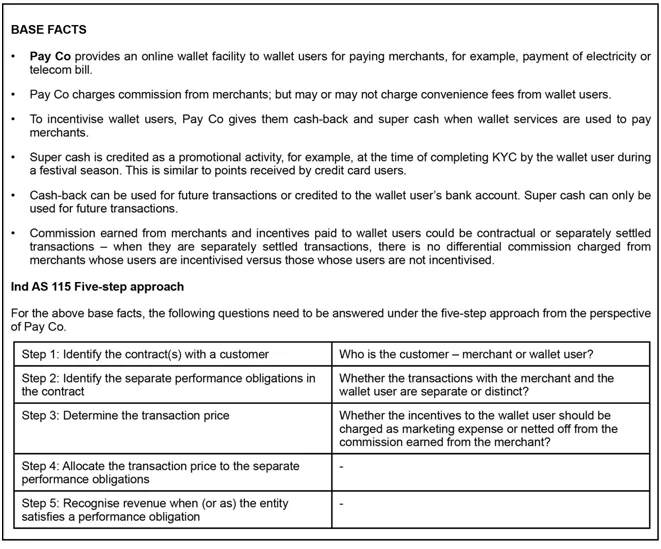
ii) The assessee did all that was necessary to set up the insurance broking business. The assessee after its incorporation opened a bank account, entered into an agreement for deputing employees (who were to further its insurance business), gave necessary training to the employees, executed operating lease agreements, and resultantly set up offices at 29 different locations across the country. Besides this, the application for obtaining a licence from the IRDA was also filed on 1st December, 2010. The Authority took more than a year in dealing with the assessee’s application for issuance of a licence. The licence was issued only on 2nd February, 2012 although the assessee was all primed up, i. e., ready to commence its business since 1st June, 2011, if not earlier. The assessee was entitled to deduction of the expenses incurred for the business in the A.Y. 2012-13.’

Business income – Scope of section 28(iv) – Amalgamation of companies – Excess of net consideration over value of companies taken over – Not assessable as income

38 CIT (LTU) vs. Areva T&D India Ltd. [2021] 434 ITR 604 (Mad) A.Y.: 2006-07; Date of order: 25th March, 2021 S. 28(iv) of ITA, 1961

Business income – Scope of section 28(iv) – Amalgamation of companies – Excess of net consideration over value of companies taken over – Not assessable as income

The assessee is engaged in the business of manufacturing heavy electrical equipment. Three companies were amalgamated with the assessee company and on amalgamation the assets stood transferred to the assessee company with effect from 1st January, 2006. The net excess value of the assets over the liability of the amalgamating company amounted to Rs. 54,26,56,000 and had been adjusted against the general reserve of the assessee company. In the assessment proceedings for the A.Y. 2006-07, the assessee was called upon to explain why the said excess asset, which was taken over as liability during the current year, should not be taxed u/s 28(iv). The explanation offered by the assessee was not accepted and the A.O. held that the said amount had to be charged to Income-tax under the head ‘Profits and gains of business’ u/s 28(iv).

The Commissioner (Appeals) allowed the assessee’s claim and deleted the addition. The Tribunal dismissed the appeal filed by the Revenue.

On appeal by the Revenue, the Madras High Court upheld the decision of the Tribunal and held as under:

‘i) For applicability of section 28(iv) the income must arise from business or profession and the benefit which is received has to be in a form other than in the shape of money. The provisions of section 28(iv) make it clear that the amount reflected in the balance sheet of the assessee under the head “Reserves and surplus” cannot be treated as a benefit or perquisite arising from business or exercise of profession.

ii) The difference in amount post amalgamation was the amalgamation reserve and it cannot be said that it was out of normal transaction of the business being capital in nature, which arose on account of amalgamation of four companies, it cannot be treated as falling u/s 28(iv).’

DEDUCTION FOR CONTRIBUTION BY EMPLOYER TO SPECIFIED FUNDS – SECTION 40A(9)

ISSUE FOR CONSIDERATION
For an employer, staff welfare expense is normally an allowable business deduction under section 36 or 37 in computing his income under the head ‘Profits and Gains of Business or Profession’. However, the allowability of business deductions is restricted by the provisions of section 40A. Section 40A(9), inserted by the Finance Act, 1984 with retrospective effect from 1st April, 1980, provides that no deduction shall be allowed in respect of any sum paid by the assessee as an employer towards the setting up or formation of, or as contribution to, any fund, trust, company, AOP, BOI, society or other institution for any purpose. Exceptions are provided, for permitting deductions, for payment of contributions to specified funds being recognised provident fund, approved superannuation fund, approved gratuity fund and towards a pension scheme referred to in section 80CCD [i.e., sums paid for the purposes and to the extent provided by or under clauses (iv), (iva) or (v) of section 36(1)], or for payments required by or under any other law.

The issue has come up before the High Courts as to whether all contributions to funds, other than those specified, are hit by the embargo of section 40A(9) leading to disallowance of expenditure, or whether the provisions for disallowance apply only to funds which merely accumulate and do not spend such contributions on staff welfare. While the Kerala High Court has taken the view that in terms of section 40A(9) the payment of contributions would be disallowed where the contribution is to a fund other than the specified funds, the Bombay and Karnataka High Courts have taken a more liberal view, holding that the prohibition does not apply to contributions to genuine funds and the deduction would be allowed irrespective of section 40A.

ASPINWALL & CO.’S CASE

The issue had come up before the Kerala High Court in the case of Aspinwall and Co. Ltd. vs. DCIT 295 ITR 533.

In this case, pertaining to assessment years 1990-91, 1991-92 and another year post assessment year 1980-81, the assessee had made a contribution to the Executive Staff Provident Fund, which was not a recognised provident fund, and claimed a deduction for such contribution. Such contribution had been allowed to it as a deduction u/s 37 for A.Y. 1979-80 by the Kerala High Court vide its decision reported in 194 ITR 739, and also for A.Y. 1977-78 by the Kerala High Court in a decision reported in 204 ITR 225 u/s 36(1)(iv), following its own earlier decision. The A.O. had disallowed such contribution.

The assessee contended before the Kerala High Court that in view of the decisions of the High Court in the earlier years in its own cases, it was entitled to get deduction for the amount paid to the unrecognised provident fund u/s 36(1)(iv) or (v), or in the alternative u/s 37. On behalf of the Revenue, it was contended that the earlier decisions of the Kerala High Court would not apply to the assessment years in question in view of the insertion of sub-section (9) to section 40A with retrospective effect from 1st April, 1980.

The Kerala High Court analysed the provisions of section 40A(9) to hold that after the insertion of sub-section (9), no deduction be allowed in respect of any sum paid by the assessee as an employer towards contribution to a provident fund, except where such amount was paid for the contribution to a recognised provident fund and for the purposes of and to the extent provided by or u/s 36(1)(iv). The High Court noted that section 37(1) was a general provision which stated that any expenditure, other than of the nature described in sections 30 to 36 and not being in the nature of capital expenditure or personal expenses of the assessee, laid out or expended wholly and exclusively for the purposes of the business or profession, was to be allowed in computing the income chargeable under the head ‘profits and gains of business or profession’. According to the High Court, in view of the provisions of section 40A(9), no deduction could be allowed in respect of any sum paid towards contribution to a provident fund by taking recourse to the residuary section 37(1).

The Kerala High Court analysed the Explanatory Notes to the Finance Act, 1984 in relation to section 40A(9) to hold that the intention of the Legislature was to deny the deduction in respect of sums paid by the assessee as employer towards contribution to any fund, trust, company, etc., for any purposes, except to a recognised fund and that, too, within the limits laid down under the relevant provisions. Placing reliance on the decision of the Supreme Court in Shri Sajjan Mills Ltd. vs. CIT 156 ITR 585, where the Supreme Court had held that unless the conditions laid down in section 40A(7) were fulfilled, a deduction could not be allowed on general principles under any other provisions of the Act relating to computation of income under the head ‘profits and gains of business or profession’, the Kerala High Court held that section 40A had to be given effect to, notwithstanding anything contained in sections 30 to 39 of the Act, and
in view of that no deduction could be allowed in respect of any contribution towards an unrecognised provident fund.

The Kerala High Court noted that the deduction u/s 36(1)(iv) was subject to the prescribed limits, which limits had been laid down in Rules 75, 87 and 88 of the Income Tax Rules, 1962. Section 40A(9) referred to the purposes and the extent provided by or u/s 36(1)(iv), and therefore only such amounts, within the prescribed limits, could be allowed as a deduction.

The Kerala High Court, therefore, held that no deduction could be allowed u/s 37(1) in respect of contribution to the unrecognised provident fund, having regard to the provisions of section 40A(9).

This decision of the Kerala High Court was followed again by the Kerala High Court in the case of TCM Ltd. vs. CIT 196 Taxman 129 (Ker), where the issue related to the deduction for a contribution to an Employees’ Welfare Fund.

STATE BANK OF INDIA’S CASE

The issue came up again recently before the Bombay High Court in the case of Pr. CIT vs. State Bank of India 420 ITR 376.

In this case, the assessee claimed expenditure of Rs. 50 lakhs incurred towards contribution to a fund created for the welfare of its retired employees. The A.O. disallowed such expenditure, invoking the provisions of section 40A(9).

The Tribunal allowed the assessee’s claim, observing that the assessee had made such contribution to a fund for the medical benefits specially envisaged for the retired employees of the bank. In the opinion of the Tribunal, section 40A(9) was inserted to discourage the practice of creation of bogus funds and not to disallow the general expenditure incurred for welfare of the employees. The Tribunal also noted that the A.O. had not doubted the bona fides of the assessee in creation of the fund, and that such fund was not controlled by the assessee. Proceeding on the basis that the A.O. and the Commissioner (Appeals) had not doubted the bona fides in creation of the trust and that the expenditure was incurred wholly and exclusively for the employees, the Tribunal allowed the assessee’s appeal and deleted the disallowance.

The Bombay High Court, on appeal by the Revenue, analysed the provisions of section 40A(9) to hold that the case of the assessee did not fall in any of the clauses of section 36(1) mentioned in section 40A(9), i.e., clauses (iv), (iva) or (v). It referred to the provisions of the Explanatory Memorandum and the Notes to the Finance Act, 1984 when section 40A(9) was introduced to hold that the purpose of inserting sub-section (9) in section 40A was not to discourage the general expenditure by an employer for the welfare activities of the employees. The Bombay High Court was of the view that the purpose of insertion of section 40A(9) was to restrict the claim of expenditure by the employers towards contribution to funds, trust, association of persons, etc., which were wholly discretionary and which did not impose any restriction or condition for expending such funds, which had possibility of misdirecting or misuse of such funds after the employer claimed benefit of deduction thereof. Basically, according to the Bombay High Court, the inserted provision was not meant to hit the allowance of the general expenditure by an employer for the welfare and the benefit of the employees.

The Court placed reliance on its earlier decisions in the cases of CIT vs. Bharat Petroleum Corporation Ltd. 252 ITR 43 where a donation to a club created for social, cultural and recreational activities of its members was allowed, by holding the expenditure to be on staff welfare activity; CIT vs. Indian Petrochemicals Corporation Ltd. 261 Taxman 251, where contributions to various clubs and facilities meant for use by staff and their family members were held allowable; and Pr. CIT vs. Indian Oil Corporation, ITA No. 1765 of 2016, where expenditure on setting up or providing grant-in-aid to Kendriya Vidyalaya Schools where children of staff of the assessee would receive education, was held to be allowable as a deduction.

The Bombay High Court in the case was not asked to examine or consider the ratio of the decision of the Kerala High Court in the case of Aspinwall Ltd. (Supra) and the said decision remains to be dissented with. In fact, the Court relied on another decision of the Kerala High Court in the case of PCIT vs. Travancore Cochin Chemicals Ltd. 243 ITR 284 to support its action to allow the deduction. It held that the contribution to a fund for the healthcare of retired employees was an allowable deduction and was not disallowable u/s 40A(9).

A similar view was also taken by the Karnataka High Court in the case of CIT vs. Motor Industries Co. Ltd. 226 Taxman 41, where the Court held that the contribution made by the assessee towards a benevolent fund created for the benefit of its employees was entitled to deduction, notwithstanding section 40A(9), though there was no compulsion under any other law for making such contribution. The Karnataka High Court relied on its earlier decision in the case of the same assessee, in ITA 3 of 2002 dated 2nd November, 2007. Such contribution was made pursuant to a Memorandum of Understanding embodying the terms of a settlement arrived at between the management and employees of the company.

OBSERVATIONS


It is interesting to note that both the Kerala as well as the Bombay High Courts relied on the same Explanatory Memorandum to the Finance Act, 1984 explaining the rationale behind introduction of sub-section (9) in section 40A, for arriving at diametrically opposite conclusions. The Explanatory Notes read as under:

(ix) Imposition of restrictions on contributions by employers to non-statutory funds.
16.1 Sums contributed by an employer to a recognised provident fund, an approved superannuation fund and an approved gratuity fund are deducted in computing his taxable profits. Expenditure actually incurred on the welfare of employees is also allowed as deduction. Instances have come to notice where certain employers have created irrevocable trusts, ostensibly for the welfare of employees, and transferred to such trusts substantial amounts by way of contribution. Some of these trusts have been set up as discretionary trusts with absolute discretion to the trustees to utilise the trust property in such manner as they may think fit for the benefit of the employees without any scheme or safeguards for the proper disbursement of these funds. Investment of trust funds has also been left to the complete discretion of the trustees. Such trusts are, therefore, intended to be used as a vehicle for tax avoidance by claiming deduction in respect of such contributions, which may even flow back to the employer in the form of deposits or investment in shares, etc.
16.2 With a view to discouraging creation of such trusts, funds, companies, association of persons, societies, etc., the Finance Act has provided that no deduction shall be allowed in the computation of taxable profits in respect of any sums paid by the assessee as an employer towards the setting up or formation of or as contribution to any fund, trust, company, association of persons, body of individuals, or society or any other institution for any purpose, except where such sum is paid or contributed (within the limits laid down under the relevant provisions) to a recognised provident fund or an approved gratuity fund or an approved superannuation fund or for the purposes of and to the extent required by or under any other law.
16.3 With a view to avoiding litigation regarding the allowability of claims for deduction in respect of contributions made in recent years to such trusts, etc., the amendment has been made retrospectively from 1st April, 1980. However, in order to avoid hardship in cases where such trusts, funds, etc., had, before 1st March, 1984, bona fide incurred expenditure (not being in the nature of capital expenditure) wholly and exclusively for the welfare of the employees of the assessee out of the sums contributed by him, such expenditure will be allowed as deduction in computing the taxable profits of the assessee in respect of the relevant accounting year in which such expenditure has been so incurred, as if such expenditure had been incurred by the assessee. The effect of the underlined words will be that the deduction under this provision would be subject to the other provisions of the Act, as for instance, section 40A(5), which would operate to the same extent as they would have operated had such expenditure been incurred by the assessee directly. Deduction under this provision will be allowed only if no deduction has been allowed to the assessee in an earlier year in respect of the sum contributed by him to such trust, fund, etc.’

The Kerala High Court interpreted the Memorandum to mean that the intention of the Legislature was to deny the deduction in respect of the sums paid by the assessee to all funds, trusts, AOPs, etc., other than those specified in section 36(1)(iv), (iva) and (v), while the Bombay High Court understood it to mean that the inserted provision applied only to trusts which were discretionary, with possibility of misdirection or misuse of such contributions, and not applicable to any genuine expenditure.

The intention of the Legislature behind the amendment may be gathered from paragraph 16.1 of the Explanatory Notes, where the types of cases of misuse sought to be plugged have been set out. The amendment is intended to apply in cases where the employer had discretion in utilisation of funds and in investment of funds without any safeguards, and which could be used as tools of tax avoidance by claiming deduction in respect of such contributions, which could flow back to the employer in the form of deposits or investment in shares, etc. It was certainly not intended to apply to genuine staff welfare trusts, where the amount of contributions was expended on staff welfare, where the contribution was really in the nature of staff welfare expenses. Clearly, the amendment was not targeted to curtail the allowance of staff welfare expenditure but only to curb misuse of claim for deduction of a payment disguised as staff welfare expenditure, of amounts not intended to be spent on staff welfare expenditure.

The Kerala High Court itself, in CIT vs. Travancore Cochin Chemicals Ltd. 243 ITR 284, while considering a payment towards proportionate share of expenses of assessee for running of a school wherein children of the assessee’s employees were studying, had held that such expenditure was expenditure for the smooth functioning of the business of the assessee and also expenditure wholly and exclusively for the welfare of the employees of the assessee and, thus, allowable.

In Sandur Manganese & Iron Ores Ltd. vs. CIT 349 ITR 386, the Supreme Court had occasion to examine the provisions of section 40A(9) and their applicability to payments made to schools claimed as welfare expenses towards providing education to its employees’ children. The Tribunal and High Court had concluded that those payments made by the assessee constituted ‘reimbursement’ to schools promoted by the assessee, and accordingly had upheld the disallowance. The Supreme Court on appeal observed that section 40A(9) of the Act was inserted as a measure for combating tax avoidance. Noting that the A.O. had observed that certain payments had been made to educational institutions other than those promoted by the assessee, in view of these facts, the Supreme Court further directed the ITAT to record a separate finding as to whether the claim for deduction was being made for payments to the school promoted by the assessee or to some other educational institutions / schools and thereafter apply section 40A(9). The action of the Court indicates that the expenditure where incurred for payments to funds, etc., not promoted by the assessee, were to be separately considered.

In Kennametal India Ltd. vs. CIT 350 ITR 209 (SC), the Tribunal had held that the amount paid by a company towards employees’ welfare trust had been reimbursed. The Supreme Court on appeal held that there was a difference between the reimbursement and contribution; the assessee could make a claim for deduction in case of the reimbursement, if the quantified amount was certified by the Chartered Accountant of the assessee. This decision supports the case for allowance of the expenditure on payment by way of reimbursement.

Having noted the above, it is possible for the Government to contend that the language of section 40A(9) is fairly clear and not ambiguous and may not permit the luxury of interpreting the provision by examining the intent behind the insertion of the provision. In simple words, it prohibits the allowance of all those payments specified therein, unless the same are covered by the provisions of section 36(1), clauses (iv), (iva) and (v). At the same time, it has to be appreciated that there is nothing in the language that provides for the disallowance of expenditure, including the reimbursement thereof, which is wholly and exclusively incurred for the purposes of the business. In cases where the contribution can be shown to be expenditure of such a nature, in our considered opinion, there can be no disallowance.

Again, the allowance of expenditure or payment would, to a large extent, depend upon the factual position relating to the contribution, its size, its objective and the composition of the recipient fund / trust. A distinction can be drawn between cases where:
1. the trusts are controlled by the employer, provisions of section 40A(9) may apply;
2. the contributions by the employer are of large amounts intended to remain invested by the trust and where the trustees have the discretion to invest the funds with the employer, the provisions of section 40A(9) may apply;
3. the contributions by the employer are to meet the annual staff welfare expenditure incurred by the trust, provisions of section 40A(9) may not apply;
4. the expenditure is in the nature of staff welfare or reimbursement thereof, the provisions of section 40A(9) should not apply.

The better view of the matter seems to be that the provisions relating to disallowance would not apply to genuine staff welfare expenditure or reimbursement thereof, even though routed through funds, trusts, AOPs, etc.

Offence and prosecution – Wilful attempt to evade tax – Section 276C, read with section 132

7 Income Tax Department vs. D.K. Shivakumar [Criminal Revision Petition No. 329 to 331 of 2019; Date of order: 5th April, 2021; Karnataka High Court]

Offence and prosecution – Wilful attempt to evade tax – Section 276C, read with section 132

During a search, the assessee tore a piece of paper containing details of alleged unaccounted loan transactions. It was found that the assessee had advanced huge amount of loan to these persons / entities. He did not disclose the said unaccounted financial transactions in his returns of income and further, the statements of several persons disclosed that the assessee had received huge amount of interest on the said unaccounted loan, which was not reflected in the books of accounts or in the returns of income.

The Revenue filed complaints before the Special Court; the only circumstance relied on by the Revenue / complainant in support of the alleged charges was that during the search action, certain unaccounted loan transactions with several persons / entities were detected and the said unaccounted financial transactions were not disclosed in the returns of income for the relevant years and that the assessee had received huge amount of interest on the said unaccounted loans. The Special Court discharged the assessee mainly on the ground that the ‘complaints filed by the complainant estimating the undisclosed income of the accused and launching the prosecution is without jurisdiction’ and that the piece of paper torn by the respondent / accused was not a document lawfully compelled to be produced as evidence and that the same was not ‘obliterated, nor rendered illegible’ making out the offences under sections 201 and 204 of IPC but reserved the Revenue’s liberty to launch fresh prosecution after estimating the undisclosed income of the assessee / accused by the jurisdictional A.O. on the basis of the materials produced by the authorised officer for the search and such other materials as were available with him. Accordingly, the Special Court had discharged the assessee of the charges.

On the criminal revision petition filed by the petitioner / Revenue, the High Court observed that the allegations, even if accepted as true, did not prima facie constitute offences u/s 276C(1). The gist of the offence under this section is the wilful attempt to evade any tax, penalty or interest chargeable or imposable or underreporting of income. What is made punishable is ‘attempt to evade tax, penalty or interest’ and not the ‘actual evasion of the tax’. The expression ‘attempt’ is nowhere defined under the Act or IPC. In legal parlance, an ‘attempt’ is understood to mean ‘an act or movement towards commission of an intended crime’. It is doing ‘something in the direction of commission of offence’. Viewed in that sense ‘in order to render the accused / respondent guilty of attempt to evade tax, penalty or interest, it must be shown that he has done some positive act with an intention to evade any tax, penalty or interest’ as held by the Supreme Court in Prem Dass vs. ITO [1999] 5 SCC 241 that a positive act on the part of the accused is required to be established to bring home the charge against the accused for the offence u/s 276C(2).

The Court further held that there is no presumption under law that every unaccounted transaction would lead to imposition of tax, penalty or interest. Until and unless it is determined that unaccounted transactions unearthed during search are liable for payment of tax, penalty or interest, no prosecution could be launched on the ground of attempt to evade such tax, penalty or interest. Therefore, the prosecution initiated against the assessee was bad in law and contrary to procedure prescribed under the Code of Criminal Procedure and the provisions of the Income-tax Act and, thus, the revision petitions were dismissed.

Appeal to Appellate Tribunal – Rectification of mistake u/s 254(2) – Powers of Tribunal – Jurisdiction limited to correcting ‘error apparent on face of record’ – Tribunal cannot review its earlier order or rectify error of law or re-appreciate facts – Assessee has remedy of appeal to High Court

37 Vrundavan Ginning and Oil Mill vs. Assistant Registrar / President [2021] 434 ITR 583 (Guj) Date of order: 18th March, 2021 Ss. 253, 254, 254(2), 260A of ITA, 1961

Appeal to Appellate Tribunal – Rectification of mistake u/s 254(2) – Powers of Tribunal – Jurisdiction limited to correcting ‘error apparent on face of record’ – Tribunal cannot review its earlier order or rectify error of law or re-appreciate facts – Assessee has remedy of appeal to High Court

In the appeal filed by the assessee against the order passed by the A.O., the Commissioner (Appeals) granted relief to the assessee in respect of the addition on account of understatement of net profit by lowering the value of closing stock and confirmed the addition made by the A.O. The assessee filed a further appeal before the Tribunal on the grounds that the Commissioner (Appeals) erred in (a) confirming the addition made on account of purchases by holding that the purchases of raw cotton from the partners were bogus, (b) confirming the addition made on account of purchases of raw cotton from the relatives of the partners holding them to be unexplained / unsubstantiated, and (c) confirming the addition made on account of alleged suppression in value of closing stock by discarding / disregarding the method of valuation consistently followed and accepted in the past assessments.

The Tribunal held that the Commissioner (Appeals) rightly held that the assessee did not follow either of the methods of valuation of closing stock, i.e., either on the basis of cost price or market price, whichever was lower, rather the assessee followed net realisable value which was an ad hoc method and without any basis, that the net realisation method was neither based on cost price nor calculated on the basis of market price and there was no scientific method of calculation of the net realisable value, and that there was no infirmity in the orders of the authorities below.

Thereafter, the assessee filed a miscellaneous application u/s 254 contending that (a) the copies of returns filed in which agricultural income disclosed by the partners in the hands of the Hindu Undivided Family were furnished, (b) the partners in turn disclosed share in the HUF income in their individual returns and had claimed exemption u/s 10(2) and such exemption claimed was not disturbed by the A.O., (c) the purchases from the partners and relatives were made at market rate and comparable purchase vouchers along with a chart were furnished indicating no excess payment to the partners and relatives, (d) there was complete quantity tally on day-to-day basis, and (e) there was no rejection of book results and that 20% disallowance was sustained by the Tribunal while adjudicating ground Nos. 1 and 2 without taking into account the above stated facts, and therefore the order of the Tribunal needed to be rectified to such extent and consequential required relief was to be granted on ground No. 3 in respect of the addition on account of alleged suppression in value of closing stock.

The Tribunal held that the power of rectification u/s 254 could be exercised only when the mistake which was sought to be rectified was an obvious patent mistake and apparent from the record and not a mistake which was required to be established by arguments and a long-drawn process of reasoning on points on which there could conceivably be two opinions. It was further held that after a detailed discussion the disallowance was restricted to 20% of the purchase made from the partners and relatives of the partners and 80% of the purchases made by the assessee were allowed; and qua ground No. 3 relating to the addition made on account of suppression in the value of closing stock, the issue was discussed and thereafter it was concluded that the assessee adopted an ad hoc method for the valuation of closing stock without any basis and that the scope of sub-section (2) of section 254 was restricted to rectifying any mistake in the order which was apparent from record and did not extend to reviewing of the earlier order. The Tribunal rejected the miscellaneous application filed by the assessee.

The Gujarat High Court dismissed the writ petition filed by the assessee and held as under:

‘i) Section 254(2) makes it clear that a “mistake apparent from the record” is rectifiable. To attract the jurisdiction u/s 254(2), a mistake should exist and must be apparent from the record. The power to rectify the mistake, however, does not cover cases where a revision or review of the order is intended. A mistake which can be rectified under this section is one which is patent, obvious and whose discovery is not dependent on argument. The language used in section 254(2) is that rectification is permissible where it is brought to the notice of the Tribunal that there is any mistake apparent from the record. The amendment of an order, therefore, does not mean obliteration of the order originally passed and its substitution by a new order which is not permissible, under the provisions of this section. Further, where an error is far from self-evident, it ceases to be an “apparent” error. Undoubtedly, a “mistake” capable of rectification u/s 254(2) is not confined to clerical or arithmetical mistakes. It does not cover any mistake which may be discovered by a complicated process of investigation, argument or proof. An error “apparent on the face of the record” should be one which is not an error that depends for its discovery on an elaborate argument on questions of fact or law.

ii) The power to rectify an order u/s 254(2) is limited. It does not extend to correcting errors of law or re-appreciating factual findings. Those properly fall within the appellate review of an order of a court of first instance. What legitimately falls for consideration are errors (mistakes) apparent from the record.

iii) The language used in Order 47, Rule 1 of the Code of Civil Procedure, 1908 is different from the language used in section 254(2). Power is conferred upon various authorities to rectify any “mistake apparent from the record”. Though the expression “mistake” is of indefinite content and has a large subjective area of operation, yet, to attract the jurisdiction to rectify an order u/s 254(2) it is not sufficient if there is merely a mistake in the order sought to be rectified. The mistake to be rectified must be one apparent from the record. A decision on a debatable point of law or disputed question of fact is not a mistake apparent from the record.

iv) The Appellate Tribunal, in its own way, had discussed qua ground No. 3 the issue relating to the addition made on account of suppression in the value of closing stock and had recorded a particular finding. If the assessee was dissatisfied, then it had to prefer an appeal u/s 260A, and if the court was convinced, then it could remit the matter to the Tribunal for fresh consideration of ground No. 3. As regards the findings recorded by the Tribunal, so far as ground No. 3 was concerned, the assessee could seek appellate remedies. The power to rectify an order u/s 254(2) is limited.’

Section 115JB(2)(i) – Where an amount debited for diminution in value of Investments and Non-Performing Assets is in nature of an actual write-off, clause (i) of Explanation (1) to sub-section (2) of section 115JB is not attracted and thus the aforesaid amount is not to be added back while computing book profits

33 Dy. Commissioner of Income Tax vs. Peerless General Finance and Investment Co. Ltd. [2021] 85 ITR(T) 1 (Kol-Trib)] IT Appeal No. 50 (Kol) of 2009 A.Y.: 2002-03; Date of order: 3rd December, 2020

Section 115JB(2)(i) – Where an amount debited for diminution in value of Investments and Non-Performing Assets is in nature of an actual write-off, clause (i) of Explanation (1) to sub-section (2) of section 115JB is not attracted and thus the aforesaid amount is not to be added back while computing book profits

FACTS

While computing profit for the year, the assessee had debited an amount in the Profit & Loss Account for diminution in value of Investments and Non-Performing Loans & Advances and had reduced the same from the asset side of the balance sheet to the extent of the corresponding amount. The assessee contended that the amount so debited to the P&L account is in the nature of an actual write-off and not in the nature of mere provision and, thus, should not be added back while computing book profits u/s 115JB.

The A.O. added back the amount debited for diminution in Investment and NPA (Non-Performing Assets) while computing the book profits treating it as unascertained liability as envisaged in clause (c) of Explanation (1) to sub-section (2) of section 115JB. The CIT(A) held that the said amount could not be treated as unascertained liability and allowed the assessee’s appeal.

Aggrieved by the order, Revenue filed an appeal before the Tribunal and the Tribunal upheld the action of the A.O. Aggrieved by this order, the assessee filed an appeal before High Court which remanded back the matter with a direction to proceed and determine the issue in the light of the decision of the Gujarat High Court in CIT vs. Vodafone Essar Gujarat Ltd. [2017] 397 ITR 55 (Guj), i.e., whether clause (i) of Explanation (1) to sub-section (2) of section 115JB would be attracted or not in the facts of this case.

HELD


To determine whether the amount so debited to the P&L account for diminution in Investment and NPA was an instance of write-off or a provision, the Tribunal observed that the Gujarat High Court in CIT vs. Vodafone Essar Gujarat Ltd. (Supra) explained a situation where a provision created in respect of assets would be considered as a write-off and not as a provision as per clause (i) of Explanation (1) to sub-section (2) of section 115JB.

The Gujarat High Court had held that
a) where an assessee debits an amount to the P&L account and simultaneously obliterates such provision from its account by reducing the corresponding amount from the respective assets on the asset side of the balance sheet, and
b) consequently, at the end of the year, shows the respective assets as net of the provision, it would amount to an actual write-off and such actual write-off would not attract clause (i) of the Explanation (1) to sub-section (2) of section 115JB.

In the present case, the Tribunal observed that the provision for diminution in Investment / Provision for NPA was not a mere provision but an actual write-off. Provision for Investments / Provision for NPA was created by the assessee by debiting the P&L account and simultaneously the corresponding amount from Investments / Loans & Advances shown on the asset side of the balance sheet was also reduced / adjusted and Investments / Loans & Advances were recorded in the books, net of provision.

Hence, applying the above principle laid down by the Gujarat High Court, the Tribunal finally held that the said provision for diminution in Investments and Provision for NPA would amount to an actual ‘write-off’ and therefore would not attract clause (i) of the Explanation.

Thus, the action of the CIT(A) on the issue was confirmed by the Tribunal and the Revenue’s appeal was dismissed.

ITAT holds that amendments of Finance Act, 2021 to section 43B and 36(1)(va) apply prospectively

32 Crescent Roadways Pvt. Ltd. [2021] TS-510-ITAT-2021 (Hyd)] A.Y.: 2015-16; Date of order: 1st July, 2021 Section 43B, 36(1)(va)

ITAT holds that amendments of Finance Act, 2021 to section 43B and 36(1)(va) apply prospectively

FACTS

The assessee company had remitted employees’ contribution towards PF, ESI before the due date of filing return u/s 139(1) – but after the due date prescribed in the corresponding PF, ESI statutes. For the year under consideration, the A.O. disallowed the amounts on the ground that they had been remitted after the due date prescribed in the corresponding statute, i.e., under the PF / ESI Acts. On appeal, the CIT(A) confirmed the disallowance.

Aggrieved, the assessee preferred an appeal with the Tribunal.

HELD


The Tribunal held that the legislative amendments incorporated in sections 36(1)(va) and 43B by the Finance Act, 2021 are prospective in application and are therefore applicable w.e.f. 1st April, 2021. Therefore, the disallowance of employees’ contributions towards PF, ESI for the A.Y. under consideration was not sustainable and accordingly deleted the additions made on account of such disallowance.

ITAT holds that corrigendum to the valuation report to be considered in ascertainment of value u/s 56(2)(viib)

31 I Brands Beverages Pvt. Ltd. [2021] TS-546-ITAT-2021 (Bang)] A.Y.: 2015-16; Date of order: 13th July, 2021 Section 56(2)(viib)

ITAT holds that corrigendum to the valuation report to be considered in ascertainment of value u/s 56(2)(viib)

FACTS

The assessee, who was engaged in the manufacture and sale of beverages, allotted 4,80,000 shares of a nominal value Rs. 10 per share at a premium of Rs. 365 per share following the discounted cash flow method as per the valuation report. The A.O. noted that the value per share as per projections was Rs. 37.49 per share and it was mistakenly arrived at as Rs. 374.95 per share, and therefore assessed the difference of Rs. 16.2 crores as income u/s 56(2)(viib). On appeal with the CIT(A), the assessee submitted a corrigendum to the valuation report as additional evidence, contending it to be read with the original valuation report which showed the fair market value at Rs. 374.95 per share. The CIT(A), based on a remand report called from the A.O., held that additional evidence in the form of corrigendum was not admissible and confirmed the additions made by the A.O.

Aggrieved, the assessee is in appeal before the Tribunal.

HELD


The Tribunal observed that the corrigendum to the original report was issued on account of error and it formed part of the original valuation report. It further held that the corrigendum could not be treated as additional evidence by the CIT(A) and therefore there was no reason to reject it. The Tribunal holds that the corrigendum and the original report shall constitute the full report to be examined by the A.O. and accordingly remits the matter to the A.O. for determination of value per share.

DIGITAL WORKPLACE – A STITCH IN TIME SAVES NINE

Till the beginning of the year 2020, working from home instead of travelling a couple of hours daily to office was looked upon as just an excuse by employers. The major change in work style that we saw in 2020 was a paradigm shift from the physical workplace to the digital workplace. The pandemic and lockdowns all over the world forced people to work from home, or stay without working. While initially it seemed almost impossible for firms to survive in a digital environment, all of us have coped quite well.

Clearly, the pandemic is proving to be a blessing in disguise for firms at all levels. Those in the service industry realised that a Zoom call could replace travelling, they were not required to travel to the office daily and, most importantly, it has resulted in huge cost savings on real estate. Of course, physical meetings and the ‘office culture’ won’t be replaced by the complete digital workspace and irrespective of what we call the ‘new normal’, it is believed that once restrictions are over, people will get back to the normal office and physical workplace. But life and office culture will never be the same again. Even if the digital office will not replace the physical office, there is no denying that it will change the way we look at our office and no one can afford to ignore it. To understand this even better, let us first understand the concept of the Digital Workplace.

WHAT IS A DIGITAL WORKPLACE?

Initially, the Digital Workplace was meant to complement the physical office. The idea was to facilitate easy working for employees who may have difficulties in travelling or are working from different locations. However, most people used to travel for even the slightest work, or for meetings, and the ‘9 to 5’ culture was at its prime with employees expected to reach the office physically to be counted as working on a particular day. Remember the struggle we put up with when it was raining just to reach office safe and dry, or come back walking (or rather, wading) during the deluge of 26th July, 2005 in Mumbai? For the last few years, companies have been spending money on technology and remote working but still always expected employees to travel to the office unless it was not possible. However, 2020, the pandemic year, has changed everything. With no scope to travel to the office, everyone was literally forced to adapt to remote working. The proof of the concept was put to use and now businesses have started operating at full capacity at the Digital Workplace.

A Digital Workplace is the basic set of digital tools that employees use to get work done. These include Instant Messaging apps to Meeting Tools and online storing of documents, and even automated workflows to manage the work. Essentially, ‘the Digital Workplace is the virtual, modern version of the traditional workplace where work can be done through devices, anytime, anywhere’.

However, let’s see what a Digital Workplace is not. It is much more than having apps as a part of office workflow. It is more than accessing office files from anywhere. But when the flow of work and monitoring of performance to get measurable results are seamlessly integrated, we can see the Digital Workplace emerge. It starts by understanding what it really is and how it can help your organisation deliver measurable business value.

Why shifting to a Digital Workplace will help an organisation and employees

  •  Talent attraction: A survey1 says that over 60% of employees would not mind being paid less if they get flexibility to work from anywhere. People have started realising the importance of staying at home and spending time with the family, getting those extra few minutes of sleep as they don’t need to rush to catch a train / bus to the office, and so on. Additionally, Work from Home (WFH) means employees can afford a bigger house at a better location rather than fitting in a smaller house to avoid travelling for work daily, or maybe even have a Staycation working with laptops while sipping ginger tea at Shimla!


  •  Improved inclusivity: The one good part of opting for a Digital Workplace is that we can have talent without geographical barriers. With a physical workplace, we were restricted to hiring talent within our cities. But now, someone with an office in Mumbai can hire talent from Delhi or Dubai. The physical location of the employee, except for the time zone, hardly matters.


  •  Economical: Having a Digital Workplace is economical not only for firms, but also for employees. While firms can save on real estate rents, electricity, stationery and support staff to facilitate working at the office, for employees the savings come as reduction in transportation costs, parking charges, travelling time, need for spending on professional wardrobes, lunch and dinner, the need to eat outside and so on.


  •  Less stress of commuting: One of the biggest worries for people living in big cities in India and all over the world is commuting. While many countries have the best of infrastructure, India is still developing the same and incidents like the 2017 stampede at Elphinstone Road railway station during rush hours may be terrifying, but these are a regular risk of travelling on local trains in metro cities. Besides, commuting in public transport exposes employees to the risk of losing their valuables, including office assets, due to theft or damage on account of extraordinary rush on a frequent basis.


1   Business Line


WHAT SHOULD YOUR DIGITAL WORKPLACE INCLUDE?

Technically and practically, a Digital Workplace should include all the technology tools that we need to operate in our profession. These tools should broadly take care of four categories of work: how your employees can communicate, how they can collaborate, how they can connect and how they can deliver the final services and evaluate the work done. Let us take a closer look at each of these:

1. Communications at a Digital Workplace:

We aren’t in a place now where we can meet at the cafe or share ideas at the water cooler in the office. Considering these restrictions, it becomes important that while we have a Digital Workplace we also give employees freedom to communicate which they would have otherwise done at the office. In fact, with a DigiWorkplace around, the communications aren’t restricted to a team or a location. Employees in Mumbai can also communicate with those in Delhi. The basic communication tools should include the following:

  •  Emails – Currently, Google Workspace is very widely used for emails. However, there are many other players like Outlook and the Indian Zoho. Each of these offers its unique advantage over the others. But Gmail, since it gives auto integration to other widely-used apps like Google Drive, Google Photos and Android Phones, has become more popular amongst users. Gmail also provides its search functionality to its email, which means that searching past emails with Gmail is always faster. Though all these companies do provide their free email accounts, it is always advisable to buy a company domain (@yourcompany.com or .in, etc.) instead of using standard emails like ‘@gmail.com’. These are paid services but the company domain always gives a better impression. Besides, all the companies provide additional services for paid versions vis-a-vis free versions.


  •  Instant messaging apps – A Digital Workplace will definitely need an instant messaging app wherein the employees can keep working while having chats on their queries going on. One of the most common messaging apps that comes in handy with Gmail is Google Hangouts. The whole purpose of such instant messaging apps is to facilitate official messages, calls and video calls so that our personal space on WhatsApp or any other personal app isn’t disturbed. Another app which has found its market in the corporate world for instant messaging is ‘Slack’ which comes with all features of instant messaging, calling and video calling. One good part about Slack is that it can be integrated with almost all the other apps and portals.


  •  Other basic communications – Other basic communication toolkits at any Digital Workplace would include customised portals or intranet which may have options to publish news, have blogs or articles, introduce new employees, celebrate birthdays, etc., such as ProofHub, a project-planning software with tools like discussions, notes, Gantt charts, to-do lists, calendaring, milestones, timesheets, etc. Such intranet communication software if implemented well, can solve a lot of communication shortcomings of the Digital Workplace.


2. Collaborations at the Digital Workplace:

To solve business problems and operate productively, organisations must have the ability to leverage knowledge across the enterprise with online, seamless, integrated and intuitive collaboration tools that enhance the employees’ ability to work together. A collaboration toolkit at the workplace should include:

  •  Productivity is a collaborative tool that can’t be ignored. Having tools which can enhance productivity of employees can help them to enable knowledge and perform their work more efficiently. A Digital Workplace should have tools which can help all employees to collaborate on projects / files together. These can include a common drive, word processors, live spreadsheets, presentations, CRMs. Google WorkSpace does give an option for all of these in one place.


  •  Business Applications – To make it easier to collaborate, a Digital Workplace should have basic business applications where employees can work simultaneously. An HR system like FreshTeams which is accessible both on portals and on mobiles indeed suffices as an end-to-end HR function. From on-boarding to maintaining documents and to managing approvals, FreshTeams has us covered for everything. Managing employees’ expenses is another worry that we may face while having a Digital Workplace. However, Expensify is one software that can indeed be very useful. Other business applications that are a must-have for a Digital Workplace include ERPs and CRMs like Tally, SAP, QuickBooks and the recent favourite Zoho.

3. Connect:

Self-sufficiency no longer guarantees effectiveness. Employees need tools that allow them to connect across the organisation, leverage intellectual property and gain insight from one another. The Digital Workplace delivers on these goals by fostering a stronger sense of culture and community within the workplace.

Connectivity apps or data in general help employees to know each other’s profiles, their locations, expertise, etc., to reach out easily. A basic data should include employee directory, organisation chart and rich profile.

4. Deliver the result:

The phrase ‘meet your customer where your customer is’ can take a whole new meaning with a Digital Workplace. While face-to-face interactions delivering reports or presentations have gone for a toss, there are still ways to provide your clients with the same sentiments. Professionals may shift to virtual communication networks like Google Meet, Webex, Zoom, Zoho Meetings, etc. As we deliver results in virtual form, we share some tips to have the same level of interaction as in the physical form:

  •  Hold all the meetings, whether internal or external, on video. You need not keep your video off. Having videos turned on during meetings gives a personal touch;

  •  Send emails or catch up casually with inactive clients to let them know you are still thinking about them and their business;
  •  Try and accommodate to the apps that your clients use so that they do not have to struggle in meetings;
  •  Practise – This is one quality that should always remain, irrespective of whether the presentations are online or offline. Practise screen-sharing, slide moves and presentation flow on how it may look on the communication networks while delivering the same to the client.

LIMITATIONS OF DIGITAL WORKPLACE:

While we see giant leaps in the Digital Workplace, it has its own drawbacks. There are platforms that specialise in making collaboration easier and more effective, but the most important component which is missing in the Digital Workplace is ‘social interaction’. It is not merely limited to non-verbal communication where there are no feelings while reading chats / emails, but a Digital Workplace literally means that staff does not spend quality time together like being in office, so the chances of having team bonding are less. This, too, can lead to communication difficulties since misunderstandings are more likely.

Another sad part is the fact that we are used to seeing employees and colleagues face-to-face, or in real face-time. As far as possible, employees should also meet in person from time to time and use the video call function for important meetings. When an actual meeting is not possible, it is advisable to arrange a video call at least once a month without an official agenda to have team bonding.

CONCLUSION


The way the Digital Workplace is evolving, it may not replace the existing physical office or completely do away with it. We are seeing that companies have already started calling their employees back to offices and soon ‘Work From Home’ may not be available to all. But what this pandemic has shown us is that it is possible to work from home and that there are both advantages and limitations of working from home, but with technology evolving, things are getting better and better. We believe that even if we may not move to a compulsory ‘Work From Home’ culture anytime soon, travelling will become optional and companies will give optional WFH to their employees for a few days in a month. Above all, from the firm’s point of view, the Digital Workplace will become more important as it will be able to cater to the workforce from all over the world without having to spend additional sums on their relocation, etc. Besides, a foolproof Digital Workplace system means the firm can outsource routine and monotonous work to people at remote locations at much cheaper rates and it may work like the Knowledge Process Outsourcing (KPO) model.

In our articles over the next few months, we will also be discussing other considerations for having a Digital Workplace that shall include:

  •  Comparisons between a Physical WorkPlace vs. a Digital Workplace vs. a Virtual Workplace vs. Co-Working Spaces;
  •  How we can manage various functions of our firm – HR, Finance, Marketing, etc., using our Digital Workplaces;
  •  Interviews with industry leaders and practical examples of Digital Workplaces.

(The authors of this article are in no way connected with or influenced by any of the apps or portals mentioned herein, except that they are users. The apps and portals mentioned are recommendatory as they have been useful to us)

COVID IMPACT ON INTERNAL CONTROLS OVER FINANCIAL REPORTING

Yes, you read it right. Just as humans are affected by Covid, internal controls over financial reporting, too, are affected by Covid. As we all know by now, Covid attacks when the immune system is weak. Similarly, operations, and therefore the performance of companies, get affected when their internal controls have deficiencies and weaknesses. When the tide will go down is uncertain. But there are many interrelated implications on financial reporting arising from the pandemic. The way of carrying out operations has changed significantly for a lot of companies either due to the nature of their own operations, or due to the impact felt by their suppliers or customers.

This article highlights how Covid might have impacted the internal controls of companies. Needless to say, when the internal controls have been affected by the pandemic, the auditors of such companies need to consider its impact on their reporting on the adequacy and operating effectiveness of internal controls with reference to financial statements as prescribed u/s 143(3)(i) of the Companies Act, 2013.

The pandemic has hit all organisations globally and India is no exception. Considering this, the Securities and Exchange Board of India (SEBI) issued a Circular dated 20th May, 2020 encouraging listed entities to make timely disclosures about the impact of Covid on their companies. One of the items in the list of information that the Circular states listed companies may consider disclosing is internal financial reporting and controls.

The users of the financial statements, various stakeholders, including investors, lenders, suppliers and customers, Government agencies and so on, are keen to know to what extent the company has been affected by the pandemic. As stated in the ‘Guidance Note on Audit of Internal Financial Controls over Financial Reporting’ issued by The Institute of Chartered Accountants of India (GN on IFC) for the purpose of auditor’s reporting u/s 143(3)(i) of the Companies Act, 2013, ‘internal financial controls over financial reporting’ shall mean ‘a process designed to provide a reasonable assurance regarding the reliability of financial reporting and the preparation of financial statements for external purposes in accordance with generally accepted accounting principles.’ Therefore, to prepare reliable financial statements, internal controls over financial reporting are imperative. If such internal controls are affected by Covid and if the company has not taken adequate steps, the financial statements prepared may not be reliable for external purposes and the stakeholders will lose confidence in the entity’s financial reporting. From the governance perspective, it is important for the Audit Committee and management that new processes for financial statements closure and reporting of results and financial / operational controls are appropriately documented.

EXTENDED REPORTING TIMELINES

SEBI has given extended timelines to listed entities to report their results in 2020 as well as for the 2021 year-end. This was brought out considering that companies were facing challenges to complete the preparation of financial information due to the impact of Covid on their people and processes. However, the question is was the challenge faced by the companies related only to reduced manpower at work to complete the tasks, or did the company effectively use the additional time to ensure that its procedures as required by its internal control framework were completed like in any other year? If it is the latter, it will show how the company is impacted by Covid, how it has assessed such impact and reacted to it. But if the companies have used the extended timeline for slowing down the pace, it shows that the company has not assessed the impact of Covid on its processes.

IMPACT ON FINANCIAL CLOSURES


The shift to remote working is testing the operational endurance and the resilience of critical processes across companies. The financial close is no exception which is facing multiple problems in conducting an efficient and effective close process. The financial closure process of a company is a combination of various documents and components. As explained in the GN on IFC, control activities may be categorised as policies and procedures that pertain to:
(A) Performance reviews
(B) Information processing
(C) Physical controls
(D) Segregation of duties

(A) Performance reviews refer to overall analytical procedures of actual performance with budgets, forecasts, etc. However, it is very likely that the budgets, forecasts, prior period actuals, etc., did not include the impact of Covid at all, or had considered its impact based on information available at that time. In the absence of the robustness of a performance review, what controls does the company need to establish to ensure the reliability of financial information? Let’s understand this by way of an example. A company manufactures white goods such as dishwashers, washing machines, etc. Its volume of production in a given period is predictable as the company had established its plant many years ago. For F.Y. 2019-20, the company was able to run its normal operations throughout the year, except the last week near the year-end due to the lockdown. However, in F.Y. 2020-21, the lockdown was extended and therefore production was completely shut for part of the year. While reviewing the performance of F.Y. 2020-21 and comparing the same with the previous year, the variance can be quantified for that attributable to the period when the plant was shut.

(B) Information processing controls are application controls and general IT controls. Before Covid, these controls were usually based on the assumption that applications were being accessed by users through LAN. This identifies the user and has security firewalls to protect the data in the system to ensure its reliability. In the period of the pandemic, where many organisations had to close their offices and allow employees to work from home, IT systems are being accessed by employees through their home networks. The reduced number of employees may result in reduced controls being adhered to. Vulnerability of security for data protection and its unauthorised access pose a significant threat to the reliability of the financial close process. Further, there is heightened risk of data leakage. For example, a company has IT security through which tenders submitted by potential suppliers can be accessed by the procurement department only through the office LAN. During Covid, when staff is working on their home networks, such control cannot be implemented and needs to be modified without compromising on the security of the data. IT processes or controls that have an increased volume or that need to be performed differently due to changes in work environment or personnel, are likely to have additional risks in areas such as the following:

Access termination – Increased number of access termination requests and fewer people available to process them – this may increase the risk of unauthorised access due to terminated personnel not being removed in time. In many organisations, there is an exit form which the employee fills and after approval from the HR it is handed over to IT to ensure that all access given to that employee is terminated and confirmed by IT by signing the same form showing the date and time of termination. In the Covid scenario, the exiting personnel, HR staff and IT staff are all at different locations. To ensure coordination amongst them for terminating the access immediately when the employee leaves, different controls need to be put in place.

Change management – Verbal approvals may be accepted rather than waiting for approvals to be documented through a ticketing system, and thus there may be increased use of emergency IDs which may not be subject to the same degree or timeliness of monitoring as usually occurs. Whenever any change is required in the IT environment, many companies have a hard copy documentation system showing the requester, the approver and details of the changes made, followed by subsequent testing and implementation. During Covid, such hard copy documentation may not be possible given that the requester, approver, programme writer, testing team and implementation team are at different locations. This may require modification of the existing IT change management controls.

Execution of review controls – The questions to be answered are:
(a) What changes are made to the review process of access control, change management and other IT environment processes?
(b) To what extent are the company’s IT risks affected by the new way of working and what are the mitigating controls introduced to deal with the security threat to the IT systems that process financial data?

Many organisations are changing their strategies to take advantage of digital technology, such as storing data on cloud which can be accessed from anywhere by the authorised personnel. Even if the employee working on such data is not able to access the company’s server from her remote location, such data need not be copied on the workstation of the employee when it is available on cloud. With such changes in strategy, it is obvious that the relevant risk control matrix of the company will undergo a change. The new risks identified will be because the majority of employees are working from different locations. Controls to mitigate such risks, for example, data security risk as discussed above, will be plotted against each of such processes.

(C) Physical controls relate to the existence of assets and authorisations for their access. In the Covid scenario, such authorised person holding custody of the physical assets is away from the office or location of the assets for prolonged periods. How does the company ensure the existence of its assets when the person entrusted with their physical custody no longer has their custody? How has the company changed its internal controls which earlier were physical controls? For example, during partial lockdown, earlier internal controls might have been modified in respect of frequency of physical verification, the authority performing such verification, etc. Such modified controls may also consider any new digital technology implemented by the company or any supplemental controls to the original pre-Covid controls.

Safeguarding inventory
Safeguarding inventories is the responsibility of the management which is required to establish procedures to ensure the existence, condition and support valuation of all inventory. There may be transactions as at the yearend where the company has transferred the control of assets, but where physical possession is with the company such as bill-and-hold arrangements. The internal control framework relating to safeguarding and monitoring of inventories would need to include these considerations, e.g., assessing the inventory shrinkage by location, product type, or other disaggregated basis, comparing the actual inventory value of each location to an expected range, and investigate any individual locations that are outside of the expected range.

Further, with scenarios like localised lockdown, travel restrictions, etc., physical inventory counting would be challenging and in some cases impractical. In certain situations where the conventional method of physical verification is not practicable, management may establish internal controls to undertake physical verification remotely via video calls with the help of technology.

Environmental and safety norms
Companies may be using sensitive chemicals and industrial gases for producing goods. Some of these items are required to be stored in temperature-controlled containers and to be continuously monitored. If there is any leakage of hazardous gases or chemicals, the implications on the company could be very severe and even lead to closure of the factory, thereby affecting the going-concern assessment. Localised lockdowns imposed by various State Governments might induce stress on the monitoring mechanism relating to compliance with environmental and safety norms.

(D) Segregation of duties as a control was put in place by companies to ensure that employees preparing the information, authorising the information, recording the information and holding the custody of the documents are different. In the Covid scenario, the flow of physical documents to different employees performing these different roles is not possible. Further, many organisations had severe staff absences for prolonged periods as even the staff was affected by the pandemic. This requires delegating their responsibility to other staff and modifying internal controls around it. Has the company modified its internal control system and does the revised internal control system ensure effective segregation of duties, this is the question that companies need to answer.

Fraud risks
Fraud risks change in such a time of crisis, as new opportunities are created for internal as well as external parties. Incentives for committing fraud – both misappropriation of assets and financial reporting fraud – may also be heightened, especially if significant terminations are likely or employees suffer significant personal financial stress. As stated in the GN on IFC, ‘When planning and performing the audit of internal financial controls, the auditor should take into account the results of his or her fraud risk assessment.’ In the years when the company is hit by the Covid pandemic, fraud risk assessment of the auditor is expected to be different from the earlier years. The risk of fraud has increased significantly due to changes in the way of working. Such risks can range from the basic documentation process where scanned documents are being relied upon, which can be forged, as against the original signed documents; to frauds in complex transactions where significant estimation is involved such as fair valuation, etc., since these estimates are also significantly impacted by Covid. Some of the areas where fraud risk has increased are:

(i) Physical document approvals are replaced by email approvals in the Covid period. Such approvals carry the risk of emails being compromised.
(ii) Due to the new style of working, the demand for certain goods and services has significantly increased. This has created an opportunity in procurement fraud.
(iii) Owing to lockdown situations, many customers may be facing financial difficulties to pay their dues within the credit period. This increases the risk of financial reporting fraud by resorting to unethical means of recording receipts from debtors which are not genuine.

The auditors, while planning and performing the audit of internal financial control, will need to take into account as well as document how their audit plan is different from the earlier years due to higher risks of fraud, i.e., what is their audit response to such risks.

ASSUMPTIONS FOR THE FUTURE
Ind AS 1 requires the entity to disclose information about the assumptions it makes about the future, at the end of the reporting period, that have a significant risk of resulting in a material adjustment to the carrying amounts of assets and liabilities within the next financial year. In the Covid scenario, the future holds a lot of uncertainty and it will need the company to demonstrate its internal controls for arriving at the estimates, or its estimation process. It may have an impact inter alia on going-concern assessment, impairment of assets, fair valuation, etc., that is, financial statement items that are based on assumptions of the future. Companies faced difficulties in estimating the impact of Covid on their operations beyond the short term. This is an inherent risk because of uncertainty about the future which was never experienced before in history and has resulted from the global pandemic. Due to the disrupted supply chain and distribution models, uncertainty over pricing, etc., projecting future cash flows with acceptable precision is not possible for many companies. Coordination with management experts, such as those heading the strategy department, valuation specialists, etc., when performing impairment tests, assessing fair values of assets such as investment properties, investments, etc., and performing actuarial calculations and analyses, can be more challenging. Many auditors have considered these matters as key audit matters for their audit of the financial year ended 31st March, 2021. The question is do internal controls over the estimation process of the company consider the uncertainty brought by Covid?

Exceptions identified during control testing
It is likely that management will identify exceptions during its testing of controls because controls were designed for a totally different environment. To ensure that sufficient time is available for remediation before the year-end, management will need to modify the design of existing controls and test the operative effectiveness of the new controls during the year. If such remediation does not take place by the year-end, it will have consequences of communication with audit committees and modification in the auditor’s report. Further, in the absence of controls being effective, auditors may need to modify their strategy to evaluate the impact of ineffective controls. Therefore, companies should change their plan of testing controls affected by Covid earlier than usual in the year. If the company has had to incorporate new controls during the year, these controls should be documented in its internal control documentation and appropriately tested.

Planned changes in RCM
Each entity’s internal controls will be uniquely impacted by Covid, e.g., entities with significant dependence on technology will have different challenges to address than those with a more manual control environment. With a majority of staff working from home, manual controls maintained through hard copy documents cannot be adhered to. Technology-dependent controls may need revision with new technology suitable for the new environment. Hence, it is imperative that on a holistic basis the potential changes or shifts in focus, both in terms of scoping and risk assessment, testing approaches, etc., are made and additional controls or control modifications of existing controls are undertaken to address the risks arising from Covid. Based on the experience of Covid, companies will start making changes in their risk control matrix. It will include identification of additional risks posed by Covid, new controls to mitigate those risks, modification to existing controls in view of the ‘new normal’ and removal of some controls which have become redundant. This might include automation of all key manual controls to reduce dependency on people and physical access to the work environment, increased use of continuous monitoring and detection and defining indicators which would suggest that controls may not be operating effectively.

Changes to the design of management’s control may also require the auditor to alter the combination of testing procedures (i.e., inquiry, inspection, observation and re-performance). This includes making inquiries on the changes in the company’s mode of carrying out operations in response to Covid. For example, changes due to people working remotely, and consequently the change in the company’s policies and procedures, including execution of controls, segregation of duties, etc. This would also include evaluating the electronic or digital evidence made available by management, and the controls around the same, specifically with reference to review, reliability, security and storage of such evidence by the management.

Enhancing disclosures
The pandemic would also have wide-ranging implications on the financial statements. Hence, it is crucial that the management adequately presents their ‘side of the story’ in detail. Disclosures might include entity-specific information on the past and expected future impact of Covid on the strategic orientation and targets, operations, performance of the entity as well as any mitigating actions put in place to address the effects of the pandemic. Updating the information included in the latest annual accounts to adequately inform stakeholders of the impact of Covid, in particular in relation to significant uncertainties and risks, going-concern, impairment of non-financial assets and presentation in the statement of profit or loss, have garnered renewed focus.

SNAPSHOT
In short, the way Covid has impacted internal controls over financial reporting of companies is as follows:
a) New normal – The way companies carry out day-to-day transactions from initiation to closure that involves authorisations, recording, cash receipts or payments, etc., has changed. Given that these processes have undergone changes, all pre-Covid controls may not be relevant and new controls may be needed.
b) Risks change due to Covid – Not only are the new processes susceptible to new risks, but existing risks may also be heightened due to the change in the environment. In addition to this, there are certain inherent risks of dealing with the ‘unknown’, i.e., how long the pandemic will continue, what will be its severity and the resulting impact on the organisation, etc.
c) Controls must also change accordingly – Companies will need to thoroughly review their risk control matrix in light of the new risks. It will require addition of new controls (e.g., those relevant to new technology), changes in the existing controls (such as approval process through emails or physical verification of assets through virtual means, etc.), or removal of some of the irrelevant controls (like those related to physical documentation).
d) Audit of internal controls over financial reporting – With the new risk-control matrix, the auditors will need to plan their integrated audits in light of the changed processes of the client, the revised design of controls and testing their operating effectiveness. The auditors will need to evaluate ‘what could go wrong’ with increased audit scepticism considering the high fraud risk in the new reality, the risk of non-compliance with laws and regulations, the impact of uncertainty on the estimation process of the company, and so on.


NEXT STEPS

Companies establish criteria for internal controls over financial reporting. These are dynamic in nature and as the circumstances change, companies need to revisit internal controls on identified risks. The impact of Covid will require them to relook at their existing criteria and identify what changes are required to be carried out to achieve the objective. Many companies have prepared their own checklists to ensure that the internal controls criteria are updated based on the current environment.

At the same time, auditors need to be aware of what changes are being carried out by their clients in their criteria for internal controls and plan their audits accordingly. This may require the auditor to obtain samples of the period when operations were severely affected by Covid (and  therefore have a modified design of internal controls) and when operations were running normally.

A dialogue between the clients and auditors is imperative to discuss the exceptions observed in management testing, changes being made in internal controls, effective date of incorporating the changes, plan of management testing of such controls and ensuring that those are operating effectively.

(The views expressed in this article are the personal views of the author)

VALUATION OF CONTINGENT CONSIDERATION

The billion-dollar acquisitions that we read about, especially of early-stage companies, raise the question, how do deal makers arrive at the deal price? There is seldom a transaction wherein the buyer and the seller would agree on the future outcome of certain critical parameters which could be a point of negotiation, or even the cause of some potential deals falling through with the two parties unable to reconcile on the deal price. It is contingent consideration that helps in breaking this deadlock between two parties because it enables the buyer to pay a part of the deal price to the seller only on the achievement of certain pre-agreed critical milestones. While such contingent consideration is commonly observed in M&A deals, there are several complexities when it comes to the valuation aspects of such consideration.

1. INTRODUCTION TO CONTINGENT CONSIDERATION

Ind AS 103, Para 37 requires the consideration transferred in a business combination to be measured at fair value which is to be calculated as the sum of the acquisition-date fair value of assets transferred by the acquirer, the liabilities incurred by the acquirer to the former owners of the said business, and the equity interests issued by the acquirer. In fact, contingent consideration is one of the forms of consideration as described in Ind AS 103 and it has to be recorded at the acquisition-date fair value as a part of the total consideration. Contingent considerations are typically employed in transactions to bridge the valuation gap between the buyers’ and the sellers’ differences of opinion regarding the target entity’s future economic prospects. It helps to get the buyer and the seller on the same page when it comes to the valuation of the target entity. Let us examine this basic concept by way of an example:

Company A intends to acquire Company B. Company B has just introduced a new product line that is expected to generate significant sales. Company B’s owners have projected a significant amount of sales from the proposed product line and are considering the same to influence the deal size. Company A, on the other hand, believes that there is a risk of uncertainty in the achievement of targets contemplated by the seller and hence there is a disagreement on the deal valuation. By incorporating a contingent consideration clause in the purchase agreement, the seller accepts part of the business risk along with the buyer and also participates in any upside post-transaction.

Contingent consideration may be contingent on different events, for example, on the launch of a product, on receiving regulatory approval, or reaching a certain revenue or income milestone. The achievement of such events often spans over more than a year. Thus, it is necessary to understand the acquisition date as well as the post-acquisition treatment of such contingent consideration.

2. CLASSIFICATION AND MEASUREMENT OF CONTINGENT CONSIDERATION

2.1 Liability vs. equity classification
The classification of consideration is essentially driven by the mode of settlement of such consideration. Consideration settled in cash is always classified as a liability. In a scenario where the consideration is to be settled by issue of certain instruments of the buyer, one needs to determine whether the number of instruments to be issued are fixed and determined at the acquisition date. In a scenario where the number of instruments is fixed, then such consideration is classified as equity, and where the number of instruments to be issued is not fixed, then such consideration is to be recognised as a liability. Refer to Figure 2.1.1 for a simplified approach to determining equity vs. liability.

Figure 2.1.1: Classification of contingent consideration

Example: A fixed monetary amount to be settled in a variable number of shares would be classified as a liability.

Contingent consideration classified as a liability is required to be re-measured at its fair value at each reporting period. For example, a consideration depending on revenue achieved over the next three years from acquisition will need to be fair-valued at the end of each year / quarter. Whereas, a consideration classified as equity is not required to be fair-valued post the initial recognition since the consideration has already been determined and locked as at the acquisition date.

3. VALUATION OF CONTINGENT CONSIDERATION / EARN-OUTS

The methods to be followed and the approach will be driven by the way the payment of such contingent consideration or earn-outs is structured. The pay-outs are structured based on a single or more than one metric. The Table below illustrates the various metrics which are commonly observed for contingent consideration:

Financial matrices

Non-financial matrices

Revenue

Gross profits

EBITDA

Profit before tax

Cash flows targets

Stock price

Result of clinical trials

Software development / R&D milestones

Employee retention targets

Customer retention targets

Closing of a future transaction

Number of units sold

Mostly, contingent consideration is paid on achievement of certain revenue or profit targets. Additionally, such payments may be spread over more than just one year. The pay-outs can either be linear pay-outs or non-linear pay-outs.

3.1 Linear pay-outs
Pay-outs which are dependent on a single metric and are expressed in terms of a fixed percentage or the product of a financial or some non-financial parameters, are referred to as linear pay-outs. Considerations that vary based on different levels of revenue or other parameters are non-linear pay-outs. For example:

Target will receive a payment at some future date as follows:

  •  If EBIT < $1 million, the payoff is zero;
  •  If EBIT = $1 million, the payoff is a 10x multiple of EBIT.

The valuation method will be driven by the structure of the contingent consideration pay-outs. There are two broad valuation approaches used to value a contingent consideration.
i) Probably weighted expected return method, more commonly referred to as ‘PWERM’, or scenario-based method (‘SBM’); and
ii) Option pricing method, also referred to as the ‘OPM’.

3.1.1 Probably weighted expected return method (PWERM)
The PWERM assesses the distribution of the underlying matrices based on estimates of the forecasts, scenarios and probabilities. The pay-out computed is then discounted to present value using a discount rate corresponding to the risk inherent in the inputs considered while computing the compensation. The following are the steps followed:
i) Estimate scenarios of outcomes and associated probabilities.
ii) Compute the expected payoffs using the scenario probabilities.
iii) Discount expected payoffs to present value using risk-adjusted discount rates.

Illustration 3.1.1.1

• INR 100 crores payment contingent upon obtaining FDA approval.
• Approval expected in one year.

Solution:

Particulars

Payment

Probability

Prob.-weighted payment

Approval
obtained

Approval
obtained

INR
100

INR
0

75%

25%

INR
75

INR
0

Total

Discount
rate

Present
value factor


100%

10%

INR
75 crores


0.91

Fair
value of contingent consideration

INR
68 crores

Advantages:
i)    Management controls scenarios and probabilities: The scenarios and probabilities are generally prepared by the management because they would be the best source for such data points.
ii)    Understandable: The computation and the flow are understandable to a reader with basic financial knowledge.
iii)    Flexible: The model can be structured to fit most pay-out scenarios.

Disadvantages:
i)    Management controls scenarios and probabilities: While this has been discussed under advantages, management control over these inputs is also counter-intuitive since management tends to be overly optimistic or pessimistic in its assumptions.
ii)    Lots of subjective assumptions: Most of the methods / inputs are subjective and involve judgement, which at times is not the most ideal approach to value such pay-outs.
iii)    Discount rate: Since the methods involve multiple scenarios, it is challenging to estimate the appropriate discount rate.
iv)    Path dependencies: Pay-out scenarios which are path dependent, i.e., the result of one scenario is related to one or more dependent scenarios, are difficult to model in the PWERM. It can lead to multiple nodes and is prone to errors.

3.2 Non-linear pay-outs
Non-linear contingent considerations are either not strictly linear, or they pay a fixed amount based on a milestone correlated with the broader economy; thus, they require an OPM as their complexity and discounting cannot be adequately captured in a PWERM; for example, if the buyer pays INR 50 crores if EBITDA is at least INR 75 crores in the first three years, or if the buyer pays 40% of revenues above INR 50 crores in year two, subject to a maximum of INR 40 crores. Another, more complicated, example: The buyer pays 40% of revenues in years one to three, subject to a minimum of INR 10 crores and a cap of INR 40 crores. In such an arrangement, a PWERM will not work since it’s impossible to adjust the discount rate to align with the risk of such a complex pay-out structure. An option-pricing model is generally used to value such arrangements.

3.2.1 Option-pricing methods
The payoff structures for contingent consideration arrangements that have a non-linear structure are similar to those of options in that payments are triggered when certain thresholds are met. Accordingly, some option-pricing methods may be appropriate for valuing contingent consideration that have a non-linear payoff structure and are based on metrics that are financial in nature (or, more generally, for which the underlying risk is systematic or non-diversifiable). The OPM is implemented by modelling the underlying metrics based on a log-normal distribution that requires two parameters:

* The expected value: The management expectation of the matrices over the term of the arrangement. This is generally provided by the management.

* The volatility (standard deviation) of the metric: The volatility of the metric measures the potential variability from the expected value. This is generally determined by using market-based data. However, volatility for financial metrics like revenue and EBITDA cannot simply be computed using the movement in stock prices of the comparable companies. It needs to be appropriately levered and unlevered to capture the variability in achievement of the metrics.

There are two widely used option-pricing methods, viz., the Black-Scholes Model (‘BSM’) and the Monte Carlo simulation model.

3.2.1.1 Option-pricing method – Black-Scholes Model
BSM treats a pay-out arrangement just like an ordinary option which enables use of the standardised Black Scholes – Merton formula. This approach can work for simpler pay-out structures, for example, if the selling shareholder earns the pay-out only if the target metric hits a threshold, or for linear pay-outs with caps or floors. The consideration is assumed to represent a call option on the future performance of the seller.

Illustration for BSM
Earn-outs are contingent upon the target of achieving a benchmark EBIT of INR 11,25,000 within three years. The EBIT is currently INR 10,00,000. At the end, the acquirer will pay additional consideration equal to the excess EBIT over the benchmark.

The discount rate is 10% and the risk-free rate is 3%. Volatility of earnings is 14% based on historical EBIT.

The inputs to the Black-Scholes Model for this example are:

i)    The current INR 10,00,000 level of earnings is the value of the underlying,
ii)    the benchmark of INR 11,25,000 serves as the exercise price,
iii)    the term is three years,
iv)    the volatility is 14%,
v)    the risk-free rate is 3%, and
vi)    the dividend rate is 0%.

Based on the above inputs, calculations for the Black-Scholes Model can be incorporated into an Excel spreadsheet. The resulting call option value of INR 84,413 will be the value of the contingent consideration.

3.2.1.2 Option-pricing method – Monte Carlo Simulation Model
For more complex structures, a Monte Carlo simulation is preferred. Arrangements that pay over multiple periods or multiple metrics are subject to combined caps or a floor. A Monte Carlo simulation considers the correlation between matrices and pay-outs over multiple periods. The Monte Carlo simulation repeats a process many times attempting to predict all the possible future outcomes. At the end of the simulation, several random trials produce a distribution of outcomes that can be analysed. Random numbers are used to measure possible outcomes and the likelihood of their occurrence. Generally, simulation software are used to generate random numbers. These random numbers are generated based on the applicable distribution driven by the metric triggering the pay-outs.

The following are the important considerations of key inputs for valuing contingent considerations using an option-pricing model:

Discount rate applied based on risk of target metric
For earn-outs that require this kind of discount rate, either the top-down or bottom-up approach may be used to develop the rate. These approaches are well known in the valuation field. They rely on the concept of beta (ß), which reflects the level of market risk reflected in an instrument.

In the top-down approach, ß is based on the deal’s rate of return adjusted for the difference in market risk between the target metric and the overall enterprise value. Adjustments can reflect many relevant factors, such as the general risk in the target metric, leverage, term, size premium and entity-specific risk. In the bottom-up approach, ß is the target metric adjusted for term, size, entity-specific risk and other relevant valuation factors. The bottom-up approach may rely on statistical analysis of the target metric from the entity or its peers.

Volatility
Valuation techniques that rely on options modelling or Monte Carlo simulation require a volatility of the target metric. There are four ways in which such volatility can be computed:

i)    Historical changes in the target metric for the acquired entity and public comparable companies,
ii)    Entity volatility based on the relationship between the target metric and the enterprise value,
iii)    The difference between analyst forecasts and actual results for peer companies, and
iv)    Fitting a distribution to management’s estimates.

With any of these methods, a discussion with management is recommended since a derived volatility may fail to accurately incorporate the economics of the entity’s situation.

Both option-pricing models can get complex and difficult to comprehend for a lot of professionals and they have their share of advantages and disadvantages.

Advantages:
i)    Manage complex payoff structures: Can accommodate a wide range of complex payoff structures.
ii)    Objective assumptions: Most inputs are governed by market-related inputs making it less subjective than the PWERM.
iii)    Discount rate: Since the computations are made using random numbers and volatility, generally risk-adjusted discount rates are used, reducing the need of subjectivity inherent in building discount rates for financial matrices.

Disadvantages:


i)    Perceived to be complex and time-consuming.
ii)    Rigid: OPMs are based on a prescribed formula and are perceived as rigid relative to the PWERM.
iii)    Difficulty in converting real-world cash flows into risk-free cash flows: It is challenging at times to convert the pay-out structure into models to be used with the OPMs.

Valuation of contingent consideration and selection of the appropriate methods for doing so can be quite challenging. Such valuations are continuously evolving as new literature on methods and approaches is published around the world. The selection of methods to value these arrangements is driven by the complexity of the pay-outs and the experience and the qualifications of the valuer to be able to appropriately apply these methods.

The complexity of contingent consideration is not limited to its valuation but has several accounting and taxation implications which need to be considered and analysed. The accounting and tax aspects vary, based on the accounting standard being followed as well as the structure of the transactions. A discussion on these aspects would warrant an independent article, which we intend to cover over the next few issues.

INTRODUCTION TO ACCREDITED INVESTORS – THE NEW INVESTOR DIASPORA

Investors and investments have, over the decades, evolved with respect to form, structure, taxation and compliances involved. The constant need to test and re-invent has led to newer market participants exploring the investment universe.

However, one of the foremost principles of investment and investing, that is, investors should invest in financial products after knowing the risks and returns associated with them, and therefore take an informed decision regarding their investments in line with their risk-return profile, continues to prevail.

SEBI Consultation Paper: On 24th February, 2021, SEBI introduced a ‘Consultation Paper on the Introduction of the Concept of Accredited Investors’ (‘Consultation Paper’) in the Indian securities market.

The Consultation Paper made a case for introduction of the concept of Accredited Investors (AI) in the Indian securities market and covered the following aspects:

  •  Benefits to the Indian Securities Market
  •  Proposed AI eligibility criteria for various categories of investors, namely, Individuals, HUFs, Family Trusts, Bodies Corporate and Non-Resident Investors
  •  Process and validity of accreditation
  •  Procedure for implementation

SEBI Press Release (SEBI PR): Subsequently, on 29th June, 2021, SEBI via PR No. 22/2021, inter alia proposed a formal introduction of the framework for AI in the Indian securities markets.

This article covers the following aspects:

(A) CONCEPT OF AI

The AI framework as proposed by SEBI in India and prevalent framework across different economies; impact on the Indian securities markets vis-à-vis Private Equity, Venture Capital, Portfolio Management Services (PMS) and the Startup ecosystem.

AI, or as they are colloquially called Professional or Qualified Investors, amongst others are a class of investors who possess expert understanding of various financial products, the risks and returns associated with them, coupled with the financial capacity to absorb losses, enabling them to take relatively higher risk in their investing endeavours.

Hence, they are classified as a distinct group to recognise their ability to take informed decisions regarding investments and to selectively eliminate the need for extensive regulatory protection. Such investors may also enjoy relaxations with respect to disclosure requirements, filings of offer documents / prospectus, etc., and enhanced flexibility in respect of investor reporting.

Across the globe, other jurisdictions have also similarly demarcated this investor class considering their distinct knowledge and investment experience, alongside financial capacity.

(B) WHY HAVE ACCREDITED INVESTORS

The investment ecosystem in India today restricts investments in various asset classes based on the capacity of the investor to digest risks associated with that investment. This ability to digest risks is determined by minimum investment thresholds and high net worth requirements.

However, over time, investors have gained requisite knowledge to demonstrate an understanding of the asset class along with the ability to take on the risks associated with such investments.

Therefore, identifying this new investor diaspora as an ‘Accredited Investor’ enables achieving the premise of risk-reward balance coupled with the opportunity to allow investors to invest in asset classes that they understand and follow which would fill in the gap in the current investment and securities regulations. This model has also been successfully implemented globally (see ‘Accredited Investor Ecosystem Globally’ below) and has resulted in the creation of this new investor diaspora.

Overall economic boost in the investment universe and promotion of asset classes which hitherto were inaccessible to a large set of investors would be visible.

(C) THE ACCREDITED INVESTOR FRAMEWORK AS PROPOSED BY SEBI IN INDIA1 AND ACROSS DIFFERENT ECONOMIES:

(I) The eligibility criteria for Resident Investors, Non-Resident Indians and Foreign Entities as proposed by SEBI are as detailed below:

Category of investor

Eligibility criteria for Indian
investor to be an Accredited Investor

Eligibility Criteria for Non-Resident
Indians and Foreign Entities to be Accredited Investors

Individuals, HUFs and Family Trusts

Annual income >= INR 2 crores; or

Net worth >= INR 7.5 crores with not
less than INR 3.75 crores of financial assets; or

Annual Income >= INR 1 crore + Net
worth >= INR 5 crores; with not less than INR 2.5 crores of financial
assets;

Annual income >= USD 300,000; or

Net worth >= USD 1,000,000; with not
less than USD 500,000 of financial assets; or

Annual income >= USD 150,000 + Net
worth >= USD 750,000; with not less than USD 375,000 of financial assets

Trusts (other than Family Trusts)

Assets Under Management >= INR 50
crores

Assets Under Management >= USD 7.5
million

Bodies Corporate

Net worth >= INR 50 crores

Net worth >= USD 7,500,000

Others

Central and State Governments,
Developmental agencies such as SIDBI, NABARD, etc., set up under the aegis of
Government(s), funds set up by Government(s) and QIB’s as defined under SEBI
(ICDR) Regulations, 2018

Multilateral agencies, Sovereign Wealth
Funds, International Financial Institutions and Category – I FPIs


1   SEBI Consultation Paper dated 24th
February, 2021

Manner of determination of annual income, net worth and value of real estate assets
(i) The income and asset details which need to be considered for assessment of eligibility criteria shall be as per the data furnished in the Income-tax Returns filed for the immediately preceding financial year and the financial year in which assessment is being made.

(ii) For calculation of net worth, the value of the primary residence of the investor shall not be included.

(iii) In case the assets of the investor accounted for the assessment of eligibility criteria are in the form of real estate, a ‘ready reckoner rate’ as published by the respective local bodies shall be considered.

Manner of determination of annual income and net worth in case of joint accounts

In case of joint accounts held by individuals, the account shall be considered as an AI account only in the following scenarios:

(i) The First holder of the account is an AI;

(ii) The Joint holders are parent(s) and child(ren), where at least one person is independently an AI;

(iii) The Joint holders are spouses and their combined income / net worth meets eligibility criteria.

Manner of determination of financial capacity in case of bodies corporate

For bodies corporate, the latest statutorily audited information as on the date of application shall be considered for assessment of eligibility.

For trusts, the calculation of Assets Under Management shall be based on the valuation data as included in the Statutory Audit Report of the preceding financial year or as on the date of application.

(II) Accredited Investor Ecosystem Globally

Country

Accredited Investor criteria

Regulation

United States of America

Earned income exceeding USD 200,000 (or
USD 300,000 together with a spouse) in each of the prior two years and
reasonable expectation of a similar earning for the current year, or

SEC Reg 501(d)

United States of America


(continued)

has a net worth over USD 1,000,000,
either alone or together with a spouse (excluding the value of the primary
residence

SEC Reg 501(d)

Singapore

Net personal assets exceeding SGD 2
million (or equivalent in foreign currency), or in case of Corporates – Net
Assets exceeding SGD 10 million (or equivalent foreign currency) or

Income in preceding 12 months should be
not less than SGD 300,000 (or equivalent in foreign currency)

Section

4A(1)(a) of the Securities and Futures
Act (SFA)

Australia

Net assets of at least AUD 2.5 million, or

A gross income for each of the last 2
financial years of at least AUD 250,000

Section 708(8) of the Corporations Act,
2001

United Kingdom

‘Experienced Investor’ definition in the
UK:

A body corporate which has net assets in
excess of
€ 1,000,000 or which is part of a group which has net assets in excess of €
1,000,000;

Trustee of a trust where the aggregate
value of the cash and investments which form part of the trust’s assets is in
excess of € 1,000,000;

An individual whose net worth, or joint
net worth with that person’s spouse, is greater than € 1,000,000, excluding
that person’s principal place of residence

Section 3 of Financial Services
(Experienced Investor Funds) Regulations, 2012

When compared to global benchmarks, the financial parameters (vis-à-vis income and net worth) laid down by SEBI are on the higher side and may indicate a sense of conservative caution which is understandably needed in the advent of the sensitivity and adaptability concerns that surround this critical regulation. However, over time SEBI may consider re-evaluating these parameters as soon as AI investment becomes mainstream and with the imminent need to reduce entry barriers (income and net worth) for a seamless functioning of these crucial market participants.

(D) IMPACT ON THE INDIAN SECURITIES MARKETS VIS-À-VIS PRIVATE EQUITY, VENTURE CAPITAL, PMS AND STARTUP ECOSYSTEM

The Indian financial and securities market ecosystem is evolving with the Startups and the alternative investment space is fast maturing.

The proposed regulations as detailed below create a base for a thriving market and a soft regulatory regime. While the market for customised products for elite investors may not be readily available in the Indian securities market at this juncture, putting in place the required enabling framework will propel innovation in and development of the securities market in time to come.

Category of market participant

Associated effects under proposed
regulations2

Impact (Author’s view) and SEBI PR

Investors

Recognition as AI will help in availing
intended benefits

Portfolio diversification through access
to customised investment products or structured products;

more investment products due to lower
entry barriers such as minimum investment size

Alternative Investment Funds (AIF)

(Venture Capital, Private Equity and
Startups)


and


PMS players

Flexible participation for AI under the
AIF and PMS regulations

This is a welcome step and a much-needed
initiative opening up the investment ecosystem to AIs who were hitherto
restricted from such investments owing to prevalent minimum investment norms


AIFs3 and PMS4
would be able to attract capital from AIs for this fast-growing asset class
helping Startup and Venture Capital investments get the much-needed push
without the minimum investment norm requirements.

Alternative
Investment Funds


and


Portfolio
Management Services players

Beneficial interrelationship of AI with
AIF and PMS

for AI’s with minimum investment of INR
10 crores (PMS) or INR 70 crores (AIF)

Accredited Investors with minimum
investment of

INR 70 crores with AIF may avail
relaxation from regulatory requirements such as portfolio diversification
norms, conditions for launch of schemes and extension of tenure of the AIF

OR
INR 10 crores with registered

Alternative
Investment Funds


and


Portfolio
Management Services players


(continued)

PMS provider may avail relaxation from
regulatory requirements with respect to investments in unlisted securities
and shall be able to enter into bilaterally negotiated agreements with the
PMS provider


The above benefits shall be instrumental
for availing better means for investment structuring, pooling of capital,
co-investments, etc.


However, the threshold of INR 70 / 10
crores seems to be on the higher side and may merit reconsideration

Investment Advisers (IA)

Optimal engagement with IA

The terms of the agreement may be determined
mutually between the IA and the AI client, without diluting the fiduciary
responsibility cast on IAs under the SEBI Investment Advisors Regulations.

AI shall be in a better
position to bargain since the limits and modes of fees
can be governed through bilaterally negotiated contractual terms


2   SEBI PR
dated 29th June, 2021

3   As an illustration, the minimum capital
commitment required to participate in AIFs is INR 1 crore. In case of an
Accredited Investor, the manager may accept a capital commitment less than INR
1 crore

4   As an illustration, any entity may enter into
an agreement with a Portfolio Manager to avail customised asset management,
i.e., portfolio management service with a minimum capital of INR 50 lakhs. Such
capital may be made available to the Portfolio Manager in the form of cash or securities.
In case of a client who is an Accredited Investor, the Portfolio Manager may
accept capital and manage a portfolio of less than INR 50 lakhs

Accreditation Agencies
Accreditation Agencies (AA) can be Market Infrastructure Institutions (MIIs), i.e., Stock Exchanges, Depositories and / or subsidiaries of such MIIs. The modalities of accreditation, including documentation, fees, etc., will be specified by the AA separately.

Accreditation, once granted, shall be valid for a maximum period of one year from the date of accreditation.

The investor shall submit the necessary data and documents to the AA for ascertaining its eligibility to be an Accredited Investor. If eligible as per the approved criteria, the Accreditation Agency shall provide a certificate to this effect, clearly indicating the period of validity. Each certificate of accreditation shall have a unique certificate number.

The AI shall provide a copy of the Accreditation Certificate to the financial product / service provider along with a declaration to the effect that:

(i) The Investor is aware that being an AI, it is expected to have the necessary knowledge or means to understand the features of the investment product / service, including the risks associated with the investment and also has the ability to bear the financial risk associated with the investment.

(ii) The Investor is aware that the investment product / service in which it is proposing to participate may have a relaxed and flexible regulatory framework and may not be subject to the same regulatory oversight as retail products / services.

(E) WELCOME TO THE AI IN INVESTING AND ITS BALANCE
SEBI continues to pursue its ambitious attempts to harmonise the Indian securities market with the staggered introduction of global best practices in investments while giving due recognition to sophisticated market participants for better regulation.

While from a risk minimisation and mitigation perspective for market participants SEBI will need to ensure a robust recognition process and monitor the impact on the asset classes, short-term liquidity boost and transparency of information by parties looking to on-board AI’s with investor protection and interest would remain the paramount factor.

We hope that the accreditation, and acceptance, of specialist investors further propels the quantum of investments into new asset classes and helps drive the Indian economy to greater heights.

SHOULD CHARITY SUFFER THE WRATH OF SECTION 50C?

INTRODUCTION
In this article, the applicability of section 50C in the case of a charitable trust has been deliberated upon. Before we proceed any further, a basic understanding of the method of computation of capital gains in the case of a charitable trust would be very helpful.

COMPUTATION OF ‘INCOME’ IN THE CASE OF A CHARITABLE TRUST

Section 11 of the Income-tax Act deals with computation of income from property held for charitable and religious purposes. Section 11(1) provides the incomes that shall not be included in the total income of the previous year of the person in receipt of the income.

It is well settled that the ‘income’ as referred to in section 11(1) must be computed in accordance with commercial principles and not in accordance with the ordinary provisions of the Act.

In this regard, reference may be made to the following materials:
• Board Circular No. 5P (XX-6), dated 19th June, 1968;
• CIT vs. Ganga Charity Trust Fund [1986] 162 ITR 612 (Guj);
• CIT vs. Trustee of H.E.H. the Nizam’s Supplemental Religious Endowment Trust [1981] 127 ITR 378 (AP);
• CIT vs. Rao Bahadur Calavala Cunnan Chetty Charities [1982] 135 ITR 485 (Mad);
• CIT vs. Janaki Ammal Ayya Nadar Trust [1985] 153 ITR 159 (Mad) (para 13);
• CIT vs. Programme for Community Organisation [1997] 228 ITR 620 (Ker) upheld in CIT vs. Programme for Community Organisation [2001] 248 ITR 1 (SC);
• CIT vs. Rajasthan and Gujarati Charitable Foundation [2018] 402 ITR 441 (SC); and
• DIT(E) vs. Iskcon Charities [2020] 428 ITR 479 (Karn) (para 7).

Section 11(1A) and computation of capital gains in the hands of a charitable trust:
Section 11(1A) provides that for the purposes of section 11(1), where a capital asset held wholly for charitable or religious purposes is transferred and the whole or any part of the net consideration is utilised for acquiring another capital asset to be so held, then, the capital gain arising from the transfer shall be deemed to have been applied to charitable or religious purposes to the extent specified thereunder.

Given that the exemption u/s 11(1)(a) is subject to condition of application or accumulation, the Legislature found that such condition mandating application or accumulation of capital gains could lead to eroding the corpus of the trust. Hence, with a view to ease the onerous condition of requiring application or accumulation of capital gains for religious or charitable purposes, the Legislature introduced section 11(1A) vide Finance (No. 2) Act, 1971 with effect from 1st April, 1962. This is forthcoming from the Circular No. 72, dated 6th January, 1972.

It may be noted that section 11(1A) only deems acquisition of another capital asset held for charitable or religious purposes as application for the purposes of section 11(1). This is clear from the preamble of section 11(1A), which uses the words ‘for the purposes of sub-section (1)’.

It may be noted that the computation of capital gains will also have to be made u/s 11(1) by applying commercial principles as capital gains is also an ‘income’ u/s 11(1) and cannot receive any different treatment. Reference may be made to the Board Circular No. 5P (XX-6), dated 19th June, 1968 which provides that even income under the head ‘capital gains’ will have to be computed under commercial principles in case of a charitable trust.

APPLICABILITY OF PROVISIONS OF SECTION 50C

For section 50C to apply, the following prerequisites must be satisfied:
i) Consideration received or accruing as a result of a transfer of a capital asset is less than the value adopted or assessed or assessable by any Authority of a State Government for the purpose of stamp duty in respect of such transfer; and
ii) The capital asset being transferred is land or building, or both.

Section 50C is a deeming provision which deems the Stamp Duty Value (SDV) adopted, assessed or assessable as the full value of consideration for the purpose of computation of capital gains u/s 48.

It is well settled that the scope of a deeming provision must be restricted to the purpose for which it is created and must not be extended beyond such purpose. Such legal fiction must be carried to its logical conclusion and must not be taken to illogical lengths. One should not lose sight of the purpose for which the legal fiction was introduced. In this regard, reference may be made to the judgments in CIT vs. Mother India Refrigeration Industries P. Ltd. [1985] 155 ITR 711 [SC] and CIT vs. Ajax Products Ltd. [1965] 55 ITR 741 [SC].

Thus, the provisions of section 50C, which deem the SDV as the full value of consideration for the purposes of section 48, cannot be extended to the case of a charitable trust, in whose case the capital gains must be computed in accordance with commercial principles.

Even otherwise, it may be noted that there can be no room for importing a deeming fiction of Chapter IV-E in computing the income of a charitable trust on commercial principles u/s 11(1).

In the following judgments it has been held that section 50C has no application in case of charitable or religious trusts:
• ACIT vs. Shri Dwarikadhish Temple Trust, Kanpur (ITA No. 256 & 257/Lkw/2011, dated 21st August, 2014) (paras 4.3-6.2);
• ACIT vs. The Upper India Chamber of Commerce [ITA No. 601/Lkw/2011, dated 5th November, 2014 (2014) 46-B BCAJ 282] (paras 4 & 5).

It would also be pertinent to note that section 50C was inserted into the Income-tax Act much after section 11(1A) was introduced. However, the Legislature has not chosen to make an amendment to section 11(1A) after insertion of section 50C, thereby indicating that the Legislature does not intend to take away the benefit of section 11(1A) in the case of a trust with the introduction of section 50C into the statute book.

Wherever the Legislature has sought to provide for application of normal provisions of the Act in the case of a charitable trust, it has expressly provided so. It has done so because it is aware that the income of a charitable trust is to be computed in accordance with commercial principles. [See Explanation (ii) to section 11(1A) and Explanation 3 to section 11(1).]

However, it has consciously chosen not to import the fiction of section 50C into sections 11(1) and 11(1A) and hence section 50C would not be applicable in the case of a charitable trust.

It is a settled principle of interpretation that law has to be interpreted in the manner that it has been worded. Nothing is to be read into and nothing is to be implied in it while reading the law. There is no intendment to law. In this regard, reference may be made to the judgment in CIT vs. Kasturi & Sons Ltd. (1999) 237 ITR 24 (SC).

Even otherwise, it may be noted that section 50C is incompatible with the scheme of sections 11(1) and 11(1A) as there cannot be an application or accumulation of any artificial income or consideration created by way of a deeming fiction.

In CIT vs. Jayashree Charity Trust [1986] 159 ITR 280 (Cal), it was held that though section 198 provides that the amounts deducted by way of income tax are deemed to be ‘income received’, what is deemed to be income
can neither be spent nor accumulated for charitable purposes. Hence, the deeming provisions of section 198 should not be construed in a way to frustrate the object of section 11.

It may also be noted that a charitable trust cannot be expected to do the impossible act of applying / accumulating / investing a notional consideration which it has neither received nor is going to receive. In this regard, reference may be made to the judgments in Krishnaswamy S. Pd. vs. Union of India [2006] 281 ITR 305 (SC) and Engineering Analysis Centre of Excellence Private Limited vs. CIT [2021] 125 taxmann.com 42 (SC).

The interpretation that section 50C does not apply to charitable trusts saves the provisions of section 11 from the vice of the absurdity of requiring the application / accumulation / investment of a notional consideration.

Thus, the provisions of section 50C do not apply to the case of a charitable trust.

NON-APPLICABILITY OF SECTION 50C BY APPLYING MISCHIEF PRINCIPLE

By applying the Mischief rule, or Heydon’s rule of interpretation, while interpreting the provision, the real intention behind the enactment of the statute needs to be gone into in order to understand what mischief it seeks to remedy. This principle of interpretation finds support of the judgment in K.P. Varghese vs. ITO [1981] 131 ITR 597 (SC).

The overarching reason for insertion of section 50C would be to curb generation of black money by understating the agreed consideration on records. Under the erstwhile provisions, the A.O. without any evidence to the contrary could not question the consideration stated to have been agreed between the parties to a transaction by presuming the market value to be the full value of consideration. Hence, in order to plug evasion of taxes by understating consideration, section 50C has been inserted into the statute books. In Gouli Mahadevappa vs. ITO [2013] 356 ITR 90 (Karn), it has been held that the ultimate object and purpose of section 50C is to see that the undisclosed income of capital gains received by the assessees should be taxed.

In the case of a charitable trust, there can be no motivation whatsoever to generate any black money as the entire income generated is exempt from taxation if the conditions u/s 11 are met.

In case of a charitable trust, deposit of sale consideration into a Fixed Deposit amounts to utilisation as envisaged in section 11(1A). In this regard, reference may be made to Board Circular No. 833 of 1975 dated 24th September, 1975 and the judgment of the Calcutta High Court in CIT vs. Hindusthan Welfare Trusts [1994] 206 ITR 138 (Cal). Hence, a mere investment in a Fixed Deposit could amount to utilisation.

Thus, when there is no motivation to generate black money in case of a charitable trust, the mischief sought to be remedied by section 50C does not arise.

It may be noted that even qua the buyer of the land or building, the provisions of section 56(2)(x) do not apply by virtue of exception provided in clause (VII) of proviso to section 56(2)(x). Therefore, neither party will have any tax advantage in fixing a consideration lower than the actual consideration.

As discussed earlier, section 11(1A) was brought into the statute to do away with the erosion of the corpus. Thus, when the intention of the Legislature was to ensure that there is no erosion of corpus by way of requiring application of actual income, it can never be the intention of the Legislature to import section 50C into section 11(1A) and require the application or utilisation of an artificial sum, thereby eroding the corpus.

It can never be the intention of the Legislature to give a benefit with one hand and then take the same away with the other. Hence, a sincere attempt must be made to reconcile the provisions to ensure that the benefit given by the Legislature is not taken away. In this regard, reference may be made to the judgment in Goodyear India Ltd. vs. State of Haryana [1991] 188 ITR 402 (SC).

Thus, even applying the mischief rule of interpretation, section 50C cannot be applied in the case of a charitable trust.

IMPACT OF DECISIONS RENDERED IN THE CONTEXT OF INTERPLAY BETWEEN SECTIONS 50C AND 54-54H ON SECTION 11(1A)

Under section 11(1A)(a)(i), if the entire net consideration is utilised in acquiring another capital asset, the whole of such capital gains arising from the transfer shall be deemed to have been applied to charitable or religious purposes.

It may be noted that the definition of ‘Net consideration’ in Explanation (iii) to section 11(1A) is similar to that contained in Explanation 5 to section 54E(1), Explanation (b) to section 54EA(1), Explanation to section 54F(1) and section 54GB(6)(c).

In certain judgments, it has been held that though section 50C must not be applied for the purposes of computing ‘net consideration’ as referred to in sections 54F and 54EC, the capital gains referred to therein will also have to be computed without giving effect to the provisions of section 50C. In the said judgments, it has been held that the capital gains for the purposes of section 45(1) will have to be computed in accordance with section 48 read with section 50C. Thus, the effect would be that though the exemptions under sections 54F and 54EC are based on capital gains computed without applying the provisions of section 50C, the capital gains for the purposes of section 45(1) would be determined after applying the provisions of section 50C, thereby effectively taxing the difference between the deemed consideration as determined u/s 50C and the actual consideration agreed between the parties to the sale.

The same may be demonstrated by way of an illustration:

Particulars

Amount (Rs.)

Amount (Rs.)

Full value of consideration (actual sale consideration – Rs. 20 lakhs
or SDV – Rs. 36 lakhs, whichever is higher) [A]


36,00,000

Less: Indexed cost of acquisition [B]


(1,93,506)

Income chargeable under the head capital gains [C] = [A] – [B]


34,06,494

Less: Exemption u/s 54F [D]


(18,06,494)

Actual sale value [D1]

20,00,000


Less: Indexed cost of acquisition [D2]

(1,93,506)


Capital gain u/s 54F [D3] = [D1] – [D2]

18,06,494


Net consideration received

20,00,000


Amount invested in new asset

20,00,000


Deduction u/s 54F(1)(a) [since the net consideration is invested,
entire capital gains is exempt] [D4]

18,06,494


Taxable long-term capital gains [E] = [C] – [D]


16,00,000

From the above illustration it is clear that though the assessee has invested Rs. 20,00,000 in the acquisition of a new asset which is equal to the net consideration of Rs. 20,00,000, the assessee is suffering tax on a long-term capital gain of Rs. 16,00,000 (Rs. 36,00,000 – Rs. 20,00,000), which is nothing but the difference between the deemed sale consideration u/s 50C of Rs. 36,00,000 and the actual sale consideration of Rs. 20,00,000.

The above implications have been approved in:

• Shri Gouli Mahadevappa vs. ITO [2011] 128 ITD 503 (Bang) upheld in Gouli Mahadevappa vs. ITO [2013] 356 ITR 90 (Karn);
• Jagdish C. Dhabalia vs. ITO [TS-143-HC-2019 (Bom)];
• Mrs. Nila V. Shah vs. CIT [2012] 21 taxmann.com 324 (Mum) / [2012] 51 SOT 461 (Mum).

Without going into the correctness of the said judgments, the ratios laid thereunder have no application in the context of charitable trusts for the following reasons:

• The same were laid down in the context of sections 54F and 54EC and not in the context of section 11(1A).
• Sections 54F and 54EC form part of Chapter IV, whereas section 11 forms part of Chapter III. Thus, section 11 is to be applied prior to the stage of computation of income under Chapter IV which deals with computation of total income, and hence section 50C which forms part of Chapter IV would have no application in the context of section 11.
• Unlike section 54F which deals with exemption from chargeability u/s 45, section 11(1A) provides for computation of capital gains deemed to be applied to charitable or religious purposes. As held by various courts, ‘Application’ can be only of real income.
• Even if one were to conclude that section 50C would be applicable to the case of a charitable trust, the fiction imported for determining the full value of consideration will necessarily have to be imported into the utilisation of such consideration. This is based on the principle of parity of reasoning, which has been upheld by the Supreme Court in CIT vs. Lakshmi Machine Works [2007] 290 ITR 667 (SC) and CIT vs. HCL Technologies Ltd. [2018] 404 ITR 719 (SC).
• The Board, vide Circular No. 5P (XX-6), dated 19th June, 1968, has itself stated that the income of the trust (including capital gains) must be computed by applying commercial principles. Thus, no notional income u/s 50C can be brought to tax in case of a charitable trust.
• The courts have reached the said conclusions keeping in mind the mischief sought to be remedied by section 50C. As discussed above, the mischief sought to be remedied by application of section 50C does not arise in the case of a charitable trust.
• Sections 11(1) and 11(1A) being exemption provisions with beneficial purposes, must be interpreted liberally. In this regard, reference may be made to the judgment in Government of Kerala vs. Mother Superior Adoration Convent [2021] 126 taxmann.com 68 (SC), wherein the five-judge Bench’s decision in Commissioner of Customs vs. Dilip Kumar & Co. [2018] 9 SCC 1 (SC), was distinguished on the ground that the said judgment did not refer to the line of authorities which made a distinction between exemption provisions generally and exemption provisions which have a beneficial purpose.

CONCLUSION
On the basis of the above, it may be argued that section 50C does not have any application in the case of a charitable trust. Hence, the capital gains as referred to in section 11(1A) will have to be computed without applying the provisions of section 50C. Any other interpretation will lead to the absurd result of requiring a charitable trust to apply / accumulate / invest notional gains which have never accrued or arisen to it, which can never be the intention of the Legislature.


Poem For Independence Day

CARO 2020 SERIES: NEW CLAUSES AND MODIFICATIONS INVENTORIES AND OTHER CURRENT ASSETS

(This is the second article in the CARO 2020 series that started in June, 2021)

NEW CLAUSES AND MODIFICATIONS

Whilst the clause on reporting in respect of inventories has been present in the earlier versions, too, CARO 2020 has modified parts of the first clause and added certain reporting requirements in respect of current assets which are given below.

Modifications
a. Whether in the opinion of the auditor the coverage and procedure for physical verification of inventories is appropriate;
b. Whether any discrepancy in excess of 10% or more in the aggregate for each class of inventory was noticed and the same was properly dealt with in the books of accounts.

Additional Reporting
a. Whether at any point of time during the year the company has been sanctioned working capital limits in excess of Rs. 5 crores in aggregate from banks or financial institutions, on the basis of security of current assets;
b. Whether the quarterly returns or statements filed by the company with such banks or financial institutions are in agreement with the books of accounts and if not, to give details.

PRACTICAL CHALLENGES IN REPORTING
The reporting requirements outlined above entail certain practical challenges which are discussed below:

Verification of inventory:
a. On the appropriateness of coverage and procedure for physical verification of inventory, the auditor will have to observe the performance of the management’s physical count taking procedure, control over movement of inventory, adequacy of design and effective operations of internal controls.

b. Apart from ensuring that proper written instructions are issued, it is also incumbent for the auditor to point out specific areas where the instructions are not clear or other procedural lapses like inadequate segregation of duties, cut-off procedures not adhered to especially for sales and work-in-progress in continuous process industries, as may be observed. It is important for the auditor to comment on the specific areas where he feels that the procedures are not adequate rather than commenting that the ‘procedures are generally adequate’.

c. Covid-19: The onset of Covid-19 has caused significant disruptions in the business operations of companies which could pose challenges in conducting physical verification of inventories. This, in turn, would make it difficult for auditors to ensure compliance with SA 501, Audit Evidence-Specific Considerations for Selected Items, which requires the auditor to obtain sufficient appropriate audit evidence regarding the existence and conditions of inventories. SA 501 requires attendance at location/s of physical inventory count, unless impracticable, and performing audit procedures on inventory records to determine whether the records accurately reflect actual inventory count results. Some of the challenges may be broadly analysed under the following situations:

Management does not conduct an inventory count (not even any alternative audit procedure) on the balance sheet date:
In such cases, as per Key Audit Considerations amid Covid-19 issued by ICAI on physical inventory (ICAI’s Covid guidance), the management should inform the auditors and those charged with governance about the reasons for the same. However, if carrying out a count is not feasible, the auditor would need to evaluate the reasonableness of the circumstances and the internal controls with respect to the existence and condition of inventory. Depending upon the materiality, the auditor may use his judgement to modify his audit report in accordance with SA 705 (Revised) Modifications to the Opinion in the Independent Auditor’s Report. Further, its impact on auditor’s opinion on internal financial controls u/s 143(3)(i) of the Companies Act, 2013 (‘ICFR’) also needs to be evaluated, in addition to reporting under this clause regarding coverage of physical verification of inventory.

Physical verification conducted at a date other than the balance sheet date:
In such cases, the design and operating effectiveness of controls over inventory would need to be evaluated before reporting. Further, the following considerations are also relevant:
i.    Whether the inventory records are properly maintained;
ii.    Understanding reasons for differences in the physical verification count and the inventory records;
iii.    Performing roll-backward procedures, if the inventory count is done after the year-end or roll-forward procedures, if inventory count is done during the interim period;
iv.    Evaluating whether any adjustment is required in roll-forward or roll-backward procedures due to differences observed as in (ii) above;
v.    To consider whether the time between inventory count date and balance sheet date reflects appropriate assessment of the physical condition of the inventory.

Impracticable for auditor to attend the physical count:
This issue is relevant for the auditor to issue an audit opinion on the financial statements and not on CARO 2020. However, in order to have complete discussion on physical verification of inventory, specifically its increased importance during Covid pandemic times, the same is also discussed here.

  •  In the event that it is impractical for the auditor to physically attend the inventory count process, the auditor can perform alternative audit procedures to obtain sufficient appropriate audit evidence regarding the existence and condition of the inventory. In addition, to evaluate design and test the operating effectiveness of internal control over physical verification of inventory, the following may be considered:

i. Prepare a document substantiating the impracticality and unreasonableness of observing the count in person, given the Covid-19 situation;
ii. Use of web or mobile-based video-conferencing technologies (i.e., Microsoft Teams, Facetime, WhatsApp). In this case, care should be taken by the auditor that if inventory items cannot be identified with a unique reference number, etc., there is no chance of replacement of inventory during / after the count to avoid double counting. It would be advisable to retain the recording thereof as part of the audit documentation;
iii.    Consider using an external party, e.g., an independent CA firm in that location (ICA) or Internal Auditor (IA), in which case the auditor needs to evaluate
a. Objectivity and independence of ICA / IA;
b. Inquire for any relationships that may create a threat to their objectivity;
c. Evaluate their level of competence;
d. Determine the nature and extent of work to be assigned;
e. Communicate planned use of ICA / CA with those charged with governance;
f. Obtain written agreements from the entity for the use of ICA / IA for providing direct assistance;
g. Direct, supervise and review the work performed by ICA / IA providing direct assistance, including provide instruction / work programme, including sample selection, communicate management’s inventory count instructions, etc., and, if possible, supervise the count while it is in progress.

When inventory is under the custody and control of a third party, e.g., bonded warehouse, job worker / contractor, etc., the auditor shall verify the procedures undertaken by the management to evaluate the existence and condition of that inventory. This could be by way of obtaining confirmation from the third party as to the quantities and condition of inventory held on behalf of the entity and / or perform inspection or other procedures appropriate in the circumstances. The auditor needs to focus on whether inventory with third party is for a longer than normal period and obtain reasons for the same.

In the event the entity has specialised inventory where inventory count is not based on a normal physical verification process but on the confirmation of quantity / quality by an expert, the auditor will review the certification obtained by the entity and compare it with the book records. For example, in the case of coal, tonnage is calculated by considering the height, width, length of the stock yard and the moisture content in the coal to arrive at its tonnage. The entity will normally take the help of engineers in this process who would be internal or external experts.

a. Appropriate coverage: Even if the company has instituted proper procedures for physical verification, it is imperative that the coverage thereof is adequate and appropriate with respect to the nature, size, materiality, location, feasibility of conducting physical verification and risk of material mis-statement involved. This could involve significant judgement and an interplay of several factors, some of which are discussed hereunder:

• Classification of inventory – This is important for assessing the extent of coverage as also for evaluating the impact of discrepancies. Whilst the class of inventory is broadly specified in the Accounting Standards for manufacturing and trading companies, the same is not clear for service companies since all of it may not be amenable for quantification. Further, even if the classification for manufacturing and trading companies is appropriate to determine the adequacy of verification, an A-B-C analysis is desirable for which the basis would need to be evaluated for reasonableness. Further, the auditor also needs to examine whether there is a control system in place to identify and mark slow-moving, obsolete or damaged inventory.

• Periodicity of verification – The auditor would need to verify the periodicity of such verification and whether all the material items of inventory have been covered at least once in a year or as per the systematic plan as designed by the management. This would depend upon the nature of inventory, the A-B-C classification discussed above and the number of locations involved.

b. Dealing with discrepancies: The auditor should, based on his understanding of the business and operating effectiveness of internal controls, verify explanations provided by the management for discrepancies between inventory as per the books and as physically verified and steps taken by them to reconcile. Some of the common causes for discrepancies are:
• Incorrect data entry on receipt
• Issues not recorded
• Misplaced stocks
• Loss due to theft or natural calamity
• Human errors or incorrect unit of measurement used
• Inventory records not updated
• Supplier frauds
• Goods distributed as free samples
• Weight loss / gain due to passage of time

Under the modified (changed) reporting requirement, the auditor will have to report on any discrepancy noticed in excess of 10% or more in the aggregate for each class of inventory. Each class of inventory will have to be identified as per AS 2, ‘Valuation of Inventories’ / Indian Accounting Standard (Ind AS) 2, ‘Inventories’ and the internal policies of the management. The count at the time of physical verification will have to be compared with the book records and discrepancies in excess of 10% or more in the aggregate for each class will have to be reported. It may be worth it to note that the threshold limit of discrepancies of 10% should be applied to the value and not to the quantity. Hence, if the inventory has been valued other than at cost, e.g., net realisable value (NRV), the discrepancy of 10% needs to be compared with NRV.

It is worthwhile to note that this clause deals with discrepancies observed during physical verification only and not with discrepancies observed during audit. Further, even if the management has a valid explanation for the discrepancies, the fact needs to be brought out while reporting under this clause.

Working capital facilities:
a. This is a new reporting requirement wherein the auditor has to review quarterly returns or statements filed by the company with banks and financial institutions in case the sanctioned working capital limits with them are in excess of Rs. 5 crores in aggregate and to report if these are not in agreement with the books of accounts.

b. Collation of all working capital facilities: For calculating the limit of Rs. 5 crores, it is important to note that sanctioned amounts (not disbursed amounts) and both fund and non-fund-based amounts are required to be considered at any point of time during the year (as against only at the year-end) on the basis of security of current assets. This could present challenges in identifying the completeness thereof since sanctioned facilities as well as non-fund-based facilities are not reflected in the books of accounts. Accordingly, the auditor would need to make specific inquiries and obtain a representation and corroborate the same with the requisite documentary evidence like sanctioned letters, confirmations from the lenders, review of the minutes, ROC filings for charge created, etc. The aggregate of the sanctioned limit from all banks and financial institutions is also required to be collated. In case of a company which operates from multiple locations and working capital facilities are negotiated locally, care should be taken to ensure that all such sanctioned facilities are combined for the purpose of reporting under this clause. The auditor will also have to cross-verify the same with the relevant disclosures, if any, in the financial statements.

c. This clause is not applicable to unsecured sanctions or sanctions on the basis of security other than current assets or withdrawals above the sanctioned limit, e.g., in case the company has a combined sanctioned working capital limit of Rs. 4.75 crores but the same is overdrawn by Rs. 0.30 crore. In this case, the total outstanding working capital facility is in excess of Rs. 5 crores, however, since the aggregate sanctioned limit is less than Rs. 5 crores, this clause would not be applicable.

d. Considering the discussion in paragraphs (b) and (c) above, in case the sanctioned working capital limit exceeds Rs. 5 crores, the auditor is required to review quarterly returns and statements filed by the company with such banks / financial institutions and report if they are in agreement with the books of accounts and, if not, give details thereof.

The auditor will have to consider materiality of discrepancies, its relevance to the users of financial statements and their professional judgement while reporting discrepancies.

e. Each bank and financial institution may have its own requirements of submission of statements and returns. These submissions may be monthly, quarterly, yearly or of any other frequency, including event-based. However, for the purpose of reporting under this clause only quarterly statements / returns and that too which have relevance with the books of accounts of the company need to be considered, compared and reported.

Though this clause is applicable only if sanctioned working capital limits are provided based on the security of current assets, however, the responsibility of the auditor is to compare all the information provided in the quarterly statements / returns which can be compared with the books of accounts and is not restricted only to current assets. Such information may include aging of inventory and receivables, trade payable, property plant and equipment, other information, etc. So long as information can be compared with the books of accounts, it will be the responsibility of the auditor to report.

f. Challenges for MSMEs: Reconciliation of the details of statements / returns submitted to the lenders with the books of accounts on a quarterly basis could pose difficulties in case of MSMEs since they may not be regular in updating their accounting records. These MSMEs will have to keep their books of accounts updated based on which statements / returns submitted to banks and financial institutions can be compared, failing which their auditor will issue a disclaimer while reporting under this clause.

g. It is hoped that the introduction of this reporting requirement would lead to better discipline and improvement in internal controls which would result in a win-win situation for companies, lenders and auditors.

IMPACT ON THE AUDIT OPINION

Whilst reporting under these clauses, the auditor may come across several situations where he may need to report exceptions / deviations. In each of these cases, he would need to carefully evaluate the impact and exercise his professional judgement keeping in mind materiality and relevance to the users of financial statements, not only for reporting under these clauses but also on his opinion on ICFR and / or audit opinion on the financial statements, too. These are broadly examined hereunder:

Nature of exception /
deviation

Possible impact on the
audit report / opinion

The coverage and procedure for physical verification of
inventory is not adequate and / or appropriate

• Modification of opinion on ICFR;


• Depending on the facts and circumstances of the case, audit
opinion on financial statements

Physical verification of inventory not conducted by the company

• Modification of opinion on ICFR;


• Depending on the facts and circumstances of the case, audit
opinion on financial statements

Discrepancies in the returns / statements submitted to banks /
financial institutions

• Depending upon the nature of the discrepancy, modification on
audit opinion or reporting on ICFR reporting, if the discrepancy is in the
books of accounts

In such cases, it is imperative that the Board’s Report contains explanations / comments on every reservation / adverse comment in the audit report as per section 134(3)(f) of the Companies Act, 2013 and that there will not be any factual inconsistency between the two if, in the auditor’s judgement, the matter / observation may have any adverse effect on the functioning of the company.

CONCLUSION


The above changes have cast onerous responsibilities on the auditors by making them indirectly responsible to the lenders. Hence, they would also need to go beyond what is stated in the order since the devil lies in the details!

MLI SERIES MAP 2.0 – DISPUTE RESOLUTION FRAMEWORK UNDER THE MULTILATERAL CONVENTION

1. INTRODUCTION
‘Like mothers, taxes are often misunderstood, but seldom forgotten’ – Lord Bramwell

Lord Bramwell’s words reiterate that one cannot escape the rigours of taxation as it is inevitable. There is considerable certainty regarding the levying of taxes by a State, but the certainty buck stops there. The functional features of taxation have led to various complexities, eventually paving the way for tax uncertainty. Tax uncertainty is on account of various factors; the OECD-IMF report on tax certainty1, inter alia identifies an ineffective dispute resolution mechanism as one of the factors for tax uncertainty. Due to the uncertainty element, genuine taxpayers have suffered the wrath inter alia through prolonged disputes, thus losing faith in the system. On the other hand, tax shenanigans have benefited through tax avoidance, leaving the administration with empty coffers. Tax revenue being the cornerstone of a stable economy, the economic impact that tax uncertainty causes is undesirable for all the stakeholders concerned. Therefore, fostering tax certainty remains at the top of the agenda and a need-of-the-hour measure for the States.

As we draw the curtains on this insightful Multilateral Instrument (MLI) Series, we will focus majorly on the dispute resolution framework under the MLI in this final edition. This measure marches to foster tax certainty. However, unlike the other substantive provisions in the MLI, the success of the dispute resolution mechanism relies on an effective procedural framework which will be the focus of our discussion.


1   2019 Progress Report on Tax Certainty (July,
2019)

2. TAX TREATY DISPUTE RESOLUTION – PRE-BEPS ERA

‘No matter how thin you slice it, there will always be two sides’ – Baruch Spinoza
The purpose of tax treaties is to reduce barriers to cross-border trade and investment. The advent and growth of multinational corporations in India created a significant increase in tax treaty and transfer pricing disputes. Characterisation of receipts, arm’s length pricing, treaty entitlement, permanent establishment (PE) and attribution of income, etc., are common cross-border taxation disputes. A tax treaty will only achieve its goals if the taxpayers can trust the Contracting States to apply the treaty in letter and spirit.

If one Contracting State tax authority does not do so, the affected taxpayer has the right to contest this action of the tax authority through that state’s legal system. However, the domestic dispute resolution mechanism may be laborious, time-consuming and expensive.

Therefore, to resolve the double taxation issues, the tax treaty provides for a mechanism by way of Mutual Agreement Procedure (MAP)2, whereby the competent authorities (CA) of the relevant jurisdictions consult each other and endeavour to resolve the differences or difficulties in the interpretation or application of the tax treaty.

However, despite the advantages that MAP offers to resolve disputes, various shortcomings and challenges puncture its effectiveness. Some of the shortcomings in the MAP framework are:

Shortcomings of the MAP 1.0 framework


No impetus and mandate on the CA to solve a dispute.


No deadline or timetables to resolve the disputes; hence the process is
protracted unreasonably and time-consuming.


Lack of domestic law support such as non-implementation of MAP due to
domestic law conflict.


Lack of training and capacity-building initiatives by Governments for its CA
on international tax issues owing to financial constraints.

Shortcomings of the MAP 1.0 framework (Continued)


Lack of guidance in MAP processes for taxpayers in emerging economies on the
procedural and administrative aspects for initiating the MAP.


Lack of dedicated and experienced resource personnel to focus on MAP, leading
to an increase in MAP inventory.


Lack of transparency from the taxpayers’ perspective as they are not involved
in the process; hence, taxpayers are apprehensive about resorting to MAP.


From a taxpayer’s perspective, there are risks of double taxation due to
denial of corresponding adjustments in other state or re-opening of tax
assessments in the other state, delay in issuing refunds, etc3.


2   Article 25 of the Model Conventions (Pre-2017
editions)

From India’s standpoint, despite being one of the developing countries to have a large inventory of MAP cases, the MAP framework has not been effective owing to the shortcomings identified in the Table above. Lack of procedural guidance from the CBDT, clarity, transparency in the process and, more importantly, an extremely time-consuming process with non-TP cases taking more than 100 months to arrive at a resolution4 are some of the pain points. Hence, the need for a more effective MAP framework was imperative considering the ever-increasing inventory leading to tax uncertainty.

3. MAP 2.0 – BEPS MEASURES

The introduction of the BEPS Action Plan (AP) provided various measures to eliminate the scope for tax avoidance. However, the implementation of these measures involved changes in the domestic laws and tax treaty (through MLI). Therefore, with the introduction of BEPS measures and also with the existing MAP framework being inefficient, the possibility of growing tax uncertainty was inevitable. To ensure certainty and predictability for business / taxpayers, AP 14 – Making Dispute Resolution Mechanisms More Effective was initiated. BEPS AP 14 dealt with various aspects to improve the dispute resolution mechanisms (in addition to remedies under domestic laws) and suggested some best practices that countries could emulate to achieve certainty in a time-bound and effective manner.


3   Carlos
Protto Mutual Agreement Procedures in Tax Treaties: Problems and Needs in
Developing Countries and Countries in Transition – Intertax, Volume 42, Issue
3; and Jacques Malherbe: BEPS – The Issues of Dispute Resolution and
Introduction of a Multilateral Treaty

4   OECD MAP 2016 Statistics

5   Information related to the Inclusive
Framework is available at
http://www.oecd.org/tax/beps/beps-about.html


Minimum Standards: Minimum Standards are certain provisions to which all countries and jurisdictions within the BEPS inclusive framework5 have committed and must comply with. AP 14 included a minimum standard for participating countries that should ensure the following aspects:

(i)    Proper Implementation & Process: Treaty-related obligations on MAP are fully implemented in good faith6 and MAP cases are resolved on time.
(ii)    Prevention & Resolution of Disputes: The administrative processes should promote the prevention and timely resolution of treaty-related disputes.
(iii)    Availability & Accessibility to MAP: Taxpayers meeting the requirements under Article 25(1) of the OECD Model Convention can access the MAP.

In addition to the above, the AP 14 also provided certain best practices for implementation. The AP also addressed those members of the Forum for Tax Administration (FTA) who will undertake a peer review mechanism for effective implementation of the minimum standards7. It is to be noted that India is a member of the FTA.

The AP 14 report, which contains the minimum standard and best practice recommendations, is transposed into the CTAs by introducing it in the MLI. Part V of the MLI – Improving Dispute Resolution, focuses on Article 16 dealing with a strengthened MAP Framework for an effective resolution of treaty disputes, and Article 17 –Corresponding Adjustments, deals with MAP accessibility for transfer pricing cases to eliminate economic double taxation.

3.1 Article 16 – MAP 2.0
The salient feature of Article 16 and India’s position is as follows:

Article

Scope

Inference

16(1)


First sentence

Taxpayer considers that action of one or both the contracting
states will result in taxation that is not
according to the CTA
. Therefore, irrespective of the remedy under
domestic law, the dispute can be presented to the CA of either contracting state

Availability and flexibility in access to MAP: Aggrieved taxpayer can
approach for MAP resolution either of the contracting states and not
necessarily its resident jurisdiction

[Continued]


Second sentence

The time limit for presenting the case must be within three
years
from the first notification of the action resulting in taxation

Time Limit: For initiating MAP, the aggrieved taxpayer must
present his grievance within a minimum time limit of three years. This is to
ensure that there is no late claim made to burden the tax administration8
and at the same time give adequate time to the taxpayers to initiate MAP
access

India’s Position:


Article 16(1) First
sentence:

India has reserved the right
to the application of this First sentence. As per India’s view, residents of
the contracting state must approach only their respective CA to access the
MAP.

Consequent to its reservation, India is bound to introduce a
bilateral consultation or notification process if the Indian CA considers the
objection raised by the taxpayer in a MAP request as being not justified. The
recent MAP guidance issued by India9 addresses this aspect,
wherein India will notify the treaty partner about the reasons for which the
MAP application cannot be accepted and solicit the treaty partner’s response
to arrive at a decision.


Article 16(1) Second
sentence:

India has not reserved this sentence as the existing CTA that
India has entered into contains the specified time limit of three years
except for four CTAs10 where the existing timeline for initiating
the MAP is less than three years. India has notified these four CTAs. These
four CTAs will be modified by Article 16(1) of the MLI to include a minimum
time limit of three years, where an aggrieved taxpayer can initiate MAP with
the respective CA where the taxpayer is a resident


6   Echoing Article 31 and 32 of Vienna
Convention

7   OECD (2015), Making Dispute Resolution
Mechanisms More Effective, Action 14 – 2015 Final Report, OECD/G20 Base Erosion
and Profit Shifting Project, OECD Publishing, Paris

Article

Scope

Inference

16(2)


First sentence


Second sentence

If objection appears to be justified and the CA is not able to
achieve a satisfactory solution by himself, then the case must be resolved by
mutual agreement with the CA of the other state – Bilateral MAP

Bilateral MAP – This clause ensures that where the CA cannot
resolve cases unilaterally, the CA concerned must enter into discussions with
his counterpart CA for a resolution

The contracting states’ settled MAP agreement must be
implemented irrespective of the timeline prescribed under the domestic laws

Implementation of MAP agreement: This clause is to provide
certainty to taxpayers that implementation of MAP agreements will not

[Continued]


be obstructed by any time limits in the domestic law of the
jurisdictions concerned

India’s Position:


Article 16(2) First
sentence:

There is no reservation clause for the said
provision. Further, all the CTAs India has entered into contain the said
clause except for the CTAs with Greece and Mexico. India has duly notified
these two CTAs, which do not contain the language equivalent to Article 16(2)
First sentence. Both Greece and Mexico must make a similar matching
notification by including the India treaty in their notification list
according to which the First sentence of Article 16(2) shall apply to these
treaties.


Article 16(2) Second
sentence:

India has not made any reservation to this clause as most of the
treaties it has entered into contain a similar language. However, India has
notified ten CTAs which do not contain the language specified in
Article 16 (2) Second sentence. Therefore, Article 16(2) Second sentence will
apply to these ten CTAs, if these treaty partners make a similar matching
notification by including the India treaty in their notification list.
Failure to notify by any of these ten treaty partners will result in a
mismatch notification, whereby the CTA retains status quo, i.e., it
remains unaltered by the MLI provision

Article

Scope

Inference

16(3)


First sentence


Second
sentence

If any difficulty or doubt arises as to the interpretation or
application of CTA, then the CA shall endeavour to resolve this by mutual
agreement

Dispute Prevention: Cases may arise concerning the interpretation or
the application of tax treaties that are generic and do not necessarily
relate to individual cases. In such a scenario, this provision makes it
possible to resolve difficulties arising from the application of the
Convention

CAs may also consult together to eliminate double taxation in
cases not provided under CTA

This provision enables the competent authorities to deal with
such cases of double taxation that do not come within the scope of the
provisions of the Convention. For example, resident of a third state having
PE in both the contracting states

India’s Position:


Article 16(3) First
sentence:

There is no reservation clause for this provision. Further, all
the CTAs India has entered into contain the said clause except for two
treaties,

[Continued]

i.e., with Australia and Greece. India has duly notified these
two treaties which do not contain the language equivalent to Article 16(3)
First sentence. Therefore, both Australia and Greece shall notify the treaty
with India, according to which Article 16(3) First sentence shall apply to
the CTA concerned and be modified. Failure to notify by these two treaty
partners will result in a mismatch notification, whereby the CTA retains status
quo,
i.e., it remains unaltered by the MLI provision


Article 16(3) Second
sentence:

There is no reservation clause for this provision. Further, a
majority of the CTAs that India has entered into contain the said clause
except for six CTAs11. India has notified the six CTAs
which do not contain the language specified in Article 16(3) Second sentence.
Therefore, the Article 16(3) Second sentence will apply to these six CTAs if
these treaty partners make a similar matching notification by including India
in their notification list. Failure to notify by any of these six treaty
partners will result in a mismatch notification, whereby the CTA retains status
quo,
i.e., it remains unaltered by the MLI provision


8   Para 20 – Commentary on Article 25, OECD
Model Convention, 2017

9   MAP Guidance/2020, F.No 500/09/2016-APA-I,
Dated 7th August, 2020, CBDT, Government of India

10  Belgium, Canada, Italy and UAE

3.2 Article 17 – Corresponding Adjustments

Article

Scope

Inference

17(1)


Unilateral corresponding
adjustment

– Normally, in a transfer pricing adjustment, a taxpayer in a Contracting
Jurisdiction (State A), whose profits are revised upwards, will be liable to
tax on an amount of profit which has already been taxed in the hands of its
associated enterprise in another Contracting Jurisdiction (State B)


In such a scenario, State B shall make an appropriate adjustment
to relieve the economic double taxation

Mitigating economic double taxation: The provision is a
replicated version of Article 9(2) of the OECD Model Convention. Further, the
provision is to ensure that jurisdictions provide access to MAP in transfer
pricing cases

India’s Position:


India has made its reservation under Article 17(3)(a) for the
right not to include the corresponding adjustment clause in the CTAs, which
already contains a similar  clause
[Article 9(2) in the respective tax treaties]. Therefore, Article 17(1) will
have no impact on those CTAs. However, in respect of those CTAs that do not
contain the corresponding adjustment clause [for example, the India-France
CTA12], the corresponding adjustment clause will be included to
modify the same

3.3 The interplay of other articles of MLI with MAP

Part V of the MLI includes mechanism Article 16 of the MLI. As mentioned earlier, the introduction of the BEPS measure through MLI may create significant disputes in the form of disagreement on CTA interpretation, application of anti-abuse provisions and denial of treaty benefits, etc. To effectively address these disputes and eliminate double taxation, taxpayers access MAP to address their dispute through the framework and minimum standard under Article 16 of the MLI. Further, apart from the generic framework under Article 16, there are situations where other substantive provisions of MLI allow taxpayers to access MAP to resolve tax treaty disputes.


11  Australia, Belgium, Greece, Philippines,
Ukraine and UK

12  Synthesised Text between India and France CTA
available at
https://www.incometaxindia.gov.in/dtaa/synthesised-text-of-mli-and-india-france-dtac-indian-version.pdf

India’s position concerning these other substantive provisions is as follows:

Article

Particulars

Scope
– MAP accessibility

India’s
Position

4(1)

Dual Resident Entities

If a person other than an individual is resident in more than
one state, the CA shall endeavour to determine residency for CTA


In the absence of an agreement, the person shall not be entitled
to relief or exemption from tax except to the extent and manner agreed by the
CA. In effect, CAs can agree and provide relief at their discretion

India has notified 91 treaties (except Greece and Libya).
Further, India has agreed to the discretion of CAs to provide relief in a
case where dual residency is not resolved


Australia and Japan have reserved application of discretionary
relief. Hence, discretionary relief cannot be granted under these treaties by
the competent authorities

7(4)

Principal Purpose Test (PPT)

Deny treaty benefits if reasonable to conclude that one of the
principal purposes of the arrangement is to obtain tax benefits


Based on MAP request, the CA can provide treaty relief after
consideration of facts and circumstances

India has not opted for the discretionary relief provision as it
has notified the same under Article 7(17)(b). Therefore, once the treaty
benefits are denied, the CAs cannot provide any relief at their discretion


Notwithstanding the above, the taxpayer can avail the treaty
benefit if it can be established that the tax benefit is in accordance with
the object and purpose of the CTA


[Continued]


as stipulated  under
Article 7(1) without resorting to MAP. Under this circumstance, the tax
authorities can grant treaty benefits

7(12)

Specified Limitation of Benefits (SLOB)

If a person is not a qualified person as per para 7(9) nor
entitled to benefits as per para 7(10)/7(11), the CA may grant relief subject
to certain conditions and requirements

India has opted for the provision of SLOB in addition to PPT13

However, the provision of SLOB shall apply to Indian tax
treaties only if the other contracting states have also notified SLOB
provisions

10(3)

PE situated in a third jurisdiction

Suppose the benefit of CTA is denied under
para 10(1) regarding the income derived by a resident. In that case, the CA
of another contracting state (source state) may nevertheless grant these
benefits subject to consultation with the resident state CA

India is silent on this Article. Accordingly, the Article will
be applicable subject to notification and reservations made by the other
contracting jurisdiction as per Articles 10(5) and 10(6) of the MLI

From India’s standpoint, Article 7 has a significant impact. The application of PPT to evaluate treaty entitlement would create significant interpretation issues and the taxpayers may explore MAP compared to the domestic dispute mechanism.


13  A total of 14 countries including India have
opted for SLOB. Greece opted for asymmetric application as per Article 7(b) of
MLI; this thereby allows India to adopt SLOB along with PPT even though Greece
shall apply only PPT

14  OECD (2019), Making Dispute Resolution More
Effective – MAP Peer Review Report, India (Stage 1): Inclusive Framework on
BEPS: Action 14, OECD/G20 Base Erosion and Profit Shifting Project, OECD
Publishing, Paris,
https://doi.org/10.1787/c66636e8-en

4. MAP 2.0- DOMESTIC MEASURES TAKEN BY INDIA

  •  The BEPS AP 14 had suggested a peer review mechanism to ensure adequate implementation of the suggested minimum standard and recommendations. As a result, the peer review undertaken for India in 201914 highlighted India’s progress on the MAP programme and suggested recommendations for more effective functioning of the MAP. According to the peer review and BEPS AP 14, the Indian tax authorities have taken significant steps to reform the MAP framework and make it productive. Two significant reforms include:

  •  The CBDT amended Rule 44G of the Income-Tax Rules and substituted it with the erstwhile Rules 44G and 44H15. The amended Rule deals extensively with the implementation and the procedural framework for the MAP process.

  • In line with the BEPS AP 14 recommendation, India had released a detailed guidance note on MAP16. The MAP guidance addresses many of the open issues on procedural aspects of MAP and, more importantly, clarifies key practical nuances absent in the pre-BEPS era regime for the taxpayers to resort to.

  •  Broad features of the MAP guidance issued by the Indian tax administration, which acts as a handy tool for taxpayers in understanding the MAP framework, are as follows:

Part

Nature

Brief
aspects covered

A

Introduction and basic information

This part addresses the following aspects:

Manner of filing MAP request (Form 34)

Contents of an MAP application

Procedure to be followed in case MAP is filed in the home
country against the order of the Indian tax authority

Procedure to be followed by CA of India upon receipt of a MAP
request

Participation of Indian CA in multilateral MAP cases

Communication of views between CAs through a position paper

India has committed to resolving the MAP cases within an average
timeframe of 24 months

B

Access and denial of MAP

Access to MAP

Provide instances where MAP can be filed

Commitment to provide MAP access in a situation where domestic
anti-abuse provisions are applied Clarification of MAP access in case of an
order under section 201

[Continued]


B


Access and denial of MAP

The situation where MAP access will be granted but Indian CA
will not negotiate any outcome other than what was achieved earlier – such as
Unilateral APA, Safe Harbour, order of Income-tax Appellate Tribunal. In
these circumstances, Indian CA will request the other treaty partner to
provide correlative relief

Denial of MAP in situations where

Delay in filing MAP application

The objection raised by the taxpayer is not justified – Treaty
partner will be consulted before denial

Incomplete / defective application is not rectified within a
reasonable time, or non-filing of additional information within the time
limit

Cases settled through Settlement Commission

Cases before Authority for Advance Rulings (AAR)

Issues governed by domestic law

C

Technical issues

The CA can negotiate and eliminate all or part of the
adjustments provided it does not reduce the returned income

Recurring issues can be resolved as per prior MAP. However,
issues cannot be resolved in advance

Interest and penalty are consequential and hence not part of MAP

Indian CA will make secondary adjustment as per law

MAP cannot be proceeded with where BAPA or Multilateral APA is
filed

Suspension of collection of taxes will be as per Memorandum of
Understanding (MOU) entered into with treaty partner; in its absence, the
domestic law provision will apply

Adjustment of taxes paid by payer according to order under
section 201 of the Act

D

Implementation
of outcomes

India is committed to implementing MAP outcomes in all cases
except when an order of ITAT is received for the same year before
implementing MAP outcome. In such a case, India will intimate the treaty
partners and request them to provide correlative relief. In addition,
taxpayers are provided with 30 days to convey their acceptance of the outcome


15  Notification No. 23/2020, CBDT dated 6th
May, 2020

16  MAP Guidance/2020, F.No 500/09/2016-APA-I,
dated 7th August, 2020, CBDT, Government of India

5. REFLECTIONS

  •  Based on the discussions in the earlier paragraphs, on juxtaposing the Indian tax treaties with the MLI provisions of Articles 16 and 17, a substantial number of existing CTAs already contain the provisions recommended by the MLI. Therefore, the ineffectiveness of MAP in the pre-BEPS era (MAP1.0) may be attributed largely to procedural infirmities and hassles.
  •  Therefore, for MAP 2.0, the need of the hour is to address the existing shortcomings. In this regard, the Indian tax administration’s recent measures to introduce revised rules and the guidance note on MAP are noteworthy and laudable. They reflect India’s approach to resolve treaty-based tax disputes and stick to its commitment to the BEPS inclusive framework. Further, the implementation of reforms based on the FTA-MAP peer review recommendations on BEPS AP 14 also reflect the approach of the Indian tax administration to rectify its defects in the MAP process.

  •  India’s MAP statistics further support the view that MAP 2.0 is heading in the right direction. One can observe that the timeline for resolving MAP cases has considerably reduced considering that the time taken for MAP resolution was more than five years in the MAP 1.0 era17. Speedy resolution of tax disputes fosters certainty and promotes faith in the system. It is imperative to mention that India’s positive outlook to resolve disputes is also reflected with the OECD conferring India and Japan with the MAP award for effective co-operation to resolve transfer pricing cases18.

MAP caseload as at 2019-end inventory and time
frame of resolving

Particulars

TP
cases

Others

Cases started before 1st January, 2016

380

96

Cases started after 1st January, 2016

410

65

The average time before January, 2016 cases – to resolve MAP
[months]

64.86

61.97

Average time after January, 2016 cases – to
resolve MAP
[months]

18.48

19.02

  •  Amidst all the positive changes that the Indian tax authorities have brought in for an effective MAP 2.0, there are still some aspects that require consideration:

  •  Suspension of collection of taxes – India, in its MAP guidance, has stated that in respect of countries with no MoU, the CBDT Circular governs the suspension of tax collection. However, the Circulars / provisions of stay come with certain riders; for example, u/s 254 the Tribunal does not have the power to grant stay beyond 365 days in certain situations19. Therefore, such impediments could put taxpayers in a difficult situation and could impair the outcome of the MAP. Hence, a more flexible approach to suspending tax collection, pending a mutually agreeable procedure, is desirable.

  •  Resolution for recurring issues – Currently, the aggrieved taxpayer must apply for MAP resolution every year regarding recurring issues. Hence, the Indian MAP guidance precludes the CA from resolving in advance or prior to an order by the Income-tax authorities on recurring issues. For speedier disposal of recurring issues under MAP, the Government may consider introducing a simplified process. Such a mechanism will assist in reducing the timelines for MAP resolution for recurring issues and foster certainty. Further, in the case of change in the CA in future years, the incumbent CA should maintain consistency and follow the prior years’ MAP position without any deviation.

  •  ITAT order overrides MAP settlement – The India MAP guidance suggests that the ITAT order will supersede the MAP settlement in cases where the implementation of MAP settlement has not taken place. The rationale behind this is that the ITAT is an independent statutory appellate body and the CA cannot deviate from it. This proposition is against the commitment granted under the treaty. Besides, in practice, most transfer pricing cases are usually remanded back to the field officers setting aside the original assessment. Considering that a faceless regime for ITAT is on the anvil, it is our humble view that India should reconsider this proposition and make suitable legal amendments to give effect to MAP settlements.


CONCLUSION

The existing MAP regime in India can foster tax certainty only by rectifying its flaws and defects. Thanks to the BEPS initiative and the MLI, the MAP framework has indeed got overhauled. The measures adopted by India by aligning towards its global commitment by providing necessary amendments to domestic law, clarifications and resolving disputes in a shorter period signals that the process is heading in the right direction. Measures undertaken through MAP 2.0 for an efficient dispute resolution framework may not be perfect and completely defect-free. Yet, the measures taken are laudable, bringing an element of clarity and certainty for taxpayers. After all, what is coming is better than what is gone!


17  April, 2014 – December, 2020 about 790 cases
overall were resolved under MAP; Source – Ministry of Finance Annual Report,
2020-21

18  https://www.oecd.org/tax/dispute/mutual-agreement-procedure-2019-awards.htm

19  Pepsi Foods Limited [2021] 126 taxmann.com 69
(SC) – The Supreme Court has held that ITAT can grant stay beyond 365 days, if
the delay in disposal of appeal is not attributable to the assessee

SATYAMEVA JAYATE VS. PROPAGATING LIES

We are entering the seventy-fifth year of India’s independence. Satyameva Jayate – the only words on the state emblem – was meant to be the beacon not only for Government but for our people as the only surviving ancient civilisation became a nation. It encapsulates the essence of the entire Bharatiya traditions.

However, with each passing day, not only in India, not only in Governments or businesses, it is increasingly harder to find what is true. Take the example of the Government proclaiming in Parliament that there were no deaths due to lack of oxygen in the second wave1. At one level it may be ‘true’ but reality backed up by evidence tells a different tale.

Truth is harder to sight. This is so because it is surrounded, if not eclipsed, by half-truth, post-truth, selective truth, lies as truth, packaged truth, paid research truth, legitimised / justified truth, cognitive bias, counter-factual views as news, promising something without expected minimum due care, fake news, possible views, misrepresenting, misleading propaganda, false equivalence and more. It is everywhere – from billboards to institutions, from school textbooks to television.

This Editorial is dedicated to where we see such propagation of lies and how and why we should call its bluff. We all are surrounded by lies (from subtle to blatant), perhaps we have sensed it too, but not noticed it very clearly. Yet, nothing is more important today than extracting ‘the true’ and setting it apart from that which is untrue. The ability to do this and its consistent application will be the true celebration of Bharat, its nationhood and its civilisational heritage.

Take the example of cigarettes. It took 50 years for them to be declared as bad for health in America (one billion people smoke today and governments count on revenues from cigarette sales2). On the other hand, marijuana is incapable of causing deaths3 but is illegal, cigarette smoking annually kills 50 lakh people and yet cigarettes are legal and can be purchased anywhere. In fact, a study says that alcohol is 100 times more lethal than marijuana!

In the area of medicine, according to doctors, for insulin-resistant people giving insulin actually kills. The number of diabetics is increasing like nobody’s business4, but the real cause and therefore the way to cure it, is shoved under the carpet. The real cause is not sugar alone but secretion of insulin due to eating and eating too often. Eating is today a global pandemic for industrialised countries. We are likely to die from excess food rather than starvation as was the case a few hundred years ago. While all this is going on, a private medical association recommends, approves products from anti-bacterial paints (for protection from viral transmissions) to LED bulbs (that kill 85% germs), to Pepsico’s Tropicana Fruit Juice (the first medical association to endorse food) when it has high fructose corn syrup that leads to fatty liver and inflammation (NAFLD)!

Let’s look at the Media (of course not all media, but enough above the acceptable threshold and in the mainstream). It has remained at the forefront of propagating lies. If media were a virus, it would have numerous variants popping their heads out at the opportune time. One variant is the ‘outrage’ variant and the second can be called the ‘silent’ variant. They both selectively create outrage or complete silence when reporting, depending on the circumstances favourable to their agenda. Other variants, and they are global, are: fear, hate, blame, anxiety, negativity, victimhood, sensationalism, rhetoric… for which immunity gained by spotting the truth is the only way to not succumb. Many suffer from diarrhoea of words but constipation of thoughts5.

What about the web? If you search Ayurveda on Wikipedia, the second sentence (the authorship of which is attributed to the same private medical association) calls it the practice of quacks – whereas Sushrut is the father of surgery, having done at least eight types of surgery from plastic surgery to dental surgery to treating fractures and removing stones, full 3,500 years ago! As you can imagine, this has been put up with a purpose, whereas if you look at the Encyclopaedia Britannica, it simply gives facts and not selected negative opinions.


1   https://www.livemint.com/news/india/no-deaths-due-to-lack-of-oxygen-were-specifically-reported-by-states-uts-during-second-wave-govt-told-parliament-11626801416761.html

2   28% + up to 21% cess, but
is fairly low compared to many countries. Approximately Rs. 53,750 crores is
the revenue collection

3   https://www.healthline.com/health-news/can-marijuana-kill-you#More-concerns-with-more-availability

4   In a ten-year period
between 2007 and 2017, diabetics increased from 40.9 m to 72.9 m in India.
Globally, 171 m people in 2000; likely to reach 366 m as per WHO

5 Adapted from what Dr. A.
Velumani wrote recently on social media

It’s there in professions, too. People give ‘possible views’ (we never knew that the possibility of something can become a professional view for there are infinite possibilities and they cannot fit the law just because they are possible). Many of these are outrageously over the top. Here is one: schools selling notebooks to students could ‘possibly’ be treated as service requiring registration under GST.

One actress put out videos stating how firecrackers during Diwali made her run out of breath due to her asthma; and later she celebrated her wedding with a lavish fireworks show. Look at the advertising around us, which often sells what you don’t need and even can’t afford by exploiting fears and insecurities. Or for that matter see who are called our heroes? They are not just actors and entertainers, but rather soldiers, scientists, entrepreneurs, sports persons and many others. The Punjab CM recently tweeted that three goals were scored by Punjab players at the Olympics hockey competition and made it sound as if Punjab alone got the goals. Whereas, in a team sport, players (from six different states in this case) got the ball to a player who then scored a goal.

The top court pushed back a plea for President’s Rule in Bengal due to the killing of innocents in post-poll violence by 15 days but took suo motu cognizance of the death of a judge in Jharkhand. Courts often take suo motu cognizance, but defer cognized facts for another day. Some say it’s because the common man is expendable. Who doesn’t remember the Rs. 1 fine on a top lawyer for criminal contempt of the Supreme Court for ‘scandalising the court’ on Twitter. He had the wisdom to know what behaviour is expected and the ability to pay a reasonable fine. But these selective approaches to the truth continue even from the keepers of the law!

Reservation, a national menace today, was meant to be continued for ten years (1951-61). It is now a mega tool of inducement for votes, appeasement and killing meritocracy. In fact, it is an outright promotion of benefits based on caste (birth-based) rather than class (economic need). This has made people covet and convert to get benefits. This is legitimising the unjust. This is a race, not to the top, but to the bottom.

Each Independence Day let’s increase our ability to extract ‘the true’ and set it apart from lies with courage and sharpness. As professionals, this is what we are trained for and are expected to deliver. Unfortunately, it cannot be defined by laws and depends on context many a time. At a mundane level truth is evidenced by a measurable reality (existence of something or occurrence of something), often it is what is beneficial and not just convenient (punish the wealthy for non-serious offences with a fine rather than imprisonment for they give taxes and generate jobs which can be used for the welfare of many rather than killing their business), sometimes it is worthy of one’s role (Federer was asked for a pass at the Australian Open by a security guard in 2019) and so on. Times are such where the false is promoted as true and so one must prefer and promote the truth. In the words of a famous author: 

Sometimes high-ranking people and institutions sacrifice truth for something else like peace, etc. Martin Luther wrote ‘Peace if possible, truth at all costs.’ Because when truth is lost, all else that remains will be detrimental and ephemeral. In the words of Carl Sagan: If it can be destroyed by the Truth, it deserves to be destroyed by the Truth.

Happy 75th Independence Day! Jai Hind!

Raman Jokhakar
Editor

LOKMANYA

Every educated Indian knows about Lokmanya Tilak. However, very few know about the real greatness, uniqueness and versatility of this multi-faceted son of India. The First of August, 2021 is the 101st anniversary of his death. It will be really inspiring to know about the amazing range of his activities and achievements.

He was born in a very small village in Ratnagiri district. His father was a school teacher. His real name was Keshav but he was popularly known as ‘Bal’. He was one of the well-known trio of Indian patriots called ‘Lal’ (Lala Lajpatrai), ‘Bal’ (Bal Gangadhar Tilak), and ‘Pal’ (Bipin Chandra Pal).

Most leaders of those times did their graduation in literature, political science, history, economics, law, etc. But Lokmanya was a scholar in Mathematics and Astronomy. His brain was like that of a scientist. Once he was asked, ‘Which portfolio would you prefer after India becomes independent?’ He said, ‘It is because of the inaction of people like you that I had to enter politics. After Independence, I would like to be a Professor in Mathematics.’ He wrote two scholastic treatises on Astronomy – ‘The Arctic Home of Vedas’ and the ‘Orion’. He started a ‘panchaang’ (calendar) based on his knowledge of astronomy. His ‘Tilak Panchaang’ is still in vogue. Interestingly, after matriculation and before entering college, he devoted one full year to acquire physical strength. Perhaps he could anticipate the strenuous struggles he would face in his future life.

  •  He established the New English School and Fergusson College. He was a great educationist and his basic aim was national education.
  •  He started two dailies, ‘Kesari’ in Marathi and ‘Marhatta’ in English. He is still respected as a great journalist. The British Government used to be afraid of his editorials.
  •  For almost 20 years of his life, he faced litigations and court proceedings and spent about ten years in jail as a freedom fighter.

His knowledge of the law was amazing. He had done his LL.B. and for a livelihood used to give tuitions in law to students from different states. He inculcated the spirit of patriotism among them. He lost just one case against him in the High Court. He was then sent to Mandalay Jail (kala paani). There, without any reference books, he raised certain points of law and of Hindu traditions (regarding adoption) and he was acquitted by the Privy Council.

His knowledge of philosophy was acclaimed by most world scholars when he wrote ‘Geetarahasya’ (in English) despite the hard and strenuous life of Mandalay. For that, he studied about 400 books from different languages. He also learnt four languages for this purpose.

He was a visionary. He realised the importance of cinema as a powerful medium and supported Dadasaheb Phalke, the first film-maker of India. He encouraged his work through his newspapers and raised funds for him.

He advocated many social reforms. For public education, social reforms and bringing the people together, he started the ‘Ganeshotsav’ and ‘Shivjayanti Utsav’. An anti-alcohol movement was also started by him and he even demanded a prohibition law. This seriously affected the revenue collection of the Government.

He was also an entrepreneur. Hardly anyone knows that he set up his own ginning factory at Latur and a sawmill at Ratnagiri; he also supported the glass factory at Pune. He had a deep sense of commerce and economics. He was one of the promoters of the first Indian joint stock company ‘Bombay Swadeshi Co-operative Stores’, a listed company.

His sacrifice for the freedom of India was unparalleled and he was known as the father of Indian unrest (against British rule).

These are only a few highlights of his life. That was why he was loved and revered by one and all – a real ‘Lokmanya’.

Doesn’t he deserve our humble ‘Namaskaar’?

BOMBAY CHARTERED ACCOUNTANTS’ SOCIETY: ANNUAL PLAN 2021-22

72ND ANNUAL GENERAL MEETING AND 73RD FOUNDING DAY

The 72nd Annual General Meeting of the BCAS was held online on Tuesday, 6th July, 2021.

The President, Mr. Suhas Paranjpe,
took the chair and called the meeting to order. All the business as per
the agenda contained in the notice was conducted, including adoption of
accounts and appointment of auditors.

Mr. Mihir Sheth,
Hon. Joint Secretary, announced the results of the election of the
President, the Vice-President, two Honorary Secretaries, the Treasurer
and eight members of the Managing Committee for the year 2021-22.

The ‘Jal Erach Dastur Awards’ for the Best Articles and Features appearing in the BCAS Journal during the year 2020-21 were also presented on the occasion. For Best Article the Award went to Sandeep Parekh and Manal Shah (both Advocates) for their Article PFUTP Regulations – Background, Scope and Implications of 2020 Amendment. The Award for Best Feature went to CA Vinayak Pai for Financial Reporting Dossier.

The July special issue of the BCA Journal was e-released by Mr. Azim Premji. It carried special articles on Effects of the Pandemic on CA Profession (by CA Ninad Karpe and CA Madhukar N. Hiregange), The Economy (by Niranjan Rajadhyaksha), The Human Psyche (by Dr. Bharat Vatwani) in addition to the regular articles and features. Before the conclusion of the AGM, members, including Past Presidents of the BCAS, were invited to share their views and observations about the Society.

The 73rd Founding Day lecture was delivered at the end of the formal proceedings of the AGM. It was an outstanding oration by Mr. Azim Premji, Founder Chairman of WIPRO, who spoke on the topic ‘Professional Excellence and Social Responsibility’. It was attended online by more than 3,392 professionals on Zoom and the YouTube channel of the BCAS.

OUTGOING PRESIDENT’S REPORT

SUHAS PARANJAPE:
You have just witnessed a short video clip presenting the annual
activities for 2021-22 in summarised form. (The annual report has
already been emailed to members.) You must have also noticed that the
clip ended with my favourite song Jai ho! from the popular movie Slumdog
Millionaire.

During the year just gone by, I received many
answers / solutions / feeds to various situations through intuition,
experience, the observations of many Past Presidents, my Chairmen,
Office-Bearers, Managing Committee members and volunteers. They made my
year successful so that today I can say with pride – ‘Jai Ho!’

I acknowledge the virtual presence of Past President P.N. Shah, Dilipbhai Thakkar and other seniors. I offer my namaskaar, adab to all of you for the opportunity given to me to serve you as President of the BCAS. I thank each and every one of you from the bottom of my heart.

I have had a unique privilege and I feel honoured to say that I am the first-ever ‘virtual’ President of the BCAS in
its 72-year history! At the same time, I sincerely hope and pray that I
would be the last one to have registered such an achievement. I don’t
wish to have any competition in this! On a lighter note, if ever the BCAS decides
to make Past Presidents eligible for Presidentship in the future, I
should be given the honour of being the first in the line! All of you
will agree with me, and since this is a recorded meeting, I can take
this as proof of your agreement!

I do not wish to repeat how
challenging the year was and how we converted all ideas into
opportunities and so on. All of you were part of this endeavour. I will
only say that we explored and exploited the power of the BCAS platform and the power of digitalisation to a large extent to create visibility, to reach higher, to perform better.

Right
from the beginning of my tenure, I had decided that I would try to be
like plain, simple and clean (nirmal) water in which one can mix any
colour that would lead to a colourful experience. My role was only to
ensure that the colours are shuddha, satvik, traditional Indian colours
without any chemicals in them. In actual fact, I never had to play the
role of identifying whether the colours are good, genuine or otherwise.
All the colours during the year were original, shuddha and satvik beyond
my imagination. I am happy that I could carry this thought process to a
large extent to my satisfaction and it made my tenure and term really
colourful and glorious. I thank all of you for the same.

There are two or three initiatives that I would like to mention.

First, the BCAS Chowk.
I had heard this subject being discussed in the Managing Committee
meetings many times and for many years. It became my focus area and I
started working on it immediately after taking over as President. There
were many hurdles and roadblocks in the process. The process is very
long and requires a lot of follow-up. As per the Municipal Corporation’s
policy, special permission is required for names to be given for an
organisation. Had there been no Covid lockdowns, we would have had our BCAS Chowk by now. But we are still trying our best and we hope that we will have BCAS Chowk
added to our address in the next few weeks. I must place on record the
one person, other than our Past Presidents, Office-Bearers and
volunteers, who stood by me, none other than the Maharashtra Industry
Minister, Shri Subhash Desaiji. He considered our request
immediately and set out to honour our voluntary organisation that has
existed for 72 years and which is an outstanding achievement. All of us @
BCAS thank him for his support.

A second initiative which I kept as my focus point was to bring more vibrancy and activity to the BCAS Foundation. All the trustees supported us as we formed our Project Management Committee (PMC) under the chairmanship of CA Dr. Mayur Nayak.
We have started joint activities with other NGOs. But we feel that
there is still a long way to go and much more to be done. I thank all
the trustees and PMC members for their active involvement and support.

Last
but not the least, we had a good fellowship and association with sister
organisations such as the IMC, the CTC, our own WIRC, the regional CA
associations of Ahmedabad, Chennai, Bengaluru, Lucknow and Surat – we
had joint programmes, joint representations and so on. It was easier
with our digital base. For BCAS members we did good networking
with publication services for regular discounted publications and with
software vendors to give competitive pricing.

The pandemic taught
us so much – how to work, how to conduct events / programmes, how to be
educated without attending physical seminars and conferences, how to do
audits and render services without visiting our clients’ place – in a
nutshell, how to remain relevant under all circumstances. The show must
go on and with much more force through innovations. Zoom, Meet, Teams,
etc., became our family members, ‘You are on mute, Sir’ became our tag
line! To be positive became negative and stressful, being and remaining
negative became an honour. We of this generation are lucky to have lived
this experience. But the sad part is that the pandemic also taught
families how to face health crises, financial crises and in a few cases,
even to live without their near and dear ones.

Ironically, the
pandemic created a great deal of financial inequality but it treated
every one equally – the rich, the poor, the elderly, the youngsters, and
there was no gender inequality. One thing is certain now, the ‘new
normal’ is now settled and it will be the future – maybe in a hybrid
manner and for which the BCAS should prepare itself, both mentally and technologically.

I congratulate the incoming new team of Abhay, Mihir, Chirag, Anand and Kinjal – it is a great combination of experience, maturity, technical and tech-savvy people to take BCAS forward
and into a new orbit and zoom towards its 75th year in style with new
hope (asha) and inspiration (akanksha) and to greater heights
(unchaiyaan). I wish them all the best with my support and good wishes.
All of you have played your innings for me and now it’s my turn to help
you in whatever way I can. I wish you all the very best.

I can’t thank my family members enough – my mother Shalini, wife Swati and son Aarav, for their support and encouragement. My senior partners Mayurbhai Vora, Bharatbhai Chovatia and their families kept me motivated all along, as did all my other partners, Kinnari, Bhakti, Ronak and Vinit and
all the team members. I thank everyone in my office for their help and
support. Many of my clients-cum-mentors, friends and relatives always
provided me with inputs and appreciation.

Team BCAS has
always been the backbone of all Presidents. I and my Office-Bearers
hardly met any of them during the year. We are aware that Work From Home
is not always easy. It has its advantages and disadvantages, but all of
them worked to the best of their abilities. There is always a scope for
improvement which will enhance the Office-Bearers’ execution and
productivity. We are all time-bound executives. As our long-term
resources, it is our duty and responsibility to keep team BCAS motivated at all times. I wish all of you a good life ahead.

Covid
is still in the air and it will require a huge effort by the Government
machinery to keep it in control. Besides, there is the vaccination
(which is an external support); but if all of us build our own immunity
(an internal strength), I am sure we would be able to tackle this health
challenge. I wish all of you a healthy and happy life.

I
conclude by bowing down to the huge membership of this large
organisation for its support during the year. May I now request incoming
President Abhay to present his annual plan for the year 2021-22.

INCOMING PRESIDENT’S SPEECH

ABHAY MEHTA: Good evening, BCAS family. My colleagues on the virtual dais, Suhas, Vice President Mihirbhai, outgoing Joint Secretary Samir, Joint Secretary Chirag, Incoming Duo – Treasurer Anand and Joint Secretary Kinjal, virtually assembled, respected Past Torchbearers of BCAS, seniors and fellow professionals.

I heartily welcome you all to the AGM.

I am addressing this august gathering due to the honour showered on me to lead the Temple of Knowledge – BCAS as the President in its 73rd Year.

I have a mixed feeling of elation and responsibility at this moment when I am addressing you all.

Elation, because I have been considered worthy to lead BCAS for a year and Responsibility for upholding and carrying forward the rich legacy of BCAS. I am also excited
that I shall have an opportunity to implement some of the initiatives
which I feel will be able to contribute to the development of the
profession thereby enhancing the image of BCAS.

The responsibilities are manifold. First of all, I have to prove my worth during the year to the torchbearers of BCAS who have reposed their confidence in me to lead the Society. Secondly, I have to meet the high standards set by my worthy predecessors. Thirdly, I am conscious of the dynamic changes which our profession is passing through, where an organisation like BCAS has to play the role of catalyst to empower professionals with relevant learnings.

The role of BCAS over
all these years has been transformational and I am conscious of this
role, which has been passed on over all these years by each President to
follow. Here, I shall be guided by the wisdom of my GURU Mahatria Ra,
who has very well said:

The purpose of knowledge
is not to build memory
but to create
understanding and transformation.


At
this juncture, I would like to bow before Lord Shriji Bawa, for
blessing me and making me worthy for the coveted post of President at BCAS.

I also seek the blessings of my parents Late Rashmikant Mehta and Late Kailas Mehta. I am sure wherever they are, they would shower their blessings and would feel proud to see me at the helm of BCAS. In climbing up the ladder of the profession, there is one critic and well-wisher who has played a vital role by taking care of the responsibilities of the family and also on the social front. She is my wife Nipa,
whom I want to thank profusely for being a solid support in my journey
as a professional. She ensured inculcating values and taking care of the
upbringing of our son Udit, who is also a qualified professional.

Before I share my journey at BCAS and my vision for the year, I take this opportunity to summarise the year gone by under the able leadership of Suhas.

The year had started amidst the pandemic, but the zeal of Suhas was like a double vaccinated person in a hurry to serve BCAS with his selfless service. His Theme for the year was ‘Tradition, Transition and Transformation’. He has excellently steered BCAS as per his theme to take it through the process of Transition in a manner which did not lose the values and ethos of Tradition. He stepped on the accelerator and increased the speed of Transition which brought about many Transformational changes in the way BCAS delivered its offerings to its members and the public at large.

Suhas’s approach made me relive the preaching given by my GURU Mahatria Ra,

‘Make
yourself a success magnet. Begin. Take the lantern in your hand, and
you will always have light enough for your next step. One step at a
time… Go… Keep going… Keep growing.’

I felt he ably
applied the above during the time of the pandemic when things were hazy
and the road was not just less travelled but I would say, it was never
travelled.

During the year, we witnessed Lecture Meetings and Panel Discussions on topics as varied as ‘Building a Professional Services Firm’ to ‘Cryptocurrencies’. The Residential Courses in Virtual Avatar were so engrossing that everybody was saying ‘Yeh Dil Maange More’. The meticulous planning and the thought process which went into organising Group Discussions and General Assembly were immaculate. It is for certain that a trend is set, even after restrictions on physical meetings are lifted, there will be a Hybrid Model to be worked out to serve the interest of participants who may not be able to travel to the destination of the event.

Suhas, I was witness to the interest you took in the planning of each event and the way in which you delegated decision-making for each event in the hands of the able teams backed by effective inputs and guidance wherever required from your end. Though the year was only through Virtual Events, you made your presence felt as if you were there with each one of the executing people involved in the events.

I was a silent observer of your management style and I must admit that you have a humane approach to deal with the situations. You remained calm and composed and were never tensed even during the moments of crisis. I can definitely say that my key takeaway while being deputy has been to remain cool in all situations.

Suhas, I convey my best wishes for the future, with confidence that your contribution during my tenure will be equally valuable in taking BCAS to greater heights.

Now, I turn to my exciting journey at BCAS. I was witness to my father’s passion as a BCAS member as he was an avid reader of the BCA Journal and actively participated in the seminars and RRCs. He always encouraged me to become a member of BCAS, which I did in 1994 and immediately started attending RRCs. In those years the RRC was held in the month of April and I used to celebrate my birthday at RRCs for some years.

My participation at the RRCs and seminars was noticed by our Past President Mr. Rajesh Muni and he invited me to join the Core Group in the year 1999-2000. I convey my sincere thanks to Rajeshbhai, for involving me actively at BCAS. I was inducted in the Accounting & Auditing Committee which gave an impetus to my passion in this area of the profession. I was made Convener of this Committee in the year 2003-04 and continued to serve in that capacity for 15 long years. During my journey as Convener of the Accounting & Auditing Committee, I worked under the Chairmanship of not less than six Past Presidents.
The learnings from each one moulded my outlook towards the profession
and assurance area of practice in particular. I would make a special
mention of Himanshu Kishnadwala, under whom I was convener for
the maximum number of years. He has that sense of urgency with an eye
for detailing, which appealed to me and also inspired me to become
meticulous in approach and to be prompt in responding to the issues. I
served during the past two decades on other committees too, but my heart
was always in the field of Auditing and Company Law.

On my birthday in 2017, Narayanji, who was to take charge as President for 2017-18, approached me to be part of his team. Narayanji,
I convey my sincere gratitude to repose confidence in me and inducting
me as an Office-Bearer. I also got fair glimpses of working at BCAS when my partner and dear friend Chetan had been the President in the year 2016-17.

I can vouch for one thing from my experience, that the model of BCAS with Past Presidents as Chairmen to guide the Conveners and the Committees, is so robust that there is perfect grooming of the young talent to be sound not just academically but also administratively.

I owe a lot to BCAS for improving my skills and outlook towards the profession. The culture at BCAS
is such that the seniors make youngsters really comfortable during
exchange of ideas by frankly sharing their knowledge and experience.

After reminiscing my journey at BCAS, I am now eager to share with you my thoughts on the year 2021-22 where I aspire to contribute to the progress of BCAS and the profession at large. This aspiration is with an approach where I would be heavily banking on the collective wisdom and support of all the Committees. I had occasion to convey my thoughts to each committee when we had our first meeting for planning the activities for the year. I am glad that each committee has wholeheartedly supported the Theme which I have for the year and they have commenced planning events encompassing the theme.

I firmly believe in what my GURU has preached on pursuing goals and achieving the same. He says:

The strength with which an idea is pursued
Will magnetise the resources
that are required
for the accomplishment of the idea.

You
may feel, I am referring many a time to my GURU Mahatria Ra. However, I
would at this juncture share that I have developed a lot of positivity
by going through his teachings. I always remind myself to have a
positive approach whenever I face situations of difficulties or crisis
in my professional or personal life. This approach has always provided
me a path since it is calmness which allows a rational thought process.

Let
me now delve into my theme for the year. It is based on the acronym
which is the current flavour for businesses, professionals, capital
markets and economists. However, the same acronym for my theme is for a
different meaning and purpose. Individually, each word in the acronym is
of critical importance to our profession as well as the country as a
whole.

The Theme for the Year is ‘ESG’.
EMPOWERING     SCALING     GLOBALISING

To achieve Empowering, I have identified certain executable initiatives:

  •  I wish that BCAS becomes an enabler of showcasing latest knowledge on the upcoming areas of professional opportunities to the SMPs and Young CAs.
  •  Concerted efforts be made to create a platform for networking amongst members of BCAS from all over India.
  •  My aim is that the public at large should not view CAs merely as Tax Advisors but they should perceive CAs as Business Advisors.
    Towards this shift BCAS shall aim to equip its members and CA community
    with working knowledge on other relevant ancillary laws.

Scaling up of the Professionals at BCAS is planned through the following initiatives:

  •  We have in all ten committees, professionals with experiences in varied fields of profession and business. It is my endeavour to create a platform, where thought leaders from BCAS Core Group and through the contacts of BCAS members be brought on the BCAS Platform to guide SMPs by providing vision for scaling up their offerings. The dissemination of knowledge
    should be such that they can equip themselves for providing services
    which offers professional satisfaction and in turn adds to the efforts
    towards nation building.
  •  BCAS has been a leading professional association and has its reach throughout India. However, there have been barriers to go on its own beyond a certain reach. A concerted effort shall be made to reach out to various local CA chapters from different parts of the country as well as trade and industry bodies of various states. In reaching out, I have requested each committee to become knowledge partners with them, thereby attracting members and also to jointly create advocacy on critical issues to be taken up with the regulators.
  •  The year gone by has provided glimpses of the changes in the profession which are to come, in fact at a rapid pace on account of adoption of technology in all spheres of life. BCAS shall ensure to design seminars, workshops enabling professionals to embrace technology. This will bring accuracy in the execution of services and efficiencies in deliverables.

Indian
businesses are going places and have internationalised their
operations. Our profession is also spreading its wings. To ensure our
members are provided opportunities to explore Globalising their services, I have plans for BCAS to take the following steps:

  •  To organise programmes creating awareness of the professional services which may be offered by members at a global level.
  •  In this virtual world, distances do not matter. We can now be enlightened by speakers of international repute. Efforts shall be to share latest global developments in varied fields of professional interest through such speakers. Also seminars, workshops shall be planned to disseminate knowledge on latest developments which enables members to equip in rendering services at global level.
  •  There would be professional associations similar to BCAS operating in different geographies worldwide. There will be efforts to tie up with few such associations to cross-sell events and publications. Efforts will also be made to understand best practices from such counterparts and bring to our members to enable them to be globally relevant.

These are my thoughts which I will drive through the year. I am of the humble belief that if our team of dedicated Core Group provides their valued inputs on the aspects of this year’s theme, we shall be able to add at least some additional value to the members’ professional capabilities.

I have been part of the Core Group since two decades. There have been many initiatives over the years, which have developed the Brand BCAS. Over these years and lately since I entered the Managing Committee and have been a part of the Office-Bearers, I have observed that there are various pockets of operations within BCAS, which can be further improved.

We have to make conscious efforts not just in a single year of each President. Rather, a concerted and long-drawn process has to be evolved to improve the functionality within BCAS. With this approach in mind, I discussed my thoughts with the incoming Office-Bearers team. As an outcome of the same, I am laying before you all, the Internal Goal-Setting exercise for BCAS, for which I have taken assurance from the Office-Bearers to continue on the same in the years to come.

I have termed this Internal Goal-Setting as LEAP.

This is my Leap of Faith, that the BCAS will attain much greater heights in the years to come by executing the exercise by the name LEAP.

Again, I am tempted to quote my GURU Mahatria Ra:
Highest manifestation of
Human intelligence is
FAITH

LEAP denotes:
• Leadership for BCAS;
• Excellence
at BCAS;
• Accountability
to BCAS members; and
• Professionalism
in BCAS.

I would like to elaborate each in a few words.

Leadership
BCAS is unarguably one of the leading professional associations. To continue and improve its Leadership position and to be of relevance for the profession, BCAS will have to identify and groom future leaders.

Excellence
Excellence will be possible by keeping a close watch on the latest developments in the profession. There has to be continuous exchange of ideas in each committee and frequent meetings to deliberate on such developments. Once there is such alacrity, then it would be easy to identify relevant offerings for the benefit of members and public at large.

During the pandemic, we have realised the power of technology. Now there are no barriers of distance for bringing on board excellent faculty and for attracting participants for professional offerings. BCAS will initiate all the necessary steps to have an edge technologically while offering learning initiatives so as to be considered as an excellent place to imbibe knowledge.

Accountability
I am aware that we have been receiving lots of grievances related to the website functioning, online payments functionalities, delayed responses to the issues raised by members, etc.

There is a thought process to improve experience of members with the BCAS as an organisation. Towards this end, we shall be creating dedicated email ids for various types of grievances to be monitored by a responsible person at BCAS.

At Office-Bearers level, we shall take on responsibility to monitor the replies given and unattended grievances.

We shall develop a feedback mechanism, whereby professionals can send their experiences for the hardships faced in various compliances as well as their viewpoints on topical subjects for the progress of the profession. The collation of such feedback will be sent to the respective committees to deliberate and on quarterly basis the Managing Committee would discuss to give responses to the respective members regarding the BCAS view and action taken at its end.

Professionalism
BCAS is an organisation run by the professionals and for the professionals. It is of paramount importance to have professionalism inculcated in each area of its operations. We are conscious of the fact that BCAS is run by volunteers and hence there is a need to have technology playing
a greater role in seamless execution of its functions. This year while
passing the accounts, the Managing Committee has allocated a substantial sum of Rs. 35 lakhs towards Technology Fund. We shall ensure effective use of the allocation towards a robust database, efficient execution of events and provision of timely information for the members. We shall take steps to have effective training of the manpower so
as to execute their functions in the most efficient manner. This will
also reduce the burden on the young core group members who have to
devote time and effort during the events’ execution.

I know I have projected many things to be carried out during the year, which may be felt difficult to attain. However, I commence my journey as President with a clear conscience, which is truth. The truth is both honesty and integrity. I want to assure each one in the BCAS family, that my efforts to achieve what I have laid before you all will be with honesty and integrity.

With these words, I conclude my speech and I hope that my efforts with your guidance and support will take BCAS to further heights of glory.

Thank you all.

WORK FROM HOME

In my school days, the most boring thing was ‘Homework’. It was a serious hindrance to my playtime. Even during Diwali and Christmas vacations, there used to be homework. I used to curse the teachers and parents and used to wonder who had invented this stupid idea of homework for school children.

After I grew older and saw the homework assignments of my children, I realised that teachers could not do full justice to teaching in class and expected the parents to take care of the deficiencies in their teaching. When parents realised that their ward had not understood what the teachers taught, they would think of tuitions or coaching classes. That added to the misery of the poor school students. So now, even little kids are occupied at least ten hours a day (!), including school time, tuitions, hobby-class and so on. What a torture.

After the school days were over, I heaved a great sigh of relief – relief from ‘homework’. But destiny can be cruel. Corona and the consequent lockdown are the culprits and the ghost of homework has come back to haunt us again, this time in the form of ‘Work From Home!’

When a person physically attended a corporate office, she used to be occupied for a maximum of 12 hours a day, including commuting time. It is a different story that the new work culture makes a corporate employee start working in the evening. This is actually just to ‘show’ his ‘sincerity and dedication’. One of the pretexts is to sit in late to suit the US timings.

But now this ‘Work From Home’ culture has crossed all limits and keeps us ostensibly occupied for 16 hours a day if not more.

I am told that since we are already in the era of regulations, the Government has tabled a Bill called ‘Work From Home Regulations (Restrictions, Liberties and Facilities) Bill, 2021’.

The salient features of the proposed regulations reveal that in addition to the salary, employers shall pay to the employees:

1) Domestic harassment / violence allowance (at the wife’s hands);

2) Allowance for tea, refreshments and meals that they would have got in the office but not now;

3) ‘Voucher allowance’ – the amount which an employee is deprived of for not being able to claim ‘reimbursement’ of un-incurred expenses.

4) Rent allowance – an employee is required to use some space at his residence. The office saves the corresponding expenses on maintenance of office, electricity, etc. So, a proportionate rent allowance would be paid to the employees;
5) Fitness allowance – In physical working, employees could maintain their fitness by commuting in trains, running to catch buses, some walking, etc. But people sitting at home have to specially spend time and money on exercises and fitness.

The Bill also seeks to regulate working hours at home, holidays and so on.

ICAI has demanded that the implementation of this Act be audited by practising CAs. It has also formed a committee to frame a separate Standard on Auditing for this purpose!

Note:

This may seem like fiction, BUT, please note that France has passed a law that there won’t be any obligation on the part of employees to receive / act upon any instructions or directions from employers on their weekly and other holidays. So there!

Suggestions on the Bill are invited from our valued readers.

Articles 5 and 12 of India-Singapore DTAA – Seconded employee working under control and supervision of Indian company did not constitute service PE – Service PE under Article 5(6) and taxability as FTS under Article 12 cannot co-exist – Services provided did not fulfil ‘make available’ requirement under Article 12 of India-Singapore DTAA

15.
TS–336–ITAT–2020 (Del.)
DDIT vs. Yum
Restaurants Asia Pte Ltd. ITA No.
6018/Del/2012
A.Y.: 2008-09 Date of order: 16th
July, 2020


Articles 5 and 12 of India-Singapore DTAA – Seconded employee working
under control and supervision of Indian company did not constitute service PE –
Service PE under Article 5(6) and taxability as FTS under Article 12 cannot
co-exist – Services provided did not fulfil ‘make available’ requirement under
Article 12 of India-Singapore DTAA


FACTS

The assessee, a
resident of Singapore, was engaged in franchising of certain restaurant brands
in the Asia Pacific region (including India). It entered into a technology
license agreement with its Indian AE (I Co) for operation of restaurant
outlets. I Co in turn appointed a number of franchisees for operating restaurants
in India under brand names KFC and Pizza Hut.


Mr. V was an
employee of the assessee who had been deputed to India to work under the
control and supervision of I Co. Mr. V was working solely for I Co. However,
the assessee continued to pay remuneration to Mr. V. I Co reimbursed the amount
equivalent to the remuneration of Mr. V (after deducting tax) to the assessee.


The A.O. concluded
that Mr. V constituted service PE of the assessee in India. Hence, the amount
reimbursed by I Co to the assessee was in the nature of FTS and taxable in
India. The A.O. further concluded that the assessee had agency PE in India.


In the appeal,
after referring to relevant clauses of the Deputation Agreement and the
evidence furnished by the assessee, the CIT(A) held that Mr. V was not an
employee of the assessee. Hence, he did not have any right / lien over his
employment. Consequently, there was no service PE of the assessee.


HELD

Service PE

  •  The deputation
    agreement between the assessee and I Co mentioned that the assessee was not
    responsible for, or assumed the risk of, the work of assignees; assignees would
    work under the control, direction and supervision of I Co; and the assessee
    released assignees from all rights and obligations, including lien on employment,
    if any.
  •  CIT(A) had given
    the following findings:
  •  An employee of I
    Co leading the business development team had resigned. Mr. V was deputed to
    India as his substitute. Upon expiry of the deputation period, Mr. V was
    inducted as an employee of I Co.
  •  During the
    deputation period, I Co had reimbursed the remuneration paid by the assessee on
    cost-to-cost basis. I Co had also deducted the applicable tax. Mr. V had paid
    tax in India on his remuneration.
  •  All the facts and
    circumstances indicate that Mr. V was an employee of I Co and the assessee had
    merely acted as a conduit for payment of remuneration to Mr. V in Singapore
    since his family was in Singapore.
  •  Other evidence,
    such as attending board meetings of I Co, signing financial statements of I Co
    as its director, etc., also showed that Mr. V was involved in the day-to-day
    management of I Co.
  •  Revenue had also
    not controverted the findings of the CIT(A). Thus, the deputation of Mr. V did
    not constitute service PE of the assessee in India.
  •  Even if a service
    PE of the assessee in India was constituted, no income can be attributed to the
    service PE because for computing profit attributable to PE, expenses incurred
    (in this case, remuneration paid to Mr. V) should be deducted. Having regard to
    reimbursement of remuneration on cost-to-cost basis, the income of the PE would
    be ‘Nil’.


FTS
taxability

  •  Having regard to
    provisions of Article 5(6) read with Article 12 of the India-Singapore DTAA,
    service PE and taxability as FTS cannot co-exist.
  •  Even otherwise,
    services did not fulfil the ‘make available’ condition under Article 12 of the
    India-Singapore DTAA.
  •  Mr. V worked as
    an employee of I Co and paid taxes on his remuneration. Taxing the same again
    as FTS would result in double taxation of the same income.


Agency PE

  •  The A.O. did not
    establish under which limb of definition of agency PE in Article 5(8) of
    India-Singapore DTAA the agency PE of the assessee was constituted in India.


Note: The Tribunal distinguished the Delhi High
Court decision in the case of
Centrica India Offshore Pvt. Ltd. [2014] 364 ITR 336 as not applicable to the facts under
consideration. The exact basis of this conclusion is not clear.
 

Articles 11, 12 of India-Netherlands DTAA; section 9 of the Act – Guarantee charges paid by Indian company to non-resident AE were not: ‘interest’ under Article 11 as there was no debt and income was not ‘from debt-claim’; FTS under Article 12(5) as although provision of guarantee was a financial service, it was not consultancy service contemplated in Article 12(5

14. [2020] 117
taxmann.com 343 (Delhi-Trib.)
Lease Plan India
(P) Ltd. vs. DCIT ITA Nos. 6461 &
6462/Del/2015
A.Ys.: 2009-10
& 2010-11 Date of order: 15th June, 2020


Articles 11, 12 of
India-Netherlands DTAA; section 9 of the Act – Guarantee charges paid by Indian
company to non-resident AE were not: ‘interest’ under Article 11 as there was
no debt and income was not ‘from debt-claim’; FTS under Article 12(5) as
although provision of guarantee was a financial service, it was not consultancy
service contemplated in Article 12(5)


FACTS

The assessee was
engaged in the business of leasing motor vehicles, financial services and fleet
management. It intended to borrow funds for its business from banks in India.
It had an AE in Netherlands (Dutch Co) with which it entered into an agreement
for provision of guarantee to banks in India. On the strength of such
guarantee, banks lent funds to the assessee. As per the agreement, the assessee
paid guarantee charges to Dutch Co.


Before the A.O.,
the assessee contended that the payment being reimbursement of actual expenses,
it was not chargeable to tax in India and hence the tax was not deductible. The
A.O. concluded that since payment was made to a non-resident for rendering
services, it was covered u/s 9(1)(vii) as FTS. As the assessee had not deducted
tax, the A.O. invoked section 40(a)(i) and disallowed the entire amount.


In appeal, the
CIT(A) confirmed the order.


HELD

Whether
guarantee charges interest?

  •  It was undisputed
    that guarantee charges paid by the assessee to Dutch Co were chargeable to tax
    in India. However, it was to be examined whether it was in the nature of
    ‘interest’ in terms of Article 11 of the India-Netherlands DTAA.
  •  2Any
    income can be characterised as ‘interest’ if it is ‘from debt-claim’.
    Thus, two criteria are required to be satisfied. First, capital in the form of
    debt (which can be claimed) should have been provided. This predicates the
    existence of a debtor-creditor (or lender-borrower) relationship. Second,
    income should be from such debt.
  •  In this case,
    Dutch Co had promised the lenders to pay the amount of loan if the assessee
    failed to do so. The assessee paid guarantee charges in consideration for that.
    As Dutch Co had not provided any capital to the assessee, there was neither
    lender-borrower relationship, nor did Dutch Co earn any income from the debt
    claim.
  •  Accordingly,
    guarantee charges paid by the assessee to Dutch Co were not in the nature of
    ‘interest’ in terms of Article 11 of the India-Netherlands DTAA.
  •  This view is also
    supported by the decision in Container Corporation vs. Commissioner of
    Internal Revenue of US Tax Court Report [134 T.C. 122 (U.S.T.C. 2010) 134 T.C.
    5]
    wherein the Court held that guarantee is more analogous to service
    and hence guarantee fee cannot be considered as interest.


2   Tribunal
noted that though another Bench had set aside orders for A.Ys. 2007-08 to
2009-10 for considering additional evidence submitted by the assessee, that
option was not open to it because for the years under consideration, CIT(A) had
decided after considering all the documents


Whether
guarantee charges FTS?

  •  Article 12(5) of
    the India-Netherlands DTAA defines FTS as payment of any kind to any person in
    consideration for the rendering of any technical or consultancy services
    (including through the provision of services of technical or other personnel).
    Article 12(5) further stipulates that such services should either be ancillary
    to grant of license for intellectual property rights (IPRs) or should make
    available technical knowledge, etc.
  •  The provision of
    guarantee was a service. Indeed, it was a financial service. However, there was
    no way it could be termed ‘consultancy service’. Even otherwise, Dutch Co had
    neither provided services which were ancillary to grant of license for IPRs nor
    had it ‘made available’ technical knowledge, etc. Hence, payment for such
    services was not FTS.
  •     Since Dutch Co did not have any PE in India,
    in terms of Article 7 of the India-Netherlands DTAA, payments were not
    chargeable to tax in India.
 

Sections 9, 195, 201(1A) of the Act – On facts, since non-resident supplier had ‘business connection’ in India, the resident payer was required to withhold tax u/s 195

13. [2020] 117 taxmann.com
322 (Indore-Trib.)
Sanghvi Foods (P.)
Ltd. vs. ITO ITA Nos. 743 &
744/Ind/2018
A.Ys.: 2015-16
& 2016-17 Date of order: 3rd
June, 2020


Sections 9, 195,
201(1A) of the Act – On facts, since non-resident supplier had ‘business
connection’ in India, the resident payer was required to withhold tax u/s 195


FACTS


The assessee was an
Indian company engaged in the business of manufacturing plants. It had
purchased spare parts for its machinery from a company in Switzerland (Swiss
Co) for which it made payments during F.Ys. 2014-15 and 2015-16. The assessee
did not withhold tax from the payments on the basis that the purchase was
directly made from a non-resident and that, too, for purchase of capital goods.


The Swiss Co had a
wholly-owned subsidiary in India (I Co)
which was primarily engaged in the manufacture and trading of food processing
machinery, spares and components, and also providing repair, maintenance and
engineering services, etc. In addition, it provided marketing support services
to its group companies, including Swiss Co.


In the course of
his examination, the A.O. found the following:

  •  While the
    assessee had contended that it was not aware whether Swiss Co had any
    representative in India, it had extensive email communication with I Co. Such
    communication showed:
  •  The assessee had
    placed an order on Swiss Co on the basis of the quotation received from I Co;
  •  I Co was
    authorised to negotiate, issue quotation, revise quotation and also confirm the
    order;
  •  The assessee
    confirmed the order on Swiss Co through I Co;
  •  While I Co had an
    active role in concluding the contract, Swiss Co had raised only the final
    invoice.


The A.O. had issued
notice u/s 133(6) of the Act to I Co. In response, I Co provided information
and communication between it and the assessee which supported the findings of
the A.O.


Accordingly, the
A.O. concluded that Swiss Co had ‘business connection’ in India through I Co.
Consequently, the profits arising from the sales to the assessee were subject
to withholding of tax u/s 195 of the Act. Therefore, the A.O. determined 10% of
the amount remitted as net profit and calculated tax @ 41.2% on a gross basis
in respect of both the payments.


In his order, the
CIT(A) observed that the functions performed by I Co proved that it was not a
mere business-sourcing agent but was concluding contracts on behalf of Swiss
Co. This resulted in a business connection in India. He further observed that
irrespective of whether the payment was for the purchase of capital goods, the
payer was obliged to withhold tax once the business connection was established.


HELD

The investigation
of the A.O. and the findings of the CIT(A) show that the role of I Co could not
be ignored at any stage. I Co was involved since the beginning when the assessee
was looking for suppliers of spares. The reply of I Co u/s 133(6) of the Act
further supported this finding.


The activities
performed by I Co for Swiss Co were squarely covered within clauses (a),
(b) and (c) of the definition of ‘business connection’ in Explanation
2
to section 9(1) of the Act.


Based on the facts
and findings on record, Swiss Co had a ‘business connection’ in India through I
Co.


Accordingly, the transaction was subject to section 9(1) and the income
of Swiss Co was deemed to accrue or arise in India. Consequently, in terms of
section 195, the payer was required to withhold tax from the payment 1.

1   It
appears that both the CIT(A) and the Tribunal have discussed only the issue of
‘business connection’ and have not made any observations on the quantum of
profit determined by the A.O.


Section 115JB – Waiver of loan would not assume the character of income and hence, not part of book profit and adjustment in accumulated debit balance of profit & loss account through restructuring account to be disregarded for the purpose of computation of brought-forward losses

11. Windsor Machines Ltd. vs. DCIT (Mumbai) Manoj Kumar Aggarwal (A.M.) and Madhumita Roy (J.M.) ITA Nos. 2709, 2710 and 4697/Mum/2019 A.Ys.: 2013-14 and 2014-15 Date of order: 28th May, 2020 Counsel for Assessee
/ Revenue: Pradip N. Kapasi and Akhilesh Pevekar / Vinay Sinha


Section
115JB – Waiver of loan would not assume the character of income and hence, not
part of book profit and adjustment in accumulated debit balance of profit &
loss account through restructuring account to be disregarded for the purpose of
computation of brought-forward losses


FACTS

The assessee was
declared a sick company under the provisions of the Sick Industrial Companies
(Special Provisions) Act, 1985 (SICA) and a rehabilitation Scheme was
sanctioned. The Scheme envisaged several reliefs and concessions from various
agencies, including certain tax concessions, viz., exemption from the
provisions of sections 41, 72, 43-B and 115JB for a period of eight years from
the cut-off date (i.e., 31st March, 2009 as per the Scheme).

The
assessee’s net worth turned positive on 31st March, 2011, hence the
BIFR discharged the assessee from the purview of SICA vide its order
dated 16th August, 2011. According to the DIT (Recovery), since the
assessee was discharged by SICA on 16th August, 2011 and its net
worth turned positive by virtue of implementation of the revival Scheme, the
assessee was precluded from relief u/s 115JB in view of Explanation 1(vii) to
section 115JB(2) and, therefore, no relief would be available to it from A.Y.
2011-12 onwards from applicability of the provisions of section 115JB. The
assessee prayed for
reconsideration of the order pleading before the DIT (Recovery) that in terms
of the BIFR Scheme, it was entitled to relief u/s 115JB for a period of eight
years, i.e., up to A.Y. 2017-18.


In the meantime, the A.O., referring to the
decision of the DIT (Recovery), held that the assessee would be entitled for
relief u/s 115JB only up to A.Y. 2011-12. Accordingly, he computed book profits
u/s 115JB at Rs. 1,076.27 lakhs which was nothing but profit shown by the
assessee in the financial statements (after excluding exempt dividend income).
The CIT(A), on appeal, upheld the order of the A.O.


HELD

According to
the Tribunal, since the assessee was discharged by SICA on 16th
August, 2011 and its net worth turned positive by virtue of implementation of
the revival Scheme, the assessee was precluded from relief u/s 115JB in view of
Explanation 1(vii) to section 115JB(2) and, therefore, no relief would be
available from A.Y. 2011-12 onwards.


The Tribunal
also found substance in the contention of the assessee that

(a) the
amount credited to profit & loss account on account of waiver of loan would
not assume the character of income and hence should not form part of book
profits u/s 115JB, and

(b)
adjustment in accumulated debit balance of profit & loss account through
restructuring account should be disregarded for the purpose of computation of
brought-forward losses in terms of Explanation 1(iii) to section 115JB(2),


However, the
Tribunal also noted that the issues had not been delved upon either by the A.O.
or by the CIT(A). Therefore, on the facts and circumstances of the case, the
Tribunal remitted the matter back to the file of the CIT(A).


Section 2(22)(e) – No addition can be made u/s 2(22)(e) since as per annual return filed by the assessee, he had transferred his shareholding in borrower company before the advancement of loan by the lender company to the borrowing company

19. [(2020) 117 taxmann.com 451
(Chd.)(Trib.)
ACIT vs. Gurdeep Singh ITA No. 170 (Chd.) of 2018 A.Y.: 2013-2014 Date of order: 26th June, 2020


Section 2(22)(e) – No addition can be made
u/s 2(22)(e) since as per annual return filed by the assessee, he had
transferred his shareholding in borrower company before the advancement of loan
by the lender company to the borrowing company


FACTS

The assessee was a shareholder in two companies, namely, C Ltd. and J
Ltd. During the previous year relevant to the assessment year under
consideration, C Ltd. gave loans and advances to J Ltd. out of its surplus
funds. The A.O. took a view that since the assessee was holding shares in both
companies in excess of ten percent of total shareholding, the amount of loan is
to be taxed as dividend u/s 2(22)(e) of the Act.


The annual return
filed with the Registrar of Companies (ROC) revealed that the assessee held
only one share of C Ltd., whereas the other shares were transferred to J Ltd.
The annual return was belatedly filed with the ROC, along with payment of late
fee, which was accepted by the ROC. Based on the belatedly filed annual return,
the assessee contended that the shares were transferred prior to the
advancement of loan and, therefore, the provisions of section 2(22)(e) were not
applicable. The A.O. did not agree with the submissions made by the assessee
and held the plea of share transfer to be an afterthought since the return with
the Registrar was filed late.


Aggrieved, the assessee preferred an appeal to the CIT(A) who allowed the
appeal since the transfer of shares was accepted by the A.O. while framing assessments
of subsequent years, and also held that the transfer of shares had to be
considered. He also held that the transaction was commercially expedient with
no personal benefit involved.


Aggrieved, the Revenue preferred an appeal to the Tribunal.


HELD

The Revenue could
not establish beyond doubt that the assessee was having substantial interest in
C Ltd. on the date of advancement of loan by C Ltd. to J Ltd. Even though the
annual return was filed belatedly, once accepted by the ROC, it was a legal and
valid document as per law and the effective date for transfer of shares should
be considered as that mentioned in the return filed. To apply a deeming
fiction, the first set of facts is to be proved beyond doubt and the deeming
fiction cannot be applied on the basis of assumption, presumption or suspicion
about the first set of facts. The Tribunal observed that it was the A.O.’s
suspicion that the assessee was holding substantial shares in C Ltd. on the
date of advancement of loan. The Revenue could not rebut the facts beyond
reasonable doubt. The Tribunal upheld the order passed by the CIT(A) and
confirmed the deletion of the addition made u/s 2(22)(e).


The appeal filed by
the Revenue was dismissed.


Section 115BBE, read with sections 69, 143 and 154 – Amount surrendered, in the course of survey, as undisclosed investment in stock and assessed as business income cannot be subsequently brought to tax u/s 115BBE by passing an order u/s 154

18. [(2020) 117 taxmann.com 178
(Jai.)(Trib.)
ACIT vs. Sudesh Kumar Gupta ITA No. 976 (Jp) of 2019 A.Y.: 2014-2015 Date of order: 9th June, 2020


Section 115BBE, read with sections 69, 143
and 154 – Amount surrendered, in the course of survey, as undisclosed
investment in stock and assessed as business income cannot be subsequently
brought to tax u/s 115BBE by passing an order u/s 154


FACTS

During the course of survey, the assessee surrendered an amount of Rs. 21
lakhs as undisclosed investment in stock. This amount was offered to tax in the
return of income as business income. In the assessment completed u/s 143(3) of
the Act, the returned income was accepted.


Subsequently, the A.O. issued a notice u/s 154 proposing to tax the
undisclosed investment of Rs. 21,00,000 in stock u/s 69 and tax thereon levied
u/s 115BBE at 30%. The assessee submitted that the amount admitted as
undisclosed excess stock was on an estimated basis and it had been accepted by
the A.O. in an assessment made u/s 143(3). The A.O. rejected the submission
made by the assessee and passed an order u/s 154 and levied tax on the amount
of undisclosed investment at 30% in accordance with section 115BBE.


Aggrieved, the assessee preferred an appeal to the CIT(A) who allowed the
appeal holding that the A.O. was not justified in invoking the provisions of
section 69 once he had charged it to tax under the head business income while
passing the assessment order u/s 143(3).


Aggrieved, the Revenue preferred an appeal to the Tribunal.


HELD

The Tribunal noted
that the amount of undisclosed investment in stock surrendered by the assessee
was offered as ‘business income’ in the return of income and was accepted by
the A.O. In the course of assessment, there was no adjustment / variation
either in the quantum, nature or classification of income offered by the
assessee. The A.O. had not called for any explanation regarding the nature and
source of such investment during the course of assessment proceedings. Further,
he had neither formed any opinion, nor recorded any satisfaction for invoking
the provisions of section 69. The Tribunal held that since the provisions of
section 69 had not been invoked at the first instance while passing the
assessment order u/s 143(3), they cannot be independently applied by invoking
the provisions of section 154.


The Tribunal
dismissed the appeal filed by the Revenue.

Sections 2(47), 45: When the terms of the sale deed and the intention of the parties at the time of entering into the sale deed have not been adhered to whereby full sale consideration has not been discharged, there is no transfer of land, even though the sale deed has been registered, and no income accrues and consequently no liability towards capital gains arises in the hands of the assessee

17. [2020] 117 taxmann.com 424 (Jai.)(Trib.) CIT vs. Ijyaraj Singh ITA Nos. 91 and 152/Jp/2019 A.Y.: 2013-14 Date of order: 18th June, 2020


Sections 2(47), 45: When the terms of the
sale deed and the intention of the parties at the time of entering into the
sale deed have not been adhered to whereby full sale consideration has not been
discharged, there is no transfer of land, even though the sale deed has been
registered, and no income accrues and consequently no liability towards capital
gains arises in the hands of the assessee


FACTS

The assessee in his
return of income filed u/s 139(1) declared long-term capital gains of Rs.
2,51,85,149 in respect of sale of agricultural land situate in Kota. In the
course of assessment proceedings, the assessee revised his return of income
wherein the income under the head long-term capital gains was revised to Rs.
1,10,18,918 as against Rs. 2,51,85,149 shown in the original return. The reason
for revising the return was that out of three sale deeds, two sale deeds of
land executed with Mr. Rajeev Singh were invalid sale deeds and consequently no
transfer took place and hence no capital gain arises in respect of the two
invalid sale deeds. In respect of these two sale deeds, the assessee had
received only Rs. 63 lakhs towards consideration out of Rs. 803 lakhs. The
cheques received from the buyer were dishonoured and even possession was not
handed over to the buyer. The Rajasthan High Court has also granted stay on the
sale deeds executed by the assessee.


But the A.O. was of
the view that the contract entered into by the assessee was a legal and valid
contract entered into in accordance with the procedure laid down by law. The
assessee voluntarily agreed to register the sale deed before the Registrar and
on the date of execution and also on the date of registration there was no
dispute between the parties. The A.O. computed long-term capital gains by
considering the full value of consideration, including the two sale deeds which
were contended to be invalid, and computed the full value of consideration u/s
50C of the Act.


Aggrieved, the
assessee preferred an appeal to the CIT(A) who held that the transaction in
respect of the two invalid sale deeds is not chargeable to capital gains tax.


Aggrieved, the
Revenue preferred an appeal to the Tribunal.


HELD

The Tribunal noted
that the question for its consideration is that where the full value of
consideration has not been discharged by the purchaser of the impugned land as
per the sale deed, and there is violation of the terms of the sale deed,
whether the impugned transaction would still qualify as transfer and be liable
for capital gains tax, given that the same is evidenced by a registered sale
deed. Having considered the provisions of sections 2(24), 2(47), 45 and 48 of
the Act, and also the decision of the Punjab & Haryana High Court in the
case of Hira Lal Ram Dayal vs. CIT [122 ITR 461 (Punj. & Har. HC)]
where the question before the Court was ‘whether it is open to the assessee to
prove that the sale transaction evidenced by the registered sale deed was a
sham transaction and no sale in fact took place’, and also the decision of the
Patna High Court in the case of Smt. Raj Rani Devi Ramna vs. CIT [(1992)
201 ITR 1032 (Patna)]
, the Tribunal held that the legal proposition
which emerges is that a registered sale deed does carry an evidentiary value.


At the same time,
where the assessee is able to prove by cogent evidence brought on record that
no sale has in fact taken place, then in such a scenario the taxing and
appellate authorities should consider these evidences brought on record by the
assessee and on the basis of an examination thereof, decide as to whether a
sale has taken place in a given case or not. The title in the property does not
necessarily pass as soon as the instrument of transfer is registered and the
answer to the question regarding passing of title lies in the intention of the
parties executing such an instrument. The registration is no proof of an
operative transfer and where the parties had intended that despite execution
and registration of sale deed, transfer by way of sale will become effective
only on payment and receipt of full sale consideration and not at the time of
execution and registration of sale deed.


The Tribunal noted
that no payment was received before execution of the sale deed but only
post-dated cheques were received by the assessee. It held that mere handing
over of the post-dated cheques which have been subsequently dishonoured and
returned unpaid to the assessee, cannot be held to be discharge of full sale
consideration as intended and agreed upon between the parties and there is
clearly a violation of the terms of the sale deed by the buyer.


Although the sale
deed has been registered, given that the terms of the sale deed and the
intention of the parties at the time of entering into the said sale deed have
not been adhered to whereby full sale consideration has not been discharged,
there is no transfer of the impugned land and no income accrues and
consequently, no liability towards capital gains arises in the hands of the
assessee. The Tribunal also held that it is only the real income which can be
brought to tax and there cannot be any levy of tax on hypothetical income which
has neither accrued / nor arisen or been received by the assessee. Since the
transaction fell through in view of non-fulfilment of the terms of the sale
deed whereby cheques issued by the buyer have been dishonoured, there is no
transfer and no income which has accrued or arisen to the assessee. There is no
real income in the hands of the assessee and in the absence thereof, the
assessee is not liable to capital gains. It observed that a similar view has
been taken by the Pune Bench of the Tribunal in the case of Appasaheb
Baburao Lonkar vs. ITO [(2019) 176 ITD 115 (Pune-Trib.)]
.


This ground of
appeal filed by the Revenue was dismissed.

71ST ANNUAL GENERAL MEETING AND 72ND FOUNDING DAY, 6TH JULY, 2020

The 71st Annual General Meeting of the BCAS was, for the first time, held online on Monday, 6th July, 2020.

The President, Mr. Manish Sampat, took the chair and called the meeting to order. All the business as per the agenda contained in the notice was conducted, including adoption of accounts and appointment of auditors.

Mr. Samir Kapadia, Hon. Joint Secretary, announced the results of the election of the President, the Vice-President, two Honorary Secretaries, the Treasurer and eight members of the Managing Committee for the year 2020-21.

The ‘Jal Erach Dastur Awards’ for the Best Articles and Features appearing in the BCAS Journal during the year 2019-20 were also presented on the occasion.

For Best Article the Award went to CA Bangaru Ishwar Teja, CA Nitish Ranjan and CA Dinesh Chawla for their Article: Income Tax E-Assessments – Yesterday, Today and Tomorrow. The Award for Best Feature went to CA Jayant Thakur for Securities Laws.

The July special issue of the BCA Journal was e-released by Mr. Deepak Parekh. It carried special articles on ‘Risk and Technology Challenges for Professionals’ in addition to the regular articles and features. An e-book, ‘MLI – DECODED’, authored by CA Ganesh Rajgopal, was also released.

Before the conclusion of the AGM, members, including Past Presidents of the BCAS, were invited to share their views and observations about the Society.

The Founding Day lecture was delivered at the end of the formal proceedings of the AGM. It was an outstanding oration by CA Deepak Parekh, Chairman of HDFC, who spoke on the topic ‘Chartered Accountants in Uncharted Times’. It was attended online by more than 3,000 professionals on Zoom and the YouTube channel of the BCAS.

OUTGOING PRESIDENT’S REPORT

Manish Sampat: I feel very proud and satisfied as I rise for the last time as President of our illustrious Society. It is an honour and a privilege to have led the Bombay Chartered Accountants’ Society during a memorable and unprecedented year. We continue to march ahead and strive to achieve greater heights of performance year after year by building on the excellent work done by all previous Presidents. The last three months have been challenging and unmatched for us in terms of conducting our normal activities of education, training and spreading knowledge. But we converted all the challenges that came our way into opportunities and continued with our endeavour of spreading knowledge with even more vigour and zeal.

I would like to begin with where I had ended my installation speech. I had mentioned then that the BCAS is a collective organisation and the President, by chance, gets one year to head it. And now, after a year, I am fully convinced about this fact. What I did in the year gone by was the collective effort of the entire team and I was just fortunate to lead this team. As it is said in cricket parlance –‘the captain is as good as the team’. So, you be the judge and you will know just who is worthy of credit for all the good things that took place during the year. But I take responsibility for the debits, if any, that might have accumulated.

In my acceptance speech I had also mentioned that I am indebted and owe a lot to this organisation because it has had a significant role and contribution in my professional development. Contributing to it by heading it was my chance to repay our Society. But I feel that this did not happen. Just like a mother always gives to her children and does not accept anything in return, it was BCAS that kept on giving me more and more during the year rather than me repaying my debts.

It taught me lessons in life, management and leadership.

I learnt how to deal with people and difficult situations.

I have learnt that along with power comes responsibility and you need to be humble and considerate when you are in a position of power.

I learnt management lessons of collective leadership – if you want to be a successful leader you can’t be running alone and you need to take everyone along with you.

By the end of my tenure, I matured as a person and as a leader. I learnt how to be patient and understanding and learnt people management.

But it is nature’s law that in the circle of life you should never take more than what you can give. So I have tried my best and sincerely put in all my efforts in whatever I did as President, to maintain and build upon the goodwill, ethos and value systems of our Society.

Such is the greatness and selfless nature of the institution. It always gives, gives and gives.

I started my journey as President with anxiety, not knowing how the year would pan out but I go back with so many beautiful memories and with wonderful, long-lasting friends made on the way. During the year I also got a lot of support from everyone, at times even from unexpected sources. No doubt, personal relations count but I think the support was more for the Society rather than for me personally. Yes, personally, I became close friends to many Past Presidents, Managing Committee members, Conveners (whom I had just known) and this is going to last for a long time to come.

So far we have been successful and are in meaningful existence for more than seven decades; this in itself is testimony and shows that we have got something right. There is something strong and positive in our DNA, our value system, our processes and the entire structure.

Imagination and innovation do not come with an age limit and have no expiry date. At our Society, we benefit from the diversity in thinking, perspectives, experience and age. We serve our members through expertise developed through experience as well as innovative ideas from the youth. We need a balance between both and cannot do away with any one of them. That is why we remain relevant, committed and respected even today.

During the year we attempted some experiments and did away with some past practices – we tried to do things differently rather than doing different things. I am satisfied and happy to announce that most of our experiments were successful and were appreciated by members. As we move forward we continue to have the same vision of continuing to grow and transform ourselves for the benefit of all our stakeholders who have trusted us and had faith in us. Some of the initiatives include LM in the suburbs, increasing the number of joint programmes with other organisations, industry bodies, outstation programmes, sector- and industry-specific events, Women’s Day LM, Bapu@150, IA RSC, etc. to name a few.

On the financial front, let me be honest. Some may not like this, but I would like to mention it. From the beginning of the year I had decided and aimed for building on our coffers and strengthening our financial position. And our financial performance for F.Y. 2019-2020 speaks for itself. No doubt this year we benefited from an increase in subscription income (without any fall in membership) but this year had other challenges such as the load of two budget meetings in a year, loss of revenue from a couple of well-paying programmes during the last ten days of March and falling interest rates. However, due to strategic efforts on identifying avenues for raising revenue (without overcharging our members), bumper sale of the Referencer, calendar and pocket dairies, financial prudence, cost-cutting measures and avoiding wasteful expenditure, we were able to achieve a financial performance that will come handy on a rainy day.

Things are going to change for me from tomorrow. I cross the floor and go back to the other side. From tomorrow I once again become a common member. The question is what will I miss from tomorrow?

My affair with BCAS comes to an end; but it’s like a nasha – the more you get involved, the greater is the intoxication. Some of the things that will change are:

  • Checking multiple email IDs in the inbox.
  • Many seniors addressed me as ‘President’– so I will become Manish Sampat again from tomorrow.
  • Many of my contemporaries were addressing me with the suffix ‘bhai’. Removing ‘Bhai’ from my name, so that I go back to being just Manish for all of you.
  • My WhatsApp status line before my term was ‘Not responsible for delay in reply’ which I had changed after taking over as President. I hope to go back to my earlier status.
  • I will miss the lessons in MLI, digital economy and EL that I used to compulsorily get from the International Taxation Committee.
  • Writing twelve President’s Columns, month on month (in time) was a real challenge. It was like having twelve deliveries in the year.
  • Most importantly, now I will not be able to make excuses both at home and at office about being busy with BCAS work, which I have got so used to now.
  • There are many more such instances, but I can’t list all of them here.

I need to thank quite a few people who have tolerated all my whims and tantrums during the year.

First, my family – The situation at home is such that I have been completely written off. Initially, I was asked whether I would make it for a late night movie and I was included in the dinner plans; but since the past couple of years I have never been consulted, my ticket is never bought and I have not been a part of any plans by the family. So much so, that on birthdays my wife continues to get surprise birthday cakes and other such gifts and I get a yoga mat as my birthday gift!

My CNK family, partners, staff and more particularly my team… I always had this privilege in office and I was relieved from any responsibilities as I had the excuse of being busy with the BCAS Presidentship, but now I go back and don’t have any excuses left with me. Thank you, CNK family and all my partners and staff for supporting me, for tolerating my weird time schedules and temper at times. But I know that since I have four Past Presidents with me at CNK, they would understand me. Shariqbhai, Gautambhai, Himanshubhai and Sanjivbhai were always there whenever I needed any advice. I must make a special mention of Praful and all others in my team who ensured that work continued smoothly even without my physical involvement.

A big thank you to all the Past Presidents who showered their blessings on me and were always available whenever I called upon them. I hope I have lived up to their expectations and the faith and responsibility they had bestowed on me.

All the Chairmen and Co-Chairpersons of the Committees – I had said that these are the captains of
the tournament and found each and every one of them working harder than anyone else. I believe that since they are all Past Presidents, they know the Society better than anyone else. They can’t go wrong. The entire credit for the success of all the events goes to them and my contribution is limited to giving them a free hand and never getting involved or interfering with their working. Even today, as I speak, a representation has been sent by the Taxation Committee.

In my Management Committee, I got the most wanted support. My thanks to all the Committee members for their active and constructive participation. I was blessed with a very vibrant and vocal Managing Committee and many new ideas and initiatives emerged from it. I believed in empowering it and involving them in the decision-making process because the future leadership of BCAS will evolve and emerge from here. We have to ensure that they are groomed and ready for taking up leadership positions.

As for my Office-Bearers, there was continuous consultation with them and all decisions were taken collectively and unanimously.

  • In Suhas we have a silent worker who does not like to make any noise but contributes in his own style; he was always available and a big supporter.
  • In Abhay we have a very mature and able administrator – custodian of our financial resources, he ensured that we got more than the adequate surplus which I had targeted.
  • In Mihir we have a perfect communicator, observant and very good at all the Committee and back office paperwork.
  • Samir (my old buddy) again is a very silent, dedicated worker, technologically savvy and loyal to the institution to the core.
  • I can say that my ‘wolf pack’ rocked and we had a great time together.
  • I also thank the support staff at the BCAS, Upendra, Shreya, Javed and their team. I might have been harsh on them at times, but I was just acting as a trustee and in the interest of the Society and had no other intentions. I also thank all our vendors, printers and others for their support throughout the year.

Finally, a big Thank You to each and every member. Whatever was achieved during the year is only because of the faith and the patronage of all of you. I got unprecedented support from members every time and for every event. We did not have to cancel even a single programme due to insufficient enrolment. I was lucky that in all the LM, events, workshops, RRCs we had very good attendance and the feedback was very encouraging. Even at live streaming of the budget there was record attendance, better than in the recent past.

All new initiatives executed during the year have been mentioned in detail in the Managing Committee report so I would not like to repeat them; but I would now like to speak about the developments in the last three months.

Speaking today, I think that the pace at which the activities of the BCAS were being carried out, only an external force or an act of God could have stopped them.

It is said that necessity is the mother of invention. So far we were only talking about and planning to go
digital with our activities. But the circumstances since March have forced us to reinvent ourselves. I am happy to inform you that we quickly transited to an online platform and were able to reach a much wider audience and get high profile and knowledgeable speakers for BCAS programmes. To our immense satisfaction, our internal assessment actually shows that we have been successful in delivering more man-hours of training by way of live attendance and follow-up hits on our YouTube channel. We managed to clock almost half of the man-hours of training (during the three months of lockdown) than we were usually clocking in in an entire year through physical meetings.

There a few misses also during the year, some incomplete agenda which I could not complete:

The BCAS mobile App.

The Professional Accountants’ course.

Organising a cricket tournament – the BCA Premier League.

Naming the junction outside our office as BCAS Chowk.

Having a core team in place to start planning and working towards our 75th anniversary.

At times I took time to take a decision and left it till the last, but that perhaps is my working style. I take too much pressure at the end but ultimately deliver. But frankly, I think I enjoy this pressure.

I think you require strong administrative and people management skills to run an organisation and this is what I have benefited from and gained.

Online events are here to stay and this brings a different set of challenges – will we require the administrative set-up that we currently have? We need to reorganise and restructure our internal operations and infrastructure which should be the focus in the coming year.

To conclude, my biggest take-away from my term as President is what I realised and learnt: That difference of viewpoints is healthy for an organisation to grow and remain dynamic. There could be different and completely opposite strong views but all volunteers are working in the interest of the institution and the leader is responsible for building consensus, finding a balance and coming out with a win-win solution acceptable to all.

With these words, I wish the incoming team of Suhas, Abhay, Mihir, Samir and Chirag all the very best. I have worked with them so I am very confident of their capabilities and abilities to have a super successful year ahead.

Now I say a final goodbye and a big thank you and gratitude for all your love, support and affection. I vacate this office with a lot of satisfaction and a sense of achievement.

Thank you.


INCOMING PRESIDENT’S SPEECH

SUHAS PARANJPE: This is a very humble, sentimental and responsible moment for me as I take up the responsibility as President of this august body, the Bombay Chartered Accountants’ Society, BCAS.

Before I start, let me first remember and thank all those who have been part of my journey both in my career and at BCAS.

First and foremost, thank you from the bottom of my heart to all the respected Past Presidents who have contributed so much to this Society. I am humbled that they all considered me fit and proper for this position. The list of all my mentors and guides at BCAS is too long to quote and I just don’t have the words to thank them.

However, since we have just observed the auspicious day of Guru Purnima, let me take this opportunity to seek all your blessings with folded hands and this prayer:

त्वमेव माता च पिता त्वमेव ।

त्वमेव बन्धुश्च सखा त्वमेव ।

Thank you, all Past Presidents and my seniors.

Today, I would like to remember and thank my father, the late Shri Shivaram Paranjpe who always gave me a good perspective and directions at the right time and put me in the right hands which shaped my career. Thank you, Baba.

My mother Smt. Shalini and my wife Swati had full faith and confidence in me and supported and encouraged me throughout this journey. Swati plays the important role of critic for my all-round improvement. Our son Aarav is too young to understand about BCAS and though he entered into our life as per his convenience, he gave us the purpose, the focus and better directions. Thank you, my family.

My sincere thanks go out to the late CA Dr. Rashmibhai Zaveri. It was because of his relations with my father that I got connected with my partners. Thank you, Rashmibhai, and I am sure you are happy and smiling today.

CA Mayurbhai Vora and CA Bharatbhai Chovatia, who have been my partners and mentors for the past three decades, have always been the force behind me in my journey as a professional. They are like the magic stone पारस (paras) that converts things into gold. Their families always treated me as their own member. My younger partners, Kinnari and Bhakti Vora, Ronak Rambia, Vinit Nagda and our enthusiastic but matured youth brigade in the office have always stood behind me. Thank you, my office friends and colleagues.

My special thanks to outgoing President Manish for his guidance and for always making himself available to me for help and assistance. Under your Presidentship, Manish, you could carry out many activities and kept the BCAS flag flying high.

Your year was a combination of Physical + Virtual. With all-round support this year, we could plan for the year 2020-21 an equally vibrant and innovative plan of action, full of experiments and possibilities for the future. As I understand it, the year ahead would be Virtual + Physical. I must say that you have ensured an excellent foundation in the last three months for the Virtual part of the year ahead. We wish you good luck and happy times ahead – both professionally and personally. However, I wish you will continue to be a guiding force for the BCAS in the years to come. Thank you, Manish.

Let me now move ahead.

Since mid-March, 2020, the whole world has been living in challenging times due to the Covid pandemic. The long lockdown has given each one of us a different perspective to life, work, relationships – the challenges and opportunities. All of us have now experienced different situations like Work from Home, Work for home (without domestic help), strict social distancing norms, events on Zoom, Hangout, etc. We are now all familiar with these ‘new normals’.

Let me share with you two situations – (on a lighter note) to give you a different perspective over and above the ‘new normals’ as mentioned above. It relates to the game of lawn tennis, which is my favourite.

We did not see a tennis court for more than three months – an unprecedented situation. As you are aware, in tennis we are allowed to play only singles games and not doubles due to social distancing. In singles, since you do not enjoy the support of a doubles partner, you have to be far more fitter with a lot more stamina. This is the current situation and (I hope) it would change in future.

Secondly, there are no ball boys on the courtside as of now to help the players, they have all gone to their native places or disappeared. When we play, other players become ball boys and vice versa. This is self-help on the tennis court – and it can be termed as an aatmanirbhar experience.

Now let me move to more serious business, to give you a brief of the BCAS Theme for 2020-21 and also our annual plan.

Our focus areas for this year will be:

(1) Higher reach and scalability – all around – to the members and the profession at a reasonable cost;

(2) Hand-holding for MSME / SME businesses and practitioners for a sustainable future;

(3) Digital and technology transformation with experienced hands and youth force.

These focus areas have been articulated in three ideas condensed in three headings, viz.


 ‘Tradition – Transition – Transformation’

In the above logo, the sign of the pen represents ‘TRADITION’. And the six squares at the top represent the digital medium.

  1. TRADITION: OUR FOUNDATION

At BCAS, our core values, our ethical practices, our governance, our tradition of hand-holding by seniors are our foundation and shall continue to guide us during the phase of transition and transformation. BCAS has always been and would continue to be a principle-centred, learning-oriented institute with quality services as its benchmark. In the last three months, BCAS and its dedicated team of volunteers have demonstrated that even in the time of lockdown, BCAS is proactive and adaptable to the changing situations. In other words, TRADITION AS FOUNDATION CONTINUES TO GUIDE US.

  1. TRANSITION

Transition is a process of change. It could be a short-term phase but it is crucial. World organisations and practices cannot just transform themselves tomorrow morning. They have to go through the crucial phases of transition. In nature, there are some of the best examples of transition, such as the metamorphosis of a caterpillar into a beautiful butterfly, or an eagle which starts the process of change at a later stage in life for survival.

Why only nature, we also have Indian corporates transiting from a single textile mill to petrochemicals, to oil and gas, to retail and digital platforms, and with much more to come. You will agree with me that it makes all Indians proud to be a part of such a transition.

In our profession in general, and on the BCAS platform in particular, there are CAs who started as proprietors and transited themselves into bigger / larger personalities and firms consolidating and becoming Indian giants. There are several in-house examples.

This year, with large corporates finalising their accounts with virtual audits, with AGM’s being conducted online, including our own, our events, including RRCs, were and would be conducted online. This is the conceptual change of new experiments and experiences beyond our imagination. In other words, THIS IS THE YEAR OF CHANGE / TRANSITION.

  1. TRANSFORMATION:

Transformation is an outcome of change or transition.

Today, we are in the era of digital transformation. This will help us to enhance our reach and scalability without boundaries and at reasonable costs. Apart from this, it could help us to reach out to the MSMEs / SMEs and our large family of BCAS members by hand-holding them for a sustainable future. Yes, there would be less personal / human touch. But I am sure technology will evolve itself and adopt a human face with innovation and creativity. Sitting in your office or home, ease of technology would give you an experience of being in Vizag or in Kodaikanal or in Bali. It looks like this would be our Residential Refresher Course module this year.

In view of the economy taking a big hit, it has become much more crucial for Chartered Accountants, including the small and medium PR actioners to transform themselves into the role of business advisers apart from helping their clients in compliances.

On the healthcare front which is so critical now, it has become so important to transform ourselves to different levels of body immunity to deal with this virus or other kinds of diseases in future. Each and every one of us should follow a specific fitness and meditation regime to stay healthy and safe – both physically and mentally.

Yes, we need to avoid an overdose of webinars. But with the outstanding quality of our contents, faculties and administrative discipline and capabilities, digital transformation would give us an opportunity to take BCAS to new heights. It would be easier and cost-effective to connect with sister organisations and different regional organisations and their members. There are possibilities that with innovative initiatives we can reach the 10,000 membership mark which has been in our bucket list for a long time.

In the next generation, youth force would be the torch-bearers of this transformation under the guidance and support of experienced mentors. The youth are the technology anchors and are better equipped to handle it. This year all the Committees have added more youth power with the specific aim of giving them opportunities to perform and excel.

A robust and secured technology platform and infrastructure is the backbone of this transformation arena. We might have opted for a particular platform today, based on technical inputs of the Committees, but we would try to be vigilant in respect of the strength and security parameters of the tech platforms. Suggestions and guidance from time to time would be welcome to keep us on track.

This is the ANNUAL PLAN.


BCAS is a dynamic platform to perform. It also gives you the power to perform.

Let me share with you two personal experiences. First, when I was nominated as Vice-President for 2019-20, one of the senior Past Presidents and my BCAS mentor told me that this position offers a kind of power to perform for a purpose and for the profession. How true these words of wisdom have turned out to be when I look back to the year which has just passed by.

The second experience is more than an observation. For the first time in my BCAS journey, I was fortunate enough to make six contributions to the BCAJ in the year 2019-20 by way of Namaskaar, Book Review, an Article and the column Is it Fair. It is like shooting from 0 to 6 – just as in tennis you win a set at 6-0!

For me it was self-appraisal and not self-praise. I only wish to bring to the notice of the next generation that the power of the BCAS platform always encourages you to perform but you need to be focused and maintain self-discipline.

Now a small note on financials.

I wish to state that this year would be financially challenging for businesses, professionals, employees and even to the Government. Similarly, at BCAS it appears as though there would be our usual fixed costs with lesser revenue. But I am confident that my Office-Bearers, Managing Committee members, Committee Chairmen and the entire Core Group would come up with out-of-the-box thinking and present ideas both to augment our revenues and also to increase membership.

To conclude, I wish to assure all of you that with the support of all the Past Presidents and seniors, along with the Office-Bearers, Managing Committee members, the youth power and the assistance of the BCAS staff, we would perform and deliver our best in these challenging times in the year ahead. Please continue to share your thoughts and guide me in this journey.

As I take up the new position, I would like to release the E-Core Group Diary with 250 Core Group members who are the lifeline of our Society. It is a part of digital transformation that we release it today in E-version. I acknowledge the contribution of our Past President Narayan Pasari who always signs off this diary with his eye for detail. Thank you, Narayanji.

We would print it and send it to members in due course when logistics improves.

I thank you for your patient hearing.

SET OFF OF UNABSORBED DEPRECIATION WHILE DETERMINING BOOK PROFIT u/s 40(B)

 ISSUE FOR CONSIDERATION

Section 40(b)
limits the deduction, in the hands of a partnership firm, in respect of an
expenditure on specified kinds of payments to partners. Amongst several
limitations provided in respect of deduction to be claimed by the partnership
firm, clause (5) of section 40(b) limits the deduction for remuneration to the
working partners to the specified percentage of the ‘book profit’ of the firm.


The term ‘book
profit’ is defined exhaustively by Explanation 3 to section 40(b) which reads
as under:


‘Explanation 3 –
For the purpose of this clause, “book profit” means the net profit, as shown in
the profit and loss account for the relevant previous year, computed in the
manner laid down in Chapter IV-D as increased by the aggregate amount of the
remuneration paid or payable to all the partners of the firm if such amount has
been deduced while computing the net profit.’


‘Book profit’, as per Explanation 3, means the net profit as per the
profit and loss account of the relevant year, computed in the manner laid down
in Chapter IV-D. The net profit in question is the one that is shown in the
profit and loss account which is computed in the manner laid down in Chapter
IV-D. This requirement to compute the net profit in the manner laid down in
Chapter IV-D has been the subject matter of debate. Section 32, which is part
of Chapter IV-D, provides for the depreciation allowance in computing the
income of the year and, inter alia, sub-section (2) provides for the
manner in which the unabsorbed depreciation of the earlier years is to be
adjusted against the income of the year. The interesting issue which has arisen
with respect to the computation of ‘book profit’ for the purpose of section
40(b) is whether the net profit for the year should also be reduced by the
unabsorbed depreciation of earlier years and whether the amount of remuneration
to the partners eligible for deduction should be computed with respect to such
reduced amount.


The Jaipur bench of
the Tribunal has held that in computing the ‘book profit’ and the amount
eligible for deduction on account of the remuneration to partners, unabsorbed
depreciation of the earlier years should be deducted from the net profit for
the year as provided in section 32(2). As against this, the Pune bench of the
Tribunal has taken a contrary view and has allowed the assessee firm’s claim of
the remuneration paid to its partners which was computed on the basis of ‘book
profit’ without reducing it by the unabsorbed depreciation of the earlier
years.


THE VIKAS OIL MILLS CASE

The issue first
came up for consideration of the Jaipur bench of the Tribunal in the case of Vikas
Oil Mills vs. ITO (2005) 95 TTJ 1126.


In that case, for
the assessment year 2001-02 the A.O. disallowed the remuneration amounting to
Rs. 1,79,005 paid to the working partners on the ground that the assessee firm
had not reduced the unabsorbed brought-forward depreciation of earlier years
from the profit of the year under consideration while claiming deduction for
the remuneration payable to the partners. Since the resultant figure after
reducing the unabsorbed depreciation of earlier years from the profit of the
assessee firm was a negative figure, the A.O. disallowed the remuneration paid
to the partners. The CIT(A) confirmed this order.


The assessee argued
before the Tribunal that the unabsorbed depreciation was allowed to be deducted
only because of a fiction contained in section 32(2) and that otherwise the
deduction was subject to the provisions of section 72(2). Hence, unabsorbed
depreciation should not be considered for computation of net profit in Chapter
IV-D. On the other hand, the Departmental representative supported the orders
of the lower authorities by submitting that unabsorbed depreciation of earlier
years was part of the current year’s depreciation as per section 32(2) which
fell in Chapter IV-D and, therefore, for computation of book profit unabsorbed
depreciation was to be necessarily taken into account.


The Tribunal
concurred with the view of the lower authorities and held that the remuneration
paid to the working partners was to be reduced from the book profit as per the
provisions of section 40(b)(v). The definition of book profit was provided in
Explanation 3 as per which it was required to be computed in the manner laid
down in Chapter IV-D. Therefore, the Tribunal held that the unabsorbed
depreciation of earlier years had to be reduced as provided in section 32(2)
while determining the book profit for the purpose of determining the amount of
deductible remuneration. However, the Tribunal agreed with the alternative plea
of the assessee for allowing the minimum amount of remuneration which was
allowable even in case of a loss.


RAJMAL LAKHICHAND CASE

The issue
thereafter came up for consideration before the Pune bench of the Tribunal in
the case of Rajmal Lakhichand vs. JCIT (2018) 92 taxmann.com 94.


In this case, for
the assessment year 2010-11 the A.O. disallowed the remuneration to working
partners amounting to Rs. 17,50,000 on the ground that the unabsorbed
depreciation of earlier years was not reduced in computing the book profit
which was contrary to the provisions of section 40(b). Upon further appeal, the
CIT(A) deleted this disallowance by holding that the remuneration to partners
was to be worked out on the basis of the current year’s book profit and
therefore the remuneration was to be deducted first before allowing the set-off
of brought-forward losses. He held that the computation of book profit was as
per section 40(b) while the set-off of brought-forward losses was to be granted
in terms of section 72. Therefore, while arriving at the business income, the
deduction of section 40(b) was to be given first and then, if at all there
remained positive income, the brought-forward losses were to be set off.


Before the
Tribunal, the Income-tax Department assailed the findings of the CIT(A) on the
ground that the unabsorbed brought-forward depreciation became a part of the
current year’s depreciation as per the provisions of section 32(2) and that as
per Chapter IV-D, the book profit was determined only after deduction of
depreciation including unabsorbed depreciation. Since, in the assessee’s case,
there was a loss after deduction of unabsorbed brought-forward depreciation to
the tune of Rs. 10,84,75,430 remuneration to the extent of only Rs. 1,50,000
should have been allowed. Reliance was placed on the decision in Vikas
Oil Mills (Supra)
.


As against that,
the assessee submitted that the remuneration paid to the partners was to be
based on the current year’s book profit derived before deducting the unabsorbed
depreciation and that the set-off of unabsorbed losses and depreciation was
governed by section 72. The unabsorbed business losses were to be set off first
and then the unabsorbed depreciation was to be considered.


The Tribunal upheld
the order of the CIT(A) deleting the disallowance of remuneration paid to the
working partner by the assessee-firm. In addition to accepting the contention
of the assessee, the Tribunal also relied upon the decision of the Ahmedabad
bench of the Tribunal in the case of Yogeshwar Developers vs. ITO [IT
Appeal No. 1173/AHD/2014 for assessment year 2005-06 decided on 13th
April, 2017].
The decision of the Jaipur bench in the case of
Vikas Oil Mills (Supra)
cited before the Tribunal by the Income-tax
Department was not followed by the bench.


OBSERVATIONS

Sub-section (2) of
section 32 provides that where full effect cannot be given to the depreciation
allowance for any previous year, then the depreciation remaining to be absorbed
shall be added to the amount of the depreciation allowance for the following
previous year and deemed to be part of the depreciation allowance for that
year. It further provides that if there is no such depreciation allowance for
the succeeding previous year, then that unabsorbed depreciation of the
preceding previous year itself shall be deemed to be the depreciation allowance
for that year. However, such a treatment of unabsorbed depreciation u/s 32(2)
is subject to the provisions of sub-section (2) of section 72 and sub-section
(3) of section 73 under which first brought-forward business loss needs to be set
off and then unabsorbed depreciation. Therefore, in a situation where the
assessee has brought-forward business loss as well as unabsorbed depreciation,
the combined reading of sections 32 and 72 or 73 required that the
brought-forward business loss shall be set off first against the income of the
previous year and then against the unabsorbed depreciation.


As per
Explanation-3 to section 40(b), all the deductions as provided in Chapter IV-D
including depreciation allowance provided in section 32 have to be taken into
consideration while determining the book profit. Since the provision of section
32(2) treats the unabsorbed depreciation of earlier years at par with the
depreciation allowance of the current year, except where there is a
brought-forward business loss, the issue as to whether the unabsorbed
depreciation should also be deducted from the book profit requires deeper
analysis.


Though the literal
interpretation of all the provisions concerned may appear to support the view
that the amount of depreciation allowance, whether of the current year or the
one which is of the earlier years and has remained unabsorbed, should be
reduced from the net profit for the purpose of arriving at the book profit, one
needs to also consider the legislative history as well as the intent of the
provisions of section 32(2) before accepting the literal interpretation. The
present provision of section 32(2) as it stands today was brought in force by
the Finance Act, 2001 by substituting the old provision with effect from assessment
year 2002-03. The old provision of section 32(2), prior to its substitution by
the Finance Act, 2001, was effective for the assessment years 1997-98 to
2001-02 and it read as under:


(2) Where in the
assessment of the assessee full effect cannot be given to any allowance under
clause (ii) of sub-section (1) in any previous year owing to there being no
profits or gains chargeable for that previous year or owing to the profits or
gains being less than the allowance, then, the allowance or the part of
allowance to which effect has not been given (hereinafter referred to as
unabsorbed depreciation allowance), as the case may be,

(i) shall be set off against the profits and gains,
if any, of any business or profession carried on by him and assessable for that
assessment year;

(ii) if the unabsorbed depreciation allowance cannot
be wholly set off under clause (i), the amount not so set off shall be set off
from the income under any other head, if any, assessable for that assessment
year;

if the unabsorbed
depreciation allowance cannot be wholly set off under clause (i) and clause
(ii), the amount of allowance not so set off shall be carried forward to the
following assessment year and,

(a) it shall be
set off against the profits and gains, if any, of any business or profession
carried on by him and assessable for that assessment year;

(b) if the
unabsorbed depreciation allowance cannot be wholly so set off, the amount of
unabsorbed depreciation allowance not so set off shall be carried forward to
the following assessment year not being more than eight assessment years
immediately succeeding the assessment year for which the aforesaid allowance
was first computed.


It is significant
to note that for the assessment years up to 2001-02, the unabsorbed depreciation
did not become part of the current year’s depreciation and was not to be
reduced from the net profit for the purposes of section 40(b) of the Act; in
short, it was not to be reduced from the book profit. It can be noticed that
the manner in which the unabsorbed depreciation is treated under the old
provision differed greatly from the manner in which it is treated under the
present provision. One of the glaring differences is that before the amendment
it was not being treated as part of the depreciation allowance for the current
year. Instead, it was required to be set off against the profits and gains of
business or profession separately. Sub-clause (a) of clause (iii) of the old
provision made this expressly clear by providing that unabsorbed depreciation
allowance was to be set off against the profits and gains of any business or
profession assessable for the subsequent assessment year as such and not as a
part of the depreciation allowance of that year. Further, the amount against
which the unabsorbed depreciation allowance was required to be set off was the
profits and gains of any business or profession carried on by the assessee and
assessable for that assessment year. The assessable profits and gains of any
business or profession for the purpose was necessarily the profits determined
after claiming all the permissible deductions, including remuneration to the
partners, subject to the limitations provided in section 40(b). Any other
interpretation or connotation was not possible; a contrary interpretation would
have needed an express provision to that effect which was not the case.


As a result, the
requirement under the then Explanation-3 to section 40(b) to compute the book
profit in the manner laid down in Chapter IV-D was to exclude the set-off of
unabsorbed depreciation. Any interpretation otherwise would have led to an
unworkable situation whereunder the amount of unabsorbed depreciation which
could have been set off would then be dependent upon the amount of the
deductible remuneration, and the amount of the deductible remuneration would in
turn be dependent upon the amount of unabsorbed depreciation that could be set
off.


Having analysed the
position under the old provision of section 32(2), let us consider the
objective of its substitution by the Finance Act, 2001 with effect from 1st
April, 2002. The Memorandum explaining the provisions of the Finance
Bill, 2001, which is reproduced below, explains the legislative intent behind
the amendment.


Modification of
provisions relating to allowance of depreciation

Under the
existing provision of sub-section (2) of section 32 of the Income-tax Act,
carry forward and set off of unabsorbed depreciation is allowed for 8
assessment years.

With a view to
enable the assessee to conserve sufficient funds to replace capital assets,
specially in an era where obsolescence takes place so often, the Bill proposes
to dispense with the restriction of 8 years for carry forward and set off of
unabsorbed depreciation.


It can be observed
that the limited purpose of substituting the provision of sub-section (2) of
section 32 was to relax the limitation of eight years over the carry forward of
unabsorbed depreciation. It is worth noting that in order to achieve this
objective, the old provision as it existed prior to its amendment by the
Finance (No. 2) Act, 1996, was being restored. Therefore, effectively, the
present provision of sub-section (2) of section 32 is the same as the provision
as it existed prior to its amendment by the Finance (No. 2) Act, 1996. It was
only for the period starting from the assessment year 1997-98 to 2002-03 that
the provision was different.


In the context of
the old provision prevailing up to assessment year 1996-97, the Supreme Court
in the case of CIT vs. Mother India Refrigeration Industries (P) Ltd.
(1985) 155 ITR 711
has held as follows:


‘It is true that
proviso (b) to section 10(2)(vi) creates a legal fiction and under that fiction
unabsorbed depreciation either with or without current year’s depreciation is deemed to be
the current year’s depreciation but it is well settled that legal fictions are
created only for some definite purposes and these must be limited to that
purpose and should not be extended beyond that legitimate field. Clearly, the
avowed purpose of the legal fiction created by the deeming provision contained
in proviso (b) to section 10(2)(vi) is to make the unabsorbed carried forward
depreciation partake of the same character as the current depreciation in the
following year, so that it is available, unlike unabsorbed carried forward
business loss, for being set off against other heads of income of that year.
Such being the purpose for which the legal fiction is created, it is difficult
to extend the same beyond its legitimate field and will have to be confined to
that purpose.’


In view of these
observations of the Supreme Court and the legislative intent behind section
32(2), it can be inferred that the only purpose of deeming the unabsorbed
depreciation as the depreciation allowance of the current year, post amendment,
is limited to ensuring the benefit of its set off, irrespective of the number
of years, against any income, irrespective of the head of income under which it
falls. In other words the intention has never been to treat it as  part of the depreciation of the year.


Further, in a
situation where the assessee has both, i.e., unabsorbed depreciation and
business loss brought forward from earlier years, the set off of business loss
in terms of sections 72 or 73 needs to be given a preference over set-off of
unabsorbed depreciation as per section 72(2). This again confirms that the
unabsorbed depreciation is given a separate treatment than the business loss
and both are intended to be distinct and separate from each other. The Supreme
Court, in the case of CIT vs. Jaipuria China Clay Mines (P) Ltd. 59 ITR
555
, had held that the reason for such order of allowance is as under:


‘The unabsorbed depreciation allowance is carried
forward under proviso (b) to section 10(2)(vi) of the 1922 Act and the method
of carrying it forward is to add it to the amount of the allowance of
depreciation in the following year and deeming it to be part of that allowance;
the effect of deeming it to be part of that allowance is that it falls in the
following year within clause (vi) and has to be deducted as allowance. If the
legislature had not enacted proviso (b) to section 24(2) of the 1922 Act, the
result would have been that depreciation allowance would have been deducted
first out of the profits and gains in preference to any losses which might have
been carried forward under section 24 of the 1922 Act, but as the losses can be
carried forward only for six years under section 24(2) of the 1922 Act, the
assessee would in certain circumstances have in his books losses which he would
not be able to set off. It seems that the legislature, in view of this gave a
preference to the deduction of losses first.’


The set off of
business loss is governed by section 72 which is part of Chapter VI and not
Chapter IV-D and, therefore, is not required to be considered while computing
the book profit for the purpose of section 40(b). Hence, it would be absurd and
contrary to the provisions to set off the unabsorbed depreciation first only
for the purpose of arriving at the book profit for the purpose of section
40(b), though unabsorbed depreciation is to be set off only after brought-forward
business losses are exhausted in accordance with section 72(2).


Further, if one
analyses the definition of book profits as contained in Explanation 3 to
section 40(b), it refers to ‘net profit, as shown in the profit and loss
account for the relevant previous year…’ 
Therefore, clearly, the intention is only to consider the profit of the
relevant year and not factor in adjustments permissible against such profits
relating to earlier years, such as unabsorbed depreciation.


The better view, in our considered opinion,
therefore is that the brought-forward depreciation should not be deducted while
computing the book profit for
the purpose of
section 40(b).

EXCEL IN WHAT YOU DO – SOME PERSONAL TIPS

I covered some
perspectives on Business Excellence in my previous article1.
In this one, I will share the flavour of Personal Excellence. Often, we
hear people say, ‘follow your heart, pursue your passion, and you will excel’.
How true! That is indeed the way to go. Not only will this lead us seamlessly
on the path of excellence but we will also be happy and derive great
satisfaction. Volumes have been written on how to turn your passion into your
vocation. There are distinguished role models, too, such as Walt Disney, Warren
Buffett and Steve Jobs. If you have cracked this code, great! And perhaps I may
not have anything meaningful to add here.


However, life
is not always so simple. Let’s take two viewpoints:

a) Firstly, do
I know what I am passionate about? If yes, how do I make this my true calling?

b) And if this
does not seem doable at least in the foreseeable future, what do I do to excel
in my chosen path and be happy?


The
growing up years

A child growing
up gets fascinated about multiple things she gets to see, experience or be
impacted by. These come from various quarters – parents, siblings, relatives,
friends, the larger eco-system, television, movies, media, books, success,
appreciation and, of course, now, the internet. Resulting from these,
impressions get formed in the mind of what she would love to do. It is common
for relatives and well-wishers to ask a child ‘Beta, what do you want to
become when you grow up?’ Innocently, children give impromptu answers
which vary across professions – a teacher, a pilot, a judge, a scientist, a
doctor, an environmentalist, an actor, a hotelier, a police officer, an
astronaut and so on. These turn out to be casual conversations and are not
followed through in establishing the real passion or any planning for it. If it
is not a clichéd vocation, some other questions prop up, e.g., will it provide
economic stability? And what about social acceptance? These and more come in
the way of a child moving in the desired direction.


Traditionally,
we have grown up looking at set patterns. The preference is for the science
stream in the senior school curriculum; perhaps this gives the option to switch
later, whereas vice versa is not done. Conventionally, children pursuing
education find themselves propelled towards a closed ABCDE option, that is,
choose between becoming a (chartered) Accountant, (lawyer) Barrister,
Civil services, Doctor or Engineer. Peer pressure has an
influence and in some cultures youngsters are expected to follow the
family tradition, business or profession. It is not uncommon to find a family
of lawyers, Chartered Accountants, doctors or business people to encourage their
kith and kin to follow the family vocation. But the times have changed now. One
could start up in any field from A to Z and be successful. The critical success
factor is personal excellence.


At work

Fast forward
now to life where one has chosen to follow a selected path. By this time, there
could be a growing realisation that our interests lie elsewhere. Sometimes we
may not even feel deeply about this, as daily life gets demanding and time
whizzes by. A simple exercise can be tried out for identifying areas of keen
interest, by connecting the desires with skills as illustrated below (Figure
1)
.


In the above
matrix, we aim to position the areas which bring us little or immense enjoyment
vis-à-vis the qualities intrinsic / developed in the person. Every
individual has unique qualities or areas where s/he is strong or most confident
about. Not only is it important to recognise these, but also necessary to play
to these strong qualities as we go about life. It is also quite possible to
convert areas which need to improve into strengths in the spheres that one
enjoys doing. This, however, is an arduous task or a journey which needs to be
pondered about.


Leveraging
one’s strengths can lead to multiple options and the sweet spot lies in
utilising these in the work area/s which give the most gratification. Such
item/s, which depict confluence of desires and skills indicated in the green
shaded quadrant, will be areas that the person is passionate about and would
derive greatest satisfaction and joy. This ensures that there is a connect
between the enjoyable areas and the required qualities which are necessary to
excel. For example, a person with a feeble voice is unlikely to excel as a
professional singer and his love for music is best kept listening or singing as
a hobby for private enjoyment.


Consider cases where people are keen to
undertake this journey but quite some distance away in getting to convert their
passion into their life purpose. In the foreseeable future, one will therefore
want to excel in the selected sphere of work. In this journey towards personal
excellence
in the chosen engagement, here are some specific tips on actions
or paths that one could find helpful.


GET THE BIG PICTURE

It is important
to comprehend the larger purpose of the activity / function / enterprise that
one is working with. While the day job would be focusing on the nitty-gritty,
the true enjoyment will come from the understanding and the joy of relating to
the higher-level goal. The classic example is of the mason building a mansion,
feeling the pride of building a marvel, while his daily routine may comprise
mundane activities such as laying bricks with cement for a wall.


I have found
great power in communicating this across the organisation so as to touch every
person down the line on the firm’s purpose and facilitate individual connect
and alignment. An impactful way of achieving this is depicted in Figure 2.


While every employee may be clear on their
individual Goals or Key Result Areas (KRAs), this process enables an individual to connect these to the overall organisation purpose.
This whole process executed well is a co-created one involving every person in
the organisation as well as with inputs from key stakeholders. Very briefly
explained, it begins with the organisation’s purpose, the Vision, Mission and Values which are translated
to a Strategic Vision and articulated in a clear, concise manner. Every year,
the Enterprise Balanced Scorecard2 is made which defines the
Strategic Themes and the key Strategic Interventions across four perspectives –
Financial, Customer, Internal Processes and Learning and Growth. These are
cascaded into departmental or functional Strategy Deployment matrices which are
then detailed out into key projects which will deliver the objectives. Every
employee then who is linked to projects is able to derive individual goals for
setting the year’s priorities. At every level there is a linkage to the
relevant processes with the KRAs most aligned to the Level-3 processes. This
way there is a structured alignment amongst individual, departmental, business
and enterprise goals and finely integrated so that the entire organisation
pulls in one direction. At every stage and interval there is a two-way
communication which is the bedrock of a robust cohesive enterprise.


If this process
is not practised in a mature manner, I would suggest that every individual
takes the lead to ascertain this linkage. Like the mason who takes pride in
laying every brick knowing that he is an integral part of creating a wonder,
every individual would then discover a different meaning to their daily routine
which otherwise may seem dreary.


CRAFT A PERSONAL &
PROFESSIONAL GOAL

Equally
important will be to set one’s personal goals. These can be broadly set into
short-term and long-term goals. Like the Balanced Scorecard done in businesses
as referred to above, it may be worthwhile to also cast a personal scorecard.
The perspectives, however, could be different:


(i) Work: What do I wish to achieve on the work
front? Where do I wish to see myself in five to ten years’ time?

(ii) Self: How do I look at improving self over
time? One could consider different aspects such as Health, Finance, Hobby,
Skill-Building, Me-Time and so on.

(iii)
Family:
What are the
various aspects around my immediate and extended family I want to focus on?
Again, it could range from Health to Property to Relationships to Marriage to
Friends.

(iv)
Community:
How can I
contribute to and engage myself for the larger good? With companies engaging in
meaningful CSR activities, it is quite easy to volunteer; as also in this
well-connected world there are many options available for one to venture out
for a greater purpose.


A rounded and
clearer work-life covering the above enhances one’s life’s journey. In all of
the above, the word Balanced may imply that there is equal weightage
given for all the perspectives. While this could be ideal, typically, depending
on one’s needs and stage in life, the weightages can vary. But what must be
borne in mind is that there must be some focus given to each of the four
perspectives.


SHARPEN ONE AREA – BE KNOWN FOR EXPERTISE IN YOUR AREA OF
STRENGTH

Choose one area
and let it be the one which is of interest to you and you enjoy digging deeper
into it. Of course, it should be important to your role and business, e.g.,
GST. Make a conscious effort to develop expertise in that area, so much so that
you begin to be known as the domain expert in that within your team and
enterprise. Furthermore, keep re-skilling yourself in this area so that you
move ahead with the times. By itself, this will open several doors for your
life’s journey.


PICK ONE AREA WHICH IS BOSS’S KEY BUT DESERVES ATTENTION

While it is
imperative that one understands one’s own role thoroughly and does a good job,
it is important to have a broader appreciation of seniors’ roles, in particular
that of the supervisor. It is the desire of every superior to have a deputy
whom he can trust with some critical areas of work; if you can identify one
aspect where you can do a decent job which your supervisor does not have much
inclination for, it is a winner. Not only would you be executing some critical
component of the supervisor’s role, but also be acknowledged for doing it
better. Boss will begin to recognise your potential for taking up higher
responsibilities. Work will take an interesting turn and you will equip
yourself steadily to launch yourself up the ladder.


REINVENT YOURSELF

To make your
job interesting, it is not always necessary to switch. Make a conscious effort
to bring newness into your job. There needs to be a mindful endeavour to
evaluate and improve in a consistent way. If that becomes your way of life, you
will not only see that your job is not really monotonous but also feel it
differently over time. Every period in the role will be different albeit
in the same job. For this process I have found Benchmarking with peers
or the best-in-class a good way to go. This opens up the mind on how others are
progressing and going about things which can be emulated. In today’s times, the
not invented here mindset has no place, and in fact people
copy with pride. Obviously, this is not about infringing patents but
getting inspired from best practices in the public domain as well as learning
from others’ mistakes. The trend today is at the next level of open
innovation
whereby you could put your issues out there for any expert to
opine and help you with innovative ideas.


PREPARE YOUR EXIT

An important
element in making progress is paving the way for moving forward while excelling
in the current role at the same time. Here, both the elements of making oneself
ready for the next superior role as well as grooming the successor are important.
Without this approach, one may find oneself getting stuck in one role or area,
thereby bringing in drudgery and stagnation over time.


Personal
excellence, a perspective

Let me conclude
with a stirring narrative. There are several inspiring examples on personal
excellence
from the Silicon Valley, Fortune 500 Companies, Global Leaders,
Startups or Nobel Laureates, but I chose one from Bollywood – Kishore
Kumar! (Disclaimer: I am a die-hard Kishoreda fan).


Writer Javed
Akhtar3 opines that personal excellence is driven by striving
for next-level performance for one’s own fulfilment and not just for proving it
to others. He recalls an incident. R.D. Burman (Panchamda) hummed a
song, Mere naina saawan bhaadhon (film Mehbooba) which he had
composed based on Raag Sivaranjini. Listening to the tune, Kishoreda
reacted, saying this was meant for Manna Dey. But after some convincing he
agreed to sing; however, he told Panchamda: ‘Isn’t Latabai also
singing this? Do that, I will sing later’. His recording was deferred and Lata
Mangeshkar rendered it first.


Kishoreda
heard this version and practised continuously for seven days! He added his
touch, to make it one of his finest renditions that is cherished to this day.
What is noteworthy is that Kishoreda was at his career peak at that time
and need not have put in such a punitive effort. It would have been a hit
number anyway. But the humility, self-confidence, commitment and the
determination to excel stand out and perhaps this personal excellence
attribute of Kishoreda makes him stand tall amongst the few shining
stars widely remembered in Bollywood even today after so many decades.


ENDNOTE

There is no
perfect occupation, no right time. Just waiting for this to happen may end up
being quite expensive.


The specific
steps enunciated above consciously nurtured will rekindle interest in your
selected path and result in better appreciation and recognition. Who knows, as
you make progress the current engagement itself could become the area you excel
in and turn into your passion.


Is it one way
or the other? Certainly not. While progressing on the selected path, you can
and should also pursue your passion. How do you do this? People often say ‘my
work is so demanding; I have other pressures… I must get some key priorities
in order, and then I will switch to what I love doing’. Unfortunately, this is
a never-ending process and waiting for the perfect time can mean that you are
endlessly in a restive mode. So, do allocate some time outside of work to
follow your passion, whatever it may be. This may challenge your work-life
balance, and could mean doing it in personal space over weekends and holidays.
But in due time satisfaction is bound to come and could even create the
platform for a switch.


So, dream your
passion and… realise your dream!


References:


1. Governance
& Internal Controls: The Touchstone of Sustainable Business – Part II
;
Pp 11-15 BCAJ, June, 2020;

2. The
Balanced Scorecard: Translating Strategy into Action
by David P. Norton and
Robert S. Kaplan;

3. https://youtu.be/U6L8hnsNMak (16:10 – 20:05): Javed Akhtar
remembers Magical Pancham
– Part 02.


‘MUTUALLY ASSURED DESTRUCTION’ IN CORPORATE LENDING

Mutually assured
destruction is a term normally associated with nuclear war.


Its origins go back
to the post-World War II era when the then three superpowers of the world – the
USA, the Soviet Union and China – engaged in a race to spend billions of
dollars to build nuclear weapons. Other countries including India followed
suit. But these countries quickly realised that if and when there is a nuclear
engagement between two nuclear-armed countries, it will lead to disruption and
destruction on such a large scale that perhaps it would destroy life for
generations to come. And the destruction may not be limited only to the
countries engaged in the war, but perhaps to the entire humanity. This
potential destruction caused by a nuclear war is what came to be known in the
US as ‘mutually assured destruction’. The acronym for this, ‘MAD’, is very,
very apt!


‘MAD’ is a term
which today can be widely applied in several areas, including the Indian
Corporate Lending scenario. Just as in nuclear war everyone destroys everyone
else, the stakeholders in this industry have acted in such a way that they have
ended up in a ‘MAD’ state.


WHY THE PLETHORA OF NPAs

Today in the
lending industry in India there is a plethora of NPAs. We have seen the biggest
names in the industry crumble, we have seen insolvencies like never before and
we have seen unprecedented destruction of wealth. The question to be asked is
how did we land up in this scenario? What was it that led to this? To answer
this question, we need to start by looking at corporate lending prior to the
NPAs and prior to the build-up of all those bad loans. To understand this
better, there is a need to comprehend a very simple methodology that any lender
uses while lending money to a corporate. This model is called EIC – basically,
economy, industry and company. A lender will look at not only the company, its
promoters, its business, cash flows, etc., but also look at it in reference to
the industry in which it operates. Thereafter, the industry is analysed based
on the prevalent economic scenario.


There is now one
more ‘E’ to this model and that is environment or the global environment /
economic state. The key point is that none of these elements, i.e., company /
industry / economy can or should be analysed in a silo. The analysis always has
to be comprehensive (or in toto, if you wish).


Statements such as
‘India should grow at 5% or 8% or 10%’ are very naïve, to say the least. All we
need to do is to look around and ask which countries have grown at this pace,
or have even grown at all over the last decade? And, what has growth brought?
Has it ensured equal distribution of wealth amongst all people? Has it pulled
people out of poverty? If not, what good is this growth? India, after all, is
not a bubble which floats around by itself. Its economic state is a result of
what happens around the world. This is typically what is called ‘big picture
dynamics’. Unfortunately, when we forget the big picture and try to look at the
short term and view things in a silo, it inevitably leads to trouble and
destruction.


So, along with the
EIC model, traditionally any lender would also looked at the all-important
three Cs – Company (promoters, business, products, etc.), Cash flow
(serviceability) and Collateral (back-up). This EIC+3 Cs pretty much worked
fine for many years.


Then there was a
huge change in the demand-supply dynamic that came in with licenses being
distributed to a huge number of NBFCs, small finance banks, MFIs, etc. All
these players wanted a piece of the very under-penetrated but very attractive
Indian market. The Indian market though very large, had a certain segment that
the whole industry was after. This segment was already being catered to by
banks. But now these new players also wanted to break in. The question for
these new lenders was what USP could they offer to lure these customers away? Then
began a rat race to grab the all-coveted market share of borrowers.


And this is what
led to the creation of a series of new, innovative, flashy, unthought-of
financial solutions under the domain of structured finance. Structured finance
typically features off-balance sheet funding, name-lending, zero coupon bonds,
etc. Some of these structures were very attractive to the borrowers because
they allowed them to raise debt without disclosing additional leverage on their
financials. While there was nothing inherently wrong with these structures,
what went wrong was that the lenders who were lending under these models
completely forgot and ignored the EIC+3 Cs model. The big picture dynamics also
seemed to have been forgotten. That is what has led us to this mess.


‘NAME-LENDING’ BECOMES
A PROBLEM

While there is no
dearth of examples to prove this, if we can just pick a couple of very well
written and publicised cases which went bad, we will realise how aptly the term
‘MAD’ fits in the corporate lending business. Both of these cases can
technically fall under the domain of ‘name-lending’ which is basically lending
to a reputed customer without thorough analysis and without collaterals (in
most cases).


The corporate
lending business has five critical elements – the borrowing entity, the
promoter, the lender, the auditors and the rating agencies. The best example of
how these five elements collaborated to ensure ‘MAD’ is the downfall of the
IL&FS group. In this particular case, the reason that it stands as one of
the largest NPAs in history is that almost all the stakeholders acted with no
vision, no big-picture dynamics and with a complete ignorance of basics. The
lack of integrity from the management and a total lack of accountability from
the auditors and rating agencies allowed IL&FS to become the mess that it
is today. The lenders, on the other hand, were guilty of showing blind faith in
the name, in the rating agencies and lending without thorough analysis and
collaterals in some cases. This all but ensured their own destruction in the
process, along with the destruction of several corporate entities within the
IL&FS group. This is a classical example of ‘MAD’.


The second apt
example would be Kingfisher Airlines. If we look at this case carefully through
the lens of the EIC+3 Cs model, some glaring, unfortunate decision-making on
the part of the promoter, the company and other stakeholders comes to the fore.


The Indian aviation
industry was booming at the time when KFA was launched. However, for years
together it has been a known fact that globally only five to ten airlines have
ever shown sustainable profitability; and there is a reason for this – this
industry, along with telecom, is completely marred by cut-throat competition.
The fact is the players in this industry cannot really control or decide a
floor price for themselves. Besides, to enter aviation you have to invest large
sums of money and you have to operate almost completely at the mercy of your
competitors who decide the price that customers are willing to pay, on the one
hand, and the ATF and other costs, on the other. There is very little an
aviation company can control on its own. Now, the important thing to note is
that any company to be sustainable has to make profits; possibly after a few years
of operations in industries where there are longer gestation periods. But in
the long run making profits is a must. The revenue model has to be robust
enough to make sustainable profits. In aviation, the only thing you can perhaps
control is a few peripheral costs. But really, without any predictability of a
top line, it is extremely difficult to run a profitable company and to make
sure that it sustains. That’s where the KFA story is very interesting.


At the time of its
launch, we had a reputed promoter who had run a very successful liquor
business. When he launched the airline, he seems to have had this vision that
his airline would resonate the King of Good Times slogan. With that in
mind, KFA was launched with a brand-new fleet, best in-flight entertainment,
best available crew and amazing meals; in short, a fully satisfying customer
experience. All seemed hunky dory for a while. While the airline was not making
too much money, it still seemed to be able to sustain its debt and operate
comfortably. What happened next was just naked ambition – the decision to take
over Air Deccan which was a low-cost carrier.


HIGH COST FOR A
LOW-COST BUY

As it turns out,
this was the starting point of all troubles for KFA. With this takeover, the
airline had a low-cost carrier under its brand and was still trying to match
its ‘best in industry’ service and the other standards that it was known for.
With the pricing of the low-cost carrier being about 30 to 40% lower than the
full-cost carrier, it was a simple case of costs outweighing revenues. It was
unabashedly a failed business model. Typically, any low-cost airline is
supposed to only fly its passengers from point A to point B. No value-added
services are provided because the cost of the tickets is not enough to cover
any other expenses. But KFA Red, which was the low-cost carrier, ignored this
and started operating in its own silo. Again, a case of losing sight of the
basics and losing sight of the big picture. While this happened, to cover the
deficit between income and costs, KFA kept leveraging its balance sheet more
and more and more. The lenders, knowingly or unknowingly, played a crucial role
in allowing this leverage to build up, eventually leading to destruction of
both the company and of themselves.


This was done
through the use of another common concept of corporate lending, i.e.,
‘refinancing’, which is a common end-use stated on the sanction letters of
borrowers in several industries, including real estate. What it means is that
when a Rs. 100-crore loan is up for repayment in the next two to three months,
the borrower approaches another banker and asks for a Rs. 100-crore loan to
repay the first one. And if this cycle continues to go on, it basically means
the borrower never actually repays the principal amount to any lender from his
own pocket. It is like one lender financing another through the borrower’s
balance sheet. This eventually ensures ‘mutually assured destruction’ because
the banker intentionally or unintentionally helps the borrower get
into a habit of never having to repay the principal amount.


MONEY LENT FOR ALL THE WRONG REASONS

Then there is
over-leveraging, another demon that has led to the downfall of most companies.
It is high time the lending industry restrains itself when it realises the
company has passed its ‘sustainable debt’. This is another concept which seems
to be lost on the industry. Lenders keep lending to the same company over and
over again even though its cash flows simply can’t keep up with the piling
debt. What makes it worse is that the money is lent for all the wrong reasons,
such as meeting quarterly targets, eating into another lender’s market share,
name-lending because the promoter is reputed and so on. None of these loans are
lent on the basis of any analysis. Once again, a case of moving away from the
basics, not thinking of the big picture and eventually mutually destructing.


A very important
point to note here is that bankers or lenders are not meant to be in the
business of invoking securities. It is the least productive thing a lender can
do. It basically means that your entire assessment has failed and you are now
relying totally on your back-up. A collateral is just that, a back-up. Yet
today, most lenders spend substantial amounts of time and money in trying to
invoke securities and recover their money.


Now, we can ask
whether all this is too idealistic. Shouldn’t we look at being practical? Who
cares which company survives and which doesn’t? But the problem with this
approach is that it has created a systemic issue of ‘bad credit’. And the
inconvenient thing about ideals is that they are difficult to chase, they
require resilience, they require courage, they require character. But we also
need to remember that if we have all these and we reach our ideals, or even
close to our ideals, very few things can topple us.


Therefore, a lender
needs to have the will and the vision to say ‘no’ when a borrower inches
towards over-leveraging or is struggling with a flawed revenue model.


No promoter who has
built his or her business from the ground up wants to see it destroyed. And
therefore, lenders and rating agencies and other stakeholders need to also
think about sustainability of the businesses they are dealing with and, in
turn, their own sustainability. The sooner this realisation of interdependence
and responsibility comes, the sooner will we start digging ourselves out of our
graves. Perhaps, then, we will automatically also see that there is enough
credit available for the people who need it.


Search and seizure – Block assessment – Sections 132, 158BC, 292CC of ITA, 1961 – Validity of search must be established before block assessment – Computation of income should be based on undisclosed income discovered during search; B.P. 1991-92 to 1998-99

40. Ramnath Santu
Angolkar vs. Dy. CIT
[2020] 422 ITR 508 (Kar.) Date of order: 27th November, 2019 B.P.: 1991-92 to 1998-99


Search and seizure – Block assessment – Sections
132, 158BC, 292CC of ITA, 1961 – Validity of search must be established before
block assessment – Computation of income should be based on undisclosed income
discovered during search; B.P. 1991-92 to 1998-99


The appellant is an individual dealing in real estate and is engaged in
the activity of providing service to landowners for getting compensation in
case of land acquisition for promoting housing schemes, land development and
selling of plots on behalf of the owners on commission or service charges. The
appellant filed his return of income for the A.Ys. 1991-92 to 1998-99. The
aforesaid returns were processed u/s 143(1). On 19th November, 1998,
a search u/s 132 of the Act was conducted in the residential premises of the
appellant and a notice u/s 158BC was issued to the appellant by which he was
required to file his return of income. In response to the aforesaid notice, the
appellant filed the return of income for the block period, i.e., 1st April,
1988 to 19th November, 1998 and declared an additional income of Rs.
4,53,156. Thereafter, a notice u/s 143(2) was issued to the appellant and he
was directed to produce all the details. The A.O. passed an order of assessment
on 28th November, 2000 u/s 158BC(c) and determined undisclosed
income of the appellant at Rs. 1,63,54,846.


Being aggrieved, the appellant filed an appeal before the Commissioner
of Income-tax (Appeals). The appeal was decided by an order dated 23rd
August, 2002 which was partly allowed. The Revenue being aggrieved by this
order, filed an appeal before the Income-tax Appellate Tribunal. The appellant
filed a cross-objection in the aforesaid appeal, to the extent that the appeal
was decided against the appellant. The Tribunal by an order dated 18th
January, 2007, set aside the order of the Commissioner of Income-tax (Appeals)
and remitted the matter to the Commissioner of Income-tax (Appeals) and
directed the issues to be adjudicated afresh by affording an opportunity of
hearing to the parties in accordance with law. The Commissioner thereafter, by
an order dated 30th May, 2008, decided the appeal and partly allowed
the appeal filed by the appellant. The appellant and the Revenue being
aggrieved by this order, again filed appeals before the Tribunal. The Tribunal,
by an order dated 9th September, 2011, partly allowed both the
appeals.


The appellant filed an appeal before the High Court and raised the
following questions of law:


‘(1) Whether the assessment order passed for the block period u/s
158BC(c) of the Act in the name of the individual, when the warrant of
authorisation issued in the joint name of the appellant and others is valid in
law on the facts and circumstances of the case?


(2) Whether the authorities below ought to have examined the validity of
the search and then only proceeded to initiate block assessment proceedings on
the facts and circumstances of the case?


(3) Whether the Tribunal was justified in law in holding that there is
no merit to challenge the action of the A.O. to assess u/s 158BC of the Act
when the conditions precedent are not existing as much as for computation of
income u/s 158BC shall be restricted to seized material on the facts and
circumstances of the case?’


The Karnataka High Court held as under:


‘i)   Section 292CC of the
Income-tax Act, 1961 merely provides that it shall not be necessary to issue an
authorisation u/s 132 or make a requisition u/s 132A separately in the name of
each person. However, it is pertinent to note that where an authorisation is
made in the name of more than one person, the section does not provide that the
names of such persons need not be mentioned in the warrant of authorisation.


ii)   The authorities are under an
obligation to examine the validity of the search and only thereafter proceed to
initiate the block assessment proceedings.


iii)  From a perusal of section
158BC it is evident that while computing the undisclosed income for the block
period, the evidence found as a result of search or requisition of books of
accounts or other books of accounts and such other material or information as
is available with the A.O. and relatable to such evidence, has to be taken into
consideration. In other words, it is evident that the computation of
undisclosed income should be based on such evidence which is seized during the
search which is not accounted in the regular books of accounts.


iv)  The assessment order passed
for the block period u/s 158BC(c) of the Act in the name of the individual,
when the warrant of authorisation was issued in the joint names of the assessee
and others, was not valid in law. Moreover the authorities ought to have
examined the validity of the search and only then proceeded to initiate block
assessment proceedings on the facts and circumstances of the case.


v)   From a
perusal of the material on record, it was evident that there was no seizure
with regard to the A.Ys. 1988-89 and 1989-90 during the course of the search
and seizure operations. However, the A.O. while computing the undisclosed
income had taken into account the income in respect of these years also and
thus the order passed by the A.O. was in violation of section 158BC(c). The
order of block assessment was not valid.’

Revision – Section 263 of ITA, 1961 – Diversion of income by overriding title – Interpretation of Will – Testator’s direction to executor of Will to sell property and pay balance to assessee after payment to trusts and expenses – Expenses and payments to trusts stood diverted before they reached assessee – Order of A.O. after due inquiry accepting assessee’s offer to tax amount of sale consideration – Revision erroneous; A.Y. 2012-13

39. Kumar Rajaram vs. ITO(IT) [2020] 423 ITR 185 (Mad.) Date of order: 5th August, 2019 A.Y.: 2012-13


Revision – Section 263 of ITA, 1961 –
Diversion of income by overriding title – Interpretation of Will – Testator’s
direction to executor of Will to sell property and pay balance to assessee
after payment to trusts and expenses – Expenses and payments to trusts stood
diverted before they reached assessee – Order of A.O. after due inquiry
accepting assessee’s offer to tax amount of sale consideration – Revision
erroneous; A.Y. 2012-13


The assessee was a non-resident. During the
A.Y. 2012-13 he derived income from capital gains and interest income assessed
under the head ‘Other sources’. The assessee’s father bequeathed land and
residential property to him under a Will and testament with directions to the
executor of the Will. The executor was to give effect to the terms and
conditions of the Will and dispose of his properties as stated by him in the
Will. The executor was entitled to professional fees and all expenses for the
due execution of the Will from and out of the estate of the deceased testator.
The executor was to arrange to sell the property after a period of one year
from the date of his demise so as to accommodate his wife for her stay and
distribute the sale proceeds in favour of four charitable institutions
specifying the amount to be paid to each of them after incurring the necessary
expenses towards stamp duty, fees to the executor, etc. The balance sale
consideration was to be paid to the assessee who was to repatriate, according
to the Reserve Bank of India Rules, the amount so received for the education of
his children.


Accordingly, the assessee received a sum of
Rs. 8,19,50,000. The A.O. issued notices under sections 143(2) and 142(1) along
with a questionnaire. In response to the notice u/s 142(1), the assessee
submitted the details including the last Will and testament executed by his
father, a copy of the sale deed, the legal opinion obtained from his counsel
regarding the eligibility for exclusion of the payments to the charitable
institutions and remuneration to the executor in computing the long-term
capital gains on sale of the property. The A.O. accepted the claim of the
assessee in respect of the expenses and passed an order u/s 143(3) and accepted
the sale consideration as mentioned by the assessee in his return of income.
However, the plea raised by the assessee with regard to the indexation of the
cost was not accepted and the A.O. allowed indexation only from the financial
year 2011-12 in accordance with Explanation (iii) in section 48.


The Commissioner issued a notice u/s 263
proposing to disallow the exclusion of the sum of Rs. 68,02,500 being the
payment made to the charitable institutions and the sum of Rs. 8,02,500 being
the professional fees of the executor of the Will and the other expenditure
incurred in connection with the sale of the property. The Commissioner
disallowed the exclusion of Rs. 68,02,500 and directed the A.O. to re-compute
the total income and the tax thereon.


The Tribunal affirmed the order of the
Commissioner that the exclusion of the payments made by the assessee by
applying the diversion of income by overriding the title could not be allowed
and that there was no evidence for professional fee, commission paid, etc.


The Madras High Court allowed the appeal
filed by the assessee and held as under:


‘i) The Commissioner could not have invoked
the power u/s 263. While issuing the show cause notice u/s 263 he did not rely
upon any independent material or on any interpretation of law but on perusal of
the records and was of the view that the expenditure could not be allowed as
deduction u/s 48(i). The Commissioner had conducted a roving inquiry and
substituted his view for that of the view taken by the A.O. who had done so
after conducting an inquiry into the matter and after calling for all documents
from the assessee, one of which was the last Will and testament executed by the
assessee’s father.


ii) The A.O. after perusal of the copy of
the last Will and testament of the assessee’s father, the sale deed of the
property and the legal opinion given by the counsel for the assessee, had taken
a stand and passed the order. Therefore, it could not be stated that the A.O.
did not apply his mind to the issue. It was not the case of the Commissioner
that there was a lack of inquiry or inadequate inquiry.


iii) The testator bequeathed only a portion
of the sale consideration left over after effecting payments directed to be
made by him. The use of the expression “absolutely” occurring in the Will was
to disinherit the testator’s third wife from being entitled to any portion of
the funds and all that the testator stated was not to sell the property for one
year till his wife vacated the house. The sale deed recorded that the
stepmother of the assessee had in unequivocal terms agreed to the sale and had
vacated the property and granted no objection for transfer of the property.
There was a specific direction to the executor to pay specific sums of money to
the charitable institutions, clear the property tax arrears, claim his
professional fee, meet the stamp duty expenses and pay the remaining amount to
the assessee. The order passed by the Commissioner was erroneously confirmed by
the Tribunal.


iv) The Tribunal erred in holding that the
exclusion of payment to charities by applying the principle of diversion of
income by overriding title could not be allowed. The assessee at no point of
time was entitled to receive the entire sale consideration. The sale was to be
executed by the executor of the Will who was directed to distribute the money
to the respective organisations, defray the expenses, pay the property tax,
deduct his professional fee and pay the remaining amount to the assessee.
Therefore, to interpret the Will in any other fashion would be doing injustice
to the intention of the testator and the interpretation given by the
Commissioner was wholly erroneous. The intention of the testator was very clear
that the assessee was not entitled to the entire sale consideration. The
testator did not bequeath the property but part of the sale consideration which
was left behind after meeting the commitments mentioned in the Will to be truly
and faithfully performed by the executor of the Will. The major portion of the
sale consideration on being received from the purchaser of the property stood
diverted before it reached the assessee and under the Will there was no
obligation cast upon the assessee to receive the sale consideration and
distribute it as desired by the testator.


v) The
assessee had produced the copies of the receipts signed by the respective
parties before the A.O. who was satisfied with them in the absence of any fraud
being alleged with regard to the authenticity of those documents. The order of
the Tribunal in not allowing the sum of Rs. 8,02,500 being expenditure incurred
in connection with the sale alleging that there was no evidence when the
evidence in support was on record, was not justified and the expenditure was
allowable u/s 48(i). The Commissioner could not have revised the assessment by
invoking section 263.’


Reassessment – Sections 124(3), 142(1), 143(3), 147, 148 of ITA, 161 – Notice u/s 148 – Assessment proceedings pursuant to notice u/s 142(1) pending and time for completion of assessment not having lapsed – Issue of notice u/s 148 not permissible – That assessee had not objected to jurisdiction of A.O. not relevant; A.Ys. 2011-12

38. Principal CIT vs. Govind Gopal Goyal [2020] 423 ITR 106 (Guj.) Date of order: 15th July, 2019 A.Y.: 2011-12


Reassessment – Sections 124(3), 142(1),
143(3), 147, 148 of ITA, 161 – Notice u/s 148 – Assessment proceedings pursuant
to notice u/s 142(1) pending and time for completion of assessment not having
lapsed – Issue of notice u/s 148 not permissible – That assessee had not
objected to jurisdiction of A.O. not relevant; A.Ys. 2011-12


The Directorate of Revenue Intelligence
received information that the assessee had undervalued the import price of polyester films during the A.Y. 2011-12. At the relevant point of time, it was noticed that the assessee had not filed
his return of income for the A.Y. 2011-12. Therefore, a notice dated 1st December, 2011 u/s
142(1) was issued against the assessee to furnish his return of income for the A.Y. 2011-12 by 9th December, 2011. The assessee did not file his return of income and submitted a letter dated 3rd January, 2012,
stating that his books of accounts and other records were seized by the Directorate of Revenue Intelligence and that he had
applied to be provided with a copy of the books of accounts and other records
and informed the A.O. that he would file his return of income once he was
provided with the books and other records. While the assessment proceedings
initiated u/s 142(1) were pending, the A.O. issued a notice dated 16th January,
2013 u/s 148 against the assessee to file his return of income for the A.Y.
2011-12. The assessment proceedings were completed, making an addition on
account of unexplained expenditure u/s 69C and estimating the net profit.


The Tribunal held that when the assessment
proceedings were already initiated by issuing of notice u/s 142(1) calling for
the return of income, no notice u/s 148 should have been issued and the
assessment was required to be completed within the time limit allowed u/s
143(3) or section 144.


On appeal by the Revenue, the Gujarat High
Court upheld the decision of the Tribunal and held as under:


‘i) It is settled law that unless the return
of income filed by the assessee is disposed of, notice for reassessment u/s 148
cannot be issued, i.e., no reassessment proceedings can be initiated so long as
the assessment proceedings are pending on the basis of the return already filed
(and) are not terminated.


ii) If an assessment is pending either by
way of original assessment or by way of reassessment proceedings, the A.O.
cannot issue a notice u/s 148.


iii) Section 142(1) and section 148 cannot
operate simultaneously. There is no discretion vested with the A.O. to utilise
either of them. The two provisions govern different fields and can be exercised
in different circumstances. If income escapes assessment, then the only way to
initiate assessment proceedings is to issue a notice u/s 148.


iv) Income
could not be said to have escaped assessment u/s 147 when the assessment proceedings
were pending. If the notice had already been issued u/s 142 and the proceedings
were pending, a return u/s 148 could not be called for. The Tribunal had
applied the correct principle of law and had passed the order holding that the
assessment order passed u/s 143(3) read with section 147 was bad in law and
could not be sustained. Section 124(3) which stipulates a bar to any contention
about lack of jurisdiction of an A.O. would not save the illegality of the
assessment in the assessee’s case.’


Sections 2(14), 2(47), 45, 56 – Giving up of a right to claim specific performance by conveyance in respect of an immovable property amounts to relinquishment of capital asset. It is not necessary that in all such cases there should have been a lis pending between the parties and in such lis the right to specific performance has to be given up. The payment of consideration under the agreement of sale, for transfer of a capital asset, is the cost of acquisition of capital gains. Amount received in lieu of giving up the said right constitutes capital gains and is exigible to tax

16. [2020] 117
taxmann.com 520 (Bang.)(Trib.)
Chandrashekar
Naganagouda Patil vs. DCIT ITA No.
1984/Bang/2017
A.Y.: 2012-13 Date of order: 29th
June, 2020


Sections 2(14),
2(47), 45, 56 – Giving up of a right to claim specific performance by
conveyance in respect of an immovable property amounts to relinquishment of
capital asset. It is not necessary that in all such cases there should have
been a lis pending between the parties and in such lis the right
to specific performance has to be given up. The payment of consideration under
the agreement of sale, for transfer of a capital asset, is the cost of
acquisition of capital gains. Amount received in lieu of giving up the
said right constitutes capital gains and is exigible to tax


FACTS

The assessee, an
individual, entered into an agreement dated 9th February, 2005 to
purchase a vacant site in Amanikere village, Bangalore for a consideration of
Rs. 27,60,000. He paid an advance of Rs. 2,75,000 and agreed to pay the balance
at the time of registration of sale deed. The vendor of the property was
required to make out a marketable title to the property. Under clause 8 of the
agreement, the assessee had a right to enforce the terms by way of specific
performance.


On 8th
February, 2011, Mr. Channakeshava as vendor, along with the assessee as a
confirming party, sold the property to a third party for a consideration of Rs.
82,80,000. The preamble to the sale deed stated that the assessee has been
added as a confirming party as he was the agreement holder who had a right to
obtain conveyance of the property from the owner. Out of the consideration of
Rs. 1,200 per sq. feet, a sum of Rs. 500 per sq. feet was to be paid to the
vendor, Mr. Channakeshava, and Rs. 700 per sq. feet was to be paid to the
assessee.


The assessee
considered the sale consideration of Rs. 48,30,000 so received under the head
capital gains. The A.O. was of the view that under the agreement dated 9th
February, 2005, the assessee did not have any right over the property except a
right to get refund of advance paid. Accordingly, he taxed Rs. 45,55,000 under
the head income from other sources.


Aggrieved, the
assessee preferred an appeal to the CIT(A) who confirmed the action of the A.O.
by observing that the assessee did not file any suit for specific performance
and did not have any right over the capital asset.


Aggrieved, the
assessee preferred an appeal to the Tribunal.


HELD

The Tribunal noted that
the Karnataka High Court has in the case of CIT vs. H. Anil Kumar [(2011)
242 CTR 537 (Kar.)]
held that the right to obtain a conveyance of
immovable property falls within the expression `property of any kind’ used in
section 2(14) and consequently it is a capital asset. The Tribunal held that
the right acquired under the agreement by the assessee has to be regarded as
‘capital asset’. Giving up of the right to claim specific performance by
conveyance in respect of an immovable property amounts to relinquishment of the
capital asset. Therefore, there was a transfer of capital asset within the
meaning of the Act. The payment of consideration under the agreement of sale,
for transfer of a capital asset, is the cost of acquisition of the capital
asset. Therefore, in lieu of giving up the said right, any amount
received constitutes capital gain and it is exigible to tax. It is not
necessary that in all such cases there should have been a lis between
the parties and in such lis the right to specific performance has to be
given up. The Tribunal held that the CIT(A) erred in holding that the assessee
did not file a suit for specific performance and therefore cannot claim the
benefit of the ratio laid down by the Hon’ble Karnataka High Court in
the case of H. Anil Kumar (Supra).


The Tribunal
allowed the appeal filed by the assessee.


IS BEING A PROMOTER A ONE-WAY STREET WITH NO EXIT OR U-TURN?

BACKGROUND – CONCEPT OF FAMILY/ PROMOTER-DRIVEN COMPANIES
IN INDIA

A peculiar and important feature of Indian companies and even
businesses in general is that the ownership and management is largely
‘promoter’-driven. There is usually a ‘founder’, an individual who starts a
business which is then continued by his children / extended family for many
generations. The founder family (which may be more than one) usually holds
controlling stake, often more than 50%. The company and group entities are
usually referred to as the ‘X group’ with X representing such family. This is
unlike most companies in the West where, even if founded by an individual whose
family may continue to hold substantial shareholding, the management is often
‘professional’.


Securities laws in India have rightly acknowledged this
feature and there are a multitude of provisions specifically recognising them
and creating an elaborate set of obligations for them. These persons are called
promoters and the various entities (family members, investment companies held
by them, etc.) are called the ‘Promoter Group’. Thus, for example, Independent
Directors are by definition those who are not from or associated with the
Promoter Group. The promoters may be treated as insiders and their trades in
shares of the company regulated. The ‘Promoter Group’ is required to have a
minimum shareholding (at the time of a public issue) and also a maximum
shareholding. It cannot occupy more than a certain number of Board seats. It
has to make regular disclosure of its shareholding. Indeed, the ‘Promoter
Group’ would generally be deemed to be in charge of the company and the buck
for any violation of laws will usually stop at them.


However, there is one curious and difficult area: How can a
person / entity, once designated a promoter, cease to be a promoter? How does
he get an exit and reclassify himself as a non-promoter? As we shall see, and
as particularly highlighted by a recent ‘informal guidance’ by SEBI, it is
relatively easy to become a promoter but extremely difficult to stop being one.


WHO IS A PROMOTER AND WHO BELONGS TO THE PROMOTER GROUP?

There is an elaborate definition of the terms ‘Promoters’ and
‘Promoter Group’ prescribed in the SEBI (Issue of Capital and Disclosure
Requirements), 2018. The Group includes the promoter family and even many
members of the extended family. It also includes specified investment entities
/ group companies / entities. Over time, this list can turn quite long as the
family expands and various new entities are formed and which are covered by the
definition.


The Promoter Group usually gets defined and identified when a
public issue is made, leading to listing of the shares of the company and all
those who are in control of the company are included. Their specified relatives
and group entities are also included. However, as time passes, new relatives
and new entities would get added. But as we will see later, while inclusion is
easy and even automatic, removing even one person is extremely difficult.


REASONS FOR GETTING OUT OF THE PROMOTERS CATEGORY

It has been seen above how easy and automatic it is to become
a promoter. Just being born in the promoter family or otherwise being related
in any of the specified ways could be enough. However, for several reasons, a
person (or an entity with which he is associated in specified manner) may
desire not to be part of the Promoter Group and be saddled with several
obligations and liabilities. There is, of course, the liability of compliance
and even of violations that he remains subject to just by the fact that he is
on the promoter list. If he is in control of the relevant company, this cannot
be escaped.


But there are various reasons why a person may want to be
excluded. He or she may have left the family and may be in employment elsewhere
or carrying on a separate independent business. He may have actually had
disputes with the company and thus no more be part of the core group. He or she
may have married and now not be connected with the company. He may not be
holding any shares or holding insignificant shares and have no say in the
company. In fact, even the whole Promoter Group or a sub-group thereof may have
reason to be excluded if they are reduced to a minority with someone else
taking a higher stake. There would, of course, be the obvious case where a new
promoter acquires most or all of the existing group’s shareholding in a
transparent way (usually by an open offer) and thus takes control of the
company.


There can be many more situations. The question is can an
existing promoter get his name removed from the list of promoters? If yes, how
and what are the conditions?


CONCERNS OF SEBI IN ALLOWING PROMOTERS TO LEAVE THE
CATEGORY

Certain obligations are imposed on promoters who are in
control of the company. If a person who is otherwise in control of the company
or closely connected with persons who are, and is allowed to represent himself
as not a promoter, he would escape this liability. Shareholders, too, perceive
a particular group as the promoters and take decisions accordingly. Thus,
generally, the regulator would want sufficient assurance before allowing the
exclusion of a person from the Promoter Group. However, as we will see below,
the conditions placed are extremely stringent and it may often be difficult for
persons to exclude themselves even for bona fide reasons.


ONCE A PROMOTER, ALMOST ALWAYS A PROMOTER

As mentioned earlier, a person and entities related to him
are required to be declared as promoters at the time of a public issue. Many
entities / persons connected with him in specified ways would also be deemed to
be part of the Promoter Group. Death would do him apart, but then the successors
to his shares would be deemed to be promoters. Thus, the person to whom shares
are willed or even gifted during the (deceased’s) lifetime would become a
promoter.


REQUIREMENT FOR RECLASSIFICATION FROM PROMOTER TO PUBLIC

The requirements relating to reclassification from promoter
to public category are contained in Regulation 31A of the SEBI (Listing
Obligations and Disclosure Requirements) Regulations, 2015 (‘the LODR
Regulations’). These are the outcome of several changes over time and also the
consequence of several discussion papers / committee deliberations. The Kotak
Committee’s report of 2017 on corporate governance had also made detailed
suggestions. SEBI is in the process of proposing yet another round of revision
of the requirements.


There are several conditions that a promoter has to comply
with to be allowed to be reclassified into the public category. Some of these
are obvious and make sense. Such a person (and persons related to him) should
not be holding more than 10% shares in the company. He should not exercise
control, directly or indirectly, over the company. He should not be a director
or key managerial person in the company. He should also not be entitled to any
special rights with respect to the company through formal or informal arrangements.


However, there are further stringent conditions and
requirements if he seeks reclassification. The promoter needs to apply to the
company and needs to demonstrate that he has complied with the other conditions
(i.e., holding 10% or less, not being a director, etc.). The Board of the
company then has to consider this request and place the reclassification
request before the shareholders with its comments. The matter has to be placed
before the shareholders after three months but before six months of the date of
such Board meeting. At such meeting of shareholders, the promoter seeking
reclassification and promoters related to him cannot vote. An ordinary
resolution has to be passed by the remaining shareholders approving such
reclassification. Once so approved, the stock exchanges would then consider the
application and if the requirements are duly complied with, approval would be
granted for reclassification.


Thus, the primary onus and even the decision have been placed
on the Board and the shareholders. In principle, the safeguards may appear
warranted. Leaving the matter to internal decisions also ensures avoidance of
an arbitrary decision by the regulator and also smooth implementation in many
cases. However, the elaborate requirements can make ordinary cases for
exclusion difficult. A family member, for example, may move out of India and
yet he would continue to be a promoter and hence in control unless this
procedure is followed.


There may be disputes
within the family and thus persons seeking exclusion may find their efforts
being sabotaged, even if in principle their requests have to be processed. The
10% shareholding requirement is also too low. At 10% holding, a person / group
has practically no say in the running of the company.


In a recent case (in
re: Mirza International Limited, Informal Guidance dated 10th June,
2020)
it was seen that a promoter gifted shares aggregating to more
than 10% to his daughters who were married and otherwise not involved with the
company. This made them part of the Promoter Group. An informal guidance of
SEBI was sought whether such persons could be reclassified as public instead of
being included in the promoter / Promoter Group. SEBI opined that the fact that
they held more than 10% shares went against the condition prescribed and hence
they could not be reclassified as public.


CONCLUSION AND SUMMARY

There are several
businesses that have seen multiple generations. The businesses may have been
divided. Off-spring may not be interested in the family-controlled companies.
There may be disputes. There may be members of the family who have no say
or even interest in the company. The stringent requirements and procedures are
elaborate and have hurdles which seem unjustified when the primary facts may
show that a person does not have any control or even say in the company.
Indeed, they may not
even hold a single share. Thus, many persons may continue to be deemed to be
promoters and bear the burden of liability in matters in which they have no
say. Such persons may not be promoters by choice and have no easy avenue to get
out. It is high time that the requirements are changed to make them simple and
practical; it is hoped that the coming set of proposed revisions ensures this.

RELIGIOUS CONVERSION & SUCCESSION

INTRODUCTION

Inter-community / inter-faith marriages are increasing in India. It is
becoming common to see a Hindu woman marrying a person professing Islam or Christianity.
Subsequently, she converts to Islam or to Christianity.


In all such cases, a question often arises: whether the Hindu woman who has
converted to another religion would be entitled to succeed to the property of
her parents? Would she be a member of her father’s HUF? Further, what would be
the position of her children – would they be entitled to succeed to the
property of their maternal grandfather? Let us examine these tricky issues in
some detail.


SUCCESSION TO PARENTS’ PROPERTY

Let us first
consider what would be the position of a Hindu woman who has converted to Islam
/ Christianity in relation to her parents’ property. If the parent has made a
Will, then she can definitely be a beneficiary. This is because a Will can be
made in favour of any person, even a stranger. Hence, the mere fact that the
daughter is no longer a Hindu would not bar her from being a beneficiary under
the Will.


However,
what is the situation if the father dies intestate, i.e., without making a
Will? In such a case, the Hindu Succession Act, 1956 would apply. The Class I
heirs of the father would be entitled to succeed to the property of the Hindu
male dying intestate. The daughter of a Hindu male is a Class I heir under the
Hindu Succession Act. Now the question that would arise is whether the
subsequent religious conversion of such a Class I heir would disentitle her
from succeeding to her father’s estate.


The Gujarat
High Court had occasion to grapple with this interesting problem in the case of
Nayanaben Firozkhan Pathan vs. Patel Shantaben Bhikhabhai, Spl. Civil
Appln. 15825/2017, order dated 26th September, 2017.
In this
case, the child of a Hindu wanted to get her name entered in the Record of
Rights of an ancestral land held in the name of her deceased father. The
Collector allowed the mutation in favour of all children except one daughter
who had converted to Islam. It was held that her conversion disentitled her
from succeeding to her father’s estate. The matter reached the Gujarat High
Court. The Court observed that section 2 of the Hindu Succession Act provides
that the Act applies only to Hindus and to persons who were not Muslims,
Christians, Parsis, Jews or of any other religion. However, this section only
provides a class of persons whose properties will devolve according to the Act.
It is only the property of those persons mentioned in section 2 that will be
governed according to the provisions of the Act. Section 2 has nothing to do
with the heirs. This section does not lay down as to who are the disqualified
heirs.


The Court
further analysed the provisions of section 4 which envisages that any other law
in force immediately before the commencement of the Act shall cease to apply to
Hindus insofar as it is inconsistent with any of the provisions contained in
the Act. While a number of Central Acts were repealed as a consequence of this
section, one Act which has not been repealed is the Caste Disabilities
Removal Act, 1850.
This is a pre-Independence Act which consists of one
section which states that:


‘So much of
any law or usage which is in force within India as inflicts on any person
forfeiture of rights or property, or may be held in any way to impair or affect
any right of inheritance, by reason of his or her renouncing, or having been
excluded from the communion of, any religion, or being deprived of caste, shall
cease to be enforced as law in any Court.’


The Gujarat
High Court held that a change of religion and loss of caste was at one time
considered as grounds for forfeiture of property and exclusion of inheritance.
However, this has ceased to be the case after the passing of the Caste
Disabilities Removal Act, 1850. The Caste Disabilities Removal Act provides
that if any law or (customary) usage in force in India would cause a person to
forfeit his / her rights on property or may in any way impair or affect a
person’s right to inherit any property, by reason of such person having
renounced his / her religion or having been ex-communicated from his / her
religion, or having been deprived of his / her caste, then such law or
(customary) usage would not be enforceable in any court of law. Thus, the Caste
Disabilities Removal Act intends to protect the person who renounces his / her
religion.


Further, the
Division Bench of the Madras High Court in the case of E. Ramesh vs. P.
Rajini (2002) 1 MLJ 216
has also taken the same view. It held that the
Hindu Succession Act makes it clear that if the parents are Hindus, then the
child is also governed by the Hindu Law or is a Hindu. It held that the
Legislature might have thought fit to treat the children of the Hindus as
Hindus without foregoing the right of inheritance by virtue of conversion.


Accordingly,
the Gujarat High Court concluded that all that needs to be seen is whether the
daughter was a Class I heir? If yes, then her religion had no locus standi
to her succession to her father’s property.


POSITION OF CONVERT’S CHILDREN

The position
of a person who has converted to Islam is quite clear. Section 26 of the Hindu
Succession Act clearly provides that the descendants of the convert who are born
after such conversion are disqualified from inheriting the property of any of
their Hindu relatives. Thus, the children of a Hindu daughter who converts to
Islam would be disqualified from inheriting the property of their maternal
grandfather.


This section
was explained by the Calcutta High Court in Asoke Naidu vs. Raymond S.
Mulu, AIR 1976 Cal 272.
It explained that this section therefore does
not disqualify a convert. The present Act discards almost all the grounds which
imposed exclusion from inheritance and lays down that no person shall be
disqualified from succeeding to any property on the ground of any disease,
defect or deformity. It also rules out disqualification on any ground
whatsoever except those expressly recognised by any provisions of the Act. The
exceptions are very few and confined to the case of remarriage of certain
widows. Another disqualification stated in the Act relates to a murderer who is
excluded on the principles of justice and public policy. Change of religion and
loss of caste have long ceased to be grounds of forfeiture of property. The
only disqualification to inheritance is found in section 26 which disqualifies
the heirs of a converted Hindu from succeeding to the property of their Hindu
relatives. However, the disqualification does not affect the convert himself or
herself.


POSITION OF CONVERT IN FATHER’S HUF

On the
marriage of a Hindu who has converted to Islam or Christianity, his continuity
in an HUF needs to be considered if his marriage is solemnised under the Special
Marriage Act, 1954
. In such a case the normal succession laws get
disturbed. This would be so irrespective of whether or not the Hindu converts.
All that is required is that the marriage must be registered under this Act.
Section 19 of this Act prescribes that any member of a Hindu Undivided Family
who gets married to a non-Hindu under this Act automatically severs his ties
with the HUF. Thus, if a Hindu, Buddhist, Sikh or Jain gets married to a
non-Hindu under the Special Marriage Act, he ceases to be a member of his HUF.
He need not go in for a partition since the marriage itself severs his
relationship with his family. He cannot even subsequently raise a plea for
partitioning the joint family property since by getting married under the Act
he automatically gets separated from the HUF. Taking the example of the
daughter who converted to Islam, even though she can now be a member of her
father’s HUF by virtue of the Hindu Succession Amendment Act, she would cease
to be a member due to her marriage being registered under the Special Marriage
Act.


SUCCESSION TO THE CONVERT’S PROPERTY

The last
question to be examined is which succession law would apply to such a convert’s
own property? If she dies intestate, would her heirs succeed under the Hindu
Succession Law (since she was once a Hindu) or the Muslim Shariya Law (since
she died a Muslim)? Section 21 of the Special Marriage Act is by far the most
important provision. It changes the normal succession pattern laid down by law
in case of any person whose marriage is registered under the Act. It states
that the succession to property of any person whose marriage is solemnised
under the Act and to the property of any child of such marriage shall be
regulated by the Indian Succession Act, 1925.


Section 21
makes the Indian Succession Act, 1925 applicable not only for the couple
married under the Act but also for the children born out of such wedlock. Thus,
for such a convert whose marriage is registered under the Special Marriage Act,
the succession law would neither be the Hindu Succession Law nor the Muslim Law
but the Indian Succession Act. The same would be the position for her children.
Of course, if she were to make a valid Will, then the Will would prevail over
the intestate succession provisions of the Indian Succession Act.


CONCLUSION

Till such
time as India has a Uniform Civil Code, succession laws are bound to throw up
such challenges. It would be desirable that the succession laws are updated to
bring them up to speed with such modern developments and issues so that legal
heirs do not waste precious time and money in litigation.


Those who always adhere to truth do
not make false promises.

Keeping one’s promises is,
surely,  the mark of one’s  greatness.
(Valmiki
Raamaayan 6.101.52)


THE REAL MEANING OF AHIMSA

There were two old friends Bhaskar and
Avinash who were inseparable. Both became professional lawyers. However, as it
so happens in life, Bhaskar, who was not doing so well in his professional
practice, got an opportunity to provide his services to a big client who was
actually Avinash’s client for several years. The client had approached Bhaskar
to turn over his entire business from Avinash to him in the hope of getting
more economical rates from Bhaskar.


Bhaskar was fully aware that it would be a
deceitful and despicable act if he took over this client’s work and he wrestled
with his conscience for over two days to be able to say ‘no’. Eventually, he
lost the battle with his conscience and agreed to take over the brief. He did
this clandestinely so that Avinash would not know that he had done so.


Avinash initially did not realise that it
was Bhaskar who had taken over the client, but truth always surfaces somehow. A
few days later he came to know from one of his friends working with the client
that it was Bhaskar who had betrayed him. His natural reaction was intense
anger and hatred towards Bhaskar, which was understandable. He wanted to retaliate
by having a showdown with Bhaskar and cutting off all ties with him and
exploring ways of seeking revenge by damaging Bhaskar’s relationship with the
client. He was in a position to do that because in the past he had served that
client for many years and therefore he knew a lot of things about the client
which would have been sufficient to compel him to return to him.


The temptation to take these severe
vindictive steps was very strong and it took him a long time to resist it, but
eventually he did. He decided to look at the past lovely relationship with
Bhaskar and the ‘good’ part within him urged him not to destroy that. When his
mind started thinking such positive thoughts, the creativity of his mind also
increased. He had heard a saying in Gujarati (Sachu bal badlo levama nahin,
pan samhena manas ma badlav lavama chhe)
meaning that real strength is not
in taking revenge but in bringing about a change in the other person. He
finally came to the conclusion that he would not retaliate but actually convey his
good wishes to both the client and to Bhaskar.


He met them both pleasantly and cheerfully
wished them the best for the future and assured them of his support in case of
any need. He assured the client that going to Bhaskar was like going to
Avinash’s family member and that he held no grudge or spite. To Bhaskar he
offered him access to all the client’s files, papers, documents and other
things lying in his office and assured him of all help in any matter in future.
Both the client and Bhaskar were deeply touched. Bhaskar, being an old friend,
realised his grave error and broke down and profusely apologised for having
taken this step and offered to step out, which Avinash lovingly refused. Their
friendship became thicker and Bhaskar was a wiser person thereafter.


Can this act of Avinash be considered ahimsa?
Most certainly yes.


Ahimsa, as is
commonly understood, means practising non-violence but it is much more than
that. It is not restricted to the physical dimension. Real ahimsa
is practised in thought, word and deed. Restricting and controlling our
physical violent reactions is fine but it is incomplete without verbal
and mental congruence with that control. Thus if Avinash had not had a
showdown, it was good, but the real ahimsa was achieved when he
harboured no ill feelings in his mind and went to make peace.
This was not
easy at all. In fact, mental ahimsa is exponentially more difficult than
physical ahimsa. But when practised and implemented, the power that it
can wield is immeasurable and infinite.


The classic example is that of Mahatma
Gandhi himself. His body was lean and frail and perhaps even a little lad could
have easily knocked him down, but the strength which he drew from his ahimsa
was able to move millions of people across India at his call and for any cause
suggested by him. That was because he practised congruence of thought, word and
deed in ahimsa. Ahimsa was strongly advocated by Mahatma Gandhi
during our freedom movement and there is no doubt that perhaps this was the single
strongest weapon which gave us our independence. It is best illustrated by the Dandi
March
when hundreds of Indians stoically endured the Britishers’ beatings
without retaliation.


Though the conduct of ahimsa may
externally appear to be a sign of weakness and surrender, actually it is
exactly the opposite. To practice ahimsa one needs superlative strength
and self-control. It is said that real power or strength is not that which one
can exhibit in a wrestling match or a battle of any kind, but it is that which
is needed to curb one’s anger, hatred, emotions and power itself. Ahimsa
is that supreme power which is needed not to control another person, but one’s
own self. The biggest battle in life is the conquest over one’s own self.


Therefore, friends, let’s try to bring peace
in our minds. Our words and deeds will automatically follow suit. Do not be perturbed by insults, taunts, or situations where anger and hatred are
automatic consequences. The only antidote for such negative emotions is love.


‘INDIA, THAT IS BHARAT’

I hope you and your near and dear ones are well during the most challenging
health emergency that this generation has seen.


A nation is the widest form of society that we identify with and manage.
Individuals form families; and families make a community, a city and a nation
state. Geographically, politically and psychologically we have reached thus far
in the evolution of mankind. A nation is the sum total of all the differences
that we have been able to bring together in a cohesive, interwoven unit. A
nation is meant to bridge differences, like a thread that holds together
different flowers in a garland. Differences assume less importance and get
subsumed in the larger reality of a nation. Backgrounds, ethnicities,
religions, languages, histories and all other nuances must find their
culmination in a nation.
This in my view makes ‘India, that is Bharat’,
as per the first Article of our Constitution.


India is the last ancient, continuously surviving civilization, and it
finds its common denominator within an incomparable variety. For example, there
are many scripts and languages which are influenced by or rotted in Sanskrit; a
common set of civilizational values still becomes the binding force – a SamanVayaKaari
Shakti
.


We are also faced with threats. As citizens we should be able to see
trouble when politics and media focus on our differences and portray
them as divisions. Unlike the Indian approach, the Cartesian approach
sees the universe made up of smaller fragments that are simply put together but
do not have a common continuum. For example, in ‘modern’ India ‘identity’ is
made to stand out. Identity grants benefits – social and religious identities
get concessions, jobs, educational reservation, and so on. So people keep
lesser identity in the forefront above all else. This sorry state of affairs in
our country also results in throwing merit into the dustbin and accentuating separation
to an unimaginable extent.


Another threat is colonisation of the Indian mind that is perpetuated. In
the words of Shri Amitabh Bachchan, we are still ‘respectful and tolerant to
colonial indoctrination’.
He was speaking about branding of words at the
IAA World Congress and gave the example of Thiruvananthapuram which till
recently was known as Trivandrum. He said, Trivandrum meant nothing. Whereas Thiruvananthapuram
means Thiru Anantha Puram – Shelter of the Infinite. Today, many
‘educated’ Indians twist phonetics of Indian words by messing the longs as
shorts and the shorts as longs in imitation. Yog is Yogaa, Raamaayan is
Raamayanaa, Himaalay is Himalaayaa. During a session I attended, this turned
out to be quite embarrassing and funny when a person introduced the next
speaker as Kamini, when her name was Kaamini. Many Dishonest words give
dishonest results, Bachchanji said. He gave the example of Rabindranath Thakur
who is known as Tagore although his family name is Thakur and their house was in
Thakur Baadi. Such usage changes the ‘meaning, perception, concept,
consideration, viewpoint’ of words. We need to pay attention to this and
reclaim the true import of words and their beautiful meanings.


Lastly, as Indians we have to ask – how do we see ourselves and what
makes us feel proud of who we are?
A generation ago it was three Es –
English, Education and Employment. But that is changing. The biggest success
stories today are not necessarily rooted in the three Es. In the last three
decades, we have seen a surge in enterprise, education, and confidence despite
government interference and even obstruction. Yet, we are still aspiring to be AtmaNirbhar.
AtmaNirbhar comes from the word Bhar, which means full or
complete – the confidence that comes from the feeling of being full or complete
in one’s true identity. How can we feel full and complete and interact with a
globalised world with a feeling of incompleteness or lack or neediness? How can
we be rooted in our civilizational ethos and apply it to the current context?
These are some questions as we approach our 74th Independence Day!


Raman
Jokhakar

Editor

Reopening of assessment – Beyond four years – Information from Investigation Wing – Original assessment completed u/s 143(3) – Primary facts disclosed – Reasons cannot be substituted

8. Gateway
Leasing Pvt. Ltd. vs. ACIT (1)(2) & Ors.
[Writ Petition No. 2518 of 2019] A.Y.: 2012-13 Date of order: 11th March, 2020 (Bombay High Court)

[Appellate
Tribunal in I.T.A. No. 5535/Mum/2014; Date of order: 11th January,
2017; A.Y.: 2003-04; Bench ‘F’ Mum.]


Reopening of assessment – Beyond four years
– Information from Investigation Wing – Original assessment completed u/s
143(3) – Primary facts disclosed – Reasons cannot be substituted


The petitioner is a company registered under
the Companies Act, 1956 engaged in the business of financing and investing
activities as a non-banking financial company registered with the Reserve Bank
of India.


Through this petition, the petitioner sought
quashing of the notice dated 31st March, 2019 issued u/s 148 of the
Act by the ACIT Circle 1(1)(2), Mumbai as well as the order dated 26th
August, 2019 passed by the DCIT Circle 1(1)(2), Mumbai, rejecting the
objections raised by the petitioner to the re-opening of its assessment.


For the A.Y. 2012-13 the petitioner had
filed return of income on 20th September, 2012 declaring total
income of Rs. 90,630. Initially, the return was processed u/s 143(1) of the
Act. But the case was later selected for scrutiny. During the course of
assessment proceedings, details of income, expenditure, assets and liabilities
were called for and examined. After examination of these details, the A.O.
passed an order u/s 143(3).


On 31st March, 2019 the A.O.
issued a notice u/s 148 stating that he had reasons to believe that the
petitioner’s income chargeable to tax for the A.Y. 2012-13 had escaped
assessment within the meaning of section 147. The petitioner sought the reasons
for issuing the said notice. It also filed return of income u/s 148, returning
the income at Rs. 90,630 as originally assessed by the A.O. u/s 143(3). By a
letter dated 31st May, 2019, the A.O. furnished the reasons for
re-opening of the assessment.


It was stated that information was received
from the Investigation Wing (I/W) of the Income Tax Department that a search
and seizure action was carried out on the premises of one Mr. Naresh Jain which
revealed that a syndicate of persons was acting in collusion and managing
transactions in the stock exchange, thereby generating bogus long-term capital
gains / bogus short-term capital loss and bogus business loss entries for
various beneficiaries.


From the materials gathered in the course of
the said search and seizure action, it was alleged that the petitioner had traded
in the shares of M/s Scan Steel Ltd. and was in receipt of Rs. 23,98,014 which
the A.O. believed had escaped assessment within the meaning of section 147. It
was also alleged that the petitioner had failed to disclose fully and truly all
material facts necessary for the assessment for the A.Y. 2012-13 for which the
notice u/s 148 was issued.


The petitioner submitted objections to
re-opening of assessment proceedings on 26th June, 2019. Referring
to the reasons recorded, it was contended on behalf of the petitioner that the
original assessment was completed u/s 143(3) where all the details of purchase
and sale of shares of M/s Scan Steels Ltd., also known as Clarus Infrastructure
Realties Ltd. (earlier known as Mittal Securities Finance Ltd.), were disclosed.
While denying that the petitioner had any dealing with the parties whose names
cropped up during the said search and seizure action, it was stated that the
purchase and sale of shares were done by the petitioner through a registered
broker of the Bombay Stock Exchange. Payment for the purchase of the shares was
made by cheque through the BSE at the then prevailing market price. Thus, there
was no apparent reason to classify the receipt of Rs. 23,98,014 as having
escaped assessment. Therefore, it was contended that the decision to re-open
assessment was nothing but change of opinion, which was not permissible in law.


The A.O. by his letter dated 26th
August, 2019 rejected the objections raised by the petitioner and stated that
the petitioner had furnished the details of purchase and other material facts
before the A.O. and the latter, in his assessment order, had totally relied on
the said submissions and accepted the same without cross-verification. It was
further stated that the challenge to the impugned notice was untenable.
Besides, the Act provided for a host of remedial measures in the form of
appeals and revisions. Finally, the Department justified issuance of the
impugned notice and re-opening of the assessment and made a reference to the
report of the I/W. As per the I/W, the petitioner had diluted its income by
adopting manufactured and pre-arranged transactions which were never disclosed
to the A.O. Such action was a failure on the part of the petitioner to make
full and true disclosure of all material facts. The petitioner’s contention
that all primary facts were disclosed were thus disputed. That apart, it was
contended that the Pr. CIT-1 had applied his mind and thereafter granted
approval to the issuance of notice u/s 148.


In its rejoinder, the petitioner submitted
that all details about the purchase and sale of shares of Mittal Securities
Ltd. were furnished. The A.O. was not required to give findings on each issue
raised during the course of the assessment proceedings. The A.O. had applied
his mind and granted relief to the petitioner in the assessment order.
Normally, when the submission of an assessee is accepted, no finding is given in
the assessment order.


The Hon’ble Court, after referring to
various decisions, observed that the grounds or reasons which led to formation
of the belief that income chargeable to tax has escaped assessment must have a
material bearing on the question of escapement of income of the assessee from
assessment because of his failure or omission to disclose fully and truly all
material facts. Once there exist reasonable grounds for the ITO to form the
above belief that would be sufficient to clothe him with jurisdiction to issue
notice.


However, sufficiency of the grounds is not
justifiable. The expression ‘reason to believe’ does not mean a purely
subjective satisfaction on the part of the ITO. The reason must be held in good
faith. It cannot be merely a pretence. It is open to the Court to examine
whether the reasons for the formation of the belief have a rational connection
with or a relevant bearing on the formation of the belief and are not
extraneous or irrelevant. To this limited extent, initiation of proceedings in
respect of formation of the belief that income chargeable to tax has escaped
assessment must have a material bearing on the question of escapement of income
of the assessee from assessment because of his failure or omission to disclose
fully and truly all material facts.


The Court further observed that it would be
evident from the material on record that the petitioner had disclosed the above
information to the A.O. in the course of the assessment proceedings. All
related details and information sought by the A.O. were furnished. Several
hearings took place in this regard after which the A.O. had concluded the
assessment proceedings by passing the assessment order u/s 143 (3). Thus it
would appear that the petitioner had disclosed the primary facts at its
disposal for the purpose of assessment. He had also explained whatever queries
were put to it by the A.O. with regard to the primary facts during the
hearings.


In such circumstances, it cannot be said that the petitioner did not
disclose fully and truly all material facts necessary for the assessment.
Consequently, the A.O. could not have arrived at the conclusion that he had
reasons to believe that income chargeable to tax had escaped assessment. In the
absence of the same, the A.O. could not have assumed jurisdiction and issued
the impugned notice u/s 148 of the Act. That apart, the A.O. has tried to
traverse beyond the disclosed reasons in the affidavit which is not
permissible. The same cannot be taken into consideration while examining the validity
of the notice u/s 148. The reasons which are recorded by the A.O. for re-opening an
assessment are the only reasons which can be considered when the formation of
the belief is impugned; such reasons cannot be supplemented subsequently by
affidavit(s). Therefore, in the light of the discussions, the attempt by the
A.O. to re-open the concluded assessment is not at all justified and
consequently the impugned notice cannot be sustained and the impugned order
dated 26th August, 2019 is also quashed.


Industrial undertaking – Special deduction u/s 80-IA(4) – Industrial undertaking engaged in production of power – Meaning of ‘power’ in section 80-IA(4) – Power would include steam; A.Y. 2011-12

37. Principal CIT vs. Jay Chemical Industries Ltd. [2020] 422 ITR 449 (Guj.) Date of order: 17th February, 2020 A.Y.: 2011-12


Industrial undertaking – Special deduction
u/s 80-IA(4) – Industrial undertaking engaged in production of power – Meaning
of ‘power’ in section 80-IA(4) – Power would include steam; A.Y. 2011-12


For the A.Y. 2011-12 the assessee had
claimed deduction of Rs. 32,51,080 u/s 80-IA(4) of the ITA, 1961. This claim
was on account of the operation of the captive power plant. The assessee showed
income from sale of power to the tune of Rs. 1,23,10,500 and the sale of vapour
at Rs. 6,59,77,170. The A.O. took the view that ‘vapour’ would not fall within
the meaning of ‘power’.


The Commissioner (Appeals) and the Tribunal
allowed the assessee’s claim.


On appeal by the Revenue, the Gujarat High Court upheld the decision of
the Tribunal and held as under:


‘i) Section 80-IA(4) of the Income-tax Act,
1961 provides for special deduction to industrial undertakings engaged in the
production of power. The word “power” should be understood in common parlance
as “energy”. “Energy” can be in any form, mechanical, electricity, wind or
thermal. In such circumstances, “steam” produced by an assessee can be termed
as power and would qualify for the benefits available u/s 80-IA(4).


ii) Steam had
to be considered as “power” for the purpose of deduction u/s 80-IA(4).’

Deemed income – Section 41(1)(a) of ITA, 1961 – Remission or cessation of liability – Condition precedent – Assessee, a co-operative society, obtaining loan from National Dairy Development Board for which state government stood guarantee on payment of commission – Commission claimed by assessee as revenue expenditure in earlier assessment years – State government writing off liability and allowing it to be treated as capital grant to be used only for capital and rehabilitation purposes – Assessee continues to remain liable to repay those amounts – No remission or cessation of liability u/s 41(1)(a) – Cannot be treated as deemed income u/s 41(1)(a); A.Y. 2004-05

36. Principal CIT
vs. Rajasthan Co-Operative Dairy Federation Ltd.
[2020] 423 ITR 89 (Raj.) Date of order: 23rd July, 2019 A.Y.: 2004-05


Deemed income – Section 41(1)(a) of ITA,
1961 – Remission or cessation of liability – Condition precedent – Assessee, a
co-operative society, obtaining loan from National Dairy Development Board for
which state government stood guarantee on payment of commission – Commission
claimed by assessee as revenue expenditure in earlier assessment years – State
government writing off liability and allowing it to be treated as capital grant
to be used only for capital and rehabilitation purposes – Assessee continues to
remain liable to repay those amounts – No remission or cessation of liability
u/s 41(1)(a) – Cannot be treated as deemed income u/s 41(1)(a); A.Y. 2004-05


The assessee, a
co-operative society involved in milk and milk product processing, secured a
loan from the National Dairy Development Board for which the government of
Rajasthan stood guarantor subject to payment of commission of Rs. 25 lakhs per annum.
This was claimed as expenditure by the assessee for several years up to the
A.Y. 2004-05. The amount remained outstanding and was shown as payable to the
government of Rajasthan. The state later wrote off that liability and allowed
it to be treated as a capital grant to be used only for capital and
rehabilitation purposes. The A.O. was of the view that the transaction, i.e.,
cessation of liability, involved the utilisation of receipts which had been
treated as revenue all along and, therefore, treated it as deemed income u/s
41(1)(a) of the Income-tax Act, 1961 for the A.Y. 2004-05.


The Commissioner (Appeals) allowed the
appeal and held that the amount payable to the government was to be treated as
capital grant to be used for rehabilitation or capital requirement of the
assessee and could not be used for any further distribution of dividend or
revenue expenditure, and that it was not a case of remission or cessation of
the liability as envisaged u/s 41(1)(a). The Tribunal concurred with the view
of the Commissioner (Appeals) and dismissed the appeal filed by the Department.


On appeal by the Revenue, the Rajasthan High
Court upheld the decision of the Tribunal and held as under:


‘Both the Commissioner (Appeals) and the
Tribunal had rendered concurrent findings on the facts. The record also
supported their findings in that the loan utilised by the assessee was for
capital purposes and the loan was given by the National Dairy Development
Board. The assessee continued to remain liable to repay those amounts. The
state, instead of fully writing off the amounts, had imposed a condition that
they would be utilised only for capital or rehabilitation purposes. This was
therefore a significant factor, i.e., the writing off was conditional upon use
of the amount in the hands of the assessee which was for the purpose of
capital. No question of law arose.’

IS IT FAIR TO TREAT RCM SUPPLIES AS EXEMPT?

HISTORY OF RCM IN INDIA

Reverse
Charge Mechanism or RCM is not a new concept in the Indirect Tax arena. It was
first introduced in India in 1997 on services provided by Goods Transport
Agency and Clearing and Forwarding Agent. Even the erstwhile Sales Tax and VAT
Laws in some states had a tax similar to RCM, the purchase tax wherein the
buyer or recipient of goods had to pay tax on purchase of specified goods; for
example, Maharashtra levied a purchase tax on cotton. The current GST regime
has only taken this forward, bringing in some more categories of goods and
services under the net of RCM.


India
is not the only country with RCM provisions; most of the developing and developed
nations have RCM provisions including EU VAT, Australia, Singapore, etc. The
underlying reason for introducing RCM in India was to map the unorganised
sector and shift the compliance liability regarding the same to the organised
recipients. It was believed that this would lead to increase in tax revenue
and make administration of the small unorganised sector easy.


From
an economy’s perspective, RCM is a robust check mechanism to ensure that all
supplies are taxed and there is minimal evasion. However, the concept has
certain flaws and repercussions that need to be dealt with.


RCM UNDER GST

RCM
under GST is governed by sections 9(3) and 9(4) of the CGST Act, 2017 which
essentially lay down the following:

(a)  9(3): Supply of specified categories of notified
goods and / or services attract GST under RCM where the recipient is liable to
pay tax on such goods and / or services;

(b)
9(4): Supply made by an unregistered person to a registered person, wherein the
registered recipient shall be liable to pay tax.


Further,
Notification No. 13/2017-CT (Rate) dated 28th June, 2017 notifies
the categories of supplies which shall attract GST under RCM u/s 9(3) of the
CGST Act, 2017. Considering that under the RCM provisions the recipient pays
tax instead of the supplier, the recipient is eligible to avail Input Tax
Credit (ITC) of the tax so paid. However, as per section 17(3) of the CGST Act,
2017 the value of exempt supply shall include reverse charge supplies and
therefore ITC on the inputs and / or input services used for making such
reverse charge supplies is not available. Accordingly, the ITC pertaining to
such supplies stands unutilised and blocked.


While
the recipient certainly bears the brunt of the compliance burden on RCM
supplies, he remains financially unaffected as the tax paid can be availed as
credit (subject to his taxable and exempted supplies). However, this provision
proves to be prejudicial against the supplier who is unable to avail ITC
pertaining to inputs or input services used for supplying RCM supplies and also
leads to double taxation.


Moreover, if such supplier is engaged only in a
single business (i.e., RCM supplies), the entire ITC paid becomes a cost to
him. Let us understand this with the help of a numeric example as given below:


Sr. No.

Particulars

Under normal or
forward charge mechanism

Under reverse charge
mechanism

1

Value of inputs and / or input services used by the supplier

100

100

2

GST paid on 1 above @ 18%

18

18

3

Value addition made @ 30%

30

30

4

Cost of production (COP)

130

130

5

Profit @ 30% of COP

39

39

6

Selling price

169

169

7

GST on selling price @ 18%

30.42

30.42 (paid by recipient)

8

ITC available for set-off

18

9

Net GST paid by the supplier

12.42

18

10

ITC available to recipient

30.42

30.42


In the above example, it is evident
that although the recipient in both cases is eligible to avail the same ITC, it
is the supplier who faces iniquitous treatment.


Under GST, there are exempt,
zero-rated, taxable and non-GST supplies. For supplies that are either taxable
or zero-rated, ITC is available to the supplier. However, for exempt and
non-GST supplies such as essential items, reverse charge supplies, petroleum,
alcohol, etc., the suppliers suffer as they pay GST on the inward side but fail
to avail the set-off of the same as their outward supplies are not taxed. When
GST was being rolled out, the GST Council had received several representations
from sectors such as pharma, poultry, education, etc. to examine the problem of
accumulated ITC on account of exempt supplies. However, the problem remains
unaddressed till now as far as RCM is concerned.


During the Covid-19 outbreak, the
Supreme Court dismissed various pleas which had sought exemption from GST for masks, ventilators, PPE kits and other Covid-19-related equipment
on the premise that granting exemption to these would result in blocked ITC,
thereby increasing the manufacturing cost and occasioning a higher price for
consumers.


The
Council has in the past taken steps to address the issue of inverted duty
structure. However, the businesses which deal in exempted supplies are still
reeling from the impact of accumulated credits. The Council needs to deliberate
on the probable solutions to the above-mentioned concerns. The immediate
actions could include:


(i) Taking stock of items which are
exempt supplies, including the RCM supplies;

(ii) Evaluating the inward supplies used by such suppliers;

(iii) Exempting the inward supplies for the entire
chain of suppliers if feasible, or providing a mechanism of refunds to such
suppliers;

(iv) If not feasible, then
classifying the outward supplies as zero-rated supplies so that ITC is
available to the suppliers;

(v) An
option can be provided to the RCM sellers: whether to be classified as an RCM
supplier or not. This will give an alternative to sellers to evaluate the
trade-off between the cost of compliance and credit lost. Suppliers with
substantial credit can avail the ITC and carry out the compliances themselves
as against the small suppliers who would not like to get into the compliance
hassle. Similarly, this can be indicated in the tax invoice so as to inform the
buyer about whether or not to levy GST under RCM on the basis of the option
chosen by the supplier.


CONCLUSION

Is it fair for the RCM
suppliers to endure the unwarranted loss of credit for the simple reason that
their products or services, viz. sponsorship services, legal services, security
services, GTA services, cashew nuts, silk yarn, raw cotton, etc. are covered by
the said mechanism?


As discussed above, RCM is a tax
concept meant for the small and unorganised sector. Therefore, shouldn’t the
government be extra vigilant about any financial hardships being caused to
these small traders and businesses by the tax mechanism? Every business incurs
certain non-avoidable expenses including rent, audit fees, housekeeping,
business promotion, etc. All these input services are exigible to GST and constitute a large chunk of the
expenditure in the supplier’s profit and loss account. The GST pertaining to these expenses not being allowed as ITC
gives rise to superfluous adversities.


One of the most prominent objectives of GST was to eliminate
cascading effect and double taxation. While the government has, to a large
extent, been able to meet this objective, it remains to be seen whether the RCM
suppliers will also experience the benevolence of the Good and Simple Tax soon
enough!


Wise men say that the root of victory is in consultation with the wise.


  (Valmiki Raamaayan 6.6.5)

Assessment – Notice u/s 143(2) of ITA, 1961 – Limitation – Notice calling for rectification of defects in return u/s 139(9) – Rectification within time allowed in notice – Not a case of revised return but of corrected return which relates back to date of original return – Limitation for notice u/s 143(2) runs from date of original return, not date of rectified return; A.Y. 2016-17

35. Kunal Structure (India) Private Ltd. vs. Dy.CIT [2020] 422 ITR 482 (Guj.) Date of order: 24th October, 2019 A.Y.: 2016-17


Assessment
– Notice u/s 143(2) of ITA, 1961 – Limitation – Notice calling for
rectification of defects in return u/s 139(9) – Rectification within time
allowed in notice – Not a case of revised return but of corrected return which
relates back to date of original return – Limitation for notice u/s 143(2) runs
from date of original return, not date of rectified return; A.Y. 2016-17


For
the A.Y. 2016-17, the petitioner company had filed its return of income u/s
139(1) on 10th September, 2016. Thereafter, the petitioner received
an intimation of defective return u/s 139(9) of the Act on 17th
June, 2017. The petitioner received a reminder on 5th July, 2017
granting him an extension of fifteen days to comply with the notice issued u/s
139(9) and accordingly, the time limit for removal of the defects u/s 139(9) of
the Act stood extended till 20th July, 2017. The petitioner removed
the defects on 7th July, 2017 within the time granted. Subsequently,
the return was processed u/s 143(1) on 12th August, 2017 wherein the
date of original return is shown to be 10th September, 2016.
Thereafter, the impugned notice u/s 143(2) of the Act came to be issued on 9th
August, 2018, informing the petitioner that the return of income filed by it for the A.Y. 2016-17 on 7th
July, 2017 has been selected for scrutiny.


The assessee
filed a writ petition and challenged the notice. The Gujarat High Court allowed
the petition and held as under:


‘i)  A study of the provisions of section 139 of
the Income-tax Act, 1961 shows that under sub-section (1) thereof, an assessee
is required to file return on or before the due date. If one looks at the
language employed in sub-sections (1), (3) and (5) of section 139, a common
thread in all the sub-sections is that the assessee is required to file a
return of income under those sub-sections. However, from the language employed
in sub-section (9) of section 139 of the Act, it does not require any return to
be filed by the assessee. All that the section says is that the assessee is
required to be given an opportunity to rectify the defect in the return filed
by him within the time provided, failing which such return would be treated as
an invalid return.


ii)  Unlike sub-section (5) of section 139 of the
Act which requires an assessee to file a revised return of income in case of
any omission or wrong statement in the return of income filed under sub-section
(1) thereof, sub-section (9) of section 139 of the Act does not require an
assessee to file a fresh return of income, but requires the assessee to remove
the defects in the original return of income filed by him within the time
provided therein. Once the defects in the original return of income are
removed, such return would be processed further under the Act. In case such
defects are not removed within the time allowed, such return of income would be
treated as an invalid return.


iii) There is a clear distinction between a revised
return and a correction of return. Once a revised return is filed, the original
return must be taken to have been withdrawn and substituted by a fresh return
for the purpose of assessment. There is no concept of corrected return of
income under the Act. Therefore, in effect and substance, what the notice under
sub-section (9) of section 139 does is to call upon the assessee to remove the
defects pointed out therein. Therefore, mere reference to the expression “corrected
income” in the notice under sub-section (9) of section 139 of the Act does not
mean that a fresh return of income has been filed under that sub-section. The
action of removal of the defects would relate back to the filing of the
original return of income and, accordingly, it is the date of filing of the
original return which has to be considered for the purpose of computing the
period of limitation under sub-section (2) of section 143 of the Act and not
the date on which the defects actually came to be removed.


iv) The assessee filed its return of income under sub-section (1) of
section 139 on 10th September, 2016. Since the return was defective,
the assessee was called upon to remove such defects, which came to be removed
on 7th July, 2017, that is, within the time allowed by the A.O.
Therefore, upon such defects being removed, the return would relate back to the
date of filing of the original return, that is, 10th September, 2016
and consequently the limitation for issuance of notice under sub-section (2) of
section 143 of the Act would be 30th September, 2017, viz., six
months from the end of the financial year in which the return under sub-section
(1) of section 139 was filed. The notice under sub-section (2) of section 143
of the Act had been issued on 9th August, 2018, which was much
beyond the period of limitation for issuance of such notice as envisaged under
that sub-section. The notice, therefore, was barred by limitation and could not
be sustained.’


Assessment – Notice u/s 143(2) of ITA, 1961 – Limitation – Defective return – Rectification of defects – Relates back to date of original return – Time limit for issue of notice u/s 143(2) – Not from date of rectification of defects but from date of return – Return filed on 17th September, 2016 and return rectified on 12th September, 2017 – Notice u/s 143(2) issued on 10th August, 2018 – Barred by limitation; A.Y. 2016-17

34. Atul Projects India (Pvt.) Ltd. vs. UOI [2020] 422 ITR 478
(Bom.) Date of order: 2nd
January, 2019
A.Y.: 2016-17


Assessment
– Notice u/s 143(2) of ITA, 1961 – Limitation – Defective return –
Rectification of defects – Relates back to date of original return – Time limit
for issue of notice u/s 143(2) – Not from date of rectification of defects but
from date of return – Return filed on 17th September, 2016 and
return rectified on 12th September, 2017 – Notice u/s 143(2) issued
on 10th August, 2018 – Barred by limitation; A.Y. 2016-17


For
the A.Y. 2016-17, the assessee filed its return on 17th October,
2016 and it was found to be defective. The A.O. issued a notice u/s 139(9) of
the Income-tax Act, 1961 and called upon the assessee to remove the defects
which the assessee did within the permitted period on 12th
September, 2017. Yet another notice was issued by the Department on 19th
September, 2017 u/s 139(9) which stated that the return filed on 12th
September, 2017 in response to the directions for removing the defects, was
also considered to be defective. On 29th September, 2017, the
assessee electronically represented to the Department that there was no defect
in the return but this communication was not responded to by the Department. On
10th February, 2018, the A.O. passed an order u/s 143(1).
Thereafter, on 10th August, 2018, the A.O. issued a notice u/s
143(2) for scrutiny assessment u/s 143(3).


The assessee filed a writ petition
and challenged the notice. The Bombay High Court allowed the writ petition and
held as under:


‘i)
The date of filing of the return would be the date on which it was initially
presented and not the date on which the defects were removed. The assessee had
filed its return of income on 17th October, 2016 and it was found to
be defective. The Department had called upon the assessee to remove the
defects, which the assessee did on 12th September, 2017. On a
representation by the assessee, the Department did not raise this issue further
and thus had impliedly accepted the assessee’s representation that there were
no further defects after the assessee had removed the defects on 12th
September, 2017. The notice dated 10th August, 2018 issued u/s
143(2) was barred by limitation.


ii) In the result, the impugned
notice dated 10th August, 2018 is set aside.’

TAXABILITY OF THE LIAISON OFFICE OF A FOREIGN ENTERPRISE IN INDIA

A liaison
office (LO) has been an important mode of entry into India of many foreign entities
wishing to do business and make investments here.

A dispute
has been going on for quite some time about whether an LO has to be considered
as a Permanent Establishment (PE) of the non-resident in India and be subjected
to tax.

In this
article we have discussed various aspects relating to the taxability of an LO
in India, including the recent decision of the Supreme Court in the case of the
U.A.E. Exchange Centre.


1. BACKGROUND

In many
cases, an enterprise usually tests the waters outside its domestic jurisdiction
in an endeavour to expand business. In the initial phase of establishment of
business in the host country, a multinational corporation (MNC) conducts market
research, develops strategies to explore the foreign market, formulates plans, maintains
liaison with the government officials, etc. After such preliminary activities,
it commences operations in the foreign market, controlled or managed either
from the home country or in the foreign host country.


To undertake
such exploratory or precursory activities, MNCs establish an LO in the host
country. The RBI
also permits this, subject to the condition that it is venturing into certain
limited areas of permitted activities only. Undertaking any activity beyond the
rigours of the permitted activities requires an application for conversion of
such LO into a Branch Office or Project Office, or any other body corporate, as
the case may be.


Thus, an MNC
/ foreign company can do business in India either by opening an LO or a branch
office, or a limited liability partnership ?rm, or a subsidiary or wholly-owned
subsidiary, depending upon its business requirements in India. Each of the
above modes of setting up business presence in India is governed by the Foreign
Exchange Management Regulations.


As per
Schedule II read with Regulation 4(b) of the FEM (Establishment in India of a
Branch Office or a Liaison Office or a Project Office or any Other Place of
Business) Regulations, 2016 [FEMA 22(R)], an LO in India of a person resident
outside India is permitted to carry out the following limited activities:

(i)  Representing the parent company / group
companies in India.

(ii)  Promoting export / import from / to India.

(iii)
Promoting technical / financial collaborations between parent / group companies
and companies in India.

(iv) Acting
as a communication channel between the parent company and Indian companies.


Thus, an LO
is not permitted to carry out, directly or indirectly, any trading or
commercial or industrial activity in India. The LO can operate only out of
inward remittance received from the parent company in India. When a foreign
company operates through an LO in India, there is no income that is taxable in
India as it is not permitted to earn any income here. The activities mentioned
above are essentially of a preparatory or auxiliary nature.


2. WHETHER AN LO CONSTITUTES A PE IN INDIA?

As mentioned
above, as per the prevailing FEMA regulations, an LO cannot carry on any
activity in India other than activities permitted as per FEMA 22(R). However,
in practice it is observed in some cases that LOs carry out activities which
may not be limited to acting as a communication channel between the parent
company and Indian companies.


Thus, time
and again doubts arise in respect of the business activities carried out by a
foreign company in India through an LO and whether the said activities can be
taxable in India. The actual activities could vary from case to case. It may be
difficult to presume that an LO will not constitute a PE merely because RBI has
given permission for setting up an LO in India on specific terms and
conditions.


To determine
whether an LO constitutes a PE and consequent taxability of the same in India,
it is very important to examine whether it is carrying out an important part of
the business activities of the foreign company, or only the preparatory and
auxiliary activities as permitted under FEMA 22(R).


3. RELEVANT PROVISIONS OF THE INCOME-TAX ACT, 1961 AND
THE DOUBLE TAXATION AVOIDANCE AGREEMENTS (DTAA
s)

Section 9 of
the ITA, 1961 contains provisions relating to income deemed to accrue or arise
in India and includes all income accruing or arising, whether directly or
indirectly, through or from any business connection in India. Explanation 1(a)
to section 9(1)(i) provides that in case of a business of which all the
operations are not carried out in India, the income of the business deemed u/s
9(1)(i) to accrue or arise in India shall be only such part of the income as is
reasonably attributable to the operations carried out in India.


Further,
Explanation 1(b) to section 9(1)(i) provides that in the case of a
non-resident, no income shall be deemed to accrue or arise in India to him
through or from operations which are confined to the purchase of goods in India
for the purposes of export.


Under
Article 5(1) and (2) of the DTAAs, an LO may be treated as ‘fixed place of
business’ and accordingly a PE in India. However, relief is provided under
Article 5(4) to exclude the activities which are ‘preparatory or auxiliary’ in
nature.


4. PREPARATORY OR AUXILIARY ACTIVITIES TEST – OECD
COMMENTARY

The terms
‘preparatory’ or ‘auxiliary’ have not been defined under the ITA or under the
DTAAs. Various judicial decisions have attempted to define the same. The term
‘preparatory’ has been explained to mean something done before or for the
preparation of the
main task. Similarly, the term ‘auxiliary’ has been interpreted to mean an
activity ‘aiding’ or supporting the main activity.


The OECD
Commentary
on the Model Tax Convention on Income and on Capital dated 21st
November, 2017 in relevant paragraphs 59, 60 and 71 deals with various aspects
of preparatory auxiliary activities. The said paragraphs read as under:


‘59.  It is often difficult to distinguish between
activities which have a preparatory or auxiliary character and those which have
not.
The decisive criterion is whether or not
the activity of the fixed place of business in itself forms an essential and
significant part of the activity of the enterprise as a whole. Each individual
case will have to be examined on its own merits. In any case, a fixed place of
business whose general purpose is one which is identical to the general purpose
of the whole enterprise does not exercise a preparatory or auxiliary activity.


60.  As a general rule, an activity that has a
preparatory character is one that is carried on in contemplation of the
carrying on of what constitutes the essential and significant part of the
activity of the enterprise as a whole.
Since a preparatory activity
precedes another activity, it will often be carried on during a relatively
short period, the duration of that period being determined by the nature of the
core activities of the enterprise. This, however, will not always be the case
as it is possible to carry on an activity at a given place for a substantial
period of time in preparation for activities that take place somewhere else.
Where, for example, a construction enterprise trains its employees at one place
before these employees are sent to work at remote work sites located in other
countries, the training that takes place at the first location constitutes a
preparatory activity for that enterprise. An activity that has an auxiliary
character, on the other hand, generally corresponds to an activity that is
carried on to support, without being part of, the essential and significant
part of the activity of the enterprise as a whole.
It is unlikely that an
activity that requires a significant proportion of the assets or employees of
the enterprise could be considered as having an auxiliary character.


71. Examples
of places of business covered by sub-paragraph e) are fixed places of business
used solely for the purpose of advertising or for the supply of information or
for scientific research or for the servicing of a patent or a know-how
contract, if such activities have a preparatory or auxiliary character.
Paragraph 4 would not apply, however, if a fixed place of business used for the
supply of information would not only give information but would also furnish
plans, etc. specially developed for the purposes of the individual customer.
Nor would it apply if a research establishment were to concern itself with
manufacture. Similarly, where the servicing of patents and know-how is the
purpose of an enterprise, a fixed place of business of such enterprise
exercising such an activity cannot get the benefits of paragraph 4. A fixed
place of business which has the function of managing an enterprise or even only
a part of an enterprise or of a group of the concern cannot be regarded as
doing a preparatory or auxiliary activity, for such a managerial activity
exceeds this level.
If an enterprise with international ramifications
establishes a so-called “management office” in a State in which it maintains
subsidiaries, permanent establishments, agents or licensees, such office having
supervisory and coordinating functions for all departments of the enterprise
located within the region concerned, sub-paragraph e) will not apply to that
“management office” because the function of managing an enterprise, even if it
only covers a certain area of the operations of the concern, constitutes an
essential part of the business operations of the enterprise and therefore can
in no way be regarded as an activity which has a preparatory or auxiliary
character within the meaning of paragraph 4.’


In order to
determine whether an LO of an MNC constitutes its PE in India, an in-depth
analysis is required to be done based on the factual information available, for
example, considering the nature of the activities undertaken by the LO, the
business of the MNC and the overall facts and circumstances of the case. In
this it is very important to consider the various judicial precedents on the
subject.


5. INDIAN JUDICIAL PRECEDENTS

On the issue
of whether an LO constitutes a PE in India, there are mixed judicial
precedents, primarily based on the facts of each case.


In a few
cases, the Tribunals and Courts have held that an LO does not constitute a
fixed place PE in India because the LO was carrying on activities / operations
within the framework of permitted activities by the RBI, i.e. preparatory or
auxiliary activities.
In this regard, useful reference can be made
to the following cases:

• IAC vs.
Mitsui & Co. Ltd. [1991] 39 ITD 59 (Delhi)(SB);

• Motorola
Inc. vs. DCIT [2005] 95 ITD 269 (Delhi)(SB);

• Western
Union Financial Services Inc. vs. ADIT [2007] 104 ITD 40 (Delhi)

• Sumitomo
Corporation vs. DCIT [2008] 114 ITD 61 (Delhi);

• Metal One
Corporation vs. DDIT [2012] 52 SOT 304 (Delhi);

• DIT vs.
Mitsui & Co. Ltd. [2018] 96 taxmann.com 371 (Delhi);

• Nagase
& Co. Ltd. vs. DDIT [2019] 109 taxmann.com 288 (Mumbai-Trib.);

• Kawasaki
Heavy Industries Ltd. vs. ACIT [2016] 67 taxmann.com 47 (Delhi-Trib.).


However, in
a few other cases, Tribunals / Courts have, based on the specific facts of the
cases, held that an LO constitutes a fixed place PE in India because it was
carrying on certain activities which were in the nature of commercial / core
activities of the taxpayer.
A list of such cases is
given below:

• U.A.E.
Exchange Centre [2004] 139 Taxman 82 (AAR);

• Columbia
Sportswear Co. (AAR) [2011] 12 taxmann.com 349 (AAR);

• Jebon
Corporation India vs. CIT(IT) [2012] 19 taxmann.com 119 (Karnataka);

• Brown
& Sharpe Inc. vs. ACIT [2014] 41 taxmann.com 345 (Delhi-Trib.) affirmed in
Brown & Sharpe Inc. vs. CIT [2014] 51 taxmann.com 327 (All.);

• GE Energy
Parts Inc. vs. CIT(IT) [2019] 101 taxmann.com 142 (Delhi);

• Hitachi
High Technologies Singapore Pte Ltd. vs. DCIT [2020] 113 taxmann.com 327
(Delhi-Trib.).


Some other
relevant judicial precedents in this regard are as under:

• Gutal
Trading Est., In re [2005] 278 ITR 643 (AAR);

• Angel
Garment Ltd., In re [2006] 287 ITR 341(AAR);

• Cargo
Community Network PTE Ltd., In re [2007] 289 ITR 355 (AAR);

• Sojitz
Corporation vs. ADIT [2008] 117 TTJ 792 (Kol.);

• Mitsui
& Co. Ltd. vs. ACIT [2008] 114 TTJ 903 (Delhi);

• K.T.
Corpn. [2009] 181 Taxman 94 (AAR);

• IKEA
Trading (Hong Kong) Ltd. [2009] 308 ITR 422 (AAR);

• Mondial
Orient Ltd. vs. ACIT [2010] 42 SOT 359 (Bang.);

• M.
Fabricant & Sons Inc. vs. DDIT [2011] 48 SOT 576 (Mum.);

• Nike Inc.
vs. ACIT [2013] 125 ITD 35 (Bang.);

• Linmark
International (Hong Kong) Ltd. vs. DDIT (IT) [2011] 10 taxmann.com 184 (Delhi);

• CIT vs.
Interra Software India (P.) Ltd. [2011] 11 taxmann.com 82 (Delhi).


6. A BRIEF ANALYSIS OF SOME OF THE DECISIONS based on the nature of the activities of the
LOs is given below to understand the judicial thinking on the subject.

(A) Routine
functions of LO

Earlier, the
ITAT, Mumbai considering the specific facts in the case of Micoperi Spa
Milano vs. DCIT [2002] 82 ITD 369 (Mum.)
had held that maintenance of a
project office in India and incurring expenses for maintaining such office,
cost of postage, telex, etc., indicates that the MNC has a PE in India.


However,
where routine functions are performed by the LO in India and for the purposes
of performing such routine functions the LO has been given limited powers, it
cannot be held that a MNC has a PE in India in the form of its LO.


In Kawasaki
Heavy Industries Ltd. vs. ACIT [2016] 67 taxmann.com 47 (Delhi- rib.)
,
the ITAT held that:

(a) The
powers / rights granted by an MNC to its LO in India such as (i) Signing of
documents for renting of premises, equipment, services with any person,
including Municipal bodies, governments, etc., as may be required for the
operation of the LO; (ii) Execution of contracts for purchase of items for
operation of the LO, etc. are specific to the operations of the LO and the
stand of the A.O., that the power of attorney is an ‘open document’ giving
unfettered powers to the LO, would be outside the scope of the initial approval
granted by the RBI.

(b) Prima
facie
, a reading of the power of attorney does not demonstrate that the
employees of the assessee at the LO are authorised to do core business activity
or to sign and execute contracts, etc.

(c) The A.O.
has not brought on record any material, other than his interpretation of the
terms of the power of attorney, to demonstrate that the LO is carrying on core
business activity warranting his conclusion that the assessee has a PE in
India.


Thus, in
respect of routine functions of the LO, the same may not be considered as
constituting a PE in India.


(B)  Purchase activities for the purposes of
exports

Under
Explanation 1(b) of section 9(1)(i),
purchase
functions or a part thereof, performed by an LO in India has been consistently
held as outside the purview of such LO having any taxable income in India.


In Ikea
Trading (Hong Kong) Ltd. [2009] 308 ITR 422 (AAR),
the AAR has held that
where the LO’s activities are confined only to facilitate the purchase of goods
in India for the purposes of export outside India, such activities are covered
by restriction / relief provided under Explanation 1(b) to section 9(1)(i) of
the Act and, accordingly, no income is deemed to accrue or arise in India with
respect to the operations carried out by the LO in India. A similar view has
been taken in ADIT (IT) vs. Tesco International Sourcing Ltd. [2015] 58
taxmann.com 133 (Bang.-Trib.).


The Karnataka
High Court in Columbia Sportswear Co. vs. DIT (IT) [2015] 62 taxmann.com
240,
reversing the decision of the AAR in Columbia Sportswear Co.
[2011] 12 taxmann.com 349 (AAR),
held that all the activities
undertaken by the LO of an MNC such as designing, manufacturing, identifying
vendors, negotiating with vendors, ensuring quality control of the products
manufactured by vendors, quality assurance, on-time delivery, acting as a
conduit or ‘go between’ between the vendors in India / Egypt / Bangladesh and the
MNC situated outside India, are ‘activities necessary’ for carrying out a
purchase function in India, as otherwise the goods purchased from India would
not find any customer outside India. Accordingly, such activities are not the
‘activities other than sale of goods’ as held by AAR, rather, they are an
extension / necessary part of the purchase function itself, so carried out by
the LO in India. Accordingly, appropriate relief as provided under Explanation
1(b) to section 9(1)(i) of the Act is required to be extended to the taxpayer.


(C) Information collection, research and
aiding activities

Initial
research, information collection and preliminary advertising undertaken by an
LO in India has been held to be in the nature of ‘preparatory’ or ‘auxiliary’
activity, and thus it has been held that the LO does not constitute the PE of
its MNC in India.


The AAR in
the case of K.T. Corporation [2009] 181 Taxman 94 (AAR) held that
the activities in the nature of:

(i)   Holding seminars, conferences;

(ii)
Receiving trade inquiries from the customers;

(iii)
Advertising about the technology being used by the MNC in its products /
services and answering the queries of the customers;

(iv)
Collecting feedback from the customers / prospective customers, trade
organisations and not playing any role in pre-bid survey, etc., before entering
into the agreement with its customers, nor involving itself in the technical
analysis of the products / services, are in aid or support of the ‘core
business activity’ of the MNC and, thus, fall under the exclusionary clauses
(e) and (f) of Article 5(4) of the DTAA between India and Korea. It is
pertinent to note that the AAR also noted that the LO is confined to carrying
out preparatory or auxiliary activities only.


The AAR also
said, ‘However, we may add here that if the activities of the liaison office
are enlarged beyond the parameters fixed by RBI or if the Department lays its
hands on any concrete materials which substantially impact on the veracity of
the applicant’s version of facts, it is open to the Department to take
appropriate steps under law. But, at this stage, we proceed to give ruling on
the basis of facts stated by the applicant which cannot be treated as
ex
facie untrue.’


Similarly,
the Delhi High Court in the case of Nortel Networks India International
Inc. vs. DIT [2016] 69 taxmann.com 47
held that where the Indian
subsidiary of the MNC negotiated and entered into contracts with the customers
of the MNC, the LO of the same MNC could not be held to be a PE of the MNC in
India, especially when the tax authorities had not brought on record any
evidence that the LO had participated in the negotiation of the contracts.


The ITAT,
Mumbai in the case of Nagase & Co. Ltd. vs. DDIT [2018] 96
taxmann.com 504 (Mum.-Trib.)
held that in the absence of any material
or evidence brought on record by the Revenue authorities to the effect that the
LO was executing business or contracts independently with the customers in
India, the plea of the assessee that it was engaged in carrying out only
preparatory or auxiliary activities needs to be accepted and, accordingly, the
taxpayer’s LO in India did not constitute its PE in India.


(D)
Marketing activities

Where the LO
undertakes the preliminary activities of advertising, identification of customers,
attending to queries of customers, such activities would fall within the ambit
of preparatory / auxiliary activities and, accordingly, the LO would not
qualify as a PE of the MNC in India.


However,
where such activities cross the ‘thin-line’ of preparatory / auxiliary
activities and venture into performing income-generating activities, such
activities would require the LO to be treated as the PE of the MNC in India.


The
Karnataka High Court in the case of Jabon Corporation India vs. CIT (IT)
[2012] 19 taxmann.com 119 (Karnataka)
, while upholding the decision of
ITAT, Bangalore in the case of DDIT (IT) vs. Jebon Corpn. India [2010]
125 ITD 340 (Bang.-Trib.)
that the LO has to be treated as the PE of
the Korean parent, held as follows:


‘10. It is on the basis of the aforesaid material, the Tribunal held that
the activities carried on by the liaison office are not confined only to the
liaison work. They are actually carrying on the commercial activities of
procuring purchase orders, identifying the buyers, negotiating with the buyers,
agreeing to the price, thereafter, requesting them to place a purchase order
and then the said purchase order is forwarded to the Head Office and then the
material is dispatched to the customers and they follow up regarding the
payments from the customers and also offer after-sales support. Therefore,
it is clear that merely because the buyers place orders directly with the Head
Office and make payment directly to the Head Office and it is the Head Office
which directly sends goods to the buyers, would not be sufficient to hold that
the work done by the liaison office is only liaison and it does not constitute
a permanent establishment as defined in Article 5 of DTAA.
In fact, the
Assessing Officer has clearly set out that what was discovered during the
investigation and the same has been properly appreciated by the Tribunal and it
came to the conclusion that though the liaison office was set up in Bangalore
with the permission of the RBI and in spite of the conditions being
stipulated in the said permission preventing the liaison office from carrying
on commercial activities, they have been carrying on commercial activities.


11. It was further contended that the RBI has not taken any action and
therefore such interference is not justified. Once the material on record
clearly establishes that the liaison office is undertaking an activity of
trading and therefore entering into business contracts, fixing price for sale
of goods and merely because, the officials of the liaison office are not
signing any written contract would not absolve them from liability. Now that
the investigation has revealed the facts, we are sure that the same will be
forwarded to the RBI for appropriate action in the matter in accordance with
law.
But merely because no action is initiated by RBI till today would not
render the findings recorded by the authorities under the Income-tax Act as
erroneous or illegal.


12. We are satisfied from the material on record that the finding recorded by
the Tribunal is based on legal evidence and that the finding that the liaison
office is a permanent establishment as defined under Article 5 of the DTAA and
therefore, the business profits earned in India through this liaison office is
liable for tax is established.’


The
Allahabad High Court in the case of Brown & Sharpe Inc. vs. CIT
[2014] 51 taxmann.com 327 (All.)
held that the activities such as:

(i)
Explaining the products to the buyers in India;

(ii)
Furnishing information in accordance with the requirements of the buyers;

(iii)
Discussions on the commercial issues pertaining to the contract through the
technical representative, after which an order was placed by the Indian buyer directly to the Korean HO,
would be something more than ‘preparatory’ or ‘auxiliary’ activities and, accordingly, the LO was a PE
of the MNC in India. Further, the incentive plan designed for remuneration of the employees of the LO indicated
that the LO was undertaking not just the ‘advertising’ activities, rather such activities traversed the actual
marketing of products of the MNC in India as it was only on the basis of the
orders generated that an incentive was envisaged / organised for the employees.


In GE
Energy Parts Inc. vs. CIT (IT) [2019] 101 taxmann.com 142 (Delhi)
, the
Delhi High Court held that the LO of GE Energy Parts Inc. (GE US), established
to act as a communication channel, was carrying out core activity of marketing
and selling highly-sophisticated equipments of the US company, and hence the LO
was a fixed place PE of the assessee company in India. The GE LO was a fixed
place PE of GE due to the fact that (a) There was a fixed place of business;
(b) The fixed place of business was at the disposal of the employees of the LO,
more so when GE had not contested that activities of ‘some form’ were not
carried out from such premises and thus it was reasonable to assume that the
activities were carried through such premises; (c) Though the final word with
respect to the pricing of the products was with the HO, however, that won’t mean
that the LO was for mute data collection / information dissemination. The LO
discharged the vital responsibilities or at least had a prominent role in
contract finalisation, viz., extensive negotiations with its customers,
customisation of the products with respect to the requirements of the
customers, negotiating the financial parameters of the products and not
allowing the overseas entity to alter such terms without the consent of GE
India, etc. Accordingly, the LO was not performing merely liaising activities.
Defining the terms preparatory or auxiliary activities as ‘something remote
from the actual realisation of the profits’, the Court held that the
activities performed by the LO would not fall within the exception provided
under Article 5(3)(e) of the India-USA DTAA.


The Court
also held that GE’s overseas entity had agency PE for the following reasons:
(a) Where the expatriates / employees performed activities for different
entities of the same group, then it could not be construed that activities had
been performed for a single enterprise. Accordingly, the GE India (through the
employees of the LO and Indian subsidiary), constituted a dependent agent of GE
overseas MNC; (b) Relying on the decision of the Italian Court it held that the
active and major participation / involvement of the employees / representatives
in the negotiations / meetings with the customers indicated that the agents had
‘authority to conclude contracts’, even if final contracts were concluded by
the GE HO.


7. FUND REMITTANCE SERVICES – Decision of the Supreme Court in the case of
Union of India vs. U.A.E. Exchange Centre

In respect
of fund remittance services, the Supreme Court in Union of India vs.
U.A.E. Exchange Centre [2020] 116 taxmann.com 379 (SC)
held that an
Indian LO of a United Arab Emirates (UAE) company did not constitute a PE in
India.


U.A.E.
Exchange Centre (the assessee), a company incorporated in the UAE, is engaged, inter
alia
, in providing to non-resident Indians in UAE the service of remitting
funds to India. For its India-centric business, the assessee had set up four
LOs in Chennai, New Delhi, Mumbai and Jalandhar after obtaining prior approval
from the RBI u/s 29(1)(a) of the erstwhile Foreign Exchange Regulation Act,
1973.


As per the
business practice followed by the assessee, the funds collected from the NRI
remitters are remitted to India by either of the following two modes:

(i)
Telegraphic transfer: Under this mode the amount is remitted telegraphically by
transferring directly from the UAE through normal banking channels to the
beneficiaries in India and the LOs have no role to play except attending to
complaints regarding fraud, etc.

(ii)
Physical dispatch of instruments: Under this mode, on a request from the NRI
remitter, the assessee sends instruments such as cheques / drafts through its
LOs to beneficiaries in India. For this purpose, the LOs download the
particulars of the remittance (while staying connected to the server in the
UAE), and print and courier the instruments to beneficiaries in India.


In this
case, the contract pursuant to which the funds are remitted to India is entered
into between the assessee and the NRI remitter in the UAE. Moreover, the funds
for remittance as well as the commission are collected in the UAE.


From A.Y.
1998-99 to 2003-04, the assessee was filing Nil returns in India on the basis
that no income had accrued or deemed to have been accrued in India under the
ITA or the India-UAE DTAA. However, owing to some doubt expressed by the
Revenue, the assessee filed an application for advance ruling before the
Authority for Advance Rulings (AAR) in 2003 seeking a ruling on ‘whether any
income is accrued / deemed to be accrued in India from the activities carried
out by the company in India’.


AAR decision

The AAR
ruled that the income of the assessee was deemed to have accrued in India on
the basis that it had a ‘business connection’ in terms of section 9(1) of the
ITA insofar as activities concerning physical dispatch of instruments was
concerned. The AAR observed that without the activities of the Indian LOs, the
transaction of remittance would not be complete. Further, the commission earned
by the assessee covers not only the activities carried out in the UAE, but also
the activities carried out by the LOs in India.


The AAR also
held that the ‘preparatory or auxiliary’ exception to formation of a PE under
the India-UAE DTAA would not be applicable in respect of physical dispatch of
instruments. This was on the basis that a transaction for remittance would not
be completed without the activities of the Indian LOs. Specifically, the AAR
noted that the role of the LOs’ physical dispatch of instruments is ‘nothing
short of performing the contract of remitting the amounts at least in part.’


Delhi High
Court decision

The assessee
challenged the AAR ruling by way of a writ petition in the Delhi High Court.
The High Court noted that the AAR’s discussions and findings on the ‘business
connection’ test under domestic law were unnecessary, considering the scope of
section 90 of the ITA which allows for tax treaties to override domestic law
provisions. Accordingly, the High Court restricted its analysis to the
applicable provisions of the India-UAE DTAA, i.e., Articles 5 and 7.


The Court
held that although an LO comes within the inclusive list of fixed places of
business under Article 5(2)(c), it is subject to exclusions under Article 5(3),
including fixed places of business maintained solely for carrying out
activities which are ‘preparatory or auxiliary’ in nature. While relying on the
common meaning of the terms ‘preparatory or auxiliary’ under Black’s law
dictionary (i.e., activities which aid / support the main activity), the Court
concluded that the activities performed in respect of physical dispatch of
instruments were merely ‘preparatory or auxiliary’ in nature. It observed that
the error committed by the AAR was to read the test of ‘preparatory or
auxiliary’ which permits making a value judgment on whether the transaction
would or would not have been completed without the activities of the LOs and
were, therefore, significant activities. The Court indicated that the test of ‘preparatory
or auxiliary’ is not a function only of whether the activities under
consideration led to completion of the transaction.


In arriving
at its conclusion, the High Court applied the judgment of the SC in DIT
(IT) vs. Morgan Stanley & Co. [2007] 162 Taxman 165 (SC)
and
accorded a liberal and wide interpretation to the exclusionary clause of PE.
The reason for this was that by invoking clauses of PE, income which otherwise
neither accrues / arises in India becomes taxable in India by virtue of a ‘deeming
fiction.’


Supreme
Court judgment

An SLP was
filed by the Revenue against the High Court decision. The core issue before the
Apex Court was whether the activities carried out by the LOs in India would
qualify the expression ‘of preparatory or auxiliary character’ as mentioned in
Article 5(3)(e) of the India-UAE DTAA.


In
confirming the finding of the High Court that the activities conducted by the
LOs were ‘preparatory or auxiliary’ and hence excludable from the purview of
PE, the Supreme Court also referred to the limited permission granted by the
RBI under FERA to the assessee regarding the activities to be conducted by the
LOs.


The Supreme
Court noted that as per the nature of activities allowed for under the RBI
permission, the LOs were only allowed to provide incidental service of delivery
of cheques / drafts drawn on a bank in India. They were not allowed to perform
business activities such as (i) entering into a contract with any party in
India; (ii) rendering consultancy or any other service directly or indirectly
with or without consideration to anyone in India; (iii) borrowing or lending
any money from or to any person in India without RBI’s permission. Thus, it was
amply clear that the LOs in India were not to undertake any other activity of
trading (commercial or industrial) or enter into any business contracts in its
own name in India. On this basis, the Supreme Court concluded that the nature
of activities conducted by the LOs as circumscribed by the RBI constituted
‘preparatory or auxiliary’ in character, and hence outside the purview of PE.


The Court
noted further that through the LOs the assessee was not carrying on any
business activity in India, but only dispensing with the remittances by
downloading the information from the UAE server and printing the cheques /
drafts. The LOs could not even charge commission / fee for their services.
Therefore, no income actually accrued to the LOs u/s 2(24) of the ITA.


The Supreme
Court further held that the activities of the LO of the taxpayer in India are
limited activities which are circumscribed by the permission given by the RBI
and are of preparatory or auxiliary character and, therefore, covered by
Article 5(3)(e). As a result, the ?xed place used by the respondent as LO in
India would not qualify the de?nition of PE in terms of Articles 5(1) and 5(2)
of the DTAA on account of non-obstante and deeming clause in Article
5(3) of the DTAA. Hence, no tax can be levied or collected from the LO of the
taxpayer in India in respect of the primary business activities concluded by
the taxpayer in the UAE.


The Supreme
Court also observed that after the enactment of the Finance Act, 2003,
Explanation 2 to section 9(1)(i) of the Act was inserted which de?ned business
connection as business activity carried out by a person on behalf of a
non-resident. In this regard, the Court held that even if the stated activities
of the LO of the taxpayer in India are regarded as business activity, the same
being ‘of preparatory or auxiliary character’, by virtue of Article 5(3)(e) of
the DTAA, the LO of the taxpayer in India which would otherwise be a PE, is
deemed to be expressly excluded from being so. Since, by a legal ?ction, it is
deemed not to be a PE of the taxpayer in India, it is not amenable to tax
liability in terms of Article 7 of the DTAA.


At present,
there are few precedents which provide guidelines for the ‘preparatory or
auxiliary’ test such as (i) to check whether the activities performed in the
fixed place of business form an essential and significant part of the
enterprise as a whole as held in Western Union Financial Services Inc.
vs. ADIT [2007] 104 ITD 40 (Delhi);
(ii) whether the activities
performed in the fixed place of business form part of the core business
activities of the enterprise, as held in Angel Garments Ltd. [2006] 287
ITR 341 (AAR).


After
analysing the facts, the Supreme Court held the activities of the LOs to be of
‘preparatory or auxiliary’ nature without setting out guidelines for the
application of the ‘preparatory or auxiliary’ test. It would have been
extremely helpful if the Supreme Court would have laid down detailed guidelines
for the application of the ‘preparatory or auxiliary’ test.


The above
ruling is quite relevant for money remittance companies and potentially other businesses
which are primarily operated from outside India with some preparatory or
auxiliary activities in India.


It is to be
noted though that India has introduced an equalisation levy of 2% on certain
non-resident service providers providing services to customers in India, and
its application with respect to the specific facts may need evaluation.


Further, the
above decision is a welcome decision, wherein along with providing comments on
the meaning of ‘preparatory or auxiliary character’, the Court has re-affirmed
the guiding principle of ‘treaty override’ which forms the pillar of the
international tax law in India.


The Supreme
Court has laid emphasis on bringing out the characteristics of what can be
termed as ‘of preparatory or auxiliary character’ which shall be relevant for
future cases. Further, the Court has de?ned the rationale of taxability due to
which the judgment shall hold persuasive value for similar cases.


The decision
seems to lay down a broad guideline that where the activities of an LO are
restricted to the approvals granted by the RBI, such activities should qualify
as preparatory or auxiliary in nature and should not constitute a PE in India.


8. PRECAUTIONS REGARDING LOs FOR NOT BEING
CONSIDERED AS PE
s

The
important point here would be to restrict the activities of the LO to
preparatory or auxiliary work only. Further, the LO should not venture into or
towards activities which could be viewed as commercial or core activities
undertaken on behalf of the foreign entity or its group entity. If it does so,
not only could the LO trigger a PE risk in India, but it could also be seen as
going beyond the domain of the activity permissions granted by the RBI.
Further, appropriate documentation should be maintained to prove that the
activities of the LO are preparatory or auxiliary in nature such as, for
instance, the RBI approval letter in the case of the U.A.E. Exchange Centre,
which reflected that the activities of the LO were mere support services to the
foreign parent entity.


In our view,
one should not presume that an LO or place of business will not constitute a PE
merely because the RBI or a government body has given permission for its
establishment in India. To determine the Indian tax implications, it is
critical to examine whether the LO is carrying out an important part of the
business activity of the foreign company (i.e., a commercial activity which is
core income-generating), or whether it is merely aiding or supporting
activities of the main business.


9. BEPS ACTION 7 AND MULTI-LATERAL INSTRUMENT (MLI)

While
analysing the ‘preparatory or auxiliary’ activities, one may additionally need
to be mindful of the BEPS Action Plan 7 and Article 13 of the MLI which deal
with the issue of artificial fragmentation of activities between various group
companies to avail the benefit of ‘preparatory or auxiliary’ activities.


Specific
activity exemption

In relation
to tax treaties to which the provisions of MLI regarding specific
activity-based exemption apply, it will become important to demonstrate that
the stated activity in the exclusion clause (advertising, storage, delivery,
etc.) is indeed ‘preparatory or auxiliary’ in nature. As the world moves
towards complex and innovative business models which rely on limited physical
presence in the country where the customers reside, foreign players must
assess, based on the facts, whether their Indian presence can still be said to
be merely aiding the core business in order to avail exemption under the
respective tax treaty.


Anti-fragmentation
rules

Article 13
is incorporated in the MLI with a view to address the issue of artificial
avoidance of the PE status through fragmentation of activities between
closely-related enterprises. Thus, businesses carrying out more than one
activity in a country which earlier individually were getting covered under the
term ‘preparatory or auxiliary character’ and hence were not forming a PE in
India, could be subject to the provision of Article 13 of the MLI. Accordingly,
such activities may thus form a PE in India if the activities performed when
seen cumulatively exceed what can be considered as of ‘preparatory or auxiliary
character’.


However, one
would have to first check whether Article 13 of the MLI applies to the relevant
DTAA in question.


With MLI
coming into force and India being a signatory thereto, going forward the
business models would need to be independently examined under the provisions of
the MLI for ascertaining whether or not a PE is established. Now, with
implementation of BEPS and signing of MLIs, litigation on this issue may
further intensify as the Indian tax authorities would now have additional
ammunition to target the LOs.


India has
opted for Option A and anti-fragmentation rules. Accordingly, in India no
specific exemption would be available unless the activities are preparatory or
auxiliary in nature and also there should not be artificial fragmentation of
activities within the group.


10. CONCLUSION

Whether or
not the activities of LOs constitute a PE of the non-resident entity is a very fact-speci?c
and vexed issue. In the past, where an LO has exceeded its scope of permitted
activities, courts have held that such an LO can constitute the PE of the
foreign entity in India. Therefore, it is important to ensure at all times that
an LO in India operates within the limits set out by RBI.


The
determination of the question as to whether any activities of an LO qualify as
preparatory or auxiliary in nature would depend upon the facts of each case and
the nature of business of the taxpayer. In order to decide the status of the
LO, a functional and factual analysis of the activities performed by it needs
to be undertaken.


It is very important to
keep in mind that all the aforementioned judicial precedents should be
critically analysed in the light of BEPS Action Plan 7, MLI and changes in the
OECD Commentary, before applying the same on the factual matrix of a particular
case.


Whether in sorrow or in happiness,
a friend is always a friend’s support.

(Valmiki Raamaayan 4.8.40)

REVERSE FACTORING OR SUPPLIER FINANCING

BACKGROUND

Banks may
offer services to buyers of goods or services in order to facilitate payment of
their trade payables arising from purchases from suppliers. In a reverse
factoring arrangement, a bank agrees to pay amounts an entity owes to its
suppliers and the entity agrees to pay the bank at a date later than when the
suppliers are paid. Reverse factoring arrangements can vary significantly in
both form and substance. When the original liability to a supplier has been
extinguished or there is a change in terms, the following issues arise:

(a)  Whether the resulting new liability to the
bank should be presented as bank borrowing or ‘trade payables.’ A point to note
is that bank borrowing is required to be separately presented from trade
payables under Ind AS Schedule III requirements. Needless to say that
presentation as bank borrowing may have a significant impact on the gearing
ratios and debt covenants.

(b)
Additionally, the entity is also required to consider various disclosure
requirements. Consequently, this issue is very important.


Whether the
resulting new liability to the bank should be presented as bank borrowing or
‘trade payables’?


REQUIREMENTS OF Ind AS
STANDARDS

Before we
embark on answering these questions, let us consider the various requirements
under Ind AS standards:

1. Paragraph
54 of Ind AS 1 –
Presentation of Financial Statements: ‘The
balance sheet shall include line items that present the following amounts:
(a)………….. (k) trade and other payables; (l) provisions; (m) financial
liabilities excluding amounts shown under (k) and (l)……….’


2. Paragraph
57 of Ind AS 1: ‘This Standard does not prescribe the order or format in which
an entity presents items. Paragraph 54 simply lists items that are sufficiently
different in nature or function to warrant separate presentation in the balance
sheet. In addition:

(a) line
items are included when the size, nature or function of an item or aggregation
of similar items is such that separate presentation is relevant to an
understanding of the entity’s financial position; and (b)…’


3. Paragraph
70 of Ind AS 1 explains that ‘some current liabilities, such as trade payables…
are part of the working capital used in the entity’s normal operating cycle’.


4. Paragraph
29 of Ind AS 1 states that ‘…An entity shall present separately items of a
dissimilar nature or function unless they are immaterial …’


5. Paragraph
11(a) of Ind AS 37 –
Provisions, Contingent Liabilities and
Contingent Assets states that ‘trade payables are liabilities to pay for
goods or services that have been received or supplied and have been invoiced or
formally agreed with the supplier’.


6. Paragraph
3.3.1 of Ind AS 109 –
Financial Instruments states: ‘An entity
shall remove a financial liability (or part of a financial liability) from its
balance sheet when, and only when, it is extinguished – i.e., when the
obligation specified in the contract is discharged or cancelled or expires.’


ANALYSIS

Based on the
various requirements of Ind AS standards presented above, an entity presents a
financial liability as a trade payable only when it:

(i)
represents a liability to pay for goods or services;

(ii) is
invoiced or formally agreed with the supplier; and

(iii) is
part of the working capital used in the entity’s normal operating cycle.


Other
payables are included within trade payables only when those other payables have
a similar nature and function to trade payables; for example, when other
payables are part of the working capital used in the entity’s normal operating
cycle.


A point to
note is that bank borrowing is required to be separately presented from trade
payables under Ind AS Schedule III requirements. In assessing whether to
present reverse factoring arrangements as trade payables (whether included with
other payables or not) or bank borrowing, requires further analysis. An entity
will have to assess whether to derecognise a trade payable to a supplier and
recognise a new financial liability to a bank as bank borrowings. Such an
assessment is made in accordance with Ind AS 109 – Financial Instruments.


Under Ind AS
109 if the arrangement results in derecognition of the original liability (e.g.
if the purchaser is legally released from its original obligation to the
supplier), an entity in such a case will have to pay the bank rather than the
supplier. Consequently, in such a case, presentation as a bank borrowing may be
more appropriate. Derecognition can also occur and presentation as bank
borrowing will also be appropriate if the purchaser is not legally released
from the original obligation but the terms of the obligation are amended in a
way that is considered a substantial modification. For example, the payment of
trade payable may not entail transfer of any collateral. However, if collateral
is provided in a supplier financing arrangement, this would mean that the
original agreement to pay to the creditor has been substantially modified. In
such cases, too, presentation of the reverse factoring as a bank borrowing
rather than trade payable may be more appropriate. Even if the original
liability is not derecognised, other factors may indicate that the substance
and nature of the arrangements indicate that the liability should no longer be
presented as a trade payable and a bank borrowing presentation may be more
appropriate.


Analysis of
supply-chain finance is a complex and judgemental exercise. Obtaining an
understanding of the following factors would help in making the decision on the
presentation:

• What are
the roles, responsibilities and relationships of each party (i.e. the entity,
the bank and the supplier) involved in the reverse factoring?

• What are
the discounts or other incentives received by the entity that would not have
otherwise been received without the bank’s involvement?

• Whether
there is any extension of the date by the bank by which payment is due from the
entity beyond the invoice’s original due date?

• Is the
supplier’s participation in the reverse factoring arrangement optional?

• Do the
terms of the reverse factoring arrangement preclude the company from
negotiating returns of damaged goods to the supplier?

• Is the
buyer released from its original obligation to the supplier?

• Is the
buyer obligated to maintain cash balances or are there credit facilities with
the bank outside of the reverse factoring arrangement that the bank can draw
upon in the event of non-collection of the invoice from the buyer?

• Does the
buyer have a separate credit line for these arrangements?

• Whether
additional security is provided as part of the arrangement that would not be
provided without the arrangement?

• Whether
the terms of liabilities that are part of the arrangement are substantially
different from the terms of the entity’s trade payables that are not part of
the arrangement?


Some reverse
factoring arrangements require that a buyer will pay the invoice regardless of
any disputes that might arise over the goods (for example, the goods are found
to be damaged or defective). In the event of a dispute, a buyer who agrees to
such a condition would use other means, such as adjustments on future purchases
from the supplier, to recover the losses. These provisions provide greater
certainty of payment to the bank and may reflect that the arrangement in
substance is a financing to the buyer. However, for a buyer who buys regularly
from a supplier to routinely apply credits for returns against payments on
future invoices, this condition might not be viewed as a significant change to
existing practice. Additionally, this provision may not constitute a
significant change to the terms of the original trade payable if failure by the
buyer to pay on the invoice due date does not entitle the bank to any recourse
or remuneration beyond what is stipulated in the terms of the invoice.


In some
reverse factoring arrangements, the buyer may be required to maintain
collateral or other credit facilities with the bank. These requirements may
indicate a financing arrangement in substance, particularly if a buyer’s
failure to maintain an appropriate cash balance would trigger
cross-collateralisation events on the buyer’s other debt instruments held by
the bank. For the liability to be considered a trade payable, the bank
generally can collect the amount owed by the buyer only through its rights as
owner of the receivable it purchased from the supplier. Some examples are
provided below which help in understanding the above requirements.


Example 1 –
Financing of advances to suppliers made by the buyer

A buyer
makes an advance payment to a supplier for goods to be delivered to the buyer
six months later. For this purpose, the buyer obtains a credit from the bank
based on its own credit rating and credit facility. The supplier is not
involved in the buyer obtaining the credit facility from the bankers. Here, as
far as the buyer is concerned, the buyer obtains credit from a bank and makes
an advance payment to the supplier. The buyer may directly make the advance to
the supplier, or the bank may do so on behalf of the buyer. In this example, it
is not appropriate for the buyer to present the borrowing from the bank and the
advance to the supplier on a net basis. It is also not appropriate for the
buyer to present the borrowing from the bank as trade payable, because no goods
have been received at the date of borrowing.


Example 2:
Bank negotiates with supplier directly on buyer’s behalf

A supplier
approaches a bank for discounting an invoice representing supply of goods to a
buyer. The bank agrees to pay the supplier before the legal due date to obtain
an early payment discount. However, the buyer is not legally relieved from the
obligation under its trade payable. The way the mechanism works is that the
supplier agrees to receive the amount from the buyer net of the early payment
discount at the contractual due date and to pay the bank this same amount only
if it receives the payment from the buyer.
If the supplier fails to pay the
bank, the buyer agrees to pay the bank. The bank charges a fee to the buyer,
which is lower than the early payment discount. This effectively results in the
bank and the supplier sharing the benefit of the early payment discount. In
this example, since the buyer is not legally relieved of his obligation to pay
the supplier (or to the bank on behalf of the supplier), the buyer continues to
recognise the trade payable to the supplier. Furthermore, the buyer does not
provide any collateral to the bank, nor is the arrangement substantially
different from the terms of the entity’s trade payable. The buyer will
recognise the liability as trade payable. Additionally, the buyer also
recognises a guarantee obligation, initially measured at fair value, for its
promise to pay the bank if the bank does not receive a payment from the
supplier.


Example 3:
Receivables purchase agreement

In a reverse
factoring arrangement, a bank acquires the rights under the trade receivable
from the supplier. However, the buyer is not legally released from the payable.
The buyer may be involved to some extent in such an arrangement. For example,
the buyer agrees that he is no longer eligible to offset the payable against
credit notes received from the supplier, or the buyer may be restricted from
making direct payments to the supplier. In this fact pattern, the buyer would
need to consider whether the change to the terms of the trade payable is
significant or not.


If there is
a substantial change, the transfer is accounted for as an extinguishment –
which means, the previous liability should be derecognised and replaced with a
new liability to the bank. The impact of any additional restrictions imposed by
the reverse factoring agreement on the buyer’s rights will need to be properly
evaluated. One possibility is that because the buyer selects each payable at
its sole discretion, it will only select those payables where the effect of any
such restriction is not significant. On the other hand, it may be the case that
the buyer, bank and supplier have agreed initially on a minimum amount of
payables / receivables being refinanced by the bank. In such a case, the buyer
has no further discretion to avoid the change in his rights, even when the
change is significant.


Example 4:
Trade structure / supply chain finance / reverse factoring

• Steel
Limited (SL) purchases raw material and other supplies from various suppliers.

• SL has
negotiated 180 days’ extended credit term with all suppliers, which fact will
be stated in the invoice.

• To address
the working capital issues of suppliers, SL’s bankers have agreed to buy bills
endorsed by SL.

• The
suppliers decide whether they need to transfer bills to SL’s bankers as well as
timing and other terms of transfer. The suppliers can also get their bill
discounted from other bankers. However, it may not be cost effective.

• If a
supplier decides to get bill discounted from SL’s banker, the banker will
consider SL’s credit risk to decide the amount payable on transfer.

• Transfer
does not release SL from its liability toward the supplier. Rather, SL
continues to be liable to pay the amount to the supplier.

• If SL
defaults in payment of dues, the banker can use the court process against SL
for payment but only through the involvement of the supplier.

• SL does
not receive any additional benefit except extended credit period as originally
agreed with the supplier.

• SL does
not have a separate credit line with the bank for these arrangements, nor
provides any collateral.


Response

From the
facts it is clear that:

• SL is not released from its obligation towards the supplier.

• Nor is
there a change in the terms of payable.

• Nor has SL
received any discounts or rebates that would not have otherwise been received.

• There is no
extension of the payment date beyond the invoice’s original due date.

• The
supplier’s participation in the reverse factoring arrangement is completely
optional.

• SL does
not have a separate credit line with the bank for these arrangements, nor does
it provide any collateral.

• These
factors indicate that SL should continue to classify its liability as trade
payable.


Example 5:
Trade structure / supply chain finance / reverse factoring

• SL
purchases raw material and other supplies from various suppliers.

• SL has
negotiated 180 days’ extended credit term with all suppliers.

• Within one
month of purchase, SL can select suppliers who need to get their bill
discounted from SL’s bank. The selected suppliers will transfer their bills to
the bank for immediate cash.

• Assume
that the bill amount is Rs. 100; the bank will deduct Rs. 10 as discounting
charge and pay the remaining amount (Rs. 90) to the supplier.

• Through an
agreement signed between SL and the bank, SL:

• Commits itself to pay to the bank the specified
invoice on its due date.

• Pays a service fee for ‘services’ to the
bank.

• Pays finance cost to the bank (as per a
credit line with the bank).

• In
summary, SL will pay to the bank:

• Nominal amount of the invoice (Rs. 100).

• Less discount for immediate payment
included in the paym
ent conditions between the buyer and SL (Rs.
10).

Plus, the service and finance
commission payable to the Bank (Rs. 5).


Response

• The
supplier appears to have relinquished its obligation to pay to the bank. It
appears that SL has now the obligation for payment to the bank.

• The
substance of the transaction is that SL is paying in advance to the supplier
for getting the benefit of cash discount.

• For this
purpose, it is drawing a credit line from the bank and paying the related
interest expense.

• The
supplier’s participation in the arrangement is decided by SL.

• These
facts indicate that the supplier payable should be reclassified from trade
payable to a bank borrowing.


What are the
various disclosure requirements applicable in a reverse factoring arrangement?


REQUIREMENTS OF Ind AS
STANDARDS

1. Paragraph
6 of Ind AS 7 – Statement of Cash Flows defines: (a) operating activities as
the principal revenue-producing activities of the entity and other activities
that are not investing or financing activities; and (b) financing activities as
activities that result in changes in the size and composition of the
contributed equity and borrowings of the entity.


2. Paragraph 43 of Ind AS 7 states: ‘Investing and financing transactions
that do not require the use of cash or cash equivalents shall be excluded from
a statement of cash flows. Such transactions shall be disclosed elsewhere in
the financial statements in a way that provides all the relevant information
about those investing and financing activities.’


3. Paragraph
44 of Ind AS 7 states: ‘Many investing and financing activities do not have a
direct impact on current cash flows although they do affect the capital and
asset structure of an entity. The exclusion of non-cash transactions from the
statement of cash flows is consistent with the objective of a statement of cash
flows as these items do not involve cash flows in the current period.’


4. Paragraph
44A of Ind AS 7 states: ‘An entity shall provide disclosures that enable users
of financial statements to evaluate changes in liabilities arising from
financing activities, including both changes arising from cash flows and
non-cash changes.’


5. Paragraph 122 of Ind AS 1 – Presentation of Financial Statements states: ‘An entity shall disclose,
along with its significant accounting policies or other notes, the judgements,
apart from those involving estimations, that management has made in the process
of applying the entity’s accounting policies and that have the most significant
effect on the amounts recognised in the financial statements.’


6. Paragraph
112 of Ind AS 1 states: ‘The notes shall: …. (c) provide information that is
not presented elsewhere in the financial statements, but is relevant to an
understanding of any of them.’


ANALYSIS

The analysis
below is consistent with the IFRIC tentative agenda decision in June, 2020, ‘Supply
Chain Financing Arrangements – Reverse Factoring – Agenda Paper 2.’


Cash flow
statement

An entity
that has entered into a reverse factoring arrangement determines whether to
classify cash flows under the arrangement as cash flows from operating
activities or cash flows from financing activities. If the entity considers the
related liability to be a trade or other payable that is part of the working
capital used in the entity’s principal revenue-producing activities, then the
entity presents cash outflows to settle the liability as arising from operating
activities in its statement of cash flows. In contrast, if the entity considers
the related liability as borrowings of the entity, then the entity presents
cash outflows to settle the liability as arising from financing activities in
its statement of cash flows.


Investing
and financing transactions that do not require the use of cash or cash
equivalents are excluded from an entity’s statement of cash flows (paragraph 43
of Ind AS 7). Consequently, if cash inflow and cash outflow occur for an entity
when an invoice is factored as part of a reverse factoring arrangement, then
the entity presents those cash flows in its statement of cash flows. If no cash
flows are involved in a financing transaction of an entity, then the entity
discloses the transaction elsewhere in the financial statements in a way that
provides all the relevant information about the financing activity (paragraph
43 of Ind AS 7).


NOTES TO FINANCIAL
STATEMENTS

Paragraph 44A of Ind AS 7 requires an entity to provide ‘disclosures that
enable users of financial statements to evaluate changes in liabilities arising
from financing activities, including both changes arising from cash flows and
non-cash changes’. Such a disclosure is required for liabilities that are part
of a reverse factoring arrangement if the cash flows for those liabilities
were, or future cash flows will be, classified as cash flows from financing
activities.


Ind AS 107 –
Financial Instruments: Disclosures defines liquidity risk as ‘the risk
that an entity will encounter difficulty in meeting obligations associated with
financial liabilities that are settled by delivering cash or another financial
asset’. Reverse factoring arrangements often give rise to liquidity risk
because:

(a) the
entity has concentrated a portion of its liabilities with one financial
institution rather than a diverse
group of suppliers. The entity may also obtain other sources of funding from
the financial institution providing the reverse factoring arrangement. If the
entity were to encounter any difficulty in meeting its obligations, such a
concentration would increase the risk that the entity may have to pay a
significant amount, at one time, to one counter party.

(b) some
suppliers may have become accustomed to, or reliant on, earlier payment of
their trade receivables under the reverse factoring arrangement. If the
financial institution were to withdraw the reverse factoring arrangement, those
suppliers could demand shorter credit terms. Shorter credit terms could affect
the entity’s ability to settle liabilities, particularly if the entity were
already in financial distress.


Paragraphs 33-35 of Ind AS 107 require an entity to disclose how exposures
to risk arising from
financial instruments including liquidity risk arise, the entity’s objectives,
policies and processes for managing the risk, summary quantitative data about
the entity’s exposure to liquidity risk at the end of the reporting period
(including further information if this data is unrepresentative of the entity’s
exposure to liquidity risk during the period), and concentrations of risk.
Paragraphs 39 and B11F of Ind AS 107 specify further requirements and factors
an entity might consider in providing liquidity risk disclosures.


An entity
applies judgement in determining whether to provide additional disclosures in
the notes about the effect of reverse factoring arrangements on its financial
position, financial performance and cash flows. An entity needs to consider the
following:

(i)
assessing how to present liabilities and cash flows related to reverse
factoring arrangements may involve judgement. An entity discloses judgements
that management has made in this respect if they are among the judgements made
that have the most significant effect on the amounts recognised in the
financial statements (paragraph 122 of Ind AS 1).

(ii) reverse
factoring arrangements may have a material effect on an entity’s financial
statements. An entity provides information about reverse factoring arrangements
in its financial statements to the extent that such information is relevant to
an understanding of any of those financial statements (paragraph 112 of Ind AS
1).

DATA-DRIVEN INTERNAL AUDIT – I

BACKGROUND

The basics of Internal Audit remain the same
– add value and manage risk; but it cannot operate in isolation, and just as
technology continues to revolutionise the way we do business in the 21st
century, Internal Audit is not immune from disruption.


The business environment is changing rapidly
in the face of the data revolution. IDC predicts that worldwide data will
increase by 61% and reach 175 zetta bytes by 2025. What is new is the ubiquity
and volume of data. From big data to data science to predictive analytics, data
is everywhere.


Management today makes use of tools and
technologies like ERP, analytics, visualisation, artificial intelligence, etc.,
and converts available data into information for better, more informed
decisions impacting the business. Should the Internal Auditor be left behind?


Internal Audit is one of the professions
where developments affecting data (data availability, data sources, data
analysis, etc.) are particularly important and impactful.


The opening lines of the popular science
fiction serial of the 1970s, ‘Star Trek – Space, The Final Frontier’,
are: These are the voyages of the Star Ship Enterprise. Its five-year mission
– to explore strange new worlds, to seek out new life and new civilizations, to
boldly go where no man has gone before.
Those words are etched in our
minds.


To draw a parallel to that, the future of
Internal Audit is to explore and apply new tools and technologies. Not just for
the sake of ‘me too’ but to be relevant and –

  •  do more (continuously add value) with less
    resources;
  •  be in tune with audit tools and
    technology, similar to those being adopted by businesses (increasingly,
    management is now working with 4th and 5th generation
    tools and technologies and auditors cannot use 1st or 2nd
    generation tools and technologies any more);
  •  continuously upgrade skills in the face of
    this data revolution.


TOWARDS A DATA-DRIVEN FUTURE – SURVEY

CaseWare IDEA Inc., Canada conducted a
survey in late 2019 wherein about 400 Internal Audit professionals from junior
auditors to the C-Suite level were surveyed and responses were gathered from
around the world on their approach to audit through the lens of technology.


To offer an unbiased assessment of the state
of Internal Audit in 2020, this survey was tool agnostic.


Who was surveyed?


Geographic distribution of the survey


Geographic Distribution

The survey was promoted globally across multiple channels. Although a plurality (42%) of respondents operate out of North America, the survey results reflects the views of audit professionals from all major global geographic regions, including Asia Pacific (20%), Latin America (17%), Europe (11%), Africa (8%), and the Middle East (2%).


 Topics covered in
the survey

Feedback was
sought from the respondents on the following areas:

  • Current and
    planned elements of Internal Audit approaches;
  • Most
    significant Internal Audit challenges;
  • Compliance
    demands;
  •  Data
    analytics in Internal Audit;
  •  Artificial
    Intelligence and Machine Learning in Internal Audit activities;
  •  Cloud
    Technology in Internal Audit;
  •  Training and
    adoption of audit technology;
  •  Priorities
    for 2020, and much more.


Findings
of the survey

The survey
findings suggested that individuals and leadership within the Internal Audit
profession are aware of the unique opportunities that are being offered by new
technologies and data analytics, but they are struggling to:


  •  Embrace and
    adopt these new technologies
  •  Train
    internal audit staff on technology tools
  •  Move from
    traditional, manual processes to data-driven auditing processes.


Compliance
demands – a perennial challenge for Internal Audit – continue to rank as one of
the top priorities for auditors and data ethics is taken seriously by most
respondents.


The year ahead
for Internal Audit will be marked by:

  •  The adoption
    of data analysis technology,
  •  The
    optimisation of existing audit technology,
  •  Training
    auditors on audit technology.


Many of these
challenges and priorities are interconnected and together they represent a
global movement towards data-driven audit.


Top
challenges – an overview

In the survey,
audit professionals were asked to address their biggest audit challenges
currently, and the answers reflect the views of respondents as they stood at
the close of 2019. When asked to name their top Internal Audit challenges,
three clear priorities emerged as the top challenges faced by auditors,
regardless of role or geographic location.


Leading the
charge was the need to move from traditional, manual processes to data-driven
audit, a priority which 62% of respondents named as a top audit challenge.
Close behind were the need to adopt new technology (57%) and addressing the
skills shortage (47%).


Need for
adoption of data-driven audit

Data-driven
audit uses technology, big data, data analytics, and even predictive analytics,
to make auditing a data-centric, risk-sensitive, technology-enabled, continuous
activity.


Data-driven
auditing is an approach marked by:

  •  The use of
    data analytics technology;
  •  A decreased
    reliance on manual tools and processes (e.g., traditional spreadsheets and
    sampling);
  •  Results-based
    decision-making that enables both the auditor and the client to find more value
    in an audit;
  •  Using these
    approaches to enable management to minimise risk.


Data-driven
audit shirks conventional, manual approaches to auditing to realise a future of
data-based decision-making.


BENEFITS OF DATA ANALYTICS – KEY POINTS

Clients,
customers and investors alike have little tolerance when controls fail to
reveal erroneous data used in operational decisions and financial reporting.
Undetected errors in systems and data can also yield opportunities for fraud
and abuse. The best tool that can be used to determine the reliability and
integrity of information systems is data analysis software.


Audit results
gleaned from competent data analysis activities by Internal Audit can shine a
light on the issues lying within the organisation’s data. When properly used by
trained audit staff, data analysis software can be incorporated into audit
plans to provide both assurance and consulting service opportunities to the
organisation’s information systems and thus become the true cornerstone of an
effective audit function.


Some of the key
benefits of the use of data analytics are:

  •  In-depth
    review of process-generated data rather than traditional sample checks which
    are ineffective and inefficient;
  •  Ability to
    reveal surprises and insights which the client management never knew about – true
    value add
    ;
  •  Possibility
    to go beyond controls and focus on cost saving and revenue maximisation;
  •  Concurrent
    use of data analytics in audit significantly reduces compliance costs;
  •  Framework to
    automate complex Management Control ‘MIS’ reports through Automatic Routines –
    ‘Macros’.


DATA ANALYTICS MATURITY DECISION
FOR INTERNAL AUDIT

Different
types of data analytics

Organisations
need to consider different types of data analytics:

  •  Descriptive
    analytics
    interprets historical data;
  •  Predictive
    analytics
    predicts future outcomes based on historical data;
  •  Diagnostic
    analytic
    s examines the data and asks ‘why?’
  •  Prescriptive
    analytics
    identifies the best course of action based on the analysis of
    data.


The data
analytics maturity scale

Whatever the
benefits of automating data analytics, the organisation needs to determine at
the strategic level how data analytics might best contribute to its audit
goals.

This strategic
activity can benefit from considering data analytics in terms of ‘maturity’
stages below:

Traditional
Auditing:
Data
analytics may be used but is mainly descriptive and applied during the planning
phase.

  •  Ad Hoc
    Integrated Analytics: This may include both descriptive and diagnostic
    analytics at the planning and execution phases (e.g., identifying outliers),
    but is carried out in an ad hoc rather than systematic manner.
  •  Continuous
    Risk Assessment and Auditing:
    This may include all types or categories of
    data analytics in a pre-defined automated set. This set provides ongoing data
    to auditors.
  •  Integrated
    Continuous Auditing and Continuous Monitoring:
    A full set of automated
    analytics is deployed and permits continuous monitoring by management, as well
    as a continuous data flow to the audit shop. The systems are largely seamless
    and integrated.
  •  Continuous
    Assurance of Enterprise Risk Management:
    A full set of automated analytics
    is deployed, as with level 4. In addition, there is a further emphasis on
    aligning continuous data analysis with strategic enterprise goals. The internal
    audit plan is ‘dynamic’ in response to risk fluctuation.


CONCLUSION

The road for
internal auditing in 2020 and beyond would be:

  •  Upgrade
    skill-sets and become aware; explore and apply available and emerging tools and
    techniques;
  •  Adopt a
    data-driven approach to auditing, using tools and technologies like audit apps,
    data analytics, machine learning, artificial intelligence, etc.;
  •  To add value
    to the organisation and be a trusted business adviser to management.


The second
part of this article will cover practical cases with steps for using analytics
and conducting data-driven audits.


INTERPLAY OF FIXED ESTABLISHMENT WITH PERMANENT ESTABLISHMENT

Business enterprises with
presence in multiple geographical locations either set up an independent legal
entity (recognised under the host state laws) or operate through extended
establishments such as branch offices, installation / project sites, personnel,
etc. (referred to as multi-location entity – MLE). Such MLEs give rise to
critical tax consequences in both the host state and the parent states. While
the general economic principle in framing fiscal laws for such presence is to
ensure avoidance of double taxation and non-taxation, due to a lack of
consensus on international transactions on the VAT / GST front this objective
is far from being achieved. The issue of taxation is relatively simpler when
the business enterprises set up an independent subsidiary and remunerate them
at arm’s length for all their activities. The complexity arises with presence
through extended establishments as the arrangements between the head office and
these establishments are not clearly discernible or documented for comparison
with external world transactions.


VAT laws globally have termed these extensions as
‘fixed establishment’ – this has been used as a tool to assist them in
identifying the end destination of the service or intangibles. The OECD VAT /
GST guidelines have suggested three approaches in taxation of MLEs for services
and intangibles and to reach the end consumption of the service: (i) Direct use
approach where the focus is on the establishment that uses the services; (ii) Direct delivery approach where the focus
is on the establishment to which the services are delivered (with a presumption that delivery is a good reference
point of use); and (iii) Recharge approach which factors the inefficiencies in
both approaches and requires the MLE to recharge the externally procured costs
to the establishment which ultimately uses the services in order to ensure that
the VAT chain continues to the state of consumption1.

1   It
is probable that the recharge approach has weighed heavily while drafting
Schedule 1 of the CGST Act


The Income Tax law (along with tax treaties) has
recognised the presence of foreign enterprises in India through business
connections / permanent establishments (PE) for the purpose of taxation. The
term ‘permanent establishment’ has been used with a dual purpose – (a) fixing
the taxing rights over the source of income pertaining to the extended presence
in India; and (b) application of Transfer Pricing Regulations for ascertainment
of arm’s length profits of permanent establishments through a process of profit
attribution. Being a nation-wide law, domestic branches really do not alter the
revenue situation from an income tax perspective and have no significance in
this respect.


Under the Indian GST law, not only do we have to
resolve transactions spanning across national borders, we also have to deal
with transactions over state borders. Article 286 of the Indian Constitution
empowered Parliament to play the role of a mediator for inter-state transactions.
Article 286 articulates the location of the supply and also defines the state
which would have exclusive jurisdiction to tax the supply transactions. To give
effect to this geographical jurisdiction, the IGST law, in addition to other
principles, included the concept of ‘fixed establishment’. The objective of
this term is to identify the taxable person, the source and destination of a
supply and the appropriate jurisdiction for taxing the transaction.


Before venturing into a comparative analysis of
fixed establishment (FE) with permanent establishment (PE), it is imperative
that the underlying objectives of both laws are understood clearly. The VAT /
GST laws have introduced the said concept in order to give effect to the
destination principle, i.e., taxation revenues ultimately accrue to the state
in which the services are consumed and the neutrality principle, i.e.,
non-resident and residents are treated in the same manner, while the Income Tax
laws introduced the concept of permanent establishments in line with the
‘source principle’ of taxation, i.e., the country from which the income has
been generated should have the right to tax the said income. This fundamental
divergence would act as a natural impediment to automatic application of the PE
definition to the FE definition.


FIXED ESTABLISHMENT UNDER GST
– CONCEPT

In general, the GST law defines the term FE in
contra-distinction with the term ‘place of business’. The phrase place of
business (PoB) refers to a place from where business is ordinarily carried out
and includes a warehouse, godown or any other place where the supplies are made
or received. FE has been defined to mean a place (other than the registered
place of business) which is characterised with a sufficient degree of permanence
in terms of human and technical resources in order to supply or receive and use
services for its own needs.
The terms PoB and FE are relevant to decide the
‘from’ location and the ‘to’ location of the service activity and consequently
the right location of supplier and recipient of service.


The PoB / FE concept also has some background in
the Service Tax enactment and the Place of Provision of Services Rules. With
similarly worded terms, the education guide on service tax explained the
objective behind the concept of fixed establishment as follows. It was stated
in paragraph 5.2.3 that the term ‘location’ was significant from the
perspective of service provider and recipient in order to ascertain the source
or rendition of a particular service. The paragraph also stressed that the
location also assists in identifying the jurisdiction of the field formation
(under Service Tax being a Central enactment) which would have domain to assess
the transaction. This can probably also support the point that the fixed
establishment concept would play a pivotal role in identifying the appropriate
state to which the taxing domain lies.


FIXED ESTABLISHMENT UNDER
EU-VAT – CONCEPT

The Indian GST definition of fixed establishment
has been influenced by the EU-VAT law. The EU Sixth VAT Directive (Article 43)
adopted the term ‘fixed establishment’ for ascertaining the place of supply of
services. The term was objectively expanded in 2011 by virtue of Articles 11(1)
and 11(2) of the implementing regulations (a procedural law). Prior to this
expansion, certain decisions analysed the definition of fixed establishment,
i.e., the Berkholz2 and ARO Lease3 cases. The Berkholz
case involved gaming machines installed by the taxpayer on on-going sea vessels
with intermittent presence of personnel for maintenance of the machines. The
ECJ on consideration of the cumulative requirement of permanence of human
and technical resources
held that the FE was not established. Similarly, in
the ARO Lease case a company was engaged in leasing of cars to its customers in
Belgium (these cars were purchased by ARO, Netherlands from Belgian dealers and
delivered to the customers directly in Belgium); it was held by the ECJ that
neither the presence of cars of ARO in Belgium nor the self-employed intermediaries
(Belgium dealers) created a sufficient permanent human and technical presence
to constitute an FE.


With Articles 11(1) and (2) of the EU implementing
regulations, the EU-VAT law has categorised fixed establishment into ‘passive’
and ‘active’ fixed establishments4. The IGST law has adopted both in
one definition with the use of the disjunctive phrase ‘or’ in the last few
words of the definition (discussed in detail later). This may be considered as
essential because the concept of fixed establishment has been used to ascertain
both the location of cases where services are either received or provided from
the said fixed establishment.


After the introduction of the implementing
regulation, the Welmory case5 examined a situation where a Cyprian
company had appointed a Polish company to maintain and operate a website for
online auction. The entire process of auction was functioning through the
website maintained by the Polish company. The ECJ stated that the economic
activities of the Polish company and Polish customers does not by itself
constitute a fixed establishment and the services of the Polish company should
be viewed distinctly from that of the Cyprian company to the Polish customers.


PERMANENT ESTABLISHMENT UNDER
INCOME TAX – CONCEPT

In Income Tax, the domestic legislation used the
phrase ‘business connection’ which is of very wide amplitude, but taxpayers use
the benefit of a narrower term PE6 which is used in most tax
treaties (OECD, US or UN model). The term PE has been defined as a fixed place
of business through which the business of an enterprise is wholly or partly
carried out and includes the following: (a) place of management; (b) branch,
office, factory, workshop, warehouse, etc., (c) building, construction or
installation site; (d) provision of services through presence of personnel; and
(e) dependent agency. In case a foreign enterprise constitutes a PE in a host
state, the PE is to be granted a separate entity status and business profits
attributable to the PE at arms’ length are to be taxed in the state in which
the PE is constituted.


Having understood the broad concept of FE and PE in
GST / EU and Income Tax law, we now proceed to identify the points at which the
said terms would converge / diverge through the assistance of illustrations and
then tabulate the same for future reference.


2   ECJ
EC 4th July, 1985, 168/84, ECLI:EU:C:1985:299 (Günter Berkholz),
European Court Reports, 1985

3   ECJ
EC 17th July, 1997, C-190/95, ECLI:EU:C:1997:374 (ARO Lease),
European Court Reports, 1997

4   Passive
FEs being those which only receive / procure inputs / services (cost centres)
and Active FEs which also provide services (profit centres)

5   ECJ
EU 15th October, 2014, C-605/12, ECLI:EU:C:2014:2298 (Welmory),
Official Journal 2014, C 462

6   OECD
Model Convention on Tax Treaties as an example


CONSTITUTION OF A PE / FE –
COMPARATIVE ANALYSIS

(A) Fixed place PE (basic rule): Stability,
productivity and dependence

Article 5 of Income Tax treaties defines a fixed
place PE as ‘fixed place of business’ through which the business of an
enterprise is wholly or partly carried out. The fixed place PE rests on three
primary tests: (a) place of business; (b) location test; and (c) permanence
test. Article 5(2), in fact, enumerates instances such as branch, office,
factory, workshop, warehouse, etc., which by default satisfy the above tests,
especially the place of business test.


The place of business test
postulates that some portion of the business activity of the MLE enterprise is
conducted through the physical office in India. The extent of business activity
conducted in India is ascertained through a FAR analysis (Functions performed,
Assets employed and Risks assumed) of the PE’s operations in India. But there
is one critical exclusion in terms of conduct of preparatory or auxiliary
activities – in effect, where a part of the business activity is conducted in a
territory and such part is preparatory or auxiliary in nature, the MLE is not
considered to have a permanent establishment in the said territory. In the
context of this Basic Rule PE, the Supreme Court in DIT vs. Morgan
Stanley [2007 (7) TMI 201]
was examining whether back-office operations
of a subsidiary constitute a place of business of the parent company. The Court
held that the support function performed would not constitute an extension
of the business activity of the parent.
Similarly, the mere fact that the
business of the parent company is outsourced or support functions are performed
by the Indian subsidiary, was considered as irrelevant for the purpose of concluding that the parent company is having
an establishment in India [ADIT vs. E Funds IT Solutions Inc. 2017 (10)
TMI 1011].
These decisions imply that the business activity should be
understood as an extension of the set-up already in place in the parent company
rather than an independent entity.


The location test requires that there has to be a
physical presence of the business in a specific place (though the place may be
mobile within the defined territory). This test warrants that the business
activity should be capable of being tagged to the physical territory either as
equipment, branch or any such physical infrastructure.


As for the permanence test,
the OECD commentary states that the term ‘fixed’ itself warrants a certain
degree of permanence at the location in which the physical infrastructure is
placed in the taxable territory. The phrase ‘fixed’, as an adjective, also
attaches a certain degree of permanence to the place of business which is a
prerequisite under this Article (also stated in the OECD commentary)7.
In the absence of a defined time period under the treaties, there is some
relativity in the way jurisprudence has developed to identify the degree of
permanence of an activity. While each case produced different results, a recent
decision of the Supreme Court in Formula One World Championship Ltd. vs.
CIT, Delhi [2017] 80 taxmann.com 347 (SC)
examined a Formula One race
arrangement which lasted for approximately three weeks and held that such an
arrangement constituted a fixed place PE. The background to the case involved a
Formula One race conducted by FOWC which involved placement of the entire racing
infrastructure / equipment on Budd International Circuit and FOWC had complete
control over the schedule, equipment and personnel at the location. The Supreme
Court stressed on the disposal test (i.e., FOWC having exclusive and complete
control over the racing circuit) rather than the duration test for testing the
permanence of an activity. In other words, ‘fixed’ was interpreted by the
Supreme Court with reference to the exclusivity and control over the place
rather than the duration of usage (which is relative for each business
activity).


In comparison, the FE definition in IGST law also
relies on a ‘sufficient degree of permanence’. The legislature has used a very
subjective term probably keeping in view varied industry practices. For
example, the Formula One race arrangements which last only for three weeks in a
calendar year at a particular location, was considered as a sufficient degree
of permanence by the Court given the peculiarity of the sporting event.
Moreover, the Court stressed on the adequacy of control over the three-week
period rather than the duration of three weeks. Though speculative, it is
probable that the Court might not have reached the same result in case the
facts were for a long duration project (e.g., oil exploration activities,
etc.). Probably, this test would also be applicable for understanding the FE
definition. Whether the phrase ‘sufficient degree of permanence’ has to be
assessed keeping the disposal test or the duration test in mind, is a question
open for debate.

7   CIT
vs. Visakhapatnam Port Trust 1983 (6) TMI 31

Further, the disposal test
should also be addressed factoring in the nature of supply which is under
consideration, for example, presence of a few weeks would be sufficient for
rendering legal advisory services on a particular issue but a presence of even
a few months would not be sufficient while rendering the very same advisory
services for construction of a building. The service tax education guide states
that the relevant factor is the ‘adequacy’ of the human and technical resources
to render the ‘service’ for deciding whether there is sufficient permanence in
the activity. In the absence of detailed jurisprudence on this subject, one may
imbibe the settled principle under Income Tax while interpreting the FE
definition.


(B) Service PE (Extended PE): Physical presence of
employees

The OECD Model Convention
provides for a service PE if the aggregate presence of the personnel in the
taxable territory is beyond 183 days in a 12-month period8. The
nature of services that are rendered by the personnel could be wide in range.
Physical presence of personnel in the taxable territory rendering a service,
irrespective of the type of service, would be prominent in deciding the
constitution of a service PE. But the Supreme Court in Morgan Stanley
(Supra)
differentiated the services rendered through own employees of
MS USA and deputed employees of MS USA. The Court held that in the case of own
employees performing supervisory / stewardship activities, there is no service being rendered by the presence
of employees in India to the Indian subsidiary, rather the presence of
personnel is for the sole benefit of the parent company in order to ensure
quality control, confidentiality, etc. On the other hand, the employees of MS
India deputed for assisting the operations of MS India were considered as an identifiable service activity to the
Indian subsidiary, hence a service PE was held to be constituted.

8   UN
Model narrows the test to a 6-month period

Under GST, the reference to
personnel is made in the definition of fixed establishment by use of the phrase
‘human resources’. But this aspect is not a stand-alone requirement for
constitution of a fixed establishment. The human capital is required to be
equipped with a degree of permanence and technical resources (depending on the
nature of work) in order to constitute a fixed establishment. The permanence
test applicable to Fixed Place PE may be adopted while examining the FE arising
out of service personnel. It is also important that the human capital should be
‘capable of availing and rendering the service activity’ to the third party
while being present in the taxable territory.


We may recall that the EU-VAT in Berkholz’s case
held that the presence of personnel to maintain the gaming equipment on an
intermittent basis did not constitute a fixed establishment in the foreign
territory. Probably, the IGST law may also have to follow suit and despite a
service PE being constituted under Income Tax, if the human capital is using
technical resources of the end customer there may be a ground to contend that a
fixed establishment is not constituted. From a practical standpoint, many MNCs
appoint personnel for maintenance and on-site repair of machinery. Where repair
and maintenance is partially conducted from the Indian territory with a
significant portion being conducted remotely, one may view the same as not
constituting an FE in India, but where the said personnel (with their
equipment) are capable of rendering the service exhaustively, the said
personnel can be said to have constituted a PE in India.


(C) Agency PE (non-obstante rule):
Dependence (DAPE)

The concept of agency PE was introduced to address quasi-presence
of foreign enterprises through dependent representatives in the taxable
territory. Notwithstanding the requirements of a basic rule PE, Article 5
provides for formation of a dependent agency PE where, (a) the person
habitually concludes contracts or even possesses the authority to conclude
contracts; (b) maintains inventory of goods on behalf of its principal; or (c)
habitually secures orders wholly or primarily for its principal in India. The
primary requirement is that a principal-agency relationship is visible and such
agent, if at all, should be one who is NOT operating in his independent
capacity in his ordinary course of business. Evidently, a principal-agent
relationship would be established if the agent acts in a representative
capacity with an ability to bind its principal to its actions.


The Bombay High Court in CIT vs. Taj TV
Limited [2020 (3) TMI 500]
examined whether revenues under the
exclusive distribution agreement by Taj TV Limited involving fees from cable
operators and granting them viewing and relay rights, were under an agency
relationship. Under the distribution agreement, Taj TV was given independent
rights to market and promote the TV channels and negotiate and conclude
contracts with sub-distributors. In this decision, the Court observed that Taj
TV under sub-distributor agreement and the cable-operator agreement, acted in
its own capacity and the foreign enterprise did not have any privity in
deciding the pricing of the rights. Hence it was concluded that there was a
principal-to-principal relationship. In contrast, the very same Bombay High
Court in DIT Mumbai vs. B4U International Holdings Limited 2015 (5) TMI
277
on those specific facts held that the Indian entity did not have
any authority to conclude contracts on its own and was under the direction and
control of its principal and hence constituted a DAPE in India.


The secondary requirement of constitution of a DAPE
is that the agent should not be of independent status. ‘Legal and economic
independence’ are the two tests which are usually applied for this clause.
International commentaries suggest that if the agent is responsible for its own
actions, takes risks and has its own special skill and knowledge to render the
agency service, such agent would be termed as an independent agent. In certain
AAR rulings9 under Income Tax, the dependency agency test was
applied and held not to be fulfilled on the ground that similar services were
being provided to multiple FIIs and not just one principal. Moreover, the
treaties itself provides for an exclusion where the agent renders its services
to multiple principals, evidencing that it has risk abilities, own skill and
knowledge, etc. to act independently.


As regards the authority to conclude contracts,
paragraph 33 of the OECD commentary states that a person who is authorised to
negotiate all elements of a contract in a binding way on the enterprise can be
said to have the authority to conclude contracts and the mere fact that the
person has attended and participated in negotiations is not sufficient
authority under this PE rule10.


9   XYZ/ABC Equity Fund vs. CIT (2001) 116 Taxman
719 (AAR); Fidelity Services Series VIII in (2004) 271 ITR 1 (AAR)

10  India
has expressed its reservations to the OECD commentary on this aspect and
submitted that mere participation in negotiations is also evidence of authority
to conclude contracts

In contrast, the IGST law does not have a specific
case of agency for the purpose of fixed establishment for a supplier or its
recipient. It would be interesting to note that section 2(105) of the CGST Act
has extended the definition of a supplier to include its agent as well who is
engaged as supplier of services. By virtue of this inclusion, the location of
the supplier would have to be adjudged after taking cognisance of the presence
of an agent in India. As an illustration, if Taj TV was appointed as an agent
of Taj Mauritius for distribution of channels, the location of the supplier for
the services rendered by Taj Mauritius (i.e., channel access fee) would be
liable to be attributed to the Taj TV (as an agent) of Taj Mauritius resulting
in Taj Mauritius being considered as present in India through the FE-agency
relationship. Unlike Income Tax, the agency relationship need not always be one
who is dependent on the principal. The place of business of the agent would be
considered as the place of business of the principal (to the extent of the
agency relationship) and fixed as the location of supplier of such services. Of
course, the basic FE rule under GST such as permanence, human and technical
resources would still have to be satisfied by the agent in order to qualify as
an FE in India.


The location of supplier and
recipient definitions has been limited only for the service activity and not
transactions of supply of goods. One of the reasons may be that the agency FE may
not be applicable to selling / purchasing agents of goods. This is because
agency transactions in respect of supply of goods are covered under Schedule I
of the CGST Act which deems the principal and agent as separate beings. Once
the agent is equated to a purchaser of goods, by way of a deeming fiction, the
agent would be considered as a quasi-supplier for other purposes of the
Act and not as a representative of its principal. Hence, an agency PE under
Income Tax for supply of goods would not translate into an FE for the very same
principal under GST.


(D) Construction / Installation PE

Tax treaties recognises any construction,
installation, project site, etc., including supervisory activities11
of a foreign enterprise as being construction / installation PEs. The treaties
(OECD – 12 months; UN – 6 months) specify the period beyond which the PE is
said to be constituted. All planning and designing activity prior to physical
visit to the site would be included in the PE (UN Model). The Tribunal in SAIL
vs. ACIT (2007) 105 ITD 679
held that supervisory services provided by
a company even though it was itself not engaged in installation activity would
be sufficient to constitute an installation PE.


The IGST law has not carved out a specific instance
of a construction / installation FE. The fixed establishment definition itself
encompasses any presence of human and technical resources as sufficient grounds
to constitute an FE. Moreover, construction activities generally entail direct
procurement and supply of services and hence all the ingredients of
constituting an FE stand established. Unlike the situation in SAIL’s case above
which involved mere provision of supervisory services, such activities may not
constitute an FE in GST law.

11  Only in UN model treaties


(E) Significant Economic Presence (SEP): Digital
footprint

With increasing digital presence globally, BEPS
Action Plan 1 identified the problems of taxation due to advancement of digital
economy. The concept of significant economic presence (SEP), which could be
represented by the digital footprint of an enterprise, was given legal sanctity
in the Income Tax law. The law has prescribed minimum thresholds on the basis
of digital footprint for constituting significant economic presence in the
country – the thresholds could take the form of number of digital users,
revenue per user, etc. The BEPS Action Plan as well as the memorandum
suggesting this amendment stated that the traditional concept of permanent
establishment requiring physical presence in the taxable territory cannot be
possibly applied to digital transactions and hence alternative criteria such as
the above are necessary for viewing significant economic presence.


The Indian GST law has not considered
this aspect for the purpose of defining fixed establishment. The law has
defined a term ‘Online Database and Information Access or retrieval service
activity’
to tax all digital economy transactions. In fact, this law has
alternatively chosen to place a tax liability by adopting a different approach
and treating this transaction as an import of service into India and taxing the
same in the hands of the business user. In case of B2C transactions, the GST
law has placed the obligation on the foreign company to identify a
representative in India for discharging the tax burden on such transaction.


In summary, the GST FE concept and the Income Tax PE concept converge and
diverge at multiple points which can be tabulated as follows (see Table 1):


ATTRIBUTION / RECHARGE
APPROACH

Income Tax attributes income /
profit to the PE based on the FAR approach. This would involve estimations and
approximations; profitability is not traceable to the transaction level.

Table 1

Aspect

Convergence

Limited Divergence

Complete Divergence

Fixed
PE

Degree
of permanence

Disposal
test which does not seem to be a clear prerequisite in FE; no exclusion for
preparatory / auxiliary activity in FE

Capability
of receipt and / or supply of services is not required in PE

Service
PE

Rendition
of services

Duration
test for PE and FE may be differently viewed

Presence
of technical resources are essential for FE

Agency
PE

Agent
constituting PE / FE

Agency
in respect of goods not part of FE test due to deeming fiction in Schedule I

Dependency
not an FE test ~ multi service agents constituting FE

Construction
PE

Construction
site being place of business

Ancillary
activities may form a Construction PE but not an FE

No
time limit specified for FE and relative to nature of work

SEP

NIL

NIL

Treated
as OIDAR and liable for RCM / FCM as the case may be


In GST, India has adopted the
recharge approach in cases of service transactions. For example, with respect
to services directly connected to an FE, the requirement under GST law is to
‘bill from’ the FE / ‘bill to’ the FE which is most directly concerned with the
supply. The FE would then have to recharge the relevant establishment in the
organisation which has consumed the service even partially. In such a manner,
the tax revenues would follow the contractual obligations (with the presumption
that economics would assist in reaching the point of consumption) and hence the
importance of identification of the relevant FE would assume high significance.


However, in cases of agency of supply of goods, the
requirement of the law is to deem them as distinct entities at the outset
itself and equate them to a seller or purchaser of goods. By this approach, the
VAT chain passes through the agent and attempts to reach the end consumption of
goods. This activity takes place at the transaction level rather than
the entity level which is the case in Income Tax. The global apportionment
approach / FAR analysis adopted for attribution of profits to the PE would not
serve any purpose for GST.


In summary, it is observed that though both the concepts are
interconnected at multiple points, there are bound to be divergent answers in
view of the basic structure of both the Income Tax and the GST laws being
different. This concept would be relevant for outbound as well as inbound
presence and hence a balanced interpretation of this concept is essential from
the perspective of all stakeholders. In any case, the attempt should be to
identify the last point in the value chain where the consumption actually takes
place. This destination principle, though unwritten in the law, is the core of
the GST system in place and violation of this principle at the cost of legal
interpretation may cause chaos in the economic distribution of the wealth of
the nation.


IN CELEBRATION OF 74TH INDEPENDENCE DAY INDIA: THE LAND OF CREATIVITY

Since time
immemorial, the land of India has been the loving land of the gods. All avataras,
vibhutis, seers and sages take birth here time and again. The history of
India is overflowing with the stories of such personalities. This has been a
blessed land where one chooses to be born again and again.


‘Far better it is
to win a few moments of life in Bharata than several ages of life in
these celestial regions; in that sacred land, heroic souls can achieve in a
moment the state of fearlessness in God by renouncing in Him all actions done
by their perishable bodies.’ Thus says the Bhagavata Purana, 5.19.21-23.


Indeed, this is the
land which has been the land of the seekers of the Truth, Light and Wisdom; a
land in which a dynamic spirituality holds the key to everything pertaining to
life and the world. This dynamic spirituality has given much strength to the
race that has been able to sustain its creative energy from time immemorial and
has been able to contribute positively towards the progressive evolution of
humanity. India in this sense is not just a loving land of the gods, but a land
of immense creativity.


The seers and sages
of ancient India had an immense scientific temperament. The quest was to find
out the truth of everything, but their method was very different from the ways
and methods of modern science. They did not view science as a test-tube culture
alone, but applied it to every aspect of life. They held a holistic view of
everything. They did not treat mathematics and poetry as two unrelated
subjects. This integrated vision of the seers and sages could create such a
great foundation that not only enriched life, but also gave strength to sustain
the creative energy uninterruptedly.


‘For three
thousand years at least – it is indeed much longer – she has been creating abundantly
and incessantly, lavishly, with an inexhaustible many-sidedness, republics and
kingdoms and empires, philosophies and cosmogonies and sciences and creeds and
arts and poems and all kinds of monuments, palaces and temples and public
works, communities and societies and religious orders, laws and codes and
rituals, physical sciences, psychic sciences, systems of Yoga, systems of
politics and administration, arts spiritual, arts worldly, trades, industries,
fine crafts – the list is endless and in each item there is almost a plethora
of activity. She creates and creates and is not satisfied and is not tired…’


This is what Sri
Aurobindo writes about the prolific creativity of our country in his book, The
Renaissance in India
.


There has been no
branch of human knowledge in which India has not contributed. Most of the
discoveries for which we give credit to European scientists were well known to
ancient Indian sages.


They had the
knowledge of the science of Architecture based on which they could build cities
according to well-laid-out plans, roads with calculated widths, drains with
measured gradients, granaries with ventilation, baths constructed according to
angles of precision and platforms built to protect from the onslaught of
floods.


Some of the notable
ancient writings on Architecture include: Brihat Samhita of Varahamihira
(6th century), Samarangana Sutradhara of King Bhoja (11th
century), Manushyalaya Chandrika of Thirumangalath Neelakanthan
Musath (16th century), Mayamata (11th century), Silparatna
of Srikumar (16th century), Aparjita-Prccha of
Bhuvanadavacharya, Agastya-Sakalahikara of Agastya and Manasara
Shilpa Shastra
of Manasara.


The science of
Medicine was well advanced compared to the system of medicine that existed in
the other parts of the globe during the time when there lived Acharya Sushruta
(Sushruta Samhita, between 6th – 12th century
BCE), Acharya Charaka (Charaka Samhita, between 6th – 12th
century BCE) and Acharya Vagbhata (Astangahrdayasamhita, 6th
century CE). Sage Divodasa Dhanwantari developed the school of surgery. Rishi
Kashyap developed the specialised fields of paediatrics and gynaecology. Sage
Atreya classified the principles of anatomy, physiology, pharmacology,
embryology, blood circulation and much more. Acharya Sushruta is known as the ‘Father of
surgery’. Even modern science recognises India as the first country to develop
and use rhinoplasty (developed by Sushruta). Sushruta worked with 125 kinds of
surgical instruments, which included scalpels, lancets, needles, catheters,
rectal speculums, mostly conceived from jaws of animals and birds to obtain the
necessary grips. He also defined various methods of stitching: the use of
horse’s hair, fine thread, fibres of bark, goat’s guts and ants’ heads.


The way plants were
identified and classified shows the immense scientific temperament of the
ancient seers and sages. They not only made a scientific and systematic
classification of the plants but could discover the exact properties of
hundreds of plants without any sophisticated laboratory tools.


In ancient India
there was also the science of Metallurgy which produced amazing results. With
the knowledge of this, the people could make such minute steatite beads that
300 would weigh only one gram and these they would adorn on beautiful necks. Rasaratnakara
of Nagarjuna (2nd century CE), Rasarnava (12th
century CE), Rasaratnasamuccaya (13th to 14th
century CE), Rasendra Sara Samgraha (9th century CE) are some
of the important works in which one finds the science of Metallurgy.


The credit of
discovery of aviation technology goes to Bharadwaja. His Yantra Sarvasva
covers astonishing discoveries in aviation and space sciences, and flying machines.


Sage Kanada (circa
600 BCE) is recognised as the founder of Atomic theory who classified all the
objects of creation into nine elements (earth, water, light or fire, wind,
ether, time, space, mind and soul). He stated that every object in creation is
made of atoms that in turn connect with each other to form molecules.


In the field of
Chemistry alchemical metals were developed for medicinal use by sage Nagarjuna.
His book Rasa Ratnakara is a fine specimen of India’s contribution to
Chemistry. The knowledge of baking of the earth for changing the soft mud to
hard clay and then painting the clay with colours to make beautiful pots, etc.
was very well known to the people of India.


In the field of
Astronomy and Astrology, India was in a very advanced position. It was possible
for the ancient Indian seers and sages to measure the sky at angles of 30
degrees and the position of stars as they lay randomly scattered in depthless
vistas. Indians were the first in the world to have done this and the Greeks arrived
only 2,000 years later.


Aryabhatiya of Aryabhata (5th to 6th century CE), Panchasiddhantika,
Brihat-Samhita, Brihat-Jataka
and Laghu Jataka of Varahamihira (6th
century CE), Brahmasphutasiddhanta of Brahmagupta (6th to 7th
century CE) are some of the notable texts on Astronomy and Astrology.


The list of the
discoveries by the ancient Indian seers and sages is truly long. There has been
no branch of science in which India has not made its own contribution. One can
keep exploring the immense treasures available in the vast gamut of Sanskrit
literature, many published and many more yet to see the light of day.


The need of the
time is to awaken to the spirit of India and develop a deep sense of Love for
our Motherland, a thirst for the knowledge of her past glories, a burning
aspiration to serve her – this is all that we need to do for our country.


But at the same
time we must remember that we are not expected to make a return to the past,
but to take the glories of the past and map them to the present conditions with
the aim of creating a bright future. Our aim must be the future – the past is
the foundation and the present is the material.


In conclusion, I
present a wonderful passage from the writings of Sri Aurobindo:


‘Not only was India
in the first rank in mathematics, astronomy, chemistry, medicine, surgery, all
the branches of physical knowledge which were practiced in ancient times, but
she was, along with the Greeks, the teacher of the Arabs from whom Europe
recovered the lost habit of scientific enquiry and got the basis from which
modern science started. In many directions India had the priority of discovery
– to take only two striking examples among a multitude, the decimal notation in
mathematics or the perception that the earth is a moving body in Astronomy, – calaa
prithvi sthiraa bhaati
, the earth moves and only appears to be still, said
the Indian astronomer many centuries before Galileo. This great development
would hardly have been possible in a nation whose thinkers and men of learning
were led by its metaphysical tendencies to turn away from the study of nature.
A remarkable feature of the Indian mind was a close attention to the things of
life, a disposition to observe minutely its salient facts, to systematise and
to found in each department of it a science, Shastra, well-founded scheme and
rule. That is at least a good beginning of the scientific tendency and not the
sign of a culture capable only of unsubstantial metaphysics.’ (Sri Aurobindo, CWSA,
Vol.20
, pp. 123–124.)


(The author is
the Director of Sri Aurobindo Foundation for Indian Culture, SAFIC, Sri
Aurobindo Society, Pondicherry. He is a well-known Sanskrit scholar and was
awarded the Maharshi Badrayan Vyas Award for Sanskrit in 2012 by the President
of India. Through his pioneering work through Vande Matram Library Trust, an
open-source volunteer-driven project, he has made available authentic English
translations of timeless Sanskrit scriptures of India.)


Search and seizure – Assessment of third person – Section 153C of ITA, 1961 – Undisclosed income – Assessment based solely on statement of party against whom search conducted – A.O. not making any further inquiry or investigation on information received from Deputy Commissioner – No cogent material produced to fasten liability on assessee – Concurrent findings of fact by appellate authorities; A.Y. 2002-03

41. CIT vs. Sant
Lal
[2020] 423 ITR 1 (Del) Date of order: 11th March, 2020 A.Y.: 2002-03


Search and seizure – Assessment of third
person – Section 153C of ITA, 1961 – Undisclosed income – Assessment based
solely on statement of party against whom search conducted – A.O. not making
any further inquiry or investigation on information received from Deputy
Commissioner – No cogent material produced to fasten liability on assessee –
Concurrent findings of fact by appellate authorities; A.Y. 2002-03


For the A.Y. 2002-03, the assessee declared
income from salary, house property and capital gains. On the basis of
information from the Deputy Commissioner that search and seizure conducted in
the premises of BMG revealed that BMG was engaged in hundi business
wherein previously undisclosed money was arranged from various parties
including the assessee, the A.O. issued a notice u/s 148 and passed an order
including the undisclosed cash transactions with the BMG group as unexplained
income u/s 69A which had escaped assessment.


The Commissioner (Appeals) deleted the
addition. The Tribunal confirmed the order of the Commissioner (Appeals) on the
ground that the issues in appeal were directly covered in its earlier
decisions.


On appeal by the Revenue, the Delhi High
Court upheld the decision of the Tribunal and held as under:


‘i) On the facts and the concurrent findings
given by the Commissioner (Appeals) and the Tribunal, it was evident that the
Department had not been able to produce any cogent material which could fasten
the liability on the assessee.


ii) The
Commissioner (Appeals) had also examined the assessment record and had observed
that the A.O. did not make any further inquiry or investigation on the
information passed on by the Deputy Commissioner with respect to the party in
respect of whom the search was conducted. No attempt or effort was made to
gather or corroborate evidence in respect of the addition made u/s 69A by the
A.O. No question of law arose.’


RELATIVE IS RELATIVE TO THE ACT IN QUESTION

Introduction

Who is a relative? This question
may appear very mundane at first blush, but when viewed in the legal context it
becomes very significant. India is a land of laws and each one of them is an
island in itself. Many of the Acts have defined the term ‘relative’ and each
has done so in its own independent manner, thereby creating multiple
definitions. Hence, the term ‘relative’ is relative to the Act in question,
i.e., it depends on the Act which is being examined.


The generic definition of the term
‘relative’ as contained in the Concise Oxford English Dictionary is a person
connected by blood or marriage. In State of Punjab vs. Gurmit Singh, 2014
(9) SCC 632,
the Supreme Court held that in Ramanatha Aiyar’s, Advance
Law Lexicon (Vol. 4, 3rd Ed.), the word ‘relative’ means any person related by
blood, marriage or adoption. Again, in the case of U. Suvetha vs. State
by Inspector of Police, (2009) 6 SCC 787
it held that in the absence of
any statutory definition, the term must be assigned a meaning as is commonly
understood. Ordinarily, it would include the father, mother, husband or wife,
son, daughter, brother, sister, nephew or niece, grandson or granddaughter of
an individual. The meaning of the word ‘relative’ would depend upon the nature
of the statute. It principally includes a person related by blood, marriage or
adoption. The expression ‘relative of the husband’ came up for consideration in
the case of Vijeta Gajra vs. State of NCT of Delhi (2010)11 SCC 618
where it was held that the word relative would be limited only to the blood
relations or the relations by marriage.


Interestingly, the succession laws
such as the Hindu Succession Act, 1956 do not use the term ‘relative’. Instead,
they use the word ‘heir’ which has a different connotation altogether. An heir
is a relative who comes into being only on the death of a person, whereas a
person would have relatives even when he is alive.


Let us analyse the definitions
under a few crucial Acts and try and bring out the similarities and the
dissimilarities between the different meanings.


Income-tax
Act, 1961

The Big Daddy of all laws has the
biggest list of relatives, no pun intended! The notorious section 56(2)(x) of
the Act taxes certain receipts of property in the hands of the recipient.
However, any receipt of property from a relative is exempt from tax. Hence, it
becomes very essential that the list of relatives is long. This section provides
an exhaustive definition under which the following persons would be treated as
a relative of the donee / recipient:


(i)    spouse
of the individual;

(ii)    brother or sister of the individual;

(iii)   brother or sister of the spouse of the individual;

(iv)   brother or sister of either of the parents of the individual;

(v)   any lineal ascendant or descendant of the individual;

(vi)   any lineal ascendant or descendant of the spouse of the individual;

(vii) spouse of the person referred to in clauses (ii) to (vi).


The term lineal ascendant or
descendant is also an often-used term but never defined in various Indian laws.
It means a straight line of relationship either upwards or downwards. For
instance, a son, his father and grandfather would constitute a lineal
ascendancy. One prevalent myth is that it only refers to male relations. A
daughter, her mother and her grandmother or a son, his mother and his
grandmother would also constitute a lineal relationship. All that is required
is that the relatives should be in a direct straight line. Parallel /
horizontal relations, such as cousins and uncles, would not constitute a lineal
line. One of the most interesting facets of the above definition is that an
uncle / aunt is a relative for a nephew / niece but the converse is not true.
So a nephew can receive a gift from his uncle but the very same uncle cannot
receive a gift from his nephew without paying tax on the same. Strange are the
ways of the taxman, but then law and logic never went hand-in-hand! In this
connection there have been conflicting decisions of the courts as to whether a
gift received by a person from his sibling but made from the bank account of
his sibling’s son would attract the rigours of this section – PCIT vs.
Gulam Farooq Ansari, ITA 230/2017, Raj HC order dated 22nd November,
2017 and Ramesh Garg vs. ACIT, [2017] 88 taxmann.com 347 (Chandigarh – Trib.)


Again, a cousin (e.g., the
recipient’s mother’s sister’s son) does not constitute a relative under this
section – ACIT vs. Masanam Veerakumar, [2013] 34 taxmann.com 267 (Chennai
– Trib.)
An interesting decision was delivered by the Mumbai ITAT that
a relative of a father did not become the relative of a minor recipient just
because the minor’s income was clubbed with his father. Since the minor received
the gift, the relationship of the donor should be with reference to the minor
who was to be treated as ‘the individual’ – ACIT vs. Lucky Pamnani [2011]
129 ITD 489 (Mumbai).
The Act also defines a child in relation to an
individual to include a step-child and an adopted child. Interestingly, this
Act is the only one where one’s in-laws are included in the list of relatives.


This section has become a hindrance
to the untangling of several jointly owned family businesses on account of
certain relatives not being included in the list of exemptions.


Companies
Act, 2013

The new avatar of the
Companies Act has also seen a new meaning to the term ‘relative’. Several old
relations have been severed and the new list in the Companies Act, 2013 is
quite a pruned one compared to the lengthy list contained in the Companies Act,
1956. Given below is a comparison of the definition under the two Acts:


HOW TWO ACTS DEFINE A ‘RELATIVE’


Companies Act, 2013

Companies Act, 1956

Members of an HUF

Members of an HUF

Spouse

Spouse

Father, including step-father

Father, not including step-father

Mother, including step-mother

Mother, including step-mother

Son, including step-son

Son, including step-son

Son’s wife

Son’s wife

Daughter. Notably not including a step-daughter, whereas she was
included under the 1956 Act!

Daughter including a step-daughter

Daughter’s husband

Daughter’s husband

Brother, including step-brother

Brother, including step-brother

Sister, including step-sister

Sister, including step-sister

Father’s father

Father’s mother

Mother’s mother

Mother’s father

Son’s son

Son’s son’s wife

Son’s daughter

Son’s daughter’s husband

Daughter’s son

Daughter’s son’s wife

Daughter’s daughter

Daughter’s daughter’s husband

Brother’s wife

Sister’s husband


The definition under the Companies
Act is relevant not just under that law but even under other statutes which
rely on the definition contained therein. Some of the important places where
the term relative is used in the Companies Act include the ‘related party’
definition; the ‘interested director’ definition; disqualification from being
appointed as an auditor if his relative is an interested party / employee;
disqualification from being appointed as an independent director if his
relative has a pecuniary relationship / is a key managerial personnel; loan by
a company to its director or his relative, etc.


Maharashtra
Stamp Act, 1958

Gifts between relatives carry a
concessional stamp duty as opposed to gifts to non-relatives. Gifts to defined
relatives carry a stamp duty @ 3% + 1% on the market value / ready reckoner
value of the property. The defined relatives for this purpose are spouse,
sibling, lineal ascendants or descendants of the donor. Thus, the list is quite
small as compared to the list u/s 56(2)(x) of the Income-tax Act. Hence, it is
essential to note that what may be exempt from income-tax may not also carry a
concessional stamp duty rate.


In addition to the above, for two
types of properties and six relatives the stamp duty is only Rs. 200 + 1% of
the market value of the property and a registration fee of just Rs. 200. This
concession is available only for residential or agricultural property and only
for the husband, wife, son, daughter, grandson, granddaughter of the donor. Any
other relative not covered within the above six relations would attract the 4%
duty, provided the relation is covered within the above larger list. For
instance, a gift of property to one’s brother would attract 4% duty on the gift
deed. Similarly, even for gift to the six relations if it is a gift of
commercial property / non-agricultural land, then the duty would be 4%, e.g.,
gift of an office to one’s son would attract 4% duty. Unlike section 56(2)(x),
the relatives need to be viewed in relation to the donor and not in relation to
the recipient. Hence, if a son gifts a residential house to his father, then
the gift deed would not attract a concessional duty of Rs. 200 + 1% but would
be covered by the 4% duty!


SEBI
Laws

SEBI Regulations have various ways
of dealing with relatives. The SEBI (Issue of Capital and Disclosure
Requirements) Regulations, 2009
which prescribe the requirements for
making an offer document for public issues, rights issues, etc., define who
constitutes a promoter group of a company making an issue. It includes the
promoter and his immediate relatives, i.e., any spouse or any parent, brother,
sister or child of the promoter or of the spouse. Thus, step-children have also
been covered.


The SEBI (Substantial
Acquisition of Shares and Takeover) Regulations, 2011
exempts any
transfer of listed shares inter se immediate relatives from the
requirements of making an open offer. The definition is the same as given
above.


On the other hand, the SEBI
(Prohibition of Insider Trading) Regulations, 2015
treats the immediate
relative of an insider as a connected person and it is defined to mean the
spouse of a person, and includes parent, sibling, and child of such person or
of the spouse, any of whom is either dependent financially on such person, or
consults such person in taking decisions relating to trading in securities.


The SEBI (Listing Obligations
and Disclosure Requirements) Regulations, 2015
prescribe the meaning of
an independent director for a listed company. For this purpose, a person whose
relative has a pecuniary relationship with / is a KMP of the listed company,
etc., cannot be appointed. Again, beginning 1st April, 2020, the
Chairmen of certain listed companies cannot be related to the MD / CEO. The
definition of relative for these purposes is the same as contained in the
Companies Act, 2013. Thus, different SEBI Regulations have dual definitions
with the term immediate relative being much smaller in ambit than a relative.


FEMA
Regulations

The FEMA Regulations notified by
the RBI under the FEMA Act, 1999 use the concept of relative at various places:


a)   A
gift of shares from a resident to a non-resident requires the RBI approval and
is allowed only for gift to relatives;


b)  Individuals
resident in India are permitted to include a non-resident Indian close relative
as a joint holder in all types of resident bank accounts on ‘either or survivor’”
basis;


c)   Resident
relatives can be added as joint account holders along with the primary holder
in Resident Foreign Currency (RFC) Accounts and Non-Resident (External) / NRE
Accounts;


d)  NRIs/
PIOs can remit up to USD 1 million per financial year in respect of assets
acquired under a deed of settlement made by his / her relatives provided the
settlement takes effect on the death of the settler;


e)   An
NRI or an OCI can acquire by way of gift any immovable property (other than
agricultural land / plantation property / farm house) in India from a person
resident in India or from an NRI or an OCI who is a relative;


f)   An
NRI or an OCI may gift any immovable property (other than agricultural land or
plantation property or farm house) to an NRI or an OCI who should be a relative
of the donor;


g)  Under
the Liberalised Remittance Scheme of USD 250,000, a resident can meet the
medical expenses in respect of an NRI close relative when the NRI is on a visit
to India; maintain close relatives abroad;


h)   Under
the LRS, residents can extend interest-free loans in Indian rupees to NRI / PIO
relatives.


The definition of relatives under
the Companies Act, 2013 is adopted for all of the above purposes.


However, the FEMA Regulations have
a different definition when it comes to acquisition of immovable property
abroad. They provide that a resident can acquire immovable property abroad
jointly with a relative who is a person resident outside India, provided there
is no outflow of funds from India, and for this purpose the definition of
relative means husband, wife, brother or sister or any lineal ascendant or
descendant of that individual.


Agricultural
land laws

The Maharashtra Tenancy and
Agricultural Lands Act, 1948
seeks to govern the relationships between
tenants and landlords of agricultural lands. A person lawfully cultivating any
land belonging to another person is deemed to be a tenant if such
land is not cultivated personally by the owner. Land is said to be
cultivated personally if a (parcel of) land is cultivated on one’s own account
by labour of family members, i.e., spouse, children or siblings in case of a
joint family. A joint family is defined to mean an HUF and in case of other
communities, a group or unit the members of which are by custom joint in estate
or residence. In one case, even a married sister living with her husband has
been regarded as a part of the family – Case No. 8953 O/154 of 1954.
No land purchased by a tenant shall be transferred by him by way of sale, gift,
exchange, etc., without the previous sanction of the Collector. Rule 25A
provides the circumstances in which, and conditions subject to which, sanction
shall be given by the Collector u/s 43. One of them is for a gift in favour of
a member of the landowner’s family.


The Maharashtra Agricultural
Lands (Ceiling on Holdings) Act, 1961
imposes a ceiling on holding of
agricultural land in Maharashtra. Under section 4 of the Act, the ceiling on
the holding of agricultural lands is per ‘Family Unit’. This is a unique
and important concept introduced by the Act. It is very essential to have a
clear picture as to who is and who is not included in one’s ceiling computation
since that could make all the difference between holding and acquisition of the
land. A family unit is defined to mean the following – a person; his spouse or
more than one spouse if that be the case (thus, if a person dies leaving two or
more widows, then they would constitute one consolidated family unit for
considering the ceiling [State Of Maharashtra vs. Smt. Banabai and
Anr.(1986) 4 SCC 281];
his minor sons; his minor unmarried daughters;
and if his spouse is dead then the minor sons and minor unmarried daughters
from that spouse.


Thus, the married daughter of a
person, whether minor or major, would constitute a separate family unit and
hence any land held by such a daughter would not be included in computing the
ceiling of a person. This is the reason why many people transfer excess
agricultural land to their married daughters so as to exclude it from the
ceiling limits. Since a daughter is a relative u/s 56(2)(x) of the Income-tax
Act, the transaction is out of the purview of that section. Similarly, a
daughter is a relative under the Maharashtra Stamp Act, 1958 and hence a gift
of agricultural land to one’s married daughter attracts a concessional stamp
duty of Rs. 200 + 1% of the market value. Further, it is important to note that
a person’s parents are not included in his ceiling and hence, if either or both
of one’s parents are alive and holding land, then the same would not be
included in the person’s ceiling computation. Similarly, land held by one’s
major son and / or his wife is not included in a person’s ceiling computation.


Benami
Act

The Benami Property Transactions Act,
1988 is an Act which has gained a lot of prominence of late. Attachment orders
are being issued by the Competent Authority in respect of benami properties. In
such a situation, it becomes very important to understand what are the
exceptions to benami property. The Act provides for three situations when
property held for the benefit of relatives would not be treated as benami:


(i) Property held by a Karta, or a member of an HUF, as the case
may be, and the property is held for his benefit or the benefit of other
members in the family and the consideration for such property has been provided
or paid out of the known sources of the HUF;

(ii)  Property held by any individual in the name of his spouse / any
child of such individual and the consideration for such property has been
provided or paid out of the known sources of the individual; and


(iii) Property held by any person in the
name of his sibling or lineal ascendant / descendant, whose names and the
individual’s name appear as joint-owners in any document, and the consideration
for such property has been provided or paid out of the known sources of the
individual.


Rent
Act

The
Maharashtra Rent Control Act, 1999 defines a tenant to include, when the tenant
dies, any member of the tenant’s family who is residing with him in case of a
residential property. However, the Act does not define the term family member.
The Supreme Court in S.N. Sudalaimuthu Chettiar vs. Palaniyandavan, AIR
1966 SC 469
has defined the term family (in the context of an
agricultural land law) to mean ‘a group of people related by blood or marriage,
relatives’. Accordingly, the son-in-law was held to be a tenant since he was
residing with the tenant.


Accounting
Standards

For the purposes of the related
party definition, the Accounting Standards also give a definition of the term
relative. AS-18 on Related Party Disclosures defines it as an individual’s
spouse, child, sibling, parent who may be expected to influence or be influenced
by that individual in his / her dealings with the entity. On the other hand,
Ind AS 24 on Related Party Disclosures uses the term close members of the
family of a person and defines it to include the person’s children, spouse /
domestic partner, sibling, parent; children of that person’s spouse / domestic
partner and dependants of that person or his / her spouse / domestic partner.
Thus, the definition under Ind AS is much wider than the one found under Indian
GAAP.


IBC,
2016

The latest law to come out with its
own definition of the term ‘relative’ is the Insolvency and Bankruptcy Code,
2016 as amended by the 2018 Amendment Act. The Act provides that a relative of
a person or his spouse would constitute a related party in relation to that
person. The list of relatives included by the Code for this purpose is very
long:

(i)    members
of an HUF

(ii)    spouse

(iii)   parents

(iv)   children

(v)   grandchildren

(vi)   grandchild’s children

(vii)  siblings

(viii)  sibling’s children

(ix)   parents of either parent

(x)   siblings of either parent 

(xi)  wherever the relation is that of a son, daughter, sister or
brother, their spouses are also included in the definition of relative.


CONCLUSION

Perhaps
the time has come to subsume all these definitions into one consolidated
definition of the term ‘relative’ which could be used in all laws rather than
each legislation coming up with its own definition. However, having said that,
it is also true that what may be good for one law may not be so for another
law. Hence, a very long list of relatives may be beneficial under taxing
statutes but not so under regulatory statutes, such as the Companies Act since
it would increase the number of ineligible persons. However, an effort must be
made to strike a balance and arrive at a consolidated definition. Till that
time, the word ‘relative’ would continue to be a relative term!

DISCLOSURE OF PROMOTER AGREEMENTS: SEBI’S NDTV ORDER

SEBI recently passed an
order against some promoters of New Delhi Television Limited (NDTV). Under the
order dated 14th June, 2019, it debarred certain promoters from dealing in and
accessing the securities markets, acting as directors in listed companies, etc.
The order concerns itself with certain loan and related agreements the terms of
which were not disclosed to the public. SEBI held that such non-disclosure is
fraudulent and harmful to the interests of the public / shareholders. The order
raises wider concerns since this is a common issue. The question would be
whether there is adequate disclosure of terms of shareholders’ agreements and
similar agreements by major shareholders / promoters of listed companies. On
appeal, the Securities Appellate Tribunal on 18th June, 2019 stayed the SEBI
order for the time being.


The bone of contention was
the loans taken by a promoter company under certain terms from two successive
lenders. These terms fell into broadly two categories: One is the grant of
convertible warrants to the second lender such that they could effectively
become almost 100% owners of the promoter company. The second relates to
certain clauses whereby the promoters were obliged to take prior written
permission of the lender before carrying out specified acts in NDTV. This,
according to SEBI, amounted to giving powers to the lender to take decisions in
NDTV. However, these agreements were not disclosed to NDTV or the public in
general. According to SEBI, this amounted to non-disclosure of price-sensitive
information and also fraud, and thus passed the adverse directions against
three promoters.


As stated earlier, some of
the terms are commonly a part of agreements entered into by promoters /
companies. This order ought to be of wide concern since it may lead to charges
of non-disclosure or incomplete disclosure and thus result in serious adverse
consequences.


BACKGROUND AND FACTS

The relevant promoters of
NDTV were RRPR Holdings Pvt. Ltd. (RRPR) and Dr. Prannoy Roy / Ms Radhika Roy
(together the Roys). The Roys owned RRPR. They held in the aggregate during the
relevant time about 61 to 63% of the equity shares of NDTV. It appears that
RRPR had taken some loans from ICICI Bank Limited. To repay those loans, it
took certain loans from Vishwapradhan Commercial Private Limited (VCPL). The
terms of the loans from ICICI Bank and VCPL and the transactions related to the
loans were the areas of concern.


After carrying out certain
internal sale / purchase transactions, RRPR ended up holding 30% shares in
NDTV. As a part of the loan transaction terms with VCPL, share warrants were
issued to VCPL whereby, if such share warrants were fully exercised, VCPL would
hold 99.99% shares in RRPR. Effectively, it would thus become 100% owner in
RRPR. Certain connected agreements also gave an option to associate companies
of VCPL to acquire in aggregate 26% of NDTV from RRPR.


Further, the loan agreements
between RRPR / the Roys and ICICI / VCPL provided for certain terms relating to
the management of NDTV. Several specified important decisions could not be
taken in NDTV without the prior written approval of VCPL. RRPR and the Roys
were required to exercise their shareholding in NDTV to ensure that decisions
in NDTV are not taken in violation of these terms.


THE ALLEGATIONS

SEBI stated that the
promoters did not make the required disclosures of these transactions and
terms. The information was price-sensitive and would have affected the
decisions of the investors / public. SEBI alleged that this non-disclosure was
fraudulent in nature.


The terms of the agreement
whereby share warrants were issued to VCPL amounted for all practical purposes
to transfer of the shares in NDTV by the promoters. Further, agreeing to terms
whereby certain important decisions in NDTV would require prior approval of
ICICI / VCPL also amounted to information that shareholders / public ought to
know. Effectively, decision-making power was transferred / shared with certain
persons of which the public did not have knowledge. They would be looking at
the Roys as the persons in charge.


Thus, multiple provisions
of the SEBI Act and the SEBI PFUTP Regulations were alleged to have been violated
by entering into such transactions without due disclosures.


THE DEFENCE OFFERED BY THE PROMOTERS

The promoters denied the
allegations. They claimed that the loan agreement was a private one and had
nothing to do with NDTV. NDTV was not bound by the terms of the agreement.
Hence, the terms agreed upon did not affect NDTV and thus the public /
shareholders.


Further, it was contended
that these were standard terms in loan agreements.


Importantly, a distinction
was made between their role as shareholders and as directors. It was stated
that they were free to do what they wanted as shareholders in respect of their
shares. They stated that their acts as private shareholders did not conflict
with their role as directors. In any case, they were in the minority on the
board as there were so many other directors.


SEBI’S CONCLUSIONS AND ORDER

SEBI did not agree with
the defence offered by the promoters. It held the agreements were not bona
fide
loan agreements, and indeed were a sham to that extent. Such long-term
loans without interest and without any terms of repayment are not entered into
in the ordinary course of business. The loan agreement was, SEBI concluded, a
sale agreement.


The right of ICICI / VCPL
under the agreement to participate in certain important decisions was vital
information that the promoters should have disclosed to NDTV and the public.
SEBI also rejected the distinction made by the promoters between their role as
shareholders and as directors.


SEBI also rejected the
contention that as just two directors on the Board of NDTV, they could not have
influenced the decisions of NDTV. SEBI noted, ‘This contention is not tenable
in view of the fact that Noticee No. 2 is not only the Director of NDTV but is
the Chairman of the Board of the Company. Secondly, Noticee No. 2 and 3 were
not only the Chairman and Managing Director, respectively, but along with
Noticee No. 1, which is a private limited company of Noticee No. 2 and 3, were
also the promoters and majority shareholders, holding majority voting rights in
NDTV. Therefore, it is inconceivable that Noticee No. 2 and 3 were incapable of
ensuring compliance with the conditions to which they had agreed under the loan
agreements with respect to the affairs of NDTV.’


Further, SEBI pointed to
the code of conduct of NDTV to which the Roys were subject. As per this code,
they were not supposed to put themselves in a position of conflict with the
company. Yet, by entering into such a loan agreement, they had placed
themselves in such a position.


SEBI noted that the Roys
had entered into off-market transactions in the shares of NDTV. Thus, they
dealt in shares of NDTV without disclosing relevant information to the public
who dealt in shares without having such information. SEBI observed, ‘In the
absence of availability of material information relating to VCPL Loan
Agreements 1 and 2 in the public domain, investors were not in a position to
take any informed decision while dealing in the scrip of NDTV. Hence, by
concealing such material information from the public shareholders during the
relevant period when the promoters themselves were dealing in shares of the
company, Noticees have allegedly committed fraud on the minority public
shareholders of the company.’


The terms of the loan
agreement, SEBI noted, apart from being very liberal, were strange. The share
warrants could be converted even after the repayment of the loan. Thus, the
lender could become effectively the owner of RRPR and hence the 30% shares in
NDTV even after repayment of the loan. Thus, it noted, ‘It is not a loan
transaction simpliciter. It appears an outright transfer of 30% stake and
voting rights in NDTV by the Noticees masquerading as a loan agreement which
did not even possess the basic attributes of a normal secured loan transaction.
In my view, the VCPL Loan Agreements 1 and 2 are sham loan transactions
executed by the Noticees only with a motive to sell their substantial stake in
NDTV.’


Accordingly, SEBI ordered
as follows: RRPR and the Roys were debarred from accessing the securities
markets, buying / selling securities or being associated with the securities
markets for two years. Their existing securities, including mutual fund units,
were frozen during this period. The Roys were also debarred from occupying
positions as Director or Key Managerial Personnel in NDTV for two years and in
any other listed company for one year.


APPEAL TO SAT AND STAY

The promoters immediately
appealed to SAT, which has stayed the order for the time being pending final
disposal. SAT held that the conclusions drawn by SEBI need to be examined in
more detail and a company such as NDTV cannot be kept headless in the meantime.
This would be harmful to NDTV and also its shareholders.


IMPLICATIONS AND CONCLUSIONS

It is very common for
parties to enter into shareholders’ and similar or related agreements with
investors / lenders. Certain rights are given to them that include taking their
approval for specified major matters. The SEBI LODR Regulations now do have a
requirement of making disclosures of such agreements. However, this order would
be an eye-opener for parties who would have to ensure that due disclosures are
made. The present case related to events in and around 2008-2010. There may
thus be concerns that even agreements entered into in the distant past may be
covered and SEBI may take action if these have not been disclosed.


Though the facts of this
case are peculiar and though the matter is under appeal, a closer look is
required by companies and promoters to their own cases. It is also suggested
that SEBI itself comes out with clearer directions on this and gives time to
promoters / companies to make specific disclosures, irrespective of what has
happened in the past.

ACCOUNTING FOR CRYPTOCURRENCY

In June, 2019 the IFRIC decided on
the interesting issue of accounting for cryptocurrency. The IFRIC applies to
cryptocurrency that has the following characteristics:


i.   a
digital or virtual currency recorded on a distributed ledger that uses
cryptography for security;

ii.   not
issued by a jurisdictional authority or other party; and

iii.  does not give rise to a contract between the holder and another
party.


Ind AS 38 Intangible Assets
applies in accounting for all intangible assets except:


a. those that are within the scope
of another Standard;

b. financial assets, as defined in
Ind AS 32 Financial Instruments: Presentation;

c. the recognition and measurement
of exploration and evaluation assets; and

d. expenditure on the development and extraction of minerals, oil, natural
gas and similar non-regenerative resources.


A financial asset is any asset that
is: (a) cash; (b) an equity instrument of another entity; (c) a contractual
right to receive cash or another financial asset from another entity; (d) a
contractual right to exchange financial assets or financial liabilities with
another entity under particular conditions; or (e) a particular contract that
will or may be settled in the entity’s own equity instruments.


Cash is a financial asset because
it represents the medium of exchange and is therefore the basis on which all
transactions are measured and recognised in financial statements. A deposit of
cash with a bank or similar financial institution is a financial asset because
it represents the contractual right of the depositor to obtain cash from the
institution or to draw a cheque or similar instrument against the balance in
favour of a creditor in payment of a financial liability. Consequently, cash is
expected to be used as a medium of exchange (i.e. used in exchange for goods or
services) and as the monetary unit in pricing goods or services to such an
extent that it would be the basis on which all transactions are measured and
recognised in financial statements.


Though some cryptocurrencies can be
used in exchange for goods or services, they are not used to such an extent
that it would be the basis on which all transactions are measured and
recognised in financial statements. Consequently, in the present times
cryptocurrency is not cash.
Neither is a cryptocurrency an equity
instrument of another entity. It does not give rise to a contractual right for
the holder and it is not a contract that will or may be settled in the holder’s
own equity instruments.


Ind AS 2 Inventories applies
to inventories of intangible assets. Paragraph 6 of that Standard defines
inventories as assets:


1.  held
for sale in the ordinary course of business;

2.  in
the process of production for such sale; or

3.  in
the form of materials or supplies to be consumed in the production process or
in the rendering of services.


If an entity holds cryptocurrencies
for sale in the ordinary course of business, the general requirements of Ind AS
2 apply to that holding. However, a broker-trader of cryptocurrencies, who buys
or sells commodities for others or on their own account, will measure their
inventories at fair value less cost to sell [Ind AS 2.3(b)].


IFRIC CONCLUSION

Paragraph 8 of Ind AS 38 defines an
intangible asset as ‘an identifiable non-monetary asset without physical substance’.
Paragraph 12 of Ind AS 38 states that an asset is identifiable if it is
separable or arises from contractual or other legal rights. An asset is
separable if it ‘is capable of being separated or divided from the entity and
sold, transferred, licensed, rented or exchanged, either individually or
together with a related contract, identifiable asset or liability’. Paragraph
16 of Ind AS 21 The Effects of Changes in Foreign Exchange Rates states
that ‘the essential feature of a non-monetary item is the absence of a right to
receive (or an obligation to deliver) a fixed or determinable number of units
of currency’. IFRIC concluded that a holding of cryptocurrency meets the
definition of an intangible asset in Ind AS 38 because (a) it is capable of being
separated from the holder and sold or transferred individually; and (b) it does
not give the holder a right to receive a fixed or determinable number of units
of currency. IFRIC also concluded that Ind AS 2 applies to cryptocurrencies
when they are held for sale in the ordinary course of business. If Ind AS 2 is
not applicable, an entity applies Ind AS 38 to holdings of cryptocurrencies.


In addition to other disclosures
required by Ind AS Standards, an entity is required to disclose any additional
information that is relevant to an understanding of its financial statements
(paragraph 112 of Ind AS 1 Presentation of Financial Statements). An
entity provides the disclosures required by (i) paragraphs 36–39 of Ind AS 2
for cryptocurrencies held for sale in the ordinary course of business; and
(ii) paragraphs 118–128 of Ind AS 38 for holdings of cryptocurrencies to which
it applies Ind AS 38. If an entity measures holdings of cryptocurrencies at
fair value, paragraphs 91–99 of Ind AS 113 Fair Value Measurement
specify applicable disclosure requirements.


Applying paragraph 122 of Ind AS 1,
an entity discloses judgements that its management has made regarding its
accounting for holdings of cryptocurrencies if those are part of the judgements
that had the most significant effect on the amounts recognised in the financial
statements. Paragraph 21 of Ind AS 10 Events after the Reporting Period
requires an entity to disclose details of any material non-adjusting events,
including information about the nature of the event and an estimate of its
financial effect (or a statement that such an estimate cannot be made). For
example, an entity holding cryptocurrencies would consider whether changes in
the fair value of those holdings after the reporting period are of such significance
that non-disclosure could influence the economic decisions that users of
financial statements make on the basis of the financial statements.


FORTHCOMING
EVENTS

COMMITTEE

EVENT NAME

SPEAKER

DATE

VENUE

NATURE OF EVENT

FEES

BCAS
FOUNDATION

Jointly with PCGT &
DBM

4th Late Shri
Narayan Varma Memorial Lecture

Mr. Yazdi Malegam

Friday 23rd
August 2019

4th Floor IMC
Hall Churchgate

Lecture Meeting

Free for All

Taxation
Committee

Seminar on Tax Audit

Various Speakers

Friday 23rd
August 2019

BCAS Hall

Seminar

Members:
Rs. 2,065/-


Non-Members: Rs. 2,596/-

study circle

Managing
Committee

Suburban Study Circle
Meeting on “15 CB
Certification – Who, What, When and How”

CA Rutvik Sanghvi

Tuesday, 13th
August, 2019

910, Hubtown
Solaris, C/o
Bathiya & Associates LLP, N. S. Phadke Road,

Andheri (E),
Mumbai 400069

Study Circle


Free for Members


Rs. 300/- for Non-Members


International
Taxation
Committee

GAAR – Case Studies &
It’s Practical Issues

CA Bhaumik Goda

Thursday – 22nd

 August, 2019 from 6.15 p.m. to 8 p.m.


BCAS Hall

Study Circle

Yearly Subscription for BCAS Members –
Rs. 1,180/-


Rs. 118/- for non-members each session.

PERSONAL RESPONSIBILITY OF DIRECTORS UNDER VAT / GST

INTRODUCTION

As per normal
understanding, the directors are not liable for any dues of the company.
Limited companies are basically formed to limit the financial liabilities to
the extent of the assets of the company. However, in spite of such a legal
position, an attempt is made by the authorities to cast liability on the
directors. Normally, directors of a public limited company are not covered for
personal recovery even by any specific provision. However, there may be
specific provisions for casting liability on the directors of a private limited
company. For example, under the Maharashtra Value Added Tax Act, 2002, section
44(6) provides for personal liability of directors of a private limited
company. The said section is reproduced below for ready reference:


‘(6) Subject
to the provisions of the Companies Act, 2013 (18 of 2013), where any tax or
other amount is recoverable under this Act from a private company, whether
existing or wound up or under liquidation, for any period, (but) cannot be
recoverable, for any reason whatsoever, then, every person who was a director
of the private company during such period shall be jointly and severally liable
for the payment of such tax or other amount unless he proves that the
non-recovery cannot be attributed to any gross neglect, misfeasance or breach
of duty on his part in relation to affairs of the said company.’


It can be seen
that the liability of the directors is not blanket but subject to conditions.
In other words, if the director proves that there was no gross negligence,
misfeasance or breach of any duty, then no liability can be attracted. However,
there is also a possibility that the Revenue may try to initiate recovery from
a director in spite of there being no such negligence, etc. on the part of the
director.


DECIDED CASES

There are a
number of judgements wherein the Hon’ble Courts have held that the corporate
veil cannot be lifted for recovery of tax dues unless there are specific
provisions. Reference can be made to the judgement of the Uttarakhand High
Court in the case of Jagteshwar Prasad Bansal & others vs. State of
Uttarakhand
& others (59 GSTR 491) (Uttarakhand). In
this case, the sales tax department tried to recover dues from the directors of
the company, although in the relevant Uttarakhand Value Added Tax Act there was
no specific provision for recovery from a director. However, the department
wanted to lift the corporate veil. The High Court rejected the action of the
sales tax authorities. It held that unless there is any fraud or he / she is
guilty of misrepresentation, the corporate veil cannot be lifted. In the above
judgement, the Court has referred to an earlier judgement in the case of Meekin
Transmission Ltd. vs. State of Uttar Pradesh (58 VST 201) (All.) and
reproduced the following observations of the Allahabad High Court:


‘The legal
position as discerned from the above is that in a case where the corporate
personality has been obtained by certain individuals as a cloak or a mask to
prevent tax liability or to divert the public funds or to defraud public at
large or for some illegal purposes, etc., to find out as to who are those
beneficiaries who have proceeded to prevent such liability or to achieve an
impermissible objective by taking recourse to corporate personality, the veil
of the corporate personality shall be lifted so that those persons who are so
identified are made responsible. However, this doctrine is not to be applied as
a matter of course, in a routine manner and as a day-to-day affair so as to
recover the dues of a company, whenever and for whatever reason they are
unrecoverable, from the personal assets of the directors. If such a course is
permitted, it would lead to not only disastrous results but would also destroy
completely the concept of juristic personality conferred by various statutes
like the Act in the present case and would make several enactments and their
effect to be redundant and illusory.


Moreover, the
shallowness of arguments in favour of making directors personally responsible
can be considered from another angle. In every case the director may not be a
shareholder of the company. He may have been appointed as director for taking
advantage of his expertise in his field of vocation or profession, and for
achieving goals for which the company is incorporated. Such director is paid
remuneration, if any, for the services he rendered. Otherwise he is not at all
a beneficiary of the business or trade, etc., as the case may be, in which the
company is engaged. Such benefit would be available only to the shareholders as
they would only be entitled to share the profits earned by the company in the
form of dividends as decided by the Board of Directors. In such case such
director, though an agent of the company, he is more in the nature of an
officer of the company and not in the capacity of limited ownership by way of
shareholding. Such a director, in our view, unless guilty of misfeasance, fraud
or acting
ultra vires, we are not able to understand
as to how he can be made responsible personally for the dues of the company even
if we apply the doctrine of piercing the veil.


If in such a
case the veil is to be lifted, the persons behind the veil, at the best, would
be the promoters of the company or those who have sought to obtain corporate
personality as a sham or bogus transaction. Similarly, in some of the companies
the financial institutions, who advance funds as loan, etc., nominate their
director/s to keep some kind of monitoring over the functions of the company so
that it may not go in liquidation on account of negligent and careless function
of the Board of Directors. Such directors also, in our view, cannot be included
in the category of the persons who would be responsible personally for the dues
of
the company.


In order to
find out as to who are the persons responsible personally when the veil is
lifted it would be wholly irrelevant as to whether such person is a director or
a promoter shareholder or otherwise of the company since the purpose of lifting
the veil is to find out the person/s who is operating behind the corporate
personality for his personal gain. Such person may be an individual or group of
persons belonging to a family or relatives or otherwise a small group collected
with a common objective of achieving some illegal, immoral or improper purpose,
etc. So long as no investigation is made into various aspects, we are not able
to understand as to how and in what manner a director of a company can
straightway be proceeded (against) personally for recovering dues of a company
unless it is so provided by some provision of the statute.’


The
observations clearly show that unless there is fraud or deliberate misrepresentation,
the corporate veil cannot be lifted to make the directors personally liable.


In the above
judgement, there was no specific provision about recovery from the director of
a Pvt. Ltd. Co. However, even where there is specific provision about recovery
from a director of a Pvt. Ltd. Co., like section 44(6) of the MVAT Act
reproduced above, still recovery is subject to proving negligence, etc. In
other words, the said provision is also in the nature of lifting the corporate
veil. The observations made above will equally apply in case of a specific
provision also.


In view of the
above legal position it can be inferred that whether there is specific
provision or not about recovery from directors, the recovery is subject to
positive involvement for dues by the director, like fraud, etc.


POSITION UNDER GST

Though the
above position is decided in light of the provisions under the VAT regime, the
ratio will equally apply under GST, too. Under GST, there is specific provision
for recovery from directors like section 89 that provides for liability of a
director. The section reads as under:


‘89. (1) Notwithstanding anything contained in the Companies Act,
2013, where any tax, interest or penalty due from a private company in respect
of any supply of goods or services or both for any period cannot be recovered,
then, every person who was a director of the private company during such period
shall, jointly and severally, be liable for the payment of such tax, interest
or penalty unless he proves that the non-recovery cannot be attributed to any
gross neglect, misfeasance or breach of duty on his part in relation to the
affairs of the company.’


Thus, the
provision is similar to section 44(6) of the MVAT Act. The issue of negligence,
etc. is also applicable under GST. The guidelines and observations mentioned in
earlier judgements will be useful for deciding cases under GST also.


CONCLUSION

Normally, limited companies are formed to restrict
personal liability. However, the laws are now being made to make the directors
personally liable. Though the said provisions are for safeguarding the revenue
in case directors play a fraud, the Revenue authorities try to apply them
summarily in all cases. It is expected that such specific provisions should be
applied only in specific cases, that also after observing principles of natural
justice and complying with requirements of the relevant section.