




Subscribe to the Bombay Chartered Accountant Journal Subscribe Now!

Articles 7 and 12 of India-Korea DTAA – the Assessee is entitled to set off business loss incurred by PE against Fees for technical services (FTS) earned by HO

6. [2025] 174 taxmann.com 500 (Delhi – Trib.)

Hyosung Corporation vs. ACIT

IT Appeal Nos. 2943/Mum/2023

A.Y.: 2021-22 Dated: 23 April 2025

Articles 7 and 12 of India-Korea DTAA – the Assessee is entitled to set off business loss incurred by PE against Fees for technical services (FTS) earned by HO

FACTS

The Assessee was a tax resident of Korea. It was engaged in power business in India. After setting off the business loss of PE against income of HO from FTS, the Assessee filed a return of its income in India, declaring Nil income, and claimed refund of taxes.

The AO denied set-off of losses of PE against FTS and taxed the FTS on the gross basis. The DRP upheld the order of the AO.

Aggrieved by the final order, the Assessee appealed to ITAT.

HELD

The determination of income under different heads must be made by giving effect to the set-off mechanism provided under Sections 70 and 71 of the Act.

The Assessee had two streams of income: (i) income earned through PE constituted under Article 7 of India-Korea DTAA; and (ii) FTS earned by HO under Article 12 of India-Korea DTAA. Both income streams fall under the head of business income under the Act. The treaty provisions shall apply only after the determination of total income.

Section 115A(1)(b) provides that if the total income includes income in the nature of FTS, the same shall be charged to tax as per the prescribed rates. Therefore, first the total income should be determined in accordance with the provisions of the Act, including set-off of losses.

While section 115A(3) bars the Assessee from claiming expenditure or allowances, it does not bar set off of loss. Wherever required, the legislature has specifically barred an assessee from setting off losses, e.g., 115BBDA(2), 115BBH(2). In the absence of a specific bar, the Assessee is permitted to set-off the loss as per Section 71.

The coordinate bench of ITAT in Foramer S.A vs. DCIT [1995] 52 ITD 115 (Delhi) had allowed depreciation allowance while computing profits, even though DTAA did not provide for the same. The Hon’ble Calcutta High Court in CIT vs. Davy Ashmore India Limited [1991] 190 ITR 626 (Calcutta) held that when there are no express provisions under the DTAA, the provisions of income tax should govern taxation of income.

Following the above ratio, the ITAT held that while the DTAA did not have any provision for set-off of loss, the Act had provisions pertaining to such set-off. Hence, the same should be followed to determine total income. Accordingly, the Assessee was entitled to set off loss in PE against FTS.

Article 13 of India-Cyprus DTAA – Investment Holding Company located in Cyprus is a tax resident of Cyprus – qualifies for benefit under Article 13 of DTAA in respect of gain arising from sale of shares of Indian company.

5. [2025] 174 taxmann.com 498 (Delhi – Trib.)

Gagil FDI Ltd. vs. ACIT

ITA NO.2661/Delhi/2024

A.Y.: 2021-22 Dated: 7 May 2025

Article 13 of India-Cyprus DTAA – Investment Holding Company located in Cyprus is a tax resident of Cyprus – qualifies for benefit under Article 13 of DTAA in respect of gain arising from sale of shares of Indian company.

FACTS

The Assessee was incorporated as an investment holding company and wholly owned subsidiary of GA Global. Both entities were residents of Cyprus. Cyprus tax authority had granted a tax residency certificate to the Assessee. The Assessee had pooled investments from various investors across the globe. During the relevant AY, the Assessee had earned long-term capital gain aggregating to ₹959 Crores from sale of shares of National Stock Exchange India Limited (NSEIL). The Assessee contended that in terms of Article 13(5) of India-Cyprus DTAA, gains were taxable only in Cyprus. The Assessee further contended that in terms of Article 10(2) of India-Cyprus DTAA, dividend earned by it from Indian companies qualified for benefit of lower rate of tax.

The AO noted that the service provider in Cyprus was mentioned in Panama Leaks. Further, the beneficiaries of income were located in the USA, and key decisions of the Assessee were also taken by the controlling entity in the US . Therefore, treating the Assessee as a shell company, the AO alleged that it was established with the purpose of claiming benefit under India-Cyprus DTAA to the Assessee.

Observing that approval or scrutiny by various Indian regulators at the time of investment in India is routine, the DRP rejected the contention of the Assessee that it was a regulated entity and confirmed the order of the AO.

Aggrieved by the final order, the Assessee appealed to ITAT.

HELD

Various Indian regulatory authorities had carried out detailed scrutiny and granted approvals for investments in NSEIL. SEBI had been seeking fitness test from the Assessee every year. Therefore, scrutiny carried out by such authorities could not be said to be routine in nature.

Perusal of board minutes showed that most of the board members were based in Cyprus. The investment / disinvestment-related decisions were made in Cyprus. Hence, it could not be said that the USA entity controlled and managed the Assessee.

The name of the entity mentioned in Panama Leaks is different from the service provider of the Assesse. The AO or DRP had not provided any evidence or findings to link the professional entity with the entity named in the Panama leaks.

The Assessee was organized as an investment holding company in Cyprus. It had raised funds from investors across the globe [Bermuda (91.15%), Germany (8.65%) and Delaware (0.21%)]. Hence, the observation that beneficiaries were located in the USA was inappropriate.

The ITAT noted that on similar facts, in Saif II-Se Investments Mauritius Ltd. vs. ACIT [2023] 154 taxmann.com 617 (Delhi – Trib.), the coordinate bench had allowed benefits under India-Mauritus DTAA considering the factors such as period of holding, nature of investment activity, TRC and approvals granted by various regulators.

Accordingly, the ITAT held that the Assessee could not be regarded as a pass-through entity, there was no treaty abuse and consequently the Assessee qualified for benefit under India-Cyprus DTAA.

No additions under section 68 when the identity and creditworthiness of the loan lender was established.

36. [2025] 122 ITR(T) 194 (Mum – Trib.)

Kaisha Lifesciences (P.) Ltd. vs. Deputy Commissioner of Income-tax

ITA NO.: 4311/MUM/2023

A.Y.: 2020-21 DATE: 24.10.2024

Sections 68 & 35(2AB)

No additions under section 68 when the identity and creditworthiness of the loan lender was established.

FACTS I

The assessee is engaged in the business of developing high-quality medication through in-house research of medicine. For the year under consideration, the assessee had filed its return of income on 30/01/2021 declaring a total income of Rs. NIL.

The assessee’s case was selected for complete scrutiny proceedings. During the assessment proceedings, the Ld. AO held that the assessee had failed to explain the nature and source of credit of unsecured loan of ₹2,30,00,000 from Mr. Karius Dadachanji and accordingly added the same to the total income of the assessee under section 68 of the Act.

Aggrieved by the order, the assessee filed an appeal before CIT(A). The CIT(A), vide impugned order, dismissed the ground raised by the assessee on this issue and upheld the addition made by the AO under section 68 of the Act.

Being aggrieved, the assessee filed an appeal before the ITAT.

HELD I

The ITAT observed that there was no dispute regarding the fact that the assessee had received an unsecured loan of ₹2,30,00,000 from Mr. Karius Dadachanji. It was further undisputed fact that as on 01.04.2019 opening balance of the loan account was ₹3,06,80,000 and during the year, had repaid a sum of ₹3,55,00,000. The ITAT observed that the loan account was a running account.

The assessee had submitted the following details – the ledger of the unsecured loans, bank statement reflecting receipt of ₹2,30,00,000/-, repayment of ₹3,55,00,000/-, Return of Income of Mr. Karius Dadachanji for the AY 2020-21 and loan confirmation from Mr. Karius Dadachanji.

Upon perusal of the abovementioned documents, the ITAT held that the assessee sufficiently proved the identity and creditworthiness of the loan lender, who is nothing but a 50% shareholder in the assessee company and the loan was taken not from any stranger but a 50% shareholder for the routine course of business to meet business-related expenditure under a running account.

Assessee is entitled to claim deduction under section 35(2AB) of the Act even in respect of the expenditure incurred prior to the approval date for the year under consideration in accordance with the guidelines issued by DSIR.

FACTS II

During the year, the assessee had incurred expenditure of ₹2,16,49,662 under section 35(2AB) of the Act, and as a qualifying expenditure, it had claimed the deduction of ₹3,24,74,493 under the said section which is 150% of the actual expenditure incurred.

The AO observed that the competent authority, i.e. Secretary, Department of Scientific and Industrial Research (“DSIR”), granted approval under section 35(2AB) of the Act on 23.10.2020 for the period 25.10.2019 to 31.03.2020. The assessee had claimed weighted deduction @150% of the capital and revenue expenditure incurred prior to the approval period i.e. 25.10.2019.

The AO disallowed claim of ₹28,03,707 being excess claim under section 35(2AB) i.e. the weighted deduction @150% in respect of revenue expenditure incurred prior to approval date and disallowed sum of ₹5,70,811 being capital expenditure incurred prior to approval date.

Aggrieved by the order, the assessee was in appeal before CIT(A). The CIT(A) dismissed the ground on the basis that the assessee has not been able to substantiate the correctness of the claim by any documentary evidence.

Being aggrieved, the assessee filed an appeal before the ITAT.

HELD II

The ITAT observed that it is provided in clause 5 of the Guidelines for Approval in Form 3CM that the approval to the in-house R&D centres having valid recognition by DSIR are considered from 1st April of the year in which the application is made in Form 3CK.

The ITAT held that the R&D facility of the assessee was already approved by the DSIR and so the assessee was entitled to claim deduction under section 35(2AB) of the Act even in respect of the expenditure incurred prior to 25.10.2019, i.e. from 01.04.2019, for the year under consideration in accordance with the guidelines issued by DSIR.

Case Laws followed-

 Maruti Suzuki India Ltd. vs. Union of India [2017] 84 taxmann.com 45/250 Taxman 113/397 ITR 728 (Delhi) – Delhi High Court

CIT vs. Claris Lifesciences Ltd. [2008] 174 Taxman 113/[2010] 326 ITR 251 – Gujarat High Court.

In the result, the appeal by the assessee is allowed.

Corporate Social Responsibility (CSR) Expenditure – Deduction under Chapter VI-A – Allowability of CSR expenditure under Section 80G despite disallowance under Section 37(1) – Voluntariness of contribution not a precondition – No reciprocal benefit to donor – Deduction permissible subject to fulfillment of conditions of Section 80G.

35. [2025] 122 ITR(T) 194 (Delhi – Trib.)

Cheil India Pvt. Ltd. vs. Deputy Commissioner of Income-tax

ITA NO.: 29/DEL/2024

A.Y.: 2020-21 DATE: 28.10.2024

Sections 80G & 37(1)

Corporate Social Responsibility (CSR) Expenditure – Deduction under Chapter VI-A – Allowability of CSR expenditure under Section 80G despite disallowance under Section 37(1) – Voluntariness of contribution not a precondition – No reciprocal benefit to donor – Deduction permissible subject to fulfillment of conditions of Section 80G.

FACTS

The assessee, Cheil India Pvt. Ltd., a company governed by the provisions of the Companies Act, 2013, incurred Corporate Social Responsibility (CSR) expenditure during the financial year relevant to AY 2020-21 and claimed deduction of ₹2,57,66,663 under Section 80G of the Income-tax Act, 1961. The donations were made to institutions duly registered and notified under section 80G.

The Assessing Officer, while completing the assessment under section 143(3) read with section 144B, disallowed the entire claim under section 80G, holding that CSR expenditure, being statutorily mandated under section 135 of the Companies Act, lacked the element of voluntariness, which is a fundamental requirement under section 80G.

The expenditure was further excluded under Explanation 2 to section 37(1), as not being incurred wholly and exclusively for the purposes of business. The AO accordingly added the disallowed amount to the assessee’s total income and also charged interest and initiated penalty proceedings under section 270A.

On appeal, the CIT(A) confirmed the disallowance reiterating that the expenditure had been incurred to comply with legal obligations, not out of voluntary motive.
Aggrieved, the assessee preferred an appeal before the Tribunal.

HELD

The Tribunal relied on the decision of the Coordinate Bench in Ratna Sagar Pvt. Ltd. vs. ACIT [ITA No. 2556/Del/2023], wherein it was held that Section 80G and Section 37(1) operate in distinct statutory domains. Section 37(1) deals with deduction while computing business income, and Section 80G applies post computation of gross total income under Chapter VI-A, and therefore the disallowance under section 37(1) does not preclude the benefit under section 80G.

Explanation 2 to section 37(1) inserted by Finance (No. 2) Act, 2014, specifically bars CSR expenditure from being claimed as a business expense, but does not prohibit deduction under section 80G.

The Tribunal held that even if CSR spending is mandatory under section 135 of the Companies Act, the donations made to eligible institutions under section 80G are philanthropic in nature. Section 80G permits deduction even for mandatory donations, so long as the donee institutions are eligible and the payment is made without quid pro quo.

In the result, the appeal by the assessee is allowed.

Where the assessee had opted for presumptive taxation under section 44AD, the AO could not make an addition on account of alleged bogus purchase since the assessee was under no obligation to explain individual entries of purchase.

34. (2025) 175 taxmann.com 996 (Ban Trib)

Lakshmanram Bheemaji Purohit vs. ITO

ITA No.: 196/Bang/2025

A.Y.: 2018-19 Dated: 25.06.2025

Sections 44AD, 69C

Where the assessee had opted for presumptive taxation under section 44AD, the AO could not make an addition on account of alleged bogus purchase since the assessee was under no obligation to explain individual entries of purchase.

FACTS

The assessee was an individual engaged in the business of trading of waste home products. He filed his return of income on 08.08.2018 declaring total income of ₹5,87,014 as per provisions of section 44AD.

Information was received by the AO that assessee had received bogus purchase bill of ₹16,09,692 from one M/s. ARS Enterprises. It was alleged that this was a bogus tax invoice wherein false input credit was claimed under GST. Assessee was asked to furnish the details. Assessee submitted that he had filed return of income under section 44AD and therefore the details of purchases were not maintained. He also submitted a chart showing the purchase of goods from ARS Enterprises. The AO rejected the explanation and made addition of ₹16,09,692 by passing assessment order under section 143(3) read with section 144B.

Against this, assessee went in appeal before CIT(A), which was dismissed by him.

Aggrieved, the assessee filed an appeal before ITAT.

HELD

The Tribunal observed that-

(a) If the assessee had opted for presumptive taxation under section 44AD, the assessee was not required to maintain the books of account as well as the details of purchases made. This was relevant till the total turnover of the assessee did not exceed the prescribed limit under section 44AD. Thus, prima facie, the assessee could not have been asked the information of purchases.

(b) AO had merely relied upon the information furnished by the GST department and did not gather any evidence on his own for making the addition. As held by the Punjab and Haryana High Court in CIT vs. Surinder Pal Anand, (2010) 192 Taxman 264 (Punjab & Haryana), the assessee was not under an obligation to explain individual entry of purchases unless such entry has nexus with gross receipts. In the present case, the purchases did not have any nexus with the gross receipt as gross receipt shown by the assessee remained undisputed and was never tested by the Revenue to be beyond the specified limit.

Accordingly, the Tribunal deleted the addition and allowed the appeal of the assessee.

Where the assessee made donation to a foundation approved under section 80G in pursuance of its CSR obligations, it was entitled for deduction under section 80G.

33. (2025) 175 taxmann.com 982 (Mum Trib)

Axis Securities Ltd. vs. PCIT

ITA No.: 2736/Mum/2025

A.Y.: 2020-21 Dated: 17.06.2025

Section 80G

Where the assessee made donation to a foundation approved under section 80G in pursuance of its CSR obligations, it was entitled for deduction under section 80G.

FACTS

The assessee was a company engaged in the business of broking, distribution of financial products etc. During the year, the assessee made donation to Axis Foundation of ₹1,93,66,947. It had classified the amount of donation as “Corporate Social Responsibility” (CSR) expenses under section 135 of the Companies Act, 2013 in its books of account and suo moto disallowed the same in computation of income in accordance Explanation 2 of section 37. However, it claimed the donation as deduction under section 80G. The said claim was duly disclosed in the computation of income and tax audit report, which was examined and allowed by the AO while passing the order of assessment under section 143(3).

PCIT invoked revision jurisdiction under section 263 and passed an order holding that deduction under section 80G was erroneously allowed since donation was in nature of CSR expenditure which is not voluntary in nature and thus not eligible for deduction under section 80G.

Aggrieved, the assessee filed an appeal before ITAT.

HELD

The Tribunal observed as follows:

(a) it is an undisputed fact that donation made by the assessee was to entities registered under section 80G and that the assessee was otherwise eligible to claim deduction under section 80G

(b) Section 135 of the Companies Act, 2013 mandates the quantum of CSR expenses; however, it does not mandate to whom and how the amount to be spent. The assessee at its discretion can choose the mode of spending towards CSR. The donations made by the assessee to Axis Foundation were made voluntarily as there was no reciprocal commitment from the donees. In any case, section 80G does not put any condition for the donation to be voluntary in nature for the purpose of claiming deduction.

(c) CBDT Circular No. 1/2015 dated 21.01.2015 clearly states that the restriction on claiming deduction of CSR expense is only with respect to Section 37(1) wherein it will not be deemed to be a business expenditure for the purpose computing income under the head ‘Profits and Gains from Business or Profession’. The Circular itself clarifies that CSR expenditure will be allowable under other sections under the same head of income. In view of CBDT Circular, it is clear that there is no express bar in claiming deduction in respect of CSR expenditure, other than under Section 37(1). This is also supported by Ministry of Corporate Affairs’ (“MCA”) General Circular No. 01/2016 dated 12.01.2016.

(d) In the case of ACIT vs. Sharda Cropchem Limited [IT Appeal No. 6163 (Mum) of 2024], the coordinate bench of ITAT held that donations which are classified as CSR expenditure are eligible for deduction under section 80G.

Accordingly, the Tribunal held that the assessee was entitled for deduction claimed under section 80G towards CSR expenditure incurred by it.

Following Inter Gold (India) Pvt. Ltd. vs. Pr. CIT (ITA No. 4400/Mum/2023), the Tribunal also held that section 263 cannot be invoked for denial of deduction claimed under section 80G in respect of donations classified as CSR.

In the result, the appeal of the assessee was allowed.

Exemption under Section 11 should not be denied to the assessee merely on account of delay in filing audit report in Form 10B within the stipulated time if the same was furnished before passing of intimation under section 143(1).

32. (2025) 175 taxmann.com 1076 (Ahd Trib)

Bhakt Samaj Vikas Education Trust vs. ACIT

ITA No.: 775/Ahd/2025

A.Y.: 2021-22 Dated: 25.06.2025

Section 11

Exemption under Section 11 should not be denied to the assessee merely on account of delay in filing audit report in Form 10B within the stipulated time if the same was furnished before passing of intimation under section 143(1).

FACTS

The assessee was a trust registered under section 12A. It filed its return of income on 29.03.2024 for A.Y. 2021-22. The return of income was processed under section 143(1), disallowing the claim of exemption under section 11 on the ground that the assessee had not filed the audit report in Form 10B prior to the due date for furnishing return of income under Section 139(1). CIT(A) confirmed the disallowance.

Aggrieved, the assessee filed an appeal before ITAT.

HELD

Following the decisions of the Gujarat High Court and other judicial precedents, the Tribunal held that it is a well-settled law that delay in filing of Form 10B is a procedural default and if other conditions have been met, then mere delay in filing of Form 10B should not disentitle the assessee from claiming exemption under Section 11, if the said audit report was available with the Department before passing of order / intimation under Section 143(1).

Accordingly, the appeal of the assessee was allowed.

Only profit element embedded in unaccounted receipts can be taxed and not the entire amount of such receipts.

31. IT(SS) A No. 46/Ahd./2023 and 434/Ahd./2023; IT(SS) A. No. 119 & 120/Ahd./2023

Robin Ramavtar Goenka vs. ACIT

A.Y.s: 2018-19 & 2019-20 Date of Order : 30.05.2025

Sections: 28, 68, 69C

Only profit element embedded in unaccounted receipts can be taxed and not the entire amount of such receipts.

FACTS

The assessee, engaged in real estate business, was part of Sankalp Group. During the course of search action conducted on 30.10.2018 at the premises of Sankalp group, incriminating material such as handwritten diaries, loose papers, unrecorded bills and other documents were seized. These materials revealed evidence of on-money transactions, unaccounted cash sales and cash payments related to land purchases, brokerage, salaries, personal expenses and purchase of jewellery.

The Assessing Officer (AO) made substantial additions in the hands of the assessee and protective addition in the hands of his accountant.

The AO treated unaccounted receipts as undisclosed income and unaccounted payments as unexplained expenditure under section 69C of the Act. He rejected the contentions of the assessee that both receipts and payments were part of normal business activities and that only the profit element therein, estimated at 8% to 10% should be taxed.

Aggrieved, assessee preferred an appeal to the CIT(A) who restricted the addition to 14% of the unaccounted payments since the unaccounted payments were greater than unaccounted receipts.

Aggrieved by the order of CIT(A) both the assessee and the revenue preferred an appeal to the Tribunal. The assessee contended that the rate of 14% adopted by the CIT(A) was excessive and did not reflect real income. It was contended that seized material clearly indicated that both unaccounted receipts and payments were incurred in the course of business. It is only profit element embedded in the receipts which needs to be taxed. Reliance was placed on several decisions of the Tribunal and High Courts.

HELD

The Tribunal agreed with the methodology of CIT(A) of applying a 14% profit rate to unaccounted payments but agreed with the submissions made on behalf of the assessee that the rate was excessive considering the actual profit ratios in real estate business.

The Tribunal directed the AO to reassess the income by adopting a more reasonable profit rate closer to industry standard of 8 to 10% of unaccounted receipts ensuring that only real income is taxed. The Tribunal remanded the matter back to AO for adjudication. It upheld the decision of the CIT(A) to restrict the addition to profit element.

The Tribunal partly allowed the appeal filed by the assessee and dismissed the appeal filed by the Revenue.

Notice under section 143(2) of the Act which has not been issued in consonance with the CBDT Instruction F No. 225/157/2017/ITA-II dated 23.06.2017 is invalid and an assessment framed consequent to such invalid notice is also invalid and needs to be quashed.

30. Tapan Kumar Das vs. ITO

ITA No. 1660/Kol/2024

A.Y.: 2017-18 Date of Order : 11.03.2025

Sections: 143(2), CBDT Instruction dated 23.6.2017

Notice under section 143(2) of the Act which has not been issued in consonance with the CBDT Instruction F No. 225/157/2017/ITA-II dated 23.06.2017 is invalid and an assessment framed consequent to such invalid notice is also invalid and needs to be quashed.

FACTS

The assessee filed the return of income on 30.10.2017, declaring total income of ₹3,75,780/-, which was selected for scrutiny under Computer Assisted Scrutiny Selection (CASS). Thereafter the notice u/s 143(2) and 142(1) of the Act were issued along with the questionnaire which were duly served upon the assessee. When there was no compliance in the assessment proceedings, the AO framed the ex-parte assessment u/s 144 of the Act vide order dated 27.12.2019, wherein an addition of ₹25,74,500/- was made on account of unexplained money u/s 69A of the Act deposited in the bank account of the assessee during demonetization period.

Aggrieved, assessee preferred an appeal to the CIT(A) who confirmed the addition on the ground that there was no compliance on the part of the assessee.

Aggrieved, assessee preferred an appeal to the Tribunal where it raised an additional ground which it claimed to be purely a legal issue viz. that the notice issued under section u/s 143(2) in violation of CBDT Circular No. F.NO.225/157/2017/ITA-11 dated 23.06.2017.

HELD

The Tribunal found that the additional ground raised by the assessee to be purely legal issue qua which all the facts were available in the appeal folder and no further verification of facts was required to be done at the end of the AO. Accordingly, the Tribunal admitted the same for adjudication by following the ratio laid down by the Apex Court in the case of Jute Corporation of India Ltd. vs. CIT [187 ITR 688 (SC)] and National Thermal Power Co. Ltd v. CIT [(1998) 229 ITR 383 (SC)].

After hearing the rival contentions and perusing the materials available on record, the Tribunal found that the notice under section 143(2) of the Act has not been issued in consonance with the CBDT Instruction F No. 225/157/2017/ITA-II dated 23.06.2017.

The Tribunal held that, the notice issued u/s 143(2) of the Act which is not in the prescribed format as provided under the Act is an invalid notice and accordingly, all the subsequent proceedings thereto would be invalid and void ab initio. It observed that the case of the assessee finds support from the decision of Shib Nath Ghosh vs. ITO in ITA No. 1812/KOL/2024 for A.Y. 2018-19 vide order dated 29.11.2024.

The Tribunal held the notice issued under section 143(2) of the Act to be invalid notice and quashed the assessment since it was framed consequent to an invalid notice and therefore was invalid.


S. 36(1)(iii) : Interest on unpaid conversion fees for the period after the mall has been put to use, constitutes revenue expenditure and is allowable under section 36(1)(iii) of the Act. S. 43CA : If as on the date of agreement to sell, the collectorate rates for levy of stamp duty are not available, then the value declared by assessee in sale deed on which stamp duty has been paid is to be construed as the correct value and no addition is required to be made. S. 43CA : For the purpose of section 43CA, interest on delayed payment of consideration needs to be aggregated with the sale consideration and such aggregate amount is to be compared with the valuation done by DVO.

29. TS-671-ITAT-2025 (Chandigarh)

CSJ Infrastructure Pvt. Ltd. vs. ACIT

A.Y.s: 2014-15 and 2015-16

Date of Order : 28.05.2025

Sections: 36(1)(iii), 43CA

S. 36(1)(iii) : Interest on unpaid conversion fees for the period after the mall has been put to use, constitutes revenue expenditure and is allowable under section 36(1)(iii) of the Act.

S. 43CA : If as on the date of agreement to sell, the collectorate rates for levy of stamp duty are not available, then the value declared by assessee in sale deed on which stamp duty has been paid is to be construed as the correct value and no addition is required to be made.

S. 43CA : For the purpose of section 43CA, interest on delayed payment of consideration needs to be aggregated with the sale consideration and such aggregate amount is to be compared with the valuation done by DVO.

FACTS I

The assessee company purchased 20.16 acres of industrial land from Pfizer Ltd. The assessee company obtained approval from Chandigarh Housing Board. It was required to pay conversion fee of ₹185.45 crore, 10% was to be paid as down payment and remaining over a period of 9 years on equated annual instalments with interest @ 8.25% per annum. The assessee company paid ₹18,54,54,744 as down payment on 17.3.2007 and balance was payable in nine equated annual instalments together with interest commencing from 26.03. 2008.

The assessee capitalised the conversion fee payable as cost of land creating a deferred conversion fee liability. The interest pertaining to the construction period was treated as pre-operative expenditure till completion of the mall, office and service building and occupancy certificate was granted. It had capitalised the alleged interest expenditure as per proviso to section 36(1)(iii) of the Act. Upon the shopping mall having been put to use, interest expenditure was claimed as revenue expenditure.

During the previous year relevant to AY 2014-15, interest on conversion fee was ₹5,69,00,665 – out of this ₹4,91,74,146 pertained to assets put to use (mall and office and service building) and was therefore claimed as revenue expenditure under section 36(1)(iii) of the Act and ₹77,26,519 pertained to hotel building and was capitalised under pre-operative expenditure as per proviso to section 36(1)(iii) of the act. The Assessing Officer (AO) did not allow the claim of the assessee on the ground that even interest expenditure towards payment of conversion fee paid by the assessee would give enduring benefit in all subsequent years and hence treated the same as capital expenditure.

Aggrieved, assessee preferred an appeal to CIT(A) who allowed the appeal filed by relying on the decision in the case of Sanjay Dahuja vs. ACIT [ITA Nos. 95 and 96/Chd./2017] where the Tribunal held that interest on conversion charges after land was first put to use for conducting commercial activities shall not form part of actual cost of land. He also observed that the Delhi bench of ITAT has, on identical facts, taken the same view in DDIT vs. Micron Instruments (P.) Ltd. 38 ITR (T) 242 (Delhi). He also noted that his predecessor in case of Vijay Passi ITA No. 255/2015-16 for AY 2013-14 has also taken the same view.

Aggrieved, revenue preferred an appeal to the Tribunal.

HELD I

The Tribunal noted that the asset in the case of the assessee was put to use on 14.3.2013. Till the shopping mall was under construction and asset was not put to use, the assessee has capitalised the interest but for the period from which the asset is put to use, the expenditure is allowable as a revenue expenditure under section 36(1)(iii) of the Act. It observed that the CIT(A) has made an elaborate discussion (which has been extracted in the order of the Tribunal) and has followed the order of the Tribunal in the case of Vijay Passi ITA No. 255/2015-16 and has also referred to other judgments. It held that the view taken by CIT(A) is in consonance with the proposition laid down by ITAT as well as in consonance with section 36(1)(iii) of the Act and therefore no interference is called for. The appeal filed by the revenue was dismissed.

FACTS II

The assessee company purchased 20.16 acres of industrial land from M/s Pfizer Ltd. in Chandigarh. The company obtained approval from Chandigarh Housing Board (CHB) for conversion of land from industrial use. It was required to pay conversion fee of ₹1,85,45,47,440. Of this, 10% was to be paid as down payment and balance in nine equated annual instalments with interest at 8.25%. The assessee developed shopping mall on this land.

It entered into agreements to sell in respect of shop numbers A 501 to 503 and B 408 and B 409. The agreement to sell for shop numbers A 501 to 503 were entered on 25.1.2011. The consideration was payable 25% on booking and balance on dates mentioned in the agreement. The buyer made a payment of ₹2,60,00,000 vide cheque on 25.1.2011. There was some dispute between assessee and buyer and ultimately sale deed was executed in the previous year relevant to AY 2014-15. The Assessing Officer (AO) confronted the assessee qua section 43CA.

The AO made an addition to the total income of the assessee. The assessee had declared a loss of ₹65,92,02,520 in the assessment year 2014-15 which was reduced to ₹30,98,19,874.

Aggrieved, the assessee preferred an appeal to the CIT(A) who referred the valuation of the property to DVO for determining the Fair Market Value of the property and upon receipt of the report from DVO he upheld the addition on the basis of the report of the DVO thereby partly confirming the addition made by the AO.

Aggrieved, assessee preferred an appeal to the Tribunal where it contended that (i) the agreement to sell was entered on 25.1.2011, at that point of time, section 43CA was not on the statute and therefore no addition be made by virtue of provisions of section 43CA; (ii) sub-sections (3) and (4) of section 43CA provide that stamp duty value on the date of agreement to sell be adopted instead of stamp duty value on the date of sale deed and since there was no collectorate rates available for collecting stamp duty on the date of agreement to sell, the fiction created by section 43CA fails. The assessee supported this contention by making a reference to the report of the DVO which rather than adopting the collectorate rate made an observation that adopting collectorate rate to work out FMV of the subject property may not be appropriate in this case; (iii) interest of ₹6.19 crore has been received from the buyer for the period during which dispute remained between the parties. This interest is part and parcel of sale consideration. If sale proceeds and interest are aggregated and then compared with the value worked out by DVO then the difference is 6.51% which is less than the tolerance limit of 10% provided in section 43CA.

HELD II

At the outset, Tribunal observed that section 43CA is pari materia to section 50C. Having noted the provisions of section 43CA, the Tribunal noted that agreement to sell was entered into on 25.01.2011, part payment was made on 25.01.2011 by account payee cheque, the balance payment was not paid as per schedule due to dispute but subsequently interest has been paid for the delayed period. The collectorate rate as on 25.01.2011 ought to have been adopted. Neither the AO nor the DVO could lay their hands on correct rate of stamp valuation authority as on that day. The Tribunal held that the value declared by assessee in sale deed on which stamp duty has been paid is to be construed as the correct value and no addition was required to be made.

The Tribunal proceeded to look at the issue from another angle as well. It held that the alleged interest charged from the buyer would partake character of sale proceeds because it is interest on delayed realisation of sale proceeds for registration of sale deed. For this, the tribunal took support from the decisions in the context of section 80I where it is held that interest would partake character of business income and deduction under section 80I would be applicable. It observed that upon comparison of the aggregate of sale consideration and interest with the valuation done by DVO the difference is less than 10% and on this count also no addition is called for. The Tribunal held that this view is fortified by the order of ITAT in the assessee’s own case for AY 2017-18 [ITA No. 73/Chd./2024; Order dated 06.08.2024].

The Tribunal allowed this ground of appeal of the assessee.

Assessment order framed by the ITO u/s 143(3) of the Act, without an order under section 127 conferring jurisdiction on him, is bad in law and needs to be quashed.

28. TS-559-ITAT-2025 (Delhi)

Navita Gupta vs. ITO

A.Y.: 2017-18

Date of Order : 30.04.2025

Sections: 127, 143(2), 143(3)

Assessment order framed by the ITO u/s 143(3) of the Act, without an order under section 127 conferring jurisdiction on him, is bad in law and needs to be quashed.

FACTS

The assessee preferred an appeal against the order of CIT(A) confirming the addition made under section 69 r.w.s. 115BBE of the Act.

In the course of appellate proceedings before the Tribunal, it was mentioned that the notice under section 143(2) of the Act, for assessment, was issued by ITO, Ward 38(2), New Delhi; whereas the assessment order was passed by ITO Ward 5(2)(3), Noida. The assessment order was passed by the ITO at Noida without there being a transfer order under section 127 of the Act for shifting of jurisdiction from the ITO at Delhi to the ITO at Noida. It was submitted that since the assessment is framed by ITO Ward 5(2)(3), Noida on the basis of notice issued u/s 143(2) of the Act by ITO Ward 38(2), New Delhi, the assessment order passed under section 143(3) of the Act is bad in law. For this proposition, reliance was placed on the decision of the co-ordinate bench in Saroj Sangwan vs. ITO [ITA No. 2428/Delhi/2023; Order dated 17.5.2024] and on the decision of the jurisdictional High Court in PCIT vs. Vimal Gupta in ITA No. 515/2016 dated 16.10.2017.

HELD

The Tribunal noted that an identical issue came up for consideration of the co-ordinate Bench in the case of Saroj Sangwan (supra). Having noted the observations and the decision in the case of Saroj Sangwan (supra) and also in the case of Vimal Gupta (supra), the Tribunal held that the assessment framed by the ITO, Ward 5(2)(3), Noida without a transfer order having been passed under section 127 of the Act, is bad in law and therefore needs to be quashed.

Statistically Speaking


Learning Events At BCAS

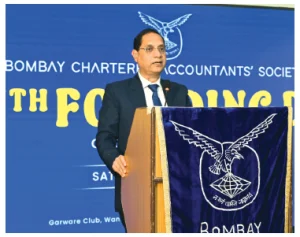
1. 77th Founding Day Conclave:

– Lecture Meeting by Shri Tuhin Kanta Pandey, Chairperson SEBI on “Corporate Governance, in letter and spirit – role and responsibilities of professionals” and

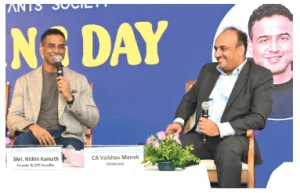
– Fireside chat with Shri Nithin Kamath, Founder & CEO at Zerodha on “Navigating Tomorrow: How CAs can lead Financial Innovation and Sustainability” held on 5th July, 2025 at Garware Club, Churchgate.

The 77th Founding Day of the Society was marked by a significant, one of its kind conclave, featuring a talk by, SEBI Chairperson – Shri Tuhin Kanta Pandey, and a Fireside chat with Shri Nithin Kamath.

Lecture Meeting

This session featured a lecture by Shri. Tuhin Kanta Pandey, Chairperson of SEBI, on the critical role of corporate governance and the responsibilities of professionals, particularly Chartered Accountants.

Key takeaways:

1. SEBI’s Mandate and CA’s Dual Role: SEBI has a dual responsibility of developing and regulating the securities market. Chartered Accountants also play a dual role, acting as both business enablers (CFOs, Consultants) and a “first line of defense” (Auditors, Independent Directors).

2. Uncompromising Ethics and Values: He stressed that ethics and a strong value system are of uncompromising importance for CAs’, regardless of their specific role. He reinforced Azim Premji’s saying: “for a professional, grey is black,” meaning that ambiguous situations should be treated with the same clarity as wrong actions to ensure strong corporate governance.

3. Corporate Governance as an Imperative: Corporate governance is not optional but an “imperative” that builds trust with stakeholders and ensures investor confidence, board independence, and effective oversight.

4. Chartered Accountants as Financial Custodians: Chartered Accountants are deemed “financial custodians of corporate India” and “stewards of trust”. Their role extends beyond financial reporting to ensuring accuracy, integrity, robust internal controls, transparency in related party transactions, and ethical conduct. They serve as a bridge between management, auditors, and regulators, upholding fairness and accountability. A crucial point he made is that CAs must ensure corporate governance is “not reduced to a checklist”.

5. Evolution of Governance Framework: India’s corporate governance framework has continuously evolved, with significant milestones including Clause 49 (2000), the Company’s Act 2013, and SEBI LODR Regulations 2015. SEBI adopts a hybrid approach, combining rule-based and principle-based elements, to encourage going beyond mere compliance and embracing the spirit of good governance.

6. Transparency and Information Symmetry: SEBI mandates a robust disclosure framework, including periodic financial and governance reports and event-based disclosures, to ensure timely and reliable information for all stakeholders and prevent information asymmetry.

7. Enforcement and Regulatory Reforms: SEBI undertakes stringent enforcement actions against misconduct, including debarring entities, imposing penalties, and directing the return of siphoned funds. Recent reforms include quantitative thresholds for materiality of events and mandating shareholder approval every five years for special rights or director continuation, aiming to enhance transparency and accountability.

8. Ease of Doing Business Initiatives: SEBI has introduced measures such as a single filing system, simplified RPT standards, flexibility in Business Responsibility and Sustainability Reporting (BRSR), extended disclosure windows for board meeting outcomes, and the option to not publish detailed financial results in newspapers. These measures aim to simplify compliance, enhance transparency, and encourage technology adoption, while also being mindful of the burden of excessive compliance.

9. Collaborative Ecosystem: The strength of capital markets lies in “partnership and shared purpose” among all participants. Teamwork, technology, transparency, professional ethics, trust, and a shared vision are key pillars for progress.

10. Investor Service and Digitisation: Indian capital markets are considered among the most advanced globally, with a significant increase in unique investors (from under 50 million in 2019 to 130 million, targeting 400 million). He praised tech startups like Zerodha for their role in reaching investors across the country.

11. Investor Protection Initiatives: SEBI is working on initiatives like “@VALID” (a UPI subsystem for authorised bank accounts) and a SEBI Check app to prevent fraud. They also plan massive campaigns on cyber fraud and responsible investing, and advocate for differentiated regulation based on investor risk appetite.

12. BRSR Reporting Assurance: He emphasised the need for trustworthy standards and credible third-party assessments as the reporting moves from self-certification.

13. Debt Capital Markets: While equity markets have developed significantly, he noted the substantial growth in the corporate bond market. He highlighted the unique EBP platform for electronic bidding in corporate bonds and initiatives to improve retail access through online bond platforms and brokers. Challenges remain in secondary market liquidity and investor understanding of bonds as “yield to maturity” products. Investor awareness initiatives, such as NISM webinars, are underway.

14. Final Message: Corporate governance should be implemented “not only in letter but also in spirit” to achieve its true objective and purpose.

Fireside Chat

The Fireside Chat featured Shri Nithin Kamath, Founder & CEO at Zerodha interviewed by CA Vaibhav Manek. The discussion focused on Zerodha’s journey, financial innovation, and investor trends, with insights into how Chartered Accountants (CAs) can lead in these areas.

Key takeaways from Shri Nithin Kamath:

1. Zerodha’s Inception and Growth: Nithin Kamath started trading in the late 1990s, experienced significant losses in 2001, worked in a call centre, and later became a sub-broker and Reliance Money franchisee before starting Zerodha in 2009. He highlighted that the genesis of Zerodha was transparency, which allowed customers to know all upfront charges, a previously unheard-of practice.

2. Unforeseen Scale and Organic Growth: Kamath never envisioned Zerodha reaching its current scale of 17 million customers, with his initial best-case scenario being 100,000 customers. He emphasised that Zerodha achieved this scale without spending on advertising, proving that building a good product with the customer at its centre naturally attracts users.

3. Emphasis on Market Cycles and Grounding: He attributes much of Zerodha’s success to being in the “right place, right time” during India’s growth period, highlighting the importance of the market cycle over just business skills for an entrepreneur. He also noted that wealth has not materially changed his lifestyle, helping him stay grounded.

4. Future Opportunities in Broking: Kamath believes it would be difficult to build another Zerodha today due to the unique timing of its growth (e.g., online onboarding coinciding with events like COVID-19). He sees the main opportunity in India as building an advisory-first broker, as many new investors lack guidance on what to do.

5. Transformational Shift in Investor Trends: He predicts that India, being a generation behind the US, will see investors mature over time. With the rise of AI tools like Chat GPT, he foresees a major transformational shift where brokers might become mere “pipes” to exchanges, and customers will build custom apps for trading.

6. Role of Chartered Accountants: Kamath greatly values the role of CAs, citing Zerodha’s CAs (Bharat and Om) as instrumental in building the business without “legacy debt” by ensuring transparency and ethical operations. He believes CAs can nudge business owners towards holistic decisions, especially regarding sustainability and ESG, beyond just “checkbox” compliance.

7. Investment Perspective: He sees accounting firms as “investable” due to their steady and sustainable revenue and high customer retention. When evaluating investment opportunities, he primarily looks for founders with core competency and experience in the industry, rather than just an idea. He also prioritises investing in contrarian market cycles like health and climate.

8. Leadership and Growth Philosophy: Kamath defines his leadership by prioritising the long-term over the short-term, such as analysing business numbers over a three-year moving average rather than quarterly. He believes this gives Zerodha an advantage over competitors forced to focus on short-term results.

9. Mistakes for Start-up Founders: He advises founders to avoid overselling to investors, as it creates false expectations for the team. He advocates for effective team building by treating employees as more than just “resources,” implementing policies like no work chats after 6 pm and encouraging hobby projects. He stresses that people motivated solely by money tend to leave for money. He also criticises the “excessive consumerism” of constant growth targets, suggesting that true happiness comes from chasing metrics beyond mere revenue.

BCAS Lecture Meetings are high-quality professional development sessions which are open-to-all to attend and participate. Missed the Lecture Meeting, but still interested in viewing the entire meeting video?

Visit the below link or scan the QR Code with your phone scanner app:

YouTube Link:

https://www.youtube.com/watch?v=AIK12-f19nw&t 

https://www.youtube.com/watch?v=ff5-CAnK4TM

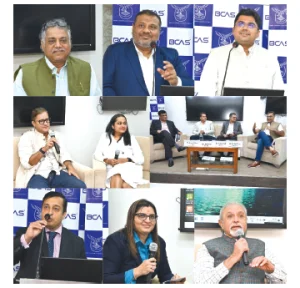
2. One Day Seminar on “Ind AS 117 – Insurance Contracts – A Curtain Raiser” held on Friday, 4th July 2025 @IMC.

The landscape of insurance accounting is undergoing a paradigm shift in India with the introduction of Ind AS 117 – Insurance Contracts, aligning more closely with the international standard IFRS 17.

As India moves toward adopting this landmark standard, it is essential for all professionals in the insurance sector, auditors of insurance companies, actuaries and all those associated with the insurance industry, to gain a solid understanding of its principles, implementation issues, and practical implications.

In this direction (to act as curtain raiser), Accounting & Auditing Committee of BCAS organised one day seminar on the said topic in hybrid mode (physical as well as online) at Babubhai Chinai Hall, 2nd Floor, IMC Building, Churchgate, Mumbai.

This seminar was designed to introduce and equip professionals with a basic understanding of Ind AS 117 and help them navigate its complexities with confidence.

The Seminar was inaugurated with the opening remarks from the Vice-President of BCAS, CA Zubin Billimoria, followed by the Chairman of the Accounting and Auditing Committee –CA. Abhay Mehta, both of them underlining the importance of knowledge sharing and role of the BCAS in conducting such programs for the benefit of members and the profession at large.

The seminar commenced with an Inaugural Address by CA. M P Vijay Kumar setting the tone for the following sessions, narrating the journey and emphasizing the importance of readiness and adaptation to the new standard.

This was followed by an insightful session on “Introduction to Ind AS 117 and Transitional Issues“, which provided a foundational overview along with transition challenges, strategies and practical insights by CA Ashutosh Pednekar.

Thereafter, specialised sessions on the “Accounting Impact on Life Insurance Sector” and “General Insurance Sector” were taken by Mr. Dinesh Pant and CA Samir Shah, respectively, offering deep technical perspectives on how Ind AS 117 reshapes financial reporting in these domains.

The session on the “Impact of Ind AS 117 on Other Ind AS Standards”, by Mr. Jitendra Jain, highlighted convergence and divergence areas, especially with Ind AS 109 and Ind AS 115.

The Seminar concluded with a critical session by Mr. Rajesh Dalmia on the “Interplay of Actuarial Aspects vis-à-vis Ind AS 117“, focusing on the alignment between actuarial valuations and accounting treatment, bringing together finance and actuarial domains.

The seminar proved to be a highly informative platform for professionals navigating the implementation challenges of Ind AS 117.

The Seminar provided an excellent opportunity to gain valuable knowledge and practical insights on the topics covered. The Seminar attended by 45 participants (including 36 virtual participants) was well received, and the overall feedback from the participants was very encouraging.

3. Finance Corporate & Allied Law Study Circle – Overview of Due diligence with focus on Financial due diligence held on Monday, 23rd June 2025 @ Virtual

  • The session focused on the structure, scope, and strategic importance of due diligence in modern transactions, particularly financial due diligence (FDD). 55 participants attended the session.
  • CA Sahil Parikh outlined the phases of a typical DD assignment, from planning to reporting and finalisation.
    Key distinctions between audit and due diligence were discussed, with real-life case examples highlighting revenue overstatement, related party risks, and valuation adjustments.
  • The speaker shared insights from engagements involving private equity, IPOs, and distressed assets, demonstrating how DD findings impact deal structure and pricing.
  • Buyer vs Seller perspectives were explained, along with red flag negotiation strategies.
  • The session covered FDD checklists, normalisation of EBITDA, tax and legal DD overlaps, and the role of secretarial compliance.
  • Emerging trends such as AI-based review tools, digital data rooms were also touched upon.
  • The talk concluded with a strong emphasis on ethical rigour, independence, and value creation through diligent and balanced reporting.
  • The session was well received and drew appreciation for its practical orientation and structured delivery.

4. Redevelopment 360: From Concept to Completion held on Saturday, 21st June 2025 @ Hybrid

This event was organized by the Finance, Corporate, and Allied Laws Committee on Saturday, 21st June, 2025, at BCAS Hall. Initially planned as an in-person attendance event, the seminar was converted into a hybrid format in response to the overwhelming interest and demand, allowing participants to attend virtually as well.

The details of the Seminar are as follows:

Topic Session Summary Faculty
Keynote Address on The Rise and Need of Redevelopment

Shri Romell delivered an insightful keynote address, emphasizing the urgent necessity of redevelopment in a land-constrained city like Mumbai. He articulated the advantages of cluster redevelopment over other models and positioning redevelopment as both a civic necessity and a social responsibility. His address set a compelling tone for the sessions that followed.

Shri Domnic Romell

President, Maharashtra
Chamber of Housing Industry


 Session 1:

Understanding Redevelopment Process and Regulatory Framework


This session provided a comprehensive overview of the redevelopment landscape—covering various types of redevelopments, notable DCPR schemes, and their comparative analysis. Mr. Nayan Dedhia also touched on self-redevelopment initiatives.

 Mr. Nayan Dedhia

Director, Toughcons Nirman Pvt. Ltd


 Session 2: Role and Importance of PMC in Redevelopment

CA Aditya Bansal outlined the critical role of Project Management Consultants in ensuring smooth execution at every stage of a redevelopment project. He illustrated how PMC involvement mitigates risks and enhances project efficiency.

 CA Aditya Bansal,

Associate Director,
Knight Frank

 Session 3: The Redevelopment Checklist

Dr. Harshul Savla emphasized the importance of having a well-structured redevelopment checklist. He stated that the checklist should, inter alia, comprise the key points of a plot, the due diligence checklist, significant points of redevelopment, buffet of FSIs, importance of ‘Know your Developer’, and certain RERA compliances of a redevelopment project.

 Dr. Adv. Harshul Savla

Managing Partner, Suvidha Lifespaces


 Session 4: GST Implications in Redevelopment

CA Raj Khona dealt with GST implications with respect to developer-led redevelopment as well as self-redevelopment of societies. In case of developer-led redevelopment, GST on rehab flats, resale by landowners before OC, various payments to the society and its members, additional area purchased along with liability to pay GST were considered. He also dealt with the GST implications in respect of self-redevelopment funded by the members’ contribution. He presented the possible divergent views.

 CA Raj Khona

Founder, Aarkay Advisors


 Session 5: Income Tax and Stamp Duty Implications in Redevelopment

The fireside chat dealt with the income tax implications on various aspects of redevelopment of cooperative societies, including TDS on and from AY 2024-25, such as development rights, availing permanent alternative accommodation with or without additional area, garage, Jodi flats, temporary alternative accommodation compensation, hardship compensation, sinking fund, in in-kind benefits. Stamp duty implications and the potential role of seeking Advance Rulings were also discussed.

 CA Pradip Kapasi in fireside chat with CA Jhankhana Thakkar:
 Session 6: Legal Drafting in Redevelopment Projects

Adv. Sajit Suvarna and Adv. Mitali Naik dealt with drafting essentials in Development Agreement, Power of Attorney, Intimation of Disapproval. They emphasized careful and diligent drafting of critical clauses relating to granting of development rights, displacement allowance, security, building enough safeguards to have a balanced document.

 Adv. Sajit Suvarna

Senior Partner, DSK Legal

 Adv. Mitali Naik, Partner, DSK Legal


 Panel Discussion on Redevelopment Realities – Successes, Pitfalls & Lessons Learned

This engaging panel brought together perspectives from both society representatives and developers. Panelists shared success stories and critical lessons from their redevelopment journeys. They discussed key factors contributing to success, such as selection of developer, structuring the deal, challenges during execution phase, and surprise – pleasant or otherwise – experienced during the possession of the new residential premises. Each panelist shared their Success Mantras – The Do’s, Don’ts, and Ratnas.

 Panelists:


CA Ketan Mehta

(Society Office Bearer)


• Mr. Ayaz Kazi

(Society Office Bearer)


• CA Anish Shah

Director, Amal Group (Developer)

 Moderator:

CA Chetan Shah

Past President – BCAS

The Seminar was appreciated for its concept to completion. Each session offered in-depth insights, with experts sharing valuable experiences. The seminar concluded with participants gaining an overall (360º) understanding of Redevelopment of societies, especially in Mumbai. The Chairman of BCAS – FCAL committee suggested that Monograph/s may be published on the questions raised during the seminar. Out of the total 194 participants, 126 were BCAS members, and the remaining 68 were non-members. Further, 44 participants attended from 21 cities outside the Mumbai Metropolitan Region.

II. OTHER EVENTS AND NEWS

1. BCAS Office Bearers, Chairpersons, Co-Chairpersons & Convenors Meeting held on Saturday, 12th July 2025@ BCAS Hall.

A meeting of the Office Bearers, Chairpersons, Co-Chairpersons, and Convenors of the various BCAS Committees for the year 2025–26 was held on 12th July 2025 at the BCAS Hall.

President CA Zubin Billimoria welcomed all members and shared the vision for the year ahead, aligning the initiatives with the BCAS Five-Year Plan. He presented ten key strategic projects that the Office Bearers have outlined for the year.

Convenors of the respective committees also shared their proposed annual plans and activity schedules for 2025–26. The updated Standard Operating Procedures (SOPs) were discussed, emphasising the roles and responsibilities of Chairpersons and Convenors. Discussions also focused on best practices for event planning, communication, and outreach.

The BCAS Office Manager and Department Heads were introduced to the members, along with an overview of their functions. An open townhall session saw active participation and meaningful suggestions from members, which were duly noted for implementation.

2. Meeting of Newly Inducted Core Group Members (2023–24 to 2025–26) held on Saturday, 12th July 2025 @ BCAS Hall.

The second half of the day saw a dedicated session for newly inducted Core Group members during the last years from 2023–24 to 2025–26. The meeting provided an opportunity for the new members to introduce themselves and engage with the Office Bearers and fellow Core Group members.

President CA Zubin Billimoria elaborated on the key strategic initiatives under the BCAS Five-Year Plan and reiterated the importance of collaborative leadership. The structural framework of BCAS departments was presented, and the Heads of Departments were formally introduced.

The roles, expectations, and responsibilities of Core Group members were discussed in context of the updated SOPs. The interactive townhall that followed allowed members to offer suggestions and share insights, which were warmly received and noted for action by the leadership team.

3. BCAS Academy: A New Era of Digital Learning and Networking @ Mumbai.

Bombay Chartered Accountants’ Society proudly unveiled the BCAS Academy portal, at the 76th Annual General Meeting of the society held on 5th July 2025 at Garware Club House, Mumbai. The BCAS Academy is a robust digital learning and networking hub designed to empower members through knowledge, collaboration, and innovation.

Key Features:

i. Groups – Members can now connect through dedicated groups based on areas of interest or professional focus, enabling peer learning and closer networking within the community.

ii. Forums – The platform hosts interactive forums where users can post queries, share insights, and engage in meaningful discussions on emerging topics and technical issues.

iii. Self-paced e-Learning with BCAS Certificate – A growing library of structured online courses allows members to learn at their own pace and earn BCAS-certified credentials upon completion.

iv. Custom ChatGPT – An AI-powered assistant tailored for the CA profession provides instant guidance, answers, and learning support, enhancing the user’s experience and understanding.

v. BCAS Journal Flip Book Version – Members can now access the Bombay Chartered Accountants Journal in a convenient, interactive flip book format, enhancing readability and portability.

vi. Recorded Videos – Access to a rich repository of recordings from past webinars, lectures, and conferences ensures that knowledge is never missed and always within reach.

vii. Event Registration – The portal offers seamless registration for upcoming BCAS events, making it easier for members to stay updated and involved.

viii. Order Publication Online – Users can conveniently browse and order BCAS publications through the portal, with a streamlined interface for selection and checkout.

The BCAS Academy marks a significant leap forward in the Society’s digital journey, aligning with its mission to foster continuous learning and professional excellence among Chartered Accountants.

The BCAS Academy is now accessible to all members of the Bombay Chartered Accountants’ Society. Access the BCAS Academy: https://academy.bcasonline.org/

4. White Paper: Enhancing the Alternative Investment Fund (AIF) Ecosystem in India@ Mumbai

A White Paper prepared by Bombay Chartered Accountants’ Society (BCAS) jointly with National Institute of Securities Markets (NISM) on “Enhancing the Alternative Investment Fund (AIF) Ecosystem in India” was presented to Shri Tuhin Kanta Pandey, Chairperson, Securities & Exchange Board of India (SEBI) at the 77th Founding Day Conclave held on 5th July 2025 at Garware Club House, Mumbai.

Previously, on the sidelines of the Alternative Investment Fund (AIF) Conclave 2025, which was held on 17th and 18th January, 2025, at Hotel Ginger Mumbai Airport, a Closed-Door Roundtable Discussion was held on the Challenges and Gaps in the AIF Ecosystem.

The discussion was attended by Shri Rajesh Gujjar, Chief General Manager at SEBI, officials from BCAS and NISM, top leadership from 15 AIFs, and legal experts. The session was moderated by Adv. Siddharth Shah. The insights and suggestions provided by the panelists were documented in the form of a White Paper.

The white paper serves as a foundation for policy advocacy and industry transformation, capturing the key recommendations and insights from the discussion held during the roundtable discussion. The recommendations outlined in the paper serve as a strategic roadmap for improving governance, expanding investor access and streamlining compliance in the AIF sector.

The White Paper is now accessible to all BCAS members and is expected to serve as a valuable resource for professionals engaged in investment advisory, fund structuring, tax planning, and regulatory compliance.

Access the White Paper here:

https://bcasonline.org/wp-content/uploads/2025/07/White-Paper-on-Alternative-Investment-Fund.pdf

5. BCAS Foundation Receives Yoga Sangam Patra from the Ministry of Ayush

We are delighted to share that the BCAS Foundation has been awarded the prestigious Yoga Sangam Patra by the Ministry of Ayush, Government of India, in recognition of our active participation in celebrating International Yoga Day on 21.06.2025.

The Yoga Sangam event organized by BCAS Foundation was held at Prestige Hotel, Andheri, in alignment with the national celebrations led by the Hon’ble Prime Minister Shri Narendra Modi from Visakhapatnam. The event brought together members and well-wishers in a shared commitment to promote health, wellness, and inner harmony through the timeless practice of yoga.

We extend our heartfelt thanks to all the enthusiastic participants who contributed to making this initiative a meaningful and memorable one.

This recognition is a proud moment for the BCAS community and a reflection of our ongoing efforts to promote holistic well-being alongside professional excellence.

6. 15,000 & Growing!

The Bombay Chartered Accountants’ Society (BCAS) is proud to share a significant digital milestone — our LinkedIn community has crossed 15,000 followers!

We extend our heartfelt thanks to each member of our growing network for your support, engagement, and trust. Your continued participation strengthens our mission to share credible, relevant, and insightful knowledge with the professional community.

If you haven’t joined us yet, we invite you to become part of an active network of finance professionals, Chartered Accountants, and thought leaders who look to BCAS for:

  • Expert sessions and event updates
  • Thought leadership in taxation, audit, technology, and policy
  • Key regulatory insights and member-driven initiatives
  • Let’s continue to learn, lead, and grow — together.

Follow us on LinkedIn for more meaningful content and updates.

Link: https://www.linkedin.com/company/bombay-chartered-accountants-society/?viewAsMember=true

III. BCAS IN NEWS & MEDIA

BCAS was quoted in 48 news and media platforms during July 2025. This coverage reflects our thought leadership and commitment to the profession. For details

Link: https://bcasonline.org/bcas-in-news/

AI Won’t Replace You… But the CA Who Uses It Better Might

The future of finance is here — and those who adapt will lead.

In a thought-provoking episode of the popular podcast Paisa Vaisa, BCAS President Anand Bathiya joins host Anupam Gupta to discuss the transformative role of Artificial Intelligence (AI) in the finance and accounting profession.

From automation and analytics to ethics and upskilling, the discussion sheds light on how AI is reshaping the Chartered Accountant’s role — and why adopting these technologies is no longer optional.

Whether you’re a Chartered Accountant, a finance student, or simply curious about the intersection of money and machines, this episode offers timely insights on how to stay relevant, resilient, and future ready.

Watch the full episode here: https://www.youtube.com/watch?v=l6TbBDLbv1g

Mutual Fund “Lite” – Rewriting The Grammar Of Passive Investing

EVOLVING MARKET LANDSCAPE

The Indian mutual fund industry, governed by the SEBI (Mutual Funds) Regulations, 1996, has witnessed an unprecedented evolution over the last two decades driven by a sustained policy focus on financial inclusion, digital infrastructure expansion, and increased investor awareness. The growth trajectory has been further accelerated by the entry of retail investors from Tier 2 and Tier 3 cities, facilitated by low-cost digital platforms, simplified customer norms, and systematic investment planning becoming culturally entrenched.

However, this expansion has also revealed a structural rigidity in the regulatory ecosystem, wherein all mutual fund Sponsors and Asset Management Companies (AMCs), irrespective of investment strategy or complexity, are subject to a uniform and comprehensive set of compliance obligations. This includes stringent capitalisation norms, expansive governance frameworks, granular disclosure requirements, and exhaustive reporting and audit cycles, originally designed to mitigate risks associated with actively managed, high-discretion investment vehicles.

THE IMPERATIVE FOR REGULATORY DIFFERENTIATION

As per the AMFI Database1, the mutual fund industry’s Assets Under Management (AUM) reached ₹65.74 lakh crore in March 2025, which is a 23.11% increase year on year from ₹53.40 lakh crore as on March 2024. Out of which, the AUM of passive mutual funds in India reached ₹11.47 lakh crore in March 2025. This marks a notable increase of 22.7% compared to ₹9.34 lakh crore in March 2024. What is remarkable, is that the passive mutual fund industry at large has witnessed an exponential increase of 119.8% in a 3-year span.


1 https://www.amfiindia.com/Themes/Theme1/downloads/AMFIMonthlyNote_March2025.pdf

This number demonstrates the convergence of several critical factors such as rising investor demand for low-cost products, increased indexation of capital markets, global regulatory trends toward passive investing, and the operational simplicity of rule-based investment models. In particular, passive investment strategies such as Index funds and Exchange Traded Funds (ETFs), which are inherently transparent, rules-driven, and involve limited portfolio churn, have emerged as viable vehicles for delivering low-cost, scalable investment access to first-time investors. Notwithstanding their risk-mitigated structure, these schemes have, until now, been subject to the same compliance and capital thresholds as actively managed products.

Recognising the inefficiencies and entry barriers created by this undifferentiated framework, the Securities and Exchange Board of India (SEBI) undertook a significant policy recalibration. In furtherance of its mandate to promote capital formation, investor protection, and orderly market development, SEBI introduced a tailored regulatory carve-out under the Mutual Fund Regulations.

Vide circular dated 16 December 2024, SEBI formally launched the “Mutual Fund Lite” framework—a streamlined, compliance-light regime designed exclusively for mutual funds proposing to offer only passive investment schemes. A passive mutual fund scheme is a mutual fund that replicates or tracks a specified market index where the underlying securities shall be equity, plain vanilla debt securities, physical commodities and exchange trade derivatives. Investment in Equity Derivatives of underlying securities forming part of the Index shall be available as an investment option in case the underlying security is not available for purchase.

The Mutual Fund Lite regime is a distinct regulatory channel that allows new entrants to establish and operate passive-only mutual fund structures with an intent to promote ease of entry, encourage new players, reduce compliance requirements, increase penetration, facilitate investment diversification, increase market liquidity and foster innovation. It embodies the principle of proportionality in regulation—where the regulatory burden is commensurate with the risk posed by the investment strategy.

ESTABLISHMENT OF MUTUAL FUND LITE UNDER SEBI (MUTUAL FUNDS) REGULATIONS, 1996 LEGAL CODIFICATION AND STRUCTURAL CARVE-OUTS

The Mutual Fund Lite regime is now firmly embedded within the SEBI (Mutual Funds) Regulations, 1996, through the introduction of Chapter IX (Regulations 79–89). This provides a standalone legal structure tailored for entities intending to offer exclusively passive investment schemes, alongside a streamlined governance and compliance regimen.

The framework introduces several key pillars:

  •  Sponsors must demonstrate both financial capacity and commitment to operate solely within the passive-investment paradigm.
  •  Parameters for determining eligibility for application of sponsor of a mutual fund under the main route warrants the sponsor to have a sound track record, maintenance of net worth, profit track record in 3 years out of 5 years (including 5th year), average profitability, capital contribution, minimum deployment of net worth in AMC, etc.

In case of an alternate route, some of the key points include sponsor capitalisation is expected at a higher amount along with a combined management experience of 20 years.

STATUTORY BOUNDARIES UNDER THE MUTUAL FUND LITE REGIME

Permitted Passive Schemes

The permissibility of schemes is tightly circumscribed and deliberately restricted to eliminate portfolio discretion, lower operational risks, and ensure transparency.

A Mutual Fund Lite entity may only offer the following categories of passive investment schemes and any other schemes as SEBI may define from time to time:

1. Index Funds, which replicate a specific index whether equity or debt approved by SEBI or constructed in accordance with SEBI recognised methodology, and follow a non-discretionary, rules-based investment pattern;

2. Exchange Traded Funds (ETFs), which are required to passively track such recognised indices and be listed and traded on recognised stock exchanges, thereby offering liquidity and real-time price discovery.

3. Fund of Funds (FoFs), which are permitted solely where the underlying investments are limited to the aforementioned index funds and/or ETFs, whether domiciled domestically or in foreign jurisdictions, provided they adhere to the passive investment mandate.

4. Hybrid ETFs / Index Funds are a new class of passive funds where AMCs can launch a new class of Hybrid passive Funds which shall replicate a composite index comprising of equity and debt and enable investors to invest in a single product having exposure to equity & debt instruments.

Investment Restriction

Passive scheme shall not be allowed to invest in the following:

  •  Unlisted Debt Instrument
  •  Bespoke or Complex Debt Products
  •  Securities with special features
  •  Inter scheme transactions
  •  Short Selling
  •  Unrated Debt and Money Market Instruments (except G-secs, T-Bills and other money market instruments)

It is of critical legal significance that no active management, sectoral themes, or discretion-based portfolio construction is permitted under this regulatory carve-out. The Lite framework is, by express design and regulation, constructed to avoid fund manager discretion, reduce tracking errors, and ensure faithful replication of the prescribed index, that inherently limit systemic and investor level risks.

DISTINCTION BETWEEN MUTUAL FUND LITE AND CONVENTIONAL MUTUAL FUNDS: A REGULATORY AND OPERATIONAL DICHOTOMY

The Mutual Fund Lite regime institutionalises a deliberate divergence from the conventional mutual fund regulatory framework. It is not merely a variation in product type but a shift in regulatory theory—rooted in the doctrine of proportional regulation and calibrated supervision.

The following key distinctions underscore the bifurcated architecture between the two regulatory tracks:

1. Capital Adequacy Norms

Under the Mutual Fund Lite framework, Asset Management Companies (AMCs) are required to maintain a minimum net worth of ₹35 crore (₹50 Crore In case of entering through Alternate Route), a significant reduction from the ₹50 crore mandated (₹100 Crore In case of entering through Alternate Route), for conventional AMCs as per Regulation 21 of the SEBI (Mutual Funds) Regulations, 1996.

This reflects the reduced operational complexity and limited risk exposure associated with passive investment strategies, justifying a lower entry threshold for new or niche participants.

2. Scope of Permissible Schemes

Entities operating under the Mutual Fund Lite regime are restricted to passive investment schemes—including index funds, exchange-traded funds (ETFs), and funds of funds (FoFs) investing exclusively in such passive strategies.

Unlike full-scope AMCs that may launch a wide array of actively managed, thematic, or tactical schemes, the Lite framework enforces product discipline and predictability, aligning offerings with the regime’s simplified risk profile and investor expectations.

3. Governance and Organizational Requirements

The governance architecture for Mutual Fund Lite AMCs is streamlined. Key exemptions include:

  •  No mandatory constitution of Risk Management Committees (RMC) or Valuation Committees. Further the requirement of an RMC shall be optional and the audit committee of AMC may undertake the additional role of RMC.
  •  Relaxation in the appointment of certain Key Managerial Personnel (KMPs). However, core fiduciary obligations remain intact. Trustees continue to be bound by statutory duties, and SEBI retains its full supervisory and enforcement authority under the SEBI Act, 1992 and applicable mutual fund regulations. This ensures that while operational governance is simplified, regulatory accountability remains uncompromised.

4. Compliance and Disclosure Requirements

The compliance framework is recalibrated to reflect the inherently lower-risk profile of passive funds. Key relaxations include:

  •  Reduced frequency of audits
  •  Simplified disclosure formats in offering documents and periodic reports.

Nevertheless, transparency and disclosure obligations remain essential, preserving investor confidence and market discipline.

Entities are expected to maintain high standards of data integrity and reporting accuracy, in line with SEBI’s disclosure principles.

5. Hiving of Existing Active & Passive Funds

Existing MFs having both active and passive schemes may hive off respective passive schemes covered under MF Lite Framework, if they so desire, to a different group entity, thereby resulting in management of active and passive schemes by separate AMCs but under a common sponsor. However, each sponsor shall be permitted to obtain up to two registrations i.e. one each for MF- active and MF- Lite,

Further, they shall completely segregate and ring-fence its resources including infrastructure, technology and staff etc. for passive MF management from the active MF management.

However, MF Lite shall only offer schemes of passive investment and any other scheme as defined by SEBI from time to time.

Also, the existing AMCs shall now have the liberty at its disposal to operate two different set ups, each resonating to the investment strategy, thereby delivering better investor performance aligning to the risk appetite.

6. Fast Track Registration of MF Lite Schemes

Fast tracking of Scheme Information Document shall be mandatory for schemes under the framework; however, Key Information Memorandum shall not be required for a respective scheme in case of MF Lite, easing out additional operationalities at the time of launching a scheme.

IMPLICIT COMPLIANCE RECALIBRATIONS AND THE STRATEGIC WAY FORWARD

For institutions evaluating entry or expansion within the asset management space, the Mutual Fund Lite regime offers a platform of legal clarity and procedural economy—while simultaneously demanding strategic precision in scheme structuring and investor communication.

In its regulatory design, Mutual Fund Lite envisions an ecosystem where market entrants are not handicapped by existing capital thresholds or intricate organizational structures, but are instead empowered by clarity of scope and precision of responsibility. This opens avenues for bespoke, low-cost structures that can serve niche investor cohorts with differentiated financial access goals—without triggering compliance machinery disproportionate to underlying risks.

The strategic implications of this model are manifold: it incentivises lean governance without weakening oversight, facilitates product innovation within statutory bounds, and enables ecosystem participants to calibrate their operational and advisory models to a lighter, yet equally robust, regulatory regime.

For stakeholders involved in the architecture of collective investment—be it through structuring, operationalisation, audit, risk oversight, or regulatory interpretation—this regime rewrites what preparedness must look like. The way forward lies in:

  •  Streamlining audit and internal control frameworks around leaner fiduciary structures;
  •  Crafting legally rigorous scheme documents that conform to tight regulatory boundaries while enabling product flexibility;
  •  Building digital compliance infrastructure that supports direct-to-investor ecosystems and automated disclosures;
  •  And perhaps most crucially, adapting professional mindsets to a regime where governance is not defined by scale, but by discipline, clarity, and proportionality.

Professionals have a new opportunity at their doorstep to expand their horizons and assess how mutual funds are structured, advised and monitored.

The Mutual Fund Lite pathway aligns with SEBI’s long-standing vision of fostering growth in the passive fund management segment, expanding investor choice, and promoting digital innovation within the asset management industry.

Regulatory Referencer

DIRECT TAX: SPOTLIGHT

1. Clarification regarding CBDT’s Circular No. 5/2025 dated 28.03.2025 for waiver on levy of interest under section 201(1A)(ii) / 206C(7) of the Income-tax Act, 1961 – Circular No. 8/2025 dated 1 July 2025

As prescribed in circular No. 5, the CCIT, DGIT or PrCCIT has power to reduce or waive interest charged under section 201(1A)(ii) / 206C(7) of the Act. The following clarifications are issued:

a) CCIT/ DGIT/ Pr.CCIT is empowered to pass order for waiver after the date of issue of Circular No. 5/2025 i.e. 28 March 2025

b) Applications for the waiver of interest can be entertained within one year from the end of the financial year for which the interest is charged.

c) Waiver applications can be entertained for interest under section 201(1A)(ii) / 206C(7) of the Act charged even before the issuance of the said Circular, subject to (b) above.

2. Cost Inflation Index for F.Y. 2025-26 is 376 – Notification No. 70/2025 dated 1 July 2025

FEMA

1. RBI allows advance remittance up to USD 50M for vessel imports without BG or unconditional, irrevocable SBLC

To enhance ease of doing business, it is decided to allow importers to make advance remittance up to USD 50 million. This is for imports of shipping vessel, without Bank guarantee, or an unconditional and irrevocable Letter of credit, subject to conditions in MD-Imports. However, this circular does not provide relaxations for obtaining approvals or permissions.
[A.P. (DIR Series 2025-26) Circular No. 7, dated 13th June 2025]

2. RBI eases export norms; exempts offshore vessels like tugs, dredgers from export declaration if re-imported into India

Regulation 4 of the Foreign Exchange Management (Export of Goods & Services) Regulations, 2015 is amended. Tugs or Tug boats, Dredgers and Vessels used for providing off-shore support services are now exempt from furnishing export declaration, subject to re-import.

[Notification No. FEMA 23(R)/(6)/2025-RB, dated 24th June 2025]

IFSCA

1. IFSCA expands permissible uses of FCA funds by resident individuals in IFSC

IFSCA has amended the existing directions concerning the operation of Foreign Currency Accounts (FCAs) held by Resident Indians (RIs) under LRS. As per the amendment, RIs must submit a declaration that the amount spent from FCA for availing financial services or financial products is for the purpose declared or is for a purpose permitted under LRS.

[Circular No. IFSCA-FMPP0BR/1/2021–Banking-Part(1)/3, dated 23rd June 2025]

2. IFSCA prescribes submission process for changes in operations, management, or registration of REs by Finance Cos

With a view to facilitating uniformity and ease of doing business for Regulated Entities (REs), the authority has issued a Guidance Note. It aims to streamline the process of change requests made by the REs. Various Divisions of IFSCA have been specified for different Change Requests. All the Finance Companies and Finance Units shall adhere to these Guidelines to ensure compliance.

[Circular No. IFSCA-FCR0FCR/5/2025-Banking/01, dated 1st July 2025]

Recent Developments in GST

A. CIRCULARS

(i) Clarifications – Procedure for review, revision and appeal Circular no.250/07/2025-GST dated 24.06.2025.

By above circular, clarifications about procedure for review, revision and appeal in respect of Orders-in-Original (O-I-Os) passed by Common Adjudicating Authorities (CAA), i.e., Joint/Additional Commissioners appointed for adjudicating SCNs issued by DGGI under GST are provided.

B. ADVISORY

i) Vide GSTN dated 16.6.2025, the information about introduction of Enhanced Inter-operable Services between E-way Bill portals is provided.

ii) Vide GSTN dated 18.6.2025, the information about Advisory to file pending returns before expiry of three years is provided.

iii) Vide GSTN dated 19.6.2025, the information about handling of inadvertently rejected records on IMS is provided.

C. ADVANCE RULINGS

EPC Contract – Divisible vis-à-vis indivisible contract Thyssenkrupp Industrial Solutions (India) Pvt. Ltd. (Now known as Thyssenkrupp UHDE India Pvt. Ltd.)

(AR Order No. GUJ/GAAR/R/2023/01 (in Appl. No. Advance Ruling/SGST&CGST/2023/AR/29) dated: 29.01.2025) (Guj)

The applicant is engaged in Engineering, Procurement and Construction (‘EPC’) jobs, as well as Engineering, Procurement and Construction Management services in the areas of Ammonia Storages, Nitric Acid, Urea, DMT etc. and is also involved in the setting up of Chlor Alkali plants, Hydrogen plants, Nitric Acid plants etc.

The applicant has undertaken a bid of IOCL for execution of EPC package (EPCC-09) for Catalytic De-Waxing Unit (‘CDWLP‘) for its Petrochemical and Lube Integration Project (‘LuPech’). As per tender the successful bidder is contractually obligated to execute the work on lump sum turnkey basis with single point responsibility.

The scope of EPC contract includes:

 Supply of imported components on a high seas sale basis and

 Clearance of imported goods for and on behalf of IOCL;

The acceptance letter issued by IOCL also clarified that the contract is for lump sum value including tax. It is provided that the imported goods should be sold to IOCL and the applicant should clear the same in the name of IOCL. IOCL was to pay applicable duty under Custom/IGST.

The applicant projected the above contract as a split contract in following components , though it is a single document.

It was the contention of applicant that since goods are sold on high seas sale (HSS) basis, it is sale simpliciter and hence cannot be part of works contract value.

With the above background, the applicant posed the following questions before ld. AAR.

“1. Whether the contract between the Applicant and IOCL is a divisible contract or a single and composite contract?

2. If the contract between the Applicant and IOCL is treated as an indivisible and a single composite contact whether the component imported goods will be taxable as a supply of goods at the time of importation or as a service at the time of incorporation in the works contract i.e. when the erection, commission and installation of goods takes place

3. When imported goods are sold by the supplier to a recipient on a high seas sale basis and such goods are cleared from customs by the recipient(as the importer on record) on payment of duty & Integrated Goods and Service Tax (under Section 5(1) of the Integrated Goods and Services Tax Act, 2017 read with Section 12 of the Customs Act and Section 3 of the Customs Tariff Act, and later such imported & duty paid goods are erected, commissioned and installed by the same supplier in such circumstances

[a] Whether a supply of goods can be subjected to GST twice, first as supply of goods at the time of importation in the hands of the recipient / importer and a second time as a component of supply of service in the hands of the supplier of FPC contract service at the time of incorporation of the imported goods in a works contract by way of erection, commission and installation?

[b] Whether the value of goods sold on a high seas can be added to the value of a works contract merely because such duty and IGST paid goods are incorporated in the works contract by way of erection, commission and installation.”

The ld. AAR referred to contract terms in detail along with relevant provisions under GST Act.

Regarding the contract of the applicant that the given contract is a split contract, the ld. AAR referred to judgment in case of Kone Elevator India Private Limited [2014 (304) E.L.T. 161 (S.C.) -2014-VIL-12-SC-CB] and held that the present turnkey EPC contract is a ‘works contract’. Since it is lump sum EPC contract, it cannot be divisible contract, though there are two separate work orders. The ld. AAR observed that both work orders are interdependent and cannot be performed independently.

Accordingly, the ld. AAR held that the impugned contract entered into by the applicant with IOCL is not a divisible contract.

So far as the question of tax liability on HSS of imported goods, the ld. AAR observed that it is not liable to GST in terms of Schedule III, read with section 7(2) of the CGST Act, 2017 as it is treated as neither a supply of goods nor a supply of services.

Regarding further question about the taxation of goods post HSS sale to IOCL, the ld. AAR observed that the said issue is not within the jurisdiction of its Authority, as it is a matter to be decided by the jurisdictional Customs Authority in terms of Customs Act, 1962 and Customs Tariff Act, 1975.

Regarding next question of taxability of HSS sale amount as a part of consideration for applicant, the ld. AAR relied upon Section 15 of the CGST Act, 2017.

The ld. AAR observed that what will be included and excluded in the value of supply is governed by sub-sections 15(2) & (3) of the CGST Act, 2017 and particularly sub-section 15(2). The ld. AAR held that the value of supply shall include any amount
that the supplier is liable to pay in relation to such supply which has been incurred by the recipient of the supply and not included in the price actually paid or payable for the goods or services or both. Since the applicant is having EPC contract, the applicant is liable to provide the goods [supplied on HSS basis to IOCL] and therefore the submission of applicant to not include such value in valuation is held untenable.

The ld. AAR relied upon judgment in case of M/s. Shree Jeet Transport – 2023-VIL-764-CHG [Writ Petition (1) No. 117/2022 decided on 17.10.2023].

The plea of double taxation also rejected by ld. AAR observing that what is supplied under the works contract is not the imported goods but EPC contract service.
The argument that since duty & IGST paid goods are incorporated in the works contract by way of erection, commission & installation and hence the said value cannot be included in valuation is rejected by the ld. AAR on ground that the contract is composite contract amounting to one transaction of supply of service.

Thus, all questions were decided against the applicant.

GTA – Scope

Tanuja Jangir

(AR Order No. RAJ/AAR/2024-25/21 dated: 21.11.2024) (Raj)

The applicant, M/s. IKTAI is a registered proprietorship concern intending to expand into a new business vertical focused on goods transport as a Goods Transport Agency (GTA). The Applicant is desirous of entering into agreement with other GTA’s (Principal GTA) for transportation of goods.

As per the draft agreement, the customers of principal GTA will award contract (referred as ‘‘Main Contract’) for transportation of goods. The principal GTA will issue consignment notes to its customers for transportation of goods.

Principal GTA will engage the applicant for transportation of goods. The applicant will be responsible to pick up the goods from the loading point and transport the goods to the designated unloading point, as per instructions of the principal GTA. The applicant will undertake the transport of goods on principal basis, i.e. he will issue and provide the principal GTA with a consignment note, for each transport, for transportation of goods.

Based on above facts the applicant has raised following issue before the ld. AAR.

“1. Whether the activity of the transportation of goods by the applicant will be exempted under entry No 18 of notification no 12/2017-Central Tax (Rate) dated 28.06.2017?”

Applicant’s main submission was that under GST, service by way of transportation of goods by road, other than GTA, is classified under Entry 18, Heading 9965 vide Notification No. 12/2017-Central Tax (Rate) dated 28.06.2017 as amended from time to time. It was the submission that, the service by way of transportation of goods by road, is exempt except in following cases-

 A goods transportation agency

 A courier agency

It was contested that as GTA, the liability falls on recipient under RCM, unless a different option is opted by GTA.

The applicant drew attention to the meaning of GTA provided in Notification No. 11/2017-Central Tax (Rate) dated 28.06.2017 which is as under:

“4. Explanation. – For the purposes of this notification, –

(xxxx) ‘goods transport agency’ means, – any person who provides service in relation to transport of goods by road and issues consignment note, by whatever name called.”

The applicant explained that the use of phrase “in relation to” has extended the scope of the definition of GTA and it includes not only the actual transportation of goods but any intermediate/ancillary service provided in relation to such transportation, like loading or unloading, packing or unpacking, temporary warehousing etc. If these services are not provided as independent activities but are the means for successful provision of GTA service, then they are also covered under GTA. It was submitted that, in respect of those who provide agency services in transport, the liability is cast on recipient (RCM) in most of the cases, unless ¬option to pay under forward charge has been exercised by the GTA.

Based on above, applicant was contemplating exemption to its activity.

Considering meaning of the GTA, ld. AAR observed that issuance of the consignment note is an essential condition for any person to act as GTA. The ld. AAR further observed that if such a consignment note is not issued by the transporter, the service provider will not come within the ambit of GTA, as issue of consignment note indicates that the lien on the goods has been transferred to the transporter and the transporter becomes responsible for the goods till its safe delivery to the consignee.

The ld. AAR also explored the meaning of term “consignment note” based on available material including under erstwhile service tax and observed that in case of Consignment Note, the goods are received by the goods transport agency either from the consignor or the consignee of the goods, the details of which are mentioned in the consignment note along with the description of the goods being transported.

The ld. AAR observed that in present case the service of transportation of goods is sub-contracted to the applicant by the principal GTA meaning thereby the contract to undertake transportation of goods is provided by the consignee/consignor to principal GTA and not to the applicant. The ld. AAR also observed that because principal GTA deals with the consignee/ consignor directly, they also issue E-way bills and consignment notes. As per ld. AAR, the role of the applicant is to just provide their vehicles to principal GTA as and when called for and the applicant is giving only vehicles to principal GTA and thus it is principal GTA which has the transportation contract with the consignee/consignor.

The ld. AAR, therefore, opined that the transaction in this case would be one of renting of vehicles and not that of a Goods Transport Operator.

The ld. AAR further observed that issuance of consignment note to the consignor is an essential condition to qualify as a GTA and if entity only provides vehicles on rent or hire or other services for transport of goods for some consideration then it cannot be called a GTA, but an activity of ‘renting of vehicles’. It is reiterated that merely owning of trucks and renting them out for transportation of goods does not qualify in the definition of GTA. The ld. AAR held the applicant’s business activity is only of rental services of transport vehicles which are notified under notification no.11/2017-Central Tax (Rate) dated 28.06.2017.

Accordingly, the ld. AAR held that the applicant’s activity is not eligible for exemption under entry 18 of Notification no.12/2017-CT (R) dt.28.6.2017.

Classification – Icing Sugar

Ros Products

(AAR Order No. KER/8/2024 dated: 29.10.2024) (Ker)

The applicant filed advance ruling on the following questions:

1. What is the HSN code of Icing sugar?

2. What is the rate of GST on Icing sugar?

The applicant contended that in the market, Icing Sugar is being sold under the HSN code 1701 at the rate of 5% GST and also being sold under HSN code 1702 at the rate of 18% GST and therefore, in the AR application they have sought clarification about correct rate.

The applicant furnished the relevant portion from the FSSAI Regulations 2011, which specifies icing sugar as the sugar manufactured by pulverizing refined sugar or vacuum pan (planation white) sugar with or without edible starch. It was explained that edible starch, if added, shall be uniformly extended in the sugar. It was clarified that Icing Sugar shall be in form of white powder, free from dust, or any other extraneous matter.

The applicant further clarified that Icing Sugar is manufactured with grounded/pulverized sugar (HSN 1701) and maize starch (HSN 1108), where maize starch is not more than 4% by weight on dry basis of maize starch.

The ld. AAR observed that there are different kinds of sugars as provided in heading 17 as under:

The ld. AAR observed that while a specific classification is not provided for icing sugar, the icing sugar deserves the very same classification applicable to the sugar from which icing sugar is made. The ld. AAR observed that in case of applicant, icing sugar is manufactured from refined sugar (sucrose) pulverized with starch and not added with any colouring or flavouring materials. Accordingly, the ld. AAR held that the appropriate classification of the product should be under chapter/heading/sub-heading/Tariff item-1701 of the Customs Tariff Act 1975 with product description-Cane or beet sugar and chemically pure sucrose in solid form.

Justifying above classification, the ld. AAR also observed that being added with edible starch, it is composite product, but the ratio of refined sucrose and edible starch is 96.4% and presence of starch does not affect the essential character (taste) of sugar and therefore, the classification of the product goes with original sugar from which it is made. The ld. AAR held that the rate applicable will be 12% being covered by HSN Code 17019990.

Liability of Club – Principle of Mutuality

Umed Club

(AAR Order No. RAJ/AAR/2024-25/23 dated: 2.12.2024) (Raj)

The facts are that the applicant is a club registered under GST which is engaged in providing various services such as short-term accommodation, restaurant, recreational services.

The applicant intended to seek clarification on the applicability of GST on various services provided by club to its members in the light of the judgment of Supreme Court in case of State of West Bengal & others vs. Calcutta Club Limited in Civil Appeal no.4184 of 2009 (2019-VIL-34-SC-ST).

The applicant put forth analytical background of the above judgment.

The applicant also brought to notice the scope of Section 7 of CGST Act. The applicant has put forth following question:

“Whether service tax is payable on the services provided by clubs to its’ members?”

The question was originally decided by AR No. RAJ/AAR/2021-22/23 dated 27.09.2021-2022-VIL-54-AAR and it was decided against applicant.

Against the said AR, the appeal was filed before AAAR and vide order no. RAJ/AAAR/11/2023-24 dated 20.02.2024, the ld. AAAR set aside the above Ruling and remanded the matter back to the AAR to decide the application afresh on merits after considering all the questions posed by the applicant in their application dated 20.02.2024.

The ld. AAR observed that in light of judgment of Hon. Supreme Court in the case of State of West Bengal V/s Calcutta Club Limited in Civil Appeal No. 4184 of 2009 vide their Order dated 03.10.2019 -2019-VIL-34-SC-ST, no tax applied on its transactions with members due to principle of mutuality. The ld. AAR thereafter referred to amendments brought in GST Act vide Finance Act, 2021 dated 28.3.2021 which are also brought into force vide Notification No.39/2021-CT dated 21.12.2021 with retrospective effect from 1.7.2017.
The applicant also put forward the contention that as per Section 7(1)(A) and Schedule II of CGST / RGST Act, the Supply of Goods by the applicant Club to its member is only a taxable event under GST Act and not providing services.

The ld. AAR referred to definition of “person” in section 2(84) wherein, Clause (f) provides to include “(f) an association of persons or a body of individuals, whether incorporated or not, in India or outside India;” in category of person.

The ld. AAR further referred to Section 2(102) of CGST Act, which provides meaning of ‘services’ and also, section 7 giving ‘scope of supply’. The ld. AAR highlighted the amended part i.e. Clause (aa) in Section 7 which reads as under:

“(aa) the activities or transactions, by a person, other than an individual, to its members or constituents or vice versa, for cash, deferred payment or other valuable consideration.

Explanation. -For the purposes of this clause, it is hereby clarified that, notwithstanding anything contained in any other law for the time being in force or any judgment, decree or order of any Court, tribunal or authority, the person and its members or constituents shall be deemed to be two separate persons and the supply of activities or transactions inter se shall be deemed to take place from one such person to another.”

The ld. AAR held that as per above legal provision, GST laws have expanded the scope of ‘supply’ to tax supplies between the club/association and its members as also to overcome the principle of mutuality. The ld. AAR held that the scope of supply clearly ascertains that the supply made by a person registered under GST is exigible to GST if it falls under section 7(1) of GST Act.

It further observed that by adding that the person and its members or constituents shall be deemed to be two separate persons, an overriding effect has been given to the judgements of any Court, Tribunal or any other authority. It accordingly observed that the decision given by the Hon’ble Supreme Court in State of West Bengal & Ors. vs. Calcutta Club Limited for erstwhile Service tax regime, is no more applicable on account of specific overriding effect over judgments and accordingly held that the applicant is liable to pay GST on Service transactions effected by it with its members.

(Note: After above ruling there is ruling of Hon. Kerala High Court in case of Indian Medical Association vs. Union of India (2025-VIL-338-KER) wherein a different view is taken about application of principle of mutually and may be relevant to see correctness of above ruling)

Goods And Services Tax

HIGH COURT

35 (2025) 29 Centax 281 (Bom.) Goa University vs. Joint Commissioner of Central Goods and Service Tax, Panjim, Goa dated 15.04.2025

Affiliation fees collected by university as part of discharge of public duties are not consideration for any supply and hence not liable to GST

FACTS

Petitioner, Goa University, was a statutory body established under the Goa University Act, 1984. It had collected fees for granting affiliation to approximately 67 colleges in Goa. In 2018, DGGI had previously raised demand under Service Tax regime on affiliation fees which was later dropped in 2019. In 2024, Respondent issued an intimation in Form DRC-01A demanding GST of ₹1.90 crore. Subsequently, a SCN was issued on 05.08.2024 demanding ₹4.83 crore (CGST + SGST) on affiliation services where demand was confirmed by Respondent in order-in-original under section 74 of CGST Act. Being aggrieved, petitioner filed a writ petition before the Hon’ble High Court.

HELD

The Hon’ble High Court held that the affiliation fees collected by the petitioner were statutory or regulatory fees and not consideration for any contractual service. The Court further observed that the petitioner’s activities were not ‘business’ within the meaning of section 2(17) nor a ‘supply’ under section 7 of the CGST Act. Respondent’s reliance on Circular No. 234/28/2024-GST dated 11.10.2024 and Circular No. 151/07/2021-GST dated 17.06.2021 considering the same as taxable at 18%, being contrary to the statutory exemption granted under Notification No. 12/2017-CT (R) dated 28.06.2017 was rejected. Accordingly, the impugned SCN and consequent GST demand were quashed.

36. (2025) 27 Centax 315 (Ker.) Kerala Khadi & Village Industries Board vs. Union of India dated 20.01.2025

Where multiple bank accounts were provisionally attached, defreezing of two bank accounts for conducting of genuine business operations was allowed.

FACTS

Petitioner is a statutory body constituted and governed under the Kerala Khadi and Village Industries Board Act engaged in sale of products of khadi and village industries. Petitioner was exempt from the payment of VAT and Service Tax on sale of khadi and village industry products which was discontinued under the GST regime. However, petitioner continued to avail exemption on sale of khadi products even under GST Law. Further SCN was issued and an order was passed under section 73 of the CGST Act, 2017, demanding GST since petitioner had failed to pay GST on such sales. Aggrieved, petitioner filed a writ petition before the Hon’ble High Court.

HELD

The Hon’ble High Court held that GST Law does not provide any exemption for the sale of khadi and village industry products. Therefore, petitioner’s claim for exemption based on the provisions of earlier statutes is untenable and lacks legal foundation. Consequently, petition was dismissed.

37. (2025) 27 Centax 406 (Kar.) Sri Nanjundappa Constructions vs. Union of India dated 15.01.2025

Writ petition challenging an intimation under section 73(5) is not maintainable where neither SCN nor any Order was issued under section 73 of the CGST Act.

FACTS

Petitioner received an intimation of tax ascertainment under section 73(5) of the CGST/KGST Act, 2017, indicating a demand towards tax and interest on royalty payments. The intimation provided the petitioner with the option to either pay the ascertained amount along with interest or submit a response. Challenging this intimation the petitioner filed a writ petition before the Hon’ble High Court..

HELD

The Hon’ble High Court held that an intimation issued under section 73(5) of the CGST Act does not constitute a conclusive or enforceable demand. It is merely a preliminary step that offers the assessee an opportunity to voluntarily pay the ascertained tax or submit a response. Until a SCN is issued under section 73(1) and a final order is passed under section 73(9), the proceedings are incomplete. Therefore, the writ petition filed at this stage was premature and not maintainable. Accordingly, the writ petition was dismissed.

38. (2025) 31 Centax 90 (Del.) India News Media Pvt. Ltd. vs. Assistant Commissioner, CGST, Okhla Division dated 22.05.2025

Separate Summary Order in DRC-07 for each year must be uploaded even if a consolidated notice is issued for multiple years

FACTS

Respondent issued a consolidated SCN for F.Y. 2017-18 to F.Y. 2020-21 and passed a common adjudication order covering all four financial years from 2017-18 to 2020-21 for confirming tax demands on account of short payment of tax and wrongful availment of ITC. Petitioner did not submit any response against such SCN. Since SCN or summary order in DRC-07 was not issued for each financial year separately, petitioner approached the Hon’ble High Court by filing a writ petition.

HELD

The Hon’ble High Court noted that section 74 of the CGST Act permits issuance of a SCN for a defined ‘period’. It further observed that issuance of a single consolidated notice and adjudication order for multiple financial years could result in procedural ambiguity. Hence the Court directed the Respondent to upload separate DRC-07 forms specifying the demand amount for each financial year independently. It further observed that the petitioner had not filed any reply to the SCN but would still be entitled to avail of the appellate remedy. Accordingly, the Court disposed of the petition with liberty to the petitioner to file an appeal under section 107 of the Act.

39. (2025) 26 Centax 25 (Bom.)Pradeep Kumar Siddha vs. Union of India dated 18.12.2024

Revenue protection through provisional attachment of bank account must be proportionate and cannot override the assessee’s right to appeal

FACTS

Respondent provisionally attached the petitioner’s bank account and appropriated a sum of ₹62,32,400/- towards alleged tax dues. Aggrieved by this action, the petitioner filed a writ petition before the Hon’ble High Court. Subsequently, the Court directed the respondents to deposit the said amount before the Court, which was subsequently re-credited to the petitioner’s bank account. Further, an Order-in-Original was passed confirming demand of ₹1,49,87,924 towards fake invoicing and fraudulent claim of ITC, imposing a lien on the same bank account. Petitioner filed a writ petition within the prescribed time limit filing an appeal, stating that the lien prevented it from depositing the mandatory 10% of the disputed tax (₹8,76,564/-) required for filing an appeal under section 107 of the CGST Act. Being aggrieved by the lien and its impact on the right to appeal, it approached the Hon’ble High Court.

HELD

The Hon’ble High Court acknowledging the fact that Respondent’s interest needs to be protected but the same must be proportionate and should not deprive the petitioner of its statutory right to prefer an appeal. Accordingly, direction was issued to petitioner’s bank to transfer the account balance to the Court Registrar, for release of ₹8,76,564/- to Respondent as pre-deposit under section 107 of CGST Act, enabling the petitioner to file an appeal within four weeks.

40. [2025] 176 taxmann.com 137 (Madras) Athiyan Exports vs. State Tax Officer, Tirunelvelli dated 18.06.2025.

Export benefits cannot be denied merely for the minor breach of not generating E-way bills or E-invoices.

FACTS

The petitioner is an exporter of coir product, which was exported pursuant to the export order from the buyer abroad. The petitioner was required to generate an E-Invoice and an E-way bill before transporting the goods from the place of manufacture for the exported product. However, without generating an E-Invoice and E-way bill, the goods were transported on three different trucks based on a commercial invoice.

Two of the consignments reached the port; however, one consignment was intercepted by the respondents in accordance with section 129 of the respective GST enactments and therefore, a notice was issued to the petitioner in Form GST MOV-07.

The petitioner paid the amount and the goods were released, however petitioner was denied entire export incentives in the order. The petitioner therefore challenged the impugned order before the Court, stating that although the petitioner had violated section 129 of the respective GST enactments, the export incentives cannot be denied, as per the condition under section 129 of the respective GST enactments. As the entire export incentives were wiped out by the impugned order.

HELD

The Hon’ble Court held that the assessee has admittedly violated conditions prescribed under section 129 and hence is liable for penalty. However, the assessee had indeed exported goods; hence, a lesser penalty could be imposed as held by the Supreme Court in Hindustan Steel Ltd. v. State of Orissa [1969] 2 SCC 627 and the export incentive could not be denied for a technical and venial breach of the provisions of section 129.

Note: The Hon’ble Supreme Court in the case of Hindustan Steel Ltd. vs. State of Orissa [1969] 2 SCC 627 held that an order imposing penalty for failure to fulfil a statutory obligation arises from a quasi-criminal proceeding. Penalty should not ordinarily be imposed unless the party acted deliberately in defiance of law, was guilty of contumacious or dishonest conduct or consciously disregarded its obligation. Penalty is not to be imposed merely because it is lawful to do so. The decision to impose penalty rests within the authority’s discretion, exercised judicially and considering all relevant circumstances. Even where a minimum penalty is prescribed, the authority may rightly decline to impose a penalty if the breach is technical or venial or stems from a bona fide belief that compliance was not required. Accordingly, allowing the petition, Hon. Court directed to appropriate an amount of ₹25,000/- from the amount paid by the petitioner and to adjust the balance amount against future liability of the petitioner.

41. [2025] 176 taxmann.com 30 (Himachal Pradesh) Kunal Aluminium Company vs. State of Himachal Pradesh dated 26.06.2025

If a penalty is imposed, in the presence of all the valid documents, even if the e-way bill has not been generated, in the absence of any determination to evade tax, it cannot be sustained.

FACTS

The vehicle and the goods therein (which were imported by the petitioner on payment of customs duty and IGST) were detained under section 129 of the Act. The person in charge of the conveyance/vehicle could not produce any waybill for the movement of consignment. Due to the urgent need for the imported material, the goods were released by the respondents upon the petitioner furnishing a bank guarantee as security. The petitioner thereafter filed an appeal before the Appellate Authority, which was dismissed.

HELD

The Hon’ble Court held that penalty imposed by the authorities is only a civil liability, though penal in character. Hence, for invoking the proceedings under section 129(3) of the Act, section 130 thereof is required to be read together where the intent to evade payment of tax is mandatory while issuing notice or while passing the order of detention, seizure or demand of penalty or tax, as the case may be. Explaining further, the Hon’ble Court held that intention to evade tax for the imposition of penalty is sine qua non before imposing penalty. In other words, penalty in such matters would require an element of “mens rea”. The Hon’ble Court relied upon various judicial pronouncements including decision of Hon’ble Karnataka High Court which was later approved by Hon’ble Supreme Court in Assistant Commissioner (ST) vs. Satyam Shivam Papers (P.) Ltd. [2022] 134 taxmann.com 241 / 90 GST 479/57 GSTL 97 (SC)/(2022) 14 SCC 157, wherein the Court had held in favour of the assessee and underscored that authorities must not presume evasion of tax solely on procedural lapses, such as expiry of an e-way bill, especially when valid reasons are provided.

The Hon’ble Court held that the essence of any penal imposition is intrinsically linked to the presence of mens rea, and clearly, the imposition of penalties without a clear indication of intent has resulted in an arbitrary exercise of authority, undermining the principles of justice. The order, therefore, stands vulnerable to challenge on the grounds of disproportionate punitive measures meted out in the absence of concrete evidence substantiating an intent to evade tax liabilities. Tax evasion is a serious allegation that necessitates a robust evidentiary basis to withstand legal scrutiny; mere technical errors, without any potential financial implications, should not be made the grounds for imposing penalties. The underlying philosophy is to maintain a fair and just tax system, where penalties are proportionate to the gravity of the offence.

42. [2025] 176 taxmann.com 35 (Bombay) Galaxy International vs. Union of India dated 24.06.2025

Notice under section 79(1)(c) of the CGST Act is required to be served on the person who owes any amount to the person in default and it cannot be served directly to his bank.

FACTS

Petitioner was allegedly owing an amount payable to the assessee in default. A Notice was directly served to the petitioner’s bank for recovery of the amount under section 79 of the CGST Act without serving any notice to the petitioner. The petitioner challenged the said recovery notice.

HELD

The Hon’ble Court held that Notice under section 79(1)(c) has to be served upon the petitioner so that the petitioner would have an opportunity of proving to the satisfaction of the officer issuing the Notice that no amount was due and payable by the petitioner to the person in default. The Court noted that no such Notice was admittedly served upon the petitioner. Hence, referring to the decision of Karnataka High Court in the case of S.J.R. Prime Corporation Pvt. Ltd. vs. Superintendent of Central Tax [2024] 168 taxmann.com 544 / 107 GST 182/92 GSTL 154 (Karnataka), the Hon’ble Court quashed and set aside the impugned Notice, giving liberty to the department to issue fresh Notice to the petitioner.

43. Addwrap Packaging (P.) Ltd. vs. Union of India [2025] 175 taxmann.com 592 (Gujarat) dated 13.06.2025

Rule 96(10) of the CGST Rules was omitted prospectively by Notification No. 20/2024 and shall apply to all pending proceedings and cases that have not attained finality

FACTS:

In this case, the issue before the Court was whether Notification No.20/2024 dated 8th October, 2024, whereby Rule 96(10) has been omitted with effect from the date of notification, would be applicable retrospectively or not and whether the said notification would be applicable to all the pending litigation/proceedings or not.

HELD:

The Hon’ble Court held as under:

a. The omission of Rule 96(10) cannot be considered curative or remedial, as its removal impacts the substantive rights of assessees to claim IGST refunds on exports where duty-free inputs are used. Applying such an omission retrospectively is not justified, as neither the 2024 Rules nor the GST Council’s recommendations authorise a retrospective effect. The GST Council has recommended only prospective application, which is binding on the Government.

b. The ‘omission’ would be included in the interpretation of the word ‘repeal’ and hence omission of Rule 96(10) with effect from 8th October, 2024, would amount to repeal without any saving clause. Therefore, repeal without any saving clause would destroy any proceeding, whether or not yet begun or pending at the time of enactment of the repealing Act and not already prosecuted to a final judgment, so as to create a vested right.

c. The recommendations of the GST Council to omit Rule 96(10) prospectively would apply to all the pending proceedings and cases. The contention on behalf of the Revenue that the petitioners have filed these petitions challenging the validity of Rule 96(10) cannot be said to be pending proceedings is without any basis because the petitioners have also challenged the show cause notices as well as orders-in-original passed by the respondents by invoking Rule 96(10) for rejecting the refund claims of the petitioners and therefore, it can be said that these petitions are nothing but pending proceedings before the Court which has not achieved finality when the Notification No.20/2024 came into force with effect from 8th October, 2024. The said notification would therefore be applicable to all the pending proceedings/cases where final adjudication has not taken place.

d. The question of challenge to the vires and validity of rule 96(10) was not decided by the Court.

सन्मित्रलक्षणमिदं प्रवदंति संत: !

This is a beautiful verse describing the attributes of a true friend – a good friend. It reads as follows:

पापान्निवारयति योजयते हिताय

गुह्यानि गूहति गुणान् प्रकटीकरोति।

आपद्गतं न जहाति ददाति काले

सन्मित्रलक्षणमिदं प्रवदंति संत:॥

Verbatim meaning

पापान्निवारयति                         He keeps us away from sinful things

योजयते हिताय                        He puts us into good and beneficial things

गुह्यानि गूहति                          He maintains our secrets to himself (does not expose them)

गुणान् प्रकटीकरोति                He explains our virtues and good qualities to others.

आपद्गतं न जहाति                   He does not abandon us when we are in difficulty

ददाति काले                           He helps us in tough times.

सन्मित्रलक्षणमिदं प्रवदंति संत: According to the wise gentlemen, these are the attributes of a good or true friend.

This is verse no. 166 from Sat. shaastra.

There is another similar Subhashit – viz

शोकाराति भयत्राणं          He protects us from calamities and dangerous things.

प्रीतिविश्रम्भभाजनम्         He shares our happy moments (He really derives pleasure in our success, without getting jealous)

केनसृष्टमिदं रत्नम् मित्रमित्यक्षरद्वयम्“` I wonder, who has made this two letter jewel called ‘मित्र‘ – friend!

Apparently simple verses. However, if we look around and apply these attributes to whom we call as our friends, we may get disappointed. At the same time, if we introspect, we also may feel lacking somewhere when we call ourselves as a friend of someone.

A true friend discourages and prevents us from committing bad or sinful things. A bad companion, on the contrary may push you into such things – like drinking and gambling or other addictions.

He encourages us to walk on a right path, resort to proper and righteous means, follow good practices. Thus, a CA friend should not make us adopt short cuts in practice, adopt unfair means, sign wrong statements recklessly for short term gains.

We often have secrets to maintain – may be our family matters, personal matters, mistakes unknowingly committed by us which the friend may be aware. But he maintains secrecy and does not expose them to others. He does not blackmail us.

He highlights our good qualities, so that we ourselves are not required to boast of them. Every good artist may need someone to promote him; and it may not be in good taste if he himself starts projecting himself. Similarly, a talented and matured professional cannot publicise his own skills; but a true friend, with good intentions, may recommend his name to others.

When we fall in difficulty, he does not run away, leaving us behind. He will help us when we really need help. That time, he will not keep giving only advice. (without actual help) A friend in need is a friend indeed!

Wise people believe that a true friend should be like this. He should honestly share our unhappy and happy moments. It is often experienced that it is easy to share one’s grief or sorrow; but really difficult to have real pleasure in others’ success. Usually, people start getting jealous. This may apply to even close relatives.

In today’s kaliyug, the so-called friends only try to take advantage of your company; your good or bad things! In today’s politically vitiated and polluted atmosphere, the word ‘friend’ seems to be losing its sanctity.

Let us all introspect and examine to see whether we really are true friends of someone; or the other way around.

Miscellanea

1. TECHNOLOGY

#US passes first major national crypto legislation

Lawmakers in the US have passed the country’s first major national cryptocurrency legislation. It is a major milestone for the once fringe industry, which has been lobbying Congress over regulation for years and poured millions into last year’s election, backing candidates that included Donald Trump.

The bill sets up a regulatory regime for so-called stable coins, a kind of cryptocurrency backed by assets seen as reliable, such as the dollar. Trump is expected to sign the legislation, after the House passed the bill, joining the Senate, which had approved the measure last month.

Known as the Genius Act, the bill is one of three pieces of cryptocurrency legislation advancing in Washington that is backed by Trump.

The president once derided crypto as a scam but his opinion shifted as he won backing from the sector and got involved in the industry as a businessman, with ties to firms such as World Liberty Financial.

Supporters of the legislation say it is aimed at providing clear rules for a growing industry, ensuring the US keeps pace with advances in payment systems. The crypto industry had been pushing for such measures in hopes it could spur more people to use digital currency and bring it more into the mainstream.

The provisions include requiring stable coins, an alternate cryptocurrency to the likes of Bitcoin, to be backed one-for-one with US dollars, or other low-risk assets. Stable coins are used by traders to move funds between different crypto tokens.

Critics argue the bill will introduce new risks into the financial system, by legitimising stable coins without erecting sufficient protections for consumers. For example, they said it would deepen tech firms’ participation in bank-like activities without subjecting them to similar oversight, and leave customers hanging in a convoluted bankruptcy process in the event that a stable coin firm should fail.

(Source: www.bbc.com dated 18 July 2025)

2 HEALTH

#Babies made using three people’s DNA are born free of hereditary disease

Eight babies have been born in the UK using genetic material from three people to prevent devastating and often fatal conditions, doctors say. The method, pioneered by UK scientists, combines the egg and sperm from a mum and dad with a second egg from a donor woman.

The technique has been legal for a decade but we now have the first proof it is leading to children born free of incurable mitochondrial disease. These conditions are normally passed from mother to child, starving the body of energy.

This can cause severe disability and some babies die within days of being born. Couples know they are at risk if previous children, family members or the mother has been affected.

Children born through the three-person technique inherit most of their DNA, their genetic blueprint, from their parents, but also get a tiny amount, about 0.1%, from the second woman. This is a change that is passed down the generations. None of the families who have been through the process are speaking publicly to protect their privacy, but have issued anonymous statements through the Newcastle Fertility Centre where the procedures took place.

After years of uncertainty this treatment gave us hope – and then it gave us our baby,” said the mother of a baby girl. “We look at them now, full of life and possibility, and we’re overwhelmed with gratitude.” The mother of a baby boy added: “Thanks to this incredible advancement and the support we received, our little family is complete.

“The emotional burden of mitochondrial disease has been lifted, and in its place is hope, joy, and deep gratitude.” Mitochondria are tiny structures inside nearly every one of our cells. They are the reason we breathe as they use oxygen to convert food into the form of energy our bodies use as fuel.

Defective mitochondria can leave the body with insufficient energy to keep the heart beating as well as causing brain damage, seizures, blindness, muscle weakness and organ failure. About one in 5,000 babies are born with mitochondrial disease. The team in Newcastle anticipate there is demand for 20 to 30 babies born through the three-person method each year.

(Source: www.bbc.com dated 17 July 2025)

3 ENVIRONMENT

Animals react to secret sounds from plants, say scientists

Animals react to sounds being made by plants, new research suggests, opening up the possibility that an invisible ecosystem might exist between them. In the first ever such evidence, a team at Tel Aviv University found that female moths avoided laying their eggs on tomato plants if they made noises they associated with distress, indicating that they may be unhealthy.

The team was the first to show two years ago that plants scream when they are distressed or unhealthy. wThe sounds are outside the range of human hearing, but can be perceived by many insects, bats and some mammals.

“This is the first demonstration ever of an animal responding to sounds produced by a plant,” said Prof Yossi Yovel of Tel Aviv University. “This is speculation at this stage, but it could be that all sorts of animals will make decisions based on the sounds they hear from plants, such as whether to pollinate or hide inside them or eat the plant.”

The researchers did a series of carefully controlled experiments to ensure that the moths were responding to the sound and not the appearance of the plants. They will now investigate the sounds different plants make and whether other species make decisions based on them.

“You can think that there could be many complicated interactions, and this is the first step,” says Prof Yovel. Another area of investigation is whether plants can pass information to each other through sound and act in response, such as conserving their water in drought conditions, according to Prof. Lilach Hadany, also of Tel Aviv University.

“If a plant is stressed the organism most concerned about it is other plants and they can respond in many ways.” The researchers stress that plants are not sentient. The sounds are produced through physical effects caused by a change in their local conditions. What today’s discovery shows is that these sounds can be useful to other animals, and possibly plants, able to perceive these sounds.
If that is the case, then plants and animals have coevolved the ability to produce and listen to the sounds for their mutual benefit, according to Prof. Hadany. This is a vast, unexplored field – an entire world waiting to be discovered.

(Source: www.bbc.com dated 15 July 2025)

FIFA Men’s World Cup 2026 set to become most polluting in tournament’s history.

Here’s how many tonnes of CO2 emissions it’ll cause

The 2026 FIFA Men’s World Cup is expected to be the most environmentally harmful in the tournament’s 95-year history, according to research from Scientists for Global Responsibility (SGR), Environmental Defence Fund and Cool Down — the Sport for Climate Action Network.

The study titled FIFA’s Climate Blind Spot: The Men’s World Cup in a Warming World assessed the greenhouse gas emissions linked to the 2026 event, including emissions from air travel for fans and teams, as well as other match-related emissions. It also evaluated the emissions caused by sponsorship agreements with high carbon footprints.

The FIFA World Cup 26 will be the 23rd edition of the tournament and will see 104 games, featuring 48 teams played across 16 host cities in three countries: Canada, Mexico and the United States.

Given the tournament’s expansion and the decision to host it across three countries, the tournament will generate over nine million tonnes of carbon dioxide equivalent (CO2e). This will make it the most polluting World Cup to date.

The study highlighted that the total emissions for 2026 is nearly twice the historical average for World Cup Finals tournaments from 2010 to 2022. This increase is largely due to a heavy dependence on air travel and a substantial rise in the number of matches.

FIFA has announced a major global sponsorship partnership with Aramco, the Saudi Arabian oil company. The research estimated that the FIFA-Aramco sponsorship agreement for the World Cup will result in an extra 30 million tonnes of CO2e emissions in 2026 solely due to sales associated with the company’s promotion.

(Source: www.downtoearth.org.in dated 17 July 2025)

Conditional Gifts v/s Senior Citizens Act – Beneficial Legislation Rules

INTRODUCTION

A gift is a transfer of property, movable or immovable, made voluntarily and without consideration from a donor to a donee. This Feature in the past has examined whether a gift to children can be taken back by parents if relationships sour between the parents and the child. It has also examined certain provisions of the Maintenance and Welfare of Parents and Senior Citizens Act, 2007 (“Senior Citizens Act”). In other words, can a gift be revoked? The Supreme Court in Urmila Dixit vs. Sunil Sharan Dixit, 2025 SCC OnLine SC 2 has given an interesting judgment by invoking the concept of beneficial legislation in the case of a gift made by a senior citizen, being revoked by having resort to the Senior Citizens Act.

LAW ON GIFTS

The Transfer of Property Act, 1882 deals with gifts of property, both immovable and movable. S.122 of the Act defines a gift as the transfer of certain existing moveable or immoveable property made voluntarily and without consideration, by a donor, to a donee. The gift must be accepted by or on behalf of the donee during the lifetime of the donor and while he is still capable of giving. If the donee dies before acceptance, then the gift is void. In Asokan vs. Lakshmikutty, CA 5942/2007 (SC), the Supreme Court held that in order to constitute a valid gift, acceptance thereof, is essential. The Act does not prescribe any particular mode of acceptance. It is the circumstances of the transaction which would be relevant for determining the question. There may be various means to prove acceptance of a gift. The gift deed may be handed over to a donee, which in a given situation, may also amount to a valid acceptance. The fact that possession had been given to the donee also raises a presumption of acceptance.

CONDITIONAL GIFTS

The Larger Bench of the Supreme Court in its decision in the case of Renikuntla Rajamma vs. K. Sarwanamma, (2014) 9 SCC 445 dealt with the issue of conditional gifts. In this case, the donor made a gift of an immovable property by way of a registered gift deed which was duly attested. However, the donor retained the possession of the gifted property for enjoyment during her life time and she also retained the right to receive the rents of the property. The question before the Court was that since the donor had retained to herself the right to use the property and to receive rents during her life time, whether such a reservation or retention or absence of possession rendered the gift invalid?

The Supreme Court upheld the validity of the gift. It held that a conjoint reading of sections 122 and 123 of the Transfer of Property, 1882 Act made it abundantly clear that “transfer of possession” of the property covered by the registered instrument of the gift, duly signed by the donor and attested as required, was not a sine qua non for the making of a valid gift under the provisions of the Transfer of Property Act, 1882. The Supreme Court established an important principle of law that a donor can retain possession and enjoyment of a gifted property during his lifetime and provide that the donee would be in a position to enjoy the same after the donor’s lifetime.

REVOCATION OF GIFTS

S.126 of the Transfer of Property Act provides that a gift may be revoked in certain circumstances. The donor and the donee may agree that on the happening of certain specified event that does not depend on the will of the donor, the gift shall be revoked. Further, it is necessary that the condition should be express and also specified at the time of making the gift. A condition cannot be imposed subsequent to giving the gift. In Asokan vs. Lakshmikutty, 2007 (13) SCC 210, the Supreme Court has held that once a gift is complete, the same cannot be rescinded. For any reason whatsoever, the subsequent conduct of a donee cannot be a ground for rescission of a valid gift.

CANCELLATION VS. SENIOR CITIZENS ACT

The Maintenance and Welfare of the Parents and Senior Citizens Act 2007 is an Act enacted for the welfare and protection of the elderly. S.23 of this Act introduces an interesting provision. If any senior citizen who, after the commencement of this Act, has transferred by way of gift or otherwise, his property, on the condition that the transferee shall provide the basic amenities and basic physical needs to the transferor and such transferee refuses or fails to provide such amenities and physical needs, then the transfer of property shall be deemed to have been made by fraud or coercion or under undue influence and shall at the option of the transferor be declared void by the Tribunal.

The Supreme Court in the case of Sudesh Chhikara vs. Ramti Devi, 2022 SCCOnline SC 1684 was faced with a very interesting issue as to whether a senior citizen can cancel a gift of lands made to her children on grounds that their relationship was strained. Accordingly, she filed a petition under s.23 of the Senior Citizens Act for cancellation of the gift. The Maintenance Tribunal constituted under the Act (which adjudicates all matters for maintenance, including provision for food, clothing, residence and medical attendance and treatment) upheld the cancellation on the grounds that her children were not taking care of her.

S.23 of this Act contains an interesting provision. If any senior citizen has transferred by way of gift or otherwise, his property, on the condition that the transferee shall provide the basic amenities and basic physical needs to the transferor and such transferee refuses or fails to provide such amenities and physical needs, then the transfer of property shall be deemed to have been made by fraud or coercion or under undue influence and shall at the option of the transferor be declared void by the Tribunal. This negates every conditional transfer if the conditions subsequent are not fulfilled by the transferee. Property has been defined under the Act to include any right or interest in any property, whether movable/immovable, ancestral/self-acquired, tangible/intangible.

The Supreme Court in Sudesh Chhikara (supra) held that the Senior Citizens Act was enacted for the purposes of making effective provisions for the maintenance and welfare of parents and senior citizens guaranteed and recognized under the Constitution of India. The Maintenance Tribunal had been established to exercise various powers under the Act. It provided that the Maintenance Tribunal, had to adopt such summary procedure while holding inquiry, as it deemed fit. The Court held that the Tribunal exercised important jurisdiction under s.23 of the Senior Citizens Act and for attracting s.23, the following two conditions must be fulfilled:

a) The transfer must have been made subject to the condition that the donee / transferee shall provide the basic amenities and basic physical needs to the senior citizen transferor; and

b) the transferee refuses or fails to provide such amenities and physical needs to the transferor.

The Apex Court concluded that if both the aforesaid conditions are satisfied, the transfer shall be deemed to have been made by fraud or coercion or undue influence. Such a transfer then became voidable at the instance of the transferor and the Maintenance Tribunal has the jurisdiction to declare the transfer as void.

The Court held that when a senior citizen parted with his property by executing a gift deed / release deed in favour of his relatives, the senior citizen does not make it conditional to taking care of him. On the contrary, very often, such transfers were made out of natural love and affection without any expectations in return. Therefore, the Court laid down an important proposition that when it was alleged that the conditions mentioned in s.23 were attached to a transfer, existence of a conditional gift deed must be clearly brought out before the Maintenance Tribunal. If a gift was to be set aside under s.23, it was essential that a conditional gift deed / release deed was executed, and in the absence of any such conditions, s.23 could not be attracted. A transfer subject to a condition of providing the basic amenities and basic physical needs of the senior citizen transferor was a sine qua non (essential condition) for applicability of s.23. Since in this case, there was no such conditional deed, the Apex Court did not set aside the release deed executed by the senior citizen.

SC INVOKES BENEFICIAL LEGISLATION

In the case of Urmila Dixit (Supra), a mother had executed a gift deed in favour of her son wherein it was stated that he was maintaining her. A separate Promissory Note was executed by the son on the same date wherein it was stated that he will take care of his mother till the end of her life and if he does not do so, she would be at liberty to take back the gift. Things soured between the two and the mother wanted to cancel the gift by invoking s.23 of the Senior Citizens Act. The Division Bench of the Madhya Pradesh High Court did not allow the cancellation on the grounds that no condition for maintenance of the mother was expressly stated in the gift deed. If that was the intent then a clause to that effect was necessary in the deed itself. The Senior Citizens Act does not empower the Tribunal to order repossession of the property of the Senior. It can only examine whether the condition in the gift deed or otherwise contains a clause providing for basic amenities and whether the transferee has refused or failed to provide them.

The Supreme Court set aside the Order of the High Court’s Division Bench and allowed the cancellation. It proceeded with the rules of interpretation to be applied when interpreting a beneficial legislation akin to the Senior Citizens Act. It held that a beneficial legislation must receive a liberal construction in consonance with the objectives that the concerned Act seeks to serve. Also, interpretation of the provisions of a beneficial legislation must be in line with a purposive construction, keeping in mind the legislative purpose and beneficial legislation must be interpreted in favour of the beneficiaries when it is possible to take two views.

It was in this background that the Apex Court proceeded to analyse the Statement of Object and Reasons of the Senior Citizens Act as decoded by an earlier decision of S. Vanitha vs. Deputy Commissioner, Bengaluru Urban District and Ors., (2021) 15 SCC 730 – the Act is intended towards more effective provisions for maintenance and welfare of parents and senior citizens, guaranteed and recognised under the Constitution. Therefore, the Court held that it was apparent, that the Act was a beneficial piece of legislation, aimed at securing the rights of senior citizens, in view of the challenges faced by them. It was in this backdrop that the Act must be interpreted and a construction that advanced the remedies of the Act must be adopted. It relied upon an earlier decision in the case of Vijaya Manohar Arbat vs. Kashirao Rajaram Sawai, (1987) 2 SCC 278 which had highlighted that it was a social obligation for both sons and daughters to maintain their parents when they were unable to do so. In Badshah vs. Urmila Badshah Godse, (2014) 1 SCC 188 the Court had observed that when a case pertaining to maintenance of parents or wife was being considered, the Court was bound to advance the cause of social justice of such marginalised groups. Again in Ashwani Kumar vs. UOI, (2019) 2 SCC 636, the Court had reiterated the rights of elderly persons that were also recognised by Article 21 of the Constitution as understood and interpreted by the Supreme Court in a series of decisions over a period of several decades, and rights that have gained recognition over the years due to emerging situations.

SUDESH’S DECISION APPLIED

The Apex Court in Urmila Dixit’s case, then discussed the ratio of Sudesh’s case (supra). It observed that there were two documents in the case on hand – a Gift Deed and a Promissory Note. Both documents were signed simultaneously by the donor. It held that the mother has alleged a break-down in relationships. In such a situation, the Supreme Court held that the two conditions mentioned in Sudesh (supra) must be appropriately interpreted to further the beneficial nature of the legislation and not strictly which would render otiose the intent of the legislature. Accordingly, the Tribunals below had rightly held the gift deed ought to be cancelled since the conditions for the well-being of the senior citizens were not complied with. It was unable to agree with the view taken by the Division Bench, because it took a strict view of a beneficial legislation.

It also held that the Tribunals under the Act may order eviction if it is necessary and expedient to ensure the protection of the senior citizen. Therefore, Tribunals constituted under the Act, while exercising jurisdiction under s.23, could order possession to be transferred. Failure to so hold would defeat the purpose and object of the Act, which was to provide speedy, simple and inexpensive remedies for the elderly.

It also held that the relief available to senior citizens under s.23 was intrinsically linked with the statement of objects and reasons of the Act, that elderly citizens of India, in some cases, were not being looked after. It was directly in furtherance of the objectives of the Act and empowered senior citizens to secure their rights promptly when they transferred a property subject to the condition of being maintained by the transferee.

Accordingly, it concluded that the gift deed should be quashed and possession of the premises should be restored to the mother by the son.

CONCLUSION

This is an interesting social welfare statute designed to provide speedy redressal to parents and seniors. While there were many judicial debates on whether eviction is possible, this decision has come as a shot-in-the arm for all such cases. However, it should be noted that this decision did have its share of peculiarities in as much as the son had, simultaneously with the gift deed, executed a Note promising to take care of his mother. In the absence of such an express Note whether in the gift deed or otherwise, it may be a challenge for the Courts to cancel the gift deed.

International Taxation

In an earlier article, the authors had analysed some of the issues in respect of exchange rates used while computing capital gains in respect of the transfer of shares in a cross-border transaction. While the said article focused on the domestic tax law provisions, there are some interesting issues that arise even in application of tax treaties, especially some specific treaties, due to the language of the said treaties. In this article, the authors seek to analyse an issue in the taxability of capital gains on transfer of shares under India’s DTAAs with Mauritius and Singapore, which relates to the grandfathering provisions.

BACKGROUND

Before the amendment to the tax treaties in 2017, transfer of shares of an Indian company by a resident of Mauritius and Singapore was exempt from tax in India under the respective tax treaties. Both DTAAs have since been amended, which allow the source country (in the above case, being India) the right to tax the income, with investments made before 1 April 2017 being grandfathered. The exemption provided in the Mauritius DTAA (before the amendment) has been subject to significant litigation before the Tribunals and the Courts, with the matter even being examined by the Hon’ble Supreme Court. The Singapore DTAA (before the amendment), while providing the exemption, also had the Limitation of Benefit (‘LOB’) clause, which provided subjective as well as objective criteria for an entity to avail the capital gains benefit in the DTAA. Further, the India–Singapore DTAA also has a unique Limitation of Relief article (‘LOR’) which does not allow treaty benefits in certain situations unless the amount is actually remitted to Singapore.

While the authors seek to analyse the LOB, LOR and other anti-avoidance provisions in these DTAAs in a subsequent article, this article seeks to analyse the issue that arises on account of the grandfathering provisions provided for the capital gains in these 2 DTAAs, which have been examined by the Tribunal in the recent past. In fact, the India – Cyprus DTAA also had a similar exemption as under the India – Mauritius and India – Singapore DTAA. Unlike the Mauritius and Singapore DTAAs, which were amended, India entered into a new DTAA with Cyprus in 2016, which now taxes the capital gains on shares of a company in the country of source. However, the Protocol to the India – Cyprus DTAA also provides the grandfathering clause in a similar manner and therefore, these issues could equally apply to the India – Cyprus DTAA as well.

GRANDFATHERING CLAUSE

Article 13(4A) and (4B) of the India – Singapore DTAA provide as follows,

“(4A) Gains from the alienation of shares acquired before 1 April 2017 in a company which is a resident of a Contracting State shall be taxable only in the Contracting State in which the alienator is a resident.

(4B) Gains from the alienation of shares acquired on or after 1 April 2017 in a company which is a resident of Contracting State may be taxed in that State.”

It may be noted that the language used in the India–Mauritius DTAA in this regard is similar, and therefore, the principles would equally apply therein. Therefore, the distinction between the taxability in the country of source lies in when the shares were ‘acquired’. If the shares were acquired before 1 April 2017, the country of residence of the transferor (or alienator as used in the DTAA) has the exclusive right of taxation, whereas if the shares were acquired on or after 1 April 2017, the country of source has a right to tax the gains (whether such right is an exclusive right is an issue which the authors have examined in the past – one may refer to the April 2025 edition of the Journal on ‘may be taxed’).

SHARES ACQUIRED

The issue that arises in respect of the grandfathering provisions is what does one mean by the term ‘shares acquired’ and whether this term only applies to an actual purchase or acquisition of shares prior to 1 April 2017, or could the term also cover situations wherein the taxpayer receives the shares in a mode which is otherwise exempt from tax.
The first situation is of convertible preference shares. Let us take an example of a Singapore taxpayer who has acquired convertible preference shares (whether compulsorily or otherwise) of an Indian company before 1 April 2017, and the conversion of such shares is undertaken after 1 April 2017, and the Singapore taxpayer is transferring the converted equity shares of the Indian company. In such a case, the conversion is exempt under section 47(xb) of the Income-tax Act, 1961 (‘ITA’). Further, Explanation 1(i) to section 2(42A) of the ITA, which defines the term ‘short-term capital asset’, provides as follows:

“(i) In determining the period for which any capital asset is held by the assessee –

(a)…

(hf) in the case of a capital asset, being equity shares in a company, which becomes the property of the assessee in consideration of a transfer referred to in clause (xb) of section 47, there shall be included the period for which the preference shares were held by the assessee;..”

Similarly, section 49(2AE) of the ITA also provides as follows,

“(2AE) Where the capital asset, being equity share of a company, became the property of the assessee in consideration of a transfer referred to in clause (xb) of section 47, the cost of acquisition of the asset shall be deemed to be that part of the cost of the preference share in relation to which such asset is acquired by the assessee.”

Accordingly, in the case of conversion of a preference share into an equity share, the ITA considers the period of holding as well as the cost of acquisition of the preference share while determining the period of holding and cost of acquisition of the equity share, respectively.

Would such a deeming fiction also apply in the case of a DTAA? The Delhi ITAT in the case of Sarva Capital LLC vs. ACIT (2023) 153 taxmann.com 618 has held that gains on sale of equity shares of an Indian company by a resident of Mauritius would be eligible for grandfathering and exempt from tax even though the equity shares were issued after 1 April 2017 as such shares were issued to the taxpayer on conversion of Compulsorily Convertible Preference Shares which were acquired by the taxpayer before 1 April 2017. The Delhi ITAT arrived at its conclusion on the basis of the following:

“Undoubtedly, the assessee has acquired CCPS prior to 1-4-2017, which stood converted into equity shares as per terms of its issue without there being any substantial change in the rights of the assessee. As rightly contended by learned counsel for the assessee, conversion of CCPS into equity shares results only in qualitative change in the nature of rights of the shares. The conversion of CCPS into equity shares did not, in fact, alter any of the voting or other rights with the assessee at the end of Veritas Finance Pvt. Ltd. The difference between the CCPS and equity shares is that a preference share goes with preferential rights when it comes to receiving dividend or repaying capital. Whereas, dividend on equity shares is not fixed but depends on the profits earned by the company. Except these differences, there are no material differences between the CCPS and equity shares. Moreover, a reading of Article 13(3A) of the tax treaty reveals that the expression used therein is ‘gains from alienation of SHARES’. In our view, the word ‘SHARES’ bas been used in a broader sense and will take within its ambit all shares, including preference shares. Thus, since, the assessee had acquired the CCPS prior to 1-4-2017, in our view, the capital gain derived from sale of such shares would not be covered under Article 13(3A) or 13(3B) of the Treaty. On the contrary, it will fall under Article 13(4)of India-Mauritius DTAA, hence, would be exempt from taxation, as the capital earned is taxable only in the country of residence of the assessee.”

Accordingly, the Delhi ITAT allowed the benefit of the grandfathering on the premise that the DTAA refers to ‘shares’ and that there was no substantial change in the voting rights of the taxpayer after the conversion.

APPLICATION TO OTHER SCENARIOS

Now, the question arises whether one can apply this decision to convertible debentures. Under the ITA, sections 47(x), 49(2A) and Rule 8AA of the Income-tax Rules, 1962 r.w.s 2(42A) of the ITA accord the same treatment of the period of holding and cost of acquisition to conversion of debentures into equity shares as provided to conversion of preference shares into equity shares.
However, given that the Delhi ITAT has held on the basis that the taxpayer held shares (albeit preference shares) before the conversion, arguably, one may not be able to apply the above decision in the context of debentures. On the other hand, if one considers this view, it may result in a peculiar situation wherein if the taxpayer had transferred the debentures prior to conversion, the said debentures would be exempt as they are not shares and would be covered under Article 13(5) of the India – Singapore DTAA but as one is transferring the shares after conversion, the said transaction is taxable in India.

While one may not be able to apply the Delhi ITAT decision to debentures and other situations, the question to be addressed is whether one can consider the shares acquired before 1 April 2017 in situations wherein the ITA, on application of sections 2(42A) and 49, has allowed the pass-through period of holding and cost of acquisition. Some examples, in addition to convertible debentures and preference shares, could be as follows:

a. Shares received as a gift wherein the donor had acquired the shares before 1 April 2017, but the gift is received after 1 April 2017;

b. Shares received on inheritance after 1 April 2017, wherein the testator had acquired the shares before 1 April 2017;

c. Shares of another company received on amalgamation / demerger undertaken after 1 April 2017, wherein the shareholder held the shares of the amalgamating company / demerged company before 1 April 2017;

d. Bonus shares were issued after 1 April 2017 to a taxpayer who had held the original shares prior to 1 April 2017. In such a case, sections 2(42A) and 49 do not apply, and therefore, the period of holding would begin from the date on which the bonus shares are issued, and the cost of acquisition of the shares shall be Nil.

While analysing the grandfathering provisions under the DTAA, it may be worthwhile to also consider the grandfathering provided in the GAAR provisions in the ITA. Rule 10U of the Income-tax Rules provides as follows,

“The provisions of Chapter X-A shall not apply to –

(a)…

(d) any income accruing or arising to, or deemed to accrue or arise to, or received or deemed to be received by, any person from transfer of investments made before the 1st day of April, 2017, by such person”

Further, CBDT Circular No. 7 of 2017 dated 27 January 2017 in respect of certain clarifications on implementation of GAAR provides as follows,

“Question No. 5: Will GAAR provisions apply to (i) any securities issued by way of bonus issuances so long as the original securities are acquired prior to 1 April 2017 (ii) shares issued post 31st March, 2017, on conversion of Compulsorily Convertible Debentures, Compulsorily Convertible Preference Shares (CCPS), Foreign Currency Convertible Bonds (FCCBs), Global Depository Receipts (GDRs), acquired prior to 1 April 2017; (iii) shares which are issued consequent to split up or consolidation of such grandfathered shareholding?

Answer: Grandfathering under Rule 10U(1)(d) will be available to investments made before 1st April 2017 in respect of instruments compulsorily convertible from one form to another, at terms finalised at the time of issue of such instruments. Shares brought into existence by way of split or consolidation of holdings, or by bonus issuances in respect of shares acquired prior to 1st April 2017 in the hands of the same investor would also be eligible for grandfathering under Rule 10U(1)(d) of the Income Tax Rules.”

The question arises whether one can apply the same principle as provided under the GAAR provisions and rules to the DTAA grandfathering provisions. One may wait for the legal jurisprudence in this matter.

However, in the view of the authors, one needs to interpret the language in the DTAA in the context of the relief that the grandfathering provisions seek to provide. It is a well-settled principle as upheld even by the Hon’ble Supreme Court in the case of Union of India vs. Azadi Bachao Andolan (2003) 263 ITR 706 that treaties are not to be interpreted in the same manner as statutory legislation as the treaties are entered into at a political level.1


1 One may also refer to the article by Shri Pramod Kumar on Bonus Shares & Tax Treaty Grandfathering: 
Investor Conundrum Dissected! dated 24 September 2024 published on 
www.taxsutra.com which has discussed this issue in detail in the context of 
applicability of grandfathering provisions to bonus shares

Arguably, the DTAAs have provided for a grandfathering provision to ensure that a person who had invested before the DTAAs were amended should not be adversely affected due to the change that has occurred after such investment has been made.

In other words, one may need to read the term ‘shares acquired’ in the same manner as ‘investments made’ and therefore, so long as the taxpayer had invested in a particular manner prior to 1 April 2017, the change in the mode of investment ought to be grandfathered. While an argument could be made that one should not read the GAAR provisions, which are in domestic law, into the DTAA, in the authors’ view, this is not the case here, as one is merely providing an objective and contextual interpretation of the term ‘acquired’ and not necessarily under the domestic tax law.

This is evident from the Press Release of the Finance Ministry dated 29 August 2016, while notifying the Protocol of the India – Mauritius DTAA, which states as under,

“The Protocol provides for source-based taxation of capital gains arising from alienation of shares acquired on or after 1st April, 2017, in a company resident in India with effect from financial year 2017-18. Simultaneously, investments made before 1st April, 2017 have been grandfathered and will not be subject to capital gains taxation in India.”

From the above, it is clear that the intention of the Government while amending the DTAA was to exempt ‘investments made’. However, the Press Release dated 23 March 2017 in respect of the Protocol to the India – Singapore DTAA states as follows,

“In order to provide certainty to investors, investments in shares made before 1st April, 2017 have been grandfathered, subject to fulfilment of conditions in the Limitation of Benefits clause as per 2005 Protocol.”

While the Press Release in respect of the India – Singapore DTAA amendment does not cover ‘investments’ but covers ‘shares acquired’, given the objective of a grandfathering clause, as explained above, in the view of the authors, one may still be able to apply the same principle as in the India – Mauritius DTAA as the language in the DTAAs is similar.

Therefore, in respect of bonus shares or conversion of preference shares/ debentures into equity shares should be grandfathered under the DTAA if the original shares/ preference shares/ debentures were acquired prior to 1 April 2017.
A similar view may also apply in cases of amalgamation/ demerger as one had already invested in the amalgamating company/ demerged company prior to 1 April 2017.

However, in respect of shares received as a gift after 1 April 2017, wherein the donor had acquired the shares before such date, in the view of the authors, such an exemption may not apply as the investment was not made by the taxpayer (donee) prior to 1 April 2017. Even under GAAR provisions, Rule 10U(1)(d) refers to investment made by such person, and therefore, grandfathering should be permitted only if the investment was made by that specific person. On the other hand, shares ‘acquired’, in the view of the authors, would also mean shares acquired by way of gift. Therefore, if one had received the gift prior to 1 April 2017, even though such receipt may not be a transfer under the ITA, the shares received should be eligible for grandfathering.

In respect of inheritance under a Will, there could be an additional argument that the shares were acquired by the taxpayer by way of application of the law as a transmission and not a transfer itself.

However, one cannot rule out litigation on this issue, and one may need to wait for some jurisprudence before it can settle down.

CONCLUSION

While the Delhi ITAT has not examined the issue in detail, keeping in mind the overall objective of providing grandfathering under the DTAAs with Singapore, Mauritius and Cyprus, in the view of the authors, there is a good case to argue that the original investment made prior to 1 April 2017 should be grandfathered even if the nature or form of the investment changes after 1 April 2017, provided that the taxpayer is the same before such date. Therefore, in respect of conversion of preference shares or debentures into equity shares, issue of bonus shares or issue of shares on amalgamation or demerger, in the view of the authors, the benefit of grandfathering may be available. However, in the authors’ view, gift received on or after 1 April 2017 may not be eligible for the grandfathering benefit. In any case, one may need to consider the facts and circumstances of each case, and the issue is not free from litigation. Further, there are various other considerations one may need to keep in mind while analysing the grandfathering provisions, such as the treaty entitlement and anti-abuse provisions, etc.

Ind AS 16 – Property, Plant And Equipment Capitalization Of Costs In Case Of A Company Constructing A Single Asset

QUERY

Nuclear Power Corporation Ltd. (NPCL) has been established to construct nuclear plants in India. Typically, constructing a nuclear plant would take anywhere between 7-12 years depending upon the size and complexity of the project. Currently, NPCLs only activity is construction of one nuclear plant, though it plans to build more in the future.

NPCL employs a Chief Financial Officer (CFO), whose responsibilities include preparation of financial statements, overseeing audits, ensuring compliance with commercial regulations, arranging funding, and liaising with the board of directors, government bodies, and various multilateral agencies. At the nuclear plant construction site, NPCL also employs a site accountant and a store-keeper.

Whether the salaries and related employee benefits—such as bonus, gratuity, and employer’s contribution to the provident fund—for the CFO, site accountant, and store-keeper are capitalized as part of the cost of constructing the nuclear plant?

RESPONSE

Ind AS 16 References

Elements of cost

Paragraph 16

The cost of an item of property, plant and equipment comprises:

(a) its purchase price, including import duties and non-refundable purchase taxes, after deducting trade discounts and rebates.

(b) any costs directly attributable to bringing the asset to the location and condition necessary for it to be capable of operating in the manner intended by management.

(c) the initial estimate of the costs of dismantling and removing ………….

Paragraph 17

Examples of directly attributable costs are:

(a) costs of employee benefits (as defined in Ind AS 19, Employee Benefits) arising directly from the construction or acquisition of the item of property, plant and equipment;

(b) costs of site preparation;

(c) initial delivery and handling costs;

(d) installation and assembly costs;

(e) costs of testing……; and

(f) professional fees.

Paragraph 19

Examples of costs that are not costs of an item of property, plant and equipment are:

(a) ………..;

(b) …………;

(c) ……………………………….; and

(d) administration and other general overhead costs.

Paragraph 21

Some operations occur in connection with the construction or development of an item of property, plant and equipment, but are not necessary to bring the item to the location and condition necessary for it to be capable of operating in the manner intended by management. These incidental operations may occur before or during the construction or development activities. For example, income may be earned through using a building site as a car park until construction starts. Because incidental operations are not necessary to bring an item to the location and condition necessary for it to be capable of operating in the manner intended by management, the income and related expenses of incidental operations are recognised in profit or loss and included in their respective classifications of income and expense.

DISCUSSION

The guidance from Ind AS 16 can be summarized as follows:

  •  Costs directly attributable to bringing the asset to the location and condition necessary for it to be capable of operating in the manner intended by management are capitalized.
  •  Salaries paid to staff including related employee benefits such as bonus, gratuity and provident fund, which are directly attributable to construction of the asset are capitalized.
  •  Administration and other general overhead expenses are not capitalized.
  •  A simple example of a directly attributable cost would be the salary of a site engineer engaged in construction; while salaries of unrelated staff, such as sales personnel, would not qualify.
  •  However, in practice, what is directly related to construction of an asset can be tricky and open to interpretation. The broad principle is that these are costs that would have been avoided if the asset had not been constructed. In other words, these are costs that are necessary for the construction of the asset, would not exist if the project didn’t exist, and are integral to bringing the asset to the condition and location necessary for it to operate as intended.

ANALYSIS OF THE FACT PATTERN

One extreme analysis of the fact pattern is that since NPCL’s only activity is constructing a nuclear plant, all of its costs must relate to that activity and should therefore be capitalized. However, this view is not entirely correct. Merely because constructing the nuclear plant is the sole activity of the company does not automatically mean that all costs are directly related to the construction and hence eligible for capitalization.

It is more appropriate to examine the actual functions performed by different employees to assess whether their roles are directly linked to the construction activity.

CFO – Chief Financial Officer – The CFO’s typical responsibilities include strategic financial planning, funding, governance, reporting, and stakeholder coordination. These tasks are generally performed at the head office (although location is not the determining factor). The CFO’s involvement in the actual construction is indirect—such as overseeing budgets or providing financial oversight—rather than participating directly in daily construction activities.

Site accountant – the typical role would involve on-site cost tracking, invoice processing for construction vendors, payroll for site labour, maintaining records for project-related expenses. The location of work would generally be at the construction site. The site accountant would be involved in day-to-day financial management of construction activities and ensure smooth functioning of
the project.

Store-keeper – The typical role of a store-keeper in construction activity would involve

Material Receipt & Inspection:

 Receives construction materials, tools, and equipment.

 Checks delivery against purchase orders and quality standards.

Inventory Management:

 Maintains accurate records of stock — both incoming and outgoing.

 Ensures proper storage to prevent damage/loss.

 Issues materials to various departments (civil, mechanical, electrical, etc.) as needed.

Consumption Monitoring:

 Keeps track of materials consumed vs. stock levels.

 Helps prevent wastage and pilferage, ensuring cost control.

Site Support:

 Coordinates with procurement, engineering, and site teams to ensure timely availability of materials.

 Supports audit and documentation of construction-related inventory.

CONCLUSION

Based on the above discussion, the treatment of salaries and related benefits is summarized as follows:

CFO

Not capitalizable under Ind AS 16, as the CFO’s role does not meet the “directly attributable” criterion.

  •  The CFO’s functions are general and administrative.
  •  These costs would be incurred irrespective of whether the plant was under construction, or if multiple projects were underway.

Site Accountant

Some may argue that the site accountants’ salary and related benefits are in the nature of site overhead and administrative expenses. However, these costs should be Capitalized, as the role is directly related to the construction activity.

The position supports the construction function exclusively by ensuring that funds are available to the project on time on a day-to-day basis. It would not exist in the absence of the project.

Store-keeper

Capitalizable, as the store-keeper’s responsibilities:

  •  Are integral to the construction process.
  • Would not arise if the project didn’t exist.
  • Contribute to bringing the asset to the required condition and location for use.

Charitable Trust – Condonation of the delay of 24 days in filing Form 10B.

11. Mirae Asset Foundation vs. PCIT – 6.

WP No. 713 of 2025 dated 07/07/2025 (Bom) (HC) AY 2021-22 Section 119(2)(b)

Charitable Trust – Condonation of the delay of 24 days in filing Form 10B.

The 1st Respondent refused to condone the delay of 24 days in filing Form 10B for AY 2021-22. Consequently, the exemption claimed by the Petitioner-Foundation, a Charitable Trust, was denied to the Petitioner.

The Hon. Court observed that it is not in dispute that the delay in filing Form 10B is only 24 days. The ground on which delay is not condoned is that even after the filing of Form 10B with a delay of 24 days, no application for condonation of delay was filed immediately and the same was submitted only about 9 months later. Therefore, the delay was not condoned.

The Court further observed that as far as the condonation of delay is concerned, admittedly there was only 24 days delay in filing Form 10B. Further, it was true that the application seeking condonation of delay was filed after about 9 months. However, this delay was not such that should deny the Petitioner from filing Form 10B with a delay of 24 days. Further, if this delay was not condoned, there will be genuine hardship to the Petitioner, inasmuch as, the Petitioner would be denied the exemption otherwise claimed under the provisions of Section 11 of the Act, which is a substantial amount. The Court relied on a decision of the Hon’ble Gujarat High Court in the case of Sarvodaya Charitable Trust vs. Income Tax Officer (exemption) [2021] 125 taxmann.com 75 (Gujarat) wherein a view was taken that in cases like delay in filing Form 10B, the approach of the Authorities ought to be equitious, balancing and judicious and availing of exemption should not be denied merely on the bar of limitation. This is more so, when the legislature has conferred wide discretionary powers to condone the delay on the authorities concerned.

As far as the argument of Revenue that the Petitioner has not digitally signed Form 10B, the said argument was found to be factually incorrect.

The impugned order dated 11th December 2024 under Section 119(2)(b) of the Act was accordingly quashed and set aside.

Rectification of Mistake – Subsequent ruling of the Hon’ble Supreme Court cannot be a ground for invoking the provisions of Section 254(2).

10. ITAT PUNE & Others vs. Prakash D. Koli

[WP NO. 10075 OF 2024. Dated: 8/07/2025 ]

Section 254(2)

Rectification of Mistake – Subsequent ruling of the Hon’ble Supreme Court cannot be a ground for invoking the provisions of Section 254(2).

In the present case, initially, the Assessing Officer made a disallowance of ₹24.74 lakhs in the intimation under Section 143(1) of the Act on the ground that the Assessee had deposited the employee’s share of EPF and ESI etc., belatedly, and hence, they were not allowed to claim a deduction of this amount under Section 36 (1)(va) of the Act. Being aggrieved by this disallowance, the Assessee filed an Appeal before the CIT(A) without any success. In these circumstances, the Assessee finally approached the ITAT. The ITAT, by its order dated 22nd June 2022 [passed under Section 254(1)], observed that the employee’s share of EPF and ESI etc., was deposited prior to the due date of filing of returns under Section 139(1), and hence, the Assessee is entitled to the deduction. It accordingly allowed the deduction under Section 36(1)(va) of the Act. In reaching this conclusion, the Tribunal relied on the judgment of the Hon’ble Himachal Pradesh High Court in the case of CIT vs. Nipso Polyfabriks Ltd., (2013) 350 ITR 327 (HP).

After passing of the Tribunal’s order dated 22nd June, 2022, the Hon’ble Supreme Court in the case of Checkmate Services P. Ltd., & Ors. vs. CIT & Others [(2022) 448 ITR 518 (SC)], overruled the proposition laid down in Nipso Polyfabriks Ltd., (supra). In other words, the Hon’ble Supreme Court held that the deposit of the employee’s share of EPF and ESI etc., can be allowed as a deduction to the Assessee under Section 36(1)(va) only if it is deposited before the time limits prescribed under the respective statutes, and not if it is deposited only prior to the due date of filing returns under Section 139(1).

In light of this decision of the Hon’ble Supreme Court, and which was rendered on 12th October, 2022, the Revenue moved a Rectification Application before the ITAT by invoking the provisions of Section 254(2) of the Act. It is in this Rectification Application that the impugned order is passed, wherein the Tribunal has allowed the Miscellaneous Application filed by the Revenue, and holding that the disallowance made by the Assessing Officer is sustained.

The only ground on which the Rectification is allowed is on the basis of the judgment of the Hon’ble Court in Checkmates Services (supra). As mentioned earlier, this judgment was rendered by the Hon’ble Supreme Court on 12th October, 2022 which is after the date when the original order was passed by the ITAT on 22nd June, 2022 holding that the Assessee was entitled to this deduction under Section 36 (1)(va).

The Hon. Court held that a subsequent ruling of the Hon’ble Supreme Court cannot be a ground for invoking the provisions of Section 254(2). Section 254(2) can be invoked with a view to rectify any mistake apparent from the record and not otherwise. Admittedly, on the date when the original order was passed by the ITAT on 22nd June, 2022, it followed the law as it stood then. That was overruled subsequently by the Hon’ble Supreme Court in Checkmates Services (supra). Hence, on the date when the Tribunal passed its original order (on 22nd June, 2022), it could not be said that there was any error or mistake apparent on the record, giving jurisdiction to the Tribunal to invoke Section 254(2) of the Act.

The Hon. Court referred to the decision of of Infantry Security and Facilities through, proprietor Tukaram M. Surayawanshi vs. The Income Tax Officer, Ward 4 (5) [Writ Petition No. 17175 and other connected matters decided on 3rd December, 2024] wherein the Hon. Court was concerned with the exact same decision of the Hon’ble Supreme Court in Checkmates Services (supra). The Division Bench, after examining the law on the subject, came to the conclusion that the Tribunal was in patent error in exercising jurisdiction under Section 254(2), and passing the impugned order.

In light of the aforesaid discussion, the Petition was allowed.

Capital Asset – Loss – The insurance claim received against dead horses – Taxability.

9. Commissioner of Income Tax (Exemption) Mumbai vs. M/s Poonawalla Estate Stud & Agricultural Farm.

[ITXA No. 541 of 2003, 535 of 2003 and 540 of 2003 dated: 09/07/2025. (Bom) (HC)]

[AYs : 1988 -1989, 1990-91, 1991-92 & 1995-96]

Section 41(1) vis a vis 45

Capital Asset – Loss – The insurance claim received against dead horses – Taxability.

The Assessee was carrying on the business of breeding, rearing and selling racehorses since the year 1967. At its Stud Farm, there were several mares and stallions. When a male horse or female horse was born, it was being treated as a stock in trade till it attained the age of 2 years. The value of such horses was determined by the Assessee on the basis of expenditure incurred on feeding, medical treatment, training etc. After the horse crossed the age of 2 years, it was either sold or was given on lease for horse racing or transferred to the Plant for being used for breeding activities. The horses have a racing life of about 3 to 5 years. Thereafter, they are mainly used for breeding and therefore such horses are treated as Plant and Machinery and accordingly in the Books of Accounts, the costs of such horses were added to the total of cost of livestock plant. Therefore, all expenses incurred on a horse till attaining the age of 2 years formed part of costs of such horse. After the horse was transferred to the Plant, the expenses incurred on feeding, medical treatment etc. were being claimed as a revenue expenditure. Though the horses were treated as a plant by the Assessee, the depreciation is stated to be not allowed in view of provisions of Section 43(3) of the Income Tax Act, 1961. Therefore, the revenue income generated upon sale, lease of a horse, the same was offered for taxation.

During the year ending 31 October 1987, relevant to Assessment Year 1988-89, two mares namely, ‘Certainty’ and ‘Gracian Flower’ died, the costs of which in the Books of Accounts of the Assessee was ₹40,000/- and ₹30,000/- respectively. Both the horses were insured with M/s. New India Assurance Co. Ltd. at ₹6,00,000/- and ₹1,00,000/- respectively on the basis of the market value of the said two mares. Accordingly, the Insurance Company sanctioned the insurance claim and paid ₹6,00,000/- and ₹1,00,000/- respectively to the Assessee. However, the Assessing Officer on its own, allowed ₹40,000/- and ₹30,000/- being debited to the Profit & Loss Account under Section 36(1)(vi) of the Act which provides for deduction. In the same year, the Assessee had debited to its Profit & Loss Account, an amount of ₹3,60,902/- being the loss on disposal of assets (Mares and Stallions).

In the Assessment Order, the Assessing Officer held that the Assessee ought not to have added such loss on the death of mares while computing the total income chargeable to tax as loss on death of an animal is an allowable deduction under Section 36(1)(vi) of the Act. Accordingly, the said loss of ₹3,60,902/- was allowed under Section 36(1)(vi) while computing the total income which included ₹40,000/- being the costs of the Mare “Certainty” for which the Assessee had received insurance claim of ₹6,00,000/-. The cost of the Mare “Gracian Flower” of ₹30,000/- was not allowed in Assessment Year 1988-89 as the same had remained to be debited to the Profit & Loss Account. The Assessing Officer further held that the insurance claim received by the Assessee from the Insurance Company for death of the Mares – Certainty and Gracian Flower was to be deemed as income of the Assessee under Section 41(1) of the Act. The said findings recorded by the Assessing Officer have been upheld in Appeal by Commissioner of Income Tax (Appeals) and Income Tax Appellate Tribunal. Aggrieved by the decision of ITAT, the Appellant has filed the Appeal under Section 260A of the Act.

The Hon. Court observed that what has been done in the present case is to shift the income of the Assessee under the head ‘capital gains’ to the head ‘profits and gains of business or profession’ for the purpose of applicability of provisions of Section 41(1) of the Act, after realising that the said income was not chargeable to tax under Section 45 of the Act. There is no dispute to the position that the Mares were being treated as Livestock Plant and hence considered as capital assets of the Assessee. The issue for consideration is whether the loss of capital asset, which is recouped in the form of insurance claim can be shifted from the head ‘Capital Gain’ under Section 45 of the Act to the head ‘Profits and Gains of business or profession’ under Section 41(1) of the Act?

The Hon. Court noted the cardinal principle of taxation that the heads of income provided in various sections of the Income Tax Act are mutually exclusive and where any item of income falls specifically under one head, it is to be charged for taxation under that head alone and no other. To paraphrase, the income derived from different sources falling under a specific head has to be computed for the purposes of taxation in the manner provided by the appropriate section and no other. Thus, it is impermissible for the Revenue to impose tax on income forming part of particular head and governed by particular section, by shifting the same under another head for the purpose of applicability of another section of the Act. If the department finds that an income under a particular head does not become liable to tax on account of provision of a Section governing that head, it is impermissible to shift that income to another head merely because the Department thinks that the very same income, upon its shift to another head, can be taxed under another Section of the Income Tax Act. These principles have been reiterated in several judgments namely Cadell Wvg. Mill Co. (P.) Ltd. vs. CIT [2001] 249 ITR 265 (Bombay) and CIT vs. D. P. Sandhu Bros. Chembur (P.) Ltd. [2005] 273 ITR 1 (SC).

Thus, the Hon. Court held that the Revenue has grossly erred in shifting the amount of insurance claim received by the Assessee from the head ‘capital gains’ to another head ‘Profits and gains of business or profession’ for the purpose of bringing the same to taxation under Section 41(1) of the Act. The Revenue itself has treated the horses as ‘capital assets’. This position is affirmed by all the three Authorities. The fact that the Revenue authorities allowed deduction u/s. 36(1)(vi) only means that they are treated as capital asset of the assessee. After treating the horses as ‘capital assets’ of the Assessee, the insurance receipt would obviously become capital gain for the Assessee, which can only be taxed under the provisions of Section 45 of the Act. The Revenue however found that it was not possible to tax the said ‘capital gain’ under Section 45 of the Act and therefore decided to treat the income as ‘profit’ under Section 41(1) of the Act. This is clearly impermissible.

As regards treatment of the receipt under an insurance claim for the purpose of income-tax, the Court observed that the Revenue itself has treated the horses as ‘capital asset’ of the Assessee. Therefore, if a capital is lost on account of death of a horse, any amount received towards insurance claim of such loss would obviously be on capital account. Section 45 of the Act deals with capital gains and subsection (1) thereof provides that any profits or gains arising from ‘transfer’ of capital assets effected in the previous year shall be chargeable to income tax under the head ‘capital gains’.

The issue therefore is whether insurance receipt consequent to death of a horse would amount to ‘transfer’ within the meaning of Section 45 of the Act. The term ‘transfer’ has been defined under Section 2(47) of the Act. It is contended by the Assessee that insurance receipt on death of a horse would not be covered by definition of the term ‘transfer’ in relation to capital asset. Death of a horse cannot be treated as ‘transfer’ under Section 2(47) of the Act as a transfer presumes both existence of asset, as well as transferee to whom it is transferred.

The Hon Court observed that this position is well settled by the judgment in Vania Silk Mills (P.) Ltd. [1991] 191 ITR 647 (SC) in which the issue before the Apex Court was whether money received towards insurance claim on account of damage/destruction of capital asset would be on account of ‘transfer’ of the asset within the meaning of Section 45. The Apex Court held that when an asset is destroyed there is no question of transferring it to others. The destruction or loss of the asset, no doubt, brings about the destruction of the right of the owner or possessor of the asset, in it. But it is not on account of transfer. It is on account of the disappearance of the asset. The extinguishment of right in the asset on account of extinguishment of the asset itself is not a transfer of the right but its destruction. By no stretch of imagination, the destruction of the right on account of the destruction of the asset can be equated with the extinguishment of right on account of its transfer. Section 45 speaks about capital gains arising out of “transfer” of asset and not on account of “extinguishment of right” by itself. The capital gains are attracted by transfer and not merely by extinguishment of right howsoever brought about. Hence an extinguishment of right not brought about by transfer is outside the purview of Section 45. Transfer presumes both the existence of the asset and of the transferee to whom it is transferred. It is true that the definition of “transfer” in Section 2(47) of the Act is inclusive, and therefore, extends to events and transactions which may not otherwise be “transfer” according to its ordinary, popular and natural sense. The expression “extinguishment of any rights therein” will have to be confined to the extinguishment of rights on account of transfer and cannot be extended to mean any extinguishment of right independent of or otherwise than on account of transfer.

The above position was reiterated by the Madras High Court in Division Bench judgment in Neelamalai Agro Industries Ltd. [2003] 259 ITR 651 (Madras) where there was a fire accident in the factory of the Assessee who received compensation from the insurance company. The Apex Court proceeded to regard insurance receipt as ‘transfer’ under Section 2(47) of the Act and brought to tax, part of the said compensation claimed under Section 45 of the Act.

In CIT vs. Pfizer Ltd. [2011] 330 ITR 62 (Bombay) the Apex Court held that receipt under insurance claim would be treated in the like manner as if receipt arises on the sale of the asset.

Thus, following the ratio of the judgments in Vania Silk Mills (P.) Ltd., Pfizer Ltd and Neelmalai Agro Industries Ltd., the money received towards insurance claim on account of damage to or destruction of capital asset cannot be treated as transfer of capital assets so as to attract tax under the provisions of Section 45(1) of the Act.

Having realized that the insurance receipt cannot be taxed as capital gain under Section 45 of the Act, the Assessing Officer has taken recourse to the provisions of Section 41(1) of the Act for the purpose of bringing the insurance receipt to tax.

Section 41 provides for taxation of ‘profits’. The Court already held that it is impermissible to shift the insurance receipt as a part of ‘capital asset’ from the realm of Section 45 by treating it as ‘profits’ merely because the tax becomes leviable under Section 41. The heading ‘capital gains’ governed by the provisions of Section 45 is mutually exclusive from the heading ‘profits and gains of business or profession’ governed by Section 41 of the Act. Following these principles, it was impermissible for the Revenue to treat insurance receipts on loss of horses as profits under Section 41 of the Act.

Further, even if it is assumed that provisions of Section 41 of the Act can be invoked in the facts of the present case, the receipt towards insurance claim would still be outside the purview of Section 41(1) of the Act as the same does not satisfy the conditions laid down therein. Section 41(1) can be pressed into service only if an allowance is granted in one year and subsequently the amount is received in another year. In the present case, the insurance receipt is assessed by the Assessing Officer in the same year in which the deduction was granted. Section 41(1) essentially applies to a situation where deduction is made by the Assessee in respect of loss, expenditure or trading liability and subsequently the Assessee secures an amount in respect of such loss or expenditure, the amount obtained by such person becomes ‘profits’ and accordingly can be charged to income tax.

The contention raised on behalf of the Revenue that the expression used under Section 41(1) is ‘any amount’ and that even insurance receipt would be covered by the expression ‘any amount’ was held to be totally unfounded as no deduction was allowable under Section 36(1)(vi) of the Act in respect of the two horses for which insurance claim is received. Therefore, the insurance claim received towards death of the two horses could not be charged to tax under Section 41(1) of the Act, even independent of the principle of impermissibility to shift income of Assessee from one head to another for the purpose of taxation.

Therefore, the horses in respect of which the insurance claim was received were Assessee’s capital assets and that therefore insurance receipt arising therefrom could only have been considered as capital receipt, not chargeable to tax.

The Court further observed that the Legislature made a provision by inserting sub-section (1A) to Section 45 to cover the amount received under insurance claim on destruction of capital asset to tax. However, the said provision came to be introduced by Finance Act, 1999 w.e.f. 1 April 2000 and the same has no application to the present case. Thus, the insurance claim received towards destruction of capital asset has been brought to taxation for the first time from 1 April 2000. Going further, it is seen that provisions of sub-section (1A) of Section 45 apply only where the destruction occurs on account of one of the four specified events. It is therefore highly doubtful whether destruction of capital asset of livestock on account of death of the animal would really be covered by the provisions of sub-section (1A) of Section 45. However, since the said provision under Section 45(1A) was not even available during the relevant Assessment Year, the issue of applicability of the said provision in case of destruction of asset of livestock on account of death of an animal is left open to be decided in an appropriate case.

The Revenue was directed to treat the entire amounts of insurance claim received by the Assessee for death of horses as capital receipt governed only by provisions of Section 45(1) of the Act.

TDS — Statutory authority — Duty to be fair in its commercial dealings — Statutory authority entering into contract with firm for supply of material and performance of engineering work — Tax deducted at source not deposited with Department — Statutory authority retaining part of bill amounts due to firm for its income-tax contingency — Statutory authority had no right to retain any amount due to firm — High Court directed the statutory authority to return withheld amount with interest — Cost imposed on statutory authority to be recovered from its managing director.

28. (2025) 474 ITR 271 (Jharkhand):

Anvil Cables (P) Ltd. vs. State of Jharkhand:

Date of order 08.04.2024:

Sections 195 and 201(1A)

TDS — Statutory authority — Duty to be fair in its commercial dealings — Statutory authority entering into contract with firm for supply of material and performance of engineering work — Tax deducted at source not deposited with Department — Statutory authority retaining part of bill amounts due to firm for its income-tax contingency — Statutory authority had no right to retain any amount due to firm — High Court directed the statutory authority to return withheld amount with interest — Cost imposed on statutory authority to be recovered from its managing director.

The petitioner-firm provided comprehensive engineering, procurement and construction services to the core sector industries in India. The State authority JBVNL entered into a contract with the petitioner for rural electrification work. The JBVNL deducted tax at source at two per cent. From the bill raised by the petitioner for the supply of material and also retained an amount on the pretext of “Income-tax contingencies”. The petitioner requested the JBVNL to release such amount so withheld and also informed that the amount withheld by it was not reflected in Form 26AS. The JBVNL stated that the amount withheld had been kept back to safeguard its interest and that the kept back amount would be released or the tax deducted at source certificate would be issued depending on the outcome of the appeal filed by it against the demand notice u/s. 201(1A) of the Income-tax Act, 1961.

The Jharkhand High Court allowed the writ petition filed by the petitioner and held as under:

“i) In our opinion, the demand notice issued to the JBVNL that it committed default in not making tax at source deductions cannot cloak the JBVNL with any authority or even an excuse to withhold a certain amount from the running bills of the contractor. This is quite curious that the JBVNL seeks to take a stand before the Commissioner of Income-tax (Appeals) that it was not under an obligation to deduct two per cent tax deducted at source from the running bills of the contractor raised towards the supply of materials and, on the other hand, it has retained ₹2,90,32,000 towards payment of two per cent tax at source deductions on that count. This is also relevant that the deductions by the JBVNL starting from the financial year 2016-2017 have accumulated to ₹2,90,32,000 but it did not deposit the said amount with the Income-tax Department. The amount so withheld from the running bills of the petitioner-firm is speculative and a kind of wagering step by JBVNL. The JBVNL has no authority in law to withhold ₹2,90,32,000 as “kept back” amount for the purpose of litigation with the Income-tax Department. The action of JBVNL in withholding ₹2,90,32,000 is therefore held illegal and had to be returned with interest.

ii) This is well-settled that the explicit terms of the contract are always the final words with regard to the intention of the parties. In ONGC Ltd. vs. Saw Pipes Ltd. [(2003) 5 SCC 705; 2003 SCC OnLine SC 545.] the hon’ble Supreme Court observed that the intention of the parties is to be gathered from the words used in the agreement. In Mahabir Auto Stores vs. Indian Oil Corporation [(1990) 3 SCC 752; 1990 SCC OnLine SC 43.] the hon’ble Supreme Court held that the State or its instrumentalities are “State” under article 12 of the Constitution and its actions even in commercial transactions must be reasonable, fair and just. In Mahabir Auto Stores vs. Indian Oil Corporation [(1990) 3 SCC 752; 1990 SCC OnLine SC 43.] , the hon’ble Supreme Court further indicated that the requirement of being just, fair and reasonable on the part of the State and its instrumentalities extends in cases where no formal contract has been entered.

iii) Any unjust retention of money or property of another shall be against the fundamental principles of justice, equity and good conscience. The unauthorised deductions from the running bills of the petitioner-firm are patently illegal. Such deductions caused losses to the petitioner-firm which filed its Income-tax returns but was deprived of ₹2,90,32,000 and thereby suffered business or atleast interest losses. On the other hand, the JBVNL was unjustly enriched and need to restitute the petitioner-firm. The refund of ₹2,90,32,000 must therefore carry interest as a matter of course. In Indian Council for Enviro-Legal Action v. UOI [(2011) 8 SCC 161; (2011) 4 SCC (Civ) 87; 2011 SCC OnLine SC 961.] , the hon’ble Supreme Court held that this is the bounden duty of the court to neutralise unjust enrichment by imposing compound interest and punitive costs.

iv) As per clause 10.7.4 of the Jharkhand State Electricity Regulatory Commission, Ranchi (Electricity Supply Code) Regulation, 2015, the interest rate to be paid on any excess amount paid by the consumer is equivalent to the interest rate paid by the consumer on delay payment surcharge. Therefore, the JBVNL shall pay interest over the withheld amount of ₹2,90,32,000 as per clause 10.7.4 of the Regulation of 2015.

v) The petitioner-firm was unnecessarily dragged to the court and, that too, knowingly and for no fault on its part. The litigation file that has been produced in the court reveals that a decision in the context of the order dated March 14, 2024 passed by this court has been taken at the highest level of the managing director of JBVNL. Therefore, we are of the definite opinion that the JBVNL must be saddled with cost of ₹5 lakhs which shall be recovered from the managing director. This writ petition is allowed, in the aforesaid terms.”

TDS — Credit for TDS — Tax deducted by employer but not deposited with Government — In view of provision of section 205, it is made clear that the assessee shall not be called upon to pay the tax himself to the extent to which tax has been deducted from that income — Both the circular dt. 1st June 2015 and the Office Memorandum dt. 11th March 2016 have been issued in consonance with the provisions contained in section 205 — Department shall not deny the benefit of tax deducted at source by the employer during the relevant financial years to the assessee — Credit of the tax shall be given to the Assessee and if in the interregnum, any recovery or adjustment is made by the Department, the assessee shall be entitled to the refund, with statutory interest

27. [2025] 343 CTR 133 (Ori):

Malay Kar vs. UOI:

AY. 2013-14: Date of order 03.05.2024:

Sections 199 and 205

TDS — Credit for TDS — Tax deducted by employer but not deposited with Government — In view of provision of section 205, it is made clear that the assessee shall not be called upon to pay the tax himself to the extent to which tax has been deducted from that income — Both the circular dt. 1st June 2015 and the Office Memorandum dt. 11th March 2016 have been issued in consonance with the provisions contained in section 205 — Department shall not deny the benefit of tax deducted at source by the employer during the relevant financial years to the assessee — Credit of the tax shall be given to the Assessee and if in the interregnum, any recovery or adjustment is made by the Department, the assessee shall be entitled to the refund, with statutory interest.

The Assessee is an employee of M/s. Corporate Ispat Alloys Ltd. During the previous year relevant to A. Y. 2013-14, the Assessee received gross salary of ₹25,39,766 out of which a sum of ₹5,90,112 was deducted at source u/s. 192 of the Income-tax Act, 1961. However, in the Form 26AS, TDS of only ₹3,21,379 was reflected as deducted and paid by the employer. Thus, there was a difference of ₹2,68,733. The return of income filed by the Assessee was processed and intimation u/s. 143(1) of the Act was issued. The said intimation was issued without taking into account TDS of ₹2,68,733 deducted by the employer and interest u/s. 234B and 234C was also charged for shortfall in payment of prepaid taxes.

On receipt of intimation, the Assessee addressed a letter to the Managing Director of the employer company for the mismatch of tax deducted u/s. 192 of the Act. The Assessee also sent a letter to the Commissioner of Income-tax (TDS) for initiation of appropriate action against the deductor / employer. The Assessee’s contention was that as per section 143(1)(c), the CPC is under legal obligation to take into account the tax deducted at source, tax collected at source, advance tax, etc. Despite the communication made to CIT(TDS), there was no communication with regard to the steps taken by the authority.

Due to inaction on the part of CPC in granting credit of tax u/s. 143(1)(c), the Assessee filed writ petition before the High Court. The Hon’ble Orissa High Court allowed the petition and held as follows:

“i) The circular and the Office Memorandum have been issued in consonance with the provisions contained in s. 205 of the IT Act. In the Office Memorandum dt. 11th March, 2016, it has been mentioned that the Board had issued directions to the field officers that in case of an assessee whose tax has been deducted at source but not deposited to the Government’s account by the deductor, the deductee assessee shall not be called upon to pay the demand to the extent tax has been deducted from his income. It was further specified that s. 205 of the IT Act puts a bar on direct demand against the assessee in such cases and the demand on account of tax credit mismatch in such situations cannot be enforced coercively.

ii) Sec. 205 of the IT Act read with CBDT circular, referred to above, being statutory one, the said provision has to be adhered to in letter and spirit and to give effect to such provision, CBDT circular was issued on 1st June, 2015 and the Office Memorandum was issued on 11th March, 2016. Therefore, for tax credit mismatch cannot be enforced coercively against the petitioner assessee.

iii) In view of the provisions contained in s. 205 of the IT Act, which provides that where tax is deductible at the source the assessee shall not be called upon to pay the tax himself to the extent to which tax has been deducted from that income and its applicability is not depending upon the credit for tax being given under s. 199 of the IT Act. Thereby, the Department shall not deny the benefit of tax deducted at source by the employer during the relevant financial years to the petitioner. The credit of the tax shall be given to the petitioner and if in the interregnum, any recovery or adjustment is made by the Department, the petitioner shall be entitled to the refund, with the statutory interest”

Return — Condonation of delay — Mistake in filling appropriate columns in the return vis a vis intimation by CPC — Assessee submitted corrected return in response to intimation dated 03.09.2019 issued by the CPC — Since the time to file revised return had expired on 31.03.2019, the Assessee filed corrected / revised return u/s. 119(2)(b) — Respondent was only required to consider the revised return as there was only a correction of mistake in the presentation of the correct figures — No impact of the corrected return on the income of the Assessee — It was only to facilitate the CPC to process the return so that Assessee is entitled to refund — Respondent ought to have allowed the application to condone the delay in filing the corrected / revised return.

26. [2025] 344 CTR 179 (Guj.):

Ujala Dyeing & Printing Mills (P.) Ltd. vs. DCIT:

A.Y.: 2018-19: Date of order 04.03.2025:

Secions 119(2)(b), 143(1)(a) and 237

Return — Condonation of delay — Mistake in filling appropriate columns in the return vis a vis intimation by CPC — Assessee submitted corrected return in response to intimation dated 03.09.2019 issued by the CPC — Since the time to file revised return had expired on 31.03.2019, the Assessee filed corrected / revised return u/s. 119(2)(b) — Respondent was only required to consider the revised return as there was only a correction of mistake in the presentation of the correct figures — No impact of the corrected return on the income of the Assessee — It was only to facilitate the CPC to process the return so that Assessee is entitled to refund — Respondent ought to have allowed the application to condone the delay in filing the corrected / revised return.

The Assessee, a private limited company, filed its return of income for AY 2018-19 on 24.09.2018 declaring total income at ₹81,85,340 and claimed a refund of ₹38,08,115. On 03.09.2019, the Assessee received an intimation from CPC pointing out mismatch in respect of disallowance of expenditure reported in Form 3CD but not taken into account in computing the total income of the Assessee. This was as a result of clubbing of disallowance of expenditure under column 23 instead of column 15 and column 18. In response to the intimation, the Assessee corrected its return of income and filed the corrected return of income electronically as per the intimation received from CPC. Since the mistake was corrected by showing disallowance under correct columns, the total income of the Assessee in the corrected return remained unchanged.

The CPC regarded the return as belated revised return and forwarded the same to the Jurisdictional Assessing Officer (JAO) and deemed it to be a return filed u/s. 119(2)(b) of the Act and intimated the Assessee vide letter dated 23.09.2019. Pursuant to receipt of the said communication, the Assessee filed applications dated 30.07.2020 and 06.08.2020 u/s. 119(2)(b) to condone the delay in filing the corrected return of income so as to consider it as revised return for processing the same by the CPC.

Thereafter, a show cause notice dated 10.05.2023 was issued requiring the Assessee to show cause why the application for condonation of delay should not be rejected. The Assessee filed its response and also furnished the details called for by further notice. However, the application was rejected vide order dated 23.08.2023. Thereafter the Assessee, vide letters dated 07.10.2023 and 10.02.2024 requested the Assessing Officer to process the original return filed by the Assessee. Since no response was received, the Assessee filed grievance on 16.03.2024 before the CBDT which was also rejected on 18.02.2024. Once again, the Assessee wrote a letter to the Assessing Officer to grant the refund of ₹38,08,120.

Since no response was received, the Assessee filed a writ petition before the High Court. The Hon’ble Gujarat High Court allowed the petition and held as follows:

“i) The CPC issued the intimation dated 03/09/2019 pointing out the mistake in the return and therefore the petitioner was called upon to submit the response thereto. The petitioner having found such mistake has therefore rightly filed a corrected/revised return under Section 119 (2) (b) of the Act as the time to file the revised return had already expired on 31/03/2019 as per the provision of Section 139(5) of the Act. The respondent was therefore only required to consider such revised return as there was only a correction of the mistake in the presentation of the correct figures in the column-15 and column-18 instead of clubbing the same in column-23 of the return and instead thereof, the respondent has enlarged the scope of Section 119(2)(b) by not redressing such minor corrections to be made in the return of income and has rejected the same on the ground of genuine hardship and advising the petitioner to avail the other legal resources under Section 254 or Section 154 of the Act unmindful of the fact situation that there was no impact on the corrected return on the taxable income of the petitioner and it was only to facilitate the CPC to process the return so that the petitioner is entitled to the refund, if any, so as to compute the taxable income of the petitioner in accordance with law as provided under Section 143(1)(a) of the Act. The respondent no.2 ought to have allowed the applications to condone the delay in filing the corrected/revised return which was a formality only as only the correct presentation in Form-ITR-6 was not made by the petitioner which has prevented the CPC from processing the return.

ii) Such an irresponsible approach by the respondent no.2 being unmindful of the fact situation has resulted into filing of this petition causing great hardship to the petitioner preventing and denying the legitimate refund to which the petitioner was otherwise eligible to get in the year 2019 itself.

iii) Considering the above fact situation and in view of the foregoing reasons, these petitions succeed and are accordingly allowed. Impugned order dated 24/08/2023 passed u/s. 119 (2)(b) is hereby quashed and set aside and the delay in filing the revised return is hereby ordered to be condoned and respondent no.1 is directed to process/transmit the revised return filed by the petitioner on 6/09/2019 to CPC to process the same in accordance with law.”

Reassessment — Limitation — Notice challenged in writ petition before the High Court — Direction of the Court and quashing of assessment order — Case sent back for deciding assessee’s objection and to pass further orders — No observations on the merits of the case — Applicability of extended period of limitation — In consequence of or to give effect to any finding or direction Department cannot claim the benefit of extended period of limitation – Assessment order passed u/s. 143(3) r.w.s. 147 and 144B is beyond the period of limitation.

25. [2025] 343 CTR 181 (Bom.):

Wavy Construction LLP vs. ACIT:

A. Y. 2012-13:

Date of order 20.12.2024:

Sections 143(3), 144B, 147, 148, 153(3)(ii) and 260

Reassessment — Limitation — Notice challenged in writ petition before the High Court — Direction of the Court and quashing of assessment order — Case sent back for deciding assessee’s objection and to pass further orders — No observations on the merits of the case — Applicability of extended period of limitation — In consequence of or to give effect to any finding or direction Department cannot claim the benefit of extended period of limitation – Assessment order passed u/s. 143(3) r.w.s. 147 and 144B is beyond the period of limitation.

The Assessee filed its return of income for AY 2012-13 on 29.09.2012. The return was processed and intimation u/s. 143(1) of the Income-tax Act, 1961 was issued. Subsequently, in 2018, notice u/s. 133(6) was issued by the DDIT(I&CI) calling for details in respect of transaction of sale of land by the Assessee. The Assessee filed the details and replies from time to time. Thereafter, in the aforesaid backdrop, notice u/s. 148 of the Act was issued on 29.03.2019 for re-opening of assessment. The Assessee filed its objections against the re-opening of assessment. The objections raised by the Assessee were rejected vide order dated 25.11.2019 and the assessment was completed vide order dated 19.05.2021.

The Assessee filed a writ petition challenging the notice issued u/s. 148 and the order disposing objections passed by the Assessing Officer. The Hon’ble High Court, vide order dated 13.12.2019 granted ad interim stay on the notice and the further proceedings. The said interim order continued until 21.09.2021 when the High Court passed the final order disposing the writ petition. While disposing the writ petition, the High Court remanded the matter to the Assessing Officer thereby directing him to consider the objections filed by the Assessee and pass further orders and also gave opportunity to the Assessee to make further submissions. However, there were no observations / findings given on the merits of the case.

In accordance with the directions of the High Court, an opportunity was given to the Assessee and the Assessee filed further submissions. Thereafter, the objections of the Assessee were rejected vide order dated 14.10.2021. The assessment proceedings were transferred to the National Faceless Assessment Centre. Notices were issued u/s. 142(1). However, since the Assessee was not aware of the issuance of notice us/. 142(1), the same remained to be replied. Subsequently, a show cause notice was issued upon the Assessee requiring the Assessee to furnish the response as to why the proposed addition should not be made. In response to the show cause notice, the Assessee filed its reply contending that the assessment was time barred. The Assessee stated that the as per provisions of section 153(2), the time limit for passing the order was 9 months from the end the financial year in which notice u/s. 148 was issued and since the notice u/s. 148 was issued on 29.03.2019, the time limit to pass the order expired on 31.12.2019. Further, the Assessee submitted that even if the period during which the proceedings were stayed by the High Court were excluded, the order ought to have been passed on or before 20.11.2021. It was submitted that all the notices issued after 20.11.2021 were time barred and had no validity in law. The Assessee also filed its response on the merits of the case. Once again show cause notice was issued in September 2022 which was replied by the Assessee and final assessment order came to be passed on 28.09.2022 wherein addition as proposed to be made was added to the total income of the Assessee.

Against this order of re-assessment, the Assessee once again filed a writ petition before the High Court. The Hon’ble Bombay High Court allowed the petition and held as follows:

“i) It is clear that the order dated 21 September 2021 passed by the Division Bench (supra) does not contain any findings necessary for disposal of the writ petition in a particular manner, so as to govern the issues which would be decided by the Assessing Officer. We may observe that in the context in hand when the Revenue seeks to take recourse to sub-section (6)(i) of Section 153 of the IT Act so as to avail all the benefits of extended period as stipulated by such provision, necessarily the Court is required to apply the principles as enunciated in the decisions as noted by us hereinabove, so as to make an exception from the applicability of sub-sections (1), (1A) and (2) and subject to the provisions of sub-sections (3), (5) and (5A) can be, only in the event when such assessment, reassessment and recomputation is being made qua the assessee “in consequence of or to give effect to any finding or direction” of any Court, as relevant in the present facts.

ii) The words “in consequence of or to give effect” would be required to be read in conjunction. As both these expressions are complementary to each other namely that such assessment, reassessment or recomputation is required to be made on the assessee or any person in consequence of or to give effect to any finding or direction contained in an order of the nature as specified in clause (i) of sub-section (6). Thus, the consequence needs to be created by such order and as a result of a finding or direction as may be contained in an order, as the provision envisages. It is but for natural, that any finding or direction needs to be taken to its logical conclusion and which is the sequel which would emanate from a finding or direction in the order. Thus, the intention of the legislature in providing for such expression is that an order which clause (i) of sub-section (6) talks about, is necessarily required to be an order which not only guides, but controls the course of such assessment, reassessment or recomputation, and not otherwise.

iii) As the order dated 21 September 2021 passed by this Court on the petitioner’s writ petition (supra) do not, in any manner, record a finding or issues directions as understood in terms of clause (i) of sub-section(6) of Section 153. We do not see how the Revenue can avoid the consequence of the limitation in the present case, being triggered by the first proviso below Explanation 1. In our opinion, as rightly contended on behalf of the petitioner, applying the provisions of clause (ii) below Explanation 1 read with the first proviso below Explanation 1, certainly the limitation for the Assessing Officer to pass the Assessment Order had come to an end on 20 November 2021 i.e. sixty days from 21 September 2021 (orders passed by the High Court) by applying the extended period as per the first proviso below Explanation 1, whereas the impugned assessment order has been passed almost ten months after the limitation expired. Thus, the case of the Revenue in regard to applicability of the extended period under sub-section (6)(i) of Section 153 cannot be accepted.”

Non-resident — Income deemed to accrue or arise in India — Payment to non-resident — Royalty — Amount paid for use and resale of computer software through distribution or end user licence agreement is not royalty — Not assessable in India.

24. (2025) 475 ITR 57 (Bom):

CIT(LTU) vs. Reliance Industries Ltd.:

Date of order 21.06.2024:

Section 9(1)(vi)

Non-resident — Income deemed to accrue or arise in India — Payment to non-resident — Royalty — Amount paid for use and resale of computer software through distribution or end user licence agreement is not royalty — Not assessable in India.

In its application as filed u/s. 195(2) of the Income-tax Act, 1961, the assessee raised contentions as to why remittance made to such foreign parties was not liable to be taxed as “royalty”, under the provisions of section 9(1)(vi) of the Act. Such application of the assessee was rejected by an order dated September 14, 2003 passed by the Deputy Director of Income-tax (International Taxation).

The Commissioner of Income-tax (Appeals) allowed appeal filed by the assessee. In the appeal filed by the Revenue, the primary issue which had arisen for consideration of the Tribunal was as to whether the remittance made by the assessee to foreign parties on account of purchase of certain computer software, required for the business of the assessee, would be liable to tax in India as “royalty” under the provisions of section 9(1)(vi) of the Income-tax Act, 1961 or would it be a business income of the recipient companies. The Tribunal dismissed the appeal filed by the Revenue,

In the appeal filed by the Revenue before the High Court the following substantial question of law which we have reframed:

“Whether the payments made by the assessee for obtaining computer software were liable to be to taxed in India as royalty under the provisions of section 9(1)(vi) of the Act?”

The Bombay High Court dismissed the appeal filed by the Revenue and held as under:

“i) In the case of Engineering Analysis Centre of Excellence Pvt. Ltd. vs. CIT [(2021) 432 ITR 471 (SC); (2022) 3 SCC 321; 2021 SCC OnLine SC 159; (2021) 125 taxmann.com 42 (SC).] the Supreme Court laid down that amount paid by resident Indian end user and distributer to non-resident computer software manufacturers and suppliers, as consideration for the resale or use of the computer software through end user licence agreement and distribution agreement, is not royalty for the use of copyright of computer software, and that it does not give rise to any income taxable in India.

ii) Accordingly, the remittance made by the assessee to foreign parties on account of purchase of certain computer software, required for the business of the assessee, would not be liable to tax in India as “royalty” under the provisions of section 9(1)(vi) of the Act.”

Representations

BCAS has submitted its comments on ICAI’s Exposure Draft for regulating overseas networks. While supporting the intent, BCAS recommends simplifying the guidelines to avoid unintended impact on Indian CA firms and to encourage India-led global networks.

Readers can read the full representation by scanning the QR code or visit our website www.bcasonline.org

ICAI and Its Members

I OPINION

EAC Clarifies Accounting Treatment of Investment in Erstwhile Associate under Ind AS

The Expert Advisory Committee (EAC) of the Institute of Chartered Accountants of India (ICAI) has issued an opinion addressing the accounting treatment of an investment in an erstwhile associate company under the Ind AS framework, following a query from a listed company transitioning to Ind AS.

Background:

The company had held shares in an associate (X Ltd.) since the 1970s. Due to financial distress, X Ltd. was referred to BIFR in 1998-99, and the investing company provided for 100% of its investment. Upon Ind AS transition in FY 2016-17, the investment was carried at a notional value of ₹1, using this as deemed cost under Ind AS 101.

In FY 2021-22, following a rights issue in which the investor did not participate, its holding dropped to 19%, and X Ltd. ceased to be an associate. Subsequently, in FY 2023-24, with the financial turnaround of X Ltd., the company proposed revaluation of the investment to fair value (~₹40–50 crore) through Other Comprehensive Income (OCI).

Key Question:

Can the company now measure its investment in X Ltd. at fair value through OCI (FVOCI)?

EAC’s Opinion:

  •  As per Ind AS 109, an entity may opt to measure investments in equity instruments at FVOCI only at the time of initial recognition.
  •  Since the company did not make an irrevocable FVOCI election when the associate ceased to be an associate in FY 2021-22 (initial recognition under Ind AS 109), it cannot do so retrospectively now.
  • Hence, the investment must be measured at fair value through Profit or Loss (FVTPL) in the current period.

Conclusion:

The Company must account for the investment in X Ltd. at FVTPL, not FVOCI, as the FVOCI option was not exercised at the appropriate time of reclassification under Ind AS 109.

ICAI Journal July 2025 Pages 150-152

Link:https://resource.cdn.icai.org/86757cajournal-july2025-41.pdf

II FAQS ON GUIDANCE NOTE FOR FINANCIAL STATEMENTS OF NON-CORPORATE ENTITIES

ICAI Issues FAQs on Guidance Note for Financial Statements of Non-Corporate Entities – Applicable from April 1, 2024

The Institute of Chartered Accountants of India (ICAI) has released a comprehensive set of FAQs relating to its Guidance Note on Financial Statements of Non-Corporate Entities, jointly issued by the Accounting Standards Board (ASB) and Auditing and Assurance Standards Board (AASB). This Guidance Note standardises the presentation of financial statements of non-corporate entities, aiming to improve quality, comparability, and reliability. It comes into effect from accounting periods beginning on or after April 1, 2024.

Key Highlights:

  •  Scope of Applicability:

Applicable to all business/professional entities other than companies and LLPs, including:

♦ Proprietorships, HUFs, Partnership firms, AOPs, Societies, Trusts, Statutory bodies, and others engaged in business/profession.

  •  Exclusions:

Not applicable where:

♦ Specific formats are prescribed by law or regulators,
♦ Entities like NPOs, political parties, or educational institutions follow ICAI’s other specific guidance.

  •  Supersession of Technical Guide (2022):

The earlier Technical Guide on Financial Statements of Non-Corporate Entities (2022) stands superseded by this Guidance Note.

  •  Prescribed Formats:

The Guidance Note mandates formats for financial statements. Additional line items may be added, and items with nil balances for both current and previous years may be omitted.

  •  Comparative Figures:

Comparative financials for the immediately preceding year are required in the prescribed format (except for entities preparing financials for the first time).

  •  Auditor’s Responsibility:

Non-compliance with the Guidance Note must be evaluated by the auditor for possible reporting or modification of opinion, in line with SA requirements. Professional judgment and documentation are essential.

  •  Applicability to NPOs:

For Not-for-Profit Organisations, ICAI’s Technical Guide on Accounting for NPOs remains applicable.

Revised Classification & AS Applicability for Non-Company Entities (from April 1, 2024)

ICAI has also issued a revised classification framework for non-company entities regarding the applicability of Accounting Standards, effective April 1, 2024, replacing the 2020 scheme.

Classification:

  •  MSMEs (Micro, Small & Medium-sized Entities):

Based on turnover ≤ ₹250 crore, borrowings ≤ ₹50 crore, not listed, not banks/FIs, and not subsidiaries/holding of large entities.

  •  Large Entities:

Non-company entities not meeting MSME criteria.

Compliance Requirements:

  •  Large Entities: Full compliance with all Accounting Standards.
  •  MSMEs: Eligible for exemptions/relaxations in certain AS (e.g., AS 3, 17, 20, 24). Must disclose if exemptions are availed.

The revised scheme can also be accessed at the following link https://resource.cdn.icai.org/82761asb66837.pdf

III EXPERT PANEL

Expert Panel Support by AASB – Audit Season 2025

The Auditing and Assurance Standards Board (AASB) of the Institute of Chartered Accountants of India (ICAI) has reconstituted its Expert Panel to provide technical support to members during the upcoming Audit Season 2025, in continuation of the initiative undertaken over the past three years.

  •  Panel Availability: 11th July 2025 to 30th September 2025
  • Email for Queries: auditfaq@icai.in

Guidelines for Submission:

  •  Be brief yet provide complete facts.
  • Do not mention the name of any client or entity.
  • Do not send the same query multiple times.
  • Refrain from follow-up rejoinders.
  • Exercise professional judgment while relying on responses.

The panel operates on a best-effort basis. Responses are personal views of experts and not the official views of ICAI/AASB. These should not be used as evidence in any judicial/quasi-judicial proceedings. AASB reserves the right to not respond to certain queries without assigning any reason.

Members are encouraged to make use of this support initiative during the audit season.

IV DISCIPLINARY CASE SUMMARY – ICAI DISCIPLINARY COMMITTEE

  1.  Case No.: DC/1726/2023

Complainant: Deputy Registrar of Companies, Mumbai

Order Date: 11th February 2025

Outcome: Not Guilty of Professional and Other Misconduct

Background:

The complaint alleged that CA R, in his capacity as the statutory auditor and certifying professional, filed Form INC-22A (ACTIVE) for H Pvt. Ltd., showing a registered office address that, upon later inspection by the Registrar of Companies (RoC), was allegedly non-existent. The concern arose in the context of broader investigations into companies suspected of Chinese ownership using dummy directors, false documents, and allegedly involved in illegal activities such as money laundering and tax evasion.

Key Allegation:

  •  Certifying a false registered office address in Form INC-22A filed in April 2019, despite the premises not being maintained by the company at the time of inspection in December 2021.

Respondent’s Defence:

  •  The office address had been unchanged since incorporation in 2011.
  •  Photographs and documents used to certify Form INC-22A were obtained from the company.
  •  Physical verification by the RoC occurred 2.5 years after the form was certified.
  •  The registered office was leased from a Chartered Accountant known to the Respondent, and the premises were visited earlier.
  •  No rent was paid as the company had remained non-operational since inception.
  •  There was no legal requirement for a CA to personally verify premises before certifying Form INC-22A.
  •  The Respondent was not involved in the incorporation process or alleged illegal activities.

Committee’s Findings:

  •  The certification was done based on documents and photographs as allowed under MCA norms.
  •  Form INC-22A requirements were met, including attaching photographs and declaring satisfaction regarding the address.
  •  The physical inspection occurred long after the certification, and no causal link to the Respondent’s conduct was established.
  •  The Respondent was not named in any wrongdoing in the Registrar’s inquiry report.
  •  The Economic Offences Wing confirmed that the Respondent was not involved in the criminal investigation and removed his name from the lookout notice.

Conclusion:

After considering the Respondent’s submissions, the delay in inspection, and absence of contrary evidence, the Disciplinary Committee held CA R of:

  •  Other misconduct under Item (2), Part IV, First Schedule, and
  •  Professional misconduct under Item (7), Part I, Second Schedule of the Chartered Accountants Act, 1949.

The case has been closed as per Rule 19(2) of the Chartered Accountants (Procedure of Investigations of Professional and Other Misconduct and Conduct of Cases) Rules, 2007.

2.  Case No.: DC/191/2012

Complainant: Deputy Registrar of Companies, Mumbai

Order Date: 10th February 2025

Outcome: Not Guilty of Professional and Other Misconduct

Background:

The Reserve Bank of India alleged that CA B, as statutory auditor for six investment companies during FY 2007–08, failed to report that these companies were carrying on business as Non-Banking Financial Institutions (NBFIs) without obtaining the required Certificate of Registration (CoR) under Section 45-IA of the RBI Act, 1934. The companies involved included M/s E Pvt. Ltd., F Investments Pvt Ltd, H Investments Pvt Ltd, S Investments Pvt Ltd, S Holdings Pvt Ltd, and V Investments Pvt Ltd.

The complaint alleged non-compliance with the Non-Banking Financial Companies Auditor’s Report (RBI) Directions, 2008, particularly Paragraphs 2 and 5 which required exception reporting to both the Board of Directors and RBI.

Respondent’s Defence:

  •  The companies did not accept any public deposits and were engaged in investment activities, thus falling outside the CoR requirements under Section 45-IA.
  •  Since no deposit-taking activity occurred, there was no need to file any exception reports.
  •  The RBI did not initiate penal action against the companies or the auditor.
  •  Exception reports were subsequently submitted post-CBI probe to avoid adverse regulatory action, though no violations were ultimately found.

Committee’s Findings:

  •  No evidence was presented to prove that the companies engaged in activities requiring RBI registration.
  •  No regulatory penalties or proceedings were initiated by RBI against the companies.
  •  Financial records showed loans from directors and investments in shares, not public deposit mobilisation.
  •  The Respondent had exercised professional judgement and fulfilled his audit duties under the applicable provisions.

Conclusion:

The Disciplinary Committee held that CA B was Not Guilty of Professional Misconduct under Clause (7), Part I, Second Schedule of the Chartered Accountants Act, 1949, which pertains to lack of due diligence or gross negligence.

Accordingly, the case was closed under Rule 19(2) of the Chartered Accountants (Procedure of Investigations of Professional and Other Misconduct and Conduct of Cases) Rules, 2007.

3. Case No.: DC/1910/2024

Order Date: 8th February 2025

Outcome: Held Guilty of professional misconduct and monetary penalty of ₹25,000 levied

Background:

CA A served as the statutory auditor of a religious trust (Dawoodi Bohra Jamat, Dhrangadhra) for the financial years 2011–12 to 2016–17. The complaint alleged that the auditor failed to report a violation of Section 35 of the Gujarat Public Trust Act, 1950 concerning an investment of ₹23.23 lakh made by the trust into a private company, which was not in accordance with the statutory provisions for public trust funds.

Nature of Misconduct:

  •  Failure to report non-compliance with Section 35 in the audit report despite repeated disclosure of the same amount (₹23.23 lakh) as “Other Deposits” over six consecutive financial years.
  •  Lack of audit evidence: No supporting documentation for the deposit or asset purchase was obtained or verified.
  •  Over-reliance on management representation despite the materiality (70% of the balance sheet size) and lack of corroborating documentation.
  •  Failure to consider issuing a qualified or disclaimer opinion under SA 705, even when sufficient evidence was not available.

Committee’s Findings:

  •  The auditor pleaded guilty during the hearing on 16th December 2024.
  •  The funds were never applied for the intended asset purchase and were returned only in FY 2017–18.
  •  The Assistant Charity Commissioner also concluded that the trust violated Section 35.
  •  The Committee held that the Respondent failed to exercise due diligence and did not obtain sufficient appropriate audit evidence, violating:

•Item (7): Gross negligence in professional duties
•Item (8): Failure to obtain sufficient information to express a valid opinion

of Part I of the Second Schedule to the Chartered Accountants Act, 1949.

Outcome:

  • Held Guilty of professional misconduct.
  • A monetary penalty of ₹25,000 was imposed, payable within 60 days.

Glimpses Of Supreme Court Rulings

5. PCIT vs. MD Industries Pvt. Ltd.

(2025) 473 ITR 751 (SC)

Settlement of a case – Appeal before the Commissioner of Income-tax (Appeals) – When the application before the Settlement Commission is pending and an order under Section 245D(4) of the Income-tax Act, 1961, on the application is yet to be passed, Commissioner of Income Tax (Appeals) should keep the appellate proceedings in abeyance till the disposal of the application by the Settlement Commission – It is only if the application for settlement is rejected without providing for terms of settlement that Section 245HA of the Act will be applicable and the appellate proceedings will stand revived.

A survey action u/s.133A of the Act was carried out in the premises of Shri Pankaj Danawala CA and in the premises of MD Industries by the DDIT (Inv) II, Surat on 11.03.2005. During the survey Shri Pankaj Danawala CA, was found to have created large number of bogus capital build-up cases in the name of different persons by adopting various modus operandi. Further, such funds were transferred to the various assessees of MD group. Shri Pankaj Danawala, in his statement recorded during the survey, accepted this fact and Shri Kirit Patel, the Director of MD Industries Pvt. Ltd. vide his statement recorded on oath u/s.131 of the Act on 20.05.2005 had further confirmed and owned up the bank accounts and benamidars.

MD Industries Pvt. Ltd. (the assessee) filed application for settlement on 09.03.2006 before the Settlement Commission.

The Assessing Officer meanwhile passed an assessment order Section 143(3) of the Act on 28.12.2006.

The assessee filed an appeal before the CIT(Appeal) who dismissed the appeals without entering into the merits on account of the pendency of the application filed by the assessee before the Settlement Commission as per the provisions of section 245F(2) of the Act.

The Settlement Commission admitted the twenty applications of the M. D. Group under Section 245(H)(A) vide order dated 20.02.2008. The Settlement Commission by order dated 31.03.2008 disposed of all the settlement applications filed by the petitioner as abated on account of the amendment in the Act.

The order of the Settlement Commission was challenged before the Hon’ble Bombay High Court on 28.04.2008. The Hon’ble Bombay High Court by common order dated 07.08.2009 involving 9 out of 20 applicants remanded the matter back to the Settlement Commission for fresh consideration.

Thereafter, the report under Rule 9 of the Settlement Commissioner Rules was submitted by the CIT before the Settlement Commission and the assessee raised objections to the said report vide submissions dated 10.09.2018 which was forwarded by the Settlement Commission to the Principal CIT(1), Surat. The Principal CIT(1), Surat, vide letter dated 18.10.2018 submitted comments on the submission of the assessee and thereafter several hearings were conducted before the Settlement Commission in the proceeding under section 245D(4) of the Act.

The assessee thereafter filed an appeal before the ITAT challenging the order dated 06.09.2007 passed by the CIT(Appeal) with an application to condone the delay in preferring the appeal. The ITAT by order dated 06.12.2019 condoned the delay of 4379 days and remitted the matter back to the CIT(Appeal) for fresh consideration on merits.  The Revenue preferred Misc. Applications before the Tribunal for recall of the aforesaid order dated 06.12.2019, on the ground that there was a mistake apparent on record, It was submitted that as the applications were pending before the Settlement Commission, the Tribunal could not have proceeded with the appeals filed by the assessee as the jurisdiction over the matter would lie before the Settlement Commission as per Section 245F(2) of the Act and the Tribunal has no jurisdiction to adjudicate the appeal. It was further pointed out to the Tribunal that as the CIT(Appeal) had dismissed the appeal of the assessee for want of jurisdiction, and the disposal was only for statistical purposes, it was not an appealable order. It was also pointed out to the Tribunal that there was mistake apparent on record as the Tribunal has relied upon the order passed in ITA No.1635 to 1638 and 1655 of 2016. However, the facts of those cases are not identical to that of the assessee, as in those cases the applications were not admitted by the Settlement Commission, whereas in the case of the assessee the applications were admitted by the Settlement Commission.

The Tribunal by impugned common order dated 02.01.2021 dismissed all the Miscellaneous applications.

Being aggrieved the Revenue preferred writ petitions before the High Court.

The High Court did not find any infirmity in the impugned order passed by the Tribunal and came to the conclusion that there was no mistake apparent on record in the order of the Tribunal. The Tribunal, after following the decision of the Coordinate Bench, had condoned the delay and as the CIT(A) did not adjudicate the issue on merits (the CIT(A) dismissed the appeals of the respondent-assessee as not maintainable in view of the order passed by the Settlement Commission on the ground that the matters have abated), the Tribunal had rightly remanded the matter back to the CIT(A) in light of the decision of the Coordinate Bench of the Tribunal in case of the Kirit M. Patel in ITA No.1639, 1821 and 1822 of 2016 dated 29.05.2018.

The High Court dismissed these petitions as being without any merit.

The Revenue filed Special leave Applications before the Supreme Court.

The Supreme Court noted that the application before the Settlement Commission were pending and an order under section 245D(4) of the Income Tax Act, 1961, on the application was yet to be passed.

According to the Supreme Court, it is only if the application for settlement is rejected without providing for terms of settlement that Section 245HA of the Act will be applicable and the appellate proceedings will stand revived.

According to the Supreme Court, the stand of the Revenue that the assessee must give up his right to contest the assessment order on merits, if the settlement application is rejected, without providing for terms of settlement was misconceived and therefore rejected the same.

The Supreme Court in the peculiar facts of the case held that the Tribunal was justified in condoning the delay, as well as setting aside the order of the CIT(A) and restoring the first appeal. Recording the aforesaid, the Supreme Court dismissed the present special leave petition. The Supreme Court, however, clarified that the CIT(A) should keep the appellate proceedings in abeyance till the disposal of the application by the Settlement Commission in terms of the Act.

6. Woodland (Aero Club) Pvt. Ltd. vs. ACIT

(2025) 474 ITR 322 (SC)

Appeal to the High Court – Substantial questions of law – Counsel appearing on behalf of the appellant before the High Court erroneously contended that two substantial questions of law were covered by the judgment of the Supreme Court against the Assessee, but that was not so – Supreme Court was of the view that an opportunity must be given to the Appellant herein to make submissions on those two substantial questions of law and for the purpose of reconsidering whether they were covered by the judgment of the Court against the Assessee or not

When the appeal (ITA 267/2023) had come for admission before the Delhi High Court on 18th May, 2023, Mr Jain the Counsel for the Appellant had submitted that while a substantial part of the issue in the appeal was covered by the judgment of Supreme Court rendered in Checkmates Services Pvt. Ltd. vs. Commissioner of Income Tax [(2022) 448 ITR 518 (SC)], there was one limb which still remained alive. According to him, in certain cases, the due date which arose under the subject statute for deposit of employees’ contribution towards provident fund, arose on a National Holiday, for instance, 15th August, and the deposit was made on the following day. In support of the plea that this aspect is pending examination by the Court, Mr Jain has cited the order of the Coordinate Bench, in ITA No. 12/2023 titled as Pr. Commissioner Of Income Tax-7 vs. Pepsico India Holding Pvt. Ltd. Mr. Jain said that he would have to move an application for amendment, so that this aspect of the matter, which otherwise emerges from the record, could be embedded in the grounds of appeal. The Court was pleased to grant leave in that behalf.

On 5th September, 2023, the Delhi High Court observed that the appeal was required to be admitted qua one issue and framed the following question of law:

“Whether the Income tax Appellate Tribunal misdirected itself on facts and in law in failing to notice that ₹44,28,453, the amount payable towards the provident fund and ₹72,131, the amount payable towards the Employees’ State Insurance, fell due on a National Holiday, i.e. August 15, 2018 and, therefore the deposit made on the following date, i.e., August 16, 2018 was amenable to deduction?”

The High Court allowed the appeal of the Appellant following its decision in Pr. CIT vs. Pepsico India Holding Pvt. Ltd. (2023 SCC OnLine Delhi 5984).

The Appellant though having succeeded in the appeal approached the Supreme Court.

Learned senior counsel for the Appellant submitted before the Supreme Court that on 18.05.2023, learned counsel on behalf of the appellant expressly submitted before the High Court that two substantial questions of law raised in the appeal were covered by the judgment of the Court in Checkmates Services Pvt. Ltd. vs. Commissioner of Income Tax (2022 SCC OnLine SC 1423) and therefore, only one substantial question of law remained for consideration. On the basis of the said submission, the High Court considered only one substantial question of law and answered the said substantial question of law in favour of the Appellant herein (Assessee) and against the respondent (Revenue). However, the appeal was dismissed by the High Court. Learned senior counsel for the Appellant submitted before the Supreme Court that although the third substantial question of law was answered in favour of the appellant herein, nevertheless, the appellant was aggrieved, in the sense that an erroneous submission was made on behalf of the appellant on 18.05.2023 to the effect that two other substantial questions of law had been covered by the judgment of this Court in Checkmates Services Pvt. Ltd. (supra). In fact, the said submission was not in accordance with law and the High Court ought to have considered the said two substantial questions of law also raised by the Appellant herein. Nevertheless, there can be no error, as such, in the order dated 18.05.2023. But the fact remained that the appellant had now lost an opportunity of making its submissions on the two other substantial questions of law on account of the submission made on behalf of the appellant. Learned senior counsel, therefore, prayed that the appellant herein may be given an opportunity to make submissions before the High Court on the other two substantial questions of law, which were raised before the High Court in ITA No.267 of 2023. Alternatively, the Supreme Court may hear the appeal on those two substantial questions of law. Learned senior counsel for the appellant submitted a copy of the order dated 18.05.2023 passed in ITA No.267 of 2023, by which the appellant was aggrieved. The same was taken on record.

Per contra, learned Additional Solicitor General appearing for the Respondent submitted that the impugned order dated 05.09.2023, per se, would not call for any interference at all. It was on the basis of the submission made by learned counsel for the Appellant herein that the High Court proceeded to consider only one of the substantial questions of law and observed that the other two substantial questions of law were covered by the Judgment of this Court in Checkmates Services Pvt. Ltd. (supra). Thus, the appellant cannot now seek to assail the order dated 05.09.2023 in this appeal in the absence of there being any challenge to the order dated 18.05.2023, inasmuch as the said order remains on the file of the High Court and the High Court has thereafter proceeded to dispose of the appeal on 05.09.2023. He, therefore, submitted that at this stage there can be no interference with the impugned order and hence, the appeal may be dismissed.

The Supreme Court considered the arguments advanced at the bar and also the submission made by the learned senior counsel for the appellant to the effect that the learned counsel, who appeared on behalf of the appellant before the High Court erroneously contended that two substantial questions of law were covered by the judgment in Checkmates Services Pvt. Ltd. (supra) against the Assessee, but that was not so.

In the circumstances, the Supreme Court was of the view that an opportunity must be given to the Appellant to make submissions on those two substantial questions of law and for the purpose of reconsidering whether they were covered by the judgment of this Court in Checkmates Services Pvt. Ltd. (supra) against the Assessee or not.

For the aforesaid purpose, the Supreme Court set aside the order dated 05.09.2023, although the said order has been accepted by both sides and there was no challenge to the same in the context of there being any error in the said order, but being assailed only for the purpose of seeking to assail the order dated 18.05.2023 and for seeking restoration of ITA NO.267 of 2023 on the file of the High Court of Delhi at New Delhi on setting aside the order dated 05.09.2023.

In the circumstances, the Supreme Court did not go into the merits of the order dated 05.09.2023 passed in ITA NO.267 of 2023 by the High Court of Delhi for the simple reason that the same had been accepted by both sides. However, the said order had to be set aside as it is a final order of the High Court, so as to enable ITA No.267 of 2023 being restored on the file of the High court. Consequently, the Supreme Court also set aside the interim order dated 18.05.2023.

In the result, ITA No.267 of 2023 was restored on the file of the High Court. The parties were given liberty to advance their arguments on all substantial questions of law which have been raised by the appellant herein. The High Court was requested to dispose of the said appeal in accordance with law.

From The President

My Dear BCAS Family,

As I pen down my thoughts for the first time after taking over as the President of this august institution in its 77th year, I am filled with mixed feelings, both of joy as well as introspection considering that I am the second oldest person to assume this office! I also feel destiny and providence has also played a part in this journey which I refer to as my third inning. My first innings began with a professional services firm for 30 years till March 2015. In my second innings, I began undertaking my personal practice coupled with social service activities and also serving as an independent director and trustee in companies and NPOs, which I am still continuing with. It was during this period that I also got an opportunity to serve BCAS which was a consistent part of my life! Whilst I have played multiple roles during this journey, a significant portion thereon was devoted to BCAS which in a way became my second home, culminating with my appointment as a President. This is what I refer to as destiny and providence. Now I am before you all in my third innings!

Before proceeding further, I refer to the change of guard at the Journal with CA Sunil Gabhawalla taking over as the Editor in place of CA Mayur Nayak. I would like to place on record the stellar contribution made by Mayurbhai and also extend a warm welcome to Sunilbhai and I am sure that the journal would scale greater heights with his visionary stewardship.

During the course of my presidential journey over the next twelve months I will be penning down my thoughts on certain contemporary themes; one in each month, affecting the profession and how we as members as well as BCAS are impacted and the way forward as also important developments and events within BCAS, without duplicating too much of what appears in the Society News section elsewhere in the Journal.

This being the season of AGMs, it would be appropriate to deal with Governance and its impact on companies, professionals and institutions like us. As Professionals, we are not just observers of governance – we are active participants, evaluators, and its stewards. Whether we audit financial statements, advise boards, or ensure regulatory compliance, our actions directly influence the quality and credibility of governance in the institutions we serve.

In the context of Corporates, governance ensures that companies are not merely driven by promoters or executives, but managed in the interests of all stakeholders—shareholders, employees, customers, creditors, regulators, and the community. Further, governance is not just restricted to listed companies in view of specific regulatory guidelines as also their enhanced public interest; it is equally critical for startups, family businesses, NGOs, cooperative societies, professional bodies and public institutions since they also in some way or the other deal with public funds and specific stakeholders interests.

Since the beginning of this century, India has made significant progress in formalising governance norms through legislations such as the Companies Act, 2013 and SEBI’s Listing Obligations and Disclosure Requirements (LODR). In the journey towards Corporate Governance, we have scaled new heights since the inception of SEBI. The evolving ESG and BRSR frameworks will enable India to meet its sustainability targets. Provisions related to independent directors, audit committees, board disclosures, and related party transactions are now central to boardroom functioning. However, true governance goes beyond compliance. While regulation can mandate structure, the spirit of governance must be internalised. It must manifest in culture, tone at the top, board dynamics, whistleblower protection, succession planning and stakeholder engagement. Several corporate failures – despite being compliant on paper – have exposed governance gaps in practice. In this context it is worth mentioning that in the keynote address delivered by Shri Tuhin Kanta Pandey, Chairperson of the Securities and Exchange Board of India (SEBI), on the role of CAs in Corporate Governance during the 77th Founding day, he emphasised that Corporate Governance should not just be ticking the checklist.

At BCAS, we continue to play an active role in fostering conversations around governance. Our lectures, workshops and other programmes consistently explore topics such as board effectiveness, audit reforms, regulatory updates and ethics, amongst others. Further, at an organisational level by embracing the ISO standards we strive to lead by example—through systematic decision-making by framing SOPs and making the institution process agnostic rather than person agnostic and adopt a member-centric approach.

In future the role in governance would increasingly cover the following facets

  • In family-run enterprises, balancing tradition with transparency.
  • In startups, governance should be practiced upfront rather than as an afterthought when a crisis emerges.
  • In public institutions, bureaucracy and lack of accountability should not hinder effective governance.

The following emerging trends need to be kept in mind by professionals whilst advising on governance:

  • Board diversity and competence.
  • Ethical leadership and succession planning.
  • Digitally enabled governance tools and dashboards.
  • Stronger integration of ESG considerations in governance decisions.

Recent Initiatives:

I would like to specifically highlight two recent initiatives – BCAS BROADCAST and BCAS ACADEMY.

BCAS BROADCAST is a digital platform which aims to take member communication to the next level by not only communicating news and views and latest regulatory updates but also providing links to important events and other announcements.

BCAS ACADEMY is the next level state of the art digital platform which provides a self based learning infrastructure which houses digital assets and offers various certification programmes, both paid and unpaid to both members and non-members.

Members are earnestly requested to explore these platforms.

Congruence through Thought, Words and Deeds:

To conclude, I am reminded of the words in the Parsi Zoroastrian Avesta prayers – Humatha Hukatha Huvarshta which translates into good thoughts, good words and good deeds. Our roles as professionals should necessarily follow this value system. If we cannot practice what we advise, it is better that we do not advise. Our thoughts, words and deeds should always be synchronized.

My thanks once again to one and all for reposing faith in me for this prestigious post and warm greetings for the festive season and Happy Independence day in advance!

Warm Regards,


CA Zubin F. Billimoria

President

From Published Accounts

COMPILER’S NOTE

Standard on Auditing (SA) 701 ‘Communicating Key Audit Matters in the Independent Auditors’ Report’ requires auditors to communicate additional information to intended users of the financial statements to assist them in understanding those matters that, in the auditor’s professional judgement, were of most significance in the audit of the financial statements of the current period. Communicating key audit matters (KAM) may also assist intended users in understanding the entity and areas of significant management judgment in the audited financial statements.

Given below are 3 interesting instances of KAM reported by Auditors for the year ended 31st March 2025

Notes to Standalone Financial Statements

Note 2.3(e) – Derivative Instruments

Forex Derivatives

Initial recognition and subsequent measurement

The Company uses derivative financial instruments, such as forward, future and currency options contracts to hedge its foreign currency risks. Forex derivative instruments entered by the Company has not been designated as ‘Hedge’ and consequently are categorised as Financial Assets or Financial Liabilities at Fair Value Through Profit or Loss. Such derivative financial instruments are initially recognised at fair value through profit or loss (FVTPL) on the date on which a derivative contract is entered into and are subsequently re-measured at fair value. Derivatives are carried as financial assets when the fair value is positive and as financial liabilities when the fair value is negative. Any gains or losses arising from changes in the fair value of derivative financial instrument are recognised in the statement of profit and loss.

Commodity Contracts

Initial recognition and subsequent measurement

The Company enters into derivative instruments such as commodity future contracts to manage its exposure to risk associated with commodity prices fluctuations, which are accounted for as derivative at fair value through profit and loss.

Commodity Derivatives are carried as financial assets when the fair value is positive and as financial liabilities when the fair value is negative.

Commodity contracts, i.e., contracts for purchase and sale of non-financial assets, that are entered into and continue to be held for the purpose of the receipt or delivery of a non-financial item in accordance with the Company’s own expected purchase, sale or usage requirements are held at cost. (‘own use contracts’). The Company does not recognize contracts entered into for own use in the financial statements, until physical deliveries take place or contracts become onerous. The purchase or sale contracts, which do meet own use exception, are treated as a derivative under Ind AS 109.

At the time of entering into contract, the Company’s management assesses whether the committed purchase and sales contracts should be designated as derivatives measured at fair value through profit and loss, or for own use, based on factors such as operational needs, and priorities, expected price fluctuation in commodity prices and recent trends of settlement on net basis. For contracts initially designated as own use, the management makes a continuous reassessment whether own use designation is appropriate, or they sho uld be designated as derivative based on the factors stated above and if a change is needed, the said change in made prospectively. For contracts initially designated as own use, no reassessment is made.

Refer Note 2.2 (xi) for key judgement and estimation related to Designation and valuation of Commodity Derivatives Contracts.

Note 2.2(xi) – Derecognition and valuation of Commodity

Derivative Contracts

The Company has committed purchase and sale contracts and commodity future contracts for edible and non-edible oils designation of such contracts as derivative contracts based on management’s judgement and assessment done periodically as per the Company’s policy and as per the latest trends of managing portfolio of commodity contracts including settlement of firm commitment contracts on net settlement basis or through delivery. Such commodity derivative contracts are recognised and measured at fair value where the management has made a judgement to designate contracts as financial instruments. In situation when the firm commitment contract no longer meets Ind AS 109 criteria for fair value designation, the Company does not use this designation. As at March 31, 2025, no committed purchase and sales contracts were designated as “Derivatives”.

Estimation of mark to market value of commodity derivative contracts are based on commodity future exchange quotations, broker or dealers quotations or market transactions in either listed or over the-counter (“OTC”) markets with appropriate adjustments for difference in local markets where the Company’s inventories located.

Kesoram Industries Limited (Consolidated Financial Statements)

Group Audit under SA 600

Key Audit Matters How our audit addressed the key audit matters
 

Refer note 2 to the consolidated financial statements for the disclosures around basis for consolidation.


As detailed in note 43 of the consolidated financial statements, the Holding Company has given effect of the demerger of Cement business from 1st March 2025. Post demerger, Cygnet Industries Limited (‘CIL’) remains the only operational business for the group which is audited by another firm of Chartered Accountants, and whose audit work has been considered by us for opining on the accompanying financial statements using the principles enunciated under SA 600, Using the Work of Another Auditor (‘SA 600’). Also, refer to paragraph 15 below.


As on 31st March 2025, the financial information of CIL constitutes a significant portion of the Group’s assets and liabilities in the consolidated balance sheet as at such reporting date.


Given its financial significance, the group audit strategy and approach required significant auditor attention in order to comply and ensure sufficient involvement as group auditor in accordance with the principles of SA 600 and accordingly, Group Audit has been identified as a Key Audit Matter for the audit of the current year.


Our audit procedures for auditing the consolidated financial statements and consolidation adjustments included, but were not limited to, the following:

  •   Obtained an understanding of the management’s process of preparation of consolidated financial statements comprising the Holding Company and CIL;
  •   Developed an overall audit plan to perform work around CIL’s financial information in accordance with the Guidance Note on Audit of consolidated financial statements and SA 600.
  •   Communicated the group audit instructions to the component auditor of CIL, including and not limited to materiality, audit risks identified at the Group level, and a questionnaire to understand the procedures performed by the component auditors to mitigate those audit risks and their response to the significant transactions and matters identified at the component level;
  •   Assessed the work performed by such component auditor, including discussions with the component auditor to understand their response and findings, as required;
  •   Performed additional audit procedures directly on the financial information of CIL as considered appropriate to obtain sufficient and appropriate audit evidence to issue opinion on consolidated financial statements;
  •   Obtained the audited financial statements of the components from the management of the Holding Company and traced the information to the consolidation workings provided by management;
  •   Reviewed inter-company eliminations, consolidation adjustments, alignment of Group accounting policies, and the resultant tax impacts; and
  •   Assessed the adequacy and appropriateness of the disclosures made in accordance with applicable accounting standards in these consolidated financial statements
Other Matter (para 15)

We did not audit the financial statements of one subsidiary, whose financial statements reflect total assets of `530.83 crores as at 31 March 2025, total revenues of `258.76 crores and net cash inflows amounting to `3.65 crores for the year ended on that date, as considered in the consolidated financial statements. The consolidated financial statements also include the Group’s share of net loss (including other comprehensive income) of Nil for the year ended 31st March 2025 in respect of one joint venture, whose financial statements has not been audited by us. These financial statements have been audited by other auditors whose reports have been furnished to us by the management and our opinion on the consolidated financial statements, in so far as it relates to the amounts and disclosures included in respect of these subsidiary and joint venture, and our report in terms of sub-section (3) of section 143 of the Act in so far as it relates to the aforesaid subsidiary and joint venture, are based solely on the reports of the other auditors. Our opinion above on the consolidated financial statements, and our report on other legal and regulatory requirements below, are not modified in respect of the above matters with respect to our reliance on the work done by and the reports of the other auditors.

Notes to Consolidated Financial statements

Note 2.02 – Basis of consolidation

The consolidated financial statements incorporate the financial statements of the Group and entity controlled by the Group i.e. its subsidiary. It also includes the Group’s share of profits, net assets and retained post-acquisition reserves of joint arrangement that are consolidated using the equity method of consolidation, as applicable.

Control is achieved when the Group is exposed to, or has rights to the variable returns of the entity and the ability to affect those returns through its power over the entity.

The results of subsidiary and joint arrangement acquired or disposed off during the year are included in the consolidated statement of profit and loss from the effective date of acquisition or up to the effective date of disposal, as appropriate.

Wherever necessary, adjustments are made to the financial statements of subsidiaries and joint arrangements to bring their accounting policies in line with those used by other members of the Group.

Intra-group transactions, balances, income and expenses are eliminated on consolidation.

Note 43(a)

Pursuant to the Scheme of Arrangement approved by the Board of Directors on November 30, 2023, and sanctioned by the Hon’ble National Company Law Tribunal, Kolkata Bench and Mumbai Bench on November 14, 2024 and November 26, 2024 respectively, the Cement Business of the Parent company was demerged and transferred to UltraTech Cement Limited with effect from the Appointed date of April 1, 2024; the Scheme became effective on March 1, 2025 upon fulfilment of all conditions precedent. In accordance with Clause 10.1 of the Scheme, the Parent company has transferred the assets and liabilities of the Demerged Undertaking at their book values as on the date immediately preceding the Effective Date and derecognized the same from its books; the fair value of such assets and liabilities has been debited to general reserve/retained earnings, representing a distribution of non-current assets to shareholders, and the difference between the book value and fair value has been recognized in the Statement of Profit and Loss. The financial results of the Cement Business have been presented as discontinued operations for all comparative periods as per Ind AS 105.

ITC Limited (Standalone Financial Statements)

Accounting for demerger of hotels business

Key Audit Matters  How our audit addressed the key audit matters

The Company, in the current year, has given effect to the scheme of demerger of Hotels business (demerged undertaking) into ITC Hotels Limited (ITCHL) pursuant to the Scheme of Arrangement (‘Scheme’). The Scheme was approved by the Hon’ble National Company Law Tribunal, Kolkata bench vide its order dated October 04, 2024 and the appointed date and the effective date of the Scheme is January 01, 2025.

By virtue of this scheme being effective in the current year, the said demerged undertaking has been disclosed as discontinued operations till the effective date of the demerger.

At the appointed and effective date, the Hotels business of the Company (along with all assets and liabilities thereof, excluding ITC Grand Central, Mumbai) and the investments held by the Company in Hospitality entities as defined in the Scheme were transferred to ITCHL on a going concern basis in accordance with the approved Scheme.

Demerger is a significant non-routine transaction and requires determination of fair value of demerged undertaking for the purposes of accounting as per Ind AS which involves significant judgements and estimates which are sensitive to underlying assumptions (forecast of future cash flows, growth rate, weighted average cost of capital, discount rates etc). These judgements / estimates could have an impact on the recognition of the amount of liability for assets to be distributed to shareholders at fair value and the consequential gain as recognised in the standalone Ind AS financial statements.

Due to the magnitude and complexity of the transaction and considering the assumptions and estimates required to be made by the management for the purpose of accounting and presentation / disclosures in the standalone Ind AS financial statements, this is considered as a key audit matter.

Refer Note 29(x) to the standalone Ind AS financial statements.


Our audit procedures included the following:

  •   Obtained and read the Scheme and final order passed by the Hon’ble National Company Law Tribunal to understand its key terms and conditions.
  •   Evaluated the design and tested the operating effectiveness of the internal financial controls (including management review controls) relevant for recording the impact of the Scheme and related disclosures.


  •   Tested the Management’s working for identification of specific assets and liabilities of the demerged undertaking and relevant impact in the reserves as per the Scheme.
  •   Assessed the appropriateness of accounting treatment of this demerger and compared with applicable Indian Accounting Standards (Ind AS) and the approved accounting treatment in the Scheme.
  •   Obtained the report of the management’s expert for determination of fair value of demerged undertaking. Evaluated the competence and objectivity of the management’s expert.
  •   Involved our valuation specialist to review the appropriateness of methodology and key assumptions considered by management to determine fair value of the demerged undertaking.
  •   Assessed the adequacy and appropriateness of the disclosures made with respect to the accounting of the transaction as required by the applicable Ind AS.


Notes to Standalone financial statements

Note 29(x)

The Hon’ble National Company Law Tribunal, Kolkata Bench, vide Order dated 4th October, 2024, sanctioned the Scheme of Arrangement amongst the Company and ITC Hotels Limited (‘ITCHL’) and their respective shareholders and creditors under Sections 230 to 232 read with the other applicable provisions of the Companies Act, 2013 (‘the Scheme’) for demerger of the Hotels Business of the Company (as defined in the Scheme) into ITCHL; certified copy of the Order was received on 16th December, 2024. Upon fulfilment of all the conditions stated in the Scheme, including filing of the aforesaid Order with the Registrar of Companies, West Bengal, the Scheme became effective from 1st January, 2025, being the Appointed Date and the Effective Date of the Scheme.

With effect from the Appointed Date, the Hotels Business of the Company (along with all assets and liabilities thereof, excluding ITC Grand Central, Mumbai) and the investments held by the Company in Hospitality entities viz., Fortune Park Hotels Limited, Bay Islands Hotels Limited, Landbase India Limited, Welcom Hotels Lanka (Private) Limited, Srinivasa Resorts Limited, International Travel House Limited, Gujarat Hotels Limited and Maharaja Heritage Resorts Limited were transferred to ITCHL on a going concern basis. Consequently, the carrying / book value of the net assets of the Demerged Undertaking (as defined in the Scheme) amounting to ₹10,694.76 Crores was transferred to ITCHL on a going concern basis.

Pursuant to the Scheme, ITCHL allotted 125,11,71,040 Equity Shares of ₹1/- each on 11th January, 2025 to the shareholders of the Company (as on the Record Date i.e., 6th January, 2025) and therefore it has ceased to be a subsidiary of the Company. The Company’s shareholding in ITCHL stands at 39.88% of its paid-up share capital and consequently, ITCHL has become an Associate of the Company.

As provided in the Scheme, the Company has accounted for the aforesaid demerger in its books of accounts in accordance with the Indian Accounting Standards (Ind AS) and generally accepted accounting principles in India. The fair value of the net assets of the Demerged Undertaking distributed to the shareholders of the Company, amounting to ₹22,033.37 Crores has been debited to General Reserve in the Statement of Changes in Equity. For this purpose, Retained Earnings amounting to ₹4,448.06 Crores has been transferred to General Reserve.

The carrying / book value of the net assets of the Demerged Undertaking [refer details in (a) below] to the extent of the Company’s continued holding in ITCHL amounting to ₹4,215.32 Crores has been added to the value of investment in ITCHL (Refer Note 4).

The excess of fair value of the net assets distributed to the shareholders of the Company and addition to the value of investment in ITCHL over the carrying value of net assets of the Demerged Undertaking and consequential adjustments of ₹63.44 Crores [refer details in (b) below] pursuant to the Scheme, has been recognised as an exceptional gain in the Statement of Profit and Loss amounting to ₹15,163.06 Crores [net of demerger related expenses of ₹454.31 Crores (2024 – ₹7.57 Crores)].

In terms of the requirements of Ind AS, the operations of the Hotels Business of the Company (excluding ITC Grand Central, Mumbai) have been classified as ‘Discontinued Operations’ for the year ended 31st March, 2025 and comparative information in the Statement of Profit and Loss has been presented accordingly.

Brief particulars of the Demerged Undertaking / Discontinued Operations are given as under:

a. Carrying value of net assets of the Demerged Undertaking transferred as on the Appointed Date:

b. Consequential adjustments in ‘Other Equity’

c. Profit from Discontinued Operations (₹ in Crores)

# Figures in relation to operations of the Hotels Business are for the nine-month period from 1st April, 2024 to 31st December, 2024.

* Tax expenses for the year ended 31st March, 2025 includes ₹602.79 Crores (2024 – Nil) relating to deferred tax liability recognised on addition to the value of investment in ITCHL.

d. Net Cashflows attributable to the Discontinued Operations (₹ in Crores)

Financial Reporting Dossier

A. KEY GLOBAL UPDATES

1. FRC: PUBLISHES GUIDANCE PROVIDING CLARITY TO AUDIT PROFESSION ON THE USES OF AI

On 26th June 2025, the Financial Reporting Council (FRC) has published its first guidance on the use of artificial intelligence (AI) in audit, alongside a thematic review of the six largest firms’ processes to certify new technology used in audits.

FRC observed that most firms had well-established processes in place to certify Automated Tools and Techniques (ATT)prior to deployment for use in audits. However, in some cases, these processes were less mature and not supported by documented policies. They identified various examples of good practice across the certification process. This included innovative ways to identify opportunities for using ATTs in audits, guiding audit teams through the ATTs available to them depending on their requirements and targeting required training to relevant users. They also observed good practice across some firms to proactively review ATTs over time to confirm they remain appropriate for use in audits.

As AI tools continue to be utilised in audit, this new guidance outlines a coherent approach to implementing a hypothetical AI-enabled tool, and offers insights into FRC documentation requirements, all designed to support innovation across the audit profession. This guidance should support auditors and central teams at audit firms as they develop and use AI tools in their work, while also providing third-party technology providers with the regulatory expectations for their customer base.

The key features of the guidance, which are fundamental to the delivery of audit quality are as below:

» Two-part structure: Illustrative example of one potential way AI can be leveraged in an audit, as well as principles that are intended to support proportionate and robust documentation of tools that use AI

» Broad and forward-looking AI definition: Encompasses both traditional machine learning and deep learning models, including generative AI

» Balanced documentation expectations: Proportionate approach to prevent over documentation

» Sophisticated view on appropriate explainability: Acknowledges that appropriate levels of explainability vary based on context and usage

» Versatile principles: Illustrates topics, judgements and considerations that have broad applicability to other instances of AI use in audit

» Alignment with Government AI principles: Documentation guidance reflects the UK government’s five AI principles

» Relevant across market: The guidance contains material that clarifies how expectations translate into contexts where a tool is obtained from a third party

While comprehensive in scope, the guidance is not prescriptive and does not introduce new regulatory requirements, instead focusing on supporting innovation while maintaining appropriate standards.

2. FASB: UPDATE TO IMPROVE GUIDANCE ON SHARE-BASED CONSIDERATION PAYABLE TO A CUSTOMER

On 15th April 2025, the Financial Accounting Standards Board (FASB) published an Accounting Standards Update (ASU) to provide accounting guidance for share-based consideration payable to a customer in conjunction with selling goods or services.

The changes improve financial reporting results by addressing the intersection of the requirements of FASB Accounting Standards Codification Topic 606, Revenue from Contracts with Customers, and Topic 718, Compensation—Stock Compensation.

The amendments affect the timing of revenue recognition for entities that offer to pay share-based consideration (for example, equity instruments) to a customer (or to other parties that purchase the entity’s goods or services from the customer) to incentivize the customer (or its customers) to purchase its goods and services. Specifically, the amendments clarify the requirements for share-based consideration payable to a customer that vests upon the customer purchasing a specified volume or monetary amount of goods and services from the entity.

3. FASB: CLARIFICATION ON GUIDANCE FOR IDENTIFYING THE ACCOUNTING ACQUIRER IN A BUSINESS COMBINATION

On 12th May 2025, FASB published an ASU that improves the requirements for identifying the accounting acquirer in FASB Accounting Standards Codification Topic 805, Business Combinations.

In a business combination, the determination of the accounting acquirer can significantly affect the carrying amounts of the combined entity’s assets and liabilities.

The ASU will revise current guidance for determining the accounting acquirer for a transaction effected primarily by exchanging equity interests in which the legal acquiree is a variable interest entity that meets the definition of a business. The amendments require an entity to consider the same factors that are currently required for determining which entity is the accounting acquirer in other acquisition transactions.

4. IAASB: REVISES FRAUD STANDARD TO ENHANCE PUBLIC TRUST

On 8th July 2025, The International Auditing and Assurance Standards Board (IAASB) has revised International Standard on Auditing (ISA) 240, The Auditor’s Responsibilities Relating to Fraud in an Audit of Financial Statements. The updated standard responds to global scrutiny and stakeholder concern regarding the auditor’s role in detecting fraud. The revised standard clarifies the auditor’s responsibilities, emphasises a fraud lens in the auditor’s risk identification and assessment and the appropriate responses to assessed risks, and provides greater transparency in the auditor’s reports of publicly traded entities. ISA 240 (Revised) becomes effective for audits of financial statements for periods beginning on or after December 15, 2026, representing a practical and meaningful shift in how auditors assess and respond to fraud risks.

ISA 240 (Revised) incorporates the following key elements:

» Clearer Auditor Responsibilities – Strengthens and clarifies what auditors are expected to do when addressing risks relating to fraud.

» Reinforced Professional Skepticism – Introduces new requirements to elevate the consistency and effective practice of professional skepticism across all stages of the audit.

» Sharper Fraud Risk Assessment – Requires a focused “fraud lens” when identifying and addressing risks, with stronger links to related standards.

» More Effective Fraud Responses – Establishes a new section with clearer, enhanced requirements to guide how auditors respond to identified or suspected fraud.

» Improved Transparency and Communication – Emphasizes timely communication with management and those charged with governance, with clearer disclosures in the auditor’s report.

The revisions also align with ISA 570 (Revised 2024), Going Concern, recognizing that fraud and financial distress are often interrelated risks that must be addressed together to bolster corporate transparency and resilience.

5. IESBA: LAUNCHES PUBLIC CONSULTATION ON AUDITOR INDEPENDENCE FOR AUDITS OF COLLECTIVE INVESTMENT VEHICLES AND PENSION FUNDS

On 31st March 2025, The International Ethics Standards Board for Accountants (IESBA) issued a Consultation Paper seeking feedback on whether revisions to the International Code of Ethics for Professional Accountants (including International Independence Standards) (the “Code”) are necessary to address the independence of auditors when they carry out audits of Collective Investment Vehicles (CIVs) and Pension Funds (collectively referred to as “Investment Schemes” or “Schemes”).

Investment Schemes enable investors to pool their funds and often rely on external parties (“Connected Parties”) for functions typically managed internally in conventional corporate structures. This structure introduces specific relationships that are highlighted in the Consultation Paper and need to be carefully considered to ensure that any threats to auditor independence are identified and appropriately addressed.

Key areas of focus include:

» The definition of “related entity” in the Code and its applicability to audits of Investment Schemes.

» The Connected Parties that should be considered in relation to the assessment of auditor independence with respect to the audit of an Investment Scheme.

» The application of the Code’s conceptual framework when assessing threats to independence resulting from interests, relationships, or circumstances between the auditor of an Investment Scheme and Connected Parties.

B. GLOBAL REGULATORS- ENFORCEMENT ACTIONS AND INSPECTION REPORTS

I. THE FINANCIAL REPORTING COUNCIL, UK

a) Sanctions against Sean Robert Clark in relation to the operations and investment activities of Thurrock Council

The Executive Counsel of the Financial Reporting Council (FRC) has agreed terms of settlement with Sean Robert Clark, Chief Financial Officer (CFO) of Thurrock Council, following his admission of Misconduct, in relation to his role in the operations and investment activities of Council’s affairs for the financial years ended 31 March 2018 to 31 March 2022.

The following sanctions were imposed on Mr Clark as part of the settlement:

  •  Exclusion as a Member of the Association of Chartered Certified Accountants (ACCA) for a recommended period of 5 years; and
  •  A Severe Reprimand.
    In October 2017 Thurrock Council formally approved an Investment and Treasury Management Strategy document which set out an approach for borrowing on a short-term basis, primarily from other local authorities, and using the funds to make longer-term commercial investments (a “debt for yield approach”). Under this approach, short-term borrowing and investments eventually exceeded £1 billion, more than six times the Council’s annual budget.

A number of the investments ran into difficulties from 2020, and the Council reported the investment portfolio lost more than a quarter of its value. In September 2022 the Secretary of State appointed Commissioners to run the Council because of concerns around the “debt for yield” approach and associated governance issues.

In December 2022 the Council gave notice that its expenditure was likely to exceed its resources in that financial year, and extraordinary financial support was received from Central Government. In addition to agreed support in excess of £343 million, the Council has needed to make significant increases to Council Tax bills as well as cutting services, and has reported ongoing uncertainty as to the long-term financial position.

The sanctions reflect the seriousness of the Misconduct and its consequences, but also Mr Clark’s personal circumstances and the fact that he has co-operated with Executive Counsel’s investigation.

b) Sanctions against KPMG LLP and Nick Plumb.

The Executive Counsel to the Financial Reporting Council (FRC) has issued a Final Settlement Decision Notice (FSDN) under the Audit Enforcement Procedure against KPMG LLP (KPMG) and Nick Plumb (audit engagement partner) and imposed Sanctions as a result of the investigation into the Statutory Audit of the financial statements of Carr’s Group plc (Carr’s) for the financial year ended 28 August 2021 (FY21). Carr’s is the parent company of a corporate group operating in the agriculture and engineering sectors. In FY21 it was listed on the main market of the London Stock Exchange and was a Public Interest Entity (PIE).

Mr Plumb and KPMG breached the FRC’s 2019 Ethical Standard (the Ethical Standard) and International Standards on Auditing (ISAs) by failing to ensure compliance with applicable independence requirements. The independence issue arose because the Statutory Audit of Carr’s relied on the work of another firm (a component auditor outside the KPMG network, Firm X) who undertook the Statutory Audit of an associate of Carr’s, in circumstances where the audit engagement partner at Firm X had held the role for longer than five years, and Firm X had provided certain non-audit services to the associate entity.

In this case, whilst the quality of the audit work performed by the two firms is not brought into question, the breaches were serious. KPMG and Mr Plumb missed a number of opportunities in FY21 to establish the facts underpinning the breaches. The breaches in the current case involve the failure to identify bright-line prohibitions designed to secure the independence of the Statutory Auditor. The Respondents’ failings in this regard were of a basic and fundamental nature.

II. THE PUBLIC COMPANY ACCOUNTING OVERSIGHT BOARD (PCAOB)

a) PCAOB Sanctions Two Firms for Violations Related to Required Audit Records and Disclosure of Key Information for Investors

On 11th July 2025, the Public Company Accounting Oversight Board (PCAOB) announced settled disciplinary orders sanctioning two audit firms: one for violating PCAOB rules and auditing standards related to the timely assembly of a complete and accurate record of the work the firm performed and the other for failing to report key information on the PCAOB’s Form 3 within the required timeframe.

Proper audit documentation is essential to the audit process and investor protection, given that documentation serves as the written record that provides support for the representations in the auditor’s report. Form 3 reporting also provides key information for investors and others, including the initiation and conclusion of certain criminal, regulatory, administrative, or disciplinary proceedings against a firm or its personnel.

As detailed in the orders released:

» Goldman & Company, CPA’s, P.C. failed to timely assemble a complete and final set of audit documentation in connection with the audit of a broker-dealer, in violation of AS 1215, Audit Documentation. The order imposes on the firm a censure, $25,000 civil money penalty, and undertakings to review and certify its audit documentation policies and procedures and ensure annual training concerning audit documentation requirements.

» Raymond Chabot Grant Thornton LLP failed to timely report the initiation and conclusion of three proceedings brought against it by a local regulator, in violation of PCAOB Rule 2203, Special Reports. The order imposes on the firm a censure and $30,000 civil money penalty. The order also requires it to comply with its previously revised policies and procedures concerning PCAOB reporting requirements.

Without admitting or denying the findings, the firms settled with the PCAOB and consented to the PCAOB’s orders and disciplinary actions.

b) PCAOB Sanctions Audit Partner for Multiple Audit Failures in Consecutive Audits and Violation of Partner Rotation Requirements

On 12th March 2025, The Public Company Accounting Oversight Board (PCAOB) announced a settled disciplinary order against Jaslyn Sellers, CPA, in connection with significant audit failures in her role as engagement partner in consecutive audits of issuer NetSol Technologies, Inc. for the fiscal years ended June 30, 2021, and June 30, 2022 (“NTI Audits”). The PCAOB also found that Sellers violated auditor independence requirements by serving as the NTI engagement partner for a sixth consecutive year, beyond applicable partner rotation limits.

Sellers failed during the NTI Audits to obtain sufficient appropriate audit evidence in multiple areas that she had identified as significant risks, including revenue recognition and accounting estimates. In addition, Sellers authorized the issuance of audit reports for each of the NTI Audits, which identified critical audit matters (CAMs). Those CAMs included descriptions of audit procedures intended to address each CAM, but certain of those procedures were not actually performed.

Sellers also failed to appropriately supervise the NTI Audits and violated U.S. Securities and Exchange Commission and PCAOB independence requirements by serving as the NTI engagement partner for a sixth consecutive year.

c) Deficiencies in Firm Inspection Reports:

1) M. S. Madhava Rao:

Deficiency: In an inspection conducted by PCAOB it has identified deficiencies in the financial statement audit related to Litigation, Claims, and Assessments, Revenue, Convertible Debt and Derivative Liabilities.

The firm’s internal inspection program had inspected this audit and reviewed these areas but did not identify the deficiencies below:

» With respect to Litigation, Claims, and Assessments: The firm’s procedures for identifying litigation, claims, and assessments and determining whether the financial accounting and reporting of such matters was complete and accurate consisted solely of obtaining letters of audit inquiry from the client’s lawyers, without evaluating such responses and performing other necessary procedures.

» With respect to Revenue:

i. The firm did not perform procedures to evaluate whether the issuer’s recognition of this revenue was in conformity with FASB ASC Topic 606, Revenue from Contracts with Customers.

ii. The sample size the firm used in its substantive procedures to test this revenue was too small to provide sufficient appropriate audit evidence.

iii. The firm did not identify and evaluate a GAAP departure related to the issuer’s omission of disclosures related to significant payment terms for its customer contracts as required by FASB ASC Topic 606.

» With respect to Convertible Debt, for which the firm identified a significant risk:

i. The issuer reported convertible notes payable with conversion features that were recorded as derivative liabilities.

ii. The firm did not perform any procedures to test certain convertible notes payable.

iii. The firm sent a positive confirmation request to the issuer’s lender for a convertible note payable. The confirmation was returned with an exception, and the firm did not consider the nature of the exception and whether additional evidence was needed.

iv. The firm did not perform any procedures to test the unamortized debt discount related to the convertible notes payable.

» With respect to Derivative Liabilities, for which the firm identified a significant risk:

i. The firm did not perform any procedures to evaluate the accounting treatment of the embedded conversion features as derivative liabilities.

ii. The firm did not perform substantive procedures to test the fair value of the derivative liabilities, beyond obtaining and reading a company-provided memo.

2) Brown Armstrong Accountancy Corporation.

Deficiency: In review, it had identified deficiencies in the financial statement audit related to Revenue and Significant estimates.

» With respect to Revenue, for which the firm identified a fraud risk. The firm’s selected a sample of transactions to test certain revenue. The firm did not perform any procedures to test whether certain of these transactions were appropriately recognized as revenue. Further, for certain other transactions, the firm did not perform sufficient procedures to test the related revenue because it limited its procedures to vouching to cash receipts

» With respect to a Significant Estimate, for which the firm identified a significant risk: The firm’s approach for substantively testing a significant estimate was to test the issuer’s process. The firm did not perform any procedures to evaluate the reasonableness of a significant assumption used by the issuer to develop this estimate, beyond testing the mathematical accuracy of the calculation.

III. THE SECURITIES EXCHANGE COMMISSION (SEC)

a) Charges Georgia-based First Liberty Building & Loan and its Owner for Operating a $140 Million Ponzi Scheme (10th July 2025)

The Securities and Exchange Commission announced that it filed charges seeking an asset freeze and other emergency relief against Newnan, Georgia-based First Liberty Building & Loan, LLC and its founder and owner Edwin Brant Frost IV in connection with a Ponzi scheme that defrauded approximately 300 investors of at least $140 million.

According to the SEC’s complaint, from approximately 2014 through June 2025, First Liberty and Frost offered and sold to retail investors promissory notes and loan participation agreements that offered returns of up to 18% by representing that investor funds would be used to make short-term bridge loans to businesses at relatively high interest rates. The defendants allegedly told investors that very few of these loans had defaulted and that they would be repaid by borrowers via Small Business Administration or other commercial loans. The complaint also alleges that, while some investor funds were used to make bridge loans, those loans did not perform as represented, and most loans ultimately defaulted and ceased making interest payments. Since at least 2021, First Liberty operated as a Ponzi scheme by using new investor funds to make principal and interest payments to existing investors, according to the complaint. The complaint further alleges that Frost misappropriated investor funds for personal use, including by using investor funds to make over $2.4 million in credit card payments, paying more than $335,000 to a rare coin dealer, and spending $230,000 on family vacations.

The SEC seeks emergency relief, including an order freezing assets, appointing a receiver over the entities, and granting an accounting and expedited discovery. The SEC also seeks permanent injunctions and civil penalties against the defendants, a conduct-based injunction against Frost, and disgorgement of ill-gotten gains with prejudgment interest against the defendants and relief defendants.

b) Charges Three Arizona Individuals with Defrauding Investors in $284 Million Municipal Bond Offering that Financed Sports Complex (1st April 2025)

The Securities and Exchange Commission charged Randall “Randy” Miller, Chad Miller, and Jeffrey De Laveaga with creating false documents that were provided to investors in two municipal bond offerings that raised $284 million to build one of the largest sports venues of its kind in the United States.

As alleged in the SEC’s complaint, in August 2020 and June 2021, Randy Miller’s nonprofit company, Legacy Cares, issued approximately $284 million in municipal bonds through an Arizona state entity to finance the construction of a multi-sports park and family entertainment center in Mesa, Arizona. Investors were to be paid from revenue from the sports complex, and investors were given financial projections for revenue that were multiple times the amount needed to cover payments to investors, according to the complaint. However, the complaint alleges that the defendants fabricated or altered documents forming the basis for those revenue projections, including letters of intent and contracts with sports clubs, leagues, and other entities to use the sports complex. The sports complex opened in January 2022 with far fewer events and much lower attendance and generated tens of millions less in revenue than expected under the false projections, and the bonds defaulted in October 2022, according to the complaint.

The complaint alleges that these defendants used fake documents to deceive municipal bond investors into believing a sports complex would generate more than enough revenue to make payments to bondholders. The SEC will hold accountable individuals who defraud municipal bond investors.

Finally Tax Justice in Sight – Procedure before the GSTAT

This article provides a detailed analysis of the Goods and Services Tax Appellate Tribunal (GSTAT) framework in India. It traces the historical delay in establishing GSTAT despite its statutory mandate under Section 109 of the CGST Act, 2017, and the constitutional backing from Article 323B. The delay stemmed from judicial challenges to its composition and appointment procedures, resolved through the 2023 Appointment Rules and GSTAT Procedure Rules, 2025. The article highlights key procedural aspects, including filing timelines, pre-deposit requirements, defect rectification, and powers of the Tribunal. It compares GSTAT’s rules with CESTAT, underscoring differences in cost awards, order enforcement, and digital integration. While applauding GSTAT’s digitalization initiatives, it cautions about practical challenges like infrastructure readiness and staffing. The Tribunal’s success depends on effective implementation and resolution of legacy disputes accumulated over eight years

The introduction of goods and service tax (GST) law in India was a watershed moment in India’s indirect tax regime. With its introduction, several erstwhile indirect tax laws were subsumed to achieve the idea of ‘One Nation, One Tax’. However, despite the law being introduced in 2017, till date there is an institutional gap in the framework due to absence of a functioning GST Appellate Tribunal (‘GSTAT’ or ‘Tribunal’). Before delving into the main topic, it is first important to understand the relevance of having a tribunal-centric adversarial system in India specifically for deciding tax disputes.

WHY ARE SEPARATE TRIBUNALS IMPERATIVE FOR DECIDING TAX DISPUTES IN INDIA?

Tax laws are complicated subjects and are highly technical in nature. Tax disputes are generally interpretational inter alia including complex valuation matters, classification issues, place of supply disputes and issues involving eligibility of input tax credit by assessees. The constitutional courts lack adequate number of qualified individuals who can adjudge such disputes in a timely and effective manner.

Further, the constitutional courts are also burdened with high volume of litigation matters. Tax disputes will further add on to the judicial backlog of the courts. A specialised tribunal serves as an intermediate forum to ensure that only constitutional challenges and major interpretational issues reach the High Courts or the Supreme Court. The Tribunals serve as supplementary bodies and not as a substitution for the constitutional courts1.

Tribunals are composed of members who are specialists in complex or technical subjects. Tribunals are not governed by the Code of Civil Procedure, 1908. They follow simplified procedures, enabling faster resolution. The Tribunals provide a setting for the assessees and their representatives to present their case in court effectively. This not only saves the cost but also ensures speedy resolution. Further, specialised tribunals ensure consistent interpretation and application of the law within their subject matter.


1 L. Chandra Kumar vs. Union of India (1997) 3 SCC 261

CONSTITUTIONALITY AND HISTORY OF GSTAT

In terms of Article 323B of the Constitution of India2, the legislature may provide for adjudication or trial by Tribunals of any disputes pertaining to levy, assessment, collection and enforcement of any tax.


2 Introduced by the 42nd Constitution Amendment Act, 1976.

Section 109 of the Central Goods and Services Tax Act, 2017 (‘CGST Act, 2017’) mandated the constitution of a GST Appellate Tribunal and its benches as the forum to hear appeals. GSTAT ensures an independent authority to examine GST disputes without interference of the executive.

However, the constitution of GSTAT remained in abeyance owing to various legal challenges.

The constitution and composition of GSTAT was challenged before the Hon’ble Madras High Court3 on the grounds that it lacked the judicial independence requirements as originally envisaged. Accordingly, provisions relating to appointment of an Indian Legal Service member as the judicial member, and the composition of the Benches wherein the technical members outnumbered judicial members were struck down by the Hon’ble High Court4.


3 Revenue Bar Association vs. Union of India 2019 (30) G.S.T.L. 584 (Mad.)

4  Ibid

In light of the judgement,after prolonged policy deliberations and legislative amendments, the 2023 Appointment Rules5 and Goods and Services Tax Appellate Tribunal (Procedure) Rules, 2025 (‘GSTAT Procedure Rules, 2025’) were notified. The composition of the Benches and the qualifications of the members were amended in line with the recommendations and findings of the Hon’ble Madras High Court.


5 Goods And Services Tax Appellate Tribunal (Appointment and Conditions of Service of President and Members) Rules, 2023


The aforesaid legal challenges halted the operationalisation of GSTAT. However, it can now be observed that the GSTAT is developing step by step. The President of the Tribunal has been appointed and has entered the office6. Further, Technical Members have also been appointed in few states7. A separate GSTAT Portal has been constituted. A user manual for e-filing has also been released on the GSTAT Portal for the purpose of registration of assessees, advocates and filing of appeals/ applications8. Another most crucial development is the introduction of the GST Procedure Rules, 2025 which have been discussed in detail in the present article.


6 Press Release ID 2019749 dated 06.05.2024

7  Office Order No. TMS – 01, 02 and 04/ 2025 dated 9.7.2025 and Officer No. TMS –06 /2025 dated 10.7.2025
8 GSTAT E-filing Portal User Manual/ Registration- 
Guide to Online Filing of Appeals and Applications 
dated 4.4.2025, Goods and Services Tax Appellate Tribunal, 
Government of India.

Despite the above updates, there are still hurdles before the Tribunal is fully functional. The most immediate logistical challenge is the non-finalisation of locations for the proposed state benches. Without confirmed locations, it will be impossible to commence physical hearings, set up basic court infrastructure, etc.

It is also very crucial to fast-track the process of appointment of members in the Tribunal. This will help in avoiding any relaxation of the eligibility conditions9 and prevent re-constitution of the selection committee after the finalization of the selected candidates10.


9  Notification F. No. 3(17)/Fin (Exp-I)/2024/DS-I/1077 dated 5.12.2024 
for relaxation of condition for appointment of Technical Members in SGST Bench of Delhi.

10  See Pranaya Kishore Harichandan vs. Union of India, 2025 (7) TMI 59 - ORISSA HIGH COURT

OVERVIEW OF THE PROCEDURE BEFORE THE GST

The GSTAT Procedure Rules, 2025, are more comprehensive than the rules pertaining to the earlier laws like the CESTAT Procedure Rules, 1982. However, the GSTAT Procedure Rules, 2025, lack clarity in certain aspects where certain rules are contradictory to other provisions and there are rules which are repetitive11. For instance, Rule 108 states that rectification applications can be filed within a month whereas Section 113 of the CGST Act, 2017 prescribes a period of three months. Hence, the actual implementation of the procedure is yet to test the waters. Some of the key differences between the GSTAT Procedure Rules, 2025 and CESTAT Procedure Rules, 1982 are highlighted below-


11 Rule 102 and Rule 120 prescribe for imposition of costs; 
Rule 77 and Rule 122 discuss the dress code for authorised representatives;
 Rule 14 and 107 both empower the Tribunal to enlarge time period.
12  Rule 120 of the GSTAT Procedure Rules, 2025

13  Rule 38 of the GSTAT Procedure Rules, 2025

14  Section 111 (3) of the CGST Act, 2017

TIME LIMIT TO FILE AN APPEAL

Undoubtedly, a person who is aggrieved by an order passed against him by Appellate Authority or Revisional Authority under Section 107 or Section 108 of the CGST Act, 2017, respectively, can file an appeal to GSTAT against such order15.

The appeal is to be filed within 3 months16, (in the case of an assessee) and 6 months17, (in the case of the department) from the date on which the order is communicated or the date for filing an appeal before the Tribunal may be notified by the Government itself, whichever is later18.

Considering the fact that the Tribunal has not been functional till date, there is no proper mechanism provided to file appeals before the Tribunal. Accordingly, it has been directed that the assesses should file a declaration stating that they will be filing appeal against the order as and when the Tribunal is constituted19. Further, the assessee is also required to pay additional pre-deposit of 10% of the disputed tax amount (or penalty, as and when notified) to prevent any recovery proceedings20.


15  See Section 112 of the CGST Act, 2017

16  Section 112(1) of the CGST Act, 2017

17  Section 112(3) of the CGST Act, 2017

18  Ibid at 16 and 17

19  Circular No. 224/18/2024 – GST dated 11.7.2024

20  Ibid

For the purpose of computing time, Rule 3 of the GSTAT Procedure Rules dictates that the day on which time starts, is excluded. Further, if the last day is a non-operating day (such as holiday), it will be excluded, and the succeeding functional day will be included.

The said rule is in line with Sections 9 and Section 10 of the General Clauses Act, 1897 with a slight variation. Further, Section 12 (1) of the Limitation Act,1963 also has a similar effect.

The law also provides for a condonation period of 3 months for filing an appeal21. The Tribunal has been granted discretionary powers to enlarge any period under the GSTAT Rules22 and non-specified inherent powers to meet the ends of justice23.

However, whether an appeal can be filed beyond the condonable period is still a matter of debate. On strict interpretation of law, delay in filing of appeal cannot be condoned beyond the condonable period since the statute does not provide for such concession24. Section 5 of the Limitation Act, 1963 cannot be resorted to for condonation in filing an appeal beyond the condonable period prescribed under the statute25. The Hon’ble Calcutta High Court resorted to take a different view and has held that without any specific exclusion of Section 5 of the Limitation Act, 1963 by CGST Act, 2017, the period for filing an appeal can be extended beyond the condonable period26. The operation of the order of the Hon’ble Calcutta High Court has been stayed by the Hon’ble Supreme Court27.


21  Section 112(6) of the CGST Act, 2017

22  Rule 107 and Rule 14 of the GSTAT Procedure Rules, 2025.

23  Rule 10 of the GSTAT Procedure Rules, 2025.

24  Singh Enterprises vs. Commissioner, 2007 (12) TMI 11 – SC

25  Addichem Speciality LLP vs. Commissioner, 2025 (2) TMI 366 – Del HC; Sanjib Kumar Pal vs. Union of India, 2023 (8) TMI 397 – Tripura HC.

26 S.K. Chakraborty & Sons vs. Union of India, 2024 (88) GSTL 328 (Cal.)

27 Joint Commissioner vs. S.K. Chakraborty & Sons, 2025 (95) G.S.T.L. 3 (S.C.)

INSTITUTION OF APPEALS

Rule 18 of the GSTAT Procedure Rules 2025 lists the requirements and the content of forms mandated for filing an appeal before GSTAT. In situations where multiple show cause notices have been issued for single order-in-original, the appellant will have to file one appeal only28. However, where order-in-appeal has been passed with reference to more than one orders-in-original, the form for appeal as prescribed shall be as many as the number of the orders-in-original pertaining to the appellant’s case29. The rules clearly prescribe that no common appeal or joint appeal will be entertained even where the order involves multiple parties30. Hence, each person will have to file separate appeals only.

All documents submitted before the Tribunal should be in English only and if there is any document in another language then an English translated copy should be submitted with the same31. If any defect is found in appeal, application or document then a notice will be served to the concerned person to cure the defect within 7 days. If the defect is not cured within 7 days, then the matter will be put before the Registrar. Registrar may allow further period of not exceeding 30 days to cure the defect. However, if the party fails to cure the defect even then, the Registrar has the power to decline the registration of appeal, application or the document. The Registrar can also give a hearing and if not satisfied, it can list the same before the GSTAT Bench, which can either accept or reject the appeal.32


28 Rule 18(2) of the GSTAT Procedure Rules, 2025

29 Rule 18(3)(a) of the GSTAT Procedure Rules, 2025

30 Rule 18(3)(b) of the GSTAT Procedure Rules, 2025

31 Rule 23 of the GSTAT Procedure Rules, 2025

32 See Rule 24 of the GSTAT Procedure Rules, 2025

PAYMENT OF PRE-DEPOSIT FOR FILING AN APPEAL

For filing an appeal, an additional amount of 10% of the disputed tax amount is required to be deposited as pre-deposit33. The same is capped at 20 crores34. If the dispute only involves penalty, then pre-deposit amount of 10% of the penalty amount is required to be deposited35. However, the amendment proposing the pre-deposit of penalty is yet to be notified.

There is divergence of opinion as to whether the payment of pre-deposit can be made either via electronic cash ledger or through electronic credit ledger. The Hon’ble Orissa High Court had held that pre-deposit amount cannot be equated with ‘output tax’ defined under GST law and therefore, electronic credit ledger cannot be used to make payment towards the same36.

In Oasis Realty37, the Bombay High Court had held that any payment towards output tax, whether self-assessed in the return or payable as a consequence of any proceedings instituted under the Act can be made by utilization of the amount available in the Electronic Credit Ledger. For demands which are raised under reverse charge mechanism, the pre-deposit should be made through electronic cash ledger only38. The Hon’ble Patna High Court39 has observed that pre-deposit cannot be paid through the electronic credit ledger. The Hon’ble Gujarat High Court40 held that pre-deposit can be made through electronic credit ledger. The Hon’ble Supreme Court has dismissed the special leave petition filed by the department against the decision of the Hon’ble Gujarat High Court41. This issue needs to be settled through a clarification by the GST Council or by the CBIC.


33 Section 112 (8) of the CGST Act, 2017.

34 Where demand involves CGST And SGST, then 20 crores under each head, 

where demand involves IGST then 40 crores under the IGST Head.

35 Refer Section 129 of the Finance Act, 2025

36   Jyoti Construction vs. Deputy Commissioner, 2021 (54) GSTL 279 (Ori.)

37  Oasis Realty vs. Union of India, 2023 (71) G.S.T.L. 158 (Bom.)

38  Circular F. No. CBIC-20001/2/2022-GST dated 6.7.2022

39  Flipkart internet v. State of Bihar 2023 (12) TMI 419- Patna HC. 

Stayed by Supreme Court in Flipkart Internet v. State of Bihar, 2023 (12) TMI 425;

 Noted in Friends Mobile vs. State of Bihar, (2023) 13 Centax 129 (Pat.), 

Division Bench of the Hon’ble Patna HC set aside the order and remanded

 the matter back for reconsideration on merits.

40 Yasho Industries Ltd. vs. UOI 2024 (10) TMI 1608

41 2025 (5) TMI 1614

PROCEDURE AFTER INSTITUTION OF APPEAL

A copy of each appeal and the relevant relied upon documents are to be provided to the respondent and the concerned Commissioner as soon as the said documents are filed42. The respondent can file cross-objection in the format prescribed in the CGST Rules, 201743 within a period of 45 days from the date of notice of appeal filed.44 Further, respondent can also file a reply to the appeal or application within one month of the receipt of such document45. On receipt of the reply, the applicant has to specifically admit, deny, or rebut the facts made by the respondent in the reply46. In case the respondent states additional facts then the Bench may allow the appellant to file a rejoinder within a period of one month or any period as prescribed by the Bench47.


42 Rule 34 of the GSTAT Procedure Rules, 2025

43 Rule 35 of the GSTAT Procedure Rules, 2025

44 Section 112(5) of the CGST Act, 2017.

45 Rule 36(1) of the GSTAT Procedure Rules, 2025

46  Rule 36(2) of the GSTAT Procedure Rules, 2025

47  Rule 37 of the GSTAT Procedure Rules, 2025

HEARING PROCESS BEFORE THE TRIBUNAL

It is mandatory for GSTAT to hear the appellant in support of the appeal. However, respondent will be heard by GSTAT only if necessary and in such a case the appellant shall be entitled to reply48. The same is slightly contradictory to Section 113 of the CGST Act, 2017 which provides that the GSTAT may pass orders after providing an opportunity of being to the parties to the appeal. It cannot be inferred that no opportunity of hearing will be granted to the respondent. The requirement of reasonable opportunity must be read into the provisions even if the same is not stated explicitly49. However, if the respondents are not present on the day of the hearing, then the Tribunal has the option to pass the order ex-parte50.

If the appellant is not present on the day of the hearing, then the Appellate Tribunal may, in its discretion, either dismiss the appeal for default or hear and decide it on merits51.

When the appeal has been dismissed on the above ground then the Appellant can appear again and show sufficient cause for his non-appearance. Thereupon, GSTAT shall make an order setting aside the dismissal and restore the appeal.52

The above provision aims to strike a balance between judicial discipline and fair access. However, the same can be counterproductive to the sole objective of the Tribunal.

The provision is pari materia to Rule 20 of the CESTAT Procedure Rules, 1982 and Rule 24 of the Appellate Tribunal Rules, 1956 in respect of the Income Tax Appellate Tribunal. Rule 20 of the CESTAT Procedure Rules, 1982 has been struck down by the Hon’ble Gujarat High Court53. The Hon’ble Hight Court noted that Section 35C (1) of the Central Excise Act, 1944 states that the “Appellate Tribunal may, after giving the parties to the appeal an opportunity of being heard, pass such orders thereon as it thinks fit”. The use of the word ‘thereon’ indicates that that the Appellate Tribunal must pass the order on merits and, therefore, Rule 20 which enables the Appellate Tribunal to dismiss the appeal for default of appearance of the party, is ultra vires54.

Similarly, Rule 24 of the Appellate Tribunal Rules, 1956 was struck down by the Hon’ble Supreme Court on the ground that it was ultra vires the statutory provisions55.

It is important to highlight that the language of Section 113(1) of the CGST Act, 2017 is pari materia to Section 35C (1) of the Central Excise Act, 1944. Hence, considering the judgements discussed above, Rule 42 of the GSTAT Procedure Rules, 2025 is likely to be struck down since it is inconsistent with the statutory provisions.


48  Rule 41 of the GSTAT Procedure Rules, 2025

49  CB Gautam vs. Union of India, 1993 (199) ITR 530 (SC)

50  Rule 43 of the GSTAT Procedure Rules, 2025

51  Rule 42 of the GSTAT Procedure Rules, 2025

52  Ibid

53 Viral Laminates vs. Union of India, 1998 (100) ELT 335

54  Ibid

55  Commissioner of Income Tax vs. S. Chenniappa Mudaliar, AIR 1969 S.C. 1068

PROCEEDINGS TO BE CONDUCTED IN A TIME-BOUND MANNER

In terms of proviso to Section 113(2) of the CGST Act, 2017, the number of adjournments that can be granted to a party has been restricted to three. However, no such limit is prescribed in the GSTAT Procedure Rules, 202556.

The other most important procedural mandate is the incorporation of time limit to pass an order after the final hearing. The Tribunal has to make and pronounce an order either at once or as soon as thereafter but not later than 30 days after the final hearing57. This is a welcoming move so as to avoid the matter getting relisted again even after the final hearing is done. The Tribunal also has the power to transmit the order to a court for enforcement. However, no specific procedure has been specified for such transmission and the execution, thereof.


56  Rule 47 of the GSTAT Procedure Rules, 2025

57  Rule 103 of the GSTAT Procedure Rules, 2025

DISSENTING OPINIONS BETWEEN MEMBERS AND REFERENCE TO LARGER BENCH

The mechanism to deal with conflict of different opinions between Members been prescribed in Section 109(9) of the CGST Act, 2017 itself.

Figure 3-Reference to third member in case of dissenting opinions

The points on which the dissent existed will be decided according to the majority opinion including the opinion of the Members who first heard the case. An appeal can be referred to Larger Bench by the President in case of different opinion of the members of the bench58. The CESTAT Procedure Rules, 1982 did not contain any specific provision for reference to Larger Bench. However, in practice the matters were referred to larger bench by the CESTAT whenever there are conflicting decisions/opinions.


58  Rule 50 of the GSTAT Procedure Rules, 2025

POWERS OF THE GSTAT

The Tribunal has been granted with inherent powers to do anything or decide anything in the interests of justice. While there is a specific provision granting such inherent powers, other rules also complement the expansive powers provided to the Tribunal.

The Tribunal can also impose costs on parties for delay, frivolous litigation, or misconduct59. Further, Tribunal can enlarge time prescribed under the GSTAT Procedure Rules, 202560. Hence, it can be seen that the Tribunal has powers in line with that of the High Court except for the power of review.

The GSTAT does not have the power to review its own order. Rule 108 of the GSTAT Procedure Rules, 2025 allows the Tribunal to rectify any clerical or arithmetical mistakes or errors apparent on the face of the record in its orders. The rectification can be done either suo moto or on application made by a party within one month from the date of the order. By way of the said provision, the Tribunal cannot rectify any misapplication of law or reconsider the evidence under the garb of rectification of mistake. This power conferred upon the Tribunal cannot be a substitute for review or appeal61.


59  Ibid

60  Rule 107 of the GSTAT Procedure Rules, 2025

61  Lily Thomas vs. Union of India, AIR 2000 SC 1650

DIGITALIZATION OF GSTAT- A STEP FORWARD?

The introduction of the GSTAT Procedure Rules has not only marked the way for an appellate institution in GST but is also a major step forward in modernising tax dispute resolution process. The comprehensive adoption of digital processes for each and every stage of proceedings before the GSTAT is a significant and much needed step forward towards Digital India initiative. This digital transformation is necessary in a country like India where the judicial system is burdened by procedural inefficiencies, paper-based filings and logistical bottlenecks.

All the appeals62, interlocutory applications, cross-objections, replies to appeals/applications, rejoinder to replies, etc. are required to be uploaded online on the GSTAT Portal63 and will be scrutinised and processed electronically. Further, notices, communications and summons shall be issued electronically and signed in the manner provided on the said portal. Hearings before the GSTAT can either be conducted in physical mode or in electronic mode, only on taking permission from the President64. The law should provide for a hybrid mode of hearing to allow the assessees to choose either mode as per their convenience.

The adoption of a dashboard-based case management system allows the assessees to track their appeal status in real time and also access the filed documents, orders, etc. in one click. This is in line with the eCourts Project adopted by the High Courts and Supreme Court.

However, it is only on implementation that one can know the challenges which may be faced. For instance, server and portal stability is required considering the experiences with the current GST Portal wherein several technical glitches are faced by the assessees. Further, the Tribunal Staff and Members should be proficient with the GSTAT Portal to ensure smooth and seamless progress throughout.


62  Rule 18 of the GSTAT Procedure Rules, 2025

63  Rule 115 of the GSTAT Procedure Rules, 2025

64  Ibid

CONCLUSION

Undoubtedly, the establishment of GSTAT represents a critical step in shaping the GST jurisprudence in India. While the legal and procedural framework has now been enacted, its implementation will only decide its effectiveness.

In the initial stages, the Tribunal is likely to be burdened with a huge backlog of appeals from the last 8 years. With effective management of matters along with the adoption of digital tools, the Tribunal can overcome these challenges and holds the potential to serve as a model for all tribunals in India.

Height Of Gratitude !

Arjun: (Screaming)  Hey Bhagwan! Hey Shrikrishna! Hey saviour of the world! Save me! Save us all!

Shrikrishna: (Smiling)  Arey Arjun, what happened, you are so much in panic!

Arjun:  Lord, we are really in the peak of kaliyuga. It’s time for you to take your ‘Avtaar- (incarnation)

Shrikrishna:  Tell me, which demon has seized you?

Arjun: Height of Ungratefulness!!

Shrikrishna: Tell me everything.

Arjun; Listen. My friend is now 70; almost retiring from practice. He had a client for many years, almost of his age.

Shrikrishna: Ok

Arjun: They had a good tuning with each other. When the client needed some funds, my friend gave him a small loan. The client graciously offered to pay interest although my friend was not very keen on interest.

Shrikrishna: Good

Arjun: Unfortunately, the client’s position was worsening. He was not in a position to repay the loan. So, the interest kept on accruing and the figure became sizeable over more than 10 years!

Shrikrishna: But your friend kept quiet?

Arjun: No. Actually, from time to time he was asking for his money. But it did not happen.

Shrikrishna:Ok.

Arjun: A few years ago, the client’s son started looking into the business. He was of new generation, with lesser sentiments about relations! No maturity.

Shrikrishna: The senior client must have gradually retired, entrusting everything to the son. He had no say in the business. Correct?

Arjun: Absolutely. The son found this old CA a little inconvenient. So he wanted to get rid of him.

Shrikrishna: But your friend’s fees were paid?

Arjun: No ! Quite a large amount of fees got accumulated. Then the son changed auditor. However, our Institute’s rule says that previous auditor’s fees should be paid first.

Shrikrishna: Was it then paid?

Arjun: Not voluntarily; but only after quoting this rule! That was paid very reluctantly. Otherwise, the new auditor would have come in trouble!

Shrikrishna: Yes. I understand. What next?

Arjun : Now the real problem comes! The client’s son became vindictive. And our CAs -! The less said the better! They are very enthusiastic in instigating someone to file complaints against another CA. They guide that clients and provide them all technical points.

Shrikrishna: Perhaps, clients may not be even aware of those points. But some CAs educate them! Right?

Arjun: Yes. You know what the son has done? He filed a complaint of misconduct against my friend saying that by way of loan, the CA had financial interests in the entity that he was auditing!

Shrikrishna: So, he is taking advantage of his own wrong – of not repaying the loan In time.

Arjun: And over the years, the partners’ capital got eroded due to mis-management; and the loan amount with interest looked comparatively high!!

Shrikrishna: Strange!

Arjun: Unjust and unfair! On the one hand, you borrow from a professional, don’t repay him; and then file a complaint of ‘conflict of interest! No word to describe this ungratefulness.

Shrikrishna: But your friend needs to show the materiality or otherwise of the loan. amount.

Arjun : That he will, of course, do. The question is such types of complaints are also made. And that too, at the instance of our own CAs!

Shrikrishna: I agree Arjun. I now understand why many CAs are keen to surrender their Certificate of Practice!

Arjun: I am aware. Ultimately he will get justice from the Disciplinary Panel; but it takes at least 3 to 4 years for its decision. That itself is a punishment!

Shrikrishna: I agree. What cannot be cured has to be endured. I hope, they will bring further reforms in the procedure.

Arjun: True. You alone can make it happen. श्रीकृष्ण: शरणं मम !

OM SHANTI.

This dialogue is based on the incidents that happen unknowingly and people use them to harass the CAs. One should be cautious in having financial dealings with the clients.

Essential Insights into SA 260: Strengthening Auditor-Governance Communication

This article provides a comprehensive overview of SA 260, focusing on the critical role of effective communication between auditors and Those Charged with Governance (TCWG). It highlights the importance of clear, timely, and two-way communication in enhancing audit quality and transparency. The discussion covers the auditor’s responsibilities, the scope and timing of communications, and the implications of inadequate engagement with TCWG. Practical insights are offered into key areas such as planning, identifying significant risks, and managing disagreements. The article also examines NFRA’s increased scrutiny of compliance with SA 260, underscoring its relevance in fostering strong auditor-governance relationships. This framework ultimately strengthens the reliability of financial reporting and protects stakeholders’ interests.

In auditing, communication between statutory auditors and ‘Those Charged With Governance’ (TCWG) has always been crucial. Recently, there has been a marked increase in the importance of the implementation of Standard Auditing (SA) 260 -“Communication with Those Charged with Governance,” issued by the Institute of Chartered Accountants of India (ICAI), especially after the reports issued by the National Financial Reporting Authority (NFRA).

As a part of the overall improvement in audit quality, NFRA has recently commenced the release of the ‘Auditor- Audit Committee Interactions’ series. This will highlight significant areas of accounting and auditing from time to time and provide practical guidance on them. The 1st series covers potential questions that the Audit Committee/Board of Directors may ask the statutory auditors in respect of the Accounting Estimates and Judgements in the audit of Expected Credit Loss (ECL) for financial assets and other items as required by Ind AS 109, Financial Instruments.

SA 260 SNAPSHOT

SA 260 outlines the role of auditors in communicating with TCWG, emphasising the need for clear, effective communication about audit matters of governance interest.

The table below encapsulates the essence of the auditing standard, highlighting its core aspects and requirements:

Aspect Details
Framework for Communication

Establishes a framework for auditors to communicate with governance bodies, focusing on effective two-way communication.

Scope of Communication

Specifies matters to be communicated with governance, including auditor responsibilities, audit scope and timing, and observations from the audit.

Role of Communication

It aims to aid understanding of audit matters, foster a constructive relationship while ensuring auditor independence, and assist governance in overseeing financial reporting.


It involves obtaining information relevant to the audit from governance and providing them with timely and significant observations.

Management’s Responsibility

This highlights that communication by the auditor does not absolve management of its responsibility to communicate governance-related matters.

Determining the Appropriate Communication Partner

Requires identifying the right person(s) within governance to communicate with, which may involve discussions with the engaging party in less formal governance structures.


Emphasises the communication with TCWG as a key element, detailing expectations for regular meetings and interactions without management.

Evaluating and Documenting Communication

The auditor must evaluate the adequacy of communication for the audit’s purpose and document all communications, including the content, timing, and recipients.


Stresses the importance of documenting oral and written communications as part of the audit documentation.

Implications of Lack of /  Inadequate Communication

Lists potential actions if effective communication is not achieved, such as modifying the audit opinion, seeking legal advice, communicating with third parties or higher authorities, or withdrawing from the engagement.

The following section gives a concise overview of the roles of auditors and TCWG as per SA 260 and related insights:

ROLE OF AUDITORS AS PER SA 260

Auditor’s role is crucial in upholding the transparency and integrity of financial statements by communicating key audit matters of governance interest to TCWG. This communication is multi-faceted, encompassing the audit’s overall approach, any constraints on its scope, and significant findings that could impact the financial statements. This includes not only the written reports but also regular meetings and discussions, sometimes without management present, to ensure transparency and independence in the audit process.

The following are the key elements of the auditor’s role as defined in SA 260:

1. Identify the Governance

It is essential to note that there is a distinction between TCWG and management. The auditor should determine the appropriate persons within the governance structure of the auditee to communicate with. SA 260 has defined what constitutes TCWG. Governance structures vary by the entity and influence communication by the auditors, e.g., in the case of listed companies, the audit committee can be considered as TCWG, whereas in the case of private companies, assuming that it is thinly structured, the board of directors/owners can be considered as TCWG. It also depends on how the organisation is structured in terms of whether supervisory and executive functions are with a single person/board or if different levels have been set up for various roles. Therefore, the auditors must understand the governance structure and communicate with them accordingly.

In the case of audits of consolidated financial statements, SA 600 includes specific matters to be communicated by group auditors to TCWG. When the component is part of a group, the appropriate person(s) with whom the component auditor communicates are determined on the basis of the engagement circumstances and the specific matter being communicated.

2. Matters to Communicate

  •  Auditor is required to communicate their responsibilities, planned audit scope, significant findings, and independent communication with governance.
  •  While communicating their responsibilities, the auditor must emphasise that forming an opinion on financial statements does not relieve management or governance of their duties.
  • It must contain an overview of the planned audit scope and timing, including significant risks identified.
  •  Significant findings, such as qualitative aspects of accounting practices, difficulties encountered, and significant matters discussed with management, must be communicated to TCWG. Appendix 2 of SA 260 contains examples of matters to be included in qualitative aspects.
  •  For listed entities, the auditor must confirm compliance with ethical independence requirements and disclose relationships and fees that may affect independence.
  •  The auditor should also explain safeguards applied to mitigate or reduce threats to independence to an acceptable level.

The following are some of the examples of communication with respect to significant risks as per SA 260:

  •  Auditor plans to respond to the significant risks of material misstatement, whether due to fraud or error.
  •  Auditor plans to address areas of higher assessed risks of material misstatement.
  •  The auditor’s approach to internal control is integral to the audit process.
  • The application of materiality.
  • The nature and extent of specialised skill or knowledge required to execute the planned audit procedures or evaluate the audit results, including the use of an auditor’s expert
  •  When SA 701 is applied, the auditor’s preliminary views about matters that may be areas of significant attention in the audit and, therefore, may be considered as key audit matters.

The following are some examples of communication with respect to other planning matters as per SA 260:

  •  For an entity with an internal audit function, how the external and internal auditors collaborate effectively, constructively and complementary.
  •  The TCWG’s view regarding:

» The appropriate person(s) in the entity’s governance structure with whom to communicate.

» The allocation of responsibilities between those charged with governance and management.

» The entity’s objectives, strategies, and related business risks that may result in material misstatements.

» Matters identified by those charged with governance that they believe require special attention during the audit, and any specific areas where they request additional procedures to be performed.

» Significant communications with regulators.

» Other matters TCWG believe may impact the audit of the financial statements.

The following are some examples of communication with respect to significant difficulties encountered during the audit as per SA 260:

  •  Significant delays by management, the unavailability of entity personnel, or an unwillingness by management to provide information necessary for the auditor to perform the audit procedures.
  •  An unreasonably short time within which to complete the audit.
  •  Extensive unexpected effort is required to obtain sufficient appropriate audit evidence.
  • The unavailability of expected information.
  •  Restrictions imposed on the auditor by management.
  •  Management’s unwillingness to make or extend its assessment of the entity’s ability to continue as a going concern when requested.
  •  In certain situations, such challenges may result in a scope limitation, potentially leading to a modification of the auditor’s opinion.

Other key elements include discussing changes in accounting policies that may materially affect the financial reporting, adjustments identified during audit procedures that have significant impacts, and any concerns regarding the entity’s ability to continue as a going concern.

Furthermore, the auditor’s report on disagreements with management over accounting treatments or disclosures discusses any anticipated modifications to the audit report. A critical aspect of this communication also involves shedding light on material weaknesses in internal controls, ensuring that governance bodies are fully informed and can take appropriate oversight actions. This comprehensive dialogue is essential for fostering a constructive relationship between auditors and those charged with governance, ultimately contributing to the financial statements’ accuracy and reliability.

The primary goal of these communications is to ensure that those responsible for the entity’s accounting and financial reporting are fully informed of the auditor’s findings and concerns.

3. Communication Process

To establish effective two-way communication, clear communication of the auditor’s responsibilities, planned scope and timing of the audit, and expected general content of communication is essential. The auditor is required to communicate the form, timing, and content of communications to TCWG.

  •  The form of communication consists of oral and written communication. The auditor should use professional judgment in deciding whether oral or written communication should be used.
  •  Timely communication is the key to two-way communication. Communication should be done well in advance so that TCWG has a reasonable time to understand the matters and respond to them. Communications on the date of the board meeting/audit committee meeting may not be considered as timely communication.
  •  To ensure the adequacy of the communication, there can be multiple rounds of discussion with TCWG, depending on the matters to be discussed.

4. Documentation

Detailed guidance is given in Standard on Auditing (SA) 230-Audit Documentation for documenting the communication with TCWG. Broadly, the auditor should record oral communications and retain written communications as part of documentation.

The following are some examples of the manner of documentation:

Recording Oral Communications

  •  Summarise Discussions: After oral communications, summarise the key points discussed.
  • Meeting Minutes: Include these summaries in the minutes of meetings with those charged with governance.

Retaining Written Communications

  • Formal Letters: Keep copies of formal letters or written reports sent to those charged with governance.
  • Email Correspondence: Retain relevant email exchanges that document significant communications.
  • Supporting Evidence: Ensure that the documentation supports the conclusions reached and the decisions made.

ROLE OF THE TCWG / AUDIT COMMITTEE

The TCWG /audit committee plays a vital role in governance, serving as the main body with which auditors communicate significant audit matters. Their functions typically include:

  •  Oversight of Financial Reporting: Supervising the entity’s financial reporting process to ensure accuracy and reliability.
  •  Audit Process Supervision: Overseeing the audit process, including the selection and independence of the external auditor.
  •  Internal Controls: Ensuring adequate internal controls over financial reporting are established and maintained.
  • Compliance and Ethics: Overseeing compliance with legal and regulatory requirements and maintaining the entity’s ethics and compliance programs.

NFRA INSPECTIONS: INCREASED FOCUS ON SA 260

In an era marked by increasing scrutiny over the quality and transparency of financial reporting, the NFRA has sharpened its focus on ensuring compliance with auditing standards, particularly SA 260. The findings from the NFRA cases, explicitly focusing on the violation of SA 260, are summarised as follows:

  1.  Identification of TCWG was not correct. The communication was made only to the audit committee members. The determination of TCWG depends on the diversity of governance structures of different organisations. There was no documentation regarding whether the governing body was also required to be communicated. Even communication with the audit committee was not documented adequately.
  2.  The auditor didn’t adequately communicate with TCWG. The communication didn’t include key aspects like auditors’ responsibilities, planned audit scope, timing, and internal control deficiencies.
  3.  There was a failure to establish and maintain effective communication channels with TCWG throughout the audit process. Due to this, TCWG didn’t get crucial insights into audit findings, including significant issues such as the valuation of investments, impairment of assets, and compliance with regulatory requirements.

CONCLUSION – TWO-WAY COMMUNICATION IS THE KEY

SA 260 is not just about fulfilling a procedural requirement; it is about ensuring the integrity and transparency of financial reporting in an increasingly complex global business environment. Thus, auditors and TCWG / audit committees must develop a strategy aligning them toward achieving a shared objective as under:

  •  Collaborative Planning: Early in the audit process, both auditors and audit committees should meet to discuss and agree on audit priorities, scope, and significant areas of focus.
  • Regular Updates: Throughout the audit cycle, regular updates and meetings should be scheduled to discuss progress, any findings, and adjustments. This will ensure no surprises at the end of the audit, and this must be a two-way effort.
  •  Addressing Disagreements: In case of disagreements between auditors and management, the audit committee should act as an arbitrator to objectively assess the situation and make decisions in the best interest of financial reporting integrity.
  • Continuous Education: Both auditors and audit committee members should be involved in continuous education to stay updated on new accounting standards, regulations, and best practices.

By understanding and embracing these responsibilities, auditors and TCWGs can work collaboratively to ensure the reliability and integrity of financial reporting. This partnership enhances the audit process and supports the overarching goal of protecting investor interests and the public’s trust in financial markets.

Independence

Every year, we celebrate Independence Day on 15th August. As we approach this significant occasion, it’s time to reflect on this concept of independence itself.

THE ELUSIVE NATURE OF INDEPENDENCE

Literally read, independence suggests a state of not being dependent on someone else and being completely self-reliant. However, a moment’s introspection reveals this to be largely a myth. Think about it: when I boarded a flight to Delhi last month, I wasn’t just depending on myself and the pilots; I was dependent on an intricate ballet of air traffic controllers, ground crew, engineers, and even the person who refuelled the plane. Even our most basic needs, like food and shelter, are met through systems and individuals far beyond our direct control. From the farmer who grows our food to the architect who designs our homes, we are intricately woven into a vast tapestry of inter-dependence. As the American poet John Donne famously wrote, “No man is an island entire of itself.” This realization begs the question: if absolute self-reliance is unattainable, what then is true independence?

INDEPENDENCE: A STATE OF MIND

The truth lies in understanding independence not as an absence of external dependencies in terms of actions and transactions, but as a state of mind. As the illustrious poet and philosopher Rabindranath Tagore so eloquently put it, “Where the mind is without fear and the head is held high… Into that heaven of freedom, my Father, let my country awake.” True independence, therefore, is the ability to independently decide – to think critically, to form our own opinions, and to make choices based on our own understanding, rather than being swayed by external pressures, conventional wisdom, or the dictates of others. It is the courage to stand by our convictions, even when they diverge from the norm.

THE RESPONSIBILITY THAT ACCOMPANIES INDEPENDENCE

However, this precious gift of independent thought and action is not an absolute right; it is a privilege that comes with inherent responsibility towards other stakeholders and the environment. Our choices have ripple effects that extend far beyond ourselves. Consider the industrialist who, in pursuit of profit, dumps untreated waste into a river. This “independent” decision pollutes the water for communities downstream, harms ecosystems, and ultimately diminishes the collective well-being. Closer to self, think of our own lifestyle choices – the amount of plastic we consume, the energy we waste. These seemingly small actions cumulatively impact the environment, a burden shared by all. These actions cannot be justified in the garb of independence or freedom. True independence is not about unbridled self-interest, but about exercising our freedom with an acute awareness of our interconnectedness.

INDIA’S JOURNEY: BEYOND 78 YEARS

Most of the commonly told stories about India begin with 1947. If we have to introspect the true meaning of the word ‘independence’ in the Indian context, we may need to travel back to a much earlier period – a period when India was referred to as the proverbial Golden Bird.

Let us look at some statistical estimates taken from a book published by the OECD1 : at the start of the Common Era (0001 AD), the Indian sub-continent was the largest economy and contributed to around 33% of the World GDP. This share reduced to around 24% of the World GDP at the start of the 17th century. Factor in the entry and exit of the British and we ended up with 4.2% of World GDP in 1950.

What was it that made India the largest economy with a contribution of 33% of the World GDP? There are plenty of lessons to learn from by addressing this question.


1 The World Economy: Historical Statistics, written by Angus Maddison,
 Published in 2004 by OECD – See Page 641. Download from 
https://www.oecd.org/en/publications/the-world-economy_9789264022621-en.html

UNEARTHING ANCIENT WISDOM AND KNOWLEDGE

When we delve into the rich historical tapestry, we unearth a treasure trove of wisdom and knowledge that shaped not just India, but the world. Contrary to popular misconception, the four Vedas (Rigveda, Samaveda, Yajurveda, Atharvaveda), are not merely religious texts but encyclopedias of knowledge, encompassing philosophy, astronomy, mathematics, and early forms of scientific inquiry. Often referred to as the Fifth Veda, Ayurveda is not just some random herbs and treatments but is a holistic system of medicine, predating modern medicine by centuries, focusing on natural remedies, preventive care, and a balance between mind, body, and spirit. Coupled with the Yoga-sutras, we look at a comprehensive healthcare model that balances disease prevention, therapeutic intervention, and mental well-being. We have not even started talking about the domain specific research available at that point of time. Consider Arthashastra by Chanakya: a treatise on statecraft, economic policy, and military strategy from ancient India, offering profound insights into governance, administration, and international relations or for that matter, the Sulba Sutras, which are foundational to Indian mathematics, particularly geometry. Surya Siddhanta, an astronomical treatise that describes accurate calculations for the positions of planets, the timing of eclipses, and the length of a sidereal year, showcases that advanced understanding of celestial mechanics possessed by our ancestors. We can go on and on. This partial list is but a glimpse into the intellectual prowess that characterized ancient India, where knowledge was pursued not in isolated silos, but as interconnected facets of a larger understanding of existence.

DISRUPTION AND THE PATH TO MODERNITY

The long periods of invasion and colonization undeniably created significant disruption, not only in the economic welfare (as evidenced in the declining share in world GDP) but also in the continuity of knowledge. The imposition of foreign educational systems, administrative structures, and cultural norms led to a gradual detachment from our indigenous intellectual heritage. We began to move towards what was perceived as “modern concepts”, often synonymous with Western thought and methodologies. While this engagement with global ideas brought its own benefits and advancements, it also inadvertently sidelined, and in some cases, actively suppressed, the vast body of knowledge that had flourished for centuries on our own soil. It’s like a family inheriting a grand library but then being told only to read books published after a certain date, gradually forgetting the treasures within their own collection.

THE CHALLENGE OF TRUE INDEPENDENCE: RECONCILING PAST AND PRESENT

This is where lies the critical question for our reflection: are we independent enough to consider and revisit these older concepts, or are they all taboo, relegated to the realm of the archaic and irrelevant? Is our intellectual freedom truly unfettered, or are we still bound by the mental chains of colonial legacies, where anything indigenous is viewed with skepticism or dismissed as unscientific? In my mind, the true test of our independence lies in our ability to critically engage with our own heritage. This is not to suggest that we should abandon modern concepts and methodologies. The advancements in science, technology, medicine, and social organization that have emerged globally are invaluable. Instead, real independence is when our mind can truly introspect and choose the best, and perhaps adapt, from both the old and the new. Let’s individually reflect on this one question, “Am I truly independent?” Here’s wishing you a Happy Independence Day.


CA Sunil Gabhawalla,

Editor

Joint Development Agreements – Revisited

INTRODUCTION

The landscape of real estate development in India has progressively evolved, with Joint Development Agreements (JDAs) becoming a pervasive model for undertaking projects. This arrangement, wherein landowners and developers collaborate to bring a real estate project to fruition, presents a complex interplay of legal and tax considerations under the Goods and Services Tax (GST) regime. The topic was covered in detail in October 2023 Issue. Subsequent developments have prompted a revisit to the said article, specifically in the context of development rights purported to be granted by the landowner to the developer.

QUICK RECAP OF THE TYPICAL FACT MATRIX

In the October 2023 issue, we had elaborated that the economic substance of a Joint Development Agreement (JDA) typically involves a landowner contributing land and a developer undertaking the construction of a real estate project on that land. This collaborative model is legally executed through a series of inter-connected documents, the first document being the JDA itself. Through the JDA, development rights are granted by the landowner to the developer. Along with the JDA or immediately thereafter, an irrevocable power of attorney (POA) is also executed in favour of the developer. Numerous clauses in the JDA and POA permit the developer to obtain vacant possession of the land parcel, apply for construction permissions, undertake construction on the land, market and sell constructed area and appropriate the proceeds realised from the constructed area. Through the JDA, the landowner also commits to enter into conveyance agreement with a society/association of the prospective buyers and thereby convey the absolute title in the land to such society/association. The three agreements, i.e. JDA, POA and the conveyance agreement are inter-connected with each other and bear a composite consideration.

The composite consideration accruing to the landowner for entering into the three inter-connected agreements referred to above is often non-monetary, taking the form of a share in the constructed units, commonly referred to as “area sharing agreement”. In some cases, the consideration could be monetary but variable in the form of a share in the revenue generated from the sale of constructed units, known as a “revenue sharing agreement”. It is also common to have a lumpsum upfront component of monetary consideration payable at the time of execution of the JDA. This collaborative model allows a “stranger” to the contract i.e. the prospective buyer to indirectly contribute towards consideration for the contracts.

NATURE OF “DEVELOPMENT RIGHTS”

The term ‘development right’ is not explicitly defined under the GST Law. However, the term is generally understood to represent a bundle of rights derived from immovable property, coupled with various associated obligations. The said term needs to be distinguished from the term “transferable development right” (TDR), which is defined under various urban development regulations as compensation through a Development Right Certificate (DRC) in the form of Floor Space Index (FSI) or Development Rights, which entitles the owner to construct a built-up area against handing over land under various reservations as per the development plan. Several legal interpretations suggest that development rights are akin to an interest in immovable property or benefits arising out of land. The General Clauses Act, 1897, defines “immovable property” to include “benefits to arise out of land”. Therefore, development rights, being a benefit arising from land, can be argued to be immovable property. The “bundle of rights” associated with development agreements typically includes:

  •  To obtain vacant possession: A developer is granted permissive possession of the property for the purpose of undertaking development activities.
  •  To apply for construction permissions: Developers are authorized to engage architects, engineers, contractors, and other agencies and incur costs for obtaining necessary approvals for the project. Applications for development permission and commencement certificates require submission of ownership titles and other documents.
  • To undertake construction on the land: The developer’s expertise is engaged for planning, constructing, and developing the property. They undertake to demolish existing structures and reconstruct new buildings.
  • To sell constructed area (to the extent of Developer’s Share): In consideration for developing the property, the developer is entitled to construct, develop, and absolutely own their designated “Developer Share” of the constructed units. They have the right to sell the constructed area to prospective buyers.
  •  To appropriate the sale proceeds from prospective buyers: The developer has the right to appropriate the sale proceeds from the sale of their share of constructed units to independent buyers. This is often against the investment, efforts, and costs incurred by the developer.
  •  To insist on conveyance of the property in favour of the association of buyers: After construction and completion of the project, a conveyance deed is typically executed. This involves the original landowner transferring the undivided share of land to the developer’s nominees or directly to the purchasers of the constructed property or the association of allottees. In fact, the Real Estate (Regulation and Development) Act, 2016 (RERA Act), specifies that after obtaining the occupancy certificate and handing over physical possession, the promoter is responsible for handing over necessary documents and plans, including common areas, to the association of allottees or the competent authority, and executing a conveyance deed within three months from the date of the occupancy certificate, in the absence of any local law.

NOTIFICATIONS GALORE

A series of notifications were issued in 2019 to revamp the entire scheme of taxation of real estate development. The said notifications prescribe an effective tax rate of 5% for sale of under-construction residential units (1% for sale of under construction affordable residential units) without eligibility of input tax credit. In case of commercial units within a Residential Real Estate Project (‘RREP’), the same rates are prescribed, but for commercial units not forming part of an RREP, a higher effective tax rate of 12% is prescribed, albeit with input tax credit benefit. When the developer sells the units while under construction, the said taxes need to be duly discharged based on the milestones defined in the agreement for sale entered with the prospective buyer (‘AFS’). This article does not propose to cover the detailed nuances of the said tax payable for the sale of under construction units by the developer to the buyer.

A stand-alone reading of the notifications issued in 2019 would further suggest that the inter-se deliverables between the landowner and the developer constitutes a barter, with deliverables from both the transacting parties constituting independent supplies requiring independent examination of tax implications. The focus of this article is on the GST implications of the inter-se deliverables under the JDA, more specifically the purported transfer of development rights by the landowner to the developer. An apparent tax position for the said transfer of development rights by the landowner to the developer as can be simplistically deciphered from the notifications is summarised below:

Taxability

A stand-alone purposive reading of the notifications might suggest that the landowner has supplied service in the nature of the transfer of the development rights to the developer against a monetary consideration and/or constructed units.

Person Liable to pay tax

Further purposive reading of the recitals of Entry 5B of Notification 5/2019 — CT(Rate) may suggest that such service is taxable in the hands of the developer under the reverse charge mechanism, thus absolving the landowner from the burden of collection and discharge of tax at his end.

Time of Payment of Tax

The developer may then seek to invoke the deferment benefit provided by Notification No. 6/2019-CT(Rate) which suggests that the liability to pay tax on the transfer of development rights under RCM shall arise on the date of issuance of the completion certificate for the project, where required by the competent authority, or on its first occupation, whichever is earlier.

Valuation

In cases where the consideration for the supply of development rights is not wholly in money (e.g., in the form of constructed units), the value of the supply is to be determined based on the open market value of such supply under Rule 27 of the CGST Rules, 2017. Often, the value adopted for stamp duty purposes during the registration of the development agreement is considered the open market value for GST purposes.

Partial Exemption

The developer may further seek to invoke exemption entry 41A of Notification No. 12/2017-CT(Rate) providing a conditional exemption proportionate to the extent of residential units sold in the project prior to the receipt of completion certificate. Effectively therefore, the developer is liable to pay tax under RCM on the proportion of development rights attributable to residential apartments that remain un-booked on the date of issuance of the completion certificate or first occupation. The tax payable in such a scenario is further capped at 1% of the value for affordable unbooked residential apartments and 5% for other unbooked residential apartments.

PENETRATING BEYOND THE NOTIFICATIONS

While a conservative position may be to read the series of notifications and interpret the same as imposing a tax liability and partially exempting it and also deferring the date of payment of tax, it is a settled legal proposition that the existence of exemption / reverse charge / deferment notifications cannot by itself infer or presume the existence of a levy. In the context of entertainment tax, the conduct of musical programs was excluded from the levy provisions of the Entertainment Tax Act. A notification issued under the said Act also granted an exemption, however, subject to certain conditions. When the authorities attempted to demand the entertainment tax citing non-compliance with the conditions mentioned in the notification, the Supreme Court in the case of Gypsy Pegasus Limited vs. State of Gujarat 2018 (15) GSTL 305 (SC) held that if the transaction is excluded from the levy itself, the exemption actually becomes redundant and the conditions mentioned in the said exemption notification have no relevance. It may therefore be relevant to examine the taxability of the development rights independent of the notifications referred to above.

DEVELOPMENT AGREEMENT VIS-À-VIS CONVEYANCE AGREEMENT

From the above discussion, it is obvious that the consideration is composite for both the development agreement as well as the conveyance agreement. While discussing the controversy of GST applicability, there is a lot of focus on the execution of the development agreement, with limited emphasis on the execution of the conveyance agreement at a future point of time. The question, which begs attention, is what is the consideration for the conveyance agreement and if admittedly, sale of land is outside the scope of GST, which component of the amount received by the landowner is excluded from the value of taxable supply?

In the context of composite contracts, the “dominant intention test” plays an important role for determining the nature of supply. In Hindustan Shipyard Limited vs. State of Andhra Pradesh 2000 SCC Online SC 1023, the Hon’ble Supreme Court, while classifying a contract for vessel construction, scrutinised the intent regarding the transfer of property in goods and the assumption of risk to conclude that it constituted a sale of goods, rather than a works contract. The Court emphasised that the substance of the transaction should prevail over its form.

A development agreement, while involving the grant of development rights to a promoter for construction, is fundamentally and inextricably coupled with a conveyance agreement for the ultimate transfer of land or an undivided share in land to the prospective buyers upon completion of the construction.

If one were to apply the rationale derived from Hindustan Shipyard Limited and consider the overarching intent of the JDA and the subsequent conveyance agreement as a singular, unified arrangement leading to the sale of an immovable property, a contention could arise that the predominant character of such a transaction is the sale of land. Since the “sale of land” is explicitly excluded from the purview of GST as per Paragraph 5 of Schedule III to the CGST Act, 2017, being treated as neither a supply of goods nor a supply of services, a view could be advanced that the entire composite arrangement, or its dominant element, should similarly fall outside the ambit of GST.

The view is also supported by another precedent in the context of stamp duty. Due to the slump in real estate transactions in response to the pandemic, the Maharashtra Government, through a notification provided for a temporary reduction in the stamp duty for conveyance deeds executed and registered before a particular date. An issue arose whether the said reduction in stamp duty will be applicable to development agreements also or not. The Department contended that a development agreement is a separate class of documents and there is a separate entry in the stamp duty schedule. Therefore, the development agreement cannot be considered as conveyance and is not eligible for the concessional stamp duty under the notification granting a temporary reduction in stamp duty rates. The matter was litigated and the Bombay High Court in the case of State of Maharashtra vs. Sandeep Dwellers Private Limited 2022 SCC OnLine Bom 993 has provided guidance on this front. The Court effectively held that a development agreement is a conveyance agreement. The observations of the Court in Para 12 of the decision are very relevant and reproduced below for ready reference:

On going through the development agreements, one can see that they have been entered into between owners of the immovable property in question and the petitioner and that they create various rights in respect of immovable property which is the subject matter of each of these development agreements. ……There are also other rights and liabilities created in favour of and against the petitioner which are akin to transfer of immovable property to the petitioner by the owners and, therefore, in our considered opinion, the development agreements are conveyances within the meaning of definition of conveyance as given in Section 2(g) of the Stamp Act

The income tax treatment of such composite contracts involving development agreements and subsequent conveyance agreements was a subject matter of dispute from a landowner’s perspective. More importantly, the time when the capital gains arises on the transfer of the land under such agreements was discussed in detail in the case of Commissioner of Income Tax vs. Balbir Singh Maini AIRONLINE 2017 SC 775. The central dispute in the said case revolved around the exigibility to capital gains tax arising from a tripartite Joint Development Agreement (JDA) between a landowner Society and two developers. The subject matter of the JDA was the development of 21.2 acres of land owned by the Society. Under the terms of the JDA, the developers were to develop the land, and the agreed consideration included a sum of ₹106.425 crores plus 129 flats, which was to be disbursed to the individual members of the Society. Payments were structured in four instalments. The developers made payments corresponding to only the first two instalments, leading to the conveyance of 7.7 acres of land and the capital gains tax on this portion of land was duly paid. However, the project could not proceed further due to pending litigation. Consequently, further instalments were never paid and t JDA was eventually terminated by the owners. The Income Tax Authorities sought to treat the entire transaction under the JDA amounted to a “transfer” within the meaning of Sections 2(47)(ii), (v), and (vi) of the Act based on a reasoning that physical and vacant possession of the entire plot of land had been handed over under the JDA. On appeal, the P&H High Court held that the JDA, read with the subsequent sale deeds for proportionate transfer of land, indicated a pro-rata transfer of land and that no possession of the entire land was given by the transferor to the transferee in part performance of the JDA so as to fall within the ambit of Section 53A of the Transfer of Property Act, 1882. On further appeal, the Supreme Court noted that the JDA explicitly stated the owner’s desire to assign its development rights, and the grant of an irrevocable and unequivocal right to develop, construct, mortgage, lease, sell, and transfer the property to the developers. The Court quoted Section 53A which provides protection to a transferee who, in part performance of a contract for the transfer of immovable property, has taken or continued in possession and performed or is willing to perform his part of the contract. The Court referred to its own pronouncement in Shrimant Shamrao Suryavanshi & Anr. vs. Pralhad Bhairoba Suryavanshi (D) by LRs. & Ors. [(2002) 3 SCC 676], which laid down six conditions for the applicability of Section 53A. it concluded that the said provisions do not apply in the instant case. Accordingly, the Supreme Court further considered the matter from the perspective of accrual of income under Sections 45 and 48 of the Income Tax Act and citing its previous judgments, including E.D. Sassoon & Co. Ltd. vs. CIT [(1955) 1 SCR 313] and Commissioner of Income Tax vs. Excel Industries [(2014) 13 SCC 459], held that income tax cannot be levied on hypothetical income. This decision can further support the argument that mere execution of JDA does not create a taxable event, unless coupled with conveyance agreement at a later point of time.

Interestingly, when one considers the subsequent chain of transactions whereby a developer sells the under-construction units to third party buyers, GST is demanded on the basis of the Supreme Court observation in the case of Larsen & Toubro vs. State of Karnataka 2014 (303) ELT 3 (SC). The Supreme Court, in the said decision, observed that once an agreement for sale is entered into with the prospective buyer, the developer has effectively conveyed the undivided interest in land thereby relegating the developer into the position of a contractor. One can also argue that a strict literal interpretation of development rights not resulting in a transfer of interest in land to the developer, would conflict with the said conclusion of the Supreme Court since in the absence of the interest in land, the developer could not have transferred such interest to the prospective buyer at all.

Therefore, it can be argued that the consideration accruing to the landowner out of the interconnected agreements in the nature of development agreement and the conveyance agreement, should be considered as being essentially attributable towards the conveyance agreement and therefore should be excluded from the levy provisions.

DLF’S CASE (SERVICE TAX)

The core argument that development rights are in the nature of rights in an immovable property and therefore cannot be considered a service for tax purposes is strongly supported by the Chandigarh Tribunal decision in the case of DLF Commercial Projects Corporation vs. Commissioner of Service Tax 2019 (27) GSTL 712 (Chandigarh Tribunal). The Tribunal held that transferrable development right is immovable property in terms of Section 3(26) of the General Clauses Act, 1897 and therefore no Service Tax is payable on it as per the exclusion in Section 65B(44) of the Finance Act, 1994, which specifically excluded the transfer of title in immovable property from the definition of “service”. The Tribunal emphasized that if something is “either land or ‘benefits arise out of land’,” it falls outside the purview of “Service” under Section 65B(44) of the Finance Act, 1994. It may be noted that the matter is currently pending before the Supreme Court.

PRAHITHA’S CASE

At this juncture, it may be noted that recently, the Telangana High Court in Prahitha Construction Pvt. Ltd. vs. Union of India (2024) 15 Centax 295 (Telangana), while acknowledging the Supreme Court’s decision in Commissioner of Income Tax vs. Balbir Singh Maini AIRONLINE 2017 SC 775, has concluded that the transfer of development rights by landowners to a developer under a JDA is amenable to GST as a ‘supply of service’ and does not fall under the purview of ‘sale of land’ which is excluded from GST under Entry No. 5 of Schedule III of the CGST Act, 2017. The High Court observed that there is no automatic transfer of ownership or title rights to the developer upon the execution of the JDA. It held that the developer gains the right to sell his allotted area only upon project completion and issuance of a completion certificate, necessitating a separate conveyance deed for the transfer of the undivided share of land. Furthermore, the JDA in Prahitha explicitly stipulated that the permissive possession granted to the developer was not to be construed as delivery of possession in part performance under Section 53A of the Transfer of Property Act, 1882 (TPA) or Section 2(47) of the Income-tax Act, 1961 (ITA).

However, a thorough examination of the underlying legal principles, particularly those established by the Supreme Court in Commissioner of Income Tax vs. Balbir Singh Maini, suggests a potentially divergent interpretation regarding the immediate GST exigibility on JDAs. In Balbir Singh Maini, the Supreme Court analysed the concept of ‘transfer’ for capital gains tax purposes under Section 2(47)(v) of the Income Tax Act, 1961, read with Section 53A of the TPA. The Court held that a JDA would not constitute a transfer for the purposes of Section 53A. Furthermore, the Supreme Court stated that income tax cannot be levied on ‘hypothetical income’. It elucidated that income accrues only when an assessee acquires a right to receive it, coupled with a corresponding liability of the other party to pay that amount. Given that the development project in Balbir Singh Maini did not materialise due to lack of necessary permissions, the Court concluded that no profits or gains ‘arose’ from the purported transfer of capital asset, thereby precluding the levy of capital gains tax.

This jurisprudential clarity from Balbir Singh Maini regarding the legal efficacy of JDAs and the principle against taxing hypothetical income casts a shadow on the High Court’s conclusion in case of Prahitha that the ‘transfer of development rights’ is an immediate taxable supply under GST. If, as established by the Supreme Court, a JDA does not amount to ‘transfer’ of property rights, it becomes debatable whether such a document can effectively constitute a ‘supply’ of service related to immovable property for GST purposes at the stage of its mere execution. The Prahitha judgment itself concedes that “no right, title and ownership is created in favour of the developer” by the JDA and that the actual transfer of the undivided share of land to the developer occurs only upon project completion through a separate conveyance deed. If the underlying substantive transfer of rights is contingent upon future events and subsequent registered instruments, then imposing GST on the initial grant of development rights appears to tax an incomplete or contingent transaction, which could be akin to taxing a ‘hypothetical value’ or a transaction that has not yet effectively ‘accrued’ for all legal purposes. Therefore, an argument can be advanced that the Prahitha judgment, despite citing Balbir Singh Maini, might not have fully appreciated the Supreme Court’s emphasis on the necessity of a legally effective and complete transaction for tax incidence. Further GST may not be leviable on the mere execution of JDAs where the substantive transfer of rights and the consideration for development are deferred and contingent upon future performance and registered conveyances. Having said so, it may be important to note that the Supreme Court has abstained from granting a stay against the decision of Telangana High Court in Prahitha’s case.

SHRINIVASA REALCON’S CASE

In contrast to the Telangana High Court upholding the validity of Notification 5/2019-CT(Rate) prescribing reverse charge mechanism on the developers, the Bombay High Court in M/s Shrinivasa Realcon Private Ltd 2025-VIL-363-BOM took an interesting departure.

The Bombay High Court was dealing with a specific development agreement that involved the petitioner being appointed as a developer to construct a multi-storied complex on the landowner’s plot for monetary consideration and a share of apartments. The petitioner challenged the issuance of show cause notice demanding tax under reverse charge mechanism by quoting Notification 5/2019-CT(Rate), clause (5B) of which specifically covers “Service by way of transfer of development rights (herein refer TDR) or Floor Space Index (FSI) (including additional FSI) on or after 1st April, 2019 for construction of residential apartments by a promoter in a project, intended for sale to a buyer”.

The Bombay High Court held that the transaction, as witnessed by the development agreement, “does not fall within the scope and ambit of clause (5-B) so as to attract G.S.T.”. The crucial reasoning provided was that the agreement “has nothing to do with supply of any TDR, which is defined under Regulation 11.2 of the Unified Development Control and Promotion Regulations for the State. It also observed that the GST Act does not define what is meant by Transfer of Development Right (TDR)”. The Court specifically noted that “in the execution of the agreement dated 07.4.2022 no TDR or FSI has been purchased by the owner or for that matter by the petitioner from any person/entity whomsoever”. Furthermore, Clause 18 of the agreement, which involved the owners signing a deed of declaration under the Maharashtra Apartment Ownership Act, 1970, was interpreted as merely facilitating the execution of apartment deeds to individual buyers, and “does not contemplate transfer”. Consequently, the High Court quashed the show cause notice and the consequential order, finding that the transaction did not fit the specific wording of the notification.

CONCLUSION

In view of the conflicting decisions of various Courts, the levy of GST on the development rights is an extremely litigative concept and the landowners and developers should take a considered view in this matter. Taxpayers engaging in JDA models must meticulously structure their agreements and have suitable clauses to cover possible future developments on the judicial front.

Correlation between Indirect Taxes and Contractual Clauses

This article examines the intricate relationship between indirect tax laws and contractual clauses in commercial agreements. It emphasises the critical need for tax-conscious drafting of contracts to mitigate risks arising from GST and other indirect tax implications. The author highlights practical scenarios where inadequate tax consideration in contracts can lead to disputes, financial exposure, and compliance challenges. Key topics include tax indemnity clauses, price escalation provisions, GST treatment on supplies, and impact on warranties. The article argues that proactive engagement between legal and finance teams during contract drafting is essential to align commercial objectives with tax compliance. By integrating tax considerations into contracts, businesses can ensure greater certainty, minimize litigation, and achieve smoother operational execution in the GST regime.

1. INTRODUCTION

In the modern global economy, the structuring of commercial contracts goes far beyond a simple agreement to buy and sell goods or services. Contracts today are complex instruments that balance a range of legal, financial, and regulatory risks. One of the most critical yet often underestimated components of this balancing act involves taxes – particularly indirect taxes, which can significantly impact the cost and execution of transactions.

Unlike direct taxes that are levied on income or profits, indirect taxes are imposed on the sale of goods and services, typically collected by intermediaries (like vendors or service providers) and remitted to tax authorities. Common forms include VAT in the UK and European Union, GST in countries like India and Australia, and sales tax in various U.S. states. These taxes are integral to government revenues and are often subject to frequent changes in rates, interpretations, and enforcement practices.

Because of their nature, indirect taxes can create ambiguity and financial exposure if not properly addressed within the contract. For instance, if a contract is silent on whether prices are inclusive or exclusive of GST, disputes can arise regarding who bears the burden of the tax. Moreover, changes in tax legislation during the term of a long-term contract can significantly alter the agreed commercial terms unless specific change in law clauses are incorporated. Therefore, contracts must include well-drafted clauses to address tax liabilities, allocate responsibilities, and ensure compliance with legal requirements.

The relationship between indirect taxes and contractual clauses is therefore not merely incidental – it is essential. Well-constructed tax clauses help parties manage uncertainties, avoid disputes, and fulfil regulatory obligations efficiently. This correlation becomes even more nuanced in cross-border transactions, where differing legal systems, tax regimes, and accounting practices can complicate matters further.

2. UNDERSTANDING INDIRECT TAXES

Indirect taxes are levies imposed by governments on the consumption of goods and services rather than on income or profits. Unlike direct taxes, such as income tax or corporate tax – that are paid directly to the government by the individual or entity, indirect taxes are collected by an intermediary (usually a seller or service provider) and passed on to the government. The burden of the tax ultimately falls on the final consumer, making indirect taxes a form of consumption-based taxation.

Some of the most common types of indirect taxes include:

  •  Value Added Tax (VAT): A multi-stage tax levied at each point of production or distribution based on the value added at each stage. Common in the EU, UK, and many other regions.
  •  Goods and Services Tax (GST): Similar to VAT, GST is a comprehensive indirect tax levied on the manufacture, sale, and consumption of goods and services, used in countries like India, Canada, and Australia.
  •  Sales Tax: A single-stage tax levied at the point of sale to the end consumer, prevalent in many U.S. states.
  •  Excise Duties: Levied on specific goods such as alcohol, tobacco, and fuel, usually at the manufacturing stage.
  •  Customs Duties: Taxes on the import and export of goods across borders.

Given that indirect taxes apply to the supply of goods and services, they directly affect the commercial value and cost of a transaction and, therefore, the economics of business. If not properly accounted for in a contract, these taxes can lead to, amongst others, the following anomalies:

  •  Unexpected Financial Liabilities: A party may end up bearing tax liabilities it did not anticipate, reducing profitability.
  • Pricing Disputes: If a contract does not specify whether prices are inclusive or exclusive of tax, it can result in litigation or renegotiation.
  • Regulatory Penalties: Failure to collect or remit taxes correctly can lead to fines, interest, and reputational damage.
  • Cash Flow Issues: VAT and GST systems often involve complex mechanisms for input tax credits and refunds, which can affect working capital.

Indirect tax laws are subject to frequent changes due to policy updates, budget amendments, and evolving interpretations by tax authorities and courts. For example, the transition from a fragmented indirect tax regime to a unified GST in India in 2017 fundamentally altered how businesses structure their contracts. Similarly, Brexit led to significant changes in VAT compliance and customs procedures for UK-based businesses.

In this context, it becomes essential for parties to foresee and prepare for such changes through robust contractual clauses. Contracts must evolve to reflect not only current tax law but also accommodate future changes that might impact tax liability, compliance obligations, or economic outcomes.

3. ROLE OF CONTRACTUAL CLAUSES IN COMMERCIAL AGREEMENTS

Contracts are the bedrock of commercial relationships, outlining the rights, duties, and obligations of parties engaging in transactions. Within these agreements, contractual clauses serve as the legal architecture that gives the contract enforceability, clarity, and resilience in the face of ambiguity or change. In the context of tax – particularly indirect tax – clauses ensure that the economic intent of the parties is preserved, and legal compliance is maintained.

Every clause in a commercial contract is designed to serve a specific purpose: to allocate risk, define performance obligations, regulate payment terms, establish remedies, or comply with legal requirements. When it comes to taxes, these clauses address who bears the tax burden, how the tax is calculated and reported, and what happens if the tax regime changes during the contract term. Some important clauses are discussed later in this article.

From an indirect tax perspective certain industries or transaction types necessitate heightened sensitivity to tax implications in their contract drafting. Some key components typically found in such contracts include:

  •  Pricing and Payment Terms: Detailed provisions clarifying whether the contract price includes indirect taxes. For example: “All amounts payable under this Agreement are exclusive of Customs Duty, which shall be payable in addition by the Customer.”
  • Invoicing Obligations: The contract may require invoices to comply with local tax legislation, particularly in VAT or GST regimes where incorrect invoicing can prevent flow of input tax credits.
  • Registration and Compliance Warranties: One party may warrant that it is properly registered for VAT or GST in the relevant jurisdiction, and that it will comply with all related obligations.
  • Classification of supply: In case of GST transactions, as an example, it would be important to ascertain if the supply is of goods or services, or composite / mixed supply. It would equally be important to provide for the time, value and place of supply.
  • Applicability of Exemptions, if any: In large number of projects, especially ones that are under the PPP model, exemptions are granted to help control costs. In these cases it will be imperative to identify such benefits.
  • Indemnity Clauses: Provide for indemnification if one party fails to comply with its tax obligations or compliance, resulting in loss or penalty for the other party.
  • Audit and Record-Keeping Clauses: Include obligations to maintain tax-related documentation and cooperate during tax audits or investigations.

These components help ensure the contract is enforceable, tax-efficient, and resilient to disputes or policy changes.

From a legal perspective, a contract that lacks clarity on indirect taxes can be deemed ambiguous or even unenforceable in parts. Courts and tribunals often have to interpret tax-related clauses when disputes arise, and they typically look to the commercial intent, the jurisdiction’s tax laws, and common practices in the relevant industry.

From a commercial standpoint, tax clauses directly affect the net economic outcome of a deal. A supplier expecting a GST-exclusive price who is paid a GST-inclusive price may suffer a loss equal to the tax amount. Conversely, a customer who assumes prices are tax-inclusive may end up bearing an unexpected liability.

Ambiguous or missing tax clauses can also delay transactions, lead to non-compliance, or create reputational risks – especially in regulated sectors such as healthcare, finance, and public procurement.

It is common place for parties to a contract to negotiate the tax implication such that the burden is passed on to the counter party. This is because of multiple reasons, least amongst them being the economic implications. Largely, the fact that there will be an economic implication of tax is known to both sides and unless a tax efficient structure is possible parties are resigned to the fact that payment of tax is a foregone conclusion. What the parties are, however, averse to is taking the responsibility of payment and the related compliance. The last one being a thorn in the flesh. It is a responsibility every party wants to shrug off, given the consequences of non-compliance. While there is a cost attached to compliance, non-adherence, howsoever small can have grave penal implications.

Legal and commercial drafters are becoming increasingly proactive in addressing tax considerations during contract negotiation. This shift is driven by the fact that cross-border transactions require precise identification of which party bears which tax obligation and in which jurisdiction. In today’s world, online services trigger tax liabilities in multiple jurisdictions, necessitating detailed clauses. Lastly, tax authorities worldwide scrutinize indirect tax compliance more closely, often holding both parties accountable.

As a result, tax clauses have evolved from boilerplate language to carefully negotiated terms that reflect the real-world tax position and risk appetite of the parties involved. These clauses ensure legal clarity and commercial fairness. Their proper drafting requires not only legal knowledge but also tax expertise, industry insight, and strategic foresight.

4. INTERLINKAGES BETWEEN INDIRECT TAXES AND CONTRACTUAL CLAUSES

The relationship between indirect taxes and contractual clauses is neither incidental nor theoretical – it is an essential aspect of transactional planning and risk management. It is thus worth examining how specific contractual provisions correlate directly with the presence of indirect taxes in commercial arrangements. These clauses are instrumental in avoiding disputes, allocating risk, and ensuring tax compliance.

4.1 Tax Allocation Clauses

These are the starting point of clauses on tax and specify whether prices quoted in a contract are inclusive or exclusive of indirect taxes. They also clarify which party is responsible for paying those taxes to the relevant authorities. Ambiguity over tax inclusivity can result in costly misunderstandings. For instance, if a price is stated without reference to VAT and tax authorities determine it to be inclusive, the supplier may have to remit VAT out of the contracted price, thereby reducing their net revenue. This leads to increased risk of dispute over who has to bear the burden.

4.2 Gross-Up Clauses

A gross-up clause is used when tax deductions or withholdings are legally required and the contract seeks to ensure the receiving party still obtains the full intended payment. This is especially important in cross-border or highly regulated environments where tax laws may require the payer to withhold a portion of the payment. Without gross-up protection, the recipient could receive significantly less than agreed. This would lead to disputes over net vs. gross payment expectations and thus breach of contract allegations.

4.3 Change in Law Clauses

These clauses provide for adjustments to the contract in the event that tax laws or regulations change during the contract term, altering the economic balance. Indirect taxes are subject to frequent legislative changes. In long-term or high-value contracts, such changes can materially affect costs. Without this clause, the burden of new tax obligations may fall unfairly on one party leading to erosion of profit margins. This can lead to request for renegotiation. The recent implementation of GST laws in India has led to a proliferation in disputes around change in law clauses. Changes in output taxes can lead to imposition of additional burden when read with tax allocation clauses. Changes in input taxes can lead to disputes around what constitutes cost and whether benefit of previously unavailable Input Tax Credit ought to be passed through.

4.4 Tax Compliance and Documentation Clauses

These clauses impose obligations on the parties to ensure compliance with relevant tax laws, including proper invoicing, tax registration, and provision of documents. Input tax credits and refund claims in VAT / GST systems are often contingent upon proper documentation. Errors or omissions in tax invoices can result in denial of tax credits, exposure to tax audits and penalties.

4.5 Place of Supply and Jurisdictional Clauses

These clauses help determine where the supply of goods or services is deemed to occur, which directly affects which jurisdiction’s tax laws apply. Place of supply rules are critical in VAT and GST systems to identify which country has taxing rights. This is particularly relevant in cross-border transactions involving services or digital products. If not properly addressed parties risk double taxation or non-taxation and compliance difficulties.

4.6 Indemnity and Liability Clauses for Tax Exposure

These clauses shift the risk of tax-related loss or liability from one party to another in cases of non-compliance, error, or negligence. Tax penalties can be substantial, especially if the non-compliance spans multiple transactions or years. Indemnity clauses offer financial protection and can deter negligence. If not properly addressed, a party that suffers loss due to counter party’s error is then left remediless, leading to protracted disputes and uncalled for damage to commercial relationship. It is often advisable for the affected party to take control of the tax litigation in order to ensure minimal loss.

Contractual clauses serve as the legal interface between indirect tax laws and the commercial expectations of contracting parties. Without robust clauses addressing indirect tax issues, even well-intentioned agreements can become legally and financially precarious. The interlinkages described above are not theoretical constructs – they are tested in practice across industries and jurisdictions every day. As such, careful drafting, review, and negotiation of these clauses are essential to safeguarding the commercial integrity of a contract.

5. INDUSTRY-SPECIFIC APPLICATIONS

The impact of indirect taxes is not uniform across all sectors. Industry-specific business models, regulatory requirements, and transaction structures influence how contracts are drafted to address indirect taxes. This section explores how three major sectors –construction and infrastructure, IT and software services, and international trade – embed indirect tax considerations in their contractual frameworks.

5.1 Construction and Infrastructure Projects

Construction and infrastructure contracts often involve large sums, multi-year timelines, multiple subcontractors, and deliveries across different jurisdictions. These factors make them highly sensitive to changes in tax laws, especially VAT, GST and Customs. The typical clauses in infrastructure contracts are:-

  • Price Clause (Inclusive vs. Exclusive): Given the large values involved, contractors often specify that prices are exclusive of indirect taxes. Employers on the other hand prefer tax inclusive clauses which can lead to severe disputes especially in change of law scenarios. Also, in government tenders, if the pricing at the time of bidding is all inclusive lumpsum, the unavailability of break-up of the tax component in the bid price leads to disputes.
  • Change in Law Clause: Essential to account for changes in tax rates or introduction of new levies during long-term contracts. It is often observed that change in rate of an existing levy is not classified as a change in law which can have critical financial impact.
  • Withholding and Gross-Up Provisions: Particularly relevant where international contractors are involved.
  • Input Tax Credit Flow: Contracts often include obligations to ensure proper invoicing so that the principal contractor can claim input tax credits.

As an example, in India, under GST, “works contracts” are treated as service supplies, even if they involve goods. Therefore, contracts must ensure GST registration of all parties, invoicing that is compliant with law, clear apportionment of tax obligations and liabilities in contract schedules and a clause that enables seamless transfer of input tax credits between subcontractors and main contractors.

There are also some unique issues that are caused by the interplay of project scheduling, taxation and warranty clauses. In the case of a gradually reducing procurement exemption, if the project is delayed for no fault of the contractor, the loss of tax benefit by delaying the procurement has to be weighed against the warranty obligation which increases as the warranty period only kicks in upon commissioning of the procured goods.

5.2 Information Technology and Software Services

IT and software contracts often involve cross-border services, digital supply of software and cloud computing, varying definitions of taxable services and place of supply. All of these complexities require precision in contract drafting to avoid indirect tax pitfalls. It is common place to find the following clauses in any IT/Software services agreement:

  •  Jurisdiction and Place of Supply Clause: One of the most contentious clauses. It establishes where the services are deemed to be supplied, affecting VAT or GST applicability.
  • Tax Compliance Warranties: Vendors often warrant that they are registered in relevant tax jurisdictions.
  • Reverse Charge Provisions: Some jurisdictions (e.g., EU) require the customer to self-account for VAT under reverse charge mechanisms.

In India, in case of domestic supply of software as a service (SaaS) the place of supply is location of the recipient and the B2B customers can claim input tax credit. On the other hand in case of export of services the supply is zero – rated and the exporter can either chose of pay IGST and claim a refund or export without payment of IGST under letter of undertaking (LUT) and claim a refund of input tax credit.
If the above features are not inbuilt into the contract it can lead to tenacious results qua the party that bears the burden of tax.

5.3 International Trade and Cross-Border Transactions

Import and export transactions typically involve customs duties, import VAT, and potentially destination-based VAT or GST. The complexity increases when multiple jurisdictions and third-party logistics providers are involved. Some key contractual terms that may have a bearing on indirect taxes are:

  •  Delivery Terms (Incoterms): Incoterms like DDP (Delivered Duty Paid) or FOB (Free on Board) directly affect tax responsibility.
  • Customs and Duties Allocation Clauses: These determine who pays for duties, tariffs, and import VAT.
  • Tax Representation and Documentation Clauses: Require the exporter or importer to provide customs-compliant invoices and declarations.
  • Tax Indemnities: Common in agency or distribution agreements to protect parties from unexpected liabilities arising from misclassification or valuation errors.

Further as an example, under DDP, the seller bears all tax responsibilities at the destination. If not carefully drafted, the seller may unknowingly assume a large tax burden and face registration requirements in the destination country.

Each industry presents unique challenges in relation to indirect taxes, and accordingly, contractual clauses are tailored to meet those specific needs. Construction contracts focus on long-term stability and compliance across stakeholders; IT contracts emphasize jurisdictional rules and digital tax treatment; and international trade contracts revolve around customs, VAT, and Incoterms.

The effectiveness of tax clauses in each sector depends on sector-specific risks, regulatory scrutiny, and the evolving global tax landscape.

6. JURISDICTIONAL VARIATIONS AND LEGAL CONSIDERATIONS

Indirect tax systems vary significantly from one jurisdiction to another, creating both legal and practical implications for how contractual clauses are drafted and interpreted. While the underlying objective of such clauses—risk mitigation and tax compliance—remains the same globally, the way they are applied depends on local laws, judicial precedents, and administrative practices. This section explores key jurisdictional variations, including the European Union (VAT), the United States (sales tax), and India (GST), along with the broader legal framework that governs tax clauses.

6.1 European Union: VAT Framework

Overview

The EU operates a harmonized VAT system across its member states, governed by the EU VAT Directive. While the framework provides broad consistency, individual member states retain discretion over rates, exemptions, and enforcement mechanisms.

6.1.1 Implications for Contracts

  •  Place of Supply Rules: These determine where VAT is due. Contracts involving services or digital goods must include clear place-of-supply clauses.
  • Reverse Charge Mechanism: Common in B2B transactions. Contracts must specify when the customer is responsible for accounting for VAT.
  • VAT Registration Requirements: A business may need to register in multiple EU countries if it supplies services or goods beyond thresholds.

6.1.2 Legal Considerations

  •  Courts in the EU often emphasize substance over form. Even a technically non-compliant clause may be upheld if the intent aligns with EU VAT principles.
  • Contracts that fail to clearly allocate VAT responsibilities can lead to tax authority audits and denial of input tax credit.

6.2 United States: Sales Tax Regime

6.2.1 Overview

The U.S. does not have a national VAT or GST system. Instead, sales tax, which is a tax on a consumer spend, is imposed at the state level (and sometimes local levels), with significant variation in rates, exemptions, and nexus rules. Additionally, there is also a complementary use tax, which is a tax imposed on use of goods that were purchased in a different jurisdiction without payment of sales tax because the vendor concerned did not charge it at the point of sale since he/she did not have enough presence either physical or economic within the concerned state.

6.2.2 Implications for Contracts

  •  Nexus Clauses: A business must collect sales tax in a state where it has “nexus” (a sufficient business presence). Contracts often include clauses allocating responsibility for determining nexus.
  • Exemption Certificates: Contracts should address which party is responsible for obtaining and providing exemption documentation.
  • Tax Indemnity Provisions: These are common to protect parties from unforeseen sales tax liabilities due to misclassification or non-collection.

The U.S. Supreme Court in South Dakota vs. Wayfair Inc., et. al. No. (17-494) decided on 21st June 2018, fundamentally altered the manner in which the states could collect sales tax from online retailers. It did away with the requirement, which needed a physical presence in the state for collecting tax. It allowed states to impose sales tax on out-of-state sellers with “economic nexus.” As a result contracts increasingly include economic nexus assessments and sellers may require indemnities for changes in sales tax laws that impose new compliance burdens.

6.3 India: Goods and Services Tax (GST)

6.3.1 Overview

India introduced a comprehensive GST regime in 2017, replacing a patchwork of state and central indirect taxes. GST is a dual tax (Central GST and State GST), and place-of-supply rules determine the tax structure.

6.3.2 Implications for Contracts

  •  GST-Compliant Invoicing: Contracts must require vendors to issue GST-compliant invoices to enable input tax credit claims.
  •  Change in Law Clauses: These are critical due to frequent GST rate updates and changes in classification.
  •  Input Tax Credit Flow: Contracts in sectors like construction often allocate responsibility for ensuring proper tax credit claims across subcontractors and vendors.

6.3.3 Judicial Trends

Indian courts have emphasized the contractual intention of parties in tax matters. For instance, if a contract explicitly states that the buyer is responsible for GST, courts have upheld this despite contrary administrative interpretations.

6.4 International and Cross-Border Transactions

6.4.1 OECD Guidelines

The OECD’s International VAT/GST Guidelines are widely referenced in cross-border services and e-commerce contracts, especially in countries without detailed laws on digital services taxation.

Contracts that involve digital goods or services across borders should:

  •  Identify the place of consumption;
  •  Specify the party responsible for VAT registration and payment;
  •  Include dispute resolution mechanisms aligned with international standards.

6.4.2 Free Trade Agreements and Tax Treaties

While tax treaties primarily deal with direct taxes, some free trade agreements (FTAs) and customs unions include clauses affecting indirect taxes such as tariffs and VAT exemptions. Contracts must be aligned with the rules of origin and valuation criteria defined in such agreements.

6.5 Legal Interpretation and Enforceability

In most jurisdictions, courts aim to uphold the intent of the parties unless a clause contravenes mandatory tax law. Courts typically consider whether the tax allocation clause was clearly worded; if and whether the parties had equal bargaining power; and whether the clause is consistent with public policy and statutory provisions.

Generic or boilerplate tax clauses may not withstand legal scrutiny, especially in multi-jurisdictional contracts. Increasingly, clients are favouring bespoke clauses tailored to the specifics of the transaction and the applicable tax laws.

From the above it is apparent that jurisdictional differences in indirect tax systems necessitate a customised approach to contract drafting. In the EU, the focus is on VAT compliance and place of supply; in the U.S., it’s on nexus and sales tax collection; in India, it’s on GST credit chains and rate changes. Cross-border contracts require additional diligence, including the application of OECD guidelines and alignment with international tax principles.

Understanding these differences is essential not only for legal professionals but also for tax advisors, contract managers, and commercial decision-makers. As global trade becomes more complex, the role of indirect tax clauses in ensuring legal compliance and commercial efficiency will only increase.

Drafting contractual clauses that effectively address indirect tax issues is a nuanced and often complex task. While tax obligations are generally governed by statute, the way these obligations are distributed between contracting parties is largely a matter of private negotiation. This section outlines the key challenges faced in practice and proposes best practices for drafting tax-resilient contracts.

7. COMMON CHALLENGES IN CONTRACTING FOR INDIRECT TAXES AND THE SOLUTION

One of the most frequent issues in tax-related contract clauses is the use of vague language or the failure to address tax at all. For example, stating that “all applicable taxes will be paid by the buyer” may not clearly allocate indirect tax liability if both parties are unsure whether VAT applies.

Indirect tax laws are among the most frequently amended. Contracts that do not contain change in law clauses risk becoming outdated quickly, exposing parties to unforeseen liabilities or compliance burdens. Many contracts reuse generic tax clauses without tailoring them to the specifics of the transaction or jurisdiction. This is particularly problematic in cross-border deals where tax treatments may differ significantly. Sometimes, legal and finance teams fail to coordinate adequately. This can lead to clauses that are legally correct but practically unworkable, for example, requiring tax documentation that the vendor’s billing system cannot generate.

Equally, in complex agreements with multiple annexures, exhibits, and schedules, tax provisions may be inconsistent. For example, the main agreement may state that prices are tax-exclusive, while a pricing schedule includes VAT.

Last and never the least, in the absence of a clear mechanism for handling disagreements over tax liabilities, parties may end up in prolonged legal disputes or face regulatory penalties during audits.

Bearing the above issues in mind, it cannot be gainsaid that precision is critical in tax clauses. It is better to specify whether prices are inclusive or exclusive of tax, and name the specific taxes rather than keeping it open-ended. it is also important to ensure the clause is consistent with the tax laws of the jurisdiction governing the transaction. Where multiple jurisdictions are involved, one must specify the applicable tax rules and place of supply.

A robust clause should define what qualifies as a change in law and provide mechanisms for revising prices or renegotiating terms. Different industries face different tax risks. For example, construction contracts should address GST input credit chains. Ensure that tax, legal, procurement, and finance teams review contracts collaboratively. Legal drafters should understand the practical implications of clauses, and finance teams should understand the legal language.

Where international supply is involved, address customs duties, import/export VAT, and tax registration requirements. Use well-drafted Incoterms clauses and consider local tax representation requirements. A clause for retention of documents for tax audit, exemptions and input tax claims etc. purposes ought to be included.

Indemnity clauses are useful, but should be clearly scoped and proportionate to the risk. Overly broad indemnities can discourage vendors from engaging or raise insurance costs. Thus a clause that is clear and comprehensive, covers a broad range of indirect taxes, includes a mechanism for adjusting terms due to law changes and helps preserve the commercial intent of the agreement needs to be incorporated.

8. CONCLUSION

While indirect taxes are external statutory obligations, their impact on commercial transactions is internalized through the contract. The effectiveness of a contract in managing indirect tax risk hinges on the clarity, relevance, and foresight embedded in its clauses. Many of the challenges faced by businesses today arise not from tax laws themselves, but from contracts that fail to address these laws properly.

The global tax environment is in a constant state of flux. Trends such as digitalisation, increased cross-border trade, and growing scrutiny by tax authorities are raising the stakes for effective indirect tax management. Concurrently, international bodies like the OECD are promoting harmonization efforts, and national governments are tightening indirect tax compliance regimes.

Contracts will increasingly serve as vital tools for navigating this complexity. Practitioners must therefore remain vigilant, continuously updating contractual frameworks to reflect legal developments and business realities. Understanding the correlation between indirect taxes and contractual clauses is not merely an academic exercise—it is a practical necessity. Well-drafted tax clauses safeguard business revenues, maintain regulatory compliance, and support sustainable commercial relationships.

As taxation systems grow more sophisticated and interconnected, the importance of integrating tax considerations into contracts will only deepen. This integration requires a multidisciplinary approach, blending legal expertise, tax knowledge, and commercial acumen.

Company Law

10. In the Matter of

CHALASANI HOSPITALS PRIVATE LIMITED Before the Regional Director, South East Region Appeal Order No. F. No:9/03/ADJ/SEC.42(9) of 2013/ROC(AP)/RD(SER)/2025

Date of Order: 4th June, 2025

Appeal under Section 454(5) of the Companies Act 2013 (CA 2013) against order passed for offences committed under Section 42(9) of CA 2013

FACTS

This was an appeal filed under section 454(5) of the Companies Act, 2013 by the above appellants against the adjudication order dated 24.02.2025 under section 454 read with section 42(9) of the Companies Act, 2013 passed by the Registrar of Companies, Andhra Pradesh for default in compliance with the requirements of Section 42(9) of CA 2013.

Registrar of Companies in his order of adjudication has stated that there is a delay in filing the return of allotment within prescribed period from the date of allotment. Hence, the penalty is imposed as per Section 42(9) of the Companies Act, 2013.

ROC, Andhra Pradesh had issued an e-adjudication notice and imposed a penalty vide their adjudication order dated 24.02.2025 levying a penalty of ₹1,80,000/- on Company and ₹1,80,000/- each on its defaulting officers, namely 3 directors (total aggregating to ₹5,40,000).

EXTRACT FROM THE RELATED PROVISIONS OF THE ACT IN BRIEF:

Section 42:
(9) If a company defaults in filing the return of allotment within the period prescribed under sub-section (8), the company, its promoters and directors shall be liable to a penalty for each default of one thousand rupees for each day during which such default continues but not exceeding twenty-five lakh rupees.

FINDINGS AND ORDER

The Authorised Representative of the appellant stated that the company was required to file the form in January, 2023 but could file it only in July, 2023 due to issues in the portal. Appellant has provided copy of General Circular No.4/2023 dated 21.02.2023 issued by Ministry of Corporate of Affairs extending the time for filing PAS-03 e-form till 31.03.2023.

In view of the circular produced during the hearing, the delay caused in filing the forms during the period of January to March 2023, is not to be considered for the purpose of delay. The period of delay is thus to be counted from 1st April, 2023 to 4th July, 2023 i.e., 95 days. The order of the Adjudicating Officer was modified reducing the penalty in accordance of the period of delay at ₹1,000/- for each day of default.

The penalty was modified to an amount of ₹95,000/- for the company and ₹95,000/- for each director who were directors/promotors in default (total aggregating to ₹2,85,000/-, reduced from ₹5,40,000/-)

11. In the Matter of M/s TILAK PROFICIENT NIDHI LIMITED

Before the Registrar of Companies, Patna

Adjudication Order No. ROC/PAT/Sec. l58/140806/218 to 225

Date of Order: 30th May, 2025

Adjudication Order for violation with regards to non-mentioning of Director Identification Number (DIN) on the signed financial statements filed in e-form with ROC amounting to violation of provisions of the Section 158 of the Companies Act, 2013 and for which penalty under Section 172 of the Companies Act, 2013 was imposed.

FACTS

The Registrar of Companies (RoC), acting as the Adjudicating Officer (AO), observed that M/s TPNL filed e-forms containing financial statements for the fiscal years ending from 31st March 2015 to 31st March 2019 without including the Director Identification Numbers (DINs) under the respective signatures of the directors. This omission constitutes a violation of Section 158 of the Companies Act, 2013, which mandates the inclusion of DINs in all returns, information, or particulars related to directors.

Subsequently, the RoC / AO issued a Show Cause Notice (SCN) to M/s TPNL and its directors. One of the ex directors, Mr. C.K. submitted a reply and requested that the hearing be scheduled. Accordingly, a hearing was convened. On the date of the hearing, two directors of M/s TPNL, Mr. P.P. and Mr. S.B. appeared before the Adjudicating Officer. However, they made no submissions regarding the alleged non compliance with Section 158 of the Companies Act, 2013.

PROVISIONS

Section 158: “Every person or company, while furnishing any return, information or particulars as are required to be furnished under this Act, shall mention the Director Identification Number in such return, information or particulars in case such return, information or particulars relate to the director or contain any reference of any director.”

Penalty section for non-compliance / default if any

Section 172: “If a company is in default in complying with any of the provisions of this Chapter and for which no specific penalty or punishment is provided therein, the company and every officer of the company who is in default shall be liable to a penalty of fifty thousand rupees, and in case of continuing failure, with a further penalty of five hundred rupees for each day during which such failure continues, subject to a maximum of three lakh rupees in case of a company and one lakh rupees in case of an officer who is in default.”

ORDER

The AO, after having considered the facts and circumstances of the case concluded that the M/s TPNL and its directors were liable for penalty as prescribed under section 172 of the Companies Act 2013 for default made in complying with the requirements of Section 158 of the Companies Act, 2013. Hence, the AO imposed an aggregated penalty of ₹10,00,000/- (Rupees Ten Lakhs Only) the breakup of which was ₹2,50,000/- on M/s TPNL and total of ₹7,50,000/- on the respective 6 (Six) directors in default for the respective financial years in which they had signed the Financial Statements of M/s TPNL

Point Of Taxability of Dividend, Interest, Royalties & FTS Income of Non-Residents Under Double Taxation Avoidance Agreements (DTAA)

ISSUE FOR CONSIDERATION

Section 90(1) of the Income-tax Act, 1961 (“IT Act”) provides that the Central Government may enter into an agreement with the government of any country outside India or any specified territory outside India for the granting of relief in respect of:

a) income on which taxes have been paid both in India and that country/territory,

b) income-tax chargeable under the IT Act and under the corresponding law in force in that country/territory, where the agreement is for:

i) the avoidance of double taxation of income under the IT Act and under the corresponding law in force in that country/territory, or

ii) exchange of information for the prevention of evasion or avoidance of income-tax, and for recovery of income-tax under the IT Act.

Section 90(2) of the IT Act provides that, an assessee can choose to apply the provisions of the DTAA or the IT Act, whichever is more beneficial.

Section 9 of the IT Act deems certain income to accrue or arise in India. Such income includes, inter alia, dividend, interest, royalties and fees for technical services (“FTS”) payable by a resident of India to a non-resident (clauses (iv), (v), (vi) and (vii)), subject to certain exceptions specified in those clauses.

In almost all the DTAAs that India has entered into with other countries, there are clauses pertaining to taxation of dividend, interest, royalties and FTS. Typically, these clauses provide that the dividend, interest, royalty or FTS paid by a resident of one State (country) to a resident of the other State would be taxable in the source country and also provide the maximum rate of tax to be paid in the source country. The Article of the DTAA that deals with the treatment of Interest usually reads as “interest paid by a resident of a contracting state to a resident of another contracting state”, with similar language employed in DTAA for dividend and royalties and FTS Articles.

A controversy has arisen before the courts and the tribunal about the true meaning of the term “paid” used in these articles of DTAAs i.e. whether such interest, royalties and FTS would be taxable as income of the non-residents only on actual payment to the non-residents, or whether the term ‘paid’ used in the DTAA covers such income even where the same is yet payable and therefore does not alter the point of taxation of such income. In other words, such income can be taxed once it is payable. Since such payments are governed by the requirement to deduct tax at source (“TDS”), a corollary issue has also come up whether the payer can be treated as an assessee-in-default for not deducting TDS at the time of credit, and whether the expenditure in respect of such interest, royalties and FTS can be disallowed in the hands of the payer under section 40(a)(i) for non-deduction of TDS.

While the Mumbai, Delhi, Chennai and Ahmedabad benches of the Tribunal have held that such amounts are taxable as income of the non-residents only on actual payment, the Bangalore bench of the Tribunal has held that such income of the non-resident can be taxed on accrual, i.e. even where it is payable and not paid. In the context of the issues of TDS and the allowance of expenditure, it has been held that in most cases that TDS is deductible only on actual payment, while the Bangalore Tribunal has held that TDS is deductible on credit.

JOHNSON & JOHNSON’S CASE

The issue came up before the Mumbai bench of the Tribunal in the case of Johnson & Johnson vs. ADIT 60 SOT 109.

In this case, the assessee was a tax resident of the USA deriving income from royalty, and claiming the benefit of the India-USA DTAA. It filed its return for AY 2004-05 offering income of ₹7,16,69,537 to tax and paid tax thereon at 15%. The assessment was completed u/s. 143(3) accepting the returned income and tax thereon at 15%.

A notice u/s 148 was issued proposing reassessment on the ground that its Indian subsidiaries had credited an amount of ₹52,07,53,780 to its account during the year ended 31st March 2004 as royalty, and the assessee had offered only ₹7,16,69,537 to tax. Therefore, according to the notice, an amount of ₹44,90,84,243 had escaped assessment. It was also proposed to levy tax at the rate of 20%, instead of 15% adopted in the assessment.

In its reply to the notice u/s 148, inter alia, the assessee (a US company) pointed out that it had consistently been following the cash method of accounting for more than 13 years, and that this had been accepted by the Commissioner (Appeals) in an appeal for an earlier year. The Indian subsidiaries followed the mercantile system of accounting as required by the Companies Act, 1956. The amount accrued had actually been paid to it in the years ending March 2006 and March 2007. Besides, the amount mentioned in the notices was incorrect, as only ₹38,48,76,032 had been credited to its account in the books of its subsidiaries during the year, as was evident from the Transfer Pricing report in Form 3CEB.

The AO brought to tax the entire amount of ₹52,07,53,780 on the ground that no documentary evidence had been filed, and that the TDS certificates had mentioned this amount which was the reason for the addition. The DRP rejected the objections of the company without considering the merits of the issues.

Before the Tribunal, on behalf of the assessee, the issues raised included the jurisdiction, the legality of bringing to tax the entire royalty income, provisions of DTAA, mistake in AO’s order in considering the entire amount as accrued ignoring assessee’s contention of amount not received during the year, not giving credit of tax deducted at source and levy of interest, etc. The assessee contended that it was offering income on receipt basis consistently over the last so many years, based on the DTAA between India and the USA.

On behalf of the revenue, reliance was placed on the order of the AO and the principles relied upon by the AO on legality of reopening and reason for taxing the income on accrued basis. It was also submitted that an anomalous situation might arise when an assessee did not offer income and the deductors would not deduct tax at source as the amount was not taxable, and provisions of the Act could become inoperable.

The Tribunal noted that the assessee had filed all the TDS certificates along with the return and claimed credit of TDS only to the extent attributable to income offered to tax. The Tribunal observed that the AO in the scrutiny assessment u/s 143(3) had stated that the issue of Royalty was referred to TPO and TPO u/s 92CA(3) had not made any adjustment to the Arms Length Price. AO also left a note regarding the tax levied as per DTAA.

Interestingly, by the time assessment u/s 143(3) was passed by the AO for AY 2004-05, the CIT(A) had already decided a similar issue in AY 2003-04. In that year, the assessee had shown royalty of ₹24,66,34,994, whereas the TPO had fixed royalty income at ₹26,53,07,141, because in the audit report in Form No.3CEB, the amount reported was ₹26,53,07,141. The CIT(A) accepted that the royalty was taxable as per the cash method of accounting consistently followed by the assessee.

The Tribunal therefore observed the following facts:

a. Assessee was following cash system of accounting

b. The TDS was deducted at the same rate upon crediting to the account of assessee by the deductors.

c. The Royalty income was being offered on receipt and TDS to that extent only was claimed.

d. There was no escapement of income as income, as and when received, was being offered by assessee in that year.

e. Assessee’s consistent practice was according to the provisions of law and accepted up to AY 2003-04, even before reopening of the assessment in the year before it.

In assessment proceedings, clarification had been sought from the assessee regarding the claim of TDS when income was being offered to tax on cash basis, which had been accepted by the AO.

The Tribunal noted the provisions of Article 12 of the India-USA DTAA, which provided as under:

“ARTICLE 12

Royalties and fees for included services – 1. Royalties and fees for included services arising in a Contracting State and paid to a resident of the other Contracting State may be taxed in that other State.

2. However, such royalties and fees for included services may also be taxed in the Contracting State in which they arise and according to the laws of that State, but if the beneficial owner of the royalties or fees for included services is a resident of the other Contracting State, the tax so charged shall not exceed …

The definition of Royalties, vide Article 12(3) was as under:

“3. The term “royalties” as used in this Article means:

(a) Payments of any kind received as a consideration for the use of or the right to use, any copyright of a literary, artistic, or scientific work, including cinematograph films or work on film, tape or other means of reproduction for use in connection with ratio or television broadcasting, any patent, trade mark, design or model, plan, secret formula or process, or for information concerning industrial, commercial or scientific experience, including gains derived from the alienation of any such right or property which are contingent on the productivity, use or disposition thereof; and

(b) Payments of any kind received as consideration for the use of or the right to use, any industrial, commercial or scientific equipment, other than payments derived by an enterprise described in paragraph 1 of Article 8 (Shipping and Air Transport) from activities described in paragraph 2(c) or 3 of Article 8″.

The Tribunal noted that, as could be seen from the above, the words used in Article 12(1) was “paid to a resident of the other contracting state”. The term royalties also meant “payment of any kind received”. Since the word used in the DTAA was ‘paid’ or ‘received’, the assessee’s contention that amounts could not be taxed on accrual basis was correct. As per the Tribunal, this interpretation was also supported by the decision of the Hon’ble Bombay High Court in the case of DIT (IT) vs. Siemens Aktiengesellschaft ITA no 124 of 2010 dt.22.10.12 wherein the Hon’ble Bombay High Court on a question as follows:

“Whether on the facts and in the circumstances of the case the Tribunal was right in law in holding that the Royalty and fees for technical services should be taxed on receipt basis without appreciating the fact that the Hon’ble Supreme Court has held in the case of Standard Triumph Motors Private Limited v. CIT 201 ITR 391 that the credit entry to the account of assessee non-resident in the books of the Indian company amounted to receipt by the non-resident?” had held as under:

“As regards first question is concerned, the Income Tax Appellate Tribunal referring to Para 1 to 3 under Article IIX-A of the Double Taxation Avoidance Treaty with the Federal Germany Republic as per Notification dated 26th August, 1985 held that the assessment of royalty or any fees for technical services should be made in the year in which the amounts are received and not otherwise. Counsel for the Revenue relied upon the Special Bench decision of the Tribunal in assessee’s own case, which in our opinion, has no relevance to the facts of the present case, as it relates to the period prior to the issuance of Notification dated 26th August, 1985. In this view of the matter the decision of the Income Tax Appellate Tribunal in holding that the royalty and fees for technical services should be taxed on receipt basis cannot be faulted”.

The Tribunal therefore observed that there was no dispute with reference to taxation of the royalties on receipt basis in so far as a recipient who was a resident of the other contracting state, like the assessee, was concerned, as per the DTAA. On this basis and other arguments, the Tribunal held the reassessment proceedings to be bad in law and annulled the order of reassessment.

A similar view has been taken by the Tribunal in the following cases:

  1.  DCIT vs. Uhde Gmbh 54 TTJ 355 (Bom) – royalty & FTS under India-Germany DTAA
  2.  DDIT vs. Siemens Aktiengesellschaft 2009 taxmann,com 1019 (Mum) – royalty & FTS under India-Germany DTAA
  3.  Siemens Aktiengesellschaft vs. DDIT 175 taxmann.com 1012 (Mum) – royalty & FTS under India-Germany DTAA
  4. Gurgaon Investments Ltd vs. DDIT 182 ITD 424 (Mum) – interest under India-Mauritius DTAA
  5.  Pramerica ASPF II Cyprus Holding Ltd vs. DCIT 157 ITD 1177 (Mum) – interest under India -Cyprus DTAA
  6.  ABB Switzerland Ltd vs. DCIT 154 taxmann.com 132 (Bang) – Royalty & FTS under India-Switzerland DTAA
  7.  Booz Allen & Hamilton (India) Ltd & Co Kg vs. ADIT 152 TTJ 497 (Mum) – FTS under India-USA DTAA
  8.  CSC Technology Singapore Pte Ltd vs. ADIT 50 SOT 399 (Delhi) – royalty & FTS under India-Singapore DTAA
  9.  Pizza Hut International LLC vs. DDIT 54 SOT 425 (Del) – royalty under India-USA DTAA
  10.  DCIT vs. TMW ASPF i Cyprus Holding Company Ltd – interest under India-Cyprus DTAA
  11.  National Organic Chemical Industries Ltd vs. DCIT 96 TTJ 765 (Mum) – FTS under India-Switzerland DTAA in the context of deduction of TDS u/s 195
  12.  DCIT vs. Elitecore Technologies (P) Ltd 164 taxmann.com 571 (Ahd) – royalty under India-USA DTAA in the context of disallowance u/s 40(a)(i)
  13.  DCIT vs. Inzi Control India Ltd 101 taxmann.com 112 (Chennai) – royalty and FTS under India-Korea DTAA in the context of disallowance u/s 40(a)(i)
  14.  Saira Asia Interiors (P.) Ltd vs. ITO 164 ITD 687 (Ahd) – royalty under India-Italy DTAA in the context of deduction of TDS u/s 195
  15.   Sophos Technologies (P.) Ltd vs. DCIT 100 taxmann.com 374 (Ahd) – royalty under India- Russia and India-Israel DTAAs in the context of disallowance u/s 40(a)(i)

GOOGLE INDIA (P) LTD’S CASE

The same issue had again come up before the Bangalore bench of the Tribunal in the case of Google India (P) Ltd vs. ACIT 190 TTJ 409.

In this case, the assessee was a wholly owned subsidiary of a US Co, Google International, LLC. The assessee was appointed as a non-exclusive authorized distributor of Adword programs to the advertisers in India by Google Ireland, and was granted the marketing and distribution rights of Adword program to the advertisers in India. The assessee credited a sum of ₹119 crore to the account of Google Ireland without deduction of tax at source.

Proceedings were initiated u/s.201, calling upon the appellant why it should not be treated as an assessee in default for not deducting tax at source on the sum payable to Google Ireland. The AO held that the amount payable to Google Ireland was royalty, and that TDS should have been deducted on the amount credited. The AO held that u/s 9(1)(vi) of the Act, royalty was charged on accrual basis and the actual receipt of the same by the recipient was immaterial for the purpose of deduction of taxes. The AO relied upon the following judgments:

Trishla Jain vs. ITO 310 ITR 274 (Punj. & Har.),
AegKtiengesselschaft vs. IAC 48 ITD 359 (Bang.),
Allied Chemical Corpn. vs. IAC 3 ITD 418 (Bom.)(SB), and
Dana Corporation USA vs. ITO 28 ITD 185 (Bom.)

Further, the AO took the support of s. 43(2) of the I.T. Act which defines ‘paid’ as:

“(2) ‘Paid” means actually paid or incurred according to the method of accounting upon the basis of which the profits or gains are computed under the head “Profits and gains of business or profession”;

Accordingly, the AO concluded that the meaning of the term “paid” includes amount incurred i.e. where it becomes payable.

On first appeal, the Commissioner(Appeals) decided the issues against the assessee and confirmed the withholding tax liability in the hands of the assessee, on the basis that the amount payable by the assessee to Google Ireland was in the nature of royalty under the provisions of the Act as well as under the India-Ireland DTAA. He did not adjudicate on the specific ground relating to the royalty being taxable only on payment.

Before the Tribunal, elaborate arguments were advanced on behalf of both the assessee as well as the revenue on the aspect of whether the amounts payable to Google Ireland were in the nature of royalty, and on the period of limitation u/s 201.

On behalf of the assessee, it was argued that assuming the amount payable to Google Ireland was in the nature of ‘royalty’, then in terms of Article 12 of the India-Ireland DTAA, income in the nature of royalty was chargeable to tax in the hands of the non-resident only on receipt basis. Attention was drawn to Article 12 of the India-Ireland DTAA, which read as under:

1. Royalties or fees for technical services arising in a Contracting State and paid to a resident of the other Contracting State may be taxed in that other State.

2. However, such royalties or fees for technical services may also be taxed in the Contracting State in which they arise, and according to the laws of that State.

3. (a) The term “royalties” as used in this Article means payments of any kind received as a consideration for the use of or the right to use, any copyright of literary, artistic or scientific work including cinematograph films or films or tapes for radio or television broadcasting any patent, trademark, design or model plan, secret formula or process or for the use of or the right to use industrial, commercial or scientific equipment, other than an aircraft or for information concerning industrial, commercial or scientific experience.

Accordingly, it was submitted that so far as taxability of Royalty was concerned, twin conditions of “arising in India” as also the “payment” are to be satisfied. Reliance was placed on the Mumbai Tribunal decision in the case of National Organic Chemical Industries Ltd (supra). Further, it was also submitted that the term ‘royalty’ in Article 12(3)(a) of the India-Ireland DTAA is defined to mean payment of any kind received as a consideration for the use or right to use copyright, patent, trademark, etc. A plain reading of the above phrase means that an amount can be characterized as royalty under the DTAA only on payment and not merely on accrual. In other words, until the amount is paid, the amount accrued or due cannot partake the character of royalty.

It was argued that even if one were to state that the point of taxation is the “arising” of the income in India, the same can be finally taxed only on the basis of the amount “paid” to the non-resident. Reliance was placed upon the Delhi Tribunal decision in the case of Pizza Hut International LLC (supra). Hence, it was submitted that mere “accrual” without “payment” would not crystallise the charge under the DTAA, irrespective of the position under the Act and accordingly Royalty should not be taxable in India.

The decision of the Supreme Court in the case of Standard Triumph Motors Co Ltd (supra) was sought to be distinguished on the ground that the decision did not take into account the provisions of the DTAA as probably none existed at that time, and that the decision of the Delhi ITAT in the case of Pizza Hut International LLC (supra) factored in the observations of the Supreme Court in the case of Standard Triumph Motors, while holding that the royalty can be considered as taxable in the hands of the recipient on a receipt basis.

Reliance was also placed on the Bombay High Court ruling in the case of Siemens Aktiengesellschaft [IT Appeal No. 124 (Bom.) of 2010, dated 22-10-2012], and the Tribunal rulings in the cases of Booz. Allen & Hamilton (India) Ltd. & Co. (supra), Johnson & Johnson (supra) and CSC Technology Singapore Pte Ltd. (supra).

It was also submitted on behalf of the assessee that the liability to withhold taxes in the hands of the payer was on payment basis and not on accrual basis. For the purpose of determining whether an amount is chargeable to tax in the hands of a non-resident, the provisions of the relevant DTAA would also need to be factored in. It was submitted that the charge under the DTAA on royalty was triggered only when the amount was paid and not when the amount was accrued or even due. Accordingly, royalty receivable by Google Ireland would be chargeable to tax under the India – Ireland DTAA only when actually received and accordingly, the liability to withhold under section 195 would arise only when the sum became chargeable in the hands of Google Ireland i.e. when the amount was paid. Reliance was placed on the Tribunal decision in the case of Saira Asia Interiors (P.) Ltd (supra).

Therefore, it was submitted that withholding liability in the hands of the assessee would arise only on payments made and not on the amounts payable to Google Ireland. Therefore, as section 195 of the Act cast an obligation on the payer to withhold tax only when the same was chargeable to tax in India, withholding of tax, if any, would be required only at the time of actual remittance and not on the credit in the books of accounts. Hence, there was no requirement for withholding of tax in the relevant years as the amounts remained unpaid during the years under consideration.

On behalf of the revenue, it was argued that when the withholding tax liability in the subject year was determined on payment basis under the DTAA, the assessee may claim in the year of receipt that the taxability in the hands of the payee would arise on accrual basis and accordingly, liability to withhold would be the year of accrual. It was argued that the provisions of section 195 has to be read along with charging provisions i.e. sections 4, 5,9 and 90 of the Act. On conjoint reading of the above provisions, it was clear that the amounts paid by the assessee to Google Ireland were chargeable under the Act on accrual basis.

If the language of the definition of royalty under the DTAA was read, the words “payments of any kind received as a consideration for the use of’ had to be read together, and it would only mean the classification of the income and not the method of accounting. The assessee would be receiving amounts from IT services and IT enabled services from Google Ireland, and would pay Google Ireland for marketing and distribution services for Adword program. The assessee was a wholly-owned subsidiary of Google. In view of the close connection between Google India and Google Ireland, the payments to be received by the assessee provides IT services and IT enabled services could be adjusted towards payment towards marketing
and distribution services for Adword program. The fact that the assessee had not reflected the amounts paid to Google Ireland in the P&L account would further justify the above aspect. The words “payment of any kind received” had to be read as any mode of payment either by book adjustment/credit or actual payment.

It was further submitted on behalf of the revenue that the DTAA did not determine the method of accounting and the year of taxability in respect of parties to the agreement. What DTAA provided for was the extent of taxability of income and the percentage of the tax on the income liable for tax and the distribution of tax among the countries party to the DTAA. Hence, the language employed in defining the meaning of royalty could not be read to mean the method of accounting. The DTAA did not deal with the year of taxability or the method of accounting of either of the parties.

The only section which imposed obligation on the assessee was s. 195(1). The section obligated the assessee to deduct tax at source in respect of the income chargeable under the Act. The section did not empower the payer to examine the applicability of the DTAA to the payee. The language of section 90(2) was clear and unambiguous that the option to exercise the benefit of either the Act or the DTAA was conferred on the non-resident. Hence, at the stage of payment, without there being any indication by the recipient, the payer could not step into the shoes of recipient to exercise the option provided u/s 90(2) and claim the benefit of the DTAA. The application of DTAA was not automatic and it was only on the specific exercise of option by the recipient subject to fulfillment of certain conditions as contemplated under the DTAA. In the absence of any material or enquiry by the assessee, the assessee could not jump to the conclusion that the amount was not chargeable under the DTAA. What is to be considered at the time of payment by the assessee was only regarding the chargeability under the Act and the assessee could not be permitted to take shelter under the DTAA, as the benefit of DTAA was conferred only on the non-resident recipient.

It was further submitted on behalf of the revenue that the argument that receipt in the hands of Google Ireland was liable to be taxed on cash basis was completely baseless, for the reason that Google Ireland itself had admitted the Mercantile system of accounting being followed in its income tax returns of earlier years. If the assessee’s case was accepted that liability to deduct tax at source would arise in the year of payment as the same was taxable on receipt basis in the hands of the non-resident, in the event of the non-resident exercising the option u/s 90(2) to claim benefit of the provisions of the Act, and specifically in view of the Mercantile system of accounting being followed by the non-resident, if the non-resident claimed that the same was taxable on accrual basis u/s 4, 5 and 9, read with the specific language of section 195(1), the contention was clearly illogical and contrary to the scheme of the Act.

The Tribunal noted from the Services Agreement that payment was required to be made within 90 days after receipt of the invoice. It was abundantly clear that the distribution fees (Royalty) was payable during the year and up to final trued-up on the basis of the duly audited accounts of the assessee. There was no doubt that the payment was due and payable by the assessee to Google Ireland within the year it became due.

According to the Tribunal, the argument that the payment made by the assessee to Google Ireland was not a sum chargeable under the provisions of the Act, was not available for the payer to be raised. The necessary safeguards were provided by the Act in the form of Section 195(2), which clearly provided that in case the assessee was having any doubt about the chargeability to tax of the payment, then the assessee may make an application to the AO for the purpose of determining whether the sum was chargeable to tax or not and if yes, on what proportion. No such application was made u/s.195(2) to the AO. The assessee on its own, without having knowledge, information and privy to the accounting standard and accounting practice of Google Ireland, had treated the payment as a business profit of Google Ireland in its books of account. A uniform policy was required to be adopted for deduction of TDS by the person responsible for paying an amount to a non-resident. There was no caveat or condition laid by the Act on the person responsible for paying to non-resident. In the view of the Tribunal, whether it was business profit or royalty, in both the circumstances, so far as the assessee was concerned, the assessee was duty-bound to deduct the TDS unless there was an adjudication by the AO to the contrary u/s.195(2).

According to the Tribunal, the assessee’s argument that, under the provisions of India -Ireland DTAA, the royalty was chargeable to tax in the hands of the non-resident on receipt basis was to be rejected, as the benefit of DTAA, was only available to the non-resident and not to the resident payer. Moreover, the assessee could not claim that the royalty was chargeable to tax in the hands of the non-resident on receipt basis, as the assessee had no access to the accounting method followed by Google Ireland. Since Google Ireland was following the mercantile method of accounting and not the cash method of accounting, it should have shown the distribution fees (royalty) on accrual basis and not on receipt basis. Therefore, according to the Tribunal, the argument of chargeability of royalty in the hands of Google Ireland on receipt basis was required to be rejected.

The Tribunal also observed that the scope and ambit of DTAA as per section 90 was to grant relief from double taxation, to promote mutual economic relations, trade and investment, for exchange of information for prevention of evasion or avoidance of income-tax chargeable under this Act or in other country, or for recovery of income-tax under this Act or under corresponding laws. According to the Tribunal, the DTAA could only provide the characterisation of the income, the country where it was to be paid and at what rate the said income was to be taxed. However, in the Tribunal’s view, it was not within the scope of the DTAA to provide when (i.e. year of accrual or receipt) the income was required to be charged.

The Tribunal observed that the literal rule of interpretation was not required to be followed and instead thereof linga or lakshana principle had to be followed, i.e., the intent had to be seen and not the literal rule as pointed out by Lord Denning in his book, ‘The Discipline of Law”. If it went by the literal meaning of the DTAA, then unscrupulous persons may misuse the provision and avoid payment of taxes. To illustrate this, if A company is rendering services to B company, and B company is supplying some technology to A company, then there is a mutual obligation of paying and receiving the amount. It is possible for both A and B either to keep separate accounts for both transactions or they can indulge into adjustment of their accounts by debiting and crediting their accounts without actual payment. In such a situation, there will not be any occasion for B company to receive the actual payment from A company.

The Tribunal further observed that the income arising on account of royalty payable by resident or non-resident in respect of any right, property or information used or services utilized for the purposes of business or profession shall become due and payable as per the provisions of the IT Act, as well as under DTAA when such information is used or service is utilised by the recipient. In the case before it, the distribution fees was credited as accrued by the assessee after utilizing the benefit under the distribution agreement to the account of Google Ireland. Therefore, the same was chargeable to tax when it was credited to the account of Google Ireland and the appellant was duty-bound to deduct TDS at the time of crediting it to the account of Google Ireland. The assessee would not suffer any loss on this account if the payment was made to Google Ireland after deducting the tax. In any case if Google Ireland proved that the amount was not required to be taxed in India, then Google Ireland could claim refund in the assessment proceedings.

The Tribunal also noted that as per the mandate of Article 12(2) of the DTAA, the royalty was to be taxed in the contracting state (India) in accordance with the laws of India. The laws of India provided taxability of royalty on the basis of the accrual (mercantile method) and not on receipt (cash basis). Therefore, once clause 2 of Article 12 applied, the royalty paid by the assessee to Google Ireland was taxable as per Indian law.

The Tribunal was of the view that reliance placed by the assessee on the Delhi Tribunal decision in the case of Pizza Hut International LLC (supra) was misplaced, as, for arriving at the conclusion that the royalty is taxable on cash basis, the Delhi Bench had neither gone into the method of accounting, nor considered Article 12(2) of DTAA which provides that the royalty is taxable in accordance with the laws of India (contracting state/source country).

The Tribunal further noted the fact that the distribution fee payable to Google Ireland from December 2006 to June 2009 remained unpaid till November 2011, when an application for the remittance was made to the Reserve Bank of India, and was actually remitted only in May 2014 after receipt of the approval. According to the Tribunal, the intention of the assessee as well as of Google Ireland was clear and conspicuous that they wanted to avoid the payment of taxes in India. That is why, despite the duty of the assessee to deduct the tax at the time of payment to Google Ireland, no tax was deducted nor any permission was sought for paying the amount. If the permission for paying the amount was taken immediately after entering into the agreement, then this argument of not making the payment as late as May 2014 would not have been available to the assessee. The Tribunal was of the view that this was a clear design to skip the liability by both the assessee as well as Google Ireland through mutual understanding.

According to the Tribunal, in the case on hand, the conduct of the two parties, which were associated enterprises (AEs), clearly showed that both were trying to misuse the provision of DTAA by structuring the transaction with the intention to avoid payment of taxes, which was not permissible in law. The proviso was being abused by them as a device to defer the tax for any length of time by mutual understanding of the parties, particularly when both the parties were under an obligation to pay and receive the payment for the services rendered and for distribution fees (royalty).

The Tribunal also held that the Ahmedabad Tribunal decision in the case of Saira Asia Interiors (supra) was not applicable on the facts of the case before it, on the following grounds:

  1.  There was no mechanism available with the revenue to know whether the actual amount was paid or credited in the hand of Google Ireland or not in the Assessment years under consideration or not, or even before the lapse of time limit to deduct and deposit the tax;
  2.  The assessee had not sought permission for remittance till November 2011, though the agreement was entered into on 12 December 2005;
  3.  This was a case of collusion between the payer and payee;
  4.  When Google Ireland itself was following the mercantile method of accounting, then there was no occasion to adopt the cash method of accounting and conclude that the Royalty would trigger only on actual payment of the amount; and
  5.  The royalty paid to Google Ireland was taxable as per the IT Act, which provided for maintaining the accounts as per mercantile method as per section 145.

Lastly, the Tribunal relied upon the decision of the Bangalore bench of the Tribunal in the case of Vodafone South Ltd vs. Dy DIT (IT) 53 taxmann.com 441, where the Tribunal had held that the rights as available to the payee to defend itself in an income tax assessment proceeding are not available to the assessee as payer in equal force, and that provisions of DTAA would not automatically attract in the defense of the payer.

The Tribunal, while holding that the payments to Google Ireland constituted royalty, also held that TDS u/s 195 ought to have been deducted on accrual of the royalty.

While this order of the Tribunal has been subsequently set aside and remanded by the Karnataka High Court by its order reported as 435 ITR 284 (Kar), this was on the ground that the Tribunal had relied upon the material which was never given to the assessee in deciding that the payment constituted royalty. In subsequent decisions of the Tribunal, the amounts paid to Google Ireland have been held to be not taxable in India.

However, in a decision of the Mumbai bench of the Tribunal in the case of Ampacet Cyprus Ltd vs. Dy CIT 184 ITD 743, the Mumbai bench of the Tribunal has expressed its doubt on the interpretation of the term “paid” used in DTAAs, and as to why the definition of “paid” in section 43(2) of the IT Act should not apply. The matter was accordingly referred to a Special Bench. However, before the Special Bench heard the matter, the assessee opted to settle the dispute under the Vivad se Vishwas Scheme 2024, and the appeals were accordingly dismissed as withdrawn.

In another case, in L S Automotive India (P) Ltd vs. ACIT 162 taxmann.com 600, the Chennai Bench of the Tribunal considered the issue of disallowance u/s 40(a)(i) of interest paid to a Korean company, the Tribunal observed that since, the DTAA was silent on taxability of interest income i.e., whether on accrual basis or receipt basis, it was viewed that as per provisions of s.195, the payee was responsible for deducting tax at the time of credit or payment, whichever is earlier. However, Since the case law relied upon by the assessee was applicability of DTAA between India and Cyprus and also on payment of royalty and fee for technical services, according to the Tribunal, this issue once again needed to be examined by the AO, in light of the decision of Bombay High Court and also DTAA between India and Korea.

OBSERVATIONS

While technically the decision of the Bangalore bench of the Tribunal in Google India no longer holds good as it has been set aside by the High Court for consideration of the material that was not made available to the assessee company, the decision subject to the said infirmity would require serious consideration, as the cases that do not suffer from such infirmity may be guided by the findings on law on the subject under consideration. Also required to be examined is the correctness of the other Tribunal decisions delivered in favour of the assessees, in view of the fact that such correctness has been doubted by the Mumbai bench in Ampacet Cyprus’s case(supra) where the Tribunal observed:

“In all the coordinate bench decisions, there is no discussion whatsoever to the connotations of the expression ‘paid’ and these decisions simply proceed on the basis that because the expression ‘paid’ is used article 11(1) of Indo Cyprus tax treaty, the taxability of interest can only be on cash basis. The expression “paid” is admittedly not defined in the treaty but article 3(2) of Indo Cyprus tax treaty provides that “As regards the application of the Agreement at any time by a Contracting State any term not defined therein shall, unless the context otherwise requires, have the meaning that it has at that time under the law of that State for the purposes of the taxes to which the Agreement applies and any meaning under the applicable tax laws of that State prevailing over a meaning given to the term under other laws of that State” What essentially follows is that unless the context otherwise requires, the definition of the undefined treaty term, under the domestic law of the source country i.e. India- and preferably under the domestic tax laws, is to be adopted. It is in this context, Section 43(2) of the Income-tax Act, 1961 may perhaps be relevant because it provides that “‘paid’ means actually paid or incurred according to the method of accounting upon the basis of which the profits or gains are computed under the head “Profits and gains of business or profession”. While it is indeed true that this meaning cannot be imported in the tax treaty mechanically, without any application of mind and as a sort of automated process, undoubtedly a call is to be taken by the bench as to whether or not this domestic law meaning of the expression ‘paid’ will be relevant. There could possibly be a school of thought that a decision rendered in this context, without specifically dealing with the implications of section 43(2) read with article 3(2), could possibly be per incuriam. A conscious call is required to be taken on these aspects. While on this issue, we may further add that one will have to see whether Hon’ble Supreme Court’s judgment in the case of Standard Triumph Motor Co. Ltd v CIT 201 ITR 391 which, inter alia, observes that “it must be held in this case that the credit entry to the account of the assessee in the books of the Indian company does amount to its receipt by the assessee and is accordingly taxable and that it is immaterial when did it actually receive it in UK”, will have any bearing on the connotations of expressions “paid” appearing in the Indo Cyprus tax treaty. As a corollary to these discussions, connotations of the expression “paid” appearing in article 11 of Indo Cyprus tax treaty are required to be examined in some detail, and that exercise can at best be conducted by a bench of three or more members so that the decision is unfettered by the decisions of the division benches in this regard.”

Further, in Ampacet Cyprus’s case(supra), while referring to the decision of the Bombay High Court in Siemens Akitengesellschaft (supra), which had held that the royalty and FTS should be treated on receipt basis, the Tribunal noted that this decision pertained to the old India-Federal Republic of Germany DTAA, which came to an end on 1 April 1997, from which date the hybrid method of accounting also came to an end. The Tribunal further observed:

“Considering that essentially business concerns prepare their accounts on the basis of mercantile method of accounting in general, even accounting of any income, such as interest and royalties, on cash basis was no longer permissible. To suggest, therefore, that interest or royalty income could be taxed in the hands of the foreign company on cash basis on the first principles is no longer permissible, and, as for the connotations of the expressions “paid” in the light of article 2(2), as it was numbered in the old Indo German tax treaty, read with section 43(2), this issue never came up for consideration at any stage at all. As article 2(2) was not even discussed, the relevance of section 43(2) or of Hon’ble Supreme Court’s decision in the case of Standard Triumph Motor Co. Ltd (supra) did not come up for Their Lordships’ kind consideration at all. It is also important to note that so far as article 3(2) of the Indo Cyprus treaty is concerned, it uses the expression “the meaning that it (i.e. the undefined treaty term) has at that time under the law of that State (i.e. under the Indian law)”. It is also worth examining whether, in this context, the scope of ‘Indian law’ will include not only the law legislated by the Parliament but also the law laid down by Hon’ble Courts above. A view is thus indeed worth exploring as to whether the meaning assigned to the expression “received by an assessee”, which essentially corresponds to and has to treated as equivalent to “paid to the payee”, by Hon’ble Supreme Court is to be assigned to the treaty of the undefined treaty expression “paid”. Obviously, this exercise was not done by the coordinate bench, nor this aspect of the matter was pointed out by the learned counsel appearing before Their Lordships, and thus Their Lordships had no occasion to examine this aspect of the matter either. To this extent, the impact of judgment of Hon’ble Supreme Court’s judgment in the case of Standard Triumph Motor Co. Ltd (supra) remained unexamined. That aspect of the matter is thus, de hors the judgment of Hon’ble jurisdictional High Court, does seem to be in an unchartered territory on which call may indeed be taken by the Tribunal.”

The analysis and the concerns and conclusions of the Tribunal in the cases of Cyprus Ampacet and Google India require greater consideration than the one given so far. Firstly, the purpose of a DTAA is to avoid double taxation, and to achieve that it provides for the taxing rights of the respective countries. In doing so, in addition the DTAA provides for the rates of tax and for grant of credit of taxes where an income is doubly taxed.

Secondly, s.43(2) has defined the term ‘paid’ to include the amount ‘payable’. A question arises whether the meaning provided in s.43(2) should be applied in interpretation of the DTAA while applying the provisions of the IT Act. The applicability of the definition of the term “paid” in s.43(2) of the IT Act to mean “actually paid or incurred according to the method of accounting” is a challenge that requires greater consideration.

Thirdly, the Supreme Court in settling the controversy relating to the true meaning of the term ‘payable’ had confirmed that the term is wide enough to cover the cases of ‘paid ’ in determining whether the expenditure paid was liable to be disallowed under section 40(a)(ia) for non-deduction or payment of tax at source. Palan Gas Service, 247 Taxman 379 (SC) and Shree Choudhary Transport Company, 272 Taxman 472(SC).

The meaning of the words “paid to” in a DTAA has been clarified in the OECD Commentary on the Model tax Convention. In paragraph 7 of Commentary on Article 10, it states that “The term “paid” has a very wide meaning, since the concept of payment means the fulfilment of the obligation to put funds at the disposal of the shareholder in the manner required by contract or by custom.” Similarly, in paragraph 6 of Commentary on Article 11, the Commentary gives the same meaning to the term “paid”. In Prof. Klaus Vogel’s Commentary on Double Taxation Conventions, it is stated in the Preface to Articles 10 to 12:

“A wide interpretation should be given to the term “paid to”. All forms of satisfying a shareholder’s or creditor’s claim to receiving dividends, respectively interest or royalties, must be covered by it. With respect to dividends, it has been acknowledged by many States that the term covers profit distributions by companies resident of one State that are received by a shareholder resident in the other Contracting State. With regard to interest and royalties, the settlement of an obligation to pay interest or royalties is covered. For instance, the term “paid to” includes a performance in kind or a set-off of amounts due. The settlement may or may not be based on a contract. What is essential is that the creditor has agreed with the compensation concerned.”

“As a result, the term “paid to” does have a meaning dependent on the definition of the items of income concerned: dividend, interest, respectively, royalty. If an item of income is covered by the DTC definition and allocates tax jurisdiction to the State of source, the term “paid to” should be interpreted in such a way that the State of source can realise its entitlement to tax. Such an interpretation fits to the object and purpose of this allocation rule. It also fits to the idea of a wide interpretation in the OECD and UN MC.”

“For the purposes of this DTC, it is clear that the term “paid” is not interpreted autonomously, but based on the domestic tax laws of the Contracting State applying the DTC”.

Further, Explanation 4 to section 90 provides that where a term is not defined in the DTAA but is defined in the IT Act, it shall have the same meaning as assigned to it in the Act, and explanation, if any, given to it by the Central Government.

It may however be noted that the Bombay High Court did have an occasion to re-examine the issue in the case of CIT vs. Pramerica ASPF II Cyprus Holding Limited ITA 1824 of 2016, vide its order dated 12th March 2019. In this case, the Bombay High Court relied upon its earlier ruling in DIT vs. Siemens Aktiengesellschaft, in Income Tax Appeal No.124 of 2010 dated 22.10.2012. In that case, the Bombay High Court had held that the decision of the ITAT in holding that the royalty and FTS should be taxed on receipt basis cannot be faulted. The question raised for its consideration in that case was:

“Whether on the facts and in the circumstances of the case the Tribunal was right in law in holding that the Royalty and fees for technical services should be taxed on receipt basis without appreciating the fact that the Hon’ble Supreme Court has held in the case of Standard Drum (sic) Motors Private Limited vs. CIT 201 ITR 391 that the credit entry to the account of the assessee non-resident in the books of the Indian company amounted to receipt by the non-resident?”

The Bombay High Court had therefore considered the impact of the Supreme Court decision in the case of Standard Triumph Motors while taking the view that it did in Siemens case. In Pramerica’s case, the Bombay High Court, while dismissing the revenue’s appeal, observed that:

“Thus, while interpreting similar clause of Indo-German DTAA in relation to taxing royalty or fees for technical services, this Court had confirmed the decision of tribunal holding that such service can be taxed only on receipt. This decision was later on followed in Income Tax Appeal No.1033/11 dated 20/11/2012 and thereafter in Income Tax Appeal No.2356/11 and connected Appeals vide the order dated 07/03/2013.”

It therefore appears that while the issue is highly debatable, for the time being, the matter is covered by the decisions of the Bombay High Court in Siemens and Pramerica cases, and the other cases relied upon by the Bombay High Court in Pramerica’s case, given that there is no other decision of a High Court on the subject. Therefore, as per the DTAA, such income are taxable in the hands of the non-resident on receipt basis seems to be the prevalent view of the judiciary on the matter.

Continuous Accounting: CFO’s Secret Weapon

Continuous accounting has more to do with the process and less with GL accounting systems that Companies use. If one relooks at the month-end close process and rejigs the same, one’s systems will follow that process easily. The issue that the author observed in his long professional career while working with various large multinational companies is more towards adopting a traditional approach of working on various items mentioned in the article; work on those only at month-end, which takes time and delays the entire month-end close process, internal reporting, decision making etc. Hence, using a continuous accounting approach, if one is able to change the process, the month-end close timeline can be reduced so that one can bring rigour to overall financial processes.

So, irrespective of system, tax regime, local regulation, or statutory compliance; if one tries to follow the concept mentioned in this article and change the process, one can reap plenty of benefits.

BACKGROUND

Today, Accounting is way beyond the act of bookkeeping- debits and credits. It’s the language of business strategy and of all items which can be measured in monetary terms. Human sensory systems receive signals from both inside the body and outside the environment, and the human brain interprets them. Similarly, Accountants translate the complexities of finance into information that the various teams within an organisation can understand. The history of Accounting is depicted below.

Most organisations want their Finance Organization to become a “Quick Decisions Making” finance organisation, where the organisation wants to utilise real-time, accurate financial data to identify errors early, capitalise on opportunities, and respond to changing markets. Business and pressure go hand in hand. CFOs of leading organisations are prioritising transformation by adopting technologies and delivery models that reduce unit costs and enhance business forecasting. This approach frees up critical capacity for mergers and acquisitions, capital re-investment and rapid data-driven decision-making.

WHAT IS CONTINUOUS ACCOUNTING

Once a wise man quoted – Assembly line was a great way to build a car, but it is a dreadful way to build a financial book close at period end. Traditional accounting teams wait until just before the end of a month to carry out various finance close tasks. In a traditional period-end scenario, generally a company’s finance department close transaction processing for the prior month, reconciles accounts, creates adjusting journal entries, runs currency revaluations, calculates margin eliminations, etc and creates period-end standalone as well as consolidated statements. Practically, all that work begins just after the last day of each month and continues until the work is done. When close activities; which involves recording & reconciling all financial transactions for preparing financial statement for previous month, are disseminated through the entire month, instead of pushing for completion at the end of the month, accountants are far less fatigued and loaded due to that peak of few days at every month end and have more time to carry out value added work; for e.g. Variance Analysis, Cash flow planning, Forecasting etc. As key activities happen at short intervals through automation using RPA, ML and AI [Examples are given in the following section in detail], Accountants and decision makers always have access to real-time insight.

Nowadays, above efficient approach, called continuous accounting, aims to modernise the process by integrating accounting tasks into the natural flow of daily business. Continuous accounting is a contemporary approach that utilises digital interventions like RPA, ML and AI to track and reconcile every aspect of a business’s financial activity in real-time. With continuous accounting, a finance department spreads closing tasks over time and attempts to complete as much work as possible before the actual period-ending date. This allows you to make informed decisions about resource allocation, funding strategies, and growth initiatives as your month end close become smooth & fast.

CONTINUOUS ACCOUNTING APPROACH – THE END OF THE MONTH-END CLOSE?

Continuous accounting approach is based on 3 pillars. They are:

I. Automate repetitive accounting tasks which are transactional in nature

II. Distribute the workload in small chunks over a period say over a month.

III. In order to distribute workload in small chunks over a period, carry out tasks at smaller intervals regularly & rigorously and look for continuous improvement opportunities
So the approach is to look at the long standing accounting practices which were established long back due to usage of paper based systems, may no longer be the best practices and hence needs to see how best they can be automated to increase visibility, control and efficiencies. Companies that move beyond traditional financial closing cycles gain an edge by responding to market shifts instantly.

AI AND AUTOMATION ARE RESHAPING CONTINUOUS ACCOUNTING

Traditionally, Accountants are focus towards meticulous number-crunching, complex calculations, and compliance-driven tasks. AI is showing a new era where machines take on the monotonous, rule-based functions, allowing accountants to focus more strategic activities which creates greater value. Below use cases gives detailed insight into how RPA, ML & AI will be leveraged in Continuous accounting journey.

1. Intercompany: Approach is to reconcile Intercompany [IC accounts] regularly at short intervals. This will help avoid discrepancies, issues at month end and early resolutions of intercompany receivables and payables disconnects, if any. AI powered risk analysis of Intercompany transactions can be carried out with predictive controls; which helps find errors, recommend fixes, and provides guidance based on historical behaviour before transactions are booked. Hence Streamlined intercompany processes eliminate manually carried out complex IC reconciliations.

2. Transaction matching: Automate Manual task using RPA – Tasks could be sorting, data insertion, form completion, and interpretation of text and data. Now above example of Intercompany is a good candidate for transaction matching for unreconciled items using AI. Using AI, one can automate matching of intercompany transactions. AI agents can be trained to identify even contents in intercompany invoices and match such transactions, which can eliminate error prone manual reconciliation. This process makes reconciliation process faster and more accurate. Other candidates could be bank reconciliation and overall GL Reconciliations.

3. Data entry automation: Using RPA & ML invoices, receipts, payments, expenses reports can be coded and posted in the GL accounting system. Also at the month end using RPA, ML & AI, Accountants can schedule a list of Automated journals to run & posted on a specific day. This process also enhances Audit efficiency and monitor compliance with Company policies.

4. Bank reconciliation: Perform bank reconciliation at short intervals so that sub ledgers for payables and receivables can be updated regularly giving updated outstanding reports for both suppliers & customers. An updated ageing report for receivables will help speed up the collection as updated data for outstanding receivables is available near real time. RPA, ML and AI builds Risk matrix of reconciliations based on balance and required adjustment trend, type of account, explanation details, and user feedback leads to efficient & improved reconciliation process.AI powers the process of matching financial transactions with corresponding invoices and also between GL & Bank Statement. Through pattern identification and data analytics, AI tools can promptly identify inconsistencies and anomalies, point out them for further review by human accountants. This not only accelerate the overall reconciliation process but also enhances accuracy by minimising the risk of errors and omissions.

5. Cash application: Process receipts from customers and carry out cash application as early as possible so that updated outstanding receivable reports are made available. This also updates the Bank reconciliation and reduces customer sub-ledger reconciliation issues. Similarly, when once payments were made to vendors, immediate cash application would help with updated Outstanding payables reports which helps update the bank reconciliation with clean payables ageing with reduced vendor sub-ledger reconciliation issues. RPA, ML & AI work together to Automate & Optimise entire process by reducing manual efforts, improving accuracy and accelerating cash flows.

6. Allocation of expense: Allocate expenses at short intervals and not as a “batch” at the month end. Such rule based allocations can easily be automated using RPA. At times organisations use allocation of activity-based expenses using capacity, units, activity level, etc and RPA and ML can be used in such situations effectively to Automate the entire process.

7. Expenses reimbursement: A straight through process which allows reimbursement of expenses claims as per company policies using RAP, ML, AI leads to less time spent on accruals at period end. Automating such low value reimbursement of expenses quickly also help improve employee morale. AI can help flag out-of-policy claims before submission.

8. AP invoice processing: Coding of accounts payable invoices to the correct general ledger expense account, matching open purchase orders to supplier invoices using RPA, ML as an ongoing activity. By automating repetitive and manual tasks of AP invoice processing increases efficiency, reduces errors, and frees up resources for more analytical work. Also AI can be leveraged to identify duplicate invoices, over payments and unauthorised vendors.

Principles applied in above use cases are;

  •  RPA will handle structured, rule based data entry,
  •  AI & ML process unstructured data and improve accuracy over time and
  • OCR & NLP extract & interpret text from various sources.

HOW CAN I TRANSITION TO CONTINUOUS ACCOUNTING?

Transitioning to continuous accounting is a strategic move and requires detailed planning. The steps includes: –

I. Process mapping and identification of bottleneck in that: Conduct a granular analysis of your current accounting cycle and process steps involved in your closing process. Identify bottlenecks that create delays and errors.

II. Envisioning the future state: Using above analysis, envision the ideal state of your accounting function built on continuous accounting approach described above. While arriving at future state, special attention has to be given to tasks which can be automated, integration of various system& platforms to ensure seamless movement of data input & output to get real time updates, redistribution of workload among team to implement continuous accounting.

III. Breakdown of tasks list: Break down month end task list; be it monthly, quarterly, year-end closing activities; into small manageable tasks/ steps.

IV. Merging tasks into daily work list: Arrange above broken down task list into daily schedule of tasks to be perform by the team. Idea it to ensure that such task lists become part of routine day-to-day activities and also tasks are carried out regularly at smaller intervals.

V. Bring Automation: Identify opportunities for automation using RPA, ML & AI for repetitive tasks like invoice processing, cash application, reconciliations etc.

VI. Continuous check on improvement: Monitor & track closely the tasks list using technology platforms and check the effectiveness of Continuous accounting. For e.g. one can measure number of days to close.

VII. Regular review: Carry out regular reviews to compare results with planned Vision at Step ii. Learning from such reviews will help refining your continuous accounting strategy for the future.

WHY SHOULD I ADOPT CONTINUOUS ACCOUNTING?

I. Continuous accounting improves the visibility by having comparing close performance & drive continuous improvement because you will have latest information available in real time.

II. It improves control by system driven close performance monitoring which will allow you to identify discrepancies and delay and plug in resources immediately to rectify that which will increase accuracy.

III. It brings lots of efficiency on table as manual repetitive tasks are automated & standardisation of templates and system driven tracking becomes way of life.

IV. Combining Data Analytics with Continuous accounting by using past financial data and industry benchmarks, one can create predictive models. This allows you to forecast various P&L components and cash flows with improved accuracy.

Thus, Continuous accounting is beyond operational improvements and it paves the way of thinking about financial management in the Organisation at large. Companies that adopt it are shifting to real time decision-making with proactive financial strategy to mitigate risk with increased chances of secure long-term success.

Auditor Independence: SMP Perspective

This article examines auditor independence from the perspective of Small and Medium Practitioners (SMPs) in India. It underscores independence as vital for financial reporting integrity, with heightened scrutiny under the Companies Act, 2013, and NFRA’s oversight. SMPs face challenges such as resource constraints, ambiguous prohibitions under Section 144, and balancing audit and non-audit services. While global models like SOX and FRC impose strict bans, the paper advocates a nuanced, risk-based approach for India. It proposes practical safeguards and a phased roadmap to strengthen independence without undermining SMP viability, ensuring trust in audits across all market segments.

INTRODUCTION

Auditor independence stands as the bedrock of the accountancy profession, underpinning the credibility and reliability of financial reporting. It is the assurance that the auditor’s opinion on the financial statements is unbiased and free from any influence. The auditor’s independent opinion is fundamental to the trust of various stakeholders, and it serves as a guide in making critical decisions. Without this trust, the audit function loses its value, and the integrity of the whole financial system as well as the profession.

In India, the requirement for statutory audits has a long history, but the focus on auditor independence has intensified significantly, particularly following the enactment of the Companies Act, 2013, and the subsequent establishment of the National Financial Reporting Authority (NFRA) and its various pronouncement emphasizing frequent breach of independence by the larger players.

The Indian financial reporting eco system presents a unique challenge with many companies being closely held and managed closely. Furthermore, the structure of the accounting profession, characterised by a large number of Small and Medium Practitioner (SMP) firms alongside comparatively fewer large CA firms, creates a diversified landscape with different capacities and pressures. Currently, Indian regulatory landscape is witnessing the dual structure involving the Institute of Chartered Accountants of India (ICAI) and NFRA. NFRA holds direct oversight over auditors of Public Interest Entities (PIEs) and other large unlisted companies. The majority of SMPs are still regulated by the ICAI. NFRA’s pronouncement and findings and consequent actions against the larger players have inevitably set the precedent across the entire profession which includes SMPs as well.

DEFINING AND FRAMING AUDITOR INDEPENDENCE

At its core, auditor independence is a state of mind that enables the issuance of an opinion without any influences that compromise professional judgment, allowing an individual to act with integrity, objectivity, and maintain professional skepticism. ICAI’s code of ethics and also International Ethics Standards Board for Accountants (IESBA) discuss two crucial dimensions: Independence of Mind, where judgment remains rooted in integrity; and Independence in Appearance, where third parties perceive the auditor as free from influence.

THE INDIAN REGULATORY TRIPOD: COMPANIES ACT, CODE OF ETHICS AND NFRA’S PERSPECTIVE

1. Companies Act, 2013

Section 141 describes eligibility, qualifications criteria, covering various relationships – financial (e.g., indebtedness, holding securities), business, and employment – between the auditor (or their relatives or associated entities) and the auditee. The ‘relative’ has been specified to include close family ties.

Section 143 details the powers and duties of auditors, including access to books and information, and duty to issue an opinion.

Section 144 explicitly prohibits auditors from providing a specified list of non-audit services – directly or indirectly – to the company, its holding company, or its subsidiary company. The prohibited services generally include accounting and bookkeeping, internal audit, design and implementation of financial information systems, actuarial services, investment advisory/banking services, outsourced financial services, management services, and any other services as may be prescribed. The “directly or indirectly” clause significantly widens the scope.

Section 140 provides procedures for the removal and resignation of auditors, aimed at preventing arbitrary termination and preserving independence.

2. Code of Ethics by ICAI

It describes the five Fundamental Principles: Integrity, Objectivity, Professional Competence and Due Care, Confidentiality, and Professional Behavior.

It includes Independence Standards (Parts 4A & 4B) cover financial interests, loans, relationships, employment, fee dependency (with a 15% PIE threshold), non-assurance services, and long associations requiring partner rotation.

3. NFRA’s Perspective

NFRA, regulator for PIE auditors, emphasizes stricter enforcement. Its inspections often flag independence breaches, including services by network firms. NFRA’s interpretations, especially under SA 600 and Section 144, tend to be more rigid than previous industry practice.

THE GLOBAL TRIPOD: SOX ACT, IESBA AND FRC

Understanding the international landscape provides valuable context for India’s approach.

Regulation Key Features
SOX (USA)

Rules-based; PCAOB created for oversight; prohibits services like bookkeeping, valuation, system design; partner rotation every 5 years; cooling-off period for personnel joining client management.

IESBA Principles-based; uses a conceptual framework; prohibits certain non-audit services and tightens fee rules for PIEs. Reinforces global shift toward stricter safeguards.
FRC (UK)

Stricter prohibitions for PIE auditors; allows only audit-related or legally required services; bans services like recruitment advice; applies “reasonable and informed third-party” test.

Key takeaways include mandatory rotation (SOX), complete bans on non-audit services for PIEs (FRC), and heightened third-party appearance tests (IESBA).

The consequences of independence violations are severe and well-documented. Ernst & Young paid fines of $9.3 million to SEC1 in 2016 for partners who developed inappropriate personal relationships with client executives. PwC was fined by SEC2 $7.9 million in 2019 for providing prohibited IT services to audit clients. In India, NFRA’s enforcement actions reveal similar patterns – from the ₹34,000 crore DHFL case to multiple instances where auditors failed to identify material misstatements due to compromised independence.


1  https://www.sec.gov/newsroom/press-releases/2016-187

2  https://www.sec.gov/newsroom/press-releases/2019-184

Section 144 of the Companies Act, 2013 provides the list of prohibited non-audit services, like SOX, but perhaps less extensive than the near-total ban for PIE auditors in the UK. Section 144 lists specific services and the ICAI Code provides further context on permissibility. However, the interpretation and enforcement, especially concerning the “directly or indirectly” clause of Section 144 and the activities of network firms, appear to be evolving in India, pushed by NFRA’s oversight and its focus seems to be moving India towards FRC like standards, but it also raises questions about how these stricter norms should apply to the vast SME sector audited by SMPs.

IDENTIFYING THREATS TO INDEPENDENCE: FOCUS ON SMPS

The ICAI Code of Ethics categorizes circumstances that may compromise an auditor’s ability to comply with the fundamental principles of objectivity and integrity into five types of threats which is more likely than not in case of SMPs. The threat and its existence has been captured in the following table.

These threats make the adherence of independence more complex for SMPs compared to the larger firms auditing the larger entities.

The audit segment, particularly for small and medium enterprises, is highly competitive, with pressure from numerous other SMPs and potentially larger firms seeking to expand their reach and this limits the pricing flexibility and can lead to practices like offering audit services at lower fees. Audit services at lower fees may increase reliance on non-audit services later to ensure overall engagement profitability.

Another challenge for SMPs is the lack of resources compared to larger firms. They typically do not have dedicated ethics & compliance departments, training programs, or technological systems for monitoring independence. Implementing practices like second partner for review, conducting formal internal consultations on complex matters, or maintaining detailed documentation of threat assessments and mitigation strategies – can be disproportionately burdensome and costly for smaller practitioners. This can lead to compliance gaps even when practitioners are committed to ethical conduct, simply due to the practical burden involved.

PRACTICAL HURDLES BY SMPs IN COMPLIANCE WITH SECTION 144

The broad scope of the “directly or indirectly” clause is challenging to monitor. While SMPs are fully committed to upholding independence, the wide scope of this term creates a burden, not due to intent but due to capacity constraint. For instance, an SMP may unknowingly breach independence norms, if partner’s relative through a separate consulting firm renders accounting service to the client SMP is auditing. Similarly, network firm structures, even informal ones, can result in perceived indirect service provision that SMPs neither intended nor have systems in place to detect. Unlike larger firms with automated tracking systems, dedicated compliance teams, and centralized conflict-check databases, most SMPs rely on manual declarations and informal controls, making it difficult to comprehensively monitor such extended linkages.

Furthermore, the prohibition on “management services” lacks precise definition within the Act itself, creating ambiguity. SMPs frequently act as trusted business advisors to small and medium enterprises, providing counsel that might inadvertently fall into the area of “management services” making compliance difficult. For instance, assisting a client in drafting financial projections for a loan application, offering informal advice on internal financial controls, or helping prioritize expense categories during cash flow crunches. While this is routine in an SMP-client relationship, but it could be interpreted as assuming a managerial role. This lack of definitional clarity places SMPs in a grey zone where well-intentioned guidance may be construed as a breach.

THE NON-AUDIT SERVICES DEBATE: PROHIBITION VS. SAFEGUARDS

Arguments for a Prohibition-Based Approach

1. Mitigate Conflicts

Directly eliminates potential self-review threats (e.g., auditing an Internal Financial Control system the firm implemented, auditing the books that the firm has written itself) and reduces advocacy threats.

2. Enhances Perceived Independence

This sends a clear message to the market about the auditor’s separation from management functions and thereby increases trust and confidence over the audit opinion. This addresses the question of Independence in appearance.

3. Reduces financial dependency

Having clear demarcation of non-audit and audit functions, it lessens the economic dependency on a single client, and it pushes the firm to adopt the approach which is more diversified in nature and hence business concentration risk can be eliminated.

4. Adhering to the global practice

The ban on providing non-audit services by the audit firm means following the best global practices. It means following the trend set by regulations like SOX in response to past scandals.

Arguments for a Safeguards-Based Approach

1. Knowledge Spillover

Providing certain non-audit services can deepen the auditor’s understanding of the client’s business, industry, internal controls, and risks. This knowledge can potentially enhance the quality and efficiency of the audit itself and can lead to more informed audit.

2. SMP Viability

In Tier 2 and tier 3 cities, non-audit services form a significant revenue stream for many SMPs. A blanket ban impacts their business model disproportionately.

3. Are All Non-Audit Services Equally Threatening?

Can routine compliance services (like tax return preparation) be distinguished from services involving significant management judgment (like designing financial systems or aggressive tax planning)? A nuanced approach might be warranted.

4. Too many cooks spoil the broth

Small and Medium Enterprises receiving multiple services from one trusted firm can be more efficient and cost-effective (“one-stop shopping”). Forcing them to engage separate providers for services like tax compliance or basic accounting advice might increase their administrative burden and may impact their business decisions.

5. Effectiveness of Safeguards

Can robust safeguards – such as using separate teams for audit and non-audit services, independent review partners, clear documentation, enhanced audit committee scrutiny and pre-approval, and full transparency on fees and services – effectively mitigate the threats to an acceptable level without outright prohibition? History finds no conclusive evidence linking non-audit services provision to actual audit failure.

6. What’s the scope of Section 144?

The “directly or indirectly” definition in Section 144 can create complexities, especially regarding associated entities and evolving nature of eco system of network firms. For instance, in the NFRA order in the IL&FS case, NFRA questioned the provision of prohibited services by other entities within the same network. Similarly, PCAOB inspection reports have flagged instances where affiliated entities performed services that raised independence concerns under the “indirectly” clause.

7. Indian Ecosystem is different

Blindly following global standards like SOX, without considering India’s unique ecosystem – dominated by small and medium-sized enterprises that employ the majority of our workforce – risks undermining the very independence we’re trying to protect. India needs a tailored approach to auditor independence, not a one-size-fits-all solution.

CHARTING THE PATH FORWARD

Addressing the independence challenges faced by SMPs requires a nuanced approach that goes beyond simply adding more prohibitions. The goal is to enhance independence and audit quality without unduly burdening practitioners or hindering their ability to serve the small and medium enterprise sector effectively. The following tripod can help in achieving the desired outcomes.

1. Firm Level Solutions

SMPs can strengthen their independence culture through:

Setting clear tone at the top by demonstrating unwavering commitment to independence if accepting assignments clearly compromising their ability to issue an independent audit opinion and this tone must percolate throughout the organization and be consistently reinforced through actions, not just words.

Developing new service lines will help the firm in reducing the client dependency. This will ensure the client diversification. Firm may target different industry sectors or geographical segments. Firm can also form an informal alliance with other professional firms to cross refer the clients.

Service Line Management: Careful management of service offerings to avoid independence conflicts while maintaining economic viability:

– Formal approval processes for all non-audit services

– Clear segregation between audit and non-audit service teams

– Regular monitoring of fee ratios between audit and non-audit services

The firm can maintain a google sheet or basic
CRM noting services rendered to each client. The accounting software can be customised which keeps the track of the audit vs non audit service balance like grouping services rendered by the firm into audit and non-audit category. This will give detailed bifurcation of nature of services rendered by the firm. The firm can mandate internal checklist before accepting new assignments. The firm can use low-cost tools like Trello, Google Forms, or CA practice portals to track service mix and team independence. SMPs can deploy simple tech to automate independence safeguards. For example:

To reimagine the delivery channel, the SMPs can consider setting up of separate LLPs or Private Limited Companies for non-audit services like taxation, MIS, Consultancy or payroll. These entities should operate at arm’s length and ensure no shared staffing on audit engagements. Also Ensure separate GST registration, branding, invoicing, and accounting systems for this non-audit service entity.

The firm can maintain staffing independence by restricting the audit team to work on any engagement related to same audit client in the non-audit arm. Again, tone at the top is crucial here and in SMPs it is comparatively easy to percolate this tone. Firm can require all partners and key staff across the group to annually sign and review robust independence affirmations, vetted by the oversight body.

ACTIONABLE IMPLEMENTATION ROADMAP FOR SMPs

Evolving into a multi-entity, centrally governed structure is not merely a compliance exercise for SMPs but a strategic blueprint for long-term sustainability.

2. Exploring Alternative Regulatory Approaches

While Section 144 prohibits certain non-audit services, a complete ban on all other services for audit clients might be counterproductive, particularly for SMPs whose small and medium enterprise clients often value and seek integrated services for efficiency and convenience. Rather than prohibiting services, alternative approach could be managing the potential conflicts.

Enhanced Transparency and Disclosure: Mandating clearer and more detailed disclosures about the nature and fees of non-audit services provided to relatively smaller clients (threshold for the smaller clients can be defined by the regulatory authorities) could allow stakeholders to make their own assessments of potential independence threats. This could include detailed disclosures about such services in engagement letters, audit reports, or financial statements (such as Payment to Auditors note).

While independence is already evaluated under existing mechanisms such as Peer Review and the firm’s compliance with SQC 1/ISQM 1, an additional layer of targeted certification could be considered specifically in relation to permitted non-audit services rendered to audit clients. SMPs could be required to furnish a declaration affirming that such services do not impair independence – in form or appearance – and detailing the safeguards applied. These declarations could then be selectively reviewed during peer review or subject to risk-based quality reviews, particularly for firms operating in high-fee-dependence environments or offering multiple services to the same client. The intent is not to duplicate existing controls, but to introduce a practical, proactive checkpoint tailored to the nuanced independence risks faced by SMPs.

Risk-Based Restrictions: Instead of outright bans, regulators could consider stricter rules or safeguards for specific non-audit services deemed to pose higher risks (e.g., complex valuations, significant IT system advisory) when provided to audit clients, even if they are not currently listed in Section 144. Certain factors like client size and complexity, firm size and resources, engagement risk based on stakeholders’ expectations can be considered while implementing risk-based approaches to ensure effective implementation of Independence requirements.

3. Potential Safeguards Tailored for SMPs

Given the unique operating environment of SMPs, specific safeguards could be developed such as:

Address Fee Pressure: Establish robust system to deter low-billing and ensure audit fees align with the scope, complexity, and quality expected of a professional audit. Enhance transparency by integrating audit fee disclosures into the peer review certification process for CA firms, reinforcing accountability and fair competition.

Targeted CPE: The ICAI’s Continuing Professional Education programs can include practical case studies and discussions focused on the specific ethical dilemmas and independence challenges commonly encountered by SMPs in the SME sector.

Tiered Approach for SMPs: Evaluate whether certain independence rules could be applied differently based on client size or public interest status, recognizing that the risks associated with auditing small, private entities differs significantly from those of large PIEs.

CONCLUSION

The real risk lies not in compromised ethics, but in the assumption that auditor independence has been compromised if the practitioner firm has provided any non-audit service to an audit client. A balanced regulatory strategy for SMPs is essential, rather than focusing solely on expanding prohibitions,
which could disproportionately affect SMPs and their SME clients. Balanced approach acknowledges the unique eco system of the SMPs and SMEs relationships while upholding the core principles of independence.

The key is to move beyond a one-size-fits-all approach toward a more focused, risk-based framework that acknowledge the unique nature of the audit profession in India.

The measures outlined in this article provide a roadmap for achieving this balance and its success is also dependent on collaboration and commitment rather than competition and prohibition. The goal is to strengthen public trust in the audit function across all segments of the market which requires a system where independence is not just a compliance exercise, but an ingrained principle tailored for everyone.

Allied Laws

19. Kingswood Hotel Private Limited and Anr. vs. State of U.P. and Ors. Writ – C No. 28403 of 2024 (Allahabad High Court) December 9, 2024

Registration – Stamp duty – Corrected deed – Does not alter rights and liability of the original deed – Merely corrects the name of the lessee – Clerical error – No fresh conveyance – Only nominal stamp duty payable. [S. 4, Art. 34A of Schedule 1 – B, Indian Stamps Act, 1899; Art. 226, Constitution of India].

FACTS

A scheme was introduced by New Okhla Industrial Development Authority (Noida) for leasing out of commercial plots to builders and developers for a fixed term. As per the said scheme, it was mandatory for the developers to incorporate a Special Purpose Company (SPC), and only upon such incorporation would the allotment and execution of the lease deed be effected in favour of the SPC. In compliance with this requirement, Petitioner No. 1 (a Consortium) incorporated Petitioner No. 2 (the SPC) to avail the scheme. However, at the time of execution and registration of the lease deed, the commercial plots were inadvertently leased in favour of Petitioner No. 1, i.e. the Consortium, instead of Petitioner No. 2 – the SPC. Upon realising the mistake, Petitioner No. 1 approached the Registrar of Stamp (Respondent) along with a corrected lease deed reflecting the true and intended lessee. It was specifically submitted that the corrected lease deed merely rectified the earlier clerical error and did not constitute a fresh conveyance, and therefore, the same was liable for nominal stamp duty of R5/- as per Article 34A of Schedule 1-B of the Indian Stamp Act, 1899 (Act). However, the Respondent refused to register the corrected lease deed and instead treated the same as a fresh conveyance, thereby demanding full stamp duty as applicable to a new lease deed.

Aggrieved, a writ petition was filed under Article 226 of the Constitution before the Hon’ble Allahabad High court.

HELD

The Hon’ble Allahabad High Court observed that the correction deed did not alter the terms, area, or consideration payable of the original lease. Thus, it did not create any new right or liability. Further, the correction deed was not a fresh conveyance, but a rectification of a clerical error committed by NOIDA. Furthermore, it was observed that the original allotment was always intended in favour of the Special Purpose Company (SPC), and the mistake in the name was also acknowledged by NOIDA. The Hon’ble Court also emphasized that as per Section 4 of the Act, only the principal instrument attracts full stamp duty, and any ancillary or corrective instrument is liable for a nominal duty only. Therefore, the Petition was allowed, and the Respondent was directed to register the corrected deed after payment of R5/-.

20. Cadila Healthcare Limited vs. Roche Products (India) Private Limited and Ors.Commercial Suit No. 272 of 2016 (Bombay High Court) June 9, 2025

Commercial suit – Cause of action – Mere apprehension of a lawsuit by opposite party – Illusion and clever drafting – No cause of action on mere apprehension – Suit dismissed. [S. 41(b), Specific Relief Act; O. VII R. 11, Code of Civil Procedure, 1908].

FACTS

A commercial suit was instituted by Cadila Healthcare (Plaintiff) against Roche Products (India) Private Limited (Respondent/Applicant) seeking, inter alia, permanent injunction to restrain the Respondent from initiating any legal action against the Plaintiff, and in any manner interfering with the Plaintiff’s marketing of the drug named ‘Vivitra’. Succinctly, the Respondent had developed a drug named ‘Trastuzumab’ in 1990s which was patented and approved for curing certain kinds of cancer. However, the Respondent did not have the patent per se registered in India. Thereafter, sometime in 2014-15, certain manufacturers had obtained approval from the Drugs Controller General of India (DCGI) and launched their biosimilar version of the ‘Trastuzumab’ drug. Aggrieved by such approvals, the Respondent had filed a suit against the manufacturers and the DCGI before the Hon’ble Delhi High Court. It was the case of the Plaintiff that it also intended to sell a biosimilar version of the drug ‘Trastuzumab’ under the name ‘Vivitra’. However, anticipating legal actions by the Respondent, the Plaintiff filed a suit before the Hon’ble Bombay High Court in 2015.

Aggrieved, the Respondent filed a motion to dismiss the suit under Order VII, Rule 11 of the Code of Civil Procedure, 1908 before the Hon’ble Bombay High Court.

HELD

The Hon’ble Bombay High Court observed that the Plaintiff had merely speculated that the Respondent might initiate legal proceedings against it for selling/marketing the drug ‘Vivitra’. However, the Hon’ble Court held that a mere apprehension of litigation does not constitute a valid cause of action. Further, the Respondent had neither issued any legal notice nor taken any coercive steps against the Plaintiff, even though the Plaintiff had been marketing ‘Vivitra’ since the year 2015. Furthermore, the Hon’ble Court referred to section 41(b) of the Specific Relief Act, 1963 which prohibits the courts from granting injunctions to prevent someone from pursuing legal remedies. It was held that granting an injunction in such circumstances would amount to restraining a party from seeking legal remedies available under law, which was impermissible. The Court further observed that the plaint was cleverly drafted to camouflage the absence of a real dispute and to create an illusion of an existing cause of action, when in fact the Plaintiff merely anticipated litigation. Thus, the Hon’ble Court dismissed the suit of the Plaintiff and the motion to dismiss the suit filed by the Respondent was allowed.

21. Ramesh Mishrimal Jain vs. Avinash Vishwanath Patne & Anr. Civil Appeal No. 2549 of 2025 / 2025 INSC 213 (Supreme Court) February 14, 2025

Stamp duty – Agreement to sell – Agreement discusses possession details – To be treated as deemed conveyance – Stamp duty is levied on the instrument and not on the transaction. [S. 34, Art. 25, Explanation 1, Bombay Stamps Act 1958].

FACTS

The Appellant filed a suit for specific performance based on an agreement to sell dated 3rd September, 2003 relating to a property in Khed, Ratnagiri. The Appellant was in possession of the property as a tenant, and the agreement stated that ownership possession would be given only upon execution of the sale deed. The agreement was executed on a stamp paper worth ₹50. During the pendency of the suit, the Respondents filed an Application under Section 34 of the Bombay Stamp Act,1958 (Act) seeking to impound the agreement and recover deficit stamp duty of ₹44,000/- and penalty of ₹1,31,850/- was payable under Article 25, Explanation I of the Bombay Stamp Act, 1958. The learned Trial Court allowed the application and impounded the document. The Hon’ble High Bombay Court dismissed the Writ Petition filed against the trial court’s order. Aggrieved, an appeal was filed before the Hon’ble Supreme Court. It was argued that Explanation I did not apply since possession remained that of a tenant and no transfer of ownership possession occurred or was agreed until a sale deed was executed.

HELD

The Supreme Court held that stamp duty is levied on the instrument, not merely on the transaction. Under Explanation I to Article 25 of the Act, an agreement to sell shall be deemed a conveyance if possession is transferred or agreed to be transferred before, at, or after execution of such agreement without executing a formal conveyance. The Court found that even though the Appellant claimed to be in possession as a tenant, the agreement contemplated future transfer of ownership possession, which is sufficient to invoke Explanation I. Hence, the agreement was rightly treated as a deemed conveyance, and full stamp duty and penalty were rightly imposed.

Accordingly, the Orders of the Trial Court and High Court were upheld, and the Appeal was dismissed.

22. Cordial Foundation Private Limited and Ors. vs. Dr. Purushothama Bharathi MSA No. 10 of 2024 / 2025:KER:12630 (Kerala High Court) February 13, 2025

Real estate – Non-delivery of possession – Complaint – Compensation to be paid – Appeal – Application for waiver of pre-deposit during pendency of appeal – Mandatory provision for pre-deposit – Cannot be substituted by bank guarantee – Compensation is to be compulsorily paid. [S. 43(5), Real Estate (Regulation and Development) Act, 2016].

FACTS

The Respondent (Allottee) filed a complaint before the Adjudicating Officer under the Real Estate (Regulation and Development) Act, 2016 (Act), seeking compensation for non-delivery of possession. The Adjudicating Officer allowed the complaint and directed the Appellants (Promoters) to pay ₹1,69,80,000/- with 14.85% interest along with ₹25,000/- in costs. Aggrieved, the Appellant – Promoters filed an appeal before the Kerala Real Estate Appellate Tribunal and moved an Interim Application (I.A. No. 2 of 2024) seeking exemption from the mandatory pre-deposit required under the proviso to Section 43(5) of the Act. The Tribunal rejected their application and ordered to deposit the entire amount as fixed deposit in a nationalised bank. The Promoters challenged this order before the Hon’ble Kerala High Court.

HELD

The Hon’ble Kerala High Court relied on its earlier decision in the case of Artech Realtors Pvt. Ltd. vs. Savithri K. [2025 KHC Online 88], and held that the pre-deposit mandated by the proviso to Section 43(5) of Act is mandatory and cannot be waived or substituted by a bank guarantee or other form of security. The Court observed that the amount awarded by the Adjudicating Officer was explicitly termed as ‘compensation’, and therefore clearly falls within the purview of Section 71 and the proviso to Section 43(5) of the Act. Further, referring to the decision of the Hon’ble Supreme Court in the case of Newtech Promoters and Developers Pvt. Ltd. vs. State of U. P. [2021 (13) SCALE 466], the Hon’ble High Court emphasised that onerous obligations imposed on promoters by the Act cannot be diluted and that the statute mandates actual deposit and not a mere security. The Tribunal’s direction to make the deposit in a specific mode (i.e., fixed deposit in a nationalised bank) was deemed a matter of convenience in the interest of the Appellant Promoter and not a ground for exemption. Thus, the appeal was dismissed.

23. Krishna Kumar Gupta vs. Priti Gupta First Appeal No. 1116 of 2024 (Allahabad High Court) May 27, 2025

Stridhan – Independent application for return of stridhan – Application cannot be entertained. [S. 27, Hindu Marriage Act, 1955].

FACTS

The Respondent – wife had filed an application under Section 27 of the Hindu Marriage Act, 1955 (Act), seeking the return of stridhan given to her at the time of marriage. Upon considering the documentary evidence, including bills of jewellery and other items, the learned Trial Court directed the Appellant – husband to return the stridhan to the Respondent – wife. Aggrieved, an appeal was filed before the Hon’ble Allahabad High Court.

HELD

The Hon’ble High Court observed that the Respondent – wife had filed an independent application under Section 27 of the Act. It was noted that there was no ongoing matrimonial dispute between the parties at the time of filing the said application. Thus, as per the provisions of Section 27 of the Act, an application for the return of stridhan can be entertained only when matrimonial proceedings are pending under Sections 9 to 13, 13A, or 13B of the Act, or before the court that is passing a decree in such proceedings. In the absence of any pending matrimonial dispute under the Act, Section 27 does not vest the Court with the jurisdiction to entertain an independent application for the return of stridhan. Section 27 of the Act is intended to avoid multiplicity of litigation and to enable the wife to seek return of her stridhan within the existing matrimonial proceedings already brought before the Court for adjudication. The appeal of the husband was accordingly allowed.

76th Annual General Meeting and 77th Founding Day

The 76th Annual General Meeting of the BCAS was held on Saturday, 5th July, 2025 at Garware Club House, Wankhede Stadium, D-Rd, Churchgate, Mumbai –400020.

The President, Mr. Anand Bathiya took the chair and called the meeting to order. All the business as per the agenda contained in the notice was conducted, including the adoption of accounts and appointment of auditors.

Mr. Anand Bathiya, announced the results of the election of the President, the Vice-President, two Honorary Secretaries, the Treasurer and eight members of the Managing Committee for the year 2025–26.

The following members were elected unopposed for the year 2025–26:

Dr CA Mayur Nayak, Editor of the BCAJ, announced the ‘Jal Erach Dastur Awards’ for the Best Article and Best Feature appearing in the BCA Journal during the year 2024–25. The ‘Best Article Award’ was awarded to Adv. Pankaj R. Toprani, for his article ‘Chamber Research by the Judges Post Conclusion of Hearing –Whether Justified?. The ‘Best Feature Award’ went to CA Chandrashekhar Vaze for ‘Namaskaar, Ethics and You” & “Light Elements‘. The Editor then announced the ‘S V Ghatalia Foundation Award’ for the ‘Best Article on Audit’. The award went to CA Anand Paurana for the article ‘Audit Trail Compliance in Accounting Software’, and CA Kishor M. Parikh & Ms. Divya A. Khaire for the article ‘Climate Change & Its Impact on Financial Statement’.

Before the conclusion of the AGM, members, including Past Presidents of the BCAS, were invited to share their views about the Society.

The July 2025 Special Issue of the BCA Journal on `Artificial Intelligence Its Impact on CA Profession’ was released by the Shri Tuhin Kanta Pandey, Chairperson SEBI.

At the end of the formal AGM proceedings, the 77th Founding Day Lecture was delivered to a packed auditorium. Members and attendees benefitted from the astute deliberation on `Corporate Governance, in letter and spirit – role and responsibility of professionals’ by Shri Tuhin Kanta Pandey, Chairperson, SEBI and `Navigating Tomorrow: How CAs can lead Financial Innovation and Sustainability’, by Shri Nithin Kamath, Founder & CEO at Zerodha.

The meeting formally concluded with CA (Adv.) Kinjal Bhuta thanking the speakers for sharing their visionary thoughts on a relevant topic with the attendees.

[The video of the lecture can be accessed on the BCAS YouTube Channel, and a Report on the Founding Day lecture is provided in the ‘Society News’ section of this journal.]

OUTGOING PRESIDENT’S SPEECH


CA ANAND BATHIYA

Link: https://www.youtube.com/watch?v=qqffMirt-54

A very good evening once again. A year has just flown by.

Exactly a year ago, I stood before you and delivered my acceptance speech. And today, as I stand here again, it’s hard to believe how fast this year has gone by.

Before I say my thank yous, let me take a few moments to walk you through what we’ve done together this past year. Think of this as our Society’s report card — not mine alone, but a collective reflection of what we’ve achieved as a team.

Friends, As the outgoing President, I was amazed by how quickly the year has flown since delivering the acceptance speech on July 6, 2024. Before expressing gratitude, I felt strongly the importance of presenting our ‘report card’—a collective review of achievements—on behalf of the office bearers and managing committee.

Recalling the momentum carried forward from a remarkable 75th year, I shared how the 76th year offered an opportunity to think long-term rather than chase immediate results. On the very first day, a membership survey was distributed to over 10,500 members, receiving nearly 950 thoughtful responses. That survey became the guiding force, with comments discussed thoroughly across office-bearers, managing committee and journal committee meetings. Alongside this, we entered the second year of its five-year strategic plan, centering efforts around three shared themes: growth, embracing technology, and preserving core values and ethics—unifying members across ages, practice areas, and geographies.

From these pillars emerged a series of dynamic initiatives. With an intent to expand our Society’s reach, we partnered with a professional PR agency starting in November. Over six months, they achieved around 150 media placements—across print, digital, television and new-formats like podcasts—each chosen to reflect our ethos.

On social media, our Society transitioned from simply announcing events to actively engaging with its community. This resulted in crossing 70,000 followers, including 15,000 new subscribers over the year. Event registrations and participation improved significantly with many programs like the Residential Refresher Course, GST RRC, AIF, Redevelopment 360, CAMBA, CATHON, and even a film screening all closed registrations early amid overwhelming demand. One film event planned for 50 tickets received 250 registrations and required a cinema hall to accommodate attendees.

Growth was also geographic. The “Sherpa” initiative empowered volunteers across towns and cities, including hosting in-person events and townhalls at Hyderabad, Kolkata and Coimbatore, extending our Society’s footprint without building physical branches. Complementing this, our Society launched a digital flip-book journal via its new the BCAS Academy platform—service a wonderful new experience whilst eliminating courier wait times—and deployed a WhatsApp bot serving 2,300 subscribers with real-time event alerts and registration options.

On the professional development front, our Society’s YouTube channel now has 825 videos on YouTube, amassing over one million total views. Monetization began modestly but meaningfully, affirming the YouTube channel’s worth with a $21 cheque. Notably, three newly released videos entered YouTube’s all-time top 10 viewership list—a first in eight years.

Lecture meetings were a second area of impact. Twelve sessions were held, each drawing over 500 participants—an increase from the five-year average of 150—and collectively these lectures earned more than 30,000 YouTube views. Additional achievements included issuing 1,200 blockchain-verified certificates (shareable via LinkedIn), launching a monthly data-driven newsletter (‘Broadcast’) with tracking analytics, and debuting a podcast series.

In advocacy and networking, I spoke about the MOUs with IIM Mumbai for taxation research, NISM for capacity building, and Bombay Industries Association for industry engagement. The Society actively engaged with regulators—including SEBI, RBI, NFRA, CBDT, CBIC, and GST authorities—and presented its AIF white paper to SEBI leadership. Discussions with NITI Aayog have also commenced for joint tax policy research.

The Society’s youth and diversity ambitions took shape through ‘BCAS Nxt’, featuring student-led boot camps, mentoring and CAMBA events that drew record attendance. The newly established Shri P. N. Shah CA Students’ Endowment Fund offers financial support to CA students in need. Importantly, we surpassed 1,000 female CA members for the first time—affirming a strong commitment to ‘Nari Shakti’.

Under the CSR banner ‘Chartered’s for Change’, our Society supported MM High School near Umargaon by installing digital classrooms serving 2,300 students and planning a ₹2 crore playground upgradation. Early results are encouraging; six students from the school qualified for state-level competitions this year.

Membership trends also turned positive. Following drops of 818 members (2020–21), 352, and 24 in subsequent years, our Society’s membership rebounded with +400 members last year and +1,100 this year—reaching record-high numbers even after accounting for 450 non-renewals and deaths. This resurgence, I felt strongly, indicates both momentum and purpose driving the organization forward.

In closing, I express deep gratitude—to predecessors including Abhaybhai, Mihirbhai, and Chiragbhai—for laying the groundwork in website upgrades, hybrid events, ISO certifications, and the ReImagine initiatives. The managing committee, staff, families and professional colleagues were also honoured for their unwavering support.


INCOMING PRESIDENT’S SPEECH

CA ZUBIN F. BILLIMORIA

Link: https://www.youtube.com/watch?v=ZrtvFUD6huE

INTRODUCTION

A very good evening to one and all; to outgoing president Anand, to my office bearer colleagues on the dais, the past presidents, guests from our sister organization CTC and others. I welcome the newly elected president of CTC Mr. Jayant Gokhale and the vice president Ms. Neha. Less than 24 hours back, I was there at their centenary, which was celebrated yesterday. So once again, congratulations to you Jayant Bhai and Neha. I also extend a warm welcome to the guests, other members and friends.

I stand before you today with mixed feelings. Feelings of gratitude, feelings of introspection. And I would also say with a lot of support from destiny and providence. So before I go further, Anand has already covered quite a lot of the things in a fair bit of detail. So I will try not to repeat some of these things. Some repetitions may be inevitable because as he said, we are in the middle of the five-year plan through these six pillars which he displayed. So I will also cover some of that.

BCAS IN PERSPECTIVE

Before proceeding further, I would like to set in perspective, two important events which mirror the history of BCAS – firstly, its history mirrors the history of India, in the sense that it is only two years younger, having been established in 1949, as against our country obtaining independence in 1947, and the other even closer connection is with the parent body of our profession, the ICAI. We are only six days younger. So we are in effect carrying forward a legacy which basically drives our country, as also our profession. Our country as we all know now is what our Prime Minister says is in its “Amritkal”. It’s in its journey towards the century, which is also where the BCAS is moving slowly and steadily towards its hundredth year.

At this stage, I cannot forget one thing which I always refer to and quote in various places. The people of the older generation would remember the eminent jurist Mr. Nani Palkiwala. When I was a young boy in my ninth standard, tenth standard and the early years of college, the late 70s and the early 80s, I used to attend his budget speech. One thing which he used to say and which has stuck in my mind is India is a young democracy. Democracies and countries take time to mature. And he had said that India’s glorious period will come between its 75th and 100th year. So which is what is happening. These were prophecies by a great man. So the same also applies to us as Anand also said, the best is yet to come.

BCAS started in a very small way in what I refer to as the Wednesday Club. This is because a group of chartered accountants started meeting on Wednesdays. They used to have their meetings and slowly it grew and is now bigger than even a banyan tree. It has weathered a lot of storms. It has seen changing times but the main source of continuity is the past presidents. This is because we here have a unique tradition that once a president gives up his office, it is not that he hangs up his shoes as far as BCAS is concerned. He is still very much involved through the chairmanship of some committees and also actively guiding and mentoring the now relatively young profile of the organization. So that is the strength. So thank you once again to all the past presidents and they all deserve a looud, round of applause.

Now I would like to reflect the journey of BCAS and the position which we are currently in through the eyes of a well-known author Stephen Covey through his book, “The Seven Habits of Highly Effective People”. It is a book which has had immense impact on me and I always refer to that. While this book talks about the seven habits of highly effective people, this is equally applicable even to organizations like us. Now what are these seven habits of highly effective people? Let us also see where we as BCAS stand and where we can go going forward.

Be proactive: We all know we have to be proactive and which is obvious as far as our organization is concerned. We have to keep on evolving, taking care of the various stakeholders. And as Anand mentioned, the membership survey is one such thing. There are various other projects through which we will see how proactive we are. Some of them were also dealt with earlier by Anand.

Setting clear goals and objectives: We have our vision and mission which you would have read in the annual report. On an ongoing basis, there are various goals which are there. Anand also talked about some of the goals. Accordingly, the goals and objectives always need to be set. The various projects which I will be dealing with, most of them a continuation of the five-year plan. Some of them have certain new initiatives which I have in mind.

Prioritizing our goals: We should not pay attention to what I always call major attention to minor details. We should alwaysfocus and look at the bigger picture. And this basically keeps on changing based on the expectations of our stakeholders.

Always think win-win: We saw a lot of collaborations which we are entering into and we will continue to do so. We have to adopt new formats. During COVID we also adapted into the new environment seamlessly. The digitization, technology and the other initiatives which Anand talked about is all ultimately leading to a win-win situation.

Seek first to understand and then be understood: This is the heart of it. Seek first to understand means we have our committees. They have a pulse of what are the needs of the professionals, what are the needs of the various stakeholders. So we try and deliberate and discuss on those. And then be understood. The understanding is through the various programs which we curate in different formats, through the publications which we come out with and through the representations which we make to the various authorities. They are all in turn tuned with the needs, whether it is to NAFRA on the SA-600, the budget present representation which we make every year. These are all based on needs which we try to understand and then be understood by the people who matter.

Synergize:This comes through basically again innovation and adapting to newer formats.

Sharpen the Saw: And finally, the most important is what I call sharpen the saw. As we all know, Charles Darwin always says that the strongest are not the people who are the most intelligent but the ones who keep on constantly changing. We have to constantly sharpen the saw. It is only then that we can get better and better and move towards not only the hundredth year but way- way beyond.

Finally, I am confident that BCAS is well positioned to continue to function in an effective way keeping in mind all these habits.

MY JOURNEY AT BCAS

Now coming to my journey at BCAS. My journey at BCAS started sometime in the year 1999 when I was working with Deloitte and S.B. Billimoria at that time. When my partner Mr. Nalin Shah, who I am very happy to state that he is here today, asked me and a couple of other people who were promoted as senior managers along with me; one of my other colleagues Kalpesh Mehta is also here. He just asked us that you become a member of BCAS and there was a US gap RRC which was at the Taj Residency Nasik. So I attended that RRC. I think Himanshu Bhai Krishnadwala was there in that RRC. So that is how my journey in BCAS started. For several years thereafter, the firm used to pay the membership fees. For the next few years I didn’t really contribute anything substantial or anything specific. Only maybe sometime in 2010 Mr. Shah asked me to meet Sanjeev Pandit who was the editor of the journal at that time whether an article or series of articles on the auditing standards could be written. So I remember I went and met Sanjeev at his office at that time it was somewhere near Malakshmi. So that is the second connection which I had with BCAS through the journal. I did contribute occasionally some other articles. But my real active involvement came through when I quit Deloitte in 2015 which was also a surprise to many people. And that is when my real journey with the BCAS began.

First I was part of a team which had to compile a publication on NBFCs for which Mr. Nalin Shah recommended my name to Abhay who was the convenor of the Accounting and Auditing Committee at that time. Sir, I would like to thank you very much for all that you have done for me. You have truly been my guide and mentor over the years and I am what I am today professionally is all because of you. Thank you very much sir. After that it was a steady journey. I became part of the journal committee when Raman was there, accounting and auditing committee, the corporate laws committee and finally became part of the managing committee and then moved up. So that is how my journey is. It is I would say a very scattered journey. I must admit here that I have gone through the grind like some of my other office bearer colleagues have. But that grind I have gone through it maybe in Deloitte and in S.B. Billimoria and that experience I hope will stand me in good stead in my journey and role as a president.

MY TEAM

Now coming to my team. First of all, as Anand just said, it is a relatively young team which could have even been younger if I wouldn’t have been there. Because the average age of the office bearers this year is 44 years as against 43 years in the previous year. And that is because the new office bearer Mrinal is slightly older than the new office bearer who was inducted last year Kinjal Bhuta. So that has increased by one year. But at the same time Kinjal being here is a very important step towards BCS being more diverse. And I will talk about that a little later.

The average age of the managing committee members, remains at a fairly youthful 42 years. A total of 28 new core group members have been added this year. As you know core group are people who are members of committees. During the year we have inducted two new co-opted members into the managing committee – Amit Purohit and Gaurav Save.

Another thing which I would like to mention specifically is we earlier had 10 committees which included the Internal Audit Committee. Now because of various reasons that committee has been subsumed into the Accounting and Auditing Committee under the chairmanship of Mr. Abhay Mehta and with him there is a new co-chairperson Samit Saraf who will be taking care of the internal audit part in the Committee. At this stage I would like to acknowledge and thank the role played by Mr. Uday Sathaye and Mr. Rajesh Muni who has been the chairmen of the internal audit committee along with Ms. Nandita Parikh who was the co-chairperson. Another thing which I would also like to mention is that Samit is the second non-past president who has been appointed as the co-chairman of a technical committee. This tradition started last year when Rutvik Sanghvi became the co-chairman of the international taxation committee. So this is also again one instance of a change moving with the times. Maybe 4 years back if that topic would have been raised it would have probably not been favourably looked upon. But now this is a reality and maybe tomorrow we don’t know. A day may not be far off, even if the chairmanship of some of the committees could go on to a person other than a past president. So this is all again in the spirit of things that we are constantly evolving. I am not putting words in anybody’s mouth nor am I saying that these things must happen! But anything could be possible. So all in all I have a mixed team. Young and vibrant with some degree of experience and of course all of you are always there to support me with your guidance. Because the way I look at my role as a leader is that I am primarily a facilitator. Because a leader can only be as good as his team. The other thing which I profess to practice as a leader and as the president is to be a good listener. Finally, the third quality which I wish to profess as a leader is the concept of servant leadership which I came across in a book by CA Pawan Agarwal – a life member who is present today and he is also the First Vice District Governor of Lions Club International. As the name suggests, this is a concept which occasionally may require you to roll up your sleeves and get into the grind. But office bearers please don’t take it for granted nor the managing committee members and others don’t expect me to do it every time! Because most of the time I will get the work done from all of you; only sometimes when there is a crisis situation I will probably happy to roll up my sleeves without any ego. So this in short will be my leadership style.

KEY PROJECTS

The next coming to the five year plan which was displayed earlier along with the following key projects, many of which have already been touched upon by Anand so I won’t go into detail. I will focus on just the main areas within each of these:

  •  Logistical and Administrative Excellence:

An area which I particularly want to lay more emphasis on is logistical and administrative experience. As Anand mentioned we are now an ISO compliant organization, which is something which was not forced upon us. It is something which we voluntarily took up three years back and it has now stabilized. Lot of SOPs have been formulated. So this helps in basically making the organization process agnostic rather than person agnostic. The endeavor would be to regularly review all the SOPs to safeguard our ISO accreditation. That is an ongoing process and now as Anand said we have a new Office Manager Mr. Sachin Kulkarni also since the last one year. He has been supporting us on that. A lot of employee and HR initiatives also have been started and will be continuing like raining of the staff. The streamlining of the functioning of the various committees will also be happening like regular meetings, regular reporting and so on.

  •  Operation Bharat (Part of the “REACH” Pillar)

Here, the focus would be on member engagements across India i.e. Bharat.

Some of the initiatives in this regard which we are evaluating are:

• Widen and formalize the Sherpa outreach.

• Focussed and formalized calendar for townhall meetings with emphasis on regular engagement, orientation and inductions.

• Have focused physical / hybrid meetings both short and long duration through Sherpas with appropriate level of support from HQ striking a balance between technical / knowledge dissemination and networking. Focus to get non members in and around the respective locations.

• Increased physical presence in various forms, through chapters / other appropriate forms of physical presence, local collaborations, selling of publications, specific and focused physical events etc.

  •  Membership Hooks (Part of the “REACH” and “YUVA SHAKTI” Pillars)

Some of the initiatives in this regard which we are evaluating are:

• Each committee to have atleast one members only event which will act as a natural catalyst towards enhancing our membership.

• The benefits of corporate membership to be extended to LLPs.

• Launching a separate class of e journal members as part of the BCAS Academy platform.

• Focussed efforts towards students study circle meetings by individual committees.

• To convert participants under the mentor – mentee programme and CA felicitation programs as members through a focused outreach and follow up.

• Possible collaborations with coaching classes for attracting students to become future members.

  •  Operation Nari Shakti (MOUNT VENUS 2.5K) (Part of the “REACH” Pillar

To me personally this is the most important initiative on which I intend to lay the maximum focus during my tenure. Our women membership has only recently crossed 1000. As of 30th June, we had 1019 members. Whilst it is improving, it is still way below being less than 10%. We need to move with the times to embrace greater diversity and inclusivity. My goal is to increase it to at least 2500 members, if not next year, at least in two years. Ideally, I would like it to happen in the next year, but at least I am giving still one more year to make it 2500!

Some of the initiatives in this regard which we are evaluating are:

• Separate sub-committee / sub group to be constituted under the SMPR Ccommittee

• Focus on targeting more women members through social media groups and channels

• Programmes- technical and motivational targeted at women members / participants.

• Career counselling programmes post motherhood including flexi work / WFH options and placement assistance.

  •  Technology and Digital Initiatives (Part of “PROFESSIONAL DEVELOPMENT”, “NETWORKING” AND “CHARTEREDS’ FOR CHANGE” Pillars)

This is by far the most sweeping and widespread project since it touches the maximum number of pillars. Any organization without technology and digitalization will be like a fish without water.

Some of the initiatives in this regard which we are evaluating are:

• Setting up in house audio visual and recording capabilities (BCAS Studio)

• Have regular pipeline of podcasts (“are you aware series ) by each of the Committtees

• Digitalising member communication to a greater level as part of BCAS BroadCast

• Building AI and other technological capabilities across various domain areas through joint programmes between the Technology Initiatives Committee and the respective technical committees (audit, tax, corporate laws etc.)

• Specific initiatives on technological learning targeted at senior citizens and small and marginalised practioners, both in industry and practice.

  •  BCS Academy (Part of “PROFESSIONAL DEVELOPMENT” Pillar)

This is a path breaking initiative about which much has been said earlier. It will serve as a self based learning infrastructure which we will be launching later today.
Some of the initiatives in this regard which we are evaluating are:

• Increasing the repository of digital assets.

• Launching / offering specifically curated and professionally relevant differentiated programs / certification course by each committee, both recurring and one time / specific with the ultimate aim of issuing digital badge and certifications for sharing by participants on their public social profiles and hence serves as a win-win, both for the society and the participant.

My vision is that these BCAS certifications in the medium to long term should be able to enable participants to enhance their professional standing by being recognised by various stakeholders and be sought after badges/ certifications

• Reviving E clinics /expert chats (e.g. tax gurukul, Accounting and Auditing Clinics etc.) on a virtual basis.

  •  Research and Industry Collaborations (Part of “PROFESSIONAL DEVELOPMENT”, “ADVOCACY” AND “NETWORKING” Pillars)

Some of the initiatives in this regard which we are evaluating are:

• To explore more opportunities for collaboration with professional, trade and industry associations and academic bodies, both in India and abroad (each committee should explore more such opportunities in addition to the existing ones).

Think tank and research initiatives – both individually and in collaboration with appropriate bodies on contemporary topics and policy level initiatives where some work has already started.

• Engagement with Regulatory and Government bodies on the above matters where considerable progress has happened and we should be able to shortly announce certain things in respect thereon.

• Timely advocacy / representations on contemporary policy and regulatory matters.

  •  Public Relations and Marketing (Part of “NETWORKING” PILLAR)

The idea behind this initiative is to seek professional help to leverage on our reach and achievements.

Some of the initiatives in this regard which we are evaluating are:

• Greater engagement with the Social Media agency already appointed by us for focussed and timely social media presence / engagement on events, advocacy and technical initiatives

• Seeking regular engagement with the media / press on areas of contemporary relevance through a media management agency.

  •  Leveraging the Library (Part of “PROFESSIONAL DEVELOPMENT” Pillar)

Whilst we have been having a library I feel over the years it has been neglected which is partly due to increased reliance on e books. However, I feel there is scope to leverage its presence and revive it once again for people who still prefer the traditional reading.

Some of the initiatives in this regard which we are evaluating are:

• Detailed and updated catalogue is ready

• Lending books for reading to members subject to certain conditions

• Subscribing to various relevant and contemporary publications

• Reviving the reading habit by organizing “Reading Clubs” on a periodic basis.

  •  Professional Social Responsibility (Part of “CHARTEREDS’ FOR CHANGE” Pillar)

This hinges on the premise that we are not always focussing on learning but are looking a holistic social development not only for our members but for other professionals and society in general.

Some of the initiatives in this regard which we are evaluating are:

• Deeper collaboration and engagement with BCAS Foundation- arranging a fund raising drive, clear policy on the level of corpus etc..

• Organising picnics, sporting events, family day etc. to enforce a work life balance and quality engagement.

• Conceptualising programmes and events resulting in social impact, financial literacy workshops for students, senior citizens, and marginalized sections and other similar initiatives with the aim of bringing about sustainable smiles.


CONCLUSION AND ACKNOWLEDGEMENTS

To conclude, I would like to acknowledge the presence of my family members:

My wife Farzana, my daughter Farah and my father-in-law, Mr. Minoo Bilimoria, who incidentally is also a life member of the BCAS. He is 93 years old, still going strong, touchwood! I thank them for their support and encouragement in my journey so far. I also take this opportunity to remember my late parents, who would have been very happy to see me here today and I seek their blessings!

Would also like to acknowledge my other guests from all the organizations where I am a trustee or a director and some of my personal friends as well as ex colleagues from Deloitte.

So thank you all for being here.

So with this, I accept the position of the President of the Bombay Chartered Accountants’ Society with all humility and bow before all of you with respect. Thank you very much!

Representations

BCAS as an organisation has always been pro-active in voicing the opinion of its members and community at large and has been one of the important stakeholders of the policy makers. The Society made two representations before the Finance Ministry and CBDT Chairman in the last month.

Pre-Budget Memorandum for Finance Act, 2024:

A Pre- Budget Memorandum- 2024-25 offering various suggestions was presented before the Finance Ministry. Some of the salient suggestions included were:

  •  Reducing the maximum tax rate of 30 per cent for individuals;
  •  Reinstating medical reimbursements up to ₹50,000/- for salaried employees;
  •  Increasing the threshold limit for payment of advance tax from ₹10,000/- to ₹1,00,000/-;
  •  Bringing back weighted deduction of 150 per cent for in-house Research and Development expenditure to promote innovation;
  •  Raising the exemption limit u/s. 54EC from ₹50 lakhs to ₹2 crore.

The recommendations offered in the memorandum were to simply tax compliance, reduce the financial burden on individuals and promote overall growth.

Readers can read the entire representation by scanning the QR Code or by clicking this link
https://bcasonline.org/wp-content/uploads/2024/06/BCAS-Pre-Budget-Memorandum-2024-25-.pdf

Representation for rectification of errors in the E-filing utility:

A lot of members were facing issue with incorrect application of rebate u/s. 87A for various special rate incomes by the Income Tax E- filing utility which was contrary to legislative provision. A representation is filed on 18th July, 24 for rectifying the faulty ITR e-filing utility urgently before the due date of filing of returns of income i.e. 31st July, 2024. It was recommended in the representation that immediate action be taken for rectify these utility errors so as to align the same with the legal provisions and issue a clear clarification regarding applicability of section 87A to avoid such uncertainties in future.

Readers can read the entire representation by scanning the QR Code or by clicking this link
https://bcasonline.org/wp-content/uploads/2024/07/Representation-to-FM-and-CBDT-18.07.2024.pdf


Book Review

Title of the Book: THE ANTHOLOGY OF BALAJI THE CFO LENS:

HOW TO THRIVE IN THE FAST-CHANGING WORLD OF FINANCE

Author: R. RAVIKUMAR

Reviewed by V KUMARASWAMY1

THE CFO LENS, written by Mr Ravikumar (ex-CFO of IBM India), based on discussions with several senior CFOs in the country, is as brilliant as educative, and the discussions are both lucid and practical. I wish I had got this to read when I started my career and once midway through it when I was groping in the dark on where next to go and, more importantly, what to do personally to get there.

The book starts with a welcome emphasis on finance teams using stories and experiences for building convincing arguments when working with business and finance colleagues. Weaving stories around numbers and looking at them from the listener’s perspective can help avoid friction within the organisation. The section of the book on building business acumen will surely help finance professionals position themselves properly and chalk out steps for further self-development and career growth. The contents are a fine illustration of the customer-first approach by the finance function.

The three chapters on managing financials better deal with costs, capital expenditure and balance sheets. The chapter on costs is superb, reminding the reader about some forgotten essentials of the function. Readers would do well to go over it carefully.

The many anecdotes used are very well summarised; the subplots don’t derail the main flow at any stage. They are purposefully handled. So are the experiences of other CFOs whose experiences have been woven well — educative, not overwhelming. A good mix of examples — more from the Indian context is welcome and will make the reader connect more easily with the content.

The topics covered, like handling risks, how business leaders look at things, data visualisation, etc., are more apt for someone in senior or senior middle functions of finance. Being aware of these at a much earlier stage in one’s career would help both the employer and the employee. Whatever the level to which the chapters are appropriate, the basics have been explained well enough for someone junior to start baby steps in following them.

The stories about the birth of Netflix, the disastrous experience at -cross-selling at Wells Fargo and multi-dimensional selling at IBM present to the reader the many ways in which one can win the customer beyond just the price. The examples used of TVS Motors’ persistent push for credit rating to open the doors for bank funding for dealers and Ola’s relentless pursuit till they found an optimal solution told in an impactful way. There are many more examples to hold your interest.

The last section of the book on digitalisation is more about how to use technology for financing core functions rather than about extensions like data mining, technology-enabled optimisation, and expanding the markets for sourcing finance or placing funds. Perhaps the author would add a chapter on this in his revisions. A specific chapter on how to use the book’s nuggets in career planning and planning organisation training programmes would add immense value.

The book is the closest one can get to a practical guide for making the finance professional more productive and effective in the emerging world of finance. It should ideally be made a compulsory reading for all budding finance and accounting professionals and for those who are in mid-career as a refresher. It will surely make their career more satisfying, helping them deliver better value to the organisations, and increase the likelihood of reaching greater heights in general management. I strongly recommend it.


1 Ex-CFO JK Paper; Author of Making Growth Happen in India.

Miscellanea

1. TECHNOLOGY

#Experts Suggest Crowdstrike Update Behind Global Outage Likely Skipped Key Checks

Security experts have indicated that CrowdStrike’s routine update of its widely used cybersecurity software, which led to a global system crash on Friday, apparently did not undergo sufficient quality checks before being deployed. The lack of thorough testing is believed to have contributed to the widespread disruption affecting clients’ computer systems worldwide.

According to a report by Reuters, the recent update to CrowdStrike’s Falcon Sensor software was intended to bolster security for clients by refreshing the list of threats it protects against. Unfortunately, the update contained faulty code, which triggered one of the most significant tech outages in recent years. This disruption affected numerous companies relying on Microsoft’s Windows operating system, leading to widespread system crashes and operational issues.

“What it looks like is, potentially, the vetting or the sandboxing they do when they look at code, maybe somehow this file was not included in that or slipped through,” said Steve Cobb, chief security officer at Security Scorecard, which also had some systems impacted by the issue.

The massive disruption to Microsoft systems has included flight delays and cancellations, as well  as impacting hospitals, banks, supermarkets and millions of businesses.

Close to 7,000 flights were cancelled globally on Friday—equating to 6.2 per cent of all scheduled flights, according to Aviation analytics firm Cirium.

Patrick Wardle, a security researcher specialising in operating system threats, identified the code responsible for the outage. He explained that the issue lay in a file containing either configuration details or signatures—code used to detect specific types of malicious software or malware.

Wardle noted that it is common for security products to update their signatures regularly, often daily, to continuously monitor for new malware and ensure protection against the latest threats.

Wardle suggested that the frequent nature of updates might explain why CrowdStrike did not test this particular update as thoroughly. It remains unclear how the faulty code was introduced into the update and why it was not detected before being released to customers.

Other security companies have faced similar issues in the past. For example, McAfee’s problematic antivirus update in 2010 caused hundreds of thousands of computers to stall.

(Source: International Business Times – By Litty Simon, dated 21st July, 2024)

2. SPORTS

#Paris Braces For ‘Most Incredible’ Olympics Opening Ceremony

Thousands of athletes are set to sail through central Paris on Friday during an unprecedented and high-risk Olympics opening ceremony that will showcase the country’s hugely ambitious vision for the Games.

The parade on Friday evening will see up to 7,500 competitors travel down a six-kilometre (four-mile) stretch of the river Seine on a flotilla of 85 boats.

Compared to the Covid-blighted 2020 Tokyo Olympics, which were delayed by a year and opened in an empty stadium, the Paris show will take place in front of 300,000 cheering spectators and an audience of VIPs and celebrities from around the world.

“Tomorrow you will have one of the most incredible opening ceremonies,” French President Emmanuel Macron promised at a pre-Games dinner for heads of state and government at the Louvre museum on Thursday evening.

The line-up of performers is a closely guarded secret but US pop star Lady Gaga and French-Malian singer Aya Nakamura—the most listened-to French-speaking singer in the world—are rumoured to be among them.

It will be the first time a Summer Olympics has opened outside the main athletics stadium, a decision fraught with danger at a time when France is on its highest alert for terrorism.

For months, organisers have been dogged by questions about whether they would need to scale back or move the procession, but they had insisted throughout that there was no plan B.

A huge security perimeter has been erected along both banks of the Seine, guarded round-the-clock by some of the 45,000 police and paramilitary officers who will be on duty on Friday evening.

Another 10,000 soldiers are set to add to the security blanket along with 22,000 private security guards.

“Without any doubt, it is much more difficult to secure half of Paris than to secure a stadium, where you have 80,000 people and you can frisk them and send them through turnstiles,” Frederic Pechenard, an ex-director general of the French police, told AFP.

Police snipers are set to be positioned on every high point along the route of the river convoy, which is overlooked by hundreds of buildings.

An assassination attempt on US presidential candidate Donald Trump on 13th July has focused minds.

Armed officers will also be on the boats, a security source told AFP.

The Israeli and Palestinian teams will be given extra protection, with the tensions caused by Israel’s offensive in Gaza, where nearly 40,000 people are estimated to have died, already spilling into the Games.

Organisers will be on guard against fresh protests on Friday evening after the Israeli football team’s first match on Wednesday was marked by the waving of Palestinian flags and the booing of the Israeli anthem.

The opening ceremony is likely to define the mood for the rest of the 26th July–11th August Games, which organisers have pledged will be “iconic”.

Around 3,000 dancers are set to perform from the banks of the river and nearby monuments, including Notre-Dame cathedral, in a show that will promote diversity, gender equality and French history.

The landmarks and architecture of the City of Light, one of the world’s best-loved destinations, is set to feature as a backdrop both to Friday night’s show and much of the sport afterwards.

“The opening ceremony is a huge event and one that, arguably, sets the tone for the next 17 days,” Hugh Robertson, the minister charged with delivering the 2012 London Olympics, told AFP recently.

(Source: International Business Times by Adam Plowright, dated 25th July, 2024)

3. HEALTH

#People Now More Mindful of Health and Natural Healing After Worldwide COVID Crisis, Says Global Healing Founder

The COVID-19 pandemic was the worst health crisis the world has faced in the past century, resulting in more than 7 million deaths. The early days of the pandemic were also some of the scariest for people, and the only surefire way to deal with the disease was to avoid getting infected and to strengthen one’s immune system to fight off the virus.

While the worst days of the pandemic are over and life has returned to almost normal, many people still remember the fear and uncertainty it caused, with a study finding that 60% of consumers are now more conscious of preventing health problems through adopting a healthier lifestyle using more natural solutions.

People are now more aware of the importance of whole-body wellness, and they are more open to doing their own research. However, this trend has also led to the proliferation of misinformation, spread by groups or individuals who want to make a quick buck. This is why there is a great need for information and products that are supported by scientific research.

For more than 25 years, Global Healing has been helping health-conscious individuals build a self-healing body and thrive in a lifestyle that aligns with nature’s design through science-backed products and education.

With a philosophy of cleansing the body of accumulated toxins and embarking on a personalised wellness journey, Global Healing was built on the idea that everyone, everywhere, should have access to research-backed health information and personal control over their health outcomes.

Global Healing

According to Global Healing Founder, Dr Edward F Group III, DC, NP, the growing health consciousness of people and the accompanying spread of misinformation has strengthened the need for Global Healing to uphold and improve its already-high standards and maintain the integrity of the market.

This begins with education, with Global Healing dedicated to teaching the community how to address the root cause of disease with a holistic approach and allow the body to heal itself.

Its website contains a wealth of articles discussing various health topics, and it is active on its various social media accounts, sharing knowledge about how people can become the healthiest, strongest, best versions of themselves. Dr. Group has also authored multiple books on health and holistic medicine.

“Global Healing sets the bar for discussions and developments in our industry with valuable insights, reliable guidance, and thoughtful perspectives,” he says. “We advocate for a holistic lifestyle that promotes whole-body wellness, such as natural remedies over pharmaceuticals, mindfulness practices over mind medications, exercise over diet pills, and
sleep over caffeine.”

Dr. Group believes that, as part of the natural wellness industry, it is Global Healing’s responsibility to provide correct and up-to-date information to its customers. He looks at things through the eyes of the customers, who are looking up information about various supplements, vitamins, detoxes, or cleanses because they’re concerned about something in their body, whether it’s their gut and digestive health, respiratory health, mental wellness, or any other component of health.

Across its wide array of products, Global Healing has maintained its dedication to quality and purity, sourcing botanicals from small farms. Many of its sources are certified USDA-organic, GMO-free, and vegan. The company also implements strict quality control procedures, with a rigorous testing process that involves both internal and third-party testing.

It hand-reviews every batch of ingredients, choosing only those that meet its stringent specifications for proper plant identification, potency levels, microbial presence, and heavy metal content.

Through its proprietary Raw Herbal Extract™ technology, Global Healing does not use heat, alcohol, or harsh chemicals in processing ingredients, resulting in a raw, all-natural, pure, and potent formula. Furthermore, all its equipment that comes into contact with the products does not use plastic, protecting it from contamination with potentially toxic compounds.

Dr. Group believes that the growing interest in all-natural and holistic health will result in more scrutiny of companies in this industry, and this is a great thing. With more attention placed on the industry, there will be more demand to improve standards.

“The COVID pandemic forced everyone to give more thought to their health, and people are getting smarter and smarter,” Dr Group says. “I’ve observed that they are holding companies to a higher standard and are more conscious about what’s in the food they eat and the air they breathe. ”As public demand for better and more natural health solutions grows, corporations will be held more accountable for how they process things and what they put into their products.

”People are demanding to know more, and they won’t fall for the smoke and mirrors. In this evolving market, Global Healing is dedicated to providing science-backed cleansing regimens and premium supplements that nurture the body’s innate ability to heal from within.”

(Source: International Business Times by Karcy Noonan, 11th July, 2024)

Statistically Speaking

1. Rise In Resident Millionaires’ Population By Country

Source: Henley Private Wealth Migration Report 2024

2. India’s Import And Export Trade With The World (In INR Billion)

Source: Department of Commerce

3. India — A Key Contributor to Global Migration

Source: OECD Economic Outlook

4. Rise in Electronic Manufacturing in India

Source: India Cellular and Electronics Association (ICEA)

5. Countries that own the most gold

Source: World Gold Council (as on Q1 of 2024)

Learning Events at BCAS:

SOCIAL OUT-REACH INITIATIVES:

Round Table discussions on Viksit Bharat:

The Finance, Corporate and Allied Laws Committee (FC&AL) of the Bombay Chartered Accountants’ Society (BCAS) organized two round table discussions on Viksit Bharat: Ideas and Suggestions in July 2024. The aim was to gather insights from experienced Chartered Accountants and promising young professionals to contribute to Prime Minister, Shri Narendra Modi’s vision to make a Viksit Bharat by 2047. The first round table discussion was held on Saturday 6th July 2024 at the International Fiscal Association – India Branch in BKC, Mumbai where eminent Chartered Accountants shared their perspectives on various aspects of public policy and economic development crucial for India’s progress. The second roundtable discussion took place on Saturday 20th July 2024 at ATLAS SkillTech University, Mumbai. This event brought together top-ranking CA Finals and Intermediate students, along with MBA students, to provide a fresh perspective on India’s future.

MOU with Bombay Industries Associations (BIA):

The Society entered into a collaboration agreement with BIA on 18th July 2024 under which both bodies of eminence will mutually collaborate by leveraging strengths and enabling commerce. In this one of its kind partnership, both organizations, with 75 years of history, will combine their resources and capabilities towards collaborative learning opportunities, advocating for ease-of-businesses, offering policy suggestions, and engaging members from both associations with an aim to reinforce the overall economic structure.

BCAS Membership Survey:

Our members are at the centre of everything we plan and do. The Society believes in delivering high-quality professional experience for our members and community at large. Keeping that in mind, BCAS conducted a Membership Survey on 16th July, 2024 and received an overwhelming response. We thank our beloved members for participating in the survey. Some of the statistics of the survey are as follows:

  •  Relevance of Topic at BCAS Learning Events —Average rating 4.4
  •  Quality of Speakers and Content at BCAS Learning Events: Average rating 4.3
  •  Format of BCAS Learning Events- Average rating 4.1
  •  Venue, Food, and other logistics at BCAS Learning Events — Average rating 3.9
  •  Pricing for BCAS Learning Events — Average rating 3.9

The Society has also received many well thought suggestions from the members in the survey, and we shall strive to take that into consideration in our future activities.

Social Media Reach:

The Society has been striving to increase its reach to professionals and society and large and social media has been one of the relevant tools of current times to achieve the same. We are happy to announce that we have crossed 10,000 followers on Linkedin. Our Whatsapp channel is also live and within two days we have crossed 1000 followers. With these, our overall social media spread has reached 57,189 followers and counting.

BCAS WhatsApp Chatbot:

In a constant endeavour to bring ease to our members, the Society is delighted to introduce its own Whatsapp Chatbot. Now, all our members and non-members can access and register for BCAS events and other activities through the ease of WhatsApp. Readers can explore the chatbot by sending a simple Hi on the chatbot number — 9082634642 to get started.

LEARNING EVENTS AT BCAS:

1. 76th Founding Day Lecture Meeting on Viksit Bharat — Role of Accounting and Finance Professionals held on 6th July, 2024 at ITC Grand Central Hotel Parel.

The 76th Foundation Day of the Society was marked by a significant event, featuring an interactive talk with the esteemed Padma Bhushan Shri K. V. Kamath. The topic, ‘Viksit Bharat — Role of Accounting and Finance Professionals,’ is a testament to the evolving landscape of India’s economy and the pivotal role that accounting and finance professionals play in it. Shri Kamath, with his extensive experience spanning over five decades, provided invaluable insights into India’s journey towards becoming a developed nation. As an inter-generational witness of India’s transformation, his dialogue with CA Raman Jokhakar, past president of the Society, highlighted the transformative changes that technology brought and the contribution of the Country’s infrastructure development plan, reflecting on the progress and the road ahead for India. He broadly spoke about the following.

Role of CAs: Since his early days at ICICI in 1971, Shri Kamath has witnessed first-hand the pivotal role of Chartered Accountants in shaping financial strategies and strengthening accounting practices. He reminisced about his experience in 1980, when he was leading a standalone division at ICICI acknowledging how chartered accountants assumed the role of technology architects in bringing technology to ICICI. Shri Kamath stated that people in the accounting and finance professions have to be leaders in absorbing and leveraging technology in a bigger way. According to Shri Kamath, the role of Chartered Accountants is going to be closely interwoven with technology for in the next 25 years, it will be difficult to differentiate between where the accounting stops and the technology comes in. He further stated that CA’s are the conscious keepers for the companies, Government and the public at large. That role is going to be more important as we go along with the new technology. He also emphasized the necessity of setting one’s mind on skilling and upskilling and getting everybody’s mindset aligned towards the technology part of the profession.

Learnings from the past: Talking about his learnings from driving and executing IT in ICICI, he said that the integration of technology into ICICI Bank’s operations between 2000 and 2005 marked a transformative era in Indian banking. The introduction of ATMs and the centralization of back-office operations, along with the establishment of call centres, significantly reduced the volume of in-branch transactions. He acknowledged that between 2020 and today, it has virtually revolutionized the way payments are made by individuals and corporations NPCI and QR technologies are taking over.

Characteristics of Viksit Bharat: On being asked about the characteristics/features of Viksit Bharat, he said that Viksit Bharat envisioned as a developed India, is characterized by its focus on rapid infrastructural growth, mirroring the transformative journeys of Japan, the Asian Tigers, and China. This vision is embodied in Mumbai’s current infrastructure projects like MTHL (Atal Setu), Eastern Freeway, and various metro and coastal road projects. According to Shri Kamath this seamless development will happen in every city, and town and will pervade down to every village and that according to Shri Kamath, will be a very visible sign of Viksit Bharat. He further explained that the infrastructure becomes the first building block as it adds to GDP during the implementation phase becoming the first ‘virtuous cycle’ leading to economic utilization of the said infrastructure in the next 15-20 years. With the fruits of infrastructure reaching every corner of the country, wealth will increase which will lead to more consumption leading to a second virtuous cycle.

Growth Rate and Per Capita Income: Speaking about the 10 per cent aspirational growth rate, and higher per capita income, Shri Kamath highlighted that given the size of the population, India has no challenge to put up new infrastructure for the next 25 years and put the same to utility. The country has had an agenda for over 20 years that provides momentum for sustainable development. The mark of 8-10 per cent is the combination of growth driven by infrastructure, consumption and other constituents like services, agriculture etc. In his view, the country should have a goal of achieving a growth rate of 8 per cent and a 25 trillion economy by 2047. According to him, funding is not a challenge today. It’s also not true to say that the private-sector capex cycle is not happening. With improvement in cash equivalence, and with very minimum access to borrowings, companies are now investing in themselves on a just-in-time basis without waiting for demand to develop. The new indicator of capital expenditure is therefore the increase in the gross fixed assets and capital working progress and not bank lending.

YouTube Link:
https://www.youtube.com/watch?v=OxSpLouU8Iw

QR Code:

2. Suburban Study Circle meeting held on Friday, 12th July, 2024 @ Bathiya & Associates LLP Andheri.

The meeting was held on Friday, 12th July, 2024 at Bathiya & Associates LLP Andheri. The meeting was led by Group Leader — CA Amit Purohit. CARO 2020 represents a significant shift in the audit reporting landscape, with enhanced requirements aimed at improving transparency and accountability. While these changes present challenges, they also offer opportunities for auditors to add value through more detailed and insightful reporting.

Key discussions in the meeting were about:

  •  Property, Plant, and Equipment: Detailed disclosure regarding title deeds, revaluation, and proceedings involving Benami Property.
  •  Inventory and Working Capital: Reporting on discrepancies of 10 per cent or more in the aggregate of each class of inventory.
  •  Loan Advances and Guarantees: Scrutiny of loans, guarantees, and advances to related parties, including reporting on terms, conditions, and repayment status.
  •  Fraud Reporting: Specific requirements to report any fraud noticed or reported during the year, including actions taken by the auditor. Ensuring the accuracy and completeness of data, especially for inventory and property, can be challenging.
  •  Internal Audit System: Reporting on the existence and effectiveness of an internal audit system. The detailed nature of the new requirements means auditors must perform more comprehensive and in-depth audits.
  •  Maintaining detailed documentation to support the new disclosures is essential but time-consuming.

The group leader shared practical insights to help auditors navigate these challenges and emphasized the importance of ongoing learning and adaptability in the ever-evolving field of audit and assurance.

3. International Economics Study Group meeting on the topic of ‘Analysing Parliament Election Results of 2024’

The meeting was held on Tuesday, 2nd July 2024 through a Virtual platform by Group Leaders CA Harshad Shah and CA Pramod Jain. The unexpected outcome of India’s 2024 election has reasserted the unpredictable nature of its politics — and the strength and resilience of our democracy. The BJP’s significant drop of 63 seats marked a return to coalition politics, presenting significant challenges in parliament. The passage of bills will require substantial compromise, a stark contrast to the previous government’s majority passing. There is no clear sign of pan-India anti-incumbency, especially on the economic front. Mr Jain shared his views on inequality, highlighting ten areas of disparities. He questioned whether Indian democracy will ever mature and emphasized the role of professionals as the “fifth pillar” for the success of Indian democracy.

4. Lecture Meeting on ‘Obligations of Chartered Accountants under PMLA’.

The lecture meeting on “Obligations of Chartered Accountants under PMLA” jointly with the National Institute of Securities Market (NISM) was held virtually on Friday 28th June 2024. More than 200 participants attended the webinar. The lecture was delivered by Mr. Krishnan Vishwanathan. The key takeaways of the session are:

  •  Under PMLA it is an offence to assist in money laundering, and accountants may be responsible for detecting and preventing it, especially regarding predicate offences like bribery.
  •  Only those professionals holding a Certificate of Practice from ICAI, CWA, or ICSI and conducting activities like managing client money or property are obligated to comply with PMLA.
  •  Documentation of AML policies and procedures is crucial to avoid penalties, and these include client acceptance methodologies.
  •  Procedures for periodic reviews and client’s due diligence are essential under PMLA.
  •  Extra caution is needed when dealing with clients in Tax Havens due to the increased risk of money laundering and tax evasion. One has to be aware of beneficial ownership structures, shell companies, and politically exposed persons (PEPs).
  •  Reporting to the Financial Intelligence Unit (FIU) is required, but only for truly suspicious activities with documented justification to avoid overwhelming the authorities.
  • Training for employees and maintaining records for five years are mandatory.
  •  Chartered Accountants can play a role in identifying proceeds of crime like unexplained cash or suspicious accounting entries.
  •  Chartered Accountants need to be cautious when offering professional services, especially certifications or acting as collection centres, to avoid indirectly facilitating money laundering.

BCAS Lecture Meetings are high-quality professional development sessions which are open to all to attend and participate. The readers can view the lecture meeting at the below-mentioned link/code:

YouTube Link:
https://www.youtube.com/watch?v=DJDX-mic1tw&t=19s

QR Code:

5. FEMA Study Circle Jointly with ITF Study Circle meeting on ‘Cross Border Structuring for Individuals — FEMA and Tax Implications’

The meeting was held on 13th June, 2024, at BCAS in hybrid format. The following relevant points were discussed in the meeting by the group leader — CA Bhavya Gandhi:

  •  Key considerations for cross-border structuring include compliance with FEMA regulations and adherence to Indian tax laws.
  •  Outbound investments must follow the Liberalized Remittance Scheme (LRS) limits and reporting requirements.
  •  Tax residency status of the individual significantly impacts global income tax liabilities.
  •  Proper documentation and valuation are essential to avoid penalties and ensure legal compliance.
  •  Double Taxation Avoidance Agreements (DTAA) should be leveraged to minimize tax burdens.
  •  Repatriation of funds to India requires careful planning to ensure compliance with both FEMA and tax regulations.
  •  Estate planning and inheritance tax implications must be considered in cross-border structuring.
  •  Continuous monitoring and review of the structure are necessary to adapt to any regulatory or tax law changes.

The meeting was attended by 79 members and was well appreciated.

6. Suburban Study Circle Meeting on “Income Tax Aspects of Redevelopment of Society”.

The meeting was held on 05th May and 23rd May, 2024 at Golden Delicacy, Borivali (W)led by CA Sharad Sheth as Group Leader and chaired by CA Nihar Jambusaria and discussions were spread over two sessions.

Group Leader prepared an interesting list of various situations arising in the redevelopment of the Housing Society and shared their views on the following:

  •  When does the transfer of capital assets arises.
  •  Income tax liability on transfer of tenancy right.
  •  When does the benefit of section 45(5A) be availed.
  •  When can exemptions under sections 54 and 54F be claimed.
  •  Analysis of various caselaws on the relevant topic.

The session was thought-provoking with comprehensive discussion on practical issues faced. The session saw lively engagement from 55 + participants and the interactive nature of the discussion enriched the experience of everyone involved.

7. Indirect Tax Laws Study Circle on ‘Export Driven Custom’s Schemes — MOOWR, AEO — Benefits from Customs Perspectives’

The meeting was held virtually on Thursday, 23rd May 2024. The key discussions are done by the Group Leader — CA. Shravan Gehlot, Chennai and Group mentor —Adv. Vikram Naik, Mumbai were as follows:

  •  Manufacturing & Other Operations in Warehouse (MOOWR)
  •  The application and registration process for availing the benefits and covered the key benefits, customs norms for activities in the warehouse and who must opt for the same.
  •  The Authorised Economic Operator (AEO) scheme.
  •  The AEO road map in India since 2001, eligibility criteria, benefits for importers as well as exporters, Customs clearance norms, registration & post registration compliances and other key considerations.
  •  The professional opportunities for the Chartered Accountants in the MOOWR and AEO Scheme.

Around 50 participants all over India benefitted while taking an active part in the discussion on the 2 FTP Customs Schemes.

8. Indirect Tax Laws Study Circle meeting on ‘Issues in Logistic Sector’

The meeting was held virtually on Tuesday, 14th May 2024 Group leader — CA. Darshan Ranavat had prepared case studies and a presentation covering various issues & challenges faced by taxpayers in the Logistic Sector under the GST law. The session was mentored by CA. A R Krishnan. The case studies covered the following aspects for detailed discussion:

  1.  Taxability of clearing & forwarding agents including the claim of pure agent benefits.
  2.  Issues relating to classification and RCM concerning the vessel charter business.
  3.  Issues relating to classification and place of supply concerning the freight forwarding business.
  4.  Issues relating to services provided by GTA to GTA.
  5.  Specific issues in services provided to SEZ

Around 65 participants all over India benefitted by taking an active part in the discussion.

Disallowance under section 13 relating to benefit to interested persons cannot apply to charities notified under section 10(23C)(iv).

33 ITO vs. Theosophical Society

(2024) 163 taxmann.com 770 (ChennaiTrib)

ITA No.: 624 (Chny) of 2024

A.Y.: 2014–15

Date of order: 10th June, 2024

Sections: 10(23C), 13

Disallowance under section 13 relating to benefit to interested persons cannot apply to charities notified under section 10(23C)(iv).

FACTS

The assessee was a society notified under section 10(23C)(iv) and also registered under section 12A(1)(a) of the IT Act. The assessee filed its return of income on 26th September, 2014, admitting NIL income after claiming exemption under section 11.

The AO denied exemption under section 11 on the grounds that two individuals who had made donations to the society [“interested persons”] had stayed in the lodging facilities of the society by paying nominal maintenance charges, and therefore, the society had violated section 13(1)(c)(ii).

CIT(A) allowed all the grounds of appeal of the assessee-society and observed that:

(a) On perusal of details of interested persons, it was seen that those individuals were providing services to the society without remuneration and their stay in guest house was for theosophical work. It was debatable whether such donors to society will be qualified as interested persons. People staying in society lodgings to serve the society are obviously not benefitting from the society as such.

(b) Even if it was so, then such instance would only affect the case of an assessee since sections 11 to 13 relating to interested persons could not be imported to deny exemption under section 10(23C) as per CBDT Circular No.557 dated 19th March, 1990.

Aggrieved, the revenue filed an appeal before ITAT.

HELD

The Tribunal noted that it was an admitted fact that the society was notified under section 10(23C)(iv) and registered under section 12A(1)(a) and held that the conditions prescribed under section 13 of the IT Act were not applicable, as per CBDT Circular No.557 dated 19th March, 1990, once the society was notified under section 10(23C). Similarly, the AO could not make any disallowance under section 11 as the society was an organisation notified under section 10(23C)(iv) of the IT Act.

Author’s note: The law has undergone a change by the insertion of the 21st proviso to section 10(23C) w.e.f. A.Y. 2023–24.

Deeming provision of section 50C is not applicable to leasehold rights in property.

32 Shivdeep Tyagi vs. ITO

(2024) 163 taxmann.com 614(DelTrib)

ITA No.: 484(Delhi) of 2024

A.Y.: 2011–12

Date of order: 18th June, 2024

Section: 50C

Deeming provision of section 50C is not applicable to leasehold rights in property.

FACTS

The assessee, a salaried employee, filed his return of income without declaring capital gains on sale of leasehold property for ₹60,00,000.

Subsequently, based on AIR information, the AO reopened the case. Since the assessee did not file any proof of cost of acquisition of the leasehold property, the assessment was completed under section 143(3) / 147 by taxing the entire sale consideration of ₹75,94,850 for stamp duty purposes under section 50C as against the actual sale consideration of ₹60,00,000.

The assessee did not succeed in the appeal filed before CIT(A). CIT(A) also did not adjudicate on the issue of validity of reopening of assessment.

Aggrieved, the assessee filed an appeal before ITAT.

HELD

Since the issue of validity of reopening of the assessment had not been adjudicated by CIT(A), the Tribunal restored the matter of validity of reopening of the assessment to the file of CIT(A) to decide it afresh.

On merits, the Tribunal observed as follows:

(a) It is axiomatic that the leasehold right in a plot of land is neither “land or building or both” as such nor can be included within the scope of “land or building or both”. The distinction between a capital asset being “land or building or both” and any “right in land or building or both” is well recognised under the Act, as can be seen from section 54D, which shows that “land or building” is distinct from “any right in land or building”;

(b) Section 50C is a special provision for full value of consideration in certain cases and is a deeming provision; therefore, the fiction created therein cannot be extended to any asset other than those specifically provided therein;

(c) Following decision of the coordinate bench in the case of Noida Cyber Park (P.) Ltd., (2021) 123 taxmann.com 213 (Delhi Trib), section 50C, being deeming provision, is not applicable to leasehold right in a plot of land;

(d) However, the AO was empowered to compute capital gains as per the IT Act, without invoking the provisions of section 50C.

Interest earned by a co-operative housing society on investment with co-operative banks in Maharashtra is eligible for deduction under section 80P(2)(d).

31 Ashok Tower “D” Co Op Housing Society Ltd. vs. ITO

(2024) 163 taxmann.com 598 (Mum Trib)

ITA No.: 434(Mum) of 2024

A.Y.: 2015–16

Date of order: 21st June, 2024

Section: 80P

Interest earned by a co-operative housing society on investment with co-operative banks in Maharashtra is eligible for deduction under section 80P(2)(d).

FACTS

The assessee, a cooperative housing society, filed its return of income, claiming deduction under section 80P(2)(d) on the interest income of ₹14,72,930 earned by it from its investment in co-operative banks.

During scrutiny proceedings, the AO denied the deduction under section 80P(2)(d) on the grounds that such deduction is available only in case of investment in another co-operative society and co-operative banks cannot be regarded as “co-operative society” under section 2(19) of the IT Act.

CIT(A) rejected the contentions of the assessee and confirmed the addition made by AO.

Aggrieved, the assessee filed an appeal before the ITAT.

HELD

Noting that a “co-operative bank” is defined under section 2(10) of the Maharashtra Co-operative Societies Act, 1960 to mean a “co-operative society” which is doing the business of banking, the Tribunal held that the amount of investment in fixed deposit receipts or in savings bank account made by the assessee with co-operative banks in Maharashtra is also investment made in co-operative society, and therefore, interest earned thereon is also eligible for deduction under section 80P(2)(d) of the IT Act.

Where assessee sold a land and made investment in new land from sale proceeds of old land in name of his son, assessee is entitled to exemption u/s 54B even if investment was made before registration of sale deed.

30 Siddhulal Patidar vs. ITO

[2024] 111 ITR(T) 541 (Indore – Trib.)

ITA No. 110 (IND.) of 2023

A.Y.: 2011–12

Date of order: 28th February, 2024

Section 54B

Where assessee sold a land and made investment in new land from sale proceeds of old land in name of his son, assessee is entitled to exemption u/s 54B even if investment was made before registration of sale deed.

FACTS

The assessee sold a land vide agreement dated 29th September, 2006 for ₹35,00,000, which was registered on 6th September, 2010. The assessee made a new investment of ₹53,29,440 on 20th June, 2007 in purchase of an agricultural land in the name of his son, Shri Rameshwar Patidar. On the strength of this investment, the assessee had claimed exemption u/s 54B.

The AO had denied the exemption u/s 54B for two reasons, namely:

  •  the new land was purchased in the name of son and not in the name of assessee himself;
  •  the new investment was made on 20th June, 2007 whereas the sale deed was registered on 6th September, 2010; thus, the investment has been made before the date of transfer which is not permitted u/s 54B.

Aggrieved by the assessment order, the assessee filed an appeal before the CIT(A). The CIT(A) confirmed the order of the AO. Aggrieved by the order, the assessee filed an appeal before the ITAT.

HELD

The ITAT followed the decision of Hon’ble Jurisdictional High Court of Madhya Pradesh in PCIT vs. Balmukund Meena ITA No. 188/2016 and held that the assessee can be said to be entitled for exemption u/s 54B even if the registration was taken in the name of son.

As for the second reason, the ITAT relied on the following decisions wherein it is already established that the assessee is eligible for exemption u/s 54B where the investment was made by assessee after execution of sale agreement but before registration of sale deed, from the moneys received under sale agreement:

  •  Dharmendra J. Patel vs. DCIT [2023] 152 taxmann.com 465 (Ahmedabad – Trib.)
  •  Ramesh Narhari Jakhadi vs. ITO [1992] 41 ITD 368 (Pune)
  •  Smt. Narayan F. Patel vs. PCIT [2023] 152 taxmann.com 53 (Surat-Trib.) – It followed the decision of Hon’ble Bombay High Court in Mrs. Parveen P Bharucha vs. Union of India WP No. 10437 of 2011 dated 27th June, 2012 (Para No. 12 of order).

In the result, the appeal of the assessee was allowed for the above-mentioned issue.

EDITORIAL COMMENT

The Hon’ble Punjab and Haryana High Court in the case of Bahadur Singh vs. CIT(A) [2023] 154 taxmann.com 456 (P&H) had rejected assessee’s claim of exemption u/s 54B on the basis of purchase of land in the name of wife and the assessee’s SLP against the said decision was dismissed by Hon’ble Supreme Court vide order dated 29th August, 2023 published in [2023] 154 taxmann.com 457/295 Taxman 313 (SC). The ITAT followed the view favourable to the assessee by relying on the decision of CIT vs. Vegetable Products [1973] 88 ITR 192 (SC) and also mentioned that the Hon’ble SC had dismissed the assessee’s SLP against the decision of Hon’ble Punjab & Haryana High Court by passing a one line summary order; therefore, as per settled judicial view, such dismissal cannot be treated as pronouncement of final law by the Hon’ble Supreme Court.

75th Annual General Meeting and 76th Founding Day

The 75th Annual General Meeting of the BCAS was held on Saturday, 6th July, 2024 at ITC Grand Central Hotel, Ballroom Ground Floor, 287, Dr Baba Saheb Ambedkar Rd, Parel, Mumbai – 400012.

The President, Mr. Chirag Doshi took the chair and called the meeting to order. All the business as per the agenda contained in the notice was conducted, including the adoption of accounts and appointment of auditors.

Mr. Mandar Telang, Hon. Joint Secretary, announced the results of the election of the President, the Vice-President, two Honorary Secretaries, the Treasurer and eight members of the Managing Committee for the year 2024–25.

The following members were elected unopposed for the year 2024–25:

Dr CA Mayur Nayak, Editor of the BCAJ, announced the ‘Jal Erach Dastur Awards’ for the Best Article and Best Feature appearing in the BCA Journal during the year 2023–24. The ‘Best Article Award’ was awarded to CA Bhavya Gandhi & CA Naresh Ajwani, for their article ‘Liberalised Remittance Scheme — How Liberal it is? (An Overview and the Recent Amendments’. The ‘Best Feature Award’ went to CA Jagdish Punjabi, Adv. Aditya Bhatt & Adv. Devendra Jain for ‘Tribunal News Part A — Domestic Taxation’. The Editor then announced the ‘S V Ghatalia Foundation Award’ for the ‘Best Article on Audit’. The award went to CA P R Ramesh for the article ‘Future Audit: The Transformation Agenda’.

Before the conclusion of the AGM, members, including Past Presidents of the BCAS, were invited to share their views about the Society.

The July 2024 special issue of the BCA Journal on Bharat and BCAS — The March towards a Centenary was released by the Chief Guest – Padma Bhushan Shri K.V. Kamath.

At the end of the formal AGM proceedings, the 76th Founding Day Lecture was delivered to a packed auditorium. Members and attendees benefitted from the astute deliberation on Viksit Bharat – Role of Accounting and Finance Professionals by Padma Bhushan Shri K.V. Kamath. The meeting formally concluded with CA Kinjal Shah thanking the speaker for sharing his visionary thoughts on a relevant topic with the attendees.

[The video of the lecture can be accessed on the BCAS YouTube Channel, and a Report on the Founding Day lecture is provided in the ‘Society News’ section of this journal.]

OUTGOING PRESIDENT’S SPEECH

Chirag Doshi- “As we celebrate the momentous occasion of the 75th anniversary of the Bombay Chartered Accountants Society (BCAS), we reflect on a rich legacy of excellence, integrity, and innovation. Over these seven and a half decades, BCAS has consistently strived to uphold the highest standards in the profession, fostering a community that values continuous learning and ethical practice. This year, we take pride in commemorating our journey, marked by significant milestones and transformative contributions to the field of chartered accountancy.

5-year plan

Starting this year, the BCAS Managing Committee has initiated the presentation of a comprehensive 5-year plan for the Society. This strategic plan aims to enhance the Society’s reach, foster professional development among its members, provide ample networking opportunities, advocate for important causes, empower the youth through Yuva Shakti initiatives, and drive impactful change through the Chartered for Change program. This endeavour marks a significant step forward in shaping the future trajectory of BCAS and its contributions to the accounting profession.

New initiatives

1. Reach — Social media, Print media, hoarding, new paper ads, outstation meetings. MODI letters, invitees to various meetings before the budget, C&AG, Dubai branch, Abu Dhabi branch, Rakeez authorities, AAA association, MSME panel, jointly with IMC maximum events, BIA felicitation.

2. Professional development — Adaan Pradhan 75 mentees in a year, CAMBA, various Seminars on technology, International webinars, Seminar on FIAS standards, 75 hours duration course on Accounting and Auditing, Professional accountancy courses, International Women’s Day Celebrations – ‘Present Positive = Future Ready’, Full Day Workshop — Use of Technology in GST Compliance

3. Networking — BCAS engage platform, Pan India Networking events for members, RRC and other events had networking focus initiatives, NFC cards at reimagine

4. Advocacy / Research and publications – 1. KYC 2. IND AS 3. Representation to charity commissioners 4. 75 Laws Relevant to Direct Taxes

5. Yuva Shakti – Tarang, JhanCAr was back with a bang and maximum participation, CAMBA, Digital branding seminar, BCAS youth WhatsApp group

6. CA for Change — Digitalisation of schools, science labs, computer labs, BCAS Van.

Various other events: More than 75 events in one year were organized including Lecture Meetings on current topics, webinars, outstation meetings, RRCs, NRRC, student events, study circle meetings, workshops, seminars and non-technical sessions and events

Reimagine – The 75th year ……..

Journey of Re-Imagine: Started in February 2023, when 2 committees were formed the technical committee led by Past presidents — Shariq Contractor, Anil Sathe, Abhay Mehta and the celebrations committee led by Pranay Marfatia, Uday Sathaye and Narayan Pasari. I remember attending my first president’s meeting (many call them mothers-in-law, I call them my biggest supporters and guides), there were big thoughts and expectations in the eyes of each of the Presidents. Despite the big responsibilities they had put on my shoulders, they also had kept their both hands on my head. Post that I spoke to my OB team about the big bash in the year we can achieve and only one common word came we can and let’s go for it. The youth Managing Committee was all geared up to take their part in responsibilities and never even once hesitated for the task allocated to them. I just loved the power, enthusiasm and kuch kar gujarne ki chahat of this young and vibrant Office Bearers Team and Managing committee.

It was not as easy as it looked, 12 topics with no tax clauses, no case studies, no Accounting standards, no Auditing Standards, chosen by each committee of BCAS and the Technical team. 50+ Stalwarts Speakers 3 Padma accolades, 7 CFOs, 2 International Speakers, 2 Media Anchors, 5 Founders, several senior professionals, lawyers, capital market regulators and players, MBAs, bankers and venture capitalists, top-notch moderators and many more.

Friends, it was not as easy as it looked and was made by the celebration committee, opening ceremony, organising and arrangement for sponsors, souvenirs, managing seamless registration of 1200 professionals, 3 lunches, 2 dinners, family registrations, kits, speakers travel to stay and all other arrangements were so seamless.

It was not as easy as it looked, communications, pre-meetings, lounge interviews and engagement, use of technology like pigeon hole, the seamless sound and light support, graphics and timely changing of slides, adhering to minute-to-minute planning, social media push, 21+ journalists and 41+ media covering the event, no cancellation or delay of speakers.

Friends, it was the achievement of a miracle with the complete dedication of all of us together.The famous dialogue comes to my mind, Jab tum kisi cheez ko dil se chahete ho to sari kyanat tumara saath deti hai.

Thanking everyone,

First and foremost, I sincerely thank the Past Presidents, whose invaluable guidance and support have been instrumental to my effective functioning. I express my deepest appreciation to my Office Bearer colleagues for their unwavering support and active involvement in our planned activities. I am profoundly grateful to all the Managing Committee members, Trustees of the BCAS Foundation, Chairmen (Manish bhai, Abhay bhai, Nitin bhai, Deepak bhai, Sunil bhai, Rajesh bhai, Mayurbhai, Udaybhai, Ameet bhai, Mihir bhai and Co-Chairmen of the committees Anil bhai, Chetan bhai, Raman bhai, Nandita ben and Anand Kothari), convenors, coordinators, YUVA Shakti, students forum and core group members and the entire team of BCAS for their steadfast support across various initiatives. My special thanks to Nileshbhai Vikamsey, Raj Mullick, Manish Sampat, Sudhir Soni, Anil Desai, Anand Vashi, Rajaramji, Purvi Malani, Gautam Nayak and Gautam Shah for their support during Re-Imagine.

I also extend my heartfelt thanks to our Members, Subscribers, Speakers, Students, Social Media followers, Staff, Vendors, Donors, Sponsors, Printers of our publications, Service providers, Statutory and Internal auditors, Consultants, and Office Bearers of various sister organisations, Contributors to the journal, all of whom who have wholeheartedly supported our initiatives throughout the year. The success of our Society is a testament to your faith and patronage. At this moment I would like to thank my grandmother whom we lost this year at the age of 99, my father and my mother, my ever-supportive wife Khushboo and my all-time problem solver, my daughter Jhalak.

As we move forward, our focus must remain sharply attuned to understanding the evolving times and the needs of our members. I am confident that the newly elected President Anand Bathiya and his team of Office Bearers, the Managing Committee, and the Core Group will continue to uphold and advance the vision of the Society, further enhancing its legacy. I wish them every success in the coming year.

Jai hind! Jai BCAS!”

INCOMING PRESIDENT’S SPEECH

CA ANAND BATHIYA—

Excerpts from the address of the Incoming President (Scan here to watch the full video).

Youtube link: https://www.youtube.com/watch?v=rzW4eqHlIcY&t=1525s

“Good evening and a very warm welcome to this momentous and historical 75th AGM of our beloved Society.

A. Context

75 years is a very big milestone in the lifetime of an organization. The mere fact that an organization ‘survives’ for such a long period is in itself an exception, forget being a thriving, growing and vibrant organization like BCAS.

BCAS today is not just an organization but an Institution, an Institution that has stood the test of time and delivered on its promise exceedingly well.

It is a curious case of how a handful group of people who used to meet on Wednesdays today snowballed into a mammoth organization with members spread across 350+ towns and cities in India. With no regulatory powers, and no mandatory learning hours support, how is it that thousands of professionals each year look up to an organization as an epitome of Professional Development? The journey of BCAS is a textbook case study on Institution Building that outlives generations and continues to operates for its cause.

At this cusp of 75 years, we are celebrating durability, we are celebrating continuity, we are celebrating adaptability, and we are celebrating Longevity. It would be only right for us to reflect on what have been the real ingredients that shaped BCAS longevity as we see it today. What have been the differentiators that gave BCAS this longevity?

In these characteristics might also lie the answers to our future.

As I pondered through my journey at BCAS, first as an observer, then as a member, then as a Core Group Member and as an Office Bearer, I credit this longevity of BCAS to three distinct themes:

1. Selfless Volunteerism — Swayam Sevak

– High-quality volunteers working shoulder to shoulder for a greater purpose. The organization has somehow institutionalised the process of filtering committed volunteers, motivating, grooming and taking them up the ladder.

– When high-quality volunteers work with a ‘Seva’ mindset, it creates wonders.

– Volunteer-led selfless service of Seva has translated into Strong Successive Leadership that keeps the flag high.

– It is this combination of Swayam and Seva that has created the right Sanskaar at BCAS.

2. Staying relevant& building capabilities–Saksham

– There is constant urge in the collective consciousness at BCAS, to stay relevant and build capabilities.

– Be it around professional development challenges, having younger members, adopting technology or any such contemporary challenge.

– BCAS has over the years remained relevant and adapted to changing times.

– That organizational consciousness and alertness have held us high — The Sanskrit Subhashitam that we hold in our emblem – Na Bhaya Chasti Jagrata, is a reflection of this spirit. The one who is conscious and alert, need not fear.

3. Staying Focused & purposeful —Seem it

– Single-mindedness of purpose, remaining apolitical and not spreading ourselves too thin.

– At BCAS we realise our limitations as well, which is very important.

– It is unconventional but very deep to:

  • Opt for Stability over Growth.
  • Opt for Values over Value.
  • Opt for Commitment over Competence.
  • Opt for Depth over Breath.

– Sometimes being Best is more important than being Big.

These three pillars of Swayam, Saksham and Seem it have become our Swabhaavat BCAS.

We are built not for a sprint, but for a long marathon and better still a relay marathon. This has been our character; this has been our Swabhaav and it is this Swabhaav of BCAS that has allowed us to witness this beautiful day today.

It is from our Swabhaav that our Strengths and Weaknesses emerge, and it is in our Swabhaav that our Challenges and Opportunities lie.

B. My Journey at BCAS

Though my formal tryst with BCAS started as a Core Group member exactly 10 years before in 2014, my first engagement with BCAS started in 2011 when I was invited to speak at a session on IFRS in the year 2011. I distinctly remember, that I had my ICAI convocation on the same day, and a young convenor of the Accounting & Auditing Committee in the form of Manish Sampat called me to take up this session. We spoke and for whatever reason I chose to speak at the BCAS session and gave a pass to my convocation. And I jokingly tell people that I got convocated at BCAS.

The journey then continued with Power Summitsto then being again invited to present the first paper at the first Youth RRC held in 2013. This was the place where we made lots of friends Chirag, Kinjal, Mandar, Rutvik, Mahesh, Shreyas and many more who are now a part of the Managing Committee or Office Bearer pools.

It was in 2014 that Naushadbhai Panjwani inducted me to the Membership and Public Relations committee and I became a close on-looker to the inner functioning of the BCAS subsequently spending more time with the Corporate and Allied Laws Committee.

All through these 10 years, it’s been a journey of immense learning and realization both professionally as well as personally. Each passing day, month and year has been an occasion of tremendous learning and extreme satisfaction.

My father used to narrate a very nice story of 3 masons/construction workers. These 3 masons were working at a construction site. A passer-by comes and asks one mason,“Brother what are you doing?” The first mason replies, “I am laying a brick.” The passer-by walks on and asks the other mason, “Brother what are you doing?” The second mason replies, “I am making a wall”. The passer-by walks on and asks the third mason, “Brother what are you doing?” The third mason replies, that “I am making a temple”.

Throughout these 10 years, travelling through committees we had the privilege to pass through these stages where we visualised ourselves as ‘laying a brick’, to ‘building a wall’ and over the last year understanding the ‘Temple that we are building and supporting’ consciously or unconsciously.

So much so that over the last fortnight, me and Zubinbhai have had the privilege to attend 10 Committee meetings and those really opened up our understanding of the strength of BCAS and the Core Group. Imagine each of the chairpersons (who are much senior and much-established professionals) before they start the meeting, requested the President to provide ‘guidance’ on the year forward. To us, it was a lesson in humility and organization building.

When I was young, in our colony during Janmashtami, we had the Dahi-Handi festivities. I would be 9–10 years of age and they decided to make me the symbolic Krishna and decked me up with the robes, head gears etc. The seniors in the colony painstakingly made human pyramids, fell a few times but yet got up and finally when it was settled, popped me up to break the Dahi Handi. On that day I felt so much joy, so much sense of achievement that it was me and everyone clapped for me.

Today is a similar day, whilst I may have the symbolic pleasure of being appointed as the President, it is sitting on the strong shoulders of multiple past presidents and core group volunteers who have held the pyramid and laid the foundation.

It is completely to their wisdom, judgment and vision that we stand here today and I really hope and pray that we can make our community proud and live up to the high expectations.

C. Team and Plan for 2024–25

As they say, sitting on the shoulders of giants, we can see how far, we will use this occasion to move further in the coming year with our agenda of Professional Development. Fresh on the back of a very successful 75th year, we will further enhance the momentum that we gained in the last year.

In a voluntary setup like BCAS, there is no task that is easy ‘without’ the support of the Team and there is no task that is difficult ‘with’ the support of the Team. Over the last 45 days, we have worked towards assembling a committed Team that will enable realizing plans for the coming year.

In Zubin Billimoria, we have a formidable Vice President who brings decades of experience to the table, unmatched commitment and attention to detail.

In Kinjal Shah and Mandar Telang, we have a combination of strong capabilities and technological prowess to navigate us further. And now with the welcome addition of Kinjal Bhuta to the Office Bearers team, we have a very well-balanced Office Bearersteam with high execution capabilities.

Happy to share that we perhaps have an all-time young Office Bearers team, with an average age of 43 years, significantly down from the average age of 54 years just 5 years before.

The Managing Committee is our altar of governance as well as our reservoir of future leaders. It is this managing committee that is going to lead our Society through the glorious years of Amrit Kaal. We have consciously opted for continuity and this young team has gotten younger with the addition of Prajit Gandhi, who holds a lot of promise. The average age of MC today stands at 42 years, again down from 49 years 5 years before.

This year we had a lot of churnat chairmanship for 10 committees at BCAS. One of the years when we effectuated changes to chairmanship in 5 out of 10 committees. In another, we have a non-past president as a co-chairman in a Technical Committee as Rutvik Shanghvi takes the position of Co-Chairmanship of the very important International Tax Committee.

With many new additions to the Core Group as well, I remain confident of being in pole position to set sail into the Amrit Kaal for BCAS.

Last year we decided to move away from an Annual Thematic Plan to a 5-Year Strategic Plan. We plan to accelerate on the tenants of that 5-Year Strategic Plan and build on the back of the success we experienced last year. As we move forward on our 6-point Hexagonal Plan, we will amplify our impact by:

1. Putting in the rigours of Execution: Ideas are only as good as our execution abilities, and we plan to bring the rigours of effective execution through this dedicated team of volunteers.

2. Harnessing Technology to the maximum: This is one thing that we have been working on for the past few years and we now have a reasonably equipped tech stack. We plan to further build on this to ease the challenges of execution and enhance our member experience.

Amongst the Key Projects that we will focus on include:

1. Mount 11,000 — A membership enhancement and reach project.

2. BCAS Academy — Implementing a self-paced learning digital infrastructure.

3. Sherpa Project — Complete the appointment of 75 sherpas across 75 towns \ cities in India.

4. Collaborations — Research and Industry collaborations.

5. BCAS Studio — Building in-house audio\visual capabilities.

6. BCAS Podcasts — New way of consuming content.

7. BCAS BroadCASt — Member communication initiative.

8. Membership Formats — Evaluate different membership formats, timings, nature, etc.

9. Member Townhalls — Regular engagements, orientations and inductions.

10. Digital Certifications & Tech Enablement — WhatsApp Chatbot, digital badge and certification

Whilst we will do a few Different Things, we will do a lot of things Differently. Realizing the need for continuity in some of these initiatives, the capabilities at the back office have also been strengthened.

D. Conclusion

In no uncertain words, I would like to express my deepest gratitude and thanks

(i) to the BCAS members, Core Group, Past Presidents and the Managing Committee members for expressing their faith in me,

(ii) to my parents, who are here today for always being a guiding light in my personal and professional journey,

(iii) to my life partner and backbone Silky, who has graciously agreed to share me for one more year as I embark upon this journey,

(iv) to my younger brothers Janak and Haseet for the rock-solid support they offer, both at home and at the office.

With these words, the blessing of the almighty and seniors, love and support of friends and family, I humbly bow down with great humility as I accept this prestigious responsibility as the 76th President of Bombay Chartered Accountants’ Society. Thank you once again”.

Addition made by Assessing Officer during reassessment proceedings, not being based on any incriminating material during search and seizure action, was to be deleted.

29 Ashish Jain vs. DCIT

[2024] 111ITR(T)152 (Chd – Trib.)

ITA No. 352 (CHD) of 2023

A.Y.: 2012–13

Date of order: 23rd January, 2024

Section: 153A

Addition made by Assessing Officer during reassessment proceedings, not being based on any incriminating material during search and seizure action, was to be deleted.

FACTS

A search and seizure operation u/s 132(1) was carried out at the residential and business premises of M/s Jain Amar Clothing Pvt. Ltd. Group of cases on 26th February, 2016, and the assessee’s premises were also searched on the said date. Thereafter, a notice dated 28th September, 2016 u/s 153A was issued upon the assessee.

The assessee had purchased 1,700 equity shares of M/s. Maple Goods Pvt. Ltd. in F.Y. 2010–11 through share broker S.K. Khemka. M/s. Maple Goods Pvt. Ltd. was later on amalgamated with M/s. Access Global Ltd. and as against 1 share of M/s Maple Goods (P) Ltd., 47 equity shares of M/s Access Global Ltd. were allotted. The shares of M/s. Access Global Ltd. were received in D-Mat account of the assessee. The assessee had sold these shares in F.Y. 2012–13 and earned long-term capital gains (LTCG) of ₹87,04,733 thereon.

The AO had referred upon the report of the Directorate of Income-tax (Inv.), Kolkata dated 27th April, 2015, which stated that the share of M/s Access Global Ltd. and M/s Maple Goods (P) Ltd. resembled the character of Penny Stocks and provided accommodation entries in the guise of LTCG. The AO further referred to the documents so seized from the locker no. 194, HDFC Bank, Ludhiana which belonged jointly to Shri Sunil Kumar Jain, the father of the assessee and Smt. Kamla Jain, the grandmother of the assessee and that documents so seized were share certificates of M/s Maple Goods (P) Ltd. in respect of shares purchased by the assessee through Shri S.K. Khemka and the copy of the contract cum bill notes issued by Shri S.K. Khemka. The AO also referred to the statement recorded on oath on 13th March, 2015 of Shri S.K. Khemka who had admitted to provide “kachhapanna” [Purchase Contract Notes] of M/s Maple Goods (P) Ltd. and provided bogus LTCG entries to the assessee.

During the course of assessment proceedings, the assessee submitted that no incriminating material was found during the action of search but the AO stated that the said contention is not tenable and treated the LTCG of ₹87,04,733 as bogus and added to the total income of the assessee treating the same as unexplained cash credit under section 68 of the Act.

Aggrieved by the assessment order, the assessee filed an appeal before the CIT(A). The CIT(A) in its order held that the assessment order and remand report of the AO dated 5th February, 2020, clearly brought on record the share certificates and the contract bills seized from the bank locker no. 194, HDFC Bank which belonged jointly to Shri Sunil Kumar Jain, the father of the assessee and Smt. Kamla Jain, the grandmother of the assessee on the basis of which bogus LTCG had been claimed by the assessee were incriminating in nature as they had a direct bearing on the estimation of correct income of the assessee. Further, on merits as well, various contentions raised by the assessee were rejected, and the findings and order of the AO was confirmed.

Aggrieved by the order, the assessee filed an appeal before the ITAT.

HELD

The ITAT observed that it was an undisputed fact that the assessee had purchased 1,700 equity shares of M/s. Maple Goods Pvt. Ltd. in F.Y. 2010–11 through share broker S.K. Khemka, which were later on amalgamated with M/s. Access Global Ltd and received 79,900 shares of M/s. Access Global Ltd. The assessee had earned LTCG gains of R87,04,733 in A.Y. 2012–13 from sale of these shares which were disclosed in the original return of income u/s 139(1) of the Act.

The only issue was whether the documents seized from the bank locker no. 194, HDFC Bank – share certificate / contract cum bill notes in the name of the assessee issued by Shri S.K. Khemka for purchase of shares of M/s. Maple Goods Pvt. Ltd were incriminating material found during the course of search in case of the assessee.

The assessee had submitted that:

  •  it is a case of unabated assessment, and during the course of search on the assessee, no incriminating material / evidence was found in respect of LTCG on shares;
  •  the share certificates and the contract notes relating to purchase of shares cannot be an incriminating material; rather the said documents support the case of the assessee that the purchase of shares is genuine and is backed by proper documents;
  •  the statements of Shri S.K. Khemka and Shri Sunil Kumar Kayan and others had nothing to do with the search proceedings of the assessee as these were recorded during their respective investigation proceedings way back in the year 2015.

The ITAT held that the term “incriminating material” has to be read and understood in the context of one or more of the conditions stipulated in section 132(1) of the Act, on satisfaction of which a search can be authorised and search warrant can be issued. Therefore, the information in possession of the competent authority at the time of authorisation of search becomes relevant, and on the basis of the same, his satisfaction that search action is warranted coupled with material actually found and seized during the course of search which has not been disclosed or produced or submitted in the course of original assessment.

The ITAT further held that in case of unabated assessment, the reassessment can be made on the basis of the satisfaction note pursuant to which the search has been initiated and books of account or other documents not produced in the course of original assessment but found in the course of search which indicate undisclosed income or undisclosed property, and the reassessment can be made on the basis of the undisclosed income or undisclosed property which is physically found and discovered in the course of search.

Applying the aforesaid legal proposition, the ITAT held that it was not the case of the revenue that the locker from which the documents were seized was in the possession of the assessee or was being operated by the assessee, and thus, what was found and seized was from the possession of third persons, who no doubt were part of the assessee’s family and covered as part of the same search proceedings, but the same cannot be held as found during the course of search in case of the assessee.

The ITAT further observed that though the assessee was part of the search proceedings and action was initiated u/s 153A in his case, the same doesn’t take away the statutory requirement of recording of satisfaction note by the AO of family members whose locker was searched and from where the documents belonging to the assessee were found and seized.

The ITAT held that:

  •  it was an admitted and undisputed position that the assessee had purchased the shares of M/s Maple Goods (P) Ltd. during the F.Y. 2010–11 relevant to A.Y. 2011–12 and thus, the said transaction doesn’t pertain to impugned A.Y. 2012–13 and cannot be held as incriminating in nature for the impugned A.Y.;
  •  the assessee had purchased the shares wherein the payment was made through normal banking channel and the transaction was duly reflected and disclosed in the bank statement;
  •  proceedings for A.Y. 2011–12 were also reopened u/s 153A pursuant to search action and the reassessment proceedings were completed u/s 153A r/w 143(3) vide order dated 29th December, 2017 where the AO has not recorded any adverse findings regarding the aforesaid purchase of shares;
  •  the transaction of sale and purchase of shares have been duly disclosed as part of the original return of income, and the assessment thereof stood completed / unabated as on the date of search;
  •  the share certificates and contract notes represent and corroborate a disclosed transaction of purchase and sale of shares as part of the original return of income and cannot be termed as incriminating material so found and seized during the course of search;
  •  where there is no incriminating material found during the course of search, the statement of Shri S.K. Khemka (and what has been stated therein) which is recorded well before the date of search in case of the assessee and in the context of some other proceedings, independent of the impugned search proceedings, is availability of certain “other material / documentation” with the AO during the course of reassessment proceedings but not material / documentation which is incriminating in nature found during the course of search in case of assessee for the impugned assessment year.

In view of the aforesaid discussion and in the entirety of facts and circumstances of the case, the ITAT was of the view that the addition of ₹87,04,733 made by the AO during the reassessment proceedings completed u/s 153A is not based on any incriminating material found or seized during the course of search and seizure action u/s 132 of the Act in case of the assessee. Being a case of completed / unabated assessment, in absence of any incriminating material found during the course of search, the addition so made cannot be sustained and was directed to be deleted.

In the result, the appeal of the assessee was allowed.

The loss incurred on the sale of shares on stock exchange platform, where STT was duly paid, is eligible to be set of against the long-term capital gain earned by the assessee from sale of unlisted shares.

28 Rita Gupta vs. DCIT

ITA No. 46/Kol./2024

A.Y.: 2014–15

Date of Order: 6th June, 2024

Sections:10(38), 45, 70, 74

The loss incurred on the sale of shares on stock exchange platform, where STT was duly paid, is eligible to be set of against the long-term capital gain earned by the assessee from sale of unlisted shares.

FACTS

The assessee filed return of income on 31st July, 2014, declaring total income of ₹18,31,980. The Assessing Officer (AO) assessed the total income of the assessee, making various additions including the addition of ₹47,90,616, resulting on non-allowance of set off of loss from sale of equity shares on recognised stock exchange with STT paid against the profit on sale of unquoted equity shares. The AO held that the long-term capital gain on sale of quoted shares is exempt u/s 10(38) of the Act and similarly, the loss incurred was also not liable to be set off against the other taxable income.

Aggrieved, the assessee preferred an appeal to the CIT(A) who dismissed the appeal of the assessee and confirmed the action of the AO on this issue on the same reasoning that since long-term gain from sale of securities / shares are exempt in terms of provisions of Section 10(38) of the Act, and therefore, on the same analogy, the long-term capital loss resulting from the sale of equity shares with STT paid cannot be allowed to be set off against the taxable long-term capital gain resulting from sale of any other asset.

Aggrieved, assessee preferred an appeal to the Tribunal.

HELD

The Tribunal having perused the provisions of sections 2(14), 45, 47, 70 to 74 held that it is only the long-term capital gain resulting from sale of shares / securities which was granted exemption u/s 10(38) subject to the fulfilment of certain conditions and not the entire source which was excluded from the aforesaid sections. Therefore, when the entire source is not excluded from the charging section and only special type of income is excluded, then the interpretation of law has to be made strictly and cannot be deemed to include any other income or loss resulting or falling within the same source. The case of the assessee is squarely covered by the decision of Hon’ble jurisdictional High Court in the case of Royal Calcutta Turf Club vs. CIT [144 ITR 709 (Cal)].

The Tribunal noted that:

i) the Co-ordinate Bench in another decision in the case of Raptacos Brett & Co Ltd. [69 SOT 383] has also decided the similar issue by following the decision of Calcutta High Court in the case of Royal Calcutta Turf Club vs. CIT (supra) and by considering the decision of CIT vs. Hariprasad & Co. Pvt. Ltd. [99 ITR 118] as relied by the CIT(A);

ii) the decision of Hon’ble Apex Court in the case of CIT vs. Hariprasad & Co. Pvt. Ltd. (supra) did not apply to the case of the assessee as the principle laid down in the above decision would be applicable if entire source is excluded from the charging section.

The Tribunal having perused the decision relied upon by the CIT(A) found that except two decisions of the coordinate benches namely Nikhil Sawhney [119 taxmann.com 372] and DDIT vs. Asia Pacific Performance SICAV [55 taxmann.com 333] and decision of Gujarat High Court in the case of Kishorebhai Bhikhabhai Virani vs. ACIT [367 ITR 261], all others are distinguishable of facts.

In the case of Nikhil Sawhney (supra), the Co-ordinate Bench has relied on the decision of Supreme Court in the case of CIT vs. Hariprasad& Co. Pvt. Ltd., which has been rendered on the different principle that the income includes loss; however, the said legal proposition would apply only when the entire source is exempt and not liable to tax and not as in a case where the income falling within such source is treated as exempt. The Hon’ble Supreme Court in the case of Hariprasad & Co. Pvt. Ltd. (supra) has held that the expression “income” shall include loss because the loss is nothing but negative income. But in our opinion, the principle laid down by the Hon’ble Apex Court that income includes negative income can be applied only when the entire source of income falls within the charging provision of Act but where the source of income is otherwise chargeable to tax but only a specific kind of income derived from such source is granted exemption, then in such case, the proposition that the term “income” includes loss would not be applicable. Thus, if the source which produces the income is outside the ambit of charging provisions of the section, in such case negative income or loss can be said to be outside the ambit of taxing provisions. Consequently, the negative income is also required to be ignored for tax purpose. In other words, where only one of the streams of income from a source is granted exemption by the legislature upon fulfilment of specified conditions, then the concept of income includes loss would not be applicable. Similarly, the second decision of DDIT vs. Asia Pacific Performance SICAV (supra) has relied on the decision of Hariprasad & Co. Pvt. Ltd. [55 taxmann.com 333], CIT vs. J H Gotla [156 ITR 323], and CIT vs. Gold Coin Health Food Pvt. Ltd. [304 ITR 308], which are distinguishable of facts. In the case of Kishorebhai Bhikhabhai Virani vs. ACIT [367 ITR 261], the issue was decided against the assessee; but in the said decision, the decision of Hon’ble Calcutta High Court in the case of Royal Calcutta Turf Club (supra) has not been referred at all, and considering the ratio laid down by the Hon’ble Supreme Court in the case of CIT vs. Vegetable Products Ltd. 88 ITR 192 (SC), where there are two construction, then the construction / interpretation which is in favour of the assessee has to be followed.

The Tribunal held that the loss incurred on the sale of shares on stock exchange platform, where STT was duly paid, is eligible to be set of against the long-term capital gain earned by the assessee from sale of unlisted shares.

Letter to the Editor

To,

The Editor,

BCAJ,

Mumbai

Dear Sir,

Greetings. I have been regularly reading the versatile “Bombay Chartered Accountant Journal” edited by you.

The varieties of subjects cater to the needs of all strata of practising/in industry Chartered Accountants.

I look forward to reading the “Editorial” every month.

The icing on the cake in June journal was “Who died” by Vazeji.

Keep up the excellent work you are doing.

All the best.

Payment made by assessee to tenants of a co-operative housing society towards alternate accommodation charges / hardship allowance / rent are not liable for deduction of tax at source under section 194I.

27 ITO vs. Nathani Parekh Constructions Pvt.

ITA Nos. 4088 and 4087/Mum/2023 and 4101 and 4100/Mum/2023

A.Ys.: 2013–14 & 2016–17

Date of Order: 21st May, 2024

Sections: 194I, 201

Payment made by assessee to tenants of a co-operative housing society towards alternate accommodation charges / hardship allowance / rent are not liable for deduction of tax at source under section 194I.

FACTS

The assessee, a real estate developer, engaged in the business of development and construction, entered into a redevelopment agreement with M/s Dalal Estate Co-operative Housing Society Ltd. In the course of survey conducted under section 133A(2A) of the Act, it was found that the assessee has debited amounts under the head “Alternate Accommodation / Rent” in each of the four years under appeal.

The Assessing Officer (AO) called upon the assessee to explain why tax has not been deducted at source in respect of the payments debited under the head “Alternate Accommodation / Rent”. The assessee submitted that it has entered into a re-development agreement dated 30th April, 2017 with M/s Dalal Estate Co-operative Housing Society Ltd., which was encumbered with more than 300 tenants and that for the purpose of vacating the premises, the assessee had agreed to pay compensation of hardship according to the nature of tenancy occupied by each tenant. The assessee further submitted that these tenants could not be provided the alternate accommodation, and therefore, the assessee agreed to pay the above amount as compensation for the hardship of the tenants. The assessee also submitted that the amount paid towards alternate accommodation / hardship allowance does not fall within the definition “Rent”, and therefore, tax was not liable to be deducted at source on the said payments. The assessee accordingly submitted that no tax was deducted at source from the payment of alternate accommodation charges / rent.

The AO did not agree with the contentions of the assessee and held that the payment made by the assessee is liable for deduction of tax at source under section 194I of the Act.

Aggrieved, the assessee preferred an appeal to the CIT(A) who allowed the appeal of the assessee by relying on the decisions of the Co-ordinate Bench in the case of Jitendra Kumar Madan (32 CCH 59, Mumbai), Sahana Dwellers Pvt. Ltd. [2016] 67 taxmann.com 202 (Mum. Trib.) and Shanish Construction Pvt. Ltd. in ITA Nos. 6087 and 6088/Mum/2024 dated 11th January, 2017.

Aggrieved, the revenue preferred an appeal to the Tribunal.

HELD

The Tribunal noted that the common issue arising in each of the four appeals preferred by the Revenue is “Whether the payment made by the assessee to the tenants of M/s Dalal Estate Co-operative Housing Society Ltd. towards alternate accommodation charges/hardship allowance/rent are liable for tax deduction under section 194I of the Act.”

On behalf of the assessee, it was contended that:

i) the impugned payment is made in lieu of the alternate accommodation which the assessee could not provide to the tenants / members of the society;

ii) the definition of term “Rent” as per the provisions of section 194I which states that the payment which is made towards use of land or building. In assessee’s case, the payment is made not towards the use of land or building but as a compensation for the hardship that the tenants would undergo by vacating the property for the purpose of re-development;

iii) the CIT(A) has correctly relied on the various decisions of the Co-ordinate Bench which has been consistently holding that the amount paid towards compensation / hardship allowance is not taxable in the hands of the tenants for the reason that the same is not paid towards use of land or building but for the hardship in vacating the property for re-development;

iv) the Hon’ble Bombay High Court in the case of Sarfaraz S. Furniturewalla vs. Afshan Sharfali Ashok Kumar & Ors in Writ Petition No. 4958 of 2024, has held that the “transit rent” i.e., the rent paid by the developer to the tenant who suffers due to dispossession is not a revenue receipt and is not liable to be taxed. As a result, there will not be any question of deduction of TDS from the amount payable by the developer to the tenant.

The Tribunal having quoted the decision of the Bombay High Court in Sarfaraz S. Furniturewalla (supra) observed that the Hon’ble High Court in the above decision has held that the transit rent which is paid to the tenant who suffers hardship due to dispossession does not fall within the definition “rent” under section 194I. It held that in assessee’s case, the payment is made towards compensation for handing over the vacant possession of the property and towards rent if any payable by the tenants in the alternate accommodation until the completion of the re-development.

Applying the ratio of the decision of the Hon’ble High Court, the Tribunal held that the payment made by the assessee towards “Alternate accommodation charges / rent” is not liable for tax deduction under section 194I, and accordingly, the Tribunal upheld the order passed by the CIT(A) for A.Y. 2013–14 to 2016–17, setting aside the order of the AO treating the assessee as an assessee in default for non-deduction and non-payment of TDS under section 194I of the Act.

Section 9(1)(vi): Supply of software — “Royalty” — Article 12 under the Indo-US DTAA.

11 CIT (IT) -3 Mumbai vs. M/s. Lucent Technologies GRL LLC

Income Tax Appeal (L) Nos. 3695 & 3693 of 2018

A.Ys.: 2006–07 & 2010–11 alongwith other companion appeals

Dated: 1st July, 2024 (Bom) (HC)

Section 9(1)(vi): Supply of software — “Royalty” — Article 12 under the Indo-US DTAA.

The Revenue has raised the following question of law:

“Whether on the facts and in the circumstances of the case and in law, the Tribunal has erred in not holding payments received by the assessee for supply of software to Reliance Infocomm Limited (now Reliance Communication Limited) to be in the nature of “royalty” under Section 9(1)(vi) of the Income Tax Act, 1961?”

In the connected Appeals, the question of law as raised is similar, which by consent of the parties was re-framed as under:

“Whether on the facts and circumstances of the case and in law, the Tribunal has erred in holding that the payment made to assessee did not amount to income of the payee by way of ‘royalty’ under Section 9(1)(vi) of the Income Tax Act, 1961?”

The Respondent-assessee filed its return of income declaring NIL income, and also claimed Tax Deducted at Source (TDS) from the payments received from the purchasers (referred as “Reliance”). The return as filed by the Respondent was taken up for scrutiny. The Assessing Officer was of the view that receipts of the amounts in question from Reliance were on account of supply of the copyright software as per the terms of the Wireless Software Assignment and License Agreement. However, the case of the assessee was to the effect that the amount was a business income and was not taxable in India, in the absence of assessee having a Permanent Establishment (PE) in India.

The Respondent-assessee contended that the Revenue receipts were in terms of the sale, as the software supplied to Reliance was not a customised software but a software which was sold to several clients. The AO did not agree with the assessee’s case, and held that the supply of such software amounted to a transfer of intellectual property rights, and hence, the consideration paid to the assessee was in fact towards a license to use the software as no title or interest in the software was transferable to the user. The AO, accordingly, held that the transaction not being a sale of the software and being a payment received for the license to use such software, it was taxable as “royalty” in terms of Section 9(1)(vi) of the Act, read with relevant Article of the Double Taxation Avoidance Agreement (DTAA) (i.e., Article 12 under the Indo-US DTAA and similar clauses in the other DTAA’s). Thus, the amount received by the assessee from Reliance was assessed as royalty and, accordingly, was sought to be taxed.

The assesee’s appeal was adjudicated by the CIT(A) taking into consideration the agreements in question, as also the transaction being viewed and considered on the applicability of Section 9(1)(vi) of the Act and the relevant Articles of the DTAA, namely, Article 12. The CIT(A) accordingly held that such amount received by the assessee did not amount to receipt of “royalty” within the meaning of Section 9(1)(iv) of the Act.

The Revenue being aggrieved by such orders of the CIT(A) carried the proceedings before the Tribunal. By the impugned orders, the Tribunal confirmed the orders passed by the CIT(A) by upholding the contentions as raised on behalf of the assessee and recording finding against the Revenue.

The Hon. Court observed that the question whether the payments made by Reliance Communication Limited for obtaining computer software, whether were liable to be taxed in India as ‘royalties’ under the provisions of Section 9(1)(vi) of the Act, had fallen for consideration of the Court in a batch of appeals filed by the Revenue on similar issues filed against Reliance Industries Ltd., came to be disposed of by an order dated 24th June, 2024.

The Respondent-assessee submitted that once in respect of the party making payment to the assessee, such question of law had fallen for consideration of the Court, and when the Court had come to a considered view that the payment for software which was supplied by the assessee was not liable to be taxed as “royalty” under the provisions of Section 9(1)(vi) of the Act, then certainly, the present assessee, which had in fact supplied the software, cannot be treated differently and the same parameters of law would be required to be applied.

The Hon. Court observed that the question of law as raised by the Revenue in the present batch of appeals would stand covered by the orders in Income Tax Appeal No. 1655 of 2018 and also a batch of appeals decided on 24th June, 2024 in Income Tax Appeal No. 28 of 2018 and other connected appeals.

The Court further observed that the order dated 24th June, 2024 passed in Income Tax Appeal No. 28 of 2018 is also required to be noted.

The Hon. Court observed that the question of law would stand covered by the authoritative pronouncement of the Supreme Court in the case of Engineering Analysis Centre of Excellence (P.) Ltd. vs. Commissioner of Income Tax 2. [2021] 125 taxmann.com 42 (SC).

The Revenue appeals were accordingly dismissed.
No costs.

Section 148 / 151: Reopening of assessment — Beyond three years — Sanction by the specified authority.

10 Cipla Pharma and Life Sciences Limited vs. Dy. CIT Circle – 1(1)(1)

WP NO. 149 OF 2023

A.Y.: 2016–17

Dated: 2nd July, 2024, (Delhi) (HC)

Section 148 / 151: Reopening of assessment — Beyond three years — Sanction by the specified authority.

The primary ground of challenge before the Hon. High Court was that the impugned notice u/s. 148 of the Act had been issued in breach of the provisions of Section 151 of the Act, which provides for a sanction by the specified authority before issuance of notice.

The Petitioner-assessee contended that the sanction to issue the impugned notice dated 30th July, 2022 was issued by the Principal Commissioner which itself is contrary to the provisions of Section 151(ii), in as much as admittedly the impugned notice was issued after a period of more than three years having elapsed from that of the relevant assessment year 2016–17. Accordingly, such sanction ought to have been issued by the Specified Authority as set out in Section 151(ii) and not by an authority falling under clause (i) of the said provision. It was contended that once such compliance itself was lacking, the impugned notice issued under Section 148 would be rendered illegal, and on such count, would be required to be quashed and set aside. In support, reliance was placed on the decision of the Division Bench of this Court in Siemens Financial Services Pvt. Ltd. vs. Deputy Commissioner of Income Tax, Circle 8 (2)(1), Mumbai &Ors. (Writ Petition No. 4888 of 2022, decided on  25th August, 2023).

The Hon. Court observed that on a plain reading of Section 148A, it is clear that the Assessing Officer (AO) before issuing any notice under Section 148 is required to follow the procedure as set out in clauses (a) to (d) of Section 148A. One of the pre-conditions as ordained by clause (d) of Section 148A is that an order under such provision can be passed by the AO only with the approval of “Specified Authority”. Thus, necessarily when clause (d) of Section 148A provides for prior approval of specified authority, it relates to the provisions of Section 151 of the Act providing for “Specified authority for the purposes of Section 148 and Section 148A of the Act”. In the present case, Section 151 as amended by the Finance Act, 2021 and Section 148A as also introduced by Finance Act, 2021 have become applicable, as although the assessment year in question is 2016–17 in respect of which the assessment is sought to be reopened by issuance of notice under Section 148, which is dated 30th July, 2022. Such amended provision would squarely become applicable the date of notice under section 148 itself being 30th July, 2022.

The Hon. Court further observed that the record clearly indicates that the sanction in the present case was issued by the Principal Commissioner which can only be in respect of cases if three years or less than three years have elapsed from the end of the relevant assessment year, as would fall under the provisions of clause (i) of Section 151 of the Act. As in the present case, the assessment year in question is 2016–17 and the impugned notice itself has been issued on 30th July, 2022, it is issued after a period more than three years having elapsed from the end of the said assessment year. Accordingly, clause (ii) of Section 151 of the Act was applicable, which required the sanction to be issued by either Principal Chief Commissioner or Principal Director General or where there is no Principal Chief Commissioner or Principal Director General, Chief Commissioner or Director General for issuance of notice under Section 148 of the Act.

The Hon. Court further observed that such an issue fell for consideration of the Division Bench of this Court in Siemens Financial Services Pvt. Ltd. (supra), wherein the Division Bench considered the provisions of Section 151 of the Act read with the provisions of Section 148A(b). The latter provision clearly provided that prior to issuance of any notice under Section 148 of the Act, the AO shall provide an opportunity of being heard to the assessee, only after considering the cumulative effect of Section 148A(b) read with Section 151 of the Act. As provided under sub-clause (d), the AO shall decide on the basis of material available on record, including reply of the assessee, whether or not it is a fit case to issue a notice under Section 148 by passing an order, with the prior approval of specified authority within one month from the end of the month in which the reply is received. The sanction of the specified authority has to be obtained in accordance with the law existing when the sanction is obtained. Therefore, the sanction is required to be obtained by applying the amended Section 151(ii) of the Act, and since the sanction has been obtained in terms of Section 151(i) of the Act, the impugned order and impugned notice are bad in law and should be quashed and set aside.

The Hon. Court further observed that the respondent’s case based on the notification dated 31st March, 2020 issued under the Taxation and Other Laws (Relaxation and Amendment of Certain Provisions) Act, 2020 (for short, “TOLA”) was concerned, the Court held that such notification was a subordinate legislation, and it could not override the statute enacted by the Parliament and in that regard, the position in law was discussed by the Division Bench in Siemens Financial Services Pvt. Ltd. (supra), paragraph 27 of the said decision.

The impugned notices are quashed and set aside, the petition is allowed.

Writ — Competency to file writ petition — Chartered Accountant authorised to represent assessee in income-tax matters — Chartered Accountant could file writ against order of assessment.

36 TiongWoon Project and Contracting Pte. Ltd. vs. CBDT

[2024] 463 ITR 641 (Mad)

A.Ys. 2012–13 and 2013–14

Date of order: 22nd January, 2024

ART. 226 of Constitution of India

Writ — Competency to file writ petition — Chartered Accountant authorised to represent assessee in income-tax matters — Chartered Accountant could file writ against order of assessment.

The petitioner is a company incorporated in Singapore and engaged in undertaking turnkey construction projects involving erection, installation and commissioning activities. In these two writ petitions, the petitioner assails a common order dated 3rd November, 2023 refusing to condone delay in filing the return of income of the petitioner for the A.Y. 2012–13 and 2013–14. The writ was signed by the chartered accountants. The assessee-company had authorised the chartered accountants to represent it in relation to its Income-tax assessments and all other proceedings arising therefrom.

The standing counsel for the respondents raised the preliminary objection that the writ petition should not have been filed by the chartered accountants of the petitioner. By referring to the authorisation issued by the petitioner to the chartered accountants, it was submitted that the authorisation does not extend to the conduct of proceedings before this court. A reference was also made to the ethics code of the Institute of Chartered Accountants of India and the annual report of TiongWoon Corporation Holding Ltd. to contend that the chartered accountants through whom the writ petitions were filed were the statutory auditors of one of the subsidiaries of the above-mentioned holding company, and that the chartered accountants should not act as authorised representatives in such situation.

Rejecting the preliminary objection of the Respondents, the Madras High Court held as under:

“The authorisation in favour of the chartered accountants was on record and the assessee-company had authorised the chartered accountants to represent it in relation to its Income-tax assessments and all other proceedings arising therefrom. Although proceedings before the court were not expressly referred to the language of the authorisation was wide enough to embrace these proceedings. As regards the alleged breach of the ethics code, even if established, that could not be the basis to reject this petition.”

Regulatory Referencer

I. DIRECT TAX: SPOTLIGHT

1. Forms 3CN, 3CS, 3CEC, 3CEFB, 59 and 59A shall be furnished electronically – Notification No. 01/2024-25 dated 24th June, 2024

II. COMPANIES ACT, 2013

No News to report

III. SEBI

1. “Saarthi 2.0” app with tools, calculators, and modules, offering financial insights to investors launched: SEBI has launched “Saarthi 2.0” mobile app, enhancing its user-friendly interface and providing comprehensive financial tools. The app includes financial calculators, modules on KYC procedures, mutual funds, ETFs, and the stock exchange, as well as investor grievance mechanisms and the Online Dispute Resolution platform. It aims to empower investors, especially young ones, with unbiased and essential insights into the securities market, adapting to evolving market conditions. [Press Release No. N.10/2024, dated 3rd June, 2024]

2. Master Circular for ‘Bankers to an Issue registered with SEBI: SEBI has issued an updated master circular for ‘Bankers to an Issue registered with SEBI’. This circular compiles all existing circulars issued till date. This is done in order to enable the stakeholders to have an access to all the applicable circulars/directions at one place. [Circular No. SEBI/HO/AFD/AFD-POD-2/P/CIR/2024/72, dated 30th May, 2024]

3. FPI norms amended: SEBI has notified SEBI (Foreign Portfolio Investors) (Amendment) Regulations, 2024. It states that a foreign portfolio investor (FPI) must pay the registration fees as provided in Part A of Second Schedule for every block of 3 years before the beginning of such a block. However, registration fees shall be considered paid if FPI pays fee along with late fee within 30 days from expiry of preceding block. [Notification No. SEBI/LAD-NRO/GN/2024/183, DATED 31st May, 2024]

4. FPI Master Circular modification: SEBI has modified the Foreign Portfolio Investors (FPI) Master Circular. The amended norms provide flexibility to foreign portfolio investors (FPIs) in dealing with their securities after their registration expires. Similar changes have been carried out in the Foreign Portfolio Investors (FPI) Master Circular. [Circular No. SEBI/HO/AFD/AFD-POD-2/P/CIR/2024/76 AND 77, dated 5th June, 2024]

5. SEBI mandates direct pay-out of securities by clearing corporation to demat accounts of clients: At present, securities received in payout are pooled by the broker before being credited to the respective client demat accounts. However, the direct payout to client accounts was already made available on a voluntary basis as per the circular dated 1st February, 2001. It has now been decided that the process of direct securities payout to client accounts will become mandatory. The provisions of this circular will come into effect on 14th October, 2024. [Circular No. SEBI/HO/MIRSD/MIRSD-POD1/P/CIR/2024/75, dated 5th June, 2024]

6. SEBI notifies framework of ‘Financial Disincentives for Surveillance Related Lapses’: The SEBI has notified a framework for Surveillance Related Lapses at Market Infrastructure Institutions (MIIs). This shall be applicable to lapses emanating from non-adherence to the requisite surveillance activities / decisions. [Circular No. SEBI/HO/ISD/ISD-POD-1/P/CIR/2024/73, dated 6th June, 2024]

7. Guidelines on ‘Anti-Money Laundering Standards and Combating Financing of Terrorism’ for intermediaries: SEBI has issued guidelines on ‘Anti-Money Laundering Standards and Combating Financing of Terrorism’ for intermediaries. The guidelines set out the essential principles for combating Money Laundering (ML) and Terrorist Financing (TF) and provide detailed procedures and obligations for all registered intermediaries to follow and comply with. Also, intermediaries may require clients to specify additional disclosures to address concerns about ML and suspicious transactions undertaken by clients. [Master Circular No. SEBI/HO/MIRSD/MIRSDSECFATF/P/CIR/2024/78, dated 6th June, 2024]

8. ‘Master Circular on KYC norms’ for KRAs Integration with Central KYC Records Registry: SEBI has notified amendment in ‘Master Circular on KYC Norms’ with respect to Uploading of KYC information by KYC Registration Agencies (KRAs) to Central KYC Records Registry (CKYCRR). Now, KRAs shall ensure that existing KYC records of legal entities and of individual clients are uploaded on to CKYCRR within a period of 6 months from 1st August, 2024 ill 1st February 2025. Also, KRAs shall integrate with CKYCRR and start uploading KYC records by 1st August, 2024. [Circular No. SEBI/HO/MIRSD/SECFATF/P/CIR/2024/79, dated 6th June, 2024]

9. Updated Master Circular on ‘Portfolio Managers’: SEBI has issued an updated master circular on ‘Portfolio Managers’. This will facilitate access to all the applicable requirements at one place, all the circulars issued till 31st March, 2024. [Circular No SEBI/HO/IMD/IMD-POD-1/P/CIR/2024/80, dated 7th June, 2024]

10. Demat and Mutual Fund accounts won’t be frozen over non-submission of nomination: Earlier, SEBI extended the deadline for submitting the ‘choice of nomination’ for Demat accounts and mutual fund folios to 30th June, 2024. Now, SEBI has clarified that non-submission will not result in freezing these accounts. Further, security holders with physical securities will receive payments and services even without submitting the nomination. Also, existing investors are encouraged to submit nominations to ensure smooth transmission of securities and prevent unclaimed assets. [Circular No. SEBI/HO/MIRSD/POD-1/P/CIR/2024/81, dated 10thJune, 2024]

11. Introduction of a ‘special call auction mechanism’ for price discovery of scrips of listed investment companies: SEBI has introduced a ‘special call auction mechanism for effective price discovery of scrips of listed investment companies (ICs) and investment holding companies (IHCs). SEBI directs that ICs or IHCs must be identified based on uniform industry classifications provided by stock exchanges. Further, scrips of ICs or IHCs must have been listed and available for trading for a period of at least 1 year. The first special call auction must be conducted by stock exchanges in the month of October 2024. [Circular No. SEBI/HO/MRD/MRD-POD-3/P/CIR/2024/86; dated 20th June, 2024]

12. Updated ‘Master Circular for Electronic Gold Receipts (EGRs)’: Now, in order to enable the stakeholders to have access to all the provisions mentioned in the earlier issued circulars at one place, SEBI has issued an updated master circular incorporating all subsequent circulars issued on EGRs till 31st May, 2024. [Master Circular No. SEBI/HO/MRD/MRD-POD-1/P/CIR/2024/87, dated 24th June, 2024]

13. Updated ‘Master Circular for Mutual Funds’: SEBI has been issuing various circulars from time to time to effectively regulate the Mutual Fund Industry. Now, in order to enable the stakeholders to have an access to all the regulatory requirements at one place, SEBI has issued an updated master circular incorporating all subsequent circulars issued till date. The master circular supersedes the master circular for mutual funds dated 19th May, 2023. [Master Circular No. SEBI/HO/IMD/IMD-POD-1/P/CIR/2024/90, dated 27th June, 2024]

IV. FEMA

I. Draft Import and Export Regulations issued for public response:

The Notifications dealing with Import and Export are in force since RBI has decided to rationalise regulations that cover export and import transactions. The proposed regulations are intended to promote ease of doing business, especially for small exporters and importers. They are also intended to empower Authorised Dealer banks to provide quicker and more efficient service to their foreign exchange customers. The draft regulations under FEMA and draft directions meant for Authorised Dealer banks are available online on RBI’s website for public response. Comments / feedback on the draft proposals (regulations as well as directions) may be forwarded by 1st September, 2024. Readers are welcome to share their feedback with BCAS which will compile and share response to RBI.

[Press Release: 2024-2025/615 dated 2nd July, 2024]

II. Limits applicable on remittances allowed with online filing of Form A2 now removed:

RBI has allowed online filing of Form A2 for remittances for transactions with an upper limit of USD 25,000 for individuals and USD 100,000 for corporates. RBI has now decided to allow remittance through online filing of Form A2 without any limit.

[A.P. (DIR SERIES 2024-25) CIRCULAR NO. 12, DATED 3rd July, 2024]

III. Form A2 applicable for all cross-border remittances:

For any current account transaction up to USD 25,000 Authorised Dealers are permitted to release foreign exchange on the basis of a simple letter containing basic information. No other documents were required including Form A2. However, RBI has now decided that Authorised Dealers shall obtain Form A2 in physical or digital form for all cross-border remittances irrespective of the value of transaction.

[A.P. (DIR SERIES 2024-25) CIRCULAR NO. 13, DATED 3rd July, 2024]

IV. IFSCA designates 4 additional currencies as ‘specified foreign currencies’:

IFSCA has notified IFSCA (Banking) (Amendment) Regulations, 2024. An amendment has been made to the First Schedule relating to ‘specified foreign currencies’. The IFSCA has designated four additional currencies as ‘specified foreign currencies’ under First Schedule. These currencies include Swedish Krone (SEK), New Zealand Dollar (NZD), Danish Krone (DKK) and Norwegian Krone (NOK).

[Notification IFSCA/GN/2024/004 dated 4th July, 2024]

V. RBI expands the scope of Foreign Currency Account held by Residents in IFSC:

At present, remittances under LRS to IFSCs can be made by Residents only for:

a. Making investments in IFSCs in securities except those issued by entities/ companies resident in India (outside IFSC); and

b. Payment of fees for education to foreign universities or foreign institutions in IFSCs for pursuing gazetted courses.

For these permissible purposes, resident individuals can open Foreign Currency Account (FCA) in IFSCs.

On a review, RBI has decided that Authorised Persons may facilitate remittances for all permissible purposes under LRS to IFSCs for:

a. Availing financial services or financial products as per the International Financial Services Centres Authority Act, 2019 within IFSCs; and

b. All current or capital account transactions, in any other foreign jurisdiction (other than IFSCs) through an FCA held in IFSCs.

This brings FCA in IFSC at part with FCA in any other foreign jurisdiction for remittances of all current and capital account transactions covered under the LRS.

[A.P. (DIR SERIES 2024-25) CIRCULAR NO. 15, DATED 10th July, 2024]

VI. Extension in deadline for filing of FLA returns to 31st July 2024:

The deadline for filing the Annual Foreign Liabilities and Assets (FLA) Return for Financial year (FY) 2023-24 was 15th July, 2024. However, there were technical glitches on RBI’s Foreign Liabilities and Assets Information Reporting (FLAIR) portal where the return is to be uploaded. Therefore, RBI has extended the due date to 31st July, 2024.

[Announcement on RBI’s FLAIR System]

Revision — Powers of Commissioner — Commissioner (Appeals) holding amounts included in fringe benefits tax return not chargeable to fringe benefits tax — Revision application for refund of fringe benefits tax — Revision application rejected on grounds of delay — Commissioner conferred with power to condone delay to do substantial justice — Commissioner (appeals) taking long time to dispose of appeal — Commissioner ought to have condoned delay — Order rejecting revision application quashed — Direction to condone delay and consider revision application on merits and pass reasoned order.

35 Hindalco Industries Ltd. vs. UOI

[2024] 464 ITR 236 (Bom.)

A.Y. 2007–08

Date of order: 17th January, 2024

Ss. 115WD(1) and 264 of the ITA 1961

Revision — Powers of Commissioner — Commissioner (Appeals) holding amounts included in fringe benefits tax return not chargeable to fringe benefits tax — Revision application for refund of fringe benefits tax — Revision application rejected on grounds of delay — Commissioner conferred with power to condone delay to do substantial justice — Commissioner (appeals) taking long time to dispose of appeal — Commissioner ought to have condoned delay — Order rejecting revision application quashed — Direction to condone delay and consider revision application on merits and pass reasoned order.

For the A.Y. 2007–08, the Commissioner (Appeals) by order dated 31st August, 2016, held the amounts included in the fringe benefits tax return as not chargeable to fringe benefits tax. Since the Commissioner (Appeals) allowed the claim of the assessee, the assessee filed an application u/s. 264 of the Income-tax Act, 1961 for refund of the fringe benefits tax return. The Commissioner rejected the revision application on the grounds of substantial delay in filing the application and that the intimation u/s. 143(1) of the Act was not an assessment order.

The assessee preferred a writ petition contending that the Commissioner (Appeals) took almost five to six years to decide that the amounts included in the fringe benefits tax returns were not chargeable to fringe benefits tax and hence there was no delay in filing the revision application. The Bombay High Court allowed the writ petition and held:

“i) On the issue of condonation of delay in an application filed u/s. 264 of the Income-tax Act, 1961, courts have held that the authorities should not take a pedantic approach but should be liberal. The courts have held that the words ‘sufficient cause’ should be given a liberal construction so as to advance substantial justice when no negligence or inaction or want of bona fides is imputable to the assessee. The courts have held that the principle of advancing substantial justice is of prime importance and while considering the question of condonation, the revisional authority is not all together excluded from considering the merits of the revision petition.

ii) U/s. 264 of the Act, the Commissioner is empowered either on his own motion or on an application made by the assessee to call for the record of any proceedings under the Act and pass such order thereon not being an order prejudicial to the assessee and this power has been conferred upon the Commissioner in order to enable him to give relief to the assessee in cases of over-assessment.

iii) The Commissioner having been conferred power to condone the delay to do substantial justice to parties by disposing of the matter on the merits should, considering the facts and circumstances of the case, in particular that it took a long time for the Commissioner (Appeals) to dispose of the assessee’s appeal, have condoned the delay. The order rejecting the application u/s. 264 of the Act was quashed and set aside. The Commissioner was directed to condone the delay and consider the application u/s. 264 of the Act on the merits and pass a reasoned order in accordance with the law.”

Revision — Rectification of mistake — Time limit — Computation of long-term capital gains — Sale of flat inherited by the assessee and three others — Omission of claim of deduction of indexed renovation expenses in return of income — Rejection of application for rectification and revision on grounds that new claim not raised earlier — Revision Application within one year from the date of rectification order — AO accepting indexed renovation expenses in case of co-owner — Amount accepted in co-owner’s case to be accepted as correct and allowance to be made while computing long-term capital gain.

34 Pramod R. Agrawal vs. Principal CIT

[2024] 464 ITR 367 (Bom.)

A.Y.: 2007–08

Date of order: 13th October, 2023

S. 48, 143(3), 154 and 264 of ITA 1961

Revision — Rectification of mistake — Time limit — Computation of long-term capital gains — Sale of flat inherited by the assessee and three others — Omission of claim of deduction of indexed renovation expenses in return of income — Rejection of application for rectification and revision on grounds that new claim not raised earlier — Revision Application within one year from the date of rectification order — AO accepting indexed renovation expenses in case of co-owner — Amount accepted in co-owner’s case to be accepted as correct and allowance to be made while computing long-term capital gain.

The assessee was a co-owner of a flat which was inherited by the assessee along with three others. The assessee’s share was to the extent of 25%. In the return of income, the assessee offered capital gains from the sale of the said flat. The assessee offered the capital gains without claiming the indexed cost of improvement in respect of the renovation expenses incurred. On the advice of the chartered accountant that a co-owner had sought rectification and had been allowed deduction of the entire renovation expenses of the flat from full value of consideration, while computing the share of capital gains, the assessee also filed an application u/s. 154 of the Act seeking rectification by allowing deduction of indexed cost of improvement being renovation expenses not claimed in the original return of income. The assessee’s application for rectification was rejected on the grounds that the claim was made for the first time in the application u/s. 154 and it was never brought to the attention of the lower authorities earlier. Against this order rejecting the assessee’s application for rectification of mistake, the assessee filed a revision application u/s. 264 of the Act which application was also rejected.

Against this order rejecting the assessee’s application u/s. 264, the assessee filed a writ petition before the High Court. The Bombay High Court allowed the petition and held that:

“i) Section 264 confers wide jurisdiction on the Commissioner. The proceedings u/s. 264 of the Act are intended to meet a situation faced by an aggrieved assessee who is unable to approach the appellate authorities for relief and has no alternate remedy available under the Act. The Commissioner is bound to apply his mind to the question whether the assessee was taxable on that income and his powers are not limited to correcting the error committed by the sub-ordinate authorities but could even be exercised where errors are committed by the assessee. It would even cover situation where the assessee because of an error has not put forth legitimate claim at the time of filing the return and the error is subsequently discovered and is raised for the first time in an application u/s. 264 of the Act.

ii) There was no delay in filing the application u/s. 264 of the Income-tax Act, 1961 because the application u/s. 264 of the Act was against the order passed u/s. 154 of the Act and not that passed u/s. 143(3) of the Act. The order u/s. 154 of the Act was passed within one year from the date of application filed u/s. 264 of the Act.

iii) In the assessment order passed in the case of another co-owner of the flat, the Assessing Officer had accepted certain amount as the cost of indexed renovation. Therefore, the amount had to be accepted as correct and suitable allowance should be made while arriving at the long-term capital gains. The order is quashed and set-aside. The matter was remanded for de novo consideration and to pass a reasoned order after providing the assessee with an opportunity of hearing.”

Return of income — Delay in filing revised return — Condonation of delay — Power to condone — Meaning of “genuine hardship” — Power vested in authority to be judiciously exercised — Compensation received on compulsory land acquisition inadvertently declared as income — Payment of tax more than liability is “genuine hardship” — Department to enable assessee to file revised return of income.

33 K. S. Bilawala and Others vs. Principal CIT

[2024] 463 ITR 766 (Bom.)

A.Y. 2022–23

Date of order: 16th January, 2024

S. 119(2)(b) of the ITA 1961

Return of income — Delay in filing revised return — Condonation of delay — Power to condone — Meaning of “genuine hardship” — Power vested in authority to be judiciously exercised — Compensation received on compulsory land acquisition inadvertently declared as income — Payment of tax more than liability is “genuine hardship” — Department to enable assessee to file revised return of income.

For the A.Y. 2022–23, the assessee inadvertently declared as income the compensation received by him on acquisition of its land under the provisions of the Right to Fair Compensation and Transparency in Land Acquisition, Rehabilitation and Resettlement Act, 2013. The return of income was processed u/s. 143(1) of the Income-tax Act, 1961 and the assessee received an intimation. Thereafter, the assessee filed an application u/s. 119(2)(b) for condonation of delay and leave to file a revised return. The application was rejected on the grounds that he did not show any genuine hardship which was caused due to delay in the application.

The assessee filed the writ petition challenging the rejection order. The Bombay High Court allowed the writ petition and held as under:

“i) The phrase ‘genuine hardship’ used in section 119(2)(b) of the Income-tax Act, 1961 should be considered liberally. There cannot be a straitjacket formula to determine what is genuine hardship. The power to condone delay has been conferred to enable the authorities to do substantial justice to the parties by disposing of matters on the merits. While considering these aspects, the authorities are expected to bear in mind that no applicant stands to benefit by filing delayed returns. Refusing to condone the delay can result in a meritorious matter being thrown out at the very threshold and the cause of justice being defeated, but, when the delay is condoned, a cause would be decided on the merits after hearing the parties.

ii) When the assessee felt that the amount of compensation that it received under the 2013 Act need not have been offered to tax, under the 1961 Act, the authority should have condoned the delay and considered the matter on the merits. The fact that an assessee had paid more tax than what he was liable to pay would cause hardship and that would be a ‘genuine hardship’. The delay in filing the revised return was to be condoned and accordingly the Department was to enable the assessee to file the revised return for the A. Y. 2022-23. Thereafter, the authority could decide whether or not the compensation received by the assessee under the 2013 Act was liable to tax.”

Reassessment — Notice — Sanction of Authority — Application of mind to material on basis of which reopening of assessment sought for by AO — Discrepancy in quantum of escapement of income in order in initial notice and order for issue of notice — Not noticed by concerned Sanctioning Authorities — Non-application of mind in passing sanction order — Orders and consequent notice set aside.

32 Vodafone India Ltd. vs. Dy. CIT

[2024] 464 ITR 385 (Bom.)

Date of order: 19th March, 2024

Ss. 147, 148, 148A(b), 148A(d) and 151 of the ITA 1961

Reassessment — Notice — Sanction of Authority — Application of mind to material on basis of which reopening of assessment sought for by AO — Discrepancy in quantum of escapement of income in order in initial notice and order for issue of notice — Not noticed by concerned Sanctioning Authorities — Non-application of mind in passing sanction order — Orders and consequent notice set aside.

In this case, the petitioner is impugning a notice dated 30th March, 2023, u/s. 148A(b) of the Income-tax Act, 1961, an order dated 19th April, 2023 passed u/s. 148A(d) of the Act and a notice dated 19th April, 2023 issued u/s. 148 of the Act on various grounds. One of the grounds raised across the Bar is that the sanction for issuance of the order u/s. 148A(d) of the Act has been granted without application of mind by all the five officers involved.

The Bombay High Court allowed the petition and held:

“i) The power vested in the sanctioning authorities u/s. 151 of the Income-tax Act, 1961 to grant or not to grant approval to the Assessing Officer to reopen the assessment u/s. 147 is coupled with a duty. The sanctioning authorities are duty bound to apply their mind to the proposal put up for approval considering the material relied upon by the Assessing Officer and cannot exercise their power casually on a routine perfunctory manner. While recommending and granting approval it is obligatory on the part of the officers to verify whether there is any genuine material to suggest escapement of income on all the authorities and the Principal Chief Commissioner in particular to consider whether or not power to reopen is being invoked properly.

ii) The contention that the record had been carefully considered before granting approval u/s. 151 was an incorrect statement made by the Principal Chief Commissioner. The information annexed to the notice issued u/s. 148A(b) had stated the quantum of income that had escaped assessment more than the amount mentioned in the order passed u/s. 148A(d) without any explanation as to how the amount had changed or had been reduced. In the affidavit it was stated that in the notice the value of the transaction in question was taken gross and subsequently it was seen that there were duplicate entries which were corrected while passing the order u/s. 148A(d). The notice did not contain any duplicate entries. If there were duplicate entries, the Assessing Officer was duty bound to clarify in the order and also give details of what were those duplicate entries and should have come clean on the error made. If the Principal Chief Commissioner or the other officers had seen the records and had applied their mind those errors would not have crept in. This displayed non-application of mind by all those persons who had endorsed their approval for issuance of notice u/s. 148.

iii) Had the authorities read the record carefully, they would have never come to the conclusion that this was a fit case for issuance of notice u/s. 148 and would have either told the Assessing Officer to correct the amounts or would have sent the papers back for reconsideration. They had substituted the form for substance, important safeguards provided in sections 147 and 151 were treated lightly by the concerned officers. The order of approvals u/s. 151, having been granted mechanically and without application of mind in a most casual manner, were quashed and set aside. The order passed u/s. 148A(d) and the consequent notice issued u/s. 148 were also quashed and set aside.”

Offences and prosecution — Compounding of offences — Application for — Limitation — Application can be filed either before or subsequent to launching of prosecution — Circular issued by CBDT stipulating limitation period of 12 months — Contrary to legislative intent of provision — Application for compounding rejected as barred by limitation period prescribed in circular issued by CBDT — Not sustainable — Relevant clause of Circular struck down — Matter remitted to decide application on the merits.

31 Jayshree vs. CBDT

[2024] 464 ITR 81 (Mad)

A.Y.: 2013–14

Date of order: 3rd November, 2023

S. 119(1) and Explanation to S. 279(2) of the ITA 1961

Offences and prosecution — Compounding of offences — Application for — Limitation — Application can be filed either before or subsequent to launching of prosecution — Circular issued by CBDT stipulating limitation period of 12 months — Contrary to legislative intent of provision — Application for compounding rejected as barred by limitation period prescribed in circular issued by CBDT — Not sustainable — Relevant clause of Circular struck down — Matter remitted to decide application on the merits.

During the previous year relevant to the A.Y. 2013–14, the assessee sold an immovable property and reinvested the capital gains in the purchase of another immovable property. The Assessee was under the impression that since there was no liability to pay income tax, she was not required to file return of income and, therefore, did not file her return of income. The return of income was filed belatedly on 13th June, 2016. Subsequently, she was prosecuted for delay in filing of the return. In view of provisions of section 279(2) of the Act, the assessee filed an application for compounding of offence in the year 2021. The application was rejected on the grounds that it was filed beyond the time limit of 12 months from the date of launching prosecution which was prescribed under the Circular F. No. 285/08/2014-IT(Inv.) 147 dated 14th June, 2019.

The assessee filed the writ petition and challenged the order of rejection. The Madras High Court allowed the writ petition as under:

“i) The power of the CBDT u/s. 119(1) of the Income-tax Act, 1961 to issue circulars, directions and instructions should not be exercised beyond the scope of the Act. The CBDT is not empowered to fix the time limit for filing the application for compounding of offences u/s. 279, which is contrary to the provisions of section 279(2) in terms of which the assessee can file the application for compounding of offences either before or subsequent to the launching of the prosecution. The Explanation to section 279 which empowers the CBDT to issue circulars is only for the purpose of implementation of the provisions of the Act with regard to the compounding of offences and not for the purpose of fixing the time limit for filing the application for compounding of offences.

ii) Nowhere in section 279(2), had a time limit been mentioned for filing an application for compounding of offences u/s. 279 though the Explanation thereunder, stated that the CBDT was empowered to issue orders, circulars, instructions and directions for the purpose of implementation of the Act. The intention of the legislation for bringing section 279(2) was to permit the assessee to file an application for compounding of offences either before institution of proceedings or after institution of proceedings. The fixing of a time limit by the CBDT by way of a Circular was contrary to the intention of the legislation and amounted to amendment of section 279(2). Since the idea of the legislation was that the compounding of offences was permissible either before or after the institution of the proceedings, the CBDT could not issue a circular contrary to the object of the provisions of section 279. Clause 7(ii) of Circular F.No. 285/08/2014-IT(Inv.V)/147, dated June 14, 2019 was beyond the scope of the Act and hence, that portion of the circular was to be struck down.

iii) The matter was remitted to the authority to decide the application on the merits in accordance with law.”

Offences and prosecution — Failure to file returns in time — Relief from prosecution — Effect of proviso to s. 276CC — Prepaid taxes resulting in NIL liability — Prosecution u/s. 276CC not valid.

30 Manav Menon vs. DCIT

[2024] 463 ITR 752 (Mad)

A.Y. 2013–14

Date of order: 17th November, 2023

S. 276CC of ITA 1961

Offences and prosecution — Failure to file returns in time — Relief from prosecution — Effect of proviso to s. 276CC — Prepaid taxes resulting in NIL liability — Prosecution u/s. 276CC not valid.

For the A.Y. 2013–14, the Assessing Officer filed complaint for the offence punishable u/s. 276CC of the Income-tax Act, 1961 for non-filing of income-tax return. The crux of the complaint is that the accused is an assessee within the jurisdiction of the respondent. During the course of proceedings for assessment, the respondent detected that the petitioner failed to file his return of income for A.Y. 2013–14. As per section 139(1) of the Income-tax Act, the petitioner ought to have filed the return of income on or before 30th September, 2013.

The assessee filed a criminal writ petition for quashing the prosecution proceedings. The Madras High Court allowed the writ petition and held as under:

“i) Filing of the Income-tax return is mandatory in nature u/s. 139(1) of the Income-tax Act, 1961 and failure to file the Income-tax return is punishable u/s. 276CC of the Act, 1961. The proviso to section 276CC gives some relief to genuine assessees. The proviso in clause (ii)(b) to section 276CC provides that if the tax payable determined by regular assessment as reduced by advance tax paid and tax deducted at source does not exceed ₹3,000, such an assessee shall not be prosecuted for not furnishing the return u/s. 139(1) of the Act. Therefore, this proviso takes care of genuine assessees who either file their returns belatedly but within the end of the assessment year or those who have paid substantial amounts of their tax dues by prepaid taxes from the rigour of the prosecution u/s. 276CC.

ii) A perusal of the records revealed that admittedly the assessee had failed to file his return of income for the A. Y. 2013-14. However, the assessee had paid taxes under the heads of advance tax, tax deducted at source, tax collected at source, and self assessment tax to the tune of ₹23,75,066. According to his returns, the total tax and interest payable by him was ₹23,74,610. Therefore, he had claimed a refund of ₹460 and the proviso (ii)(b) to section 276CC would come to the rescue of the assessee from the rigour of the prosecution u/s. 276CC of the Act. Therefore, the initiation of prosecution for the offence punishable u/s. 276CC of the Act could not be sustained.”

Accrual of income — Meaning of accrual — Time of accrual — Assessee terminating lease following dispute — Assessee not accepting lease rent — Matter before Small Causes Court — Small Causes Court allowing lessor to deposit lease rent in Court specifying that deposit was allowed without prejudice to rights of contestants — Matter still pending in Small Causes Court — Lease rent did not accrue to the Assessee.

29 T. V. Patel Pvt. Ltd. vs. DCIT

[2024] 464 ITR 409 (Bom.):

A.Ys. 1986–87 to 1991–92, 1993–94

Date of order: 4th December 2023

Ss. 4 and 5 of the ITA 1961

Accrual of income — Meaning of accrual — Time of accrual — Assessee terminating lease following dispute — Assessee not accepting lease rent — Matter before Small Causes Court — Small Causes Court allowing lessor to deposit lease rent in Court specifying that deposit was allowed without prejudice to rights of contestants — Matter still pending in Small Causes Court — Lease rent did not accrue to the Assessee.

The assessee entered into a sub-lease agreement with IDBI on an annual lease rent of ₹3,42,720. The said income was offered for tax under the head “Income from Other Sources”. During the previous year 1980–81, dispute arose between the assessee and IDBI for breaches committed by IDBI, which lead to termination of the sub-lease agreement by the assessee, and subsequently, the assessee refused to accept rent from IDBI post termination of the agreement. In October 1981, IDBI filed a Declaratory Suit in the Small Causes Court and obtained injunction against the assessee from terminating the sub-lease agreement.

In March 1984, the Department issued a garnishee notice u/s. 226(3) in respect of the outstanding tax arrears of the assessee and directed IDBI to pay rent to the Department. In response to the notice, the assessee informed the Department that the sub-lease agreement had been terminated and there was no rent due and payable to the assessee and, therefore, the notice issued by the Department was illegal. The Assessee also addressed a letter to IDBI about the termination and recorded that IDBI should not make payment to the Income-tax Department. However, IDBI made the payment to the Department despite the fact that the agreement was terminated.

Thereafter, in the year 1984, the Assessee filed a suit for eviction and claimed reliefs. On an application made by IDBI to the Small Causes Court, the Small Causes Court allowed IDBI to deposit the lease rent in Court. The assessee, however, did not withdraw any amount.

In the return of income for A.Ys. 1982–83 to 1986–87 filed by the assessee, the lease rent was not offered for tax. The assessments were completed and no addition was made. Subsequently, the assessment for A.Y. 1986–87 was re-opened for assessing the lease rent which the assessee had not offered for tax in the return of income for A.Y. 1986–87. In the re-assessment order, the AO added the amount of annual lease rent agreed between the assessee and IDBI.

On appeal before the CIT(A) and the Tribunal, both dismissed the appeal of the assessee. The reason for dismissing the appeal was that the claim for arrears of rent and compensation was pending before the Court. The consideration under the agreement had been paid by IDBI. The assessee was demanding compensation over and above the amount of rent. It was held by the Tribunal that the consideration did accrue to the assessee and it was being utilised for payment of tax arrears.

Against the order of the Tribunal, the Assessee filed an appeal before the High Court. The Bombay High Court allowed the appeal and held as follows:

“i) Section 5(1)(b) of the Income-tax Act, 1961 provides for scope of total income to include all income which ‘accrues’ or ‘arises’ or ‘is deemed to accrue or arise’ in India during such year. The words ‘accrue’ or ‘arise’ have different meanings attributed to them while the former connotes the idea of a growth or accumulation, the latter connotes the idea of crystallisation of the former into a definite sum that can be demanded as a matter of right. For determining the point of time of accrual, two factors are relevant. The first is a qualitative factor and the second is a quantitative factor. The qualitative factor is relatable to the terms of the agreement or the conduct of the parties for determining when the legal right to receive income emerges. The quantitative factor is relatable to the exact sum in respect of which the qualitative factor of legal right to receive is applied. These two factors have no order of priority between them. When both converge, there is a legal right to receive a certain sum of money as income. Such convergence determines a point of time of accrual. In order that the income may be said to have accrued at a particular point of time, it must have ripened into a debt at that time, that is to say, the assessee should have acquired a right to receive payment at that moment, though the receipt itself may take place later. There must be a debt owed to the assessee by somebody at that moment or, as is otherwise expressed, ‘debitum in praesentisolvendum in futuro’. Until it is created in favour of the assessee, the debt due by somebody, it cannot be said that he has acquired a right to receive any income accrued to him.

ii) There is also a difference between ‘accrue or arise’ or ‘earned’. Earning income is not the same as accrual of income but is a stage anterior to accrual of income. A person does not have a legal right to receive the income by merely earning income. Although, earning of income is a necessary prerequisite for accrual of income, mere earning of income without right to receive it does not suffice. A person may be said to have ‘earned’ his income in the sense that he has contributed to its production by rendering service and the parenthood of the income can be traced to him but in order that the income may be said to have ‘accrued’ to him an additional element is necessary that he must have created a debt in his favour.

iii) There is a distinction between cases where the right to receive payment is in dispute and it is not a question of merely quantifying the amount to be received and cases where the right to receive payment is admitted and the quantification of the amount received is left to be payable in amount. The principle of law as laid down in various decisions is to the effect that if the matter is pending before the judicial forum or the amount is allowed to be withdrawn by the party, till the case is decided finally by the judicial forum, it cannot be said that the assessee has acquired a right to receive the income for the purposes of section 5 of the Act. The time of accrual for taxing income gets postponed till the dispute is adjudicated by the civil court.

iv) In the present case, it was not disputed that the cross suits filed by the assessee and the tenant against each other were pending before the Small Causes Court. It was also not disputed that the assessee had not accepted the rent from the tenant post termination of the sub-lease agreement in the year 1981. The Small Causes Court had permitted the tenant to deposit the lease rent in the court till the rights of the parties were decided and the order of deposit of the rent was without prejudice to the rights and contentions of the parties. In the light of these facts, whether the sub-lease agreement between the tenant and the assessee subsisted post 1981 termination by the assessee, was itself a subject matter of dispute between the assessee and the tenant which was pending adjudication. In the light of these facts, it could not be said that the assessee was entitled to receive a sum of ₹3,42,720 under the sub-lease agreement with the tenant or a right was vested in the assessee to that sum. The determination of the amount payable by the tenant to the assessee as prayed for by the assessee in its suit was to be determined by the Small Causes Court and when the Court passed a final decree one could not say that the right to receive the sum decreed by the Small Causes Court had accrued to the assessee. Till then, the right to receive any sum by the assessee was in jeopardy and sub judice before the Small Causes Court. Therefore, the Revenue was not justified in bringing to tax the sum of ₹3,42,720 as accrued income for the A. Y. 1986-87 and for the other years being A. Y. 1988-89 to 1991-92 and 1993-94.”

Applicability of Section 50c to Rights in Land

ISSUE FOR CONSIDERATION

Section 50C of the Income Tax Act, 1961 provides for substitution of the actual consideration by the stamp duty valuation on the transfer of a capital asset, being land or building, if the consideration is less than the stamp duty valuation, for purposes of computing capital gain under section 48. In other words, the full value of consideration, in such cases, shall be deemed to be the value adopted for the purpose of levy of stamp duty. Section 50C reads as follows:

“Where the consideration accruing as a result of transfer of the capital asset, being land or building or both, is less than the value adopted or assessed or assessable by any authority of a State Government (hereinafter in this section referred to as the “stamp valuation authority”) for the purpose of payment of stamp duty in respect of such transfer, the value so adopted or assessed or assessable shall, for the purposes of section 48, be deemed to be the full value of consideration received or accruing as a result of such transfer.”

The issue has arisen before the Courts as to whether this deeming fiction of s. 50C applies to a case of transfer of leasehold or other rights in land or building, which are not ownership rights and are not land and building simpliciter. While the Rajasthan High Court has held that the provisions of section 50C do apply to such leasehold and other rights, the Karnataka and Bombay High Courts have held that the provisions of section 50C do not apply in such cases.

RAM JI LAL MEENA’S CASE

The issue had come up before the Rajasthan High Court in the case of Sh. Ram Ji Lal Meena s/o Sh. Bachu Ram Meena vs. ITO 423 ITR 439 (Raj).

In this case, the land was sold by the assessee under a registered sale deed for a consideration of ₹11,70,000. The Registering Authority adopted the value of the property at ₹53,11,367 for stamp duty purposes. The assessee or the transferee did not file any appeal against such valuation by the stamp authorities before the appellate authorities appointed under the stamp duty law. The land in question had been allotted by a cooperative society to the assessee’s predecessor, from whom the assessee had purchased the land. The land was acquired by the Government for the public purpose for RIICO after its purchase / allotment by / to the co-operative society. A writ petition for validating the purchase / allotment of land was filed by the co-operative society, which was allowed by the Rajasthan High Court. At the time of validation of the sale to the society, an appeal by RIICO against the Rajasthan High Court’s order was pending before the Supreme Court. Subsequent to the sale by the assessee, the Supreme Court reversed the High Court’s order on an appeal by RIICO, and upheld the acquisition by the Government for RIICO.

The assessee did not file any tax return either u/s 139(1) or in response to a notice received for reassessment u/s 148. During reassessment proceedings, he merely filed a computation of total income, disclosing a capital loss of ₹1,22,303. In reassessment proceedings, the assessee objected to the stamp duty valuation. The Assessing Officer referred the matter to the Departmental Valuation Officer, who returned the reference stating that statutory references normally required 120 days, and it was not possible to take up the case, as it was getting time barred by 31st March 2016.

The assessee contended that section 50C was not applicable as the land was under dispute, and the assessee had only sold out / transferred the rights to the land under dispute. The Assessing Officer did not accept the assessee’s contention and made an addition of ₹41,80,805 to the capital gains by applying the provisions of section 50C.

The Commissioner (Appeals) dismissed the appeal of the assessee.

The Tribunal, on appeal by the assessee, held that there was a transfer of a plot of land, by the assessee, and not just rights in land as claimed by the assessee, because the Rajasthan High Court’s order, which had held that the co-operative society was entitled to the land, was in force at the point of sale of the land by the assessee and as such the assessee sold the land in his capacity as the owner of the land. The Tribunal however restored the matter to the file of the Assessing Officer to decide the matter afresh after obtaining a valuation report from the Departmental Valuation Officer.

The assessee filed an appeal to the High Court against the order of the Tribunal. Before the Rajasthan High Court, it was argued on behalf of the assessee that this was not a case of transfer of land, but the transfer of rights therein, since the land was under acquisition by the Government for RIICO. Due to upholding the order of acquisition by the Supreme Court, it was claimed that the land vested in the State Government, and the possession remained with RIICO and not with the assessee. It was therefore urged that it was wrongly taken as a transfer of land when what was transferred by the assessee was only rights in land. Therefore, it was submitted that section 50C was not applicable.

It was also submitted that as per the revenue records the rights in land were khatedari rights, the ownership of the land vested with the Government and not the assessee, and the assessee had leasehold and not freehold rights over land, and as such section 50C could not have been invoked. Reliance was placed on various decisions of the Tribunal and the decision of the Bombay High Court in the case of Greenfield Hotels & Estates Pvt Ltd 389 ITR 68, to support the contention that section 50C would not be applicable when there was a transfer of leasehold land. It was contended that the assessee had rights similar to that possessed by a leaseholder, and therefore section 50C would not apply.

The High Court observed that a sale deed was executed for the sale of land, and the assessee had received consideration. The sale deed was registered by the Sub-Registrar. A transfer of a capital asset existed and for a valuable consideration received by the assessee. There was a dispute regarding possession of the property, which possession according to the assessee was with RIICO, but according to the revenue, the possession was with the assessee. The High Court noted that the material on record did not show any possession with RIICO, as only a notification for the acquisition of land had been issued, and there was no award passed for the acquisition by the Government for RIICO. It was the notification, the court noted, that was in dispute before the Supreme Court and not the possession of the land.

The High Court held that no question of law was involved in the case, as the dispute had been raised on facts, and the Commissioner (Appeals) and the Tribunal had held that section 50C would apply in the circumstances. According to the High Court, the appeal preferred by the assessee against the order passed by the Tribunal could not be admitted.

The Rajasthan High Court rejected reliance placed on behalf of the assessee on the decision of the Ahmedabad Tribunal in the case of Smt Devindraben I Barot vs. ITO 159 ITD 162 (Ahd), on the ground that in that case there was a relinquishment without there being a relinquishment deed and that the tribunal had decided the case without examining what was the difference between sale of the land and relinquishment of right therein. The Rajasthan High Court also rejected the reliance placed by the assessee on the Jaipur Tribunal decision in the case of ITO vs. Tara Chand Jain 155 ITD 956 (Jp), on the ground that the finding in that case that the assessee had transferred only the right in the land for valuable consideration and thereby did not transfer the capital asset, was recorded without proper scrutiny of facts and without elaborate finding on the issue. The tribunal in that case had not examined how the land and building or both were disclosed by the assessee in the balance sheet had not been taken note of, nor had it been shown how it was not a transfer of capital asset.

Referring to the decision of the Bombay High Court in the case of Greenfield Hotels & Estates Pvt Ltd (supra), the Rajasthan High Court observed that a bare perusal of section 50C did not show that transfer of a capital asset for consideration should be other than that of leasehold property or khatedari land, and that the Court could not rewrite the provision. According to the Rajasthan High Court, if the analogy taken by the Bombay High Court was applied in general, then section 50C would not be applicable in the majority of the cases as it was not allowed for leasehold property. The Rajasthan High Court further observed that the Bombay High Court had not referred to how the land was reflected in the balance sheet, whether as a capital asset or not. It therefore expressed its inability to apply the ratio of the judgment of the Bombay High Court to the case before it.

The Rajasthan High Court dismissed the appeal, holding that it did not find any question of law involved in the case before it.

V S CHANDRASHEKHAR’S CASE

The issue had also come up before the Karnataka High Court in the case of V S Chandrashekhar vs. ACIT 432 ITR 330.

In this case, the assessee had entered into an unregistered agreement for the purchase of land from Namaste Exports Ltd for a consideration of ₹4.25 crore. Under the agreement, the assessee was neither handed over the possession of the land nor was power of attorney executed in his favour. Namaste Exports Ltd. subsequently sold the land to another person, to which agreement the assessee was a consenting party.

The assessing officer of the assessee made an addition under section 50C, in his hands, in respect of the capital gains offered by the assessee for the transaction of consenting to the transfer by Namaste Exports Ltd. of the land. The appeals by the assessee to the Commissioner (Appeals) and the Tribunal confirmed the order of the assessing officer.

Before the Karnataka High Court, on appeal by the assessee, it was claimed that the provisions of section 50C were not applicable to the case of the assessee, since he was merely a consenting party in the transaction of transfer of land by a third party. It was urged that section 50C, being a deeming provision, required strict interpretation, and applied to the transfer of the land, by Namaste Exports Ltd. In its hands, and not to the assessee, who was a consenting party and not the transferor / co-owner of the property. It was further argued that since the assessee was only a consenting party, he had no locus standi in the transaction of transfer of land. It was further pointed out that section 50C used the expression ‘capital asset’ as being ‘land, building or both’, and the expression ‘being’ was more like ‘namely’, and therefore section 50C did not deal with interest in land but only dealt with land.

It was also urged on behalf of the assessee that where the language of the statute was clear and unambiguous, there was no room for the application of either the doctrine of ‘causes omissus’ and external aids for interpretation of the provision of s.50C could also not be taken recourse to. It was submitted that the assessee could not be taxed without clear words for the purpose and that every Act of Parliament must be read according to the natural construction of words.

Various alternative arguments were made on behalf of the assessee, including that the land was stock-in-trade and that section 50C did not therefore apply.

On behalf of the Revenue, besides rebutting the arguments that the land was stock-in-trade, it was contended that section 50C mandated the adoption of consideration on the basis of guidance value prescribed by the State Government for the purposes of stamp duty, as the consideration reflected by the assessee was much less than the guidance value provided by the Government of Karnataka. Therefore, the assessing officer had rightly adopted the stamp duty valuation in terms of section 50C.

It was also argued on behalf of the revenue that since the assessee had entered into a purchase agreement and had paid substantial consideration to the extent of 80%, rights had accrued in his favour, which had been extinguished by the sale deed, which would amount to transfer under section 2(47). Reliance was placed on the decision of the Supreme Court in the case of Sanjeev Lal vs. CIT 365 ITR 389 for this proposition that consideration had rightly been subjected to capital gains.

The Karnataka High Court examined the provisions of section 2(47) and section 50C. It noted that explanation 1 to section 2(47) used the term “immovable property”, whereas section 50C used the term “land or building or both” instead of “immovable property”. The Karnataka High Court was of the view that it was pertinent that wherever the legislature intended to expand the meaning of land to include rights or interest in land, it had said so specifically; viz., sections 35(1)(a), 54G(1), 54GA(1), 269UA(d) and Explanation to section 155(5A). According to the Court, section 50C therefore applied only in the case of a transferor of land, which in the case before the court, was Namaste Exports Ltd., and not the assessee, who was only a consenting party and not the transferor or co-owner of land.

According to the Karnataka High Court, the assessee had certain rights under the agreement, but from the clear, plain and unambiguous language used in section 50C, it was evident that it did not apply to a case of rights in land. According to the Karnataka High Court, it was a well-settled rule that in interpreting the taxing statutes no charge should be applied where the words used in the law by the legislature are clear and not ambiguous and the words used in the statute should be given natural meaning when they were clear and unambiguous, and the extended meaning should not be read into such words in the name of legislative intent and for any other reason.

For these reasons, the Karnataka High Court was of the view that the provisions of section 50C were not applicable to the case of the assessee.

OBSERVATIONS

The issue under consideration though moves in a narrow compass has a wider application. Other provisions of the Act namely, s.2(42A), s. 43CA and 56(2)(x) apply in the same context of bringing to tax the difference between the agreement value and the stamp duty value in respect of the transfer of land or building or both or for determination of the period of holding a capital asset. Besides these direct provisions, the Act is replete with provisions that use the term ‘immovable property’ in preference to the term ‘land or building or both’. They are found in s.27, 35(1)(a), 54G(1), 54GA(1), 269UA(d) and Explanation to section 155(5A) of the Act. The Transfer of Property Act and the General Clauses Act also deal with immovable property instead of land or building. All of these make one thing clear that the term immovable property is wider in its scope and embraces in its sweep the terms land and building, though the converse of the same is not true.

Various benches of the tribunal and some high courts have held that the profits and gains on transfer of rights in the land or building are not exigible to the deeming provisions being discussed herein. This is based on the application of the understanding that the terms ‘land or building’ have narrower meaning than the term ‘immovable property’ which is wider to include in its scope the rights and interest in the land or building, besides the land or building. These decisions hold that tenancy rights, leasehold rights, and rights in buildings under construction and development rights are not the same as the ‘land’ or ‘building’.

It’s useful to refer to the meaning of the term ‘immovable property’ provided under s.269UA of the Income Tax Act s.3 of the Transfer of Property Act (“TOPA”) and s.3 of the General Clauses Act (“GCA”). Immovable property, under TOPA and GCA, is defined to mean “Immovable property does not include standing timber, growing crops and grass”,. and “Immovable property shall include land benefits to arise out of the land, and things attached to the earth ”, respectively. S. 269UA of the Income-tax Act defined the term as under;

“immovable property” means-

(i) any land or any building or part of a building, and includes, where any land or any building or part of a building is to be transferred together with any machinery, plant, furniture, fittings or other things, such machinery, plant, furniture, fittings or other things also.

Explanation. – For the purposes of this sub-clause, “land, building, part of a building, machinery, plant, furniture, fittings and other things” include any rights therein;

(ii) any rights in or with respect to any land or any building or a part of a building (whether or not including any machinery, plant, furniture, fittings or other things, therein) which has been constructed or which is to be constructed, accruing or arising from any transaction (whether by way of becoming a member of, or acquiring shares in, a co-operative society, company or other association of persons or by way of any agreement or any arrangement of whatever nature), not being a transaction by way of sale, exchange or lease of such land, building or part of a building;

A bare reading of the definitions leaves no doubt that the term ‘immovable property’ as defined, is wider in its scope and includes the terms land or building while the latter terms are not defined and would be assigned their natural meaning, and not the wider meaning to include the rights in the land and building.

Importantly, the legislature in framing the different provisions of the Income Tax Act has a clear perception and understanding of the difference between these terms which is made clear by the use of different terms at different places with different objectives. Had the intention been to cover the cases of the rights in land too in the ambit of the provisions being examined namely, s.43CA, 50 C and 56(2), the legislature would have used the term’ immovable property’ in place and stead of the terms ‘land’ or ‘building’. S.27, 35(1)(a), 54G(1), 54GA(1), 269UA(d) and Explanation to section 155(5A) of the Act use the term ‘immovable property’ whose meaning would be supplied reference to the enactments which define this term while the meaning of the terms ‘land’ or ’building’ used in the Act should be gathered by the natural meaning of these terms.

This issue had first come up before the Bombay High Court in the case of CIT vs. Greenfield Hotels & Estates (P) Ltd 389 ITR 68. In that case, the Bombay High Court noted that the tribunal had followed its decision in Atul G Puranik vs. ITO 132 ITD 499, which had held that section 50C is not applicable while computing capital gains on the transfer of leasehold rights in land and buildings. In that case, the counsel for the revenue stated that the revenue had not preferred any appeal against the decision of the tribunal in the case of Atul G Puranik (supra). The Bombay High Court therefore stated that it could be inferred that the tribunal decision in Atul Puranik’s case had been accepted by the Government. The High Court referred to its own decision in the case of DIT vs. Credit Agricole Indosuez 377 ITR 102 and the decision of the Supreme Court in the case of UOI vs. Satish P Shah 249 ITR 221, for the salutary principle that where the revenue had accepted the decision of the court / tribunal on an issue of law and not challenged it in appeal, then a subsequent decision following the earlier decision cannot be challenged. Therefore, the Bombay High Court had taken the view that no substantial question of law arose in that case.

An identical view had been taken by the Bombay High Court on the same reasoning earlier in CIT vs. Heatex Products Pvt Ltd 2016 (7) TMI 1393 – Bombay High Court. However, in a subsequent matter in the case of Pr CIT vs. Kancast Pvt Ltd 2018 (5) TMI 713Bombay High Court, the Bombay High Court took note of its decisions in Greenfield Hotels & Estates (P) Ltd (supra) and Heatex Products Pvt Ltd (supra) and observed that these were decided on the basis that no appeal had been filed against the Tribunal’s decision in the case of Atul G Puranik (supra). The High Court observed that in the case before it, reliance had been placed on the Tribunal decisions in the case of Atul G Puranik (supra) and ITO vs. Pradeep Steel Re-Rolling Mills Pvt Ltd 2011(7) TMI 1101 – ITAT Mumbai (supra). The counsel for the Revenue pointed out that the Revenue had preferred an appeal against the Tribunal’s order in Pradeep Steel Re-Rolling Mills Pvt Ltd (supra), which was admitted. It was however later withdrawn in view of the low tax effect.

The Bombay High Court noted that when both appeals in Greenfield Hotels & Estates Pvt Ltd (supra) and Heatex Products Pvt Ltd (supra) were not entertained by it, the decision of the Court in Pradeep Steel Re-Rolling Mills Pvt Ltd (supra) admitting the appeal on the same question had not been brought to its notice. It therefore admitted the appeal on the substantial question of law in Kancast Pvt Ltd’s (supra) case. Therefore, the issue is still pending for decision before the Bombay High Court.

However, in a decision of the Bombay High Court in the case of Pr CIT vs. MIG Co-op. Hsg. Soc. Group II Ltd 298 Taxman 284 (Bom), in the context of a redevelopment agreement entered into by a co-operative housing society, the Bombay High Court noted with approval the following observations of the Tribunal in the case before it:

“We also hold that Society was only the lessee  and what was transferred to the developer is development rights, not land or building. Section 50C of the Act stipulates as under:

“Where the consideration received or accruing as a result of the transfer by an assessee of a capital asset, being land or building or both.….…”

No authority is required to hold that terms’ land or building’ ‘or both’ do not include development rights and that in the case before (them) there was the transfer of such rights only.”

Looking at the number of judicial decisions, including various decisions of the Tribunal, it appears that the majority of the Courts and the Tribunals seem to favour the proposition that given the express language of section 50C, referring to “capital asset, being land or building or both” and not using the broader term “immovable property”, the intention clearly seems to be that only land building per se was intended to be covered, and not all types of immovable property.

The facts in both cases are highly peculiar. In the case before the Rajasthan High Court, the subsequent order of the Supreme Court has made the entire transaction of the transfer by the assessee non-est and not enforceable in law, and the assessee would have been better off by contending that no capital gains could be said to have arisen out of a non-est transaction by relying on the settled position in law including by the decisions of the Supreme Court in the case of Balbir Singh Maini,86 taxmann.com 94 and Ranjit Kaur, 89 taxmann.com 9. In the facts of the assessee before the Karnataka High court the assessee had never acquired any land or building, nor had he acquired even the rights in the land, nor had he possessed the land, neither had he transferred the land, nor was he capable of doing so; he was just a consenting or confirming party and was included for the reason of he having made the part payment to the extent of 80% of the consideration agreed. In such facts, it was not possible for the court to have come to any other conclusion other than the one delivered by it.

Therefore, the better view is that rights in immovable property which are inferior to ownership rights, such as leasehold rights or the right to acquire immovable property, would not be covered by section 50C.

Part A | Goods and Services Tax

HIGH COURT

33 AU Finja Jewels vs. Assistant Commissioner Div. V CGST and Cx.

[2024] 164 taxmann.com 278 (Bombay)

Dated 21st June, 2024

Where the invoice issued to the customer indicates the gross value of the jewellery and also shows a reduction in respect of the gold supplied by the customer free of cost, the value as per GST invoice for the purpose of computing refund should be the gross value and the value of gold supplied free of cost can be treated as a payment in advance.

FACTS

Petitioner is a jewellery processor and manufacturer of jewellery and in the course of his business, imports gold and exports gold jewellery in accordance with the Foreign Trade Policy of the Government of India. The issue that arises in this petition is, what is the value of the goods that have to be considered while working out the refund of Integrated Goods and Services Tax (IGST) to be sanctioned? The FOB value as per the invoice was USD 2,24,846.75. However, the net realisable value after considering the value of gold supplied by the customer free of cost was USD 6,479.39. The department considered net realisable value as the value of goods declared on the export invoice.

HELD

The Hon’ble Court held that the value of export goods should be considered as the gross value and the value of gold given by the customer free of cost should be treated as advance payment.

34 Fabricship (P.) Ltd vs. Union of India

[2024] 164 taxmann.com 80 (Bombay)

Dated 21st June, 2024

When imported machinery under ECPG scheme is transported from the port to the petitioner’s factory, there is no supply and hence in the absence of any evidence that the goods were being supplied to a third party, the penalty under section 129(1)(a) is not payable. However, such a movement will qualify as an “exempt supply” to attract a penalty under section 129(1)(b) of the Act. As sections 129(1)(a) and 129(1)(b) are mutually exclusive, an order imposing penalties under both sections is an order without application of mind.

FACTS

The petitioner imported machinery at port from China which was fully exempted since it was covered by the EPCG scheme. Petitioner, thereafter, arranged a transporter to transport the said machinery from the port to its factory at Surat. The said vehicle was intercepted in Maharashtra and it was found that no e-way bill was prepared. However, the Bill of Entry accompanying the vehicle contained all the details. The State GST authority imposed a penalty under section 129(1)(a) and under section 129(1)(b) of the MGST Act. The petitioner submitted that as there was no Customs duty or IGST liability since goods are exempt under notification no.16/2015-Customs read with notification no.18/2020-Customs, the penalty was not imposable. The petitioner also informed that it had given a bank guarantee; however, the said bank guarantee has expired and has not been renewed.

HELD

The Hon’ble Court observed the fact that the machinery imported is exempted from Customs duty and IGST and that the machinery was being transported from port to the petitioner’s own factory at Surat post clearance by the Customs Authorities is not disputed. Further, there is no evidence indicating the movement of machinery to the outside buyer out of the State of Maharashtra. The Hon’ble Court held that when the petitioner imports machinery and after Customs clearance transports the said machinery to its own factory, it cannot be said that such a transportation would fall within the definition of the term supply’ as defined by section 7 as for a ‘supply’ to fall under section 7 there has to be more than one person or entity between whom the transaction of supply should take place. It further held that the movement of goods cannot fall under schedule I, II and III of the Act. The Hon’ble Court held that the applicability of the rate of tax would get triggered only if a transaction falls within the meaning of the term ‘supply’ as per section 7 of the MGST Act. Therefore, the first limb of Section 129(1)(a) is not applicable. However, when a person transports the goods imported, after Customs clearance to his own factory premises then it is a non-taxable supply and would fall within the category of “exempted goods” as it does not attract tax and consequently, the case will be covered within the second limb of section 129(1)(b) of the Act attracting the penalty of ₹25,000 in the present case.

On the simultaneous imposition of penalty under sections 129(1)(a) and 129(1)(b), the Hon’ble Court held that both these provisions are mutually exclusive and hence order imposing penalty under section 129(1)(a) as well as under section 129(1)(b) is an order passed without application of mind. Since the petitioner failed to keep the bank guarantee in force, the Hon’ble Court imposed a cost of R15 lakh on the petitioner.

35 Pedersen Consultants India (P.) Ltd vs. Union of India

[2024] 164 taxmann.com 67 (Delhi)

Dated 19th March, 2024

When the petitioner was forced to pay GST on invoices due to the non-filing of returns by the supplier and subsequently, the supplier filed the returns, thereby creating a scenario of double tax payment to the Government, the Hon’ble Court permitted the petitioner to file the refund application.

FACTS

Petitioner had been coerced into depositing the tax on the said invoices as the supplier had not filed returns within time. Subsequently, the said supplier filed the returns and consequently, double payment was made to the department. The claim of the petitioner was not considered as petitioner did not file an appropriate refund application as required under section 54 of the Central Goods & Service Tax Act, 2017.

HELD

Assessee / Petitioner was directed to file a refund application under section 54 of the Central Goods and Services Tax Act, 2017. However, relying on Notification No.13/2022 dated 5th July, 2022, the period between 1st March, 2020 to 28th February, 2023 was directed to be excluded for computation of period of limitation. Also, the period between filing of the subject petition till the passing of the High Court’s order was also directed to be excluded for filing the refund application.

36 Amarjyothi Carrying Corporation vs. Assistant Commissioner (ST)

[2024] 164 taxmann.com 11 (Madras)

Dated 20th March, 2024

Where the entire tax liability has arisen on account of an inadvertent error committed while filing the GSTR 1 return which was subsequently rectified in GSTR-3B and GSTR-9 return and the petitioner did not submit the reply before the authorities in time, the Hon’ble Court thought it just and proper to remand the matter setting aside the impugned Order.

FACTS

While filing the GSTR 1 return for the month of October 2019, it is stated that the petitioner inadvertently failed to indicate that GST was leviable on the service on reverse charge basis. However, this mistake was corrected in the GSTR 3B return for the relevant month and also in the annual GSTR 9 return. The department recovered the outstanding demand from the petitioner by attaching the bank account. The Order was challenged primarily on the ground that the petitioner was not provided a reasonable opportunity.

HELD

The Hon’ble Court held that when the entire tax liability has arisen on account of an inadvertent error committed while filing the GSTR 1 return which was subsequently rectified in GSTR-3B and GSTR-9 return and just because the petitioner did not submit the reply before the authorities in time, it is just and necessary to provide the petitioner opportunity. The Hon’ble Court therefore remanded the matter with a direction that amounts appropriated pursuant to the impugned order shall be subjected to the outcome of the remanded proceedings.

37 Maurya Industries vs. Union of India

(2024) 19 Centax 273 (Del.)

Dated 11th March, 2024

Cancellation of GST registration must be based on objective criteria, ensuring that registration can only be cancelled retrospectively when the consequences are intended and warranted.

FACTS

Petitioner applied for cancellation of its registration on 12th April, 2023 as the firm was discontinued due to losses incurred. It had also duly furnished the required documents. However, the application was rejected via a SCN dated 6th June, 2023, citing an inspection by the Anti-Evasion Branch on 30th May, 2023 that found the petitioner’s principal place of business non-existent. Subsequently, an order was issued in line with the Show Cause Notice, retrospectively cancelling the petitioner’s registration from 26th October, 2022. Being aggrieved by impugned order passed by respondent, petitioner preferred this petition before Hon’ble High Court.

HELD

The High Court held that retrospective cancellation is invalid as the petitioner had applied for cancellation before the inspection on the basis that business was discontinued thereby implying that his place of supply was not existing any more. According to section 29(2) of the CGST Act, a taxpayer’s registration can be cancelled with retrospective effect only where such consequences are intended and are warranted. In the present case, such cancellation would have unwanted repercussions such as invalidation of the ITC claimed by petitioner’s customers.

Further, such cancellation cannot be based on subjective assessment but must be based on objective criteria. Mere non-filling of returns cannot be the reason for retrospective cancellation of registration, as it also covers the period when the returns were filled. Accordingly, writ petition was disposed of, reserving all the rights and contentions of the parties.

38 Aditya Steel Trading vs. Joint Commissioner, Central Goods and Services Tax and Central Excise (2024) 19 Centax 469 (Bom.)

Dated 18th June, 2024

Show Cause Notice issued without attaching the impounded documents mentioned therein renders the petitioner unable to effectively respond to the SCN.

FACTS

Petitioner was issued a SCN dated 25th October, 2023, however copies of impounded documents along with the SCN were provided only on 25th December, 2023. This reduction in time lead to non-filing of reply by petitioner. Consequently, an order was issued on 28th December, 2023, supplemented by another order of 20th December, 2023. Being aggrieved by impugned order passed by respondent, petitioner preferred this petition.

HELD

The High Court held that impugned orders were passed without giving an opportunity to reply to SCN. It was observed that without access to copies of the impounded documents, the petitioner would have been unable to adequately address the SCN. Consequently, the impugned Order was deemed to be set aside, and the matter was remanded.

Glimpses of Supreme Court Rulings

6 Special Leave Petition — Dismissed on grounds of efflux of time — Question of Law kept open

PCIT vs. Atlanta Capital Pvt. Ltd.

(2024) 464 ITR 346 (SC)

A notice dated 27th March, 2008 u/s. 148 of the Act for the assessment year 2001–02 was issued to the assessee at an old address, though the Assessing Officer had served letters dated 8th August, 2007 and intimation u/s. 14(1) dated 25th January, 2008 for the assessment year 2006–07 at the new address. The Tribunal quashed the reassessment proceedings holding that there was no proper service of notice. The Delhi High Court dismissed the appeal holding that there was no substantial question of law. According to the High Court, the mere fact that an assessee participated in the reassessment proceedings despite not having been issued or served with the notice u/s. 148 of the Act in accordance with law will not constitute a waiver of the jurisdictional requirement of the issuance and the service of notice.

The Supreme Court observed that the said notice as followed by the order passed by the Assessing Officer/Commissioner was set aside by the Income-Tax Appellate Tribunal on 21st June, 2013. Subsequently the order of the Tribunal was upheld by the High Court on 15th September, 2015. The proceeding initiated in 2008 was concluded by the order of the High Court in 2015. Yet another decade had passed thereafter. Under the circumstances, while keeping the question of law open for consideration in another case, the Supreme Court decided not to interfere with the judgment of the High Court.

7 Business Expenditure—Expenditure cannot be disallowed merely because no income is earned SLP dismissed since it was accepted that the business had commenced
PCIT vs. Hike Pvt. Ltd (2024) 464 ITR 394 (SC)

The assessee filed its return of income for the assessment year 2014–15 declaring a loss of ₹42,24,57,146. The assessment order u/s. 143(3) was passed determining total income at ₹78,83,350. The Assessing Officer inter alia disallowed the expenses of ₹43,01,40,500 for the reason that the assessee had not earned any revenue from its business. The only income that it had earned was income from other sources, i.e., interest earned on fixed deposits.

On an appeal, the Commissioner of Income-tax (Appeal) inter alia confirmed the disallowance of expenses.

The Tribunal reversed the view taken by the Commissioner of Income-tax (Appeals) noting that for AY 2012–13, the Assessing Officer had accepted the stand of the assessee that the expenses incurred by it were on revenue account and the later order passed by the Commissioner u/.s 263 for AY 2012–13 was quashed by the Tribunal.

Before the High Court, the Revenue contended that the expenditure was incurred before the business was set up and therefore not allowable. The High Court noted that the objection of the Assessing Officer was that the said amount was spent in building a brand for future utilization, therefore, was not in the nature of revenue. The High Court noted that even in AY 2012–13 the expenses were disallowed because according to the Assessing Officer, the business was not set up and the software purchased was not put to use.

The High Court considering that the assessee was in the business of software development did not interfere with the order of the Tribunal.

On a special leave by the Revenue, the Supreme Court declined to interfere with the High Court judgment as it was accepted that the business had commenced.

Recent Developments in GST

A. NOTIFICATIONS

i) The Government has published the GST Appellate Tribunal (Recruitment, Salary and Other Terms and Conditions of Service of Group “C” Employees) Rules, 2024, dated 21st June, 2024 by Notification No. G.S.R 340(E), dated 21st June, 2024.

B. CIRCULARS

The following circulars have been issued by CBIC.

i) Monetary Limit for filing appeals by Department — Circular no.207/01/2024-GST dated 26th June, 2024.

By the above circular, monetary limits are indicated for the filing of appeals by the department. Different limits are provided for appeals to different forums like GSTAT, High Courts and Supreme Court.

ii) Clarifications in respect of manufacturers of specified commodities — Circular no.208/02/2024-GST dated 26th June, 2024.

By the above circular, various issues regarding compliance with special procedures in respect of specified commodities like Pan Masala and tobacco products are clarified.

iii) Clarification regarding Place of Supply — Circular no.209/03/2024-GST dated 26th June, 2024.

In the above circular, clarification is given about the Place of Supply in case of supply to an unregistered person. It is clarified that if the delivery address is different from the billing address, then the delivery address should be considered as the place of supply.

iv) Clarification on the valuation of Import Services- Circular no. 210/04/2024-GST dated 26th June, 2024.

In case of import of services between related parties, the importer is liable to pay tax under RCM, even though there is no consideration. By the above circular, clarification is given about valuation in such cases.

v) Clarification regarding ITC of Tax paid under RCM— Circular no.211/05/2024-GST dated 26th June, 2024.

In case, there are any inward supplies, received from unregistered suppliers, on which the recipient is liable to pay tax under RCM, in the above circular it is clarified that the year for considering the time limit under section 16(4) for availing ITC should be the year in which the self-invoice is created for such supply.

vi) Clarification regarding deduction towards discount — Circular no.212/06/2024-GST dated 26th June, 2024.

As per section 15(3)(b)(ii), if any discount is given by the supplier to the recipient then such discount is deductible from the value of such supply. One of the conditions for getting the claim is that the recipient should reduce his ITC proportionately. However, at present there is no facility to know the reduction made by the recipient. The circular has provided that, in such cases, a self-declared undertaking can be obtained from the recipient about a reduction in ITC and if such reduction is more than 5 lakhs, then a certificate from CA/CMA should be obtained.

vii) Clarification regarding Taxability of Shares / Securities – Circular no.213/07/2024-GST dated 26th June, 2024.

By the above circular clarifications are given about the taxability of ESOP / ESPP / RSU (Issue of Shares/Securities) provided by the Company to its employees through its overseas holding Company. Mainly it is clarified that such transactions are related to Shares / Securities, which are neither goods nor services, hence not liable to tax under GST as import of services.

viii) Clarification about reversal of ITC in case of Life Insurance — Circular no.214/08/2024-GST dated 26th June, 2024.

When there is an exempt supply, the ITC is required to be reversed on a proportionate basis. In the above circular it is clarified that in respect of the amount of premium for taxable life insurance policies, which is not included in taxable value as determined under Rule 32(4), there is no need for reversal of pro rata ITC.

ix) Clarification regarding taxability of Salvage — Circular no.215/09/2024-GST dated 26th June, 2024.

In the case of the insurance claim for goods, there are pre-determined terms for the treatment of salvage while deciding the claim amount. In the above circular, clarifications are given about taxability and valuation of salvage/wreckage.

x) Clarification regarding GST liability and ITC in case of Warranty— Circular no.216/10/2024-GST dated 26th June, 2024.

In the above circular, various clarifications are given with respect to GST liability and availability of ITC in cases involving warranty / Extended Warranty. This is in continuation of earlier circular no.195/07/2023-GST- dated 17th July, 2023.

xi) Clarification regarding ITC to the Insurance Companies — Circular no.217/11/2024-GST dated 26th June, 2024.

By the above circular, clarifications are given about the entitlement of ITC by insurance companies on the expenses incurred for the repair of motor vehicles in case of reimbursement mode of insurance claim settlement.

xii) Clarification regarding Taxability of providing loan — Circular no.218/12/2024-GST dated 26th June, 2024.

In the above circular, clarifications are given about the taxability of transactions of providing a loan by an overseas affiliate to an Indian affiliate or by a related person.

xiii) Clarification about ITC on Ducts and Manholes — Circular no.219/13/2024-GST dated 26th June, 2024.

By the above circular, clarification is given about the applicability of Section 17(5)(d), i.e., regarding the blocking of ITC with respect of ducts and manholes used in the network of optical fibre cables (OFCs).

xiv) Clarification about the place of supply in case of Banks — Circular no.220/14/2024-GST dated 26th June, 2024.

By the above circular clarifications are given about the place of supply applicable for Custodial Services, provided by the bank to Foreign Portfolio Investors.

xv) Clarification regarding Time of supply in case of Construction services of Road — Circular no.221/15/2024-GST dated 26th June, 2024.

In the above circular, clarifications are given about Time of supply in relation to the supply of services of construction of road and maintenance thereof of National Highways of the National Highways Authority of India under a Hybrid Annuity Mode.

xvi) Clarification about Time of supply in case of Spectrum Uses — Circular no.222/16/2024-GST dated 26th June, 2024.

By the above circular, clarifications are given about the time of supply of services Spectrum uses and other similar services.

C. ADVANCE RULINGS

19 GST on EPC/Turnkey Contract vis-à-vis Imported goods

M/s. Tecnimont Private Limited (AR Order No.GUJ/GAAR/R/2024/02 (In Application No.Advance Ruiling/SGST& CGST/2023/AR/15) dt. 5th January, 2024 (Guj)

The applicant M/s Tecnimont Private Limited has entered into a turnkey contract with Indian Oil Corporation Ltd. (for short — IOCL), vide contract No. 44AC9100-EPCC-1 dated 19th January, 2021, for executing EPC work of Acrylic Acid Unit (90 KTA) and Butyl Acrylate Unit (150 KTA) of Acrylic/Oxo-Alcohol Project’, located at IOCL Dumad Complex, Nr. Gujarat Refinery, Vadodara.

The applicant has stated that, in terms of the contract, all imported materials required to be supplied under the contract will be sold by the applicant to IOCL on High Seas Sale [HSS] basis by endorsing bill of lading in favour of IOCL who will be filing the bill of entry for warehousing and subsequently for home consumption by paying the applicable customs duty and IGST.

The applicant has further clarified that the contract value is fixed as a lump sum price of ₹18,72,00,48,047.50 comprising of:

“(i) ₹14,70,30,56,131 for domestically sourced material and supply of service;

(ii) Foreign Exchange Euros of € 4.55.18,322 (i.e., converted @ 1 EURO = INR88.25 as on the date of opening of price bid ₹401,69,91,916.5) based on the terms and conditions of Contract No. 44AC9100-EPCC-1 towards goods imported outside India;

(iii) ₹32,89,75,280.89 towards custom Duty & SWS on Foreign Component imported which is reimbursable according to contractual terms.”

As per the applicant, during the course of importation, before the goods reached the Customs frontiers of India, they entered into an HSS agreement with IOCL, transferring the ownership of the goods to IOCL at the price agreed in the contract. The applicant raises a Custom Invoice with respect to goods sold to IOCL under HSS without charging GST. IOCL then files a bill of entry as an importer of the said goods and discharges customs duty and IGST by clearing the goods for warehousing or home consumption. The applicant intends to treat this portion of the supply of imported goods as a separate supply of goods distinct from the works contract supplies.

In other words, the applicant wanted to say that the contract No. 44AC9100-EPCC-1 entered into with IOCL, identifies two separate sets of supplies for the turnkey project, (i) works contract for EPC work and [ii] supply of imported materials for the said work.

With respect to consideration mentioned in respect of contract part at (i) above, the applicant intends to charge GST @ 18 per cent, as works contract service.

In respect of part (ii), the applicant intends to claim exemption from the levy of tax in terms of para 8(b) of Schedule-III of CGST Act,2017;

As per above entry 8(b) in Schedule-III, the sale by transfer of documents of title to goods before goods are cleared for home consumption is exempt.

With the above background, the applicant has put forth the following questions before the ld. AAR for its ruling:

“1. Whether the transaction of sale of goods by Tecnimont Pvt. Ltd. (TCMPL) to Indian Oil Corporation Ltd. (IOCL) on a High Seas Sale basis in terms of Contract No. 44AC9100-EPCC-1 would be covered under Entry No. 8(b) of Schedule III of the CGST Act and shall be excluded from the value of work contract service for charging GST?

2. Whether the transaction of sale of goods on a high seas sale basis by the Applicant to IOCL in terms of Contract No. 44AC9100-EPCC-1 would be treated as a works contract and whether Applicant is liable to charge GST on the goods sold on a high seas sale basis to IOCL? If yes, what will be the applicable rate of tax on such goods supplied?”

The ld. AAR went through the agreement and minutes recorded in follow-up to the award of the contract. The ld. AAR referred to various clauses in the agreement and observed about scope of important features of the contract as under:

“18. The contract in question is in respect of a turnkey EPC contract. The terms ‘Turnkey’ and ‘EPC contract’ are not defined under the CGST Act. Now, what constitutes an EPC contract? We find that an Engineering, Procurement and Construction (‘EPC’) contract is a particular form of contracting arrangement wherein the EPC contractor is made responsible for all the activities right from design, procurement, construction, commissioning, and thereafter handover of the project to the end-user or owner. Likewise, Turnkey contracts, place the responsibility for designing, engineering, procurement, and construction of the entire project on a single contractor. Such contracts further ensure that following completion, the client receives a ready-to-use facility. Further, these contracts are usually ‘fixed price’ contracts.”

The ld. AAR noted that in contrast to the above features of the contract, the applicant has submitted that there are two separate contracts within the EPC contract i.e.,

“[i] supply of imported materials for the project; and

[ii] works contract for EPC work pertaining to EPCC-1 project.”

In this respect, the ld. AAR referring to the definition of ‘works contract’ given in section 2(119) analyzed the aspects of said definition as under:

  • “works contract must be in relation to any immovable property;
  • composite supply undertaken on goods say fabrication or paint job would perse not fall within the ambit of works contract under GST; such contract would continue to remain composite supplies;
  • In terms of Schedule-II, para 6(a), works contract shall be treated as a supply of services;
  • GST aims to put at rest the controversy by defining what will constitute a works contract (applicable for immovable property only) by stating that a works contract will constitute a supply of service and specifying a uniform rate of tax applicable on the same value across India.”

The ld. AAR referred to important judgment about the implication of transactions being works contract-like, judgment in the case of Kone Kone Elevator India Private Limited [2014 (304) E.L.T. 161 (S.C.) — 2014-VIL-12-SC-CB] and other judgments.

Based on the ratio of the above judgments the ld. AAR observed that the contract dated 19th January, 2021, entered into by the applicant & IOCL, is to execute the work of “EPCC-1 Package for Acrylic Acid & Butyl Acrylate Unit of Acrylic/ Oxo-Alcohol Project” which is a lump sum turnkey EPC contract. The ld. AAR observed that to divide a turnkey EPC contract into two parts is legally not tenable. It is tenable if they have entered into two different contracts.

In respect of HSS sales of imported goods to IOCL, the ld. AAR held that the sale is covered by entry 8(b) of Schedule III and hence not liable to GST.

However, in respect of the liability of the applicant, the ld. AAR refers to provisions of section 15 of the GST Act which provides for the valuation of Taxable Supply.

The ld. AAR, amongst others, referred to section 15(2)(b) which reads as under:

“(b) any amount that the supplier is liable to pay in relation to such supply but which has been incurred by the recipient of the supply and not included in the price actually paid or payable for the goods or services or both;”

The ld. AAR observed that in terms of the contract, the applicant is liable to provide the goods [supplied on an HSS basis] and hence the submission that this value is not to be included in the transaction value in respect of the works contract service is legally not tenable. The ld. AAR observed that, in terms of section 15, the value of such imported goods would form a part of the transaction value for payment of GST in the hands of the applicant.

In this respect the ld. AAR made reference to the Judgment decided by the Hon’ble Chhattisgarh High Court in the case of M/s. Shree Jeet Transport [Writ Petition (T) No. 117/2022 decided on 17th October, 2023] – 2023-VIL-764-CHG.

In this case, the diesel supplied free by contractee to the contractor providing transport services is held liable to tax in the hands of the contractor.

Applying said principle, the ld. AAR held that the value of imported goods is to be included in taxable contract value.

Based on the above analysis the ld. AAR gave the ruling as under:

“1. The transaction of sale of goods by Tecnimont Pvt. Ltd. (TCMPL) to Indian Oil Corporation Ltd. (IOCL) on a High Seas Sale [HSS] basis in terms of Contract No.44AC9100-EPCC-1 is covered under Entry 8(b) of Schedule III of the CGST Act. However, in terms of the findings recorded supra, the value of such HSS supply would form a part of the transaction value under section 15, ibid, for computing the value of work contract service for charging GST.

2. The transaction of sale of goods on a high seas sale [HSS] basis by the applicant to IOCL in terms of Contract No. 44AC9100-EPCC-1 as has been held supra, is covered under entry 8(b) of Schedule III of the CGST Act, 2017 and is therefore the HSS supply is neither a supply of goods nor a supply of services.”

20 ITC vis-à-vis Solar Plant for Captive Consumption

Unique Welding Products P. Ltd. (AR Order No.GUJ/GAAR/R/2024/01 (in application no. Advance Ruling/SGST & CGST/2023/AR/14) dt. 5th January, 2024 (Guj)

The applicant, M/s Unique Welding Products Pvt. Ltd., is engaged in the business of manufacturing and sale of welding wires and it is registered with the GST department.

The applicant supplies its products i.e., Welding Wires etc. after discharging GST @ 18 per cent. The applicant has entered into an interconnection agreement with power distribution licensee (Madhya Gujarat Vij Company Ltd) for captive use of power generated by Roof Top Solar System and has installed a rooftop solar system with a capacity of 440 KW (AC) on the factory roof for power generation. The applicant generates power solely and captively for use in its manufacturing activity of welding wires within the same premises.

The applicant further submitted that their business of manufacturing and sale of welding wires from their manufacturing plant constitutes as ‘business’ as per section 2(17) of the CGST Act, 2017 and is eligible for ITC as per section 16(1).

In light of the above background, the applicant has sought an advance ruling on the below-mentioned questions:

“1. Whether the applicant is eligible to take ITC as ‘inputs/capital goods’ or ‘input services’ on the purchased rooftop solar system with installation & commissioning in terms of sections 16 & 17 of the CGST/GGST/IGST Act?

2. Whether the rooftop solar system with installation and commissioning constitutes plant and machinery of the applicant which are used in the business of manufacturing welding wires and hence not blocked input tax credit under section 17(5) of the CGST/GGST/ IGST Act?”

In the course of the hearing, the applicant provided a copy of the Ruling in the case of M/s. The Varachha Co.op Bank Ltd., Surat.

Copy of the Annual report of the applicant for the FY 2022–23, showing addition to Plant and machinery under fixed assets, copy of the invoice from rooftop solar plant and copy of interconnection agreement signed with MGVCL for rooftop solar plant were filed before the Ld. AAR.

The applicant further clarified that the solar rooftop plant is bolted to the factory roof by means of screws and bolts for operational efficiency and safety. Further, it was clarified that the rooftop solar plant can be dismantled and sold if required. Accordingly, it was submitted that, the rooftop solar plant is not permanently fastened to the building hence it will not be an immovable property. It was further submitted that the rooftop solar plant qualifies as a plant and machinery used for the furtherance of the business of supplying taxable goods and hence not covered under blocked credit mentioned in section 17(5)(d) of the CGST Act, 2017.

The ld. AAR referred to relevant provisions like a definition of business, the scope of ITC as per section 16 and blocked credit u/s.17(5) of the CGST Act.

The ld. AAR also referred to the later issued by Additional Chief Engineer (RA&C), Madhya Gujarat Vij Company Limited, Vadodara addressed to Superintending Engineer, Circle Office, MGVCL, granting approval to the applicant, for grid connectivity of Solar Roof Top Photo-Voltaic systems as per the provisions of the Gujarat Solar Power Policy-2021. The relevant paras are reproduced in the AR as under:

“With reference to the above subject, it is to state that application of M/s. Unique Welding Products P Ltd for the installation of a 440.00 KW(AC) Solar Roof Top Photo Voltaic System has been registered by GEDA.

Now regarding the connectivity with MGVCL network for injection of Solar Energy from 440.00 KW Solar Power Plant, consumer M/s. Unique Welding Products P Ltd hearing consumer no. 15453 has paid connectivity charges of ₹50000 and executed a connectivity agreement with MGVCL.

The connectivity has been granted for a period of 25 years. Accordingly, the connectivity agreement has been executed for 25 years and it shall be in force for the period of 25 years only.

Copy of the connectivity agreement, connectivity charge paid receipt, CEI approved single line diagram, earthing diagram, wiring diagram and installation charging approval received from CEI is attached herewith.”

Based on the above documents and legal provisions, the ld. AAR observed as under:

“17. It is therefore, clear that the roof solar plant, affixed on the roof or the building is not embedded to earth. Accordingly, it is not an immovable property but a plant and machinery, which is utilized to generate electricity which is further solely and captively used in the manufacture of welding wires. The applicant is engaged in the business of supply of welding wires on payment of GST at the applicable rates. The applicant has further stated that they have capitalized the roof solar plant in their books of accounts. The Roof Solar Plant, as is evident is not permanently fastened to the building. Thus, it qualifies as a plant and machinery and is not an immovable property, hence, it is not covered under blocked credit as mentioned in 17(5)(d) of the CGST Act, 2017. Therefore, we hold that the applicant is eligible for input tax on roof solar plant.”

With the above background the ld. AAR gave a ruling on pertinent questions as under:

“1. The applicant is eligible to avail of ITC rooftop solar system with installation & commissioning under the CGST/GGST Act.

2. The rooftop solar system with installation and commissioning constitutes as plant and machinery of the applicant and hence is not blocked ITC under section 17(5) of the CGST/GGST Act.”

21 Catering Services to Education Institution

M/s. Sri Annapurneshwari Enterprises (AR Order No.KAR ADRG 04/2023 dt. 23rd January, 2023 (Kar)

The applicant, M/s. Sri Annapumeshwari Enterprises is a Partnership firm registered under GST. The applicant is engaged in the business of hotel and catering services.

The applicant has sought an advance ruling in respect of the following question:

“i. Whether providing catering services to Educational Institutions from 1st standard to 2nd of Pre University Course (PUC) is taxable or not according to Notification No. 12/2017- Central Tax Rate –under Heading 9992.”

The applicant has stated that they are carrying on the business of the hotel and they are supplying ready-to-eat breakfast, and lunch to the KLE Independent Pre University (PU) College, Bengaluru. They are not collecting any charges from the students. They are billing to college and college is paying the amount.

In this respect the ld. AAR noted that the applicant is providing catering services to Educational Institutions from 1st Standard to 2nd PUC and referred to entry No.66 of Notification No. 12/2017-Central Tax (Rate) dated 28th June, 2017 as amended vide Notification No.02/2018-Central Tax (Rate) dated 25th January, 2018 and reproduced the same as under:

“Sl. No. Chapter, Section, Heading, Group or Service Code (Tariff) Description of Services Rate (per cent.) Condition
66 Heading 9992 Services provided –

(a) by an educational institution to its students, faculty and staff;

Nil Nil
(aa) by an educational institution by way of conduct of entrance examination against
consideration in the form of entrance fee
(b) to an educational institution, by way of,-
(i) transportation of students, faculty and staff;
(ii) catering, including any mid-day meals scheme sponsored by the Central Government, State Government or Union territory;
(iii) security or cleaning or housekeeping services performed in such educational institution;
(iv) services relating to admission to, or conduct of examination by, such institution;
(v) supply of online educational

journals or periodicals:

Provided that nothing contained in sub-items (i), (ii) and (iii) of item

(b) shall apply to an educational institution other than an institution providing services by way of preschool education and education up to higher secondary school or equivalent.”

The ld. AAR observed that the services provided by way of catering to an educational institution, which is providing services by way of pre-school education and education up to higher secondary school are exempted from GST.

The ld. AAR also referred to the meaning of recipient of service as defined in section 2(93) and further observed that the concerned education institution is the recipient and it also fulfils the condition of being an Education Institution as defined in clause (v) of para 2 of the Notification no.12/2017-Central Tax (Rate) dated 28th June, 2017.

The ld. AAR arrived at the conclusion that since the applicant is providing ready-to-eat food by way of catering to a Pre-University College, the services provided by the applicant under question are covered under entry No.66 of Notification No. 12/2017-Central Tax (Rate) dated: 28.06.2017 as amended further and hence exempted from GST.

The ld. AAR issued a ruling accordingly.

22 Unit Run Canteen — Tax Position

M/s. Central Police Canteen (AR Order No. KAR ADRG 35/2023 dt. 16th November, 2023 (Kar)

The applicant is a subsidiary canteen of the Central Police Force Canteen System (CPFCS/CPF Canteen System), which is set up vide letter No.27011/75/2011-R&W dated 18th November, 2011, issued by the Resettlement & Welfare Department, Police Division-II, Ministry of Home Affairs, Government of India. They have claimed that they are entitled to avail of CPF Canteen facilities.

The applicant has quoted the Notification No.7/2017-Central Tax (Rate) dated 28th June, 2017, contending that their canteen is covered under “Unit Run Canteens” and thus the supply of goods by them to the authorized customers is exempted from levy of GST.

The applicant also contemplated that they are entitled to claim a refund of fifty per cent of the applicable central tax paid by it on all inward supplies, under notification no. 06 of 2017— Central Tax (R) dated 28th June, 2017

Applicant has put the following questions for the ruling of AAR.

“a. Whether the applicant being a recognized Unit Run Canteen be exempted from levying CGST on goods sold by it to authorized customers?

b. Whether similar exemption can be availed under State GST also?

c. Is the applicant eligible to claim a refund of CGST and SGST paid by it on goods purchased to date?”

The ld. AAR considered each question. In respect of the first question about exemption from the levy of CGST on goods sold by it to authorized customers, the learned AAR referred to Notification No. 07/2017-Central Tax (Rate) dated 28th June, 2017. Said Notification contemplates to grant exemption as under:

“Sl. No. Tariff item, sub-heading,

heading or Chapter

Description of Services of Goods
(1) (2) (3)
1. Any Chapter The supply of goods by the CSD to the Unit Run Canteens
2. Any Chapter The supply of goods by the CSD to the authorized customers.
3. Any Chapter The supply of goods by the Unit Run Canteens to the authorized customers.”

The heading CTH 8711 and 8713, are described as under The ld. AAR observed that CSD i.e., Canteen Stores Department, Unit Run Canteens of the CSD and the authorized customers of CSD mentioned in the above notification are under the Ministry of Defence, Government of India. Applicant is a subsidiary canteen of the Central Police Force Canteen System (CPFCS), under the Ministry of Home Affairs, Government of India, formed in terms of permission granted vide letter No. DAVII/ SC-CP/2013 dated 28th November, 2013.

Therefore, the ld. AAR held that the applicant is not covered under the Unit Run Canteen as they are a subsidiary canteen of CPF canteen under the Ministry of Home Affairs. Accordingly, the ld. AAR held that the applicant is not entitled to claim the exemption provided under Notification No.7/2017-Central Tax (Rate) dated 28th June, 2017.

In respect of the second question, exemption under SGST, the ld. AAR held that, like CGST, no exemption is eligible under SGST.

Regarding, the third question about a refund, the ld. AAR referred to Notification No. 6/2017-Central Tax (Rate) dated 28th June, 2017, which reads as under:

“In exercise of the powers conferred by section 55 of the Central Goods and Services Tax Act, 2017 (12 of 2017), the Central Government, on the recommendations of the Council, hereby specifies the Canteen Stores Department (hereinafter referred to as the CSD), under the Ministry of Defence, as a person who shall be entitled to claim a refund of fifty per cent, of the applicable central tax paid by it on all inward supplies of goods received by it for the purposes of subsequent supply of such goods to the Unit Run Canteens of the CSD or to the authorized customers of the CSD.

2. This notification shall come into force with effect from the 1st day of July, 2017.”

Since the above notification covers CSD under the Ministry of Defence, as a person who shall be entitled to claim a refund, the ld. AAR held that the applicant cannot be covered by the above notification as it is not under the Defence Ministry but under the Home Ministry.

Thus, all questions are answered in negative.

23 Scope of Article 243G and 243W vis-à-vis Exemption.

M/s. Sanjeevini Enterprises (AR Order No.KAR ADRG 03/2023 dt. 23rd January, 2023 (Kar)

The applicant has sought an advance ruling in respect of the following questions:

“i. Whether works contract service provided to Bio Centers, Department of Horticulture and Center of Excellence are exempted as per GST Exemptions?

ii. Whether other services like data entry operator and security, provided to the Horticulture Department attract GST?

iii. Whether materials like fertilizers, soil, and sand supplied for use of bio centres exempted as per GST?”

The applicant has stated that they are bidding for a tender called by the Department of Horticulture which includes the supply of manpower for Bio-Centre, Department of Horticulture, Centre of Excellence for Floriculture, Tunga Horticulture Farm, Shivamogga, which includes the following works:

1) Department of Horticulture: Handling the complete process of tissue culture production of various agriculture plants and mushroom research, growing under the guidance of the agriculture officer including cleaning and maintenance of equipment used for production under the tissue culture process.

2) Center for Excellence, Tunga Floriculture Center: Handling the complete process of research on flowers, planting and growing process and maintenance under the guidance of the agriculture officer including cleaning and maintenance of equipment used and handling of wastage.

The ld. AAR referred to entry no.3 of the Notification No.12/2017-Central Tax (Rate) dated 28th June, 2017 which reads as under:

“Pure Services (excluding works contract service or other composite supplies involving any goods) provided to the Central Government, State Government or Union territory or local authority by way of any activity in relation to any function entrusted to a Panchayat under article 243G of the Constitution or in relation to any function entrusted to a Municipality under article 243W of the Constitution.”

The ld. AAR observed that the applicant has to satisfy two conditions:

“1. Pure Services (excluding works contract service or other composite supplies involving any goods) provided to the Central Government, State Government or Union territory or local authority

2. by way of any activity in relation to any function entrusted to a Panchayat under article 243G of the Constitution or in relation to any function entrusted to a Municipality under article 243W of the Constitution.”

The ld. AAR observed that the first condition of supplying pure services to the Karnataka Government is satisfied.

The ld. AAR refers to functions listed under Articles 243G and 243W. The ld. AAR found that the activity of the applicant is not directly covered by any entry in the above articles. The ld. AAR examined whether it can fall under the entry for Agriculture.

The ld. AAR held that the issue certainly cannot amount to agriculture and there is no other direct entry to cover the above activity in Article 243G/243W.

The ld. AAR answers negative as under:

“i. Works contract service provided to Bio Centers, Department of Horticulture and Center of Excellence are not exempted from GST.

ii. Providing Manpower services like data entry operator, and security to the Horticulture Department is exigible to GST at 18 per cent (CGST @ 9 per cent and KGST @ 9 per cent).

iii. Materials like fertilizers, soil and sand supplied for use of bio centres are not exempted under GST.”

Part A | Company Law

6 In the Matter of M/s Nextgen Animation Media Limited

Registrar of Companies, Mumbai

Adjudication Order No. ROC(M)/NEXTGENMEDIALTD/ADJ-ORDER/92/101

Date of Order: 3rd June, 2024

Non-filing of Annual Return within a period of 60 days from the due date of Annual General Meeting amounts to violation of Section 92 of the Companies Act, 2013.

FACTS

The Registrar of Companies, Mumbai, Maharashtra (ROC) observed from MCA 21 database that NAML had defaulted in filing of Annual Return for the financial year ended on 31st March, 2019. Hence M/s NAML had not complied with the provisions of Section 92 of the Companies Act, 2013 by not filing Annual Return. A default period of 326 days was noticed.

Thereafter, a show-cause notice was issued to NAML and its officer in default on 21st October, 2020 under section 454 of the Companies Act, 2013, for adjudication of offence under Section 92(5) of the Companies Act, 2013.

However, no reply was received from NAML and its officers in default.

PROVISIONS

Section 92(4): Every company shall file with the Registrar a copy of the annual return, within sixty days from the date on which the annual general meeting is held or where no annual general meeting is held in any year within sixty days from the date on which the annual general meeting should have been held together with the statement specifying the reasons for not holding the annual general meeting, with such fees or additional fees as may be prescribed.

Section 92(5): If any company fails to file its annual return under sub-section (4), before the expiry of the period specified [therein], such company and its every officer who is in default shall be liable to a penalty of [ten thousand rupees] and in case of continuing failure, with further penalty of one hundred rupees for each day during which such failure continues, subject to a maximum of [two lakh rupees in case of a company and fifty thousand rupees in case of an officer who is in default].

HELD

Adjudication Officer (AO) has considered the facts and circumstances of the case that NAML and its officer in default had failed to reply or neglect or refuse to appear as required. Hence, AO imposed the penalty on NAML and its officer in default. AO imposed a penalty of ₹1,65,200 (one lakh, sixty-five thousand and two hundred only) on NAML and its officer in default (who is Mr. KKS being Managing Director of the NAML and considered as officer in default).

The AO further ordered to pay the penalty amount through MCA portal and proof of payment was asked to be produced for verification within 90 days of receipt of the order.

Burden of Proof in Case of Cheque Bouncing Cases

INTRODUCTION

Section 138 of the Negotiable Instruments Act, 1881 (“the Act”) is a very well-known provision even amongst laymen. It imposes a punishment in the form of an imprisonment in case a cheque, which has been issued, bounces. Whilst this is a very simplistic explanation of this very important provision, a very vital ingredient is what is the burden of proof in case of a cheque bouncing case and who is it on? The Supreme Court in its verdict in the case of Rajesh Jain vs. Ajay Singh, 2023 AIR(SC) 5018 has laid down clear-cut guidelines on the same. In the case on hand, the accused had borrowed funds from the complainant and was not returning the same. Finally, he issued a post-dated cheque which bounced on presentation. Accordingly, the complainant filed a case under Section 138 of the Act.

The Trial Court held that the only question which remained for determination was whether a legally valid and enforceable debt existed qua the complainant and the cheque in question was issued in discharge of the said liability / debt? The Trial Court answered the issue in the negative. It held that the complainant had failed to prove his case beyond reasonable doubt. It has been observed that the defence led by the accused has created a doubt regarding the truthfulness of the complainant’s case. Accordingly, the Trial Court dismissed the case against the accused.

The Punjab & Haryana High Court also found no merit in the appeal and upheld the order of acquittal passed by the Trial Court. The High Court reasoned that the accused had discharged his onus in rebutting the statutory presumption raised under Section 139 of the Act. The onus, then, once again had shifted to the complainant to prove that the cheque had been issued in respect of a legally enforceable debt, and the complainant had failed in discharging the onus to prove that cheque was issued in respect of a legally enforceable debt.

The matter, thus, travelled up to the Supreme Court.

The Apex Court held that the limited question to be considered was whether the accused could be said to have discharged his ‘evidential burden’, for the lower courts to have concluded that the presumption of law supplied by the Act had been rebutted?

ESSENCE OF SECTION 138

At the outset, one must understand the essence of Section 138 of the Act. In Gimpex Private Limited vs. Manoj Goel (2022) 11 SCC 705, the Supreme Court had explained the ingredients forming the basis of the offence under Section 138 of the Act as follows:

(a) The drawing of a cheque by person on an account maintained by him with the banker for the payment of any amount of money to another from that account;

(b) The cheque being drawn for the discharge in whole or in part of any debt or other liability;

(c) Presentation of the cheque to the bank arranged to be paid from that account;

(d) The return of the cheque by the drawee bank as unpaid either because the amount of money standing to the credit of that account is insufficient to honour the cheque or that it exceeds the amount;

(e) A notice by the payee or the holder in due course making a demand for the payment of the amount to the drawer of the cheque within 30 days of receipt of information from the bank in regard to the return of the cheque; and

(f) The drawer of the cheque failing to make payment of the amount of money to the payee or the holder in due course within 15 days.

In K. Bhaskaran vs. Sankaran Vaidhyan Balan, (1999) 7 SCC 510 the Apex Court had summarised the constituent elements of the offence in fairly similar terms by holding:
“14. The offence Under Section 138 of the Act can be completed only with the concatenation of a number of acts. The following are the acts which are components of the said offence:

(1) drawing of the cheque,

(2) presentation of the cheque to the bank,

(3) returning the cheque unpaid by the drawee bank,

(4) giving notice in writing to the drawer of the cheque demanding payment of the cheque amount,

(5) failure of the drawer to make payment within 15 days of the receipt of the notice.”

BURDEN OF PROOF

The Court laid down principles of burden of proof and held that there were two senses in which the phrase “burden of proof” was used in the Indian Evidence Act, 1872:

(a) One was the burden of proof arising as a matter of pleading — this was called the “legal burden” and it never shifted during a case. The legal burden was the burden of proof which remained constant throughout a trial. It was the burden of establishing the facts and contentions which supported a party’s case. If, at the conclusion of the trial, a party failed to establish these to the appropriate standards, he would lose to stand. The incidence of the burden was clear from the pleadings and usually, it was incumbent on the plaintiff or complainant to prove what he pleaded or contended.

(b) The other was the one which deals with the question as to who has first to prove a particular fact — this was called the “evidential burden” and it shifted from one side to the other, Kundanlal vs. Custodian Evacuee Property (AIR 1961 SC 1316). The evidential burden could shift from one party to another as the trial progressed according to the balance of evidence given at any particular stage; the burden rested upon the party who would fail if no evidence at all, or no further evidence, as the case may be was adduced by either side.

PRESUMPTIONS

The Court next explained the meaning of presumptions — it literally meant “taking as true without examination or proof”. Presumptions were of two kinds: presumptions of fact and of law.

Presumptions of fact were inferences logically drawn from one fact as to the existence of other facts. Presumptions of fact were rebuttable by evidence to the contrary.

Presumptions of law may be rebuttable or irrebuttable (conclusive presumptions), so that no evidence to the contrary may be given. A rebuttable presumption of law was a legal rule to be applied by the Court in the absence of conflicting evidence. Rebuttable presumptions could be further bifurcated into discretionary presumptions (“may presume”) and compulsive or compulsory presumptions (“shall presume”).

EVIDENCE UNDER SECTION 139

The Court further held that Section 139 of the Act was an example of a reverse onus clause and required the accused to prove the non-existence of the presumed fact, i.e., that cheque was not issued in discharge of a debt / liability.

It held that the Act provided for two presumptions: Section 118 and Section 139:

(a) Section 118 of the Act inter alia directed that it shall be presumed, until the contrary was proved, that every negotiable instrument was made or drawn for consideration.

(b) Section 139 of the Act stipulated that “unless the contrary is proved, it shall be presumed, that the holder of the cheque received the cheque, for the discharge of, whole or part of any debt or liability”. The Court held that the “presumed fact” directly related to one of the crucial ingredients necessary to sustain a conviction under Section 138. As per the Court, Section 139 of the Act, which took the form of a “shall presume” clause was illustrative of a presumption of law. Because Section 139 required that the Court “shall presume” the fact stated therein, it was obligatory on the Court to raise this presumption in every case where the factual basis for the raising of the presumption had been established. However, this did not preclude the person against whom the presumption is drawn from rebutting it and proving the contrary as was clear from the use of the phrase “unless the contrary is proved”.

The Court also held that it will necessarily presume that the cheque had been issued towards discharge of a legally enforceable debt / liability in two circumstances.

Firstly, when the drawer of the cheque admitted issuance / execution of the cheque and secondly, in the event where the complainant proved that cheque was issued / executed in his favour by the drawer. The circumstances set out above form the fact(s) which bring about the activation of the presumptive clause. [Bharat Barrel vs. Amin Chand] [(1999) 3 SCC 35].

In Bir Singh vs. Mukesh Kumar, (2019) 4 SCC 197, the Supreme Court held that that presumption took effect even in a situation where the accused contended that “a blank cheque leaf was voluntarily signed and handed over by him to the complainant”. Therefore, the Court concluded that mere admission of the drawer’s signature, without admitting the execution of the entire contents in the cheque, was now sufficient to trigger the presumption. It further held that as soon as the complainant discharged the burden to prove that a cheque was issued by the accused for discharge of debt, the presumptive device under Section 139 of the Act helped shift the burden on the accused. The effect of the presumption, in that sense, was to transfer the evidential burden on the accused of proving that the cheque was not received by the bank towards the discharge of any liability. Until this evidential burden was discharged by the accused, the presumed fact will have to be taken to be true, without expecting the complainant to do anything further.

REBUTTAL

The Apex Court held that in order to rebut the presumption and prove to the contrary, it was open to the accused to raise a probable defence wherein the existence of a legally enforceable debt or liability could be contested. The words “until the contrary is proved” occurring in Section 139 did not mean that accused must necessarily prove the negative that the instrument was not issued in discharge of any debt / liability, but the accused had the option to ask the Court to consider the non-existence of debt / liability so probable that a prudent man ought, under the circumstances of the case, to act upon the supposition that debt / liability did not exist, Basalingappa vs. Mudibasappa (AIR 2019 SC 1983).

Thus, as per the Court, the accused had two options:

(a) Proving that the debt / liability did not exist. This was to lead defence evidence and conclusively establish with certainty that the cheque was not issued in discharge of a debt / liability.

(b) Prove the non-existence of debt / liability by a preponderance of probabilities by referring to the particular circumstances of the case. The preponderance of probability in favour of the accused’s case could be even 51:49 and arising out of the entire circumstances of the case, which included the complainant’s version in the original complaint, the case in the legal / demand notice, complainant’s case at the trial, as also the plea of the accused in the reply notice, his statement at the trial as to the circumstances under which the promissory note / cheque was executed. All of them could raise a preponderance of probabilities justifying a finding that there was “no debt / liability”.

It also held that the nature of evidence required to shift the evidential burden did not have to necessarily be direct evidence, i.e., oral or documentary evidence or admissions made by the opposite party; it could comprise circumstantial evidence or presumption of law or fact.

The accused may adduce direct evidence to prove that the instrument was not issued in discharge of a debt / liability and, if he did so, then the burden again shifted to the complainant. At the same time, the accused may also rely upon circumstantial evidence and, if the circumstances so relied upon were compelling enough, then the burden again shifted to the complainant. It was open for him to also rely upon presumptions of fact. The burden of proof may shift by presumptions of law or fact.

It further alluded that once the accused gave evidence to the satisfaction of the Court that on a preponderance of probabilities there existed no debt / liability in the manner pleaded in the complaint, the burden shifted back to the complainant and the presumption “disappeared” and does not haunt the accused any longer. The onus having now shifted to the complainant, he was now obliged to prove the existence of a debt / liability as a matter of fact and his failure to prove would result in dismissal of his complaint case. Thereafter, the presumption under Section 139 did not again come to the complainant’s rescue. Once both parties have adduced evidence, the Court had to consider the same and the burden of proof lost all its importance, Basalingappa vs. Mudibasappa, AIR 2019 SC 1983; Rangappa vs. Sri Mohan (2010) 11 SCC 441.

FINDINGS OF THE COURT

In the backdrop of the above legal analysis, the Supreme Court examined the conduct of the accused to ascertain whether there was evidence against him or had he rebutted it?

It noted the following fallacies and inconsistencies in the conduct of the accused:

(a) He neither replied to the demand notice nor has led any rebuttal evidence in support of his case.

(b) He had suggested that an employee of his had colluded with the complainant and falsely given a blank cheque containing his signature to the complainant. This was denied by the employee and the evidence was not sustained in cross-examination. Further, the Court noted that no action had been taken by way of registering a police complaint in order to prosecute the alleged illegal conduct of his blank cheque having been misused.

(c) The Court noted that on an overall consideration of the record, it found that the case set up by the accused was thoroughly riddled with contradictions. It was apparent on the face of the record that there was not the slightest of credibility perceivable in the defence set up by the accused.

(d) It also noted that the accused in some of his statements agreed that he had taken a loan from the complainant, but later on he stated that he had no financial dealings with the complainant.

(e) The Court observed that the signature on the cheque having not been disputed, and the presumption under Sections 118 and 139 having taken effect, the complainant’s case satisfied every ingredient necessary for sustaining a conviction under Section 138.

The case of the defence was limited only to the issue as to whether the cheque had been issued in discharge of a debt / liability. The Court concluded that the accused having miserably failed to discharge his evidential burden, that fact will have to be taken to be proved by force of the presumption, without requiring anything more from the complainant.

The Supreme Court also held that there was a fundamental flaw in the way both the lower Courts proceeded to appreciate the evidence on record. Once the presumption under Section 139 was given effect to, the Courts ought to have proceeded on the premise that the cheque was, indeed, issued in discharge of a debt / liability. The entire focus would then necessarily have to shift on the case set up by the accused, since the activation of the presumption had the effect of shifting the evidential burden on the accused.

The nature of inquiry would then be to see whether the accused has discharged his onus of rebutting the presumption. If he failed to do so, the Court can straightaway proceed to convict him, subject to satisfaction of the other ingredients of Section 138. If the Court found that the evidential burden placed on the accused has been discharged, the complainant would be expected to prove the said fact independently, without taking aid of the presumption. The Court would then take an overall view based on the evidence on record and decide accordingly.The course of action when the courts concluded that the signature had been admitted should have been to inquire into either of the two questions (depending on the method in which accused has chosen to rebut the presumption):

(a) Had the accused led any defence evidence to prove and conclusively establish that there existed no debt / liability at the time of issuance of cheque?

(b) In the absence of rebuttal evidence being led the inquiry would entail: Had the accused proved the nonexistence of debt / liability by a preponderance of probabilities by referring to the “particular circumstances of the case”?

The Supreme Court came down heavily on the Trial Court’s perverse approach. According to the Trial Court, the question to be decided was “whether a legally valid and enforceable debt existed qua the complainant and the cheque in question was issued in discharge of said liability / debt”. The Supreme Court observed:

“When the initial framing of the question itself being erroneous, one cannot expect the outcome to be right.”

The onus instead of being fixed on the accused had been fixed on the complainant. Lack of proper understanding of the nature of the presumption in Section 139 and its effect resulted in an erroneous Order being passed by the Trial Court.

It next took up the erroneous approach by the High Court. The High Court had found that the complainant has proved the issuance of cheque, which (as per the Apex Court) meant that the presumption would come into immediate effect. Further, the High Court rightly observed that the burden was on the accused to rebut such presumption.

However, as per the Supreme Court, in the very next paragraph, the High Court found that the accused had rebutted the presumption by putting questions to the complainant. There was no elucidation of material circumstances / basis on which the High Court could have reached such a conclusion. The Supreme Court held that the High Court rather shockingly concluded that:

“If the complainant had given loans on various dates, he must have maintained some document qua that, because it was not a one-time, loan but loan along with interest accrued on the principal, ….”

Therefore, according to the High Court, “the burden was primarily on the complainant to prove the debt amount”. This as per the Apex Court was a fundamental error. The High Court had questioned the want of evidence on part of the complainant in order to support his allegation of having extended loan to the accused, when it ought to have instead concerned itself with the case set up by the accused and whether he had discharged his evidential burden by proving that there existed no debt / liability at the time of issuance of cheque.

Finally, the Supreme Court set aside the acquittal verdict given by the High Court and allowed the complaint filed under Section 138 of the Act and convicted the accused.

CONCLUSION

This decision has explained very clearly the process of alluding evidence in cases of cheque bouncing and when and how the onus shifts from one party to another.

Allied Laws

20 Central Bank of India vs. Shanmugavelu

AIR 2024 Supreme Court 962

2nd February, 2024

Auction of property — Highest bidder — Earnest money paid — Unable to pay the balance — Sale terminated by the bank — Earnest money forfeited by the bank — Banks not liable to refund earnest money. [R. 9(5) Security Interest (Enforcement) Rules, 2002; S. 73, 74, Indian Contracts Act, 1872].

FACTS

A property was set up for auction by the Appellant Bank under the provisions of the Securitisation and Reconstruction of Financial Assets and Enforcement of Security Act, 2022 (SARFAESI Act). The Respondent emerged as the highest bidder and purchased the property after paying 25 per cent as earnest money. However, he was unable to pay the remaining 75 per cent of the balance amount owing to a delay in acquiring the loan. Thus, the Appellant Bank cancelled the auction sale and refused to refund the earnest money as per the provisions of Rule 9(5) of the Security Interest (Enforcement) Rules, 2002 (SARFAESI Rules). Aggrieved by the refusal of refund money and cancellation of the sale, the Respondent filed an application before the Debt Recovery Tribunal. The Tribunal held that the Respondent was entitled to refuse the refund of the earnest money. However, the same was limited only to the extent of loss or damage caused to the Appellant Bank as envisaged in sections 73 and 74 of the Indian Contracts Act, 1872 (Contracts Act). Therefore, the Appellant Bank was directed to refund the earnest money after deducting a minuscule amount as expenditure/loss incurred. Aggrieved, the Appellant bank approached the Madras High Court. However, the decision of the Tribunal was confirmed by the High Court with a slight enhancement of expenditure/loss amount.

Aggrieved by the decision of the High Court, an appeal was filed before the Supreme Court (Three-Judge Bench).

HELD

The Supreme Court held that the provisions of sections 73 and 74 of the Contracts Act do not apply to the auction process conducted under the SARFAESI Act. Further, the Court also noted that the SARFAESI Act was a special legislation which overrides the general legislation. Furthermore, the Court also held that Rule 9(5) of the SARFAESI Rules cannot be read down just because of its harsher consequence. Thus, the appeal filed by the Appellant Bank was allowed and the order of the Madras High Court was set aside.

21 N.H.A.I vs. Hindustan Construction Company Ltd

2024 LiveLaw (SC) 361

7th May, 2023

Arbitration — Majority Award — Appeal to courts only if an award is in violation of the public policy of India — Courts cannot sit in appeal over Arbitral Tribunal’s interpretation of contract [S. 34, 37, Arbitration and Conciliation Act, 1996].

FACTS

The Appellant had awarded a four hundred crore contract to the Respondent for road construction in the Allahabad Bypass project. Thereafter, a dispute arose between the parties and the parties were referred to an Arbitral Tribunal (Tribunal). The Arbitral Tribunal after taking into consideration the contract agreement and the facts of the case, passed an award (2:1) in favour of the Respondent and directed the Appellant to pay additional cost to the Respondent. Aggrieved by the award of the Arbitral Tribunal, a petition under section 34 of the Arbitration and Conciliation Act, 1996 (Act) was filed before the Delhi High Court (Single Judge Bench). The High Court, however, dismissed the appeal on the ground that the view taken by the majority needed no interference from the Court. Aggrieved, an appeal was filed under section 37 of the Act before the Division Bench of the Delhi High Court. The appeal was, however, dismissed by the Hon’ble Court on similar grounds.

Aggrieved by the order of the Delhi High Court (both, Division and Single Bench), an appeal was preferred before the Supreme Court.

HELD

The Supreme Court, at the outset, observed that the jurisdiction of the courts is very limited under section 34 of the Act, and the restrictions are even greater while adjudicating cases under 37 of the Act. The Supreme Court, concurring with decisions of the Delhi High Court, held that only when the award is in conflict with the public policy of India, the Court would be justified in interfering with the arbitral award. Further, when a court is applying the ‘public policy’ test to an arbitration award, it does not act as a court of appeal over the findings and interpretation of the arbitrator.

Thus, the award of the Tribunal was confirmed.

22 Dell International Service India Pvt Ltd vs. Adeel Feroze and Ors

W.P. (C) 4733 of 2024 (SC)

2nd July, 2023

Evidence — Admissibility of electronic data/evidence — Mandatory Certification required — [S. 65B, Indian Evidence Act, 1872].

FACTS

A plea was filed by the Respondent before the Consumer Dispute Redressal Commission (District Commission) against the Petitioner. The Learned District Commission had refused to condone the delay by the Petitioner in filing its written submission. The counsel for the Petitioner had contended before the District Commission that he had not received the copy of the entire complaint along with all the annexures and it was received by him much later. However, the Learned District Commission after going through postal receipts of the documents held that the application of condonation of delay of the Petitioner was not bonafide. Thus, an appeal was filed by the Petitioner before the Delhi State Consumer Dispute Redressal Commission (State Commission). The State Commission also dismissed the appeal on the ground that the condonation of delay application was not bonafide.

Aggrieved, a Petition was filed under Articles 226 and 227 of the Constitution before the Delhi High Court.

HELD

The Petitioner in its plea before the Delhi High Court demonstrated by way of screenshots of WhatsApp chats between the Petitioner and the Respondent regarding the missing annexures of the complaint copy. However, the Delhi High Court observed that the said screenshots of WhatsApp chats were not certified as mandated by section 65B of the Indian Evidence Act, 1872. Therefore, the Hon’ble Court held that the screenshots cannot be taken into evidence.

Thus, the Petition was dismissed and the orders of the District and State Commission were not interfered with.

23 Bano Saiyed Parwaz vs. Chief Controlling Revenue Authority and Inspector General of Registration and Controller of Stamps and Ors.

2024 LiveLaw (SC) 426

17th May, 2024

Stamp Duty — Registration – Conveyance deed — Stamp duty paid — Fraud — Cancellation thereof – Refund Application — Cancellation Deed — Cancellation deed executed after making application of refund — Mere technicalities — Refund granted. [S. 47, 48, Maharashtra Stamps Act, 1958.].

FACTS

A conveyance deed, for purchase of property was executed by the Appellant and the vendor on 13th May, 2014. The stamp duty was duly paid by the Appellant on the same day. Thereafter, the Appellant came to know that the property was already sold by the vendor to some other party. Therefore, she (Appellant) decided to cancel the conveyance deed. On 22nd October, 2014, the appellant filed an application before the stamp duty authority (Respondent) seeking a refund for the stamp duty already paid by her on 13th May, 2014. However, she was unable to execute a cancellation deed due to the non-availability of the vendor. It was only with the help of law enforcement that the Appellant was able to execute a cancellation deed on 13th November, 2014 (i.e. six months and one day after registration of the original conveyance deed). The Respondent refused the application on the ground that the said cancellation deed was time-barred as per the provision laid down in section 48 of the Maharashtra Stamp Act, 1958 (Act). Further, the cancellation deed was executed after the application for refund was made. Aggrieved, a writ was filed before the Bombay High Court. The disallowed the petition.

Aggrieved, a Special Leave Petition was filed before the Hon’ble Supreme Court.

HELD

The Hon’ble Supreme Court observed that the Appellant had immediately filed for a refund as soon as she gained knowledge of the fraud. Further, she was unable to execute the cancellation deed due to the unavailability of the vendor, and the same was done only with the help of law enforcement. Thus, there was no lax approach on the part of the Appellant. Therefore, the Supreme Court held that the Respondent was not justified in denying a refund to the Appellant on mere technicalities. The Court further held that since the application was filed before six months (though registration was done after six months), the Appellant was not time-barred as per section 48 of the Act.

Thus, the Petition was allowed, and the Respondent was directed to refund the stamp duty.

From Published Accounts

COMPILERS’ NOTE

The Companies Act, 2013 does not require any mandatory transfer to Reserves based on quantum of dividend declared by a company. Companies may now want to utilise such Reserves (created based on provisions of the earlier Companies Act, 1956) for payment of dividend or other purposes. Given below are instances of two companies who have obtained the approval of the National Company Law Tribunal (NCLT) or have filed an application for the same for such transfer from General Reserve to Retained Earnings.

NESTLE INDIA LIMITED (15 MONTHS ENDED 31ST MARCH, 2024)

Disclosures for Scheme of Arrangement in Standalone Financial Statements:

A) From Director’s Report

Scheme of Arrangement

The Board of Directors, at its meeting held on 28th July, 2021, had approved the Scheme of Arrangement between the Company and its members under Section 230 of the Companies Act, 2013 as amended (“the Act”) read with other applicable provisions of the Act and Rules made thereunder (“the Scheme”), which envisaged transfer of the entire balance of ₹8,374.3 million standing to the credit of the General Reserves to Retained Earnings. Your Company had filed an application with Hon’ble National Company Law Tribunal, Delhi Bench (Hon’ble NCLT) on 22nd March, 2022, for the sanction of Scheme. After requisite formalities, the Hon’ble NCLT, vide its Order dated 15th September, 2023, had sanctioned the Scheme. Certified copy of the Order sanctioning the Scheme was filed with the Registrar of Companies, Delhi, and the Scheme became effective from 19th October, 2023. Accordingly, the entire amount of ₹8,374.3 million standing to the credit of the General Reserves of the Company was reclassified and credited to the ‘Retained Earnings’ of your Company and constitute accumulated profits of your Company for the previous financial years, arrived at after providing for depreciation in accordance with the provisions of the Act and remaining undistributed in the manner provided in the Act and other applicable laws. Pursuant to the Scheme, the amount so transferred is available for utilization and payout in accordance with the terms of the Scheme.

B) From Statement of Changes in Equity

a) Other Equity

Reserves and Surplus Items of Other Comprehensive Income Total
General Reserves Share-based Payment Capital Reserve Retained Earning Equity Instrument through Other Comprehensive Income Effective portion of Cash Flow Hedges
Balance as on
31st December, 2021
8,374.3 (250.8) 10,694.9 (330.0) 11.2 18,499.6
Profit after tax 23,905.2 23,905.2
Other comprehensive income 1,139.2 (17.7) (2.1) 1,119.4
Total comprehensive income 25,044.4 (17.7) (2.1) 25,024.6
Transfer of Equity Instruments through other (347.7) 347.7
Comprehensive income to Retained Earnings
Dividend (Refer note 43) (20,247.3) (20,247.3)
Share-based Payment Expense 143.7 143.7
Recognition of liability towards Share

Based Payments

(143.7) (143.7)
Other changes in net assets of Pet Food Business 350.6 350.6
Balance as on
31st December, 2022
8,374.3 99.8 15,144.3 9.1 23,627.5
Profit after tax 39,328.4 39,328.4
Other comprehensive income (429.0) (0.4) (429.4)
Total comprehensive income 38,899.4 (0.4) 38,899.0
Transfer of General Reserve to Retained Earnings* (8,374.3) 8,374.3
Dividend (Refer note 43) (30,081.8) (30,081.8)
Share Based Payment Expense 206.8 206.8
Recognition of liability towards Share Based Payments (206.8) (206.8)
Balance as on 31st March, 2024 99.8 32,336.2 8.7 32,444.7

* The Shareholders of the Company had, at the Court Convened Meeting held on 25th July, 2022, approved the Scheme of Arrangement (‘Scheme’) which envisages transfer of the entire balance of ₹8,374.3 million standing to the credit of the General Reserves to Retained Earnings. The Company had accordingly filed a petition for sanction of the Scheme with the Hon’ble National Company Law Tribunal, New Delhi Bench (“Hon’ble NCLT”). The Hon’ble NCLT, vide its order dated 15th September, 2023 (“Order”), has sanctioned the Scheme. The Appointed Date as fixed in the Scheme is 1st January, 2022. The Scheme has been made effective on and upon filing of the certified copy of the Order with the Registrar of Companies.

C) From Notes to Accounts: Note 17: Other Equity

a) Nature and description of reserve

(i) General Reserve: General reserve are free reserves of the Company which are kept aside out of Company’s profits to meet the future requirements as and when they arise. The Company had transferred a portion of the profit after tax (PAT) to general reserve pursuant to the earlier provisions of the erstwhile Companies Act, 1956. It is not mandatory to transfer the profit to reserve under the provisions of the Companies Act, 2013 (“Act”).

The Shareholders of the Company had, at the Court Convened Meeting held on 25th July, 2022, approved the Scheme which envisages transfer of the entire balance of ₹8,374.3 million standing to the credit of the General Reserves to Retained Earnings. The Company had accordingly filed a petition for sanction of the Scheme with the Hon’ble National Company Law Tribunal, New Delhi Bench (“Hon’ble NCLT”). The Hon’ble NCLT, vide its order dated 15th September, 2023 (“Order”), had sanctioned the Scheme. The Appointed Date as fixed in the Scheme is 1st January, 2022, and the Scheme became effective from 19th October, 2023, the date on which the certified copy of the order was filed with the concerned Registrar of Companies.

VEDANTA LIMITED – YEAR ENDED 31ST MARCH, 2024

A) From Director’s Report

Scheme of Arrangement between Vedanta Limited and its Shareholders under Section 230 and other applicable provisions of the Companies Act, 2013

The Board of Directors of the Company, basis the recommendation of the Audit & Risk Management Committee and Committee of Independent Directors of the Company, at its meeting held on 29th October, 2021, approved the Scheme between the Company and its shareholders under Section 230 and other applicable provisions of the Act. The Scheme provides for capital reorganisation of the Company, inter alia, providing for transfer of amounts standing to the credit of the General Reserves (as defined in the Scheme) to the Retained Earnings (as defined in the Scheme) of the Company with effect from the Appointed Date.

The NCLT, Mumbai Bench vide its order dated 26th August, 2022 (“NCLT Order”), inter alia, directed the Company to convene meeting of its equity shareholders to seek their approval to the Scheme; and file consent affidavits of all the secured creditors and unsecured creditors of at least value of 90% of unsecured creditors, at the time of filing the Company Scheme Petition.

In this regard, a meeting of the equity shareholders of the Company was held on 11th October, 2022, and the proposed Scheme was approved by the equity shareholders with requisite majority. The Company is in the process of complying with the further requirements specified in the NCLT Order.

Pursuant to the Scheme, the Company will possess greater flexibility to undertake capital-related decisions and reflect a much efficient balance sheet of the Company. The Scheme is in the interest of all stakeholders including public shareholders.

B) From Notes to Accounts: Note 15: Other equity

a) General reserve: Under the erstwhile Companies Act, 1956, general reserve was created through an annual transfer of net income at a specified percentage in accordance with applicable regulations. The purpose of these transfers was to ensure that if a dividend distribution in a given year is more than 10% of the paid-up capital of the Company for that year, then the total dividend distribution is less than the total distributable reserves for that year. Consequent to introduction of Companies Act, 2013 (“Act”), the requirement to mandatorily transfer a specified percentage of the net profit to general reserve has been withdrawn.

The Board of Directors of the Company, on 29th October, 2021, approved the Scheme of Arrangement between the Company and its shareholders under Section 230 and other applicable provisions of the Act (“Scheme”). The Scheme provides for capital reorganisation of the Company, inter alia, providing for transfer of amounts standing to the credit of the General Reserves to the Retained Earnings of the Company with effect from the Appointed Date.

Post the requisite approvals obtained from Stock Exchanges and pursuant to the National Company Law Tribunal (“NCLT”), Mumbai Bench Order dated 26th August, 2022 (“NCLT Order”), the proposed scheme was approved by the shareholders with requisite majority on 11th October, 2022.

The Company is in the process of complying with the further requirements specified in the NCLT Order.

HINDUSTAN UNILEVER LIMITED – FY 2018–19

A) Director’s Report

Scheme of Arrangement

The Members of the Company, had, at the Court Convened Meeting held on 30th June, 2016, approved the Scheme for transfer of the balance of R2,187 crores standing to the credit of the General Reserves to the Profit and Loss Account. The Company had accordingly filed the petition for sanction of the Scheme of Arrangement with the Hon’ble High Court of Mumbai (jurisdiction later changed to NCLT). The Hon’ble NCLT, Mumbai Bench, vide its order dated 30th August, 2018, has sanctioned the aforesaid Scheme. With Scheme becoming effective, the balance of R2,187 crores standing to the credit of the General Reserves has been transferred to the Profit and Loss Account.

B) Statement of changes in equity

Reserves and Surplus Items of Other Comprehensive Income (OCI) Total
Capital reserve Capital Redemption

Reserve


Securities Premium Employee Stock Options Outstanding Account General Reserve Retained Earnings Other Reserves Remeasurements of net defined benefit plans Debt instruments through OCI
As on 31st March, 2017 4 6 116 30 2,187 3,953 9 (32) 1 6,274
Profit for the year 5,237 5,237
Other comprehensive income for the year (11) (1) (12)
Total comprehensive income for the year 5,237 (11) (1) 5,225
Dividend on equity shares for the year (Note: 37) (3,896) (3,896)
Dividend distribution tax (Note: 37) (755) (755)
Issue of equity shares on exercise of employee stock options 11 (11)
Equity settled share-based payment credit 11 11
As on 31st March, 2018 4 6 127 30 2,187 4,539 9 (43) 0 6,859
Profit for the year 6,036 6,036
Other comprehensive income for the year (4) 1 (3)
Total comprehensive income for the year 6,036 (4) 1 6,033
Dividend on equity shares for the year (Note: 37) (4,546) (4,546)
Dividend distribution tax (Note: 37) (913) (913)
Transfer to retained earnings (refer note b below) (2,187) 2,187
Issue of equity shares on exercise of employee stock options 15 (15)
Equity settled share-based payment credit 10 10
As on 31st March, 2019 4 6 142 25 7,303 9 (47) 1 7,443

C) The Shareholders of the Company, had, at the Court Convened Meeting held on 30th June, 2016, approved the Scheme for transfer of the balance of ₹2,187 crores standing to the credit of the General Reserves to the Profit and Loss Account. The Company had accordingly filed a petition for sanction of the Scheme with the Hon’ble High Court of Mumbai [jurisdiction later changed to NCLT). The Hon’ble NCLT, Mumbai Bench, vide its order dated 30th August, 2018, has sanctioned the aforesaid Scheme. The Company has received the said Order on 27th September, 2018 and filed the Order and the Scheme with Registrar of Companies (ROC) on 5th October, 2018 and has subsequently reclassified the amount standing to the credit of the General Reserves to the Retained Earnings.

D) Note 18: Other Equity

(a) General Reserve: The Company had transferred a portion of the net profit of the Company before declaring dividend to general reserve pursuant to the earlier provisions of Companies Act, 1956. Mandatory transfer to general reserve is not required under the Companies Act, 2013. During the year, the Company has reclassified the amount standing to the credit of the General Reserves to the Retained Earnings subsequent to approval by Hon’ble NCLT on the Scheme.

Ind AS 2023 Amendments – Ind AS 1 Presentation of Financial Statements

DISCLOSURE OF ACCOUNTING POLICY INFORMATION

Ind AS 1 Presentation of Financial Statements is amended to require disclosure of material accounting policy information, instead of disclosure of significant accounting policies. Because ‘significant’ is not defined in Ind AS Standards, entities can have difficulty assessing whether an accounting policy is ‘significant’ and understanding the difference, if any, between ‘significant’ and ‘material’ accounting policies. Because ‘material’ is defined in Ind AS Standards and is well understood by stakeholders, the standard setters decided to require entities to disclose their material accounting policy information instead of their significant accounting policies.

Accounting policy information is material if, when considered together with other information included in an entity’s financial statements, it can reasonably be expected to influence decisions that the primary users of general-purpose financial statements make on the basis of those financial statements. An entity shall apply the change for annual reporting periods beginning on or after
1st April, 2023.

Accounting policy information that relates to immaterial transactions, other events or conditions is immaterial and need not be disclosed. Accounting policy information may nevertheless be material because of the nature of the related transactions, other events or conditions, even if the amounts are immaterial. However, not all accounting policy information relating to material transactions, other events or conditions is itself material.

Accounting policy information is expected to be material if users of an entity’s financial statements need it to understand other material information in the financial statements. For example, an entity is likely to consider accounting policy information material to its financial statements if that information relates to material transactions, other events or conditions and:

(a) the entity changed its accounting policy during the reporting period and this change resulted in a material change to the information in the financial statements;

(b) the entity chose the accounting policy from one or more options permitted by Ind ASs;

(c) the accounting policy was developed in accordance with Ind AS 8 Accounting Policies, Changes in Accounting Estimates and Errors in the absence of an Ind AS that specifically applies;

(d) the accounting policy relates to an area for which an entity is required to make significant judgements or assumptions in applying an accounting policy, and the entity discloses those judgements or assumptions in accordance with paragraphs 122 and 125 of Ind AS 1; or

(e) the accounting required for them is complex and users of the entity’s financial statements would otherwise not understand those material transactions, other events or conditions — such a situation could arise if an entity applies more than one Ind AS to a class of material transactions.

Since the above list is not exhaustive, entities also need to consider if there are any other qualitative factors that would make accounting policy information material to the financial statements. For example, an entity could act as a principal in some classes of transactions and as an agent in other similar transactions depending on whether it controls the goods or services before transferring them to the customer or not. In such instances, in addition to the disclosures about significant judgements, a primary user could require accounting policy information explaining the two situations and the accounting policy differences to understand the related information in the financial statements.

Accounting policy information that focuses on how an entity has applied the requirements of the Ind ASs to its own circumstances provides entity-specific information that is more useful to users of financial statements than standardised information, or information that only duplicates or summarises the requirements of the Ind ASs.If an entity discloses immaterial accounting policy information, such information shall not obscure material accounting policy information. An entity’s conclusion that accounting policy information is immaterial does not affect the related disclosure requirements set out in other Ind ASs. For example, if an entity applying the amendments decides that accounting policy information about intangible assets is immaterial to its financial statements, the entity would still need to disclose the information required by Ind AS 38 Intangible Assets that the entity had determined to be material.

An entity shall disclose, along with material accounting policy information or other notes, the judgements, apart from those involving estimations, that management has made in the process of applying the entity’s accounting policies and that have the most significant effect on the amounts recognised in the financial statements.

In many cases, information about the measurement basis (or bases) used in preparing the financial statements is material. However, in some cases, the measurement basis (or bases) used for a particular asset or liability would not be material and, therefore, would not need to be disclosed. For example, information about a measurement basis might be immaterial if:

(a) an Ind AS Standard required an entity to use a measurement basis—in which case an entity would not apply choice or judgement in complying with the Standard; and

(b) information about the measurement basis would not be needed for users to understand the related material transactions, other events or conditions.

In assessing whether accounting policy information is material to its financial statements, an entity considers whether users of the entity’s financial statements would need that information to understand other material information in the financial statements. An entity makes this assessment in the same way it assesses other information: by considering qualitative and quantitative factors. The diagram below illustrates how an entity assesses whether accounting policy information is material and, therefore, shall be disclosed.

Entity-specific qualitative factors include the involvement of related parties, uncommon or non-standard features in transactions, other events or conditions and unexpected variations or changes in trends. The context in which the entity operates could also impact the relevance of information to the primary users; this is referred to as external qualitative factors. Examples include geographical locations, industry sector, and the state of the economy in which the entity operates. Sometimes the absence of an external qualitative factor is relevant, for example, if the entity is not exposed to a certain risk to which many other entities in its industry are exposed, information about that lack of exposure could be material information

Determining whether accounting policy information is material

Paragraph 117B of Ind AS1 includes examples of circumstances in which an entity is likely to consider accounting policy information to be material to its financial statements. The list is not exhaustive but provides guidance on when an entity would normally consider accounting policy information to be material.

Paragraph 117C of Ind AS 1 describes the type of material accounting policy information that users of financial statements find most useful. Users generally find information about the characteristics of an entity’s transactions, other events or conditions—entity-specific information—more useful than disclosures that only include standardised information or information that duplicates or summarises the requirements of the Ind AS Standards. Entity-specific accounting policy information is particularly useful when that information relates to an area for which an entity has exercised judgment—for example, when an entity applies an Ind AS Standard differently from similar entities in the same industry.

Although entity-specific accounting policy information is generally more useful, material accounting policy information could sometimes include information that is standardised, or that duplicates or summarises the requirements of the Ind AS Standards. Such information may be material if, for example:

a. users of the entity’s financial statements need that information to understand other material information provided in the financial statements. Such a scenario might arise when an entity applying Ind AS 109 Financial Instruments has no choice regarding the classification of its financial instruments. In such scenarios, users of that entity’s financial statements may only be able to understand how the entity has accounted for its material financial instruments if users also understand how the entity has applied the requirements of Ind AS 109 to its financial instruments.

b. an entity reports in a jurisdiction in which entities also report applying local accounting standards.

c. the accounting required by the Ind AS Standards is complex, and users of financial statements need to understand the required accounting. Such a scenario might arise when an entity accounts for a material class of transactions, other events or conditions by applying more than one Ind AS Standard.

Paragraph 117D of Ind AS1 states that if an entity discloses immaterial accounting policy information, such information shall not obscure material information.

Example A—making materiality judgements and focusing on entity-specific information while avoiding standardised (boilerplate) accounting policy information

Background

An entity operates within the telecommunications industry. It has entered into contracts with retail customers to deliver mobile phone handsets and data services. In a typical contract, the entity provides a customer with a handset and data services over three years. The entity applies Ind AS 115 Revenue from Contracts with Customers and recognises revenue when, or as, the entity satisfies its performance obligations in line with the terms of the contract.

The entity has identified two performance obligations and related considerations:

(a) the handset—the customer makes monthly payments for the handset over three years; and

(b) data—the customer pays a fixed monthly charge to use a specified monthly amount of data over three years.

For the handset, the entity concludes that it should recognise revenue when it satisfies the performance obligation (when it provides the handset to the customer). For the provision of data, the entity concludes that it should recognise revenue as it satisfies the performance obligation (as the entity provides data services to the customer over the three-year life of the contract).

The entity notes that, in accounting for revenue it has made judgements about:

a. the allocation of the transaction price to the performance obligations; and

b. the timing of satisfaction of the performance obligations.

The entity has concluded that revenue generated from these contracts is material to the reporting period.

Application

The entity notes that for contracts of this type it applies separate accounting policies for two sources of revenue, namely revenue from:

(a) the sale of handsets; and

(b) the provision of data services.

Having identified revenue from contracts of this type as material to the financial statements, the entity assesses whether accounting policy information for revenue from these contracts is, in fact, material.

The entity evaluates the effect of disclosing the accounting policy information by considering the presence of qualitative factors. The entity noted that its revenue recognition accounting policies:

(a) were unchanged during the reporting period;

(b) were not chosen from accounting policy options available in the Ind AS Standards;

(c) were not developed in accordance with Ind AS8 Accounting Policies, Changes in Accounting Estimates and Errors in the absence of an Ind AS Standard that specifically applies; and

(d) are not so complex that primary users will be unable to understand the related revenue transactions without standardised descriptions of the requirements of Ind AS 115.

However, some of the entity’s revenue recognition accounting policies relate to an area for which the entity has made significant judgements in applying its accounting policies—for example, in deciding how to allocate the transaction price to the performance obligations, and the timing of revenue recognition.

The entity considers that in addition to disclosing the information required by paragraphs 123–126 of Ind AS 115 about the significant judgements made in applying Ind AS 115, primary users of its financial statements are likely to need to understand related accounting policy information. Consequently, the entity concludes that such accounting policy information could reasonably be expected to influence the decisions of the primary users of its financial statements. For example, understanding:

(a) how the entity allocates the transaction price to its performance obligations is likely to help users understand how each component of the transaction contributes to the entity’s revenue and cash flows; and

(b) that some revenue is recognised at a point in time, and some is recognised over time is likely to help users understand how reported cash flows relate to revenue.

The entity also notes that the judgements it made are specific to the entity. Consequently, material accounting policy information would include information about how the entity has applied the requirements of Ind AS 115 to its specific circumstances.

The entity, therefore, assesses that accounting policy information about revenue recognition is material and should be disclosed. Such disclosure would include information about how the entity allocates the transaction price to its performance obligations and when the entity recognises revenue.

Example B—making materiality judgements on accounting policy information that only duplicates requirements in the IFRS Standards

Background

Property, plant and equipment are material to an entity’s financial statements.

The entity has no intangible assets or goodwill and has not recognised an impairment loss on its property, plant or equipment in either the current or comparative reporting periods.

In previous reporting periods, the entity disclosed accounting policy information relating to the impairment of non-current assets which duplicates the requirements of Ind AS 36 Impairment of Assets and provides no entity-specific information. The entity disclosed that:

“The carrying amounts of the group’s intangible assets and its property, plant and equipment are reviewed at each reporting date to determine whether there is any indication of impairment. If any such indication exists, the asset’s recoverable amount is estimated. For goodwill and intangibles with an indefinite useful life, the recoverable amount is estimated at least annually.

An impairment loss is recognised in the statement of profit or loss whenever the carrying amount of an asset or its cash-generating unit exceeds its recoverable amount.

The recoverable amount of assets is the greater of their fair value less costs to sell and their value in use. In measuring value in use, estimated future cash flows are discounted to present value using a pre-tax discount rate that reflects current market assessments of the time value of money and the risks specific to the asset. For an asset that does not generate largely independent cash inflows, the recoverable amount is determined for the cash-generating unit to which the asset belongs.

Impairment losses recognised in respect of cash-generating units are allocated first to reduce the carrying amount of any goodwill allocated to that cash-generating unit and then to reduce the carrying amount of the other assets in the unit on a pro-rata basis.

An impairment loss in respect of goodwill is not subsequently reversed. For other assets, an impairment loss is reversed if there has been a change in the estimates used to determine the recoverable amount, but only to the extent that the new carrying amount does not exceed the carrying amount that would have been determined, net of depreciation and amortisation, if no impairment loss had been recognised.”

Application

Having identified assets subject to impairment testing as being material to the financial statements, the entity assesses whether the accounting policy information for impairment is, in fact, material.

As part of its assessment, the entity considers that an impairment or a reversal of an impairment had not occurred in the current or comparative reporting periods. Consequently, accounting policy information about how the entity recognises and allocates impairment losses is unlikely to be material to its primary users. Similarly, because the entity has no intangible assets or goodwill, information about its accounting policy for impairments of intangible assets and goodwill is unlikely to provide its primary users with material information.

However, the entity’s impairment accounting policy relates to an area for which the entity is required to make significant judgements or assumptions, as described in paragraphs 122 and 125 of Ind AS1. Given the entity’s specific circumstances, it concludes that information about its significant judgements and assumptions related to its impairment assessments could reasonably be expected to influence the decisions of the primary users of the entity’s financial statements. The entity notes that its disclosures about significant judgements and assumptions already include information about the significant judgements and assumptions used in its impairment assessments.

The entity decides that the primary users of its financial statements would be unlikely to need to understand the recognition and measurement requirements of Ind AS36 to understand related information in the financial statements.

Consequently, the entity concludes that disclosing a summary of the requirements in Ind AS36 in a separate accounting policy for impairment would not provide information that could reasonably be expected to influence decisions made by the primary users of its financial statements. Instead, the entity discloses material accounting policy information related to the significant judgements and assumptions the entity has applied in its impairment assessments elsewhere in the financial statements.

Although the entity assesses some accounting policy information for impairments of assets as immaterial, the entity still assesses whether other disclosure requirements of Ind AS 36 provide material information that should be disclosed.

Example C — Disclosures of the accounting policies on revenue recognition

Background information

V-Trade is an AC retailer. As per local law, V-Trade is required to repair any damages to the AC up until 12 months after delivery, to the extent that the damage relates to defects existing at the delivery date (“assurance warranty”). Each AC sold also includes an obligation for V-Trade to perform specific services beyond the mandatory warranty requirements for a period of three years (extended warranty).

V-Trade does not sell extended warranties separately, but the sales contracts for the ACs explicitly identify which services are included. V-Trade’s competitors do not bundle such service plans into their sale of cars by default but offer similar extended warranty as an option for an extra price. V-Trade concludes that the extended warranty meets the Ind AS 115 definition of a service-type warranty.

Customers are charged the total contract price upon delivery of the AC, which includes the extended warranty. V-Trade recognises revenue when, or as, it satisfies its performance obligations. It has identified two performance obligations in the contracts: (1) the AC and (2) the extended warranty. Consequently, V-Trade allocates the transaction price to each performance obligation and recognises revenue, separately, as it satisfies each performance obligation.

V-Trade determines that its performance obligation for an AC is satisfied at the point in time when the AC is delivered to the customer (and at the same time recognises an obligation for the mandatory warranty). The performance obligation for the extended warranty is satisfied over the three-year service period. At year-end 31 March 20×1, V-Trade concluded that revenues from both AC sales and extended warranty are material in its financial statements.

Question

V-Trade is preparing its financial statements for the year ending 31 March 20X1. Should accounting policy information on revenue recognition be disclosed?

Answer

V-Trade observes that:

  • the accounting policies were unchanged during the year;
  • the accounting policies applied are not chosen from an available set of alternatives;
  • accounting policies for revenue recognition are described in Ind AS, and not derived by V-Trade from paragraphs 10–12 of Ind AS 8; and
  • the accounting policies are not very complex.

However, V-Trade observes that the revenue amounts are material to the financial statements and that judgment has been used in applying the accounting policies, for example in:

  • identification of performance obligations, in particular concluding that its extended warranty service is distinct from the sale of the AC even though they are not sold separately;
  • determining if any significant financing component exists in the prepaid warranty plan;
  • allocating the contract price to the performance obligations; and
  • determination of when the performance obligation for the extended warranty (service-type warranty) is satisfied.

Consequently, to sufficiently understand the amounts presented, primary users of V-Trade’s financial statements might need information about how the accounting policies for revenue recognition have been applied by V-Trade.

Hence, entity-specific information about accounting policies for revenue recognition would likely be disclosed, in addition to the disclosures of significant judgements made in the application of paragraphs 123–125 of Ind AS 115
and other relevant disclosure requirements in Ind AS 115.

Measurement of operating segment profit or loss, assets and liabilities

The accounting policy information about policies of the operating segments is the same as those described as part of the significant accounting policy information, except that pension expense for each operating segment is recognised and measured on the basis of cash payments to the pension plan. Diversified Company evaluates performance on the basis of profit or loss from operations before tax expense not including non-recurring gains and losses and foreign exchange gains and losses.

Transition and comparative information

The amendments affect the disclosure of narrative and descriptive information. Comparative information is only required for narrative and descriptive information if it is ‘relevant to understanding the current period’s financial statements’ (paragraph 38 of Ind AS 1). Providing comparative accounting policy information would be unnecessary in most circumstances because
if the accounting policy:

(a) is unchanged from the comparative periods, the disclosure of the current period’s accounting policy is likely to provide users with all the accounting policy information that is relevant to an understanding of the current period’s financial statements; or

(b) has changed from the comparative periods, the disclosures required by paragraphs 28–29 of Ind AS 8 are likely to provide any information about the comparative period’s accounting policies that relevant to an understanding of the current period’s financial statements.

Dematerialisation of the Securities of Private Company

INTRODUCTION

Dematerialisation (Demat) of securities has gained its importance for a very long time. The Government has, from time to time, widened the scope and applicability of the same from listed companies to closely held public companies and now private limited companies.

As per the Companies Act, 2013, it is mandatory for all listed companies to have their shares and other securities1 in demat form for their smooth trading on Stock exchanges. The Ministry of Corporate Affairs (MCA), vide notification dated 10th September, 2018, inserted Rule 9A in the Companies (Prospectus and Allotment of Securities) Rules, 2014 (‘PAS Rules’), mandating every unlisted public company to hold and issue securities only in demat form.


1.“Securities” shall include all kinds of securities – shares, debentures, preference shares etc.

Recently, the Ministry of Corporate Affairs (MCA) vide notification No. GSR 802 (E) dated 27th October, 2023, has introduced Rule 9B after Rule 9A vide — Companies (Prospectus & Allotment of Securities) Second Amendment Rules, 2023 (‘Present Amendment’), and has extended such requirements for private companies.

Compliances under the new notification for the dematerialisation of the Securities shall have twofold compliances to be observed: One by Companies and the other by the security holders of such companies, making this a very important provision to be understood by the private limited corporate entities as well as security holders.

UNDERSTANDING THE COMPLIANCES TO BE FOLLOWED BY THE COMPANIES:

Every private company that is not a small company as per the audited financial statements as on the last day of the financial year ending on or after 31st March 2023, shall, within 18 months from the closure of such financial year, ensure that it:

  • issues the securities in dematerialised form only;
  • facilitates the dematerialisation of its securities;

in accordance with the provisions of the Depository Act, 1996 (22 of 1996) and regulations made thereunder.

and

  • dematerialises the entire holding of securities of its promoters, directors and key managerial personnel before making any offer for the issue of any securities, buyback of securities, issue of bonus shares or rights offer after the above-ascribed timelines.

With this Notification, all private Companies which are not small companies as of the last date of the financial year end on or after 31st March, 2023 are under a mandatory requirement of dematerialising their securities.

The applicability test begins with deciding the status of the company, whether a company being a private company is a small company or not. As per the revised definition of the “small company” (as per the amended Rule under the Companies (Specification of Definition Details) Amendment Rules, 2022, effective from 15th September, 2022), a small company is such a company,

a. Whose paid-up capital does not exceed ₹4 crore and

b. Whose turnover [as per profit and loss account for the immediately preceding financial year (for this Rule, it is 31st March, 2022] does not exceed ₹40 crores.

c. There are other categories of companies which are exempted from the definition of the small company, i.e., they are not considered as a small company irrespective of their paid-up capital and turnover.;

i) a holding company or a subsidiary company;

ii) a company registered under section 8; or

iii) a company or a body corporate governed by any special Act;

Let us understand these criteria with the help of the following examples:

Paid-up capital and Turnover as of the last date of the financial year ending on (Paid capital R4 core or more and Turnover above R40 crore or more) Demat applicability (mandatory)
31st March, 2022 31st March, 2022 31st March, 2022 Effective date (18 months from the date of such financial year end when the private Company cease to be a small company.
Company A -Less than the limit prescribed -small company. -Less than the limit prescribed –small company. -Less than the limit prescribed –small company. Not applicable.
Company B -More than the limit prescribed –Not a small company. -Less than the limit prescribed – small company. -Less than the limit prescribed –small company. To demat before 30th September, 2024.
Company C More than the limit prescribed – not a small company. More than the limit prescribed – not a small company. Less than the limit prescribed –small company. To demat before 30th September, 2024.
Company D Less than the limit prescribed –small company. More than the limit prescribed –Not a small company. Less than the limit prescribed –small company. To demat before 30th September, 2025.
Company E Less than the limit prescribed –small company. Less than the limit prescribed –small company. More than the limit prescribed –not a small company. To demat before 30th September, 2026. (Company E shall cease to be a small company as of 31st March, 2025)
A Holding Company, A Subsidiary Company, a Section 8 Company (except a company limited by guarantee), a company or body corporate governed by any special Act; Not a small company by definition, irrespective of paid-up capital and turnover Not a small company by definition, irrespective of paid-up capital and turnover Not a small company by definition, irrespective of paid-up capital and turnover To demat before 30th September, 2024.
a Government Company. Not a small company by definition, irrespective of paid-up capital and turnover Not a small company by definition, irrespective of paid-up capital and turnover Not a small company by definition, irrespective of paid-up capital and turnover Not applicable, as the Government company is not covered


CONCERNS FOR PRIVATE LIMITED COMPANIES

Correctly identifying the promoters and Key Managerial Personnel (KMP)

To observe the proper implementation of the rules, the Government has also mandated events relating to share capital like right issues, bonus issues, private placement, etc., which can be exercised by the Company only and only if the securities held by the promoters, directors and KMP of the Company are dematerialised before making any such offer for the issue of any securities.

This means that the persons who are promotors, directors and KMP as of 31st March, 2023 and thereafter must have their respective securities in demat form.

This could be a challenging exercise as the private companies are not under a mandatory requirement of appointing KMP under Section 203 of the Companies Act, 2013, except for the appointment of a Company Secretary on exceeding the threshold limit of paid-up capital of ₹10 Crores or more. Hence, such Companies shall exercise due care in identifying the promoters and KMP as per the Companies Act, 2013 and rules made thereunder before making any further issue of the securities.

Transfer of securities

Private companies, by their Articles, restrict/control the transfer of securities, with the Board having the power to approve or deny the said transfer in the best interest of the Company.

It was possible to adhere to these provisions of the Articles of Association where the shares are in
physical form. Now, with the dematerialisation of securities, the shares become freely tradable, and the Depository Act, of 1996, do not restrict any such transfer. It may lead to a dangerous situation for Private Limited Companies and may result in hostile takeovers. In addition to that, these provisions may result in transfer-related issues wherein the Articles relating to the transfer of shares, especially the clause related to the “Right of First Refusal”, may need to be amended or redrafted in accordance with the said amendment.

One solution to the above problem could be to use the facility of freezing one’s account with the Registrar and Transfer Agents (RTA). RTA provides ‘freeze–unfreeze’ options to the companies, wherein the debit of securities is frozen by the RTA under the company’s mandate and shall only unfreeze for a day or more as per the company’s instructions in writing. The companies will have to check for the cost involved in the same for the arrangement with RTA.

Non-Applicability of Rules

As per Rule 9B sub-rule 6 of the Companies (Prospectus and Allotment of Securities) Second Amendment Rules, 2023, the provisions of these rules are not applicable to Government Companies.

In conclusion, a company which is not a small company as defined above and which meets the criteria mentioned in the table above, needs to demat its securities by 30th September, 2024 or any other date, as may be applicable.

Procedure for Dematerialisation of Securities

To comply with the abovementioned provisions of the Companies Act, 2013 and the Rules made thereunder, a company should take the following steps:

a. Appoint RTA for Dematerlising its securities

b. Register itself with Depository (NSDL/CSDL). (India has two registered depositories, National Securities Depository Limited (NSDL) and Central Depository Services (India) Limited (CDSL).)

c. Obtain ISIN (International Security Identification Number) for all existing securities issued by the Company;

d. Facilitate dematerialisation of all existing securities (as and when a request is received from the holder of such securities);

e. Ensure that the entire holding of its promoters, directors and KMP are held in dematerialised form only prior to making any offer for issuance or buyback of securities on or after 30th September, 2024, or any other applicable relevant date.

f. Issue all securities in dematerialised form only after the due date;

Compliances by a Security Holder

Each holder of the securities of a private company that satisfies the abovementioned conditions shall mandatorily dematerialise the securities before

  • initiating the transfer of such securities

and

  • subscribing to any private placement offer, bonus shares or rights offer of such private company.

Process to be followed by a Security Holder

1. A Security holder needs to have a PAN or obtain a PAN number (This is also mandatory for foreign security holders)

2. Depository: India has two registered depositories, National Securities Depository Limited (NSDL) and Central Depository Services (India) Limited (CDSL).

3. Depository Participant (DP): The Investors (security holders) have to interact with the Depository through DPs, which are entities like public financial institutions, stock brokers, banks, clearing corporations/clearing houses, etc. The investor can choose a DP and either of the depositories to have their shares into a demat account.

4. Open a demat account with Indian Depository Participants (List of SEBI registered participants can be accessed through the NSDL and CDSL site.) and undertake the process of demat by filing a demat request form. If the investor already has a demat account then, he need not open a separate account.

5. Deposit the share certificates along with the DRF (Dematerialised Request Form) and all other documents and forms as required by the Depository Participants (DP).

6. The DP shall take up the further process and on cross-checking the correctness of all documents with the RTA, shall register the dematerialisation of shares.

Key points to be noted by the Security Holders

– Security holder can dematerialise only those security certificates that are already registered in the security holder’s name in the records of the issuing company/its RTA. i.e., he shall be a registered owner.

– The shares must be free from any lien, charge or encumbrance.

– In a case, where the security certificates are in joint names, the demat account shall also be opened in the same order of names.

– The new Rules do not mandate the security holders to have the securities in demat; they can continue to have the securities in physical form. However, after the due date, they will not be able to transfer the securities unless they are demated. Similarly, they will not be able to subscribe to new securities unless they have a demat account.

Private limited companies which are under the ambit of provisions under Rule 9B of Companies (Prospectus & Allotment of Securities) Second Amendment Rules, 2023, shall note the following:

– After 30th September, 2024, the securities which are in physical form will not allowed to be transferred unless they are dematerialised. (The securities can be transferred before 30th September, 2024).

– The security holders will not be able to subscribe to any private placement offer, bonus shares or rights offer of such private company unless the securities are demated.

– The Companies will mandatorily be required to issue and approve the transfer of the securities from the said date, on or after 30th September, 2024 (or the relevant date).

– A security holder, unless a promoter, director or KMP, may continue to hold shares in physical form even after 30th September, 2024. However, the said securities will not be permitted to transfer until dematerialised.

– Further, the security holder will be able to subscribe to any further issue only after ensuring the dematerialising of the securities. Also, the security holder will have to ensure that he has a demat account.

– The private companies are required to ensure compliances applicable to unlisted public companies under sub-rule (4) to (10) of Rule 9A (RULE 9A: (applies mutatis mutandis to private companies) with respect to payment of timely fees to depository and RTA agent, maintaining the security deposit at all times, adhering to SEBI and Depository guidelines to the extent applicable, grievances to be addressed to Investor Education and Protection Fund Authorities etc.

– Private companies will be required to file Form PAS-6 to the ROC within sixty days from the conclusion of each half-year. Therefore, for the half-year period from April to September, the due date to file Form PAS-6 will be 29th November, and for the period from October to March, the due date will be 30th May every year.

Advantages of Demating Securities

Although there could be teething troubles in following procedural and technical aspects to dematerialise the securities, the demat of securities is a very beneficial and welcome step taken by the Government for the private companies as well as the shareholders. There are certain benefits which are enumerated as under;

1. There is a well-defined electronic system which is well regulated by laws (under SEBI -Securities and Exchange Board of India) for keeping the securities in the demat form.

2. As there are no physical securities, it is safe to hold the securities of a company. There is no fear of loss, deface, mutilation or stealing.

3. Convenient — can be easily transferred electronically from one person to another.

4. Instant transfer of securities on authorisation, No stamp duty on transfer of securities.

5. There is no risk of bad delivery of shares — fake share certificates, delays, bad delivery, missing certificates, etc., Minimal paperwork.

6. Reduction in transaction costs and legal costs for the security holders. However, there is a possibility of an increase in cost due to annual maintenance charges of the demat account by RTA.

7. As there is no security certificate, even one share can be transferred without long paperwork and hassles.

8. All information of the security holder is easily maintained and stored electronically and can be easily amended and changed as required.

9. Automatic credit to account on stock split, bonus, right issues etc.,

10. A single demat account of an investor can hold multiple securities.

11. Better transparency of securities.

12. The security holder can have easy access to his security holding status.

CONCLUSION

The complete essence of the said provisions can only be achieved if it is followed and complied with by the company and its shareholders in their true spirit.

All in all, it is a good move towards disciplining private limited companies and removing manipulations in the case of physical securities. It will also enable investors to find all their holdings in one place and it will help successors to lodge claims and transfer securities in their names.

Chatting Up About India: When a $10 Trillion Economy Won’t Make a Difference

“India assimilated the worst stupidities of the democratic system.” – Charlie Munger

It is August, the month of our Independence Day — a time to look at the state of the nation, or for me, its different facets. One of the ways to look at things — to develop a perspective on things — is by questioning all the information we have and challenging the axioms we are programmed with. Looking at the stage we are in as a country, I wonder whether the time has come to MODIFY the phrase “ask not what your country can do for you, ask what you can do for your country”, especially in the context of taxpayers and honest citizens. For one, those words by JFK seem like a “perpetual one-sided idea” and therefore, not sustainable. It could be used as an excuse by politicians when their performance falls short compared to expectation and responsibility. I feel as taxpayers, we need to ask: “We do what we should do for our country, but is my country doing what it is expected to do for me and everyone else?”

Most of us seem happy to see many wonderful things around us as India marches towards its aims. At the same time, we are also concerned about much of what is happening around us. Thinking more deeply, I have come to conclude that the problems can be articulated and classified under these causal categories:

I. India against Indians II. Indians against India
III. India against India IV. Indians against Indians

These categories mean we take responsibility for the condition we are in. I thought most of our problems as a nation and its people could fit into these baskets. Here is a brief description of what these four baskets are:

I. The State and Nation are against the individual or collective of citizens. For example, there is lack of accountability in the state administration.

II. Individual or collective citizens against the Nation / State. For example, people spitting and dirtying public spaces with complete disregard.

III. The State and Nation are against the cultural, social and heritage of its people. Here, the administration goes against the ethos and values of the civilisation and culture. For example, the government mismanaging civilisation heritage that is priceless or the state treating citizens consistently unequally via reservation.

IV. Individuals and part of collective citizenry against other individuals or collective citizenry. For example, rampant and pervasive double-sided driving, even in Mumbai, where citizens don’t care about fellow citizens on the road.

The government/s, and for that matter, government as an institution, like to exhibit their achievements and hide their shortcomings, failures and disasters. One can consider this at a human level to be part of one’s nature; but at an institutional level, it is dishonesty. India goes a step further when it deifies or exalts its leader/s in a disproportionately larger way and tries to show that there is one person/leader responsible for all good and all credit is due to that leader alone, but all the wrongs have no connection with the leader/s at all.

EDUCATION: THE PATH TO A BRIGHTER FUTURE

In this article, I wish to cover a critical aspect that will pave the way to a great future — Education. We don’t hear much about education in the news; definitely not as much as we hear about Vande Bharat trains, bridges and houses being built, etc. Culture and Education are fundamental building blocks of a nation. By culture, we mean integrity, ethics and value systems displayed in individual and collective behaviour. Education is perhaps a more empirical aspect, which means developing and cultivating skills and capabilities to make the country and individual lives better. Culture and Education have a link as they both feed each other.

Today, what we see clearly shows that education is lacking and lagging: Lacking, in elements and focus, and lagging momentum in transformation and impact. These are visible for all to see; one doesn’t have to be a statistician or keen observer.

The Problem: More or Better?

The Government controls education; largely, the states take care of elementary education and many other bodies. The approach has been: Let’s give more public money, and things will sort itself out. More money, more schools, more teachers and more students. Bigger, better, faster. There isn’t much data about the effect of such spending, and the Government as an institution stands for spending without rigorous accountability. India gives about 3 per cent to education in budgets as against the target of 6 per cent of GDP (National Education Policy 2020 and 1964–66 Education Commission recommendation). In so many decades, this target has never been met. Brazil and South Africa allocate above 6 per cent to education. The benefits from a social perspective are even more. As Pythagoras stated 2,000 years back, “Educate the children and it won’t be necessary to punish the men.”

Output and Outcome

India focuses on Output; for e.g., number of people enrolled in schools. But it doesn’t focus as much or even adequately on Outcomes: are students able to have a grip on language and arithmetic that is expected at a certain age? Even today, the poorest people send their children to private schools no matter how badly situated they are. Despite higher fees charged by private schools, government schools are not preferred1. We have recently seen UP teachers protesting for being asked to come on time.


1. James Tooley’s research calls this grassroots privatisation. These schools, even if run by unqualified teachers, outperformed state-run schools. His book The Beautiful Tree is well acclaimed.

Private schools are better in terms of outcomes. The government doesn’t provide or collect much data about Per-Pupil Expenses. We all know that even legislators, at all levels, have their children enrol in private schools rather than public schools. Some experts suggest that the government would perhaps be better off transferring money directly to individual students to join any school they want on the lines of Direct Benefit Transfer (DBT). What is happening currently is on the lines of PDS. We need to fund schooling and not schools. Let students and parents decide where their child should study. It is a matter of concern and even shock that after 75 years, we are struggling with aspects as important as education; despite taking cess from taxpayers, its outcome seems questionable and certainly, below optimal.

ASER2 Surveys3 – These surveys are carried out in 28 districts in 26 states, reaching 34,745 youth in the 14–18-years-old category in 30,374 households in 1664 villages. 25 per cent of students in Class V cannot read Class II texts in their own language fluently. The 2023 report found that among 14–18-year-olds, 1 out of 4 could not read Class II texts. More than 50 per cent could not do the basic division of dividing 3 digits by 1 digit. However, there are many positive findings, too, and trends of improvement.


2. Annual Status of Education Survey
3. https://asercentre.org/wp-content/uploads/2022/12/ASER-2023_Main-findings-1.pdf

OECD PISA – Runs a random sample of 15-year-olds on fluid general intelligence. India doesn’t like it much. Once it carried this OECD PISA measurement in two states. India is no longer participating in this global survey.

Qualitative Aspects

Much of the nature of education was and is meant for developing babus and industrial workers to run the industrial administrative machine. It means learning that is rote, not based on problem-solving, not broad enough, too many irrelevant things for too long, not focussed on common flow intelligence and so on. This is a whole area in itself and therefore, let’s leave it at that. Many schools pass students all the way to Class X. While this has some good effects, there are side effects too that people who come out are not capable enough to do basic language, arithmetic, science, general intelligence and critical thinking. There is also caste-based education where students are asked for caste certificates in cities like Mumbai for admission. This not only reinforces divisive aspects of lower identity (instead of national identity or being a student) in students but also slows things down.

Social Problems

Now, India has this failed theme called socialism, where the private sector is abhorred. Look at the airlines — we bought tickets from Indian Airlines, which cost ₹16,000 to Delhi 20–30 years ago, when very few took flights to Delhi on two Sarkari airlines. We didn’t have landlines except without waiting. Education remains in control of the Sarkar. Higher education, like Engineering colleges and medical colleges, charge a lot of fees out of reach for most middle-income families and are controlled by politicians. Its root can perhaps be summarised in what Nehruji said to J R D Tata: “Never talk to me about the word profit; it is a dirty word.”

But it is possible, as see in the cases of hospitals like Narayan Hrudayalay, Indian pharma companies like Cipla developing the cheapest medicines in the world, etc. Yet, they all need to make profits whether for taking on that venture or for ploughing back for expansion. India continues to control everything instead of letting markets play out through competition like it has happened in airlines or retail, or license raj regime and so on.

Reservations

An issue that segregates people to give birth-based benefits has over-lived its life since envisaged reservations were first considered. They were to end in 10 years, which was way back in the ’60s. Benefits should be based on need – a poor person needs something; he cannot obtain it and therefore must be provided for. How is a need attached to anything but lack? India attaches need based on caste or religion or some such lower identity. This is insane, to use a decent word. Charlie Munger, when asked about India, said that India “assimilated the worst stupidities of the democratic system”. Look at the recent case of the IAS trainee who faked her certificates4. For medical, there is about 74 per cent reservation in Maharashtra, not only in UG but in PG levels too. How far can reservation continue? Despite SC’s decision to cap, state governments can’t just stop raising it above the 50 per cent limit. What it does is make Indians vie to obtain a lower identity to obtain reservation benefits. It is forcing more and more people to call themselves “deprived” and “destitute” in identity! I wonder whether such a thing would be happening anywhere else. Bangladesh recently had riots, causing the newly announced reservations of just over 50 per cent to be struck down.


4. Pooja Khedkar news reports

This monster doesn’t stop at education. It continues at the job level too. We have become a country where so many people dream of leaving India or are pushed out as they cannot find a job on merit. Yet, most think this pattern is akin to living the key word in the he preamble of the constitution: Equality.

Skills Crisis

We have people with degrees who cannot find jobs. There is unemployment, and there is un-employability. On one side, we have too many people with degrees looking for jobs; and on the other side, we have too many jobs that cannot find people with the requisite skills. We see peon jobs being applied for by unemployed PhDs. But that’s just the tip of the iceberg. So often, we see lacs of people apply for a few thousand vacancies. Adani was in the news due to a request to allow the Chinese to come here as they couldn’t find suitable staff for their projects. The same is true for TCS and L&T, as reported in recent news.

The 2024 Economic Survey says 50 per cent of Indian graduates are not employable and 65 per cent of people under the age of 35 have no skills5. This is not good news; although the trend is reported to be improving. We need to have education that leads to capabilities and then to employability. With things becoming less menial, this problem will be accentuated. The recent budget of July 2024, after 10 years, seems to have realised that skills are important and higher education will make a difference. Countries like Germany have a scheme where college students start at a real-life place to obtain skills. Indian UG medical students take classes for three years before being exposed to real-life medical situations or hospitals. Nurse colleges are today not linked to hospitals like medical schools as per Dr Devi Shetty6. This situation is made worse by absolutely ridiculous policies. Today, as per Dr Shetty, known as the “Henry Ford of heart surgery”, he cannot teach in a medical college as the system doesn’t allow him despite him being one of the top surgeons in India. This is how India defeats Indians.


5. Para 5.14, Page 158
6. https://youtu.be/v_jj3198IuE?si=nrlAgbe6VB2hhqq9 – recent interview with Smita Prakash

The UP school teachers’ protest for being asked to come on time shows the discipline level the teachers demonstrate. Most Sarkari jobs mean – once you are permanent, then people chill or rather become less effective. Job is more important and not outcome that the job is meant to deliver. They are entitled but not accountable. This is why, there is a big rush for Sarkari job openings. Of course, nothing can be generalised, but, certainly much of this is not an aberration.

What to do?

Well, it’s written on the wall but not on Sarkari walls. We need to fund schooling and not necessarily schools. The government tries to get into everything. Just as roads are built on PPP, “we” need to do this more and involve the private sector. In Sweden, government-funded vouchers can be used to go to any school. Give money to parents. Education vouchers (Milton Friedman’s idea) are needed and not necessarily government schools. This is the only way to beat reservation. It’s unfair to say, “If you come to a government school, I have money to spend on you, if you attend a private school, I have nothing to give you”. At many locations, in the experience of those who work in the sector around Umbergaon, Gujarat, the teachers are empowered and a healthy competition is developed by encouraging teachers to bring students up.

Because the government wants to provide benefits with so many conditions, it cannot control how this funding is done. Today, the data is there from Aadhaar and other means, and with technology government knows who needs what. DBT database is available. Education vouchers can easily be given if Mobile – Aadhaar – Schools are linked. Recently like India Stack, we saw Agriculture Stack. We perhaps now need an Education Stack also. Private entities can monitor public schools instead of the Sarkari system. Most people in OECD countries attend public schools. Why does this not happen in India? Why can’t public school teachers not be sent to private schools for some time or vice versa? Can private schools adopt a class or a subject in public schools? There is obviously political control and obstruction. We need more ideas to remove the lack and faster execution to remove the lag.

CONCLUSION

Add all the issues: paper leaks, low-quality public infrastructure, low quality of teachers in government schools, people running away to other countries for jobs after education if they can, so many seeking certificates of being deprived or of certain identity for benefits, government control, huge competition from age two to get admission, shortage of nutrition and the rest, and the resulting answer is that India is far away from its ideal and off track all over the place.

The point is if this area of education is not fixed, then a $5 trillion economy won’t matter. Considering the $2,800 per capita GDP of India and the mindset of leadership and people, the situation is grim. After massive reservations, along with frauds built into that system, without fixing education on a war footing, even the $10 trillion economy won’t make the desired difference. To me, for the economy to be a $5 or $10 trillion economy, education would have to be made into an engine and not a side ministry.

Previous Article on Chatting up about India: Technology not just for a few, but for all, BCAJ, September 2023.

Is Surplus in Profit and Loss Account a Free Reserve?

When I pose this question, the immediate answer is, “Any Doubt?” If we see the provisions of the Companies Act, 2013 (CA 2013) as well as the previous Act (CA 1956), one will note that the answer is not free from doubt.

CA 2013 contains several provisions where limits under the sections are calculated as per cent of Paid up Capital and Free Reserves such as section 68 (Buy Back of shares), section 73 (Acceptance of Deposits), section 180 (Borrowing Powers of the Board), section 186 (Loans and Investments by companies). If these calculations are incorrectly made by including an item wrongly in Free Reserves, it can involve a violation under CA 2013.

Let us, therefore, see some of the related provisions of the CA 1956/2013, and related rules and seek a reply to our query regarding surplus in the Profit and Loss Account.

I. PRESENTATION OF SURPLUS IN BALANCE SHEET

Let us have a look at the provisions of Schedule III Part I for the presentation of Reserves and Surplus.

Reserves and Surplus:

i) Reserves and Surplus shall be classified as: (a) Capital Reserves; (b) Capital Redemption Reserve; (c) Securities Premium; (d) Debenture Redemption Reserve; (e) Revaluation Reserve; (f) Share Options Outstanding Account; (g) Other Reserves — (specify the nature and purpose of each reserve and the amount in respect thereof);

(h) surplus, i.e., balance in Statement of profit and loss disclosing allocations and appropriations such as dividend, bonus shares and transfer to/from reserves etc. (Additions and deductions since last Balance Sheet to be shown under each of the specified heads) (ii) A reserve specifically represented by earmarked investments shall be termed as a ‘fund’. (iii) Debit balance of statement of profit and loss shall be shown as a negative figure under the head ‘Surplus’. Similarly, the balance of ‘Reserves and Surplus’, after adjusting the negative balance of surplus, if any, shall be shown under the head ‘Reserves and Surplus’ even if the resulting figure is negative.

We thus note that surplus is referred to as Balance in the Statement of profit and loss Account and stands on a different footing as compared to Reserves which are mentioned in (a) to (g) above.

II. FREE RESERVES UNDER COMPANIES ACT, 1956 (CA 1956)

CA 1956 did not have the definition of Free Reserves in the definition chapter. However, for the limited purpose of its section 372A, the term ‘Free Reserves’ was defined as under:

“372A. Explanation (b)— ‘Free reserves’ means those reserves which as per latest audited balance sheet of the company are free for distribution as dividend and shall include balance to the credit of the securities premium account but shall not include share application money.”

This definition is not exhaustive. The term ‘Free Reserves’ is also defined in other enactments and rules. Under rule 2(d) of the Companies (Acceptance of Deposits) Rules, 1975 (AODR 1975), it is defined as under:

‘Free reserves’ include the balance in the share premium account, capital and debenture redemption reserves and any other reserves shown or published in the balance sheet of the company and created by appropriation out of the profits of the company, but does not include the balance in any reserve created: (i) for repayment of any future liability or for depreciation in assets or for bad debts; (ii) by the revaluation of any assets of the company.”

It is interesting to note that Section 372A was introduced in the statute book by the Companies (Amendment) Act, 1999 w.e.f. 31st October, 1998. Therefore, till then, one needed to refer to the definition of Free Reserves for the limited purpose of AODR 1975. These rules dealt with the Acceptance of Deposits, and for the said purpose, limits were prescribed based on Paid Up Capital and Free Reserves. A clarification was sought from MCA regarding Free Reserves and MCA clarified as under:

Rule 2(d): Whether amount of surplus in the profit and loss account forms part of “free reserve” as defined in the rules?

After re examination of the matter in detail, it has since been decided that the amount of “surplus” shown in the profit and loss account carried forward under the heading “Reserve and Surplus” appearing in the balance sheet of company, may be treated as part of “free reserve”, as defined under the Rules, subject, of course, its satisfying condition that it arises by appropriation out of the profits of the company. [LETTER NO. 3/1/80 CL X, DATED 3rd, February, 1982.]

In fact, this clarification is also conditional, and one needs to look into the highlighted portions at the beginning, which indicates that this clarification is given on re-examination. (Does it mean that there was a contrary view before?) The closing condition that surplus arises out of appropriation of profits is further confusing. But be that as it may, this clarification is for a limited purpose of AODR 1975 and speaks very less and confuses more.

III. RESERVE AND SURPLUS AS DEFINED IN GUIDANCE NOTE* ON TERMS USED IN FINANCIAL STATEMENTS

Para 14.04 Reserve: The portion of earnings, receipts or other surplus of an enterprise (whether capital or revenue) appropriated by the management for a general or a specific purpose other than a provision for depreciation or diminution in the value of assets or for a known liability. The reserves are primarily of two types: capital reserves and revenue reserves.

Para 15.21 Surplus: Credit balance in the profit and loss statement after providing for proposed appropriations, e.g., dividend or reserves.

*Although this Guidance note is withdrawn later on.

Thus, we note that both the terms are not used interchangeably. In fact, one will have to keep in mind a basic premise of how the Reserve comes into existence. The reserve comes into existence with the appropriations from the Profit and loss Account (i.e., surplus), whereas a surplus is the Balance remaining after appropriations. Surplus is a balancing figure, unlike reserves. Thus, the Reserve is an end result arising from the source, which is a Surplus in the Profit and loss Account.

IV. DEFINITION OF FREE RESERVES UNDER CA 2013

As mentioned before, the term Free Reserves is now defined in the Definitions Chapter in the CA 2013. Section 2(43) of CA 2013 defines Free Reserves as:

Section 2(43) ― free reserves means such reserves which, as per the latest audited balance sheet of a company, are available for distribution as dividend:

Provided that — (i) any amount representing unrealised gains, notional gains or revaluation of assets, whether shown as a reserve or otherwise, or (ii) any change in carrying amount of an asset or of a liability recognised in equity, including surplus in profit and loss account on measurement of the asset or the liability at fair value, shall not be treated as free reserves;

If we paraphrase this definition, one notes following essential elements:

  • Definition is exhaustive.
  • Only Reserves are included (such reserves).
  • Such reserves are as per the latest audited balance sheet.
  • Such reserves are available for distribution as dividend.
  • Proviso carves out an exception as to few notional gains etc.

If we look at the essential elements of this definition, prima facie surplus in the profit and loss account does not satisfy the condition because it is not a reserve created from the profit and loss account. It represents a balance in the profit and loss account after appropriations. It satisfies a latter condition of being available for the distribution of dividends, but it is not a reserve.

At this stage, it will not be out of place to note the observation of Mumbai Tribunal in the matter of LIC Housing Finance limited vs. DCIT 2(2), Mumbai (180 ITD 45). The tribunal has observed as under in Para 2.4 of the order:

2.4 We have carefully considered the rival submissions and deliberated on cited decision of the Tribunal. As per the provision of Sec 36(1)(viii), certain specified assesses are eligible to claim deduction to the extent of 40% from profit derived from specified business upon creation of special reserve. As per the proviso, if the amount carried to such special reserve account, from time to time, exceeds twice the amount of the paid-up share capital and of the general reserves, no allowance under this clause shall be made in respect of such excess. The expression used in the proviso is the general reserves. The term general reserves have been used in plural sense and preceded by the words which would indicate that it carries special meaning and connotes general reserves only to the exclusion of other. In our considered opinion, the reserves are created as an appropriation out of Profit & Loss Account and the terms Profit & Loss Account & General reserves as mentioned in the proviso could not be equated with each other, in the manner, as suggested by Ld. AR by relying upon the letter* of Department of Company Affairs. The said circular, in our considered opinion, would have limited applicability in the context of which it has been issued and designed to apply in certain specific situation only. The expression used in the proviso are quite clear which mandates the inclusion of only the general reserves and nothing else. As per doctrine of literal interpretation, when the wordings in the statute are clear, the same has to be given the full effect. Therefore, we are unable to accept the arguments raised by Ld.AR, in this regard. Our view is duly supported by the cited decision of the Tribunal rendered on identical set of facts and circumstances. The coordinate bench has confirmed the stand of learned first appellate authority in excluding the balances in Share premium account, Profit & Loss Account and special Reserve account while computing the general reserves. Nothing on record would suggest any change in facts or as to how the said ruling is not applicable to the facts of the case.

* LETTER NO. 3/1/80 CL X, DATED 3rd February, 1982, is referred in Para 2.3 of the order which is referred in Part II of this article above.

We are reading this judgment only to note the observation that reserves are created out of the Profit and loss Account. In my view, reserves do not come into existence on their own but derive their existence from the source from which they are created.

V. PAYMENT OF DIVIDEND OUT OF RESERVES

As per the provisions of section 123 of CA 2013, dividends can be paid from the following sources:

  • 1(a) out of the profits of the company for that year arrived at after providing for depreciation in accordance with the provisions of sub-section (2), or out of the profits of the company for any previous financial year or years arrived at after providing for depreciation in accordance with the provisions of that sub-section and remaining undistributed, or out of both; or

The Second and third proviso to sub-section 1 of Section 123 reads as under:

  • Provided further that where, owing to inadequacy or absence of profits in any financial year, any company proposes to declare dividends out of the accumulated profits earned by it in previous years and transferred by the company to the reserves, such declaration of dividend shall not be made except in accordance with such rules as may be prescribed in this behalf:
  • Provided also that no dividend shall be declared or paid by a company from its reserves other than free reserves:

We thus note that dividends can be paid from current or past profits as well as from the reserves. However, when dividends are declared out of Free Reserves, The Companies (Declaration and Payment of Dividend) Rules, 2014 (DP Rules, 2014) apply. The crucial words in the second proviso are underlined. This indicates that if there is a balance in the profit and loss account, then provisions of DP Rules, 2014 do not apply since word and is used.

This view is supported by the clarification from ICSI in its Guidance Note on Dividends. The clarification reads as under:

This is to clarify that the declaration of Dividend out of profits for previous year which are disclosed under the head ‘Surplus’ in the Financial Statements will not tantamount to declaration of Dividend out of reserves and accordingly will not attract the statutory requirements relating to declaration of Dividend out of reserves.

So, this is another instance where the legislature itself has distinguished between Free “Reserves” and “Surplus in profit and loss account”.

An interesting proposition was introduced by a few large companies such as Nestle India, and HUL, who have reclassified Reserves and transferred a balance standing in the Reserves to the Profit and Loss account and after that distributed larger dividends.

If we take the case of HUL, the scheme of arrangement was approved by the shareholders and thereafter endorsed by NCLT.

What did HUL achieve in this case?

Rationale and Significant Benefits of the Scheme

The Board of Directors have clarified that “the Company has built up significant reserves from its retained profits by way of transfer to General Reserves. Although the excess reserves can be profitably utilised for overall growth strategy, however, the Board of Directors is of the view that even after considering the foreseeable investments required for such opportunities over the next few years, the funds represented by the General Reserves are in excess of the Company’s current and anticipated operational needs.”

The Board further clarified that the “Company has strong cash flow delivery and the accumulated General Reserves being more than what is needed to fund growth. Further, with a view to providing greater flexibility for the utilisation of such funds, the Company proposes to transfer the amount lying in the credit of General Reserves to the head of the Profit and Loss Account.

Pay-out of Surplus Funds to Members

Upon the Scheme becoming effective, the amount so credited shall be paid out to the Members of the Company, from time to time, by the Board of Directors, at its sole discretion, in such manner, quantum and at such time as the Board of Directors may decide.”

Since HUL desired to make pay-out to its shareholders by reclassifying 100 per cent General Reserves to Profit & Loss Account it was necessary to create a Scheme of Arrangement.

Why it was necessary to frame the Scheme of Arrangement

In terms of the provisions of Section 123 of the Companies Act, 2013, a company generally transfers a certain percentage of profits to the reserves before declaring any dividend during a financial year. Based on that, HUL has created its reserves by transferring profits from time to time.

Rule 3 of the Companies (Declaration and Payment of Dividend) Rules, 2014 provides that in the event of inadequacy or absence of profits in any year, a company may declare dividends out of free reserves provided, amongst others, that the total amount to be drawn from such accumulated profits shall not exceed one-tenth of the sum of its paid-up Share Capital and Free Reserves as appearing in the latest audited financial statement. It means that during any financial year dividends can be declared from Free Reserves only in case of inadequacy or absence of profits and only to the extent of 10 per cent of the paid-up capital and free reserves.

Since HUL desired to make a pay-out to its shareholders by reclassifying 100 per cent General Reserves to Profit & Loss Account and a combined reading of the above provisions puts restrictions for the same, it was necessary to create a scheme of Arrangement. Framing a Scheme of Arrangement was the only option for HUL to reclassify General Reserves to Profit & Loss Account.

All the above discussion will show that one needs to strike a correct balance while transferring profits to reserves. If you transfer more than the required, dividends cannot be freely distributed. If you leave more balance in the Profit and Loss Account, one can pay larger dividends, but such balance may not be treated as the free reserve for certain purposes. This also supports the view that a surplus in the Profit and Loss Account is not a reserve created.

VI. WHY THIS DISCUSSION ON FREE RESERVES IS IMPORTANT

We find several references in the Act to Free Reserves and a few of them are given hereunder:

Section What does it cover Remarks
2(43) Definition.
63 Issue of Bonus Shares. Out of Free Reserves permitted.
68 Power of the company to purchase its own securities. Power to buy back out of free reserves.
73 Prohibition on acceptance of deposits from the public. Limit is w.r.t. Paid up Capital and Free Reserves.
123 Declaration of dividend. Criteria for declaration of dividends out of Free Reserves.
180 Restrictions on powers of the Board. Borrowing up to aggregate of paid-up capital, Free Reserves, and securities premium account.
186 Loan and investment by the company. Criteria for loans and investments tied with Free Reserves being one of the components for determination.

Sections 2(43), 73 (Acceptance of Deposits) and 123 of CA 2013 are already discussed above. As regards sections 180 and 186 of CA 2013, they do not pose a threat because limits can be enhanced by resolution/s passed at AGM. This leaves us with the most popular section of the corporate world regarding Buy Back of Shares.

Section 68 prescribes various sources from which buy back can be made, namely Free Reserves / The Securities Premium / Proceeds of the issue. Sub-section 1 of Section 68 gives these sources as separate sources [sub-section 1(a) to (c)]. However, Explanation II to Section 68 provides that for the purposes of this section (section 68), “free reserves” includes securities premiums. The said explanation thus does not mention about the surplus in the profit and loss account being included in Free Reserves. It is therefore advisable to exercise caution in the matter of buy back, especially when one has a large component of profit and loss account under Reserves and Surplus.

Therefore, having discussed relevant provisions / rules as applicable, one cannot conclusively say that surplus in profit and loss account forms part of free reserves for all purposes. In fact, the discussion made above will lead to the conclusion that Free Reserves do not include a surplus in the profit and loss account. Wherever legislature wanted to clarify that surplus is to be included in Free Reserves, it has done so. However, if one does not come across such a clarification, a caution is advised.

VII. CONCLUDING REMARKS AND SUMMARY AND SUGGESTIONS

  • A surplus in the Profit and Loss Account is presented separately in Financials under Reserves and Surplus, and the Surplus denotes a balancing figure before appropriations.
  • Free Reserves were not defined under CA 1956 except for a limited purpose of section 372A of the CA 1956. In respect of AODR 1975, MCA specifically issued a clarification to state that Free Reserves included surplus in the Profit and Loss Account only for a limited purpose of rule 2(d) of AODR 1975.
  • Guidance Note on Terms used in Financial Statement also clarified that surplus in the Profit and Loss Account only represents a balancing figure and reserves come into existence only from appropriations.
  • The definition of Free Reserves under CA 2013 is exhaustive. Mumbai tribunal has succinctly brought out a difference between surplus in Profit and Loss Account and Reserves.
  • Payment of dividends out of Reserves Rules 1975 and DP Rules, 2014 both do not apply to the payment of dividends from surplus in the Profit and loss Account since surplus in the Profit and Loss Account is not a General Reserve.
  • Treating surplus in the Profit and Loss Account as part of Free Reserves may lead to unwanted complications with the regulators in the absence of clarity in the matter of interpretation.
  • If one is confronted with such a situation of huge surplus in the Profit and Loss Account, one may call for an AGM / EGM and explore the possibility of transfer to Reserves so as to serve one’s purpose. At least that is not restricted presently. This situation can be common these days since the transfer of Profits to Reserves is not mandated under any rules, even in the case of dividend-paying companies.

AI and the Future of Accounting

Applications of Artificial Intelligence (AI) have been around for over five decades. Even my doctoral dissertation some 27 years ago was about the use of AI in helping individuals make asset allocation decisions. My AI model assisted the user by evaluating the complexity of the task (e.g., the cognitive demands of collecting information, framing the problem and generating alternatives), the context (e.g. financial condition of the user and multiplicity of financial objectives) and the user’s background (e.g., the level of experience and expertise of the user in various asset classes). Current incarnations of which are the robo-advisors offered by many financial services companies.

However, the inflection point for AI really happened about a year and a half ago when OpenAI introduced ChatGPT. Since then, AI has proliferated into every aspect of our life. Just as mechanical automation and electric power created the Industrial Revolution and changed many jobs in the last century, this AI revolution is likely to change the nature of jobs in professional services. Accounting will not be spared.

On one side, the integration of AI into accounting services offers many opportunities for increasing the efficiency and effectiveness of services and bringing innovations. AI tools can undertake repetitive tasks with high productivity, so accountants can elevate themselves to strategic thinking and advisory roles, offer analytic intelligence and create differentiating value for clients. AI can also help accounting firms focus more on client service, including providing anytime financial data and customised reports and answer basic client questions through AI chatbots.

On the other side, AI poses a serious threat to traditional careers in accounting. AI is not expected to fully replace humans any time soon in highly diverse and fragmented accounting activities and processes. However, it is likely to replace human accountants in many laborious and routine subtasks that are conventionally performed by accountants in junior positions. This does not necessarily mean that young people will be out of jobs or traditional small accounting firms will disappear. Rather, it means that people and firms that are continuously learning and adapting to the evolving environment will thrive and grow by using AI technologies to their advantage.

AI AND ACCOUNTING

AI is not just one piece of software or an application; it rather consists of a number of varied tools and techniques. They include the identification and processing of repetitive tasks, automation of workflow and cognitive processes, data analytic tools for predictive and prescriptive analytics, neural network algorithms, fuzzy logic, genetic algorithms, expert systems, machine learning, natural language processing and generation, deep learning, large language models, computer vision, etc. Let us look at how these AI tools and techniques can affect various aspects of the professional side of accounting.

ACCOUNTING & BOOKKEEPING

Accountants and bookkeepers spend a lot of time on many repetitive tasks. AI can mimic actions performed by humans and perform these tasks quickly and accurately. Once trained for a specific use case, it can do invoice preparation and processing, transaction data entry, receivable and payable reconciliations, payroll processing, transaction characterisation and categorisation, bank reconciliation and generating reports. It can process large volumes of financial data quickly and liberate accountants to focus on more strategic activities. AI-enabled tools like Booke and UiPath can be integrated into your existing accounting software like Xero or QuickBooks Online to automate your tedious tasks.

AI algorithms can also review large volumes of data for error. They can cross-check information across different systems and reports, such as point-of-sales registers, expense reports, procurement systems and payment approval workflows. They can do this with very high precision compared to humans, minimising errors in financial records and improving the reliability of financial statements. They can help you identify inconsistencies in financial data, reduce human errors and improve the accuracy of financial statements and reports.

Al can also work continuously — day and night — on accounting and bookkeeping tasks at a very high speed. AI can also help manage the workflow involving humans by automating task assignments and tracking progress. This can significantly improve efficiency and reduce operational costs associated with these tasks.

Another benefit of AI is scalability. Every Chartered Accountant knows the crunch she faces at the time of a quarter / fiscal year-end. To help with the additional, and often unexpected, workload, they need to deploy additional temporary accountants and burn the midnight oil. AI-powered systems can help in such seasonal and fluctuating workloads as well as easily scale with the growth of your accounting services business. You can increase the volume of work without a corresponding increase in hiring human resources.

AUDITING & FINANCIAL REPORTING

Government agencies, such as the Comptroller and Auditor General of India (CAG), and professional associations, such as the Institute of Chartered Accountants of India (ICAI), issue standards and guidance for auditing attestation and quality control. Compliance with these standards and guidance is essential to ensure the authenticity of the audit and financial reporting. These rules are updated frequently. It is often difficult to percolate them to every accountant in every corner of the country. AI tools can easily integrate new rules into your systems and continuously monitor adherence to them in audit procedures. Simultaneously, they can also check for mathematical accuracy, saving time and reducing human error.

A key objective of auditing is to ensure the accuracy of and trust in financial statements. Auditors go through reams of data to spot unusual transactions and flag potentially fraudulent activities. AI tools can help you detect possible fraud by analysing financial data, determining historical patterns and identifying discrepancies in them. Advanced analytics deployed using AI can identify subtle indicators of fraud that might be missed by traditional auditing methods.

Traditional auditing methods involve sampling from a large pool of financial data. This is akin to finding a needle in a haystack. However, AI tools, under the parameters properly set by auditors, can analyse the entire pool of financial data rather than a sample of such data. Even when sampling is needed, AI can help improve sampling by more closely adhering to appropriate sampling methods and reducing human biases in sampling. This can help you focus your auditing efforts on the areas of high risk.

Continuous auditing is often touted to enhance risk management, improve financial reporting quality, increase auditing efficiency and timely detection of financial misconduct. AI tools integrated with automated reconciliation of accounts and transactions can enable continuous auditing without deploying a significant number of human resources. They can offer enhanced planning and efficient use of finite resources. AI can help journal entry testing very early through continuous audit, such that the initial risk assessment is performed immediately, especially for high-risk transactions. So you can identify issues as they arise rather than waiting for periodic audits.

Another tedious aspect of auditing and financial reporting is report generation. AI tools can help generate various types of financial reports automatically by extracting and summarising relevant data from various sources. They can also help provide narrative explanations for financial figures so stakeholders with limited financial expertise can also understand the reports. For internal use in the organisation, AI tools can also create customised reports relevant for various departments, functions and organisational levels. Additionally, you can maintain consistency in financial reporting by standardising report generation using AI tools.

FINANCIAL MANAGEMENT

Chartered Accountants work closely with CFOs of companies to help them in the financial management of companies. They help with cash flow management and reporting. Here, AI can play an important role. AI can determine cash flow patterns, help optimise working capital and improve accounts receivable and payable processes. It can further optimise cash flow by analysing payment terms, invoices and credit lines. It can also automatically categorise and track expenses, reducing errors and improving compliance. In addition, AI algorithms can assess credit risks associated with accounts receivable from customers more effectively than traditional methods — mathematical credit rating formula, as they are better able to incorporate the contextual information and changing economic conditions in creditworthiness assessments.

Another important aspect is forecasting the financial needs of the company in both the near term and long term. AI tools can collect and analyse historical data, market trends and exogenous factors to provide more accurate cash flow predictions. Well-trained AI can even predict future expenses to help companies manage their liquidity requirements. AI can analyse customer data to predict behaviour and preferences and, based on that, predict which customers are likely to pay late or default, allowing for proactive management of accounts receivable. AI can enable better inventory management by predicting demand under various conditions, such as seasonality, economic conditions, and market trends. So, AI can help improve working capital efficiency by optimising the balance between accounts receivable, inventory and accounts payable to improve working capital efficiency.

AI can help in the budgeting processes too. It can aid you in creating more accurate budgets based on historical patterns and need analysis. It can analyse spending patterns and suggest appropriate allocation of budget, potentially improving resource optimisation. It can also develop and analyse multiple financial scenarios and help you develop adaptive budgeting.

AI can assist in complex financially material events like M&A, valuation and revenue recognition. AI can process huge amounts of financial and market data to identify and evaluate potential acquisition targets. It can process multiple variables and scenarios to determine the appropriate level of valuation. AI can also provide real-time analysis of key performance indicators (KPIs), allowing for more timely data-driven decision-making.

TAXATION & TAX ADVISORY

As Benjamin Franklin said more than two centuries ago, there are only two certainties in life — death and taxes. Death is simple; it happens only once in a life, and one does not have to live with it. Taxes are complicated; they happen every day, and we have to live with them.

While AI cannot make taxes go away, it can certainly help reduce the complexity. AI tools can assist you in tax research by identifying relevant regulations across different jurisdictions and help you in optimising tax strategies. AI can keep track of changes in tax laws and regulations and alert you about new requirements and opportunities. It can extract relevant information from complicated tax documents and interpret and summarise them. This ensures compliance and enhances tax planning.

AI can also provide data-driven insights and individualise tax-efficient strategies by interpreting complex tax codes and regulations for individual situations. AI tools can analyse vast amounts of financial data from various sources, identify trends, determine anomalies and come up with potential tax optimisation opportunities. AI algorithms can develop and analyse various tax scenarios to recommend tailored tax strategies for individuals and companies. AI can forecast tax liabilities based on historical data and current financial course. This can assist you in creating much more accurate budgets and financial plans.

In the process of preparing documents for tax filings, AI can extract data from various sources, classify them and organise tax-related documents. This can significantly reduce the time and effort required for manual data entry. AI can quickly process vast amounts of financial data and detect unusual patterns that may indicate errors and anomalies that might be relevant for tax purposes. Identifying potential red flags in a timely manner and evaluating tax positions appropriately can help clients make informed decisions and reduce audit risks and penalties. AI-based co-pilots or assistants can instantaneously offer answers to tax-related queries as well as provide guidance on deductions, credits and other tax matters. Finally, AI tools can automate the preparation and submission of tax returns and compliance reports, ensuring they are accurate and submitted on time.

FINANCIAL ADVISORY

Many companies and high-net-worth individuals rely on chartered accountants for tax-efficient financial advice. AI can help CAs shift from reactive problem-solving to proactive advisory. AI tools, like Fathom and Jirav, can assist you in analysing historical and current financial data to identify trends and patterns that humans may miss. They use historical data to forecast financial trends, budgeting, and cash flow management, providing chartered accountants with actionable insights for financial advisory. They can help you offer predictive insights and strategic guidance to your clients that go beyond traditional accounting.

AI tools can tailor financial advice based on the specific financial situation of a business. They can analyse market data, competitor pricing, supply chain bottlenecks and customer behaviour to suggest optimal pricing and operational strategies. You can use these to help your client optimise financial performance and achieve better business planning.

AI algorithms can help make better financial decisions, specifically related to identifying investment opportunities. They can generate insights on financial performance and forecast future financial performance. They can provide real-time, deeper insights into a target company’s financial health by continuously monitoring transactions and identifying trends, anomalies and potential issues. This enables more informed decision-making for long-term financial needs related to special business activities.

REGULATORY COMPLIANCE

AI compliance tools can assist in understanding and interpreting complex regulatory documents and standards. They can help you keep up with the ever-changing regulatory environment without scouring the websites of relevant government or regulatory agencies. They can track changes in regulations and offer impact analysis. This helps in taking actions about updating compliance protocols in accounting systems and ensuring that reports comply with the latest rules and standards.

AI systems can also periodically and automatically generate compliance reports. This safeguards timely and accurate submissions to regulatory bodies. Also, automated compliance checks can reduce the risk of non-compliance and associated penalties.

RISK MANAGEMENT

Risk assessment and risk management are essential parts of doing business. Missing a predictable risk or overreacting to a small risk can have significant implications on financial and operational performance. AI algorithms and tools like ComplyAdvantage can identify patterns and anomalies in financial data that might indicate the risk of fraud or errors. AI can also assess the risk of financial misstatements, flaws in internal controls and liabilities in processes by analysing historical data and trends.

Once the risk factors are identified, AI tools can help assess the potential impact of the risk and what types of preventive measures you need to undertake. AI tools also provide valuable insights and help you prioritise mitigating actions.

AI tools can prepare multidimensional data visualisations to enable the identification of trends and outliers among key performance indicators. Once identified, you can deeply investigate them to assess the risk they pose. Interactive dashboards facilitated by AI tools allow you to drill down into data for deeper insights.

FORENSIC ACCOUNTING

Forensic accountants are regularly tasked with deciphering and reviewing countless complex financials in any given investigation. AI-powered risk intelligence tools like SymphanyAI, MindBridge and ThetaRay can help forensic accountants filter through vast volumes of data quickly, recognise patterns and detect abnormal transactions that might elude detection in a traditional investigative setting. Data classification techniques can furnish the foundation for forensic accounting to separate clusters of suspicious activities.

AI algorithms utilising natural language processing (NLP) can extract information from structured data sources, such as documents, contracts and invoices, as well as unstructured data sources, such as emails, social media chats and social media posts. They can review millions of lines of text at lightning speed, which would be practically impossible or cost-prohibitive for human reviewers. In addition, these tools can also conduct sentiment analysis on emotional aspects in texts and in identifying collusion among target individuals. All these can immensely help forensic accountants in determining fraudulent activities, their temporal sequence and associated culprits.

HOW DO I PREPARE MYSELF AND MY FIRM?

All these possibilities of using AI in accounting naturally raise the question: how do I prepare myself and my firm to take advantage of AI opportunities? Well, here are some quick suggestions:

  • Data analytics forms the basis for conducting any analysis with AI. Accountants with strong analytical skills will be able to use appropriate AI models to the given need and interpret AI-generated insights to make data-driven decisions. So, learn the basics of AI and data analytics to leverage AI tools effectively.
  • The effectiveness of AI depends on the quality and integrity of the input data. Insights generated by AI algorithms are as good as the data fed into them. Additionally, if the data used for training these AI models are flawed, the models will provide erroneous insights. Therefore, high-quality data are the foundation of good AI systems. So, learn about various data governance standards and data management practices.
  • According to a survey conducted by Thomson Reuters, the adoption rate of AI tools remains very low; only one in ten accounting and tax professionals are currently using them in their work. The lack of training often tops the list of reasons why accounting and audit teams do not use AI. Keep yourself knowledgeable about the latest developments in AI technologies and get trained on how they can help you and your organisation in improving the accounting services you provide.
  • Standalone AI tools are useful. But their real benefits are achieved by integrating them into your existing accounting software and systems. Compatibility and interoperability of these tools are crucial for their effectiveness and seamless utilisation. This can be complicated and may require a significant amount of investment in time and resources. If you understand your accounting systems and are comfortable using them, you will find integrating AI tools much less challenging and highly rewarding.
  • We can deploy AI to automate many tasks, but AI is just another tool. It can malfunction or be misused. Human oversight is essential when using this tool, especially in interpreting results, making decisions and handling exceptions. It is important that you understand the underlying assumptions and the limitations of the AI tools and techniques you are deploying.
  • AI involves the use of confidential financial information. Handling such sensitive proprietary data requires robust measures to protect against security breaches and ensure privacy. Additionally, when a breach does occur, there should be immediate activation of standard protocols to terminate the breach, control the damage and comply with data protection regulations. Learn about cybersecurity principles to ingrain cybersecurity awareness into your thinking and actions.
  • Using AI tools requires a critical thinking and problem-solving mindset. AI tools can provide information and insights but humans will have to interpret them and use them to make decisions. You can get insights using AI tools about some financial weaknesses in your client’s business. But the client has little knowledge about what sound financial management is so you will have to explain various parts of the financial report and implications for the client. There will be a growing need for accountants who can interpret AI-generated insights and apply them to business strategy and operations. So, enhance your analytical and explanatory skills through complex problem-solving exercises and real-world case studies.
  • AI is a double-edged sword which can cut both ways. Responsible use of AI is crucial for professional integrity and sound business practices. Transparency, accountability and compliance of AI tools with legal and ethical standards are essential for maintaining trust in your relationship with your clients and regulators. Learn about and adhere to stringent ethical standards and practices.

As discussed above, AI has the potential to transform accounting into an unprecedented level of efficient, accurate and insightful function. AI can not only help bring innovations and create growth opportunities but also redefine what it means to be an accountant. The Big Four accounting firms are investing billions of dollars in developing their own AI tools, such as KPMG Ingnite, Deloitte Cognitive Advantage, EY.ai, and PwC’s Responsible AI Framework. However, many small and medium-sized accounting firms are also increasingly developing and deploying AI into their systems and processes to remain competitive and create differentiation.

AI is making progress much faster than we think, but still there are kinks to be worked out. Humans will have to remain in the loop to provide oversight against embarrassing hallucinations by AI systems, especially generative AI models. Adopting a new technology like AI will always be a bumpy journey; but if you try to enjoy the ride, you will come out a happy winner.

References and Further Readings

  • “AI In Accounting and Bookkeeping: Braving the New Digital Frontier” by Bo Davis. 11th September, 2023. Forbes. https://www.forbes.com/sites/forbestechcouncil/2023/09/11/ai-in-accounting-and-bookkeeping-braving-the-new-digital-frontier/
  • “AI Use Cases” by Ernst & Young (EY). https://www.ey.com/en_gl/services/ai/use-cases
  • “How will AI affect accounting jobs?” by Thomson Reuters Tax & Accounting. 31st October, 2023. https://tax.thomsonreuters.com/blog/how-will-ai-affect-accounting-jobs/
  • “Latest Version of ChatGPT Passed a Practice CPA Exam” by S. J. Steinhardt. 23rd May, 2023. NYS Society of CPAs. https://www.nysscpa.org/article-content/latest-version-of-chatgpt-passed-a-practice-cpa-exam-052323
  • “PricewaterhouseCoopers to Pour $1 Billion into Generative AI” by Angus Loten. 26th April, 2023. The Wall Street Journal. https://www.wsj.com/articles/pricewaterhousecoopers-to-pour-1-billion-into-generative-ai-cac2cedd
  • “The Dawn of a New Era: AI’s Revolutionary Role In Accounting” by Neil Sahota. 22nd April, 2024. Forbes. https://www.forbes.com/sites/neilsahota/2024/04/22/the-dawn-of-a-new-era-ais-revolutionary-role-in-accounting/
  • “The Impact of Artificial Intelligence on Accounting and Finance” by Qi “Susie” Duong. 29th January, 2024. Institute of Management Accountants. https://www.imanet.org/research-publications/ima-reports/the-impact-of-artificial-intelligence-on-accounting-and-finance.
  • “The Role of Artificial Intelligence in Forensic Accounting and Litigation Consulting: Should Experts Be Concerned?” by David Zweighaft and Clay Kniepmann. Spring 2024. AICPA & CIMA. https://www.aicpa-cima.com/resources/download/the-role-of-artificial-intelligence-in-forensic-accounting-and-litigation
  • “What AI can do for auditors” by Anita Dennis. 1st February, 2024. Journal of Accountancy. https://www.journalofaccountancy.com/issues/2024/feb/what-ai-can-do-for-auditors.html.

Emigrating Residents and Returning NRIs – Part-II

This article is part of the ongoing series of articles dealing with Income-tax and FEMA issues related to NRIs. This is the second part of the two-part article on the interplay of Income-tax and FEMA issues for Emigrating Residents and Returning NRIs. Part-I of this article was published in the June 2024 edition of the BCAS Journal. It dealt with concepts and controversies related to migrating residents and change of citizenship. One can refer to Paragraphs 1 to 4 at the start of Part-I for introductory points in relation to movement from one country to another. Part-II — this part — is in continuation to Part-I and covers issues related to Returning NRIs. At the end of this article certain considerations which are common to both sets of people — migrating residents and returning NRIs — are also dealt with in Para C.

B. Returning NRIs

A recent survey highlights that at least 60 per cent of NRIs in the US, UK, Canada, Australia, and Singapore are considering returning to India after retirement1 . Apart from retirement, there are several other reasons due to which NRIs return to settle back in India — to stay with family members in India; due to their or their family members’ health reasons; citizenship issues in the foreign country; political instability in the foreign country; etc. In our experience, some of them are also returning for new and better business opportunities which are available in India now.

Under FEMA, there are different and overlapping classifications for non-residents like Non-resident Indian (NRI), Persons of Indian Origin (PIO), and Overseas Citizen of India (OCI) cardholders. This article covers all such people and collectively refers to all non-residents of India who come to India and become Indian residents as “Returning NRIs.” Such persons, if they are foreign citizens, should also refer to Para 11 to 16 in Part-I of this Article2 , which covers issues pertaining to change of citizenship.


1. https://retirement.outlookindia.com/plan/news/60-of-nris-consider-returning-to-india-after-retirement-sbnri-survey
2. Refer June 2024 issue of the BCAJ – 56 (2024) 251 BCAJ

The Income-tax and FEMA issues pertaining to Returning NRIs are explained in detail below:

B.1 Income-tax issues of Returning NRIs

17.13 Residential status

If a Returning NRI is determined to be Resident & Ordinarily Resident (ROR), their global incomes are taxable in India. Further, such a person needs to disclose all their foreign assets (including those which were acquired when the person was non-resident) and foreign incomes in their tax return. Any non-compliance exposes the person not only to interest and penalties under the Income-tax Act, but also the penal provisions under the Black Money Act4 for non-disclosure of foreign incomes and assets. Therefore, the first and foremost step under the Income-tax Act is to ascertain the residential status of the individual. Section 6, sub-sections (1), (1A) and (6), are relevant to determine the residential status of individuals.


3. The paragraph references continue from Part-I of this article
4. Black Money (Undisclosed Foreign Income and Assets) and Imposition of Tax Act, 2015

17.2 In the case of Returning NRIs, the individual is coming back for good. He is not coming on a visit to India. Hence, the relief pertaining to “being outside India and coming on a visit to India” provided under Explanation 2 to Section 6(1)(c) of the Income-tax Act (ITA) is not available. Consequently, the relief of staying up to 181 days in India is not available to them. In other words, the basic “60 + 365 days test”5 applies to Returning NRIs, and if it is met, the individual becomes a resident u/s. 6(1) of the ITA. A couple of nuances pertaining to this were dealt with in detail in the December edition of the BCAS Journal. For completeness’s sake, they are briefly touched upon below:

a. Benefit of visit not allowed:

A person returned to India after resigning from her employment in China. The Authority for Advance Rulings (AAR) held6 that relief under Expl. 2 to S. 6(1)(c) of the ITA will not be available to her since the facts and circumstances show that the reason for coming to India is not just a visit. Hence, the “60 + 365 days test” test will apply.

b. Is hair-splitting between visit and permanent stay allowed during the same year?

Karnataka High Court has held7 that when the individual – being outside India, was on a visit to India – such stay should be tested against the 182-day test and not considered for the “60 + 365 days test.” Later, during the year, if the person returns to India, only the stay after such return needs to be considered for the “60 + 365 days test.” However, in the decision by AAR referred to herein above in sub-para (a), the hair-splitting between a visit and a permanent stay in India was not allowed. Hence, hair-splitting of a person’s stay between ‘visit’ and ‘permanent stay’ during the same year is litigious.


5. “60 + 365 days test” means that the individual has stayed in India for 60 days or more during the relevant previous year and for 365 days or 
more during the four preceding years
6. Mrs. Smita Anand, China [2014] 42 taxmann.com 366 (AAR - New Delhi)
7. Director of Income-Tax, International Tax, Bangalore vs. Manoj Kumar Reddy Nare [2011] 12 taxmann.com 326 (Karnataka)

17.3 If the person was a non-resident of India in 9 out of the preceding 10 previous years; or if his or her stay in India in the preceding 7 years was less than 729 days, such an individual would be Resident but Not Ordinarily Resident (“RNOR”). These provisions of Section 6(6)(a) of the ITA have been explained in detail in the December 2023 edition of the BCAJ. In general, before the amendments by the Finance Act 2020, a returning Indian could claim RNOR status for 2 or even 3 years if one of the above tests of Section 6(6)(a) is met. The amendments by the Finance Act 2020 have diluted the RNOR status for Returning NRIs. This is explained in detail below.

17.4 If an individual does not become a resident, u/s. 6(1), one should also consider the provisions of Section 6(1A) wherein an Indian Citizen is considered a resident under specific circumstances8, where he is not liable to tax in any other country by reason of residence, domicile, or any other criteria of similar nature. If an individual becomes a resident by virtue of Section 6(1A), he is always considered as RNOR as per Section 6(6)(d).


8. Where his or her income from sources within India exceeds ₹15 lakhs in that year(s).

Individuals who are covered u/s. 6(1A) become deemed RNORs. Even if they do not visit India for a single day, they are residents but not ordinarily residents under the ITA. This has an impact when they return to India for good. Let us say, an Indian citizen, Mr Kumar has been employed and staying in Oman since 2010. Mr Kumar came on visits to India totalling a period of 65 days every year with clarity that he would remain a non-resident of India due to relief available of a visit to India as per clause (b) to Explanation 1 to Section 6(1)(c). On 1st April, 2024, he retired and came back to India for good. In the absence of Section 6(1A), he would have been a non-resident since 2010. Hence, after returning to India, he would have been RNOR for at least the first two years.

However, Oman does not tax individuals. Post Finance Act 2020, as per Section 6(1A), such an Indian citizen would be RNOR and not NR for the PYs 2020-21, 2022-23, 2023-24. This means he does not meet the first test u/s. 6(6)(a) of being NR for at least 9 years out of the last 10 years. The relief u/s. 6(6)(a) has thus been diluted due to Section 6(1A). In simple words, he will be ROR from PY 2024-25 and will be liable to Indian tax on his global income. Similar would be the situation for an Indian citizen or person of Indian origin9 who visits India for 120 days or more during each year, and his stay in the preceding 4 years is 365 days or more. Such a person gets covered by the amended portion of clause (b) of Explanation 1 to Section 6(1)(c) and consequently would be RNOR as per Section 6(6)(c)10.


9. A person shall be deemed to be of Indian origin if he, or either of his parents or any of his grand-parents, was born in undivided India – Explanation to clause (e) of Section 115C of ITA.
10. Where his or her income from sources within India exceeds ₹15 lakhs in that year(s).

17.5 Normally, a Returning NRI would be considered as RNOR if he had not spent more than 728 days during the preceding 7 years. This should be the case generally for 2 or even 3 years after a person returns to India. But for persons like Mr Kumar, who visits India every year and then settles in India, they may not meet the test of stay in India of less than 729 days during the preceding 7 years after the first year of returning to India. Hence, those individuals who stay abroad and are planning to settle in India need to be aware of the dilution of their RNOR status due to the provisions of Section 6 as amended vide Finance Act 2020.

18 Disclosure and source of foreign assets

Since AY 2012-13, Indian residents (ROR) are required to disclose their assets located outside India in their Income-tax return form. This is required even if such a resident is otherwise not required to file a tax return. Returning NRIs would, in most cases, have savings, assets, and investments abroad when they come back. On becoming ROR, all such foreign assets need to be disclosed in the tax return. The person would have acquired these assets when he was staying abroad and was a non-resident. The source of funds for acquiring these assets is not required to be explained or disclosed in the tax return. However, practically, things are quite different.

There is 360-degree profiling by the regulators these days. The CBDT has formed Foreign Asset Investigation Units (FAIUs) in all the 14 investigation directorates across India. Their job is to analyse the plethora of information received by India from foreign jurisdictions under Automatic Exchange of Information (AEoI) agreements, CRS, DTAAs, etc. If they come across any red flags, they issue a notice asking for detailed information pertaining to each and every foreign asset held by the person since its acquisition. The red flags could be a variance between the data received by them vis-à-vis the foreign assets disclosed in the tax return by the assessee; or foreign assets disproportionate to the transactions or profile of the assessee, etc. They even ask for decades-old data and documents supporting such data. Hence, maintaining documents becomes particularly important.

In such cases, until and unless it is proven through documentary evidence that a foreign asset was acquired from bonafide sources, the matter is not closed. This becomes a big hassle. There are cases where the assessees did not retain their old bank statements and other documents. In fact, foreign banks and brokers do not provide old statements easily and they also charge heftily for obtaining old statements. Further, foreign banks and financial institutions do not retain records beyond a certain number of years, in which case, it becomes almost impossible to provide the documents to the officer. Hence, Indians who are staying abroad, whether they plan to return to India someday or not, should keep proper and complete data of all their assets. If and when they return to India, such a record would become important. Further, they need to maintain documents to justify their increase in net worth by their sources of incomes during the years when they were non-resident. If there is any violation in the disclosure of foreign assets; or if the officer is not satisfied with the explanation or documents, proceedings can be initiated under Section 10 of the Black Money Act11 (BMA) and the harsh penal provisions of the BMA are also invoked in certain cases. This has happened in even bona fide cases where innocent errors are made in disclosing foreign assets.


11. Black Money (Undisclosed Foreign Income and Assets) and Imposition of Tax Act, 2015

19 Other Disclosures in ITR Form

Apart from foreign assets and incomes, other disclosures are also required to be made in the Income-tax return form, which are tabulated below:

Particulars ROR NOR NR
Unlisted equity shares To be disclosed of all companies. To be disclosed only of Indian companies.
Directorships To be disclosed in all companies across the globe. To be disclosed in all Indian companies & only in such foreign companies which have income accruing or deemed to be accruing in India.
Schedule AL Global assets. Only Indian assets.
Schedule FSI Foreign-sourced incomes are included in the Total Income (largely relevant only for RORs.)
Schedule EI Incomes exempt under the Income-tax Act or DTAA.

20 Treaty relief

Similar to migrating Indians, even for Returning NRIs, there can be an overlapping period wherein the person is a resident of India as well as of the country he is returning from. This leads to dual residency, for which tie-breaker tests are prescribed under Article 4(2) of the Double Tax Avoidance Agreement (DTAA). There could also be a possibility of the concept of split residency being applicable. Accordingly, the provisions of the DTAA can be applied. These provisions have been explained in detail in the second article of this series (January 2024 edition of the BCAJ). In essence, there could be benefits vide the DTAA in the foreign jurisdiction as well as in India. The credit of tax paid in a foreign jurisdiction as per the DTAA can be availed against the tax payable in India. Necessary forms will be required to be filed along with supporting documents to claim credit.

21 Continuing foreign employment or business

Many people continue their employment or business abroad after returning to India. This has become easier in today’s globalised technology-driven era. In fact, the Covid lockdown saw many Indians stuck in India
or coming back to India and continuing their foreign business or employment from India. However, it is pertinent to note that the economic activity is being done from India. It should be checked whether any income directly accrues in India on account of such activity due to specific provisions which can get triggered in such a case, of which the most common ones are explained below:

21.1 Salary: Section 9(1)(ii) deems the salary proportionate to the period when the employment was exercised from India to be accruing in India. Hence, even if a person is NR or NOR, the amount of salary proportionate to the days he exercises employment from India is deemed to accrue in India. This provision applies not only to Returning NRIs, but to everyone. Prima facie, the proportionate salary is taxable under ITA, and one should go under the applicable DTAA to claim relief, if any.

21.2 Place of Effective Management: A foreign company is considered as resident of India if its Place of Effective Management is, in substance, in India, during that year12. The CBDT has prescribed detailed guidelines through Circulars 6, 8 and 25 of 2017. It should be noted that this provision applies only to companies having a turnover of more than INR 50 crores during the financial year.

21.3 Business Connection and Permanent Establishment: When an individual works in India for a foreign entity, he may constitute a “Business Connection” of the foreign entity in India. In that case, the income pertaining to the activities carried out through such Business Connection is deemed to accrue in India13 . Further, if there is a DTAA between India and the country where the entity is resident, generally, the business profits of the foreign entity would be taxable in India only if the foreign entity has a Permanent Establishment (PE) in India. Every DTAA has different criteria for determining whether there is a PE. Hence, it needs to be checked whether the individual constitutes a Business Connection of such entity in India, and if yes, whether he constitutes a PE of such entity in India as per the applicable DTAA. This can be possible in cases where the foreign company is run almost exclusively by the Returning NRI.


12. Section 6(2) of ITA
13. Section 9(1)(i) of ITA

B.2 FEMA issues regarding Returning NRIs

22 Residential status

The provisions pertaining to residential status under FEMA were dealt with in detail in the March 2024 edition of BCAJ. In essence, as per Section 2(1)(v) of FEMA, when a person comes to India for or on taking up employment in India; or for carrying on business or vocation in India; or under circumstances which indicate his intention to stay in India for an uncertain period — he becomes an Indian resident under FEMA. Hence, when a person comes to settle down in India for good, he or she becomes a resident under FEMA from the date of their return to India. This is because the person is coming to India in such circumstances, which indicates his intention to stay in India for an uncertain period. Hence, from the day a person returns to settle in India or for the purposes mentioned above, all provisions under FEMA meant for residents become applicable to such person.

23 Scope of FEMA as applicable to Returning NRIs

Apart from the assets and transactions covered u/s. 6(4) of FEMA and the balances in RFC accounts (explained in detail below), all other transactions outside India (whether in foreign currency or INR); all Indian transactions in foreign currency and all transactions with non-residents (whether in or outside India) come under the purview of FEMA. This can impact Indian transactions of the Returning NRI with other non-resident family members. As non-residents, they would have had the liberty to transfer funds between their NRO accounts. However, there will be several restrictions on transactions between a Returning NRI (who is now a resident individual) and a non-resident. Thus, gifts, loans and even payments made to or on behalf of non-residents can have implications under FEMA. Thus, a change of residence requires a change in mindset, as otherwise, Returning NRIs may end up committing violations under FEMA.

24 Holding foreign assets abroad

24.1 Background of FERA: Under FERA, as it was enacted, when a person became an Indian resident, he was required to liquidate all his foreign assets and bring the foreign exchange into India unless approval was obtained from RBI. This was liberalised in July 1992 when the Government of India issued six notifications granting exemptions from several different provisions of FERA to the returning Indians. These notifications were covered with a press note and a circular issued by RBI in Sept. 1992 — ADMA Circular No. 51 dated 22nd September, 1992. It explained the notifications. A summary of all the provisions is that on return to India, the Returning NRI retain all his assets abroad — provided that the assets were not acquired in violation of FERA and that the person was a non-resident for at least one year before becoming resident. There was no need to make any declaration under FERA. He could change his assets in the sense that he could sell one asset and buy another. He could retain dividends / interest / rent and other incomes earned on the assets. He could reinvest these incomes or spend the same. He was at liberty to bring the assets to India or to retain them abroad. He could gift these assets to anyone. On death, his foreign assets would pass to his heirs without any restrictions. If the Returning NRI held shares in any company, the shares would be considered as his investments. The company could continue business abroad. One could say that FERA did not apply to such wealth of the person and the incomes generated on such wealth. The person was free to do anything with the same.

24.2 Provisions under FEMA: Under FEMA, unfortunately, such liberalisation has been provided in a very brief manner through Section 6(4), which is reproduced below:

“(4) A person resident in India may hold, own, transfer or invest in foreign currency, foreign security or any immovable property situated outside India if such currency, security or property was acquired, held or owned by such person when he was resident outside India or inherited from a person who was resident outside India.”

It is provided that any foreign currency, foreign security, and immovable property situated outside India which were acquired when the person was a non-resident, can be continued to be held or owned after becoming a resident.

24.3 Section 6(4) of FEMA does not clearly specify the transactions which are allowed as was quite apparent as per the circulars issued under FERA. On making a representation, RBI issued A.P. Dir Circular No. 90 dated 9th January, 2014, which prescribes the transactions covered u/s. 6(4). Those are as follows:

a. Foreign currency accounts opened and maintained by the Returning NRI when he or she was resident outside India.

b. Income earned through employment or business or vocation outside India taken up or commenced while such person was resident outside India, or from investments made while such person was resident outside India, or from gift or inheritance received while such a person was resident outside India.

c. Foreign exchange, including any income arising therefrom, and conversion or replacement or accrual to the same, held outside India by a person resident in India acquired by way of inheritance from a person resident outside India.

d. Returning NRIs may freely utilise all their eligible assets abroad as well as income on such assets or sale proceeds thereof received after their return to India for making any payments or to make any fresh investments abroad without approval of the Reserve Bank, provided the cost of such investments and / or any subsequent payments received therefor are met exclusively out of funds forming part of eligible assets held by them and the transaction is
not in contravention to extant FEMA provisions.

Thus, such assets can be sold, and proceeds may even be reinvested abroad. There is no requirement to repatriate the income earned on these assets or sale proceeds thereof into India.

24.4 One can consider that broadly, the restrictions under FEMA do not apply to assets covered u/s. 6(4) of FEMA. One of the important clarifications in this regard pertains to overseas investments by resident individuals, which are allowed under the Overseas Investment Rules14 (OI Rules) of FEMA only if specific conditions are met. However, when it comes to foreign assets covered u/s. 6(4), Rule 4(b)(iii) of the OI Rules clearly provides that the OI Rules do not apply to any overseas investment covered u/s. 6(4). It would thus also cover any asset or investment which a resident may otherwise either not be permitted to invest in; or permitted only within a certain limit; or only after fulfilling attendant conditions — under the OI Rules. For instance, resident individuals are not allowed to make Overseas Direct Investment in a foreign entity which is engaged in financial services activity. However, if a non-resident had invested in such a company abroad and later on, he or she becomes an Indian resident, such person can continue holding shares of the foreign company. The income thereon and the sale proceeds thereof can be retained abroad. If the individual wants to make any further investment in the foreign entity engaged in financial services activities out of funds lying in his Resident bank account in India, he or she will not be generally permitted to do so15.


14. Foreign Exchange Management (Overseas Investment) Rules, 2022 – Notification No. G.S.R. 646(E) issued on 22nd August 2022.
15. Refer Rule 13 of the OI Rules read with paragraph 1 of Schedule III to OI Rules.

24.5 Other assets not specified u/s. 6(4) of FEMA: Section 6(4) specifies only three assets. Further, the circular also does not provide complete clarity. A person may own several other assets. For instance — the person can have an interest in a partnership firm or LLC or can own gold, jewellery, paintings, etc. As a practice, the RBI has taken a view since 1992 that a person is eligible to continue owning / holding all the foreign assets after turning resident, which he had acquired as a non-resident. This also includes such assets or investments which he could not have otherwise owned or made as a resident.

24.6 Insurance abroad: Returning NRIs may have different types of insurance policies issued by insurers in India as well as outside India. As explained above, funds covered under Section 6(4) of FEMA and lying abroad can be utilised for any purpose, including premium payment for insurance policies. FEMA provisions pertaining to s the utilisation of Indian funds for foreign insurance policies16 by Returning NRIs are as follows:

a. Health insurance policy can be continued to be held by a Returning NRI provided the aggregate remittance including the amount of premium does not exceed the LRS limit.

b. Life insurance policy can be continued to be held by a Returning NRI if it was issued when he was a non-resident. Further, if the premium due on such policy is paid by remittance from India, the maturity proceeds or amount of any claim due on the policy should be repatriated to India within 7 days of receipt.

24.7 Loans abroad: If a person has taken a loan abroad as a non-resident and becomes a resident later, he can service such loans subject to such terms, conditions and limits as specified by RBI. In general, RBI has not objected to a Returning NRI using his or her foreign funds covered under Section 6(4) of FEMA to service such loan repayments.

24.8 Foreign currency: Returning NRIs may need to bring in foreign currency notes and coins into India. Notification No. FEMA 6(R)17 provides that such person can bring into India without limit foreign exchange (other than unissued notes) from any place outside India. However, a declaration needs to be made to the Customs authorities.


16. Para 2 of Master Direction on Insurance - FED Master Direction No. 9/ 2015-16 - last updated on 7th December 2021.
17. Reg. 6(b) of Foreign Exchange Management (Export and import of currency) Regulations, 2015.

24.9 Inheritance of assets covered under Section 6(4) of FEMA: The first limb of Section 6(4) allows residents to hold assets abroad which they had acquired as a non-resident. The second limb further allows a resident heir of such Returning NRI to inherit these foreign assets from him or her. This is in line with the reliefs provided through the circulars issued earlier under FERA. However, it should be noted that this provision covers only one level of inheritance, i.e., from the Returning NRI to his or her heir. Later, if a resident heir of such heir wants to inherit these foreign assets, it is not covered by Section 6(4). The relevant notifications, rules, etc. under FEMA corresponding to the concerned assets need to be checked for the same. A summary of the holding and inheritance of foreign assets under Section 6(4) of FEMA can be summarised as follows:

Exceptions to this rule are for overseas immovable properties18 and foreign securities19, inheritance for which is allowed up to any generation if the investment and holding of such foreign property were as per extant FEMA regulations.


18. Rule 21(2)(i) of OI Rules.
19. Para 9(b) of Schedule III to FEMA Notification 5(R)/2016-RB – FEM (Deposit) Regulations,2016.

It should be noted that there are several controversies surrounding Section 6(4) of FEMA, including the interpretation of its second limb. We have not discussed all the controversies here, considering this is an article on a broader topic.

25 Impact on Indian assets

25.1 Bank and demat accounts: Returning NRIs need to designate their NRO bank and demat accounts as normal Resident accounts once they become residents20.
There are some special types of accounts in which non-residents can hold funds like NRE, FCNR, etc. On becoming a resident, NRE accounts need to be closed; however, FCNR deposits are permitted to be continued till maturity. Funds in both these accounts can be either transferred to the Resident account (becomes non-repatriable) or to the RFC account (repatriability continues, and such funds remain out of FEMA purview). Returning NRIs are permitted to hold foreign exchange in India in RFC accounts. The funds lying in an RFC account can be remitted abroad without any restrictions and can be used or invested for any purpose. The provisions of FEMA do not apply to the same. The provisions for such accounts will be discussed in detail in the upcoming articles in this series of articles.


20. Para 9(b) of Schedule III to FEMA Notification 5(R)/2016-RB – FEM (Deposit) Regulations, 2016.

25.2 Loan from NRI / OCI to a resident: If an NRI / OCI has given a loan to a resident (as per the FEMA guidelines) and he becomes a resident later, the repayment may be made to the designated account of the lender maintained with a bank in India as per the RBI guidelines, at the option of the lender.

25.3 Privately held investments in India: There could be investments in Indian companies, LLP, partnership firms, etc., made by Returning NRIs when they were non-residents. The implications of such investments due to a change of residence are explained below:

25.3.1 Indian assets held on a non-repatriable basis: NRIs and OCIs are permitted to invest in India on a non-repatriable basis, which has minimal restrictions and no reporting requirements. In such cases, if the person becomes a resident of India, there is no change in the character of the holding. The investment was anyway treated at par with domestic investment and no reporting, etc., is required. Normally, there is no formal record to be kept by the investee entity regarding the residential status of the person if the investment is on a non-repatriation basis. However, if there is any such record maintained, the residential status should be updated therein.

25.3.2 Indian assets held on a repatriable basis: Let us say the person has made investments in India on a repatriable basis. As a non-resident, he can remit full sale proceeds abroad without any limit. Now, if such a person returns to India and becomes a resident, the resultant structure is that an Indian resident is holding an Indian asset. The repatriable character of the investment is lost! This is a particularly important provision. All investments held by a non-resident on a repatriable basis become non-repatriable from the day he becomes a resident. In fact, there is nothing like repatriable or non-repatriable investment for a resident. Every Indian asset of a resident is considered as a domestic investment. It is only assets covered under Section 6(4) and the funds transferred to the RFC account, which are free from FEMA. This becomes a critical point, which every Returning Indian should consider in advance. When a non-resident holding an investment in an Indian entity on a repatriable basis becomes a resident, he should intimate it to the entity, and the entity should record the shareholding of the person as domestic investment and not foreign investment.

25.3.3 Indian assets held through a foreign entity: Let us say, a non-resident invests in Indian assets on a repatriable basis. However, instead of investing in his personal name (as explained in the above para), the investment is made by his foreign entity. Thereafter, the person becomes an Indian resident. The resultant structure is that an Indian resident owns a foreign entity which has invested in India on a repatriable basis. This enables the following:

a. Holding in Foreign entity: The ownership in the foreign entity by the Returning NRI is covered under Section 6(4). He can thus continue to hold such investments.

b. Repatriability of Indian assets: The Indian assets continue to be held on a repatriable basis by the foreign entity. All incomes and sale proceeds therefrom can be remitted abroad by the foreign entity without any limit. Had the individual directly held Indian assets and became resident, the repatriable character would have been lost — as highlighted above in Para 25.3.2. However, one should consider the tax implications of such a structure, especially with regard to POEM, Transfer Pricing and Permanent Establishment provisions under the ITA, as explained in para 21 above.

26 Remittance facilities for resident individuals

Liberalised Remittance Scheme: LRS is the remittance facility available for resident individuals. The LRS limit of USD 250,000 per financial year is the ceiling for all current and capital account transactions covered under the Current Account Transaction Rules. Barring exceptions like exports and imports and certain relaxations21 which are available in limited situations, the remittance facilities for a person resident in India under FEMA are constrained to the LRS limit. Returning NRIs should hence note that their remittances from India will be restricted to a considerable extent compared to what they were allowed as non-residents22. Even the liberty of remitting current incomes without any limit is not available for resident individuals.


21 Like use of International Credit Card while being on a visit outside India; higher amount of remittance allowed for educational or medical expenses; or for acquisition of ESOPs, sweat equity, etc.
22 Please refer to Para 7.6 in Part-I of this article for USD 1 Million Scheme which is available to NRIs.

27 Fresh incomes earned abroad

Let us say the individual earns fresh income abroad after becoming a resident – like salary, royalty or even receiving a gift of funds from a non-resident. A resident individual cannot retain such foreign exchange abroad. He is required to take all reasonable steps to realise the foreign exchange due or accrued to him and repatriate the same within 180 days of the date of receipt23.


23. Section 8 of FEMA r.w. Regulation 7 of FEMA Notification 9(R)/2015-RB.

C. OTHER RELEVANT ISSUES COMMON TO CHANGE OF RESIDENTIAL STATUS

28 Change of Citizenship

Change of citizenship has several ramifications beyond change of residence, especially under FEMA. The issues to be kept in mind when a person has obtained foreign citizenship are elaborated in Para 11 to 16 in Part-I of this Article covered in the June 2024 issue of the BCAJ. Returning foreign citizens should consider the implications of the country of their citizenship on their move to India — especially where such countries are taxing them based on their citizenship, exit taxes and estate duty or inheritance tax — all of which are explained briefly below.

29 Change of residence for a short period

One can see that the scope of FEMA and the Income-tax Act changes drastically with the change of residential status. This article attempts to cover aspects where there is a change of residence for good. If the residential status of a person changes for a short period of time, caution should be exercised before taking the benefits of a change of residence. Consider a situation where a resident goes abroad; claims to be a non-resident under FEMA or the Income-tax Act; takes benefit of such change (for example, by remitting USD 1 million from India or taking a treaty benefit as a non-resident of India); and again, becomes an Indian resident — all within a short period of time. In such cases, the regulator or tax officer may question the whole arrangement and consider that the change in residence is not genuine. Action can be taken based on anti-tax avoidance provisions under the Act and relevant treaty (please refer to para 35 below). Hence, there should be clarity on residential status; bonafides of transactions and genuineness of arrangements. In fact, sometimes it is ideal and safe if benefits are availed of only after the person is certain about his or her change in residential status and it is maintained over a period of time.

30 Succession Planning

There are several laws which need to be considered for succession planning like the applicable succession laws, Sharia law in the case of Muslims, Trust laws in case of Trusts, FEMA for cross-border transactions & assets, corporate laws in case of securities, stamp duty laws, Income-tax laws, Inheritance / Estate Tax etc. Hence, succession planning from a holistic approach is especially important wherever the family members or the assets are spread over more than one country. In fact, FEMA itself contains several complexities regarding inheritance. There are only a few provisions specifically dealing with inheritance and gifts under FEMA. These provisions are spread over many notifications. For several assets and situations, provisions are completely missing. To top it all off, everything changes when a person shifts residence from one country to another. The whole succession planning exercise needs to be re-considered in such cases — especially due to FEMA provisions.

31 Inheritance Tax or Estate Duty

31.1 Migrating persons, as well as Returning NRIs, should consider the inheritance tax or Estate Duty laws of the foreign jurisdiction. Different countries levy such taxes based on different criteria like citizenship, visa (green card in USA), domicile (UK), etc. In the USA, there is the Federal Estate Tax as well as the State Estate Tax. Residents of countries where such taxes or duties are applicable should have proper Estate Duty planning done. There have been cases where Estate Duty or Inheritance Tax is payable in the foreign country where a large amount of wealth was in the immovable properties which cannot be sold since the person is staying in the same. Further, if substantial wealth is situated in India, the limits on remittances abroad can also create a hindrance for paying such taxes. The following basic questions can be considered:

a. Applicability of such tax and the taxable events.

b. Connecting factors including domicile, citizenship, residence, etc.

c. Assets covered.

d. Thresholds applicable, if any, and tax rates.

e. Implications of gifts between family members.

f. Whether it applies to the inheritance of Indian assets received by the person on the death of his parents who are staying in India.

g. Treaties in relation to Double Taxation Relief for Estate Duties.

31.2 One common question asked is whether the Indian Government will bring in Estate Duties or Inheritance taxes. There is an unsupported fear in people’s minds of such duties impacting their wealth leading them to create Trust structures for protecting their wealth from such duties. The Government has earlier been on record to state that no such Estate Duties are planned. Further, even if such duties are introduced, they would have enough anti-avoidance provisions to counteract against any planning undertaken by taxpayers.

32 Exit Tax: Some countries have a concept of Exit Tax to prevent loss of revenue, if any, upon change of residential status / citizenship. It is levied when a person revokes citizenship or visa (like revocation of citizenship or green card in the USA) or if a person shifts his residence to another country (like Departure Tax in Canada). One may carefully plan the timing of their change of residence to minimise the impact of such taxes wherever possible.

33 Transfer Pricing

In simple words, Transfer Pricing triggers in case of a transaction which can give rise to income (or imputed income) between associated enterprises, of which at least one party is a non-resident. On change of residence, the migrating resident’s or Returning NRI’s continuing transactions with associated enterprises may come under the purview of Transfer Pricing provisions. All such transactions must be on an arm’s length basis. The implications under Transfer Pricing on the shift of a person from or to India should hence be considered.

34 Section 93 of ITA

Section 93 is a complex anti-avoidance provision which targets certain transfers of assets in a manner which leads to the income being earned by a non-resident, but the transferor still has the power to enjoy such incomes. The provision targets such transfers whereby incomes would have been chargeable to tax in the hands of the transferor if the transferor had earned such incomes directly. For example, a Returning NRI who transfers assets to another person before returning to India, but with a condition that income earned by such other person would be in control of the NRI, would be caught by this provision. There are several conditions and nuances in the provision, and one must note that any tax planning done before a change of residence can be impacted due to this provision.

35 Anti-tax avoidance provisions

While there are several Specific Anti Avoidance Rules (SAARs) prescribed under the Income-tax Act – POEM, Business Connection, Transfer Pricing, etc. – one should also consider General Anti Avoidance Rules (GAAR), which have been notified under Sections 95 to 102. GAAR would apply to an arrangement if it is regarded as an Impermissible Avoidance Arrangement (IAA). There are detailed provisions on the same. The ramifications of GAAR are massive. Once an arrangement is determined as IAA, the officer can treat the place of residence of such person at a place other than their claimed place of residence; ignore one or more transactions; deny benefits of a DTAA; recompute the income and tax of the assessee; and so on. While the Department has invoked GAAR in very few cases till now, it looks evident that GAAR will be invoked more frequently in the times to come. Recently courts have decided on the matter of applicability of GAAR in certain situations. Further, after the advent of the Multi-Lateral Instrument, several treaties that India has entered with other countries and jurisdictions have brought in anti-tax avoidance provisions where the change of residence is only for the purposes of claiming treaty benefit. These include the broader Principal Purpose Test and amendment in the preamble to the treaty, as well as the specific anti-tax avoidance measures that are today part of many double-tax avoidance treaties that India has signed.

36 Documentation and record-keeping

Change of residence typically leads to several queries from the tax department or regulator — especially for Returning NRIs in relation to their foreign assets. They would like to know that the foreign assets of such a person were acquired in a bona fide manner as a non-resident. One can refer to para 18 above explaining the same. Therefore, full documentation should be maintained. A few key areas where documentation should be maintained are:

a. Calculation of number of days of stay in India in each year and determination of residential status.

b. Passport copies to substantiate travel details and number of days stayed in India.

c. Relevant documents for every foreign asset and transaction, especially the opening statements, along with an explanation of the source of funds (irrespective of residential status).

d. Tax returns and other documents filed in the foreign jurisdiction.

e. Disclosure of foreign assets including in case of joint ownership, nomination, authorised signatory, etc.

f. Employment contract, salary slips, visa, etc.

g. Details and documents substantiating the purpose of immigration or emigration.

37 Impact of other laws

37.1 Transferring physical or movable assets from or into India: While FEMA permits holding assets in or outside India migrating or returning individuals may plan to move valuable assets with them from or into India – like gold, jewellery, art, etc. One should consider the permissibility and limits under Baggage Rules, 2016 of the Customs Act, along with the disclosures required thereunder. Further, certain movable items like art and antiques, as well as those dealing with wildlife, etc., need to be imported or exported only as permitted under the relevant laws24. Similarly, a migrating resident needs to check the parallel provisions of the country to which they are migrating.


24. The Antiquities and Art Treasures Act, 1972 and The Wild Life (Protection) Act, 1972, etc.

37.2 Indirect taxes: Indirect taxes have a significant impact, especially in a situation where the individual works in a personal capacity instead of employment. For instance, if Returning NRI continues working for a foreign entity as a consultant or in a similar manner, the applicability of GST and other indirect taxes needs to be checked.

37.3 Stamp duty laws: Certain individuals end up entering into gift deeds, powers of attorney, etc., on change of residence. Any document executed or brought within India can attract stamp duty. The stamp duty laws need to be checked before executing any such document. Similarly, the stamp duty law of the foreign country should also be considered.

37.4 Other laws: There are several other laws which could apply while executing a transaction or on account of a change of residence. It could be visa and citizenship rules; laws pertaining to family and marriage; labour, and social security regulations/norms. These laws should be considered for India as well as the host country.

38 Geopolitical, Economical, and Cultural Considerations / Challenges

Moving base has its own set of challenges. Certain personal factors can be dealt with by the individual concerned to a large extent. However, such individuals should also appreciate that there are several factors which are beyond their control. These relate to the economic situation of the country they are moving to the cultural change they or their family members must deal with. Further, the global geopolitical environment has seen dramatic upheavals in the last decade. Apart from the economic and legal considerations, one should also keep the geopolitical developments in mind, especially in relation to India and the host country where they are migrating to or from.

Conclusion

One can see that a change of residence leads to a substantial change in the tax liability, compliances, and regulatory provisions applicable to the person. Further, the Income-tax and FEMA laws themselves have grey areas, with differing views between various stakeholders causing prolonged litigation. When we bring in laws of another country and their interplay with Indian laws to the same transaction or income, it leads to increasing complexities, contradictions, and uncertainties. When a person shifts residence from abroad to India or from India to abroad, the whole legal position surrounding the person takes a 180-degree turn. It is like turning the table halfway through in a game of chess! In such cases, it is ideal to consider all the legal implications in advance, so that informed decisions can be taken. Otherwise, it could happen that the person is “physically” moving to a particular location with several plans in mind, but “legally” spearing into uncharted territory with far-reaching consequences.

From ICAI President

We have reached milestones that are far beyond what I expected. – J. Hope

Today, while I am here to pen down my thoughts at this juncture, I think this quote is quite apt, as the Bombay Chartered Accountants Society (BCAS), established in 1949, has completed 75 years of its sagacious journey. This is even more special as the Institute of Chartered Accountants of India (ICAI) has also completed 75 years of existence – a journey of Trust, Independence, Integrity, and Excellence. During these 75 years, ICAI has become ‘the World’s Largest Accounting Body’.

BCAS has endeavoured to be a principle-centered, learning-oriented organisation promoting quality professional education, networking, and excellence in the profession of Chartered Accountancy.

At this juncture, I would like to say that it is a time to reflect on the past, learn from it, and envision the future based on the experiences and wisdom gained. The past should serve as a motivation to propel us further towards growth and transformation, helping us shape the landscape and build the foundation for the future.

On this note, I would like to congratulate the President, Vice-President and all other office-bearers of Bombay Chartered Accountants Society for their invaluable contribution and their efforts towards this professional body, and in turn, to the profession as a whole.

May you soar to much greater heights.

Namaskaar

!! योजकस्तत्र दुर्लभ: !!

This line is very often used as a proverb. There are many idle persons around, many apparently useless things around. We discard them as useless. People wonder what is to be done of such persons or such things. This shloka is an answer. It says:

अमंत्रमक्षरं नास्ति नास्ति मूलमनौषधम् !

अयोग्य: पुरुषो नास्ति योजकस्तत्र दुर्लभ: !!

This is indeed a great thought. It reflects the richness of our Indian culture.

अमंत्रम् अक्षरं नास्ति – There is not a single letter or alphabet that is not used in a ‘mantra’. Mantra is a powerful verse or shloka or ‘sutra’. It is a form of prayer which is to be chanted repeatedly.

In such prayer, any letter is capable of being used. Hence, you cannot discard any alphabet as useless.

नास्ति मूलम् अनौषधम् – There is not a single root or herb that has no medical value. Ayurveda recognised this principle. The sages knew which herb could be used as a remedy for which disease. A herb may look ugly, smell ugly or taste bad; it may even be poisonous. Still it can be used in some medicine or the other. Even the poison of animals is utilised for preparing appropriate medicines.

अयोग्य: पुरुषो नास्ति – There is no single individual who is absolutely useless. Every person has some qualities and skills. A man may be a dull, slow learner, physically or mentally challenged, old or too weak to work. A man may be indisciplined, arrogant, timid, lazy, self-centred, moody, eccentric or even stupid. But it depends on the leader or a wise person to make use of him.

योजकस्तत्र दुर्लभ – It is rare to find a visionary leader to make use of such persons.

We are aware that physically disabled persons are employed in responsible positions, and even criminals are employed in certain trades. Many school dropouts have performed amazing tasks in life. They have made wonders. Albert Einstein was labelled as a dull boy in his school days. The word Einstein means a big stone!

What is necessary is a visionary leader. He can visualise and create different tasks to be performed by very ordinary people. Let us not go to the extreme illustrations but understand the spirit. In an organisation, you do have people to whom you do not allocate any work since you distrust their ability. You feel they will spoil it. But a good HR Manager can find some useful work for them. ‘Right man at the right place’ is the basic principle of Human Resource Management.

Similarly, we have examples of creating artistic articles from garbage, domestic gas from cow dung (gober), fertilisers from garbage and many such things.

Shivaji Maharaj had not trained the army. He gathered ordinary peasants from villages, the ‘mavlas’, trained them and made them great warriors! They used even big stones to kill the invaders. For Lord Shri Ram, monkeys built the Setu (bridge over the sea). With the same objective, the Government has set up a Skill Development Ministry. They train people with not much formal education in various skills. They make such people employable. They aim at transforming an ordinary driver into a chauffeur, a simple cook into a chef. Even the nurses and yoga teachers have huge opportunities abroad.

In short, we need a visionary leader, be it for a country or for any organisation, or even for a family.

BCAS President CA Anand Bathiya’s Message for the Month of August 2024

Dear BCAS Family,

On July 6th, 2024, our Society completed 75 revolutions around the Sun. Our history chronicles the evolution from a small group of dedicated professionals gathering on Wednesdays to what is now the largest and oldest voluntary body of Chartered Accountants in India, with representation spanning over 350+ cities and towns nationwide. It is a fascinating phenomenon as to why, year-after-year, thousands of Chartered Accountants continue to revere our Society as a hub to fulfil their intellectual hunger and admire our Society as a pinnacle in enabling professional development.

The single most important reason for this incredible evolution and longevity of our Society over the last many decades has been the ‘constant urge and effort to stay relevant’. Being an observer of the inner functioning of our Society, I had the privilege to closely witness this continuous process of institutional self-reflection and the enduring drive towards ‘staying relevant’ to our community. This attribute of ‘staying relevant’ hinges on remaining conscious and alert to changing times and changing needs of our community.

It is of no surprise that with great honour, our Society wears the Sanskrit aphorism, “न भयं चास्ति जाग्रत:” (na bhayam chasti jagratah) as its esteemed emblem, signifying that those who remain conscious and alert, have no reason to fear.

Throughout the last decades, our profession has encountered numerous challenges, and our Society has been pivotal in augmenting our community’s ability to meet these challenges head-on and even transform them into opportunities. Our challenges today are much different, both in terms of their nature as well as their impact, and our Society’s role in the face of these challenges is of vital importance.

Last month, we carried out a Membership Survey with extensive participation from our community, gathering their valuable insights. A significant inquiry within the survey asked members: “What are the primary challenges you believe our Profession faces?”. The collected responses have been organized as follows:

While all of the above challenges deserve our undivided attention and dedicated efforts, the challenges related to technology, talent, and regulatory risks particularly distinguish themselves. Each of these will require concentrated efforts involving awareness, learning, upskilling, upgradation as well as advocacy.

Swamped with our July deadlines, September deadlines, October deadlines and deadlines after deadlines, we would need to introspect on these challenges and also our response to these challenges.

Within these challenges, exists the chance to excel and expand our professional pursuits, whether in our practice outfits or in our employment roles. Embracing contemporary technologies, enhancing our talent practices and managing risks will need to be the cornerstone of our efforts in the coming times.

Our Society remains committed to concentrating its efforts on tackling these contemporary challenges, aiding our community in enhancing its relevance.

Budget @ BCAS

Last month, the Indian Tax and finance community experienced a significant day with the presentation of the Union Budget for the fiscal year 2024-25. Speaking at the Public Lecture Meeting on Finance (No. 2) Bill, 2024, Shri CA. Pinakin Desai aptly summarised the budget as ‘On an overall basis, it is a satisfactory budget, with aberrations on both sides’. The Finance (No. 2) Bill, 2024,affecting more than 80 sections of the Income Tax Act of 1961 promises some impactful changes to the status quo.

While the drive towards simplification, streamlining, and standardisation is praiseworthy, specific measures such as the tax implications of share buybacks, the evaporation of indexation benefits, and the increased scope of TDS necessitate a more thorough impact evaluation.

The Society conducted two distinct Public Lecture Meetings on (i) Direct Tax Provisions under Finance (No. 2) Bill, 2024 by Shri CA. Pinakin Desai and (ii) Indirect Tax Provisions under Finance (No. 2) Bill, 2024 by Shri CA. Sunil Gabhawalla, both lectures were very well received and viewed in large numbers. The coveted and unbiased BCAS Budget Analysis is open for ordering and do order your copies soon.

Viksit Bharat

In the session before Union Budget Day, the Economic Division of India’s Department of Economic Affairs, Ministry of Finance, presented the Economic Survey 2023-24 at the Parliament. The Survey largely reflects the robust condition of the Indian economy but openly recognises the distinct challenge that India’s journey towards a developed nation by 2047 represents, compared to China’s ascent from 1980 to 2015. It points out 4 (four) challenges being de-globalization, geopolitical shifts, climate change and artificial intelligence as potential obstacles to maintaining high growth trajectory for India in the forthcoming years and decades.

Each of us holds a share in our progress towards Viksit Bharat, and being members of the intellectual community, it is our responsibility to express our opinions and set forth our views for its development. Our Society has begun a quest to capture the perspectives of varied stakeholders with distinct interests to further define the concept of Viksit Bharat. By organising multiple roundtable discussions as part of its outreach efforts, our Society aims to synthesise these insights into a research paper, which will then be shared with the decision-makers within the Government. Last month, two round tables were conducted, (i) with stalwart Chartered Accountants and (ii) with Chartered Accountancy students and management students, with more discussions being lined up towards this important initiative.

Our Society extends a hearty congratulations to the 20,446 Chartered Accountancy pass-outs and warmly welcomes them into our community. The future looks bright for India and our profession, and we wish them a satisfying and successful professional journey ahead.

Collaboration with BIA

Building upon our agenda to collaborate with peers, our Society has formalised a collaboration with the Bombay Industries Association. Both organisations have had a history of working together, and this formal collaboration outlines a unified strategy for future joint efforts.

In this special Industry:Profession partnership, both organisations, with 75 years of rich history, will combine their resources and capabilities to reinforce the economic structure of Mumbai, Maharashtra, and India. This includes collaborative learning opportunities, advocating for ease of business, offering policy suggestions, and engaging members from both groups.

In closing, I am profoundly thankful for the faith placed in me to serve as the 76th president of the Bombay Chartered Accountants’ Society. Sincere gratitude to CA. Chirag Doshi for his exemplary leadership during the important 75th year of the Society.

Best wishes for the festive season and 78th Independence Day!

Union Budget 2024 – A Step Towards Viksit Bharat

The Finance Minister, Smt. Nirmala Sitharaman created history on 23rd July, 2024 by presenting the 7th Union Budget in a row. This was also the first budget of the 3rd term of PM Narendra Modi-led government, and therefore, it attempts to lay a road map for the next five years. The budget has identified 9 priorities for sustained efforts towards ‘Viksit Bharat’. In each of the priority areas, sizable allocations are made, and various schemes are announced to achieve the goals. The government must be complimented for keeping the fiscal deficit in check and clearly listing priorities which will keep the growth momentum high.

The budget claims to focus on employment, skilling, MSMEs, and the middle class. Let’s look at some of these focus areas:

THE MIDDLE CLASS

The general perception of the middle class is that the budget has not given enough to them and, in some sense, taken away more than giving. Various schemes announced by the government are beyond the reach of the middle class due to various conditions attached and red tape. Some of the longstanding expectations of the middle class include restoration of travel concessions to senior citizens, exemption of dividend income/long-term capital gains, higher deductions for school fees paid for children’s education, increased standard deductions for salaried employees (at least to take care of their necessities), availability of cheaper credit for homes, good medical facilities at reasonable rates etc. In short, the middle class wants a dignified life and “ease of living”.

INDIA’S MITTELSTAND1

MSMEs constitute 30 per cent of GDP, 45 per cent of manufacturing output and employs 11 crore people2. MSMEs have played a key role in some of the major economies of the world. The budget has announced various schemes, increased allocations and measures for MSMEs. However, the MSME sector continues to face extensive regulation, compliance requirements and significant bottlenecks in funding. “Licensing, Inspection, and Compliance requirements that MSMEs have to deal with, imposed particularly by sub-national governments, hold them back from growing to their potential and being job creators of substance”.3


1. Mittelstand commonly refers to a group of stable business enterprises in Germany, Austria and Switzerland that have proved successful in enduring economic change and turbulence. It is usually defined as a statistical category of small and medium-sized enterprises. [Source: Mittelstand - Wikipedia]
2. Invest India, 2023 (https://tinyurl.com/56393ekz)
3. Economic Survey 2023-24 – Page 159-160

EMPLOYMENT AND SKILLING

India’s workforce is estimated to be nearly 56.5 Crore, of which more than 45 per cent are employed in agriculture, 11.4 per cent in manufacturing, 28.9 per cent in services, and 13.0 per cent in construction4. According to UN population projections, India’s working-age population (15-59 years) will continue to grow until 2044, and for that Indian economy needs to generate nearly 78.51 lakh jobs annually in the non-farm sector to cater to the rising workforce. This will require faster job creation in the non-agriculture sector as the agriculture sector has a lot of disguised employment with low productivity. The alarming facts revealed by the Economic Survey suggest that “Sixty-five per cent of India’s fast-growing population is under 35, and many lack the skills needed by a modern economy5. Estimates show that about 51.25 per cent of the youth is deemed employable6.” In other words, almost 50 per cent of graduates are not employable.


4. Ministry of Health and Family Welfare
5. Helping India build a skilled, inclusive, workforce for the future, World Bank, 2023 (https://tinyurl.com/2tp4xpab)
6. Economic Survey 2023-24 – Page 158

The government is aware of the massive challenges listed above and addressed some of them in the Union Budget, which has many balancing provisions. Many macro-level provisions will further accelerate India’s economic growth and take the country forward towards Viksit Bharat. The private sector and NGOs in social sectors will have key roles to play in addressing some of these challenges.

Turning to the provisions of the Finance Bill 2024, there are mixed responses. Some provisions are good, while some are harsh and need reconsideration. Reduction in the holding period to 12 months from 36 months for qualifying as a long-term capital asset, in respect of a unit of a unit of a REIT / INVIT on which Security Transaction Tax has been paid, is a welcome proposal. An increase in the limit and scope of disclosure of any movable foreign assets under the Black Money Act by a resident individual in Schedule FA of the income-tax return will give some relief to taxpayers. It is important to note that the penalty of ₹10 lakh for failure to disclose the foreign asset is very harsh, as the Assessing Officers are levying separate penalties to each spouse in respect of joint investments and for every year of non-disclosure. Some more concession in the amount of penalties in genuine cases of lapses and joint holdings is the need of the hour. Clarification on tax incidence on gifts by companies will reduce litigation and stop aggressive tax planning. The abolition of the angel tax will give much-needed relief to start-ups and unlisted companies. The reduction of tax rates for foreign companies by 5% is also a welcome change.

However, there are some hard-hitting proposals as well.

REVAMPING OF CAPITAL GAINS

Withdrawal of the indexation benefit for long-term capital gains is viewed as one of the harshest proposals. Even though the impact is sought to be reduced by lowering the tax rate to 12.5 per cent from 20 per cent, there will be some loss to the taxpayers. Moreover, there is no surety that the rate will not be increased in future.

The amendment sought is retroactive in nature, as it will take away indexation benefits for all existing properties. This amendment may encourage understatement of consideration. Over the past decade until 2022, consumer price inflation in India averaged 5.5 per cent7. Indexation is necessary to adjust the reduction in the value of the rupee every year. It is suggested that the proposed amendment may be reconsidered or modified.


7. https://www.focus-economics.com/country-indicator/india/inflation/

It may be noted that non-residents are better placed as no change is proposed to the 1st proviso of section 48 whereby they will continue to get the benefit of computing capital gains on the sale of shares and debentures of an Indian company in the same currency in which original investment was made, which usually takes care of the impact of inflation and changes in interest rates.

BUYBACK OF SHARES

Gross consideration from the buyback of shares is proposed to be taxed in the hands of the shareholder as dividends, and the cost of shares is to be treated as capital loss. This provision needs reconsideration as it will deprive taxpayers of claiming the cost of acquisition if there are no capital gains to offset losses, besides the adverse impact on cash flow due to timing mismatch and the differential tax payable on artificial classification as dividends and capital loss. Alternatively, the cost of acquisition should be allowed as a deduction from the buyback consideration taxable as dividends.

TDS BY PARTNERSHIP FIRMS UNDER SECTION 194T

A TDS @ 10 per cent is proposed on partners’ salaries, remuneration, commission, bonus and interest. No rationale is given for this amendment. This provision will further increase the compliance burden for MSME firms.

When one looks at the Budget Proposals, one gets a good feeling of macro measures towards a ‘Viksit Bharat’ – focus on MSME, Infrastructure, Ease of Doing Business, etc. However, when one looks at the proposals of the Finance Bill, one finds that there is no change in the trend of tinkering with well-settled provisions, retroactive amendments, nullifying court decisions in favour of taxpayers, and increasing tax compliances. Taxpayers are often at the receiving end in complying with TDS provisions, where instead of being rewarded for services to the government, they are penalised even for a venial breach.

May we expect some positive changes while passing the Finance Bill 2024?

Individually and collectively, let us commit ourselves to contribute our might towards ‘Viksit Bharat’ to provide a better and brighter future for our children.

I wish a happy 78th Independence Day to all our readers!

68th Annual General Meeting on 6th July 2017

The 68th Annual General
Meeting of the Society was held at the Garware Club, Churchgate, Mumbai on
Thursday, 6th July 2017.

CA. Chetan Shah, President of the
Society, took the Chair. Since the required quorum was present, he called the
meeting in order. All businesses as per the agenda given in the notice were
conducted, including adoption of accounts and appointment of auditors.

Mr. Suhas Paranjpe, Treasurer
announced the results of the election of the President, Vice President, two
Secretaries, Treasurer and eight members of the Managing Committee for the year
2017-18. The names of members as elected unopposed for the year 2017-18 were
announced. He also announced the names of the co-opted members for the year
2017-18.


Later, the “Jal Erach Dastur
Awards” for best feature and best article appearing in BCAS Journal during
2016-17 were announced. The winners were: Dr. Anup P. Shah for the best
feature, and CA. Gautam Nayak/ CA. Pradip N. Kapasi for best article.

The Special GST issue of the
Journal of July 2017 exclusively on “GST Features” and BCAS Publication Audit
Checklist- 7th Enlarged Edition-July, 2017 were released at the
hands of Hon’ble Minister of State (IC) for Power & Renewable Energy Mr
Piyush Goyal at the 69th Foundation day of the Society celebrated after the
Annual General Meeting of the Society.

At the end, guests including Past
Presidents of BCAS were invited on the dais to share their views and
experiences about the Society.

Outgoing President’s Speech

My colleagues on the dais, Past
Presidents, Ladies and Gentlemen, Good
Evening members!

This is Spencer West.

There aren’t many people in the
world like him. At the age of five, he tragically lost both his legs. But the
Canadian-born 31-year-old defied all the odds and climbed Mt. Kilimanjaro! This
is a story of determination, courage, focus, perseverance and hard work. A
story of months of intensive training to overcome extreme physical pressure.


What caught my eye is the message
on his T-Shirt – “Redefine Possible.” At BCAS, as we gather here on our
Founding Day, I believe we too have lived this motto. As a group of dedicated
volunteers, driven by a vision, have travelled a long way to reach this …
Founding Day. So many people here, including my colleagues on the Dias, have
overcome situations when we were up against the wall and we persevered, when
there were moments of frustration and we showed temperance, things often seem
to take longer than they should have but we firmly stayed the course. So many
have given their personal and family time and made these years and particularly
the last one year fruitful for members. As I stand here on my last day as the
President I can say that as we surmount we now have the confidence to DREAM
BIGGER!

Having said that I would like to
walk you through “The News this Year,” and to make it a little more
interesting I am going to give it a sports flavor.

So,
let’s start at the beginning of the 67th Annual General Meeting in July last
year…when I was handed OVER the torch, I chose to adopt a theme which was close
to my heart to be our guiding light for the year ahead. The theme was “Today’s
Vision, Tomorrow’s Reality.” The wisdom contained in these four words were
influenced by the famous twentieth-century poet, painter and philosopher Khalil
Gibran. He said, “We are not limited by our abilities, but by our vision.” And
I realized that we need to focus on developing a powerful, telescopic vision at
BCAS, rather than merely looking at our combined abilities.

To best understand how we
proceeded with the task ahead, let us look at the athlete who throws the
javelin. After scanning the vast sky above and the distant horizon, he throws
the javelin with all his arm and body muscles working seamlessly.

At BCAS, we embarked on the task
of discovering where we want to go…and identifying what route should we take to
get there. We met on many occasions in managing committee, other core
committees and with past torch bearers to draw up a suitable game plan. In the
process of planning, we gauged several untapped potentials and even pinpointed
any possible pitfalls. Some of the key points that emerged at this stage were:

•    Harness technology to enhance
access to BCAS

•    Explore new opportunities for
members to learn

•    Consolidate presence on
national front

•    Organize programs at the
doorsteps of  outstation members

•    Engage with related bodies to
multiply reach

•    Encourage and Empower students
to be future leaders and

•    Make crisp and effective
representations to ensure our voice is heard in the decision makers’ corridors.

With these findings, we moved to
the next phase where we gained insights from the world of basketball. We needed
to proceed ahead dodging several obstacles such as other commitments and
numerous time constraints. We also practiced more teamwork as we ‘passed’ the
assignment at hand to other members who were also better ‘positioned’ to take
it ahead. At this stage, we learned how to seize opportunities and move towards
implementation of the plans by getting logistics in place.

We
were now perfectly poised to take the LEAP (high jump) … SPRINT AHEAD (100
meters)…or take the PLUNGE (swimming)! And that’s what we did, moving swiftly
from one program to another is quick succession with high-quality deliverables.
And as you will shortly see they were all gold performances…and some more
golden!
Now let’s take a look at the
winners in no particular order!

Quantum Leap – Technology Edge

BCAS
took a quantum leap akin to long jump into the digital arena which was an
enabler to provide easy access to all members. Live streaming technology for
live webcast and posting of our programs on YouTube channel has been a boon to
our outstation and distant suburb members to view at their convenience.
Facebook and LinkedIn are increasingly used as a face of the  society for important updates. Payments can
be made online and our website has been revamped. An e-learning portal will be
launched shortly to extend training beyond geographic and time boundaries.

Hitting Bulls’ Eye – Experts
Chat

The
target questions by the moderators were pointed as in the game of Archery.
Experts Chat was a new game at the Society but Panelists, were veterans in
their knowledge reservoir, which was evidenced in their profound replies and it
developed into an excellent knowledge sharing platform. Six Experts Chat
sessions held this year command equal marks as they all drew increasing
attendance and viewership.

BCAS RRCs – Each RRC is like
20-20 Cricket Tournament where you learn so many subjects in a short span of
time.

The T20 matches was played at
various locations domestic and international. The Seminar Committee played at
Jaipur where the fiftieth edition of the RRC, the flagship program of the
society was conducted. It drew a record 275 participants from across India. The
International Taxation Committee played at Sri Lanka. The first time at an
international location was the ITF Conference. The Indirect Tax committee
played it at Pune with more than 330 participants. The Accounting and Auditing
committee played IndAS RSC at Silvassa. The MPR Committee played the Youth RRC
at Alibaug jointly with ICAI.

Each game was individually very
well played by all committees

Union Budget Lecture – Marathon
Run

The
Marathon run this year too was led by Senior Advocate Shri S.E. Dastur who
continued to wow the crowds with his powerful presentation. His detailed
analysis of the “Direct Tax Provisions of the Finance Bill, 2017” was a
remarkable run witnessed by 3,000 avid listeners at the auditorium, while over
10,000 watched it live from across India.

Besides
the RRC being played at various locations we chose not to play football within
BCAS but jointly with various other related organisations. Many joint programs
were conducted with other organizations to reach out to a larger audience in
Mumbai. Forum of Free Enterprise, Chamber of Tax Consultants, AIFTP, Indo-
American, ISME…were some of the organizations we worked with on these programs.
The game brought in a lot of cohesiveness in the game of the profession.

The reach of the Olympics was far
and wide this year. Members at various locations invited us to conduct programs
for the benefit of locals. To be more inclusive, BCAS reached out to its
outstation members with programs in Ahmedabad, Kanpur, Indore, Aurangabad and
Kolkata. Medals were in the form of increased membership and enrolment for
RRCs.

The novel concept of Inter
Committee Cricket Tournament was executed with thorough excitement and fun this
year.

To improve skill sets of its
members the society took up new initiatives. These are akin to introducing new
games to the Olympics. CAMBA a dedicated CA-MBA Course jointly with ISME was
launched to sharpen management skills and call the shots at par with MBAs in
the Society.

A Coach acts as a guide for every
sportsman (Virat Kohli may be an exception), anyway in the true spirit
of sportsmanship we continued the Mentorship program. 

As
the Society succeeded in playing different games and enhanced its reach, it
created its visibility which made Organisations to join as FRIENDS of BCAS. A
new concept where various benefits are extended
to members.

Role in Governance

The interaction by profession with
the government is like a game of tennis. There is always a rally between the
players which is healthy for developing good governance

The society made 16
representations to various authorities…some were made jointly with other
organizations. IDS, ICDS, Rotation of Audit Firms and GST were some of the key
issues the society took up with the government.

Welcoming Students

Sprint
run by the Society was for the benefit of students. The run involved in
mentoring and motivating students and felicitating newly qualified CAs. The
final dash was 10th Jal Erach Dastur Students Annual Day where
talent bloomed at its best and brought together over 250 students.

BCAS disseminated knowledge to
students at the NM College and HR college.

Useful Publications

BCAS brought out a record number
of 17 publications this year. Referencer was the bestseller with over 5,000
copies. But the blockbuster is the BCAJ July special issue with a print run off
over 16,000 copies which will be 
released today. There are two e-publications in Flipbook format that are
free for the members.

Education at BCAS

BCAS imparted knowledge through 40
Lecture Meetings with a total participation of 9,084 people, 58
Seminars/Courses/Workshops with a total participation of 7,065 people and a
record 110 study circle/study group meetings with a total participation of
2,552. These figures exclude thousands who have seen the videos online. This
enabled to add 943 new members and our social media presence augmented. More
statistics are in the Annual Report.

On attending many of these
meetings was itself a learning curve for me. But the Flip side is that by
attending so many meetings I have formed a habit of eating chocolates and
sweets sitting behind the desk.

BCAS Foundation

The
BCAS Foundation is the philanthropic expression of the society. Thank you,
members, for your large heartedness which enabled BCAS to collect more than Rs.
20 lakhs for the noble cause of improving pediatric cancer care to Tata
Memorial Hospital! With their generosity, we could contribute to the wellbeing
of 120 children suffering from this dreaded disease. However, we cannot rest on
the past laurels, and there is a lot we can do for such cause. I again exhort
all my fellow professionals to come forward and contribute each one’s might to
such a noble cause.

I now pass the baton to Narayan
Pasari, the new President of BCAS and the new core group members and office
bearers.  I will definitely continue to
stand and cheer for Team BCAS, in fact run along as we keep raising the bar and
setting new records.

It is time to say a big thank you to the entire
team that has worked so tirelessly and painstakingly to make this year’s
performance so eventful and if I might add…successful too!

Let me begin this ode of gratitude
by expressing my sincere thanks to the Past Presidents a few of whom were at
the helm of our nine sub committees. Their invaluable insights and vast reservoir
of experience are what keeps driving the committees to push the limits…and
excel. As Chairmen and Co Chairmen of the sub committees they have been a
beacon of inspiration, enabling the committees to grapple with many challenges;
and win!

Let us have a round of
applause for our hardworking though silent Chairmen and their amazing teams.

Next, I must thank my Managing Committee and the
Office Bearers who have diligently shared vital expertise and invested long
hours in planning and facilitating the smooth flow of programs and events of
the society. With all my heart, I thank ……

Narayan who has an eagle’s
eye for details that compliments his exemplary admin skills in ensuring our
numerous programs run flawlessly.

Sunil has demonstrated
credentials in the sphere of IT besides GST and has played a pivotal role in
the Society’s IT initiatives, particularly now he is engaged in the launching
of e-learning platform.

Suhas who as Joint
Secretary willingly devoted his time and eagerly participated with many
innovative suggestions.

Manish who as treasurer,
kept an eye on the numbers and helped all of us to stay in balance and
perspective.

Please join me in thanking them
with a round of applause.

Then
there is the incredible BCAS Team comprised of Jyoti Malkani who was with us
until April as GM; Shreya, Javed, Upendra, Nikhil, Rathi, Kamaljeet, Bilal,
Reema, Sachin, Baboo, Harish, Prakash, Mamta, Rajaram, yes, the entire team and
not to forget my office boys. A big thank you for your unfailing and unstinted
support in keeping the wheels of BCAS turning smoothly.

Last but not the least, I would like to thank all
my partners and my firm for backing me in my journey especially Abhay, whose
abundant wisdom and good judgment helped me to chart new routes in the face of
obstacles. And how I can forget to thank my wife for bearing my early exit and
late entry to our abode, but she was adequately cautioned by the PPs…

And
special thanks to all the conveners, coordinators, contributors, speakers, our
publishers Finesse and Spenta, sister organisations and asociations and well-wishers
who have together made BCAS shine bright this year too.

It
would be most inappropriate for me to end this speech by saying goodbye…because
goodbye sounds so final, almost like closing a door…or escaping to some remote
place never to see each other again. Instead, I would like to say Fare Well,
not as in one word, but as two words – Fare Well! Because I believe the road
for BCAS stretches a long way ahead…Yes, there will be bumps and curves to
navigate, but more importantly, there will be many milestones to cross and many
mountains to conquer. And so, to everyone at BCAS, starting with President
Narayan, the Chairmen & the managing committees and members, I wish you all
a heartfelt Fare Well!

Thank
You!

Incoming
President’s Speech


My President Chetan, Vice
President Sunil, Joint Secretaries Manish and Abhay, Treasurer Suhas, Respected
Past Presidents present and in absentia, Members of the Managing Committee,
Core Group Members and my dear friends

Let me start my innings by
remembering my father Late CA. R. G. Pasari whom I lost 5 years ago. He would
have been a really happy man today as he always pushed me into the BCAS
activities. This was because he had worked with the likes of S. P. Mehtaji, B.
L. Kabraji and others who always had the highest respect for BCAS. He also read
the BCA Journal regularly till his demise.

I recognize the presence of my
mother Smt. Parvati Devi who is the source of my strength after my father and
also other members of my family.

To reach at this prestigious
position, I also thank my principal Late CA. Mangalbhai Vatsaraj under whom I
completed my articleship, CA Pravinbhai Dharia 
(our auditor) and CA. B. L. Sardaji under whom I also took training post
my articles. Thanks is also due to the firms and the partners with whom I
worked during the last 2 and half decades. 

As far as BCAS is concerned, a
small peep into my journey so far would be in order today. I became a LIFE
MEMBER in 1990 and started participating in the activities thanks to two of our
Past Presidents CA Harish Motiwalla and CA Pradip Thanawala. I was inducted
into the Core Group of the Society in 1994-95 
and became a Committee Member in the Seminar Committee. I was appointed
a Convenor of this Committee in 1996-97 for the first time and have been an
integral part of this Committee for a fairly long time till I became a Office
Bearer under CA. Nitin Shingala. I served CA. Raman Jokhakar and CA. Chetan
Shah also during their Presidentship.
 

Before
I leap into the future with some of the many plans I have chalked out, I would
like to take time out to thank Chetan for his sincere and dedicated service as
President during the past year. It has been a tremendous learning experience
for me as I learnt not to get fettered or limited by a lack of experience or
ability. Instead Chetan always encouraged us all to think beyond and allow
vision to be the defining force in all our endeavors. In supporting Chetan over
the last many months I got invaluable exposure to multi-tasking and problem
solving.

So once again, let me welcome
and thank you all for coming here in such large numbers, and giving me this
opportunity to serve you as the 69th President of the BCAS.

We
are living in exciting times with considerable change happening both in India
and in the global arena. And these numerous changes provide an array of
challenges and incredible growth opportunities for all of us.

In
analyzing the Indian population we find it is comprised largely of young people
who are getting more and more literate and educated. They are also earning a
lot more than in earlier years and have greater disposable incomes. Their
buying power and consumption are playing a vital role in stimulating the
markets and growing the economy.

The Indian economy has defied many hurdles to cross
growth of over 7%. Stock exchanges have registered soaring indices and high
volumes of trading activity. Foreign Direct Investment is pouring in…in fact we
are the number one destination for FDI in the world, beating both United States
and China. Confidence in India’s economy is surging, thanks to the numerous
programs and reforms undertaken by the NDA Government with Prime Minister
Narendra Modi as its driving force.

Keeping pace with the phenomenal growth in the
Indian market are the vast array of services and products. And to ensure a
level playing field that’s fair and free, Indian companies have several new
laws and compliances to meet translating into enhanced business for all of us.
Globalization too is another stepping stone for all Indian companies keen on
getting more lucrative returns and a package of benefits. Here again as volumes
and diversity of exports grow, we have vast potential to harness greater
business.

As President, I have given myself
the task and responsibility of facilitating BCAS’ growth. I believe that if all
of us put an arm to the wheel, we can make BCAS a society that’s will be far
more recognized and respected within our profession and in financial circles.

Keeping this in perspective, I
have drawn up a plan that focuses on “Building Bridges”.

A bridge is a structure that is
built over an obstacle to provide connectivity. And building bridges is the
underlying theme of how I plan, with all of you, to take BCAS ahead!
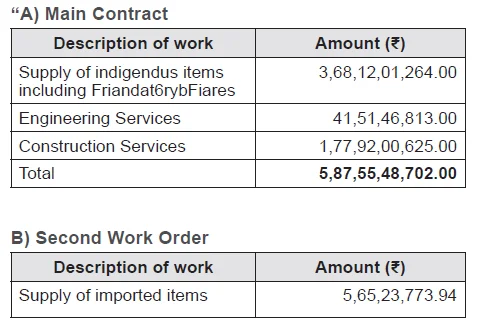
Bridges connect us and help us to
understand each other’s challenges… they also enable us to figure out how we
can help each other and show that we appreciate one another. Building bridges
also helps to prevent isolation. Because isolation can breed prejudice,
misunderstanding, mistrust; and impede effectiveness of working together.

I propose four main bridges
and hope you will help me in building them and BCAS!
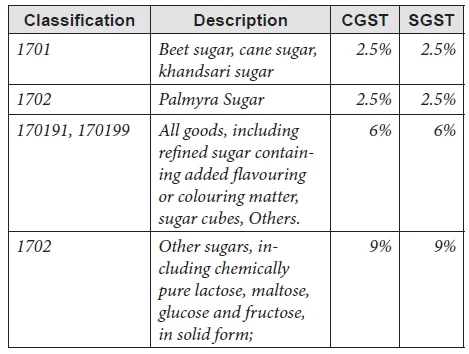
1. TRANSFORMATION

High on my list of priorities is
task of increasing the resources of BCAS and growing the membership list. I
believe the Society needs to be more visible in order to attract more members.
On the resources front too, we have to look at all possibilities of
capitalizing on the reputation and goodwill we already have. There is plenty of
knowledge and expertise within, which I think can be leveraged to enhance the
image of BCAS. With the shrinking of the world to a global village we need to
explore options to benefit from this trend.

Let’s move to a sincere wish I
have!

2. YUVA SHAKTI

The youth! They are our future and
they can be the catalyst of evolution in our Society. I look forward to
encouraging new blood to take up key roles. And to ensure that happens I would
like to implement special incentive schemes to get more youth to join BCAS.
Having done that I would also like to ensure they get more opportunities and
platforms to express their ideas and vision. Recently, I heard about the
concept of “Shadow Committees” and I would like to set up Yuva Shadow
Committees. These groups of young minds will think aloud fresh ideas and approaches
on the same challenges faced by the managing committee…and I hope it will lead
to some positive change. 

3. DIGITIZATION

Digitization is not a fad or a passing trend that
some companies or individuals flaunt. Digitization is essential…it has become the
need of the hour! With digitization we will be better empowered to manage our
resources and conduct our business. I look forward to digitizing as much as I
can of BCAS’ operations and resources. A good start has already been made in
this direction and I would like to add momentum to the entire process. In
addition to being able to disseminate knowledge, we would be able to translate
information into action more effectively.

Finally I
would like to tackle a relatively ignored activity of our Society…

4.
NETWORKING

Networking
is a mantra that is much advocated by many of the management gurus. At BCAS, I
feel we should work harder in this area. Be it the government, corporate or
fraternity level, we need to step up our efforts. I hope we will be able to
take some giant strides in this area by organizing some events to reflect the
“Start Up India and Digital India” initiatives undertaken by the government. We
could even re-look at some of events and tweak the format to include moments of
interaction and networking. Using our digitized resources and media, we could
reach out to a wider audience and serve the members better. BCAS could provide
more platforms in the form of events for networking among accounting firms.
Networking Power Summit is one format which could be organized more frequently
or modified to pave the way for greater networking.

These
are just some of my ideas that I have put together to set the ball rolling.
While I and my colleagues remain open to various suggestions and infact welcome
it, I would like to call upon each one of you to join us in this process of
transformation
of society to the needs of the present times by
mobilizing the power of yuva-shakti & digitization to build
bridges for expansion by creating robust networks.  I am sure I will continue to receive the same
love and affection from you in this very important journey of life.

Thank
You

Society News

fiogf49gjkf0d
Lecture meeting on Legal and Tax aspects of Trusts with special reference to REITs, INVSTs and AIFs on 17th June 2015

Mr. Dilip V. Lakhani, Past President of BCAS, addressed the audience in regard to special categories of Trusts. He also explained various structures and implications under Incometax thereon.

He highlighted the controversy around the status of the trust and the consequences of taxability of its income. In his view the status of the trust is dependent upon the status of its Beneficiaries. He drew attention to the fact that if the trust is revocable, then the income is taxable in the hands of the Settlor. He explained how trust can be an important tool for inheritance planning.

He further explained REIT structures and income tax implications on various parties to REIT. He expressed a view that capital gains tax on the sponsor in respect of transfer of the property through SPV to REIT is not exempt, but is deferred, which is one of the reasons for this structure not being popular in India. He mentioned a simple rule of taxation for income of REIT and its unit-holders:

INVSTs are similar to REIT.
Alternate Investment Fund: Finance Act 2015 has provided pass through status to only Category I [usually providing seed capital to start-up ventures] and Category II [usually providing funds to real estate] Funds, whereas Category III [usually have complicated, hybrid structures] Funds have not been granted such pass through status.

Mr. Dilip Lakhani’s presentation and explanation on private trusts with special reference to REITs, INVSTs and AIFs in a lucid manner was of immense benefit and was well appreciated by the audience.

9th Residential Study Course on Service Tax & VAT

Venue: Leonia Resort, Hyderabad
Dates: 19th June, 2015 to 21st June, 2015

Residential Study Course (RSC) is gradually becoming a very sought-after annual event of the BCAS considering the importance and the relevance of the subject in the current economic scenario. This year, the RSC was held at Hyderabad. More than 150 delegates from all over India participated and exchanged their knowledge and experience. In spite of heavy rains, water logging and delayed flights from Mumbai, all the participants made it to the RSC in time thus displaying their commitment to such an event. The Resort located on the outskirts of Hyderabad was a unique destination spread in sprawling greenery and natural rock formations with an ambience of luxury and warm hospitality.

Day 1 – 19th June, 2015
The RSC started in the afternoon with a group discussion on the paper titled “Case Studies on Taxation of Services” written by Advocate S. Thirumalai. The group leaders were CA Abhishek Doshi, CA Mandar Telang, CA Sudhir V. S. and CA Virendra Parwal. Case Studies on Valuation, Exemption, Point of Taxation and Place of Provision of Service were debated with active participation of all the delegates.

This was followed by the Inauguration Session – lighting of the lamp at the hands of Vice President CA Raman Jokhakar and the Chairman of the Indirect Taxes Committee – CA Govind Goyal. The Committee’s latest publication on “Service Tax – Basic Concepts and Procedures”, authored by CA Mandar Telang, was released at the auspicious hands of Advocate S. Thirumalai.

The inaugural session was immediately followed by the first technical session wherein Advocate S. Thirumalai gave his views on the case studies in his paper and also replied to other related issues raised during the group discussion. The session was chaired by CA Sunil Gabhawalla.

Day 2 – 20th June, 2015

The morning started with a group discussion on the paper “Case Studies on Cenvat Credit” written by Advocate L. Badri Narayanan. The group leaders were CA Leena Talathi, CA Nilesh Suchak, CA Sanjay Burad and CA Srikant Shenoy. The groups had a tough time completing all the issues in the paper as the subject was so vast and complex.


The second technical session was a presentation paper by Advocate J. K. Mittal on “Controversies in Service Tax”. In his inimitable style, he explained the controversies surrounding the Service Tax law, the contradictory judgments and challenges faced by the practitioners. The participants were left asking for more. This session was chaired by CA Sanjay Dhariwal.


In the third technical session, Advocate L. Badri Narayanan replied to the queries raised by the participants in the group discussion on his paper. He explained the complexities of the Cenvat Credit Rules and explained in detail so as to clear all the doubts of participants. This session was chaired by CA Uday Sathaye, Past President of BCAS.


In the evening, on the eve of International Yoga Day, a yoga session was organized under the guidance of CA Rajesh Kothari, Past President of BCAS. The response was overwhelming and on request of the participants, one more session was held on Sunday morning at 6 am.

Day 3 – 21st June, 2015

The morning started with a yoga session, it being the International Yoga Day.

The last paper for Group Discussion was of Advocate K. Vaitheeswaran on “Service Tax & VAT on IT, IT Enabled Services and E-Commerce Transactions”. The Group Leaders were CA Jayesh Gogri, CA Pranav Mehta, CA Samir Kapadia and CA Vikram Mehta. The case studies on the subject generated a lot of debate and fruitful participation.

During the fourth technical session, CA Jayraj Sheth presented a paper on “GST – Recent Developments & Expectations”. It was a wonderful presentation with facts and statistics about India’s progress towards GST. This session was chaired by Advocate Shailesh Sheth, who also shared his views on the subject.

CA Samir Kapadia, a member of the Indirect Tax Committee, made a small presentation on the initiative proposed to be undertaken by BCAS to prepare the professionals and the stakeholders to meet the challenges of new law on Goods & Services Tax (GST).


Thereafter, in the fifth and last technical session, Advocate K. Vaitheeswaran replied to all the queries raised by the participants. The paper writer’s exposure and his in-depth analysis made his talk very useful and interesting to the participants. He referred to various court decisions and explained the grey areas to the satisfaction of all. This session was chaired by CA Parind Mehta.

The RSC concluded with the Chairman of Indirect Taxes Committee CA Govind Goyal thanking all the paper writers, delegates for their co-operation and active participation, chairmen of technical sessions, the group leaders, all committee members, the BCAS staff, management of the Resort and all others who made this RSC a very successful event. He specially thanked the President CA Nitin Shingala and the Vice President CA Raman Jokhakar for their wholehearted support. Vice President, CA Raman Jokhakar thanked the Chairman CA Govind Goyal for his untiring efforts to make this RSC a memorable one.

After lunch, the participants departed to their respective destinations, cherishing the memories of the 9th RSC and with a promise to meet again next year at the 10th RSC.

Workshop for Independent Directors (in association with the National Stock Exchange of India) on 3rd July 2015

The Workshop for Independent Directors was inaugurated by CA Nitin Shingala (President), CA Kanu Choksi (Chairman), alongwith Mr. V. S. Sundaresan (CGM, SEBI) and Dr. V. R. Narasimhan (Chief Regulations, NSE)

Dr. Narasimhan gave the keynote address on the topic, citing some of the examples of mishaps in corporate world leading to stringent corporate governance norms being prescribed by the regulators. He mentioned that compliance requirements prescribed by law have arisen out of past experiences. Thereafter, Mr. Sundaresan gave a presentation on the expectations from the regulator’s perspective.

The Chairman mentioned that BCAS can conduct such workshops regularly, which can be recognised as a familiarisation programme for Independent Directors by the regulators.

Mr. Mahesh Athavale, Company Secretary by profession, appraised the participants about the duties, responsibilities and rights of Independent Directors. He shared some interesting practical experiences and case studies.

Mr. Mukund M. Chitale, Past President of BCAS, discussed the role of Independent Directors in an audit committee, board room dynamics and board evaluation. He shared his experiences as an independent director.

Practical issues faced by an Independent Director were discussed by a panel of Dr. V. R. Narasimhan (Chief Regulations, NSE), CA N. Venkatram, Mr. Madhu Bhagwat (Independent Director), led by CA Nawshir Mirza (also an Independent Director)

41 members took the benefit of the workshop. Participants were given ‘Certificate of Participation’ at the hands of the Panelists.

Monsoon Trek to Kothalighad on 11th July 2015

Human Development & Technologies Initiative Committee of the Society had organised a one day trek on Saturday, 11th July 2015 from Ambivali Village near Karjat to Kothaligad Peth.

The Trek was through thick jungle, close to nature surrounding the valley, and hills all around it. It got better as the trek reached greater heights. Considering that climate that day was favourable and cloudy with partial rain, the trek turned out to be enjoyable. Participants were high on energy and fully enjoyed the nature and were disciplined enough to be serious to the extent required for ‘safety’ and were environment friendly too. The 25 participants under the guidance of 3 experienced volunteers from Explorers & Adventurers Club completed the trek successfully. After the exhausting and enjoyable trek, the lunch at a small hotel at the base of Ambivali Village was lot more enjoyable. The return journey brought all back to the concrete jungle.

Lecture Meeting on Current Issues in International Taxation 15th July 2015

Mr. Pinakin Desai, the learned speaker for the lecture meeting held on 15th July 2015 covered various issues in International Taxation explaining various practical issues that one might face. The learned speaker commenced his talk with India-Mauritius DTAA, stating that the existing DTAA is under the process of negotiations and will undergo changes, resulting into a new revised DTAA which could be finalised in a couple of weeks. Then the speaker threw some light on the Black Money Act, 2015 which can have far serious implications on a Non-Resident becoming Resident and Ordinary Resident in India and explained the same with a few practical examples. Thereafter, the speaker drew attention to issues arising on indirect transfer of capital asset read in conjunction with Circular 04/2015 clarifying that the dividends declared and paid by a foreign company outside India in respect of shares which derive their value substantially from assets situated in India would not be deemed to be income accruing or arising in India by virtue of section 9(1)(i) of the Income-tax Act (ITA). Further, the speaker drew attention to the provisions of deemed international transaction by virtue of section 92B(2) of the ITA. Lastly, the speaker threw light on issues arising to foreign companies post amendment of section 6 of the ITA by the Finance Act 2015, which incorporated the test of POEM (Place of Effective Management) for determining the residential status of a Company. The lecture meeting ended after the speaker explained various issues as summarised above and their impact in practical implementation.

Society News

fiogf49gjkf0d
Lecture Meetings

Filing of Returns for AY 2014-15: Amendments & Precautions on 25th June, 2014. The meeting was held at the Jai Hind College Auditorium. The speaker Mr. Jagdish Punjabi, Chartered Accountant dealt with the various aspects of filing of returns of income and amendments applicable for the same. More than 600 persons including students benefited from the expert deliberations and knowledge shared by the speaker

Founding Day Lecture on ‘Discovering our Sweet Spot in Life’ on 7th July, 2014


L to R : Mr. Rajiv Vij (Speaker), Mr. Narayan R. Pasari, Mr. Raman H. Jokhakar, Mr. Nitin P. Shingala (President), Mr. Naushad A. Panjwani, Mr. Mukesh G. Trivedi, Mr. Sunil B. Gabhawalla

The lecture meeting was held at the Walchand Hirachand Hall, IMC. Mr. Rajiv Vij, Internationally acclaimed Life & Executive Coach based at Singapore addressed the Founding Day lecture. He explained on how despite all the success and economic growth there is still an underlying occurrence of unhappiness in one’s life and how we can deal with it and still discover a sweet spot in life. More than 200 members benefited from his talk.

Three books were released on this occasion:
1. G ita for Professionals – Second edition ( English and Gujarati) by Chetan Dalal was released by Mr. Y.P. Trivedi

2. T axation of Fees for Technical Services – a Referencer by Anil D. Doshi & Tarunkumar G. Singhal ; Released by Mr. Narayan K. Varma

3. FA Qs on Accounting Standards by Abhay R. Mehta, Ashutosh A. Pednekar, Atul H. Shah, Chirag H. Doshi, Jayesh M. Gandhi, Manish P. Sampat & Nalin M. Shah ; Released by Mr. Arvind H. Dalal

Direct Tax Provisions of the Finance (No. 2) Bill, 2014 on 14th July, 2014


L to R : Mr. S. E. Dastur (Speaker), Mr. Chetan M. Shah, Mr. Narayan R. Pasari, Mr. Raman H. Jokhakar, Mr. Nitin P. Shingala (President), Mr. Naushad A. Panjwani, Mr. Mukesh G. Trivedi, Mr. Sunil B. Gabhawalla (not in frame)

Mr. S. E. Dastur, Senior Advocate, addressed the annual lecture meeting on Direct Tax Provisions of the Finance (No. 2) Bill, 2014 at Yogi Sabhagrah. Nearly 2500 members packed the auditorium to hear Mr. Dastur and 2028 viewers joined the live Web Cast. All of them benefited from the masterly analysis by the speaker. The viewers were from over 25 cities across the globe including Singapore, Salem, Melbourne, London, Erode, Abu Dhabi, Lagos, Zurich & New Jersey.

Indirect Tax Provisions of the Finance (No. 2) Bill, 2014 on 16th July, 2014

The lecture meeting was held at the Walchand Hirachad Hall, IMC. Ms. Bhavana Doshi, Chartered Accountant and Mr. Vikram Nankani, Advocate addressed the audience on various aspects of Indirect Tax Provisions of the Finance (No. 2) Bill, 2014. More than 300 Members and Students benefited from the expert analysis and knowledge shared by the speakers.


L to R : Mr. Vikaram Nankani (Speaker), Mr. Sunil B. Gabhawalla, Ms. Bhavna G. Doshi (Speaker), Mr. Nitin P. Shingala (President), Mr. Raman H. Jokhakar

Indirect Tax Provisions of the Finance (No. 2) Bill, 2014 on 17th July, 2014

The lecture meeting was held at the Walchand Hirachad Hall, IMC Ms. Bhavana Doshi, Chartered Accountant and Mr. D. B. Engineer, Solicitor and Advocate addressed the audience on various aspects of Indirect Tax Provisions of the Finance Bill, 2014 at this lecture meeting which was held jointly by the Forum of Free Enterprise & Council for Fair Business Practices. The audience included many young Professionals and Senior Members of the CA Fraternity who gained immensely from the analytical insights given by the learned faculties.

Visit to Orphanage on 2nd June, 2014


Mr. Mayur B. Nayak and Ms. Gracy M. Mendes representing BCAS.

Human Resources Committee had organised this visit to Orphanage at Parel. The Orphanage has a total 22 orphans and is managed by 7 staff members. The visitors distributed snacks to the children. They had a walkthrough of the place and were also amazed by the entertainment items presented by the orphans who specially prepared the songs & dances for the Members visiting the orphanage.

Three-Day Residential Refresher Course (RRC) on Companies Act, 2013 from 27th June, 2014 to 29th June, 2014


L to R : Mr. Harish N. Motiwalla, Mr. Manish P. Sampat, Mr. Naushad A. Panjwani (President), Mr. Anil Singhvi (Keynote speaker), Mr. Kanu S. Chokshi


Group photograph of the participants


Mr. Naushad A. Panjwani

The Accounting & Auditing Committee had organised this RRC at Fariyas Resort, Lonavala, with an aim to equip the participants with an in-depth understanding on some of the important provisions of the Companies Act, 2013 along with Rules notified thereunder. The RRC was structured in an innovative manner of building case studies around critical provisions which were analysed in depth by the participants and deftly dealt with by the speakers.


Mr. Harish N. Motiwalla

The course commenced with the inaugural address by the President of BCAS, Mr. Naushad Panjwani. He was happy with the response received to the Course from all over India and was particularly pleased to have a strong participation from the Industry. Later, the Chairman of the Accounting and Auditing Committee Mr. Harish Motiwalla, gave introductory remarks on the design and structure of the course and the purpose of selection of the topics for group discussion as well as presentation. He also acknowledged the presence of the Chief Guest of the RRC Mr. Anil Singhvi. Then there was the lighting of the lamp by all the dignitaries present to commence the course.


Mr. Anil Singhvi

Mr. Anil Singhvi in his keynote address on “Corporate Governance and Independent Directors” shared his experiences as part of the Board of various companies as well from the research work carried out on the functioning of corporate and directors. He was of the opinion that the Companies Act, 2013 is a good piece of legislation and will improve the functioning of the corporate sector.


Mr. Sudhir Soni

After the inaugural session there was a group discussion on first paper of Mr. Sudhir Soni on “Case Studies on Provisions for Related Party Transactions/Loans/Investments.” The case studies were highlighting the provisions to be complied with as well as the contentious issues which arise in implementing the relevant provisions. During the presentation on his paper Mr. Soni aptly dealt with the case studies and also covered the issues raised during the group discussion in a very immaculate manner. The session was chaired by Mr. Kanu Choksi, Co-Chairman, Accounting & Auditing Committee.


Mr. Ashish Ahuja

The last session was a presentation on the topic “Cross Border M&A, Minority Buy-Outs, Exit Options, Rehabilitation, etc” by solicitor and advocate, Mr. Ashish Ahuja. He took the participants through a comparison of the of the provisions of the earlier act and the newly introduced provisions dealing with the protection of investor rights. Mr. Rajesh Muni, past- President of BCAS Chaired this session.


The second day started with a group discussion on the paper    by    Mr.    Nawshir    Mirza    on    “Case    Studies    on    Directors, independent directors, Corporate governance (incl. schedule V – managerial remuneration).” The case studies highlighted the onerous  duties of KMPS and  independent directors while steering the company as well as the role of Board towards various stakeholders. Later,     Mr.     Mirza,     made     a     presentation on his paper and shared his vast experience as a director as well as chairman of various committees of directors, which was of immense value to the participants. Mr. Kishor Karia Past Presidents of BCas chaired this session.

In the evening, there was a presentation on the topic of “audit and accounting (incl. schedule  ii and  iii)” by Mr. Mukund m. Chitale. It was a session that will be remembered by each participant for a long time, as he dealt with the subject with his expertise in such depth that he dealt with the queries of the participants while he was going through the clauses in the act. The session was addressed by him for nearly three hours and was ably chaired by Mr. Arvind H. Dalal, a past-President of the BCAS.

The last day commenced with group discussion on paper by Mr. K. Sairam on the topic “Case studies on acceptance of deposits and CSR.” Mr. K. Sairam had circulated to the participants background material also along with the case studies.  his case studies covered all the     finer     and     contentious     aspects    which require attention as professionals and were debated in depth during the group discussion. He later addressed the  participants in the general assembly along with a presentation on the topic and also dealt with the queries raised by the participants during the group discussion. The session was chaired by the Vice President Mr. Nitin Singhala.

The concluding session was presided over by  Mr.  Kanu Choksi.  he acknowledged contribution of the faculty as well as active participants for the success of the RRC.  Some of the participants gave their views on the course and conveyed their satisfaction of the format and  structure of the course.

Jal Erach dastur Students Annual day on 28th June, 2014 – A Report

The Jal Erach Dastur students annual day is an event that is organised by the Bombay Chartered accountants society (BCas) every year.  This year the event celebrated its 7th anniversary at the navinbhai thakkar auditorium at Vile Parle (east).

This is organised by the student members of BCAS for the CA students. This platform enables CA students to come together and interact with each other.  The event commenced with a short prayer sung by the student committee members followed by the anchors introducing the honorable Chief guest, Dr. Bhaskar das, CEO of the Zee group. The chief guest inaugurated the event with the lamp lighting ceremony and spoke to the CA students at length on the importance of communication in today’s corporate world and answered the queries that the students put forth. He emphasised on the difference between volition and motivation. According to him, volition comes from within, whereas, motivation comes from without and therefore the former is more important in life than the latter. The President of the society, Mr. naushad Panjwani, welcomed students and advised them for the balanced growth in life. The Chairman of the Human Resources Committee, Mr. Mayur Nayak, delivered his address on “dare to dream.”  In his short speech, he emphasised on the need to dream big. Miss Priya  Nangalia introduced  Mr.  Narayan Varma, the Past-President of the BCAS and an ardent supporter of the students’ activities, and showed his message through a video clip as he could not remain present due to his ill health.

Mr. Raj Khona and Mr. Smith Madlani enlightened students about various students’ activities such as study Circle, monsoon treks, sports day, etc. thereafter,  a small skit was performed by students on the theme of “jan andolan”.  Post this,   the “Chandanben manganlal Bhat  elocution Competition” was  held    where    finalists    of the    elimination    round    battled    it    to    win the  coveted trophies. in the tea break, the students feasted   on the delicious  mumbai vada pav along with a cup  of tea/coffee.

The    post    break     session    witnessed     the    most    awaited    quiz round. The four selected teams from the eliminations competed    with    each    other     in    a    very    heated     time-bound    quiz    competition.    The    finalists    were    on     their     toes    while    answering    mind    boggling questions. the audiences also actively participated in     the    quiz.    The     football    scoring    approach    adopted    by     the quizmaster,    Mr.    Aashish    Fafadia    was    an    instant    hit    amongst    the    audience.    The    quiz    was    ably     scored    by    Miss    Dhwani    Shah    and    Mr.    Rajesh    Pabari.    On    completion    of     the    quiz,    a    short      audience round was held by Mr. Harshil mehta and other   students’ Committee members. The audience was in splits with most of them participating very enthusiastically and lifting up the spirits.
 
The much awaited talent round was next on the list. Nineteen     finalists     competed     with     each     other     in     various     fields    like singing, dancing and playing instruments. With the end of this round, the judges of the talent round performed and mesmerised the audience with their singing and   instrumental music.  The winners of the various contests held,  i.e.,    Elocution,    Quiz,    Essay    Writing    Competition    and    the    Talent    Show    were    distributed    prizes    and    certificates    and    were felicitated for their performances.

The entire show was very ably anchored by Mr. Pawan shukla and miss Aneri Merchant. Mr. Raj Khona was felicitated for securing highest number of registrations. Mr. Chintan shah, Mr. Raj Khona and Mr. Smith Madlani’s efforts were recognised for coordinating students’ study circles during the last year. Mr. Samarth Patil proposed the vote of thanks to Mr. Sohrab Erach Dastur for sponsoring the annual day in fond memory of his brother, the late Jal Erach Dastur, the family of the Chandanben manganlal Bhat for sponsoring the elocution Competition and all those who had contributed to making the programme a success. In all, 366 students registered for the annual day. The motto of the event – to gather CA students on a single platform to showcase their talent and their extra-curricular
skills was very well achieved.

65th Annual general Meeting, 7th July 2014,   Walchand  Hirachand Hall,   4Th FlOOR,    Indian    Merchants’    Chamber, Charchgate, Mumbai 400 020

The 65th annual general meeting of the Bombay Chartered accountants’ society was held on monday, 7th july 2014, at  Walchand  hirachand  hall,  4th  floor,  indian  merchants’ Chamber, Churchgate, mumbai.

Mr. Naushad A. Panjwani, President of the society, took the Chair. All items as per the agenda given in the notice were undertaken including adoption of accounts and appointment of the auditors amongst other things.

Mr. Mukesh G. Trivedi, hon. joint secretary, announced the results of the election of the President, the Vice President, two secretaries, the treasurer and eight members of the managing Committee for the year 2014-2015. Mr. Mukesh G. Trivedi announced the names of the following members as elected unopposed for the year 2014-2015. also, the names of co- opted members and ex-officio members were announced. the “Jal Erach Dastur awards” for best feature and best article appearing in BCas journal during 2013-14 was announced. the winners were: Bhavesh dhupelia, shabbir readymadewalla, Vijay mathur for the feature on auditing standards. Ankit V. shah and Tarunkumar singhal for the article on Powers of the tribunal to stay demand beyond 365 days.

The special edition of the journal july, 2014 on “future of india youth’s Perspective” was released at the hands of mr. arvind h. dalal, past-President of the society. the editor, mr.anil j. sathe, announced that this edition has six special articles namely “imagining india from the eyes of young Pro- fessionals”, “Gazing Through the Crystal Ball”, “Reinventing india – a youth Perspective”, “arbitration Law in india – the Way forward”, “my india” … a decade from now …” and “to- wards a healthy india.” the youth of the society who had contributed articles to this edition were felicitated by being given the special edition.

Thereafter, the outgoing and incoming Presidents, mr. nau- shad A. Panjwani & Mr. Nitin P. Shingala respectively, addressed the members.

Outgoing  president Naushad Panjwani’s speech

Incoming President, nitin shingala, all my colleagues on the dais, respected past presidents, seniors and friends.

As i stand before you for one last time as the President of BCAS, i have an option on what i speak for the next ten minutes or so. I can either spend time thanking a lot of people who i should and want to and will. Or i can give advice to the incoming team, which i shouldn’t and i won’t. and even if i did where will they listen to me. did i listen to deepak’s advice? or i could list out all the activities that were carried out by the team in the year gone by, which i don’t want to do. It’s a team achievement and i cannot stake credit or seek accolades.

What i would like  to do is to compliment  the entire  team  of managing committee members,  chairmen,  co-chairmen, convenors, coordinators, core group members, the youth group, Cassem and the other staff of BCAS and shrutika. My special gratitude to the spouses of the core group members for getting involved in many BCAS programs. I request you to help me thank all of them by applauding the splendid work done by the team. having thanked others’ spouses, if i did not thank my own spouse, mere achche din khatam ho jayenge. so thank you afsheen for your support and understanding.

I couldn’t have asked for better office bearers. And as the events of the year transpired, i saw how each one of them stood up to take charge of the challenges on hand. Showing great grit, determination and character.

Nitin, I thank you for being my confidant. Your ever smiling demeanour eased so many pressure situations. you are a Trupt aatma and i pray that you remain so forever. under your leadership BCAS will scale new peaks. They say that you must learn from the foolishness of others and nitin, for that, i am ever at your service.

Raman, your suggestions in crunch situations were like a ray of light or as they say in sanskrit – Rashmi.

Chetan, was ever so cool and he faced everything with so much Sheetalta.

Mukeshbhai, thank you for bringing so much passion and Bhavna in everything you did.

Congratulations to narayan and sunil for joining the A-Team as the new secretaries.

This year, we lost two past-Presidents in Mr. B V dalal and Mr. Navin Kishnadwala. Both have contributed immensely to the society and we will all miss them.

My transition from a practicing CA to a business leader happened when i was the secretary of the society in 2006. I soon realised that the work pressures and timings are so different that I forget being an office bearer, even contributing otherwise is so challenging. That was the reason that i kept shirking this responsibility for some time. as most know, i accepted the challenge to lead BCAS at the behest of narayan Varma and a few others. But once i got into the mindset, the support that i received from all gave me new wings.

Jab aapka hukm mila toh maine tarq mohabbat kar di, Dil magar uss pe woh dhadka ke phir qayamat kar di.

I have thoroughly enjoyed my year as president of BCAS. I have gained a lot in the process. The president’s page received a lot of accolades and i am mighty pleased with that. But writing is something i have always been comfortable with. it is public speaking that i was absolutely paranoid of. So much so that i have goofed up even while reading from a prepared speech. i had to just look at Mr. Kishor Karia in the audience to know when i goofed up and know that i had to correct myself. But being president meant that mumbling or fumbling, i had to keep speaking at all events and slowly i found my fear disappearing.

Being on the dais along with various speakers i had the opportunity to observe their style and preparation. The one speaker who impressed me the most was Mr. N. P. sarda. in one of the talks on accounting standards, for which he spoke non-stop for about two hours and kept the audience spell bound, I was amazed to see that he had no books, no speech, no presentation or even any notes. all he had was a chit of paper with two words written on it. Obviously i was curious. after the talk i took a peek and saw what those words were. Those two words were Naushad Panjwani. That was the only thing he was probably not sure if he would remember correctly.

The theme for this year’s annual report is “time.” Fittingly, so. in the journey of time, the society has grown from strength to strength. the membership has consistently grown. the pro- grams have grown manifold. Every year so many new initia- tives are incubated. the society has kept inventing and reinventing itself constantly. Each President has contributed to this in his own way. To keep up with the needs of the time we have enabled a non-past president to be appointed as a co- chairman of a committee. And I congratulate Nandita Parekh for being the first such co-chairperson.

The youth group was formed this year and, as we have seen, has rejuvenated the core group. i am happy that most committees have now included a lot of youth members. To the youth i would like to say, be bold, be respectful and be effective. have your say. Don’t lose your exuberance. Be sincere but don’t be serious. have fun.

Zindagi Zinda dili ka naam hai Murda dil kya khaak jiya karte hai

Having covered all the important aspects i could end my speech here. But just a few minutes back i proclaimed that i am no longer afraid of public speaking, hence i would like to speak for a few more minutes.

Mandir ki taraf dur se naman kar lun, Ya buth ka aakhri nazaara kar lun, Kuchh der ki mehmaan hai jaati duniya,
Tauba kar lun ya Ek aur gunaah kar lun?

I would like to touch upon two areas which i think are necessary for the society to remain relevant in these times of google and youtube. Knowledge is available there too.

I have viewed our society as a matrix organisation. While on one hand we have our domain expertise like direct tax, indirect tax, international tax, accounts etc., on the other hand, we have the various categories of our membership like the practicing CA, members from industry, the CfOS, members Presidents, seniors and fellow members. it is a great honour to be bestowed with the responsibility of leading the Bombay Chartered accountants’ society, an institution that has a glorious past and strong foundation built through selfless contribution, dedication and perseverance of from Psus, the youth, the senior CA so on and so forth. We have tried to understand the needs of each constituent and attempted to design programs for each. this is the new service level expectation. We must continue to do this and in the years to come we will see the impact of this.

To be relevant we need to be heard in the corridors of power. this year we were fortunate that the union revenue secretary Mr. Rajiv Takru sought us out through Shariq Contractor and we had a great closed door meeting with him. But this is not enough. the society is a non-political voluntary body and makes representations on behalf of the general tax payers without any vested interest of any group or industry. We must reinforce our position as such. We must be visible. We must be effective. We must stop being shy.

Before assuming office, I had sought Rajesh Kapadia’s ad- vice and the only thing he said to me was “BCAS is a very prestigious organisation and the role of the President is a huge responsibility. As the flag bearer conduct yourself with dignity.” As I reflect on the year gone by, I hope I have lived up to his advice.

Tujh ko ruswa na kiya, khud bhi pashemaan na hue, Ummeed hai Ishq ki rasm ko iss tarah nibhaya humne.

As I step down today, I am satisfied and relieved. But the realisation has already sunk in that starting tomorrow I will join the august group of past presidents. The past presidents of BCAS have continued to contribute so much to the society and I am excited by the prospect of doing my bit. And for this I will have more than a year to do so.

Sitaaron se aage jahaan aur bhi hain, Abhi ishq ke imtehaan aur bhi hain,
Gaye din ki tanha tha main anjuman mein, Yahaan ab mere razdaan aur bhi hain.

Incoming President Nitin Shingala’s speech

President  naushad,  my  dear  colleagues  raman,  muke- sh, narayan, sunil, Chetan in absentia, respected Past its founders and successive leaders. i accept this responsibil-
ity with sincerity and promise to work, andto live up to the highest expectations! my team and i are committed to work ceaselessly and tirelessly to the serve interests of the BCas, pursue our vision and endeavour that the society continues to scale new peaks.

It has been a zestful year under Naushad’s leadership with the Society’s flag continuing to fly high. With style, vigour and his trademark innovative approach, naushad put into action several path breaking initiatives such as connecting with the youth brigade, the Cfos and senior chartered accountants, besides maintaining high standards for various regular activi- ties. While facing any crisis, naushad led from the front and pursued win-win solutions. my heartiest compliments to nau- shad for his memorable leadership and an excellent year!

Peter drucker once  said,  ‘a  voluntary  organisation  ex-  ists to bring about a change in individuals and in the soci- ety.’ in today’s fast paced life, a few questions  do arise:  Why volunteer? how does it help me? Well, i found the answer to these pertinent questions in the following quote by swami Vivekananda:

“Ask nothing; want nothing in return. Give what you have to give; it will come back to you – but do not think of that now, it will come back multiplied a thousand fold.”

Friends, I am one of the countless beneficiaries to whom  the BCAS has given back what we gave, multiplied a thou- sand fold.

The  Business  Consultancy  studies  (BCs)  course  during 1998-99 brought me closer to the BCAS. Soon, I was invited to join the Core group in 2000. This BCS programme conceptualised by shri Narayanbhai, Nandita and other seniors, changed the course of many lives including mine.

I have learnt and gained a lot during the last 15 years of being in close association with the BCAS. Seniors have welcomed me with open arms and made me feel a part of this magnificent family. I have gained so many endearing friends. In hindsight, i wish i could have become active in the BCas much earlier. As a member of the Core  group,  one  gets  an  opportunity to observe the seniors closely. I found them very gracious and easily approachable, ever ready to share their knowledge and help the juniors in overcoming their difficulties.

Pradyumnabhai and arvindbhai teach us that the quest for knowledge is a lifelong commitment. At the Company Law rrC held recently, i found arvindbhai and Kishorbhai amongst the participants, ever eager to learn new developments. this made me nervous. I felt I was not learning enough! Narayanbhai teaches us how to be innovative, think big and differently for the larger good and remain forever young. Pradeepbhai shah has been a great emotional support when trupti and i needed the most. he has been helping all of us to keep our hearts and emotions in the right places. my daughter, Parnasi too, is an ardent fan and admirer of Pradeepbhai! Learning from stalwarts such as Pinakinbhai sharpens our understand- ing of core subjects. each stalwart inspires and teaches us, in his own unique manner, the qualities and the abilities that an accomplished professional must cultivate and imbibe.

Consider this modern definition of a Professional in today’s context by subroto Bagchi, a noted management thinker and an entrepreneur. he says, “…to be a Professional takes more than just aptitude. It takes a commitment to doing what’s right, not only for your business, but for the society as a whole.”

My belief in the value system became stronger by observing these stalwarts adhering to the highest standards of ethics and values. the BCAS provides the right environment and impetus through selfless mentoring to chartered accountants to be outstanding professionals.

This mentoring at the BCas is important to members from all backgrounds. Members from small and medium practices get to learn from their seniors and can find support to grow. Members from large global firms get a collaborative and neutral platform to enrich themselves with academic pursuits. members from the industry get the opportunities to spruce up their knowledge and network. the value proposition that the BCAS offers is great. We need to ensure that this message is driven home, louder and clearer, to help spread the benefits widely. I look forward to the membership and Public relations committee led by naushad to pursue this with greater fervour.

While coping with complexities in the ever changing world and the resultant uncertainty, it is helpful to understand the elements that remain constant. nicole Baker, an american researcher  in  the  subject  of  futurology,  stresses  on  three such constants that capture the essence of our social fabric regardless of the time period:

•    the drive to explore;
•    the desire for interpersonal relationships; and
•    the need to make sense of the world around us.

I find the activities of the BCAS encompass each of the above elements and the annual plan for 2014-15, circulated to you, also underscores these elements. The plan focuses on ex- ploring new frontiers of knowledge, developing outstanding professionals, mentoring and fostering relationships, and con- tributing to the nation building. I am happy to outline specific thrust areas for the ensuing year.

•    Laws, Regulations and governance
India is in the process of modernising key corporate and tax laws. We must commend and support the government in this overdue exercise. However, the journey so far has been far from satisfactory with the legislature and the bureaucracy falling short. The experience with the Companies act 2013 and its implementation so far has been very agonising. even the drafts of the direct tax code have been heavily criticised.

While we have very  high  expectations  of  “acche  din”  from our Prime minister, narendra modiji, it must be re- alised that we need to grow beyond complaining and contribute proactively. In the presidential address last month, the new government has committed to participative governance and promised to engage directly with people in policy making and administration.

our Vision statement states that the BCas shall be the catalyst for bringing out better and more effective government policies and laws and clean and efficient administration and governance. It is thus important for us to step up the efforts. My team and I look forward to working with the Chairmen of various committees to ensure that we continue to make effective representations so and that our voice is heard.

a separate committee, ‘Corporate and securities Laws’ has been set up to focus on this area of growing importance.

•    Practice Management
The  accounting  industry  presents  a  fragmented  scenario where small and medium firms constitute a large number of practitioners. Low entry barriers, low switching costs for clients and high exit barriers are the main reasons for the fragmented nature of our profession. this can be countered by helping small and medium sized firms to network and grow and adapt to the best practices. the infotech and 4i committee has been conducting annual power summits for this purpose. My team and i look forward to the committee to build further and take up new initiatives in this area, including contributing to a regular column on this subject in the BCA journal.

•    CFOs and Corporate Members
The role of Chartered accountants in the industry has been expanding into leadership. It is therefore important to build further on our initiative to reach out to and connect with the CFOs in general and various specific industry groups in particular. My team and I look forward to working with various technical committees and the membership and Public relations Committee for specific programmes for this segment.

•    Youth Group
Today’s  youth  are  tomorrow’s  leaders!  I  am  sure  that  the membership and Public relations Committee led by naushad will give further momentum to this very important initiative in the ensuing year. I call upon each one of the youth group members to benefit from this gratuitous mentoring and look forward to them as our future leaders.

•    Students
The  students  are,  after  all,  our  future. The  HR  committee is doing excellent work in this area through innovative programmes. The professors in accountancy are a vital link to the students. many of us have been lecturers in the past. the BCas needs to connect with this community in a structured manner. Another brilliant suggestion has come from nandita that the BCAS should encourage the principals to sponsor their article students for short-term internships at various ngos and at the society itself. This will help the students to widen and deepen their learning and provide a holistic experience. My team and I look forward to working with the hr committee led by mayur and nandita on converting these excellent ideas into actions.

•    Technology
All aspects of our lives, profession included, are being impacted by the ever-changing technology. We must understand and leverage the relevant technology in conjunction with our core competencies, to deliver superior services. The infotech and 4i committee has been doing a lot of work in this area. I request Chairman ameet to ensure that the committee continues to address the growing requirements of the members.

The BCAS itself has been generally proactive in embracing the technology changes. recently, our revered BCA jour- nal embraced an e-avatar. Further, the team is working to build a revamped portal to improve knowledge sharing and connecting with the members. In addition, we will continue to explore various digital mediums such as WebtV to over- come distances in dissemination of knowledge and to extend the reach of our programmes.

•    Staff and office infrastructure
Our annual report carries an important statistic about hours of education the BCas delivers. the annual hours of educa- tion have grown from approx. 25,000 in the year 1993-94 to 38,000 in 2003-04 and in 2013-14, it was little over 132,000, an increase of over 500% in last 20 years. Our staff has been putting in very hard work and we must acknowledge it. At the same time the increasing workload and expectations are re- sulting in gaps in delivery. This requires us to strengthen the team and help them build their capacity through appropriate training. The improvement in office infrastructure, including systems and processes, is a continuous mission and we are committed to pursue excellence in this area.

It’s football time and my friend, Kuntal reminded me that i must refer to this flavour of the season. Courtesy of my son mohak, i am now a part of the growing football fan club in india. Even then, i could not take the accountant out of me. So I looked at how the role of a Captain is defined. The Football association, english football’s governing body, states that as a captain, you have no special status or privileges under the Laws of the game, but you do have a degree of responsibility for the behaviour of your team. I feel the same today, with one advantage. I have many more coaches to guide and support me.

Dhishat, my other good friend, has a different perspective. He says the role of the President is more akin to that of an orchestra Conductor whose primary duties are to unify performers, set the tempo, execute clear preparations and beats, and to listen critically and shape the sound of the ensemble.

Either way, the key leadership lessons from these two examples are:

•    One must surround himself with talent; and
•    One must play the game and play the notes through sheer hard work, discipline and commitment

I must say i have been fortunate to have loads of talent in our Core group. My team and i promise to play with hard work, discipline and commitment to continue building upon our rich heritage and leave a memorable legacy.

Thank you.

Society News

fiogf49gjkf0d
Study Circle on “International Economics” held on 30th May, 2016

1. BCAS – International Economic Study Circle had taken up the following subject for discussion: “How the Prime Minister’s dreams can assure 12% GDP growth for the next 20 years”. Mr. Rashmin Sanghvi, Member, made a presentation on the subject on 30th May, 2016. The speaker explained to the meeting that the PM had not made any claim about GDP growth. If however the dreams he had about the country were fulfilled, then in the speakers opinion India would achieve a GDP growth of 12%.

2. The presentation was circulated in advance to the members. In brief, he explained as under:

3. Prime Minister has more than 16 different dreams. These dreams are listed below:

Dream Projects: (1) House for every family by year 2022; (2) Toilets for every house; (3) Road Network; (4) River linking Projects; (5) Sea-coast Transport; (6) Employment for everyone; (7) Bringing Indian residents’ foreign wealth into India; (8) Smart Cities; (9) Infrastructure; (10) Digital India; (11) Mobile Banking; (12) Aadhaar – Related Banking; (13) Direct subsidies to Beneficiary; (14) Financial Inclusion; (15) Electricity for all; (16) Start-up India.

Mr. Sanghvi showed detailed calculations of how the execution of this dream can boost Indian GDP tremendously. At this stage, he clarified: “I am not a politician. I am neither a supporter/fan nor a critic of any politician. This analysis is a pure analysis by an accountant.”

4. The core themes are as under:

4.1 GDP Growth means increase in GDP :

India has half the population that does not get proper food, clothing, housing, education and medical services. Providing these to the people of India means – someone has to spend money. One person’s expenditure is another person’s revenue. As a nation, it is GDP.

4.2 Every expenditure by Government is Revenue for someone. The Revenue will attract, Excise & Sales Tax. Net profit in the revenue will attract income-tax. When money is created, there are multiplier effects.

4.3 India is blessed by nature. We have enough resources to provide for the whole population and more. We have resources. We have needs. Now what prevents us from matching the two? Need is converted into demand when the needy person has income to buy.

4.4 If we use all domestic resources and provide necessities for the whole country, for the next twenty years, we can have a continuous GDP growth @ 12% or more. In this presentation, only attempt is to show that India can continuously grow for next twenty years. Attempt is not to praise or criticize Government plans but to see if a practical way emerges for India’s growth.

4.5 Housing – Paradox.

Today, crores of people are without houses. And simultaneously, housing sector is in recession. Lakhs of flats are lying vacant, unsold, unleased. This is classic case of unbalanced market. Problem is, the builders want to build luxury and super luxury houses. They are not interested in low cost housing for the poor. And the cartel of Builders-Politicians and Bureaucrats has artificially jacked up the prices beyond the reach of the buyer.

5. The Study Circle considered following statistics:

5.1 As per census report of the year 2011, India’s population in the year 2011 was 121 crores. This population is growing annually at 1.82%.

The present homeless figure of 65 crore will grow @ 1.85% in the year 2022 to 80 crores., requiring 16 crore houses, which will be 2.66 crore houses per year, which will translate into a construction cost of Rs.9 trillion per year considering a house of 270 sq feet per household. Comparing the additional house construction of Rs. 9 trillion –with the present GDP of Rs. 134 trillion – there will be an additional growth in the GDP of 6.7%.

5.2 Construction Material:

Construction of houses requires additional production of cement & steel. At present, due to recession, many steel & cement plants are running far below their capacity. They are incurring losses. A substantial amount of increased production can come from better utilization of existing capacities. However, additional construction of require additional installation of capacities for cement & steel.

These two commodities are taken as an illustration. For a house construction, many other things are also required.

5.3 Transport:

This additional material will also require massive transport through railways & roadways. It will require fuller utilization of wagon manufacturing & truck manufacturing. We will also need to install additional capacities for manufacture of wagons & trucks, for laying railway lines and so on.

With detailed calculations, Mr. Sanghvi explained the multiplier effect of a single dream translating into massive economic expansion. When 16 dreams are attempted together, imagine the massive expansion possible.

This figure of Rs. 9 trillion additional GDP comes from only part of the first dream. That is enough to cause 6% GDP growth. When 16 dreams are taken together, there can be 12% GDP growth.

In fact, Central Government total budget including budgetary deficits is Rs. 16 trillion. Hence nobody can expect Government to spend Rs. 9 trillion on single dream. Forget total spending of 16 dreams.

The factor beyond accountancy & economics is that: when someone has dream to serve the society at large, and then does more than his best, help comes from unknown, unexpected sources and work gets done. Or, one can say that God Helps. And the dreamer goes beyond his dreams.

So far, no one in India had the courage to dream. This PM has several dreams. This itself is very important.

7. Revenue:

Increased GDP means increased incomes in the hands of the people and increased income-tax revenue for the Government. Increased production of steel, cement, etc. and sale of houses mean -increased excise and sales tax revenue – for the Government of India. By one estimate, out of the total GDP, Government gets 15% as tax revenue. To this extent, first year’s increased expenditure finances second year’s revenue.

8. Capital:

India is considered a capital deficient country. We need substantial import of capital. Present policy of Government of India & Reserve Bank of India encouraging depreciation of Indian rupee is causing substantial losses to the foreign investor. Both – GOI & RBI together must adopt a policy of stabilizing the rupee & causing annually 1% to 2% of appreciation of Indian rupee. Such a policy can cause massive inflow of capital into India. With such dreams the Indian economy can create a situation of sustained high growth in the economy, stabilization & appreciation of Indian rupee; and overall gross domestic happiness.

The study circle meeting concluded on a note of optimism.

Workshop on “Practice Management & Technology” held on 18th June 2016

CA Raman Jokhakar, President BCAS welcomed the participants. CA Nitin Shingala gave opening remarks for the workshop. CA Ameet Patel set the tone by highlighting relevance of the topic, need and concerns to be addressed on practice management in the changing era of time – realignment of human capital, a paradigm shift in the profession from auditing and tax practice to specialized service providers and niche services. He emphasized on the need to overcome the restraints, hindrances and obstacles and using technology to the advantage of the profession.

Session-1: Running a Niche PSF

Mr. Nishith Desai provided valuable insights on settingup and managing a professional firm. His concept of operating a ‘Nano Firm – Small Size, Big Impact’ was an exceptional element of his presentation. His session enabled participants to have one-on-one interaction with Mr. Desai and learn from the vast pool of experience he has to offer.

Session-2: Running a Niche PSF

Ms. Nita Menezes through the journey of their organization, explained how to deliver services to clients by emphasizing on risk reduction of clients and not only higher returns. She also explained the approach adopted by the organization – Plan, Process and Develop Product, deliver services for successful functioning and client satisfaction. She explained practical insights for SME firms to start, build and keep the firm aligned for growth.

Session-3 & 4: Aligning Human Capital

CA Vaibhav Manek explained the importance of aligning a firm’s human capital and the benefits derived thereof. He touched upon topics like partner revenues, employee attritions, utilizing individual’s strength to firm’s benefit, employee evaluation, compensation and benefits. .

This helped the participants to gain insights and better understanding on need to realign human capital, commanding higher fees and developing higher per partner revenues, niche practice development for concentrated efforts of specializing in service areas, consolidation of firms and its operations to become full service firms with partners focusing on specific service areas and sub-service areas.

Session-5: Tools for Practice Management

Mr. Debajit Roy explained the concept of iFirm, a tool for practice management and how it can be used to enhance firm’s practice in terms of technology, time and turnover.

Session-6: Technology for CA Firms
CA Rajeev Sharma touched upon IT enabled business trends for decades ahead and opportunities that can get generated due to technological developments; need to have cloud based/ semi cloud based outsourcing service. He took up few survey analysis reports and projections on advancements in technology, profession and services.

He also emphasized on tools for practice management in SME sector, Client Relationship Management Software for professional firms.

Session-7: Panel Discussion

CA Nandita Parekh, CA Ameet Patel & CA Nitin Shingala took up the panel discussion round for the participants where various topics and issues faced by practicing professional firms were addressed – How to grow and partner in a firm, challenges and opportunities of collaborating, taking new partners and expanding, necessity for defining strategy for professional firms, passing on leadership and retirement, to have compliance driven practices, use of technological advancements for better servicing of client requirements.

The overwhelming response from diverse spectrum of participants – practice, local and out station participants, BCAS members and Non-members showcased the interest in the subject cutting across wide spectrum of stakeholders. The workshop was attended by 95 participants.

CA Kinjal Shah proposed vote of thanks to all the speakers and participants for making this workshop a grand success.

Lecture Meeting on “Insolvency & Bankruptcy Code, 2016-Boost to ease of doing Business” held on 22nd June, 2016

A lecture meeting on “Insolvency & Bankruptcy Code, 2016-Boost to ease of doing Business” was held on 22nd June, 2016 at BCAS office which was addressed by Mr R K Bansal, Executive Director, IDBI Bank Limited. Mr Bansal explained about the meaning, importance and relevance of Bankruptcy Law in the present scenario.

He also deliberated upon the present procedure of Bankruptcy Law and told that before a company goes into liquidation, the debtors and creditors follow a complex procedure which involves the following:

a) JLF/CDR
b) SDR
c) SARFAESI
d) DRT
e) BIFR
f) Winding Up

In the present scenario, creditors extend the funding, restructure the debt but the entire process to achieve turnaround is solely dependent on the capability of the present promoters except in case of SDR where lenders search for a new promoter for the company.

He discussed about the measures to take the commitment from defaulting promoters i.e. marking the accounts as Special Mention Accounts (SMA and SMA2) where bankers form a joint lender forum with revival plan for Promoters who are unable to repay the debts, through restructuring of NPAs

He also enlightened about the proposed procedure to file a bankruptcy application with NCLT ( National Company Law Tribunal ) or DRT ( in case of Firms and Individuals). 

He further mentioned that one of the fundamental features of the Bankruptcy Code is that it allows creditors to assess the viability of a debtor as a business decision, and agree upon a plan for its revival or a speedy liquidation. The Code creates a new institutional framework, consisting of a regulator, insolvency professionals, information utilities and adjudicatory mechanisms that will facilitate a formal and time bound insolvency resolution process (1st stage of Bankruptcy) and liquidation (2nd stage of Bankruptcy). When insolvency process fails, the liquidation procedure comes into force where the assets of the debtor (including the proceeds of liquidation) vest in the liquidation estate. A total of 50 participants attended the meeting

The meeting concluded with a formal vote of thanks by Mr K K Jhunjhunwala

Overall the lecture was very informative and well appreciated by the Audience.

10th Residential Study Course on Service Tax & VAT held on 24th June, 2016 to 26th June, 2016 at Lavasa

The Indirect Taxation Committee (IDTC) of BCAS successfully conducted the 10th Residential Study Course on Service Tax & VAT , at Hotel Mercure and International Convention Centre at Lavasa, from 24th June 2016 to 26th June 2016.

This series of Residential Study Courses (RSC), which is fully devoted to the studies of indirect taxes, is becoming more and more popular among the members of BCAS. . The venue, Lavasa, located about 65 kms. from Pune, at a height of about 2100 ft. amidst the Shayadri Mountains, and the monsoon rains gave the perfect blend of nature and atmosphere for focused studies and fellowship.

A new feature, added this year, i.e. the concept of ‘group mentors’ received kudos from all the participants. The group discussions reached a high level of maturity and the knowledge sharing could become much more meaningful. The five ‘group mentors’ namely CA Ashit Shah, CA Bharat Shemlani, CA Naresh Sheth, CA Rajiv Luthia and CA Udayan Choksi provided valuable guidance to all the groups throughout the program.

Day 1 – 24th June, 2016

The RSC started in the afternoon with group discussion on the paper titled “Case Studies on Taxation of Services” written by CA A. R. Krishnan. The group leaders were CA Ankit Joshi, CA Anil Kumar Beewada, CA Mandar Telang, CA Manindar Kakarla and CA Nilesh Suchak. Case Studies on taxability of different services and various “live” situations faced by tax advisers on daily basis were articulated. Valuation, Exemption, Point of Taxation and Place of Provision of Service were debated with active participation of all the delegates.

This was followed by the Inauguration Session – lighting of the lamp at the hands of CA Dilip Sheth, a very senior member of the BCAS, President CA Raman Jokhakar and the Chairman of the Indirect Taxes Committee – CA Govind Goyal. The lighting of the lamp was followed by a brief key note address by CA Dilip Sheth.

Inaugural session was immediately followed by the first technical session wherein CA A. R. Krishnan (the mentor of IDTC) gave his views on the case studies in his paper and also replied to other related issues raised during the group discussion. His masterly analysis of various provisions of law and his guidance to participants on “thought process and the reasoning that should go while arriving at a conclusion’” will always be remembered by all those who participated in this RSC. The session was chaired by the president CA Raman Jokhakar.

Day 2 – 25th June, 2016

The morning started with the group discussion on the paper “Case Studies on CENVAT Credit” written by CA S. S. Gupta. The group leaders were CA Ganesh Prabhu Balakumar, CA Keval Shah, CA Shreyas Sangoi, CA Shruti Kakaria and CA Vaibhav Jajoo. The issues were debated since most of the issues had a variety of angles involved and had day-today relevance.

The second technical session was a presentation paper by CA Divyesh Lapsiwala on “Indirect Tax Benefits in Foreign Trade Policy”. In his inimitable style, he briefly explained the five most common schemes of the Government’s Foreign Trade Policy which can benefit the exporters i.e. (a) Export Promotion Capital Goods Scheme (b) Services Exports from India Scheme (c) Status Holders (d) Software Technology Park Scheme and (e) Special Economic Zone Scheme. This session was chaired by CA Hasmukh Kamdar.

In the third technical session CA S. S. Gupta provided solutions to the issues raised in his paper on case studies on CENVAT Credit. The issues were explained in details and also the new issues that have surfaced due to recent amendments through Finance Act 2016. This session was chaired by CA Uday Sathaye, Past President of BCAS.

The afternoon was free for the participants to explore the hill city of Lavasa, take a walk on the river side promenade and enjoy the wonderful atmosphere. In the evening a musical evening was organized “for the members by the members”. The members here got an opportunity to show case their hidden talents.

Day 3 – 26th June, 2016

The last paper for Group Discussion was written by by CA Parind Mehta on “Case Studies on Sale v/s Service – Composite Transactions (Taxability under VAT and Service Tax)”. The Group Leaders were CA Chirag Mehta, CA Samir Kapadia, CA Sanjay Dhariwal, CA Vikram Mehta and CA Yash Dhadda. The case studies highlighted certain very relevant issues which a transaction could have and were probably not even envisaged by many participants.

During the fourth technical session, CA Sagar Shah presented a paper on “Role of CAs in GST – Realignment Requirements”. A very crisp and brief analysis of how as a professional we need to gear up for the challenges as well as opportunities this new law will generate for Chartered Accountants. This session was chaired by CA Sunil Gabhawalla.

Thereafter, in the fifth and the final technical session, CA Parind Mehta replied to all the queries raised by the participants and also gave his views on the issues raised in the case studies. The reference material provided along with his paper listing out a whole lot of case studies would be a very useful to all the participants. This session was chaired by CA Deepak Thakkar.

The RSC concluded with the Chairman of Indirect Taxes Committee CA Govind Goyal thanking all the paper writers and delegates for their co-operation and active participation, chairmen of technical sessions, the group mentors, the group leaders, all committee members, the BCAS staff, management of the Hotel and the Convention Centre and all others who made this RSC a very successful event. He specially thanked the President CA Raman Jokhakar for his wholehearted support. The President CA Raman Jokhakar thanked the chairman, conveners and all members of IDTC for their untiring efforts to make this RSC a memorable one. A total of 175 participants attended the Study Course.

After lunch, the participants departed to their respective destinations cherishing the memories of the 10th RSC, with a promise to meet again next year at the 11th RSC.

IT STUDY CIRCLE WORKSHOP ON “SUPER ADVANCED EXCEL FOR PROFESSIONALS ’ PART III” HELD ON 28th JUNE, 2016

The Technology Initiatives Study Circle of the BCAS recently held a multi-session workshop on ‘Super Advanced Excel for Professionals’ by the learned speaker CA Nachiket Pendharkar.

Nachiket is a Microsoft certified corporate trainer for MS Excel and Excel VBA. He is the founder & CEO of ViN Learning Centre, a corporate training institute based in Mumbai. Nachiket was shortlisted in the top 30% candidates across the world in the Excel Model Off competition (a global competition on financial modelling using MS Excel) in their 2015 edition.

This was the third session of the series, held on 28th June 2016. The first two sessions were held on 24th May 2016 and 7th June 2016 respectively.

This third session covered unique topics such as Alternatives to nested if, Data Tables – multi variable simulations, ASAP utilities Add in, Table and Table Tools and Array formulae, Advanced features of Pivot Tables.

The session witnessed a large audience which saw good interaction between the speaker and the participants. The speaker answered a lot of queries that were posed by the participants. A total of 30 participants attended the Workshop. All participants have benefited immensely through these enriching sessions.

Lecture Meeting on “Model GST Law” by Shri Shailesh Sheth on 29-6-2016

BCAS organised a lecture meeting on 29-6-2016 on the Model GST Law at IMC. At a juncture when the fate of the 122nd Constitutional Amendment Bill is yet to be known and everyone is waiting for its passage in this monsoon session of the Parliament, on 14-06-02016, the Model GST Law was placed in the public domain by the government after the nod of the Empowered Committee. Shri Shailesh Sheth gave wonderful insights on the model law. The views of the speaker on the Model GST Law were commendable and a guiding force for all. The speaker in a nutshell described to the members present the various provisions of the model law and how the model law has been drafted as a mixture of the existing indirect tax laws like State Level VAT , Central Excise and Service tax. The meeting received an overwhelming response with the venue packed with around 250 audience.

The session ended with a vote of thanks to the speaker by Mr Chirag Mehta

Full day “Seminar on the Finance Act, 2016” with emphasis on Income Declaration Scheme held on 1st July, 2016

The Full day seminar on Finance Act, 2016 was held by the Taxation Committee at BCAS Gulmohar Hall. President Raman Jokhakar gave the opening remarks followed by introductory words from the Chairman of the Taxation Committee, Mr. Sanjeev Pandit.

Various topics were taken up at the Seminar by the following Speakers:

Mr Yogesh Thar: Provisions relating to The Direct Tax Dispute Resolution Scheme, 2016, Equalisation Levy, Residence & Chapter XXBC, Transfer Pricing, Return of income, Advance Tax, Assessment and Intimation u/s 143(1) and Provisions dealing with special rate of tax like 115BA, 115BBDA etc.

Mr. Yogesh Thar explained the important features of The Direct Tax Dispute Resolution Scheme, 2016 and Equalisation Levy. . He further discussed the provisions related to special rate of tax for certain companies under Section 115BA and Section 115 BBDA dealing with additional 10% tax on dividends in the hands of recipient. He also brought out various issues arising out of the above amendments and answered the queries of the participants.

Mr Rajesh Kadakia: Amendments related to Charities (with special reference to Chapter XII-EB), Immovable Properties (Sec. 50C), Capital Gains related provisions and Deduction of profits from housing projects of affordable residential units –Sec. 80IBA etc.

Mr. Rajesh Kadakia started his talk by highlighting the amendments relating to charitable institutions. He explained the intention and rationale behind the said changes and highlighted the effects of the same for the existing charitable institutions and their activities. He gave an insight into the provisions relating to Immovable Properties (Sec. 50C), Capital Gains related provisions and deduction of profits from housing projects of affordable residential units – Sec. 80IBA etc.


Mr Praful Poladia: Provisions relating to The Income Declaration Scheme, 2016, Presumptive Taxation and related provisions as to tax audit and maintenance of books of account, buy back of shares.

Mr. Praful Poladia started with case studies highlighting the amendments to Presumptive Taxation for persons engaged in business and profession and related provisions i.e. tax audit and maintenance of books of account. He also gave detailed examples in relation to amendments to buyback of shares and how it affects business structuring. He explained to the participants the new Income Declaration Scheme, 2016 and took them through three sets of clarifications issued by CBDT on the Scheme.

Ms Sonalee Godbole: Amendments in relation to Penalties (with special reference to Sec. 270A), Chapter VI-A deductions, Provisions relating to Income from Business & Profession (other than Presumptive Taxation), Income from Salary, Rules regarding Provident Fund, Income from House Property, TDS provisions
.

Ms. Sonalee Godbole gave a detailed presentation on amendments in relation to penalties (with special reference to sec. 270A), Chapter VI-A deductions, provisions relating to Income from Business & Profession (other than Presumptive Taxation), Income from Salary, Income from House Property and TDS provisions. The speaker touched upon a wide number of judgments during the course of her talk. She also answered all the questions raised by the participants.

There was also a session on Income Declaration Scheme, 2016 where the Principal CCIT Mr D. S. Saksena along with Pr. CIT – 1 Mr. D.C. Patwari addressed the participants about the features and procedural aspects of the said Scheme. They also answered the queries raised by the participants and were receptive to the clarifications sought by them. They told that the issues where clarifications are necessary would be forwarded to the CBDT for further clarification. They also asked the participants to make their clients aware of the scheme and assured that the details provided by assesse under the scheme would be kept confidential. Mr Patwari also briefly spoke about the Dispute Resolution Scheme, 2016.

The sessions in the Seminar were very interactive and the speakers answered a lot of queries that were received from the participants. The participants benefited immensely with the interactive sessions and detailed discussions with the speakers and Income Tax Department Officials. The event saw attendance by over 100 participants.

68th Founding Day Lecture Meeting on “Achieving Sustainable Profitable Growth on a Perpetual Basis” held on 7th July, 2016

A lecture meeting on Achieving Sustainable Profitable Growth on a Perpetual Basis was held on 7th July, 2016 at Walchand Hirachand Hall, 4th Floor, IMC, Mumbai after Annual General Meeting and Foundation Day of the Society. The meeting was addressed by Mr Harsh Mariwala, renowned industrialist and Chairman of Marico Limited. Through his vision and mission in mind, he is instrumental in maintaining Marico’s business at a sustainable and profitable growth pace.

He explained that the growth both in business and profession has to result in profits for associates, shareholders and stakeholders. He gave examples as to how he faced the key challenges in achieving and sustaining growth in his company which filters from top to bottom.

Further, the speaker took through the journey of Marico which was a family run business and how it was modelled to bring about value principles and policies to bring expansion and growth. He talked about his journey of culture building in the organization through involvement of its people and seeking commitment from them. He also emphasized the need of quarter to quarter performance to measure topline and bottomline growth.

The lecture was well attended by around 200 participants and got a thunderous applause from the audience. The meeting concluded with a vote of thanks by CA Narayan Pasari, Vice President, BCAS

Study Circle on Simple Techniques of “Yoga to Live Healthy” held on 8th July, 2016

A lecture meeting on Simple Techniques of “Yoga to Live Healthy” was held on 8th July, 2016 at BCAS, 7, Jolly Bhavan No -2, New Marine Lines, Mumbai-400020. The meeting was addressed by CA Dr. Kishore Gada, renowned practising CA since 1998, Convenor of Ghatkopar CA CPE Study Circle and also a Yoga teacher. He has authored 3 thesis on the topic Jainism and Yoga, which remarks his passion and interest for Yoga. Through his vision and mission in mind, he is instrumental in maintaining a proper work life balance with the help of Yoga and conveying this message to maximum people.

He started with a peaceful Yoga prayer and explained the true definition of Yoga that is a state of connection of body and mind. He then explained how various organs and various system of human body are connected to the spinal cord and brain and how wrong body postures while at work, studying, sleeping break the connection of mind and body.

Afterwards he travelled through the journey of meditation, breathing exercises and all practically experienced the power of “OM Mantra” to relieve stress.

Overall, it was a very refreshing and learning experience. Practical and simple techniques through which we can live happily without stress and fear were conveyed in the best possible manner and he got a huge applause from the audience. BCAS President CA Chetan Shah appreciated the efforts taken by renowned speaker and assured this lecture would be conducted at a larger scale for the benefit of the maximum. . The meeting concluded with vote of thanks by Jekin Dedhia, Students study circle in-charge of Bombay Chartered Accountant Society (BCAS).

Full day Workshop on “Heal without Medicines” held on 9th July, 2016

Human Development and Technology Initiatives Committee organized a full day program on “Heal Without Medicines” on Saturday, 9th July, 2016 at Directi-I-Plex, Andheri (East)

Atul Shah is an active propagator of Natural diet. He himself was miraculously cured from a so-called incurable condition called Avascular Necrosis (AVN) that affects the hip joint. When modern medical science could not offer a solution, Atul started reading about this unprocessed natural food diet after being introduced to it through a contact and turned to it as a last resort. It worked wonders for him and he was cured of AVN within a year of rigorously following this diet regimen.

The theme was “to die young and as late as possible, i.e. to live long and live young and always vibrant and bubbling with energy and reverse the ageing process.”

Atul Shah spoke on How to Have Good Health without Medicines?

We learnt how Raw Food Diet can help to Maintain Natural Healthy Life Style.

How to feel at ease and feel calm and Cool at all times by eating the right foods.

He spoke on how raw food diet can make us free from all Diseases and Discomforts.

How Your Food can be Your Medicine.

Little Changes in Your Daily Diet can make a Big Difference to your Life and Health

We can get rid of all types of lifestyle diseases like Joints Pain, Diabetes, Blood pressure,

Acidity, Migraine, Asthma, Kidney Disease, Heart Problems, Skin Diseases and many more…

We also got to know the sharings of people who have restored vibrant health with this NATURAL HEALTHY LIFESTYLE!

We also learnt what can cause harm to health.

Raw food lunch was served to the participants. Also relished the taste of Green Juice.

Members had come with their spouse and family members. It was good to come together to learn and share meal together. A total of 137 participants attended the workshop

Human Development Study Circle Meeting on “Human Engineering” held on 12th July, 2016

Human Development Study Circle Meeting to watch the DVD – Video Talk on “Human Engineering” by Mahatria was held on 12th July, 2016 at BCAS Conference Room. CA Vinod Jain gave a small introduction before the DVD was screened. The talk was so absorbing that it was an undisturbed screening of 90 minutes. The Lessons learnt from this video talk were discussed. The learning from this:

We are designed to be with smile, laughter, tears, compassion and love. We can live our potential life, with our ability to express our emotions. Our “ego” should not come in the way. By loving humans, we love creations of God.

As a nation, we lack one very important quality “Discipline”. Our education system does not teach how to enjoy heterogeneous relationships, deal with failures and communication skills. But we must learn them, since they are important. History should inspire us, telling all legendary figures were born normal but they took up something exceptional and became legendary figures. Same way we have potential to be infinitely greater than what we are today.

We must live a holistic life and balance our physical, mental, intellectual, emotional and spiritual life.

Physical: We must give one hour to our body daily through exercise etc., then body can take our care for next 23 hours. We must push our body little more and eat little less.

Mental: We must take care of our subconscious mind, since it is 7/8th part of total mind. Anything positive, we must speak in 5 sentences and get emotionally involved. Anything negative, we should finish it in one sentence and analysis it intellectually. Any one joining our organization to be celebrated and someone leaving should just be analyzed.

Intellectual: Sub-ordinate your likes and dislikes to your purpose of life. Otherwise, you will subordinate your purpose of life, to your likes and dislikes. Ordinary people when they identify themselves with a cause larger than themselves, they would unfold legendary possibilities in their life.

Emotional: When something goes wrong or we see wrong happening around us, we generally crib. Instead of cribbing and doing nothing, we need to channelize our emotions for a higher purpose and make thing better in this world e.g. Gandhi channelized his emotions to free India from British.

Spiritual: Our spirits are like power house, unless we are charged up internally, we cannot perform. We transcend in our life and get energy from universe, where we lose sense of time and space, be it creating something, meditating, caring, listening music, sharing, playing etc.

The participants were interested in more such video screenings for Study Circle Meetings.

Lecture Meeting on “Tax Issues in Business Re-organisation-LLP / Companies” held on 13th July, 2016

Lecture Meeting on Tax Issues in Business Re-organisation- LLP / Companies by Shri Pinakin Desai was held at IMC. President Chetan Shah gave the opening remarks.

Mr. Desai explained the meaning of reorganisation and touched upon various areas under the Income-tax Act, 1961 that would have to be examined in a business reorganising scenario.

The various concepts were explained with the help of case studies that enabled the participants to understand the issues with ample clarity.

Mr. Desai touched upon the following aspects in course of his presentation:

(a) Section 115BA in the context of a manufacturing company undergoing a demerger / slump sale

(b) Carry forward of losses in case of conversion of firm to LLP

(c) Demerger of company, conversion of company into LLP and subsequent withdrawal from LLP

(d) Merger and subsequent conversion into LLP

(e) Demerger between unrelated parties including accounting for demerger in the books of Demerged company and the resultant company in the light of Ind-AS

(f) Merger of companies under Court Scheme with reference to General Anti Avoidance Rules (GAAR) prescribed under the Income-tax Act, 1961 which are yet to become effective

(g) Share acquisition followed by Capital reduction and merger

(h) Business reorganization in light of sections 92B(1) and 92B(2)

(i) Indirect transfer of assets including tax neutrality to the foreign amalgamating company, Indirect transfer mitigation amongst others

(j) Real Estate Investment Trust – where SPV is a company and where SPV is an LLP

(k) Tax neutrality of demerger – where consideration is discharged by (i) parent company (ii) foreign parent of transferee company

Mr. Desai also elaborated on evaluating the impact of GAAR grandfathering under various scenarios such as rights issue, bonus issue, etc

It was a very informative and insightful learning experience for all the participants present. The event saw attendance by over 400 participants. The session ended with vote of thanks by Ms Pooja Punjabi.

Direct Tax Study Circle Meeting on “Issues relating to Dispute Resolution Scheme, 2016” & the Income Declaration Scheme, 2016 held on 14th July 2016

The Group leader, CA Devendra Jain commenced the meeting by commenting upon the intention of the Government behind introduction of Dispute Resolution Scheme 2016, which is to reduce the pendency of litigation existing as on 29th February 2016. He explained the provisions of the Scheme in brief and pointed out the persons who can avail this Scheme.

He gave a hypothetical example wherein the assessment order u/s 143(3) was passed before 29th February 2016 and the time limit for preferring an appeal against this order has not lapsed by this date. Then in such a case, there could be a question of availability of this Scheme since the appeal is not pending on 29th February 2016 but the assessee has got time to file the appeal; hence a clarification is required for such cases.

Thereafter, he touched upon the provisions of the Income Declaration Scheme 2016 and the valuation methods prescribed under the Rules. He pointed out the various FAQ’s released by the CBDT in relation to this Scheme and the far reaching implications of the same. He mentioned that as per the Circular No. 27/2016, provisions of this Scheme [section 197(c)] would override section 148 of the Income Tax Act, 1961 and there could be questions on the constitutional validity of such a provision. At the end, various issues which one could face while implementing this Scheme were discussed by the Group. A total of 30 participants attended the Study Circle.

Workshop on Maharashtra VAT & CST Held on 16th July 2016

The Indirect Taxation Committee (IDTC) of BCAS organized a Workshop on Maharashtra VAT and CST, wherein two important subjects were discussed i.e. (1) “Preparation and filing of returns under the new automation process” and (2) “Maharashtra Settlement of Arrears in Dispute Scheme, 2016”. It was held on Saturday 16 July 2016, at the Conference Hall of BCAS.

Shri Rajiv Jalota (Commissioner of Sales Tax – State of Maharashtra) was the Chief Guest, Mr. Nitin Shaligram (Dy. Commissioner of Sales tax, Mumbai) and members of his team, and, Mr. A S Gorde (Dy. Commissioner of Sales tax, Mumbai) were the speakers for the day.

CA. Chetan Shah (President, BCAS) welcomed the participants and highlighted the relevance of the topic in view of the proposed ‘automation process’ and expected implementation of the GST in April 2017. CA. Govind Goyal (Chairman IDTC) briefly introduced the speakers and topics allocated to each speaker for discussion. Thereafter, the speakers were felicitated by the CA. Deepak Shah, (Co- Chairman IDTC).

Mr. Nitin Shaligram, opened the discussion with a brief background about the new returns templates and the automation process. He explained the basic background of the new initiative and the objective with which they had started. He and his colleagues enlightened the participants about the steps to be followed for preparing and uploading the returns for the periods commencing on or after 1st April 2016. .

The Hon. Commissioner of Sales tax, State of Maharashtra, enlightened the participants about the various initiatives taken up by the State of Maharashtra. The Hon. Commissioner highlighted that the new automation process was the first of its kind in terms of scale, given that it was the largest implementation of a tax administration system ever in the history of SAP and that its success would ease several difficulties being faced by the tax payers. .

The second session was led by Mr. A S Gorde. He gave a comprehensive presentation on the nitty-gritties of Maharashtra Settlement of Arrears Scheme and key aspects of process related to settlement and related issues. In the ensuing interaction, the speakers gladly addressed the queries raised by the participants. CA Kiran Garkar and CA Samir Kapadia were the moderators.

In his closing remarks, CA. Govind Goyal appreciated the efforts made by the tax team and acknowledged their willingness and address all the queries raised on the floor. The workshop was attended by more than 110 participants.

The meeting concluded with a well-deserved hearty vote of thanks.

Society News – II

GST Seminar at Ahmedabad
jointly with CA  Association of Ahmedabad
held on 23, June, 2017

BCAS held a one day seminar on GST jointly with Chartered
Accountants’ Association of Ahmedabad (CAA). The object of the conference was
to disseminate the views of eminent faculties who have carried out in depth
study of newly enacted law of GST together with their vide experience in
profession. CA Puloma Dalal, CA Chirag Mehta and CA Dushyant Bhatt, faculties
from our Society spoke on various areas of GST at length at the full day
seminar. The seminar was attended by 85 participants.  

CA. Puloma Dalal

CA. Chirag Mehta

CA. Dhushyant Bhatt

In the first session CA
Puloma Dalal gave the participants an overview of GST law including the concept
of Supply under GST and provisions relating to liability to pay Tax and Time
and Value of Supply

CA Chirag Mehta gave a
detailed presentation on provisions relating to return filing and took the
participants through the process of filing of returns. He also discussed the
statutory provisions relating to Input Tax Credit under the GST Law and the
concept of matching of ITC under the GST Law

CA Dushyant Bhatt
discussed the provisions relating to job work and dealt with various issues to
be addressed by the entity carrying out job work as well as by the entity
sending material for job work, payment of tax, TDS and E-Commerce provisions
including TCS.

A one and half hour long
interactive panel discussion was held where various questions of the
participants were taken up by the three speakers. Participants benefitted a lot
from the meeting.

GST Workshop with IMA Indore held on 24th June,
2017 at Indore

BCAS jointly with Indore Management Association (IMA)
organized Exclusive Workshop on Saturday, June 24, 2017 at Brilliant Convention
Centre, Indore titled “Fasten Your Seat Belt-GST ready for take off”.

Faculty for this workshop
representing BCAS comprised of CA. Rajat Talati, and CA. Deepak Thakkar. CA.
Santosh Muchhal, President, IMA welcomed the delegates and thanked BCAS for
this workshop. President (Elect) of BCAS CA. Narayan Pasari in his welcome
speech introduced BCAS to the gathering. He also mentioned that GST is a
win-win reform for everyone and will have lasting benefits for businessmen,
Government, consumers and professionals.

CA Rajat Talati started the first session by stating that GST
is an Integrated Tax Regime which will reduce Policy Paralysis in Indian
Economy. It will also avoid Double Taxation problem which of late is posed as a
major threat for the Indian Economy.

CA. Talati explained that
Goods and Service Tax (GST) is a destination based tax on consumption of goods
and services. It is proposed to be levied at all stages right from manufacture
up to final consumption with credit of taxes paid at previous stages available
as setoff. In a nutshell, only value addition will be taxed and applicable tax
is to be borne by the final consumer.

CA Deepak Thakkar took the
2nd Session and explained that Goods and Services Tax (GST) will be
levied at multiple rates ranging from 0 per cent to 28 per cent. GST Council
finalized a four-tier GST tax structure of 5%, 12%, 18% and 28%, with Zero to
lower rates for essential items and the highest for luxury and de-merit goods
that would also attract an additional cess. Goods and Service Tax on services
will go up from 15% to 18%. The services being taxed at lower rates, owing to
the provision of abatement, some services such as train tickets etc will fall
in the lower slabs.

It would be a dual GST with the Centre and States
simultaneously levying it on a common tax base. The GST to be levied by the
Centre on intra-State supply of goods and / or services would be called the
Central GST (CGST) and that to be levied by the States would be called the
State GST (SGST). Similarly Integrated GST (IGST) will be levied and
administered by Centre on every inter-state supply of goods and services. The
GST will be shared by the Centre and the respective State equally.

CA. Rajat Talati

CA. Deepak Thakker

He also mentioned that
there are many benefits available to small tax payers under the GST regime. The
two speakers answered the many questions raised by the participants at the end
of their sessions.

The joint workshop was a very enriching experience for the
140 participants.

Two days seminar on GST
for Trade, Industry and Professionals held on 24th& 25th
June 2017 at Ghatkopar

This two day seminar was held at
Zaverben Auditorium, Ghatkopar where 725 participants attended comprising of
chartered accountants and members of trade and industry.


CA. Sunil Gabhawalla


CA.Mandar Telang


CA. Shreyas Sangoi


CA. Ashit Shah

The Seminar covered almost
all aspects of Final GST law comprising of Integrated Goods and Service Tax
Act, Central Goods and Service Tax Act and State Goods and Service Tax Act
along with the rules enacted by the Government. The eminent Speakers explained
the salient features of the law including the concept of supply, classification
of goods and services, time and place thereof, value of supply, charging
provision, threshold exemption, transition provisions, composition scheme,
registration, maintenance of records, tax invoice, payment of GST including
under reverse charge, returns and other compliances, input tax credit including
Input Service Distribution Mechanism, export and import of goods and services
including SEZ, job work under GST, etc. The learned Speakers from BCAS included
CAs Sunil Gabhawalla, Samir Kapadia, Rajkamal Shah, Naresh Sheth, Jayesh Gogri,
Mandar Telang, Ashit Shah and Shreyas Sangoi. Advocate Shailesh Sheth also gave
his valuable inputs on GST at the Seminar. At the end of the seminar, there was
specific industry wise panel discussion covering, textile and garment
manufacturers, gem and jewellery, stock brokers, mutual fund and insurance
agents, transport and logistics, C & F agents, tour operators and travel
agents, builders & developers, works contractor, co-operative housing
societies, caterers, hotels & restaurants, SMEs, retailers, traders and
small scale manufacturers, leasing and right to use goods, job worker and
service providers. The overview of the new indirect tax law replacing plethora
of numerous laws and detailed discussion on each subject and dissemination of
latest knowledge alongwith industry specific panel discussion generated lot of
interest amongst the participants making the seminar interactive to a large
extent. All participants were fully enriched by the deliberations at the
Seminar.

CA. Naresh Sheth

CA. Rajkamal Shah

CA. Samir Kapadia

Lecture Meeting on GST
& CAs – Impact on Compliance & Practice held on 27th June,
2017

Indirect Taxation
Committee of BCAS organised a lecture meeting on “GST & CAs – Impact on
Compliance & Practice” on 27th June, 2017 at K. C. College Auditorium,
Churchgate which was addressed by CA. Sunil Gabhawalla.


CA. Sunil Gabhawalla

With GST becoming a reality,
there were many issues which were faced by the practising chartered accountants
like the impact on billing under the Service Tax law and receipt under the GST
regime, paying tax on procurements from unregistered vendors, concept of supply
and place of supply with respect to clients being located in other states, a
multi-locational firm etc. CA, Gabhawalla explained about the new GST Law, its
challenges and compliances and how it is going to impact practicing Chartered
Accountants. He also enlightened on the Composition Tax and monthly return
filing process under GST. 

The speaker explained in detail and in candid way the
challenges that a practising chartered accountant would face, He also answered
a few queries raised by the members.

The participants benefitted a lot from the meeting.

‘New Curriculum of CA
Course – Has the bar been raised? organised on 5th July, 2017 at
BCAS.

HDTI Committee had organised a talk on ‘New Curriculum of CA
Course – Has the bar been raised?’ by Member of Central Council of ICAI, CA
Nihar Jambusaria.

The talk was organised for students who are eligible to
appear for CA exams under new syllabus and having their doubts regarding the
same.

CA Nihar Jambusaria meticulously explained each and every
aspect of the new curriculum and also provided a comparative analysis between
the old and new curriculum. The talk was followed by an extensive ‘Q&A’
session wherein students sought clarifications for their doubts and the speaker
positively answered all their queries.

The talk received overwhelming response from the student
fraternity. Further, quite a lot of students also took the benefit of live
streaming of the seminar at their respective places or CA firms.

The talk provided valuable
guidance to all students and was widely appreciated. 

Study Circle Meeting on
Technology Trends: Impacts of Artificial intelligence, Machine learning,
Drones, Big Data held on 5th July, 2017 at BCAS Conference Hall.

At this study circle meeting, Mr. Nikunj Sanghvi, a Mobile /
Digital Professional from USA, shared his insights on the upcoming technology
trends and their probable impact on businesses going forward. He started by
explaining the trend of expectations towards new technologies – how they
initially reach a peak followed on by disillusionment as the technologies are
not as good as expected and later on get slowly accepted by public at large. He
covered many different innovations including drones, augmented reality, digital
twins, big data, artificial intelligence & machine learning, intelligent
apps, autonomous vehicles, speech recognition and voice interfaces, block chain
and crypto currencies.

Mr Sanghvi also explained these innovations and their impact
which are already seen in some business areas. For example, using drones,
auditors are doing a physical check of goods in large warehouses in a day which
otherwise would take them weeks! On giving such other examples, the immediate
query from the group was what will happen to many existing jobs. Mr Nikunj
mentioned that while there may be jobs which are lost as and when these
technologies become mainstream, he was positive that there will be many newer
jobs which people will be able to fill in. His point was that Man’s wants are
unlimited and even if a few wants are met by these new technologies, there will
be many more which will remain unfulfilled. Therefore, there may be no need to
worry unnecessarily for job losses.

The meeting ended on this positive note and participants
benefitted a lot.

69th
Foundation Day Lecture Meeting on “ENERGising India-Changing Paradigm for
Professionals” held on 6th July, 2017 at Garware Club House,
Churchgate, Mumbai

A lecture meeting on “ENERGising India-Changing Paradigm for
Professionals” was held on 6th July, 2017 on the occasion of 69th
Foundation Day of the Society which was addressed by our Hon’ble Union Minister
of State (IC) for Power & Renewable Energy CA. Piyush Goyal.  President CA. Chetan Shah briefly touched
upon the GST regime and also shared the profile of Mr Goyal while welcoming the
Chief Guest and then requested him to address the august audience.

CA. Piyush Goyal – Minister
of State for Power, Coal, New
and Renewable Energy and
Mines (Independent charge)

Mr Goyal started his oration with the past memories of his
BCAS membership and appreciated the caricature of the cover design of GST issue
of July Journal stating that the cover design is very well presented. He then
talked about the GST Bill and explained how GST Council has been empowered to
function without any interference from the Government. Mr Goyal also emphasized
that GST is a great testimony with the culmination of 17 taxes into one tax
“GST” where the Traders, Businessmen, Manufacturers and others will get the
Input Tax Credit when goods move from one place to another. This transformation
would help to curb inflation, bring transparency, eradicate the atmosphere of
uncertainties and corruption, eliminate black money etc. This revolutionary
step has been taken by the Government in the national as well as public
interest without any political opportunism. 


BCA Journal – GST Special Issue Release
L to R : CA. Sunil Gabhawalla, CA. Narayan Pasari, Shri Piyush Goyal (Speaker), CA.
Chetan Shah (President), CA. Manish Sampat, CA. Suhas Paranjpe, CA.Abhay Mehta.

On the topic of the Lecture Meeting “ENERGising
India-Changing Paradigm for Professionals”,
he cited Mahatma Gandhi Quote
that we are the trustees of the Planet and it is our collective responsibility
to keep the environment clean, abolish pollution and adapt to healthy and
hygienic climate changes for better quality of life for 1.25 billion Indians.
Our inhabitants especially in the rural areas cannot afford to live without
electricity, shelter, transportation, medical facilities etc and Government has
taken strong steps to provide these amenities to majority of the villages and
would reach the zero defect in a phased manner. Mr Goyal also informed the
gathering that at present, India is energy surplus and self-sufficient in Power
Distribution. As per the world standards, we are contributing to clean energy
and reducing pollution levels. He also urged upon the citizens to use LED bulbs
to conserve the energy and contribute in Nation Building. Besides, Mr Goyal
also remembered our armed forces and assured to provide them with the most
modern equipment and technology to fight any internal and/or external threat.


Audit Checklist Publication Release
L to R : CA. Raman Jokhakar, CA. Sunil Gabhawalla, CA. Narayan Pasari, Shri
Piyush Goyal (Speaker), CA Chetan Shah (President), CA. Manish Sampat, CA.
Suhas Paranjpe, CA Abhay Mehta

He thereafter appealed to the Chartered Accountants
Fraternity to strengthen and upgrade the audit standards to curb the Tax
evasion/avoidance and further transform the future of India, because CAs are
the force to reckon with in the professional industry.

At the end, he expressed confidence that Chartered
Accountants can do a lot for the public good and make India again.

The audience got mesmerized with Mr Goyal’s presentation
skills and gained a lot from the insights straight from the heart and from his
spellbinding Speech.

Lecture Meeting on “Recent Developments in Taxation of
Capital Gains” held on 11th July, 2017.

Taxation Committee of BCAS organized a Lecture Meeting on
Recent Developments in Taxation of Capital Gains on 11th July, 2017
at IMC, Churchgate, Mumbai. The first meeting of the year at BCAS which
commences from the Founding Day, 6th July, was addressed by CA.
Pinakin Desai wherein he explained about the Notional Taxation w. r. t. Fair
Market Value (FMV) of unlisted equity shares under Sec 50CA, shift of base year
for indexation from 1981 to 2001 to compute the cost of bonus shares and
amendment to Sec 10 (38) with background and notification on 3rd proviso
to Sec 10(38). He also discussed about the Protocol to India – Mauritius Treaty
with emphasis on Mauritius and Multilateral Treaty (MLI) and protocol amending
India-Singapore Treaty. CA. Pinakin Desai further explained about the valuation
of shares under Normative Valuation with draft valuation rule notified u/s. 50
CA and issues under normative valuation. He also deliberated on Sec 195 –
withholding actual or notional consideration for Sec 50 CA. 


CA. Pinakin Desai

Mr Desai also explained the
above topics with case studies on (i) resolving normative valuation of shares
as per draft notification, (ii) valuation of unquoted equity shares, (iii)
acquisition in IPO, (iv) acquisition pursuant to merger, (v) gift of shares,
(vi) Inter-se promoter transfer, (vii) direct transfer vs. indirect transfer,
(viii) impact of dividend distribution and (ix) case study under
India-Mauritius Treaty.

The hall was packed with
the audience and it was a very fulfilling and enriching experience for the
participants to benefit immensely from the meeting.

GST Training Seminar Jointly with NACIN held from 13th
July to 15th July, 2017 at BCAS Hall

With the roll out of GST on
1st July, 2017, the 3rd batch of GST Training Seminar for
Trade, Industry & Profession was organised by Indirect Taxation Committee
of BCAS jointly with the National Academy of Customs, Indirect Tax and
Narcotics (NACIN), to make understand the intricacies and the importance of GST
laws & provisions.

CA. Mandar Telang

CA. Shreyas Sangoi


CA. Chirag Mehta

CA. Govind Goyal

The purpose of holding such training workshop
was dual – one to educate the trade and industry about the new legislation and
more importantly, partnering Government in disseminating information about this
landmark “One Nation One Tax”.

 The speakers at the Seminar were BCAS members
accredited by the NACIN as GST Trainers, and a few officials from the GST
department. The faculty from BCAS included CAs Chirag Mehta, Dushyant Bhatt,
Govind Goyal, Mandar Telang, Naresh Sheth, Rajkamal Shah, Shreyas Sangoi and Ms
Vishaka Borse, & Mr, Shrikant Shaligram from the GST Department.

CA. Naresh Sheth

CA. Dushyant Bhatt


CA. Shrikant Shaligram


CA. Rajkamal Shah

The participants immensely benefited from the training
programme.

Dharampur Noble Social Cause Visit – on 15th &
16th July, 2017

The visit to Dharampur was
organised for two days by the Human Development and Technology Initiative


Dharampur Noble Social Cause Visit

Committee of BCAS jointly
with BCAS Foundation, for Tree Plantation, Eye Camp project and visit to
various NGOs, at Dharampur. These NGOs are engaged in the various social
welfare activities for Holistic growth of Tribals located in the remote
interiors. A Team of 24 enthusiastic volunteers including students who were
willing to take active participation in this noble mission joined the trip.

Sarvoday Parivar Trust (SPT)

The SPT is a NGO, following
Gandhian philosophy and engaged in various tribal welfare activities in the
field of Education / Health / Agriculture / Water management / Environment,
etc. The BCAS Foundation committed for plantation of 3,000 trees to SPT. The
team also visited the Residential School run by the SPT which is home to more
than 350 children from nearby villages.. This residential school has encouraged
poor labourers and farmers in the tribal areas to send their children for
further studies. It has helped in reducing child labour, child marriage and
other social evils which takes place mainly due to illiteracy and poverty.
Members had good interactions and time with them. The School premises are old
and needs to be renovated and upgraded to provide better amenities to children.
BCAS Foundation has committed its full support for the redevelopment and
upgradation of school/ hostel.

Avalkhandi Kelavani Trust (AKT)

The AKT is an NGO which
carries out various activities in Education & Water Management in the
villages of the most backward forest of Dharampur, running a government School
where approximately 300 students are studying & has one Chhatralaya whereby
180 children are accommodated for stay from other villages who would have
otherwise been deprived of education. The BCAS Foundation committed for
plantation of 2,500 trees to AKT. On behalf of BCAS Foundation, team
distributed kits for outdoor games like cricket / Football/ Badminton  / Flying Dish etc  and many educational games at AKT for their
children. The BCAS Foundation contributed Rs. 30,000/- for setting up a library
in the Chhatralaya.

The team viewed the various
check dams created on mountains in the process of water management.

Dhanvantri Trust (DT)

The trust is founded and
managed by Dr. Kirtikumar Vaidya, from Mumbai who left Mumbai at a young age
& has dedicated his life for socio economic rural development of tribal
villages of South Gujarat. With divine blessings he started an Eye Hospital in
Vansda. Our team member had contributed Rs. 63 lakh for setting up Hospital
with latest Equipment & Technology for treating and curing all types of Eye
Surgeries.

BCAS Foundation sponsored 201 Eye Surgeries for poor Tribals & has
dedicated support for 50 more, thanks to contribution & support of Esteemed
Donors, amounting to Rs.2.01 lakh.

Dr. Vaidya proposed to set up a school in Vansda. BCAS Foundation has
committed their support for the same.

The   trip for Tree plantation
drive and the Eye Camp was truly enriching, enlightening and educational too
for the visiting members and students. The memories treasured from the trip,
would always encourage and motivate them to participate more in such events
which would be beneficial to the society at large.

Direct Tax Study Circle Meeting on ‘Income Computation
Disclosure Standards; ICDS V Tangible Fixed Assets, ICDS IX Borrowing Costs
& ICDS X Provisions, Contingent Liabilities & Contingent Assets’ on 15th
July 2017

The Chairman of the
Meeting, CA. Anil Sathe gave his opening remarks and raised some issues
relating to ICDS which could face litigation in the long run. The Group leader,
CA. Dhaval Desai drew attention to an extract from the Supreme Court decision
in Woodward Governor 312 ITR 254 wherein the Hon’ble Supreme Court observed
that for income tax purposes, profits are to be computed in accordance with the
ordinary principles of commercial accounting unless, such principles stand
superseded or modified by legislative enactments and this is where section
145(2) comes into play.

Thereafter, the group
leader briefly explained the provisions of ICDS IX ‘Borrowing Cost’-
recognition principle, definitions of borrowing cost and qualifying assets. He
explained the provisions of capitalisation in respect of specific borrowings
and general borrowings and the provisions relating to commencement and
cessation of the capitalisation. He mentioned that as per Accounting Standard
16, an asset qualifies to be a Qualifying Asset only if it takes substantial
period of time to get ready for its intended use or sale, however ICDS has done
away with the criteria of ‘substantial period of time’ (except for inventories)
and this would lead to a huge difference between the capitalisation of
borrowing costs as per books and capitalisation as per ICDS.

The group leader further
touched upon the provisions of ICDS X ‘Provisions, Contingent Liabilities and
Contingent Assets’. He mentioned the yardstick for recognition of a provision
‘probable’ as per Accounting Standard 29 has become stricter under ICDS wherein
the term ‘probable’ has been substituted with ‘reasonably certain’. Similarly,
in case of contingent assets, the term ‘virtual certainty’ used for recognition
as per AS 29 has been substituted with ‘reasonably certain’ under ICDS. He
commented that such provisions would certainly lead to preponement of income
and postponement of deduction of expenses. The group leader touched upon
transitional provisions contained in ICDS X.

Subsequently, CA. Dhaval
briefly explained the provisions of ICDS V ‘Tangible Fixed Assets’. He
highlighted one of the differences between existing AS and ICDS with regard to
treatment of expenditure between trial run and commercial production. In this
context, Revised AS 10 mandates such expenditure to be revenue in nature
whereas CBDT clarification on ICDS states that such expenditure should be
treated as capital expenditure.

The participants benefitted a lot from the
meeting.

Society News -I

Full day seminar on
“Income Computation and Disclosure Standards” held on 19th May, 2017

This seminar was held by
the Taxation Committee at Navinbhai Thakkar Hall at Vileparle (East). President
Chetan Shah gave the opening remarks followed by introduction from the Chairman
of the Taxation Committee, Mr. Ameet Patel. The event was attended by 235
participants. Topics taken up and Speakers were as under:

    Overview of ICDS:- Mr. Pawan Kumar, CIT
(Jalandar)

    ICDS III & VIII:- Constructions
Contracts & Government Grants :  CA.
Paresh Vakharia

    ICDS I & ICDS X:- Accounting Policies
& Provisions, Contingent Liabilities & Contingent Assets: CA. Vishesh
Sangoi

    ICDS IV & IX:- Revenue Recognition &
Borrowing Costs: CA. Vinita Krishnan

    ICDS VI & VIII:- Foreign Exchange
Fluctuations & Securities: CA. Kushal Jain

  ICDS II & V:- Valuation of Inventories
& Tangible Fixed Assets: CA. Nihar Jambusaria

Mr. Pawan Kumar, CA.
Vishesh Sangoi and CA. Kushal Jain spoke on the BCAS platform for the very
first time. 

Mr. Pawan Kumar gave an
overview of the ICDS. He also shared with the participants on why ICDS were
needed and how it came into existence. He being one of the members of Expert
Committee for drafting of ICDS shared his experiences with the participants
which was appreciated by all.

CA. Paresh Vakharia gave
his opening remarks on ICDS and explained the purpose of the said legislation.
He dealt with both the ICDS allotted to him in detail and explained nuances and
issues arising from them.

CA. Vishesh Sangoi started
his presentation by explaining the basic issues arising from ICDS I and X. He
explained various changes which would take place while undertaking Tax Audit in
post ICDS scenario compared to earlier ones with the help of various case
studies. He also touched upon disclosure requirements in Form 3CD for both
ICDS. He also responded to queries from various participants.

CA. Vinita Krishnan gave a
detailed presentation on ICDS IV & IX. She explained the basic
considerations arising out of them and also discussed the issues which one may
face while applying them. She discussed ICDS on revenue recognition with
respect to different type of incomes like dividend, royalties, interest etc.
She also answered queries from the participants.

CA. Kushal Jain explained
ICDS on securities with the help of case studies and also examples on how it
would be applied. He also explained various terms which are used in both the
ICDS. He also dealt with how the accounting entries would be affected in case
of ICDS on foreign exchange fluctuations.

CA. Nihar Jambusaria
explained the background and general principles of ICDS. He highlighted the
journey of evolution of ICDS. He also brought out the differences which will be
encountered between Ind AS and ICDS. He compared ICDS of Valuation of
Inventories with AS 2 and brought the changes between them. He also compared AS
10 with ICDS on Tangible Fixed Assets and explained the treatment under ICDS V.
He enlightened the participants with the disclosure requirements under both
ICDS and also addressed various questions from the participants. 

The sessions in the Seminar
were interactive and the speakers shared their insights on the subject and
guided the participants on how to approach the subject of ICDS while performing
a Tax Audit. The participants benefited immensely with the interactive sessions
and detailed analysis of each ICDS by the faculties.

Full day seminar on
“Practical issues in TDS” held on 20th May, 2017 at BCAS

The Full day seminar on
Practical issues in TDS was held by the Taxation Committee at BCAS Conference
Hall on 20th May, 2017. The event was attended by over 80 participants.
President Chetan Shah gave the opening remarks followed by introductory words
from the Chairman of the Taxation Committee, Mr. Ameet Patel.

Various topics were taken
up at the Seminar by the following Speakers:

    Sections 194C, 194DA, 194EE, 194F and 194J :
CA. Saroj Maniar

    Sections 195, 206AA, Rules 37BB and 37C :
CA. Ritu Shaktawat

    Sections 192, 194H, 194LB, 194LBA, 194LBB,
194LBC : CA. Anita Basrur

    Sections 194A, 194I, 194IA, 194IB, 194IC and
recent case laws on TDS : CA. Nitin Shingala

    Issues in e-filing of TDS statements,
Sections 200A, 201 and 205 : CA. Avinash Rawani

CA. Ritu Shaktawat and CA.
Anita Basrur spoke on the BCAS platform for the first time.

CA. Saroj Maniar gave an overview of the various sections,
the case laws and circulars applicable and relevant in their context. The
speaker elaborated on the provisions of Sections 194C and 194J and covered some
industry specific issues as well as the interplay of these sections with other
sections of the Act.

CA. Ritu Shaktawat
explained the applicability of section 195. She highlighted the risk arising
out of non-compliance of applicable sections as well and provided insight on
issues surrounding Forms 15CA and 15CB. She also touched upon issues under
Section 206AA, Rules 37BB and 37C. The Speaker elaborated on contractual
remedies that one could pay attention to and should incorporate in the
agreements such as indemnity, representations and warranties, escrow,
insurance. She also explained the provisions and their application through case
studies.

CA. Anita Basrur started
her presentation by explaining the provisions of section 192 and 194H,
practical issues arising thereunder using relevant case laws and recent
circulars. This was followed by in depth discussion on sections governing TDS
on income received by securitisation trusts, business trusts and units of
Investment Funds.

CA. Nitin Shingala gave a
detailed presentation on various aspects governing sections 194A, 194I, 194IA,
194IB and 194IC. He explained the applicable provisions, issues under each of
them, supporting them by relevant case laws and circulars.  The Speaker touched upon a wide number of
judgments during the course of his talk on various sections pertaining to
deduction of tax at source.

CA. Avinash Rawani highlighted
the practical issues that arise in e-filing of various TDS statements such as
returns, correction statements, challan corrections, replies to be filed to
online communication from the TDSCPC amongst others. In addition to
highlighting the issues, the Speaker shared a lot of practical dos and don’ts
in relation to the filing of these statements.


CA. Saroj Maniar


CA. Ritu Shaktawat


CA. Anita Basrur


CA. Nitin Shingala


CA. Avinash Rawani

The sessions in the Seminar
were very interactive and the Speakers answered a lot of queries that were
received from the participants. The participants benefited immensely with the
interactive sessions and detailed discussions.

Half
day seminar on “Digital Transformation and GST – Opportunities and Challenges
in ERP environment” on 26th May, 2017 at BCAS

A half day seminar on
Digital Transformation and GST was organised by Human Development &
Technology Initiative Committee jointly with Indirect Tax Committee at BCAS
Conference Hall on 26th May 2017. CA. Nikunj Shah, Convenor, HDTI
Committee introduced the speakers to the participants.

The speakers – Mr. Richard
D’Souza (Vice President & Head Business Solutions-Corporate IT Mahindra
& Mahindra Group ) & Mr. Rakesh Pawaskar (General Manager Business
Solutions – Corporate IT Mahindra & Mahindra Group) made an excellent presentation
on the Technology transformation undertaken by them in their organisation. They
also explained and demonstrated through audio visual presentation, the nuances
of GST implementation, the GST implementation process at their group and how
the said group is supporting their vendors for GST implementation using state
of the art technology platform.

The seminar witnessed
excellent participation from members in practice as well as from Industry. The
objective of the seminar was to understand the innovation in technology leading
to change in accountants role from pure accounting to analytics and decision
making & to highlight how GST implementation could be achieved leveraging
technology.


Mr. Richard D’Souza

 Mr. Rakesh Pawaskar

The participants were
immensely benefitted from the Seminar.

GST Training for Trade,
Industry & Profession held on 29th, 30th & 31st
May 2017 & 19th, 20th & 21st June
2017 at BCAS

The Government’s decision
to roll out the GST Law on 1st July, 2017 made it all the more
important that BCAS organise more programs so as to educate and train as many
people on the intricacies and the importance of these laws.

BCAS organised two such
programs one in May from 29th to 31st and the other in
June from 19th to 21st at BCAS Conference Hall. The
purpose of holding such training workshops was dual – one to educate the trade
and industry about the new legislation and other, more importantly, being a
partner of the Government in disseminating the information about this One
Nation One Tax One Market.

These programs were conducted jointly with the National
Academy of Customs, Indirect Taxes and Narcotics (NACIN) and the sessions were
taken by members of BCAS who were accredited by the NACIN as GST Trainers and a
few officials from the Sales Tax department and NACIN also. The faculty from
BCAS included CAs Chirag Mehta, Dushyant Bhatt, Govind Goyal, Jayesh Gogri,
Mandar Telang, Naresh Sheth, Rakjamal Shah, Samir Kapadia, Shreyas Sangoi and
Sunil Gabhawalla. 

CA. Rajkamal Shah

CA. Samir Kapadia

CA. Chirag Mehta


CA. Shreyas Sangoi


CA. Sunil
Gabhawalla

The participants immensely
benefited from both the programmes.

BEPS Study Circle Meeting
held at BCAS Conference Hall on 3rd June 2017

BEPS Action Plan 6 read
with Action Plan 15 (Multilateral Instrument i.e. ‘MLI’): Preventing the
Granting of Treaty Benefits in Inappropriate Circumstances was held on 3rd
June, 2017 at BCAS Conference Hall.

Discussion was led by CA. D
S Sharma, CA Monika Wadhani and CA. Rutvik Sanghvi

This was the third meeting
on Action Plan 6: The group leaders covered overview of Article 6 to 8 of the
MLI and detailed comparison of LOB clause.

In the meeting, the group
leaders had taken up detailed discussion on following Articles of MLI read with
Article X of Action Plan 6 and had concluded discussion with emphasis on the
following:

  Article 8 of MLI  Dividend transfer transaction intends
to introduce a minimum shareholding period of 365 days to be entitled to
beneficial rate of taxation on dividend.

  Article 9 of MLI – Capital Gains from
alienation of shares or interests of entities deriving their value principally
from immovable property intends to give taxing rights to the Contracting State
where immovable property situated, if at any time during the 365 days preceding
the alienation of shares, such shares derived value principally from such
immovable property.

  Article 7(1) of MLI – Principal Purpose
Test (‘PPT Clause’): It intends to introduce a minimum standard in form of PPT
clause to be adopted by the Contracting States. The group leaders discussed the
meaning and possible interpretations of various words contained in the PPT clause
(like meaning of “benefit”, “one of the principal purposes”, etc.) and
explained each and every example given in the commentary to Action plan 6. The
group leaders also highlighted the difference and the interplay between the
Indian GAAR provisions and the PPT clause. For example, under the Indian GAAR
provisions, requirement is “if main purpose is tax benefit”vis-à-vis the PPT
clause, requirement under the MLI being “one of the principal purposes is tax
benefit”, etc. It was also discussed that PPT clause will be relevant to
consider the applicability of a tax treaty and if PPT clause is invoked then
treaty benefits shall not be available and many transactions could get
impacted. It was also discussed whether GAAR provisions can be invoked where
transaction is covered by a tax treaty.

The meeting got
enthusiastic response and the participants benefitted a lot from the
discussions

10th Jal Erach
Dastur CA Students Annual Day held on 3rd June 2017

The Jal Erach Dastur CA
Students’ Annual Day this year reached a new scale as it celebrated its 10th
Edition captioned under tagline ‘Tarang 2K17 – Tarasho Apne Talent Ke Rang.’ at
Navinbhai Thakkar Auditorium, Vile Parle on 3rd June 2017.


Students lining up to witness the most
awaited event of the year

This event was organized by
the Human Development and Technology Initiatives Committee of the BCAS for the
CA students. The event was truly an event ‘OF CA students, FOR CA students and
BY CA students’. It showcased their mesmerizing talents and creativity on
variety of extra-curricular activities such as elocution, debate, sketch and
slogan, photography, short film making and other talents such as singing, music
etc.

Then Vice President CA. Narayan Pasari
felicitating the Chief Guest of Tarang –
Mr. Dhaval Bathia

President Chetan Shah, Vice President
Narayan Pasari along with members of
HDTI Committee witnessing the lighting
of auspicious lamp to commence the
event

The six finalists of the Chandanben Maganlal
Bhatt ‘Elocution Competition’ were the first to witness the stage. The topics
this time were both challenging as well as riveting. This enabled a level
playing field for all participants who gave their impressive performances on
their respective topics.

CA. Nitin Shingala & CA. Meena Shah
presenting the award to the winner of
Elocution Competition ‘Speak Up’ – Miral
Majmundar

Then BCAS President CA. Chetan Shah
presenting the award to the winner of
‘CA’s Got Talent’ – Deevesh Chudasama

Post Elocution, the
winners of Photography Competition ‘Khinch Le’ were announced. This being the
second year of the competition, received unprecedented response from students.
They were given themes on which they had to click creative photographs and
mention an innovative tagline based on the theme selected.

CA Ryan Fernandez moderating the
debate competition – ‘War of Words’

Students Committee performing the flash mob

Chief Guest Mr. Dhaval Bathia giving the
keynote address

As a part of continuous improvement and innovation, this
year, a new event ‘The Screenmasters – Short-film making competition’ was also
introduced. The competition received good response from the students with 9
entries in the very first year itself. The students had to a shoot a short-film
of not more than five minutes on the given theme. The entire audience was
amazed by the professionalism and meticulousness of CA students, even in the
arena of film-making.

Mesmerising display of talent – Spray
Painting

Audience enjoying light hearted games during the break time

BCAS Students Committee, Tarang
Volunteers along with members of HDTI Committee

The final round of the
Debate Competition ‘War of Words’ followed the Photography Competition. The debate
was moderated by CA. Ryan Fernandes with two teams of four students each. The
debate had the undivided attention of the audience as each finalist defended
their case with enthralling wit and vigour. Adding some spice to the event,
this year a fourth round was introduced wherein the teams had to interchange
their erstwhile position vis-à-vis the topic. The participants as well as the
audience enjoyed the debate to the core.

After this, the students presented a 3 minute “flash mob”
which was choreographed by CA Hrishikesh Joshi. This short stint kept the
audience alive and cheering.

After the flash mob, the charged up audience were enchanted
by the Keynote address of the Chief Guest Mr. Dhaval Bathia, a well-known
author and speaker as well as Guinness Record Holder. His speech was both
motivational and thought provoking as he used day-to-day anecdotes and examples
to convey his message. He emphasized on the need to think out-of-the-box and
‘go deep’ into the realm of your work to carve out definite success. He also
touched upon finer aspects of ‘Digital India’ and how it has revolutionized the
style of working, even for the CA fraternity.

Immediately after that,
the stage was set for the flagship and most awaited competition the ‘The Talent
Show’. To kick-start the event, a ‘Students Band’ comprising of Tej Bhatt,
Sridisha De, Aagam Jain and Jigar Jain rocked the stage. These students
volunteered for this special performance to strike the chord for the upcoming
competition.

Finally the guitars were
tuned, the keyboard was ready, the dancers were tapping their feet, and the
stage was then taken over by young and talented CA students who showcased their
talent ranging from dance, singing, instrumental, mimicry and spray painting.
All 9 finalists gave amazing performances and the audience were left spell
bound. The cheering of the crowd with claps and whistles increased with each
performance as the finalists kept on raising the bar. The judges who were
captivated by the charm of the performances had a Himalayan task in choosing
the winners.

With the clock-ticking,
the winners of the competition representing their firms were finally announced as under:

The entire evening was
hosted fabulously by Mr. Pushkar Adhikari, Ms. Tanvi Parekh, Ms. Miral Majumdar,
Ms. Aadhira Dinesh and Mr. Manthan Rawat with their astounding performances,
display of energy and loads of wit and humour. 

Mr. Prathamesh Mhatre
proposed the well-deserved vote of thanks to each and everyone involved in the
success of the event. A total number of 492 students registered for the 10th
Jal Erach Annual Day, setting an overwhelming benchmark.

Essay Writing Competition ‘Awaken the Writer Within’

Prize

Name of Student

Name of Firm

1st Prize Winner

Salonee Kabra

SRBC & Co LLP

2nd Prize Winner

Kanika Mangal

Dinesh & Agarwal

3rd Prize Winner

Anisha Talesara

Kailash Chand & Co

Rotating Trophy
went to Salonee Kabra

Elocution Competition ‘Speak Up’

1st Prize Winner

Miral Majumdar

CNK & Associates LLP

2nd Prize Winner

Tanvi Parekh

Sanjay & Snehal

3rd Prize Winner

Apurva Wani

Aneja & Associates

Rotating Trophy
went to Miral Majumdar

Talent Show ‘CA’s Got Talent’

1st Prize Winner

Deevesh Chudasama

Khandelwal Jain & Co

2nd Prize Winner

Tej Bhatt

CNK & Associates LLP

3rd Prize Winner

Vivek Rajpurohit

Sara & Associates

Rotating Trophy
went to Deevesh Chudasama

Debate Competition ‘War of Words’

Winning Team

Tanvi Parekh (Best Team Member )

Sanjay & Snehal


Hardik Adenwala (Best Team Member)

KNAV & Co


Sonal Agrawal (Best Team Member )

R M Ajgaonkar & Co


Salonee Kabra (Best Team Member )

SRBC & Co LLP

Best Debater

Tanvi Parekh

Sanjay & Snehal

Rotating Trophy
went to Tanvi Parekh.

Sketch & Slogan Competition ‘Leave your Mark’

1st Prize Winner

Chandrika Chaudhari

Khimji Kunverji 
& Co

2nd Prize Winner

Eashan Gokhale

Gokhale & Sathe

3rd Prize Winner

Vishishta Goyal

N P Shah & Associates LLP

Photography Competition ‘Khinch Le’

1st Prize Winner

Deevesh Chudasama

Khandelwal Jain & Co

2nd Prize Winner

 Neel Khimasia

GBCA & Associates.

3rd Prize Winner

Aurobindo Chatterjee

R R Muni & Co

Short Film Making Competition ‘The Screenmasters’

1st Prize Winner

Anirudh Parthasarathy

R T Jain & Co

Hearty Congratulations to all the
winners and their firms.

Judges for the Various
Competitions were as follows:

Competition

Elimination Round

Final Round

Essay Writing

CA Mukesh Trivedi
& CA Gracy Mendes

Elocution Competition

CA Meena Shah & CA Mihir Sheth

CA Mayur Nayak & CA Divya Jokhakar

Talent Show

Devansh Doshi & Kartik Srinivasan

Pallavi Choksi & Neetu Shah

Debate Competition

CA KK Jhunjhunwala & CA Ryan Fernandes

CA Narayan  Pasari
& CA. Shalin Divatia

Sketch & Slogan Competition

CA Chirag Doshi
& CA Divya Jokhakar

Photography Competition

CA Anand Kothari
& CA Nikunj Shah

Short Film Making Competition

CA.  Mihir Sheth & Mr Pratik Palan

The entire evening was
hosted fabulously by Mr. Pushkar Adhikari, Ms. Tanvi Parekh, Ms. Miral
Majumdar, Ms. Aadhira Dinesh and Mr. Manthan Rawat with their astounding
performances, display of energy and loads of wit and humour. 

Mr. Prathamesh Mhatre
proposed the well-deserved vote of thanks to each and everyone involved in the
success of the event. A total number of 492 students registered for the 10th
Jal Erach Annual Day, setting an overwhelming benchmark.

Study Circle Meeting on
“Build Brand U for
Professional
Success” at BCAS on 13th June, 2017

Human Development and Technology Initiatives Committee of
BCAS conducted a Study Circle Meeting on “Build Brand U for Professional
Success” (Enhancing your Image as Professional) on June 13, 2017

The meeting was addressed by Mr Sunil Kini, Managing Director
& Principal Trainer; Gurukul Training & Consulting Pvt Ltd. Mr Kini in
his presentation on the subject in a very succinct but effective manner
explained that “Managing one’s image is the key to success in any walk of
life”. Your Image says a lot about you. A right Image can go a long way in your
life.

Each one of us presents an
image on the basis of which people form impressions about us. These impressions
pave the way in our professional growth path.

Whether as a self-employed professional or working with an
organization presenting ones best is an important ingredient for professional
accomplishments

The Workshop deliberated upon the following basic synopsis of
life:

    Develop Self-Image for Superior Perception
Management

    4 A model for Professional  Growth

    Look the part

    Appearance Management-Gateway to creating an
Impact

    Importance of Professional Decorum and
Kinesics

    Build Brand You.

    Everyone needs image management, only the
intelligent realize in time.

The session ended with a quote: Do not underestimate the
Power of your Appearance, Build your Personal Brand for SUCCESS

The participants felt enriched with request for more such
programmes in future.

FEMA Study Circle Meeting held on 15th June, 2017
at BCAS

FEMA Study Circle Meeting was held on 15th June,
2017 on the topic “External Commercial Borrowing (ECB)”.

The group was led by CA Palav
Shah Parekh.

The depth of the
presentation was excellent with members’ interactions on various case studies
presented. The case studies were very engaging and informative. This gave
participants a 360 degree perspective of the subject.

The speaker covered updates
which were as recent as 8th June.

The participants also
benefited due to the practical exposure of the speaker who shared many insights
about Authorised Dealer’s interaction with the RBI on ECB matters.

Direct Tax Study Circle
Meeting on ‘Income Computation Disclosure Standards; ICDS VI “Effect of changes
in Foreign Exchange rates” on 20th June 2017 at BCAS Conference
Hall.

The group leader, CA.
Abhitan Mehta briefly explained the scope of ICDS VI ‘Effect of changes in
foreign exchange rates’ and the definitions of important terms mentioned in the
standard. He explained the concept of ‘foreign currency transaction’ and the
provisions pertaining to initial recognition of these transactions. The
Chairman of the session, CA Gautam Nayak commented upon the anomalies created
due to introduction of ICDS wherein the law makers have merely picked up the
language of the accounting standards and inserted them in the form of ICDS
without realising the difference between the recognition of items in books of
accounts and computation of income.

Thereafter, CA. Mehta
touched upon the provisions contained in Rule 115 of Income Tax Rules which
talks about the rate of exchange for conversion into rupees, of income
expressed in foreign currency. He also highlighted that in case of difference
between the provisions of ICDS and Income Tax Rules, the Income Tax Rules would
prevail.

CA. Mehta then explained
the difference between monetary and non-monetary items and highlighted a
practical issue which one may face when debentures / preference shares
(optionally convertible) need to be classified either as monetary or
non-monetary assets. Thereafter, he gave an overview of the year end valuation
rules for assets and liabilities and provisions of section 43A of the Income
Tax Act. 

The group leader also
discussed various SC and HC decisions such as Shell Company of China Ltd.
(22 ITR 1) (CA), CIT vs. Tata Locomotive And Engineering Co. Ltd (60 ITR 405
(SC), Sutlej Cotton Mills Ltd. vs. CIT (116 ITR 1)(SC), State Bank of India vs.
CIT, CIT vs. Jagatjit Industries Ltd. (337 ITR 21) (Delhi HC)
and CIT
vs. PVP Ventures Ltd (211 Taxman 554) (Madras HC)
whereby the Courts in the
context of allowability of foreign gain / loss as expenditure, have held that
nature of gain/loss – capital or revenue needs to be identified.

CA. Mehta also explained
the provisions relating to foreign operations and treatment of opening balance
of foreign currency translation reserve (FCTR) existing on 01.04.2016 as
clarified by CBDT in the FAQ’s. Lastly, he touched upon provisions regarding
forward exchange contract and the differential treatment for premium/discount
under Accounting Standards and ICDS.

The participants were
thoroughly enlightened by the presentation on the subject.

Yoga Day Celebrations held on 21st June, 2017 at
BCAS

Human Development and Technology Initiatives Committee had
organised a yoga session jointly with Indian Spiritual Healing (ISH) Foundation
on Wednesday 21st June 2017 at BCAS Conference Hall, to commemorate
the International Yoga Day.

Mr. Pradeep Thakkar, a Professional Yoga teacher and an
active member of the ISH Foundation guided the participants who attended this
programme.

He demonstrated and guided
participants to perform different asanas with ease and comfort for a healthy
body and mind relaxation.

Participants were also
taught various pranayama to cure diseases. The session ended with positive
affirmations, energy balancing and Omkar Sadhana. Many participants requested
for a regular/long duration yoga course. It was a good learning of Yogasana and
Pranayam for healthy body and peaceful mind.

BCAJ August 1969

BCAJ August 1970

BCAJ August 1971