





Subscribe to the Bombay Chartered Accountant Journal Subscribe Now!

Learning Events At BCAS

1. A Day of Divine Wisdom at BCAS

We were deeply honored to welcome His Holiness Shri Kanchi Kamakoti Peetadhipati Jagadguru Pujyashri Shankara Vijayendra Saraswati Shankaracharya Swamiji to the BCAS Hall, Churchgate, on 9th April 2026

A Day of Divine Wisdom at BCAS

The atmosphere was one of profound serenity as Swamiji arrived, gracing us with his presence and a message of timeless wisdom. The event was attended by the Office Bearers, Past Presidents, members of the managing committee and BCAS Staff members.

BCAS recorded a podcast —”Samvaad with BCAS” with His Holiness on the topic: “Culture – Foundation for Strong India | Sanskriti – Majboot Bharat ki Neev” which was anchored by CA Mihir Sheth, Past President of BCAS.

During his visit, His Holiness appreciated the institution’s ongoing efforts in delivering meaningful services and contributing to societal development. He acknowledged the role of such initiatives in strengthening national values and outreach across communities.

BCAS is humbled to share the remarks penned by His Holiness Pujya Shri Shankara Vijayendra Saraswati Swamiji during his visit on 9th April 2026:

“Visit to this institution, which catalyses economic growth through useful audit & account services, has been revealing & highly satisfying. Your contribution to the sustained growth of the nation, reaching out the gains of democracy to all sections of society, even in deep hinterlands, is commendable. National policies cannot lose sight of the basic dharmic characteristics of our nation. You have been following that path towards Viksit Bharat. Blessings & Prayers for continued good work. Jaya Jaya Shankara. Hara Hara Shankara”.

BCAS was also honoured to support the DHARMAM CHARA event held at the BSE Convention Hall on 7th April 2026 under the auspicious presence of His Holiness. President of BCAS CA Zubin Billimoria, and Vice President, CA Kinjal Shah, were felicitated at the event.

We are grateful for His blessings and encouragement as we continue our journey of service and impact.

2. Finance, Corporate & Allied Laws Study Circle – Recent Developments in Labour Laws: An Auditor’s Perspective held on Friday, 03rd April, 2026 @ Virtual

In this virtual session Mr. Pankaj Savla deliberated on the evolving landscape of labour laws and their implications for auditors. The session covered key regulatory changes and their impact on compliance and audit procedures. Emphasis was laid on understanding the practical challenges faced while auditing labour law compliance.

The speaker highlighted critical areas requiring due diligence, including verification of statutory records and adherence to updated provisions. Insights were shared on identifying compliance gaps and mitigating associated risks. The session also addressed documentation and reporting considerations from an auditor’s standpoint. Participants gained clarity on the auditor’s role in ensuring compliance with applicable labour regulations. The discussion provided practical perspectives and enhanced awareness of recent developments in labour laws. A total of 39 participants attended the session via Zoom.

3. FEMA Study Circle -“Amended ECB Regulations, 2026,” held on 27th March 2026@ Virtual.

In this session, the participants discussed the revised ECB Framework announced for 2026, focusing on regulatory changes and compliance obligations. The session gave clarity on end-use restrictions, eligibility of borrowers and lenders, maturity period, pricing, reporting and various other critical aspects. The meeting was chaired by CA Natwar Thakrar and led by group leader CA Parth Panchal.

Overview of the session

The Chairman opened with an overview of the core and policy-level reforms. The group leader proceeded to explain the amendments in each segment of the new framework, offering a thorough analysis that mapped the amended text with the erstwhile framework, draft regulations circulated for public comments, and RBI clarifications. The deliberations focused on how these changes will reshape the ECB environment in India.

Key areas discussed

  •  Scope and Impact Area of the New Framework outlining the broad framework of the Borrowing and Lending regulations, the scope of the new framework and then discussing how it would impact the nature of transactions.
  •  End Use Restrictions dealing with widened permissible end uses and what continues to be restricted end-use in the new framework. It covered various nuances and practical scenarios having a critical impact.
  • Eligible Borrowers and Lenders as to how their expanded base would impact the structuring choices.
  • Pricing, Maturity, and Borrowing Limit emphasizing how pricing caps, maturity rules and borrowing limits would impact the industry, and the practical challenges over ECB pricing that would be faced in the amended framework. Key pricing norms, minimum average maturity thresholds, and borrowing limits were explained.
  • Procedure and Reporting detailing the reporting obligations to the Reserve Bank of India and the Authorized Dealer banks, timelines for filing Form ECB and related returns.
  •  Other amendments in ECB regulations capturing the other amendments to ECB regulations, which would also need to be taken care of going forward.

The participants also analysed and focused on the changes on borrowing and lending transactions between resident and non-resident individuals, which are brought as part of the Borrowing and Lending Regulations. The meeting was interactive and detail-oriented, with participants raising specific scenarios seeking practical insights on implementing the 2026 ECB Framework.

4. Indirect Tax Laws Study Circle Meeting on “GST Issues in the Entertainment Industry” held on Tuesday, 24th March 2026 @ Virtual.

The session was led by CA. Mansi Shah (Group Leader) under the mentorship of CA. Rajiv Luthia (Mentor), and witnessed active participation from members across the fraternity.

The presentation covered the following aspects for a detailed discussion:

  •  Production Stage Complexities
    Analysis of nature of supply and place of supply in multi-location shoots, including classification of temporary sets and renting of immovable property.
  •  Input Tax Credit (ITC) Challenges
    Detailed examination of ITC eligibility on items such as scrapped vehicles, aircraft hiring, and logistics arrangements—highlighting the nuances of blocked credits under Section 17(5).
  •  Cross-Border Transactions
    Taxability of overseas line producers, reverse charge implications, and valuation issues including treatment of reimbursements and “pure agent” conditions.
  •  Post-Production Services
    GST implications on international VFX and editing services, emphasizing place of supply provisions under Section 13 of the IGST Act.
  •  OTT & Export of Services
    Key insights on export qualification in OTT transactions, addressing concerns around permanent establishment and recipient determination
  •  Movie Rights & Tax Treatment
    Classification of permanent transfer of movie rights as goods, treatment of milestone-based payments, and timing of tax liability.
  •  Industry-Specific Classification Issues
    Discussion on printing services on PVC material and composite supplies in hospitality-linked entertainment events.

Around 73 participants from all over India benefited while taking an active part in the discussion. Participants appreciated the efforts of the group leader and the mentor.

5. Felicitation of Chartered Accountancy pass-outs of the January 2026 Batch held on Friday, 13th March 2026 at Sydenham College of Commerce & Economics, Churchgate, Mumbai.

The Seminar, Membership and Public Relations (SMPR) Committee hosted a felicitation ceremony to honour the newly qualified Chartered Accountants from the January 2026 batch. Over 180 enthusiastic newly qualified CAs participated in the event including CA Sidhh Furiya, who secured AIR 38. The guest and mentor for the event was CA Samit Saraf, Managing Committee member of BCAS. In his address, he reminisced about his post-qualification journey and shared with the attendees 10 cheat codes that helped him propel his career in the right direction and which could help them too. He also expressed gratitude for his association with BCAS and encouraged the new CAs to consider joining BCAS and its activities.
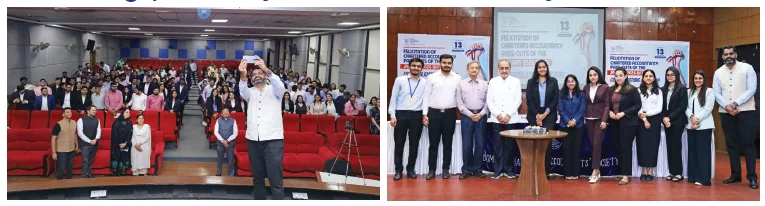
Felicitation of Chartered Accountancy pass-outs of the January 2026 Batch

The ceremony served as a warm welcome for the newly qualified CAs into the wider professional fraternity.

6. Seminar on TDS & TCS – What It Is, What Changes, & How to Stay Compliance-Ready jointly with Goa Chamber of Commerce & Industry (GCCI) held on 13th March 2026@ Hybrid.

The Direct Tax Committee of BCAS, jointly with the Goa Chamber of Commerce and Industry, organised a full-day seminar at GCCI Hall, Goa and in virtual mode to cover the TDS provisions under the new Income Tax Act, 2025, the draft Rules, 2026 and the relevant new Forms. The objective was to familiarise participants with the practical new TDS sections, new Forms, revised due dates, etc.

CA Ronak A Rambhia, shared the new TDS provisions with respect to the threshold amount and the applicable rate of deduction under the Income Tax Act 1961 v/s the new Income Tax Act 2025, which were discussed in depth. The current applicable Forms and the due dates in the current provisions were discussed in comparison with the new applicable Forms and Rules. The practical difficulties on TDS on Payment to Partners u/s 194T of the Income Tax Act, 1961 were discussed in depth with practical scenarios. Further, CA Ravikant Kamath gave his in-depth knowledge on specific new provisions in the Income Tax Act, 2025 and the draft Income Tax Rules, specifically on the chapter of Salary perquisites. He discussed practical TDS controversies for various types of business assesses based on the court rulings, tax provisions, Circulars, etc., by giving his views on these controversies.

Mr. Purushottam from the TDS CPC, Ghaziabad, also presented his views on the new TDS portal 2.0. He gave a walk-through on the upcoming TDS portal, which will include features such as the demand outstanding, payments tab, litigation tab, etc. He also shared how the tax department is preparing for the new Income Tax Act 2025 in practical compliance.

The seminar received an encouraging response from the Goa participants in trade commerce, and also viewers from the online platform. The participants, both online and offline, were enlightened to be ready for the upcoming Tax year 2026-27 for the TDS compliances.

7. Indirect Tax Laws Study Circle Meeting on Issues in Construction Industry and Redevelopment held on Thursday, 05th March 2026 @ Virtual

The session was led by CA. Abhijit Dongaonkar (Group Leader) under the mentorship of CA. Naresh Sheth, and focused on complex, real-life scenarios impacting developers, landowners, and housing societies.

The presentation covered the following aspects for a detailed discussion:

Joint Development Agreements (JDA)
Examination of taxability of Transfer of Development Rights (TDR), revenue-sharing vs. area-sharing models, valuation complexities, and implications of minimum guaranteed consideration.

Time of Supply & Valuation Mechanisms
Insights into deferred tax liability for residential components, immediate taxability for commercial portions, and deemed valuation principles under relevant notifications.

Unsold Inventory & Cancellations
Treatment of unsold units at the time of completion certificate and tax implications of pre- and post-OC cancellations.

Developed Plots & Infrastructure Charges
Clarification on non-taxability of sale of land, taxability of amenities when charged separately, and implications for third-party buyers.

Redevelopment of Housing Societies
Analysis of TDR transactions between societies and developers, construction services to members, and taxability of corpus or hardship funds.

Slum Rehabilitation Projects (SRP)
Discussion on taxability of free rehabilitation flats, valuation of non-monetary consideration in the form of TDR/FSI, and applicability of exemptions.

Around 120 participants from all over India benefited while taking an active part in the discussion. Participants appreciated the efforts of the group leader and the mentor.

8. 14th Residential Study Course on IND AS held on Friday 27th February 2026 to Sunday 01st March 2026 @ The Orchid Hotel Pune.

The Accounting & Auditing Committee organised this Study Course on Ind AS in a residential learning format, enabling intensive technical deliberations and professional interaction. The three-day programme focused on advanced and contemporary Ind AS topics with a strong emphasis on practical application, case studies and current regulatory expectations relevant to preparers, auditors and advisors.

The course commenced with detailed sessions on Ind AS 103 and Ind AS 110, focusing on business combinations, mergers and demergers, covering structuring considerations, accounting complexities and interpretational challenges through case studies. An in-depth session on Related Party Transactions covered Ind AS requirements along with SEBI LODR, Companies Act and tax aspects, highlighting common compliance challenges, documentation expectations and practical issues.

Complex financial instruments were discussed in detail with reference to Ind AS 109, Ind AS 113 and Ind AS 32, covering classification, measurement, valuation and disclosure challenges supported by illustrative case studies. A focused session on Presentation of Financial Statements under Ind AS addressed key presentation principles, disclosure requirements, recent amendments, including Ind AS 118 and emerging reporting practices.

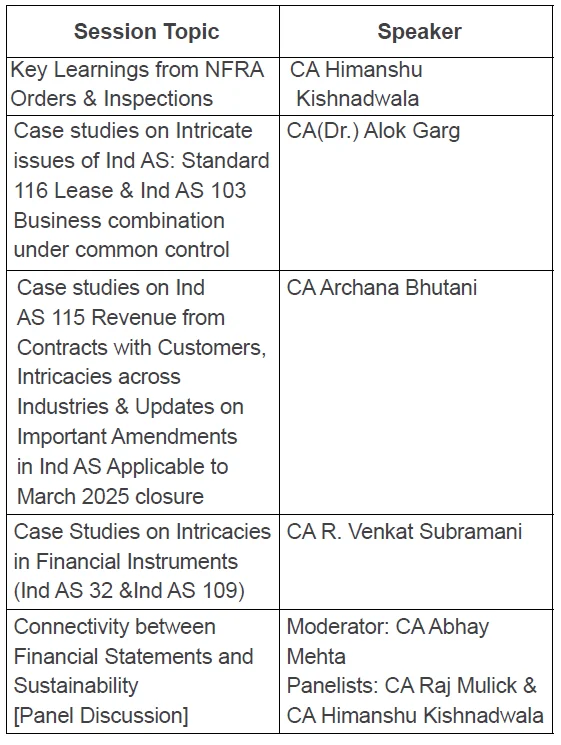
The programme also featured an insightful panel discussion on NFRA findings and initiatives for improving audit quality, deliberating on inspection observations, audit documentation and strengthening audit processes. Another panel discussion on Sustainability Reporting covered preparer and assurance perspectives, addressing evolving sustainability reporting requirements, preparedness challenges and assurance considerations.
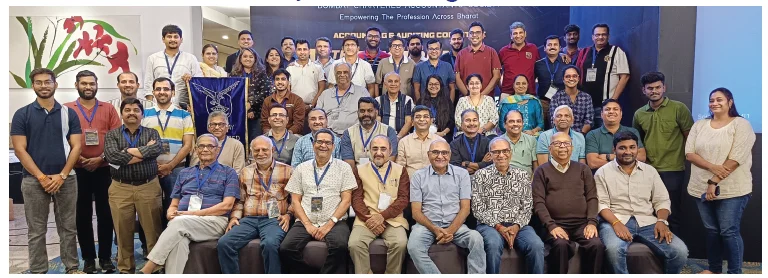
14th Residential Study Course on IND AS

The Residential Study Course was well received by participants and provided a valuable platform for deep technical learning, exchange of practical experiences and professional networking. Over 94 participants attended the Course.

  •  Faculties for the Residential Study Course:

Dr. CA Anand Banka, CA MP Vijay Kumar, CA Himanshu Kishnadwala, CA Manan Lakhani

Panelists – CA Sudhir Soni CA Amit Mazmudar Moderator- CA Vijay Maniar

Panelists – CA Himanshu Kishnadwala CA Dr Alok Garg Moderator – CA Samit Saraf

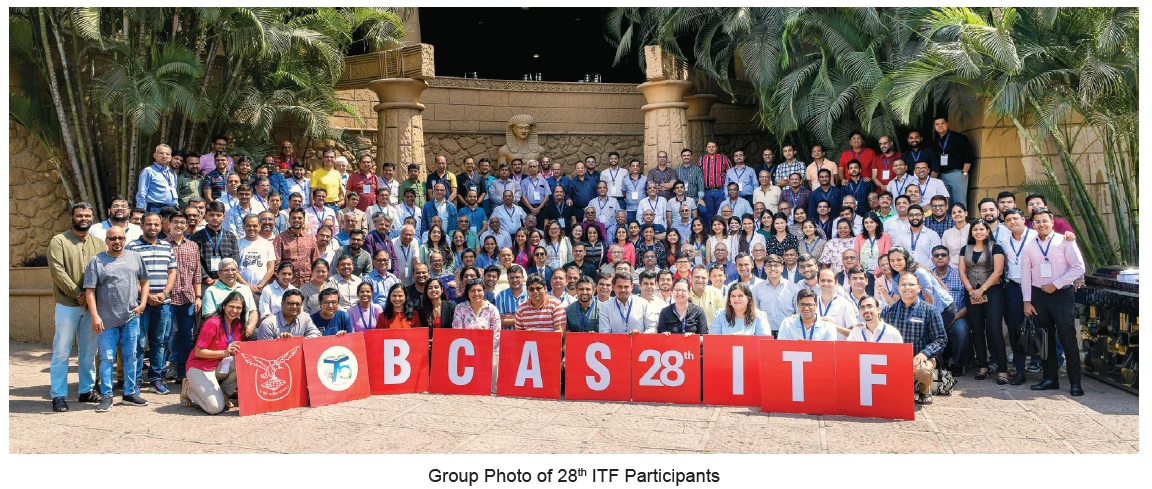
9. ITF Study Circle meeting on “International Tax Aspects of Budget 2026 and ITA 2025” (Part 1 & 2) ” held on 10th & 24th February 2026@ Virtual.

The International Tax and Finance Study Circle organized this meeting to discuss amendments in the Budget 2026 on the International Tax aspects. The meeting was divided into 2 parts. Both meetings started with the Chairman of the session, CA Mayur Nayak outlining the amendments along with his comments.

CA Hansh Gangar (Group Leader) took up the various amendments on 10 February 2026. Some key discussion points were:

  •  Foreign assets of Small Taxpayers – Disclosure Scheme, wherein the group discussed the need and objectives of the amendment, along with the penalty matrix. Some key issues which were discussed were implications of receipt of foreign shares under ESOP, where the assessee was NR or NOR at the time of earning undisclosed income or acquiring undisclosed assets, but is now a resident, but failed to disclose the above, whether he will be covered under the scheme.
  •  The Group Leader also took us through other amendments, such as Relaxation of conditions relating to prosecution under the Black Money Act, amendments in IFSC, amendments in NDI rules, amendments in TCS rates, etc.

The Budget meeting continued on 24 February 2026, wherein CA Nemin Shah (Group Leader) discussed other amendments that were made in the Budget 2026. Some key discussion points were

  •  The session opened with introductory remarks from the chairman on his initial views on the determination of residential status.
  •  Amendment in buyback provisions wherein the Group leader took us through the various changes introduced in buyback taxation over the years. He discussed the meaning of promoter. He highlighted some issues that were discussed with the group at length – Whether the additional income tax will be eligible for treaty benefits, whether deduction under section 54F is available, and whether this provision will apply to foreign buyback.
  •  Other amendments, such as Exemption related to Data Centres, were also discussed in the group – some points which came up for discussion- the characterisation of the amount – royalty or FTS? Whether there could be an exposure to constitute a PE.
  •  Participants also discussed the Transfer pricing changes, safe harbour rules, etc.

10. “Mumbai Thane Express – Internal Audit 101” held on Saturday, 21st February 2026@ CKP Hall, Thane West.

This session was organised by BCAS jointly with the Thane Branch (WIRC) of ICAI. The keynote session explored the evolving role of Internal Audit in a dynamic regulatory and business environment, highlighting the advanced use of tools and technology in modern audit practices. Discussions emphasized the transition of Internal Audit from a compliance-focused function to a strategic risk advisory partner.

A detailed deep dive into the design, evaluation, and strengthening of internal control frameworks was conducted, with risks and controls explained through relatable day-to-day examples for better understanding. Practical insights were shared on identifying Key Risk Indicators (KRIs) and effectively linking risk assessment with audit planning. A comprehensive walkthrough of risks, controls, and audit procedures in the Procure-to-Pay (P2P) cycle was presented, supported by a clear and structured audit checklist. The checklist highlighted common control gaps in procurement, vendor management, and payment processes, along with practical mitigation strategies. Special emphasis was laid on drafting impactful, concise, and action-oriented audit reports, with a strong focus on stakeholder value creation. Techniques to transform audit observations into compelling narratives that drive management action were demonstrated through practical examples.

The event concluded with a multi-stakeholder panel discussion, offering perspectives on audit expectations from management, auditors, and governance bodies. The discussion also covered aligning Internal Audit outcomes with organizational objectives and enhancing stakeholder value creation.

Approximately 65 participants from Mumbai, Thane, and Pune attended the event.

Faculties: CA Murtuza Kachwala, CA Prajit Gandhi, CA Samit Saraf, CA Chetan Thakkar, CA Pooja Bhutra, CA Harshita Mulay – Dixit, CA Archana Moghe, CA Preeti Cherian. 

11. BCAS Women’s RefresHER Course” held from 6th January 2026 to 19th February 2026@ Virtual.

BCAS launched its first-ever Women’s RefresHER Course – “Re-skill and Re-ignite Your Professional Journey”, creating a dedicated platform for women Chartered Accountants to reconnect with the profession.

The course comprised 14 online sessions, conducted on Tuesdays and Thursdays, covering a wide spectrum of topics including direct tax, GST, FEMA, litigation, succession planning, ESG, audits, valuations, start-ups, and corporate structuring. The sessions were curated to address both foundational concepts and contemporary developments, with a strong focus on practical insights.

A unique feature of the programme was that it was led entirely by women speakers, fostering an open, engaging and relatable learning environment for participants.

Designed for participants at beginner and intermediate levels, including those returning after a career break or looking to build or expand their practice, the course emphasized real-life applications, emerging opportunities and confidence-building.

The programme witnessed an encouraging response, with 85 participants from around 24 towns and cities, making it an interactive experience.

Scan to watch online at BCAS Academy

BCAS Women's RefresHER Course

II. BCAS IN NEWS & MEDIA

  •  BCAS has been featured in several news and media platforms, showing our active involvement, professional contributions, and commitment to the field. This reflects the growing recognition of BCAS in the public and professional space.

Link: https://bcasonline.org/bcas-in-news/

QR Code:

BCAS IN NEWS & MEDIA


Regulatory Referencer

I. DIRECT TAX : SPOTLIGHT

1. Referencing by Document Identification Number – Reg – Circular No. 4/2026 dated 31 March 2026

Section 292B and 292BA of Income-tax Act, 1961 and Section 522 of the Income-tax Act 2025, provide that any document issued by Income tax Authority shall be referenced by the computer generated Document Identification number (DIN). The circular provides as under:

a) DIN may be mentioned within the communication itself, attached separately, or included in electronic correspondence such as emails.

b) There is no requirement for the same to be printed on every page, provided the communication is clearly referenced.

The Circular further provides that in certain circumstances, the document may not be referenced by DIN in specific situations and all such communications shall require post-facto approval, within a period of 15 days of the date of issue of such communication.

2. Procedure, formats and standards for generation and allotment of Unique Identification Number (UIN) in respect of Form No. 121 and quarterly furnishing of Part B thereof by the payer – Notification No. 01/CPC(TDS) /2026 dated 28 March 2026.

Section 393(6) of the Income-tax Act, 2025 provides for no deduction of tax in certain cases wherein declaration in Part A of Form No. 121 is furnished by the payee to the payer as per Rule 211 of the Income-tax Rules, 2026.

The payer shall allot a 26-character UIN to each declaration (Part A of Form No. 121) received by him during the tax year. The circular provides for the Procedure, formats and standards for generation and allotment of UIN.

3. CBDT amends India- Brazil DTAA – Notification No.39/2026 dated 30 March 2026

The notification gives effect to the 2022 Amending Protocol to the India–Brazil DTAA, which entered into force on 18 October 2025 and applies in India from FY 2026–27 onwards.

4. ITR Forms 1-7, including ITR V and ITR U(updated return) have been notified by the CBDT, for the financial year 2025-26 – Notification No. 45 to 52 of 2026 dated 30 March 2026.

5. Clarificationthat investments made before April 1, 2017, are fully grandfathered and exempt from GAAR scrutiny – Notification No. 55/2026 dated 31 March 2026.

6. PAN CR-01 and PAN CR-02 prescribed for correction of PAN data for individuals and non-individuals along with guidelines

7. All the provisions of Memorandum of Understanding for Assistance in Collection of taxes, of the Convention between the Government of the Republic of India and the Government of Japan for the avoidance of double taxation and the prevention of fiscal evasion are notified. – Notification No. 56 dated 2 April 2026

II. IFSCA UPDATE FOR MAY 2026 EDITION

1. IFSCA grants Qualifying Central Counterparty (QCCP) status to IIBX

India International Bullion Exchange (IFSC) Limited (‘IIBX’) functions both as a Bullion Exchange and a Bullion Clearing Corporation. The Bullion Clearing Corporation of IIBX has qualified as a Qualifying Central Counterparty (‘QCCP’) as it is regulated by IFSCA, SCRA and complies with global standards, particularly the Principles for Financial Market Infrastructures (PFMIs). The QCCP status confirms that its clearing operations meet international benchmarks for risk management and financial integrity.

Further, IIBX has been designated as a Market Infrastructure Institution (MII) due to its systemic importance in GIFT IFSC and is subject to strict regulatory oversight and supervision within the PFMI framework. In view of the above, IIBX is accorded the status of QCCP.

[Press release, dated 25th March 2026]

2. IFSC Authority removes 7-day comment timeline requirement from KMP circular for FMEs

IFSCA had issued a circular “Appointment and Change of Key Managerial Personnel (‘KMP’) by a Fund Management Entity (‘FME’)” dated February 20, 2025 which specifies the manner and procedure to be followed by a FME for effecting the appointment of or change to their KMPs. Paragraph 4 of this Circular which provided for communication of comments by the Authority within a specified timeline of 7 working days form the date of filing of intimation by the FME has now been removed. All other provisions and conditions specified in the 2025 Circular shall remain the same.

[Circular No. IFSCA/13/2026-Capital Markets/1, dated 1st April 2026]

3. IFSCA mandates certification courses

IFSCA has specified a mandatory certification course titled “Regulatory Framework for Fund Management in IFSC: AIFs and Retail Schemes” for employees of Fund Management Entities (FMEs) offered by the Institute of Company Secretaries of India. All Key Managerial Personnel (KMPs) and employees engaged in core fund management activities are required to successfully complete this certification on or before 30 September 2026, with responsibility for compliance resting on the FME and persons in control. Additionally, FMEs must ensure continuous adherence to eligibility criteria for KMPs under applicable regulations.

The IFSCA has also mandated a certification requirement for employees of Capital Market Intermediaries (CMIs) in IFSC. The Authority has specified the course titled “Regulatory Framework for Capital Market Intermediaries in IFSC” offered by the Institute of Company Secretaries of India. All Key Managerial Personnel (KMPs) and employees engaged in core business activities are required to successfully complete this certification on or before 30 September 2026, with the responsibility for compliance resting on the CMI and persons in control.

[Circular No. IFSCA/13/2026-Capital Markets/1, dated 1st April 2026 & Circular F. No. IFSCA-PLNP/80/2024 Capital Markets, dated 2nd April 2026]

4. IFSCA establishes regulatory framework for registration, regulation and supervision of Pension Funds in IFSC

The IFSC Authority has notified the IFSCA (Pension Fund) Regulations, 2026, establishing a regulatory framework for registration, regulation and supervision of Pension Funds in IFSC. The regulations aim to provide a robust framework for long-term retirement savings, promote a secure and transparent environment for subscribers, protect their interests and maintain the integrity of the pension ecosystem. The framework overrides existing PFRDA regulations within the IFSC, eliminating dual-regulatory burden. The Regulations cover eligibility requirements for the Pension Funds; scheme designs; withdrawal and portability pathways; permissible investments with defined limits over a broad range of asset classes; and risk management & governance requirements; compliance and enforcement.

[F. No. IFSCA/GN/2026/007, dated 30th March 2026]

5. IFSCA bars fund management entities from assigning multiple service roles to fiduciaries in the same scheme

The IFSCA (Fund Management) Regulations, 2025, requires Fund Management Entities (FMEs) to appoint fiduciaries such as trustees (in case of trusts), directors (in case of companies), or designated partners (in case of LLPs), who are obligated to act in the best interest of investors and adhere to high standards of due diligence, care, and independent judgment as per the prescribed Code of Conduct. To strengthen governance and avoid conflicts of interest, IFSCA has clarified that an FME shall not appoint a fiduciary entity to also provide services such as fund administration, valuation, audit, or lending /financing to the same scheme, whether directly or through its associates. For existing schemes already filed or taken on record, FMEs are required to comply with this requirement by 30th September 2026.

[Circular No. IFSCA-IF-10PR/7/2024-Capital Markets/10042026, dated 10th April 2026]

6. IFSCA requires prior approval for Payment Service Providers (PSPs) joining Rupee Drawing Agreement (RDA) as non-resident Exchange Houses

IFSCA has issued a clarification regarding participation in Rupee Drawing Arrangements (RDA) by Payment Service Providers (PSPs). IFSCA has now clarified that prior approval is mandatory for PSPs intending to participate in RDA as non-resident Exchange Houses, in line with the RBI Master Direction on “Opening and Maintenance of Rupee/Foreign Currency Vostro Accounts of Non-resident Exchange Houses” (2016). Further, PSPs must submit, along with their approval request, a comprehensive framework demonstrating compliance with the IFSCA (Anti Money Laundering, Counter-Terrorist Financing and Know Your Customer) Guidelines, 2022 and any other applicable similar laws.

[Circular No. IFSCA-FMPP0BR/3/ 2023-Banking 2026-27/01, dated 10th April 2026]

III. FEMA

1. Govt notifies uniform Rs.2–10 crore adjudication limit for Additional & Joint Directors under FEMA

The Central Government has amended the notification prescribing jurisdiction of adjudicating authorities under the FEMA. This amendment revises the monetary limits for adjudication of Additional Directors and Joint Directors Enforcement. Previously, Additional Directors handled cases involving amount between Rs.5 crores and Rs.10 crores, while Joint Directors handled cases involving amount between Rs.2 crores and Rs.5 crores. The revised notification merges the scope by prescribing that both categories will now handle cases involving amounts exceeding Rs.2 crores but not exceeding Rs.10 crores.

[Notification No. 1397(E) [F. NO. K-11022/80/2011-AD.ED], dated 18th March 2026]

2. RBI directs ADs to maintain NOP-INR within USD 100 million in the offshore deliverable market

Master Direction on ‘Risk Management and Inter-Bank Dealings’ empowers RBI to prescribe limits on open positions in Rupee for exchange rate management. RBI has issued a circular whereby Authorised Dealers are now required to ensure that Net Open Positions in INR (NOP-INR) positions in the onshore deliverable market are maintained within USD 100 million at the end of each business day. ADs shall ensure compliance at the earliest but not later than 10th April 2026. This is a measure to curb volatility in the Rupee considering ongoing geopolitical issues.

[A.P. (DIR series 2025-26) Circular No. 24, dated 27th March 2026]

3. RBI revises ECB reporting framework and clarifies LSF computation

ECB transactions are required to be reported through Authorised Dealer (AD) Category I banks in prescribed forms, and delays attract Late Submission Fee (LSF). RBI has issued circular to remove ambiguities in classification of returns and streamline LSF computation. Key Highlights from the circular are given as follows:

a. Form ECB-1 and Revised ECB-1 to be treated as non-flow returns, and LSF to be computed accordingly. Non-flow returns are filed once per transaction/event, not periodically.

b. LSF is per return. Each delayed filing of Form ECB-2 to be treated as a separate instance, attracting LSF independently.

c. AD Category I banks shall submit ECB returns to RBI within 7 calendar days of receipt from borrowers.

d. LSF is payable via NEFT/RTGS to RBI Regional Office after receipt of acknowledgment email from RBI. AD banks to ensure and monitor payment of LSF by borrowers.

These amendments are applicable from 1st April 2026.

[A.P. (DIR series 2025-26) Circular No. 25, dated 30th March 2026]

4. RBI standardises guarantee reporting under FEMA; clarifies LSF computation for delays in reporting

RBI has issued circular with regard to obligation on a person to report a guarantee in terms of Regulation 7 FEM (Guarantees) Regulations, 2026 [FEMA 8 (R)] and Master Direction on ‘Reporting under Foreign Exchange Management Act, 1999’. The main points are:

a. Reporting is to be done using files provided on the RBI website (List of Returns Submitted to RBI) for submissions to the authorised dealer bank:

Form GRN Issue – for reporting issuance of guarantee;

Form GRN Modification – for reporting changes in terms such as amount, tenure or pre-closure; and

Form GRN Invocation – for reporting invocation of guarantee.

b. Each guarantee to be assigned a Unique Guarantee Transaction Number (GTN) by AD Bank before submission of the return to RBI.

c. For any delay, LSF will be calculated on amount of liability created towards surety on invocation for Form GRN Invocation only. For Form GRN Issue and Form GRN Modification, LSF to be considered on amount as ‘nil’ since these returns do not capture flows.

The above will come into effect from 1st April 2026.

[A. P. (DIR series 2026-27) Circular No. 1, dated 1st April 2026]

5. RBI permits INR exchange for residents and non-residents at forex counters in airport departure areas beyond immigration

The RBI has decided to allow residents and non-residents to exchange Indian Rupee notes at foreign exchange counters at the departure halls in the international airports established in the Duty-Free Area or Security Hold Area beyond the Immigration or Customs desk. The Master Direction on Money Changing Activities is being amended accordingly.

[A.P. (DIR series 2026-27) Circular No. 4, dated 2nd April 2026]

6. RBI amends Master Direction on non-resident investment in debt instruments, consolidates existing instructions

Over the years, the Reserve Bank has issued directions relating to investments in debt instruments by Non-Resident Indians (NRIs) and offering of debt instruments acquired in terms of FEMA 396 as collateral to recognized Stock Exchanges in India for transactions in exchange traded derivative contracts. These instructions have now been consolidated in the Master Direction on ‘Non-resident Investment in Debt Instruments’, 2025 which earlier covered various related Regulations under FEMA. Annex-1 of the Master Direction provides the list of circulars consolidated while Annex-4 lists the amendments made to the Master Direction over time.

[A.P. (DIR Series) Circular No. 6, dated 10th April 2026]


Audits Of Co-Operative Housing Societies

Shrikrishna : Arjun, why are you looking so tired and frustrated?

Arjun : We had the managing committee meeting of the housing society where I stay.

Shrikrishna : So what? What is so tiring about it?

Arjun : Bhagwan, you are very well aware that in a co-operative housing society, there is nothing but non-cooperation! No one is willing to come forward to work in the managing committee, members believe that committee members are their employees. A few committee members have some vested interests in the society’s management.

Shrikrishna : Arjun. This is common in all Non-Profit organisations! It is a part of life. In kaliyug, disputes are everywhere. Even in our families!

Arjun : I agree. But every society has at least one Duryodhana

Shrikrishna : Duryodhana? What do you mean?

Arjun : There is invariably one crooked member in every society. He is extra smart. He picks up disputes on some pretext or the other with the committee and other members.

Shrikrishna : I am aware. And there are Shakunis to instigate them.

Arjun : Usually, these Duryodhans are retired people from high positons in Government jobs or corporates. They feel that they alone know the law. They dispute the monthly contribution and usually are defaulters! In a few cases, some CAs or lawyers play the role of Duryodhana!

Shrikrishna : Yes. It is very common. But what did your Duryodhana do?

Arjun : Our Duryodhan has a hobby of making complaints before every possible forum – to the Registrar of Co-operative societies, to the Police Authorities, to the co-operative courts; and on the top of it, to our Institute of CAs against the auditor! He has made complaints against 8 successive years’ auditors so far!

Shrikrishna : Surprising! In an NPO, what are the issues?

Arjun : They rake up all issues like Accounting Standards, Standards on Auditing, Tax laws, co-operative laws and what not! They make a hype of everything. Poor auditor receives a meagre fee of 6 to 8 thousand rupees; but when there is a complaint to ICAI, he has to spend well above a lakh of rupees to engage a counsel. In addition to hire a lawyer to represent before the Registrar of co-op. societies, Police authorities and so on.

Shrikrishna : And he loses his peace of mind for at least 4 to 5 years!

Arjun : It is at the same time equally true that CAs take the audits of NPOs rather lightly. They are not particular about documentation, working papers, checking of minutes and secretarial records; and so on.

Shrikrishna : I heard that they are not careful even to ensure that their appointment is properly made!

Arjun : Yes, Lord. And the Duryodhana is keen to find all such loop holes to harass him. Auditors are even black mailed by the Duryodhans in respective societies.

Shrikrishna : Somebody told me that many people rendering accounting services to the societies have an arrangement with some CAs who simply put their signature and seal without verifying anything!

Arjun : Yes. That is very dangerous! A few CAs themselves write the accounts and also audit them! And the height is that they raise a common invoice of accounting and auditing! In some cases, their own employees or close relatives write the accounts.

Shrikrishna : And Duryodhans get a good opportunity to harass them.

Arjun : Absolutely. Today such people have realised their own nuisance value and making rampant misuse of our disciplinary mechanism.

Shrikrishna : I believe, ICAI should create a separate mechanism to deal with such petty complaints against auditor of NPOs. It is a great burden on the disciplinary authorities and the pendency is mounting due to such petty complaints. They should device some fast track mechanism to tackle such matters.

Arjun : I think it impossible to happen. Government lacks will power to simplify the things. Instead, I feel, CAs should stop accepting housing society audits altogether unless they are able to do full justice. But then, it won’t be remunerative!

Shrikrishna : Prevention is better than cure!

Om shanti.

(This dialogue is based on the current scenario of disciplinary cases in respect of audits of housing societies)

Tech Mantra

Standard Notes – Free Your Mind

standard Notes

Standard Notes is a free, secure note-taking app with powerful end-to-end encryption, unparalleled privacy features, and seamless cross-platform syncing on unlimited devices. It protects your notes and files with audited, industry-leading end-to-end encryption. Only You have access to the keys required to decrypt your data. You can write and store all your notes and files in one secure place and seamlessly access them from all your devices.

Note-taking services like Evernote, Google Keep, Notion, and Simplenote cannot prevent employers and governments from reading your data. Standard Notes features advanced security and privacy controls that protect your data against hacks, data breaches, government access, and even employer access.

The app is simple, easy to use, and lightweight. Enough features, but not too many!

Standard Notes is a no-risk investment in your productivity. If it works for you like it works for many happy users, then you’ve gained a lifelong tool that will protect your data and nourish your growth.

https://standardnotes.com/

Minimaa – Minimalist Launcher for Android

Minimaa
Reclaim Your Focus. Simplify Your Life. Drowning in a sea of colorful icons and constant notifications? MINIMAA is a premium minimalist launcher designed to transform your smartphone into a tool for intentionality, not a source of distraction.

Most launchers are designed to keep you on your phone. MINIMAA is designed to get you off it. By removing the visual “sugar” of colorful icons and cluttered grids, it reduces the dopamine triggers that lead to phone addiction.

It has a black and white interface, optimized for OLED screens to save battery and reduce eye strain. Also, the interface is text-based – so no icons, no distractions. You can hide distracting social media apps and access them only when necessary. And, of course, there are no trackers, no data collection, and no ads. Your phone stays yours.
Ideal for productivity enthusiasts and digital minimalists. The perfect companion for your journey away from screen addiction. Join the movement of thousands of users who have swapped their cluttered home screens for a peaceful, minimalist sanctuary.

You can download MINIMAA to start your digital detox https://tinyurl.com/minimaa

Wi-Fi AR

Wifi Ar

Wi-Fi AR is a free, simple app that scans your home Wi-Fi network efficiently. It uses augmented reality (ARCore) to visualize real-time Wi-Fi and cellular signal strength, speed, and latency in your physical space. It acts as a visual network analyzer, helping users identify dead spots, locate the best router placement, and detect network interference.

Just start the app and move around your home to identify the areas where the signal is powerful and where it is weak. You can then find the best places to play games or position your Wi-Fi devices. It also helps locate where your phone receives the best signal from your Mobile Network.

A simple app which is super useful.

Android : https://tinyurl.com/wifiar

Blip

Blip

If you have to send files from one device to another, or from one person to another, irrespective of the platform, Blip is the tool for you. You have never sent files this fast – send any size file right from your desktop, phone, tablet, or any other device.

You can transfer files in just one step. No need to upload and download separately. The size of the file is irrelevant – there is no limit! Blip is also intelligent enough to resume after a network interruption, if any, a drive being unplugged, or the target disk being full.

You can send entire folders in full quality and at enhanced speeds. It supports TLS 1.3 encryption so that your data is fully safe during transit.

Super-fast transfers were never so easy!

https://blip.net/

Miscellanea

1. SCIENCE

# A PhD candidate creates a “universe in a bottle” to uncover how life on Earth began

A PhD candidate, Linda Losurdo at the University of Sydney, recreated a “universe in a bottle” by simulating space-like chemical environments in the lab. Using nitrogen, carbon dioxide, and acetylene exposed to high-voltage plasma, she produced cosmic dust from scratch. This experiment mimics conditions in stellar nebulae and helps scientists study the chemical pathways that formed complex organic molecules—the building blocks of life—before life began on Earth.

The research, published in The Astrophysical Journal, offers a new way to analyze the infrared spectral fingerprints of cosmic dust, aiding the understanding of the chemical makeup of asteroids and meteorites. It also explores whether life’s essential elements (CHON: Carbon, Hydrogen, Oxygen, Nitrogen) formed in space and were delivered to Earth via comets and asteroids.

Ultimately, the project aims to build a comprehensive database of infrared signatures from lab-grown cosmic dust, improving astronomers’ ability to identify and study materials in space and enhancing knowledge of the Milky Way’s chemical evolution.

(Source: The Times of India – By TOI Science Desk –24 April 2026)

2. TECHNOLOGY

# RBI reaches out to global regulators for risk assessment on Anthropic’s Claude Mythos

The Reserve Bank of India (RBI) is actively assessing the cybersecurity risks posed by Anthropic’s newly released AI model, Mythos. In consultations with counterparts at the US Federal Reserve, the Bank of England, and other global regulators, RBI officials have expressed concerns that Mythos could accelerate the discovery and exploitation of software vulnerabilities, increasing threats to India’s financial sector. Regulators worldwide, including those in Asia, Europe, and the US, have urged banks to strengthen their defenses against potential AI-driven cyber risks.

India’s National Payments Corporation of India (NPCI), which manages the highly secure Unified Payments Interface (UPI), is working with select banks to gain early access to Mythos. This proactive approach aims to identify vulnerabilities and “day-zero” cyber risks before wider deployment. However, access to Mythos is tightly controlled, limited to a few US organizations, and hosted on secure servers in the US, raising compliance challenges related to Indian data protection laws.

In response, RBI is developing comprehensive guidelines for banks partnering with advanced AI models like Mythos and Anthropic’s Claude family. These guidelines are part of a broader strategy to ensure safe AI adoption in India’s financial system, with a strong emphasis on enforcing the 2018 data localization rules that require all payment transaction data to be stored exclusively on servers within India. The discussions are ongoing, reflecting RBI’s cautious but forward-looking approach to AI integration in finance.

(Source: Financial Express – By Tech Desk –22 April 2026)

3. WORLD – SCIENCE – MINDSET

# After Loss, Paralysis, and Silence: Myles Merideth’s Search for What It Means to Still Be Alive

Myles Merideth, author and owner of Empirical Resource Development, faced profound challenges after a spinal condition caused partial paralysis, along with a series of personal losses, including his mother, brother, and daughter. These events shattered his identity, which was built on strength and leadership. Through surrender and reflection, he realized that true identity is not defined by experiences or roles but by a deeper, constant life force within.

This insight inspired his book, It’s Not Who You Are, It’s What You Are, written during near-total immobility. The book offers a framework focused on present awareness rather than external validation, addressing grief, burnout, and identity loss. Myles plans to release a new book on leadership, along with facilitator guides and speaking engagements. His message resonates with those facing loss or questioning achievement-based identities, emphasizing that beneath all else, “You are life first.”

(Source: International Business Times –Created By Callum Turner – 13 April 2026)

ICAI and Its Members

I. ICAI ANNOUNCEMENT

1. AUDIT QUALITY MATURITY MODEL (AQMM)

The ICAI has issued a clarification expanding the scope of mandatory AQMM applicability. The revised framework now explicitly includes Practice Units auditing holding/subsidiary/associate/JV entities of specified categories (listed entities, banks, insurance companies), provided such firms are subject to Peer Review.

AQMM was already mandatory for firms auditing:

  •  Listed entities
  • Banks (excluding co-operative banks except multi-state co-operative banks)
  • Insurance companies (the firms conducting only branch audits are not to be covered)

Expanded Scope – AQMM v2.0 (Phased Implementation)

The applicability has now been significantly widened as under:

(A) From 1 April 2026

Applicable to:

• Firms subject to Peer Review auditing:

• Holding/Subsidiary/Associate/JV of:

• Listed entities

• Banks (excluding co-op banks except multi-state)

• Insurance companies

•  Firms undertaking statutory audit of large unlisted public companies meeting any of the following thresholds:

  • Paid-up capital ≥ ₹500 crore, or
  • Turnover ≥ ₹1,000 crore, or
  • Aggregate borrowings ≥ ₹500 crore

(B) From 1 April 2027

Applicable to:

  • Firms auditing entities:

  • Raising funds > ₹50 crore from public/banks/FIs during the period
  • Entities classified as Public Interest Entities (including trusts)

2. EXPERT PANEL FOR ADDRESSING QUERIES RELATED TO STATUTORY AUDIT PERTAINING TO AUDITING ASPECTS

Auditing and Assurance Standards Board formed an Expert Panel which will provide technical support to the members with respect to their queries on auditing aspects for the coming Audit season. Members having specific queries may send such queries at email address: auditfaq@icai.in. The panel will be open from 16th April 2026 till 30th September 2026.

https://resource.cdn.icai.org/91721caqb-aqmm100426.pdfS

3. INVITATION TO SHARE INTERNAL AUDIT CASE STUDIES FOR KNOWLEDGE REPOSITORY OF THE INTERNAL AUDIT STANDARDS BOARD, ICAI

Internal Audit Standards Board invites members to submit concise and practice-oriented case studies relating to Internal Audit for inclusion in its professional knowledge initiatives. Each submission should be concise and restricted to a maximum of 200 words.

Submissions may kindly be made through the Google Form link: https://forms.gle/hCQcZHi3SSAAVV6d8

II. ICAI PUBLICATION

a. Income-tax Act 2025

Income-tax Act, 2025 (as amended by the Finance Act, 2026) including Tabular Mapping of Sections vis-à-vis the Income-tax Act, 1961

https://resource.cdn.icai.org/91774dtc-aps4792.pdf

b. Income-tax Rules 2026

Income-tax Rules, 2026 – Including Tabular Mapping of Rules and Forms vis-à-vis Income-tax Rules, 1962 and Forms.

https://resource.cdn.icai.org/91688dtc-aps4735.pdf

III. ICAI EXPERT ADVISORY COMMITTEE OPINION

Timing of Capitalisation of Partly Completed Gas Pipeline under Ind AS

A. Facts of the Case

  • The company, a JV formed to develop the North-East Gas Grid (NEGG), is constructing a 392 km Guwahati–Numaligarh pipeline (Phase I) to supply gas to Numaligarh Refinery (anchor customer).
  • The project is being executed in phases; as on 31.03.2025, 195.898 km (≈50%) of the pipeline was mechanically completed with related infrastructure and completion certification.
  • However, the entire 392 km pipeline is not yet completed or commissioned, and commercial operations can commence only after full completion.
  • The company has capitalised all costs as Capital Work-in-progress (CWIP), including costs relating to the completed portion.

B. Query

  • Whether the company should capitalise the cost (including borrowing costs) relating to the completed portion of 195.898 km, despite:

(a) the pipeline not being in a condition to operate as intended, and

(b) commercial operations not having commenced.

C. Points considered by the Committee

  • The issue relates to timing of capitalisation of a partly completed pipeline under Ind AS 16.
  • As per Ind AS 16, capitalisation is appropriate only when the asset is in the location and condition necessary for it to be capable of operating in the manner intended by management.
  • Determination of such readiness depends on facts, technical evaluation, and ability to operate.
  • In integrated projects, if parts are capable of independent use, they may be capitalised separately; otherwise, not.
  •  In the present case:
  • The completed portion (195.898 km) cannot be used independently.
  • The pipeline achieves its intended objective only when the entire 392 km stretch is completed.
  • Accordingly, the partially completed section is not yet in a condition for intended use.
  • Under Ind AS 23, borrowing costs continue to be capitalised until the asset is ready for intended use; cessation depends on similar principles.

D. Opinion

  • The partially completed pipeline (195.898 km) is not capable of operating independently and is not in the condition necessary for intended use.
  • Therefore, capitalisation should not be triggered, and the expenditure should continue to be shown as CWIP.
  • Further, capitalisation of borrowing costs should continue till the entire pipeline is completed and ready for intended use

ICAI Journal – The Chartered Accountant April 2026 Pages 98-106

https://resource.cdn.icai.org/91549cajournal-apr2026-25.pdf

IV. ICAI DISCIPLINARY COMMITTEE

1. Case : Shri RK vs. CA. D.N.B.

File No. : PR/34/2018/DD/54/2018/DC/1755/2023

Date of Order : 05.01.2026

Particulars              Details

Nature of Case       Alleged misuse of digital signature and fraudulent increase in share capital

Background                The Respondent assisted in incorporation and compliance of M/s VMC Pvt. Ltd. where the Complainant and two others were directors (equal shareholding initially). It was alleged that the Respondent, in connivance with other directors, increased share capital from 15,000 to 35,000 shares and allotted additional shares only to the other two directors using the Complainant’s digital signature without consent, and also forged documents including financial statements and MBP-1 disclosures.

Key Allegations

– Fraudulent increase in share capital and allotment excluding complainant.

– Misuse/forgery of digital signature in Form-2 and other filings.

– Forged signature on financial statements and MBP-1.

– Non-provision of documents and collusion with other directors.

Respondent’s Defence – Increase in share capital supported by Board Resolution dated 07.06.2011 and disclosures in financial statements.

– Financial statements for FY 2012–13 signed by Complainant, evidencing knowledge.

– Handwriting expert report confirmed signatures as genuine.

– No evidence of misuse of digital signature; documents available in public domain (MCA).

Findings

– Shareholding changes were disclosed in financial statements signed by Complainant (page 13).

– Form-2 was digitally signed by Complainant; no evidence of misuse of DSC.

– Handwriting expert report supported genuineness of signatures.

– Complainant failed to provide corroborative evidence of forgery or fraud.

– MBP-1 was filed physically and not certified by Respondent.

– No direct evidence linking Respondent to alleged misconduct.

Decision               Not Guilty under:

• Item (7), Part I, Second Schedule

• Item (2), Part IV, First Schedule

2. Case : Shri B.S.P. vs. CA. A.M.

File No. : PR/162/2019/DD/261/2019/DC/1791/2023

Date of Order : 05.01.2026

Particulars                              Details

Nature of Case                     Alleged siphoning of funds and audit failure in related party transactions

Background                             The Respondent was statutory auditor of M/s H Pvt. Ltd. for FY 2008-09 to 2011-12. The Complainant (MD) alleged that ₹1.48 crore received in April 2010 (₹85 lakh from DST and ₹62 lakh from GIDC) was immediately transferred to K Ltd, resulting in loss of control and dilution of shareholding. It was alleged that the Respondent failed to detect/report this diversion and issued clean audit reports.

Key Allegations

– Siphoning of ₹1.48 crore to related party K Ltd.

– Failure to report material transactions in audit.

– Non-disclosure of related party transactions under AS-18.

– Issuance of “true and fair” audit report despite irregularities.

Respondent’s Defence

– Transactions were recorded in books in FY 2009-10; cheques issued on 31.03.2010 and cleared in next year.

– Financial statements duly signed by Complainant (MD).

– Transactions reflected in ledger accounts and CARO report.

– No siphoning; payments were part of loan repayment transactions.

– AS-18 not applicable due to SME exemption.

Findings

– Ledger accounts and financial statements showed proper recording of ₹1.48 crore transactions (page 11).

– Cheques issued on 31.03.2010 and cleared in FY 2010-11—accounting treatment held correct.

– No evidence of fraudulent diversion or siphoning; transactions were part of running account.

– Financial statements were approved and signed by Complainant as MD, indicating awareness.

– AS-18 non-disclosure not actionable due to SME exemption and absence of specific allegation.

– Auditor cannot be held liable where transactions are properly recorded and management-approved.

Decision

Not Guilty under Item (7), Part I, Second Schedule

3. Case : In Re: CA. SKT

File No. : PPR/P/106/2016/DD/31/INF/2020/DC/2041/2025

Date of Order : 25.01.2026

Particulars                               Details

Complainant                  Information (MCA/RBI-related issues)

Respondent                     CA. SKT

Nature of Case                Alleged failure to report public deposits and NBFC-related non-compliance in audit

Background                    The Respondent was statutory auditor of three real estate companies where customer advances aggregating ₹3.57 Cr, ₹7.99 Cr and ₹17.89 Cr were shown in financial statements. It was alleged that these were public deposits and the Respondent failed to report the same and related NBFC compliance issues.

Key Allegations

– Failure to identify/report companies as NBFC.

– Failure to report receipt of public deposits in audit report.

– Lack of sufficient audit verification of customer advances.

Respondent’s Defence – Companies were engaged in real estate business (sale of plots).

– Advances represented booking amounts received from customers, not deposits.

– Relied on Section 45-I(bb) of RBI Act, excluding advances against sale of property from “deposit”.

– Produced sale deeds, allotment letters, receipts, and customer-wise details.

Findings

– Committee held NBFC allegation not sustainable; companies were engaged in real estate business.

– Documentary evidence (sale deeds, agreements, receipts, allotment letters) established that amounts were genuine customer advances.

– As noted (pages 9–10), substantial audit verification was demonstrated (≈95.87% sample coverage of advances).

– Advances were in ordinary course of business and hence not “public deposits” under RBI Act.

– No requirement for auditor to report such advances as deposits.

Decision                          Not Guilty under Item (7) & (8), Part I, Second Schedule

4. Case : Smt. BS vs. CA. SG

File No. : PR/423/2019/DD/45/2020/DC/1566/2022

Date of Order : 28.01.2026

Particulars                          Details

Nature of Case               Alleged failure to verify loan adjustment and report misstatement in financial statements

Background                       The Respondent audited M/s A Ltd. for FY 2016-17 to 2018-19. In FY 2016-17, an unsecured loan of ₹4,19,109 was shown in the name of the Complainant. In FY 2017-18, the balance was shown as NIL, allegedly without repayment. The Respondent stated that the amount was transferred to the loan account of the Complainant’s husband (director) as part of a family arrangement.

Key Allegations

– Loan shown as NIL without repayment or proper verification.

– Failure to obtain confirmation or documentary evidence for transfer.

– Failure to report material misstatement and lack of due diligence.

Respondent’s Defence – Loans of family members were consolidated into husband’s account by mutual understanding.

– Ledger accounts reflected transfer; husband’s balance increased accordingly.

– Matter was a family arrangement, not a financial irregularity.

– Audit procedures based on professional judgment; external confirmations not mandatory.

Findings 

– Ledger accounts and records substantiated transfer of ₹4.19 lakh to husband’s account (pages 10–11).

– Husband (director) had accepted consolidated balance in separate proceedings, supporting genuineness

– Dispute held to be family/shareholder dispute, not audit failure.

– Auditor’s reliance on internal records and judgment within acceptable limits of SA 505.

– No evidence of misstatement, negligence, or lack of due diligence

Decision                    Not Guilty under Clauses (6), (7), (8), Part I, Second Schedule


Company Law

3. Uma Polymers Ltd vs. Union of India

185 taxmann.com 176, High Court of Rajasthan

Where company failed to constitute Nomination and Remuneration Committee for financial year 2022-23 in conformity with the statutory provisions due to the absence of a non-executive director, subsequent rectification by appointment of a non-executive director and reconstitution of the committee did not cure the earlier violation, Thus, the penalty imposed under section 454(3) of the Companies Act 2013 (CA 2013) was legal and justified.

FACTS

The company and its Whole-Time Director were issued a show cause notice for violation of Section 178(1) of the CA 2013 read with Rule 6 of the Companies (Meetings of Board and its Powers) Rules, 2014, on the ground that the Nomination and Remuneration Committee for the financial year 2022-23 was not constituted in conformity with the statutory provisions due to absence of a non-executive director on the Board.

In response, the company admitted the non-conformity and stated that a non-executive director had subsequently been appointed, and the Committee reconstituted in compliance. At the hearing, it prayed for imposition of minimum penalty on this basis. The Adjudicating Authority (Registrar of Companies-cum-Official Liquidator) imposed a total penalty of Rs. 7 lakhs under Section 454(3) of the CA 2013 on the company and its Whole-Time Director. The Company filed the present writ petition.

Relevant Extract from the provisions of CA 2013:

Section 178 (1) The Board of Directors of every listed public company and such other class or classes of companies, as may be prescribed, shall constitute the Nomination and Remuneration Committee consisting of three or more non-executive directors out of which not less than one-half shall be independent director.

Rule 6: The Board of directors of every listed public company and a company covered under rule 4 of the Companies (Appointment and Qualification of Directors) Rules, 2014 shall constitute an ‘Audit Committee’ and a ‘Nomination and Remuneration Committee of the Board.

HELD

  •  Upon perusal of the order passed by the Registrar of Companies-cum-Official Liquidator, Jaipur, as well as the order passed by the Regional Director, North-Western Region, Ministry of Corporate Affairs, Ahmedabad, the Court came to a prima facie finding that the constitution of the Nomination and Remuneration Committee of the company for the financial year 2022-23 was not in conformity with the aforesaid provisions due to the absence of a non-executive director on the Board.
  •  However, at the time of hearing before the Adjudicating Authority as well as the Appellate Authority, the authorized representative of the company prayed for imposition of a minimum penalty, submitting that SP had been appointed as a non-executive director with effect from 14.05.2024 and that the Nomination and Remuneration Committee had thereafter been reconstituted in conformity with the provisions of the Act and the aforesaid Rules.
  •  The Adjudicating Authority, however, for the said violation, imposed a total penalty of Rs. 7.00 lakh upon the company and its Whole-Time Director, SL.
  •  In the opinion of the Court, merely because SP was subsequently appointed as a non-executive director and the Nomination and Remuneration Committee was reconstituted in conformity with the provisions of the Act and the Rules, the same would not cure the earlier violation pertaining to the non-constitution of the Committee for the financial year 2022-23, as the composition of the said Committee remained in contravention of the statutory provisions due to the absence of a non-executive director on the Board.
  •  Hence, the penalty imposed upon the company by the Adjudicating Authority in exercise of powers under Section 454(3) of CA 2013 was found to be legal and justified. As regards the quantum of penalty, it was observed that imposition thereof, being based on the subjective satisfaction of the Adjudicating Authority, is not ordinarily liable to be interfered with unless it is demonstrated that the same is based on irrelevant considerations or extraneous material. In the present case, no material has been placed on record to show that the impugned decision suffers from such infirmities or that the penalty imposed is grossly disproportionate to the violation alleged.
  •  In view of the aforesaid discussion, the writ petition was dismissed.

4. Daksha Atul Desai vs. Registrar of Companies, Mumbai

Company Appeal (AT) No. 370 of 2024

National Company Law Appellate Tribunal

Principal Bench, New Delhi

Date of order: 10th July,2025

NCLAT held that provision of Section 252(3) of the Companies Act,2013 provides a mechanism for an appeal to restore the name of a company, struck off pursuant to Section 248, granting locus standi to the company, any member, creditor, or workman, irrespective of whether the striking off was effected under Section 248(1) or Section 248(2) of the Companies Act,2013.

FACTS

Mr. DD (a Director and Shareholder) filed petition before The National Company Law Tribunal (NCLT) under Section 252(3) of the Companies Act, 2013 seeking restoration of the company’s name which was struck off by the Registrar of Companies, Mumbai, Maharashtra (ROC), on 19th July, 2017 under Section 248(1) of the Companies Act, 2013 for non-compliance with statutory requirements.

“NCLT held that since the strike-off was under Section 248(1), the petition should have been filed under Section 252(1) (3-year limit) and hence the application under Section 252(1) was time-barred.”

NCLT, in its order, differentiated between the mode of strike-off and the maintainability of a petition for restoration of name as follows:

1) Under Section 248(1): Where the name of the company is struck off by the Registrar of Companies, a petition for restoration shall be maintainable under Section 252(1), subject to a limitation period of three years.

2) Under Section 248(2): Where the strike-off is voluntary by the company, a petition for restoration shall be maintainable under Section 252(3), subject to a limitation period of twenty years

Aggrieved by the said order, Mr. DD preferred an appeal before the National Company Law Appellate Tribunal (NCLAT) against the impugned order of the NCLT.

NCLAT observed that Section 252 of the Companies Act, 2013 does not differentiate between strike-off under Section 248(1) initiated by the ROC and strike-off under Section 248(2) undertaken voluntarily by the company and held that the interpretation adopted by the NCLT was unduly narrow.

ORDER:

NCLAT held that interpretation of Section 252 establishes that the applicable limitation period under Section 252 is determined by who files the appeal/application, not how the company was struck off, and stated that:

1) Section 252(1) – 3-Year Limitation: Applies to an appeal filed by any aggrieved person against the RoC’s order of dissolution, typically within three years from the date of the order.

2) Section 252(3) – 20-Year Limitation: Applies to an application filed by the company, any member (shareholder), creditor, or workman before the expiry of twenty years from the publication of the notice of striking off.

Further, it was held that opinion taken by the Ld. NCLT is not correct, since the appeal in the present case was filed by shareholder viz. a member, the limitation as provided under Section 252(3) of the Companies Act, 2013 shall apply. The NCLAT directed the Ld. NCLT to hear the appeal on merits.

Decoding Conflict Of Interest Situations In Securities Market – Regulated Intermediaries

Conflicts of interest in securities markets arise when professional positions are exploited for gain, manifesting as actual, potential, or perceived situations. SEBI regulations require intermediaries to establish systematic frameworks for identification, avoidance, and prevention. Identification involves recognizing misaligned incentives, while avoidance relies on Board oversight and disclosure. Prevention depends on structural safeguards such as “Chinese Walls,” role segregation, and ethical codes. Ultimately, maintaining market integrity requires a shift towards a principle-driven governance culture, where client interests are consistently prioritized over revenue-driven considerations to ensure long-term investor confidence.

DEFINING CONFLICT OF INTEREST

Conflicts of Interest may be defined in several ways, including any situation in which an individual or entity is in a position to exploit a professional or official role for personal or corporate benefit. This is a manifestation of the moral hazard problem, particularly in institutions operating in the financial sector (or related areas), that provide multiple services, where potentially competing interests may lead to concealment of information or dissemination of misleading information. A conflict of interest exists when a party to a transaction could potentially makes gain by taking actions that are detrimental to another party in the transaction.

It is important to recognise that any situation inherently presenting the possibility of a conflict can become problematic, if not effectively addressed. Conflicts may be classified as actual, potential, or perceived. An actual conflict exists when there is a direct and present clash of interest. A potential conflict may arise in the future based on existing circumstances. A perceived conflict exists when a situation appears to compromise fairness or independence, even if no actual conflict exists. In financial markets, perception materially impact trust and market integrity.

Managing Market integrity

REGULATORY CONTEXT

From a regulatory perspective, the relevance of a conflict lies not merely its existence, but whether it creates a material risk of adverse impact on client interests. Further, conflicts may arise both at an organizational level due to the design of business structures and at an individual level, owing to the nature of revenue models. These conflicts are often driven by personal incentives, relationships or access to information. This dual dimension makes conflict identification and management inherently complex.

The SEBI (Intermediaries) Regulations, 2008 lay down the overarching obligation on intermediaries to avoid conflicts of interest, make appropriate disclosures, and establish mechanisms to address such situations. These principles are further supplemented by specific regulations applicable to various intermediaries, which provide more detailed procedural guidelines.

Further, SEBI Circular CIR/MIRSD/5/2013 mandates intermediaries to formulate and implement a Conflict of Interest policy, requiring a structured approach to identification, management and disclosure of conflicts. In effect, this shifts the focus from ad-hoc disclosures to a more system driven framework embedded within organizational processes.

As noted above, based on the nature of activities, specific regulatory frameworks for each category of entity prescribe mechanisms to identify potential conflict of interest. These frameworks require entities to identify, avoid and mitigate such l conflicts, and to establish a code of conduct for both the regulated intermediary and its personnel.

FOR EXAMPLE,

  • SEBI (Prohibition of Insider Trading) Regulations, 2015 mandate the formulation of a Code of Conduct and a Code of Fair Disclosure, governing information handling and trading restrictions to prevent conflicts arising from Unpublished Price Sensitive Information (UPSI).
  • SEBI (LODR) Regulations, 2015 address conflicts of interest through governance frameworks and disclosure mechanisms applicable to listed entities.
  • SEBI (Merchant Bankers) Regulations, 1992 manage conflicts through requirements relating to independence in issue management and rigorous due diligence obligations.
  • SEBI (AIF) Regulations, 2012 require disclosure of conflicts in the placement memorandum and mandate fair treatment of all investors.
  • SEBI (Investment Advisers) Regulations, 2013 require advisers to identify and disclose conflicts while acting in a fiduciary capacity.
  • SEBI (Portfolio Managers) Regulations, 2020 mandate fair and equitable treatment across clients in investment decisions and trade allocation.
  • SEBI (Mutual Funds) Regulations, 2026 impose a fiduciary duty on asset management companies and trustees to act in the best interests of unitholders.
  • SEBI (Research Analysts) Regulations, 2014 address conflicts of interest through detailed disclosure requirements and restrictions on analyst conduct.
  • SEBI (Stock Brokers) Regulations, 2026 require segregation between proprietary and client trades to prevent misuse of client orders.

Collectively, this regulatory framework emphasises the need for intermediaries to adopt robust internal policies and systems for the identification, management and disclosure of conflicts of interest.

IDENTIFICATION, AVOIDANCE & PREVENTION

Conflicts can arise due to organizational structures as well as individual conduct. A conflict-of-interest policy provides a framework for managing such situations, with the objective of ensuring fair outcomes for clients and maintaining market integrity.

In practice, conflict management operates across three pillars—

(i) Identification of conflicts,

(ii)  Avoidance of conflicts, and

(iii) Prevention of conflicts.

IDENTIFICATION OF CONFLICTS

Effective conflict management begins with systematic identification. Intermediaries must recognize situations where their interests, or those of their employees, diverge from client interests, or where incentives may influence objectivity.

During the process of identifying conflict of interest situation, an entity should take into account the following indicative scenarios where the entity, an employee, or a relevant person:

  • Is likely to make financial gain, or avoid a financial loss, at the expense of the client
  • Has an interest in the outcome of a service provided to the client, or of a transaction carried out on behalf of the client, which is distinct from the client’s interest in that outcome;
  • Has a financial or other incentive to favour the interest of one client over another
  • Receives from a person other than the client an inducement in relation to a service provided to client, in the form of money, gifts, goods or services, other than the standard commission or fee for that service;
  • Has Access to confidential information and/or derives third-party benefits;
  • Has professional or personal associations or relationships with other organizations;

Adequate records should be maintained of services and activities where a conflict of interest has been identified.

AVOIDANCE OF CONFLICTS

Avoidance represents the first line of defence in conflict management. It involves structuring activities and decision-making processes in a manner that prevents conflicts from arising or reduces their likelihood.

In operational terms, this requires a clearly defined governance and escalation framework. Identified conflicts must be promptly reported to the compliance function and, depending on their materiality, escalated to senior management or the Board of Directors for review. This ensures that conflict resolution is not left to individual discretion but is subject to institutional oversight.

However, avoiding a conflict of interest may not always be possible or practical. In such cases, the following measures may be adopted:

  • The conflict of interest should be disclosed to the Board of Directors;
  • All Conflicted Transaction must be reviewed and approved by Board of Directors;
  • The Interested Party should not participate in any decision relating to such Conflicted Transaction;
  •  The Interested Party should not participate in any decision relating to such Conflicted Transaction;
  • Disclosure should be made to clients regarding possible source or areas of conflict of interest (e.g., disclosures in the Private Placement Memorandum for AIFs or Disclosure Document for Portfolio Manager Services);
  • Appropriate measures should be taken to avoid or mitigate the conflicts;
  • Any actual or potential conflict should be reported to a responsible authority, such as the relevant management team, department head, or key managerial personnel;
  • Where conflicts cannot be adequately managed, or where existing measures do not sufficiently protect Client interests, the conflict should be disclosed to enable the client to make a informed decision on whether to continue the relationship.

PREVENTION OF CONFLICTS

Prevention focuses on reducing the structural likelihood of conflicts. Unlike avoidance, which deals with identified situations, prevention is forward looking and embedded within organizational design.

A principles based approach is central to effective prevention. This includes maintaining high standards of integrity, ensuring fair treatment to clients, and aligning business practices with client suitability. Equally important are structural safeguards such as information barriers between functions, neutrality in incentive structures, and clear segregation of roles.’

The objective is not to eliminate conflicts which is neither practical nor necessary but to minimize situations where conflicting incentives arise in the first place.

INTERNAL CONTROLS FOR MANAGING AND MITIGATING CONFLICTS

Once identified, conflicts should be managed through appropriate controls, with transparency and timely disclosure forming the foundation. Clients must be adequately informed to enable informed decision making. Structural safeguards such as Chinese Walls and segregation of roles should be implemented to restrict the flow of sensitive information across functions. These information barriers may extend to separation of personnel, reporting lines, systems and documentation to ensure that confidential information is accessed only on a need to know basis.

A robust compliance framework plays a central role in monitoring and managing conflicts. This includes periodic review of conflict situations, enforcement of confidentiality obligations, and maintenance of secure records for effective oversight. Employees should be governed by a strong code of conduct covering personal trading, handling of inside information and disclosure requirements, supported by regular training and surveillance systems to detect unusual activities. Incentive structures should also be aligned to ensure that client interests are not compromised by revenue driven considerations.

In practice, conflicts manifest in various forms such as biased research, front running, mis-selling or preferential allocation. These risks can be mitigated through targeted controls including functional independence, pre-approval mechanisms, suitability assessments and transparent allocation policies. Ultimately, continuous review of systems and controls is essential to ensure that conflict management frameworks remain effective and responsive to evolving risks.

A FUTURE INSIGHT IN ADDRESSING CONFLICT OF INTEREST

As discussed above, management of conflict of interest also requires strong governance and clear accountability. Senior management must take responsibility for establishing a culture of transparency and ethical conduct. They must ensure that policies are not merely documented but are effectively implemented.

With increasing digitalization, one can expect the development of centralised oversight systems that go beyond traditional monitoring and actively manage conflicts of interest. Such frameworks could create a structured environment where roles, responsibilities and transactions across intermediaries are mapped and aligned within a unified system.

This would assist in identifying overlaps in duties—for instance, where the same entity or individual is involved in multiple functions like advisory, execution, or research, which may give rise to conflicts. The system could automatically flag such overlaps and enforce controls, such as restricting certain actions, requiring approvals or triggering disclosures. Instead of merely flagging suspicious transactions, such systems would focus on preventing conflicts at a structural level by ensuring that incompatible roles are identified and managed in advance.

In conclusion, conflicts of interest are an inherent part of business activities; however, the manner in which they are managed is critical. Poor handling of conflicts can undermine market fairness, distort price discovery, and erode investor confidence. Intermediaries must consistently priorities clients and investors interests and uphold trust.

This approach not only ensures compliance with SEBI regulations but also supports long term stability and confidence in the securities market. The time has come for organizations to transition from a rule-based compliance mindset to a principle-driven governance culture. Companies must ensure, both in letter and spirit, that conflicts of interest are addressed not merely through policies, but through ethical conduct embedded across all levels of the organization.

Classification Of A Borrower’s Account As Fraudulent

Classification as “fraud” under RBI regulations causes “civil death” for borrowers, debarring them from institutional finance for five years. In Rajesh Agarwal, the Supreme Court ruled that natural justice must apply, leading to the 2024 Master Directions. Banks must now issue a show-cause notice, disclose the forensic audit report, and pass a reasoned order. Crucially, while a written representation is mandatory, a personal hearing is not required. These procedures balance fairness with administrative efficiency but do not preclude separate criminal proceedings via FIRs.

INTRODUCTION

The classification of a borrower’s account as “fraud” under the Reserve Bank of India’s regulatory framework has serious implications. The borrower and its promoters and directors are debarred from accessing institutional finance for five years, reported to law enforcement agencies, and effectively branded as untrustworthy by the entire banking system. The Supreme Court, in Gorkha Security Services v. State (NCT of Delhi), (2014) 9 SCC 105, has succinctly termed this as the “civil death” of the concerned borrower.

Under such a dire scenario, a fundamental question arose: Whether the borrower is entitled to be heard before being classified as a fraudster? And if so, what does that hearing entail — a mere opportunity to submit a written representation, or a full-fledged personal hearing? Must the forensic audit report that forms the very foundation of the fraud classification be disclosed to the borrower?

JURISPRUDENCE ON THIS SUBJECT

These questions have seen conflicting decisions from various High Courts and the Supreme Court. The jurisprudence began with the decision of the Telangana High Court in the case of Rajesh Agarwal, WP No. 19102 of 2019 Order dated 10th December 2020, followed by the Supreme Court’s decision in State Bank of India v. Rajesh Agarwal & Ors., (2023) 6 SCC 1.

This was followed by the Calcutta High Court’s decision in Amit Iron P Ltd v. State Bank of India; the Division Bench of the Bombay High Court in Anil D. Ambani v. State Bank of India, WP No. 3037 of 2025, and ultimately culminated in the Supreme Court’s judgment in State Bank of India v. Amit Iron Private Limited & Ors., Order dated 7th April 2026. Taken together, these decisions present a comprehensive jurisprudential framework governing the rights of borrowers in fraud classification proceedings.

RBI’S REGULATORY FRAMEWORK

The RBI, exercising its powers under Section 35A of the Banking Regulation Act, 1949, issued the Master Directions on Fraud – Classification and Reporting by Commercial Banks and Select Financial Institutions, dated 1st July 2016 (“Master Directions 2016”). These Directions established a structured mechanism for the detection, classification, and reporting of frauds in loan accounts of banks. Banks were required to identify Early Warning Signals, red-flag suspicious accounts, commission forensic audits, and classify accounts as fraud through a Joint Lenders’ Forum (JLF) or a Fraud Identification Committee (FIC”).

Clause 8.12 of the Master Directions 2016 prescribed penal measures. Borrowers classified as fraudulent — including promoters, directors, and whole-time directors — were debarred from availing bank finance from scheduled commercial banks, development financial institutions, and government-owned NBFCs for a period of five years from the date of full repayment. Critically, neither restructuring nor compromise settlements were permitted for fraud-classified accounts.

However, the Master Directions 2016, were silent on one crucial aspect: they did not provide for any opportunity of hearing to the borrower before classifying the account as fraud. It was this gap that led to the constitutional challenge in Rajesh Agarwal (supra).

Pursuant to the Supreme Court’s directions in Rajesh Agarwal (supra), the RBI issued the revised Master Directions on Fraud Risk Management, dated 15th July 2024 (“Master Directions 2024”). These revised Directions expressly incorporated the requirement of issuing a detailed show cause notice to the borrower, furnishing the forensic audit report, inviting representations, and passing a reasoned order. All of these requirements were as laid down by the Supreme Court’s Order.

Surviving Civil Death

SC’S MILESTONE DECISION IN RAJESH AGARWAL

The Supreme Court’s decision in State Bank of India v. Rajesh Agarwal, (2023) 6 SCC 1 is the cornerstone of this entire issue. The Apex Court examined whether the principles of natural justice should be read into the Master Directions 2016, which were silent on any hearing opportunity for borrowers. The Court held that the classification of an account as fraud is not merely a trigger for criminal proceedings, but also carries independent and severe civil consequences. Relying on its earlier decision in State Bank of India v. Jah Developers, (2019) 6 SCC 787, the Court observed that the debarment of borrowers from accessing institutional finance is akin to blacklisting — an action that must be preceded by an opportunity of hearing.

Further, relying on earlier Constitution Bench decisions, the Court held that since the Master Directions did not expressly exclude the application of audi alteram partem, the principle must be read into the Directions to save them from the vice of arbitrariness.

The conclusions of the Supreme Court, as summarised in the judgment, established that: the borrower must be served with a notice; be given an opportunity to explain the findings of the forensic audit report; allowed to make representations before the banks or the JLF; and that the decision classifying the account as fraud must be supported by a reasoned order.

The Supreme Court in Rajesh Agarwal (supra) upheld the Telangana High Court’s judgment, which had directed the grant of a personal hearing to the borrower. Conversely, the Court set aside the judgment of the Gujarat High Court in Mona Jignesh Acharya v. Bank of India, 2021 SCC OnLine Guj 2811, wherein it had been held that a personal hearing was not mandatory and that only a post-decisional opportunity to make a representation was sufficient. However, it is important to note that the Supreme Court did not expressly mandate a personal hearing.

BOMBAY HIGH COURT’S DECISION

The Division Bench of the Bombay High Court, in the case of Anil D. Ambani v. State Bank of India, WP No. 3037 of 2025, examined SBI’s order classifying the account of Reliance Communications Ltd. (“RCOM”) as fraud and reporting the petitioner’s name to the RBI.

The petitioner, who was the Chairman, Promoter, and Non-Executive Director of RCOM, challenged the order on four principal grounds: firstly, that the show cause notice issued under the erstwhile Master Directions 2016 was rendered non est by the subsequent Master Directions 2024; secondly, that the impugned order violated natural justice for want of a personal hearing; thirdly, that no specific allegations were made against the petitioner individually; and fourthly, that a non-executive director could not be held vicariously liable.

The Court held that the Master Directions 2024 were clarificatory in nature, having been issued to bring the framework in conformity with the decision in Rajesh Agarwal (supra). Since a show cause notice had already been issued, the process initiated under the 2016 Directions continued to remain valid and stood merged with the subsequent framework. The doctrine of supersession did not invalidate a validly issued notice.

On the vital issue of a personal hearing, the Court held that the right contemplated by the Supreme Court is one of representation—not necessarily of a personal hearing. The Court noted that subsequent to the decision in Rajesh Agarwal (supra), SBI had itself represented before the Supreme Court expressing its apprehension that the judgment might be construed as mandating a personal hearing in every case. The Supreme Court, by its order dated 12th May 2023, had clarified that the operative directions are confined to those summarised in its judgment — which speak of representation, not of a personal hearing.

On the question of individual allegations, the Court held that once a company’s account is classified as fraud, promoters and directors who were in control of the company are automatically liable to penal measures. Specific individual allegations in the show cause notice are not a prerequisite. Notably, the Court distinguished the Delhi High Court’s decision in IDBI Bank v. Gaurav Goel & Ors., 2025 SCC OnLine Del 935, which had held that personal hearing forms part of the audi alteram partem safeguard, holding that the said decision had no application in the facts and circumstances of the present case. The Court dismissed the petition, finding no infirmity in the impugned order.

A related issue examined by the Bombay High Court in the same matter in Bank of Baroda v. Anil D Ambani, Appeal (L) NO.43022 of 2025 concerned the validity of an interim injunction restraining banks from acting upon a forensic audit report. A Single Judge had granted relief on the prima facie view that the report was invalid, as it was not prepared by a qualified auditor under ICAI Act.

The controversy before the Division Bench centred on whether forensic audits must necessarily be conducted by Chartered Accountants only? The Division Bench held that the Single Judge had transgressed the settled limits of interlocutory jurisdiction by returning conclusive findings on the legality of the forensic report and regulatory interpretation. Accordingly, the injunction was set aside/modified, permitting the banks to proceed in accordance with law.

This issue was appealed before the Supreme Court in SLP(C) No. 012943 – 012944 / 2026. It was argued that only a qualified auditor/chartered accountant can determine siphoning or fraud and conduct a financial audit, and since the report relied upon was not an audit and records finding of fraud, the classification was unsustainable. It was further contended that siphoning can only be determined by a qualified chartered accountant, and not by a forensic service provider who himself admitted that he was not an auditor and was not following accounting standards. It was also argued that under the RBI framework, even where forensic inputs are used, the ultimate determination must be made by an auditor, and banks cannot classify an account as fraud on such a report. By its Order dated 16th April 2026 in Anil D Ambani v. Bank of Baroda, the Supreme Court disposed of the appeal and declined to interfere with the order of the division bench of the Bombay High Court .

AMIT IRON: SUBSEQUENT SC VERDICT

The most recent comprehensive pronouncement on this issue has come from the Supreme Court in State Bank of India v. Amit Iron Private Limited & Ors, CA 4243/2026, Order dated 7th April 2026. The Court examined three issues ~ whether the decision in Rajesh Agarwal (supra) mandated a right to a personal hearing; whether written representation and a reasoned order would suffice; and lastly whether the entire forensic audit report must be furnished to the borrower. The appeals arose from the Calcutta High Court’s decision in Amit Iron P Ltd v. State Bank of India, W.P.A. No. 10195/2024, Order dated 7th August 2024. The Delhi High Court’s decision in the case of Bank of India v. Sanjeev Narula, LPA 472/205, Order dated 29th July 2025 was also considered. Both of these decisions had directed personal hearings to be granted to borrowers, relying on Rajesh Agarwal (supra). The issue had also divided other High Courts: the Delhi High Court in IDBI Bank v. Gaurav Goel, 2025 SCC OnLine Del 935, and in a series of decisions of the Delhi High Court in the cases of TV Vision Limited v. Punjab National Bank W.P.(C) 9302/2022 Order dated 1st December 2023, Manish Jain v. Reserve Bank of India W.P.(C) 9536/2025, Order dated 1st July 2025, Ashish Gupta v. State Bank of India W.P.(C) 4340/2024, Order dated 21st March 2024, and Chandra Kant Khemka v. Reserve Bank of India, W.P.(C) 1354/2023 Order dated 6th April 2023, had consistently held that a personal hearing was a necessary component of the Rajesh Agarwal framework. In contrast, the Bombay High Court in Anil Ambani (discussed above) had taken the view that a written representation would suffice.

The Supreme Court held that Rajesh Agarwal’s decision did not recognise any inherent right vested in the borrower to a personal or oral hearing before the borrower’s account was classified as fraud. The Court analysed the conclusions in Rajesh Agarwal’s case and held that the procedure envisaged (one of issuing of a show cause notice, consideration of the borrower’s reply, and passing of a reasoned order) satisfies the requirements of natural justice. The RBI’s Master Directions 2024, which incorporated this procedure, were held to correctly reflect the scope of the earlier decision in Rajesh Agarwal, thereby ensuring a fair balance between promptitude and fairness.

Relying on its earlier decisions in T. Takano v. SEBI, (2022) 15 SCC 401 and Madhyamam Broadcasting Limited v. Union of India, (2023) 13 SCC 401, the Supreme Court held that the borrower has a right to disclosure of the forensic audit report obtained by the lender bank. It observed that the furnishing only the findings and conclusions alone would not constitute compliance with natural justice; the reasons underlying those conclusions, as contained in the body of the report were essential for the borrower to mount an effective response. Accordingly, the borrower must be supplied with the audit report.

The Court clarified that disclosure of the forensic audit report is the rule. The only exception would arise where the disclosure of any part would impinge upon third-party rights, In such cases, the bank must record reasons and communicate the same to the borrower, who may then respond as to why the information was necessary. However, the Court observed that such situations would be rare in the context of bank fraud proceedings, where the borrower was typically associated at the stage of preparation of the report. All High Court judgments taking a contrary view by mandating personal hearings were overruled by the Supreme Court.

PRACTICAL IMPLICATIONS FOR BORROWERS AND BANKS

The combined effect of these decisions establishes a clear procedural roadmap. Banks must: issue a detailed show cause notice setting out the specific allegations; furnish the complete forensic audit report (subject to the narrow exception of third-party privacy); grant the borrower adequate time to submit a written representation; and pass a reasoned order dealing with the borrower’s submissions. What banks are not required to provide is a personal or oral hearing. Once this matrix has been followed, the principles of natural justice are automatically obtained by the borrower.

For borrowers, the practical consequence is equally clear. The written representation assumes paramount importance. Every contention, rebuttal, and factual and legal defence must be articulated in writing with meticulous precision. There is no fallback of a personal hearing where persuasion or oral advocacy might supplement an inadequately drafted response. A borrower who fails to respond to the show cause notice does so at his own risk and peril.

For professionals (such as readers of this journal) advising clients in fraud classification proceedings, the importance of forensic audit literacy is paramount. The right to receive the forensic audit report has now been elevated to a mandatory disclosure obligation. This report provides the borrower with a meaningful opportunity to rebut the bank’s case. Advisors must ensure that the borrower’s representation addresses each finding in the forensic audit report with fact-based rebuttals supported by documentary evidence.

NO BAR TO AN FIR

The Supreme Court in an ancillary but not directly related judgment in the case of CBI v. Surendra Patwa, SLP (Crl) 00735/2024, Order dated 25th April 2025, examined whether criminal proceedings and FIRs can subsist against borrowers whose fraud classification was set aside by the High Courts by relying on the decision of Rajesh Agarwal (supra).

The Supreme Court upheld the criminal proceedings. It held that an FIR, by taking cognizance of an offence, merely sets the criminal law into motion and operates independently of civil or administrative determinations. The mere similarity of facts does not imply that, in the absence of valid administrative action, a cognizable offence cannot be registered. At that stage, the only consideration is the existence of a cognizable offence as disclosed in the FIR. .

Accordingly, even if no action is sustained on the civil side, an FIR may still be maintainable. The scope and role of both the actions were totally different and distinct, more so when undertaken by different statutory/public authorities. It held that the quashing of FIRs by the High Courts by relying on Rajesh Agarwal’s case was patently erroneous. The principles of natural justice provided in that decision were not applicable at the stage of reporting a criminal offence. Even the setting aside of an administrative action on the grounds of violation of the principles of natural justice did not bar the administrative authorities from proceeding afresh. It was not a decision on the merits of the case. It clarified that there was no bar on the RBI or the Banks to proceed afresh, by adhering to the principles of natural justice. Ultimately, the Court restored the set aside FIRs.

CONCLUSIONS

It appears that, for the moment, the law governing the right to be heard in fraud classification proceedings under the RBI Master Directions has, achieved a degree of finality. The key principles emanating from the various decisions analysed above may be distilled as follows:

a) The principle of natural justice must be read into the RBI Master Directions on Fraud to save them from the vice of arbitrariness, given that fraud classification entails severe civil consequences amounting to the “civil death” of the borrower.

b) The borrower must be served with a show cause notice containing the specific allegations, furnished with the forensic audit report, and given an adequate opportunity to submit a written representation before the account is classified as fraud.

c) The decision classifying the account as fraud must be made by a reasoned order, dealing with the borrower’s submissions.

d) There is no right to a personal or oral hearing. The principles of natural justice are satisfied by the issuance of a show cause notice, consideration of the written representation, and a reasoned order.

e) The forensic audit report must be furnished to the borrower as a matter of rule. The only exception is where specific portions impinge upon third-party privacy rights, in which case redaction with recorded reasons is permissible.

f) The supersession of the Master Directions 2016 by the Master Directions 2024 does not invalidate show cause notices issued under the earlier Directions, provided the principles of natural justice are complied with.

g) Once a company’s account is classified as fraud, promoters and directors in control of the company are liable to penal measures. Individual-specific allegations in the show cause notice are not a prerequisite.

h) The Master Directions 2024 correctly incorporate the procedure mandated by Rajesh Agarwal and strike a fair balance between the competing demands of promptitude and fairness.

While banks, on the one hand, retain the agility to act swiftly against fraud, borrowers on the other hand, are assured of a meaningful opportunity to defend themselves. A written representation but not an oral personal hearing is guaranteed. Hence, a borrower who fails to represent himself does so at his own peril.

Allied Laws

6. Nawang & Anr. vs. Bahadur & Ors.

2025 LiveLaw (SC) 1025

October 8, 2025

Hindu Succession – Does not apply to members of Scheduled Tribes – High Court’s direction that daughters in Tribal areas of Himachal Pradesh shall inherit property under the HSA set aside. [Hindu Succession Act, 1956, S.2(2)]

FACTS

This Civil Appeal arose from a judgment passed by the High Court of Himachal Pradesh. The challenge was limited to a specific direction issued in paragraph 63 of the impugned judgment, wherein the High Court directed that daughters in tribal areas of the State of Himachal Pradesh shall inherit property in accordance with the Hindu Succession Act, 1956 (HSA), and not as per customs and usages, in order to prevent social injustice and exploitation of women. The appellants challenged this direction before the Supreme Court, with assistance from an amicus curiae.

HELD

The Supreme Court held that Section 2(2) of the Hindu Succession Act, 1956, explicitly provides that nothing contained in the Act shall apply to members of any Scheduled Tribe within the meaning of clause (25) of Article 366 of the Constitution, unless the Central Government, by notification in the Official Gazette, otherwise directs. The language of the provision is clear and unambiguous; therefore, the HSA does not apply to Scheduled Tribes.

This legal position is well settled, and has been consistently affirmed by the Supreme Court in Madhu Kishwar vs. State of Bihar and Ahmedabad Women Action Group (AWAG) vs. Union of India, and Tirith Kumar & Ors. vs. Daduram & Ors., (2024) SCC OnLine SC 3810.

The Court further held that the direction issued by the High Court was beyond the scope of the appeal, as the issue of applicability of the HSA to Scheduled Tribes was neither directly nor substantially involved in the intra-party appeal arising from the civil proceeding. The directions also did not emanate from any of the issues framed by the Court or from pleas raised or argued by the parties. Accordingly, paragraph 63 of the impugned judgment was set aside and expunged from the record.

The Civil Appeal was allowed.

7. Yusufbhai W. Patel & Ors. vs. Zubedaben Abbasbhai Patel & Ors.

2026:GUJHC:10564

February 10, 2026

Mohammedan Law – Partition and joint family – Concept of ancestral property inapplicable – Perverse interim injunction set aside. [CPC, O.7 R.11; O.39 Rr.1 & 2; Mohammedan Law]

FACTS

A Muslim woman instituted a suit against her four brothers seeking administration of the estate of their deceased parents, claiming shares in several properties alleged to be “ancestral” or “joint family” assets under the Shariat law. In the alternative, the plaintiff claimed compensation of Rs.50 Crores along with interest. The trial court rejected the defendants’ plea under Order VII Rule 11 on the ground of limitation and granted a partial injunction restraining the development of certain lands.

HELD

The Gujarat High Court dismissed the revision application challenging the refusal to reject the plaint but allowed the appeals against the injunction. The Court took note of a family arrangement executed on April 25, 1983, which distributed the lands among the sons and, at the same time provided that each daughter would be paid Rs.30,000/-, upon the sale of any of the lands. It held that the concepts of joint family and ancestral property are alien to Mohammedan Law, which recognises only individual succession and tenancy-in-common upon death. The trial court erred in applying such concepts and in ignoring the unchallenged family settlement and the long acquiescence of the parties. The grant of an injunction based on an affidavit not forming part of the pleadings was termed perverse. Accordingly, the injunction order was quashed.

The civil revision applications was dismissed, and the appeals were allowed.

8. Arun Suri vs. Directorate of Enforcement

2026:DHC:1391-DB

February 16, 2026

Money Laundering – Attachment of ancestral property – “Proceeds of crime” – Property equivalent in value can be attached even if itself untainted. [Prevention of Money Laundering Act, 2002, Ss. 2(1)(u), 5, 42]

FACTS

The Directorate of Enforcement attached a house in Delhi, alleging that it represented value equivalent to the proceeds of crime generated through foreign exchange violations. The appellant contended that the property had been purchased by his father in 1991 from legitimate income and that his interest in the property arose through inheritance, not from any tainted transaction.

HELD

The High Court dismissed the appeal, holding that attachment under Section 5 read with Section 2(1)(u) of the Prevention of Money Laundering Act, 2002 (“PMLA”), extends to property of equivalent value if the actual tainted property is unavailable. The Court noted that under Section 2(1)(u), “proceeds of crime” is not limited to property directly derived from criminal activity, but also includes the “value of any such property” or property of “equivalent value” held within the country or abroad, particularly where the original tainted property is located outside India.

The Court further observed that properties acquired prior to the enforcement of the PMLA are not completely immune from action if they are being proceeded against as property equivalent in value to the proceeds of crime. Importantly, the statute does not exempt ancestral or inherited properties when they represent the equivalent value of illicit gains held elsewhere. The Adjudicating Authority had rightly concluded that the property was equivalent to the proceeds of crime, and such a finding was neither perverse nor illegal.

The Appeal was dismissed.

9. Sushila & Ors. vs. Sudhakar & Anr.

SLP (C) No.21717 of 2025

March 10, 2026

Motor accident – Computation of compensation – No deduction for nearing retirement. [Motor Vehicles Act, 1988]

FACTS

A 59-year-old railway employee died in a road accident. The Tribunal deducted 50 per cent of his income on the ground that only six months of service remained. The High Court slightly enhanced compensation but upheld the 50 per cent deduction.

HELD

The Supreme Court held that compensation must be computed on the basis of annual income at the time of death without any deduction on account of the residual service period. Relying on Pranay Sethi (2017), 16 SCC 680, the Court reiterated that a 15 percent addition towards future prospects is applicable for permanent government employees in the age group of 50-60 years..

The Court further clarified that it is not precluded from awarding a higher amount of “just and reasonable” compensation,, even where the claimants have originally sought a lower amount, provided the law justifies such enhancement.

The deduction of 1/3rd towards personal expenses and the application of a multiplier of 9 were affirmed. The total compensation was enhanced to Rs.23,51,362 along with at 6 percent interest p.a. from the date of the claim petition.

The Appeal was allowed.

10. Vinayak Vasudev Tilak (Decd.) vs. State of Maharashtra & Ors.

2026 LiveLaw (Bom) 186

April 2, 2026

Tenancy – Section 88C landlord – termination for personal cultivation – Survival of right after death – extinguishment upon sale of land – absence of bona fide requirement. [Bombay Tenancy and Agricultural Lands Act, 1948, S.88C, 33B]

FACTS

The original landlord was granted a certificate under section 88C of the Bombay Tenancy and Agricultural Lands Act, recognising him as a landlord holding land below the economic holding limit. The validity of the certificate was ultimately upheld by the Supreme Court.

Pursuant thereto, the landlord initiated proceedings under section 33B of the Act in 1990 seeking termination of tenancy on the ground of bona fide requirement for personal cultivation. The landlord died in 1991 without immediate heirs, leaving behind two sisters, whose descendants are the present petitioners.

The petitioners sought to continue the proceedings initiated by the landlord and also independently initiated proceedings under section 33B in 2017. The authorities rejected their claim on the ground that the right to seek termination based on personal cultivation did not survive the death of the landlord.

In appeal, the Collector granted relief to the petitioners. However, in revision, the Maharashtra Revenue Tribunal set aside the Collector’s order, holding against the petitioners.

The petitioners challenged the Tribunal’s order before the High Court.

HELD

The Court observed that section 33B confers a right upon a landlord holding an 88C certificate to terminate tenancy based on his bona fide requirement for personal cultivation. Such a requirement is inherently personal to the landlord. Upon the landlord’s death, the issue arises whether such a right survives or can be continued by heirs.

In the present case, the Court held that even assuming such a right could be inherited, the petitioners were required to establish their own bona fide requirement for personal cultivation. The record revealed that, in 2013, the petitioners had sold all their right, title and interest in the subject land to third parties on an “as is where is” basis. Thereafter, further transfers had taken place, and the proceedings were, in fact, being pursued by transferees through powers of attorney.

By virtue of such sale, the foundational requirement of section 33B, namely the need for personal cultivation, stood extinguished. A party that has divested itself of ownership cannot claim a bona fide requirement for cultivation. Further, the petitioners had neither diligently pursued earlier proceedings nor established any subsisting legal entitlement.

In such circumstances, no interference was warranted with the order of the Maharashtra Revenue Tribunal.

The Petitions were dismissed.

From Published Accounts

COMPILER’S NOTE

The Annual Report of the IFRS Foundation for 2025 carries the tagline “Fit for the future”. The same can be accessed at ifrs-foundation-annual-report-2025.pdf. The report contains very relevant and interesting information on the formulation of the IFRS and ISSB Standards, as well as details on the governance standards at the Foundation.

The Audit Report on the financial statements of the IFRS Foundation contains the following interesting Key Audit Matters and other risks, which are also graphically depicted in the report.

Extracts from Independent Auditor’s Report to the Trustees of the IFRS Foundation

(for the year ended 31st December 2025)

KEY AUDIT MATTERS (KAMS)

Key Audit Matters (KAMs) are those matters that, in our professional judgement, were of most significance in our audit of the group financial statements of the current period and include the most significant assessed risks of material misstatement (whether or not due to fraud) that we identified. These matters included those that had the greatest effect on: the overall audit strategy; the allocation of resources in the audit; and directing the efforts of the engagement team.

These matters were addressed in the context of our audit of the group financial statements as a whole, and in forming our opinion thereon, we do not provide a separate opinion on these matters.

KAM

Significant risk

Key audit matter

Contributions received after the reporting date

How our scope addressed the matter?
We identified contributions received after the reporting date and incorrectly recognised as revenue within FY2025 as one of the most significant assessed risks of material misstatement due to fraud and error.


A significant proportion of income relates to voluntary contributions. These contributions are recognised on a receipts basis, exceptions being those received post year end, which have been designated by the external contributor as related to the previous year. As at year end, £4.6m (2024: £5.4m) is included within contributions receivable. Unpaid contributions were considered a significant risk due to the significant judgements made by management in determining whether they were recognised appropriately in the current year.

In responding to the key audit matter, we performed the following audit procedures:


• Performing a non-substantive analytical review of contributions income year on year by contributor and jurisdiction to identify any unusual movements in balance to contribute to the engagement team’s risk assessment of contributions received after the report date.

• Selecting a sample of unpaid contributions and obtaining evidence of subsequent receipt by inspecting post-year-end bank statements to identify whether unpaid contributions have been received post year end. If the contributor had not paid after year end, the engagement team liaised directly with the contributor

to obtain a contribution confirmation directly from them.

• Inspecting correspondence with the contributor for the sample selected to determine whether they had provided a firm commitment to the group to pay the funds due and whether the contribution related to the correct financial year.

Relevant disclosures in the annual report –

The group’s accounting policy on contributed revenue is shown in Note 3 to the financial statements, and related disclosures are included in this note.

Our results –

Based on our audit work, we did not identify material misstatements concerning contributions received after the reporting date.


Key audit matter

Income recognised from performance-based grants

How our scope addressed the matter?
We identified income recognised from performance-based grants as one of the most significant assessed risks of material misstatement due to fraud and error.


Income recognised from performance-based grants was identified as a key audit matter due to the material grants received during the year from several contributors. These grants included several terms and conditions alongside an intended timeframe. Management made significant judgements in determining:

In responding to the key audit matter, we performed the following audit procedures:


• confirming with management that the considerations and judgements applied in FY2025 for performance-based grants in accordance with IAS 20 are the same as those set out in the accounting paper for the previous year;


• inspecting correspondence between the providers of any material grants and the Foundation, including the signed grant agreements, to identify whether management’s judgements aligned with the agreed conditions;

• the amount of grant income to recognise during the year due to the conditions in the grant agreements applicable in the duration of the grant agreement;


• the most appropriate IFRS Accounting Standard to apply in recognising the revenue recognition of the grant income, which management determined was IAS 20 Accounting for Government Grants and Disclosure of Government Assistance rather than IFRS 15 Revenue from Contracts with Customers; and


• the accounting policy to apply in recognising the grant income.

• inspecting management’s workings for any material grants received during the year to identify expenditures that had not been funded through other contributions during the year;

• inspecting the remaining expenditure for any material grants received during the year, comprising primarily staff costs, to identify whether this expenditure met the criteria of the relevant grant agreement;

• confirming directly with a judgemental sample of the relevant employees whether they worked on the projects stated within the grant agreement during the period for any material grants received during the year; and

• inspecting the Foundation’s bank statements to identify whether the grant monies were received in 2025 for any material grants recognised as revenue during the year.

Relevant disclosures in the annual report

The group’s accounting policy on grant income is shown in Note 3 to the financial statements and related disclosures are included in this note.


Our results

Based on our audit work, we did not identify material misstatements concerning income recognised from performance-based grants.


Battery Arrangements

Accounting for power arrangements, specifically Battery Energy Storage Systems (BESS), depends on contractual specifics under Ind AS 116. An arrangement is classified as a lease if the customer conveys the right to control an identified asset by obtaining substantially all economic benefits and directing its use throughout the period. In a specific fact pattern where an electricity generator directs the charging and discharging of a non-substitutable battery for its entire capacity, the arrangement constitutes a lease. However, if the asset is not specifically identified or the generator lacks decision-making authority, the arrangement would not qualify as a lease.

There are several types of arrangements between a buyer and seller of electricity. Globally, there are gross pool and net pool arrangements. In India, buyers needing a reliable and uninterrupted power supply may enter into long-term power purchase agreements (PPA). These arrangements could be between two corporate entities, i.e. a corporate power generator and a corporate user or could be between the generator and an electricity retailer, mainly DISCOMs (electricity distribution companies). Short-term power arrangements can also be fulfilled by buying/selling power on power exchanges, e.g., IEX or PTC. The accounting response will depend upon the exact nature of the arrangement; some arrangements may qualify as leases, others as fixed assets or derivative, and a few as trading transactions.

Recent government tenders in the renewable space also require battery energy storage systems (BESS), along with power generation. There could be a multitude of ways in which such arrangements can be structured, along with the power generation facility. BESS may involve a pure investor investing in the battery storage space, providing battery storage exclusively or to multiple generators or retailers. Sometimes, a BESS owner may also own the power generation facility. Some arrangements may involve the BESS owner entering into a joint venture with a power generator or purchasing power from a generator intermittently or under a long-term lease. Here again, the accounting would depend upon the detailed facts and the nature of the arrangements.

In this article, we take a simple fact pattern of a power generator’s arrangement with a BESS owner and the accounting response.

Fact pattern

A battery owner and an electricity generator enter into a battery offtake arrangement. Under the terms and conditions of the offtake arrangement, the battery owner retains custody of the battery, operates the battery, and maintains it in proper working condition, but is contractually obliged to operate it in accordance with the electricity generator’s instructions, which cover 100% of the battery’s capacity ; the battery cannot be substituted. The electricity generator’s instructions would typically specify whether and when the battery owner charges and discharges the battery. The electricity generator can instruct the battery owner to charge and discharge the battery throughout the period of use (including multiple times during each day).

The electricity generator decides the working hours of the battery, to whom the electricity is to be supplied, and the precise location of the battery and can change the location if necessary. However, the electricity generator cannot use the battery for purposes other than the specified power project; to that extent, the use of the battery is predetermined under the contractual terms.

The transactions occurring under the offtake arrangement are settled as follows:

1. The electricity generator pays a fixed amount to the battery owner over the period of the contract for the right to use the battery. This fixed amount reflects the size of the battery and the period of use and is payable regardless of whether the battery is charged or discharged.

2. The battery owner operates the battery according to the electricity generator’s instructions.

3. The electricity generator pays the battery owner each month in advance.

Paragraph 9 of Ind AS 116 states that ‘a contract is, or contains, a lease if the contract conveys the right to control the use of an identified asset for a period of time in exchange for consideration’. Applying paragraph B9 of Ind AS 116, to assess whether a contract conveys the right to control the use of an identified asset for a period of time, the customer—throughout the period of use—must have both:

1. the right to obtain substantially all of the economic benefits from use of the identified asset; and

2. the right to direct the use of that asset.

Is your Battery a lease

Applying Ind AS 116 to the fact pattern

Does the electricity generator have the right to obtain substantially all of the economic benefits from use of the battery (paragraph B9(a) of Ind AS 116)?

Paragraph B21 of Ind AS 116 specifies that ‘a customer can obtain economic benefits from use of an asset directly or indirectly in many ways, such as by using, holding or sub-leasing the asset. The economic benefits from use of an asset include its primary output and by-products (including potential cash flows derived from these items), and other economic benefits from using the asset that could be realised from a commercial transaction with a third party.’

In the fact pattern, the economic benefits derived from use of the battery are its storage capability and capacity; the battery is used to store and then release electricity. The battery offtake arrangement provides the electricity generator with the economic benefits derived from battery storage because the electricity generator has the exclusive right:

1. to use the entire capacity of the battery throughout the period of use (for the duration of the arrangement); and

2. to direct the battery owner as to whether, when and by how much to charge and discharge the battery.

Therefore, applying paragraph B21 of Ind AS 116 to the fact pattern, the electricity generator has the right to obtain substantially all of the economic benefits from use of the battery.

Does the electricity generator have the right to direct the use of the battery (paragraph B9(b) of Ind AS 116)?

Ind AS 116 clarifies that a customer has the right to direct the use of an asset if it has the right to direct how and for what purpose the asset is used throughout the period of use (i.e. the right to make relevant decisions about how and for what purpose the asset is used throughout the period of use).  A customer has the right to direct the use of an identified asset throughout the period of use only if either:

(a) the customer has the right to direct how and for what purpose the asset is used throughout the period of use; or

(b) the relevant decisions about how and for what purpose the asset is used are predetermined and:

(i) the customer has the right to operate the asset (or to direct others to operate the asset in a manner that it determines) throughout the period of use, without the supplier having the right to change those operating instructions; or

(ii) the customer designed the asset (or specific aspects of the asset) in a way that predetermines how and for what purpose the asset will be used throughout the period of use.

The electricity generator decides the working hours of the battery, when the battery is charged or discharged, to whom the electricity is to be supplied, and the precise location of the battery, and can change the location if necessary. Consequently, the electricity generator directs how and for what purpose the battery is used. Although the battery owner has the right to operate and maintain the battery, and these rights are essential for the efficient use of the battery, as stated in paragraph B27, these are not rights to direct how and for what purpose the battery is used. Hence, the electricity generator has the right to direct the use of the battery, as it has the right to make decisions about the use of the battery during the period of contract.

Conclusion

In the given case, the arrangement between the electricity generator and the battery owner will constitute a lease arrangement. However, if the fact pattern were changed such that the electricity generator does not have the right to use an identified battery and instead, has the right to a specified capacity, which could be easily provided by the battery owner, from a number of batteries that it owns, then the arrangement would not constitute a lease. Additionally, if the generator did not have the ability to make decisions such as those described in the previous paragraphs, the arrangement would not be a lease. Therefore, the fact pattern is of utmost importance in determining a lease, and sometimes changes to the fact pattern that may appear to not be significant could have a significant impact in determining whether the arrangement is a lease.

Goods And Services Tax

I. SUPREME COURT

11. 2026 (3) TMI 1238 (SC) dated 20.03.2026.

Simla Gomti Pan Products Pvt Ltd vs. Commissioner of State Tax, U.P.

Mandatory pre-deposit requirement for filing an appeal may, in exceptional cases, be relaxed to balance taxpayer rights and revenue interest.

FACTS

The respondent issued two show cause notices (SCNs) raising substantial tax demands against the petitioner. The petitioner sought copies of documents relied upon in the SCNs from the respondent. The respondent uploaded documents on a portal, which was allegedly inaccessible to the petitioner.

As a result, the petitioner was not able to file replies, and ex-parte assessment orders were passed. The petitioner challenged these orders before the Hon’ble High Court, which declined relief on the ground of availability of an alternate remedy.

Thereafter, the petitioner filed an appeal, which was dismissed for non-compliance with mandatory pre-deposit requirement. Aggrieved, the petitioner approached the Hon’ble Supreme Court seeking interim protection against coercive recovery.

HELD

The Hon’ble Supreme Court directed the petitioner to deposit a reduced interim amount instead of full statutory pre-deposit. The Court held that, in appropriate cases, conditional interim relief may be granted to protect the taxpayer from coercive recovery. Accordingly, the respondent was restrained from taking coercive steps, subject to compliance with the deposit condition. The Court preserved the respondent’s right to contest the matter after compliance. No final adjudication on merits was undertaken at this stage. The Court directed issuance of notice upon proof of deposit within stipulated time.

II. HIGH COURT

12. (2024) 14 Centax 374 (Del.) dated 29.09.2024. Reckitt Benckiser India Pvt. Ltd. vs. Union of India

Anti-profiteering action under section 171 of the CGST Act, 2017 can be sustained only where a demonstrable additional benefit accrues to the supplier.

FACTS:

The petitioner, a real estate developer, was subjected to proceedings under section 171 of the Central Goods and Services Tax Act, 2017 on the allegation of failure to pass on input tax credit (ITC) benefits to homebuyers following the transition to GST. The respondent initiated an investigation based on a complaint, Upon examination of the petitioner’s financial and tax records for pre and post-GST periods, it was found that no additional ITC benefit had accrued to the petitioner. Despite this finding, proceedings under the anti-profiteering framework were continued against the petitioner. Aggrieved, the petitioner, approached the Hon’ble Court.

HELD

The Hon’ble Court held that, in the absence of any additional ITC benefit, the provisions of section 171 of the CGST Act were not attracted. It was observed that anti-profiteering obligations arise only when a real benefit is derived by the supplier, in the absence of such benefit, no price reduction is required. Accordingly, the proceedings against the petitioner were held to be unsustainable.

13. (2026) 41 Centax 121 (Guj.) dated 18.03.2026.

Shree Gurukrupa Tradelink P. Ltd. vs. State of Gujarat

Adjudicating authority must grant adequate opportunity of being heard under section 75(4 where an adverse decision is contemplated, irrespective of whether such opportunity is requested by the taxpayer.

FACTS

The petitioner was issued a SCN by the respondent. The petitioner filed a reply but inadvertently selected an option of ‘No’ for a personal hearing. Despite this, the respondent scheduled one personal hearing; however, the petitioner did not appear on the scheduled date. Thereafter, the respondent rejecting the petitioner’s reply and passed an adverse order. The record of proceedings indicated that only one opportunity of hearing had been granted prior to passing the order. Aggrieved by this procedural lapse, the petitioner approached the Hon’ble High Court.

HELD

The Hon’ble High Court held that the respondent had violated the statutory mandate under section 75(4) of the GST Act. The provision requires that an adequate opportunity of hearing be granted before passing an adverse order. The Court observed that the petitioner’s selection of ‘No’ for personal hearing cannot override this statutory requirement. Since the respondent rejected the petitioner’s reply, further opportunities of hearing ought to have been granted. Reliance was placed on Yadav Trailor Transport Co. vs. Union of India [R/SCA No. 3027 of 2025, decided on 16.10.2025], which emphasised that adequate hearing opportunities are integral to fair adjudication. Accordingly, the impugned order was quashed and the matter was remanded for reconsideration.

14. (2026) 41 Centax 258 (Cal.) dated 06.04.2026.

Arup Sarkar vs. State of West Bengal

Cancellation of registration due to procedural non-compliance, in the absence of tax evasion. should be restored since it impedes revenue collection and ease of doing business post filing of returns.

FACTS

The respondent cancelled the GST registration of the petitioner on account of non-filing of returns and non- payment of tax liability. However, no allegation of tax evasion or fraudulent conduct of business operations was recorded by the respondent. The petitioner’s business operations ceased due to absence of valid registration. Without filing pending returns, petitioner filed an appeal before the First appellate authority challenging the cancellation of GST registration. Nonetheless, First Appellate Authority upheld the cancellation order. Being aggrieved, the petitioner approached the Hon’ble High Court.

HELD

The Hon’ble High Court held that cancellation of registration solely on account of non-filing of returns was not justified. It observed that the absence of registration hampers business operations and, consequently, affects revenue collection. The Court emphasized the need for a pragmatic approach in revenue matters and held that such cancellation is counterproductive to revenue interests. Reliance was placed on Subhankar Golder vs. Asstt. CST (2024) 19 Centax 337 (Cal.), dated 09.04.2024. which held restoration should be permitted upon compliance with statutory requirements.

Accordingly, the Court set aside cancellation, subject to petitioner filing pending returns and discharging the tax dues.

15. (2026) 40 Centax 256 (Bom.) dated 10.03.2026 Smurti Waghdhare vs. Joint Director, Directorate General of GST Intelligence, Mumbai.

Search and seizure proceedings under GST, undertaken without a duly recorded “reason to believe” and adherence to statutory requirements are invalid in law.

FACTS

The respondent conducted search operation at multiple premises of the petitioner. Cash amounting to Rupees 1 crore was seized from the petitioner’s premises as well as parental residence. The respondent alleged involvement in fake ITC transactions based on statements recorded during investigation. The seized cash was subsequently handed over to the Income Tax Department. However, no notice was issued within six months from the date of seizure. Aggrieved by the seizure and continued retention of cash, the petitioner approached the Hon’ble High Court.

HELD

The Hon’ble High Court held that the seizure of cash was arbitrary and without authority of law. It observed that section 67(2) of the CGST Act, 2017 requires existence of a valid “reason to believe” for conducting search and seizure. In the present case, no such reasons were recorded by the respondent. The Court placing its reliance on the decision of Hon’ble Apex Court in the case of ITO vs. Lakhmani Mewal Das (1976) TMI 647 (SC) wherein it was held that the statutory mandate under section 67(7) of CGST Act, 2017 was violated due to non-issuance of notice within six months. The precedent established that “reason to believe” must have a rational nexus with the material on record. Accordingly, the Court quashed the seizure orders and directed the release of the cash along with applicable interest.

16. (2026) 40 Centax 302 (Bom.) dated 10.02.2026. Om Enterprises vs Union of India

Cancellation of GST registration based on a vague, cyclostyled show cause notice, without specific allegations or proper consideration of the petitioner’s reply, is unsustainable in law.

FACTS

The petitioner was issued a SCN by the respondent alleging that the registration had been obtained by fraud, wilful misstatement, or suppression of facts. The notice was in a standard cyclostyled format and did not contain any specify particulars or concrete allegations against the petitioner. The petitioner filed a reply to the said notice; however, without properly considering the reply or addressing its contents , the respondent passed an order cancelling the
petitioner’s GST registration. The cancellation order contained reasons inconsistent with the SCN and referred to a different basis, namely, that the petitioner was found to be non-genuine upon inspection. Aggrieved, the petitioner approached the Hon’ble High Court.

HELD

The Hon’ble High Court held that the action of the respondent in cancelling the petitioner’s registration was unsustainable in law, as the SCN was vague, cyclostyled, and devoid of specific allegations. The Court observed that there were clear inconsistencies between the SCN and the impugned order, reflecting a mechanical and casual exercise of jurisdiction in breach of statutory procedure. It was further held that, despite the availability of an alternate remedy, interference under writ jurisdiction was justified in view of the procedural lapses. Accordingly, the impugned order was quashed and set aside, and the petitioner’s GST registration was directed to be restored.

17. [2026] 185 taxmann.com 435 (Gujarat) dated 13.03.2026.

SFC Global Commodity (P.) Ltd. vs. Union of India

Rejecting the appeal without dealing with the grounds of appeal raised in the appeal memorandum, merely on the grounds of non-appearance of the appellant, is illegal.

FACTS

The petitioner while challenging the order passed by the adjudicating officer, filed his written submissions specifically contending violation of the principles of natural justice, including the denial of an opportunity of personal hearing despite timely filing of replies to RFT-08 notices. It was also contended that the impugned order had been passed in breach of section 75(4) of the Central Goods and Services Tax Act 2017. Further, the petitioner raised grounds in the appeal explaining that the belated generation of RFT-01 was due to an administrative lapse and automatic
system generation, which should not have prejudiced the petitioner. However, the Appellate Authority ignored all such contentions and rejected the appeal solely on the ground that the petitioner, despite being afforded an opportunity of hearing, did not remain present.

HELD

The Hon’ble High Court held that the Appellate Authority committed an illegality by rejecting the appeal without considering the submissions raised in the appeal memo

The Court observed that even in cases of non-appearance, it is incumbent upon the Appellate Authority to pass a reasoned order dealing with the grounds raised in the appeal. Accordingly, the matter was remanded back to the Appellate Authority for fresh adjudication after granting an opportunity of hearing to the petitioner.

18. [2026] 185 taxmann.com 310 (Bombay) dated 12.03.2026

Neha Piyush Shah vs. Union of India.

Where the petitioner is receiving commission in dealing with vouchers whether, such commission/fees alone would be liable to GST and not the entire value of the vouchers.

FACTS

The petitioner, an individual, was engaged in dealing with vouchers. The department held that such activity amounted to dealing in goods and accordingly confirmed the demand of GST on the petitioner’s turnover. The petitioner relied upon the decision of the Hon’ble Karnataka High Court in the case of Premier Sales Promotion (P.) Ltd. vs. Union of India [2023] 147 taxmann.com 85/96 GST 363/70 GSTL 345 (Kar) to contend that the issuance of vouchers is akin to a pre-deposit and does not constitute a supply of goods or services. The petitioner also referred to Circular No. 243/37/2024-GST dated 31 December 2024, which clarifies that where vouchers are distributed through distributors/sub-distributors/agents on a commission/fee basis, GST would be payable by such distributor/sub-distributor/agent, acting as an agent of the voucher issuer, “on the commission/fee” or any other amount by whatever name called, for such purpose, as a supply of services to the voucher issuer.

HELD

The Hon’ble Court found merit in the submissions advanced by the petitioner and observed that the impugned order-in-original was not in consonance with the clarification provided in the circular dated 31st December 2024. Accordingly, the impugned order was quashed and set aside, and the matter was remanded for passing a fresh order in accordance with law, after duly considering the petitioner’s submissions.

19. [2026] 185 taxmann.com 129 (Gauhati) dated 16.03.2026.

Ganapati Enterprise vs. State of Assam

Where registration was cancelled for non-filing of returns for over six months and the appeal was dismissed as time-barred, the GST officer may restore registration under Rule 22(4) of the CGST Rules upon filing of all pending returns and payment of tax, interest, and late fees.

FACTS

On account of non-filing of GST returns for a continuous period of six months, the petitioners were issued a show cause notice, and thereafter an order was passed, by which the petitioners’ GST registration was cancelled for not furnishing returns for a continuous period of six months or more. Thereafter, the petitioners filed an appeal seeking revocation of the GST cancellation; however, the same was rejected by the Appellate Authority as the time limit prescribed for filing an appeal had elapsed.

Before the Hon’ble High Court, the petitioner contended that they were ready and willing to comply with all the formalities required as per the proviso to sub-rule (4) of Rule 22 of the CGST Rules, 2017, i.e. to furnish all the pending returns and make full payment of the tax along with applicable interest and late fee.

HELD

Having regard to the fact that the GST registration was cancelled under section 29(2)(c) of the CGST Act, 2017 for non-filing of returns for a continuous period of 6 (six) months or more and the provisions contained in the proviso to sub-rule (4) of Rule 22 of the CGST Rules, 2017 and cancellation of registration entails serious civil consequences, the Hon’ble Court held that if the petitioners approach the competent officer by furnishing all pending returns and paying the entire tax dues, along with applicable interest and late fee, the officer would have the authority and jurisdiction to drop the proceedings and pass an order in the prescribed Form.

Accordingly, the writ petition is disposed of with a direction to the petitioners to approach the concerned authority within a period of 2 (two) months for restoration of their GST registration.

It was further clarified that the limitation period under section 73 (10) of the Central GST Act/State GST Act shall be computed from the date of the present order, except for the financial year 2025-26, which shall be governed by section 44 of the Central GST Act/State GST Act.

20. [2026] 185 taxmann.com 463 (Telangana) dated 08.04.2026

Anjaneya Kirana Merchant vs. Deputy State Tax Officer.

The Court permitted filing of a fresh revocation application where the petitioner failed to submit a reply to the revocation application and the time limit for filing an appeal had also lapsed.

FACTS

The petitioner filed an application for revocation of cancellation of GST registration before the competent authority. A show cause notice was issued; However, the petitioner failed to file a reply, leading to the rejection of the revocation application. The limitation period for filing an appeal had also expired. The petitioner submitted that he had relied on the accountant to file the monthly returns and was unaware of the show cause notice, due to which a reply could not be filed. He therefore sought one opportunity either to file a reply to the show cause notice or to file a fresh revocation application for reconsideration.

HELD

The Hon’ble Court, considering the petitioner’s submission and with the consent of the Government Pleader, granted liberty to the petitioner to file a fresh application for revocation of cancellation of registration before the competent authority within a period of two (2) weeks, manually.

Recent Developments in GST

A. ADVISORY

i) GSTN has issued Advisory dated 14.03.2026 in relation to Payment of pre-deposit while filing of appeal before First Appellate authority.

ii) GSTN has issued Advisory dated 16.03.2026 regarding confirmation of “Tax Liability Breakup, As Applicable” in GSTR-3B.

iii) GSTN has issued Advisory dated 03.04.2026 in relation to difficulty in filing appeals on the GST portal in cases where adjudication orders reflect “NIL” demand due to prior voluntary payment.

iv) GSTN has issued Advisory dated 10.04.2026 by which information is given that pre-deposit percentage field is made editable at the time of filing the appeal on the GST Portal.

B. INSTRUCTIONS

(i) The Department of Revenue has issued Instructions bearing no. GSTAT/Pr. Bench/Portal/125/2025-26/3368 dt.10.03.2026 by which certain instructions are issued in relation to filing of appeals before GSTAT.

C. FINANCE ACT

The amendments in GST, suggested in Budget of 2026-27 and incorporated in Finance Bill, 2026, are now become part of GST Act due to coming into operation Finance Act,2026 (Act No.4 of 2026) dated 30.03.2026

D. ADVANCE RULINGS

6. Naga Hanuman Fish Packers 

(AAR Order No. 15/AP/GST/2025 dt.07.11.2025) (AP)

Classification – Labelled and Packaged: inner packaging which ranges from 0.25 Kgs to 20Kg becomes liable to GST, as the same fall within the ambit of ‘pre-packaged and labelled’ category, which is mandated to bear the declarations.

FACTS

The facts are that the applicant is engaged in the business of processing and exporting of shrimps. The applicant procures raw shrimps locally from farmers and processes them at the factory. Shrimp processing includes washing, de-veining, peeling, de-heading, tail removal, sorting, grading, and freezing. However, further processing can be done independently based on the customer’s requirement to produce the desired results.

The packaged frozen shrimps are exported to international buyers.

With above background applicant has raised following questions before the Ld. AAR.

“1. Is the export of processed frozen shrimps (HSN 0306), which are packaged in individual printed pouches or boxes and subsequently placed inside a print master carton (with a maximum weight of 25 Kilograms each) that includes the design, label, and other specification about the product, subject to GST?

2. Is the export of processed frozen shrimps (HSN 0306), packaged in individual printed pouches or boxes and subsequently placed inside a printed master carton weighing up to 25 Kilograms, subject to GST?”

Applicant referred to entry 2 of Schedule I of Notification No.1/2017-CGST (R) dt. 01.07.2017 as amended vide Notification no.06/2022-CGST(R) dt.13.07.2022 which reads as “All goods (other than fresh or chilled), prepackaged and labelled”.

Based on above, it was canvassed by the applicant that his product is taxable under said entry at 5%.

HELD

After examining the scheme, the ld. AAR observed that a commodity to be considered as ‘pre-packaged and labelled’ shall associate with the following features, viz.,

“a. that which comprises a pre-determined quantity as circumscribed under the meaning of “pre-packaged commodity” vide Section 2(l) of the Legal Metrology Act, and

b. that which is required to bear the declarations under the provisions of the Legal Metrology Act, 2009 (1 of 2010) and the rules made there under.”

Based on given facts in query, the ld. AAR held that the inner packaging which ranges from 0.25 Kgs to 20Kg becomes liable to GST, as the same fall within the ambit of ‘prepackaged and labelled’ category, which is mandated to bear the declarations.

Accordingly, the ld. AAR held that the supply will be liable for GST @ 5%, irrespective of the fact whether it is for domestic supply or for export outside the country.

7. Sandeep Vihar Owners Association (M/s. SVOA).

(AAR Order No.KAR.ADRG/12/2026 Dated: 11.02.2026 (Kar)

Valuation – Residential Association:

FACTS

The facts are that the applicant is an Apartment Owners’ Association /Resident Welfare Association (RWA) duly registered under the Karnataka Societies Registration Act, 1960.

Applicant has sought advance ruling in respect of the following questions:

“1. If a housing society recovers the actual costs of water supplied to the society and its members through separate monthly debit notes, does this recovery attract GST, despite water being generally exempted from the tax?

2. Whether the applicant liable to pay CGST/ SGST on collection of Common Area Electricity Charges paid by the members and the same recovered on the actual electricity charges billed?

3. Whether the applicant is liable to pay CGST/SGST on amounts which it collects from its members towards a Corpus Fund for future contingencies/major CAPEX. Whether such fund from members will come under the definition of supply and liable to be taxed? If yes, whether it is subject to GST at the time of collection or at the time of utilization?

4. Could the monthly charges levied for the upkeep of the Sandeep Vihar Community Centre be classified as Monthly Maintenance Charges under GST provisions, thereby qualifying for the exemption threshold of Rs. 7500/- per month as per Clause (c) of Sl. No. 77 to the Notification No. 12/2017 State Tax (Rate)dated 30.06.2017?

The ld. AAR noted that the applicant collects monthly maintenance charges from its members to meet the day-to-day maintenance expenses of the society and ensure the smooth functioning of common facilities and services. In addition to these regular charges, the Applicant also collects contributions towards corpus fund, which serves as a reserve to meet future contingencies, unforeseen expenses, major repairs, and long-term capital improvements such as building repainting, structural repairs, refurbishment of water supply systems and similar infrastructure-related requirements.

The applicant, citing his interpretation, sought to contend that none of items involved in questions are taxable.

The ld. AAR held that the Association’s activity towards its members constitute supply of services and falls under Service Code 999598, described as “Home Owners Association”, as per the Scheme of Classification of Services.

In respect of recovery of water charges and electricity charges for common area, the ld. AAR held that the applicant is not selling water or electricity as goods to its members but it is only recovering from members the actual cost of water/electricity procured from third parties such as municipalities or tanker suppliers, electricity body etc. This recovery is integrally linked to the overall service of maintaining the residential complex and its common facilities and rejected the claim of exemption as independent sale of water/electricity or as pure agent.

Regarding the third question about collection of corpus fund from members for the purpose of meeting future capital expenditure, the ld. AAR held then as liable to tax as such collection is towards service to be provided in future.

Applying Section 13(2)(a), the ld. AAR held that the time of supply is triggered on the date of receipt of the corpus fund amount since such collection is considered as an advance towards future supply.

Regarding question (4) about monthly charges levied for the upkeep of the Sandeep Vihar Community Centre and inclusion of same in threshold limit of Rs. 7500/- per month, the ld. AAR held that the monthly maintenance charges collected in the name of Sandeep Vihar Community Centre are towards the day-to-day maintenance, upkeep, and repairs of the Community Centre, which forms an integral part of the entire residential complex and accordingly, the said maintenance charges are exempt from GST within limit of Rs.7,500 per member per month, subject to the condition that the amount represents the inclusive value of maintenance charges for the entire residential complex.

The ld. AAR disposed of application accordingly.

8. Apartment Owners of Raj Lake View

(AAR Order No.KAR.ADRG/11/2026 Dated: 11.02.2026 (Kar)

Valuation for exemption limit – Corpus fund: Corpus fund collection is entirely separate from monthly maintenance charges and both amounts are distinct in character and purpose and therefore, the corpus fund can be treated as separate and independent from monthly maintenance charges, for GST applicability.

FACTS

The facts are that the Applicant is an Apartment Owners’ Association/Resident Welfare Association (RWA) duly registered under the Karnataka Societies Registration Act, 1960.

In addition to the monthly maintenance charges, the Applicant also wishes to collect some corpus fund from its members in order to build up a fund that will be used to carry out capital expenditure such as painting, replacement of capital goods etc., in future.

In view of above, the applicant has sought advance ruling in respect of various questions, mainly about inclusion of corpus fund in exemption limit of Rs.7500 u/e. 77 of Notification No. 12/2017 Central Tax (Rate) dated 28.06.2017.

The applicant mainly contended that the collection of Corpus fund is not liable and if liable it is includible in exemption limit of Rs.7500/- per member, per month.

Referring to questions raised, the ld. AAR referred to Section 7 of the CGST Act,2017 and observed that the applicant and its members are to be treated as distinct persons under the Explanation to Section 7(1) of the CGST Act, 2017 and since applicant is doing certain activities for its members, the transaction falls in scope of Section 7.

The ld. AAR also observed that the activities undertaken by a Resident Welfare Association for its members are classifiable under Chapter Heading 9995, falling under the description “Services of Membership Organisations”, and more specifically under Service Code 999598, described as “Home Owners Association”, as per the Scheme of Classification of Services (Annexure).

HELD

The ld. AAR held that the nature of services proposed to be provided by the applicant to its members in the future stands clearly identified and determined and the amounts collected toward the corpus fund are in the nature of advances and not deposits and liable to tax as ‘supply’.

Referring to Provisions of Section 13 of the CGST Act, the ld. AAR observed that tax is attracted as per time of supply provided in section 13 i.e. on date of receipt of payment.

Regarding clubbing of corpus collection within exemption limit of Rs. 7,500/-, the ld. AAR observed about nature of service. The ld. AAR noted purpose of monthly maintenance charges, which are applied towards regular, recurring, and continuous services necessary for day-to-day upkeep and functioning of the residential society.

Regarding nature of collection of corpus fund, the ld. AAR observed that the corpus fund is collected one time or infrequently and it is specifically earmarked for capital or major non-recurring expenditures, such as, Major structural repairs of the building, External/internal painting of the building & Replacement or major overhaul of lifts etc.

Based on above, the ld. AAR held that Corpus fund collection is entirely separate from monthly maintenance charges and both amounts are distinct in character and purpose and therefore, the corpus fund can be treated as separate and independent from monthly maintenance charges, for GST applicability.

Accordingly, the ld. AAR held that the corpus fund collection is not includable in exemption limit of Rs. 7,500/-.

[Compiler’s Note:

The implication appears to be that corpus fund collected will be taxable independently without reference to exemption available upto Rs. 7,500/- per member per month.]

9. Laxmi Health Care Centre & ICCU

(AAR Order No.GST-ARA-68/2020-21/B-628 dated: 28.11.2025 (Mah)

Taxability vis-à-vis Healthcare Services

FACTS

The facts are that the applicant is a partnership firm and operating as nursing home holding registration certificate under Maharashtra Nursing Home Registration Act, 1949.

The applicant provides health care services with the help of professional doctors and is equipped to treat the patients admitted to the hospital. Also, the hospital has its in-house pharmacy/ chemist operating under trade name “LAXMI CHEMIST” for supply of medicines and allied items. For the purpose of administration and identification, the patients visiting the hospital are categorized as “in-patients” and “out-patients”.

In relation to “in-patients”, applicant provides stay facilities, medicines, consumables etc. during course of the treatment. The medicines are prescribed to them as part of treatment and care for illness. The invoice/bill raised for the treatment to an inpatient is a single bill with detailed bifurcation of charges (like room rent, nursing care charges, laboratory, consumables, medicines, equipment charges, doctor’s fee, etc.) towards all the facilities/ services provided during the course of treatment in the hospital.

The “out-patients” are those who visit the hospital for consultation, diagnosis and check-up from the professional doctors. The doctors prescribe applicable medicines to such patients and it is the choice of the patient whether to follow the medical advice given by the doctor or not.

Based on above facts, applicant sought ruling on following questions:

“1. Whether charges recovered towards pathological test, radiological test and other medical test, bed charges and charges for medicines & other consumables during course rendering medical treatment to in-patients is single supply of healthcare service?

2. Whether applicant is eligible for exemption under Sl. No. 74 of notification 12/2017-CT (Rate) dated 28th June 2017 for above charges recovered from in patients under 1 common contract/ invoice?”

The applicant submitted that the services to in-patients are composite services and principal supply is health care services and hence covered by exemption entry 74 in Notification No.12/2017-CT(R) dated 28.6.2017.

The ld. AAR made reference to SAC 9993 wherein in-patient services are covered. The ld. AAR observed as under:

“5.6 Thus, inpatient services means services provided by hospitals to inpatients under the direction of medical doctors aimed at curing, restoring and/ or maintaining the health of a patient and the service comprises of medical, pharmaceutical and paramedical services, rehabilitation services, nursing services and laboratory and technical services till the patient gets discharged. A complete gamut of activities required for well-being of a patient from admission till discharge, provided by a hospital under the direction of medical doctors is a composite supply of service and is covered under ‘Inpatient services’ classifiable under SAC 999311.”

HELD

Based on above position, the ld. AAR held that the charges for in-patients are covered by exemption entry 74 of Notification No.12/2017-CT(R) dated 28.06.2017 subject to fact that tax will be payable on the room rent charges (other than ICU/CCU etc. as mentioned in the notification), if the same is more than Rs.5,000/-.

Thus the ld. AAR disposed of application in affirmative.

10. Vegan Wood Pvt. Ltd.

(AAAR Order No.GUJ/GAAAR/APPEAL/2026/01 (In application no. Advance Ruling/SGST & CGST/2025/AR/01) dated: 25.02.2026 (Guj)

Remand by AAAR – Possible

FACTS

The present appeal was filed under section 100 of the CGST Act, by M/s. Vegan Wood Private Limited (for short – ‘Appellant’) against the

Advance Ruling No. GUJ/GAAR/R/2025/04, dated 21.03.2025 – 2025-VIL-40-AAR.

The appellant is engaged in the manufacture of ‘Natural

Fibre Composite Board’ [NFC], also commonly referred to as Rice Husk Boards, at their manufacturing facility.

The appellant filed application for determination of classification of above product.

The ld. AAR rejected to entertain AR application on ground that the appellant has failed to provide details like purchase invoices of inputs, copies of sales invoices, brochure etc. Considering lack of adequate details, the ld. AAR held that application is non-maintainable.

In appeal, the appellant produced the relevant material.

HELD

The ld. AAAR found that as per plain reading of subsection (1) of the section 101, the appellate authority can pass such order as it thinks fit, by either confirming or modifying the ruling pronounced by the advance ruling authority.

The ld. AAAR also observed that the material produced before it by applicant is for the first time, which needs to be verified for its factual accuracy and with relevance to the issue in question.

The ld. AAAR, therefore, deemed it appropriate to remand back the matter to the AAR to examine the issue afresh in the light of the materials and records now available.

[Compiler’s Note:

Normally when the power in appeal is for ‘confirming’ or ‘modifying’ the order appealed against, remand is not done.

However, considering above appeal order it can be said that the AAAR has power to remand also.]

Intermediary Services – Past, Present & Future!!!

The Finance Act 2026 resolves a decade of litigation by omitting Section 13(8)(b) of the IGST Act, effective March 30, 2026. This amendment aligns Indian law with global destination-based principles, allowing intermediary services provided to foreign clients to qualify as zero-rated exports. However, the transition creates compliance challenges, particularly concerning the Time of Supply for services spanning the amendment date. Furthermore, Indian recipients of foreign intermediary services must now pay GST under the reverse charge mechanism. While the reform enhances competitiveness, its prospective nature suggests that ongoing litigation relating to past liabilities will persist

INTRODUCTION

For over a decade, India’s classification of ‘intermediary services’ has led to aggressive tax assessments and prolonged litigation. By taxing local agents and brokers for services provided to foreign clients, authorities effectively denied such businesses export benefits. While the Finance Act 2026, finally resolves this issue by aligning Indian law with global destination-based taxation principles, navigating the transition requires careful attention to historical definitions, place-of-supply rules, and ongoing litigation.

TAXABILITY UNDER THE PRE-GST REGIME:

Prior to July 1, 2012, service tax law broadly classified such services under the taxable category of “Business Auxiliary Services”. The definition, inter alia, covered activities such as marketing, customer care, procurement, production, and commission agent services.

In July 2012, the Government introduced a specific definition of ‘intermediary services.’ which included any broker or agent facilitating the supply of goods or services between two or more parties. Crucially, it excluded persons providing the main service on a principal-to-principal basis.

Pursuant to this amendment, the supplier’s location deemed to be the place of provision of service. Consequently, services rendered to foreign clients no longer qualified as export of services, resulting in substantial litigation.

The Principal to Principal (‘P2P’) vs. Principal to Agent (‘P2A’) dilemma:

The introduction of the definition of ‘intermediary services’ led to disputes on two fronts:

(i) what constitutes intermediary services; and
(ii) the taxability of cross-border transactions.

The Department often used this definition as a “catch-all” provision to tax all facilitation activities not only when the main transaction was not taxable, but also in cases involving subcontracting. For instance, in cases involving advertising in print media (where service tax was not leviable) or freight forwarders, (where the main service of transportation of goods was not leviable to tax/ exempted/ qualified as exports), the Department sought to classify such transactions as Principal to Agent rather than Principal to Principal, arguing that the margin constituted consideration for business auxiliary or intermediary services. However, in multiple consistent rulings, the Tribunal came to the aid of business. In Grey Worldwide (I) Pvt. Ltd. vs. Commissioner of Service Tax, Mumbai [2015 (37) S.T.R. 597 (Tri. – Mumbai)], the Tribunal held that incentives received by advertising companies without any contractual obligation were not liable to Service Tax under “Business Auxiliary Services”. Similarly, in (Greenwich Meridian Logistics (I) Pvt. Ltd. vs. CST, Mumbai [2017 (49) S.T.R. 233 (Tri. – Mumbai)], Tiger Logistics India Limited vs. Commissioner [(2023) 9 Centax 117 (Tri.-Del)], etc.,), the tribunal held that the surplus earned by freight forwarders constituted trading profit and not consideration for intermediary service.

Even businesses dealing in goods were affected. Motor vehicle showrooms received show-cause notices (‘SCNs’) demanding service tax on incentives received from manufacturers for achieving sales targets. These demands were ultimately set aside, with the Tribunal holding such discounts to be a reduction in purchase price and not consideration for a service [CST, Mumbai I vs. Sai Service Station Ltd. [2014 (35) S.T.R. 625 (Tri. – Mumbai)], Jubilant Motor Works (South) Pvt. Ltd. vs. Commissioner of GST & Central Excise, Chennai (2024) 17 Centax 239 (Tri.-Mad), Sanghi Cars (India) Pvt. Ltd. vs. Principal Commissioner of CGST and Central Excise, Jaipur (2025) 37 Centax 223 (Tri.-Del), etc.].

GST 2026

These aggressive assessment tactics compelled courts to determine whether a transaction was undertaken on a Principal-to-Principal (‘P2P’) basis or a Principal-to-Agent (‘P2A’) basis. A P2P arrangement would exclude the transaction from the scope of intermediary services, whereas a P2A arrangement would attract the intermediary provisions. The CESTAT in Microsoft India (R&D) Private Limited vs. Commissioner of Central Tax, Bangalore East [(2025) 26 Centax 97 (Tri.-Bang)] held that services rendered on a P2P basis cannot be classified as intermediary services. Similarly, in Blackberry India Private Limited vs. Commissioner of Central Tax, Delhi [(2023) 10 Centax 236 (Tri.-Del)], the Tribunal held that the mere fact that consideration is determined on a cost-plus basis does not render the services intermediary in nature. Further, in Marriott International Chain Entities v. Commissioner [2026-VIL-22-CESTAT-DEL-ST], the Tribunal held that activities such as identifying, recruiting, and supervising senior hotel employees for foreign group entities are undertaken in the capacity of an independent contractor-contractee, and do not amount to services provided to end customers on behalf of the principal.

The “benefit” conundrum:

The second area of friction relates to the “place of provision of service”. Board Circular 141/10/2011 dated 13.05.2011 clarified that export benefits would be allowed only if the benefit of the service should accrue outside India. The Circular further stated that the services shall be said to have accrued at the place where effective use and enjoyment of the service has been obtained. In the context of advertising services, the Circular clarified that the effective use of advertising services occurs at the place where the advertising material is disseminated to the audience.

However, the Tribunal in Paul Merchants Ltd. vs. CCE, Chandigarh [2013 (29) S.T.R. 257 (Tri.-Del)] disagreed with this approach and held that the location of the contractual service recipient is the determinative factor for identifying the place of provision of services, reiterating that the contractual relationship is key, and the actual place of performance may not be decisive in determining the place of supply/place of provision of the service. Similarly, in Vodafone Essar Cellular Ltd. vs. CCE, Pune III [2013 (31) S.T.R. 738 (Tri. – Mumbai)], the Tribunal held that International Inbound Roaming Services provided by Vodafone India to Foreign Telecom Operators (FTOs) by enabling their subscribers to access Indian networks while traveling in India’s case qualified as export of service, even though the services were consumed in India. Even in relation to goods, the Tribunal in Microsoft Corporation (I) Private Limited vs. CST, New Delhi [2014 (36) S.T.R. 766 (Tri. – Del.)] held that marketing and promotional activities undertaken in India to boost sales of products manufactured by foreign entities would qualify as export of services, since the services were rendered to foreign manufacturers. Notably, the decisions in Vodafone and Microsoft were subsequently upheld by the Hon’ble Supreme Court in (2025) 33 Centax 152 (S.C.),

TAXABILITY UNDER THE GST REGIME:

Under the GST regime, the definition of “intermediary” and the rule for determining the place of supply remained largely aligned with the service tax regime, i.e., the supplier’s location continued to be the place of supply vide section 13 (8) (b) of the IGST Act, 2017. Therefore, intermediary services provided to foreign clients remained taxable in India. However, under the GST scheme, when an Indian intermediary provides services to a foreign customer and receives consideration in foreign exchange, such a transaction is treated as an intrastate supply, thereby attracting CGST & SGST. The constitutional validity of section 13 (8) (b) was challenged before the Bombay High Court, wherein, after a split opinion, the majority in Dharmendra M. Jani vs. UOI [2023-VIL-346-BOM] held that the provisions are constitutionally valid. However, the court held that a legal fiction created by a central statute (the IGST Act) for a specific purpose cannot extend beyond it to permit the levy of local taxes under other statutes (the CGST or MGST Acts). Therefore, when provided to foreign clients, the intermediary service would be liable to IGST, and not CGST & SGST.

Beyond jurisdictional disputes, the core definition of an ‘intermediary’ remained contentious. To mitigate this, the Board issued Circular 159/15/2021-GST clarifying that the absence of any of the following elements would mean that a service does not qualify as “intermediary services”.

(i) Minimum three parties
(ii) Two distinct supplies
(iii) Agent/ broker character
(iv) Exclusion for services provided on “own account”

The Circular further clarified specific industry-wide issues, such as whether sub-contracting constitutes intermediary services, backend and support services, etc. Despite the above clarifications, ambiguity persisted, compelling businesses to seek judicial intervention. Some notable decisions granting relief are as follows:

  •  In Genpact India Private Limited vs. UOI [(2022) 1 Centax 226 (P&H.)], the High Court had to determine whether BPO Services subcontracted to the Indian service provider by the foreign group company would qualify as export of services, or be taxable under the “intermediary” basket. The High Court, rejecting the Department’s stand, held that in the absence of P2A relationship between the supplier and recipient, the service could not be classified as “intermediary” and therefore, qualified as exports.
  •  The Delhi High Court in Boks Business Services Private Limited vs. Commissioner [(2023) 10 Centax 44 (Del.)] held that service of providing bookkeeping, payroll maintenance, and accounting services through the use of cloud technology to its affiliated entity incorporated in the United Kingdom did not constitute intermediary services.
  •  The Gujarat High Court in Infodesk India Pvt. Limited v. Union of India [2025-VIL-1242-GUJ] held that software consultancy services provided to a parent company under a service agreement on own account did not classify as intermediary services.
  •  In Ernst & Young Ltd. v. Additional Commissioner [73 G.S.T.L. 161 (Del.)], the High Court held that provision of professional and legal services on own account to overseas group entities did not qualify as intermediary services.
  •  In IQVIA RDS (India) Private Limited v. Union of India [2025-VIL-1369-KAR], the High Court held that conducting clinical trials and allied data management services for a foreign parent company does not fall under intermediary services.
  •  In Cube Highways and Transportation Assets Advisor Pvt. Ltd. v. Assistant Commissioner [9 Centax 290 (Del.)], it was held that investment advisory services, including identification of investment opportunities in India and preparation of reports, do not qualify as intermediary services.

What changes from 30.03.2026?

The Finance Act, 2026, notified w.e.f 30.03.2026, omits Section 13 (8) (b) of the Integrated Goods and Services Tax (IGST) Act, 2017. As a result of this amendment, intermediary services provided to foreign clients, which were not eligible for export classification up to 29.03.2026, may now qualify as exports, since the place of supply will be determined u/s 13 (2). Consequently, such services may become eligible for zero-rating.

Sectoral impact of the amendment

While the amendment, in general, brings relief to most sectors by allowing export benefit to services provided to foreign clients, certain sectors may continue to be outside the export classification.

For instance, steamer agents (also known as Shipping Agents) act as the local legal representative of Foreign Principal (the ship owner, operator, or charterer). Since foreign entities cannot easily navigate local port regulations, customs laws, and vendor management from abroad, the steamer agent serves as their “eyes and ears” on the ground and are responsible for all acts of the vessel while in Indian waters. This includes:

  •  Paying port dues and penalties, ensuring compliance with environmental and safety laws,
  • Filing the Import General Manifest (IGM) before the ship arrives and the Export General Manifest (EGM) before it departs,
  • Coordinating with Customs authorities for the “Entry Inwards” and “Grant of Port Clearance”,
  • Liaising with major ports for other documentation, arranging for “Bunkering” (fuel), fresh water, provisions (food), and spare parts delivery,
  • Coordinating with local workshops for underwater inspections or emergency mechanical repair
  • Tracking the movement of empty and loaded boxes within the hinterland

Before the amendment, the services were classified under the intermediary basket. With the amendment becoming effective, the agents must return to the drawing board and determine the place of supply u/s 13. A key question arises as to whether such services are covered: u/s 13 (2), i.e., the general rule which treats the location of recipient of service as the place of supply, or section 13 (3) (a), which provides that the location where the services are actually performed shall be the place of supply in case of services supplied in respect of goods which are required to be made physically available by the recipient of services to the supplier of services, or to a person acting on behalf of the supplier of services in order to provide the services. While one may argue that a steamer agent does not perform any services on the goods and therefore, the section 13 (3) does not apply, the Tribunal had in ATA Freightline (I) Pvt. Ltd. vs. Commissioner [2022 (64) G.S.T.L. 97 (Tri.-Bom)] held that the clause will apply only if the goods concerned with the rendering of service are made available to the ‘provider’ or ‘person acting on behalf of provider’ by the ‘recipient of service’ for being put to use in the course of rendering service. It is a fact that the steamer agents provide services relating to vessels, and the provision of such services does not require them to put the vessel to use. Therefore, steamer agents should be eligible to classify their services u/s 13 (2), though litigation on this front cannot be ruled out.

The second impacted sector is the art gallery/ auction house sector, which regularly conducts auctions of paintings, jewelry, and other artifacts. At times, the item is imported from outside India for auction purposes. The art gallery/auction house, as the agent of the owner, may discharge the applicable GST upon the successful completion of the auction. However, the question arises is whether their service fees/ commission charged to the foreign owner would be covered u/s 13 (2) or section 13 (3). In this case, the physical possession of the item passes to the art gallery/ auction house, without which they cannot provide the services. Therefore, GST is payable not only to the sale of items (as an agent), but also on the service charges/ commission received, since the place of supply would still be covered u/s 13 (3) (a).

A similar situation arises for event managers/ line producers (applicable to film production), who provide services to foreign clients on an agency basis. In such cases, section 13 (3) (b) may be triggered since the services would require the recipient to be physically present to receive the services, and therefore, the place of supply would be the location where the services are performed.

IMPACT ON REVERSE CHARGE MECHANISM

As a logical corollary, the amendment would imply that services received from the foreign intermediary by an Indian company would now be classifiable as “import of services” and tax would be payable on reverse charge mechanism. While the tax so paid would be available as input tax credit, this would result in some timing difference and associated cash flow issues.

For example, exporters paying commission to overseas agents will be now required to pay GST under RCM on such remittances. They may face a cash flow issue till the time the input tax credit is utilized against domestic tax payments or refunded under section 54.

Transition impact – time of supply challenges

Services completed before March 30, 2026, face distinct time-of-supply implications. Sections 12 & 13 of the CGST Act, 2017 govern the determination of time of supply (ToS) in ordinary circumstances, while Section 14 applies when there is a change in the effective tax rate. A key question arises: Does the shift to zero-rating constitute a ‘change in the effective rate of tax’? This is relevant because the services remain taxable at 18% pre- and post-amendment, with the only change being eligibility for zero-rating. Therefore, the Time of Supply must be determined in the context of Section 13 r.w. Section 31 of the CGST Act, 2017.

Under Section 13, r.w. Section 31 provides that the time of supply of services in case of regular services, i.e., other than services classified as continuous supply of services, shall be as follows:

  •  Invoice Issued within Time: If the invoice is issued within the period prescribed under Section 31 (generally 30 days), the time of supply is the date of issue of the invoice or the date of receipt of payment, whichever is earlier.
  •  Invoice Not Issued within Time: If the invoice is not issued within the prescribed period, the time of supply is the date of provision of service or the date of receipt of payment, whichever is earlier.

Payments received on or before March 29, 2026, would remain taxable. For pending payments, businesses must track invoice dates. A service completed with its 30-day invoice window triggering before March 29 remains taxable, even if invoiced later.

A detailed review of invoices issued after 29.03.2026 is therefore essential to ensure that transactions are correctly classified particularly to verify whether the completion of service and the expiry of the 30-day period occurred prior to the cut-off date. This issue becomes especially relevant in the context of year-end provisions, which are typically reversed in the subsequent financial year upon issuance of invoices. Where businesses intend to claim that the service was completed on or after March 29, 2026, robust documentary evidence must be maintained to substantiate such claims. In the absence of such evidence, the tax authorities may dispute the export classification.

While the GST law, does not explicitly define “completion of service,” guidance may be drawn from Circular 144/13/2011-ST dated 18.07.2011, which clarifies that completion of service encompasses not only the physical performance of the service, but also the completion of all other auxiliary activities necessary to enable the service provider to issue an invoice. Such auxiliary activities may include measurement, quality testing, and other tasks that may be essential prerequisites for identifying service completion. Taxpayers should evaluate the point of completion of services, keeping these principles in mind.

On the other hand, in the case of a continuous supply of services, the contractual terms assume critical importance, since the liability to issue the invoice is based on the contractual terms u/s 31 (5) (and, more importantly, the 30-day grace available for normal services is not available). Section 31 (5) prescribes the following timelines for issuing the invoice in case of continuous supply of services:

  •  On or before the due date of payment, if ascertainable from the contract.
  • On or before the date of completion of an event, if payment is linked to milestones (e.g., construction milestones).
  •  Before or at the time of receipt of payment, if the due date is not ascertainable.

For example, an indenting agent may have arranged/facilitated transactions for clients during March 2026. under an ongoing contractual arrangement, wherein commission becomes payable upon completion of each deal. However, for administrative convenience, the agent may raise a consolidated invoice at the end of the month.

In such cases, the agent would not be entitled to claim export benefits to the extent that the liability to issue the invoice had already arisen on or before March 29, 2026.

From a reverse-charge perspective (services received from foreign intermediaries), section 13 (3) provides that the liability to pay tax in case of supplies received from unregistered persons shall be the date of issue of invoice by the recipient, which u/r 47A must be issued within 30 days from the date of receipt of the supply, or the date of payment to the supplier, whichever is earlier. Therefore, in cases where the payment to the supplier was made on or before 29.03.2026, the time of supply triggered on or before 29.03.2026, i.e., GST will not be applicable.

However, even if payment is not made to the supplier on or before 29.03.2026, if the self-invoice is generated before 29.03.2026 (whether due or not), the pre-amendment provisions will apply, and GST will not be applicable.

While businesses manage these immediate transitional compliance hurdles, a broader legal question remains: does this amendment apply retrospectively to wipe out past liabilities. For example, in cases where the receipt of service is completed on or before 29.03.2026, when there is no liability to pay tax or to generate a self-invoice, since the supply did not constitute an import of services. It must be noted that since both the location of the supplier and the place of supply were outside India, the levy provisions did not trigger since the supply could not be classified either as interstate or intrastate.

The question is whether generating a self-invoice would create a liability to pay under the amended law, even if the due date to issue a self-invoice falls on or before 29.03.2026? In such a case, a view can be taken that inbound intermediary services that were not liable to tax prior to the amendment became taxable only from 30.03.2026 onwards. Therefore, relying on the landmark decision in the case of Collector of C. Ex., Hyderabad v. Vazir Sultan Tobacco Co. Ltd. [1996 (83) E.L.T. 3 (S.C.)], a view can be taken that since no GST was leviable when the service was supplied, the liability cannot be triggered based on collection provisions under the law [specifically, section 13 (3)].

EFFECT OF THE AMENDMENT – RETROSPECTIVE VS. PROSPECTIVE:

Most GST amendments explicitly state if they are retrospective. Because the Finance Act 2026 omits Section 13(8)(b) without such language—and creates new export rights—it operates prospectively. Consequently, taxpayers face a critical battle over pending litigation. It is a settled principle of law, legislation—be it a statutory Act or a rule—is presumed not to have retrospective operation unless a contrary intention is expressly stated.

Further, the amendment results in the omission of a charging or jurisdictional provision with a specific future effective date (30.03.2026) and creates a new set of rights (eligibility for export benefits) and removes a tax disability, it is a substantive change that normally operates prospectively, and not mere “clarificatory” or “declaratory”, to be treated as retrospective.

How does the amendment impact ongoing litigation? Since the IGST Act is a “Central Act” as defined under Section 3(7) of the GCA, the effects of the omission (which is legally equivalent to a repeal) are governed by Section 6 of the GCA. Section 6 (c) provides that, unless a different intention appears, the repeal shall not “affect any right, privilege, obligation or liability acquired, accrued or incurred under any enactment so repealed”. Section 6 (e) further stipulates that any investigation or legal proceeding in respect of such liability may be “instituted, continued or enforced” as if the repealing Act had not been passed.

While some courts have held that an “omission” of a Rule without a savings clause causes pending proceedings to lapse (because Section 6 GCA does not apply to subordinate Rules), the same does not apply to an Act. For the IGST Act, Section 6 specifically preserves liabilities incurred prior to 30.03.2026. It is therefore likely on the Department’s part to maintain that for all periods up to 29.03.2026, Section 13 (8) (b) remains the valid law. Therefore, the liability was “incurred” at the time of supply. The taxpayers may rebut this by arguing that the omission, without a saving clause, reflects a “different intention” under Section 6 of the GCA and, therefore, the pending Show Cause Notices and unfinalized orders should lapse, as they no longer have a statutory foundation to support a demand.

CONCLUSION:

The omission of Section 13(8)(b) marks the end of a decade-long era of litigation and finally aligns Indian intermediary taxation with global ‘destination-based’ principles. While the shift to zero-rating offers a significant competitive boost for Indian service providers, the transition period remains a compliance minefield. Businesses must act to document service completion meticulously and re-evaluate contractual terms to ensure they don’t lose the benefits of this landmark reform to avoidable Time of Supply disputes.”

Glimpses Of Supreme Court Rulings

3. Central Bureau of Investigation vs. Baljeet Singh

Criminal Appeal (Arising out of Special Leave Petition (Crl.) No. 12486 of 2025) decided on 10.03.2026

Prosecution – Bribe – Charge of conspiracy and/ or charge of demand and acceptance – If the charge under the Indian Penal Code read with the Prevention of Corruption Act, 1988 linked with the charge of conspiracy, was the only one levelled, then if one is acquitted, the other cannot be convicted – However, if there is another charge of demand and acceptance against both, which, as against the two, is not inextricably linked by a definite charge of conspiracy, the second charge can be proved against both or against one independently

PW1, the complainant, was a partner of a firm whose Assessing Officer under the Income-tax Act, 1961 was the 1st Appellant/1st Accused (A1). A notice had been issued to the Assessee for the assessment year 2008-09, which was pending in the office of A1.

To finalize the same, PW1 approached the 2nd Appellant/2nd Accused(A2), an Income-tax Inspector who was a subordinate of A1.

It was the complaint of PW1 that in October 2010, he had met both the Appellants concerned in connection with the scrutiny of the accounts of the firm in which he was a partner, pursuant to which he was directed to furnish information, which was duly submitted. On 27.12.2010, PW1 went to the Income-tax Office, where he met A2, who took him to A1. After discussions, when PW1 was coming out with A2, A2 made a demand of Rs.5 lakhs, purportedly on behalf of A1.

PW1 protested, and when the second Appellant persisted, he haggled for a lesser amount, pointing out that in October 2010, the demand was for a far lesser amount of Rs.1,50,000/-. The second Appellant refused to budge, which prompted PW1 to approach the CBI with a complaint.

The complaint was verified by PW22, referred to as the Trap Laying Officer (TLO). The TLO called for two independent witnesses from the House Taxes Department of the Municipal Corporation of Delhi, PW10 and PW18. In the presence of the independent witnesses, there was a telephonic conversation between PW1 and A2, which was recorded on a Digital Voice Recorder (DVR) and transferred to a CD.

PW1 is alleged to have informed A2 that he had only Rs.2 lakhs in his possession, upon which A2 directed PW1 to come to his office in the Drum shaped Building, IP Estate, New Delhi. The pre-trap proceedings were carried out in the presence of the independent witnesses, wherein 200 notes of Rs.1,000/- each, smeared with phenolphthalein powder, were prepared. After noting down their serial numbers, the notes were kept in an envelope, which was also smeared with the powder.

The entire proceedings were recorded and reduced to writing in the Handing Over Memo (HOM), signed by the complainant, the TLO and the independent witnesses. PW1 was given a DVR to record the conversation likely to take place between PW1 and A2.

The team reached the Income Tax Office, upon which PW1, followed by the TLO and the other members of the team, entered the building. PW1, on reaching the office of A2, was informed that he was in A1’s room. PW1 then went to A1’s office room, where he found only A2, to whom he handed over the envelope, which A2 put in his coat pocket.

PW1 walked out of the room, followed by A2, and, as prearranged, touched his shoe to signal the TLO. The TLO gave a signal to the team, confronted A2, and took him back into the room. The independent witnesses also entered the room, PW18 along with the TLO, and PW10 a little later with the other members of the team. The TLO and another constable caught hold of A2’s hands, and one of the independent witnesses, PW18, was asked to search A2. As pointed out by PW1, the envelope was recovered from A2’s coat pocket by PW18 and handed over to the TLO.

The notes were taken out from the envelope recovered from A2’s coat pocket, and both the hands of A2, when submerged in two separate tumblers of Sodium Carbonate solution, turned pink, revealing the taint of acceptance of the powdered envelope with the marked notes.

The TLO asked for A1, who was said to be in the Commissioner’s office. The TLO proceeded to the Commissioner’s office and, after making a request to the Commissioner, escorted A1 back to his room, where the trap team had detained A1. Statements were taken from both A1 & A2, and their arrest were recorded.

After investigation, charges were framed for conspiracy under Section 120B of the Indian Penal Code and for the offence under Section 7 of the Prevention of Corruption Act, 1988 (for brevity, “the PC Act”). The prosecution examined twenty-three witnesses and produced relevant documents, as well as transcript of the conversation between PW1 and A2 over telephone and in person, recorded on the DVR.

The defense examined three witnesses, two of whom were officers of the Income Tax Department, and DW2, a Junior Judicial Assistant at the record room of the Sessions Court at Patiala House Courts. The Trial Court listed fifteen circumstances found to be established and held that the charges against both the accused were proved.

Convicting the Accused under Section 120B of the Indian Penal Code r/w Section 7 of the PC Act, and separately under Section 7 of the PC Act, the court imposed a sentence, of years’ rigorous imprisonment on each count and a fine of Rs.1 lakh on each count for both accused, with default sentences of simple imprisonment for months each.

The High Court, by the impugned decision, found that no conspiracy was proved and that there was no proof of a demand having been made by A2 and A1. While disbelieving the conspiracy angle, it noted the trite principle that conspiracy is always difficult to establish since it is invariably conceived and executed in secrecy

Upon examining the evidence, it was found that merely because A1 was the Assessing Officer and A2 was assisting him, this by itself was not sufficient to establish a prior meeting of minds between A1 and A2 in furtherance of the commission of the crime.

In the absence of proof of the conspiracy theory and finding no evidence of demand for a bribe, the High Court overturned the conviction of both the accused.

The Central Bureau of Investigation (the “CBI”) which laid the trap at the instance of the complaint made by PW1, appealed before the Supreme Court.

The Supreme Court observed that, in addition to the charge under Section 120B of IPC, both the accused were separately alleged to have demanded money and accepted it. This demand and acceptance, even as per the statement of PW1, was not established against A1 but very much present against A2. According to the Supreme Court, the statement that A2 informed PW1 that the bribe was for A1 was of no consequence insofar as A1’s culpability is concerned. However, since A2 was also an officer of the Department carrying on the assessment, actively participating in the assessment proceedings as stated by PW1, A2 was in a position of authority to influence the assessment proceedings, as far as PW1 was concerned, and that was the purpose for which the demand for a bribe was made.

According to the Supreme Court, if the charge under the PC Act linked with the charge of conspiracy was the only one levelled, then if one is acquitted, the other cannot be convicted. However, in this case, there was another charge of demand and acceptance against both, which, as against the two, are not inextricably linked by a definite charge of conspiracy. The second charge can be proved against both or against one independently, as there is no meeting of minds alleged.

The Supreme Court noted from the evidence of PW22 that, after fully corroborating the trap, it was deposed that, on being challenged, A2 remained silent. It was also testified that A2 attempted to escape and take out the money. PW1 pointed out the upper pocket of A2’s coat where he had kept the envelope, which was recovered by PW18, as fully corroborated by PW22. PW10 also stated that the person apprehended in A1’s room turned pale. All these constituted relevant conduct of A2 pointing to his guilt, fortified by the recovery of the marked cash from his body and the fact that his hands, coat and sweater, when washed in the test solution, turned pink, as deposed by the witnesses.

The Supreme Court was unable to accept the order of acquittal passed by the High Court insofar as A2 was concerned, especially noting that the demand had been specifically spoken of by PW1 and had also been stated in his complaint before the CBI. The pre-trap proceedings were clearly established by the evidence of PW1, PW10, PW18 and PW22. Insofar as the trap proceedings are concerned, there was complete corroboration of the testimony of PW1 by that of PW22, the TLO. There was also sufficient corroboration from PW10 and PW18, the independent witnesses, regarding the apprehension of a person, who was identified in Court by PW10. Though not identified by PW18, it was PW18 who recovered the envelope from the coat pocket of the apprehended person, who was A2. The hand wash of A2 was also established beyond doubt. The marked notes were identified from the numbers recorded in the HOM at the time of pre-trap proceedings, corroborated by all the above witnesses. The Supreme Court held that the High Court had rightly observed that there was neither proof of demand nor acceptance by A1, except for the statement of PW1 that A2 demanded the bribe on behalf of A1. No reliance can be placed on such a statement made by the co-accused, and no conviction can be entered on that basis.

However, the Supreme Court was inclined to set aside the acquittal insofar as A2 was concerned and restore the order of the Trial Court convicting him for the offence under Section 7 of the PC Act, there being no conspiracy under Section 120B of the Indian Penal Code established. The sentence of four years of rigorous imprisonment imposed by the Trial Court was modified to one year, considering the age of A2, along with a fine of Rs. 1 lakh and a default sentence of simple imprisonment of three months, as awarded by the Trial Court, which would stand restored and confirmed. A2 was ordered to surrender within a period of four weeks from the date of the order.

The appeal was accordingly allowed to the extent indicated above.

S. 119(2)(b) – Intimation u/s. 143(1) – mistake in the original computation – Delay in filing application – In the absence of any intimation or order raising the demand, recovery of such non-existent demand cannot be made – The actual intimation has not been brought on record, nor any proof of service.

3. Paresh M. Shetti Versus Principal Commissioner of Income-Tax (PCIT) – 41

[ WRIT PETITION (L) NO. 10371 OF 2025 Dated: APRIL 15, 2026 ]

S. 119(2)(b) – Intimation u/s. 143(1) – mistake in the original computation – Delay in filing application – In the absence of any intimation or order raising the demand, recovery of such non-existent demand cannot be made – The actual intimation has not been brought on record, nor any proof of service.

The Petitioner is a Computer Training Institute, a franchisee of the Computer Management and Information Technology (CMIT), and has been a regular taxpayer for the last 25 years. For the Assessment Year 2008-2009, the Petitioner filed his Income Tax Return through his Chartered Accountant on 31st July 2008. This was the first year of filing e-returns, as the Income Tax Department had transitioned from paper filing to an e-filing mode. According to the Petitioner, the online software through which data was to be entered into the portal did not generate auto-populated tax amounts against the declared incomes. This led to errors, and the amount had to be entered manually.

The Petitioner’s Return was filed on 31st July 2008, which was the last date for filing the Return within the due date. According to the Petitioner, for the Assessment Year in question, he did not receive any intimation under Section 143(1) by post, nor was any intimation visible upon logging into his Income Tax Account electronically.

It transpires that for A.Y. 2018-2019, the Petitioner had claimed a refund of R9,040/- in the return filed with the Income Tax Department. This return was duly processed under Section 143(1) by accepting the income as filed, and the said refund amount, along with interest under Section 244, was approved. However, the Petitioner did not receive credit for this refund because it was purportedly adjusted against an alleged demand for earlier years. This came as a shock to the Petitioner, as he had no knowledge of any such pending demand. It was at this stage that the Petitioner came to know from the portal that a demand of Rs 96,812/- for A.Y. 2008-2009 was outstanding. To ascertain the factual situation, the Petitioner addressed a communication dated 26th November 2019 to the Income Tax Officer, to which there was no response. It is further stated that the Petitioner’s Chartered Accountant also visited the Income Tax Department, and, upon speaking to the concerned ward officials, was advised to lodge a complaint/grievance through the online portal.

Accordingly, the Petitioner filed a grievance on the e-Nivaran portal on 24th January 2020, requesting rectification to nullify the demand. Thereafter, due to the COVID-19 pandemic, from March 2020, all offices were closed, and the Petitioner’s case with respect to the above rectification was temporarily stalled. It has been stated in the Petition that during the period of 2020-2021, the Petitioner and his family faced significant hardship, and the Petitioner was diagnosed with COVID-19 twice during the said period. Due to the severity of his condition, it took considerable time for him to recover. The Petitioner also lost close relatives during this period. Owing to these circumstances, the Petitioner was unable to focus on work-related matters and could not follow up on the grievance filed with the Income Tax Department.

The grievance of the Petitioner filed on the portal was closed on 26th May 2020. The resolution for the grievance stated that the return for A.Y. 2008-2009 declared the income at Rs 5,31,714/- and the credit for prepaid taxes of Rs 35,450/- had already been given. Since the Petitioner contended that the income for that year was Rs 2,81,713, the office was unable to process the rectification request due to the discrepancy between Rs 5,31,714/- and Rs 2,81,713.

Thereafter, upon closely examining the Return filed for A.Y. 2008-2009, the Petitioner found that there was a clear mistake in the original computation, namely, that the Loss from House Property of Rs. 1,50,000/-, was not included in the Return. This occurred because the Petitioner had availed a housing loan at that time, and had claimed such deductions in earlier as well as subsequent years. However, it was inadvertently omitted for A.Y. 2008-2009.

The Petitioner subsequently filed an application under Section 119(2)(b) dated 12th October 2023 with the PCIT-41, seeking permission to file a revised Return for A.Y. 2008-2009 to bringing on record the correct figures. This application was rejected by order dated 25th November 2024, and hence, the present Petition.

The Petitioner contended that the Respondent had rejected the application despite the fact that no intimation under Section 143(1) was either issued or served upon the Petitioner, and therefore, no demand could legally exist. If no demand exists, the question of adjusting the refund for Assessment Year 2018-2019 against a non-existent demand of A.Y. 2008- 2009 does not arise. On this basis, the learned counsel for the Petitioner submitted that the impugned demand of Rs 1,78,495/-, as reflected on the Income Tax e-portal on 10th March 2025, be set aside, and consequently, the interest levied/accrued thereon also be quashed.

The Petitioner, relied upon the decision of this Court in Udayan Bhaskaran Nair Vs. Deputy Commissioner of Income Tax-42(3)(1), Mumbai and Ors. (Writ Petition No. 1363 of 2025 decided on 13th January 2026) as well as in the case of Capgemini Technology Services India Ltd. Vs. Deputy Commissioner of Income Tax, Circle-1(1), Pune and Ors. (Writ Petition No. 16068 of 2024 decided on 24th March 2026).

The Revenue contended that there had been negligence on the part of the Petitioner in approaching the Respondent under Section 119(2)(b) for filing the revised Return, and therefore, the Respondent had rightly declined to entertain the application. The Revenue also tendered an email dated 15th April 2026, enclosing a screenshot of the Income Tax Department portal, which appeared to suggest that an intimation under Section 143(1) was /issued on 22nd September 2009 and served on 2nd October 2009. However, the actual intimation was not been brought on record, nor was there any proof of service. This position was admitted.

The Hon. Court observed that, in the case of Udayan Bhaskaran Nair (supra), it had been held that service of intimation under Section 143(1) is mandatory for raising a demand on the assessee. In the absence of such intimation or any independent notice of demand, recovery of such a non-existent demand cannot be made against the Assessee.

Further, the decision in Udayan Bhaskaran Nair (supra) was reiterated in Capgemini Technology Services India Ltd. (supra), Where the Court held that when the Department failed to produce the order giving rise to the demand, despite RTI applications and court directions, the demand was liable to be quashed. The Bench held that, in the absence of any intimation or order raising the demand, recovery of such non-existent demand cannot be sustained.

It was mandatory for the Income Tax Department to serve the intimation under Section 143(1) on the Assessee before any demand could be raised. In the facts of the present case, admittedly, apart from the screenshots produced, no intimation under Section 143(1) was brought on record, nor was any material placed to establish that the said demand had in fact been served on the Petitioner.

The Court Was Of The View That No Refund Could Have Been Adjusted Against A Non-Existent Demand. Accordingly, The Petition Was Allowed.

A. Recovery of demand of predecessor company — High Court held that recovery of old demand without assessment order — Unsustainable; B. Power of High Court under Article 226(2) — Territorial jurisdiction of High Court — Cause of action — Assessee successor company post amalgamation — Recovery notice issued upon the assessee in respect of the outstanding demand of the predecessor company — Notice issued in the name of the predecessor company by the AO in Delhi — Transfer of jurisdiction from Delhi to Pune u/s. 127 vide order dated 13/12/2023 — Office of the AO in Delhi — Functus officio — Amendment in Constitution – Place of cause of action determinative — Part cause of action in Pune — Bombay High Court has jurisdiction in the petition filed by the assessee.

10. Capgemini Technology Services India Limited v. DCIT:

TS-455-HC-2026(BOM):

A. Ys. 2001-02 to 2003-04: Date of order 24/03/2026:

S. 127 and 220 of ITA 1961 and Article 226(2) of the Constitution

A. Recovery of demand of predecessor company — High Court held that recovery of old demand without assessment order — Unsustainable;

B. Power of High Court under Article 226(2) — Territorial jurisdiction of High Court — Cause of action — Assessee successor company post amalgamation — Recovery notice issued upon the assessee in respect of the outstanding demand of the predecessor company — Notice issued in the name of the predecessor company by the AO in Delhi — Transfer of jurisdiction from Delhi to Pune u/s. 127 vide order dated 13/12/2023 — Office of the AO in Delhi — Functus officio — Amendment in Constitution – Place of cause of action determinative — Part cause of action in Pune — Bombay High Court has jurisdiction in the petition filed by the assessee.

The assessee is a company. The assessee company is the successor company following two successive amalgamations, that is:

a. Felxtronics Software Systems Limited amalgamated into Kappa Investment Limited vide order dated 16/05/2007. The name of the said company was changed to Arcient Technologies (Holdings) Limited.

b. Arcient Technologies (Holdings) Limited amalgamated into the assessee company vide order dated 23/12/2022.

In February 2023, the assessee received a recovery notice u/s. 220 of the Act from the Assessing Officer in Delhi requiring the assessee to pay the outstanding demands aggregating to Rs.33.39 lakhs for the A. Ys. 2001-02, 2002-03 and 2003-04. The said notice was in the name of the first mentioned company viz. Felxtronics Software Systems Limited.

Since the assessee was not aware of any such outstanding demands, the assessee filed an application under the Right to Information Act, 2005 (RTI Act) seeking copies of orders from which the demands were emanating. The assessee received a response from Assessing Officer in Delhi that the demands were on account of rectification / intimation orders, however, no such orders were provided to the assessee. Some screenshots of the computation sheets were provided and for A. Y. 2003-04, it was stated that no records were available.

The assessee filed appeal under the RTI Act wherein directions were issued to the Assessing Officer in Delhi to furnish full information. Despite the directions, no orders were supplied.

The assessee filed a petition before the Bombay High Court, contending that the demands were non-existent and the recovery was bad in law. A transfer of jurisdiction had taken place from Delhi to Pune and an order (dated 13/12/2023) to that effect was produced by the assessee.

The core issue before the High Court was as to whether the Hon’ble Bombay High Court had the territorial jurisdiction under Article 226 of the Constitution to entertain a writ petition challenging the recovery notice and tax demands originally raised by the Assessing Officer in Delhi against an erstwhile (amalgamated) entity, after the jurisdiction was transferred to Pune and the successor assessee company’s registered office is in Pune.

The High Court allowed the petition and held that it had jurisdiction and on merits, the recovery notices were not maintainable. The High Court held as follows:

“i) The jurisdictional issue of High Court to issue writs against authorities located outside its territories has evolved significantly; Highlighting the provisions of Article 226(2) of Constitution of India as it stood prior to amendment by Constitution (Fifteenth Amendment) Act, 1963,

ii) In the present case, the erstwhile entity has amalgamated with the Petitioner, which has its registered office in Pune, within the jurisdiction of this Court; the recovery notice was received in Pune, within the jurisdiction of this Court; the recovery notice and the demands, even if originating from orders passed in Delhi, have a direct impact on the Petitioner in Pune which is within the jurisdiction of this Court; the Petitioner who is within the jurisdiction of this Court, would be affected by the recovery notice and the alleged demands; the consequences of the recovery notices and the alleged demand will be felt in Pune, within the jurisdiction of this Court; it is the Petitioner, who is within the jurisdiction of this Court, who has to defend the proceedings and face the coercive recovery actions. Therefore, a part of the cause of action has clearly arisen within the territorial jurisdiction of this Court. Further, future recovery notices would be issued by the assessing officer in Pune and he is the Officer who would initiate recovery proceedings. Since, the assessing officer in Pune is an authority within the jurisdiction of this Court therefore, the cause of action, at least in part, has arisen so as to confer this Court with the jurisdiction to entertain the present Petition.

iii) Further, in the present case, vide the transfer order dated 13/12/2023, the jurisdiction is transferred from Delhi to Pune u/s. 127 of the Act. Thus, a transfer [u/s. 127] implies that all proceedings under the Act in respect of any year which may be pending or which may have been completed or which is yet to be initiated is transferred to the transferee officer. Thus, the jurisdiction over the completed assessments of A.Y.2001-02 to A.Y.2003-04 also stands transferred to the Pune Officer i.e., Respondent No.1. The Delhi Officer is now functus officio. Any relief regarding the impugned demands can only be granted by the Pune Officer (Respondent No.1). The Petitioner is, therefore, correct in contending that since the officer who is to defend the case, redress grievances, and deal with recovery of the alleged demand, is now in Pune. Therefore, he is the right officer to whom a writ can be issued.

iv) Article 226(2) has used the phrase “may also be exercised” which clearly suggests that Article 226(2) is not an additional condition but an alternate condition. Moreover, Article 226(1), as interpreted by the Apex Court provides for a Court to issue a writ only to the authorities within the territories of that Court, whereas Article 226(2) provides that notwithstanding that the seat of Government or authority or the residence of such person is not within those territories, a writ can be issued by a Court where part or whole of cause of action arise. The two clauses are mutually exclusive and both cannot apply simultaneously by the very wordings of the clauses. Therefore, it is not correct to argue that for Article 226(2) to apply, Article 226(1) has to trigger. If this view is accepted, then perhaps, Article 226(2) would become redundant. The whole purpose of introducing Article 226(2) was to alleviate the inconvenience caused to the Petitioners by dragging them to the Court which exercises jurisdiction over the authority or the Respondent within the territorial jurisdiction of such Court.

v) Accordingly, we reject the preliminary objection regarding territorial jurisdiction. We are of the considered view that at least part of the cause of action has arisen within the territorial jurisdiction of this Court, and therefore, we proceed to deal with the merits of the case.

vi) In the present case, there is absolutely no material on record to substantiate the existence of valid orders giving rise to the impugned demands. The Respondents have failed to produce the orders and service records, despite repeated opportunities. The failure of Respondent No.2 to respond and the inability of the Pune Officer to locate records leads to the inevitable conclusion that no such valid orders exist or were ever served upon the Petitioner. An adverse inference must necessarily be drawn against the Respondents.

vii) Old matters and demands cannot be allowed to suddenly surface on the portal without the underlying orders being available and served. Consequently, the impugned demands cannot be sustained.”

Re-assessment — Original assessment completed u/s. 143(3) —Re-opening of assessment on same set of facts — Issue considered and accepted by the assessing officer in the original assessment — Re-opening on same issue — Change of opinion — Impermissible —Order u/s. 148A(d) and notice u/s. 148 quashed.

9. Suresh P. Bhadani (HUF) vs. ITO:

TS-40-HC-2026-Guj:

A. Y. 2018-19: Date of order 06/01/2026:

Ss. 143(3), 147, 148 and 148(d) of ITA 1961

Re-assessment — Original assessment completed u/s. 143(3) —Re-opening of assessment on same set of facts — Issue considered and accepted by the assessing officer in the original assessment — Re-opening on same issue — Change of opinion — Impermissible —Order u/s. 148A(d) and notice u/s. 148 quashed.

The Karta of the Assessee HUF purchased an office, the agreement for purchase of which was executed on 20/06/2017 and thereafter registered sale deed was executed on 28/06/2017. The return of income for the A. Y. 2018-19 was filed declaring NIL total income. The case was selected for scrutiny and notice u/s. 143(2) of the Act was issued. The assessment was completed u/s. 143(3) of the Act accepting the returned income of the assessee.

Subsequently, in March 2022, re-assessment proceedings were initiated for the reason that the difference in price at which the property was purchased by the assessee and the valuation as per the stamp duty was taxable in the hands of the assessee u/s. 56(2)(x) of the Act. The Assessing Officer passed an order u/s. 148A(d) on 01/04/2022 holding the case to be fit case for re-opening of assessment and issued notice u/s. 148 of the Act for re-opening the assessment.

The Assessee challenged the order passed u/s. 148A(d) and the notice issued u/s. 148 of the Act on the ground that the same issue was considered during the course of original assessment proceedings and the submissions of the assessee were accepted and the income returned by the assessee was accepted without any modification. Therefore, re-opening of assessment on the same issue amounted to change of opinion which was impermissible even under the new provisions of re-opening of assessment.

The Gujarat High Court allowed the petition of the assessee and held as follows:

“i) The reasons recorded in the Order issued u/s. 148A(d) of the Act was already considered by the Assessing Officer in the Assessment Order dated 30/11/2020. The Assessing Officer does not have the power to review his own assessment arrived at during the original assessment. The petitioner had provided all the information which was considered by the respondent. It was also categorically accepted by learned Senior Standing Counsel Mr. Rutvij Patel that the initiation of the reassessment proceedings was on the basis of reassessment made in the case of co-owner Ms. Bhavnaben. However, the issue which was already concluded by way of assessment order dated 30/11/2020, cannot be reopened again on the very same material

ii) It is settled law that the proceedings u/s. 148 of the Act cannot be initiated to review the earlier stand adopted by the Assessing Officer. The Assessing Officer cannot initiate reassessment proceedings to have relook with the documents filed in the original assessment proceedings. The power to re-examine cannot be exercised from time to time. This issue has been categorically settled by the Hon’ble Apex Court in case of Commissioner of Income Tax, Delhi v. Kelvinator of India Limited reported in (2010) 320 ITR 561. In view of the above, the present petition is required to be allowed and the same is hereby allowed. The impugned order dated 01/04/2022 passed u/s. 148A(d) of the Act and the notice of same date issued u/s. 148 of the Act are hereby quashed and set aside.”

Charitable institution — Exemption u/s. 11 and 12 — Registration of trust — Retrospective effect — Assessee educational society granted registration u/s. 12AA with effect from 01/04/2019 despite conclusion of assessment for A. Y. 2016-17 — Appeal assessment pending before Appellate Tribunal — Held by High Court that appeal being continuation of original assessment proceeding deemed to be pending proceeding within meaning of first proviso to section 12A(2) — proviso curative and retrospective in nature to mitigate hardship and ensure fairness — Registration to operate retrospectively — Exemption u/s. 11 and 12 allowable.

8. Chhattisgarh Rajya Open School v. Dy. CIT(Exemption): (2026) 485 ITR 349 (Chhattisgarh)

A. Y. 2016-17: Date of order 10/06/2025

Ss. 11, 12, 12A(2) and proviso, 12AA of ITA 1961

Charitable institution — Exemption u/s. 11 and 12 — Registration of trust — Retrospective effect — Assessee educational society granted registration u/s. 12AA with effect from 01/04/2019 despite conclusion of assessment for A. Y. 2016-17 — Appeal assessment pending before Appellate Tribunal — Held by High Court that appeal being continuation of original assessment proceeding deemed to be pending proceeding within meaning of first proviso to section 12A(2) — proviso curative and retrospective in nature to mitigate hardship and ensure fairness — Registration to operate retrospectively — Exemption u/s. 11 and 12 allowable.

The appellant-assessee society was established with the direction of the Education Department, State of Chhattisgarh on January 10, 2008. The assessee filed its return for the A. Y. 2016-17 on March 31, 2018 declaring the income as Rs. nil. On September 30, 2018, the case of the assessee-society was selected for scrutiny assessment u/s. 143(2) of the Income-tax Act, 1961. In the meanwhile, the appellant herein filed an application for registration u/s. 12AA of the Income-tax Act in the prescribed form claiming exemption on the ground that it is an education institution and involved in charitable purposes which was eventually rejected on April 29, 2019 against which it has preferred an appeal and ultimately, on second round, on July 14, 2023, the Commissioner of Income-tax (Exemptions) granted approval u/s. 12AA of the Income-tax Act to the appellant with effect from April 1, 2019. However, the scrutiny assessment was completed and the Assessing Officer declined the assessee’s claim for exemption of the excess of income over expenditure of Rs.5.24 crores (approximately) u/s. 10(23C)(iiiab) of the Income-tax Act and passed the assessment order on December 12, 2018 against which the assessee preferred an appeal before the Commissioner of Income-tax (Appeals) which was ultimately rejected on October 17, 2019.

The assessee preferred an appeal before the Income-tax Appellate Tribunal questioning the order of the Assessing Officer as affirmed by the Commissioner of Income-tax (Appeals) and an additional ground was taken that the approval u/s. 12AA of the Income-tax Act has been granted by the Commissioner of Income-tax (Exemptions) on July 14, 2023 and, therefore, by virtue of the first proviso to section 12A(2) of the Income-tax Act, exemption would apply retrospectively.

The Tribunal by the impugned order rejected the appeal holding that the first proviso to section 12A(2) of the Income-tax Act has wrongly been construed, as the assessment proceeding was not pending before the Assessing Officer on the date of registration, i.e., July 14, 2023 and accordingly proceeded to dismiss the appeal.

The assessee filed appeal to High Court u/s. 260A of the Act and raised the following substantial question of law:

“Whether the Income-tax Appellate Tribunal is justified in dismissing the appeal by ignoring the order granting approval u/s. 12AA of the Income-tax Act which was passed on July 14, 2023 during the pendency of appeal by holding that first proviso to sub-section (2) of section 12A is not attracted and further ignoring the fact that the appeal was already pending before it (ITAT), by recording a finding which is perverse to the record?”

The Chhattisgarh High Court allowed the appeal and held as under:

“i) It is not in dispute that the assessment proceeding u/s. 143(2) of the Income-tax Act was adjudicated by the Assessing Officer on December 12, 2018 and on that day, though the appellant-assessee made application u/s. 12AA of the Income-tax Act, it was rejected on July 29, 2019 and after assessment by the Assessing Officer, on second round, ultimately, exemption was granted on July 14, 2023 with effect from April 1, 2019 and thereafter, the assessment proceeding was subjected to appeal by the Commissioner of Income-tax (Appeals) and the Commissioner of Income-tax (Appeals) also dismissed the appeal on October 17, 2019, as such, on the date of registration, i.e., on July 14, 2023, appeal u/s. 253 of the Income-tax Act was pending before the Income-tax Appellate Tribunal, but the Income-tax Appellate Tribunal rejected the contention of the appellant herein holding that the first proviso to section 12A(2) of the Income-tax Act would not be applicable as the assessment proceedings were not pending as on the date of registration and, therefore, the first proviso to section 12A(2) would not be applicable to the appellant herein.

ii)
A careful perusal of the aforesaid circular would show that it mandates that registration will have the effect for the period prior to the year of registration or in respect of which the assessment proceedings are pending and the provisions of section 12A of the Income-tax Act entailed unintended consequences of non-application of registration for the period prior to the year of registration and, thereby, non-grant of exemption under sections 11 and 12 up to grant of registration. This position was also recognised by the Central Board of Direct Taxes while issuing the Explanatory Notes to the provisions of the Finance (No. 2) Act, 2014 ((2014) 366 ITR (Stat) 21), vide Central Board of Direct Taxes Circular No. 1 of 2015, dated January 21, 2015 ((2015) 371 ITR (Stat) 22). It is, thus, a curative proviso, which is but merely declaratory of the previous law. It has, by removal of the hardship, rendered the procedure more relief oriented. It adequately complies with the natural justice principle of fairness to all. Hence, it has to be presumed and construed as retrospective in nature, in order to give the section a purposive interpretation. (See CIT (Exemptions) v. Shree Shyam Mandir Committee, [(2018) 400 ITR 466 (Raj); 2017 SCC OnLine Raj 4367.] paragraph 26.)

iii) In the instant case, admittedly, on the date of registration, i.e., July 14, 2023, the assessment proceeding which has been affirmed by the Commissioner of Income-tax (Appeals), was pending before the Income-tax Appellate Tribunal, which came to be dismissed on September 7, 2023. The question for consideration would be, whether the assessment proceeding as stated in the first proviso to section 12A(2) of the Income-tax Act can be taken as pending appeal, in other words, whether the assessment proceeding pending in appeal can be taken to be the proceeding pending before the Assessing Officer? Since the appeal was pending before the Income-tax Appellate Tribunal u/s. 253 of the Income-tax Act, though it was the second appeal, but in that appeal, substantial question of law was not required to be formulated which was required to be formulated in appeal u/s. 260A of the Income-tax Act, as such, that appeal pending before the Income-tax Appellate Tribunal against the assessment order affirmed by the Commissioner of Income-tax (Appeals) is the continuation of original assessment proceedings by the Assessing Officer.

iv) It is a settled position of law that an appeal is a continuation of the proceedings of the original court. Ordinarily, the appellate jurisdiction involves a rehearing on law as well as on fact and is invoked by an aggrieved person. The first appeal is a valuable right of the appellant and therein all questions of fact and law decided by the trial court are open for reconsideration. Therefore, the first appellate court is required to address itself to all the issues and decide the case by giving reasons. The court of first appeal must record its findings only after dealing with all issues of law as well as fact and with the evidence, oral as well as documentary, led by the parties. The judgment of the first appellate court must display conscious application of mind and record findings supported by reasons on all issues and contentions (see : Santosh Hazari v. Purushottam Tiwari, [(2001) 251 ITR 84 (SC); (2001) 3 SCC 179; 2001 SCC OnLine SC 375.] followed in Madhukar v. Sangram, [(2001) 4 SCC 756; 2001 SCC OnLine SC 682.], B.M. Narayana Gowda v. Shanthamma, [(2011) 15 SCC 476; (2014) 2 SCC (Civ) 619; 2011 SCC OnLine SC 673.], H.K.N. Swami v. Irshad Basith, [(2005) 10 SCC 243; 2004 SCC OnLine SC 731.] and Sri Raja Lakshmi Dyeing Works v. Rangaswamy Chettiar, [(1980) 4 SCC 259; 1980 SCC OnLine SC 102.]).

v) It is held that an appeal pending before the Income-tax Appellate Tribunal against the order of the Commissioner of Income-tax (Appeals) affirming the order of the Assessing Officer is the continuation of the original proceedings of the Assessing Officer and thus, the assessment proceeding in appeal pending before the appellate court, i.e., Income-tax Appellate Tribunal is deemed to be the assessment proceeding before the Assessing Officer within the meaning of the first proviso to section 12A(2) of the Income-tax Act and we accordingly hold that appeal proceedings pending before the Income-tax Appellate Tribunal are deemed to be the assessment proceeding before the Assessing Officer within the meaning of section 12A of the Income-tax Act. The impugned order so passed after the effective date of grant of registration and subsequent grant of registration on July 14, 2023 operates retrospectively for all relevant years in the present case, the assessment year 2016-17, though registration was granted with effect from April 1, 2019, as we find that the object of the appellant-society is charitable in nature
within the meaning of section 12A(2) of the Income-tax Act and on which there is absolutely no dispute.

vi) The substantial question of law is answered in favour of the assessee and against the Revenue.

vii) Accordingly, we are unable to sustain the impugned order and set aside the same. The appellant-society is entitled for exemption u/s. 11 and 12 of the Income-tax Act. The Assessing Officer is directed to pass consequential order as stated above for the A. Y. 2016-17, expeditiously.

Assessment — International transaction — Computation of arm’s length price — Reference to TPO — No variation made by TPO in his order — Whether assessee is “eligible assessee” — Assessee is neither non-resident nor foreign company as contemplated u/s. 144C(15)(b)(ii) — Assessee can be stated to be an “eligible assessee” only if there is variation referred to in section 144C(1) consequent to order of TPO u/s. 92CA(3) — Assessee is not eligible assessee u/s. 144C(15)(b) — Held by High Court that AO cannot pass draft assessment order u/s. 144C(1) — Draft assessment order, final assessment order and notice of demand and penalty set aside.

7. Classic Legends (P) Ltd. v. Assessment Unit: (2026) 484 ITR 550 (Bom):

Date of order 09/09/2025:

Ss. 92CA(3), 143(3), 144C, 156, 270A, and 271AAC of ITA 1961

Assessment — International transaction — Computation of arm’s length price — Reference to TPO — No variation made by TPO in his order — Whether assessee is “eligible assessee” — Assessee is neither non-resident nor foreign company as contemplated u/s. 144C(15)(b)(ii) — Assessee can be stated to be an “eligible assessee” only if there is variation referred to in section 144C(1) consequent to order of TPO u/s. 92CA(3) — Assessee is not eligible assessee u/s. 144C(15)(b) — Held by High Court that AO cannot pass draft assessment order u/s. 144C(1) — Draft assessment order, final assessment order and notice of demand and penalty set aside.

In respect of the international transaction of the assessee company the Assessing Officer made a reference to the Transfer Pricing Officer u/s. 92CA of the Income-tax Act, 1961. Pursuant to this reference, the Transfer Pricing Officer issued notices to the petitioner and thereafter passed an order u/s. 92CA(3) accepting that the international transactions entered into by the assessee with its associated enterprises were at arm’s length price. In other words, the Transfer Pricing Officer made no variation. Thereafter, the Assessing Officer to passed draft assessment order and the final assessment order u/s. 144C r.w.s. 143(3) of the Act.

The assessee filed a writ petition challenging the order. The Bombay High Court allowed the writ petition and held as under:

“i) It is not in dispute that the petitioner is not a non-resident or a foreign company as contemplated u/s. 144C(15)(b)(ii). The question is whether the petitioner would fall within the definition of “eligible assessee” as contemplated u/s. 144C(15)(b)(i). On a plain reading of the said provision, the petitioner can be stated to be an “eligible assessee” only if there is a case of variation referred to in the said sub-section (1) and which arises as a consequence of the order passed by the Transfer Pricing Officer under sub-section (3) of section 92CA. In the facts of the present case, it is an admitted position that there was no variation in the income of the petitioner by virtue of the order of the Transfer Pricing Officer. That being the position, the petitioner cannot be stated to be an “eligible assessee” as defined in clause (b) of sub-section (15) of section 144C of the Income-tax Act. Once this is the case, the entire procedure for issuance of a draft order calling for the petitioner’s objections thereon and taking further steps as laid down u/s. 144C would, therefore, not apply.

ii) We are unable to agree with the contention of the Revenue that the word “variation” appearing in section 144C(1) and 144C(15) would also include “no variation”. This is clear from section 144C(1) itself which categorically states that the Assessing Officer would have to forward a draft assessment order to the “eligible assessee”, if he proposes to make, on or after October 1, 2009, any variation which is prejudicial to the interest of such assessee. When there is no variation, there is no question of any prejudice being caused to the assessee which would then entail him to file any objections to the draft order as contemplated under sub-section (2) of section 144C. We, therefore, find that the arguments canvassed by the Revenue on this aspect is contrary to the statutory provisions.

iii) It is clear that the petitioner in the present case, not being an “eligible assessee” in terms of section 144C(15)(b) of the Income-tax Act, the Assessing Officer was not competent to pass the draft assessment order u/s. 144C(1) of the Income-tax Act. Consequently, there was no occasion for him to thereafter pass a final assessment order u/s. 143(3) read with section 144C(3) read with section 144B of the Income-tax Act. Accordingly, the draft assessment order dated March 8, 2025; the final assessment order dated April 7, 2025 and the demand notice dated April 7, 2025 as well as the show-cause notices dated April 7, 2025 seeking to impose penalty, are all hereby quashed and set aside.”

Assessment — Adjustment — ICDS adjustment — Issue of show cause notice before making adjustment — Show cause notice issued proposing to make adjustment on three issues — No prior show cause notice issued for making huge ICDS adjustment — No opportunity of being heard provided to the assessee — Breach of principles of natural justice — Impugned adjustment to be quashed and set-aside.

6. Rallis India Ltd. vs. CPC:

(2026) 183 taxmann.com 176 (Bom.):

A. Y. 2022-23: Date of order 19/01/2026:

Ss. 143(1) and 145 of ITA 1961

Assessment — Adjustment — ICDS adjustment — Issue of show cause notice before making adjustment — Show cause notice issued proposing to make adjustment on three issues — No prior show cause notice issued for making huge ICDS adjustment — No opportunity of being heard provided to the assessee — Breach of principles of natural justice — Impugned adjustment to be quashed and set-aside.

The Assessee filed its return of income wherein the assessee made a suo moto adjustment of Rs.1.15 crores u/s. 145(2) of the Income-tax Act, 1961 (the Act) in respect of the Income Computation and Disclosure Standards (ICDS). Subsequently, in December 2022, a notice u/s. 143(1)(a) of the Act was issued proposing to make adjustments u/s. 36(1)(va), 145A and 35(1)(iv) of the Act. The Assessee’s case was selected for scrutiny u/s. 143(2) of the Act.

Thereafter, the Assessee received intimation u/s. 143(1) of the Act wherein an adjustment of Rs.1284 crores was made in respect of ICDS as against suo moto adjustment of Rs.1.15 cores made by the assessee. The adjustment of Rs.1,284 crores made in the intimation issued u/s. 143(1) of the Act was not proposed in the notice issued u/s. 143(1)(a) of the Act issued in the month of December 2022.

The Assessee filed a rectification application u/s. 154 of the Act to rectify the mistake apparent on record. The Assessee also filed an application for stay of demand before the Assessing Officer and an appeal was filed before the CIT(A) challenging the intimation issued u/s. 143(1).

The assessment was completed u/s. 143(3) without making any variation to the total income on the issues raised in the show cause notice, but computing the income of the assessee adopting the income as given in the intimation issued u/s. 143(1) which was determined after the adjustment of Rs.1,284 crores made to the income returned by the assessee without considering the assessee’s plea to delete the adjustment. The Assessee challenged this order by way of an appeal filed before the CIT(A). The Assessee also filed a letter pointing out that the addition made in the assessment order emanates from intimation and requested that both the appeals be clubbed and heard together.

The CIT(A) dismissed the appeal filed by the assessee against the assessment order and stated that the issue arising from intimation could not be decided in appeal filed against the assessment order and the issue fell beyond statutory boundaries. The CIT(A) dismissed the appeal with liberty to the assessee to file the appeal against the intimation without considering the fact that an appeal against the said intimation was already filed and was pending adjudication.

The assessee filed a writ petition challenging the intimation and the adjustment made in the said intimation. The Bombay High Court allowed the petition of the assessee and held that:

“i) The first and second proviso to Section 143(1) of the IT Act specifically provides that no adjustment shall be made unless an assessee is given an intimation of the adjustment either in writing or in electronic mode and the response received from the assessee must be considered before making any such adjustment.

ii) In the present case, admittedly the Petitioner has not been given any intimation of the ICDS adjustment before passing the impugned intimation. The proposed adjustment u/s. 143(1)(a) of the IT Act on 14 December 2022 did not raise any issue with regard to the ICDS adjustment of Rs.1284,66,97,880/-, and no opportunity of being heard was granted to the Petitioner on this issue before the intimation was passed. This is, therefore, a clear breach of the principles of natural justice, and in any event in contravention of the jurisdictional requirements laid down in the first and second proviso to Section 143(1) of the IT Act.

iii) The fact that the Petitioner had exercised alternate remedy does not debar the Petitioner from invoking the jurisdiction of this Court. The breach of principles of natural justice is one exception that is consistently applied in negating a challenge in a writ petition on the ground of alternate remedy [see Whirlpool Corporation v. Registrar of Trade Marks (1998) 8 SCC 1 (SC)].

iv) In the present case more than two years have elapsed since the Petitioner availed of the alternate remedy and yet no effective hearing of the Petitioner’s appeal has taken place. The Petitioner’s appeal against the order u/s. 143(3) was disposed off summarily without dealing with the merits of the adjustment made. The Petitioner has undertaken to withdraw the appeal before Respondent No. 3 within a period of 15 days from this order, which undertaking is accepted. In these circumstances we have entertained and disposed-off the present petition. In view of the aforesaid discussion, the adjustment made in the intimation u/s. 143(1) in respect of the ICDS adjustment of Rs.1284,66,97,880/- is hereby quashed and set aside.”

Articles 5 and 7 of India-Netherlands DTAA – Consideration received for the use of a digital platform hosted outside India by users to book accommodation did not constitute a fixed or dependent agent permanent establishment.

3. [2026] 183 taxmann.com 201 (Delhi – Trib.)

Booking.Com B.V. vs. ACIT (International Taxation)

A.Y.: 2018-19

Dated: 06.02.2026

Articles 5 and 7 of India-Netherlands DTAA – Consideration received for the use of a digital platform hosted outside India by users to book accommodation did not constitute a fixed or dependent agent permanent establishment.

FACTS

The Assessee was a tax resident of the Netherlands. It held a valid tax residency certificate (“TRC”). The Assessee had developed a digital platform that showed the availability of hotels/guesthouse accommodation to users and enabled them to make reservation. The users and hotels directly entered into contracts for accommodation, and the Assessee acted merely as an intermediary. The Assessee was entitled to a commission, which was payable only after the user made payment for the accommodation, which was not refundable. The platform was hosted outside India.

For the relevant year, the Assessee did not furnish a return of income (“ROI”). Annual Information Return (“AIR”) and Form 26AS of the Assessee reflected certain transactions. Hence, the AO issued show-cause notice under section 148A(b) of the Act. As the AO did not receive any response from the Assessee, the AO reopened the matter by issuing a notice under section 148.

In response to the notice under section 148, the Assessee furnished ROI disclosing ‘nil’ income. The AO alleged that the Assessee had a fixed place and dependent agency permanent establishment
(“PE”) in India. Accordingly, the AO attributed the entire receipts as income. The DRP upheld the order of
the AO.

Aggrieved by the final order, the Assessee appealed to ITAT.

HELD

The Assessee was a tax resident of the Netherlands and was entitled to benefits under the India-Netherlands DTAA. The digital platform that enabled users to reserve hotel accommodation was hosted on servers outside India.

The Assessee did not have any place of business or any equipment owned or at its disposal in India. It also did not have any agent or personnel in India. Further, the hotels had not made accommodation available to the Assessee.

The AO had failed to establish with evidence that (i) the Assessee had an identified place in India at its disposal; and (ii) the Assessee carried on its business in India through such place. Hence, the Assessee did not have a fixed PE in India.

The Assessee was entitled to a commission at a fixed rate, which was computed on accommodation charges received by hotels/guesthouses from users. The terms of the agreement between the Assessee and accommodation providers were on a principal-to-principal basis. Hence, there was no element of agency involved.

Accordingly, the ITAT held that the commission, being booking fees received by the Assessee for enabling users to book accommodation, was taxable only in the Netherlands.

Authors’ Note – During the hearing, Revenue argued that commission should be taxable as royalty / FTS following Delhi ITAT ruling in Sabre Decision Technologies International LLC [2023] 152 taxmann.com 51 (Delhi – Trib.). The ITAT did not comment on the same. The said case pertained to an American LLC providing airline booking application, passenger solutions and consulting services. In the absence of TRC, it was held that consideration was taxable as royalty towards use of process or imparting of information / experience under the domestic law without evaluating scope of treaty provisions.

Additions based on loose sheets/excel data seized during search – Assessee being a salaried employee with no business activity – No ownership or nexus of entries established – Entries found to be group financial projections and borrowings – No corroborative evidence or unexplained assets – Additions deleted.

15. [2025] 128 ITR(T) 368 (Chandigarh- Trib.)

DCIT v. Kapil Romana

A.Y.: 2017-18, 2018-19 AND 2019-20

DATE: 16.06.2025

Section: 68 r.w.s. 69C & 115BBE

Additions based on loose sheets/excel data seized during search – Assessee being a salaried employee with no business activity – No ownership or nexus of entries established – Entries found to be group financial projections and borrowings – No corroborative evidence or unexplained assets – Additions deleted.

FACTS

A search and seizure operation was conducted in the case of the Homeland Group and the assessee, who was a salaried employee managing the financial affairs of the group. During the course of the search, certain loose papers and excel sheets titled “BTD-2011” were found containing details of credit limits, financial arrangements, and names of certain parties with amounts mentioned therein.

The Assessing Officer treated such entries as representing unsecured loans and unexplained expenditure of the assessee and made additions under sections 68 and 69C read with section 115BBE, alleging that the assessee had raised unaccounted funds.

On appeal, the Commissioner (Appeals) observed that the seized documents did not contain the name of the assessee and merely reflected financial details and projections relating to group entities. It was further noted that the assessee was only a salaried employee with no independent business activity and that no nexus between the entries and the assessee had been established. Accordingly, the additions were deleted.

Aggrieved, the Revenue preferred an appeal before the Tribunal.

HELD

The Tribunal observed that the seized documents reflected details of credit facilities, borrowings, and financial arrangements of various group concerns and supported the assessee’s explanation that he was managing the financial affairs of the group.

It was noted that the assessee was deriving only salary income and was not maintaining any personal books of account, and no material was brought on record to show that the assessee was engaged in any independent business activity.

The Tribunal further observed that certain entries in the seized documents were found to be reflected in the books of group concerns, thereby supporting the contention that the documents related to group transactions and financial projections rather than personal transactions of the assessee.

It was emphasized that no unexplained assets, investments, or money were found during the course of the search of the assessee, which could corroborate the alleged undisclosed income.

The Tribunal held that the Assessing Officer had failed to establish ownership of the seized documents or any nexus between the entries and the assessee, and that additions were made merely on the basis of assumptions and misinterpretation of documents.

Accordingly, concurring with the findings of the Commissioner (Appeals), the Tribunal held that the additions made under sections 68 and 69C were unsustainable and dismissed the Revenue’s appeals.

Cash deposits – Source explained as advance received under agreement to sell agricultural land and agricultural income – Unregistered agreement supported by affidavits – No requirement of registration for such agreement – Affidavits not rebutted – Explanation held reasonable – Addition deleted.

14. [2025] 128 ITR(T) 544 (Amritsar – Trib.)

Anbhao Parkash vs. ITO

A.Y.: 2012-13

DATE: 30.06.2025

Section: 69

Cash deposits – Source explained as advance received under agreement to sell agricultural land and agricultural income – Unregistered agreement supported by affidavits – No requirement of registration for such agreement – Affidavits not rebutted – Explanation held reasonable – Addition deleted.

FACTS

The assessee, an agriculturist, had deposited cash amounting to ₹16.75 lakhs in his bank account. Based on such deposits and the absence of a return of income, proceedings under section 147 were initiated, and the Assessing Officer made an addition under section 69, treating the cash deposits as unexplained.

The assessee explained that a sum of ₹10 lakhs was received in cash as advance against an agreement to sell agricultural land, and the balance amount was sourced from agricultural income earned from land cultivated jointly with his father, including leased land.

The assessee furnished a copy of the agreement to sell, executed on stamp paper and affidavits of witnesses confirming the transaction. However, the Assessing Officer and the Commissioner (Appeals) rejected the explanation primarily on the ground that the agreement was unregistered and that the supporting documents were not acceptable.

Aggrieved, the assessee preferred an appeal before the Tribunal.

HELD

The Tribunal observed that there is no legal requirement for compulsory registration of an agreement to sell agricultural land, and therefore, the validity of such agreement cannot be doubted merely on the ground of non-registration.

It was noted that the affidavits of witnesses confirming the receipt of advance were not controverted by the Assessing Officer through cross-examination, and therefore, such evidence could not be disregarded.

The Tribunal held that, in the absence of any material to the contrary, the explanation of the assessee that the cash deposit of ₹10 lakhs was sourced from advance received under the agreement to sell was reasonable and acceptable.

With respect to the balance deposits, the Tribunal observed that agricultural income earned from cultivated land, including leased land, was supported by documentary evidence such as J-forms and lease agreements, and the genuineness of the agricultural activity had not been disputed by the revenue.

Accordingly, the Tribunal held that the assessee had satisfactorily explained the source of cash deposits and that the addition made under section 69 was not sustainable. The addition was therefore deleted, and the appeal of the assessee was allowed.

Where the assessee-trust was generating receipts from certification fees, membership fees and training programmes which were incidental to its main object of imparting education and skill development, and the assessee was not engaged in profit maximisation or charging disproportionately high fees, the activities could not be regarded as commercial activities but fell within “education” and were not hit by proviso to section 2(15).

13. (2026) 184 taxmann.com 634 (Chennai Trib)

DCIT vs. ICT Academy of Tamil Nadu

A.Y.: 2017-18

DATE: 25.03.2026

Section: 2(15)

Where the assessee-trust was generating receipts from certification fees, membership fees and training programmes which were incidental to its main object of imparting education and skill development, and the assessee was not engaged in profit maximisation or charging disproportionately high fees, the activities could not be regarded as commercial activities but fell within “education” and were not hit by proviso to section 2(15).

FACTS

The assessee was a society registered under section 12A and was engaged in activities relating to skill development, training, certification, and employability enhancement of students and faculty in coordination with Government bodies and educational institutions. It conducted structured training programmes, faculty development initiatives, and vocational courses aligned with national skill development policies. For AY 2017-18, the assessee filed its return of income declaring a total income as Nil after claiming exemption under section 11.
The case of the assessee was selected for scrutiny through CASS. The AO held that the said activities fell under the limb of “general public utility” and invoked the proviso to section 2(15) on the ground that the assessee was generating receipts from certification fees, membership fees, and other related activities, which were in the nature of trade, commerce or business. Accordingly, he denied exemption under section 11 and brought to tax the excess of income over revenue expenditure of ₹2.36 crores.

Aggrieved, the assessee filed an appeal before CIT(A), who held that the assessee was carrying on educational activities and was entitled to exemption under section 11 and, therefore, deleted the addition made by the AO.

Aggrieved, the Revenue filed an appeal before the ITAT.

HELD

Considering the ratio laid down by the Supreme Court in ACIT v. Ahmedabad Urban Development Authority, (2022) 449 ITR 1 (SC), the Tribunal observed as follows:

(a) The dominant object of the assessee was to impart skill-based education and training with the objective of enhancing employability. Such activities, in the present socio-economic context, formed an integral part of the educational framework. The programmes conducted by the assessee were structured, curriculum-based, and aimed at systematic development of skills and knowledge. Therefore, the same could not be equated with mere commercial or business activities.

(b) The receipts earned by the assessee from certification fees, membership fees and training programmes were incidental to its main object of imparting education and skill development. There was nothing on record to indicate that the assessee was engaged in profit maximization or that the fees charged were disproportionately high so as to characterize the activities as trade, commerce or business.

(c)  The finding of CIT(A) that the assessee did not charge fees at market-driven commercial rates and that the surplus, if any, was ploughed back into its charitable activities remained uncontroverted by the Revenue.

(d)  The Revenue failed to demonstrate, on the basis of cogent material, that the assessee’s activities were driven by a profit motive or that they constituted business activities in substance. The mere presence of receipts from training or certification programmes could not, in isolation, lead to the conclusion that the proviso to section 2(15) was attracted.

(e) The financial statements for the impugned year indicated that the assessee had incurred deficits in several years. This clearly showed that the activities were not driven by a profit motive.

Accordingly, the Tribunal upheld the order of CIT(A) and held that the activities of the assessee fell within the ambit of “education” under section 2(15) and were not hit by the proviso thereto Consequently, the assessee was entitled to exemption under sections 11 and 12.

In the result, the appeal of the revenue was dismissed.

Merely because one of the objects in the trust deed was “advancement of any other object of general public utility”, or that the receipts from an activity exceeded the 20% threshold, it could not, by itself, be decisive to deny registration under section 12AB unless CIT(E) examined the actual activities carried on by the trust and determined under which limb of Section 2(15) the activity would fall, and whether the receipts were independent commercial receipts or were merely incidental and ancillary to attainment of the objects.

12. (2026) 184 taxmann.com 591 (Mum Trib)

Govardhan Eco Village Trust v. CIT(E)

A.Y.: N.A.

DATE: 23.03.2026

Section: 2(15), 12AB

Merely because one of the objects in the trust deed was “advancement of any other object of general public utility”, or that the receipts from an activity exceeded the 20% threshold, it could not, by itself, be decisive to deny registration under section 12AB unless CIT(E) examined the actual activities carried on by the trust and determined under which limb of Section 2(15) the activity would fall, and whether the receipts were independent commercial receipts or were merely incidental and ancillary to attainment of the objects.

FACTS

The assessee was originally granted registration under section 12A in 1998 for the charitable objects of “advancement of educational and social activities”, and “advancement of any other object of general public utility”. In accordance with the new section 12AB introduced in 2021, the assessee obtained provisional registration in 2021 and was subsequently granted registration in 2024 for AY 2022-23 to 2026-27. The trust deed was amended vide instrument dated 19.4.2024, adding an additional object. Hence, the assessee applied for registration under section 12AB in respect of the amended trust deed.

During the registration proceedings, CIT(E) called for various details, including year-wise details of rental income, the purpose thereof, and copies of rent agreements/MOUs for A.Ys. 2022-23 to 2025-26, etc. He also noted that the trust deed, as originally settled in 1988, contained, inter alia, the objects of “advancement of educational and social activities” and “advancement of any other object of general public utility”.

Proceeding on that basis, the CIT(E) formed a view that the receipts from rent and sale of agro and goshala products were commercial in nature, and that the aggregate of such receipts exceeded 20% of the total receipts in each of the concerned years. Accordingly, the application under section 12AB(1)(ac)(ii) was liable to be rejected and, consequentially, approval under section 80G was also to be denied.
Aggrieved, the assessee filed appeals before the ITAT against the rejection of application under section 12AB and section 80G.

HELD

The Tribunal observed as follows:

(a) It was an admitted position that the assessee had already been granted provisional registration, which remained valid up to A.Y. 2025-26. The proceedings arose in the context of the assessee’s application for registration under section 12A(1)(ac)(ii). At that stage, the enquiry was confined to the objects of the trust, the genuineness of its activities, and compliance with the statutory conditions governing registration. Therefore, while examining such application, the CIT(E) was required to determine, on the basis of the trust deed, the actual activities carried on and the supporting material, whether the assessee’s objects were charitable in law, whether the activities were genuine and carried out in furtherance of such objects, and whether the statutory scheme disentitled the assessee from the grant of registration.

(b) Merely because one of the objects in the trust deed referred to “advancement of any other object of general public utility”, it would not, by itself, conclude the matter unless the CIT(E) also examined the dominant and actual activities carried on by the assessee during the relevant period and determined under which limb of section 2(15) such activities properly fell. If, on facts, the activities were found to be in the nature of education, yoga, preservation of environment, or other specific charitable heads, the matter would stand on a footing distinct from a case falling purely under the residuary category of “advancement of any other object of general public utility”.

(c) The mere exceedance of the 20% threshold, by itself, could not have been treated as determinative unless the CIT(E) first arrived at a clear finding, on the basis of the objects and actual activities of the assessee, that the case fell under the residuary limb of “advancement of any other object of general public utility” as contemplated under section 2(15).

(d) Likewise, the character of receipts from agro/goshala products and rent could not have been concluded merely on the basics of nomenclature, without examining whether such receipts were intrinsically connected with and incidental to the attainment of the assessee’s stated charitable objects.

Accordingly, the Tribunal restored the matter to the file of CIT(E) for fresh adjudication on –

(i) whether having regard to the assessee’s objects, actual activities and the material on record, the assessee was entitled to registration under section 12A(1)(ac)(ii);

(ii) whether the activities carried on by the assessee fell under the specific charitable limbs of section 2(15) or under the residuary limb of general public utility;

(iii) whether the receipts from rent and sale of agro/goshala products were independent commercial receipts or were merely incidental and ancillary to the attainment of the main charitable objects;

(iv) whether the reliance placed by the assessee on CBDT Circular No. 11 of 2022 (to contend that the assessee should be deemed to be registered under the new regime and that there was no requirement to issue a provisional registration) was applicable in the facts of the case; and

(v) whether the alleged room-renting activity was, in fact, attributable to the assessee itself.

The Tribunal also clarified that the remand should not be construed as disturbing the provisional registration for its stated period of validity, i.e.,, up to AY 2025-26.

Accordingly, the appeals were allowed for statistical purposes.

Where a tenant received a residential flat on the redevelopment of property in lieu of surrendering tenancy rights, the value of such flat cannot be assessed as income from other sources under section 56, since tenancy rights constitute a capital asset Therefore, its surrender is chargeable to tax as capital gains, and the assessee is eligible to claim exemption under Section 54F.

11. (2026) 184 taxmann.com 174 (Mum Trib)

ITO vs. Varun Jaisingh Asher

A.Y.: 2020-21

DATE: 06.03.2026

Section: 54F, 56

Where a tenant received a residential flat on the redevelopment of property in lieu of surrendering tenancy rights, the value of such flat cannot be assessed as income from other sources under section 56, since tenancy rights constitute a capital asset Therefore, its surrender is chargeable to tax as capital gains, and the assessee is eligible to claim exemption under Section 54F.

FACTS

The assessee and his brother became tenants of a family-owned property after the outgoing tenant vacated the premises i 2013 upon receipt of ₹2.75 crores. They occupied the vacated portion and paid rent of ₹5,000 per month to the owner, supported by rent receipts and electricity bills.

Subsequently, the property was proposed to be redeveloped. The redeveloper required a formal agreement, and therefore, a tenancy agreement was registered on 5.8.2014. The owners entered into a joint development agreement on 11.08.2014; a Permanent Alternate Accommodation Agreement was executed with the developer in March 2017, after which possession was handed over for redevelopment.

Upon receipt of the Occupation Certificate (OC) in February 2020, the assessee received possession of one residential flat of approximately 1,550 sq. ft. in lieu of surrendering tenancy rights. The assessee filed a return of income for AY 2020-21, claiming exemption under section 54F amounting to ₹11.68 crores on the ground that the flat was consideration for transfer of tenancy rights (a capital asset).

During scrutiny proceedings, the AO disregarded the tenancy agreement, treating it as a colourable device, and taxed the value of the flat under section 56(2)(x)(b) as income from other sources, and also denied exemption under section 54F.

Upon appeal, CIT(A) allowed the claim of the assessee and deleted the addition.

Aggrieved, the Revenue filed an appeal before the ITAT.

HELD

The Tribunal observed as follows:

(a) It was evident that the assessee had placed substantial documentary evidence to establish the existence of tenancy rights, including rent receipts, electricity bills, the registered tenancy agreement dated 05.08.2014, MHADA verification records, and the Permanent Alternate Accommodation Agreement executed with the developer. These documents clearly demonstrated that the assessee had been occupying the premises as a tenant since 01.04.2013 and that the tenancy rights continued until their surrender in the course of redevelopment of the property. The fact that the tenancy agreement was formally registered in 2014 did not invalidate the existence of tenancy, particularly when the surrounding documentary evidence corroborated continuous occupation and payment of rent.

(b) Tenancy rights constitute a capital asset within the meaning of section 2(14) and the surrender thereof amounts to a transfer under section 2(47). The allotment of a residential flat by the developer under the redevelopment scheme represents consideration received in exchange for such surrender of tenancy rights. Therefore, the transaction squarely falls within the ambit of capital gains and cannot be brought to tax under the residuary provisions of section 56(2)(x).

Noting the orders of the Bombay High Court in the case of assessee’s brother in Vivek Jaisingh Asher v. ITO [2024] 162 taxmann.com 127 (Bom), as well as the Coordinate bench in Vasant Nagorao Barabde v. DCIT, (2025) 174 taxmann.com 1015 (Mum-Trib), the Tribunal upheld the order of CIT(A), who had concluded that the assessee possessed valid tenancy rights and that the flat received on redevelopment constituted consideration for surrender of such rights. Consequently, the addition made by the AO under section 56(2)(x) was directed to be deleted, and the assessee’s claim of exemption under section 54F was allowed.

Accordingly, the Tribunal dismissed the appeal of the revenue

The revised notification enhancing the ceiling of exemption under section 10(10AA)(ii) to Rs. 25 lakhs operates only from 01.04.2023, and the benefit of the enhanced limit does not apply to employees who had retired earlier.

10. 2026 (4) TMI 918 – ITAT AHMEDABAD

Madan Lal Grover v. ITO

A.Y.: 2020-21

DATE: 10.4.2026

Section: 10(10AA)

The revised notification enhancing the ceiling of exemption under section 10(10AA)(ii) to Rs. 25 lakhs operates only from 01.04.2023, and the benefit of the enhanced limit does not apply to employees who had retired earlier.

FACTS

The Assessee retired from the services of RBI (Samadhan) Unit handling HRO operations for RBI Region in F.Y. 2019-20 (on 31.05.2019) and, upon retirement, received Rs. 15,90,734/- as “Leave Encashment” benefit in terms of section 10(10AA) of the Act.

The assessee filed his return of income on 07.12.2020 (Later Revised on 08.01.2021), claiming the entire amount of Leave Encashment of ₹15,90,734/- u/s 10(10AA)(ii) of the Act. In an intimation dated 8.12.2021, generated upon processing the return of income u/s 143(1)(a) of Act, the amount of leave encashment was restricted to ₹3,00,000, considering that the assessee did not fall within the category of Central/State Govt. Employees u/s 10(10AA)(ii) of Act.

Aggrieved, the assessee preferred an appeal before the CIT(A), who dismissed the same.

Aggrieved, the assessee preferred an appeal to the Tribunal where it was contended that the Assessee has retired from service of Reserve Bank of India during the year under consideration. The disallowance is contrary to the CBDT’s Notification dated 24.05.2023 (No. 31/2023/F.No. 200/3/2023-ITA-1). In view of the notification section 10(10AA)(i) and 10(10AA)(ii) both are at par & since it is clear that as per explanatory memorandum that no person is being adversely affected by giving retrospective effect to this notification.

HELD

The Tribunal noted that the Kerala High Court, in the case of Ramesan P. A. vs. Union of India (WP(C) No. 28983 of 2021 order dated 29.01.2024), had held that the benefit of the notification is not applicable to employees who had retired before 1.4.2023. The Tribunal, having noted the ratio of this decision of the Kerala High Court, held that it is bound by the same. Accordingly, the Tribunal upheld the addition made and dismissed the appeal filed by the assessee

The procedural requirement of filing Form No.10DA is directory in nature, and mere delay in filing does not warrant denial of the deduction claimed in the return of income.

9. 2026 (4) TMI 841 – ITAT PUNE

Expert Global Solutions Private Limited v. DCIT

A.Y.: 2021-22

DATE: 10.4.2026

Section: 80JJAA

The procedural requirement of filing Form No.10DA is directory in nature, and mere delay in filing does not warrant denial of the deduction claimed in the return of income.

FACTS

The assessee filed its return of income on 16.02.2022 declaring a total income of Rs. 8,12,99,130/- after claiming a deduction of Rs. 26,06,220/- u/s 80JJA of the Act. For the assessment year under consideration, the due date for filing the income tax return was on or before 30.11.2021, which was extended up to 15.03.2022. However, the assessee filed Form No.10DA for assessment year 2021-22 on 27.01.2023. The due date for filing Form No.10DA for the assessment year 2021-22 was one month prior to the due date for furnishing the return of income u/s 139(1).

The CPC, vide Intimation u/s 143(1) dated 28.12.2022, made an addition of ₹26,06,220/- on account of the belated filing of Form No.10DA, i.e., after the due date of filing of the return.

Aggrieved, the assessee preferred an appeal before the Addl. / JCIT(A), who dismissed the appeal filed by the assessee. While doing so he noted that the due date for filing of income tax return for assessment year 2021-22 was on or before 30.11.2021, which was extended up to 15.03.2022. Since the assessee filed the return of income on 16.02.2022, the same was within the due date u/s 139(1) of the Act. However, the assessee filed Form No.10DA for assessment year 2021-22 on 27.01.2023. The due date for filing Form No.10DA for assessment year 2021-22 was one month prior to the due date for furnishing the return of income u/s 139(1). Since the assessee filed Form No.10DA on 27.01.2023, the same was after the due date for filing the income tax return. He referred to CBDT Circular No.1/2022 dated 11.01.2022, according to which the CBDT has extended the due date for filing various audit reports up to 15.02.2022. In view of the above, the Addl. / JCIT(A) held that the assessee was not eligible to claim deduction u/s 80JJA of the Act. He, therefore, upheld the order of the CPC in rejecting the claim of deduction u/s 80JJA of the Act.

Aggrieved, the assessee preferred an appeal to the Tribunal, where it contended that the procedural requirement of filing Form No.10DA is directory in nature, and mere delay in filing does not warrant denial of the deduction claimed in the return of income. It was also submitted that when the deduction claimed in the formative year has been examined and accepted by the Income Tax Authorities, the balance deduction claimed in subsequent years should not be disturbed until the deduction has been denied or subsequently withdrawn by the tax authorities.

HELD

The Tribunal noted that it is an admitted fact that, due to non-submission of Form No.10DA within the stipulated period, the CPC disallowed the claim of deduction u/s 80JJA of the Act and made an addition of ₹26,06,220/- to the returned income. It also observed that the Addl. / JCIT(A) dismissed the appeal filed by the assessee on the ground that the assessee failed to file Form No.10DA one month prior to the due date for furnishing the return of income u/s 139(1) for assessment year 2021-22, therefore was not eligible for deduction u/s 80JJA of the Act. The Tribunal held that it finds merit in the arguments of the Counsel for the assessee. It further observed that an identical issue had come up before the Kolkata Bench of the Tribunal in the case of Tarasafe International (P.) Ltd. vs. DDIT [(2024) 168 taxmann.com 514 (Kolkata–Trib.)], wherein, under identical circumstances, the Tribunal had allowed the claim of deduction u/s 80JJA of the Act by setting aside the order of the Addl. / JCIT(A).

The Tribunal, having considered the observations in the case of Tarasafe International (P.) Ltd. (supra), held that since the facts of the instant case are identical to those of the said case, and in the absence of any contrary material brought on record by the DR, the order of the Addl. / JCIT(A) was set aside. The Assessing Officer / CPC was directed to allow the deduction to the assessee u/s 80JJA of the Act as claimed. Accordingly, the grounds raised by the assessee were allowed.

Date of allotment is paramount for considering deduction under section 54, and possession of property has, ipso facto, no effect on claim of deduction under section 54. Deduction under section 54 is allowable in respect of an investment made in booking of a flat under construction one year before the date of transfer of the original asset, even though the scheduled date of completion of the flat booked was beyond three years from the date of transfer of the original asset.

8. [2026] 184 taxmann.com 429 (Mumbai – Trib.)

Arvinder Singh Sahni v. DCIT

A.Y.: 2015-16 Date of Order: 12.3.2026

Section : 54

Date of allotment is paramount for considering deduction under section 54, and possession of property has, ipso facto, no effect on claim of deduction under section 54. Deduction under section 54 is allowable in respect of an investment made in booking of a flat under construction one year before the date of transfer of the original asset, even though the scheduled date of completion of the flat booked was beyond three years from the date of transfer of the original asset.

FACTS

During the assessment year under consideration, the assessee earned long-term capital gains of ₹2.31 crore upon the sale of a residential house purchased by him in 2011. The house giving rise to long-term capital gain (original asset) was sold on 19.12.2014. The long-term capital gains arising on transfer of the original asset were claimed to be exempt on the ground that the assessee had, on 31.10.2014, booked a new residential house. The booking being within a period of one year prior to the date of transfer of the original asset giving rise to long-term capital gains, meant that the cost of the house booked on 31.10.2014 qualified for deduction under section 54.

The Assessing Officer (AO), while assessing the total income, denied the claim of deduction under section 54 on the ground that, as per the agreement dated 31.10.2014, possession of the new flat was scheduled to be handed over on 31.12.2018, whereas the time period of three years from the date of sale of the original asset expired on 19.12.2017.

Aggrieved, the assessee preferred an appeal to the CIT(A) who upheld the action of the AO on the ground that the assessee has not satisfied the conditions of section 54 of the Act.

HELD

At the outset, the Tribunal noted that it was not in controversy that the assessee had purchased a new property within one year prior to the date of sale of the original asset on which the capital gain had been earned. The only controversy that arose related to the date of possession of the new property purchased. The authorities below have emphasized that the assessee was required to purchase or construct a property within the time period prescribed under the law, but in the agreement for sale, the proposed date of possession of the newly purchased property, was 31.12.2018.

It observed that –

i) the Jurisdictional High Court in the case of Pr. CIT v. Vembu Vaidyanathan [(2019) 413 ITR 248 (Bom)], a celebrated judgment on the issue, held that the allottee gets title to the property on the issuance of the allotment letter, and that payment of instalments and delivery of possession are merely follow up action and formalities;

ii) It further observed that this judgment of the High Court was subsequently considered by the Apex Court in Pr. CIT v. Vembu Vaidyanathan [(2019) 265 Taxman 535 (SC)], and ultimately affirmed by dismissal of the Special Leave Petition (SLP) filed by the Revenue;

iii) The Karnataka High Court in Pr. CIT v. C. Gopalaswamy [(2016) 384 ITR 307 (Kar)], also dealt with an identical issue, where the date of possession of the property was much beyond the time available for construction as per Section 54F. The Hon’ble High Court rejected the Revenue’s contention that since construction was not completed, , the benefit should not be allowed, and held that the essence of the provision is whether the assessee has invested the capital gains in a residential house. Once it is demonstrated that the consideration received on transfer has been invested in purchase or construction of a residential house, even i the transactions is not complete in all respects, the benefit cannot be denied;

iv) The ratio of the decisions of the Bombay High Court in CIT v. Girish L. Ragha [(2016) 69 taxmann.com 95 (Bom) and the Delhi High Court in CIT v. Kuldeep Singh [(2014) 49 taxmann.com 167 (Delhi)] also support the assessee’s case.

The Tribunal held –

i) Considering the ratio of the decision of the Bombay High Court in the case of Vembu Vaidyanathan (supra), the date of allotment is paramount for considering the deduction claimed under section 54, and possession of the property has, ipso-facto, no effect on the claim under section 54;

ii) from the aforesaid judgments, it has become clear that the assessee is required to comply with the conditions by purchasing a residential property within one year prior to, or two years after, the date of sale of the property, or by constructing a house within three years after the date of sale of property/earning the capital gain. Therefore, it agreed with the contention of the assessee that possession is not a ‘sine qua non’ for claiming or denying the benefit under section 54;

iii) In the instant case, admittedly, the assessee, within one year prior to the date of sale of the old property and/or earning the capital gain, had purchased a residential property. Therefore, the assessee is entitled to the benefit of the provisions of section 54, and accordingly, the addition made by the Assessing Officer, as affirmed by the Commissioner, is deleted.

The appeal filed by the assessee was allowed

Rebate granted to the assessee, pursuant to contractual terms, does not constitute real income.

7. TS-258-ITAT-2026(DEL)

Satya Prasan Rajguru v. DCIT

A.Y.: 2021-22

Date of Order: 26.2.2026

Section: 56

Rebate granted to the assessee, pursuant to contractual terms, does not constitute real income.

FACTS

For the assessment year under consideration, the assessee filed the return of income on 31.12.2021, which was subsequently revised on 31.03.2022, declaring a total income of ₹1,94,39,080/- and claiming deduction u/s 54F of the Act to the tune of ₹9,65,05,033/-. The Assessing Officer (AO) denied the claim of deduction under section 54F of the Act.

Further, the AO observed that the assessee has purchased an apartment in Gurugram for a consideration of ₹32,95,29,561 and had received a rebate of ₹9,81,39,230/- from the developer. The AO rejected the contentions of the assessee that the rebate amount cannot result in an addition to the total income, since the stamp duty value of the apartment was lower than the consideration (net of rebate). The AO considered the rebate of ₹9,81,39,230 to be taxable under section 56(1) of the Act.

Aggrieved, the assessee preferred an appeal before the CIT(A), who was of the opinion that a rebate of about 28% to 30% is unheard of and beyond preponderance of probabilities. The CIT(A) confirmed the action of the AO.

Aggrieved, the assessee preferred an appeal before the Tribunal, where, on a without prejudice basis, it contended that the stamp duty value (SDV) of the apartment was ₹14,68,00,000, whereas the flat was purchased for ₹23,13,90,331; therefore, even the provisions of section 56(2)(x) were not applicable.

HELD

The Tribunal observed that the lower authorities have taxed the rebate as income under the head `Income from Other Sources’, but it is questionable whether, in the absence of a specific deeming provision, such an action can be sustained. It further observed that there is no real income; rather, it is a benefit by way of rebate, which the department sought to tax as income, which could have been possible only if the stamp duty value was greater than the consideration.

The Tribunal noted that under the Apartment Buyers Agreement, the rebate of ₹9,81,39,230 allowed to the assessee comprised of the following : Down Payment Rebate of ₹4,27,83,490; Move-in Rebate of ₹2,22,90,000; Special Rebate of ₹1,82,05,740; and Timely Payment Rebate of ₹1,48,60,000. It was observed that the assessee had established that this rebate was not something that accrued suddenly at the conclusion of the deal but was very much part of the terms and conditions contained in the apartment buyer’s agreement. It held that this is not a case where the rebate has been earned by the assessee out of any act beyond the terms and conditions of the agreement so as to be even considered as income `earned’; rather, it was a contractual concession given by the builder for complying with the payment schedule. By way of illustration, the Tribunal observed that the Move In Rebate @ ₹3,000 per sq. feet was allowable for timely completion as per the terms and conditions of the agreement, which appeared to be a prudent approach by the builder to ensure that such high-value properties are not left idle or treated merely as investment asset rather than being occupied by actual users.

The Tribunal held that such rebates are neither uncommon nor unprecedented, so as to appear artificial, but are usually granted by builders to encourage timely or early payments. Therefore, treating such rebates as income u/s 56(1) is not sustainable. It further remarked that the CIT(A) had approached the issue from a common man’s perspective of such high-value real estate transactions, without acknowledging that such transactions command a premium due to the amenities and facilities provided.. It held that questioning the business prudence of the builders in granting such rebates cannot be subject matter of inquiry from the purchaser’s end, and thus, the findings of CIT(A) sustaining the additions on the basis of deemed income u/s 56 of the Act cannot be upheld.

Despite the income being exempt, upon the turnover exceeding the specified amount, the requirement of getting the statutory audit done and obtaining the required audit report u/s 44AB of the Act in Form-3CD is mandatory.

6. TS-184-ITAT-2026(Kol)

Jalpaiguri Zilla Regulated Market Committee v. ITO

A.Y.: 2017-18

Date of Order : 10.2.2026

Section: 44AB, 271B

Despite the income being exempt, upon the turnover exceeding the specified amount, the requirement of getting the statutory audit done and obtaining the required audit report u/s 44AB of the Act in Form-3CD is mandatory.

FACTS

M/s. Jalpaiguri Zilla Regulated Market Committee (AOP) did not file its return of income for AY 2017-18. In view of the information available with the Department that the assessee had deposited cash in its bank account during the FY 2016-17, a notice u/s 142(1) of the Act was issued asking the assessee to furnish its return of income for the AY 2017-18, but there was no response from the assessee in this regard. Therefore, a show cause notice was issued to the assessee, which also resulted in non-compliance.

The Assessing Officer (‘AO’) therefore completed the assessment u/s 144 of the Act by treating the total credits amounting to ₹2,40,65,509/- in its bank account as the total turnover of the assessee. The net profit of the assessee was estimated @8% of the total receipts, which came to ₹19,25,400/- (8% of ₹2,40,65,509/-) for AY 2017-18.

Since the total turnover in this case was estimated at ₹2,40,65,509/- and sufficient & reasonable opportunities were provided to the assessee, but the assessee failed to get its accounts audited as required u/s 44AB of the Act, penalty proceeding u/s 271B of the Act were initiated for non-filing of the Audit report. The AO levied a penalty of ₹1,20,330/- u/s 271B of the Act.

Aggrieved, the assessee filed an appeal before the CIT(A), who, vide order dated 19.09.2025, dismissed the appeal of the assessee on the ground of non-prosecution.

Aggrieved, the assessee preferred an appeal the Tribunal, where it claimed that its income was exempt, being an Agricultural Produce Market Committee constituted under State law, which is entitled to full tax exemption under section 10(26AAB) of the Act. It was further contended that such an Agricultural Produce Market Committee or Regulated Market Committee is generally not required to undergo a tax audit under section 44AB or to file income tax returns for such exempt income, provided it is used for statutory purposes. The statutory audit, as specified under the relevant Act, was claimed to have been carried out.

HELD

The Tribunal held that, as per the third proviso to section 44AB, in a case where a person is required by or under any other law to get his accounts audited, it shall be sufficient compliance with the provisions of this section if such person gets the accounts of such business or profession audited under such law before the specified date and furnishes, by that date, the report of the audit as required under such other law and a further report by an accountant in the form prescribed under this section.

It held that the assessee was required to get the audit report u/s 44AB of the Act, in addition to the statutory audit carried out in this case, which had not been done. As regards the contention of the assessee that since its income was exempt, it was not liable for audit u/s 271B of the Act, the Tribunal held that a perusal of section 44AB as well as 271B of the Act shows that the requirement of audit and the penal consequence are dehors the findings of the assessment proceedings relating to computation of income, and the audit under section 44AB of the Act is required on the basis of turnover exceeding the prescribed threshold limit. Hence, despite the income being exempt, since the turnover had exceeded the specified amount for the purpose of getting the statutory audit done, the required audit report u/s 44AB of the Act on Form-3CD was required to be filed.

As regards the contention that the assessee had a reasonable cause for not getting the audit carried out, the Tribunal observed that no such reasonable cause was mentioned before it, except for stating that the income was exempt. Therefore, in the interest of justice and fair play, the Bench considered it appropriate to remand the matter to the CIT(A) for giving another opportunity to the assessee to present its case that it had a reasonable cause for not getting the audit done, who shall decide the issue as per law.

AI Implementation In GST Practice

The question before the GST professional today is no longer whether to adopt Artificial Intelligence, but how to do so with rigour, responsibility, and an informed understanding of its limits. This article examines the distinction between rule-based automation and Generative AI, maps each significant practice area of indirect tax work to the appropriate technology, and offers a practitioner’s framework for adoption that keeps professional accountability intact.

I. INTRODUCTION

The Goods and Services Tax framework, by its very design, is a data-intensive, process-heavy, and interpretation-rich regime. Compliance timelines are unforgiving, the volume of transactions is enormous, and the legal landscape evolves continuously through notifications, circulars, advance rulings, and judicial pronouncements. Against this backdrop, the arrival of Artificial Intelligence (‘AI’) represents both a significant opportunity and a set of risks that demand careful navigation.

In common parlance, the term AI is often used generically, and without appropriate differentiation. A firm that deploys a Python script to automate GSTR-2B reconciliation, and a firm that uses ChatGPT to draft a reply to a show-cause notice, are both said to be ‘using AI’, but the technology involved, the risks assumed, and the oversight required are fundamentally different in each case.

The article is organised around the principal practice areas of an indirect tax firm: Compliance, Advisory, Litigation, and Service Delivery. For each, the article examines where rule-based automation is the appropriate tool, where Generative AI adds genuine value, and — critically — where human professional intervention remains non-negotiable. But, before a detailed discussion on these facets, it is important to appreciate the fundamental distinction between automation and Generative AI.

II. AUTOMATION AND GENERATIVE AI — A FUNDAMENTAL DISTINCTION

A. Rule-Based Automation

Rule-based automation operates on a deterministic logic. It executes pre-defined instructions, and the output for a given input is fixed and reproducible. There is no inference, no interpretation, and no element of probability.

In the context of GST practice, automation has been with us for years, even if we have not always labelled it as such. The GST offline utility that accepts an Excel template and generates a JSON for upload is automation. ASP/GSP platforms that pull data from accounting software, populate returns, and file them through API integrations are automation tools. An Excel macro that formats supplier invoices into the GSTR-1 template is automation. A Python script that matches the purchase register against GSTR-2B and generates a mismatch report is automation.

The defining characteristic of all these tools is predictability. The GSTR-2B reconciliation script that runs tonight will produce the same output as the one that ran last Tuesday, given the same input data.

This predictability is what makes automation trustworthy for compliance tasks, where the cost of an error is a wrong return and can bear serious legal consequences.

B. Generative AI — A Probabilistic Engine

Generative AI — represented by large language models (LLMs) such as ChatGPT (OpenAI), Claude (Anthropic), Gemini (Google), and domain-specific tools like TaxGPT — operates on an entirely different principle. These models do not execute pre-defined rules. They have been trained on vast corpora of text, and when queried, they generate outputs by predicting the most statistically probable sequence of words in response to the input.

This implies that the same query can produce different outputs in different sessions. The model does not look up a database. It generates, and what it generates is a function of its training data, the structure of the prompt, and an element of randomness built into the generation process itself.

This randomness is not a flaw in the technology, rather it is its fundamental nature. The same prompt can result in different responses in terms on end conclusion, depth of reasoning, usage of words, grammar or style of drafting.

The difference is not one of degree but of kind. Automation executes. Generative AI generates. The first is a tool. The second is a collaborator — and like all collaborators, it requires supervision.

AI in GST

III. THE RISKS OF GENERATIVE AI — WHAT EVERY PROFESSIONAL MUST UNDERSTAND

A. Hallucinations

The term ‘hallucination’ in the context of AI refers to the generation of factually incorrect information presented with complete confidence. In the context of GST practice, hallucinations can take several forms:

  •  Fabricated CBIC circular numbers
  • Wrong section references
  • Non-existent AAR or AAAR rulings or Court decisions
  • Overturned or irrelevant Court decisions
  • Pre-amendment tax rates, thresholds, or compliance timelines presented as currently applicable

What makes hallucinations particularly dangerous in a professional advisory context is that they are indistinguishable from accurate output without independent verification. For professionals therefore, the rule should be: no AI-generated citation, whether of a section, a circular, a notification, or a judicial decision, should be included in any client communication, opinion, or legal submission without independent verification against the primary source.

B. Confidentiality — An Overlooked but Critical Dimension

The terms of service of most public-facing LLM platforms permit the use of user inputs for model training and improvement, unless the user has specifically opted out of such data sharing or is accessing the service under an enterprise agreement with explicit data privacy protections.

Professionals should therefore understand the data risk involved. Client GSTINs, turnover figures, ITC positions, outstanding demand details, the substance of notices received, and litigation strategy constitute confidential professional information. The ICAI Code of Ethics imposes a duty of confidentiality that extends to all forms of communication and, by necessary implication, to AI tools used in the course of professional work. The Digital Personal Data Protection Act, 2023 adds a further regulatory dimension to the handling of identifiable personal and commercial data.

A CA who pastes a client’s show-cause notice — with GSTIN, turnover, and transactional details intact — into a public LLM to generate a draft reply has shared client-privileged information with a third-party platform. The fact that the tool is useful does not make the disclosure permissible.

The mitigation is clear: establish a firm-level AI Data Usage Policy before any tool is deployed. At a minimum, all prompts involving client-specific facts must pass through a redaction protocol — client name replaced with ‘Assessee’, GSTIN with ‘GSTIN-XX’, specific financial figures with placeholders — before being submitted to any public AI tool.

A word of caution: Redaction can be done in various modes. Some redacted text can be retrieved through tools, and if the redaction is reversible, it does not serve any purpose. Further, if the redaction is carried out through an online tool (ILOVEPDF and the likes), the problem is really not resolved. It merely swaps position from a GenAI platform to the redaction platform

C. Unpredictability, Knowledge Cutoffs, and the Audit Trail Problem

The non-deterministic nature of LLM outputs means that the position a tool took on a query today may not be reproduced tomorrow. This creates an audit trail problem: if an AI-generated draft is challenged, the professional cannot reconstruct the basis for the output with the precision that professional workpapers typically require.

Secondly, all LLMs have a training cutoff date — a point beyond which their knowledge of events, legislation, and judicial developments is absent or incomplete. Finance Act amendments, fresh CBIC notifications, and significant AAR orders issued after the cutoff are simply unknown to the model. For a practice area that evolves as rapidly as GST, this is an limitation to be aware about.

IV. MAPPING THE RIGHT TOOL TO THE RIGHT TASK

With the distinction between automation and Generative AI clearly understood, the practitioner needs a framework for deciding which tool to use for which task. Essentially, any task which is rule or process based should be a subject matter of automation rather than Generative AI. Such tasks may involve high volume, but low judgement which can be pre-defined through flowcharts. There may be cluster of tasks in the form of a workflow. The benefits of automation are immense. Once a software is prepared and tested for reconciliation, the reports provided by the software do not need significant human oversight thereafter. However, if Generative AI is used for such tasks, the professional will have to factor the randomness of GenAI and have significant component of human verification of the output before the same can be sent back to the client or uploaded on the portal. Secondly, the professional also undertakes a risk of breach of data confidentiality. Most input data in compliance tasks is client specific and redacting that data would reduce the utility of the entire process. For example, to generate a GSTR1, proper sales register needs to be uploaded, redacted one cannot do the job. Therefore, most of the compliance tasks are amenable to automation rather than Generative AI.

The benefits of Generative AI are triggered when there is a genuine case of generation of content. For example, drafting a reply to a show cause notice. However, as stated earlier, Generative AI comes with significant risks of data confidentiality, hallucinations and unpredictability. Therefore, the draft output can only be considered as an assistant or ‘first
draft’ requiring significant human editing and intervention thereafter. Despite the limitations and need for significant human intervention, there is a clear role of Generative AI in advisory and litigation practices.

Interestingly most GenAI tools can write detailed codes and Agentic AI tools can even automate workflows. Several use cases in the compliance domain exist to use GenAI tools to not directly perform a compliance task but to write codes and develop and debug automation tools that will perform the compliance tasks predictably – essentially offering the best of both the worlds!

V. COMPLIANCE PRACTICE — AUTOMATION FIRST, GENERATIVE AI AS ENABLER

A. The Case for Automation

Returns filing, reconciliations, and portal-related tasks are the natural home of rule-based automation. GSTR-1, GSTR-3B, GSTR-9, and GSTR-9C all follow fixed structures, operate on deterministic rules, and produce outputs that must be identical given the same source data. Compliance software platforms have automated large parts of this workflow. Where customised integrations are required, tools ranging from Tally’s GST modules to Python-scripted API calls to the GSTN infrastructure can handle the job reliably.

The GSTR-2B reconciliation process, in particular, is a classic automation task. The logic is fixed: match supplier GSTINs, invoice numbers, and amounts between the purchase register and GSTR-2B; flag unmatched items; categorise by nature of mismatch; generate an exception report. A well-written Python script or Excel macro will perform this task with 100% consistency at any hour, on any day, without fatigue or error of omission. This is what automation promises, and in compliance work, it delivers.

B. Generative AI as Code Generator

As explained above, the role of Generative AI in the compliance practice should not be to perform compliance tasks but to build the tools that perform them. This is a distinction of considerable practical importance. A professional can describe a reconciliation requirement in plain English to GenAI tool — ‘I need a Python script that reads GSTR-2B data from an Excel file, matches it against our purchase register on the basis of GSTIN and invoice number, and generates a report of unmatched items with the reason for mismatch’. The script can be tested and post verification and debugging (which also can be assisted by the GenAI tool), can be deployed on an ongoing basis without much risk.

The same principle applies to Excel macro generation, SQL query construction, and browser automation scripts using tools such as Selenium, which can be directed to log into the GST portal, navigate to the notices section, download pending notices, and save them to a designated folder — all without human intervention. Platforms such as UiPath and Power Automate offer enterprise-grade Robotic Process Automation capabilities, while Python with the requests and BeautifulSoup libraries provides accessible, scriptable alternatives for technical teams.

It is important to reiterate that all AI-generated code must be tested and validated by a human professional on non-production data before deployment on live client data. The code is a draft. The professional is the reviewer. The accountability for the output remains with the firm.

VI. ADVISORY & LITIGATION PRACTICE — THE HIGHEST STAKES FOR HALLUCINATION

A. Risks and Benefits

Advisory and litigation work are classic examples where the firm generates customised client specific drafts and thus, these areas are prime candidates for usage of Generative AI.

Advisory work like classification opinions, ITC eligibility determinations, place of supply analyses, valuation under the GST Valuation Rules can benefit from the drafting generated by GenAI.

Similarly, the entire spectrum of litigation practice, from replies to demand notices, through appeals before the first appellate authority and the GST Appellate Tribunal, to High Court and Supreme Court proceedings can immensely benefit from usage of GenAI.

Despite the benefits of GenAI in these sectors, the risks of confidentiality and hallucinations continue. In fact, they get amplified immensely. A wrong legal opinion, issued to a client, acted upon, and later found to be based on a fabricated circular, exposes the professional to liability that no amendment can cure.

The ‘confident wrongness’ characteristic of large language models — their tendency to produce incorrect information with the same grammatical fluency and apparent authority as correct information — is the central challenge. Unlike a junior colleague who might hedge an uncertain answer, an LLM does not signal its own uncertainty. It generates the most probable response, whether or not that response is accurate.

B. The Choice of Tool — Open vs. Closed LLMs

The above risks suggest a conscious choice of an AI Tool. A public LLM would have the risks of both confidentiality as well as hallucinations. As compared to the use of such a public LLM, a private or a closed LLM can ensure ring-fencing of hallucination risk. If the LLM can be customised using Retrieval Augmented Generation (‘RAG’, discussed below), it could help in providing grounded realistic responses with verifiable citations based on uploading of all relevant source data like law, circulars, decisions, etc.

C. Retrieval Augmented Generation — The Practical Solution

Therefore, Retrieval Augmented Generation (RAG) represents the most practically accessible solution to the hallucination problem for advisory and litigation work. In a RAG architecture, the LLM does not generate answers purely from its training data. Instead, when a query is submitted, the system first retrieves the most relevant documents from a curated knowledge base — CBIC notifications, circulars, AAR and AAAR orders, High Court and Supreme Court judgments, CBIC FAQs — and provides these as context to the model before generating a response. The answer is therefore grounded in known, verifiable documents, and the citations produced can be checked against the retrieved source.

Building such a knowledge base is an investment, but not an insurmountable one. Most GST practices already maintain organised archives of CBIC circulars and relevant judicial pronouncements. The incremental step is to make these archives machine-readable and searchable in a format compatible with RAG-based deployment.

In the long term, developing a private LLM based on RAG architecture can present significant advantages to the firm. However, the investment and efforts would be huge. One may consider a public RAG based LLM (like Notebook LM from Google) to reap the benefit with reduced efforts and costs.

D. The Human-in-the-Loop Imperative

Regardless of the tool chosen, the advisory workflow with Generative AI must maintain human professional intervention at each critical stage. The model can identify relevant provisions, synthesise case law, and produce a structured first draft. The partner or senior manager must verify each citation, review the reasoning, and take professional ownership of the final opinion or appeal before it reaches the client. AI output issued directly to a client, without this intermediate step, is not professional advisory work — it is a liability waiting to materialise.

E. Some Use Cases: Where Generative AI Genuinely Helps

Within these constraints, Generative AI offers real productivity gains in litigation practice. The most significant is in summarisation. A senior practitioner reviewing a 150-page High Court order for its applicability to a pending matter can use a private LLM to generate a structured summary — identifying the principal issue, the ratio of the decision, the facts that were material to the outcome, and the observations that distinguish it from other cases — in a fraction of the time that manual reading would require. This is a genuine productivity gain.

Similarly, Generative AI can assist in structuring replies to show-cause notices, identifying the appropriate legal framework, drafting the preliminary objections, and organising the factual narrative. The professional then refines the draft, adds the specific client facts, verifies all legal references, and takes ownership of the final submission.

Judicial precedent research is another area of value. A query such as ‘What are the major High Court and tribunal decisions on the eligibility of ITC on construction of a factory building under Section 17(5)(d)?’ can yield a structured overview of the judicial landscape in seconds — a starting point for deeper research, not a substitute for it.

VII. SERVICE DELIVERY — THE VISIBLE FACE OF AI ADOPTION

Beyond the core practice areas, Generative AI offers significant opportunities for enhancing the service delivery infrastructure of a GST practice.

Website content and knowledge dissemination benefit from AI’s capacity to generate well-structured, readable explanations of GST developments rapidly. A GST update on a significant notification or circular — the kind of content that builds a firm’s reputation as a thought leader and drives client enquiries — can be produced in a fraction of the time that manual drafting requires. The firm’s editorial oversight, applied before publication, ensures accuracy.

Presentation and document generation is another area where AI tools provide meaningful productivity gains. First-draft slide decks for client presentations, seminar materials, and internal training programmes — structured around a brief or an outline provided by the professional — can be generated rapidly and refined.

Client-facing chatbots, trained on the firm’s FAQ content and standard CBIC reference material, can provide 24-hour first-level responses to routine queries — registration procedures, return due dates, e-invoicing thresholds, and similar matters that do not require professional judgment. The critical design requirement is a well-defined escalation trigger: queries that involve client-specific facts, interpretation, or any element of advisory judgment must route immediately to a human professional.

Social media communication — a dimension of practice development that has become increasingly important for professional visibility — benefits from AI’s ability to generate concise, accurate, and readable posts on GST updates, compliance reminders, and analytical content. The approval workflow — AI drafts, professional reviews and approves — must be maintained without exception.

Compliance dashboards with natural language query interfaces represent a more advanced application. Rather than requiring a manager to write or run a query to identify, say, all clients with an ITC mismatch exceeding a specified threshold, a natural language interface allows the question to be posed in plain English and the relevant data to be surfaced. This is an area where the boundary between automation and AI is at its most productive.

VIII. A ROADMAP FOR ADOPTION — WHERE TO BEGIN

For a practice considering structured AI adoption, the following phased approach balances risk management with practical progress:

  • Phase 1 — Internal foundation (immediate): Establish a firm-wide AI Data Usage Policy defining which tools are approved, what data can be shared, and the mandatory redaction protocol for client-related prompts. Create a Custom GPT or Claude Project loaded with the firm’s standard FAQs, rate schedules, and reference materials. This provides an internal knowledge assistant at minimal cost.
  • Phase 2 — Compliance automation (within three months): Identify the three to five most time-consuming manual compliance processes in the practice. Commission AI-generated automation scripts for each, with mandatory testing on non-production data before deployment. Build a prompt template library for common compliance research queries.
  •  Phase 3 — Advisory and litigation support (three to twelve months): Implement a RAG-based private/public deployment — either through Azure OpenAI or NotebookLM or an open-source equivalent — with the firm’s curated knowledge base of CBIC circulars, AAR orders, and relevant judicial decisions. Establish a citation verification gate: all AI-sourced references checked against primary sources before use in any client communication.
  • Phase 4 — Client-facing services (ongoing): Deploy a structured chatbot for routine client queries. Develop AI-assisted workflows for website content, presentations, and social media. Build natural language query interfaces for compliance dashboards where the client portfolio and data infrastructure support it.

IX. CONCLUSION

The GST professional who approaches Artificial Intelligence with neither uncritical enthusiasm nor reflexive resistance will find in it a genuinely powerful addition to his professional toolkit. The technology is not neutral, however. It carries risks that are specific to its probabilistic architecture, and those risks land squarely on the professional who deploys it.

As a conclusion, five broad principles can be tabulated as key takeaways:

Principle Formulation
Professional Accountability AI amplifies the professional. It does not transfer accountability. Every output issued to a client, every submission made to an authority, remains the professional’s responsibility — regardless of how it was generated.
Confidentiality First Establish your data protocol before adopting any AI tool. The duty of confidentiality does not pause for technological convenience.


Principle Formulation
Verify Before Citing Never cite what you have not verified. AI hallucinations are your professional risk — not the vendor’s.
Right Tool, Right Task Automate compliance. Use Generative AI for intelligence. Do not conflate the two, or deploy GenAI where automation’s determinism is required.
Thoughtful Over Early The competitive advantage in AI adoption lies not in being the earliest adopter, but in being the most thoughtful one.

The GST framework was built on the principle of technology-enabled compliance. The profession that built its competence around that framework is now presented with a second technological inflection point. The firms that navigate it well — that build AI literacy across their teams, that establish clear protocols, that invest in private and customised deployments for high-stakes work — will emerge with a structural competitive advantage. More importantly, they will have served their clients with the diligence that the profession demands.

Rational Exercise Of Testamentary Disposition Freedom

While Indian law grants individuals absolute freedom to bequeath self-acquired property, blindly dividing assets equally among children is often irrational and can spark decades of family litigation. “Equal” distribution rarely equates to “equitable” distribution. Testators must thoughtfully consider complex family dynamics, such as varying financial needs, unequal contributions to family wealth, and the caregiving responsibilities assumed by specific children or daughters-in-law. Chartered Accountants, acting as trusted family advisors, are uniquely positioned to guide this process. To prevent legal challenges, testators should distribute assets equitably and clearly document the rationale behind their distributions in the will.

INTRODUCTION

A Chartered Accountant is respected as a friend, philosopher and guide of his client families because he is well-positioned to know inter-se family relations, besides financial health of a family and all its members and is often called upon to guide a testator making his/ her WILL or while resolving family disputes.

WHAT IS INHERITANCE?

Inheritance, at its core, is transfer of assets, rights, obligations, or characteristics from one entity to another, typically spanning generations. While commonly understood as the passing of money or property upon death, true inheritance encompasses both tangible assets and intangible legacies. The intangibles are mostly imbibed since childhood and imbibing those values may vary amongst children depending on their aptitude and up-bringing.

We examine only inheritance of tangible assets in this write up. Wealth distribution between one’s children is always a sensitive topic for any parent, especially when it comes to handing over a self-made or multi-generation business and amounts invested in assets that are partly illiquid in nature like self-occupied residential house. Similar sensitivities also arise when all children are not equally well settled either in their careers (business, profession or jobs) and/ or in personal lives. These differences can be addressed by resorting to ‘equitable’ distribution factoring in families’ disparities and dynamics as against ‘equal’ distribution and ‘estate equalization’ concepts.

THE LEGAL POSITION IN INDIA:

Under the Indian Succession Act, 1925 (ISA), there is no restriction (absolute freedom) on giving away self-acquired property by Hindus, allowing a testator to bequeath his / her wealth in a disproportionate manner amongst legal heirs or anyone.

In contrast, Islamic law limits testamentary freedom to one-third of the estate, ensuring a balance between individual autonomy and maintenance rights of legitimate dependents. There are also laws in various other developed countries putting some restrictions on this absolute freedom. For instance, Ontario in Canada provides for two restrictions on this freedom – limit on the ability to exclude a spouse and limits to exclude dependents. There is no such restriction in India on Hindus.

Thankfully, in recent times, in an urban set –up, in most cases family size is limited to ‘Hum Do, Hamare Do’. Still, we often come across instances of family disputes while executing testamentary dispositions. Such disputes result in avoidable decades long (thankfully, not centuries long) litigations resulting in huge litigation costs, time involved and strained family and social relations. Many of such disputes may be on account of not being rational in making bequeaths.

Considering such possibilities, there is a need to examine the concept of – Rational Exercise of Testamentary Disposition Freedom. Before we examine the subject, it is necessary to deal with two concepts – Gender Equality and Family Wealth.

GENDER EQUALITY:

In India, a woman is called a Shakti. Unfortunately, the position of women in Indian society deteriorated significantly from an initially respected status in the Vedic period to a state of subordination and marginalization, driven by rising patriarchal norms, deplorable social practices and the diminishing of women’s educational and property rights. To dismantle this deep-rooted patriarchy and cultural norms, massive dose of gender equality was needed and off late, we have witnessed good progress in this direction.

The Art of Rational Inheritance Beyond equal to equitable

FAMILY WEALTH:

However, unfortunately, women in India have suffered from high rate of sexual and domestic violence and massive burden of unpaid household work. Even though women almost work day in and day out doing household work and up-bringing of children, the society has failed to recognize the value of the work done by women in contributing towards nurturing family and social relations as well as in building-up the Family Wealth. At times, men continue to feel that the wealth generated is theirs only.

As a result, often it is observed that women neither get a share in their father’s (parents’) family wealth nor in their husband’s family wealth. Recently in April, 2025, in Angadi Chandranna v. Shankar & Ors. (2025 INSC 532), the Hon’ble Supreme Court held that post-partition, an individual’s share becomes his self-acquired property, making him its absolute owner.

Even though the laws have been amended (supported by certain judicial pronouncements) giving women their well-deserved rights in Family Wealth, these legal positions are subject to what is known as absolute freedom granted by ISA to dispose of self-acquired properties. Possibly, there would be numerous instances where women are requested to give-up (relinquish) their rights under Hindu Succession Act and also in joint family properties.

Thankfully, there is significant amount of awakening noticed on these issues and many parents at least while exercising the freedom granted by ISA, try their best to address the same.

A NOTE OF CAUTION

There is a possibility that a testator may blindly (without appreciating the factors like few illustrated herein) say: “for me all my children are equal”. Though, no doubt, gender equality is highly desirable, particularly in up-bringing of the children, situations may change as children grow up and settle-down in their own lives necessitating rational/ logical application of concept of gender equality while bequeathing the family wealth. If applied routinely and in casual manner, it is bound to lead to major misunderstandings and injustice resulting in avoidable litigation which can bleed all the concerned family members heavily in terms of money, time and strained family & social relations. It is therefore recommended that every testator attempts to be rational while exercising the freedom granted by ISA and his actions are justifiable.

What is – Rational Exercise of Testamentary Disposition Freedom?

An equal distribution of assets in many cases may be neither fair nor rational. Responsible or rational exercise of the freedom of testamentary disposition involves balancing one’s legal right to dispose of self-acquired property with moral, social, and familial obligations, ensuring clarity, fairness, and compliance with the law to prevent future disputes. While ISA allows broad freedom to bequeath property, responsible testamentary planning focuses on providing for dependents, ensuring the validity of the actions and avoiding either misunderstanding or malicious disinheritance.

In view of numerous such factors, generality is difficult. Each family set-up is bound to have its own peculiar facts necessitating proper understanding thereof. The concept may also be termed as distributing assets in an equitable and fair manner rather than merely equal distribution of bequeaths.

In conclusion, the concept demands:

  • Equitable distribution rather than mere equal distribution,
  • Take into account and consider family disparities/ dynamics,
  • The concept of ‘equalisation’ doesn’t necessarily imply impartiality,
  • The testator needs to factor in substantial sums given as bequests during lifetime to meet certain contingencies,
  • If family harmony so permits, have transparent discussion with family members/ heirs about the reasons for specific distribution.

Factors suggesting need for Rational Exercise of Testamentary Disposition Freedom

  • Out of two sons, one stays with parents and he and his wife shoulder all family social and parental obligations and responsibilities. Such a son may join family business and runs the same for joint benefits of his and his parents’ families. The other son may settle abroad or financially remain independent from the family all through with occasional family visits.
  • In a case where there is a son and a daughter, the son takes over father’s family business and runs the same for joint benefits of his and his parents’ families. He and his wife shoulder all family social and parental obligations. Whereas, the daughter gets married and plays mere passive role in supporting the parents.
  • In both the above instances, son with his family may continue to stay with parents in the family residential house for various reasons including substantial amount required to buy a separate house, especially in metropolis cities.

In all the above three instances, rational exercise required is proper consideration as regards business assets as well as the residential house.

  • There may be instances where a son (or one of the two sons) while working on his career or while running his business/ profession, continues to handle parents’ savings (investments) and his savings and makes them grow with his efforts and treat it as his and his parents income and wealth, whereas the other son or married daughter plays no role in earning this income and growth of income and wealth. In such or similar scenarios, rational application requires proper appreciation of efforts put in by the son to augment family’s wealth including that of his parents.
  • At times, in any of the above instances, if the original family house is sold and a bigger residential house is bought with joint family income and wealth, whereas, the other son or married daughter has not contributed to the amount invested in buying a bigger house. In such a case, rational application can segregate the value of parents’ share in the bigger house as the value of original house when sold as family’s wealth.
  • There is also a possibility of one of the children suffering from a physical or a mental limitation while the other child is normal in all respects. A rational approach is required here for appropriate provision for the investment required for maintenance for taking care of physically/ mentally challenged child – son or daughter.
  • There is also possibility of daughter’s marriage being in trouble – financially and/ or otherwise, whereas son or second daughter is enjoying good family life. The parents have to make specific additional provision for such a daughter for yearly maintenance and also for the need of a suitable house for her and her children, depending on the available of total family wealth. Similar consideration is required in case where one daughter is not married and who is dependent on the parents.
  • In most cases it happens that the responsibility (not burden) of taking care of parents in their old age mainly falls on son’s wife. Unfortunately, a social media message says – ‘My Son is My Son till he gets a wife, but My Daughter is My Daughter till the end of life.’ Such misconceptions create undesirable situations including in the matter of testamentary bequests. The parents need to recognize daughter-in-law as integral part of the family rather than an outsider.
  • Considering that all children are not born with equal intelligence, skills or other traits (including what most people believe in – destiny), their upbringing, academic studies, careers and personal family growth may be at variance – at times material variance. The parents need to recognise this issue and provide for testamentary bequests accordingly.
  • Also, there are various family obligations – social as well as parental care (physically and if required, financially) during their advanced age. The children (including daughters-in-law) need to keep in mind that taking care of parents during their old age is a moral obligation and there can’t be and they shouldn’t expect quid-pro-quo for discharging this moral obligation. Often, married daughters or children staying abroad play a passive or little role in taking care of these aspects. Hence, the parents ought to consider this fact as to who has held the fort in their advanced ages while making testamentary bequests.

Legal Basis for fair and equitable distribution:

In India, a will is not inherently invalid merely because it is unfair, unreasonable, or inequitable, even if it divides property unequally among heirs who might otherwise be entitled to equal shares under intestate situation. The Supreme Court has clarified that in matters of testamentary disposition (wills), there is no requirement for the distribution to be “fair and equitable” to all children. However, Indian courts will invalidate or look closely at such wills under specific, well-defined “suspicious circumstances” that suggest the document does not truly reflect the testator’s intentions. A will is valid even if unfair, unless the beneficiary cannot explain the unnatural distribution (the “suspicious circumstances”) to the satisfaction of the court.

Considering the stated legal position in India, a testator should narrate the rationale (justification) for the equitable bequeaths to ensure that the testamentary disposition is moral, ethical as well as legally justifiable.

Major pitfall in drawing up a fair and equitable testamentary disposition:

As stated earlier, each family set-up is bound to have its own peculiar facts necessitating proper understanding thereof and this set-up is at times fluid i.e. changing over a period of time. This is likely to disturb the understanding thereof and as a consequence, actions taken based on such an understanding. The writer is of the view that in most such cases, changes are minor in nature and should not disturb the actions taken. In cases where there is any major event happening, the testator may have to consider making suitable changes in the Will.

CONCLUSION:

A Chartered Accountant is respected as a friend, philosopher and guide of his client families because he is well-positioned to know inter-se family relations, besides financial health of a family and all its members and is often called upon to guide.

The testator making his/ her WILL and the Chartered Accountant guiding his client should keep in mind these facts and probably many others, depending on the peculiar circumstances of each case. More importantly, enough thought should be applied while applying the said two concepts – Gender Equality and Family Wealth, and also while drawing up a testamentary document for an equitable and not equal bequeaths with a narrated rationale as preamble.

Foreign Assets Disclosure Scheme (FAST-DS 2026): Income Tax Relief vs. FEMA Risks

The FAST-DS 2026 allows individuals to regularize undisclosed foreign assets (up to ₹5 crore) and reporting lapses (up to ₹1 crore) to gain immunity under the Income-tax and Black Money Acts. Crucially, this tax immunity does not automatically extend to FEMA contraventions.

Taxpayers must independently evaluate potential FEMA violations before disclosure. Common breaches include retaining foreign exchange beyond 180 days, making overseas direct investments in entities with step-down subsidiaries or financial services, using non-compliant remittance routes, or acquiring overseas property through unapproved funding. Taxpayers must adopt a holistic approach, regularizing any FEMA breaches separately through mechanisms like Late Submission Fees or compounding.

The Union Budget 2026 introduced a one-time Foreign Assets Disclosure Scheme (FAST-DS 2026) to provide a compliance window to individual taxpayers for regularising past non-disclosures of overseas income and assets. The scheme permits voluntary disclosure of undisclosed foreign income and foreign assets up to ₹5 crore and cases involving mere reporting lapses, where income has already been offered to tax in India but the corresponding foreign assets were not disclosed, up to ₹1 crore. Eligible individuals can regularise such defaults by paying the prescribed tax and penalty and obtain immunity from prosecution and penal consequences under the Income-tax Act and the Black Money (Undisclosed Foreign Income and Assets) and Imposition of Tax Act, 2015. The scheme is strictly restricted to individuals and does not extend to companies, LLPs, firms, trusts, or other non-individual entities.

While the scheme offers significant relief from an income-tax standpoint, tax regularisation does not automatically translate into regulatory regularisation, particularly under the Foreign Exchange Management Act, 1999 (FEMA). The framework for tax regularisation and that of exchange-control compliance operate in distinct, albeit intersecting, domains.

It therefore becomes crucial prior to opting for disclosure, that taxpayers carefully assess whether the transactions leading to the acquisition, holding or transfer of such foreign income and assets are compliant with FEMA and the rules and regulations framed thereunder, as immunity granted under the scheme does not extend to FEMA contraventions.

In this article the authors have attempted to address potential violations that may arise in connection with acquisition, holding, or transfer of such foreign assets, along with the possible remedies under FEMA. In the concluding segment, the article briefly examines the avenues available for regularisation of such breaches.

FAST DS 2026

A. FOREIGN BANK ACCOUNT AND DEPOSITS

An individual disclosing balances lying in foreign bank accounts or fixed deposits abroad, triggers critical examination under Regulation 7 of the Foreign Exchange Management (Realisation, Repatriation and Surrender of Foreign Exchange) Regulations, 2015 and, Paragraph 17 of the Master Direction on Liberalised Remittance Scheme (LRS), which delineate the obligations in relation to repatriation and surrender of foreign exchange imposed on persons resident in India.

The provisions mandate that a person resident in India is required to surrender any foreign exchange received, realised, unspent or unused, to an authorised person within 180 days from the date of such receipt, realisation, purchase, acquisition or from the date of his return to India, as applicable.

Where a resident individual parks funds in a foreign bank account or fixed deposit beyond the stipulated period, such continued retention of funds, would constitute a contravention of FEMA. The provision also extends to incomes earned from investments; and such income would need to be re-invested or repatriated within this period of 180 days, in accordance with applicable guidelines.

B. OVERSEAS INVESTMENT

Overseas Direct Investment in Foreign Entities having Step-Down Subsidiaries

Under Paragraph 1 of Schedule III of the Foreign Exchange Management (Overseas Investment) Rules, 2022 (OI Rules), a resident individual is permitted to make ODI (ODI) in a foreign entity, with a caveat that such foreign entity must not have any step-down subsidiary (SDS).

In other words, whilst individuals are permitted to acquire control in a foreign entity, permission is expressly denied where such foreign investee entity itself acquires control in another foreign entity, thereby creating a layered corporate structure. That said, the rules carve out specific exceptions for acquisition by way of inheritance, qualification shares, sweat equity shares, shares under employee stock ownership plans or employee benefit schemes.

Thus, resident individuals who have utilized their own funds for investment in foreign start-ups or have invested in offshore holding companies operating through multi-layered structures may inadvertently violate India’s exchange control regime. Such structures, while globally accepted as commercial practice, breach the restriction on step-down subsidiaries, thereby rendering the ODI transaction non-compliant ab initio.

Overseas Direct Investment in Foreign Entities engaged in Financial Services Activity

Paragraph 1 of Schedule III of the OI Rules places an embargo on ODI by resident individuals in foreign entities engaged in financial services activity.

A foreign entity will be considered as engaged in the business of financial services activity if it undertakes an activity, which if carried out by an entity in India, would necessitate registration with or regulation by a financial sector regulator in India (such as Reserve Bank of India, Securities and Exchange Board of India, Insurance Regulatory and Development Authority of India, etc.).

Notwithstanding the foregoing, acquisition by way of inheritance, qualification shares, sweat equity shares, shares under employee stock ownership plans or employee benefit schemes is expressly permitted, even if the foreign entity is engaged in the financial service activity.
Individuals often invest in overseas fintech platforms, lending start-ups, trading applications, investment advisory ventures and crypto exchanges, without recognising their classification as financial service entities under FEMA. Consequently, what may appear to be commercially viable investments legally permitted in the host country, may result in a contravention of the ODI framework.

MODE OF FUNDING – NON-COMPLIANT REMITTANCE ROUTES

Regulation 8 of the Foreign Exchange Management (Overseas Investment) Regulations, 2022 (OI Regulations) mandates that overseas investment be made only through permitted routes, including inter-alia banking channels, swap of securities or debits to accounts maintained in accordance with FEMA. The framework strictly precludes funding transactions through cash payments, informal settlement mechanisms or non-banking routes.

Common non-compliances that have surfaced in the context of ODI funding include:

  • Cash funding through overseas associates, friends or relatives
  • Third-party funding structures
  • Informal fund transfers through hawala arrangements
  • Personal overseas account transfers outside the recognised banking system, including transfers made through fintech platforms

Such funding structures, often adopted in the interest of speed or operational convenience, can result not only in procedural lapses, but also substantive contraventions of the governing regime.

FAILURE TO COMPLY WITH REPORTING OBLIGATIONS AND SUBMISSIONS FOR ODI

As per Regulation 9 of the OI Regulations, a person resident in India making ODI shall obtain a Unique Identification Number (UIN) before sending outward remittance or acquisition of equity capital in a foreign entity, whichever is earlier, by submitting Form FC along with prescribed supporting documentation to the Authorised Dealer (AD) bank.

The Regulation also prescribes submission of share certificates or other documentary evidence as proof of ODI to the designated AD bank within 6 months from the date of remittance/investment.
A recurrent compliance lapse arises in the delayed filing of Form FC, particularly in cases involving newly incorporated entities. Under the ODI regime, investment / financial commitment is consummated upon incorporation itself, on subscription to the charter documents of the foreign entity, and Form FC is required to be filed contemporaneously with such incorporation. In practice, however, opening of the overseas bank account may take time. As a result, filings are typically deferred until the remittance of funds, when the bank account is operational, resulting in inadvertent delay in submission of Form FC and generation of UIN.

Another common procedural oversight pertains to delay in furnishing share certificates or other documentary evidence of investment within the prescribed timeline to the AD Bank; thereby tainting an otherwise compliant capital transaction with procedural non-compliance.

C. ACQUISITION OF OVERSEAS IMMOVABLE PROPERTY

Mode of Funding – Funding through channels not specified

Regulation 21 of the OI Rules states that overseas immovable property may be acquired:

  •  From a person resident in India: By way of inheritance, gift or purchase
  •  From a person resident outside India: By way of inheritance, purchase out of foreign exchange held in Resident Foreign Currency (RFC) Account, remittances under LRS, joint acquisition with a relative who is a person resident outside India or income/proceeds of assets (other than ODI) acquired as per law.

In this context, borrowings from overseas banks/foreign entities or funds mobilised through friends, associates, third parties or informal non-banking channels do not qualify as legitimate routes for funding and could have ramifications under FEMA.

ACQUISITION OF OVERSEAS IMMOVABLE PROPERTY ON DEFERRED PAYMENT / INSTALMENT BASIS

Transactions involving acquisition of property on a deferred payment / instalment basis may be construed as financing arrangements creating an obligation outside India for the resident individual and being a capital account transaction is therefore not permitted without prior RBI approval. One would need to examine whether setting out clear construction milestones linked to payment of instalments could mitigate the characterisation of the transaction as a financing arrangement.

CONCLUDING REMARKS

The instances discussed above are only illustrative and not exhaustive, and potential FEMA non-compliances arising from foreign asset disclosures may vary widely depending upon the structure and regulatory classification of overseas transactions. While the existence of a FEMA contravention does not restrict or bar disclosure under the FAST-DS 2026, such disclosure invariably necessitates a parallel evaluation of FEMA compliance exposure.

It is pertinent to note that relief under Section 6(4) of FEMA is granted to residents to hold, own, transfer or invest in foreign currency, foreign security or overseas immovable property, if the same was acquired when the individual was a person resident outside India or inherited from a person resident outside India.

Taxpayers proposing to avail the scheme should adopt a holistic compliance approach, viewing disclosures not only from an income-tax lens, but also from a FEMA perspective. Where gaps are identified and concerns arise, FEMA provides mechanisms and avenues for regularisation, such as payment of Late Submission Fees (LSF) and compounding of contraventions. It is also relevant to note that FEMA and income tax law operate independently; and non-participation in the FAST-DS 2026 does not, in itself, resolve contraventions under FEMA. Accordingly, while a coordinated review may be advisable, the existence of potential FEMA considerations should not be viewed as a deterrent to making a bona fide disclosure under the scheme.

Navigating The Derecognition Test Under Ind As 109 In Indian Securitisation

Every quarter, Indian NBFCs and housing finance companies announce securitisation transactions that improve capital ratios, unlock liquidity, and signal disciplined balance sheet management. Yet some of those same transactions are later revisited and, in certain cases, restated as secured borrowings. The issue is rarely legal or structural. It is accounting; specifically, the misapplication of the derecognition requirements under Ind AS 109.

This article walks through where Indian structures most often fail: cumulative credit enhancements that leave economic risk with the originator, servicing arrangements that go well beyond administration, pass-through mechanics that look compliant on paper but are not, and a persistent under-appreciation of partial derecognition and continuing involvement. It also sets those requirements against the parallel; and sometimes divergent; framework under the RBI’s 2021 Master Directions. The aim is to give practising CAs a clear, working framework grounded in the actual decision tree in Ind AS 109.

1. GETTING THE SEQUENCE RIGHT: WHAT IND AS 109 ACTUALLY DOES

The derecognition model in Ind AS 109 is more structured than the familiar “cash flows – risks and rewards – control” shorthand suggests. In practice, five questions have to be answered in the right order.

Step 0: Consolidate First (Ind AS 109 para 3.2.1 read with Ind AS 110)

Derecognition is assessed only after all subsidiaries, including securitisation SPVs and other structured entities, are consolidated under Ind AS 110. If the originator controls the SPV, the loans stay on the consolidated balance sheet regardless of how clean the transfer looks at the SPV level.

This is not a theoretical nicety. Many Indian securitisation SPVs are thinly capitalised, bankruptcy-remote entities with activities narrowly defined by trust deeds and transaction documents. Depending on how decision-making, exposure to variable returns, and key rights are structured, an originator may well have to consolidate such an SPV. Once it does, derecognition at the consolidated level is off the table, even if the SPV itself would have met all the tests.

Step 1: Whole Asset or Component? (para 3.2.2)

The standard next asks whether derecognition should be applied to:

  •  The entire financial asset (or pool); or
  •  Only to a part of it.

A part qualifies only if it is:

1. A specifically identified stream of cash flows (for example, only the interest cash flows); or

2. A fully pro-rata share of all cash flows (for example, a vertical 60% interest in every rupee of principal and interest); or

3. A fully pro-rata share of specifically identified cash flows.

Many Indian direct assignment deals and tranche structures sit exactly here: the originator may be transferring, say, the senior 80% of principal cash flows but retaining all excess spread and certain loss-absorbing pieces. If the structure does not fit one of the three categories above, the derecognition analysis applies to the entire asset, not just to the “sold” slice.

Step 2: Have the Rights Expired? (para 3.2.3)

If contractual rights to the cash flows have simply expired; because the loan has been repaid, cancelled, or written off; derecognition follows without further analysis. In securitisation, this is rarely the path; most transactions involve transfers rather than expiries.

Step 3: Has There Been a “Transfer” at All? (paras 3.2.4–3.2.5)

Only now does the standard ask whether the entity has transferred the asset. This can happen in two ways:

1. Transfer of contractual rights to receive cash flows; or

2. Pass-through arrangements, where the originator retains legal title and the right to collect cash flows, but is contractually obliged to pass them on.

The three well-known pass-through conditions (no obligation to pay unless collected; no ability to sell/pledge the asset except as security; remittance without material delay and without reinvestment) sit here in the decision tree. They answer a narrow gateway question: has a transfer occurred at all?

They are not an alternative route that can be invoked when the risks-and-rewards analysis is uncomfortably close. In other words, an originator does not get to say: “The risks and rewards outcome is borderline, so we will instead rely on the pass-through test.” If the contractual rights have been transferred outright, the pass-through limb is simply not engaged.

Step 4: Have Substantially All Risks and Rewards Moved? (paras 3.2.6–3.2.8, B3.2.4–B3.2.5)

Once a transfer is established, the core question is whether the originator has:

  •  Transferred substantially all risks and rewards of ownership;
  • Retained substantially all of them; or
  • Landed in the middle, having transferred some but not most.

The standard is deliberately silent on a numeric threshold. The task is to look at the variability of the asset’s future net cash flows before and after the transfer, across reasonably possible scenarios, and to ask who is bearing that variability.

Substance Over Form The IND AS 109

Crucially, “variability” under Ind AS 109 is not a synonym for “credit loss”. The application guidance identifies a broader set of risks and rewards that have to be considered to the extent they are applicable to the specific asset — including credit risk, interest rate risk, prepayment risk, late payment risk, foreign exchange risk, and equity price risk. For a typical Indian retail loan pool — home loans, vehicle finance, unsecured consumer lending — credit and prepayment risk are usually the two dominant drivers of net cash flow variability, and interest rate risk can become material in longer-tenor floating-rate pools. A scenario framework that tests only credit loss paths will, by construction, miss the prepayment and interest-rate channels through which risk is often retained.

In practice, a convention has developed:

  •  If the originator bears more than around 90% of the expected variability in cash flows, it is viewed as having retained substantially all risks and rewards.
  •  If it bears less than about 10%, it is generally seen as having transferred substantially all risks and rewards.

That convention draws on IASB implementation guidance and market practice; it is not a safe harbour in the standard. Two cautions follow.

First, the convention should be applied to total variability across all applicable risks, not to credit losses alone. A structure where a senior investor bears material prepayment or interest rate risk but minimal credit risk may show a very different overall variability picture from what a credit-loss-only scenario would suggest — in either direction.

Second, applying the convention mechanically, without examining which risks are being retained, can itself produce wrong answers. A structure where an originator keeps a small, deeply subordinated tranche that absorbs virtually all default losses may fail derecognition even if that tranche is “only” 10–15% of the pool. Conversely, a structure that appears to leave significant residual loss exposure with the originator may, once prepayment and interest rate risk are modelled alongside credit risk, land in the middle zone rather than in outright failure.

Step 5: Control and Continuing Involvement (paras 3.2.9, 3.2.16–3.2.21)

If the risks-and-rewards analysis is clearly one-sided, the answer is simple:

  •  Substantially all transferred → derecognise.
  • Substantially all retained → continue to recognise and treat proceeds as a secured borrowing.

The interesting cases sit in the middle zone, where the originator has neither transferred nor retained substantially all risks and rewards. Here, the standard asks: has control been retained?

  •  If the transferee has the practical ability to sell the asset in its entirety to an unrelated third party, unilaterally and without further restrictions, the originator has not retained control and derecognition of the entire asset follows, with separate recognition of any continuing involvement (for example, guarantees or options).
  •  If that ability is missing, the originator is deemed to have retained control and must apply the continuing involvement approach: it keeps the asset on the balance sheet to the extent of its continuing involvement, with the remainder derecognised.

This is an important nuance that tends to be glossed over. Derecognition is not always all or nothing. For guarantees, written or purchased options, or limited credit support, the standard requires
a partial derecognition outcome where the carrying amount of the asset is split between the transferred and retained exposures with reference to the originator’s exposure to changes in the asset’s value.

In the Indian context, this matters for structures with limited first-loss pieces, restricted clean-up calls, or specific loss guarantees: they may support partial derecognition combined with a continuing involvement balance, rather than a simple “keep the whole pool on the books” answer.

2. WHAT A DEFENSIBLE DERECOGNITION FILE LOOKS LIKE

Before getting into the failure points, it is worth front-loading the one thing that tends to be an afterthought in busy closings: documentation. A derecognition conclusion that cannot be traced back to contemporaneous analysis is, in practical terms, a weak conclusion.

At a minimum, a robust file should contain:

1. Scope and consolidation analysis

  • Why the SPV or trust is, or is not, consolidated under Ind AS 110.
  • Whether derecognition is being assessed for the entire asset or a qualifying component under para 3.2.2

2. Comprehensive enhancement and support inventory

  • All contractual credit enhancements (first-loss pieces, cash collateral, sub-loans, guarantees, liquidity or timing facilities, over-collateralisation, excess spread traps).
  • Any implicit or reputational support that management regards as likely in stress scenarios.

3. Probability-weighted scenario analysis

  •  Base, stress, and severe stress scenarios modelled across all material risks — credit loss, prepayment, and, where relevant, interest rate and foreign exchange risk. A credit-loss-only model is not sufficient evidence of who bears variability.
  • Who absorbs what share of losses and upside across those scenarios; how much of the overall variability, aggregated across risks, the originator still bears.

4. Cash flow routing and pass-through mechanics

  •  Actual collection account structures, sweep instructions, and timing.
  • Assessment of commingling, reinvestment rights, and any timing mismatches between collections and investor payouts.

5. Control and continuing involvement analysis

  •  Whether transferees can sell or refinance their positions without originator consent.
  • Treatment of options, guarantees, and limited recourse clauses and their impact on continuing involvement and partial derecognition.

6. Legal and regulatory overlay

  •  True sale and bankruptcy-remoteness opinion under Indian insolvency law, including learnings from cases such as DHFL.
  •  Interaction with the RBI’s Master Direction on Securitisation of Standard Assets; especially where regulatory capital treatment diverges from accounting derecognition.

7. Conclusion memorandum

  • A clear statement of the derecognition conclusion (full, partial with continuing involvement, or none) and, where applicable, the gain or loss on derecognition and servicing asset/liability treatment.

This is not gold-plating. For a judgement that can move capital ratios, headline profit, and regulatory perceptions, it is the bare minimum.

3. WHERE INDIAN STRUCTURES ACTUALLY BREAK

With that framework in place, it becomes easier to see where Indian securitisations most often run into trouble.

This is not a theoretical concern. RBI inspection findings and supervisory communications over the past several years have documented instances where securitisation transactions; including those by prominent NBFCs; were reclassified as secured borrowings following regulatory review, with consequential impact on reported capital ratios and profit.

3.1 The Credit Enhancement Trap

Consider a vehicle finance company securitising a ₹1,000 crore retail pool. The AAA-rated senior tranche; 75% of the pool; is placed with investors. The originator retains a 10% first-loss piece plus several other forms of support. On paper, investors hold the majority. In substance, the risk picture can be very different.

Suppose a simplified probability-weighted loss analysis looks like this (losses as a percentage of the pool):

Scenario Probability Pool Loss Loss borne by originator Loss borne by investors
Base 50% 2% (₹20) 2% (₹20) 0
Stress 40% 6% (₹60) 6% (₹60) 0
Severe stress 10% 15% (₹150) 10% (₹100) 5% (₹50)
The originator’s expected share of loss is:
  • 0.50 × 20 + 0.40 × 60 + 0.10 × 100 = ₹44.
Total expected loss on the pool is:
  • 0.50 × 20 + 0.40 × 60 + 0.10 × 150 = ₹49.
So, although investors have bought 75% of the notes, the originator is still swallowing roughly 90% of the expected credit loss. That is very close to the “substantially all” line even before considering other forms of continuing exposure.

The problem is compounded when enhancements are reviewed one at a time and signed off in isolation:

  •  First-loss tranche? Market standard.
  • Cash collateral? Rating-driven and prudent.
  • Subordinated loan to the SPV? Necessary capital structure.
  • Corporate guarantee on senior notes? Investor comfort.

Ind AS 109 does not permit this piecemeal lens. Enhancements have to be viewed cumulatively. A stylised snapshot of typical features makes the point:

Enhancement Mechanism Typical Quantum Derecognition Risk Core Concern
First-loss tranche retention 8–12% High Absorbs most probable credit losses
Cash collateral account 7–10% High Funded exposure remains with originator
Excess spread trapping Variable Medium–High Ongoing residual interest in pool performance
Corporate guarantee (senior) Full / Partial Very High Near-complete protection to investors
Liquidity / timing advances 5–8% Medium Can morph into credit risk if advances are unrecoverable
Subordinated loan to SPV 10–15% High Originator is economically subordinated

In one consumer finance deal I observed, there was no explicit first-loss tranche at all; a fact the treasury team leaned on heavily in conversations. On closer reading, the structure featured a sizeable cash collateral account, a subordinated loan to the SPV, a mechanism to trap excess spread, and a timing guarantee. Individually, none of those elements was outside what the market would consider normal. Taken together, they left investors with very little exposure to the pool’s everyday credit risk.

When the numbers were run, the originator’s exposure to variability easily crossed the 90% line. Derecognition failed. The genuine surprise within the deal team at that conclusion says something about how strongly “form” still dominates “substance” in many structuring discussions.

3.2 Servicing: When Administration Turns into Ownership

In India, it is almost a given that the originator continues as servicer. Changing EMI mandates for hundreds of thousands of borrowers, re-documenting security, and altering customer communication flows is expensive and often undesirable. The question is not whether the originator services. It is how.

In one mortgage securitisation, the core sale documents were clean. The real issues lived in the 50-page servicing agreement. Three provisions, taken together, changed the analysis from “agent” to “principal”:

1. Advance servicing fee: the servicer was paid, upfront, the present value of three years of expected servicing fees. If the pool performed poorly, its future workload would fall, but its remuneration would not. That is not a straightforward fee; it is an exposure to pool performance.

2. Clean-up call: the servicer had the right to repurchase the residual pool once it fell below a fixed percentage of original balance. Clean-up calls are common globally, but when combined with local court practice and insolvency risks, an option that can be exercised precisely when the remaining loans are the most distressed has to be examined as a potential continuation of risk.

3. Delinquency repurchase right: any loan hitting 90 DPD could be repurchased at par “for administrative convenience”. Economically, this looked very much like a guarantee on early defaults; the riskiest part of the curve.

The derecognition conclusion was not difficult. This was not a neutral servicing mandate. It was a bundle of rights and obligations that left the bank materially exposed to the same credit risk it claimed to have sold.

Where derecognition does succeed and servicing is retained, there is a further accounting step that is often overlooked:

  • If the expected fees for servicing are higher than the consideration the market would require for such services, a servicing asset is recognised.
  • If the expected fees are lower, a servicing liability arises.

In both cases, Ind AS 109 requires that the original carrying amount of the asset be allocated between:

  •  The portion derecognised; and
  •  The retained servicing right (asset or liability);using their relative fair values at the date of transfer. This “splitting” is not an optional nicety; it is part of the derecognition mechanics.

3.3 Pass-Through: Why the Gateway Test Often Fails in Practice

Where the originator has not transferred the contractual rights to receive cash flows, derecognition is only possible if the arrangement qualifies as a pass-through transfer. That requires all three conditions in para 3.2.5 to be met:

1. No obligation to pay the eventual recipients unless equivalent amounts are collected from the asset;

2. No ability to sell or pledge the asset other than as security for the obligation to pay the recipients;

3. An obligation to remit cash flows without material delay and without reinvestment except in cash or cash equivalents during the settlement period.

In one direct assignment, for operational reasons, borrower EMIs continued to hit originator-controlled accounts. The originator swept funds to the SPV monthly, retained any excess as a “performance incentive”, and advanced shortfalls to ensure investors were paid on schedule; recovering those advances from future excess collections.

Every feature had a commercial explanation. Taken together:

  • EMIs were commingled in originator accounts for the better part of the month.
  • The “performance incentive” created a continuing residual interest well beyond a pure servicing fee.
  • Investor cash flows followed a predetermined schedule, not the actual timing pattern of underlying collections.

From an Ind AS 109 standpoint, the originator had not passed cash flows through. It was managing timing differences, bearing gaps, and sharing upside. The gateway “transfer” test failed; the risks-and-rewards and control tests never even properly arose.

This is not an isolated pattern. Monthly waterfalls; standard in Indian securitisation; are not automatically fatal, but they do create timing differences that need to be weighed against the “no material delay” requirement. Where the originator is, in substance, smoothing and reshaping cash flows, a pass-through conclusion is difficult to sustain.

4. PARTIAL DERECOGNITION AND CONTINUING INVOLVEMENT: THE MIDDLE GROUND

Indian practice often treats derecognition as a binary choice: either the pool is off the books or it is not. Ind AS 109 is more nuanced.

Where:

  •  The originator has transferred the asset (or a qualifying part under para 3.2.2);
  • It has neither transferred nor retained substantially all risks and rewards; and
  • It has retained control; the standard requires recognition of the asset to the extent of continuing involvement.

The most common forms are:

  • A limited credit guarantee on transferred receivables;
  • Written or purchased put and call options;
  • Deeply subordinated residual interests or credit-enhancing interest-only strips.

In such cases, the carrying amount of the asset is split into:

  •  A portion that is derecognised; and
  • A portion that continues to be recognised, measured by reference to the originator’s maximum exposure to changes in the asset’s value.

The associated liability or derivative is measured separately. This approach is particularly relevant where the originator’s support is capped (for example, a guarantee limited to 10% of principal). Treating such structures as a complete failure of derecognition over-states the asset on the originator’s balance sheet and understates the transfer that has actually occurred.

5. IMPLICIT SUPPORT: THE PRESENT AND THE FUTURE

Ind AS 109 and Ind AS 107 both address implicit support; situations where the originator, though not contractually obliged, steps in to support a securitised pool. The standard is clear on two fronts.

First, for the current transaction:

•     If assets have been derecognised and the originator later provides non-contractual support; by making good shortfalls, waiving fees, or absorbing losses; the derecognition conclusion must be revisited. Depending on the nature and extent of support, the originator may have to recognise:

  • A new financial asset;
  • A guarantee or other liability; or
  • In some cases, a renewed continuing involvement in previously derecognised assets.

Second, for future transactions:

  • Once an originator has demonstrated a pattern of stepping in to protect investors beyond contractual terms, users of the financial statements; and, importantly, auditors and regulators; are entitled to assume that similar support is likely in future deals.
  • IFRS 7 (Ind AS 107) explicitly contemplates this forward-looking dimension: disclosures are required that enable users to understand both the support actually provided and the extent to which derecognition conclusions on future transfers may be affected by that history.

For practitioners, the practical takeaway is uncomfortable but unavoidable: a one-off “reputational” support decision can cast a long shadow. It not only creates an immediate accounting event; it also colours the derecognition analysis for every subsequent securitisation the originator undertakes.

6. A WORKED NUMERICAL EXAMPLE

An end-to-end illustration helps to see how the pieces fit together.

6.1 Structure and Assumptions

• Originator holds a homogeneous retail loan pool:

  • Gross carrying amount: ₹1,000
  • Loss allowance (ECL): ₹20
  • Net carrying amount: ₹980

• The originator transfers the pool into an SPV, which issues notes as follows:

  • Senior notes of ₹900 sold to investors.
  • Subordinated notes of ₹100 retained by the originator.
  • The originator also acts as servicer, receiving an annual fee equal to 0.75% of outstanding principal.

Assume:

  • The fair value of the entire pool at the date of transfer is ₹1,020.
  • Fair value of the senior notes issued is ₹918.
  • Fair value of the subordinated notes retained is ₹94.
  • Fair value of the servicing right (based on expected fee flows versus market servicing fee) is ₹8.

Total fair value of the pieces (₹918 + ₹94 + ₹8 = ₹1,020) matches the fair value of the pool.

6.2 Risk and Reward Analysis

A probability-weighted loss analysis similar to the earlier example suggests:

Total expected credit loss on the pool: ₹49.

Expected loss absorbed by the subordinated tranche: ₹44.

The originator therefore bears about 90% of expected credit loss through its subordinated notes. There is no other credit enhancement beyond this tranche. On these numbers alone, and looking only at credit loss, most audit and regulatory reviewers would conclude that substantially all credit risk has been retained. A 90% absorption of expected credit loss sits squarely in the territory where, in practice, the risk-and-reward test is treated as failing — not as an ambiguous middle-zone outcome. The reader should not take 90% as a number that supports derecognition with continuing involvement; in isolation, it does not.

Two considerations, however, are worth running through before closing the analysis:

The subordinated tranche is capped at ₹100. In a truly severe tail scenario, losses above that cap flow through to investors. The absolute ceiling on originator loss is a relevant data point even if the expected-loss share is heavily skewed.

Credit loss is only one dimension of variability. Prepayment risk, interest rate risk, and — where relevant — foreign exchange risk have to be brought into the same calculation. In this example, those risks are borne broadly pro-rata by senior and subordinated holders, so they do not shift the conclusion. In a mortgage pool, they typically would.

Two treatment paths therefore need to be illustrated.

Path A — Risk-and-reward test fails (the likely conclusion on these numbers). The originator has retained substantially all risks and rewards. The pool continues to be recognised on the balance sheet in full. The proceeds of ₹918 received on the senior notes are accounted for as a secured borrowing. No gain on derecognition arises. Interest income on the pool continues to be recognised; interest expense on the borrowing is recognised separately. This is the outcome practitioners should expect to reach on facts of this kind.

Path B — Risk-and-reward outcome is genuinely inconclusive. The numbers above, combined with a fuller scenario model that brings prepayment and interest-rate variability into the frame, may in some structures produce an overall variability share for the originator that is materially below the 90% credit-loss figure — for example, where heavy prepayment optionality in the underlying loans is in substance passed through to investors. Where that fuller modelling pushes the overall variability share into the 40–60% range across the full risk spectrum, the transaction sits in the middle zone and control has to be tested. If the transferee has the practical ability to sell the senior notes freely to an unrelated third party, control has not been retained, and the pool qualifies for derecognition in full with separate recognition of continuing involvement (the subordinated notes and the servicing right). Section 6.3 works through the mechanics for this path, so that the allocation methodology under Ind AS 109 is visible end-to-end.

6.3 Allocation of Carrying Amount and Gain Recognition

The mechanics that follow assume Path B has been reached — that is, that fuller modelling of credit, prepayment and interest rate risk together has placed the originator’s overall variability share within the middle zone, and that the control test (free saleability of the senior notes by the transferee) is satisfied. The allocation and gain computation below then follows.

Ind AS 109 now requires the originator to allocate the net carrying amount of ₹980 between:

  • The portion derecognised (cash flow rights sold via the senior notes);
  • The retained subordinated interest; and
  • The servicing right.

Using relative fair values:

  • Senior notes: 918 / 1,020 = 90%
  • Subordinated notes: 94 / 1,020 ≈ 9.2%
  • Servicing right: 8 / 1,020 ≈ 0.8%

Allocated carrying amounts:

  • To derecognised portion: 90% × 980 ≈ ₹882
  • To retained subordinated interest: 9.2% × 980 ≈ ₹90
  • To servicing asset: 0.8% × 980 ≈ ₹8

(rounded totals reconcile to ₹980).

Accounting entries at the originator level, assuming the transaction falls within Path B of Section 6.2, would be, in simplified form:

  • Dr Cash: ₹918 (proceeds for senior notes)
  • Dr Investment in subordinated notes: ₹94 (initial recognition at fair value — see classification note below)
  • Dr Servicing asset: ₹8
  • Cr Loans (pool): ₹980 (derecognition of carrying amount)
  • Cr Gain on derecognition: ₹40 (balancing figure in this simplified illustration)

Two points on the mechanics are important, because the entry above is easily misread.

Classification of the retained subordinated notes.

The debit of ₹94 is the fair value at the date of transfer. The allocated carrying amount of the retained interest is ₹90 (9.2% × ₹980, per the allocation above). The subordinated notes can be recorded at fair value at inception only if their classification under Ind AS 109 supports that measurement basis. In a typical securitisation structure, the subordinated tranche is designed to absorb credit losses before the senior tranche is touched. Its contractual cash flows are therefore unlikely to represent solely payments of principal and interest on the principal amount outstanding — the subordination feature itself introduces exposure going beyond basic lending risk. In most Indian structures, a subordinated tranche of this kind will fail the SPPI test and be classified at fair value through profit or loss. If the instrument is at FVTPL, the ₹4 difference between the allocated carrying amount (₹90) and the fair value (₹94) flows through P&L on Day 1 alongside the derecognition gain. If, on the specific facts of a transaction, the retained interest does satisfy SPPI and the relevant business model, it would be carried at amortised cost at the allocated carrying amount of ₹90, and the ₹4 gap would not be recognised up front. The classification analysis is therefore not a footnote — it drives the numbers.

The ₹40 gain as a balancing figure.

The gain of ₹40 is shown here as the residual that makes the entry balance under Path B assumptions. The formal computation under Ind AS 109 is prescribed by paragraph 3.2.12 (difference between the carrying amount measured at the date of derecognition and the consideration received, including any new asset obtained less any new liability assumed), and the application methodology for structures of this kind — allocating the carrying amount of the larger financial asset between the part derecognised and the parts retained, based on relative fair values — is worked through in paragraph 3.2.13 and the application example at B3.2.17. Practitioners applying the framework to their own transactions should work from those paragraphs rather than from the stylised entries above; the actual gain will depend on the classification of each retained component and on the relative-fair-value inputs at the date of transfer.

The conceptual takeaway remains:

  • The gain or loss on derecognition is recognised immediately in profit or loss under Ind AS 109.
  • The originator recognises a servicing asset and a retained investment, both measured and tracked separately going forward — the retained investment in accordance with the classification and measurement requirements applicable to it.

6.4 RBI Guidelines: Why the Gain May Still Not “Count”

Under the RBI’s 2021 Master Direction on Securitisation of Standard Assets, gains arising from securitisation are typically not available for immediate distribution or unrestricted capital recognition. They are required to be amortised over the life of the transaction or appropriated to a separate reserve.

This creates an explicit and deliberate tension:

  • Ind AS 109 wants the full derecognition gain in profit or loss on Day 1.
  • The RBI wants the economic benefit of that gain to emerge in regulatory capital and distributable profits only over time.

NBFCs and HFCs have addressed this in practice by:

  • Recognising the full gain in P&L in accordance with Ind AS 109; and
  • Creating a corresponding appropriation; often styled as a “securitisation reserve”; to align with the RBI’s requirement that gains be spread over the life of the transaction.

From a practitioner’s standpoint, this means that a transaction can pass the derecognition tests robustly and yet leave management explaining why the large headline gain it produced does not translate into immediate regulatory capital relief.

7. REGULATORY CAPITAL VS ACCOUNTING DERECOGNITION

The RBI’s Master Direction on Securitisation of Standard Assets sits alongside Ind AS 109 and often answers a different question: how much regulatory capital relief does this transaction justify?

Two points are worth underlining.

1. The RBI’s framework focuses on:

  • Minimum Retention Requirement (MRR);
  • Minimum Holding Period (MHP);
  • True sale and bankruptcy remoteness;
  • Limits on total retained exposures (for example, the 20% cap on total exposure to a securitisation structure, excluding certain interest-only strips).

A transaction that fails accounting derecognition because the originator still bears, say, 80% of the expected credit loss may still satisfy the RBI’s conditions for regulatory capital relief, provided the formal criteria around MRR, MHP and true sale are met.

2. The reverse is also possible. A structure might satisfy Ind AS 109’s derecognition tests; particularly in synthetic arrangements or highly tailored tranche designs; but not qualify for capital relief under the Directions.

The practical implication is that “failed derecognition” in accounting terms is not automatically a failure in regulatory terms. CAs advising boards and audit committees need to keep those frameworks separate in their analysis and in their explanations.

8. PARTIAL TRANSFERS IN INDIAN STRUCTURES (PARA 3.2.2 IN PRACTICE)

Partial derecognition is not merely a theoretical corner case; it is directly relevant to common Indian structures:

  • Direct assignments where only specific interest cash flows or a pro-rata share of all cash flows are sold;
  • Transactions where senior tranches are sold but junior tranches and excess spread are retained;
  • Deals involving interest-only or principal-only strips.

Where the part transferred is:

  • A specifically identified cash flow stream (for example, only interest), or
  • A fixed pro-rata slice of all cash flows,

Ind AS 109 allows derecognition of that part, provided the rest of the decision tree is satisfied for that component. The remaining part of the asset continues to be recognised.

This matters in practice because it prevents an originator from packaging a subordinated tranche and a residual spread into a single amorphous “retained interest” and then treating the sold tranche as if it were the whole asset for derecognition purposes. Paragraph 3.2.2 forces an explicit analysis of what exactly is being sold and what is being retained.

9. CO-ORIGINATION, IBC, AND TRUE SALE: LEARNING FROM DHFL

Co-origination structures; where NBFCs and larger banks jointly originate loans and then one party seeks to securitise or assign its share; raise questions that go beyond pure credit analysis.

The DHFL proceedings brought that into sharp relief. In that case, receivables that had been assigned to third parties came under a court-ordered freeze when DHFL entered insolvency, at least in the initial stages of litigation. Although the legal position was later clarified and reinforced in favour of bankruptcy remoteness, the episode highlighted two uncomfortable facts:

  • A transaction that looks like a clean assignment on paper can still be caught in the slipstream of an originator insolvency, at least temporarily, if courts or resolution professionals take a broad view of the estate.
  • For Ind AS 109 purposes, the question of whether contractual rights to cash flows have truly been transferred; and whether the transferee has the practical ability to enforce and sell those rights; cannot be answered by reading the transaction documents in isolation from the insolvency framework and enforcement practice.

In co-origination and similar structures, the continuing relationship between the parties, the way security interests are perfected, and how courts have behaved in stress cases all feed into the derecognition analysis. The DHFL experience should, at a minimum, find its way into the legal and risk sections of any serious derecognition file involving Indian receivables.

10. NEW STRUCTURES, SAME UNDERLYING QUESTIONS

The market is experimenting with forms that did not exist when the early Ind AS 109 guidance for India was written. The decision tree, however, has not changed.

  • Synthetic securitisation: credit risk is transferred through credit derivatives or guarantees, while the loans stay on the originator’s balance sheet. Regulatory capital relief may be available if the RBI’s conditions are met. Accounting derecognition is generally not, because contractual cash flow rights remain with the originator and pass-through conditions are not satisfied.
  • Co-origination and loan-by-loan assignments: intertwined underwriting, cross-default arrangements, and shared security require careful unpacking before any conclusion can be drawn on whether a qualifying “part” has been transferred and whether risks and rewards have genuinely shifted.
  • Portfolio sales to ARCs and private credit funds: earn-outs, upside-sharing arrangements, and minimum return guarantees often create continuing involvement. Those features may block full derecognition at inception or require a continuing involvement model that recognises only partial derecognition.

The questions remain the same:

  • Has the right entity been consolidated?
  • Is derecognition being applied to the right unit of account; the whole asset or a qualifying component?
  • Have contractual rights been transferred or is this merely a funding arrangement?
  • Who still bears the real economic variability in cash flows?
  • Does the transferee truly control the asset?
  • What is the extent of continuing involvement?

11. THE PROFESSION’S ROLE

There is a version of securitisation that works well under Ind AS 109 and under the RBI’s Directions:

  • Risk is meaningfully transferred.
  • Enhancements are proportionate rather than overwhelming.
  • Pass-through mechanisms are clean, operationally as well as legally.
  • Servicing arrangements pay for work done without smuggling credit exposure back onto the originator.
  • Any residual exposures are transparent, capped, and accounted for under the continuing involvement model.

That version is achievable. The difficulty is that it often conflicts with the instinct to retain upside, protect investor relationships at all costs, and squeeze capital benefits from structures that, in substance, leave the originator still holding the risk.

For CAs in audit, advisory, and industry roles, the obligation is two-fold:

  • To understand and apply the full decision tree of Ind AS 109; including consolidation, partial derecognition, pass-through gateways, continuing involvement, and implicit support; rather than relying on a simplified three-question checklist;

and

  • To be clear with boards and management teams that accounting conclusions should follow the economic design of the transaction, not the other way around.

Substance, as Ind AS 109 has insisted from the start, is not negotiable.

Does The “Gift-Tax” Provision Extend To The Transfer Of Beneficial Interest In Trusts?

Section 56(2)(x) of the Income Tax Act taxes the receipt of “specified property” for inadequate consideration. However, this provision does not apply to the transfer of a beneficial interest in a trust. Under the Indian Trusts Act and affirmed by Supreme Court precedents, a beneficiary holds only a right against the trustee, not legal ownership of the trust property. Since “specified property” enumerates assets like real estate and shares—excluding mere “interests” or “rights”—beneficial interests fall outside its scope. Furthermore, conflating the two would trigger severe unintended tax consequences for Mutual Funds and REITs.

1. BACKGROUND

Section 56(2)(x) of ITA, often referred to as the ‘gift-tax’ provision, seeks to bring to tax under the head ‘Income from Other Sources’ any sum or specified property received by a person without consideration or for inadequate consideration. Specifically, section 56(2)(x)(c) provides that where any person receives any specified property (other than immovable property) for a consideration less than its fair market value (“FMV”) determined in accordance with Rule 11UA, the difference between the FMV and the consideration actually paid (if any) shall be deemed to be the income of the recipient.

The legislative history of this provision tracing its lineage from sections 56(2)(vii) and 56(2)(viia) of ITA and the Explanatory Memorandum to Finance Bill, 2010 along with subsequent CBDT Circulars make it clear that section 56(2)(x) was introduced primarily as an anti-abuse measure, intended to curb the laundering and circulation of unaccounted money through the guise of gifts or under-valued transfers. This legislative intent has also found judicial affirmation.

Notwithstanding the above, in practical administration, the operation of section 56(2)(x) has increasingly been extended beyond its intended anti-abuse scope. Rather than being confined to cases of tax evasion or money laundering, it has been invoked as a revenue-generating provision, resulting in unintended taxation of legitimate and bona fide transactions.

The question that is considered in this article is whether the receipt of beneficial interest in a trust, as distinct from trust property itself, constitutes the receipt of ‘specified property’ for the purposes of section 56(2)(x) of ITA. To answer this question, it is necessary to understand the architecture of section 56(2)(x), the nature of beneficial interest under Indian trust law, and the judicial precedents that have conclusively held that beneficial interest and trust property are distinct and separate concepts.

2. ARCHITECTURE OF SECTION 56(2)(X)

Section 56(2)(x) of ITA is a receipt-based provision. It is attracted only where a person receives ‘specified property’ either without consideration or for inadequate consideration. The definition of ‘property’ for the purposes of section 56(2)(x) is imported from the Explanation to section 56(2)(vii) of ITA. This definition is exhaustive and enumerates specific categories of property – immovable property, shares and securities, jewellery, archaeological collections, drawings, paintings, sculptures, any work of art, and bullion. The Explanation does not include ‘interest’ or ‘rights’ per se within its ambit. Undeniably, a beneficial interest in property may constitute a ‘capital asset’ under section 2(14) of ITA.

3. NATURE OF BENEFICIAL INTEREST UNDER THE INDIAN TRUSTS ACT, 1882

3.1 Statutory definition

Section 3 of the Indian Trusts Act, 1882 (“Trust Act”) defines the ‘beneficial interest’ or ‘interest’ of a beneficiary in the following terms:

“The ‘beneficial interest’ or ‘interest’ of the beneficiary is his right against the trustee as owner of the trust-property.”

The commentary on this definition by J. N. Bagchi in ‘Trusts in Taxation and Tax Planning’ elucidates as follows:

“In this definition the interest of the beneficiary has been defined to be his right against the trustee as owner of the property. The beneficiary has no estate or interest in the subject matter of the trust according to the definition above. The beneficiary has only the legal right to enforce the benefit conferred by the trust on him and no other interest.”

From the plain language of section 3 of the Trust Act and its authoritative commentary, several propositions of fundamental importance emerge. First, upon settlement of a trust, the trust property vests with the trustee. Second, the trustee is the legal owner of the trust property. Third, the beneficiary has only a legal right to enforce the benefit from the trust property and critically, has no estate or interest in the subject matter of the trust.

The inescapable corollary is that by its very definition, beneficial interest in a trust cannot be equated with the trust property itself.

3.2 Sections 56 and 58 of the Trust Act

Section 56 of the Trust Act confers upon the beneficiary a statutory right to ask for specific execution of the trust and, in specified circumstances, to require the trustee to transfer the trust property to him or to such persons as he may direct. This provision is a statutory acknowledgement that the trust properties economically belong to the beneficiaries. However, the right of the beneficiary under section 56 is a right against the trustee to enforce the terms of the trust — it is not an ownership right in specie in the trust property.

If one were to contend that beneficial interest in a trust is equivalent to the trust property itself, the operation of section 56 of the Trust Act would become redundant. The trust property would always be said to be under the ownership of the beneficiaries, requiring no separate act of transfer. The very existence of section 56 as a mechanism to compel transfer of trust property from trustee to beneficiary belies any such equivalence.

Gift Tax & Trusts Why Beneficial Interst is Exempt

Section 58 of the Trust Act expressly provides that a beneficiary, if competent to contract, may transfer his beneficial interest to any other person. The significance of this provision for the present analysis is twofold. First, it confirms that beneficial interest is a transferable property right. Second, and more fundamentally, it makes clear that on such transfer, what changes hands is only the beneficial interest — the trust property itself continues to remain within the coffers of the trust, and the trustee continues to be the legal owner of such property. There is no transfer of trust property on a transfer of beneficial interest.

Once notice of the transfer of beneficial interest is given to the trustee, the trustee will make distribution of profits and income from the trust property to the transferee. This further confirms that the trust property remains within the trust despite the transfer of beneficial interest by the beneficiary.

3.3 Recommendation of the Indian Law Commission

The term ‘beneficial interest’ was introduced in Indian law on the recommendation of the Indian Law Commission, which observed with the express purpose of departing from the English concept of dual ownership of trust as follows:

“And in order to prevent the possible introduction by pedantic lawyers of conceptions resembling the English ‘legal estate’ and ‘equitable ownership’ we would define the ‘beneficial interest’ of the beneficiary as his right against the trustee as owner of trust property. The beneficiary should, in our opinion, have no estate or interest in the subject matter of the trust.”

The Statement of Objects and Reasons of the Trust Bill further stated that the beneficiary has, under the Bill, ‘no estate, or interest in the subject matter of the Trust’. This legislative history makes it pellucidly clear that the term ‘beneficial interest’ was deliberately crafted to eliminate any possibility of introducing the English concept of the beneficiary having an ‘equitable interest’ in the trust property. The beneficiary has a ‘beneficial interest’ — a right against the trustee as owner of the property — but no estate or interest in the subject matter of the trust.

3.4 Dictionary meaning

The Black’s Law Dictionary (6th edition, page 156) defines ‘beneficial interest’ as:

“Profit, benefit or advantage resulting from a contract, or the ownership of an estate as distinct from the legal ownership or control.”

The Black’s Law Dictionary (9th edition, page 913) defines ‘beneficial interest’ as:

“A right or expectancy in something (such as a trust or an estate), as opposed to legal title to that thing.”

These dictionary meanings reinforce the position under the Trust Act: a beneficiary has a right in the trust, but such right is not equivalent to the ownership of the trust property. The beneficial interest is the right; the trust property is the subject matter. They are distinct.

4. JUDICIAL PRECEDENTS AFFIRMING THE DISTINCTION BETWEEN BENEFICIAL INTEREST AND TRUST PROPERTY

4.1 W.O. Holdsworth v. State of Uttar Pradesh [1957] 33 ITR 472 (SC)

The taxpayers in this case were trustees of an estate settled under a will, who were called upon to pay agricultural income-tax under section 11(1) of the U.P. Agricultural Income-tax Act, 1948. The question was whether the trustees held the land ‘on behalf of’ the beneficiary-annuitants within the meaning of that provision.

The Supreme Court, in a landmark pronouncement, definitively articulated the nature of the trust relationship under Indian law:

“A trustee is the legal owner of the trust property and the property vests in him as such and the beneficiary has only a right against the trustee as owner of the trust property. The trustee holds the trust property for the benefit of the beneficiaries but he does not hold it on their behalf. The expressions ‘for the benefit of’ and ‘on behalf of’ are not synonymous and convey different meanings. The former connotes a benefit which is enjoyed by another thus bringing in a relationship as between a trustee and a beneficiary or cestui que trust; the latter connotes an agency which brings about a relationship as between principal and agent between the parties.”

The Supreme Court thus categorically held that a trustee does not hold property on behalf of beneficiaries — he holds it for the benefit of beneficiaries. The beneficiary has a right against the trustee, and nothing more.

4.2 CWT v. Kripashankar Dayashanker Worah [1971] 81 ITR 763 (SC)

This ruling arose under the Wealth Tax Act, 1957 (“WTA”). Section 21(1) of the WTA provided for levy and recovery of wealth tax from trustees, referring to trustees as holding trust property ‘on behalf of’ beneficiaries. The taxpayer, relying on the ruling in W.O. Holdsworth, argued that since a trustee holds property for the benefit of and not on behalf of beneficiaries, the inartistic language of section 21(1) rendered the provision unworkable.

While the Supreme Court upheld the application of section 21(1) of the WTA, it explicitly acknowledged the legal position under the Trust Act:

“It is well established that a trustee does not hold the trust property on behalf of the beneficiaries but he holds it only for their benefit. Under the Trusts Act, it is indisputable that a trustee is the legal owner of the trust property. He holds the trust property on his own right and not on behalf of someone else though he holds it for the benefit of the beneficiaries.”

The Court proceeded to hold that since Parliament had specifically included trustees in section 21(1) of the WTA, and since the legislative intent was clear, the provision had to be given effect notwithstanding its inartistic drafting. The Court read down the provision to give it meaning in light of the legislative intent.

It is submitted that the ratio of the Kripashankar ruling is restricted to the specific context of section 21(1) of the WTA, where the legislature had made a deliberate, albeit inartistically worded, provision to assess wealth tax in the hands of trustees. The ruling does not, in any sense, hold that under the Trust Act, trustees hold property on behalf of beneficiaries.

4.3 CWT v. Trustees of H.E.H. Nizam’s Family (Remainder Wealth Trust) [1977] 108 ITR 555 (SC)

In this case, the Supreme Court was concerned with the extent of wealth tax liability of a trustee under section 21 of the WTA. A trust had been created with a corpus of Rs. 9 crores divided into 175 notional units, of which 161.5 units were allocated amongst relatives mentioned in the trust deed.

The Supreme Court made the following seminal observations regarding the nature of what is taxable in a trust:

“What is important to note is that in either case what is taxed is the interest of the beneficiary in the trust properties and not the corpus of the trust properties… This position becomes abundantly clear if we look at sub-section (5) which clearly postulates that where a trustee is assessed under sub-section (1) or sub-section (4), the assessment is made on him ‘in respect of the net wealth’ of the beneficiary, that is, the beneficial interest belonging to him.”

The Court illustrated this by a numerical example: where trust property was worth Rs. 10 lacs held for a life beneficiary A and two remaindermen B and C, the total wealth tax assessable on the trustee (or the beneficiaries directly) would be only the actuarial value of A’s life interest plus the present value of B’s and C’s remaindermen interests — which would together amount to less than Rs. 10 lacs. The balance would not be subject to wealth tax.

The Supreme Court expressly acknowledged:

“In fact in most cases, if not all, the aggregate of the values of the life interest and the remaindermen’s interest would be less than the value of the total corpus of the trust property, since the value of the remaindermen’s interest would be the present value of his right to receive the corpus of the trust property at an uncertain future date and this would almost invariably be less than the value of the corpus of the trust property after deducting the value of the preceding life interest.”

The very fact that beneficial interest (as taxable in the hands of beneficiaries or the trustee) is valued differently and typically at a lower amount than the corpus of the trust property is a conclusive illustration that the two are distinct assets. Had beneficial interest been merely another name for trust property, the valuation would have been identical.

4.4 CWT v. Mrs. O.M.M. Kinnison [1986] 161 ITR 824 (SC)

The question in this case was whether the beneficial interest of a non-resident beneficiary under an English will trust where the corpus included Indian shares and managing agency rights constituted an asset ‘located in India’ for purposes of section 6(i) of the WTA.

The Supreme Court affirmed the High Court’s finding that the beneficial interest of the taxpayer was a right in the nature of a chose-in-action enforceable in England, and therefore constituted a foreign asset not subject to wealth tax in India. The Court observed:

“All that the assessee was entitled to on the valuation dates was the right to have the trust administered and… the right of the assessee was a right enforceable in that Court and, therefore, must be regarded as a foreign asset, an asset not located in India.”

Several propositions of significant relevance flow from this ruling. The legal ownership of the trust properties vested with the trustees. The beneficial interest of the taxpayer did not extend to any right of ownership in any of the trust properties in specie. The right which the taxpayer acquired under the trust was a right to have the trust administered in accordance with the provisions of the will. The character of the beneficial interest as a separate, distinct asset — different from the trust property — was affirmed.

4.5 Indian Oil Corporation v. NEPC India Ltd. [2006] AIR 2780 (SC)

In this case, the Supreme Court was called upon to consider whether the right of a creditor-hypothecatee could be equated with the beneficial interest of a beneficiary in trust property. The Court
categorically rejected this equation and, in doing so, provided an authoritative definition of ‘beneficial interest’:

“The term ‘beneficial interest’ has a specific meaning and connotation. When a trust is created vesting a property in the trustee, the right of the beneficiary against the trustee (who is the owner of the trust property) is known as the ‘beneficial interest’. The trustee has the power of management and the beneficiary has the right of enjoyment. Whenever there is a breach of any duty imposed on the trustee with reference to the trust property or the beneficiary, he commits a breach of trust.”

This ruling unequivocally establishes that ‘beneficial interest’ is the beneficiary’s right against the trustee not ownership of or an interest in the trust property itself.

4.6 Yasmin Properties (P) Ltd. v. ACIT [1993] 46 ITD 331 (Mumbai Tribunal)

The Mumbai Tribunal in this case was concerned with the computation of capital gains on the transfer of beneficial interest held in a trust. The Tribunal held that the cost of acquisition of beneficial interest is determinable, and computed it as the proportionate share of the Taxpayer in the corpus.

While arriving at this conclusion, the Tribunal explained the nature of trust ownership as follows:

“When a trust is created, the ownership over the property is split into two: (i) the legal ownership which is acquired by and rests with the trustee; and (ii) the beneficial ownership which is acquired by the beneficiary by virtue of transfer under the trust and which is enjoyed by him. It is very important and curious instance of dual ownership which allows the separation of power of management and the rights of enjoyment. The trust ownership and beneficial ownership are separate and independent of each other in their destination and disposition both. Either of the two may be transferred or encumbered without affecting the other in any way.”

The Tribunal’s ruling, while dealing with the capital gains chapter, is an important recognition that trust ownership and beneficial ownership are separate and independent assets. A transfer of one does not affect the other. This principle is directly relevant to the present controversy: a transfer of beneficial interest does not result in a transfer of the specified property (i.e., the trust property itself) held by the trust.

4.7 Bombay High Court decisions: G.G. Morarji v. CIT [1958] 58 ITR 505 and Dr. R.B. Kamdin [1974] 95 ITR 476

In G.G. Morarji’s case, the Bombay High Court held, under the erstwhile Gift Tax Act, that a beneficiary has an equitable title to the trust property. However, this ruling was expressly overruled by the same Court in Dr. R.B. Kamdin’s case, where it was held that in a case of trust, the property is vested with the trustee and there can be only one owner of the property, i.e., the trustee. The Bombay High Court, in the latter ruling, relied upon the Privy Council ruling in Chhatra Kumari Devi v. Mohan Bikram Shah [1931] LR 58 IA 279 (PC), which had observed:

“The Indian law does not recognise legal and equitable estates… By that law, therefore, there can be but one ‘owner’, and where the property is vested in a trustee, the ‘owner’ must, their Lordships think, be the trustee.”

Importantly, rulings of the Privy Council retain binding force on all High Courts unless overruled by the Supreme Court, as confirmed by the Supreme Court in Shrinivas Krishnarao Kango v. Narayan Devji Kango and Others [1954] AIR 379 (SC) and Delhi Judicial Service Association v. State of Gujarat [1991] AIR 2176 (SC). The Privy Council ruling in Webb v. Macpherson [1903] LR 30 IA 238 (PC) further holds that Indian law knows nothing of the distinction between legal and equitable property. Accordingly, the view in G.G. Morarji’s case is not good law and must give way to the ruling in Dr. R.B. Kamdin.

4.8 Vanraj Ranchhoddas Merchant (through Legal Heir) v. ITO [ITA No. 5234/Mum/2025, AY 2011-12] (Mumbai Tribunal)

In Vanraj Merchant, an individual, held a 20% undivided share along with his four brothers in an ancestral family trust property situated at Colaba, Mumbai, since 10.02.1977. Out of his 20% share, the assessee assigned 10% undivided share in the said trust to his nephew for a consideration of Rs. 28,00,000/- vide registered deed dated 09.01.2010. The Assessing Officer, invoking section 50C of ITA, proposed to substitute the stamp duty valuation of Rs. 1,11,06,716/- as the full value of consideration. The Tribunal, on a careful examination of the registered assignment deed, found that the assessee had not transferred land or building in his own right. The operative clauses consistently described the subject matter of transfer as the life interest of the assessee in the trust property. The Tribunal held:

“The deed does not convey the corpus of the immovable property nor does it divest the trust of its ownership in the land or building. The ownership of the immovable property continued to vest in the trust at all material times, and the assessee merely assigned a limited, determinable and beneficial interest arising therefrom.”

The Tribunal proceeded to explain the nature of a life interest in law with considerable precision:

“In law, a life interest represents a limited estate, the duration of which is co-terminus with the life of the holder and which stands extinguished upon his death… Such an interest does not confer absolute ownership in the immovable property, nor does it vest in the holder the power to deal with the corpus of the property as an owner… Where such life interest arises under a trust arrangement, the position is even more restrictive. Under the Indian Trusts Act, 1882, the legal title vests in the trustee, and the beneficiary’s enjoyment is circumscribed by fiduciary and preservative obligations imposed on the trustee for the benefit of all beneficiaries, including remainder men. The beneficiary holding a life interest acquires only a beneficial interest and not ownership of the trust property.”

Applying the principle that deeming fictions must be strictly construed, Tribunal held that the subject matter of transfer was not an immovable property but beneficial interest, and such transfer of beneficial interest did not trigger section 50C of ITA.

While this ruling arises in the context of section 50C of ITA rather than section 56(2)(x), the principles enunciated are of direct and compelling relevance. The Tribunal has unequivocally affirmed that a beneficiary holding a life interest in trust property “acquires only a beneficial interest and not ownership of the trust property”. The legal title vests in the trustee; the beneficiary holds only a limited, determinable right against the trustee. This is precisely the distinction that underpins the argument that beneficial interest does not constitute ‘specified property’ under section 56(2)(x) of ITA. The Tribunal’s recognition that the nature of the interest transferred and not merely the character of the underlying property must govern the tax analysis, is a principle that applies with equal force in the context of section 56(2)(x).

4.9 Partnership firm analogy

The nature of a beneficiary’s interest in a trust is remarkably analogous to a partner’s interest in a partnership firm, both being unincorporated entities not recognised as distinct legal entities under law.

The Supreme Court, in Addanki Narayanappa v. Bhaskara Krishnappa [1966] AIR 1300 (SC), held in the context of partnership firms:

“Whatever may be the character of the property which is brought in by the partners when the partnership is formed or which may be acquired in the course of the business of the partnership it becomes the property of the firm and what a partner is entitled to is his share of profits, if any, accruing to the partnership from the realisation of this property, and upon dissolution of the partnership to a share in the money representing the value of the property… no partner can deal with any portion of the property as his own. Nor can he assign his interest in a specific item of the partnership property to anyone.”

Just as a partner has a right to receive profits from the partnership property but not ownership of any specific item of partnership property, a beneficiary has a right to receive income and distributions from the trust property but not ownership of any specific trust asset. In both cases, the interest of the co-owner (partner or beneficiary) is a distinct asset from the underlying property of the entity.

During the subsistence of a partnership, a partner may assign his interest but what he assigns is the right to receive the share of profits which the assignor had. Similarly, during the subsistence of a trust, if a beneficiary transfers his beneficial interest under section 58 of the Trust Act, what he transfers are the rights attached to that beneficial interest (right to income, right to corpus on dissolution, right to specific execution etc.), but not the trust property itself, which remains with the trustee.

5. INAPPLICABILITY OF SECTION 56(2)(X) TO TRANSFER OF BENEFICIAL INTEREST

5.1 Beneficial interest is not ‘Specified Property’

As discussed, section 56(2)(x) of ITA is triggered only on the receipt of ‘specified property’ as defined in the Explanation to section 56(2)(vii) of ITA. The specified property does not include ‘interest’ or ‘rights’ per se. Beneficial interest being a right against the trustee as owner of the trust property, and not the trust property itself, is not a specified property. Its receipt by transfer is therefore beyond the scope of section 56(2)(x) of ITA.

Equally, while a mere transfer of legal title to property (without beneficial interest) is not covered by section 56(2)(x), a transfer of beneficial interest without a transfer of the legal title to the specified property should also not be covered. The provision is aimed at the transfer of the property itself, not rights attached to or arising from that property.

5.2 No transfer of trust property on transfer of beneficial interest

A transfer of beneficial interest under section 58 of the Trust Act does not result in any transfer of the trust property. The trust property continues to remain with the trustee, who remains the legal owner. The transferee of the beneficial interest steps into the shoes of the transferor-beneficiary in terms of the rights to income and corpus distribution, but acquires no ownership of the trust property.

Section 56(2)(x) of ITA contemplates a receipt-based charge, i.e. a person ‘receives’ the specified property. In the context of a transfer of beneficial interest, the transferee does not receive the underlying trust property. He receives only the rights constituting the beneficial interest. In the absence of a receipt of the specified property, the foundational requirement for invocation of section 56(2)(x) is absent.

5.3 Role of section 161 of ITA

It may be argued that section 161 of ITA which provides that trustees shall be assessed to income in a representative capacity in respect of beneficiaries — implies that beneficiaries are to be treated as owners of trust property. This argument must be rejected for the following reasons.

Section 161 of ITA is a fiction limited to the taxability of income. It provides a methodology by which income may be taxed in the hands of trustees as representative assessees of the beneficiaries. It does not purport to determine the ownership of the underlying asset. Income may be taxed in the hands of trustees without altering the nature of the property right held by the beneficiaries.

It is a well-settled principle that a statutory fiction must be construed strictly and cannot be extended beyond the purpose for which it is created — see State Bank of India v. D. Hanumantha Rao [1998] 6 SCC 183 (SC) and CIT v. V.S. Dempo Company Ltd. [2016] 387 ITR 354 (SC). The fiction created by section 161 of ITA is restricted to the assessment of income and cannot be extended to determine ownership of the underlying asset for the purposes of section 56(2)(x) of ITA. Furthermore, the comparable fictions in sections 115U, 115UB, and 115TCA of ITA which provide that investments made by a Venture Capital Fund, Alternative Investment Fund, or Securitisation Trust are to be treated as if made directly by the investor in the underlying assets demonstrate that when Parliament intends to create a fiction of direct ownership, it does so explicitly. The absence of any analogous fiction in section 161 of ITA underlines the limitation of its scope.

6. REPERCUSSIONS IF BENEFICIAL INTEREST WERE EQUATED WITH TRUST PROPERTY

Equating beneficial interest with trust property would lead to a series of anomalous and unintended consequences across Indian tax and commercial law. It is instructive to enumerate these consequences, as they further support the proposition that the two must remain distinct.

Mutual funds in India are organised as trusts. Investors are allotted units representing beneficial interest in the trust. If beneficial interest were equated with the underlying trust property, the following consequences would ensue: (a) in the context of equity-oriented mutual funds, capital gains exemption under section 10(38) of ITA (as it existed) should have been available on transfer of units since the unit-holder would be effectively transferring the underlying listed shares — which is clearly not the legislative intent; and (b) under bilateral tax treaties such as the India-Mauritius DTAA and the India-Singapore DTAA, the transfer of mutual fund units might have to be treated as a transfer of shares of Indian companies, conferring India with a taxing right.

Section 98 of the Finance (No. 2) Act, 2004 which introduced Securities Transaction Tax (“STT”) provides separate entries for the levy of STT on shares, units of mutual funds, and units of business trusts. The existence of separate legislative entries for shares and mutual fund units is itself a recognition by Parliament that units of mutual funds (beneficial interest in the trust) and the underlying shares (trust property) are distinct instruments. Had they been the same, a single entry would have sufficed.

Real Estate Investment Trusts (“REITs”) are established as trusts by regulation. If beneficial interest (REIT units) were equated with the underlying real estate, a transfer of REIT units would be treated as a transfer of immovable property, potentially attracting section 50C of ITA which provides for stamp duty value as deemed consideration in transfers of immovable property. This would fundamentally undermine the REIT framework.

7. SPECIFIC TRUST VERSUS DISCRETIONARY TRUST: TRANSFERABILITY OF BENEFICIAL INTEREST

Section 58 of the Trust Act permits the beneficiary to transfer his beneficial interest, subject to the law for the time being in force as to the circumstances and extent in and to which he may dispose of such interest. In the case of a specific trust, where the beneficiary is identified and the share in the trust is determined, the beneficial interest is vested and transferable.

In the case of a discretionary trust, the position is more complex. The beneficial interest of a discretionary beneficiary is uncertain, both as to whether the beneficiary will be selected by the trustees and as to the quantum. It is well established under section 6 of the Transfer of Property Act, 1882 that a mere possibility or expectancy is not a transferable property. Whether a discretionary beneficiary has a ‘present’ beneficial interest in the trust (notwithstanding the uncertainty of selection) or only a mere expectancy is a nuanced question of trust law that warrants careful legal analysis depending upon the terms of the trust deed. This aspect of the law requires input from the legal fraternity.

In either case, whether specific or discretionary trust, the fundamental proposition remains: the beneficial interest is a distinct asset from the trust property. A transfer of beneficial interest does not amount to a transfer of the trust property. Section 56(2)(x) of ITA, being confined to specified property, is not triggered.

8. AUTHOR’S VIEW

Considering the foregoing discussion, the following propositions may be advanced with reasonable confidence:

  •  The definition of ‘specified property’ under section 56(2)(x) of ITA (read with the Explanation to section 56(2)(vii)) does not include ‘interest’ or ‘rights’ per se. Beneficial interest, being a right against the trustee as owner of the trust property, and not the trust property itself, does not constitute ‘specified property’.
  •  Under Indian trust law as codified in the Trust Act, a beneficiary has no estate or interest in the subject matter of the trust. The beneficial interest is a personal right against the trustee, enforceable as a chose-in-action. The trustee is the sole legal owner of the trust property.
  •  A transfer of beneficial interest under section 58 of the Trust Act does not result in a transfer of the underlying trust property. The trust property remains with the trustee; only the rights constituting the beneficial interest change hands.
  •  The Supreme Court rulings in W.O. Holdsworth (1957), Kripashankar Dayashanker Worah (1971), Nizam’s Family Trust (1977), and Mrs. O.M.M. Kinnison (1986) all consistently affirm that a trustee does not hold trust property on behalf of beneficiaries; the beneficial interest of a beneficiary is a distinct and separate asset; and the valuation of beneficial interest is different from the valuation of the underlying trust property.
  •  The absence of ‘interest’ and ‘rights’ from the definition of ‘specified property’ under section 56(2)(x), combined with the structural and conceptual distinction between beneficial interest and trust property, leads to the conclusion that section 56(2)(x) of ITA is not attracted on the receipt of beneficial interest in a trust, whether by way of gift or for inadequate consideration.
  •  The equating of beneficial interest with trust property would lead to a series of unintended and anomalous consequences across REITs, AIFs, and other trust-based investment vehicles further confirming that such an equation cannot be the correct legal position.

From The President

My Dear BCAS Family,

As I reflect on two recent landmark events with which we were associated, the beginning of the new financial year could not have been more auspicious. In the first event held on 7th April, 2026, at the BSE Convention Centre, BCAS was the Support Partner for Dharmam Chara 2026 (walking the path of Dharma and its relevance to Corporate Life), a unique programme by Sri Pratyaksha Charitable Trust under the auspices of Shri Kanchi Kamakoti Peetam, in the benign presence of His Holiness Jagadguru Pujyashri Shankara Vijayendra Saraswathi Shankaracharya Swamiji (“His Holiness”).

This was followed by a visit by His Holiness on 9th April, 2026, to bless our office and record a Podcast on “Culture – Foundation for Strong India | Sanskriti – Majboot Bharat ki Neev” moderated by our Past President, CA Mihir Sheth. His Holiness highlighted the importance of ensuring that the benefits of growth and democracy reach every section of society, including those in the remotest regions. We are truly humbled by the following remarks by His Holiness in the visitors’ book:

Professional Excellence the path of Dharma

“Visit to this institution which catalyses economic growth through useful audit & account services has been revealing & highly satisfying. Your contribution to sustained growth of the nation reaching out the gains of democracy to all sections of society, even in deep hinterlands, is commendable. National policies cannot lose sight of the basic dharmic characteristics of our nation. You have been following that path towards Viksit Bharat. Blessings & Prayers for continued good work.”.

“Jaya Jaya Shankara.. Hara Hara Shankara”.

The above events have inspired me to reflect on the theme of spirituality, coupled with dharma, and its impact on professionals and institutions like ours.

CONCEPT OF SPIRITUALITY:

In simple terms, it refers to one’s inner feelings: the pursuit of meaning, purpose, and connection to something larger than oneself. It is perceived by many as comparable to religion, which is more focused on traditions and rituals; however, the two are not identical, as spirituality is much broader and can be professed even by someone who does not follow any religion.

IMPACT ON PROFESSIONALS:

The moment we qualify as CAs, we are bound not only by technical obligations and learning but also by various ethical considerations. In recent years, our profession has faced various regulatory and other challenges, such as fraud and other ethical compromises driven by pressure, which have shaken public trust in the integrity of the financial information we report. The response to all this is through stricter standards, enhanced penalties, and more elaborate compliance architecture. In the long run, professional excellence can be sustained only through our inner spiritual calling and self-reflection by maintaining integrity and ethics under pressure.

Our training is a form of spiritual commitment dressed in professional language. When we swear to uphold public interest, to act with integrity and independence, to serve the cause of truth in financial matters- we are, subconsciously, articulating a form of dharma- by answering questions like who we are, what our duty is, and how we should act in challenging situations. We are placing ourselves in the service of something larger than our own interests, which is fundamentally a spiritual act.

Spirituality can help professionals in several ways, some of which are as follows:

  • Ethical Clarity under Pressure- There are times when our clients or employers force us to compromise on certain transactions or in certain situations. In times like these, a professional who has cultivated an inner life through spiritual practices such as prayer, meditation, and reading would be able to resist the urge to compromise.
  • Practising Humility This manifests itself through knowing one’s limitations since professional overconfidence can sometimes lead to serious unintended consequences with clients, regulators and stakeholders. Spirituality teaches us humility and accountability, which improve our professional relationships.
  • Compassion while Serving Many of us serve small businesses, family enterprises, and individuals navigating tax and compliance matters with limited knowledge and significant anxiety. This could manifest in situations where a small business owner receives a show-cause notice for Income Tax or GST for the first time, or in a family business where there are disputes over succession. While technical competence and the commercial aspect of our engagement come into play, it is the spiritual impulse, through recognition that the person across the table is a human being with limitations, that transforms the nature of our service and engagement as trusted counsellors, thereby making us better advisors.

BCAS’ ROLE:

BCAS is truly an institution with a purpose, founded almost contemporaneously with the ICAI by professionals who understood that ethical rigour is non-negotiable, a commitment that continues to date. The sense of volunteerism, which sustains its functioning, reflects a deep inner calling. Our success is measured not only by the seminars conducted, certifications awarded, publications issued, or representations made, but also by the positive impact they have on professionals and stakeholders, including regulators, without being constrained by regulatory burdens. Apart from the technical committees, non-technical committees, such as the HRD committee, also conduct many programmes to awaken the spiritual instincts of students and professionals. Finally, the BCAS Foundation, which supports various social activities, reflects the spirit of Dharma in ample measure!

PROFESSIONAL DUTY IS SPIRITUAL:

To conclude, I would like to refer to a quote on duty by Swami Vivekananda in Karma Yoga (Volume 1), which perfectly encapsulates the spirit of our professional and ethical obligations.

“Every duty is holy, and devotion to duty is the highest form of the worship of God”.

A big thank you to one and all!

Warm Regards,

CA. Zubin F. Billimoria

President

The Glass Ceiling In Accounting: Women In Leadership Roles

While the nation debates the issue of women’s reservation in Parliament, there is a need for the profession to introspect the issue closer home. We have witnessed a significant rise in female Chartered Accountancy qualifiers, now making up 48% of pass-outs, a record high. The overall representation of women CAs has also surged to 30%, up from a mere 8% in 2000. It’s not just the numbers, but also the talent, more than 75 women aspirants have topped CA exams at different levels in the last decade1.

Despite the talent and intellect, for over seventy-five years, the ICAI has never seen a woman president2. Even globally and in the context of professional practice, the glass wall remained just as sturdy until 2024, when Janet Truncale shattered the final frontier to become the first female Global CEO of a Big Four firm (Ernst & Young)3.


1 http://timesofindia.indiatimes.com/articleshow/108627341.cms? utm_source= contentofinterest&utm_medium=text&utm_campaign=cppst

2 https://icai.org/post/past-president

3 https://www.ft.com/content/0213a7c4-1a0c-4bb7-9851-eb2dd8a93b86

These contrasting facts are indicators of a profound, systemic inertia. Women enter the accounting profession in near-parity, yet during the course of career ascent, the pyramid sharpens into a needle point, excluding them with quiet efficiency. This is the profession’s great paradox: we are masters of balance sheets, yet we have failed to balance our own leadership pipeline.

Why does the pyramid narrow? There is no single, malicious gatekeeper. Instead, it is a byproduct of structural mechanics. In accounting, the transition to partnership is not merely a promotion; it is a shift into entrepreneurship. It demands a decade of uninterrupted visibility and the cultivation of client networks—the “golf course” and “after-hours and outstation networking summit” variables—that often conflict with the peak years of personal responsibility. To ignore this friction is to ignore the reality of human life.

Furthermore, we must admit that aspiration is shaped by environment. When the summit has been occupied by the same demographic for generations, many women (often subconsciously) recalibrate their ambitions. If the finish line appears to be a space where you do not fit, the instinct isn’t always to fight the current; it is to redirect your energy elsewhere.

Candor demands an admission: there are no silver bullets. Any simplistic prescription, like aggressive quotas or preferential treatment, risks undermining the very foundation of our profession—meritocracy. Accounting survives on credibility; if we introduce shortcuts, we risk replacing one form of bias with another. We must seek to broaden the path without eroding the standards.

The path forward requires us to move beyond “accommodation” and consider flexibility instead. A firm that loses its top talent to rigid structures is not just being “traditional”—it is being inefficient. We must redefine career excellence to prioritize sustained contribution over the optics of 24/7 attendance.

We must also formalize the “hidden” economy of the profession. Business development and client relationship management are not innate traits bestowed upon a chosen few; they are skills to be taught. By mentoring intentionally, the current leadership can deliberately bridge the gap for those who lack access to the traditional, informal boys’ clubs.

For seventy-five years, the story of accounting leadership has been written by one hand. Changing that narrative won’t happen through policy manuals, but through a fundamental shift in culture. When firms stop viewing diversity as a mandate and start viewing it as a competitive necessity, the pyramid will finally stop narrowing. We may then have a woman president at the ICAI.

We don’t need to change the standard, but we must change the gate. The next seventy-five years should not be a mirror of the last.

Best Regards,

CA. Sunil Gabhawalla

Editor

Who Knows?

We ARE because we KNOW. We will be a stone – jad – if we didn’t know or much lesser in terms of intelligence. In the Indian tradition, we have the Pramaana Shashtra – the theory of knowledge – epistemology. Without going into that, we today have size of knowledge, certainly the availability of it, has increased many fold. There are still giant flaws in KNOWING and PROBLEMS with it. This piece is contemplation on knowing.

Two key types of knowing, amongst others, is Direct Perception called Pratyaksha and INFERENCE – Anumaana. Lot of times the inputs – what we see affects what we perceive and vice versa. Take media, they will make you feel that what you are seeing is all there is. Often it is content out of context that gets extrapolated. Like plague in Surat. BBC TRIED to make the world feel that India got plague when one person was detected with plague.

Our biases, conditioning, experiences, judgments colour our perception. If you like a girl, and she smiles at you, one feels she is probably attracted to you. Or when someone is honest, people feel they aren’t polite. When polite, people may think they are fake! The list is endless and cause problems. These are Errors of knowing. Someone has said: Perception is reality, but not the truth. Thoreau wrote: “It’s not what you look at that matters, it’s what you see”.

Then there is the problem of not knowing but believing that we know. YouTube is filled with such people who predict everything. One woman said 21st March something major would happen, others said in 2000 the world will come to an end. Some predict stock markets or analyse politics. This is erroneous knowing or not knowing projected as knowing. Mark Twain has said it as it should be: It ain’t what you don’t know that gets you into trouble. It’s what you know for sure that just ain’t so.

Who Knows the path to true wisdom

The unknown is infinitesimal times more than known. However, it is equally true that there are more people who claim they know than those who say they don’t know. Probably most want to be ‘known’ as knower rather than otherwise. The Economist January edition in 2020 did not predict COVID effect leading to worldwide shut down nor could it tell Ukraine war despite carrying outlook for the year each year with tons of research.

Add to this muddy windshield, an item called narrative. News channels, keep the facts aside and rather project narrative or coloured facts, politicians avoid facts that lose votes, or give half facts to gain power. Ask a monkey to give you a banana in his hand for a promise of two in future or in after life, he will never give you the one he has. Humans do this all the time (mainly in case of financial and religious frauds) where they give what they have to get many more in future, and often ending up losing that too.

The great texts of India say: Those who know don’t know, those who don’t know, know (यस्यामतं तस्य मतं मतं यस्य न वेद सः). Then, is it best to be in the state of not knowing? Or is there knowing in the state of knowing?

One way to beat the problem of knowing is what the ICAI logo tells us to do – be AWAKE – Jagrat – knowledge is often past, even perception is so. Whereas to be AWAKE makes us perceive reality better with alertness as there is no presumption of certain outcome and the rest. One of the top CIO of a MF was asked about what they think about markets after the American war on Iran. He said we want to be prepared – I thought that was being alert.

In the Rig Veda, ends one of its Hymns not with answers but with questions — and perhaps that is the most honest epistemology of all. In a world drowning in information, noise, narrative, and confident uncertainty, a rare act may simply be to pause and ask: Who knows1? Not as an abdication, but as an awakening. To hold our knowing lightly, to remain alert without presumption, to sit comfortably in the vast space of what we do not yet understand — this is not ignorance. This, perhaps, beginning of wisdom. Who knows!


1 Nasadiya Sukta, 6-7

Article 13 of India-Ireland DTAA –Right entitlement to equity shares cannot be equated with shares – Under Article 13(6) of India-Ireland DTAA, taxing right in respect thereof vests with Resident State.

2. [2025] 172 taxmann.com 515 (Mumbai – Trib.)

Vanguard Emerging Markets Stock Index Fund vs. ACIT (IT) ITA No: 4657 (MUM) of 2023

A.Y.: 2021-22 Dated: 18th March, 2025

Article 13 of India-Ireland DTAA –Right entitlement to equity shares cannot be equated with shares – Under Article 13(6) of India-Ireland DTAA, taxing right in respect thereof vests with Resident State.

FACTS

The Assessee, a tax resident of Ireland, was registered with SEBI as a Foreign Portfolio Investor (FPI). During the relevant AY, the Assessee had earned short-term capital gain of ₹6.53 Crores from transfer of Rights Entitlement (RE). In respect thereof, the Assessee claimed benefit under Article 13(6) of India-Ireland DTAA without setting-off the same against other short-term loss of ₹42.95 Crores.

The AO held that RE was taxable and the total income was to be computed under the Act before claiming any relief under Section 90(2). Accordingly, the AO set off short-term capital gains against capital losses and denied exemption under DTAA.

The DRP held that RE and shares are related assets and the same are granted only to the existing shareholders to subscribe to shares at a discounted price. Hence, Article 13(5) has to be broadly interpreted to include any rights in respect of shares, alienation of which grants source taxation right to India.

Aggrieved by the final order, the Assessee appealed to ITAT.

HELD

As per Section 62 of the Companies Act, 2013, RE are not to be equated with shares. RE is an offer to subscribe to the shares of the Company that is granted to shareholders.

The SEBI Circular on process of rights issue provides that REs would be credited to demat account and a separate ISIN will be allotted. Trading of RE in demat form is made subject to Securities Transaction Tax at a rate different from shares.

Reliance was placed on the Supreme Court decision in Navin Jindal vs. ACIT [2010] 187 Taxman 283, where it was held that a right to subscribe to additional shares or debentures is a separate and independent right from shares. In terms of Section 55(2)(aa) of the Act, read with Section 2(42A)(d), cost of acquisition of renounced REs is deemed to be Nil.

The OECD Model Convention on Income and Capital, 2017 states that in terms of residual provision of capital gains Article, gains from alienation of capital assets not expressly covered under specific paragraphs ofArticle 13 are to be taxable only in resident state. The UN Model Convention, 2017 also provided the same. In 2017, UN Model Convention was amended to include the concept of other comparable interests, such as interest in partnership or trust in para 13(4) (which deals with share of company that derives value directly or indirectly from immovable property) and 13(5) (which deals with alienation of share of a company) of capital gains article.

The pre-MLI Article 13(4) dealt with alienation of shares of a company that derives significant value directly or indirectly from immovable property. Article 13(5) deals with alienation of shares of a company. In effect, Articles 13(4) and 13(5) of the India-Ireland DTAA do not include ‘other comparable interests’ to shares of a company. However, in 2019, Multilateral Instruments (MLI) amended the scope of Article 13(4) to include ‘comparable interest’ only in relation to partnership or trust. The MLI did not amend the scope of shares of a company to include comparable interest in Article 13(5).

The Tribunal applied Article 3(2) of India-Ireland DTAA, Section 90(3) of the Act and definition of shares as per Section 2(84) of Companies Act. It noted that shares mean a share in company’s capital and includes stock. Therefore, an asset that derives value or comes into existence from another asset cannot be equated with original asset.

In light of the foregoing, the Tribunal held that in terms of Article 13(6), transfer of REs was taxable only in Ireland. The Tribunal further held that capital losses computed under provisions of the Act r.w. Article 13(5) cannot be set-off against gains from Article 13(6) as India does not have taxing rights in respect of such gains.

Ss. 269SS, 271D– Where the loan sanctioned to the assessee was directly disbursed to its vendor by NBFC and the assesseerecognised the liability as a loan through journal entry, such transaction does not contravene section 269SS since the provision does not extend to cases where a debt or liability arises merely due to book entries.

12. (2025) 172 taxmann.com 739 (MumTrib)

Jeevangani Films vs. JCIT

ITA No.: 382 (Mum) of 2025

A.Y.: 2015-16 Dated: 6th March, 2025

Ss. 269SS, 271D– Where the loan sanctioned to the assessee was directly disbursed to its vendor by NBFC and the assessee recognised the liability as a loan through journal entry, such transaction does not contravene section 269SS since the provision does not extend to cases where a debt or liability arises merely due to book entries.

FACTS

The assessee was a partnership firm engaged in the business of film production, distribution, and related activities. It regularly dealt with a vendor M/s. “R” for distribution of film and other work related to promotion, etc. During financial year 2014-15, the assessee was sanctioned a loan of ₹15 lakhs from a Non-Banking Financial Company (NBFC). The said NBFC disbursed the loan amount directly to M/s. “R” through banking channels. The assessee also made a payment of ₹10 lakhs to the same party from its own funds. Consequently, the assessee recorded the loan from the NBFC in its books of accounts by way of a journal entry recognizing the liability amounting to ₹15 lakhs.

The assessment was completed under section 143(3). Subsequently, penalty proceedings were initiated under Section 271D. During these proceedings, the AO treated the journal entry reflecting the loan as contravening section 269SS and imposed a penalty of ₹15 lakhs under section 271D.

The assessee preferred an appeal before the CIT(A) against the penalty order, who dismissed the appeal.

Aggrieved, the assessee filed an appeal before ITAT.

HELD

The Tribunal observed that-

(a) There was no dispute that the amount of ₹15 lakh was paid through banking channels and was duly confirmed by both the NBFC and M/s. “R”. The loan amount of ₹15 lakh was disbursed directly to the said party. Furthermore, the balance amount of ₹10 lakh was paid by the assessee to the same party towards film promotion and other incidental charges. In its books of accounts, the assessee recorded the said transaction through a journal entry, recognizing the liability as a loan. Since the assessee was responsible for repaying the said amount, the loan was duly reflected in its books of accounts.

(b) A plain reading of section 269SS reveals that the provision applies to transactions where a deposit or loan is accepted by an assessee otherwise than by an account payee cheque, an account payee draft, or other prescribed banking modes. The scope of this provision is restricted to transactions involving the acceptance of money and does not extend to cases where a debt or liability arises merely due to book entries. The legislative intent behind section 269SS is to prevent cash transactions, as is evident from clause (iii) of the Explanation to the section, which defines a “loan or deposit” as a “loan or deposit of money.” Consequently, a liability recorded in the books of accounts through journal entries—such as crediting the account of a party to whom money is payable or debiting the account of a party from whom money is receivable—falls outside the purview of section 269SS, as such entries do not involve the actual acceptance of a loan or deposit in monetary form. This is also supported by CIT vs. Triumph International Finance (I) Ltd. [2012] 22 taxmann.com 138 (Bom.), CIT vs. Noida Toll Bridge Co. Ltd. [2004] 139 Taxman 115 (Delhi) and CIT vs. Worldwide Township Projects Ltd. [2014] 48 taxmann.com 118 (Delhi).

Thus, the Tribunal held that the transaction entered into by the assessee was outside the ambit of section 269SS. Accordingly, the appeal of the assessee was allowed.

S. 56–Gift received by step-brother from his step-sister is exempt under section 56(2) since the term “relative” includes brother and sister by way of affinity.

11. (2025) 172 taxmann.com 855(Mum Trib)

Rabin Arup Mukerjea vs. ITO

ITA No.: 5884 (Mum) of 202

A.Y.: 2016-17 Dated: 21st March, 2025

S. 56–Gift received by step-brother from his step-sister is exempt under section 56(2) since the term “relative” includes brother and sister by way of affinity.

FACTS

The assessee, Mr. “R”, is an individual and non-resident Indian. He received a property located at Worli, Mumbai in 2016 as gift from Ms. “V”, his step-sister, by way of a registered gift deed wherein Ms. “V” had been referred to as “donor” and “sister”, and Mr. “R” had been referred as “donee” and “brother”.

Subsequently, Mr. “R” decided to sell the property and applied for certificate under section 197for lower rate of TDS. On the basis of this information, the AO issued notice under section 148 for AY 2016-17 on the ground that step-brother and step-sister cannot be treated as “brother and sister of the individual” under clause (e) of Explanation to section 56(2)(vii). Accordingly, he added ₹7.50 crores (being stamp value of the property) in the hands of Mr. “R” as income from other sources.

CIT(A) upheld the action of the AO.

Aggrieved, the assessee filed an appeal before ITAT.

HELD

On the question of whether the gift given by step-sister to step-brother falls within definition of “relative” under section 56(2)(vii), after noting the background of relationship between the assessee and Ms. “V” and the family tree, etc., the Tribunal observed that-

(a) To understand whether step-brother and step-sister can be treated as “relative” for the purpose of Income-tax Act, some inference can be drawn from the provisions of different Acts such as section 45S of the Reserve Bank of India Act, 1934 and section 2(77) of the Companies Act, 2013.

(b) According to the Black’s Law Dictionary, “relative” includes persons connected by ties of affinity as well as consanguinity and when used with a restrictive meaning refers to those only who are connected by blood. Individual related by affinity also include individual in a step or adoptive relationship. Thus, the term “relative” would also include “step brother and step sister”.

(c) Although Indian Succession Act is applicable for the right of inheritance where step child has no legal right to inherit the property of his or his step parent, but it does not lead to inference that step brother and step sister who are related by affinity because of marriage of the respective parents cannot be reckoned as brother and sister within the term “relative”.

(d) What is to be seen is whether the step brother and step sister can be said to be relative by way of affinity. Different dictionaries suggest that step sister and step brother are part of the family by affinity and in common sense they are related to each other as brother and sister.

(e) As per the Dictionary meaning of the term “relative”, it includes a person related by affinity, which means the connection existing in consequence of marriage between each of the married persons and the kindred of the other. If the Dictionary meanings are to be referred and relied upon, then the term “relative” would include step brother and step sister by affinity.

(f) If the term “brother and sister of the individual” has not been defined under the Income-tax Act, then, the meaning defined in common law has to be adopted and in absence of any other negative covenant under the Act, brother and sister should also include step brother and step sister who by virtue of marriage of their parents have become brother and sister.

Accordingly, the Tribunal held that gift given by step sister, that is, Ms. “V” to her step brother, that is, Mr. “R”, is to be treated as gift from sister to brother and therefore, falls within the definition of “relative” undersection 56(2)(vii) and consequently, property received by brother from sister cannot be taxed under section 56(2).

Accordingly, the appeal of the assessee was allowed on merits.

S.56–Where the assessee received a new flat in lieu of old flat surrendered under a redevelopment agreement, the transaction would not be regarded as receipt of immovable property for inadequate consideration for the purpose of section 56(2)(x).

10. (2025) 173 taxmann.com 51 (MumTrib)

Anil DattaramPitale vs. ITO

ITA No.: 465 (Mum) of 2025

A.Y.: 2018-19

Dated: 17th March, 2025

S.56–Where the assessee received a new flat in lieu of old flat surrendered under a redevelopment agreement, the transaction would not be regarded as receipt of immovable property for inadequate consideration for the purpose of section 56(2)(x).

FACTS

The assessee purchased a flat in financial year 1997-98 in “M” Co-op Housing Society. The Society underwent redevelopment as per the agreement entered with the developer. As per the terms and conditions of the agreement, the assessee got a new flat vide registered agreement dated 26.12.2017 in lieu of the old flat surrendered by him. The stamp duty value of the new flat was ₹25,17,700 and the indexed cost of the old flat was ₹5,43,040. The AO assessed the difference of ₹19,74,660 as income of the assessee under section 56(2)(x), which was confirmed by CIT(A).

Aggrieved, the assessee filed an appeal before ITAT.

HELD

The Tribunal observed that-

(a) The facts show that this was a case of extinguishment of old flat and in lieu thereof, the assessee got new flat as per the agreement entered with the developer for redevelopment of the Society. It was not a case of receipt of immovable property for inadequate consideration that would fall within the purview of section 56(2)(x).

(b) At the most, the transaction could attract the provisions relating to capital gains, in which case, the assessee was entitled to exemption under section 54 and thus, there would be no tax liability on the assessee on this count as well.

Accordingly, the appeal of the assessee was allowed.

Sec 69A r.w.s. 115BBE: Assessing Officer was not correct in invoking provisions of section 69A and section 115BBE, since assessee had recorded cash deposits of ₹10.75 lakhs during demonetization period in his books of account and source of cash deposits was also maintained by assessee.

9. [2024] 115 ITR(T) 624 (Ahmedabad – Trib.)

Dipak Balubhai Patel (HUF) vs. ITO

ITA NO.: 942 (AHD.) OF 2023

A.Y.: 2017-18 DATE: 22nd August 2024

Sec 69A r.w.s. 115BBE: Assessing Officer was not correct in invoking provisions of section 69A and section 115BBE, since assessee had recorded cash deposits of ₹10.75 lakhs during demonetization period in his books of account and source of cash deposits was also maintained by assessee.

FACTS

The assessee filed his return of income for the AY 2017-18 declaring total income of ₹5.73 lakhs. The return was taken up for scrutiny assessment. The Assessing Officer found that the assessee in his account with Bank of Baroda deposited a sum of ₹10.75 lakhs during demonetization period and issued show cause notice to explain the above source of cash deposit.

The assessee explained the source of cash deposit was withdrawal from four other banks accounts. The cash deposits were duly reflected in the return of income filed in ITR-2. The assessee was not having any business income but rental income and other sources income only, therefore he had not filed the profit and loss account and balance sheet along with return of income.

The Assessing Officer rejected the books of account by stating that on the verification of the return of income filed for the assessment year 2016-17, assessee had shown closing cash on hand as Nil and in the cash book of financial year 2016-17 i.e. assessment year 2017-18, assessee had shown opening balance to the tune of ₹10.10 lakhs which was not justifiable. Therefore addition was made as unexplained money under section 69A and the same was taxed under section 115BBE.

On appeal, the Commissioner (Appeals) confirmed the additions.

HELD

The ITAT observed that during the assessment proceedings, the Assessing Officer had rejected the explanation offered by the assessee. In the return of income, the assessee had shown closing cash on hand as Nil but in the cash book shown the opening balance for assessment year 2017-18 to the tune of ₹10.09 lakhs.

The ITAT observed that the assessee before Appellate Commissioner filed copies of previous three years Form 26AS, ITR, Statement of Income, Profit and Loss account and Balance Sheet and further explained the rental income with appropriate TDS under section 194I which was clearly reflected in Form 26AS.

The ITAT observed that after declaration of the demonetisation period, the assessee deposited the withdrawal amounts from his bank account which had been offered for tax by filing return of income as well as subject to deduction under section 194I.

The ITAT observed that in the present case, the assessee had recorded the above cash deposits in his books of account and source of cash deposits during demonetisation period were also maintained by the assessee. Therefore, the Assessing Officer was not correct in invoking provisions of section 69A and charging tax under section 115BBE. Thus, ITAT held that the addition made by the Assessing Officer was to be deleted.

Sec 115JB r.w.s. 2(26): Banks constituted as ‘corresponding new banks’ and not registered under Companies Act, 2013 would not fall under the provisions of section 115JB and, therefore, tax on book profits (MAT) would not be applicable to such banks.

8. [2024] 115ITR(T) 481 (Mumbai – Trib.)

Union Bank of India vs. DCIT

ITA NO.: 3740 (MUM.) OF 2018 &424 (MUM.) OF 2020

A.Y.: 2013-14 & 2015-16 DATE: 6th September, 2024

Sec 115JB r.w.s. 2(26): Banks constituted as ‘corresponding new banks’ and not registered under Companies Act, 2013 would not fall under the provisions of section 115JB and, therefore, tax on book profits (MAT) would not be applicable to such banks.

FACTS

For the A.Y. 2015-16, the AO asked the assessee to furnish the computation of book profit and also required theassessee as to why provisions and contingency, debited to the profit and loss account, should not be added back for the computation of book profit u/s115JB. In response, assessee submitted that even though in computation assessee had worked out MAT on book profit, the provision of Section 115JB was itself not applicable to the assessee bank.

However, the AO rejected the assessee’s plea on the ground that the amended provision of Section 115JB w.e.f. 01/04/2013 (by insertion of clause (b) to sub-section (2) to section 115JB), brings within its ambit even the banking companies. Thus, the AO concluded that now the amended provision provides that not only the companies governed by the Companies Act, but also other companies governed by other regulating act including Banking Regulation Act, 1949 are also covered by the provision of Section 115JB.

On appeal, the Commissioner (Appeals) upheld the order of the Assessing Officer.

HELD

The ITAT observed that according to clause (a) of amended section 115JB, the company has to prepare its profit and loss account in accordance with the Companies Act, 2013 and the first proviso to sub-section (2) requires that while preparing the accounts including the profit and loss account, the same should be in accordance with the provisions of section 129 of the Companies Act, 2013. Since the assessee bank has to prepare its accounts in accordance with the provisions contained in the Banking Regulation Act, Schedule III of the Companies Act is not applicable. Thus, clause (a) of section 115JB(2), will not apply.

The ITAT observed that for clause (b), following conditions need to be satisfied for applying section 115JB in the case of a company:-(i) the second proviso to sub-section (1) of section 129 of the Companies Act, 2013 should be applicable; (ii) once this condition is fulfilled, it requires such assessee for the purpose of this section to prepare its profit and loss account in accordance with the provisions of the Act governing such company.

The ITAT observed that for an entity to qualify as a company, it must be a company formed and registered under the Companies Act. The assessee was not formed and registered under the Companies Act, and came into existence by a separate Act of Parliament, i.e., ‘Banking Companies (Acquisition and Transfer of Undertakings) Act, 1970’. Hence, it does not fall in the first part of the said section.

The assessee bank was not formed or registered under the Companies Act. Once it is not a company under the Companies Act, then the first condition referred to in clause (b) of section 115JB(2) is not fulfilled, and consequently second proviso below section 129(1) of the Companies Act was also not applicable.

The ITAT observed that section 11 of the Acquisition Act specifies that the corresponding new bank is to be treated as an Indian company for the purpose of income-tax. However, clause (b) in sub-section 2 to section 115JB did not permit treatment of such bank as a company for the purpose of the said clause, because it should be a company to which the second proviso to sub-section (1) to section 129 of the Companies Act was applicable. The said proviso had no application to the corresponding new bank as it was not a banking company for the purpose of the said provision. The expression ‘company’ used in section 115JB(2)(b) was to be inferred to be company under the Companies Act and not to an entity which is deemed by a fiction to be a company for the purpose of the Income-tax Act.

Thus, ITAT held that clause (b) to sub-section (2) of section 115JB of the Income-tax Act inserted by Finance Act, 2012 with effect from 1-4-2013 (from assessment year 2013-14 onwards), is not applicable to the banks constituted as ‘corresponding new bank’ in terms of the Banking Companies (Acquisition and Transfer of Undertakings) Act, 1970. Therefore, the provisions of section 115JB cannot be applied and consequently, the tax on book profits (MAT) are not applicable to such banks.

Important Amendments by The Finance Act, 2025- 3.0 TDS/TCS, Transfer Pricing and Other Important Amendments (The Budget That Whispered Instead Of Roared)

At a time when dinner table debates revolve around Trump Tariffs 2.0 and WhatsApp forwards are more obsessed with global geopolitics than GST, the Union Budget 2025 feels like last season’s fashion—forgotten, folded away, and faintly nostalgic. But leave it to a tax consultant to bring the spotlight back. Through this article, we proudly wave the India-first (and Budget-first) flag, reviving what should still be the nation’s favourite fiscal performance.

And what a curious performance it was. No frantic tinkering. No budgetary plot twists. No midnight notifications capable of inducing mild heart attacks in CFOs. Instead, we got a whisper of a Budget – a minimalist, polite fiscal note that gives rather than grabs. A ₹1 lakh crore tax cut that, depending on whom you ask, is either a bold growth push or a national stimulus for iPhone sales and premium coffee chains.

What we’ve done, true to tradition, is dive deep into the fine print—dissecting every explanation memo and every comma like it was Shakespeare. Because, in taxation, what is left unsaid often carries the heaviest implications.

Beneath this seemingly serene surface lies a quiet shake-up: tweaks in transfer pricing, restrictions on carrying forward losses in business reorganisations and—you guessed it—our beloved TDS and TCS amendments.

So, pour yourself a tax-free chai (while it lasts) and join us on this annual pilgrimage. The Budget may not have roared, but we’re here to make sure its whispers are heard loud and clear.

THE NEW 3-YEAR BLOCK TRANSFER PRICING SCHEME: CERTAINTY WITH A TWIST

Transfer pricing feels like an endless cricket series — you pad up every year, play the same shots, the department appeals every ball, and the final verdict rests with the third umpire at the appellate stage. Enter the Finance Act 2025’s new Block Assessment Scheme for transfer pricing, a provision that promises to break this cycle. Think of it as an “APA-lite” for the masses: a chance to lock in your TP dealings for three years without the Advanced Pricing Agreement (APA) saga typically reserved for large multinationals. As the Finance Minister noted, this aligns with global best practices in easing TP compliance.

KEY FEATURES OF THE BLOCK TP ASSESSMENT SCHEME

  •  Three-Year Block Option: Taxpayers can opt to have certain international transactions (and specified domestic transactions) assessed on a multi-year basis. If the Transfer Pricing Officer (TPO) determines an ALP for a particular year (the “lead year”), that same ALP can apply to the two subsequent years for similar transactions, as long as conditions are met. In effect, one TPO review can cover three assessment years in a row.
  •  Optional and Taxpayer-Initiated: The scheme isn’t automatic; taxpayers must elect to use it. An application has to be made to the TPO in the prescribed form and within a prescribed time limit (to be specified by CBDT).
  • Simultaneous ALP Determination: Once the taxpayer opts in and the TPO accepts the request (the TPO has a month to decide if the option is valid), the TPO will determine the ALP for the two subsequent years, together with the lead year’s assessment. Essentially, the TPO conducts a multi-year analysis: the same pricing methodology (and potentially the same comparables/ benchmark) is applied across the three-year span. This means the ALP for year 1 is “rolled forward” for years 2 and 3, providing continuity (but notably, there’s no backwards-looking benefit – it’s a roll-forward, not a rollback like in some APA cases).
  •  Fast-Tracked Litigation and Certainty: Perhaps one of the biggest draws is the promise of certainty and quicker dispute resolution. If there’s a dispute over the ALP, it effectively covers all three years, which means any appeal can address the block in one go. For instance, the Income Tax Appellate Tribunal (ITAT) could hear multiple years together, consolidating proceedings.
  •  Section References: The legal architecture for this scheme is set out via new provisions: Section 92CA(3B) (allowing the multi-year option and TPO’s validation of it); Section 92CA(4A) (requiring the TPO to determine ALPs for the subsequent years once the option is accepted); amendments to Section 92CA(1) (to prevent duplicate references to TPO); and Section 155(21) (enabling the AO to adjust/recompute income for the later years based on the block ALP). Additionally, the scheme is effective from Assessment Year 2026-27 (i.e., FY 2025-26) onwards as per the Finance Act 2025, and it won’t apply in search cases.

The block assessment scheme has been greeted as a positive development, almost a mini-revolution in Indian transfer pricing. Of course, as tax professionals, we know every silver lining may have a cloud – so next, we turn to the fine print and potential challenges lurking behind the optimism.

THE FINE PRINT: TECHNICAL ISSUES AND POTENTIAL CHALLENGES

As exciting as the new framework is, it comes with its share of technical complexities and unanswered questions. Seasoned practitioners will want to consider the following issues before jumping on the block assessment bandwagon:

1. Roll-Forward Only – No Retro Relief

The block scheme only works prospectively for future years. It’s explicitly a roll-forward, not a rollback. So, if you had disputes or open issues in prior years,  this scheme won’t magically resolve those – you’re  still on your own for past years. If issues are recurring, this mechanism is speed forward to consolidate litigation and get yourself heard together at the appellate level.

2. Timing of Exercising the Option

A critical practical question is when and how to opt in for the block assessment. The law says the assessee can exercise the option after the TPO has determined an ALP for an assessment year via an application in the prescribed form. But does this mean one must apply after the TPO’s order for year 1 or even earlier? Initial interpretations (and even a CBDT FAQ – Question 5) have caused confusion – suggesting the option might need to be exercised before the TPO determines the ALP for the first year. That would be counter-intuitive since taxpayers would be unlikely to commit to a three-year deal without knowing year one’s result. A fair position should be that the option should be available after the finalisation of the first year’s TP assessment. In such a case, the TPO will have to again start the proceeding for the next two years. The rules should clarify – when to pull the trigger. This clarification will, in turn, decide the success of the novel initiative.

3.Withdrawal and Flexibility (All-or-Nothing?)

Once you opt in, are you locked in for the full three-year block? The law, as written, doesn’t spell out any withdrawal mechanism or mid-course exit. It’s unclear if a taxpayer, having been elected for the block, can later change its mind (say, if year 2’s business circumstances change drastically). There is also an open question of whether the taxpayer must continue the option for both subsequent years or could selectively opt for just one additional year if conditions in the third year diverge. Until guidelines clarify this, opting in is a bit of a leap of faith – taxpayers should be confident that the next couple of years will broadly resemble the first. And if economic conditions or TP dynamics do shift, we may find ourselves testing uncharted waters (with possibly no easy way to unwind the block choice).

4. Defining “Similar Transactions”

The scheme hinges on the concept of “similar” transactions across the years. But how similar is similar enough? The Finance Act memorandum hints at criteria like the same associated enterprise (party), proportional volume, and geographic alignment (location of the AE) over the years. In essence, the transactions should be of the same nature with comparable functional profiles each year (think Rule 10B(2) comparability factors). For example, if you’re providing software development services to your US subsidiary at cost plus 10% in year 1, doing essentially the same in years 2 and 3 with the same subsidiary would qualify. However, this area is ripe for interpretation issues. What if, say, the volume doubles in year 2 – is that still “similar”, or does a scale change knock you out? What if the pricing model is the same, but the contract terms have minor tweaks? The law doesn’t define it, so we anticipate CBDT rules to lay down clear benchmarks for similarity. Ambiguities here could allow the TPO to reject the option if they believe transactions aren’t sufficiently alike. Bottom line: ensure your year 2 and 3 transactions truly mirror year 1 in nature – and watch for a formal definition of “similar” in the upcoming rules.

5. Impact on Comparables and TP Analysis Updates

A multi-year scheme raises the question of how to handle comparable data and analysis for the later years. One interpretation (and arguably the intent) is that the same ALP result or range determined for year 1 would simply carry over to years 2 and 3, giving the taxpayer certainty even if market benchmarks shift. For instance, if, in year 1, the TPO settles that an operating margin of 10-12% is arm’s length for your transaction, then as long as you’re in that range in years 2 and 3, you’d be fine – even if fresh comparables for those years might suggest a different range. This “lock-in” would indeed ease burdens. However, the TPO might choose to only lock in the methodology and comparable set, but still update the comparable companies’ financials for each year. In that case, year 2 and 3 ALPs could be adjusted if the comparables’ performance changes. The safer assumption is that the ALP (price or margin) is intended to be fixed for the block, because anything less wouldn’t truly reduce disputes. But consider practical hitches: databases get updated over time – what if one of your comparables from year 1 drops out in year 3 because it ceased operations or no longer qualifies? Or new comparables emerge? These scenarios could create confusion in applying the year-1 benchmark to later years. Similarly, financial metrics can fluctuate; for example, your working capital or receivables cycle might lengthen in year 2, affecting profitability. Would the TPO allow adjustments or stick to the original benchmark? All these issues underscore the importance of forthcoming guidance. Until then, taxpayers should do their own sanity check: if you are locked in year 1’s analysis for the next two years, would it still be reasonable? If your business is stable, likely yes. If not, tread carefully.

The real challenge lies not in the scheme, but in the very foundation of transfer pricing — a system built on constant external comparisons. As the Bhagavad Gita teaches, true measure lies not in competing with others, but in surpassing your own past self. Perhaps it’s time for transfer pricing too, to reflect inward rather than outward.

6. Handling Multi-Year Transactions (Loans, Guarantees, etc.)

Some related-party dealings naturally span multiple years – inter-company loans, credit lines, intellectual property licenses, long-term service contracts, and corporate guarantees for debt, to name a few. The block scheme seems tailor-made for such continuous transactions, but there are quirks. Take an inter-company loan: you may draw additional amounts in year 2 under the same loan agreement (increasing the outstanding principal). Or a corporate guarantee originally given for a $5 million loan might be upsized to $10 million next year. Are these considered the “same” transactions? Intuitively, yes (same loan or guarantee, just higher quantum), so they should fall under the block’s umbrella of similar transactions. The ALP principle (interest rate or guarantee fee) would remain the same even though the absolute interest or exposure grows. The key point is that such variations in volume under an ongoing arrangement shouldn’t invalidate the option, provided the nature of the service/asset (loan, guarantee) is unchanged. However, taxpayers should be ready to demonstrate that these are continuations of the original deal, not new transactions altogether. If conditions like credit rating or market interest rates shift materially, the TPO might scrutinise whether the pricing still holds arm’s length for later years. Again, clear guidance from CBDT would help confirm that normal ups and downs in volume don’t derail the block agreement for these financing transactions.

7. New or Additional Transactions in the Block Period

A practical challenge arises if a new type of related-party transaction crops up in year 2 or 3 that was not present in year 1. The law allows the block option to be exercised for “all or any” of the transactions in those years, implying you could cover some and exclude others. So, if you introduce, say, a brand new transaction (e.g., start selling machinery to your foreign affiliate in year 2 while year 1 only had service fees), that new transaction is obviously not “similar” to the ones covered by the block. In such cases, that new transaction would fall outside the block scheme and be subject to regular TP assessment for that year. But this bifurcation can get messy. Normally, if any international transaction exists, the AO can refer the case to TPO. Under the block scheme, the AO is barred from referring matters covered by a valid block option. Does the AO then refer only the new transaction to the TPO for that year? The legislation isn’t crystal clear, but presumably, yes – the AO could still trigger a limited scope TPO audit for the uncovered transaction. Moreover, what if the taxpayer simply didn’t report a transaction in year 1, but it comes to light in year 2? The TPO’s block order might have omitted it, and the AO, due to the block, might be handcuffed from referring it. These are procedural grey areas.

8. Adjustment of Income via Section 155(21)

Once a block option is approved and the TPO determines the ALPs for the subsequent two years, how exactly do those later-year assessments get finalised? The answer lies in Section 155(21) (newly inserted), which allows the AO to amend the assessment orders of the subsequent years to align with the TPO’s multi-year order. In practice, the TPO might issue a consolidated TP order covering years 1, 2, and 3 (or separate orders simultaneously). The AO will then recompute the total income for the years 2 and 3 on the basis of that order by passing amendment orders for those years. This mechanism is akin to how APAs are given effect (though APAs use section 92CD). It ensures the block ALP is implemented without needing fresh scrutiny in those years. However, this process raises a few sub-questions: Will the recomputation under 155(21) account for all consequential impacts like interest on shortfall (Sections 234B/C) or MAT calculations for each year? It should, as the law mandates the AO to consider all aspects while recomputing. Also, if those years were originally assessed and closed (say, in case the block option is exercised after assessments are done), the 155(21) route will reopen and amend them – one hopes in a timely manner to avoid any statute limitations issues.

9. Appeal Process and DRP vs Block Adjustments

The introduction of Section 155(21) brings an interesting twist to the appeals procedure. Normally, when a TPO proposes an adjustment, the AO issues a draft assessment order under Section 144C, and the taxpayer can go to the DRP for a quicker resolution before finalising the assessment. But an order under Section 155(21) – which is essentially a rectification/amendment order for the block years – does not have a draft stage; it’s a final order when issued. So, if the taxpayer disagrees with the ALP applied for the year 2 or 3, do they get to approach the DRP for those years? It appears not, since DRP is only for variations proposed in a draft order. The likely scenario is that any dispute on the block ALP will be funnelled through the year 1 draft order’s appeal. In other words, you contest year one’s draft order at the DRP (covering the proposed TP adjustment that will also govern years 2 and 3). The DRP’s directions would then have to be applied to all three years when the AO passes final orders. If one goes to the ITAT, the appeals for all three years could be clubbed (as noted earlier). What if the taxpayer misses the DRP route and goes to the Commissioner (Appeals) for year 1? Then, years 2 and 3, which were amended without draft orders, might each need separate appeals (likely directly to the Commissioner (Appeals) since there is no draft/DRP there). This is somewhat uncharted territory – procedural gaps exist. Additionally, if a TPO rejects the block option (says the transactions aren’t similar or conditions are not met), there’s no immediate way to appeal that decision alone– it would presumably become part of challenging the eventual assessment order.

10. Other Procedural and Administrative Gaps

Beyond the major points above, there are some miscellaneous uncertainties. For one, the law doesn’t specify the timeframe for the TPO to complete the assessments for the two subsequent years once an option is validated – will it be within the same timeline as the lead year’s assessment or some extension? Clarification on this is needed to ensure the benefit isn’t lost to delays. Another subtle point: the block scheme streamlines TP assessments, but regular corporate tax assessments for each year will still occur separately. There’s no mechanism to sync those up, meaning a company could still face scrutiny on other tax issues on an annual basis. So, it’s not a full consolidation of all tax matters, only the TP piece. This could lead to parallel proceedings in a given year – one dealing with block TP adjustment via amendment and another dealing with, say, domestic tax disallowances – which the tax authorities should coordinate to avoid confusion. Finally, consider the strategic angle: how the appeal mechanism will work as each year may have corporate and TP issues. Forms have a special place in appeal proceedings – which form to file, especially when an appeal is governed by a statutory limitation period.

Given the many moving parts in this scheme, the role of the Central Board of Direct Taxes (CBDT) in issuing detailed rules and guidelines cannot be overstated. Guidelines will determine the fate of the scheme.

SECTION 72A – LOSSES AREN’T IMMORTAL

A cat might boast nine lives, but under the new Finance Act 2025 amendment, tax losses barely get eight. Under the Income-tax Act, Section 72A traditionally lets a successor company “inherit” the accumulated losses and unabsorbed depreciation of a predecessor (in amalgamations, demergers, etc.) as if they were its own. In practice, this meant that when two companies merged, the merged (amalgamated) company treated the past losses as losses of the year of amalgamation – essentially giving the business a fresh eight-year run to utilise those losses.

Old Law: “Fresh” Eight-Year Clock

Before the Finance Act 2025, Section 72A worked in tandem with Section 72: no business loss could be carried forward for more than eight years from the year it arose. But an amalgamation effectively reset that eight-year clock. All accumulated losses of the merging entities became losses of the amalgamated entity in the year of amalgamation, allowing the merged company a brand-new eight-year window to set them off. In other words, legacy losses got a second lease of life every time there was a qualifying reorganisation.

Finance Act 2025 – New Section 72A(6B)

The Finance Act 2025 inserts a new sub-section 72A(6B), drastically curtailing this evergreen carry forward. From April 1, 2025 (effectively AY 2026 27) onward, losses must be carried only within the original eight-year span from the year they first arose. The provision states that for any amalgamation or other reorganisation on/after 1-Apr-2025, a loss that is carried to the successor company can only be used in the remaining assessment years of the original eight-year period. Put simply, amalgamation no longer resets the loss-clock: it merely transfers the remaining life of the loss to the new entity. The Finance Bill even introduces the concept of the “original predecessor entity” – the very first company in the chain of amalgamations – to anchor the clock. This prevents successive mergers from indefinitely extending the loss of life (“evergreening” of losses).

Scope and Effective Date

The new rule applies prospectively. By law, the amendment applies only to any amalgamation or reorganisation effected on or after 1st April, 2025. (In turn, the amendment itself takes effect from 1st April, 2026.) Thus, any merger where the appointed date is before 1-Apr-2025 is governed by the old Section 72A. For deals on/after that date, however, the loss must be traced back to its original computation year.

ILLUSTRATIVE EXAMPLES

To crystallise the change, consider:

1. Example 1 – Pre-Amendment Amalgamation: If Company X had losses and merged into Y on 1-Mar-2025 (before the 1-Apr-2025 cutoff), the pre-amendment rules apply. The losses (say, incurred in AY 2018-19) would be deemed Y’s losses in AY 2024-25, and Y would then have a fresh eight-year window (through AY 2031-32) to set them off. In effect, the merger “rebooted” the clock.

2. Example 2 – Post-Amendment Amalgamation: Suppose Company A incurred a loss in FY 2018-19 (AY 2019-20), and it amalgamates into B on 1-Apr-2026. Under the new rule, B treats that loss as its own, but can carry it forward only within eight years from AY 2019-20. That means the loss must be absorbed by AY 2027-28 (eight years after AY 2019-20). No new eight-year term is granted by the 2026 merger. B can only use whatever remaining years were left on A’s original timeline.

3. Example 3 – Chain Amalgamations: Consider a chain: A Ltd (with losses incurred in 2019-20) merges into B Ltd on 1-Apr-2026, and then B merges into C Ltd on 1-Apr-2028. Under 72A(6B), the “original predecessor entity” for C’s losses is still A Ltd. All of A’s losses must be set off within eight years of 2019-20 (i.e. by AY 2027-28). Neither merger (2026 or 2028) extends beyond that horizon. In practice, C inherits only the residual carry forward years from A’s original loss – the clock keeps ticking from the date of the first loss.

Only Losses (Not Depreciation) Affected

It is crucial to note that Section 72A(6B) speaks only of “loss forming part of the accumulated loss”. Unabsorbed depreciation allowances (also carried under Section 72A) are not curtailed by the new sub-section. It can be continued for an infinite period.

Other Conditions still apply.

All the existing safeguards in Section 72A(2)–(6A) remain intact. In particular, the successor company must still meet continuity conditions (e.g. carrying on the business, achieving the threshold of installed manufacturing capacity. maintaining requisite shareholding by the transferors, etc.) for the inherited losses to be allowable. The amendment simply shortens how long a loss can live; it does not relax the usual reorganisation conditions.

TDS/TCS PROVISIONS

The latest finance proposals have modestly raised a bunch of TDS/TCS thresholds, aiming to reduce compliance pain for small payments. For example, the annual rent threshold under Section 194-I jumps from ₹2.4 lakh annually to ₹50,000 per month (i.e. ₹6 lakh annually), and other sections saw smaller increment (e.g. commission and professional-fee limits rose from ₹15K–30K to ₹20K–50K). Threshold increase should be seen in the light of the overall increase in slab rates, and no tax till you earn ₹12 lakh. It puts more money in the hands of people.

FAREWELL TO SECTION 206AB (NON-FILER SURCHARGE)

Starting 1 April 2025, Section 206AB – which forced higher TDS on “non-filers” – will be repealed. In plain English, if the recipient didn’t file a tax return, payers no longer have to immediately apply a higher TDS rate on payments to him. This change was explicitly made to cut compliance headaches: under the old law, deductors had to check their filing status on the spot and withhold tax. Instances were seen where demands were raised on deductors for non-withholding at 20%. This, in effect, penalised payers for the fault of the recipient. The law has omitted this provision with effect from 1 April 2025. This is significant as the legal effect of the omission is that the provision never existed in law. Thus, the entire demand cannot be enforced. Consider the following observations of the Supreme Court in Kolhapur Cane Sugar Works Ltd. vs. Union of India AIR 2000 SC 811

“The position is well known that at common law, the normal effect of repealing a statute or deleting a provision is to obliterate it from the statute –book as completely as if it had never been passed, and the statute must be considered as a law that never existed.”

194Q VS 206C(1H): ENDING DOUBLE TAXING OF LARGE PURCHASES

There’s often confusion when buying and selling large value of goods: should the buyer deduct TDS under Section 194Q, or should the seller collect TCS under Section 206C(1H)? Under prior rules, 206C(1H) already said no TCS if the buyer had to do some TDS. But in practice, sellers found it hard to know if buyers had actually done their TDS, so sometimes both got applied. To clear this up, the budget proposes that from 1st April, 2025, Section 206C(1H) simply “will no longer be applicable”. In effect, the onus shifts entirely to buyers (via 194Q), and sellers can drop the TCS on those ₹50 lakh+ transactions. This should end the TDS-versus-TCS tug-of-war and make compliance far simpler.

UPDATED RETURNS: MORE TIME, BUT WATCH THE CLOCK

The window to file an updated return (ITR-U) is being doubled. Under the old law, you had 24 months (2 years) from the end of the assessment year to fix omissions; now, it’s 48 months (4 years). That means, for example, an ITR for FY 2023–24 (AY 2024–25) can be updated up until March 31, 2029. This extension is meant to “nudge” voluntary compliance – essentially giving taxpayers more time to spot and report missed income.

However, the law also tacks on strict conditions. You cannot file an updated return after 36 months if reassessment has kicked in. In practice, if an officer has already issued a notice under Section 148A (essentially the show-cause for reassessment) after 36 months, your window closes unless that notice is later quashed. (If a 148A(3) order explicitly finds “no fit case to reopen,” then the 48-month door reopens.) In short, you get extra time only if the tax department hasn’t already started formal reassessment proceedings late in the game.

PENALTIES ON LATE ITR-U

Filing late just got pricier. Section 140B of the Act imposes an additional tax (a bit like a penalty) on updated returns, calculated as a percentage of the extra tax and interest due. Originally, it was 25% of the tax plus interest if you filed within 12 months of year-end and 50% if filed within 24 months. The amendments introduce two new tiers: now it’s 60% if you file after 24 up to 36 months, and a whopping 70% if you wait out to 36–48 months. In plain terms, the longer you stall, the stiffer the surcharge – so procrastinators face heavier hits.

CONCLUSION: A BUDGET THAT UNDERSTOOD THE BEAUTY OF RESTRAINT

If there’s a timeless lesson in tax policy, it is this: sometimes, the best amendment is no amendment at all. This year’s Budget seems to have embraced that wisdom — preferring fine-tuning over frenzy and choosing to strengthen the framework rather than constantly reshaping it. A “less is fair” philosophy quietly runs through the Finance Act 2025: thoughtful corrections, calibrated expansions, and a deliberate effort to simplify rather than complicate.

In that sense, this Budget has stood the test of time. Amidst the noise of global uncertainty, Trump Tariff and economic recalibrations, the Indian tax system was offered something rare — stability.

And as we write this, perhaps there’s a quiet sense of history too. This Budget series in the BCAJ may well become a nostalgic bookmark — the last commentary on the Income-tax Act, 1961. With the new Income-tax Act, 2025 on the horizon, we stand at the threshold of a new chapter — one that promises modernisation, new hope for a new India and, more importantly, admission of the ultimate truth – even law is not permanent.

For now, we raise a modest toast to a Budget that whispered instead of shouted — and to a law that, for one final time, chose elegance over excess.

Tech Mantra

Some new interesting apps to make our daily lives easier:

MyMind

This is an app which is an extension of your mind – it is called MyMind. It is one beautiful, private place for all your bookmarks, inspirations, notes, articles, images, videos and screenshots. You can share anything with MyMind and save it.

You can find it later with a simple search. No need to organize anything yourself, the app does it for you automatically! The in-built AI engine understands the stuff you have saved and retrieves it based on simple English keywords without the need for your tagging it. There are no folders, no collections, no wasted time in organizing. Just think of it as a search engine for your brain. Of course, if you like to tag stuff for any project or topic, you are welcome to do so!

Sharing to MyMind is simple on the phone – just tap on Share and select MyMind – that’s it! There is also a Chrome extension to clip stuff from the web and store it in MyMind. The more you use it, the more efficient it gets! Similar notes with images or videos or text will all be automatically linked to each other.

Just one place to save everything you care about and just one place to find it! Amazing – a game changer!

mymind is the extension for your mind.

Quick Compare

This simple app helps you to check prices and delivery time on Instamart, Zepto, Minutes, DMart, Blinkit, JioMart and Big Basket. With real-time price comparison and delivery estimates, you can make smarter shopping decisions.

Quick Compare thus helps you save on your grocery bills and find the fastest delivery option across multiple platforms instantly. Instead of opening multiple apps and manually comparing stuff, this app allows you to do this in one single app.

The comparison is also available on their website – quickcompare.in – just enter your delivery area and the product and it will get you full details of the price and the estimated delivery commitments.

Once you choose where you wish to purchase from, you can just tap on it and purchase through the app as usual!

Android :https://tinyurl.com/quickcompare

Website :https://quickcompare.in/

TapScanner

This is an AI-enabled scanner which does much more than just scanning your documents. Of course, scanning is the primary function – you can scan anytime with your phone. But it is after scanning that the real magic starts!

You can edit and sign your pdf files after scanning and then share the files to your preferred platform. IDs and passports can be scanned in Digital Format. After scanning, you can convert the scans to multiple formats – .jpg, .txt, .doc or .pdf. An eraser is in-built to remove unwanted material from scanned documents. And then, AI kicks in – if you take a scan of multiple objects, AI can count the number of objects and display the results. And, if you scan a food item, it will even calculate the number of calories in that dish! Scan plants and get AI plant tips, along with recommendations!

A very interesting way to scan using AI – there is a free trial and if you like what you experience – go ahead and buy it!

Android :https://tinyurl.com/tpscn

YouTube Create

Convert your phone into a dashcam with Droid Dashcam!

Droid Dashcam is a great driving video recorder (dashboard camera, BlackBox) app for car / vehicle drivers that can continuously record videos in loop mode, add subtitles with needed information directly on those videos and record in the background, auto start recording, and much more.

You can overlay captions directly on the Recording Video file, including Timestamp (Date), Location Address, GPS Coordinates, Speed (based on GPS data), etc. You can continue recording in the background and use other apps that don’t use camera. You can also use the notification panel to start/stop recording while this app is running in the background. You can use any camera for recording (rear / front) but only some devices allow you to choose a camera with a wide-angle lens.

Overall, it is a great app if you will use your dashcam sparingly and do not need it daily.

Android : https://tinyurl.com/ytcrte

Learning Events at BCAS

1. Indirect Tax Laws Study Circle Meeting on “Issues in the Hospitality Sector” held on Monday 14th April 2025 @ Virtual.

The 1st meeting of the Indirect tax study circle for 2025-26 was held on 14th April, 2025 and attended by 90 participants. The Group Leader CA. Ronak Gandhi, prepared case studies covering the following contentious issues in GST pertaining to the hospitality sector:

a) Issues in determining the GST Rate for hotel accommodation services & restaurant services based on the room rate and the impact of additional services, such as extra beds, on such classification.
b) Eligibility of ITC on capital goods used for restaurants and already put to use, if the hotel decides to opt in as specified premises.
c) Classification conundrum (sale vs. services) for bakery and other ready to eat items supplied by eating joints, not operating as a traditional restaurant.
d) Taxability of packaged food items, water bottles & other beverages sold by Quick Service Restaurants
e) Tax implications of combo deals involving supply of food with alcohol for a lumpsum consideration
f) Valuation issues for goods supplied below the cost by a restaurant
g) Valuation issues for goods supplied to franchise-owned outlets vs company-owned outlets

A detailed deliberation was held on the case studies, and the members appreciated the efforts put in by the group leader & group mentor CA. Yash Parmar, Mumbai.

2. International Economics Study Group — Trump’s Tantrums: Shaping & Shaking Contemporary Geopolitics & Geo-Economics held on Tuesday 8th April, 2025 @ Virtual.

In the meeting, CA Harshad Shah presented key global geopolitical & economic developments, prompting a lively exchange among the Group. The discussion addressed the ongoing tariff war and Trump’s territorial expansion agenda. Emerging trends such as de-dollarization, higher Bond yields, information warfare, and supply chain conflicts were explored alongside the escalating U.S.-China rivalry. Members argued that tariffs alone cannot fix the trade deficit, as they simply shift consumer spending rather than solve core problems. The Group highlighted negative outcomes of such policies, including higher consumer prices, reduced exports, and disruptions to global trade, all of which could weaken U.S. competitiveness and its financial leadership. With U.S.-China trade declining, India was seen as well-positioned to gain from new export opportunities. The meeting concluded with concerns about the risk of a U.S. recession or worse amid these turbulent dynamics.

3. Indirect Tax Laws Study Circle Meeting on “Issue In GST Refund” held on Thursday, 27th March, 2025 @ Virtual

Group leader CA. Nihar Dharod, prepared case studies covering various contentious issues around refunds under GST in consultation with Group Mentor AdvKeval Shah, Mumbai.

The material covered the following aspects for detailed discussion:

1. Implication of section 16 (5) on refund rejection orders that are not challenged
2. Is the claim for refund of tax paid on SEZ supplies subject to limitation?
3. Refund claims arising due to negative tax liability on account of credit notes
4. Interest on refunds delayed due to litigation.
5. Refund of tax paid on contracts cancelled after the time limit prescribed u/s 34.
6. Whether retention clauses in export contracts result in non-compliance with realization provisions?
7. Implications of amendments relating to rules 89 (4A), 89 (4B) and 96 (10).

Around 50 participants from all over India benefitted while taking an active part in the discussion. Participants appreciated the efforts of the group leader & group mentor.

4. International Women’s Day 2025 “EMPOWERED WOMEN = EMPOWERED LIVES” held on Monday, 24th March 2025 @ BCAS

The Women’s Day event for 2025 was held on 24th March 2025 at the BCAS Hall at Jolly Bhavan. The SMPR Committee and the HRD Committee jointly conducted the event. The theme for the event was Empowerment, and to celebrate this theme, three ladies who are themselves empowered in various capacities, addressed the gathering.

CA Shradhha Joshi Barde, who is an entrepreneur in the field of sustainable and slow fashion, shared her journey from numbers to fashion. She explained the concept of slow fashion and also elaborated on mindful consumption which can have a great ecological impact.

When we talk of empowerment, there are various enablers to this aspect, the key ones being a healthy mind and a healthy body. Ms Neha Pandit Tembe, who is a qualified nutritionist very well elaborated on the various aspects of health from the point of view of nutrition. She included the concepts of a healthy plate, healthy inventory shopping as also reading food labels, which was very insightful. Ms Prajakta Gupte conducted an interactive session where she made the audience do some exercises which they could do at their workplaces and avoid aches and pains. She also conducted breathing exercises and meditation.

The event was well received by the audience, whose feedback made it clear that they had great takeaways from the session.

Youtube Link: https://www.youtube.com/watch?v=LOH4XqgM2mw

QR Code:

5. BCAS Nxt Learning and Development Bootcamp on Bank Branch Audit from Article’s Perspective held on Saturday, 22nd March, 2025 @ Virtual

The Human Resource Development Committee of BCAS organized a BCAS NXT Learning & Development Bootcamp on “Bank Branch Audit from Article student’s perspective” on Saturday, 22nd March, 2025. The session was led by Mr Atharva Joshi & Ms Sanskruti Nalegaonkar, CA Final students, who delivered a comprehensive presentation on the planning & preparation for bank branch audit. The presentation covered a wide range of topics, including Key concepts & Essential Terms, LFAR & compliance reporting, Core audit areas and Audit finalization & closure. They also shared practical experiences to help beginner article students navigate the complexities of Bank Branch Audits.

CA Rishikesh Joshi, the mentor for the session, provided valuable insights and guidance throughout, offering expert interventions as needed. The boot camp was held in person at the office of Kirtane&Pandit LLP, Chartered Accountants and streamed online, with active participation from students across India.

Youtube Link: https://www.youtube.com/ watch?v=Wdh075aF1O8

QR Code:

6. XIIIth Residential Study Course on IND AS held from Thursday 20th March, 2025 to Saturday 22nd March, 2025@ The Rhythm Lonavala.

BCAS has always been a pioneer in equipping its members in particular and other stakeholders at large, with the knowledge of Ind AS. BCAS had started the subject specific Residential Study Course (RSC) for achieving the stated objective.

The Accounting & Auditing Committee organised its XIIIthInd AS Residential Study Course to address the practical challenges in IND AS and also share the experiences of experts in dealing with and addressing such challenges. This year, the format of the RSC included 3 papers for Group Discussion (GD) covering a very wide range of interesting issues, 2 papers for presentation, followed by the Panel discussion by eminent panellists. The RSC was held for 2 nights and 3 days from 20th March 2025 to 22nd March, 2025 at Rhythm Hotel, Lonavala.

The main objective of the RSC was to provide a platform to the Members in Industry and Practice to come together and get the opportunity to get deep insights into the practical challenges which they face while implementing the complex standards. The individual sessions were designed to give practical and case study-based insights to the participants on various topics.

RSC Programme Schedule included the following topics and speakers:

The RSC was inaugurated with the opening remarks from the President of BCAS, CA Anand Bathiya, followed by the Chairman of the Accounting and Auditing Committee – CA. Abhay Mehta, both of them underline the importance of knowledge sharing and the role of the BCAS in conducting such a Residential Study Course. To make the RSC interesting and engaging, domain expert speakers with relevant experience were invited to give participants practical insights and wholesome experiences.

The course started with the presentation session of CA Himanshu Kishnadwala, where he updated the participants on various NFRA orders, practical examples and issues and Learnings from the same. He also highlighted the NFRA Educational series which would be relevant for the Audit Committee to discuss the issues in Audit with the Auditors.

The first Group Discussion on Ind AS 116 on Lease &Ind AS 103 on Business Combination under common control was followed by the Session of the paper writer – CA Alok Garg who dealt with both the IND AS and critical case studies covering detailed concepts of both the standards besides sharing his practical experience of the industry with the participants.

The second Group Discussion on Ind AS 115 on Revenue from Contracts with Customers was followed by the Session of the paper writer – CA Archana Bhutani, covering the issues in Revenue Recognition and also covering concepts and issues in E-Commerce and Fintech platforms. The paper writer also made the presentation on Updates on Important Amendments in Ind AS Applicable to the March 2025 closure and also highlighted amendments in relevant IFRS.

The third Group Discussion on Case Studies on Intricacies in Financial Instruments (Ind AS 32 &Ind AS 109) was followed by the Session of the paper writer – CA R. Venkat Subramani, covering the issues in ECL and Hedge Accounting.

The Panel Discussion on Connectivity between Financial Statements and Sustainability was moderated by the Chairman of the Committee – CA Abhay Mehta, covering the relevant Issues and Questions for the eminent Panelists CA Himanshu Kishnadwala who shared his experience as a Member in Practice on the professional opportunities available to the members in the areas of ESG and CA Raj Mullick as Member in Industry sharing his experience and challenges in implementing ESG and sharing his views on Carbon Credits.
.
The RSC provided excellent opportunity to gain valuable knowledge and practical insights on the topics covered and gave the chance to interact with the speakers and participants through informal chats. 70 participants from across India attended the course, and was well received, and the overall feedback from the participants was very encouraging.

7. Finance, Corporate and Allied Law Study Circle Meeting on “How to read and analyse Annual Report” held on Friday, 7th March 2025 @ Virtual.

The session was intended to highlight the need for a paradigm shift from financial literacy to financial intelligence, i.e. not only to be able to read the annual report but to attempt to understand and analyse the same and connect the dots to unlock the secrets of the annual report.

CA Pankaj Tiwari’s approach from concept to case studies made the session very enriching.

He took the participants through the regulatory framework contents of the annual report, including critical areas, identification of red-flags, key points for investors, ICAI’s AI tools for analysis, important aspects in analysis, and recent developments in India and globally in financial reporting. He emphasised to connect the dots between financial as well as equally important non-financial information.

He was joined by CA Meet Gandhi for certain case studies.

To summarise, the learned speaker, through his vast knowledge and experience, enlighted the participants about the intelligent analysis of the annual report.

Youtube Link: https://www.youtube.com/watch?v=WLxs8_S_BoA

QR Code:

8. आDaan-Daan– BCAS Mentoring Circle – Season 4

The fourth season of ‘आDaan-Daan – BCAS Mentoring Circle’, an initiative of the Seminar, Membership and Public Relations Committee of BCAS, unfolded between January and March 2025, with 19 mentors and 20 mentees coming together for one-on-one online sessions.

This year, the program welcomed participants without any age restrictions, acknowledging the evolving nature of mentorship, including a few reverse mentoring requests received in the previous season.

Open to both members and non-members, the series continued its aim of fostering meaningful professional conversations.

Rather than a fixed format, mentees set the direction—sharing their background, aspirations, and challenges in advance—giving mentors the opportunity to prepare and personalise the interaction.

The strength of the series lay in its simplicity: guided conversations that encouraged reflection, direction, and clarity. Care was taken to pair each mentee with a mentor whose experience aligned with their goals.

Feedback from both sides pointed to the value of a safe space for exchange, where curiosity met experience. Mentors appreciated the platform to contribute meaningfully, while mentees walked away with new insights and confidence.

The Committee thanks all participants and looks forward to building on this growing community of shared learning.

9. Online Panel Discussion on Recent Developments in Taxation of Charitable Trusts held on Thursday, 20th February, 2025 @ Zoom

The webinar on the recent developments in the taxation of charitable trusts got more than 100 plus registrations.

Dr. Manoj Fogla discussed the background and implications of the two landmark Supreme Court decisions (New Noble Education Society and Ahmedabad Urban Development Society) that unsettled many settled legal positions regarding charitable trusts. He explained how charitable trusts traditionally generate income and the challenges posed by recent amendments and court rulings on the taxability of various types of income, including incidental business activities. He also provided insights into the spirit of the law concerning the application of income by trustees and the evolving interpretation under section 11 of the Income Tax Act.

CS Suresh Kumar Kejriwal took the lead in explaining the amendments proposed in the Finance Bill and the Income Tax Bill 2025, focusing on key concepts such as “substantial contributor,” “specified persons,” and the new rules affecting the exemption and business income of charitable trusts. He elaborated on how these amendments impact the compliance and tax planning for trusts, especially in light of the unsettled legal landscape after the Supreme Court decisions.

Mr Gautam Nayak moderated the session, introduced the panellists, and contextualized the discussion by highlighting the significance of the topic for the nonprofit sector. He emphasized the role of IMC and BCA in supporting professionals and organizations through knowledge dissemination and advocacy on taxation issues affecting charitable trusts.

This structured presentation helped clarify the complex and evolving tax framework for charitable trusts in India, addressing recent Supreme Court rulings, legislative amendments in 2023 and 2024, and the implications of the newly introduced Direct Tax Bill. The experts provided practical guidance on compliance challenges and strategic considerations for charitable trusts under the current tax regime.

Youtube Link: https://www.youtube.com/watch?v=l00dA2jYgf0

QR Code:

10. Webinar on New Income Tax Bill, 2025 held on Tuesday 18th February, 2025 @ Zoom

The webinar on the new Income Tax Bill 2025 featured esteemed Chartered Accountants discussing the bill’s implications, structure, and expected impact. It got more than 600 plus registrations.

CA GautamNayak addressed some of the important points as enumerated below:

  •  Outlined the bill’s structural changes: reduction in sections (from 819 to 536), chapters (from 47 to 23), and word count (from about 512,000 to 260,000), with schedules increased from 11 to 16.
  •  Highlighted the removal of complex provisos and explanations, replaced by clearer subsections and clauses, and elimination of confusing alphanumeric section numbers.
  • Warned that frequent amendments may continue to complicate the law over time, potentially undermining the simplification effort.
  •  Noted the government’s provision of FAQs and a navigator tool to help users transition from the old to the new law.
  •  Stressed that the bill has been referred to a parliamentary Select Committee for further review, and its ultimate impact will depend on future amendments and implementation.

Some of the key points addressed by CA Bhadresh Doshi:

Budget Speech Expectations: Despite the Finance Minister’s indication that the new Income Tax Bill would carry forward the “spirit of Naya” (newness), similar to the changes in the Indian Penal Code, there were no significant decriminalization or dilution of penal provisions for offences like TDS/TCS defaults.

Commendable Effort with Side Effects: CA Doshi acknowledged the commendable effort of 150 officers who spent approximately 60,000 man-hours simplifying the six-decade-old law but pointed out potential “side effects” resulting in new complications.

Missing Punctuation and Language Issues: He highlighted instances where simplification led to issues due to changes in language.

Inconsistencies in Referring to Old Provisions: He pointed out inconsistencies in how the new bill refers to the Income Tax Act, 1961, and the Indian Income Tax Act, 1922, across different sections.

Income from Salaries: CA Doshi noted no changes in provisions related to income from salaries, except for government employees, where the entertainment allowance deduction under Section 16 has been omitted in the new bill (Section 19).

Income from House Property: CA Doshi discussed several changes in provisions related to income from house property:

Intentional vs. Unintended Changes: CA Doshi clarified that it is unclear whether the identified changes were intentional or unintended errors, and only time will reveal their true nature.

In summary, CA Doshi’s key points revolved around unintended complications arising from the simplification process, inconsistencies in referencing older laws, and specific changes in provisions related to house property and salaries. He emphasized the need for careful interpretation and potential rectifications in the future.

The webinar was very well received by the participants.

II. OTHER EVENTS

1. Session On Eye Health Care for the BCAS Staff held on Tuesday 8th April, 2025 @ BCAS

The Bombay Chartered Accountants’ Society (BCAS) organised a session on eye health care on 8th April, 2025. The session was conducted by Dr. Viram Agrawal, a renowned expert in eye care. It was held at BCAS premises from 5:30 p.m. onwards. The session aimed to educate staff members on maintaining good eye health and preventing eye-related problems.

Dr Agrawal shared practical tips on reducing eye strain, such as blinking regularly and palming. Staff members learned about best practices for protecting their eyes from potential hazards.

Staff members actively participated in the session, asking questions and engaging in discussions. Dr. Agrawal’s expertise and guidance were highly appreciated by the attendees. Staff members left with practical knowledge and awareness about maintaining good eye health.

The eye health care session reflects BCAS’s commitment to prioritizing staff well-being and promoting holistic growth and development. By organizing such initiatives, BCAS demonstrates its concern for staff’s overall health and well-being.

2. Session on Yoga for the BCAS Staff held on Monday 17th February, 2025 @ BCAS

As part of our ongoing staff development program, the Bombay Chartered Accountants’ Society (BCAS), CA Raman Jokhakar, Past President of the BCAS, conducted an informal session on Yoga and how it is beneficial for the staff working in BCAS, on 17 February 2025, at Churchgate Chambers from 5:30 p.m. onwards.

He informed about the yoga techniques and breathing exercises to reduce stress and improve productivity. He also highlighted the benefits of yoga for overall health. He suggested to invite a yoga expert who can show the yoga techniques to the staff. The session was informative, engaging, and well-received, boosting staff morale and productivity. BCAS continues to prioritise staff well-being and development, reflecting its commitment to holistic growth.

CA Raman Jokhakar also suggested a future session on eye health care with Dr Viram Agrawal, further demonstrating BCAS’s dedication to staff’s overall health and well-being. The session was a success, and the feedback was positive.

III. BCAS QUOTED IN NEWS & MEDIA

BCAS has been quoted in 113 esteemed news and media platforms, reflecting our thought leadership and commitment to the profession. For details

Link: https://bcasonline.org/bcas-in-news/

QR Code:

High Value Debt Listed Entities – Corporate Governance Reforms

BACKGROUND

The Securities and Exchange Board of India (“SEBI”), in exercise of its powers under the SEBI Act, 1992 has introduced the SEBI (Listing Obligations and Disclosure Requirements) (Amendment) Regulations, 2025 (“LODR Amendments, 2025”) which has made a pivotal reform in corporate governance norms applicable to High Value Debt Listed Entities (“HVDLEs”)

SEBI has introduced a new governance regime under Chapter VA of the SEBI (LODR) Regulations, effective from 1st April, 2025, exclusively applicable to High Value Debt Listed Entities (HVDLEs)—defined as listed entities having outstanding listed non-convertible debt securities of ₹1,000 crore or more and does not have any listed specified securities. Notably, this chapter ceases to apply automatically if the outstanding listed debt falls below the ₹1,000 crore threshold for three consecutive financial years. In case outstanding debt equals or exceeds ₹1,000 crore during the financial year, the company shall ensure compliance with such provisions within six months from the date of such trigger.

This sunset clause introduces a dynamic compliance parameter, requiring ongoing monitoring of eligibility thresholds and continuity of governance obligations based on capital structure and market presence. This implies that secretarial, legal, and compliance teams must periodically reassess regulatory status and plan transition frameworks accordingly.

These reforms institutionalise greater transparency, board and committee efficacy, and stakeholder accountability, while introducing uniform compliance timelines and enhanced audit oversight. SEBI has reaffirmed its commitment to a resilient and investor-centric capital market framework that upholds market integrity and governance discipline.

BOARD COMPOSITION REQUIREMENTS

Chapter V-A mandates that the board of HVDLEs comprise of at least 50% non-executive directors and include at least one-woman director. Furthermore, directorship ceilings have been formalised—capping overall listed entity directorships at seven, and for whole-time directors acting as independent directors, the limit is set at three.

Where the Chairperson of Board of Directors is Non-Executive Director, at least one third of Board of Directors shall comprise of Independent Directors and where the listed entity does not have regular non-executive chairperson, at least half of Board of Directors shall comprise of Independent Directors. This structural alignment with entities having listed equity, promotes governance diversity, and encourages focused board participation.

For professionals advising on board constitution or holding multiple governance roles, this entails an essential review of existing mandates and directorship portfolios to ensure continued eligibility. Company Secretaries and Nomination and Remuneration Committees (‘NRC’) will be expected to institutionalise these checks through robust board database management and real-time compliance tracking tools.

MANDATORY CONSTITUTION OF BOARD COMMITTEES

The amended framework further strengthens mechanism by oversight by mandating the constitution of four key committees—Audit Committee, NRC, Stakeholders Relationship Committee, and Risk Management Committee.

The Audit committee shall have minimum of three directors as members out of which at least two-thirds of the members shall be independent directors. This brings HVDLEs in closer alignment with governance practices as applicable to entities having listed equity, but more importantly, it necessitates substantive engagement at the committee level.

Committee charters must be carefully formulated to reflect both statutory responsibilities and entity-specific risk environments. Professionals involved in board advisory, internal audit, and governance roles must support the formalisation of these committees through functional delineation, performance evaluation mechanisms, and governance reporting metrics.

RELATED PARTY TRANSACTION (RPT) POLICY AND APPROVALS

In a significant enhancement, the amendment mandates that HVDLEs formulate a policy on materiality of RPTs, to be reviewed at least once every three years. Notably, royalty or brand usage payments exceeding 5% of annual turnover are deemed material. All material RPTs as defined by the audit committee under sub-regulation (3) of regulation 62K, shall require prior approval from the audit committee and a No Objection Certificate from the debenture trustee.

Transactions entered with a related party individually or together with previous transactions during a financial year exceeding Rupees one thousand crore or ten percent of the annual consolidated turnover shall be considered material. While omnibus approvals are permitted, they are capped at a validity of one year.

This layered approval structure significantly strengthens the governance lens applied to inter-group or related party dealings. Professionals engaged in transaction advisory or guiding on setting up group governance frameworks must be mindful of procedural rigour, especially where prior approvals are required across stakeholders with differing interests. The compliance function must also be equipped to track omnibus approvals with adequate audit trails and expiry thresholds.

PERIODIC RPT DISCLOSURES

Entities are now required to submit half-yearly disclosures of all RPTs in a prescribed format alongside standalone financial statements to the stock exchanges. This increased disclosure frequency enhances transparency and reinforces market discipline around related party dealings.
It necessitates the integration of finance and secretarial functions to align reporting cycles, automate data extraction from accounting systems and ensure that all disclosures are reconciled with board approvals and audit committee records.

GOVERNANCE OF MATERIAL UNLISTED SUBSIDIARIES

To prevent governance arbitrage via unlisted arms, the amendment prescribes that material unlisted subsidiaries incorporated in India must have at least one independent director from the HVDLE on their board. Additionally, financials of such subsidiaries must be reviewed by the audit committee, and significant transactions must be disclosed by the holding company at the board level.

The Minutes of the meeting of the Board of Directors of the unlisted material subsidiary shall be placed at the meeting of Board of Directors of the HVDLE. Any disposal of shares or relinquishment of control in these subsidiaries requires a special resolution from shareholders.

This aligns group-wide governance structures and ensures that key strategic actions in subsidiaries receive full parent board visibility and shareholder scrutiny. From a legal perspective, this underscores the need for pre-transaction governance checks and documentation alignment between subsidiary and parent company.

OBLIGATIONS WITH RESPECT TO EMPLOYEES INCLUDING SENIOR MANAGEMENT, KEY MANAGERIAL PERSONNEL, DIRECTORS AND PROMOTER

A director cannot serve on board of more than ten committees or act as a chairperson on more than five committees across all listed entities which shall be determined as follows: –

a) For calculating the limit of the committees on which a director may serve, all public limited companies, whether listed or not, including HVDLEs and all other companies including private limited companies, foreign companies and companies under Section 8 of the Companies Act, 2013 shall be excluded

b) For the purpose of determination of limit, chairpersonship and membership of the audit committee and the stakeholders’ relationship committee alone shall be considered.

Directors must inform HVDLEs about their committee roles and updates. All board members and senior management must annually affirm adherence to the code of conduct. Senior management must disclose any financial or commercial transactions with potential conflicts of interest. Additionally, no employee, director, or promoter can enter into compensation or profit-sharing agreements related to securities dealings without prior board and shareholder approval. Such agreements, including those from the past three years, must be disclosed to stock exchanges and approved in upcoming board and general meetings, with all interested parties abstaining from voting.

SECRETARIAL AUDIT AND COMPLIANCE REPORTING

This regulatory amendment mandates secretarial audit not only for the HVDLEs but also for their Indian-incorporated material unlisted subsidiaries. Additionally, a secretarial compliance report must be submitted to the stock exchanges within 60 days from the end of each financial year. For practicing professionals in this space, this introduces an expanded scope of responsibility across the group and demands elevated diligence in maintaining verifiable documentation and audit evidence. Advisory teams must ensure that the governance processes implemented at the subsidiary level are harmonised with the parent’s frameworks and withstand regulatory scrutiny.

OTHER CORPORATE GOVERNANCE REQUIREMENTS

HVDLE must submit a periodic corporate governance compliance report, in a format prescribed by the SEBI, to recognized stock exchanges within 21 days of the end of the reporting period. This report should include disclosures of material related party transactions, any cyber security incidents or data breaches, and must be signed by either the compliance officer or the CEO.

Additionally, HVDLEs may include a Business Responsibility and Sustainability Report in their annual report, covering environmental, social, and governance (ESG) disclosures, as specified.

WAY FORWARD

These amendments, demand deeper engagement in board and committee processes, necessitate refined documentation and disclosure systems, and requires cross-functional alignment amongst legal, secretarial, finance, and strategy teams.

Implicitly, it raises the expectation of professionals, to act not just as compliance certifiers, but as enablers of robust governance architecture, particularly in a high-value debt context where stakeholder expectation and responsibilities are distinct from equity markets.

The following changes may be required way forward for effective implementation of the amendments:

  •  Shift From Reactive to Proactive Compliance

Listed entities must transition from reactive compliance to a proactive, technology-enabled governance framework, incorporating real-time dashboards and cross-functional coordination to ensure continuous regulatory alignment.

  •  Empowered and Data-Driven Board Committees

Board committees must be empowered with data-driven insights, independent expert access, and enhanced oversight capabilities to fulfil their fiduciary and statutory responsibilities with greater diligence and accountability.

  •  Elevating the Compliance Function

The compliance function must be redefined as a strategic pillar, with compliance officers, legal counsels, and corporate secretaries acting as proactive advisors on governance, ethics, and reputational risk.

  •  Reinforcing Transparency in KPIs and RPTs

Entities must implement robust protocols for KPI disclosures and related party transactions,  ensuring materiality, auditability, and arm’s-length standards in line with both domestic and global benchmarks.

Regulatory Referencer

DIRECT TAX : SPOTLIGHT

1. Order under section 119 of the Income-tax Act, 1961 for waiver regarding levy of interest under section 201(1A)(ii)/ 206C(7) of the Act, in specific cases – Circular No. 5/2025 dated 28th March, 2025

While making payments of TDS and TCS to the credit of the Central Government as per section 200 and 206C of the Act, the taxpayers have encountered technical glitches. Due to such glitches, the amount is credited to the Central Government after the due date. The CCIT, DGIP or PrCCIT may reduce or waive interest charged under section 201(1A)(ii) / 206C(7) of the Act in the class of cases where-

1) the payment is initiated by the taxpayers / deductors /collectors and the amounts are debited from their bank accounts on or before the due date, and

2) the tax could not be credited to the Central Government, before due date because of technical problems, beyond the control of the taxpayer / deductor / collector.

2. Income-tax (Sixth Amendment) Rules – Notification No. 21/2025 dated 25th March, 2025

a) Amendment to Rule 10TD(3B) – Safe Harbour Rules to apply to Assessment year 2026-27

b) Amendment to Rule 10TE(2) – specific safe harbour benefits apply to one assessment year only

c) Safe harbour margins for multiple international transactions have been revised

3. Amendment to clauses of Form 3CD – Income-tax (Eighth Amendment) Rules – Notification No. 23/2025 dated 28th March, 2025

4. Rule 114 is amended to provide that every person who has been allotted permanent account number on the basis of Enrolment ID of Aadhaar application form filed prior to the 1st day of October, 2024, shall intimate his Aadhaar number to prescribed tax authorities on or before the 31st day of December, 2025 or such date as may be specified by the Central Board of Direct Taxes in this behalf. –

Income tax (ninth Amendment) Rules, 2025 – Notification No. 25/2025 and No. 26/2025 dated 3rd April, 2025

5. No TDS is required to be deducted under section 194EE on withdrawals made by an individual from NSS accounts on or after 4th April 2025. – Notification No. 27/2025 dated 4th April, 2025

6. Insertion of Rule 12AE and Form ITR B – Income-tax (Tenth Amendment) Rules – Notification No. 30/2025 dated 7th April, 2025

The return of income required to be furnished by any person under section 158BC(1)(a) relating to any search initiated under section 132 or requisition made under section 132A on or after the 1st September, 2024 shall be in Form ITR-B.

7. 30th April, 2025 shall be the last date, to file declaration under Vivad se Vishwas Scheme, 2024 Notification No. 32/2025 dated 8th April, 2025

FEMA

1. RBI issues new Master Direction on “Compounding of FEMA contraventions”, updates it again in a couple of days

RBI had revamped the framework for compounding of contraventions in September 2024. A Master Direction on Compounding has now been issued on 22nd April 2025. While the Master Direction compiles the Instructions and underlying Notifications / Circulars, there have been important amendments made too on 22nd April 2025. The provision of linking of compounding amount to earlier compounding applications has now been removed. Further, while intimating the online payment of compounding application fees, certain additional details are now required to be mentioned in the email. These are – mobile number; Office of RBI to which payment is made; and the Mode of submission of application – Physical or through PRAVAAH Portal.

There has been a further amendment made to the Compounding Matrix on 24th April 2025. A cap of ₹12 lakhs per contravention of each rule/ regulation has been prescribed for compounding penalty considering the nature of contravention, exceptional circumstances and in wider public interest – as per the satisfaction of the Compounding Authority. An important point to note here is that this cap is applicable only to residual cases in Row 5 of the compounding matrix and not the other contraventions specified in Rows 1 to 4 of the matrix.

[A.P. (DIR Series) Circular. No 02/2025-26 dated 22nd April, 2025]

[A.P. (DIR Series) Circular. No 04/2025-26 dated 24th April, 2025]

2. RBI keeps FPI investment limits in G-Secs, SGSs, and corporate bonds unchanged for FY 2025-26.

The limits for Foreign Portfolio Investment remain unchanged for 2025-26 at six per cent for Government Securities (G-Secs), two per cent for State Government Securities (SGSs) and fifteen per cent for corporate bonds. All investments by eligible investors in the ‘specified securities’ shall be reckoned under Fully Accessible Route (FAR). The aggregate limit of the notional amount of Credit Default Swaps sold by FPIs shall be five per cent of the outstanding stock of corporate bonds.

[A.P. (DIR Series 2025-26) Circular No. 1, dated 3rd April 2025]

3. Bonus shares can be issued in FDI-prohibited sectors if pre-existing foreign shareholding doesn’t change: Government clarifies.

A clarification is inserted under Para 1 of Annexure 3 to the FDI Policy. It states that an Indian Company engaged in a sector/activity prohibited for FDI, is permitted to issue bonus shares to its pre-existing non-resident shareholder(s) if the shareholding pattern of the pre-existing non-resident shareholder(s) does not change on account of the issuance of bonus shares. This clarification will be effective from the date of amendment in the applicable FEMA Notification which is pending.

[Press Note No. 2 (2025 SERIES)]
[DPIIT F.NO. P-15022/1/2025-FDI POLICY], dated 7th April 2025]

4. IFSCA amends ‘Framework for Ship Leasing’; permits lessors to open SNRR accounts with authorised dealers outside IFSC.

“Currency for conduct of business” provisions of the “Framework for Ship Leasing” have been amended. Lessors are now permitted to raise invoice in any foreign currency specified in IFSCA (Banking Regulations), 2020. The lessor can open an SNRR account with an authorised dealer, even outside IFSC.

Further Clause 2 of circular on “Additional requirements for carrying out the permissible activities by Finance Company as a lessor under ‘Framework for Ship leasing’” is also amended. The restricted activities – transfer of ownership or leasehold right of a ship or ocean vessel, from a resident to an entity set up in IFSC, for the purpose of providing services solely to resident – shall not be undertaken in any single financial year. Further, this restriction shall not apply when a new ship or ocean vessel is acquired from a shipyard in India.

[Circular F. No. 496/IFSCA/FC/SLF/2025-26/01, dated 7th April 2025]

5. Requirement for meetings of Governing body of IFSC Banking Units relaxed: IFSCA.

The IFSCA has relaxed the requirement for meetings of the governing body of IFSC Banking Units (IBUs). The governing body must now meet at least once in each quarter of a financial year, and there is flexibility to hold additional meetings as needed. This replaces the earlier mandate of meeting at least once each quarter as well as six times in a financial year.

[Circular F. No. IFSCA-FMPP0BR/8/2025-Banking/001, dated 8th April 2025]

6. RBI issues draft unified export-import norms, seeks public input by 30th April 2025.

RBI had earlier released draft regulations and directions on Export and Import of Goods in Services in July 2024 and invited public feedback and comments on the same. Based on the feedback received, the RBI has made further changes. These drafts are open for public comments till 30th April 2025.

[Press Release No. 2025-26/41, dated 4th April 2025]

7. IFSCA notifies ‘Capital Market Intermediaries Regulations’ outlining framework for registration of intermediaries operating in IFSCs.

The IFSC Authority has replaced the IFSCA (Capital Market Intermediaries) Regulations, 2021 with IFSCA (Capital Market Intermediaries) Regulations, 2025. These regulations lay down the regulatory framework for registration, regulation, and supervision of capital market intermediaries operating in IFSCs in India. Further, the regulations cover norms relating to registration of capital market intermediaries, application procedures, net worth requirements, and the appointment of principal officer, compliance officer, and other human resources.

[Notification No. IFSCA/GN/2025/003, dated 17th April 2025]

8. IFSC Authority notifies KYC Registration Agency Regulations, 2025

IFSCA has notified the IFSC (KYC Registration Agency) Regulations, 2025. These regulations cover provisions related to the application for the grant of a certificate of registration, the legal form of the applicant, net worth requirements, and the appointment of a Principal Officer, Compliance Officer, and other human resources. Further, regulations cover norms related to registration requirements, code of conduct, maintenance of books of account, and functions of KRA & Regulated Entity.

[Notification No. IFSCA/GN/2025/004, dated 17th April 2025]

Recent Developments in GST

A. NOTIFICATIONS

i) Notification No.11/2025-Central Tax dated 27th March, 2025

By above notification, Rule 164 of CGST Rules, which is regarding waiver scheme granted u/s.128A, is amended to bring more clarity to the scheme.

ii) The Finance Act, 2025 (Act No.7 of 2025) dt. 29th March, 2025 has been enacted. Various amendments proposed in the Budget 2025 are incorporated in this Act.

B. CIRCULARS

(i) Clarifications on GST Amnesty Scheme u/s. 128A of CGST Act – Circular no.248/05/2025-GST dated 27th March, 2025.

By above circular, clarifications about GST amnesty scheme u/s.128A of the CGST Act, 2017 are provided.

C. ADVISORY

i) Vide GSTN dated 16th March, 2025, the information about Biometric based Aadhaar Authentication and Document Verification for GST Registration Applicants of Uttar Pradesh is provided.

ii) Vide GSTN dated 3rd March, 2025, the information regarding Enhancements in Biometric Functionality for allowing Directors to opt for Biometric Authentication in Their Home State is provided.

iii) Vide GSTN dated 21st March, 2025, an advisory has been issued in relation to filing of application (SPL01/SPL02) under waiver scheme and to clarify that if the payment details are not auto-populated in Table 4 of SPL 02, it is advisable to verify the same in electronic liability ledger on the portal.

iv) Vide GSTN dated 2nd April, 2025, the information about Biometric based Aadhaar Authentication and Document Verification for GST Registration Applicants of Assam is provided.

v) Vide GSTN dated 4th April, 2025, the information about the change in Invoice Reporting Portal (IRP) vis-à-vis generation of Invoice Reference Number (IRN) is provided..

D. ADVANCE RULINGS

CBIC, vide Instruction No. 03/2025-GST, dated 17th April, 2025, issued Instructions regarding processing of applications for GST registration. Thus, comprehensive instructions have been issued now to take care of the latest developments and to provide clarity to the officers for processing of registration application.

E. ADVANCE RULINGS

Composite Supply – Renting charges with separate electricity charges. Duet India Hotels (Hyderabad) Pvt. Ltd. (AAAR Order No. AAAR/02/2025 Dated: 20th February, 2025) (Telangana).

The facts are that Duet India Hotels (Hyderabad) Private Limited (Lessor) (Appellant) are engaged in the business of running hotels. M/s. The Curry House Food’s Private Limited (“Lessee”) is engaged in the business of operation of restaurants. A Leave and License Agreement (“Agreement”) has been entered between the Lessor and Lessee whereby, the Lessor has granted licence to the Lessee to use the specified area (“Licensed Premises”) of the hotel for operating a restaurant at an agreed consideration called as licence fees.
In addition to the license fees, the Lessor is collecting other charges separately from the Lessee like security charges as well as electricity and water charges. Lessor charged GST on all such collections but lessee objected to pay the GST on electricity and water charges on the ground that electricity and water charges are reimbursement of expenses by the Lessee to the Lessor and these do not qualify as a supply under GST and that even if they qualify as supply, they are exempt from payment of GST.

To resolve issue, appellant had filed application for AR. The AR was decided by ld. AAR bearing Order No: 48/2022 dt: 14th July, 2022 – 2022-VIL-265-AAR.

The members of the ld. AAR differed in their opinion and gave following ruling.

Since the Members of Advance Ruling Authority have expressed differing views as above, the matter was referred to the Appellate Authority (AAAR), in terms of Section 98(5) of CGST/SGST Act, 2017.

The ld. AAAR referred to various clauses in agreement. It was noted that in addition to licence fees there are clauses for bearing of electricity and water charges as per actual by the lessee. The ld. AAAR observed that the provision of facilities like electricity and water etc. are on account of lessor and are for effective and hassle-free enjoyment of the premises. It is observed that the Lessee cannot fully and realistically enjoy the rented / leased premises unless electricity and water are provided. Therefore, supply of electricity and water form part of a composite supply of renting services by the Lessor to the Lessee, held the ld. AAAR.

In this respect the ld. AAAR relied upon CBIC Circular no. 206/18/2023-GST dt: 31st October, 2023 and particularly on Para 3.2.

In this respect, the ld. AAAR also rejected the argument of the appellant that it is acting as ‘pure agent’ as it does not fulfil conditions of Rule 33 of the CGST Rules, 2017.

As per Rule 33 there must be an authorisation by Lessee on Lessor when he makes payment to Electricity Department. However, in the present case, there is no sub-meter in the name of Lessee. Accordingly, the question of Lessee authorising the Lessor to pay the charges does not arise and the prescribed conditions are not fulfilled for lessor (appellant) to be treated as a pure agent, observed the Ld. AAAR.

The further contention of exempt supply of electricity under entry at Sl. No.25 of Notification No.12/2017-CT(R) was also rejected, as appellant is not Transmission or Distribution Licensee under
the Electricity Act, 2003. The ld. AAAR further held that it being a case of composite supply, where ‘renting of immovable property’ is the principal supply, the supply in the present case has to be treated as a supply of service of ‘renting of immovable property’, as per section 8(a) of CGST Act and shall be leviable to tax accordingly and cannot be claimed exempt. Thus the ld. AAAR upheld view of Member-Central and disposed of appeal.

Classification – Aluminium Composite Panels (ACP)/Sheets – HSN 7606 Aludecor Lamination Pvt. Ltd. (AAAR Order No. AAAR/04/2025 Dated: 20th February, 2025) (Telangana).

Regarding issue of classification of above item, the ld. Members of AAR differed in their views while giving AR (Order no.05/2023 dt.12th April, 2023- 2023-VIL-83-AAR).

Therefore, an appeal proceeding was initiated as per section 98(5). The ld. respective members of AAR had passed following order:

In appeal, the ld. AAAR found that though the State Member opined that the said commodity is neither plastic nor aluminium wholly and as such cannot be classified either as plastic or aluminium (hence do not fall under any of the Tariff Headings 3920 or 7604 or 7610), he is silent on correct classification.

The ld. AAAR observed that, on the other hand, the Central Member has examined the matter in detail, in line with rules for interpretation of tariff and various case laws. It is further observed that the ld. Member has followed classification as per “tariff item”, “sub-heading”, “heading”, and “chapter” mentioned in the schedules to the relevant notifications, with further reference to the First Schedule to the Customs Tariff Act, 1975. The ld. AAAR favoured with findings of Central Member and also found that the reasoning of Central Member for holding of product as falling in 7606 is based on various decisions of CESTAT.

The ld. AAAR, accordingly, concurred with Central Member and ruled that the ACP falls in heading 7606.

Classification – Fish Finders vis-à-vis ‘Part’ of Fishing vessel Kunthunath Trading & Investments Pvt. Ltd. (AAR Order No. ARA-23-24/24-25/B-100 Dated: 28th February, 2025) (Mah)

The applicant M/s. Kunthunath Trading & Investments Pvt. Ltd. sought advance ruling in respect of the following question:

“Whether fish finders merit classification as ‘Parts of goods of headings 8901, 8902, 8904, 8905, 8906, 8907’ falling Entry 252 of Schedule I to Notification No. 1/2017 – Central Tax (Rate) dated 28th June, 2017 (as amended from time to time) and taxable at 5%?”

The applicant is engaged in the business of sale and distribution of fish finders.

The fish finder is a device boatmen use to locate fish in the water. They work on the Sound Navigation and Ranging (SONAR) technology. It works by sending sound waves in water. These waves then strike an object and return to the device and relay important information like shape and size of the fish and so on.

The applicant was of opinion that Fish finders form an important part of fishing vessels and
hence merits classification under entry 252 of Schedule-I to Notification no.1/2017- CT (R) dt.28th June, 2017.

In support of its view that product is covered by entry 252, applicant has tried to prove that it is part of given vessel.

The judgments and dictionary meanings were relied upon.

It was emphasised that Fish finders are fitted on fishing vessels for the convenience of finding fishes in deep sea and hence, fish finders should be considered as an essential part of the fishing vessel which is classifiable under Entry 252 of Schedule I of rate notification.

The department objected to the above
submission on ground that a Fish Finder is not typically considered as a necessary part for the manufacturing of fishing vessel but rather an optional accessory or auxiliary equipment. The department supported its view with further explanation.

The ld. AAAR reproduced relevant entry as under:

The fishing vessels are covered by heading 8902.

The ld. AAR first dealt with meaning of ‘part’ as per dictionary.

The ld. AAR observed about nature of product that a Fish finder is a sonar instrument used on boats to identify aquatic animals, underwater topography and other objects by detecting reflected pulses of sound energy, usually during fishing activities. A modern Fish finder displays measurements of reflected sound on a graphical display, allowing an operator to interpret information to locate schools of fish, underwater debris and snags, and the bottom of a body of water.

The ld. AAR observed that Anchor, Bow, Bowsprit, Fore and Aft, Hull, Keel, Mast, Rigging, Rudder, Sails, Shrouds, Engines, gearbox, Propeller, Bridge, etc. are very essential parts of a ship or vessel and are quite clearly parts of a vessel/ship and a ship/vessel cannot be imagined to be in existence without these parts, but there can be additional equipments in a vessel. However, all such addition items cannot be considered to be part.

The ld. AAR further observed that ‘part’ is a separate piece of something or a piece that combines with other pieces to form the whole of something and even the second definition of ‘part’ also defines ‘part’ as one of the pieces that together form a machine or some type of equipment. Considering above scope of ‘part’, the ld. AAR held that Fish finder is not covered by scope of entry 252 and hence cannot be covered by tax rate of 5%.

Classification – “Transformers, Wind Operated Electricity Generators (WOEG),”

Suzlon Energy Ltd. (AAR Order No. GUJ/GAAAR/APPEAL/2024/08 (in application no. Advance Ruling/SGST & CGST/2022/AR/05) DT.30th December, 2024 (Guj)

The present appeal was filed by M/s. Suzlon Energy Ltd. (appellant). The brief facts are as under:

“- The appellant is engaged in supply of goods required for setting, up of power projects enabling generation of power through renewable sources of energy on its own & through its subsidiary companies;

– Appellant manufactures Wind Operated Electricity Generators [WOEG] falling under chapter 85023100; parts like Nacelle, Blades & Towers falling under chapter heading 8503; transformers falling under chapter heading 8504.
– Transformers for WOEG is installed on the ground adjoining WOEG & is a device to link the electricity generated by the WOEG to the distribution grid and make it usable for distribution / consumption;
– The appellant feels that the transformers are specially/specifically designed to be used along with WOEGs & is therefore to be treated as part of WOEG.”

Based on above facts, the appellant had sought Advance Ruling about classification of its product as falling under Sr. No. 234 in Schedule-I to Notification No. 01/2017-Central Tax (Rate) dated 28th June, 2017 liable to GST at the rate of 5% up to 30th September, 2021 and 12% from 1st October, 2021 under Entry No. 201A to Notification No. 01/2017-Central Tax (Rate) dated 28th June, 2017.

The ld. AAR, vide the impugned ruling dated 18.10.2021, held that Transformers are not part of WOEG and are leviable to CGST @ 18% vide Sr. No. 375 of Schedule-III of Notification No. 1/2017-CT (Rate) dated 28-6-2017.

Aggrieved by the aforesaid AR, the appellant has filed this appeal. Before the ld. AAAR, appellant put various contentions including citing of circulars and judgments.

The ld. AAAR observed that a clarification has already been issued on 20.10.2015 vide Circular No.1008/18/2015-CX by the Board, wherein details of parts on which exemption is available is specified.

The ld. AAAR concurred with AAR that transformers have not been included as parts of WOEG by the Ministry of New and Renewable Energy and hence, the contention of the appellant that they are parts of WOEG is not a legally tenable argument.

The ld. AAAR also held that the appellant has not produced any material before them which could lead them to a conclusion that transformer, in terms of their popular meaning /common parlance principle, is part of WOEG.

The ld. AAAR also held that exemption Notification should be read strictly and ambiguity, if any, should be resolved in favour of revenue.

Accordingly, the ld. AAAR held that the specially designed transformer for WOEG, which perform dual function of step down and step up, supplied by the appellant is not a part of WOEG and hence it would not be eligible for the benefit at Sr. No. 234 and Sr. No. 201A of exemption notification No. 1/2017-CT (Rate), as amended. The ld. AAAR confirmed AR and dismissed the appeal.

Time of Supply – Mobilization Advance

S. P. Singh Constructions P. Ltd. (AAR Order No. GUJ/GAAAR/APPEAL/2024/07 (in application no. Advance Ruling/SGST & CGST/2021/AR/04) DT.30th December, 2024 (Guj)

The facts of case are as under:

“- the appellant undertakes EPC [Engineering, Procurement, Construction] contract for construction of bridges & other projects for Government of India/State Government;

– as a sample, EPC contract dated 15th January, 2018, relating to construction of 4 lane Signature bridge between Okha and BeytDwarka on NH-51 is submitted, which has been entrusted by Ministry of Road Transport and Highways New Delhi [‘authority’/MORT&H] to the appellant.

– in terms of the EPC contract, the authority gives an interest-bearing advance equal to 10% of contract price for mobilization expenses, to extent financial assistance to mobilize resources for timely & smooth take off of the project;- this mobilisation advance, is in lieu of counter bank guarantee [BG] of 110% of the advance which would remain effective till completion and full repayment of the advance;

– the payment for construction work is done by the authority on completion of payment stage, as defined in the EPC contract & post this the appellant raises the invoice; a part of the mobilisation advance is reduced in proportion to the value of the work completed, as shown in the invoice; BG is also reduced in proportion to the mobilization advance adjusted in the invoices;
– the appellant, in his books, shows mobilization advance as a non-current liability, which is thereafter provisionally transferred to sale/consideration for service as and when proportionate amount is deducted from the invoices raised on the customers.”

With above facts, the appellant sought Advance Ruling on the question as to what is the time of supply for the purpose of discharge of GST in respect of mobilization advance received by it for construction services.

The GAAR vide Advance Ruling No. GUJ/GAAR/R/2022/06 dt.7th March, 2022- 2022-VIL-91-AAR held as follows:

“We note that SPSC does not contest the taxability on said Advance, but is before us for its deferment from date of its receipt to date of issue of invoice. We pass the Ruling based on Section 13(2) CGST Act read with its explanation (i).

Time of Supply, on said Advances received by SPSC for Supply of its Service, is the date of receipt of said advance.”

In appeal, the appellant made various submission and contentions.

The ld. AAAR noted various clauses about advance payment in EPC contract.

The ld. AAAR also referred to definition of ‘works contract’ in section 2(119) and observed that the EPC agreement between the appellant and MORT & H for construction of new 4-lane signature bridge connecting missing link between Okha and BeytDwarka, is a supply of service.

The ld. AAAR also referred to meaning of ‘consideration’ given in section 2(31), and section 13, which specifies Time of Supply of Services.

Reading sections 2(31) and 13, conjointly the ld. AAAR observed as under:

“liability to pay tax on services shall arise at the time of supply, which will be the earliest of the date of issue of invoice by the supplier, if it is issued within the prescribed period or the date or receipt of payment, whichever is earlier. The explanation to section 13(2) through a deeming, provision states that the supply shall be deemed to have been made to the extent it is covered by the invoice or, as the case may be, the payment & that “the date of receipt of payment” shall be the date on which the payment is entered in the books of account of the supplier or the date on which the payment is credited to his bank account, whichever is earlier. Further, the proviso to section 2(31) goes on to add that a deposit in respect of the supply of services shall not be considered as payment made for such supply unless the supplier applies such deposit as consideration for the said supply.”

The ld. AAAR referring to clause 19.2.7 of agreement also held that the mobilisation advance/advance payment, is adjusted as a consideration towards the said supply and the proviso to section 2(31) stands satisfied & hence, the mobilisation advance/advance payment is a consideration as defined under section 2(31) of the CGST Act, 2017. Accordingly, the ld. AAAR held that the time of supply in respect of the mobilization advance/advance payment received by the appellant in respect of supply of service, is the date of receipt of such advance.

The benefit sought to be availed by appellant of notification No.66/2017 dated 15th November, 2017, exempting payment of GST on advance paid on goods, also rejected by ld. AAAR, as transaction is of service and not goods.

The ld. AAAR dismissed appeal, confirming ruling of AAR.

Goods And Services Tax

I. SUPREME COURT

6. [2025] 29 Centax 10 (SC) Central Board Of Indirect Taxes And Customs Vs. Aberdare Technologies Pvt. Ltd.

Dated 21st March, 2025.

Right to amend GST returns for rectifying bonafide errors of tax payer beyond the statutory time limit of 30th November cannot be denied where there was no loss to Revenue.

FACTS

Respondent, taxpayer had timely filed its GST returns for the periods July 2021, November 2021 and January 2022. However, certain errors in the returns were noticed in December 2023 and request was made to GST Authorities for rectifying such errors. However, petitioner rejected the request made by respondent stating that deadline of 30th November to allow rectification had already lapsed. Respondent filed a Writ Petition before Hon’ble High Court where rectification of returns was allowed. Being aggrieved, petitioner i.e. the revenue preferred this Special Leave Petition.

HELD

The Hon’ble Supreme Court without interfering with the decision of Bombay High Court held that the respondent has right to correct clerical or arithmetical error when there was no loss to revenue and without proper justification. Software limitations cannot justify denial of corrections as the same can be configured for ease of compliance. Accordingly, Special Leave Petition was disposed of in favour of respondent.

II HIGH COURT:

7. M/s. ShrinivasaRealcon Private Ltd. vs. Deputy Commissioner AE Branch CGST & CE Nagpur & Others Bombay High Court –

Nagpur Bench in Writ Petition 7135/2024 order dated April 08, 2025.

Transfer of Land Development Right : Not covered by Entry 5B of amended Notification 13/2017 –C.T. (Rate) dated 28th June, 2017.

FACTS

a) Petitioner, a builder / developer entered into a development agreement in April, 2022 with landowner in terms of which, the petitioner was granted right to develop a plot of land in question by utilizing its present FSI or any increases thereof. In the execution of the said agreement, the petitioner pleaded that no TDR or FSI was purchased by the landowner or the petitioner from any person or entity. However, the petitioner was first issued a show cause notice dated 24/07/2024 whereby the petitioner was asked to pay GST considering the said transaction as transfer of TDR. The said show cause notice was followed by another show cause notice dated 14/08/2024 by which GST was claimed under Reverse Charge Mechanism on the above transaction by invoking entry 5B of Notification No.13/2017-Central Tax (Rate) dated 28/06/2017 as it stood amended by Notification No.5/2019-C.T, (Rate) dated 29/03/2019. The said Notification provides to impose service tax levy under Reverse Charge Mechanism when services are supplied by any person by way of transfer of development rights (TDR) or Floor Space Index (FSI) (including additional FSI) for construction of project by a promoter.

b) Petitioner contended that the agreement entered into by them with the landowner did not involve any transfer of development right as defined in Regulation 11.2 of Unified Development Control and Promotional Regulations for the State. It is to be noted importantly that GST Act does not define the “Transfer of Development Right” (TDR). At the other end, revenue contended that the agreement and more particularly, a specific clause thereof would contemplate that the transaction with the petitioner was one of transfer by the land owner and hence entry 5B of Notification 13/2017-C.T. (Rate) was attracted.

HELD

The Court observed that in terms of language of the said entry 5B, it relates to services which can be said to be supplied by any person by way of Transfer of Development Rights (TDR) or FSI for construction of a project by a promoter. The expression ‘TDR’ as contemplated by clause 11.2.2 under the regulations for grant of TDR in the Unified Development Control and Promotion Regulations for the State of Maharashtra and clause 11.2.1 of which defines transferable development right to mean compensation in the form of FSI or development rights which shall entitle the owner for construction of built-up area subject to the provisions in the said regulations. It thus follows that TDR/FSI as contemplated by entry 5B cannot be related to the rights which the developer derives from the owner under the agreement of development for constructing the building. This is because the specific clause relied upon by the revenue merely indicates that the owners shall sign and execute a deed of declaration under section 2 of the Maharashtra Apartment Ownership Act, 1970 submitting the entire scheme to the provisions of the said Act and execution of the apartments deeds in favour of individual buyers by the nominees of the developers. Hence the transaction in terms of the agreement does not get covered by entry 5B of duly amended Notification 13/2017-C.T. (Rate) dated 28/06/2017. Accordingly, both the show cause notices as well as the consequent order dated 10/12/2024 cannot sustain and are hereby quashed and set aside. The petition thus is allowed.

8. [2025] 28 Centax 287 (Guj.) Alfa Tools Pvt. Ltd. vs. Union of India dated 06.03.2025.

Assignment of leasehold rights over land is a benefit arising out of immovable property not liable to GST.

FACTS

Petitioner was engaged in manufacturing of cutting tools. In 1978, the petitioner had acquired leasehold rights over an industrial plot from GIDC for 99 years. In 2018, the petitioner transferred such leasehold rights over land for a consideration of ₹75 lacs. Subsequently, petitioner voluntarily applied for cancellation of its GST registration which was duly completed by a registration cancellation order. Subsequent to the cancellation of registration, respondent issued notice demanding GST on such consideration received towards such transfer of leasehold rights. Being aggrieved by such a notice demanding GST, petitioner filed a writ petition before this Hon’ble High Court.

HELD

The Hon’ble High Court after taking into consideration the facts and squarely relying on its decision in the case of Gujarat Chamber of Commerce and Industry vs. Union of India — 2025 SCC Online Guj 537, held that the assignment/transfer of leasehold rights over land represents a benefit arising from immovable property covered by Clause 5 of Schedule III of CGST Act, 2017 not liable to GST. Accordingly, petition was disposed of in favour of petitioner.

9. [2025] 28 Centax 215 (All.) Khaitan Foods India Pvt Ltd. vs. State of U.P. dated 19.02.2025.

Right to appeal cannot be deprived where payment was specifically made under protest for release of goods without accepting the demand.

FACTS

The vehicle carrying petitioner’s goods was intercepted on 29.08.2024 and due to a mismatch between goods and documents, petitioner’s goods were detained and SCN under section 129(1)(a) of the CGST Act was issued proposing a penalty of ₹22,37,220/-. Petitioner responded citing an inadvertent error and sought for release of perishable goods. On 05.10.2024, the petitioner deposited the penalty amount via DRC-03, stating that such payment was made “under protest and without prejudice to our legal right to appeal.” Order levying penalty was passed on 06.10.2024 and goods were released on 08.10.2024. After release of goods a suo-moto rectification order nullifying the demand and treating the payment as voluntary was passed by the respondent. Due to such an action, it hampered petitioner’s right of preferring an appeal option. Being aggrieved by such rectification order, petitioner preferred this writ petition before the Hon’ble High Court.

HELD

The Hon’ble High Court observed that petitioner’s “payment under protest” via DRC-03 preserved its statutory right to appeal against the original penalty order dated 06.10.2024. High Court further ruled that authorities improperly exercised rectification powers under section 161 of the CGST Act by treating the payment as voluntary and converting the demand as ‘Nil’, unlawfully depriving the petitioner of its statutory remedy of appeal. High Court restored the original penalty order dated 06.10.2024 and petitioner’s right to challenge the order imposing penalty.

10. [2025] 28 Centax 238 (Bom.) Xiaomi Technology India Pvt. Ltd. vs. Union of India dated 22.01.2025.

GST authorities from another state cannot raise demand leading to double taxation where stay was already granted by High Court on adjudication of earlier SCN for the same amount.

FACTS

Petitioner received an amount of ₹6,092 crores from its Hong Kong group company during F.Y. 2018-19 and F.Y. 2019-20. Respondent i.e. GST Authority located in Maharashtra State issued a SCN demanding tax of ₹75 crores on part of the same amount received by the petitioner. However, petitioner had already deposited ₹75 crores with the Karnataka GST authorities where the petitioner’s head office was located. Further, a stay had also been granted by the Karnataka High Court against those proceedings. Being aggrieved by demand raised on the portion of same amount under section 74 of the CGST Act, 2017 which was already in dispute, petitioner filed a writ petition under Article 226 of the Constitution of India before this Hon’ble High Court.

HELD

The Hon’ble High Court observed that Karnataka GST Authorities had already initiated proceedings for the entire ₹6,092 crore transaction where 75 Crores was deposited by petitioner and stay on earlier proceedings was granted by the Karnataka High Court. Accordingly, the Bombay High Court granted interim protection by staying further proceedings on the impugned show cause notice with a liberty to modify the order based on the outcome of the proceedings pending in the state of Karnataka.

11. [2025] 173 taxmann.com 562 (Bombay) Goa University vs. Joint Commissioner of Central Goods and Service Tax dated 15th April, 2025.

The fees collected by the University are in terms of the statutory mandate to undertake the activities as set out in the Goa University Act towards regulating the activity of colleges affiliated to the university cannot be brought under the GST net.

FACTS

The petitioner, Goa University, is a University established under the Goa University Act, 1984. The petitioner received a show cause notice demanding service tax on affiliation fee from the Deputy Director, DGGI, Goa. demanding service tax on certain incomes, such as affiliation fees collected by them for various programmes are meant for students and treated as student-related activity such as sale of prospectus, sale of old newspaper, various fees received towards sports, eligibility certificate, migration certificate, admission fee etc. from students. The petitioner challenged the same along with Circular dated 17/06/2021 and Circular dated 11/10/2024, where it was clarified that affiliation services provided by universities to their constituent colleges are not covered within the ambit of exemptions provided to educational institutions. The impugned circulars are challenged on the ground that they assume that the activity of affiliation/accreditation would amount to supply without clarifying as to how the same would be a supply of service.

HELD

The Hon’ble Bombay High Court held as under:

(i) The petitioner University is creature of statute i.e., the Goa University Act, 1984. The petitioner was established with a purpose of ensuring proper and systematic instruction, teaching, training and research. The fees such as affiliation fees, prospectus fees and migration certificate fees, sports fee etc. received by the petitioner are per se not commercial in nature. The State has a duty to provide education to the people of India. This duty is being discharged through the University.

(ii) The affiliation is undertaken by the University in terms of the requirement of the statute and in discharge of public functions, the fee so collected for affiliation fails to qualify as ‘consideration’. The fees collected by the University i.e. Affiliation fees, PG registration fees and convocation fees are not amenable to GST inasmuch as the fees collected by the University is not a consideration as contemplated in section 7 of CGST Act/GGST Act, as the fees are collected in the nature of statutory fee or regulatory fee in terms of the statutory provisions and not contractual in nature.

(iii) So far as University is concerned, the clarifications issued by the above Circular are contrary to the statutory provisions of sections 7 and 9 of the GST Legislations inasmuch as the said Circular assumes that the said activity of affiliation service provided by the University to their constituent colleges would qualify as supply. Thus, the said clarifications restrict the scope of exemption notification and makes the fee collected by the Board from the educational institution for the purpose of accreditation to such Board, liable for GST. It’s therefore contrary to the plain language of the notification which exempts services by educational institution to its students, faculty and staff and also services provided to educational institution.

(iv) The Hon’ble Court relied upon the decision of Apex Court in the case of Commissioner of Sales Tax vs. Sai Publication Fund, (2002) 4 SCC 57 holding that where the main and dominant activity of the University is education, demand of GST on sale of prospectus, sale of old newspaper, various fees towards sports, eligibility certificate, migration certificate, admission fee etc. received from students cannot be termed as business activity to demand tax.

(v) In light of the above reasoning, the Court quashed the show cause notice for the absence of jurisdiction to issue the same.

12. [2024] 169 taxmann.com 1 (Allahabad) A.V. Pharma vs. State of U.P dated 12th November, 2024.

The order passed under section 73(9) for F.Y. 2017-18 after 05-02-2020 (or as the case may be 07-02-2020) is invalid as the Notification dated 24-04-2023 with effect from 31-03-2023 (which is identical to Notification No. 9/2023-CT dated 31-03-2023) is effective from 31/03/2023 only and the period of limitation for F.Y. 2017-18 expired before 31/03/2023.

FACTS

The petitioner challenged the Order dated.05.10.2024 and the Order dated.02.12.2023 issued for F.Y. 2017-18 on the ground that as they have been passed beyond the time limit prescribed therein as calculated from the due date of filing annual returns prescribed in section 44 (1), which was extended to 05.02.2020, and the time limit of three years ended on 05.02.2023. Both the parties relied upon the Notification dated.24-04-2023, which was made effective from 31-03-2023, that extended the time limit for issuance of order under section 73(9) of the CGST/SGST Act to 31-12-2023.

HELD

The Hon’ble Court observed that the due date for filing the annual return for F.Y. 2017-18, ordinarily 31.12.2018, was extended by notification dated 03.02.2018 to 05.02.2020. The State of U.P. adopted this extension through a notification dated 05.02.2020. Consequently, the three-year limitation under section 73(10) expired on 05.02.2023, rendering any order under section 73(9) for F.Y. 2017-18 impermissible beyond this date. It was further observed that para no. 2 of the next notification dated.24-04-2023 says that the notification dated 24.04.2023 would be applicable retrospectively but only from 31.03.2023 meaning thereby that if the time limit of three years prescribed in sub-section 10 of section 73 read with sub-section 1 of section 44 expired prior to 31.03.2023 then the notification dated 24.04.2023 extending the time limit for passing of an order under sub-section 9 of section 73 would not be applicable.

Accordingly, the Hon’ble Court held that the impugned orders are beyond the time limit prescribed under section 73(10) as applicable for the financial year 2017-18 and hence are liable to be quashed.

Note: The above judgment is followed in Ambrish Chandra Arya vs. State of U.P [2025] 173 taxmann.com 232 (Allahabad) dated 25th March, 2025 & Anita Traders LKO. U.P. vs. State of U.P. [2025] 171 taxmann.com 853 (Allahabad).

13. [2025] 173 taxmann.com 296 (Jharkhand) TATA Steel Ltd vs. State of Jharkhand dated 3rd April, 2025

High Court quashes order rejecting refund claim for export of goods and insistence by the officers on proof of export proceeds realisation in case of export of goods, rejection based on not exporting goods within three months, and unwarranted declarations asked by the officer held non-compliant with legal provisions and guidelines in the circular.

FACTS

The petitioner manufactures steel and sponge iron, for which it requires coal as a raw material. Refund application was filed by the petitioner-company for the period F.Y. 2021- 2022 along with all relevant documents. However, a show-cause notice was issued to the petitioner for rejection of the refund application. Thereafter, the petitioner immediately filed the reply to the show cause notice; however, the refund application of the petitioner was rejected on the ground of non-furnishing of documents/certificates. Thereafter, the petitioner also filed an appeal, but that was also rejected. The rejection was on the following grounds:

  • Non-furnishing of the receipt of payment within 180 days of export;
  • Non-furnishing of proof of export within 90 days of the invoice;
  • Non-furnishing of a declaration of non-prosecution;
  • Non-furnishing of undertaking under proviso to section 11(2) of the Cess Act;
  • Non-furnishing of statement as per Para 43(C) of the 2019 Circular

HELD

The Hon’ble Court observed that for export of goods, only a reconciliation statement of the Shipping Bill and Export Invoices is required, which was annexed by the petitioner to its application. It was further observed that as per Para 48 of the circular of 2019, it was clarified that insistence on proof of realization of export proceeds for processing of refund claims related to export of goods has not been envisaged in the law and should not be insisted upon. It further observed as per Para 45 of the circular of 2019, it has been clarified that as long as goods have actually been exported even after a period of three months, payment of Integrated tax first and claiming refund at a subsequent date should not be insisted upon. Further Para 4.6 of the 2023 circular provides that “as long as goods are actually exported… even if it is beyond the time frames as prescribed in sub-rule (1) of Rule 96A… the said exporters would be entitled to refund of unutilized input tax credit.” The Court also observed that EGM (Export General Manifest) details are given and it is evident that export is within 90 days of invoice. As regards to the non-furnishing of a declaration of non-prosecution, the Hon’ble Court noted that no such requirement is prescribed under the Act, still the petitioner gave such declaration in response to the SCN. The Hon’ble Court pointed out that as per Para 46 of 2019 circular, asking for self-declaration with every refund claim where the exports have been made under LUT, is not warranted. The Court further observed that as per Para 42 of 2019 circular, stipulation under the proviso to section 11(2) of the Cess Act would only apply where the registered persons make zero-rated supplies on payment of Integrated tax. As regards to non-furnishing of statement as per Para 43(C) of the 2019 circular, the Court held that it only applies when there has been a reversal of credit, which is absent in the present case. The Court also observed that the petitioner had submitted CA Certificate stating that the incidence of Compensation of Cess has not been passed on to any person. In light of the above, the Hon’ble Court held that rejection order and appellate order has no legs to stand and is liable to be quashed.

Note: The decision gives very important references to Circular No. 125/44/2019-GST dated 18-11-2019 and Circular No. 197/09/2023-GST dated 17-07-2023.

14. [2025] 173 taxmann.com 418 (Allahabad)Vinayak Motors vs. State of UP dated 24-03-2025.

The service of notice electronically on portal after the suspension of the GST registration is against principles of natural justice as no physical notice was served.

FACTS

The petitioner’s registration was suspended on 03-01-2024 and was not revived and subsequently, the notice was issued on electronic portal and ex-parte order was passed.

HELD

The Hon’ble Court observed that the petitioner was not obligated to access the GST portal to receive electronic show cause notices for F.Y. 2017-18 prior to the adjudication order dated August 20, 2024. No physical notice was issued or served. Consequently, the Hon’ble Court set aside the order due to the lack of adherence to principles of natural justice, and the petitioner was directed to treat the said order as notice and submit its final reply within four weeks.

15. [2025] 173 taxmann.com 25 (Allahabad) Solvi Enterprises vs. Additional Commissioner Grade 2 dated 24-03-25.

Adverse inference against the petitioner unwarranted as both parties held valid GST registrations at the time of transaction and registration of supplier is cancelled from a date subsequent to the date on which transaction took place between petitioner and his supplier.

FACTS

The petitioner purchased the goods from a registered dealer which was generated by the seller from the GST portal. The date of transaction in question is of 6th December, 2018 and whereas the registration of the selling dealer was cancelled with effect from the GST Act, 2017 as the registration of the seller dealer was cancelled at subsequent date i.e. with effect from 29.01.2020 and order was issued under section 74 of the CGST Act disallowing the ITC.

HELD

The Hon’ble Court held that the GST authorities, while empowered to cancel registrations from the initiation date of proceedings, cancelled the seller’s registration at a later date. The Court noted that at the time of the transaction, both the purchaser and seller held valid GST registrations, and the seller’s registration was not retrospectively cancelled. The supplier’s filing of GSTR-01 and GSTR-3B, auto-populating GSTR-2A, was undisputed, yet authorities failed to verify this and incorrectly held that the petitioner was liable for proving the seller’s tax deposit, contrary to the Act. Hence, adverse inferences against the petitioner were held unwarranted.

बुद्धिनाशात् प्रणश्यति !

This is one of the most important and popular messages from the Shrimad Bhagavad Gita. There is a pair of shlokas from the second chapter of Gita – called ‘saankhyayog’.

The text is as follows:-

ध्यायतो विषयान् पुंस :  The man dwelling on sense objects

प्रकोपाय न शान्तये  results in his anger. (resistance) and not in peace.

संगस्तेषूपजायतें  Develops attachment for them.

संगात्संजायते काम: From attachment, springs up desire.

कामात् क्रोधोSभिजायतें !!62!! And from desire, (if unfulfilled) ensue anger.

क्रोधाद्भवति सम्मोह: From anger, arises delusion.

सम्मोहात् स्मृतिविभ्रम:! From delusion, confusion of memory.

स्मृतिभ्रंशाद् बुद्धिनाशो Loss of reason

बुद्धिनाशात् प्रणश्यति !!63!! And from loss of reason, one goes to complete ruin.

Readers may be aware that in our Indian philosophy, there are six biggest enemies of human beings [Known as “shadripu” (षड्रिपु)].

काम – Desire, क्रोध – Anger, लोभ – Greed, मोह – Delusion, मद – Ego or Arrogance, मत्सर – Jealousy.

The two stanzas describe this vicious circle as to how one ‘enemy’ gives rise to another. Sense objects means each of our five senses has its object. The Eyes have a vision and many objects to see; the Ears have many things to hear; the Nose has many things to smell; the Tongue has many items to taste; and The Skin has many things to touch.

If one constantly keeps on thinking of a particular object – e.g., bad and obscene images, spicy and intoxicating eats, sensual or luscious touch, one develops an ‘indulgence’ in those things. This indulgence or obsession (attachment) breeds ‘desire’ or ‘greed’. If this desire is not fulfilled, one loses one’s temper and gets angry.

Once you are angry, you lose control of your mind; you cannot discern between good and bad. The lust and anger drive your mind, and your intellect is side-lined. You forget who you are, what you are, what you are doing, who you are talking to. In short, you lose your memory and balance of mind.

This situation destroys your intellect. Ultimately, it ruins your life! Anger is considered as the most dangerous enemy. Therefore, there are courses on anger management. One should never lose one’s temper. Cool-headedness is a big strength. Ravana and Duryodhana, respectively, from Ramayana and Mahabharata, are the best examples of how the shadripu destroyed them. We find these examples even in movies, plays and serials.

Quite often, anger prompts you to take some suicidal steps. Every day crimes committed in the spate of anger are reported in the news. After one is pacified, one repents. But that is of no use.

That is why our spiritual idols like Gautam Buddha and Mahavir are always ‘cool’. They never got perturbed by anything. Shri Ram was to be coroneted the next morning, and the previous night, he was sent to exile! He accepted it willingly and coolly – free from attachment, anger and so on! He never lost his peace and balance of mind.

We in our profession, often have strong feelings against the perverse and adamant ‘actions of bureaucrats, politicians and even judges’. On the other hand, corrupt officials have temptations and lust for money. We need to keep our cool in tackling them. There lies our success and their failure!

Letter to The Editor

Dear Editor,

We have been reading articles from Dr. Anup Shah for last over 2 decades. The breadth of and canvas of large number of issues dealt with, in an expertly manner and dealing with large number of topics of interest for practicing chartered accountants has been useful and complementary in doing practice. The selection of subjects have been contemporary and meaningful. The dealing with subjects with its judicial background gives more credence and reliability to the subjects dealt with by him. His reference and dealing with any topic with accounting and auditing aspects touching the subjects make the articles meaningful even for accounting and auditing points of view. His depth of knowledge of  large number of applicable laws has been exemplary and outstanding. We congratulate him and BCAS for bringing out the 6th edition of his new book.

With regards

Mukesh Shah

Mumbai

Miscellanea

1. SPORTS

# AI Only Just Beginning to Revolutionise the NBA Game

It’s not a scene out of the future, but a reality on the hard courts of today.

Using artificial intelligence, a top basketball team found the right defensive strategy that made the difference to win the NBA championship.

Data specialist Rajiv Maheswaran declines to name the outfit that leveraged AI analysis to victory, saying in a corporate video only that it happened several years ago.

That was “the moment that sealed it,” added the co-founder of tech startup Second Spectrum, which provides the league with swathes of player positioning data gathered during crucial games.

Analytics have transformed the NBA over the past decade, with AI and other breakthroughs still ramping up.

Embryonic in the early 2000s, the revolution truly took hold with motion-capture cameras installed in every venue in 2013.

Ten years later, new tech upgraded renderings of the court from 2D to 3D, unlocking even more precious data.

Each player wears 29 markers “so you know not just where they are, but you know where their elbow is, and you know where their knee is,” said Ben Alamar, a sports analytics writer and consultant.

“You’re actually able to see, yes, that was a high quality (defensive) closeout,” said Tom Ryan, head of Basketball Research and Development at the NBA, describing an often-used manouvre.

“It’s adding more context to that metric.”

“Now all 30 teams are doing significant analysis with varying levels of success,” said Alamar.

Houston, Golden State and Oklahoma City were often cited among early adopters at the turn of the 2010s.

This season, Oklahoma City is on top of regular season standings, “and they play different,” said ESPN Analytics Group founder Dean Oliver.

“They force turnovers, and they have very few turnovers themselves. So there are definitely advantages to be gained.”

“It’s not going to turn a 25-win team into a 70-win team during the season, but it can turn a 50-win team into a 55, 56-win team,” according to Alamar.

AI allows for “strategic insights” like “understanding matchups, finding the situations where players perform well, what combinations of players,” he added.

None of the dozen teams contacted by AFP agreed to discuss their work on analytics.

“Teams are (understandably) secretive,” Oliver confirmed.

Even before 3D, motion capture data was already shifting the game, taking basketball from a more controlled pace to something looser and faster, he added.

The data showed that faster play secures more open looks and a higher percentage of shots — a development that some criticise.

On average, three-point shot attempts have doubled over the last 15 years.

“As a league now, we look deep into analytics,” Milwaukee point guard Damian Lillard noted at February’s All-Star Game.

While it perhaps “takes away the originality of the game… you’ve got to get in line with what’s working to win.”

The league is taking the issue seriously enough that Commissioner Adam Silver recently mentioned that “some adjustments” could be made to address it.

Even now, AI has “plenty of upside” yet to emerge, said Oliver.

“The data is massive, but converting that into information, into knowledge that can be conveyed to players, that they can absorb, all of those steps are yet to be done.”

The league itself is pursuing several analytics and AI projects, including for real-time refereeing.

“The ROI (return on investment) is very clear,” said Ryan. “It’s about getting more calls right, faster and in a transparent way to our fans.”

“We would love a world where if a ball goes out of bounds and you’re not sure who it went off of, rather than going to replay you look at high frame rate video in real time with 99.9 percent accuracy… That’s really our North Star.”

Spatial data can also extend the fan experience, shown off during the recent “Dunk the Halls” Christmas game between San Antonio and New York.

An alternative telecast rendered the game in video game-style real-time display, with avatars replacing live action images.

“We want to experiment with all different types of immersive media,” says Ryan. “We just want to be able to sell our game and present it in compelling ways.”

(Source: International Business Times – By Thomas Urbain – 10th April, 2025)

2. TECHNOLOGY

# How Atlas is using AI to turn accounts receivable into a strategic advantage

Despite the rapid advancements in financial technology, accounts receivable (AR) remains a starkly inefficient workflow, with many companies still relying on manual, error-prone processes to manage their contract-to-invoice and invoice-to-cash cycles.

As a result, finance teams struggle with data entry mistakes, delayed invoice reconciliation, and slow payment cycles, leading to unnecessary cash flow bottlenecks. They also lack sufficient real-time insights, which forces them to take a reactive rather than proactive approach to financial management — consequently making it difficult to anticipate late payments or assess a client’s ability to pay on time.

Recognizing these gaps in the market, Joe Zhou saw an opportunity to modernize AR using artificial intelligence. He’s the co-founder and CTO of Atlas, a proprietary automation system that’s redefining AR through agentic solutions and automation of contract-to-cash cycles. In doing so, Atlas is empowering businesses to save valuable finance time for finance leaders and increase cash-on-hand, fuelling business growth.

JOE ZHOU: A BACKGROUND OF EXCELLENCE

After graduating from the University of Pennsylvania with degrees in computer science, data science, and mathematics, Zhou started his career at industry-leading companies like Google and Snap. There, he led high-impact projects that improved user engagement and product performance for billions of users globally.

One of his biggest projects was with Snap, where he introduced an augmented reality engagement funnel designed to improve the user feedback loop and increase the adoption of Snapchat’s viral augmented reality (AR) lenses. Zhou’s team managed to achieve a 25% global increase in AR usage — the brand’s largest jump in six years.

Zhou also spent time at Intuit, working on QuickBooks and Mint transaction categorization. There, he saw how a lack of real-time insights into payment risks forced businesses into reactive financial management. Simultaneously, they had to handle a vast amount of financial data from diverse sources without robust systems of categorization and classification in place.

He realised that traditional AR systems, while accepted as the industry standard, didn’t measure up to the demands of modern business. It was this realization that formed the basis of Atlas.

AI-POWERED AUTOMATION: A SMARTER APPROACH TO ACCOUNTS RECEIVABLE

Atlas is an AI-powered AR automation platform that eliminates manual data entry errors, enables faster invoicing and reconciliation, gives finance leaders a source of truth for revenue, and increases cash on hand. The end goal is simple: Atlas is designed to get businesses paid.

It works by seamlessly integrating emerging tech like natural language processing, machine learning, various frontier models and predictive analytics to automate every stage of the AR workflow and save finance teams time, resources, and stress. For example, it can scan a contract and automatically generate a detailed, accurate invoice that you can quickly review and send.

Key to this approach is Atlas’ continuous learning model: The more invoices and contract data the system processes, the smarter it becomes.

One of its strongest benefits is that it plugs and plays with existing enterprise resource planning (ERP) systems like NetSuite, SAP, and Microsoft Dynamics. It also connects to Slack, email, and your CRM so that you can centralize customer communications and manage them easily. Atlas eliminates the need for manual invoice matching, accelerating cash flow and saving teams time and resources.

The result is a unified, AI-first approach that makes it easy to deploy and maintain highly configurable workflows for different industries.

THE IMPACT OF AI-DRIVEN AR ON FINANCE TEAMS

Businesses are already embracing Atlas and seeing powerful results, with customers leveraging it to eliminate manual invoice matching and free their teams to focus on other tasks. They’re also seeing accelerated cash flow, sometimes by days or even weeks.

“We are reshaping the $125 trillion B2B payments market and helping free up $3 trillion in annual locked cash flow that hinders global growth as a result of antiquated payment systems,” Zhou notes.

After implementing Atlas, one startup experienced a 43% reduction in days sales outstanding (meaning they were able to collect payments significantly faster) as their spreadsheet usage dropped by 71%.

“Atlas is about freeing teams from busywork so they can focus on real growth,” Zhou says.

“Innovating in AI isn’t about just increasing efficiency — it’s about enabling resource reallocations to focus on creative and strategic thinking.”

With Atlas, Joe Zhou has successfully found a way to consistently eliminate human errors and delays in payment cycles — allowing businesses trapped in outdated processes to finally reach their full potential.

(Source: International Business Times – By Chris Gallagher – 22nd April, 2025)

3. OTHER – CRYPTO

# Bitcoin, Altcoins pump after Federal Reserve Board withdraws Crypto notification rules for banks

KEY POINTS

  •  The board rescinded two supervisory letters and a third one jointly issued with the FDIC and Comptroller of the Currency
  •  Bitcoin traded above $94,000 at one point in the night, and all other top altcoins were in the green
  •  Some crypto users are concerned the move may result in short-term “uncertainty” among banks

Bitcoin and other major cryptocurrencies climbed Thursday night after the Federal Reserve Board (FRB) announced that guidance for banks related to crypto and stablecoin activities was being withdrawn.

The move comes just weeks after the Federal Deposit Insurance Corporation (FDIC) made a similar announcement, giving more leeway for banks across the country to engage with the crypto industry.

FBR opens a path for crypto and banking activities

The Federal Reserve Board said Thursday that it was rescinding three supervisory letters that played a major role in stunted adoption of crypto offerings among American banks and financial institutions.

“The Board is rescinding its 2022 supervisory letter establishing an expectation that state member banks provide advance notification of planned or current crypto-asset activities. As a result, the Board will no longer expect banks to provide notification and will instead monitor banks’ crypto-asset activities through the normal supervisory process,” the board said.

It also rescinded a 2023 supervisory letter “regarding the supervisory non objection process for state member bank engagement in dollar token activities.”

Finally, the FRB announced it was withdrawing two jointly issued statements with the FDIC and the Office of the Comptroller of the Currency that limited banks’ exposure to cryptocurrencies.

It also expressed commitment toward collaborating with other regulatory agencies to consider the possibility of providing further guidance that “support innovation, including crypto-asset activities.”

CRYPTO BOUNCES AMID THE FEDERAL RESERVE’S PIVOT

Following the announcement, crypto prices surged, signalling the market’s positive reaction to the news.

Bitcoin was up 1.2% in the day, climbing above $94,000 at one point before settling in at around $93,500.

Ethereum also saw a slight pump, increasing 0.4% in the day, and XRP was up 1.4% in the last 24 hours.

All other altcoins on Coin Gecko’s Top 10 largest crypto assets by market cap were in the green, with Cardano (ADA) leading the day’s rally (5.2% up).

QUESTIONS RISE OVER FRB’S MOVE

While many in the crypto community were ecstatic over the news, some crypto users raised questions on the short-term impact of the decision.

One user pointed out that the long-term effects may result in a more structured playbook under new legislation or unified regulation, but the short-term impact may produce “more uncertainty.”

The user argued that without formal guidance and only rescinded supervisory notices, “banks may be unsure what is or isn’t allowed.”

One user asked AI chatbot Grok on whether banks can now “just buy what they want,” to which the popular AI assistant responded that the announcement may have “relaxed” some crypto guidance but banks are still required to follow general regulations.

Uncertainty and a lack of clear rules of the road have hampered growth and adoption in crypto, but U.S. Securities and Exchange Commission Chair Paul Atkins has vowed it will be his administration’s priority.

(Source: International Business Times – By Marvie Basilan – 25th April, 2025)

Perception

Marathi Theatre has a rich tradition of more than 150 years.

It is very vibrant and progressive. In the good old days, purely ‘prose’ plays were very rare. There used to be 20 to 100 songs in a play – based on classical music. The shows often lasted overnight. It was known as ‘Sangeet Rang-Bhoomi’.

There were drama companies (Natak mandalis). Like we have in the circus today, the whole troop stayed and moved together like a family. Play wrights, actors, directors, musicians, singers, drapers, make-up men, helpers and so on. Many stayed with their families in the troops!

Weddings used to happen within the troops, and children also were born! It was a fascinating world, and many people are still having nostalgic memories of that era.

Shri Ram Ganesh Gadkari was the most prominent dramatist of his time. The square at Shivaji Park, Dadar, is named after him. He has written many short stories which are quite humorous.

As said earlier, a kid was born in a drama troop and did not have the occasion to see the outside world at all. The drama troop, travel and performances were the only experience that he had in life.

Once, the owner of the mandali was invited to attend a wedding. He was busy somewhere else. So, he sent this boy of 14 to attend the wedding on his behalf and give the present. The boy could view everything through his perception of’ drama’. On his return, he described the ceremony, treating it as a show of drama.

“I attended the show. It was called ‘Wedding of X with Y. The Theatre was full of a very well-dressed audience. No one was checking the tickets at the door. The show was performed in full light. The doors of the theatre were also kept open. Anybody could enter and leave anytime.

There was no curtain to the stage. Spectators were sitting around the stage, watching the drama. However, they were not attentive. They were chatting among themselves, moving here and there. They were also having drinks and snacks. Small kids were playing and enjoying while the drama was on!

Hero, heroine, their parents and sisters were the main cast. They did not have their dialogues by heart. The directors (priests) were interfering in between. They were also prompting the hero and heroine to speak their dialogues. Prompting was also done on Mike. He was also directing their actions like sitting, standing, bowing to God, moving around the fire, and so on.

The heroine was initially not on the stage. The director shouted and asked the heroin to come with her maternal uncle (mama). By mistake, the curtain was held between the hero and heroine. I think there was no villain in the drama.

Suddenly, some people came forward and sang something (mangalashtak). There was no musical accompaniment.

The musicians also did not know when to play music. The director shouted at them to play the instruments. Then they started.

There was total confusion. I could understand neither the story nor the dialogue. Songs also were strange…….. Hero and heroine did not sing any song!”

Likewise, the author has written it very beautifully. I wish to make it clear that while writing this feature, the text of that article is not in front of me. I have it in my memory. This is not a verbatim translation. The theme is interesting, and I am sure the readers can enjoy it and even add to what the boy would have perceived!

Gift Or Will Or Settlement – What’s The Difference?

INTRODUCTION

Is a Gift Deed the same as an Instrument of Settlement, and are both of them the same as a Will? The answer is a resounding No!! However, what are the metrics used to distinguish one instrument from another? What tests would the Courts apply to decipher this question? The answers to all these questions and many others were given by the Supreme Court in its decision in the case of N. P. Saseendran vs.N. P. Ponnamma, CA No.4312/2025 Order dated 24th March, 2025. This decision can be considered somewhat a landmark decision since it has laid down various tests and has threadbare analysed 21 other landmark Supreme Court judgements on this point. This Article seeks to analyse the salient points of this judgement.

FACTS OF THE CASE

In Saseendran’s case (Supra), a father executed an instrument of settlement transferring his immovable property in favour of his daughter but at the same time reserving life interest for himself. He reserved the right to income generated from the property and also during his wife’s lifetime. He also had the right to mortgage the property up to a certain amount. Possession was transferred to his daughter. The daughter donee got the registration of the instrument done. After a period of 7 years, the father unilaterally executed a Deed of Cancellation and claimed that this was only a Will and not a Gift / Settlement and hence, he reserved the right to deal with the property as he pleased. Thus, the legal issue before the Supreme Court was whether the document was a gift or a settlement or a Will? The Court proceeded to examine the requirements of each of these documents and then gave its verdict on the nature of the document.

GIFT DEED

The Court examined the requirements of a valid gift under the Transfer of Property Act, 1882.

A valid Gift refers to an instrument by which there is voluntary disposition of one’s existing property (movable or immovable) without consideration to another and the donee should accept the same during the lifetime of the donor, implying imminent vesting of the right upon acceptance. Insofar as an immovable property is concerned, registration is mandatory, whereas, it is not mandatory to register a gift of a movable property, it can be effected by delivery also. Unilateral revocation is not possible. The donor may impose any condition in the deed, which has to be accepted for the gift to take effect.

SETTLEMENT DEED

The Specific Relief Act, 1963, defines the same to be a non-testamentary instrument whereby, there is a disposition or an agreement to dispose of any movable or immovable property to a destination or devolution of successive interest. “Settlement” under the Indian Stamp Act, 1899 refers to a non-testamentary disposition of any movable or immovable property in writing, in consideration of marriage or for the purpose of distributing the property of the settlor among his family or to those to whom he desires to provide or for the purpose of providing for some person dependent on him or for any religious or charitable purpose and includes an agreement in writing to make such a disposition. For immovable properties, the registration of the deed is mandatory. A settlement means a disposition of one’s property to another directly or to vest in any such person after successive devolution of rights on other(s). Further, the circumstances and reasons that led to the execution of such a settlement deed are described as its consideration, which need not necessarily be of any monetary value. More often than not, it consists of love, care, affection, duty, moral obligation, or satisfaction, as such deed are typically executed in favour of a family member. Also, a settlor is entitled to reserve a life interest either upon himself or upon others and impose any condition.

WILL

A will is a testamentary document dealt under the Indian Succession Act, 1925 and is defined as a legal declaration of the intention of the testator to be given effect after his death. Such a declaration is with respect to his property and must be certain. A person may revoke or alter a will at any time while he is competent to dispose of his property by will. The will comes into effect only after the person’s lifetime and he is at full liberty to revoke or alter his earlier will any number of times as long as he is in sound state of mind. Chapter VI of Part VI of this Act deals with construction of wills. The provisions consider the various rules regarding the construction of wills to determine the true intention of the testator and to ensure that the object of such testament is achieved. The rules prescribe the remedy to deal with certain errors and circumstances like misdescription, misnomer and the need for casus omissus – if the law does not provide for a situation, then the caselaw will provide for the same. They also lay down that the meaning is to be discerned from the contents of the entire will and every attempt must be made to give effect to every clause. Later clauses would prevail in case of the two conflicting clauses of gifts in the will, if they are irreconcilable.

INTERPLAY BETWEEN AN INSTRUMENT OF GIFT AND SETTLEMENT

The primary difference between the Gift and the Settlement is the existence of consideration in the settlement. A gift is always without any element of consideration whereas in the case of a settlement, consideration is a must. The Court relied upon its earlier decision in Ramachandra Reddy vs.Ramulu Ammal, 2024 SCC Online SC 3304 and held that consideration need not always be in monetary terms. It can be in other forms also.

The Court observed that there were similarities also between a gift and a settlement. Both could not be unilaterally revoked. Creation of a life interest did not affect the nature of the document. Delivery of possession of immovable property was not mandatory, but registration was. It was sufficient if the donee had accepted the same during the lifetime of the executor. The Court analysed various earlier decisions on this point. In K. Balakrishnan vs. K. Kamalam, (2004) 1 SCC 581, the Court held that there was no prohibition in law that ownership in property cannot gifted without its possession and right of enjoyment. Once a gift has been duly accepted it becomes irrevocable in law. A donor cannot unilaterally cancel a completed gift. In Renikntal Rajamma vs. K. Sarwanamma (2014) 9 SCC 445, it was held that in order to constitute a valid gift, acceptance must be made during the donor’s lifetime and whilst he is still capable of giving. If the donee dies before acceptance, the gift is void. Gift of immovable property must be made by a registered instrument, but delivery of possession is not mandatory. In Daulat Singh vs. State of Rajasthan (2021) 3 SCC 459 / Asokan vs. Lakshmikutty (2007) 12 SCC 210, it was held that acceptance of a gift must be ascertained from the surrounding circumstances in each case. It can be inferred by the implied conduct of the donee. In Satya Pal Anand vs. State of MP, (2016) 10 SCC 767 it was held that even if fraud is pleaded, the Registrar cannot unilaterally cancel a document; that right is only with the jurisdictional Court.

INTERPLAY BETWEEN AN INSTRUMENT OF GIFT AND WILL

Every will has an element of gift since there is a bequest, but the bequest takes effect only once the testator dies. Till he is alive, he can revoke and revise his will an unlimited number of times.

INTERPLAY BETWEEN AN INSTRUMENT OF GIFT, SETTLEMENT AND WILL

The element of voluntary disposition is common to all the three deeds. The element of gift is traceable to both “settlement” and “will”. The nomenclature of an instrument is immaterial, and the nature of the document is to be derived from its contents. Reservation of life interest or any condition in the instrument, even if it postpones the physical delivery of possession to the donee/settlee, cannot be treated as a will, as the property had already been vested with the donee/settlee. The Court referred to Navneet Lal vs. Gokul, (1976) 1 SCC 630 wherein it was held that the Court while interpreting a will is entitled to put itself into the armchair of the testator. The true intention of the testator has to be gathered not by attaching importance to isolated expression but by reading the Will as a whole, with all its provisions and ignoring none of them. When apparently conflicting dispositions can be reconciled by giving full effect to every word used in a document, such a construction should be accepted instead of a construction which would have the effect of cutting down the clear meaning of the words used by the testator. The cardinal principle of construction of wills was that to the extent that it was legally possible effect should be given to every disposition contained in the will. In P.K. Mohan Ram vs. B.N. Ananthachary (2010) 4 SCC 161, the court referred to the broad tests or characteristics as to what constitutes a will and what constitutes a settlement? It held that the consistent view was that while interpreting an instrument to find out whether it was of a testamentary character, which took effect after the lifetime of the executant or was it an instrument creating a vested interest in præsenti in favour of a person, the Court had to very carefully examine the document as a whole, look into the substance thereof, the treatment of the subject by the settlor / executant, the intention appearing both by the expressed language employed in the instrument and by necessary implication. It held that a document which was not a will in form, may yet be a will in substance and effect. The line between a will and a conveyance reserving a life estate was a fine one. The main test to find out whether the document constituted a will, or a gift was to see whether the disposition of the interest in the property was in praesenti in favour of the settlees or whether the disposition was to take effect on the death of the executant.

If the disposition took effect on the death of the executant, it would be a will. But if the executant divested his interest in the property and vested his interest in praesenti in the settlee, the document would be a settlement. The general principle was that the document should be read as a whole, and it was the substance of the document that mattered and not the form or the nomenclature the parties had adopted. The various clauses in the document were only a guide to find out whether there was an immediate divestiture of the interest of the executant or whether the disposition was to take effect on the death of the executant. If the clause relating to the disposition was clear and unambiguous, most of the other clauses were ineffective and explainable and could not change the character of the disposition itself. The Court referred to an old English decision and held that “if I make my testament and last will irrevocable, yet I may revoke it, for my act or my words cannot alter the judgement of the law to make that irrevocable which is of its own nature revocable.” Thus, if an instrument is on the face of it a will, the mere fact that the testator called it irrevocable did not alter its quality. The principal test to be applied was, whether the disposition made took effect during the lifetime of the executant of the deed or whether it took effect after his death. If disposition was of the latter nature, then it was ambulatory and revocable during his life.

In Mathai Samuel vs. Eapen Eapen, (2012) 13 SCC 80, while examining a composite document, the Apex Court outlined the requirements for both a will and a gift. A will is, revocable because no interest is intended to pass during the lifetime of the owner of the property. In the case of gift, it comes into operation immediately. The nomenclature given by the parties to the transaction in question, is not decisive. The mere registration of “will” will not render the document a settlement. In other words, the real and the only reliable test for the purpose of finding out whether the document constitutes a will, or a gift is to find out as to what exactly is the disposition which the document has made. A composite document is severable and in part clearly testamentary, such part may take effect as a will and other part if it has the characteristics of a settlement, and that part takes effect in that way. A document which operates to dispose of property in praesenti in respect of few items of the properties is a settlement and in future in respect of few other items after the deaths of the executants, it is a will. In a composite document, which has the characteristics of a will as well as a gift, it may be necessary to have that document registered otherwise that part of the document which has the effect of a gift cannot be given effect to. Therefore, it is not unusual to register a composite document which has the characteristics of a gift as well as a will. Consequently, the mere registration of document cannot have any determining effect in arriving at a conclusion that it is not a will. A will need not necessarily be registered. But the fact of registration of a will would not render the document a settlement.

The Court held that the act and effect of registration depend upon the nature of the document, which was to be ascertained from a wholesome reading of the recitals. The nomenclature given to the document was irrelevant. In case of a gift, it is a gratuitous grant by the owner to another person; in case of a settlement, the consideration is the mutual love, care, affection and satisfaction. The document must be harmoniously read to not only understand the true intent and purport, but also to give effect to each and every word and direction.

INCONSISTENCIES IN DOCUMENTS

The Court laid down various principles to deal with inconsistencies in the same document. In Mauleshwar Mani vs. Jagdish Prasad (2002) 2 SCC 468, it was held that if there is a clear conflict between what is said in one part of the document and in another where in an earlier part of the document some property is given absolutely to one person but later on, other directions are given which are in conflict with and take away from the absolute title given in the earlier portion, then the earlier disposition of absolute title should prevail and the later directions of disposition should be disregarded. When it is not possible to give effect to all of them, then the rule of construction is well established that it is the earlier clause that must override the later clauses and not vice versa. Where under a will, a testator has bequeathed his absolute interest in the property in favour of his wife, any subsequent bequest which is repugnant to the first bequeath would be invalid. The object behind this principle is that once an absolute right is vested in the first beneficiary, the testator cannot change this line of succession. Where a testator confers an absolute right on anyone, the subsequent bequest for the same property in favour of other persons would be repugnant to the first bequest in the will and has to be held invalid.

In Sadaram Suryanarayana vs. Kalla Surya Kantham (2010) 12 SCC 147, it was held that if a clause was susceptible of two meanings, according to one of which it had some effect and according to the other it had none, the former was to be preferred. While interpreting a will, the courts would, as far as possible, place an interpretation that would avoid any part of a testament becoming redundant. Courts will interpret a will to give effect to the intention of the testator as far as the same is possible. The meaning of any clause in a will must be collected from the entire instrument and all parts shall be construed with reference to each other.

In Madhuri Ghosh vs. Debobroto Dutta (2016) 10 SCC 805 it was held that if a will contains one portion which is illegal and another which is legal, and the illegal portion can be severed, then the entire will need not be rejected, and the legal portion can be enforced. The golden rule of construction, it has been said, is to ascertain the intention of the parties to the instrument after considering all the words, in their ordinary, natural sense. The status and the training of the parties using the words have to be taken into consideration. It is well settled that in case of such a conflict the earlier disposition of absolute title should prevail and the later directions of disposition should be disregarded as unsuccessful attempts to restrict the title already given. An attempt should always be made to read the two parts of the document harmoniously, if possible. It is only when this is not possible e.g. where an absolute title is given is in clear and unambiguous terms and the later provisions trench on the same, that the later provisions have to be held to be void.

In Bharat Sher Singh Kalsia vs. State of Bihar (2024) 4 SCC 318, the Court observed that three Clauses of a will – 3, 11 and 15 were in apparent conflict. It perceived a conflict between Clauses 3 and 11, on the one hand, and Clause 15 on the other, and concluded that Clauses 3 and 11 would prevail over Clause 15 as when the same could not be reconciled, the earlier clause(s) would prevail over the latter clause(s), when construing a deed or a contract. It followed the settled principle:

“The principle of law to be applied may be stated in few words. If in a deed an earlier clause is followed by a later clause which destroys altogether the obligation created by the earlier clause, the later clause is to be rejected as repugnant and the earlier clause prevails. In this case the two clauses cannot be reconciled and the earlier provision in the deed prevails over the later……….But if the later clause does not destroy but only qualifies the earlier, then the two are to be read together and effect is to be given to the intention of the parties as disclosed by the deed as a whole”

VERDICT IN SASEENDRAN’S CASE (SUPRA)

In light of the above legal principles, the Court examined the instrument executed by the father in favour of his daughter. The opening phrase stated that the instrument was executed “In consideration of my love and affection towards you, the schedule below properties are herein conveyed to you ….. Till my lifetime, I shall be in possession of the schedule properties and shall take the yields from it and if necessary I shall have the right to pledge the schedule properties for a sum not exceeding `2000/- and to avail loan on that basis. After my lifetime, Janaki Amma, who is my wife and your mother, shall have the right to possess the property and take income from the property and utilize the same according to the will and wishes of the said Janaki Amma till the end of her lifetime and you have no right to restrain the said rights of Janaki Amma for any reasons. ”

The Court held that this demonstrated that there was consideration, conveyance, imposition of conditions and reservation of life interest by the father satisfying the requirements to classify the document as a “settlement”. The Court laid down that the postponement of delivery by creation of life interest was not an anathema to absolute conveyance in praesenti. Since life interest was reserved by the father and mother, he was holding only an ostensible possession while the true owner was the daughter. Reservation of life interest was permissible in a settlement but that did not affect the already vested rights. Hence, it concluded that the instrument was a settlement. It further held that delivery of possession is not mandatory to validate a gift or a settlement. All that is required to be proved is whether the gift has been acted upon during the lifetime of the donor. In the present case, the Apex Court found that the donee had unilaterally presented the deed for registration and this fact showed that the document was handed over by the father / donor to his daughter. Thus, the fact of acceptance could be derived from the conduct of the parties. The donee was in possession of the original title deed and had hence, accepted and acted upon the gift. Delivery of possession of the property was only one of the methods to prove acceptance but not the sole method. Receipt of original title deeds and registration of the instrument of settlement would amount to an acceptance of the gift and would satisfy all the requirements of the Transfer of Property Act. Once a gift has been completed, then the donor has no right to cancel the same in the absence of any reservation clauses in the deed. The Court thus held that the donor father had no rights to unilaterally cancel the transfer.

EPILOGUE

This is a very good decision which has examined three vital documents ~ gift, settlement and will. The decision has also brought out the interplay and differences amongst these. It also explains how to construct various documents and how to resolve inconsistencies. Anyone interested in a masterclass on construing documents would be advised to study this decision along with the various decisions that it has followed!!

Indusind Bank – Strict Action Required To Eliminate Trust Deficit

Homo sapiens were neither the strongest species nor capable of flight, yet they outnumbered and outlasted many others. How, you ask? Consider chimpanzees—physically far stronger than humans—whose population remains below 300,000, while humans dominate the planet with 8.2 billion individuals. The key difference? Trust. Chimpanzee groups rarely exceed 200 members because, beyond that number, trust collapses and cooperation ends.

Humans, on the other hand, rely on trust in almost every aspect of life. We trust doctors with our health, auditors with financial integrity, management of the companies we are invested in, and banks, with our hard-earned money. But what happens when that trust is broken, and Jugaad becomes Jugaar? The impact can be catastrophic.

As Warren Buffett famously said, “It takes 20 years to build a reputation and five minutes to ruin it.” When crooks cheat with impunity, without fear of the law, their numbers only grow. If our laws remain weak and forgiving, they risk enabling more criminals to operate without consequences. Without strict action, trust in the system will be permanently eroded, threatening the very foundation on which businesses operate.

INDUSIND BANK – A CASE IN POINT

On 10th March, 2025, the bank made the following disclosure:

“During internal review of processes relating to Other Asset and Other Liability accounts of the derivative portfolio, post implementation of RBI Master Direction – Classification, Valuation and Operation of Investment Portfolio of Commercial Banks (Directions), 2023 issued in September 2023, including accounting of Derivatives, applicable from 1st April, 2024, Bank noted some discrepancies in these account balances. Bank’s detailed internal review has estimated an adverse impact of approximately 2.35 per cent of Bank’s Net worth as of December 2024. The Bank has also, in parallel, appointed a reputed external agency to independently review and validate the internal findings. A final report of the external agency is awaited and basis which the Bank will appropriately consider any resultant impact in its financial statements. The Bank’s profitability and capital adequacy remains healthy to absorb this one-time impact.”

IndusInd Bank’s share price crashed 27 per cent on March 11, hitting the new 52-week low mark, erasing ₹19,000 crore of market capitalisation. The stock hit three lower circuits, one after another, before 10 am on the National Stock Exchange. Imagine, how betrayed investors must have felt. Many questions emerged.

  • Is this just a tip of the iceberg? Are there more problems yet to be discovered?
  •  What led to this discovery?
  • Who committed the crime?
  • Will the perpetrators of the crime, be allowed to continue running the bank?
  • Is the depositor’s money safe, and could the bank collapse?
  • Is this an aberration and limited only to IndusInd?

The investor call held by the Bank, clarified a few things:

  •  The difference was accumulated over a period of time
  • The issue was identified by the Bank (Not clear, who in the Bank flagged it?).
  • The bank remains financially stable.
  • An Independent firm has been appointed to ascertain the full impact.
  • The CFO had resigned a couple of months ago.

Management’s response on the call with regard to the audit, was as follows: “So there are 4 types of audits which happened. So first of all, understand the structure of treasury. They have a front office, a mid-office and a back office and a concurrent audit, which continues to happen. Second, there is an internal audit, which happens. And also, they take support of external agencies before everything to do the audit. Then there is a statutory audit, which happens on these and then a compliance audit and then the RBI audit. All these audits continue to happen on treasury on a regular basis.”

Yet, a crucial question lingers: How was this discrepancy picked up only in the last three months despite multiple layers of audit over the years?

The Management’s response, “Those are questions which we will answer in detail once our review is complete by the external agency because it’s important. Based on this new circular, we did our own internal review. I would say that those questions, we are also, in process of finding out as to where was this missed from. So I’m sorry, I really can’t answer it right now. But once we have those answers, we’ll be absolutely transparent in getting back to you.”

The RBI quickly stepped in assuring depositors that their money is safe. RBI allowed the CEO to continue for another year (rather than 3 years, the board had sought), ensuring that the banks activity is not abruptly disrupted.

A CRISIS OF CONFIDENCE

This shocking revelation led to a flurry of analyst downgrades, exacerbating other concerns as well, such as stress in IndusInd Bank’s microfinance books. Curiously, one analyst still maintains
an outperform rating, which raises eyebrows and warrants an investigation—though that’s a story for another day.

There is significant regulatory overlap in this case. While the RBI is the primary banking regulator, SEBI governs market disclosures and insider trades, NFRA oversees auditors, and SFIO handles financial fraud investigations of a serious nature. They should all come together, though NFRA should spearhead this, as they have the appropriate accounting knowledge and investigative skills. Ultimately, each of these regulators will then have to consider stringent and punitive action, basis their jurisdiction, for e.g., NFRA can take action against the auditors, SEBI on the management for fraudulent practices as well as insider trading. SEBI should also look at the role of the independent directors and take stringent action on them. RBI too will need to coordinate with SEBI and NFRA.

It would be naive to dismiss this as a mere accounting error or attribute it to senior management succumbing to reporting pressures, especially when subsequent media reports highlighted substantial insider trades.

A CALL FOR ACTION

A full-scale and swift investigation is imperative. Not only should senior management be held accountable, but the role of auditors and independent directors must also be thoroughly scrutinized. If those responsible are not severely punished, it will embolden cheaters and criminals. As Mahatma Gandhi once said, “The moment there is suspicion about a person’s motives, everything he does becomes tainted.” The regulators must act decisively to restore faith in the financial system.

Trust is the bedrock of human connections and the very essence of our survival. When trust is violated—especially in financial integrity—it shakes the foundation of coexistence. Each breach is a perilous step toward the potential destruction of our shared economy and society. Upholding trust is not just a moral imperative; it’s a fundamental necessity for the well-being and continuity of our interconnected existence.

In conclusion, regulators must fire on all cylinders to make Indian stock markets safe for all. White-collar crimes should not be treated any differently than physical thefts. Some criminal who smuggles in a couple of gold biscuits, they are imprisoned, and life is made absolutely miserable for them. On the other hand, SEBI allows these white-collar crimes to go literally scot-free. At best there is disgorgement, some penalty, and some ban from the capital market. This is hardly any relief for investors who have lost tons of money, and the loss of trust in capital markets, which is a more serious thing. Moreover, for habitual wrong doers, the disgorgement and penalty is a cost of doing business!!

A system that fails to punish financial wrongdoers swiftly is a society destined for collapse, like the chimpanzees!! As Thomas Jefferson wisely said, “Honesty is the first chapter in the book of wisdom.” It’s time we enforce this principle in action, not just in words.

Section 36(1)(vii): Advances written off – Allowable: Section 10B – Deduction – Site Transfer Income : Tribunal last fact-finding authority ought to have given independent finding while reversing decision of lower authorities :

Pr. Commissioner of Income Tax-11 vs. Watson Pharma Pvt. Ltd.,

[ITXA No. 1770 OF 2017, Dated: 26th March, 2025, (Bom) (HC)]

AY 2010-11.

Section 36(1)(vii): Advances written off – Allowable:

Section 10B – Deduction – Site Transfer Income : Tribunal last fact-finding authority ought to have given independent finding while reversing decision of lower authorities :

The Assessee is a wholly owned subsidiary of M/s. Watson Lab., USA and is engaged in the business of manufacturing and R & D facilities in India and also renders contract manufacturing services to its associate enterprises.

During the year under consideration, the assessee wrote-off various advances which were given in earlier years in the course of its business and same could not be recovered. The claim was made under Section 36(1)(vii) of the Act, and in the alternative under Section 28 of the Act. The assessee vide letter dated 4th March, 2014 addressed to the Assessing Officer (AO) gave the details of such write off by way of enclosures. These details pertain to more than 50 parties on account of various transactions which were stated in the remarks column e.g., AMC lift maintenance, raw materials, professional fees etc.

The Dispute Resolution Panel (DRP) disallowed the claim under Section 28 on the ground of want of evidence. The Tribunal allowed the claim of the respondent-assessee. The Tribunal has given reason that the genuineness of the advances have not been doubted by the revenue and further books of account have been audited by the statutory auditors and, therefore, the write off should be allowed after setting off the credit balances. The net balance written off which were allowed by the Tribunal was ₹7,66,713/-.

The ld. counsel for the appellant-revenue relied upon the order of the DRP and submitted that the claim was not sustainable. Against this, the learned counsel for the respondent-assessee submitted that the respondent-assesseehad filed the details of these advances with the AO and DRP vide letter dated 4th March, 2014 and the Tribunal after considering the said letter has allowed the claim.

The Hon. Court observed that on a perusal of the letter dated 4th March, 2014 and its enclosures, these are advances to more than 50 parties against which either the advances are not recoverable or the respondent-assessee has not received any services. The amount ranges from ₹200 to ₹3 lakh, major amounts being in few thousands. The DRP has not considered this letter and, therefore, observations made by the DRP that the claim is without evidence is incorrect. The Tribunal has correctly considered the details filed along with letter dated 4 March 2014 and allowed the claim. Further, the total income declared by the respondent-assessee is more than ₹30 crore and the net balance written off is only ₹7,66,713/-. This comparison is only to show when the income offered is more than ₹30 crore, small amounts write off would constitute reasonableness and more so looking at the nature of the write off detailed in enclosure to letter dated 4th March, 2014. Therefore, the Tribunal was justified in allowing the claim of the respondent-assessee.

Regarding the second issue i.e. deduction under section 10B of the Act, it was observed that the respondent-assessee was eligible for deduction under Section 10B of the Act with respect to its Goa unit and Ambarnath unit. The respondent-assessee has claimed deduction under Section 10B on “Site Transfer Income” of ₹19,61,98,000/- with respect to these two units. The DRP denied the deduction under section 10B on “Site Transfer Income” on the ground that same does not represent the income derived from the business of eligible unit. The Tribunal has allowed the claim.

The Ld. Counsel for the appellant-revenue submitted that the Tribunal has not given any reasons for allowing the claim of deduction under section 10B on “Site Transfer Income”. Accordingly, the relief given by the Tribunal without giving any reason would be contrary to the well-settled principle that the appellate authority has to give reasons which constitute the heart of the decision. The department relied upon the decision of the Supreme Court in the case of Santosh Hazari vs. Purushottam Tiwari (deceased) by Lrs. (2001) 3 SCC 179 and more particularly paragraphs 15 and 16 of the said order.

The Hon. Court noted the operative part of the Tribunal on this issue which reads as under :-

“We have heard the counsels for both the parties at length and we have also perused the orders passed by respective authorities, judgments relied by the parties and while taking into consideration the facts of the case, we are of the considered view that the Site Transfer Income is a part of business income earned by the assessee and is eligible for deduction while computing deduction u/s 10B of the Income Tax Act.”

The Hon. Court observed that the approach of the Tribunal is not appreciable. The Tribunal has merely stated that after hearing both the parties and perusing the orders and judgments, the Site Transfer Income is eligible for deduction under Section 10B of the Act.

According to Hon. Court the Tribunal ought to have given the reasons as to how “Site Transfer Income” constitutes the income derived from the business of the undertaking. The said reasoning is totally absent. The operative part is only the conclusion but before coming to the conclusion, the Tribunal ought to have given its reasons, especially since it is the case of reversal of the order passed by the AO and DRP and the Tribunal being the final fact finding authority and first appellate authority in this case was expected to give the reasons before coming to the conclusion which are absent in the present case. There is no discussion as to how the said decision is applicable to the Site Transfer Income before giving relief to the respondent-assessee. The Tribunal has given independent reasoning when it came for various other income being eligible but did not give any reasoning on “Site Transfer Income.”

It is well-settled that the duty to give reasons in support of adverse orders is a facet of the principles of natural justice and fair play. In several cases, the necessity of providing reasons by a body or authority to support its decision was considered before the Hon’ble Supreme Court. The Hon’ble Supreme Court held that on the face of an order passed by a quasi-judicial authority affecting the parties’ rights must speak for itself.

The Hon. Court referred and relied on the decision of the Supreme Court in case of Assistant Commissioner, Commercial Tax Department, Works Contract and Leasing, Kota vs. Shukla and Brothers (2010) 4 SCC 785 , wherein it has held that a litigant has a legitimate expectation of knowing reasons to reject his claim / prayer. Only then would a party be able to challenge the order on appropriate grounds. Recording of reasons would also benefit the appellate court. As arguments bring things hidden and obscure to the light of reasons, reasoned judgment, where the law and factual matrix of the case are discussed, provides lucidity and foundation for conclusions or exercise of judicial discretion by the courts. The reason is the very life of the law. When the reason for a law once ceases, the law itself generally ceases. Such is the significance of reasoning in any rule of law. Giving reasons furthers the cause of justice and avoids uncertainty.

The Hon. Court held that the absence of reasons essentially introduces an element of uncertainty and dissatisfaction and gives entirely different dimensions to the questions raised before the higher / appellate courts. The Court noted that there was hardly any statutory provision under the Income tax Act or the Constitution itself requiring the recording of reasons in the judgments. Still, it was no more res-integra and stands unequivocally settled by different decisions of the Court, holding that the courts and tribunals are required to pass reasoned judgments / orders.

In Union of India vs. Mohan Lal Capoor (1973) 2 SCC 836, the Hon’ble Supreme Court explained that reasons are the links between the materials on which certain conclusions are based and the actual conclusions. They should reveal a rational nexus between the facts considered and the conclusions reached.”

 In view of the above observations, the Hon Court remanded the matter back to the Tribunal for deciding the ground of deduction under Section 10B qua “Site Transfer Income.”

Section 143(3) : Notice and Assessment order – Non-existing entity – fact of merger was intimated to the officer, prior to the assessment order – Order bad in law:

3. Commissioner of Income Tax-LTU vs. Shell India Markets Pvt. Ltd. (Erstwhile Shell Technology India Pvt. Ltd.)

[ITXA No. 2381 OF 2018,

Dated: 27th March, 2025 (Bom)

(HC)] AY 2007-08 :

Section 143(3) : Notice and Assessment order – Non-existing entity – fact of merger was intimated to the officer, prior to the assessment order – Order bad in law:

The Respondent-Assesseehad raised an additional ground before Tribunal that a notice and assessment order has been issued on a non-existing entity namely “Shell Technology India Private Limited” and therefore same is void. The Tribunal decided this ground in favour of the Respondent- Assessee and quashed the assessment order by accepting the submission of the Respondent-Assessee that the notice and order was issued in the name of a non-existing entity i.e. “Shell Technology India Pvt. Ltd.”, although the fact of the merger of this company into “Shell India Market Limited” was intimated to the officer, prior to the assessment order vide letter 21st September, 2010.

The learned counsel for the Appellant- Revenue, submitted that the appeal can be disposed of by following various orders of the Hon. Court, wherein the decision of the Hon’ble Supreme Court in the case of Principal Commissioner of Income Tax, New Delhi vs. Maruti Suzuki India Ltd. [2019] 416 ITR 613 (SC)and PCIT (Central)-2 vs. M/s. Mahagun Realtors (P) Ltd. [2022 443 ITR 194 (SC) have been considered. He specifically relied on the order and judgment passed by the bench in the case of Reliance Industries Limited vs. P. L. Roongta And Ors. WP No. 772 of 1992 along with ors (Bombay)

The assessee contended that the notice and order ought to have been issued in the name of the transferee company “Shell India Market Private Limited” and not against the transferor company “Shell Technology India Private Limited”.

The Hon. Court held that the notice and order should have been issued in the name of the transferee company “Shell India Market Private Limited” and not the transferor company “Shell Technology India Private Limited”. The decisions relied supports that if the Assessing Officer has been intimated about the fact of merger, then the notice should have been issued in the name of the transferee company and not the transferor company. Since in the instant case the notice and the assessment order is passed in the name of the transferor company “Shell Technology India Private Limited” and not the transferee company “Shell India Market Private Limited”, same are bad in law.

The Hon. Court clarified that the present Appeal was dismissed only on the ground that the notice and assessment order has been passed in the name of the transferor company. However, this order would not preclude the Appellant-Revenue from initiating fresh proceedings against the transferee company, in accordance with law for assessing the income in the hands of the transferee company. The Appeal was accordingly disposed of.

Search and seizure — Assessment of third person — Mandatory condition u/s. 158BD — Initiation of proceedings by assessee’s AO without satisfaction note from searched person’s AO — Failure to follow mandatory procedure — High Court held that initiation of proceedings without jurisdiction:

13. Principal CIT vs. MiliaTracon Pvt. Ltd.:

[2025] 473 ITR 155 (Cal.):

Block period 01/04/1996 to 07/05/2002:

Date of order 3rd July, 2024:

Ss.132 and 158BD of ITA 1961

Search and seizure — Assessment of third person — Mandatory condition u/s. 158BD — Initiation of proceedings by assessee’s AO without satisfaction note from searched person’s AO — Failure to follow mandatory procedure — High Court held that initiation of proceedings without jurisdiction:

A search conducted at the premises of UIC group led to the discovery of certain share certificates issued in the name of the assessee. The Assessing Officer of the assessee initiated proceedings u/s. 158BD of the Income-tax Act, 1961, without recording a satisfaction note as mandated and the assessee denied any undisclosed income. Subsequently, summons were issued to four individuals u/s. 131 but could not be served. The Assessing Officer of the assessee communicated the reasons for initiation of proceedings through a letter. The assessee submitted block returns of income and contested the proceedings, asserting that they were improperly initiated.

The Assessing Officer passed an assessment order. The satisfaction note reproduced in the assessment order was prepared by the Assessing Officer of the assessee and not by the Assessing Officer of the searched person, as required u/s. 158BD.

The Commissioner (Appeals) upheld the validity of the initiation of proceedings but granted relief on certain additions. The Tribunal reversed the findings of the Commissioner (Appeals), concluding that the initiation of proceedings was without jurisdiction since the mandatory requirements of recording satisfaction and transferring documents by the Assessing Officer of the searched person to the assessee’s Assessing Officer were not followed.

The Calcutta High Court dismissed the appeal filed by the Revenues and held as under:

“i) U/s. 158BD of the Income-tax Act, 1961, satisfaction note has to be recorded by the Assessing Officer of the searched person and send it to the Assessing Officer of such other person, the third party.

ii) The initiation of proceedings u/s. 158BD was unauthorised and lacked jurisdiction. The satisfaction note required u/s. 158BD must be recorded by the Assessing Officer of the searched person and sent to the Assessing Officer of the third person assessee. This requirement was not met in this case, as the note was prepared by the Assessing Officer of the assessee, contrary to statutory provisions. Additionally, the mandatory procedure for transferring seized documents to the assessee’s Assessing Officer was not followed. There was no illegality in the order of the Tribunal.”

Refund — Effect of section 240 — Refund consequent on appellate order — Refund should be granted without application for it. Interest on refund — Effect of section 244 — Deduction of tax at source — Tax deducted at source and deposited has to be treated as tax duly paid — Such amount be taken into consideration in computing interest on refund — Interest payable from first day of April of relevant Assessment Year to the date on which refund is ultimately granted:

12. ESS Singapore Branch vs. DCIT:

[2025] 473 ITR 541 (Del.):

A. Y. 2014-15: Date of order 22nd August, 2024:

Ss.199, 240 and 244 of  ITA 1961

Refund — Effect of section 240 — Refund consequent on appellate order — Refund should be granted without application for it. Interest on refund — Effect of section 244 — Deduction of tax at source — Tax deducted at source and deposited has to be treated as tax duly paid — Such amount be taken into consideration in computing interest on refund — Interest payable from first day of April of relevant Assessment Year to the date on which refund is ultimately granted:

The Assessee filed return of income for AY 2014-15 and claimed a refund of ₹3,65,970. The case was selected for scrutiny wherein the Assessing Officer raised an issue as to whether the revenue earned by the assessee including the consideration for live feed, would constitute royalty and thus be taxable. The Assessing Officer framed the draft assessment order holding that the consideration received towards live feed was taxable as royalty under the Income-tax Act, 1961. The Dispute Resolution Panel (DRP), affirmed the view taken by the AO pursuant to which the final order was passed.

On appeal before the Tribunal, the Tribunal held that there was a clear distinction between a copyright and a broadcasting right, broadcast or live coverage which does not have a copyright, and therefore, payment for live telecast was neither payment for transfer of any copyright nor any scientific work so as to fall under the ambit of royalty under Explanation 2 to Section 9(1)(vi) and decided the appeal in favour of the assessee. Further, the Tribunal gave directions to the Assessing Officer to verify and grant credit for tax deducted at source as claimed by the assessee. Pursuant to the direction of the Tribunal, the assessee filed application before the Assessing Officer. The Assessing Officer restricted the benefit of TDS to the amount which was claimed in the return of income on the ground that amount reflected in Form 26AS was not claimed by the assessee in the return of income. It was also held that for the purposes of refund, the assessee had to follow the procedure as laid out in section 239 of the Act.

The Delhi High Court allowed the petition filed by assessee and held as follows:

“i) The unquestionable mandate of section 240 of the Income-tax Act, 1961 , as would be manifest from a reading of that provision, is that in cases where a refund becomes due and payable consequent to an order passed in an appeal or other proceedings, the Assessing Officer is obliged to refund the amount to the assessee without it having to make any claim in that behalf.

ii) Tax deducted at source duly deposited becomes liable to be treated as tax duly paid in terms of section 199 and interest thereon would consequently flow from the first day of April of the relevant assessment year to the date on which the refund is ultimately granted by virtue of section 244A(1)(a) of the Act.

iii) The undisputed position was that the Assessing Officer was called upon to give effect to a direction framed by the Tribunal. Viewed in that light, the stand taken by the Assessing Officer was unsustainable in so far as it restricted the claim of the assessee to the disclosures made in the return of income. It was wholly illegal and inequitable for the Department to give short credit to the tax duly deducted and deposited based on the claim that may be made in a return of income.

iv) Direction issued to respondents to acknowledge the credit of tax deducted at source as reflected in form 26AS of the assessee amounting to ₹2,27,83,28,430 and to recompute the total refund at ₹2,03,40,32,090.”

Reassessment — Condition precedent — Reason to believe that income has escaped assessment — Delay in submitting Form 10 for accumulation of income — Not a ground for re-assessment. Charitable purpose — Requirement of digital submission of Form 10 for accumulation of income — Board Circular acknowledging difficulties of assessee’s in uploading form — Failure to file in time — No dispute as to genuineness of claim — Re-assessment not justified. Charitable purpose — Requirement of digital submission of Form 10 for accumulation of income — Matter of procedure Failure to file in time — No dispute as to genuineness of claim —Re-assessment not justified

11. Associated Chambers of Commerce and Industry of India vs. DCIT:

[2025] 473 ITR 696 (Del.):

A. Y. 2016-17: Date of order 5th August, 2024:

Ss.11(2), 147, and 148A of ITA 1961

Reassessment — Condition precedent — Reason to believe that income has escaped assessment — Delay in submitting Form 10 for accumulation of income — Not a ground for re-assessment.

Charitable purpose — Requirement of digital submission of Form 10 for accumulation of income — Board Circular acknowledging difficulties of assessee’s in uploading form — Failure to file in time — No dispute as to genuineness of claim — Re-assessment not justified.

Charitable purpose — Requirement of digital submission of Form 10 for accumulation of income — Matter of procedure Failure to file in time — No dispute as to genuineness of claim —Re-assessment not justified:

The Assessee is a company registered u/s. 8 of the Companies Act and holds registration u/s. 12AA of the Act. Re-assessment proceedings were initiated against the assessee for the A. Y. 2016-17 on account of failure to digitally file and upload Form 10 on or before the due date of filing return of income u/s. 139(1) of the Act. While the assessee filed Forms 10A and 10B after the due date of return of income, however, the same were submitted before the Assessing Officer prior to the completion of the assessment proceedings. Assessment order was framed on 1st December, 2018 and the accumulation u/s. 11(2) was accepted.

The re-opening of assessment was challenged in a writ petition filed before the High Court. The Delhi High Court allowed the Petition of the assessee and held as follows:

“i) Section 11(2) of the Income-tax Act, 1961, speaks of a statement in the prescribed form (form 10) being “furnished” to the Assessing Officer. The change in the “prescribed manner” u/s. 11(2)(a) for the submission of form 10 and which moved to a digital filing was introduced for the first time by virtue of the Finance Act, 2015 ([2015] 373 ITR (St.) 25) and the Income-tax (First Amendment) Rules, 2016 ([2016] 380 ITR (St.) 66). Prior to those amendments, all that section 11(2)(a) required was for the assessee to apprise the Assessing Officer, by a notice in writing, of the purposes for which the income was sought to be accumulated and the mode of its investment or deposit in accordance with section 11(5). The requirement of form 10 being furnished electronically was undisputedly introduced for the first time by way of the 2016 Amendment Rules. The electronic submission of form 10 is essentially a matter of procedure as opposed to being a mandatory condition which may be recognised to form part of substantive law. An action for reassessment would have to be based on the formation of an opinion that income chargeable to tax has escaped assessment. That primordial condition would clearly not be satisfied on the mere allegation of a delayed digital filing of form 10.

ii) The action for reassessment was not founded on income liable to tax having escaped assessment. The Department also did not question the acceptance of the accumulations in terms of section 11(2) in the assessment order dated 1st December, 2018. The entire action for reassessment was founded solely on form 10 having been submitted after 17th October, 2016 which was the due date in terms of section 139(1). The order u/s. 148A(d) dated 31st March, 2023 and the consequent initiation of reassessment proceedings through notice u/s. 148 of the Act of even date were not valid and were liable to be quashed.”

Reassessment—Scope of jurisdiction of AO— Notice — Reasons recorded — Grounds must be recorded before issue of notice — AO is not entitled to record additional reasons thereafter —Re-assessment based on other grounds recorded after issue of notice not valid — Order and notice quashed: Re-assessment — Applicability of Explanation 3 to section 147 — Explanation applied only where power to re-assess validly invoked:

10. ATS Infrastructure Ltd. vs. ACIT:

[2025] 473 ITR 595 (Del.):

A. Ys. 2014-15 to 2016-17: Date of order 18th July, 2024:

Ss.147, 148, 148A(b) and 148A(d) of ITA 1961:

Reassessment—Scope of jurisdiction of AO— Notice — Reasons recorded — Grounds must be recorded before issue of notice — AO is not entitled to record additional reasons thereafter —Re-assessment based on other grounds recorded after issue of notice not valid — Order and notice quashed:

Re-assessment — Applicability of Explanation 3 to section 147 — Explanation applied only where power to re-assess validly invoked:

Notice u/s. 148A(b) was issued on the ground that the assessee had received loan from its 100% subsidiary. In response to the notice, the assessee submitted that the assessee had not received any loan from its subsidiary but on the contrary it had repaid the loan. The Assessing Officer, vide order dated 23rd July, 2022 passed u/s. 148A(d) of the Act accepted the explanation of the assessee. However, he alleged that the assessee had not been able to completely explain the source of the money which was used to repay a part of the loan and therefore the amount towards loan of ₹25,53,42,435 was treated as income chargeable to tax which had escaped assessment.

The Assessee challenged the aforesaid order in a writ petition before the High Court mainly contending that the Department had changed their stand and sought to re-open the assessment on a ground which did not form part of the original notice.

The Delhi High Court allowed the petition, quashed the proceedings and held as follows:

“i) The validity of the reassessment proceedings initiated u/s. 147 of the Income-tax Act, 1961, upon issue of a notice u/s. 148, would have to be adjudged from the stand point of the reasons which formed the basis for the formation of opinion with respect to escapement of income. That opinion cannot be one of changing or fresh reasoning or a felt need to make further enquiries or undertake an exercise of verification. The court would be primarily concerned with whether the reasons which formed the basis for formation of the requisite opinion are tenable and sufficient to warrant invocation of section 147.

ii) The enunciation with respect to the indelible connection between section 148A(b) and section 148A(d) are clearly not impacted by Explanation 3. U/ss. 147 and 148 the subject of validity of initiation of reassessment would have to be independently evaluated and cannot be confused with the power that could ultimately be available in the hands of the Assessing Officer and which could be invoked once an assessment has been validly reopened. Explanation 3 which forms part of section 147, would apply only when it is found that the power to reassess had been validly invoked and the formation of opinion entitled to be upheld in the light of the principles which are well settled. The Explanations would be applicable to issues which may come to the notice of the Assessing Officer in the course of proceedings of reassessment subject to the supervening requirement of the reassessment action itself having been validly initiated and the assessment has been validly reopened. Explanation 3, cannot consequently be read as enabling the Assessing Officer to attempt to either deviate from the reasons originally recorded for initiating action u/s. 147 or section 148 nor can the Explanations be read as empowering the Assessing Officer to improve upon, supplement or supplant the reasons which formed the basis for initiation of action under these provisions.

iii) The proviso to section 147 linked the initiation of reassessment to the existence of information which already existed or was in the possession of the Assessing Officer which was the basis for formation of the opinion that income liable to tax had escaped assessment. The provision fortified the view that the foundational material alone would be relevant for the purposes of evaluating whether reassessment powers u/s. 147 were justifiably invoked. Accordingly, the reassessment proceedings were unsustainable. Considering the import of Explanation 3 as well as the language in which section 147 stood couched, there was no justification to differ from the legal position which had been enunciated in Ranbaxy Laboratories Ltd. vs. CIT [2011] 336 ITR 136 (Delhi); which had been affirmed and approved subsequently in CIT (Exemption) vs. Monarch Educational Society [2016] 387 ITR 416 (Delhi); and CIT vs. Software Consultants [2012] 341 ITR 240 (Delhi). Consequently, the order u/s. 148A(d) and the subsequent notice u/s. 148 were quashed. The Department was granted liberty to take such action as may otherwise be permissible in law.”

Reassessment — Faceless assessment — Notice — New procedure — Effect of provisions of s. 151A and notification dated 29th March, 2022 issued by Central Government — Notice issued by jurisdictional AO invalid:

9. Everest Kanto Cylinder Ltd. vs. Dy./ Asst. CIT:

[2025] 473 ITR 148 (Bom.):

A. Y. 2017-18: Date of order 4th July, 2024:

Ss. 147, 148, 148A(b), 148A(d) and 151A of ITA 1961:

Reassessment — Faceless assessment — Notice — New procedure — Effect of provisions of s. 151A and notification dated 29th March, 2022 issued by Central Government — Notice issued by jurisdictional AO invalid:

On a writ petition challenging the initial notice issued by the jurisdictional Assessing Officer u/s. 148A(b) of the Income-tax Act, 1961, the order passed on such notice u/s. 148A(d) and the consequent notice issued u/s. 148 for the A. Y. 2017-18 for reopening the assessment u/s. 147 the Bombay High Court allowed the petition and held as under:

“The jurisdictional Assessing Officer did not have jurisdiction to issue the notice u/s. 148 to reopen the assessment u/s. 147 in view of the provisions of section 151A read with the notification dated 29th March, 2022 ([2022] 442 ITR (St.) 198) issued by the Central Government. The initial notice issued u/s. 148A(b) and the order u/s. 148A(d) were set aside. The consequent notice issued u/s. 148 was illegal and invalid.”

Assessment — Faceless assessment — Limitation — Date of commencement of limitation period — Reference to DRP — Directions of DRP uploaded on 31st January, 2022 in income-tax business application portal visible and accessible by AO — Intimation of order of DRP received by AO on 3rd February, 2022 and assessment completed on 22nd March, 2022 — Held, assessment order barred by limitation:

8. CIT vs. Ramco Cements Ltd.:

[2025] 474 ITR 9 (Mad):

A. Y. 2017-18: Date of order 19th December, 2024:

Ss.143(3), 144B and 144C(13) of ITA 1961

Assessment — Faceless assessment — Limitation — Date of commencement of limitation period — Reference to DRP — Directions of DRP uploaded on 31st January, 2022 in income-tax business application portal visible and accessible by AO — Intimation of order of DRP received by AO on 3rd February, 2022 and assessment completed on 22nd March, 2022 — Held, assessment order barred by limitation:

The order of the Dispute Resolution Panel (DRP) was uploaded on 31st January, 2022 in the Department’s portal of Income-tax Business Application for National e-Faceless Assessment Centre, Delhi. The order was received by the Assessing Officer on 3rd February, 2022 as per the case history data and the proceedings were completed by the Assessing Officer on 22nd March, 2022. On the questions of whether the date of receipt of direction of the DRP was 31st January 2022 or 3rd February, 2022 and whether the completion of proceedings by 22nd March, 2022 was within the time limit stipulated u/s. 144C(13), the Madras High Court, dismissing the appeal filed by the Revenue, held as under:

“i) The commencement of limitation for the passing of the final assessment order is 30 days from the end of the month when the directions of the Dispute Resolution Panel are received by the Assessing Officer. Section 144C of the Income-tax Act, 1961 is a code by itself that provides for very strict timelines for completion of an assessment. Hence the stipulation in regard to limitation cannot be reckoned in a manner so as to give rise to more than one interpretation, where either party can take benefit of a later date.

ii) The communication from the Dispute Resolution Panel to the Tribunal confirmed that the directions of the Dispute Resolution Panel had been uploaded in the Income-tax Business Application on 31st January, 2022 itself. Since the Income-tax Business Application portal could be accessed by both the assessee as well as the Assessing Officer on their furnishing necessary credentials, the point that remained to be determined was how there could be two dates, i. e., 31st January, 2022 and 3rd February, 2022, when the same order was served upon the Faceless Assessment Officer and which date was to be reckoned as the point of commencement of limitation.

iii) The internal processes followed by the Income-tax Department make it possible for the user to initiate proceedings in the Income-tax Business Application portal using two methodologies. According to the unmasking report, if the Dispute Resolution Panel user selects the option of “draft order u/s. 144C” in the screen, then a link is created with the assessment module such that the direction passed by the Dispute Resolution Panel would automatically be reflected in the case history or notings of the Assessing Officer, both the Faceless Assessment Officer and jurisdictional Assessing Officer. The second method is where the Dispute Resolution Panel user has initiated proceedings, by using the option of manually entering the details of the order u/s. 144C in the screen. In such circumstances, the Dispute Resolution Panel order does not reflect automatically in the case history or notings of the assessment proceedings. According to the report, the second option had been availed by the Dispute Resolution Panel user and hence though the order was uploaded by the Dispute Resolution Panel user in the Income-tax Business Application on 31st January, 2022 itself, such uploading was not noticed by the Assessing Officer. However, as far as the Assessing Officer was concerned, an advisory issued by the Income-tax Business Application team on visibility of orders passed by Dispute Resolution Panels to other Income-tax Business Application users, was relevant. Paragraphs 1 and 2 of the advisory stipulated the two methods or options for uploading of the order. However, whatever be the method chosen, the directions of the Dispute Resolution Panel would be visible in the 360-degree screen to the Faceless Assessment Officer, if any assessment work-item were pending with him, in relation to a permanent account number. In other words, in the event of pending assessment proceedings, he would have to key in the concerned permanent account number of the assessee, such that, panoramic, 360-degree visibility was available to him to view the Dispute Resolution Panel directions as and when uploaded, which in the assessee’s case was on 31st January, 2022. The order of assessment dated 22nd March, 2022 had been passed u/s. 143(3) read with section 144C(13) read with section 144B. This provision required an assessment to be framed only in faceless mode by a Faceless Assessment Officer and it was he who had framed the assessment. The advisory had made it clear that the Faceless Assessment Officer would be able to view the Dispute Resolution Panel order in the 360-degree screen, since the assessment was pending with him. This feature had evidently been provided to ensure that an officer could access or receive the directions of the Dispute Resolution Panel as soon as it was uploaded by the Secretariat of the Dispute Resolution Panel and the pending proceedings would be completed within the statutory limitation provided. Hence, there was no protection available to the Department by the Dispute Resolution Panel user having selected the second manual option, since an Assessing Officer, in order to ensure that the assessment proceedings were strictly in accordance with statutory limitation, had been given full and complete access to all inputs required for completion of the assessment including the directions of the Dispute Resolution Panel immediately on their uploading into the Income-tax Business Application portal by the Dispute Resolution Panel. Clearly, limitation could not be dependent on varying user functionalities which were nothing but internal processes. If such contention was accepted, the commencement of limitation would vary depending on the option exercised by the user which would defeat the purpose of statutory limitation. The starting point of limitation was thus to be reckoned from the earliest instance when the directions of the Dispute Resolution Panel would be visible to the officer and could not be taken to fluctuate from one methodology to another depending on the option exercised by the user. The concluding portion of the advisory stated that the Dispute Resolution Panel order would be visible in the 360-degree screen to the Faceless Assessment Officer for his ready access. Therefore, all that was required to gain complete and up-to-date access to all relevant data in regard to an assessment would be available on the 360-degree screen.

iv) The fact that the Faceless Assessment Officer had merely chosen to await intimation when the order u/s. 144C had admittedly been uploaded on the Income-tax Business Application by the Dispute Resolution Panel user, and his consequent belated response, could not lead to a situation of disadvantage to the assessee, particularly when the advisory provides a methodology by which the Faceless Assessment Officer could access the document uploaded by the Dispute Resolution Panel simultaneously. The Tribunal was right in holding that the date of receipt of the direction of the Dispute Resolution Panel by the Assessing Officer was 31st January, 2022 being the date of uploading of the order of the Dispute Resolution Panel in the Department’s portal or website though the intimation of the Dispute Resolution Panel’s order was received by the Assessing Officer only on 3rd February, 2022 as per the case history data and the completion of the proceedings by the Assessing Officer on 22nd March, 2022.”

Appeal to Appellate Tribunal — Powers of Appellate Tribunal — Power to rectify mistakes in its order — Failure to follow law laid down by jurisdictional High Court — Mistake to be rectified — Matter remanded to Tribunal: Precedent — Decision of High Court — Binding on all income-tax authorities under its jurisdiction:

7. Uttar Gujarat Vij Co. Ltd. vs. ITO:

[2025] 473 ITR 729 (Guj):

A. Y. 2010-11, 2012-13 to 2014-15:

Date of order 1st April, 2024:

S. 254 of ITA 1961

Appeal to Appellate Tribunal — Powers of Appellate Tribunal — Power to rectify mistakes in its order — Failure to follow law laid down by jurisdictional High Court — Mistake to be rectified — Matter remanded to Tribunal:

Precedent — Decision of High Court — Binding on all income-tax authorities under its jurisdiction:

The petitioner-company is owned by the Government of Gujarat and carrying on business of distribution of electricity. For the A. Y. 2013-14, the petitioner filed return of income on 30th September, 2013 declaring the total income at ₹nil after claiming set-off of brought forward business loss and unabsorbed depreciation. The case of the petitioner was selected for scrutiny assessment by issuing notice dated 4th September, 2014 u/s. 143(2) of the Income-tax Act, 1961 and final assessment order was passed u/s. 143(3) of the Act on 29th December, 2016. The Assessing Officer, while framing the assessment, treated the interest income received on staff loan and other advances along with the miscellaneous receipt as income from other sources as against the income from business or profession as declared by the petitioner. Other additions were also made by the Assessing Officer.

The CIT(Appeals) partly allowed the appeal filed by the assessee. In the appeal before the Tribunal the assessee had relied on the judgment of the jurisdictional Gujarat High Court which was not considered by the Tribunal. The Tribunal dismissed the Miscellaneous Application filed by the assessee seeking review of the order of the Tribunal.

The Gujarat High Court allowed the writ petition filed by the assessee and held as under:

“i) The decision of a High Court, is binding on all subordinate courts and Appellate Tribunals within the territory of the State and subject to the supervisory jurisdiction of the court. Not following the binding decision of the co-ordinate Bench and jurisdictional High Court rendered on identical facts would be a mistake apparent on record which could be rectified by the Appellate Tribunal u/s. 254 of the Income-tax Act, 1961.

ii) The Tribunal could not have taken a different view from what was already taken by the co-ordinate Bench under similar facts which was confirmed by this court in Gujarat Urja Vikas Nigam Ltd. vs. Dy. CIT in Tax Appeal No. 63 of 2020 dated 16th March, 2020 (Guj). The Tribunal in Gujarat UrjaVikas Nigam Ltd. vs. Dy. CIT in Tax Appeal No. 63 of 2020 dated 16th March, 2020 (Guj) had held that interest income on staff loans was required to be treated as “business income” instead of “income from other sources” which was confirmed on appeal by this court. The decisions of the co-ordinate Bench of the Tribunal and this court were binding upon the Tribunal. When the Tribunal had not followed the decision on the identical facts by the co-ordinate Bench which was confirmed by this court, there was a mistake apparent on the face of the record in the order passed by the Tribunal which ought to have been considered by the Tribunal and the miscellaneous application filed by the assessee could not have been dismissed.

iii) The order of the Tribunal was set aside. The matter was remanded to the Tribunal to pass orders afresh. [Matter remanded.]”

Glimpses of Supreme Court Rulings

2. Vinubhai Mohanlal Dobaria vs. Chief Commissioner of Income Tax and Ors.

(2025) 473 ITR 394 (SC)

Offences and Prosecutions – Offence under Section 276CC of the Act – Wilful failure by the Assessee in furnishing the return of income which he is required to furnish under Sub-section (1) of Section 139 – The date immediately following the due date for filing of return which is to be considered as the date of commission of the offence – Guidelines for Compounding of Offence, 2014 – The guidelines allow only those offences to be treated as the “first offence” which are committed by the Assessee either prior to a notice that he is liable to prosecution under the Act for the commission of such offences or those offences which are voluntarily disclosed by the Assessee to the Department before they come to be detected – The latter part of the definition of the expression “first offence” is not to curtail the scope of the first half but to expand its ambit by including those cases where the Assessee comes forward on his own initiative and discloses the commission of the offence

The Appellant before the Supreme Court was an individual earning income by way of salary and also by way of share of profit of partnership firm engaged in the business of chemicals. He filed his income tax returns for the AY 2011-12 and 2013-14 on 4th March, 2013 and 29th November, 2014 respectively declaring his income to be  ₹49,79,700/- and ₹31,87,420/- respectively. The due dates for the filing of returns for AY 2011-12 and 2013-14 were 30th September, 2011 and 31st October, 2013 respectively and as such there was delay on the part of the Appellant in filing the return of income for the said assessment years.

On 27th October, 2014, a show cause notice was issued to the Appellant by the Commissioner of Income Tax – III, Baroda alleging violation of Section 276CC of the Act for the AY 2011-12. The notice stated that:

“On examination of records, it is seen that you have furnished your return of income for the assessment year 2011-12 declaring total income of ₹49,79,700/- on 4.3.2013. Further, after allowing credit of prepaid taxes, you were liable to pay self assessment tax of ₹0/- by due date of filing of return. Later, your return of income was processed Under Section 143(1) of the Act 20.3.2013 determining demand of ₹0/- out of which ₹0 is still pending.”

Although the due date for filing the income tax return for the AY 2011-12 was 1st August, 2011 yet the Appellant had filed the same with delay on 4th March, 2013. The notice further stated that after allowing for the credit of prepaid taxes, the Appellant was liable to pay self-assessment tax of ₹0/- which however remained unpaid by the due date prescribed for the filing of return of income. In the last, the Appellant was called upon to show cause as to why proceedings under Section 276CC of the Act should not be initiated against him.

The Appellant replied to the aforesaid show cause notice along with the application for compounding in accordance with the Guidelines for Compounding of Offence, 2008 (hereinafter referred to as “the 2008 guidelines”). The application, along with application for compounding the delay in filing of return of income for two other years came to be allowed vide order dated 11th November, 2014.

Thereafter, on 12th March, 2015, the Appellant received another show cause notice as regards launching of prosecution under Section 276CC of the Act for the AY 2013-2014 issued by the Commissioner of Income Tax, Vadodara – III. The notice stated that the Appellant had furnished the return of income for AY 2013-14 declaring a total income of ₹31,87,420/- on 29th November, 2014 and after allowing for the credit of prepaid taxes the Appellant was liable to pay self-assessment tax of ₹2,78,740/-. The notice further called upon the Appellant to show cause as to why proceedings under Section 276CC of the Act should not be initiated against him as he had filed his return of income after the expiry of the due date.

The Appellant replied to the aforesaid notice along with an application for compounding as per the Guidelines for Compounding of Offence, 2014 (hereinafter referred to as “the 2014 guidelines”). In his reply, the Appellant stated that he had filed the return of income belatedly because necessary funds were not available with him to enable him to pay the assessed amount of tax. He further stated that the delay in filing of the return of income was neither deliberate nor wilful.

By an order dated 14th February, 2017 passed under Section 279(2) of the Act, the Respondent No. 1 rejected the compounding application of the Appellant. The Respondent No. 1 took the view that the case of the Appellant was not fit for compounding as a committee comprising of Principal CCIT Gujarat, CCIT Vadodara, DGIT (Investigation) Ahmedabad and the CCIT – II Ahmedabad in the minutes recorded of the meeting dated 25th January, 2017 had opined that the Assessee had filed his return of income for AY 2013-14 after the show cause notice for the offence under Section 276CC for offence during AY 2011-12 had already been issued. Therefore, as per the committee, the offence committed by the Appellant under Section 276CC for the AY 2013-14 would not be covered by the expression “first offence” as defined in the 2014 guidelines.

The Appellant challenged the aforesaid order passed by the Respondent No. 1 before the High Court of Gujarat by way of Special Civil Application No. 5386 of 2017. The Appellant, who was the Petitioner before the High Court, contended that his compounding application had been rejected by Respondent No. 1 solely on the ground that the offence alleged to have been committed by the Appellant of belated filing of the return of income for AY 2013-14 was not covered by the expression “first offence” as defined in the 2014 guidelines. The Appellant further submitted that the show cause notice for the initiation of prosecution issued under Section 276CC of the Act for AY 2013-14 was issued on 12th February, 2015 whereas he had already filed the return of income for the said assessment year on 29th November, 2014, that is, much before the issuance of show cause notice on 12th February, 2015 and therefore it could not be said that it was not the first offence. It was also contended by the Appellant that the Respondent had erroneously computed the date of issuance of show cause notice for AY 2011-12 for the purpose of holding that the Appellant had committed the offence post that date. Lastly, it was argued by the Appellant that the 2014 guidelines are only general guidelines and are not in the nature of strict law and thus are to be construed accordingly. The Appellant submitted that the general nature of the guidelines was also suggested by the heading “offences generally not to be compounded” used in the said Guidelines.

However, the High Court rejected the Special Civil Application of the Appellant vide the impugned judgment and order dated 21st March, 2017 taking the view that the contention of the Appellant was based on a misreading of the Clause 8(ii) of the 2014 guidelines. The High Court held that although the show-cause notice for AY 2011-12 was issued on 27th October, 2014, yet the Appellant filed the return of income for the AY 2013-14 on 29th November, 2014 and thus could be said to have committed the offence under Section 276CC of the Act for the AY 2013-14 after the show cause notice for the AY 2011-12 had already been issued. It was further observed by the High Court that the circumstances surrounding the delay in the filing of return of income by the Appellant were not required to be considered in detail by the compounding authority and the same would be considered during the course of the trial.

In such circumstances referred to above, the Appellant approached the Supreme Court.

The Supreme Court noted that Section 276CC punishes the wilful failure by the Assessee in furnishing the following types of returns in due time:

a. Return of fringe benefits which he is required to furnish under Sub-section (1) of Section 115WD or by notice given under Sub-section (2) of the said Section or Section 115WH; or

b. Return of income which he is required to furnish under Sub-section (1) of Section 139 or by notice given under Clause (i) of Sub-section (1) of Section 142 or Section 148 or Section 153A.

The Supreme Court further noted that Section 139(1) inter alia provides that every person shall, on or before the due date, furnish a return of his income during the previous year, in the prescribed form and verified in the prescribed manner and setting forth such other particulars as may be prescribed. Sub-section (4) of Section 139 provides that if a person has failed to furnish the return of income within due time prescribed under Sub-section (1), then he may furnish the return for any previous year at any time before the end of the relevant assessment year or before the completion of the assessment, whichever is earlier.

According to the Supreme Court, to fully understand the import of Section 276CC of the Act, it was necessary to understand the meaning of the expressions “wilfully fails” and “in due time” used in the said provision respectively.

The Supreme Court observed that in Prakash Nath Khanna vs. CIT reported in (2004) 9 SCC 686, it was called upon to look into the scope and meaning of the expression “in due time” appearing in Section 276CC of the Act and whether it refers to the time period referred to in Section 139(1) or the time period referred to in Section 139(4). The Supreme Court, after discussing the various methods of statutory interpretation, took the view that the legislative intent behind Section 276CC, undoubtedly, was to restrict the meaning of the expression “in due time” used in the said provision to the time period referred to in Section 139(1) and not to the time period referred to in Section 139(4). Explaining the meaning of the expression “wilful failure”, the Court observed that the same has to be adjudicated factually by the trial court dealing with the prosecution of the case. The Court further observed that by virtue of Section 278E, the trial court has to presume the existence of culpable mental state and it would be open to the Accused to plead the absence of the same in his defence.

According to the Supreme Court, what was discernable from the aforesaid decision of Prakash Nath Khanna v. CIT was that an offence under Section 276CC could be said to have been committed as soon as there is a failure on the part of the Assessee in furnishing the return of income within the due time as prescribed under Section 139(1) of the Act. Subsequent furnishing of the return of income by the Assessee within the time limit prescribed under Sub-section (4) of Section 139 or before prosecution is initiated does not have any bearing upon the fact that an offence under Section 276CC has been committed on the day immediately following the due date for furnishing return of income.

Thus, the Supreme Court was of the view that the Appellant was right in his contention that the point in time when the offence under Section 276CC could be said to be committed is the day immediately following the due date prescribed for filing of return of income under Section 139(1) of the Act, and the actual date of filing of the return of income at a belated stage would not affect in any manner the determination of the date on which the offence under Section 276CC of the Act was committed.

According to the Supreme Court, this could also be discerned from Section 139(8) of the Act. A perusal of the provisions of section 139(8) makes it clear that irrespective of whether the return of income is filed by an Assessee after the specified date or is not furnished at all, the Assessee shall be liable to pay simple interest at the rate 15% reckoned from the day immediately following the specified date notwithstanding the fact that the Assessing Officer has extended the date for furnishing of return.

According to the Supreme Court accepting the contention of the Respondents would mean that the commission of an offence under Section 276CC is made contingent upon the filing of the actual belated return by an Assessee. This could never have been the intention of the legislature in enacting the provision as such a reading would mean that no Assessee would file a return of income after the due date has expired and despite such failure would be able to escape any liability under Section 276CC of the Act.

The Supreme Court observed that in the present case, the due-date for filing the return of income for the AY 2011-12 was 30th September, 2011. The Appellant filed his return with delay on 04th March, 2013. Hence, as the return was filed beyond the due date for filing the return, an offence under Section 276CC could be said to have been committed by the Appellant prima facie.

Similarly, the due date for filing the return of income for the AY 2013-14 was 31st October, 2013, whereas the Appellant filed the return for the said year on 29th November, 2014. Hence, the Appellant once again breached the requirement of Section 276CC and thus committed an offence as defined under the said provision.

According to the Supreme Court, even otherwise, it has not been disputed by the Appellant that an offence under Section 276CC was committed by him for AYs 2011-12 and 2013-14 respectively, and he had preferred compounding applications for both the assessment years. While his compounding application for the AY 2011-12 came to be allowed, his compounding application for the AY 2013-14 was rejected by Respondent No. 1 and the rejection was upheld by the High Court vide the impugned order.

The Supreme Court noted that the Guidelines for Compounding of Offences under Direct Tax Laws, 2014 were issued by the Central Board of Direct Taxes, Department of Revenue, Government of India in supersession of the previous guidelines which were issued on 16th May, 2008. These guidelines were one in line of many guidelines which were issued by the Central Board of Direct Taxes from time to time to provide guiding principles for the exercise of the power conferred by Section 279(2) of the Act which allows compounding of offences by the Principal Chief Commissioner or Chief Commissioner or Principal Director General or Director General either before or after the institution of proceedings.

The Supreme Court noted that Paragraph 8 of the guidelines prescribes offences which are generally not to be compounded under the compounding guidelines. It provides that a Category A offence which is sought to be compounded by an applicant in whose case compounding was allowed in the past in an offence under the same Section for which the present compounding application has been made on three occasions or more shall not be compounded. Secondly, it prescribes that category B offences will not be generally compounded other than the first offence as defined in the guidelines.

A “first offence” has been defined as follows:
“First offence means offence under any of the Direct Tax Laws committed prior to (a) the date of issue of any show- cause notice for prosecution or (b) any intimation relating to prosecution by the Department to the person concerned or (c) launching of any prosecution, whichever is earlier;

OR

Offence not detected by the department but voluntarily disclosed by a person prior to the filing of application for compounding of offence in the case under any Direct Tax Acts. For this purpose, offence is relevant if it is committed by the same entity. The first offence is to be determined separately with reference to each Section of the Act under which it is committed.”

The Supreme Court noted that as per Paragraph 12.4 of the 2014 guidelines the compounding fee to be levied in the case of an offence under Section 276CC is to be reckoned from the date immediately following the date on which return was due. The Supreme Court opined that this is in consonance with Section 139(8) of the Act and further fortifies the argument of the Appellant that it was not the date of actual filing of belated return, but the date immediately following the due date for filing of return which is to be considered as the date of commission of the offence.

The Supreme Court observed that the show cause notice for the AY 2011-12 was issued to the Appellant on 27th October, 2014. However, the offence under Section 276CC of the Act could be said to have been committed on the dates immediately following the due date for furnishing the return of income for both these assessment years respectively. Thus, the offence for the AY 2011-12 could be said to have been committed on 1st October, 2011 and the offence for the AY 2013-14 could be said to have been committed on 1st November, 2013. Therefore, according to the Supreme Court, it could be said that both the offences under Section 276CC of the Act were committed prior to the date of issue of any show cause notice for prosecution.

The Supreme Court noted the Respondents had contended that even if the offences committed by the Appellant for AY 2011-12 and AY 2013-14 could be said to have been committed before the issuance of the show cause notice dated 27th October, 2014, the Appellant would still be covered by the subsequent part of the definition of “first offence” as the Appellant had voluntarily disclosed the commission of the offences for the AY 2011-12 and 2013-14 respectively by filing belated return of income for the said assessment years. In other words, the Respondents contended that the very act of filing belated return of income by the Appellant amounts to voluntary disclosure of commission of offence for the purpose of Paragraph 8 of the 2014 guidelines which defines the expression “first offence”.

The Supreme Court found it difficult to agree with the contention advanced by the Respondents that even if the Appellant is not covered by the first part of the definition of the expression “first offence”, he will still be covered by the latter half.

The Supreme Court observed that the scheme that permeates Paragraph 8 of the 2014 guidelines allows only those offences to be treated as the “first offence” which are committed by the Assessee either prior to a notice that he is liable to prosecution under the Act for the commission of such offences or those offences which are voluntarily disclosed by the Assessee to the Department before they come to be detected. The latter part of the definition of the expression “first offence” is not to curtail the scope of the first half but to expand its ambit by including those cases where the Assessee comes forward on his own initiative and discloses the commission of the offence. The meaning as sought to be given by the Respondents to Paragraph 8 of the 2014 guidelines would turn the very purpose of having a two-fold definition of “first offence” on its head and thus cannot be accepted for it would take away the incentive of coming forward and voluntarily disclosing the commission of offences from erring-Assessees.

The Supreme Court further observed that Paragraph 4 of the 2014 guidelines specifies that compounding is not a matter of right of the Assessee and the competent authority may allow the compounding application upon being satisfied that the applicant fulfills the eligibility conditions and keeping in mind the conduct of the applicant, nature and magnitude of the offence and the facts and circumstances of each case. Further, Paragraph 7 of the guidelines prescribes the eligibility conditions and Paragraph 8 provides those cases which are generally not to be compounded. Paragraph 9 carves out an exception and empowers the Minister of Finance to relax the conditions laid down in Paragraph 8 of the 2014 guidelines and allow compounding in a deserving case.

According to the Supreme Court, a plain reading of the 2014 guidelines reveals that while it is mandatory that the eligibility conditions prescribed under Paragraph 7 are to be satisfied, the restrictions laid down in Paragraph 8 have to be read along with Paragraph 4 of the Act which provides that the exercise of discretion by the competent authority is to be guided by the facts and circumstances of each case, the conduct of the Appellant and nature and magnitude of offence. Seen thus, it becomes clear that the restrictions laid down in Paragraph 8 of the guidelines are although required to be generally followed, the guidelines do not exclude the possibility that in a peculiar case where the facts and circumstances so require, the competent authority cannot make an exception and allow the compounding application.

The Supreme Court also had the benefit of looking at the Guidelines for Compounding of Offences under Direct Tax Laws, 2019 and the Guidelines for Compounding of Offences under Direct Tax Laws, 2022 issued by the CBDT. In both the said Guidelines, the offence under Section 276CC has been made a Category A offence instead of a Category B offence and is compoundable up to three occasions. According to the Supreme Court, although this would not have any direct implication on the case at hand since the same is governed by the 2014 guidelines, yet what it indicates is that there is a clear shift in the policy of the Department when it comes to the compounding of offences under Section 276CC in particular and in making the compounding regime more flexible and liberal in particular.

For all the aforesaid reasons, the Supreme Court held that the High Court fell in error in rejecting the writ petition filed by the Appellant against the order passed by the Chief Commissioner of Income Tax, Vadodara rejecting the application for compounding. The offence as alleged to have been committed by the Appellant under Section 276CC of the Act for the AY 2013-14 was, without a doubt, covered by the expression “first offence” as defined under the 2014 guidelines and thus the compounding application preferred by the Appellant could not have been rejected by Respondent No. 1 on this ground alone.

The Supreme Court set aside the impugned order passed by the High Court as well as the order passed by the Chief Commissioner of Income Tax, Vadodara dated 14th February, 2017 rejecting the compounding application of the Appellant.

The Supreme Court directed that the Appellant shall prefer a fresh application for compounding before the competent authority within two weeks from the date of this judgment and the same shall be adjudicated by the competent authority having regard to the conduct of the Appellant, the nature of the offence and the facts and circumstances of the case within a period of four weeks from the date on which the application is filed by the Appellant. The proceedings pending before the Trial Court shall remain stayed pending the decision of the competent authority on the compounding application of the Appellant. In the event the fresh compounding application of the Appellant is accepted by the competent authority, the proceedings pending before the Trial Court shall stand abated. If the compounding application is rejected by the competent authority, then the trial shall continue and be brought to its logical conclusion.

The appeal was disposed of in the aforesaid terms.

From The President

Dear Members,

The term ‘profession’ traces its roots to the Latin word professio, meaning a public declaration or vow. Historically, this denoted a commitment to a higher ideal beyond personal interest—such as a vow to truth, justice, or service. Classically, professions embodied this ethos, combining specialised knowledge with a binding ethical code and a deep public responsibility.

For centuries, the distinction between a Profession and a Business has been clear. The earliest known explicit distinction of profession ≠ business comes from Plato’s Republic, circa 375 BCE, being clear in its emphasis that profession = service bound by ethics, whereas business = private gain.

The sociologist Émile Durkheim argued that professions emerged as ‘moral communities’ that filled the vacuum of trust in complex, modern societies. Similarly, Max Weber emphasised that professions are not mere occupations but vocations (Beruf)—a calling to serve society through competent and principled action.

The modern accounting profession emerged in the 19th century as industrial economies demanded credible, independent assurance on financial statements. Our own The Chartered Accountants Act, 1949, framed after Independence, enshrines this dual role: to be technically competent and ethically upright, serving both the client and the public interest. Thus, we are heirs to a proud legacy that combines specialised knowledge, ethical codes, and a public fiduciary role—the very definition of a profession.

Over the past few decades, fuelled by the forces of globalisation and perhaps the increasing scale and complexity of global business, the lines between the realms of profession and business have become increasingly blurred. These trends have, over the years, metamorphosed into a section of professionals operating their practices in a business-like manner, aka professional business firms. Whilst a commercial outlook does bring scale, efficiencies and processes, it runs the risk of Profits preceding Purpose and Big overshadowing Good, thereby compromising greater good over personal good.

Max Weber warned that over-bureaucratisation and commercialism can lead to the “iron cage”—a disenchanted profession stripped of its soul. Durkheim emphasised that professions should counterbalance market forces with moral solidarity and not succumb to being a part of it.

Even whilst structured as professional business firms, the ownership interests in such entities continued to be held by professionals. Through a recent wave of change, this fundamental assumption has also changed on its head, as Private Equity (‘PE’) investment finds momentum in accounting and consulting firms. The trend of financial investors owning professional business firms has the potential to rewrite the century-old distinction of Profession: Business, which has been the bedrock of our professional existence. While these developments promise new opportunities and growth, they also present ethical dilemmas and existential questions about who we are, what we stand for, and what future we envision for our profession.

In the calendar year 2024, global PE and venture capital-backed deals in accounting, auditing, and taxation services totalled $6.31 billion across 24 deals, the highest in any year in amount as well as number terms. As of March 2025, 12 of the top-30 U.S. accounting firms had received PE investments, with more firms in discussion. Several significant PE transactions have reshaped the accounting landscape:

– Grant Thornton LLP, a top 10 U.S. firm, announced a significant growth investment from New Mountain Capital, marking one of the largest such deals in the profession.

– Baker Tilly US LLP, another top 10 firm, secured a strategic investment from Hellman & Friedman and Valeas Capital Partners, representing the largest private equity investment in the U.S. CPA profession to date.

– Citrin Cooperman, a mid-sized U.S. firm, was acquired by a Blackstone-led investor group in a deal valuing the firm at over $2 billion. This transaction underscores the increasing valuation and attractiveness of accounting firms to private equity investors.

– In the UK, Unity Advisory, founded by former EY and PwC executives, launched with up to $300 million in backing from Warburg Pincus. Unity aims to challenge the dominance of large firms by offering tax, technology consulting, and M&A advisory services.

– Moore Global, a British mid-tier accountancy group, achieved record revenues of $5.1 billion in 2024, with private equity investments significantly contributing to this growth.

Several mid-tier and regional accounting firms have partnered with PE firms to access capital for technology upgrades, market expansion, and service diversification. The trend is now finding resonance in India. In the Indian context also there have been investments which illustrate the growing trend of private equity investment in accounting firms, bringing both opportunities and challenges.

As stewards of the profession, it is imperative to appreciate this trend and leverage it to advantage through a proactive framework that strikes the right balance between progressive gains and the structural tensions that private equity introduces into a profession like ours. As much as outside financial capital promises scaling-up, consolidation and value-creation, the perils of misalignment of goals, loss of professional autonomy and erosion of ethics and public trust warrant a much deeper debate on its efficacy.

Should professions be treated as businesses governed by market forces and investor returns? Or as ethical practices guided by codes, communities, and public responsibilities? Or an approach that balances both these important considerations?

Closer home, Indian philosophical traditions have long emphasised dharma—the righteous duty of each profession or varna to uphold societal harmony and welfare. Kautilya’s Arthashastra (4th century BCE) provided elaborate ethical guidelines for financial administrators, auditors (samaharta), and treasurers long before modern accounting emerged. The idea was clear: artha (wealth) must be pursued within the framework of dharma (righteous conduct).

Let us ensure that capital serves the profession and the profession serves the public—not the other way around.

With warm regards and steadfast faith in our collective wisdom,


CA Anand Bathiya

President

From Published Accounts

COMPILER’S NOTE

Given below is reporting on material weakness in internal controls for a large financial entity headquartered in Europe where it has been reported that the group has not maintained effective internal control over financial reporting based on COSO criteria.

UBS Group AG: (year ended 31st December, 2024)

From Independent Auditors’ Report:

Report of Independent Registered Public Accounting Firm

To the Shareholders and the Board of Directors of UBS Group AG

Opinion on Internal Control over Financial Reporting

We have audited UBS Group AG and subsidiaries’ internal control over financial reporting as of 31st December 2024, based on criteria established in Internal Control—Integrated Framework issued by the Committee of Sponsoring Organizations of the Treadway Commission (2013 framework) (the COSO criteria). In our opinion, because of the effect of the material weakness described below on the achievement of the objectives of the COSO criteria, the UBS Group AG and subsidiaries (“the Group”) has not maintained effective internal control over financial reporting as of 31st December 2024, based on the COSO criteria.

A material weakness is a deficiency, or a combination of deficiencies, in internal control over financial reporting, such that there is a reasonable possibility that a material misstatement of the Group’s annual or interim financial statements will not be prevented or detected on a timely basis. The following material weakness has been identified and included in management’s assessment related to the Group’s acquired Credit Suisse business. Prior to the acquisition, Credit Suisse management had identified and disclosed three material weaknesses, one of which related to controls to design and maintain an effective risk assessment process over internal controls. Management concluded that as of 31st December 2024,changes made to the Credit Suisse risk assessment process were designed effectively, but that additional evidence of operation of the remediated controls, in part due to the broader integration and migration efforts, is required to conclude that these controls are operating effectively on a sustained basis.

We also have audited, in accordance with the standards of the Public Company Accounting Oversight Board (United States) (PCAOB), the consolidated balance sheets of the Group as of 31st December 2024 and 2023, the related consolidated income statements, statements of comprehensive income, statements of changes in equity and statements of cash flows for each of the three years in the period ended 31st December, 2024, and the related notes. This material weakness was considered in determining the nature, timing and extent of audit tests applied in our audit of the 2024 consolidated financial statements,and this report does not affect our report dated 14th March, 2025, which expressed an unqualified opinion thereon.

Basis for Opinion

The Group’s management is responsible for maintaining effective internal control over financial reporting and for its assessment of the effectiveness of internal control over financial reporting included in the accompanying Management’s Report on Internal Control over Financial Reporting. Our responsibility is to express an opinion on the Group’s internal control over financial reporting based on our audit. We area public accounting firm registered with the PCAOB and are required to be independent with respect to the Group in accordance with the U.S. federal securities laws and the applicable rules and regulations of the Securities and Exchange Commission and the PCAOB.

We conducted our audit in accordance with the standards of the PCAOB. Those standards require that we plan and perform the audit to obtain reasonable assurance about whether effective internal control over financial reporting was maintained in all material respects.

Our audit included obtaining an understanding of internal control over financial reporting, assessing the risk that a material weakness exists, testing and evaluating the design and operating effectiveness of internal control based on the assessed risk, and performing such other procedures as we considered necessary in the circumstances. We believe that our audit provides a reasonable basis for our opinion.

Definition and Limitations of Internal Control Over Financial Reporting

Not reproduced

From Management’s report on internal control over financial reporting:

Management’s responsibility for internal control over financial reporting

The Board of Directors and management of UBS Group AG (UBS) are responsible for establishing and maintaining adequate internal control over financial reporting. UBS’s internal controls over financial reporting are designed to provide reasonable assurance regarding the preparation and fair presentation of published financial statements in accordance with IFRS Accounting Standards, as issued by the International Accounting Standards Board (IASB).

UBS’s internal controls over financial reporting include those policies and procedures that:

– pertain to the maintenance of records that, in reasonable detail, accurately and fairly reflect transactions and dispositions of assets;

– provide reasonable assurance that transactions are recorded as necessary to permit preparation and fair presentation of financial statements, and that receipts and expenditures of the company are being made only in accordance with authorizations of UBS management; and

-provide reasonable assurance regarding the prevention or timely detection of unauthorised acquisition, use or disposition of the company’s assets that could have a material effect on the financial statements.

Because of its inherent limitations, internal control over financial reporting may not prevent or detect misstatements. Also, projections of any evaluation of effectiveness to future periods are subject to the risk that controls may become inadequate because of changes in conditions, or that the degree of compliance with the policies or procedures may deteriorate.

UBS management has assessed the effectiveness of UBS’s internal control over financial reporting as of 31st December, 2024 based on the criteria set forth by the Committee of Sponsoring Organizations of the Treadway Commission (COSO) in Internal Control – Integrated Framework (2013 Framework). Based on this assessment for the reasons discussed below, management believes that, as of 31st December 2024, UBS’s internal control over financial reporting was not effective because of the material weakness described below related to the Credit Suisse business acquired in 2023.

A material weakness is a deficiency or a combination of deficiencies in internal control over financial reporting such that there is a reasonable possibility that a material misstatement of a registrant’s financial statements will not be prevented or detected on a timely basis.

Prior to the acquisition, Credit Suisse management had identified and disclosed three material weaknesses, one of which related to controls to design and maintain an effective risk assessment process. Management concluded that as of 31st December, 2024, changes made to the risk assessment process were designed effectively, but that additional time, in part due to the broader integration and migration efforts underway, is required to conclude that these controls are operating effectively on a sustained basis.

The effectiveness of UBS’s internal control over financial reporting as of 31st December, 2024 has been audited by Ernst & Young Ltd, UBS’s independent registered public accounting firm, as stated in their Report of the independent registered public accounting firm on internal control over financial reporting, which expresses an adverse opinion on the effectiveness of UBS’s internal control over financial reporting as of 31st December, 2024.

Remediation of Credit Suisse material weaknesses

In March 2023, prior to the acquisition by UBS Group AG, the Credit Suisse Group and Credit Suisse AG disclosed that their management had identified material weaknesses in internal control over financial reporting as a result of which the Credit Suisse Group and Credit Suisse AG had concluded that, as of 31st December 2022, their internal control overfinancial reporting was not effective, and for the same reasons, reached the same conclusion regarding 31 December 2021. Following the acquisition and merger of Credit Suisse Group AG into UBS Group AG in June 2023, Credit Suisse AG concluded that as of 31st December 2023 its internal control over financial reporting continued to be ineffective. As permitted by SEC guidance in the year of an acquisition, UBS Group AG excluded Credit Suisse AG from its assessment of internal control over financial reporting for the year ended 31 December 2023 and concluded that its internal control over financial reporting was effective as of such date.

In May 2024, Credit Suisse AG and UBS AG merged with UBS AG as the surviving entity. Although Credit Suisse AG is no longer a separate legal entity, numerous of its booking, accounting and risk management systems remain in use for activities that have not yet been exited or migrated to UBS systems.

The material weaknesses that were identified by Credit Suisse related to the failure to design and maintain an effective risk assessment process to identify and analyse the risk of material misstatements in its financial statements and the failure to design and maintain effective monitoring activities relating to (i) providing sufficient management oversight over the internal control evaluation process to support Credit Suisse internal control objectives; (ii) involving appropriate and sufficient management resources to support the risk assessment and monitoring objectives; and (iii) assessing and communicating the severity of deficiencies in a timely manner to those parties responsible for taking corrective action.

These material weaknesses contributed to an additional material weakness, as the Credit Suisse Group management did not design and maintain effective controls over the classification and presentation of the consolidated statement of cash flows under US GAAP.

Since the Credit Suisse acquisition, we have executed a remediation program to address the identified material weaknesses and have implemented additional controls and procedures. As of 31st December 2024, management has assessed that the changes to internal controls made to address the material weaknesses relating to the classification and presentation of the consolidated statement of cash flows as well as assessment and communication of the severity of deficiencies are designed and operating effectively.

The remaining material weakness relates to the risk assessment of internal controls. We have integrated the Credit Suisse control framework into the UBS internal control framework and risk assessment and evaluation processes in 2024. In addition, UBS has reviewed the processes, systems and internal control processes in connection with the integration of the financial accounting and controls environment of Credit Suisse into UBS, and implementation of updated or additional processes and controls to reflect the increase in complexity of the accounting and financial control environment following the acquisition.

Management has assessed that the risk assessment process was designed effectively. However, in light of the increased complexity of the internal accounting and control environment, the remaining migration efforts still underway and limited time to demonstrate operating effectiveness and sustainability of the post-merger integrated control environment, management has concluded that additional evidence of effective operation of the remediated controls is required to conclude that the risk assessment processes are operating effectively on a sustainable basis. In light of the above, management has concluded that there is a material weakness in internal control over financial reporting at 31st December, 2024.

Testing Times Ahead

As I write this Editorial, my heart is broken, and my eyes are filled with tears because of the ghastly terror attack on innocent tourists at Pahalgam, Kashmir, claiming 26 lives with many more seriously injured. Each story of death and injury is heart-rending. What is most disturbing is killings in the name of religion. It will derail the progress and prosperity of Kashmir as tourists will be afraid to go there. Already, many tourists have cancelled their tours, and those in the valley are returning. The Government has taken steps to neutralize terrorists. Pakistan-based terror groups are believed to be behind this attack with active state support, and therefore, the Government has suspended the Indus Waters Treaty with immediate effect. Citizens of Pakistan are asked to leave India; SAARC Visas are cancelled, the Atari border is closed, and diplomatic ties with Pakistan are pruned. Many more steps are anticipated. The entire world is shocked with major world powers declaring support to India. Indeed, we have a testing time ahead, as such barbaric terror attacks tear the basic fabric of unity, humanity and brotherhood.

Tariff / Trade Wars

On 28th March, 2025, Myanmar experienced a devastating earthquake, the tremors of which were experienced in Thailand and other neighbouring countries.

However, the entire world experienced tremors when the Trump Administration in the USA announced a sweeping tariff hike on 2nd April, 2025, which he described as a “Liberation Day.”

It reminded the world of the Smoot-Hawley Tariff Act of 1930 in the USA, which triggered the global trade war then and was believed to have deepened the Great Depression. The objective then was to bolster domestic employment and manufacturing. However, “the punitive tariffs raised duties to the point that countries could not sell goods in the United States. This prompted retaliatory tariffs, making imports costly for everyone and leading to bank failures in those countries that enacted such tariffs. Some two dozen countries enacted high tariffs within two years of the passage of the Smoot-Hawley Tariff Act, which led to a 65 per cent decrease in international trade between 1929 and 19341 .”


1 https://www.britannica.com/question/Why-did-the-Smoot-Hawley-Tariff-Act-have-such-a-dramatic-effect-on-trade

The “Liberation Day” tariffs are intended to bolster US manufacturing and retaliate against perceived unfair trade practices by some nations in terms of trade and non-trade barriers, which have resulted in large and persistent annual US goods trade deficits. Another objective of high tariffs seems to be to raise revenue to finance the expected sweeping tax cuts. However, there is a fear that these tariffs will increase inflation in the US and reduce international trade considerably. The USA has a significant trade surplus in services as, over the years, it transitioned significantly towards banking, finance, healthcare, education, technology, professional services, etc. With low or zero import duties, sourcing goods manufactured by other countries helped Americans to get cheaper products without the headaches of manufacturing. However, this resulted in the erosion of its manufacturing base and whopping goods trade deficits.

The new tariff hike is significant and differs from country to country. A universal 10 per cent tariff on all imported goods is imposed w.e.f. 5th April. However, the proposed additional reciprocal tariffs on various countries are kept in abeyance till 9th July, 2025, giving countries time to negotiate bilateral agreements. India is also negotiating a bilateral agreement and is expected to sign it soon. The USA has imposed a whopping 145% tariff on imports from China, implemented right away. Indian imports will suffer a 26% tariff in the USA, while imports from Vietnam will face an import duty of 46% in the USA from 9th July, 2025 subject to trade deals, if any. News reports suggest that Samsung and Alphabet are exploring shifting their manufacturing base to India. Thus, it appears that the Liberation Day Tariffs will help India to attract FDI in the manufacturing and other sectors and thereby generate employment, provided we play our cards well. With many countries levying counter-tariffs on the USA (e.g., China clamped a retaliatory import tariff of 125% on all US goods), the biggest fear is a reduction in international trade and commerce, which may lead to a worldwide depression. Will history repeat itself with the Great Depression of the 1930s in 2030? Indeed, we are heading for challenging times ahead.

Testing Time for the Profession

The ICAI has prescribed the revised “Format of Financial Statements for Non-Corporate Entities” (Revised 2022), effective from the financial year 2024-25 onwards, to align the reporting practices of Non-Corporate Entities (NCEs) — including sole proprietorships, partnerships, LLPs, trusts. This will facilitate better presentation, greater and more transparent disclosures, and enhance comparability. Members will have to equip themselves with these new requirements.

A testing time is ahead for partnership firms with the increased and complex TDS requirements under section 194T of the Income Tax Act, 1961.

As such, CAs are always in a testing mode with new tax filing utilities coming every year, studying and interpreting complex, ever-changing laws, keeping pace with technology and so on. The proposed new Income Tax Act will make all of us students once again, as the revised Act is expected to contain substantial policy changes.

This issue carries articles with an in-depth analysis of the important amendments by the Finance Act 2025, the provisions of TDS under section 194T of the Income Tax Act, 1961 and the New Format of Financial Statements for NCEs. We hope readers will find them useful.

Let me end on a positive note by quoting some interesting figures from the latest World Bank Reports2 on India, which states that Poverty at the lower-middle income (reflecting an earning of USD 3.65 per day) fell from 61.8 to 28.1 per cent between 2011-12 and 2022-23 (2017 PPP) and the extreme poverty (reflecting an earning of USD 2.15 per day) rate decreased from 16.2 per cent to 2.3 per cent between this period. Since 2021-22, employment has grown faster than the working-age population and growth rates for India are estimated at 6.5 per cent for FY 2024-2025 and 6.3 per cent for FY 2025-2026 despite the global headwinds.


2https://thedocs.worldbank.org/ 

(Based on Information available as on 10th April 2025)

Well, before the next season begins and before we are put to the test, let’s take out some time to rejuvenate and refresh ourselves with a good vacation with the family.

Best Regards,


Dr CA Mayur Nayak,

Editor

Issue/ Service & Communication in Digital Era

Communication methodologies have evolved from hand-written/ delivered letters to typed/printed and postal communication, to the recent email communication and now venturing into an era of automated / BOT communication. The principle of “audi alteram partem” will nevertheless prevail and requires that none should be convicted/ condemned unheard. Thus, effective communication between the revenue officer and its taxpayers ensures that the parties concerned are duly heard. Many safeguards have been implemented by progressive administrations to improve the effectiveness and efficiency of communication. However, every change in status-quo brings along certain challenges on account of inherited practices. One such relevant change is the manner of delivery of statutory notices/orders through email or portal upload which has resulted in lack of awareness by the intended recipients.

Under the GST scheme, the phrase ‘Service of notice’ has generally not been used alongside a statutory time limitation. Generally, the time limitation is linked to ‘issuance’ or ‘communication’. Therefore, it is imperative that the legal connotation behind these terms is understood and applied contextually.

WHEN IS A NOTICE/ORDER ISSUED I.E. COME INTO FORCE/ EXISTENCE?

The GST law at many instances (such as section 73/74) mandates that the notices/ orders are ‘issued’ before a prescribed time limit. Once they are issued, the service of the notice is prescribed u/s 169. Therefore, before going into the ‘service of a notice/ order’ it is imperative to also understand when a notice/ order comes into force/existence. The Kerala High Court in Government Wood Works vs. State of Kerala1 relying upon settled citations of the Supreme Court stated that any order of an authority cannot be said to be passed unless it is in some way pronounced/ published or the party effected has the means of knowing it. It is not enough if the order is made, signed and kept in the file because such order may be liable for change in hands of the authority who may even modify or destroy it before it is made known based subsequent information. To make the order complete and effective, it should be issued to be beyond control of the issuing authority. This should be done before the prescribed period though actual service is beyond that period. Similar views have been emphatically expressed by the Supreme Court in case of Delhi Development Authority (DDA) vs. H.C. Khurana2, where despatch has been held as a sine-qua non to complete the act of ‘issuance’. The Court clarified that service on the recipient was not a condition precedent for satisfying the act of issuance. In the context of a digital environment under Income tax, the Delhi High Court in Suman Jeet Agarwal vs. Income-tax Officer3 held mere generation of the notice on the database does not amount to issuance unless, it leaves the database and goes outside the control of the ITBA software. The analysis in subsequent paragraphs is on the basis that the proper officer issues and puts into motion a notice / order, without any inordinate delay, within the prescribed time limits, though service need not be complete within the said time frame.


1 1987 SCC Online Ker 697 (Ker)

[1993] 3 SCC 196

3 [2022] 143 taxmann.com 11 (Delhi)

WHAT ARE THE MODES OF SERVICE OF NOTICE/ ORDERS ?

Because of the sheer increase in tax-payer base and technology driven administration, the scheme of service of notices/ orders u/s 169 was amplified enlisting exhaustive modes of communication. Section 169(1) empowered the proper officer to serve notices in any one of the following modes:

i. Direct Delivery – Physically tendering through a messenger, courier partner, authorised representative or any family member;

ii. Post or Courier – Sending it through registered post or speed post at his last known address;

iii. Electronic Communication by e-mail address as per the registration details;

iv. Common Portal – Making it available on common portal;

v. Publication – in the local newspaper; and

vi. Affixation – If none of the above modes is practicable, by affixing in the place of business

On plain reading, the provision empowered the officer to pick and choose any of the five alternative modes of service and continue to persist with the said mode even if the recipient was unaware of the communication. The use of the phrase ‘any one’ inclined the officer to only upload the notice/ order on the common portal and avoid any email/ postal communication. This resulted in large scale notices concluding into adverse orders in context of cancellation of registration, assessments or adjudications on an ex-parte basis. In the era of excessive information, Taxpayers were agitated on account of the contentious service through uploading of orders, they were forced to knock the doors of the Court for such procedural matters which could have otherwise been addressed if the communication was effective and targeted to ensure the taxpayer is well informed. This article analyses the nuances of the section and whether there is any play in the said provisions which could safeguard interests of taxpayers.

WHAT IS SUBJECT MATTER OF SERVICE – NOTICE/ ORDER (OR) FORM DRC-01/07 ?

Section 169 is applicable to a decision, notice or order or communication to the taxpayer. Having understood the date of issuance of the said notice/ order, it is also important to ensure that we are looking at the right document for examining its ‘date of issue’ and ‘date of service’. In the context of adjudication, the notices are issued u/s 73(1)/74(1) and concluded by virtue of issuance of an order thereof under 73(10)/74(10). Now, Rule 142(1) requires that the summary of such notice (in Form DRC-01) and corresponding summary of the order (in Form DRC-07) are to be communicated electronically. The said DRC-01 could be issued for any proceeding under section 122, 129, 130, etc and concluded in an order under the respective section. The summary of such orders is then uploaded in form DRC-07 on the common portal.

It is thus very important to differentiate the issuance of the ‘notice’ or ‘order’ under a parent section from that of uploading the ‘summary thereof’ on the common portal. Once this distinction is noticed, it would be easier to understand and apply section 169. To reiterate, the forms in DRC-01/07 are not the notice/ orders per-se but only a summary (quantification) which needs to be uploaded on the common portal for the purpose of updation of the electronic ledgers of the taxpayer. The summary of such documents by its own does not have legal consequence over proceedings and are mere consequential documents for updating the GSTN portal, and nothing more than that. Having understood this important legal distinction, and contrary to popular perception, section 169 is to be applied onto notice/ order and not to the summary thereof which is available on the common portal.

‘COMMUNICATION’ TO TAXPAYER

There is also a third terminology ‘communicated’ which is used in the context filing of appeal u/s 107/108, where the time limit is said to commence from the date of ‘communication of order’ concerned. Though this date of communication is popularly treated as the date of service of the order and the time limit is said to have started ticking, use of a different phraseology from that specified in section 169(1), (2) and (3), suggests some different understanding to be attributed to such provision. The interpretation of the phrase ‘communicated to the person’ which is the start point of limitation, arose for consideration in SS Patel Hardware v. Commissioner, State G.S.T4. where the court while examining the provision held as under:


4. [2021] 127 taxmann.com 284 (All)

“8. Keeping in mind the fact that the delay in filing the appeal may not be condoned beyond the period of one month from the expiry of period of limitation, the phrase “communicated to such person” appearing in Section 107(1) of the Act commend a construction that would imply that the order be necessarily brought to the knowledge of the person who is likely to be aggrieved. Unless such construction is offered, the right of appeal would itself be lost though a delay of more than a month would in all such cases be such as may itself not warrant such strict construction.”
Similarly, Singh Traders vs. Additional Commissioner5 regarding satisfaction of service in accordance with the provisions of Section 169, it was stated that handing over the order to the driver of the conveyance could not be considered as valid service and hence the order itself was set aside. While the SS Patel judgement did not invalidate the order itself and merely ascertained the start time of communication of the order for the filing of appeal, the Singh Traders judgement clearly invalidated the order by holding that handing over the order to the driver (who is not an authorised person) is not valid service and hence there is no order is served on the taxpayer. This eventually leads to the conclusion that service of notice can be said to be complete only when communicated to the taxpayer or his authorised person for necessary action at its end.


5 [2021] 124 taxmann.com 295 (All)

COMPREHENSIVE READING OF SECTION 169

Coming back to the primary point of service of notice u/s 169, after specifying the modes u/s 169(1), sub-section (2) and (3) provided for a deeming fiction for completion of ‘service’ for certain modes of service i.e. placed a presumption about service and consequently casting an onus on the recipient to prove the contrary (if any). This emphasises that service of a notice/ order need not only be set in motion by the proper officer but also be complete at the recipient’s end. Under the presumption in sub-clause (2)/(3), service through hand delivery is considered as complete when duly signed and received by the concerned person; postal delivery is considered as received based on normal time taken for its delivery. The section not only provided for initiation of the service of a notice/ order at the officer’s end but also provided for presumption as to its completion based on certain events. This clearly implies that service u/s 169 needs to be viewed from the perspective of both the officer (as a sender) as well as the tax payer (as a recipient). Interestingly, there was no such deeming fiction over the mode of service via ‘email’ or uploading on ‘common portal’. This issue was highlighted in Udumalpet Sarvodaya Sangham vs. Authority6, where the Hon’ble Madras High Court interpreted section 169 and held that,


6 [2025] 170 taxmann.com 655 (Madras)

“A conjoined reading of Sub-Section (1)(2) & (3) of Section 169 would amply make it clear that the State is obliged to comply with the Clauses (a) to (c) alternatively and thereafter, comply with Clauses (d) to (f). Further, even though Clause (f) has also been proceeded with the word ‘or’ indicating it to be disjunctive / an alternative mode of services, a reading of the Clause (f) would indicate that Clause (f) could be resorted to by the State, if any of the Clauses preceding it, was not practicable. Here also, Clause (f) makes it imperative that such affixure shall be in a conspicuous place and the last known business or residence of the assessee. Therefore, the object of Section 169 is for strict observance of the principles of natural justice.”

Thus, Courts applied the analogy of sub-clause (2) and (3) and interpreted that mere sending by email or uploading on common portal did not absolve the officer from proving that the notice had been effectively served to the intended recipient and there must be a strict observance of natural justice principle. In the absence of any statutory presumption on this aspect, courts have generally been liberal in approaching the issue when the taxpayer claimed lack of knowledge over the proceedings/ orders.

THREADBARE ANALYSIS OF SECTION 169

The provisions of section 169 would thus have to be examined holistically along with other procedural provisions of the Act. While this section has specified multiple modes of service, the email communication as well as uploading notices/ orders has been the core area of dispute. Among the two as well, uploading of notices/ orders on the common portal has been the more contentious matters since taxpayers have claimed complete lack of knowledge about the existence of any such proceedings resulting in ex-parte orders.

Section 146 prescribes the common portal for functions such as registration, return filing, e-way Bill, and such other functions as stated in the corresponding Rules. The Government has also vide Notification 9/2018 dt. 23-01-2018 notified www.gst.gov.in (as amended) as the common portal u/s 146 for carrying out registration, returns and other the functions prescribed in the GST Rules. Accordingly, the prevalent GST Rules at many places have prescribed uploading forms electronically through the notified common portal. But there are also instances where the rules do not specify that the forms should be ‘uploaded on the common portal’ and merely prescribes that they should be communicated ‘electronically’. In the rest of the cases, the rules neither prescribe uploading on the common portal nor furnishing it electronically and is silent on the mode of communication. A simple tabulation of the relevant forms and the mode prescribed has been prepared below:

It may be observed that taxpayer-side forms have been specifically provided to be uploaded on the common portal and hence any other mode of communication would not be legally tenable. But in many cases where the forms are to be initiated by the proper officer, the law merely states that the same may be issued electronically or does not prescribe any mode.

We are all aware of the popular dicta in Taylor vs. Taylor and host of other decisions7 that when the statue requires doing a certain thing in a certain way, the thing must be done in that way and not using other methods. Other modes of performance are impliedly and necessarily forbidden and hence if the statute requires some form to be uploaded electronically on the common portal, the form would be considered legally filed only when the said manner as prescribed is followed (‘Expressio unius est exclusion alteris’). But where neither the statute nor the notification-9/2018 prescribes the mode specifically, is the mere uploading of the order on the common portal a sufficient and valid service?


7 Taylor vs. Taylor [1876] 1 Ch.D. 426 ;

Nazir Ahmed vs. King Emperor AIR 1936 PC 253;

 Ram Phal Kundu vs. Kamal Sharma [2004] 2 SCC 759; and 

Indian Banks Association vs. Devkala Consultancy Service [2004] 

137 Taxman 69/267 ITR 179/AIR 2004 SC 2615 = [2004] 11 SCC 1, 

Gujarat UrjaVikas Nigam Ltd. vs. Essar Power Ltd. [2008] 4 SCC 755

For instance, the process of application for registration requires the taxpayer to use the ‘common portal’ for filing/ uploading the required forms. However, the notices seeking clarification, documents, etc during the registration process are to be performed ‘electronically’. Once the registration is granted, provision of rejection/suspension of any registration merely direct the officer to issue a notice to this effect but does not specify any mode of issuance/ service. Similarly, the refund process requires the applicant to use the common portal for uploading the forms, but the adjudicatory process in form of SCN/ orders in the refund process, does not specify that the officer must upload the same on the common portal. Even during the adjudicatory process of demands, the Rules prescribe that the DRC-01 (being only a summary of the quantum specified in notice and not the notice per-se), etc to be communicated electronically and the orders are not stated to be uploaded on the common portal. It is only for DRC-07 (which is also a summary demand raised in the order) which is required to be uploaded on the common portal in order to update the Electronic Liability Ledger. The law is silent on the mode of communication of the detailed notice/ order.

Now juxtaposing the provisions of section 169 r.w.s.146 and other specific provisions of registration, refund, adjudication, etc, it seems that law does not mandate uploading the adjudication notices/ orders on the common portal. Notification 9/2018 (as amended) prescribes the common portal for specific function based on the requirements under the respective rule. But where there is no prescription of uploading/ making available certain notices orders on the common portal, the said Notification is not invocable and the common portal cannot be used as a medium for performing the said function. It is only where the common portal is designated for a specific purpose in terms of a specific rule/notification would the same be considered as the designated place of uploading the notices/ orders.

Given this legal picture, it could be argued out that the taxpayer should not be expected to view the notices/ orders section of the ‘common portal’ for the notice or order. Even if they are uploaded as an attachment to the summary, the notice/ order cannot be termed as ‘served’ u/s 169 as section 146 does not prescribe the common portal for such purposes. At best the common portal can be considered as a repository of the notice/ order along with the summary thereof. While the uploaded notices/ orders can be considered as informative in nature, the revenue cannot contend that ‘making available the notice / order on common portal’ (clause (d)) is legally recognised service when the common portal has itself not been designated for this purpose. This then requires the proper officer to serve the same through other modes including that of ‘email communication’ or ‘physical modes of email/ post’ as alternatively prescribed u/s 169.

Therefore, section 169 and 146 should be interplayed with the respective parent provisions and mere summary cannot be used to decide the service of such notice/ orders. The true purport of the alternatives provided in section 169 is that proper officer would be required also refer the relevant rule/ form and the manner prescribed therein. If the manner is prescribed therein, the proper officer ought to serve the notice by the manner specified therein. Where the manner is not prescribed therein, the service would have to be in the manner which ensures that the details are brought within the knowledge of the taxpayer (principles of natural justice).

One should also be mindful of the provisions of section 160(1) and (2) which presumption valid service where the recipient takes responsive action. Thus, the above analysis could be applied only where the proceedings are ex-parte and the taxpayer can establish the bonafide of being unaware of the proceeding. But where the taxpayer has downloaded the notice and taken reciprocal action by filing reply or other actions, section 160(2) grants shelter to such proceedings unless the taxpayer in its first instance specifically argues that the service of the document itself is not valid. The taxpayer cannot blow hot and cold at the same time and would be under a legal obligation to participate in the proceeding despite the service of such notice/ order not being in conformity with the respective rule, if they have acted upon the same.

ELECTRONIC COMMUNICATION UNDER IT ACT, 2000

The next question that arises is in respect of forms where rules are silent on uploading the notices/ order on the common portal. Whether e-mail communication to the registered email address would be a valid service of such notices/ order? Section 169(2)/(3) are silent on the completion of service of the said email communication and one would have to refer to ancillary enactments.

Section 4 of the Information Technology act grants legal recognition to electronic records notwithstanding that the primary enactment requires anything to be done physically. Now section 13 of the said Act speaks about the timing of receipt of documents despatched by the originator (in our case the proper officer). Where the addressee has a designated computer resource for the purpose of receiving electronic record, the receipt is said to occur when the electronic record ‘enters’ computer resource and if the electronic record is sent to computer resource of the addressee that is not designated for this purpose, then receipt occurs at the time the addressee retrieves the record from the computer resource. Where the addressee does not have a designated computer resource along with specific timings, receipt occurs when the electronic record enters the computer resource of the addressee.

In the context of uploading, can the GSTN log-in at the common portal be considered as a ‘designated computer resource’ of the addressee? Computer resource is defined under the IT Act 2000 to mean computer, computer system, computer network, data, computer data base or software. The common portal hosted on the server is owned and managed by the GST network and not strictly a computer resource ‘of’ the taxpayer. While there is no immediate answer, even if the account created therein can be said to be designated for the use of taxpayer, the said common portal has not been designated for the purpose of adjudication, cancellation, suspension, etc (refer discussion above). Therefore, there may still be an argument to not consider the GSTN portal as a ‘designated computer resource’ of the taxpayer for purpose other than those specified in the notification/ respective rule (refer table). In which case, the communication of the notices, orders etc which are required in law to be uploaded on common portal would be governed by clause 169(d) but in all other cases they can be said to be served only when the addressee retrieves (downloads) them from the GSTN portal in terms of section 169(c) read with the IT Act, 2000.

Now with respect to notices/ orders communicated via email (such as Gmail, private servers, etc), such webservers can be designated computer resources of the taxpayer. As stated earlier, though service is initiated by ‘sending an email communication’ there is no presumption u/s 169 about the completion of service in case of email communication. Therefore, in the absence of a specific presumption about the service of documents via email, the date of receipt of email in Gmail/web-server may be considered as service. But if the email account is not logged-in from a private computer, the said recipient does not acquire knowledge about it and may be caught unaware. This particular issue was examined in the context of section 13 of the Information technology Act.

What is receipt in a computer resource was analysed by Bombay High Court in Pushpanjali Tie Up Pvt. Ltd vs. Renudevi Choudhary8 where the court analysed ‘receipt of an electronic record’ u/s 13(2) and held that although a person may be said to have received an electronic record when it enters his computer resource, it does not necessarily mean or follow that he had knowledge either of the receipt or of the contents of the same at that time viz. at the very moment of the receipt of the electronic record. Even assuming that the legislature could enact a deeming provision fixing the time when a person is deemed to have acquired knowledge of an electronic record, section 13(2) does not contain such a deeming provision. In any event section 13 of the IT Act is not relevant for deciding whether a party had knowledge of an order for the purpose of the proceedings for contempt of court or for taking action for contempt of court, whether under the Contempt of Courts Act or under Order 39 Rule 2-A of the Code of Civil Procedure. Section 13(2), determines “the time of receipt of an electronic record”. It does not determine the time of knowledge of the contents of the electronic record or even of the receipt of the electronic record. It would be difficult to have a statutory provision to determine the time when a person acquires knowledge of something. That would depend on the facts of a case. Even if there is such a deeming provision in a statute, a person cannot be held guilty of committing a breach of an order on the basis thereof although he in fact had no knowledge of the contents of the electronic message. Take for instance a case where a person establishes that although an electronic record was received in his computer resource on a particular date, he in fact did not access the same till much later. He cannot then be held guilty of having committed a breach of the order for he had no knowledge of the same. A person may not be in a position to access the electronic record much after it was received in his computer for a variety of reasons. For instance, he may have been ill, he may have lost his computer, he may not have access to the computer or there may be an area where there is no internet access. Questions of contempt stand on an entirely different footing. Thus merely because an electronic record is deemed to have been received at the time when it enters a persons computer resource, it does not necessarily follow that he had knowledge of the communication at that point of time especially in proceedings for contempt or while deciding whether the person committed wilful breach of an order of a court. The time of receipt of an electronic record may, at the highest raise a presumption of the knowledge of the receipt and/or the contents thereof but nothing more in contempt proceedings.


82014 SCC OnLineBom 1133

There is also a decision as well in the case of Rapiscan Technologies9 which was examining whether uploading of orders on the income-tax portal by the Dispute Resolution Panel (DRP) would amount to ‘receipt by the assessing officer’ for completion of the assessment at his end within the prescribed time frame. The court held that uploading of the order by DRP on a resource designated for the Income tax department is receipt and hence the time limitation for this purpose triggers from that day onwards.


9 [2025] 170 taxmann.com 753 (TELANGANA) 
Rapiscan Systems (P.) Ltd. vs. ADIT (Int.Tax)-2

FAVOURING JUDICIAL TREND

There has been a favourable judicial trend (though very summary orders) in granting relief to taxpayers where the communication was limited only to uploading on common portal. The legal citations which emerged on this subject can be clubbed into two baskets (a) decisions which analysed the section with emphasis on natural justice; (b) decisions which merely examined the deviation of portal from the law and granted relief based on taxpayer’s bonafides;

Category 1 – The Madras High Court has been particularly firm on this subject matter. In its decision10, the Court categorised the modes of service into primary and secondary. The first three clauses of physically tendering/ post or email was considered as the primary mode of service. The remaining three clauses were considered as secondary modes of service which could be resorted if the primary mode did not elicit any response from the taxpayer. The court acknowledged that the traditional modes of post were ideal for taxpayers who were yet to acclimatise to the modern digital environment. In another decision11, the Court examined that while recognising the law permits service of notice/order via email, it also stated that in reality it would be onerous for small traders to expect them to monitor the emails on a regular basis; leaving a strong possibility that the communication goes unnoticed. It re-emphasised the need for a postal communication to avoid any ambiguity on the service of documents. Ultimately, the Court relied upon the legal intent to encourage compliance of the notice rather than curtail taxpayer’s response. Basing its decision on principles of natural justice, the court held that efforts should be made to serve the notice by post and elicit a response from the taxpayer.


10 Sri Balaji Traders vs. Deputy Commercial Tax Officer 
[2025] 173 taxmann.com 15 (Madras)

11Sakthi Steel Trading vs. Assistant Commissioner (ST) [2024] 159 taxmann.com 233 (Madras)

Category 2 – The Madras high court in another decision12 recognised the complex architecture of the GSTN portal and the manual. The court observed that uploading the notices/ orders in “Additional Notices and Orders” section in contrast to the “Notices and Orders” section raises a possibility of missing the notices by taxpayers. Similar view was adopted by the Allahabad High Court13 and the Court held that the taxpayers are entitled to the benefit of doubt in cases where the orders are uploaded under the “Additional Notices and Orders” section. The Patna High Court14 observed that as per the website manual, the notices, orders are communicated to be posted on the “Notices and orders” section and the “Additional notices and orders” section does not find any mention in the manual. Moreover, since there is no deeming fiction in 169(3) in so far as the uploading the notices/orders in the portal, the taxpayer is entitled to the benefit of being unaware of the proceedings. These decisions grant relief to taxpayers without laying down any definite legal proposition on this subject.


12 [2023] 154 taxmann.com 147 (Madras) Sabari Infra (P.) Ltd. 
vs. Assistant Commissioner (ST)

13 [2025] 170 taxmann.com 482 (Allahabad)  National Gas Service 
vs. State of U.P. relying upon Ola Fleet Technologies (P.) Ltd. 
v. State of U.P. [2025] 170 taxmann.com 66 (All.)

14 [2025] 172 taxmann.com 794 (Patna) Lord Vishnu Construction (P.) Ltd.
 vs. Union of India

CONTRARY CITATIONS

In the midst of these decisions, there are certain contrary decisions of Courts15 which have specifically relied upon the plain language and stated that any of the modes of services u/s 169 could be adopted as they are not conjunctive but alternative. Accordingly, email communication has been treated as a legally valid mode of communication though the taxpayer was ultimately granted interim relief on grounds of uploading DRC-07 in the Additional Notices section. In a batch matter before the Single Member of Madras High Court in Poomika Infra Developers16, relying upon an erstwhile law decision of the division bench and distinguishing the other Single member decisions, it was held that uploading the notice/ order on the common portal is valid service u/s 169. In reaching this conclusion, the court observed that (a) section 169 is clear as it directs any mode of service and there is no reason to categorise the first three clauses and the remaining into two separate baskets; (b) reference of rule 142 prescribed under section 146 is independent of section 169 which is specific to service and despite rule 142 limiting itself only to ‘summary of notice/ order’ uploading of the notice or order is valid form of service in light of section 169; (c) section 13 of Information Technology Act, 2000 could be applied to treat the log-in credentials on the common portal as the designated computer resource and hence receipt of the notice/ order on the specific account is valid service. The said decision summarily wipes out certain arguments discussed above and contrary to other decisions that views mere uploading as not being sufficient service. This also goes against the analysis of the section and decision of Bombay High Court in Pushpanjali Tie Up Pvt (supra) which elaborates ‘receipt’ in context of IT Act, 2000. Having said all this, the Court in its conclusive part still directed the revenue to introduce a practice of sending email/ SMS communication intimating the taxpayer about the upload on the common portal with a caveat that this email would not be used for deciding service of the notice/ order. With due respect, this decision needs to be examined further and appealed to arrive at the correct legal position.


15  [2023] 148 taxmann.com 9 (Madras) New Grace Automech Products (P.) Ltd. vs.
 State Tax Officer ; 
[2024] 167 taxmann.com 228 (Calcutta)  Jayanta Ghosh vs. 
Union of India & [2024] 
167 taxmann.com 7 (Calcutta) Delta Goods (P.) Ltd. vs. Union of India; 
Koduvayur Construction vs. Asstt. Commissioner [2023] 153 taxmann.com 333 
(Ker.)

16  W.P. Nos.33562 &Ors of 2025

COMPARISON WITH ERSTWHILE LAWS

The applicability of section 169 to notices/ order varies from that specified under the erstwhile Central Excise law which contained a waterfall mechanism of service of notices/orders, etc (section 37C of Central Excise Act). Service of any document by tendering it through registered post (subsequently including speed post) was considered as the most preferred methodology. In case of failure, affixation in the factory/ warehouse or usual residence was considered as the next alternative; and as a last resort, publication on the notice board of the officer was considered as a completing the service of notice by the concerned authority. The intention of such a mechanism was to ensure that the administrating authority takes honest efforts to engage with the taxpayer and the intended recipient is conferred its due opportunity. Even in postal service, the relevant officer was mandated to retain a copy of the acknowledgement of receipt by the recipient. Naturally, a well-defined process in section 37C experienced very limited litigation on the ‘mode of service’. Previously disputes were limited and now in GST era, a relatively short timeframe of 8 years have generated far greater litigation than its erstwhile laws.

CONCLUSION

Thus, uploading of notices/ orders in many instances are not specified to be necessarily performed on the common portal. In such cases the taxpayer is rightful in its plea to expect either an email communication or a postal delivery of the relevant document. The various communications which are entirely conducted on common portal do not seem to be the legally apt approach Consequently, the persistence of the revenue in sticking only to the common portal for legal notices needs to be reviewed. Tax payers on the other hand may consider widening the scope of their tracking of notices/ order even to portal dashboard to avoid any undesired incidents in the adjudication proceedings.

Part A | Company Law

4. Caparo India Limited

Registrar of Companies, NCT of Delhi & Haryana

Adjudication Order: ROC/D/Adj/2022/Section 149(1)/6647

Date of Order: 24th November, 2022

Adjudication order for violation of section 149 of the Companies Act 2013 (CA 2013): Failure to appoint woman director

FACTS

  •  As per the financial statements filed by the company for the financial year ended 31st March, 2021, the paid-up share capital of the company was R195.80 Crores.
  •  The company is clearly required to appoint a woman director based on Rule 3(ii) of Companies (Appointment and qualification of Directors) Rules, 2014 as the paid-up share capital of the company was more than R100 Crores.
  •  A Show Cause Notice was issued to the company and its officers in default on 27th July, 2022 in this regard. The company vide letter dated 9th August, 2022 submitted its reply and as per request of company an opportunity of personal hearing was also given. The authorised representative of the company appeared and made submissions on behalf of the company.
  •  It was submitted that there was a woman director who had resigned from the company w.e.f. 19R March, 2020 due to some reasons. The date of the Board Meeting held immediately subsequent to the resignation of the previous woman director was 23rd March, 2020. The company made its efforts to appoint an appropriate person, but those efforts were not fruitful. However, subsequent to the issue of show cause notice, a woman director was appointed. It was submitted that in any case non-executive directors should not be liable to any penalty on this account.

EXTRACT OF THE RELEVANT PROVISIONS OF THE ACT:

Section 454(6):

(1) …………………………

Second Proviso:

Provided further that such class or classes of companies as may be prescribed, shall have at least one woman director.

Rule 3 of the Companies (Appointment and qualification of Directors) Rules, 2014: The following class of companies shall appoint at least one-woman director-

(ii)Every other public company having- (a) Paid-up share capital of one hundred crore rupees or more; or (b) Turnover of three hundred crore rupees or more:
…………………………………..

Provided further that any intermittent vacancy of a women director shall be filled-up by the Board at the earliest but no later than immediate next Board meeting or three months from the date of such vacancy whichever is later.

Explanation- For the purposes of this rule, it is hereby clarified that the paid-up share capital or turnover, as the case may be, as on the last date of latest audited financial statements shall be taken into account.

Non compliance of section 149 r/w Rule 3 of Companies (Appointment and qualification of Directors) Rules, 2014 would give rise to liability under section 172 which read as under:

Section 172: If a company is in default in complying with any of the provisions of this Chapter and for which no specific penalty or punishment is provided therein, the company and every officer of the company who is in default shall be liable to a penalty of fifty thousand rupees , and in case of continuing failure, with a further penalty of five hundred rupees for each day during which such failure continues, subject to a maximum of three lakh rupees in case of a company and one lakh rupees in case of an officer who is in default.

FINDINGS AND ORDER

  •  As per second proviso to Rule 3 of Companies (Appointment and Qualification of Directors) Rules, 2014, the company had a period of three months from the date of resignation to appoint a woman director, however, the company failed to do so.
  •  Further, as per explanation to Rule 3 of Companies (Appointment and Qualification of Directors) Rules, 2014, the paid-up capital is being reckoned from the next date of latest audited financial statement i.e. one day after 26th November, 2021 (date of auditor report) and the period of default would continue till the issue of Show Cause Notice on 27th July, 2022 (this period is referred as default period).
  •  For the purpose of determination of penalty, the following data is to be considered :
  •  Duration of the default is from 27th November, 2021 to 27th July, 2022 i.e. period of 243 days
  •  Initial Penalty of ₹50,000 and ₹1,21,500 being Penalty for continuing default aggregating to ₹1,71,500 was levied.
  •  No penalty was levied for officers in default since the company had only non-executive directors.

5. M/s APTIA GROUP INDIA PRIVATE LIMITED

Registrar of Companies, NCT of Delhi & Haryana

Adjudication Order No – ROC/D/Adj/Order/Section 56(4)(a)/APTIA/4831-4833

Date of Order: 30th December, 2024

Adjudication order issued against the Company and its Director for contravention of provisions of Section 56 of the Companies Act, 2013 with respect to delay in issue of share certificate to shareholders post incorporation of the Company.

FACTS

M/s AGIPL suo-moto filed an application with regard to violation of provisions of the Section 56(4)(a) of the Companies Act, 2013 stating that the company was required to issue the share certificate to both the Subscribers of Memorandum within 2 months of its incorporation i.e. till 7th September, 2023 but failed to do so due to delay in receipt of the subscription money in company’s bank account. Hence, there was a delay in issuance of share certificate to subscribers of 105 days.

Thereafter, office of Registrar of Companies, NCT of Delhi & Haryana i.e. Adjudication Officer (AO) issued Show Cause Notice for the said default to M/s AGIPL and its officer. A response against the notice was received wherein M/s AGIPL re-iterated the facts and also submitted that the delay in issuance of share certificates was unintentional and due to external factors beyond its control and the company had also taken steps to rectify the error.

Further Ms. C J, Company Secretary being the authorized representative of M/s AGIPL appeared for oral submission in the matter and requested to take a lenient view while levying penalty on the company and its officers as the company is newly incorporated.

PROVISIONS

Section 56 – Transfer and Transmission of Securities

(4) Every company shall, unless prohibited by any provision of law or any order of Court, Tribunal or other authority, deliver the certificates of all securities allotted, transferred or transmitted
(a) within a period of two months from the date of incorporation, in the case of subscribers to the memorandum.
….
(6) Where any default is made in complying with the provisions of sub-sections (1) to (5), the company and every officer of the company who is in default shall be liable to a penalty of fifty thousand rupees.

ORDER

AO after consideration of the reply submitted by M/s AGIPL concluded that M/s AGIPL had failed to issue the share certificate to both subscribers of memorandum within 2 months of its incorporation which was not in compliance with the provisions of Section 56(4)(a) of the Companies act 2013. Hence, penalty of ₹50,000/- was imposed on M/s AGIPL and penalty of ₹50,000/- was imposed on each of its officers in default.

Thus, a total penalty of ₹1,50,000/- was imposed on M/s AGIPL and its Directors.

Section 194T – When Taxman Becomes A Silent Partner

Just as partners were settling into their cozy routines of profit-sharing (and occasional stationery disputes), Section 194T stormed into their lives like an uninvited relative at a family dinner—bringing along uncomfortable questions on mismatched Form 26AS entries, accidental GST invitations and sleepless nights for accountants. So, before your accountant contemplates early retirement, dive into this article and decode how to stay friends with the taxman (without losing your partners).

Budget Day in a Chartered Accountant’s life is no less dramatic than the final episode of a Netflix thriller—filled with suspense, sudden twists, and characters (read: taxpayers) you genuinely root for. WhatsApp groups explode faster than popcorn in the microwave, Excel sheets open quicker than umbrellas in Mumbai rains, and suddenly, everyone becomes a tax guru on LinkedIn. Gone are the nostalgic days when earnest CAs gathered in packed study circles, scribbling meticulous budget notes—today, they’re all busy crafting witty LinkedIn posts that get more likes than actual attendance at study circles! Tax professionals, lawyers, and CAs sharpen their keyboards (farewell, pencils!) to dissect, decode, and divine the implications—hoping, praying, and often failing to figure out: who gets hit this year?

This time, it was the humble partnership firm and its partners who found themselves at the receiving end of a legislative surprise—Section 194T, introduced via the Finance Act (No. 2) of 2024. It came in like an uninvited guest at a birthday party: no warning, no cake, just impact. As memes were made and coffee mugs cracked, tax teams scrambled to understand how this provision would affect the sacred bond between a firm and its partners. Many firms (including ours) realised—perhaps for the first time—that the best way to understand the law is to feel its full weight… personally.

However, before we cry over spilt revenue, let’s take a step back and admire the beauty of partnerships. A partnership is a living, breathing embodiment of the phrase Vasudhaiva Kutumbakam—the world is one family—except here, the family files a return, divides profits, and sometimes fights over stationery expenses. While firms operate with collective force, the moment profit-sharing discussions begin, the kumbaya turns into a Game of Thrones episode. Seniority, goodwill, rain-making ability, negotiation prowess (and sometimes just how loud one can argue in partner meetings) all go into deciding who gets how much of the pie.

In this article, we set out to explore how one provision will trigger far reaching impact. The conventional story of a pound of flesh holds good – there will be pain, there will be scar, but no drop of blood. Moreover, of course, all this against the backdrop of traditional issues faced by firms: the perennial people crunch (more humans, fewer hands), client fee pressure, and the age-old CA paradox—“Why is my own assignment never billable?”

So, brace yourself as we untangle the interwoven threads of tax, teamwork, and turf wars. After all, when the firm is the stage, and profits are the script, Section 194T might just rewrite the title to: “To be or not to be a partner.” If you are the managing partner or heading compliance, expect your phone to buzz soon—your partners, after reading this, are likely typing a WhatsApp message right now: “Have you read this? We need to discuss!” You might as well stay ahead—block out 15 minutes to finish this article before their queries land in your inbox.

PARTNERSHIP TAX BASICS

Before diving into case studies, it’s important to understand how partnerships are taxed and how partners are compensated under the Income-tax Act. Here is a quick refresher:

  •  Meaning of Partnership firm, partner – firm

“Partnership” is the relation between persons who have agreed to share the profit of a business carried on by all or any of them acting for all.

Persons who have entered into partnership with one another are called individually “partners” and collectively “a firm”, and the name under which their business is carried on is called the “firm name”.

Partner and partnership stems from legal agreement. The scheme of taxation will accordingly apply to partners who are partners in the agreement. People who are designated as partners to external stakeholders but who are not parties to the partnership deed will not be governed by the scheme.

  •  Firm as a Separate Entity

A partnership firm (including an LLP) is a separate person for tax purposes (per Section 2(31)). The firm files its own return and pays tax on its income like any other assessee, with a flat tax rate for firms of approximately 34.944%. It is possible that partners may be taxed at 39% or upwards. Given that the share of profit is exempt, this tax rate arbitrage is significant.

  •  Share of Profit – Tax-Free for Partners

After the firm pays tax on its profits, those profits can be distributed to partners as their share of the profit, which is exempt in the partners’ hands under Section 10(2A). This avoids double taxation of the same profit. Notably, this exemption holds true even in unusual scenarios – for instance, if the firm’s taxable income is nil due to brought-forward losses, a partner’s share of profit is still exempt. The same applies if the partner is not an individual, but another firm – a partnership firm receiving profit from another firm also enjoys a Section 10(2A) exemption1.


1. Jalaram Transport vs. ACIT [2025] 170 taxmann.com 303 (Raipur - Trib.); 
Radha Krishna Jalan vs. CIT [2007] 294 ITR 28 (Gauhati High Court)

In short, once the income has suffered tax at the firm level, it is not taxed again when passed through as a profit share.

One ongoing controversy is the meaning of share of profit, i.e. what is exempt. Is profit credited in books of account exempt, or is profit computed in accordance with profit and gains of the business or profession exempt, or is profit computed based on firm total income exempt? The difference between book profit and taxable profit is for a variety of reasons: depreciation charge, computation of capital gain (say due to 31st March 2018 grandfathering), tax exemption for GIFT City unit, disallowance under Act, etc. This issue has been the subject matter of controversy in under-noted decisions2 Share of profit would also include income not taxable in the hands of the firm.3 The conclusion of this controversy will be important as the amount paid in excess of the share of profit will be remuneration, which will be subject to TDS under section 194T.


2. Circular No. 8/2014 dated 31-3-2014; S. Seethalakshmi vs. ITO [2021] 128
taxmann.com 175 (Chennai - Trib.); Explanation to section 10(2A);
3. Vidya Investment & Trading Co. (P.) Ltd vs. UOI [2014] 43 taxmann.com 1
(Karnataka).
  •  Remuneration & Interest – Taxable for Partners

In addition to profit share, many partners receive remuneration from the firm – this can be called salary, bonus, commission, monthly drawings, etc. – as well as interest on capital if they’ve invested capital in the firm. These payments are taxable in the hands of the partners (not as “Salaries”, though, but as business income). Section 28(v) specifically treats any salary, bonus, commission or interest from the firm as a partner’s business profit. For the firm, such payments are deductible expenses, but only if they meet the conditions of Section 40(b). Section 40(b) imposes an upper cap on how much partner’s remuneration can be deducted by the firm, linked to the “book profit” of the firm. For example, for a firm with low profits, there is a ceiling (e.g. ₹3 lakh or 90% of book profit or 60% of book profit, etc., as per 40(b)) on deductible remuneration. Amounts beyond the 40(b) limit, if paid, will be disallowed – meaning the firm can’t deduct them (and will pay firm-level tax on those). This excess is not taxable as remuneration in the hands of the partner as per Explanation to section 28(v)

  •  Reconstitution of Firm – Special Rules

When a firm is reconstituted (say, a partner retires, a new partner joins, or profit-sharing ratios change), there can be additional tax implications under Sections 9B and 45(4). In essence, these provisions tax certain capital assets or money distributions that happen upon reconstitution or dissolution. Section 9B deems the firm to have sold any assets or inventory distributed to a partner (triggering capital gains or business income at the firm level). Section 45(4) then may tax the firm on any money or asset given to a partner in excess of that partner’s capital account balance (a formula essentially taxing the firm for paying out accumulated reserves or goodwill). The key point is that these provisions tax the firm, not the partner. The partner’s receipt in such cases (be it cash or assets during retirement or reconstitution) is typically not taxed in the partner’s hands (it is treated as a realisation of their capital interest). Thus, if a partner gets paid during a reconstitution event, that payment might trigger tax for the firm under 45(4)/9B, but the partner doesn’t separately pay income tax on it. As we’ll see, Section 194T specifically carves these situations out of its scope, recognising that those payouts are not in the nature of taxable remuneration to the partner.

With this groundwork laid, let’s introduce the protagonist of our story: Section 194T – the new TDS provision that has sent partnership firms back to the drawing board.

SECTION 194T – THE TAXMAN JOINS THE PARTNERSHIP

Effective from 1st April, 2025, any partnership firm or LLP making payments to its partners now faces a tax withholding duty. In plain language, the firm must deduct tax at source (TDS) at 10% on most forms of partner payouts. Here are the key features of Section 194T:

  •  Scope of Payments

“Any amount in the nature of salary, remuneration, commission, bonus or interest” paid or credited to a partner is covered. The law uses broad terms (“by whatever name called”), ensuring that whether you label it monthly salary, annual bonus, commission for bringing in clients, or interest on capital, it’s all under Section 194T’s umbrella.

  •  Exclusions:

Notably, genuine profit distributions are not mentioned in that list – so the taxman isn’t taking a bite out of the exempt share of profit. Similarly, withdrawals of capital (like when a partner takes out some of their capital or upon retirement) are outside Section 194T. In other words, Section 194T targets what we might call “partner compensation” but not the return of capital or after-tax profit share. The Memorandum to the Finance Bill and subsequent analysis clarify that payments on dissolution or reconstitution (governed by 45(4)/9B as discussed) are not subject to TDS under 194T. The firm doesn’t have to withhold tax when merely giving a partner his own capital or post-tax accumulated profit – those are more like balance sheet transactions, not income payments.

  •  Threshold – A Whopping ₹20,000

Yes, twenty thousand rupees per year, aggregated per partner. If the total of covered payments to a partner is ₹20,000 or less in the financial year, no TDS is required. However, if it likely exceeds ₹20,000, then TDS applies from rupee one. Practically, ₹20k is a very low bar – even a small firm paying token interest on capital will breach it.

  •  Timing of Deduction

Like most TDS provisions, it’s whichever is earlier – the moment of credit to the partner’s account (including credit to their capital account) or actual payment. This prevents clever timing tricks. For example, if a firm accrues a bonus to the partner’s capital account at year-end instead of paying it out, that credit is enough to trigger TDS in that year.

Practically, some elements of remuneration, like bonuses or commissions, are linked with firm performance. Typically, books are finalised towards September, i.e. near to tax audit due date. Now, the law requires a deduction of TDS on the said amount which is determined later. The TDS for March needs to be deposited by April 30, and the TDS return needs to be filed by May. Practically, the firm will have to deduct tax on a provisional basis and thereafter amend the TDS return to reflect accurate figures.

  • Residents, Non-Residents, Working, Non-Working – All Partners

Unlike some sections that distinguish non-residents (section 195) or require the payee to be a “specified person,” Section 194T casts a wide net. There’s no exception for non-resident partners (so resident firm paying, say, interest to an NRI partner must deduct 10% plus applicable surcharge/cess, subject to treaty relief later). If a partner is non-resident, it may be better view to treat such partner as having business connection in India and deduct tax at 30% plus cess and surcharge under section 195.

Even minor partners or partner’s representatives are covered. Also, it doesn’t matter whether the partner is a “working partner” taking an active part or a sleeping partner – interest paid to a dormant partner is equally subject to TDS. Essentially, if you have a “partner” label, any taxable payment from the firm triggers the tax withholding – period!

  • No Escape via Lower TDS Certificate

Interestingly, Section 194T was drafted without a provision to allow lower or NIL deduction certificates under Section 197. Tax professionals noted that you cannot approach the Assessing Officer to reduce the 10% rate, even if the partner’s final tax liability may be lower. Perhaps the logic was simplicity (10% is reasonably moderate). In any case, each partner will have to claim a refund or adjustment when filing returns if 10% TDS overshoots his actual tax liability (for example, if a partner’s income falls below the basic exemption or he has sizeable deductible expenditure against his partnership income).

  •  Compliance Burden & Consequences

Firms now have to obtain TAN, deduct 10% every time a partner’s pay is credited/paid, deposit the TDS by the due date, file TDS returns, and issue TDS certificates to partners. Non-compliance has teeth: the usual disallowance under Section 40(a) (ia) will apply. That means if a firm fails to deduct or pay the TDS, 30% of the corresponding partner payment will be disallowed as an expense, adding to the firm’s own taxable income, plus interest and penalties on the TDS default itself. In short, the cost of ignoring 194T is far heavier than the pain of compliance.

KEY CHALLENGES IN IMPLEMENTATION OF SECTION 194T

Section 194T (introduced w.e.f. April 1, 2025) brings partnership firms into the TDS net for payments to partners. While the intent is to improve reporting, it has thrown up some quirky tax compliance and reporting challenges. Below, we unpack the major issues.

MISMATCH BETWEEN FORM 26AS AND PARTNERS’ INCOME (SECTION 28(V) VS 10(2A))

One immediate challenge is the mismatch between the income shown in Form 26AS and the income the partner actually offers to tax under Section 28(v). Section 28(v) taxes a partner’s remuneration, interest, bonus or commission from the firm as business income, while Section 10(2A) exempts the partner’s share of profit from the firm. Trouble arises when a firm, in an abundance of caution, deducts TDS on conservative estimatesincluding amounts that might eventually be just the partner’s profit share. For instance, firms often allow partners to take profit draws (interim withdrawals of anticipated profits) during the year. If the firm treats these draws as potentially taxable payments and deducts 10% TDS on them, the partner’s Form 26AS will reflect a higher “income” (under Section 194T) than what the partner actually needs to declare as taxable income in return.

Such a scenario is not just theoretical – it is expected in practice. Consider an example: A partner withdraws ₹30 lakh over the year from the firm against upcoming profits. By year-end, the firm’s books decide that out of this, ₹20 lakh is salary (allowable under the deed and taxable for the partner), and the remaining ₹10 lakh is adjusted against the partner’s share of profit. Under Section 194T, the firm, being conservative, might have deducted TDS on the full ₹30 lakh during the year. Consequently, Form 26AS for the partner shows ₹30 lakh credited (with TDS of ₹3 lakh). However, in the partner’s return, only ₹20 lakh is offered as income under Section 28(v) (the ₹10 lakh profit share is not taxable, thanks to Section 10(2A)). This “26AS vs. ITR” mismatch can set off alarm bells in the tax processing system.

Why does this mismatch happen? Section 194T requires TDS at the time of credit or payment, whichever is earlier. If the firm hasn’t definitively credited any salary/interest until year-end, any mid-year withdrawal is technically a “payment” and attracts TDS by law. In our example, every withdrawal got hit with TDS in real time. However, at year-end, when the dust settled, part of those withdrawals were not taxable income at all. The result: Form 26AS shows more income than the partner’s taxable business income. TDS ends up being “deducted where it is not actually deductible,” leading to tax being collected on amounts that never became taxable income. In short, the partner cannot make “income” from himself/herself, yet the TDS mechanism temporarily pretends that they did.

TDS CREDIT WOES UNDER SECTION 143(1)(A) AND RECTIFICATION NEEDS

The mismatch above isn’t just academic – it has real cash flow implications for partners. The Income Tax Department’s CPC (Centralized Processing Center) loves matching figures. When the partner’s return is processed under Section 143(1)(a), the system may notice that the income reported under Profits and Gains from Business/Profession is lower than the amounts on which TDS was deducted per Form 26AS. A straight-laced algorithm does not automatically grasp that the “missing” amount was exempt under Section 10(2A). Instead, it may treat it as under-reported income or disallowance. The immediate effect could be a denial of a portion of the TDS credit – the tax on the “mismatched” amount – in the intimation. In our example, the CPC might allow credit of TDS only proportional to the ₹20 lakh income acknowledged and hold back credit for the ₹10 lakh portion unless that income is brought into the computation. This leaves the partner with a tax-due notice or reduced refund, quite an unwelcome surprise.

Such partial credit denials have been observed whenever income–TDS mismatches occur. It often falls under the umbrella of a “mistake apparent from the record” that requires fixing. The partner then must file a rectification application under Section 154 to resolve the issue. In the rectification, one would cite that the seeming income shortfall was actually exempt profit income (backed by Section 10(2A) and the partnership firm’s audited accounts). Only after this hoop is jumped can the full TDS credit be restored. This procedure is about as enjoyable as watching paint dry – an additional compliance burden that eats up time for both the taxpayer and the department.

The irony is not lost on anyone: the department issues speedy refunds nowadays, yet much of that could be avoidable if the tax were not over-collected in the first place. So, partners finding only partial TDS credit in their 143(1) intimations should not be shocked; instead, gear up to file for rectification, citing the exempt income rationale. It is an extra step in implementing 194T, almost built-in by design.

THE GST ANGLE: WHEN TDS DATA TRIGGERS INDIRECT TAX TROUBLE

Section 194T’s fallout isn’t limited to direct tax. It has an indirect tax twist, thanks to data sharing between departments. Generally, a partner’s remuneration is not considered a “service” and thus not subject to GST – the logic being that a partner isn’t an employee but also isn’t exactly an outside service provider to their firm. In fact, the CBIC has clarified that the salary paid by a partnership firm to its partners “will notbe liable for GST.”. So far, so good on paper – the partner’s income from the firm should be outside GST’s scope.

However, practical reality can differ, especially when compliance data is picked up blindly. GST authorities have started leveraging Form 26AS and income-tax data to smoke out cases where they believe someone exceeded the GST registration threshold without registering. A partner’s receipts under Section 194T could inadvertently light such a beacon. Here’s how: Form 26AS might show substantial “payments to Mr X (Partner) from ABC Firm”, say ₹25 lakh in a year, with TDS under Section 194T. To a GST officer scanning data, that looks like Mr X provided services worth ₹25 lakh (crossing the ₹20 lakh threshold for services) without GST registration. The risk is higher if the nomenclature in the TDS records or books hints at something like “commission” or “professional fees” rather than just “partner’s salary.” Descriptions matter – a label like “partner’s commission” could be misread as if the partner acted as an outside agent to the firm rather than in the capacity of the partner. And crossing ₹20 lakh in any “service” receipts is like waving a big red flag in front of GST authorities.

In short, Section 194T can unintentionally invite the GST inspector to the party. The partner and the firm then have to prove a negative – that these receipts were not for any independent service. It is an added challenge to ensure that tax compliance in one law (TDS) doesn’t create confusion in another. One might quip that a partner now needs not only a good CA but also a good GST consultant on speed dial, just in case the left hand (direct tax) doesn’t tell the right hand (indirect tax) what it’s actually up to.

ACCOUNTANT – THE UNSUNG HERO (OR VILLAIN?) OF SECTION 194T COMPLIANCE

In the whirlwind of partner withdrawals, the accountant emerges not just as someone who balances books, but as the narrator who clearly categorises each payment. Indeed, an accountant capable of distinguishing between withdrawals from previous capital, share of profit, bonus, remuneration, interest, reimbursements, loans from the firm, or simply advances against future payments is nothing short of a rare gem. If your firm happens to have such a precious resource, my advice: keep it secret and keep it safe!

The sheer variety of payment nomenclatures is enough to confuse even the most diligent AO—leading to scenarios where the Taxman may meticulously scrutinise partner capital accounts, placing the horse firmly before the cart and demanding justification for TDS compliance decisions. Accurate accounting thus becomes the saving grace, the ultimate shield against unwarranted scrutiny.

Of course, this is far easier said than done. For most CA firms, self-accounting typically resembles a frantic race against the year-end – where many (or the majority) of the firms finalise the books and file tax returns almost on the eve of the compliance due date. Perhaps, if technology ever advances sufficiently, BCAJ could even host a live poll among readers—if only to humorously reaffirm the author’s suspicion that accountants who excel in accurate partner payment narratives are as common as multi-bagger sightings in Dalal Street!

PRACTICAL TIPS TO MITIGATE THE CHAOS

Implementing Section 194T need not be a nightmare scenario. Firms and partners can take practical steps to mitigate these issues and smooth out the rough edges:

  •  Align Income Reporting in the ITR

To pre-empt mismatches, partners may consider reporting the gross amount of firm-related receipts in their income tax return and then separately deducting/exempting the share of profit. In practice, this means if Form 26AS shows ₹30 lakh under Section 194T, the partner can report ₹30 lakh as gross receipts under business/profession in the ITR computation, then claim the ₹10 lakh (in our example) as exempt under Section 10(2A). This way, the income reported matches Form 26AS, and the exempt portion is clearly disclosed as such. It’s a bit of a workaround – effectively telling CPC, “Yes, I got ₹30 lakhs, but ₹10 lakh is tax-free” – but it can save you from the CPC’s automated mismatch adjustments.

Bottom line: mirror the Form 26AS in your ITR to the extent possible, and then claim your lawful exemptions within the return.

  •  Smart TDS Strategy for Firms

Firms can reduce mismatches by timing and characterising partner payments carefully. One approach is to credit partner remuneration and interest only at year-end (when profits are ascertained) and treat all interim withdrawals as drawings against capital or anticipated profits. If no specific portion of a draw is designated as “salary/interest” during the year, arguably, no TDS is required on mere drawings. The TDS can be deducted when the remuneration is actually credited (i.e. when it becomes income in the sense of Section 28(v)). Of course, firms must be cautious – this works best when the deed or mutual agreement supports it, and there is confidence that by year-end, some remuneration will indeed be authorised. If the firm ends up not crediting any salary due to losses or low profits, then no TDS on drawings was needed at all – avoiding the scenario of “tax paid without corresponding income”. In essence, don’t let the TDS tail wag the dog: deduct tax when income is crystallised, not simply whenever a partner taps the firm’s ATM. This requires discipline and documentation but can save everyone from unnecessary refund / reconciliation workouts.

  •  Partnership Deed Clauses – Clarity is King

It all starts with the deed – A sacred document which, before this amendment, was in some drawer which is today difficult to locate. To prevent misunderstandings, the partnership deed should explicitly define the nature of partner withdrawals and payments. For instance, include a clause that “any drawing by a partner during the year shall be treated as an advance against that partner’s share of profit unless specifically characterised as salary or interest by a resolution/entry.” This makes it clear that until the year-end decision, a withdrawal is not a salary payment, thereby strengthening the case for not deducting TDS on it (since it isn’t “income” yet in Section 28(v) sense). Similarly, for retiring partners, the deed (or retirement agreement) should spell out that any lump sum paid is in settlement of the retiring partner’s capital, share of accumulated profits, and goodwill. Use terms like “share of profit till the date of retirement” rather than calling it a “fee” for departure. This not only helps direct tax (by clarifying that Section 10(2A) covers the profit portion) but is also a shield against GST misinterpretation. If a GST officer inquires, a well-drafted deed allows the response: “This amount was a capital/share settlement as per deed clause X, not a consideration for any service.” In short, paperwork can prevent peril – document the intent so that no one later can recharacterise the nature of the payment.

  •  Communication and Consistency

Partners and finance teams should maintain clear communication regarding these payments. Internally, everyone should know what the firm’s policy is on drawings and TDS, so that a lower-than-expected credit or a surprise GST query does not catch a partner off guard. Externally, if a notice does arrive (be it a 143(1)(a) intimation or a GST notice), respond promptly and factually. For a tax credit mismatch, a brief Section 154 rectification application with a note referencing “TDS on the exempt share of profit (Section 10(2A) not included in total income)” usually suffices to set things right. For a GST notice, a well-reasoned reply citing the CBIC clarification that partner remuneration isn’t taxable, along with a copy of the partnership deed and Form 26AS, should clarify the situation.

By taking these steps, firms and partners can turn Section 194T from a head-scratcher into a manageable routine. As the saying goes (with a 194T twist): “Deduct your tax and credit it too – but keep the paperwork straight to avoid a boo-boo!” And that, in essence, captures the balancing act now required in the post-194T era of partnership taxation.

CONCLUSION

The broader message for firms is clear: adapt and move on. Review your partnership agreements. Educate your partners – especially those accustomed to tax-free profit shares – that henceforth, their bank alerts will show slightly lighter credits (but not to worry, it’s their own tax being prepaid).

Ultimately, Section 194T doesn’t change how profits are split in theory – rainmakers will still rain, team players will still team – but it adds a new layer of accountability and cash-flow management to the mix.

One can end on a lighter note: if you thought partner meetings were intense when debating billable hours or client receivables, wait until someone brings up who’s contributing what to the firm’s TDS deposit each month! The silver lining is that this provision has united every kind of partner – from the golf afternoon equal sharer to the midnight oil grinder – in a single cause: figuring out how to comply. The takeaway for practitioners is to embrace Section 194T as just another business reality, as our clients did when it came to section 194Q and section 194R.

Keep calm, deduct on, and let’s get back to doing what we do best – serving clients – while the TDS Challan gets its regular date with the bank.

Implications Arising Out of New Format of Financial Statements for Non-Corporate Entities

The Institute of Chartered Accountants of India (ICAI), through its Accounting Standards Board, issued the revised “Format of Financial Statements for Non-Corporate Entities” (Revised 2022), effective from financial year 2024-25 onwards. This move aims to align the reporting practices of Non-Corporate Entities (NCEs) — including sole proprietorships, partnerships, LLPs, trusts, and others to facilitate better presentation, greater and more transparent disclosures, and enhance comparability. This article analyses the implications of the revised format and outlines the challenges and opportunities together with the way forward, both for the NCEs as well as the regulators arising out of its implementation.

INTRODUCTION

India’s financial reporting landscape has significantly evolved in the past decade. While corporate entities governed by the Companies Act, 2013 (“the Act”) have long followed standardised formats for financial reporting in the form of Schedule III (erstwhile Schedule VI), NCEs were governed largely by inconsistent legacy practices or were following formats prescribed by the tax authorities or other regulators like the Charity Commissioner. Considering the large number of such entities and their contribution to the GDP and tax base, a standardised financial reporting framework is desirable.

The Institute of Chartered Accountants of India have prescribed Accounting Standards for different type of entities. These Accounting Standards apply with respect to any entity engaged in commercial, industrial or business activities. For the applicability of Accounting Standards (AS) on entities other than companies, these entities are classified into four categories viz., Level I, Level II, Level III and Level IV non-company entities. Level I, being large size non-company entities, are required to comply fully with all the AS. Level IV, Level III and Level II non-company entities are considered Micro, Small and Medium Sized Entities (MSMEs) that have been granted certain exemptions/relaxations by the ICAI.

Recognising this, the ICAI had earlier released the Technical Guide on “Revised Format of Financial Statements for Non-Corporate Entities (2022)” followed by a Guidance Note on Financial Statements of Non-Corporate Entities in August 2023 (“Guidance Note”), which is applicable to all financial statements from 1st April, 2024 (i.e. for financial statements from financial year 2024-25 onwards)1. Since NCEs will have to start preparing financial statements, they must be aware of the implications and challenges and other related matters arising from the adoption of the revised formats.


1   The Technical Guide on Financial Statements of Non-Corporate Entities 
stands superseded by the Guidance Note issued by the ICAI.

SCOPE AND APPLICABILITY

The Guidance Note specifies that all Business or Professional Entities, other than Companies incorporated under the Companies Act and Limited Liability Partnerships incorporated under the Limited Liability Partnership Act, are considered to be Non-Corporate entities. Accordingly, the revised format applies to:

  •  Sole proprietorships
  • Partnerships
  • Hindu Undivided Families (HUFs)
  • Trusts
  • Association of Persons (AOPs)
  • Societies (not covered under the Companies Act)

It goes on to state that any formats/principles which are specifically prescribed under a particular statute or by any regulator/authority, e.g. trusts under the Maharashtra Public Trusts Act, 1956 or other autonomous bodies established by the Government can follow the said formats and also specific Guidance Notes / Technical Material issued earlier for educational institutions, political parties, NGOs etc. Accordingly, in the case of Trusts, AOPs and Societies to which there is no regulatory format prescribed, it appears that they have to follow the revised format, which, as indicated later, is almost aligned on the lines of Schedule III of the Act and hence may present challenges. The ICAI can consider issuing a clarification that the formats would apply only to commercial non-corporate entities.

The revised formats are applicable to financial statements prepared for periods beginning on or after 1st April, 2024. As per the ICAI announcement on ‘Clarification Regarding Authority Attached to Documents Issued by the Institute’ amended in August 2023, a member of the ICAI, while discharging his/her attest function, should examine whether the recommendations in a Guidance Note relating to an accounting matter have been followed or not. If the same has not been followed, the member should consider whether, keeping in view the circumstances of the case, a disclosure in his report is necessary in accordance with Engagement Standards. Further, though not expressly mentioned, it is presumed that the formats are applicable to general-purpose financial statements for which the audit needs to be conducted and reports to be issued as per the Standards of Auditing issued by the ICAI.

SALIENT FEATURES OF THE REVISED FORMAT

The revised format is almost entirely aligned with the formats prescribed under Schedule III of the Act, except for minor changes taking into account the operations of NCEs. However, they do not address specific operational features applicable to non-commercial / non-profit NCEs.

The following are certain salient features of the revised format:

Uniform Presentation

The revised format introduces a standardised structure for the Balance Sheet and the Profit & Loss Account, similar to those used by corporate entities under the Act. This ensures a consistent and familiar layout for stakeholders, improving readability, comparison, and analytical evaluation.

Classification of Assets and Liabilities

Entities are now required to distinguish between current and non-current assets and liabilities based on a 12-month operating cycle. This aligns with common accounting standards and helps in better liquidity and solvency assessments. It enhances the understanding of an entity’s short-term vs long-term financial obligations.

Disclosure-Oriented Approach

The revised format includes detailed disclosure requirements, extending beyond basic numerical data to cover related party transactions, contingent liabilities, and significant judgments or assumptions made, amongst other matters.

Notes to Accounts

Narrative and tabular notes are now emphasised. These provide clarity on the accounting policies adopted, detailed breakdowns of figures in the financial statements, and explanations of items such as provisions, asset valuations, and legal contingencies.

Alignment with AS Framework

The financial statements are to be prepared in line with the Accounting Standards issued by ICAI (not Ind AS) whilst maintaining relevance and feasibility for small and medium-sized non-corporate entities not governed by the Companies Act. This makes the standards accessible without being overly complex.

Transparency

Uniform formats encourage fuller and more accurate disclosures, thereby enhancing stakeholder confidence.

Creditworthiness Assessment

With standardised presentation, lenders and financial institutions can more reliably assess the risk profile and repayment capability of non-corporate borrowers, leading to improved access to finance.

Compliance Culture

The revised format will enable non-corporate entities to be ready for more structured and regulatory-compliant operations, facilitating easier transitions to corporate structures or public disclosures if needed in the future.

MAJOR CHANGES AND THEIR IMPACT

The revised format contains some major changes which will have far-reaching impact on non-corporate entities. These are briefly analysed hereunder:

Presentation of Shareholders’ / Owners / Partners Funds

There is a clear distinction between capital contributions, current account balances, and retained earnings which will help in understanding partner interests and fund movements.

Borrowings and Loan Disclosures

All borrowings must be classified as current or non-current and disclosed with details of security, terms of repayment, interest rates and nature (secured/unsecured). This will provide visibility on future commitments and repayment obligations and allow users to evaluate the entity’s leverage and funding structure.

Trade Payables Ageing Schedule

A detailed ageing analysis discloses the time-wise breakup of outstanding payables, specifically distinguishing amounts due to MSMEs. This would provide insights into the payment culture and vendor management practices, as well as working capital management policies. This also promotes compliance with MSME payment timelines and helps assess liquidity pressure.

Trade Receivables Ageing Schedule

Entities are required to present receivables based on due dates (e.g., less than 6 months, over 6 months). This identifies potential bad debts and inefficiencies in collection cycles, aiding in credit risk management.

Revenue and Other Income

Entities are required to provide a clear demarcation between operational revenue and other income streams such as interest, rent, and dividend income. This helps in assessing the core vs ancillary sources of income and facilitates better performance analysis.

Expenses Classification

Expenses must be grouped under predefined heads as per their nature. Further, any major items (exceeding 1% of turnover or ₹1 lakh, whichever is higher) must be individually disclosed. This improves cost transparency and helps in better variance analysis.

Related Party Disclosures

Entities are now required to follow tabular disclosure formats for related party disclosures. Non-corporate entities must reassess their definition of related parties under AS 18, which includes:

  •  Individuals with control or significant influence (e.g., proprietors, partners)
  • Relatives of such individuals
  • Entities under common control (including group firms, HUFs, trusts, etc.)

This will formalise the presentation of disclosures, reducing subjectivity and increasing uniformity in reporting across entities and will enhance the depth, clarity, and consistency of related party disclosures and improve the credibility and transparency of financial reporting.

Disclosure of Contingent Liabilities

The new format formalises the disclosure of contingent liabilities via specific note formats, requiring entities to explicitly categorise and quantify such liabilities under the following broad heads, as against scattered and unstructured disclosures earlier.

  •  Claims against the entity not acknowledged as debts
  •  Guarantees provided to banks or third parties
  • Disputed tax and other statutory demands pending before authorities Entities must now assess the following in terms of AS-29:
  •  Probability of outflow of resources
  •  Reliability of estimation
  •  Legal and contractual basis of such obligations

This would lead to improved comparability across reporting entities and a more accurate representation of financial risk.

BENEFITS AND IMPLEMENTATION CHALLENGES

Benefits

Adopting the revised formats provides several benefits not only for the entities but also for stakeholders, some of which are highlighted below:

Enhanced Credit Access

A clear, standard format makes financial statements more understandable to bankers and investors, improving creditworthiness assessments and enabling faster loan processing.

Improved Tax Compliance

Accurate and detailed reporting reduces mismatches with tax filings and enhances credibility, lowering the chances of tax disputes or penalties during assessment proceedings.

Professional Image

Entities with standardised, audited financials are more likely to attract partners, investors, and vendors, enhancing their brand perception and business prospects.

Better Internal Control

The need for enhanced disclosure and segregation coupled with more granular data collection
enforces tighter financial controls, better record-keeping, and informed decision-making. This would eventually translate into a better Compliance culture.

Challenges

In spite of the above benefits, there are several implementation challenges which can act as hurdles in the effective transition to the new financial reporting regime for such entities, some of which are briefly discussed below:

System and Template Overhaul

Many of these entities operate on basic or customised accounting systems that may not support the new classification and disclosure requirements. Significant effort may be required to update
software or manual reporting templates, the benefits of which may not be commensurate with the cost involved.

Data Availability

Entities may not maintain the level of detail required by the new format. For example, ageing analysis or related party disclosures might require significant historical data reconstruction or adjustments.

Lack of Awareness

Owners and managerial staff may not fully understand the relevance or implications of the new reporting format, leading to resistance or poor adoption.

Audit and Review Complexity

Auditors will need to verify new disclosure items, such as the classification of debtors, related party balances, and security on borrowings, which may involve additional work efforts, audit procedures, and reconciliations. Further, the additional effort and documentation may not result in a commensurate increase in their fees. Finally, the auditors may be exposed to greater scrutiny by the regulators.

WAY FORWARD

For Stakeholders

The new formats will have far-reaching implications primarily for ICAI and other Regulators, Chartered Accountants, Tax authorities, banks and other lenders.

ICAI and Other Regulators

Additional Guidance Notes / Technical Material-

  • Since non corporate entities take diverse forms and structures, ICAI could consider issuing further guidance on sector-wise illustrative financial statements, especially for non-commercial/non-profit entities, FAQs and implementation guidance to assist preparers and auditors.

Phased Implementation

  • ICAI and/or the regulators may consider introducing a simplified version of the format or a phase-wise implementation to reduce the initial compliance burden while maintaining reporting integrity.

Capacity Building

  • ICAI and/or the regulators should undertake capacity-building measures by organising webinars, workshops, and training for small practitioners, especially in Tier 2 and Tier 3 cities, which will enhance the quality of the overall adoption ecosystem.

Regulatory Synchronisation

  • Efforts should be made to harmonise financial statement formats with those used in tax return forms (ITRs) and other statutory filings like GST, charity commissioner, etc., thereby reducing duplication and reconciling mismatches. Finally, steps should be taken to harmonise the format with the filing under Tax Audit, especially for related party disclosures and contingent liabilities.

Chartered Accountants

CAs will have to play a greater and more proactive attest or advisory role than what is currently done, covering the following aspects:

  • Helping entities to restructure financial data, align ledgers, understand classification norms, adhere to structured accounting policies and maintain detailed financial and accounting records and MIS, as relevant.
  • Audit and review procedures will become more detailed and disclosure-focused, and greater emphasis will have to be placed on compliance with accounting and auditing standards and maintaining more robust documentation.

Tax Authorities

Tax officials and banks will benefit from structured and detailed financial statements, enabling quicker assessments and due diligence, reducing the scope for disputes, and promoting transparency in compliance and lending.

Banks and Other Lenders

Banks and others will benefit from structured and detailed financial statements, enabling proper and focused due diligence, reducing the scope for disputes, and promoting transparency in compliance and lending and monitoring the usage of funds

For Non-Corporate Entities

Entities will need to take several far reaching measures to align themselves with and gear up to the new financial reporting regime. The key matters in connection therewith are briefly discussed hereunder:

Transition Planning

Entities should map their existing reporting systems to the new format and create a migration plan, identifying gaps in account groupings and disclosures. Special efforts will be required to compile a master-related party register and revisit inter-firm and family group structures to identify indirect relationships. Similarly, entities would have to create a contingent liability register updated at each balance sheet date and obtain legal or expert opinions where outcome probability is uncertain.

Staff Training

Finance personnel and bookkeepers must be trained in the classification of accounts as per the formats, drafting of notes to accounts and accounting policies as per the Accounting Standards. Similarly, they need to be trained to maintain proper records and to improve the documentation, thereby ensuring accuracy and consistency in reporting. This will assist them in complying with the increased audit requirements.

Use of Technology

Entities will be required to use compliant accounting software or ERP systems to streamline compliance, reduce manual errors, and simplify periodic reporting and audit preparation. In certain cases, this may involve significant one-time implementation costs as well as additional recurring costs for employing persons with relevant skills who understand such systems.

CONCLUSION

The new format for financial statements for non-corporate entities will mark a significant step in the formalisation of India’s financial reporting ecosystem. While the journey to full adoption may be gradual and initially meet with some resistance, the long-term gains in credibility, compliance, and consistency will be substantial. Chartered Accountants, as custodians of financial integrity, have a vital role in driving this transition through proactive engagement, hand-holding of clients, and embedding best practices in the profession. To conclude, any short-term pain always paves the way for long-term gain!

Tribute to Shri Haren Bhalchandra Jokhakar, Past President of the Society

On 11th April 2025, an icon of our profession, CA Haren Jokhakar — affectionately known as Haren Bhai — breathed his last and left his mortal body.

Born on 10th September 1939, Haren Bhai was a one-man institution. He was a gentle giant. His presence commanded respect, not because he demanded it, but because he earned it through unwavering integrity, wisdom, and humility.

For Haren Bhai, the Society was like his very own child. He was the youngest president of the Society when he served the Society as its President. In fact, all the OBs were much older to him and yet they supported him like their younger brother. Some of those colleagues at BCAS remained closest friends all his life. He was involved in every activity in those early formative years of the Society when much of work was done from office of the President and few others who supported the Society, nurturing it with care, commitment, and vision. He served as the President of BCAS in the year 1971-1972 leaving behind a legacy that continues to inspire generations.

While BCAS was close to his heart, his contributions were not confined to one institution. He extended his energy and expertise to several professional and social causes. His role as a Chartered Accountant was marked by brilliance and integrity, and earned him respect of both his peers and students. He had a deep sense of fairness and balance, always striving to bring visibility and respect to a profession he believed was under-recognized in those decades.

One of the most endearing qualities of Haren Bhai was that despite his towering personality, he was always careful not to overshadow others. He made space for everyone to grow and even stopped coming to Society at some stage to make way for next generation.

If we are truly to pay our respects to this great soul, let us follow his ideals — to not only become better professionals but also responsible citizens and above all good human beings.

-BCAS

Important Amendments by The Finance Act, 2025 – 2.0 Block Assessment in Search Cases

Introduction

The procedure of block assessment to be made in cases where a search has been conducted under Section 132 or a requisition has been made under Section 132A was earlier introduced in 1995. Under this erstwhile scheme of block assessment, in addition to the assessments which were to be conducted in a regular manner, a special assessment was required to be made assessing only the ‘undisclosed income’ relating to the ‘block period’ in a case where the search has been conducted.

In 2003, these provisions dealing with block assessment in search cases were made inapplicable for the reasons as stated in the Memorandum explaining the provisions of the Finance Bill, 2003 which are reproduced below –

The existing provisions of the Chapter XIV-B provide for a single assessment of undisclosed income of a block period, which means the period comprising previous years relevant to six assessment years preceding the previous year in which the search was conducted and also includes the period up to the date of the commencement of such search, and lay down the manner in which such income is to be computed. The main objectives for the introduction of the Chapter XIV-B were avoidance of disputes, early finalization of search assessments and reduction in multiplicity of proceedings. The idea was to have a cost-effective, efficient and meaningful search assessment procedure.

However, the experience on implementation of the special procedure for search assessments (block assessment) contained in Chapter XIV-B has shown that the new scheme has failed in its objective of early resolution of search assessments. The new procedure postulates two parallel streams of assessment, i.e., one of regular assessment and the other for block assessment during the same period, i.e., during the block period. Controversies have sprung up, questioning the treatment of a particular income as ‘undisclosed’ and whether it is relatable to the material found during the course of a search etc. Even where the facts are clear, litigation on procedural matters continues to persist. The new procedure has thus spawned a fresh stream of litigation.

Thus, the experience was that providing for two parallel assessments; one for undisclosed income and the other for regular income, had resulted in a lot of litigation. As a result, the new Sections 153A, 153B and 153C were introduced wherein it was provided that the assessments pending as on the date of initiation of search would abate and only one assessment would be made wherein the total income of the assessee, including undisclosed income, was required to be assessed. Further, separate assessment was required to be made for every year involved unlike the single assessment for the entire block period as provided under Chapter XIV-B. In 2021, these provisions for making the assessment in the cases of the search were merged with the provisions dealing with reassessments in general, as provided in Sections 147 to 151 with the appropriate amendments.

Thereafter, in the last year, the Finance Act (No.2), 2024, had once again restored the scheme of ‘block assessment’ as provided in Chapter XIV-B but in a revised form. This was made effective from 1-9-2024, i.e. when the search was initiated on or after 1st September, 2024. Unlike the erstwhile scheme of block assessment, which had provided for making parallel assessments of the undisclosed income of the block period and of the regular income, the revised scheme of block assessment provided for making only one assessment of the block period wherein the total income was required to be assessed including the undisclosed income as well as the other regular incomes.

However, the Finance Act, 2025 has made further amendments to the provisions of Chapter XIV-B having retrospective effect from 1st September, 2024, i.e. the date from which these provisions were reintroduced by the Finance Act (No. 2) 2024. One of the major amendments which have been made by the Finance Act 2025 is that the scope of the block assessment has been restricted to the assessment of only the ‘undisclosed income’ instead of the ‘total income’. Although the amended provisions do not provide expressly that the assessment of the undisclosed income and of the regular income would be made separately, it implies that there would be two parallel assessments once again as were being made under the erstwhile scheme of the block assessment, which was in force till 2003. Therefore, the provisions which were considered to be highly litigation prone in 2003 have been reintroduced in the Act by the Finance Act, 2025, with effect from 1st September, 2024. Further, it is worth noting that this amendment was made at the time of passing of the Finance Bill, and, therefore, there is no mention of the reasons for making such an amendment in the Memorandum explaining the provisions of the Finance Bill 2025.

In this article, the important amendments to Chapter XIV-B made by the Finance Act 2025 have been discussed and analysed.

Restricting the scope of assessment to the undisclosed income

Section 158BA provides that the Assessing Officer shall make the assessment of the block period in accordance with the provisions of Chapter XIV-B in a case where the search is initiated under Section 132 or books of account, other documents or any assets are requisitioned under Section 132A on or after 1st September, 2024. Under this provision, the Assessing Officer was required to make the assessment of the ‘total income’. Now, this section has been amended to provide that the Assessing Officer shall make the assessment of the ‘total undisclosed income’ of the block period. The marginal heading of this section has also been changed appropriately by replacing the words ‘assessment of total income’ with the words ‘assessment of total undisclosed income’.

The consequential changes have also been made to the other provisions of Chapter XIV-B by replacing the reference to the assessment of total income with the assessment of total undisclosed income.

Thus, as mentioned earlier, the basic principle of the scheme of block assessment itself has been changed with retrospective effect from 1st September, 2024 restricting it now to the assessment of only undisclosed income.

It is worth noting that surprisingly no changes have been made to the provisions dealing with the abatement of the assessments under the other provisions of the Act pending as of the date of initiation of the search. Section 158BA(2) has remained unamended which provides that the assessment or reassessment under the other provisions of the Act pertaining to any assessment year falling in the block period on the date of initiation of search or making of requisition shall abate and shall be deemed to have abated on the date of initiation of search or making of requisition. Although these pending assessments are considered to have been abated, the Assessing Officer is going to make the assessment of only the undisclosed income while making block assessment under the amended provisions. There is no clarity as to whether and how the Assessing Officer would be assessing the income other than the undisclosed income in respect of those assessment years in respect of which the assessments were in progress but have abated as a result of the search being conducted. Therefore, it appears that this particular aspect has remained to be considered while making the amendments to the provisions dealing with the block assessment.

Further, under the erstwhile provisions dealing with the block assessment (as it was in existence prior to 2003), in which assessment was required to be made of only the undisclosed income in the manner same as which is provided now, there was an Explanation to Section 158BA(2) by which the position of the block assessment vis-à-vis the assessment under the other provisions was being clarified as under –

Explanation.—For the removal of doubts, it is hereby declared that—

(a) the assessment made under this Chapter shall be in addition to the regular assessment in respect of each previous year included in the block period;

(b) the total undisclosed income relating to the block period shall not include the income assessed in any regular assessment as income of such block period;

(c) the income assessed in this Chapter shall not be included in the regular assessment of any previous year included in the block period.

Under the current provisions as amended by the Finance Act 2025, no such clarity has been provided expressly as to whether the block assessment would be in addition to the regular assessment to be made under the regular provisions or there would be only one assessment, i.e. the block assessment. The very fact that the block assessment only deals with the undisclosed income implies that it is intended that the regular assessment can be made in addition to the block assessment for the purpose of making the assessment of the income other than the undisclosed income. However, if that is the case, then the question arises as to why such regular assessments, which were pending as of the date of initiation of the search are considered to have been abated.

Computation of the total undisclosed income of the block period

Section 158BB provides the manner of computing the income which needs to be assessed by the Assessing Officer under Section 158BA. Since this section was providing for the computation of the total income, it has also been amended consequentially to provide for the computation of only undisclosed income.

The amended provisions of Section 158BB provide that the total undisclosed income of the block period which is required to be assessed shall be the aggregate of the following –

(a).Undisclosed income declared by the assessee in the return furnished under Section 158BC;

(b).Undisclosed income determined by the Assessing Officer under Section 158BB(2).

The ‘undisclosed income’ has been defined in Section 158B(b), and there has been no change in this definition except for the inclusion of the virtual digital asset in the list of several assets like money, bullion, etc., which can be regarded as the undisclosed income if they are representing the income or property which has not been or would not have been disclosed for the purposes of the Income-tax Act.

Further, the provisions of Section 158BB have also been amended to specifically provide that the following income shall not be included in the total undisclosed income of the block period –

(a).The total income determined under the applicable provisions of the Act (like Section 143(1), 143(3), 144, 147, 153A, 153C, 158BC(1) etc.) prior to the date of initiation of the search or the date of the requisition, in respect of any previous year falling within the block period. Therefore, the income already assessed will not be included in the total undisclosed income.

(b).The total income declared in the return of income filed under Section 139 or in response to a notice under Section 142(1) prior to the date of initiation of the search or the date of requisition in respect of any previous year falling within the block period, if it is not covered by (a) above.

(c).The income as computed by the assessee in respect of the period as specified below and subject to the condition as mentioned below –

However, if the Assessing Officer is of the opinion that any part of such income referred to in the above table as computed by the assessee is undisclosed, then he may recompute such income accordingly.

Undisclosed income of any other person

Section 158BD provides for the assessment of the undisclosed income of any other person, i.e. the person other than a person in whose case the search was initiated under Section 132 or requisition was made under Section 132A. Such other person is required to be assessed when the Assessing Officer is satisfied that any undisclosed income emanating from the search belongs to or pertains to or relates to that person.

It was provided that the block period for the purpose of making the assessment of such other person would be the same period which has been considered to be the block period in the case of the person in whose case the search was conducted. However, it is quite possible that multiple persons are covered by the same search which has been conducted. In such case, the last of the authorisations for the search in the case of such different persons might be executed on different dates. As a result, the block period would not be the same and it would differ from person to person who has been searched. Therefore, in such a case, difficulty will arise in determining the block period for the purpose of making the assessment of the other person who was not covered by the search but the undisclosed income belonging to him has been found.

Therefore, the provisions of Section 158BD have now been amended to provide that where more than one person was covered by the search, then the block period for such another person would be the period which has been considered to be the block period in the case of such person amongst all the persons in whose case the search was conducted which is ending on a later date.

Extension of the time limit for furnishing the return of income in response to the notice issued under Section 158BC

As per Section 158BC, the concerned person is required to submit the return of income in response to the notice issued by the Assessing Officer in this regard. Consequent to the shift in the scheme of the block assessment from the assessment of the total income to the assessment of only undisclosed income, the amendment has also been made in this Section to provide that the return of income shall be filed declaring only the undisclosed income and not the total income.

Further, this return of income is required to be submitted within a period, not exceeding sixty days, as may be specified in the notice issued in this regard. The amendment has been made to provide that the time allowed for furnishing the return of income may be extended by a further period of thirty days if the following conditions are satisfied –

i. In respect of the previous year immediately preceding the previous year of search, the due date for furnishing the return has not expired prior to the date of initiation of such search;

ii. The assessee was liable for audit under Section 44AB for such previous year;

iii. The accounts of such previous year have not been audited on the date of issuance of such notice; and

iv. The assessee requests in writing for an extension of time for furnishing such return to get such accounts audited.

Other amendments

A few other amendments have also been made in Chapter XIV-B, which are summarised as under –

  •  The ‘undisclosed income’ as defined in section 158B shall now even include ‘virtual digital asset’ in addition to any money, bullion, jewellery or other valuable article or thing, etc.
  •  Section 158BA(4) provides that any block assessment which is pending in a case where a subsequent search has been initiated, or requisition has been made shall be duly completed, and thereafter, the block assessment in respect of such subsequent search or requisition shall be made. This provision has been amended to refer to the assessment ‘required to be made’ instead of the assessment which was ‘pending’. Therefore, not only the block assessment which was commenced and pending but also the block assessment required to be made consequent to the search already conducted earlier shall be completed first before making the block assessment in respect of the subsequent search.
  • Section 158BA(2) provides for the abatement of the assessment or reassessment or recomputation which is being conducted under any other provisions of the Act other than the block assessment and which is pending on the date of initiation of the search or making of the requisition. Also, section 158BA(3) provides for the abatement of reference made to the Transfer Pricing Officer under section 92CA(1) or the order passed by the Transfer Pricing Officer under section 92CA(3) during the course of such pending proceeding for assessment or reassessment or recomputation.

Further, section 158BA(5) provides for the revival of such pending proceeding under any other provisions if the proceeding initiated for the block assessment under Chapter XIV-B or the order of assessment passed under section 158BC(1) has been annulled in appeal or any other legal proceeding. However, this provision providing for revival was referring only to the ‘assessment’ or ‘reassessment’ which had been abated under sections 158BA(2) or 158BA(3). Now, this provision has been amended to refer not only to the ‘assessment’ or ‘reassessment’ but also to ‘recomputation’ or ‘reference’ or ‘order’.

  •  Section 158BE provides that the assessment order in respect of the block period shall be passed within twelve months from the end of the month in which the last of the authorisations for the search was executed or requisition was made. This provision has been amended to provide the period of twelve months shall be reckoned from the end of the quarter in which such last authorisation was executed or requisition was made.
  • Section 158BI provided that the provisions of Chapter XIV-B shall not apply where the search was initiated, or the requisition was made before 1st September, 2024, and proceedings in relation to such search or requisition shall be governed by the other provisions of the Act. This section has been completed and omitted with retrospective effect from 1st September, 2024.

Important Amendments by The Finance Act, 2025 -1.0 Charitable Trusts

Important Amendments by the Finance Act, 2025 are covered in three different Articles. It is not possible to cover all amendments at length, and hence, the focus is only on important amendments with a detailed analysis of their impacts. This in-depth analysis will serve as a future guide to know the existing provisions, current amendments, their rationale and impact. We hope that the detailed analysis will enrich the readers. – Editor

The Finance Act, 2025 carried out four amendments in the provisions relating to the exemption of charitable or religious trusts. All these amendments have somewhat relaxed the harshness of the provisions providing partial relief to charitable and religious trusts.

PERIOD OF REGISTRATION FOR SMALL TRUSTS

Every charitable or religious trust seeking exemption under sections 11 and 12 of the Income-tax Act, 1961, is required to be registered under section 12A. The procedure for this is laid down in section 12AB. There are 7 types of applications laid down under section 12A(1)(ac). One of these is a case where an application is made by a trust which was not registered so far under section 12A and which has not yet commenced its activities at the time of making the application [clause (vi)(A) of section 12A(1)(ac)]. Such a trust is granted a provisional registration for a period of 3 years. In all other cases [clauses (i) to (v) and (vi)(B)], registration is currently granted for a period of 5 years by the Commissioner of Income Tax (CIT) or Principal CIT.

By insertion of a proviso to section 12AB(1) with effect from 1st April, 2025, the Finance Act 2025 now grants a longer period of registration of 10 years to certain types of small trusts in all these cases where the period of registration was earlier 5 years, except for one category – clause (vi)(B), i.e. trusts which have commenced their activities and which have never been allowed exemption under clause (iv), (v), (vi) or (via) of section 10(23C) or under section 11 or section 12 before the date of the application since commencement of their activities. These trusts [clause (vi)(B)], even if they are small trusts, will continue to be granted registration only for a period of 5 years. Similarly, the period of registration of trusts covered by clause (vi)(A) remains unchanged at 3 years. There is also no change in the period of section 80G approval, even for eligible small trusts, which remains the same at 5 years.

The small trusts which are eligible to be granted the benefit of the longer period of exemption of 10 years are those trusts whose total income (before considering the exemption under sections 11 and 12) during each of the two previous years preceding the date of application does not exceed ₹5 crore. If income in any of the two years exceeds this limit, the benefit of such a longer period of registration would not be available.

The Finance Minister, in her Budget Speech, has stated:

“I propose to reduce the compliance burden for small charitable trusts / institutions by increasing their period of registration from 5 years to 10 years”.

The Explanatory Memorandum explains the rationale behind this amendment as under:

“2. It has been noted that applying for registration after every 5 years increases the compliance burden for trusts or institutions, especially for the smaller trusts or institutions.

3. To reduce the compliance burden for the smaller trusts or institutions, it is proposed to increase the period of validity of registration of trust or institution from 5 years to 10 years, in cases where the trust or institution made an application under sub-clause (i) to (v) of the clause (ac) of sub-section (1) of section 12A, and the total income of such trust or institution, without giving effect to the provisions of sections 11 and 12, does not exceed ₹5 crores during each of the two previous years, preceding to the previous year in which such application is made.”

In the FAQs issued, the amendments have been explained as under:

Q.2. What amendment has been carried out in respect of registration of trusts?

Ans. The period of validity of registration of a trust or institution with income below ₹5 Crore has been increased from 5 years to 10 years in certain cases.

Q.3. Which cases shall benefit from the above amendment?

Ans. The amended provisions shall be applicable to certain small trusts or institutions whose total income does not exceed ₹5 crores in each of the two previous years, preceding the previous year in which application is made.

In computing income for this limit of ₹5 crore:

i.  The income of the trust has to be considered on a commercial income basis based on the method of accounting followed by the trust;

ii. all incomes of the trust, including donations, have to be considered;

iii.  in case the trust is carrying on a business, the net business income of the trust is to be considered;

iv. Corpus donations are also to be considered, adopting a conservative view, as the tax authorities are of the view that such donations are income which may be exempt under section 11(1)(d);

v.  Administrative expenses are not to be deducted, unless such expenses are incurred to earn the income;

vi. Only profit on the sale of assets as per books of account is to be considered as income, and not the entire sales proceeds nor the capital gains as computed under the head “Capital Gains”.

Since the amendment is with effect from 1st April, 2025, and is a procedural amendment, it applies to all cases where registration is granted on or after 1st April, 2025. There is a doubt as to whether it would apply to extend existing registrations automatically, since it also applies to cases covered by clause (i) of section 12A(1)(ac). From the manner in which the proviso is drafted, the amendment will not extend to cases of existing registrations – it will apply only to approvals granted after that date. All those cases where the registration was granted for a period of 5 years from 1st April, 2021 to 31st March, 2026, including such small trusts, would now need to apply for renewal of their registration on or before 30th September, 2025. The renewed registration, when granted, would then be for a period of 10 years if the trust qualifies for such a longer period of registration.

A large number of trusts (approximately 2,50,000 trusts) with existing registration as of 31st March, 2021, would have been granted registration for a period of 5 years till 31st March, 2026. The applications of all these trusts would have to be processed within a period of 6 months by 31st March 2026, a mammoth task indeed, if all documents and activities of each such trust have to be scrutinised. Not only that, during the same period, section 80G renewal applications of the vast majority of trusts having such approval would also have to be processed. Since a large number of such trusts are small trusts with a total income of less than ₹5 crore, it would have been better had the amendment extended the existing 5-year registration automatically to a period of 10 years, in the case of all such trusts whose total income is less than ₹5 crore for the 2 years ending 31st March 2024 and 31st March 2025. This would have ensured that the focus of the renewal process would then be on the larger trusts.

One aspect which needs to be kept in mind by such small trusts is that after the next renewal period of 10 years, at the time of subsequent renewal, details would have to be provided of activities, etc., over the longer time period of the last 10 years. It would, therefore, be essential for such trusts to maintain a year-wise record of such activities on an ongoing basis to avoid a situation where the trust is unable to provide details of activities carried out from the date of the last renewal till the date of a subsequent application for renewal. Similarly, the records of the trust would have to be maintained for such a longer period, so as to facilitate reply to any query that may be raised during the process of scrutiny of the renewal application.

SUBSTANTIAL CONTRIBUTOR – SECTION 13(3)

Under section 13(1)(c), if any part of the income or property of the trust is utilised for the benefit of a person specified in section 13(3), such income is subjected to tax at the rate of 30% under section 115BBI, besides attracting a penalty at 100% of such amount under section 271AAE for the first offence, and at 200% of such amount for subsequent offences.

The persons specified in section 13(3) include a person who has made donations exceeding ₹50,000 in aggregate to the trust since its inception till the end of the relevant year (a substantial contributor). This limit was ₹5,000 from 1976 to 1984, ₹25,000 from 1985 to 1994 and ₹50,000 thereafter till 2025. Effectively therefore, this limit, which was earlier being modified every 10 years, had remained unchanged for 30 years. The absurdity of such a low limit resulted in a situation where most large trusts were unable to keep a list of such donors (which is one of the documents required to be kept by a charitable trust), and therefore, in cases of the audit reports (Form 10B or 10BB) in most of the trusts, there was a qualification to the effect that the trust had been unable to identify and maintain a list of such substantial contributors.

This limit of ₹50,000 in aggregate has now been increased with effect from 1st April 2025 (i.e. AY 2025-26) to a more reasonable aggregate limit of ₹10,00,000, with an additional alternative limit of donations exceeding ₹1,00,000 for the year. Therefore, a person would be regarded as a substantial contributor either if he has made aggregate donations exceeding ₹10,00,000 over the years or has made a donation exceeding ₹1,00,000 during the relevant year. Hitherto, since there was only an aggregate limit, a person who became a substantial contributor in one year would always remain a substantial contributor for future years, since he had already crossed the aggregate limit of ₹ 50,000. Now, given the two alternative limits, it is possible that a person who is a substantial contributor in one year on account of donations exceeding ₹1,00,000 in that year may not be a substantial contributor in a subsequent year due to the fact that he may not have contributed more than ₹ 10,00,000 in aggregate over the years.

Unfortunately, many trusts, particularly large trusts which have been in existence for many decades, would continue to face difficulty in compiling a list of such substantial contributors with accuracy, since the list has to take into account the aggregate donations received over the past many decades, an impossible task. It would perhaps have been better if the limit of aggregate donations had been made applicable only to donations made in the last few years – maybe 5 years or 10 years, which would have ensured proper compliance by all trusts.

RELATIVE AND CONCERN OF SUBSTANTIAL CONTRIBUTORS – SECTION 13(3)

The list of specified persons in section 13(3) also included:

♦ any relative of persons referred to in clauses (a) – author or founder, (b) – substantial contributor, (c) – any member of the HUF if a HUF was an author, founder, or substantial contributor, and

♦any concerns in which any of the above (including trustees and relatives of such persons) has a substantial interest.

The definition of “relative”, contained in Explanation 1 to section 13, was fairly vast, as under:

(i) spouse of the individual;

(ii) brother or sister of the individual;

(iii) brother or sister of the spouse of the individual;

(iv) any lineal ascendant or descendant of the individual;

(v) any lineal ascendant or descendant of the spouse of the individual;

(vi) spouse of a person referred to in any of the above clauses;

(vii) any lineal ascendant or descendant of a brother or sister of either the individual or of the spouse of the individual.

Here also, obtaining such details of relatives, particularly from substantial contributors, was an impossible task for the trust, as no donor would want to give so many personal details to an organisation to which he was doing a favour by donating. Similarly, obtaining details of concerns in which donors or their relatives have a substantial interest was again almost impossible.

The Finance Act 2025 has amended the definition of specified persons in section 13(3) by excluding relatives of substantial contributors and concerns in which substantial contributors or their relatives have substantial interest from this definition.

The Explanatory Memorandum has also recognised the practical difficulty as under:

“Suggestions have been received that there are difficulties in furnishing certain details of persons other than author, founder, trustees or manager etc. who have made a ‘substantial contribution to the trust or institution’, that is to say, any person whose total contribution up to the end of the relevant previous year exceeds fifty thousand rupees. These details are about their relatives and the concerns, in which they are substantially interested.”

However, relatives of the author or founder, trustees or manager, and concerns in which the author or founder, trustees or manager or their relatives have a substantial interest would continue to be regarded as specified persons. The FAQs clarify this as under:

“Q.7. Whether the relaxation provided to specified person also covers author, founder of trust, trustees, member or manager of the trusts?

Ans. It is clarified that the relaxation shall not apply to author, founder of trust, trustees, member or manager of the trusts”.

Unfortunately, there has been no amendment to the definition of “relative”, which is fairly wide and ropes in even a person not closely related; to illustrate, a brother-in-law’s or sister-in-law’s granddaughter would also be covered. Fortunately, her husband would not be covered! Even for a trustee, to provide such a detailed list of relatives and concerns in which they are substantially interested is indeed a tall task. Getting new trustees today is, as it is, a difficult proposition for most trusts – such detailed compliance adds to the reluctance of persons to take on what is often an honorary and thankless post. One wishes and hopes that the definition of relative is aligned with that under the Companies Act 2013, which only extends to first-degree relatives – spouse, member of HUF, father, mother, son, son’s wife, daughter, daughter’s husband, brother and sister. Unfortunately, even in the draft Income Tax Bill 2025, the same definition of “relative” is continued.

CANCELLATION OF REGISTRATION – SECTION 12AB

Section 12AB(4) provides for cancellation of registration of a trust, if it has committed specified violations. The list of specified violations is contained in the explanation to s.12AB(4). Clause (g) of the explanation refers to a situation where the application referred to in s.12A(1)(ac) (i.e. application for registration or renewal of registration under s.12A) is not complete or contains false or incorrect information.

This clause has been amended by the Finance Act 2025, to remove the reference to application not being complete with effect from 1st April 2025. The amended specified violation would now cover only a situation where the application contains false or incorrect information and would apply to situations where the cancellation order is being passed after 1st April 2025.

The Explanatory Memorandum states that:

“ It is noted that even minor default, where the application referred to in clause (ac) of sub-section (1) of section 12A is not complete, may lead to cancellation of registration of trust or institution, and such trust or institution becomes liable to tax on accreted income as per provisions of Chapter XII-EB of the Act.

It is, therefore, proposed to amend the Explanation to sub-section (4) of section 12AB so as to provide that the situations where the application for registration of trust or institution is not complete, shall not be treated as specified violation for the purpose of the said sub-section.”

In the FAQs, it is clarified as under:

Q.4. What amendment has been carried out in provisions relating to ‘specified violation’ in the case of trusts or institution?

Ans Under current provision an ‘incomplete’ application for registration is treated as specified violation. This may result in cancellation of registration and consequently, fair market value of the assets becomes chargeable to tax under the Act.

In order to prevent harsh consequences for default of filing incomplete application, the above amendment has been carried out. The trust or institution shall be able to complete the application and the same shall be considered for the purposes of registration.”

This amendment really rectifies a drafting mistake made when the provision was introduced, as if an application was incomplete, under rule 17A(6), the Commissioner has the power to reject the application and cancel the registration. While processing the application, the fact that it is incomplete would be obvious, resulting in a rejection, which may not always be the case with respect to incorrect or false information provided in the form, which may come to light later. Hence, the provision for cancellation was perhaps justified for false or incorrect information, but not for incomplete application.

Post amendment, an issue that may arise is whether an omission to provide certain information may amount to giving false or incorrect information. To illustrate, a practical situation often faced is when the Commissioner has cancelled the registration of a trust, and the Appellate Tribunal has set aside such an order of cancellation. One of the questions to be answered in Form 10AB is whether any application for registration made by the applicant in the past has been rejected. This question has to be answered only with a “yes” or “no”. If the trust states “no”, would this amount to giving false or incorrect information? This should not amount to giving incorrect or false information, as when the Tribunal sets aside the order of rejection of the Commissioner, that rejection order ceases to exist. At best, it can be said to be a provision of incomplete information, though that too may not hold good, as the form itself merely requires ticking of the appropriate box without any further details.

CONCLUSION

These amendments, though providing some relief to charitable trusts, do not really address all the issues and problems being faced in these areas by charitable trusts, as discussed above. These amendments have also been incorporated in the draft of the Income Tax Bill 2025, which has been introduced in Parliament, and therefore, one may have to wait for some time for any further amendments in this regard unless the Income Tax Bill 2025 is appropriately amended before being enacted.

Allied Laws

6. Inder Singh vs. The State of Madhya Pradesh

Special Leave Petition (Civil) No. 6142 of 2024 (SC)

21st March, 2025

Condonation of delay – Mere technicalities –Substantial justice – Merits to be examined – Liberal approach – Delay of 1537 days is condoned. [S. 5, Limitation Act, 1963].

FACTS

The Appellant had instituted a suit for declaration of title of the suit property/land. The suit property consisted of 1.060 hectares of land situated in Madhya Pradesh. According to the Appellant, the said land was allotted to him in 1978. The Respondent refuted the claim of the Appellants and contended that inter alia, the said property was part of government land. The learned Trial Court, after going into the merits of the claims made by both parties, dismissed the suit. Aggrieved, an appeal was filed before the First Appellate Authority. The First Appellate Authority allowed the appeal and directed the State (Respondent) to hand over the suit property to the Appellant. The Respondent, thereafter, filed a review petition which was dismissed on the grounds of inordinate delay in filing the review petition. Thereafter, the State filed a regular appeal before the Hon’ble Madhya Pradesh High Court with a delay of 1537 days. The State attributed the delay towards review applications pending before the Appellate Authority and corona virus pandemic. The delay was accordingly, condoned.

Aggrieved, a special leave petition was filed by the Appellant before the Hon’ble Supreme Court.

HELD

The Hon’ble Supreme Court observed that the suit property, according to the State, was a government property allocated for public purposes. Further, the Hon’ble Court observed that the claims made by both parties required thorough examination. Therefore, the Hon’ble Court opined that the appeal preferred by the State should not be dismissed only on the grounds of delay when its merits needed examination. Further, the Hon’ble Court noted that though delay should normally not be excused without sufficient cause, mere technical grounds of delay should also not be used to undermine the merits of a case. Thus, a liberal approach must be adopted while condoning the delay. The Hon’ble Court also relied on its earlier decision in the case of Ramchandra Shankar Deodhar vs. State of Maharashtra (1 SCC 317). Thus, the decision of the High Court was upheld, and the appeal was dismissed.

7. Arun Rameshchand Arya vs. Parul Singh

Transfer Petition (Civil) No. 875 of 2024 (SC)

2nd February, 2025

Registration – Stamp duty – Suit Property – Compromise between parties – No stamp duty payable. [Art. 142, Constitution of India; S. 17, Registration Act, 1908].

FACTS

Two separate applications were filed by both, Petitioner – husband and Respondent – wife under Article 142 of the Constitution of India for dissolving their marriage by mutual consent. The only contention was with respect to the source of funds utilised by the parties for acquiring the suit property. However, post counselling sessions as mandated by the Hon’ble Court, the Petitioner–husband consented to relinquish his entire rights in the suit property in favour of the Respondent–wife. Therefore, the only question of law that remained to be answered by the Hon’ble Court was whether the Respondent–wife had to pay any stamp duty for the transfer of the said suit property in her name.

HELD

The Hon’ble Supreme Court observed that as per Section 17(2)(vi) of the Registration Act, 1908, no stamp duty is payable if any compromise relates to any immovable property for which the decree is prayed for. The Hon’ble Supreme Court noted that indeed the suit property was the subject matter before it. Thus, the Hon’ble Court, after relying on its earlier decision in the case of Mukesh vs. The State of Madhya Pradesh and Anr.(2024 SCC Online 3832) held that the Respondent–wife is not entitled to pay any stamp duty on the transfer of the property. The applications were accordingly disposed of.

8. Mohammad Salim and Ors. vs. Abdul Kayyum and Ors.

S.B. Civil Writ Petition No. 4561 of 2025 (Raj) (HC)

26th March, 2025

Registration – Unregistered document –Admissible as evidence – Collateral purpose – To be taken as evidence subject to payment of requisite stamp duty and penalty. [O. VIII, R. 1A (3), S. 151, Code for Civil Procedure, 1908; S. 17, Registration Act, 1908].

FACTS

A suit was instituted by the Respondent (original Plaintiff) for the declaration of title of the suit property. During the Trial Court proceedings, the Petitioners (Original Defendants) filed an application under Order VIII, Rule 1A (3) r.w.s. 151 of the Code for Civil Procedure, 1908 for admission of certain documents including one partition deed allegedly entered between the parties. The admission of the said partition deed was objected by the Respondent on the ground that the same is an unregistered document and thus, cannot be accepted as evidence. The Petitioner (Original Defendant) contended that the said document, though unregistered, can be accepted as evidence for collateral purposes. The Trial Court, however, rejected to take the partition deed on record.

Aggrieved, a writ was filed under Articles 226 and 227 of the Constitution before the Hon’ble Rajasthan High Court (Jodhpur Bench)

HELD

The Hon’ble Rajasthan High Court observed that the partition deed, indeed required proper registration as mandated by Section 17 of the Registration Act, 1908. However, the said unregistered document could be used as evidence for any collateral purpose.

Relying on the decision of the Hon’ble Supreme Court in the case of Yellapu Uma Maheswari and another vs. Buddha Jagadheeswararao and others, (16 SCC 787), the Hon’ble Rajasthan High Court held that the said partition deed shall be taken into evidence subject to payment of stamp duty, penalty, its proof thereof and relevancy. Thus, the Petition was allowed.

9. Amritpal Jagmohan Sethi vs. Haribhau Pundlik Ingole

Civil Appeal No. 4595-4596 of 2025 (SC)

1stApril, 2025

Mesne Profits – Eviction of tenant – Calculation of mesne profits – Date of decree till handover of possession of the property [O. XX, R. 12, S. 2 (12) Code for Civil Procedure Code, 1908; Maharashtra Rent Control Act, 1999].

FACTS

The Respondent (landlord) had filed a suit for eviction of the Appellant (tenant) under various provisions of the Maharashtra Rent Control Act, 1999. Accordingly, the learned Trial court had granted for eviction of the tenant. Thereafter, a decree was passed for the possession of the property. In the said decree, the learned Trial Court had inquired into the ‘mesne profit’ to be received by the landlord. According to the directions given by the Trial Court, the mesne profits were to be calculated from the institution of the eviction suit till the date of handover of the possession of the property.

The tenant challenged the said calculation before the Hon’ble Supreme Court. According to the tenant, the calculation of mesne profits ought to have been calculated from the date of the decree being passed till the date of handover of the possession of the property.

HELD

The Hon’ble Supreme Court observed that mesne profits, as per Section 2(12) of the Code for Civil Procedure, 1908, refers to profits earned by a person who is in wrongful possession of the property. In the present facts of the case, unless and until the final decree was passed, there existed a legal relationship of landlord-tenant between the parties.

It is only after the decree is passed that the landlord can be said to be in wrongful possession of a property. Thus, the calculation of mesne profits was modified from the date of the decree till the date of handover of possession of the property.

The appeal was, therefore, allowed.

10. Union of India vs. J.P. Singh

Criminal Appeal No. 1102 of 2025 (SC)

3rd March, 2025

Money Laundering — Retention of records and Electronic documents — Even if the person is not an accused in the complaint — Seizure of property to continue till disposal of the complaint. [S. 8, 17, 44 Prevention of Money Laundering, 2002 (PMLA)].

FACTS

Based on an Enforcement Case Information Report (ECIR) against the respondent, a search and seizure took place wherein electronic records, cash and other documents were seized. Subsequently, a complaint was filed by the Enforcement Department on which cognizance was taken by the special court.

On appeal by the respondent, the appellate authority and High Court took a view that the order dealing with seized property would cease to exist after 90 days. The Department filed an appeal before the Supreme Court.

HELD

On the contention of the Respondent that he was not named in the complaint, it was held that for the purpose of section 8(3) of PMLA, he was named in the ECIR based on which the complaint was made. Therefore, he was not required to be named as an accused in the complaint. Further, it was held that even after the competition of 90 days, the order under the amended section 8(3) of PMLA was to continue till the disposal of the complaint.

The Appeal was allowed.

A Series of Articles on NRIs – Tax and FEMA Issues

The BCAJ published an “NRI Series” of 12 articles (December 2023 – April 2025) covering Income Tax and FEMA issues for NRIs. The index below provides details of the topics, authors, publication month, and page numbers for easy access.

Please send feedback on the “NRI Series” to editor@bcasonline.org or publicationofficer@bcasonline.org.

Sr. No. Topic Author Publication Month / Year Page Nos.
1 NRI – Interplay of Tax and FEMA Issues – Residence of Individuals under the Income-tax Act Ganesh Rajgopalan, Chartered Accountant December, 2023 25
2 Residential Status of Individuals — Interplay with Tax Treaty Mahesh G. Nayak, Chartered Accountant January, 2024 19
3 Decoding Residential Status under FEMA Rajesh P. Shah, Chartered Accountant March, 2024 19
4 Immovable Property Transactions: Direct Tax and FEMA issues for NRIs Namrata R. Dedhia, Chartered Accountant April, 2024 11
5 Emigrating Residents and Returning NRIs Part I Rutvik Sanghvi | Bhavya Gandhi, Chartered Accountants June, 2024 11
6 Emigrating Residents and Returning NRIs Part II Rutvik Sanghvi | Bhavya Gandhi, Chartered Accountants August, 2024 13
7 Bank Accounts and Repatriation Facilities for Non-Residents Hardik Mehta | Arwa Mahableshwarwala, Chartered Accountants October, 2024 39
8 Gifts and Loans — By and To Non-Resident Indians: Part I Harshal Bhuta | Naisar Shah, Chartered Accountants November,2024 21
9 Gifts and Loans — By and To Non-Resident Indians: Part II Harshal Bhuta | Naisar Shah, Chartered Accountants December,2024 17
10 Investment by Non-Resident Individuals in Indian Non-Debt Securities – Permissibility under FEMA, Taxation and Repatriation Issues Prashant Paleja | Paras Doshi | Kartik Badiani, Chartered Accountants February, 2025 11
11 Non-Repatriable Investment by NRIs and OCIs under FEMA: An Analysis – Part – 1 Bhaumik Goda | Saumya Sheth | Devang Vadhiya, Chartered Accountants March, 2025 11
12 Non-Repatriable Investment by NRIs and OCIs under FEMA: An Analysis – Part – 2 Bhaumik Goda | Saumya Sheth | Devang Vadhiya, Chartered Accountants April, 2025 23

Society News

LEARNING EVENTS AT BCAS

1. Report on the Members’ HRD Study Circle Meeting held on 11th April, 2024

HRD Study Circle organised a lecture meeting which was attended by 142 participants on the topic ‘8 S Model for success guided by Mahabharata and life of Lord Krishna’. Speaker CA Hitendra Gandhi who is a post graduate in comparative Religions & World University drew a parallel between the ancient knowledge system and the present system of business and governance. He explained that the relevance of each ‘S’ in his model with reference to the modern concepts and theories of business and entrepreneurship. He presented a chart as given below explaining the link between ancient knowledge and modern theory.

He narrated several anecdotes from the Mahabharata and life of Lord Shri Krishna that has inspired generations to succeed in their endeavors. In his opinion the bestpart was that if one delves little deeper, each of this anecdote can be directly related to one of the ‘S’ in his model.

The Chairman Mihir Sheth summarised by saying that every Epic cuts through the prism of time. Though all essential components of storytelling such as Content, Characters, Crisis and Conclusion are common, what differentiates Epic from the ordinary tale is its ability to leave its audience with timeless learning from each of the component -not just the predictably mundane conclusion.

2. Women’s Day Celebrations 2024 “Present Positive = Future Ready” on Thursday, 28th March, 2024 at BCAS Hall by Seminar, Public Relations & Membership Development (SPR&MD) Committee

A specially curated evening to celebrate International Women’s Day was organised under the aegis of the SPR&MD Committee. The event attracted a full house of 60+ participants (including some erudite men too).

The evening commenced with high tea for all those gathered. Chairman, CA Uday Sathaye welcomed the audience and touched upon the origin of this day, and the BCAS context for celebrating this event. In a departure from tradition, the First Lady of BCAS, Ms Khushboo Chirag Doshi addressed those gathered, taking them through the many challenges that women have, since times immemorial, bravely weathered and overcome with grit and determination. The discussion with the two speakers, Ms Naz Chougley and Ms Rupal Tejani was moderated by CA Ashwini Chitale and CA Preeti Cherian.

In her presentation, Ms Chougley elaborated on the techniques behind filling one’s life with joy and happiness. She briefed the audience on Ho’oponopono, the Hawaiian practice of reconciliation and forgiveness which aims to bring about healing, understanding, and connection within oneself and with others. She touched upon the importance of concentrating on one’s breath work, focusing on what one wants (rather than on whatone doesn’t), creating intentions by aligning thoughts, feelings and beliefs, expressing gratitude andappreciation. She also spoke of the benefits of practising CTC (cut the crap) and MYOB (mind your own business) when one is being dragged into vibrations which are negative and harmful. During her talk, she led the audience through exercises such as inner child healing and meditation.

Ms Tejani shared her journey of finding her calling, the enterprising streak that she harbours leading her to successfully cultivate saffron bulbs in the climes of Mahabaleshwar! She elaborated on the immense satisfaction she derives from witnessing the cascading benefits of an empowered local community (especially the women folk) that she employs. Her venture has successfully tied up with local farmers and taught them eco-friendly and sustainable practices, resulting in superior quality of produce.

Both speakers deftly handled floor questions during their talk. A round of rapid-fire questions and a contest by Ms Tejani designed to gauge the participants’ understanding of fruits and vegetables raised the level of excitement in the air. The winners were gifted bountiful hampers sponsored by Ms Tejani.

The vote of thanks was proposed by the Second Lady of BCAS, Ms Silky Anand Bathiya. In keeping with the theme, the entire event was aptly captured in the lens of a professional lady photographer. Ms Kanika Nadkarni. As a parting gift, each and every member in the audience left the venue with a box of lush golden berries sourced from Ms Tejani’s farm in Mahbaleshwar.

3. Suburban Study Circle Meeting on “Critical Issues under GST” on Wednesday 20th March, 2024 at Bathiya& Associates LLP, Andheri (E)

Suburban Study Circle Meeting on “Critical Issues under GST”, was conducted by CA Payal (Prerna) Shah as a Group Leader, was attended by 10 participants.)

Group Leader CA Payal prepared very thought-provoking case-studies through which the group had veryinsightful discussions. She shared her views on the following:

  •  ITC availment – How does one avail ITC? By recording in books or in return?
  •  ITC reversal and re-availment
  •  Cross-charge
  •  Input Service Distributor vs. Cross-charge.
  •  Classification & interplay of Customs and GST

The session was knowledgeable, practical and all the views were very well covered with numerous examples and reasoning to make it enriching for the group to understand it better.

The session had wonderful interactive participationfrom the group. There were large number of queriesfrom the participants which were addressedsatisfactorily by the group leader. CA Payal’scommand on the subject was well appreciated by the group.

4. Students Study Circle – Bank Branch Audit from article’s perspective held on Wednesday, 20th March, 2024 at Zoom.

The BCAS Students Forum, under the auspices of the HRD Committee, organised an interactive session with students on bank branch audit from an article’s perspective. The session took place on Wednesday, 20th March, 2024, from 6:00 PM to 8:00 PM via Zoom meeting.

The Students Forum invited CA Rishikesh Joshi (Mentor) and Ms Sonal Sodhani (Group Leader) to provide guidance on bank branch audit.

CA Raj Khona, a member of the HRD Committee, along with student volunteers, warmly welcomed the speakers and student participants with their kind words. They also provided briefings about the session.

After that, Group Leader Ms Sonal Sodhanitook over the session and shared her knowledge on the topic, which focused on bank branch audit from an article’s perspective. The session mainly covered key aspects such as planning a bank branch audit, the long form of audit report,returns and certificates, and closing & documentation of data during branch audits. Additionally, Ms Sodhani provided a brief overview of Schedule 9 Advances of Bank Financial Statements. Mentor CA. Rishikesh Joshi guided the student participants between the topics, offering deep insights and knowledge on the audit of bank branches to provide more clarity on important topics.

The Student Volunteers thanked the speakers and attendees for the session. About 400 students were benefited from this session, and their feedback was very positive.

Link to access the session:

https://www.youtube.com/watch?v=3F4P50GJ01M

QR Code:
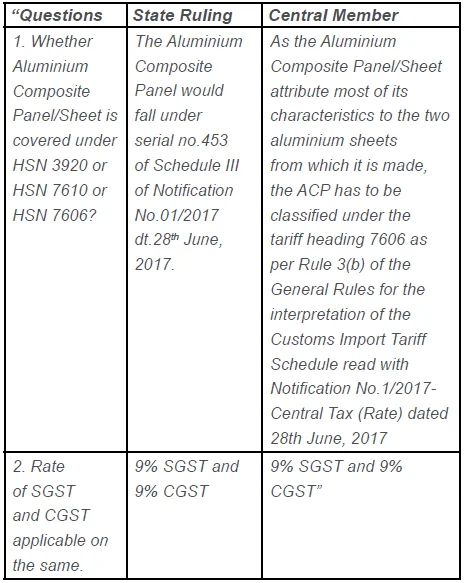
 

5. Students Study Circle on Income Tax held on Monday, 19th February, 2024 on Zoom platform

Mr Vineet Jain, mentored by CA Sharad Sheth, led discussions on critical aspects of taxation, including Faceless Assessments, Penalty Proceedings, and CIT (A), elucidating the evolving landscape of income tax assessments. The session was attended by approximately 176 participants.

Emphasising strategic utilisation, Vineet demonstrated the application of judicial decisions and case laws for effective tax planning and compliance.

A practical walk through of the Income Tax Portal was provided, enabling participants to adeptly respond to notices and navigate the digital platform.

Dispelling prevalent misconceptions, Vineet addressed myths surrounding tax litigations, ensuring participants were equipped with accurate information.

The webinar, conducted on 19th February, 2024, on Zoom platform from 6 pm to 8 pm, served as a comprehensive guide, offering valuable insights and empowering attendees in the field of taxation.

Link to access the session:

https://www.youtube.com/watch?v=Uw8noZxw190

QR Code:
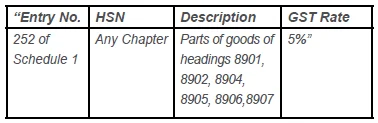
28th International Tax And Finance Conference

Gathered at the luxurious The Corinthians Resort and Club Pune, the 28th International Tax and Finance (ITF) Conference unfolded from 4th to 7th of April, 2024, showcasing a remarkable turnout of over 270 participants, including distinguished faculties and special invitees. Hosted under the esteemed banner of the International Taxation Committee of BCAS, this conference stood as a beacon for professionals in the intricate realm of international tax and finance, offering an immersive platform for knowledge exchange, idea sharing, and invaluable networking opportunities.

The Conference covered the following:

DYNAMIC ENGAGEMENTS

The participants were divided into four groups, each group ably led by group leaders (aggregating to 24, across the three papers) who helped generate an in-depth discussion of the case studies from the papers. The paper writers visited each group to witness the brainstorming sessions.

An overview of each of the sessions follows:

Day 1: 4thApril, 2024 — Opening Horizons

President CA Chirag Doshi and Chairman CA Nitin Shingala set the stage ablaze with their visionary remarks, unveiling BCAS’ ambitious initiatives and insights into India’s burgeoning international trade landscape. The inauguration, graced by luminaries including Key Note Speaker Shri Anand Deshpande and esteemed past presidents, was adorned with the ceremonial lighting of the lamp, symbolising the enlightenment to come.


Shri Anand Deshpande’s keynote address, an illuminating exploration into the transformative potential of AI in the accounting and taxation domain, captivated the audience with real-life applications and visionary perspectives.


A spirited Group Discussion on Cross-BorderStructuring of Family-owned Enterprises Income Tax and FEMA Intersection, complemented by a comprehensive presentation by Rutvik R. Sanghvi, ignited intellectual fervour under the adept moderation of CA Pinakin Desai.

Day 2: 5th April, 2024 — Navigating Complexity

The day commenced with an engaging Group Discussion on Unravelling GAAR, SAAR, PPT, and LOB — Overlap and Intricacies). The discussion was engaging and informative, with participants actively sharing their experiences and insights on the subject matter.

Following the GD, CA Shishir Lagu’s elucidation on USA Taxation further enriched the discourse, shedding light on multifaceted compliance and legal challenges with respect to the topic.

The unveiling of CA Padamchand Khincha’s exhaustive paper (spread into two parts), navigating the labyrinth of tax intricacies, facilitated a deeper understanding of regulatory overlaps, expertly chaired by CA Kishore Karia.

Day 3: 6th April, 2024 — Insightful Dialogues

Participants delved into riveting Case Studies in International Tax, followed by Adv. Aditya Ajgaonkar’s profound discourse on the Interplay of the Black Money Act and PMLA in International Taxation, illuminating the legal landscape.

A captivating Panel Discussion on Transfer Pricing, chaired by CA TP Ostwal and featuring distinguished panellists CA Vijay Iyer, Mr Bhupendra Kothari and Ms Monique Herksen (online), explored industry-specific challenges and global trends, including pertinent topics such as Carbon Credits and ESG, underscoring the evolving dynamics of international tax compliance.

Day 4: 7thApril, 2024 — Culminating Reflections

The conference reached its pinnacle with a stimulating Panel Discussion on Case Studies in International Tax, moderated by CA Hitesh Gajaria, where panellists, CA Vishal Gada, Ms Malathi Sridharan & Mr R.S Syal dissected intricate scenarios with precision and insight, leaving attendees enriched with practical wisdom and strategic insights. The discussion was centered around six case studies.

CONCLUDING NOTES

Under the visionary leadership of Chairman CA Nitin Shingala and Co-Chairman CA Chetan Shah, along with the dedicated efforts of Chief Conference Director CA Divya Jokhakar and Co-Director CA Naman Shrimal and their tireless team, the 28th ITF Conference concluded triumphantly, leaving an indelible mark on the global tax discourse and garnering enthusiastic acclaim from all quarters.

Other members of the core team were CA Jagat Mehta, CA Siddharth Banwat, CA Mahesh Nayak, CA Anil Doshi and CA Deepak Kanabar.The ITF Conference ended on a high note and received encouraging response and feedback from the participants.


Book Review

Title of the Book: EMBRACE THE FUTURE

Author: R GOPALAKRISHNAN AND HRISHI BHATTACHARYYA

Reviewed by SHIVANAND PANDIT

Embrace the Future provides deep insights into the nuanced art of business transformation, steering organisations through the intricate process of adjusting to the constantly shifting landscape of tomorrow.

In this book, the authors offer a profound exploration of the intricate dynamics of organisational change and transformation. Drawing from their wealth of experience and expertise, they delve into fundamental principles crucial for navigating the ever-evolving landscape of business. Through compelling insights and real-world examples, the authors illuminate key strategies for driving sustainable growth and fostering resilience in the face of uncertainty.

Several points deeply resonated with me as I delved into the pages of the book:

UNDERSTANDING THE DYNAMICS OF CHANGE

Within their analysis, the authors delve deeply into the crucial role that agility, resilience and foresight play in the facilitation of successful transformational initiatives within organisations. They emphasise the pressing need for these entities to swiftly adapt to the ever-shifting terrains of their environments, recognising that the ability to remain flexible and adaptable is not merely advantageous but rather vital for their continued existence and relevance.

Central to their argument is the notion that a comprehensive understanding of the dynamics of change is paramount for leaders. By grasping the nuances of these dynamics, leaders can effectively anticipate and respond to fluctuations within the market, thereby positioning their organisations strategically amidst uncertainty. This proactive stance enables leaders to steer their organisations towards growth opportunities, leveraging their foresight to capitalise on emerging trends and navigate potential challenges with resilience.

In essence, the authors advocate for a holistic approach to change management — one that prioritises agility, resilience and foresight as indispensable attributes for organisational success in an ever-evolving landscape. Through this lens, leaders are empowered to not only adapt to change but also to embrace it as a catalyst for innovation and growth.

NAVIGATING DISRUPTION AND INNOVATION

In a world characterised by disruptive forces and rapid technological advancements, organisations must embrace innovation as a means of staying competitive. Gopalakrishnan and Bhattacharyya showcase how successful organisations leverage disruption to their advantage, using it as a catalyst for transformation. Through compelling case studies, they illustrate practical frameworks for fostering a culture of innovation, embracing emerging technologies and seizing new opportunities in the marketplace.

EMPOWERING LEADERSHIP AND COLLABORATION

Effective leadership plays a pivotal role in driving and sustaining organisational transformation. The authors underscore the importance of empowering leaders who can inspire and mobilise teams towards a shared vision of the future. They provide valuable insights into leadership practices, communication strategies and change management techniques essential for navigating complex transformation journeys. Furthermore, they emphasise the significance of collaboration, highlighting how cohesive teamwork fosters innovation and drives organisational success.

CULTIVATING A LEARNING MINDSET

Central to the book’s philosophy is the notion of continuous learning and adaptation. Gopalakrishnan and Bhattacharyya advocate for a growth mindset, encouraging individuals and organisations to embrace lifelong learning as a cornerstone of success. They offer actionable advice and practical tools for cultivating a culture of learning, experimentation and adaptation. By fostering a mindset of curiosity and openness to new ideas, organisations can stay ahead of the curve and thrive in an ever-changing environment.

SUSTAINABLE GROWTH AND IMPACT

Beyond pursuing short-term gains, the authors stress the importance of sustainability, ethics and social responsibility in driving meaningful business transformation. They explore how organisations can align their objectives with broader societal goals, making a positive impact on the world while achieving business success. By embracing their broader purpose and integrating sustainability into their core practices, organisations can create lasting value for stakeholders and contribute to a more sustainable future.

To conclude, Embrace the Future serves as a comprehensive guide for leaders, change agents and organisations embarking on the journey of transformation in an era of unprecedented change and opportunity. With its profound insights and practical strategies, the book equips readers with the tools they need to navigate uncertainty, embrace innovation and drive sustainable growth in today’s dynamic business landscape.

Miscellanea

1. TECHNOLOGY

# Government agency CERT-In finds multiple bugs in Microsoft products, asks users to update immediately

The Indian Computer Emergency Response Team (CERT-In) on Friday warned users of multiple vulnerabilities in Microsoft products which could allow an attacker to obtain information disclosure, bypass security restriction and cause denial-of-service (DoS) conditions on the targeted system.

The Indian Computer Emergency Response Team (CERT-In), a division under the Ministry of Electronics & Information Technology, issued a warning on Friday regarding several vulnerabilities present in Microsoft products. These vulnerabilities, if exploited, could lead to information disclosure, security restriction bypass, and denial-of-service (DoS) conditions on affected systems.

The affected Microsoft products encompass a wide range, including Microsoft Windows, Microsoft Office, Developer Tools, Azure, Browser, System Center, Microsoft Dynamics, and Exchange Server.

CERT-In’s advisory highlighted that these vulnerabilities could enable attackers to gain elevated privileges, disclose information, bypass security restrictions, execute remote code, perform spoofing attacks, or trigger denial of service conditions.

Specifically addressing Microsoft Windows, CERT-In explained that vulnerabilities stem from inadequate access restrictions within the proxy driver and insufficient implementation of the Mark of the Web (MotW) feature.

To mitigate these risks, users are strongly urged to apply the recommended security updates outlined in the company’s update guide.

In addition to Microsoft products, CERT-In also cautioned users about vulnerabilities in Android and Mozilla Firefox web browsers. These vulnerabilities could potentially expose sensitive information, allow arbitrary code execution, and induce DoS conditions on targeted systems.

The affected software versions identified in the advisory include ‘Android 12, 12L, 13, 14’, as well as ‘Mozilla Firefox versions prior to 124.0.1 and Mozilla Firefox ESR versions before 115.9.1’.

Some of the multiple vulnerabilities were found inAndroid and Mozilla Firefox web browsers too which could allow an attacker to obtain sensitive information, execute arbitrary code and cause DoS conditions on the targeted system.

Hence, follow the advisory to update ‘Android 12, 12L, 13, 14’, and ‘Mozilla Firefox versions prior to 124.0.1 and Mozilla Firefox ESR versions before 115.9.1’, said the agency.

(Source: International Business Times – By Isha Roy – 12th April, 2024)

2. HEALTH/SCIENCE/SOCIETY

# This could be a reason for your late-night chocolate cravings

If you have spent nights eating chocolates or ice cream, then ‘loneliness’ can be the reason behind the binging on sugary items, say researchers.

According to the study published in the journal JAMA Network Open, loneliness can cause an extreme desire for sugary foods.

To conduct the study, the researchers linked brain chemistry from socially isolated individuals to poor mental health, weight gain, cognitive loss, and chronic diseases such as Type 2 diabetes and obesity.

Senior study author Arpana Gupta, an Associate Professor at the University of California, Los Angeles, said that she wanted to observe the brain pathways associated with obesity, depression, and anxiety, as well as binge eating, which is a coping mechanism against loneliness.

The study included 93 premenopausal participants, and the results indicated that people who experienced loneliness or isolation had a higher body fat percentage.

Moreover, they displayed poor eating behaviours such as food addiction and uncontrolled eating.

Scientists used MRI scans to monitor the participants’ brain activity while they were looking at abstract images of sweet and savoury foods. The results revealed that individuals who experienced isolation had more activity in certain regions of the brain that are responsible for reacting to sugar cravings.

These same participants showed a lower reaction in areas that deal with self-control.

According to Gupta, social isolation can cause food cravings similar to “the cravings for social connections”.

(Source: International Business Times – By IBT News desk – 22nd April, 2024)

3. SPORTS

#Chess World Championships: India’s Gukesh to fight China’s Ding Liren for ultimate prize in November-December 2024

17-year-old from Chennai emerged victorious in the Candidates tournament in Toronto, a prestigious eight-player event held to handpick the challenger to the world champion.

India’s D Gukesh will take on reigning world champion Ding Liren in the World Chess Championship in November-December this year.

This was revealed by Emil Sutovsky, the CEO at FIDE, the global governing body of chess, on social media after the 17-year-old from Chennai had emerged victorious in the Candidates tournament in Toronto, a prestigious eight-player event held to handpick the challenger to the world champion.

The venue for the contest is yet to be confirmed yet.

The teenaged Gukesh had edged past a troika of stalwarts: America’s Hikaru Nakamura, and Fabiano Caruana and Russia’s Ian Nepomniachtchi to become the Candidates winner on Monday. While Nepomniachtchi is a two-time World Championship contender, World No 2 Caruana was competing in his fifth Candidates event, having won it once. Meanwhile, Nakamura, the World No 3, was competing in his third Candidates event.

Despite their experience, they could not prevent the Candidates debutant Gukesh from breasting the tape first. With one round to go, Gukesh had raced into the lead while the trio were just half a point behind him. Gukesh only needed a draw with Nakamura in his final game, provided the other game between Caruana and Nepomniachtchi also drew, If, either of the latter had won, they would meet Gukesh in a tiebreaker.

Gukesh became India’s youngest grandmaster ever at the age of 12 years, seven months, 17 days, missing the tag of the world’s youngest by a mere 17 days. Last year, he overtook five-time world champion Viswanathan Anand as the country’s top ranked player for the first time after 36 years. Now, he has added another feat to that impressive list by becoming the youngest ever Candidates winner and will be the youngest World Chess Championship contender when he battles Ding at the World Championship later this year.

(Source: India express.com – By Sports desk –24th April, 2024)

Regulatory Referencer

I. DIRECT TAX: SPOTLIGHT

1. Time limit for verification of return of income after uploading – reg. – Notification No. 2/ 2024 dated 31st March, 2024.

CBDT has clarified that:

(i) Where the return of income is uploaded and e-verification or ITR-V is submitted within 30 days of uploading, in such cases, the date of uploading the return of income shall be considered as the date of furnishing the return of income.

(ii) Where the return of income is uploaded but e-verification or ITR-V is submitted after 30 days of uploading, in such cases, the date of e-verification / ITR-V submission shall be treated as the date of furnishing the return of income and all consequences of late filing of return under the Act shall follow, as applicable.

(iii) The date on which the duly verified ITR-V is received at CPC shall be considered for the purpose of determination of the 30 days’ period from the date of uploading of return of income.

(iv) Where the return of income is not verified within 30 days from the date of uploading or till the due date for furnishing the return of income as per the Income-tax Act, 1961 — whichever is later — such return shall be treated as invalid due to non-verification.

II. COMPANIES ACT, 2013

NO NEWS TO REPORT

III. SEBI

1. List of Goods for purpose of commodity derivatives u/s 2(bc) of SCRA, 1956: The Government, in consultation with SEBI, has notified the goods specified in the Schedule as commodity derivatives under section 2(bc) of SCRA, 1956. The specified goods are (a) cereals and pulses, (b) oil seeds, oil cakes and oils, (c) spices, (d) fruits & vegetables, (e) metals, (f) precious metals, (g) gems & stones, (h) forestry, (i) fibers, (j) energy, (k) chemicals, (l) sweeteners, (m) plantations, (o) dairy and poultry, (p) dry fruits, (q) activities, services, rights, interest & events, (r) others. [Notification No. S.O. 1002(E), dated 1st March, 2024]

2. SEBI broadens the list of goods for purpose of commodity derivatives u/s 2(bc) of SCRA, 1956: Earlier, the Government, notified the list of goods specified in the Schedule as commodity derivatives under section 2(bc) of the SCRA, 1956. Now, SEBI has broadened the list of goods for the purpose of commodity derivatives. SEBI has expanded the list of goods from 91 to 104, introducing 13 new goods and alloys for 5 metals. The diverse list includes apples, cashews, garlic, skimmed milk powder, white butter, etc. The circular shall be effective from the date of issuance. [Circular No. SEBI/HO/MRD/MRD-POD-1/P/CIR/2024/13, dated 5th March, 2024]

3. SEBI amends REITs Regulations, 2014; introduces a new chapter on ‘Small and Medium REITs’: SEBI has notified SEBI (Real Estate Investment Trusts) (Amendment) Regulations, 2024. A new chapter VIB, i.e., Small and Medium REITs, has been inserted to existing regulations. The term “Small and Medium REIT” (SM REIT) refers to an REIT that pools money from investors under one or more schemes as per regulation 26P(2). The regulation specifies the eligibility criteria for making an offer of units of scheme for SM REITs. Further, SEBI has broadened the definition of REIT under regulation 2(zm). [Notification No. SEBI/LAD-NRO/GN/2024/166, dated 8th March, 2024]

4. SEBI expands framework of ‘Qualified Stock Brokers’ to strengthen investors trust in securities market: Earlier, SEBI specified four parameters for designating a stockbroker as a ‘Qualified Stock Broker’ (QSB) on an annual basis. Now, SEBI has expanded framework of QSBs to include more stock brokers. Accordingly, SBI has revised a list of QSBs by adding more parameters. The additional parameters include compliance score of stock broker, grievance redressal score of stockbroker and proprietary trading volumes of stockbroker. Also, procedure for identifying stock broker as QSB has been revised. [Circular No. SEBI/HO/MIRSD/MIRSD-POD-1/P/CIR/2024/14, dated 11th March, 2024]

5. SEBI revises the date for filing of formats for Mutual Fund scheme offer documents: Earlier, SEBI vide circular dated 1st November, 2023 redesigned the format for Mutual Fund scheme offer documents. In the revised format, SEBI mandated AMCs to disclose risk-o-meter of the Benchmark on the Front page of an IPO application form, Scheme Information Documents (SID) and Key Information Memorandum (KIM); and in Common application form. The updated format needs to be implemented from 1st April, 2024. Pursuant to a request submitted by AMFI, SEBI has now revised the date to 1st June, 2024. [Circular No. SEBI/HO/IMD/IMD-RAC-2/P/CIR/2024/000015, dated 12th March, 2024]

6. SEBI repeals norms regarding ‘procedure dealing with cases involving offer / allotment of securities up to 200 investors’: SEBI has repealed the circulars outlining the procedure for cases where securities are issued before 1st April, 2024, involving the offer / allotment of securities to more than 49 but up to 200 investors in a financial year. The same shall stand rescinded for six months from the date of issue of the circular. Further, all cases involving an offer or allotment of securities to more than the permissible number of investors must be dealt with in line with provisions contained under extant applicable laws. [Circular No. SEBI/HO/CFD/POD-1/P/CIR/2024/ 016, dated 13th March, 2024]

7. SEBI allows reporting entities to use e-KYC Aadhaar Authentication services of UIDAI in Securities Market as ‘sub-KUA’: Earlier, SEBI had allowed certain reporting entities to perform Aadhaar authentication services under the Aadhaar Act, 2016. The permission was granted only for Aadhaar authentication as required u/s 11A of the Money Laundering Act, 2002. These entities are now allowed to perform authentication services of UIDAI in the securities market as sub-KUA. The KUAs shall facilitate the on boarding of these entities as sub-KUAs to provide the services of Aadhaar authentication with respect to KYC. [Circular No. SEBI/HO/MIRSD/SECFATF/P/CIR/2024/17, dated 19th March, 2024]

8. SEBI puts in place safeguards to address concerns of investors transferring securities in a dematerialised mode: SEBI has issued safeguards to address concerns of the investors arising out of the transfer of securities from the Beneficial Owner (BO) account. These aim to strengthen measures to prevent fraud and misappropriation of inoperative demat accounts. It states that depositories must give more emphasis on investor education, particularly with regard to careful preservation of Delivery Instruction Slip (DIS) by the BOs. Further, DPs must not accept pre-signed DIS with blank columns from the BOs. [Circular No. SEBI/HO/MRD/MRD-POD-2/P/CIR/2024/18, dated 20th March, 2024]
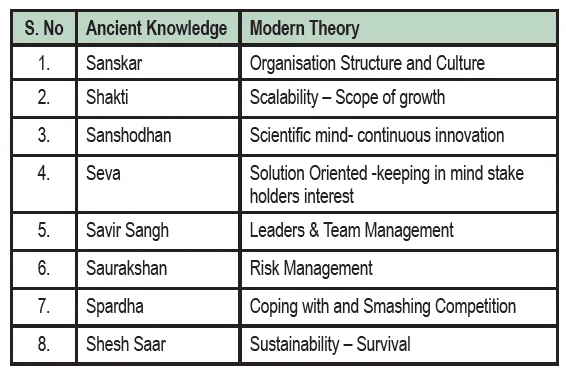
9. FPI with more than 50 per cent of their Indian equity AUM in a corporate group aren’t required to make additional disclosures: Earlier, SEBI vide circular dated 24th August, 2023 mandated additional disclosures for FPIs that fulfil objective criteria. Further, FPIs satisfying the criteria were exempted from additional disclosure requirements, subject to certain conditions. SEBI has now amended this circular. An FPI with more than 50 per cent of its Indian equity AUM in a corporate group shall not be required to make additional disclosures subject to compliance with certain conditions. The circular shall come into effect immediately. [Circular No. SEBI/HO/AFD/AFD-POD-2/P/CIR/2024/19, dated 20th March, 2024]

10. SEBI introduces the beta version of T+0 rolling settlement cycle on an optional basis: Earlier, SEBI vide circular dated 7th September, 2021 allowed for the introduction of a T+1 rolling settlement cycle. SEBI has now introduced the beta version of a T+0 rolling settlement cycle on an optional basis, in addition to the existing T+1 settlement cycle in the equity cash market. All investors are eligible to participate in the segment for the T+0 settlement cycle if they can meet the timelines, process and risk requirements as prescribed by the Market Infrastructure Institutions (MIIs). [Circular No. SEBI/HO/MRD/MRD-POD-3/P/CIR/2024/20, dated 21st March, 2024]

IV. FEMA

1. IFSCA broadens the definition of “escrow service”: IFSCA has broadened the definition of “escrow service” to mean a service provided by a payment service provider, under an agreement, whereby money is held by such payment service provider in an escrow account with an IFSC Banking Unit (IBU) or an IFSC Banking Company (IBC) for and on behalf of one or more parties that are in the process of completing a transaction. [International Financial Services Centres Authority (Payment Services) (Amendment) Regulations, 2024 Notification No. IFSCA/GN/2024/002, dated 2nd April, 2024]

2. RBI proposes to allow investment in ‘Sovereign Green Bonds’ by eligible foreign investors in IFSC: At present, FPIs are permitted to invest in Sovereign Green Bonds (SGBs) under the different routes available for investment by FPIs in government securities. With a view to facilitating wider non-resident participation in SGBs, RBI has proposed to permit eligible foreign investors in the IFSC to also invest in such bonds. A scheme for investment and trading in SGBs by eligible foreign investors in IFSC is being notified separately in consultation with the Government and the IFSC Authority. [Press Release No. 2024-25/43, dated 5th April, 2024]

3. RBI’s clarification on Exchange Traded Currency Derivatives: RBI’s A.P. (DIR Series) Circular No. 13, dated 5th January, 2024 sets out the Master Direction and reiterates the regulatory framework for participation in ETCDs involving the INR. There were concerns that ETCD contracts entered into without the purpose of hedging a contracted exposure now stand disallowed. RBI has clarified that ETCD contracts are permitted only for the purpose of hedging of exposure to foreign exchange rate risks and an earlier circular exempting documentary evidence for positions taken up to USD 10 million per exchange did not provide any exemption from the requirement of having the exposure. The consolidated Master Direction was to come into effect from 5th April, 2024 but has been postponed now to 3rd May, 2024. [RBI Press Release No. 32/2024-25, dated 4th April, 2024]

Updated up to 15th April, 2024.

Legacy

Shrikrishna : Why are you looking worried, Arjun?

Arjun : Our life has become so depressing, that all CAs are really worried. They are not sure whether to continue the practice at all! And if yes, how to continue…………?

Shrikrishna : What do you mean?

Arjun : I told you many times, audit work is a nightmare. No one wants to do audits.

Shrikrishna : Why?

Arjun : Too much of regulation. Client feels all those regulatory requirements are meant for auditors only. They find no value addition from our services.

Shrikrishna : Then you should charge more fees! You are doing what actually they are expected to do.

Arjun : You are applying salt to our wounds! Even our normal fees they are not willing to pay! Payments of additional fee is out of question.

Shrikrishna : I am aware, Arjun. But you should show courage to get rid of such clients.

Arjun :Bhagwan, very easy to say so, but…

Shrikrishna : But what?

Arjun : Cannot afford. It is not a question merely of fees.

Shrikrishna : Then?

Arjun : Lord, frankly our own work is full of lapses. Client’s record is bad, they don’t have good assistants. We cannot do justice to all regulations. We are ourselves not upgraded!

Shrikrishna : Yes, even during your CPE hours you don’t pay much attention.

Arjun : Yes, it is difficult to concentrate. And we really cannot keep track of all requirements of audits.

Shrikrishna : But once you give up the work, how will it matter?

Arjun : That precisely is the problem. So far we have accommodated the client with all his limitations; and suddenly if we discontinue, he is annoyed. He rakes up disputes.

Shrikrishna : Oh! And then what does he do?

Arjun : He consults some other CA. We have no unity in our profession. We accommodate the clients but not our own professional brother. We try to take advantage of the discontent of other CA’s clients.

Shrikrishna : That’s very dangerous.

Arjun : Yes; and sometimes the client or other CA tries to blackmail us. They threaten us to expose our lapses of past years. We simply cannot do anything about it. We can’t change or rectify old errors!

Shrikrishna : So, you are the prisoner of your own legacy!

Arjun : Very true. We feel, some other CA will get an opportunity to examine old work.

Shrikrishna : But why don’t you rectify all old errors in one year and give a qualified report if lapses continue.

Arjun : It is easier said than done and requires courage to do so. Client says, all these years you have been quiet on our lapses, then why suddenly you have stopped ‘co-operating’.

Shrikrishna : Then have some kind of understanding with your successor and tactfully come out of the risk.

Arjun : The sword remains hanging on our head for at least 7 years. Recently, there was an interesting case.

Shrikrishna : What was that?

Arjun : There was a complaint of misconduct against a CA for lapses in audit. That complaint was filed by a regulator. The CA sought to take defence on the basis of ‘legacy’.

Shrikrishna : Meaning?

Arjun : He argued that this is being done for past so many years in the same manner. For instance, our stand and remark on fixed assets register!

Shrikrishna : True. One cannot take shelter under ‘legacy’. If there was something wrong in the past, the new auditor is expected to set right the things. He cannot perpetuate the errors of the past. Otherwise, both will be in a soup!

Arjun : But our approach is that of copy-paste. No one has time to consciously deviate from the past.

Shrikrishna : Best way is not to create a legacy of wrong things, regardless of no fees or less fees. Your work should be as perfect as possible, irrespective of what had happened in the past.

Arjun : That we are realising at this stage in our life. Initially, we took many things lightly, saying ‘chalta hai’! But now we may have to pay for it.

Shrikrishna : Better late than never. Remember, Arjun, it is never too late.

Arjun : Many CAs are running away from attest function. Somehow, they want to avoid signing of audits.

Shrikrishna : It is all the more worse that many senior CAs take junior partners to sign the audits!

Arjun : True. We need to wake up and mend our ways. Otherwise, the legacy will kill us!

Thank you Bhagwan.

II Om Shanti II.

Note: This dialogue is based on the proper approach towards our work right from the beginning. One cannot perpetuate the mistakes.

In This Issue, We Look At Some More Apps / Utilities Which Are Useful For Day To Day Use.

Battarang Notifier

If you have a tablet or secondary phone lying around, and you’d like to get an alert before its battery dies completely rather than finding it out at an inconvenient time; or, if you are in charge of charging your kids’ or parents’ devices; And, if you are on the computer most of the time, and like to know the battery and charging status of your phone’s battery, this is the app for you.

This is a simple app which notifies you on your battery status at your pre-defined settings. If you want to be notified when your battery drops to 15 per cent you can get a popup on your browser regarding the same. Also, it’s generally better not to charge the device fully every time, since it can decrease the potential lifespan of the battery. So you may like to set a notification when your battery charge reaches 85 per cent.

There is no clutter –— Battarang uses a single notification per device. Also, it uses almost no resources because it remains idle until the specified conditions are met.

Just install the app, go to their website, scan the QR code and link your phone with your browser and you are set!

Android : https://bit.ly/3TWwSf9
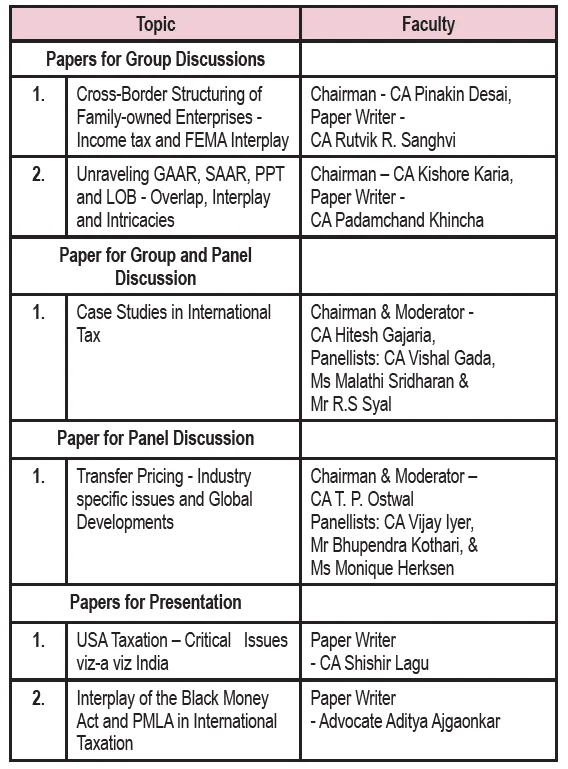
 

Syncthing

These days, we all have multiple devices — maybe a phone and a tab, a phone and a computer or even multiple phones. It is always a struggle to keep the devices in sync, especially with regard to certain important files and folders which are necessary.

Syncthing is a very simple synchronization tool to synchronise files and folders between multiple devices. Just install Syncthing on multiple devices and then follow the instructions to connect and sync the devices and select the folders or files to be Synced. From that moment onwards, whenever there are changes in that folder or file, they will be automatically synced.

It is totally private, since there is no upload / download to or from any external server and syncing is done in peer to peer mode. Besides, each device is identified by a strong cryptographic certificate — hence there is no leakage of data. And, all communication is secured, ensuring there is no eavesdropping during transfer.

The beauty of this is that you may sync files and folders across devices and platforms such as Windows, Linux, Android, macOS, BSD and more.

So, go for it, and get your devices synced fast and secure!

https://syncthing.net/


Image Compressor Lite

Many a times, we have large photos which are difficult to send online owing to their large size. Image Compressor Lite will be your helpful companion at such times!
This app allows you to easily compress and resize images on your device. You can compress images to a particular size, or to a particular ratio (say 50 per cent) making it easy to reduce the file size without sacrificing quality. It allows you to change the resolution of the image with a slider, to make it smaller. The app also includes batch compression, allowing you to compress multiple images at once.
Whether you are looking to save space on your device or making your images easy and fast to send, Image Compressor Lite has you covered!

Android : https://bit.ly/3TYkwDx


one sec | screen time + focus

This is one app that can save you many many hours daily! It forces you to take a deep breath whenever you open distracting apps and gain back control over your time.

It’s as simple as it is effective: You will reduce your social media usage just by becoming aware of it. one sec is the focus app that tackles the problem of unconscious social media use at its root. It is designed to change your habits on a long-term basis.

one sec works so great because it is fully automated — and forces you to reflect on your actions — before they happen!

This is the #1 app to break free from Social Media distractions in the long term!

Try it out today and change your engagement time with your phone!

Android : https://bit.ly/3TXmMed

Part A : Company Law

3 In the Matter of M/s Octacle Integration Private Limited

Registrar of Companies, West Bengal

Adjudication Order No. ROC/ADJ/326/223465/2023/12320-12325

Date of Order: 22nd February, 2024

Individual appointed as a director on the Board of the Company without holding DIN at the time of his appointment- amounts to a violation of the provisions of Section 152(3) of the Companies Act, 2013

FACTS

On the basis of the inquiry carried out u/s 206(4) of the Companies Act, 2013, certain violations were pointed out in the inquiry report and it was observed that M/s OIPL had filed form DIR-12 for the appointment of a director Mr SK on 27th August, 2021. The said form was approved on 28th August, 2021. The DIN of the appointed director was 06762192

Further, on a careful examination of the DIN details of Mr SK available on the MCA portal and E-form DIR-12, it was observed that there were differences in the details/data with respect to address, PAN, email ID and Mobile no. of Mr SK and also DIN status was shown as de-activated due to non-filing of Form DIR-3 KYC.

Thereafter, the notice under section 206(1) of the Companies Act, 2013 was issued to M/s OIPL on 27th April 2023 and a reply was received on 12th May 2023. In the reply dated 12th May 2023, Mr SK, residing in the State of West Bengal had submitted the following facts by way of an Affidavit: –

a) At the time of appointment, he was not holding any DIN and inadvertently DIN 06762192 of Mr SK, IAS officer (New Delhi) was used by him for his appointment.

b) Mr SK had applied to obtain DIN in Form DIR-3 in his name and got the DIN 10159546 dated 11th May, 2023.

c) Accordingly, Adjudication Officer (“AO”) had issued Show Cause Notice (“SCN”) dated 12th December, 2023 to Mr SK for giving an opportunity to submit his reply with respect why the penalty under Section 159 of the Companies Act, 2013 should not be imposed for violation of the provisions of Section 152 of the Companies Act, 2013.

Thereafter, two times opportunity for appearing before the AO for a hearing was provided to Mr SK. However, Mr. SK remained absent himself or through his representative from hearing the matter.

CONTRAVENTION OF SECTION 152(3) OF THE COMPANIES ACT, 2013

Section 152(3) No person shall be appointed as a director of a company unless he has been allotted the Director Identification Number under section 154(7) (or any other number as may be prescribed under section 153).

Section 159 of the Companies Act, 2013 inter alia provides that “If any individual or director of a company makes any default in complying with any of the provisions of section 152, section 155 and section 156, such individual or director of the company shall be liable to a penalty which may extend to fifty thousand rupees and where the default is a continuing one, with a further penalty which may extend to five hundred rupees for each day after the first during which such default continues.”

ORDER/HELD

The AO after taking into account the facts, passed an ex-parte order and imposed a penalty on Mr SK having (DIN 10159546) under Section 159 of the Companies Act, 2013 as per the table below for violation of section 152(3) of the Companies Act, 2013:

**The days of default are calculated from the date of appointment as the director i.e., 17th August 2021 till the date of allotment of new DIN i.e., 10th May, 2023.

Mr SK director of M/s OIPL had to pay the amount of penalty individually by way of e-payment within 90 (ninety) days from the date of the order.

Minor’s Dealings – Major Implications

INTRODUCTION

Readers may be aware that the minimum age to vote (under the Constitution of India); for driving (under the Motor Vehicle Act, 1988); for women to get married (under the Prohibition of Child Marriage Act, 2006) is 18 years, etc. Thus, the law places several restrictions on what a minor can and cannot do. However, can a minor enter into contracts, either directly or through his guardian? Can a minor own property / asset? Several such issues crop when dealing with minors. Let us examine some of these questions which could have major ramifications.

MEANING OF A MINOR

The Majority Act, 1875 states that every person domiciled in India shall attain the age of majority on his completing the age of 18 years. In computing the age of any person, the day on which he was born is to be included as a whole day and he shall be deemed to have attained majority at the beginning of the 18th anniversary of that day.Thus,any person below the age of 18 years is a minor.

In addition, the Hindu Minority and Guardianship Act, 1956 lays down the law relating to minority and guardianship of Hindus and the powers and duties of the guardians. It overrides any Hindu custom, tradition or usage in respect of the minority and guardianship of Hindus. According to this law also, a “minor” means a person who has not completed the age of 18 years. The Act applies to:

(i) Any person who is a Hindu, Jain, Sikh or Buddhist by religion.

(ii) Any person who is not a Muslim, Christian, Parsi or a Jew.

(iii) Any person who becomes a Hindu, Jain, Sikh or Buddhist by conversion or reconversion.

(iv) A legitimate / illegitimate child whose one or both parents are Hindu, Jain, Sikh or Buddhist by religion. However, in case only one parent is a Hindu, Jain, Sikh or Buddhist by religion, then the child must be brought up by such parent as a member of his community, family, etc.

GUARDIAN OF MINORS

In India the Guardians and Wards Act, 1890, lays down the law relating to guardians of a minor. A guardian means a person having the care of the minor or of his property, or of both the minor and his property and a ward is defined to mean a minor for whose benefit or property, or both, there is a guardian. A guardian stands in a fiduciary relation to his ward and he must not make any profit out of his office.

CONTRACTS BY MINORS

S.3 of the Indian Contract Act, 1872 states that only a person who has attained the age of majority is competent to contract. The Privy Council, in Mohori Bibee vs. Dharamdas Ghose, (1903) 30 Cal 539, held that contracts involving minors are void ab initio. The Court also held that even if a minor intentionally misrepresents his age, he can still plead minority as a defence to avoid liability. This protects minors from incurring liabilities, as the law deems them incompetent to contract.

In Krishnaveni vs. M.A. Shagul Hameed, Civil Appeal arising out of SLP P(C) No.23655/2019, the Supreme Court held that a minor is not competent to enter into an agreement. It is void as per Section 11 of the Indian Contract Act, 1872. Therefore, the suit founded on the strength of such a void agreement is liable to be dismissed. The Court below declined to accept the said stand on the ground that a minor can be a beneficiary under an agreement.

In Mathai Mathai vs. Joseph Mary Alias Marykutty Joseph (2015) 5 SCC 622, the Court opined that a minor could not have entered into a valid contract in her own name and she ought to be represented either by her natural guardian or a guardian appointed by the Court in order to lend legal validity to the contract in question. This decision has further held that the Indian Contract Act,1872 clearly states that for an agreement to become a contract, the parties must be competent to contract, wherein age of majority is a condition for competency. A deed of mortgage is a contract and it cannot be held that a mortgage in the name of a minor is valid, simply because it is in the interests of the minor unless she is represented by her guardian. The law cannot be read differently for a minor who is a mortgagor and a minor who is a mortgagee as there are rights and liabilities in respect of the immovable property would flow out of such a contract for both of them.

WILL BY A MINOR?

Since a minor is not competent to contract, he cannot even make a Will for his property. The Privy Council in K. Vijayaratnam v Mandapaka Sundarsana Rao, 1925 AIR(PC) 196 has taken a similar view. The Indian Succession Act, 1925 now expressly provides that a minor cannot make a Will. The Act does permit a father to appoint a guardian for his minor child. However,a guardian cannot make a Will for his minor child.Thus, if a minor owning assets dies then he would always die intestate. If such a minor is a Hindu then his property would devolve as per the Hindu Succession Act, 1956.

It may be noted that a minor can be the beneficiary of a private trust created under the Indian Trusts Act, 1882. Every person capable of holding property can be a beneficiary and a minor is capable of holding property. The Full Bench of the Madras High Court in A.T. Raghava Chariar vs O.A. Srinivasa Raghava Chariar, AIR 1917 Madras 630,has held that a minor can be a transferee of property, whether such transfer is by way of sale, mortgage, lease, exchange or gift.

PROPERTY FOR BENEFIT OF HINDU MINOR

The Hindu Minority and Guardianship Act places certain restrictions on the powers of a natural guardian of a Hindu minor. The restrictions on the powers of the natural guardian are as follows:

(a) The natural guardian of a Hindu minor has the power to do all acts which are necessary or reasonable and proper for the minor’s benefit or for the realisation, protection or the benefit of the minor’s estate. However, the natural guardian cannot bind the minor by a personal covenant. Thus, the natural guardian of a minor can acquire property, whether by lease or by purchase, for the minor’s benefit.

(b) The most important restriction placed by the Act on the natural guardian relates to his immovable property. A natural guardian cannot without the prior permission of the Court enter into the following transactions, for or on behalf of the minor:

(i) Mortgage or charge or transfer, by way of sale, gift, exchange or in any other mode, any part of the immovable property of the minor.

(ii) Lease any part of the immovable property of the minor for a period exceeding five years or for a term which would extend to a period more than one year beyond his majority.

Even if the above transactions are for the purported benefit of the minor, the natural guardian would require the prior permission of the Court. The permission must be obtained before entering into the transaction. Any transaction involving disposal of the minor’s immovable property without obtaining the Court’s prior permission for the purposes mentioned above is voidable at the instance of the minor or any person claiming under him. Thus, the transaction is not void ab initio but voidable at the minor’s option. The Court would only grant the permission to the natural guardian, if it is proved that the disposal is a necessity or it is for an advantage to the minor. If the Court is not satisfied on this count, then it would not grant a permission for the disposal.

However, it may be noted that the Supreme Court in Sri Narayan Bal and Others vs. Sridhar Sutar and Others (1996) 8 SCC 54 has held that the above provisions do not envisage a natural guardian of an undivided interest of a Hindu minor in a joint Hindu family property. The above provisions, with the object of saving the minor’s separate individual interest from being misappropriated require a natural guardian to seek permission from the Court before alienating any part of the minor’s estate, but do not affect the right of the Karta or the head of the branch to manage and from dealing with the joint Hindu family property. Hence, the Court held that the above provisions will have no application when a Karta of the HUF alienates joint Hindu property even if one or more coparceners are minor.

GIFTS RECEIVED BY MINORS

While a minor cannot make a gift, there is no bar on him receiving one. A minor suffers disability from entering into a contract but he is thereby not incapable of receiving property. Section 127 of the Transfer of Property Act, 1882 throws light on the question of validity of transfer of property by gift to a minor. It recognises the minors capacity to accept the gift without intervention of guardian, if it is possible, or through him. It states that a donee who is not competent to contract (e.g., a minor) and accepting property burdened by any obligation is not bound by his acceptance. But if, after becoming competent to contract and being aware of the obligation, he retains the property given, he becomes so bound.

The Supreme Court in K.Balakrishnan vs. K. Kamalam, 2004 (1) SCC 581 has held that this clearly indicates that a minor donee, who can be said to be in law incompetent to contract under Section 11 of the Contract Act is, however, competent to accept a non-onerous gift. Acceptance of an onerous gift, however, cannot bind the minor. If he accepts the gift during his minority of a property burdened with obligation and on attaining majority does not repudiate but retains it, he would be bound by the obligation attached to it. Thus, it clearly recognised the competence of a minor to accept the gift. It held that the position in law, thus, under the Transfer of Property Act read with the Indian Contract Act was that the acquisition of property being generally beneficial, a child can take property in any manner whatsoever either under intestacy or by Will or by purchase or gift or other assurance inter vivos, except where it is clearly to his prejudice to do so. A gift inter-vivos to a child cannot be revoked. There was a presumption in favour of the validity of a gift of a parent or a grandparent to a child, if it was complete. When a gift was made to a child, generally there was presumption of its acceptance because express acceptance in his case was not possible and only an implied acceptance could be excepted.

HUFs AND MINORS

Minors can be coparceners in their father’s / grandfather’s HUF. Coparcenery is acquired by birth and there is no bar that only major individuals can be coparceners. However, a minor coparcener cannot be a Karta of an HUF since he has no capacity to contract. In a case where the only coparcener surviving after the father’s death was a minor, the Supreme Court allowed his mother (who was not a coparcener of the HUF) to act as the guardian Karta / manager till such time as the son turned major — Shreya Vidyarthi vs. Ashok Vidyarthi AIR 2016 SC139.

SHARES IN THE NAMES OF MINORS

A minor can hold shares in a company through his guardian — Dewan Singh v Minerva Films Ltd (10958) 28 Comp Cases 191 (Punj). The Articles may impose restrictions on the voting rights of a minor but there cannot be any restrictions on the transfer of shares in favour of a minor — Master Gautam Padival vs. Karnataka Theatres (2000) 100 Comp. Cases 124 (CLB). The Department of Company Affairs (as it was then known) has issued a Circular in September 1963 under the Companies Act 1956, stating that a minor cannot be a subscriber to Memorandum of Association since he cannot enter into any contract. However, there is no objection to his owning shares since in the event of such purchase there will be no covenant subsequent on the part of the minor. The name of the guardian and not that of the minor should be shown on the Register of Members.

Just as a minor can have a bank account, a Demat account can also be opened in the name of a minor. The account will be operated by a guardian till the minor becomes major. The guardian has to be the father or in his absence mother. In absence of both, father or mother, the guardian can be appointed by court. A minor cannot be a joint holder in a demat account.

A minor can apply for securities in an IPO. A minor cannot enter into a contract with a stock broker to purchase or sell any security. However, a Trading account can be opened in the name of the minor only for the sole purpose of sale of securities which minor has possessed by way of investment in IPO, inheritance, corporate action, off-market transfers under the following reason:

  •  Gifts
  •  Transfer between family members
  •  Implementation of Government / Regulatory Directions or Orders

Such an account will be operated by the natural guardian till the minor becomes a major. The minor’s demat / trading account can be continued when the minor becomes major. However, on attaining majority, the erstwhile minor should confirm the account balance and complete the formalities as are required for opening a demat / trading account to continue in the same account.

CAN MINOR BECOME A PARTNER?

Under the Indian Partnership Act, 1930, a person who is a minor cannot be a partner in a partnership firm, but, with the consent of all the partners for the time being, he may be admitted to the benefits of partnership. Such minor has a right to such share of the property and of the profits of the firm as may be agreed upon, and he may have access to and inspect and copy any of the accounts of the firm. His share is liable for the acts of the firm, but the minor is not personally liable for any such act. The minor cannot sue the partners for accounts or payment of his share of the property or profits of the firm except when severing his connection with the firm, and in such casethe amount of his share shall be determined by avaluation.

At any time within six months of his attaining majority, or of his obtaining knowledge that he had been admitted to the benefits of partnership, whichever date is later, such person may give public notice that he has elected to become or that he has elected not to become a partner in the firm, and such notice shall determine his position as regards the firm. However, if he fails to give such notice, he shall become a partner in the firm on the expiry of the said 6 months.

Where any person has been admitted as a minor to the benefits of partnership in a firm, the burden of proving the fact that such person had no knowledge of such admission until a particular date after the expiry of 6 months of his attaining majority, shall lie on the persons asserting that fact. Where such person becomes a partner,–

(a) his rights and liabilities as a minor continue up to the date on which he becomes a partner, but he also becomes personally liable to third parties for all acts of the firm done since he was admitted to the benefits of partnership, and

(b) his share in the property and profits of the firm shall be the share to which he was entitled as a minor.

Where he elects not to become a partner,–

(a) his rights and liabilities shall continue to be those of a minor up to the date on which he gives a public notice,

(b) his share shall not be liable for any acts of the firm done after the date of the notice, and

(c) he shall be entitled to sue the partners for his share of the property and profits.

It may be noted that the Limited Liability Partnership Act, 2008 does not have similar provisions for minors being admitted to the benefits of an LLP.

RENUNCIATION OF CITIZENSHIP BY PARENTS

The Citizenship Act, 1955 provides that if any Indian citizen renounces his citizenship, then every minor child of that person also automatically ceases to be an Indian citizen. However, after attaining majority such minor can resume Indian citizenship by making a declaration within one year of becoming a major.

CAN MINORS MAKE REMITTANCES UNDER THE LRS?

Yes. Minors are also eligible to make remittances abroad under the RBI’s Liberalised Remittance Scheme of US$250,000. The RBI has clarified that in case of a minor, Form A2 must be signed by the minor’s natural guardian. It should be noted that the minor’s remittances would not be deducted from his parent’s individual limits.

INCOME-TAX AND MINORS

The provisions relating to clubbing of income of minors with that of their parent under s.64 of the Income-tax Act are quite well known. However, one issue which has garnered attention in recent times is that should the parents also disclose foreign assets owned by the minors in their own Return of Income? Thus, should the Schedule FA of the parent’s Income-tax Return also club disclosures for the foreign assets owned by the minor?

When it comes to minor, the Tribunal has held that only gifts received from defined relatives of the minor himself would be exempt from the purview of s.56(2)(x) of the Income-tax Act. The Mumbai ITAT in the case of ACIT vs. Lucky Pamnani, [2011] 129 ITD 489 (Mum) has held that when minors receive gifts, relationship of the donor should be with reference to the minor who was to be treated as ‘the individual’. With reference to the minor, if the donor was not a defined relative of such minor, then merely because his income is clubbed in the hands of his father, under s.64, a relative of the father does not become a relative of the minor. Accordingly, gifts received from uncle of the father were taxed in the hands of the minor since such a donor was not a relative of the minor, though he was a relative of the father.

CONCLUSION

Due care should be taken in dealing with assets / properties related to minors. A minor slip-up could have major ramifications.

Allied Laws

6 Venkataraman Krishnamurthy and another vs. Lodha Crown Buildmart Private Limited.

2024 SCC OnLine SC 182

Date of order: 22nd February, 2024

Agreement to sale — Agreement clauses included terms for termination — Court bound by the terms of the agreement — Courts cannot unilaterally rewrite terms of agreements [S. 2(g), S. 2(h) Indian Contract Act, 1872].

FACTS

The Appellants intended to purchase an apartment located in Mumbai from the Respondent-developer company. The parties entered into an agreement to sell. As per the said agreement to sale, the Respondent was to construct the property, get necessary approvals / certifications from the Government and deliver the possession of the apartment to the Appellants on said date, failing which, the Appellants had the option to cancel the agreement with full compensation along with interest at 12 per cent per annum. The Respondent failed to deliver the possession of the said apartment owing to certain circumstances. The Appellants, therefore, terminated the contract and requested for a full refund along with interest as per the terms of the agreement. The Respondent, however, denied the termination of the agreement. Aggrieved, the Appellants approached the National Consumers Dispute Redressal Commission (NCDRC). The Ld. NCDRCnoted that though there was a minor delay by the Respondent in handing over the possession of the apartment, the same was not unreasonable. Further, the Ld. NCDRC held the Respondent was to hand over the possession of the apartment within a stipulated time period and if the Appellants wished to terminate the agreement, the Respondent was entitled to deduct the earnest money and interest was restricted to 6 per cent per annum.

Aggrieved by the said order, an appeal was filed before the Hon’ble Supreme Court.

HELD

The Hon’ble Supreme Court observed that the parties had entered into an agreement outlining remedies in case the Respondent failed to hand over possession. Thus, the Hon’ble Supreme Court held that the Ld. NCDRC couldn’t overstep its jurisdiction by rewriting the terms of the agreement of the parties. Further, the Hon’ble Court overturned the decision of the Ld. NCDRC and directed the Respondent to compensate the Appellants as per the terms of the agreement.

7 R. Hemalatha vs. Kashthuri

AIR 2023 Supreme Court 1895

Date of order: 10th April, 2023

Admissibility of Evidence — Suit for Specific Performance — Unregistered Agreement to Sale — Compulsorily registrable document after State Amendment — Effect of non-registration — Can be taken into evidence in a suit for Specific Performance [S. 17, 49, The Registration Act, 1908; S. 17, Tamil Nadu Amendment Act, 2012].

FACTS

The Respondent (Original Plaintiff) instituted a suit for the specific performance of an agreement to sell against the Appellant (Original Defendant). However, the agreement to sale entered between the parties was unregistered. Thus, the preliminary issue which was framed before the Ld. Trial Court pertained to the admissibility of the agreement to sell as evidence. The Ld. Trial Court opined that in view of the Tamil Nadu Amendment Act, 2012, (Amendment Act), an amendment was made to section 17 of the Indian Registration Act, 1908, (Act) whereby, an agreement to sale was made compulsorily registrable. Thus, the Ld. Trial court held that the said agreement to sale cannot be admitted as evidence. Aggrieved, the Original Plaintiff filed an appeal before the Hon’ble Madras High Court. The Hon’ble Court, after relying on section 49(1) of the Act, held that even though the said agreement to sale was unregistered, it can still be taken into evidence considering it was a suit instituted for specific performance.

Aggrieved, an appeal was filed by the Original Defendant before the Hon’ble Supreme Court.

HELD

The Hon’ble Supreme Court observed that though section 17 of the Act was amended by the Amendment Act of Tamil Nadu to make registration compulsory of an agreement to sale, there was no such corresponding amendment made to section 49 of the Act. Further, the Hon’ble Court also noted that an unregistered document affecting any immovable property and which is required to be registered as per section 17 of the Act, may be taken into evidence in a suit instituted for specific performance (subject to section 17(IA) of the Act) under Chapter-II of Specific Relief Act, 1877. Thus, the order of the Hon’ble Madras High Court was upheld.

8 Leela Devi vs. Amar Chand

AIR 2023 Rajasthan 109

Date of order: 2nd May, 2023

Admissibility of Evidence — Suit for partition — Family arrangement between parties — Effect of unstamped and unregistered family arrangement — Admissible evidence — Not liable to be stamped or registered [S. 17, The Registration Act, 1908; S. 2(xx), Rajasthan Stamps Act, 1999].

FACTS

The Petitioner (Plaintiff) had instituted a suit for partition before the Ld. Trial Court. The Defendant had filed a written statement alleging that the parties, being family members, had entered into a family agreement and the properties were partitioned accordingly. The Plaintiff, however, disputed the admission of the said family agreement into evidence, citing that the alleged family agreement was actually a partition deed and the same was neither stamped nor registered. The Ld. Trial Court, however, refused to accept the contentions of the Plaintiff and admitted the family agreement into evidence.

Aggrieved, the Plaintiff filed a writ under Articles 226 and 227 of the Constitution before the Hon’ble Rajasthan High Court.

HELD

The Hon’ble Rajasthan High Court observed that the parties had entered into an oral family agreement which was later reduced to writing. Further, the family agreement was entered in order to resolve the ongoing dispute between the parties and it did not create any new right or title. Thus, the Hon’ble Court held that the alleged document was to be treated as a family arrangement and admitted as evidence. Furthermore, the Hon’ble Court also noted that the family arrangement was neither liable to be stamped according to section 2(xx) of the Rajasthan Stamps Act, 1999 nor liable to be registered under section 17 of the Registration Act, 1908. Thus, the decision of the Ld. Trial Court was upheld.

9 Purni Devi and Anr vs. Babu Ram and Anr

2024 LiveLaw (SC) 273

Date of order: 2nd April, 2024

Limitation — Suit for possession — Execution — Application of execution before a wrong court — Subsequent filing before a correct court — No mala fide intention — Genuine apprehension — Time spent in wrong court to be excluded from limitation period [S. 14, Limitation Act, 1963].

FACTS

The predecessor in interest of the Plaintiff / Appellant had instituted a suit for possession against the Respondent, resulting in a favourable order from the Hon’ble Jammu and Kashmir High Court. However, while filing the application for execution of a decree, the Plaintiff had mistakenly filed it before the wrong District Court [Tehsildar (Settlement), Hiranagar]. Upon realising the error, the Plaintiff immediately filed a fresh application for execution of the decree before the correct District court [Court of Munsiff, Hiranagar]. However, the Ld. District Court rejected the said application on the grounds that the application was filed beyond the period of limitation of three years. On appeal, the Hon’ble Jammu and Kashmir High Court confirmed the decision of the Ld. District Court.

Aggrieved, a Special Leave Petition was filed before the Hon’ble Supreme Court.

HELD

The Hon’ble Supreme Court observed that there was some delay beyond the limitation period of three years. However, the Hon’ble Court also noted that filing of execution application before the wrong forum was not under any mala fide intention. Further, the Plaintiff had acted in good faith and with genuine apprehension.

Therefore, relying on section 14 of the Limitation Act, 1963, the Hon’ble Court held that time spent contesting bona fide litigation at the wrong forum shall be excluded when calculating the limitation period. Thus, the decision of the Hon’ble Jammu and Kashmir High Court was overturned.

10 Annapurna B. Uppin and Ors. vs. Malsiddappa and Anr.

2024 LiveLaw (SC) 284

Date of order: 5th April, 2024

Partnership firm — Loan advanced to firm — Unable to repay the loan — Deceased Partner — Commercial transaction — Outside of the purview of consumer laws — Legal heirs of the partner not liable to repay the loan [S. 63, Partnership Act, 1932, Consumer Protection Act, 1986].

FACTS

The Respondent had advanced a loan to a partnership firm. The firm was, however, unable to repay the said loan. Aggrieved, the Respondent approached the National Consumer Disputes Redressal Commission (NCDRC) for deficiency in service. The Ld. NCDRC ordered the Appellant and the legal heirs of the second deceased partner to repay the said loan along with interest.
Aggrieved by the said order, a Special Leave Petition was filed before the Hon’ble Supreme Court.

HELD

The Hon’ble Supreme observed that the loan was given for deriving interest on the principal loan amount. Therefore, the said transaction was in the nature of an investment for deriving profits / gains. Thus, the said transaction is of commercial nature and outside the purview of the Consumer Protection Act, 1986. Therefore, the Hon’ble Court held that Ld. NCDRC did not have the jurisdiction to adjudicate the matter in the first place. Further, the Hon’ble Court also observed that out of the two partners who were running the firm, the managing partner had expired one year after the loan was received. Therefore, the partnership firm ceased to exist from the date of the death of the managing partner. The Hon’ble Court held that after the death of a partner, the liability of the deceased partner does not pass on to its legal heirs. Thus, the decision of the Ld. NCDRC was set aside.

Service Tax

I. SUPREME COURT

2 (2024) 16 Centax 121 (S.C.) KantilalBhagujiMohite vs. Commissioner Of Central Excise And Service Tax, Pune-III dated 14th February, 2024

Payment of pre-deposit under section 35F of Central Excise Act, 1944 is mandatory for filling an appeal in CESTAT.

FACTS

Appellant initially filed an appeal with CESTAT. However, appeal was dismissed as petitioner did not submit mandatory pre-deposit, as per section 35F of Central Excise Act, 1944. Aggrieved by dismissal, petitioner filed a Writ Petition in Hon’ble High Court of Bombay alleging that appeal was dismissed without considering merits, thereby violating Article 14 and Article 19(1)(g) of Constitution of India. However, Hon’ble High Court also upheld dismissal. Hon’ble Bombay High Court had ruled that the right to file an appeal is a statutory-conditional right and compliance of it is mandatory. Being aggrieved by the rejection, Appellant filed a Special Leave Petition at Hon’ble Supreme Court.

HELD

Hon’ble Supreme Court decided not to interfere with the case and dismissed the petition without providing any further clarification.

II. TRIBUNAL

1 (2024) 16 Centax 169 (Tri. -Bang) Naveen Chava vs. Commissioner of Central Excise dated 30th January, 2024.

Non-compete clause cannot be separated from an agreement and taxed as Declared Service under section 66 E(e) of Finance Act, 1994.

FACTS

Appellant was engaged in the business of designing integrated sheets/circuit for telecom Industry. He entered into a business transfer agreement as going concern on slump sale basis. After this transaction an investigation was initiated by DGGI and SCN was issued alleging that the contract contains a “non-compete” clause. According to which, appellant was prohibited from engaging in any business similar to the onebeing transferred, for a duration of two years. SCN classified this clause as a Declared Service under section 66(E)(e) of Finance Act, 1994 and demanded tax on such basis. Subsequently, an order was issued which confirmed demand along with penalty. Being aggrieved by impugned order, petitioner filed this appeal before Tribunal.

HELD

Tribunal observed that “non-compete” clause was general in nature and there was no ‘consideration’ involved in the agreement to quantify non-compete clause as service. As a result, it was squarely covered under mega exemption list of service tax. Court further relied on GST Circular No.178/10/2022, which clarified that unless payment was made for tolerating an independent act, it will not qualify as ‘consideration’. Accordingly, appeal was allowed, and impugned order was set aside.

Goods And Services Tax

HIGH COURT

5 (2024) 17 Centax 88 (Mad.) Thai Mookambikaa Ladies Hostel vs. Union of India dated 23rd March, 2024

Entry granting exemption to “residentialdwelling” under Notification No. 12/2017-Central Tax (Rate), squarely covers hostel provided for working women and girl students for residential purposes.

FACTS

Petitioner was engaged in the business of renting out a hostel for working women and girl students for residential use. Petitioner filed an application for Advance Ruling seeking clarification as to whether hostels are eligible for exemptions under Notification No. 12/2017-Central Tax (Rate), Entry no. 12: “Services by way of renting of residential dwelling for use as a residence”. However, AAR and AAAR propounded a negative ruling. Being aggrieved by such rejection, he filed a writ petition under Article 226.

HELD

Hon’ble High Court relied upon the conclusion arrived in the judgement of Taghar Vasudeva Ambrish vs. Appellate Authority for Advanced Ruling, Karnataka 2022 (63) G.S.T.L. 445 (Kar.), wherein it was held that hostels exclusively serving working women and girl students for residential purposes are under the ambit of a residential dwelling and is eligible for exemption. Further, the Court also clarifiedthat the recognition of “residential dwelling” cannot be denied just because the service provider was not providing an area for washing, cooking etc. Accordingly, the Advance Ruling was quashed, and the exemption was allowed.

6 (2024) 16 Centax 161 (Del.)AnhadImpex vs. Assistant Commissioner Ward 16 Zone 2 Delhi dated 16th February, 2024.

Uploading of Show Cause Notice (SCN) on the GST portal under the tab “Additional Notices and Orders” instead of “View Notices and Orders” will be considered inadequate intimation.

FACTS

The petitioner was issued an order under section 73 of the CGST Act, whereby a demand was created against the petitioner. Typically, show cause notices were issued via the portal under the tab labelled “View Notices and Orders.” However, in this instance, the petitioner received notice under the tab “Additional Notices and Orders.” Due to this misplacement, the petitioner was unable to reply to SCN and consequentially, an impugned order was issued. Aggrieved by it, the petitioner filed a Writ Petition at the Hon’ble High Court, pleading that he should be given an opportunity to be heard.

HELD

Hon’ble High Court observed that the issue arose due to the complexity of the GST web portal and held that inadequate intimation was provided to the petitioner as SCN was wrongly placed under the tab “Additional Notices and Orders” instead of “View Notices and Orders”. Accordingly, the impugned order was quashed, granting the petitioner an opportunity to respond to SCN.

7 (2024) 16 Centax 354 (Cal.) Jayanta Ghosh vs. State of West Bengal dated 05th March, 2024

Denying an appeal on the grounds of limitation, without providing an opportunity of being heard, is a violation of natural justice.

FACTS

The petitioner was issued an SCN under section 74 of the WBGST Act, demanding payment of tax. However, the column for date, time, and venue in SCN was left blank. Further, no opportunity for a personal hearing was granted to the petitioner. The petitioner challenged impugned order based on a violation of natural justice but was denied any relief from appellate authority. Being aggrieved by impugned order passed by respondent, petitioner preferred this petition before Hon’ble High Court.

HELD

Hon’ble High Court held that, respondent violated principle of natural justice by not providing opportunity of hearing to petitioner. Accordingly, impugned order was set aside, and respondent was ordered to give an opportunity of personal hearing to petitioner.

8 (2024) 16 Centax 330 (All.) RidhiSidhi Granite and Tiles vs. State of U.P. dated 01st March, 2024

The penalty cannot be levied due to a technical error regarding the address of the consignee in the e-way bill.

FACTS

The appellant was transporting goods along with an E-Way Bill which had an error regarding the address of the consignee. However, there were no other issues with the said consignment. The vehicle carrying the petitioner’s goods was intercepted by the respondent and subsequently, an order was passed directing the appellant to pay penalty since the e-way bill was improper. Later, the order was also confirmed by the Appellate Authority. Being aggrieved, the appellant preferred a writ petition before the Hon’ble High Court.

HELD

It was held that imposition of tax is only on the basis of a technical error with regards to the wrong address and no mens rea for evasion of tax could have been proved by the department. Accordingly, the amount deposited by the petitioner was refunded and other reliefs were granted.

9 (2024) 15 Centax 350 (All.) Nokia Solutions and Networks India Pvt. Ltd. vs. State of U.P. dated: 06th February, 2024

The penalty cannot be levied solely for the non-completion of Part B of the e-way bill.

FACTS

Petitioner received an SCN under section 74 of CGST Act for generating incomplete e-way bills without filling out Part-B, allegedly with malicious intent. During transportation of petitioner’s goods between Delhi and Meerut, vehicle carrying it was intercepted for incomplete e-way bill. Upon interception, petitioner promptly rectified the deficiency by reissuing e-way bills. However, despite correction, detention order was passed and the assessing officer raised a demand with a penalty. Further, an appeal was filed but was rejected on similar grounds. Aggrieved with this decision, the petitioner filed this writ petition before the Hon’ble High Court.

HELD

Hon’ble High Court held that there was no material record to show that any mens rea to evade taxes existed on behalf of the petitioner. The court further noted that the respondent’s presumption that the distance between Delhi and Meerut, which is 75 kilometres will allow the petitioner to make multiple trips and evade tax is merely based on surmises and conjectures. Accordingly, the impugned order was set aside.

10 A Fortune Trading Research Lab LLP vs. Additional Commissioner (Appeals I) [2024] 159 taxmann.com 780 (Madras) dated 16th February, 2024.

In the case of the Export of service, merely because receipts are routed through an intermediary like PayPal and credited to the assessee service provider’s account in Indian currency ipso facto would not mean that the assessee has not exported services within the meaning of section 2(6) of IGST Act, 2017.

FACTS

The petitioner is engaged in the business of providing online services through its website www.tradingwiser.com. Users visiting its website subscribe to plans as given and make payments. The payment was collected by the intermediary named ‘PayPal’ on behalf of the petitioner. Then the said payment was deposited in the petitioner’s account in Indian rupees by complying with all the RBI regulations. The petitioner treated the said services under the “export of service” / “zero-rated supply”.

The petitioner filed a refund claim for the export of services which was rejected by the department based on the ground that the export proceeds received in Indian rupees, were not in accordance with RBI directions.

HELD

The Hon’ble Court observed that, as an intermediary, PayPal receives the amount in a convertible foreign exchange in its account and directly credits the same into the assessee’s account in Indian currency in accordance with provisions of Foreign Exchange Management (Manner of Receipt and Payment) Regulations. TheCourt referred to Regulation 3 of the said regulationsand held that if payments are routed through an intermediary to a person like the petitioner, the intermediary should be an authorised person to receive such payment in convertible foreign exchange. As an intermediary, PayPal is required to only credit the amounts in convertible foreign exchange to the Reserve Bank of India. Consequently, the condition of receipt of consideration in foreign exchange is satisfied and hence the petitioner is eligible for a refund.

11 Mansoori Enterprises vs. Union of India [2024] 160 taxmann.com 261 (Allahabad)  dated 23rd February, 2024.

Orders passed by the Central officer should be within the Jurisdictional limits as mentioned in Circular No.31/05/2018-GST dated 9th February 2018. Any order passed by the Central Tax Officer exceeding the above limits is liable to be quashed.

FACTS

In the instant case, the order was passed by the superintendent against the assessee disallowing the input tax credit under section 73 of the CGST Act involving the amount of ₹16,00,000. The appellant challenged the order on the ground that the superintendent does not have jurisdiction to pass the said order citing a circular No.31/05/2018 GST dated 9th February, 2018 issued by the Government of India, Ministry of Finance, Department of Revenue, according to which the superintendent’s jurisdiction was limited by the said circular to matters not exceeding ₹10,00,000.

HELD

The Hon’ble Court quashed the orders accepting Assessee’s plea of lack of jurisdiction to pass the order relying upon the said Circular.

12 Tvl. Vardhan Infrastructure vs Special Secretary, Head of the GST Council Secretariat, New Delhi. [2024] 160 taxmann.com 771 (Madras) dated 11th March, 2024.

If an assessee has been assigned administratively to the Central Authorities, pursuant to the decision taken by the GST Council as notified by Circular No.01/2017 bearing Reference F.No.166/CrossEmpowerment/GSTC/2017 dated 20th September, 2017, the State Authorities have no jurisdiction to interfere with the assessment proceedings in absence of a corresponding Notification under section 6 of the respective GST Enactments. Similarly, if an assessee has been assigned to the State Authorities, under the said Circular, the officers of the Central GST cannot interfere although they may have such intelligence regarding the alleged violation of the Acts and Rules by an assessee.

FACTS

The short issue before the Hon’ble High Court was whether the petitioners who are assigned to either the Central Tax Authorities or the State Tax Authorities under the respective Central Goods and Services Tax Act, 2017 (CGST Act) and/or Tamil Nadu Goods and Services Tax Act, 2017 (SGST Act) can be subjected to investigation and further proceeding by the counterparts under the respective GST Enactments.

The petitioners submitted that in the absence of a proper Notification under section 6 of the respective GST Enactments for cross-empowerment, the impugned proceedings by the respective counterparts were without jurisdiction.

HELD

The Hon’ble Court observed that under the present Act, the delegation only is to the officers under the respective GST Enactments, unlike in section 6 of the Model GST Laws which contemplated wide powers with the Board/Commissioner under the respective Model GST Laws to delegate the powers to officers from their counterpart department. Further, section 6 of the respective Central GST Act, 2017 and SGST Act, 2017 which are relevant for cross-empowerment read slightly differently from section 7 of the respective Model Central and State GST laws which were in circulation in February 2016. The Hon’ble Court held that section 6(1) of the respective GST Enactments empowers the Government to issue notification on the recommendation of the GST Council for cross-empowerment. However, no notification is issued under section 6(1) of the respective GST Enactments except for a refund.

In this background, the Hon’ble Court held that the manner in which the provisions have been designed is to ensure that there is no cross-interference by the counterparts as no notifications have been issued for cross-empowerment with the advice of the GST Council, except for the purpose of refund of tax under Chapter-XI of the respective GST Enactments read with Chapter X of the respective GST Rules and consequently, the impugned proceedings are to be held without jurisdiction. The Court held that the officers under the State or Central Tax Administration as the case may be cannot usurp the power of investigation or adjudication of an assessee who is not assigned to them and that the proceedings should be initiated by the Authority to whom they have been assigned for the purported loss of Revenue under the respective GST Enactments.

13 Otsuka Pharmaceutical India (P.) Ltd vs. Union of India [2024] 161 taxmann.com 368 (Gujarat) dated 07th March, 2024.

The requirement for submitting a certified copy of the order is insignificant if the said order is available online. The amendments to Rules 108 and 109 being clarificatory are retrospective

FACTS

The petitioner for the period in question exercised the option of exporting goods without payment of tax and seeking a refund of unutilised input tax credit. However, the adjudicating authority without considering the petitioner’s reply passed an order rejecting the refund.

Aggrieved by the same, the appellant preferred an appeal online under section 107 of the CGST Act. The petitioner was thereafter called upon to submit the certified copies of the Order-in-Original. The petitioner submitted such copies during the pendency of the appeal, however, the appellate authority, relying upon sub-rule (3) of Rule 108, calculated the period of delay by observing that the petitioner failed to submit a certified copy of the decisions or orders within the period as stipulated under Rule 108 of the Rules and considered the same delay as an inordinate delay ranging from 71 days to 106 days and declined to entertain the appeals on the ground of delay.

HELD

Amendment in Rule 108 and Rule 109 provided that when an order which was appealed against was issued or uploaded on a common portal and same could be viewed by the appellate authority, the requirement of submission by the assessee of a certified copy of such uploaded order to vouch for its authenticity would be insignificant in view of the availability of order online. The amendment had a retrospective effect as the same was clarificatory in nature and therefore, the impugned order passed by the appellate authority rejecting the appeal on the ground of delay would not survive. The Hon’ble Court accordingly, quashed the impugned order and the matter was remanded back to the appellate authority.

14 Chetan Garg vs. Avato Ward 105 State Goods and Service Tax [2024] 161 taxmann.com 468 (Delhi) dated 05th April, 2024.

An application seeking cancellation of GST registration cannot be rejected merely because there is a pendency of show cause proceedings as the proceedings under DRC-01 are independent of the proceedings for cancellation of GST registration and could continue despite the cancellation of GST registration.

FACTS

The Petitioner filed an application dated 31st October, 2023 seeking cancellation of GST registration on the ground that the Petitioner does not intend to carry on the business under the said GST number. The said application was rejected by the department on the ground that certain show cause notices were issued to the assessee for financial years 2018–19 to 2023–24. Aggrieved by the same, the petitioner filed this petition.

HELD

The Hon’ble Court held that the proceedings under DRC-01 are independent of the proceedings for cancellation of GST Registration and can continue despite the cancellation of GST registration. The recovery of any amount found due can always be made irrespective of the status of the registration. Thus, merely the pendency of the DRC-01 cannot be the grounds to decline the request of the taxpayer for cancellation of the GST Registration. The Hon’ble Court thus directed that the GST Registration of the petitioner would be treated as cancelled with effect from the date from which the petitioner sought cancellation of GST registration.

15 Comfort Shoe Components vs. Asst. Commissioner [2024] 161 taxmann.com 316 (Madras) dated 29th November, 2023.

The period of 30 days for filing of return after service of best judgment assessment order under section 62 of the CGST Act is directory in nature and tax authorities have the power to condone the delay in filing of the returns beyond the period of 30 days depending upon the facts of each case.

FACTS

The petitioner was not able to file their returns for the months of December 2022, January 2023 and February 2023 within the prescribed time limit. Hence, the jurisdictional officer passed the best judgement assessment orders, in terms of the provisions of section 62(1) of the Goods and Services Tax Act, 2017. Thereafter, the petitioner had taken steps and filed the returns for the said months. However, due to financial difficulties faced by the petitioner, the returns were filed after a period of 30 days from the date of service of the assessment order. The petitioner therefore approached the High Court to condone the delay and direct withdrawal of the assessment orders.

HELD

The Hon’ble Court held that under section 62 of the CGST Act, the adjudicating officer can make the order within 5 years from the date specified under section 44 of the Act for furnishing the annual return for the financial year, in which the tax was not paid. Hence, when the best judgment assessment order has been made at the earliest point of time, the legal right of the petitioner to file the returns, which is available under section 62 of the Act, cannot be taken away. Hence, the limitation of 30 day period prescribed under section 62(2) of the Act appears to be directory in nature and if an assessee was not able to file his returns for any reasons, that are beyond his control, certainly the said delay can be condoned by the tax authority and if he is satisfied, the assessee can be permitted to file the returns after payment of interest, penalty and other charges as applicable.

16 FayizNangaparambil vs. UOI [2024] 160 taxmann.com 441 (Delhi) dated 05th March, 2024.

The expression “shall be passed within 30 days” used in Rule 22(3) of the Rules for passing the order of cancellation of registration is not mandatory but is only a directory as there is no such stipulation of an automatic forfeiture of the right to pass an order with regard to the non-compliance of the timeline provided by Rule 22(3) of the Rules.

FACTS

Petitioner impugned the Show Cause Notice dated 22nd June, 2023 issued by the Respondent, whereby the GST registration of the petitioner was suspended from 22nd June, 2023 and he was called upon to show cause as to why the said registration should not be cancelled. On 27th June, 2023 , the petitioner filed a detailed reply to the said show cause notice, along with proof of additional place of business and also contended that the impugned notice was issued based on ex-parte physical verification of the business place, which is contrary to Rule 25 of the Central Goods and Service Tax Rules, 2017. Before the Hon’ble Court, the petitioner contended that even after a lapse of 30 days of filing the reply, the impugned SCN is pending adjudication and hence as per Rule 22(3) of the CGST Rules, the show cause notice is deemed to have been lapsed and cannot be adjudicated upon. The issue before the Hon’ble Court was therefore whether the period of 30 days provided in Rule 22(3) for the passing of the order of cancellation is a mandatory period and whether after the expiry of the said period, the officer’s right to pass the order of cancellation is forfeited.

HELD

The Hon’ble Court, referring to the decision in the case of May George vs. Tahsildar [2010] 13 SCC 98 held that in order to declare a provision mandatory, the test to be applied is as to whether non-compliance with the provision could render the entire proceedings invalid or not. Whether the provision is mandatory or directory, depends upon the intent of the legislature and not upon the language for which the intent is clothed. The issue is to be examined having regard to the context, subject matter and object of the statutory provisions in question. The Court may find out as to what would be the consequence which would flow from construing it in one way or the other and as to whether the statute provides for a contingency of the non-compliance with the provisions and whether the non-compliance is visited by a small penalty or a serious consequence would flow therefrom and as to whether a particular interpretation would defeat or frustrate the legislation and if the provision is mandatory, the act done in breach thereof will be invalid. The Hon’ble Court noted that there is no consequences provided in the said rule with regard to non-passing of an order within 30 days, which is an indicated factor as to the intention of the legislature. It further noted that Rule 22 (3) of the Rules refers to two separate proceedings. One is initiated by the taxpayer by submitting an application seeking cancellation of registration and the other by the proper officer by issuance of show cause notice for cancellation of the registration. The timeline provided for the issuance of an order is 30 days for both proceedings. If the intention was that the proper officer would forfeit the right to pass an order, then an anomalous situation would arise with regard to proceedings where the taxpayer voluntarily applies for cancellation. If the proper officer, qua the said proceedings, also forfeits the right to issue an order, after the lapse of 30 days, then the application seeking cancellation would be deemed to be rejected and the taxpayer would continue to remain registered despite his desire to seek cancellation of registration.

In light of the aforesaid reasoning, the Hon’ble Court held that the expression “shall issue an order” used in Rule 22(3) of the Rules cannot be construed as mandatory for proceedings under Rule 21 and is directory for proceedings under Rule 20.


Recent Developments in GST

A. NOTIFICATIONS

1. Notification No.07/2024-Central Tax dated 8th April, 2024

The above notification seeks to provide waiver of interest for a few specified registered persons for specified tax periods, (as listed in the Notification). It is regarding delay in filing returns due to technical glitches.

2. Notification No.08/2024-Central Tax dated 10th April, 2024

By Notification No. 04/2024-CT dated 5th January, 2024, the special procedure to be followed by registered person engaged in manufacturing of certain goods mentioned in the notification like Pan Masala and tobacco products was prescribed w.e.f. 1st April, 2024. The date for implementation is extended till 15th May, 2024.

B. ADVISORY / INSTRUCTIONS

(a) Instruction no.1/2023-24-GST dated 30th March, 2024 is issued which is regarding guidelines for CGST field formations in maintaining ease of doing business while engaging in Investigation with regular taxpayers.

(b) Advisory dated 3rd April, 2024 is issued about Self-Enablement for e-invoicing.

(c) Advisory dated 9th April, 2024 is issued about Reset and Re-filing of GSTR-3B for some taxpayers. This facility is applicable when there are discrepancies between the save data and actually filed data.

(d) Advisory dated 9th April, 2024 is issued about Auto-population of HSN-wise summary from e-Invoices into Table 12 of GSTR-1.

(e) Advisory dated 11th April, 2024 is issued informing about recommendation for extension of GSTR-1 due date from 11th April, 2024 to 12th April, 2024.

C. ADVANCE RULINGS

6 Sale of Land vis-à-vis Construction Service

M/s. NBER Developers LLP (AR Order No.03/ODISHA-AAR/2023-24 dated 12th December, 2023 (Odisha)

The Applicant has sought for an advance ruling with regard to “Applicability of GST rate” on sale of Land and Duplex constructed on same land on execution of two separate Agreements and whether input tax credit is admissible.”

The facts are that the applicant is engaged in the business of Real Estate & Construction. The applicant is going to enter into two separate agreements with its customers; one for sale of land and other for construction of residential duplex over the same land. It has been submitted that the duplexes are not “affordable residential apartment.”

The applicant submitted that as per Schedule III of the CGST Act, sale of land shall be treated neither as a supply of goods nor as a supply of service. Hence it was contended that GST is not applicable on sale / transfer of land. For the said purpose the Applicant has referred to Circular No. 177/09/2022-TRU Dated: 3rd August, 2022 in which certain clarifications are given as under.

“14. Whether sale of land after levelling, laying down of drainage lines etc., is taxable under GST –

14.1 Representation has been received requesting for clarification regarding applicability of GST on sale of land after levelling, laying down of drainage lines etc.

14.2 As per SI (5) of Schedule III of the Central Goods and Services Tax Act, 2017, ‘sale of land’ is neither a supply of goods nor a supply of services, therefore, sale of land does not attract GST.

14.3 Land may be sold either as it is or after some development such as levelling, laying down of drainage lines, water lines, electricity lines, etc. It is clarified that sale of such developed land is also sale of land and is covered by Sr. 5 of Schedule III of the Central Goods and Services Tax Act, 2017 and accordingly does not attract GST.

14.4 However, it may be noted that any service provided for development of land, like levelling, laying of drainage lines (as may be received by developers) shall attract GST at applicable rate for such services.”

The Applicant canvassed that both of his contracts should be treated separately. It was clarified that once the customer enters into a contract for purchase / sale of land and land is registered in his name, the customer becomes the owner of the land and he has no obligation / binding to get his house constructed from the same developer. It was further submitted that separate approval needs to be taken from concerned authorities for construction of individual houses and hence it is separate contract. It was further clarified that a developer starts development of a land into plotting and other development activities like electricity, drainage, water facilities, parks, club house etc. and he may enter into sale agreements with the prospective buyers either before commencement of such development or during the course of such development or after development is completed. However, it being sale of land, not liable to GST read with Circular 177 referred to above, submitted the applicant.

For above purpose certain other advance rulings were referred in which sale of developed plots are held as sale of land and not liable to GST.

Regarding the construction on land so sold, the applicant expressed his opinion that the said contract is purely in the nature of “works contract” as defined in section 2(119) and thus 18 per cent GST will be payable on the consideration amount of works contract with eligible tax credit for the expenses incurred in relation to the works so executed.

The ld. AAR went through the records / documents and found that Arnav Constructions, a partnership firm is the owner of the land in question and it has executed a General Power of Attorney in favour of NBER Developers (applicant), represented through its designated partner Mr. Chetan Kumar Tekriwal for commercial exploitation of the land in question. The relevant clauses of the Power of Attorney are also reproduced in AR. The clauses mandate the applicant to get building plans approved for Multi Storied Building, duplexes from concerned Government Authority.

The applicant is further required to apply for and obtain electricity, water, sewerage, drainage or other connections or any other utility / facility / amenities to the said Multi Storied building complex and for that purpose to sign, execute and submit all papers / documents and plans and to do all other acts, deeds and things as may be deemed fit and proper by the said Attorney.

It is also mentioned that the applicant can enter into agreements, with the intending purchasers regarding transfer of Flats / Units / Independent duplex houses by way of absolute sale and to take advances, consideration amount and / or construction cost as settled in respect of such Units and to grant proper receipts and discharge for the same.

The applicant is also authorised to negotiate for sale and transfer, let out charge or encumber land and building and / or Flats / Units / independent duplex houses, Parking spaces at its discretion and as he may deem fit and expedient.

Based on above terms the ld. AAR observed that the Applicant has procured land from the land owner M/s Arnav Constructions through General Power of Attorney for commercial exploitation of the land and i.e. towards construction of multi storied building complex/independent duplexes comprising of Units / Flats / Duplex Houses / Parking spaces. It was also seen that the land owner M/s Arnav Constructions is to receive 33 per cent of relevant super built area as the compensation of the land. In view of above, the ld. AAR observed that the land owner M/s Arnav Constructions has not authorised the applicant to sale land/plot; rather he is authorised to construct Duplex / Multi Storied buildings over the land in question.

It was also seen that the applicant is registered under RERA.

Considering totality of facts, the ld. AAR observed that the transaction between the applicant & its customers is a transaction not limited to the sale of plot / land only, but the applicant is also engaged in construction of duplex/multi storied flats for the customers on the same land.

The ld. AAR distinguished other ARs cited before it, as facts are different.

The ld. AAR passed following ruling.

5.0 Q. Applicability of GST rate on sale of Land and Duplex constructed on same land on execution of two separate Agreements and whether input tax credit is admissible.

Ans: On conjoint reading of agreements & submissions made to the application, we are of the considered view that the activity undertaken / proposed to be undertaken by the Applicant towards sale of plot / land and construction of Duplex / Flats over the said land amounts to taxable service under GST in view of the Schedule II, Para 5 Clause (b) definition of the CGST Act. In view of Notification No. 03/2019-C.T. (Rate) dated 29th March, 2019, the Applicant is liable to pay GST @7.5 per cent (CGST @3.75 per cent+ SGST @3.75 per cent) after deducting 1/3rd towards land cost from the total consideration i.e. effective rate of 5 per cent GST on the full consideration received towards land and duplex and is not eligible for ITC on any inward supply of goods and services.”

7 Government vis-à-vis Governmental Authority

M/s. Ramesh Kumar Jorasia (Muskan Construction) (AR Order No. RAJ/AAR/2023-24/09 dated 31st August, 2023 (Raj)

The applicant, M/s Muskan Construction, has been awarded a contract by Jaipur Development Authority (JDA) vide Work order No. JDA/EE/PHEI/WO/2021-2022/Nov/08 dated 3rd November, 2021 for Operation and Maintenance of Water Supply Scheme for 1 year in JDA Jurisdiction at PHE – I (South) Jaipur.

The important aspects of the said contract are mentioned as under:

“- Pure Labour Service Contract including involvement of material not exceeding 25 per cent of total contract value.

  1.  That, Jaipur Development Authority is a body constituted under The Jaipur Development Authority Act, 1982 as a special vehicle for undertaking of various government projects as envisaged by the Government of Rajasthan.

The major works executed by the RIICO includes the following: –

  •  Infrastructural Development of Rajasthan region by construction of Roads, flyovers, etc.
  •  Development of Commercial projects and residential buildings for residential purpose.
  •  Development of basic amenities like parks, roads.
  •  Development & Rehabilitation of Industries.
  •  Preparation and implementation of guidelines for colonisation of industrial area.
  •  Environment development by planning and implementing roadside plantations and by developing eco-friendly schemes.
  •  Development of industrial area around region of Rajasthan
  •  Development of Transport facilities.

   2.  That Jaipur Development Authority is covered under the status of Government”

The applicant explained meaning of ‘Government’ elaborately.

Based on above the applicant submitted that the GST rate applicable for the nature of work being awarded will be ‘NIL’ as per description of the services mentioned at Sl. No. 3A of the Notification No. – 12/2017 – Central Tax Rate dt. 28th June, 2017 GST.

The said entry is also reproduced in AR as under:

“Notification No. – 12/2017 dated 28th June, 2017: -“3A.

“Composite supply of goods and services in which the value of supply of goods constitutes not more than 25 per cent of the value of the said composite supply provided to the Central Government, State Government or Union territory or local authority or a Governmental authority or a Government Entity by way of any activity in relation to any function entrusted to a Panchayat under article 243G of the Constitution or in relation to any function entrusted to a Municipality under article 243W of the Constitution.”

The ld. AAR referred to definition of ‘Government’ in section 2(53) of RGST Act, 2017 which means the Government of Rajasthan.

The reference also made to meaning given in General Clauses Act, 1897 and other Constitutional Provisions.

The ld. AAR observed that as per Clause (60) of Section 3 of the General Clauses Act, 1897, the ‘State Government’, in respect to anything done after the commencement of the Constitution, shall be in a State the Governor, and in a Union Territory the Central Government. It is further observed that as per Article 154 of the Constitution, the executive power of the State shall be vested in the Governor and shall be exercised by him either directly or indirectly through officers subordinate to him in accordance with the Constitution and all executive actions of the Government of State shall be expressed to be taken in the name of Governor. Therefore, as per ld. AAR, State Government means the Governor or the officers subordinate to him who exercise the executive powers of the State vested in the Governor and in the name of the Governor.

As compared to above, the ld. AAR observed that JDA is a body corporate having perpetual succession and a common seal with powers subject to the provision of Jaipur Development Authority Act, 1982. It is further observed that it has power to act, to acquire, hold and dispose of property both movable and immovable and may sue or to be sued by its corporate name of JDA. The ld. AAR observed that JDA shall be deemed to be a local authority within the meaning of the term local authority as defined in Rajasthan General Clauses Act, 1955.

The ld. AAR also observed that the ‘government authority’ is defined in clause (zf) of notification no. 12/2017 dated 28th June, 2017 of Central Goods and service Tax Act 2017 as amended, which is as under- “Governmental Authority” means an authority or a board or any other body, –

“(i) Set up by an Act of Parliament or a State Legislature; or

(ii) Established by any Government, with 90 per cent or more participation by way of equity or control, to carry out any function entrusted to a Municipality under article 243W of the Constitution or to a Panchayat under article 243G of the Constitution.”

The ld. AAR observed and found from records that JDA is constituted by State Government under Jaipur Development Authority Act 1982 (Act No. 25 of 1982) and fully controlled by state government and hence JDA is Governmental Authority under GST Act. The ld. AAR has indicated to consider rate as applicable to ‘Governmental Authority’.

Based on above factual/legal position, the ld. AAR gave ruling as under:

“Q.1: Whether the Jaipur Development Authority can be considered as State Government in regards of entry 3A of Notification No. – 12/2017 – CT (Rate) dated
28.06.2017?

Ans.1: No, Jaipur Development Authority is not covered under the definition of “State Government” in reference of entry 3A of Notification No. – 12/2017 – CT (Rate) dated 28.06.2017.”

8 Pure Agent / Functioning under Article 243G

M/s Andhra Pradesh Medical Service and Infrastructure Development Corporation (AR Order No. AAAR/AP/09(GST)/2022 dated 20th December, 2022 (AP)

The appellant above had applied for AR on following issues:

“a. Whether the procurement and distribution of drugs, medicines and other surgical equipment by APMSIDC on behalf of government without any value addition, and without any profit or loss, without even the intent to do any business amounts to supply under section 7 of CGST/SGST Act.

b. Whether the establishment charges received from State Government as per G.O.RT 672 dated 20th May, 1998 and G.O RT 1357 dated 19th October, 2009 by APMSIDC is eligible for exemption as per Entry 3 or 3A of Notification 12/2017 Central Tax (rate)?”

The ld. AAR, AP pronounced a ruling (AAR No.10/AP/GST/2022 Dt.30th May, 2022) that the transaction under question (1) is supply and that the establishment charges being ancillary to the principal supply are also included in the supply.

The appellant has filed appeal on ground that the ld. AAR has not considered facts correctly. It was contended that though the supplies obtained by appellant are supply transactions, the question required to be considered was whether the distribution effected by APMSIDC as per the instructions of Government, are amounting to supply?

The further issue is about establishment charges received from government which should be eligible for the exemption under item 3 or 3A of Notification 12/2017.

The ld. AAAR observed that the issue to be decided was as under:

“a. Whether the procurement and distribution of drugs, medicines and other surgical equipment by APMSIDC

– on behalf of government without any value addition

– without any profit or loss

– without even the intent to do any business

– amounts to supply under section 7 of CGST/SGST Act.”

The ld. AAAR observed that a careful reading of the question preferred by the appellant brings to light that there are two transactions involved in the issue in question. The first transaction is the transaction of procurement by the appellant and the other is distribution thereof. The ld. AAAR has referred to activity of procurement in details and thereafter observed that on examination of all the facts and procedures, it can be concluded that the process of procurement by the APMSIDC is GST compliant where there is a purchaser, supplier and consideration and GST is discharged on the consideration.

Regarding the transaction of distribution of medicines by the appellant, the ld. AAAR referred to scope of ‘supply’ given under Section 7 and observed that the following parameters should be adopted to characterise any transaction to be a supply.

  •  “Supply of goods or services or both (Supply of anything other than goods or services does not attract GST).
  •  Supply should be made for a consideration.
  •  Supply should be made in the course or furtherance of business.
  •  Supply should be a taxable supply.”

In this respect, the ld. AAAR referred to process of distribution and observed as under:

“From a synchronous reading of the scope of supply and deemed supply and the activities undertaken by the APMSIDC, it can be concluded that the transaction of making the medicines available to the hospitals and primary health centres (PHCs) by the APMSIDC do amount to supply or deemed supply of medicines. There is no purchaser and seller involved in the activity of making the medicines available by the APMSIDC to hospitals and PHCs. The APMSIDC is only responsible for ensuring that adequate quantities of medicines are available at all the hospitals and health centres / establish appropriate transportation and logistics arrangements to deliver the medicines indented by each health facility at its door step / arrange to supply medicines systematically to all the hospitals. In other words, the APMSIDC is the nodal agency for distribution of medicines to various hospitals and PHCs in terms of G.O Rt. No. 1357 dated 19th October, 2009.

Therefore, the second transaction of distribution of medicines by the APMSIDC to various hospitals and PHCs in terms of G.O Rt. No. 1357 dated 19th October, 2009 fall within the ambit of supply and therefore is taxable.”

The ld. AAAR observed that the taxable value of service is nothing but the ‘2 per cent on the cost of procurement and distribution of drugs, consumables and equipment for Hospitals’ and found that the appellant is providing Pure Service (supply / distribution of drugs, consumables and equipment for Hospitals) to State Government by way of an activity in relation to a function entrusted to a Panchayat under Article 243G (Sl.No.23 of Eleventh Schedule of Article 243G of Constitution i.e. Health and sanitation, including hospitals, primary health centres and dispensaries.

The ld. AAAR thereafter observed that the service provided by the appellant in the instant case is qualifying all the conditions stipulated at Sl.No.3 of Notification No.12/2017-CT (Rate) Dated 28th June, 2017 and thereby GST for the said service is ‘Nil’.

The ld. AAAR thereafter referred to second issue as to whether the establishment charges received from State Government as per G.O.RT 672 dated 20th May, 1998 and G.O.RT 1357 dated 19th October, 2009 by appellant are eligible for exemption as per Entry 3 or 3A of Notification 12/2017 Central Tax (rate) or not?

The ld. AAAR observed as under:

“The applicant contends that the establishment charges received from the State Government of Andhra Pradesh are out of the budgetary grants provided in the State Budget. The above receipts are provided to the Corporation only for the services rendered by the entity, but are not in relation to any goods provided. In case of drugs and surgical, Corporation is procuring the goods as per the mandate of the Ministry of Health and will be distributed to the PHCs and other Hospitals as per the indents raised by them. All the commodities are remitted as per the instructions and Corporation is not at all concerned with any of the goods. The Corporation does not incur any profit or loss on any of the commodities. Hence the remuneration earned by Corporation is for the pure services alone and the same is also evidenced by the above-referred Government Orders.”

The ld. AAAR observed that the service rendered by the appellant is in relation to a function entrusted to a Panchayat under Article 243G of the Constitution of India and therefore held that the establishment charges are also exempt as per entry 3/3A of Notification 12/2017 Central Tax (Rate). Thus, the original AR is modified as above by the ld. AAAR.

9 Governmental Authority — Incidental / Ancillary objects

M/s. SOM VCL (JV) (AR Order No. AAAR/09/ 2022(AR) dated 15th November, 2022 (TN)

The appellant M/s. “SOM VCL (JV)” was formed solely for carrying out the works contract service for Kudankulam Nuclear Power project, a unit of Nuclear Power Corporation of India Ltd (NPCIL) at their site at “Anuvijay Township, Kudankulam, Radhapuram Taluk, Tirunelveli, Tamilnadu. The appellant had stated that they were awarded a project by NPCIL, a Government entity for carrying construction of 360 Nos. (D-type 240 Nos, D-special 80 Nos and E-type 40 Nos.) residential quarters (9 blocks of G+10 floors) for residential usage of their employees at Anuvijay Township. The Appellant filed an application before the ld. AAR seeking clarification on the following questions:

  1. “ Whether the execution of works contract service at Kudankulam Nuclear Power Project would be covered under S. No. vi (or) vii of Notification No. 24/2017 dated 21st September, 2017 attracting GST@12 per cent or 18 per cent; and
  2.  The assessee had already charged GST @12 per cent on its invoices for the works contract service provided. In case the rate of GST is determined to be 18 per cent instead of 12 per cent should they pay the differential tax through debit note under GSTR 1?”

The ld. AAR had vide Order no.10/AAR/2022 dated 22nd March, 2022 – 2022-VIL-115-AAR ruled as follows:

“1. The execution of works contract service for construction of residential quarters to the employees of Kudankulam Nuclear Power Project was not covered under Sl. No. 3(vi) of Notification 11/2017-CT-Rate dt. 28th June, 2017 for the reasons stated in Para 7 above. The applicable rate was @18 per cent GST as per Sl. No. 3(xii) of Notification 11/2017-CT-Rate dt. 28th June, 2017 (as amended) read with the corresponding TNGST Notification.; and

2. The question on how the differential tax was to be paid was a procedural aspects of payment and was out of the purview of Section 97(2) and hence was not answered.”

This appeal is filed against above AR.

The appellant has challenged ruling mainly on the ground that the ld. AAR has wrongly held that the work of the construction of residential quarters was a welfare measure done by KKNPP for their employees and further that it cannot be construed to be in relation with the work entrusted to NPCIL by the Central Government. It was submitted that in view of above the benefit of lower rate under GST is denied to appellant, which is unjustified.

Since the appellant has sought clarification on the applicability of the concessional rate of Tax of 12 per cent GST as per the entry sl. No. 3(vi) of Notification No. 11/2017-C.T. (Rate) as amended, the ld. AAAR reproduced said entry in AR as under:

“[[(vi) [Composite supply of works contract as defined in clause (119) of section 2 of the Central Goods and Services Tax Act, 2017, other than that covered by items (i), (ia), (ib), (ic), (id), (ie) and (if) above}25 provided]26 to the Central Government, State Government, Union Territory, a local authority, a Governmental Authority or a Government Entity]27 by way of construction, erection, commissioning, installation, completion, fitting out, repair, maintenance, renovation, or alteration of –

(a) a civil structure or any other original works meant

predominantly for use other than for commerce, industry, or any other business or profession;

6 {Provided that where the services are supplied to a Government Entity, they should have been procured by the said entity in relation to a work entrusted to it by the Central Government, State Government, Union territory or local authority, as the case may  be}29]30]31”
(b) a structure meant predominantly for use as (i) an

educational, (ii) a clinical, or (iii) an art or cultural establishment; or

(c) a residential complex predominantly meant for self-use or the use of their employees or other persons specified in paragraph 3 of the Schedule III of the Central Goods and Services Tax Act, 2017.

[Explanation.- For the purposes of this item, the term ‘business’ shall not include any activity or transaction undertaken by the Central Government, a State Government or any local authority in which they are engaged as public authorities.]28

The ld. AAAR referred to the MOA furnished alongwith the appeal application, wherein Main Objects to be pursued by NPCIL is ‘Development of Nuclear Power; Protection of the Environment; Manufacturing, trading and the Objects incidental or ancillary to attainment of the main objects, power to acquire and lease property, to provide for welfare of employees, etc. The ld. AAAR also found that under the clause ‘To acquire andlease property’, it was mentioned ‘to acquire bypurchase, lease, exchange, hire or ….. apartments, plant, machinery and hereditaments of any nature or description situated in India or any other part and turn the same to account in any manner as may seem expedient, necessary or convenient to the Company for tire purposes of its business’,”

The ld. AAAR also found from the letter furnished by the appellant that the project of constructing residential quarters at Anuvijay Township, Kudankulam was meant exclusively for use of the employees with certification that the said township was in direct relation to the fulfilling obligations entrusted to NPCIL and as per the objects of NPCIL in its MOA.

Reading of the MOA of NPCIL and the certificate dt. 21st July, 2022 jointly, the ld. AAAR observed that the works relating to construction of residential quarters are exclusively meant for use of the employees of NPCIL at Kundankulam Project and acquiring such buildings are incidental or ancillary to attainment of the main object of NPCIL, a government entity. Since the objection mentioned in AR is now clarified, the ld. AAAR held that, the appellant is eligible for the concessional rate of tax @6 per cent of CGST plus 6 per cent of SGST as per entry 3(vi) of Notification No. 11/2017-C.T. (Rate) dated 28th June, 2017 (as amended) read with the corresponding Notification under TNGSTA, for the period up to 31st December, 2021. Since the said Notification is amended from 1st January, 2022 to remove the category of Governmental Authority from said entry from 1st January, 2002, the rate will be 18 per cent, observed the ld. AAAR.

Accordingly, the ld. AAAR modified original order of AAR as under:

“The execution of works contract service for construction of residential quarters exclusively meant for the employees of NPCIL at Anuvijay Township by the appellant is covered under entry Sl.No.3(vi) of Notification No. 11/2017-C.T.(Rate) dated 28th June, 2017 andthe corresponding SGST Notification for the period up to 31st December, 2021.”

Interpreting Section 16 (4) Of CGST ACT, 2017

Input tax credit forms the core of any indirect tax legislation. It removes the cascading effect of indirect tax structure and permits a seamless flow of transactions across the entire transaction chain. While ITC is a substantial benefit granted by the law and thus, a right of the taxpayer, the said right has to be exercised within reasonable time as prescribed by the Statute. Section 16(4) of the CGST Act, 2017 prescribes the said timeline and reads as under:

(4) A registered person shall not be entitled to take the input tax credit in respect of any invoice or debit note for the supply of goods or services or both after the [30th day of November]1 following the end of the financial year to which such invoice or [invoice relating to such]2 debit note pertains or furnishing of the relevant annual return, whichever is earlier.

[Provided that the registered person shall be entitled to take input tax credit after the due date of furnishing of the return under section 39 for the month of September 2018 till the due date of furnishing of the return under the said section for the month of March 2019 in respect of any invoice or invoice relating to such debit note for the supply of goods or services or both made during the financial year 2017–18, the details of which have been uploaded by the supplier under sub-section (1) of section 37 till the due date for furnishing the details under sub-section (1) of said section for the month of March, 2019.]3


1   Substituted for “due date of furnishing of the return under section 39 for the month of September” w.e.f 01.10.2022

2   Omitted w.e.f 01.01.2021

3   Inserted vide Order No. 02/2018-CT dated 31.12.2018

To illustrate the above provisions simply, the due date for taking the ITC in respect of any invoice issued during a particular year, say 2018–19, was 20th October 2019, being the due date for filing GSTR-3B for the month of September 2019. However, what is meant by ‘taking ITC’?

There can be different scenarios that a taxpayer can encounter in such a case, such as:

a) The taxpayer has not filed the return for March 2019 till 20th October, 2019 and intends to file the said return and claim the credit in the return for the tax period of March 2019 to be filed after 20th October, 2019, (i.e., delayed return of 2018–19).

b) The taxpayer files the returns for all / certain periods from April 2019 to September 2019 after 20th October, 2019 and in such returns, he intends to claim the ITC of invoices dated 2018–19.

c) The taxpayer claims the ITC in the returns filed for the tax period of October 2019 and thereafter.

The tax authorities interpret the concept of ‘taking ITC’ as equivalent to claim / availment of ITC in the return and therefore allege that in all the above cases, the ITC claimed would be barred by section 16 (4) resulting in issuance of notice on this aspect. Such an understanding has also been confirmed by the Hon’ble High Courts in multiple cases4 wherein the constitutional validity of the said provisions was challenged in writ proceedings and the same were dismissed.


4   Gobinda Construction vs. Union of India [(2023) 10 Centax 196 (Pat.)], BBA Infrastructure Ltd. vs. Sr. Jt. Commissioner of State Tax [(2023) 13 Centax 181 (Cal.)]

In this article, we have attempted to analyse the said decisions upholding the constitutional validity of section 16 (4) and also other defences which may still be available with the taxpayers facing such proceedings.

The core issues that would need deliberation are:

a) Is section 16 (4) constitutionally valid?

b) If yes, how is section 16 (4) to be interpreted? What is meant by taking credit? Is it to be read in the context of accounting in books or disclosure of credits in the returns?

c) What constitutes return u/s 39, at least till the time GSTR-3B was notified as return u/s 39 retrospectively for the time limit prescribed u/s 16 (4) to be triggered?

d) Whether the condition u/s 16 (4) applies to all types of ITC, i.e., import of goods, taxes paid under RCM or only to ITC claimed on the strength of tax charged on the invoice by the supplier?

Apart from the above issues, the following issues have been raised during the Department Audits/scrutiny:

a) Whether section 16 (4) applies to all categories of ITC or only in cases where the ITC is claimed on tax charged by suppliers?

b) Whether section 16 (4) will get triggered if the supplier has filed a return after the due date?

This article discusses each of the above issues in detail.

Is section 16 (4) constitutionally valid?

Since the various decisions wherein the constitutional validity of section 16 (4) was challenged were vide a writ petition under Article 226, the petitioners in the said case were required to demonstrate how section 16 (4) is ultra vires the Constitution.

The said challenge was on the premise that the provisions violate the constitutional rights guaranteed under Article 300, i.e., the right to property, and Article 14, i.e., the right to equality.

Before analysing what the High Courts have held, let us first quickly analyse the vexed question, i.e., whether ITC is a vested right or concession available to the taxpayer. In the case of Eicher Motors Limited vs. UOI [1999 (106) E.L.T. 3 (S.C.)], it was held that once credit has been rightly availed, it becomes a vested right and the taxpayer would be well within his right to utilize such credit. Relevant extracts of the said decision are reproduced below:

5. … … As pointed out by us when on the strength of the rules available certain acts have been done by the parties concerned, incidents following thereto must take place in accordance with the scheme under which the duty had been paid on the manufactured products and if such a situation is sought to be altered, necessarily it follows that right, which had accrued to a party such as availability of a scheme, is affected and, in particular, it loses sight of the fact that provision for facility of credit is as good as tax paid till tax is adjusted on future goods on the basis of the several commitments which would have been made by the assessees concerned. Therefore, the scheme sought to be introduced cannot be made applicable to the goods which had already come into existence in respect of which the earlier scheme was applied under which the assessees had availed of the credit facility for payment of taxes. It is on the basis of the earlier scheme necessarily the taxes have to be adjusted and payment made complete. Any manner or mode of application of the said rule would result in affecting the rights of the assessees.

However, as the concept of ITC evolved, the larger question that was raised on numerous occasions was whether the right to claim credit in the first place itself is a fundamental or vested right or it is a concession provided under the Statute. In a series of decisions, the Supreme Court had held that the right to claim credit, even if flowing from statute, is nothing but a concession. In Jayam & Co. vs. Assistant Commissioner [2018 (19) GSTL 3 (SC)], the Supreme Court held as under:

12. It is a trite law that whenever concession is given by statute or notification etc. the conditions thereof are to be strictly complied with in order to avail such concession. Thus, it is not the right of the ‘dealers’ to get the benefit of ITC but it is a concession granted by virtue of Section 19. As a fortiorari, conditions specified in Section 10 must be fulfilled. In that hue, we find that Section 10 makes the original tax invoice relevant for the purpose of claiming tax. Therefore, under the scheme of the VAT Act, it is not permissible for the dealers to argue that the price as indicated in the tax invoice should not have been taken into consideration but the net purchase price after discount is to be the basis. If we were dealing with any other aspect do hors the issue of ITC as per Section 19 of the VAT Act, possibly the arguments of Mr. Bagaria would have assumed some relevance. But, keeping in view the scope of the issue, such a plea is not admissible having regard to the plain language of sections of the VAT Act, read along with other provisions of the said Act as referred to above.

The above view has been followed by the Supreme Court in a series of decisions, such as ALD Automotive vs. Commercial Tax Officers [2018 (364) E.L.T. 3 (S.C.)] and TVS Motor Company Limited vs. State of Tamil Nadu [2018 (18) G.S.T.L. 769 (S.C.)].

Therefore, under the pre-GST regime, it was more or less a settled principle that ITC was a concession and therefore cannot be claimed as a right unless statutorily provided. Even under the GST regime, the Court5 has reiterated that ITC is a concession given by the statute and cannot be claimed as a constitutionally guaranteed right.


5   Thirumalakonda Plywoods vs. Assistant Commissioner of State Tax [(2023) 8 Centax 276 (A.P.)]

Similarly, even the challenge invoking Article 14 was not accepted because the provision prescribing the timelimit has universal applicability and therefore, it cannot be claimed that there is inequality.

It must, however, be noted that there have been exceptions where the taxpayers were able to get favourable rulings from Court. In Kavin HP Gas Gramin Vitrak vs. CCT [(2024) 14 Centax 90 (Mad.)], in a case where delay in filing Form GSTR-3B was on account of lack of funds to pay output tax, the High Court has held as under:

11. The next contention of the petitioner is that the ITC can be claimed through GSTR-3B, but GSTN has not been permitted to file GSTR-3B online if the dealers had not paid taxes on the outward supply/sales. In other words, if the dealer is not enabled to pay output tax, he is not permitted to file a GSTR-3B return online and it is indirectly obstructing the dealer from claiming ITC. In the present case, the petitioner was unable to pay output taxes so the GSTN was not permitted to file GSTR-3B in the departmental web portal it is constructed that the petitioner had not filed GSTR-3B online, which resulted in the dealer being unable to claim his ITC in that particular year in which he paid taxes in his purchases.

Hence if the GSTN provided an option for filing GSTN without payment of tax or incomplete GSTR-3B, the dealer would be eligible to claim of input tax credit. The same was not provided in the GSTN network hence, the dealers are restricted from claiming ITC on the ground of non-filing of GSTR-3B within the prescribed time. if the option of filing incomplete filing of GSTR-3B is provided in the GSTN network the dealers would avail the claim and determine self-assessed ITC online. The petitioner had expressed real practical difficulty. The GST Council may be the appropriate authority but the respondents ought to take steps to rectify the same. Until then the respondents ought to allow the dealers to file returns manually.

In one more case where the taxpayer’s registration certificate was cancelled and subsequently revoked and by then, the time limit to claim ITC for the period for which registration was cancelled had already expired, the Hon’ble High Court had allowed the said credit claimed in such returns despite there being no exception provided for in section 16 (4) of CGST Act, 2017. (K Periyasami vs. Dy. State Tax Officer [(2023) 8 Centax 25 (Mad.)])

From the above, it is clear that barring a few exceptions, the Courts have predominantly upheld the constitutional validity of section 16 (4) of the CGST Act, 2017.

If section 16 (4) is constitutionally valid, is the interpretation advanced by the tax authorities correct or is there an alternate interpretation possible?

As discussed above, the interpretation emanating from a plain reading of section 16 (4) is that the ITC of tax charged on any invoice or debit note issued in a particular financial year cannot be claimed after the due date of filing the return for the month of September of the next financial year. In other words, a taxpayer cannot claim credit relating to invoice/ debit note relating to financial year 2018–19 after 20th October, 2019. This view was also canvased by CBIC in a press release dated 18th October, 2018 as under:

3. With taxpayers self-assessing and availing ITC through return in FORM GSTR-3B, the last date for availing ITC in relation to the said invoices issued by the corresponding supplier(s) during the period from July, 2017 to March, 2018 is the last date for the filing of such return for the month of September, 2018 i.e., 20th October, 2018”

However, an aspect which seems to have been missed out in the proceedings before the Writ Courts is what is meant by “shall not be entitled to take credit” referred to in section 16 (4)? Does it mean taking ITC in the return prescribed u/s 39? One can take a view that credit is taken when the same is accounted for in the books of accounts when the eligibility to take the credit is to be examined. Further, the importance of entries in books of account to avail of credit is recognized under the CGST Act as well. Section 35 requires every taxable person to maintain a true and correct account of the ITC availed. Based on this account maintained, the taxable person is required to report the figures of ITC availed in books of accounts in GSTR 9C (i.e., audit report) irrespective of whether the same has been disclosed in the returns or not. This amount can further be adjusted for credits claimed in returns of subsequent periods and for credits of earlier periods claimed in returns of the current period to arrive at the credits claimed in the returns filed for the period under audit. This demonstrates that the taking of credit envisaged u/s 16 is vis-à-vis the accounting of credits in books of accounts and not in the returns.

In fact, in the context of CENVAT Credit, the decision of the Mumbai Tribunal in the case of Voss Exotech Automotive Private Limited vs. CCE, Pune — I [2018 (363) ELT 1141 (Tri — Mum)] holds relevance. The facts of the said case were that under the CENVAT Credit regime, initially there was no time limit prescribed for claiming credits. Subsequently, vide insertion of proviso to Rule 4 (7), a condition was introduced to provide that credit cannotbe claimed after the expiry of a specified period from the date of invoice. The relevant provision is reproduced below:

Provided also that the manufacturer or the provider of output service shall not take CENVAT Credit after [one year] of the date of issue of any of the documents specified in sub-rule (1) of Rule 9.

In this case, the assessee had argued before the Tribunal that if the invoice was accounted within the prescribed time limit, i.e., one year from the date of invoice, merely because there was a delay in disclosing this invoice in the returns would not impair its right to claim the credit. In this case, the Tribunal held as under:

4. On careful consideration of the submissions made by both sides, I find that for denial of the credit, the Notification No. 21/2014-C.E. (N.T.), dated11th July, 2014 was invoked wherein six-month period is available for taking credit. As per the facts of the case, credit was taken in respect of the invoices issued in the month of March & April 2014 in November 2014. On going through Notification No. 6/2015-C.E. (N.T.), dated 1st March, 2015 the period available for taking credit is 1 year in terms of the notification, the invoices issued in the month of March and April 2014 become eligible for Cenvat credit. I also observed that Notification No. 21/2014-S.T. (N.T.), dated 11th July, 2014 should be applicable to those cases wherein the invoices were issued on or after 11th July, 2014 for the reason that notification was not applicable to the invoices issued prior to the date of notification therefore at the time of issuance of the invoices no time limit was prescribed. Therefore in respect to those invoices, the limitation of six months cannot be made applicable. Moreover, for taking credit, there are no statutory records prescribing the assessee’s records were considered as accounts for Cenvat credit. Even though the credit was not entered in so-called RG-23A, Part-II, but it is recorded in the books of accounts, it will be considered as Cenvat credit was recorded. On this ground also it can be said that there is no delay in taking the credit. As per my above discussion, the appellant is entitled to the Cenvat credit hence the impugned order is set aside. The appeal is allowed.

In fact, if it indeed was the intention of the legislature to link credits u/s 16 (4) with disclosure in the returns and not books of accounts, the same would have been specifically provided for in the section itself. For instance, section 41 deals with provisions relating to taking of ITC in returns and therefore, it specifically provides so. Had the legislature intended to restrict the taking of credit in returns by section 16 (4), the same would have been categorically provided for. On the contrary, had the conditions imposed by section 16 (4) been part of section 41, this controversy would not have arisen.

An interesting observation in this regard has been made in UOI vs. Bharti Airtel Limited [2021 (54) G.S.T.L. 257 (S.C.)]. In this case, the Supreme Court has held that the primary source for self-assessment of outward liability is the books of accounts, from where the information is to be furnished for discharge of liability. Relevant extracts are reproduced below for reference:

35. As aforesaid, every assessee is under obligation to self-assess the eligible ITC under Section 16(1) and 16(2) and “credit the same in the electronic credit ledger” defined in Section 2(46) read with Section 49(2) of the 2017 Act. Only thereafter, Section 59 steps in, whereunder the registered person is obliged to self-assess the taxes payable under the Act and furnish a return for each tax period as specified under Section 39 of the Act. To put it differently, for submitting a return under Section 59, it is the registered person who has to undertake necessary measures including maintaining books of account for the relevant period either manually or electronically. On the basis of such primary material, self-assessment can be and ought to be done by the assessee about the eligibility and availing of ITC and OTL, which is reflected in the periodical return to be filed under Section 59 of the Act.

As can be seen from the above, the decision does not require that the ITC taken in books of accounts during a particular month needs to be shown in the periodical return in the same month. The taxpayer can be at liberty to defer the disclosure of ITC in the prescribed return. This hints at the fact that to demonstrate availment of ITC, books of accounts are the basis and not the GST returns. A taxpayer cannot disclose ITC in his return without accounting for it in his books.

Furthermore, if the stance of the tax authorities that section 16 (4) applies to a claim of credit in returns and not books of accounts is accepted, it would result in contradiction with the provisions of section 16 itself. Section 16 (2) overrides other provisions of section 16 and provides that a person shall be entitled to claim ITC only if the returns prescribed u/s 39 have been furnished. It nowhere provides that returns u/s 39 have to be filed within the prescribed time limit. In other words, section 16 (2) itself entitles the recipient to claim credit at the time of filing return u/s 39, i.e., without filing return u/s 39, credit cannot be claimed. Therefore, in cases where the return u/s 39 is filed with a delay, for instance, returns of March 2019 are filed in November 2019 and credits are claimed along with those returns, it would mean that the outer time limit to take the credits u/s 16 (4), i.e., 20th October as envisaged in the returns is before the date of entitlement to take the credit provided by the overriding provision, i.e., section 16 (2) which would result in contradiction within the provisions of section 16 itself. Therefore, the stance of the tax authorities that section 16 (4) imposes restrictions on the claim of credit in the returns is incorrect and renders the entire scheme unworkable. In fact, such an interpretation amounts to expecting the taxpayer to comply with something which is impossible to do.

However, in Thirumalakonda Plywoods vs. Assistant Commissioner of State Tax [(2023) 8 Centax 276 (A.P.)], the Hon’ble High Court rejected the above arguments and held as under:

Further, the influence of a non-obstante clause has to be considered on the basis of the context also in which it is used. Therefore, section 16(4) being a non-contradictory provision and capable of clear interpretation, will not be overridden by non-obstante provision u/s 16(2). As already stated supra 16(4) only prescribes a time restriction to avail credit. For this reason, the argument that 16(2) overrides 16(4) is not correct.

Thus in substance section 16(1) is an enabling clause for ITC; 16(2) subjects such entitlement to certain conditions; section 16(3) and (4) further restrict the entitlement given u/s 16(1). That being the scheme of the provision, it is out of context to contend that one of the restricting provisions overrides the other two restrictions. The issue can be looked into otherwise also. If really the legislature has no intention to impose a time limitation for availing ITC, there was no necessity to insert a specific provision U/s 16(4) and to further intend to override it through section 16(2) which is a futile exercise.6


6   A similar view has been followed in the case of Gobinda Construction vs. Union of India [(2023) 10 Centax 196 (Pat.)] and BBA Infrastructure Ltd. vs. Sr.
 Jt. Commissioner of State Tax [(2023) 13 Centax 181 (Cal.)] as well.


In this case, it was also argued that payment of the late fee along with GSTR-3B would exonerate delay in filing of return and therefore along with the return, the claim of ITC should also be considered. However, this argument has also been rejected on the grounds that mere payment of late fees cannot act as a springboard for claiming ITC. A statutory limitation cannot be stifled by collecting late fees.

GSTR-3 VS. GSTR-3B: A DIFFERENT TALE FOR FY 2017-18 & 2018–19

Section 16 (4), while inserting the timeline for claiming ITC, refers to the return to be furnished u/s 39. As readers would be aware, at the time of the introduction of GST, GSTR-3 was the return prescribed u/s 39 though the implementation of the said return was kept in abeyance and ultimately scrapped. Before the amendment scrapping GSTR-3 was introduced, a petition was filed challenging the press release dated 18th October, 2018 before the Gujarat High Court in the case of AAP & CO vs. UOI [2019 (26) G.S.T.L. 481 (Guj.)] wherein it was held that GSTR-3B was not a return prescribed u/s 39 of CGST Act, 2017. Therefore, the time limit prescribed u/s 16 (4) was not triggered.

However, subsequently, vide a retrospective amendment w.e.f 9th October, 2019, GSTR-3B was notified as return u/s 39. This amendment was apparently to nullify the decision of the Gujarat High Court in the case of AAP and Co. and the same was ultimately overruled by the Supreme Court in Bharti Airtel’s case wherein it has been held as under:

41. The Gujarat High Court in the case of AAP & Co., Chartered Accountants through Authorized Partner v. Union of India & Ors. [2019-TIOL-1422-HC-AHM-GST = 2019 (26) G.S.T.L. 481 (Guj.)], was called upon to consider the question of whether the return in Form GSTR-3B is the return required to be filed under Section 39 of the 2017 Act. Although, at the outset, it noted that the concerned writ petition had been rendered infructuous, went on to answer the question raised therein. It took the view that Form GSTR-3B was only a temporary stop-gap arrangement till the due date of filing of return Form GSTR-3 is notified. We do not subscribe to that view. Our view stands reinforced by the subsequent amendment to Rule 61(5), restating and clarifying the position that where a return in Form GSTR-3B has been furnished by the registered person, he shall not be required to furnish the return in Form GSTR-3. This amendment was notified and came into effect from 1st July, 2017 [Vide Notification/GSR No. 772(E), dated 9th October, 2019] retrospectively. The validity of this amendment has not been put in issue.

It must however be noted that though the above decision did not analyse the validity of the retrospective amendment, the Revenue appeal against the Gujarat High Court decision was allowed on the grounds that the judgment was expressly overruled in Bharti Airtel’s case. Till 8th October, 2019, the right to claim credit could not have been impacted by section 16 (4) as the filing of GSTR-3, which was the return prescribed u/s 39 was kept at abeyance till that date. It was only by a retrospective amendment that the same was substituted by a different return, for which the due date had already expired. This resulted in a substantive right available to the taxpayers on that day, i.e., till 8th October, 2019 being curtailed by a retrospective amendment, which is not permissible. In the case of Welspun Gujarat Stahl Rohren Limited vs. UoI [2010 (254) E.L.T. 551 (Guj.)], it has been held that the vested right of the petitioner to claim rebate was not affected for the impugned period despite retrospective amendment by Finance Act, 2008 covering the period from 1st March, 2002 to 7th December, 2006. This decision was upheld by the Supreme Court in 2010 (256) ELT A161 (SC).

Further, in Jayam & Co. vs. Assistant Commissioner [2018 (19) GSTL 3 (SC)], it was again held as under:

18. When we keep in mind the aforesaid parameters laid down by this Court in testing the validity of retrospective operation of fiscal laws, we find that the amendment in-question fails to meet these tests. The High Court has primarily gone by the fact that there was no unforeseen or unforeseeable financial burden imposed for the past period. That is not correct. Moreover, as can be seen, sub-section (20) of Section 19 is an altogether new provision introduced for determining the input tax in specified situations, i.e., where goods are sold at a lesser price than the purchase price of goods. The manner of calculation of the ITC was entirely different before this amendment In the example, which has been given by us in the earlier part of the judgment, the ‘dealer’ was entitled to an ITC of ₹10 on re-sale, which was paid by the dealer as VAT while purchasing the goods from the vendors. However, in view of Section 19(20) inserted by way of amendment, he would now be entitled to ITC of ₹9.50. This is clearly a provision which is made for the first time to the detriment of the dealers. Such a provision, therefore, cannot have a retrospective effect, more so, when vested right had accrued in favour of these dealers in respect of purchases and sales made between 1st January, 2007 to 19th August, 2010. Thus, while upholding the vires of sub-section (20) of Section 19, we set aside and strike down Amendment Act 22 of 2010 whereby this amendment was given retrospective effect from 1st January, 2007.

Therefore, it remains to be seen whether the retrospective amendment will survive judicial scrutiny or not, as and when taken up by the Supreme Court.

Whether section 16 (4) applies to all categories of ITC or only in cases where the ITC is claimed on tax charged by suppliers?

The tax authorities contend that the limitation applies to all claims of ITC. For instance, if the taxpayer fails to pay tax under the reverse charge mechanism during a particular period and the same is identified later, the question that remains is if the corresponding ITC of tax paid later can be claimed or not or whether such a claim is hit by limitation prescribed u/s 16 (4)? Further, the issue of whether the limitation applies to the claim of ITC on the import of goods also needs to be analysed.

To analyse this issue, let us refer to the provisions of section 16 (4):

(4) A registered person shall not be entitled to take the input tax credit in respect of any invoice or debit note for supply of goods or services or both … … ….

Section 16 (4) restricts the claim of ITC “in respect of” any invoice or debit note. The Supreme Court in the case of State of Madras vs. Swastik Tobacco Factory 1966 (17) STC 316 has held that the expression ‘in respect of’ lends specificity to the object thereafter. In the said case, it was held that duty in respect of goods will only mean the duty in respect of the said goods and not the duty on the raw materials. Similarly, in the current case, the said provision applies only to an ITC claim arising out of an invoice or debit note. It therefore becomes important to understand what the term “invoice” actually means.

Section 2 (66) of CGST Act, 2017 defines the terms “invoice” or “tax invoice” interchangeably to mean the tax invoice referred to in section 31. Simply put, any document that is titled “invoice” / “tax invoice” and is issued in terms of section 31 of the CGST Act, 2017 is an invoice. A document issued by a supplier outside India or an unregistered person to whom the provision of GST does not apply, may be termed invoice for commercial, legal and accounting purposes, but cannot be considered an invoice for GST law. In such cases, it cannot be said that the ITC is being claimed on the strength of an invoice or debit note. The need to refer to the definition provided under the statute has already been revalidated by the Hon’ble Supreme Court in Union of India vs. VKC Footsteps Private Limited [2021 (52) G.S.T.L. 513 (S.C.)] wherein it has been held that while interpreting the term “input” referred to in section 54 (3) (ii) of the CGST Act, 2017, the statutory definition u/s 2 (59) should be strictly followed and the expression cannot be broadened to include input services and capital goods.

In this context, it may be relevant to refer to section 16 (2) (a) of the Act which prescribes the document on the basis of which input tax credit can be claimed. The said clause requires the person claiming ITC to be in possession of a tax invoice, debit note, or such other tax-paying document as may be prescribed. Rule 36 prescribes the following documents on the basis of which input tax credit can be claimed:

a) Invoice issued by a supplier under the provisions of section 31.

b) Invoice generated in terms of section 31 (3) (f), i.e., receiver issuing an invoice for supplies received from unregistered suppliers.

c) Debit note issued by a supplier under the provisions of section 34.

d) Bill of Entry or any similar document prescribed under the Customs Act, 1962 for assessment of integrated tax on imports.

e) An ISD invoice, an ISD credit note, or any document issued by an ISD u/r 54 (1).

As compared to a wider set of documents prescribed under Section 16(2)(a) read with Rule 36 permitting the claim of input tax credit, the provisions prescribing the timeline for a claim of input tax credit only refer to two documents i.e., invoice and debit note.

Normally, in the case of the import of goods, there is an invoice issued by a supplier located outside India. However, the provisions of GST law do not apply to such overseas suppliers. The importer files a bill of entry for the assessment and clearance of goods for home consumption on the basis of the said invoice of the supplier. The bill of entry so filed is a document prescribed for availing ITC u/r 36. In this scenario, there is strong reasoning to say that section 16 (4) does not apply since credit is availed in respect of the bill of entry and not in respect of the invoice, though the bill of entry is filed in respect of an underlying invoice. In any case, the invoice issued by the supplier cannot be considered a tax invoice under section 31.

Let us consider a situation of reverse charge mechanism where the recipient has failed to pay any tax payable under RCM for, say 2018–19 and pays the same along with GSTR–3B of December 2019, i.e., after the time limit prescribed u/s 16 (4). The issue to be examined is whether he will be entitled to claim ITC of the tax so paid or the same will be hit by section 16 (4). On a reading of Rule 36 and the provisions of Section 31 governing tax invoices, it will be evident that the conclusion may vary based on the registration status of the supplier.

If the supplies are received from an unregistered person, the recipient is required to self-generate aninvoice u/s 31 (3) (f) and the said invoice becomesthe basis for the claim of ITC of tax paid as per rule 36. Therefore, a possible view in such a scenario is that the date of such self-invoice shall be relevant.Therefore, the taxpayer can argue that the invoice was issued in December 2019 though the liability pertained to the previous financial year. In such case, the claim of ITC may not be subject to section 16 (4) though the tax authorities may allege that there is a delay in the generation of self-invoice, which is nothing but a mere procedural lapse.

However, this may not apply to the tax paid under RCM on supplies received from registered suppliers. In case of supplies received from registered suppliers where RCM is applicable, such suppliers are required to issue an invoice in terms of section 31 of the CGST Act, 2017. Therefore, though the payment of tax took place in December 2019, it was in respect of an invoice issued in 2018–19 and therefore, hit by section 16 (4).

CONCLUSION

Time is of the essence under GST when it comesto claiming ITC. It is therefore important for thetaxpayers to periodically review the details of taxpaid on inward supplies received and ensure that the ITC so accounted in the books of accounts is also correspondingly claimed in the GST returns to avoid future litigation.

From Published Accounts

Accounting Policy on Revenue Recognition for a Company in Information Technology

  •  Disclosure thereof in Financial Statements
  •  Considered as a Key Audit Matter by Statutory Auditor

Infosys Ltd – 31st March, 2024

1.4 Critical accounting estimates and judgments

a. Revenue recognition

The Company’s contracts with customers include promises to transfer multiple products and services to a customer. Revenues from customer contracts are considered for recognition and measurement when the contract has been approved, in writing, by the parties to the contract, the parties to the contract are committed to performing their respective obligations under the contract, and the contract is legally enforceable. The Company assesses the services promised in a contract and identifies distinct performance obligations in the contract. Identification of distinct performance obligations to determine the deliverables and the ability of the customer to benefit independently from such deliverables, and allocation of transaction price to these distinct performance obligations involves significant judgement.

Fixed price maintenance revenue is recognized rateably on a straight-line basis when services are performed through an indefinite number of repetitive acts over a specified period. Revenue from fixed price maintenance contract is recognized rateably using a percentage of completion method when the pattern of benefits from the services rendered to the customer and the Company’s costs to fulfil the contract is not even through the period of the contract because the services are generally discrete in nature and not repetitive. The use of a method to recognize the maintenance revenues requires judgment and is based on the promises in the contract and the nature of the deliverables.

The Company uses the percentage-of-completion method in accounting for other fixed-price contracts. Use of the percentage-of-completion method requires the Company to determine the actual efforts or costs expended to date as a proportion of the estimated total efforts or costs to be incurred. Efforts or costs expended have been used to measure progress towards completion as there is a direct relationship between input and productivity. The estimation of total efforts or costs involves significant judgment and is assessed throughout the period of the contract to reflect any changes based on the latest available information.

Contracts with customers include subcontractor services or third-party vendor equipment or software in certain integrated services arrangements. In these types of arrangements, revenue from sales of third-party vendor products or services is recorded net of costs when the Company is acting as an agent between the customer and the vendor, and gross when the Company is the principal for the transaction. In doing so, the Company first evaluates whether it obtains control of the specified goods or services before they are transferred to the customer. The Company considers whether it is primarily responsible for fulfilling the promise to provide the specified goods or services, inventory risk, pricing discretion and other factors to determine whether it controls the specified goods or services and therefore, is acting as a principal or an agent.

Provisions for estimated losses, if any, on incomplete contracts are recorded in the period in which such losses become probable based on the estimated efforts or costs to complete the contract.

2.18 REVENUE FROM OPERATIONS

Accounting Policy

The Company derives revenues primarily from IT services comprising software development and related services, cloud and infrastructure services, maintenance, consulting and package implementation, and licensing of software products and platforms across the Company’s core and digital offerings (together called “software related services”). Contracts with customers are either on a time-and-material, unit-of-work, fixed-price or on fixed-time frame basis.

Revenues from customer contracts are considered for recognition and measurement when the contract has been approved in writing, by the parties, to the contract, the parties to the contract are committed to performing their respective obligations under the contract, and the contract is legally enforceable. Revenue is recognized upon transfer of control of promised products or services (“performance obligations”) to customers in an amount that reflects the consideration the Company has received or expects to receive in exchange for these products or services (“transaction price”). When there is uncertainty as to collectability, revenue recognition is postponed until such uncertainty is resolved.

The Company assesses the services promised in a contract and identifies distinct performance obligations in the contract. The Company allocates the transaction price to each distinct performance obligation based on the relative standalone selling price. The price that is regularly charged for an item when sold separately is the best evidence of its standalone selling price. In the absence of such evidence, the primary method used to estimate standalone selling price is the expected cost plus a margin, under which the Company estimates the cost of satisfying the performance obligation and then adds an appropriate margin based on similar services.

The Company’s contracts may include variable considerations including rebates, volume discounts and penalties. The Company includes variable consideration as part of transaction price when there is a basis to reasonably estimate the amount of the variable consideration and when it is probable that a significant reversal of cumulative revenue recognized will not occur when the uncertainty associated with the variable consideration is resolved.

Revenue on time-and-material and unit of work-based contracts, are recognized as the related services are performed. Fixed price maintenance revenue is recognized ratably either on a straight-line basis when services are performed through an indefinite number of repetitive acts over a specified period or ratably using a percentage of completion method when the pattern of benefits from the services rendered to the customer and Company’s costs to fulfil the contract is not even through the period of contract because the services are generally discrete in nature and not repetitive. Revenue from other fixed-price, fixed-timeframe contracts, where the performance obligations are satisfied over time is recognized using the percentage-of-completion method. Efforts or costs expended are used to determine progress towards completion as there is a direct relationship between input and productivity. Progress towards completion is measured as the ratio of costs or efforts incurred to date (representing work performed) to the estimated total costs or efforts. Estimates of transaction price and total costs or efforts are continuously monitored over the term of the contracts and are recognized innet profit in the period when these estimates change or when the estimates are revised. Revenues and the estimated total costs or efforts are subject to
revision as the contract progresses. Provisions for estimated losses, if any, on incomplete contracts are recorded in the period in which such losses become probable based on the estimated efforts or costs to complete the contract.

The billing schedules agreed upon with customers include periodic performance-based billing and / or milestone-based progress billings. Revenues in excess of billing are classified as unbilled revenue while billing in excess of revenues is classified as contract liabilities (which we refer to as “unearned revenues”).

In arrangements for software development and related services and maintenance services, by applying the revenue recognition criteria for each distinct performance obligation, the arrangements with customers generally meet the criteria for considering software development and related services as distinct performance obligations. For allocating the transaction price, the Company measures the revenue in respect of each performance obligation of a contract at its relative standalone selling price. The price that is regularly charged for an item when sold separately is the best evidence of its standalone selling price. In cases where the Company is unable to determine the standalone selling price, the Company uses the expected cost plus margin approach in estimating the standalone selling price. For software development and related services, the performance obligations are satisfied as and when the services are rendered since the customer generally obtains control of the work as it progresses.

Certain cloud and infrastructure services contracts include multiple elements which may be subject to other specific accounting guidance, such as leasing guidance. These contracts are accounted in accordance with such specific accounting guidance. In such arrangements where the Company is able to determine that hardware and services are distinct performance obligations, it allocates the consideration to these performance obligations on a relative standalone selling price basis. In the absence of a standalone selling price, the Company uses the expected cost-plus margin approach in estimating the standalone selling price. When such arrangements are considered as a single performance obligation, revenue is recognized over the period and a measure of progress is determined based on promise in the contract.

Revenue from licenses where the customer obtains a “right to use” the licenses is recognized at the time the license is made available to the customer. Revenue from licenses where the customer obtains a “right to access” is recognized over the access period.

Arrangements to deliver software products generally have three elements: license, implementation and Annual Technical Services (ATS). When implementation services are provided in conjunction with the licensing arrangement and the license and implementation have been identified as two distinct separate performance obligations, the transaction price for such contracts are allocated to each performance obligation of the contract based on their relative standalone selling prices. In the absence of standalone selling price for implementation, the Company uses the expected cost-plus margin approach in estimating the standalone selling price. Where the license is required to be substantially customized as part of the implementation service the entire arrangement fee for license and implementation is considered to be a single performance obligation and the revenue is recognized using the percentage-of-completion method as the implementation is performed. Revenue from client training, support and other services arising due to the sale of software products is recognized as the performance obligations are satisfied. ATS revenue is recognized rateably on a straight-line basis over the period in which the services are rendered.

Contracts with customers include subcontractor services or third-party vendor equipment or software in certain integrated services arrangements. In these types of arrangements, revenue from sales of third-party vendor products or services is recorded net of costs when the Company is acting as an agent between the customer and the vendor, and gross when the Company is the principal for the transaction. In doing so, the Company first evaluates whether it obtains control of the specified goods or services before they are transferred to the customer. The Company considers whether it is primarily responsible for fulfilling the promise to provide the specified goods or services, inventory risk, pricing discretion and other factors to determine whether it controls the specified goods or services and therefore, is acting as a principal or an agent.

A contract modification is a change in the scope price or both of a contract that is approved by the parties to the contract. A contract modification that results in the addition of distinct performance obligations is accounted for either as a separate contract if the additional services are priced at the standalone selling price or as a termination of the existing contract and creation of a new contract if they are not priced at the standalone selling price. If the modification does not result in a distinct performance obligation, it is accounted for as part of the existing contract on a cumulative catch-up basis.

The incremental costs of obtaining a contract (i.e., costs that would not have been incurred if the contract had not been obtained) are recognized as an asset if the Company expects to recover them.

Certain eligible, nonrecurring costs (e.g. set-up or transition or transformation costs) that do not represent a separate performance obligation are recognized as an asset when such costs (a) relate directly to the contract; (b) generate or enhance resources of the Company that will be used in satisfying the performance obligation in the future; and (c) are expected to be recovered.

Capitalized contract costs relating to upfront payments to customers are amortized to revenue and other capitalized costs are amortized to expenses over the respective contract life on a systematic basis consistent with the transfer of goods or services to the customer to which the asset relates. Capitalized costs are monitored regularly for impairment. Impairment losses are recorded when the present value of projected remaining operating cash flows is not sufficient to recover the carrying amount of the capitalized costs.

The Company presents revenues net of indirect taxes in its Statement of Profit and Loss.

Revenue from operations for the year ended 31st March, 2024 and 31st March, 2023 is as follows:

Particulars Year ended March 31,
2024 2023
Revenue from software services 128,637 123,755
Revenue from products and platforms 296 259
Total revenue from operations 128,933 124,014


Products & platforms

The Company derives revenues from the sale of products and platforms including Infosys Applied AI which applies next-generation AI and machine learning.

The percentage of revenue from fixed-price contracts for the Year ended 31st March, 2024, and 31st March, 2023, is 56 per cent and 55 per cent respectively.

Trade receivables and Contract Balances

The timing of revenue recognition, billing and cash collections results in receivables, unbilled revenue, and unearned revenue on the Company’s Balance Sheet. Amounts are billed as work progresses in accordance with agreed-upon contractual terms, either at periodic intervals (e.g. monthly or quarterly) or upon achievement of contractual milestones.

The Company’s receivables are rights to consideration that are unconditional. Unbilled revenues comprising revenues in excess of billings from time and material contracts and fixed price maintenance contracts are classified as financial assets when the right to consideration is unconditional and is due only after a passage of time.

Invoicing to the clients for other fixed-price contracts is based on milestones as defined in the contract and therefore the timing of revenue recognition is different from the timing of invoicing to the customers. Therefore unbilled revenues for other fixed-price contracts (contract assets) are classified as non-financial assets because the right to consideration is dependent on the completion of contractual milestones.

Invoicing in excess of earnings is classified as unearned revenue.

Trade receivables and unbilled revenues are presented net of impairment in the Balance Sheet.

During the year ended 31st March, 2024 and 31st March, 2023, the company recognized revenue of ₹4,189 crore and ₹4,391 crore arising from opening unearned revenue as of 1st April, 2023 and 1st April, 2022 respectively.

During the year ended 31st March, 2024 and 31st March, 2023, ₹6,396 crore and ₹5,378 crore of unbilled revenue pertaining to other fixed price and fixed time frame contracts as of 1st April, 2023 and 1st April, 2022, respectively has been reclassified to Trade receivables upon billing to customers on completion of milestones.

Remaining performance obligation disclosure

The remaining performance obligation disclosure provides the aggregate amount of the transaction price yet to be recognized as at the end of the reporting period and an explanation as to when the Company expects to recognize these amounts in revenue. Applying the practical expedient as given in Ind AS 115, the Company has not disclosed the remaining perforated obligation-related disclosures for contracts where the revenue recognized corresponds directly with the value to the customer of the entity’s performance completed to date, typically those contracts where invoicing is on time-and-material and unit of work-based contracts. Remaining performance obligation estimates are subject to change and are affected by several factors, including terminations, changes in the scope of contracts, periodic revalidations, adjustments for revenue that has not materialized and adjustments for currency fluctuations.

The aggregate value of performance obligations that are completely or partially unsatisfied as of 31st March, 2024, other than those meeting the exclusion criteria mentioned above, is ₹80,334 crore. Out of this, the Company expects to recognize revenue of around 53.7 per cent within the next one year and the remaining thereafter. The aggregate value of performance obligations that are completely or partially unsatisfied as of 31st March, 2023 is ₹70,680 crore. The contracts can generally be terminated by the customers and typically include an enforceable termination penalty payable by them. Generally, customers have not terminated contracts without cause.

From Auditors’ Report

Key Audit Matters

Key audit matters are those matters that, in our professional judgment, were of most significance in our audit of the Standalone Financial Statements of the current period. These matters were addressed in the context of our audit of the Standalone Financial Statements as a whole, and in forming our opinion thereon, and we do not provide a separate opinion on these matters. We have determined the matters described below to be the key audit matters to be communicated in our report.

Sr. No. Key Audit Matter Auditor’s Response
1 Revenue recognition


The Company’s contracts with customers include contracts with multiple products and services. The Company derives revenues from IT services comprising software development and related services, maintenance, consulting and package implementation, licensing of software products and platforms across the Company’s core and digital offerings and business process management services. The Company assesses the services promised in a contract and identifies distinct performance obligations in the contract. Identification of distinct performance obligations to determine the deliverables and the ability of the customer to benefit independently from such deliverables involves significant judgement.

In certain integrated services arrangements, contracts with customers include subcontractor services or third-party vendor equipment or software. In these types of arrangements, revenue from sales of third-party vendor products or services is recorded net of costs when the Company is acting as an agent between the customer and the vendor, and gross when the Company is the principal for the transaction. In doing so, the Company first evaluates whether it obtains control of the specified goods or services before it is transferred to the customer. The Company considers whether it is primarily responsible for fulfilling the promise to provide the specified goods or service, inventory risk, pricing discretion and other factors to determine whether it controls the products or service and therefore, is acting as a principal or an agent.

Fixed price maintenance revenue is recognized ratably either on (1) a straight-line basis when services are performed through an indefinite number of repetitive acts over a specified period or (2) using a percentage of completion method when the pattern of benefits from the services rendered to the customer and the Company’s costs to fulfil the contract is not even through the period of contract because the services are generally discrete in nature and not repetitive. The use of method to recognize the maintenance revenues requires judgment and is based on the promises in the contract and nature of the deliverables.

As certain contracts with customers involve management’s judgment in (1) identifying distinct performance obligations, (2) determining whether the Company is acting as a principal or an agent and (3) whether fixed price maintenance revenue is recognized on a straight-line basis or using the percentage of completion method, revenue recognition from these judgments were identified as a key audit matter and required a higher extent of audit effort.

Refer Notes 1.4 and 2.18 to the Standalone Financial Statements.

Principal Audit Procedures Performed included the following:

Our audit procedures related to the (1) identification of distinct performance obligations, (2) determination of whether the Company is acting as a principal or agent and (3) whether fixed price maintenance revenue is recognized on a straight-line basis or using the percentage of completion method included the following, among others:


•We tested the effectiveness of controls relating to the (a) identification of distinct performance obligations, (b) determination of whether the Company is acting as a principal or an agent and (c) determination of whether fixed price maintenance revenue for certain contracts is recognized on a straight-line basis or using the percentage of completion method.


•We selected a sample of contracts with customers and performed the following procedures:

– Obtained and read contract documents for each selection, including master service agreements, and other documents that were part of the agreement.

–       Identified significant terms and deliverables in the contract to assess management’s conclusions regarding the (i) identification of distinct performance obligations (ii) whether the Company is acting as a principal or an agent and (iii) whether fixed price maintenance revenue is recognized on a straight-line basis or using the percentage of completion method.

2 Revenue recognition – Fixed price contracts using the percentage of completion method


Fixed price maintenance revenue is recognized ratably either (1) on a straight-line basis when services are performed through an indefinite number of repetitive acts over a specified period or (2) using a percentage of completion method when the pattern of benefits from services rendered to the customer and the Company’s costs to fulfil the contract is not even through the period of contract because the services are generally discrete in nature and not repetitive. Revenue from other fixed-price, fixed-timeframe contracts, where the performance obligations are satisfied over time is recognized using the percentage-of-completion method.


Use of the percentage-of-completion method requires the Company to determine the actual efforts or costs expended to date as a proportion of the estimated total efforts or costs to be incurred. Efforts or costs expended have been used to measure progress towards completion as there is a direct relationship between input and productivity. The estimation of total efforts or costs involves significant judgment and is assessed throughout the period of the contract to reflect any changes based on the latest available information. Provisions for estimated losses, if any, on uncompleted contracts are recorded in the period in which such losses become probable based on the estimated efforts or costs to complete the contract.


We identified the estimate of total efforts or costs to complete fixed price contracts measured using the percentage of completion method as a key audit matter as the estimation of total efforts or costs involves significant judgement and is assessed throughout the period of the contract to reflect any changes based on the latest available information. This estimate has high inherent uncertainty andrequires consideration of the progress of the contract, efforts or costs incurred to date and estimates of efforts or costs required to complete the remaining contract performance obligations over the term of the contracts.


This required a high degree of auditor judgment in evaluating the audit evidence and a higher extent of audit effort to evaluate the reasonableness of the total estimated amount of revenue recognized on fixed-price contracts.


Refer Notes 1.4 and 2.18 to the Standalone Financial Statements.

Principal Audit Procedures Performed included the following:

Our audit procedures related to estimates of total expected costs or efforts to complete for

fixed-price contracts included the following, among others:

• We tested the effectiveness of controls relating to (1) recording of efforts or costs incurred and estimation of efforts or costs required to complete the remaining contract performance obligations and (2) access and application controls pertaining to time recording, allocation and budgeting systems which prevents unauthorised changes to recording of efforts incurred.

We selected a sample of fixed price contracts with customers measured using percentage-of-completion method and performed the following:

– Evaluated management’s ability to reasonably estimate the progress towards satisfying theperformance obligation by comparing actual efforts or costs incurred to prior year estimates of efforts or costs budgeted for performance obligations that have been fulfilled.

– Compare efforts or costs incurred with the Company’s estimate of efforts or costs incurred to date to identify significant variations and evaluate whether those variations have been considered appropriately in estimating the remaining costs or efforts to complete the contract.

–Tested the estimate for consistency with the status of delivery of milestones and customer acceptances and signed off from customers to identify possible delays in achieving milestones, which require changes in estimated costs or efforts to complete the remaining performance obligations.

Adjustment of Knock-On Errors

Fact Pattern

Entity A granted a fixed Ind AS 19 Employee Benefits cash-bonus to its executive officers on 1st April 20X1. Payment of the bonus is conditional upon reaching a determined level of Ind AS 115 (Revenue from Contracts with Customers) – revenues in the 20X1-X2 Ind AS financial statements. Based on the revenues determined for the financial statements of 20X1-20X2, the revenue target was met and Entity A records the following entry:

31st March, 20X2

Dr. Compensation expense

Cr. Bonus payable

Entity A is legally entitled, and has an obligation, to clawback the bonus paid in the event the revenue target is no longer met as a result of a restatement made in accordance with Ind AS 8 Accounting Policies, Changes in Accounting Estimates and Errors. During 20X2-X3, a material error was detected in the prior-year financial statements and consequently the 20X1-X2 revenues were restated in the 20X2-X3 financial statements. Based on the restated revenues, the revenue target was not met. The error was identified before the bonus was paid out in cash. Entity A will not pay the bonus.

QUERY

Do you agree that the compensation expense (knock-on error) and provision for the bonus as of 31st March 20X2 (and the corresponding income taxes) should be adjusted retrospectively as part of the revenue error correction?

RESPONSE

Accounting Standard References

Ind AS 8 Accounting Policies, Changes in Accounting Estimates and Errors

Paragraph 5

Retrospective restatement is correcting the recognition, measurement and disclosure of amounts of elements of financial statements as if a prior period error had never occurred.

Paragraph 10

In the absence of an Ind AS that specifically applies to a transaction, other event or condition, management shall use its judgement in developing and applying an accounting policy that results in information that is: relevant to the economic decision-making needs of users; and reliable, in that the financial statements: (i) represent faithfully the financial position, financial performance and cash flows of the entity; (ii) reflect the economic substance of transactions, other events and conditions, and not merely the legal form; (iii) are neutral, ie free from bias; (iv) are prudent; and (v) are complete in all material respects.

Paragraph 11

In making the judgement described in paragraph 10, management shall refer to, and consider the applicability of, the following sources in descending order: (a) the requirements in Ind ASs dealing with similar and related issues; and (b) the definitions, recognition criteria and measurement concepts for assets, liabilities, income and expenses in the Framework.

Paragraph 12

In making the judgement described in paragraph 10, management may also first consider the most recent pronouncements of International Accounting Standards Board and in absence thereof those of the other standard-setting bodies that use a similar conceptual framework to develop accounting standards, other accounting literature and accepted industry practices, to the extent that these do not conflict with the sources in paragraph 11.

Paragraph 42

Subject to paragraph 43, an entity shall correct material prior period errors retrospectively in the first set of financial statements approved for issue after their discovery by: (a) restating the comparative amounts for the prior period(s) presented in which the error occurred; or (b) if the error occurred before the earliest prior period presented, restating the opening balances of assets, liabilities and equity for the earliest prior period presented

Paragraph 43

A prior period error shall be corrected by retrospective restatement except to the extent that it is impracticable to determine either the period-specific effects or the cumulative effect of the error.

US GAAP ASC 250-10-45-8

Retrospective application shall include only the direct effects of a change in accounting principle, including any related income tax effects. Indirect effects that would have been recognised if the newly adopted accounting principle had been followed in prior periods shall not be included in the retrospective application. If indirect effects are actually incurred and recognised, they shall be reported in the period in which the accounting change is made.

View A — Yes, the adjustments should be made retrospectively

According to Ind AS 8 paragraph 5, a retrospective restatement is correcting the recognition, measurement and disclosure of amounts of elements of financial statements as if a prior period error had never occurred.”

If the 20X1-X2 revenues had not been overstated, it would have been evident that the revenue target was not met and that the bonus would not have been awarded. As a result, the entity would not have recognised the bonus provision and corresponding personnel expense in the 20X1-X2 financial statements.

Moreover, the guidance on implementing Ind AS 8 (Example 1) includes an example where the costs of goods sold that were originally recognised were too low. As part of the costs of goods sold restatement, the income taxes are also retrospectively adjusted. This might be understood to demonstrate that the restatement should also extend to correcting related impacts of the underlying consequential errors (i.e. indirect errors).

It is not impracticable (see paragraph 43 above) to determine the effects of the revenue error on the accounting for the cash bonus in 20X1-X2. Therefore, the financial statements of the period in which the revenue error was identified 20X2-X3 should include a restatement to the comparative period / opening balance sheet for the Ind AS 19 accounting (and the resulting effect on the income taxes).

View B — No, the adjustments should only be made in the period in which the revenue error is identified

The requirement in IAS 8.42 relates to the correction of the error itself (i.e. the incorrect revenue recognised) but there is nothing in Ind AS 8 that specifically requires the retrospective correction for the knock-on implications of that error (i.e. the fact that an employee is no longer entitled to a bonus). In the absence of specific guidance, IAS 8.12 requires entities to consider other similar standards. The US GAAP equivalent of Ind AS 8 includes more specific guidance (ASC 250-10-45-8) on this point and does not adjust for indirect impacts retrospectively.

In this view, the compensation award is an indirect effect of the revenue error. The Ind AS 19 accounting itself was not erroneous in 20X1-X2 and is therefore not adjusted retrospectively. It is only when the entity has a right to cancel the award, as a result of the separate employee agreement / clawback policy, that it no longer has an employee related expense. If the entity does not have a right to cancel / clawback the promise, the expense continues to be a valid expense for the entity. Therefore, the ability to reverse the expense is not as a result of the revenue error but rather the right established through the clawback mechanism. That right, established by the clawback agreement, only kicks-in when the error in the financial statements is discovered.

The trigger for recognition of the reversal of the employee expense should be the discovery of the revenue error. Because the employee expense is an indirect impact of the revenue error, the reversal is recognised as a separate transaction in the period in which the revenue error is identified. In other words, in 20X2-X3 financial statements, a reversal will be made, but will not be carried out as a retrospective restatement.

View C — Accounting policy choice.

As there is no clear guidance in Ind AS 8 regarding the scope of an error correction, the Ind AS 19 accounting can be adjusted retrospectively as part of the revenue error correction (View A) or the impact of the revenue error correction on the rights and obligations associated with the compensation agreement can be regarded as separate transaction (View B).

CONCLUSION

The author believes that View A is the most appropriate response, since Example 1 in Ind AS 8 contains a clear guidance where knock-on effects are also adjusted when correcting past errors.

Loss on Reduction of Capital without Consideration

ISSUE FOR CONSIDERATION

Under section 66 of the Companies Act, 2013, a company can reduce its share capital by inter alia cancelling any paid-up share capital which is lost or is not represented by available assets, or for payment of any paid-up share capital which is in excess of the wants of the company, after obtaining the approval of the National Company Law Tribunal (NCLT). The reduction of share capital may be effectuated either by cancelling some shares, or by reducing the paid-up value of all shares. When paid-up share capital which is lost or unrepresented by available assets is reduced, either by cancelling some shares or by reducing the paid-up value of all shares, no consideration is paid to the shareholders, as the share capital is set off against the accumulated losses (debit balance in the Profit & Loss Account).

While the Supreme Court has held that reduction of share capital is a transfer in the hands of the shareholder, in the cases of Kartikeya V. Sarabhai vs. CIT 228 ITR 163 and CIT vs. G Narasimhan 236 ITR 327, and there arose a liability to pay capital gains tax where a consideration was received on reduction of capital the issue has arisen before various benches of the Tribunal as to whether in cases of capital reduction where no amount is paid to the shareholder, whether a capital loss is allowable to the shareholder, since there is no consideration received by him on such reduction.

Special Bench of the Mumbai Tribunal has taken a view that a capital loss is not allowable on reduction of capital without any payment, a recent decision of the Mumbai bench of the Tribunal however has taken the view that in such a case, the shareholder is entitled to claim a loss under the head ‘capital gains’.

BENNETT COLEMAN & CO’S CASE

The issue had come up before the Special Bench of the Mumbai Tribunal in the case of Bennett Coleman & Co Ltd vs. Addl CIT 133 ITD 1(Mum)(SB).

In this case, the assessee had made an investment of ₹2,484.02 lakh in equity shares of a group company, TGL. TGL applied to the Bombay High Court for reduction of its equity share capital by 50 per cent, by reducing the face value of each share from ₹10 to ₹5, which was approved by the High Court. The assessee claimed a capital loss of half its investment, claiming the indexed cost of ₹1,242.01 lakh (₹2,221.85 lakh) as a capital loss.

Before the Assessing Officer (AO), it was claimed that such loss was allowable in view of the decisions of the Supreme Court in the cases of Kartikeya V Sarabhai (supra) and G Narasimhan (supra), where it was held that reduction of face value of shares was a transfer. According to the AO, the decision of the Supreme Court in the case of Kartikeya Sarabhai(supra) could not be applied, because in that case the voting rights were also reduced proportionately on the reduction in face value of preference shares, whereas in the case before him, there was no reduction in the rights of the equity shareholders. According to the AO, since there was no change in the rights of the assessee vis-à-vis other shareholders, no transfer had taken place and thus the assessee was not entitled to the claim of long-term capital loss.

The Commissioner (Appeals) upheld the action of the AO in disallowing the claim for capital loss.

Before the Tribunal, on behalf of the assessee, it was argued that the claim of long-term capital loss had been rejected mainly on the ground that no transfer had taken place. It was pointed out that the accumulated losses of ₹42.97 crore of TGL were written off by the reduction of capital and by utilising the share premium account. Equity shares of ₹10 each were reduced to equity shares of ₹5 each by cancelling capital to the extent of ₹5 per equity share, and thereafter every two such equity shares of ₹5 each were consolidated into one equity share of ₹10 each, under the scheme of reduction of capital. The assessee’s shareholding of 1,34,74,799 shares of ₹10 each was therefore reduced to 67,37,399 shares of ₹10 each. It was argued on behalf of the assessee that the shares received after reduction of capital were credited to the demat account under a different ISIN, which clearly indicated that the new shares were different shares. This was therefore an exchange of shares which was covered by the definition of “transfer”.

On behalf of the assessee it was argued that the Supreme Court had observed in the case of Kartikeya Sarabhai (supra) that the definition of transfer in section 2(47) was an inclusive one, which inter alia provided that relinquishment of an asset or extinguishment of any right therein would also amount to transfer of a capital asset. It was further argued that even if it was assumed that the principle laid down by the Supreme Court in the case of preference shares was not applicable, the principle laid down in the case of G Narasimhan(supra) squarely applied, since the issue in that case was regarding reduction of equity share capital. Reliance was also placed on the decision of the Supreme Court in the case of CIT vs. Grace Collis 248 ITR 323, wherein the Supreme Court observed that the expression ‘extinguishment of any right therein’ could be extended to extinguishment of rights independent of or otherwise than on account of transfer. It was argued that therefore, even extinguishment of rights in a capital asset would amount to transfer, and in the case before the Tribunal, since the assessee’s right got extinguished proportionately due to the reduction of capital, it would amount to transfer.

Attention of the Tribunal was drawn to the following decisions of the Tribunal, where it had been held that reduction of capital would amount to transfer and capital loss was therefore held to be allowable:

Zyma Laboratories Ltd vs. Addl CIT 7 SOT 164 (Mum)

DCIT vs. Polychem Ltd ITA No 4212/Mum/07

Ginners & Pressers Ltd vs. ITO 2010(1) TMI 1307 – ITAT Mumbai

The Bench raised the question that the capital loss had not been disallowed only on the ground that it would not amount to transfer but mainly on the point that the assessee had not received any consideration, by applying the principle laid down by the Supreme Court in the case of CIT vs. B C SrinivasaSetty 128 ITR 294, wherein it was held that if the computation provisions fail, capital gains cannot be assessed under section 45.

Responding to the question, on behalf of the assessee, it was pointed out that in the case of B C Srinivasa Setty (supra), the Supreme Court held that it was not possible to ascertain the cost of goodwill and therefore it was not possible to apply the computation provisions. The proposition was not that if no consideration was received then no gain could be computed, but the proposition was that if any of the elements of the computation provisions could not be ascertained, then the computation provisions would fail, and such gain could not be assessed to capital gains tax. In the case of the assessee, the consideration was ascertainable, and should be taken as zero.

On behalf of the revenue, it was argued that the value of assets of the company remained the same before and immediately after such reduction, and therefore no loss was caused to the assessee. It was argued that a share meant proportionate share of assets of the company, and since share of the assessee in the company’s assets had not gone down, therefore no loss could be said to have been incurred by the assessee. It was argued that reduction of share capital could at best lead to a notional loss.

Attention of the bench was drawn to section 55(2)(v), which defines cost of acquisition in case of shares in the event of consolidation, division or conversion of original shares, as per which clause, original cost had to be taken as cost of acquisition. It was argued that therefore the cost of acquisition would remain the same to the assessee as per this provision.If the loss on reduction of share capital was allowed at this stage, in future if such shares were sold, the assessee could then claim the cost as cost of acquisition, which would be a double benefit to the assessee, which was not permissible under law as laid down by the Supreme Court in the case of Escorts Ltd. vs. Union of India 199 ITR 43.

It was further submitted on behalf of the revenue that whenever a company issued bonus shares, no capital gains was chargeable on the mere receipt of such bonus shares, and capital gains would be charged only when such bonus shares were sold by the assessee. A similar principle needed to be applied in a case when the assessee’s shareholding was reduced on reduction of such capital. It was argued that at best, just as held by the Supreme Court in CIT vs. Dalmia Investment Co Ltd 52 ITR 567that average cost of shares would have to be taken when bonus shares are sold, meaning that the cost of the shares was adjusted and cost of acquisition was taken at average value, the same principle should be applied on reduction of share capital, average cost of holding after reduction of capital would increase, and the loss could be considered only when such shares were transferred for a consideration.

It was argued that this principle has been affirmed by the Supreme Court in the case of Dhun Dadabhoy Kapadia v CIT 63 ITR 651, where the court held that gain was to be understood in a similar way as understood by the commercial world, and receipt on sale of right to subscribe to rights shares was required to be reduced by fall in the value of existing shareholding. Following the same principle, it was argued that at best in the assessee’s case, the value of reduced shareholding could be increased (cost of acquisition could be increased) but the loss could not be allowed, since at the stage of capital it was only a notional loss.

In rejoinder on behalf of the assessee, it was pointed out that no double benefit had been obtained by the assessee, since the cost claimed had been reduced from the value of investment.

The Tribunal referred to the decision of the Supreme Court in the case of CIT vs. Rasiklal Maneklal HUF 177 ITR 198, where shares were received by the assessee in the amalgamated company in lieu of shares held in the amalgamating company. In that case, the Supreme Court had observed that in case of exchange, where one person transfers a property to another person in exchange of another property, the property continues to be in existence. Therefore, the Supreme Court had held that since the shares of the amalgamating company had ceased to be in existence, the transaction did not involve any transfer. Applying those principles to the case before it, the Tribunal observed that if the argument of the assessee was accepted, older shares with different ISIN ceased to exist and new shares with different ISIN were issued, which would not be called a case of extinguishment or relinquishment, but was a mere case of substitution of one kind of share with another. According to the Tribunal, the assessee got its new shares on the strength of its rights with the old shares, and therefore this would not amount to a transfer.

Analysing the decision of the Supreme Court in the case of G Narasimhan(supra), which involved reduction of share capital in respect of equity shares, the Tribunal observed that a careful analysis of this decision indicated that whenever there was reduction of shares and upon payment by the company to compensate the value equivalent to reduction, apart from the effect on shareholders rights to vote, etc, a transfer could be said to have taken place. The question was whether this would still attract section 45.

According to the Tribunal, the answer was given by the Gujarat High Court in the case of CIT vs. MohanbhaiPamabhai 91 ITR 393, where the High Court held that section 48 showed that the transfer that was contemplated by section 45 was a transfer as a result of which consideration was received by the assessee or accrued to the assessee. If there was no consideration received or accruing to the assessee as a result of the transfer, the machinery section enacted in section 48 would be wholly inapplicable, and it would not be possible to compute profits or gains arising from the transfer of the capital asset. According to the High Court, the transaction in order to attract the charge of tax as capital gains must therefore clearly be such that consideration is received by the assessee or accrues to the assesse as a result of the transfer of the capital asset. Where transfer consisted in extinguishment of rights in a capital asset, there must be an element of consideration for such extinguishment, for only then would it be a transfer exigible to capital gains tax. The Tribunal noted that the Supreme Court had dismissed the appeal of the revenue against this decision, which is reported as Addl CIT vs. MohanbhaiPamabhai 165 ITR 166.

Analysing the decision of the Supreme Court in the case of Sunil Siddharthbhai(supra), the Tribunal observed that the court relied upon the principle laid down in the case of CIT vs. B C Srinivasa Setty (supra), and held that unless and until consideration was present, the computation provisions of section 48 would not be workable, and therefore such transfer could not be subjected to tax. The court further held that unless and until the profits or losses were real, the same could not be subjected to tax. Referring to the Supreme Court decision of B C Srinivasa Setty(supra), the Tribunal noted that it was clear that unless and until a particular transaction led to computation of capital gain or loss as contemplated by section 45 and 48, it would not attract capital gains tax.

The Tribunal observed that in the case before it, the assessee had not received any consideration for a reduction of share capital. Ultimately the number of shares held by the assessee had been reduced to 50 per cent, and that nothing had moved from the side of the company to the assessee. Addressing the argument of the assessee that the decision of Mohanbhai Pamabhai (supra) was not applicable, because in this case it was possible to ascertain the consideration by envisaging the same as zero, the Tribunal held that in the case of reduction of capital, nothing moved from the coffers of the company, and therefore it was a simple case of no consideration which could not be substituted to zero. The Tribunal also noted that wherever the legislature intended to substitute the cost of acquisition at zero, specific amendment had been made. In the absence of such amendment, it had to be inferred that in the case of reduction of shares, without any apparent consideration, and that too in a situation where the reduction had no effect on the right of the shareholder with reference to the intrinsic rights on the company, section 45 was not applicable.

The Tribunal rejected the reliance by the assessee on the decision of the Karnataka High Court in the case of Dy CIT vs. BPL Sanyo Finance Ltd 312 ITR 63, a case of claim of loss on forfeiture of partly paid up shares, on the ground that in the case before it, shares had not been cancelled but only the number of shares had been reduced, which was only a notional loss. Further according to the Tribunal, in that case, the decision of the Supreme Court in the case of B C Srinivasa Setty (supra) had not been considered, but it had decided this issue on the basis of the Supreme Court decision in the case of Grace Collis (supra)

Noting the decision of Grace Collis (supra), the Tribunal observed that it was clear that even extinguishment of rights in a particular asset would amount to transfer. It however observed that in the case before it, the assessee’s rights had not been extinguished, since the effective share of the assessee in the assets of the company would remain the same immediately before and after reduction of such capital.

The Tribunal went on to analyse in great detail with illustrations as to how issue of bonus shares by a profit-making company or reduction of capital by a loss-making company did not affect the shareholders rights, because such profit or loss belonged to the company. According to the Tribunal, since the share of the shareholder in the net worth of the company remained the same before and after reduction of capital, there was no change in the intrinsic value of his shares and even his rights vis-à-vis other shareholders as well as vis-à-vis the company would remain the same. Therefore, the Tribunal was of the view that there was no loss that could be said to have actually accrued to the shareholder as a result of reduction in the share capital.

The Tribunal also relied on the decision of the Bombay High Court in the case of Bombay Burmah Trading Corpn Ltd vs. CIT 147 Taxation Reports 570 (Bom), a very short judgment where the facts were not discussed, but the question was answered by the Bombay High Court as being covered by the ratio of the decision of the Supreme Court in the case of B C Srinivasa Setty (supra), and held to be not a referable question of law, as the answer to the question was self-evident. According to the Tribunal, in that case it was held that if no compensation was received, then capital loss cannot be allowed, and that the decision of the jurisdictional High Court could not be ignored by the Tribunal simply because it was assumed that certain aspects of the issue might not have been considered by the jurisdictional High Court.

The Tribunal also relied upon the decision of the Authority for Advance Rulings in the case of Goodyear Tire & Rubber Co, in re, 199 Taxman 121, where the assessee, a US company, propose to contribute voluntarily its entire holding in an Indian company to a Singapore-based group company voluntarily without consideration. The AAR held that no income would arise, as the competition provision under section 48 could not be given effect to, and therefore the charge under section 45 failed, in view of the decisions of the Supreme Court in the case of B C Srinivasa Setty (supra) and Sunil Siddharth bhai (supra).

The Tribunal also agreed with the submissions of the revenue that the provisions of section 55(2)(v) would apply in such a case and that after reduction of share capital, the cost of acquisition of the remaining shares would be reckoned with reference to the original cost.

The Tribunal therefore held that the loss arising on account of reduction in share capital could not be subjected to provisions of section 45 with section 48, and accordingly, such loss was not allowable as capital loss. At best, such loss was a notional loss, and it was a settled principle that no notional loss or income could be subjected to the provisions of the Income Tax Act.

This decision of the Special bench was also followed by another bench of the Mumbai Tribunal in the case of Shapoorji Pallonji Infrastructure Capital Company Pvt Ltd vs. Dy CIT, ITA No 3906/Mum/2019.

TATA SONS’ CASE

The issue again recently came up before the Mumbai bench of the Tribunal in the case of Tata Sons Ltd v CIT 158 taxmann.com 601.

In this case, the assessee held 288,13,17,286 equity shares in TTSL, an Indian telecom company which had incurred substantial losses in the course of its business. A Scheme of Arrangement and Restructuring was entered into by TTSL and its shareholders whereby the paid up equity share capital was to be reduced by reducing the number of equity shares of the company by half, and given effect to by reducing the amount from the accumulated debit balance in the Profit and Loss Account and by a reduction from Share Premium Account. No consideration was payable to the shareholders in respect of the shares which were to be cancelled. The reduction of capital was effected under section 100 of the Companies Act, 1956. As a result of such reduction of capital, the assessee’sshare holding of 288,13,17,286 equity shares in TTSL was reduced to half, i.e. 144,06,58,643 equity shares.

In its return of income, the assessee claimed a long-term capital loss on reduction of the shares of TTSL of ₹2046,97,54,090. During the course of assessment proceedings, in response to a query from the AO, the assessee provided details, the working of the capital gains, and explained how the claim of the assessee for long term capital losses was allowable in view of the decisions of the Supreme Court in the cases of Kartikeya Sarabhai (supra), G Narasimhan (supra) and D P Sandhu Brothers ChemburPvt Ltd 273 ITR 1. It was specifically pointed out that reduction of capital, i.e. loss of shares, was tantamount to a transfer under section 2(47), and that computation provision can fail only if it was not possible to conceive of any element of cost.

A show cause notice was issued by the AO asking as to why corresponding cost of shares on reduction in share capital of TTSL should not be treated as cost of the balance shares of TTSL. The AO asked for further details of capital gains, which was duly provided. After examining the factual and legal submissions, the AO accepted the assessee’s claim for long term capital loss in his assessment order under section 143(3).

The Principal Commissioner of Income Tax (PCIT) initiated revision proceedings under section 263, on various grounds, and held that the assessment order was erroneous and prejudicial to the interests of revenue on the following grounds:

  1.  since no consideration had accrued or received as a result of transfer of the capital asset, the provisions of section 48 could not be applied;
  2.  the Supreme Court decision in the case of Kartikeya Sarabhai was distinguishable as that was not a case of reduction in the face value of shares but an effacement of the entire shares;
  3.  the scheme was claimed as a scheme of arrangement and restructuring but was not a scheme of reduction of capital;
  4. the consideration received is ₹ nil and not ₹ zero;
  5.  in another company, Tata Power Ltd, the AO had disallowed the capital loss in respect of reduction of share capital/cancellation of shares of TTSL.

The PCIT therefore directed the AO to determine the total income by disallowing the long-term capital loss after giving the assessee an opportunity of being heard.

Before the Tribunal, on behalf of the assessee it was argued that:

  1.  the issue had been examined by the AO during assessment proceedings and, if the AO had taken one possible view of the matter, then the CIT could not revise or cancel the assessment order within the scope of section 263;
  2.  the PCIT failed to consider that it is possible in law for schemes of reduction of capital to provide for payment of consideration to the holders of the shares; in such cases the Tribunal has held that it is an allowable capital loss, whether or not consideration was payable in terms of the scheme;
  3.  the PCIT had based his decision on an entirely incorrect legal principle that the provisions of section 48 failed and therefore no capital loss can be determined in the case where no consideration is received/accrues to the transferor of the capital asset. This was contrary to the well-settled law laid down by the Supreme Court in B C Srinivasa Setty (supra) and D P Sandhu Brothers ChemburPvt Ltd (supra), wherein the correct principle laid down was that the capital gains computation provisions may be held not to apply, if and only if, any part thereof cannot conceivably be attracted. The correct principle is that if it is impossible to conceive of consideration as a result of the transfer, then perhaps it could be argued that the provisions of section 48 do not apply.
  4. There is a vast difference between a case where no consideration is conceivable in a transaction, as opposed to a case where nil consideration is received; if it is conceivable that consideration can result, that consideration may be zero or nil or any figure. This is vastly different from no consideration being conceivable.
  5. There could be no dispute that the shares held by the assessee had been reduced, which had led to a huge loss to the assessee, which was clearly a capital loss.
  6. It was undisputed that the reduction of capital effected under the scheme resulted in cancellation of 144,06,58,653 equity shares of TTSL held by the assessee; such cancellation in extinguishment of the shares clearly amounted to a transfer as defined in section 2(47); the provisions of section 45 were clearly attracted as the shares had been transferred; the provisions of section 48 were also clearly attracted; on a plain reading of the provisions, it was indisputable that a capital loss had arisen as a result of transfer of the shares and consequently allow ability of the capital loss was certainly a possible view, and accordingly the provisions of section 263 could not have been invoked by the PCIT;
  7. The view of the PCIT that since no consideration was received by the assessee on reduction of capital, the provisions of section 45 to 48 could not be applied, cannot be termed to be a correct, irrefutable, or definitive view and was not supported by any statutory provision or principle of law or binding judicial precedent.
  8. The decision of the Gujarat High Court in the case of CIT vs. Jaykrishna Harivallabhdas 231 ITR 108 holds in favour of the assessee’s contention that the capital loss was to be computed in cases even where no consideration had been received on the transfer of a capital asset.
  9.  The order of the Delhi High Court approving the scheme specifically provided that the scheme was one of reduction of capital.

Addressing the conclusion of the PCIT that the computation mechanism under section 48 fails, it was argued on behalf of the assessee that the correct principle was that the capital gains provisions may be held not to apply if and only if any part thereof cannot conceivably be attracted. Although no consideration had been received by or had accrued to the assessee, it was certainly possible to conceive of consideration being received or receivable in such cases, and that the consideration here was zero. Reliance was placed on the decisions of the Tribunal in the cases of Jupiter Capital Pvt Ltd vs. ACIT (ITA No 445/Bang/2018) and Ginners and Pressers Ltd v ITO 2010 (1) TMI 1307 – ITAT MUMBAI for the proposition that when there was a reduction by way of cancellation of shares, it constituted a transfer under section 2(47) and the consequential capital loss was allowable whether or not any consideration was received/receivable by the shareholder.

It was argued on behalf of the assessee that the ITAT Special Bench decision in the case of Bennett Coleman and Co Ltd(supra) was not applicable due to the following reasons:

  1. this was a case where section 263 had been invoked where the AO had taken a possible view of the matter, while in Bennett Coleman’s case, there was a dissenting order;
  2.  in Bennett Coleman’s case, there was a substitution of shares, which was not the fact in Tata Sons case. This distinction had been noted by the Tribunal in the case of Carestream Health Inc. vs. DCIT 2020 (2) TMI 325 – ITAT Mumbai, where the Tribunal had allowed capital loss on cancellation of shares.

It was pointed out that section 55(2)(v)(b) does not include the situation of cancellation of shares held consequent to reduction of capital, and hence if the cost of the cancelled shares is not allowed in the year of cancellation, it will never be allowed.

On behalf of the revenue, it was submitted that the AO had not examined the correct principle of law on the facts of the case. The judgements relied upon by the assesse in the facts of the case, because none of the cases pertains to loss on reduction of capital. Even if there is a transfer under section 2(47), the computation mechanism fails because there is no cost. On this very issue there was an ITAT Mumbai Special Bench Decision in the case of Bennett Coleman(supra), which had considered all the judgements of the Supreme Court cited by the assessee, and had categorically held that in the case of reduction of capital, if no consideration can be determined, then the computation mechanism fails. In view of this decision of the Special Bench, it was submitted that the claim of the assessee cannot be upheld, because capital gain / loss cannot be determined.

Looking at the facts, the Tribunal observed that there could be no dispute that there was a loss on the capital account by way of reduction of capital invested, and therefore any loss on capital account was a capital loss. The issue therefore was whether it was a notional loss, and even if it was a capital loss whether the same could be allowed because no consideration had been received by or accrued to the assessee.

The Tribunal analysed the provisions of section 100(1) of the Companies Act, 1956, which provided for the manner in which reduction of capital could be effected. This also envisaged payment of any paid up capital which was in excess of the wants of the company. Thus, the Tribunal noted that there could be a case where the consideration was paid on the reduction of capital, or there could be a case where consideration was not paid at all. The Tribunal questioned as to whether, in such circumstances, two views could be taken in the reduction of capital, one where certain consideration was paid, and another where no consideration was paid. For instance, if the assessee had received a nominal consideration, then it would be entitled to claim the capital loss. Not allowing such loss just because the assessee had not received any consideration, was a reasoning which the Tribunal expressed its inability to accept.

The Tribunal noted that the issue of whether the reduction of face value of shares amounted to transfer or not had been settled by the Supreme Court in the case of Kartikeya Sarabhai(supra), where the court held that it was not possible to accept the contention that there had been no extinguishment of any part of the right as a shareholder qua the company, on reduction of capital by reduction of face value of shares of the company. It noted the observations of the Supreme Court to the effect that when, as a result of reducing the face value of the shares, the share capital is reduced, the right of the preference shareholder to the dividend or his share capital and the right to share in the distribution of the net assets upon liquidation is extinguished proportionately to the extent of reduction in the capital. According to the Supreme Court, such reduction of right of the capital asset amounted to a transfer within the meaning of that expression in section 2(47).

Further referring to the decision of the Karnataka High Court in the case of BPL Sanyo Finance Ltd(supra) and the decision of the Supreme Court in the case of Grace Collis(supra), the Tribunal concluded that if the right of the assessee in the capital assets stood extinguished either upon amalgamation or by reduction of shares, it amounted to transfer of shares within the meaning of section 2, and therefore computation of capital gains had to be made. As per the Tribunal, there could be no quarrel that reduction of equity shares under a Scheme of Arrangement and Restructuring in terms of section 100 of the Companies Act amounted to extinguishment of rights in the shares, and hence was a transfer within the ambit and scope of section 2 (47).

As regards cost of acquisition, the Tribunal referred to the Supreme Court decision in the case of D P Sandhu Brothers ChemburPvt Ltd (supra), where the court analysed its decision in B C Srinivasa Setty(supra), and concluded that an asset which was capable of acquisition act at a cost would be included within the provisions pertaining to the head “capital gains”, as opposed to assets in the acquisition of which no cost at all can be conceived. According to the Tribunal, from a plain reading of this judgement, the sequitur was, where the cost of acquisition is inherently capable of being determined or not, i.e. whether it was possible to envisage the cost of an asset which was capable of acquisition at a cost. The distinction had been made by the Supreme Court where the asset which was capable of acquisition at a cost would be included for the purpose of computing capital gains, as opposed to assets in the acquisition of which no cost at all could be conceived. If cost could be conceived, then it was chargeable under the head capital gains.

Applying this ratio to the facts before it, the Tribunal noted that the assessee had incurred the cost for acquiring the shares, and therefore there was no dispute regarding cost of acquisition. The assessee did not receive any consideration due to reduction of capital, which had resulted into a loss to the assessee. The issue examined by the Tribunal was, whether the price could be conceived or not? It noted that the price on paper for which the assessee had acquired the asset had been reduced to half the cost, as half the cost was waived off / extinguished.

The Tribunal raise the question that if Re 1 per share had been received on reduction of capital, could it be said that there was no consideration received or consideration was inconceivable, and if zero was received, could it be said that there was no conceivable consideration at all or that zero was not a consideration?

The Tribunal noted that this issue has been addressed by the Gujarat High Court in the case of Jaykrishna Harivallabhdas (supra), where the Gujarat High Court pointed out the incongruity, anamoly and absurdity of taking a view that in a case where a negligible or insignificant sum was disbursed on liquidation, capital gains was to be computed, but where nothing was disbursed on liquidation of the company, the extinguishment of rights would result in total loss with no consequence. The Gujarat High Court had accordingly held that even when there was a nil receipt of capital, the entire extinguishment of rights had to be written off as a loss resulting from computation of capital gains. According to the Tribunal, this ratio of the Gujarat High Court was clearly applicable on the facts of the case before it, because they could be no distinction where an assessee received negligible point insignificant consideration, and where the assessee received nil consideration. The Tribunal was of the view that this judgement and the ratio clearly clinched the issue in favour of the assessee.

The Tribunal therefore held that:

  1.  the reduction of capital was extinguishment of right on the shares amounting to a transfer within the meaning and scope of section 2(47);
  2.  the loss on reduction of shares was a capital loss and not a notional loss;
  3.  even when the assessee had not received any consideration on reduction of capital but its investment was reduced to a loss, resulting into a capital loss, while computing the capital gain, capital loss had to be allowed or set-off against any other capital gain.

The Tribunal distinguished the decision of the Special Bench in the case of Bennett Coleman & Co(supra) by observing that that was a case of substitution of shares, which was not the case before it. The distinction on the facts had been noted by the Tribunal in the case of Care stream Health Inc.(supra). It noted the minority judgment in the Special Bench decision, where the accountant member had held that a shareholder who is capital has been reduced is deprived of his right to receive that part of the share capital which has been reduced and therefore it is an actual loss. In that minority judgement, the distinction between cases where cost of acquisition is incapable of ascertainment and cases in which it is ascertained as zero was clearly brought out.

The Tribunal observed that it was not relying upon the minority judgment in the Special Bench case, but that the case before it was of the revision under section 263. According to the Tribunal, the dissenting judgement when to show that it was a possible view, if a view had been taken by the AO in favour of the assessee, then the order of the AO could not be said to be erroneous and could not therefore have been set aside or cancelled. It noted that it was following the Gujarat High Court decision in the case of Jaykrishna Harivallabhdas(supra) as against the majority judgment given by the Tribunal Special Bench in Bennett Coleman & Co(supra).

The Tribunal therefore held that the AO had rightly allowed the computation of long-term capital loss, to be set-off against the capital gain shown by the assessee, and therefore set aside the revision order of the PCITu/s 263.

OBSERVATIONS

The heart of the controversy in this case revolved around the understanding of the Supreme Court decision in the case of B C Srinivasa Setty (supra) – whether the ratio decided applied to all situations where there was no cost of acquisition or whether it applied only to situations where the cost of acquisition was not conceivable. The language of the Court was “What is contemplated is an asset in the acquisition of which it is possible to envisage a cost. The intent goes to the nature and character of the asset, that it is an asset which possesses the inherent quality of being available on the expenditure of money to a person seeking to acquire it. It is immaterial that although the asset belongs to such a class it may, on the facts of a certain case, be acquired without the payment of money….”

This aspect has been analysed by the Supreme Court in the case of D P Sandhu Brothers ChemburPvt Ltd(supra) where the Supreme Court observed:

“In other words, an asset which is capable of acquisition at a cost would be included within the provisions pertaining to the head ‘capital gains’ as opposed to assets in the acquisition of which no cost at all can be conceived. The principle propounded in B.C. SrinivasaSetty’s case (supra) has been followed by several High Courts with reference to the consideration received on surrender of tenancy rights. [See Among others Bawa Shiv Charan Singh v. CIT [1984] 149 ITR 29 (Delhi); CIT v. MangtuRam Jaipuria [1991] 192 ITR 533 (Cal.); CIT v. Joy Ice Cream (Bang.) (P.) Ltd. [1993] 201 ITR 894 (Kar.); CIT v. MarkapakulaAgamma [1987] 165 ITR 386 (A.P.); CIT v. Merchandisers (P.) Ltd. [1990] 182 ITR 107 (Ker.)]. In all these decisions the several High Courts held that if the cost of acquisition of tenancy rights cannot be determined, the consideration received by reason of surrender of such tenancy rights could not be subjected to capital gain tax.”

It is therefore clear that as per the Supreme Court, capital gains is not capable of being computed only in a case where the cost of acquisition (or consideration as in this case) is not conceivable at all, and not in a case where it is conceivable, but is nil.

Though the decision of the Gujarat High Court in the case of Jaykrishna Harivallabhdas(supra) had been cited before the Special bench in Bennett Coleman’s case, it was not taken into consideration. This decision rightly brings out the absurdity of taking a view that one has to compute capital gains when there is a nominal consideration, and that one cannot compute capital gains when nothing is received. As observed by the Gujarat High Court:

“The contention that this provision should apply to actual receipts only also cannot be accepted for yet another reason, because acceptance of that would lead to an incongruous and anomalous result as will be seen presently. The acceptance of this view would mean whereas even in a case where a sum is received, howsoever negligible or insignificant it may be, it would result in the computation of capital gains or loss, as the case may be, but in a case where nothing is disbursed on liquidation of a company the extinction of rights, would result in total loss with no consequence. That is to say on receipt of some cost, however insignificant it may be, the entire gamut of computing capital gains for the purpose of computing under the head “Capital gains” is to be gone into, computing income under the head “Capital gains”, and loss will be treated under the provisions of Act, but where there is nil receipt of the capital, the entire extinguishment of rights has to be written off, without treating under the Act as a loss resulting from computation of capital gains. The suggested interpretation leads to such incongruous result and ought to be avoided, if it does not militate in any manner against object of the provision and unless it is not reasonably possible to reach that conclusion. As discussed above, once a conclusion is reached that extinguishment of rights in shares on liquidation of a company is deemed to be transfer for operation of section 46(2) read with section 48, it is reasonable to carry that legal fiction to its logical conclusion to make it applicable in all cases of extinguishment of such rights, whether as a result of some receipt or nil receipt, so as to treat the subjects without discrimination. Where there does not appear to be ground for such different treatment the Legislature cannot be presumed to have made deeming provision to bring about such anomalous result.”

Had this reasoning of the Gujarat High Court pointing out the absurdity been considered by the Special Bench in the case of Bennett Coleman(supra), perhaps the conclusion reached might have been different.

Therefore, the view taken by the Tribunal in the case of Tata Sons, that even in a case where nil consideration is received on reduction of capital, the capital loss is to be allowed, seems to be the better view of the matter.


Glimpses Of Supreme Court Rulings

2 Bharti Cellular Limited vs. Assistant Commissioner of Income Tax, Circle 57,

Kolkata and Ors.

Civil Appeal Nos. 7257 of 2011 and Ors. Decided On: 28th February, 2024

Deduction of tax at source— Section 194-H of the Act fixes the liability to deduct tax at source on the ‘person responsible to pay’ — The Assessees neither pay nor credit any income to the person with whom he has contracted — The Assessees, therefore, would not be under a legal obligation to deduct tax at source on the income / profit component in the payments received by the distributors / franchisees from the third parties / customers, or while selling/transferring the pre-paid coupons or starter-kits to the distributors

The Assessees were cellular mobile telephone service providers in different circles as per the licence granted to them under Section 4 of the Indian Telegraph Act, 1885by the Department of Telecommunications, Government of India. To carry on business, the Assessees have to comply with the licence conditions and the Rules and Regulations of the DoT and the Telecom Regulatory Authority of India. Cellular mobile telephone service providers have wide latitude to select the business model they wish to adopt in their dealings with third parties, subject to statutory compliances being made by the operators.

As per the business model adopted by the telecom companies, the users can avail of post-paid and prepaid connections.

Under the prepaid business model, the end-users or customers are required to pay for services in advance, which can be done by purchasing recharge vouchers or top-up cards from retailers. For a new prepaid connection, the customers or end-users purchase a kit, called a start-up pack, which contains a Subscriber Identification Mobile card, commonly known as a SIM card, and a coupon of the specified value as advance payment to avail the telecom services.

The Assessees have entered into franchise or distribution agreements with several parties. It is the case of the Assessees that they sell the start-up kits and recharge vouchers of the specified value at a discounted price to the franchisee/distributors. The discounts are given on the printed price of the packs.

This discount, as per the Assessees, is not a ‘commission or brokerage’ under Explanation (i) to Section 194-H of the Act.

The Revenue, on the other hand, submits that the difference between ‘discounted price’ and ‘sale price’ in the hands of the franchisee/distributors being in the nature of ‘commission or brokerage’ is the income of the franchisee / distributors, the relationship between the Assessees and the franchisee/distributor is in the nature of principal and agent, and therefore, the assesses are liable to deduct tax at source under Section 194-H of the Act.

The Supreme Court by its common judgment decided the appeals preferred by the Revenue and the Assessees, who were cellular mobile telephone service providers.

The High Courts of Delhi and Calcutta had held that the Assessees were liable to deduct tax at source under Section 194-H of the Act, whereas the High Courts of Rajasthan, Karnataka and Bombay have held that Section 194-H of the Act was not attracted to the circumstances under consideration.

The Supreme Court noted that Section 194-H of the Act imposes the obligation to deduct tax at source, states that any person responsible for paying at the time of credit or at the time of payment, whichever is earlier, to a resident any income by way of commission or brokerage, shall deduct income tax at the prescribed rate. The expression “any person (…) responsible for paying” is a term defined vide Section 204 of the Act. As per the Clause (iii) of Section 204, in the case of credit or in the case of payment in cases not covered by Clauses (i), (ii), (ii)(a), (ii)(b), “the person responsible for paying” is the payer himself, or if the payer is a company, the company itself and the principal officer thereof.

Explanation (i) to Section 194-H of the Act defines the expressions ‘commission’ or ‘brokerage’, which includes any payment received or receivable, directly or indirectly, by a person acting on behalf of another person for services rendered (not being professional services) or for any services in the course of buying or selling of goods or in relation to any transaction relating to any asset, valuable Article or thing, not being securities;

According to the Supreme Court, payment is received when it is actually received or paid. The payment is receivable when the amount is actually credited in the books of the payer to the account of the payee, though the actual payment may take place in future. The payment received or receivable should be to a person acting on behalf of another person. The words “another person” refer to “the person responsible for paying”. The words “direct” or “indirect” in Explanation (i) to Section 194-H of the Act are with reference to the act of payment. Without doubt, the legislative intent to include “indirect” payment ensures that the net cast by the Section is plugged and not avoided or escaped, albeit it does not dilute the requirement that the payment must be on behalf of “the person responsible for paying”. This means that the payment / credit in the account should arise from the obligation of “the person responsible for paying”. The payee should be the person who has the right to receive the payment from “the person responsible for paying”. When this condition is satisfied, it does not matter if the payment is made “indirectly”.

The Supreme Court noted that the services rendered by the agent to the principal, according to the latter portion of Explanation (i) to Section 194-H of the Act, should not be in the nature of professional services. Further, Explanation (i) to Section 194-H of the Act restricts the application of Section 194-H of the Act to the services rendered by the agent to the principal in the course of buying and selling of goods, or in relation to any transaction relating to any asset, valuable article, or thing, not being securities. The latter portion of the Explanation (i) to Section 194-H of the Act is a requirement and a pre-condition. It should not be read as diminishing or derogating the requirement of the principal and agent relationship between the payer and the recipient / payee.

According to the Supreme Court, it is well settled that the expression ‘acting on behalf of another person’ postulates the existence of a legal relationship of principal and agent, between the payer and the recipient/payee. The law of agency is technical. Whether in law the relationship between the parties is that of principal-agent is answered by applying Section 182 of the Contract Act, 1872. Therefore, the obligation to deduct tax at source in terms of Section 194-H of the Act arises when the legal relationship of the principal-agent is established. It is necessary to clarify this position, as in day-to-day life, the expression ‘agency’ is used to include a vast number of relationships, which are strictly, not relationships between a principal and agent.

The Supreme Court observed that agency in terms of Section 182 of the Contract Act exists when the principal employs another person, who is not his employee, to act or represent him in dealings with a third person. An agent renders services to the principal. The agent does what has been entrusted to him by the principal to do. It is the principal he represents before third parties, and not himself. As the transaction by the agent is on behalf of the principal whom the agent represents, the contract is between the principal and the third party. Accordingly, the agent, except in some circumstances, is not liable to the third party.

The Supreme Court noted that the Assessees had entered into franchise or distribution agreements with several parties. The Assessees sells the start-up kits and recharge vouchers of the specified value at a discounted price to the franchisee/distributors. The discounts are given on the printed price of the packs.

The Supreme Court noted that as per the agreement, the franchisee/distributor is appointed for marketing of prepaid services and for appointing the retailer or outlets for sale promotion. The retailers or outlets for sale promotion are appointed by the franchisee / distributor and not the Assessee.

The Supreme Court noted that the franchisees / distributors were required to pay in advance the price of the welcome kit containing the SIM card, recharge vouchers, top-up cards, e-tops, etc. The above mentioned price was a discounted one. Such discounts were given on the price printed on the pack of the prepaid service products. The franchisee / distributor paid the discounted price regardless of, and even before, the prepaid products being sold and transferred to the retailers or the actual consumer. The franchisee / distributor was free to sell the prepaid products at any price below the price printed on the pack. The franchisee/distributor determined his profits / income.

According to the Supreme Court, the franchisees / distributors earn their income when they sell the prepaid products to the retailer or the end-user / customer. Their profit consists of the difference between the sale price received by them from the retailer/end-user/customer and the discounted price at which they have ‘acquired’ the product. Though the discounted price is fixed or negotiated between the Assessee and the franchisee / distributor, the sale price received by the franchisee / distributor is within the sole discretion of the franchisee/distributor. The Assessee has no say in this matter.

The Supreme Court observed that the income of the franchisee/distributor, being the difference between the sale price received by the franchisee/distributor and the discounted price, is paid or credited to the account of the franchisee / distributor when he sells the prepaid product to the retailer / end-user/customer. The sale price and accordingly the income of the franchisee / distributor is determined by the franchisee / distributor and the third parties. Accordingly, the Assessee does not, at any stage, either pay or credit the account of the franchisee / distributor with the income by way of commission or brokerage on which tax at source under Section 194-H of the Act is to be deducted.

The Supreme Court held that the main provision of Section 194-H of the Act, which fixes the liability to deduct tax at source on the ‘person responsible to pay’ — an expression which is a term of art — as defined in Section 204 of the Act and the liability to deduct tax at source arises when the income is credited or paid by the person responsible for paying. The expression “direct or indirect” used in Explanation (i) to Section 194-H of the Act is no doubt meant to ensure that “the person responsible for paying” does not dodge the obligation to deduct tax at source, even when the payment is indirectly made by the principal-payer to the agent- payee. However, deduction of tax at source in terms of Section 194-H of the Act is not to be extended and widened in ambit to apply to true / genuine business transactions, where the Assessee is not the person responsible for paying or crediting income. In the present case, the Assessees neither pay nor credit any income to the person with whom he has contracted. Explanation (i) to Section 194-H of the Act, by using the word “indirectly”, does not regulate or curtail the manner in which the Assessee can conduct business and enter into commercial relationships. Neither does the word “indirectly” create an obligation where the main provision does not apply. The tax legislation recognises diverse relationships and modes in which commerce and trade are conducted, albeit obligation to deduct tax at source arises only if the conditions as mentioned in Section 194-H of the Act are met and not otherwise. This principle does not negate the compliance required by law.

The Supreme Court further noted, it was not the case of the Revenue that tax is to be deducted when payment is made by the distributors / franchisees to the mobile service providers. It is also not the case of the revenue that tax is to be deducted under Section 194-H of the Act on the difference between the maximum retail price income of the distributors / franchisees and the price paid by the distributors/franchisees to the Assessees.

The Supreme Court observed that the Assessees are not privy to the transactions between distributors / franchisees and third parties. It is, therefore, impossible for the Assessees to deduct tax at source and comply with Section 194-H of the Act, on the difference between the total / sum consideration received by the distributors / franchisees from third parties and the amount paid by the distributors/ franchisees to them.

According to the Supreme Court, the argument of the Revenue that Assessees should periodically ask for this information/data and thereupon deduct tax at source should be rejected as far-fetched, imposing unfair obligation and inconveniencing the assesses, beyond the statutory mandate. Further, it will be willy-nilly impossible to deduct, as well as make payment of the tax deducted, within the timelines prescribed by law, as these begin when the amount is credited in the account of the payee by the payer or when payment is received by the payee, whichever is earlier. The payee receives payment when the third party makes the payment. This payment is not the payment received or payable by the Assessee as the principal. The distributor / franchisee is not the trustee who is to account for this payment to the Assessee as the principal. The payment received is the gross income or profit earned by the distributor / franchisee.It is the income earned by distributor / franchisee as a result of its efforts and work and not a remuneration paid by the Assessee as a cellular mobile telephone service provider.

The Supreme Court concluded that the Assessees would not be under a legal obligation to deduct tax at source on the income / profit component in the payments received by the distributors/franchisees from the third parties / customers, or while selling / transferring the pre-paid coupons or starter- kits to the distributors. Section 194-H of the Act is not applicable to the facts and circumstances of this case. Accordingly, the appeals filed by the Assessee — cellular mobile service providers, challenging the judgments of the High Courts of Delhi and Calcutta were allowed and these judgments are set aside. The appeals filed by the Revenue challenging the judgments of High Courts of Rajasthan, Karnataka and Bombay were dismissed.