





There is a quiet dignity in those who have the courage to walk alone. Society often celebrates those who lead crowds, influence opinions, and command attention. Yet some of life’s greatest acts of courage are performed in silence, without applause or recognition. They belong to those who continue their journey with unwavering faith, even when the path before them is uncertain and the companionship they once cherished is no longer beside them.
As human beings, we are created for relationships. We seek acceptance, companionship, and the reassurance that comes from walking life’s journey with others. Family shapes us, friendships strengthen us, and shared dreams give meaning to our days. Naturally, we find comfort in belonging. Yet there are moments when we must choose between following the crowd and following the quiet voice of our conscience. Standing by one’s principles, despite criticism or misunderstanding, requires uncommon courage. History remembers such individuals because they dared to think independently when it was easier to conform.
Walking alone, in this sense, is never about pride or isolation. It is about integrity. It is about having the strength to remain faithful to one’s values, even when approval is withheld. Such moments refine character. They teach us that truth often demands solitude before it receives acceptance.
But life, in its infinite wisdom, slowly reveals that there is an even deeper meaning to walking alone.
Sometimes, we choose solitude because our convictions demand it. At other times, life chooses it for us.
There comes a moment when destiny quietly rewrites the script we had imagined for ourselves. The hand that once held ours through every joy and every storm is no longer there. The conversations that filled our home become memories. The shared laughter echoes only in the heart. Without warning, the journey that was meant to be travelled together becomes one that must be continued alone.
No one willingly prepares for such solitude.
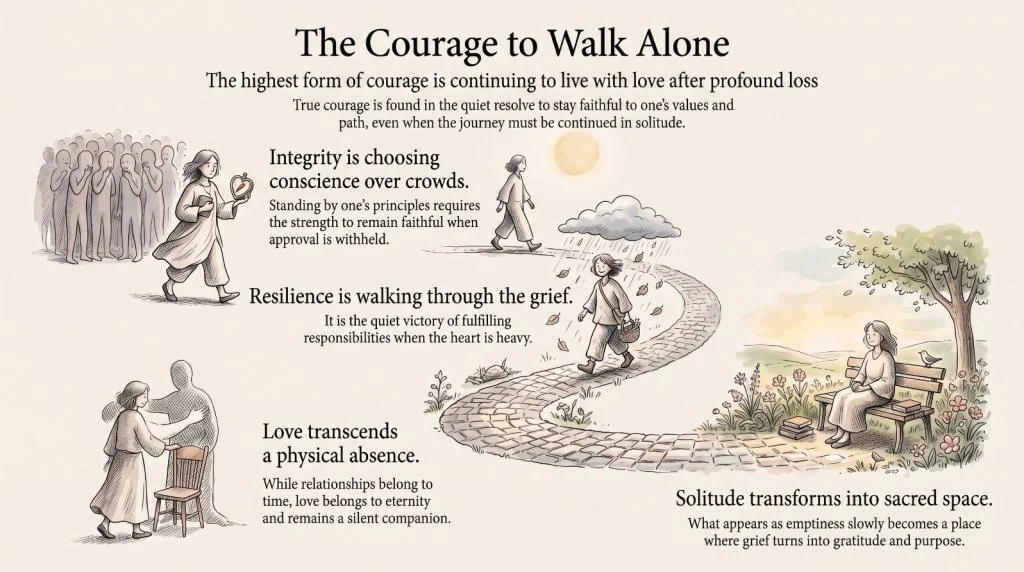
To lose the person who walked beside us is to lose not merely a companion, but a part of our own existence. In those moments, courage acquires an entirely different meaning. It is no longer the courage to defend an opinion or pursue an unconventional dream. It becomes the courage to awaken each morning with an aching heart, to fulfil responsibilities when grief weighs heavily upon the soul, to smile when tears remain unseen, and to keep walking when every instinct longs to stop.
This is perhaps the purest form of courage. Not the courage that changes the world, but the courage that quietly refuses to let sorrow define one’s life.
Our ancient belief & wisdom reminds us that relationships belong to time, but love belongs to eternity. The body is transient; the soul is not. Those we love never truly disappear. They become woven into our thoughts, our values, our prayers, and the countless quiet moments when we instinctively seek their presence. Every act of kindness reflects what they taught us. Every decision made with integrity honours the life they shared with us. In this way, love transcends physical absence and
becomes a silent companion on every step of our journey.
Gradually, solitude begins to lose its harshness. What first appeared to be emptiness slowly becomes sacred space, a place where grief is transformed into gratitude, where longing deepens into remembrance, and where faith gently fills the silence that loss has left behind. We begin to realise that we are not truly walking alone. The companionship that once came through another’s hand is now experienced through an unseen grace that steadies our spirit and strengthens our resolve.
Perhaps this is the greatest lesson life teaches us. Courage is not simply the strength to stand apart from the crowd. Nor is it merely the determination to pursue one’s convictions. The highest expression of courage is to continue living with love after loss, to embrace life without bitterness, and to transform grief into compassion, purpose, and quiet hope.
The journey may no longer look the way we had imagined. The road may be lonelier than we ever expected. Yet every step taken with faith becomes a prayer. Every sunrise becomes a reminder that life still holds purpose. Every act of goodness becomes a tribute to the one who now walks beside us in spirit rather than in sight.
And perhaps that is the deepest truth of all. We may think we are walking alone, but love never leaves us, faith never abandons us, and the Divine never ceases to guide us. Those who find the courage to keep walking discover that the path of solitude is, in the end, the path that leads them closest to God.
It takes immense strength to rebuild life after profound loss. Every step taken forward is a quiet victory over despair and a tribute to the one who is deeply missed.









 Dharma, Artha, Kama and Moksha. These are the ‘tasks’ to be achieved by every man. Dharma is duty; and not religion as we commonly unders tand. Artha is money and resources. Kama means all desires. And Moksha is ultimate salvation. For achieving all these, your physical fitness is a prime ins trument.

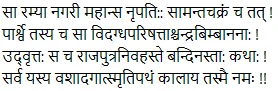

 Material things include good as well as bad. However, if bad things are gone, we have no regrets. In Ramayana, Shree Ram once says – ‘Gone are those days of our childhood when we were looked after by our parents’. This is inevitable. Sometimes, it is a consolation that even bad periods are also bound to go in the past.

 – Na twaham kaamaye raajyam
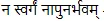 – Na swargam Naapunarbhavam
 – Kaamaye Duhkha taptaanaam
 – Praninaam Aarti naashanam
 – (apunarbhava) is the absence of rebirth. So the correct wording is Naapuinarbhava
  .
. ! Our sensitivity backed by action is important.
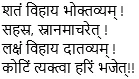
 This means, while having food, you should keep aside hundred other things. Today, we see that many so-called high-profile people pretend to be so busy that they don’t take food regularly, at the appropriate time. They take pride in saying that they have no time even to take lunch or dinner.
 as ‘Purna Brahma’ (God). Not eating with concentration is insulting to God. Moreover, if you concentrate, you can enjoy the appearance, smell and taste of the food.
 For having a bath, one should leave aside thousand other things. This underlines the importance of cleanliness and hygiene. Before performing any worship or doing an auspicious thing, having a bath is a must. It is not only physical cleanliness, but this also implies to cleansing and purification of the mind. i.e.
 ‘Daan’ or charity is regarded in very high esteem. One should not leave any opportunity of giving something (good) to others. Today experts teach you the ‘Art of Giving’. It is also said even when a person is in difficulty, he should keep on helping others and giving to others. That is the highest form of Punya, (Good Karma). In Mahabharata, Karna was ready to sacrifice even his life to ‘give’ any person whatever he wanted. There were many kings who performed ‘yagyas’ (sacrifice) to give away their entire treasure. Therefore, leave aside one lakh things to grab an opportunity to ?give’. Even if you are not able to give anything in your lifetime, you can pledge to donate your eyes and other organs or even your whole body to someone after your death. You can also give a part of your wealth to charity through a Will.
 means leave aside everything else to worship God. This is a message about spirituality. This does not mean that one should be engrossed only in Pooja, bhajans and kirtan. It only means leaving aside one crore of things to do ‘bhakti’ (express devotion to God) or prayers. Performing your duty religiously is also a worship of God.





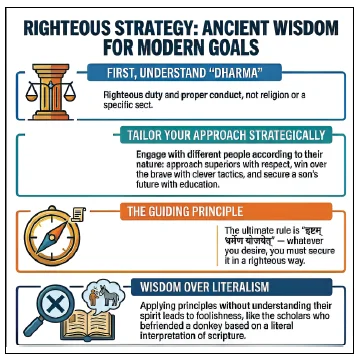
 (sandhi) – A pact of mutual cooperation by making available each other’s means and resources.
 (Vigraha) – Conflict or war.
 (Yaana) – Direct attack.
  (Aasana) – Sitting quietly on the fence.
  (Dwaidheebhava) This has two meanings. If the enemy is mightier, split his strength by creating a dispute among its people/army; or create a dilemma as to which side you are supporting; or what is your real stand.
 (Sanshraya) – Take shelter with a mighty friend to protect yourself from the enemy.
 ‘YATHECHCHHASI TATHA KURU’ | DO AS YOU WISH
 Do as you wish!
  is used in the Geeta to mean ‘duty’, just as there is a religion (duty) of a king, of a teacher, a student, or of Brahmans and of Kshatriyas (warriors). It is a practical guide for day-to-day life and not necessarily a treatise with high level ‘philosophy’. Shrikrishna gives very practical tips in His message to Arjun.

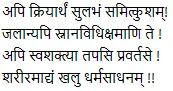
 Which means that the body is the first medium of achieving all religions – or discharging all duties.
 or ego. Everybody feels that he/she is doing the work. In reality, however, everybody is merely an instrument in the hands of the Supreme Power (or God). It is a false belief – ego – if one feels that one is doing the task oneself; it is the Supreme Power that gets it done through him/her.
 (Shikshak) – We think that shikshak means one who teaches. However, interestingly, in the Sanskrit dictionary the first meaning of the word ‘Shikshak’ is ‘learner, student’. The root Shiksh (verb) means to learn. The second meaning is ‘teacher’.
 – We think
 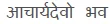 (Acharya Devo Bhava) – We think that this means a Guru is God. However, actually it means ‘you be the believer that Acharya is God and act accordingly’. It is a ‘command’ and not merely a statement. The same is the case with Matru Devo Bhava (mother) and Pitru Devo Bhava (father).
 (Sadguru) – Literally, it means a good or righteous teacher. This term is generally used only in the field of spiritualism (Adhyatma).
 (knowledge),
  (agility),
  (character),
  (art of explaining),
  (review),
  (sensitivity) and
  (pleasantness)
 (seven qualities).
 (Improper disciple) – Certain Stotras (prayers) and Mantras are not to be taught to an improper pupil. If one does it, one will be a sinner.
 — This means that your son and student should become capable of surpassing you. This is the real test of a good teacher.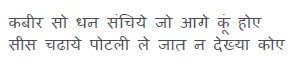

 The form must always
 is complex